An inquiry-driven 8th-grade geometry sequence where students discover the logical foundations of angle relationships through data collection, deductive puzzles, and argumentative proof-building.
A 12-session tier 2 intervention sequence designed to build conceptual mastery of fraction division. Grounded in All Learners Network (ALN) principles, students progress from visual measurement models to the common denominator strategy and eventually the standard algorithm through deep reasoning and high-leverage concepts.
A comprehensive week-long math unit focused on identifying coin values and performing addition and subtraction of money up to $20 using a calculator in real-world contexts.
A comprehensive 12-lesson Tier 2 intervention sequence focused on 6th-grade ratio and proportion standards. Using High Leverage Concept strategies from the All Learners Network, this sequence moves from basic ratio language to complex unit rate and percent problems using visual models like tape diagrams and ratio tables.
A 12-lesson intervention sequence focused on numeral identification, forward/backward sequences, and number lines for 1st-grade Tier 2 support, utilizing High Leverage Concepts from All Learners Network.
A specialized intervention sequence designed for Algebra I students to master TEKS A2A and A6A, focusing on the domain and range of linear and quadratic functions through tiered small-group instruction.
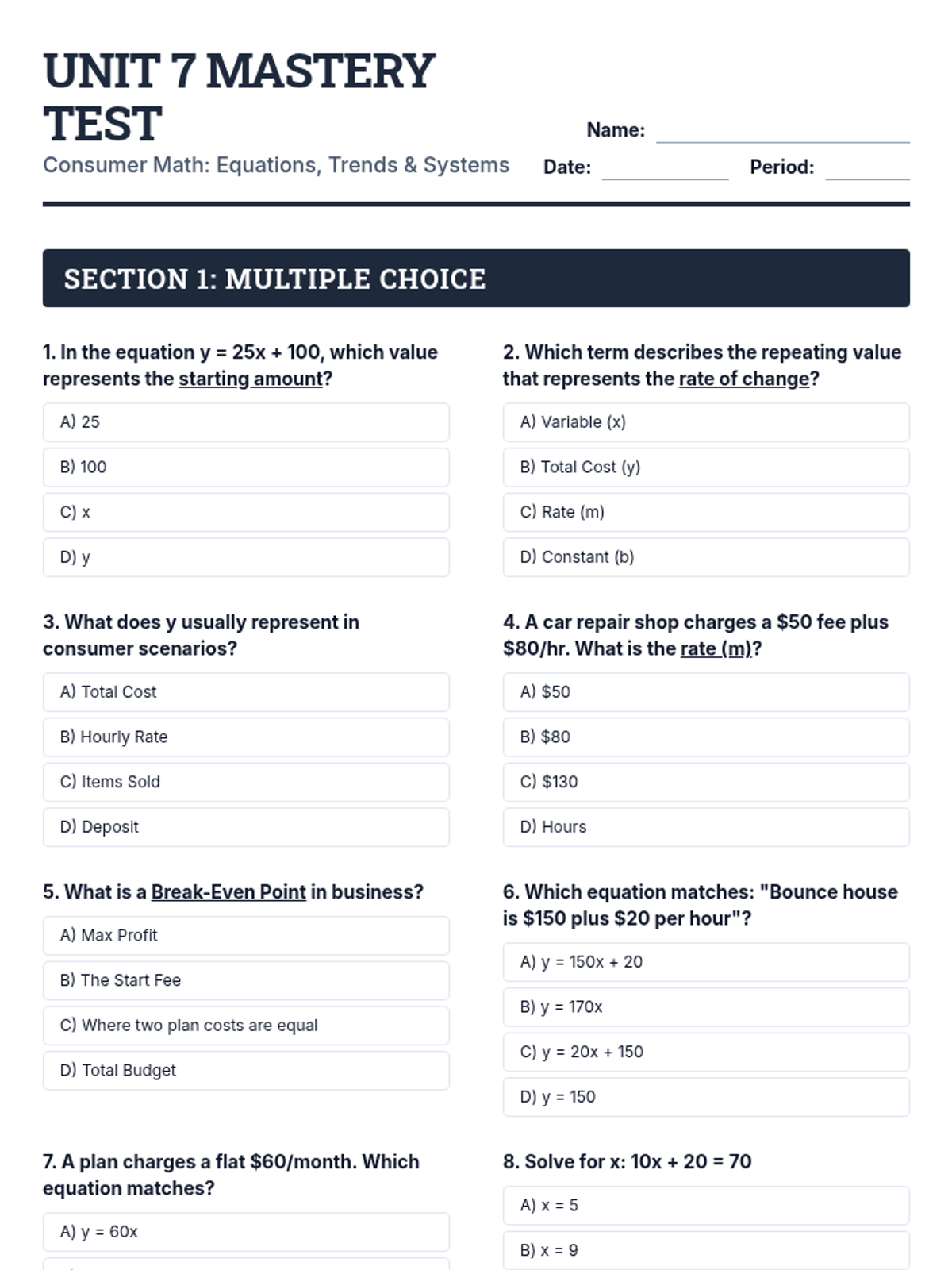
A comprehensive geometry unit focused on rigid transformations: translations, reflections, and rotations. Students explore how shapes move across the coordinate plane while maintaining their size and shape.
A sequence of lessons helping 4th-grade students with autism master division word problems through structured visual supports and familiar daily scenarios at school and in the community.
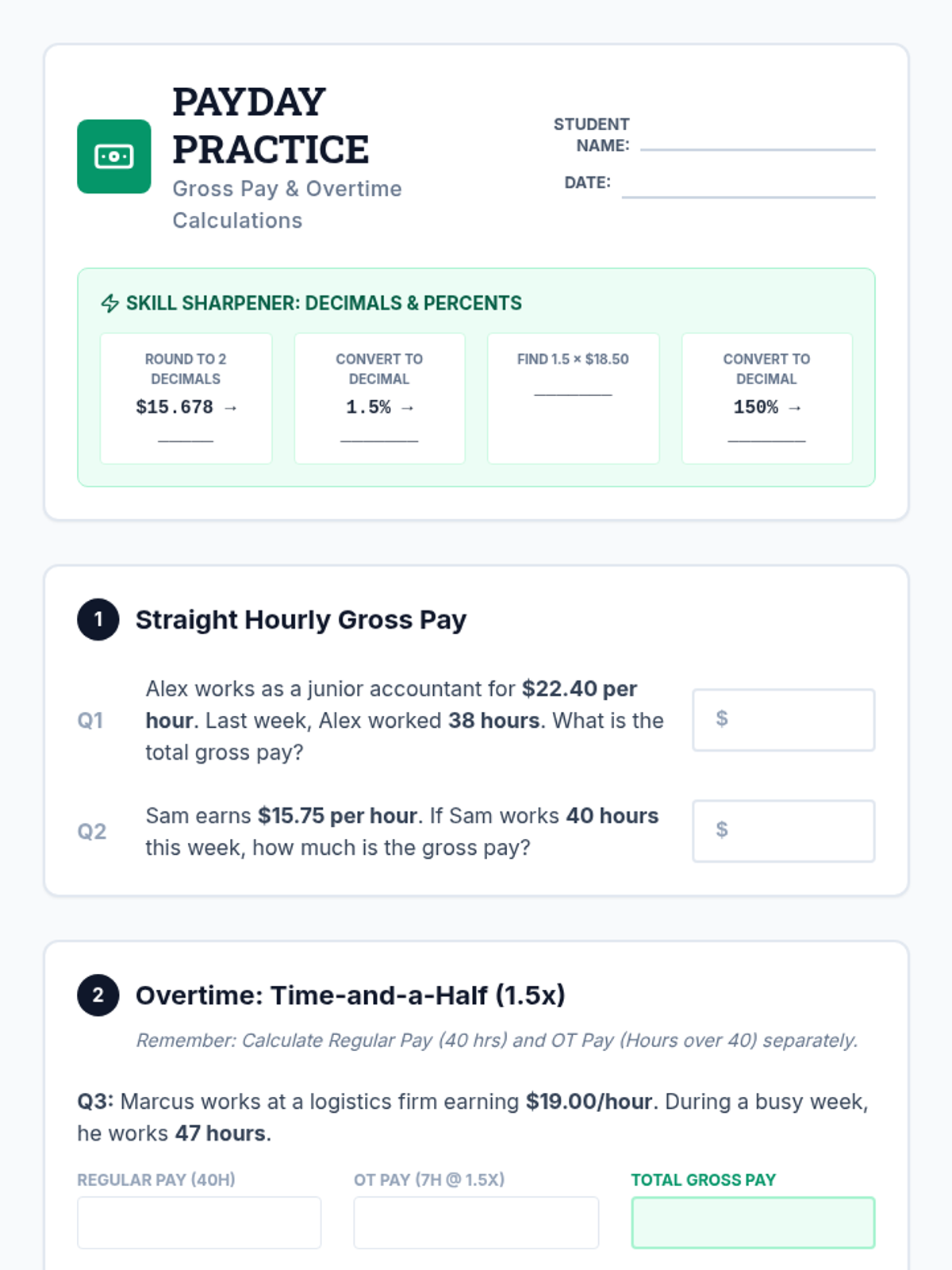
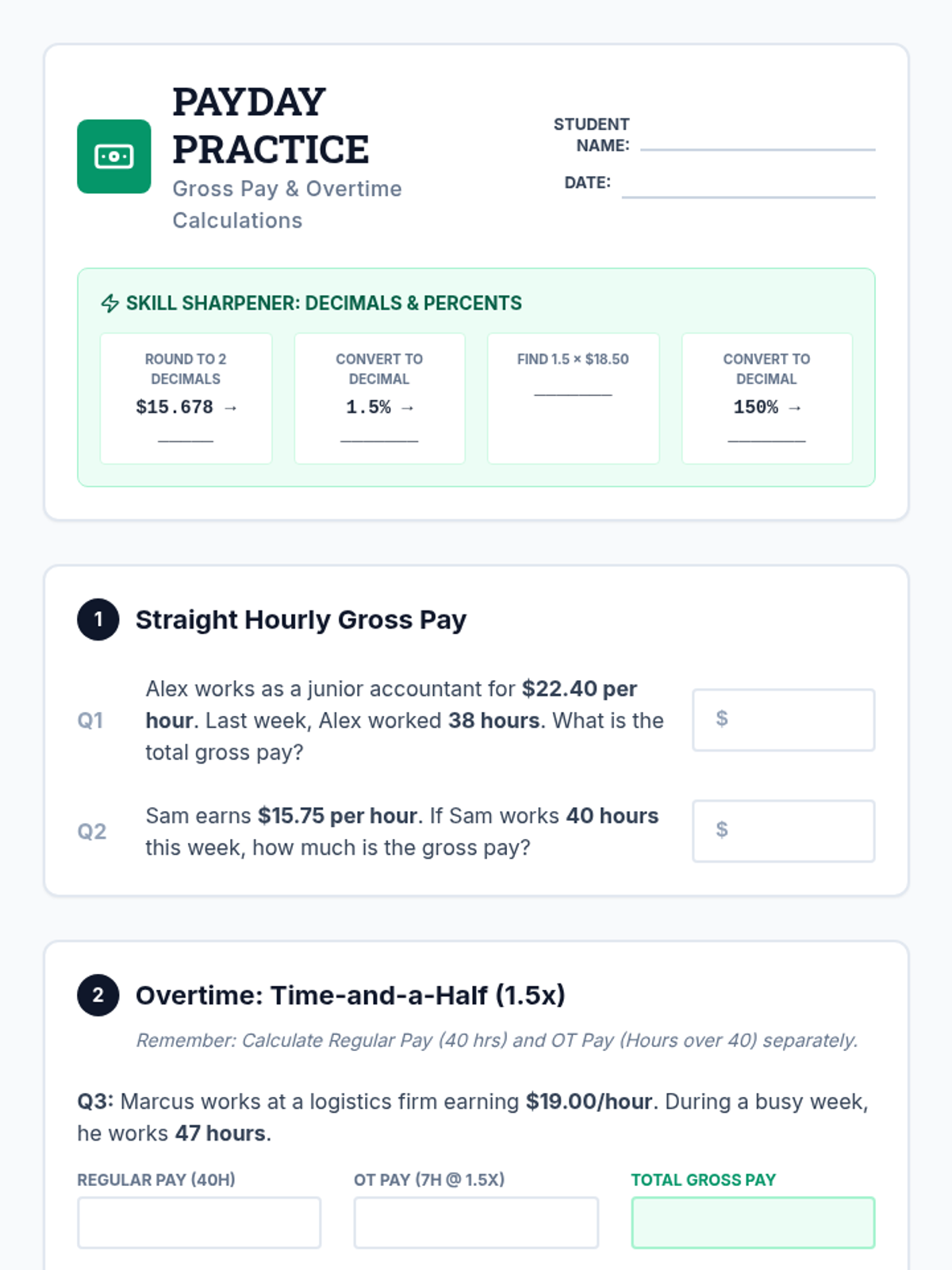
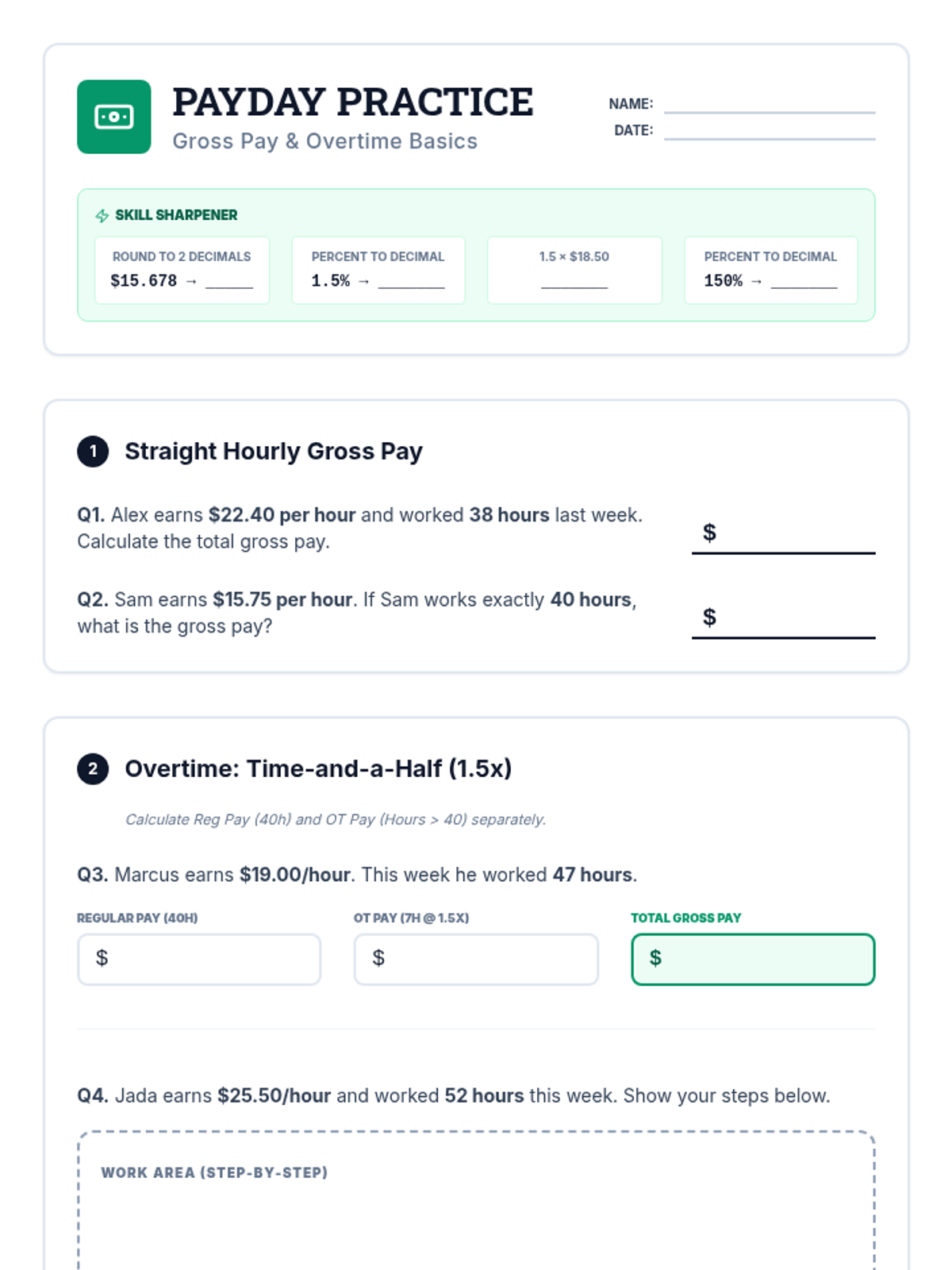
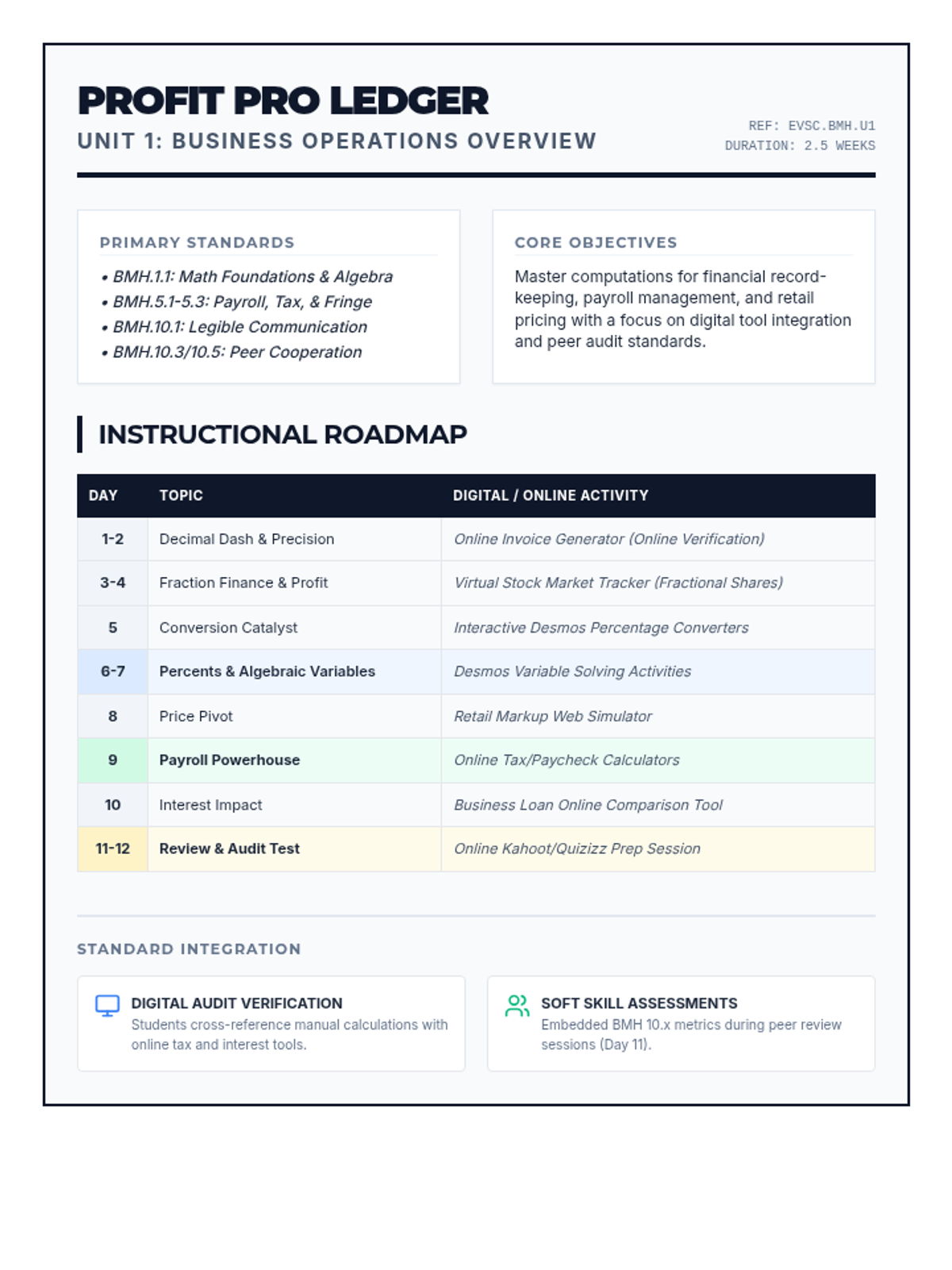
A comprehensive math unit focusing on applying percentage calculations, sales tax, and multi-step budgeting to real-world scenarios. students act as event planners to manage a fixed budget while accounting for specific tax rates.
A math unit focused on understanding and applying ratios and proportions through visual methods, mental math strategies, and algorithmic problem-solving.
A series of geometry lessons focused on points of concurrency and their real-world applications in urban planning and design.
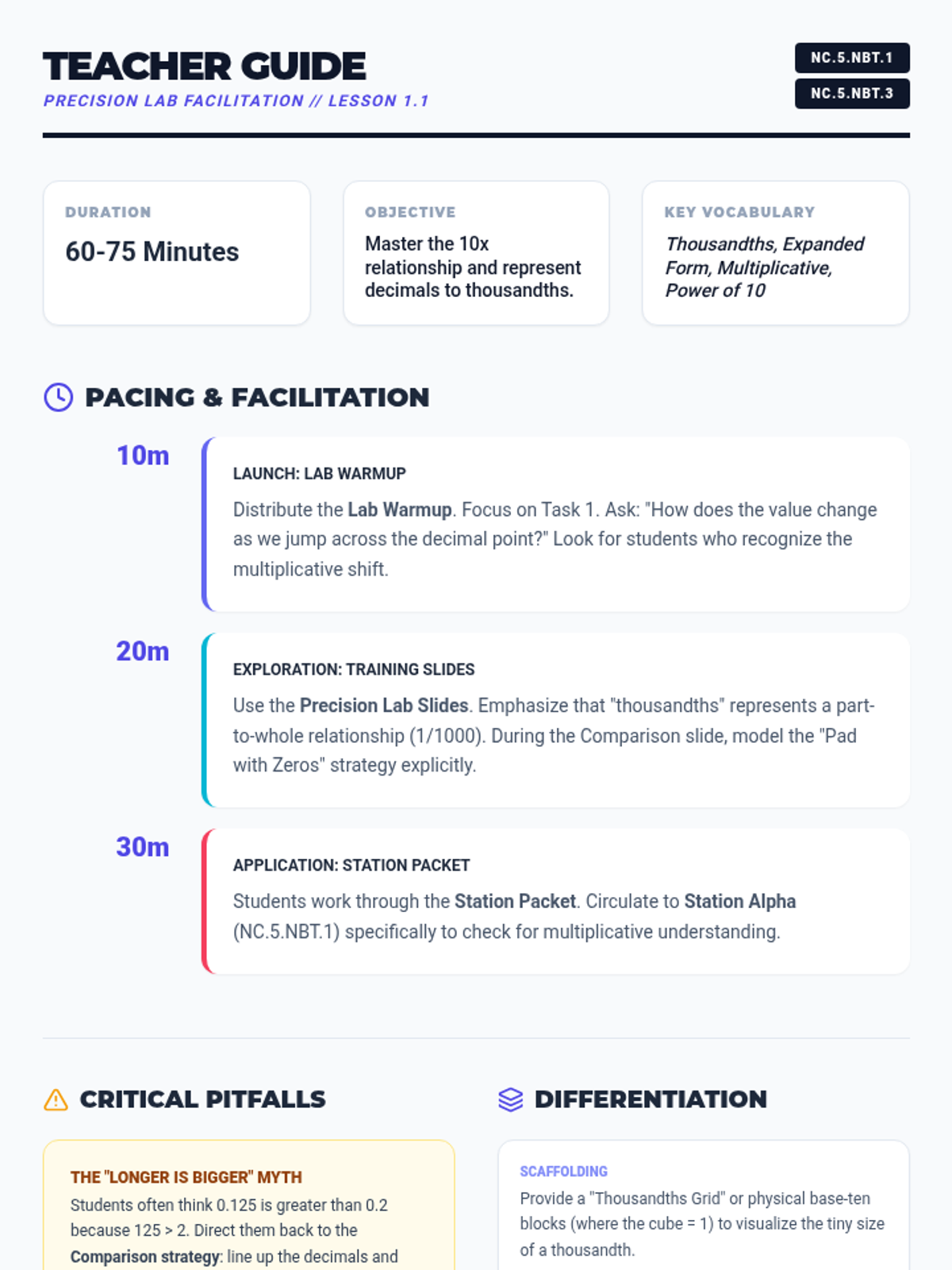
This lesson helps 8th-grade students determine the number of solutions in a system of equations using algebraic manipulation and visual shortcuts, moving from graphical understanding to algebraic mastery.
A sequence focused on visualizing linear functions through physical movement and spatial reasoning, designed for middle school students to master slope-intercept form.
A lesson sequence focusing on compound probability, specifically analyzing events where order matters versus where it doesn't, using marble jar scenarios and tree diagrams.
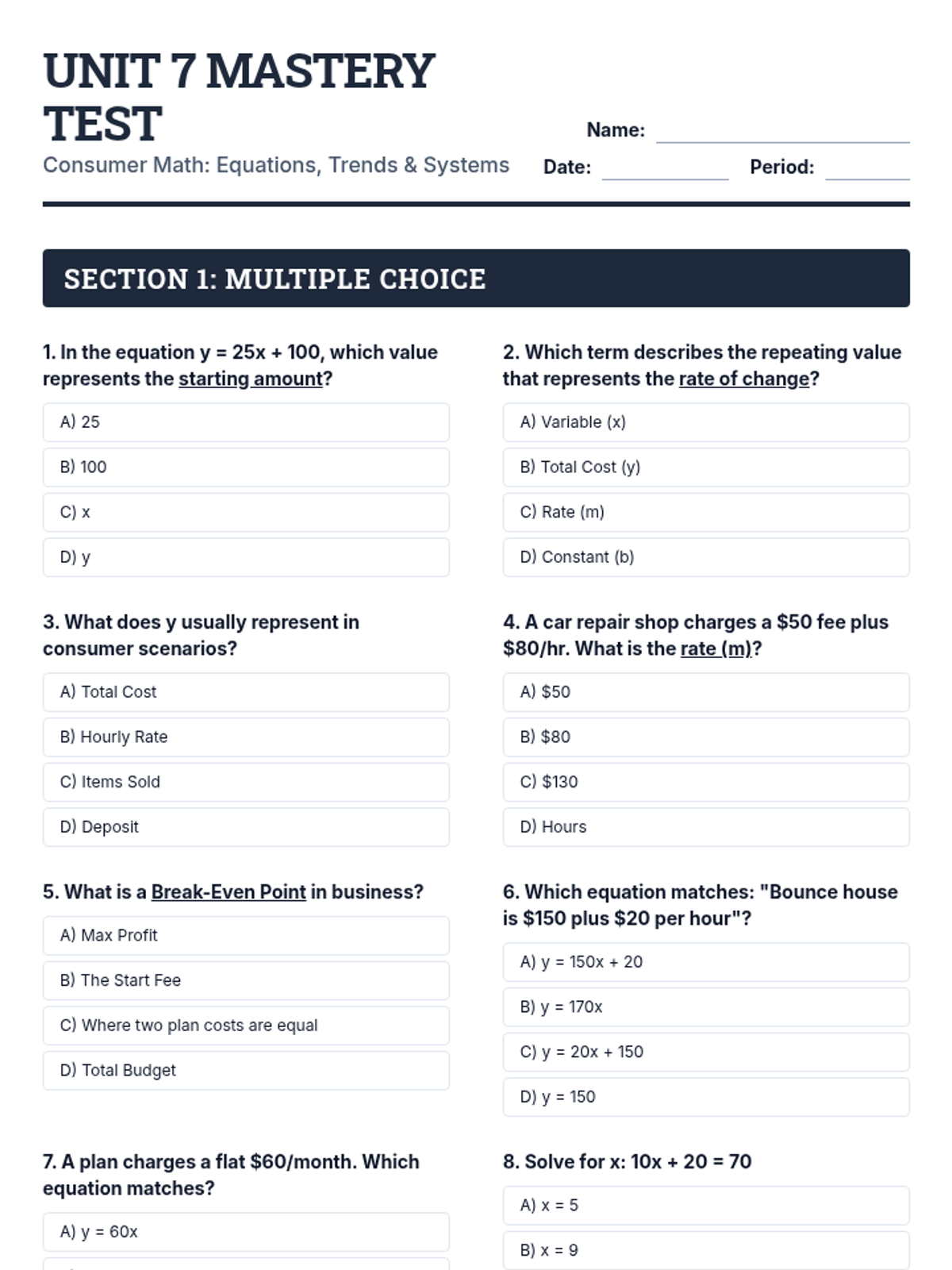
A series of lessons focused on the practical applications of linear equations, slope, and geometric relationships in real-world contexts like urban planning and engineering.
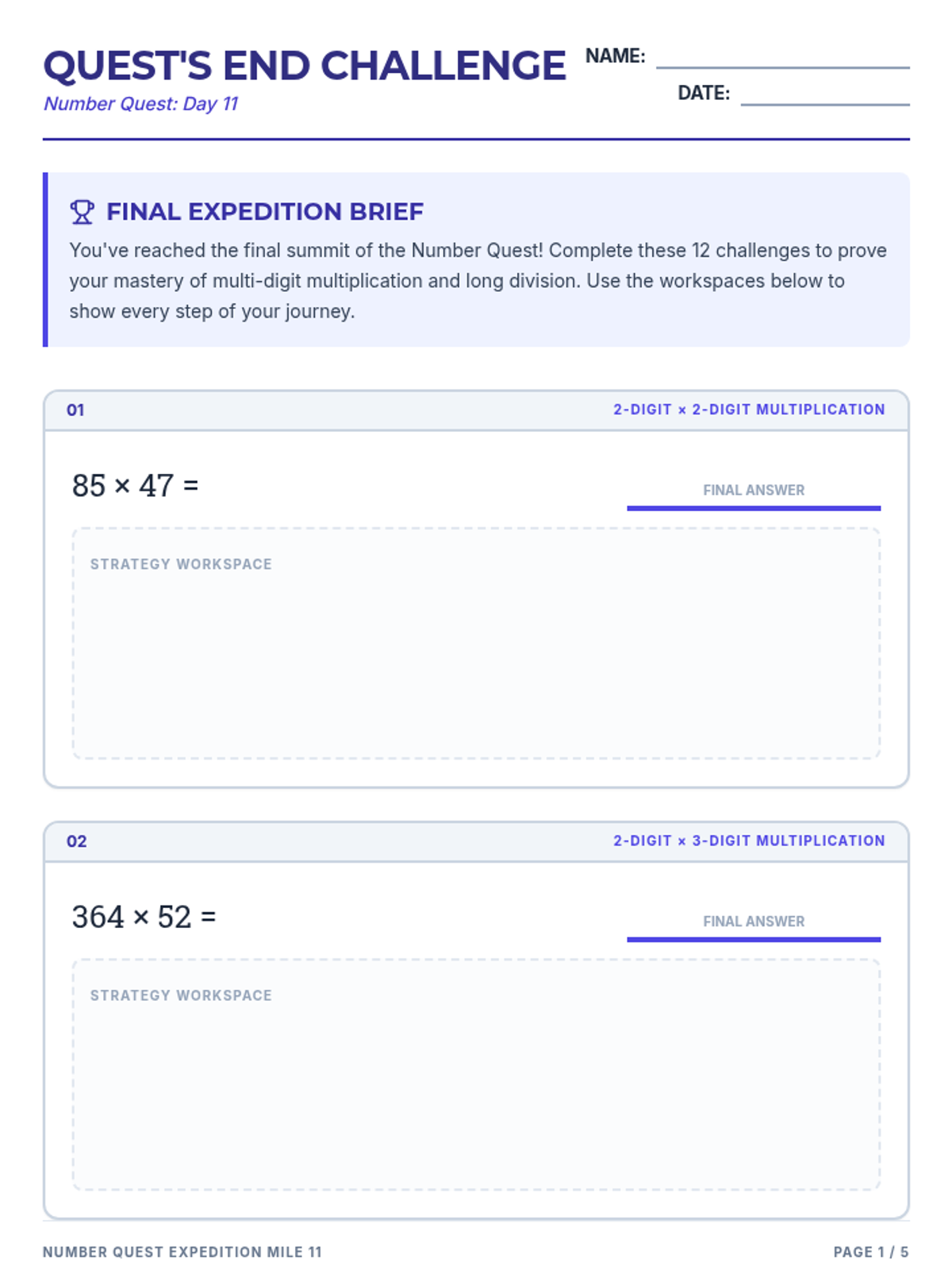
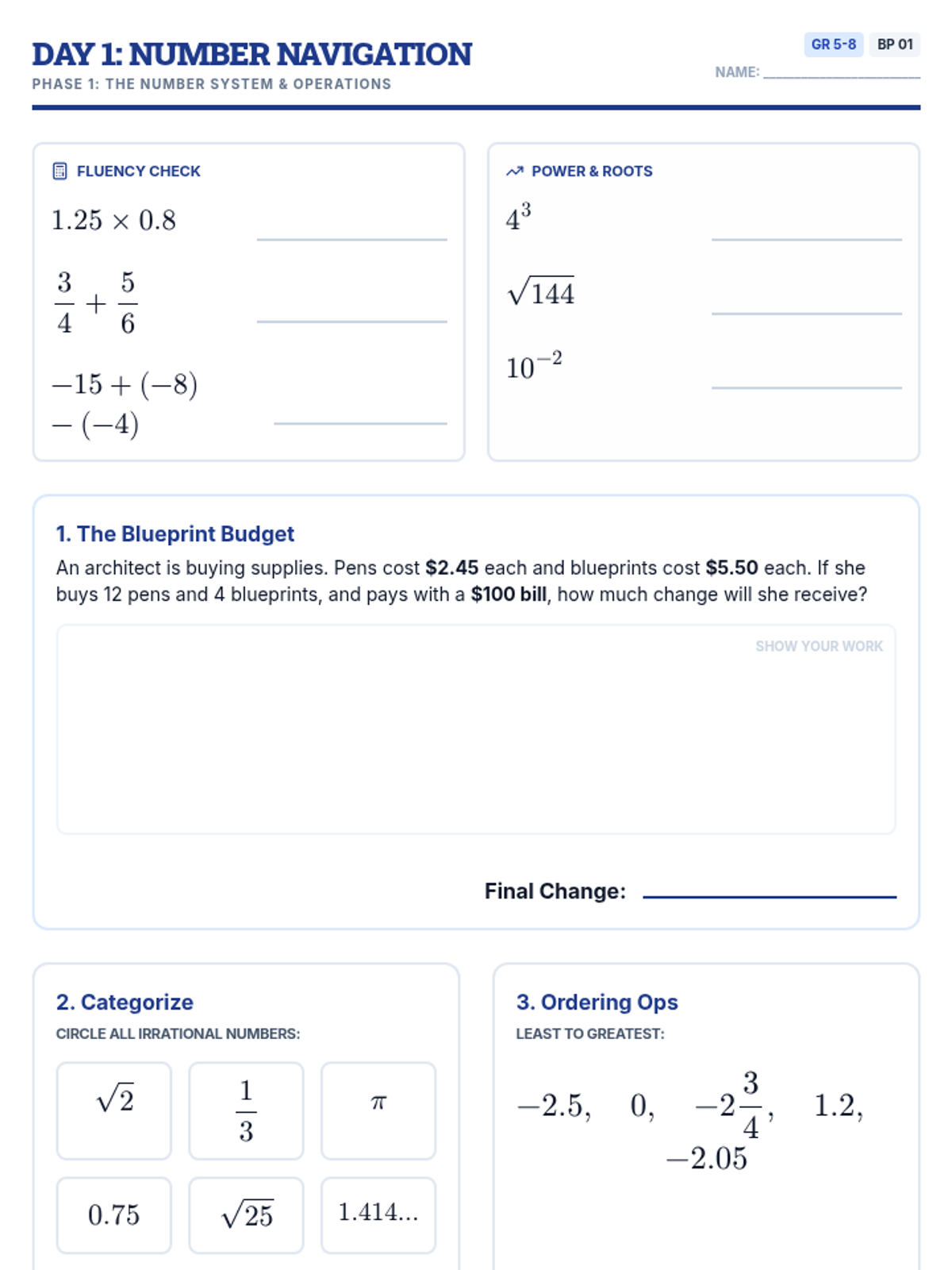
A series of advanced mental math and historical algorithm lessons designed to build deep number sense and computational fluency in middle and high school students.
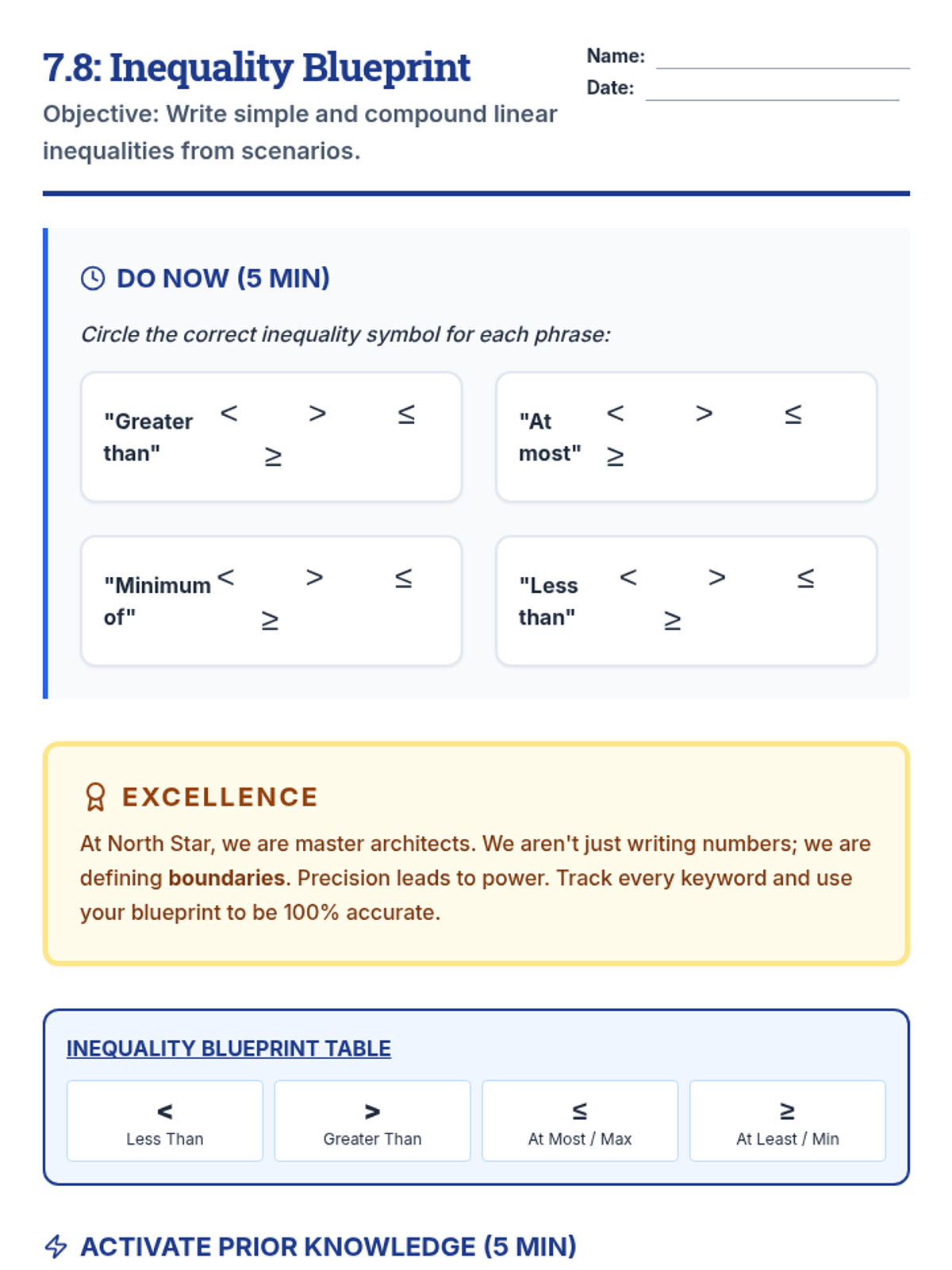
A Pre-Algebra unit focused on understanding the nature of linear equations and their solutions. Students explore how the structure of an equation determines whether it has one, none, or infinite solutions, connecting algebraic results to geometric representations.
A math remediation sequence for 3rd and 4th graders focused on place value concepts, specifically periods (units and thousands) and the structural role of commas in large numbers.
A series of lessons exploring exponential functions, their components, graphs, and real-world applications in Algebra 1.
A lesson sequence focusing on advanced factoring techniques, specifically targeting the difference of squares with higher-degree exponents (4, 6, 8) through visual recognition and verification.
A targeted math intervention sequence focused on remediating GCF gaps using a visual, color-coded prime factorization strategy. This sequence emphasizes the efficiency of prime factorization over listing factors for larger numbers.
A lesson sequence focusing on geometry and proportions, specifically how side lengths and perimeters change according to a scale factor (enlargement ratio).
A high-level Honors Algebra lesson focused on complex recursive sequences where students analyze notation, explore the Fibonacci sequence, and engage in a 'Sequence Maker' activity to reverse-engineer formulas.