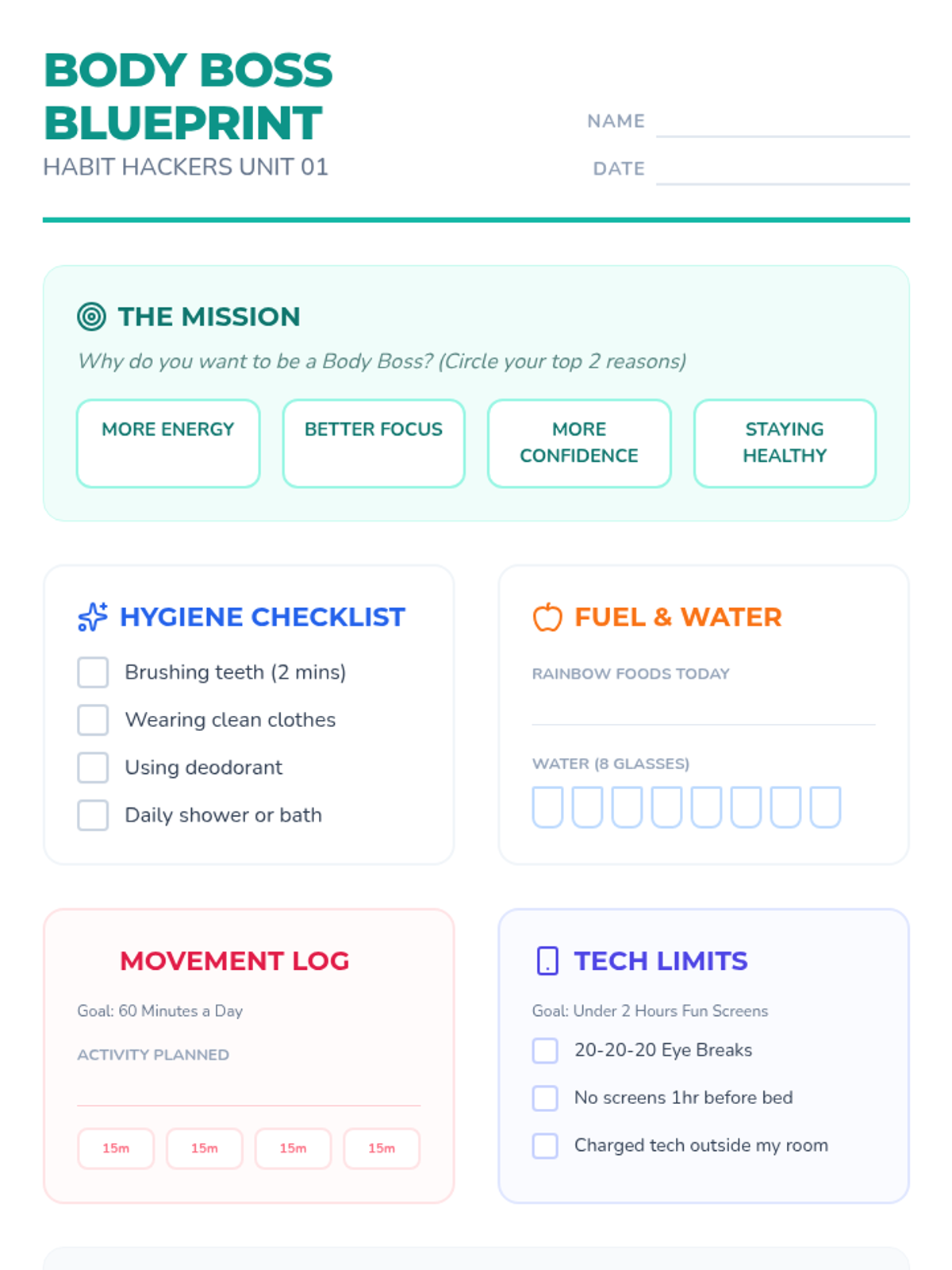
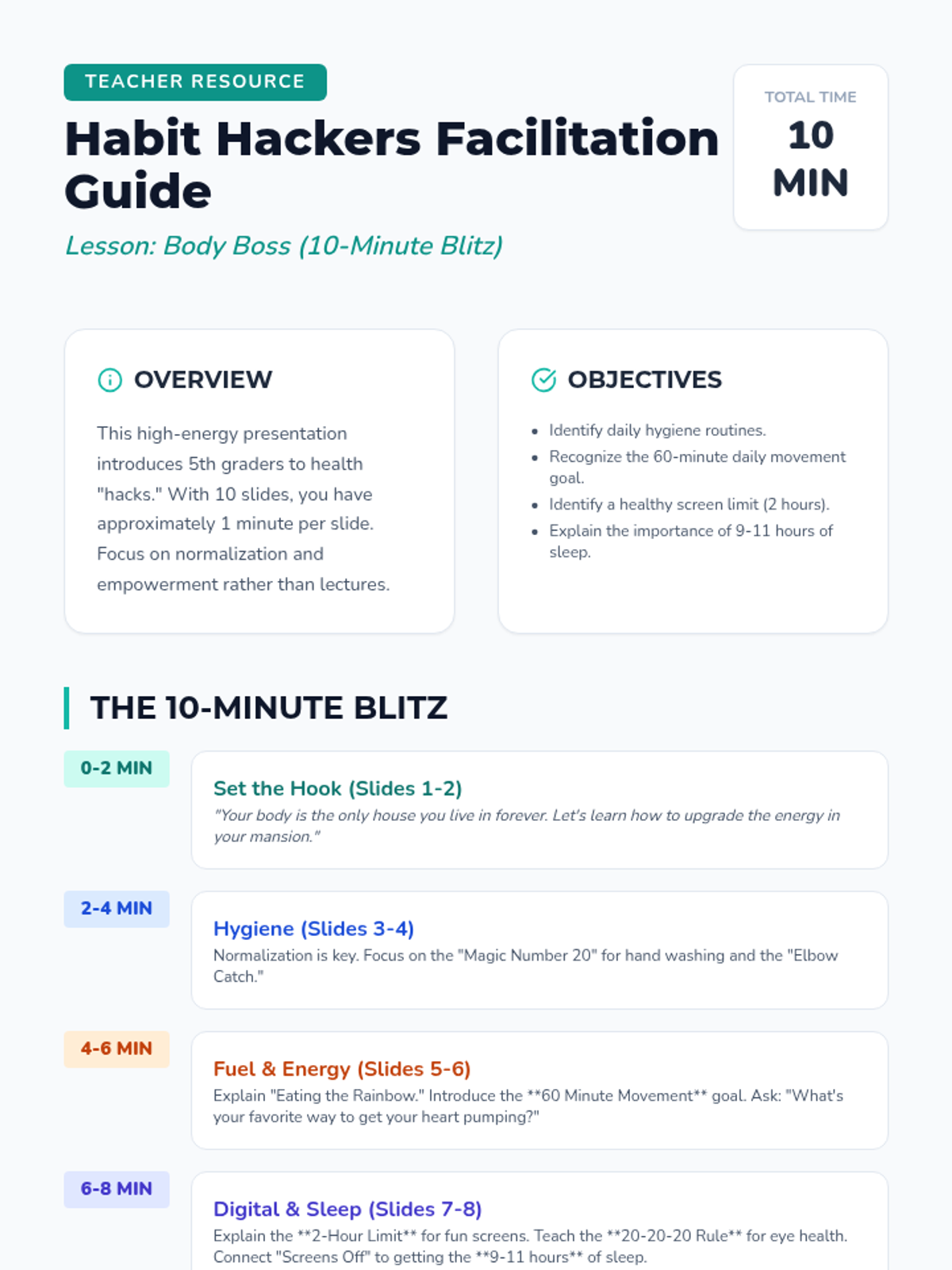
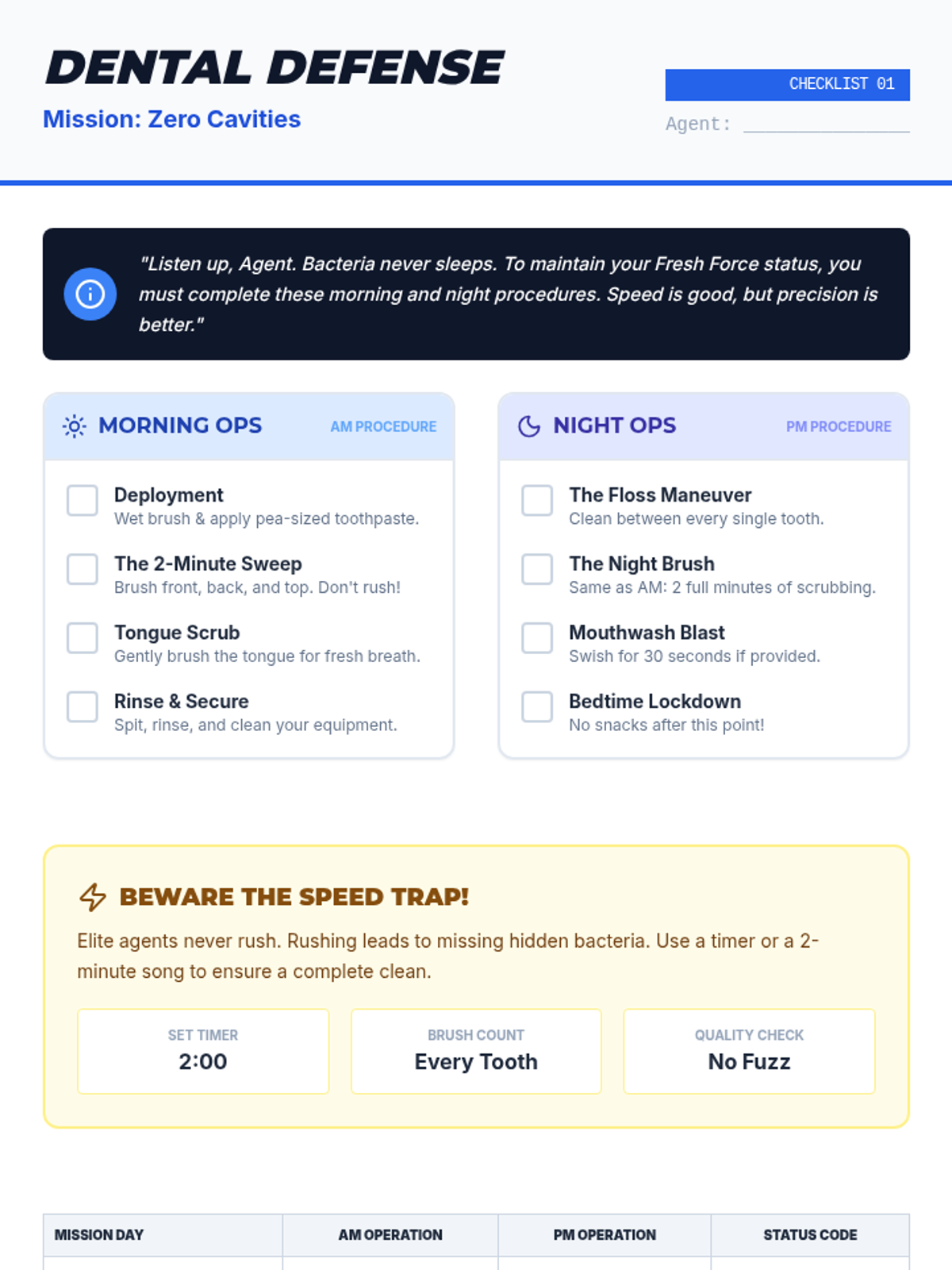
Daily hygiene, hydration, and sleep routines paired with strategies for disease and injury prevention. Builds skills in health decision-making, body awareness, and self-advocacy to support lifelong well-being.
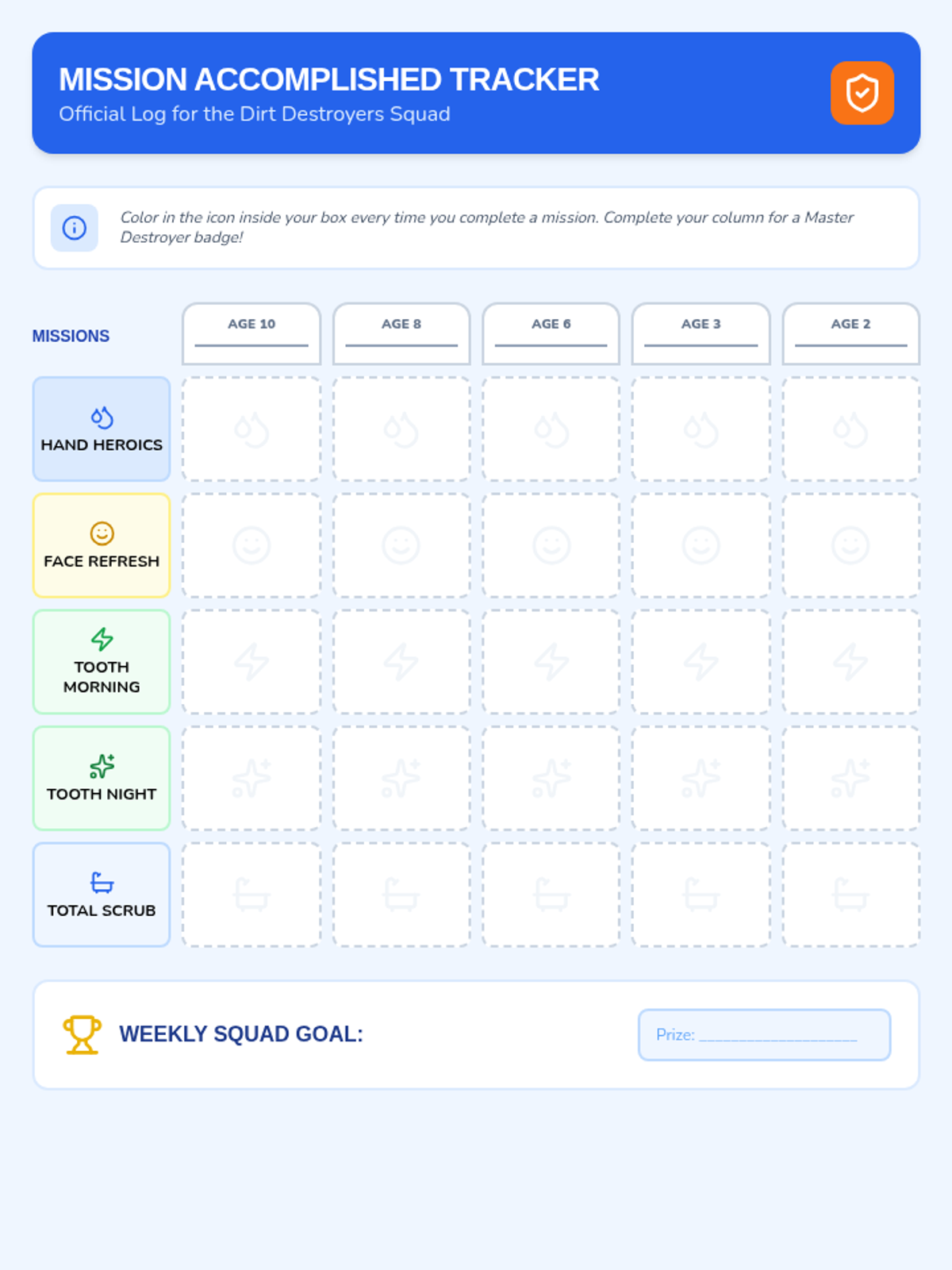
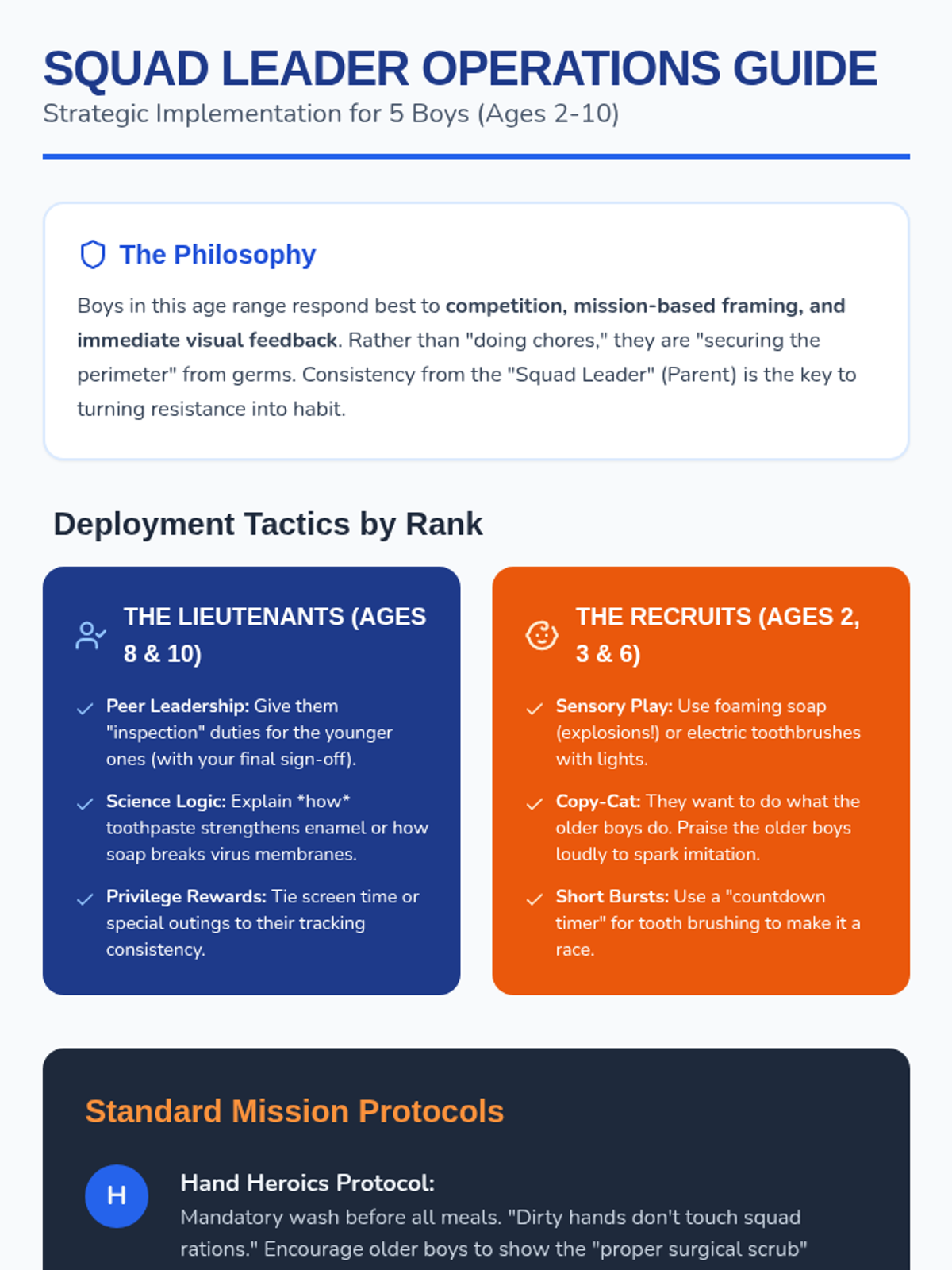
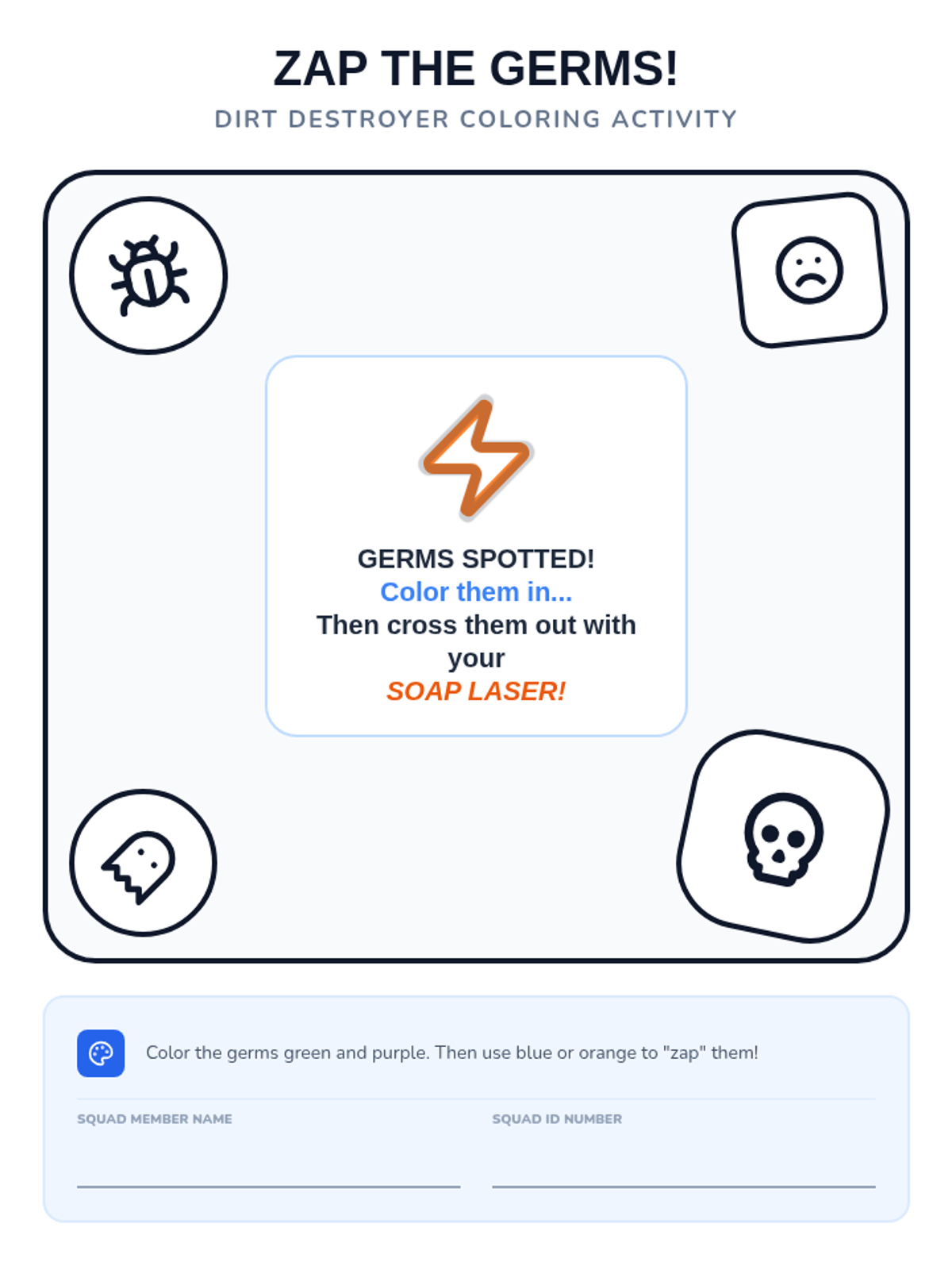
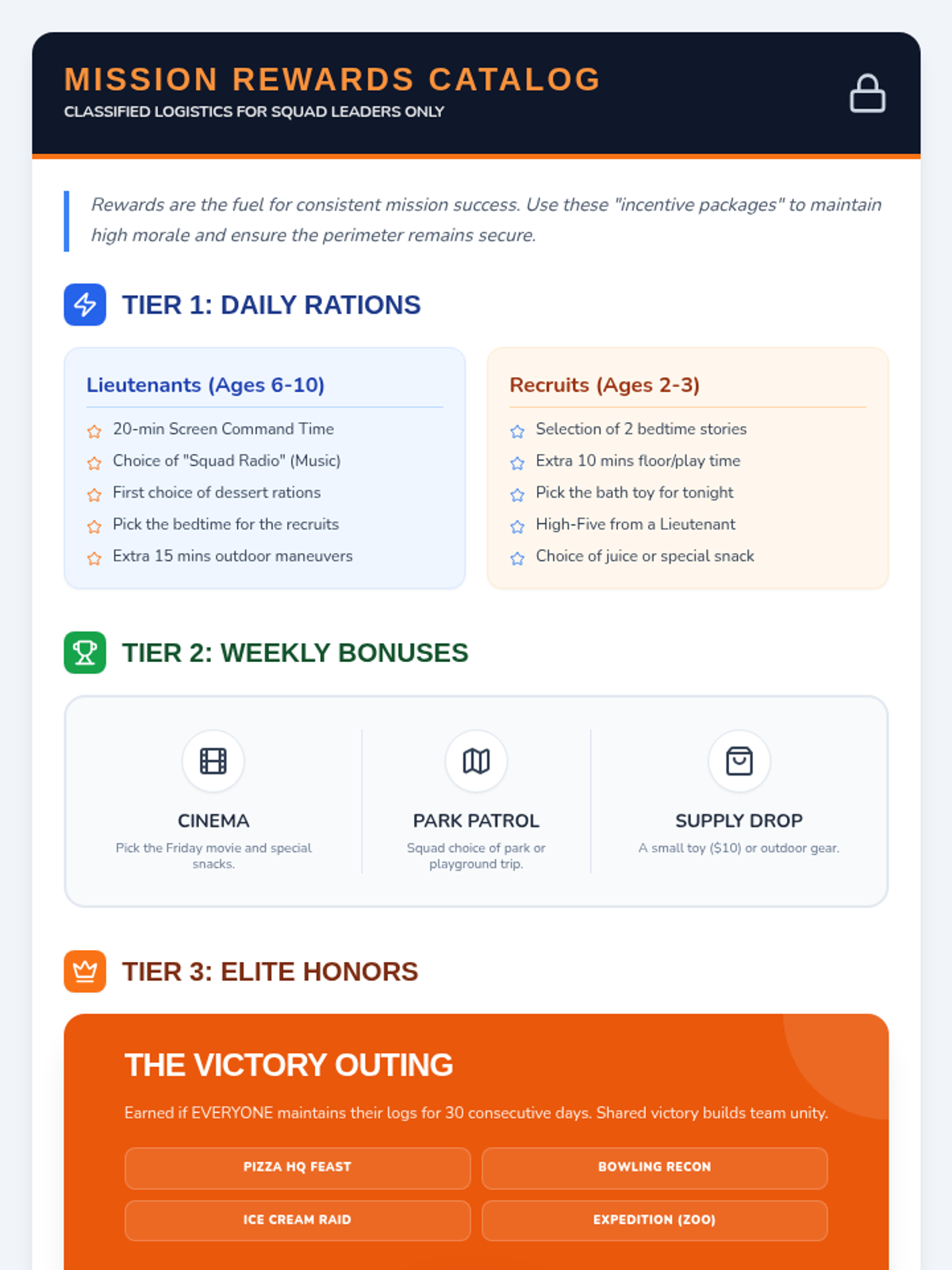
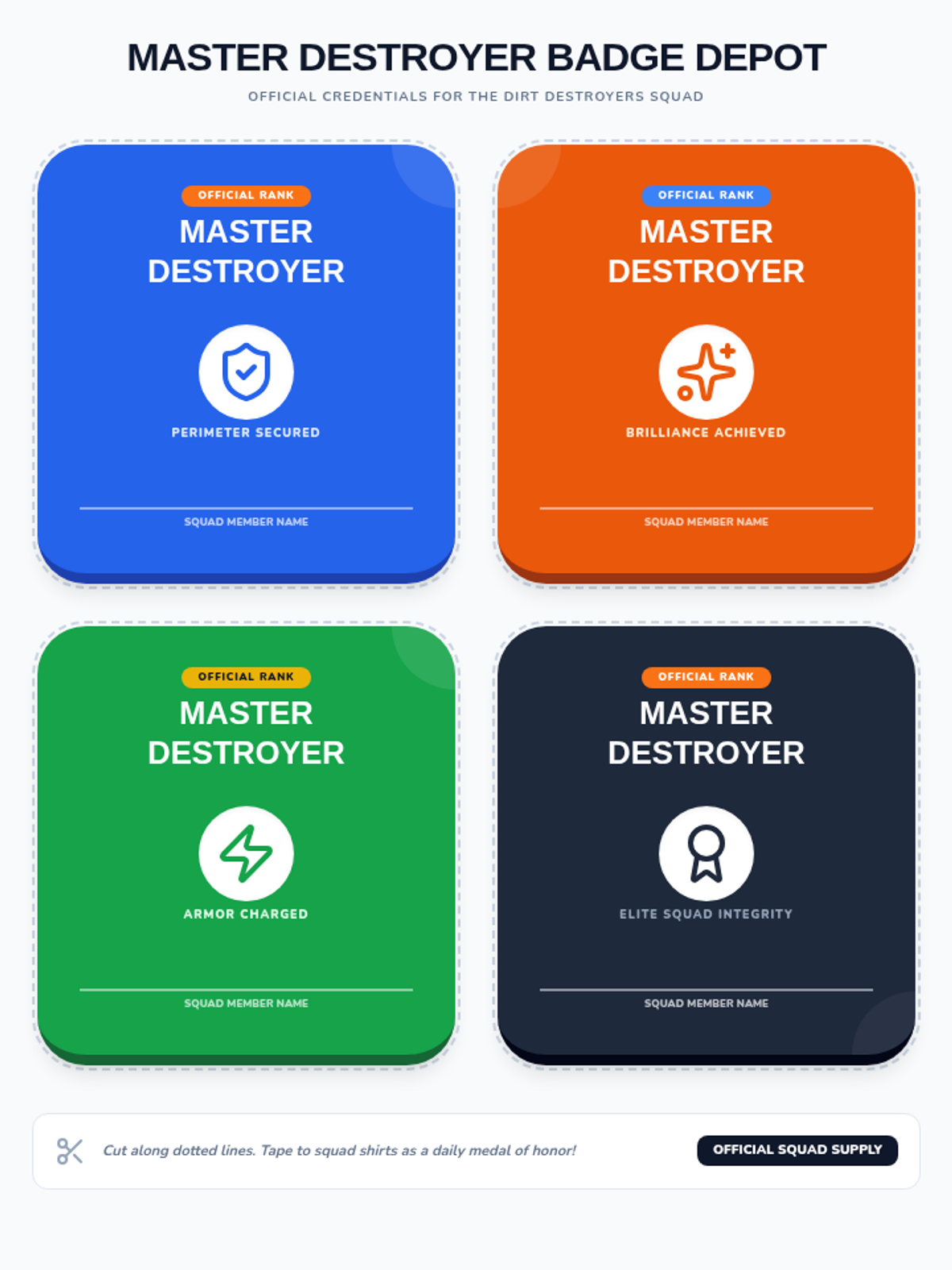
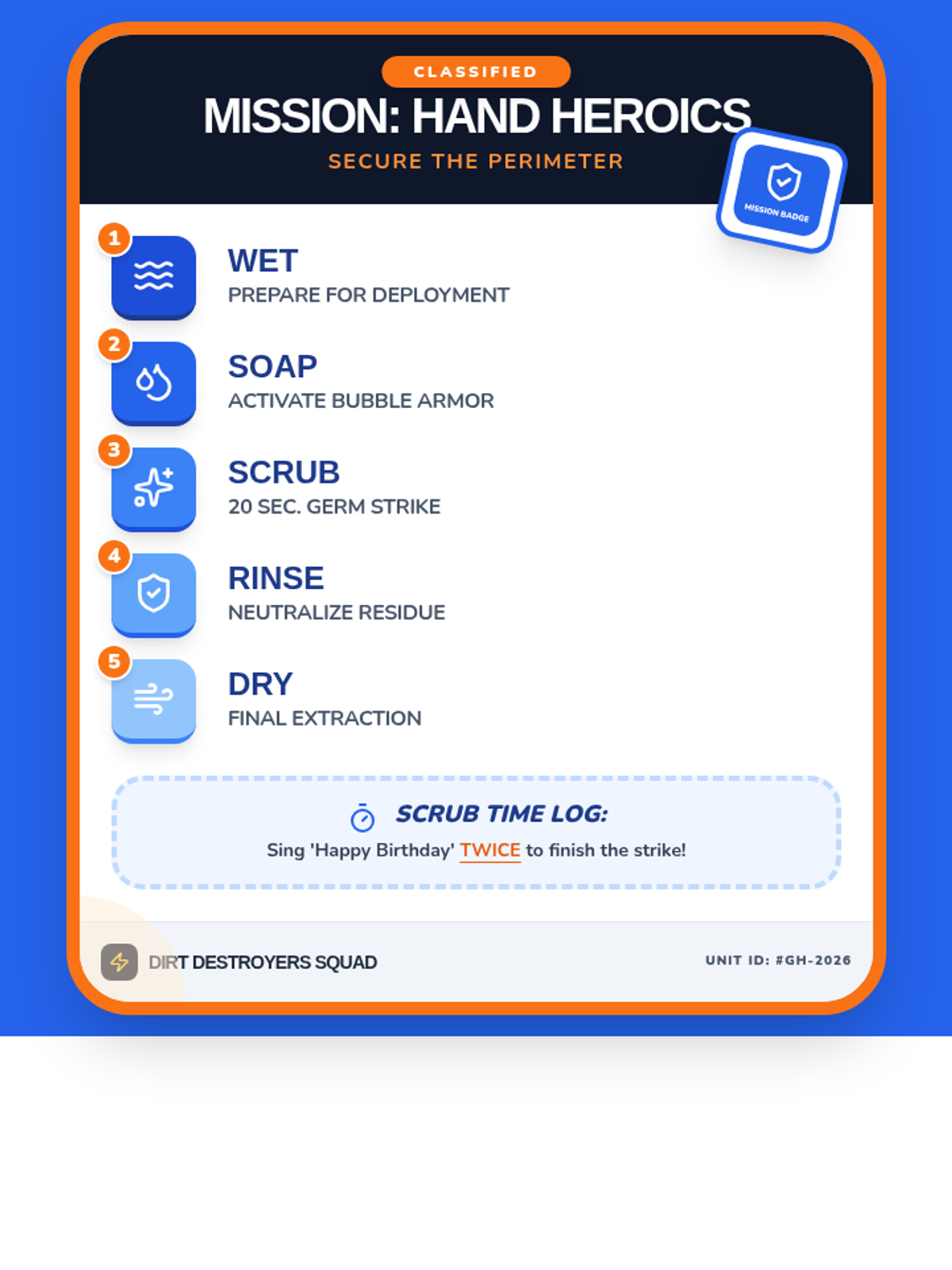
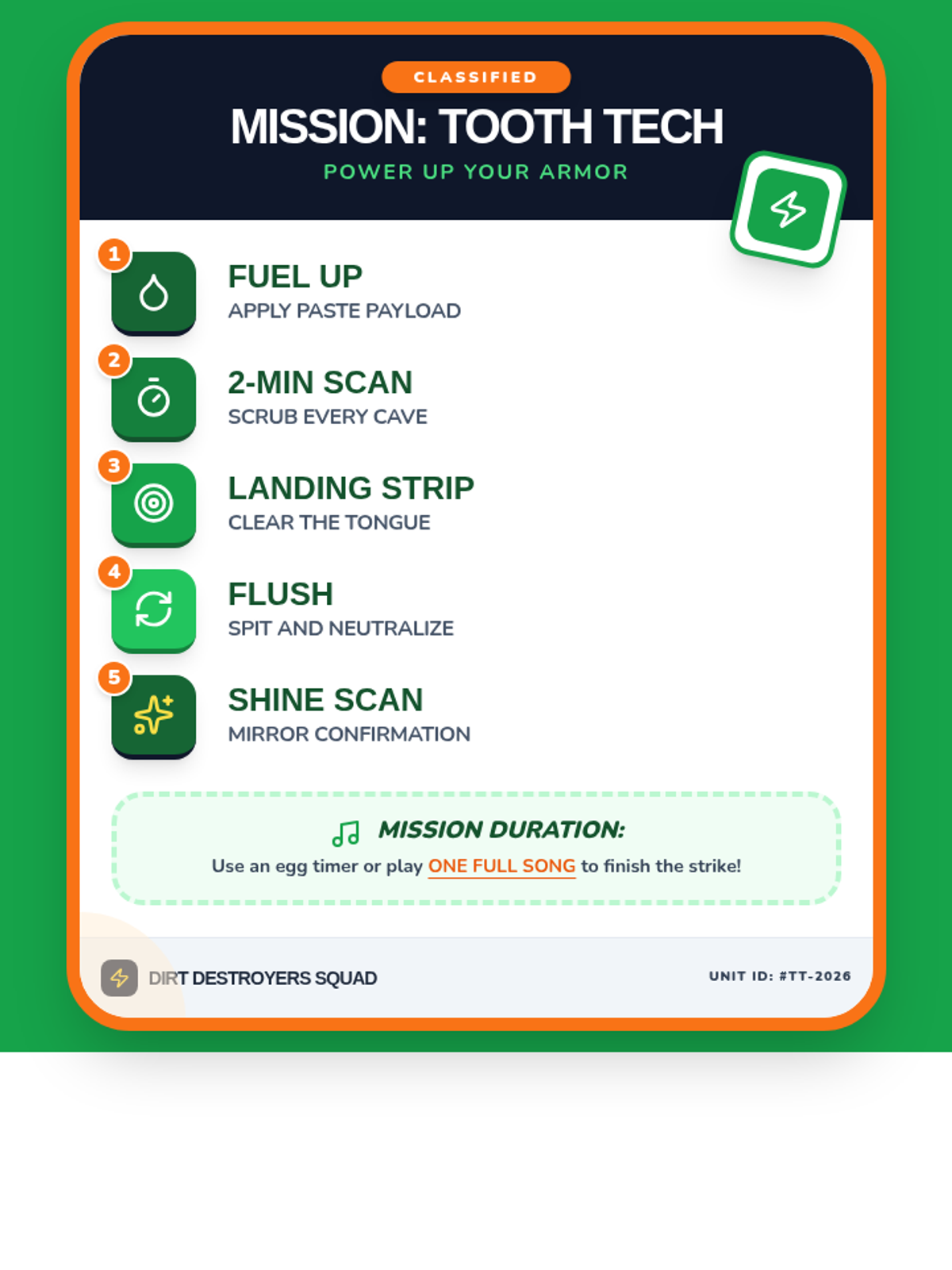
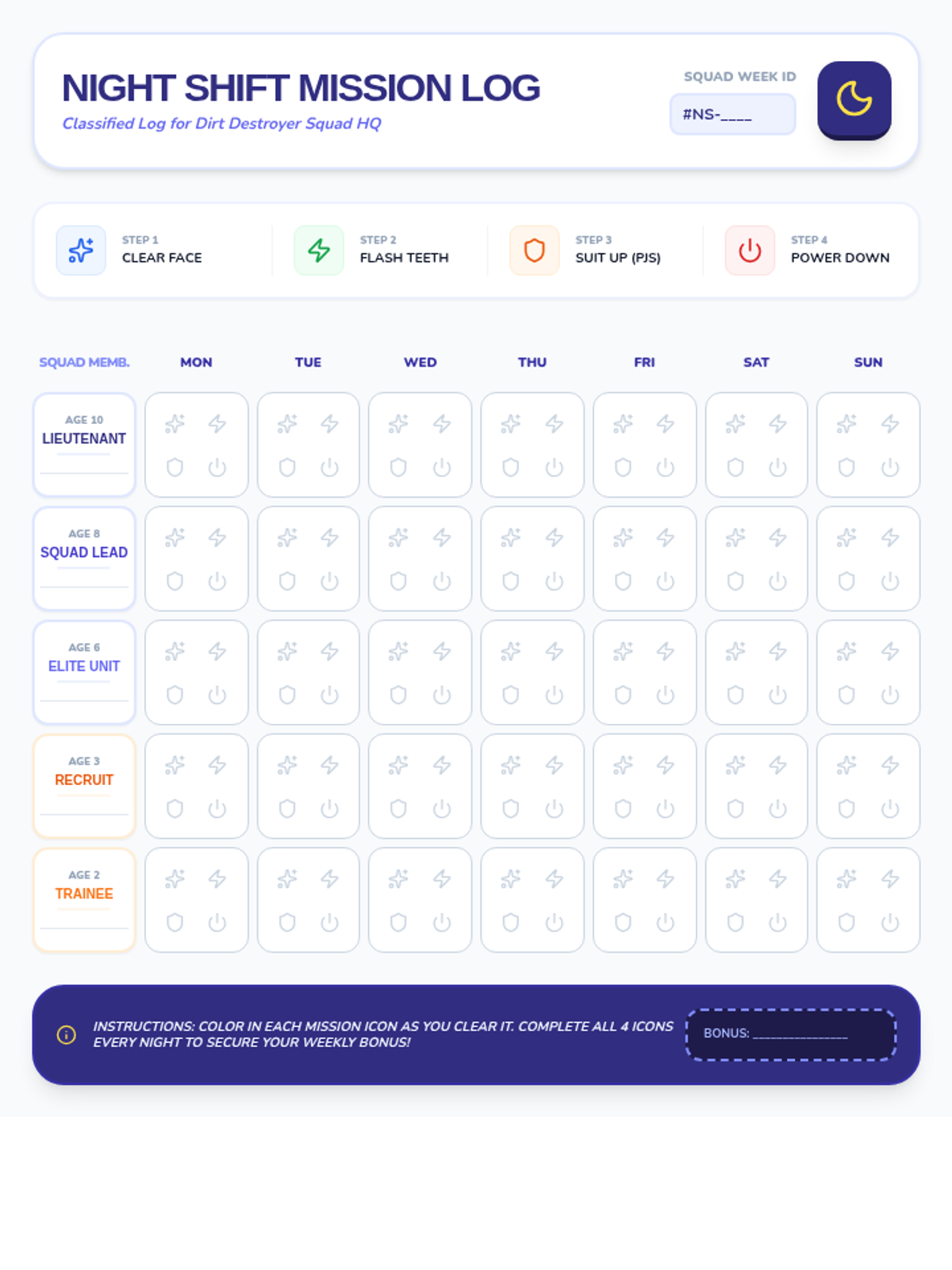
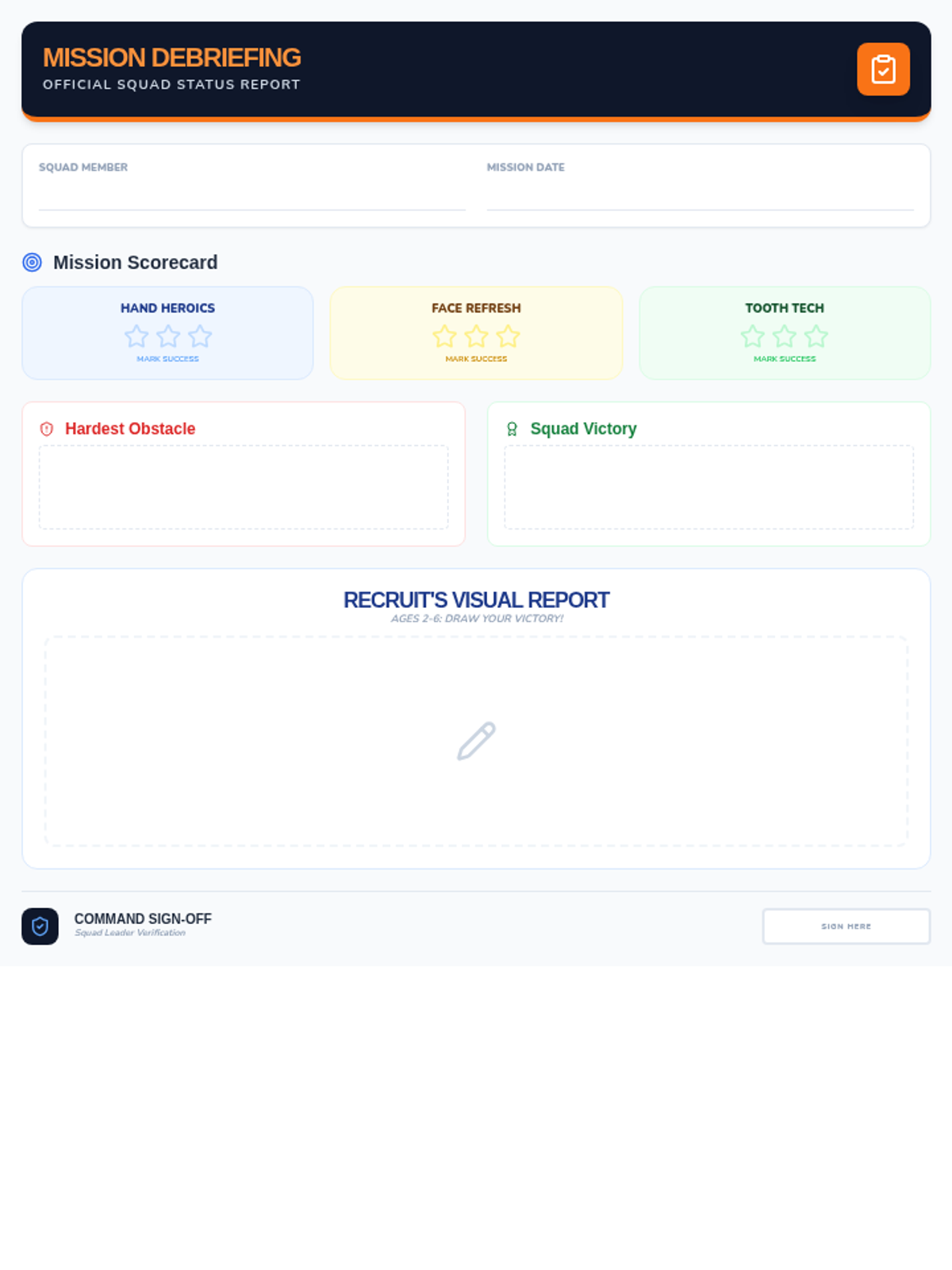
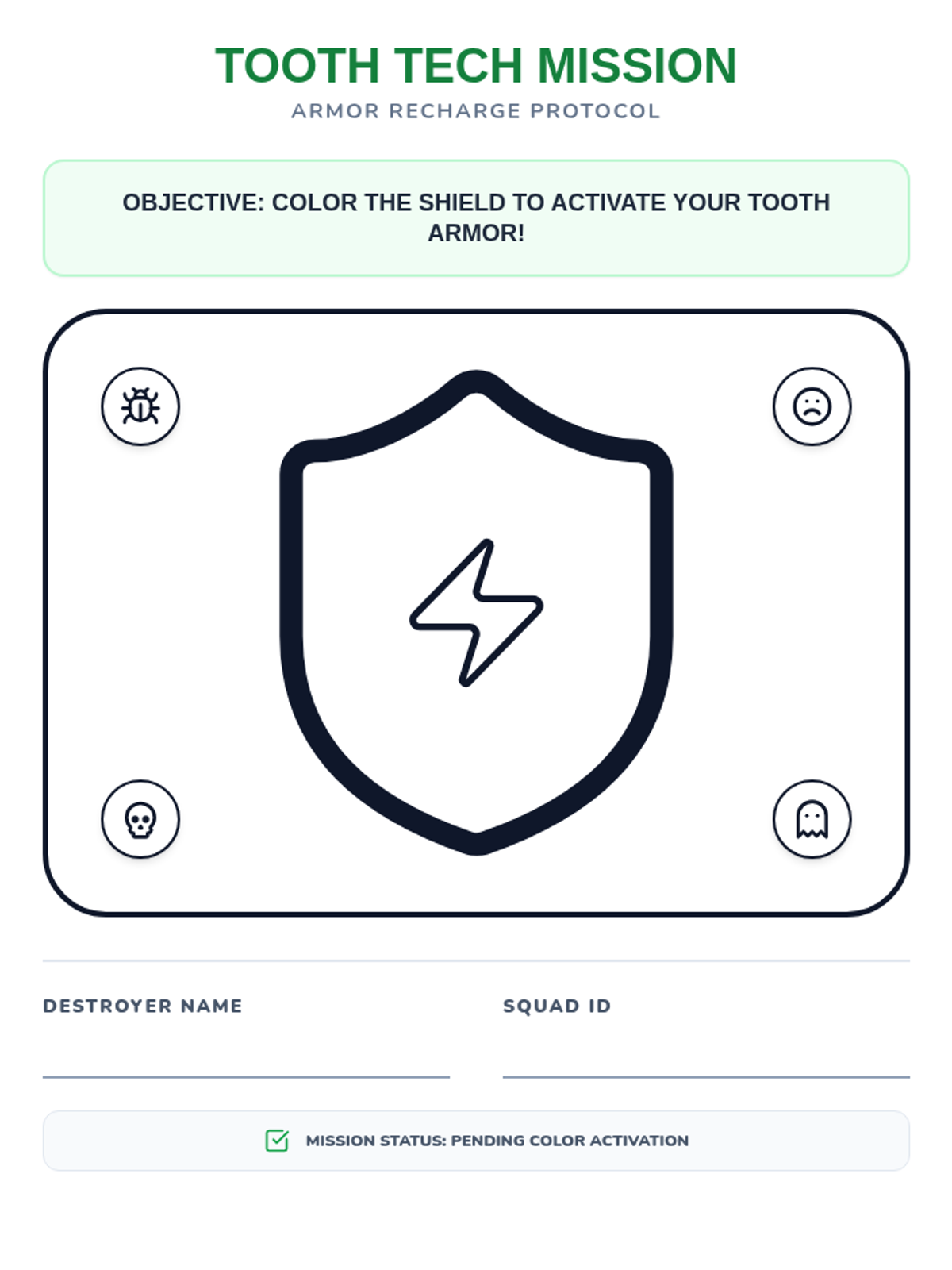
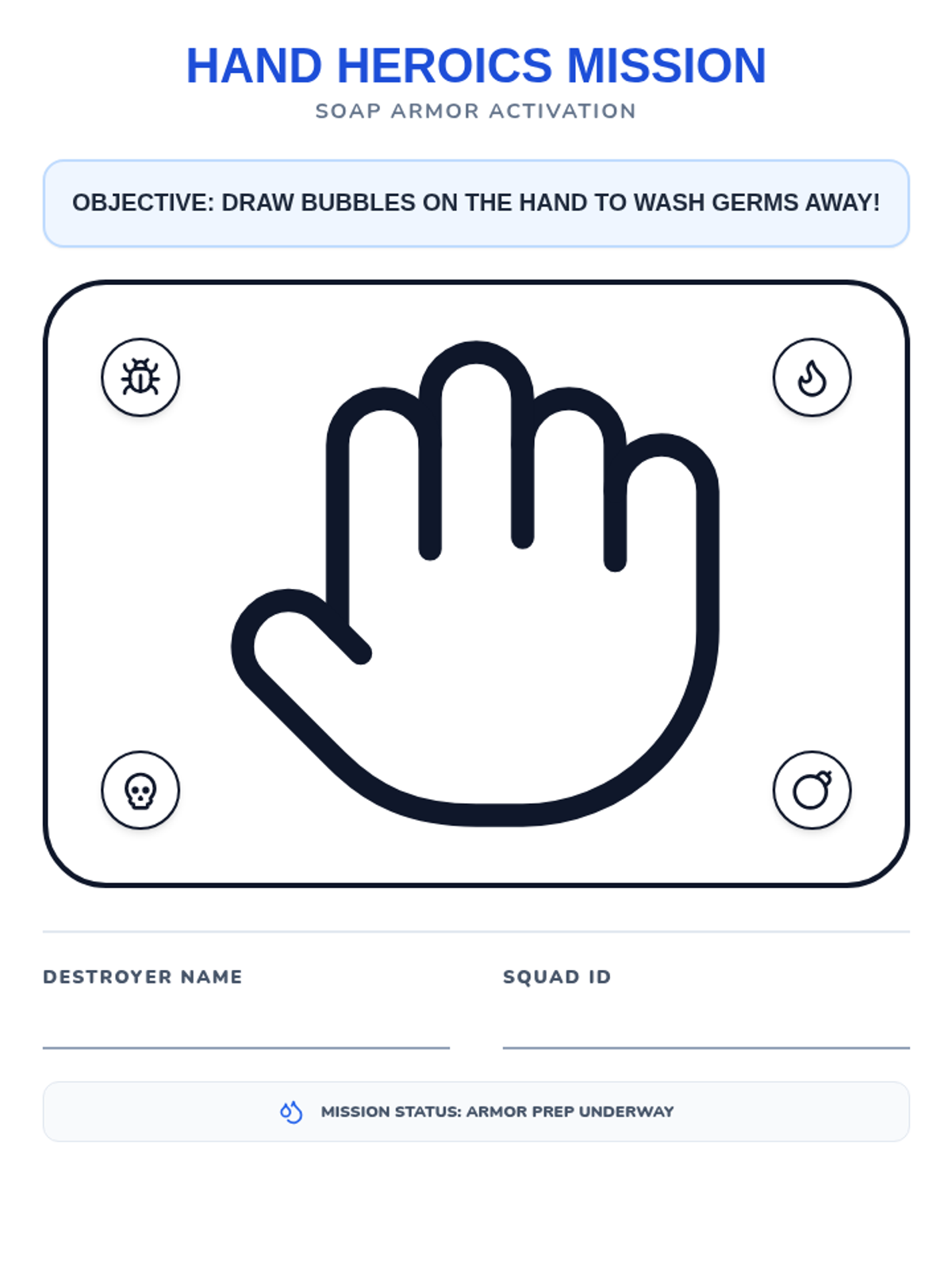
A mission-based hygiene sequence designed to engage five boys across a wide age range (2-10). The program uses a superhero 'Dirt Destroyers' theme to turn hand washing, face wiping, and tooth brushing into an exciting team challenge.
A series of lessons focused on empowering students to take charge of their physical and mental well-being through sustainable habits.
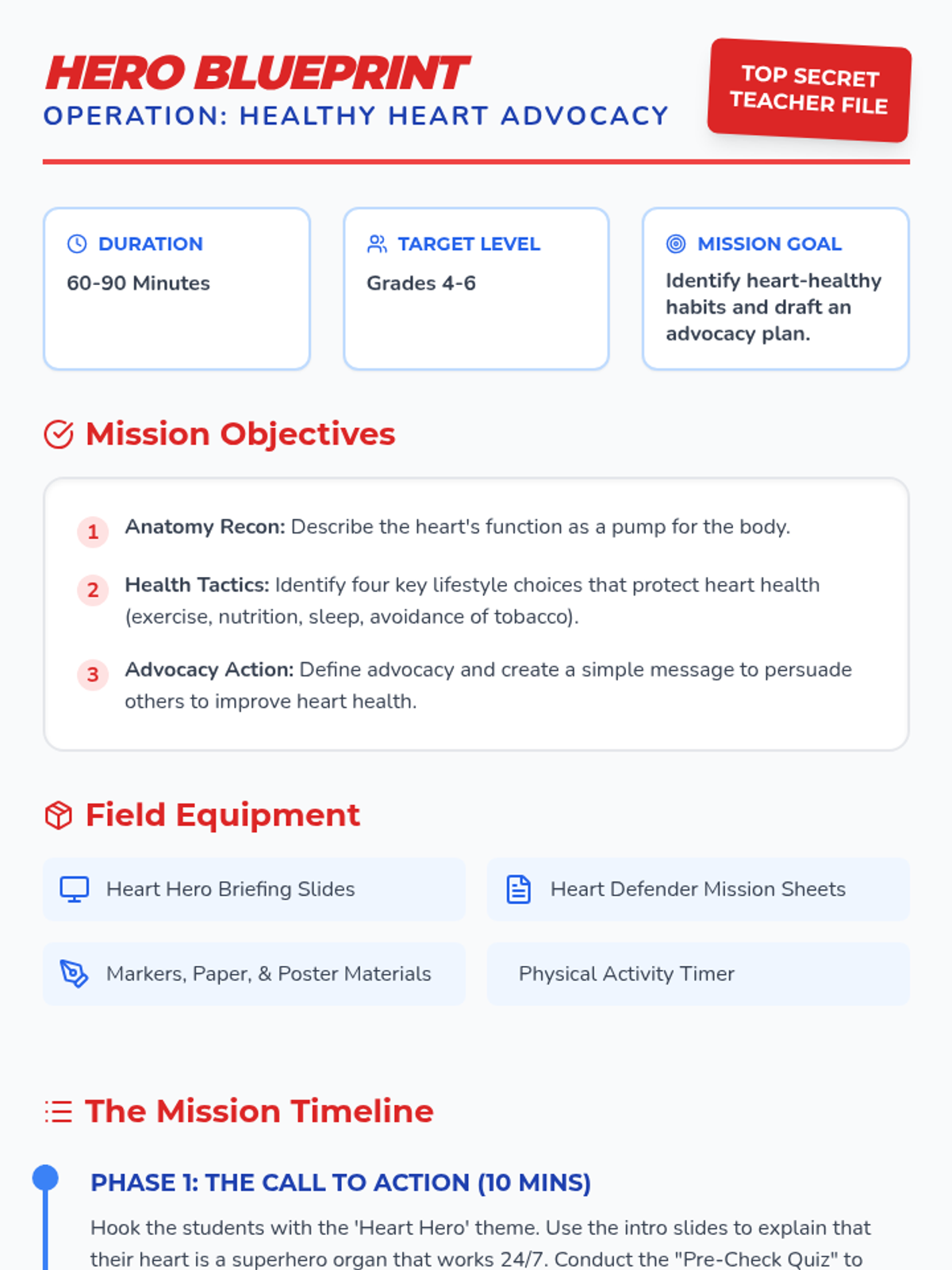
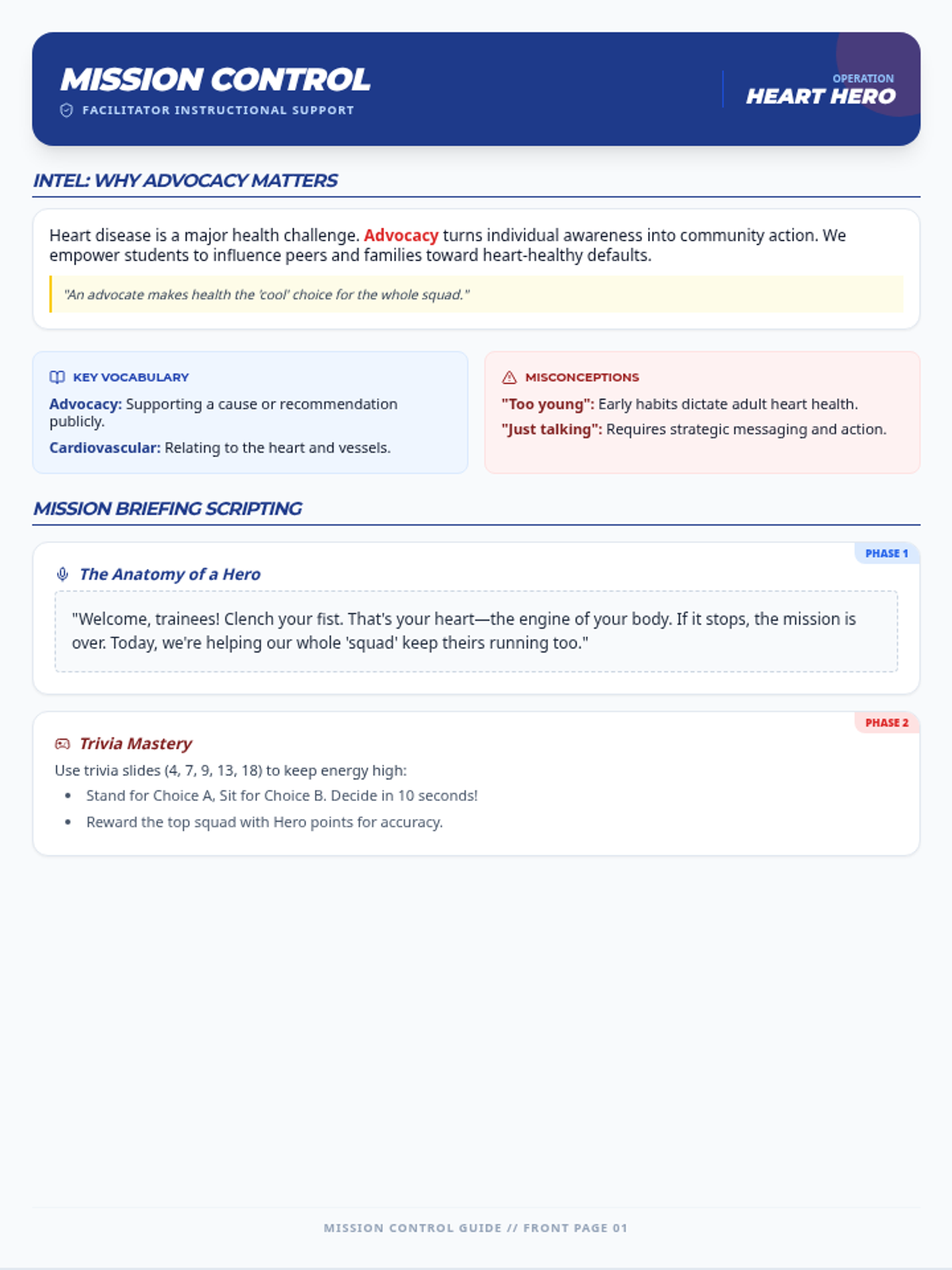
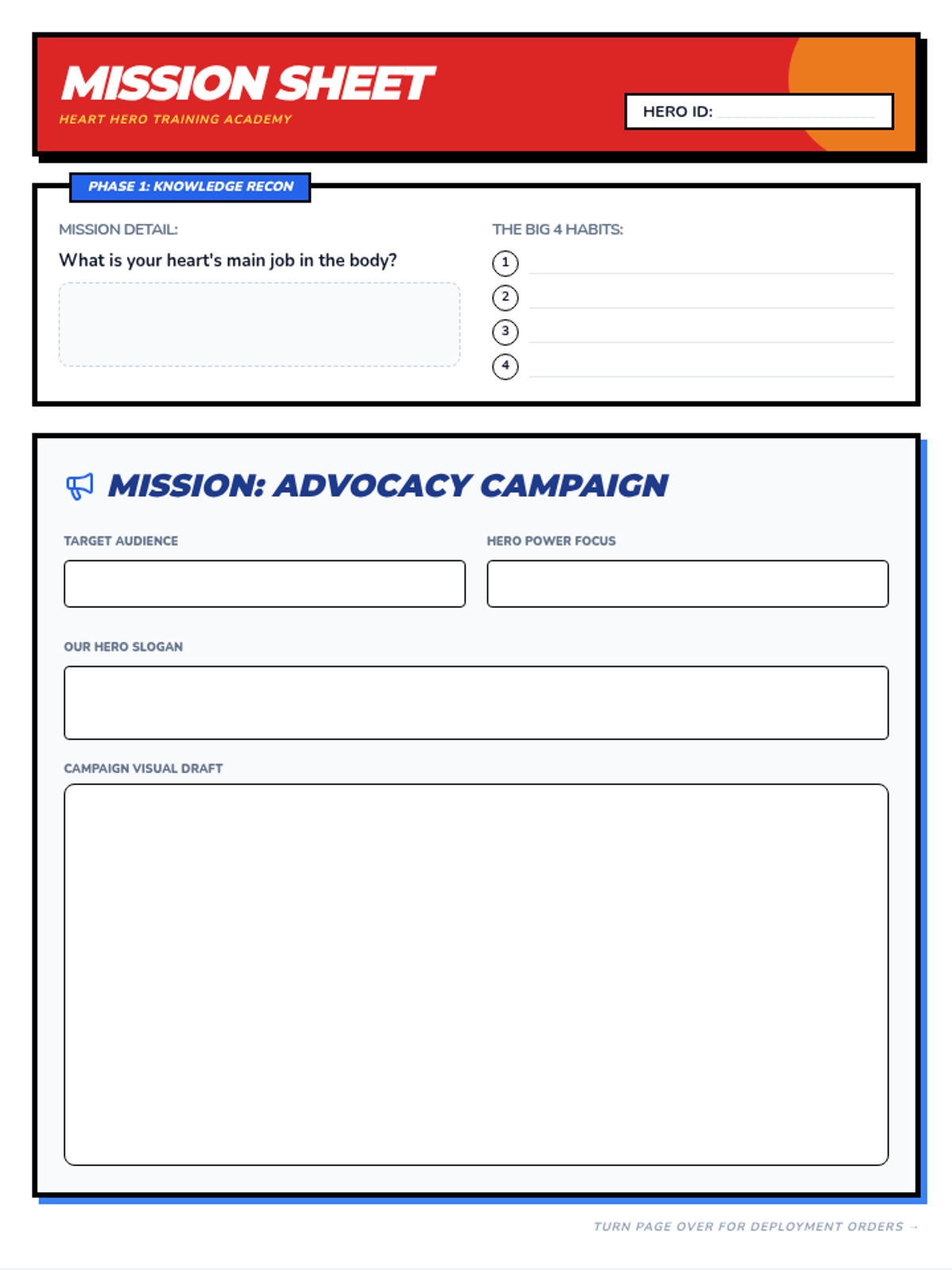
A comprehensive lesson sequence designed to empower students to become 'Heart Heroes' through education and advocacy for cardiovascular health.
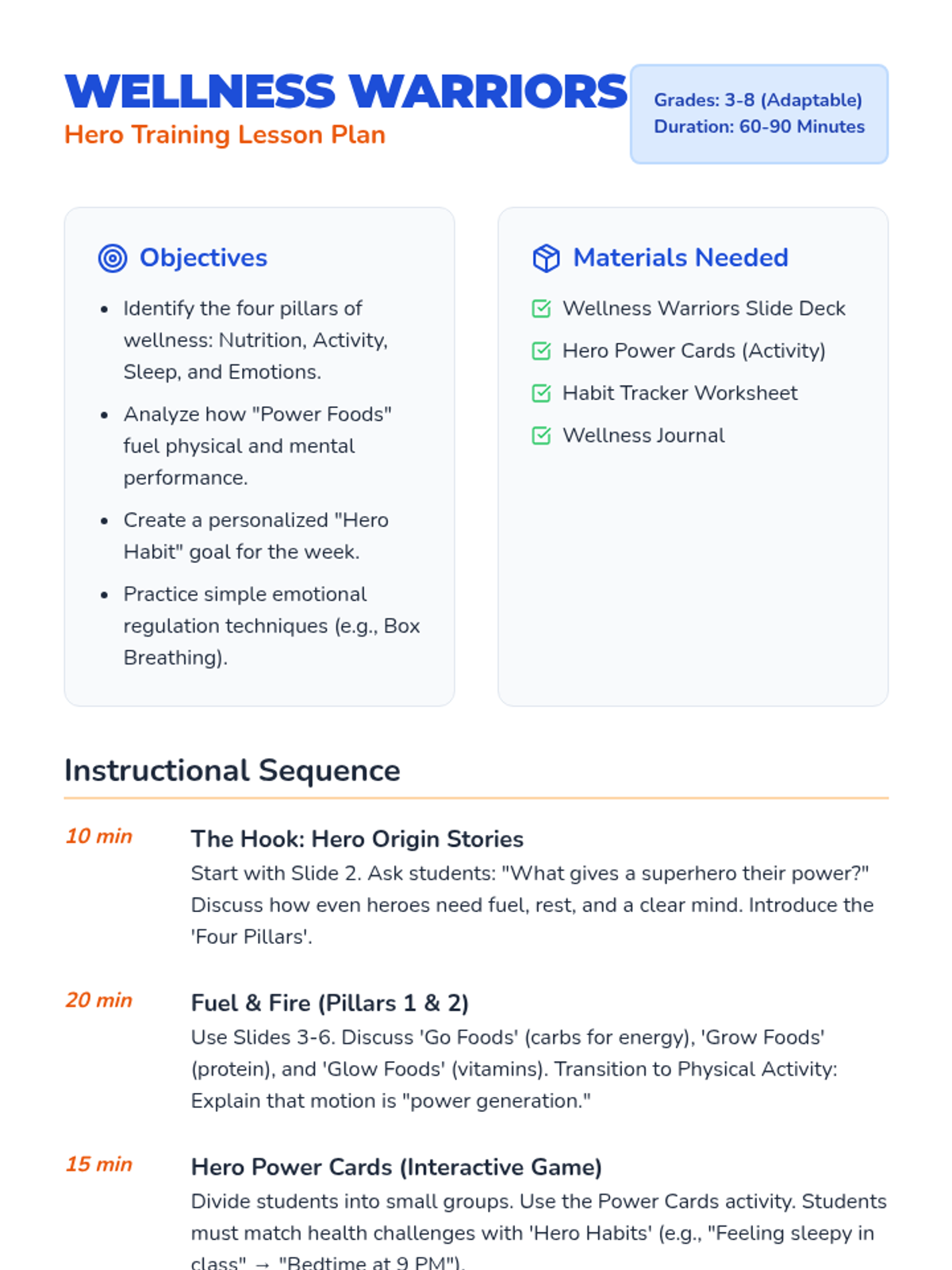
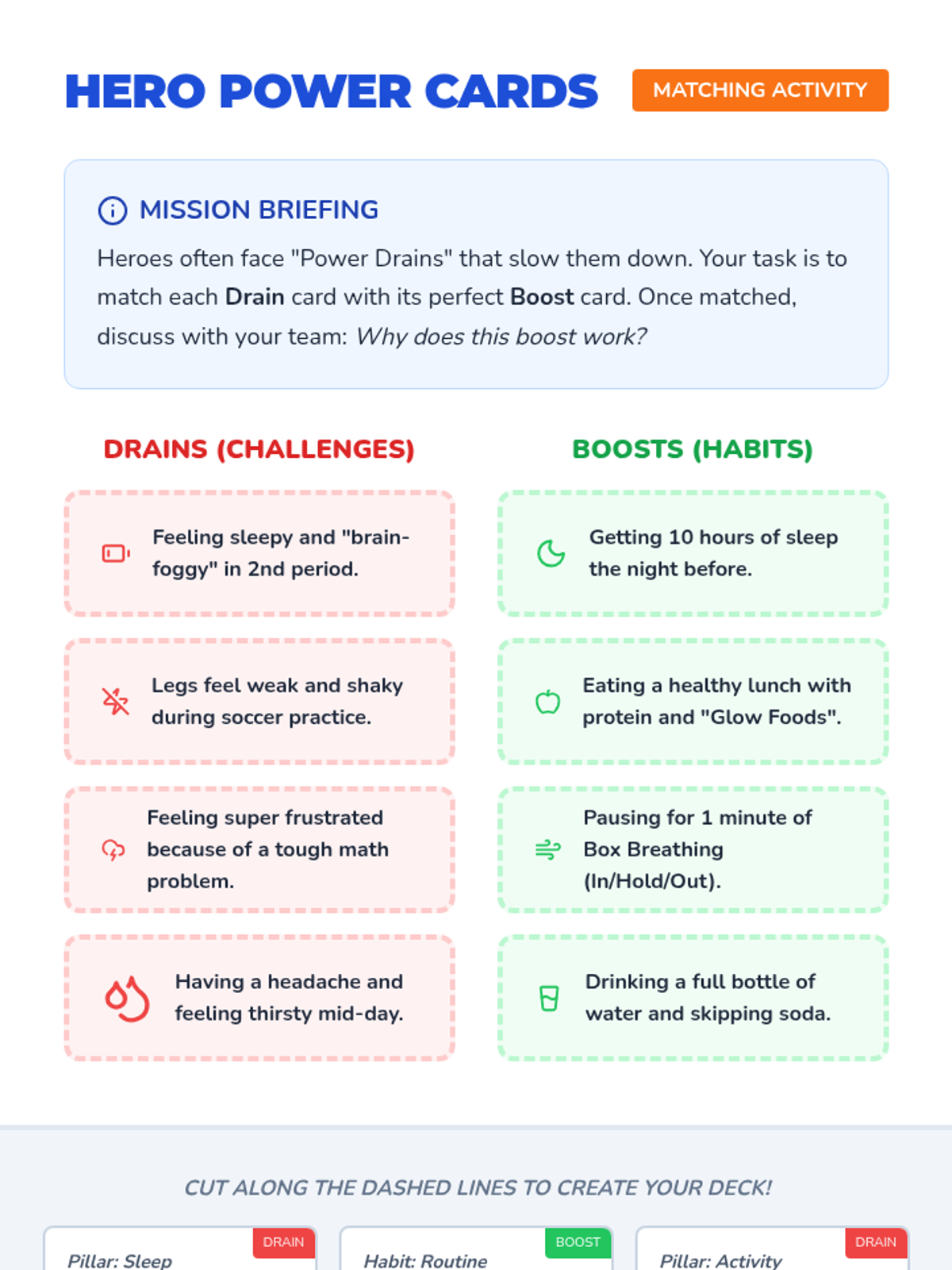
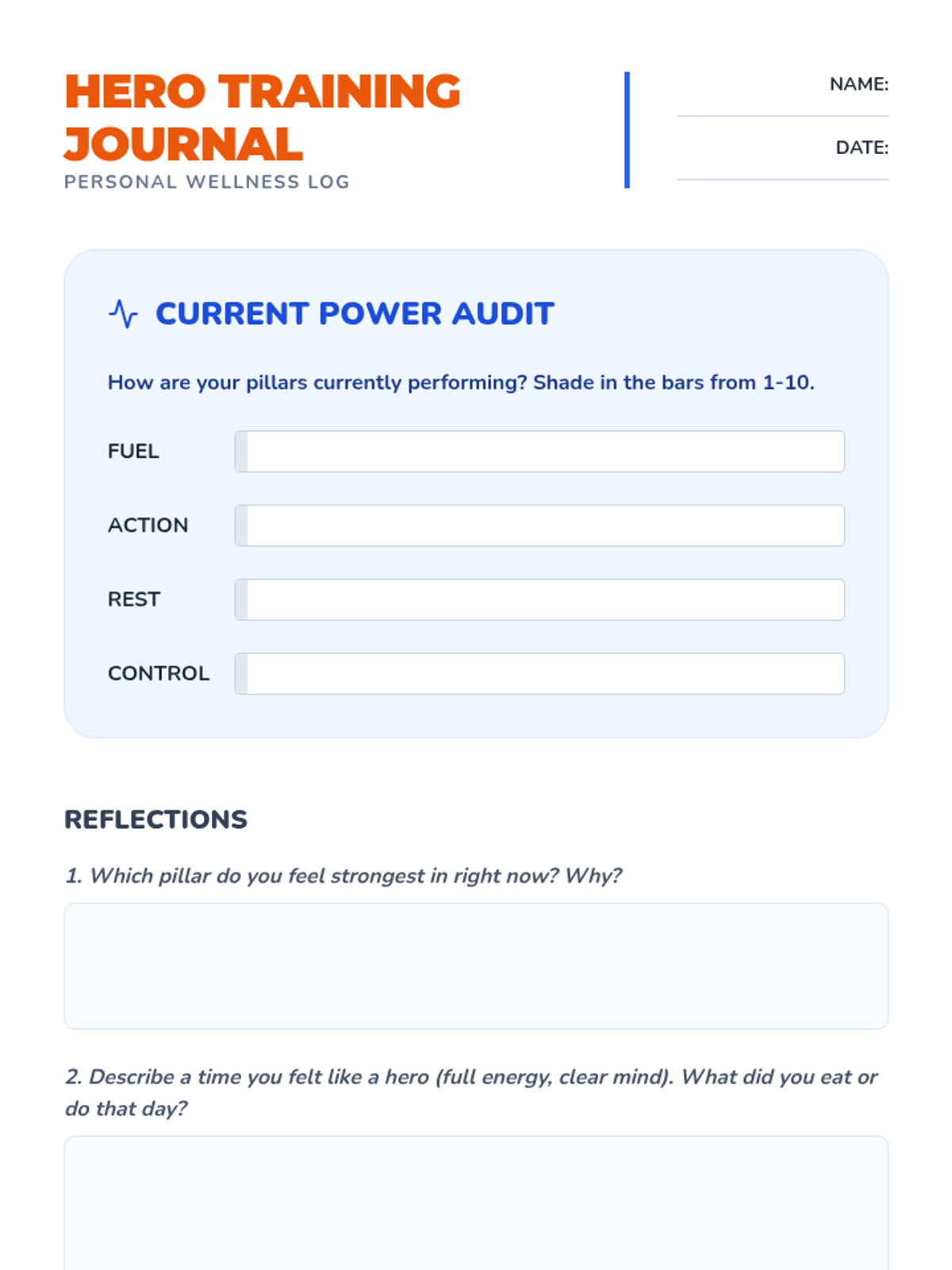
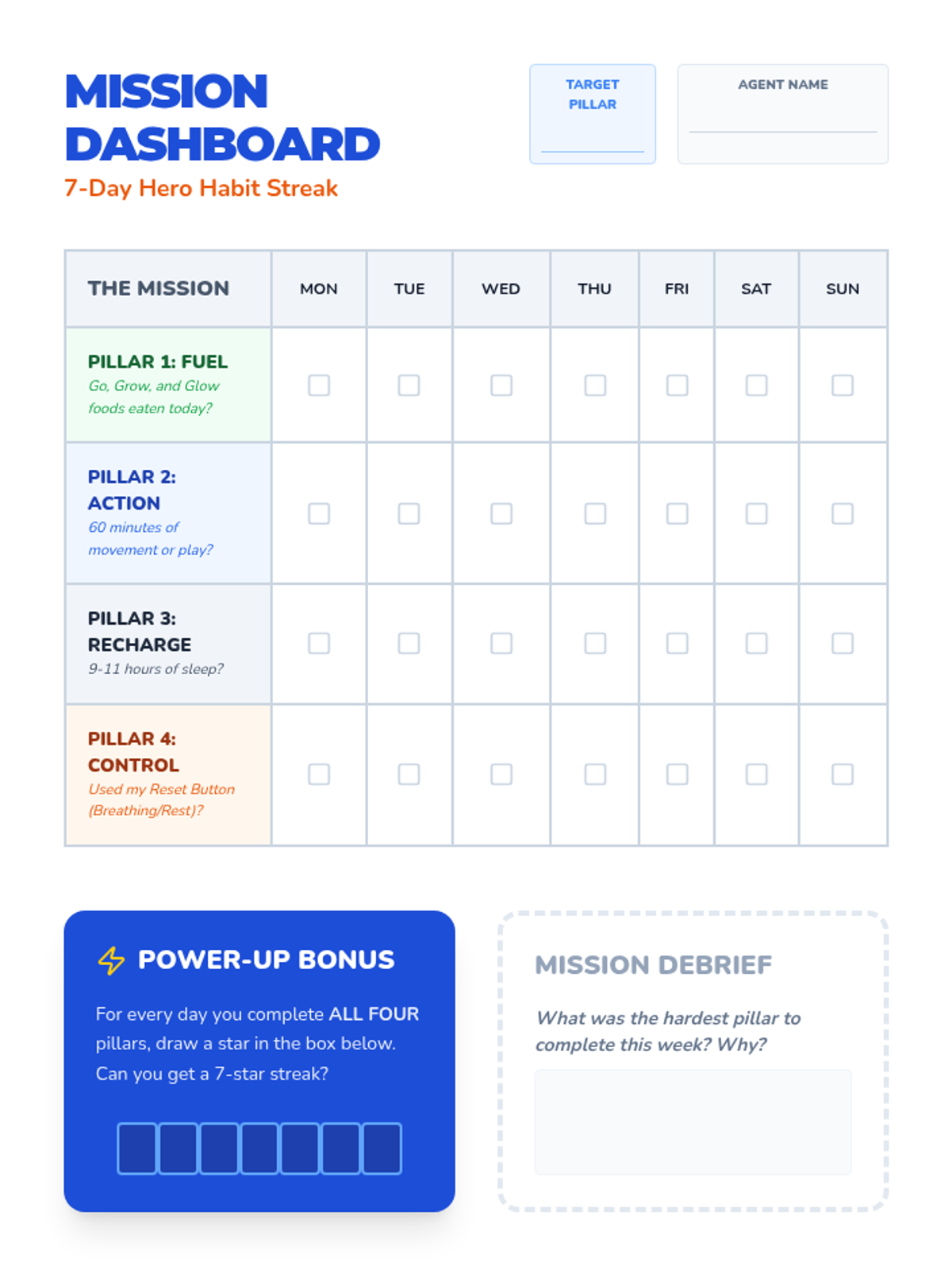
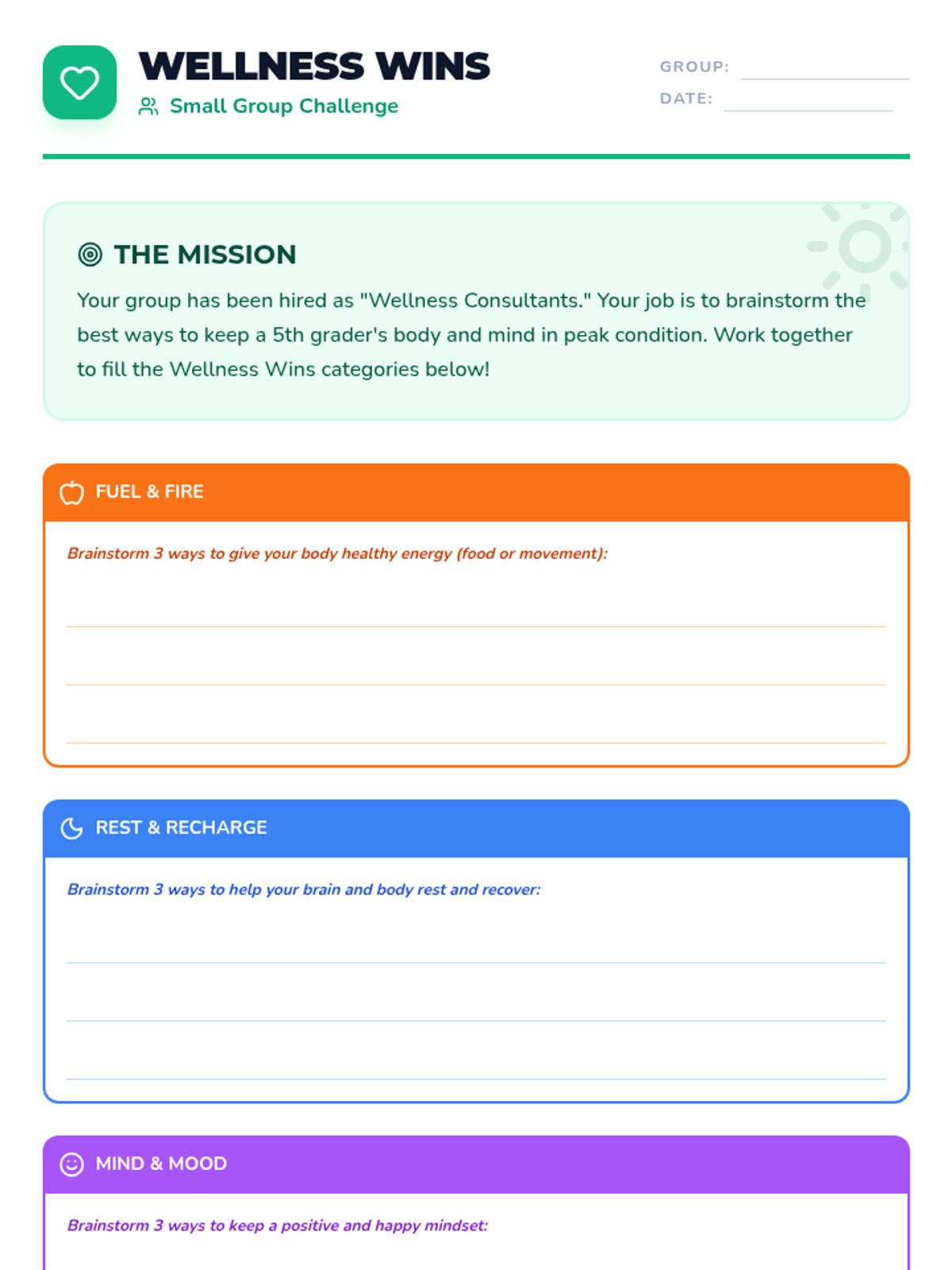
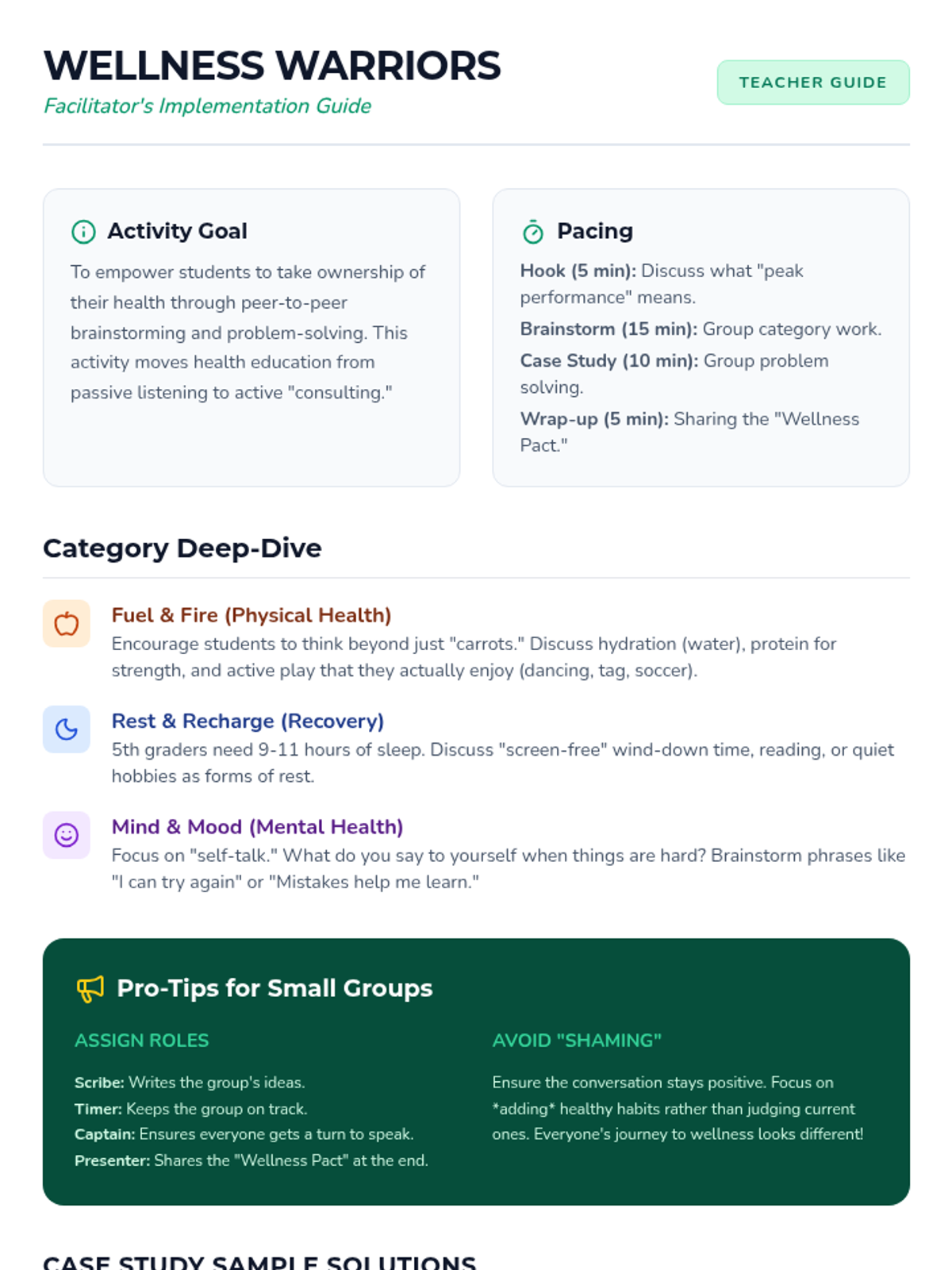
A comprehensive wellness unit designed to empower students with lifelong healthy habits. Students explore nutrition, exercise, sleep, and emotional regulation through the lens of 'hero training'.
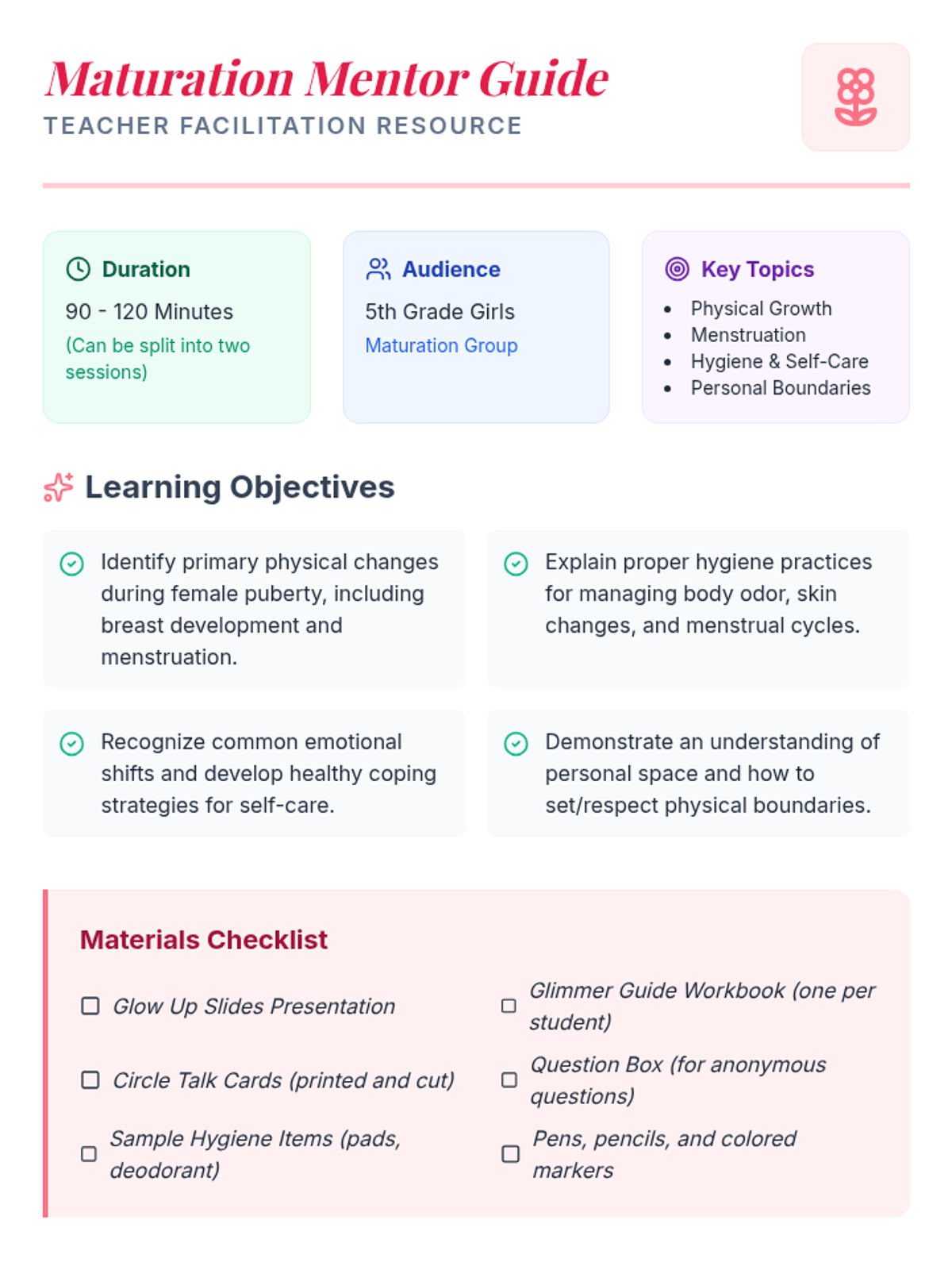
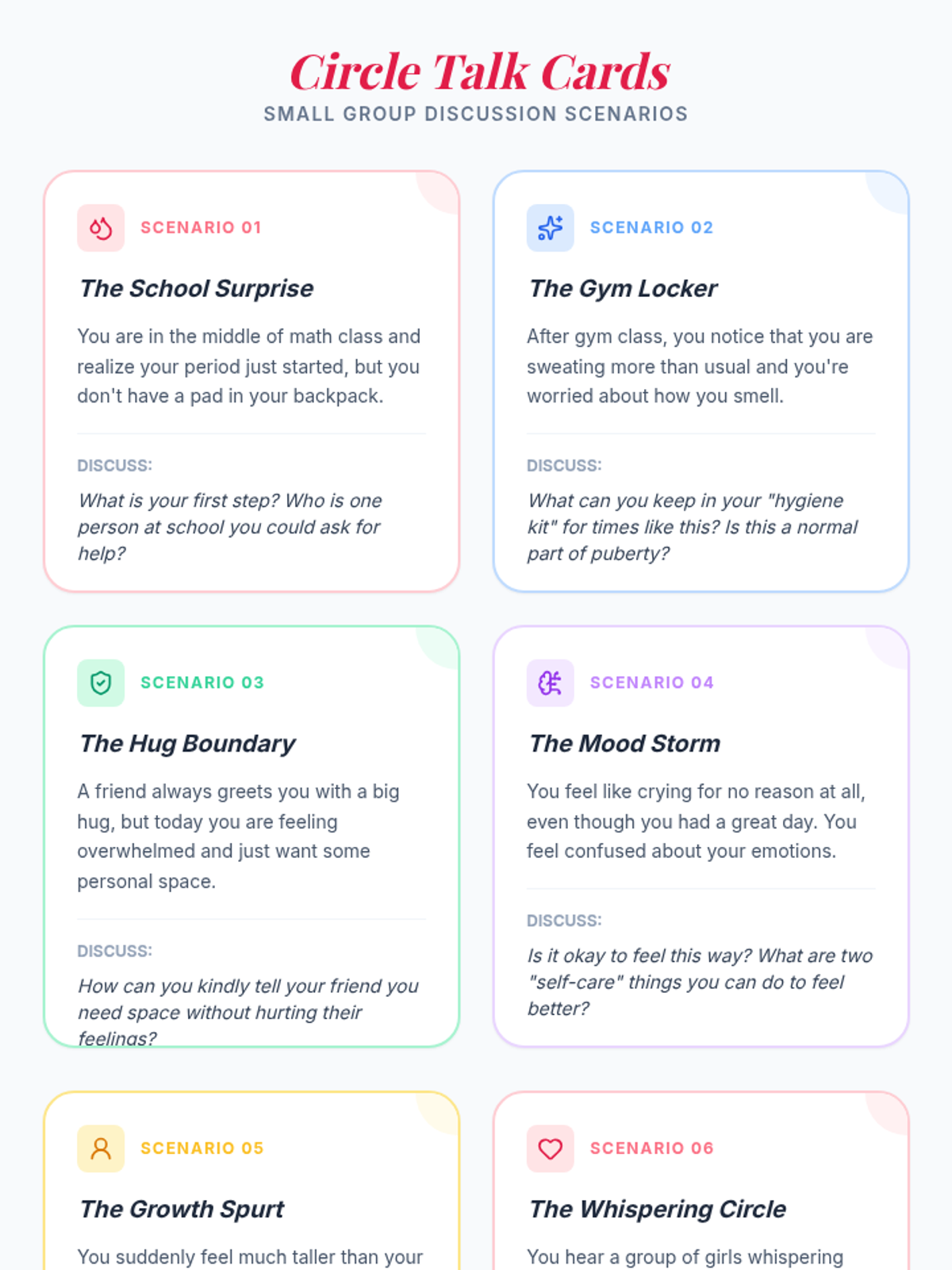
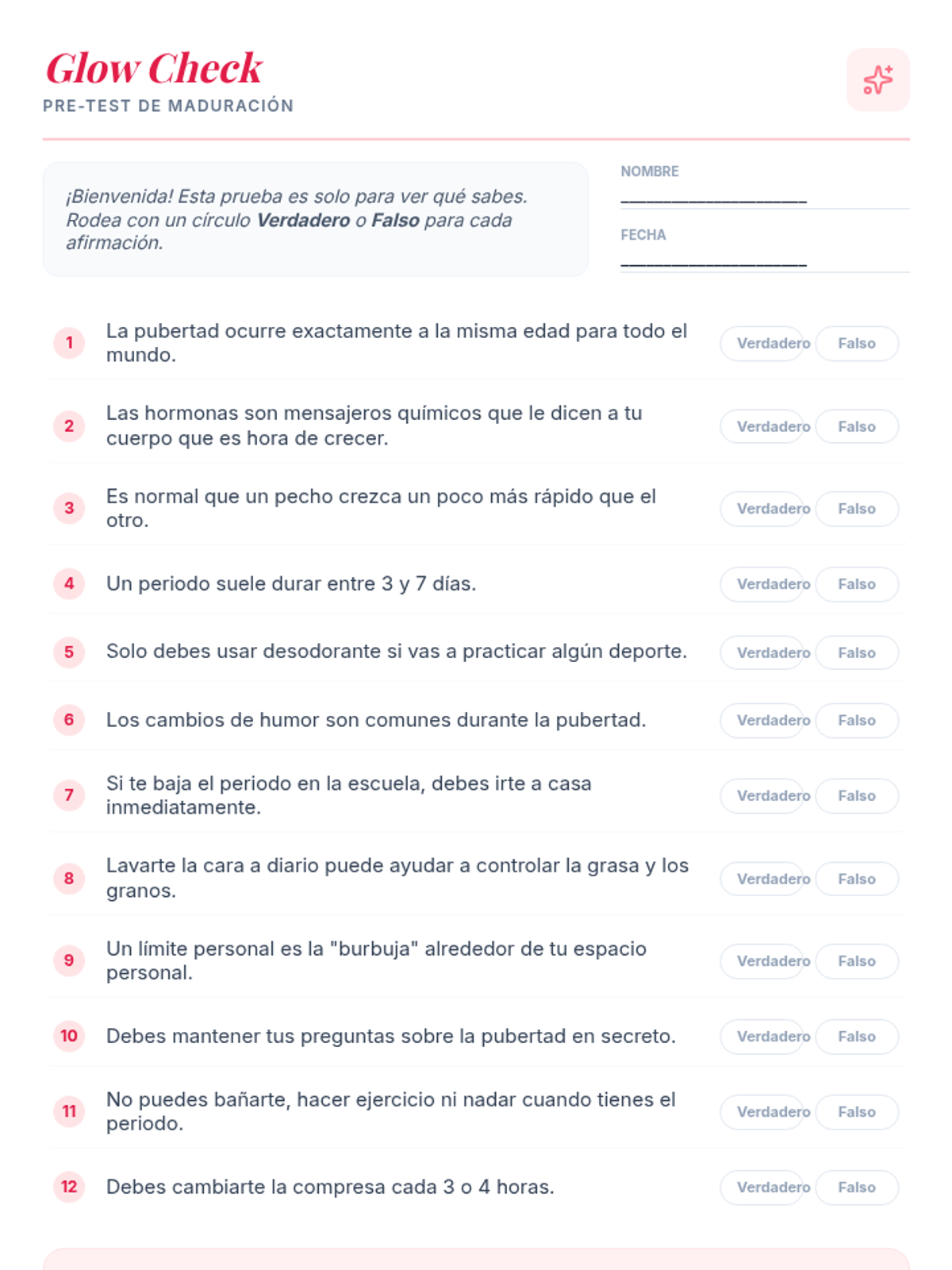
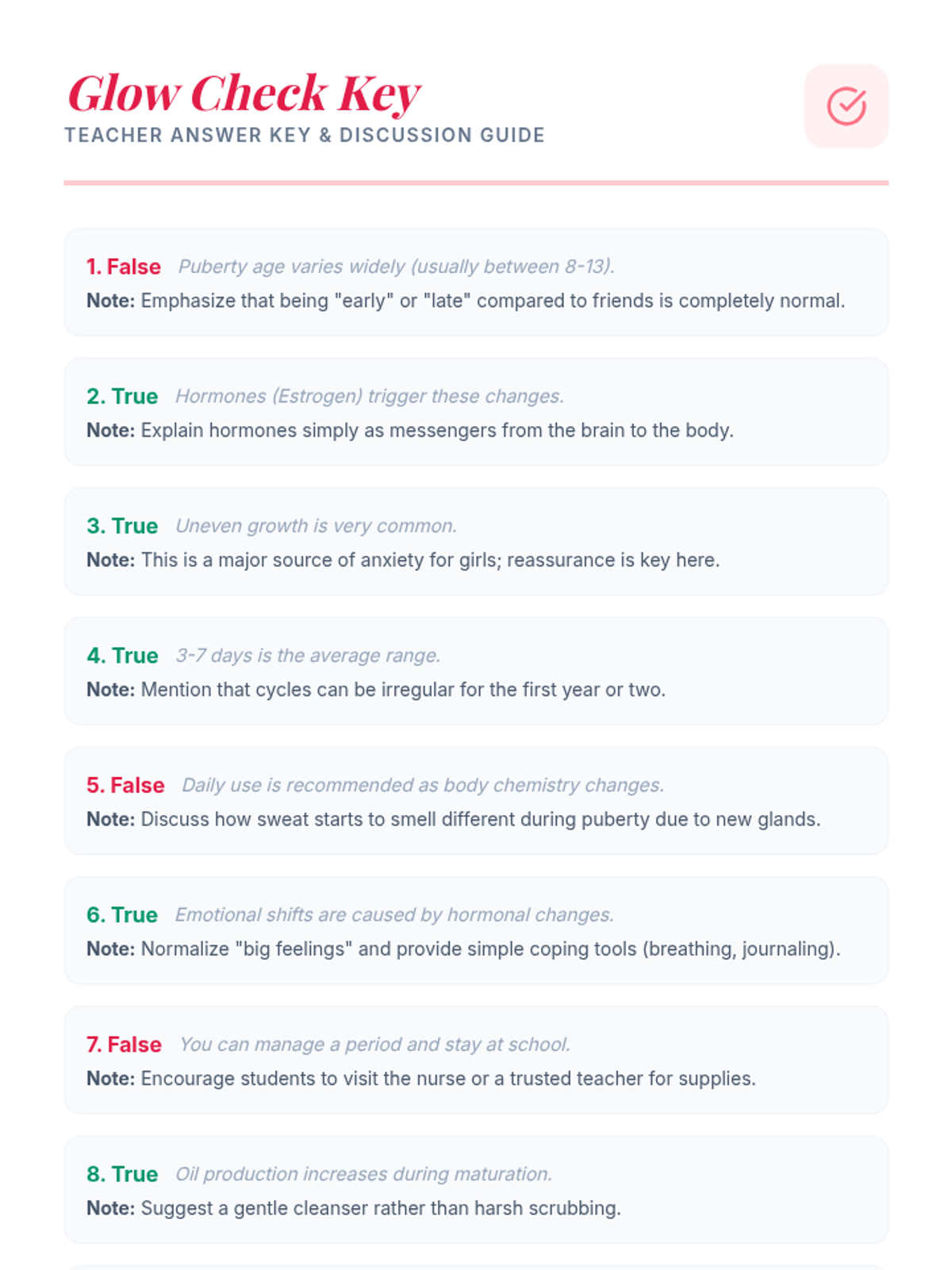
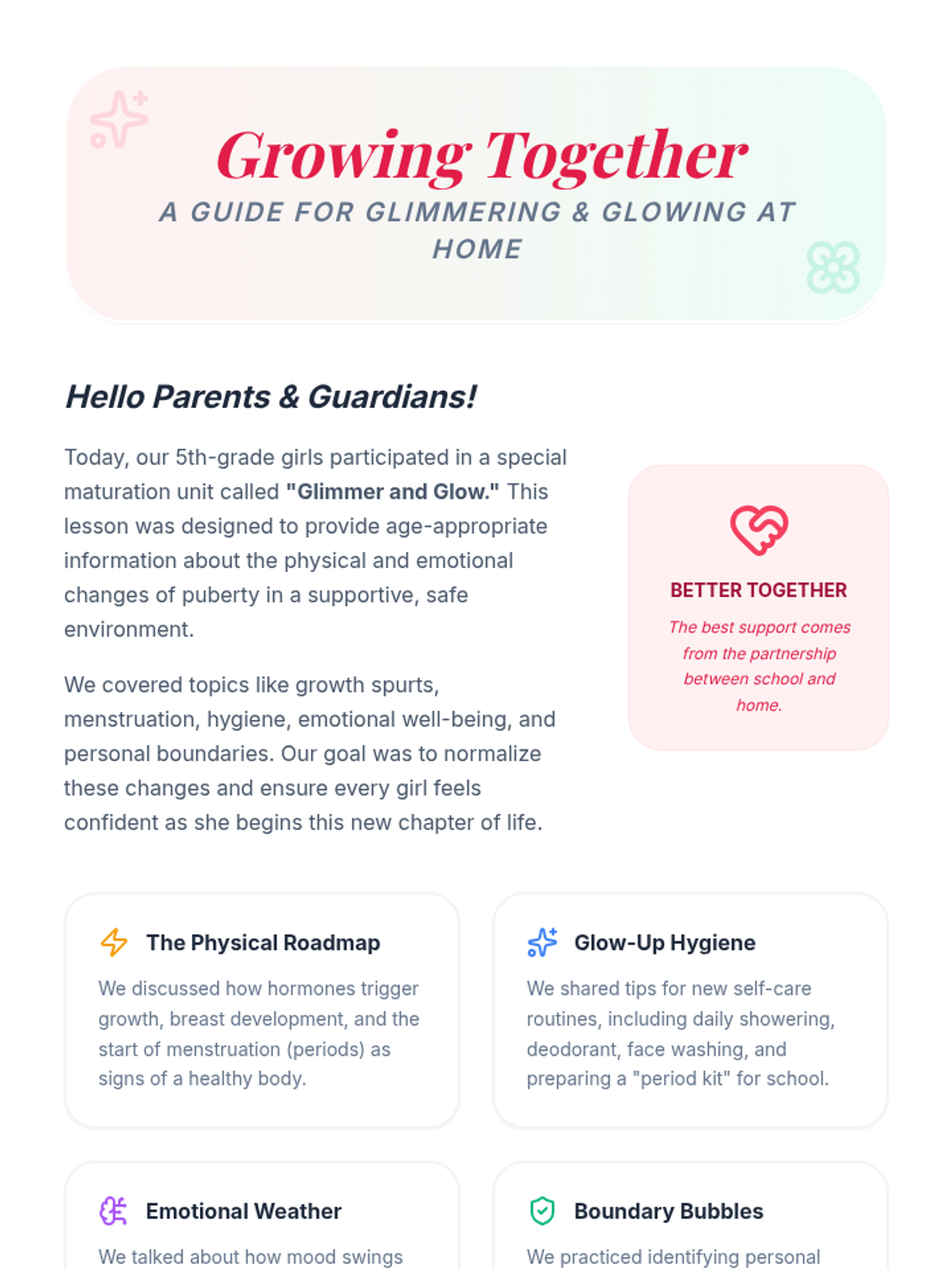
A comprehensive maturation unit for 5th-grade girls covering physical, emotional, and social changes during puberty. Includes a detailed teacher guide, interactive slides, a student workbook, and discussion cards to foster a supportive and informative environment.
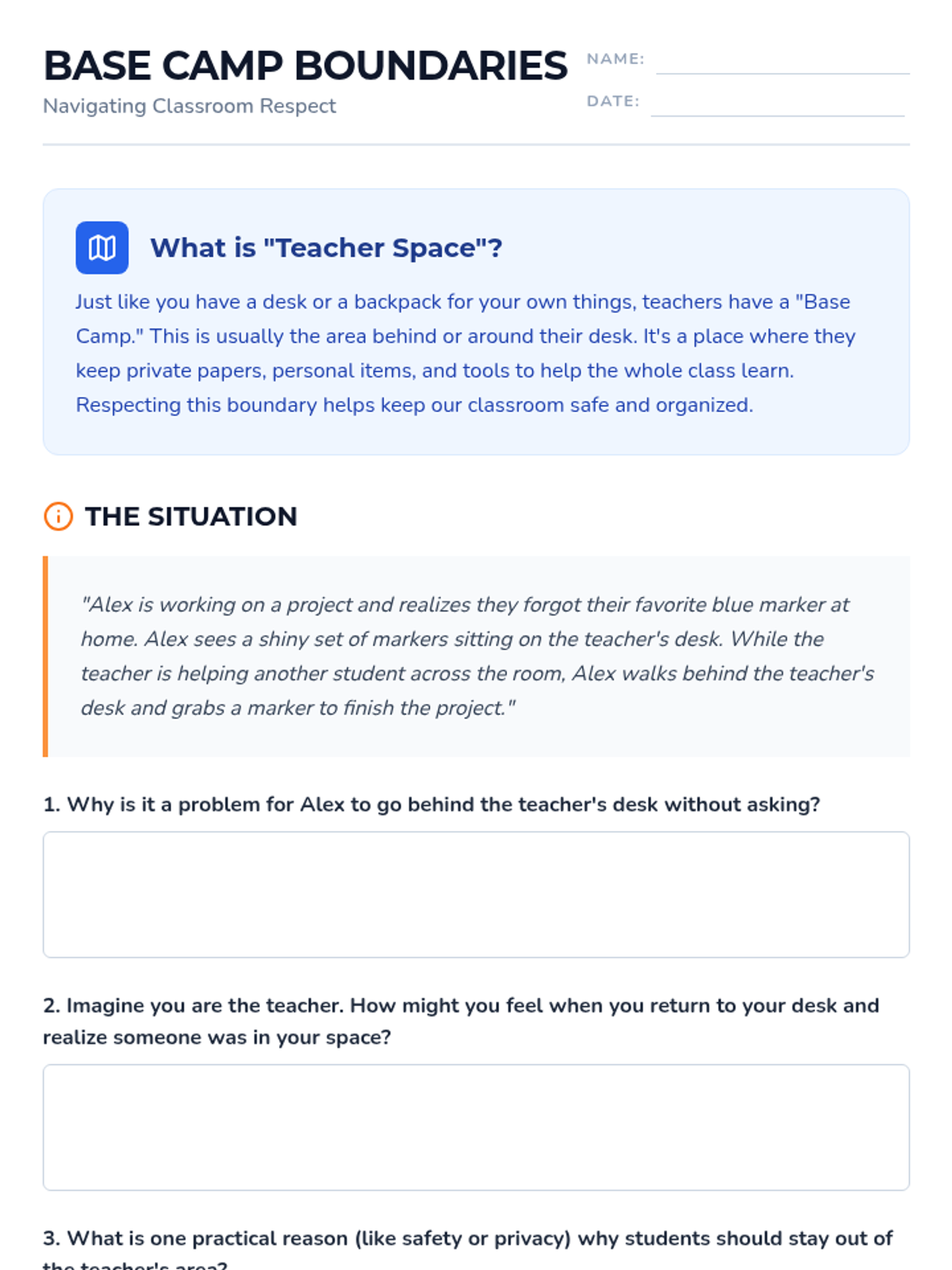
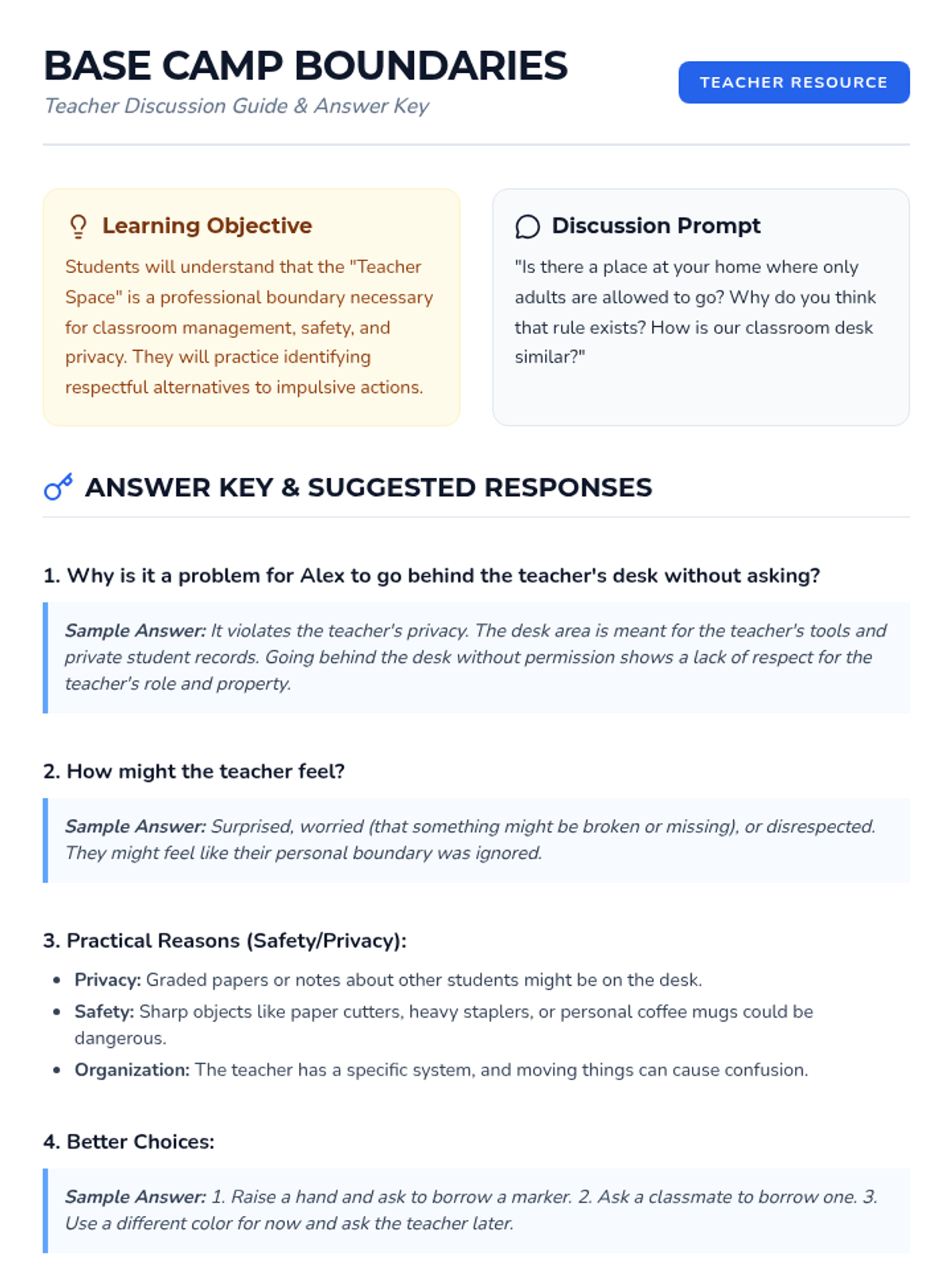
A unit focused on building a positive classroom environment through respectful boundaries and individual well-being. Students learn how to navigate physical spaces and personal health for a successful school year.
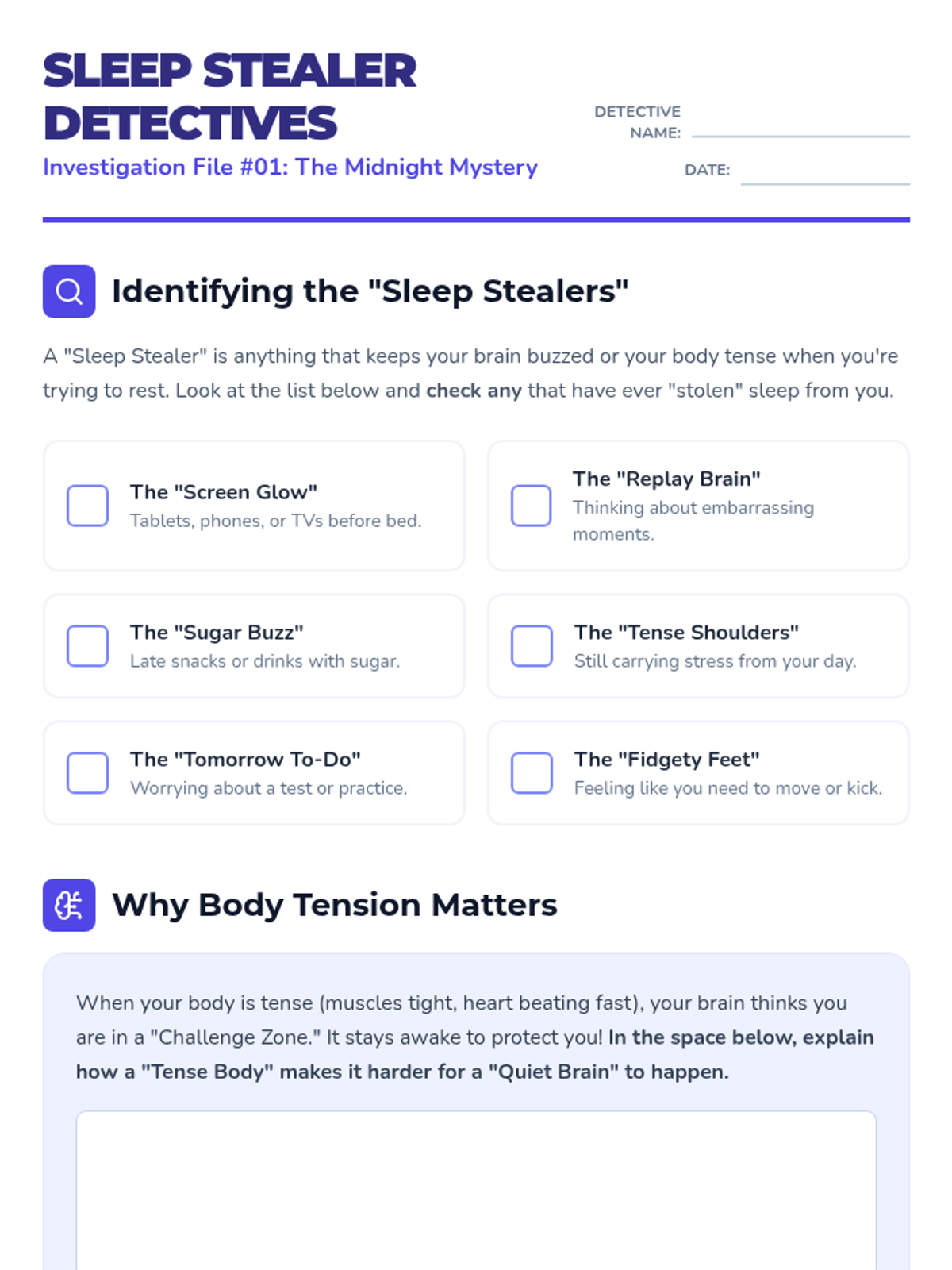
This sequence explores the relationship between muscle tension, rest, and sleep hygiene. Students investigate why 'shutting off' at night can be difficult and how PMR serves as a bridge to sleep, progressing from the science of rest to personal experimentation and routine design.
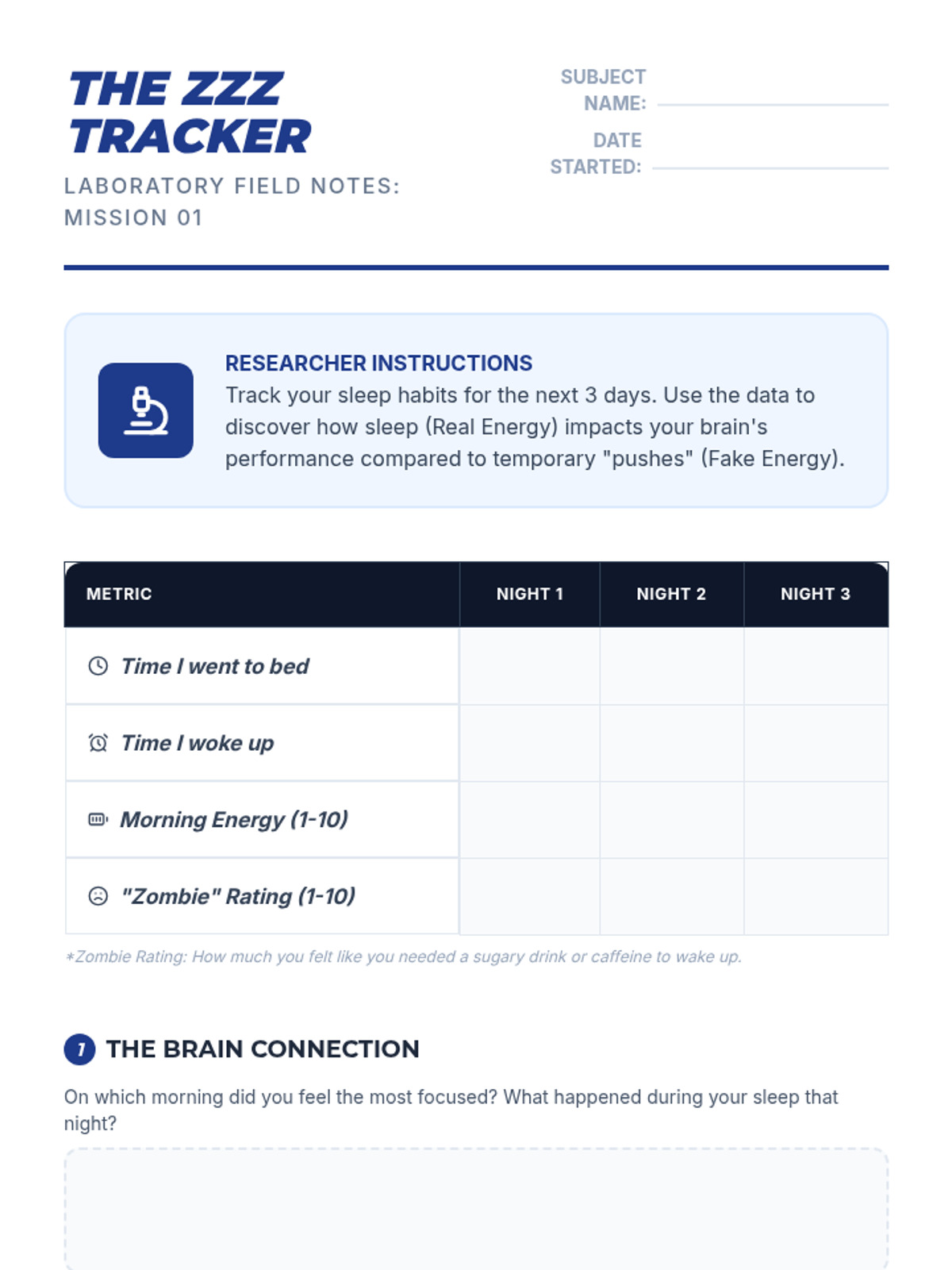
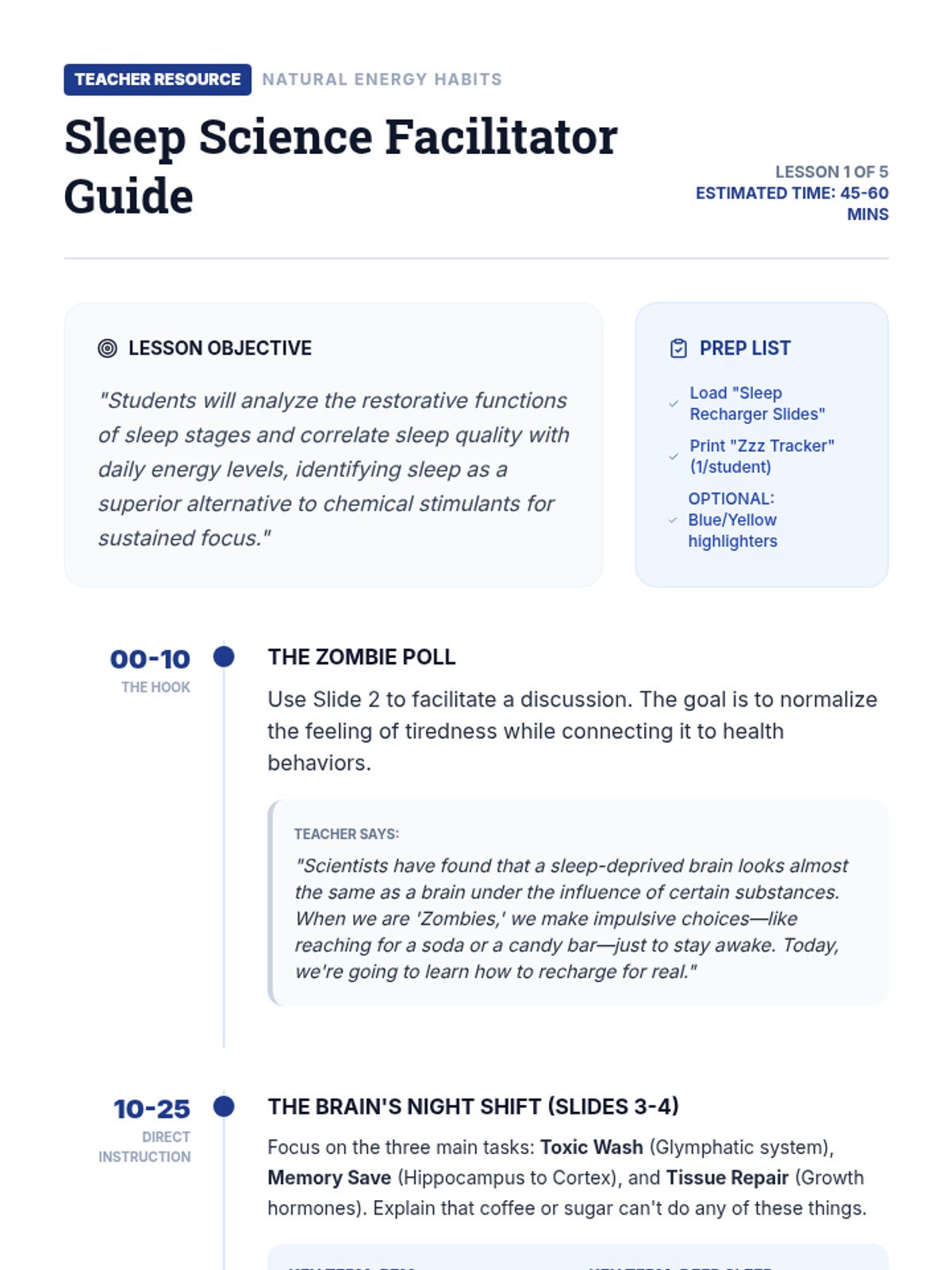
A 5th-grade mastery-based sequence focused on positive health alternatives to stimulants. Students explore sleep, nutrition, hydration, and exercise as natural energy sources, culminating in a personalized 'Natural High' plan.
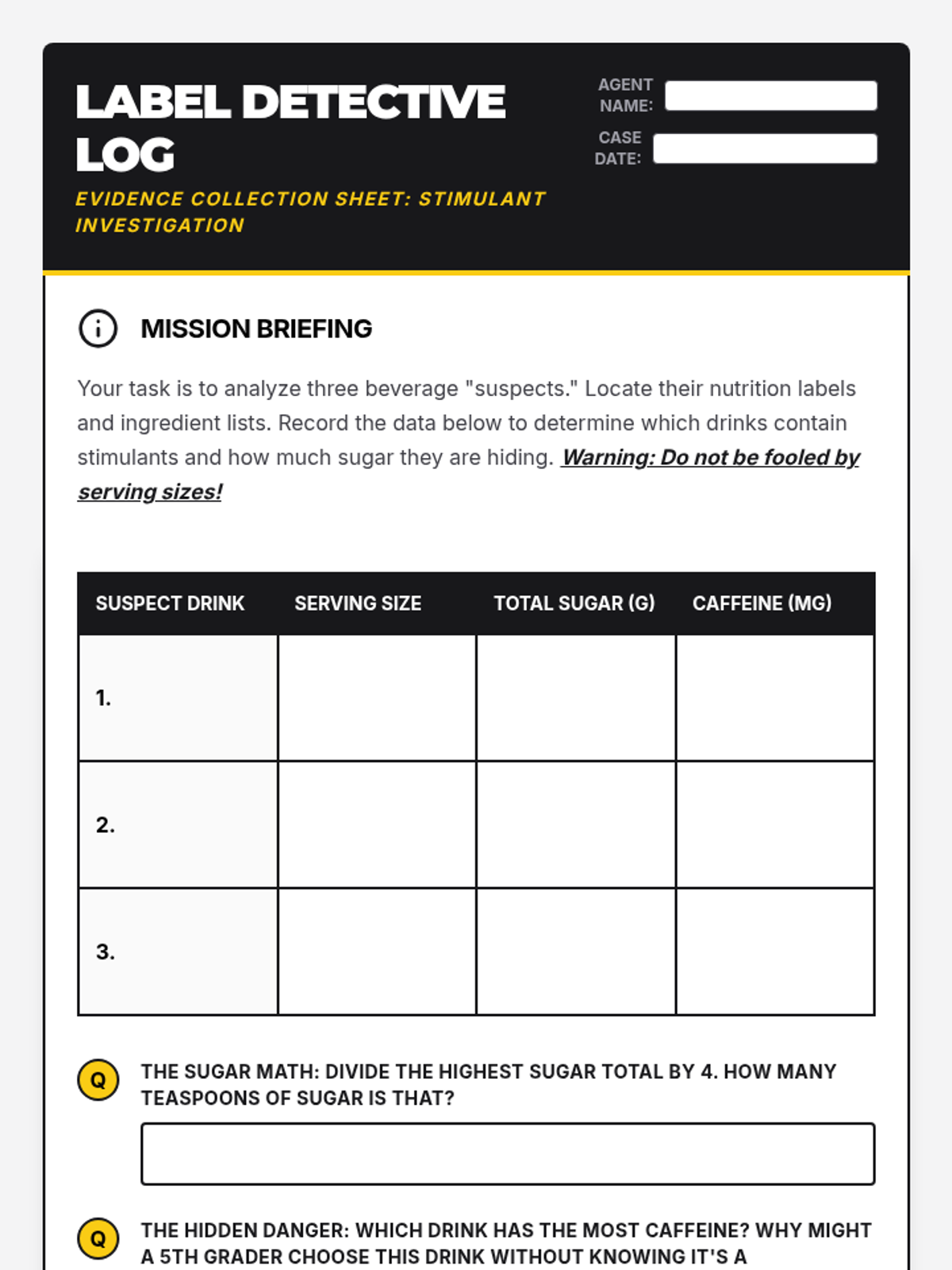
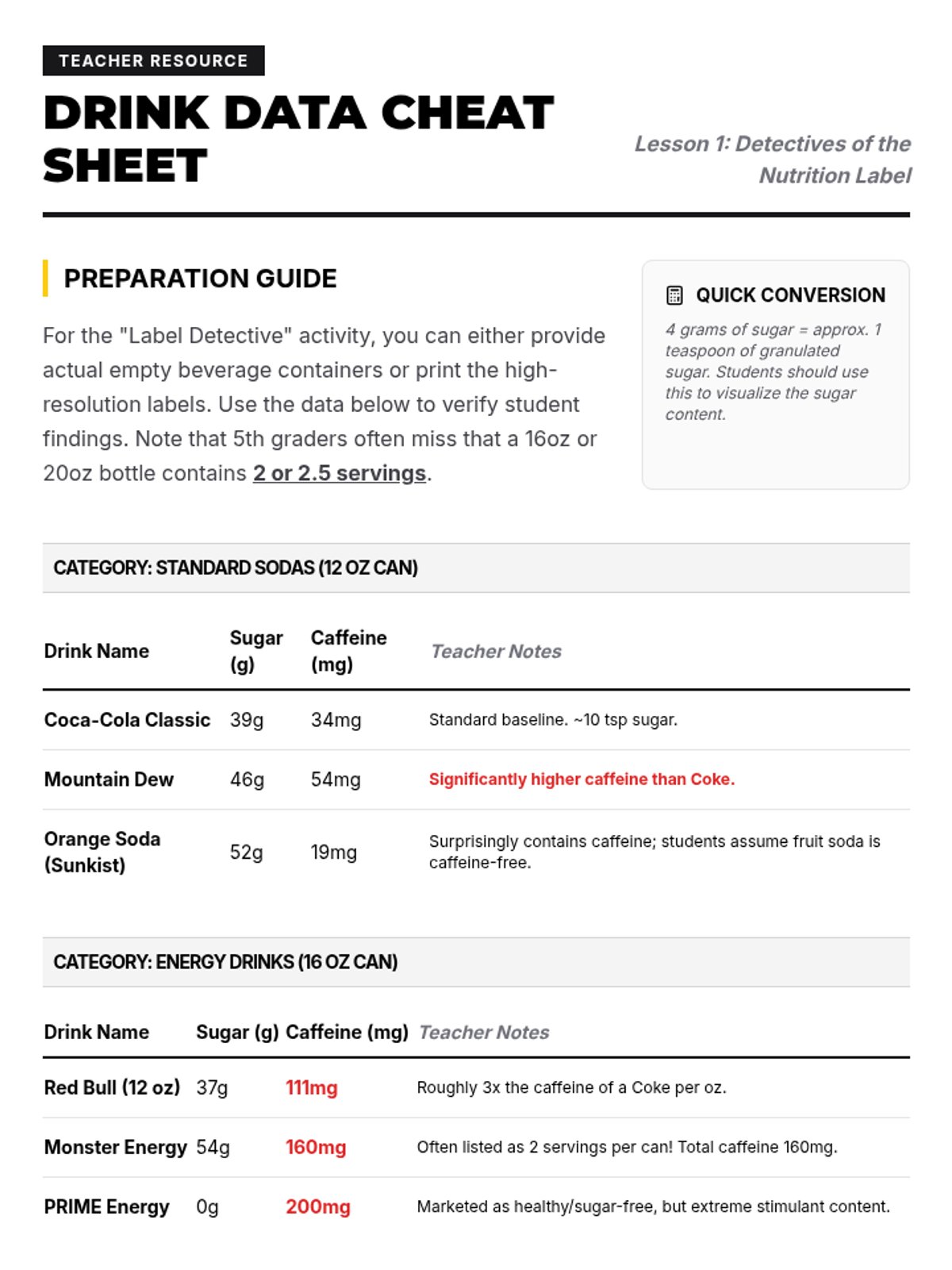
A comprehensive 5-lesson project-based sequence for 5th graders examining caffeine stimulants, nutritional labels, and youth-targeted marketing tactics. Students investigate hidden ingredients and health impacts, culminating in a creative 'Truth in Advertising' label redesign project.
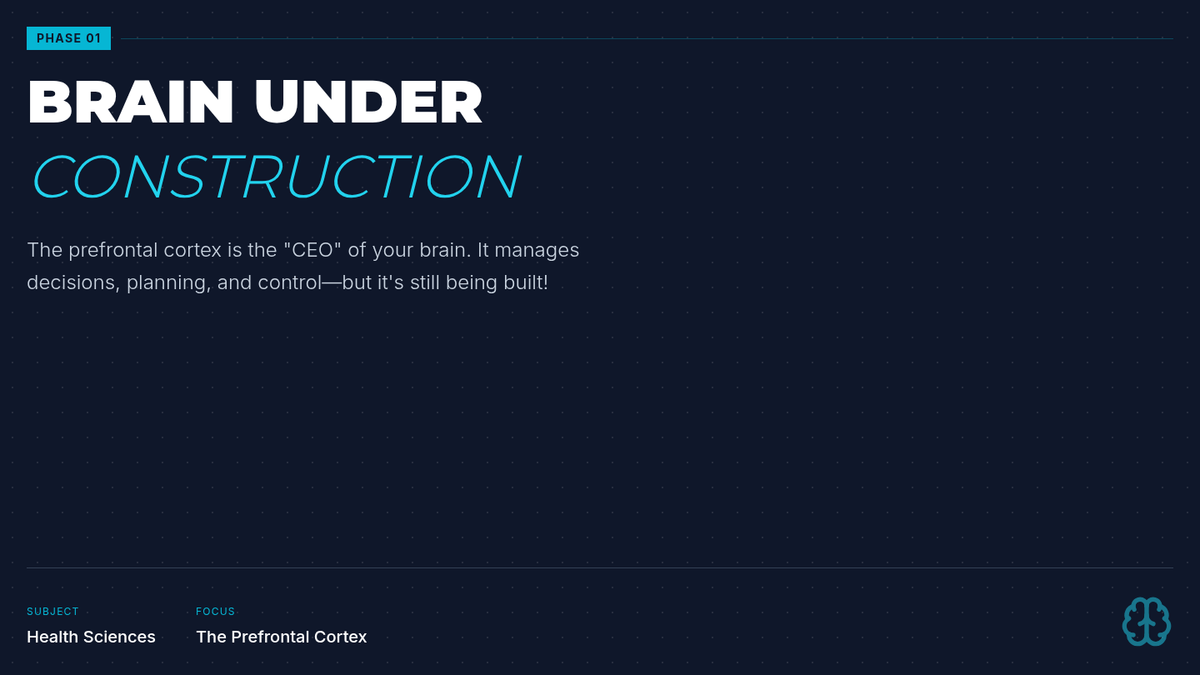
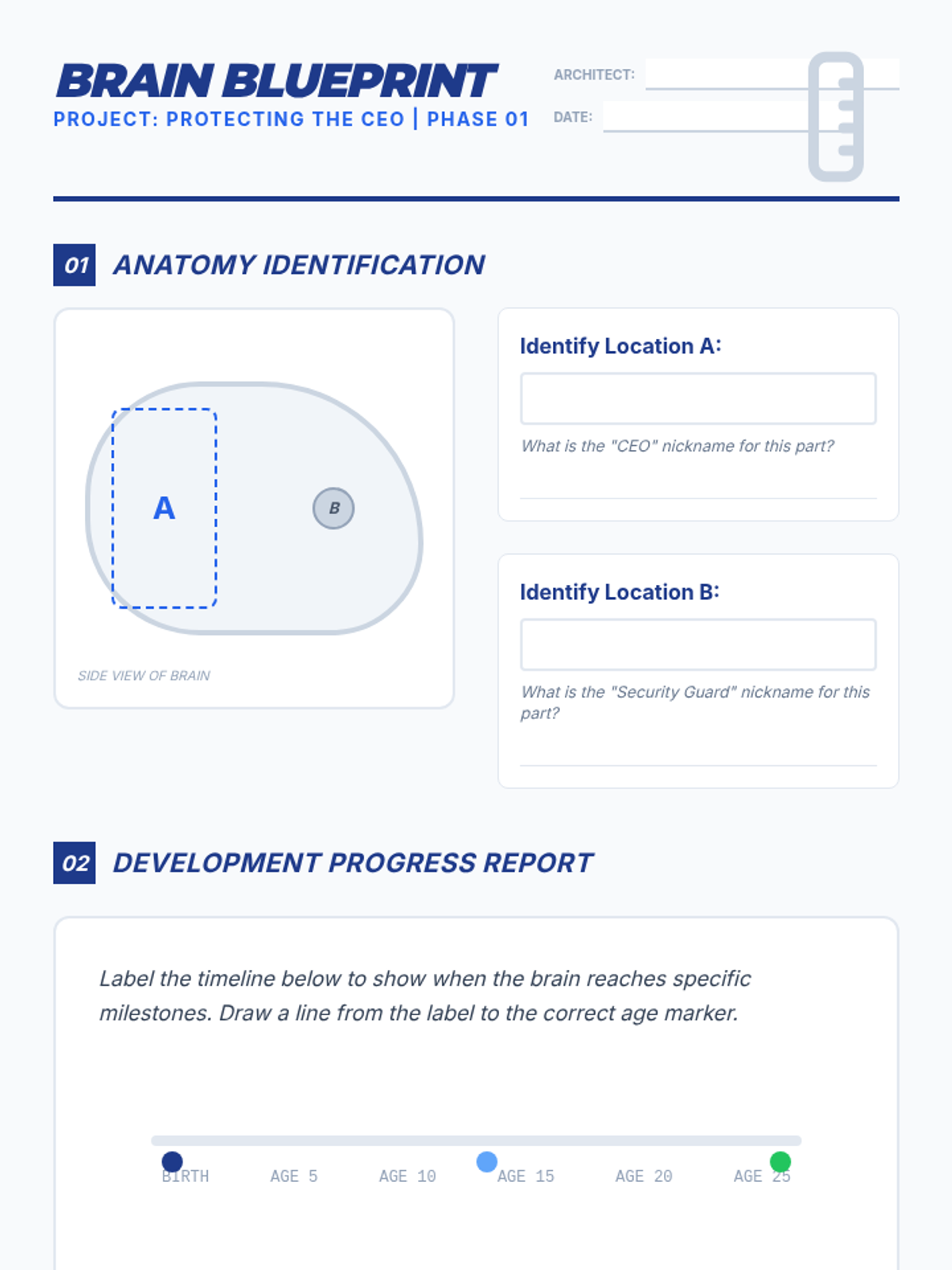
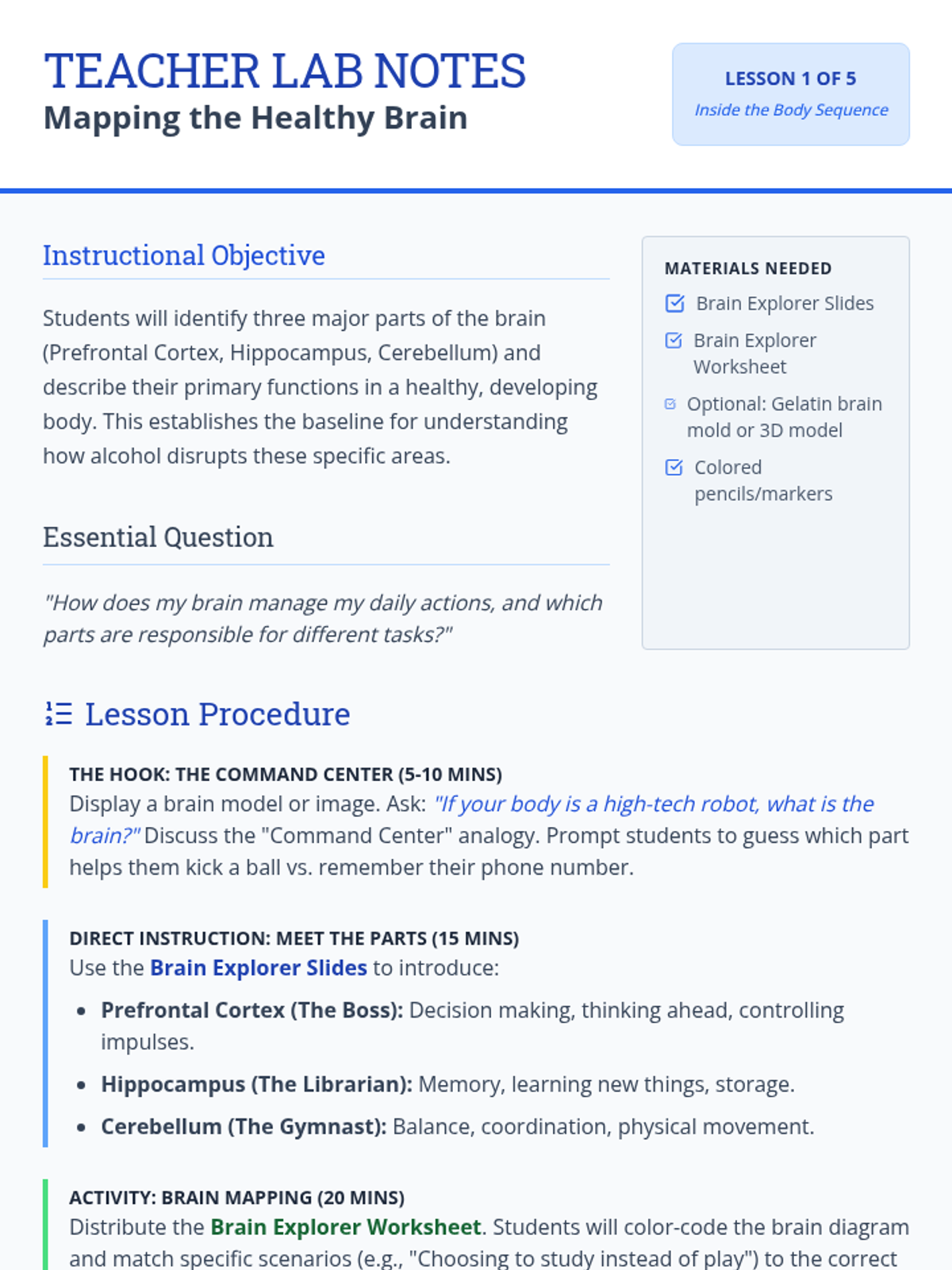
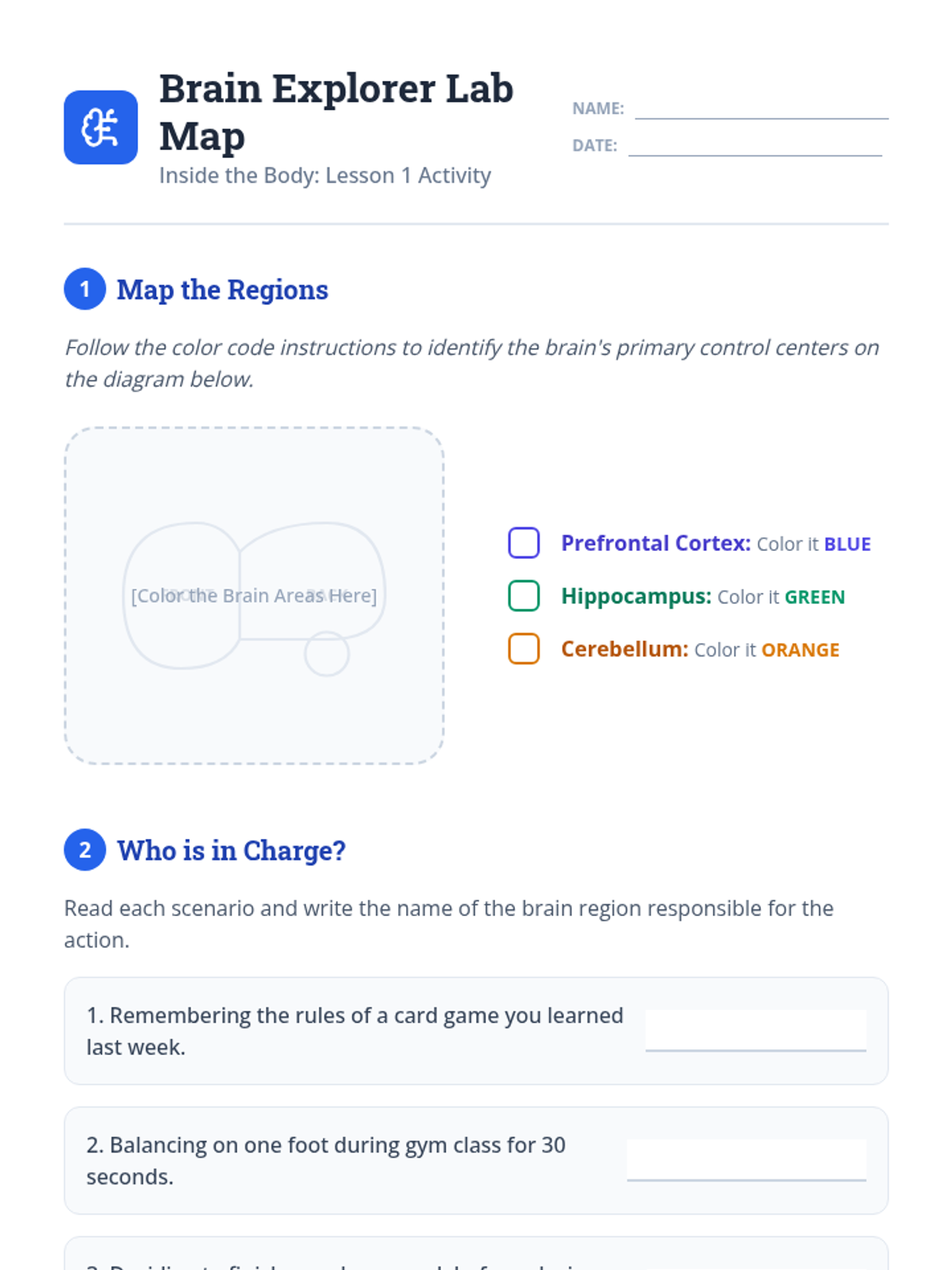
This sequence introduces 5th-grade students to brain biology, focusing on adolescent development and how external chemicals like THC disrupt the 'lock and key' neurotransmission system. Students move from general anatomy to specific chemical impacts, culminating in a personal brain health protection plan.
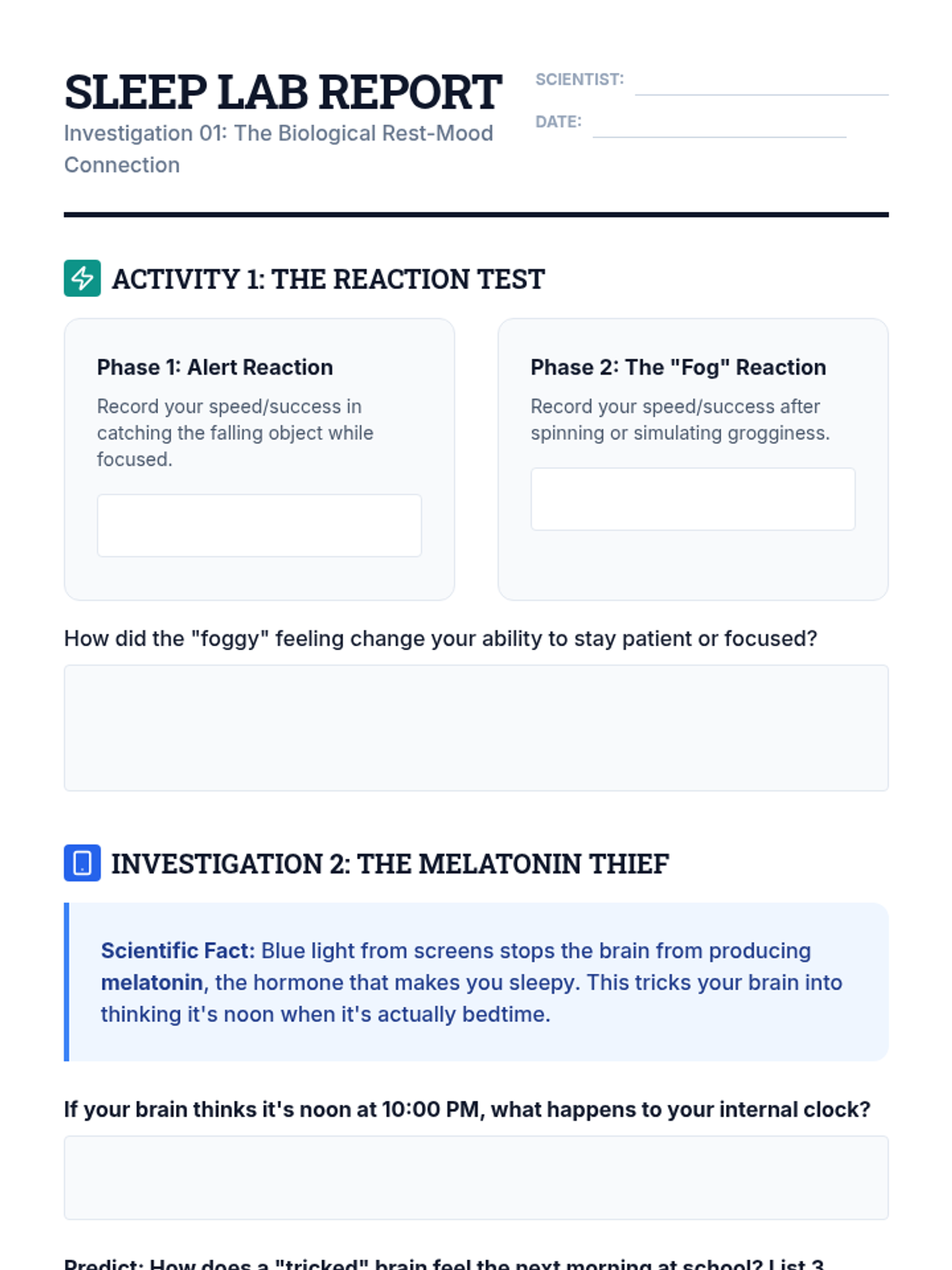
This sequence explores the biological and environmental factors of sleep, focusing on circadian rhythms, sleep stages, the impact of technology, and the development of healthy sleep hygiene for early adolescents.
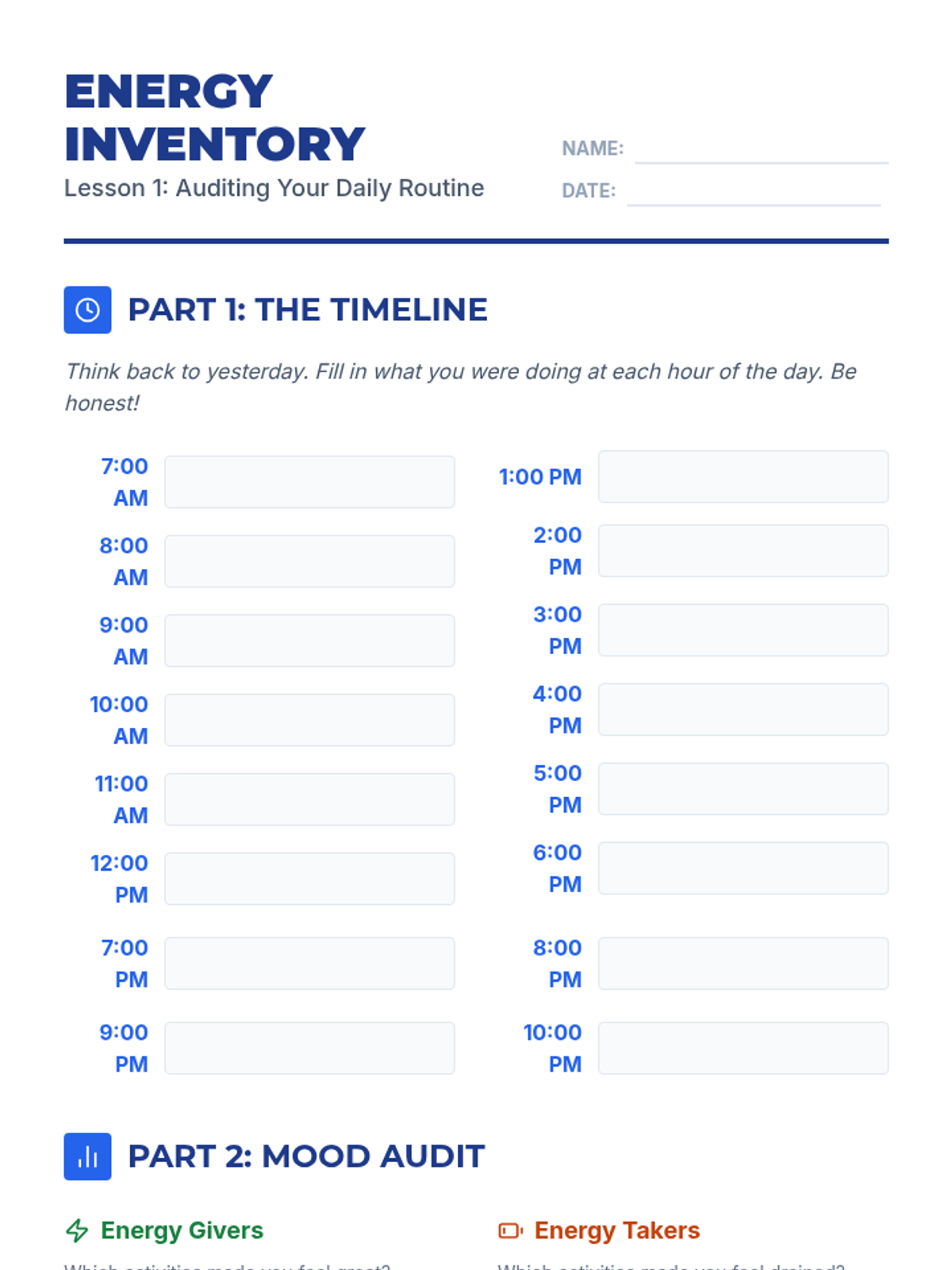
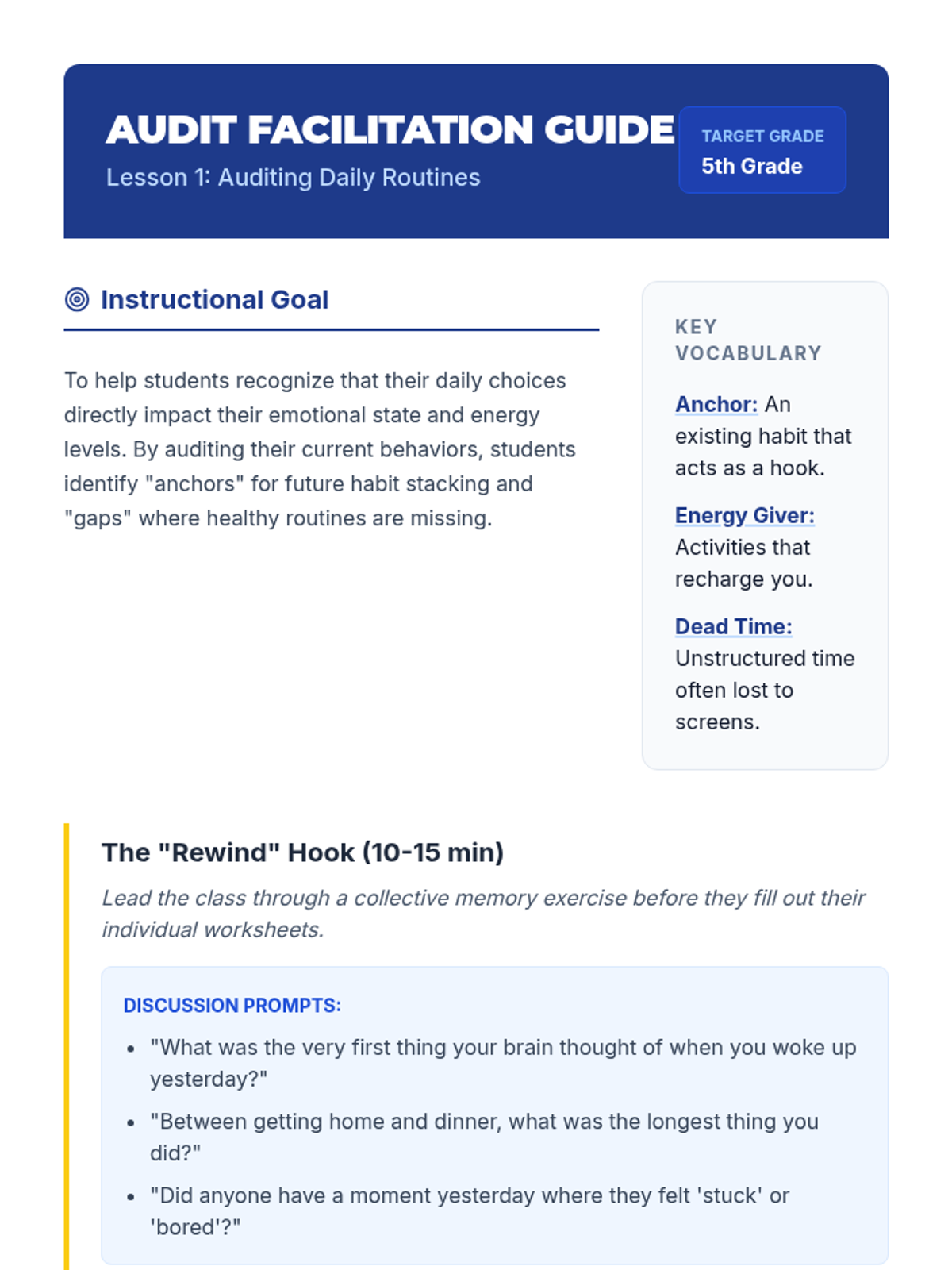
A 5th-grade sequence focused on building mood-supporting routines through habit stacking. Students learn to audit their current habits, design sleep rituals, integrate movement, and troubleshoot obstacles to create a personalized 'Daily Mood Menu'.
An inquiry-based exploration of how sleep, nutrition, physical activity, and hydration impact brain chemistry and emotional well-being. Students investigate the biological connections between physical health and mood regulation.
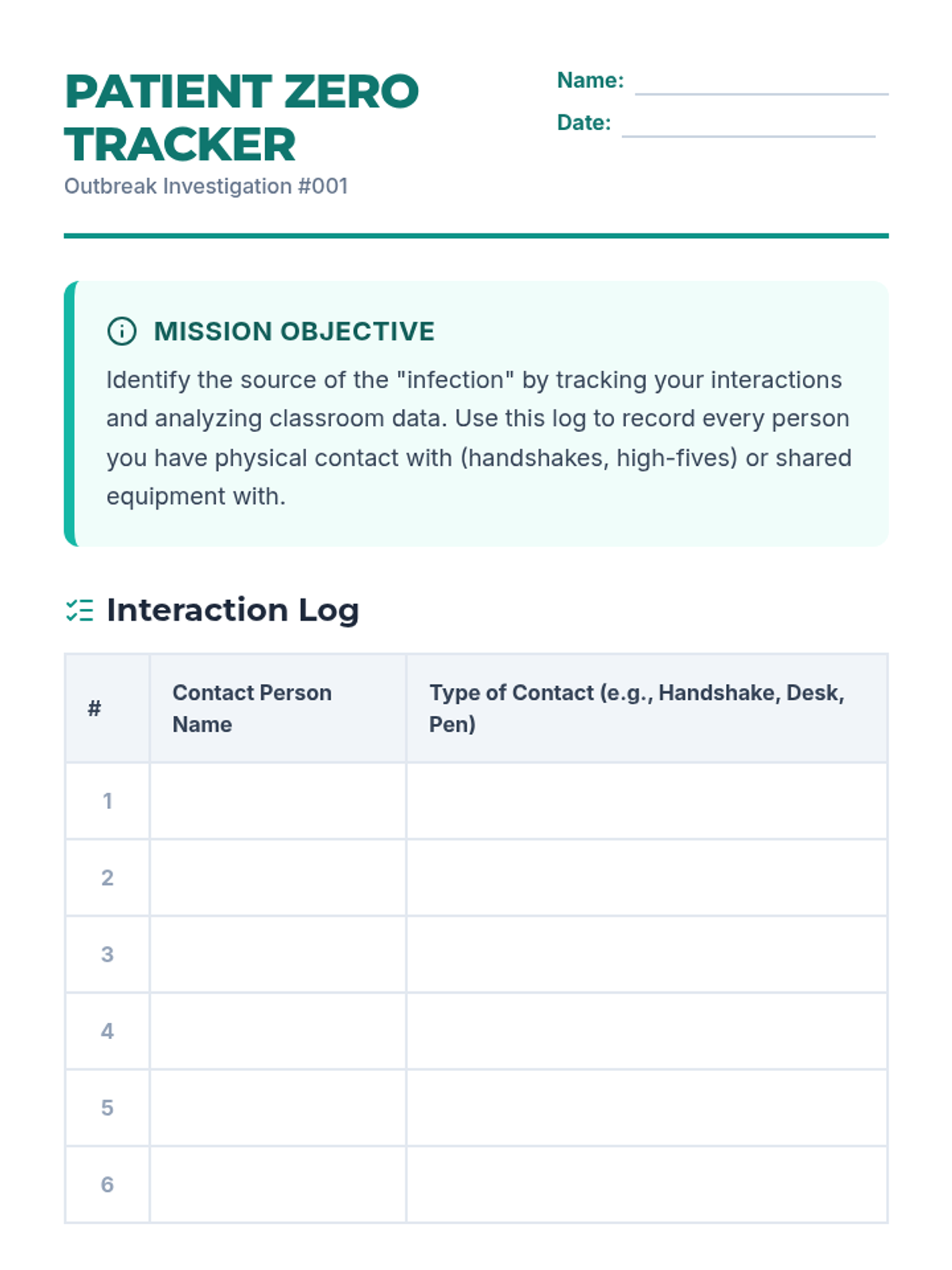
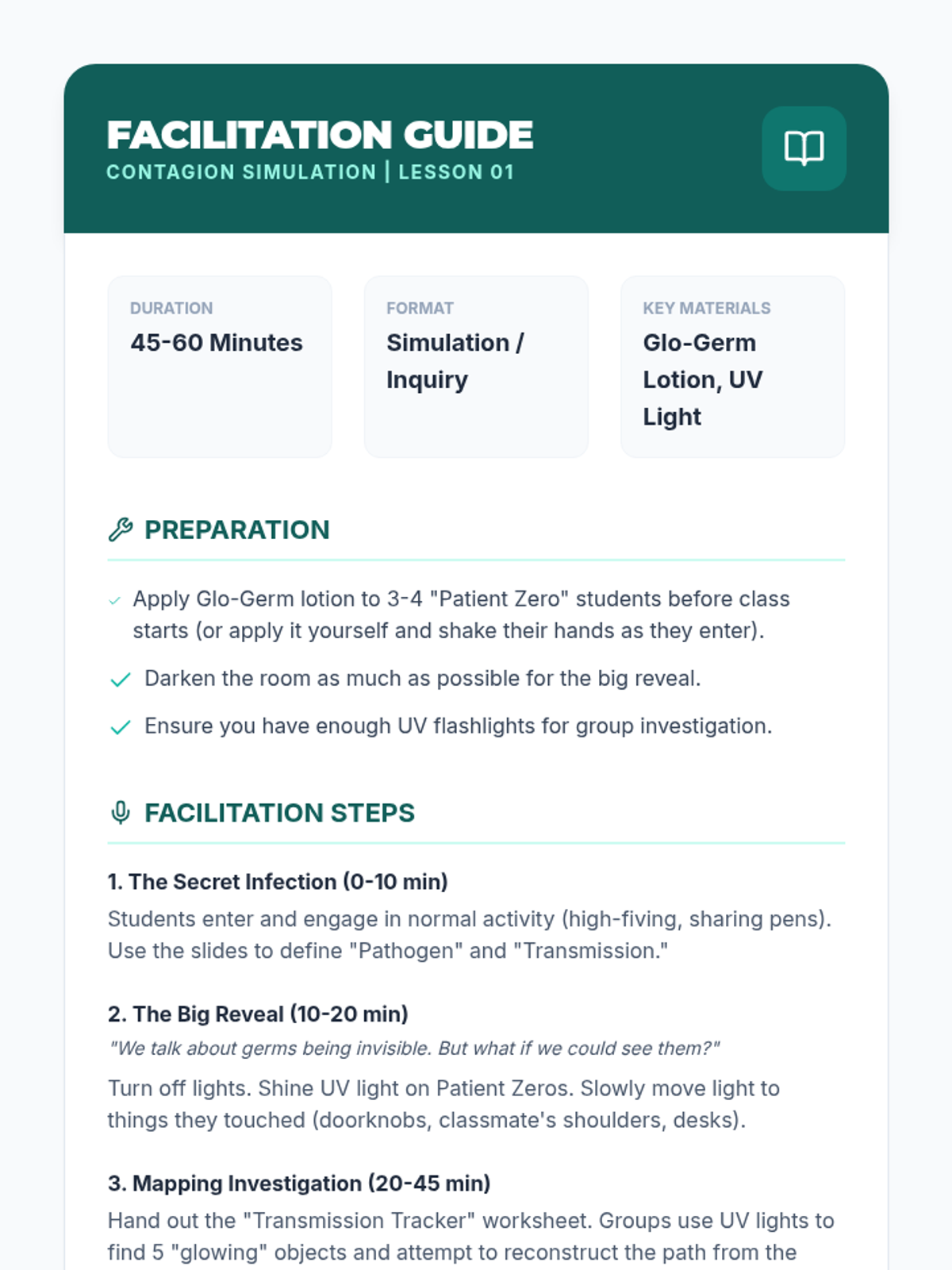
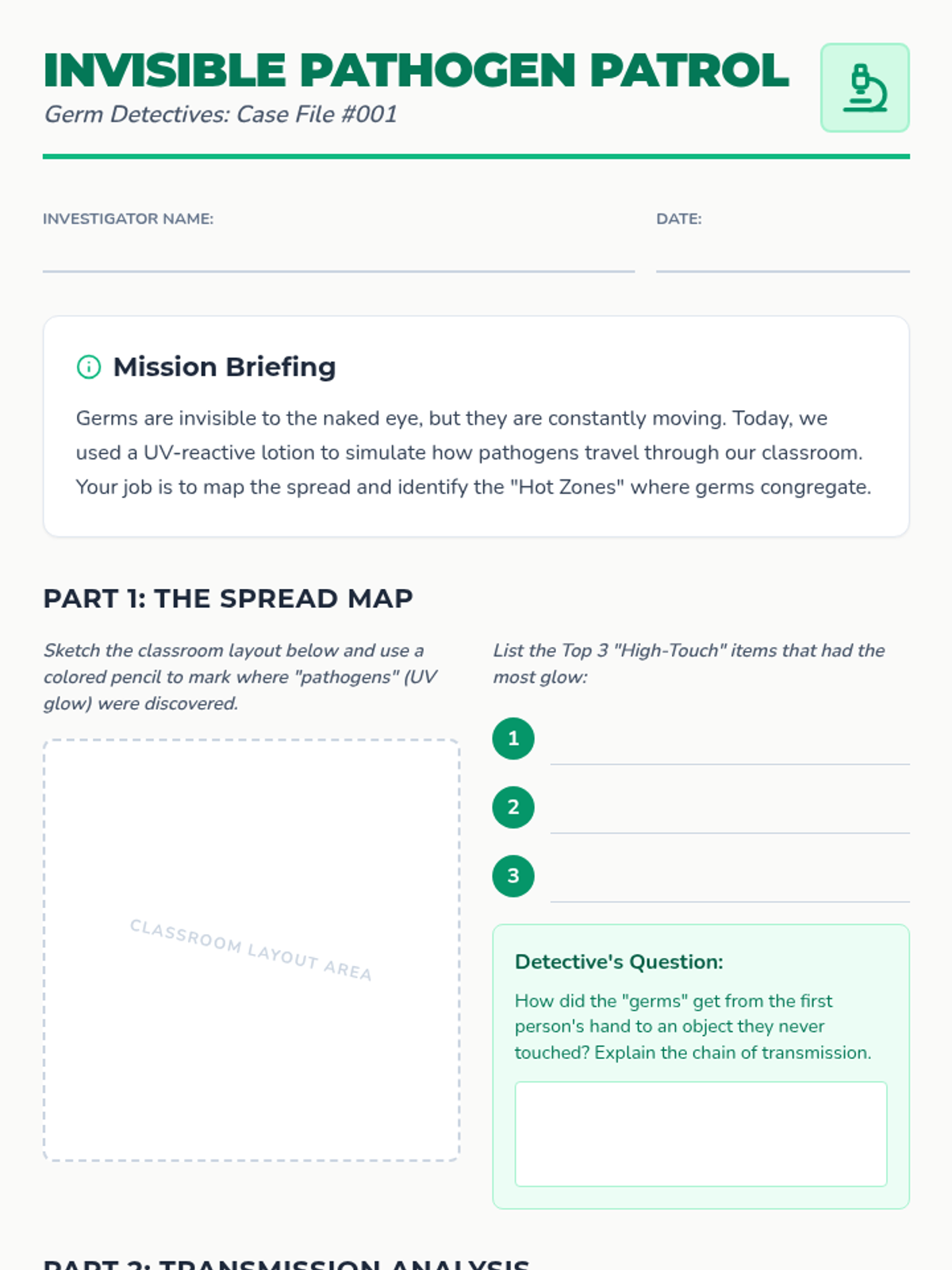
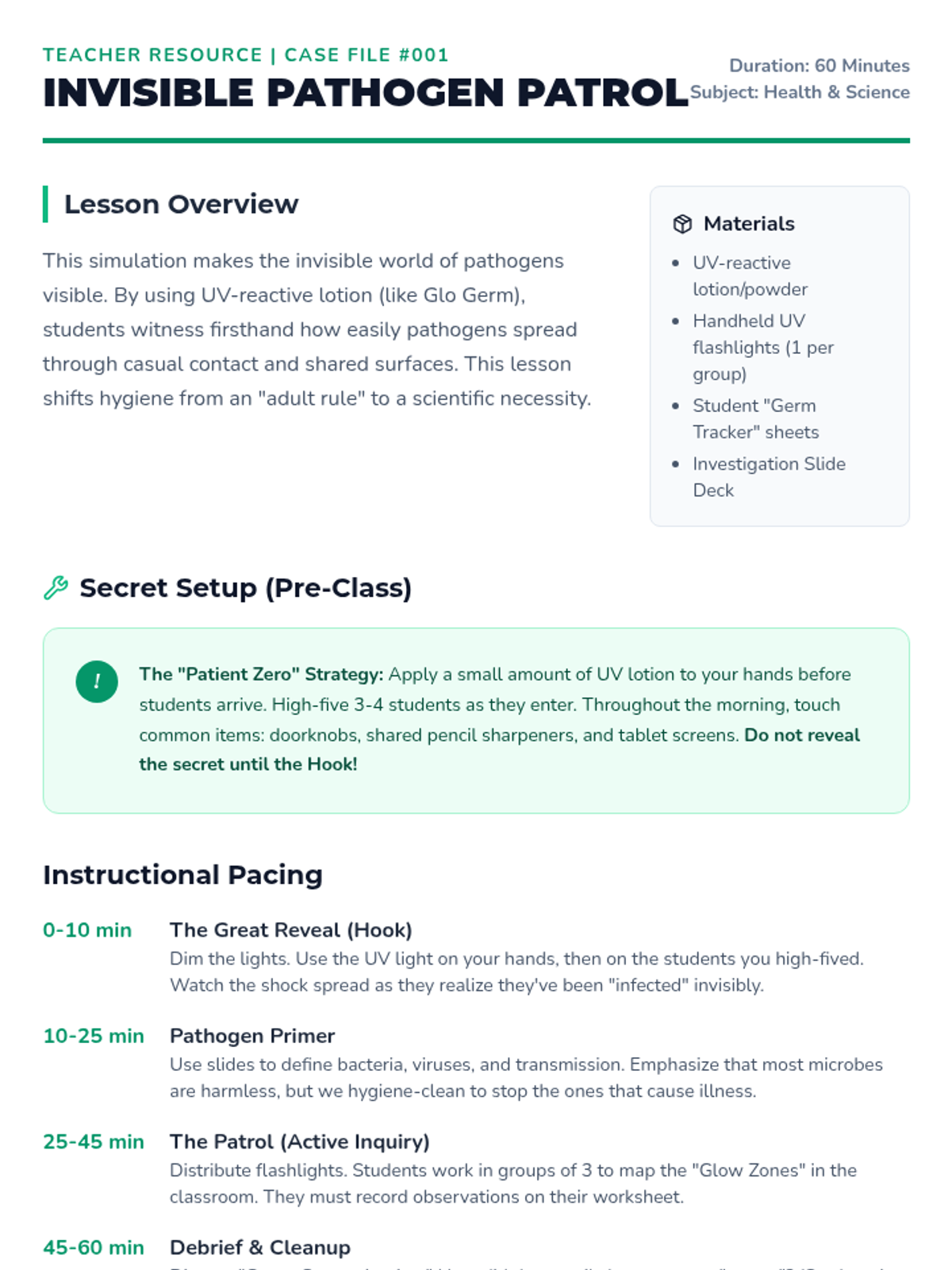
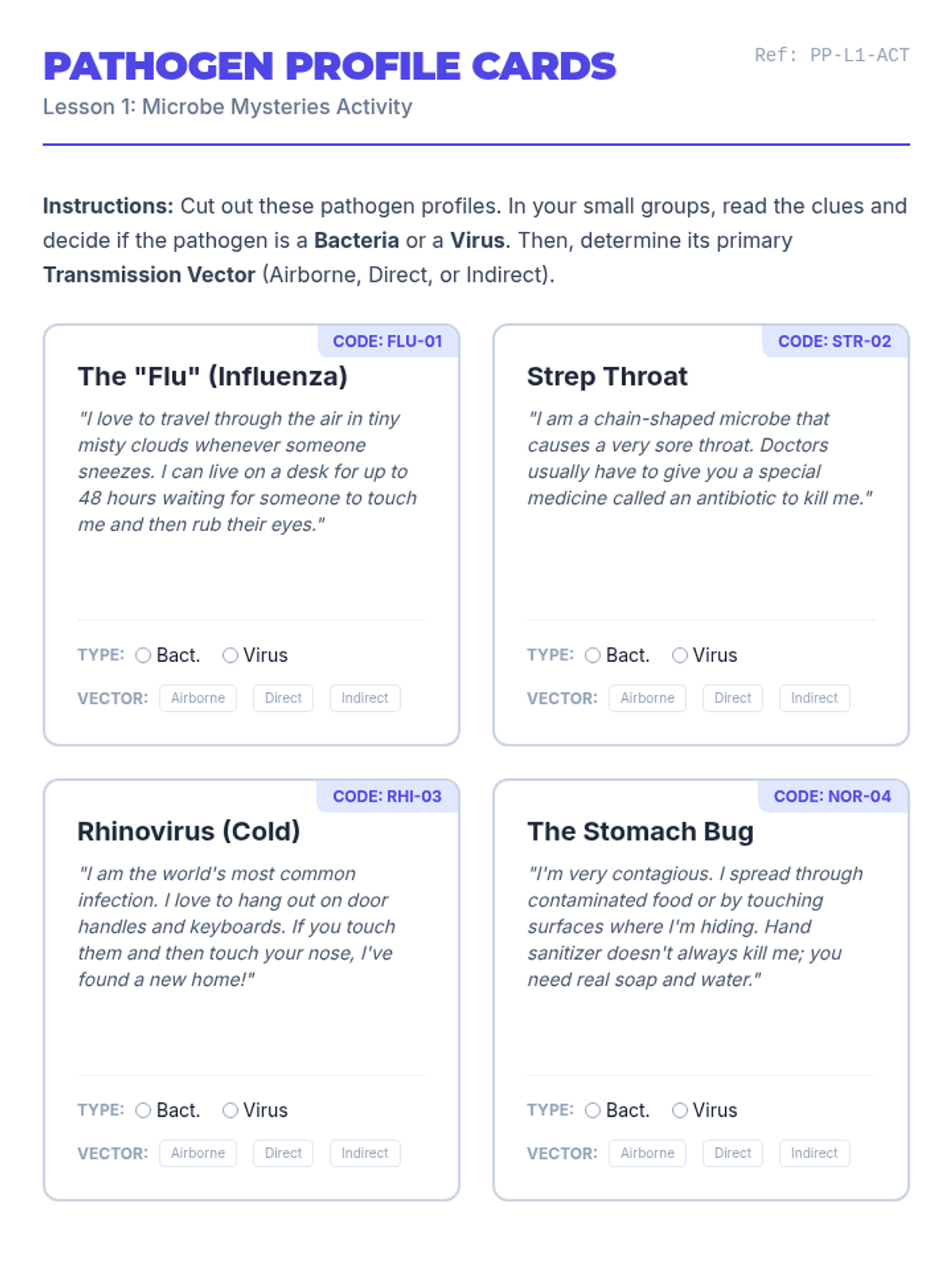
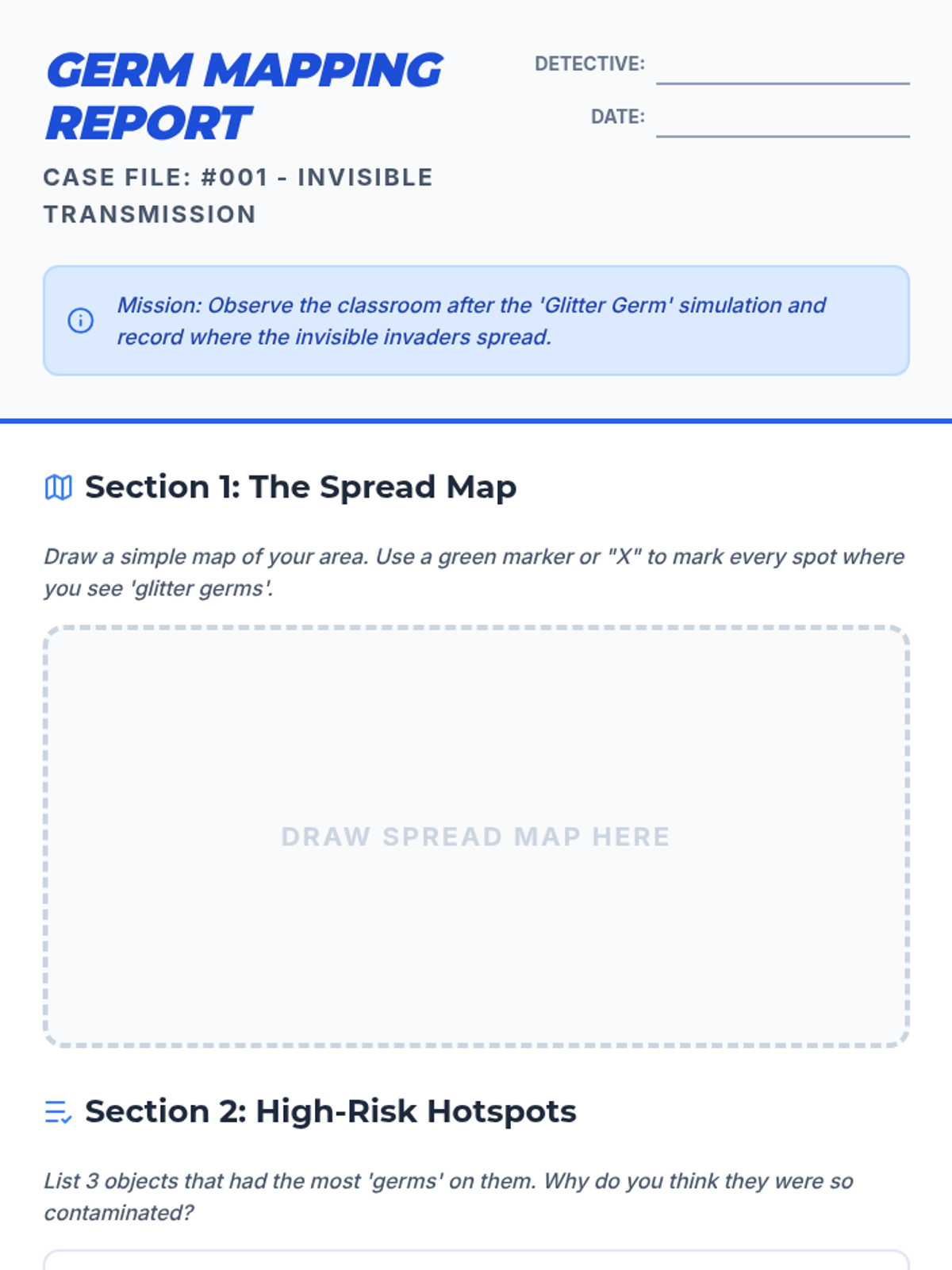
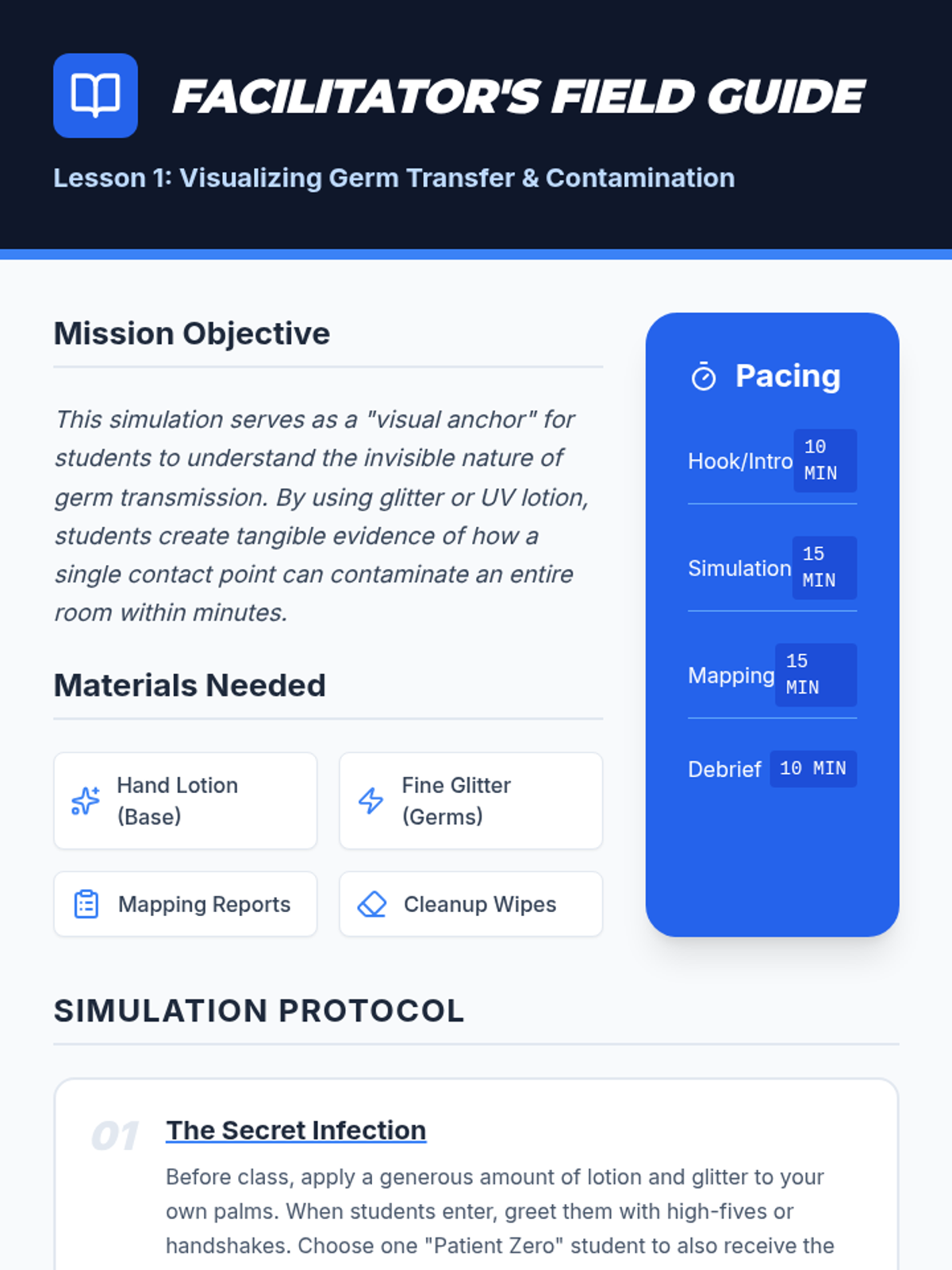
A comprehensive 5th-grade sequence exploring the biology of disease, from transmission simulations to personal health defense planning. Students investigate how pathogens spread, how the immune system defends the body, and how daily habits and community actions prevent both infectious and chronic diseases.
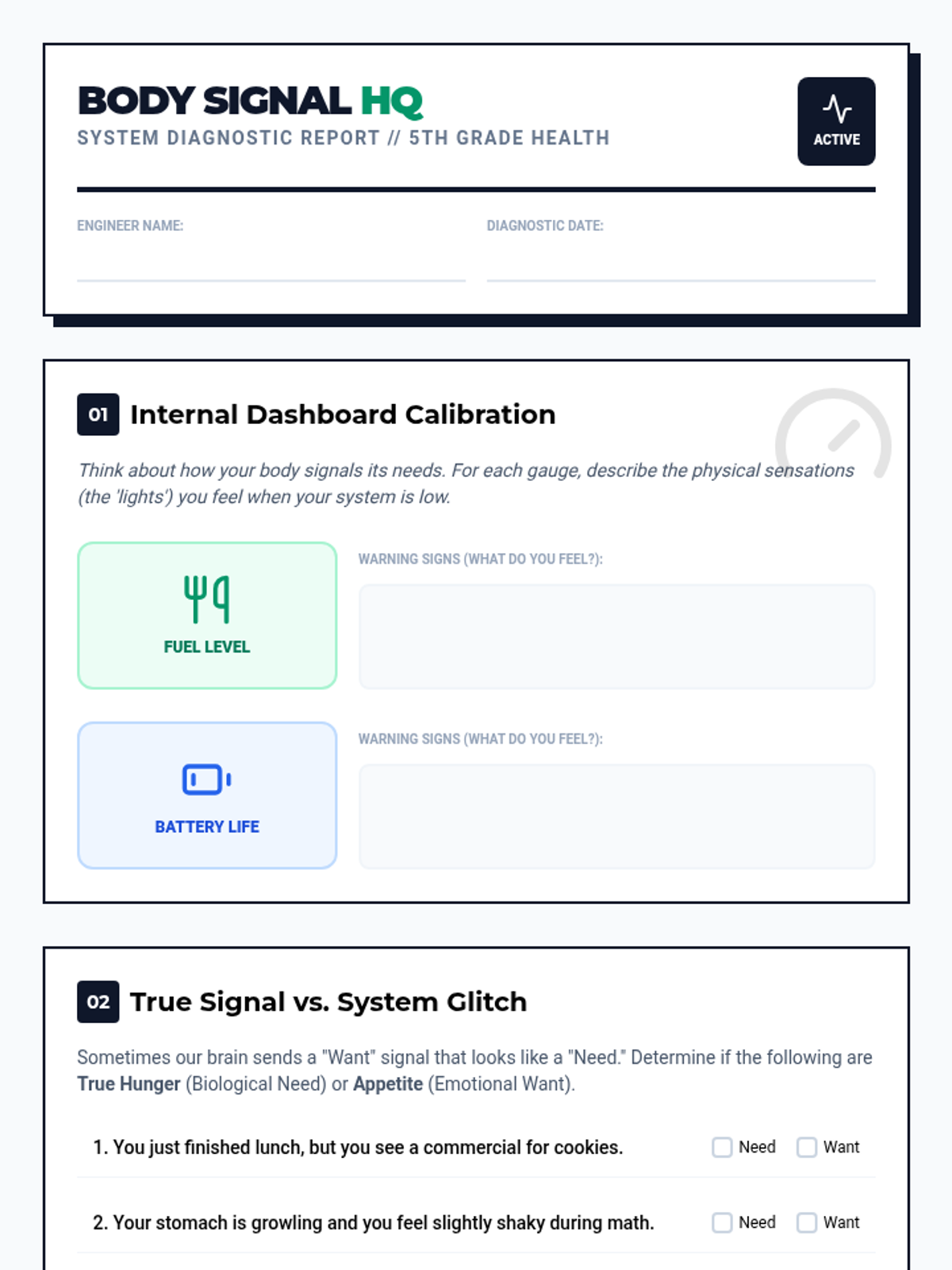
This sequence guides 5th-grade students through recognizing internal body signals, maintaining hygiene, understanding the physical manifestations of emotions, and setting personal boundaries. It culminates in the creation of a personalized wellness 'User Manual' for their own bodies.
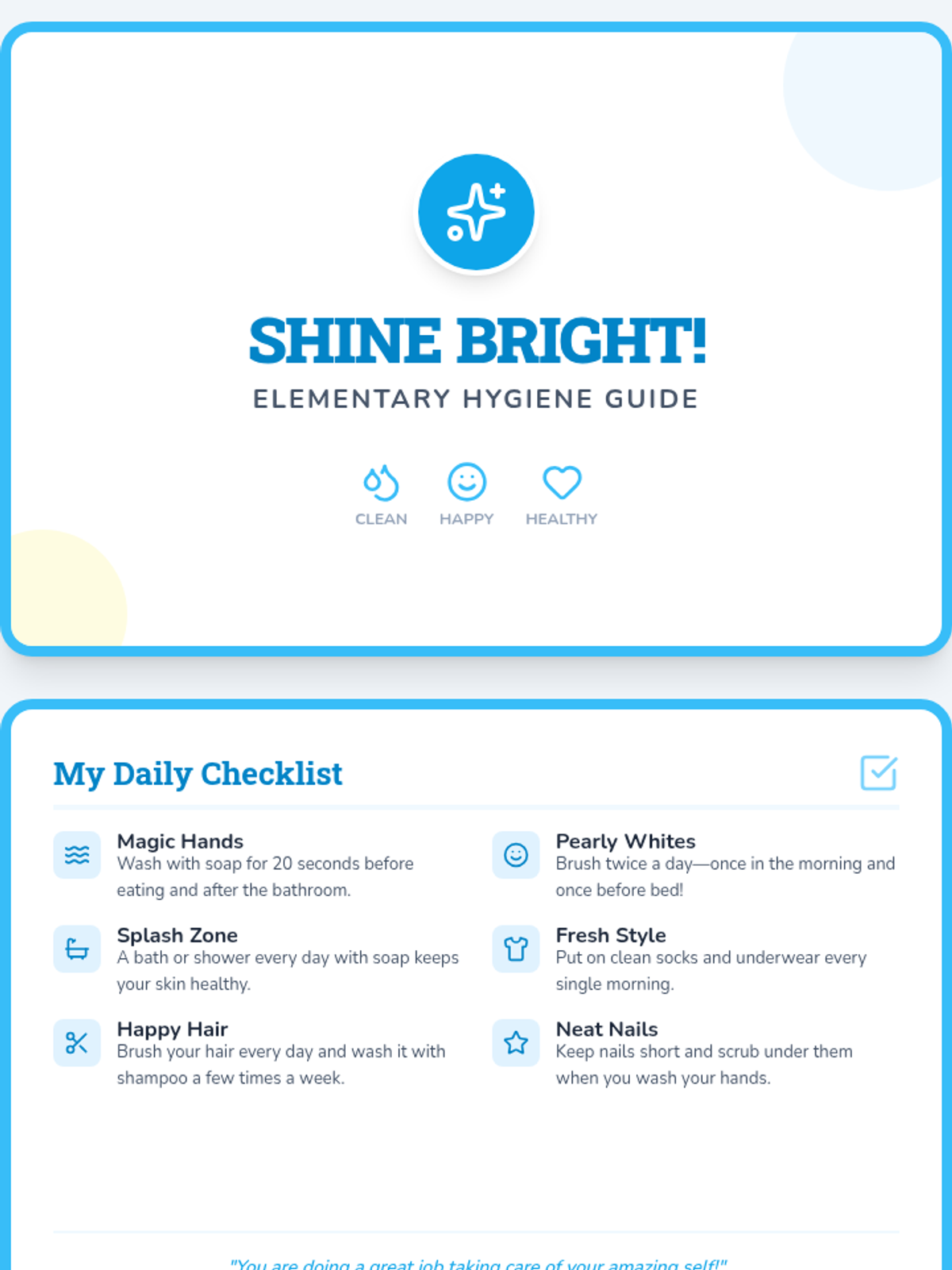
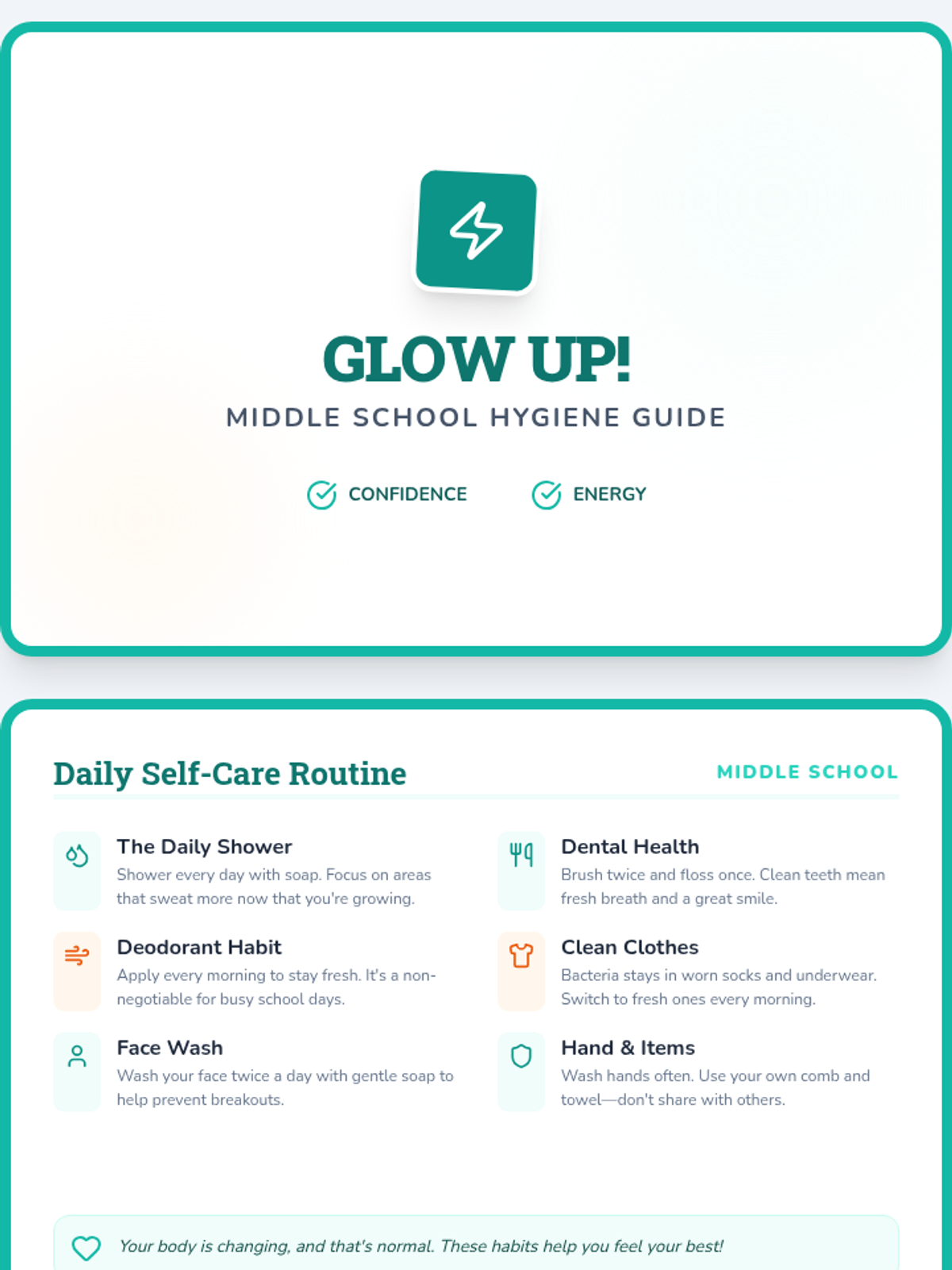
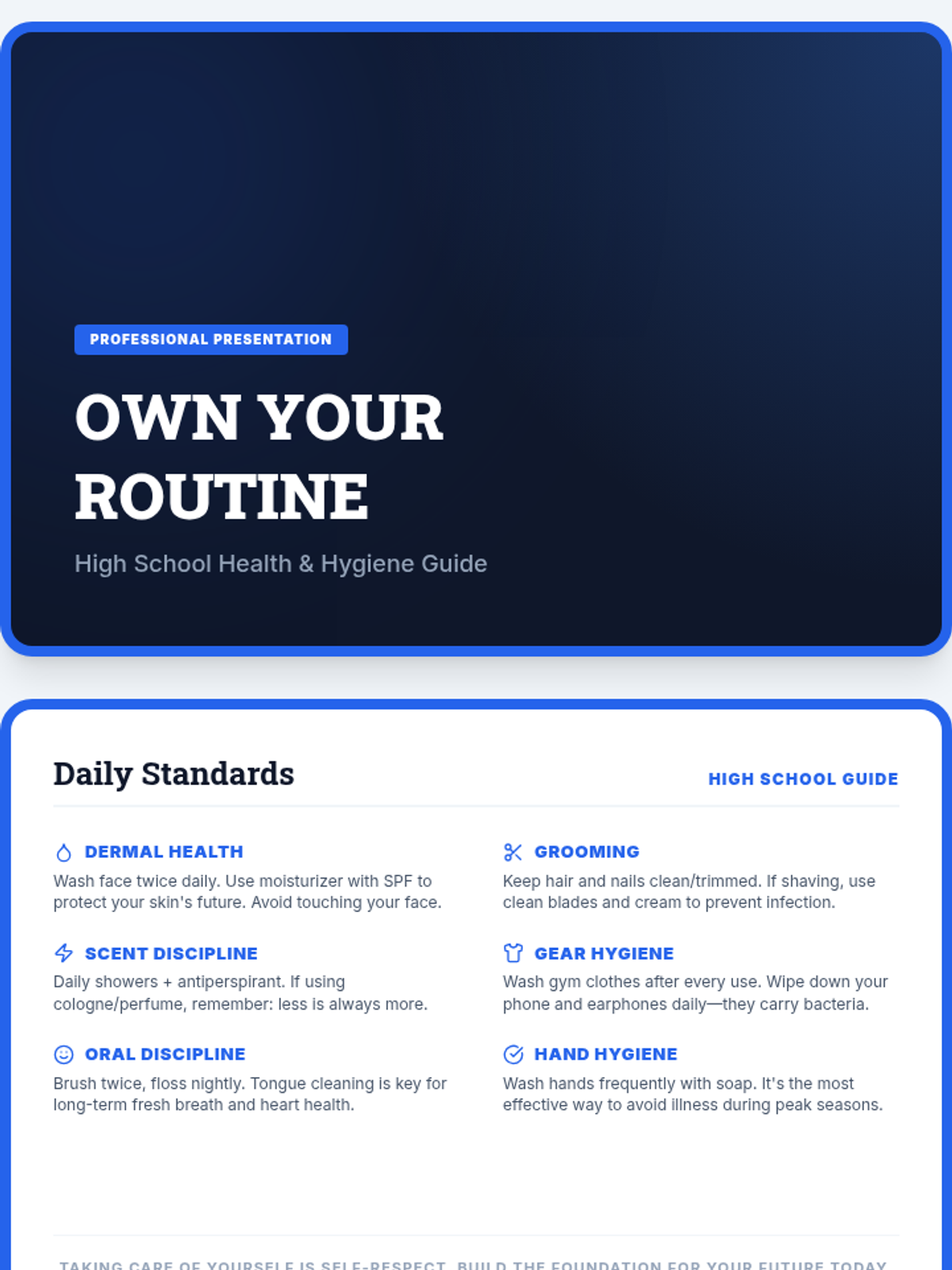
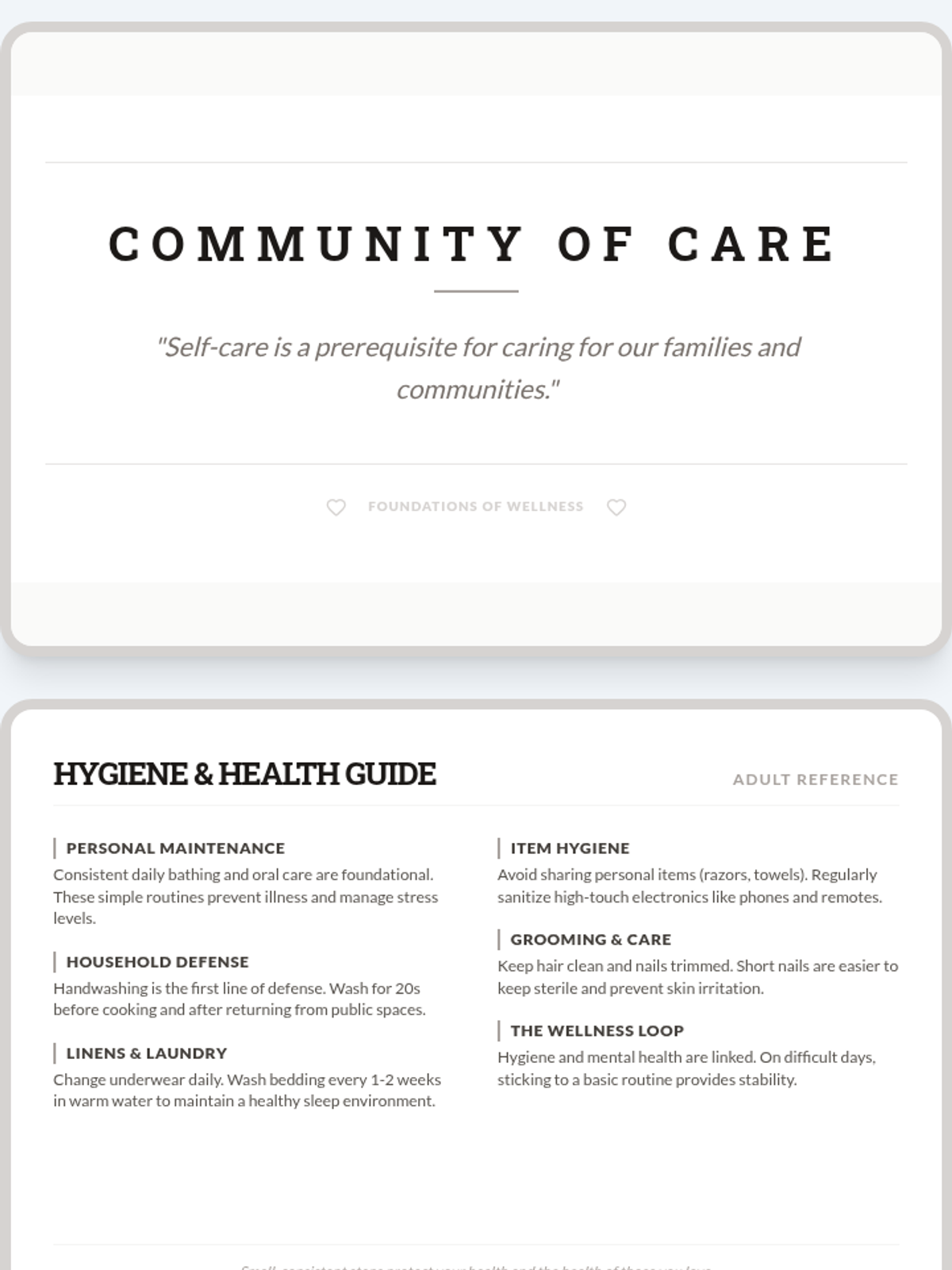
A comprehensive set of empathetic hygiene guides tailored for different age groups, from primary students to adults. The sequence focuses on building self-esteem and health through consistent, simple self-care routines.
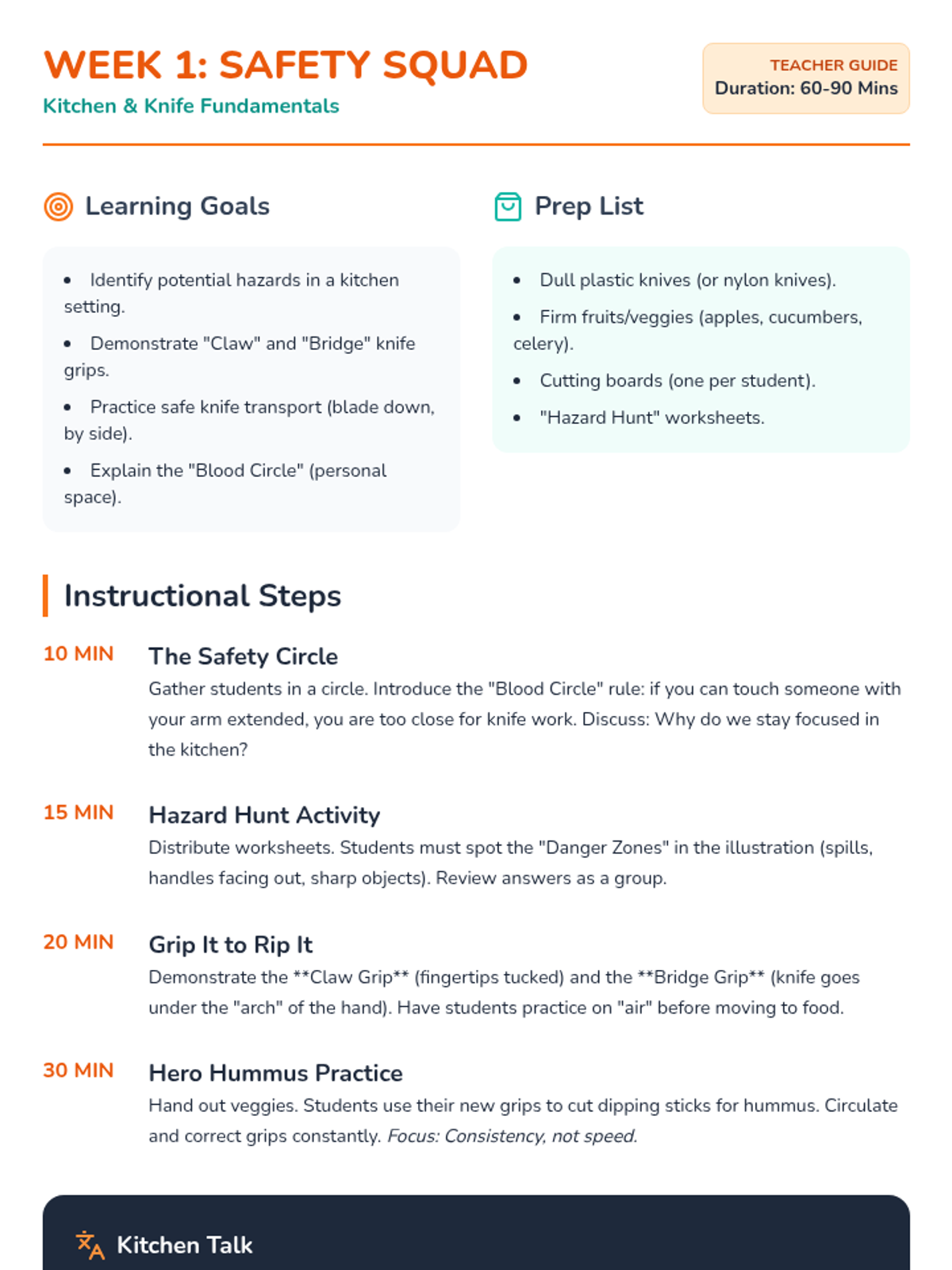
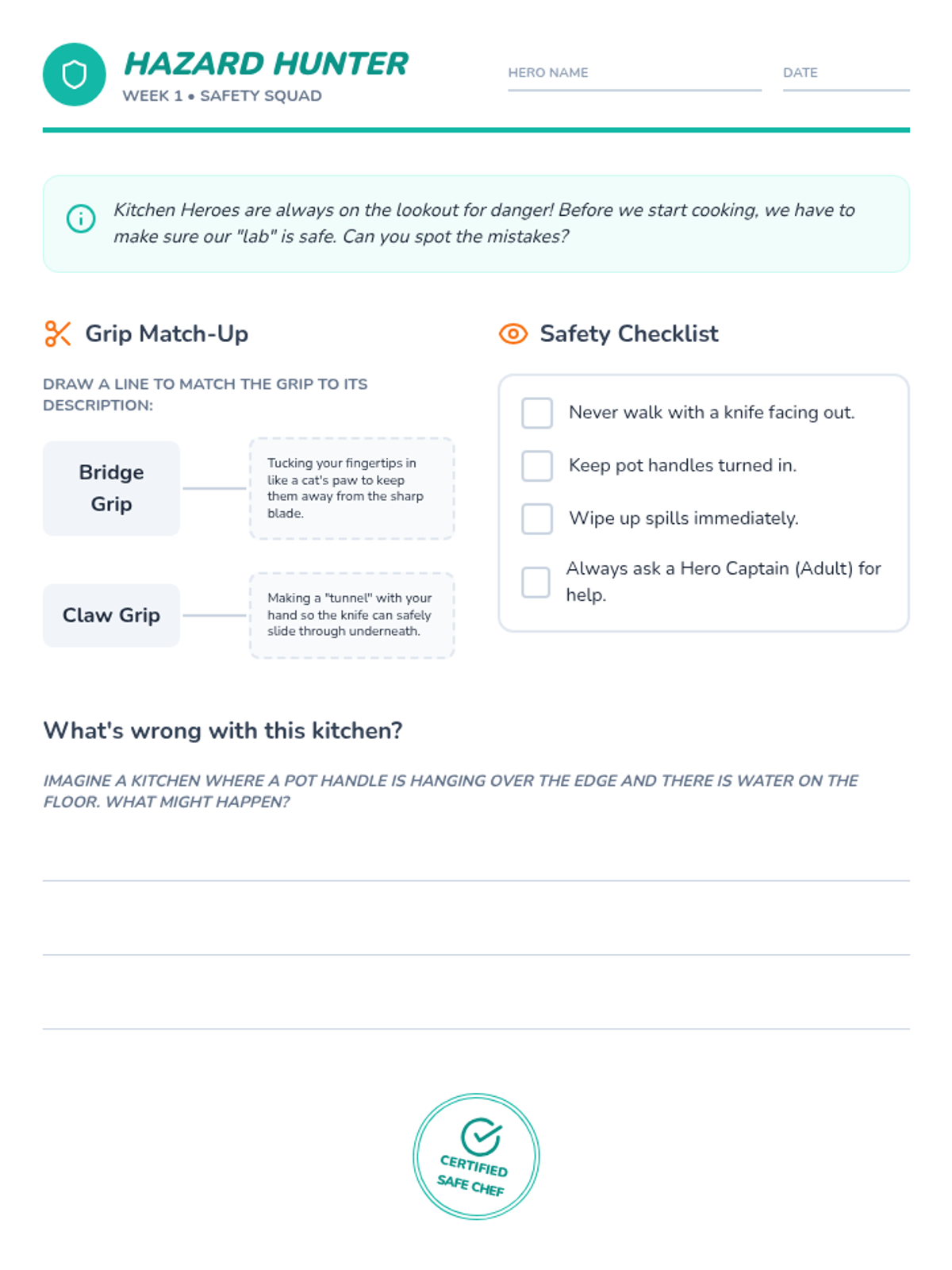
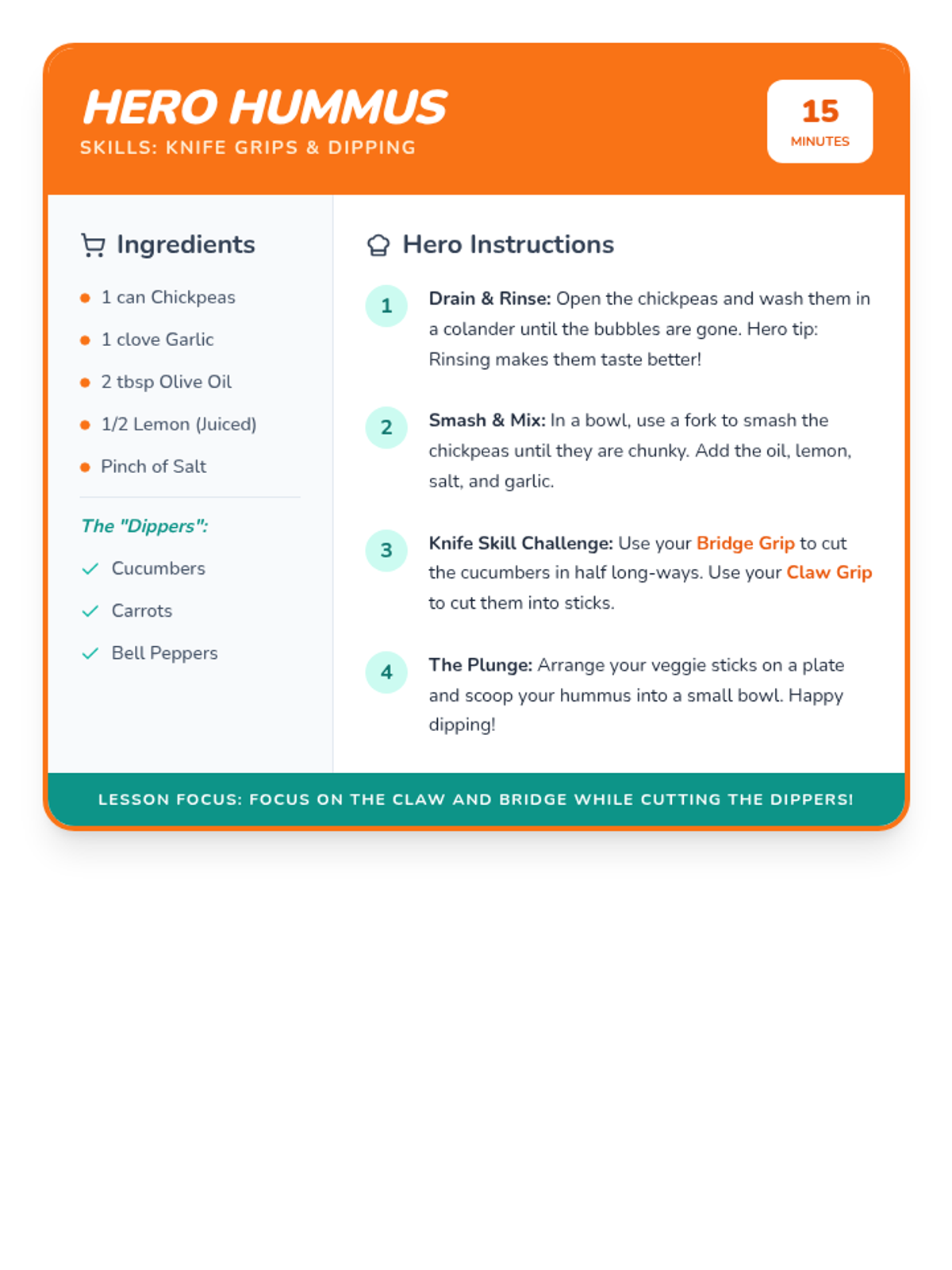
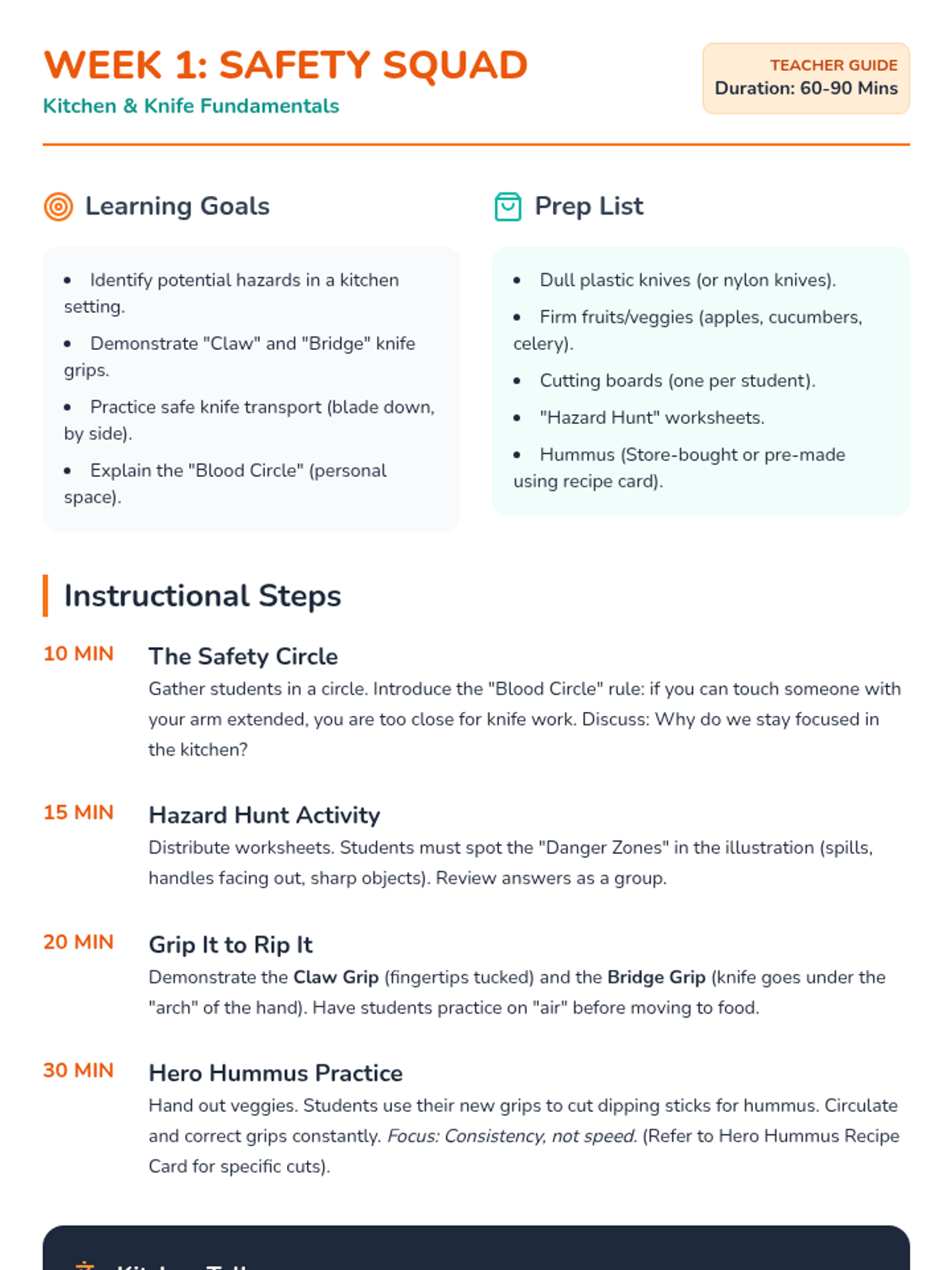
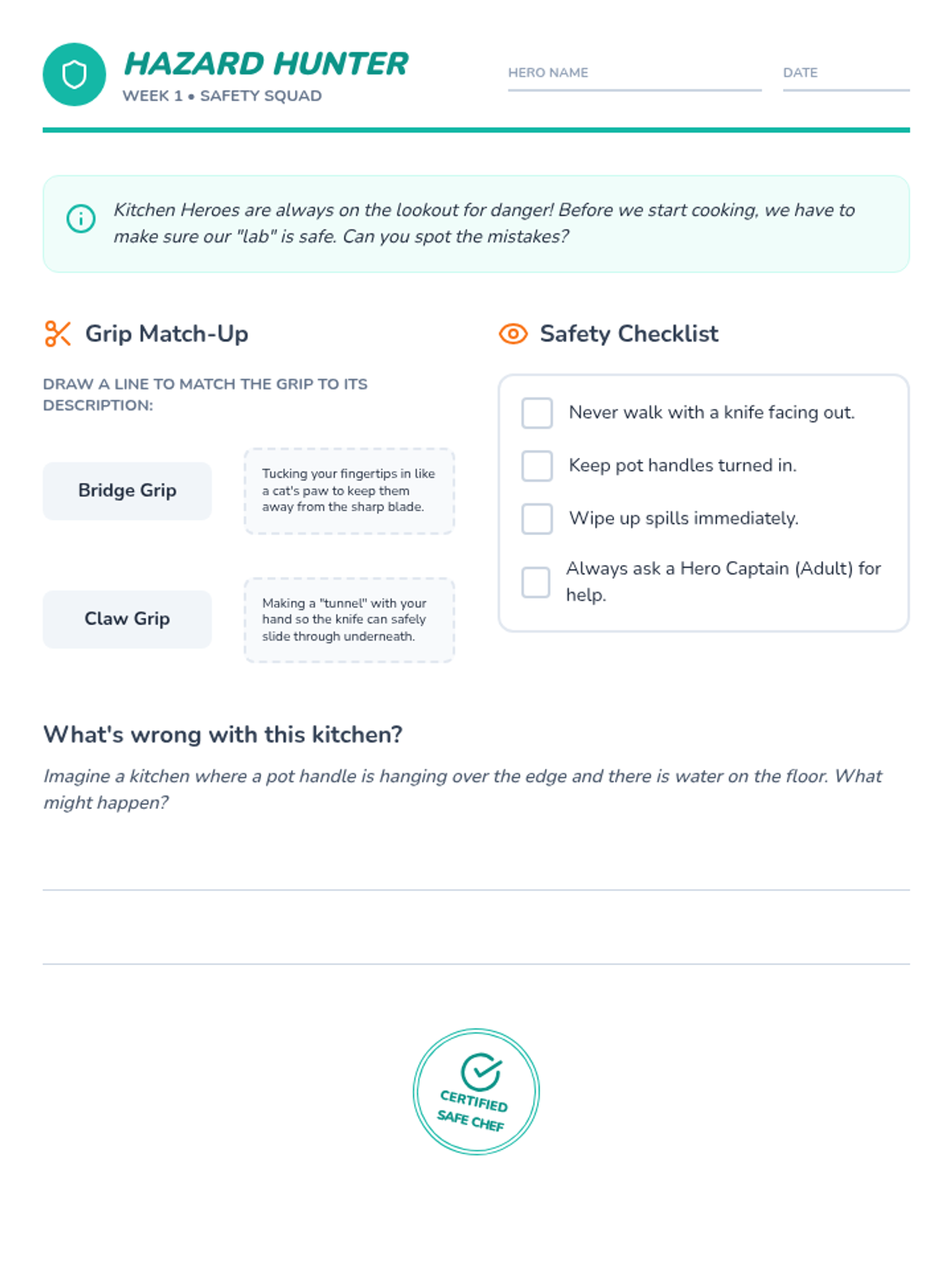
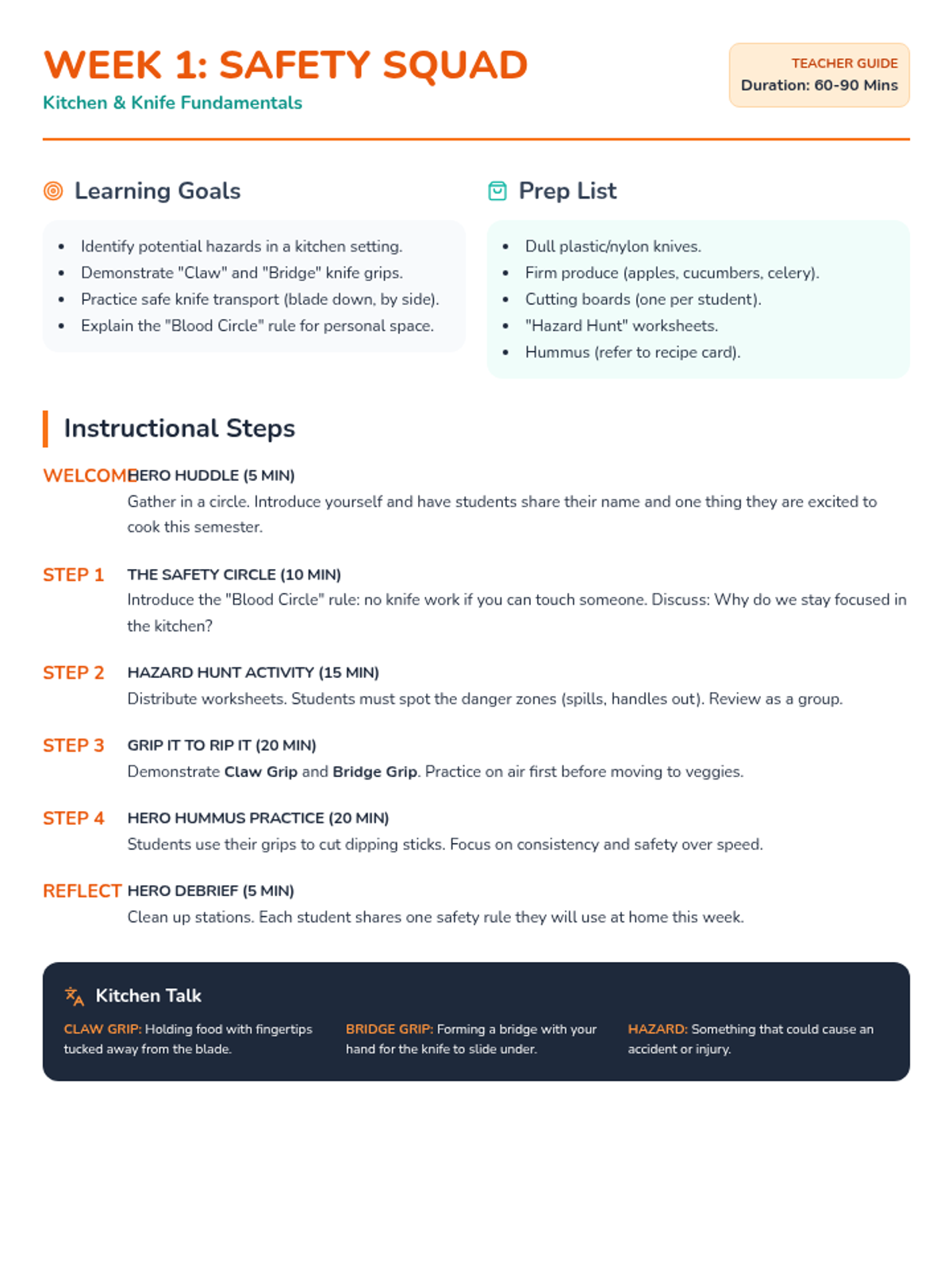
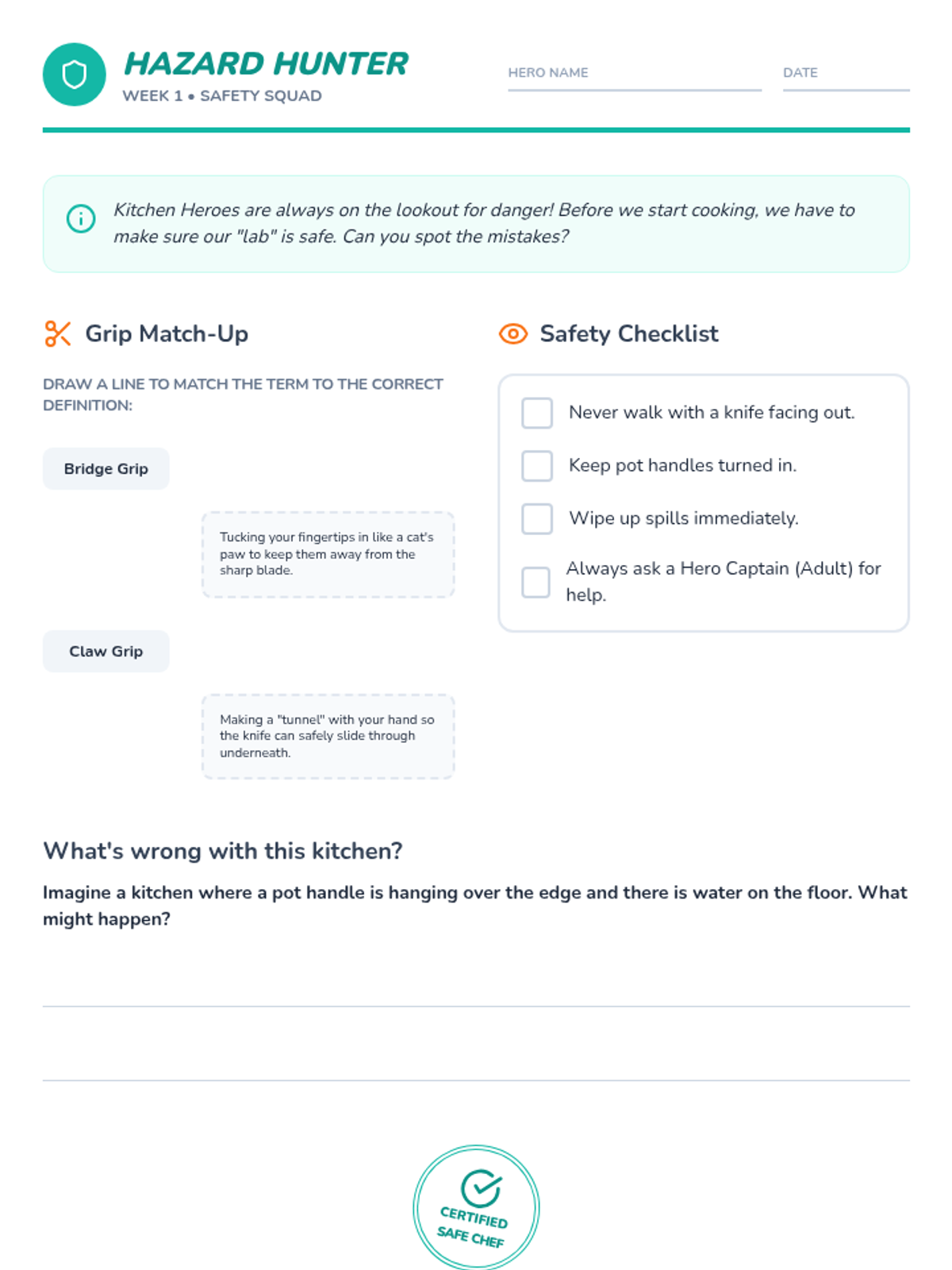
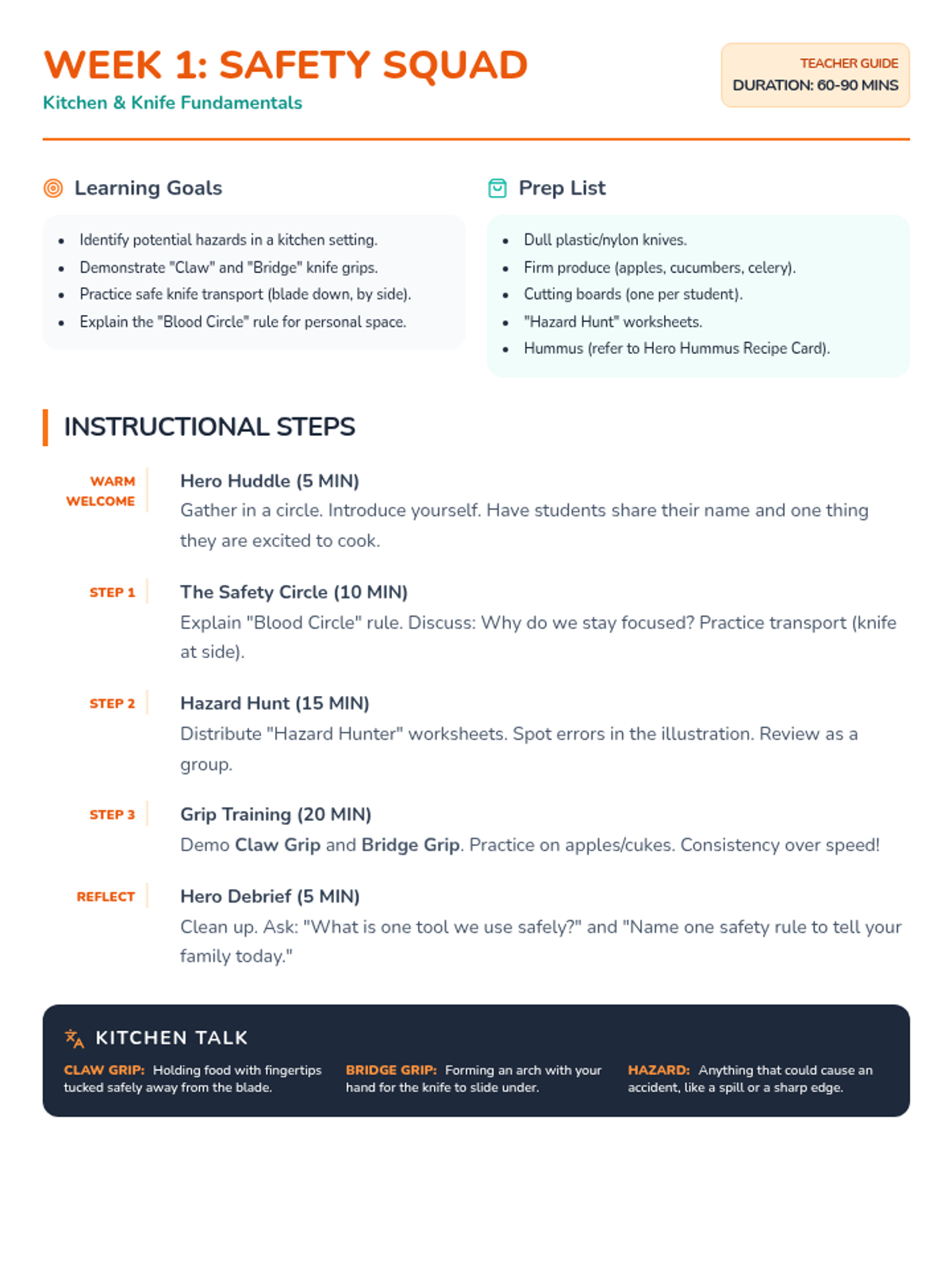
A 12-week introductory cooking curriculum for elementary students focusing on safety, nutrition, and the emotional connection to food.
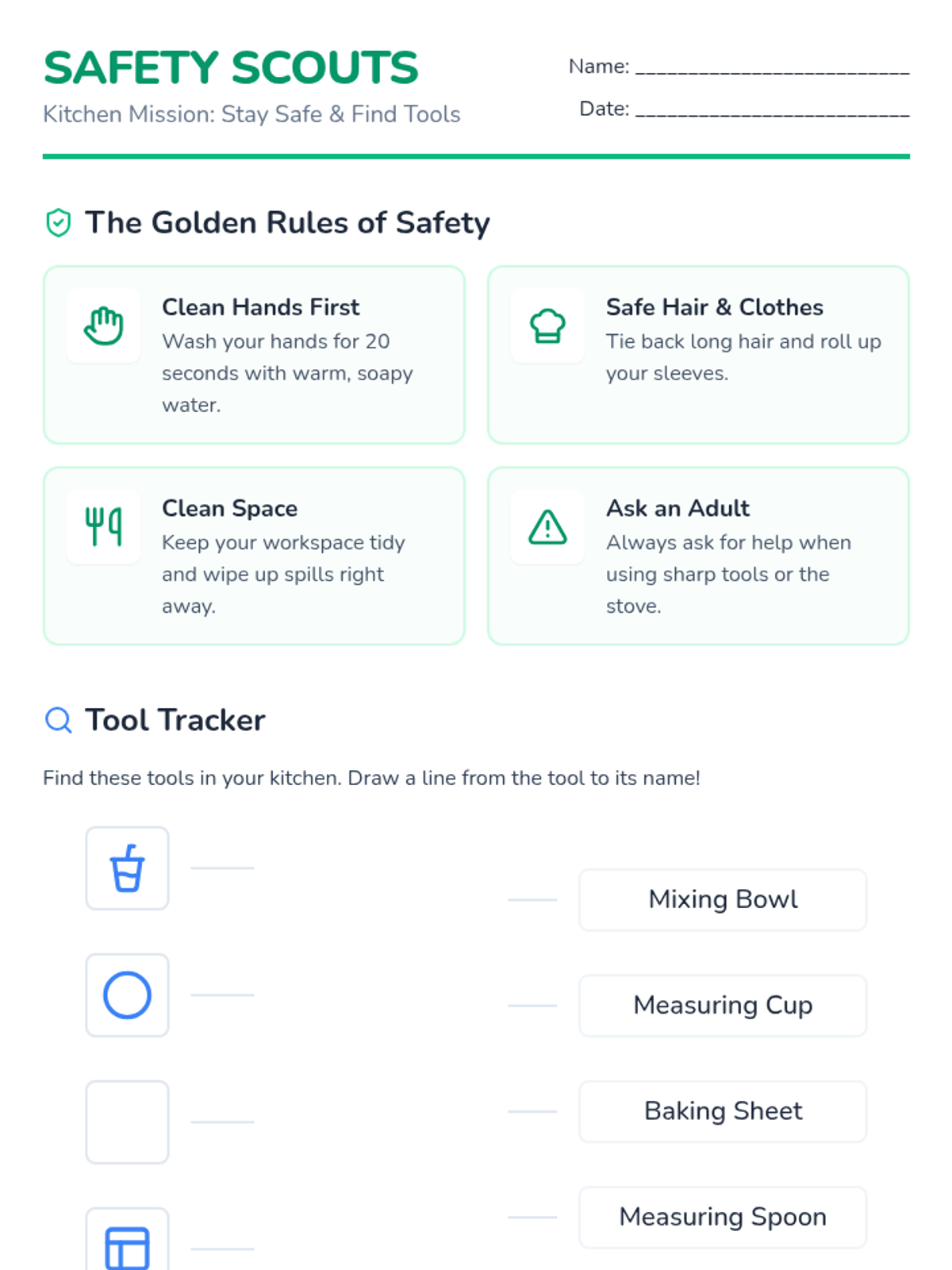
A 2-lesson unit designed to introduce elementary students to kitchen safety, tool identification, and visual recipe following through the creation of no-bake energy bites.
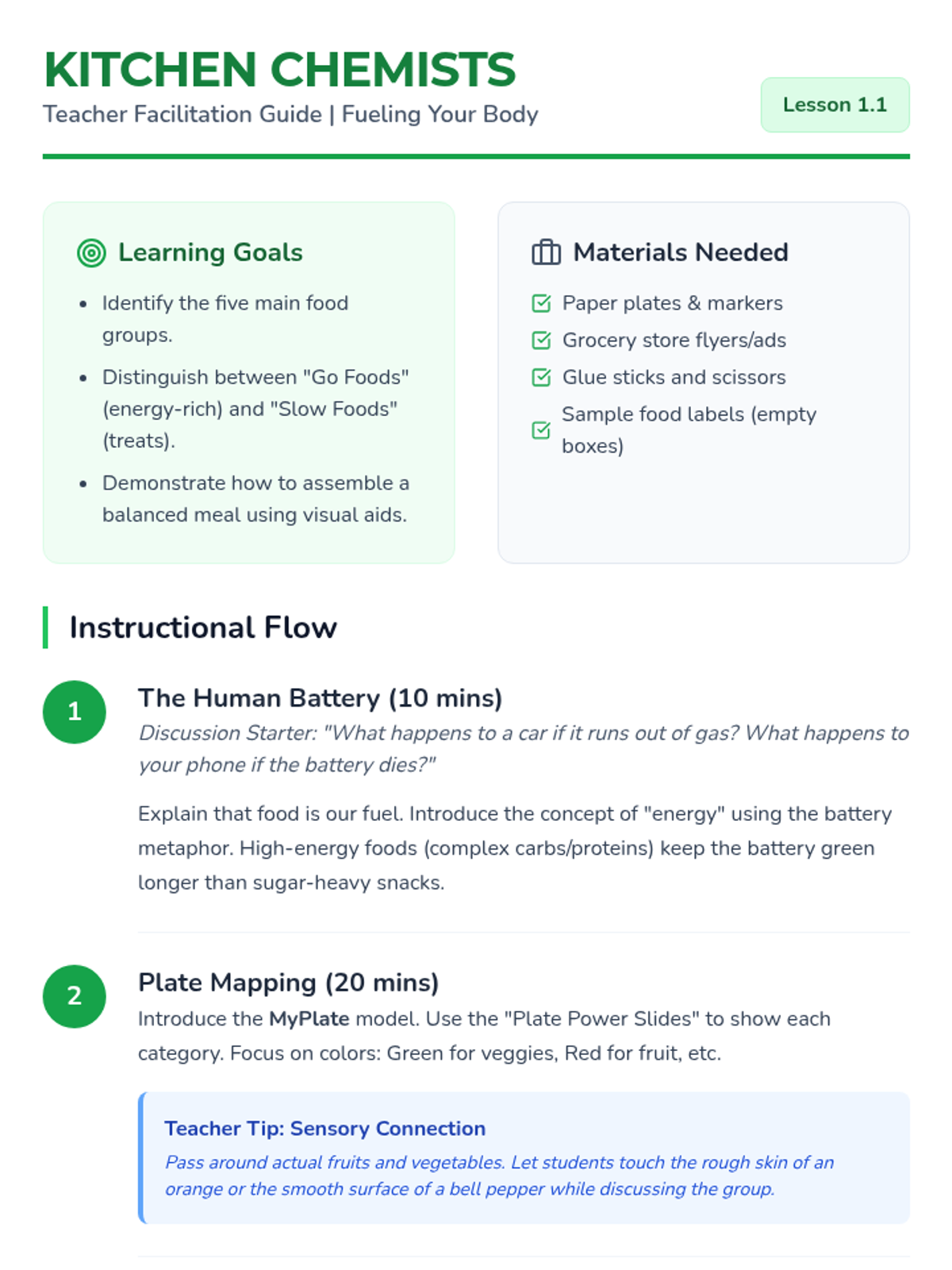
A functional biology curriculum designed for life skills students, focusing on practical knowledge of nutrition, personal hygiene, and environmental stewardship through hands-on activities and visual aids.
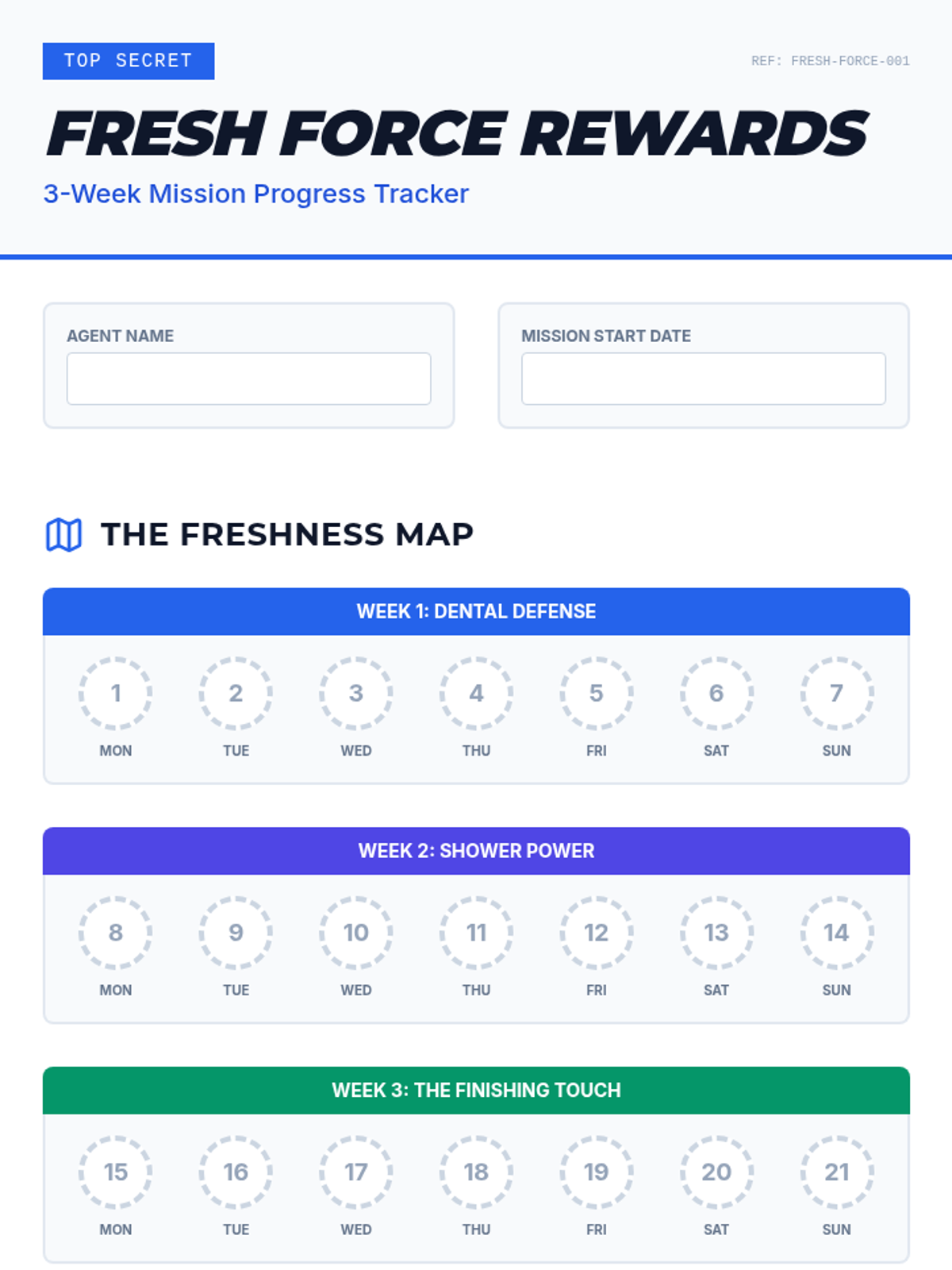
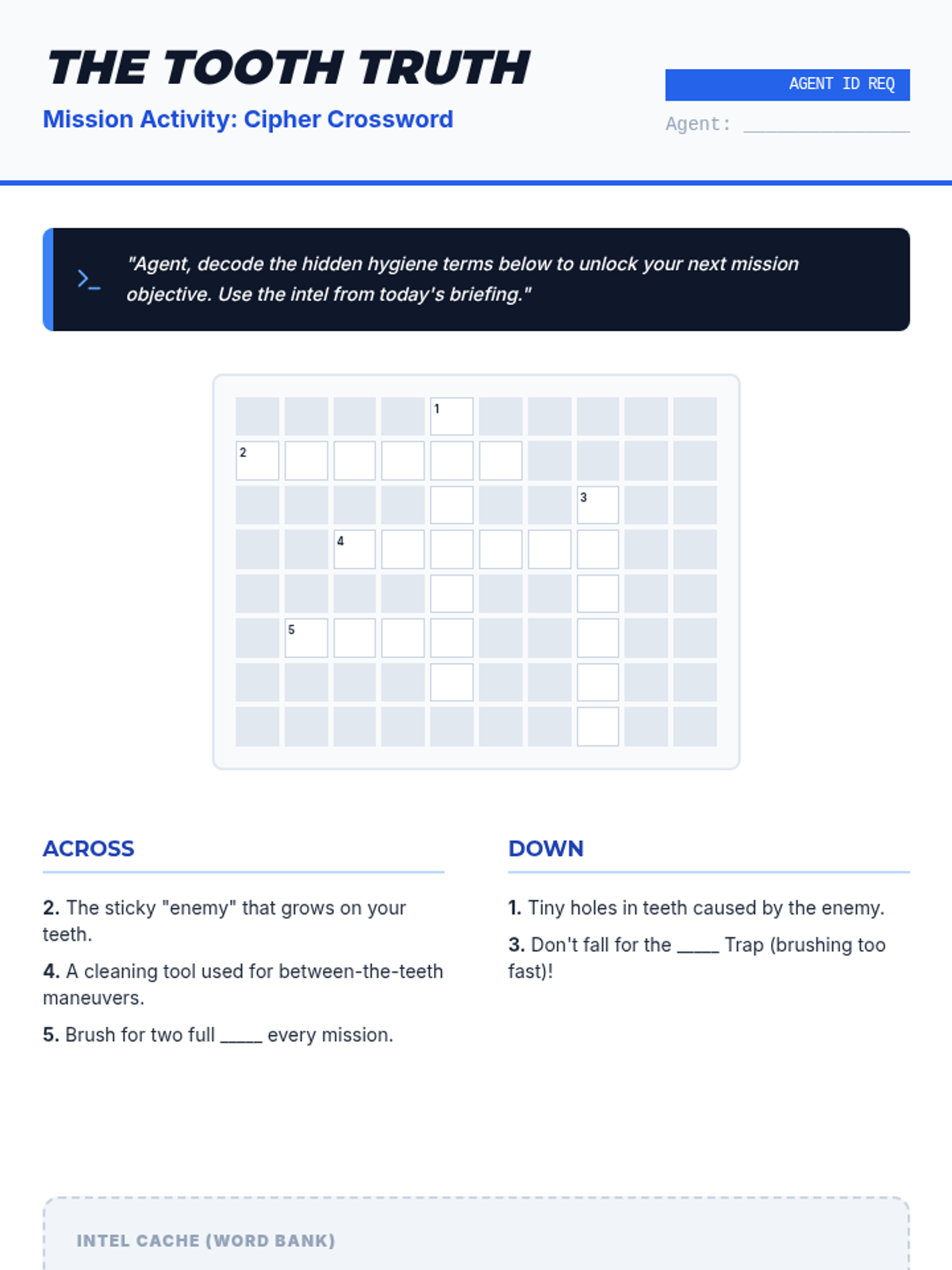
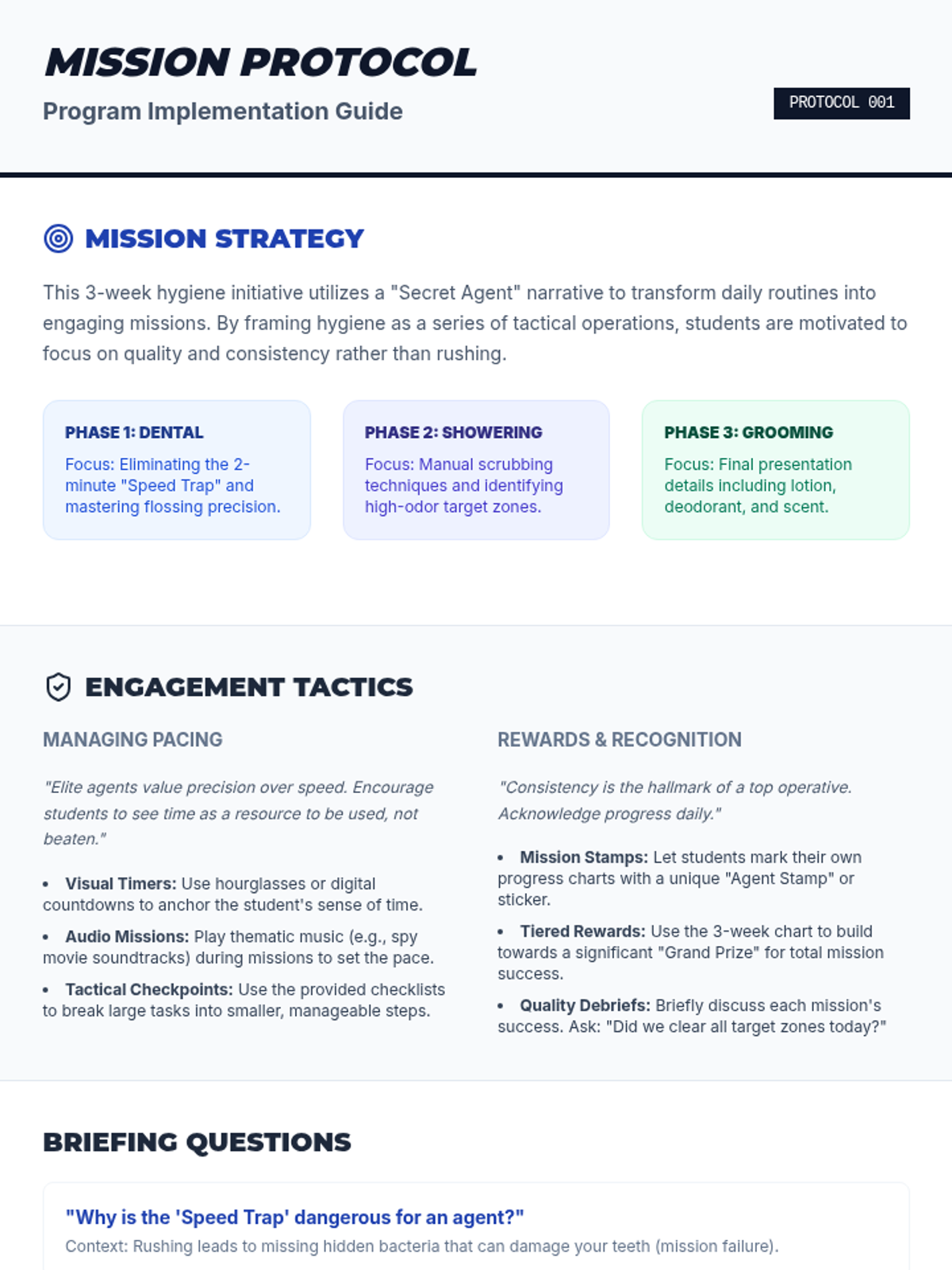
A three-week hygiene program designed for 3rd-grade boys with ADHD, using a 'Secret Agent' theme to encourage daily habits in dental care, showering, and grooming.
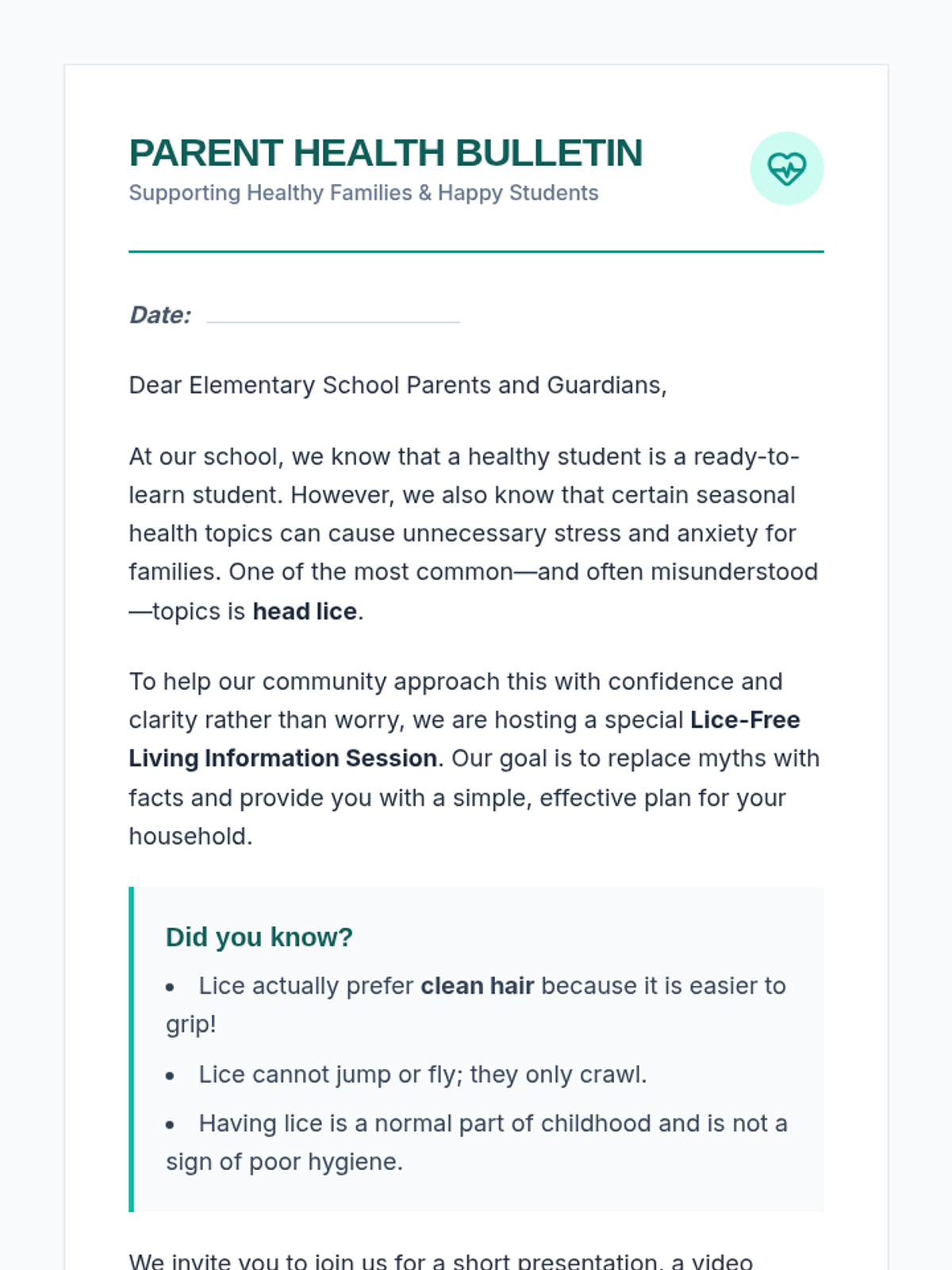
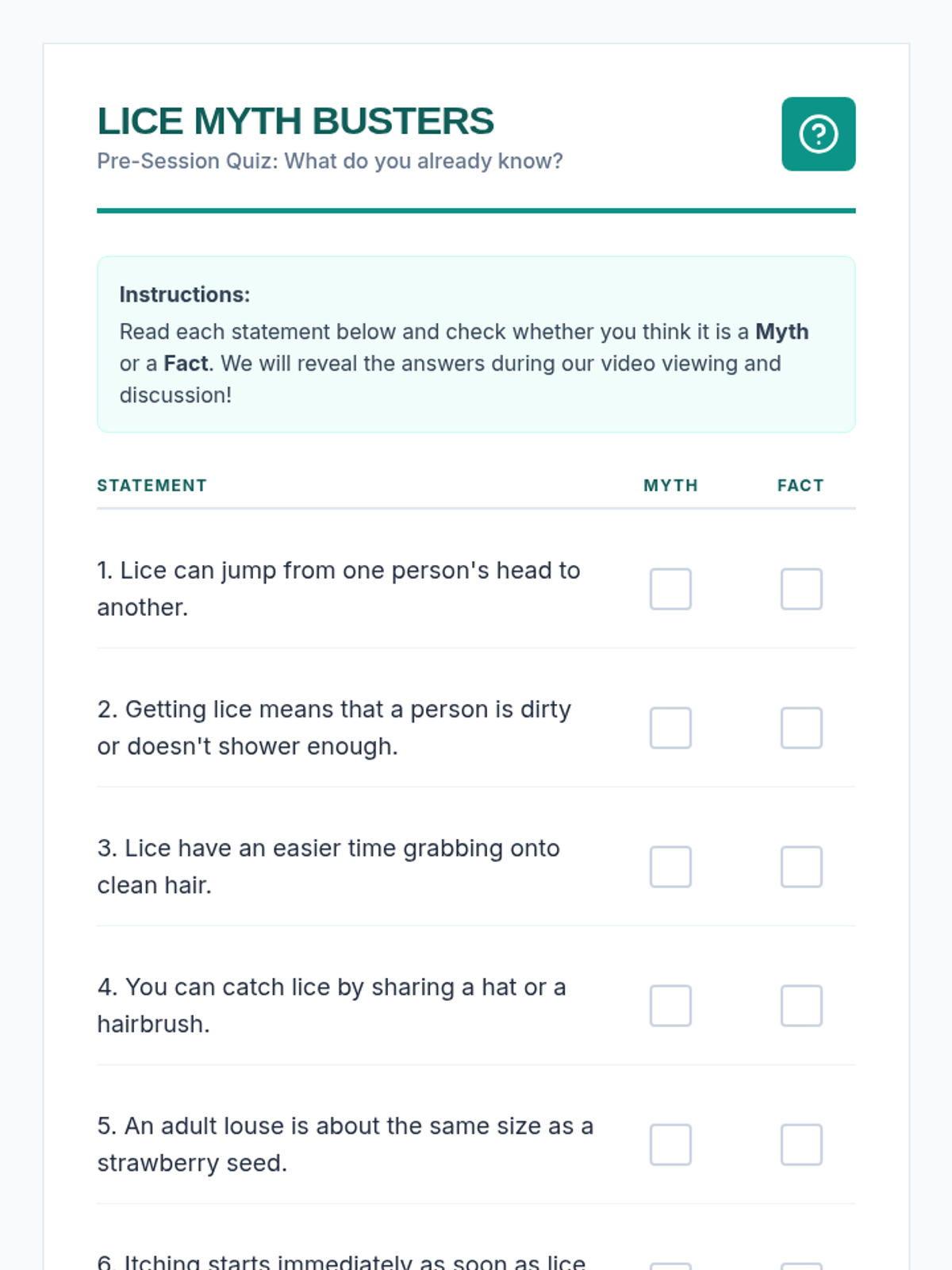
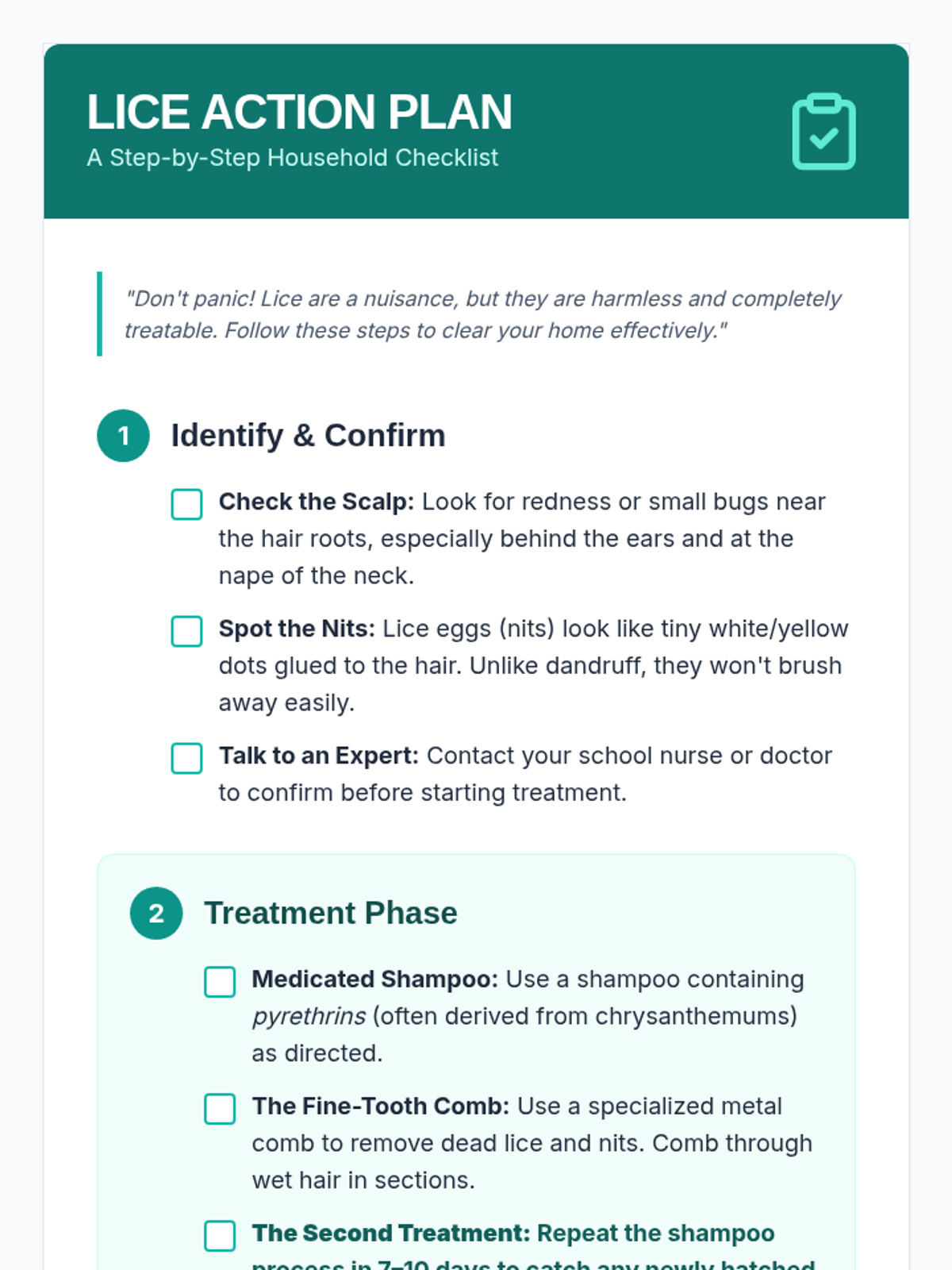
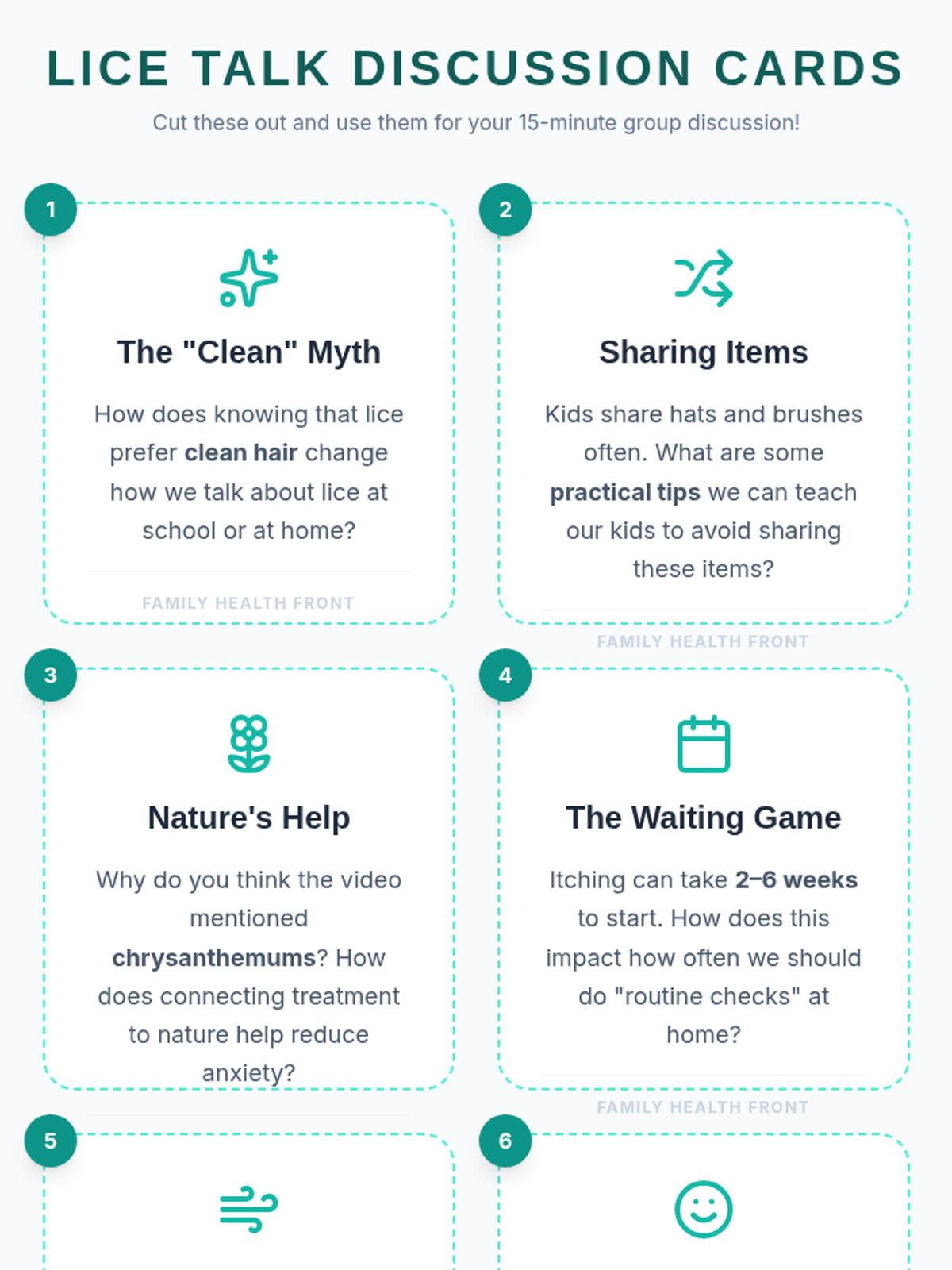
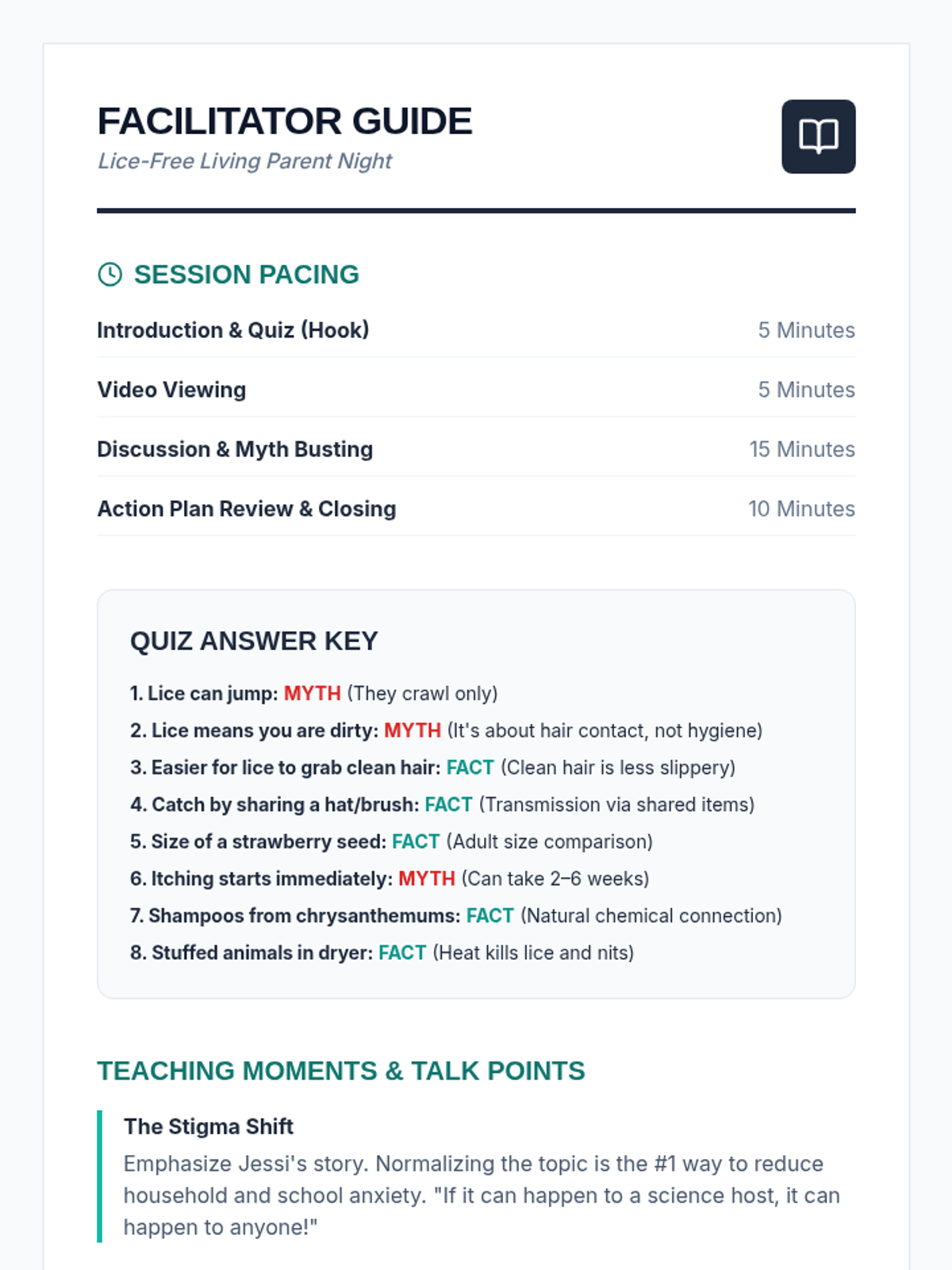
A series of workshops and resources for elementary school parents focusing on common school-related health concerns, starting with head lice management.
A 6th-grade inquiry-based sequence where students investigate the science of microorganisms to develop evidence-based personal hygiene protocols. The sequence covers microbial transmission, hand hygiene efficacy, oral health, body odor biology, and personal wellness planning.
An inquiry-driven sequence guiding 5th-grade students through the scientific principles of hygiene. Students investigate germ transmission, experiment with cleaning agents, and design evidence-based personal health routines to protect themselves and their community.
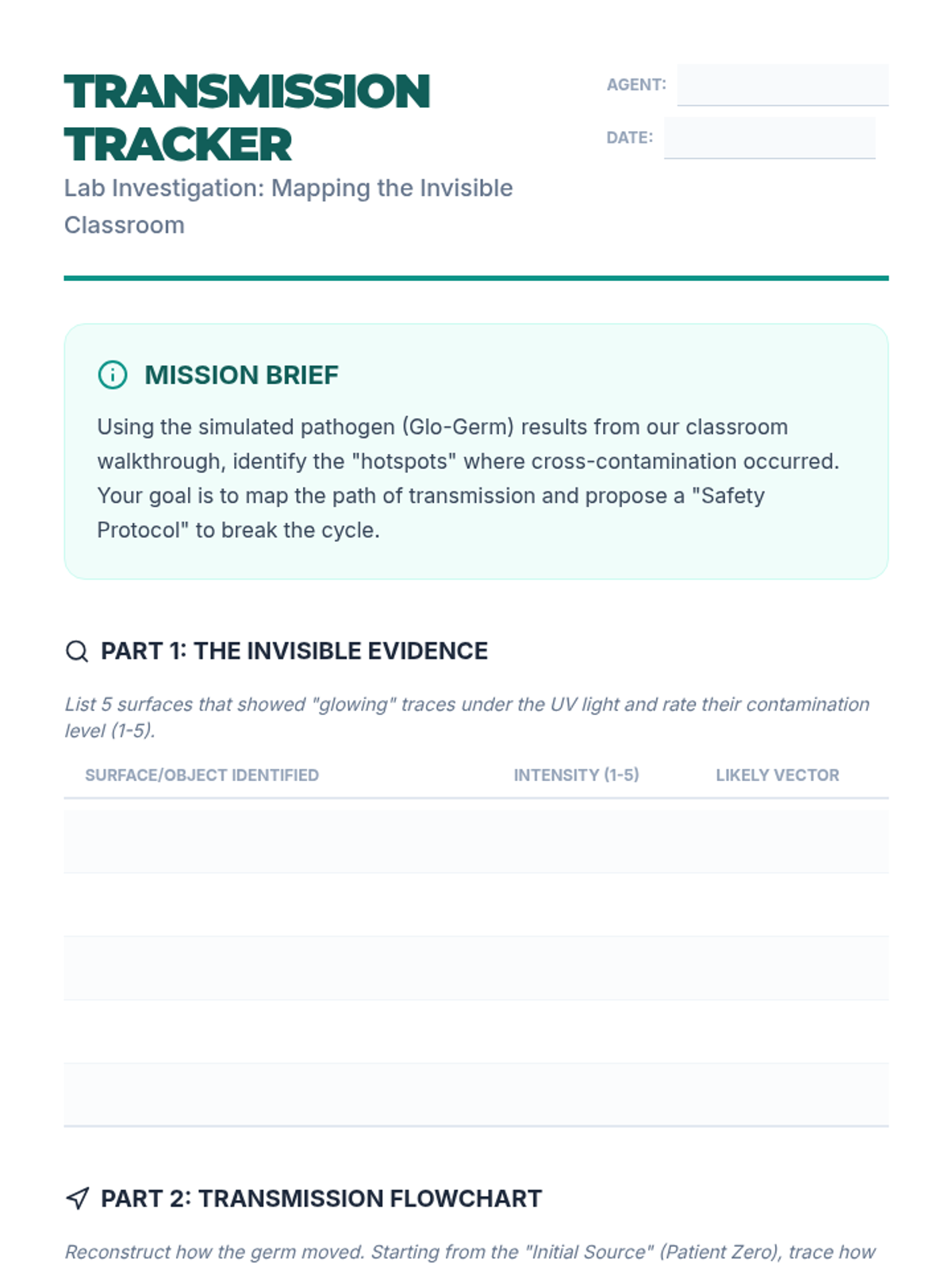
A scientific investigation into the biological mechanisms of disease transmission and hygiene effectiveness. Students explore pathogens, simulate contamination, test handwashing techniques, and analyze oral health to design evidence-based personal hygiene protocols.
Students explore the invisible world of microbes through simulations and experiments to understand illness transmission and personal hygiene. They analyze handwashing effectiveness, practice dental care, investigate respiratory hygiene, and synthesize their learning into a personal wellness routine.
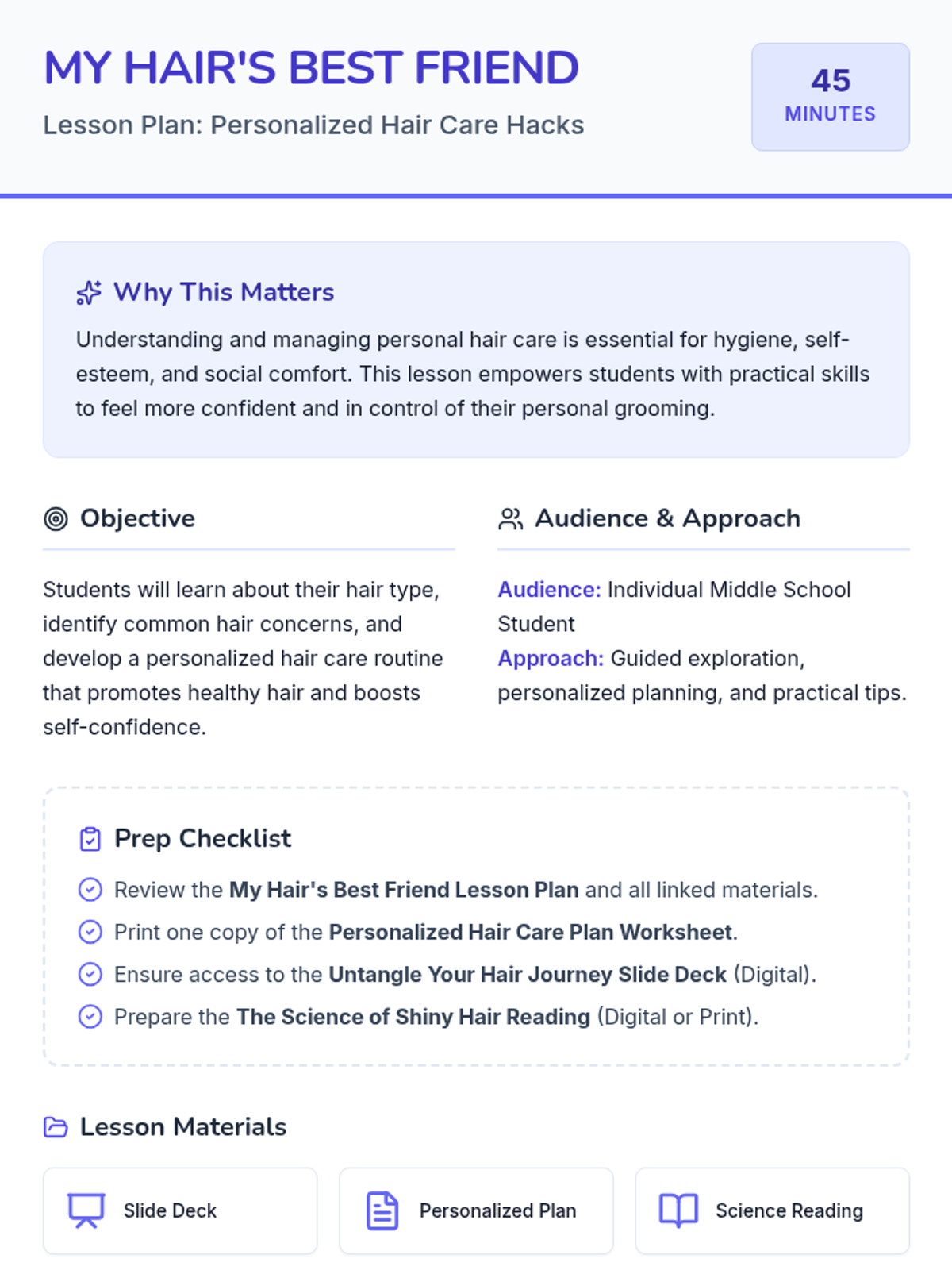
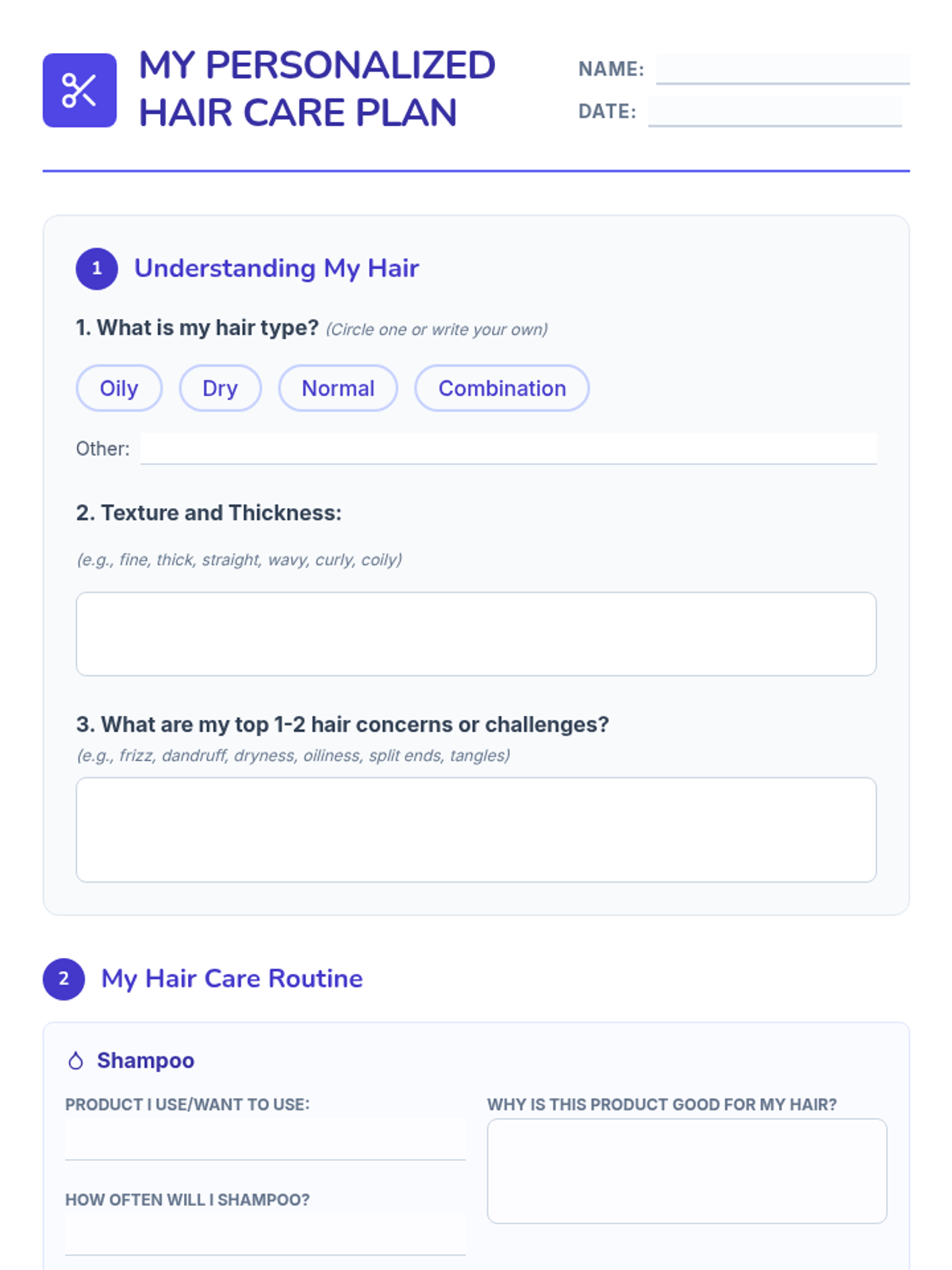
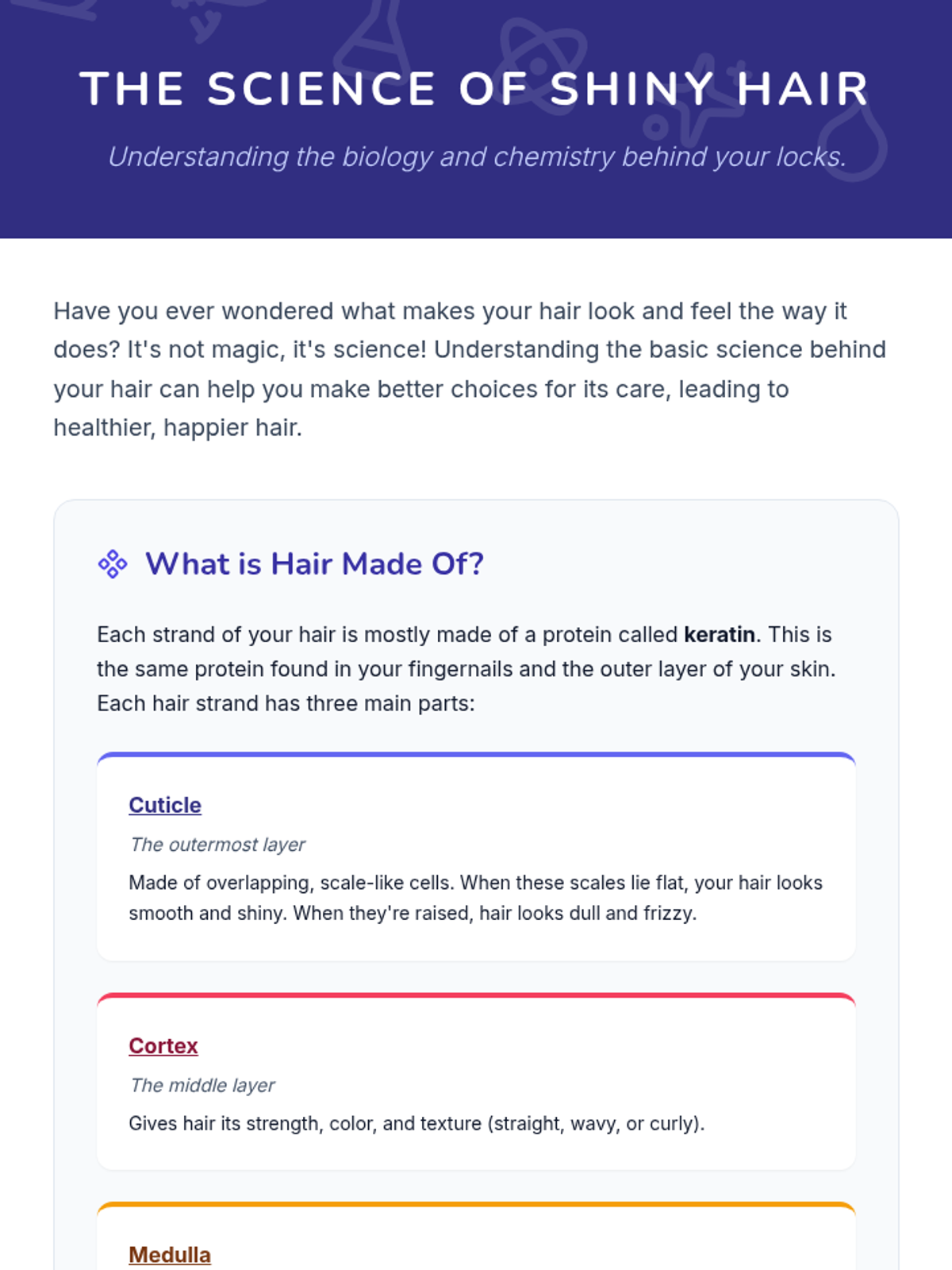
A series of lessons focused on personal hygiene and grooming to build student confidence and self-efficacy.
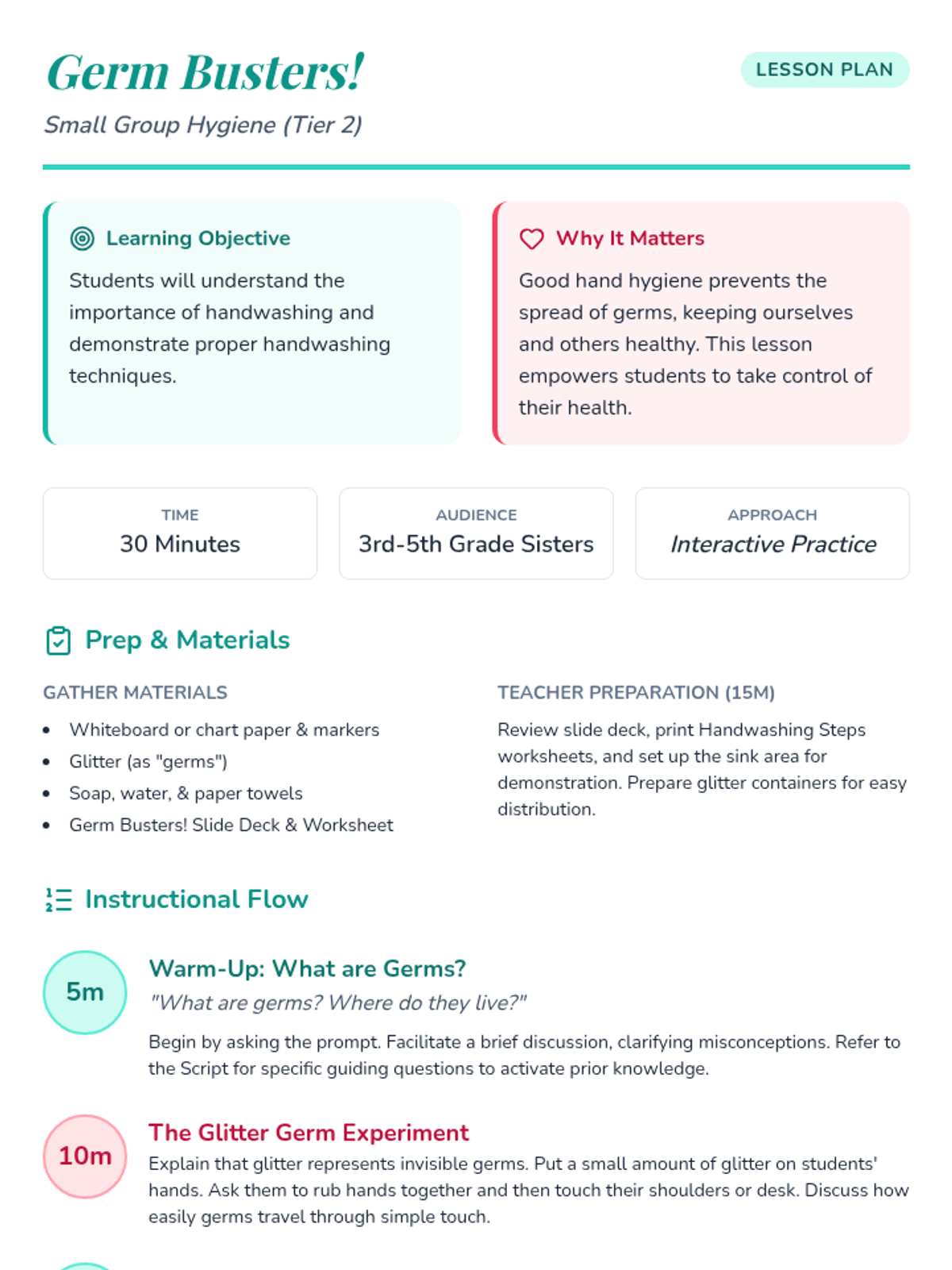
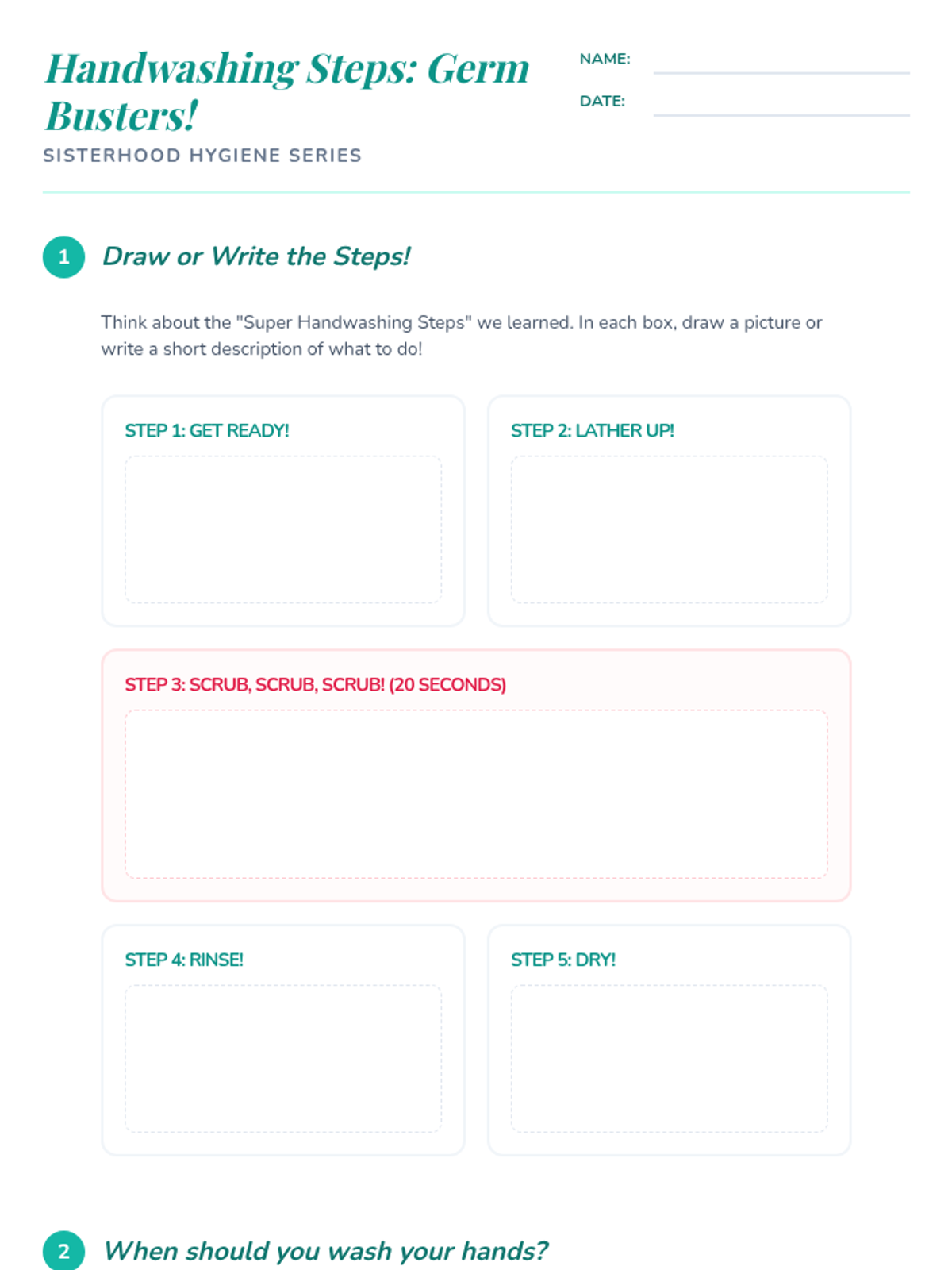
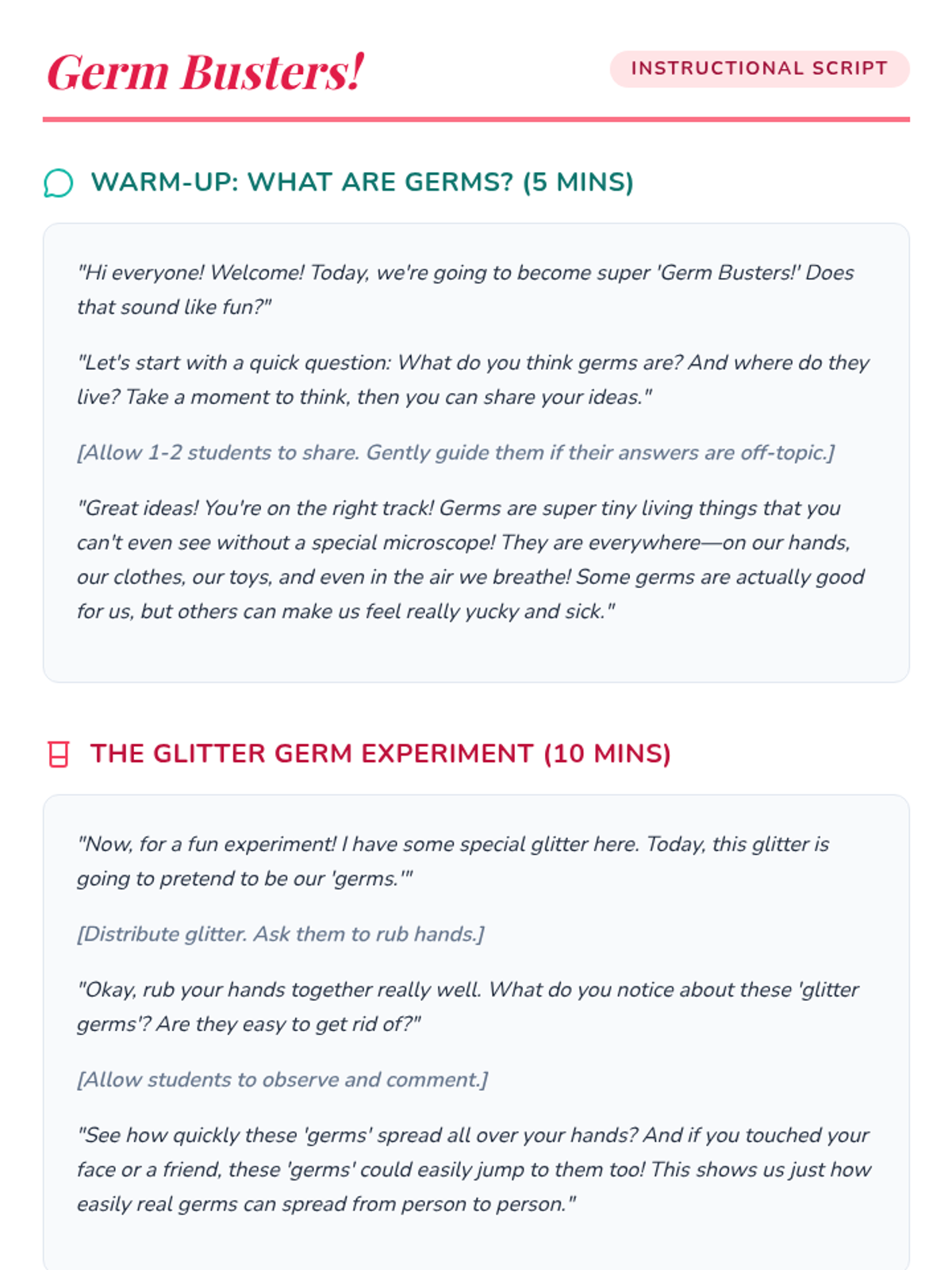
A comprehensive hygiene education program for 3rd-5th grade girls, focusing on handwashing, dental care, body/hair maintenance, and managing body odor through empowering small-group lessons.
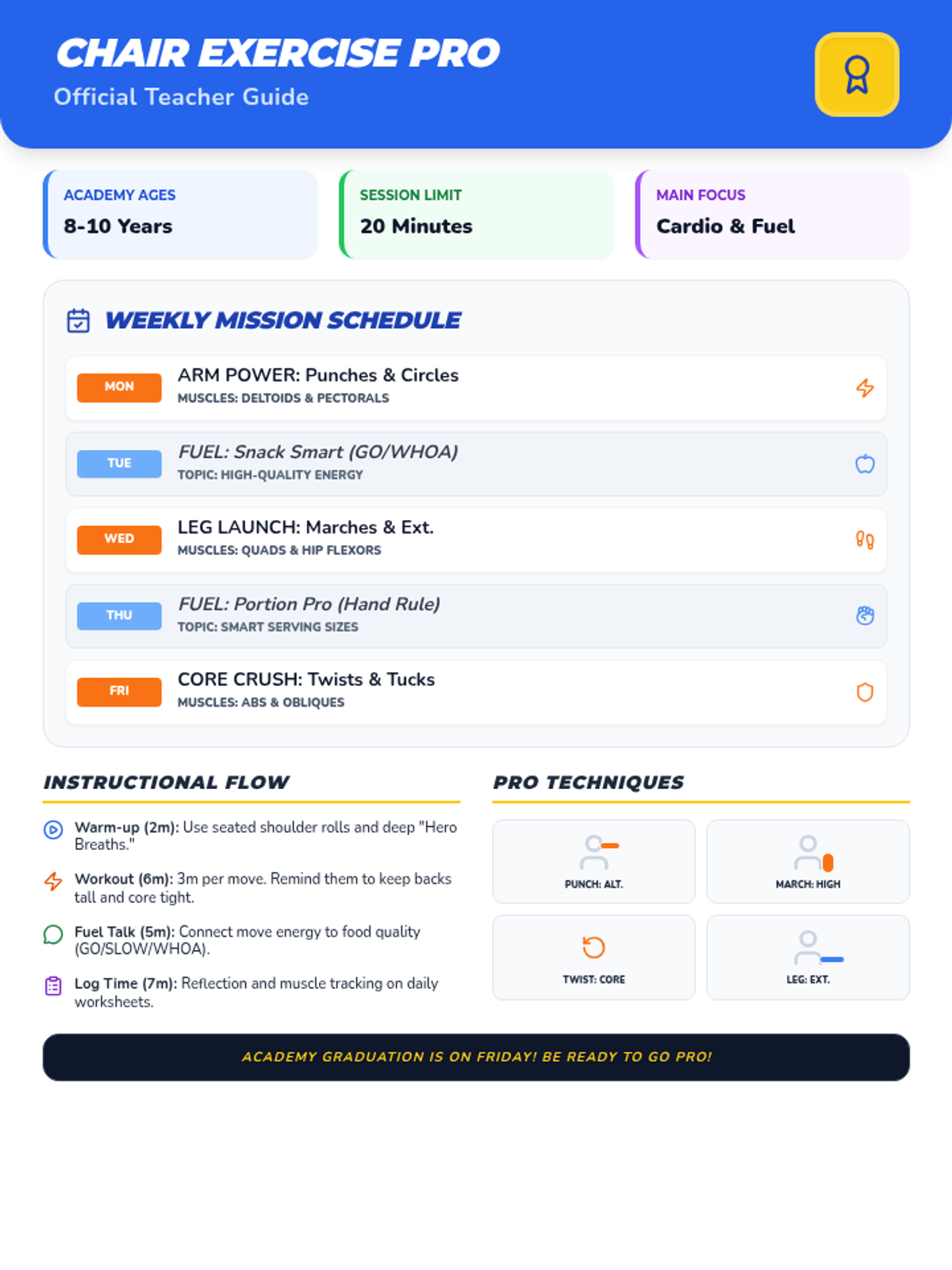
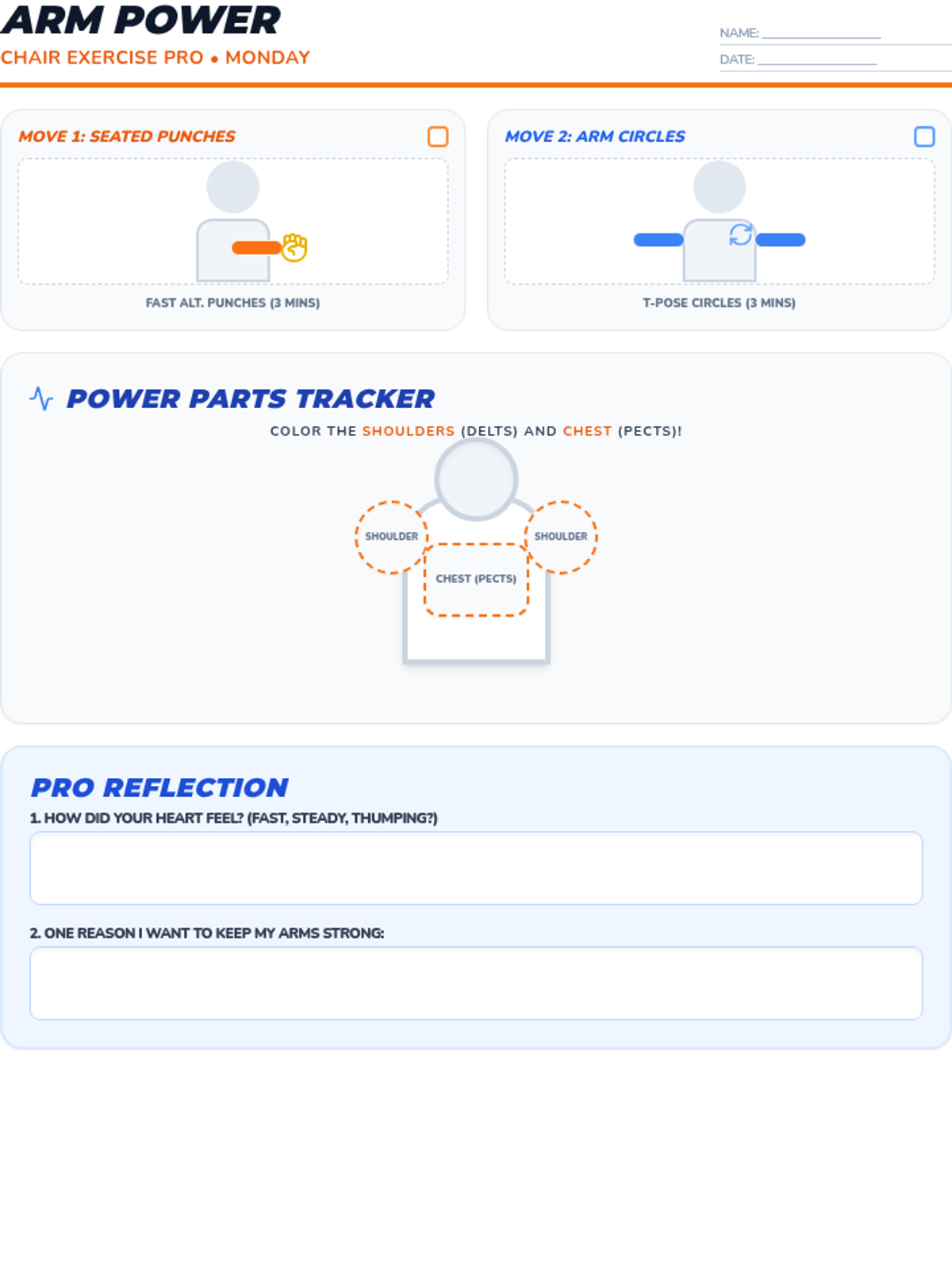
A 5-day fitness and nutrition program for students aged 8-10, focusing on chair-based cardio exercises and healthy snacking habits. The sequence alternates between active exercise days (Monday, Wednesday, Friday) and nutrition discussion days (Tuesday, Thursday).
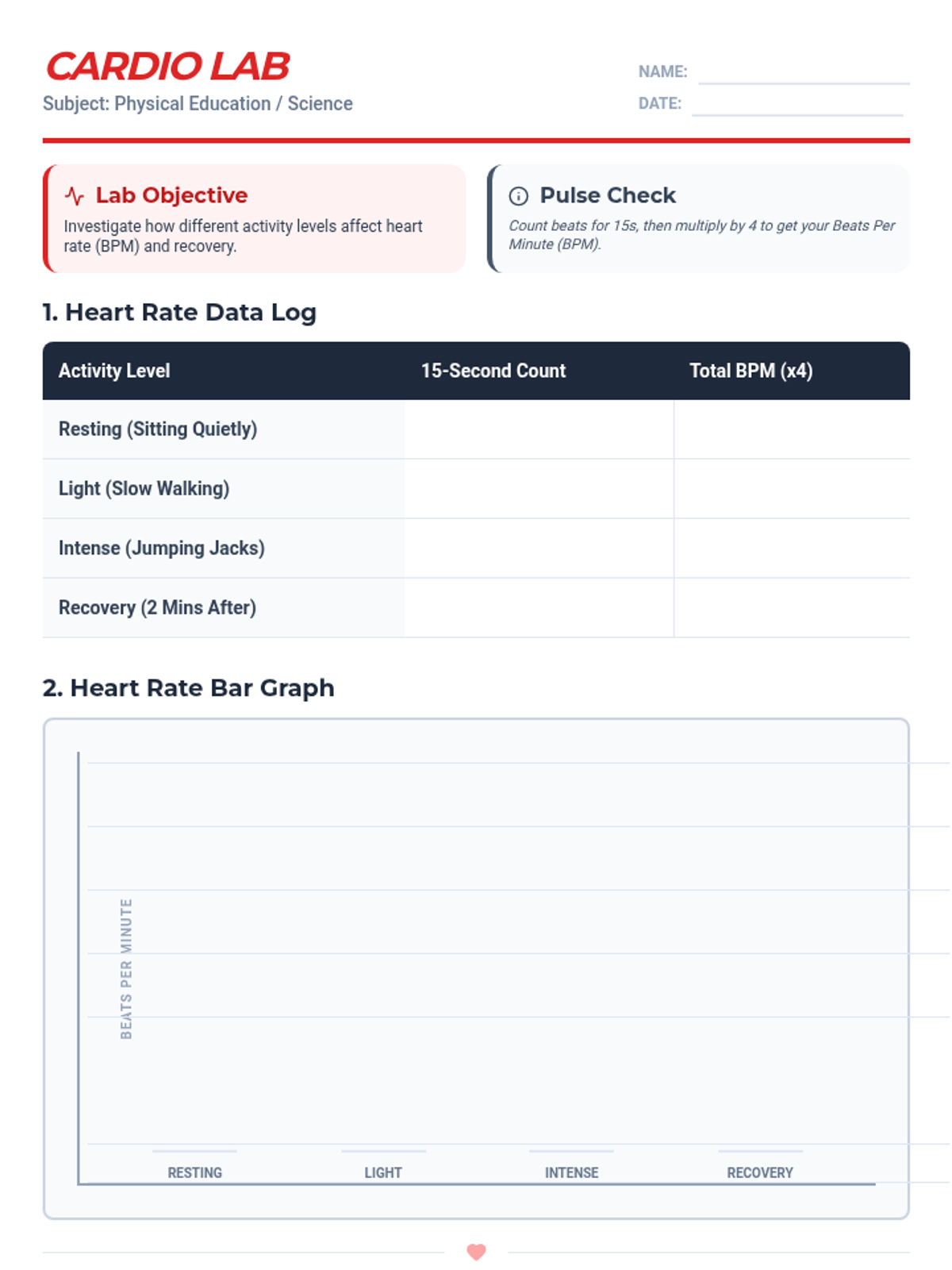
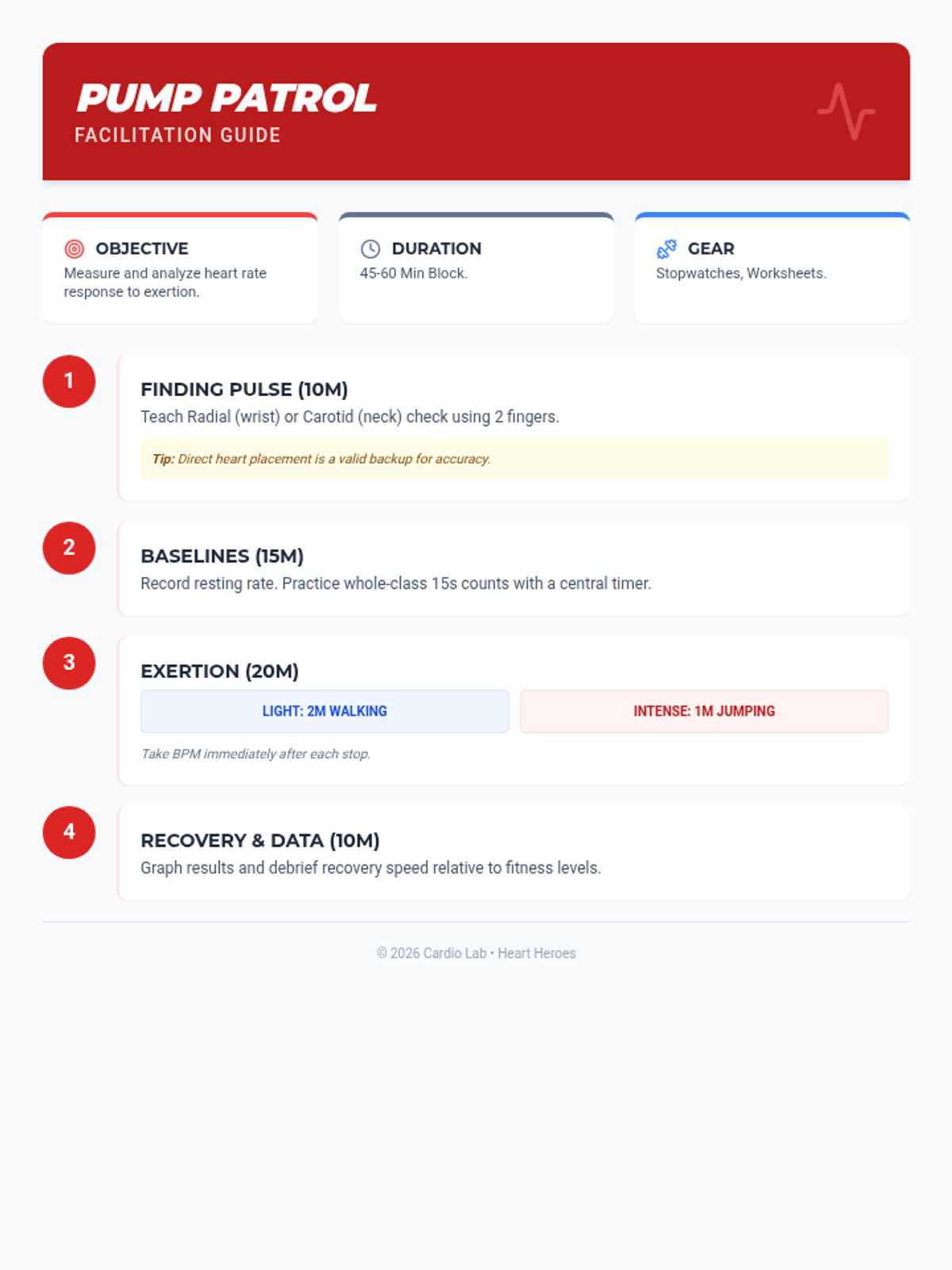
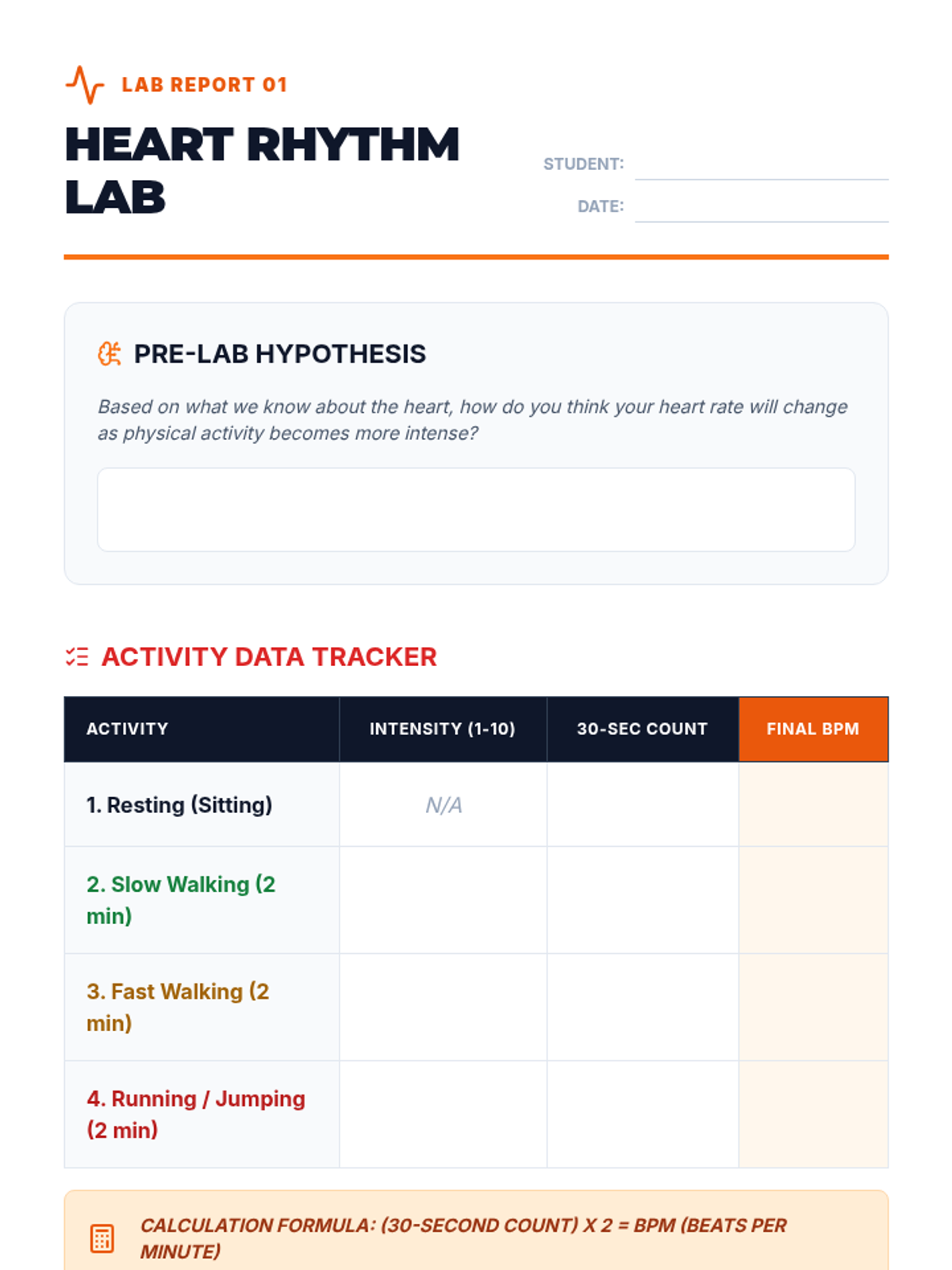
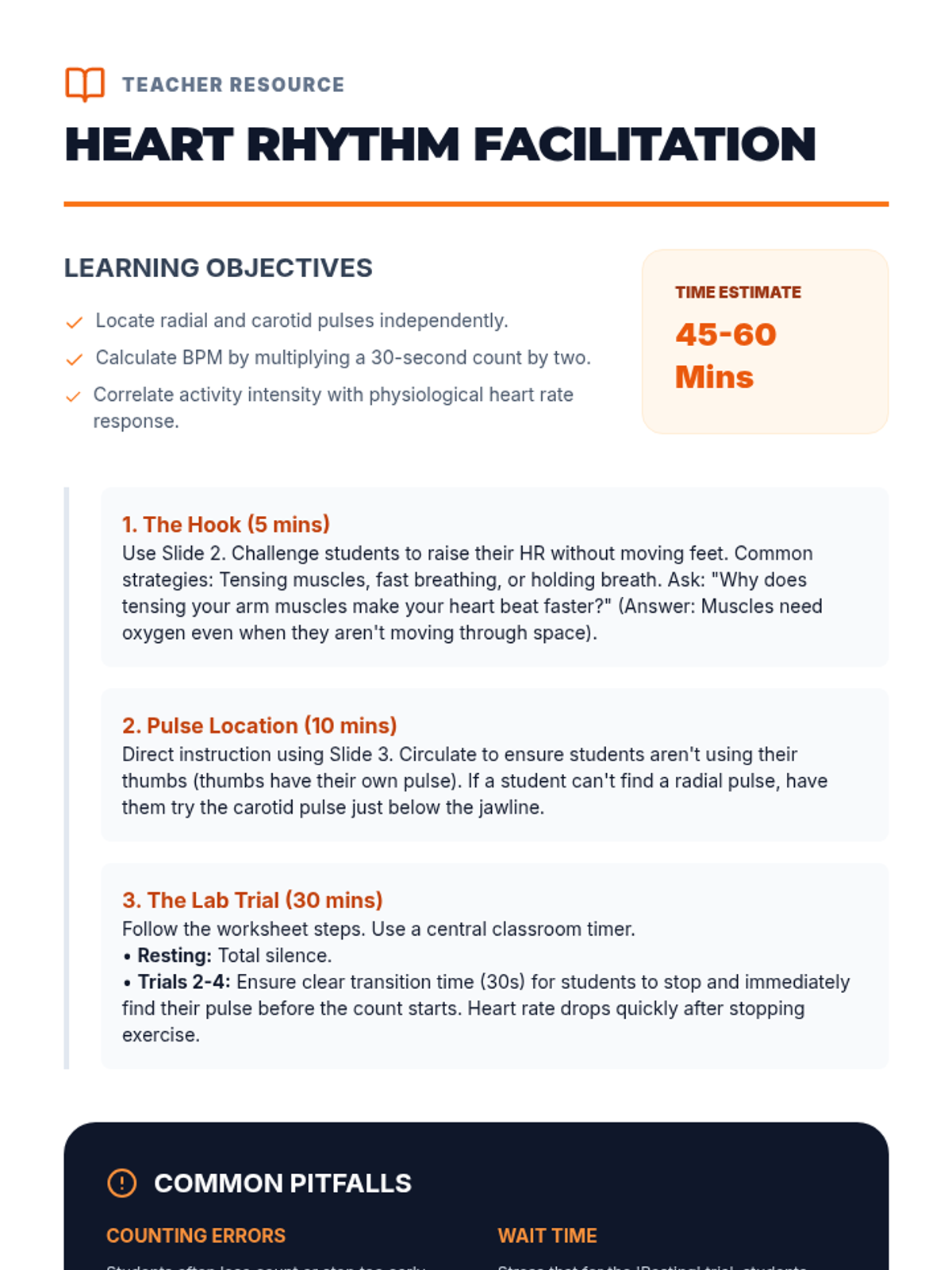
A high-energy exploration of cardiovascular health, focusing on heart rate, the effects of exercise, and how to maintain a healthy pump.
A comprehensive health and wellness unit focusing on nutrition, physical activity, and mental well-being to empower students to make informed lifestyle choices.
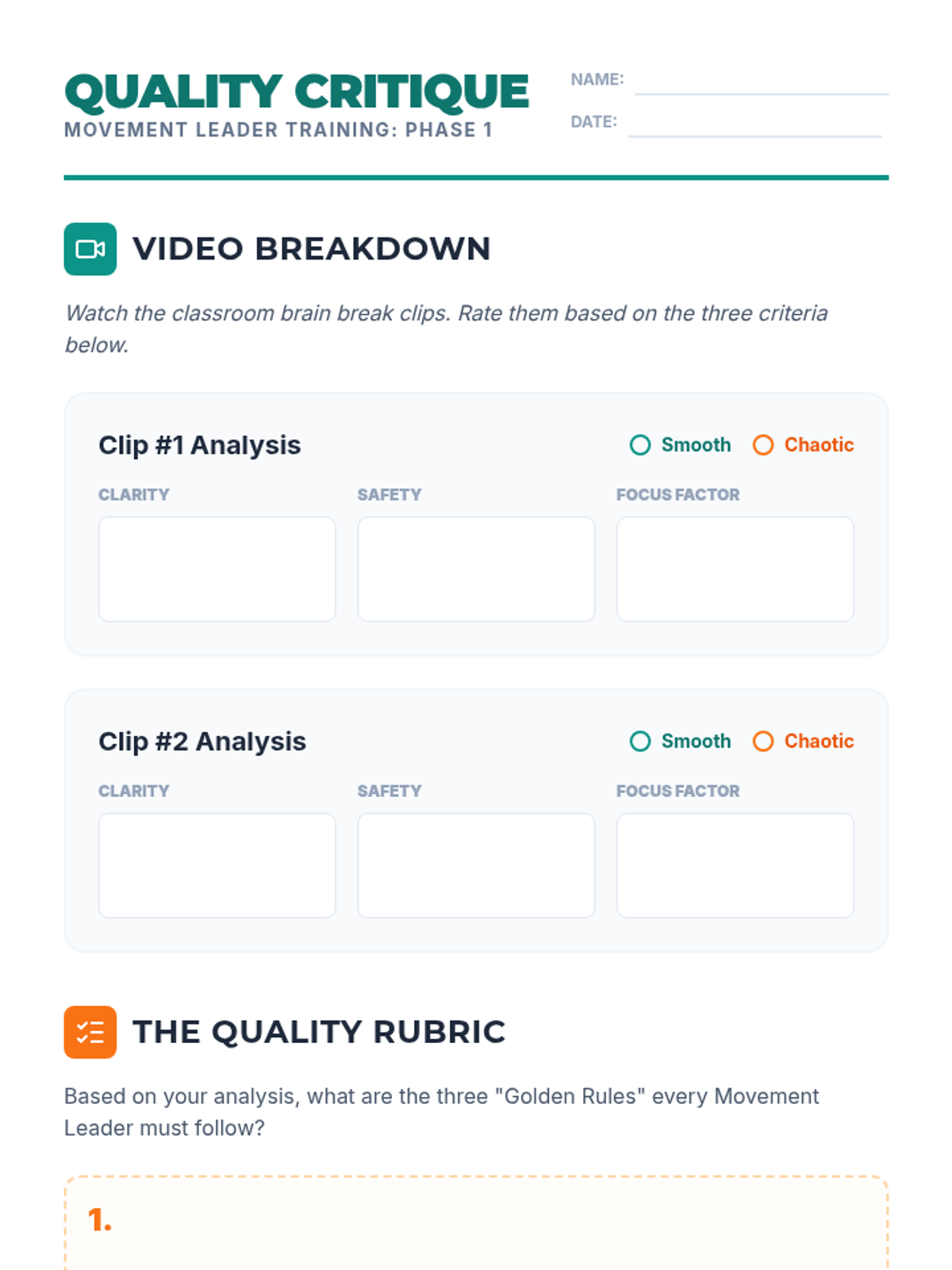
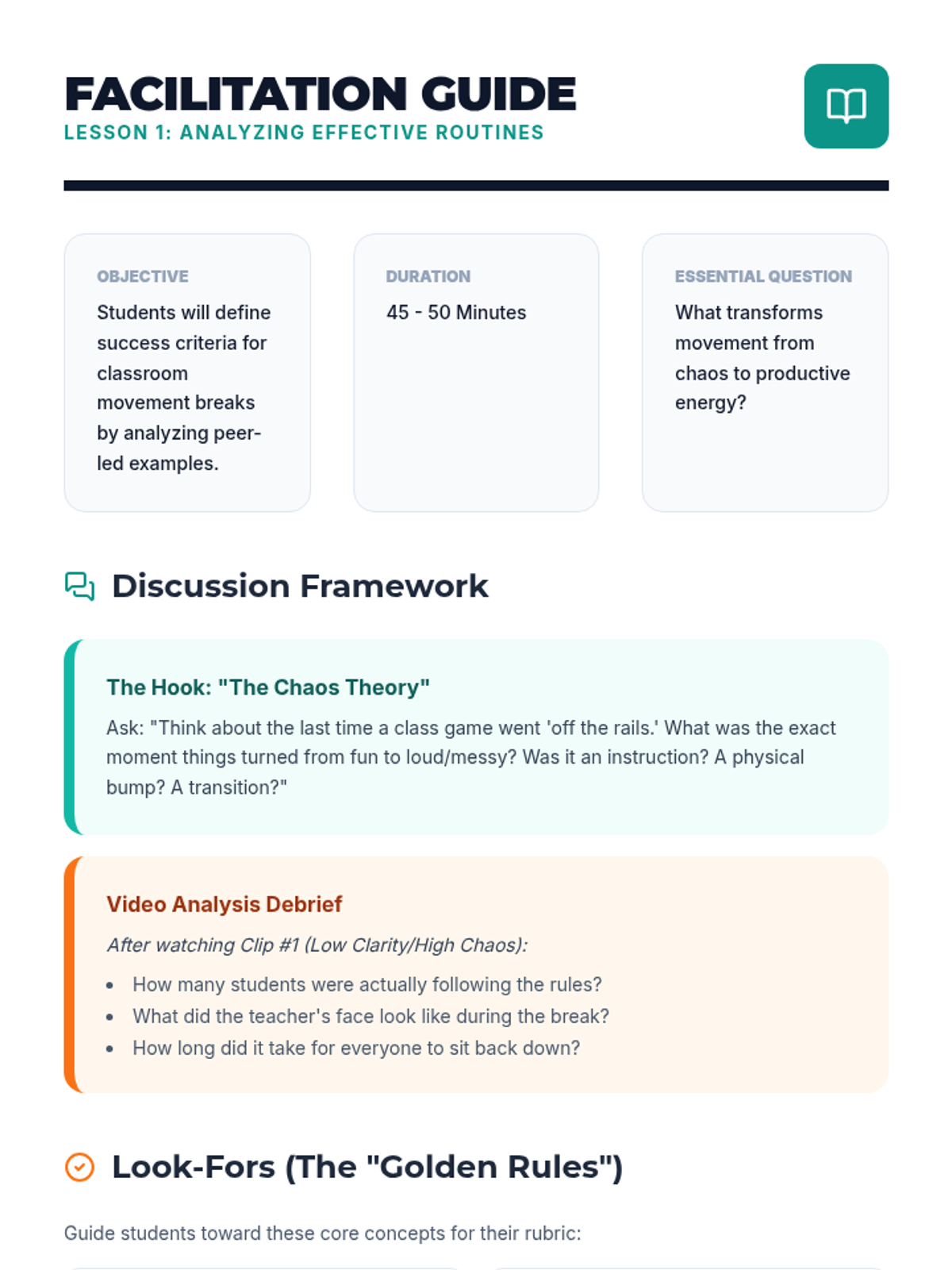
A project-based sequence where 5th graders become 'Movement Leaders', designing and facilitating classroom brain breaks that prioritize safety, engagement, and effective transitions. Students transition from analyzing routines to leading their peers in custom-designed movement sequences.
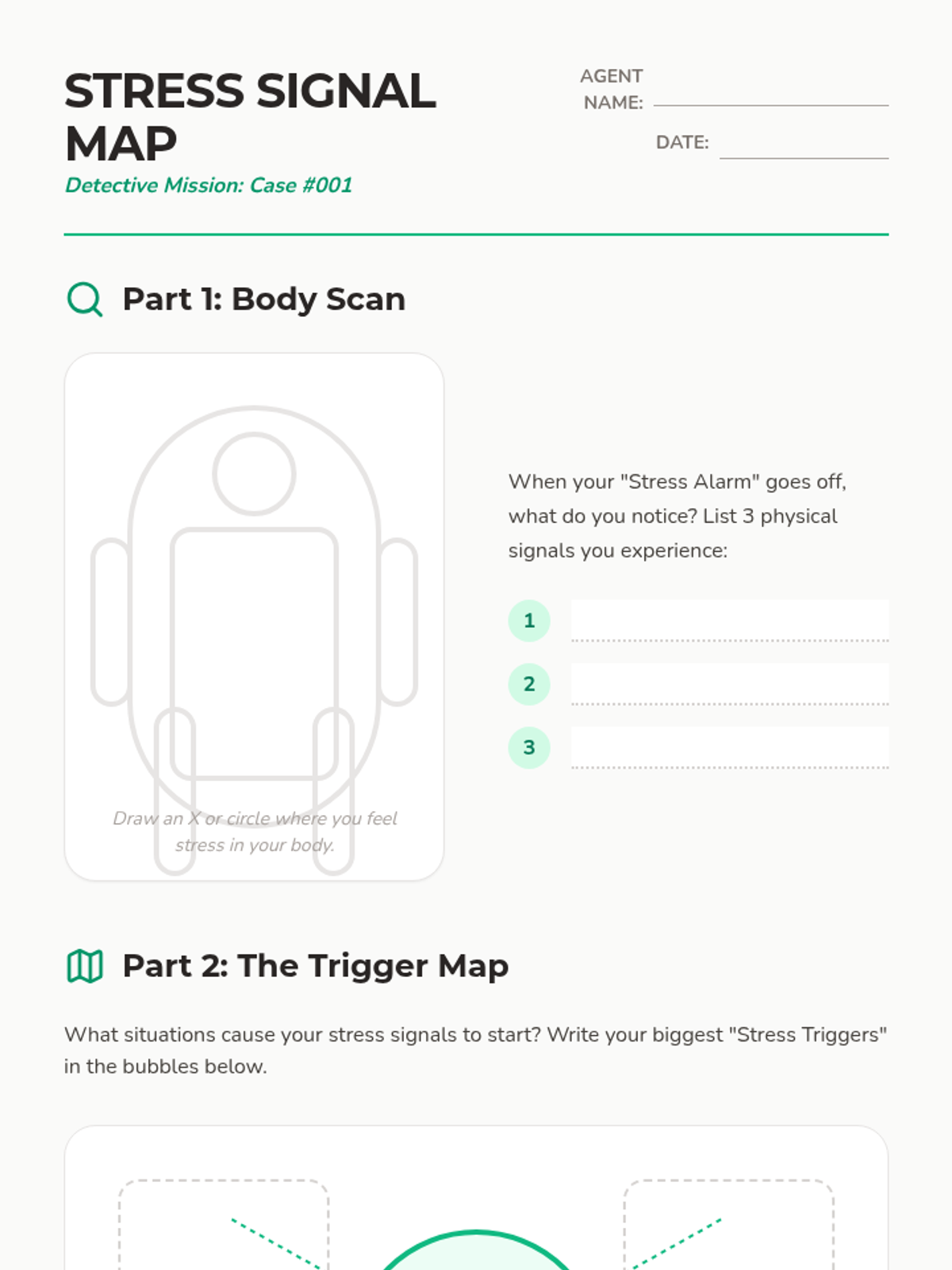
A 5th-grade health sequence that reframes substance awareness through the lens of emotional wellness. Students learn to identify stress triggers, understand the brain's natural reward system, and build a personal 'toolkit' of healthy coping mechanisms as alternatives to substances like cannabis.
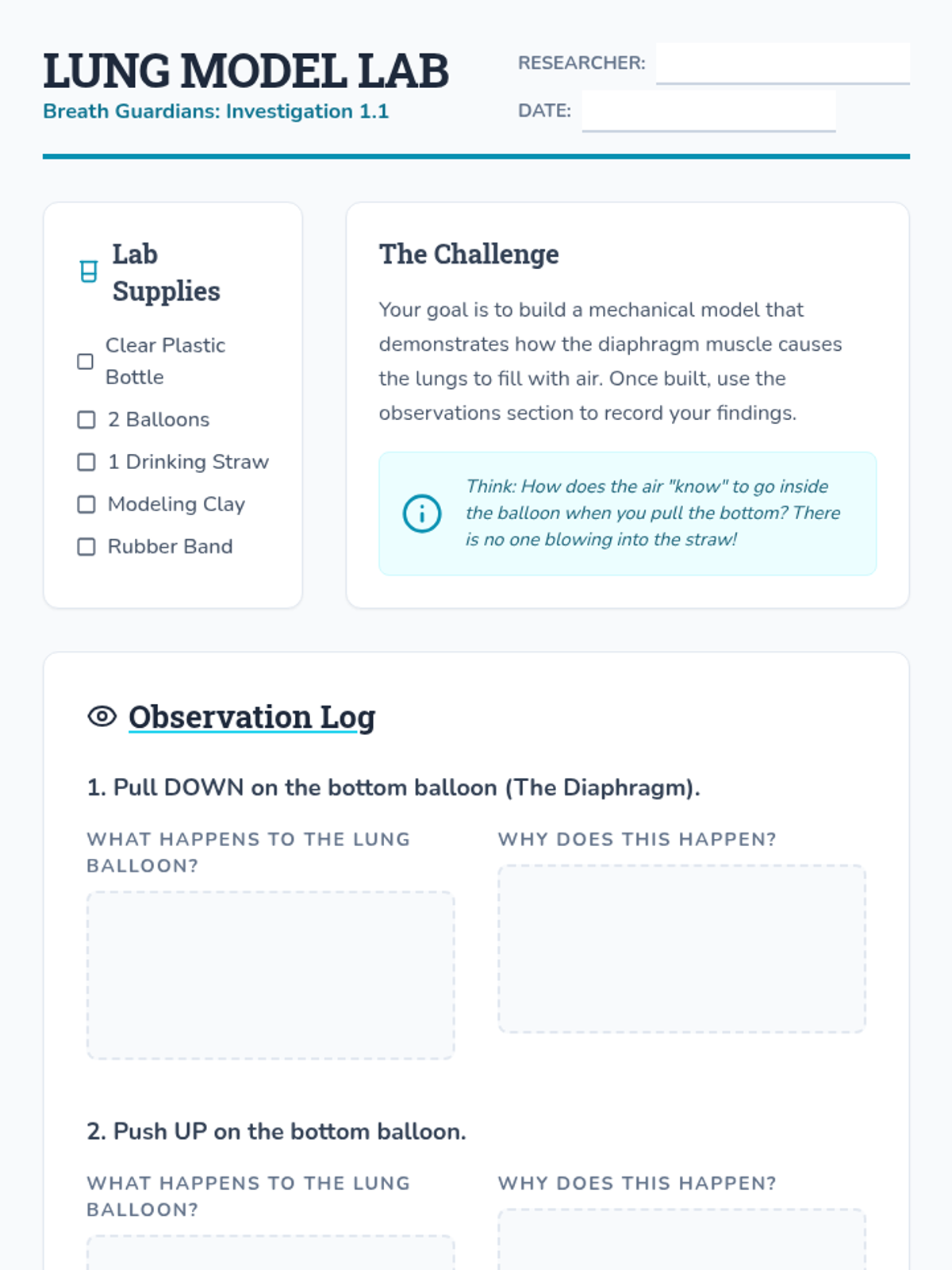
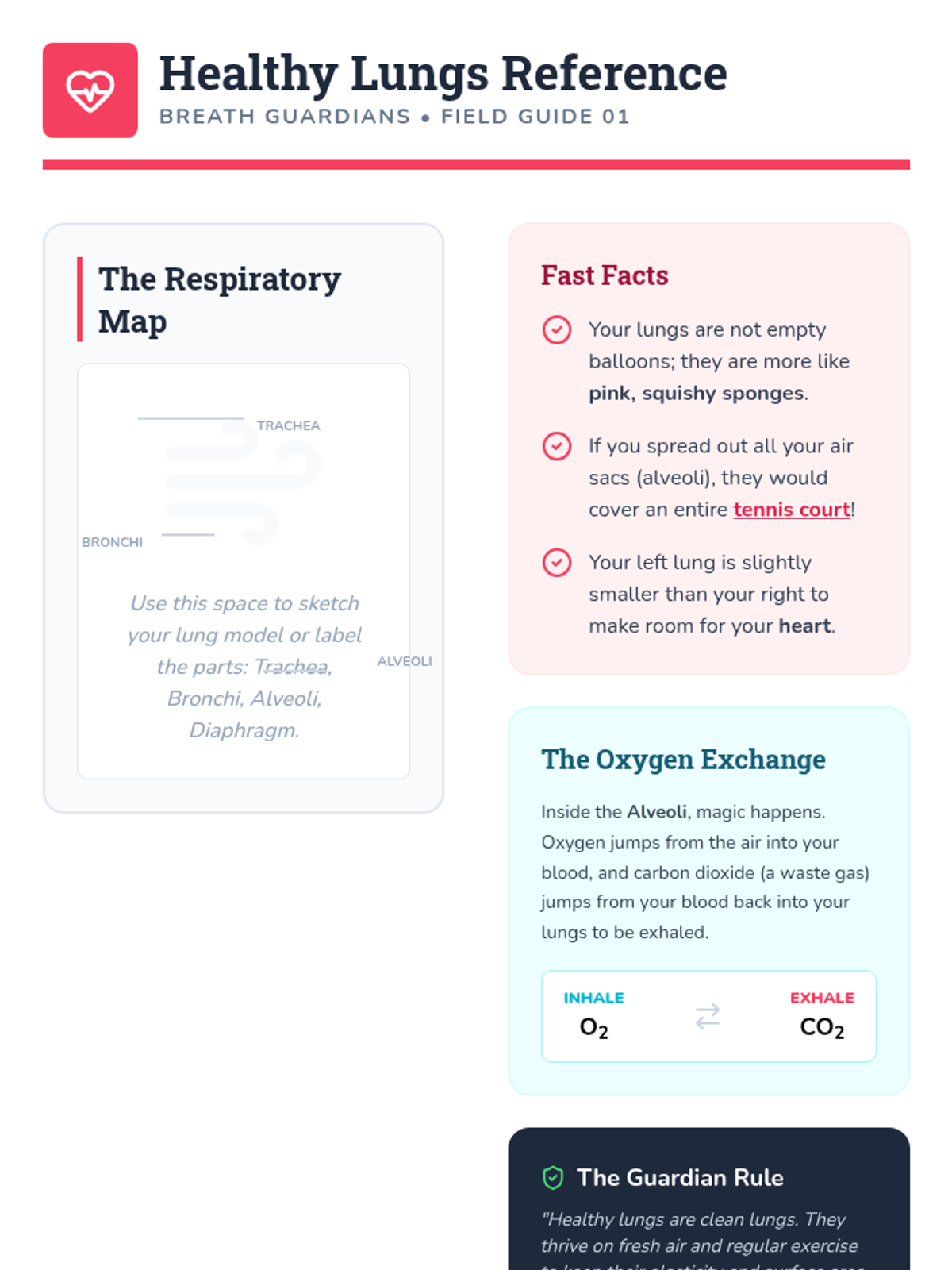
A comprehensive 5th-grade health sequence exploring the respiratory system's anatomy and the biological impacts of tobacco and vaping. Students use models, simulations, and data collection to understand how substances like tar and chemical aerosols damage lung tissue and impair physical performance.
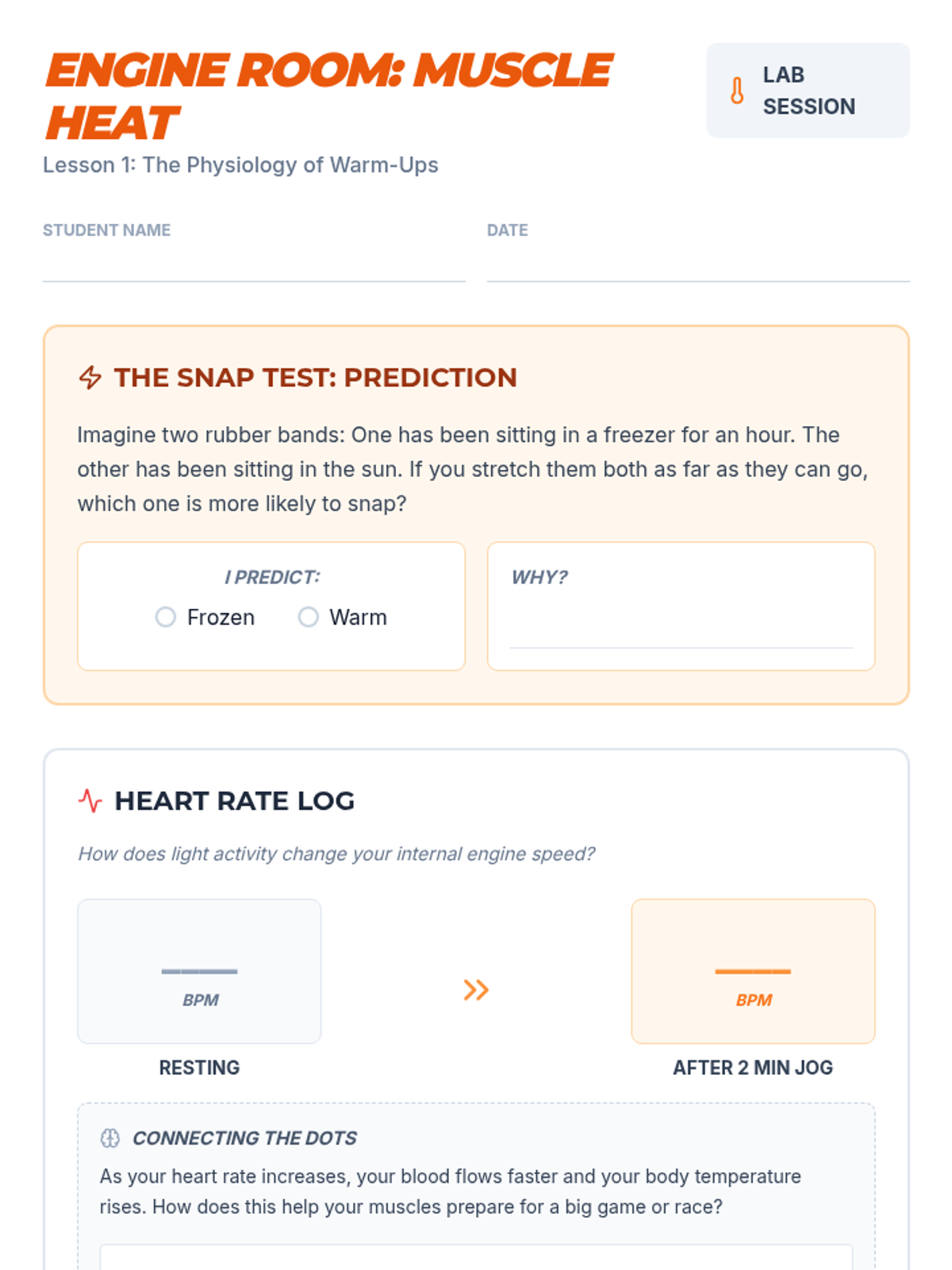
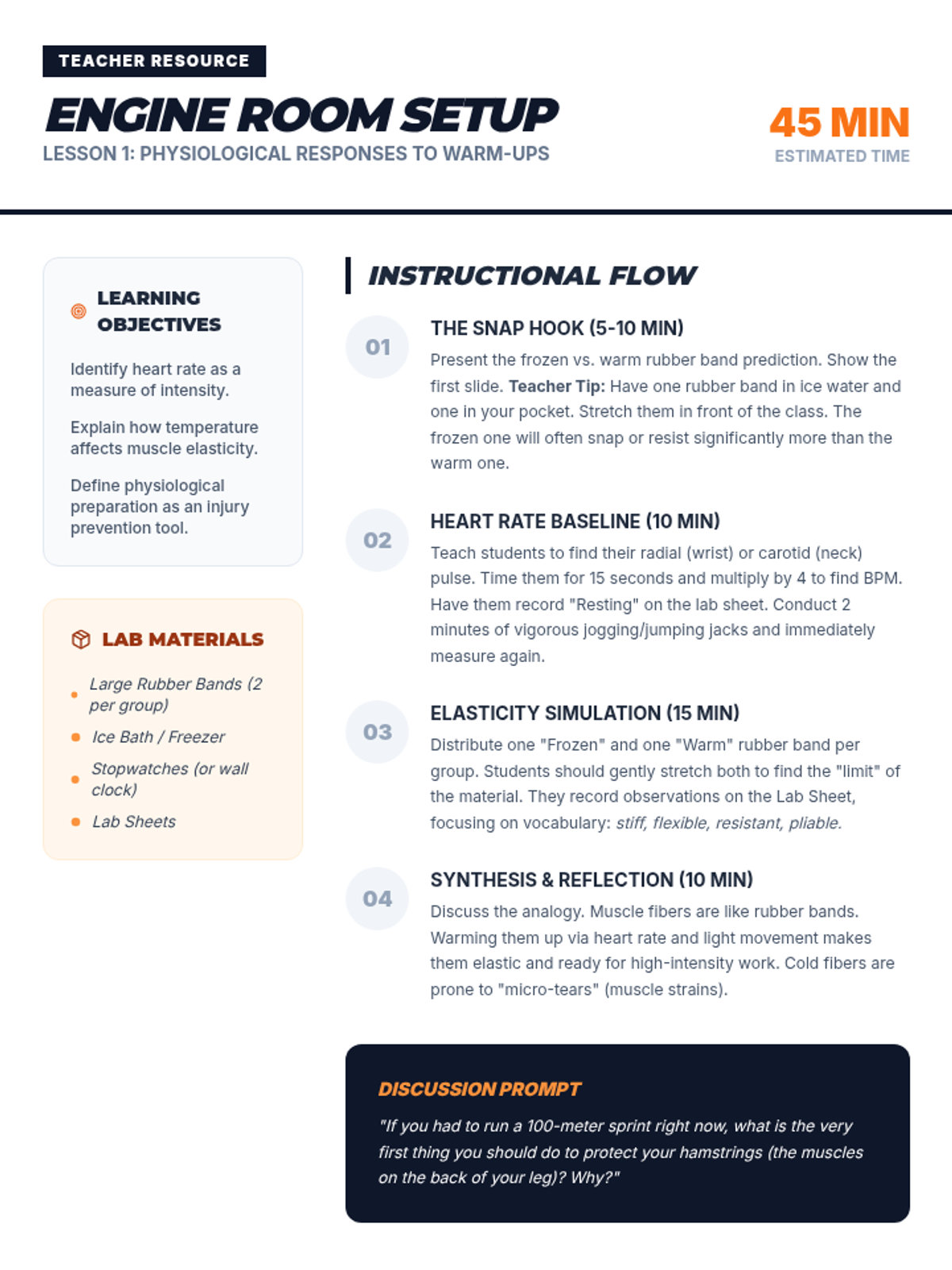
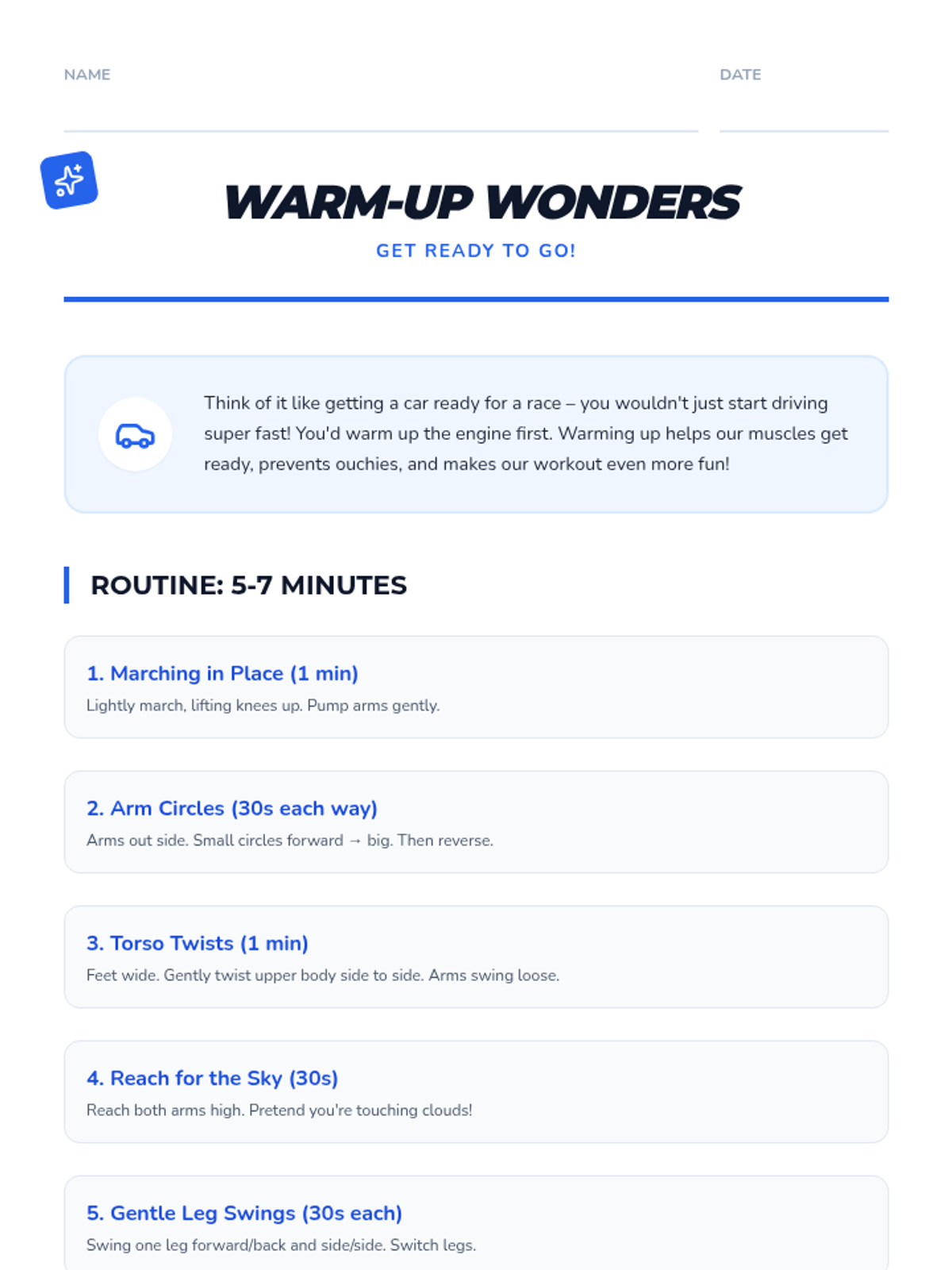
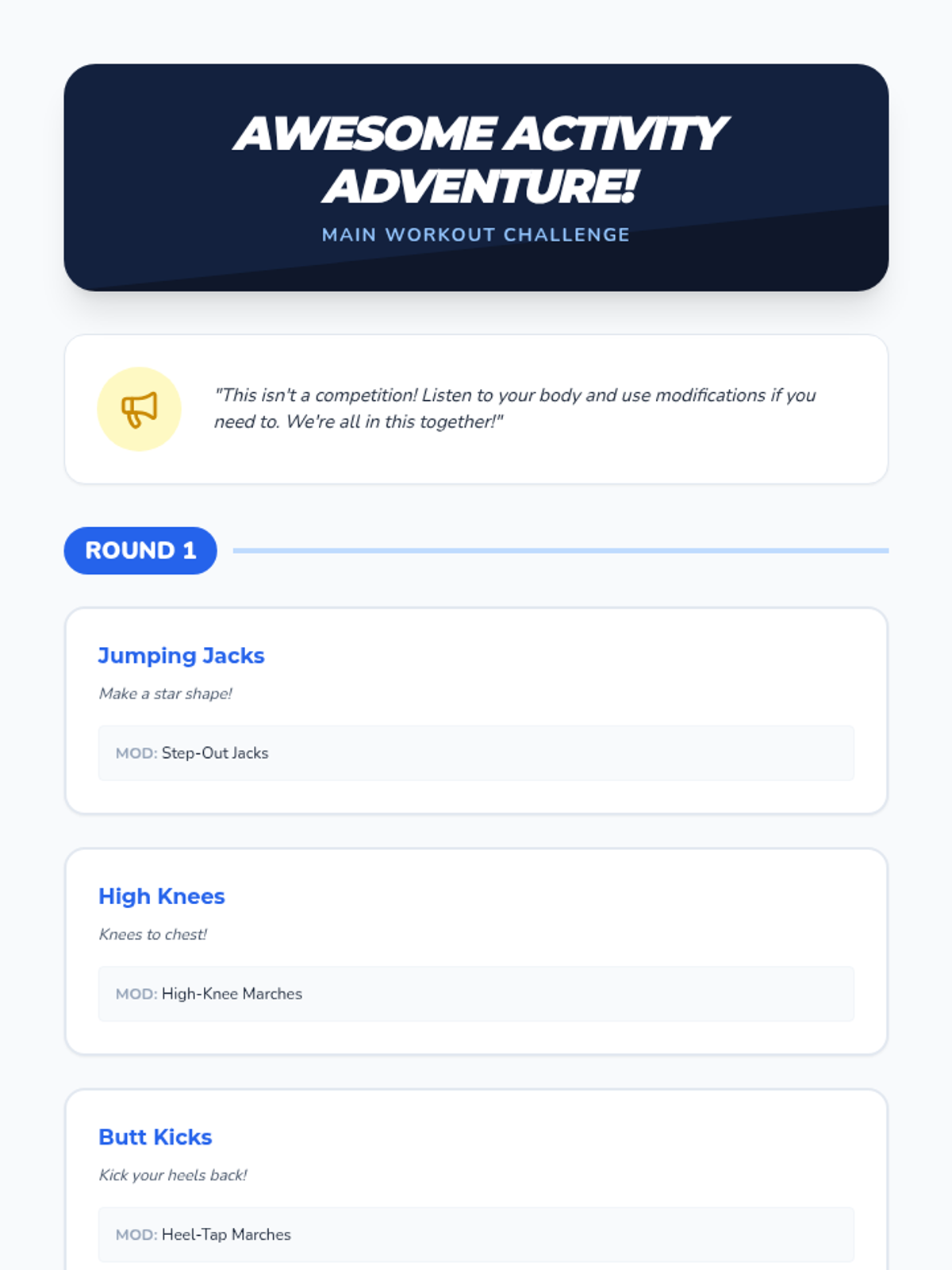
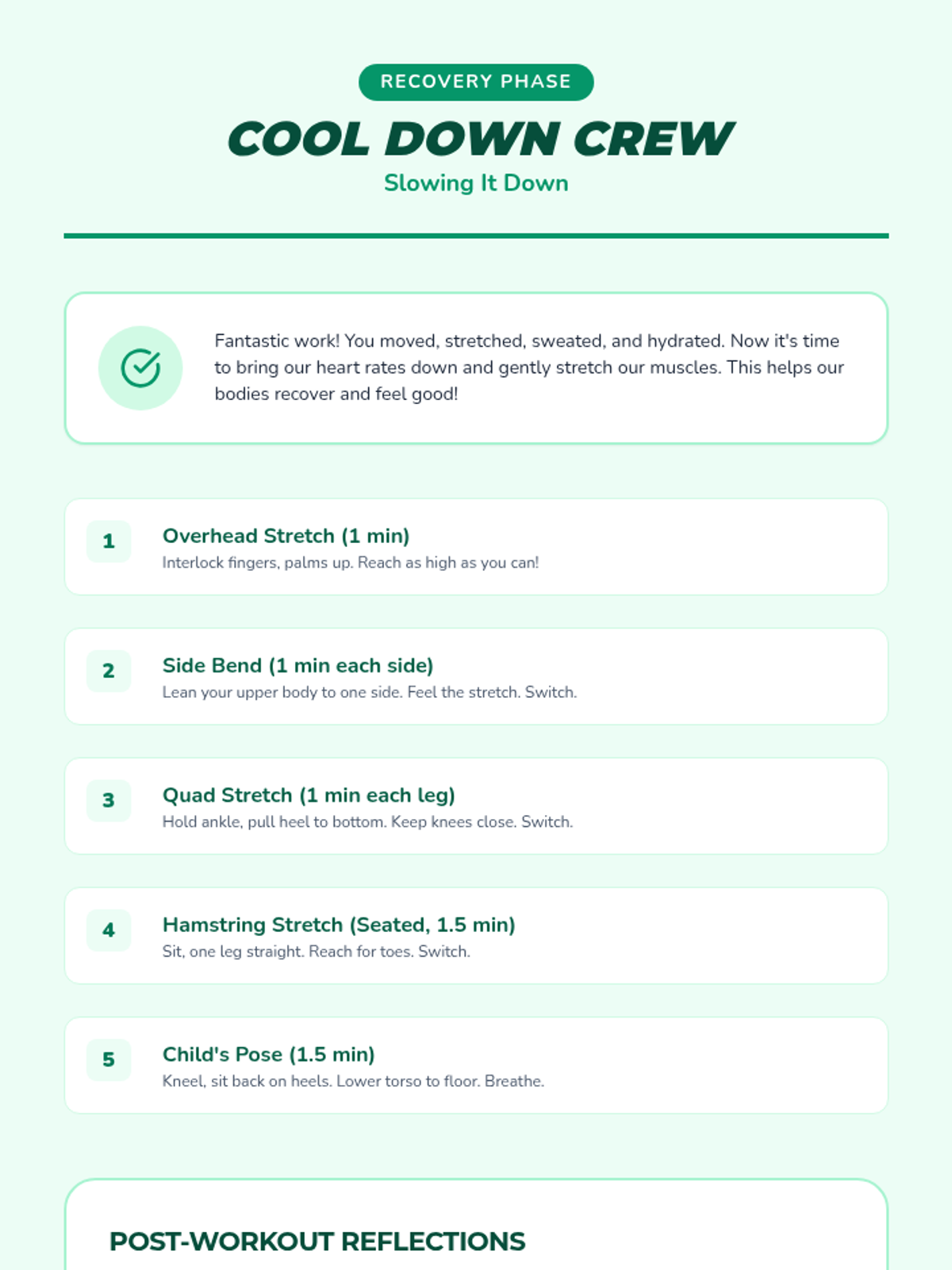
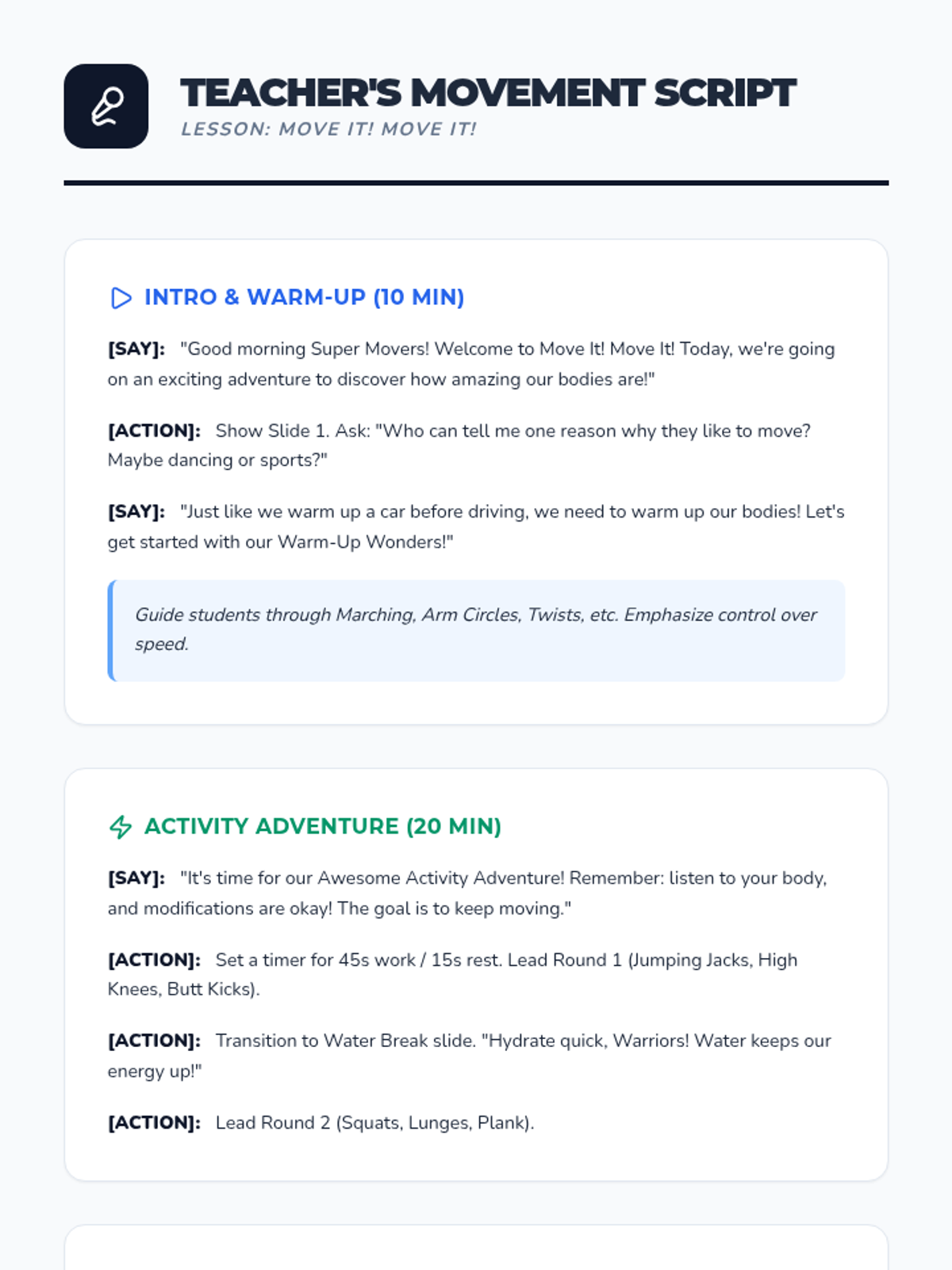
A 5th-grade health and PE sequence focused on injury prevention through physiological understanding, dynamic stretching, body mechanics, and self-monitoring. Students progress from learning why the body needs preparation to designing their own sport-specific routines.
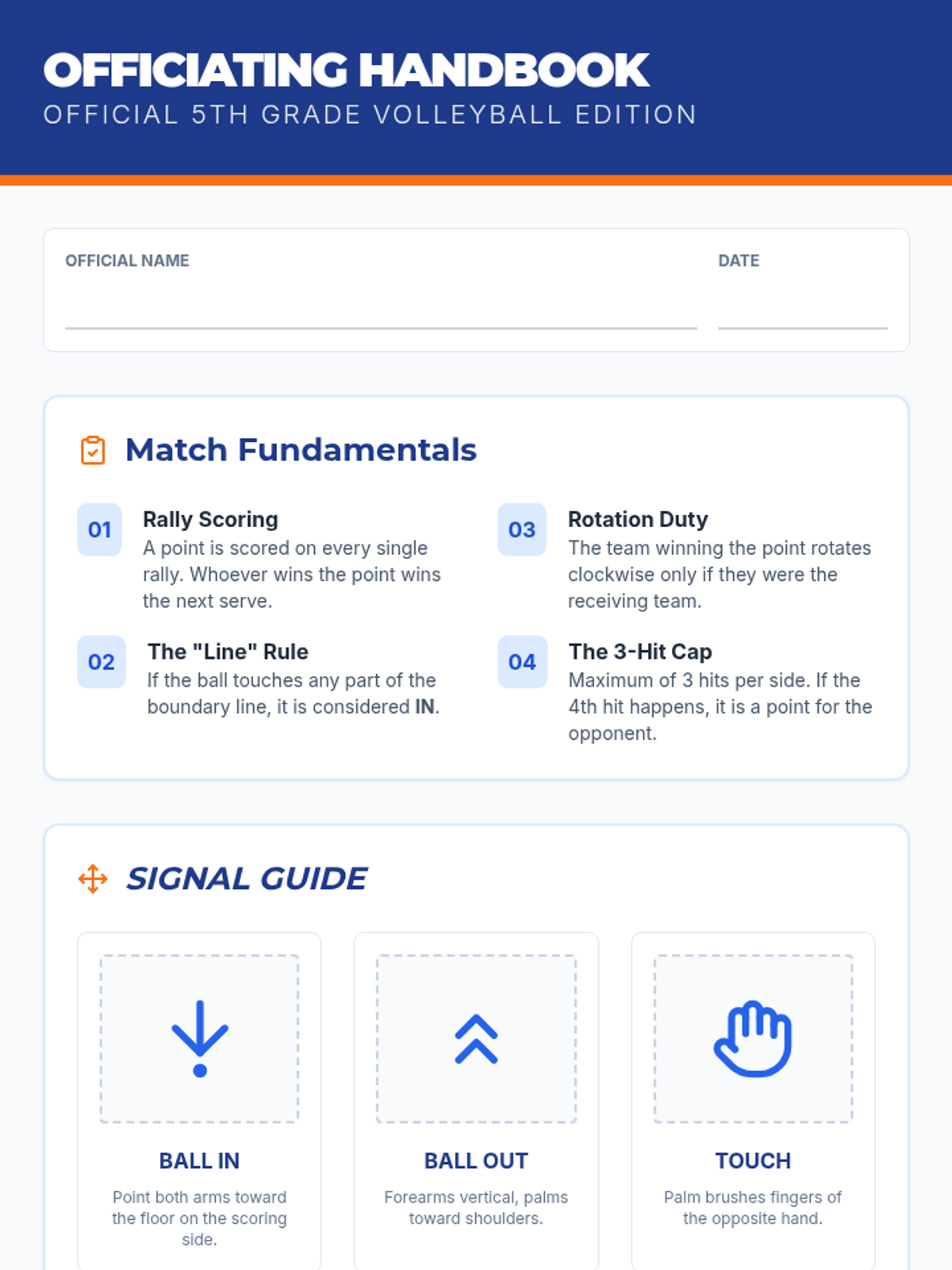
A culminating volleyball sequence for 5th grade students focused on modified tournament play, officiating roles, and tactical team strategy. Students learn the ecosystem of the sport beyond just playing, emphasizing fair play and rule adherence.
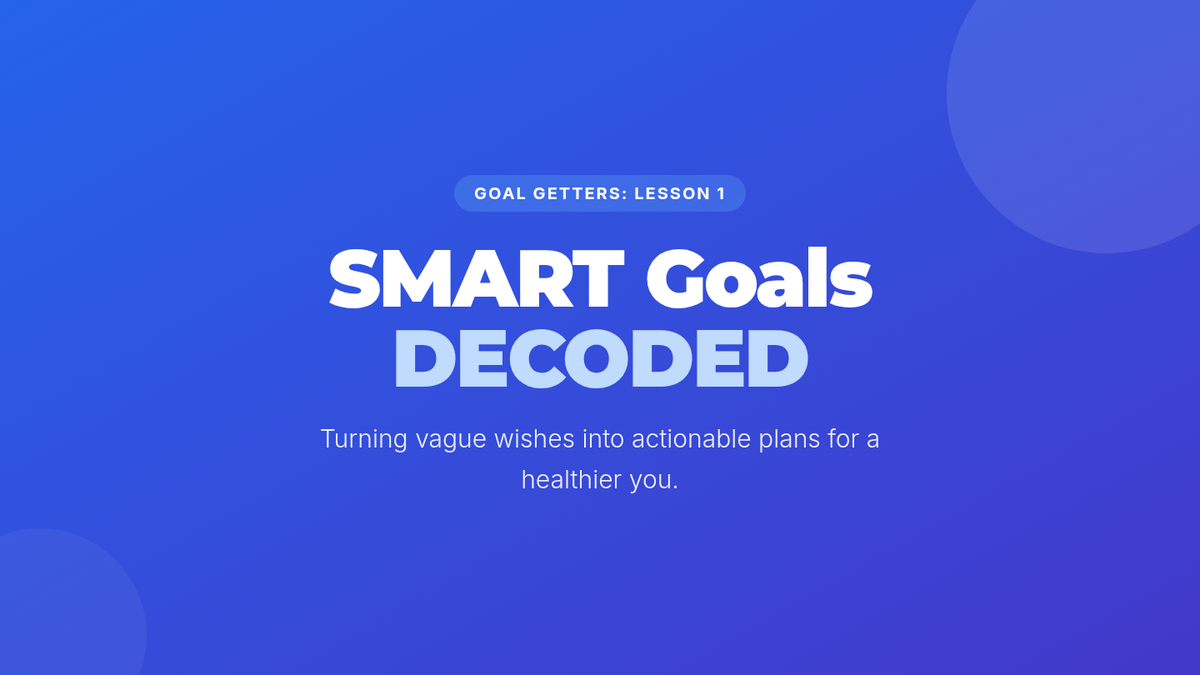
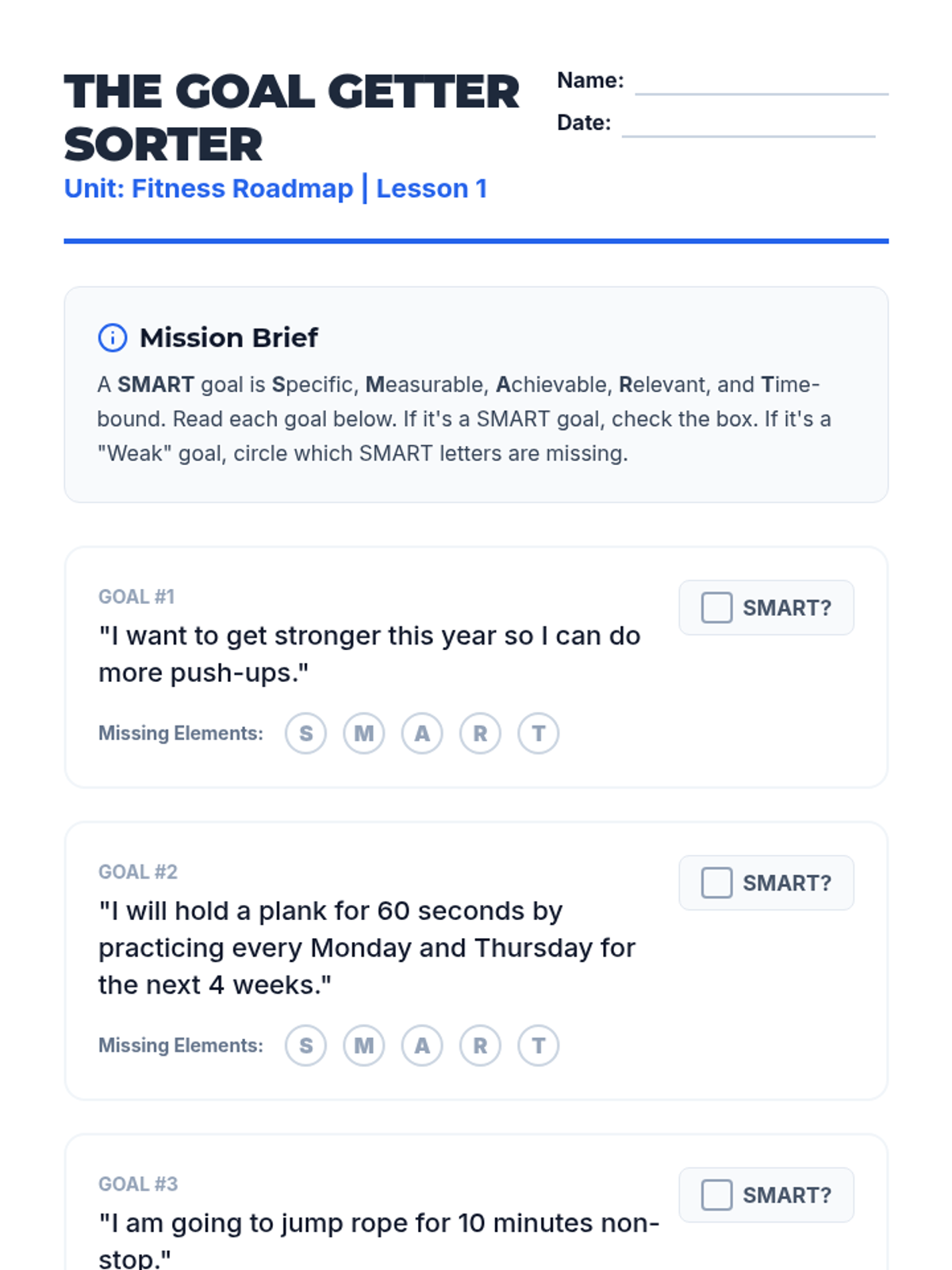
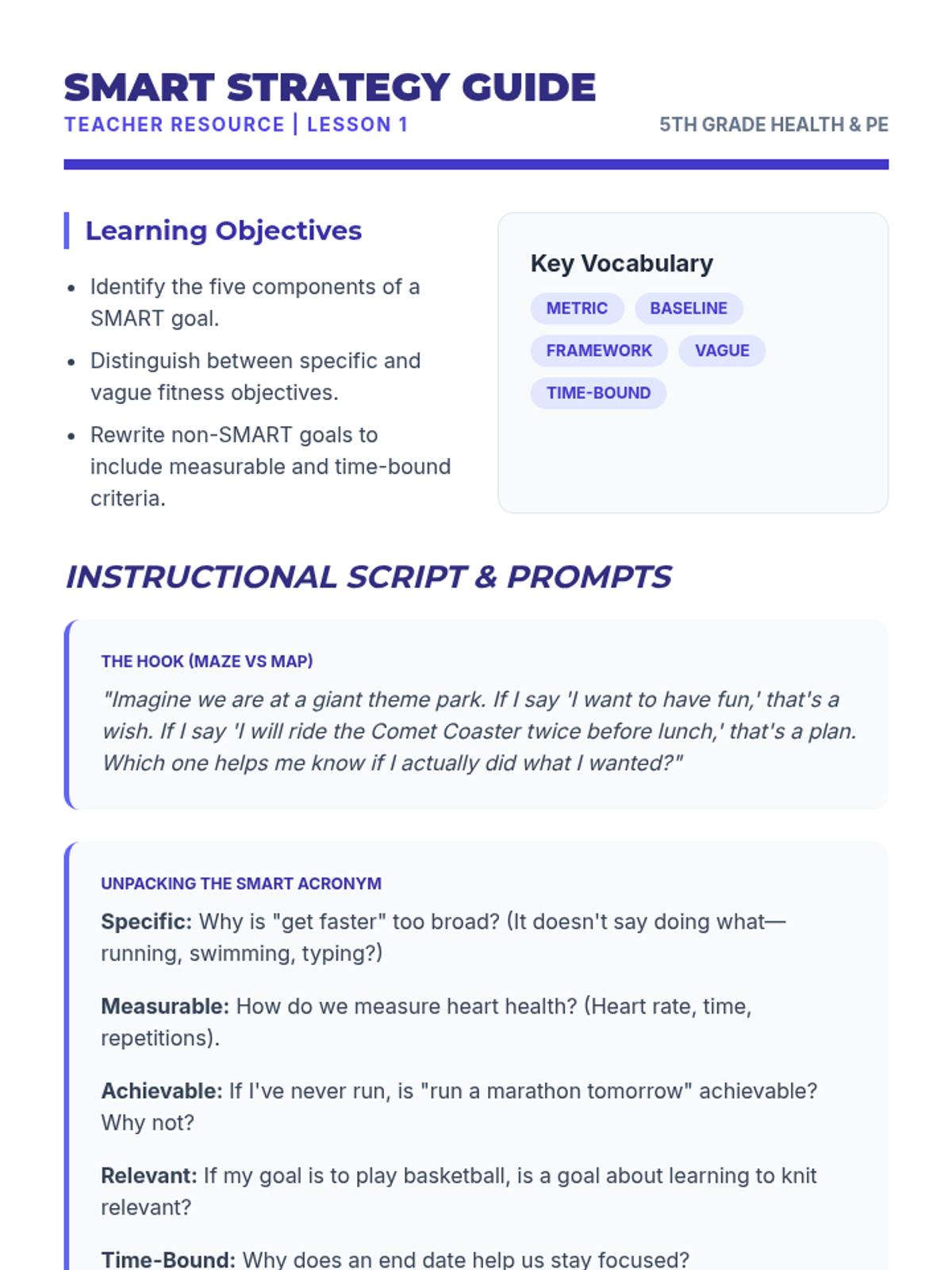
This sequence guides 5th-grade students through the physiology of exercise, the components of fitness, and the creation of personalized SMART goals to build sustainable physical activity habits. Students investigate their own physiological responses and design a one-week activity plan.
A comprehensive 5th-grade physical education unit that takes students from understanding SMART goals to creating and monitoring a personalized fitness roadmap based on baseline data.
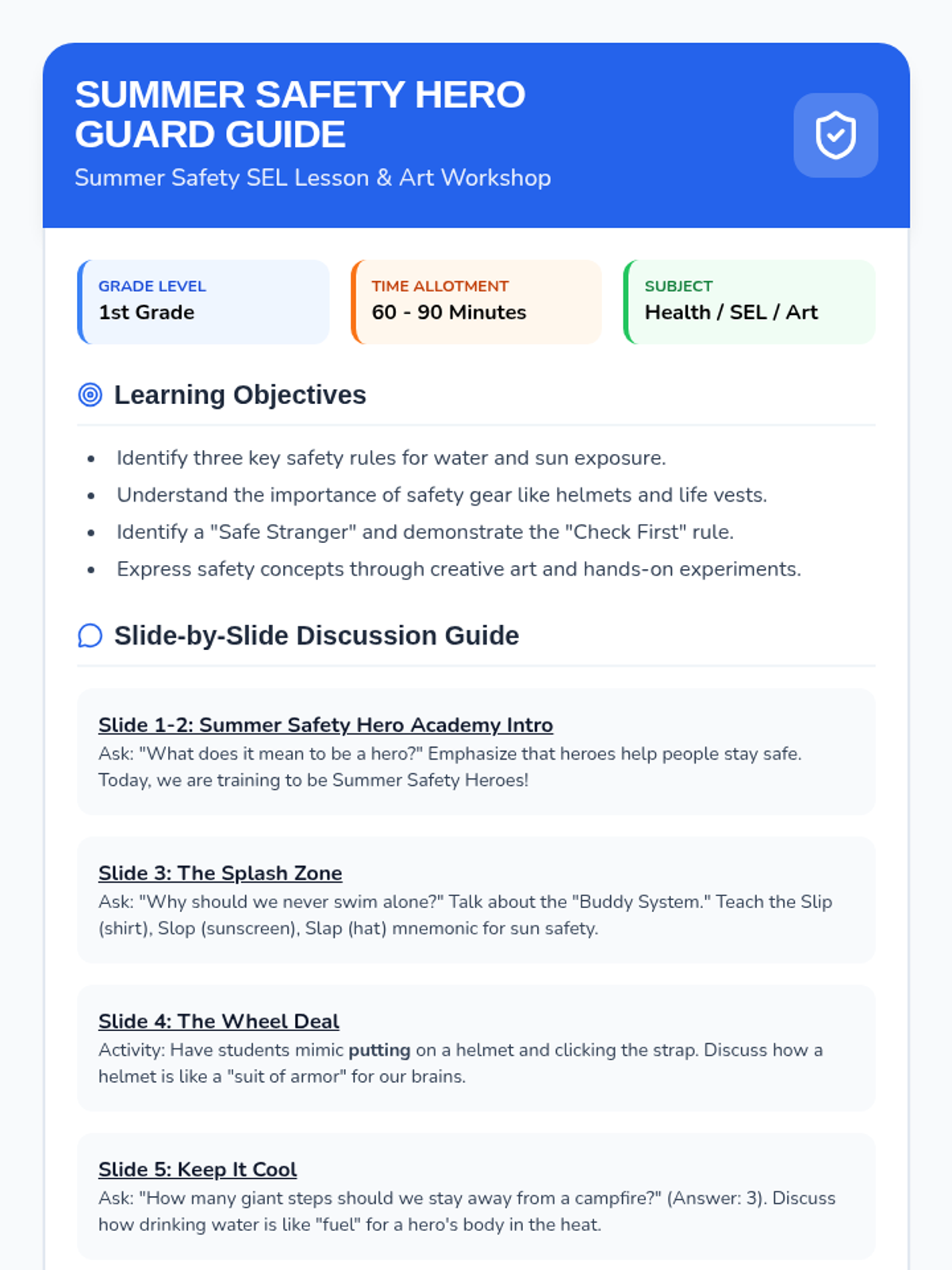
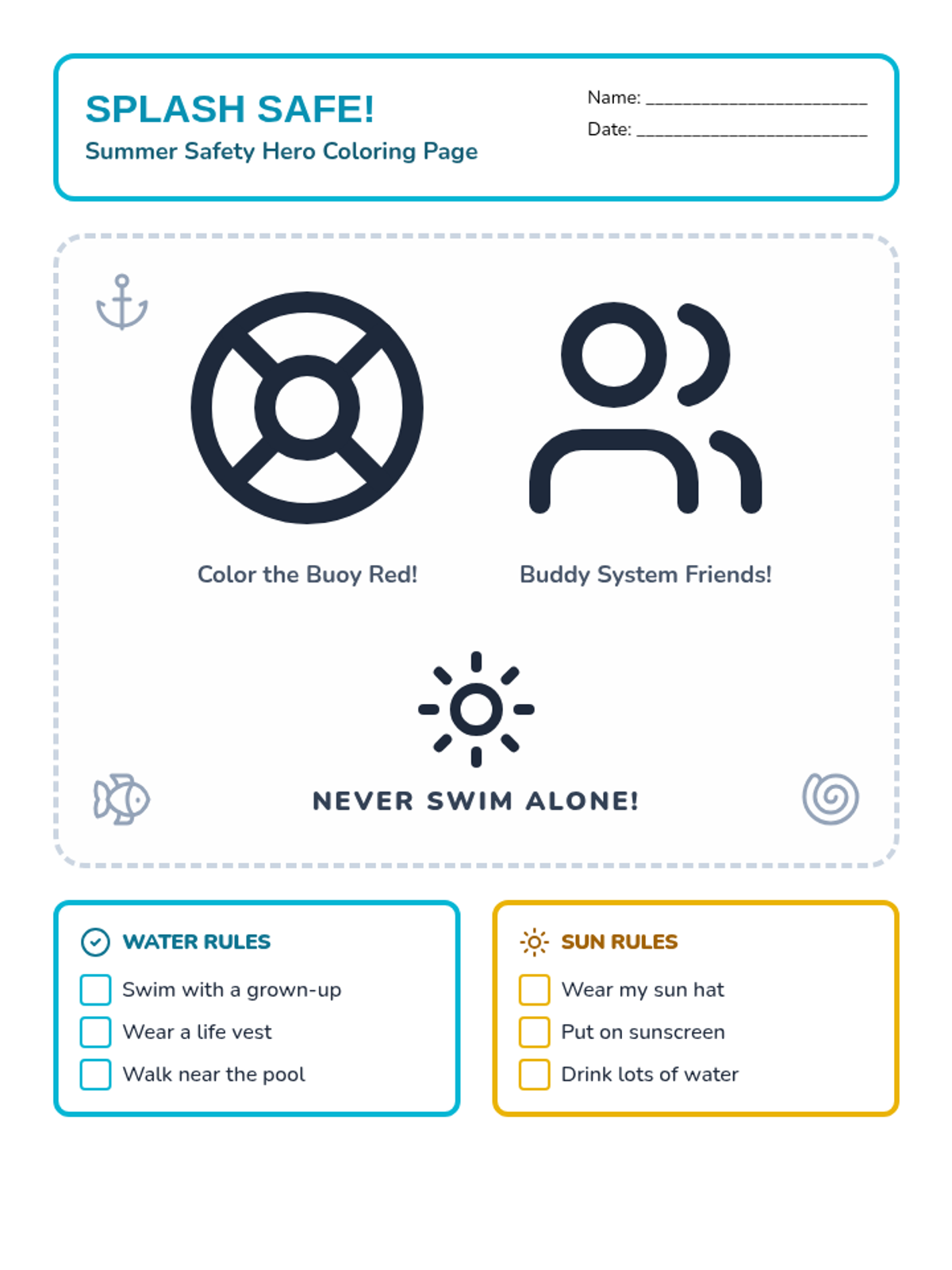
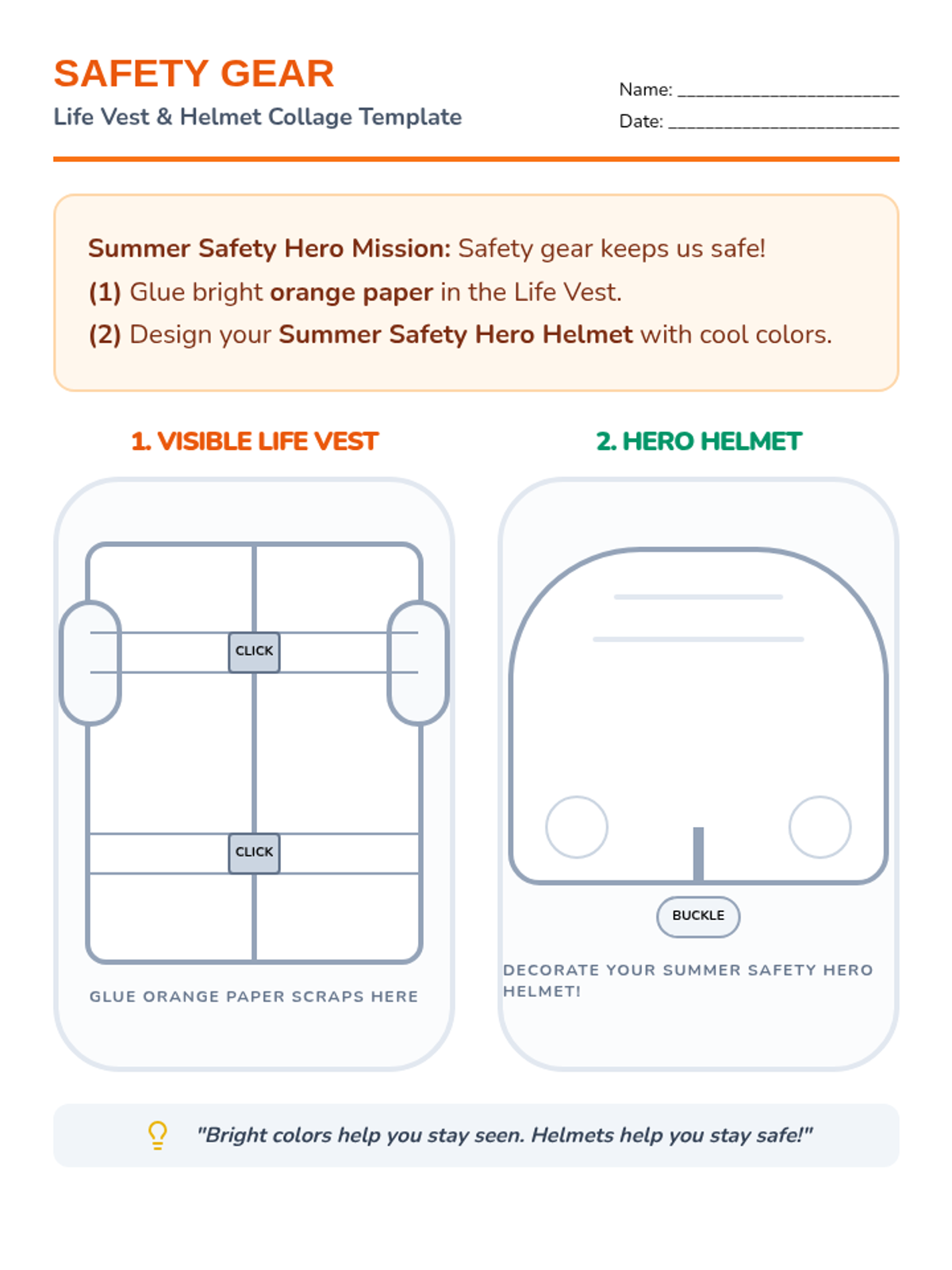
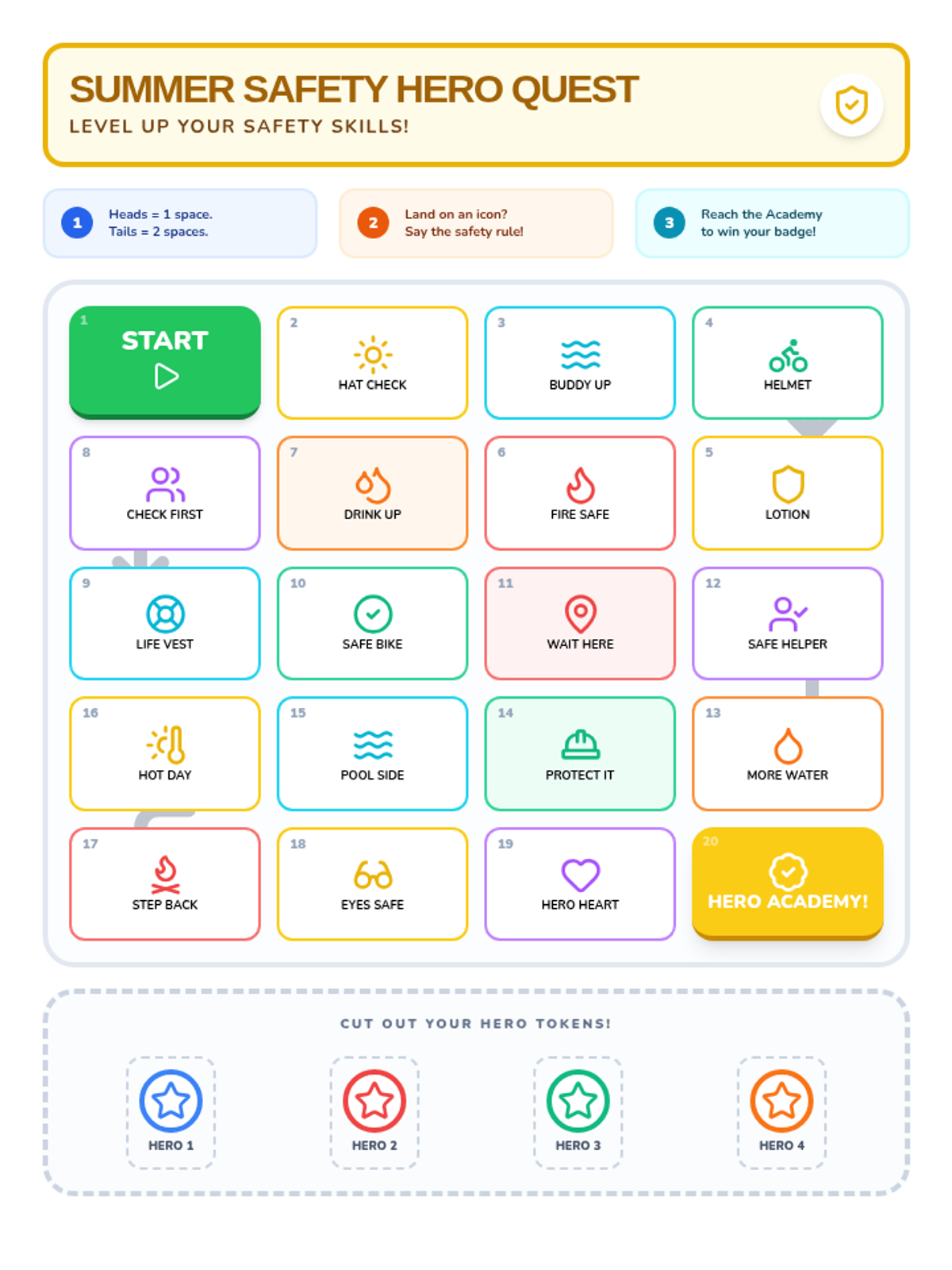
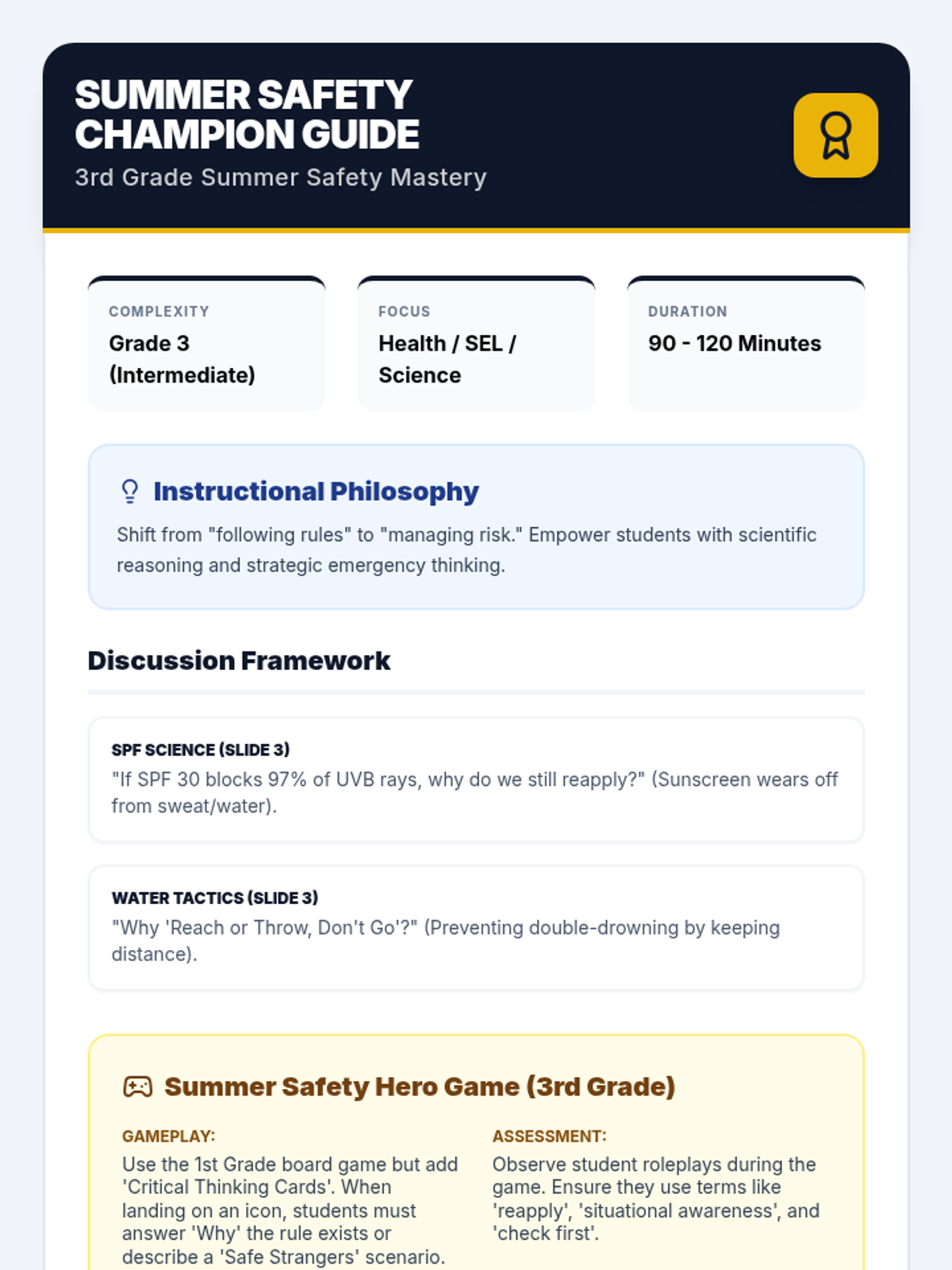
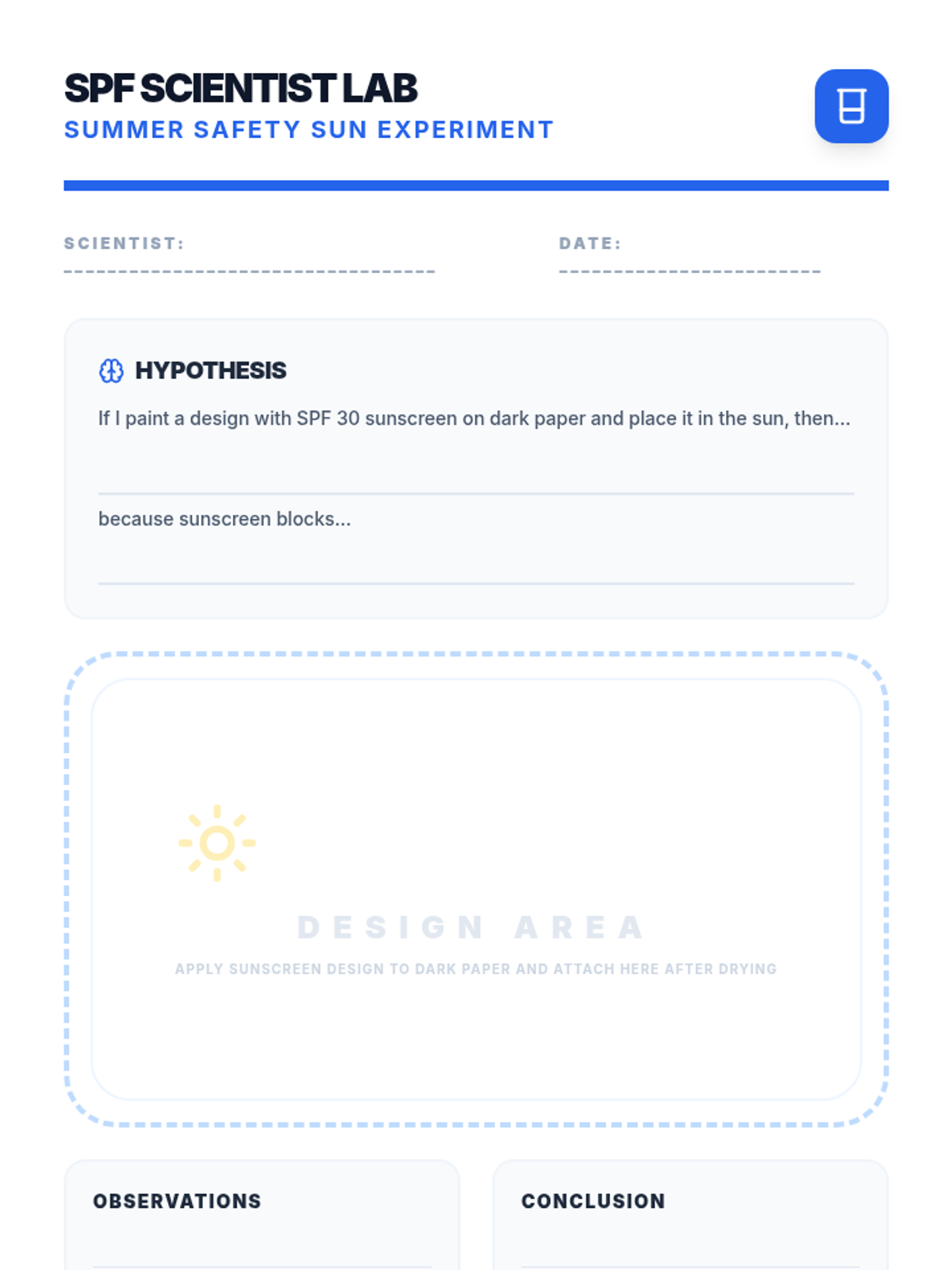
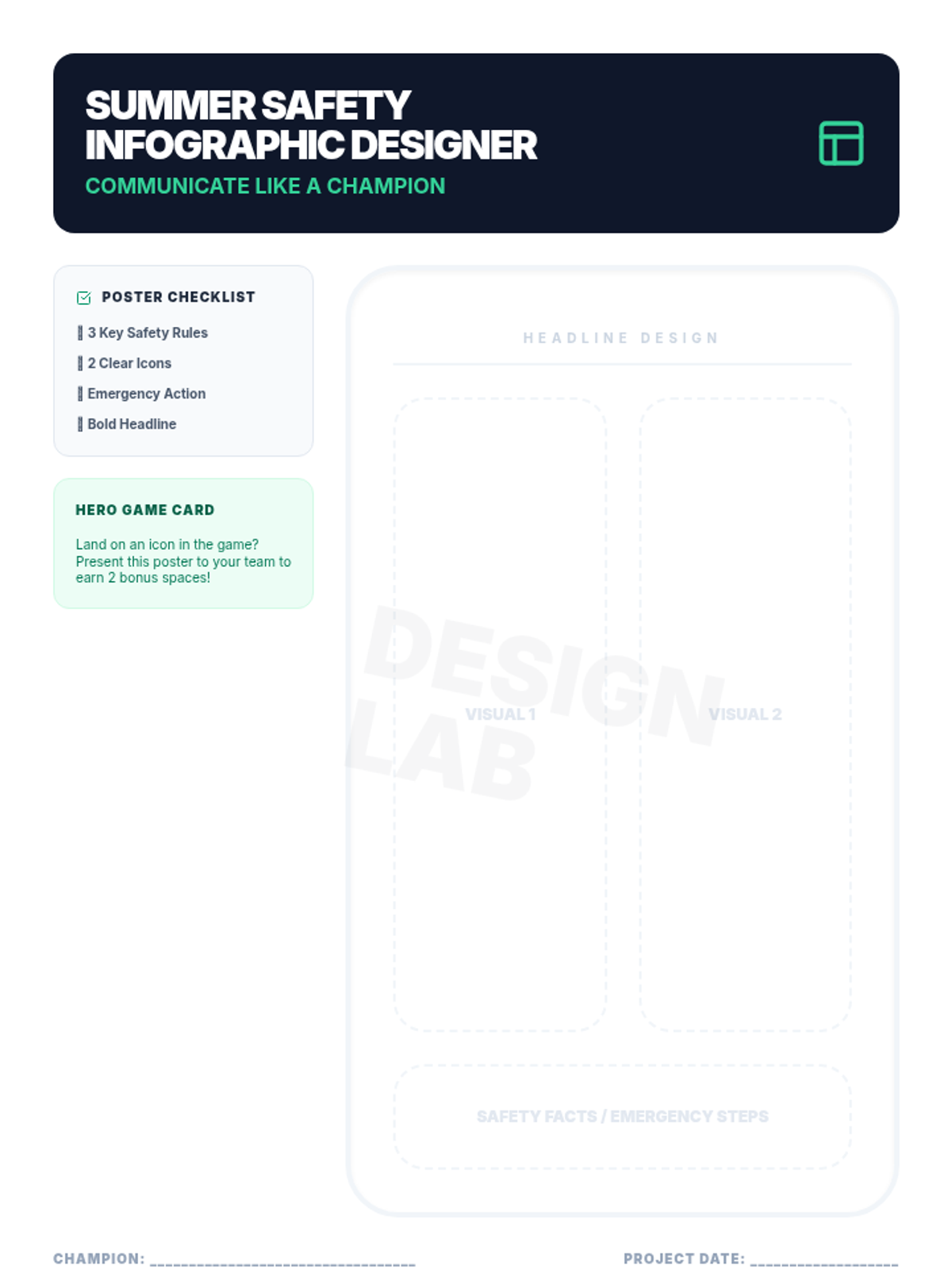
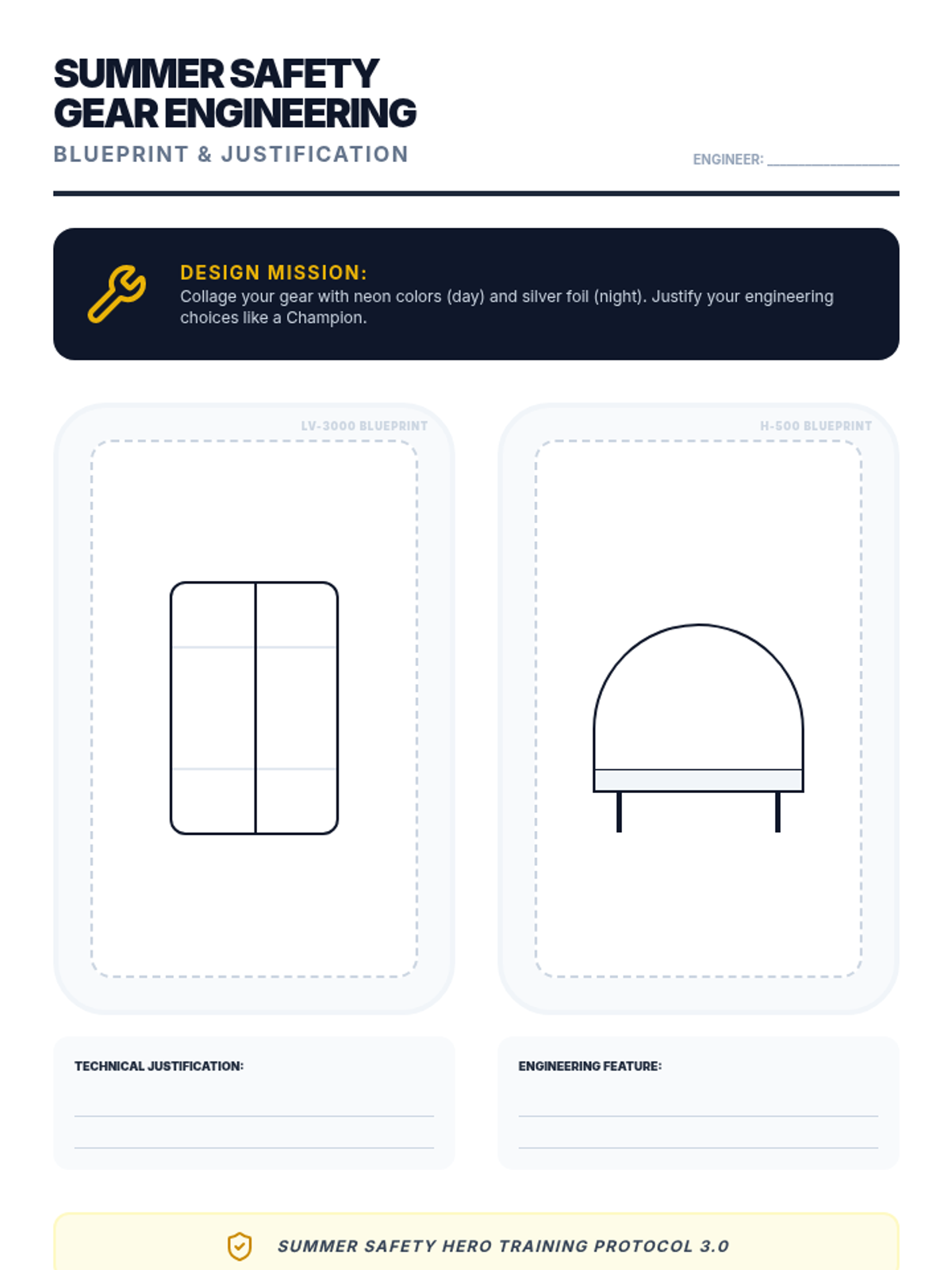
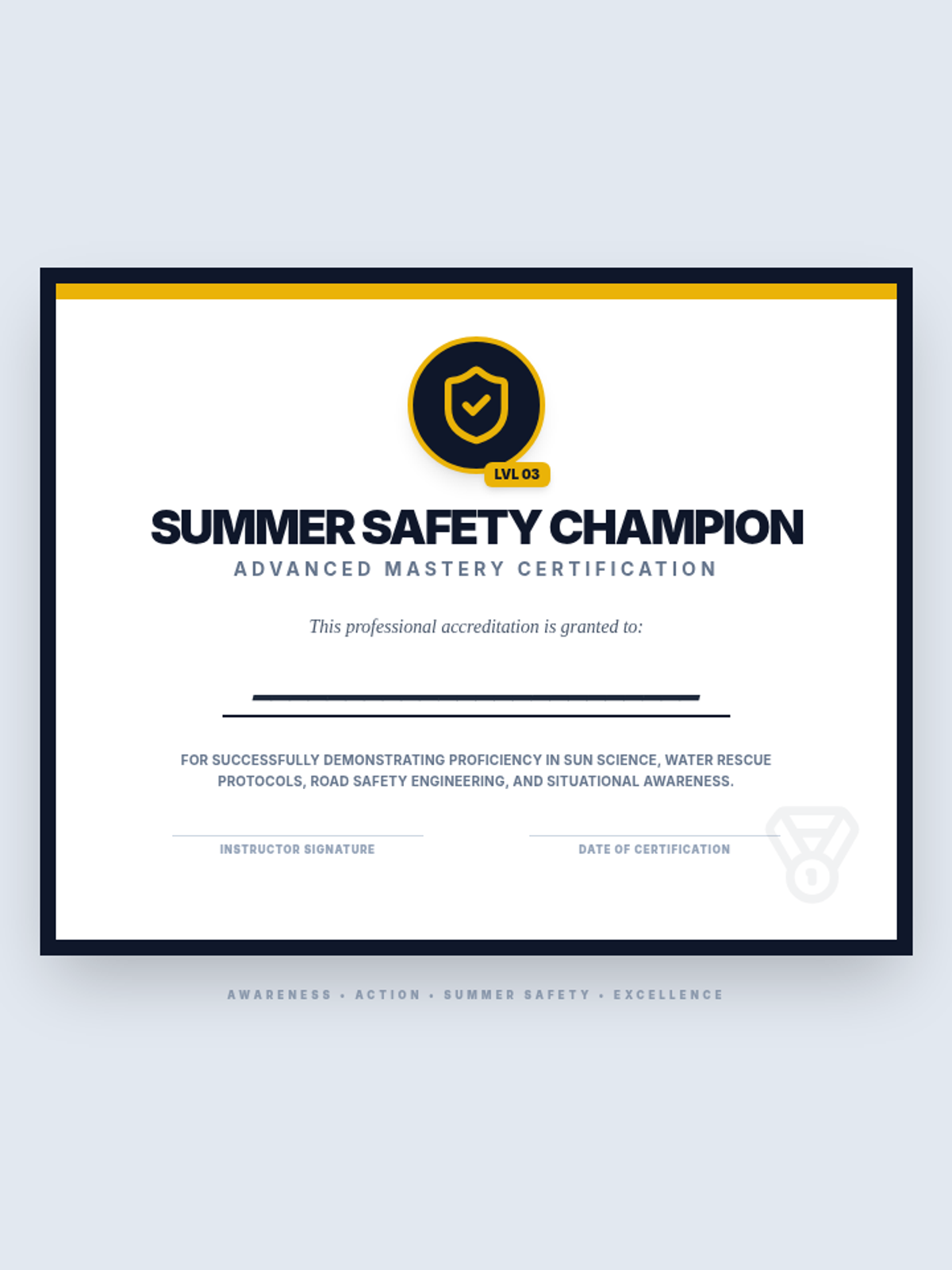
A multi-grade social-emotional learning unit focused on 'Summer Safety Heroes'. Lessons are tailored for different developmental levels, from 1st-grade foundations to 3rd-grade scientific mastery and risk management.
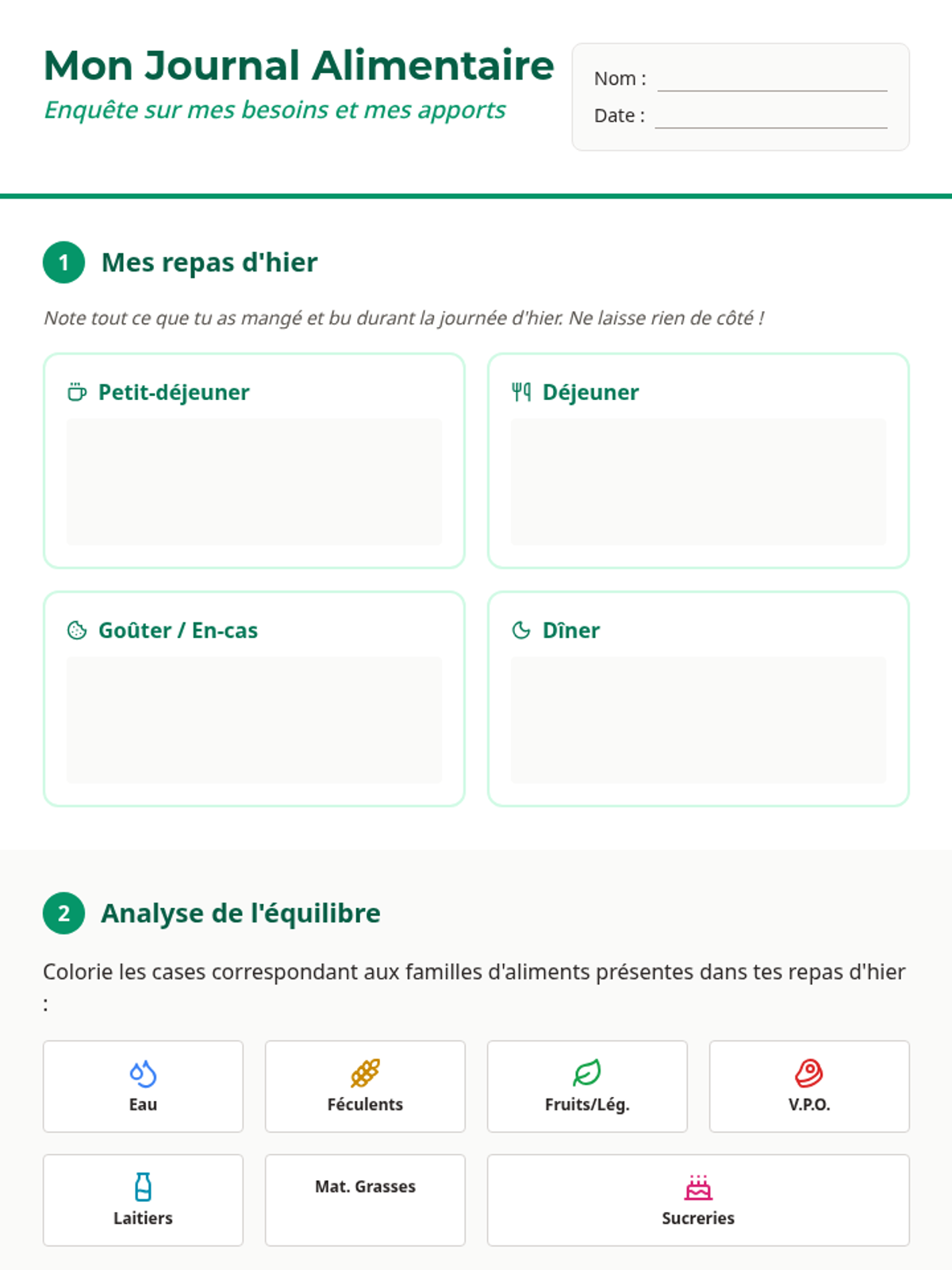
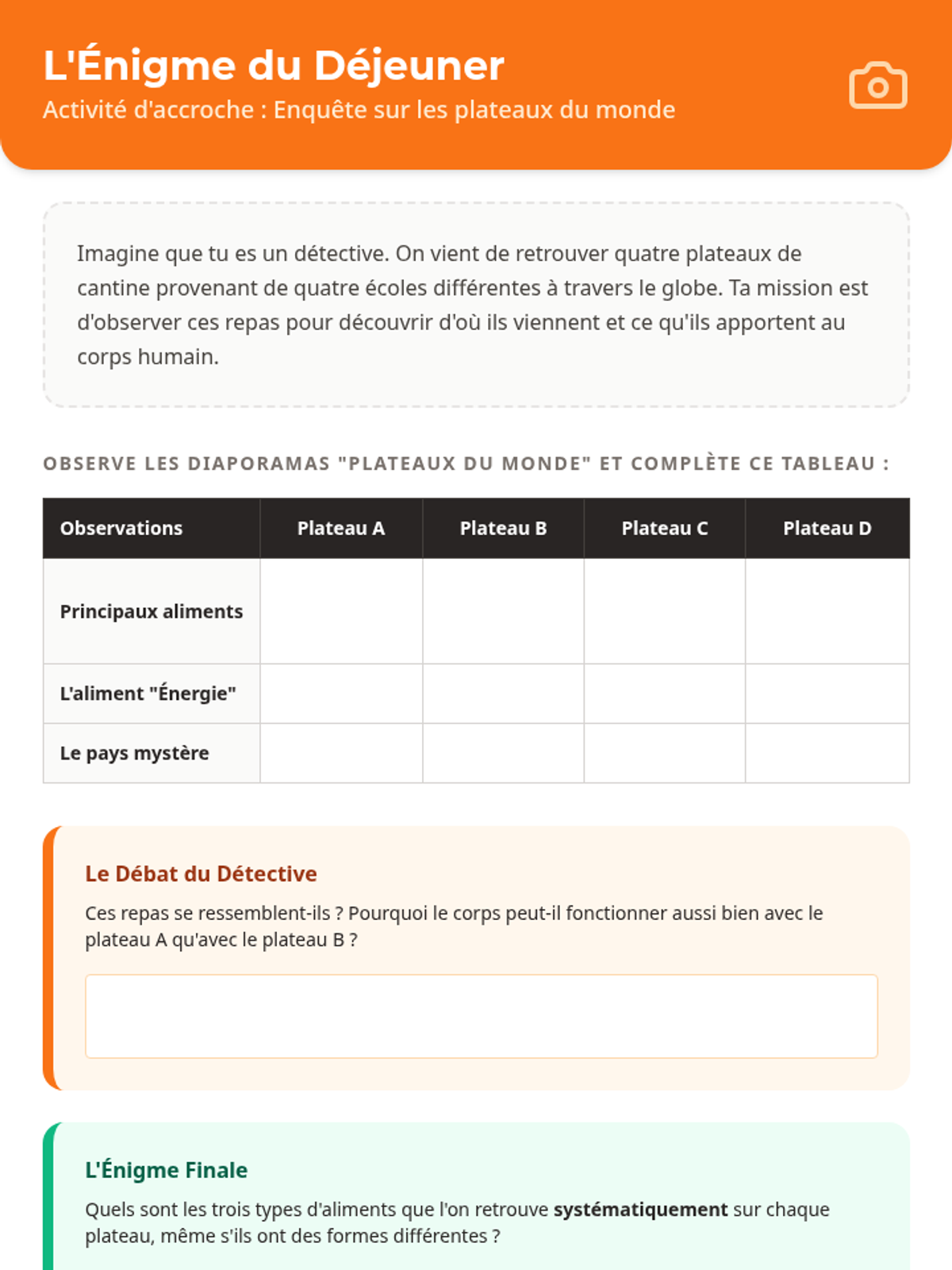
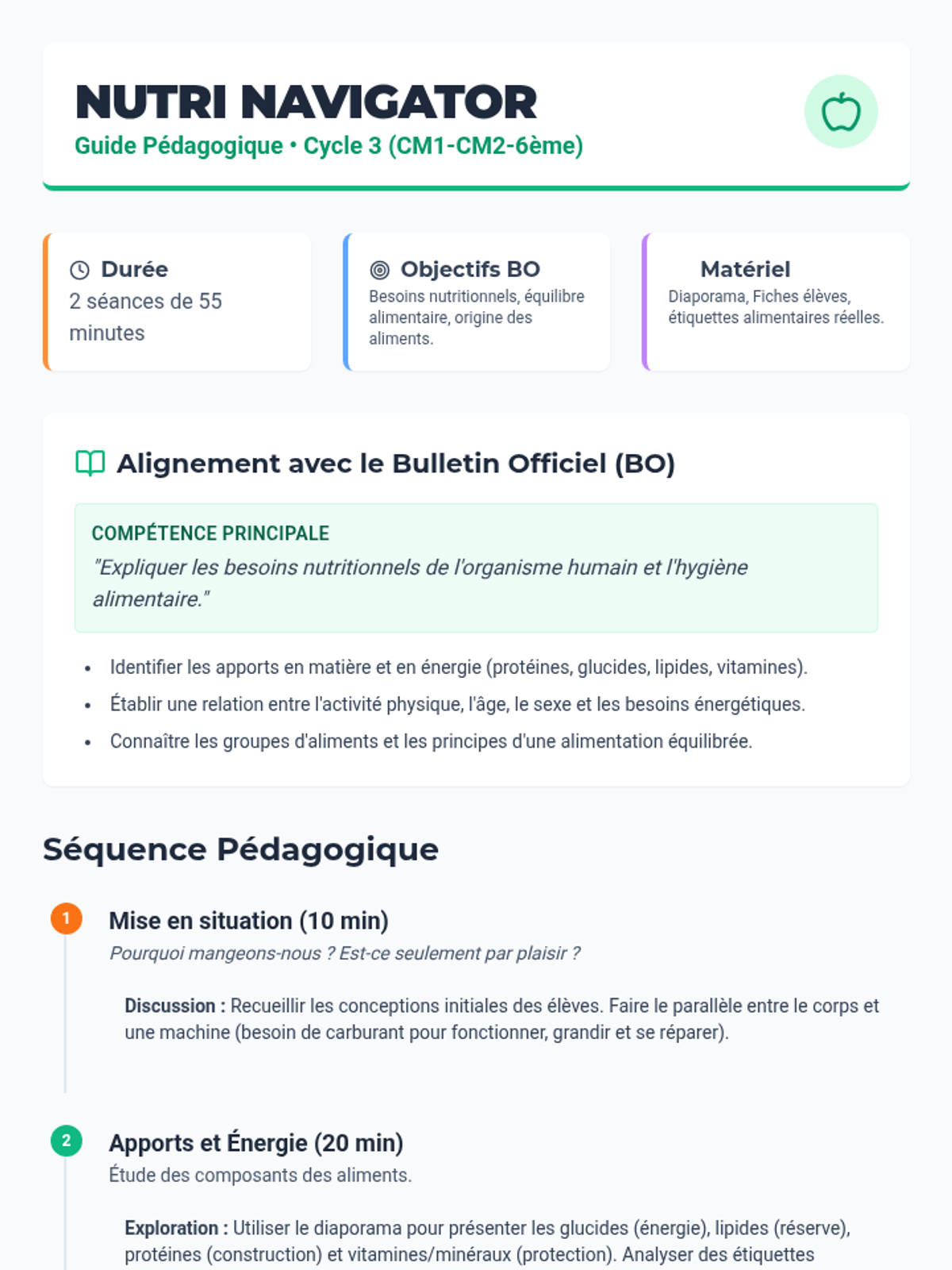
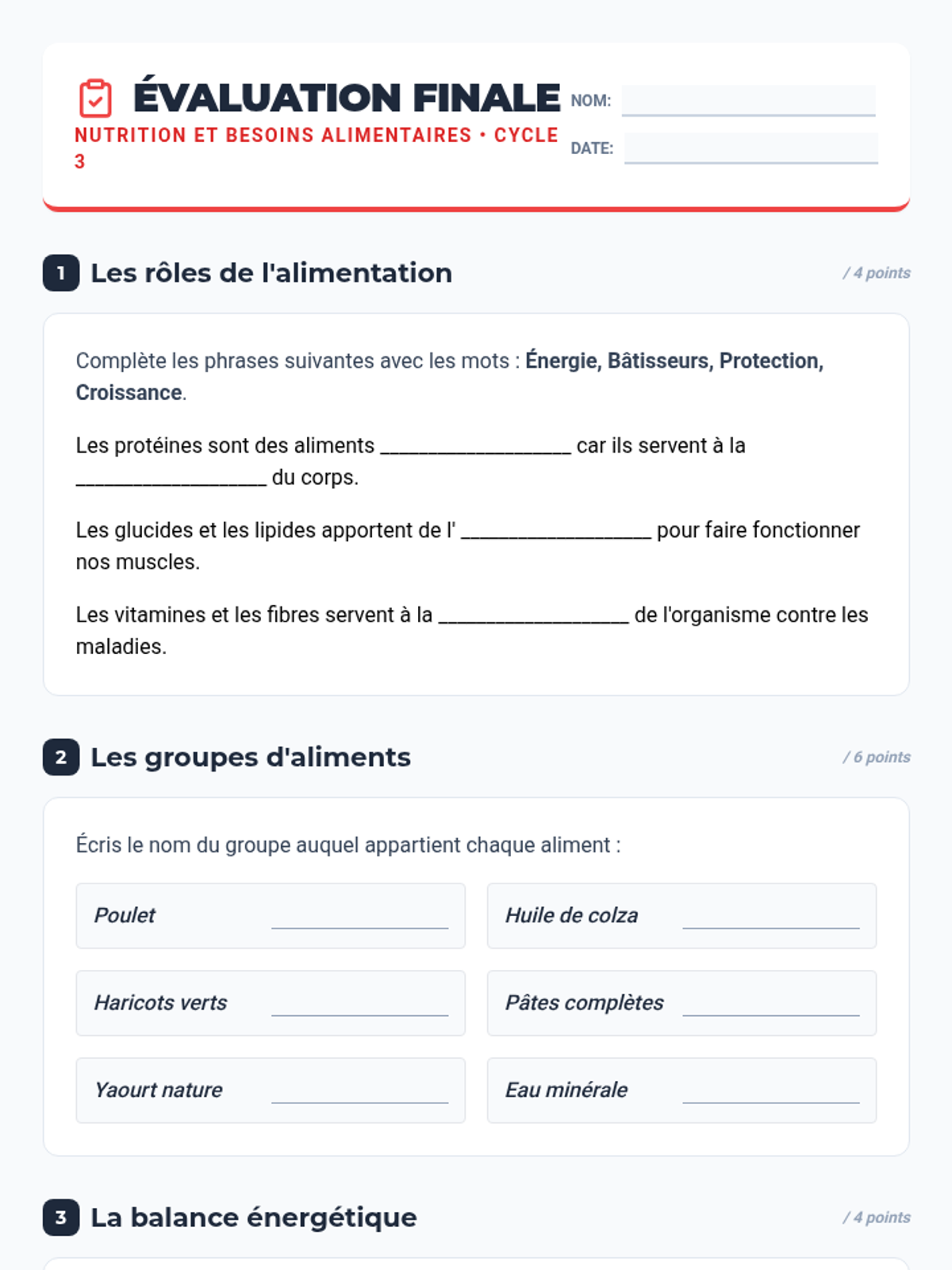
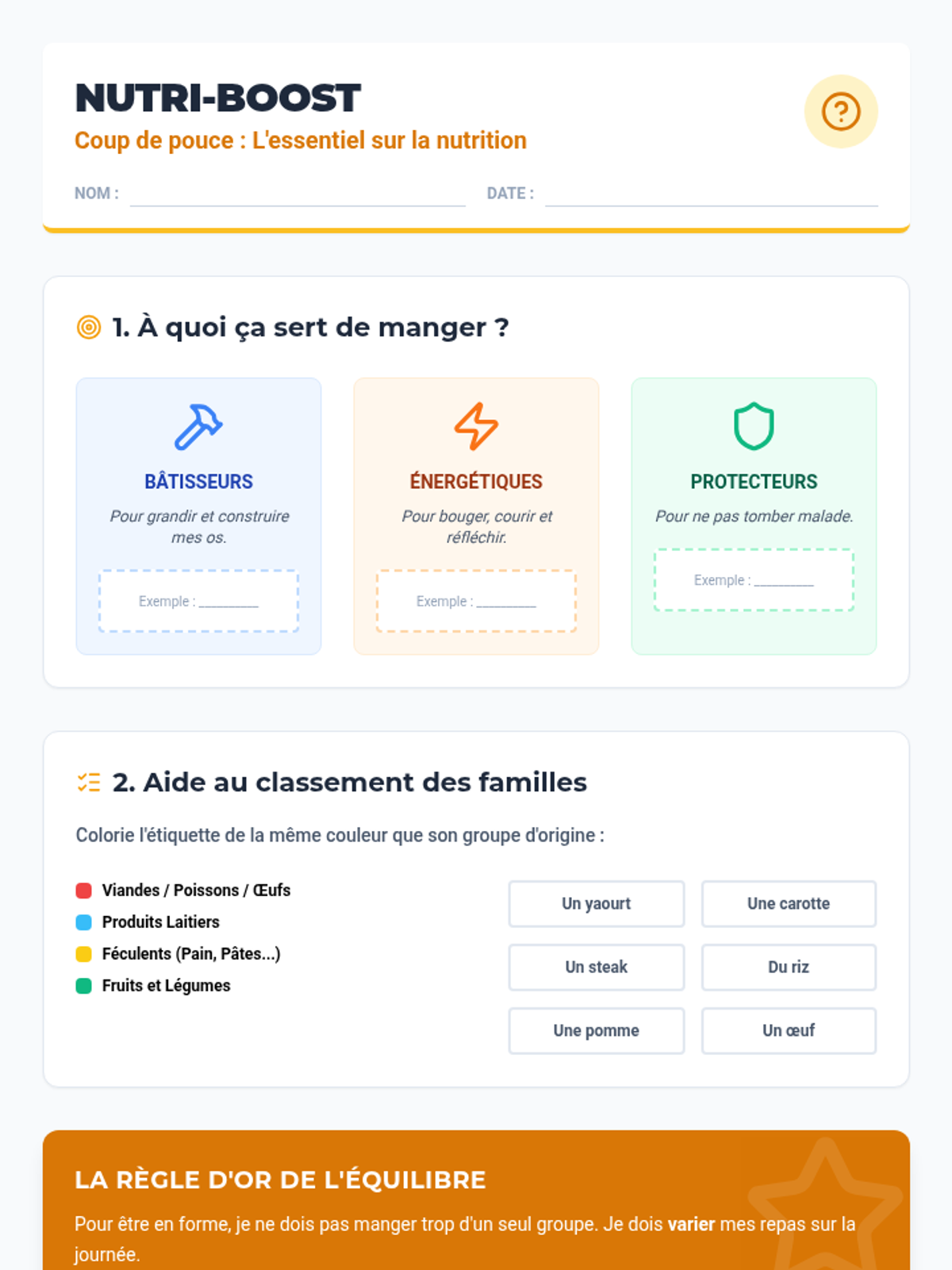
Une séquence complète sur les besoins nutritionnels humains, explorant l'équilibre alimentaire, l'influence des cultures mondiales sur l'alimentation et les modes de production durables.
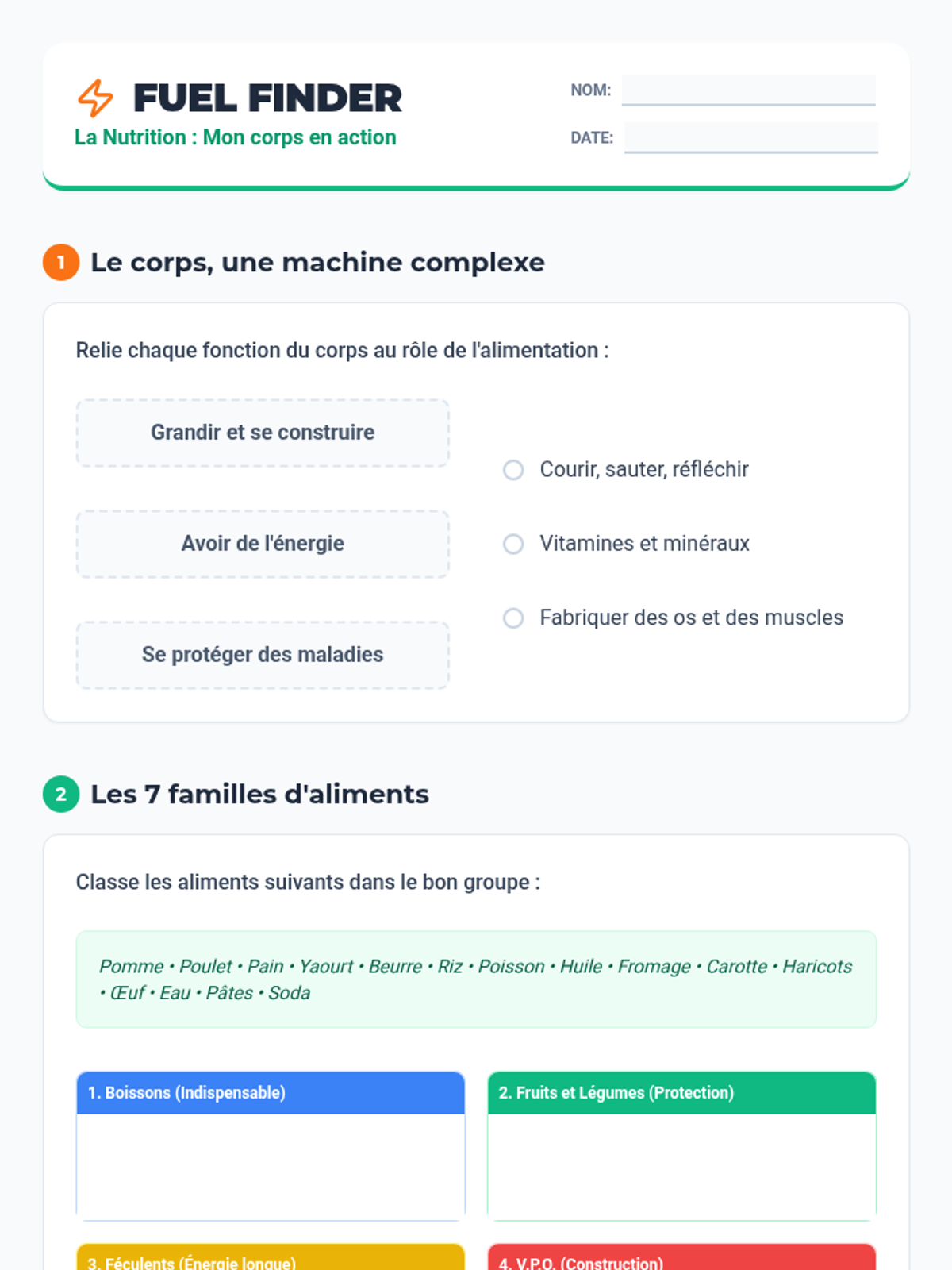
Unité complète sur le fonctionnement du corps humain, se concentrant sur la nutrition, la digestion et l'importance d'une alimentation saine pour la croissance et l'activité.
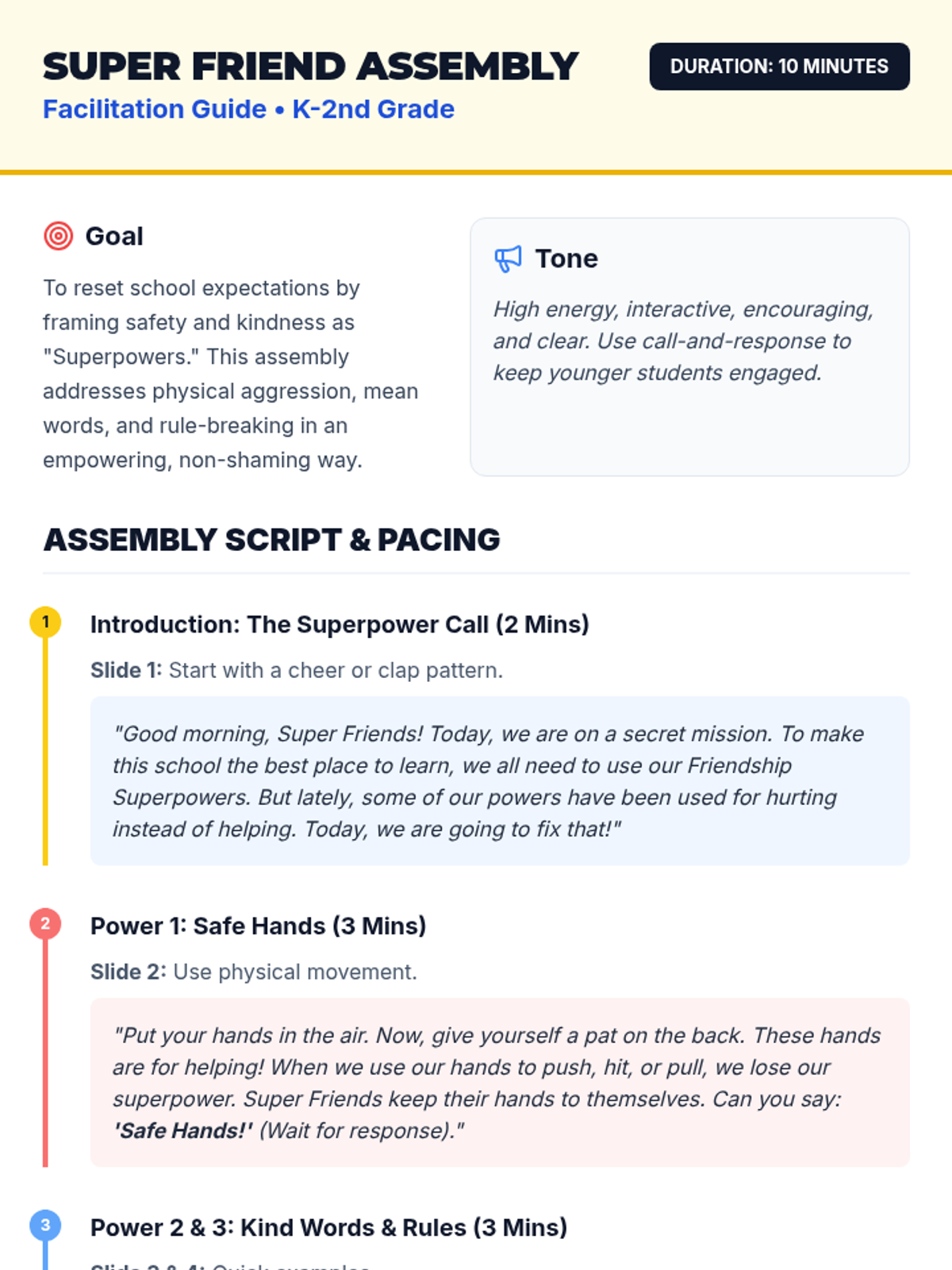
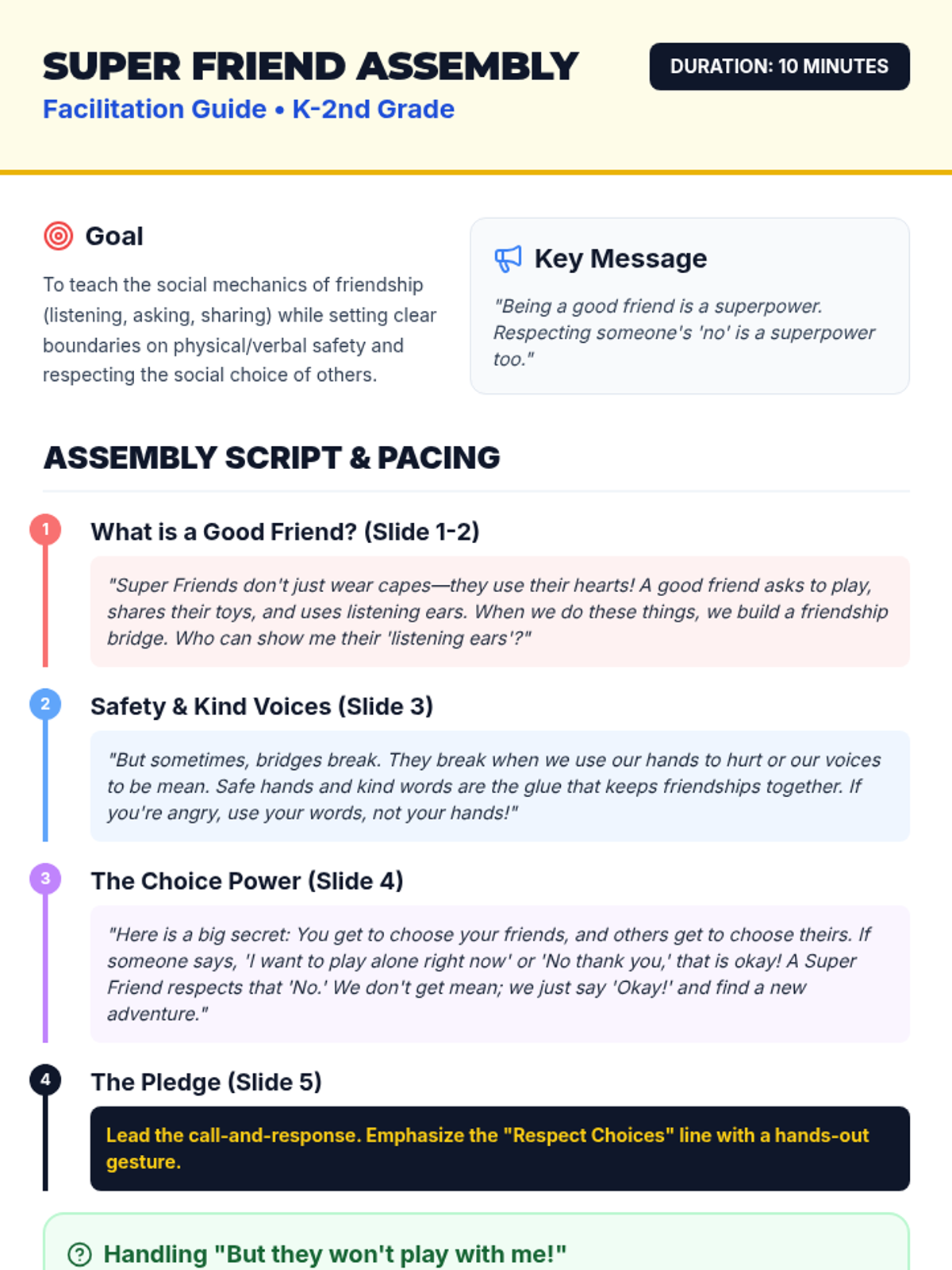
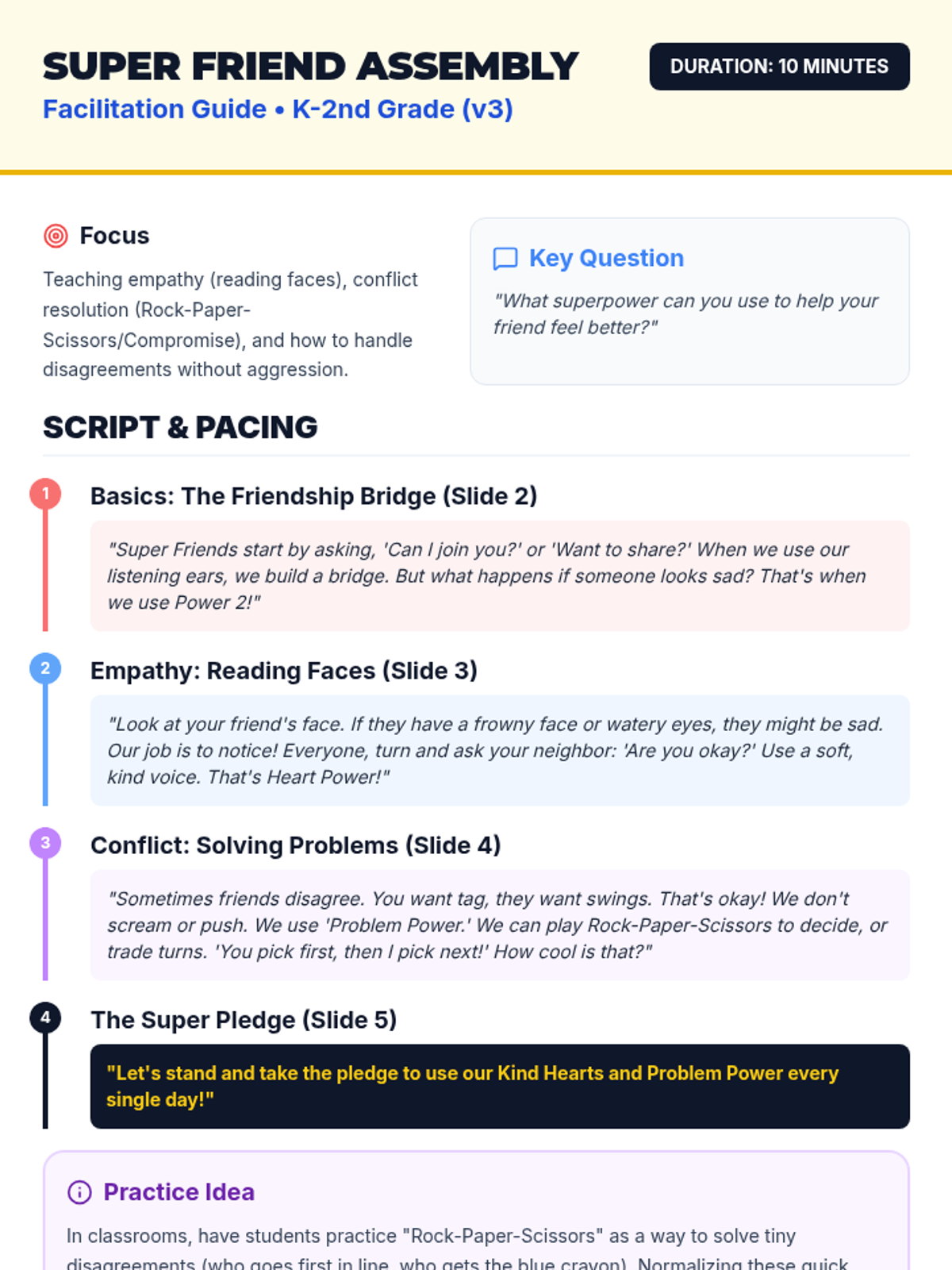
A pair of 10-minute assembly lessons focused on friendship, safety, and community respect for K-2 and 3-5 students, addressing physical and verbal behavior.
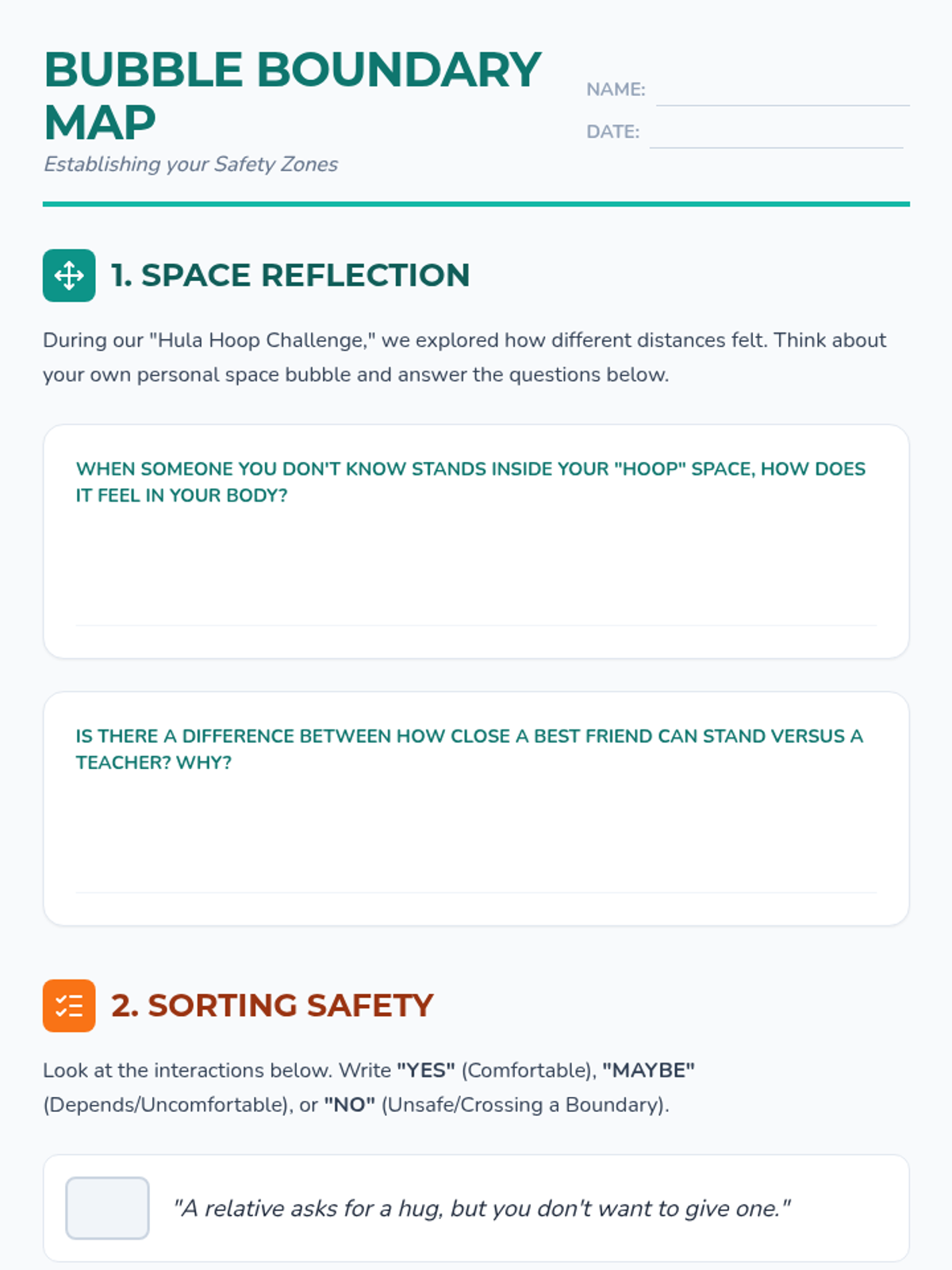
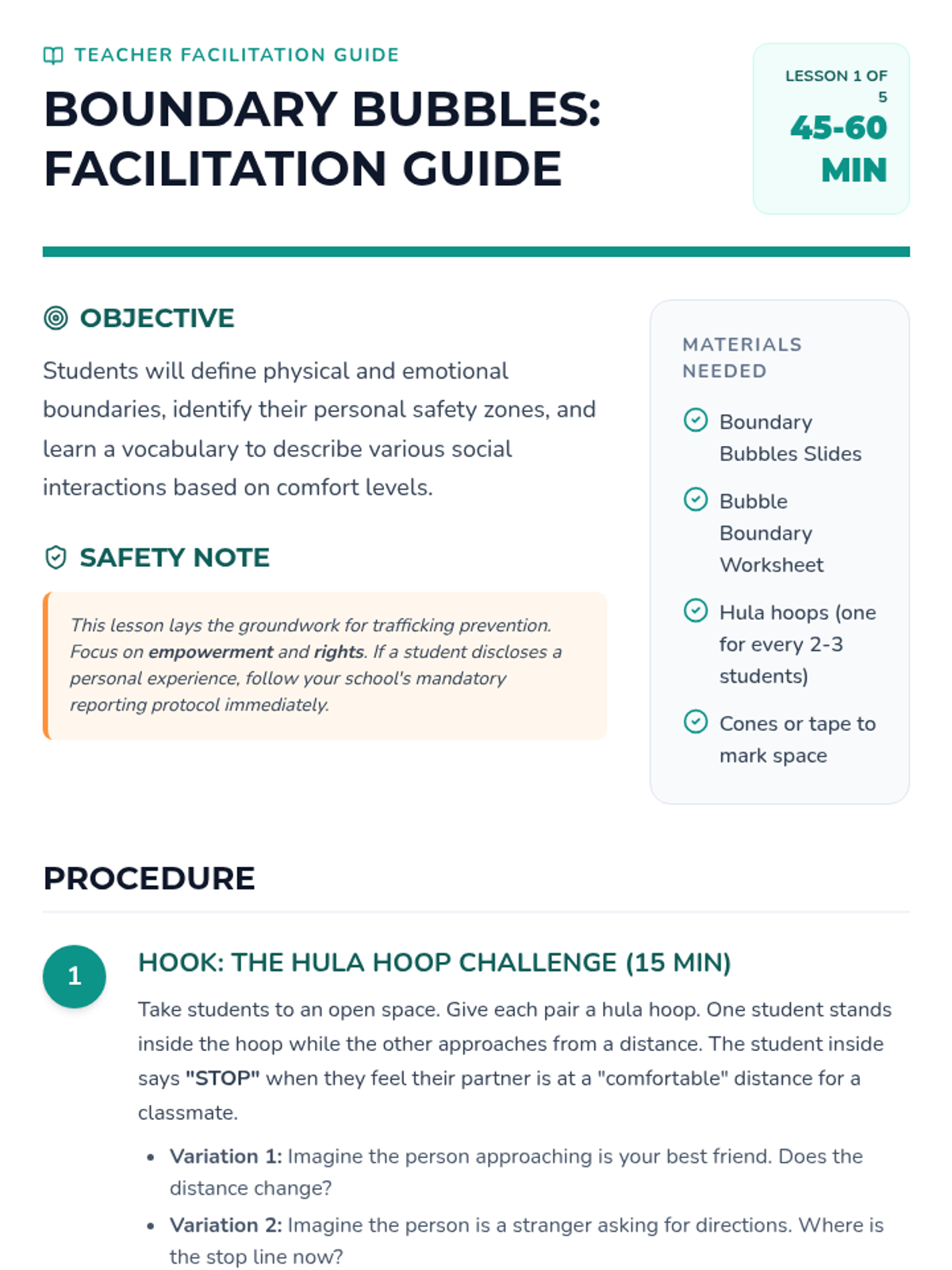
This sequence equips 5th-grade students with foundational safety skills, including defining personal boundaries, recognizing physiological 'Uh-Oh' feelings, distinguishing between secrets and surprises, and developing assertive refusal techniques. By identifying a network of trusted adults, students build the confidence to advocate for their own physical and emotional well-being.
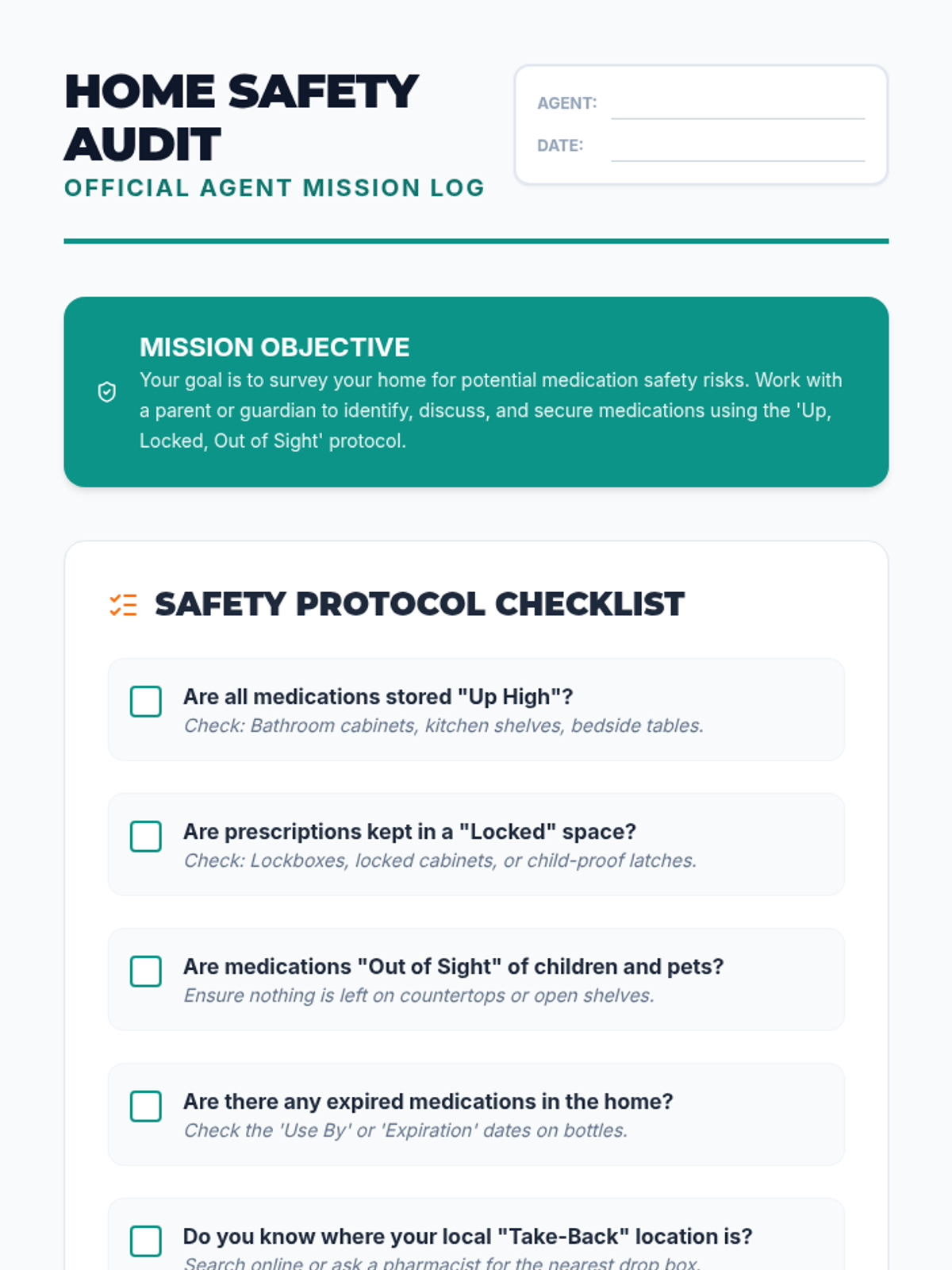
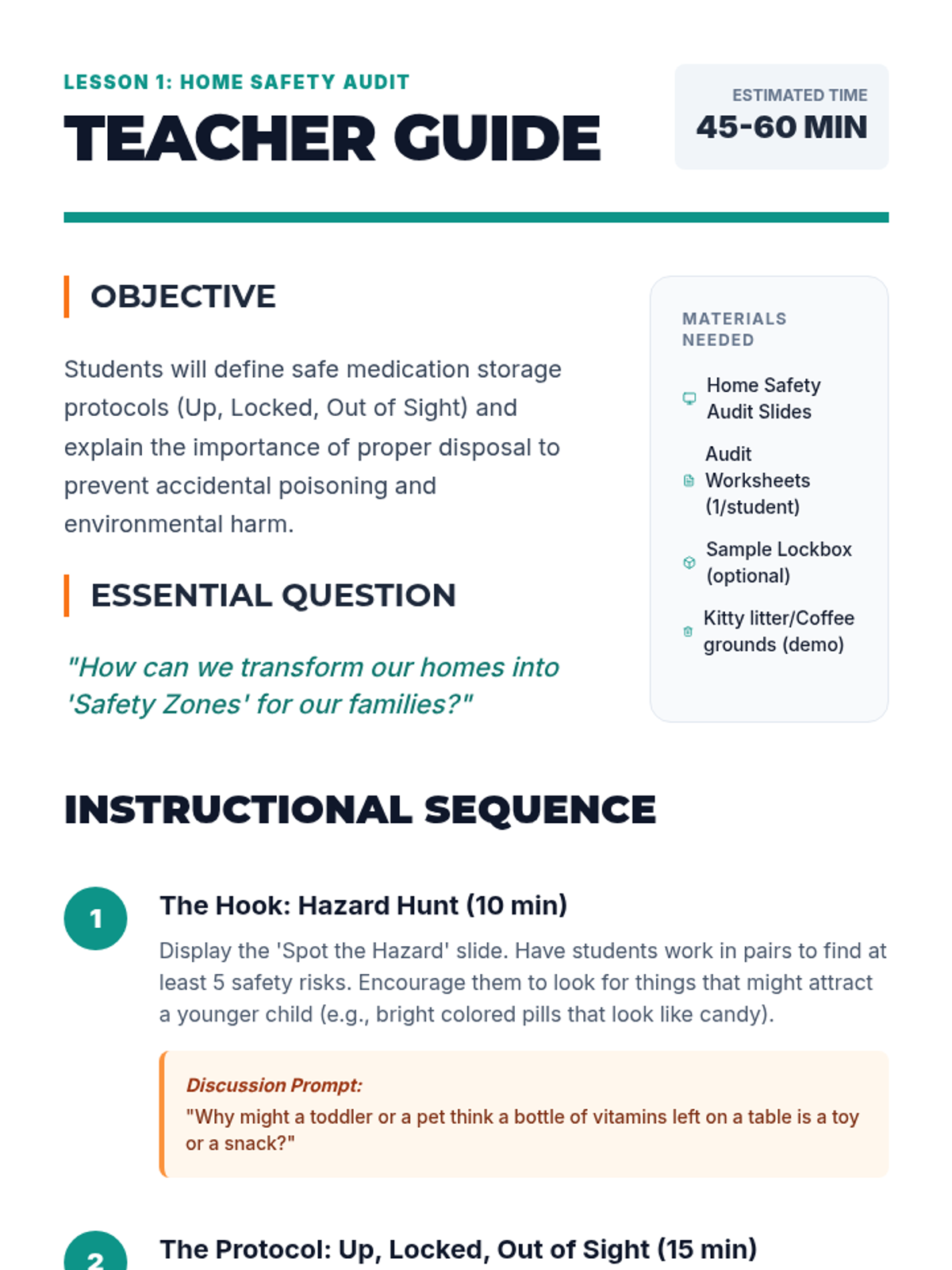
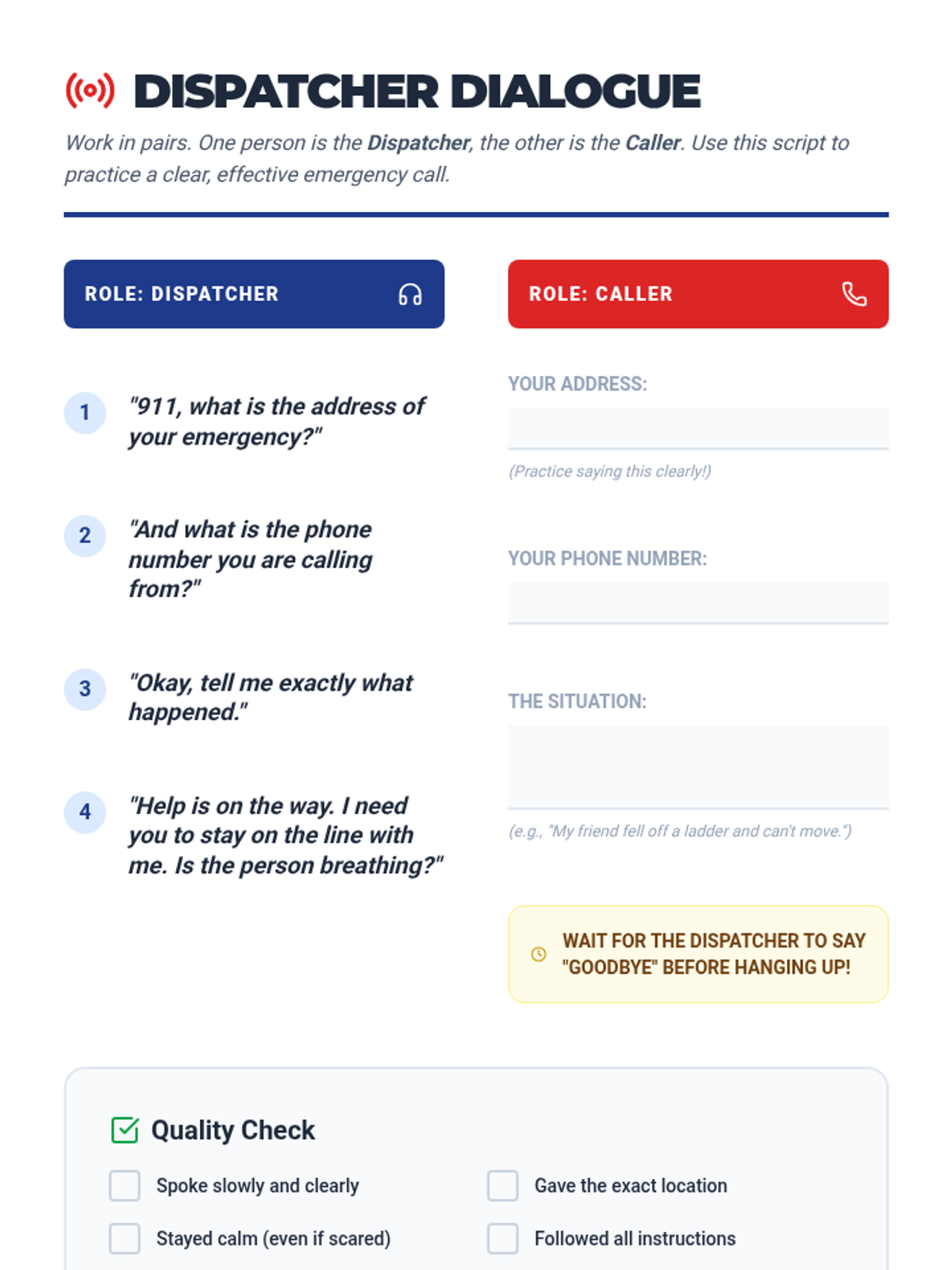
This sequence empowers 5th-grade students to become 'safety agents' in their homes and communities. Through a series of 5 lessons, students learn safe medication storage, identify physical signs of drug emergencies, master emergency communication with 911, build a network of trusted adults, and advocate for community health through a PSA project.
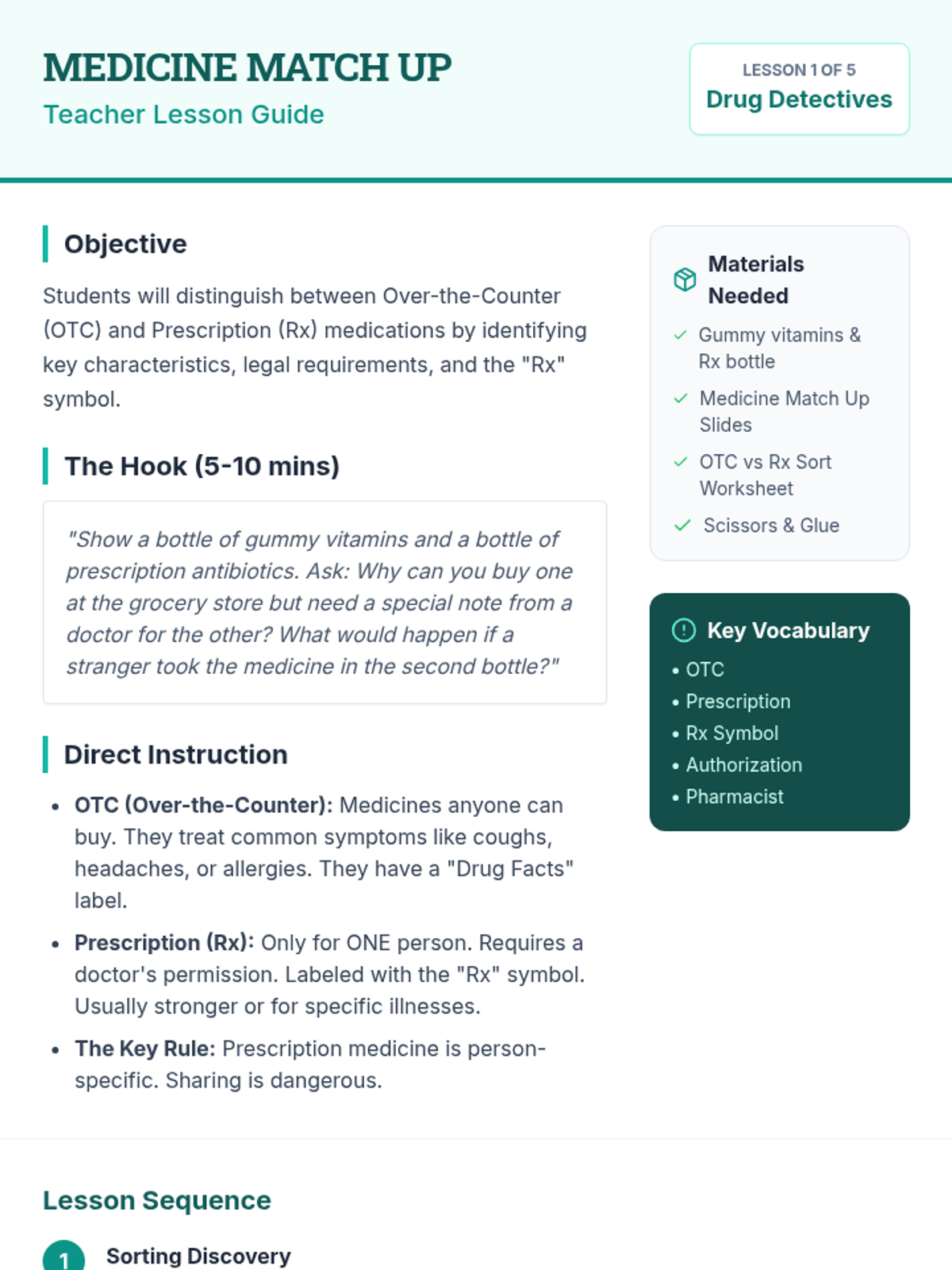
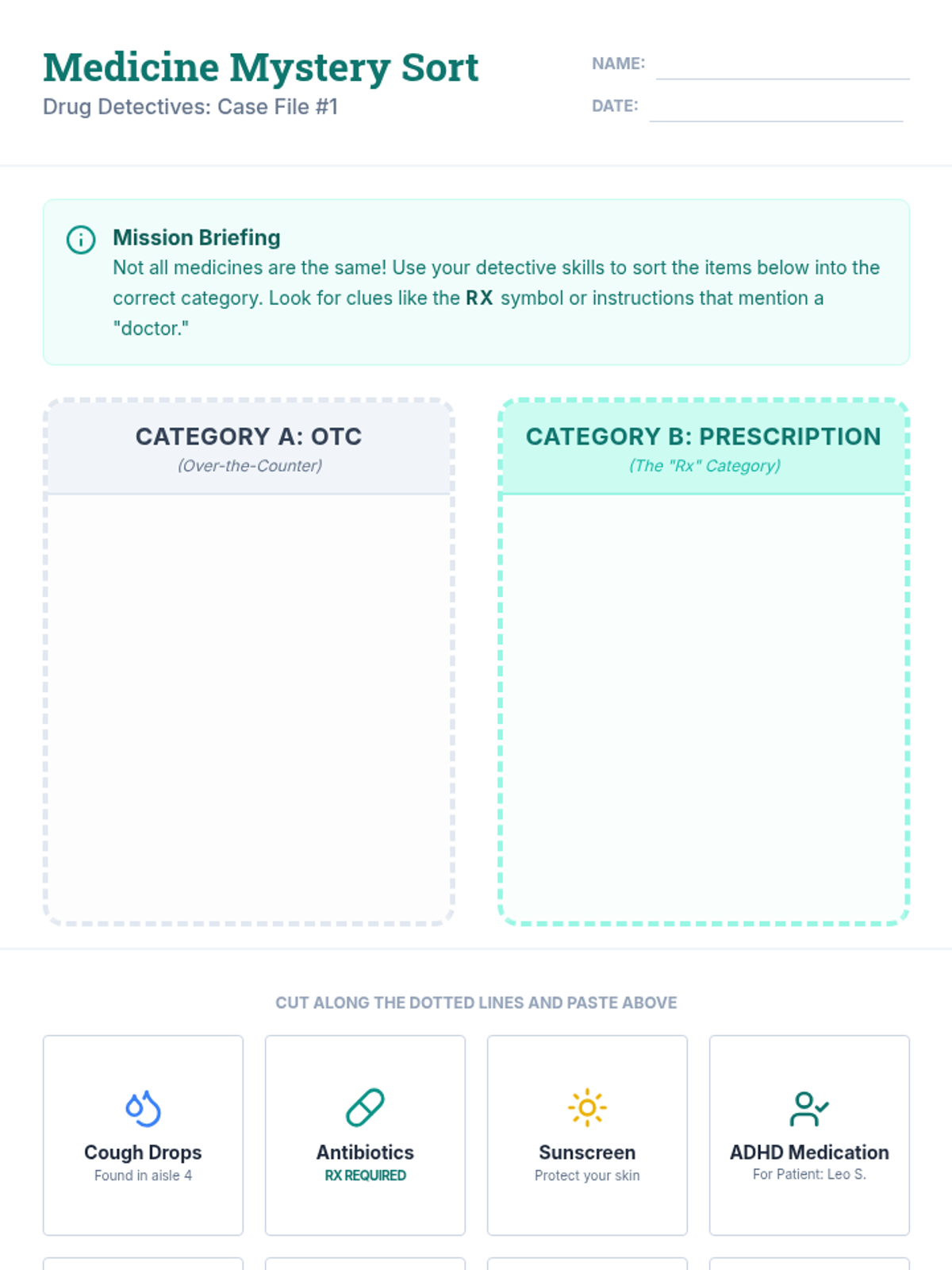
This sequence introduces 5th-grade students to the differences between OTC and Prescription medications, the role of doctors in prescribing, and the categorization of drugs into stimulants, depressants, and opioids. It emphasizes health literacy, safety, and the risks of misuse.
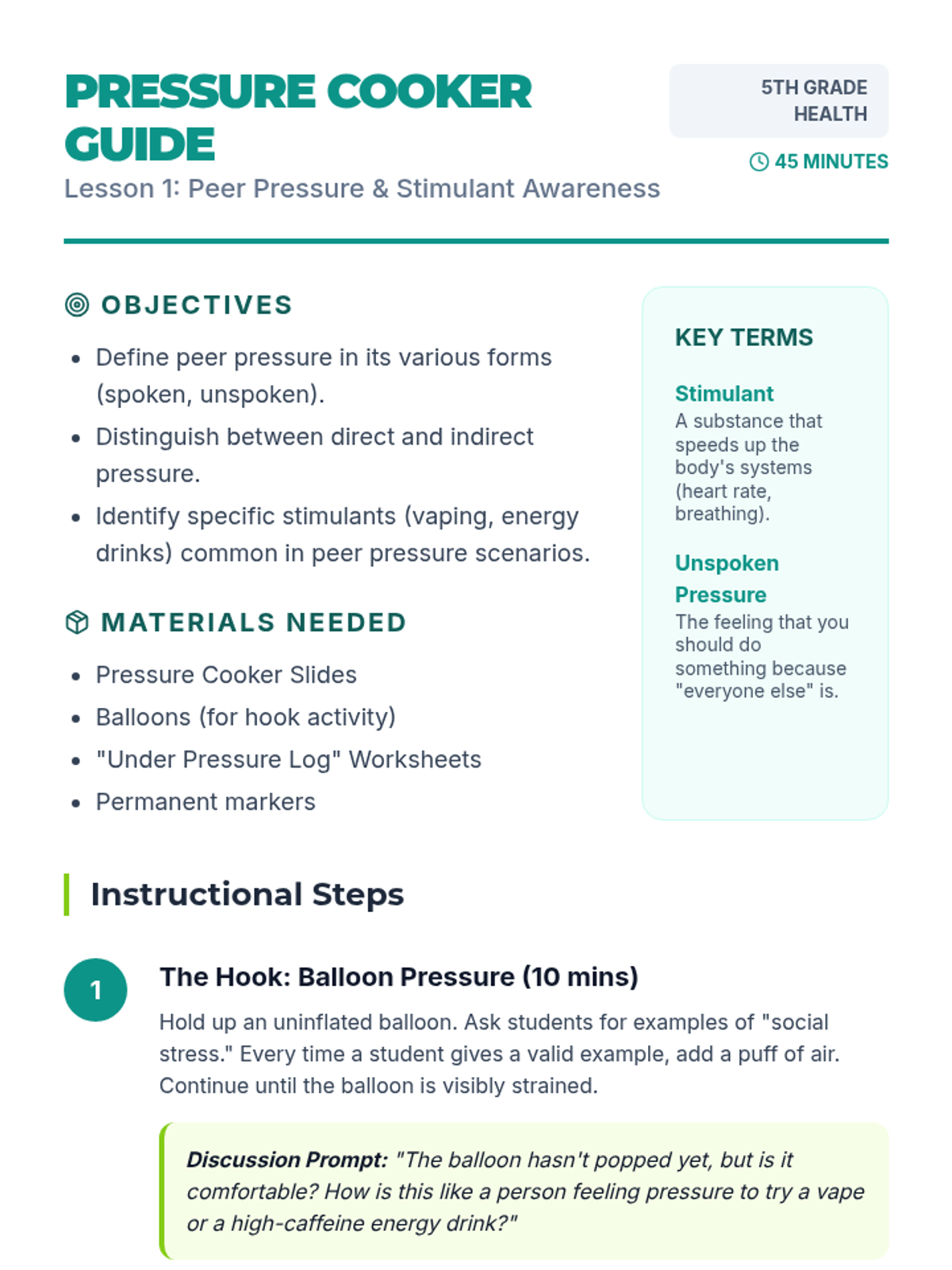
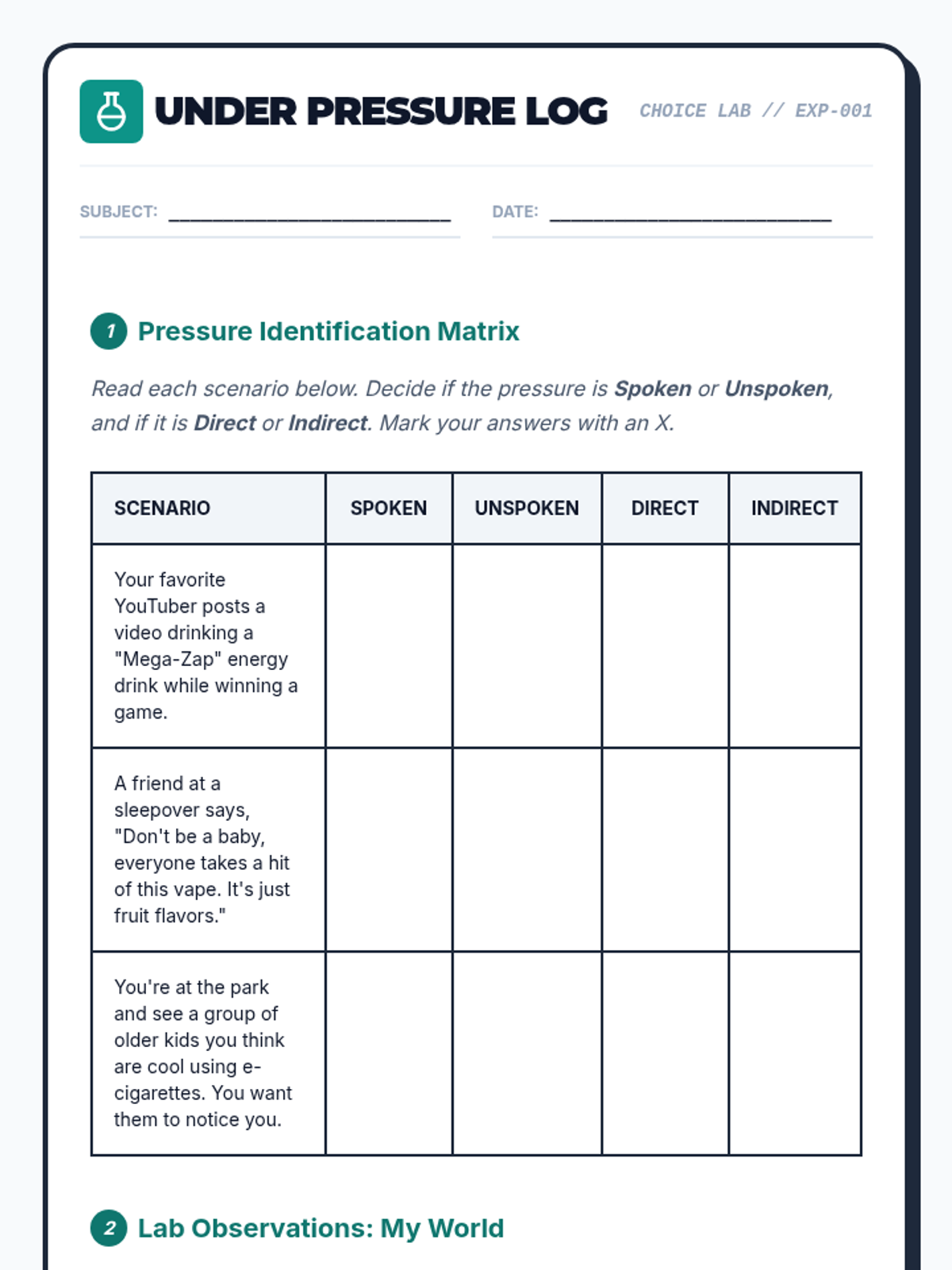
A 5-lesson sequence for 5th-grade students focused on recognizing peer pressure, developing refusal strategies for stimulants like vaping and caffeine, and building positive peer support networks. Students move from theoretical understanding to practical simulations and exit strategies.
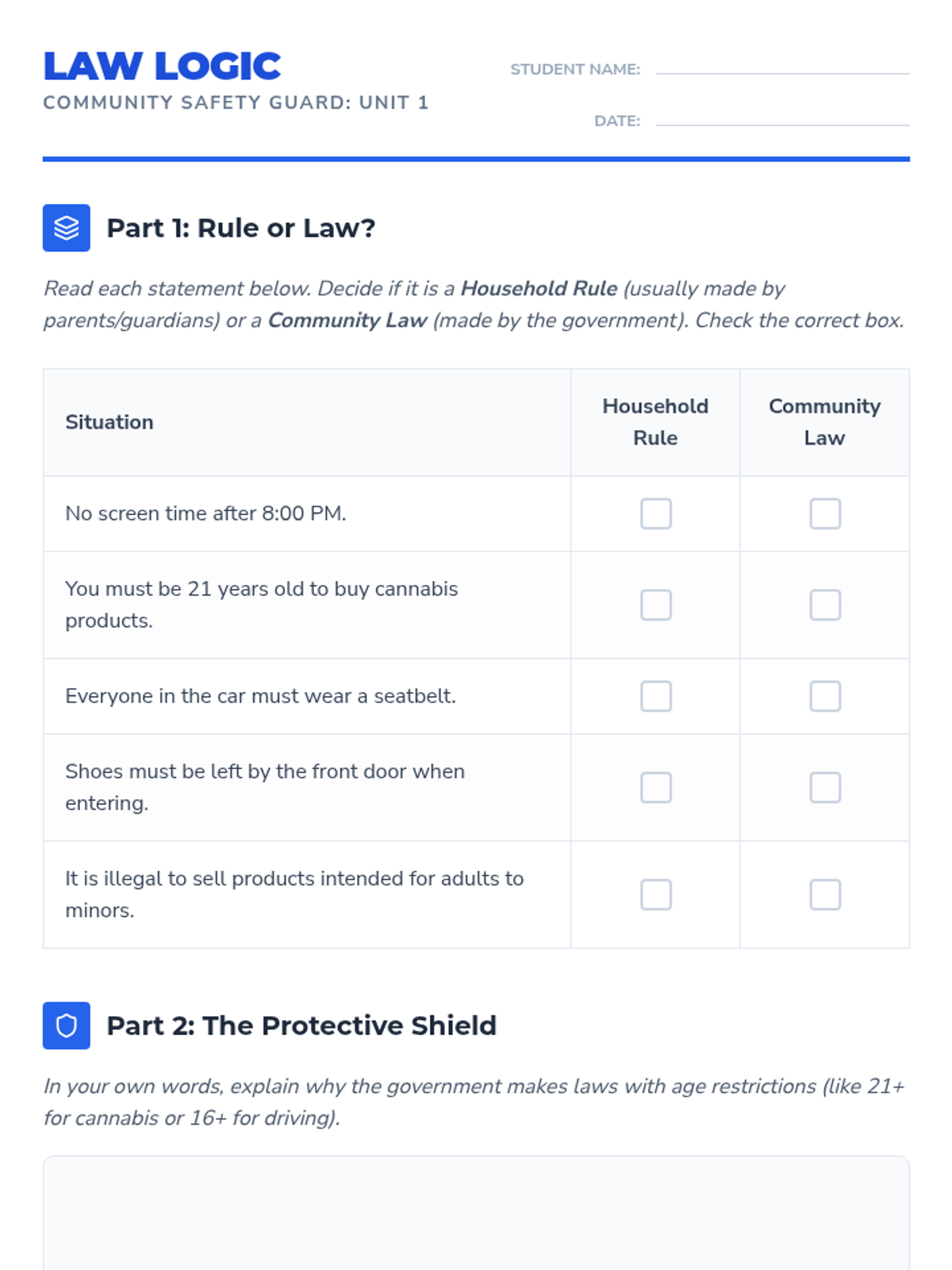
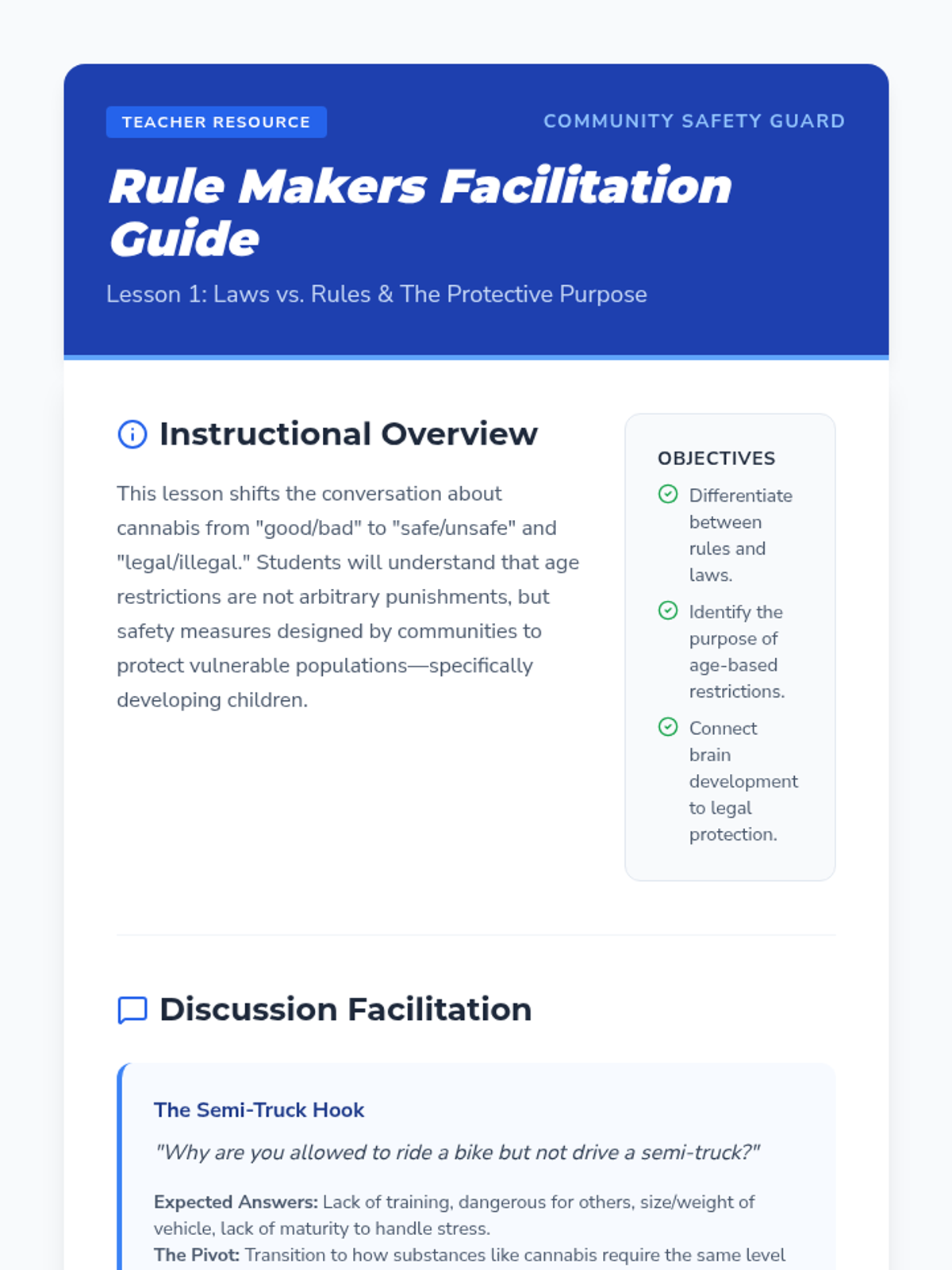
This 5th-grade sequence explores the legal and safety aspects of cannabis. Students will learn why laws exist to protect children, how to identify hidden hazards like edibles, the importance of clean air, and how to access help from trusted adults.
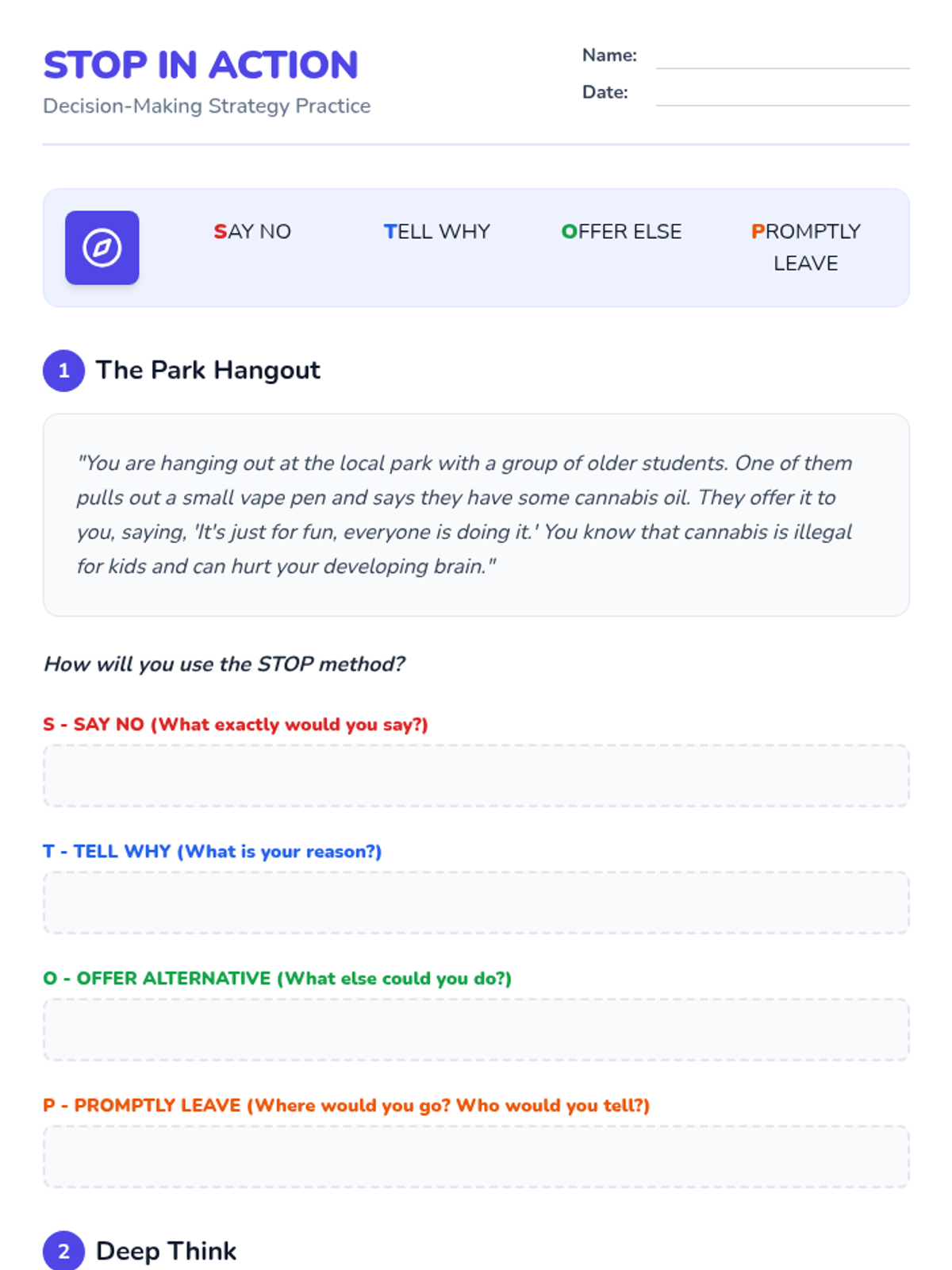
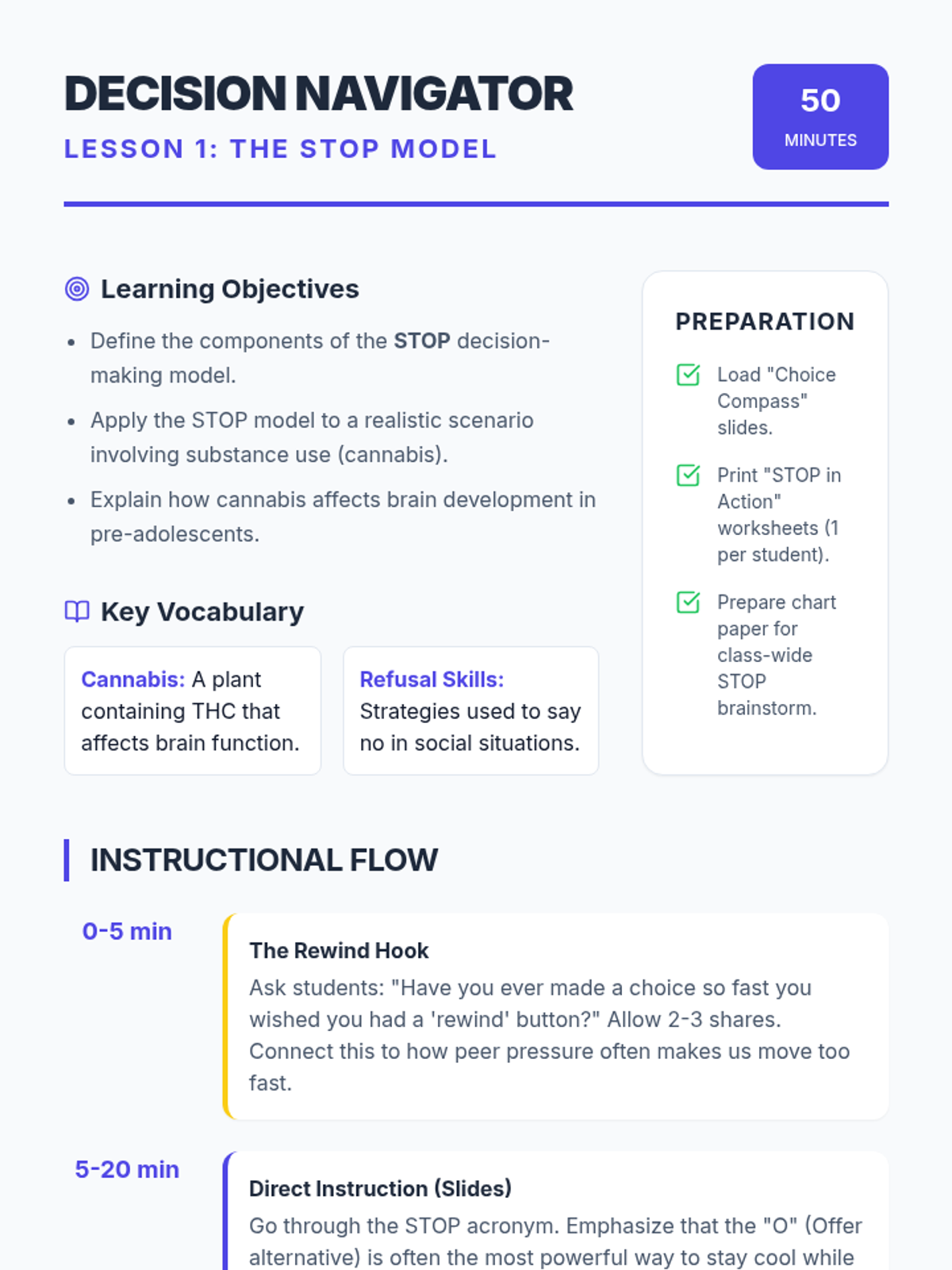
A comprehensive 5-lesson sequence for 5th graders focusing on the STOP decision-making model, identifying types of peer pressure, and mastering verbal and non-verbal refusal skills specifically related to cannabis and substance awareness.
A comprehensive 5-day sequence exploring the biological and physiological impact of alcohol on the developing human body, with a specific focus on the brain, liver, and nervous system.
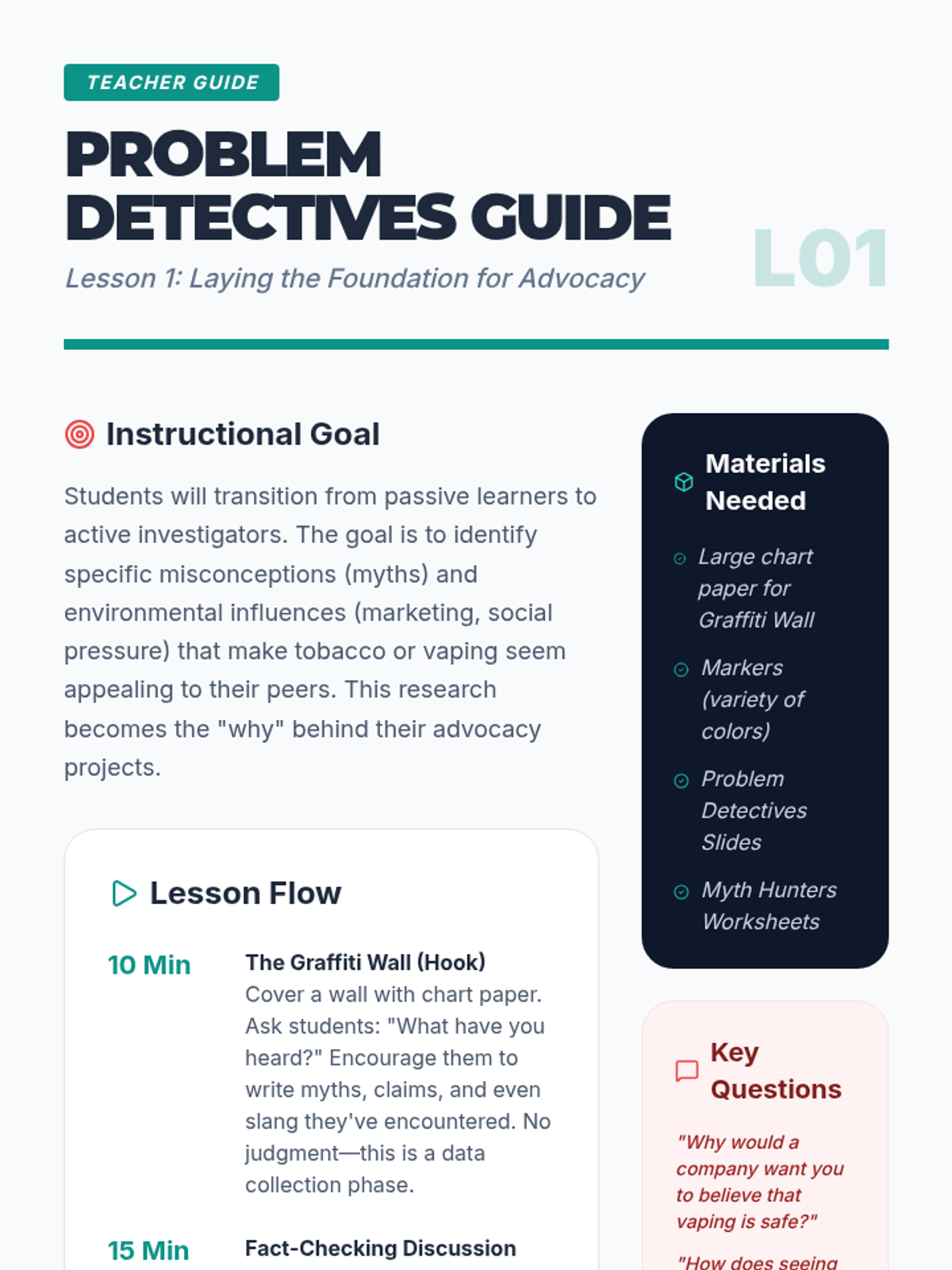
Students transition from learners to leaders by designing a public health advocacy campaign for their school community. Starting with identifying specific peer needs and misconceptions about tobacco and vaping, they craft persuasive slogans and visual media to promote a tobacco-free lifestyle, culminating in a community showcase.
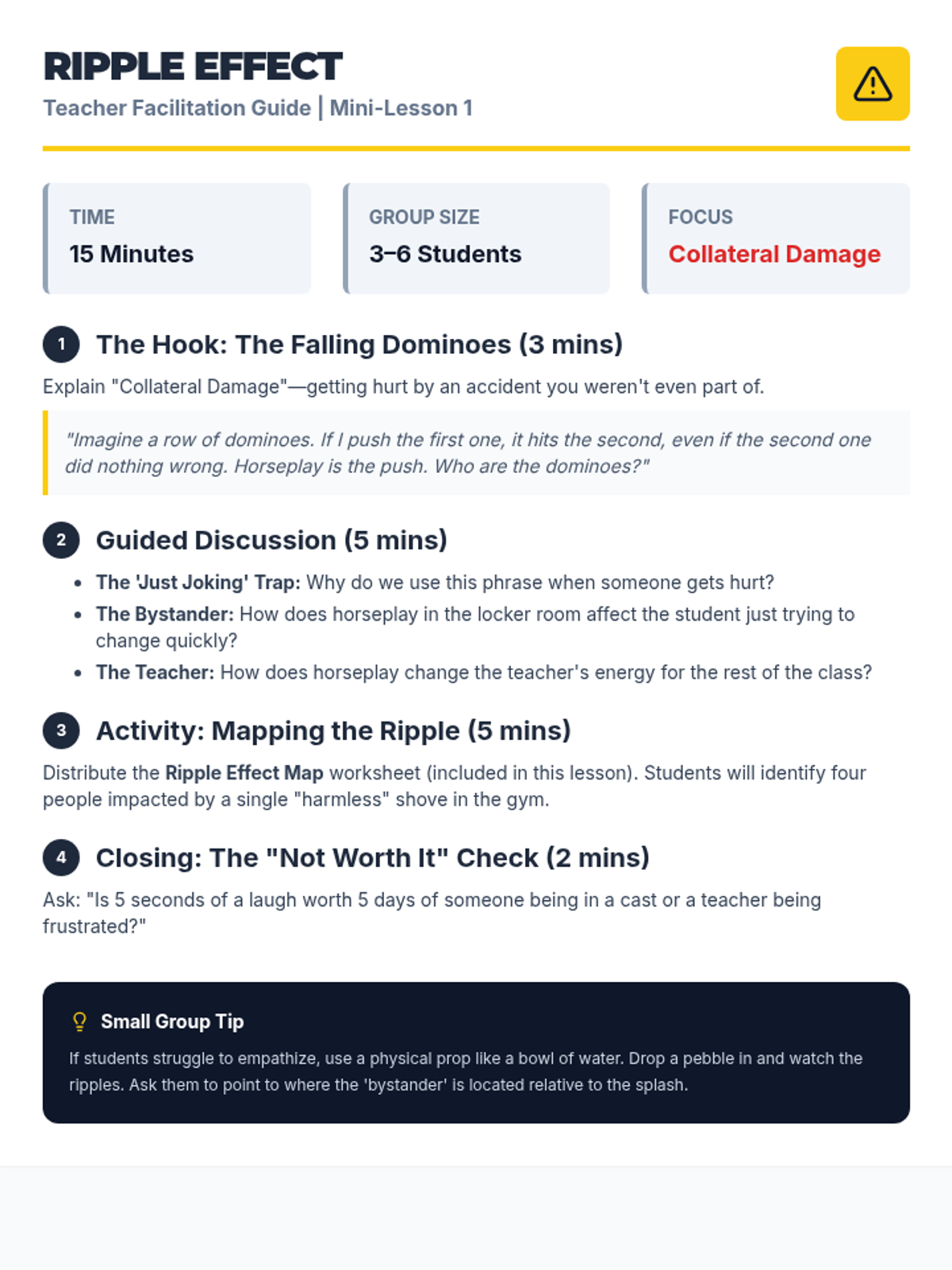
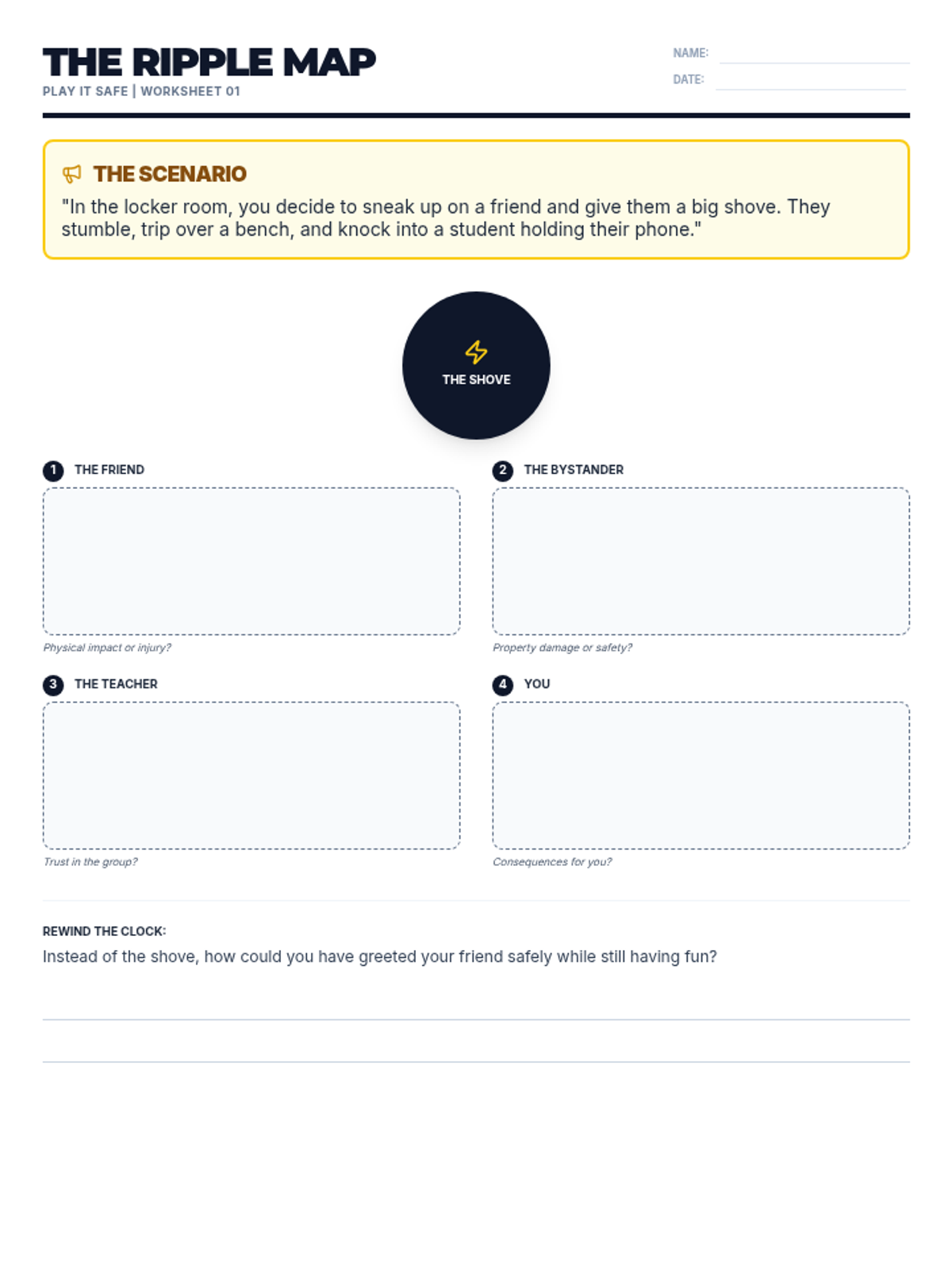
A series of three 15-minute mini-lessons designed for small group interventions or PE warm-up discussions. The sequence focuses on the social, physical, and community consequences of horseplay in school settings.
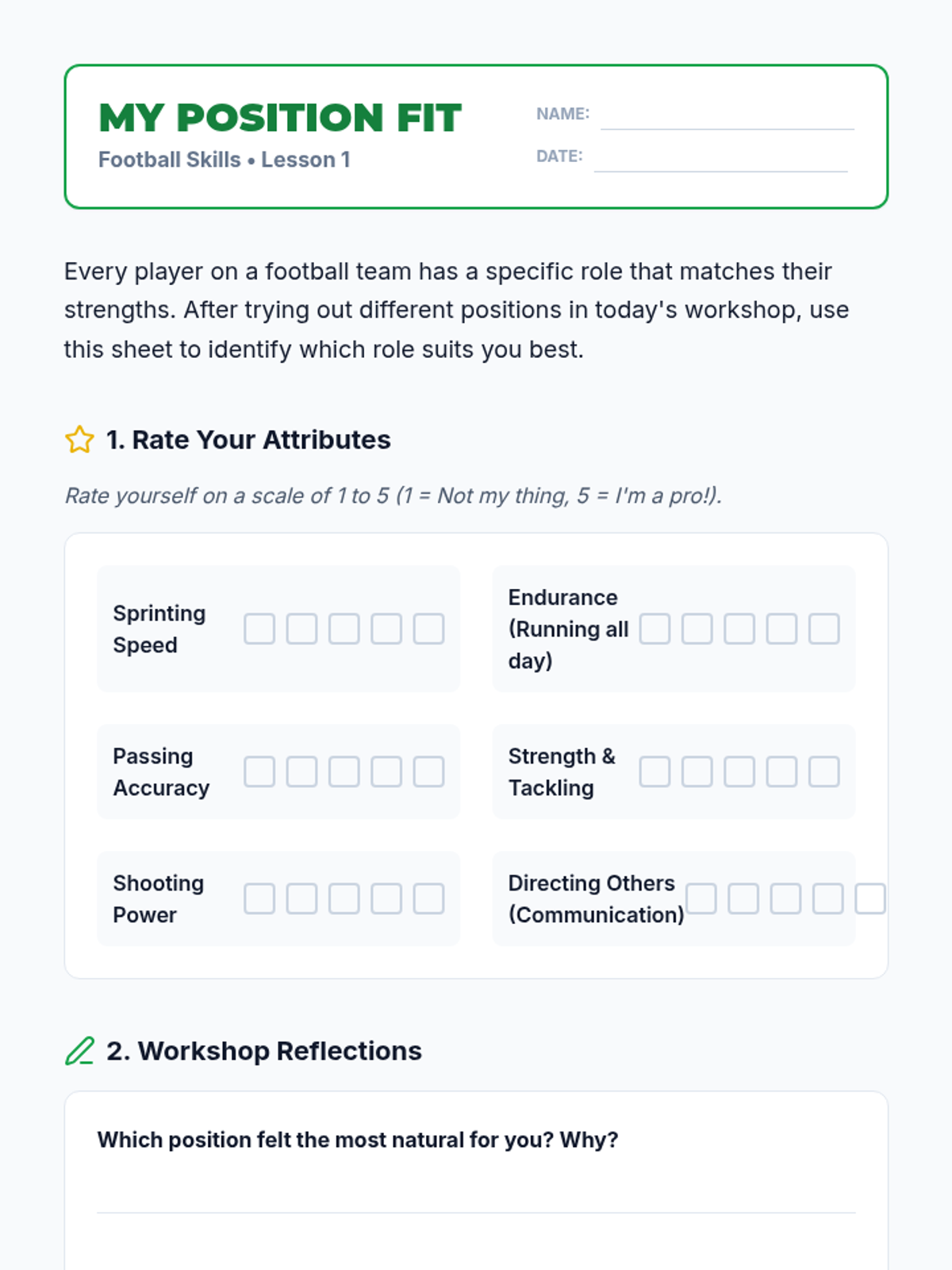
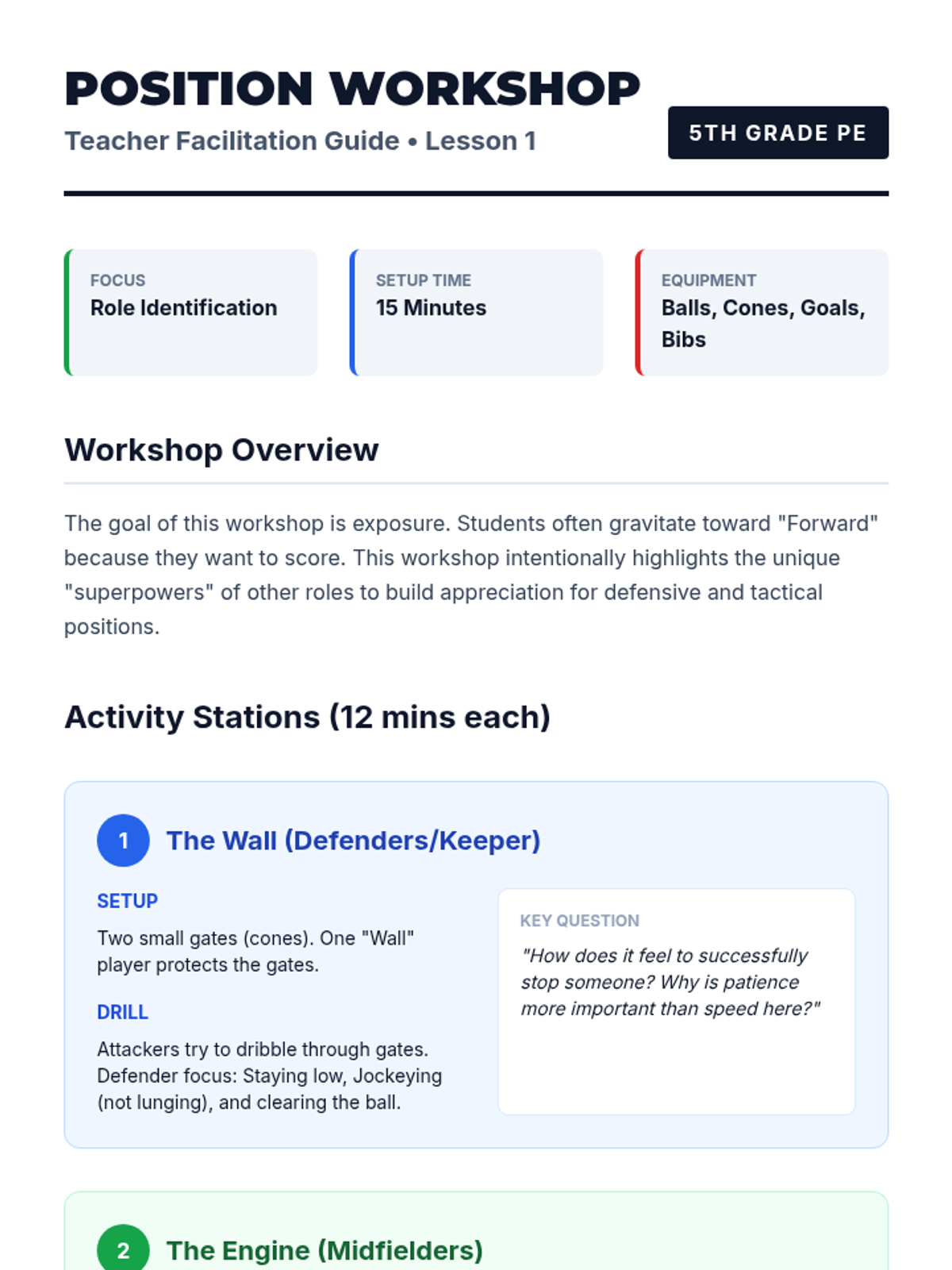
A 5th-grade physical education sequence focusing on football (soccer) skills, positional roles, rules like offside, and the importance of sportsmanship and team strategy. students rotate through player and official roles to develop a holistic understanding of the game.
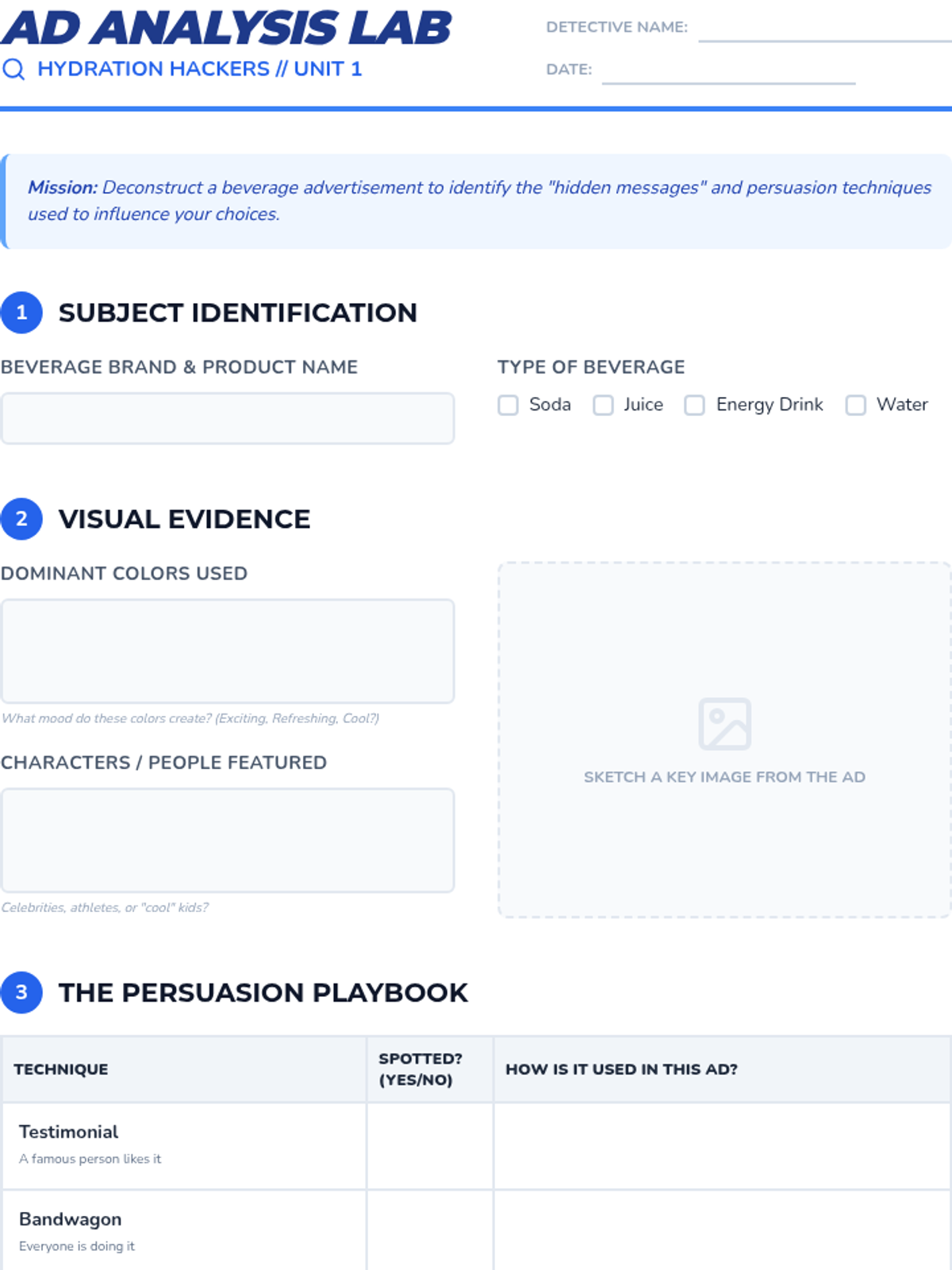
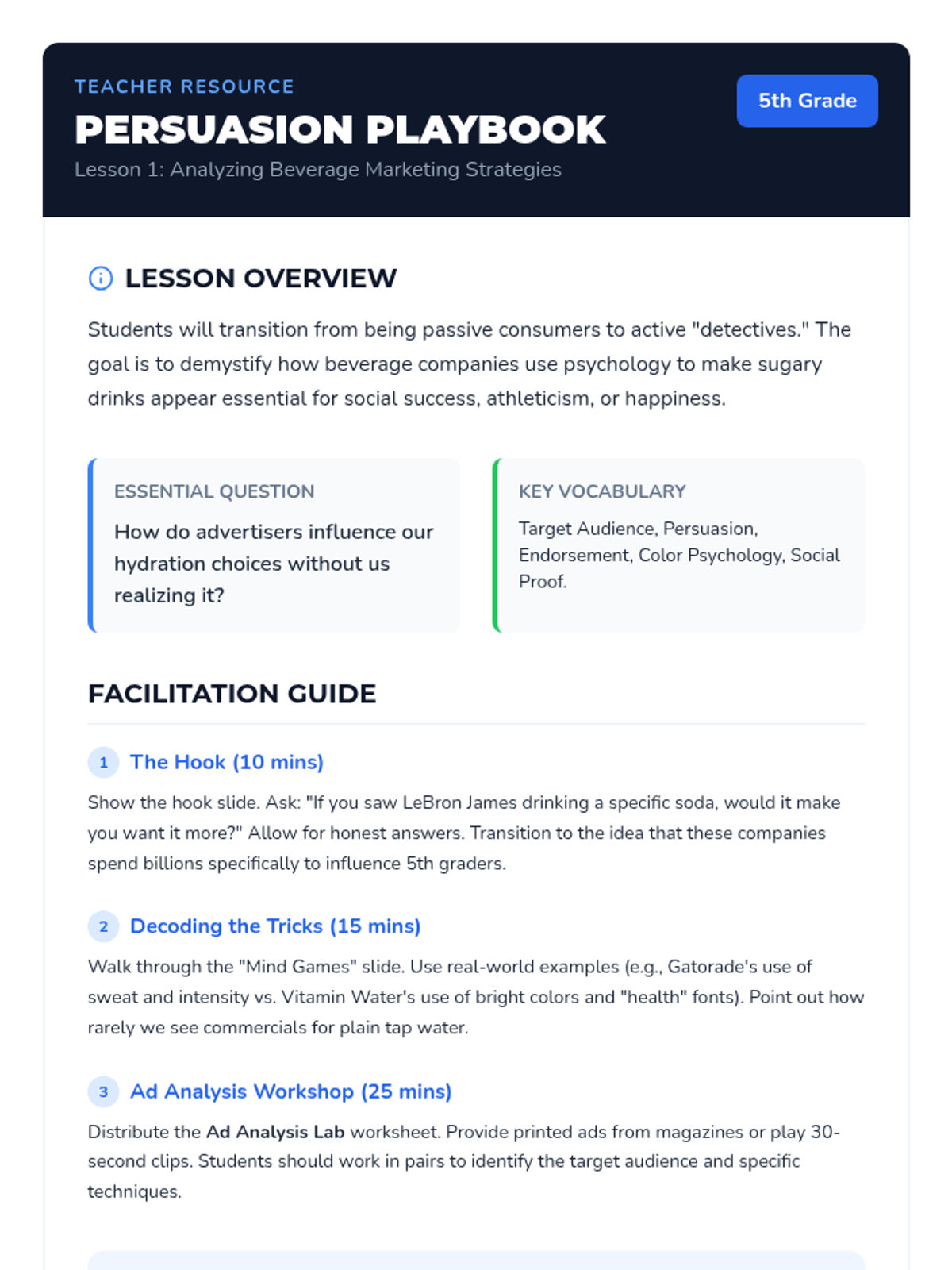
A project-based sequence for 5th graders examining hydration through consumer science, marketing analysis, and environmental impact. Students become critical consumers and health advocates within their school community.
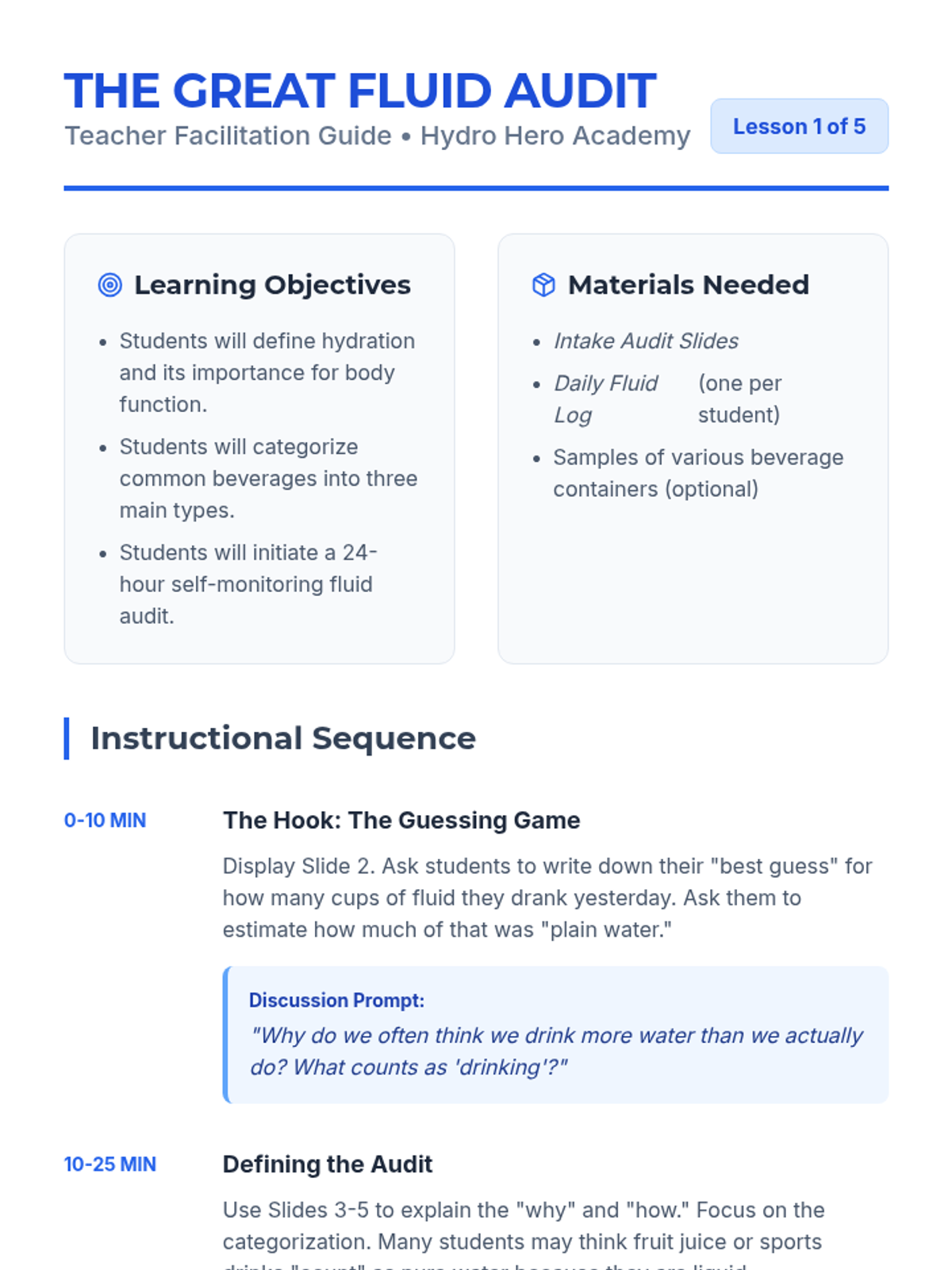
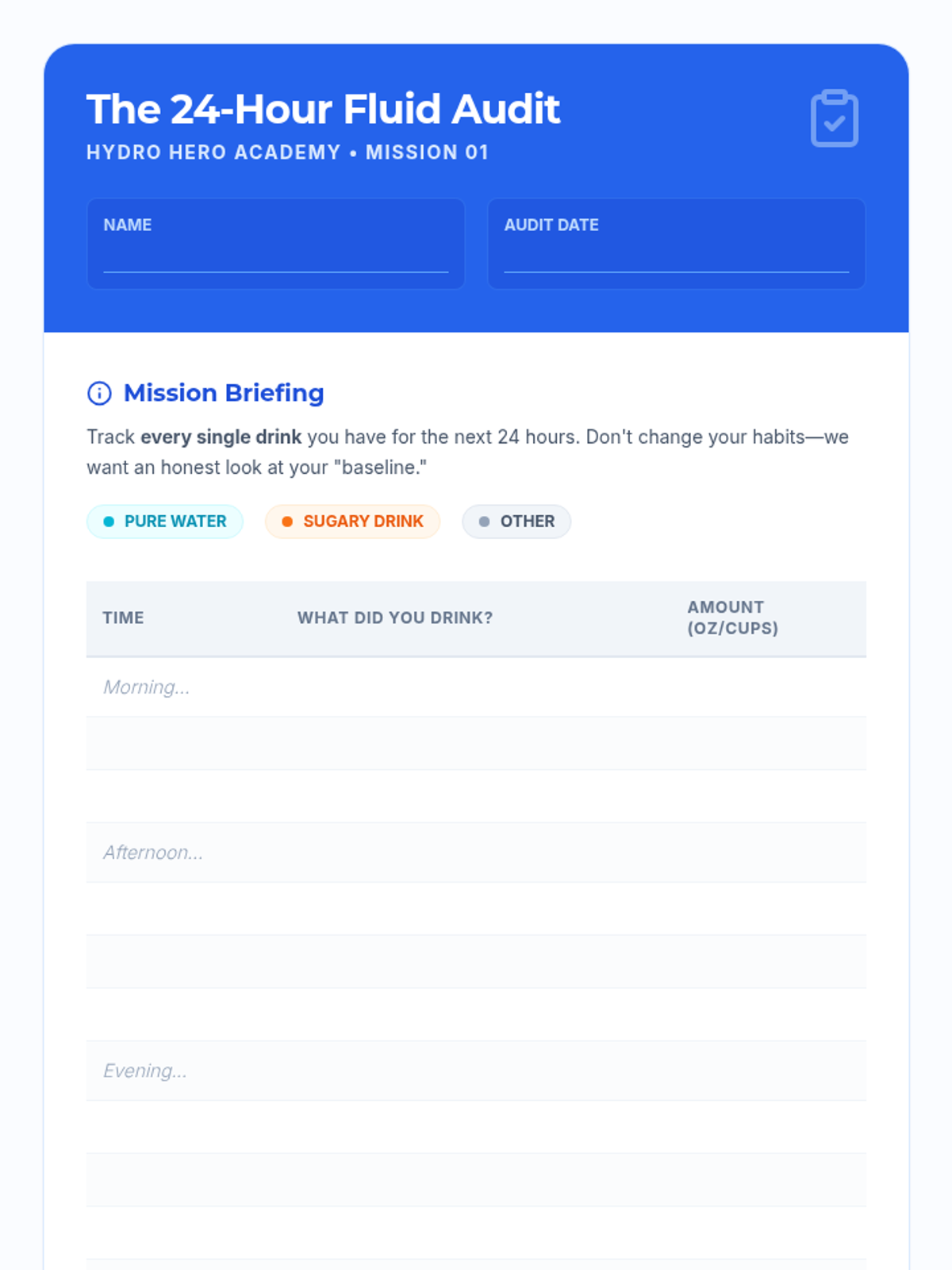
A 5th-grade sequence focused on developing self-management skills for hydration, moving from awareness of current habits to implementing personal tracking systems.
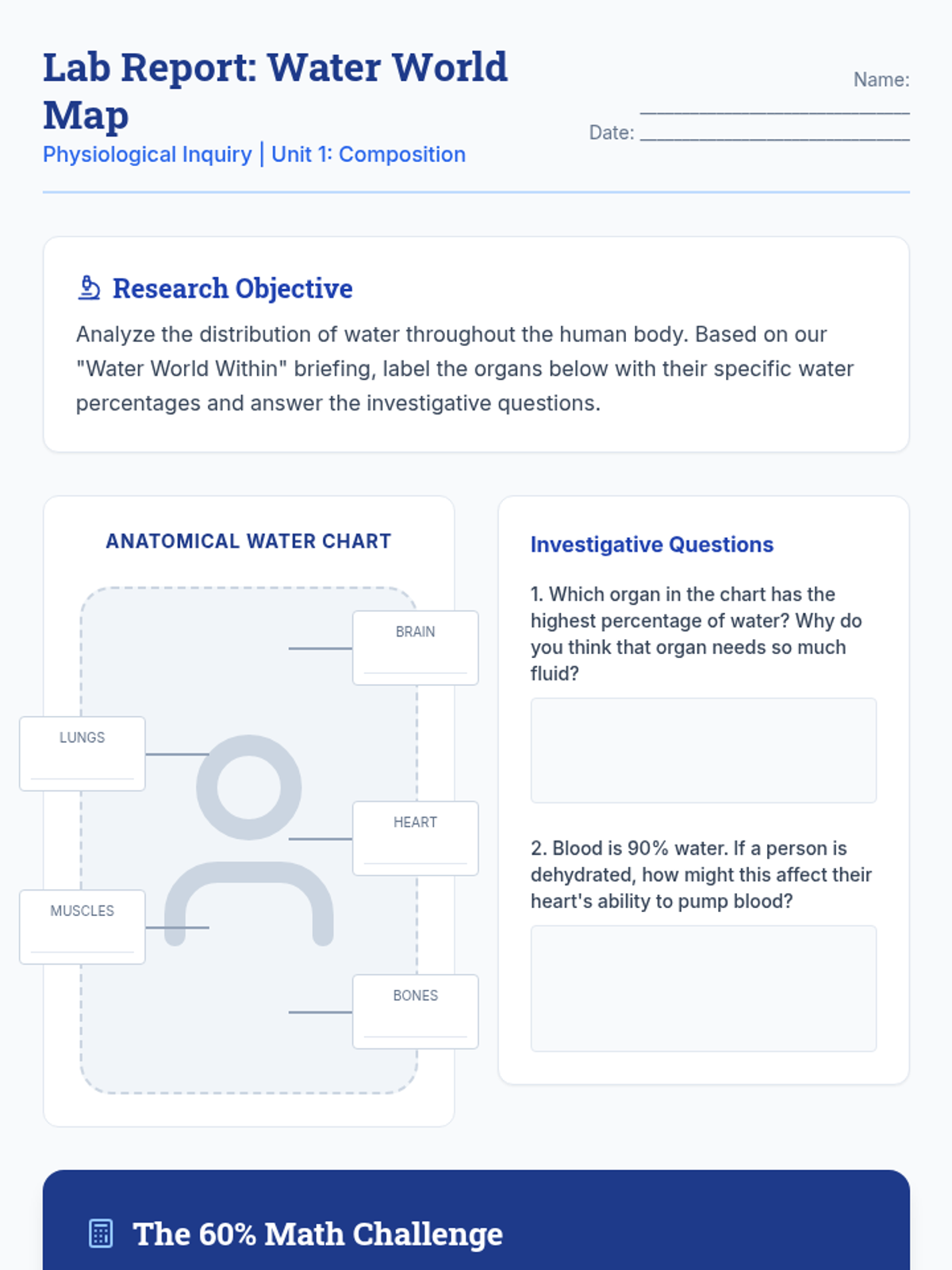
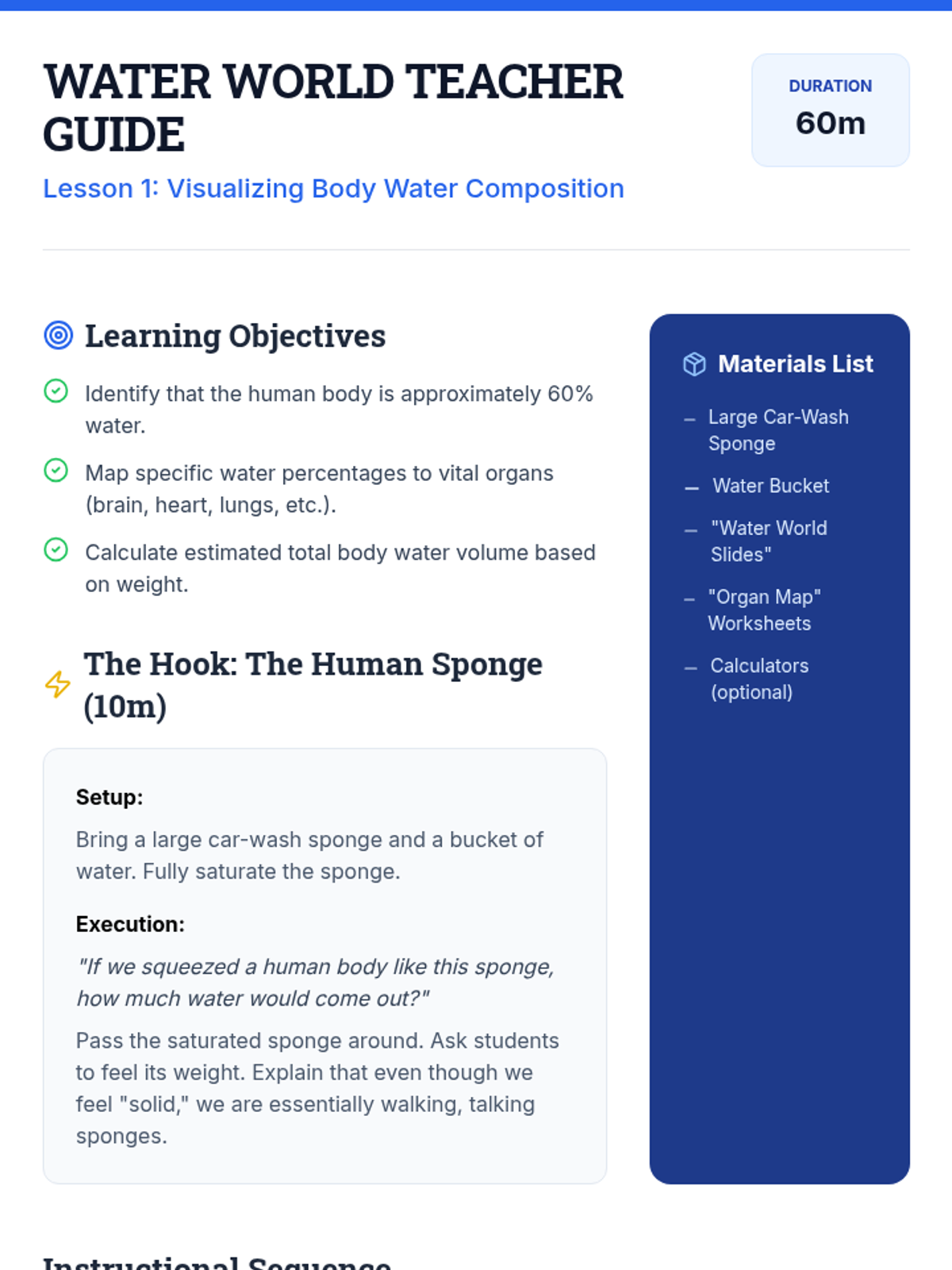
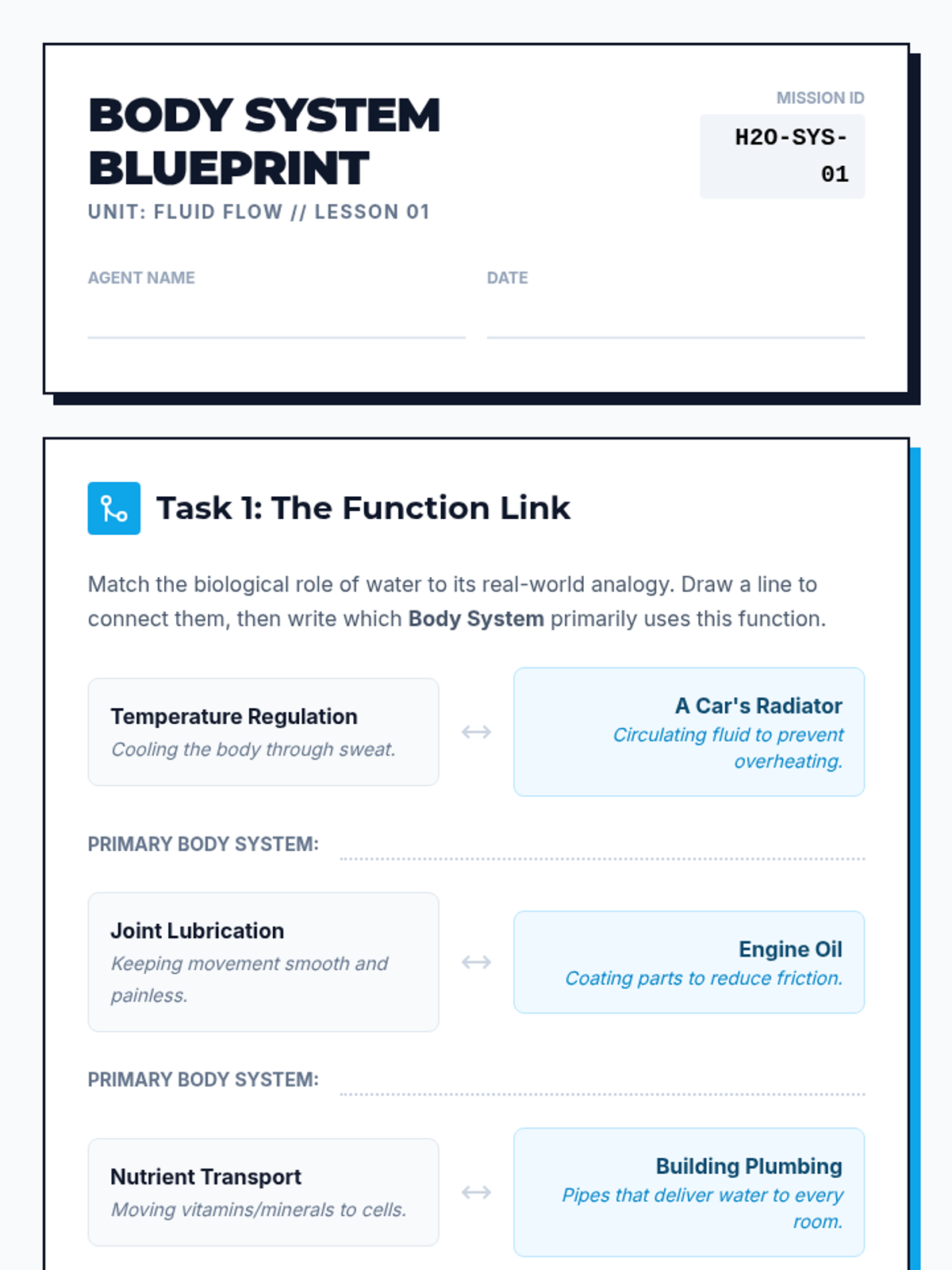
This scientific inquiry sequence guides 5th-grade students through the physiological roles water plays in the human body, from organ composition to thermoregulation and performance. Students transition from visualizing internal biology to identifying clinical signs of dehydration and creating personalized hydration strategies.
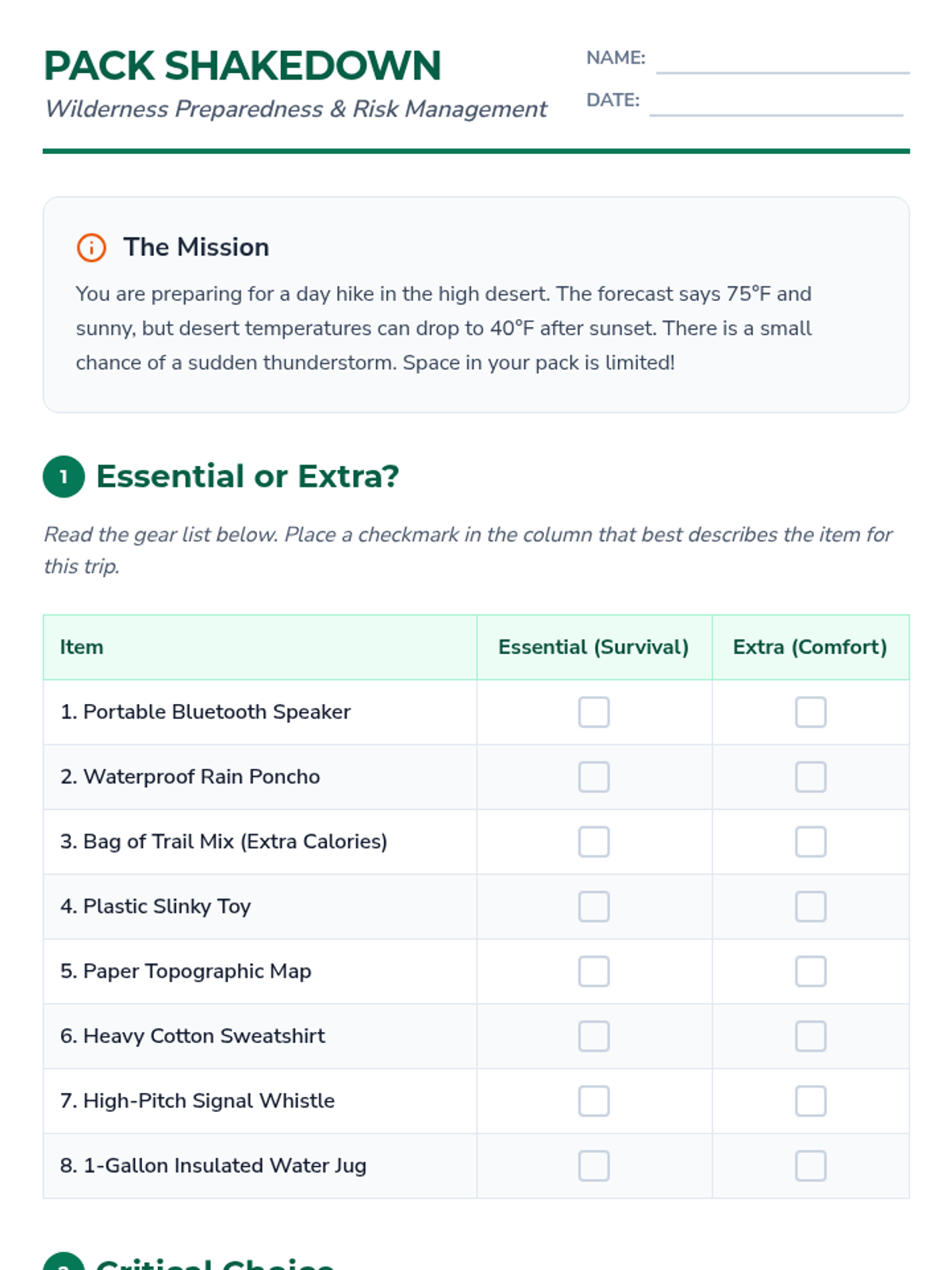
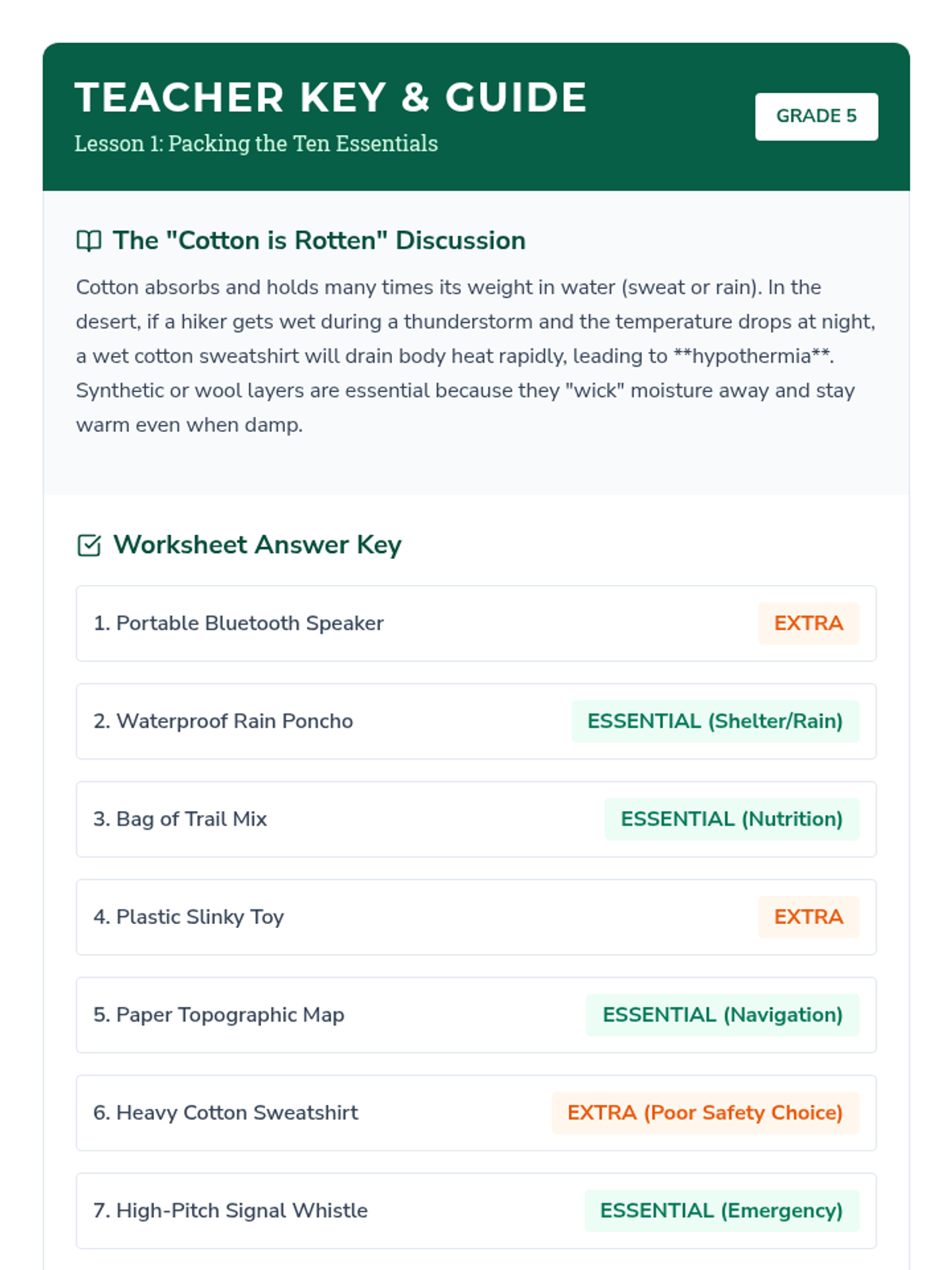
A comprehensive 5-lesson sequence for 5th graders on outdoor recreation safety, covering gear packing, hazard identification, navigation basics, and emergency protocols.
Students investigate the biological necessity of water and develop practical skills for monitoring their own hydration status. They explore water's role in body systems, identify dehydration signs, analyze hydration sources, and create personalized fluid intake plans for peak performance.
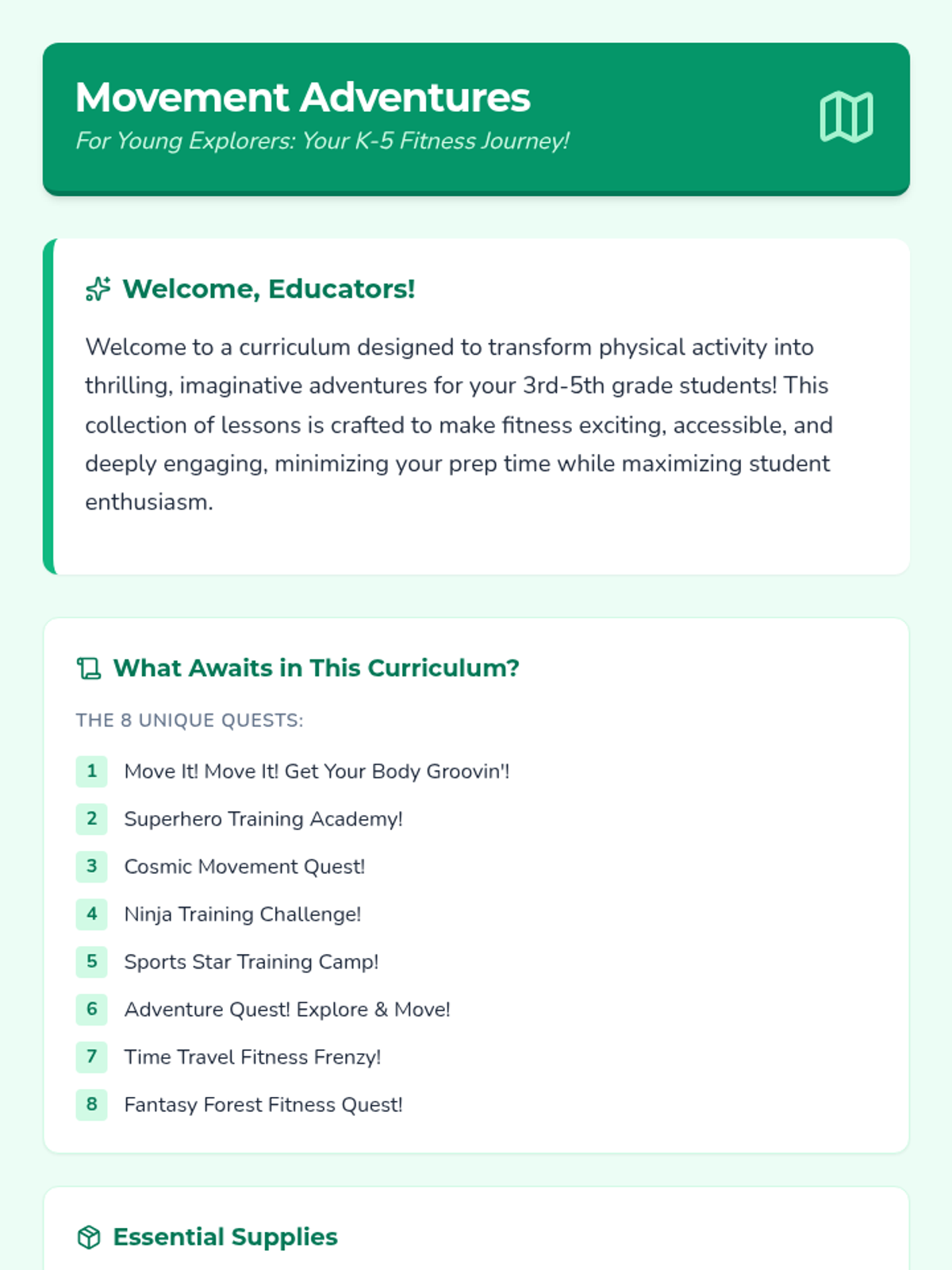
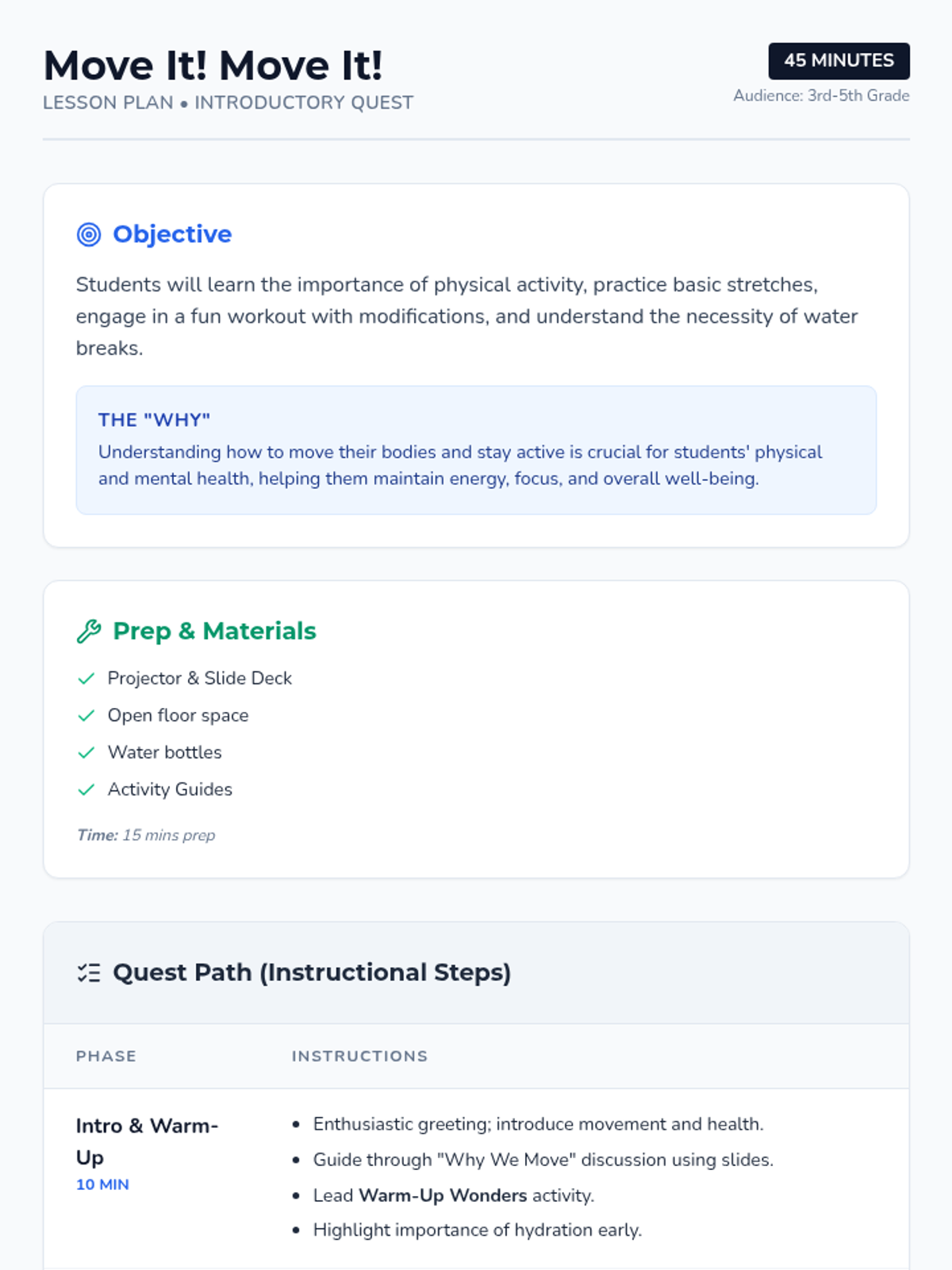
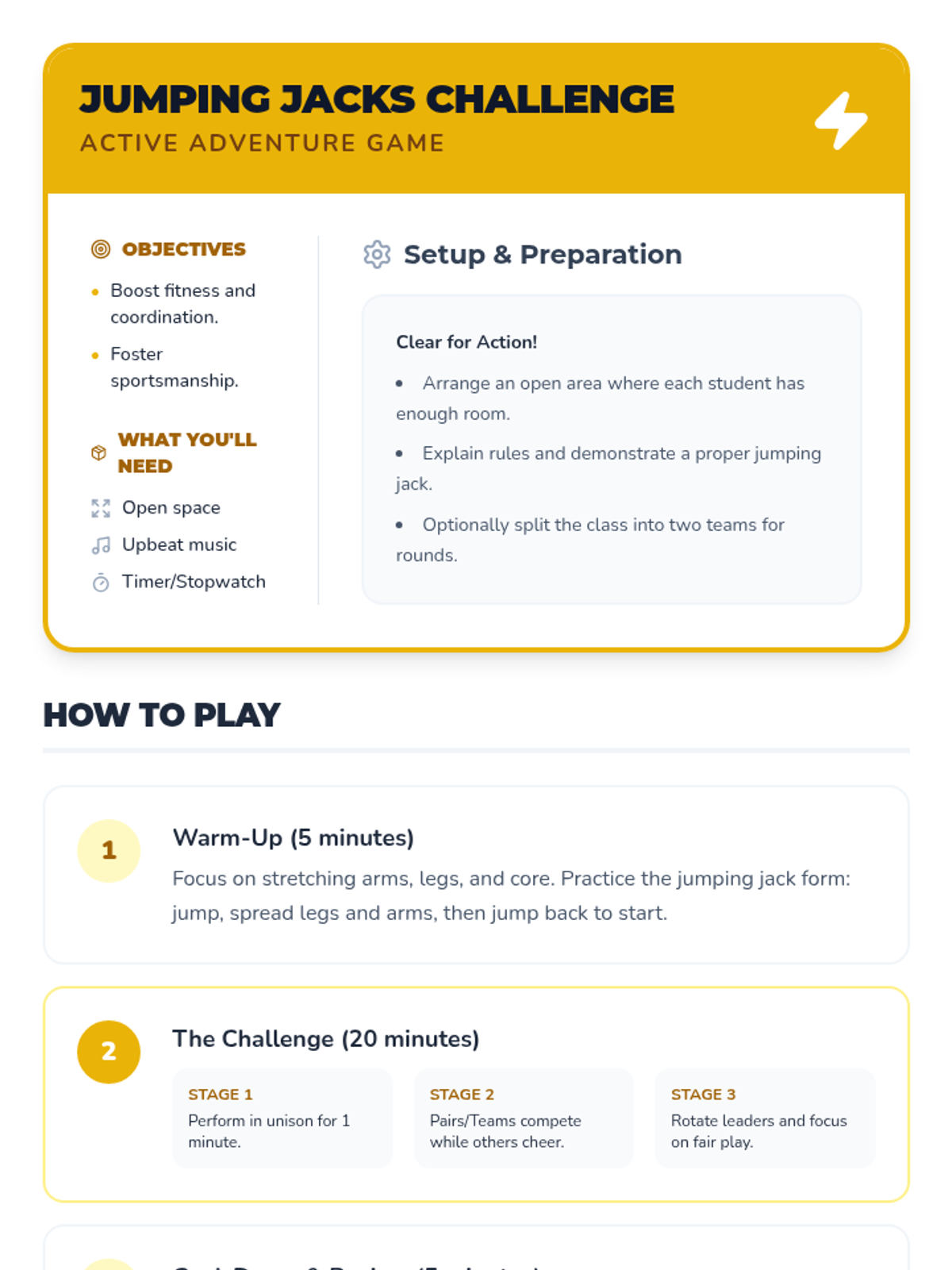
A comprehensive physical education curriculum for grades 3-5 that transforms fitness into imaginative adventures. Students develop strength, agility, and coordination through themed quests ranging from ninjas and superheroes to space exploration and magical forests.
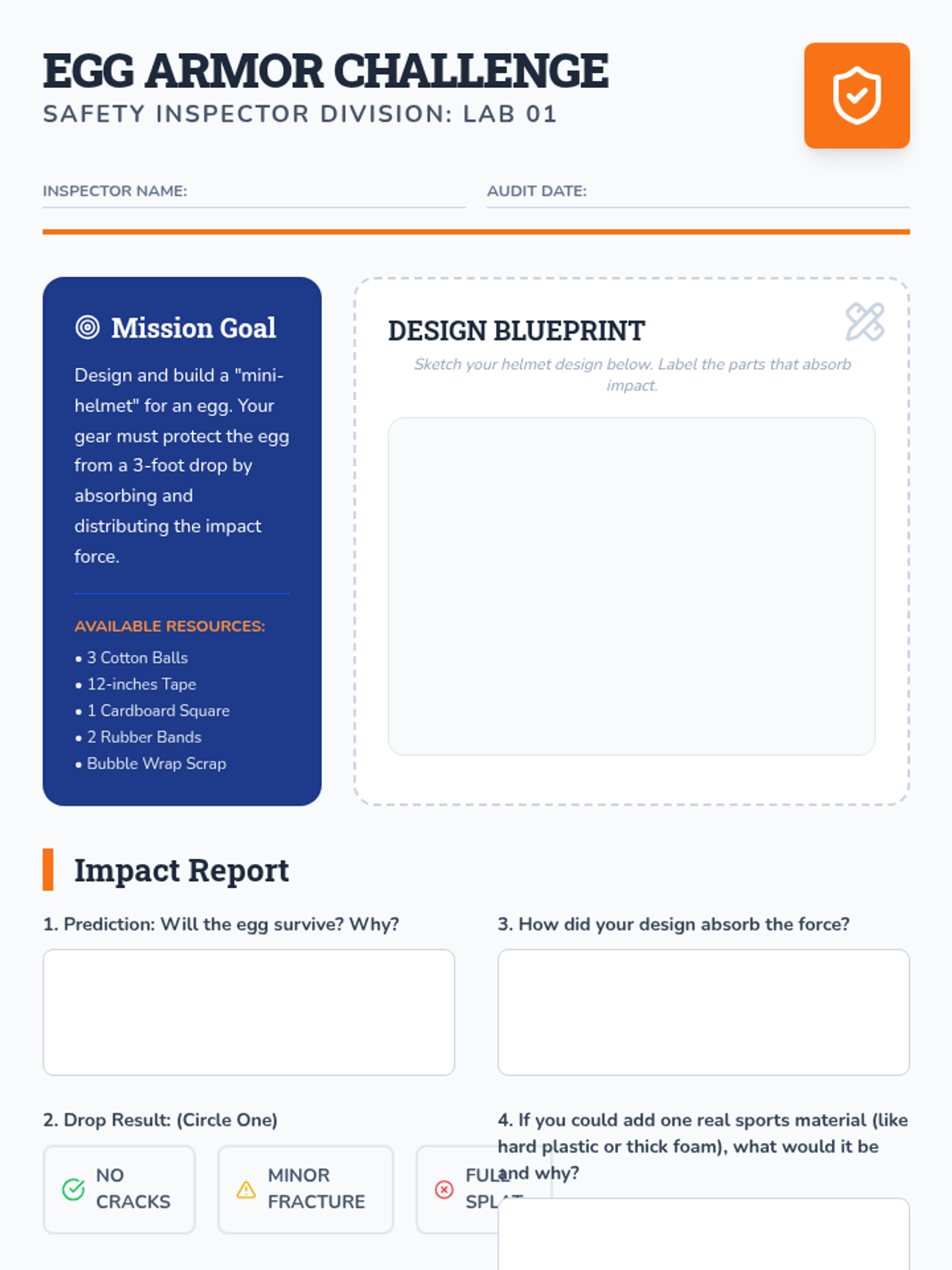
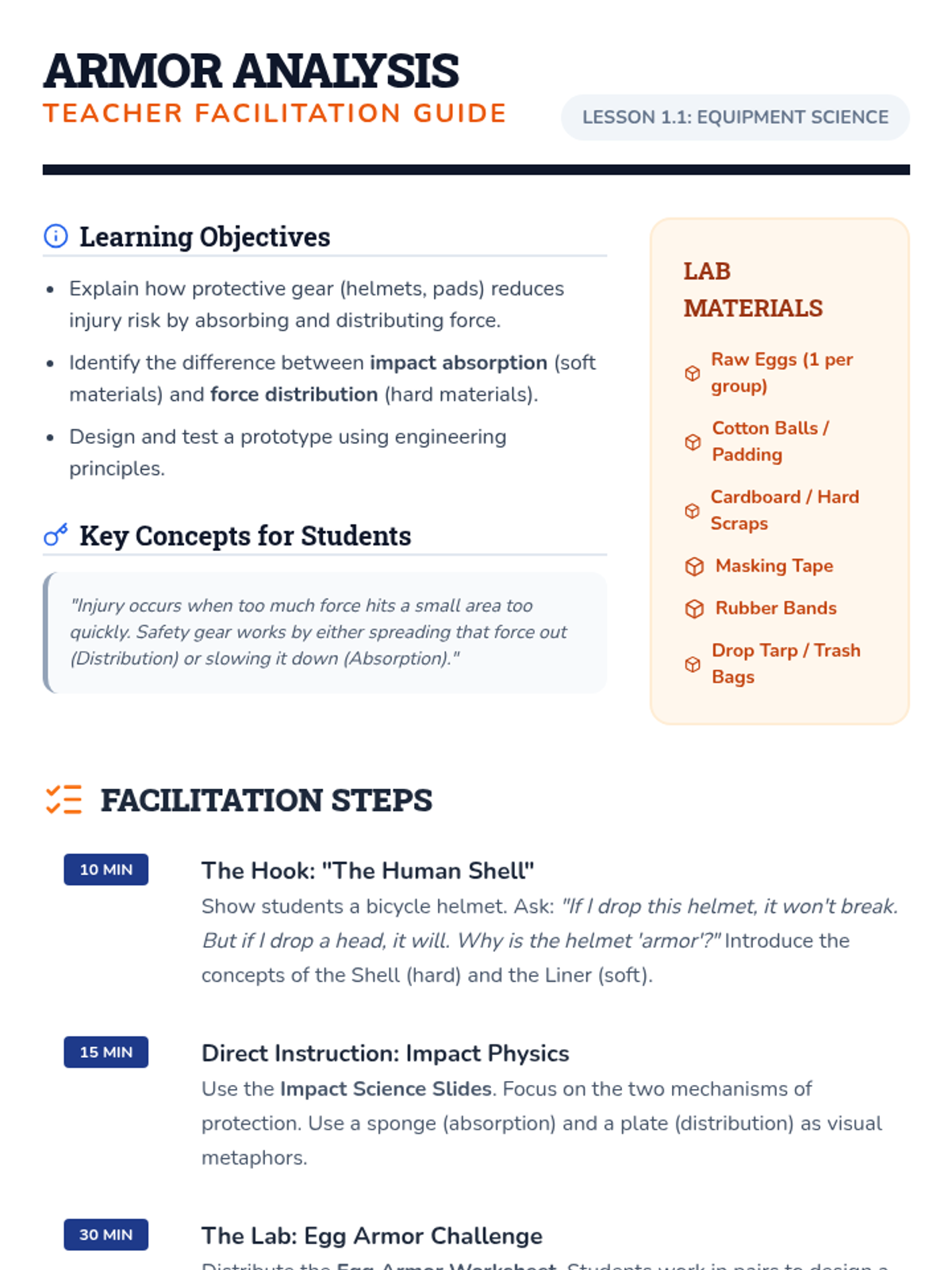
Students become safety inspectors to evaluate sports equipment, environmental hazards, and the protective nature of rules to prevent injuries. Through hands-on experiments and site audits, they learn to create safer spaces for physical activity.
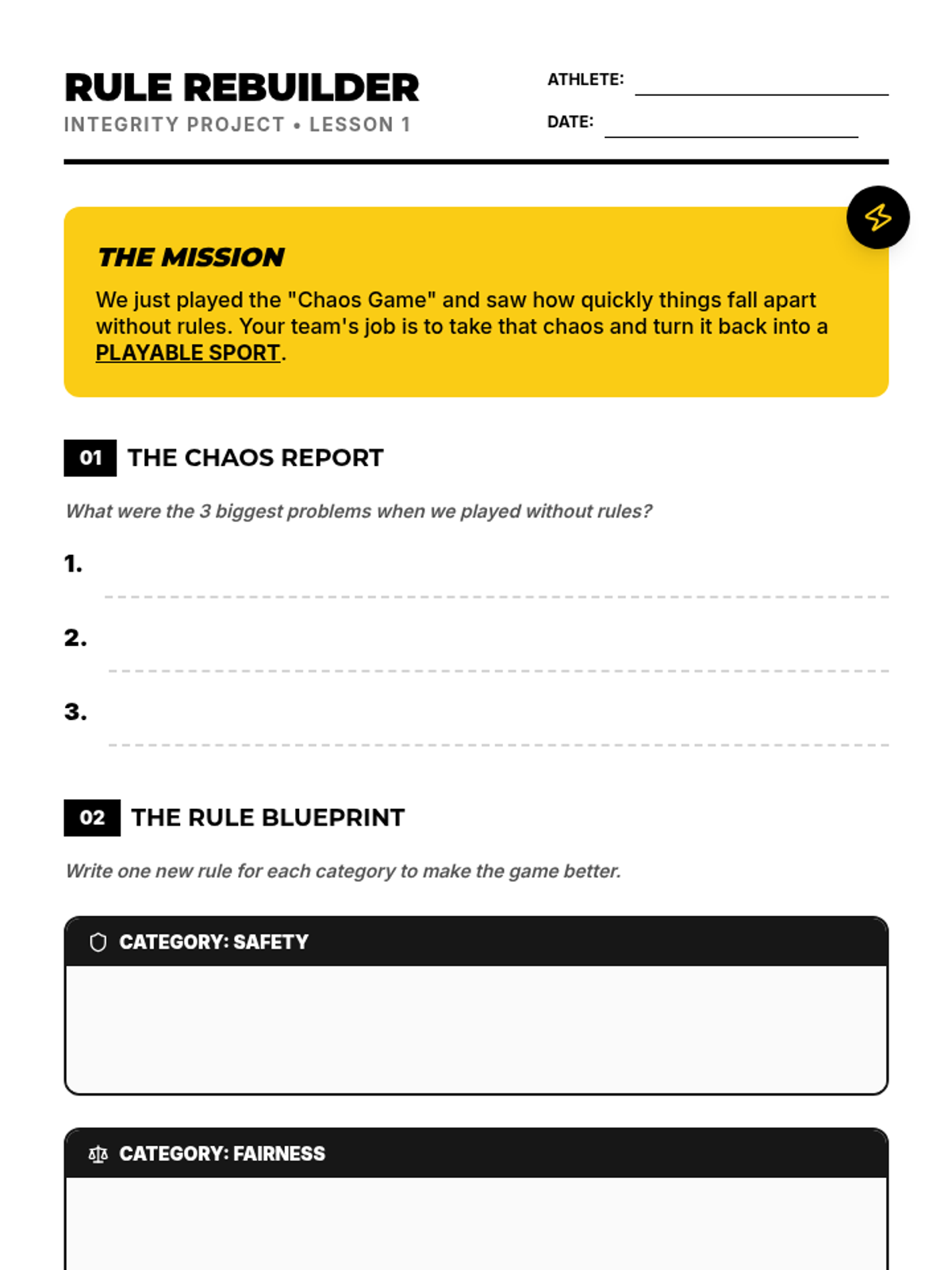
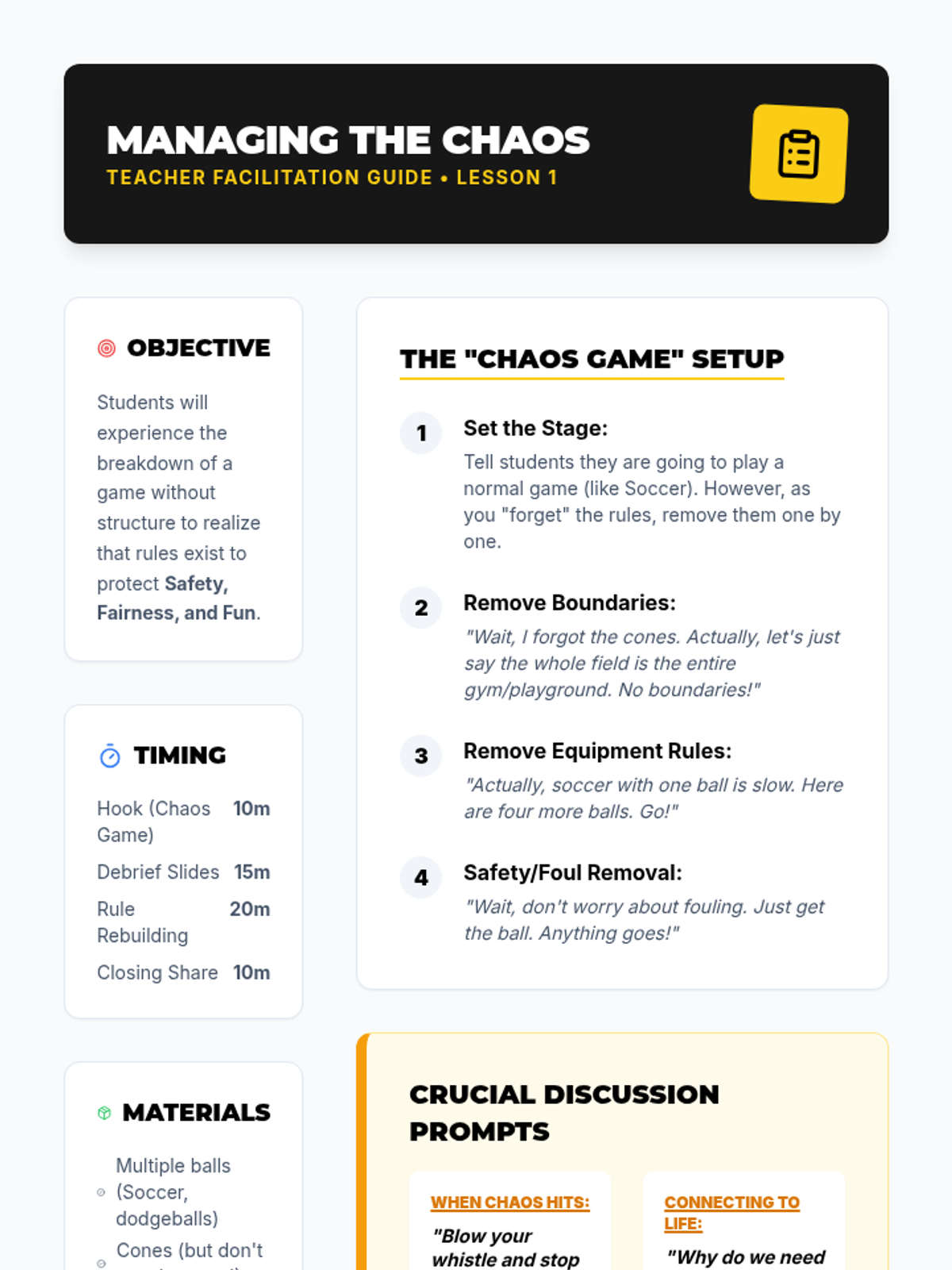
This sequence explores the structural necessity of rules, integrity, and respect for officials in organized sports. Students learn through experiential games, role-playing, and self-officiating to understand why fair play is essential for safety and enjoyment.
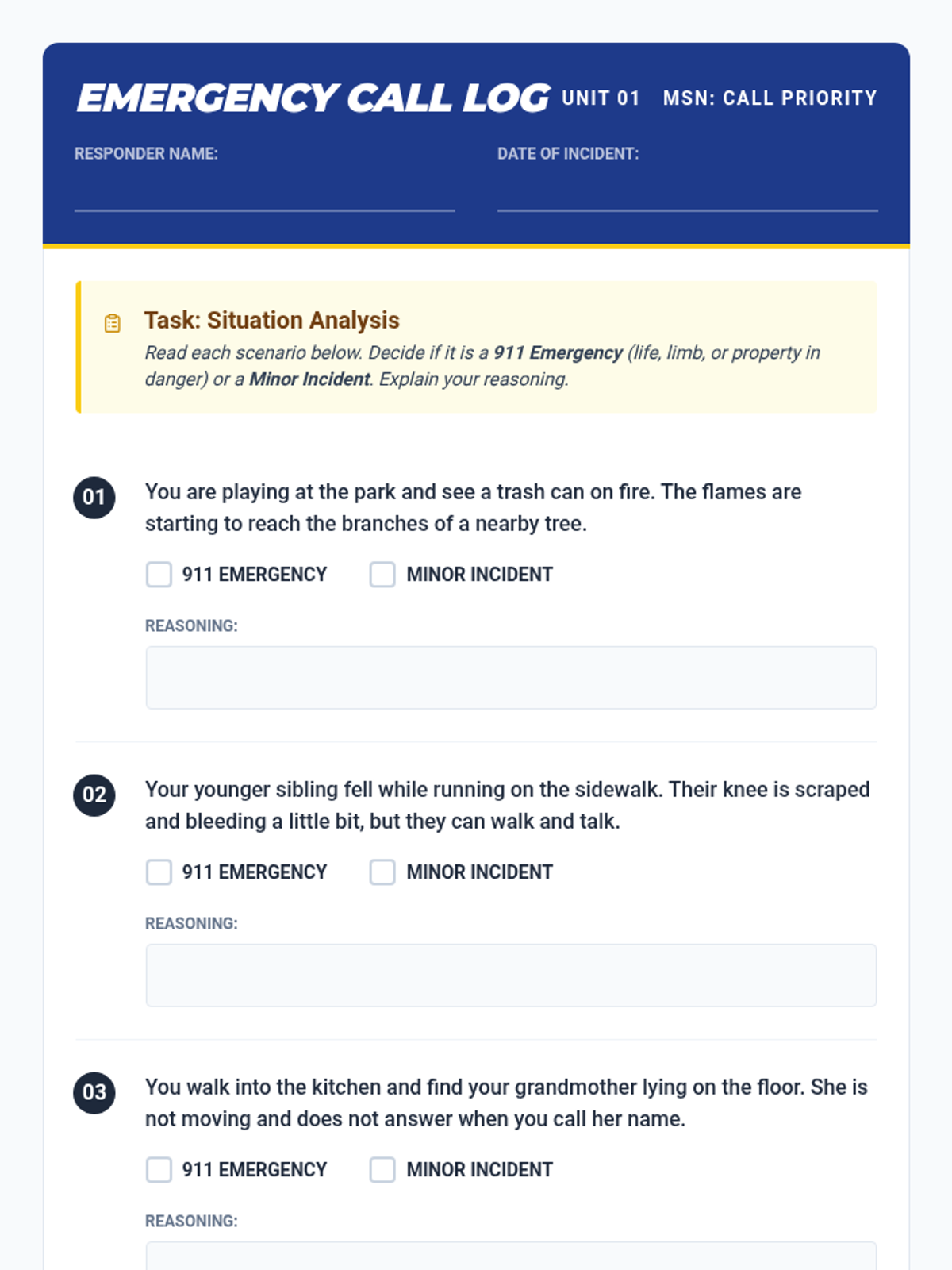
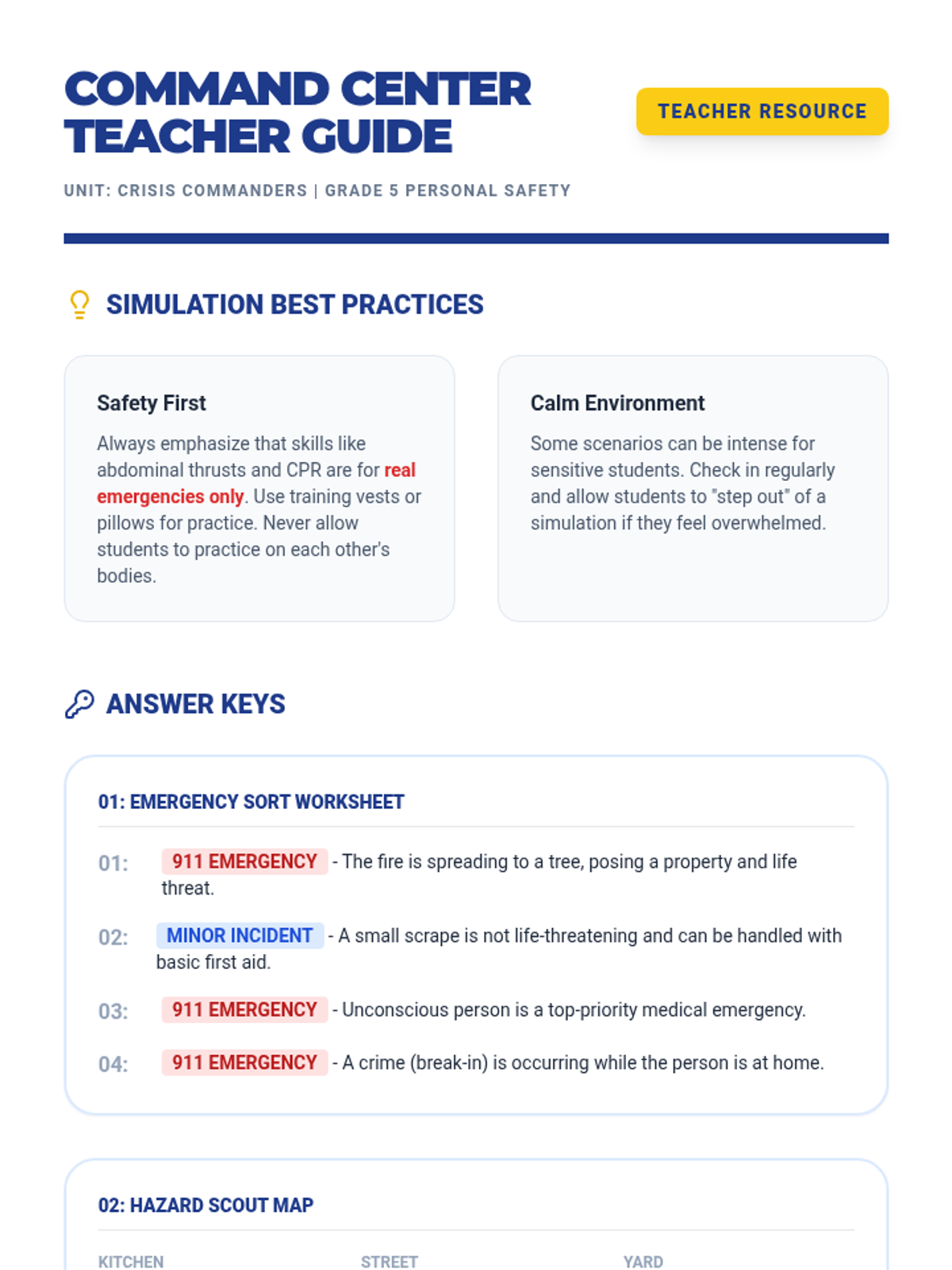
This simulation-rich sequence guides 5th-grade students through recognizing and responding to medical and environmental emergencies. Students learn to differentiate emergencies, communicate with 911, follow the 'Check, Call, Care' framework, apply first aid for wounds and choking, and create fire evacuation plans.
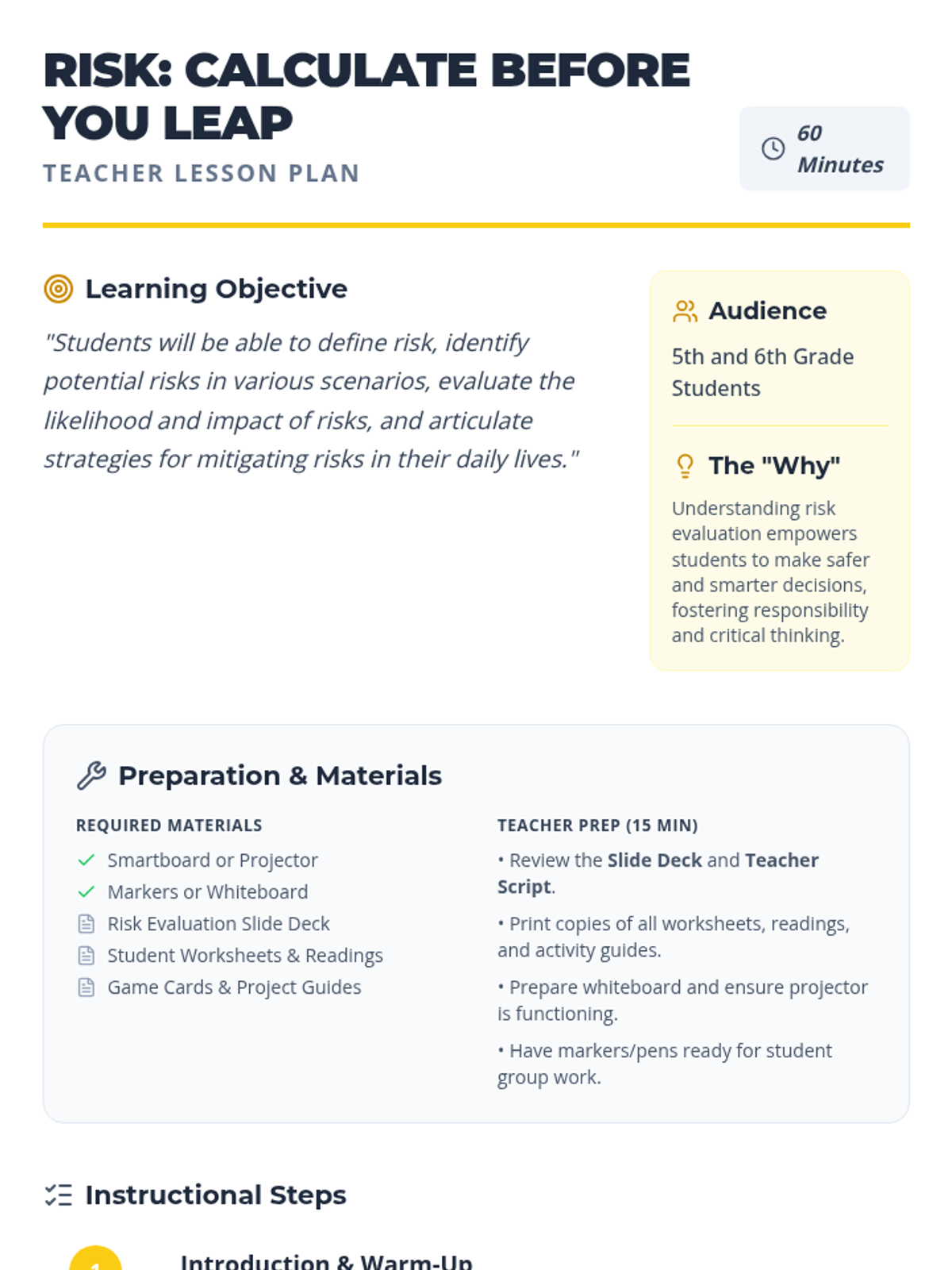
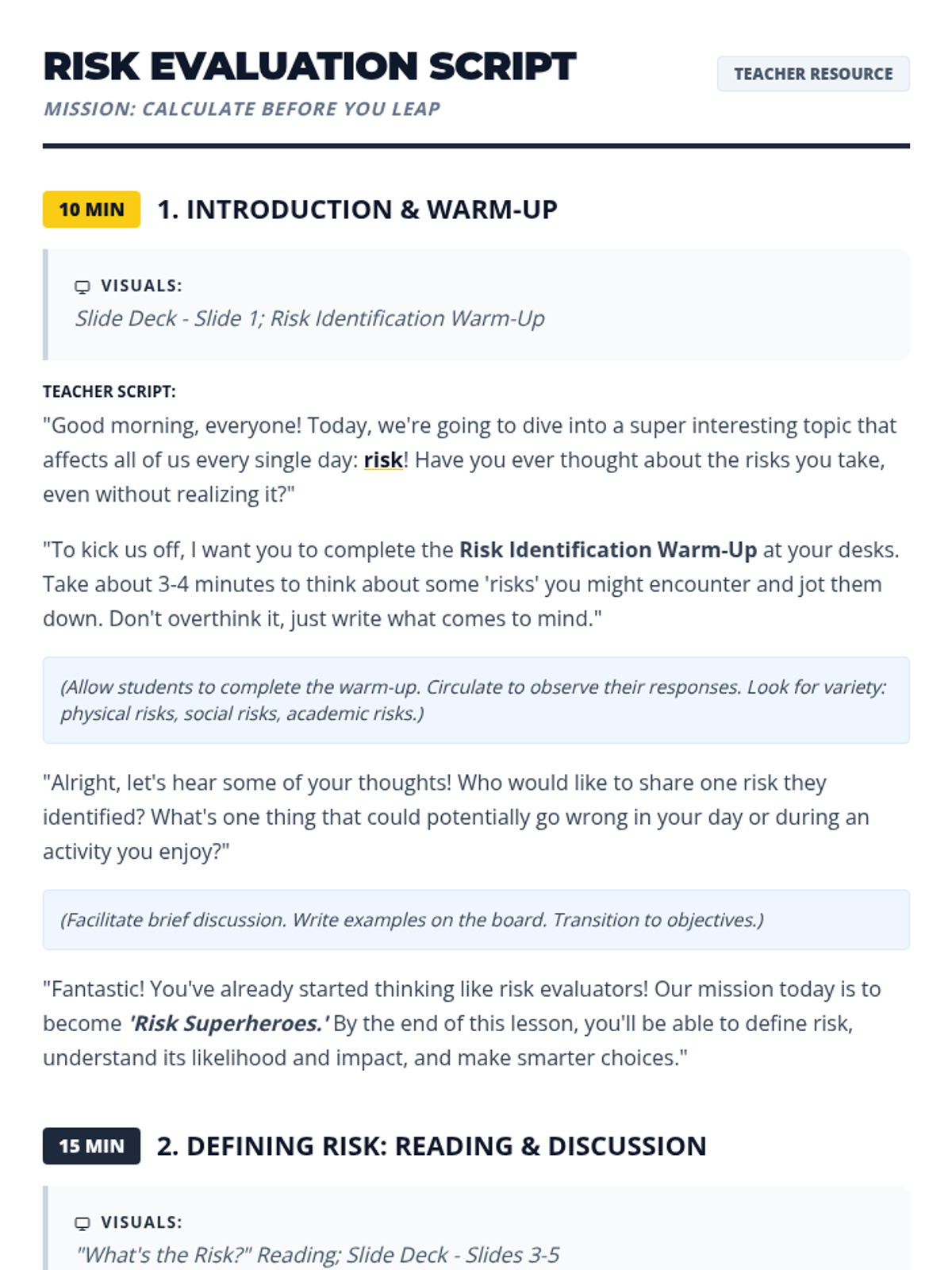
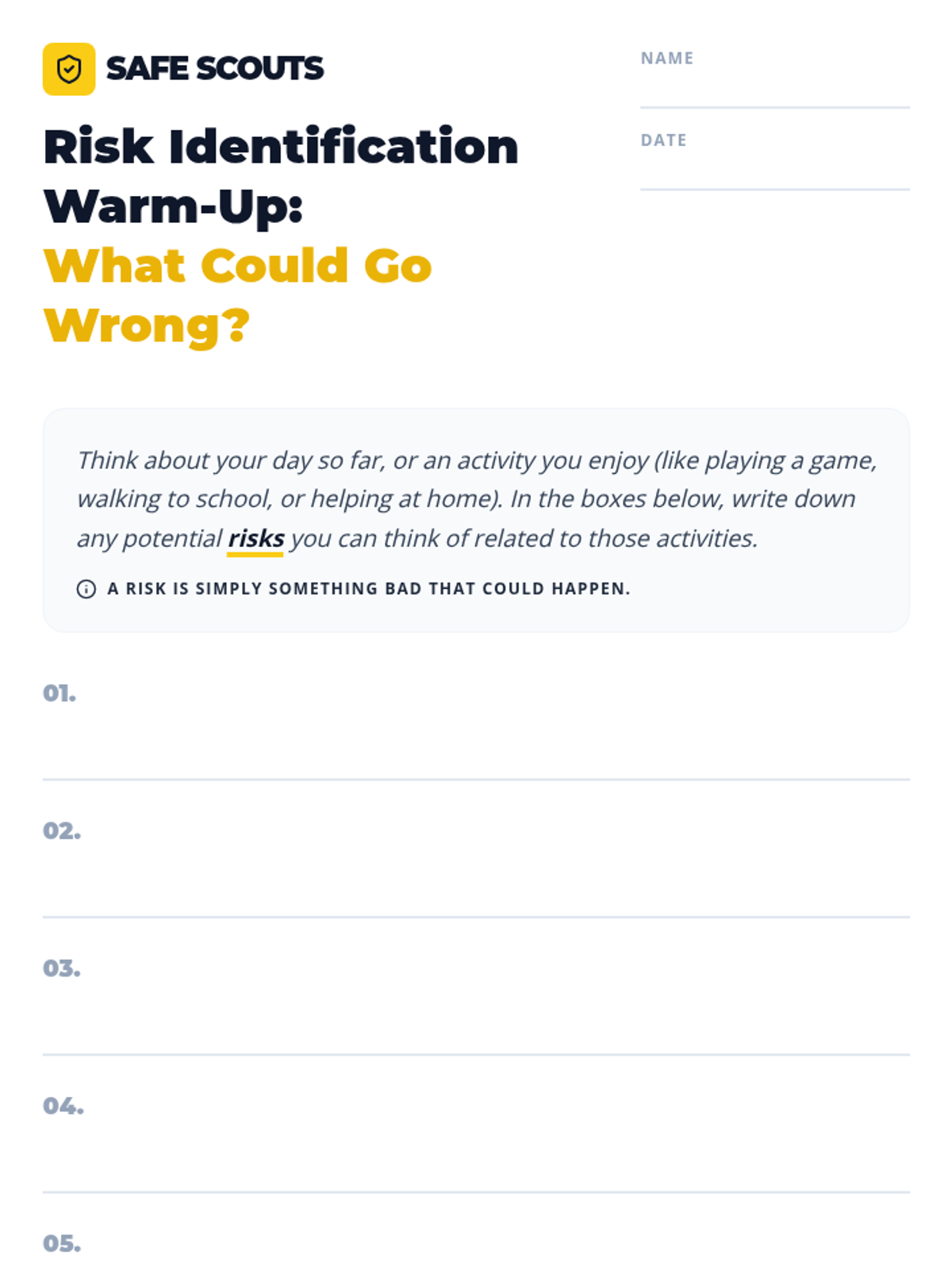
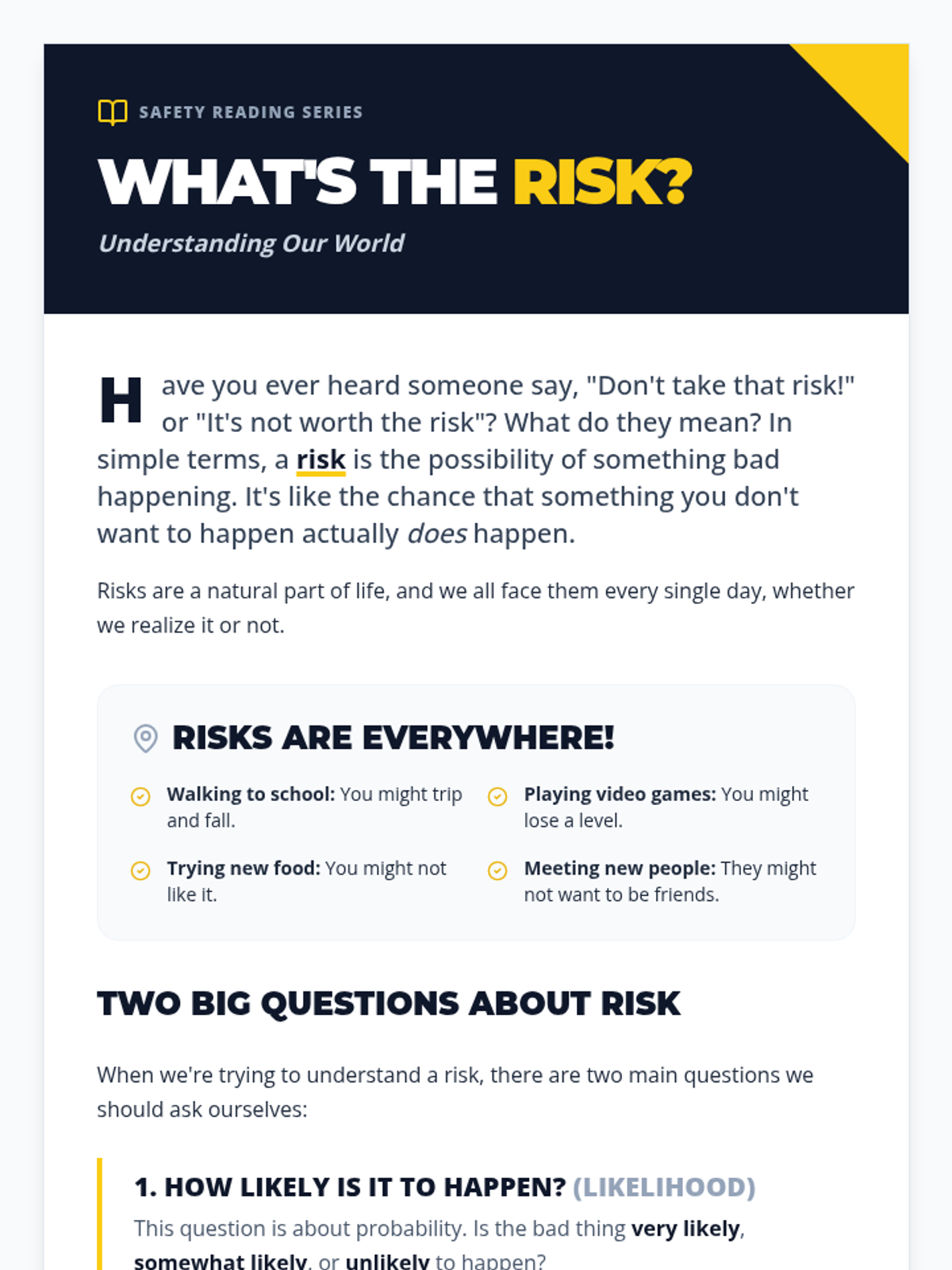
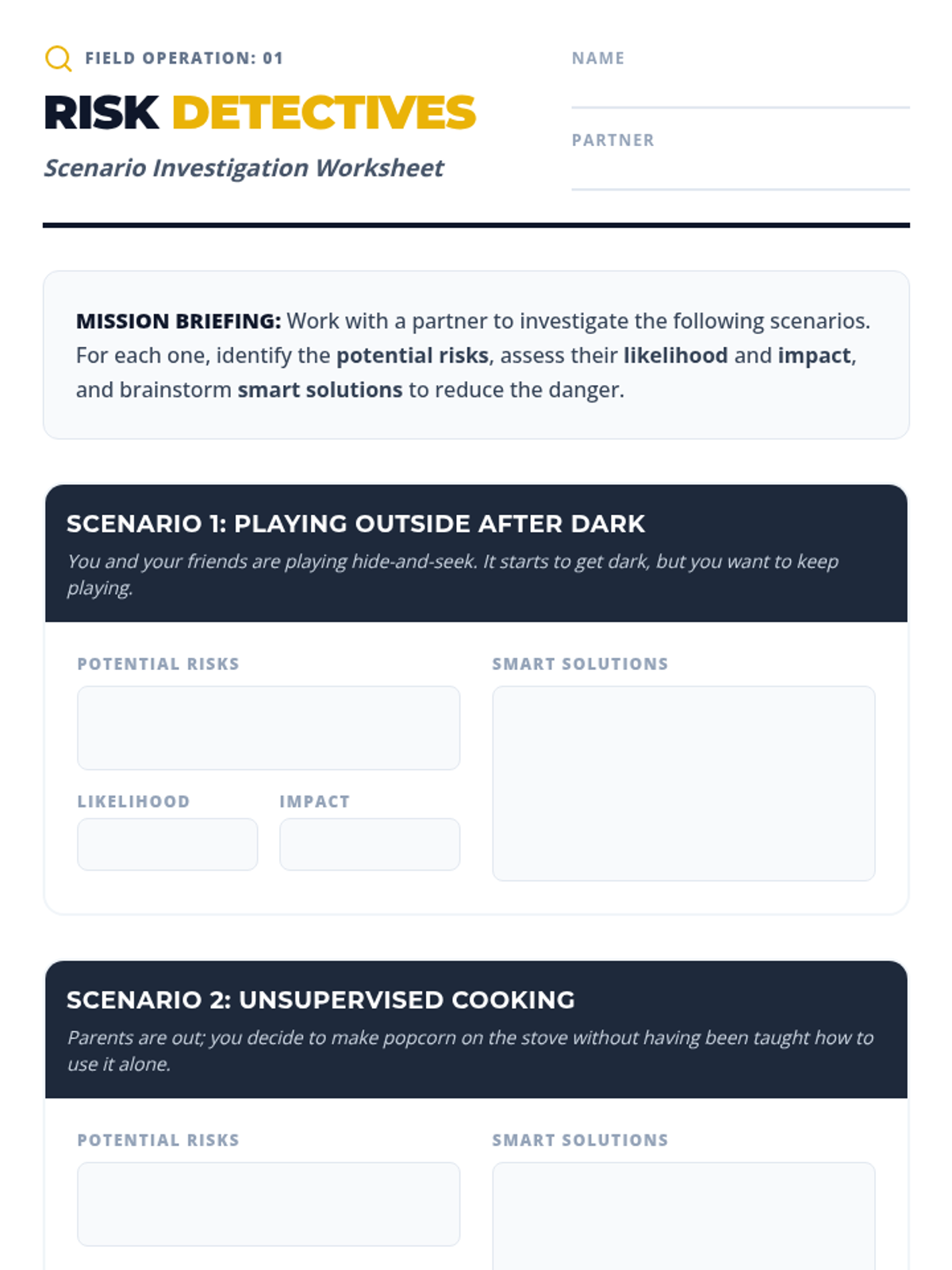
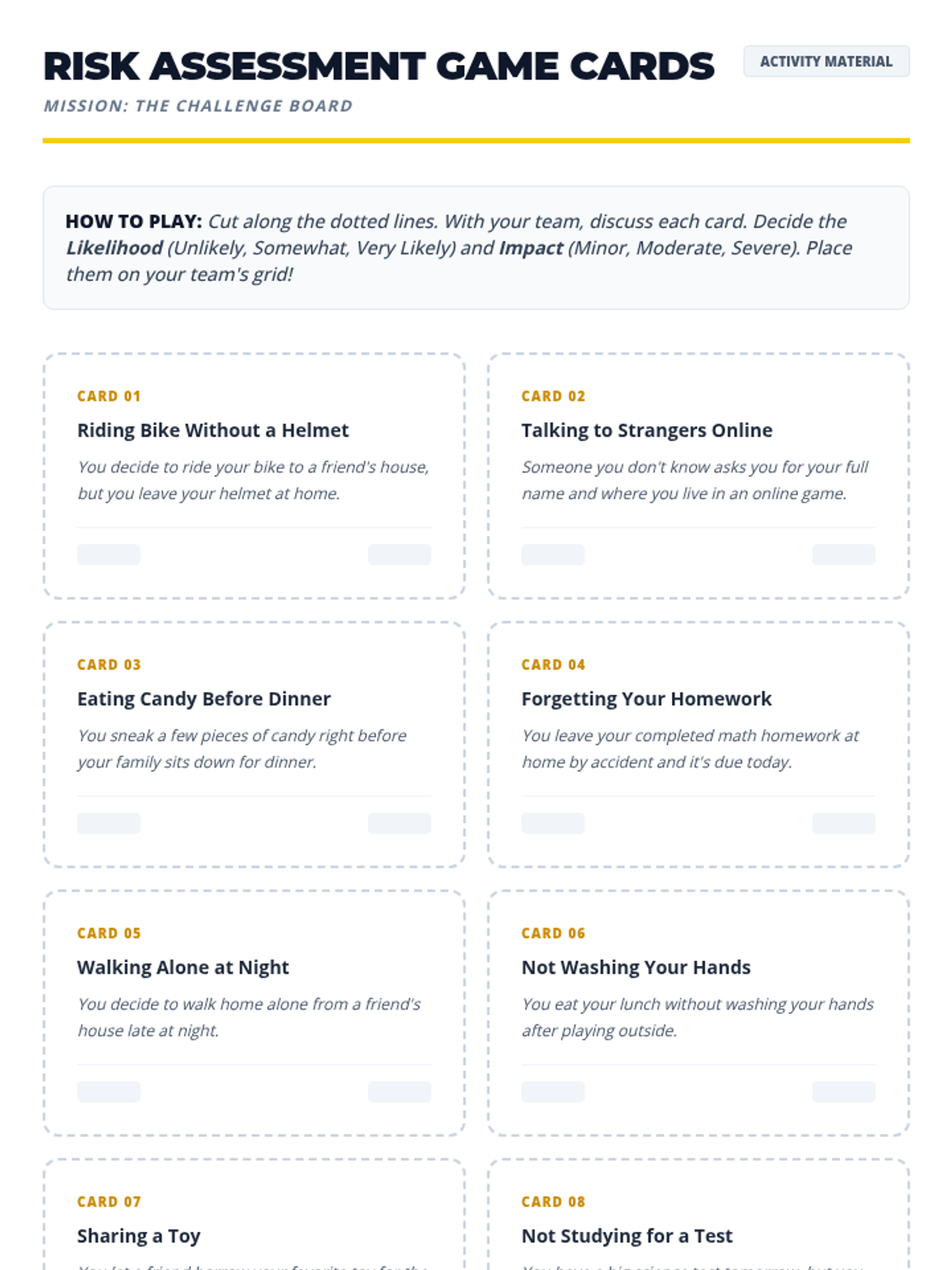
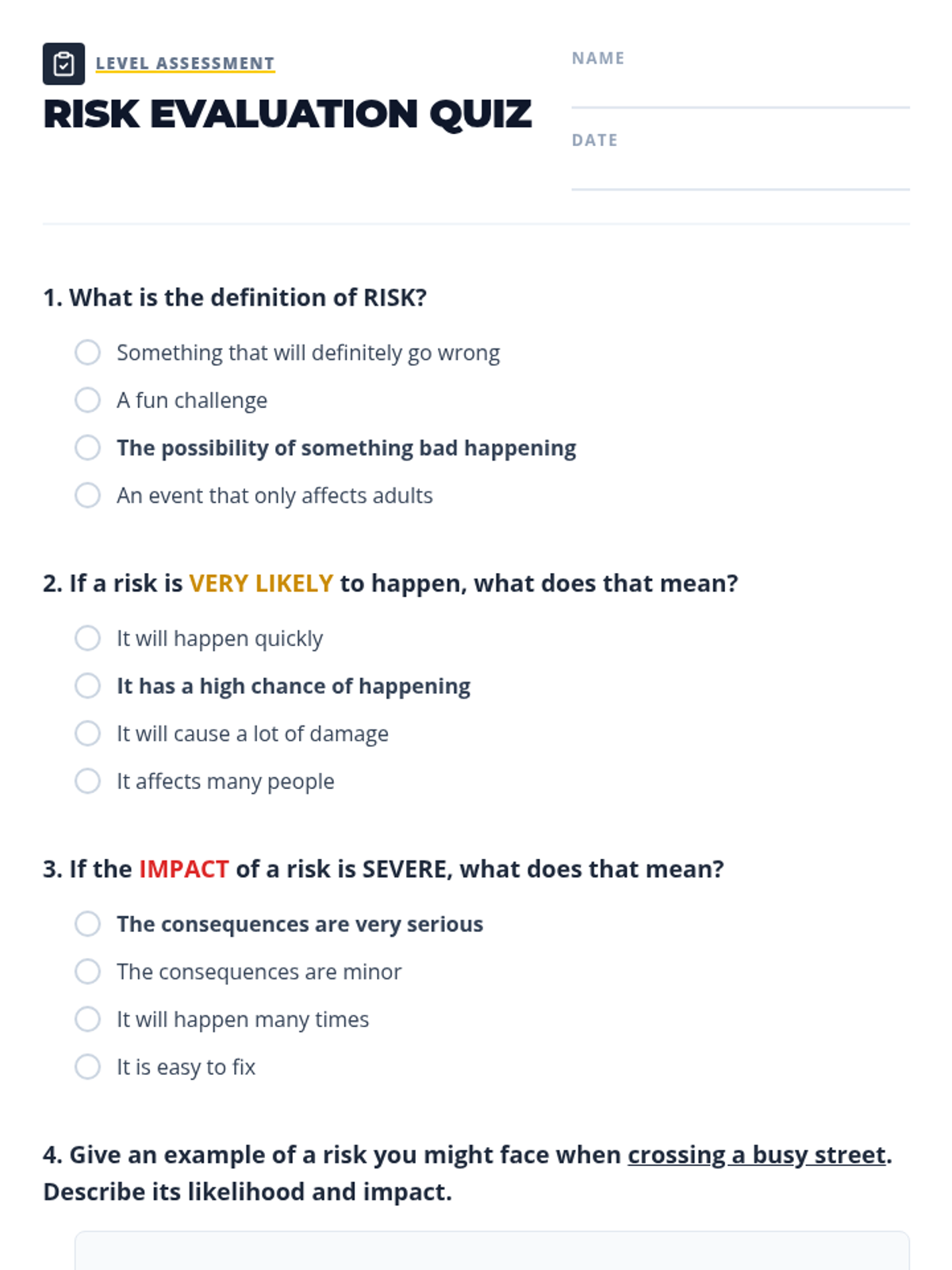
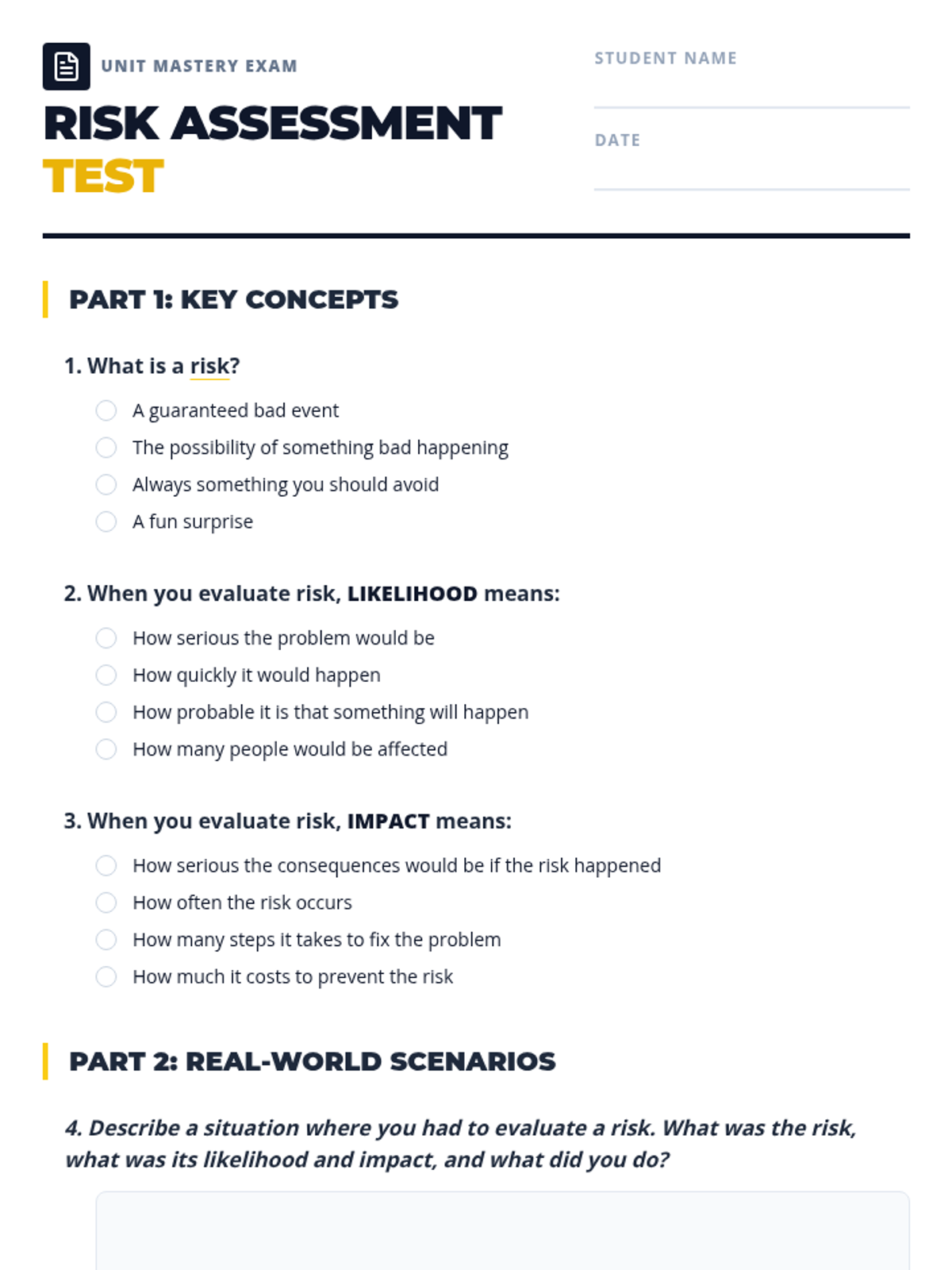
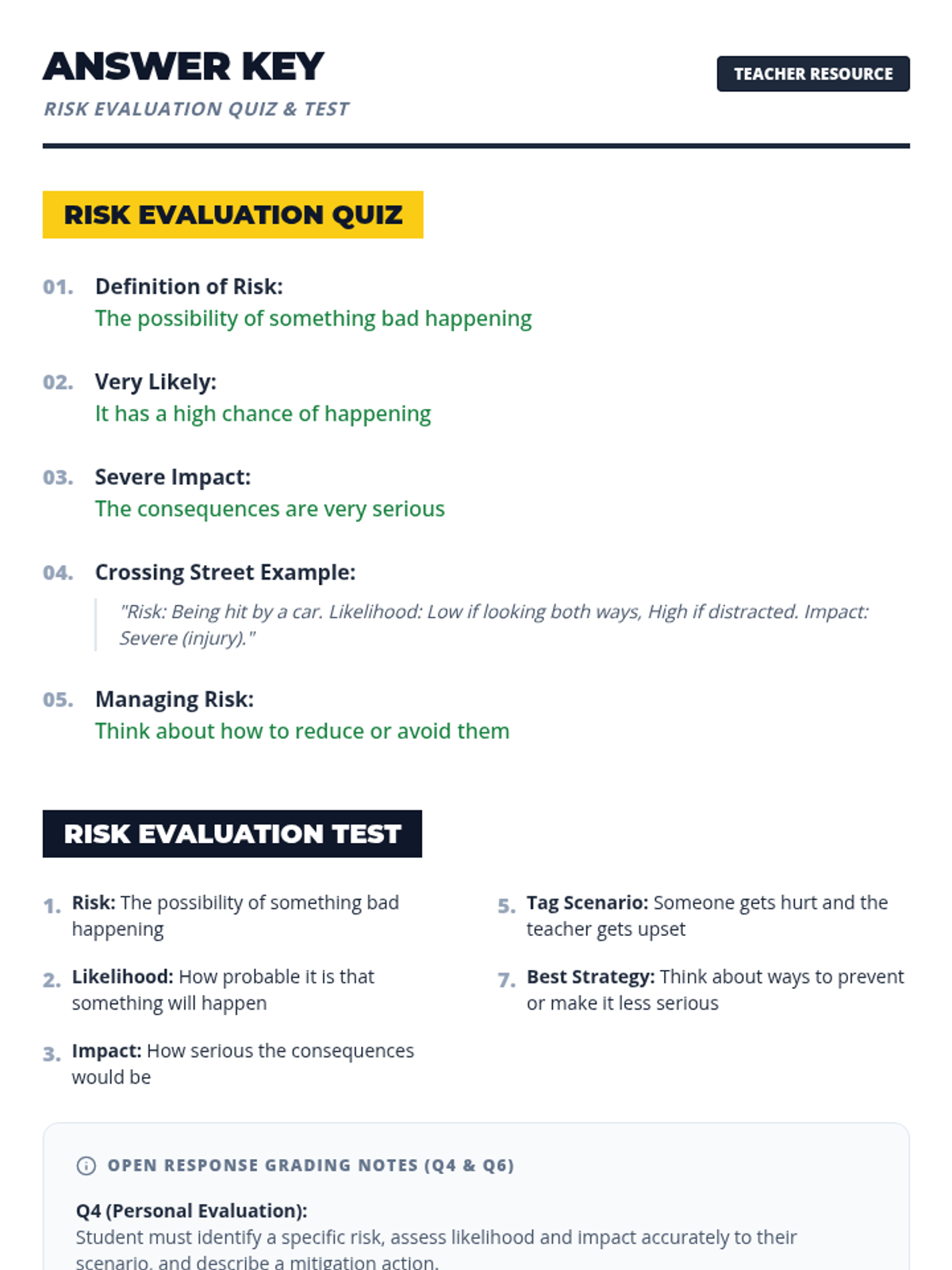
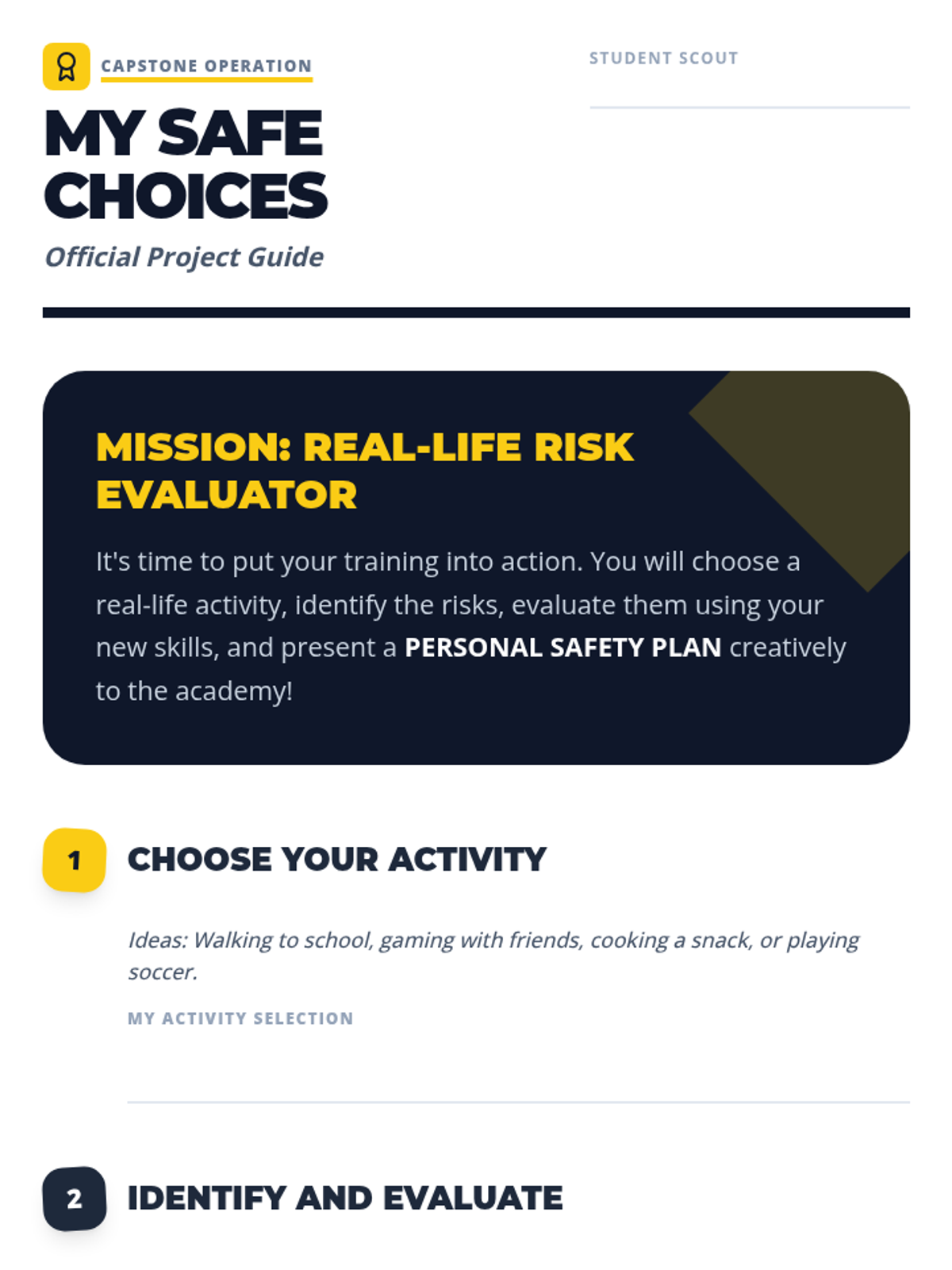
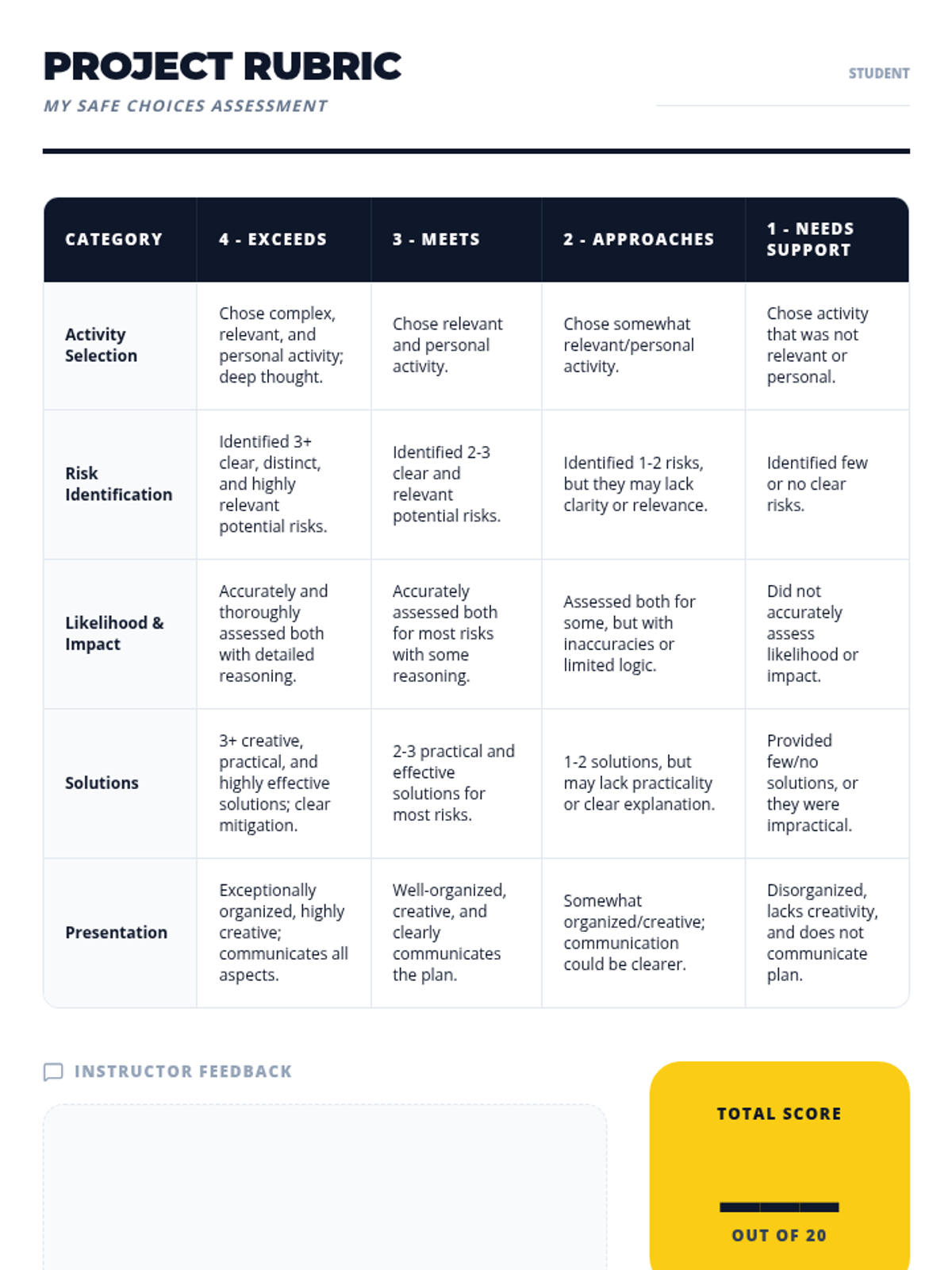
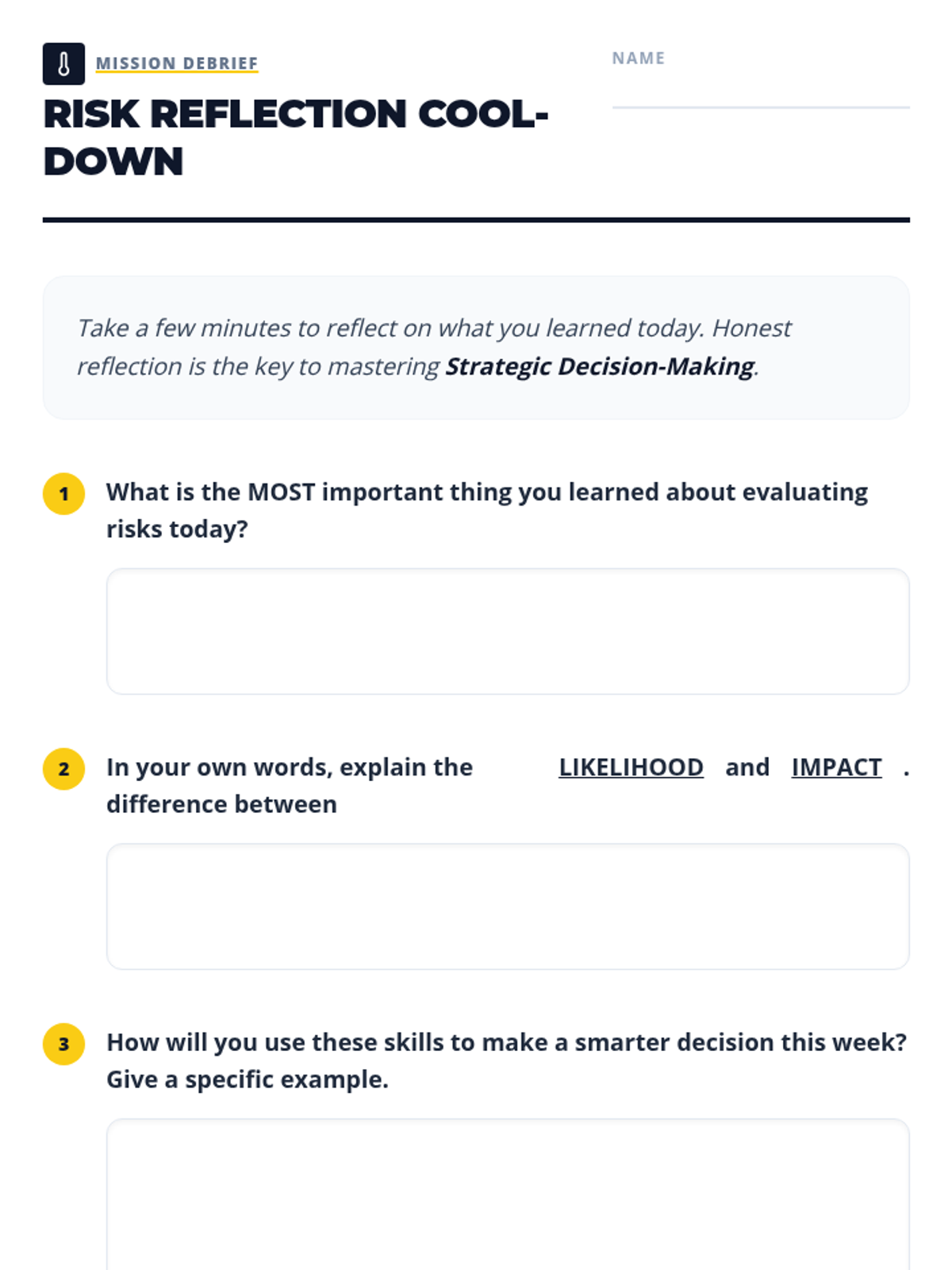
A unit focused on empowering middle school students to navigate the world safely by understanding and evaluating risks. Students learn to assess likelihood and impact while developing practical mitigation strategies.
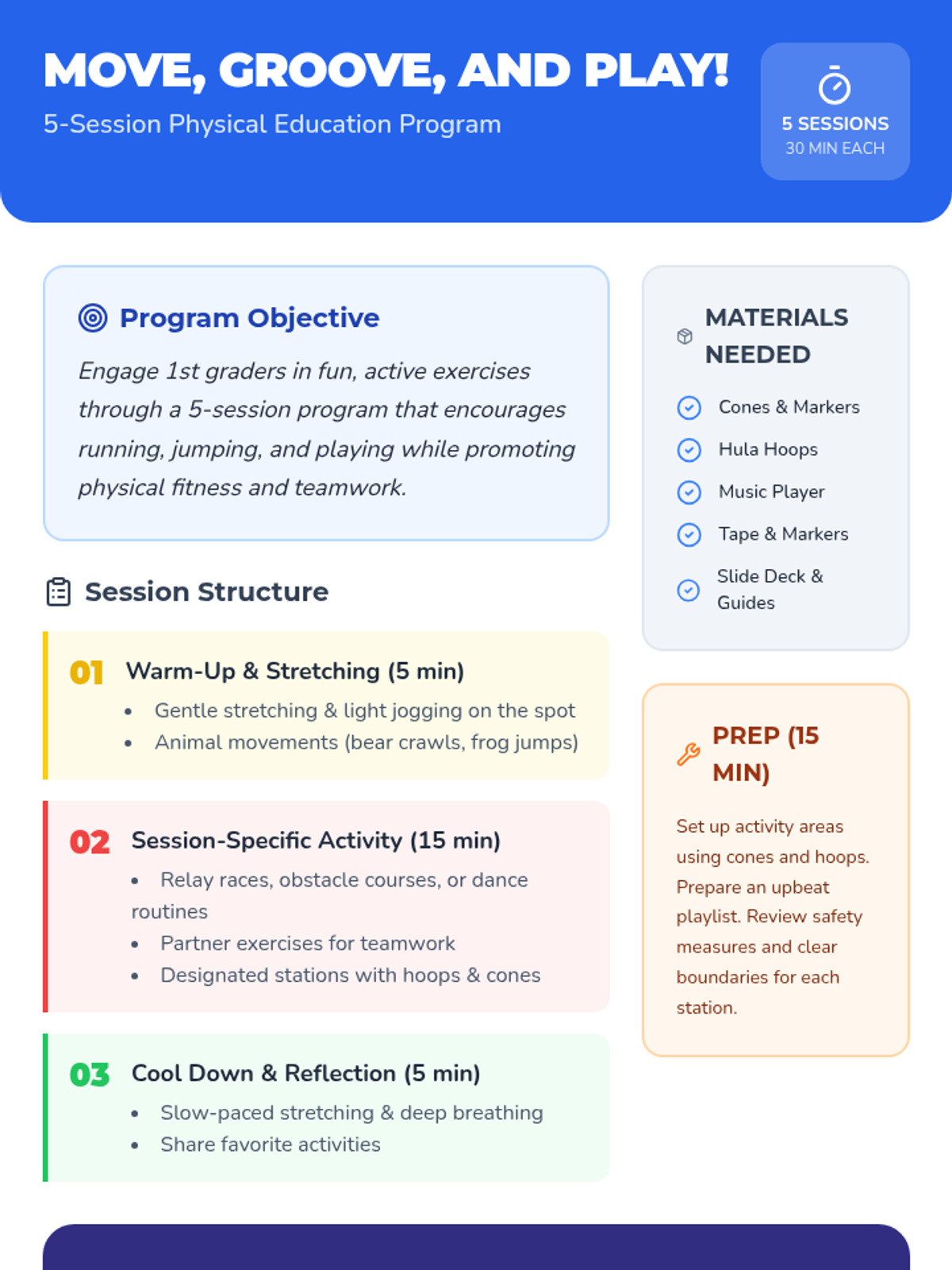
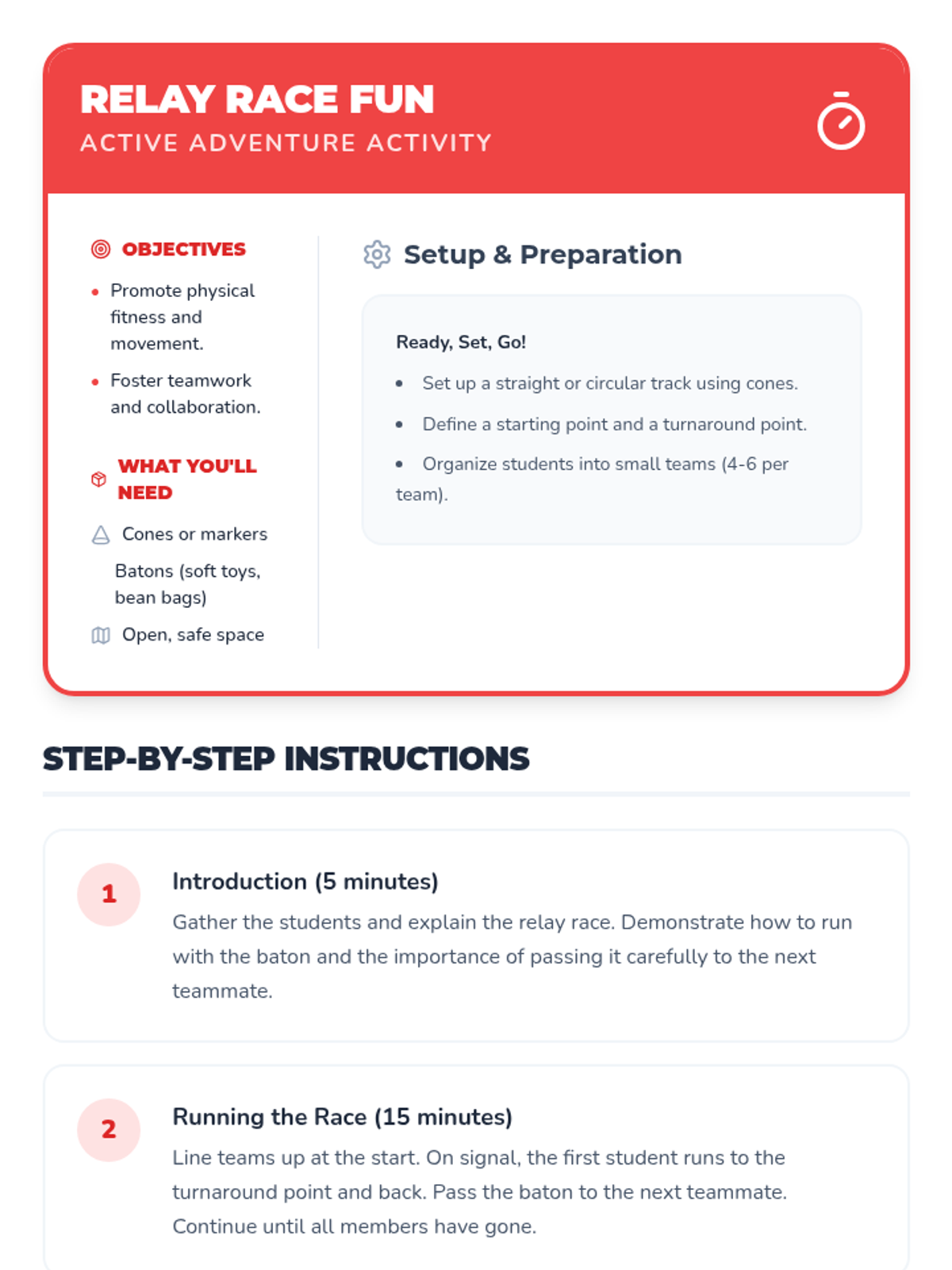
A 5-session physical education program for young learners focused on building healthy habits, motor skills, and teamwork through fun circuit-style exercises and games.
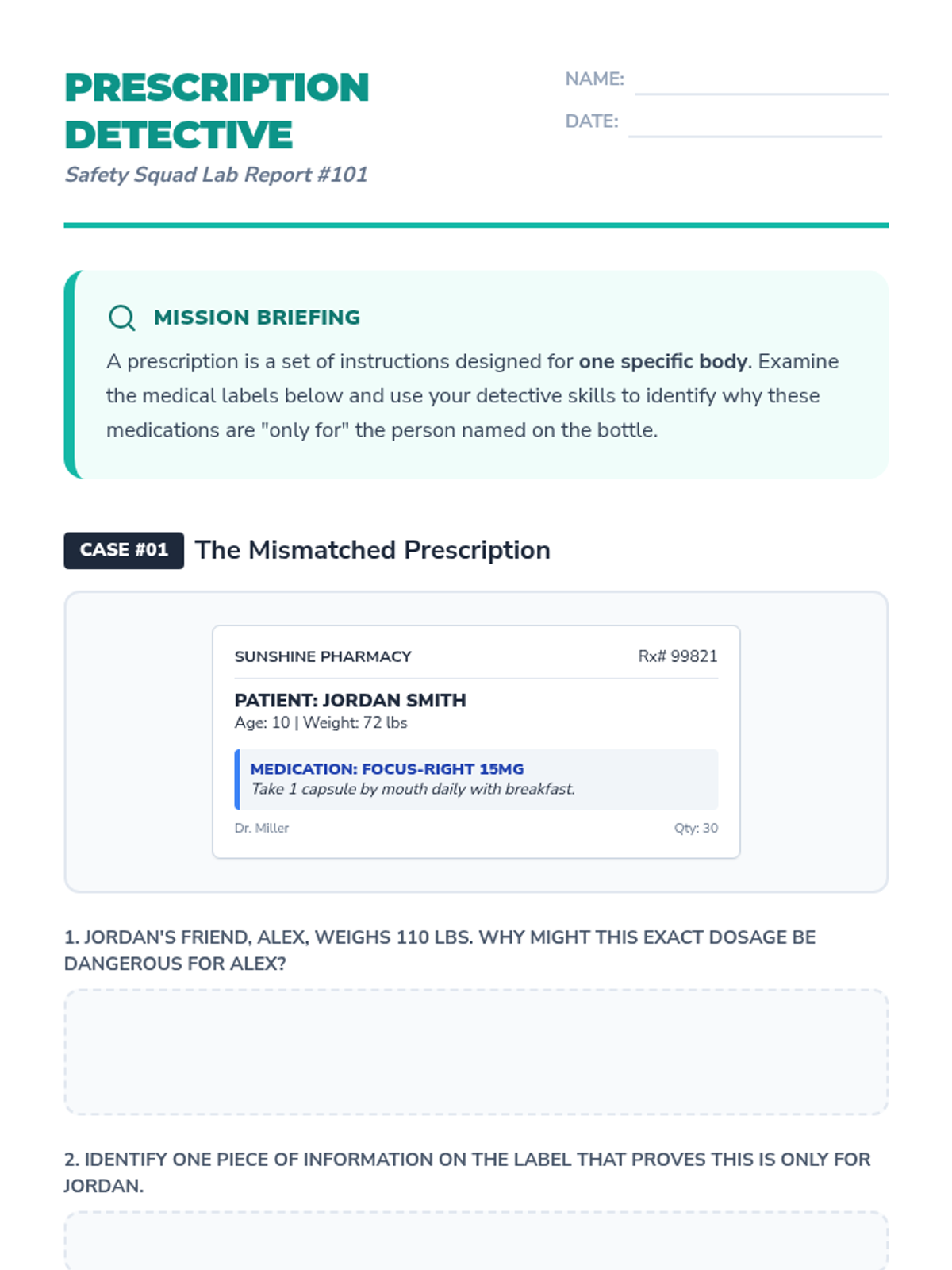
This 5th-grade health sequence teaches students about prescription safety, focusing on stimulants and ADHD medication. Through case studies, brain science, and role-playing, students learn that medication is a personalized medical tool, not a sharable item, and develop skills to navigate peer pressure and identify trusted adults.
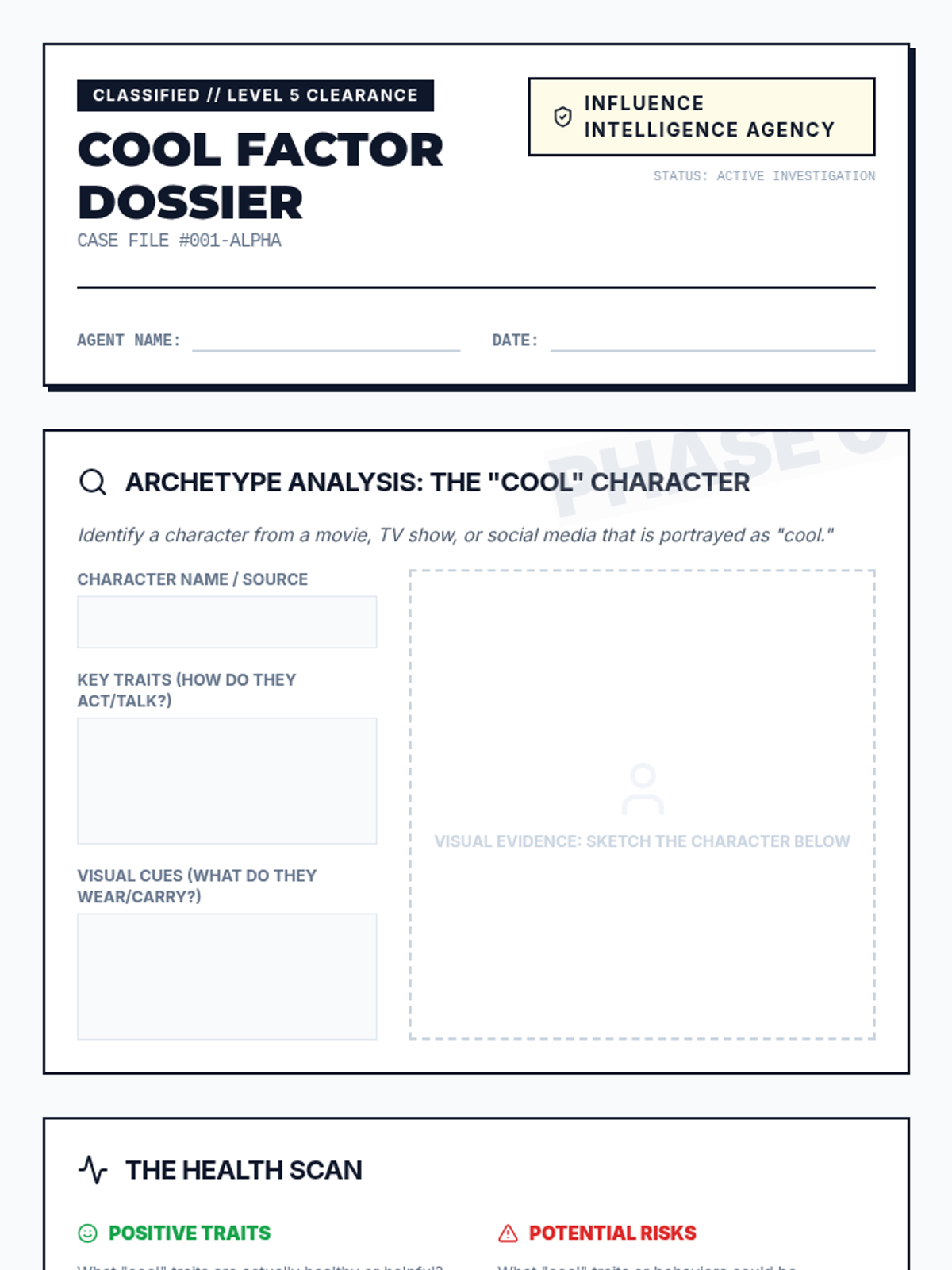
A 5th-grade health sequence that empowers students to deconstruct peer pressure tactics and media influence through a 'social analyst' lens. Students move from identifying the 'cool' factor to analyzing specific manipulation tactics and digital pressure, ultimately mastering effective refusal strategies.
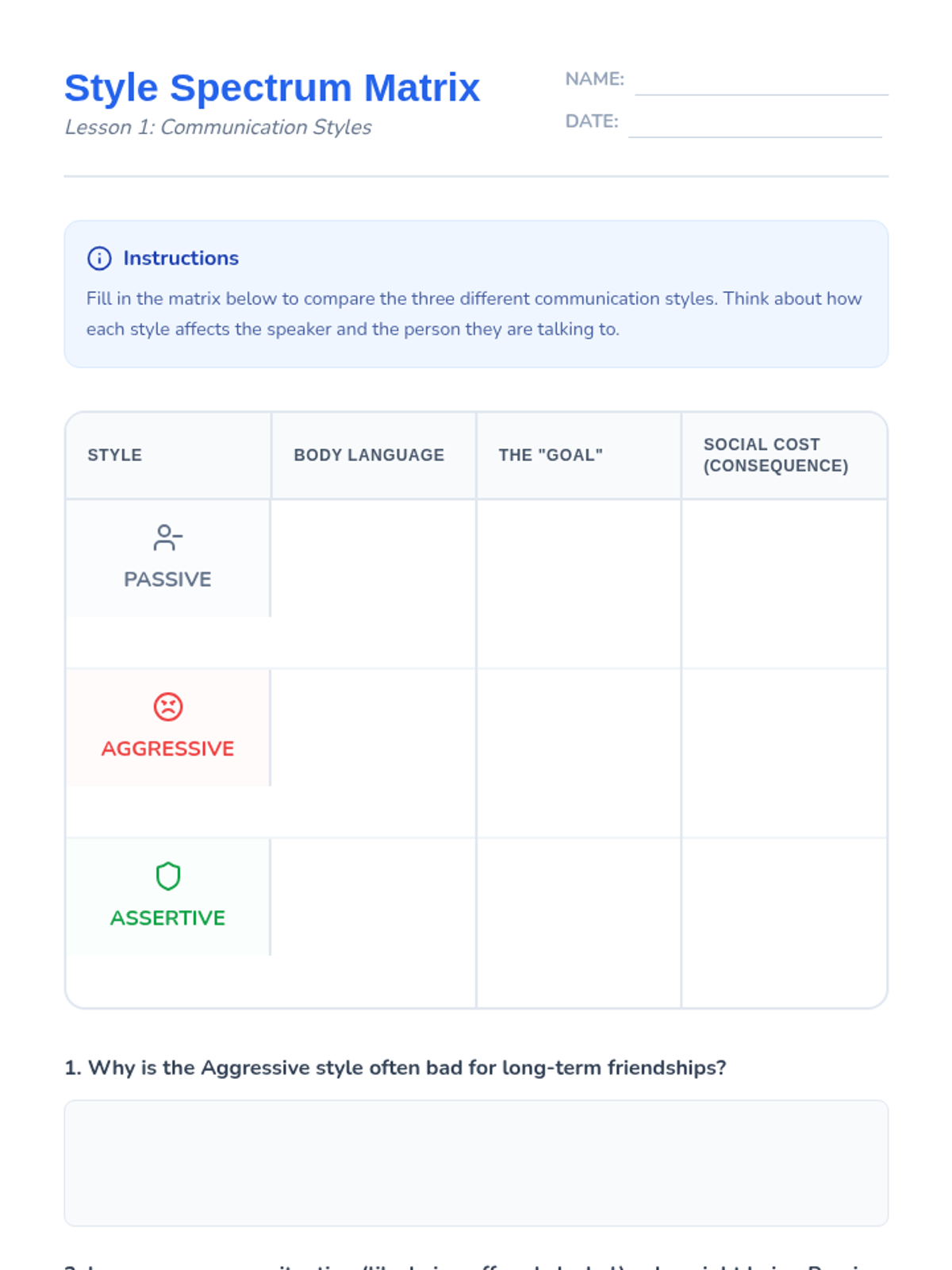
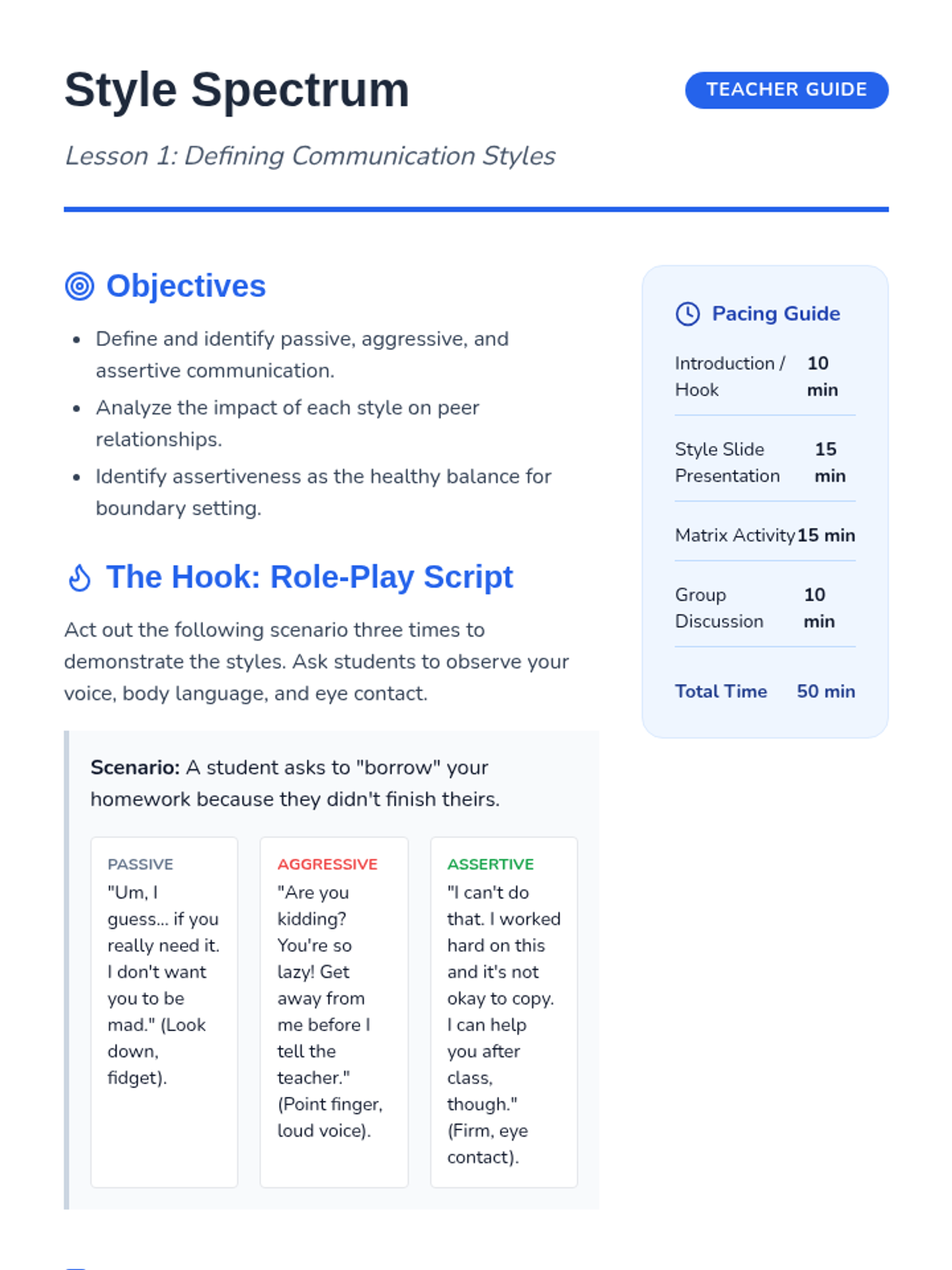
A 5th-grade Health and PE unit focused on substance awareness and peer pressure. Students transition from passive or aggressive communication to assertive boundary setting using 'I' statements and persistence techniques.
A comprehensive 5-lesson sequence for 5th-grade students to master refusal skills and manage peer pressure regarding tobacco and vaping. Students move from identifying pressure to practicing specific verbal and non-verbal techniques, culminating in learning how to be an ally to others.
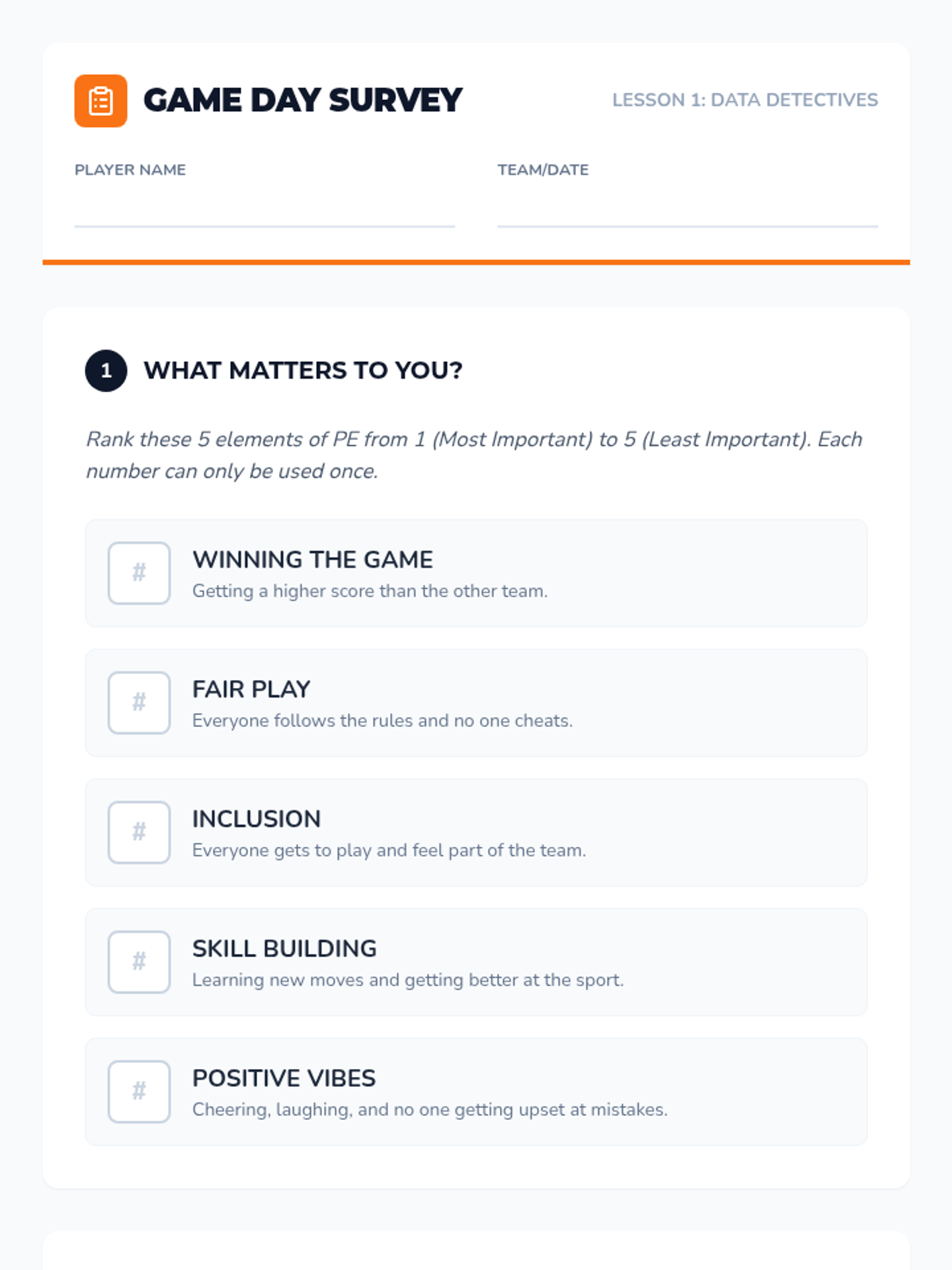
A 5-lesson project-based sequence where 5th graders define the culture of their PE class by drafting and ratifying a Class Sports Charter. This sequence moves students from abstract concepts of fairness to concrete democratic rule-making and accountability.