Fundamental techniques for racket sports, track and field, and gymnastics maneuvers. Develops physical literacy through martial arts disciplines and self-defense strategies.
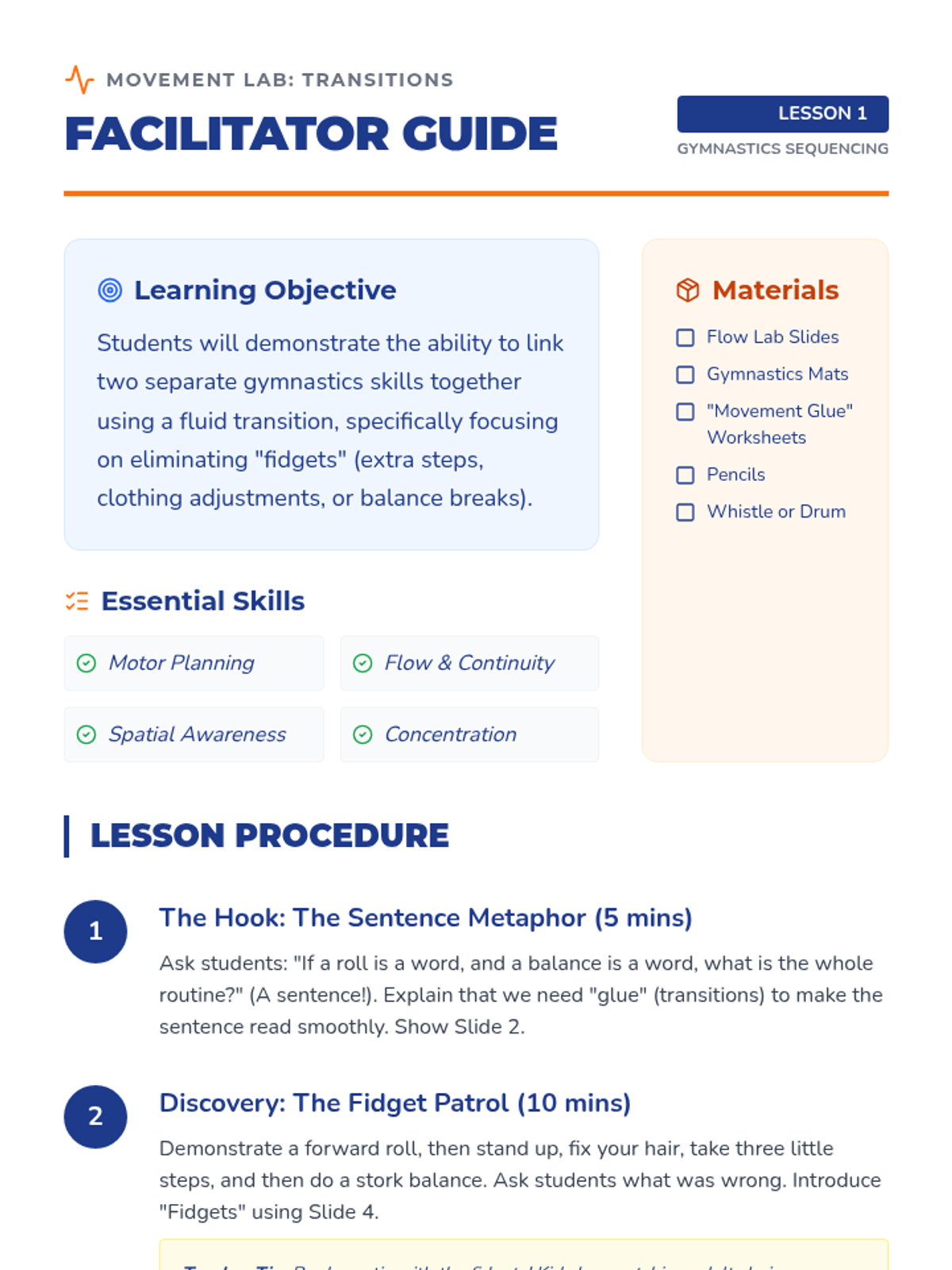
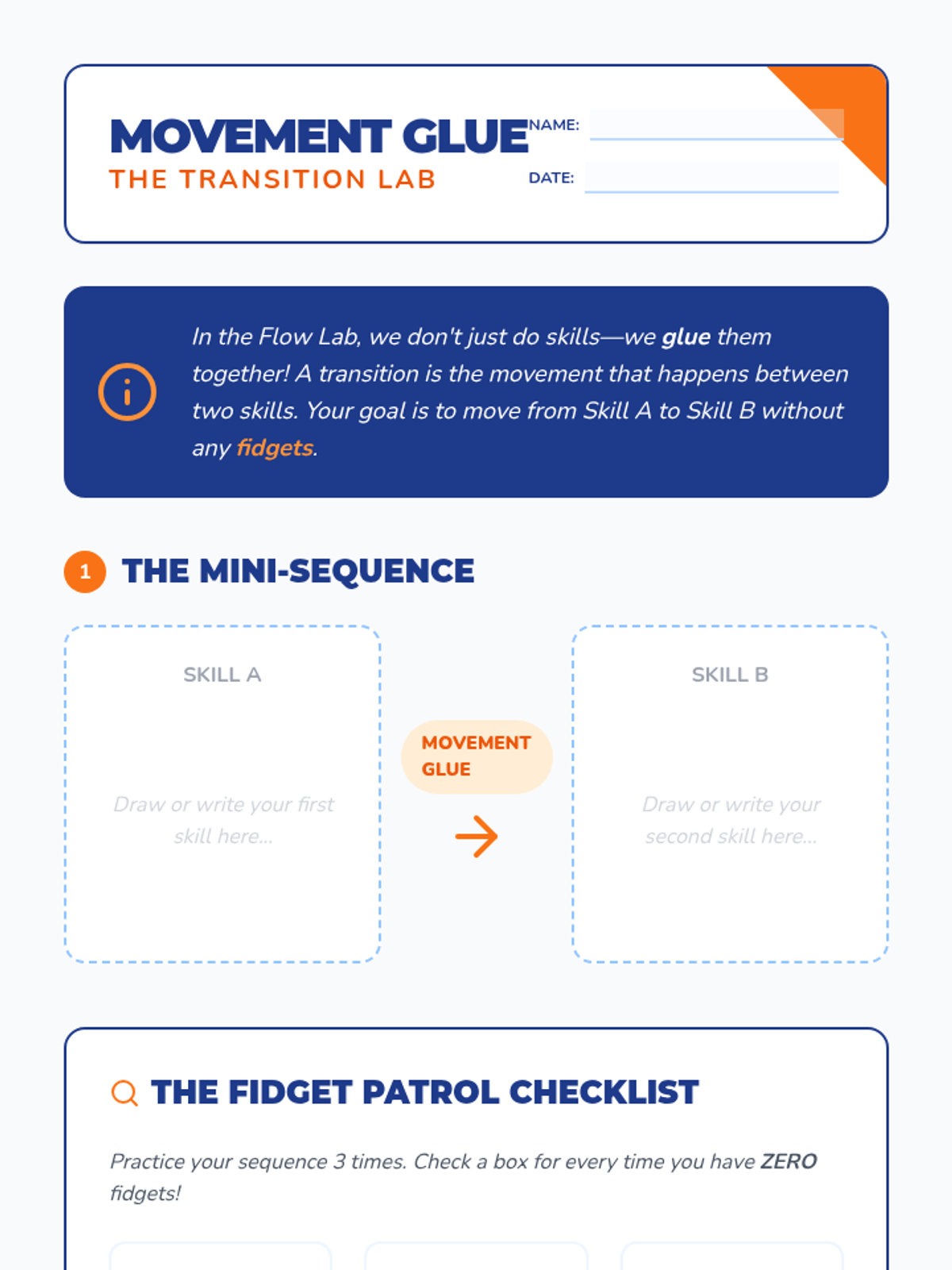
This culminating sequence focuses on linking individual skills into coherent routines. Students explore transitions, rhythm, and the aesthetic components of gymnastics. They will collaborate to sequence movements logically and perform a short routine, emphasizing the connection between physical skill and artistic expression.
A 5th-grade gymnastics unit focused on synthesizing individual skills into fluid floor routines. Students progress from lateral rotation and linear balance to choreography, culminating in a formal performance with peer feedback.
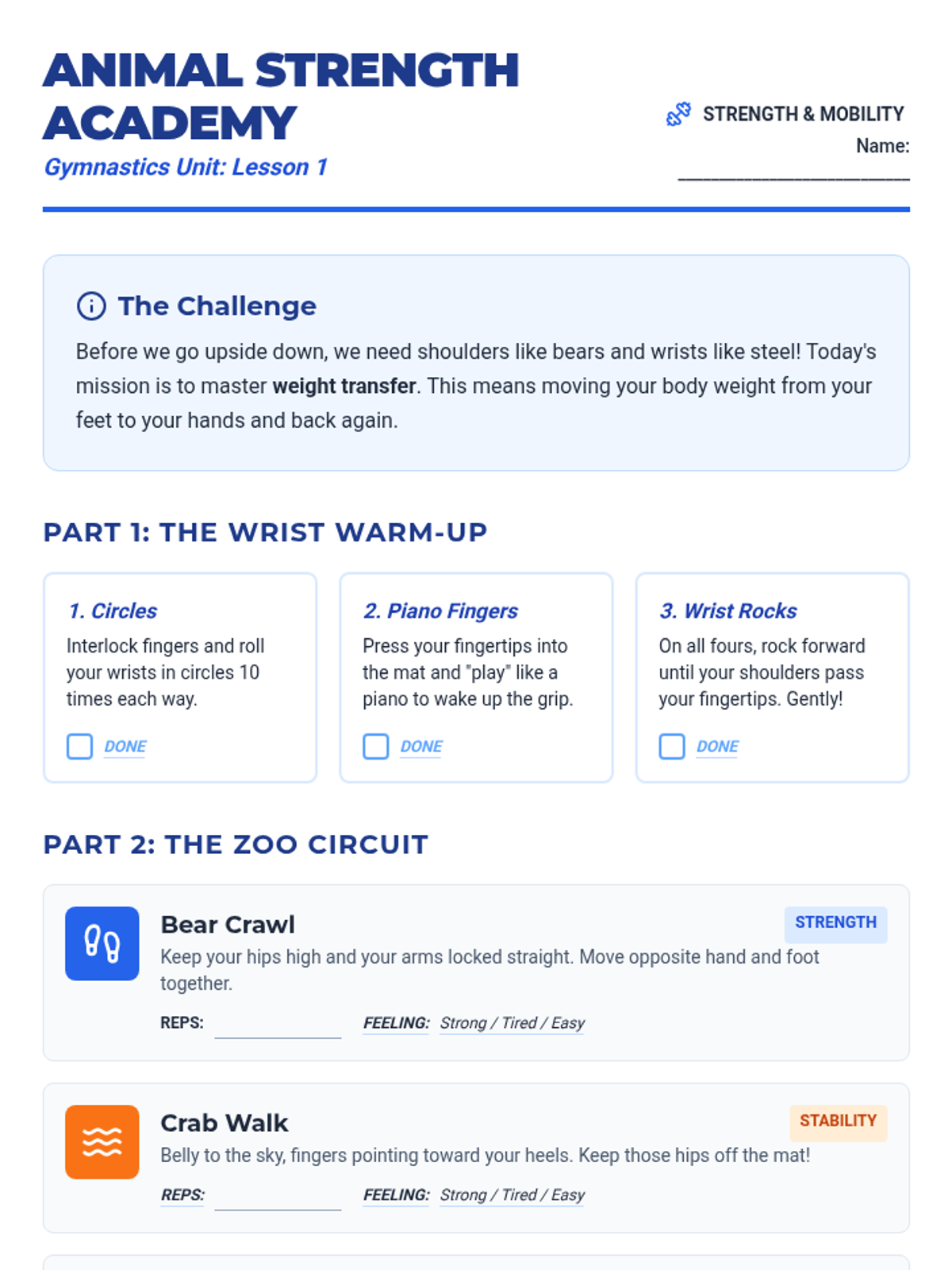
A 5th-grade gymnastics unit focusing on weight transfer, inverted balances, and vaulting mechanics. Students progress from animal walks to handstands and explosive vaulting take-offs.
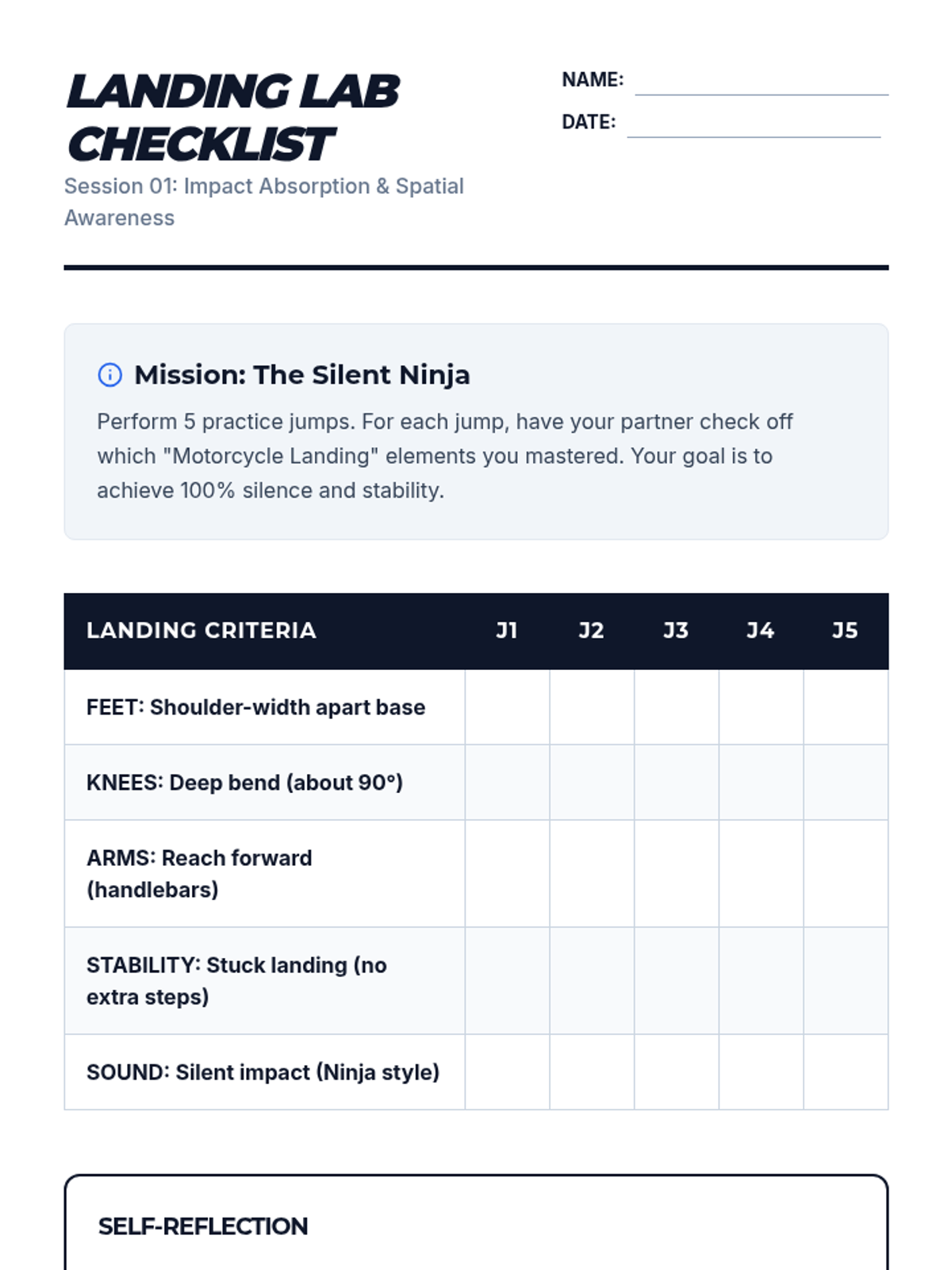
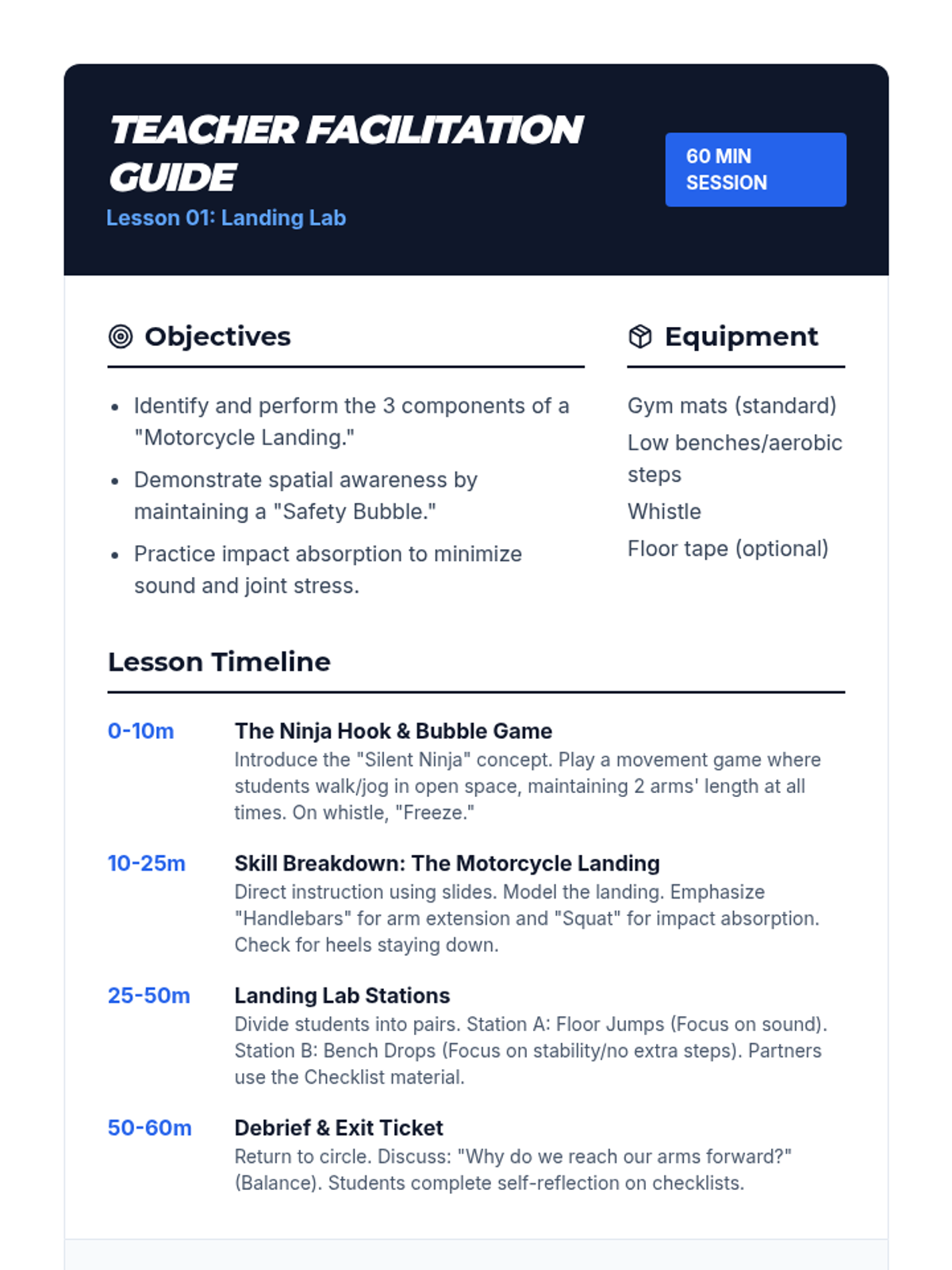
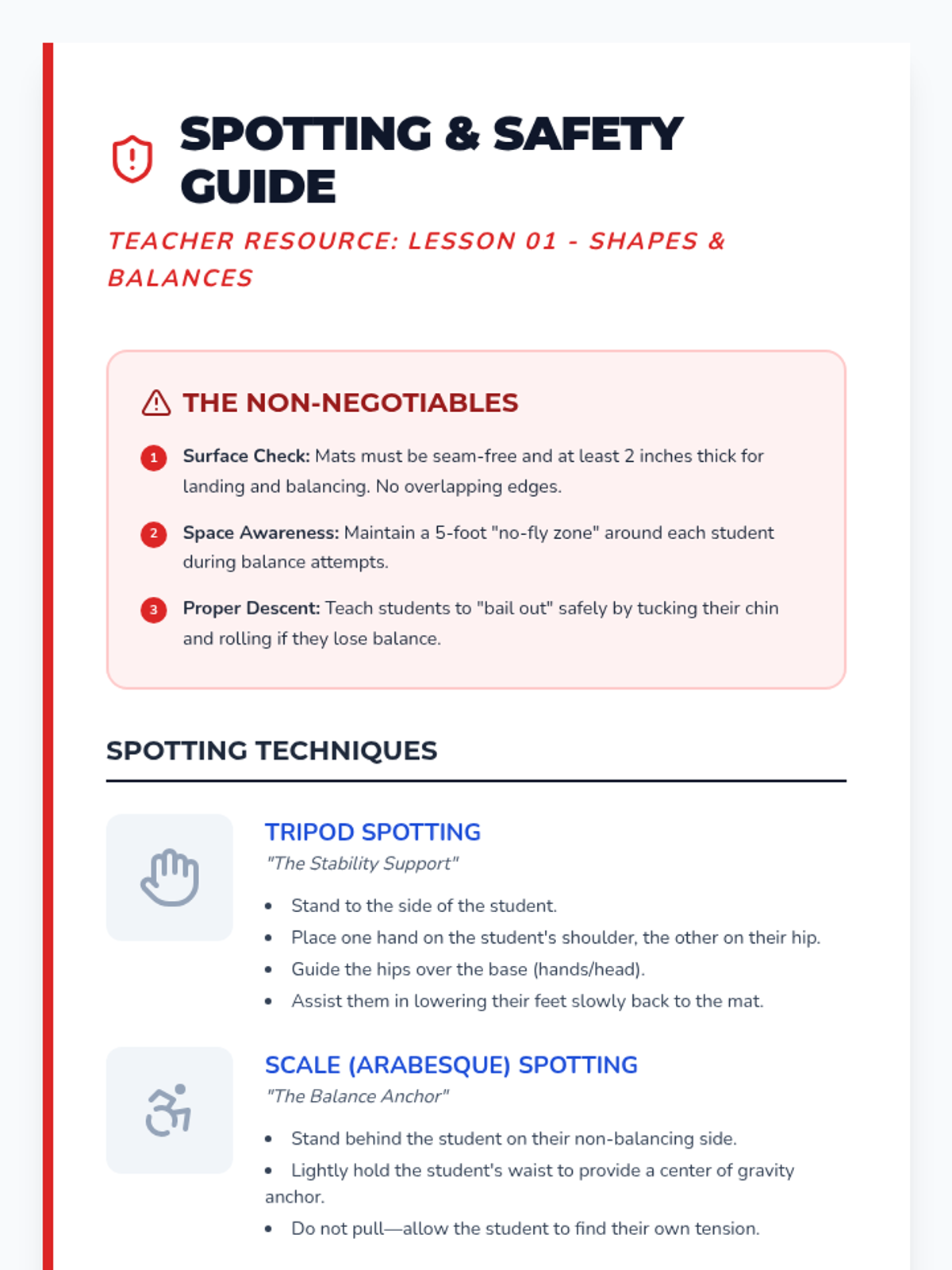
This sequence introduces 5th-grade students to gymnastics fundamentals, prioritizing safety, core tension, and rotational mechanics. Students progress from landing techniques to forward and backward rolls, concluding with movement sequences that link rolls to balances.
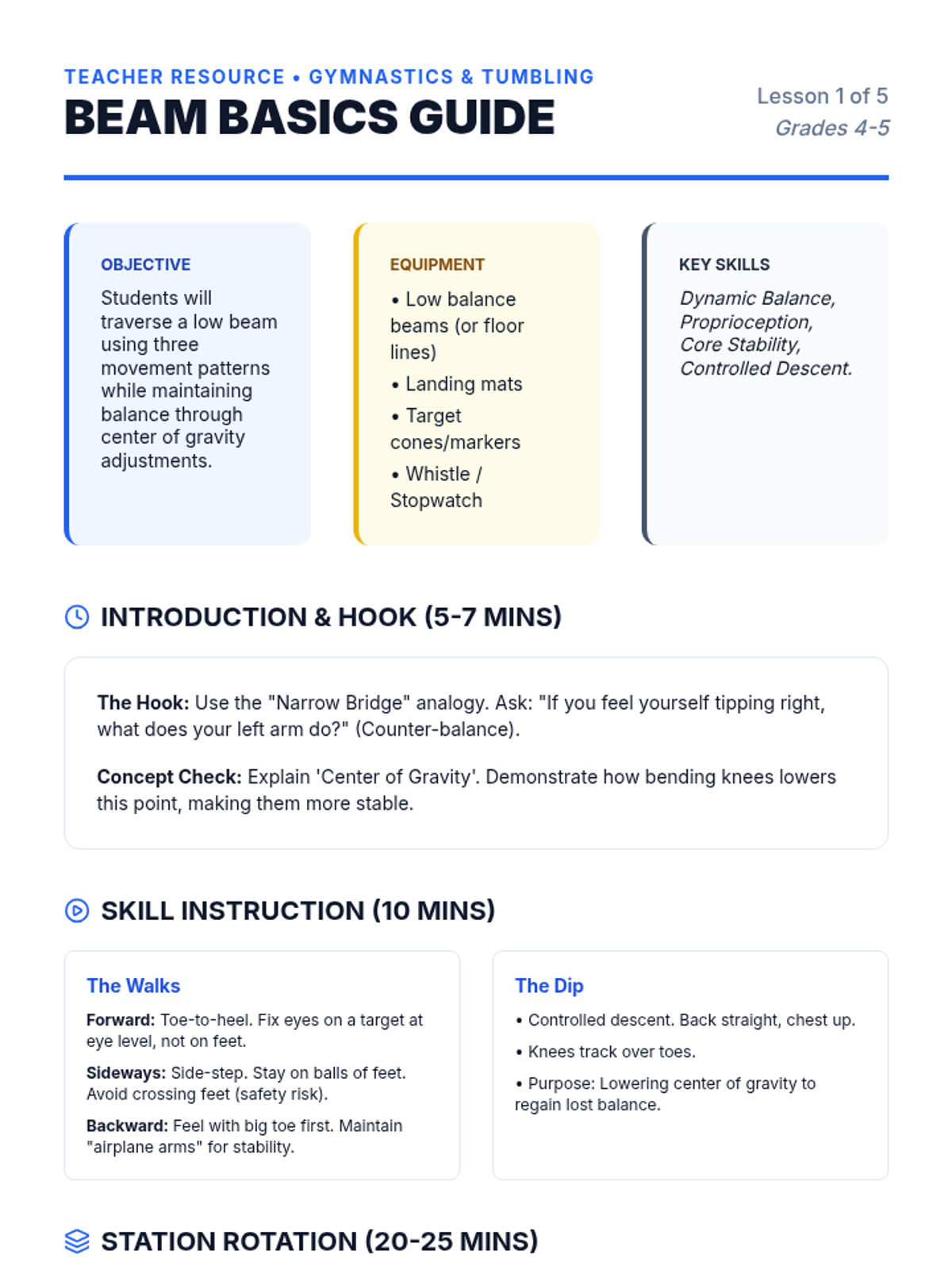
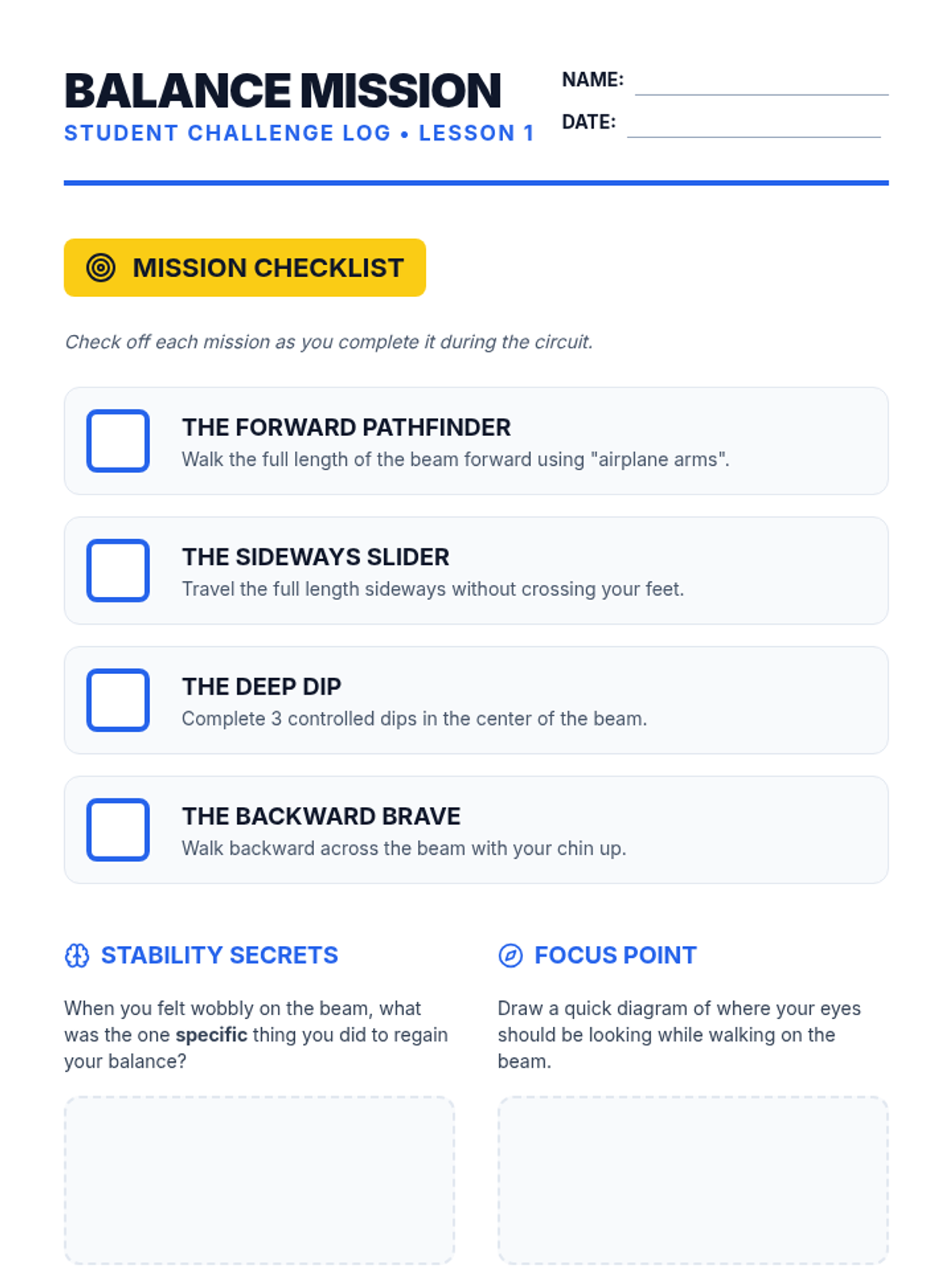
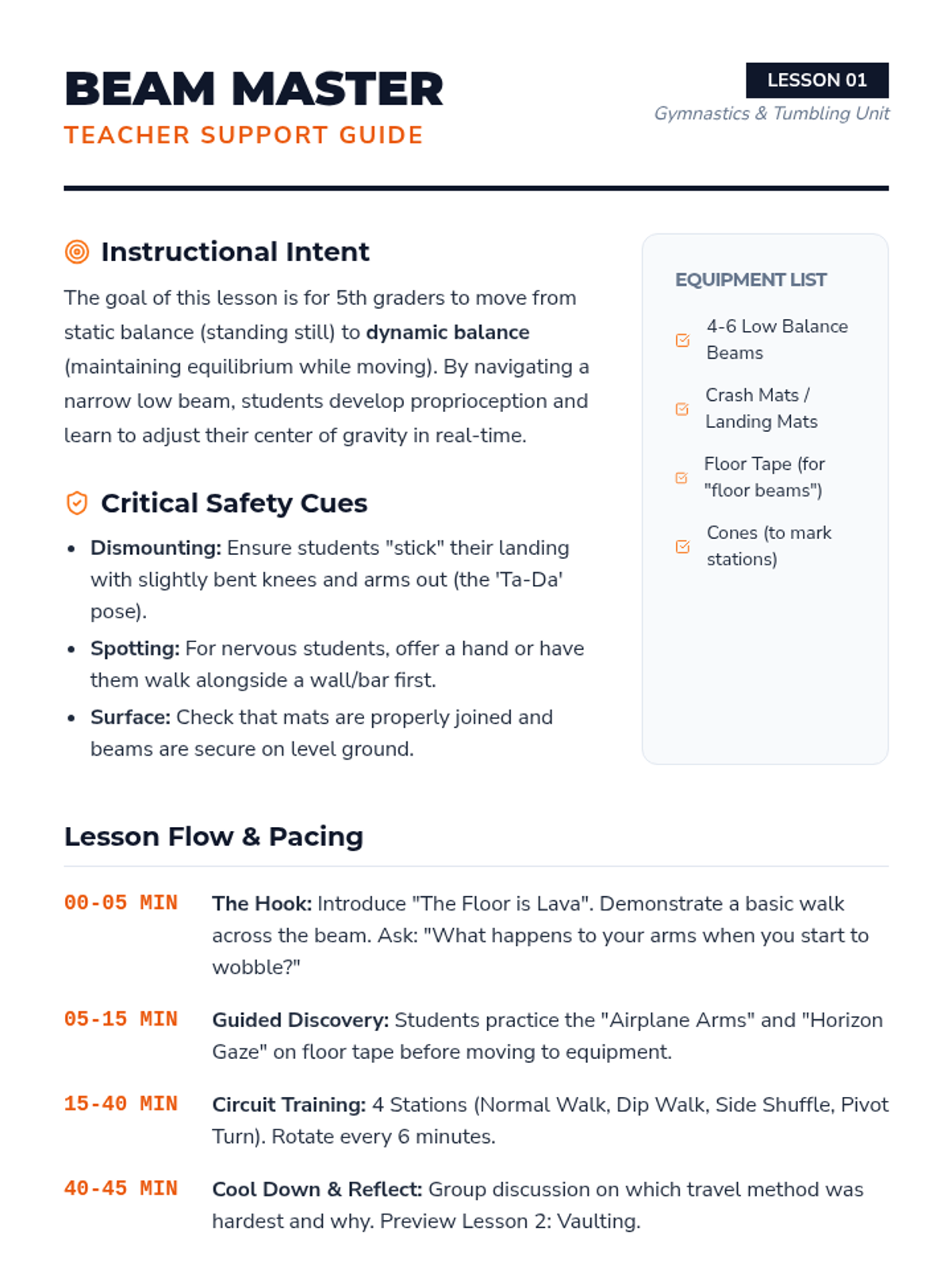
A 5-lesson 4th Grade Gymnastics sequence focusing on low balance beam skills and introductory vaulting mechanics. Students develop dynamic balance, explosive power, and safe landing techniques through station-based learning.
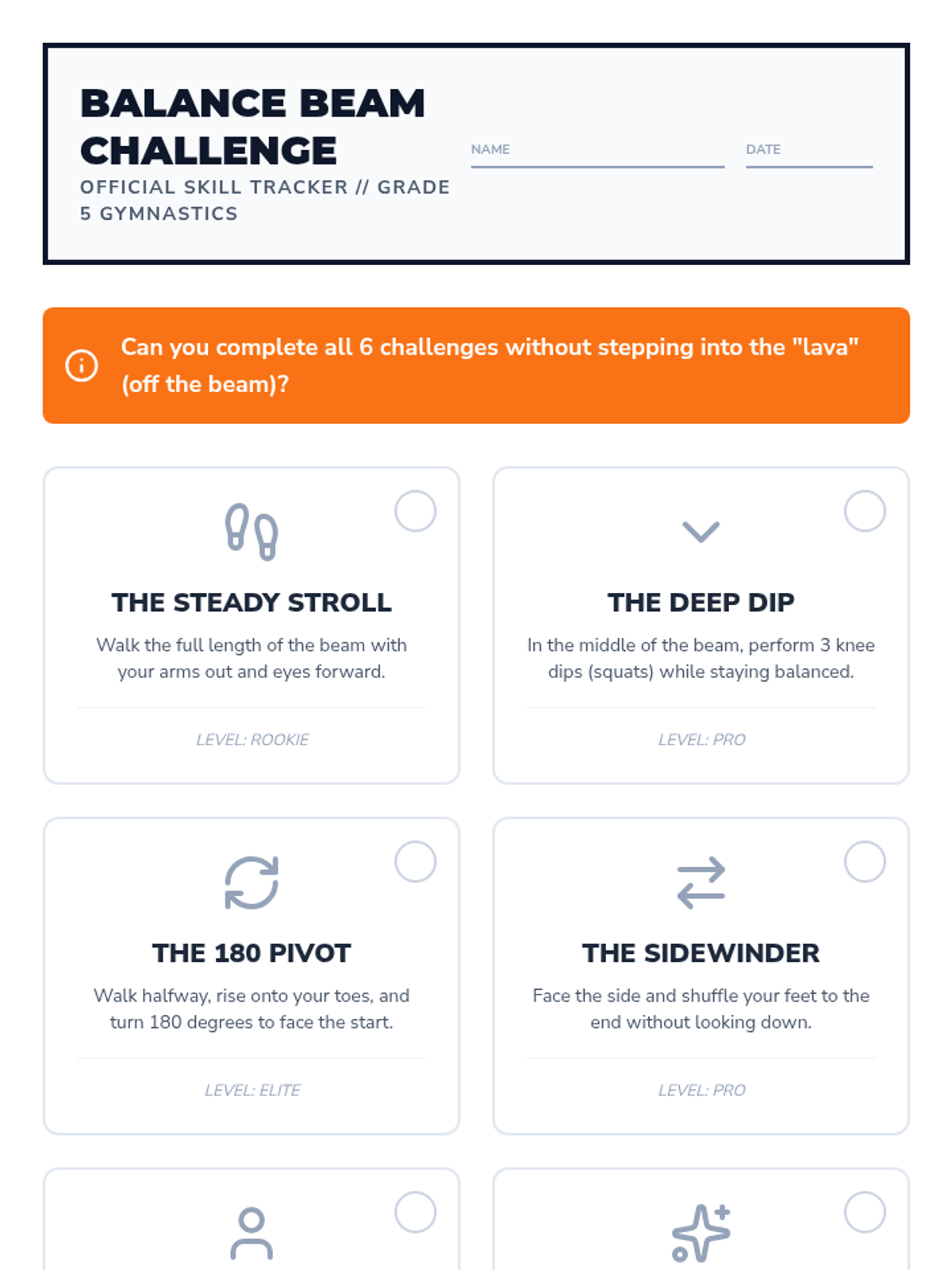
This gymnastics sequence for 5th graders focuses on the technical skills of balance, vaulting, and movement flow. Students progress from apparatus-specific skills to creating and performing original choreographed routines that demonstrate athletic precision and creative expression.
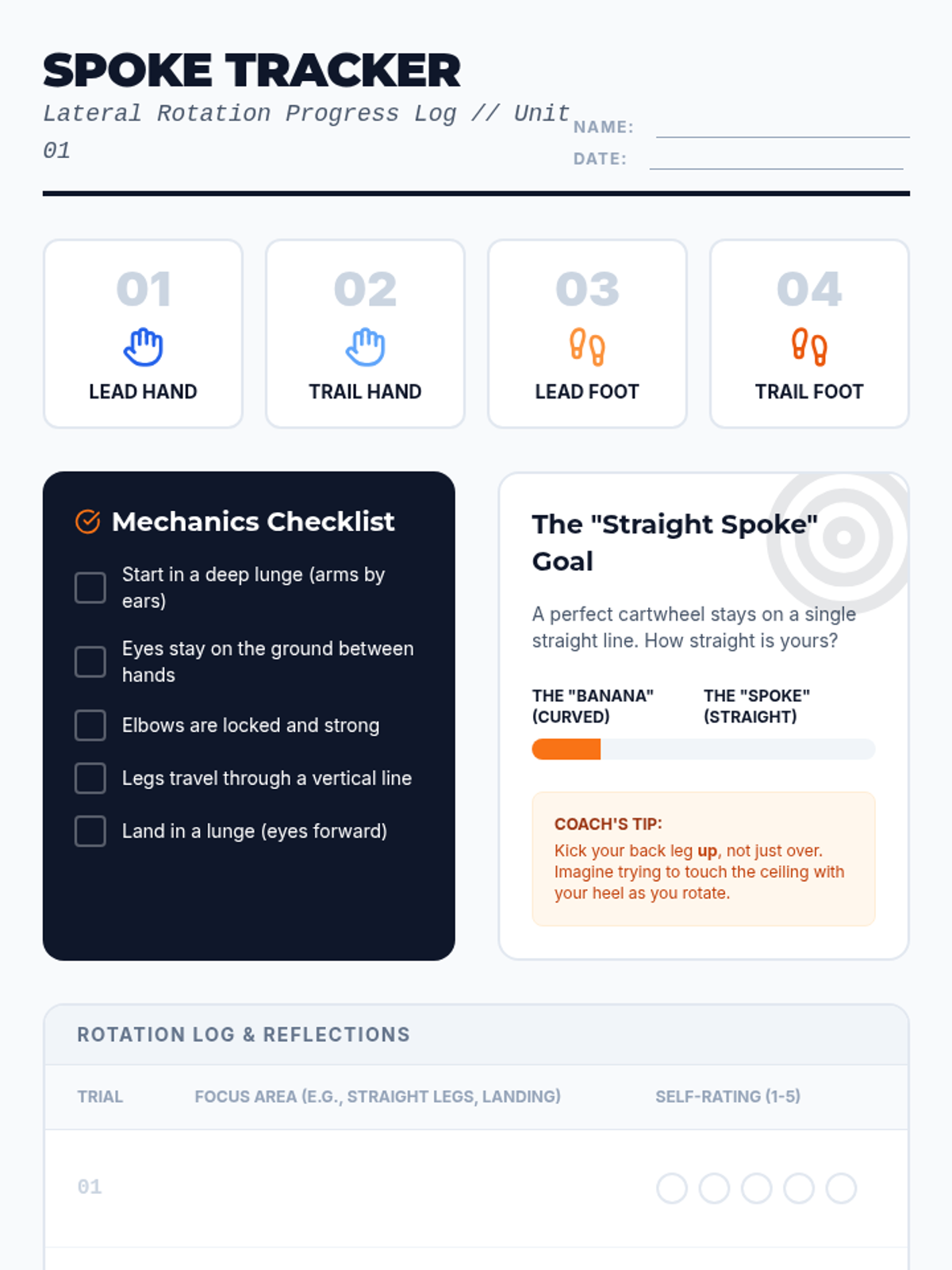
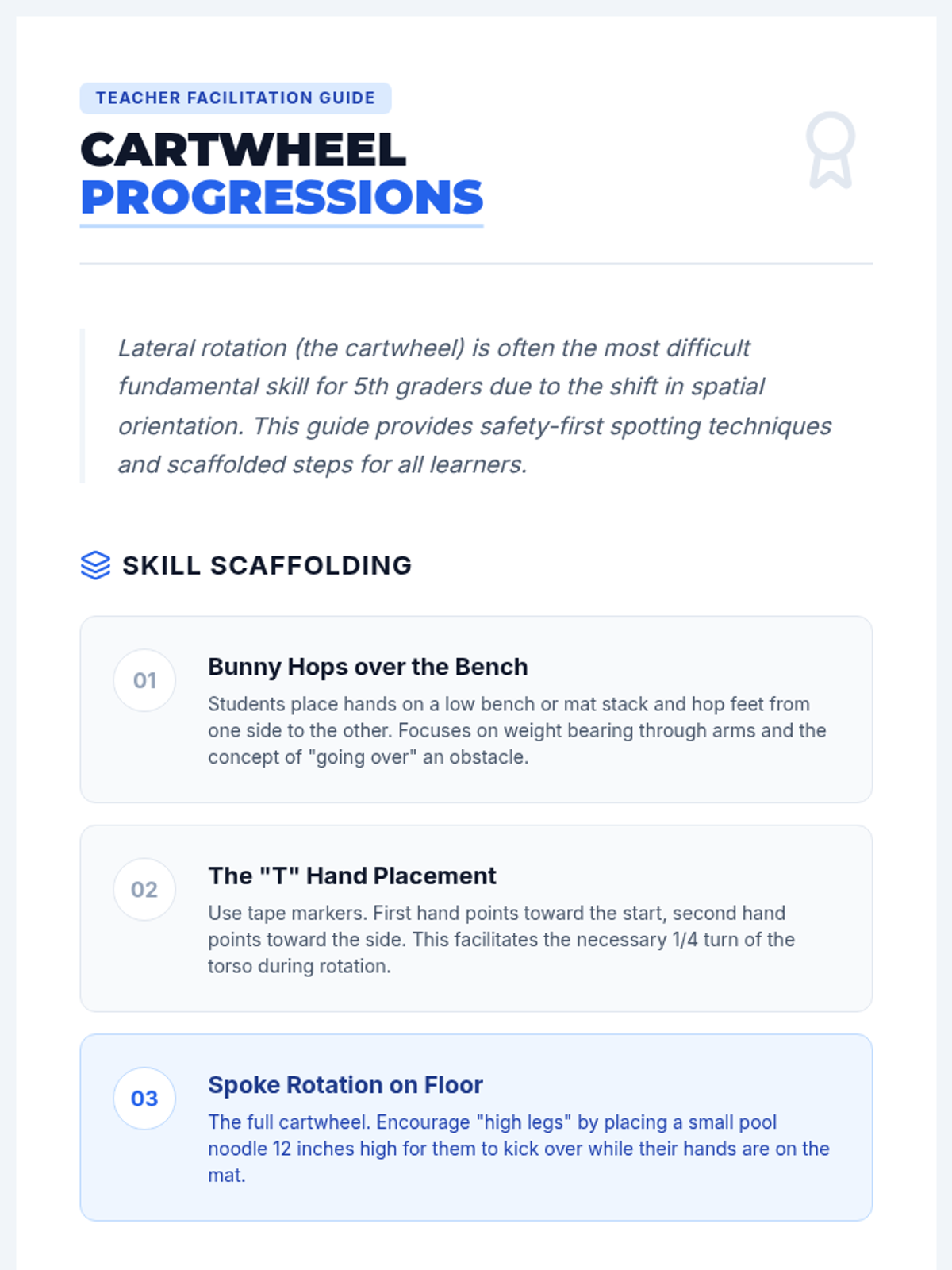
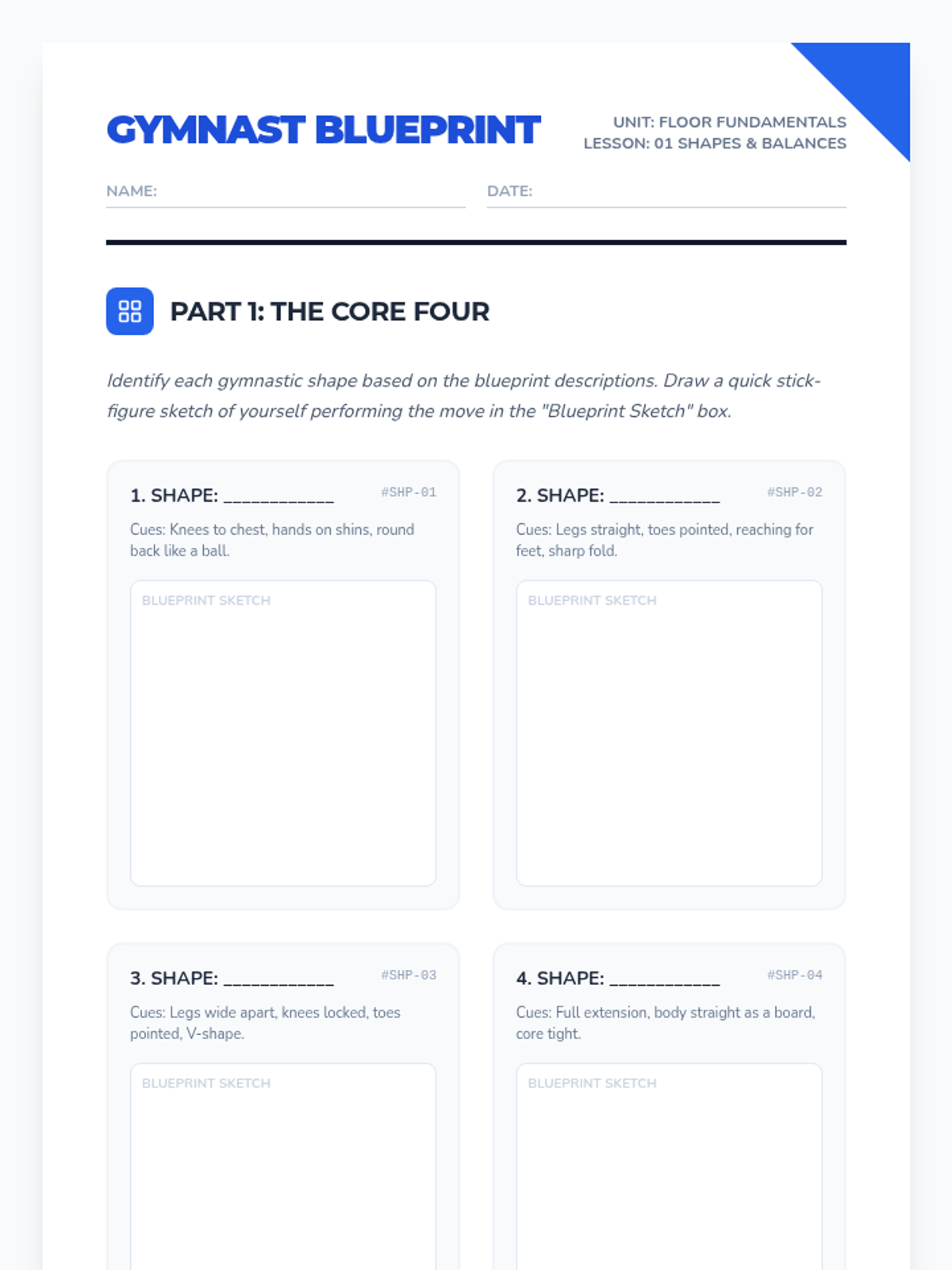
This sequence introduces 5th-grade students to the fundamentals of gymnastics floor exercise. It progresses from static body shapes and balances to dynamic rotations (forward and backward rolls) and weight transfer skills (cartwheels), concluding with the creation of simple routines that emphasize safety, control, and form.
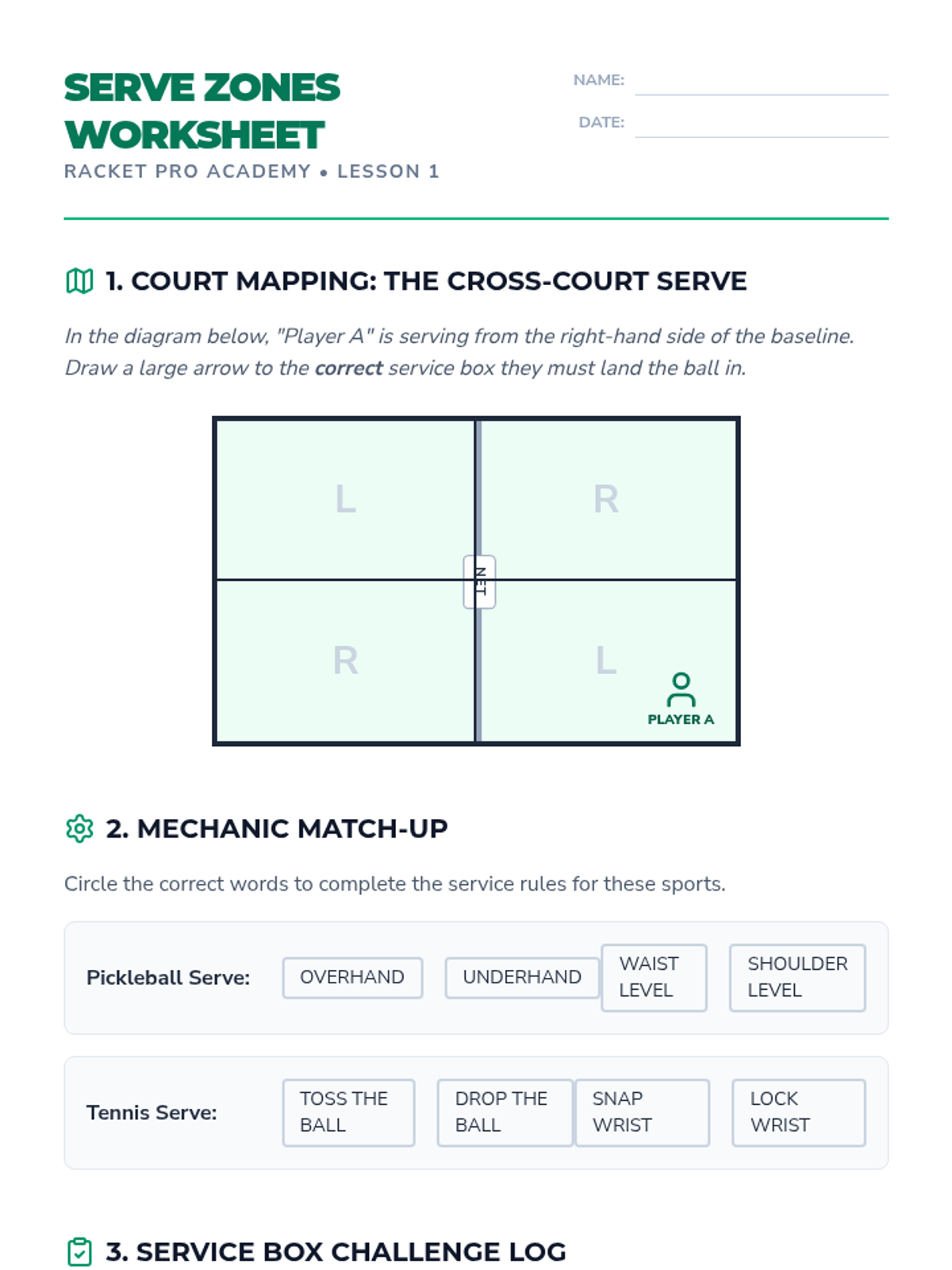
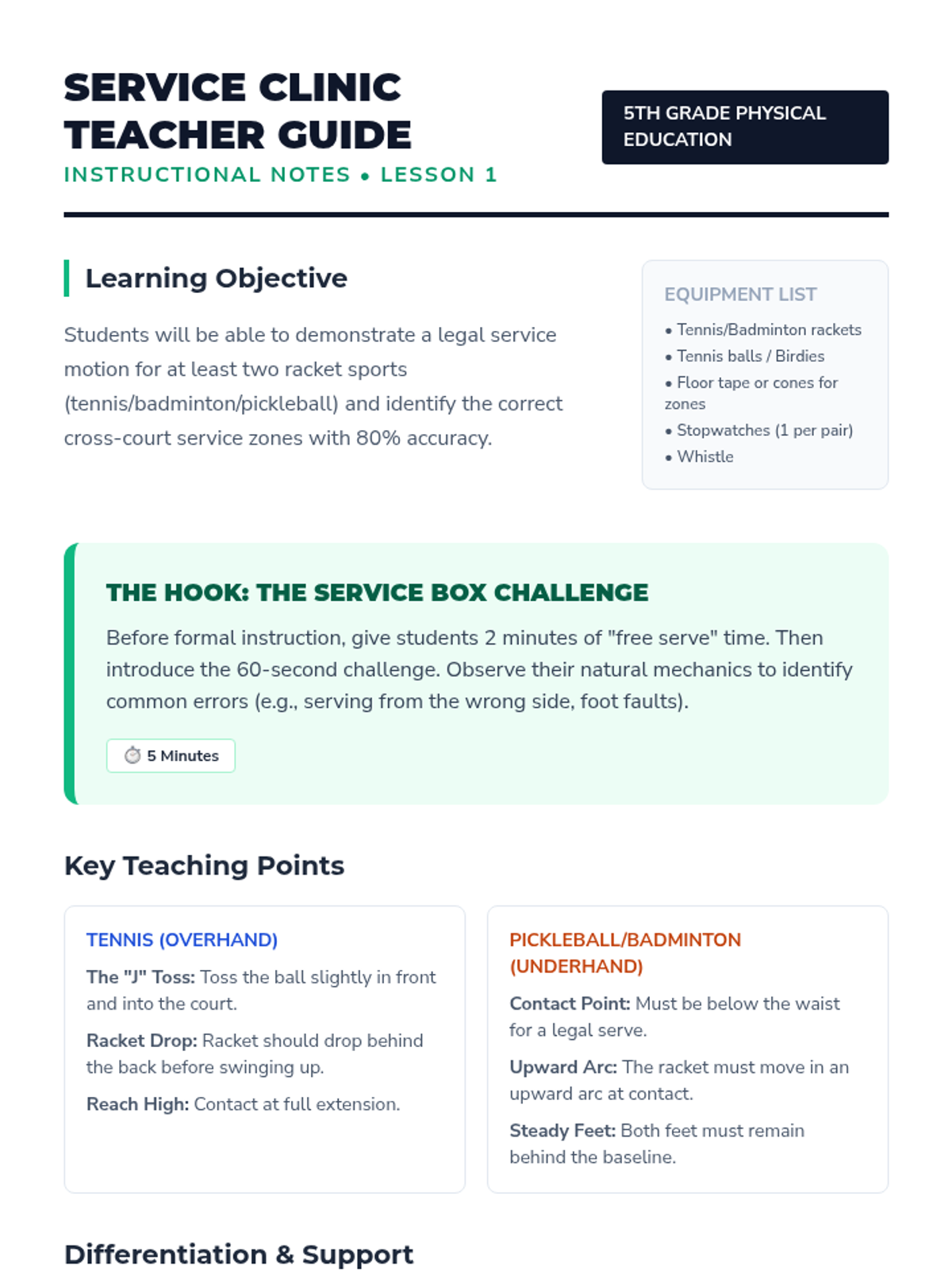
A comprehensive 5-lesson sequence for 5th graders focusing on the technical rules, scoring systems, and sportsmanship required for competitive racket sports like tennis, badminton, and pickleball. Students progress from learning service mechanics to managing their own class-wide tournament.
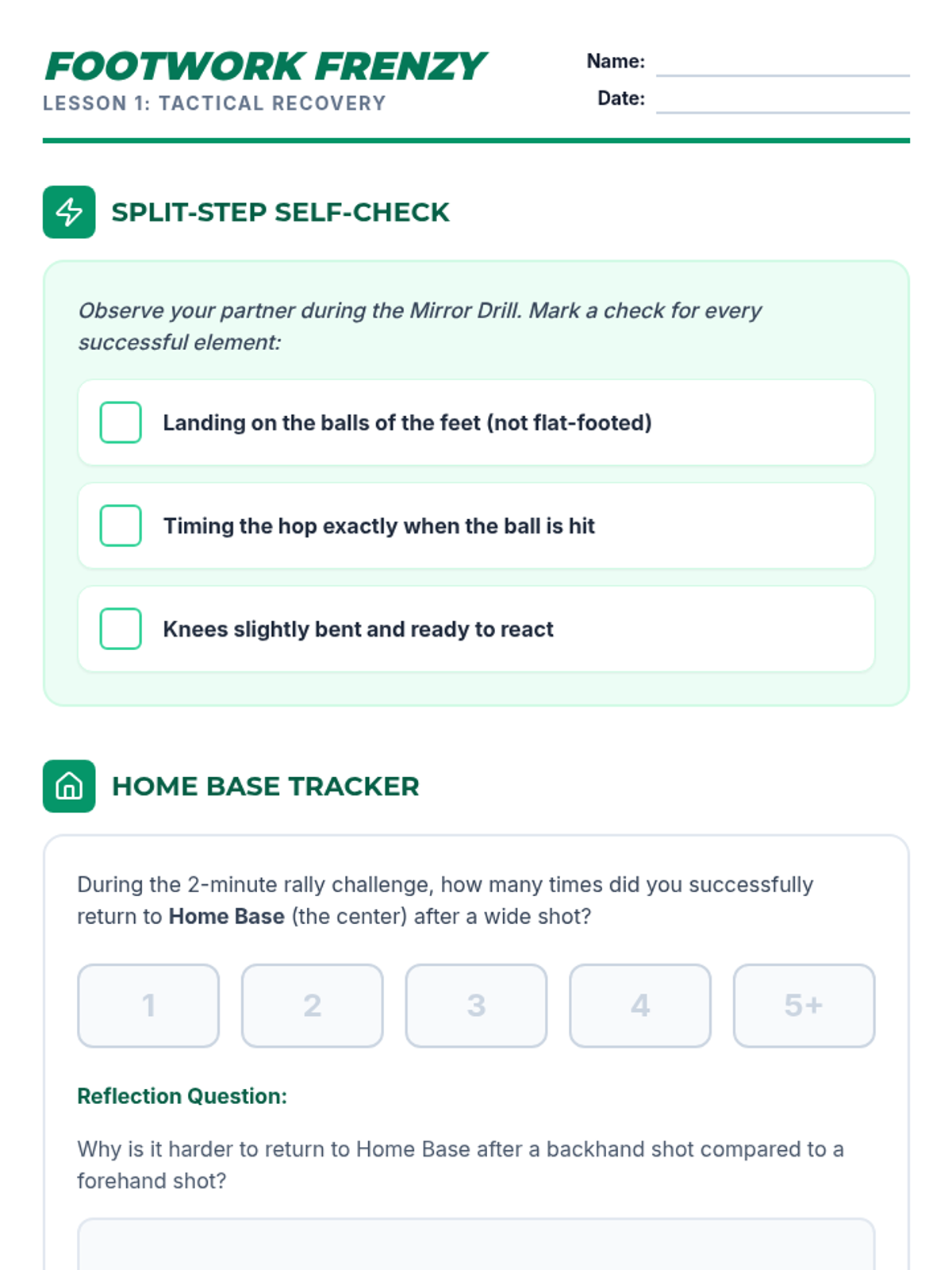
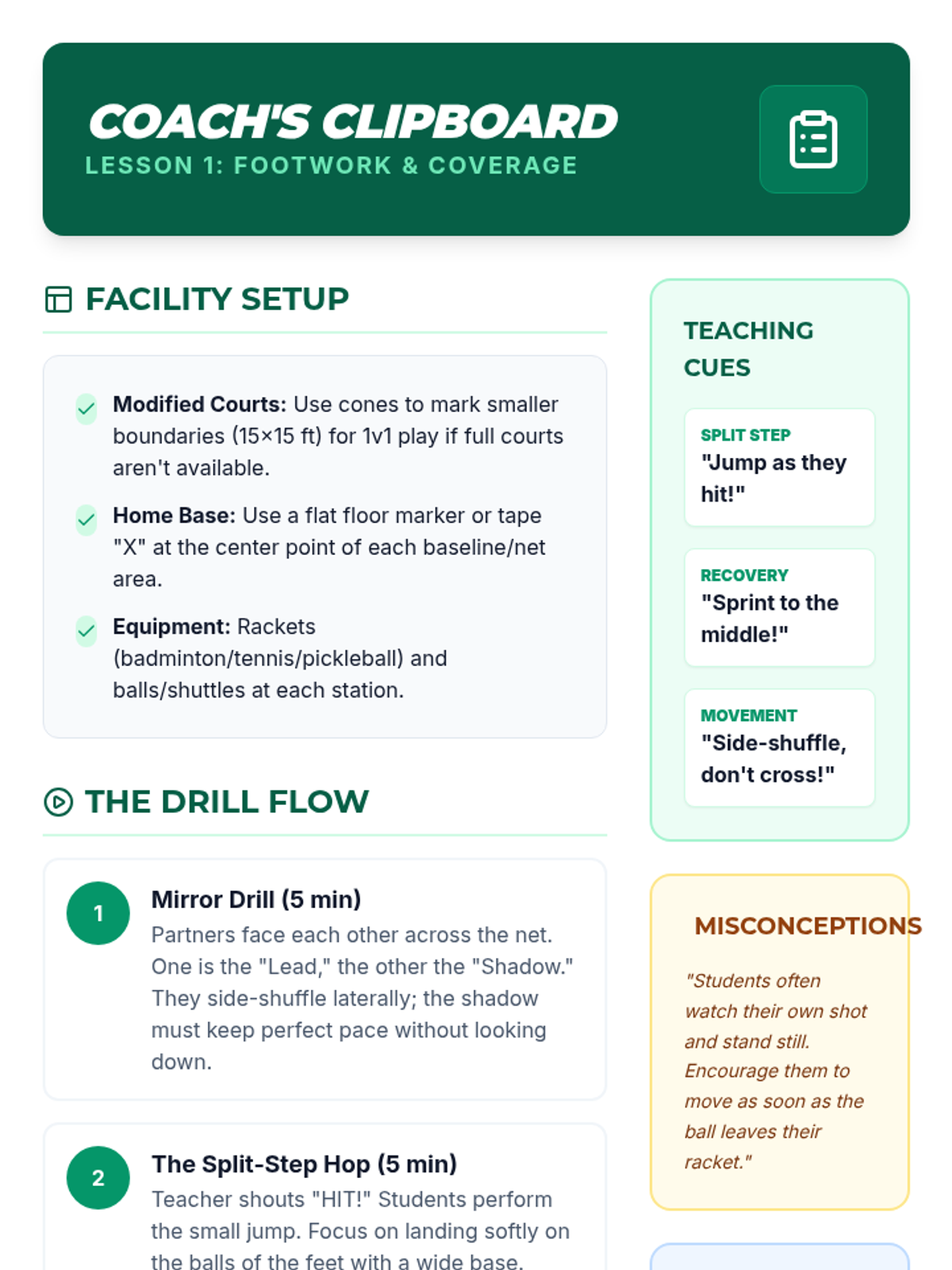
This sequence moves students from static skill practice to dynamic game situations, emphasizing court movement and tactical decision-making in racket sports. Students explore concepts of open space, defensive recovery, and offensive placement within a modified court boundary.
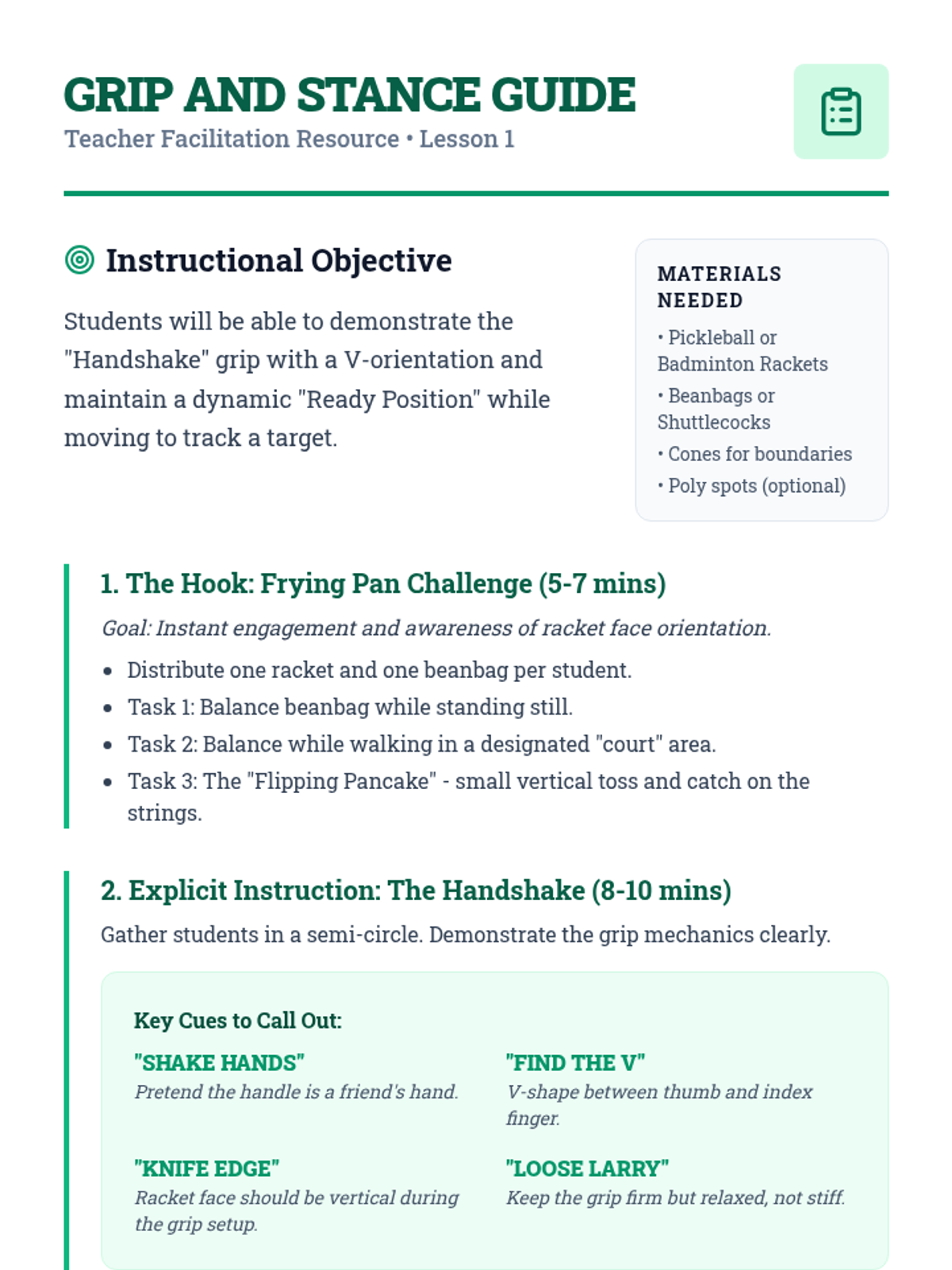
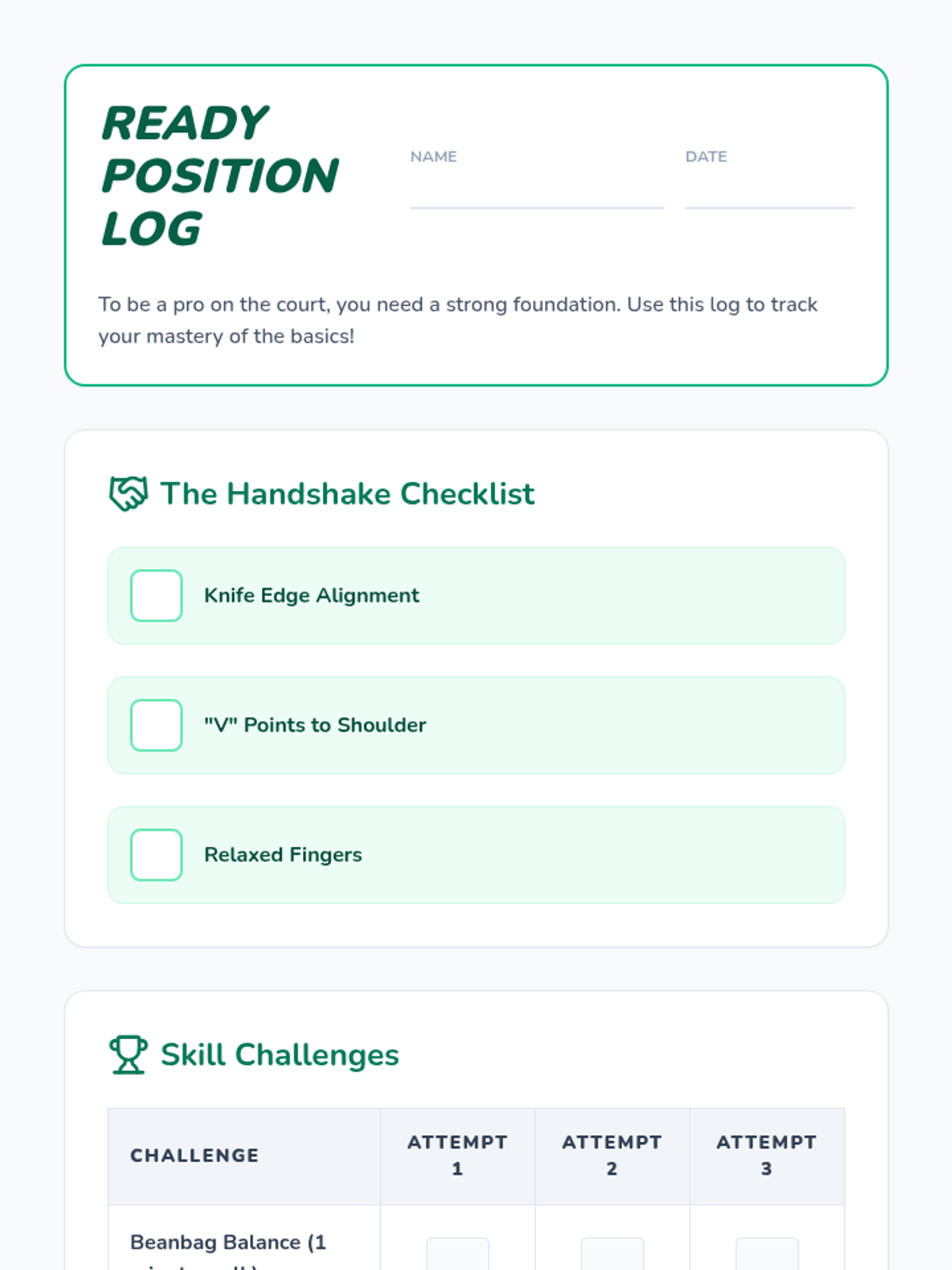
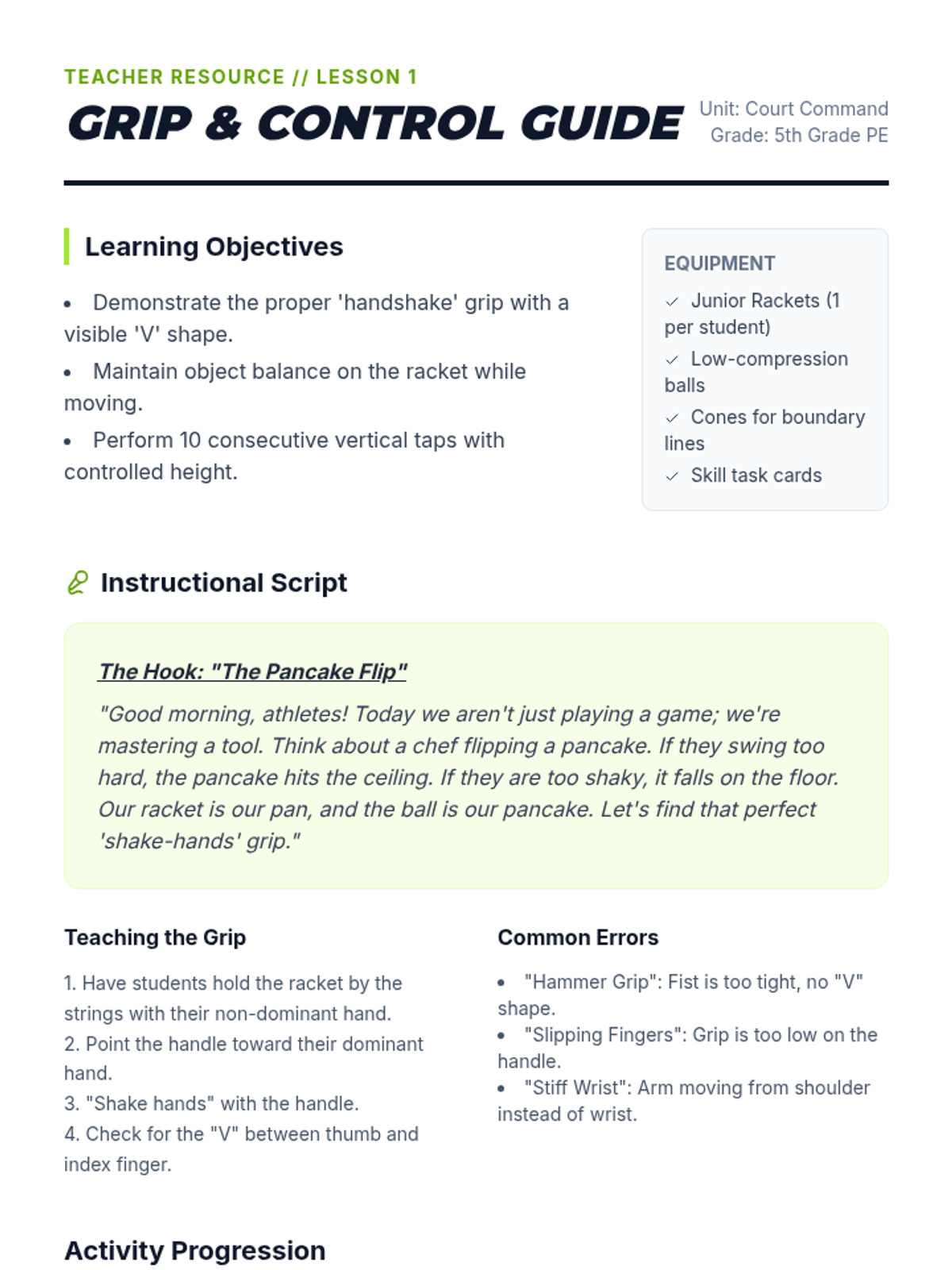
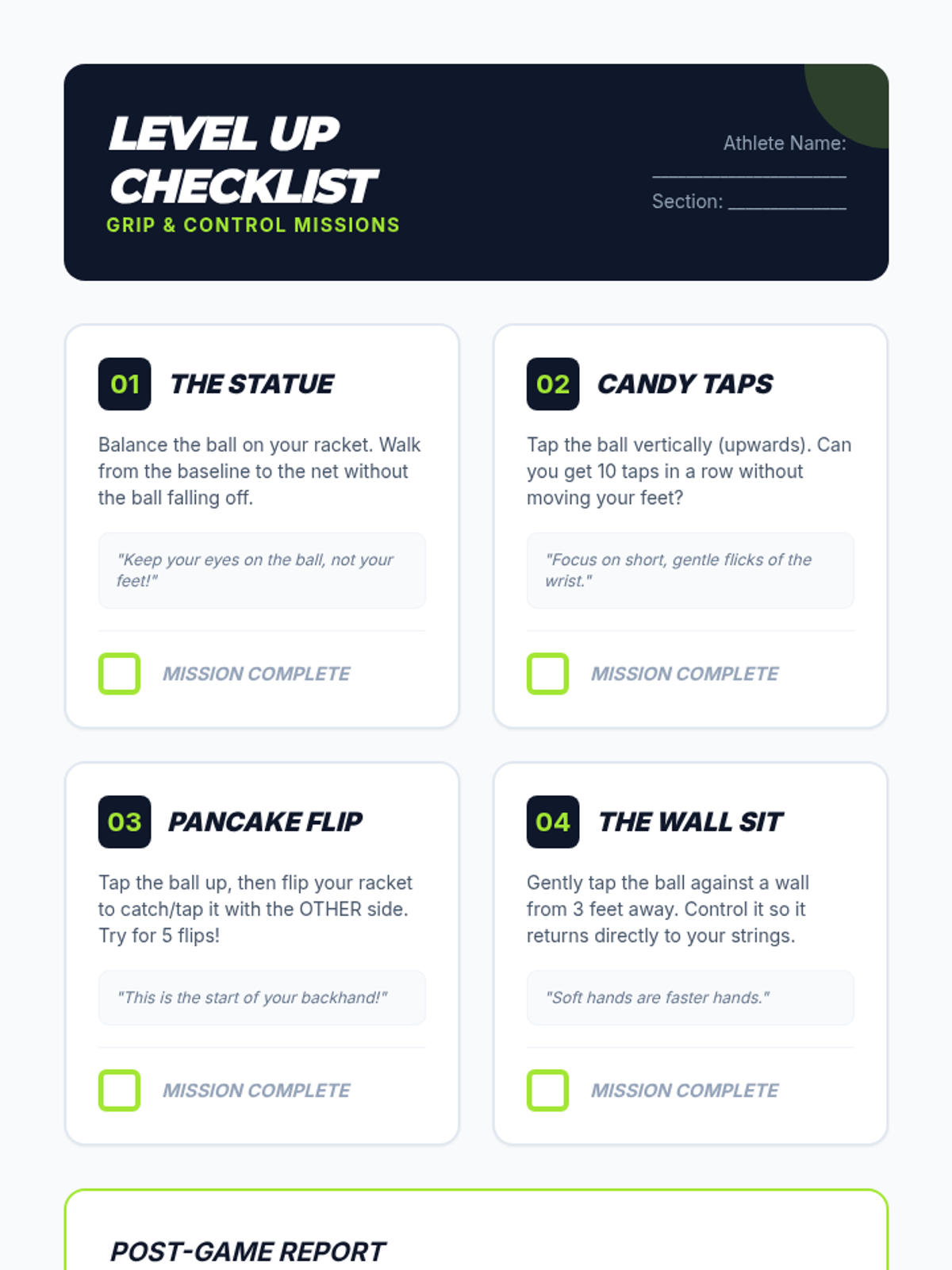
A comprehensive 5-lesson sequence for 5th-grade students to master the biomechanics of racket sports, focusing on grips, forehand/backhand strokes, and cooperative rallying using pickleball or badminton equipment.
A 5th-grade physical education unit focused on the fundamental mechanics of racket sports, including grip, forehand, backhand, serving, and basic gameplay tactics. Students progress from individual object control to cooperative rallying and competitive modified games.
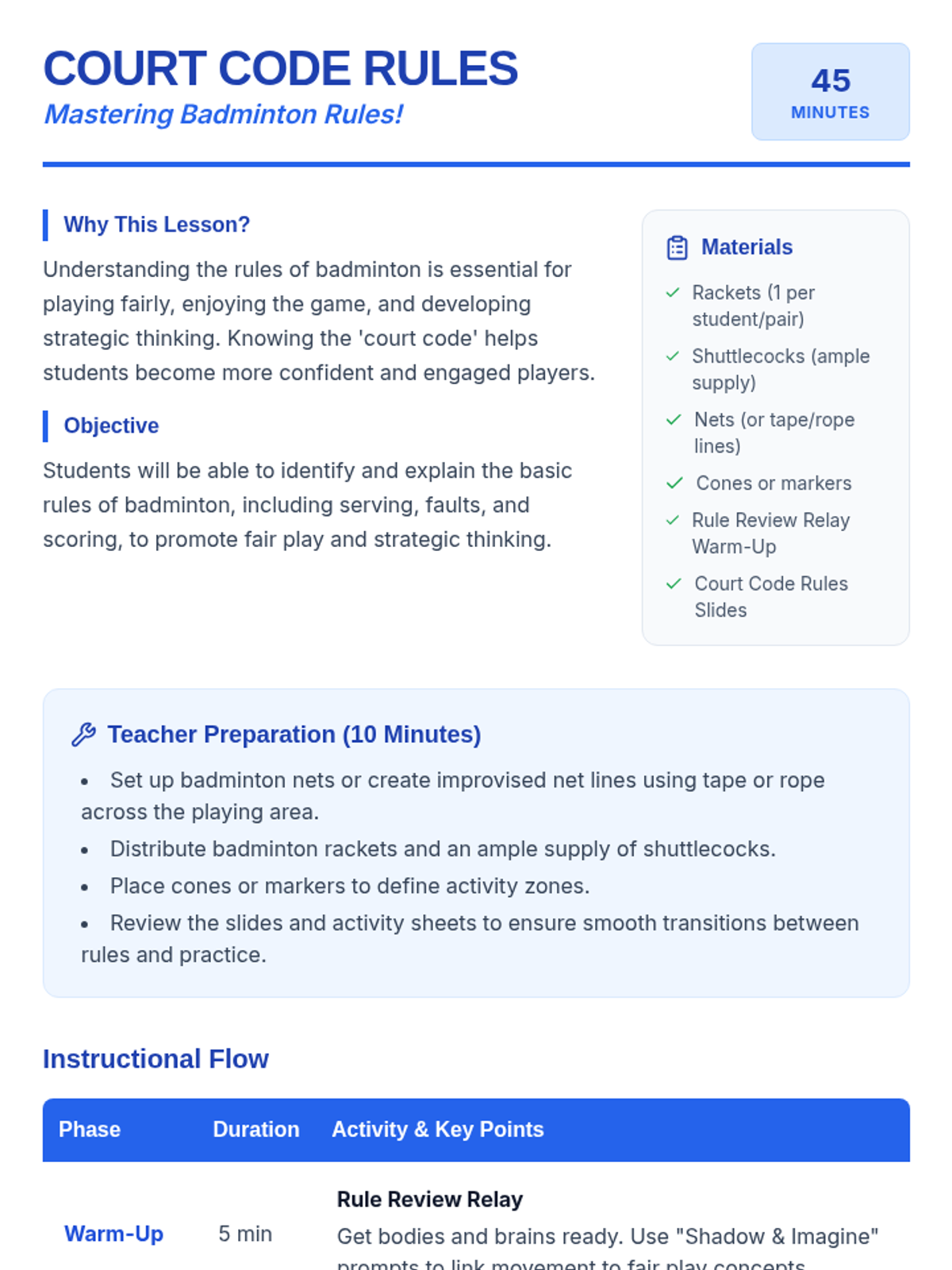
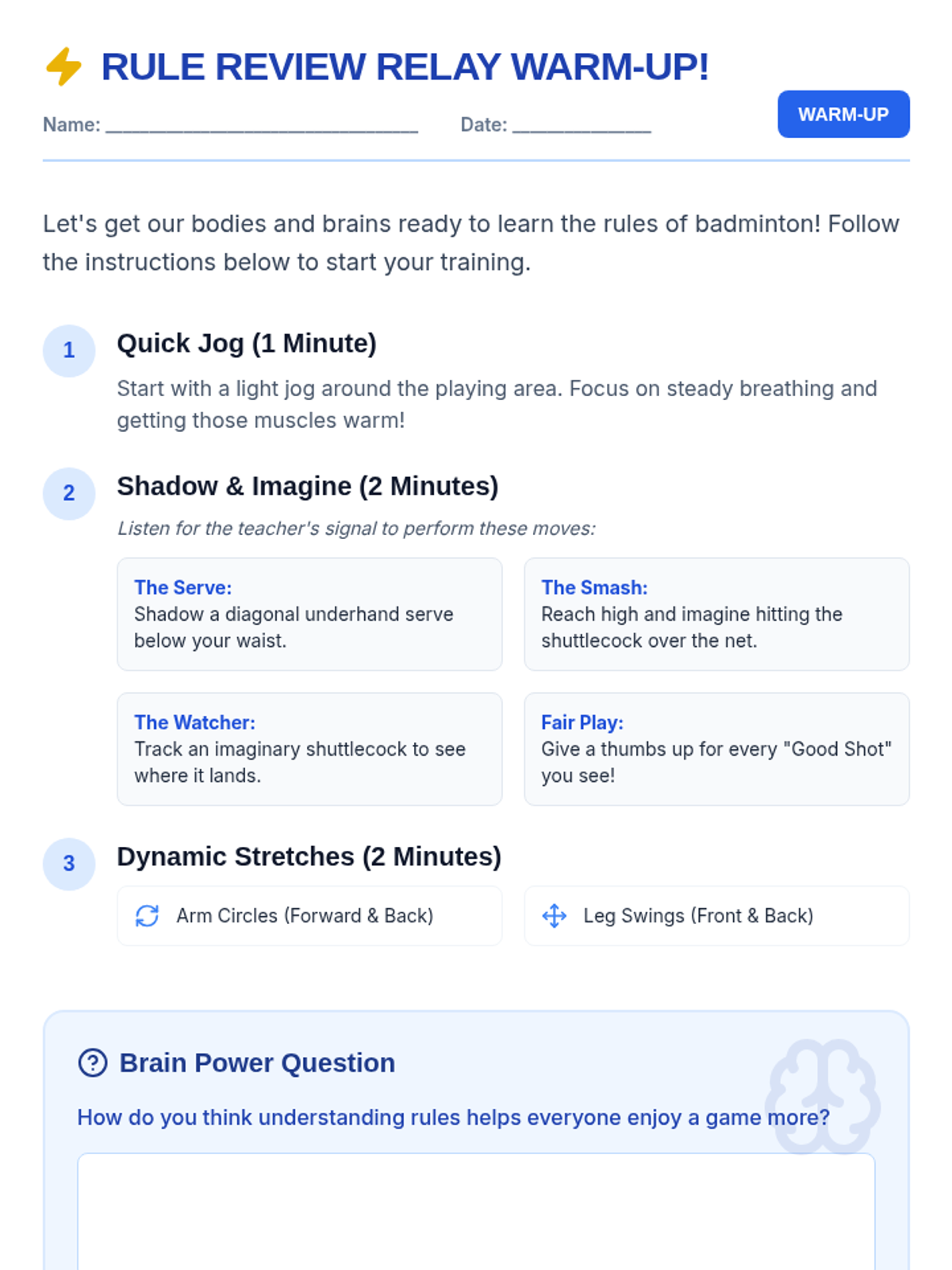
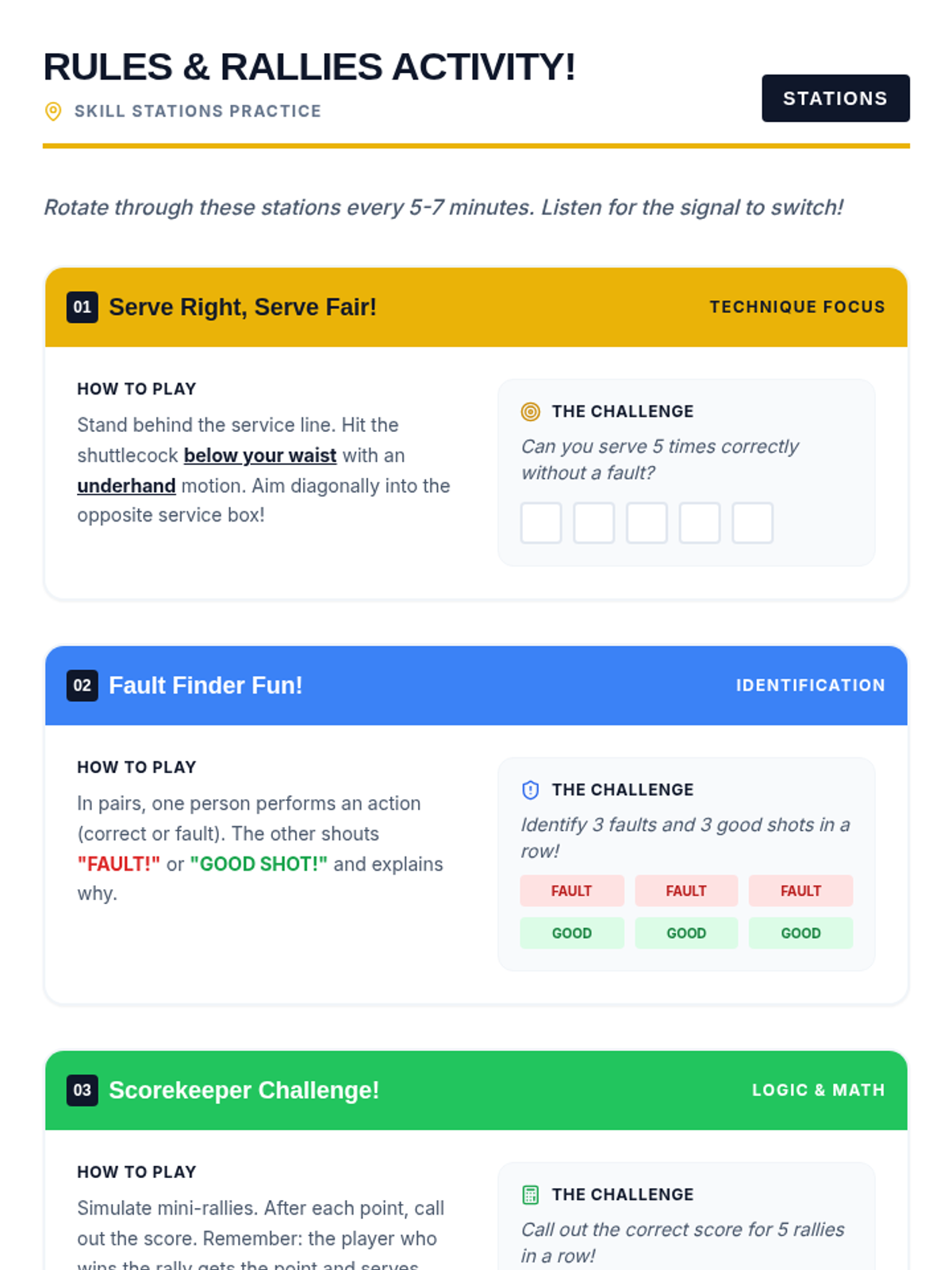
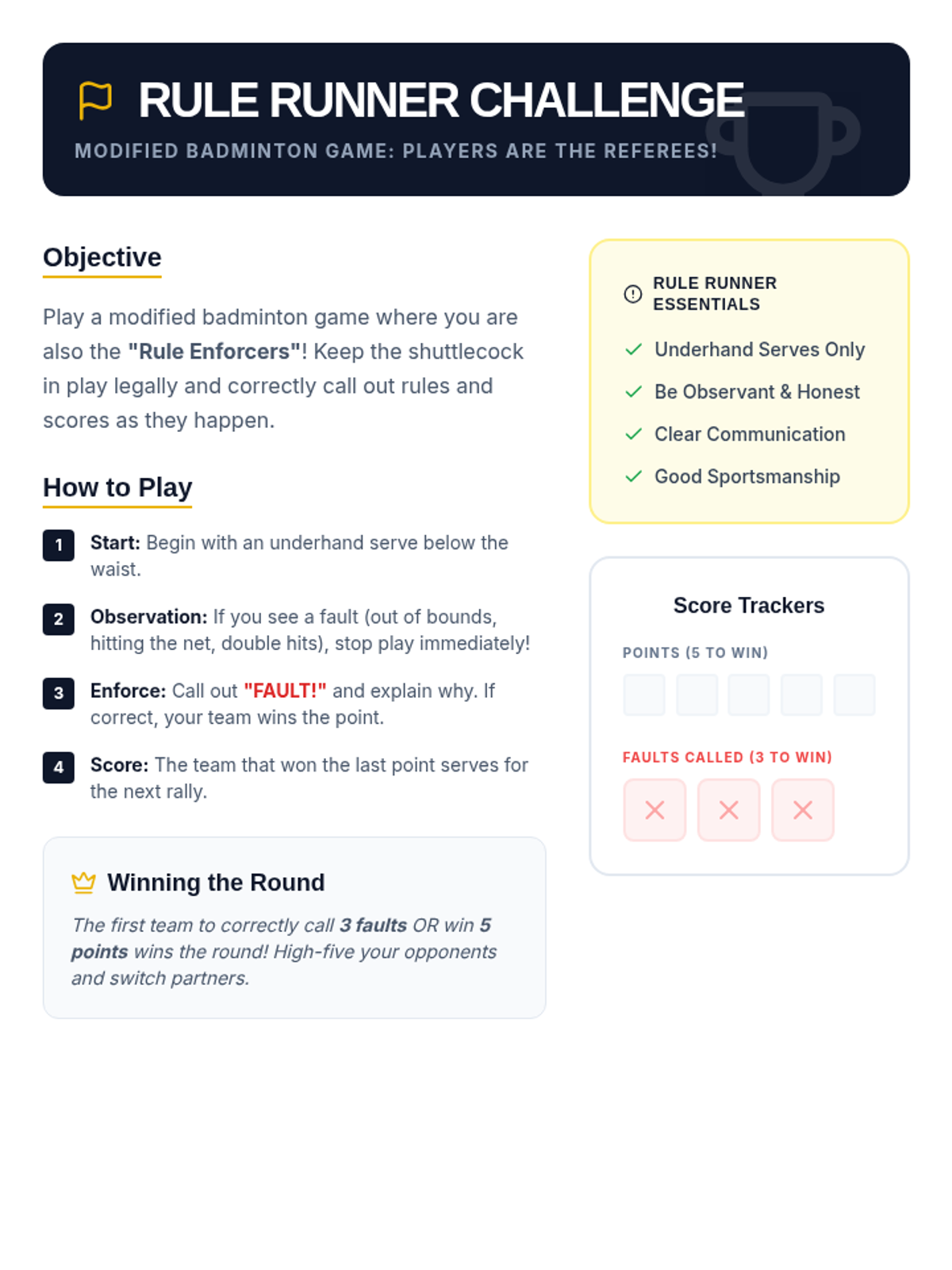
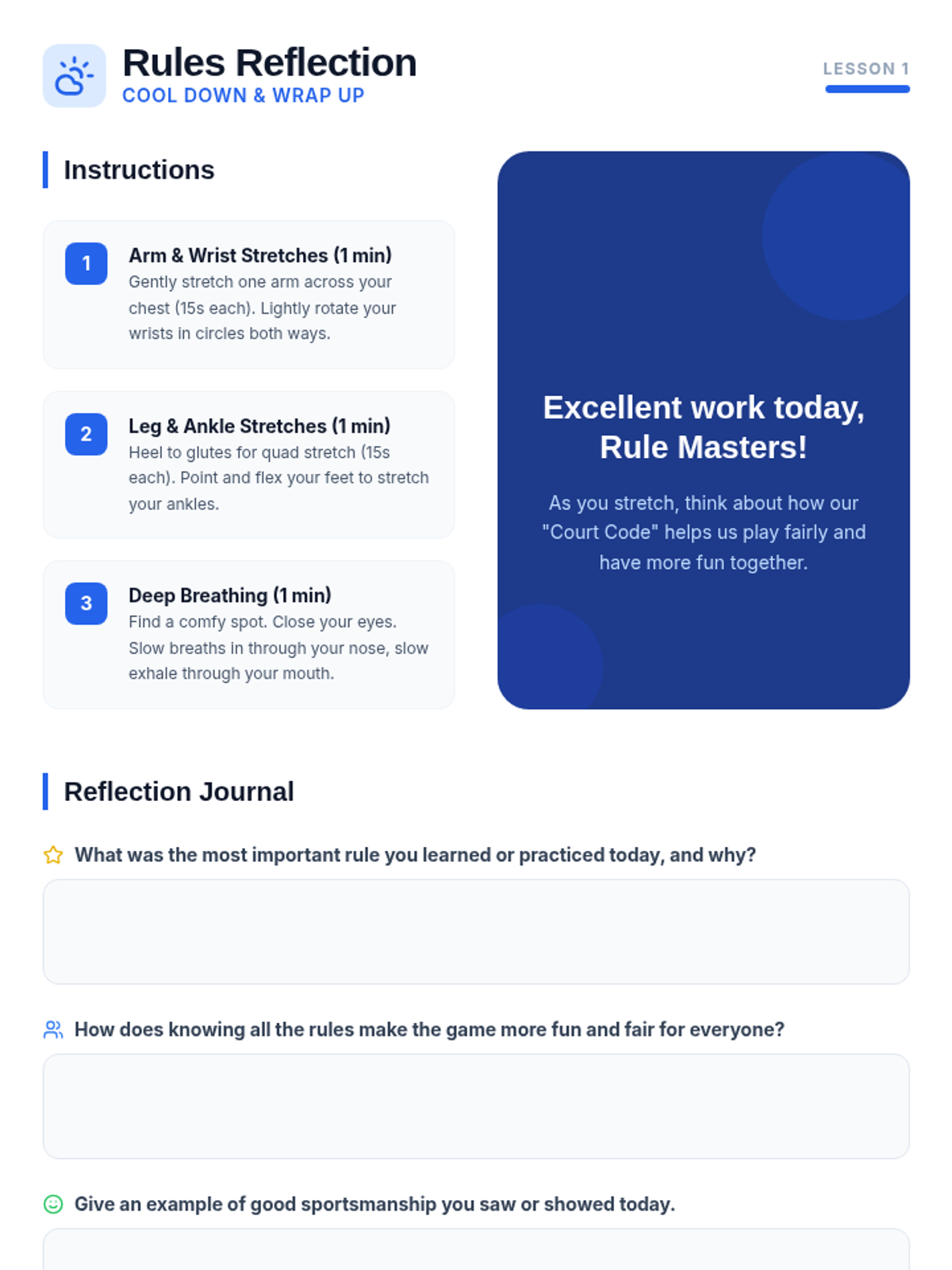
A 5-lesson sequence for 3rd-5th graders to master the fundamentals of badminton, from basic rules and serving to advanced strokes like the forehand drive, overhead clear, and backhand. Students build physical skills, hand-eye coordination, and strategic court awareness through interactive drills and cooperative games.
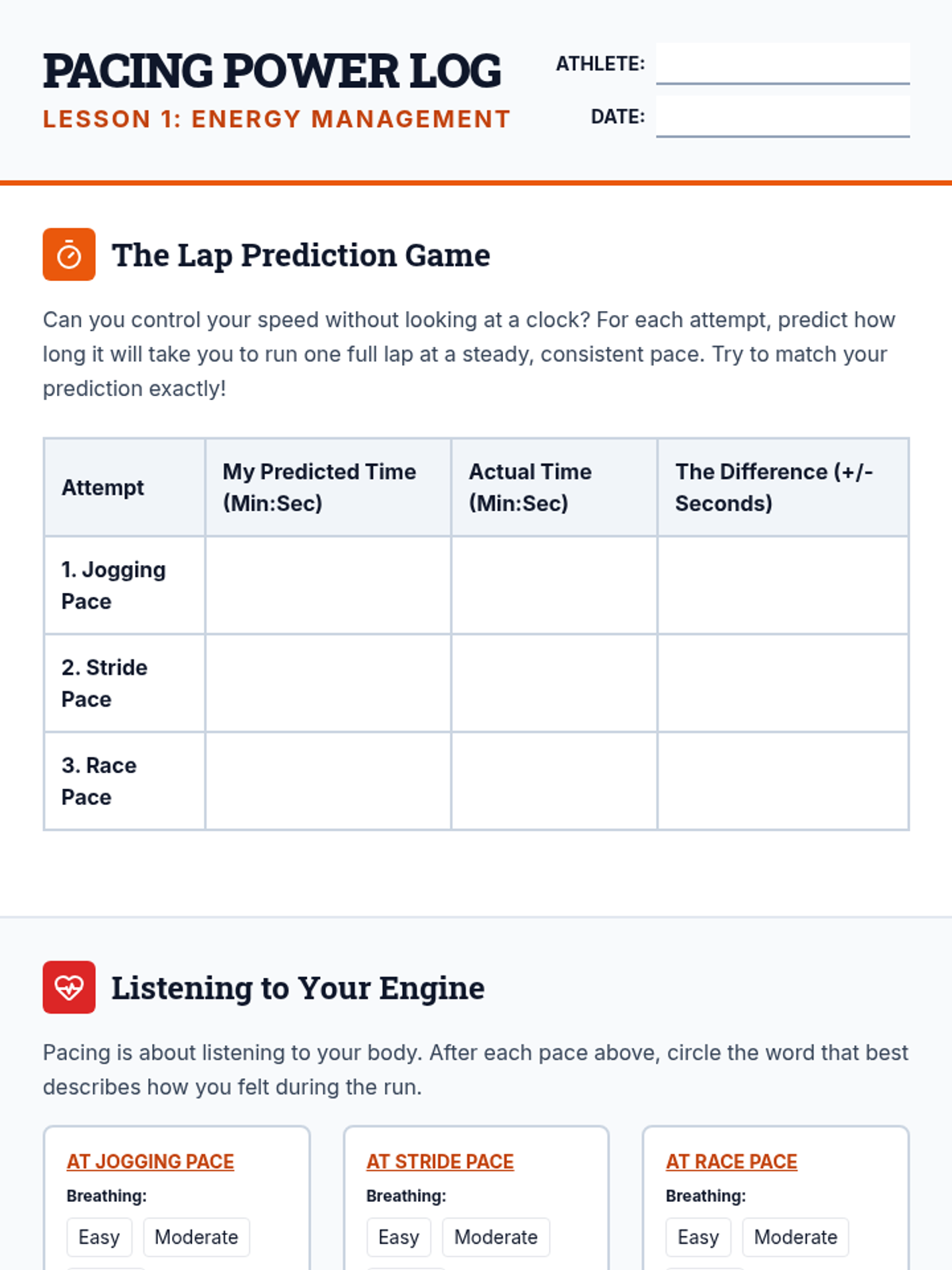
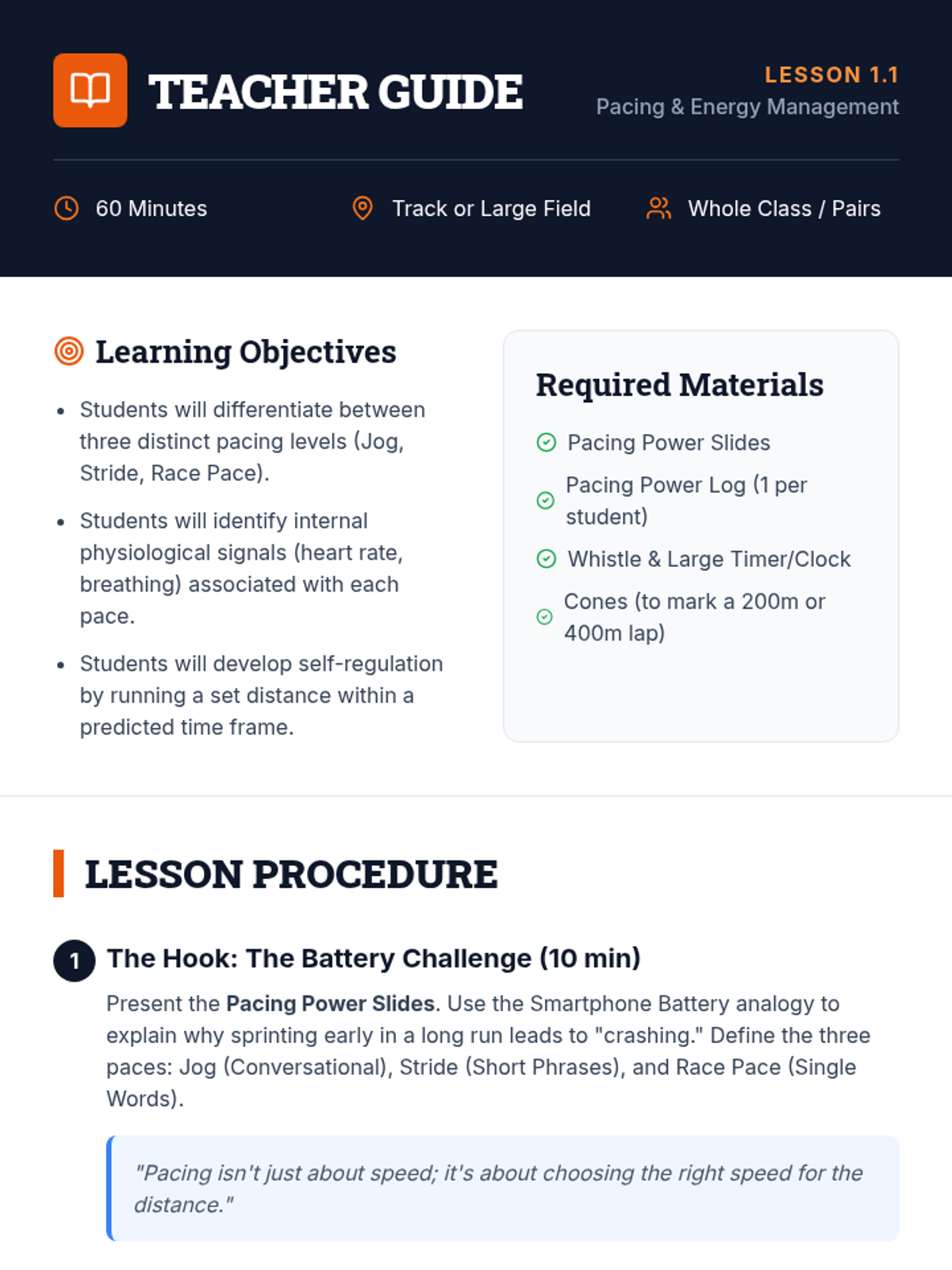
This sequence explores cardiovascular endurance and track meet operations for 5th-grade students. It covers pacing strategies, interval training through games, the mathematical geometry of track lanes, and culminates in a student-led class track meet where they apply both athletic and officiating skills.
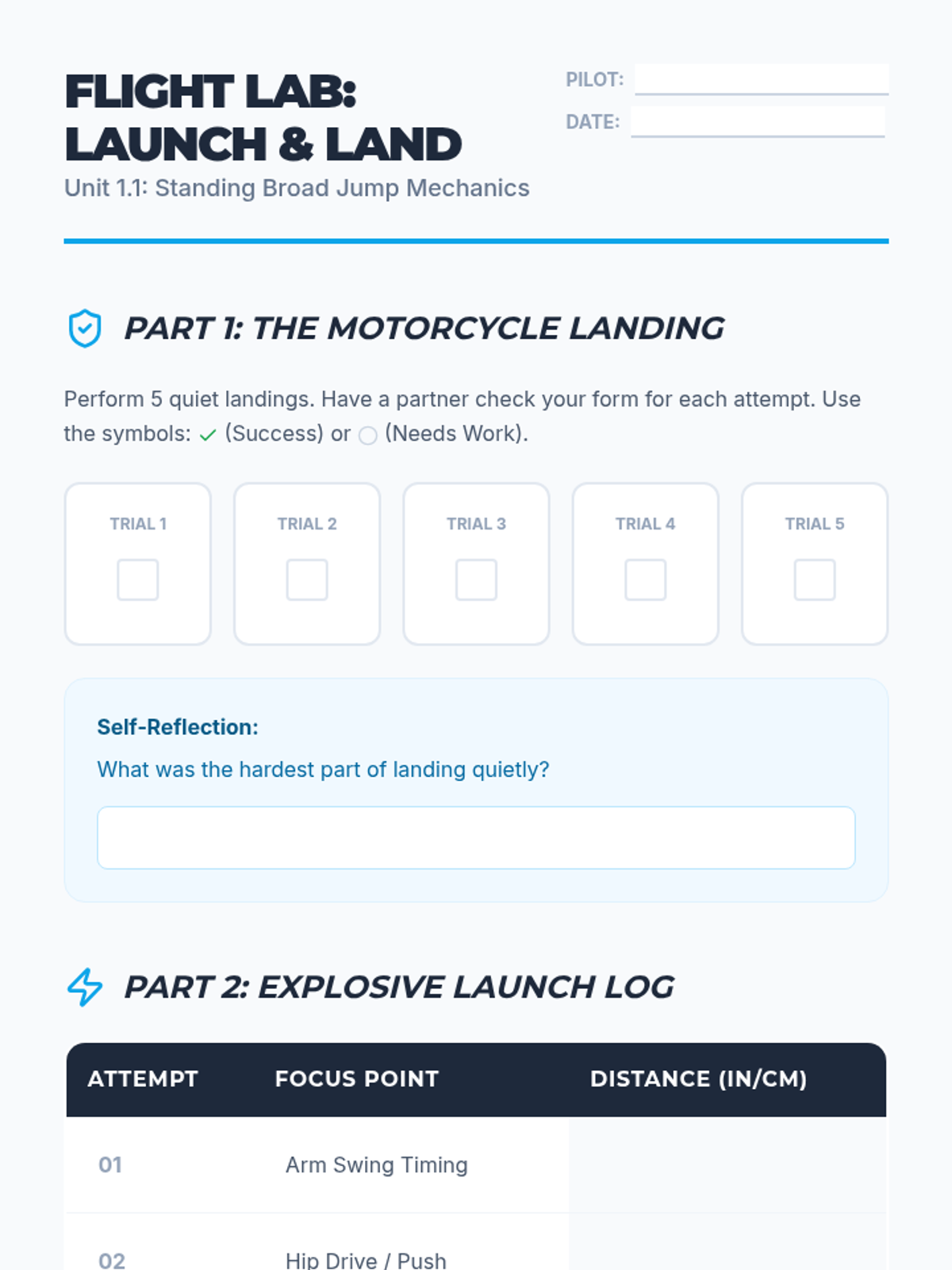
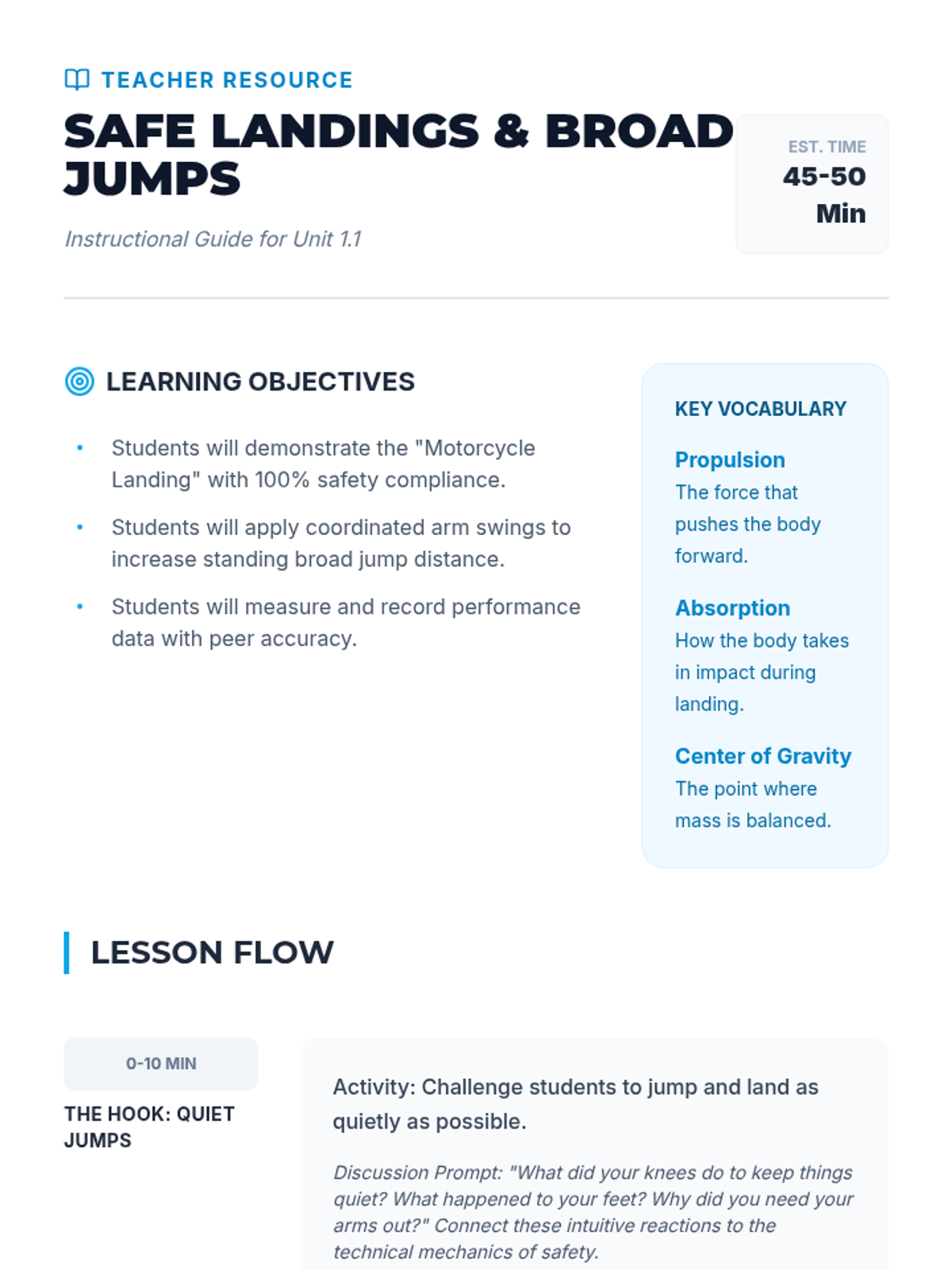
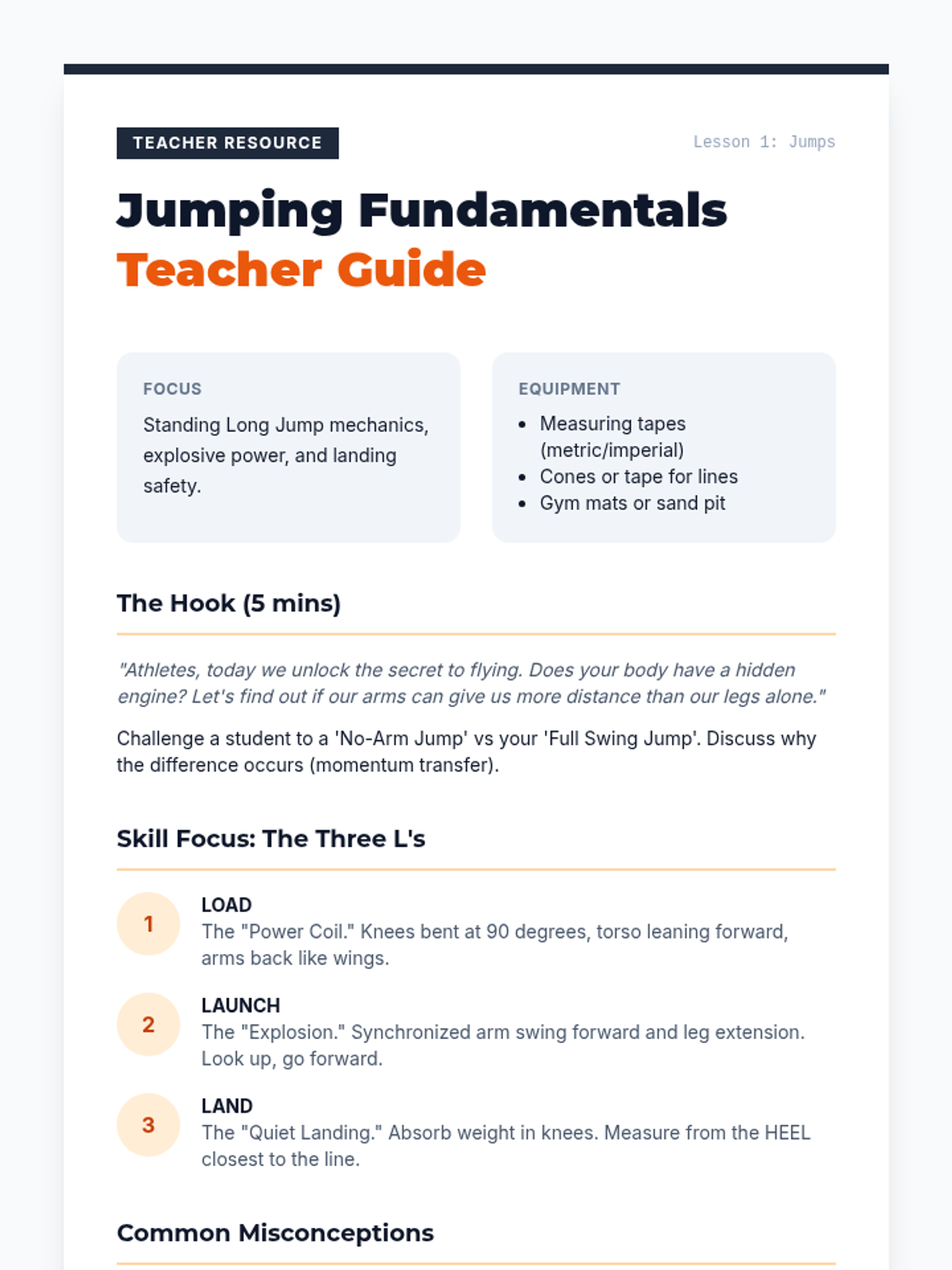
A comprehensive 5th Grade physical education unit focused on the mechanics, safety, and competition of horizontal jumping events. Students progress from safe landing techniques to the complex coordination of the long jump and triple jump, concluding with a student-led competition.
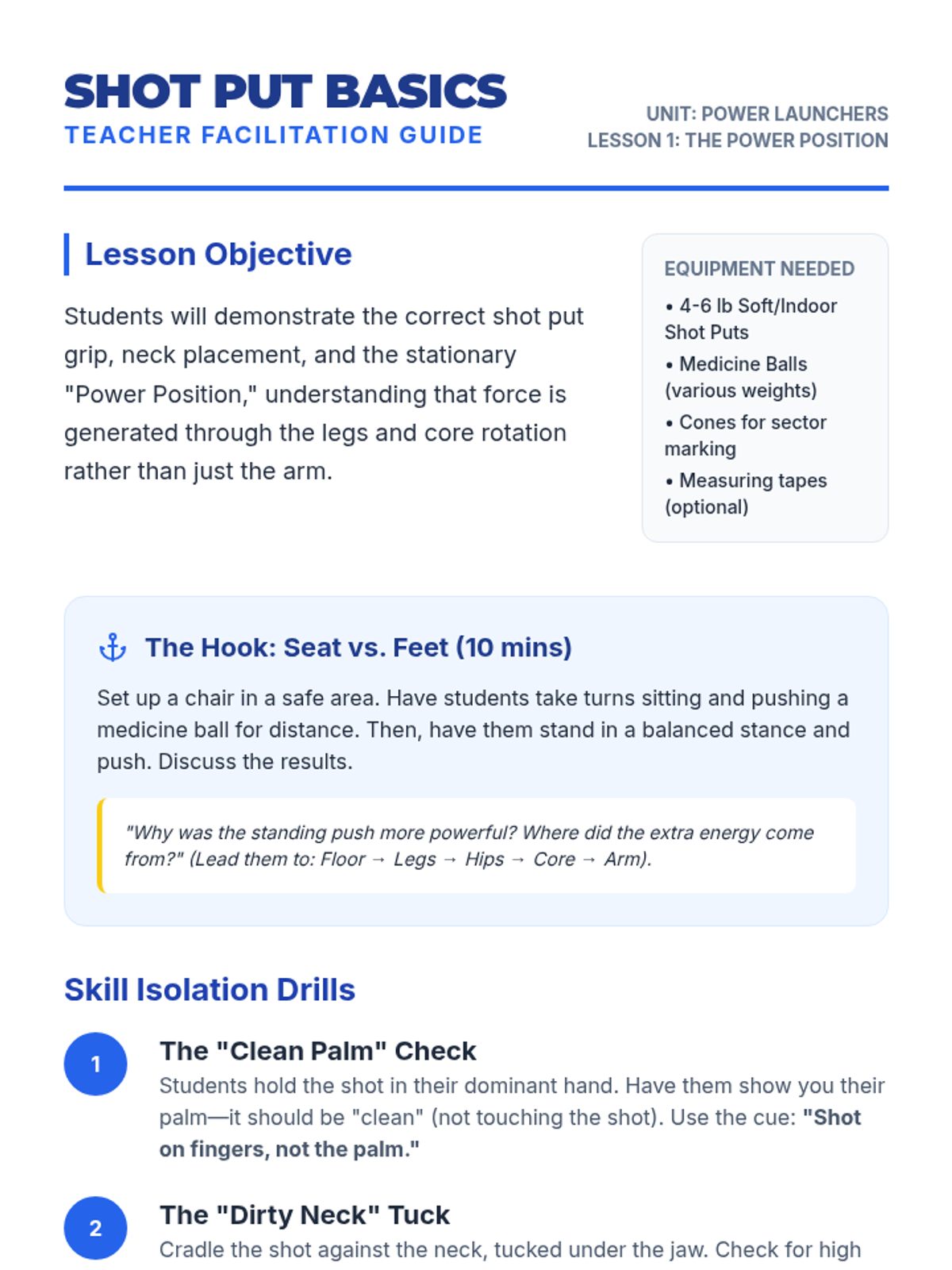
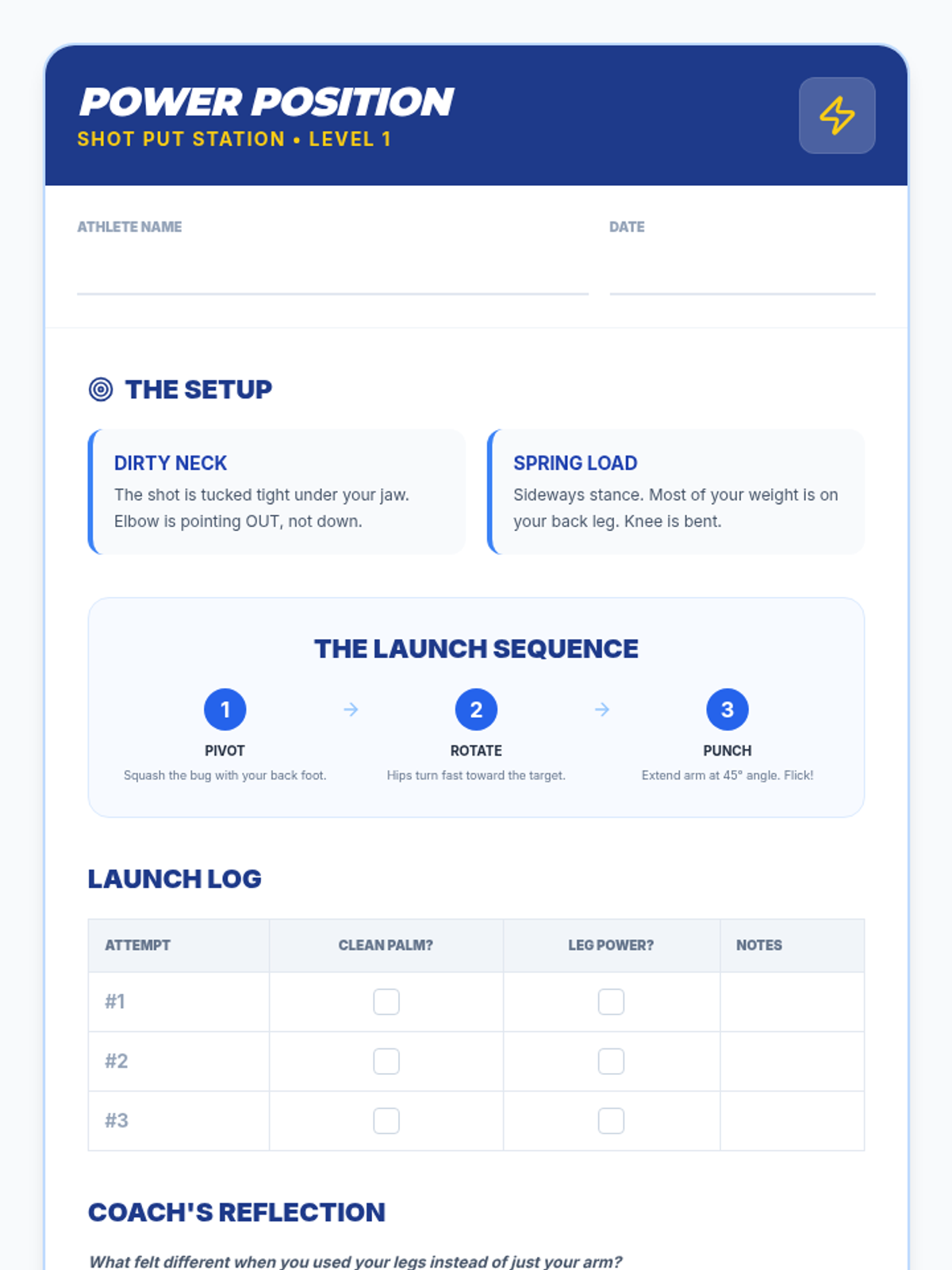
This sequence introduces 5th-grade students to the mechanics of shot put, discus, and javelin throwing. Students explore the physics of power generation through leg drive, rotation, and momentum while prioritizing safety in the throwing sector.
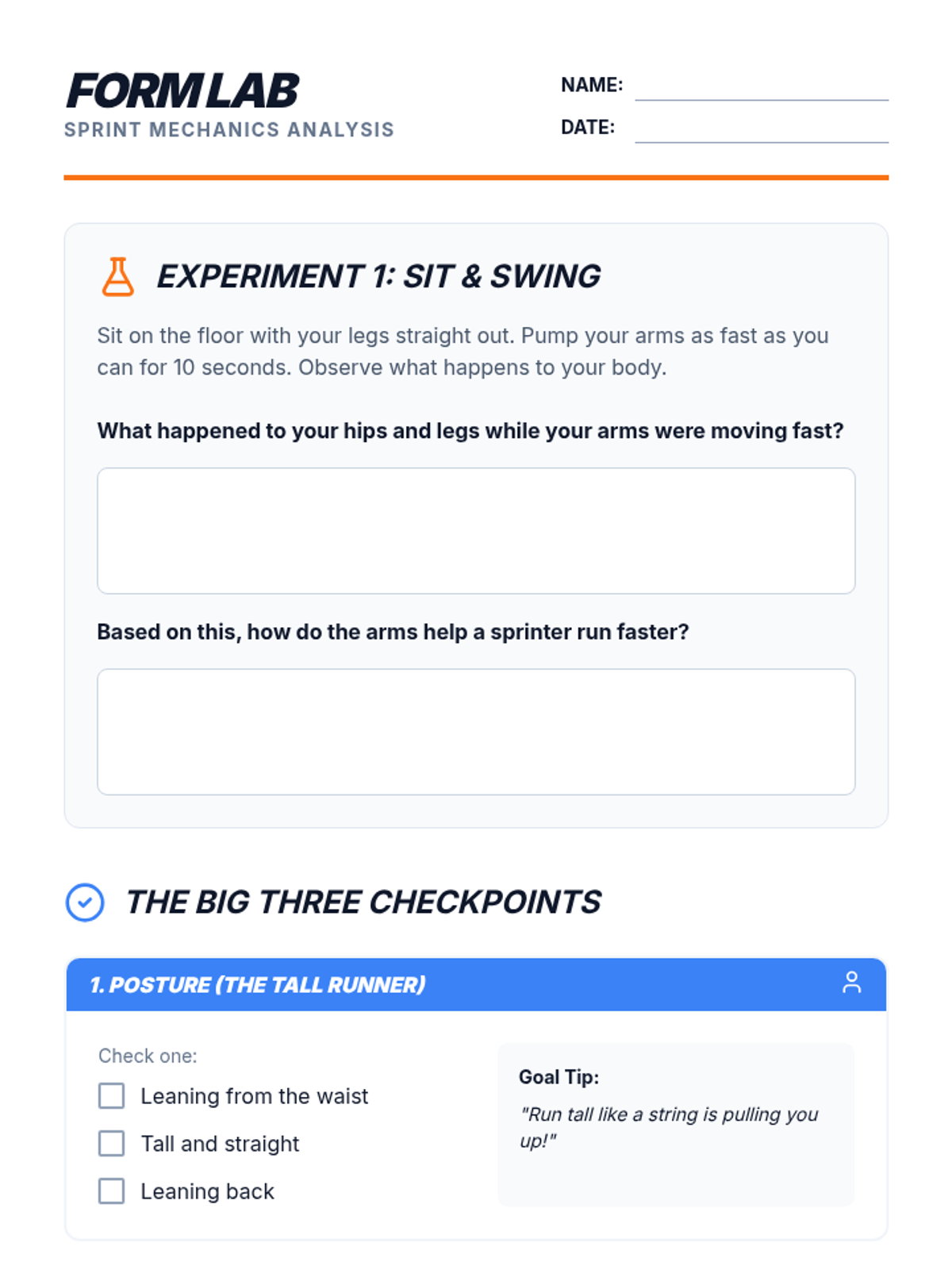
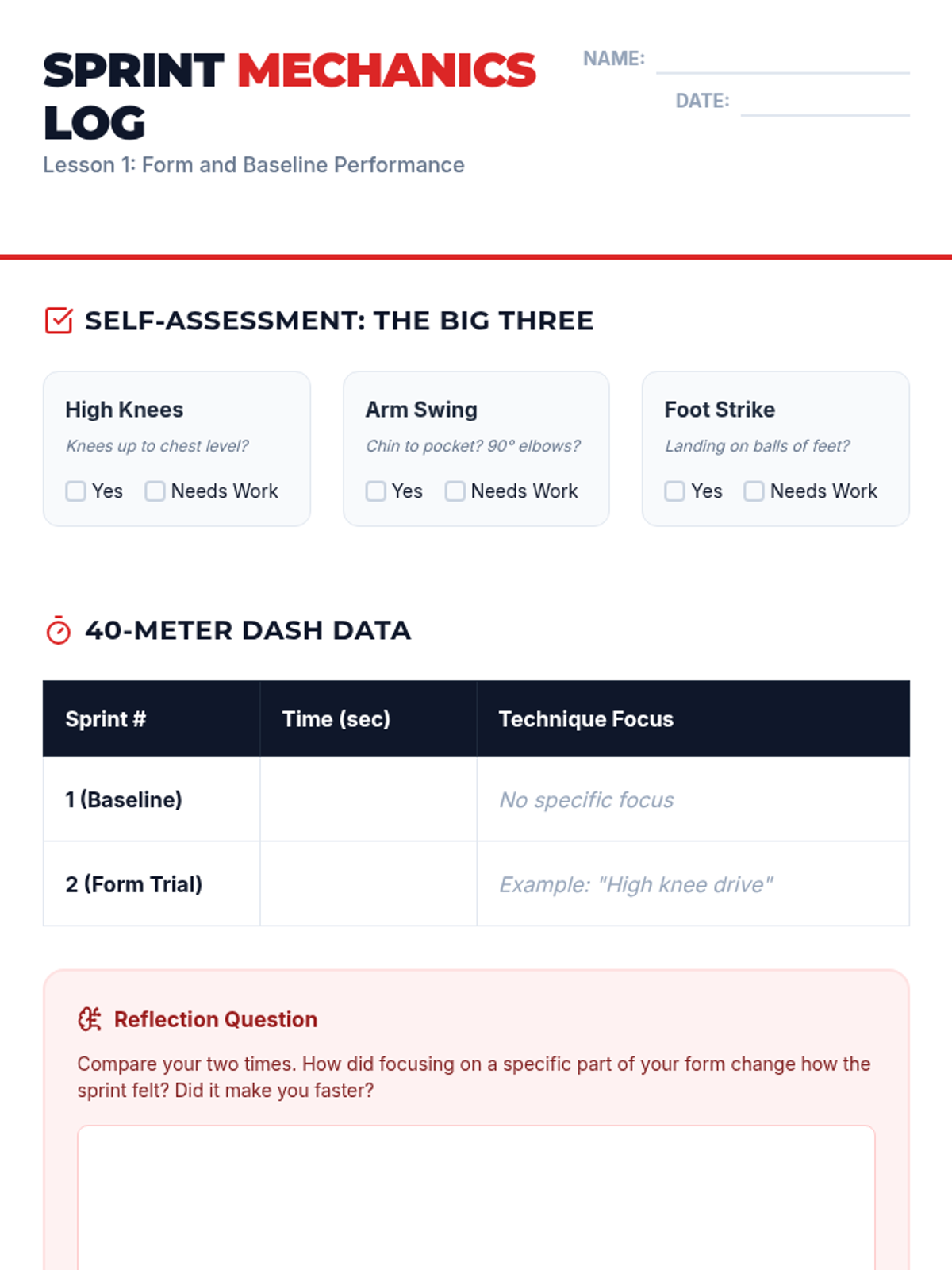
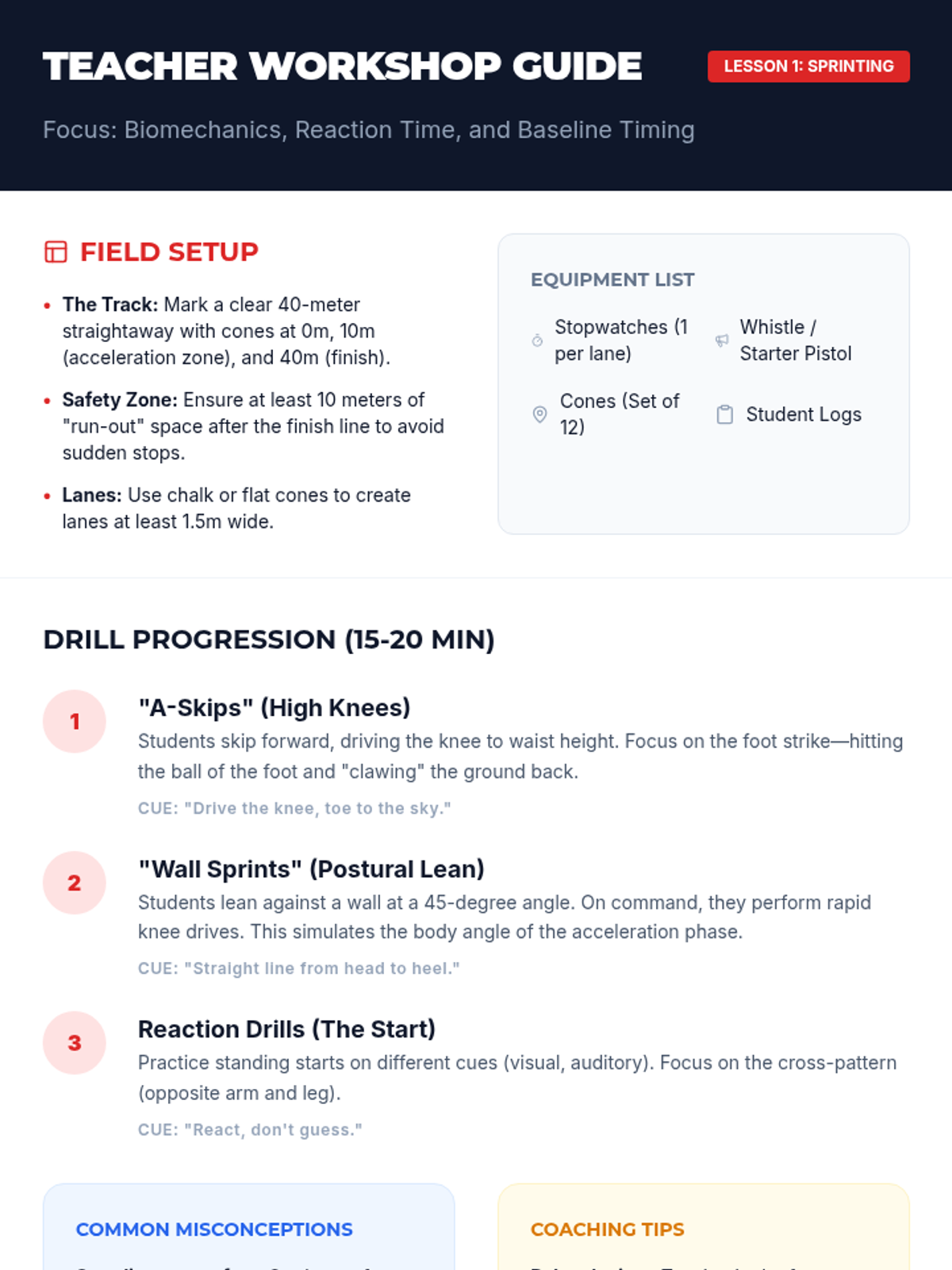
A comprehensive 5-lesson sequence for 5th-grade students focused on the biomechanics of sprinting and the technical coordination of relay racing. Students progress from individual form analysis to complex team-based baton exchanges in a simulated competitive environment.
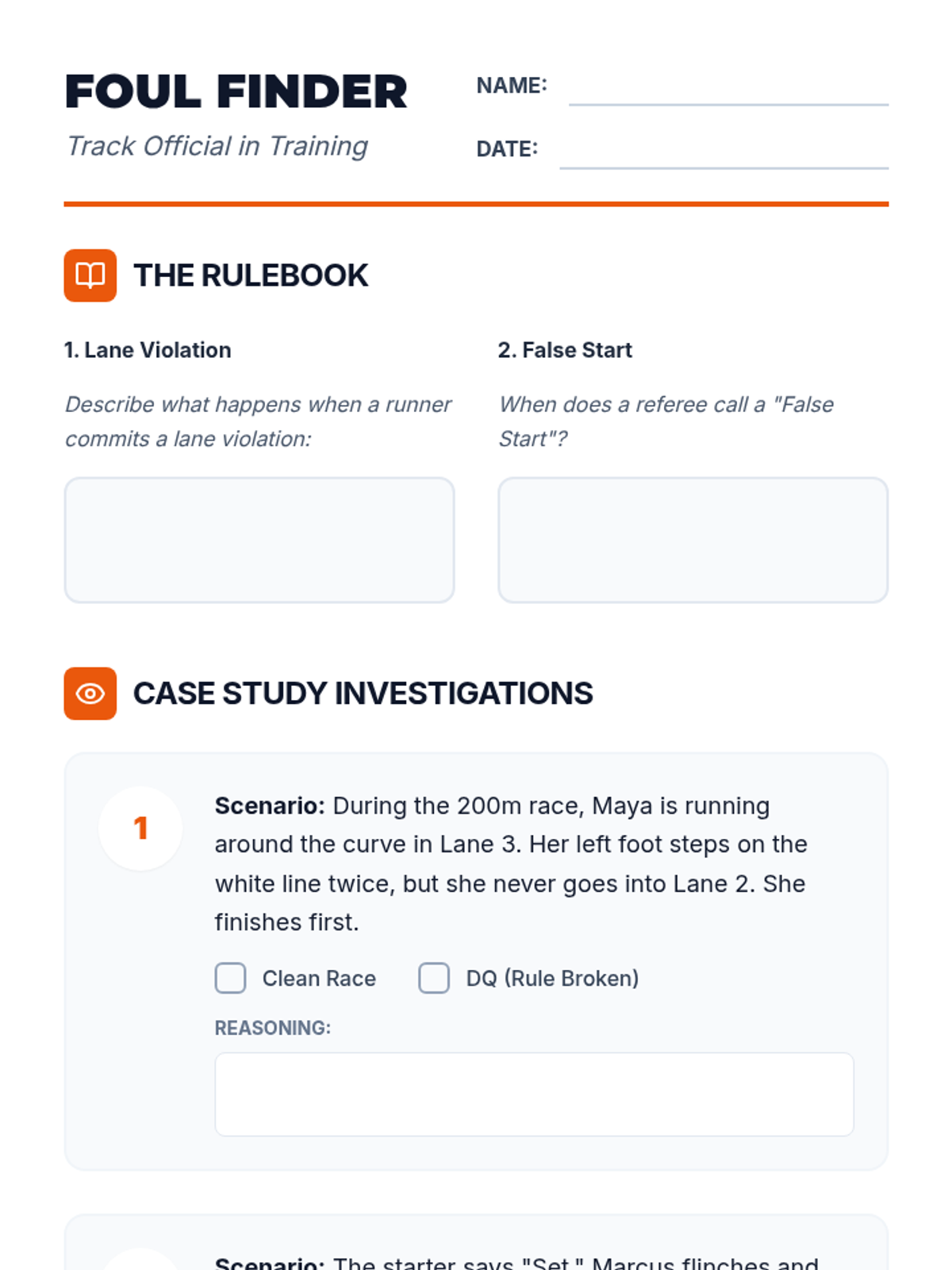
This sequence shifts focus from pure mechanics to the organizational structure, rules, and etiquette of a track meet. Students take on roles as both athletes and officials, learning how events are measured, judged, and scored. The unit emphasizes fair play, understanding disqualifications, and accurate measurement, culminating in a class-organized mini-meet.
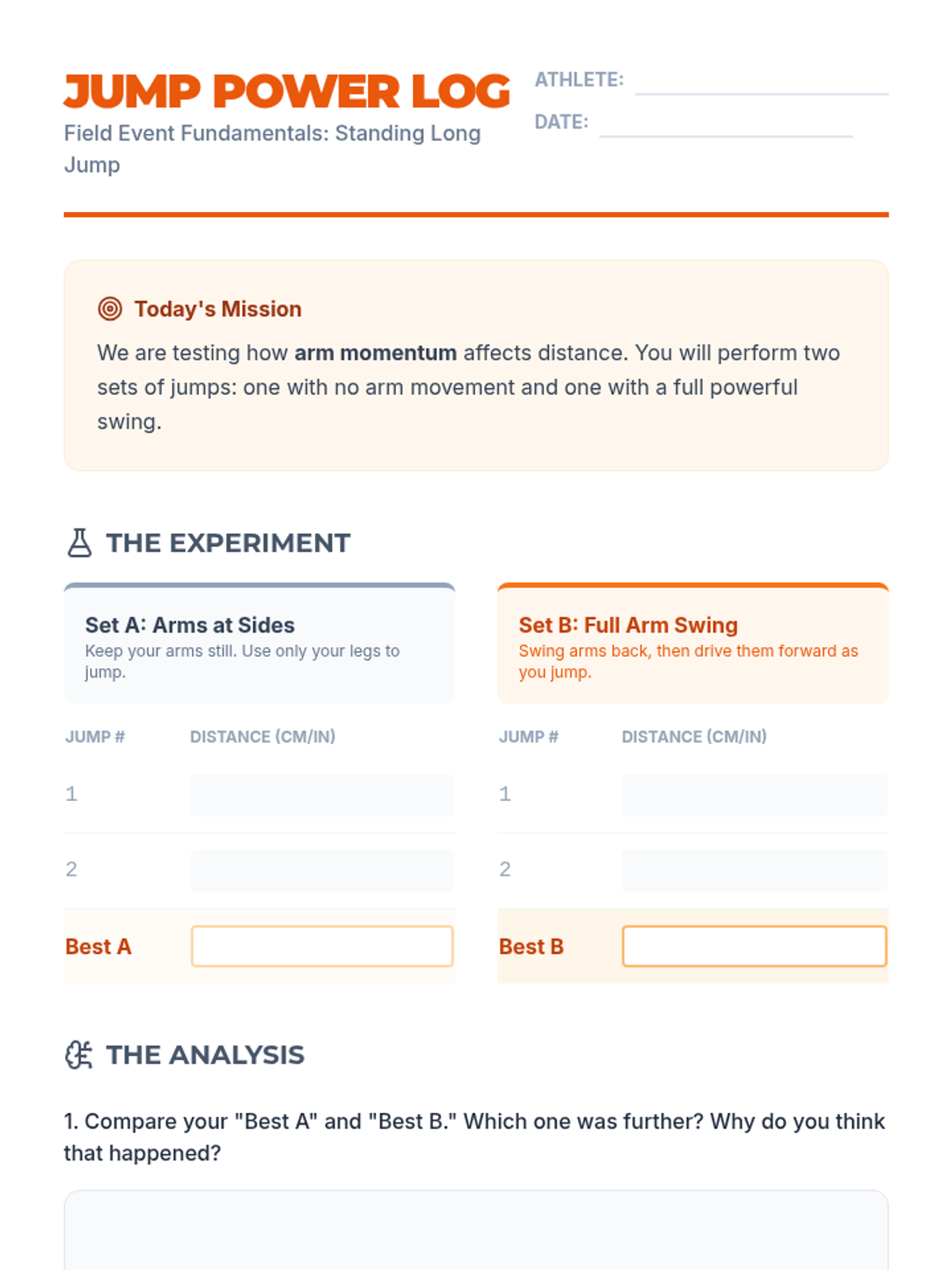
Students explore the physics and techniques behind track and field events, focusing on long jump and throws. This 5-lesson sequence covers mechanics of force, angle, and body positioning through inquiry and skill-building activities.
A comprehensive 5th-grade unit on Track and Field focusing on the biomechanics of sprinting, jumping, and throwing. Students develop technical skills through focused workshops and apply their knowledge in a culminating simulated track meet.