Fundamental techniques for racket sports, track and field, and gymnastics maneuvers. Develops physical literacy through martial arts disciplines and self-defense strategies.
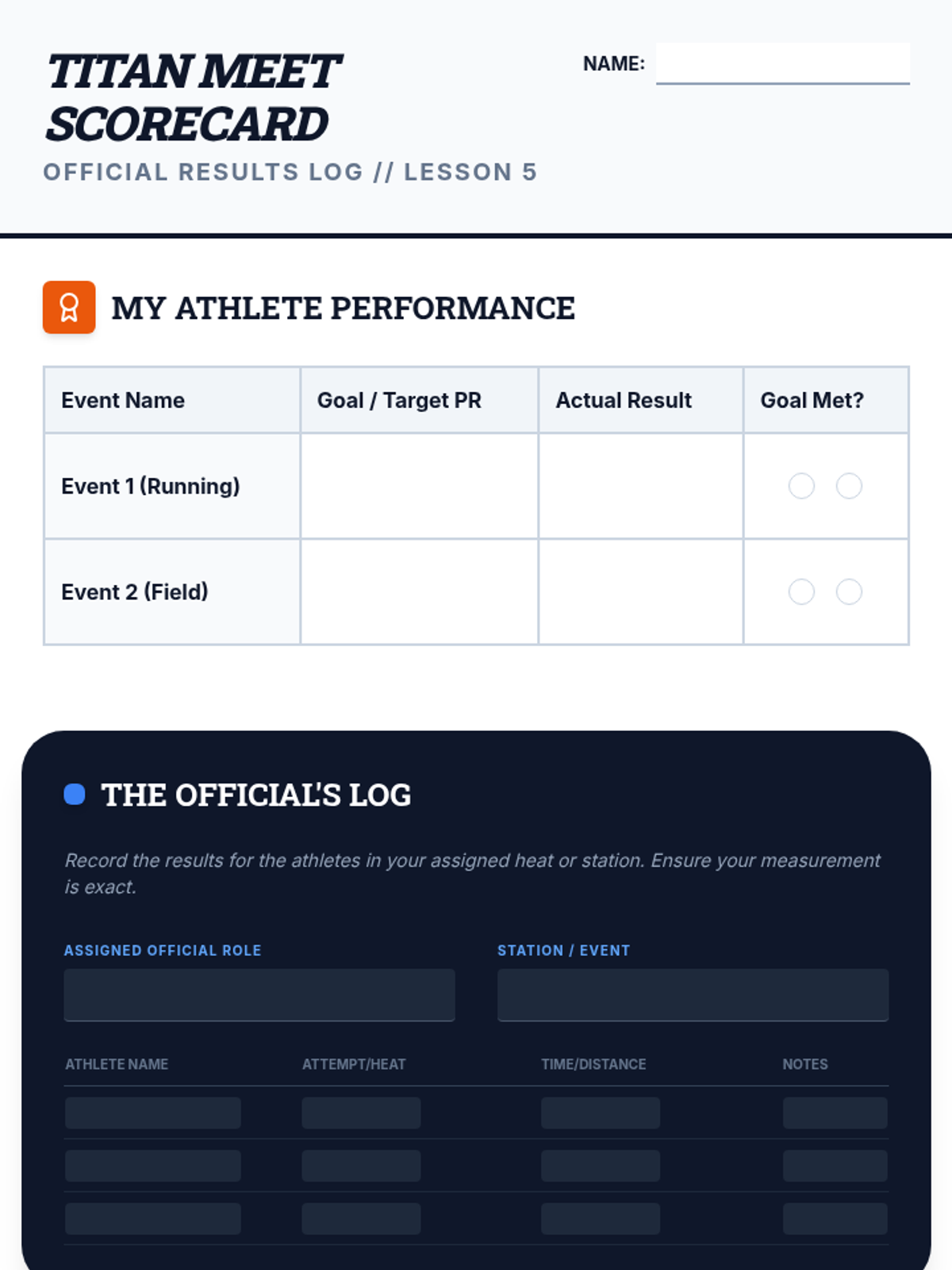
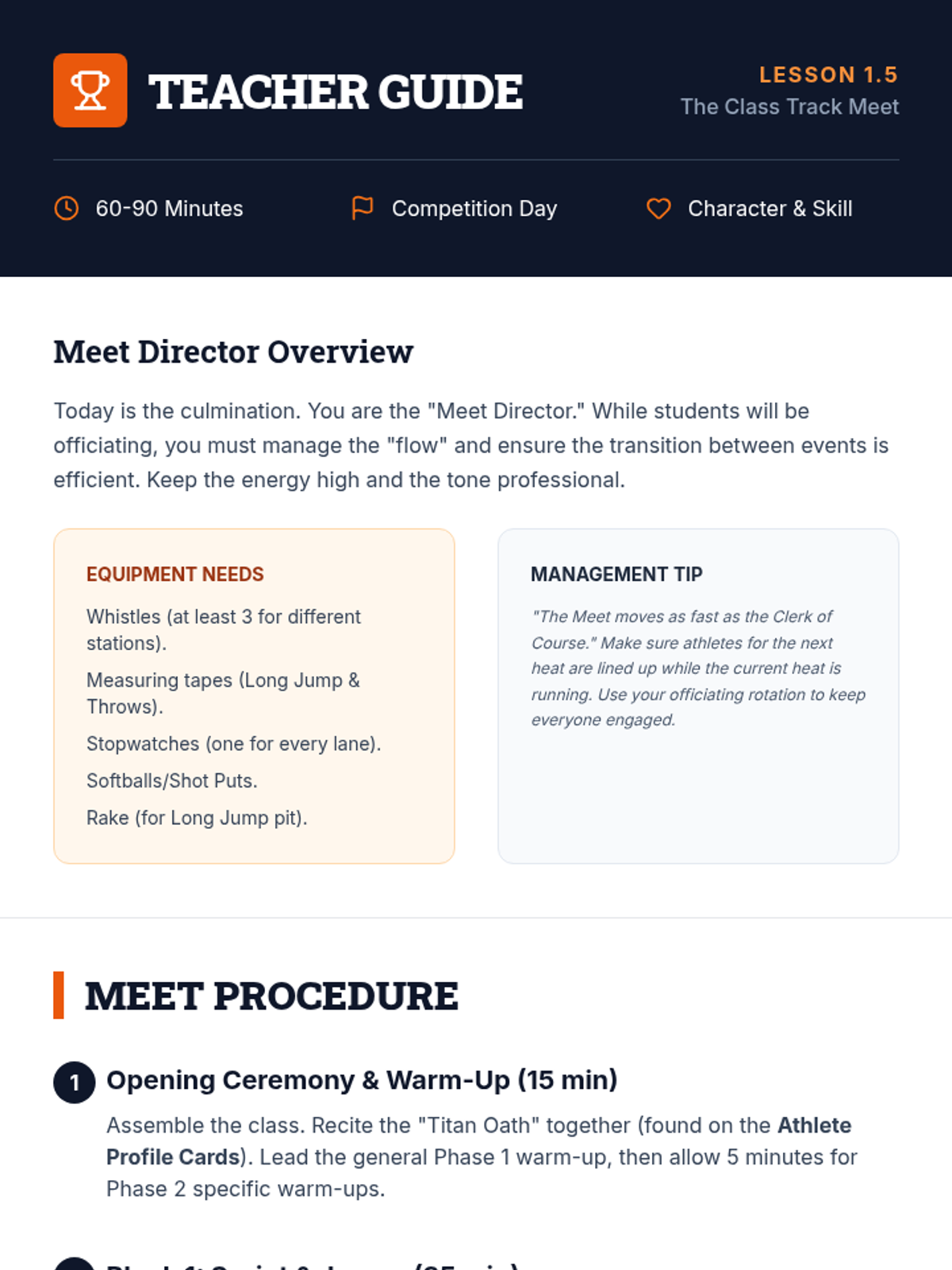
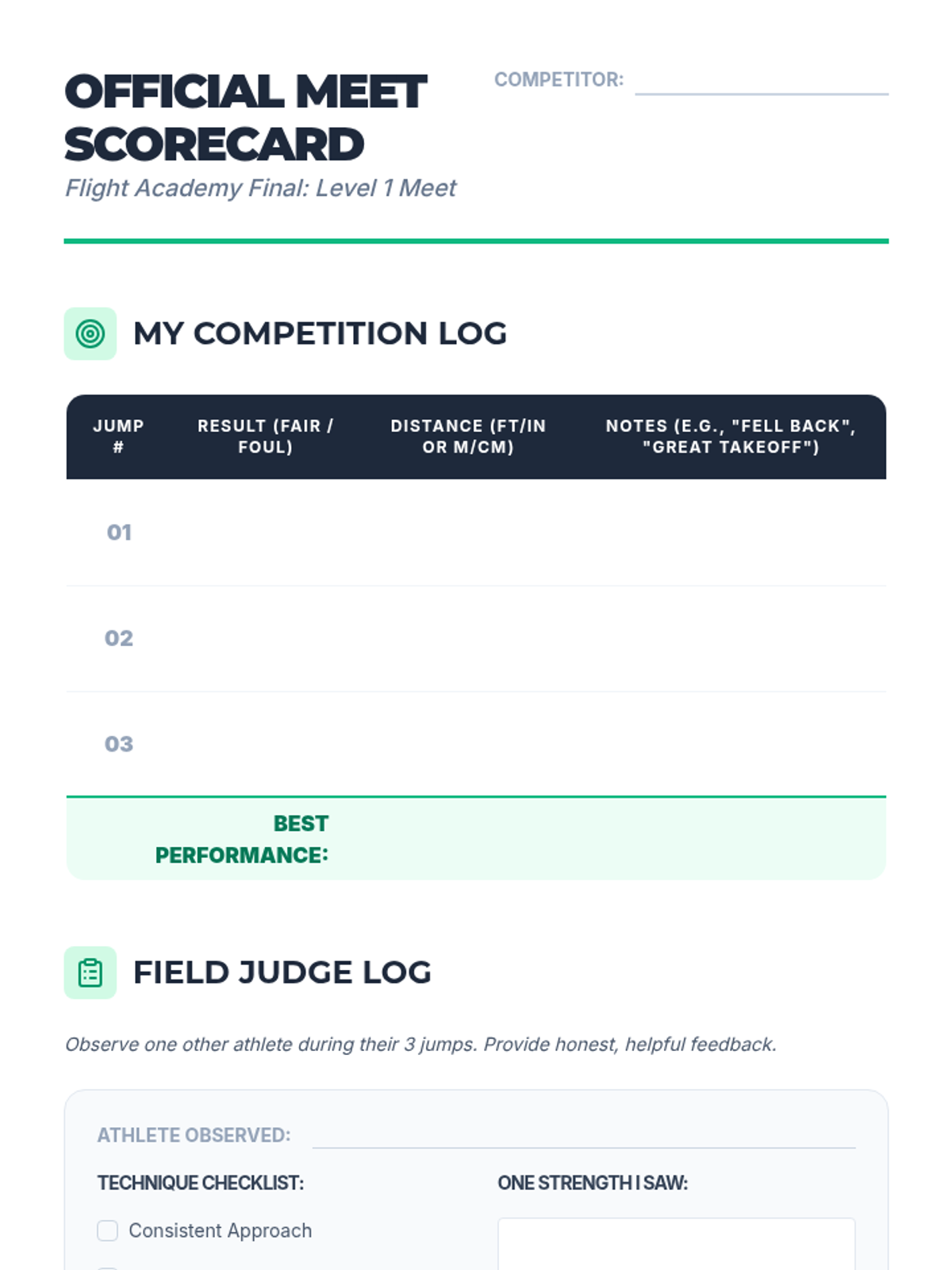
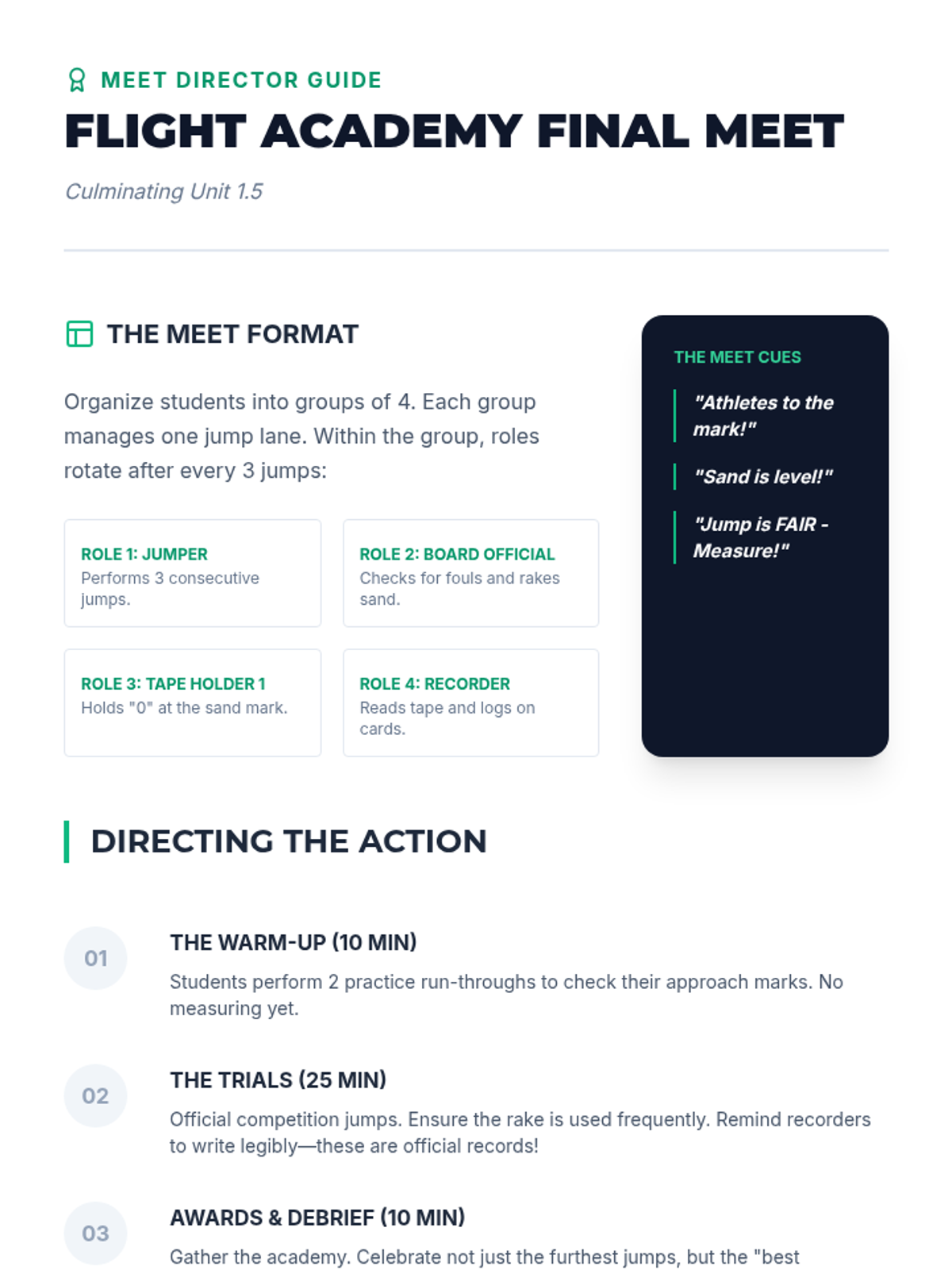
A culminating event where students rotate between competing and officiating. Students apply all learned skills—running, jumping, throwing, and measuring—in a structured, rule-bound environment.
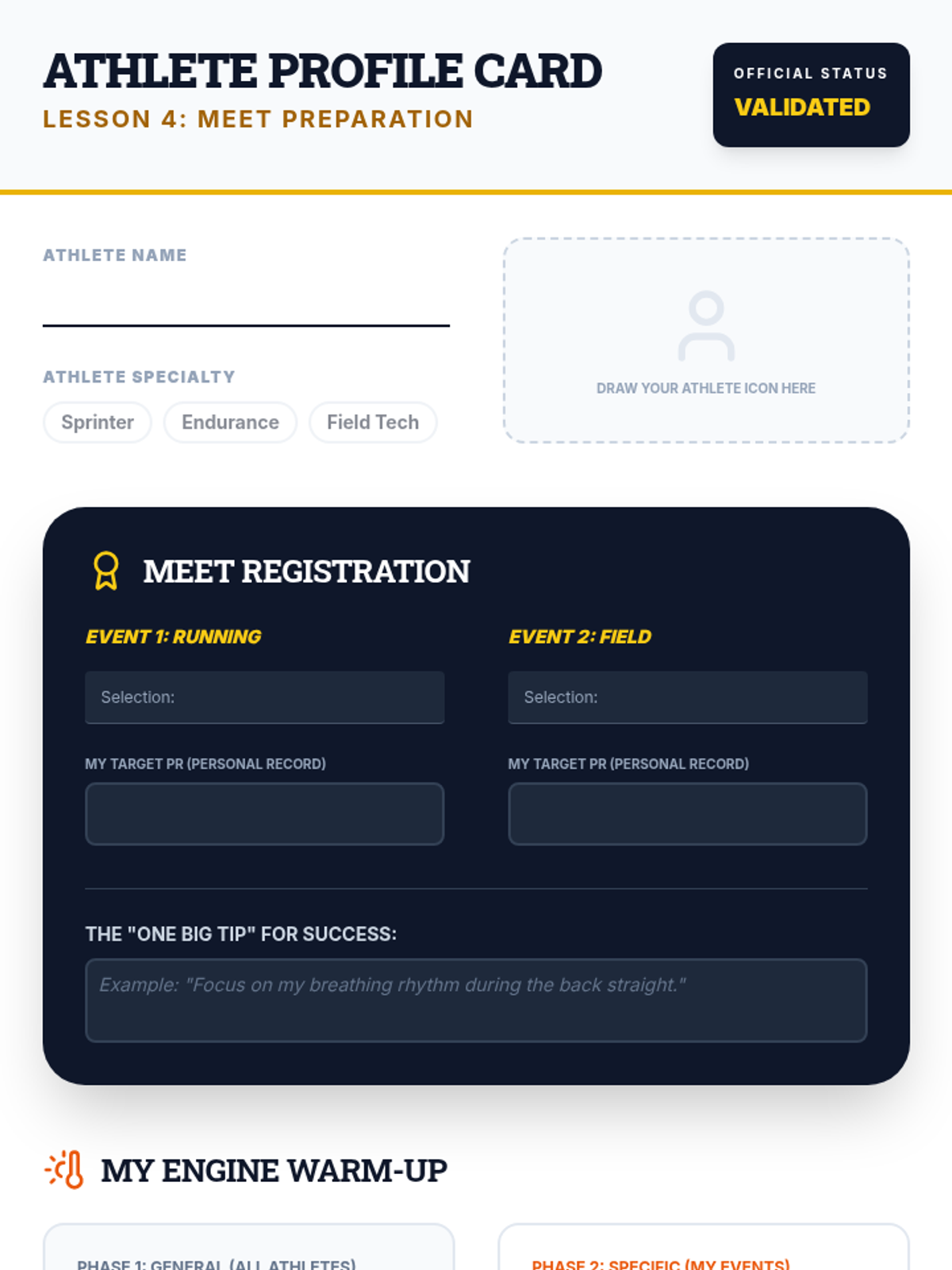
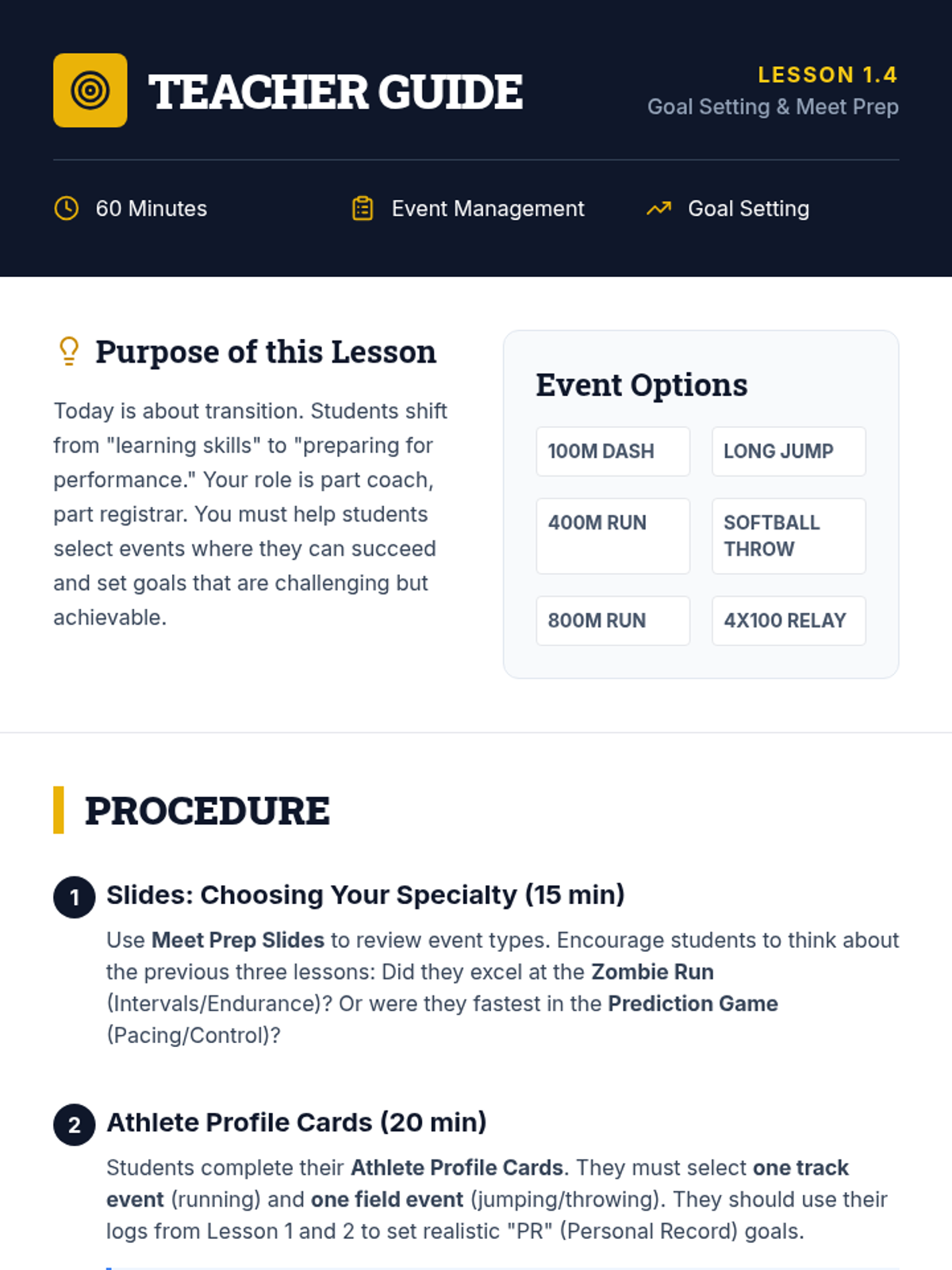
Students select events for a final class meet based on their strengths discovered in previous sequences. They set specific performance goals (time or distance) and practice warm-up routines specific to their events.
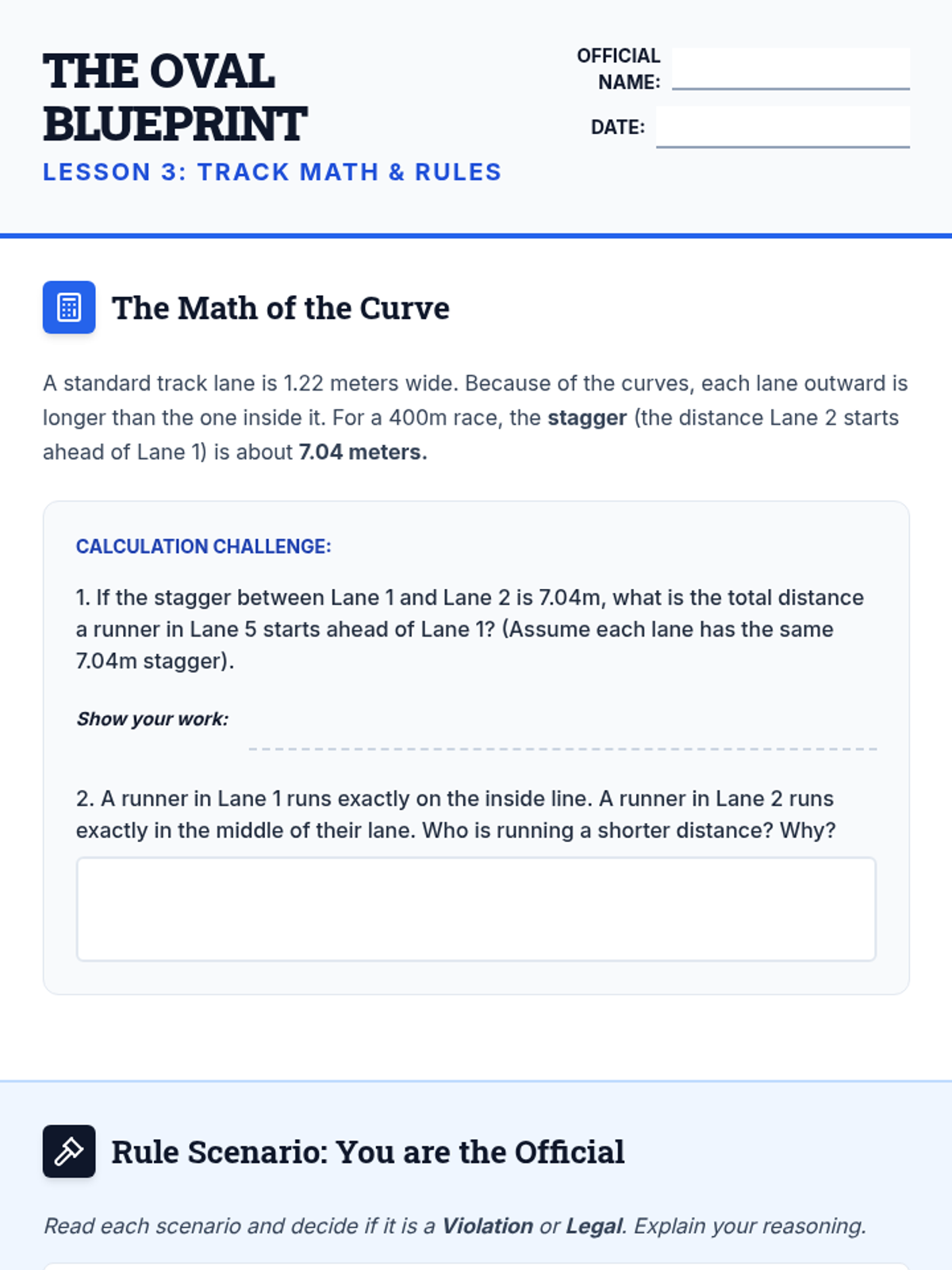
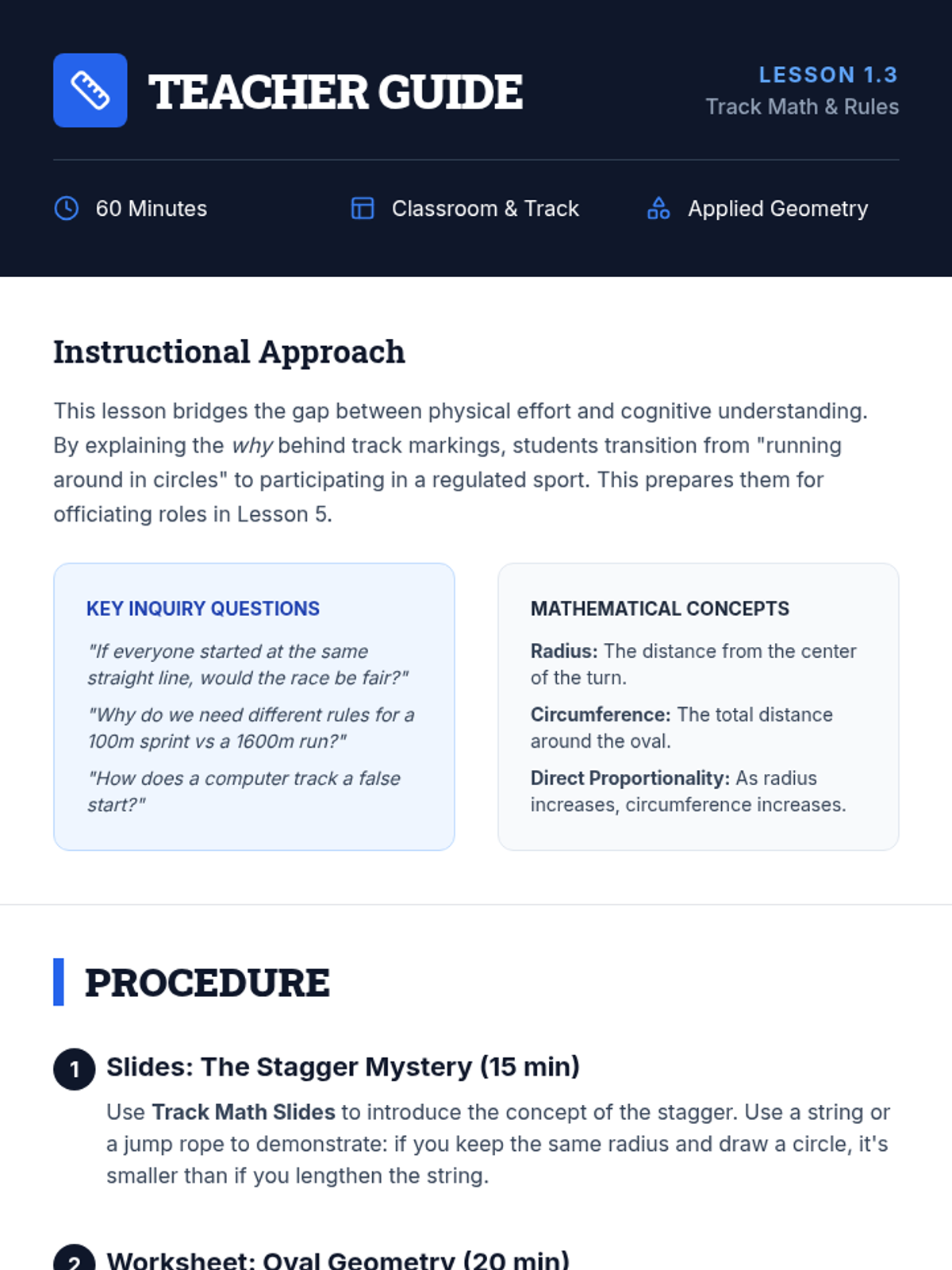
This classroom and track-side lesson teaches the 'why' behind track markings. Students learn about staggered starts, lane violations, false starts, and how distances are measured and timed.
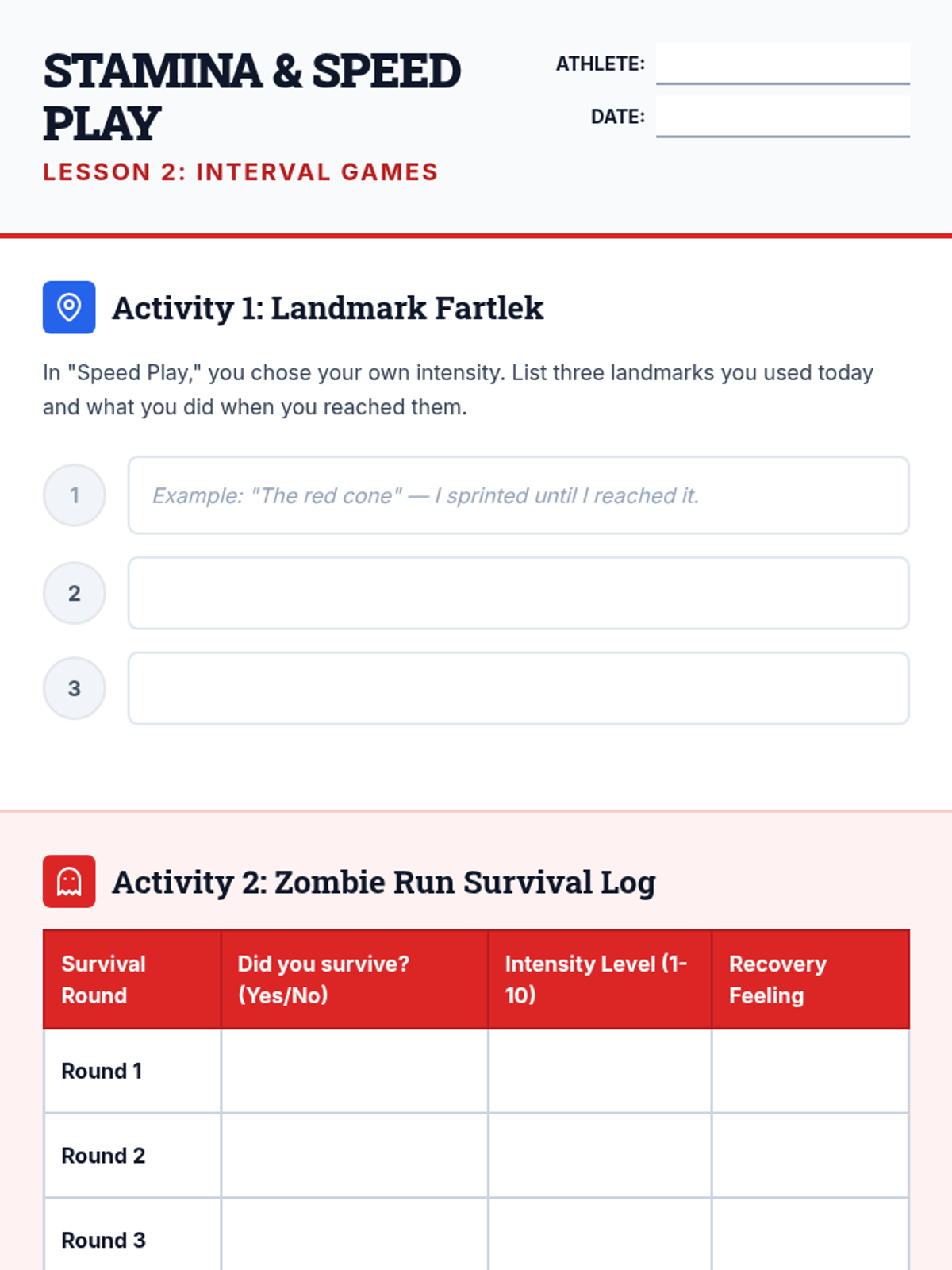
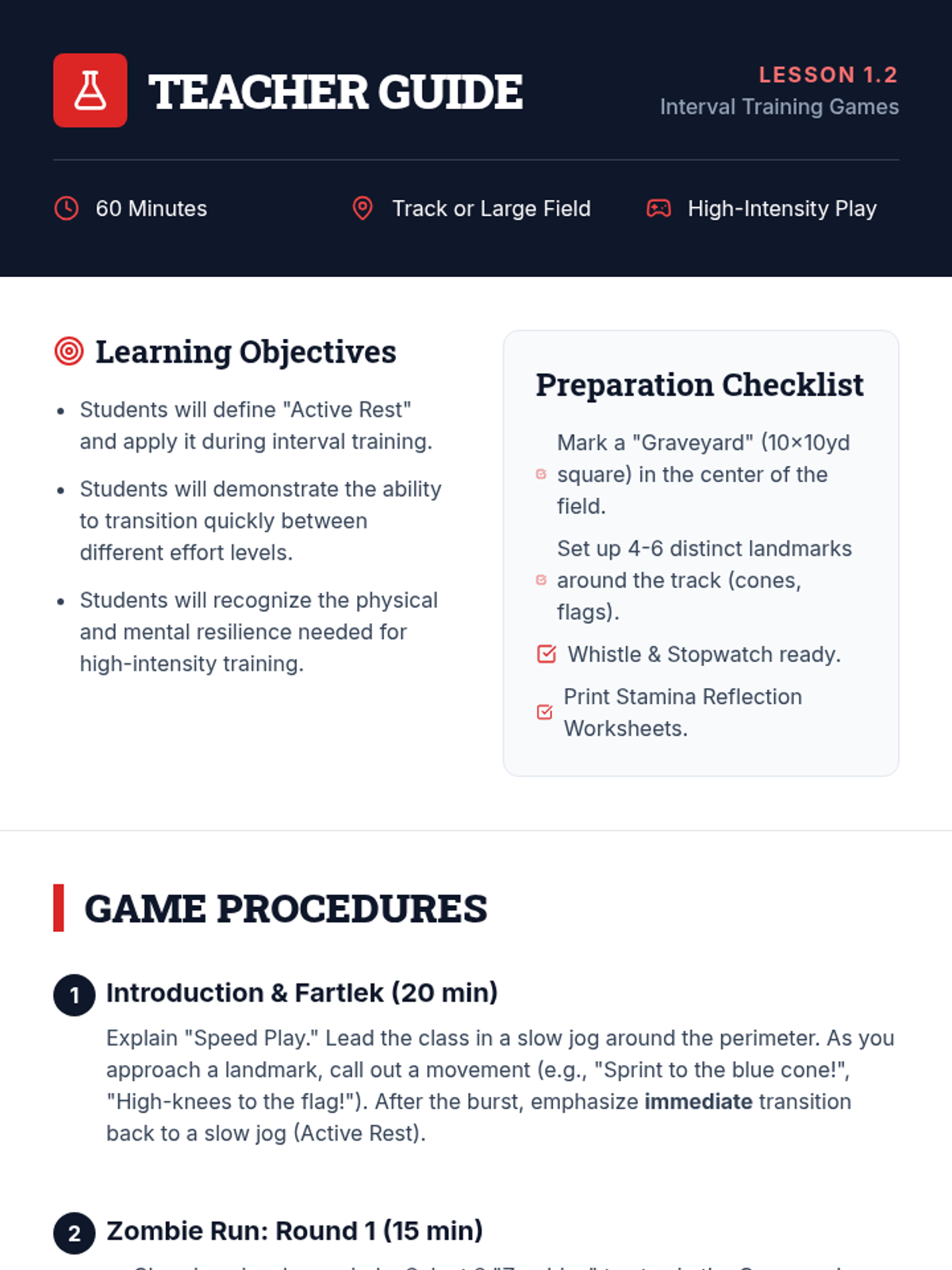
Students participate in Fartlek (speed play) activities and interval training to build stamina. The lesson turns endurance training into a game using whistle signals and changing terrain or obstacles.
A culminating event where students compete in a long jump meet, applying rules as both athletes and officials.
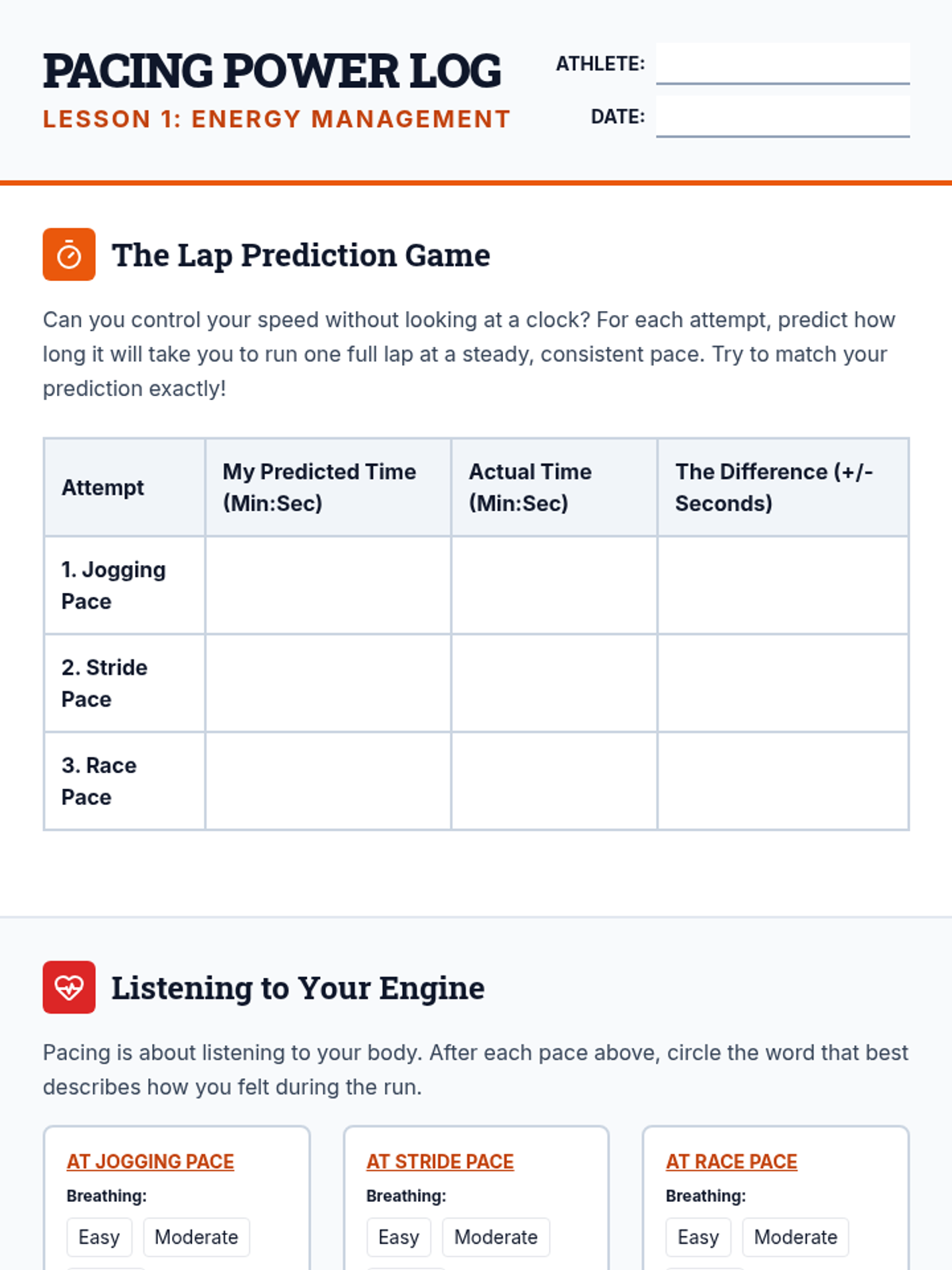
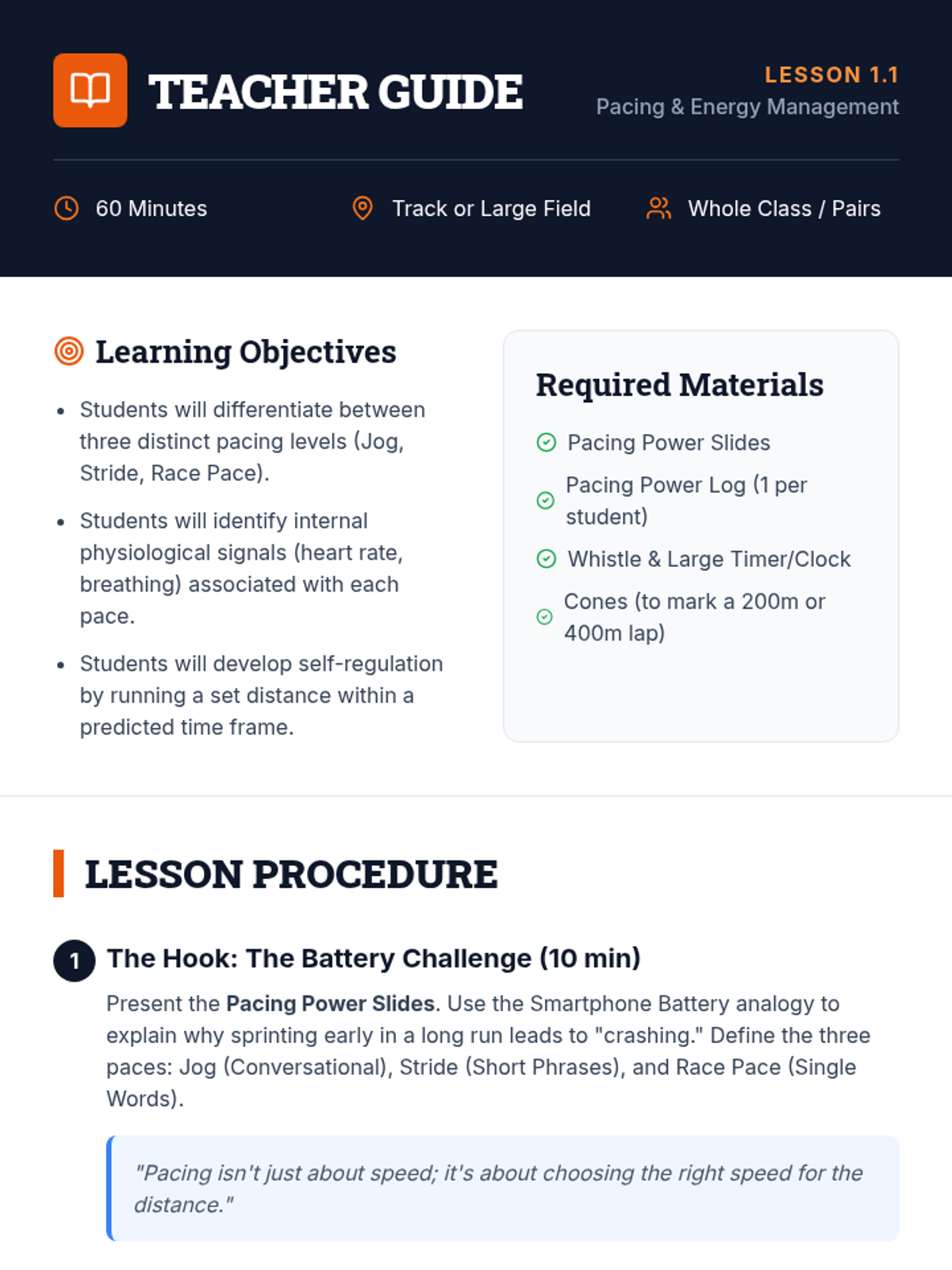
Students explore the concept of pacing by running laps at different commanded speeds and learning to listen to their body's signals (breathing, heart rate) to maintain a steady rhythm.
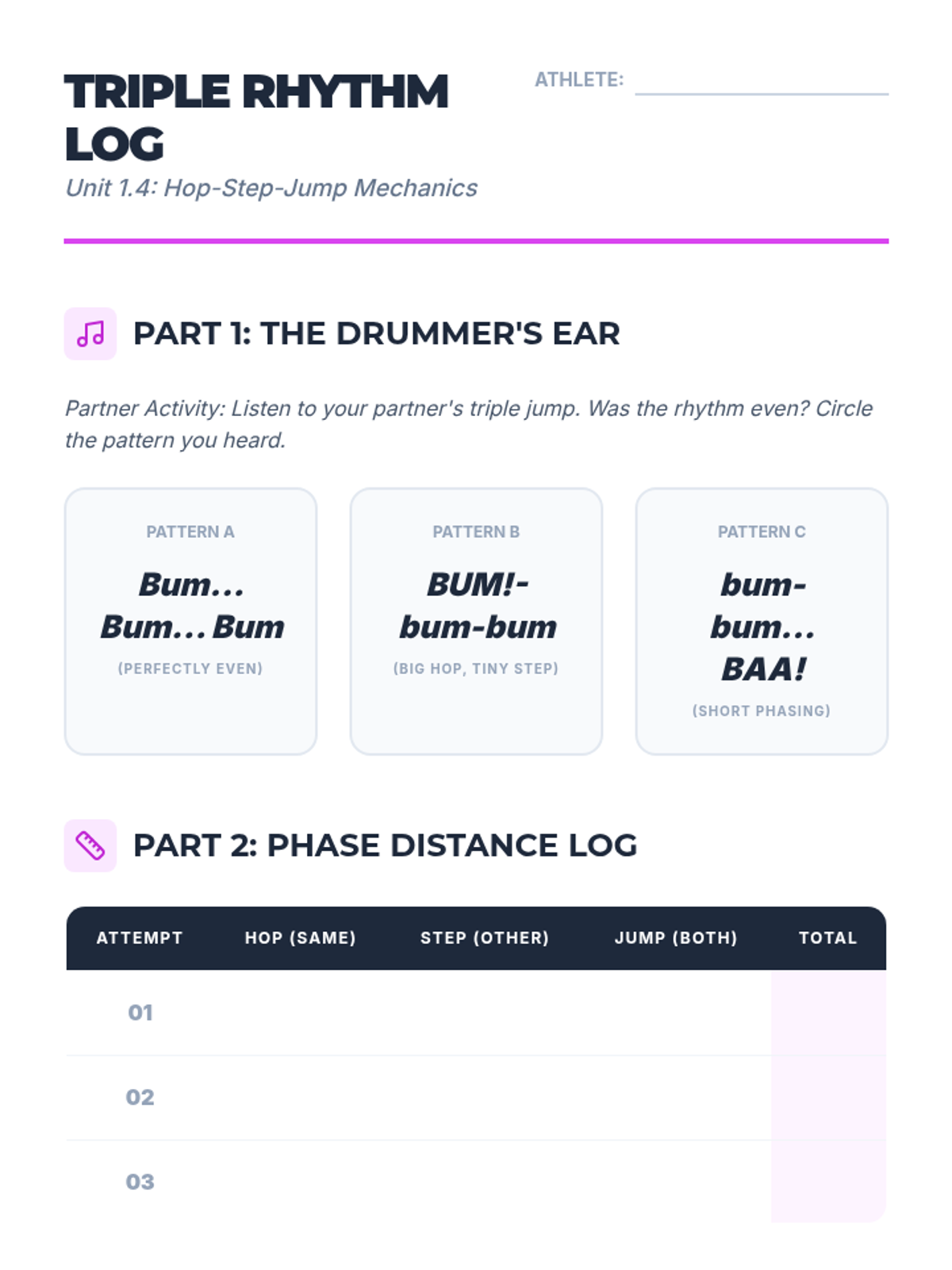
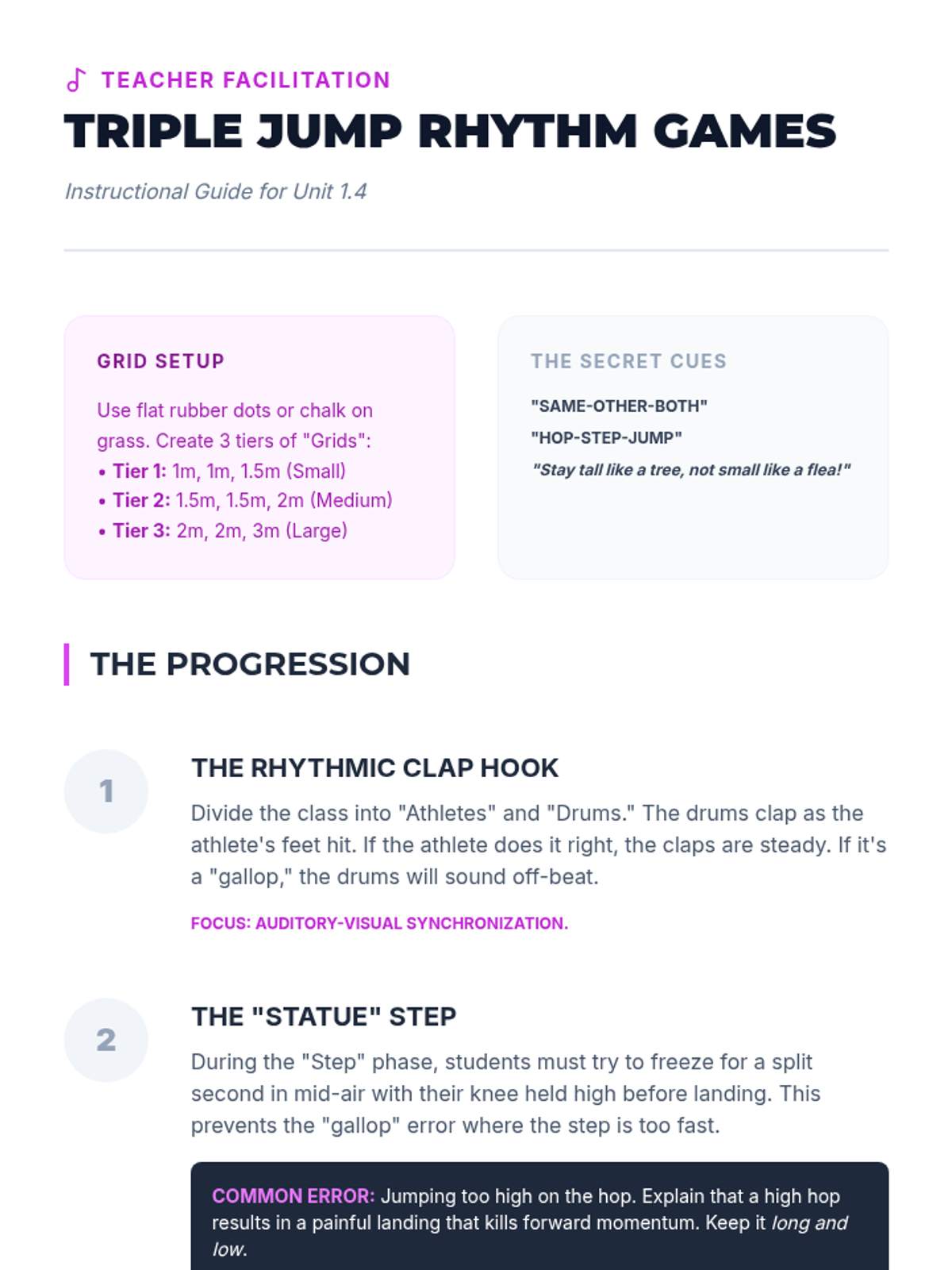
Introduces the rhythmic coordination of the hop, step, and jump phases through tiered drills and games.
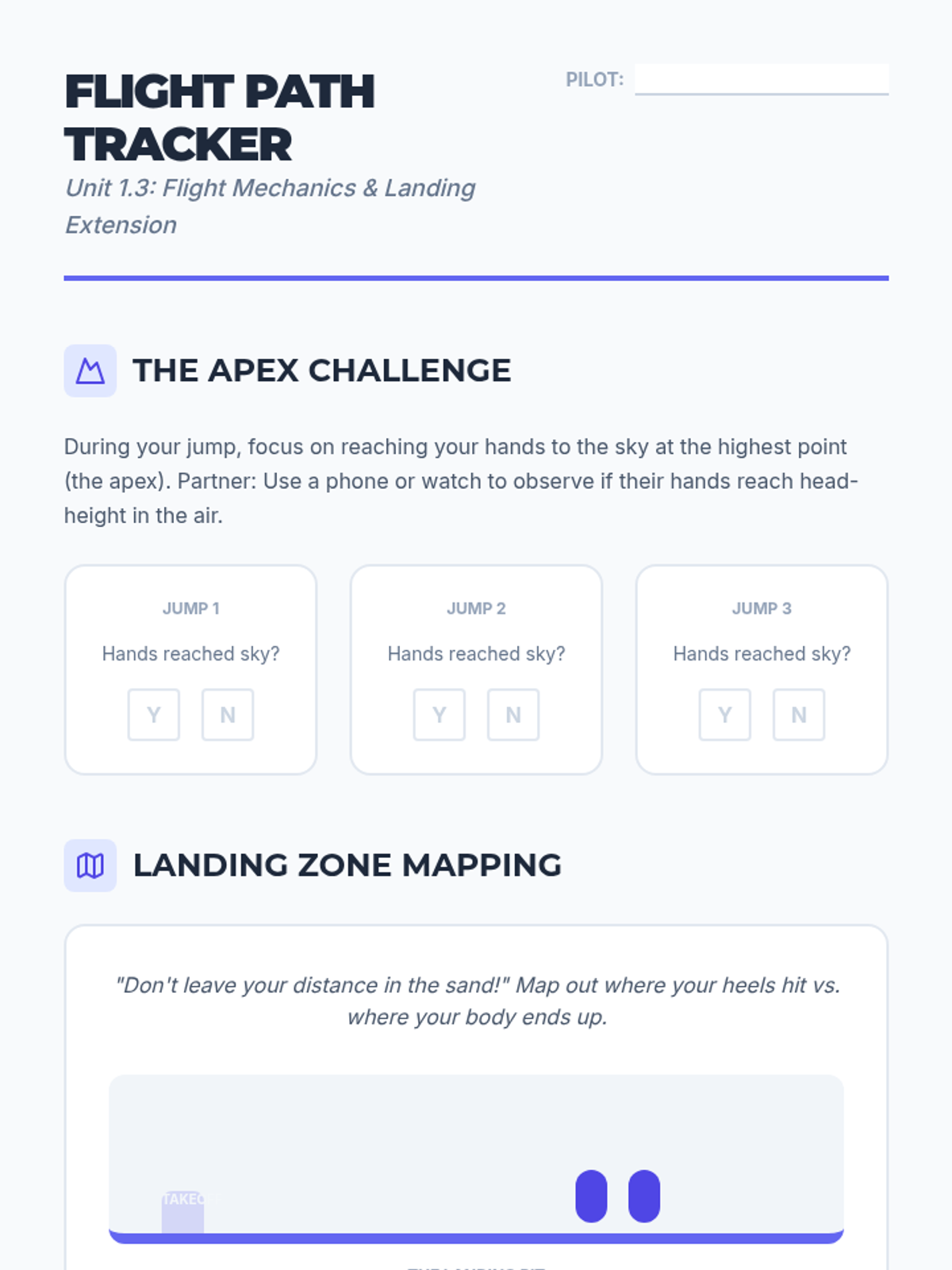
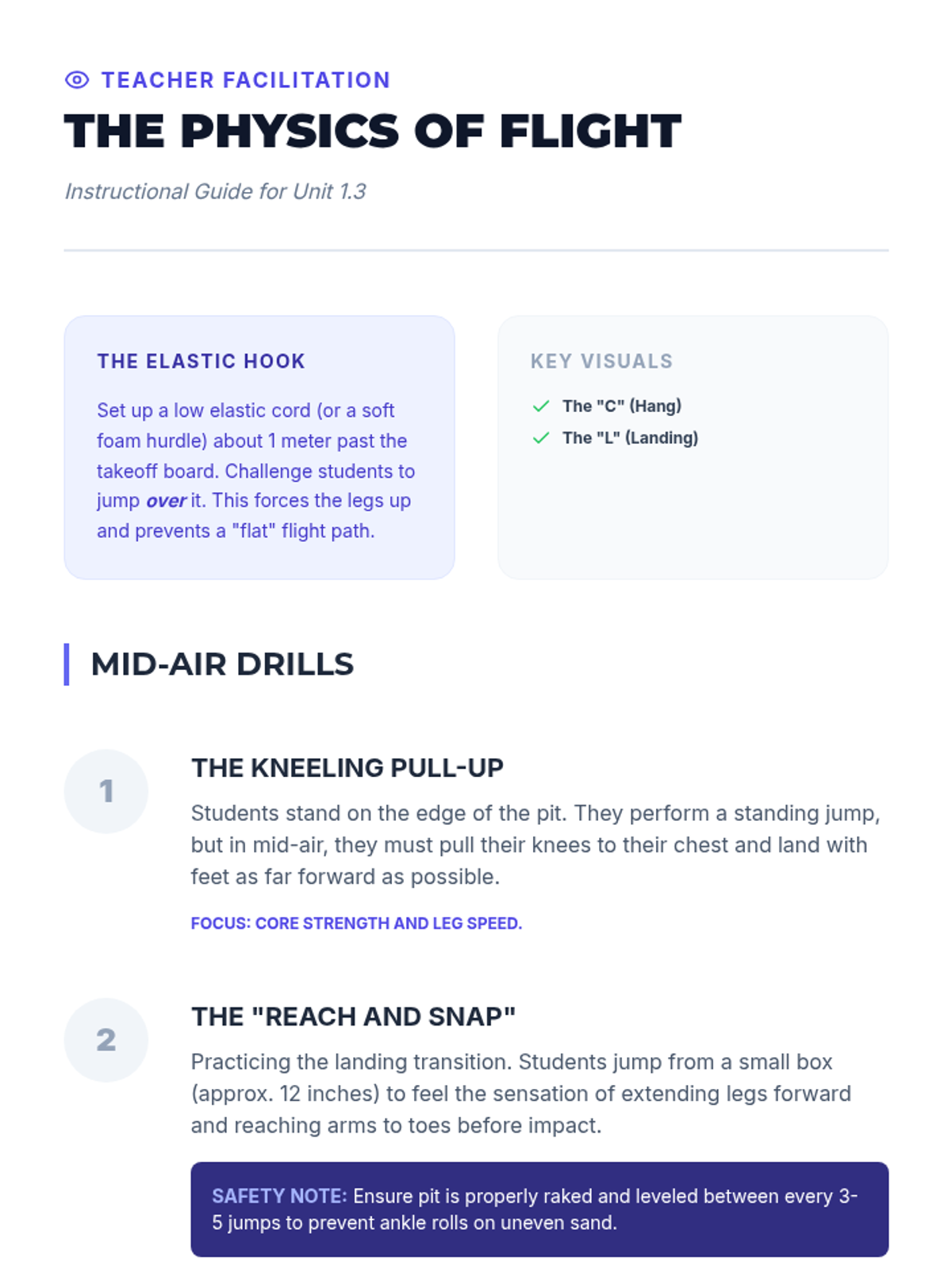
Explores mid-air body control and techniques to maximize distance by extending legs during the landing phase.
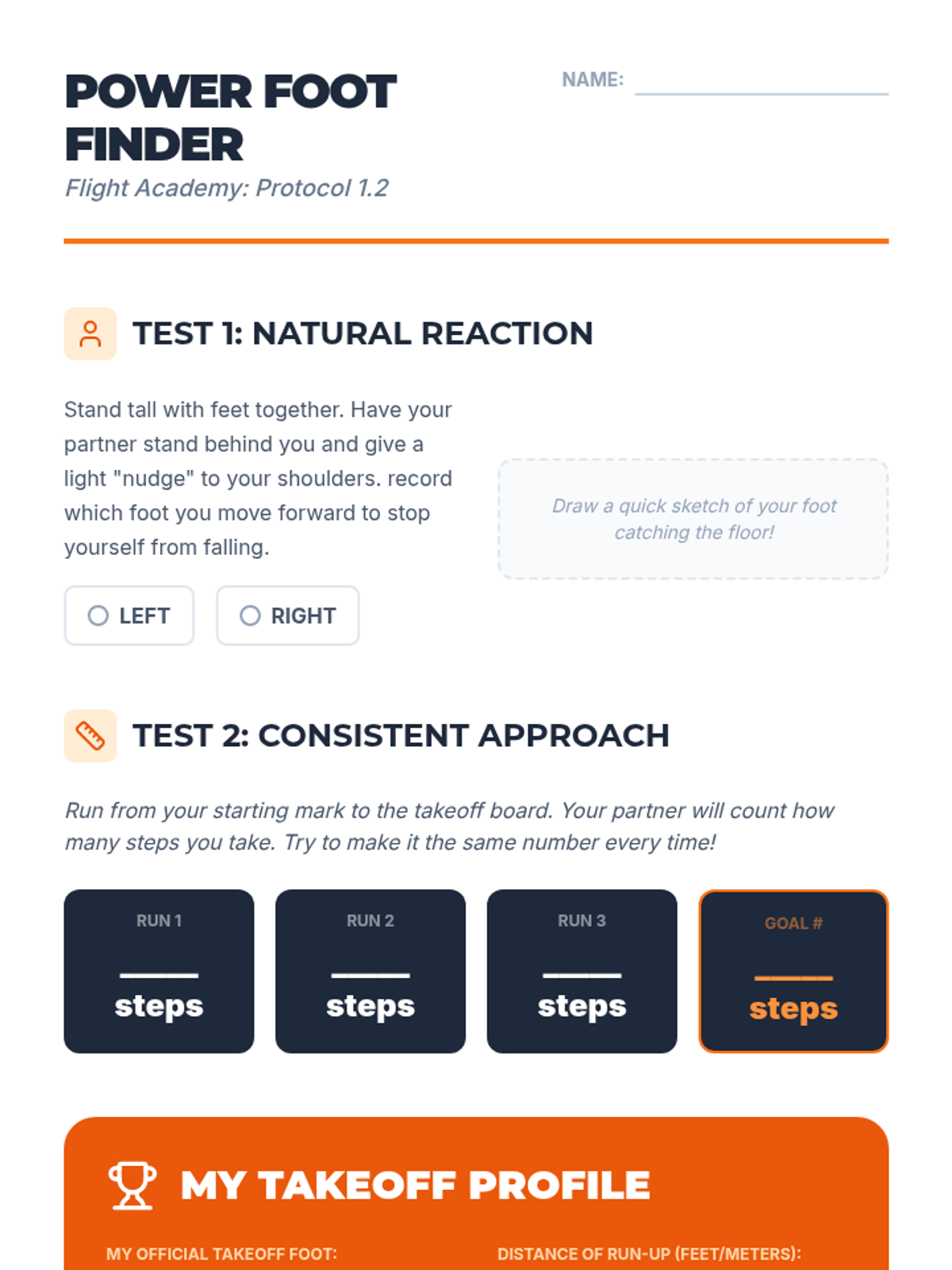
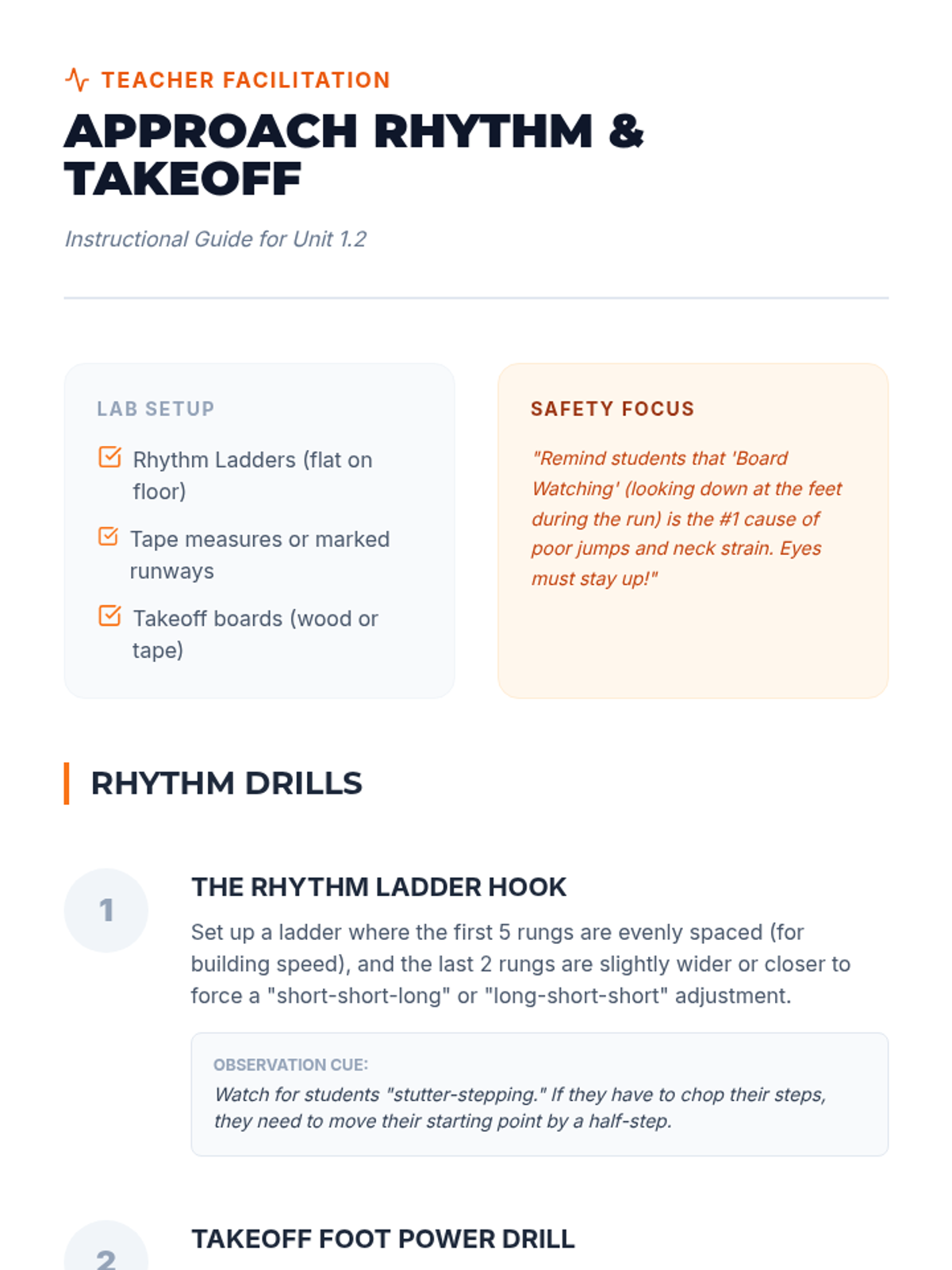
Focuses on determining the dominant takeoff foot and developing a consistent, rhythmic approach run to the board.
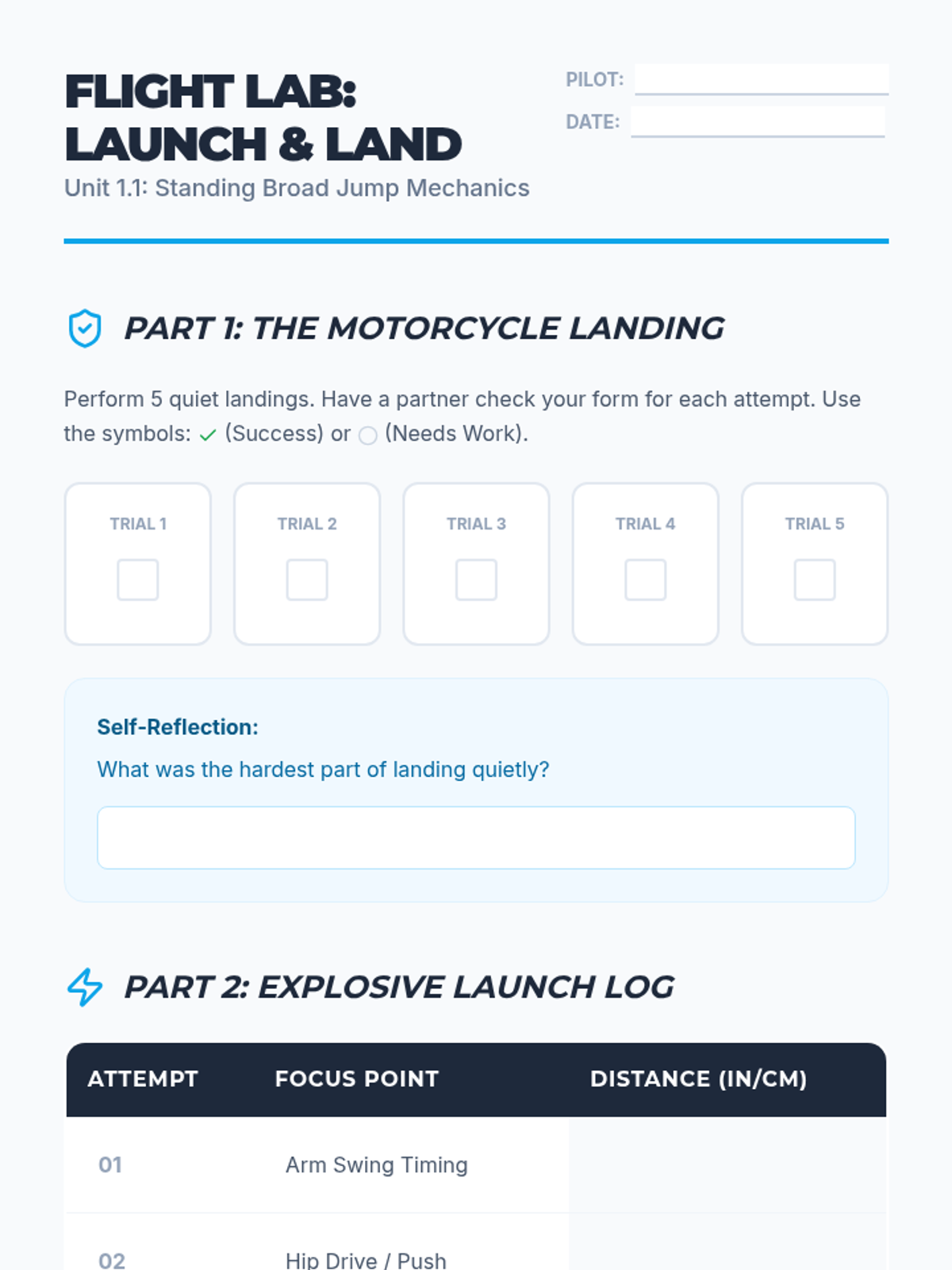
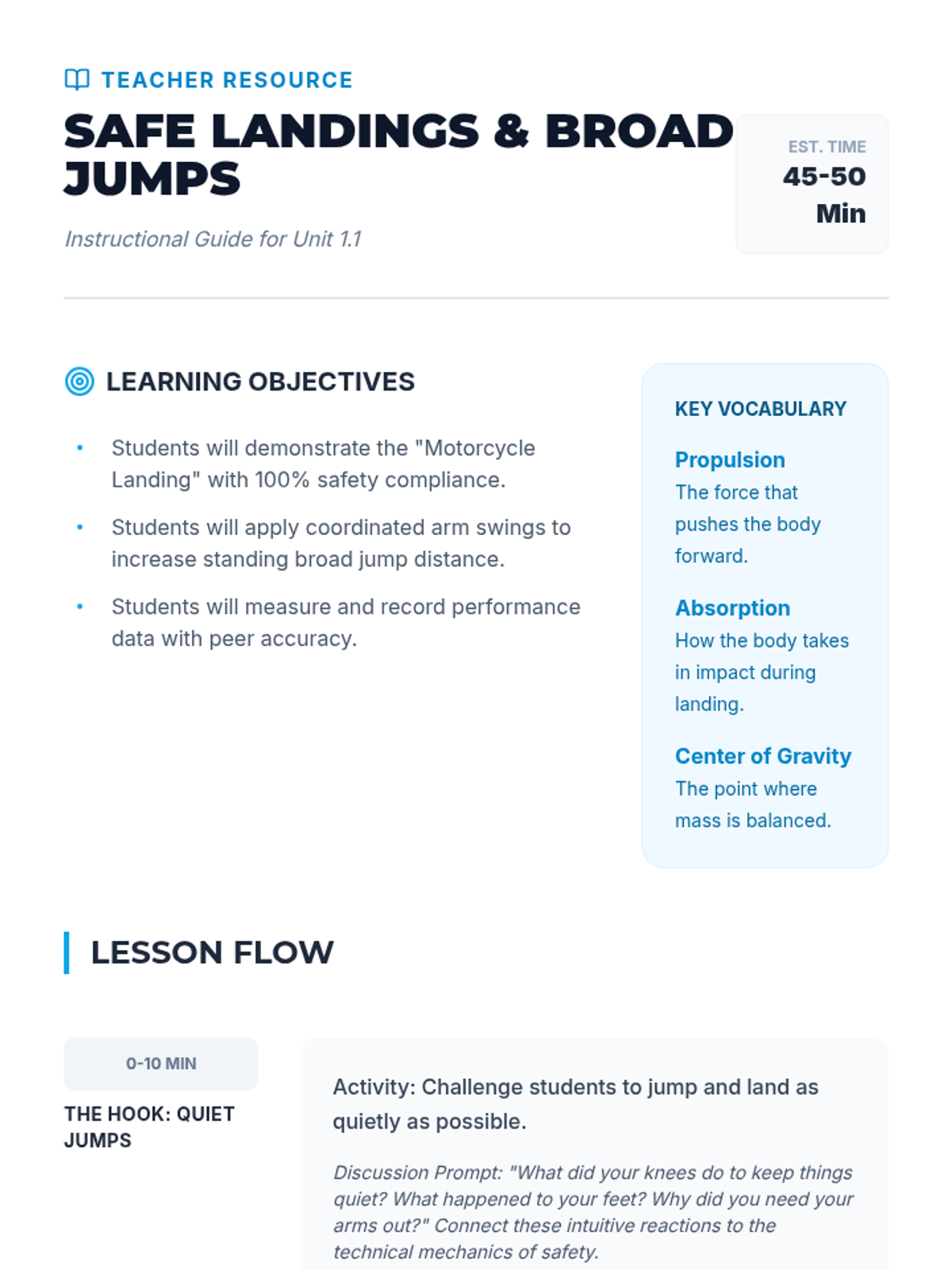
Students master the 'Motorcycle Landing' for safety and apply explosive power to the standing broad jump.
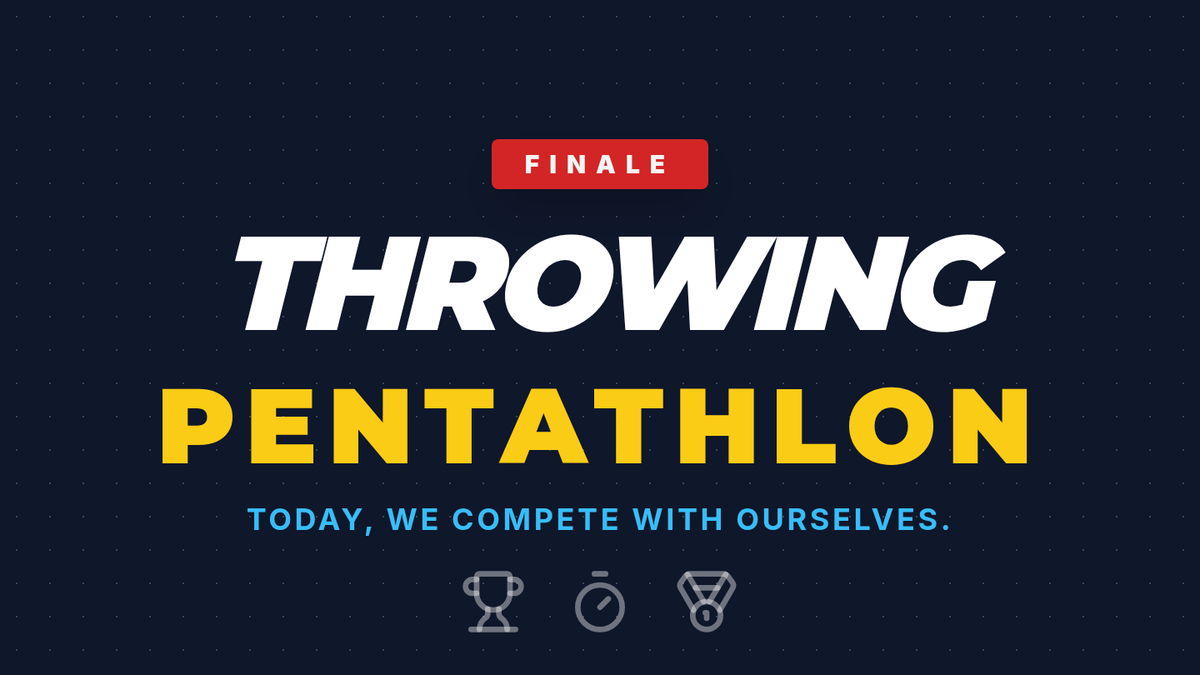
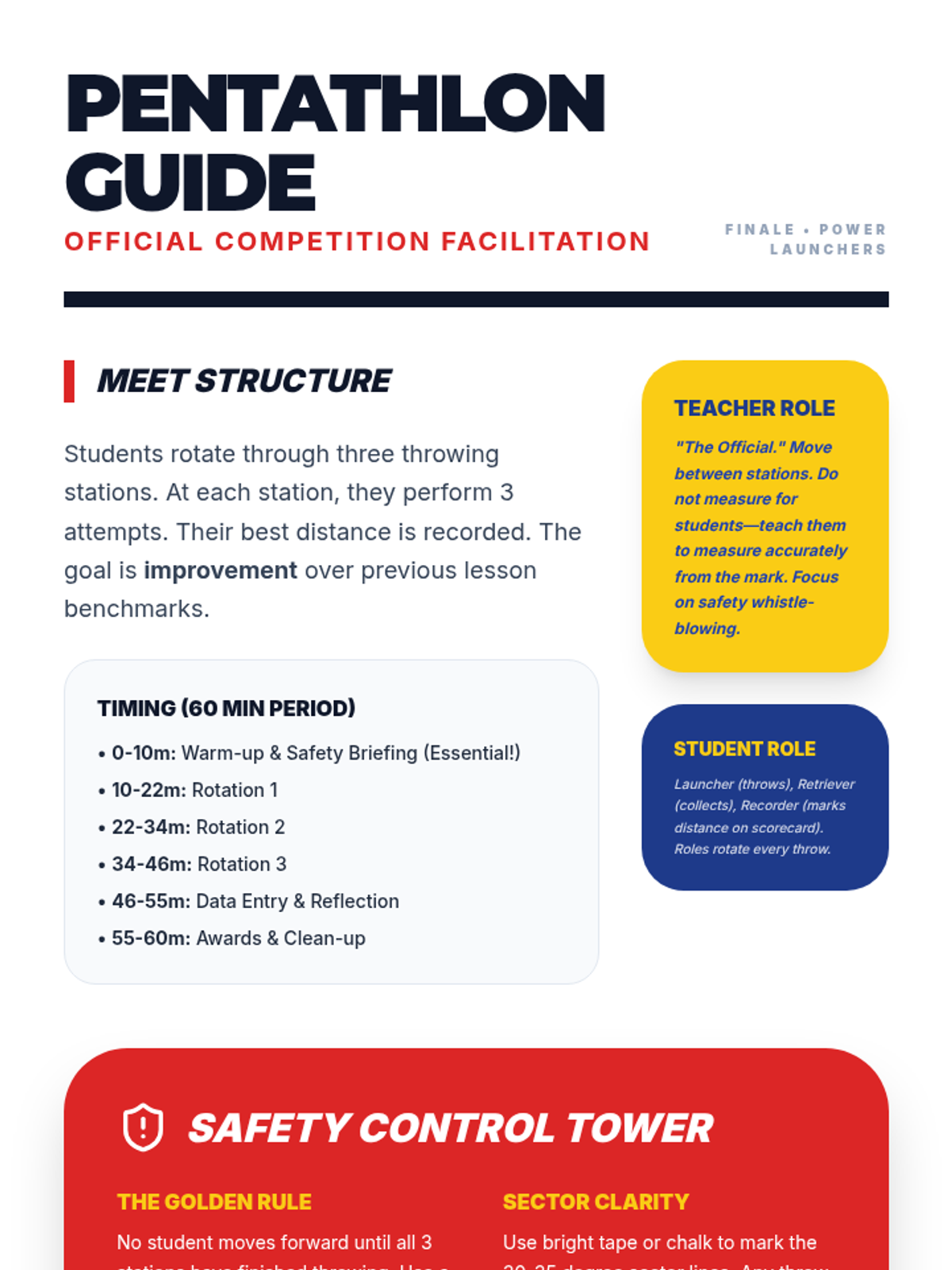
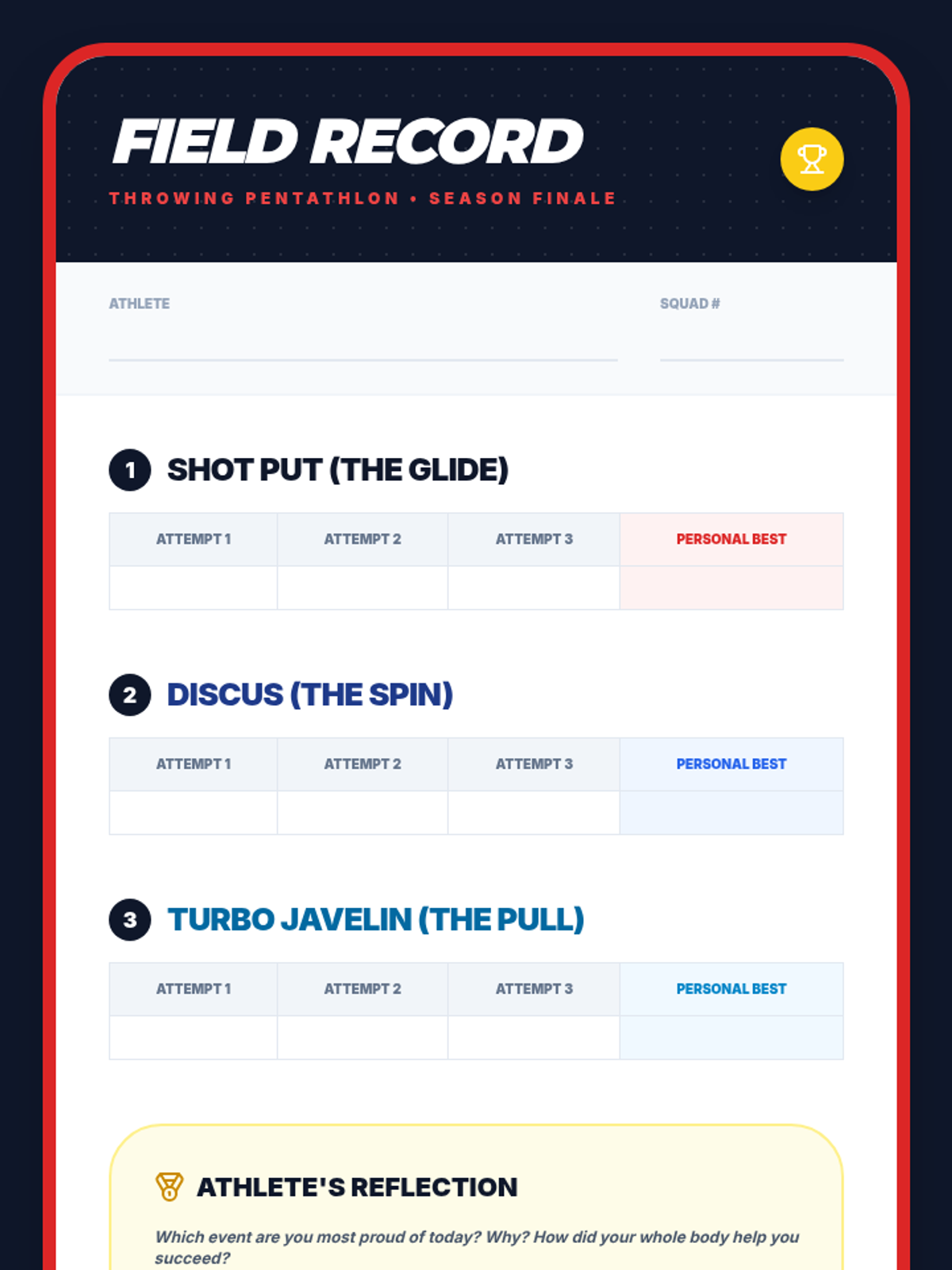
The sequence culminates in a multi-event competition where students apply their skills across all throwing disciplines while managing the throwing sector safely.
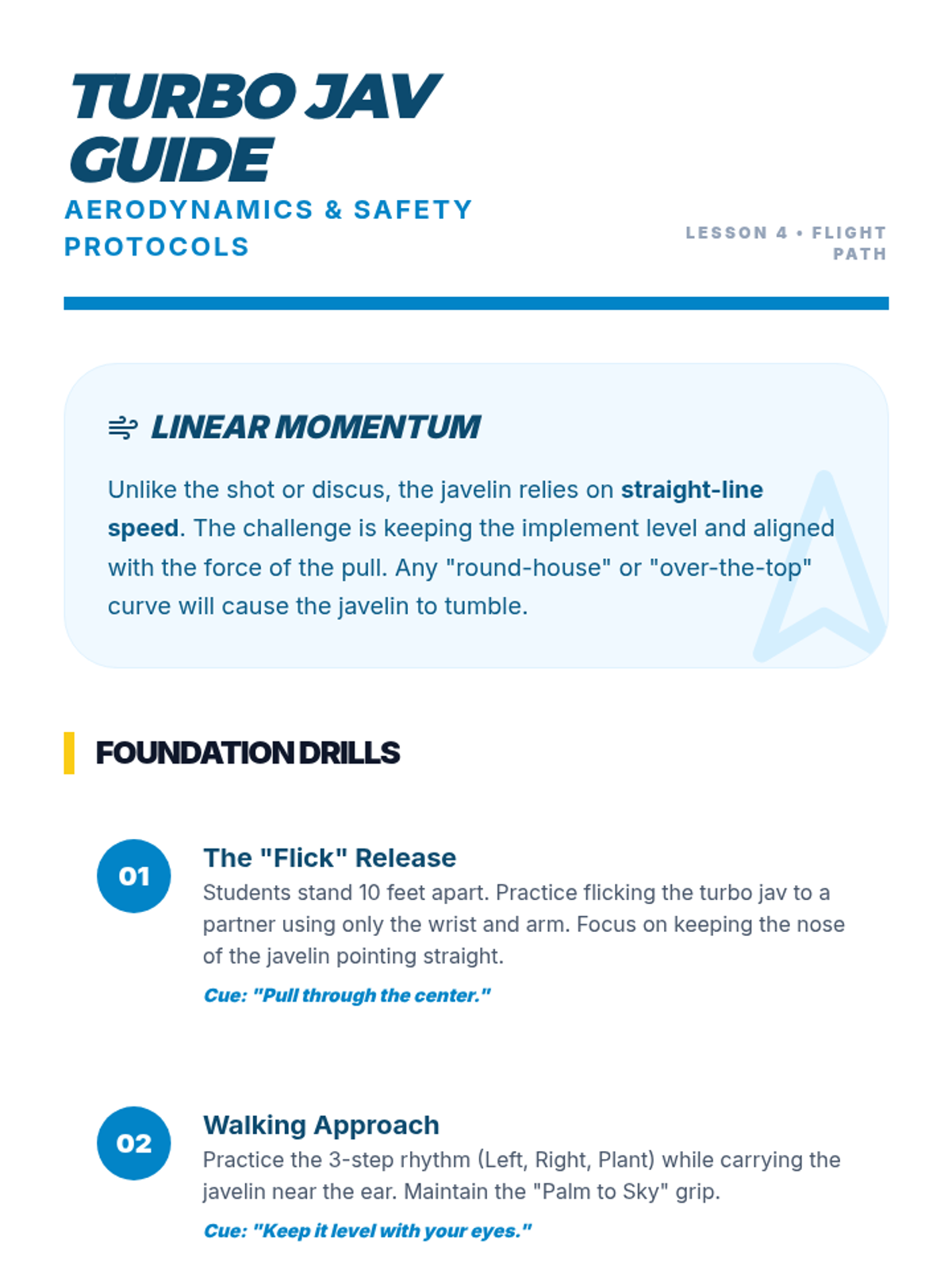
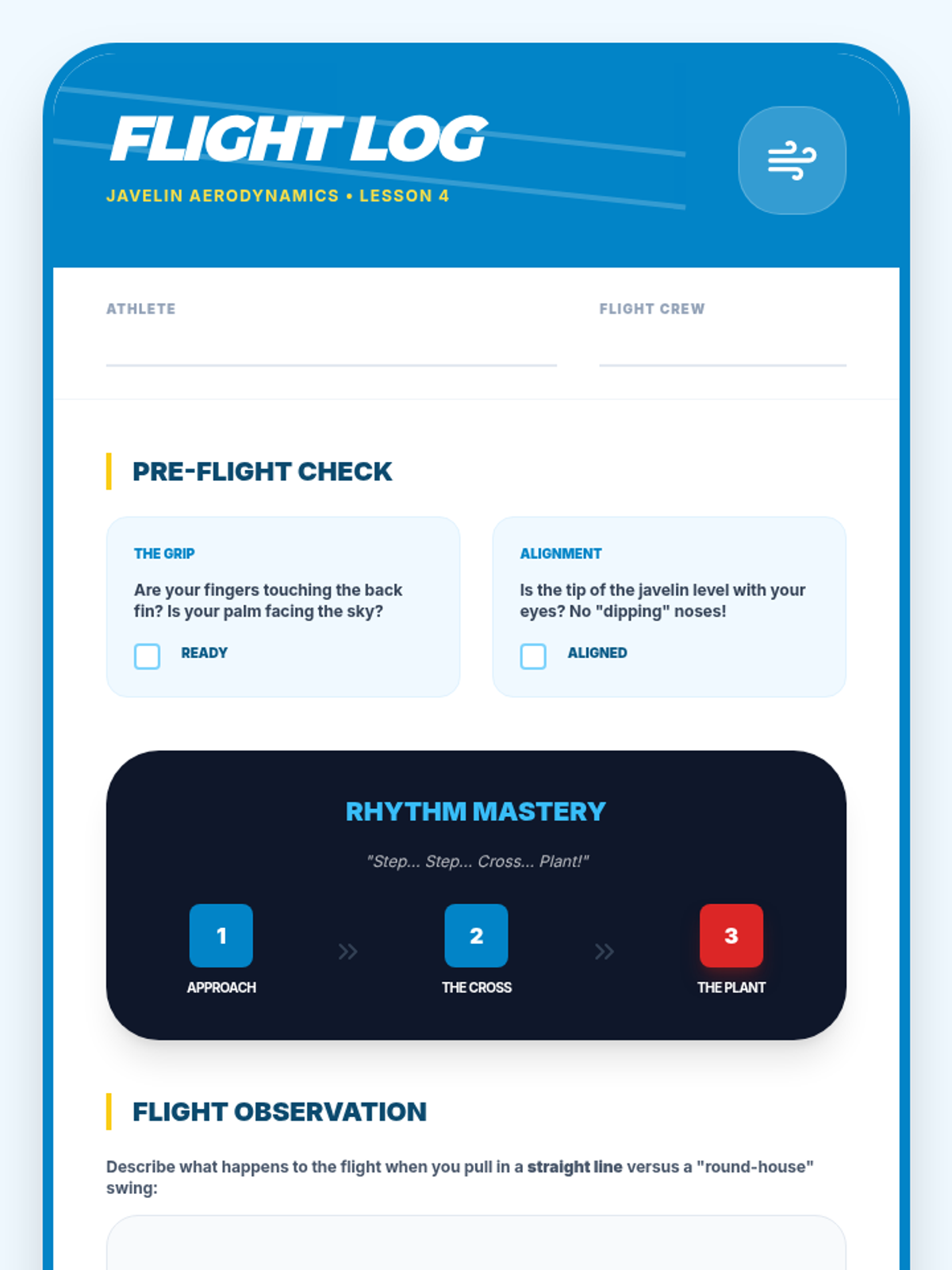
Students learn the aerodynamics and safety protocols of the turbo javelin, focusing on the grip, over-the-shoulder motion, and linear momentum.
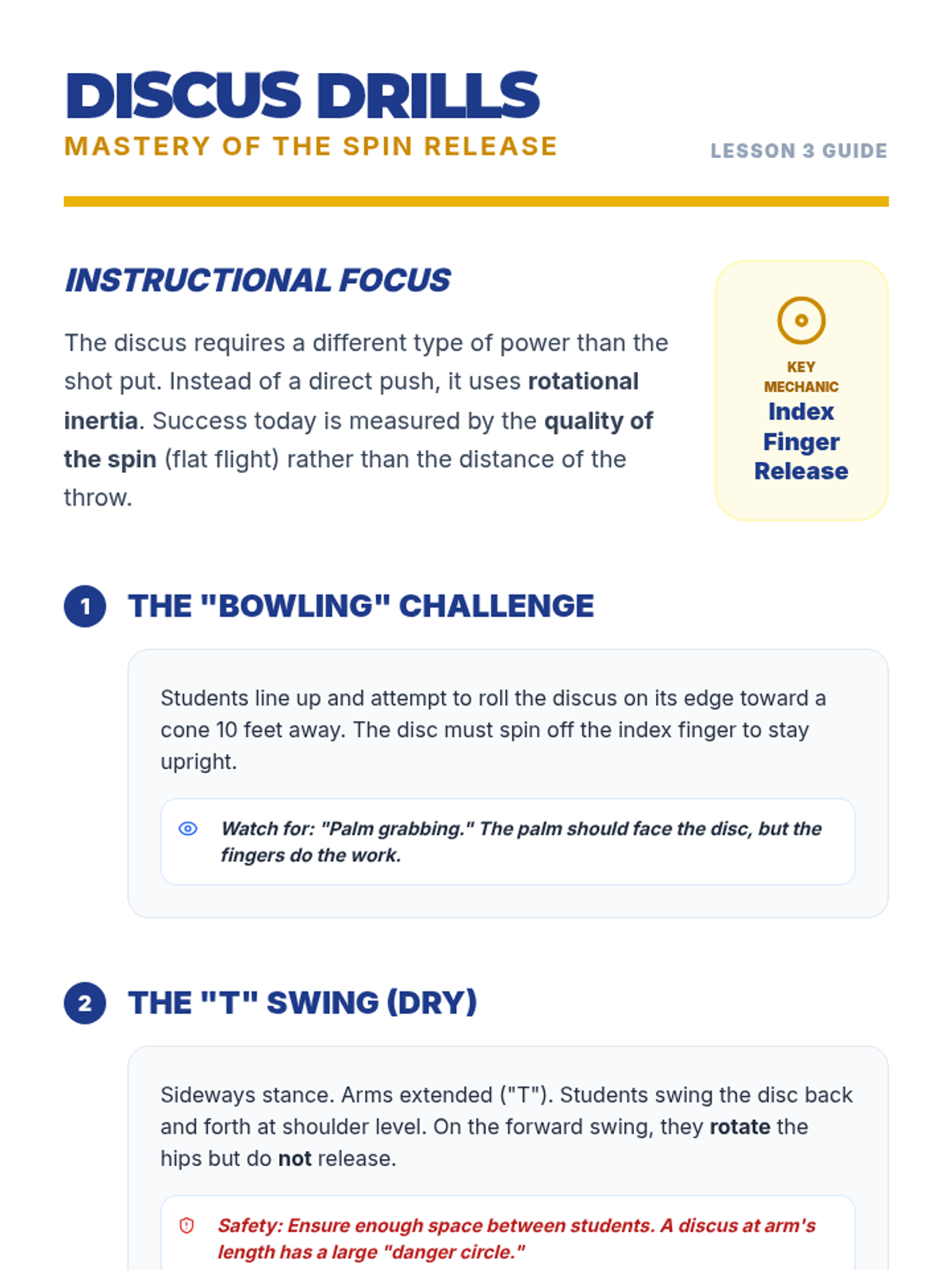
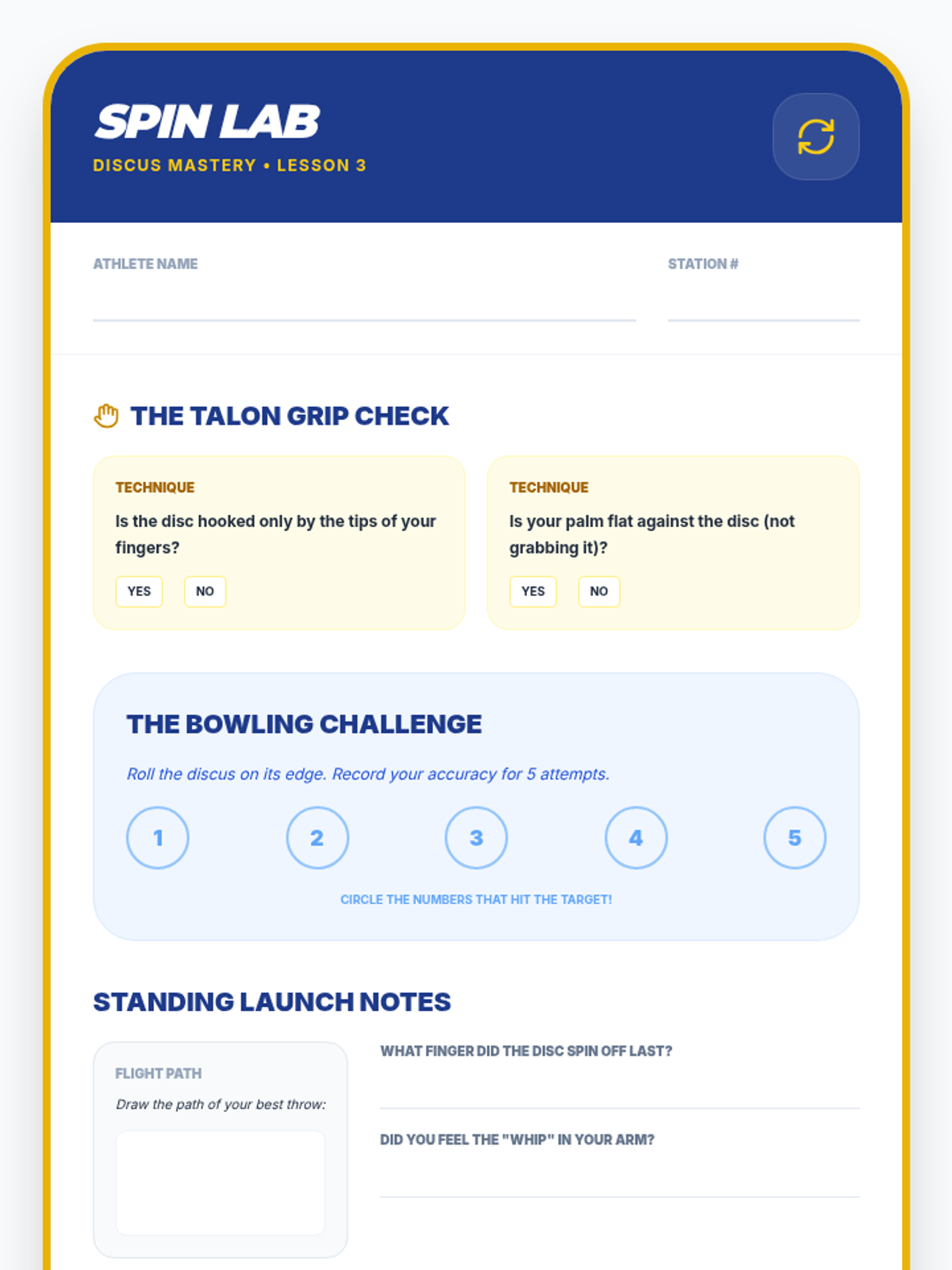
Students explore the unique rotational mechanics of the discus throw, focusing on the proper grip, the spin release, and the standing 'T' position.
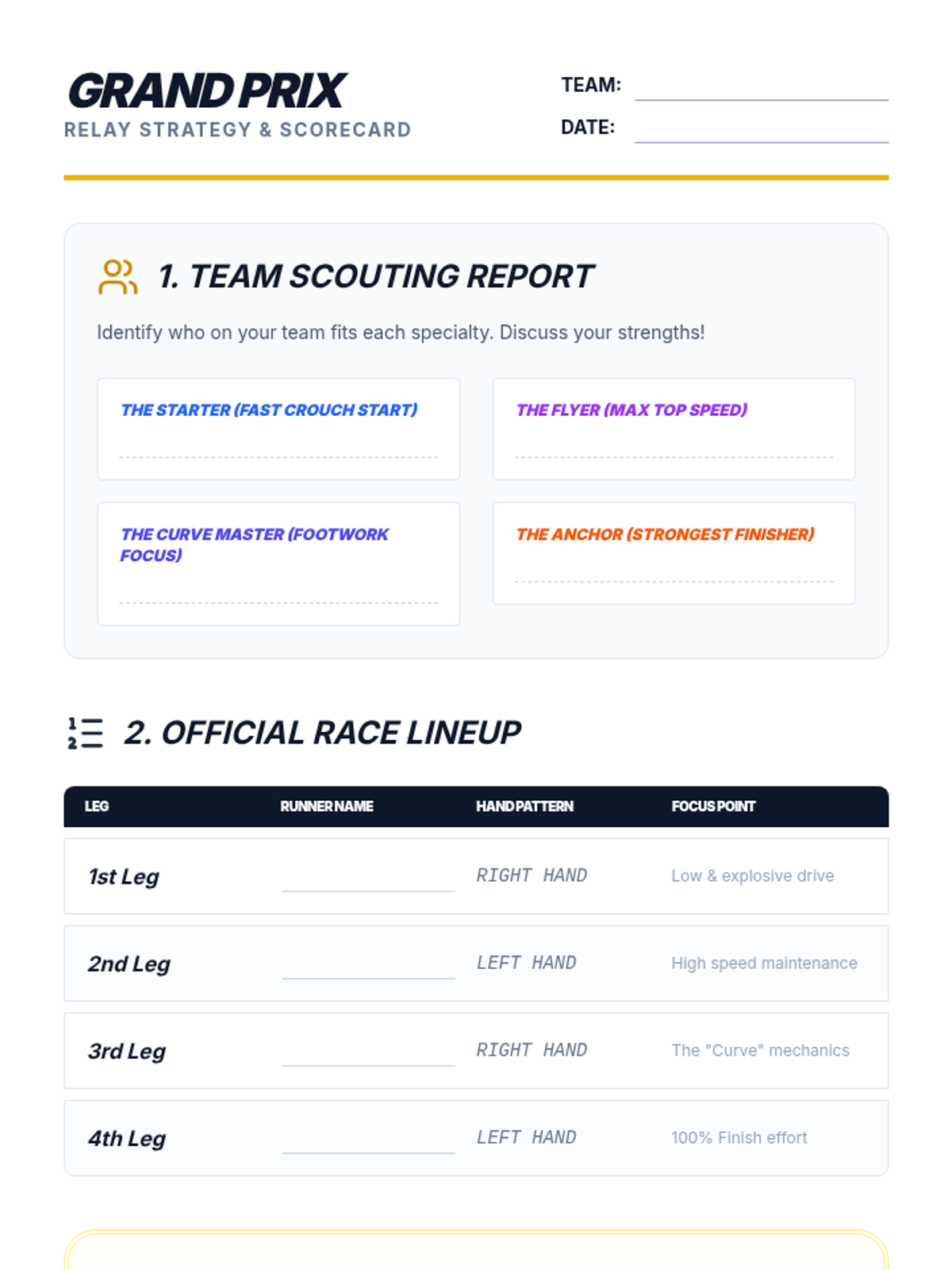
A culminating 4x100m relay simulation where teams strategize runner order and apply all learned sprint and exchange skills.
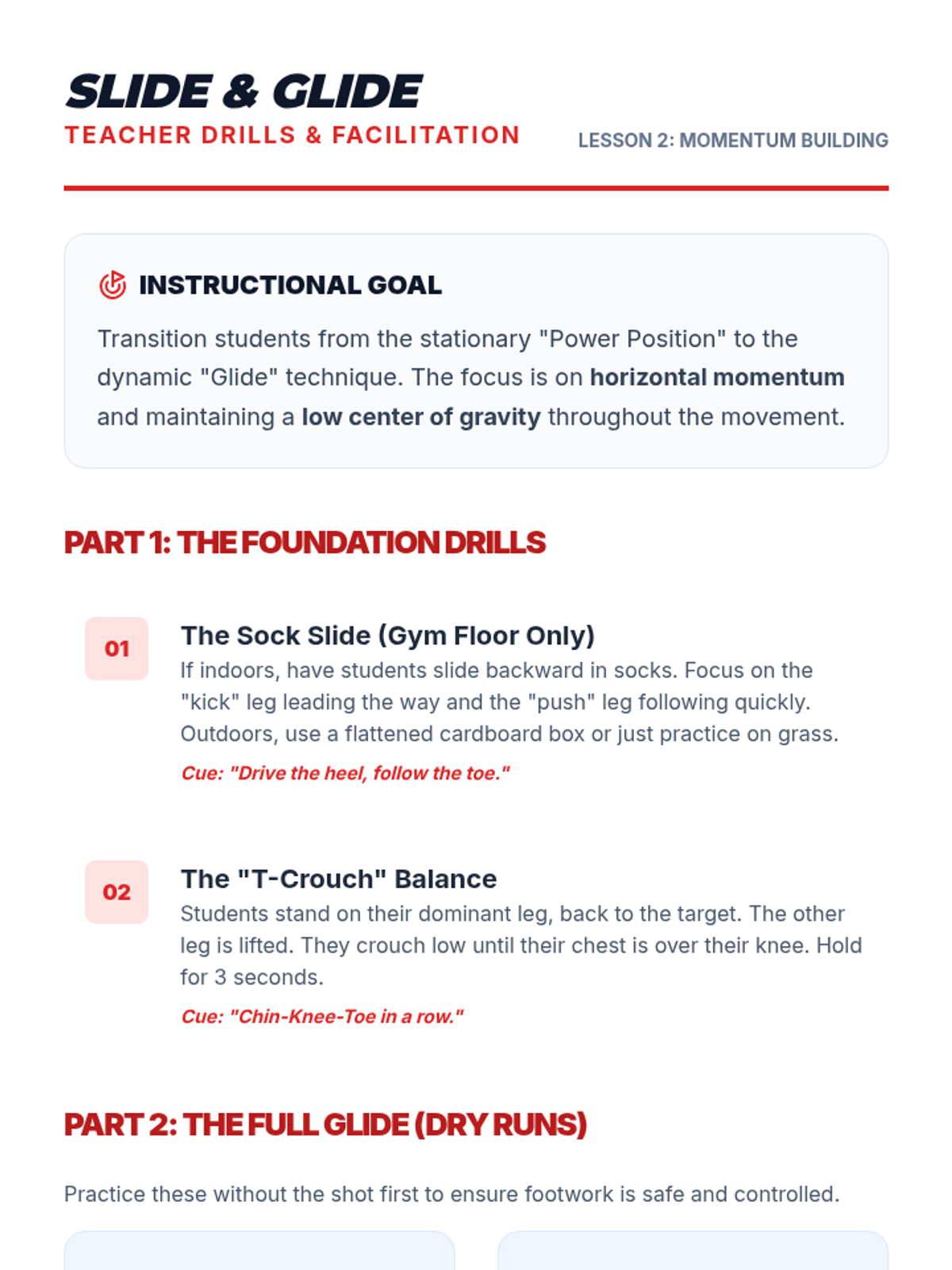
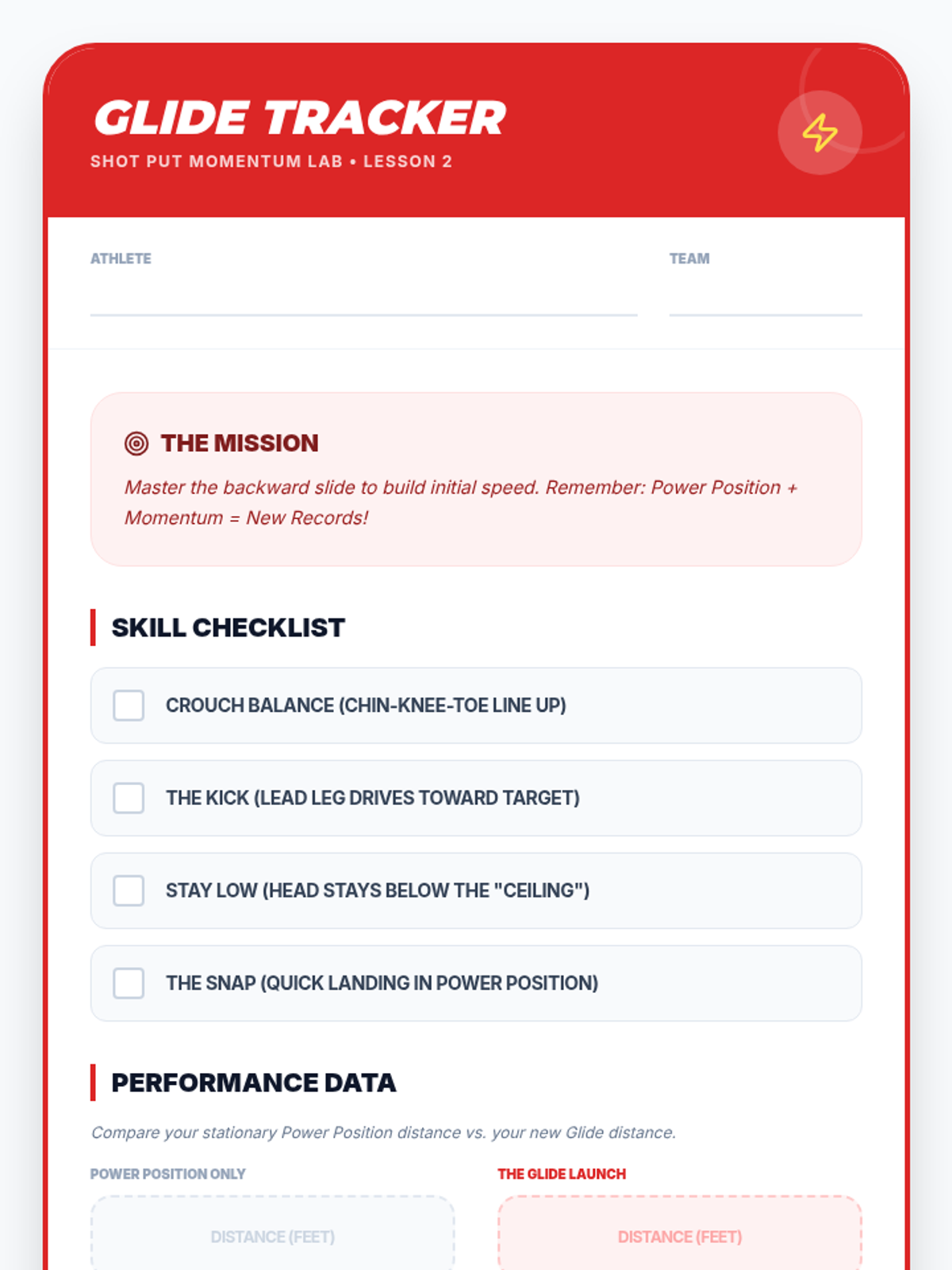
Students build on their stationary put by learning the glide technique, incorporating movement and weight transfer to build momentum across the circle.
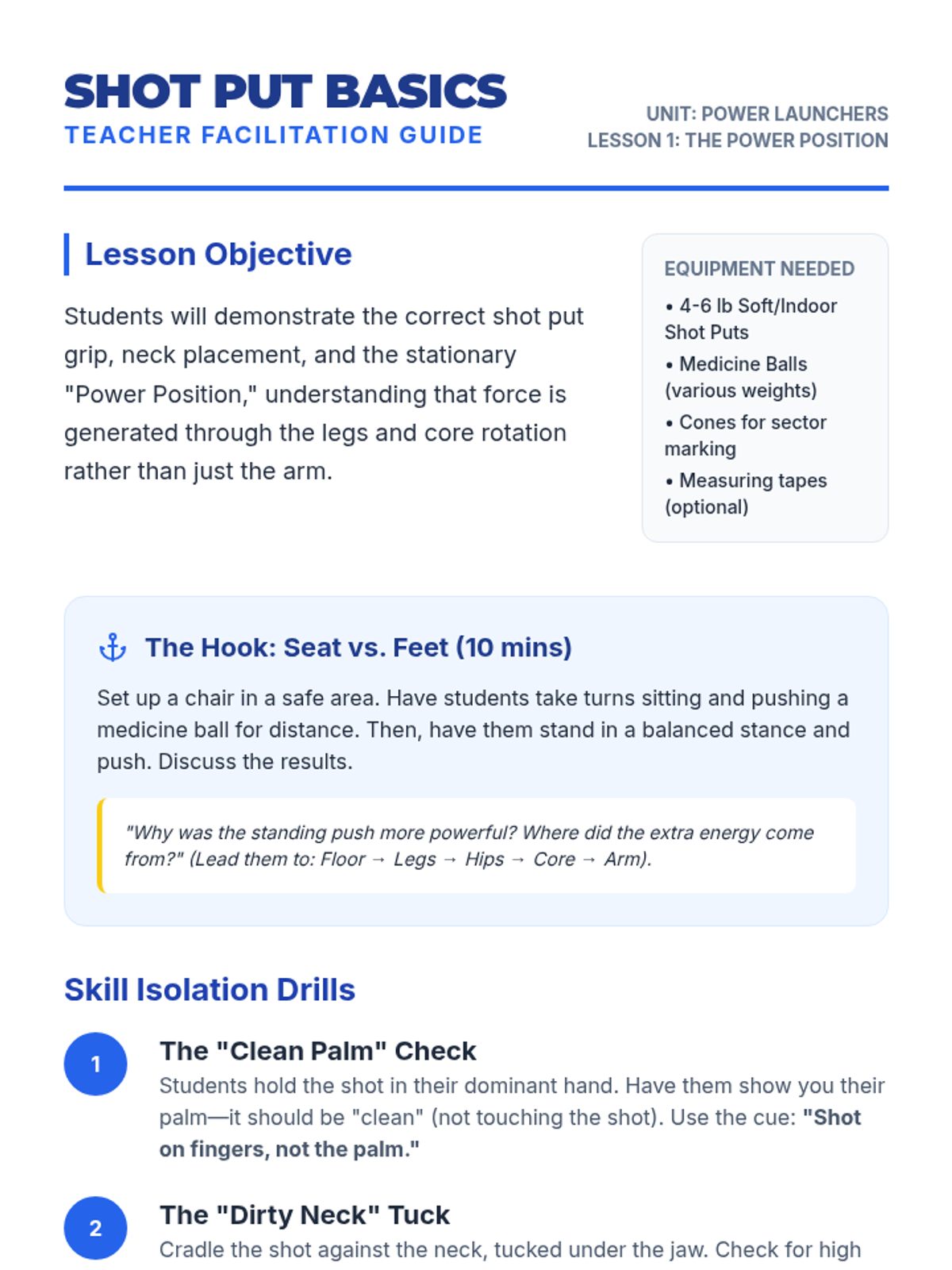
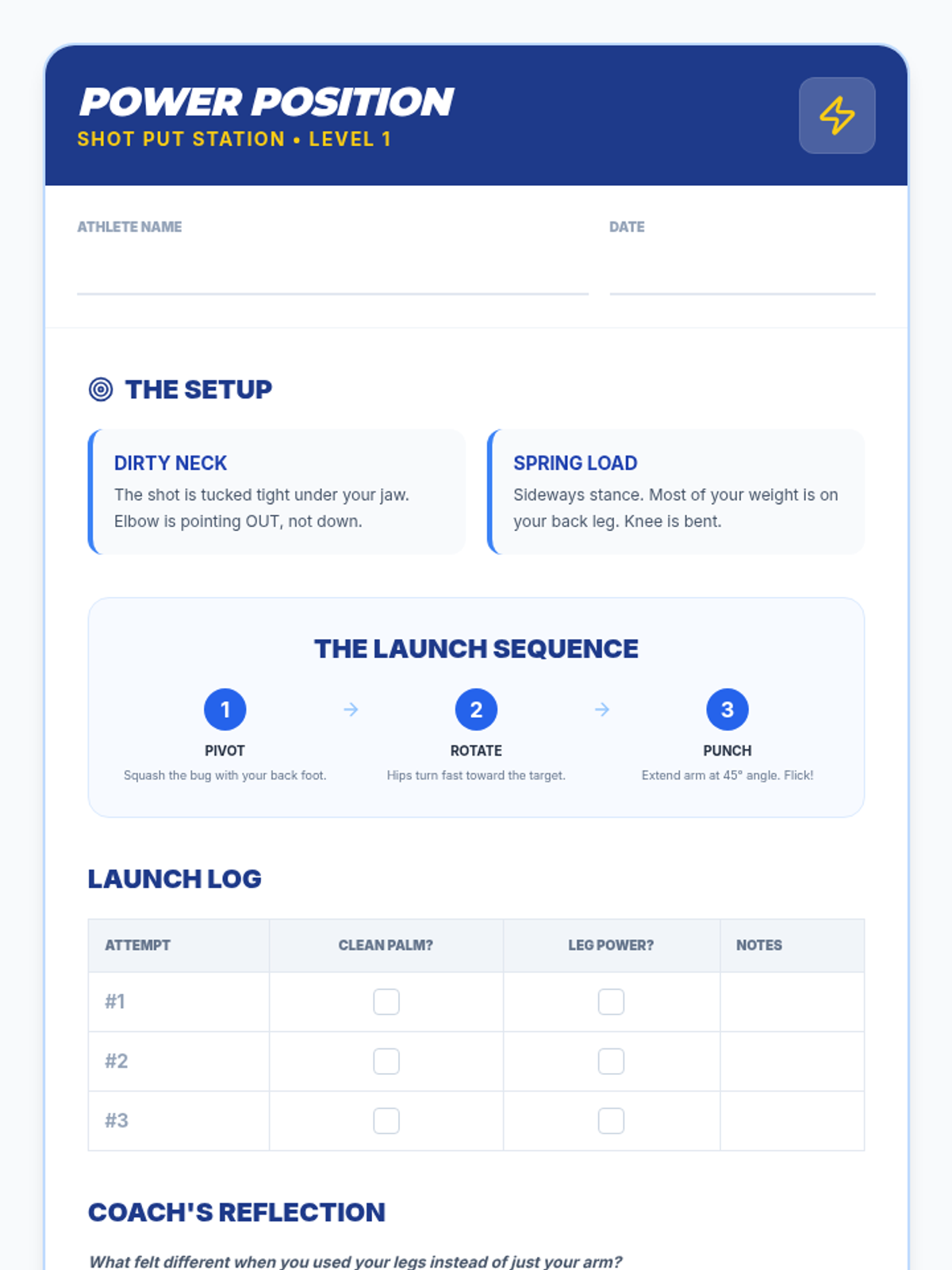
Students learn the fundamentals of shot put, focusing on the grip, neck placement, and the stationary 'Power Position' to generate force from the legs and core.
Introducing the 20-meter exchange zone and timing marks to facilitate high-speed baton passes without looking back.
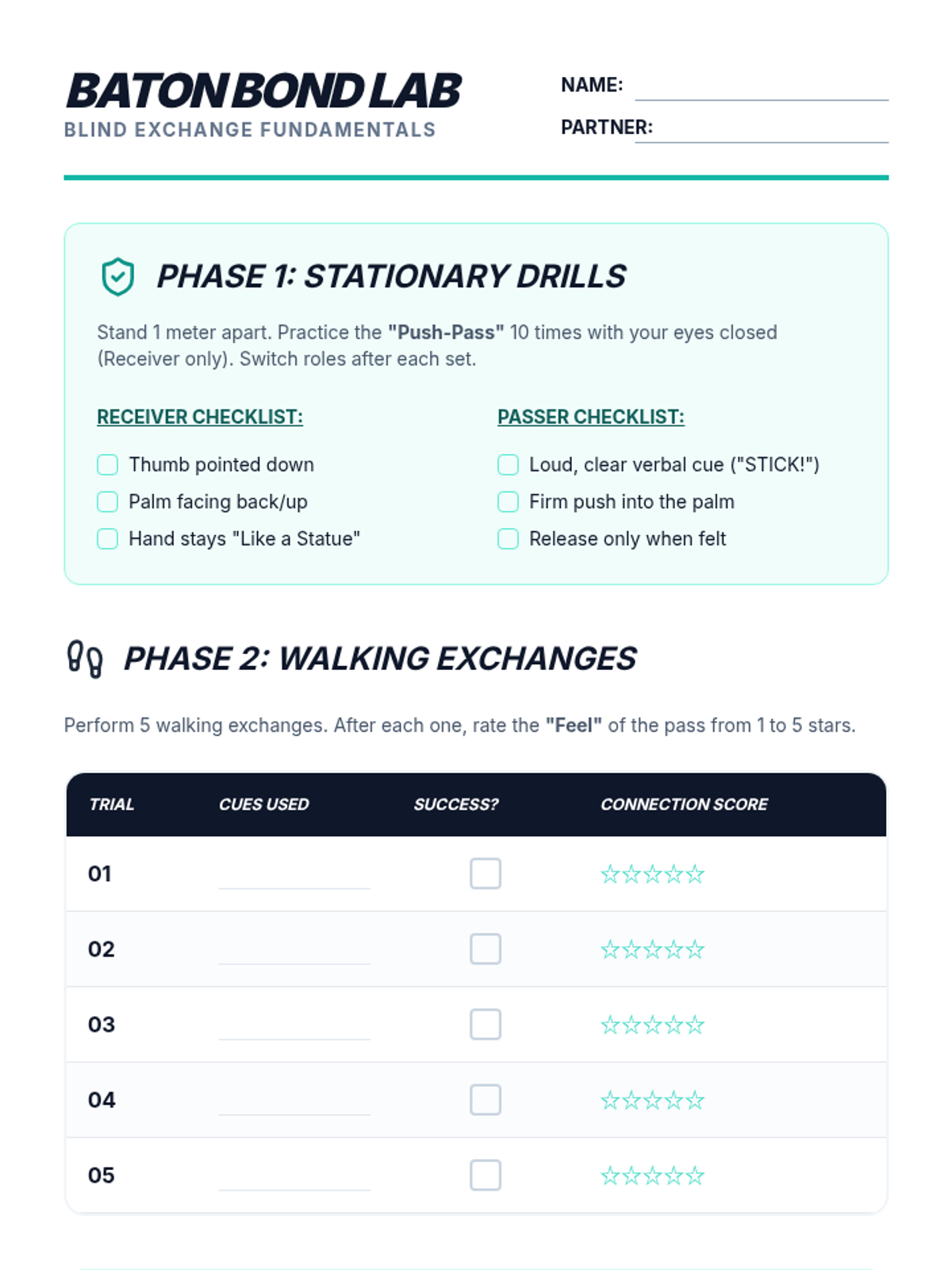
Introduction to the blind baton exchange technique, focusing on the 'push' pass and verbal cues in stationary and walking pairs.
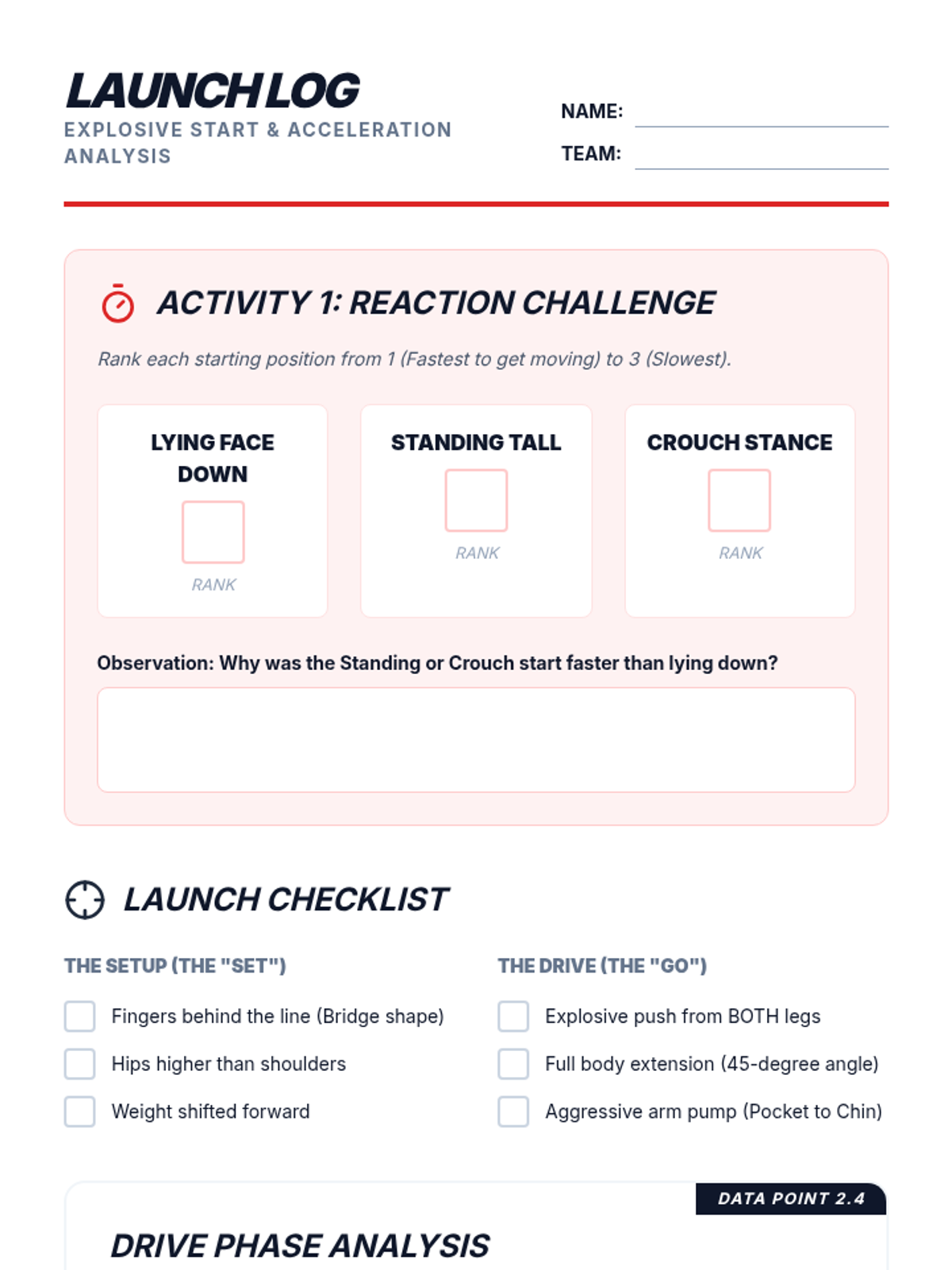
Focuses on the transition from stationary to maximum velocity, practicing standing and crouch starts to generate explosive power.
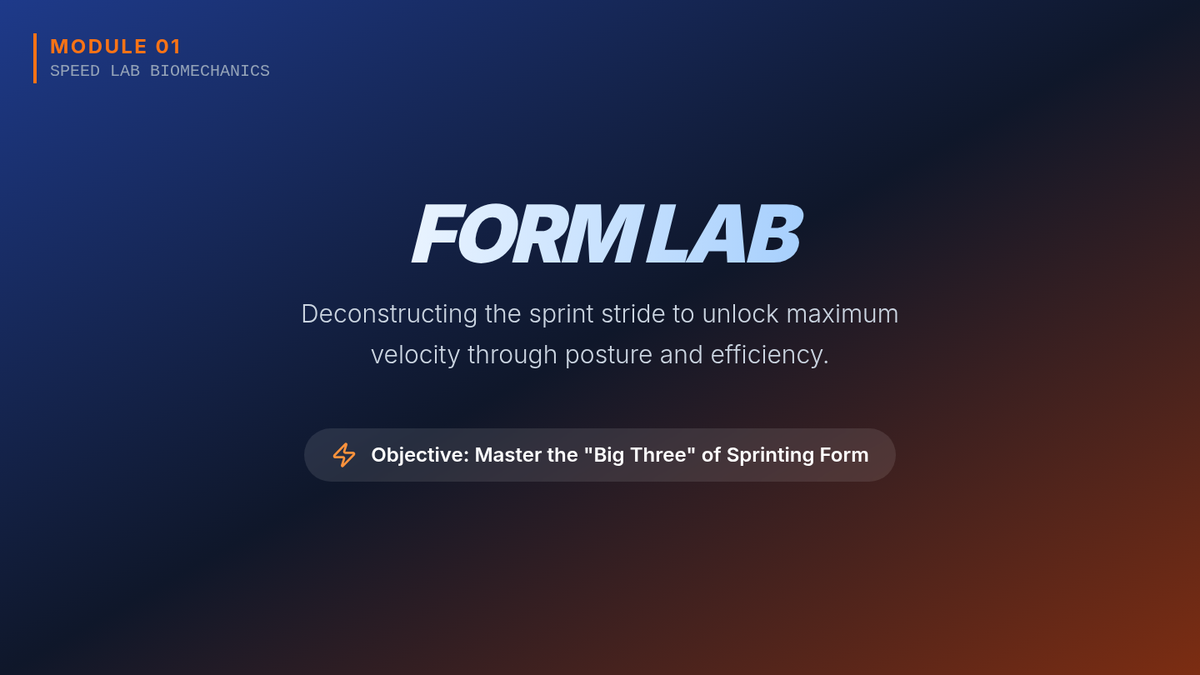
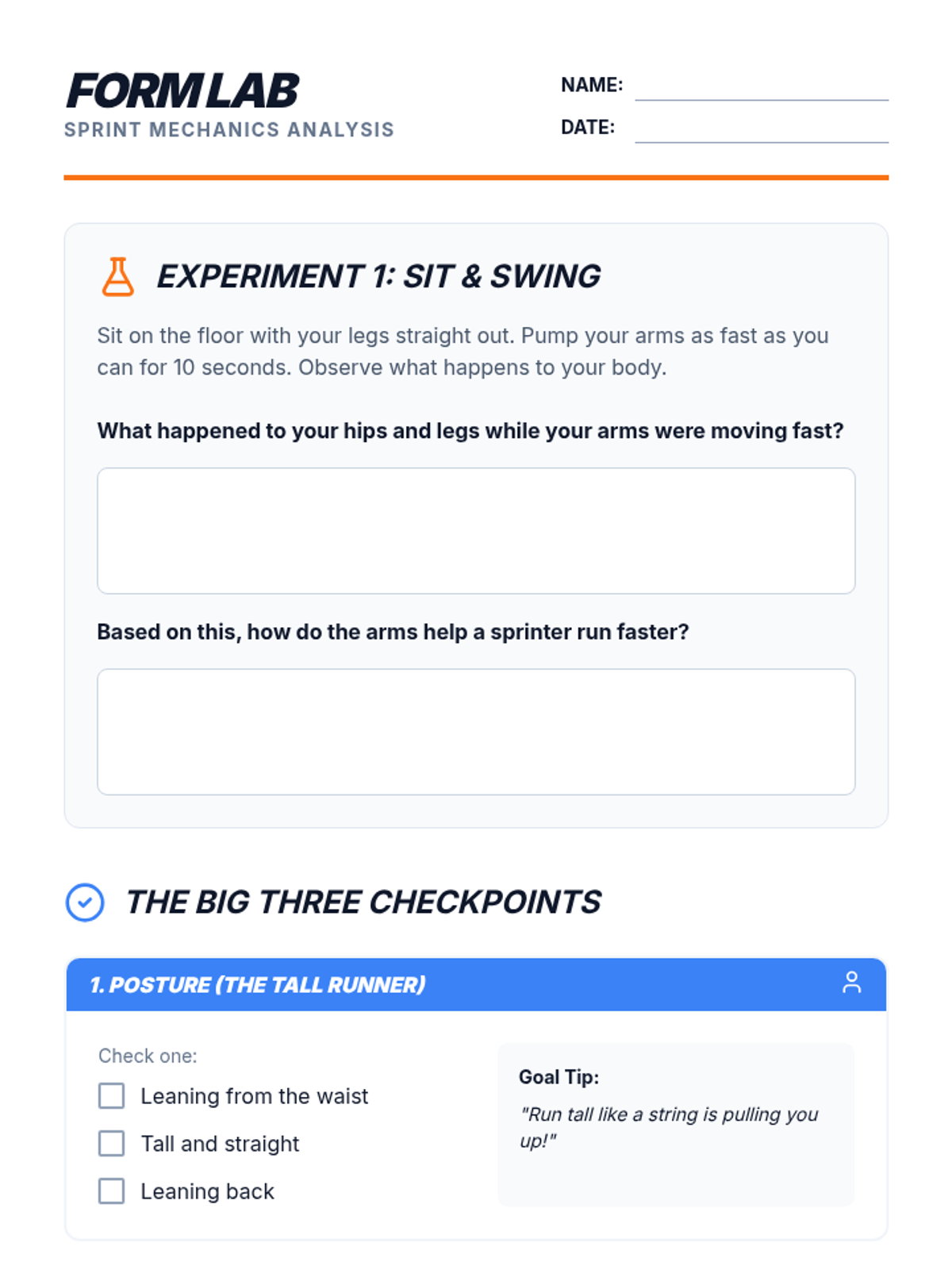
Students analyze and practice proper sprinting form, focusing on high knees, arm action, and posture through drills and slow-motion analysis.
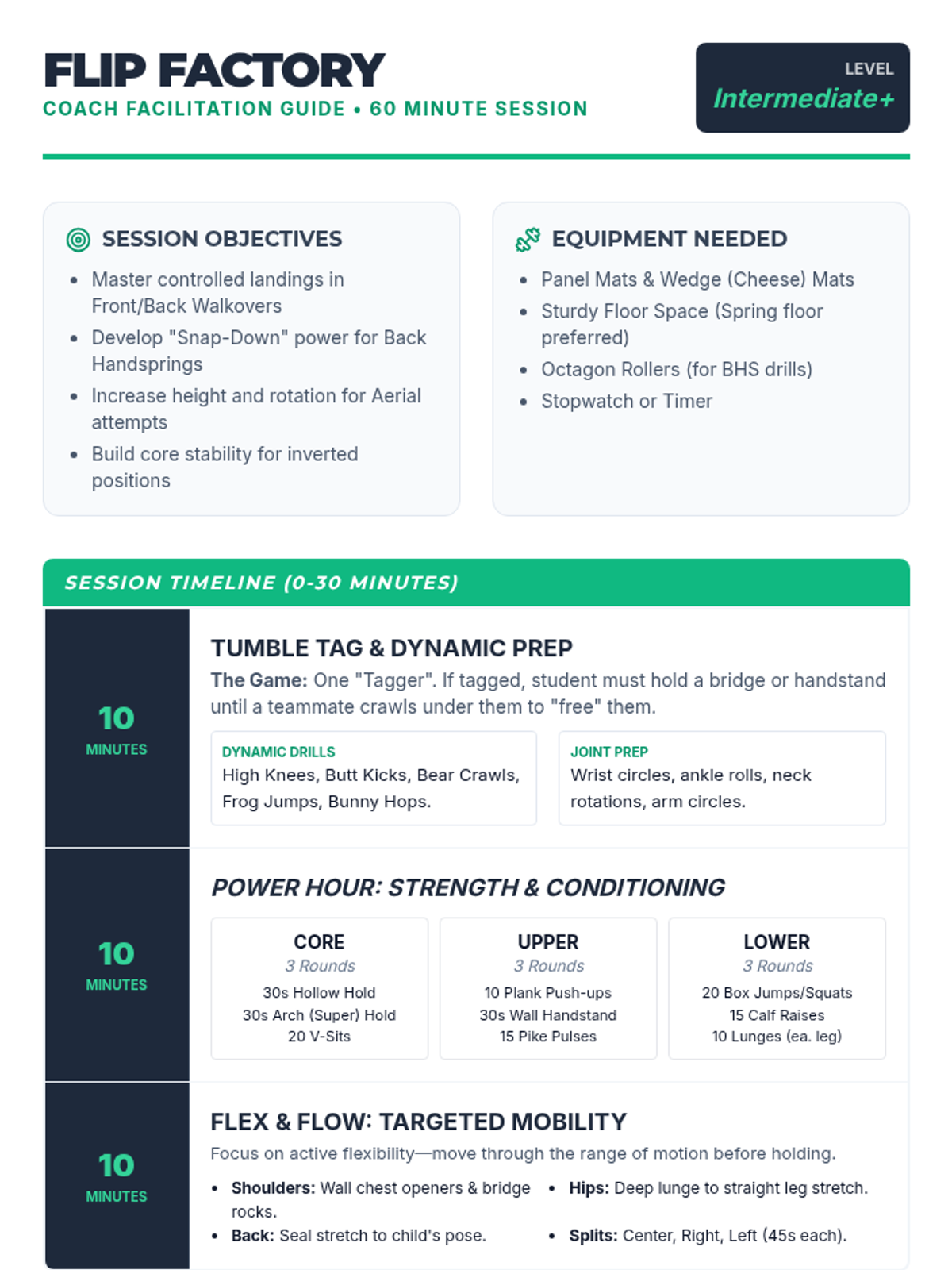
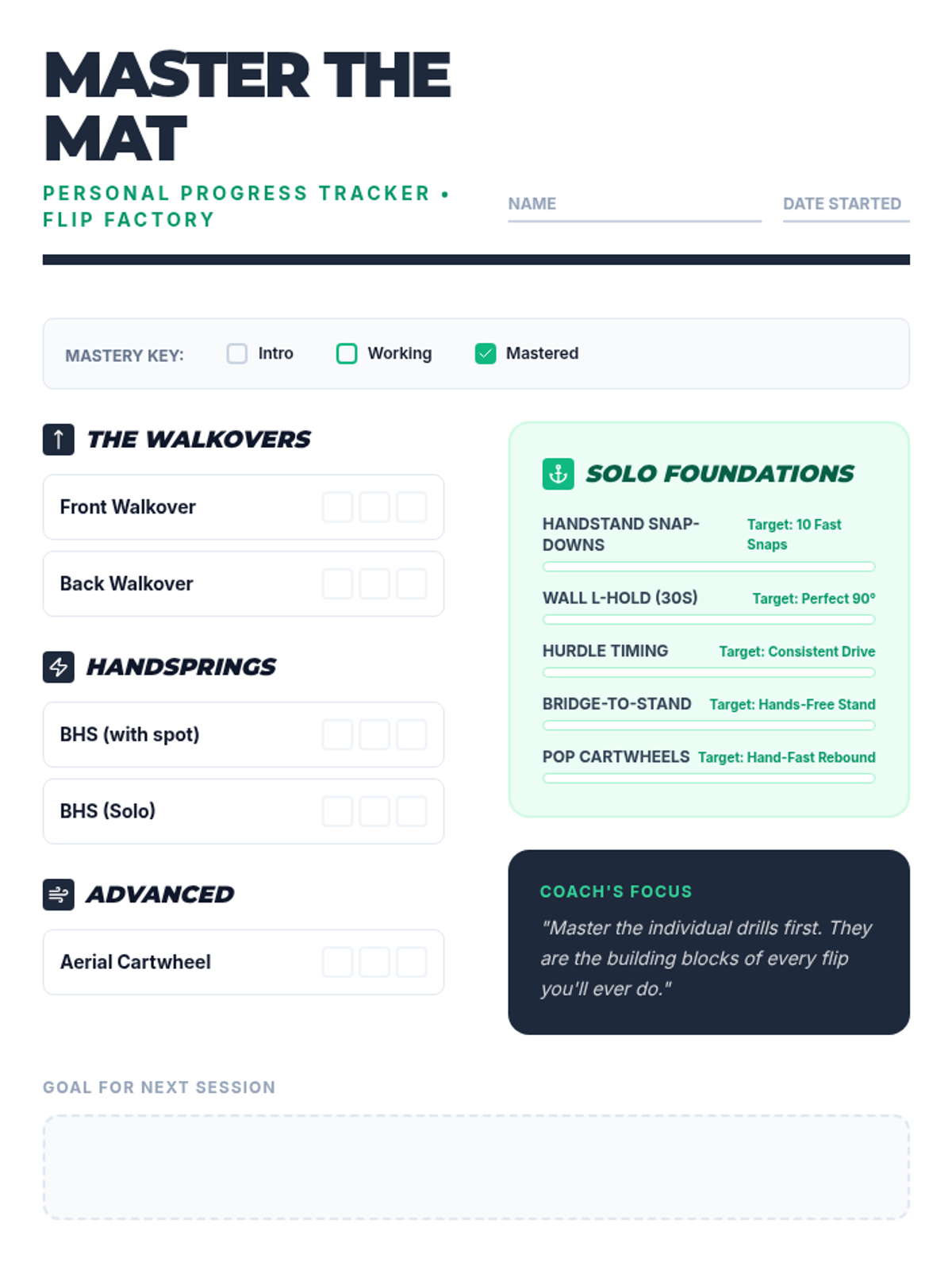
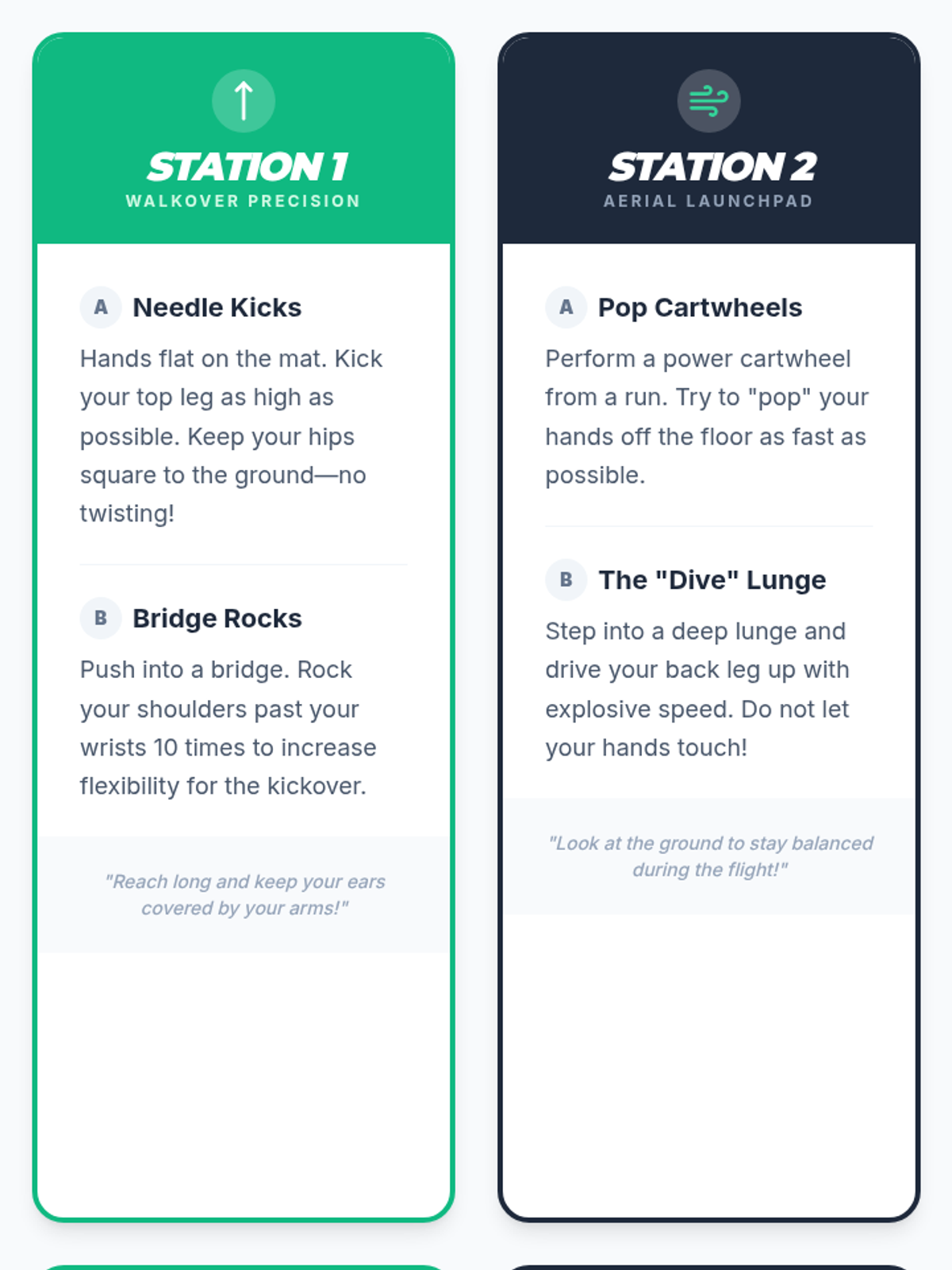
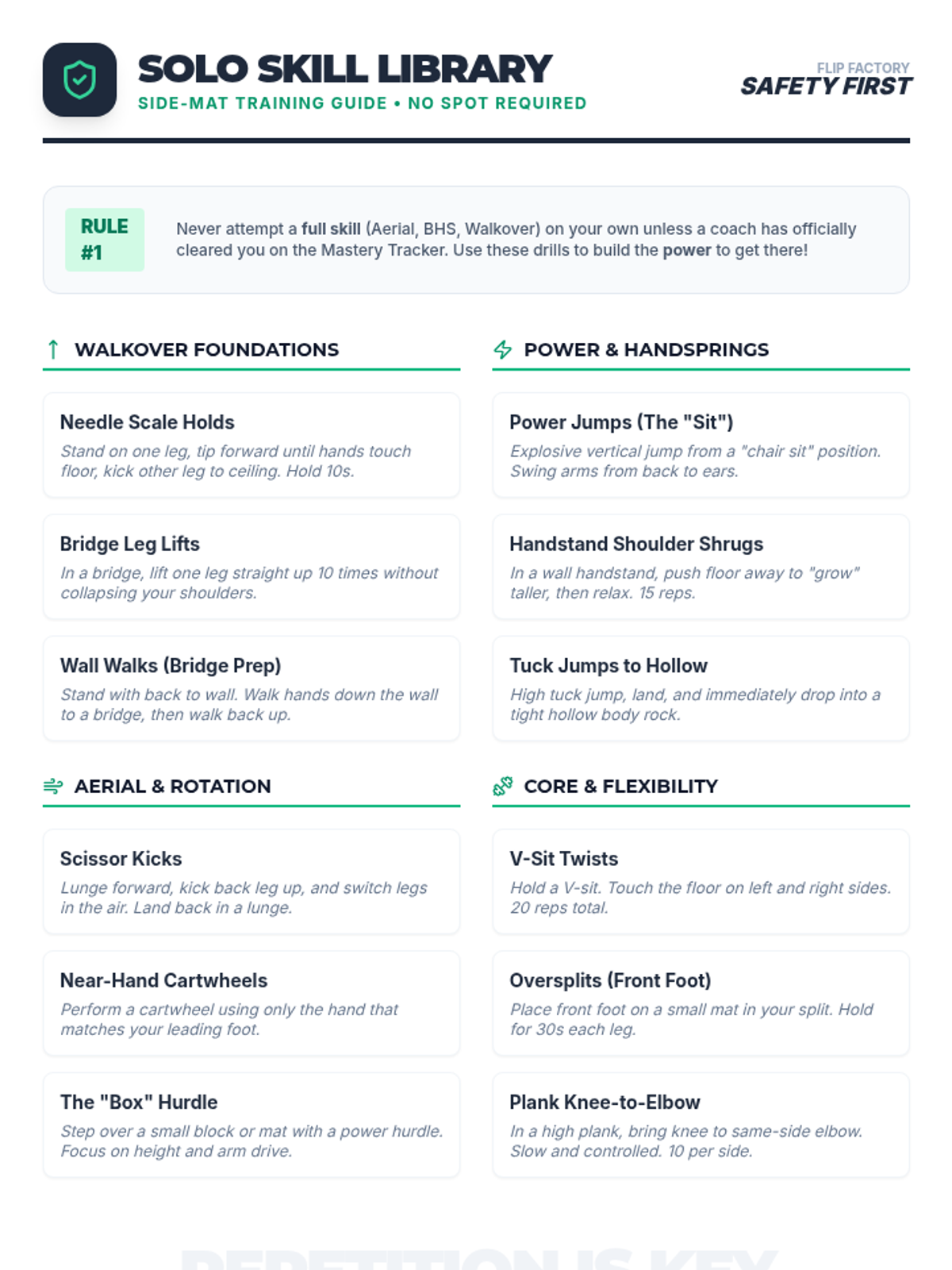
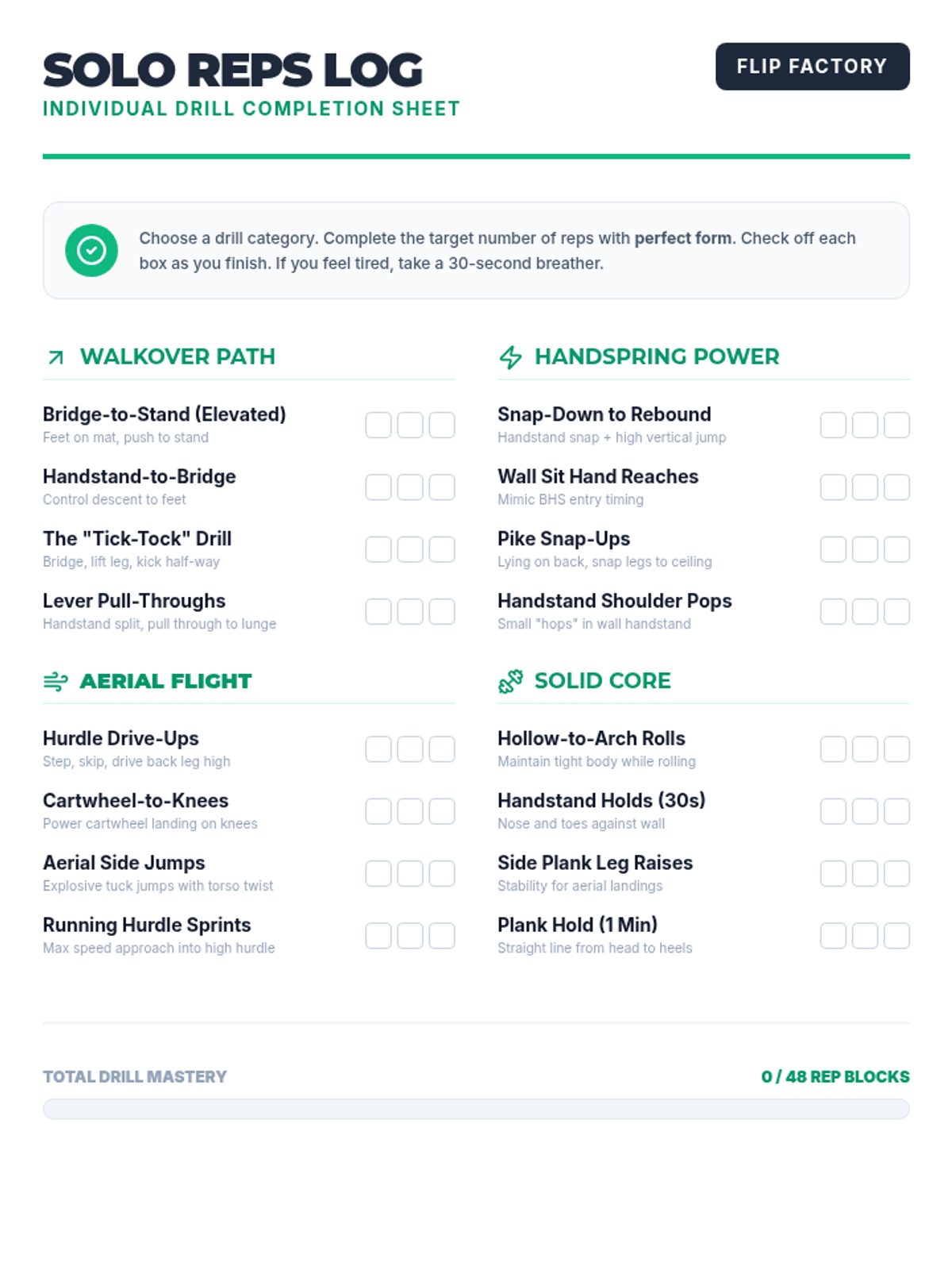
A high-energy 60-minute tumbling lesson focused on intermediate to advanced floor skills including walkovers, handsprings, and aerials. Includes a comprehensive coach guide, visual drills, and a student progress tracker.
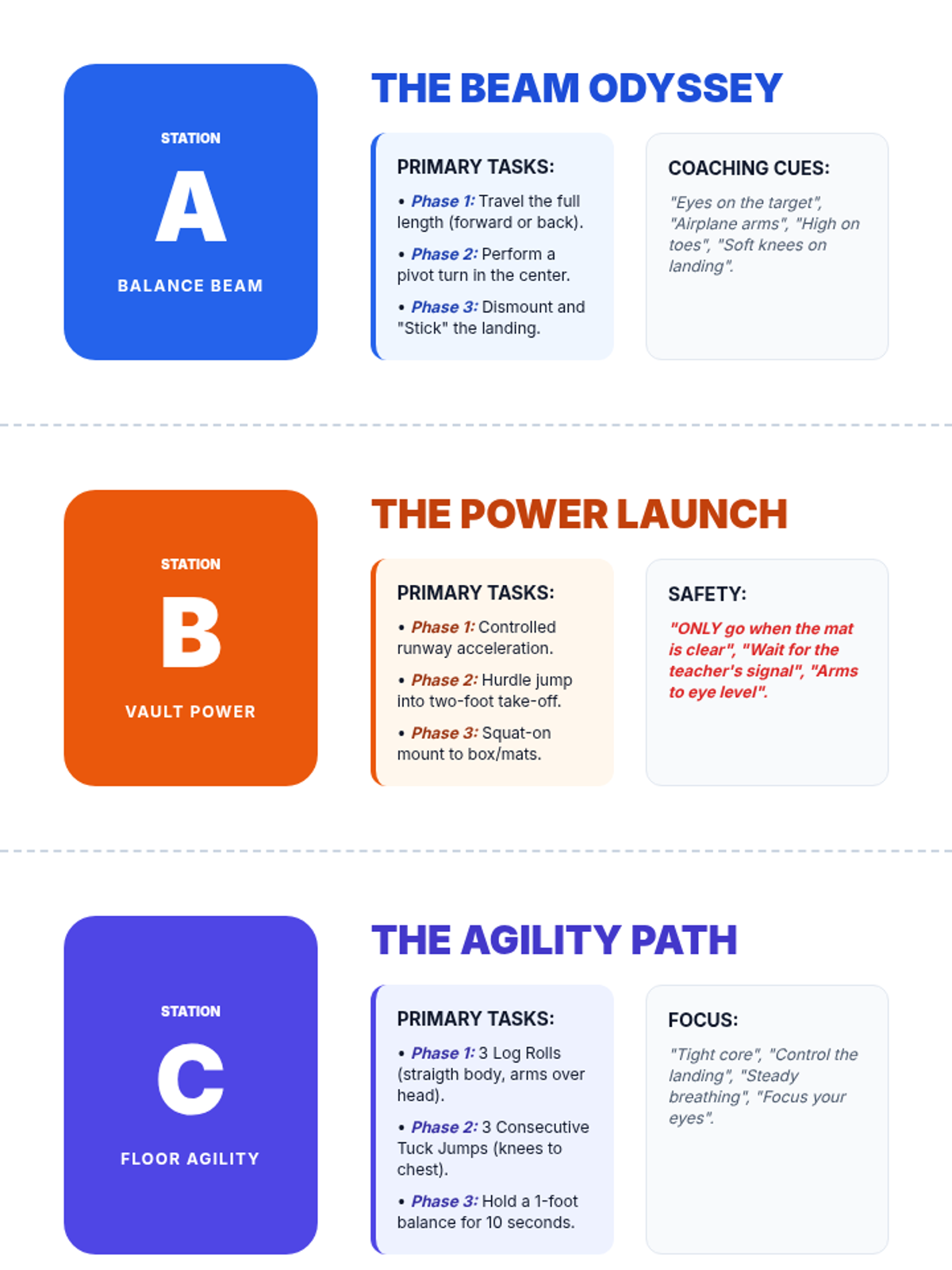
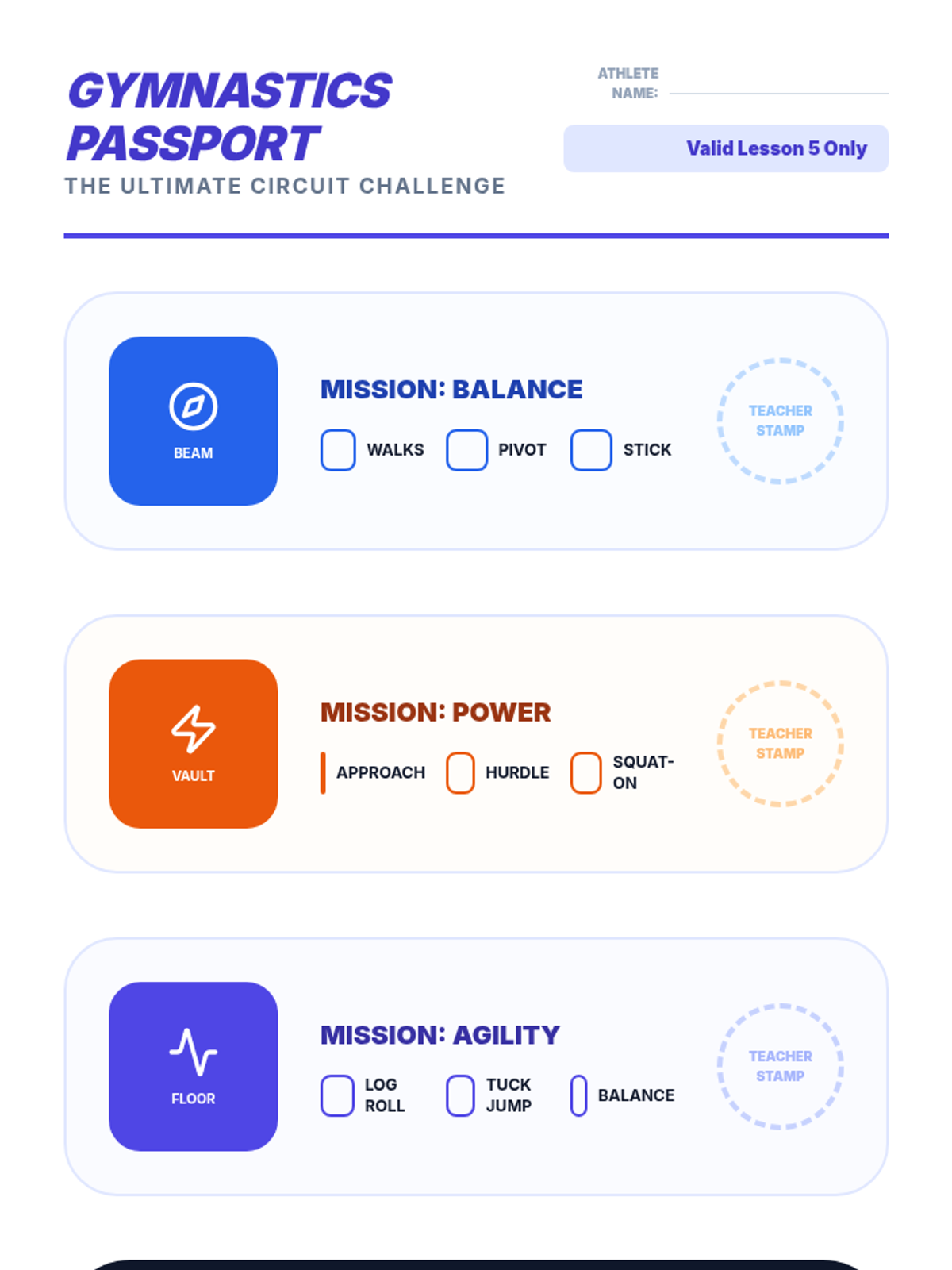
A culminating station-based lesson where students rotate through beam, vault, and floor stations. They complete specific challenges at each station to demonstrate competency across all apparatuses.
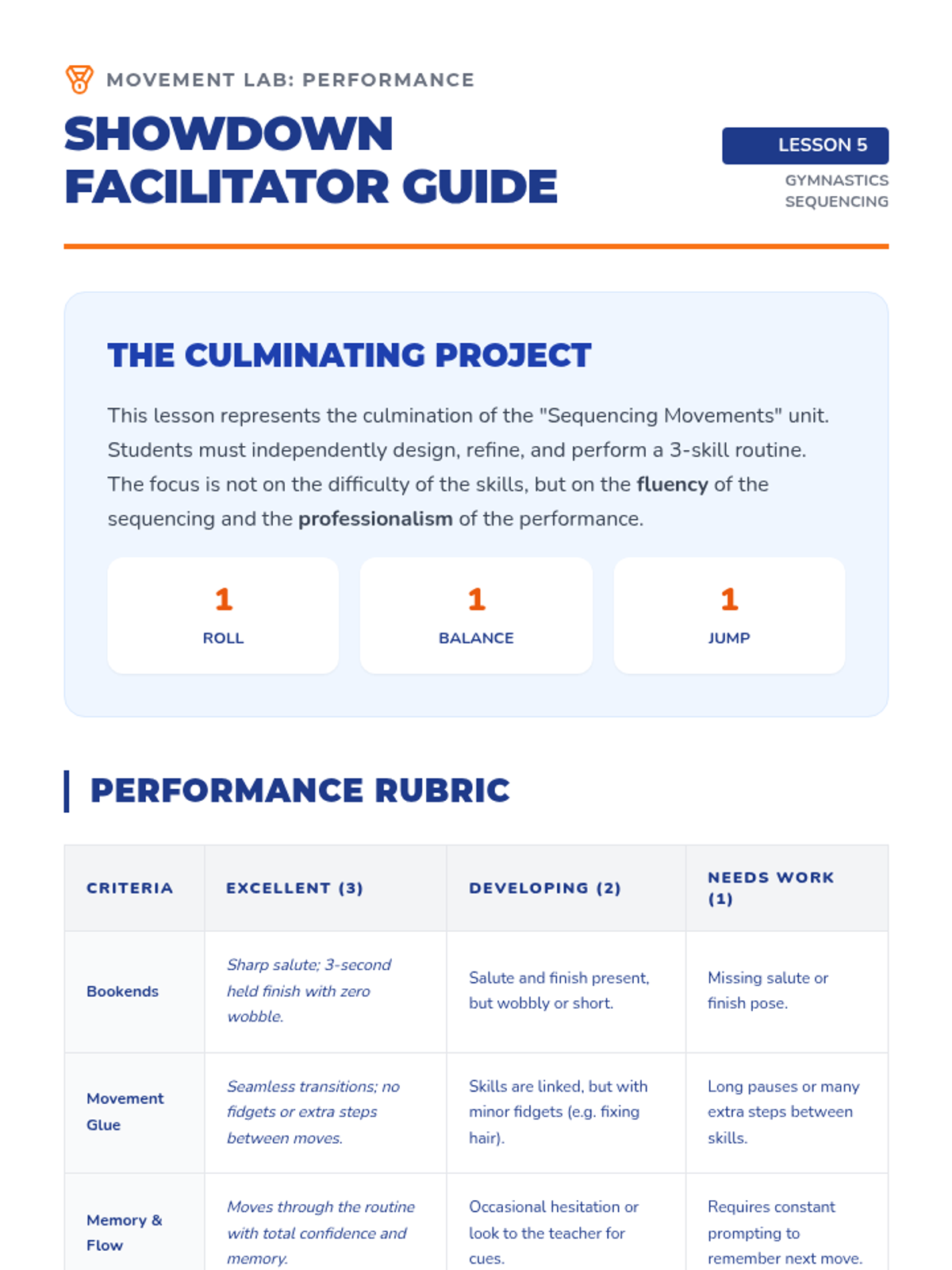
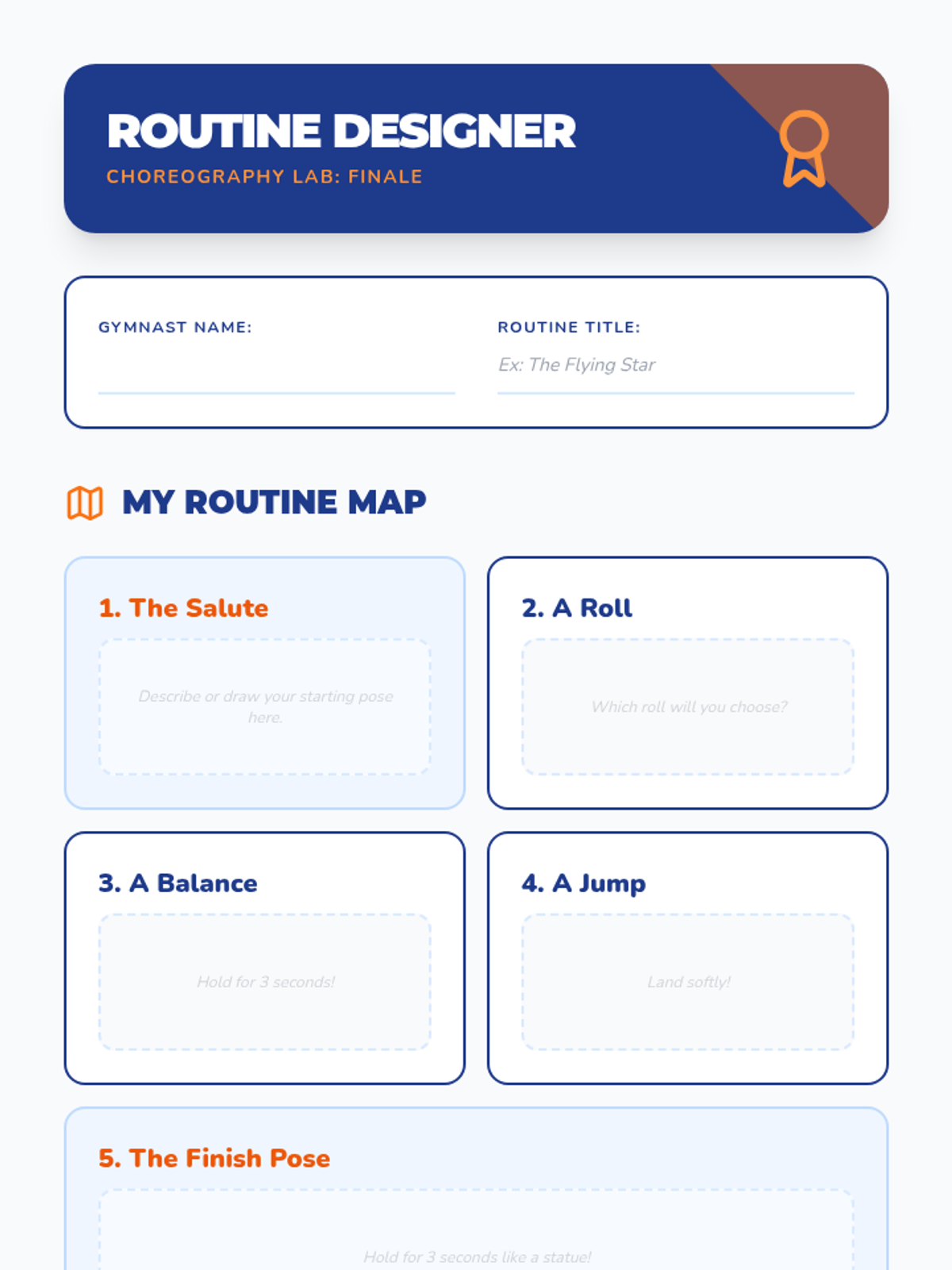
Students select three skills (one roll, one balance, one jump) to create a short routine with a start and finish pose. They practice and then perform for a small group of peers, focusing on memory and fluidity.
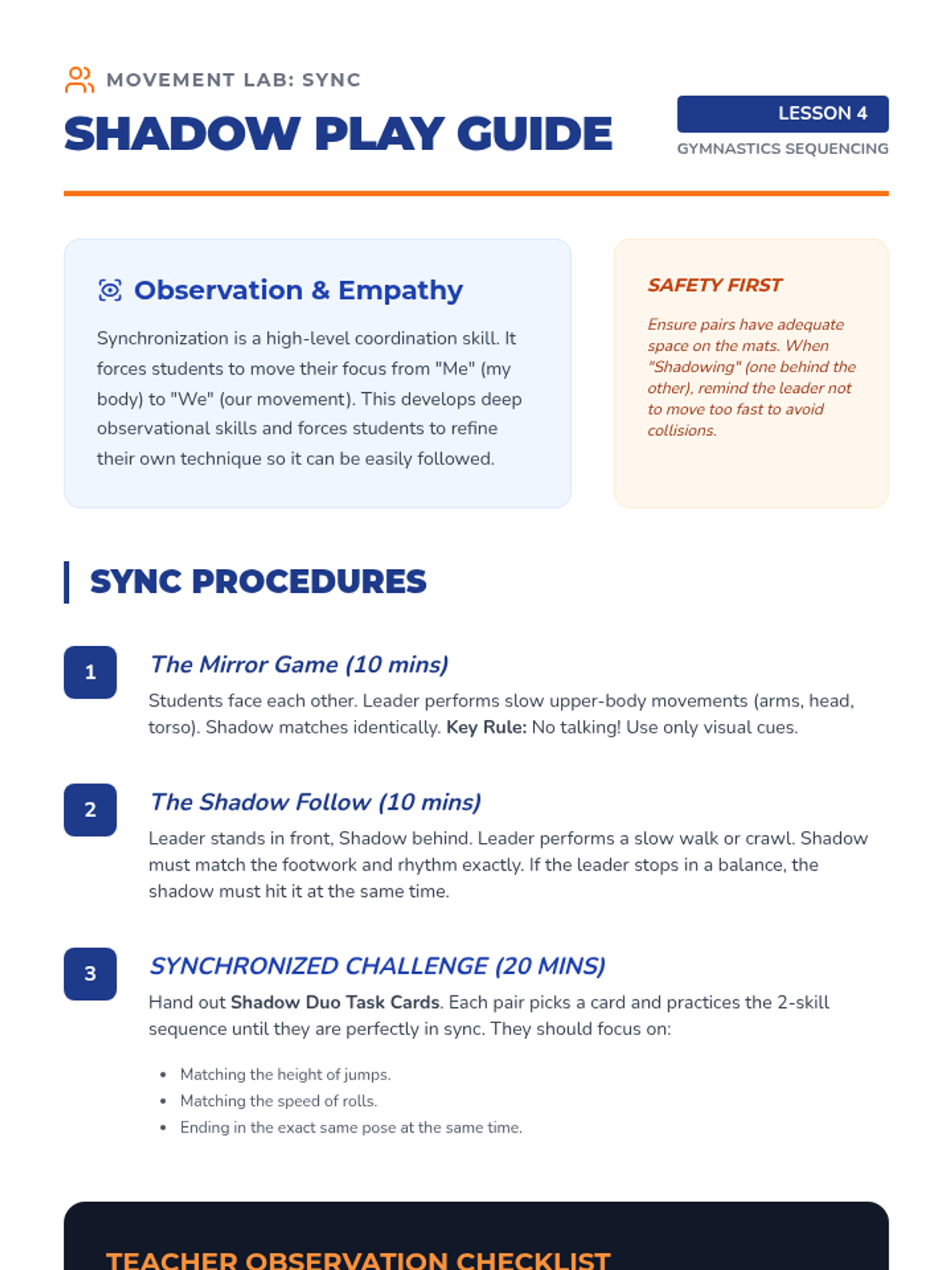
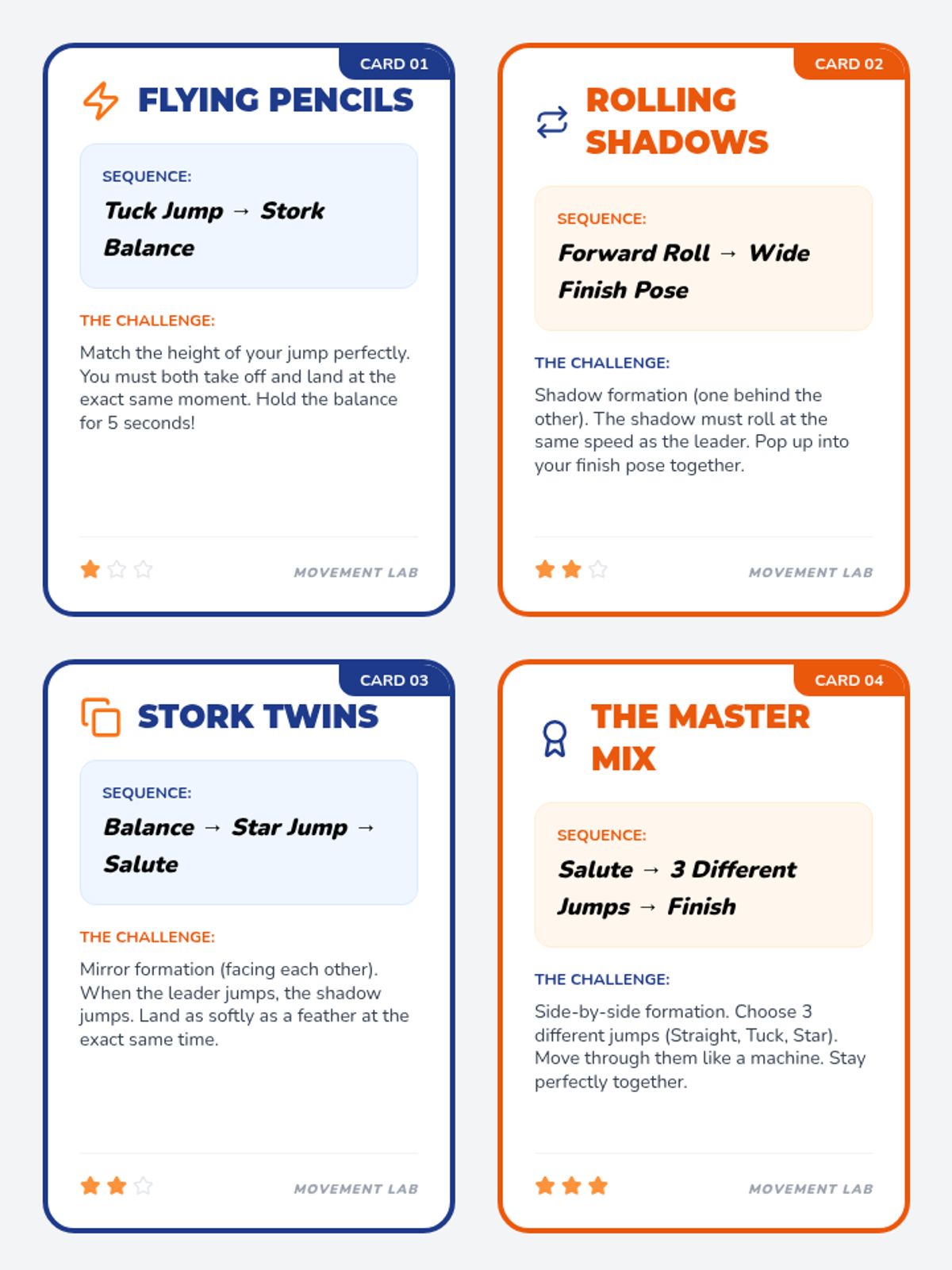
In pairs, students take turns leading and following a short sequence of movements. This mirrors the concept of synchronized swimming/gymnastics and forces students to observe details in their partner's technique.
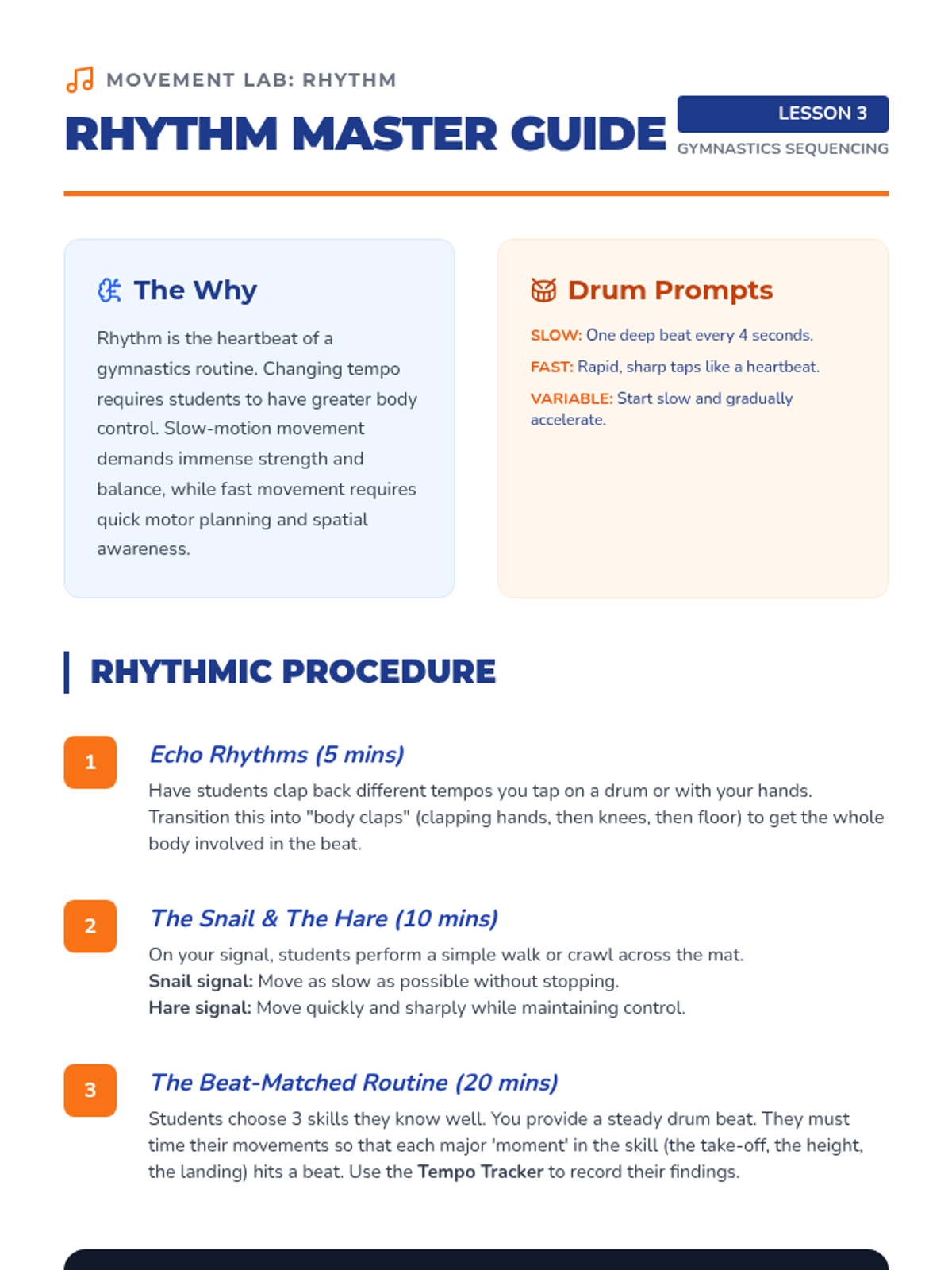
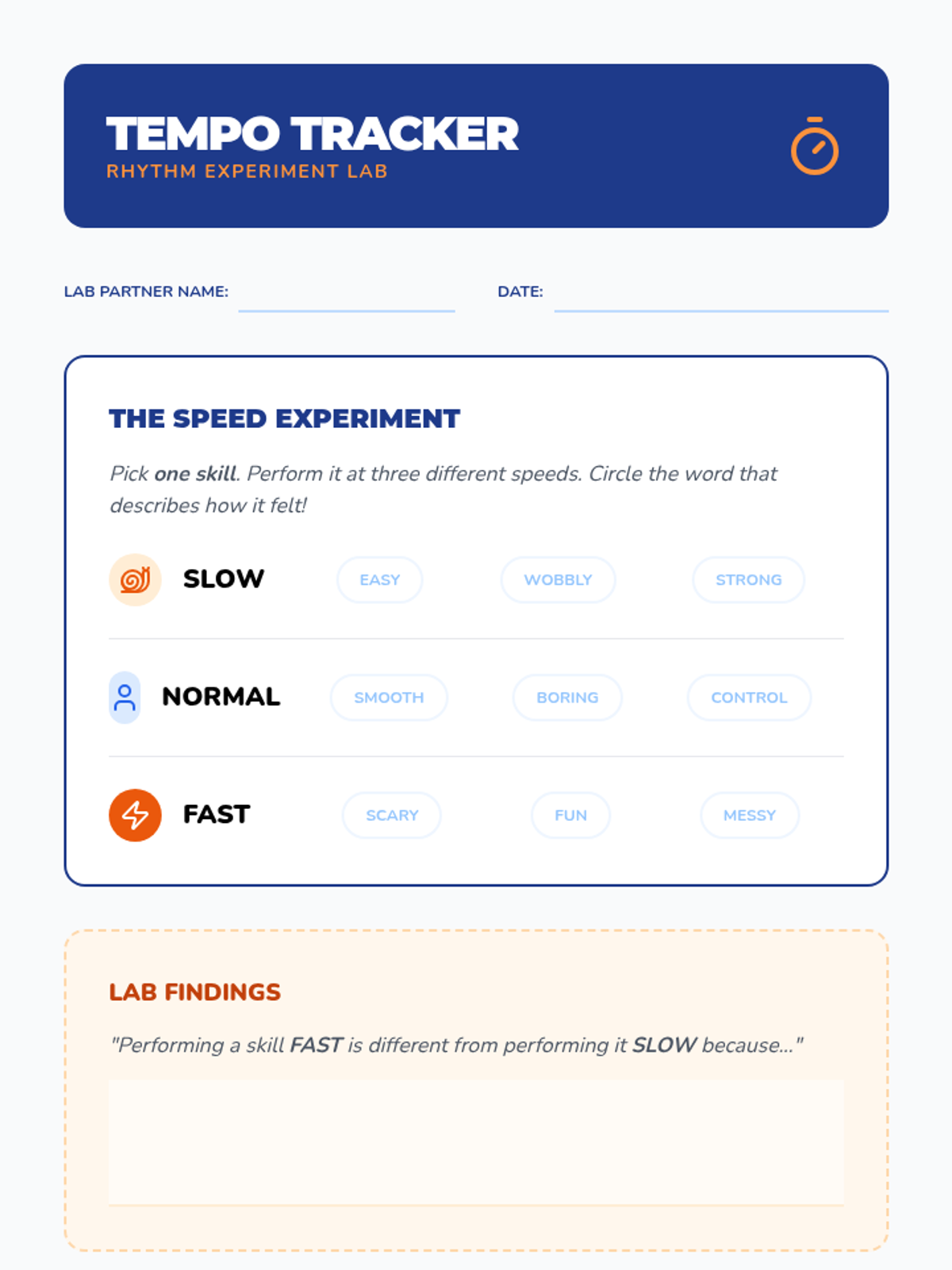
Students explore performing skills at different speeds (slow motion vs. fast) and matching movement to a simple drum beat. They discover how changing the tempo changes the difficulty and look of the skill.
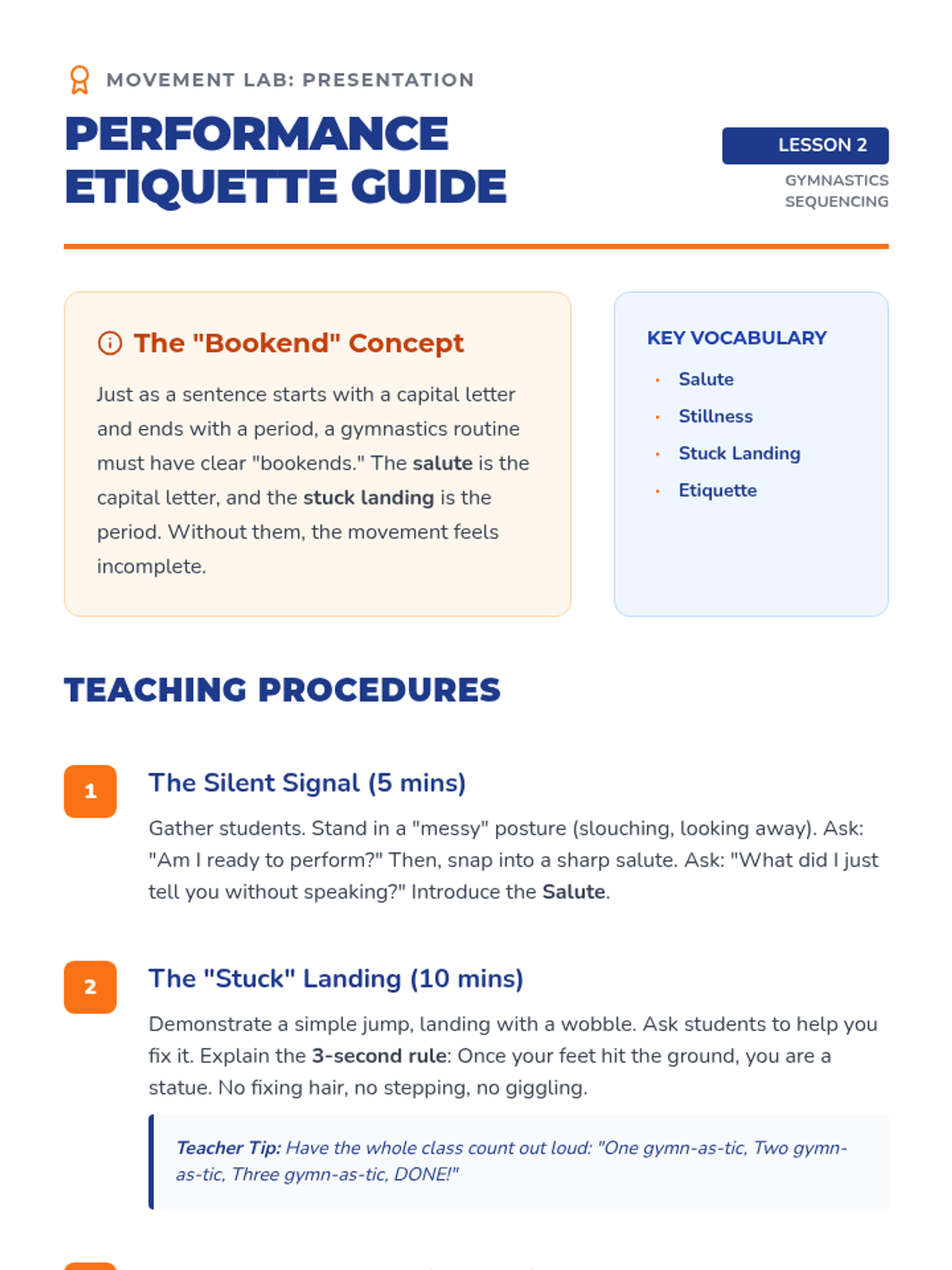
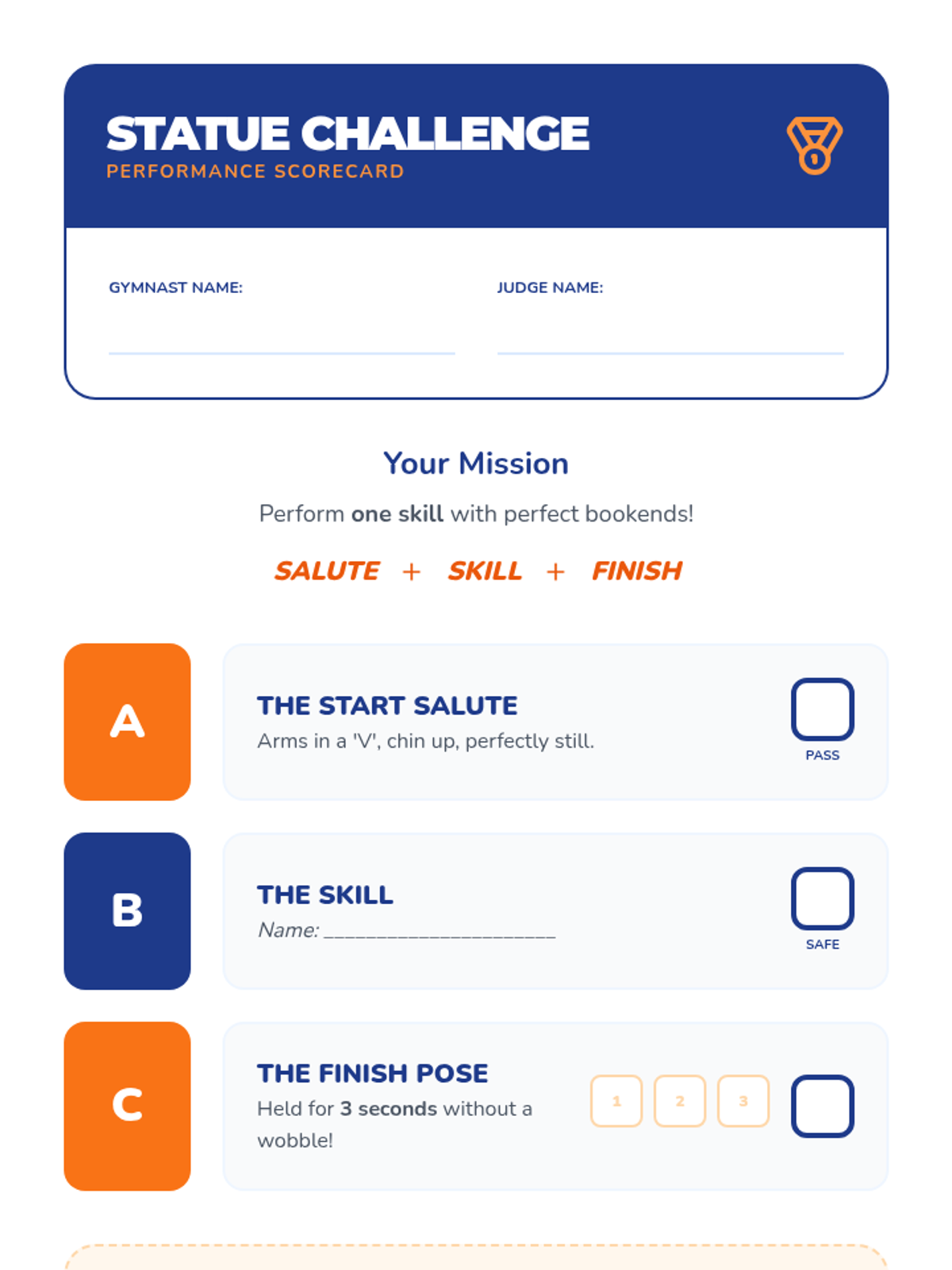
The class learns the formal presentation etiquette of gymnastics, including the starting salute and the final pose. Students practice holding a finish for three seconds to show control and completion.
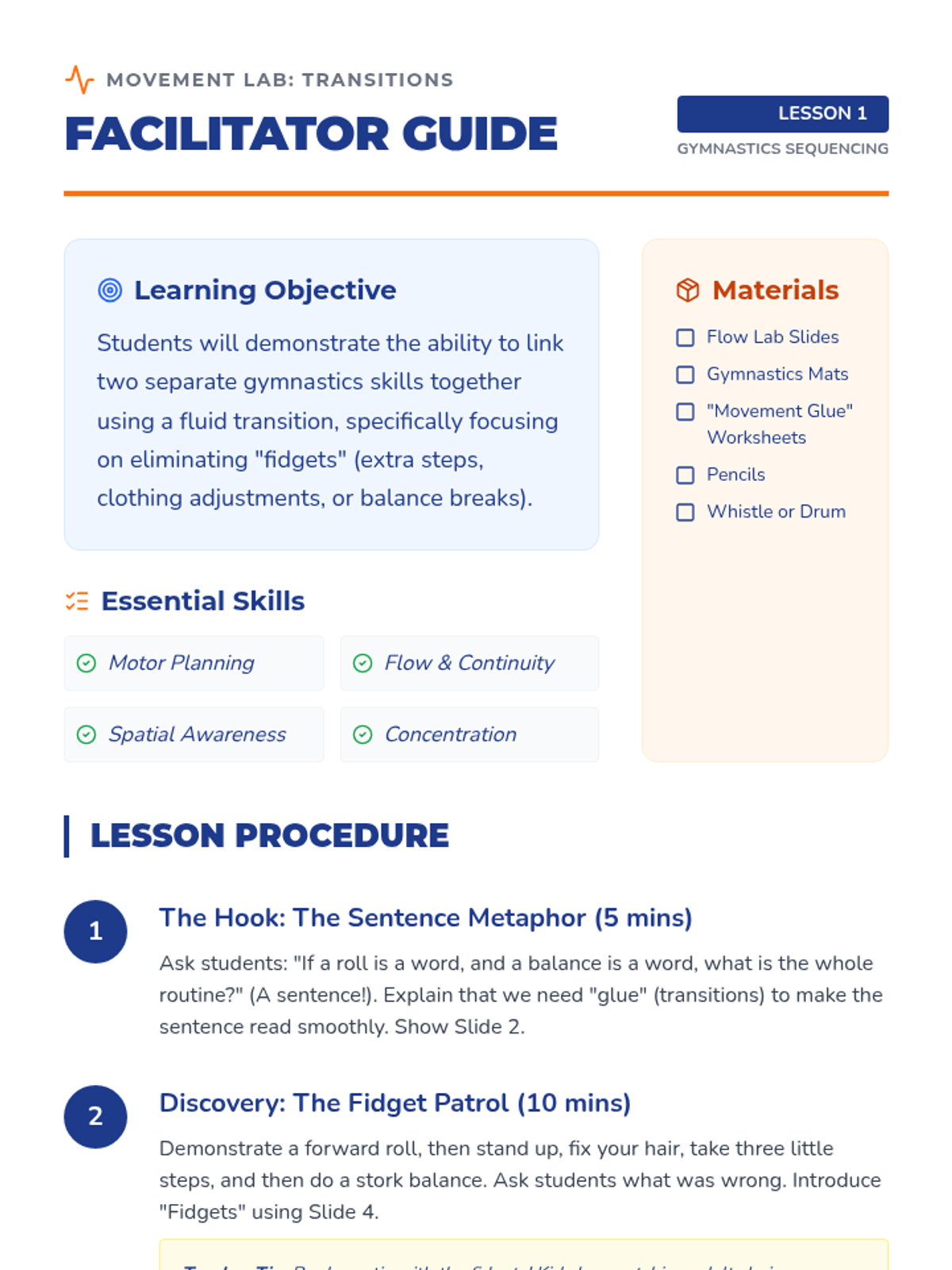
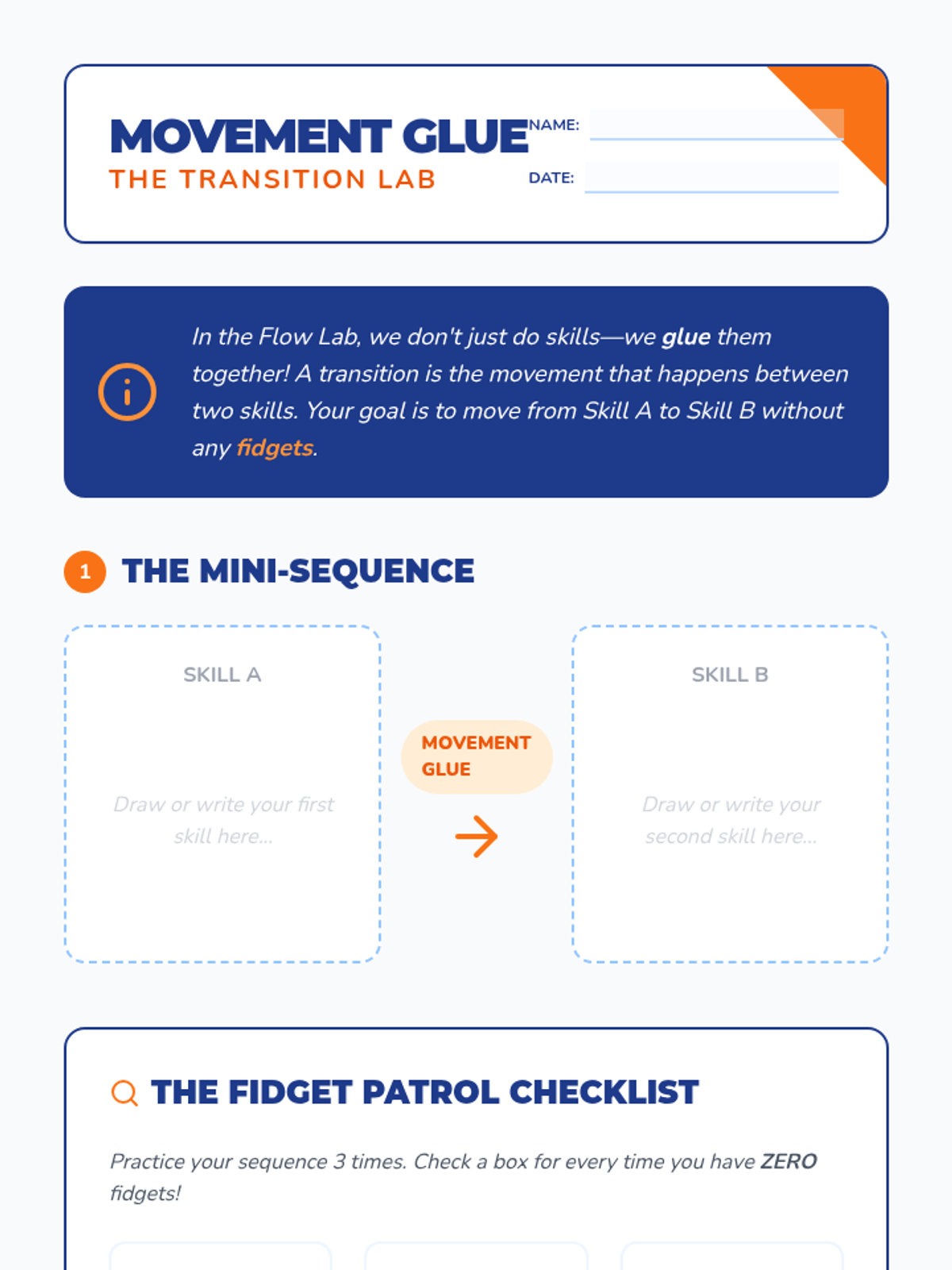
Students practice connecting two disparate skills (e.g., a forward roll immediately into a balance pose). The focus is on eliminating 'fidgets' and making the movement between skills fluid and intentional.
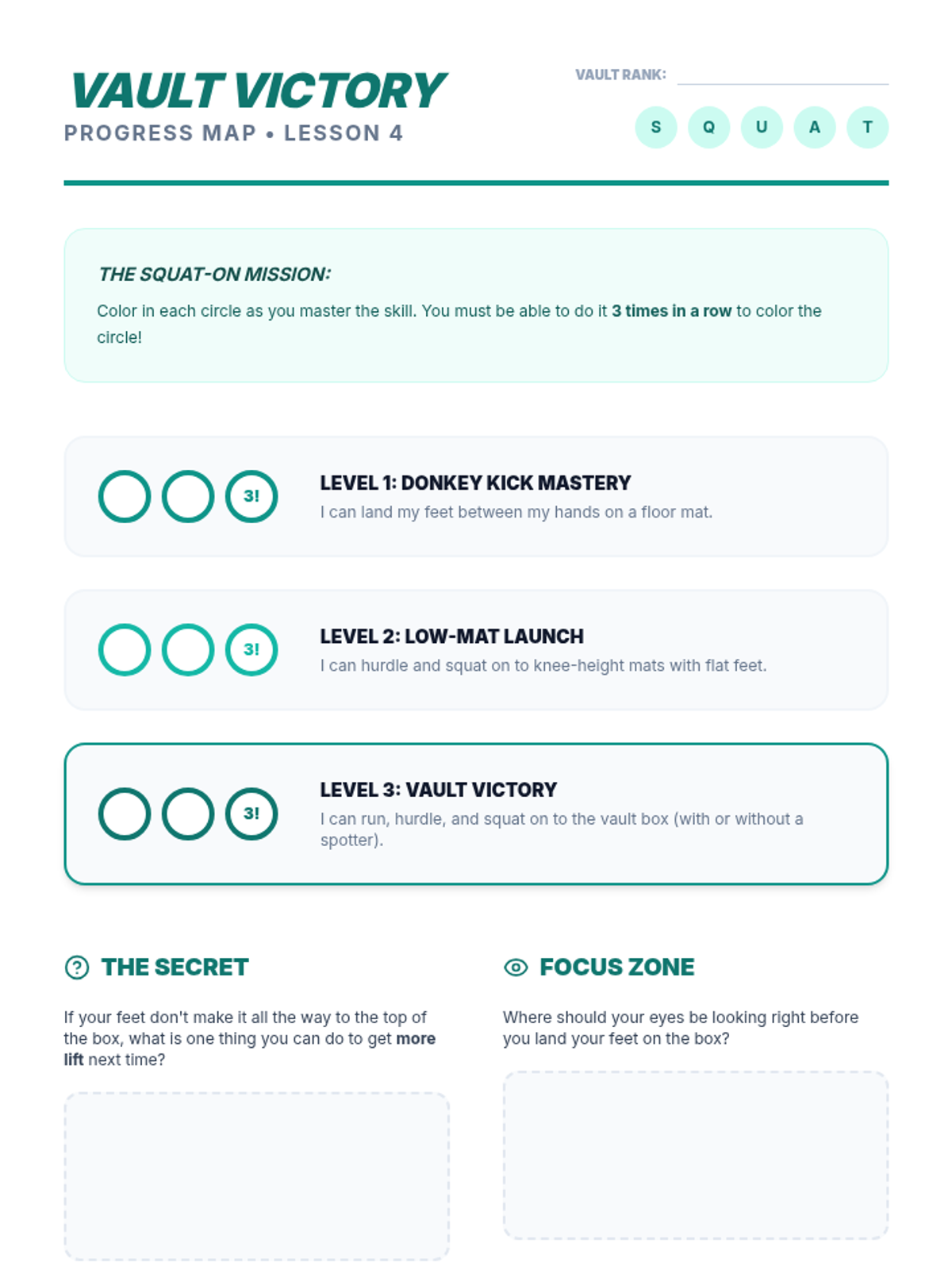
Using a vault box or stacked mats, students practice the 'squat-on' mount. They run, jump, and place hands on the box while tucking knees to their chest, landing on top of the apparatus.
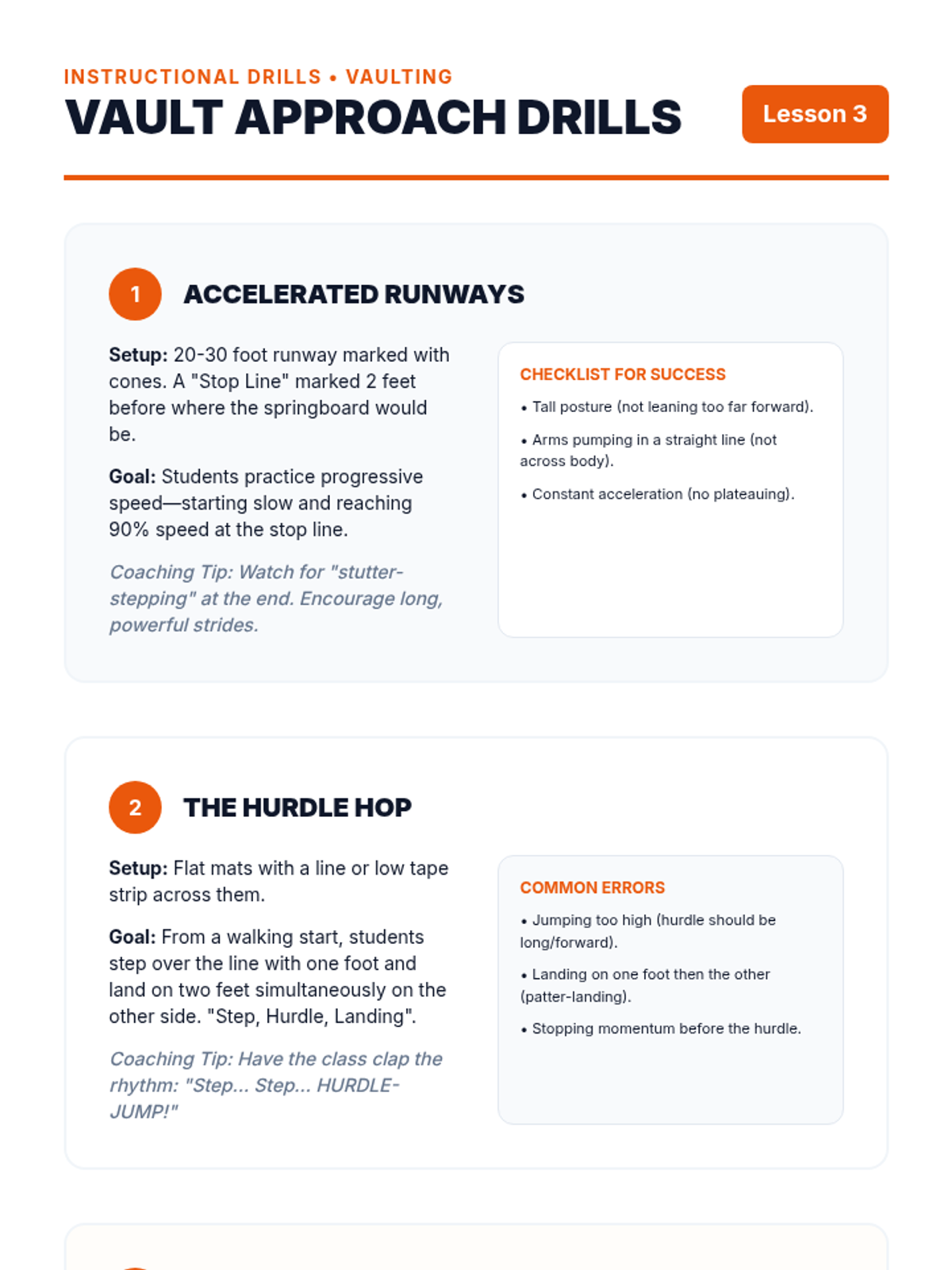
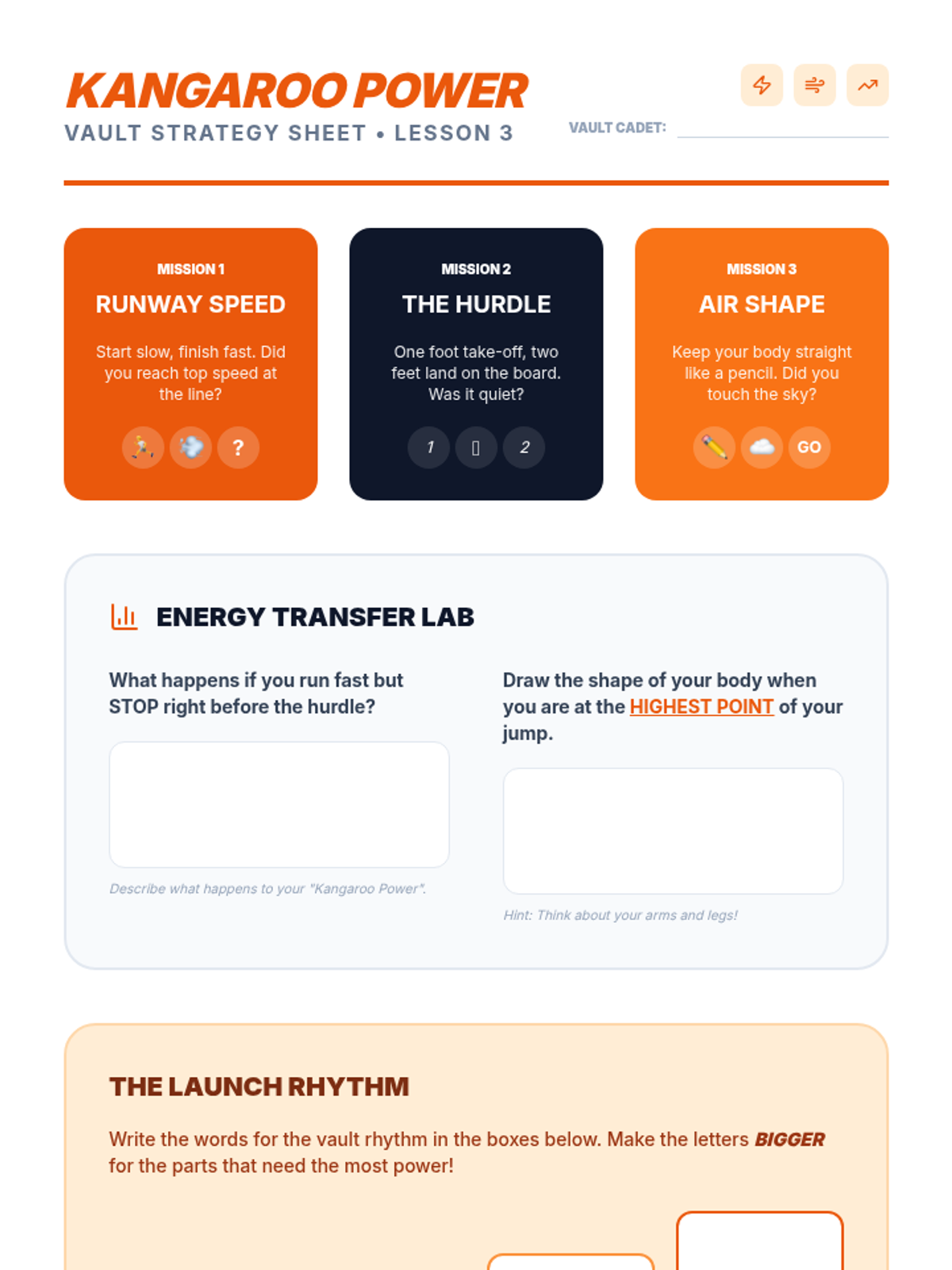
Students focus on the runway run and the 'hurdle' step. They practice generating speed and converting it into a two-foot take-off using a springboard or trampoline trainer.
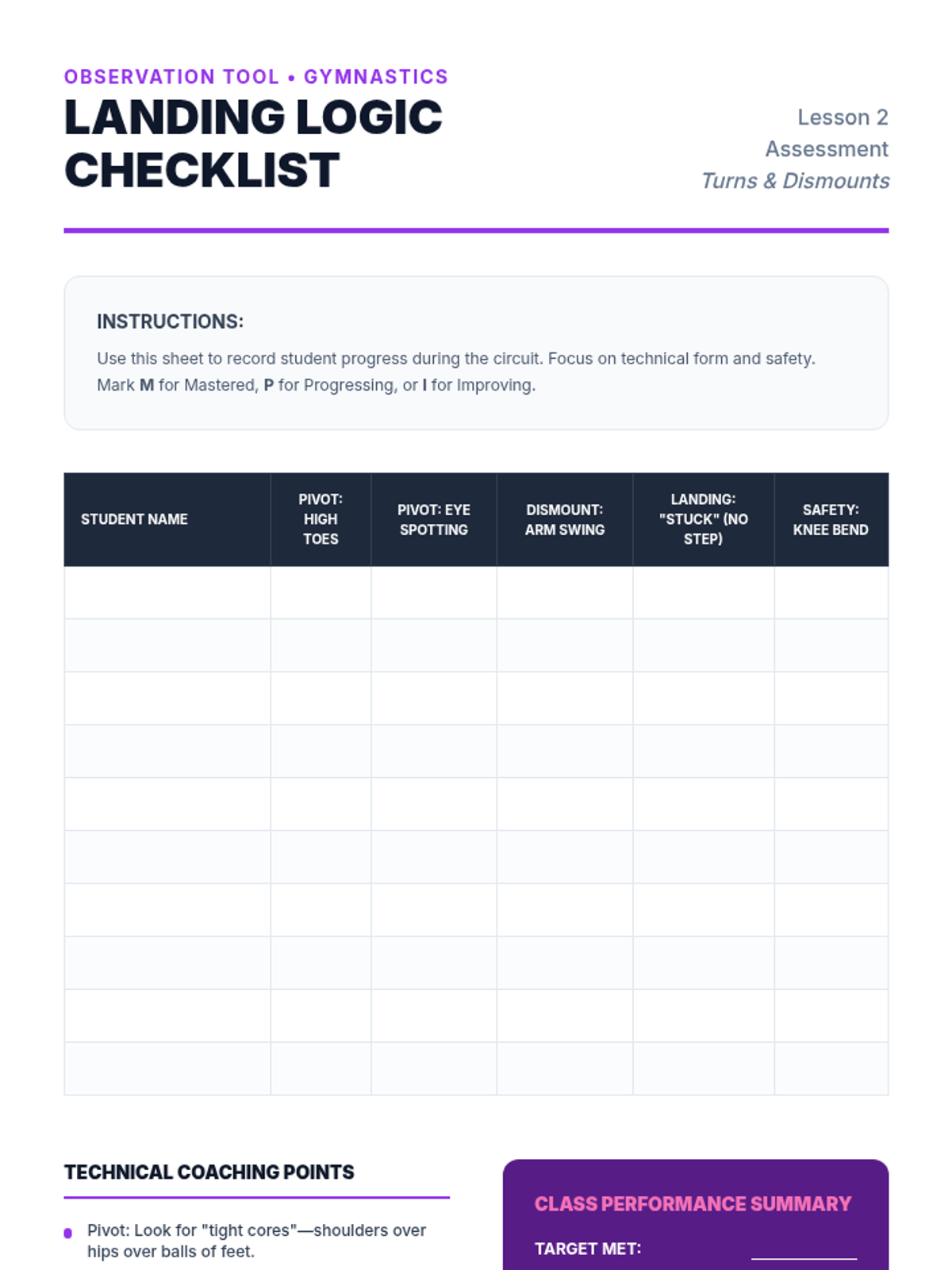
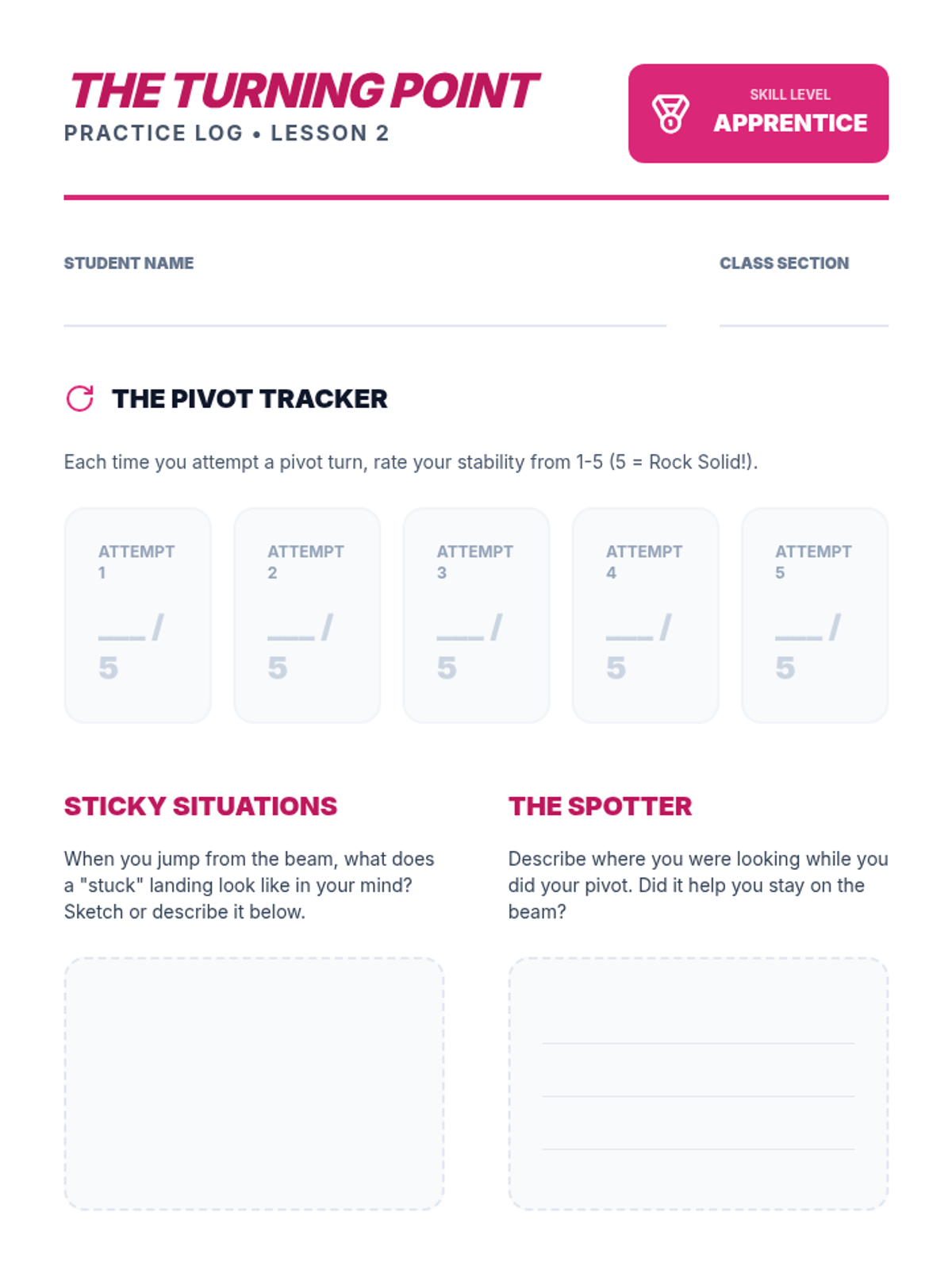
Students practice pivot turns on the balls of their feet on the low beam. They also learn safe dismount techniques, jumping from the beam to a 'stick' landing on a mat.
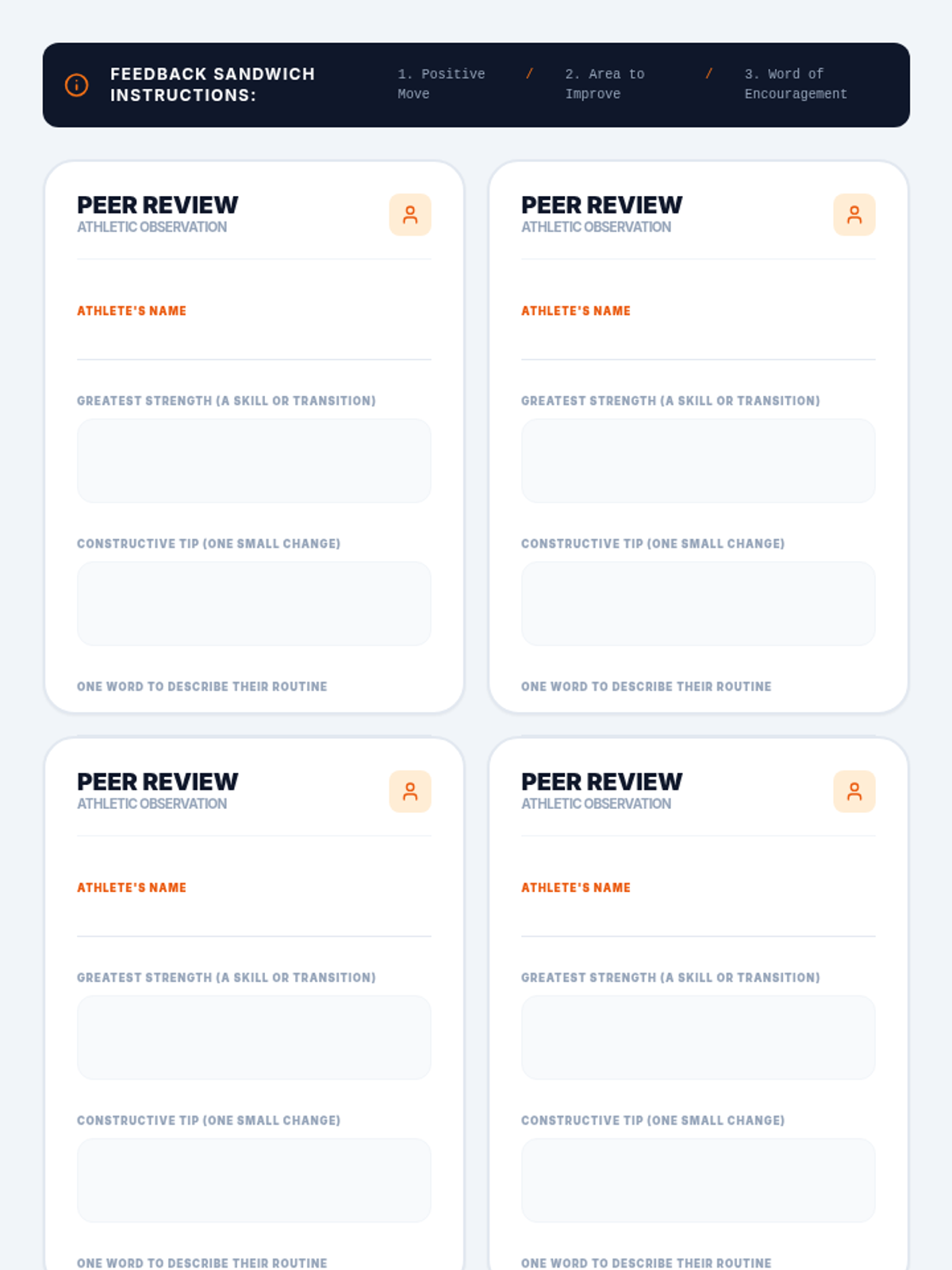
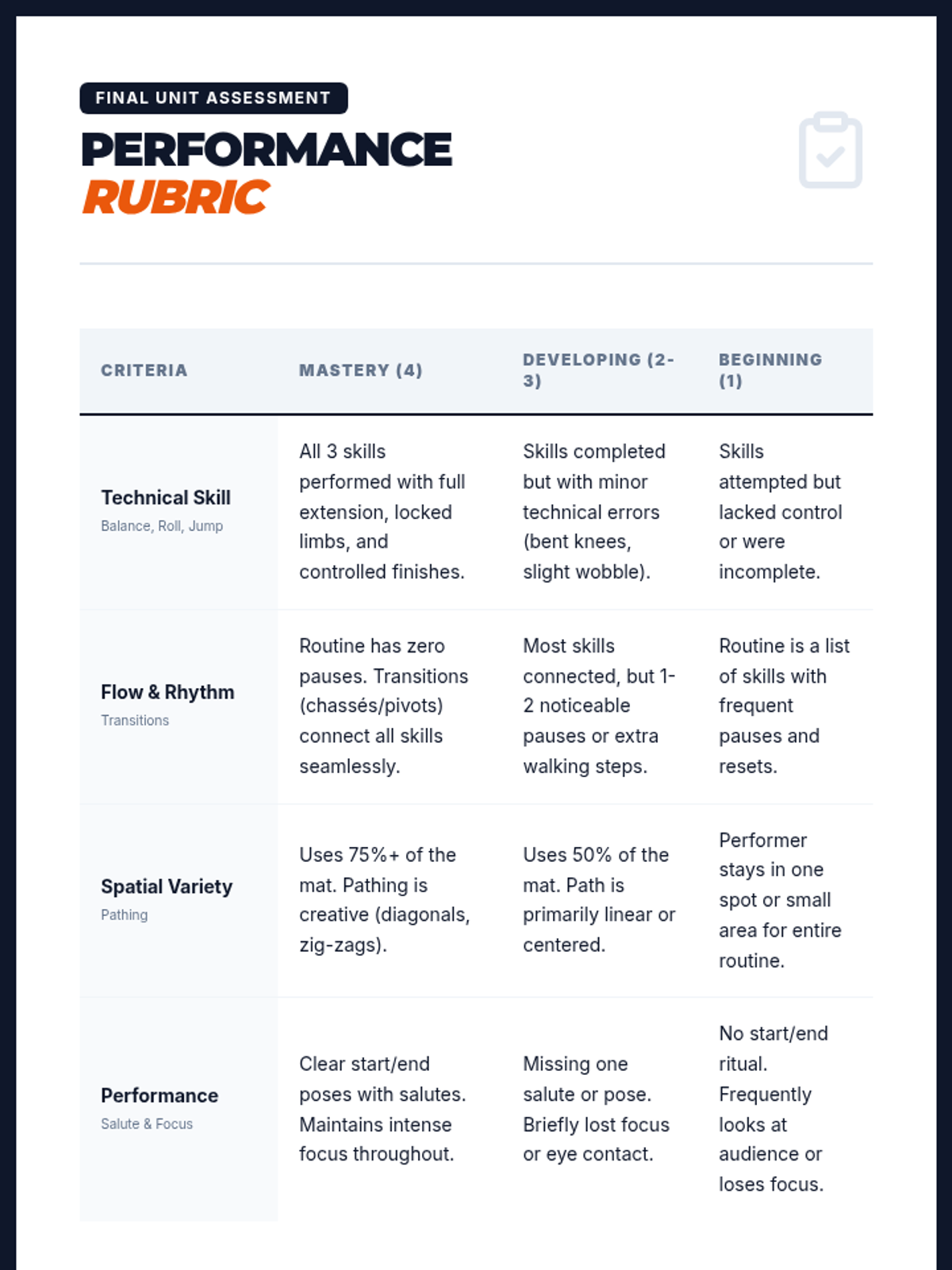
Students perform their routines and provide structured peer feedback on stability, flow, and artistic control.
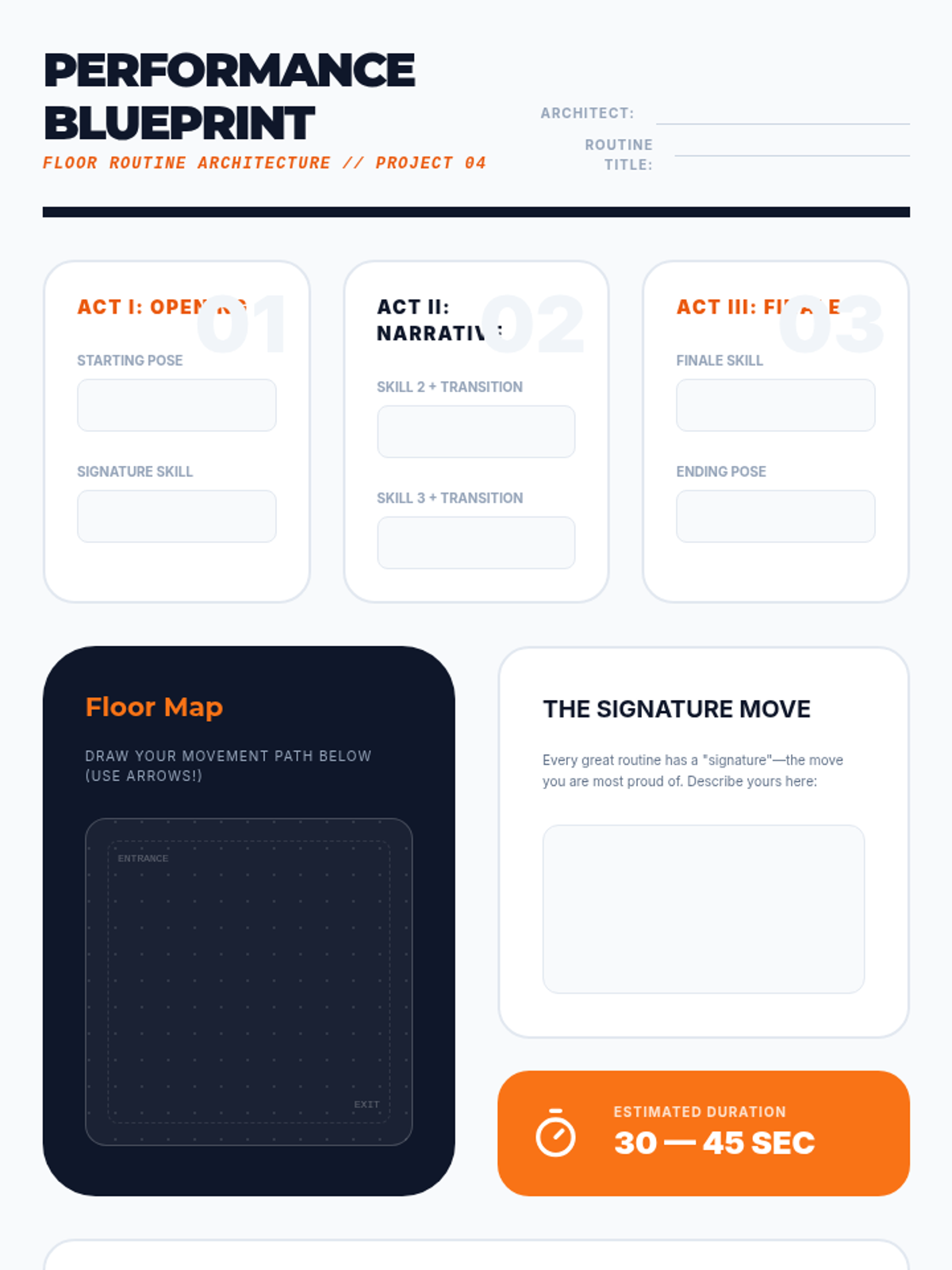
Students map out an original floor routine with a clear structure, selecting skills that showcase their variety and control.
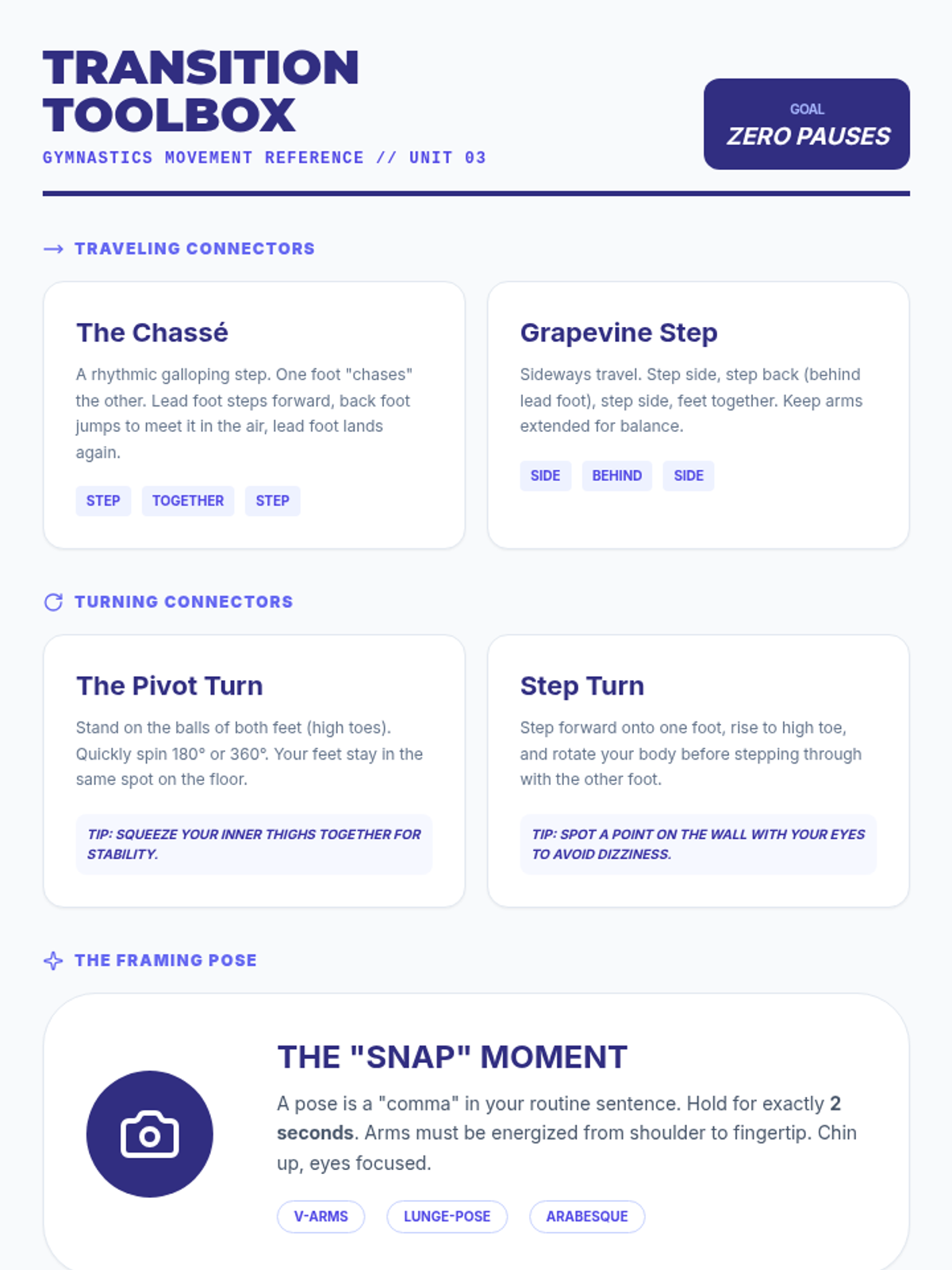
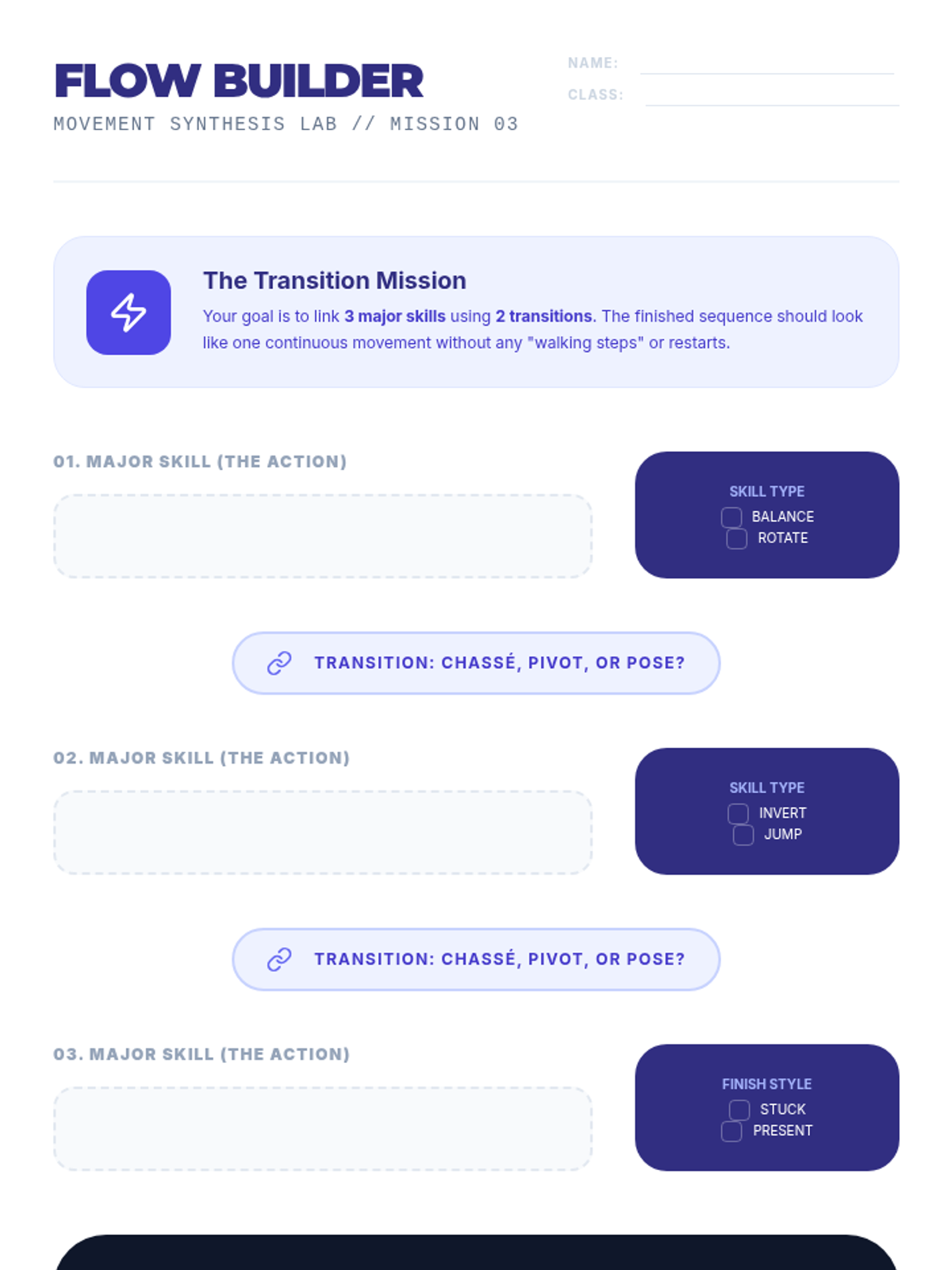
Students learn to link skills using chassés, pivots, and poses to create a seamless flow between movements.
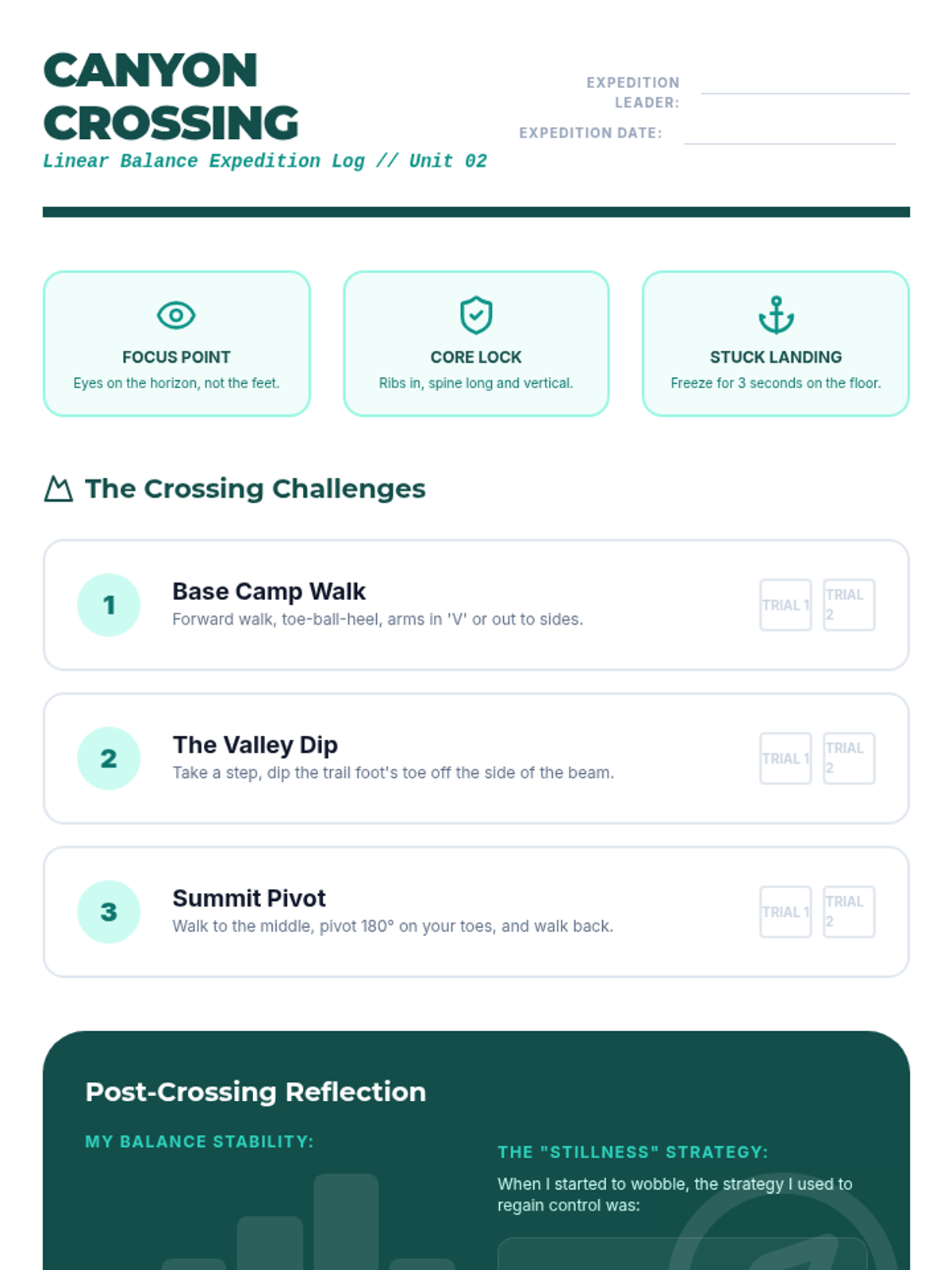
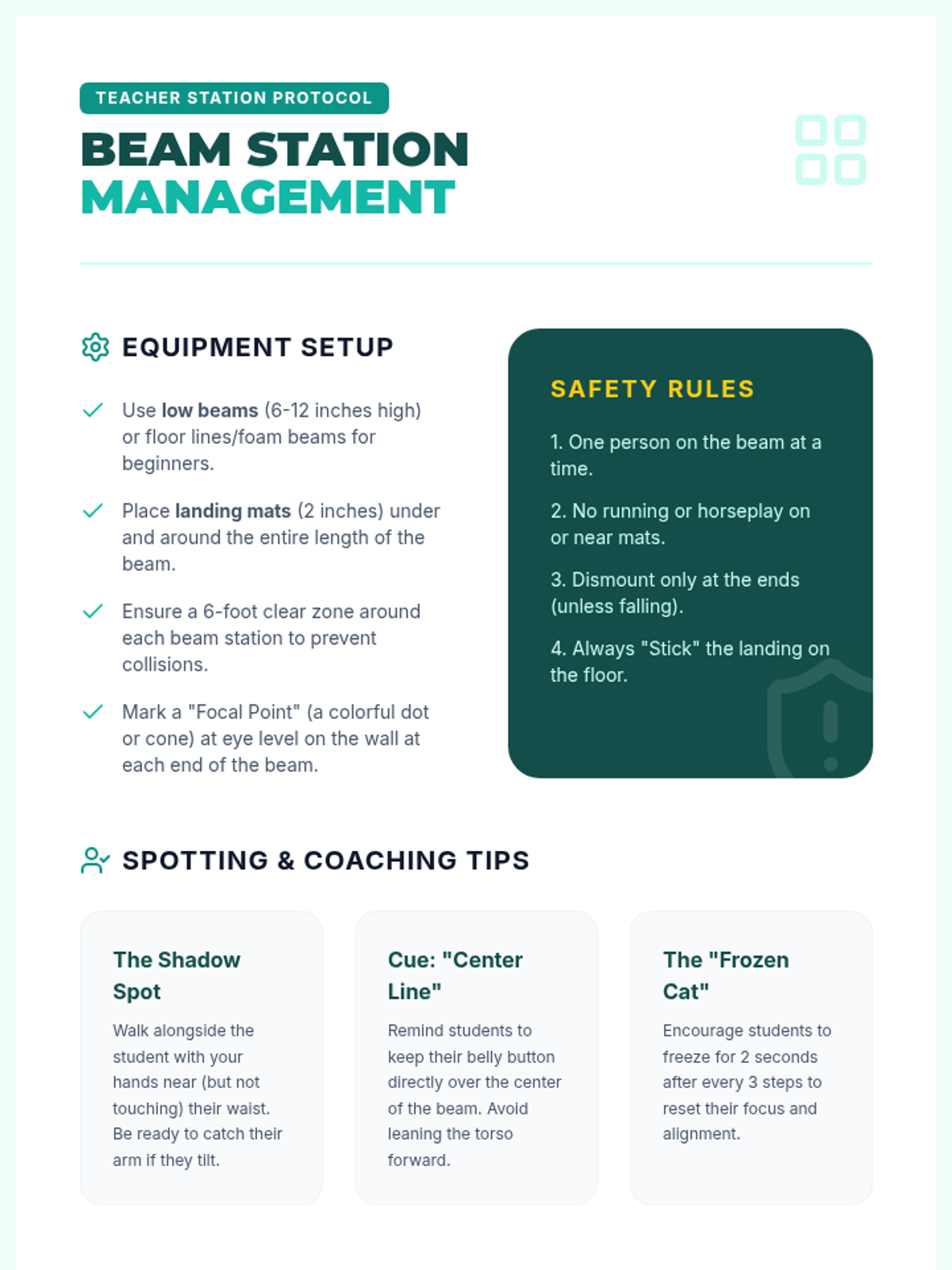
Students develop core control and concentration on low beams, practicing locomotion and postural alignment.
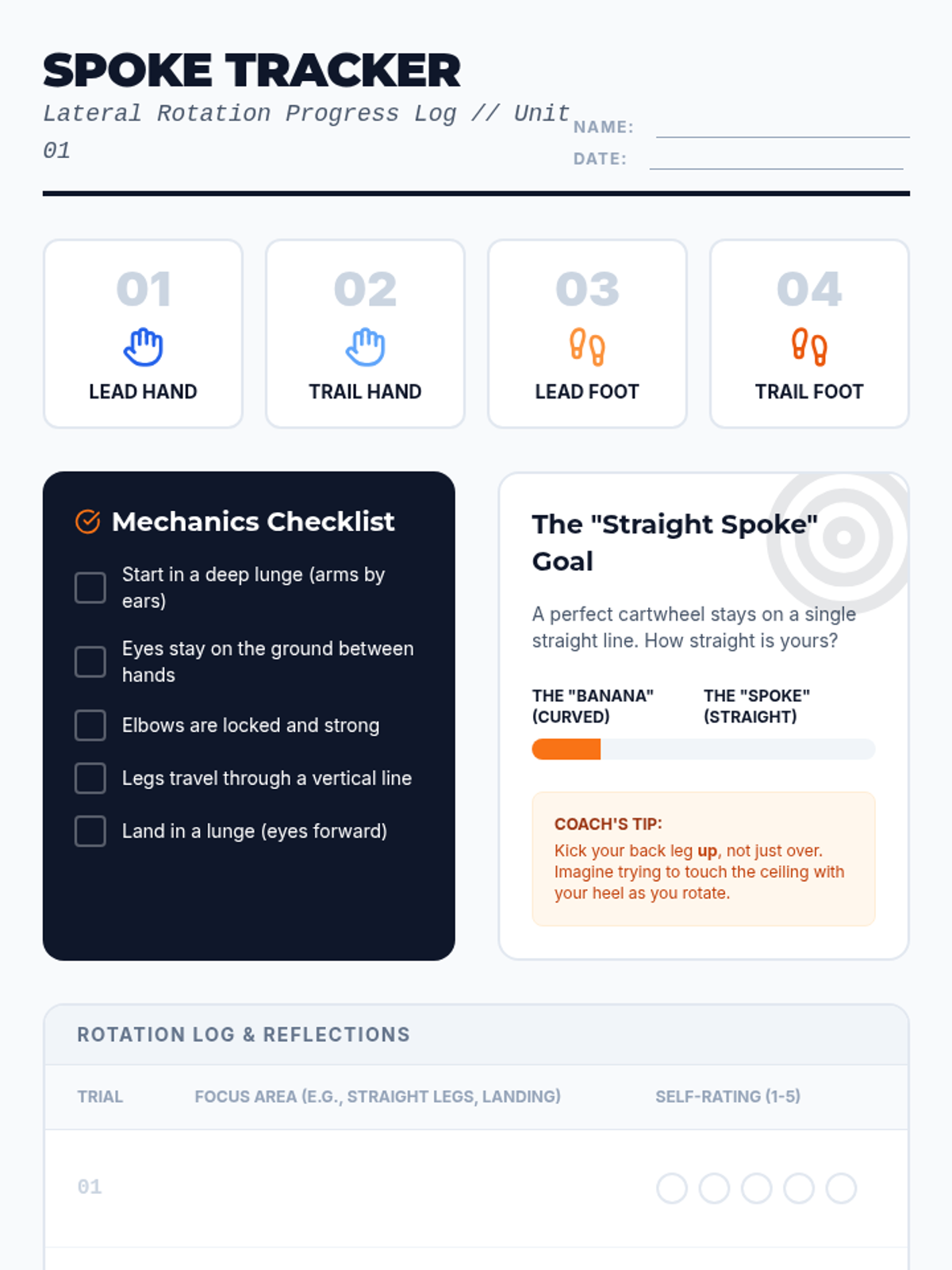
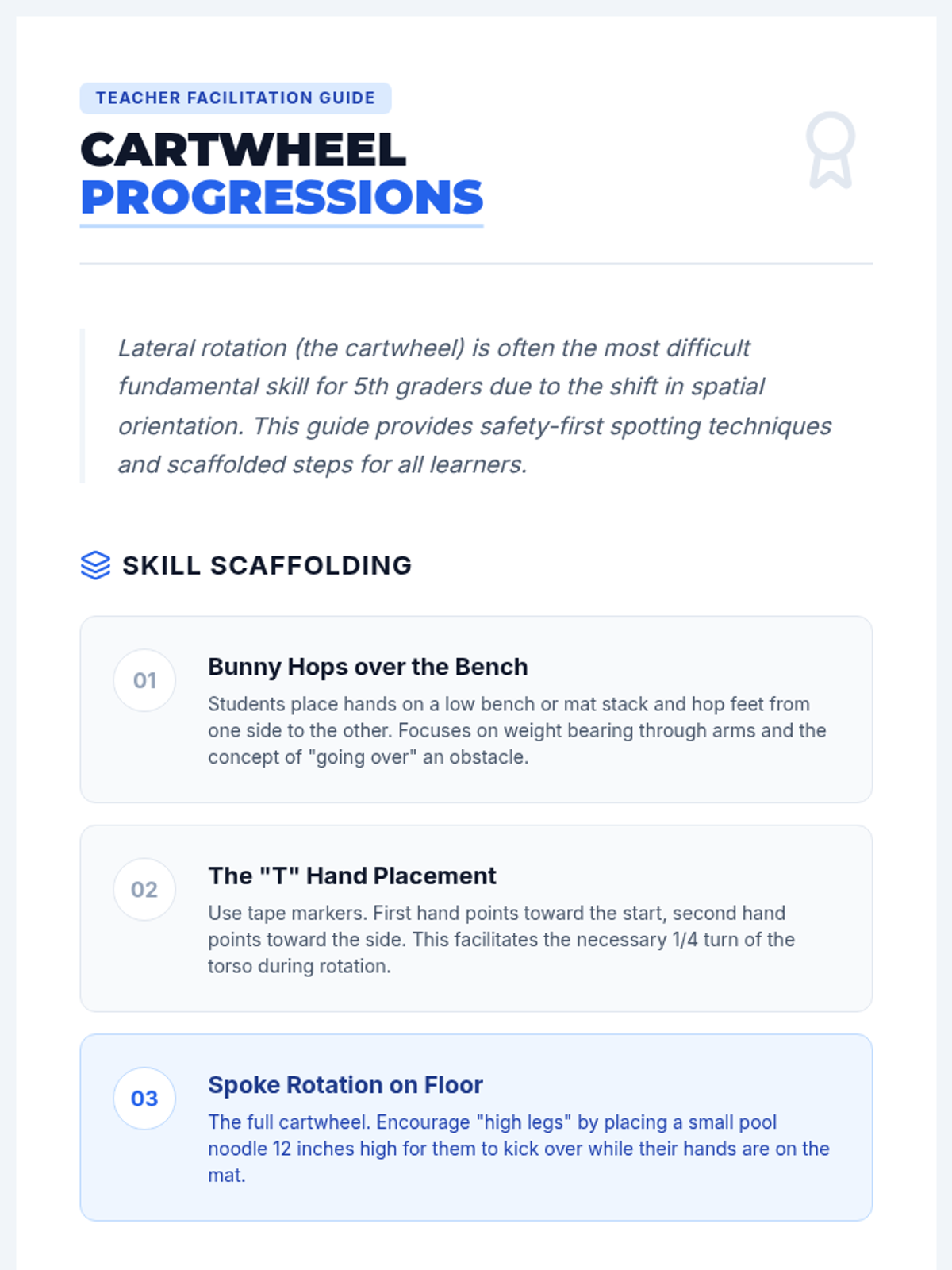
Students master the hand-hand-foot-foot rhythm of the cartwheel, focusing on lateral rotation and limb extension.
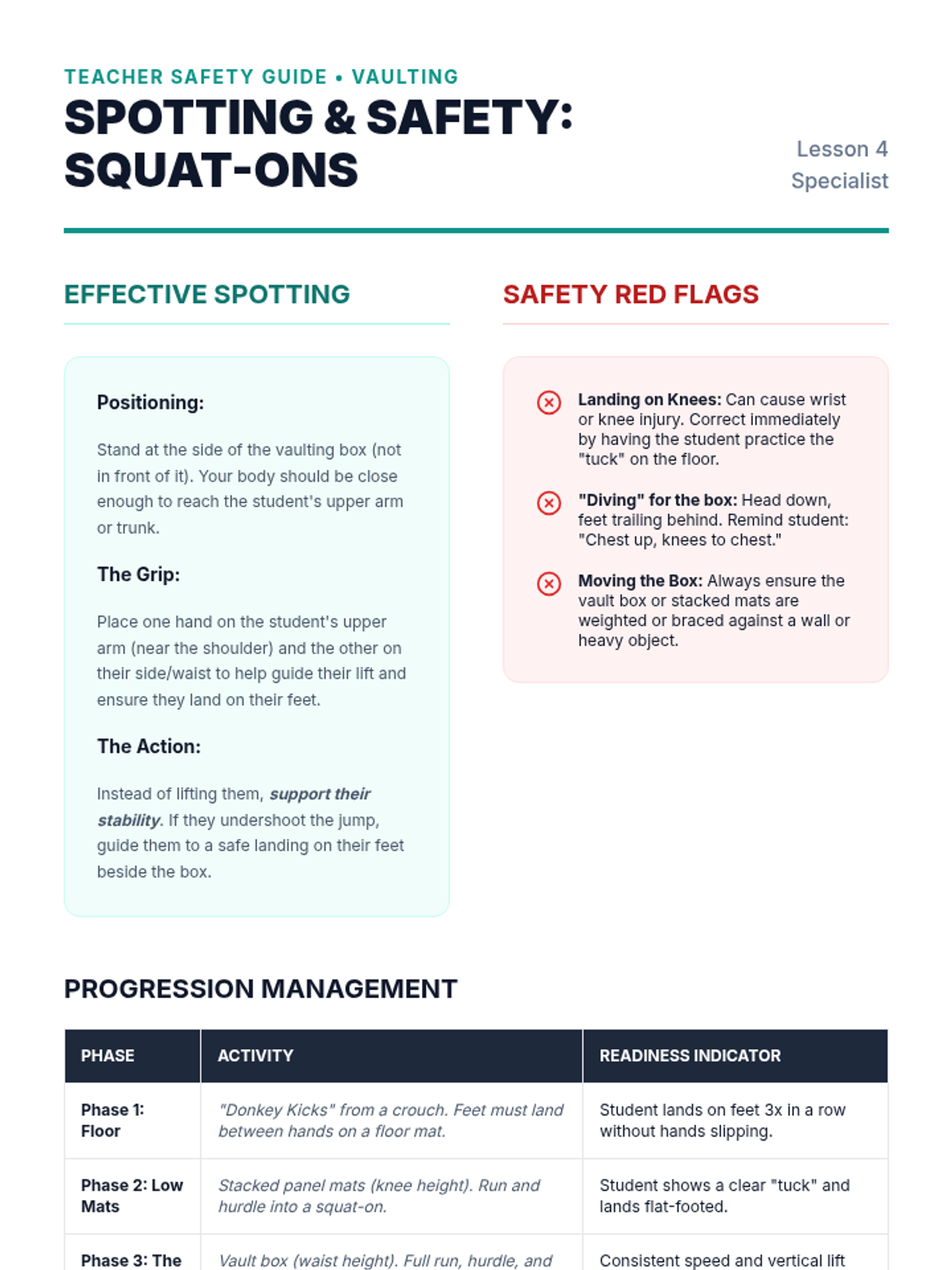
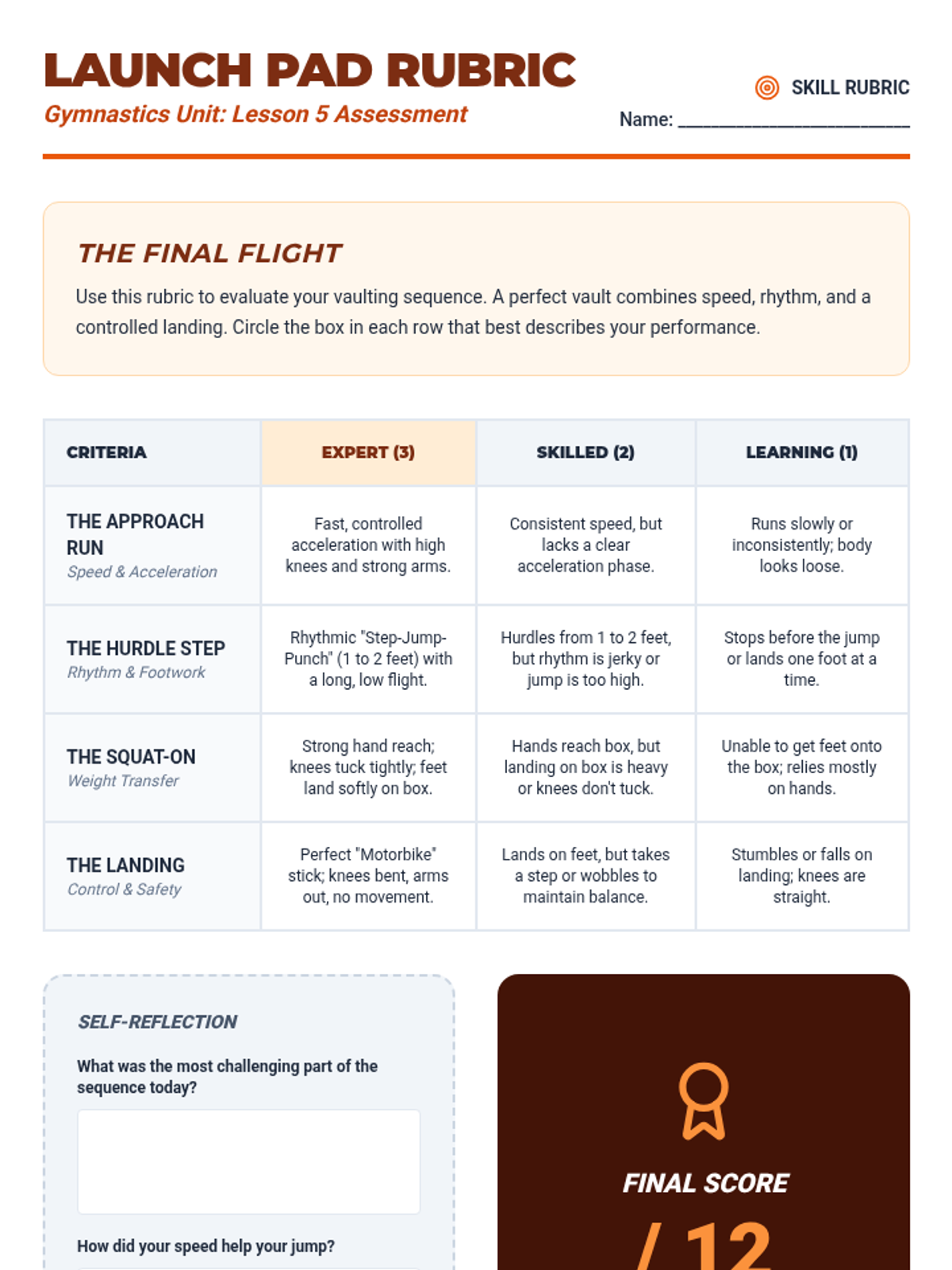
Combining speed and technique to perform explosive take-offs and controlled squat-on landings.
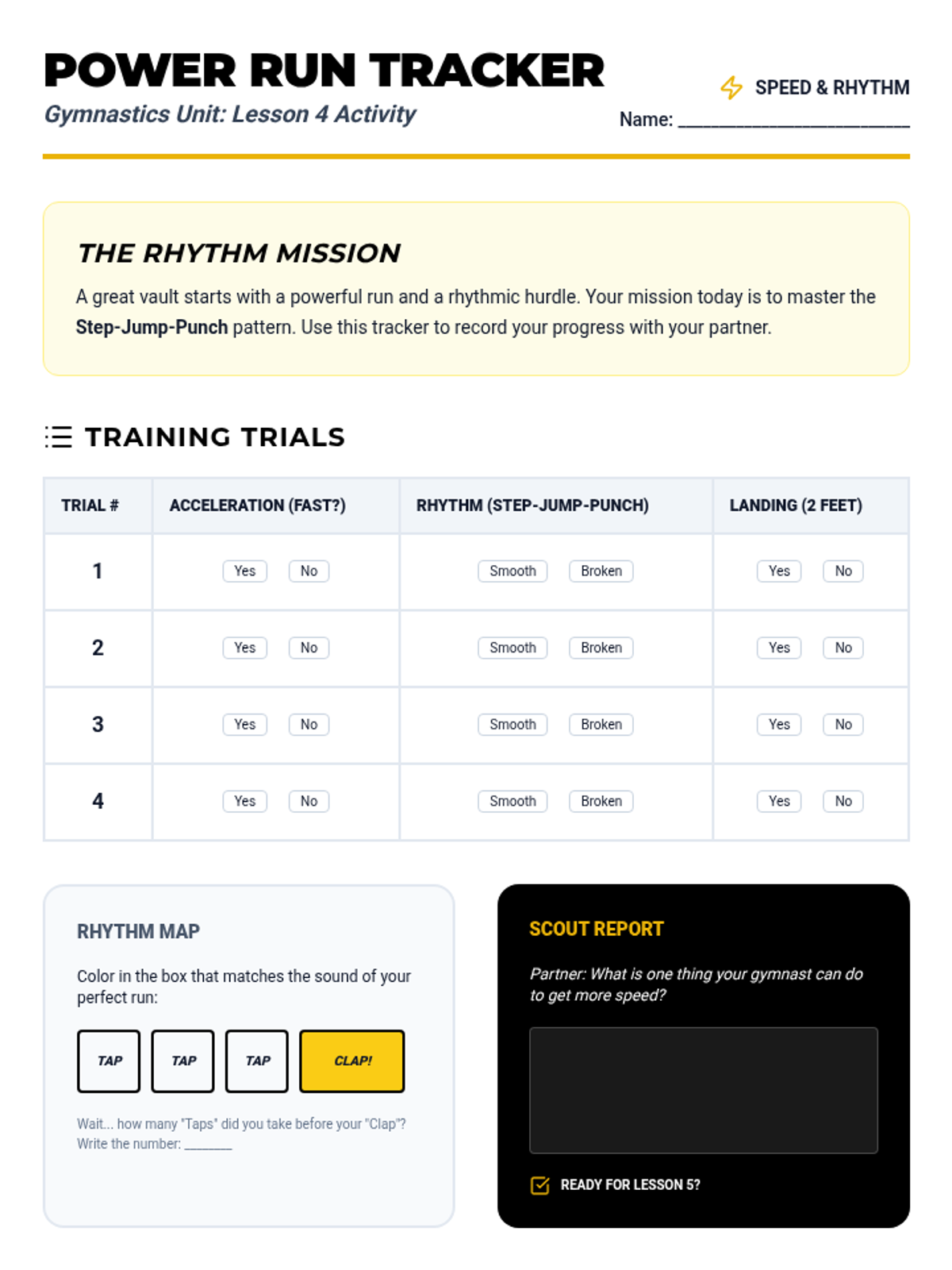
Isolating the approach run and the hurdle step to generate power and rhythm for vaulting.
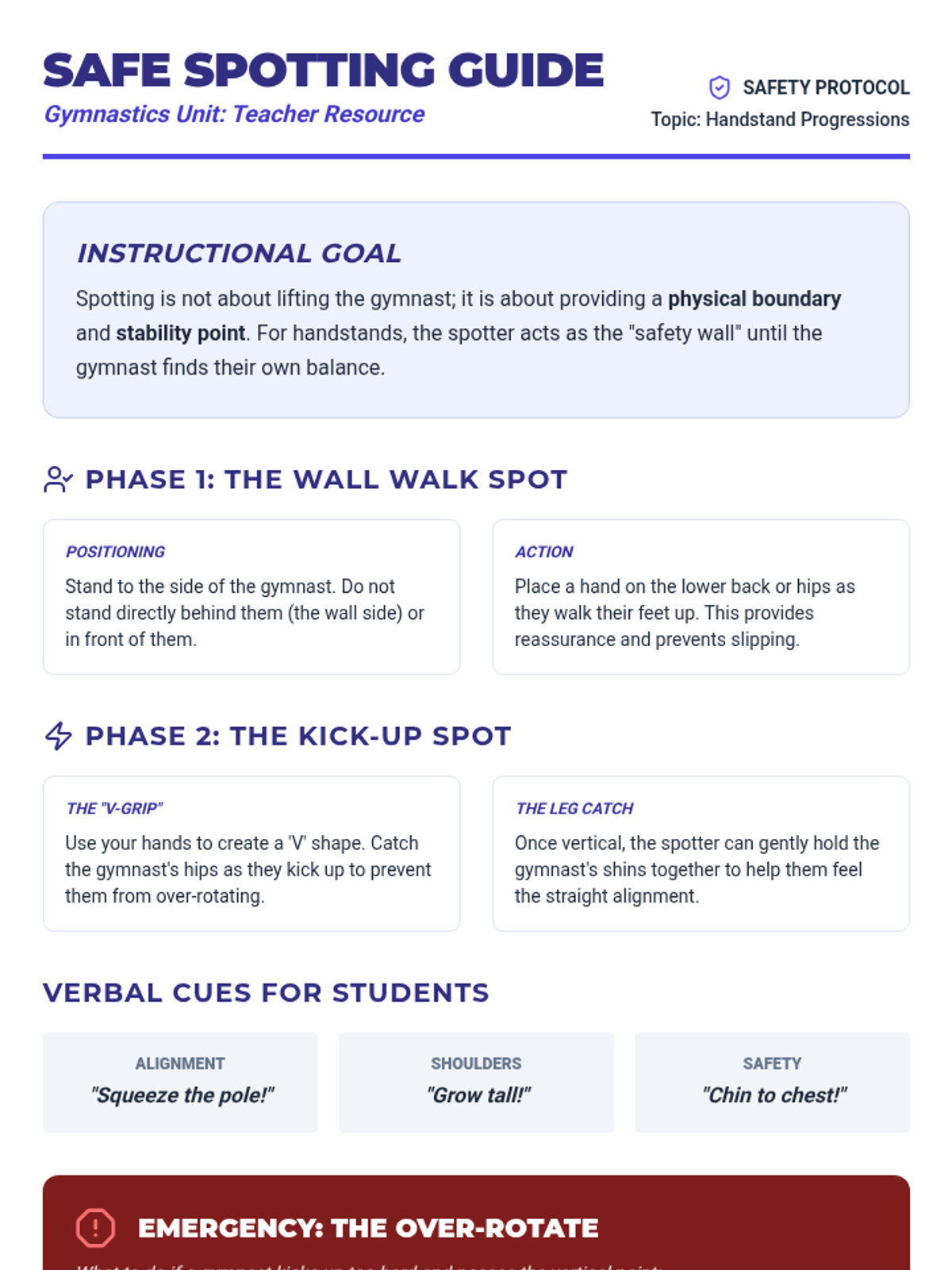
Safely progressing toward vertical handstands using wall support and establishing strict spotting protocols.
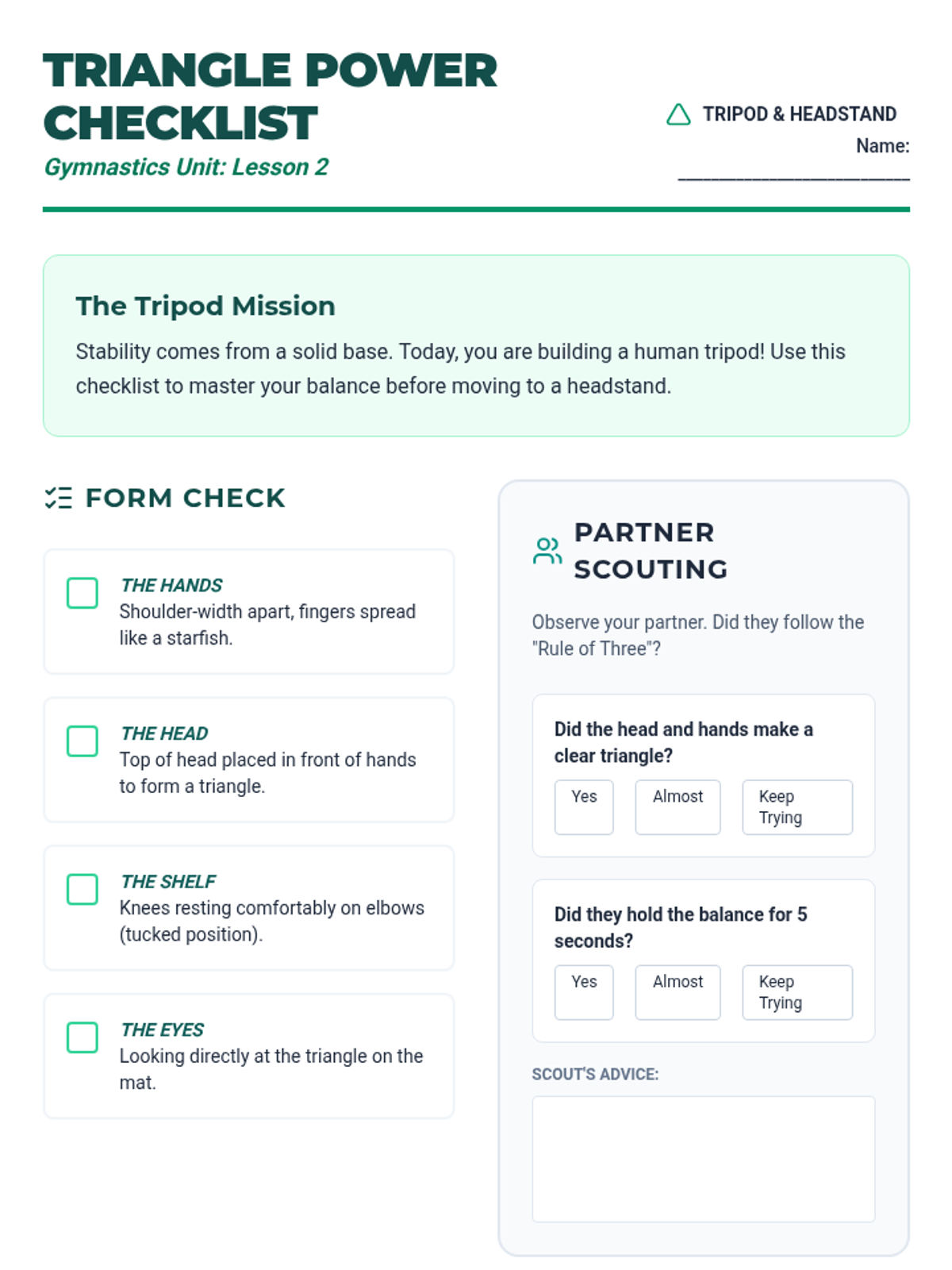
Focusing on the mechanics of the tripod and headstand using a triangular base of support for maximum stability.
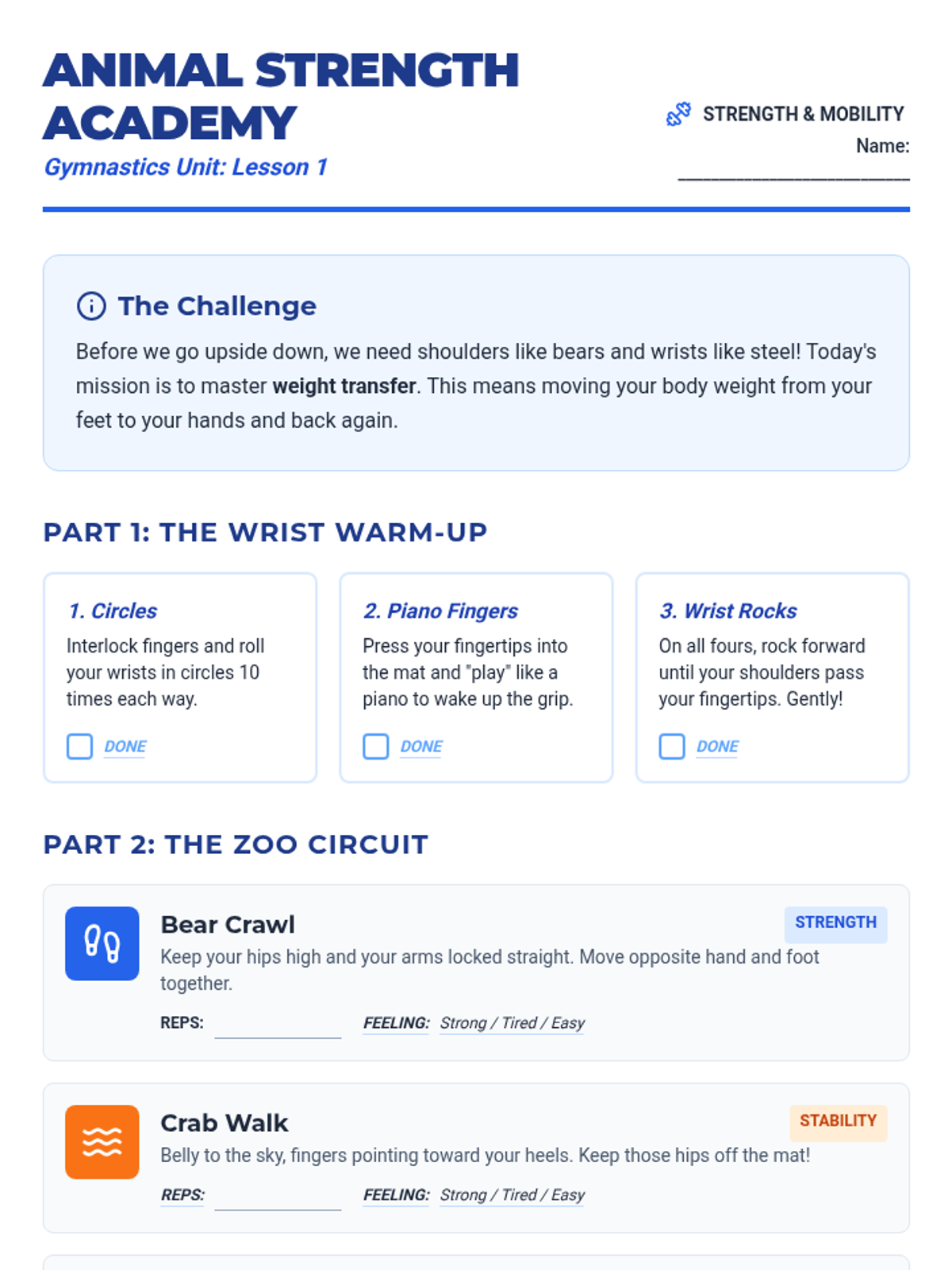
Building wrist and shoulder strength through animal-inspired movements like bear crawls and donkey kicks to prepare for weight transfer.
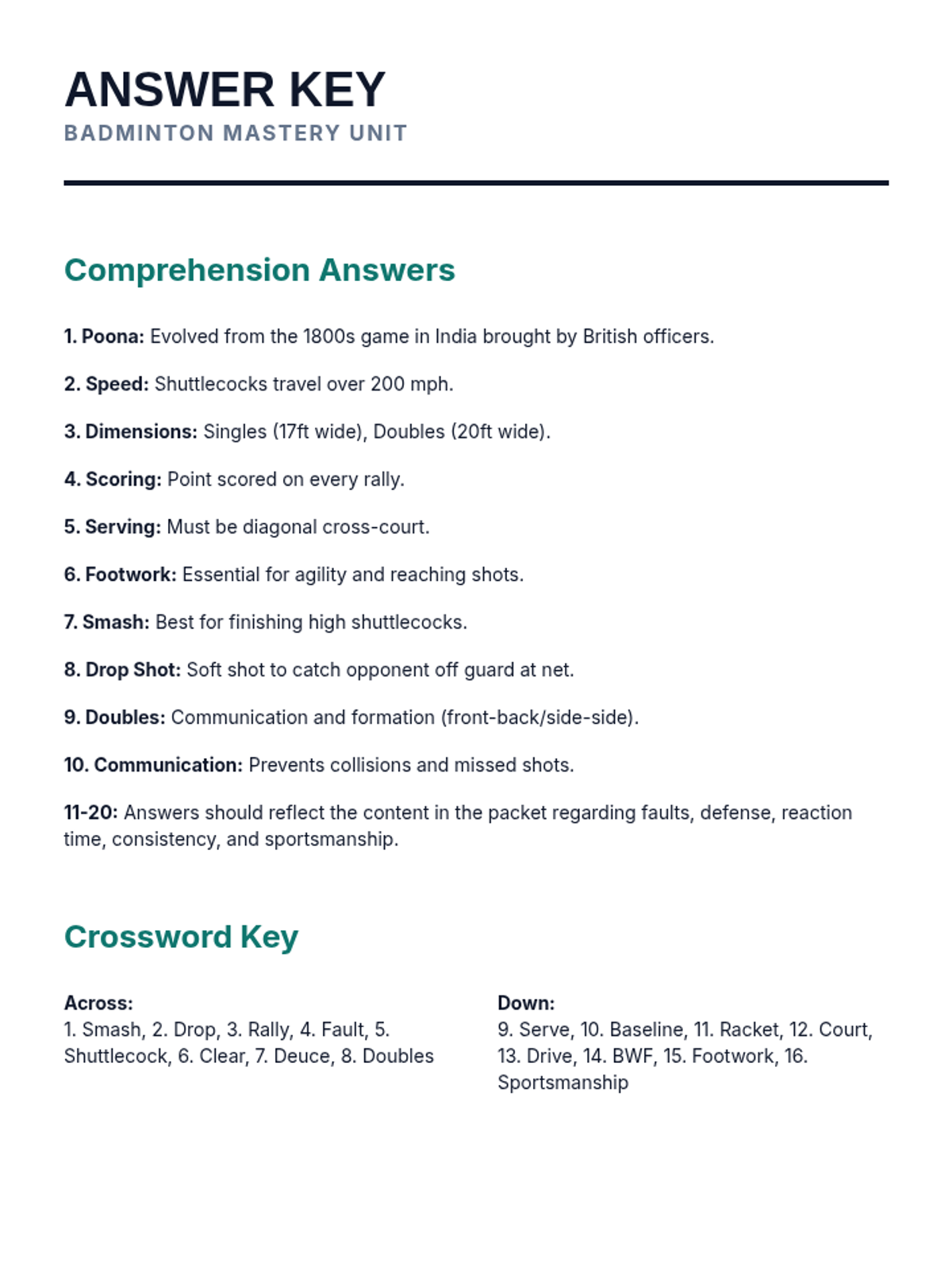
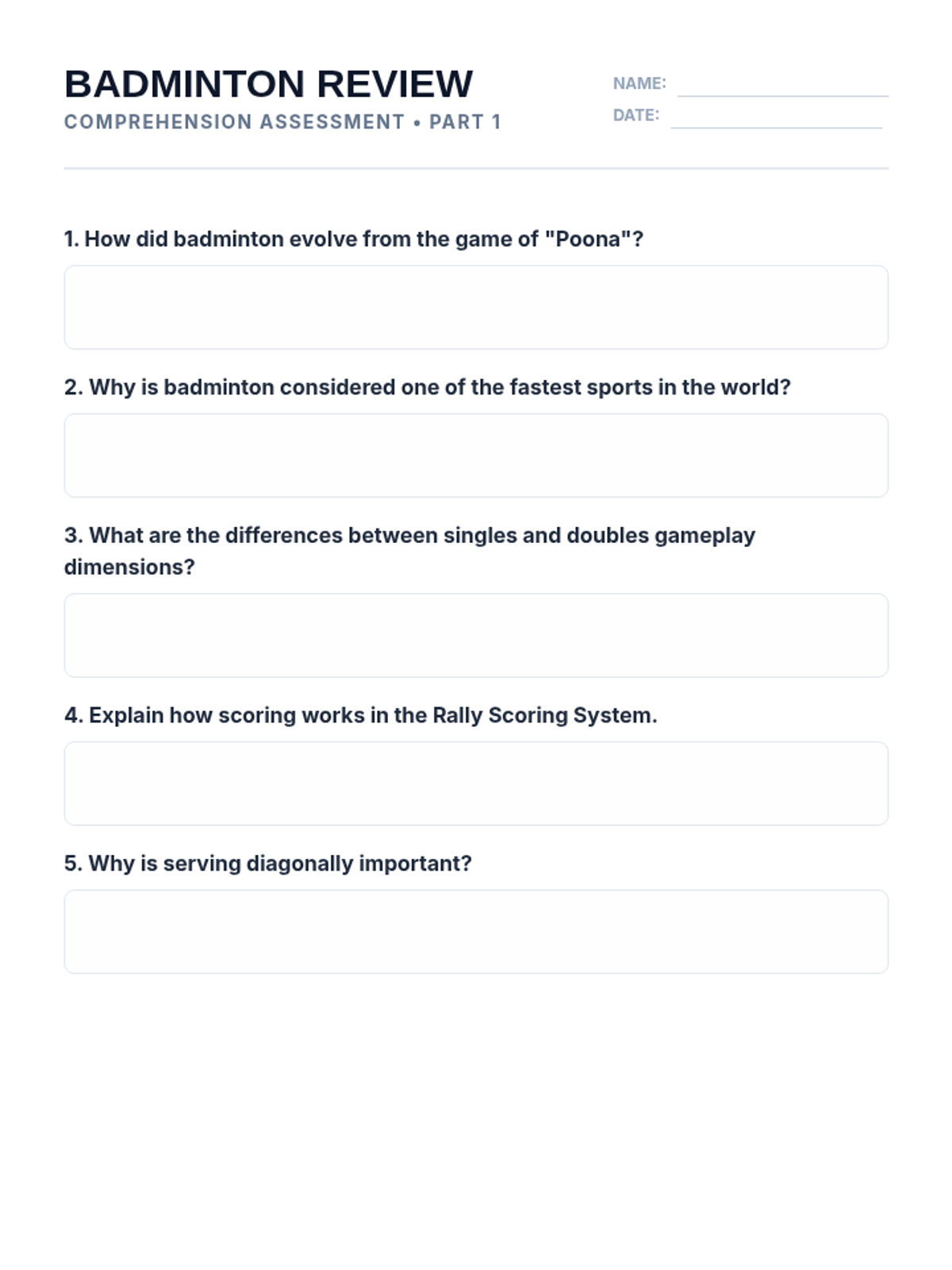
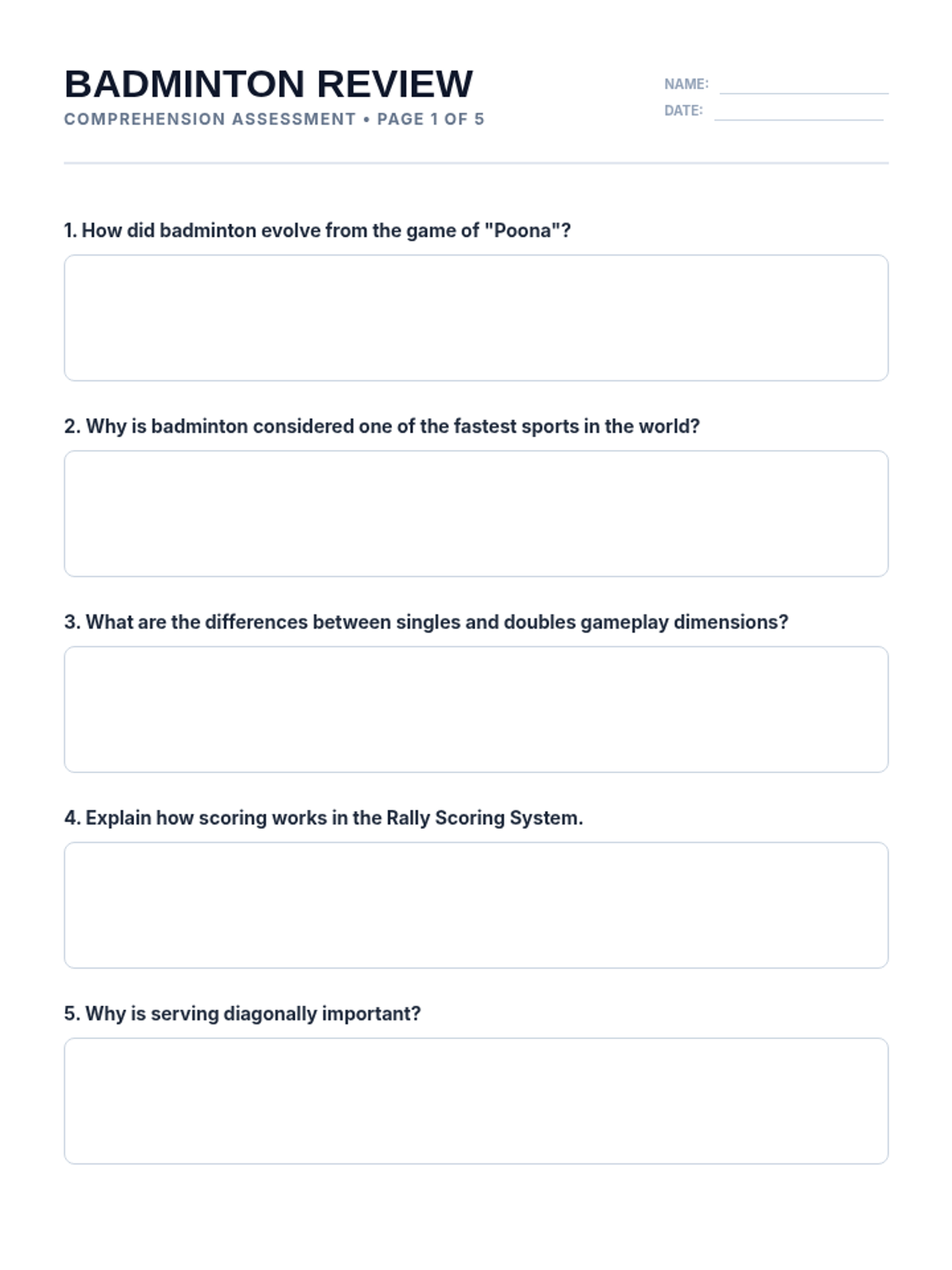
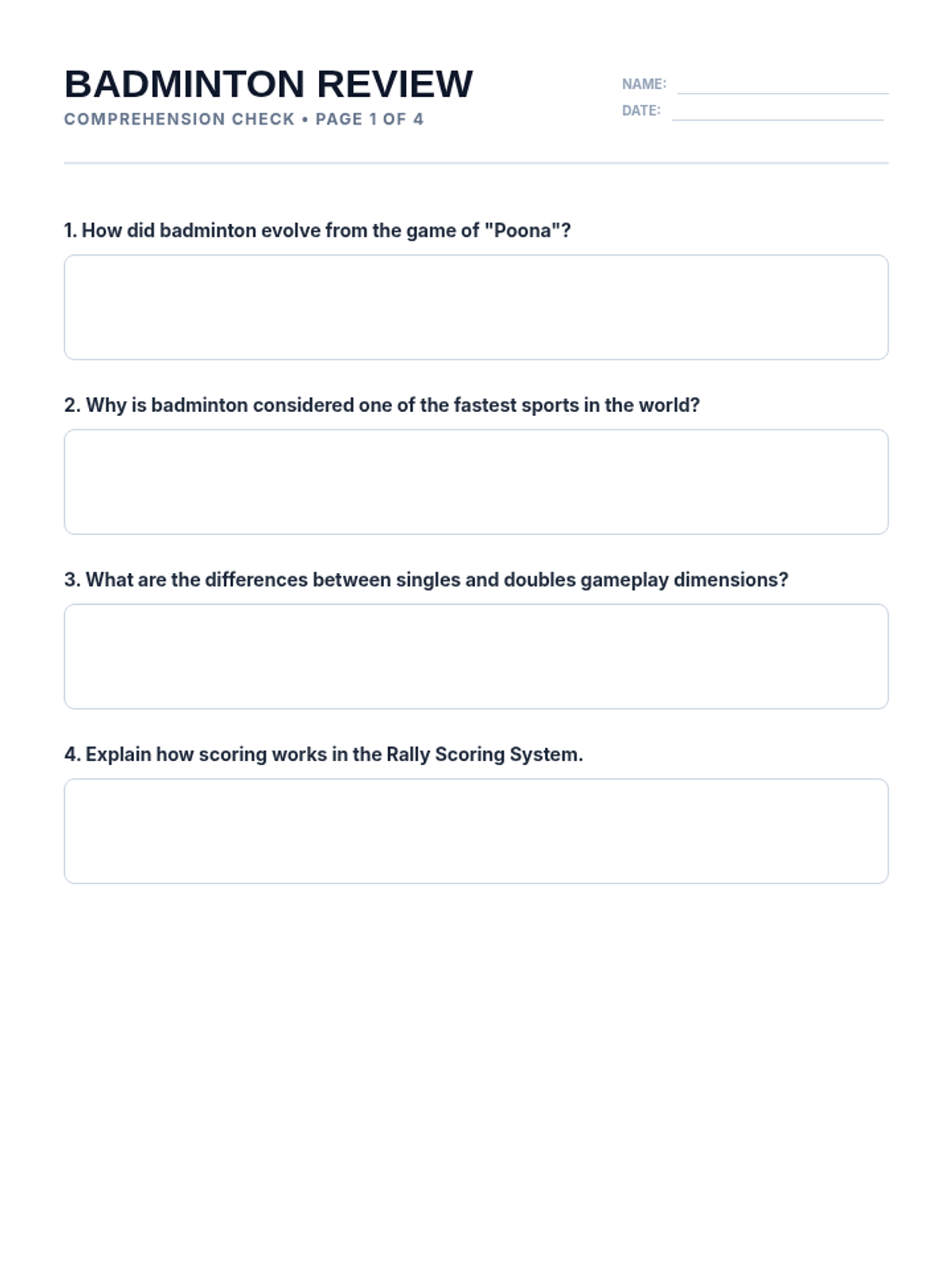
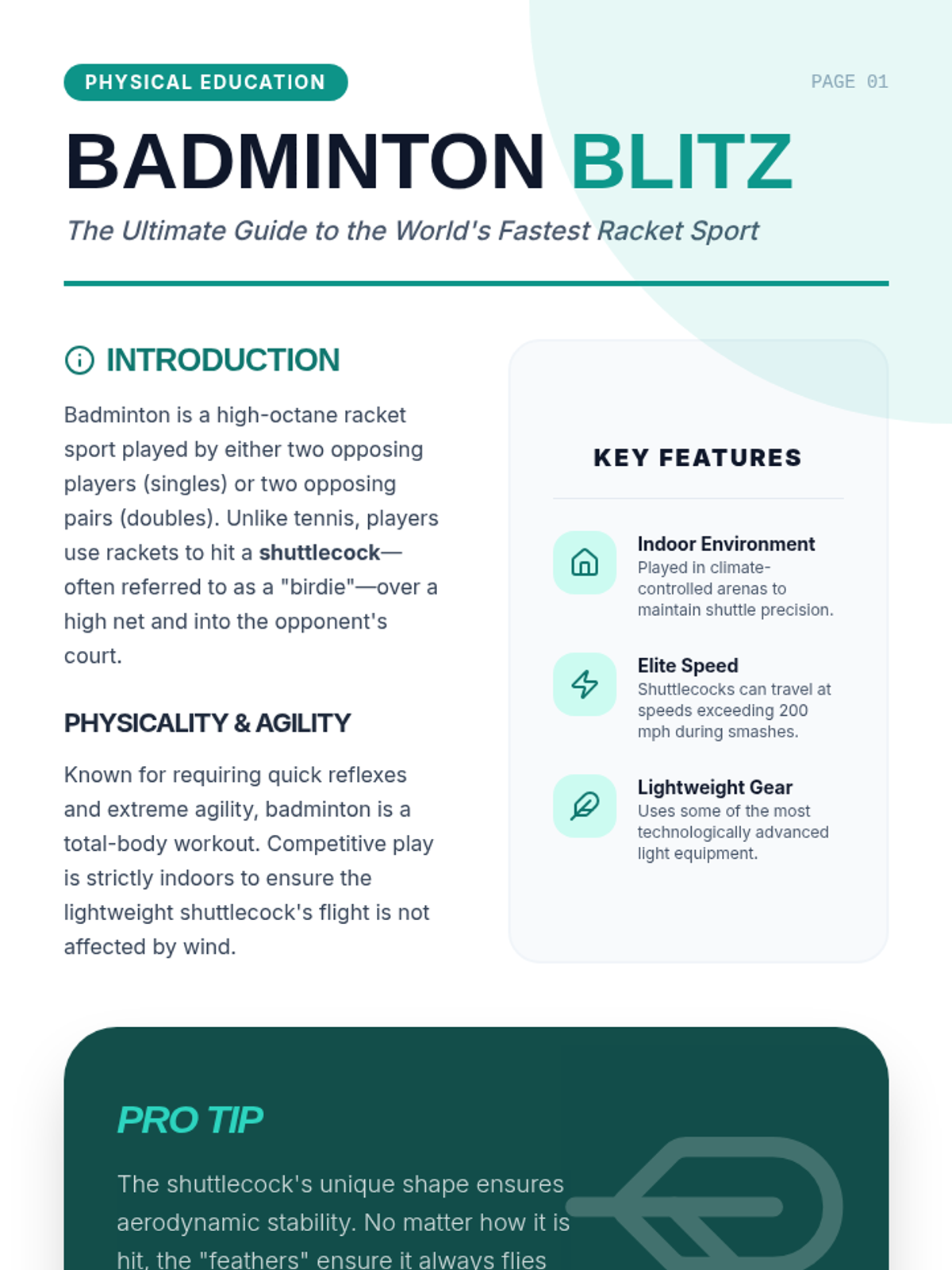
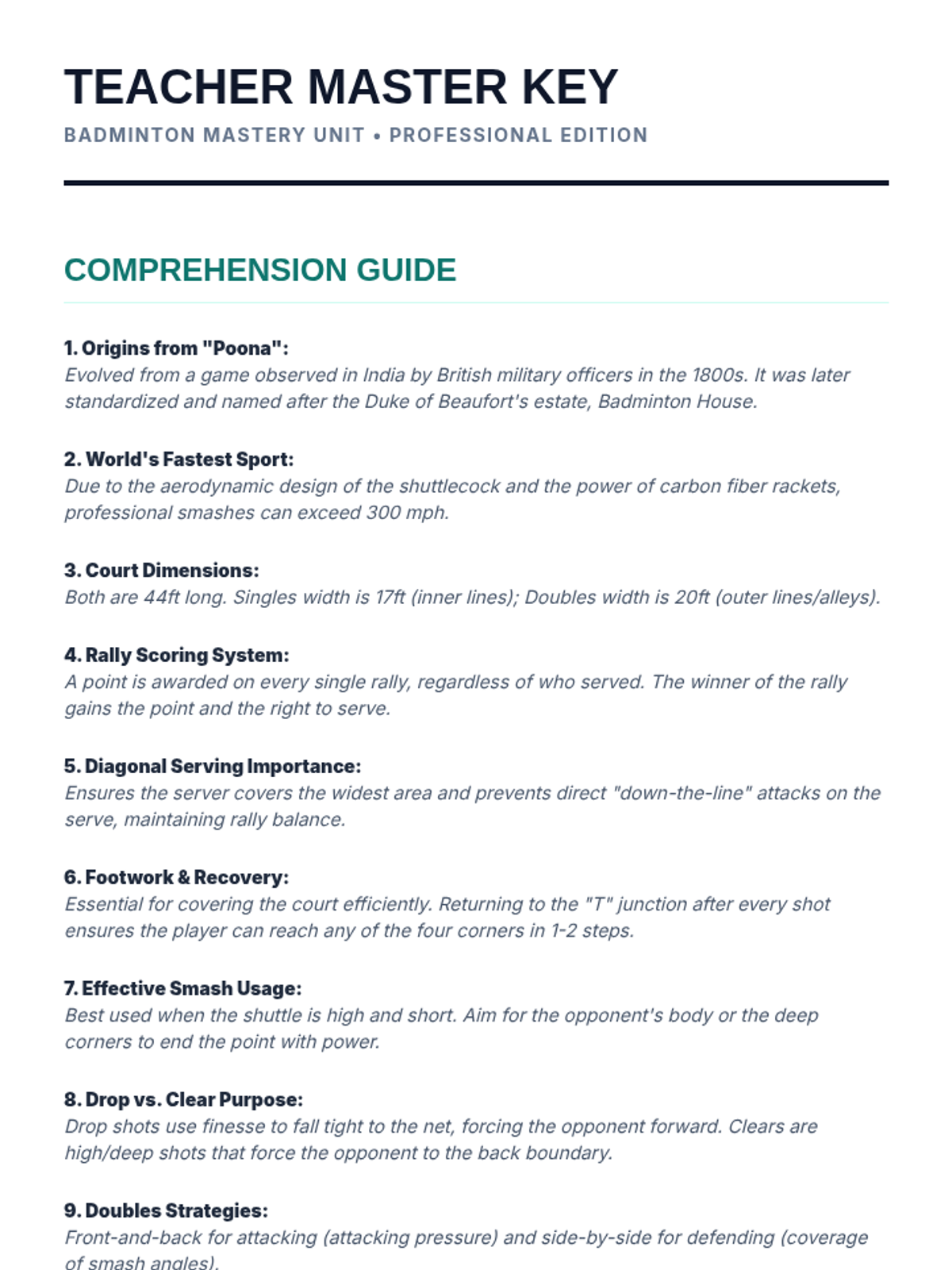
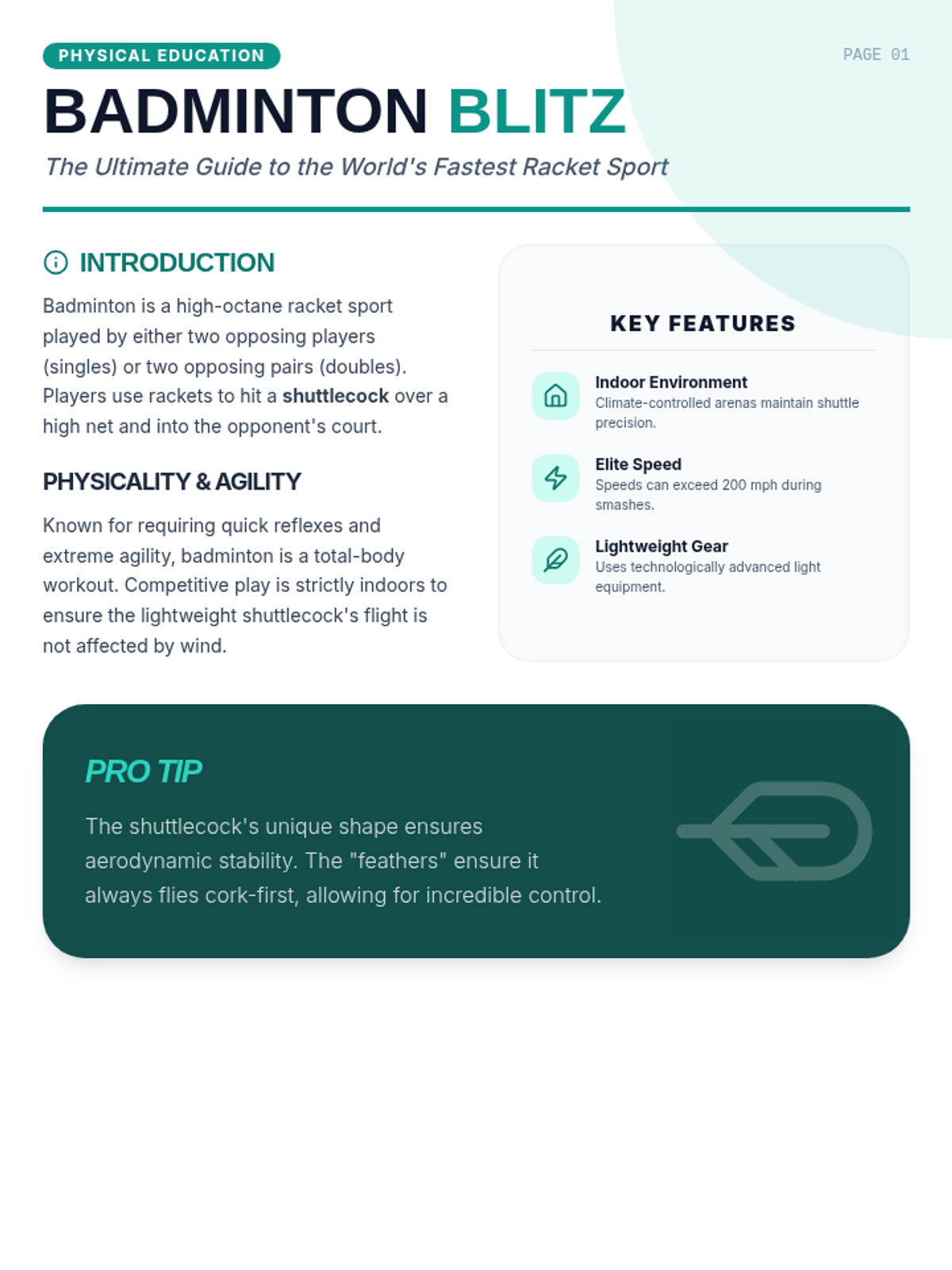
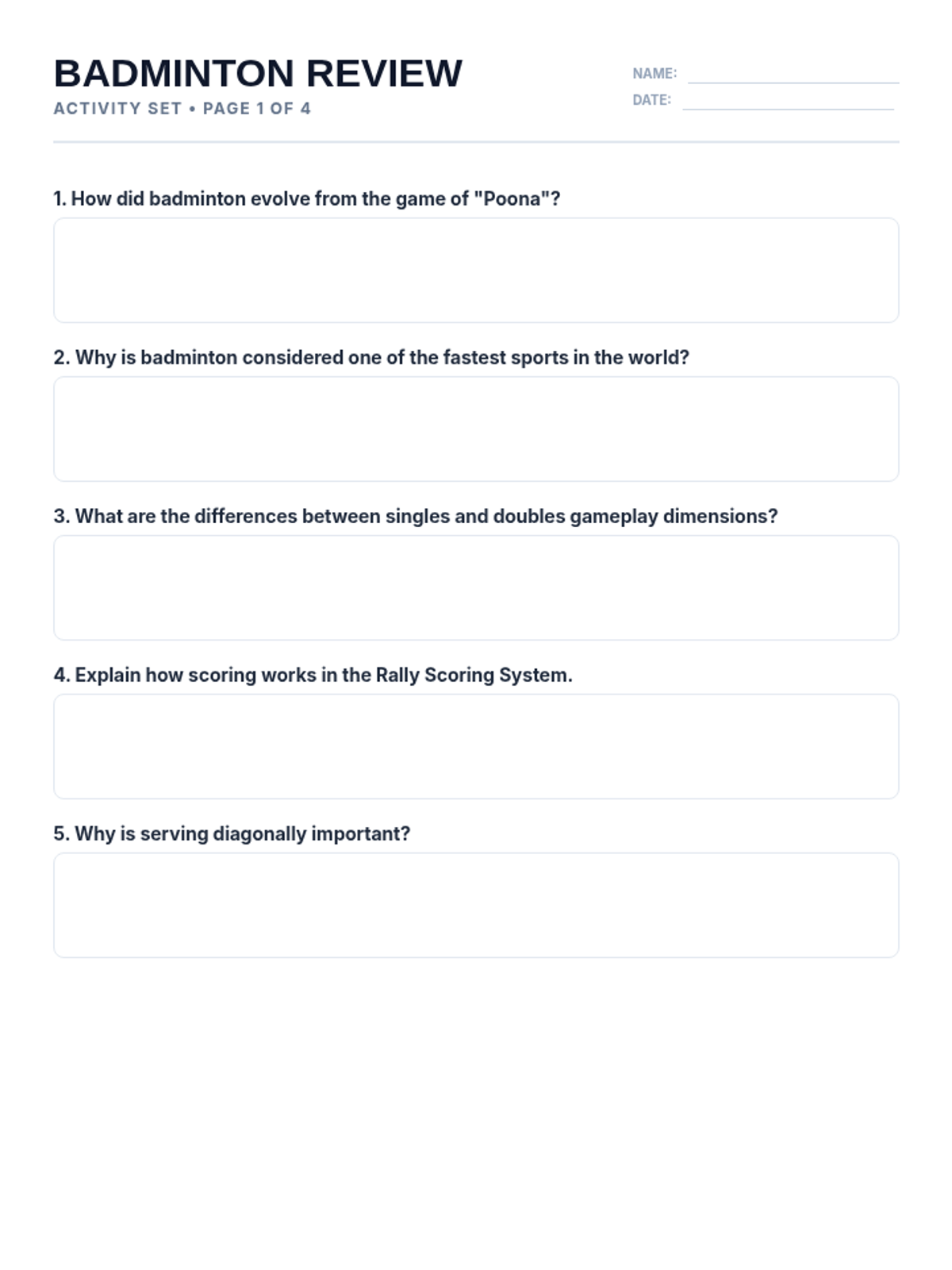
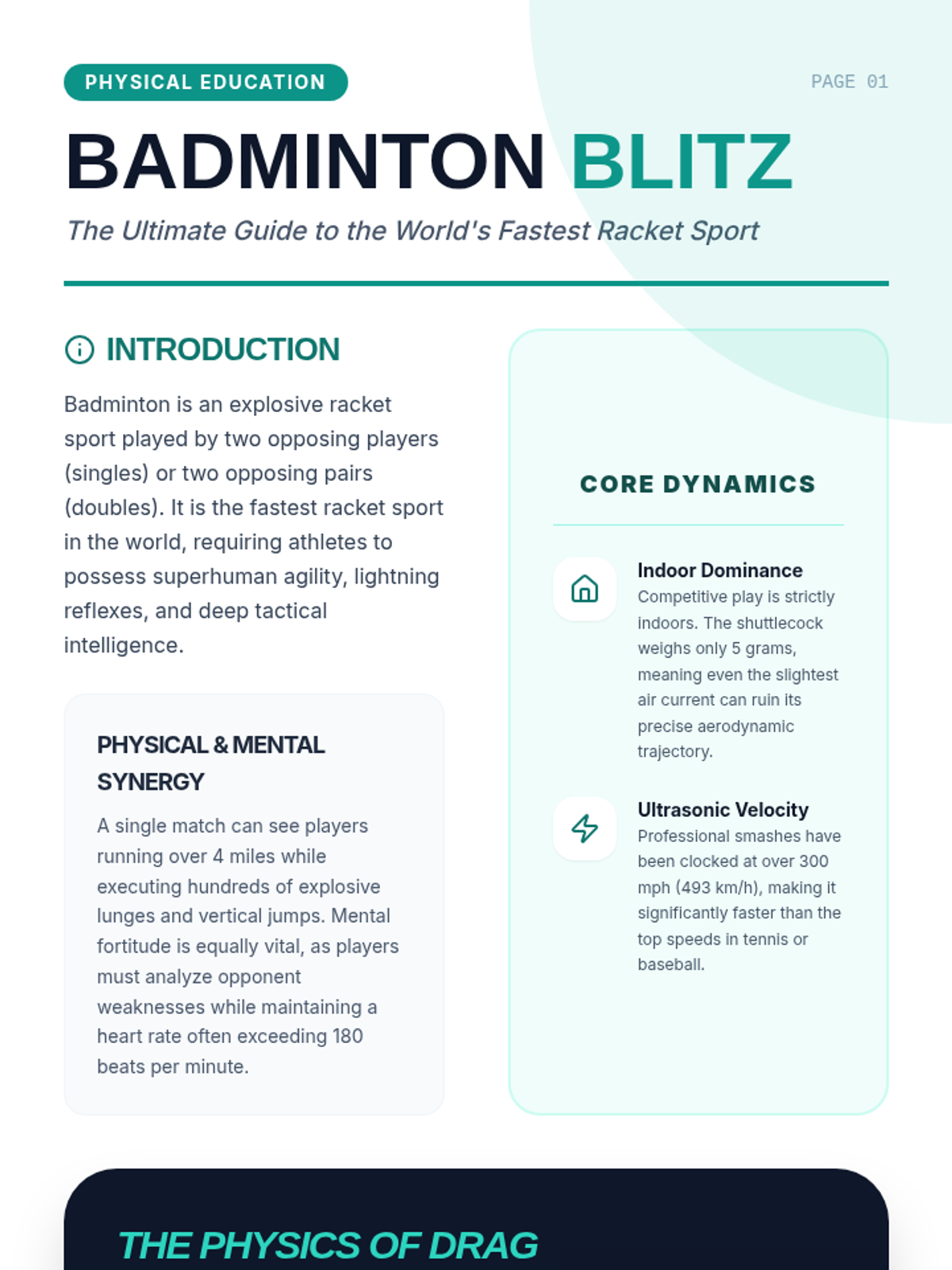
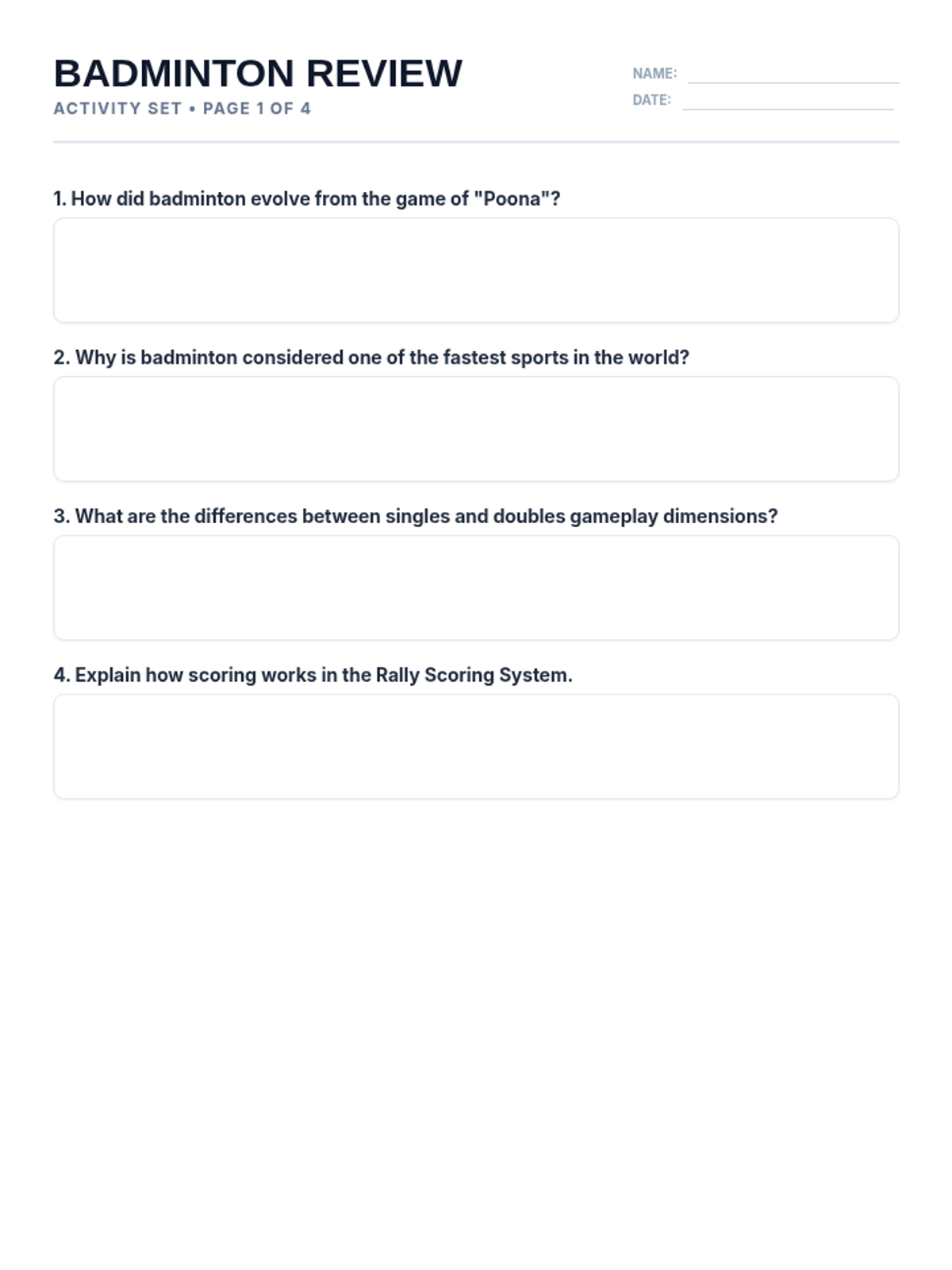
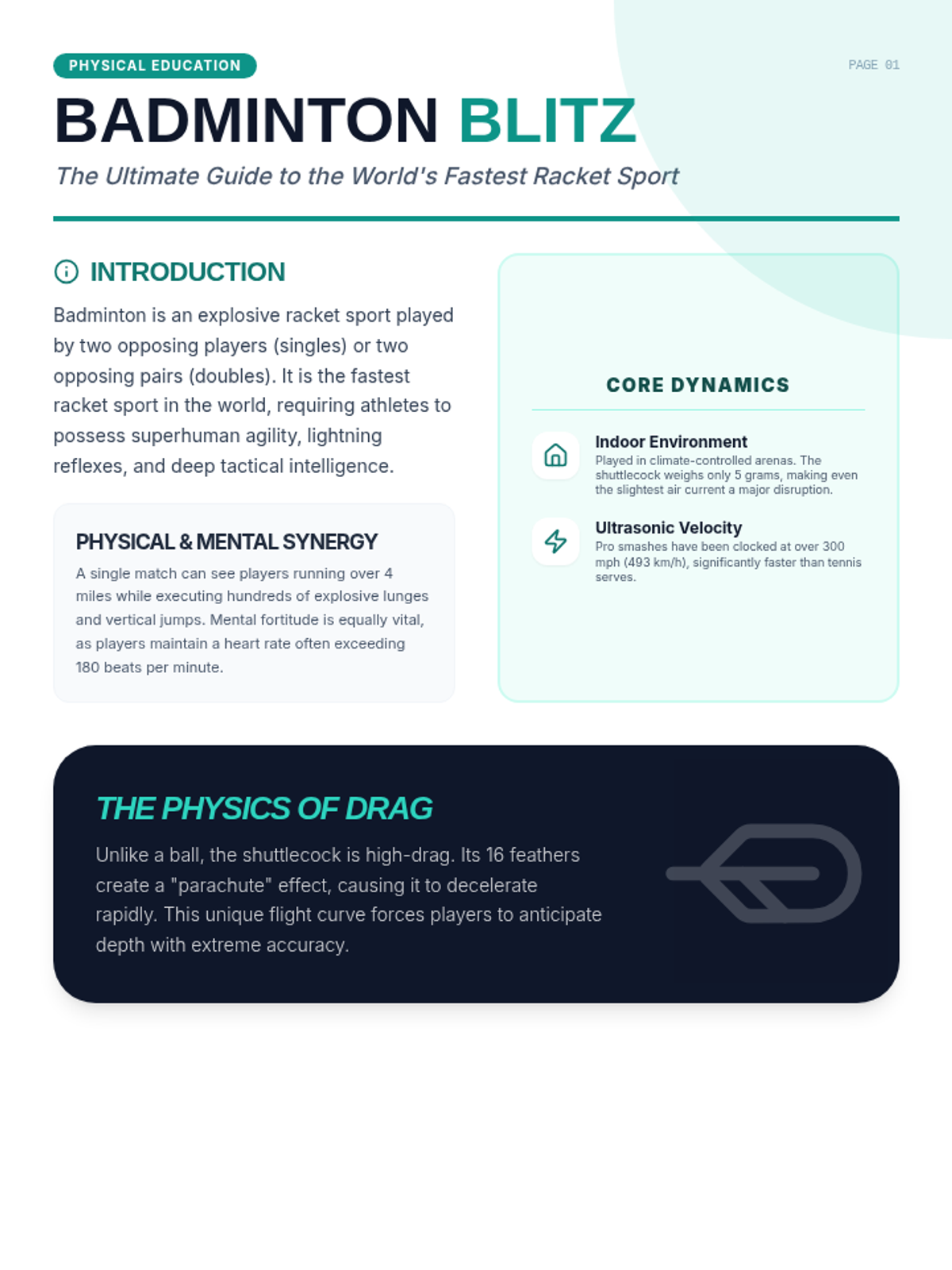
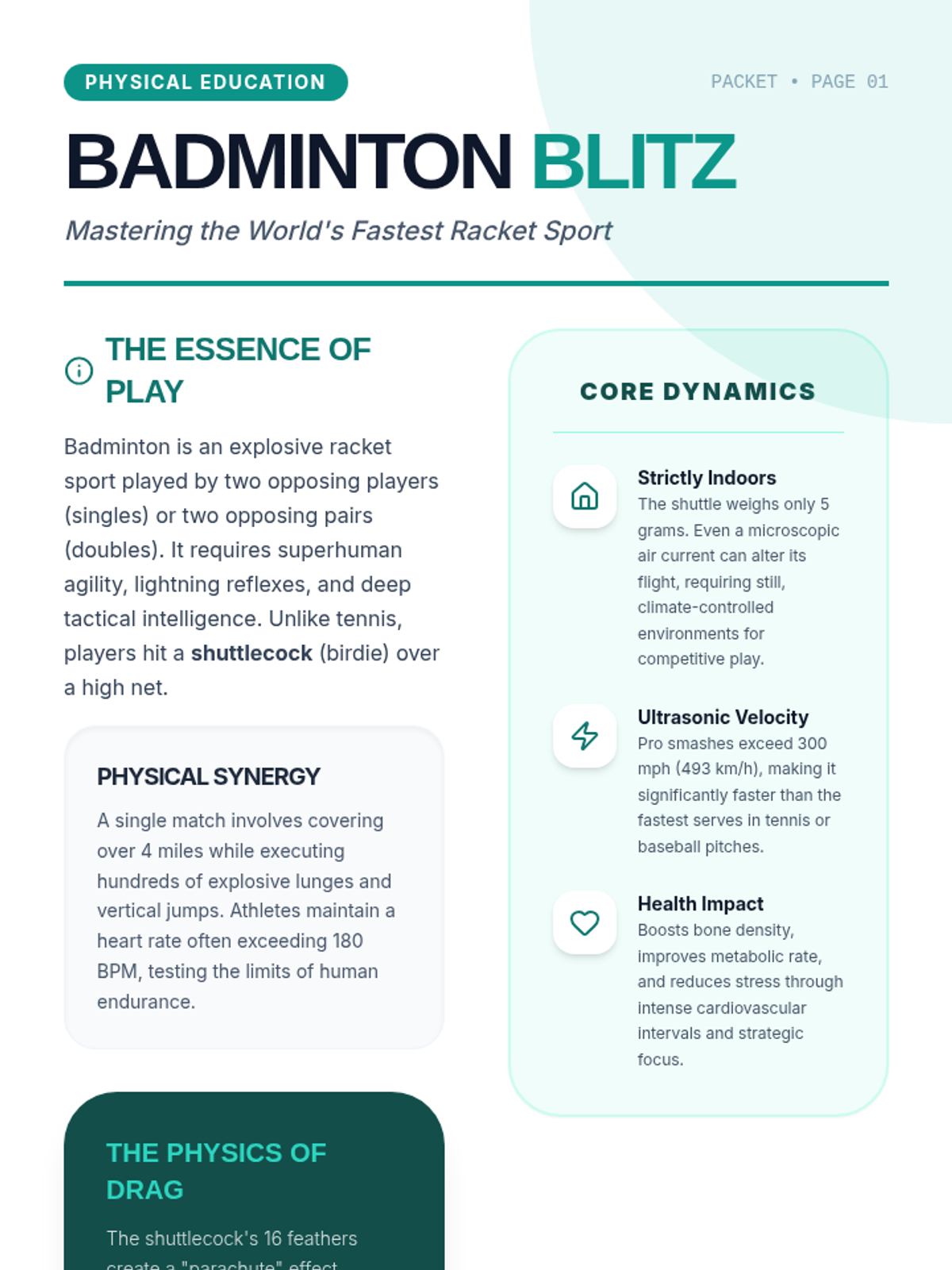
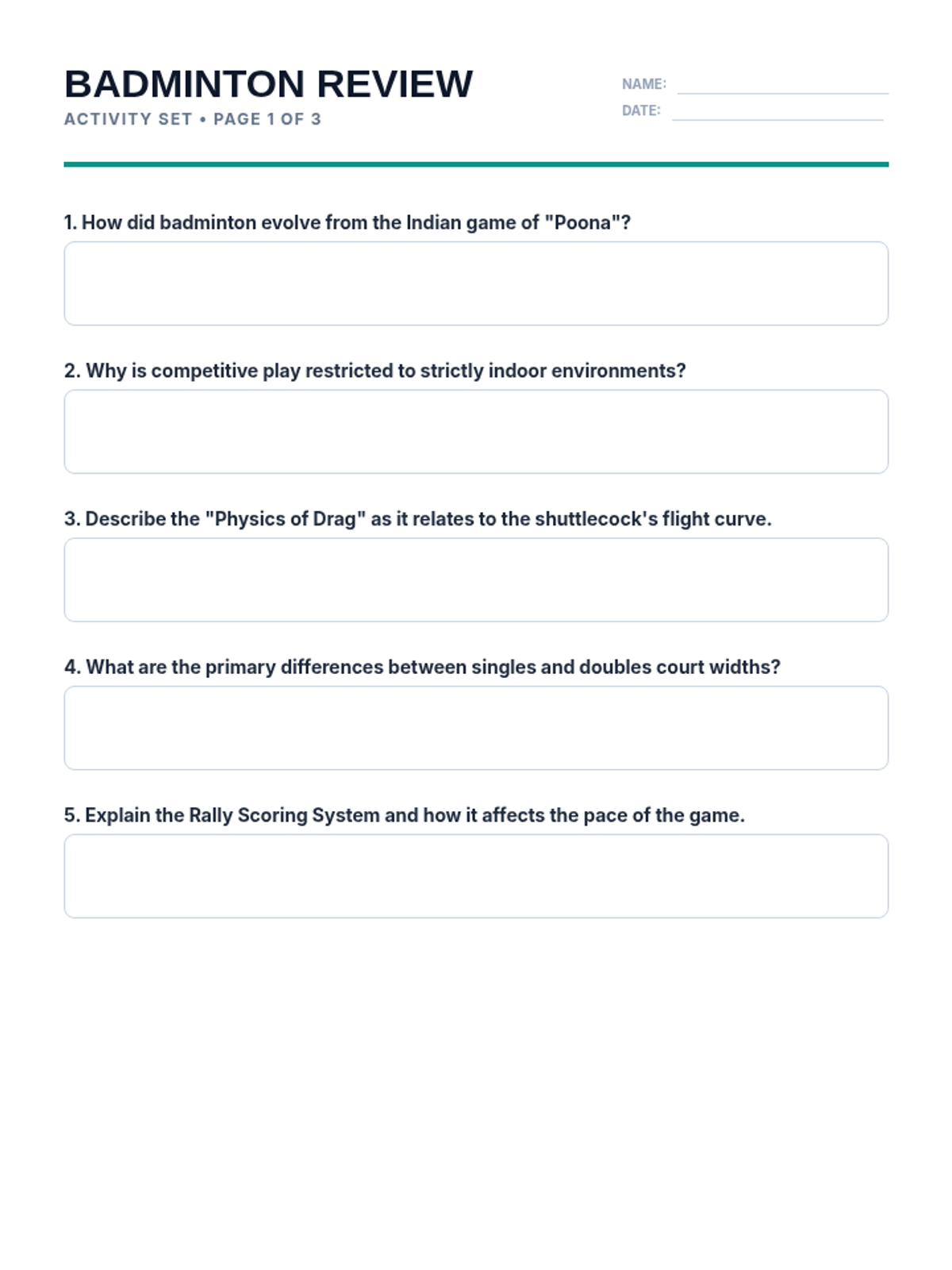
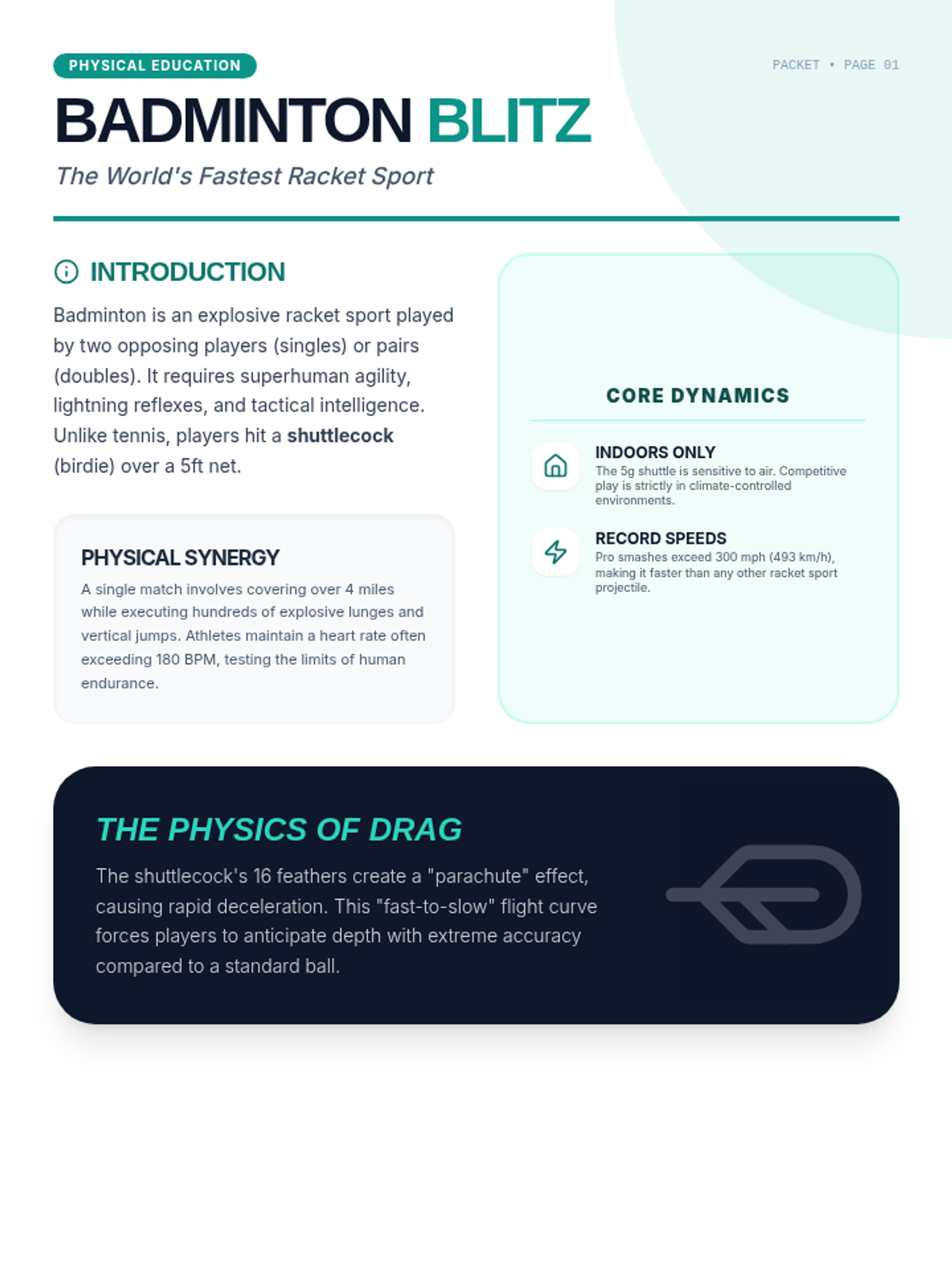
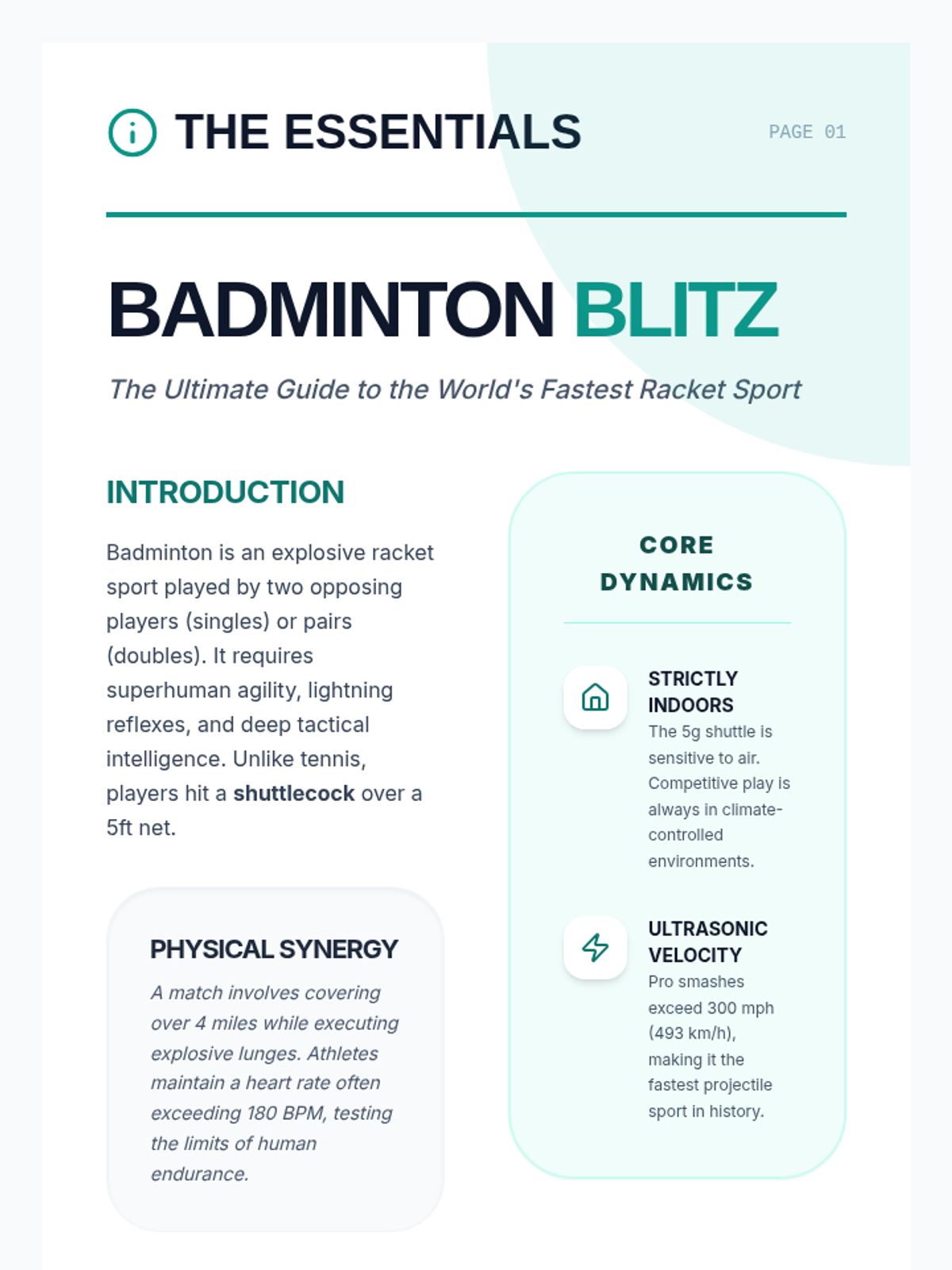
A comprehensive unit on badminton covering its history, official rules, terminology, and advanced strategies through an informational packet, comprehension exercises, and interactive puzzles.
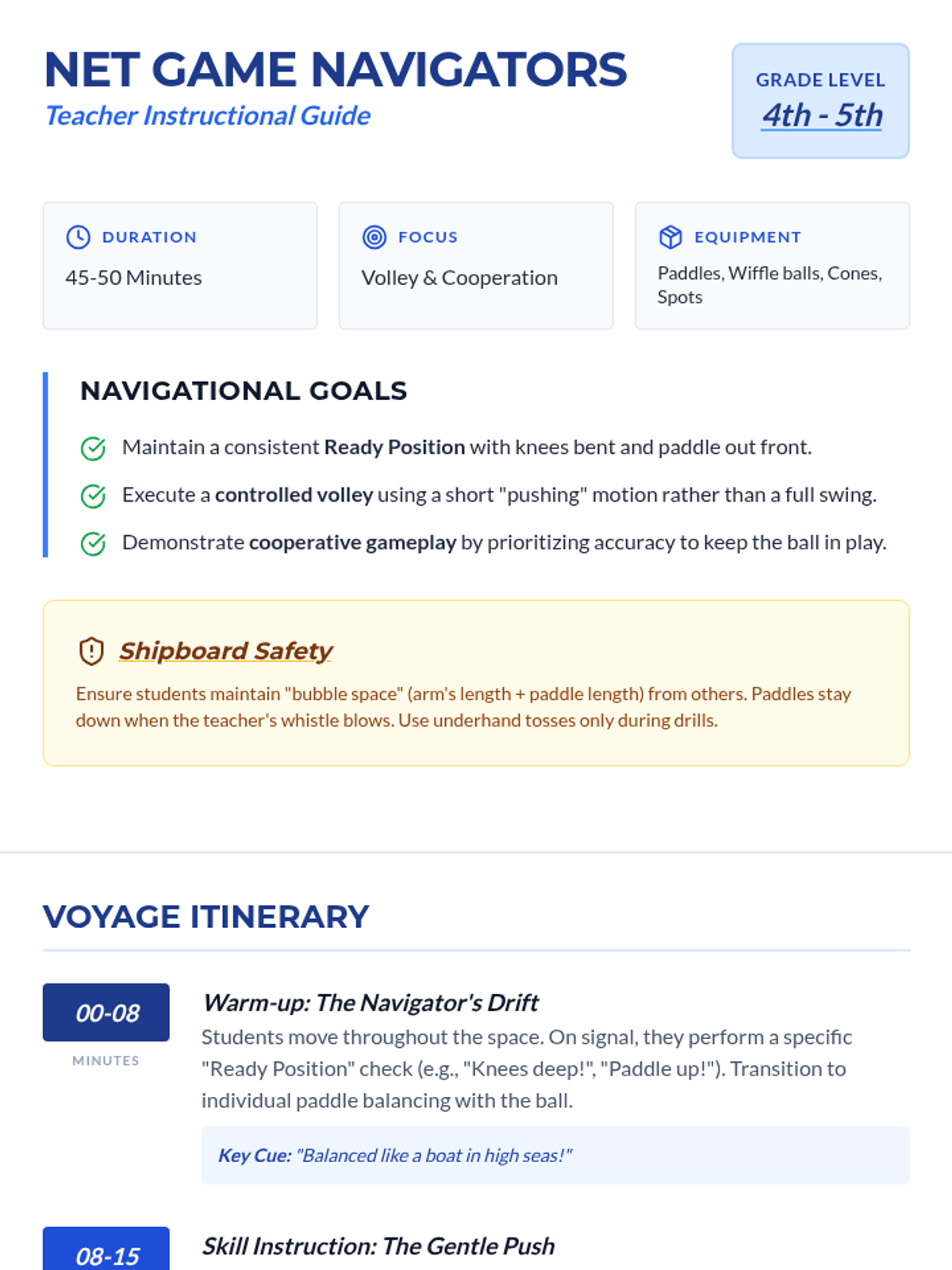
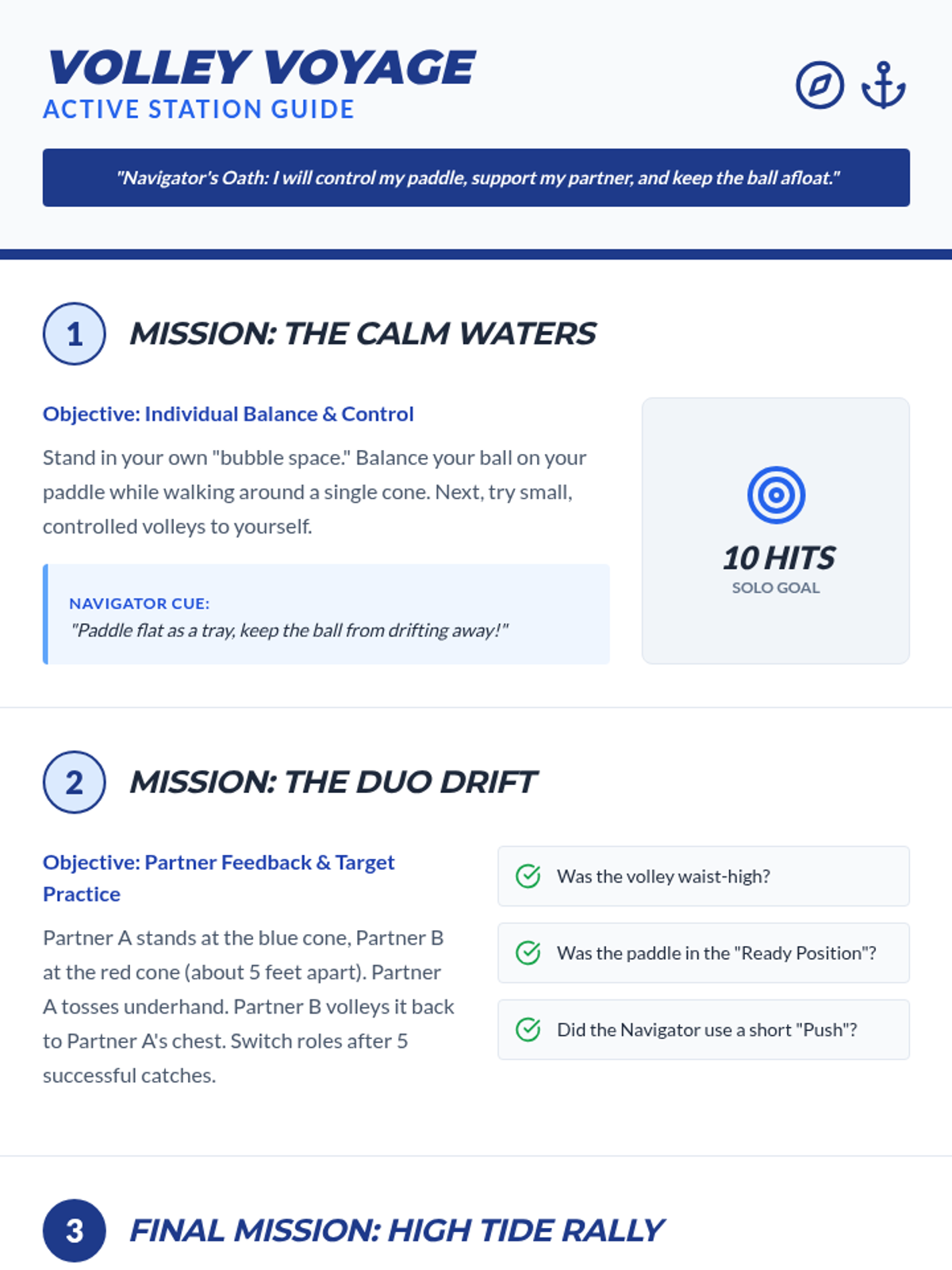
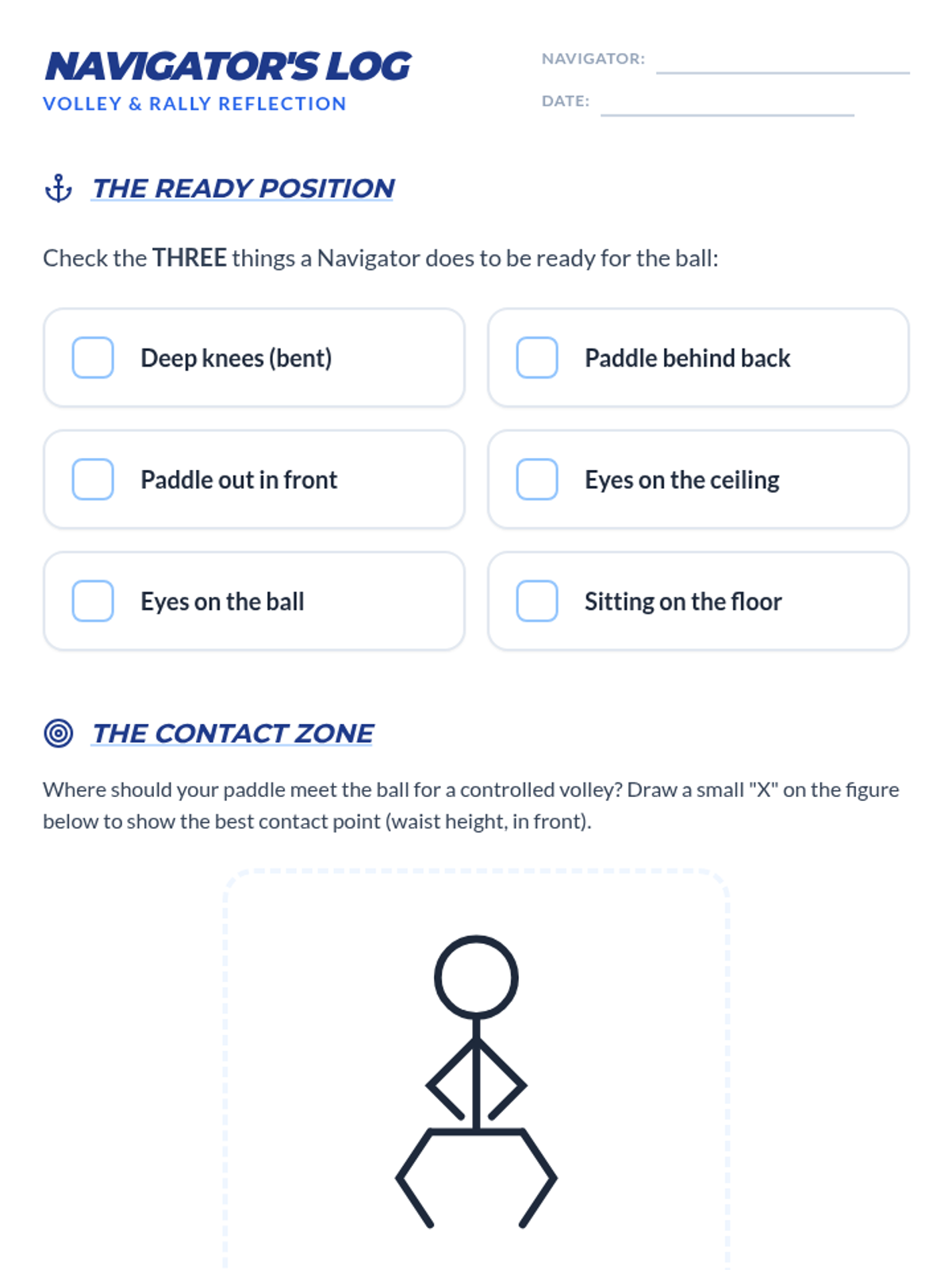
A physical education lesson for 4th and 5th graders focused on mastering the volley. Students learn the 'ready position' and work cooperatively to maintain long rallies using paddles, prioritizing control and spatial awareness.
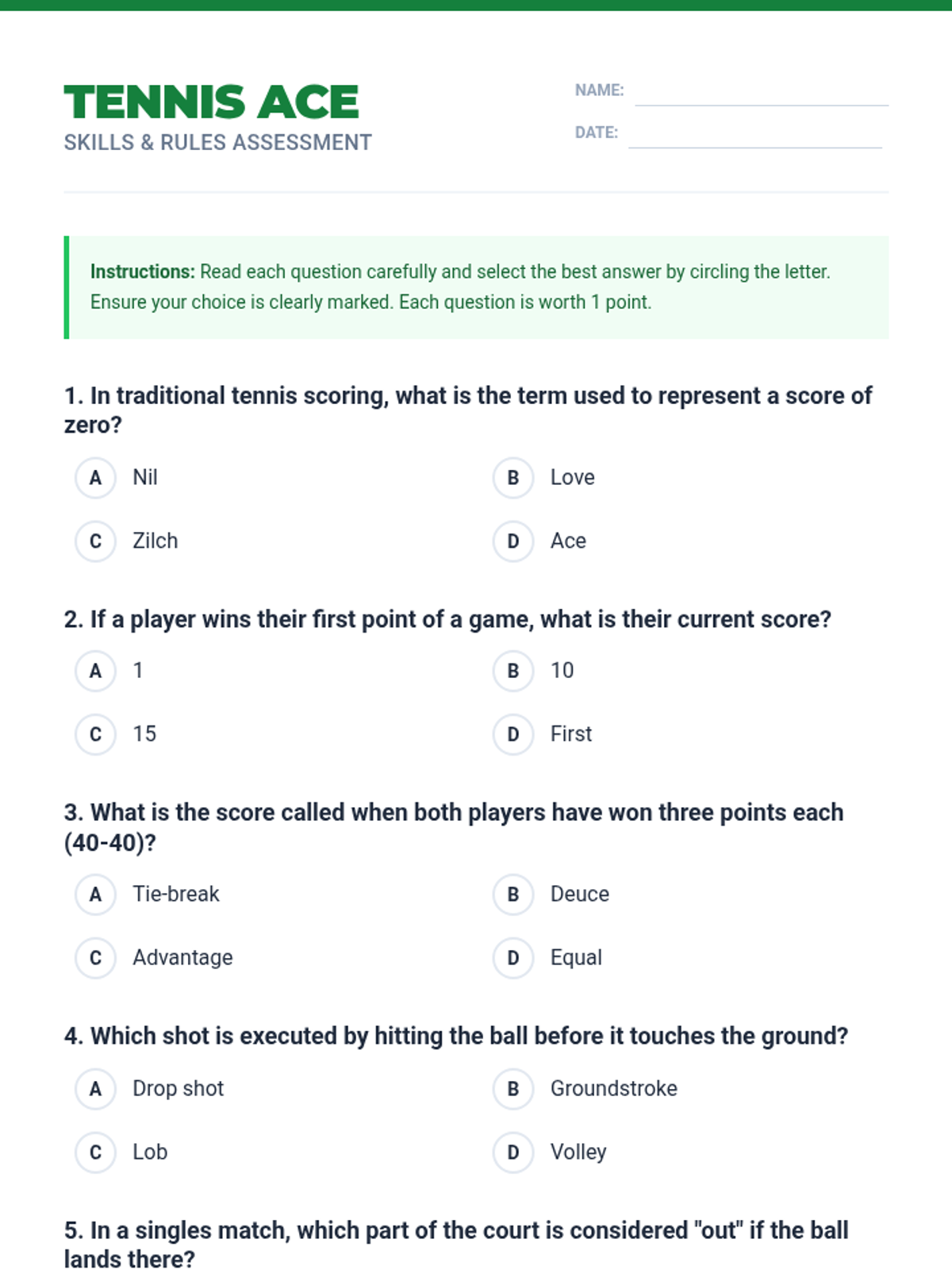
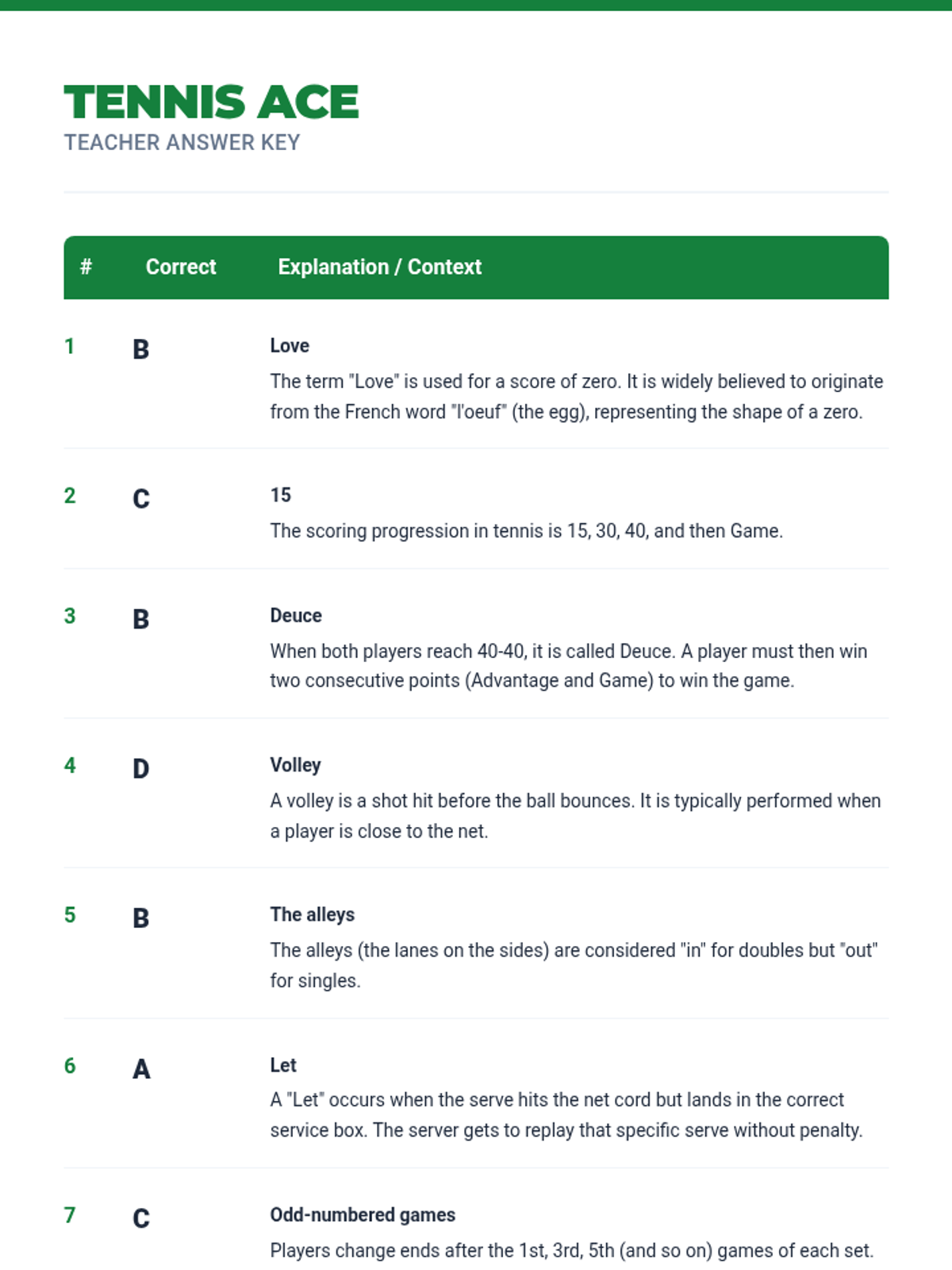
A foundational lesson covering tennis rules, scoring, strokes, and court positioning, designed to prepare students for gameplay and officiating.
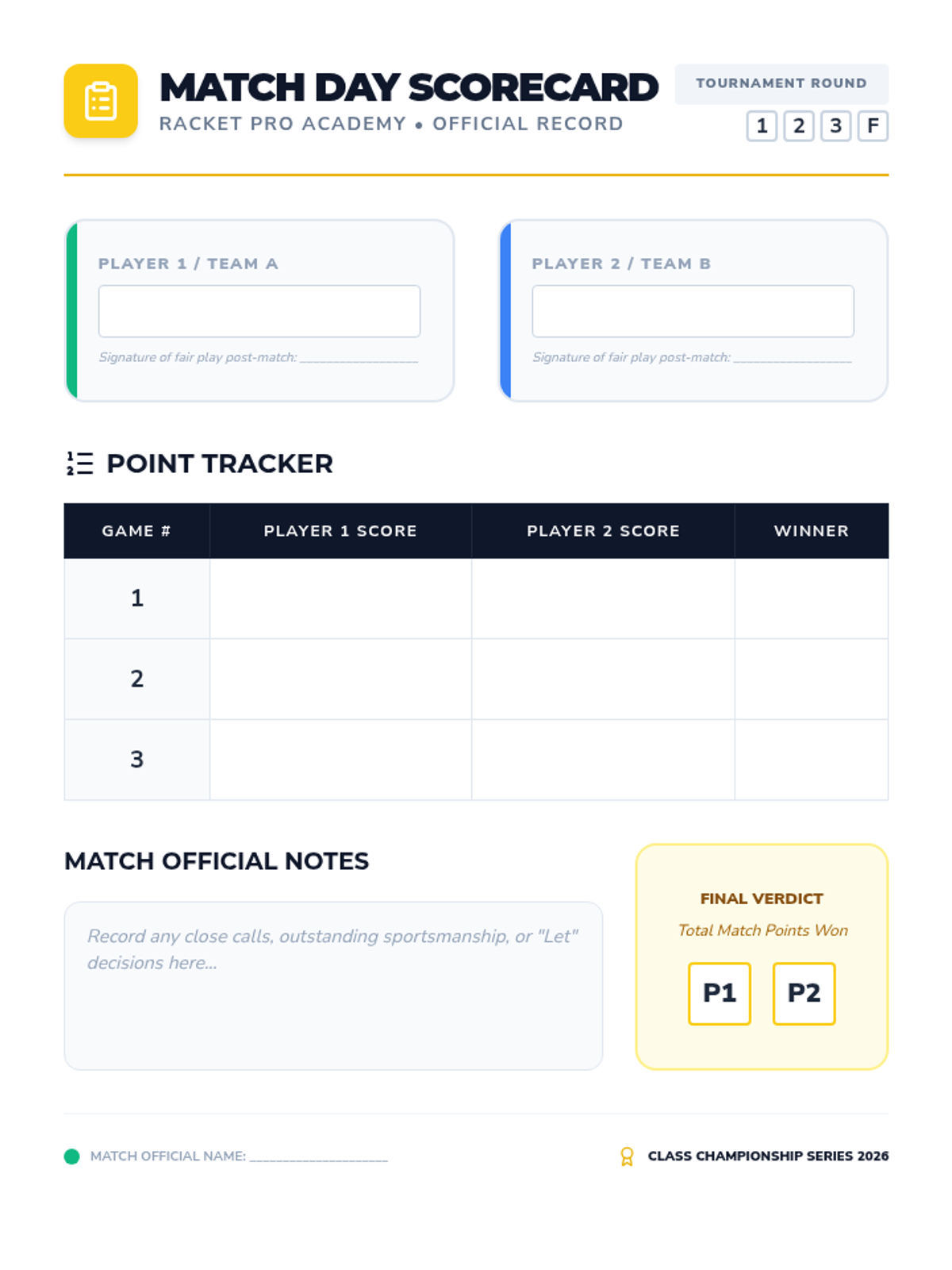
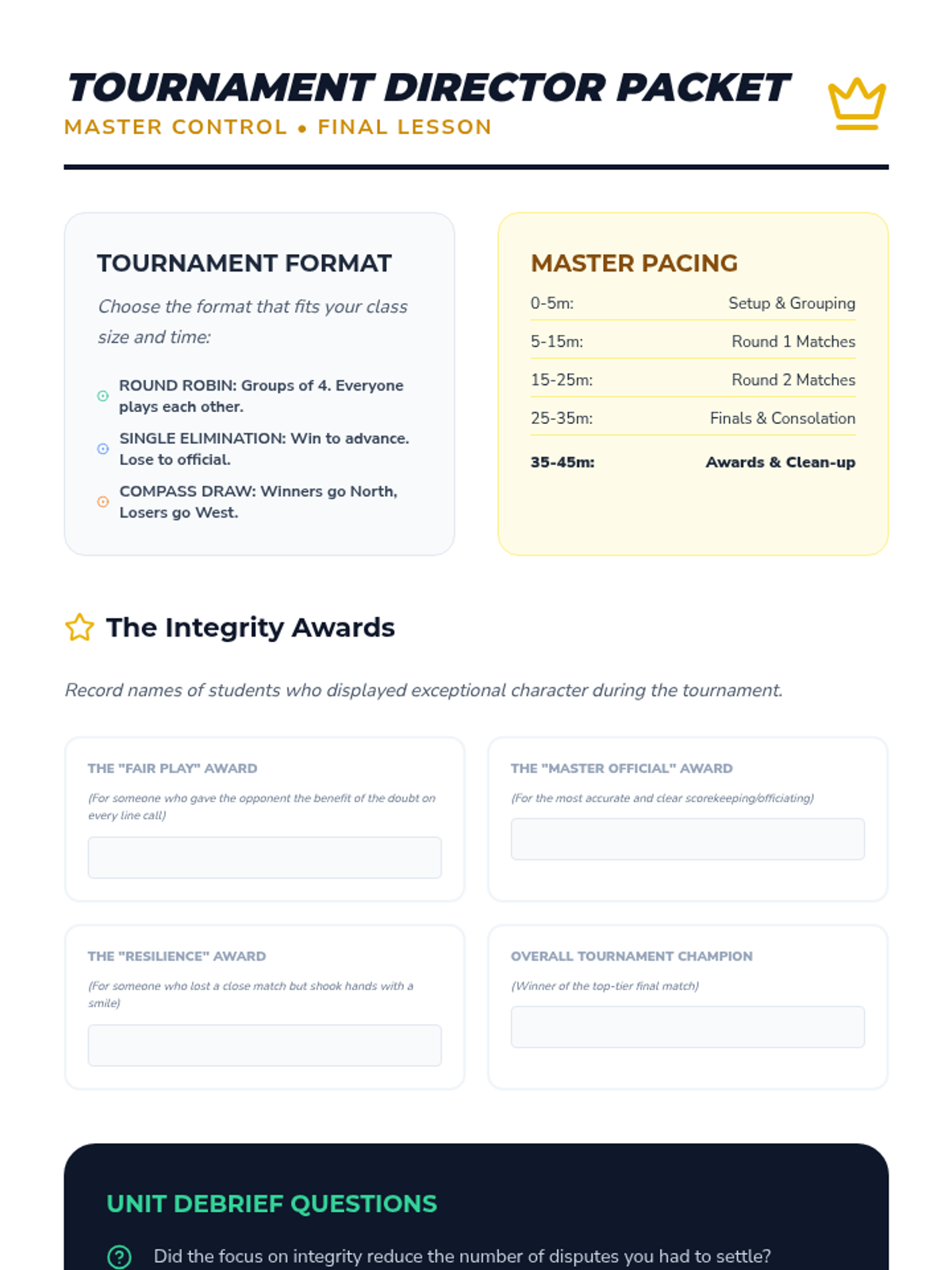
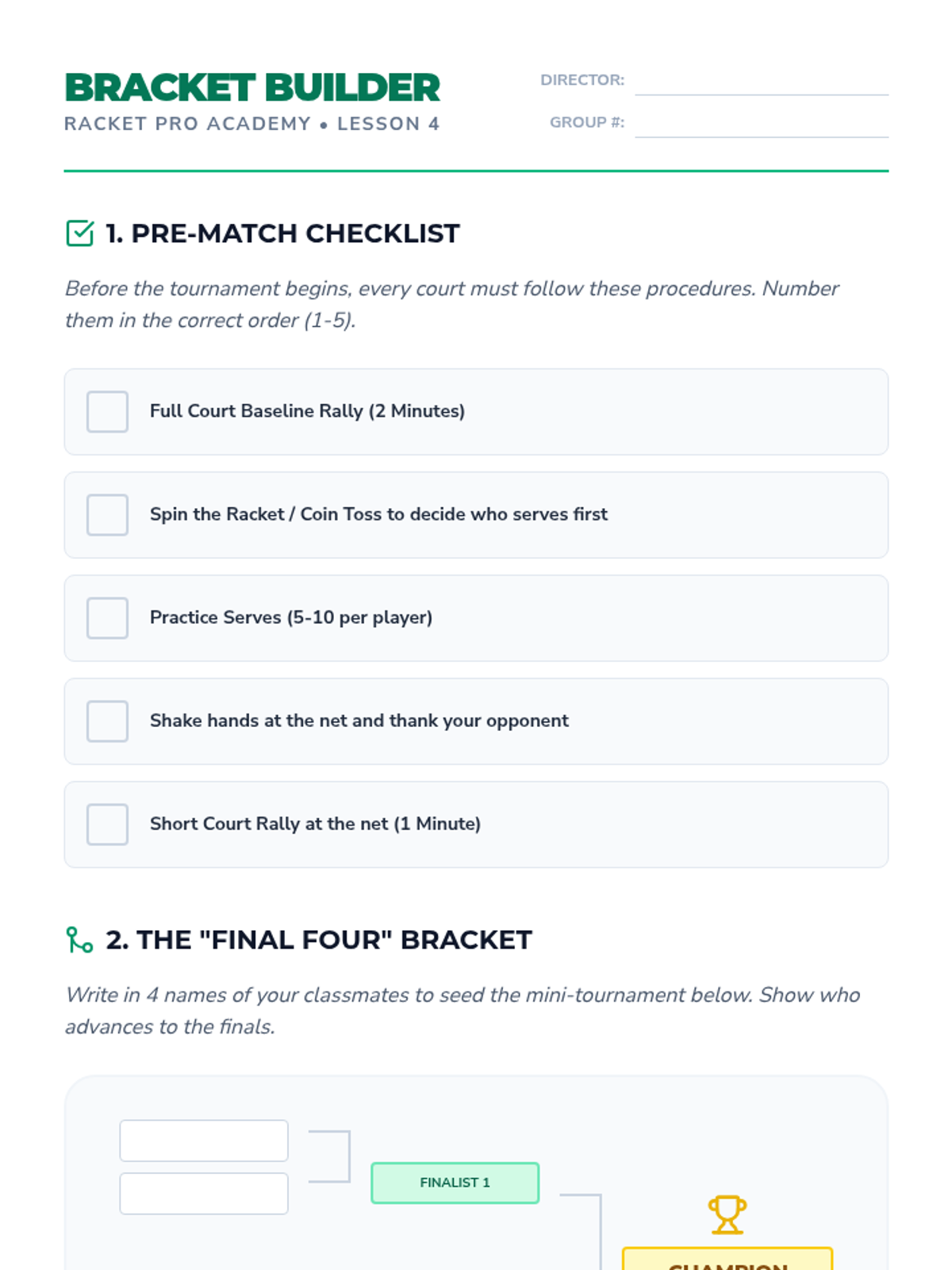
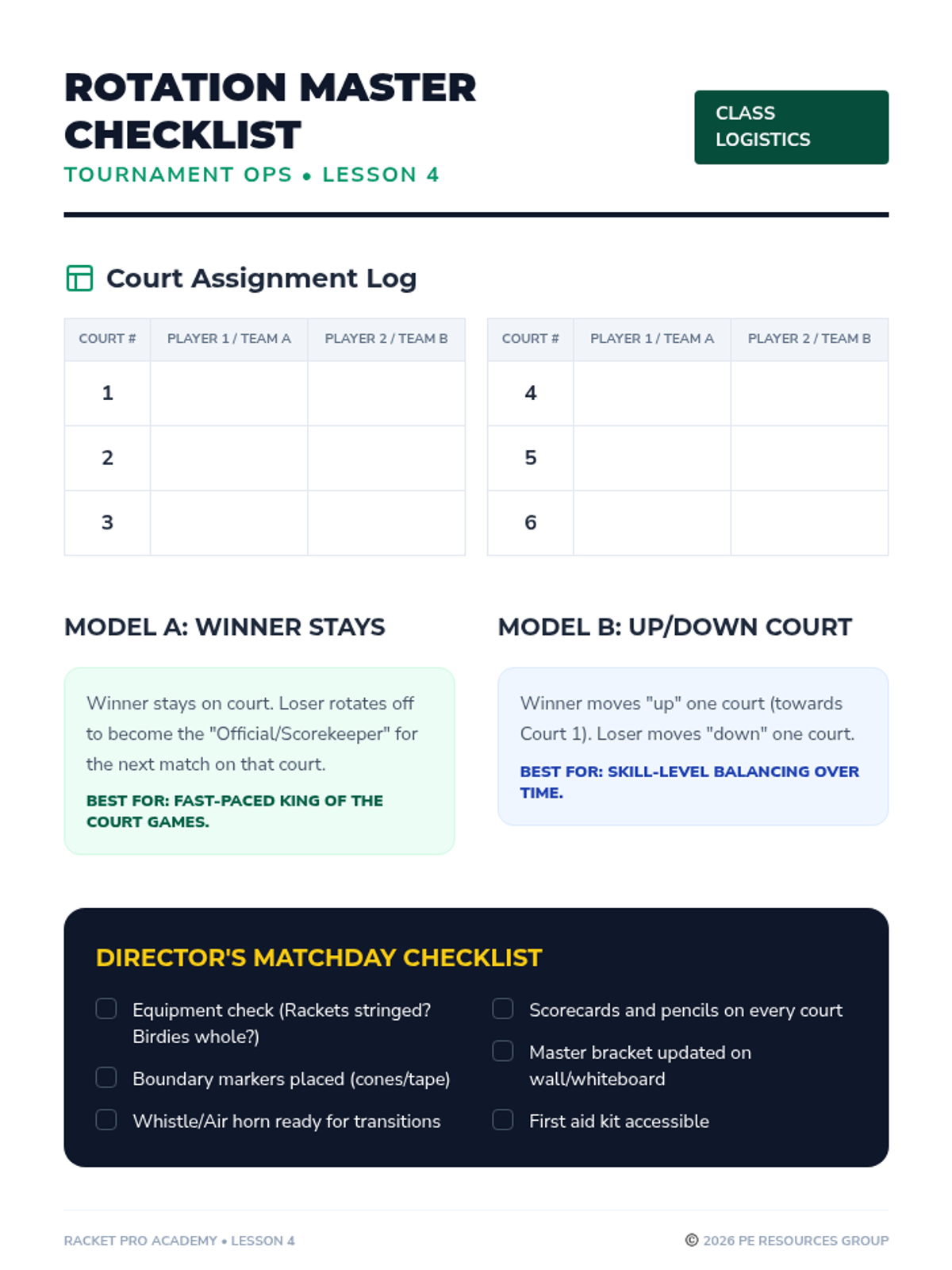
A culminating tournament where students apply their skills as players, officials, and scorekeepers in a structured competitive environment.
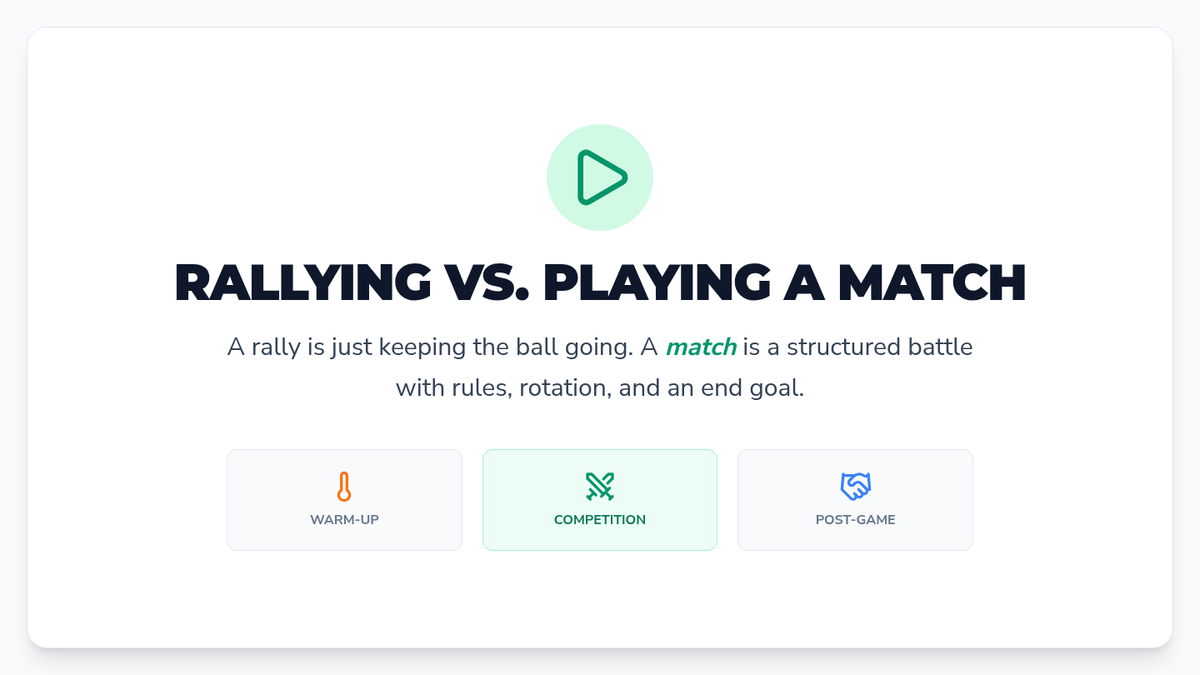
Students explore the logistics of match play, including warm-up routines, side switches, and how to read and manage tournament brackets.
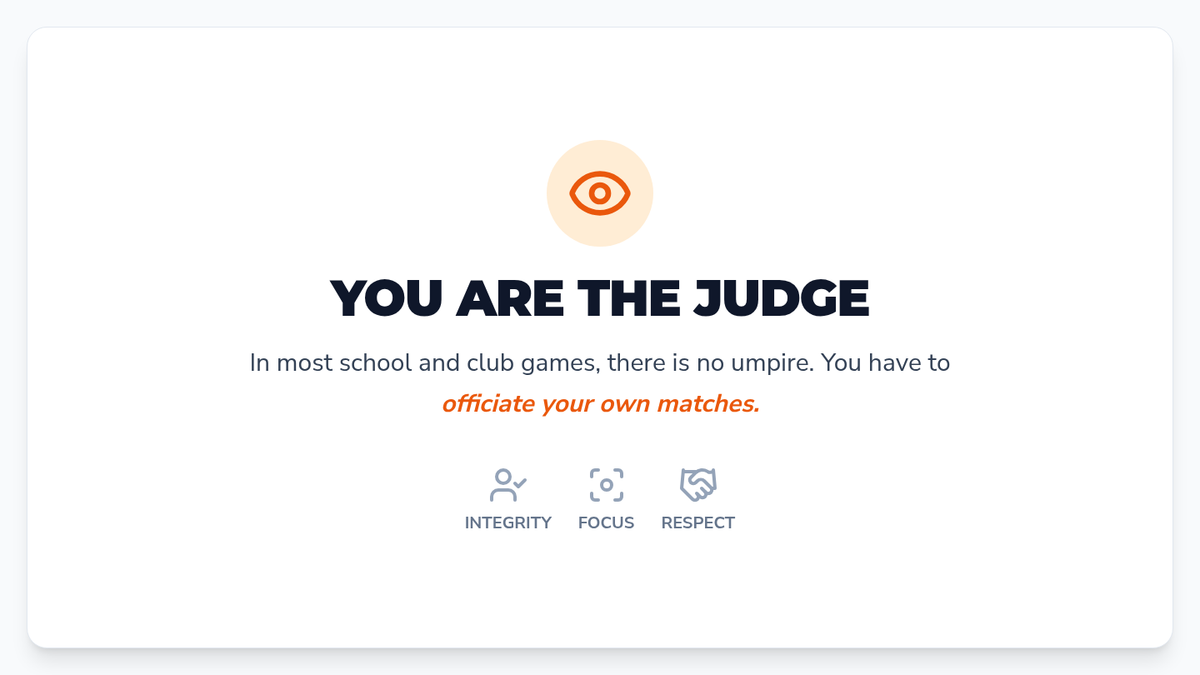
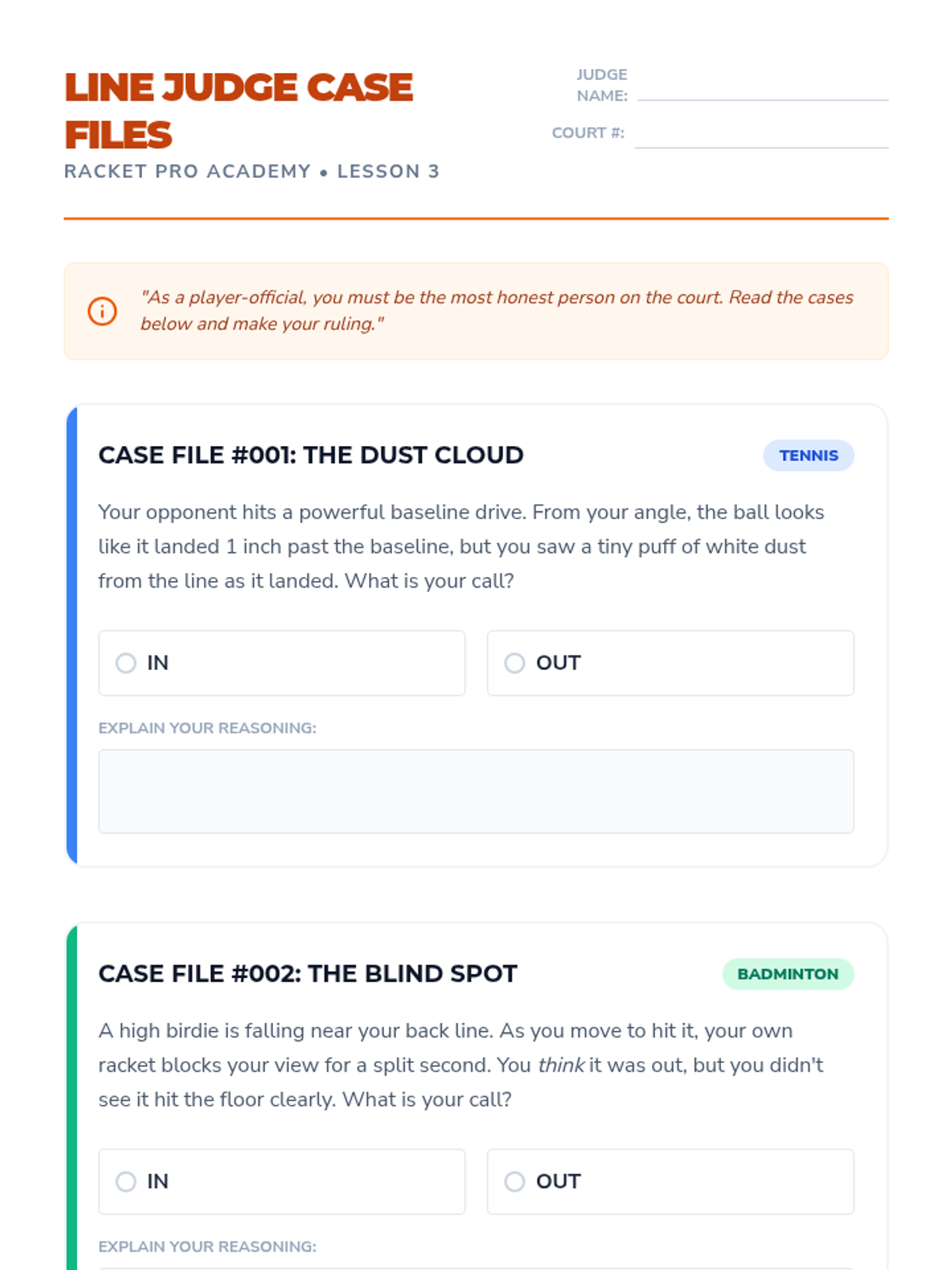
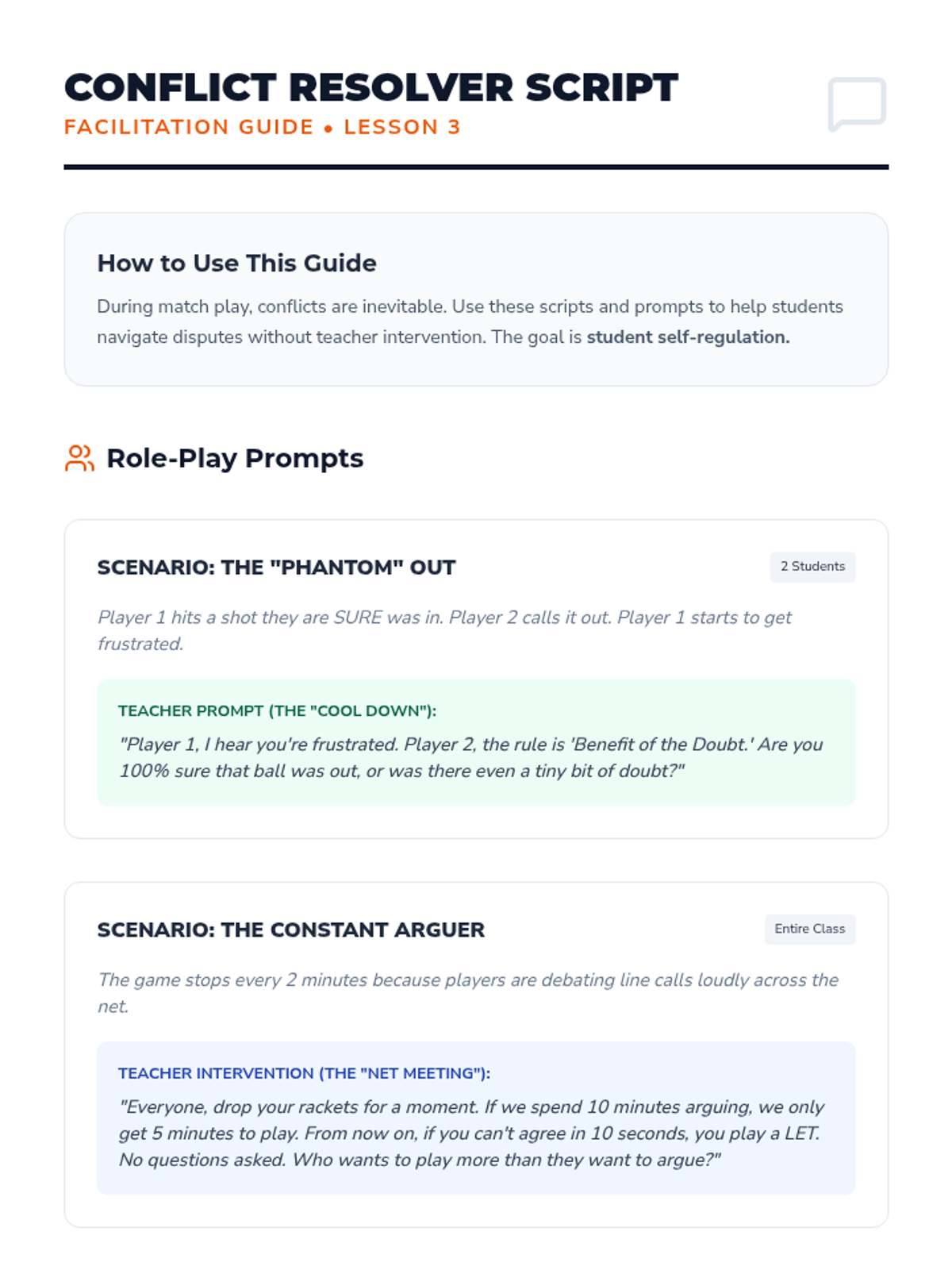
This lesson focuses on the 'honor system' of officiating, teaching students how to make fair line calls and resolve on-court disputes with integrity.
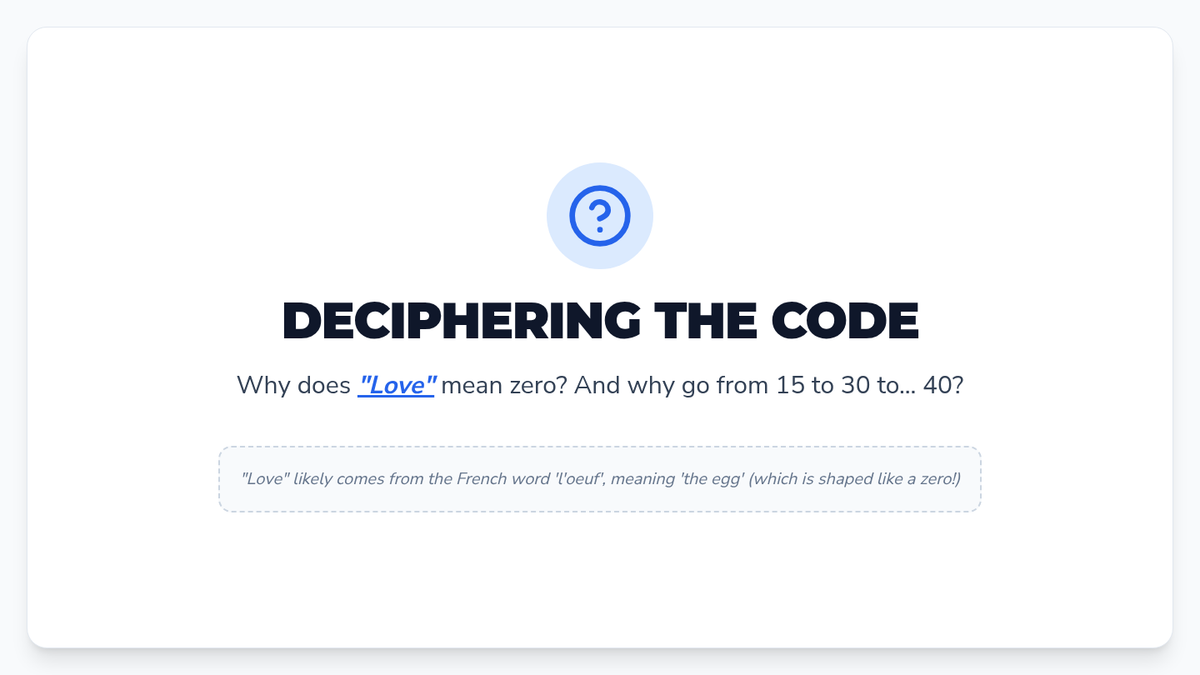
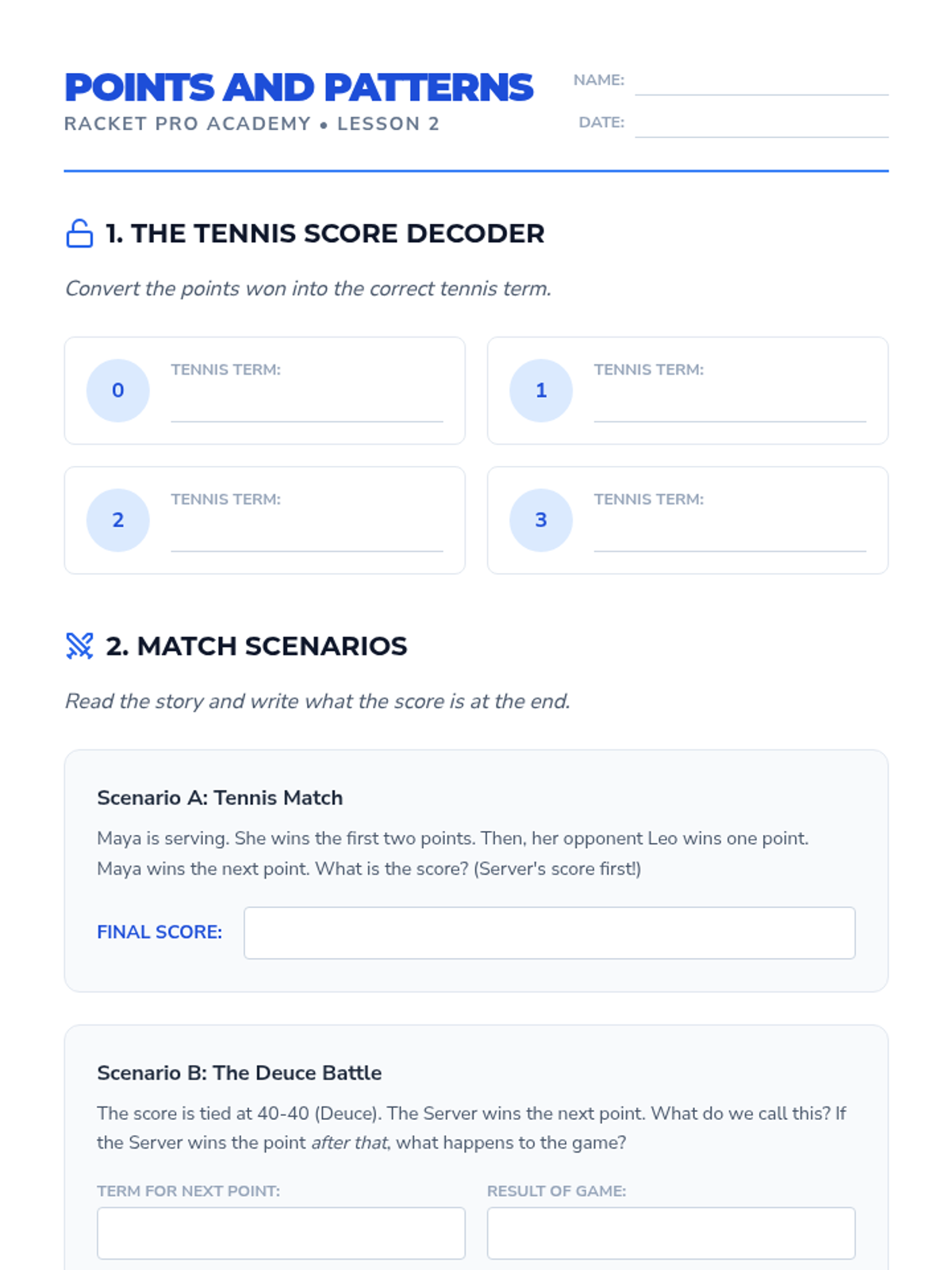
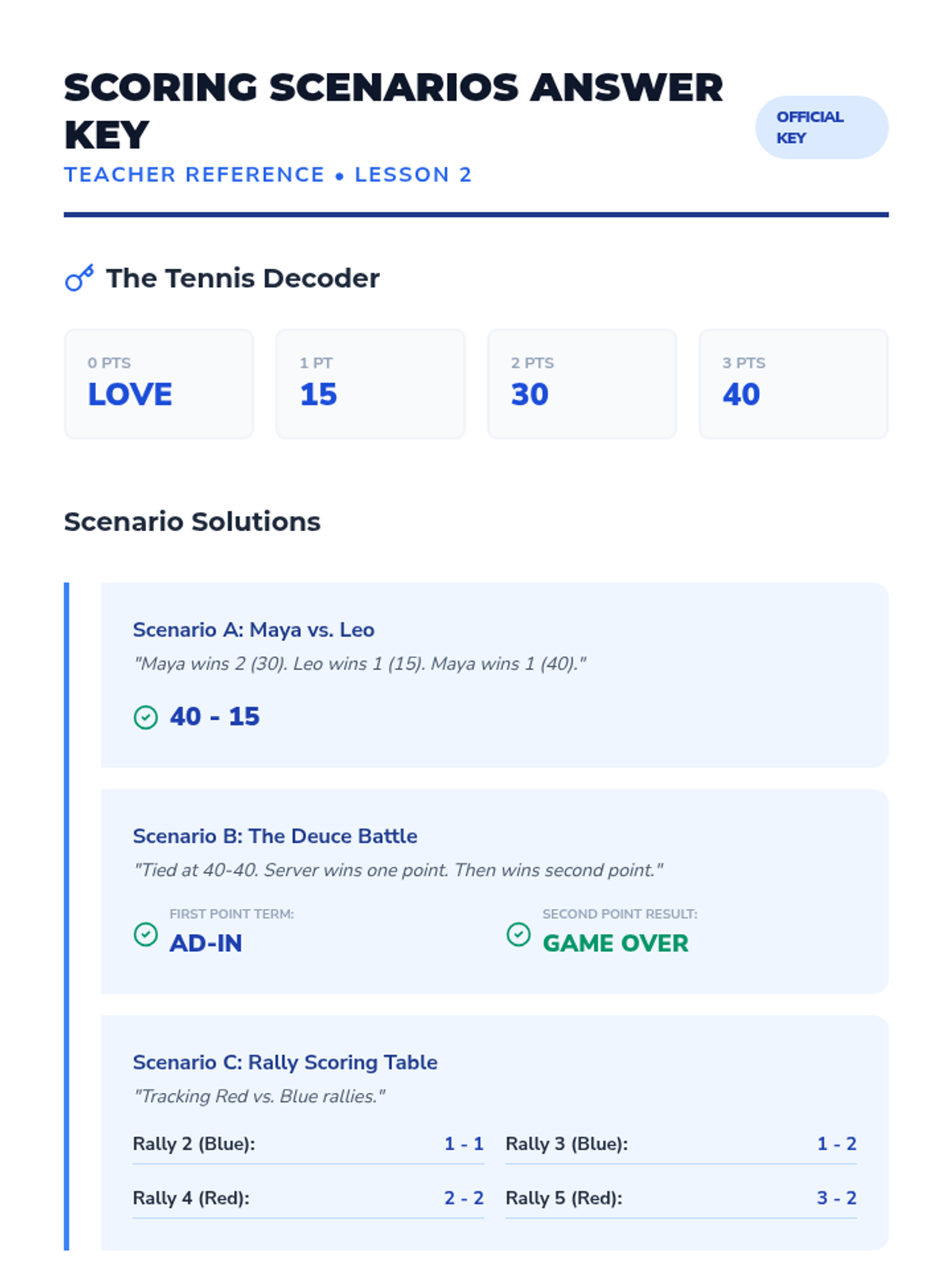
Learners dive into the unique scoring terminology and logic of racket sports, practicing both traditional tennis scoring and modern rally scoring systems.
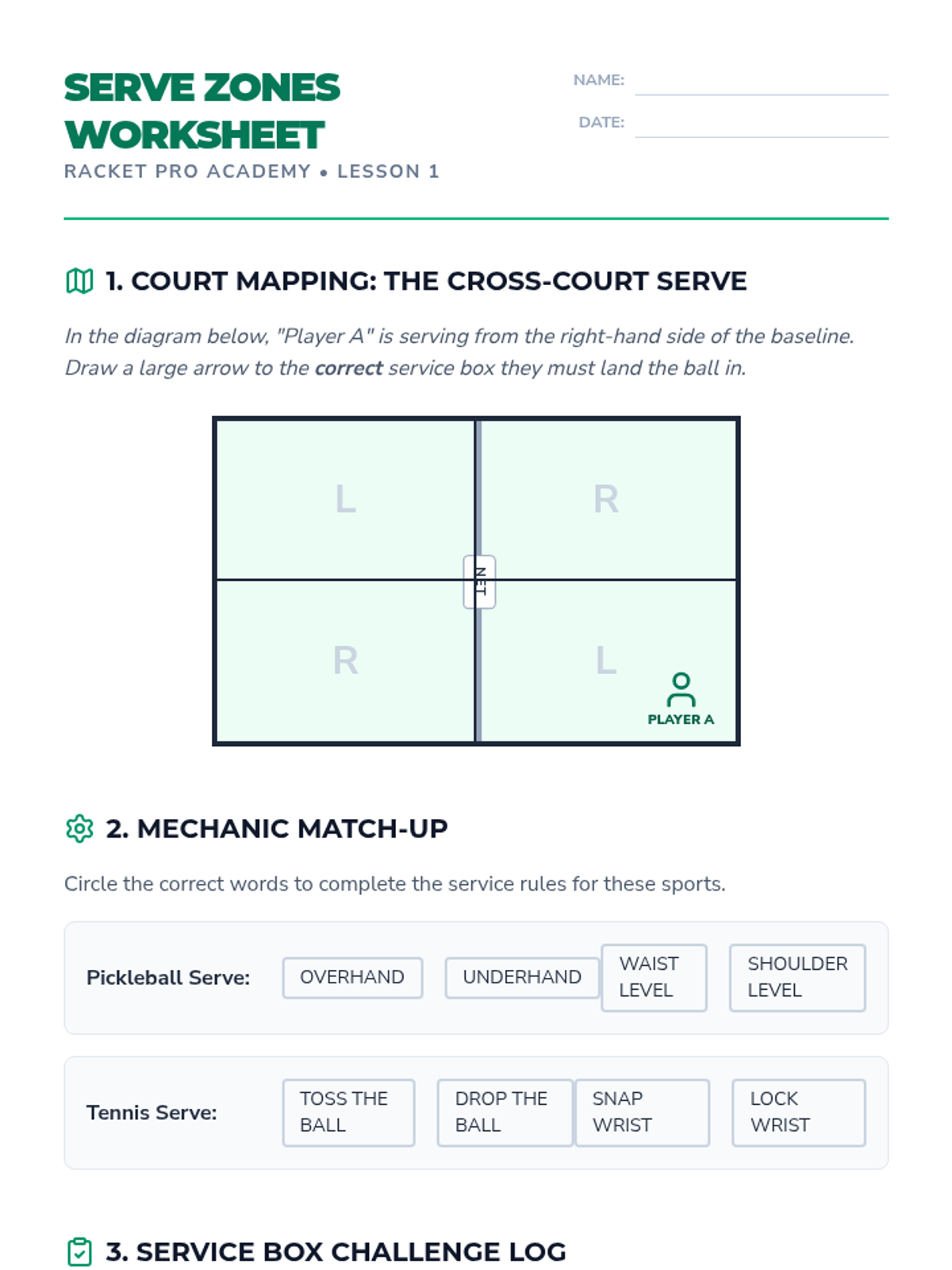
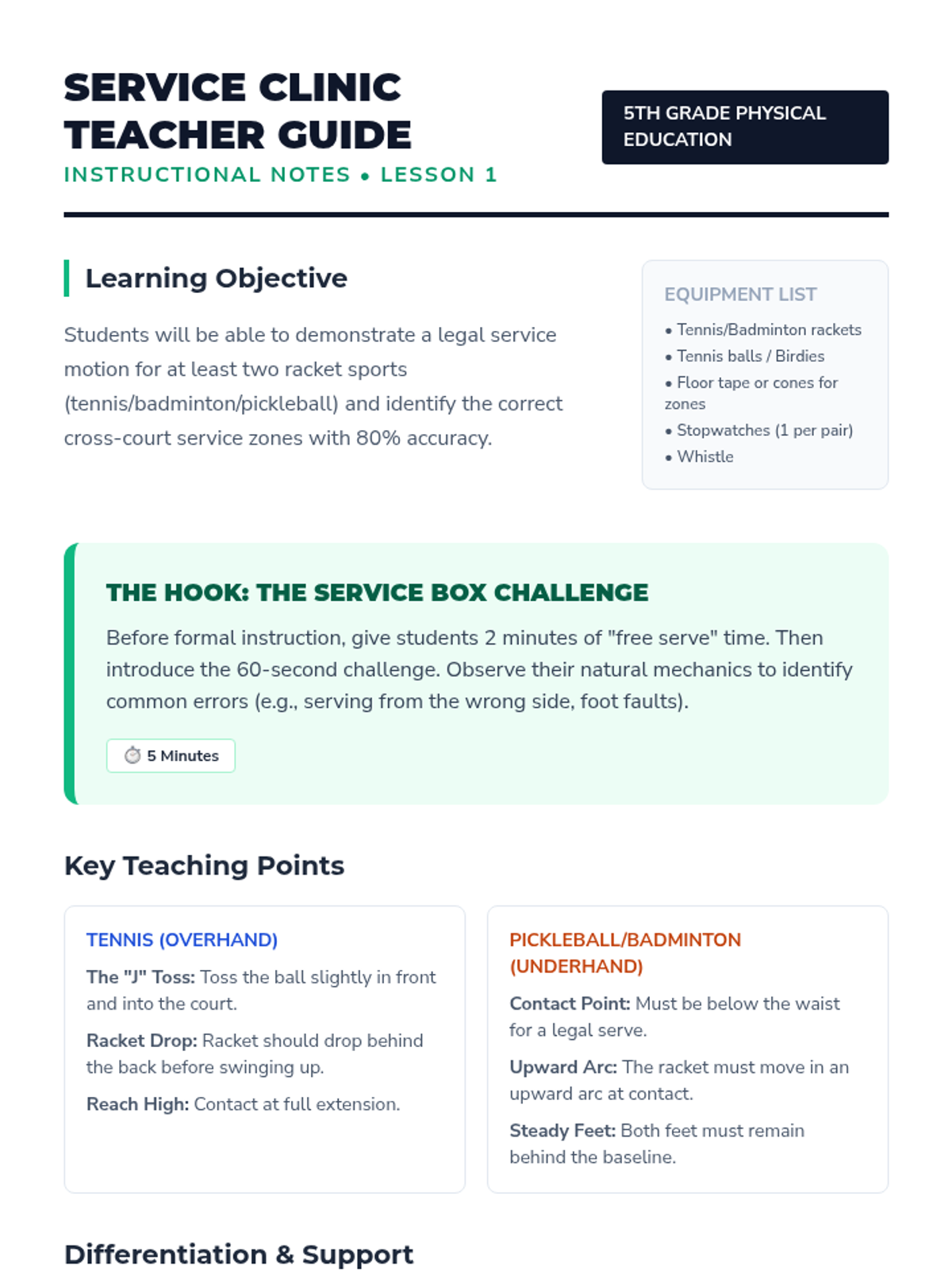
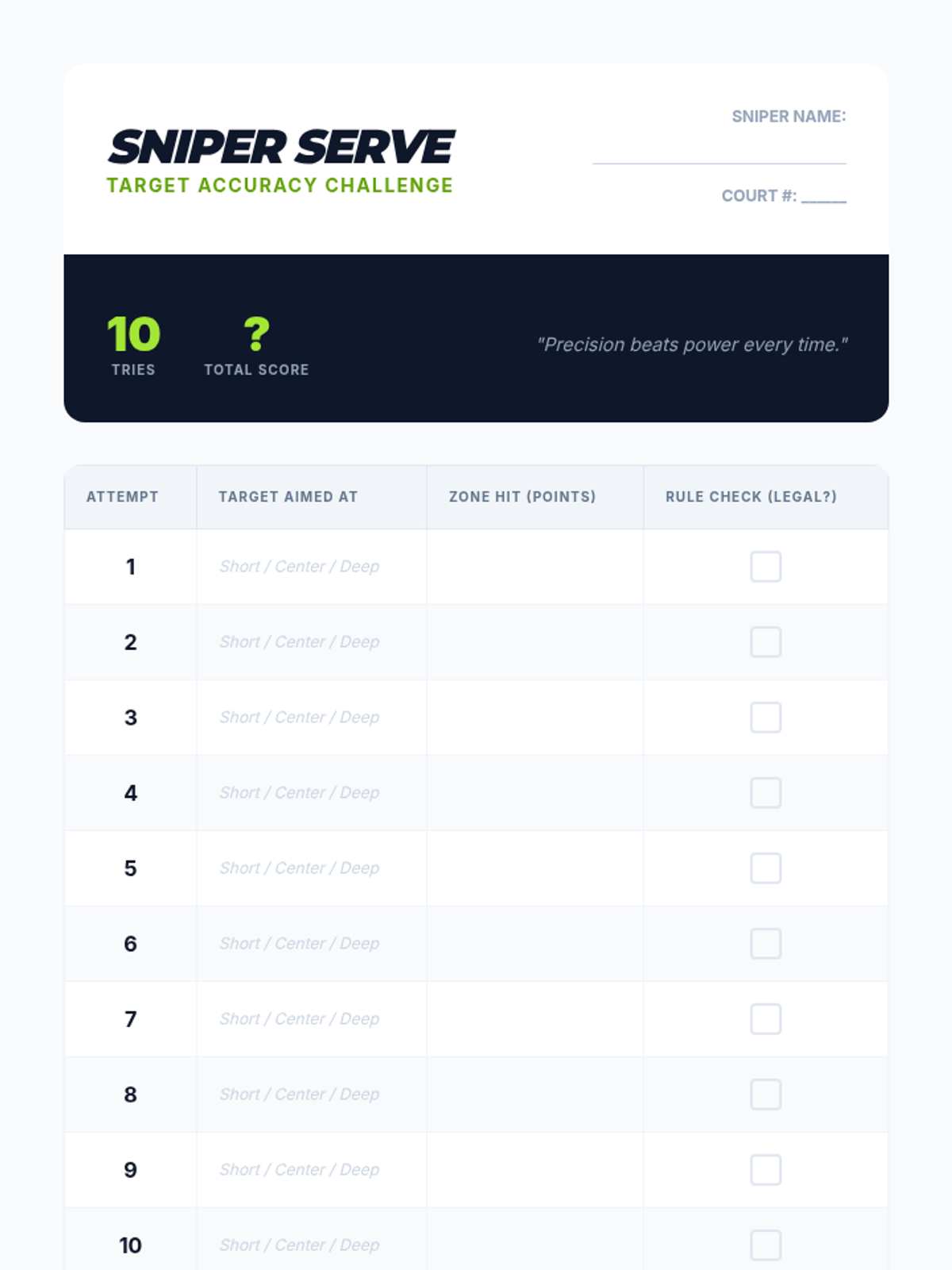
Students learn the mechanics and rules of serving across different racket sports, focusing on legal service zones, faults, and accuracy through a workshop-style approach.
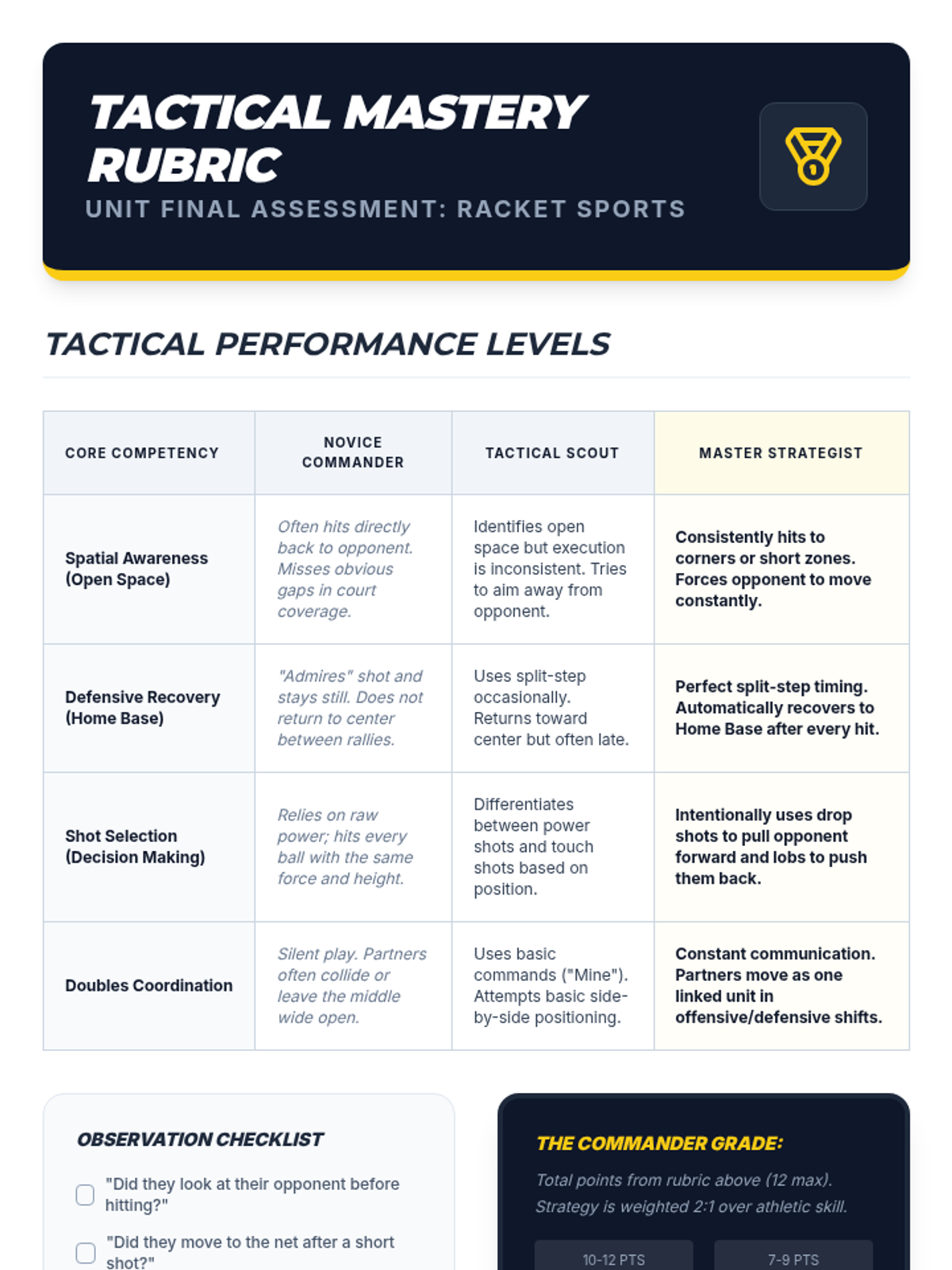
Students participate in modified gameplay, applying all learned tactics and reflecting on shot selection.
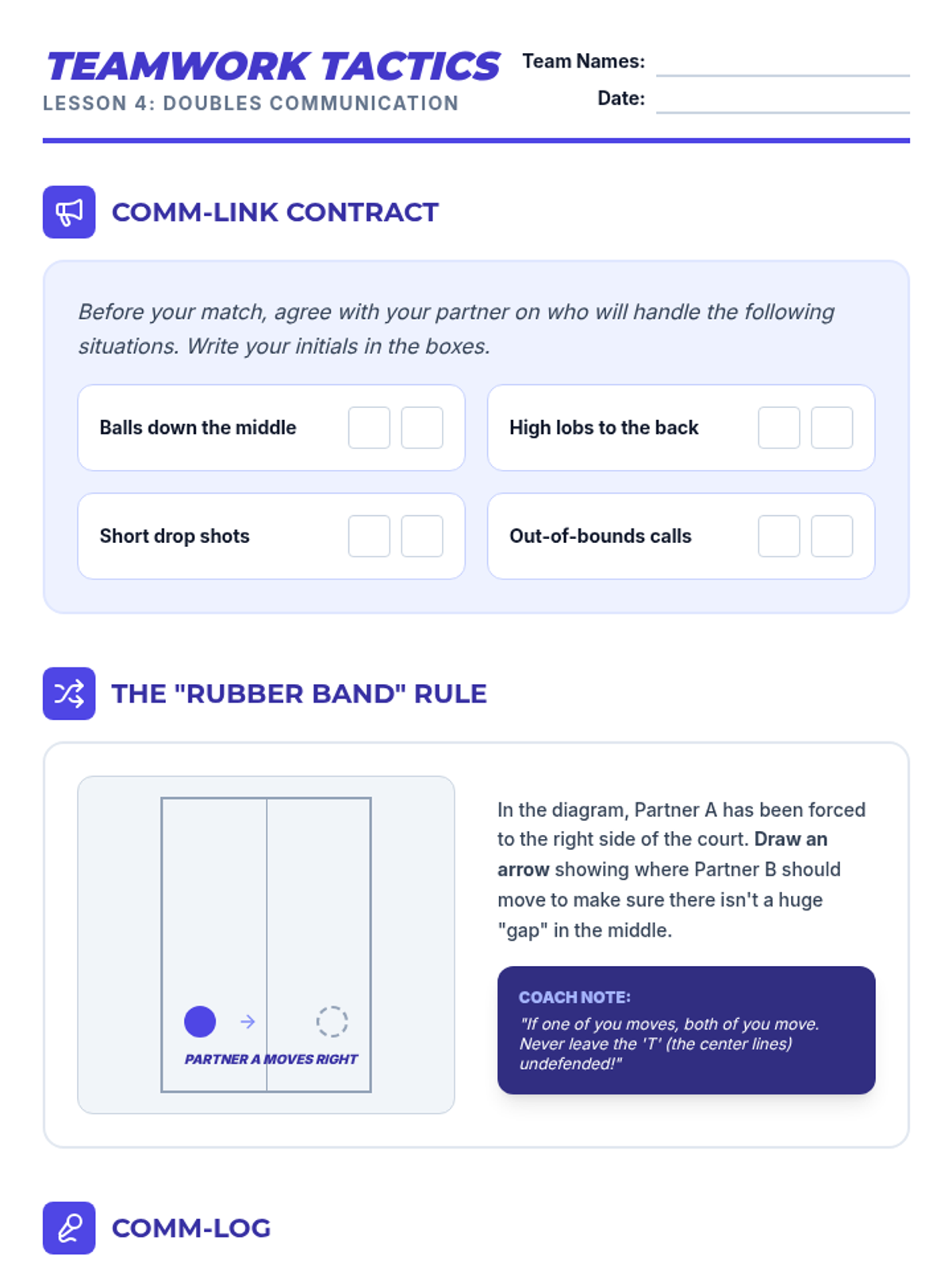
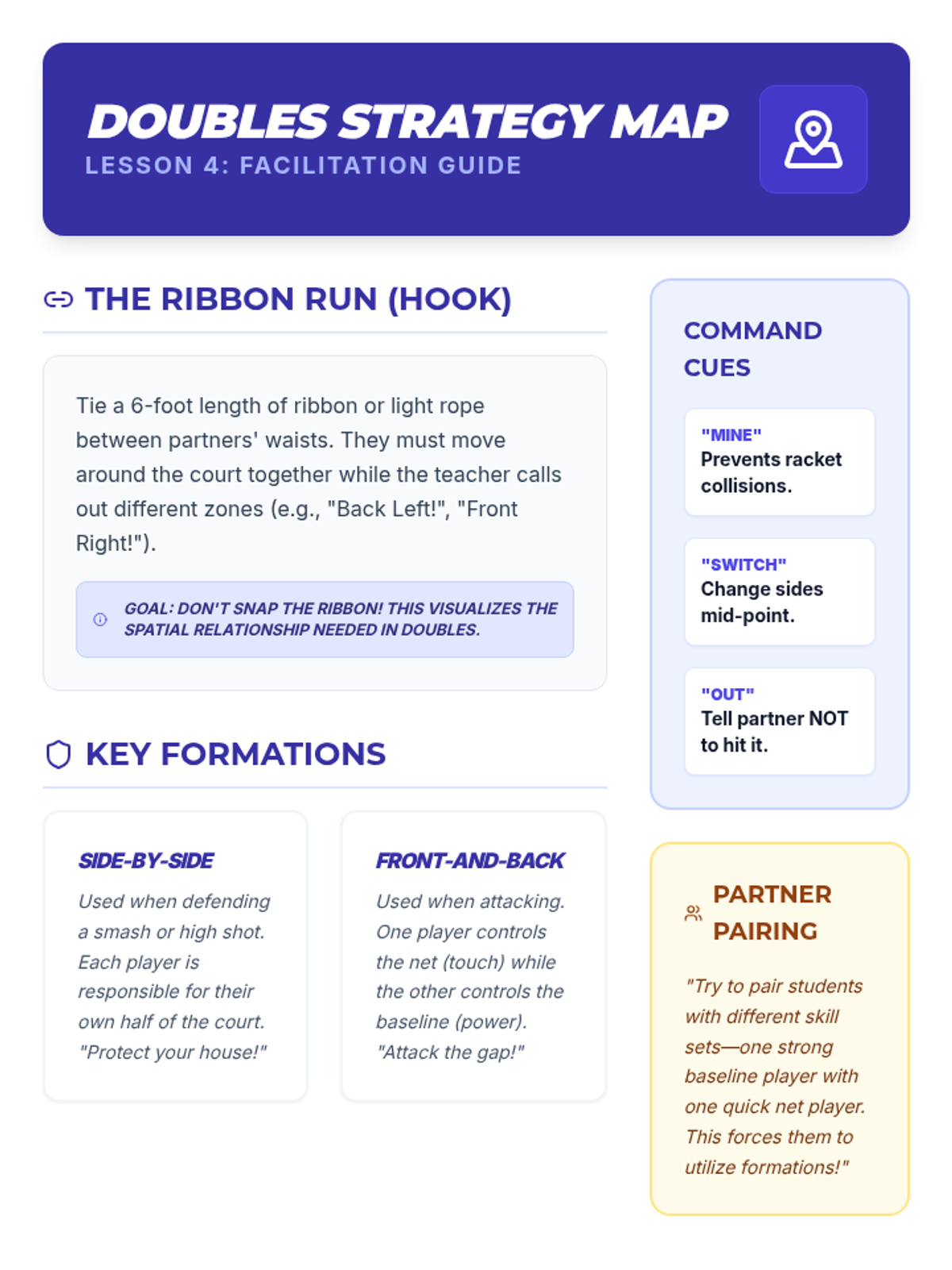
Students learn doubles strategies like side-by-side and front-back positioning with an emphasis on verbal communication.
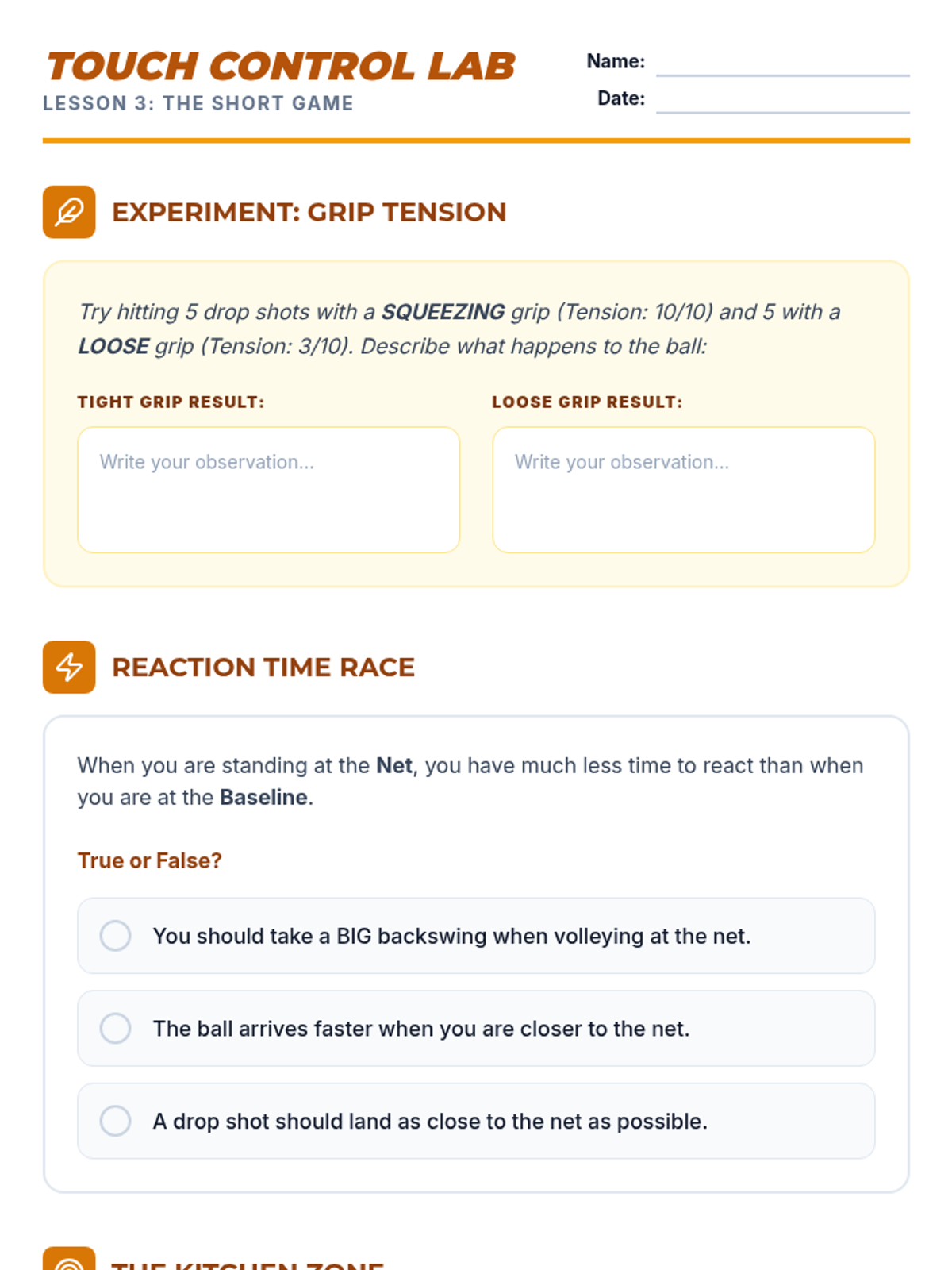
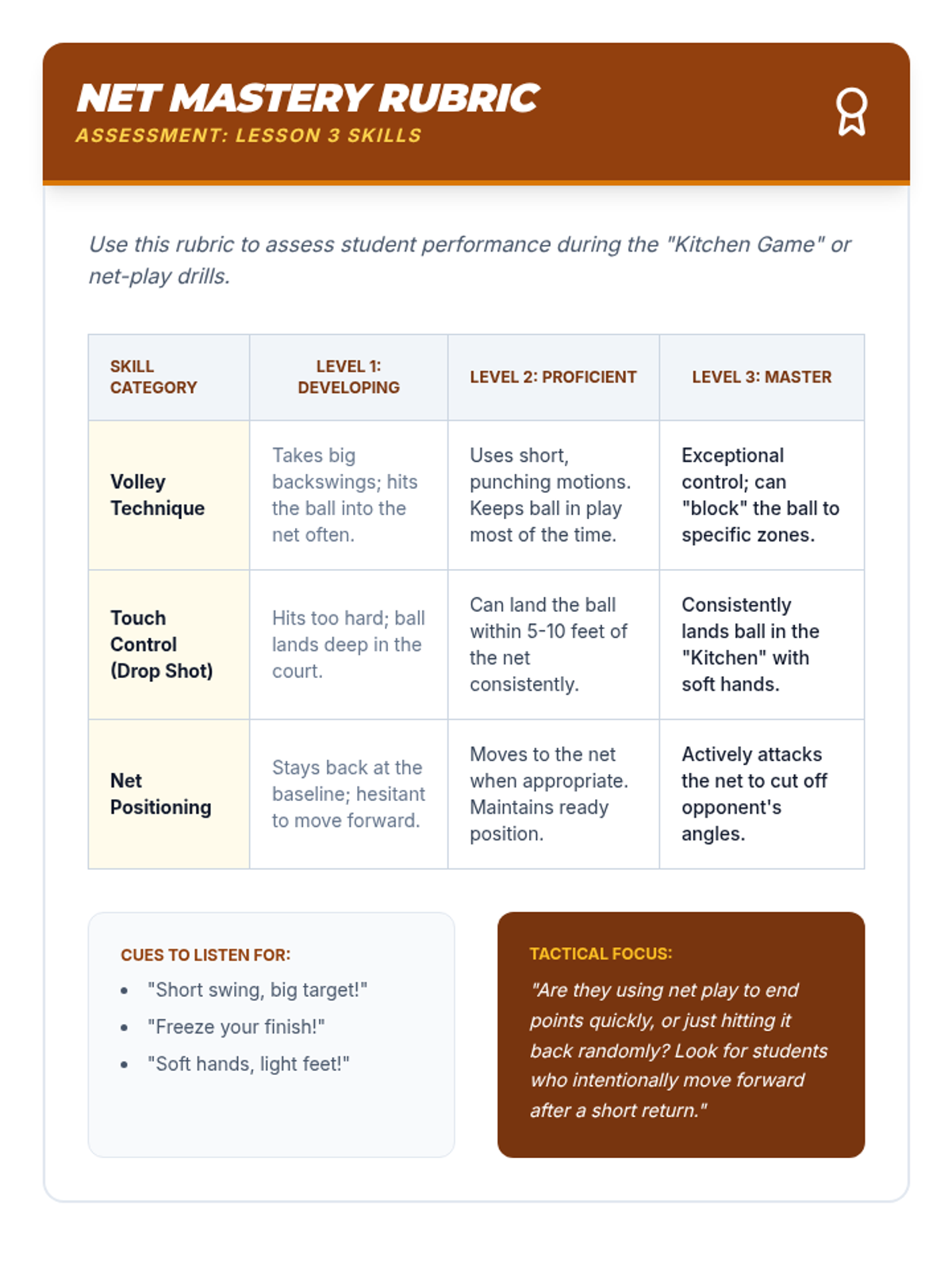
This lesson focuses on volleys and drop shots near the net, teaching students when to attack and how to use touch control.
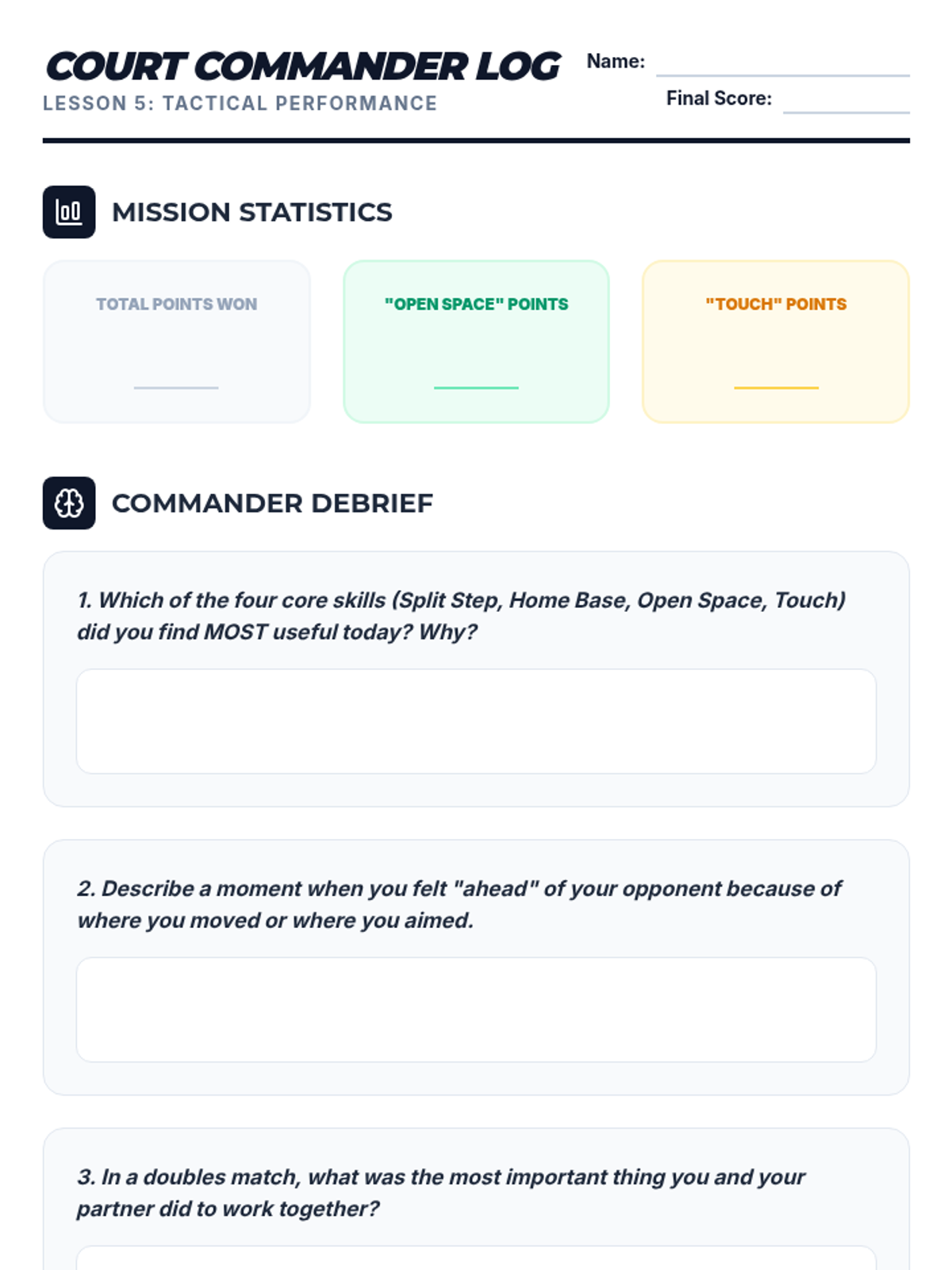
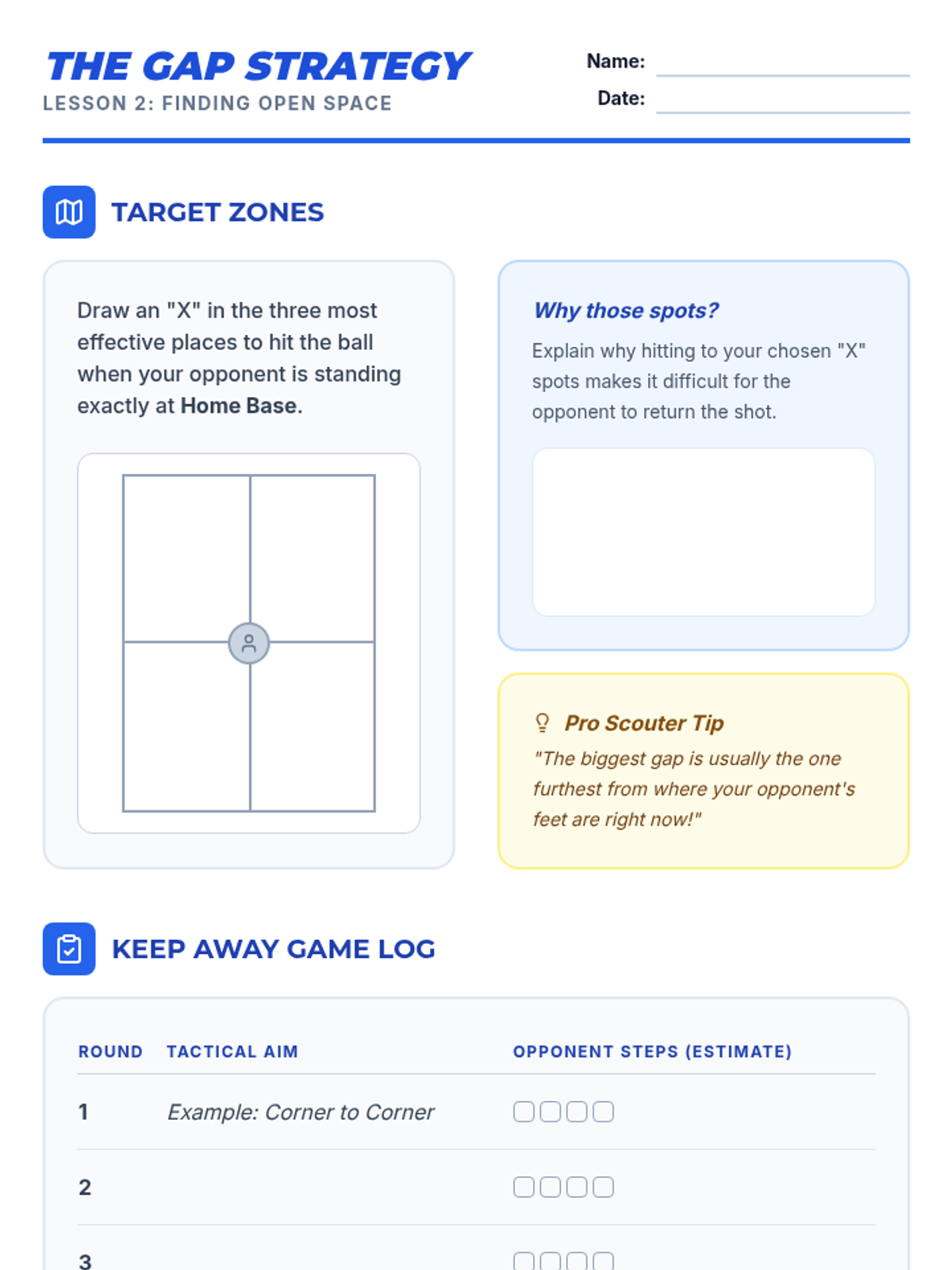
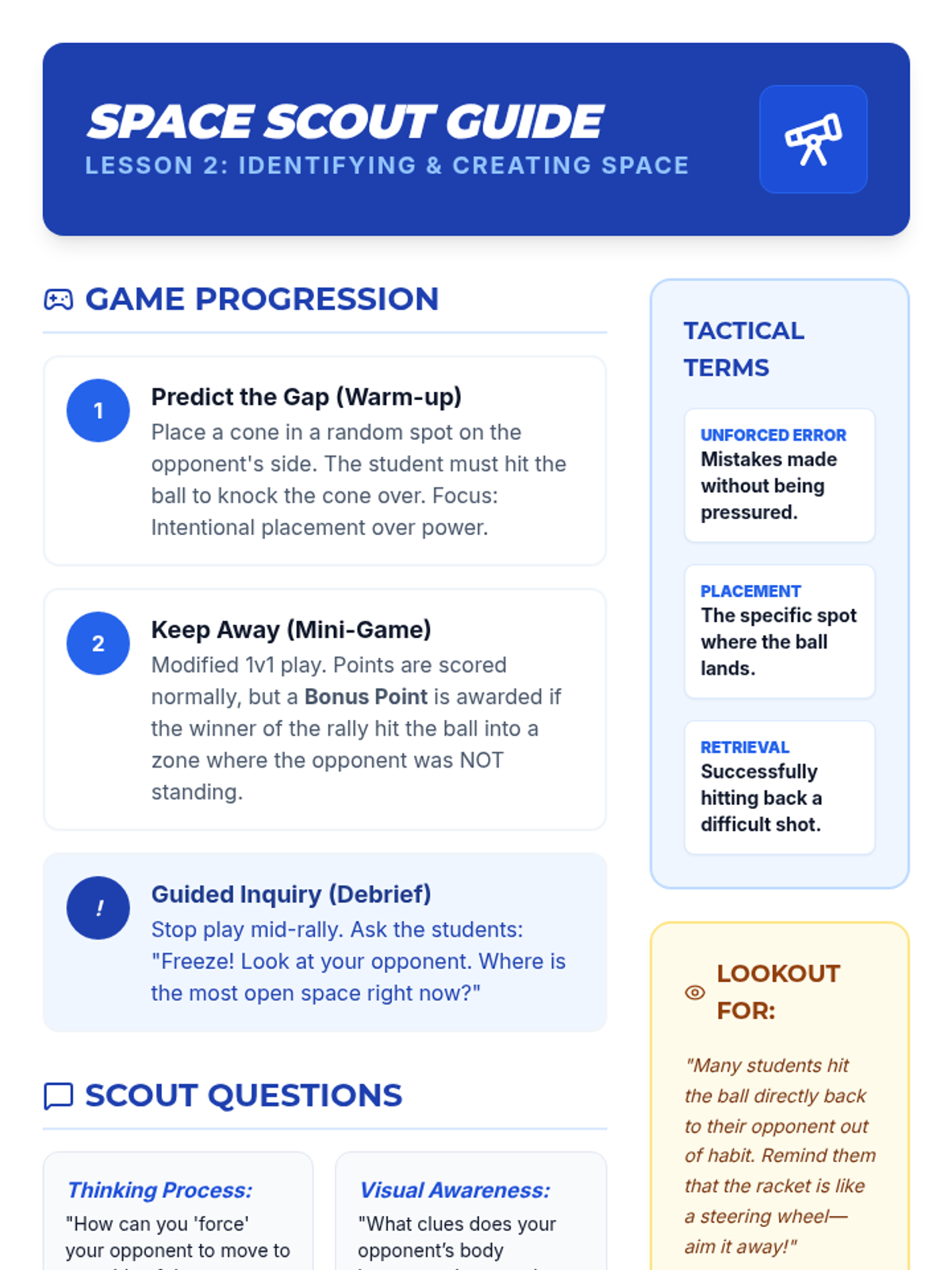
Learners analyze the court to identify undefended areas and practice hitting 'away' from the opponent to force movement.
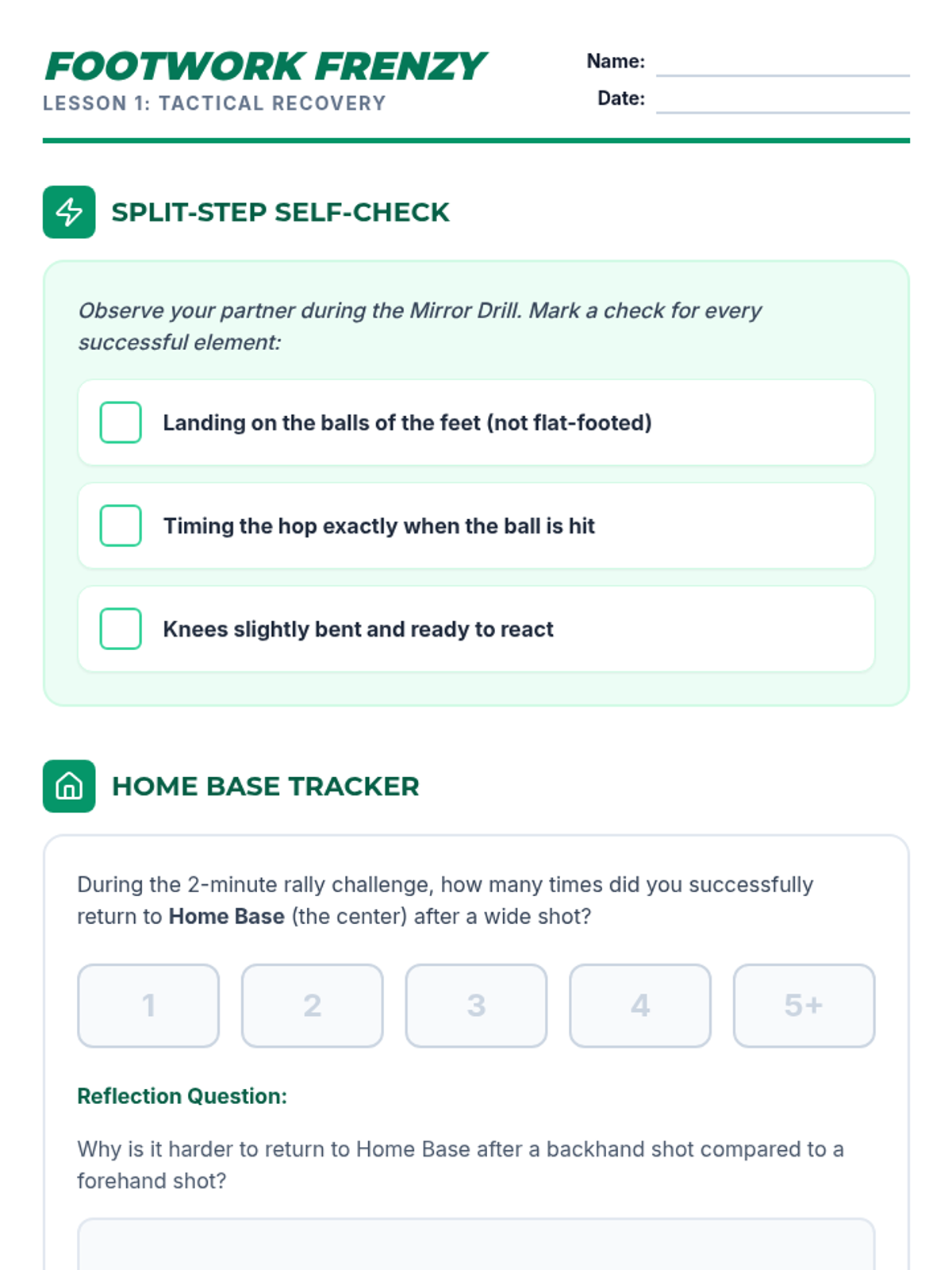
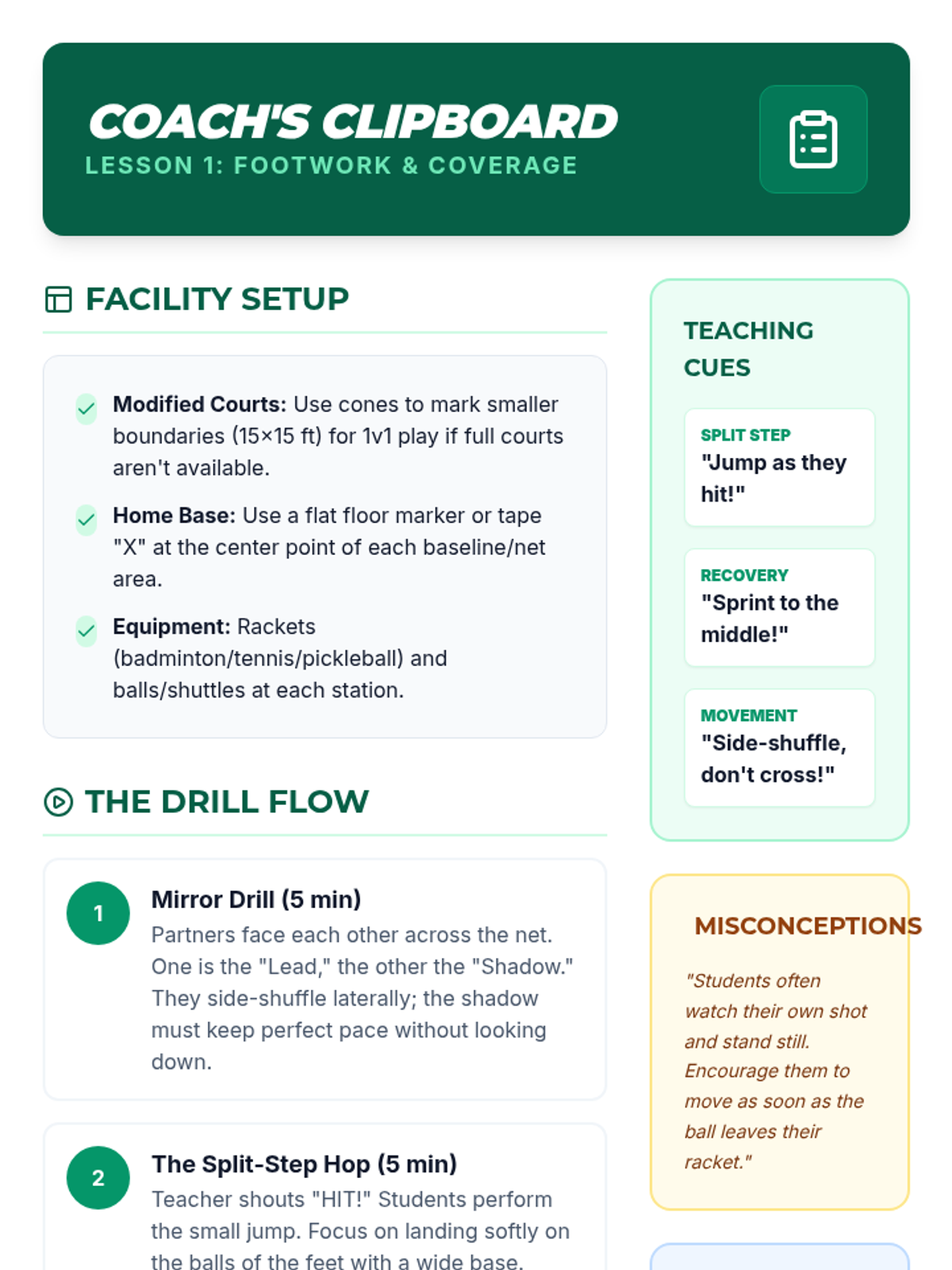
Students practice specific footwork techniques including the split-step and side-shuffle, focusing on returning to 'home base' after every shot.
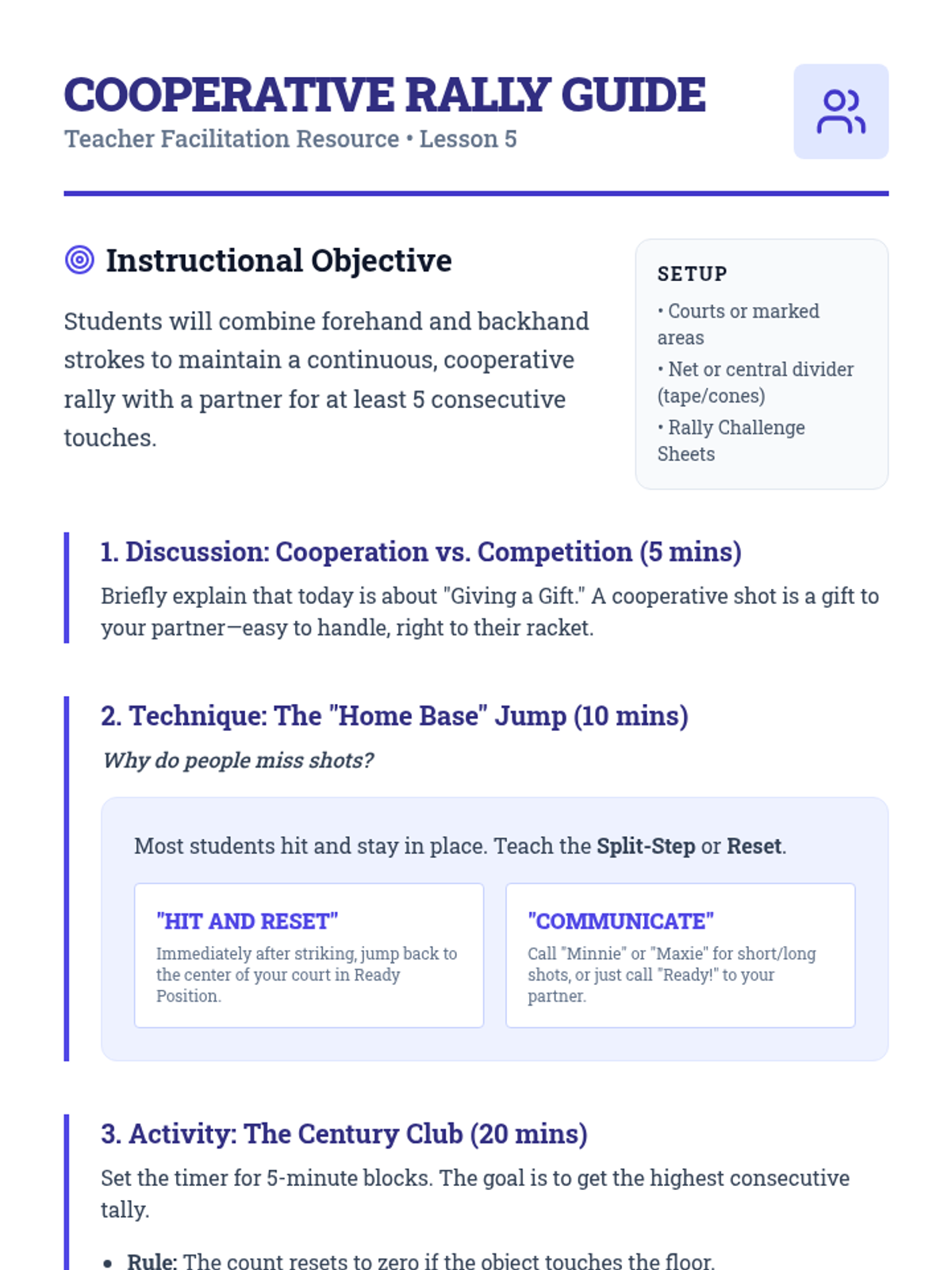
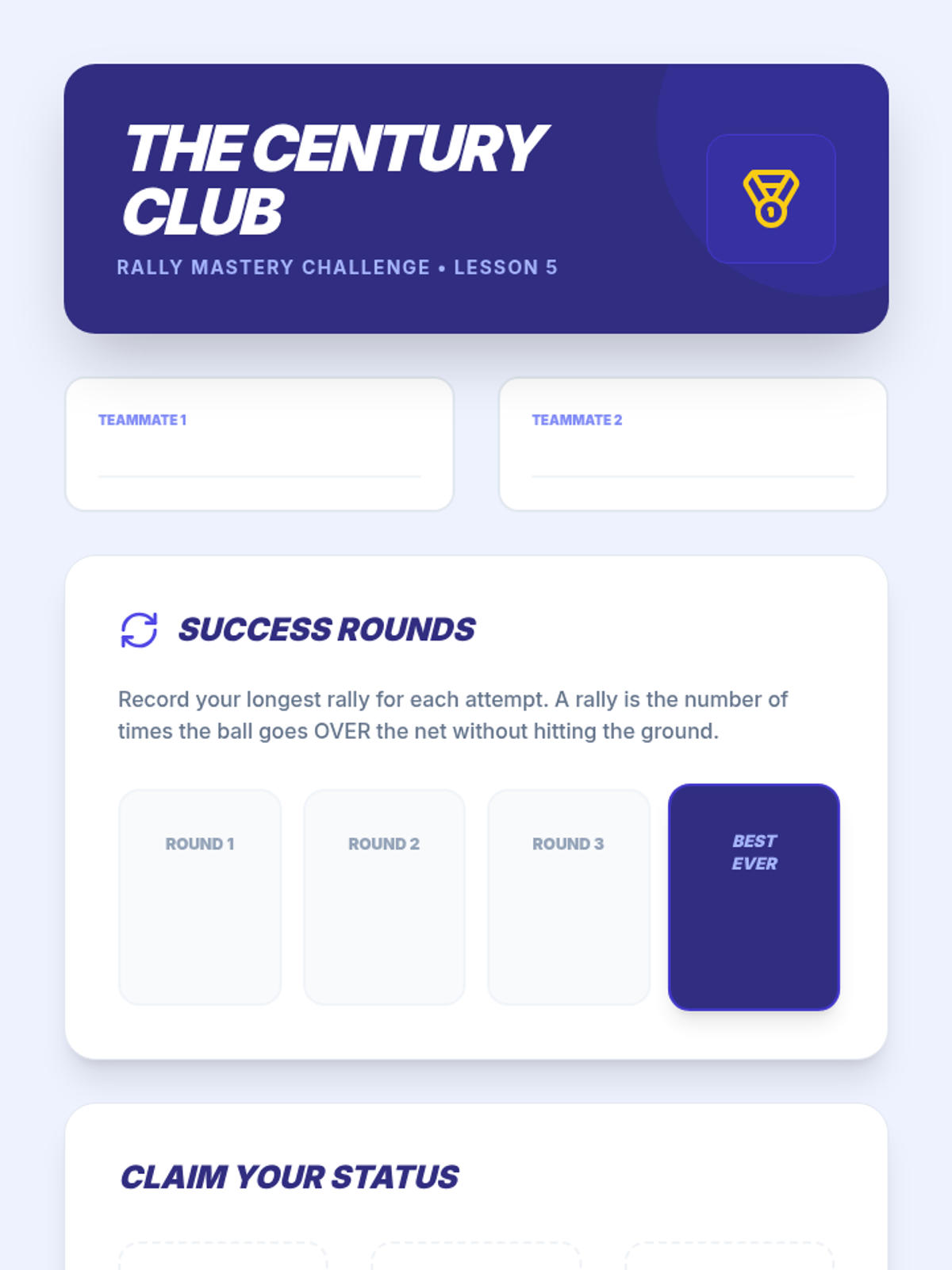
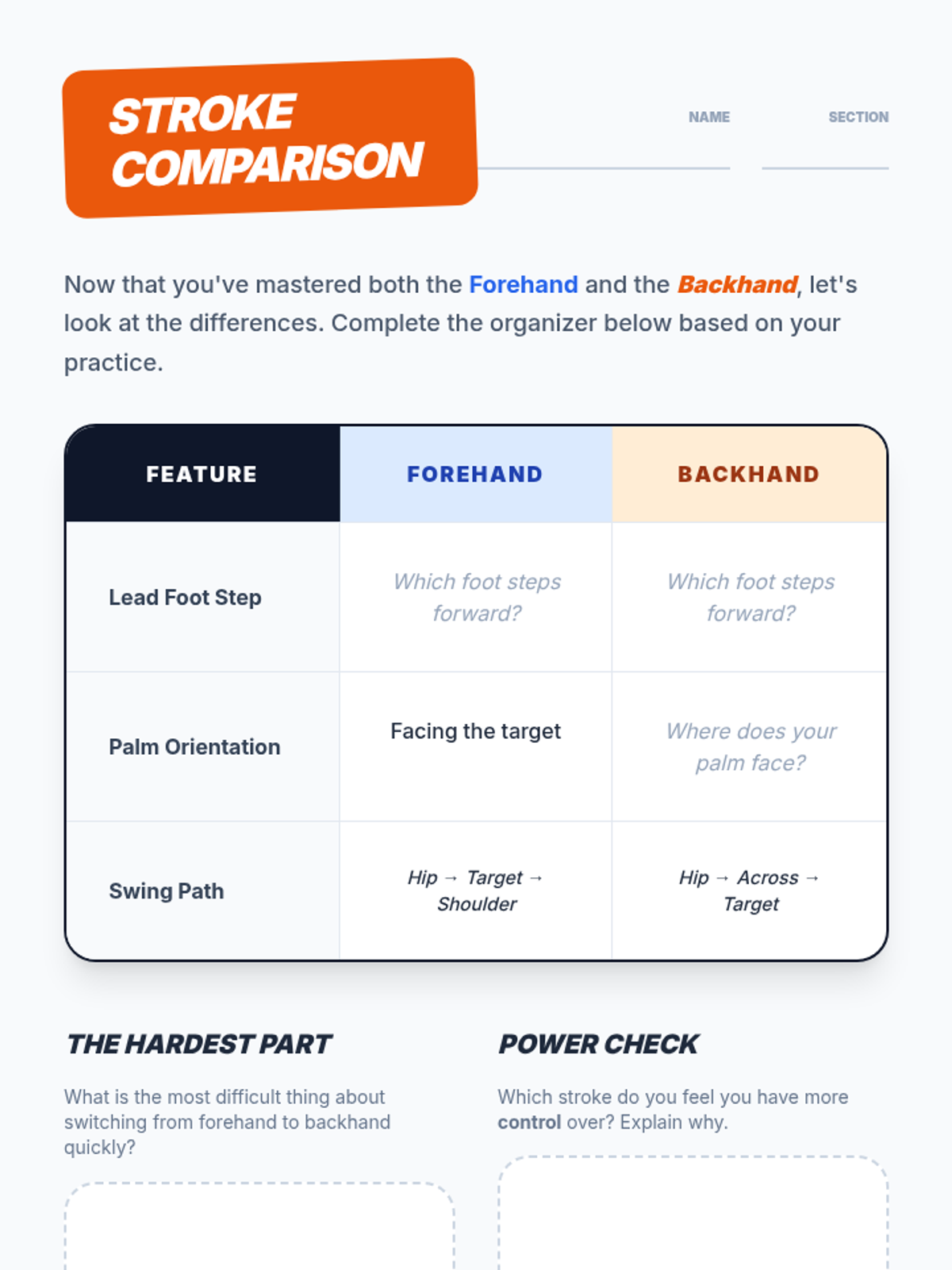
Students combine forehand and backhand skills to maintain a continuous, cooperative volley with a partner.
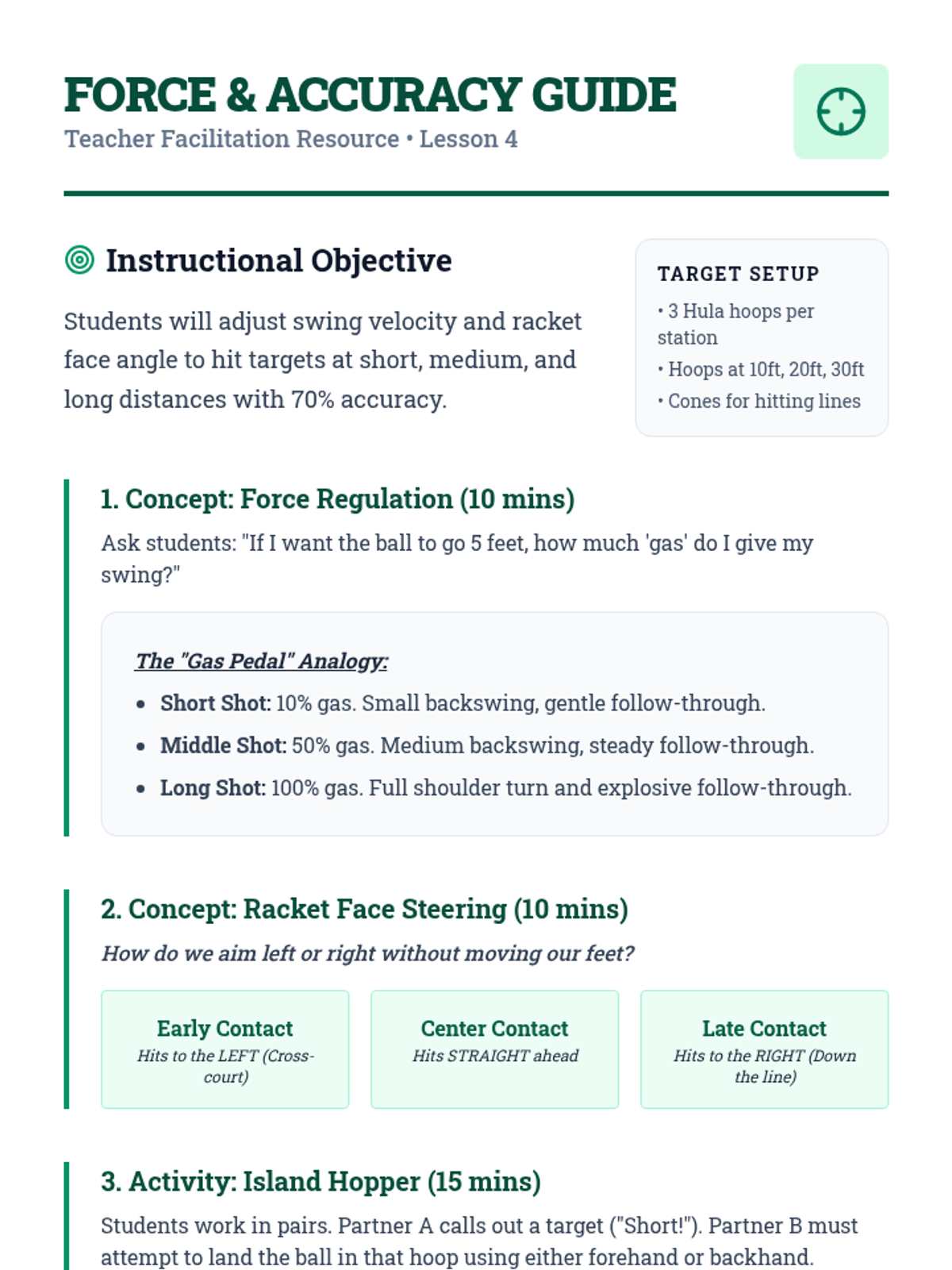
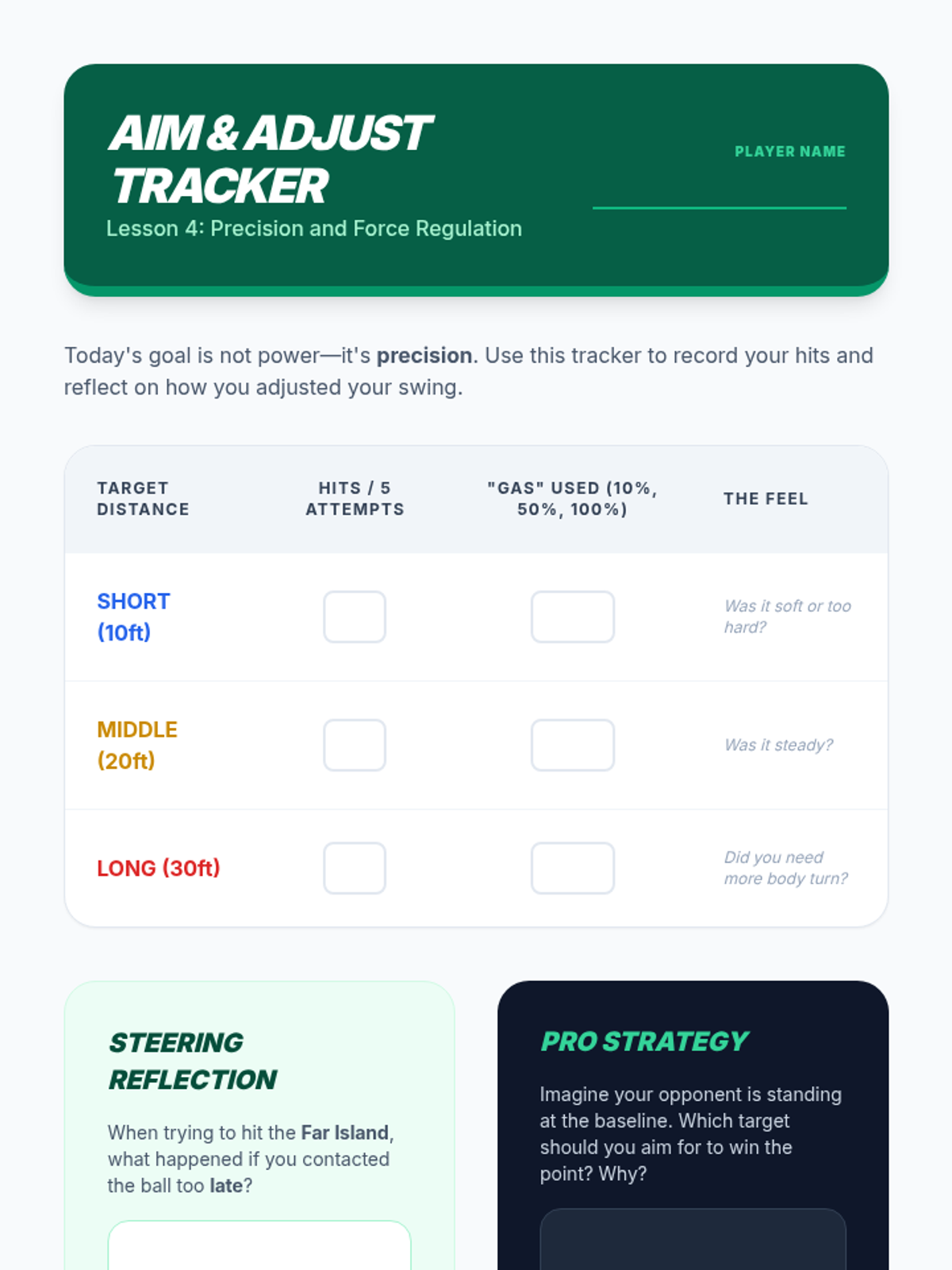
Challenges students to adjust swing speed and racket face angle to hit targets at varying distances.
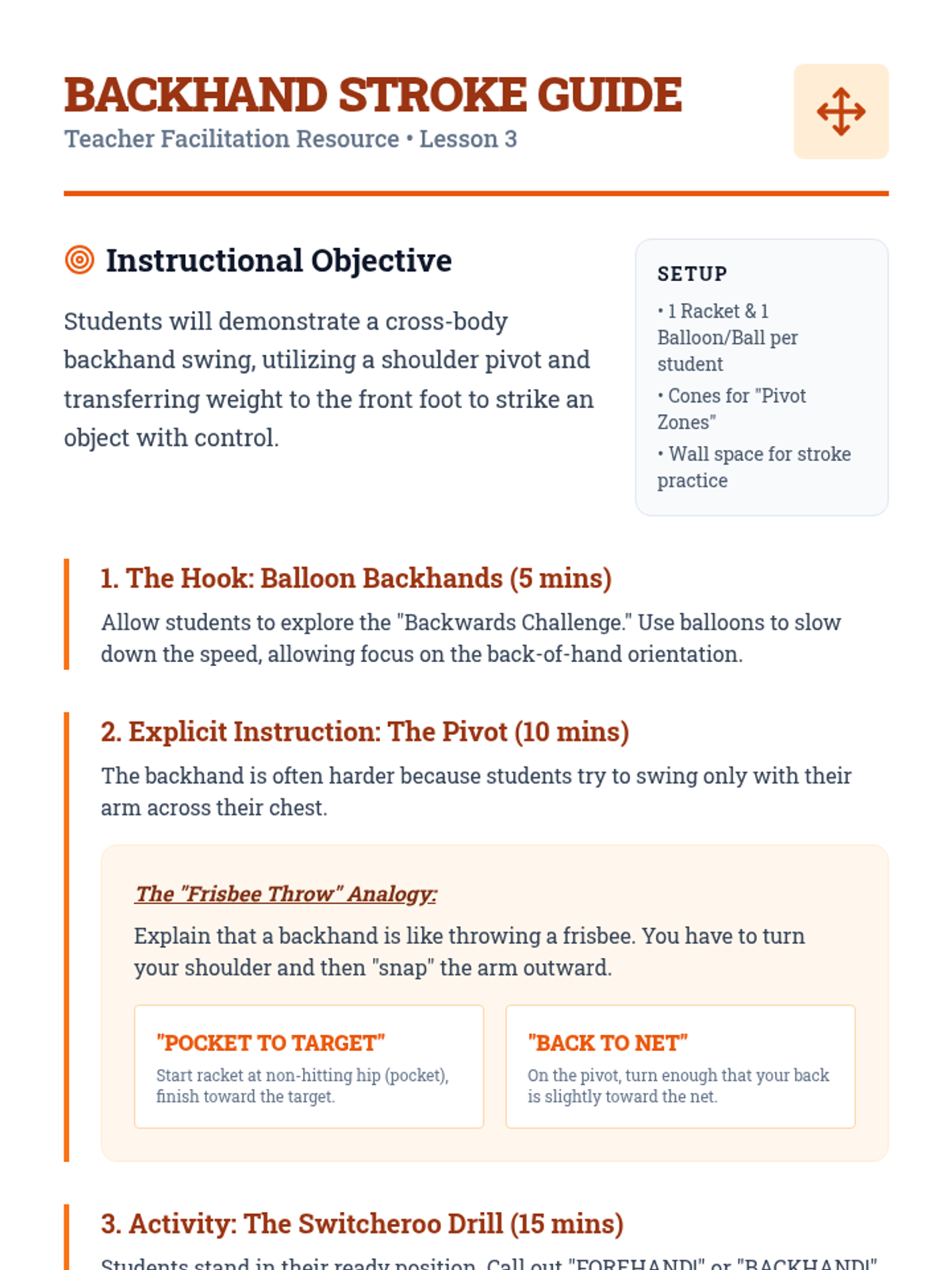
Introduces the backhand stroke, focusing on the pivot and the cross-body swing mechanics to build versatility.
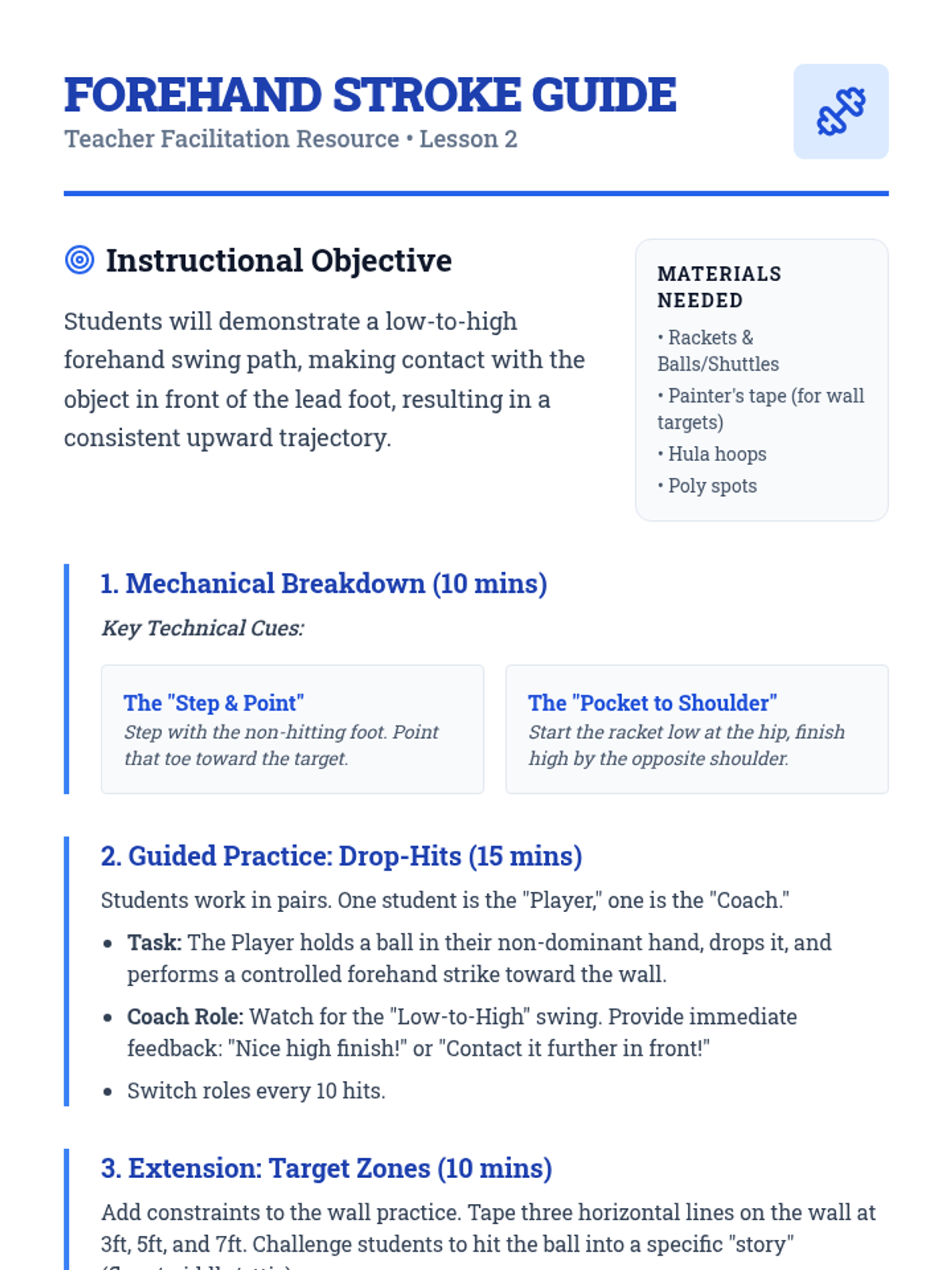
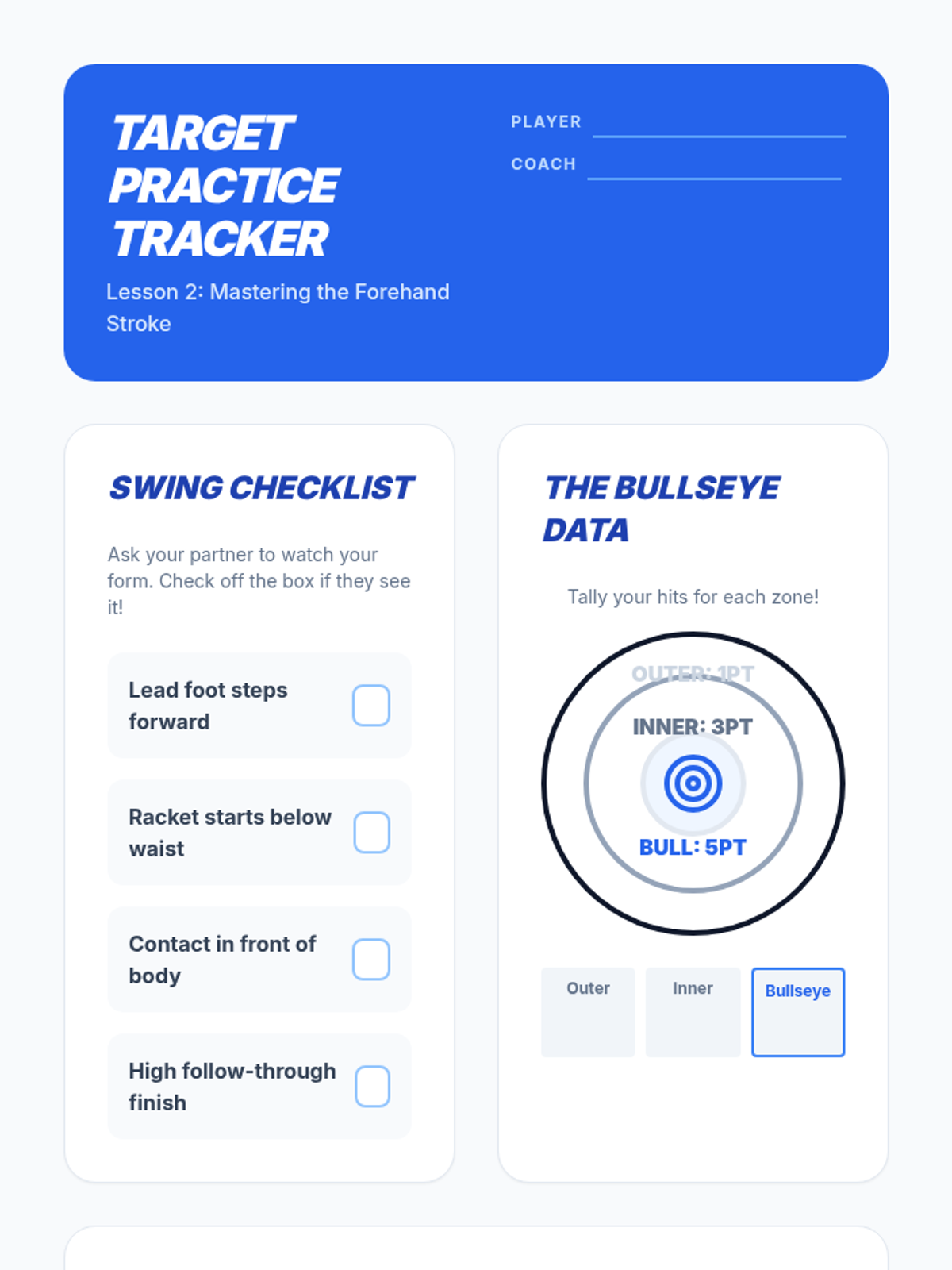
Focuses on the forehand motion, emphasizing the low-to-high swing path and contacting the object in front of the body.
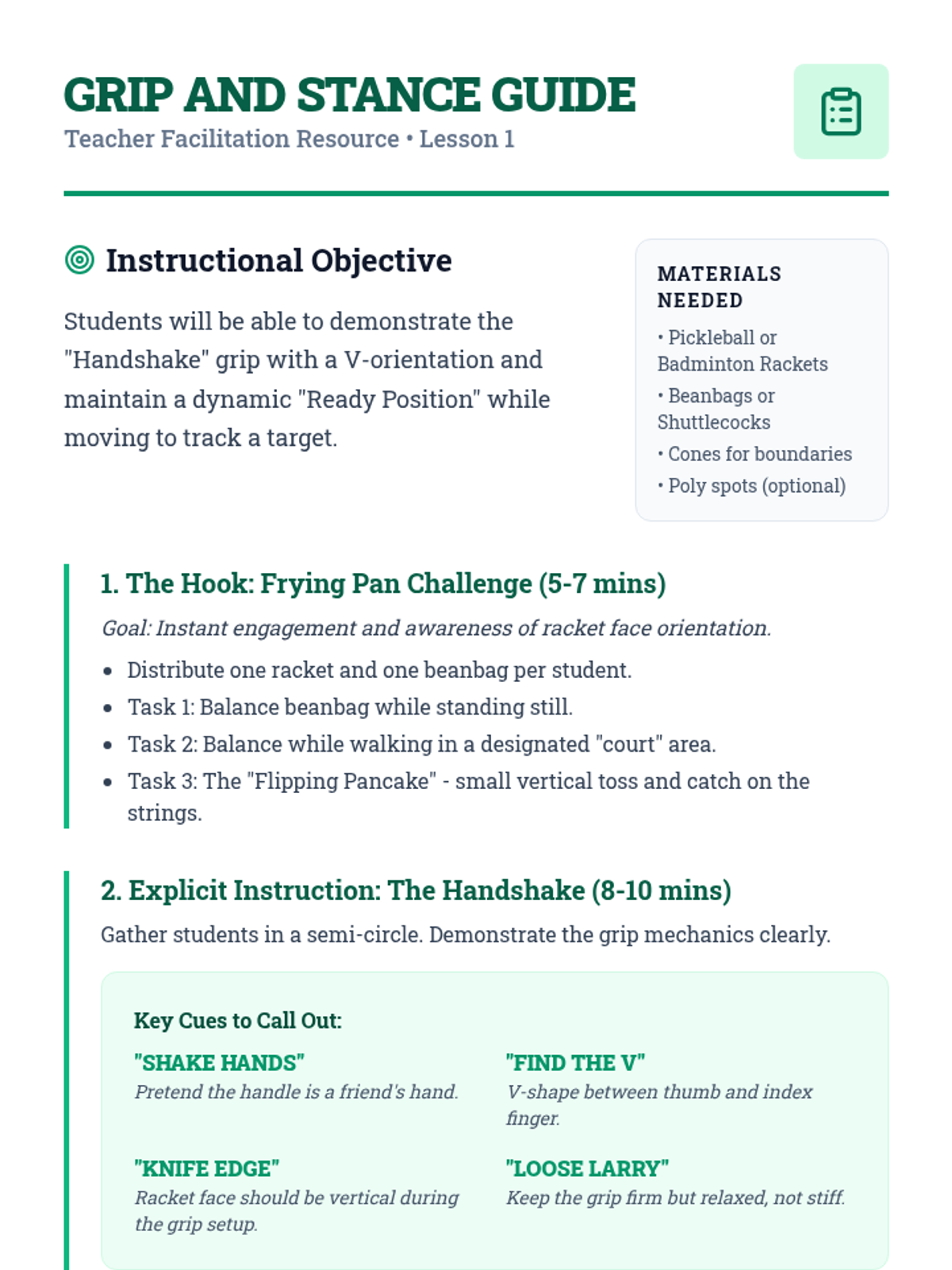
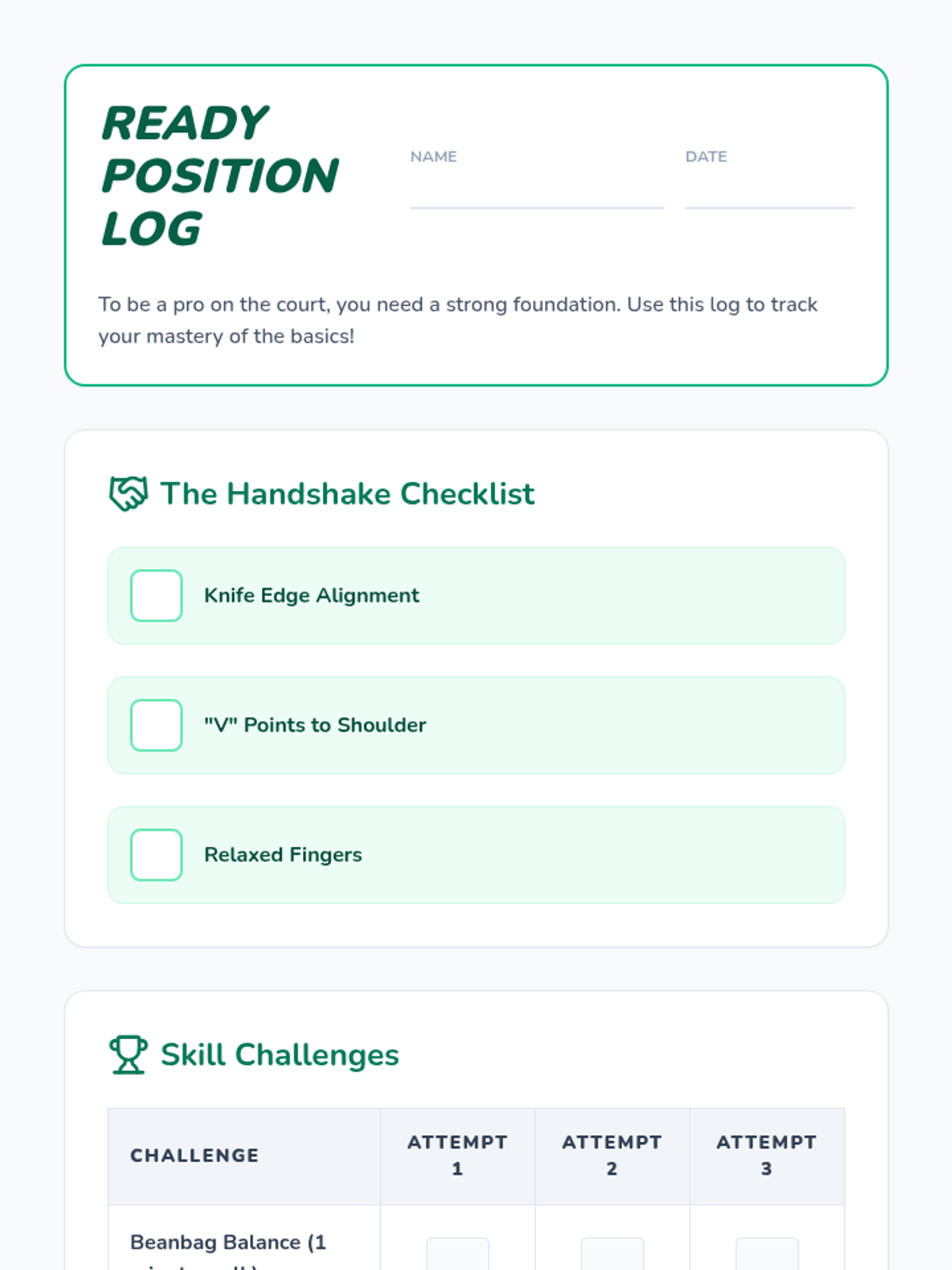
Students learn the universal 'handshake' grip and the athletic ready position, focusing on racket orientation and wrist stability.
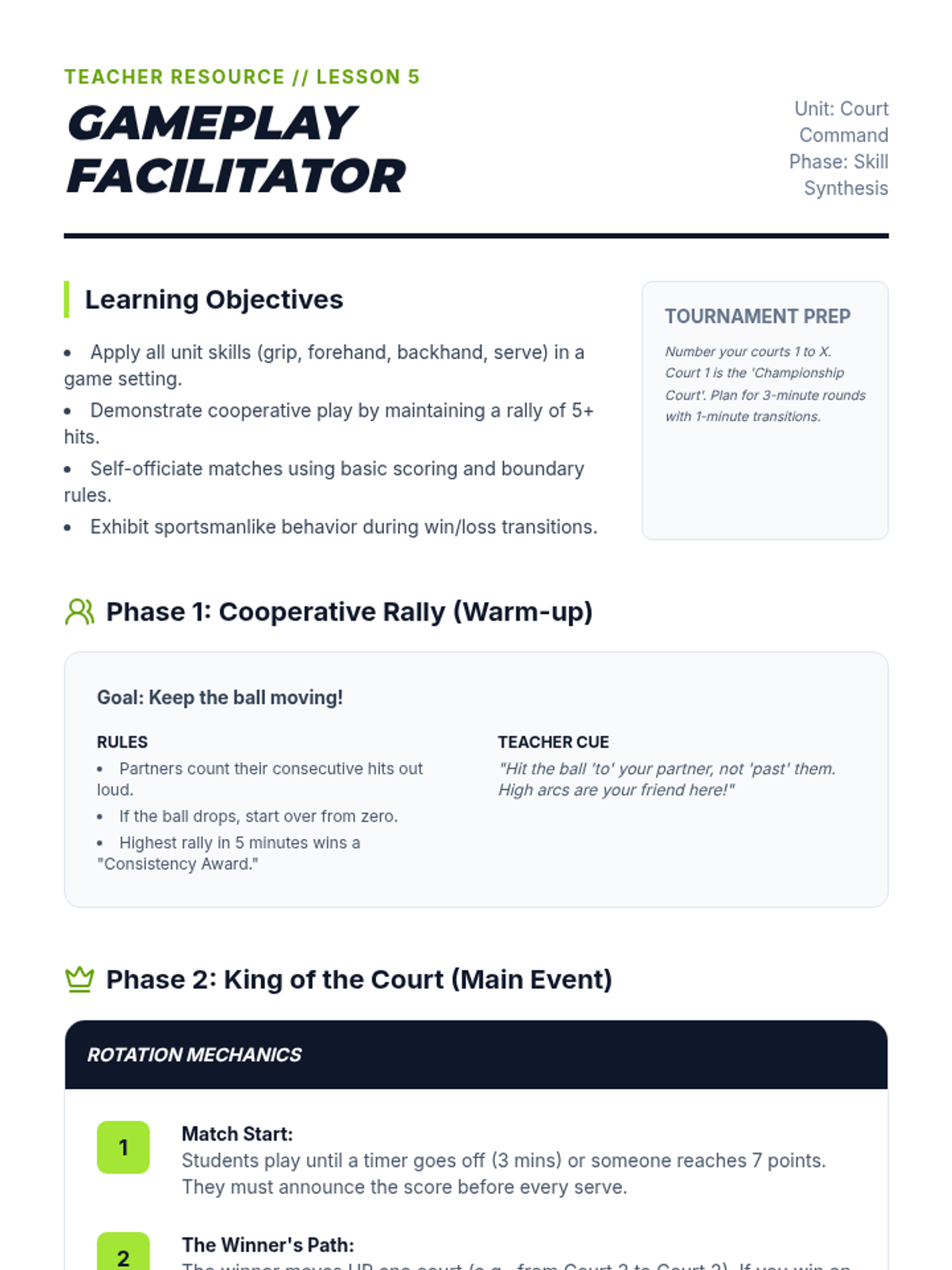
Synthesizes skills into modified gameplay, focusing on cooperative rallying, scoring, and basic court positioning.
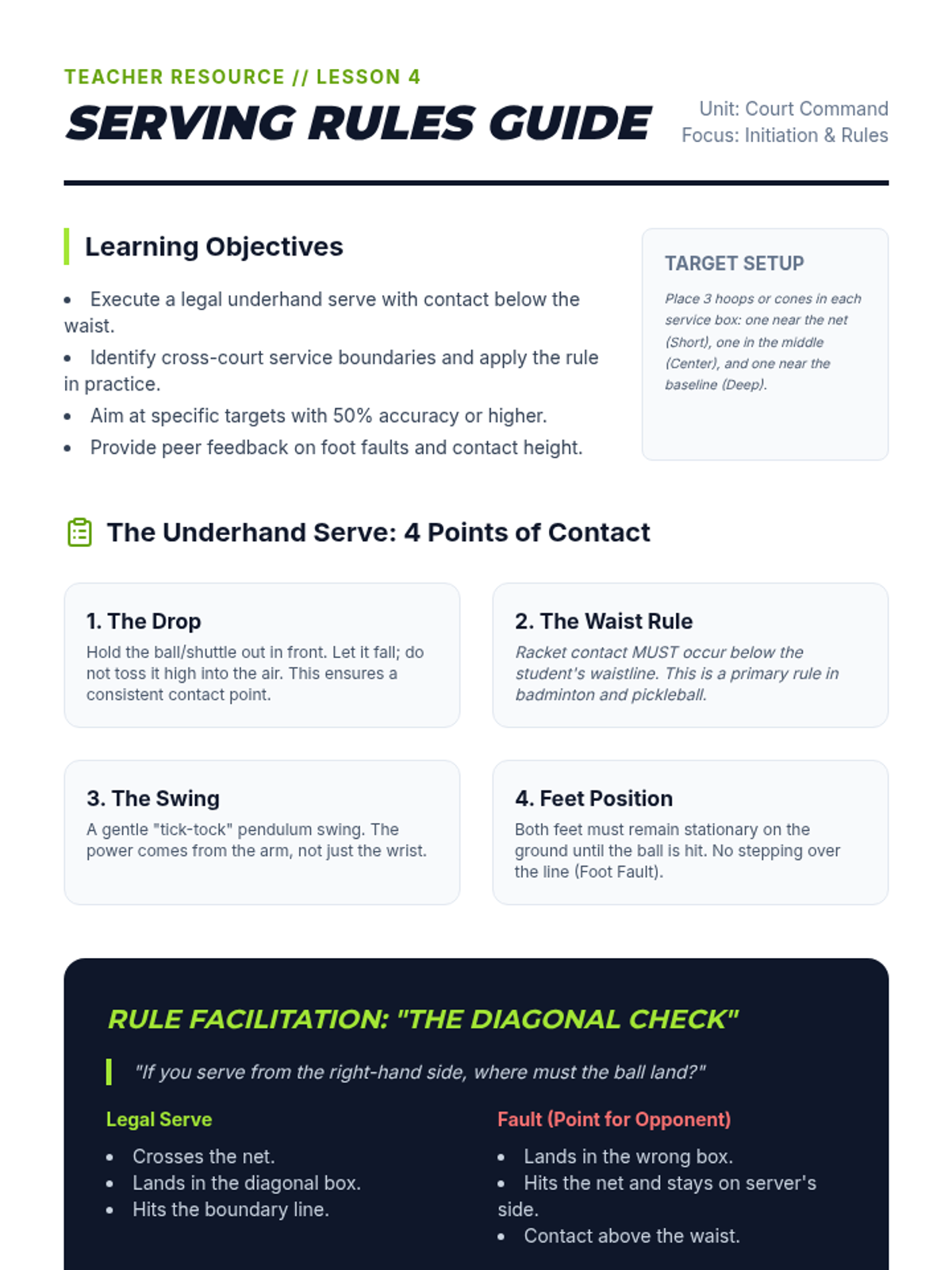
Covers the rules and mechanics of the underhand serve, emphasizing accuracy and spatial awareness within court boundaries.