Fundamental techniques for soccer, volleyball, football, and basketball alongside strategic gameplay and communication skills. Emphasizes sportsmanship and collaborative tactics within a competitive team environment.
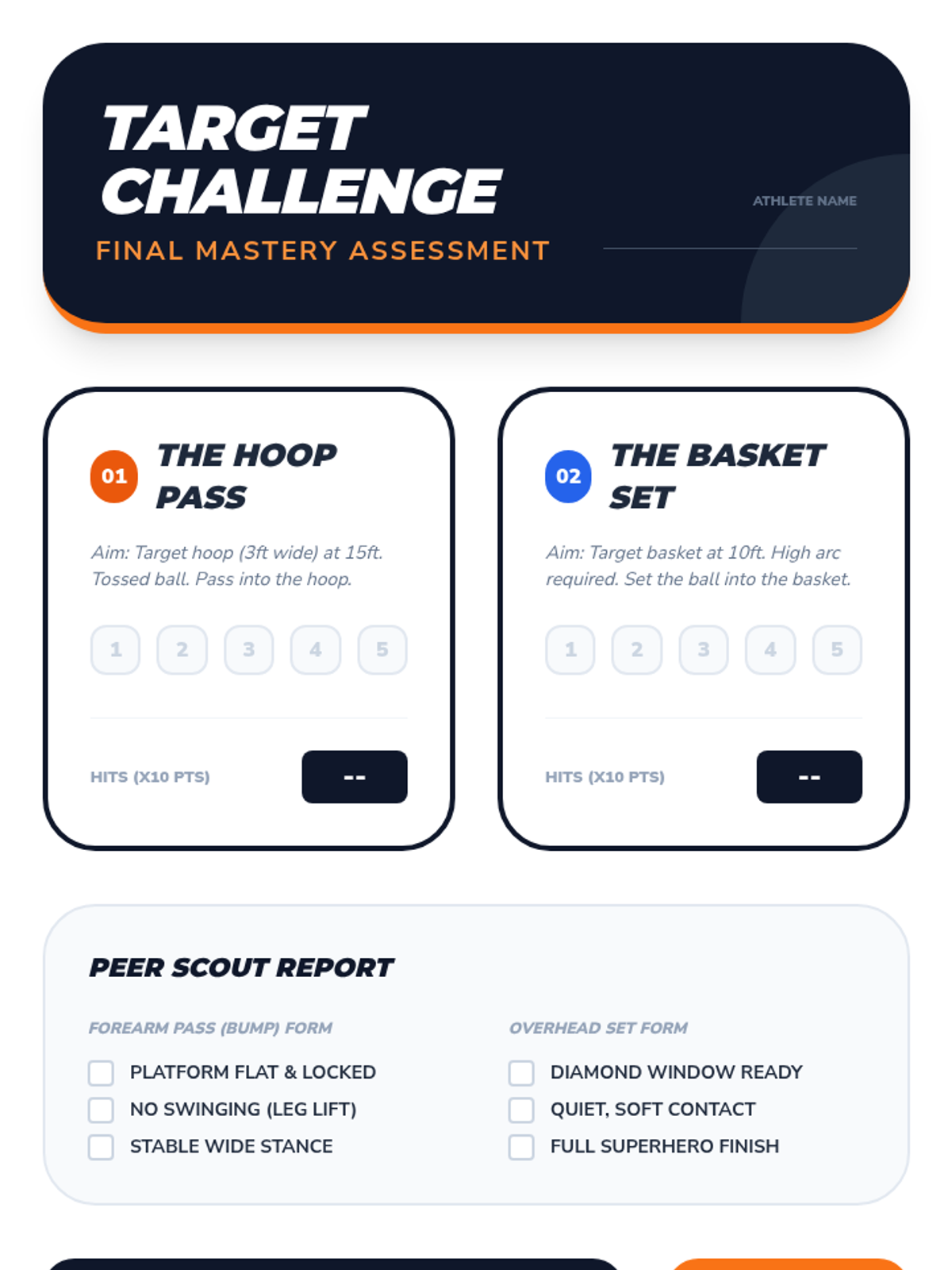
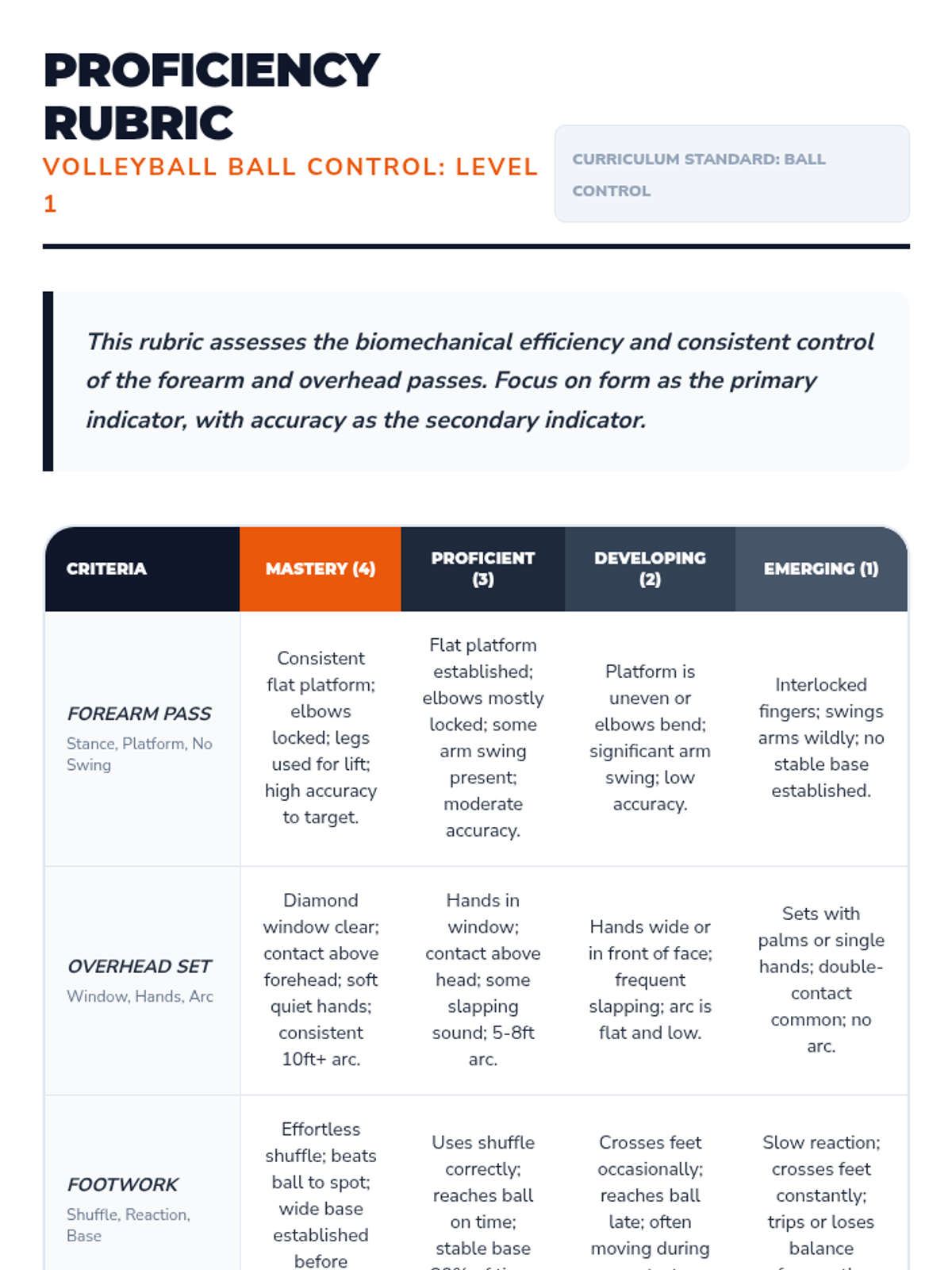
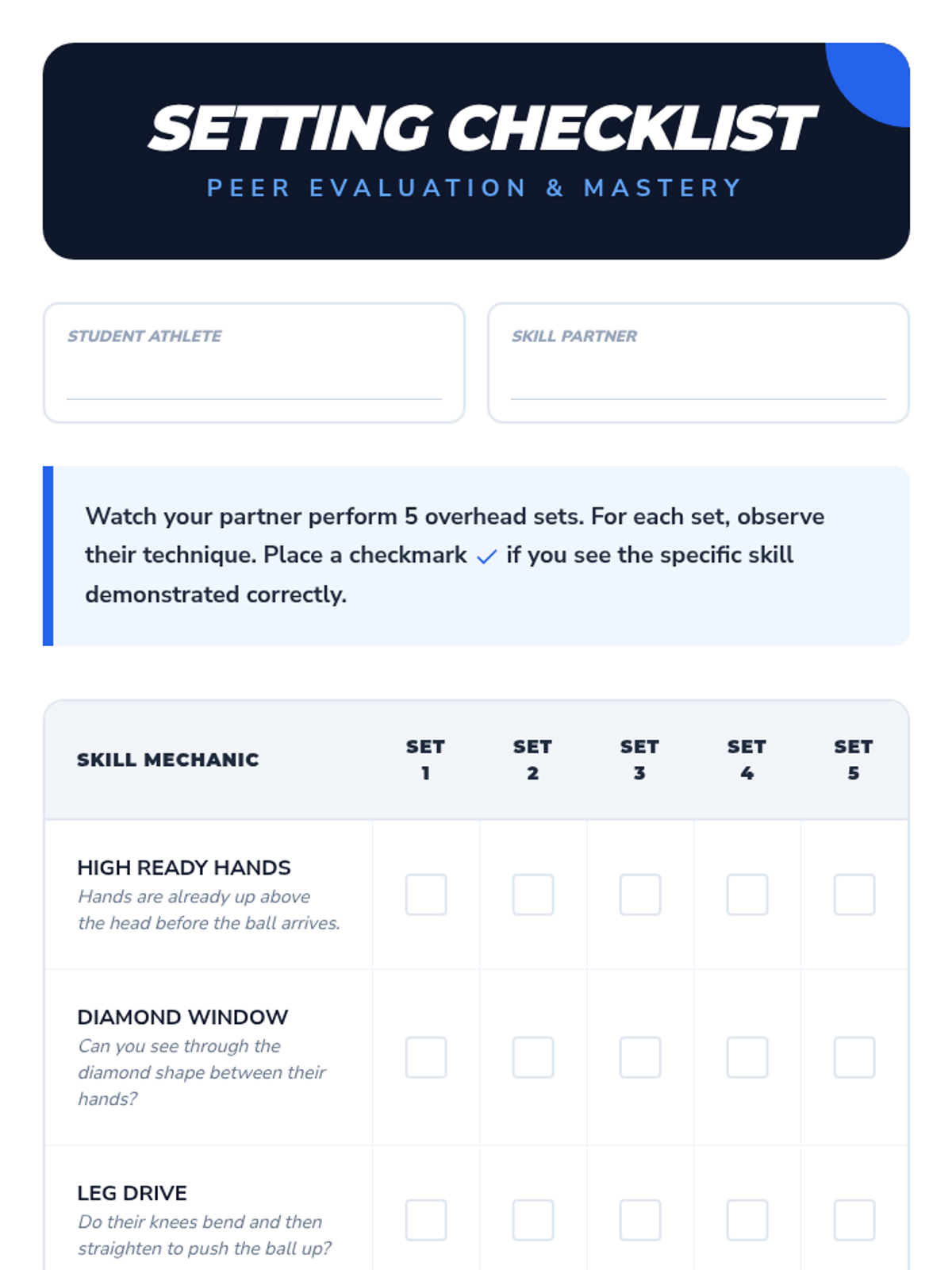
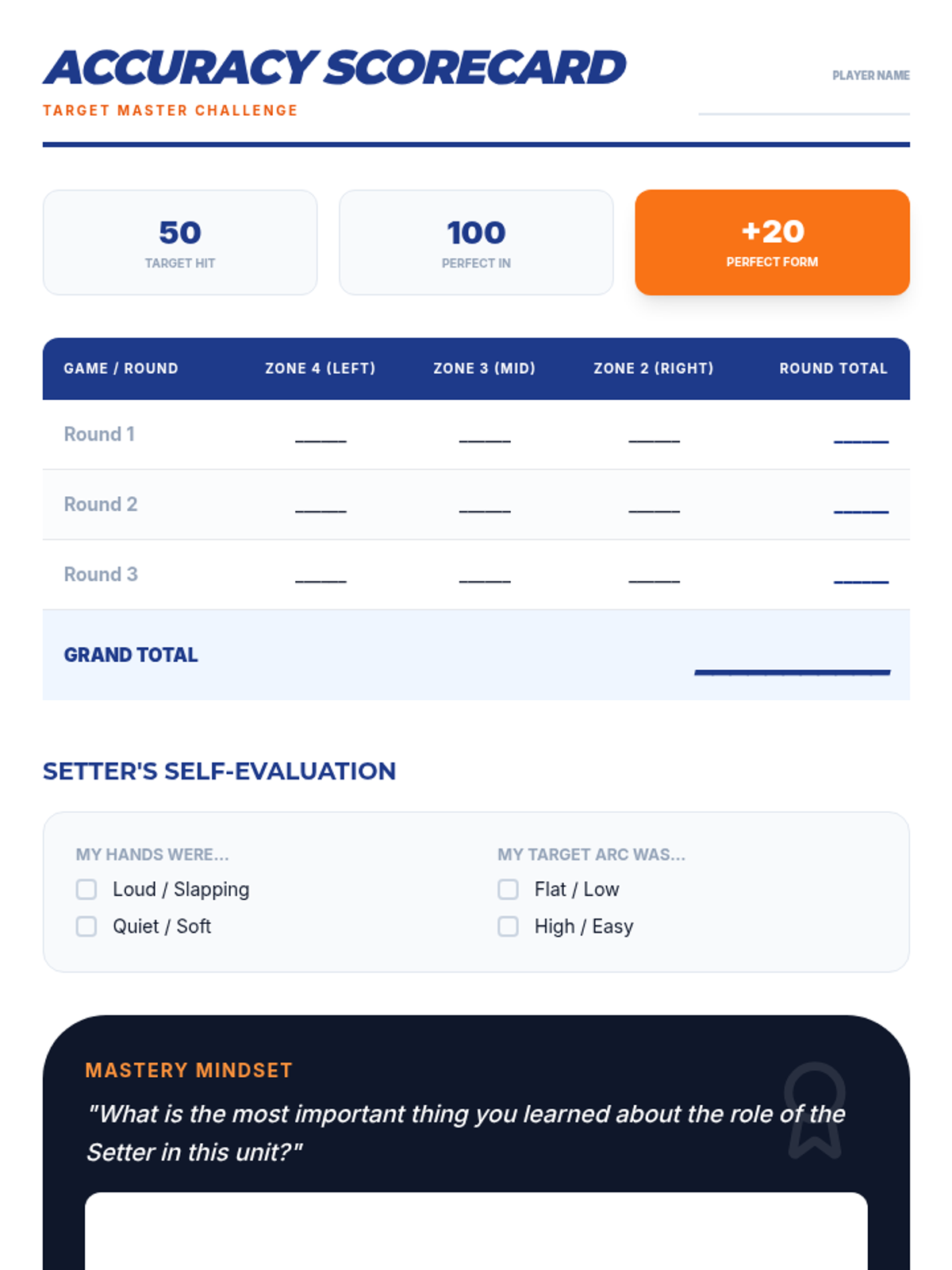
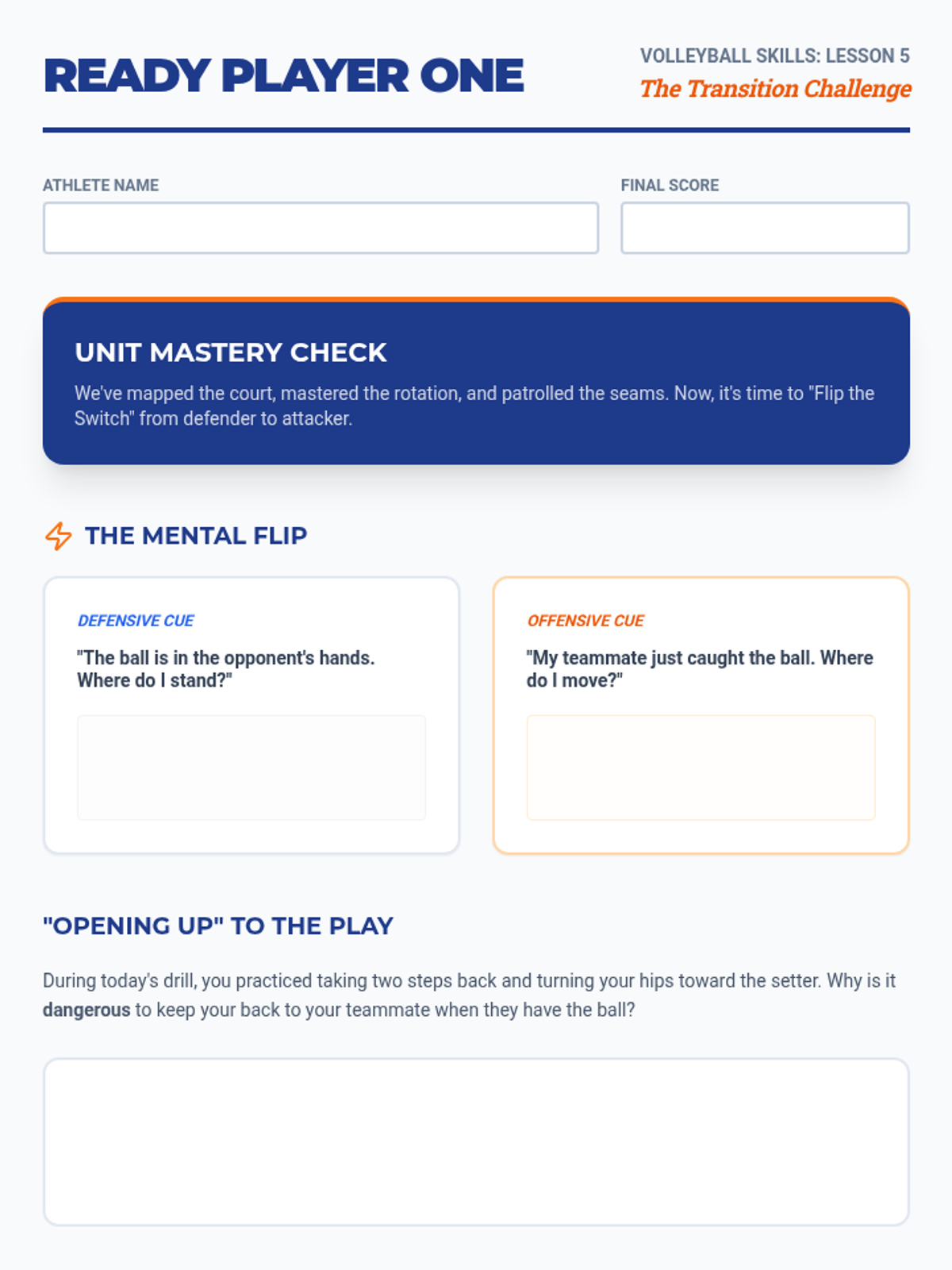
A final assessment where students demonstrate mastery through target-based challenges and peer evaluation.
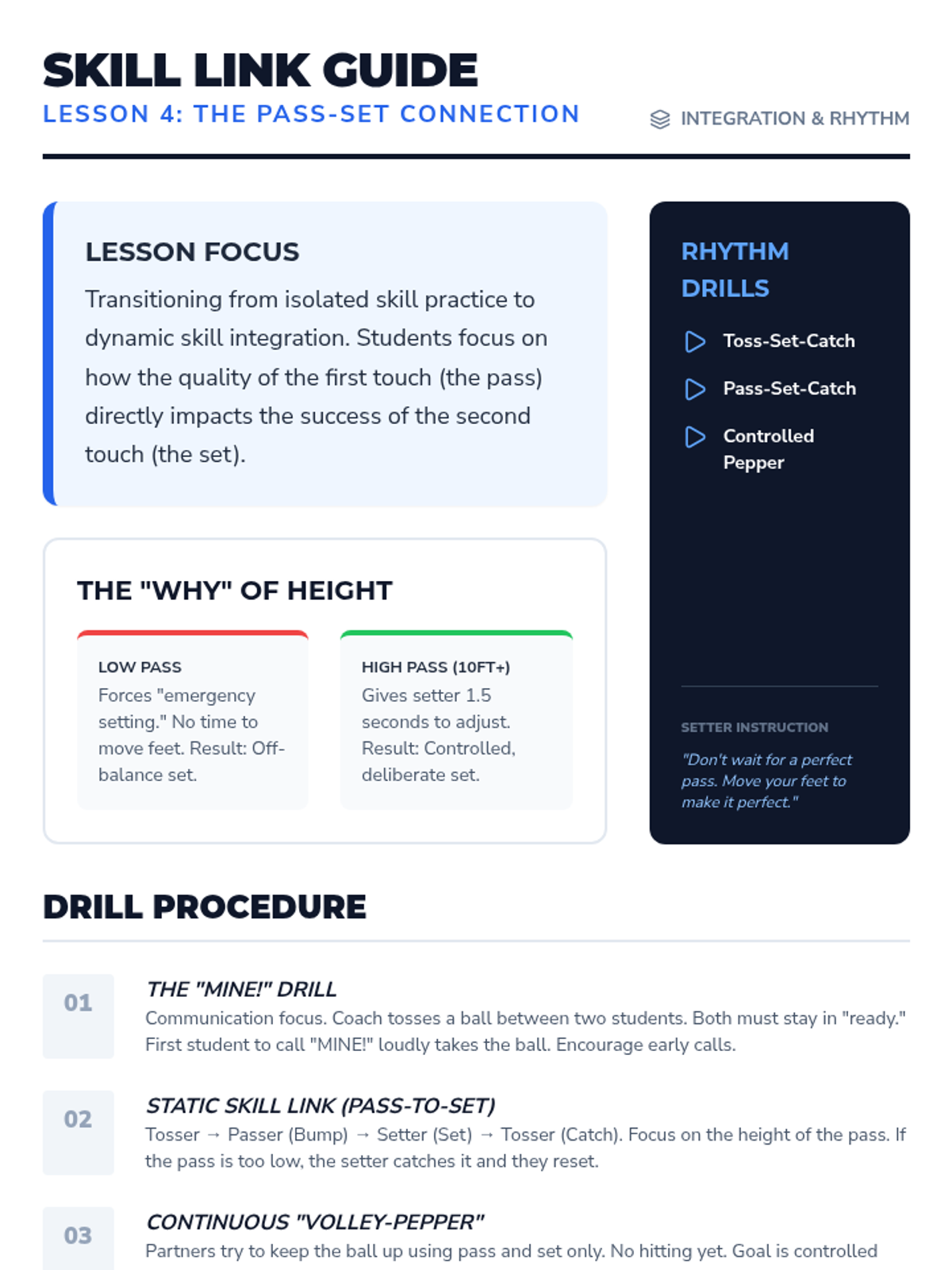
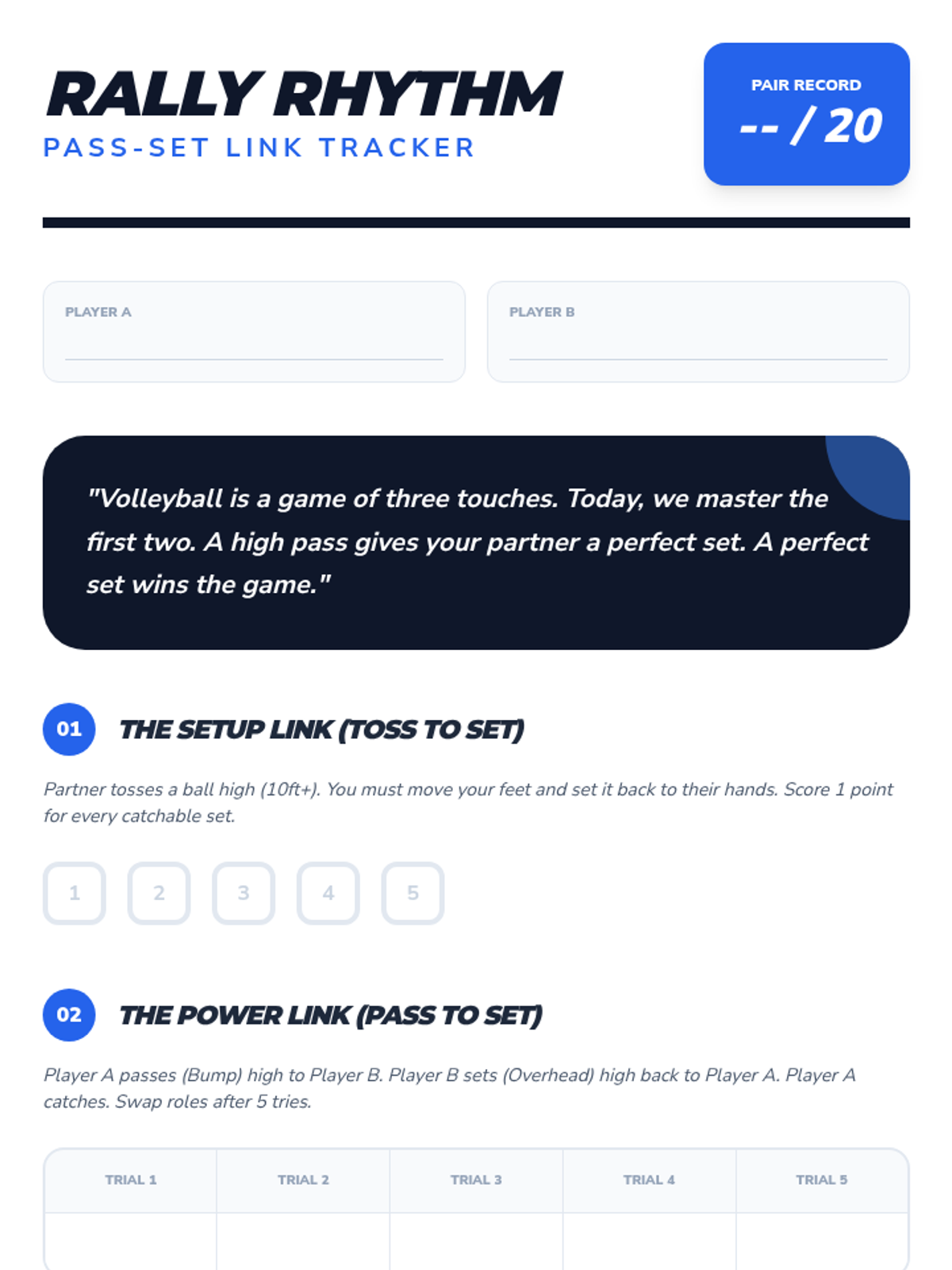
Combines passing and setting skills to practice transitions and rhythm through pepper drills and controlled rallying.
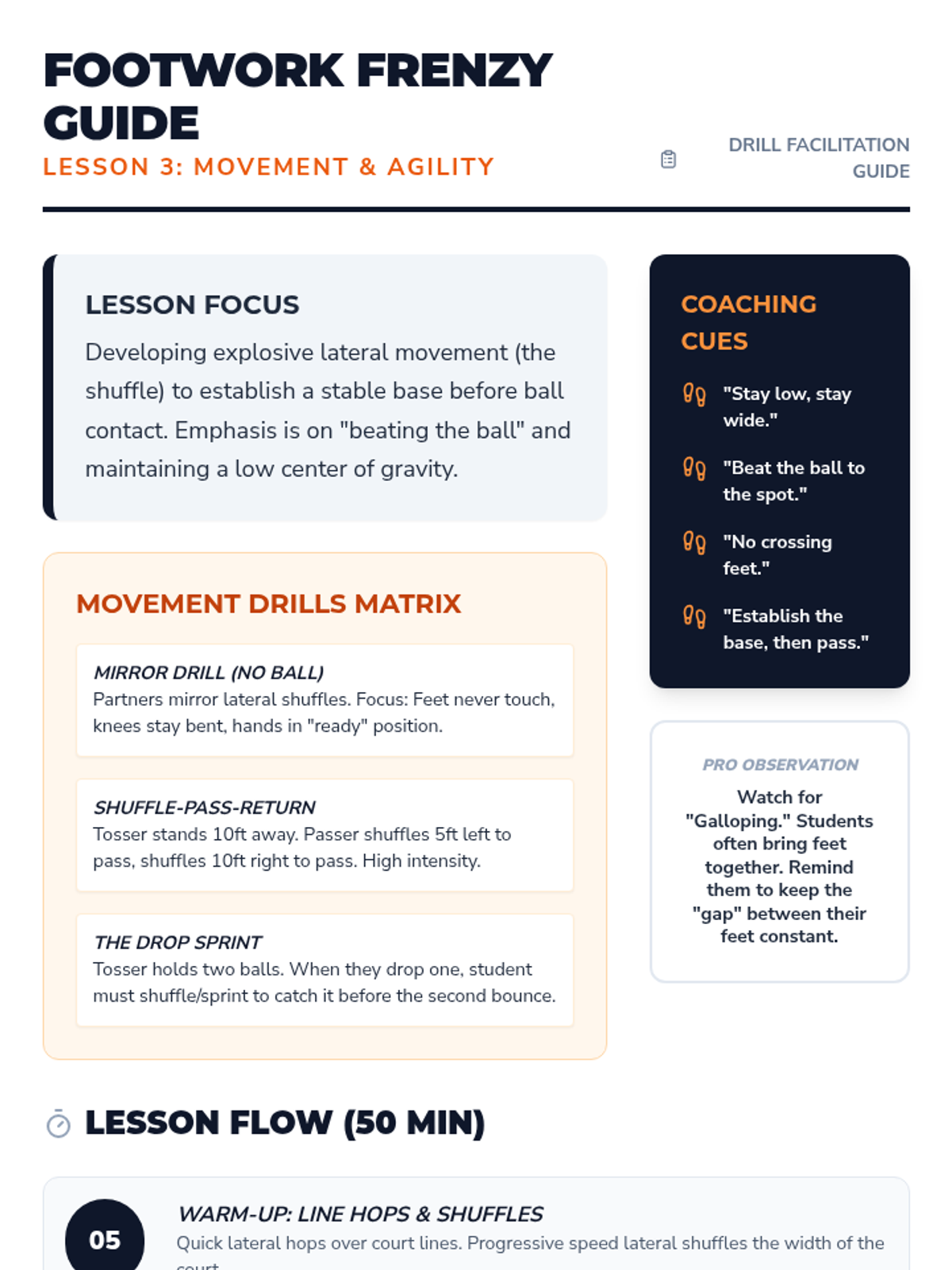
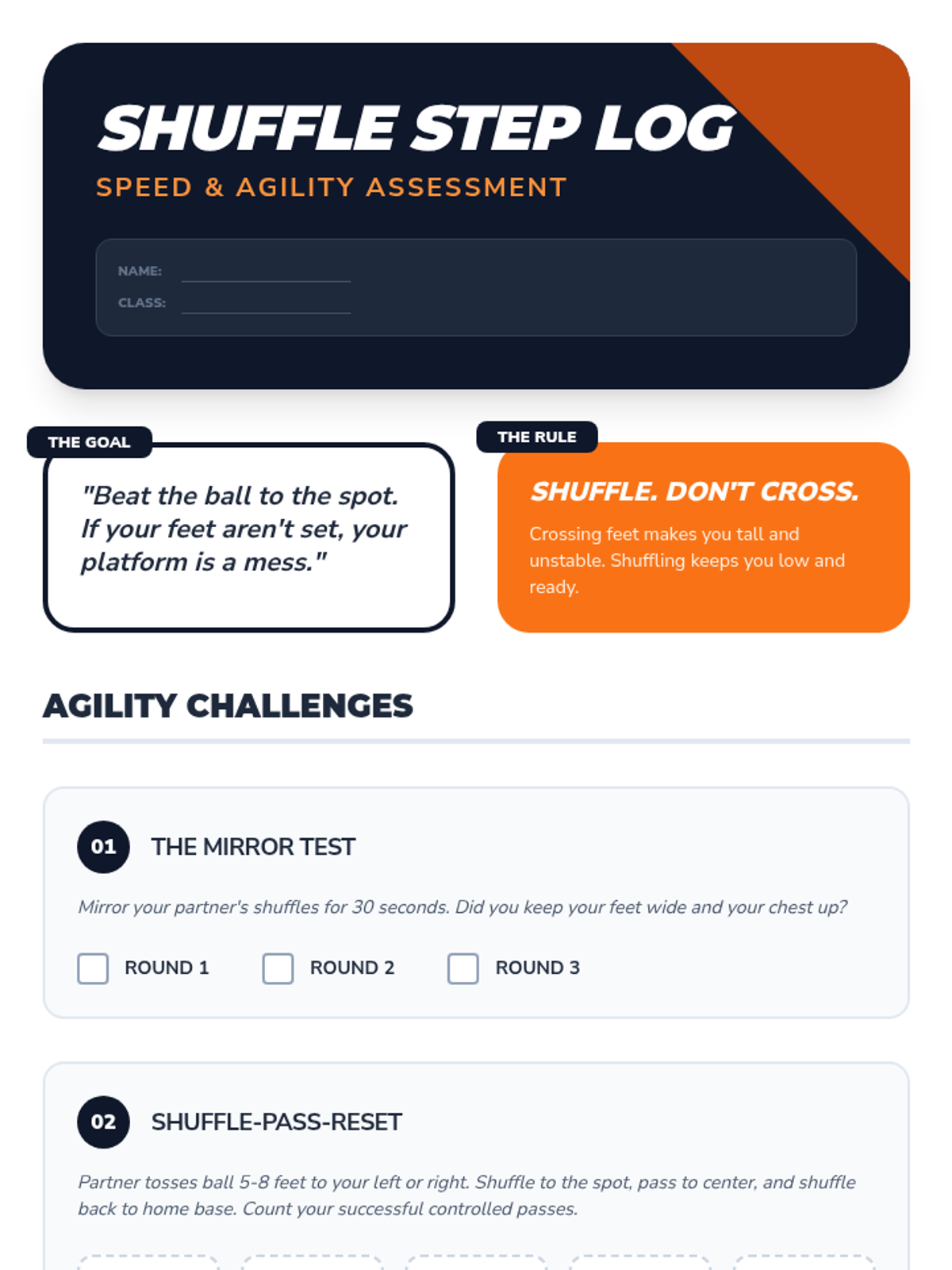
Integrates movement with passing skills, teaching students to shuffle to maintain stability and beat the ball to the spot.
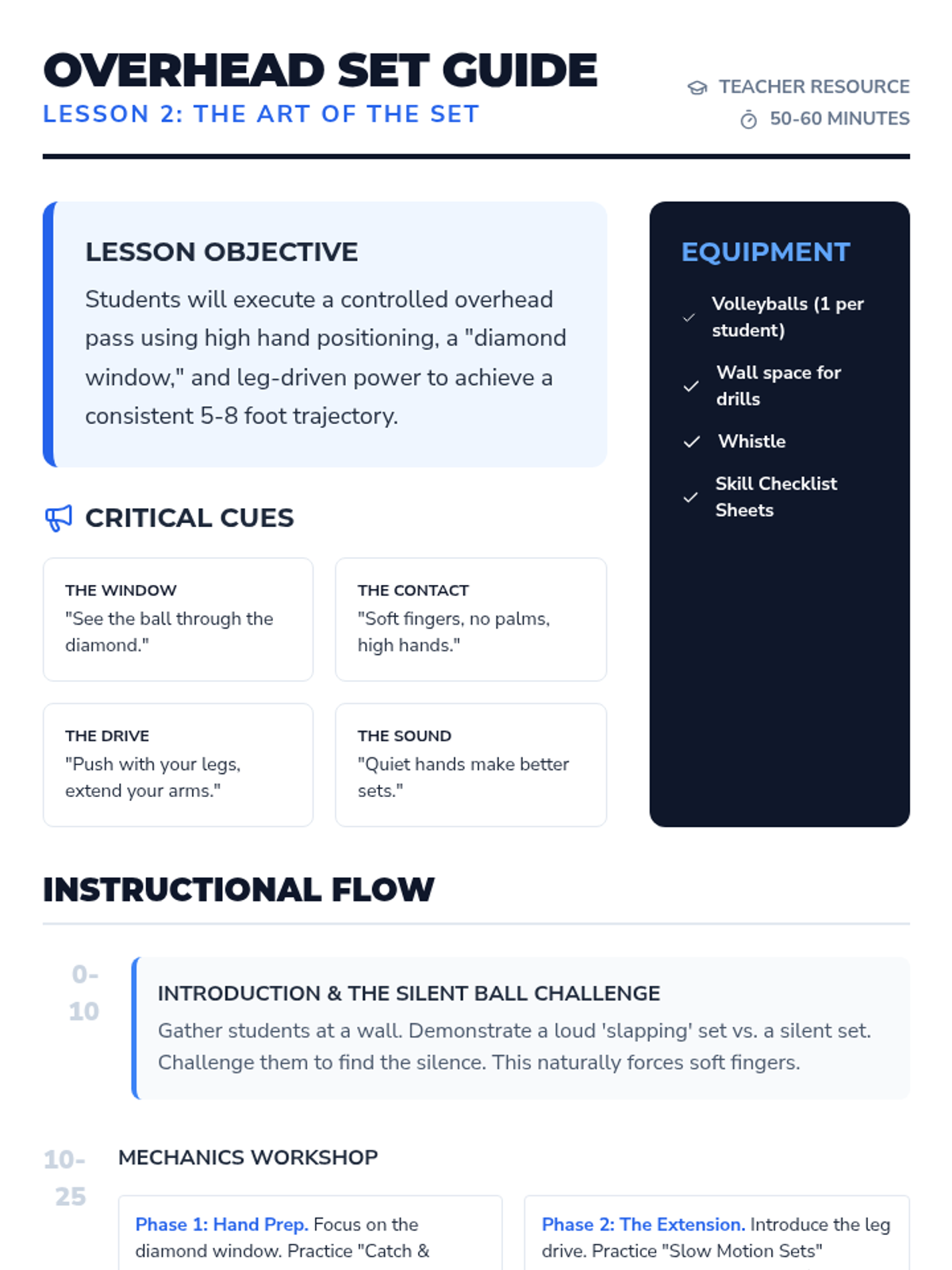
Focuses on the overhead pass, emphasizing hand positioning and using legs for power through a series of catching and setting drills.
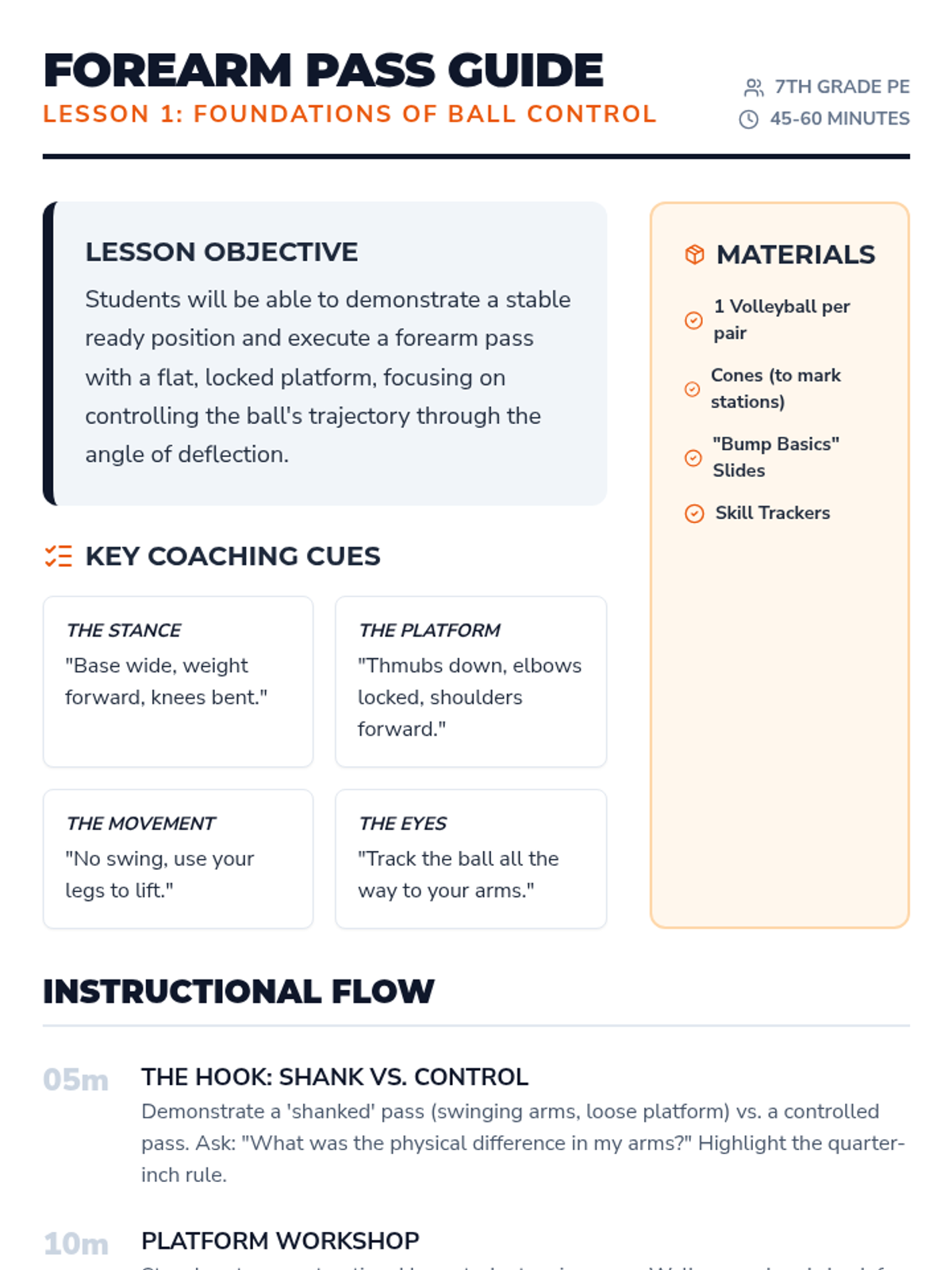
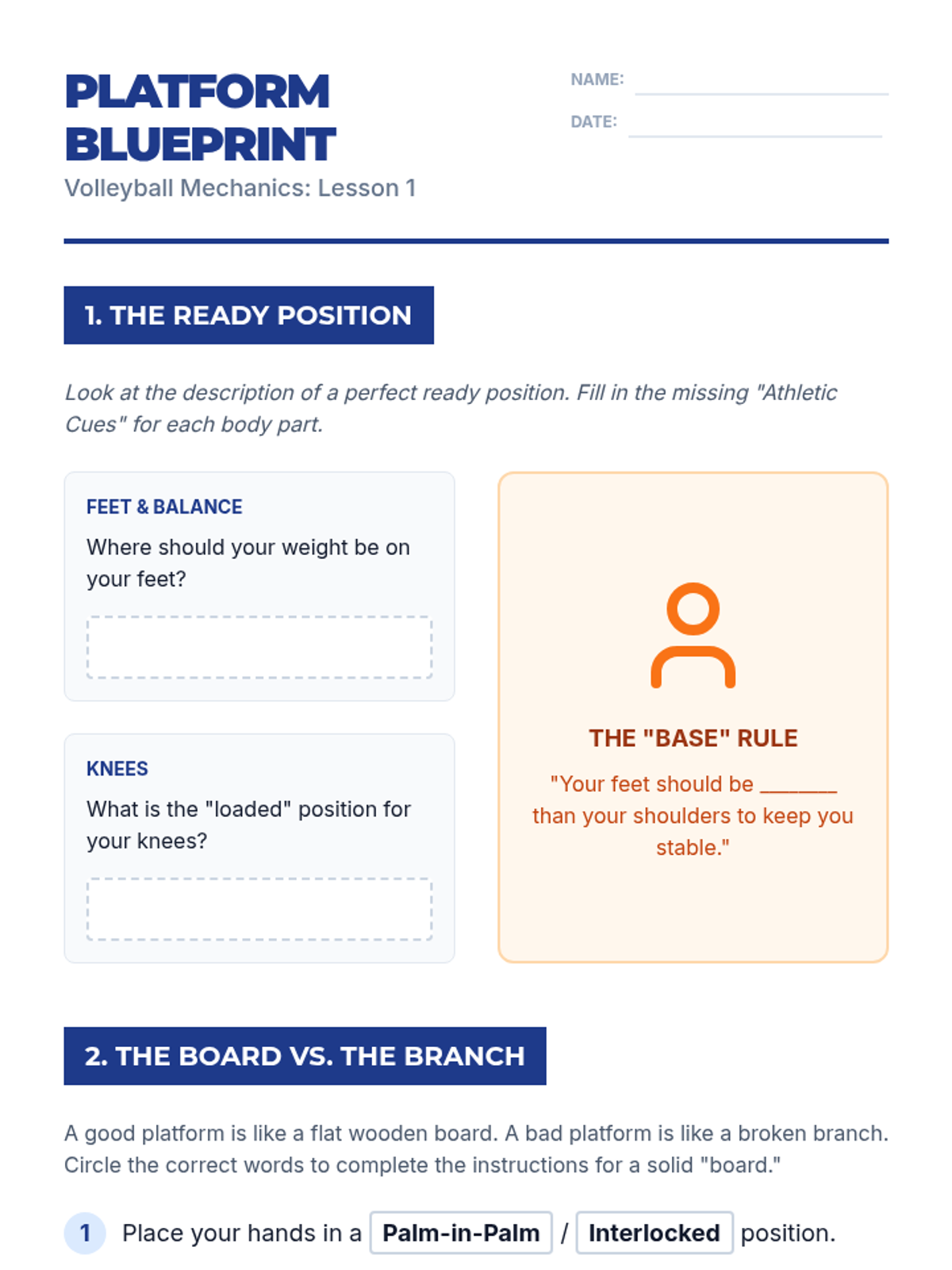
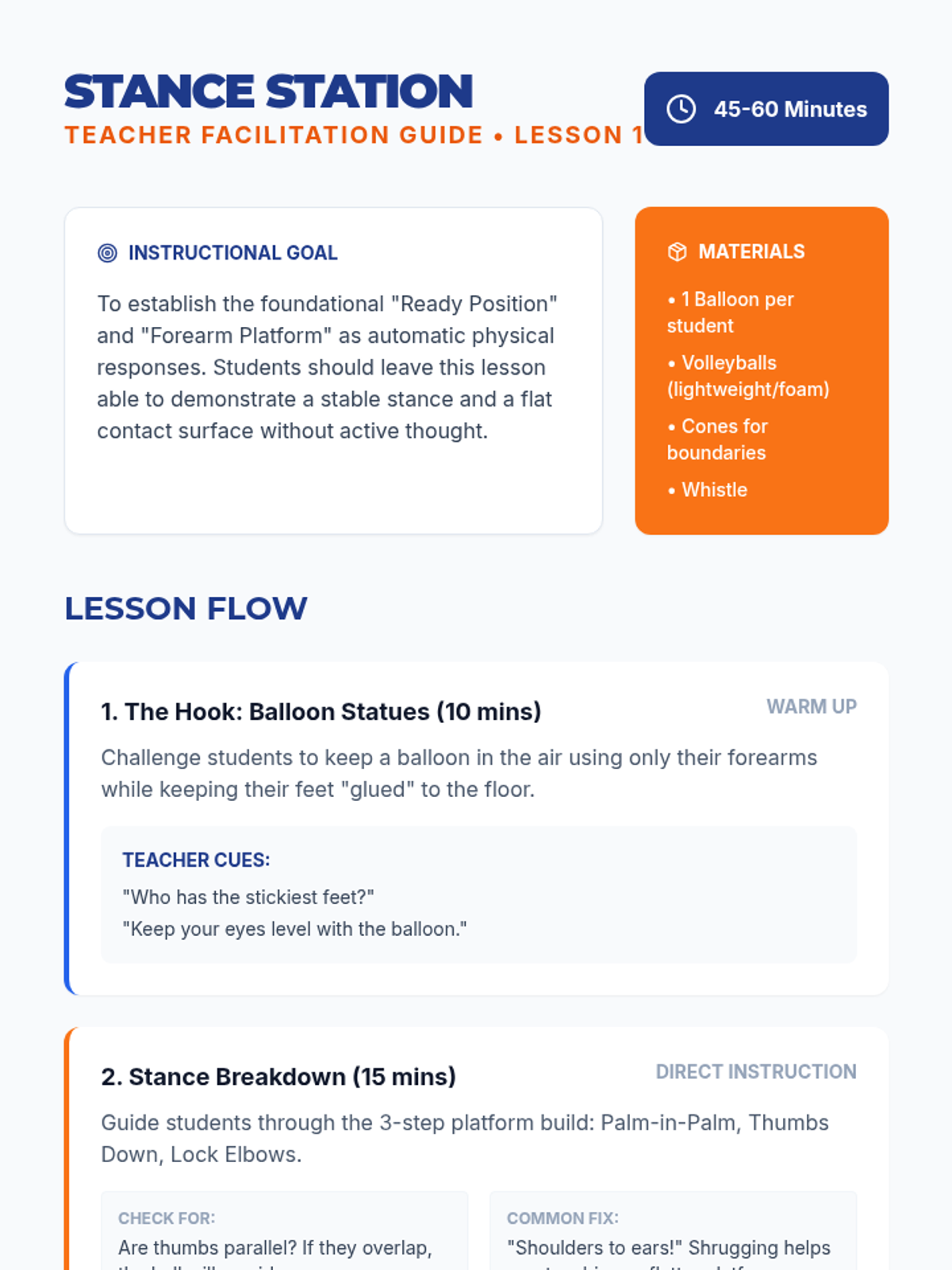
Students learn the fundamental athletic stance and the mechanics of creating a flat platform for passing, focusing on visualization of the angle of deflection.
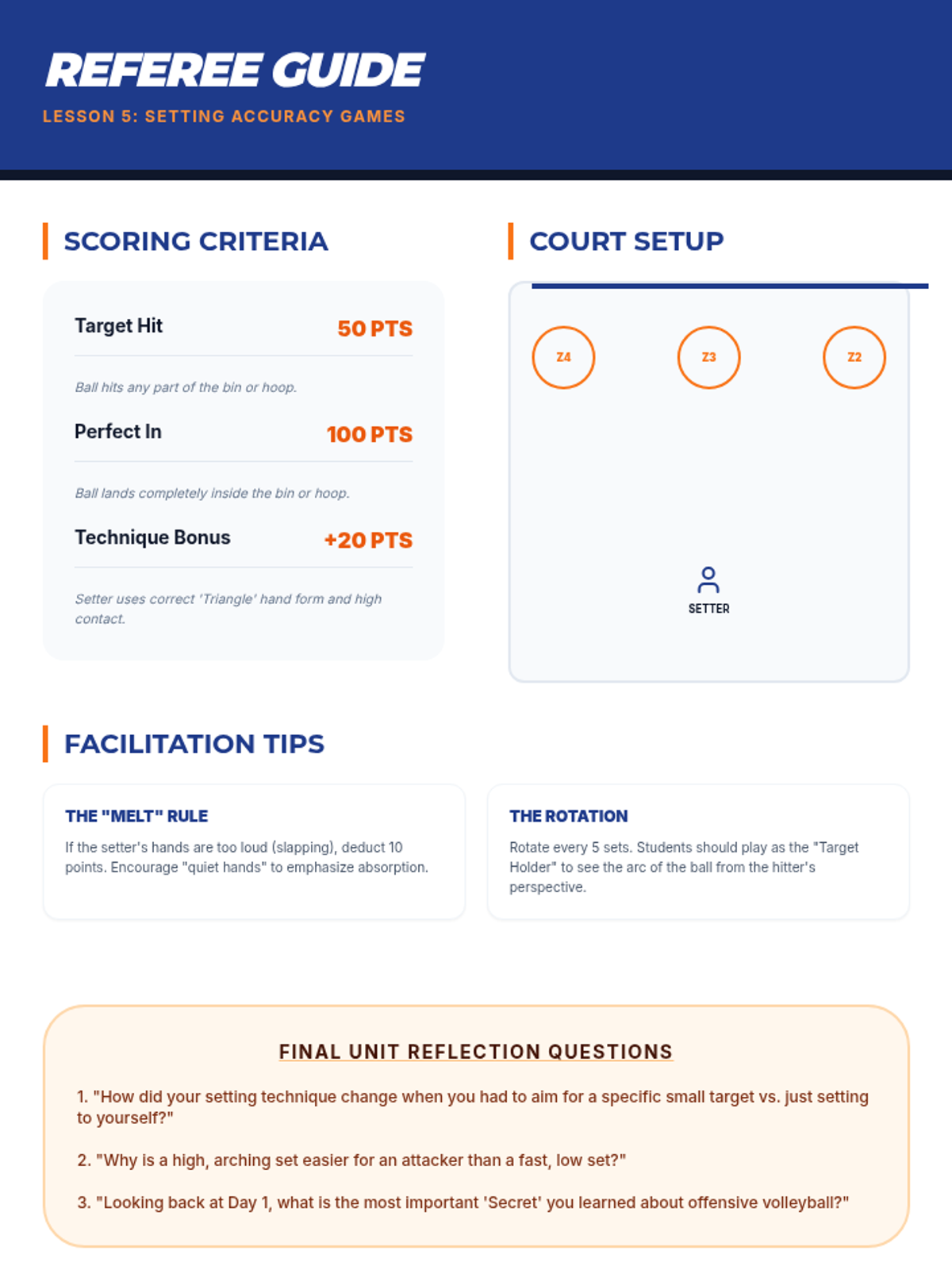
Students participate in competitive target games where they must set the ball into hoops or bins placed in specific zones of the court. This reinforces the need for precision over power.
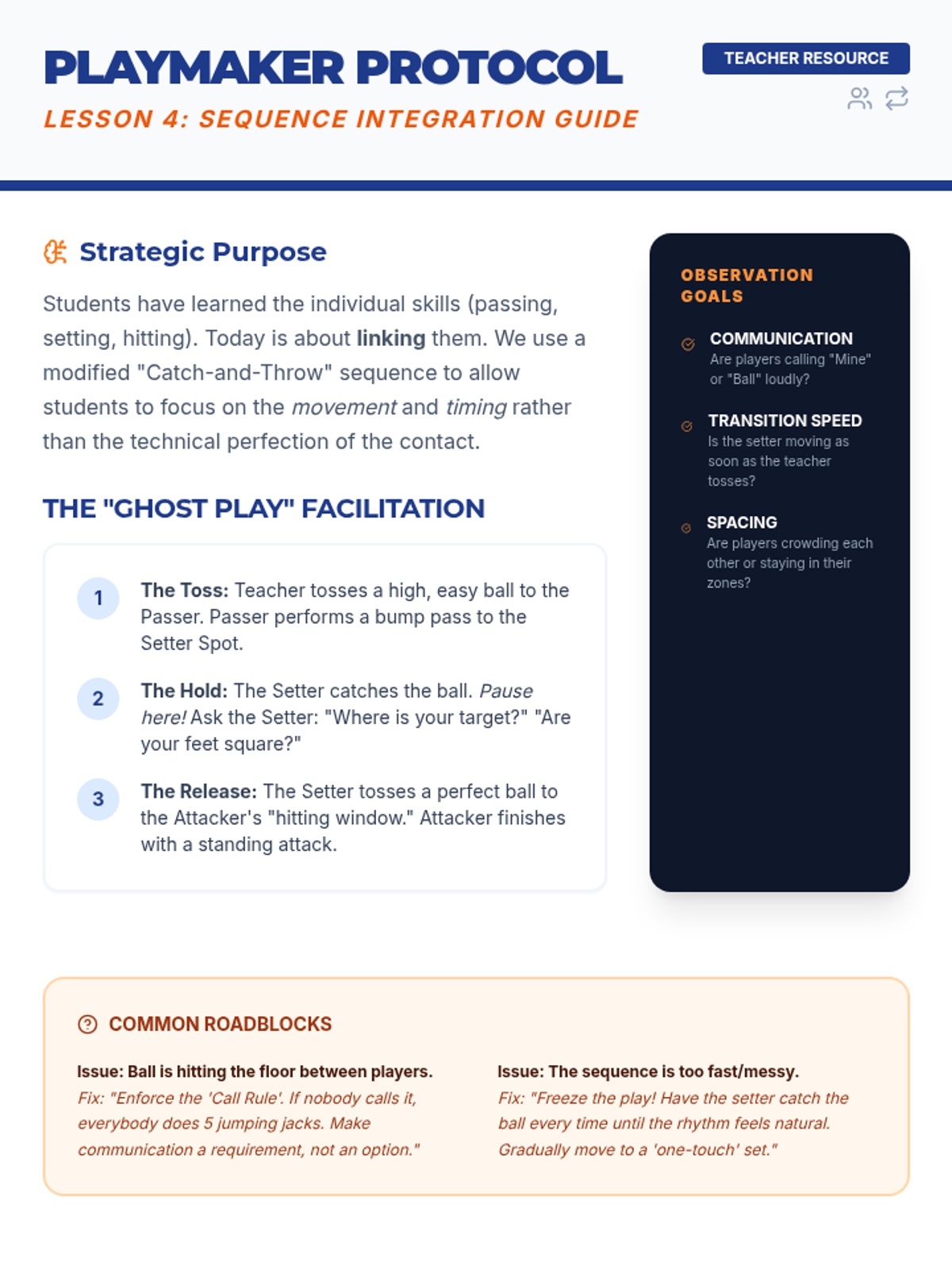
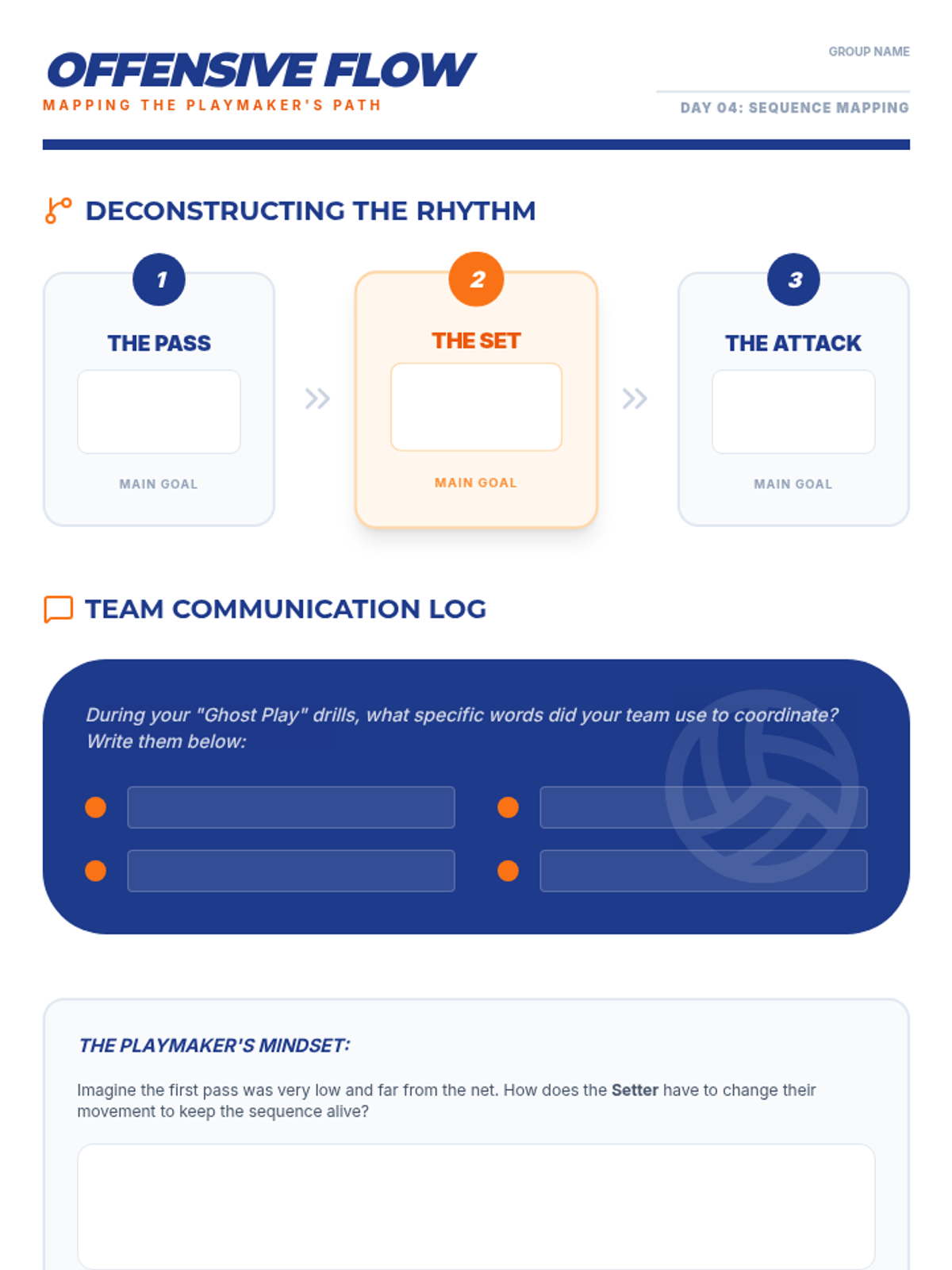
Small groups practice the specific sequence of toss (pass), set, and catch (attack). The lesson deconstructs the rhythm of play, allowing students to visualize the offensive flow without the pressure of a live ball for every contact.
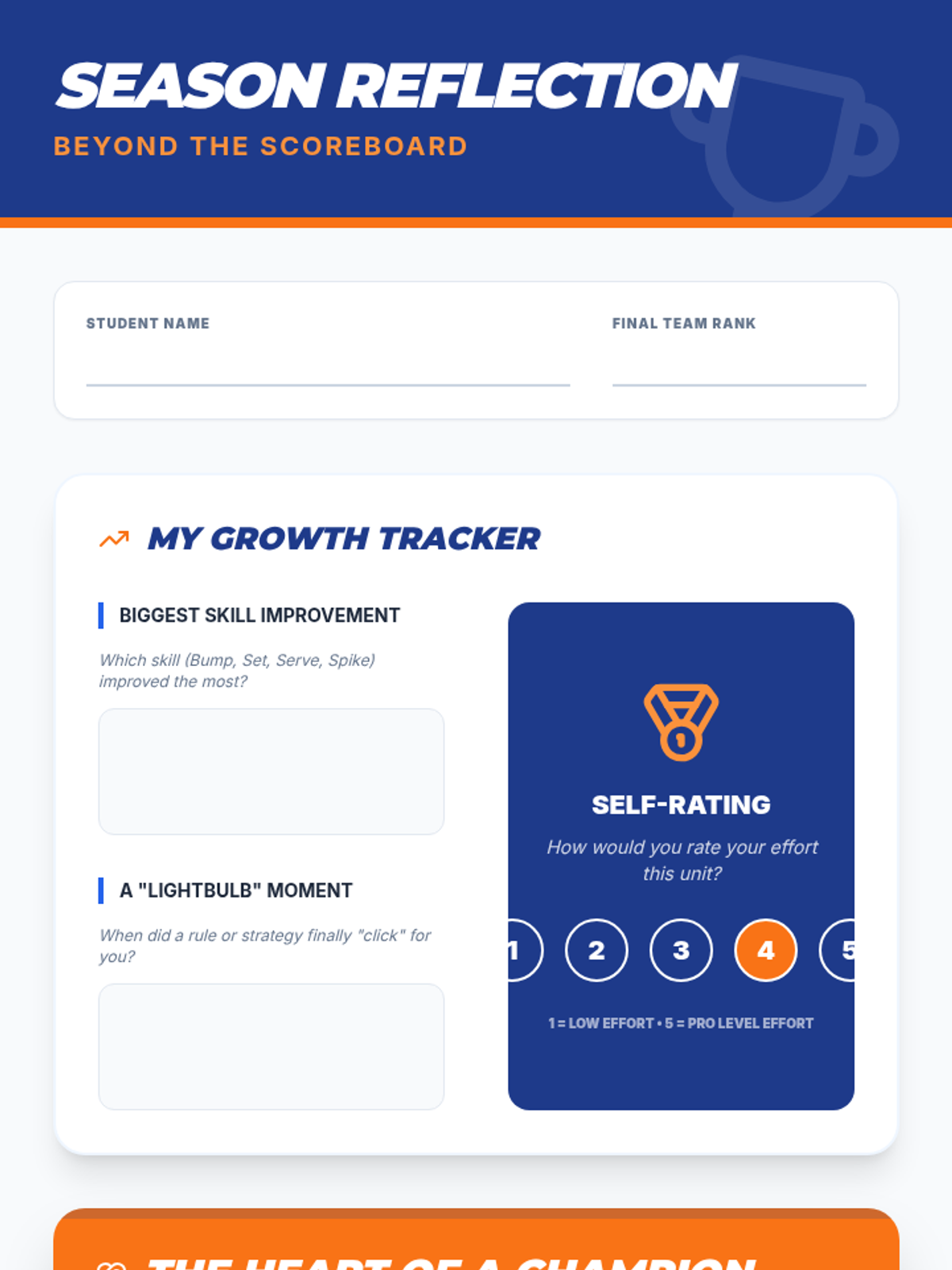
The sequence concludes with the tournament finals and a comprehensive sportsmanship reflection. Students honor peer achievements through MVP ballots and analyze their personal skill growth throughout the unit.
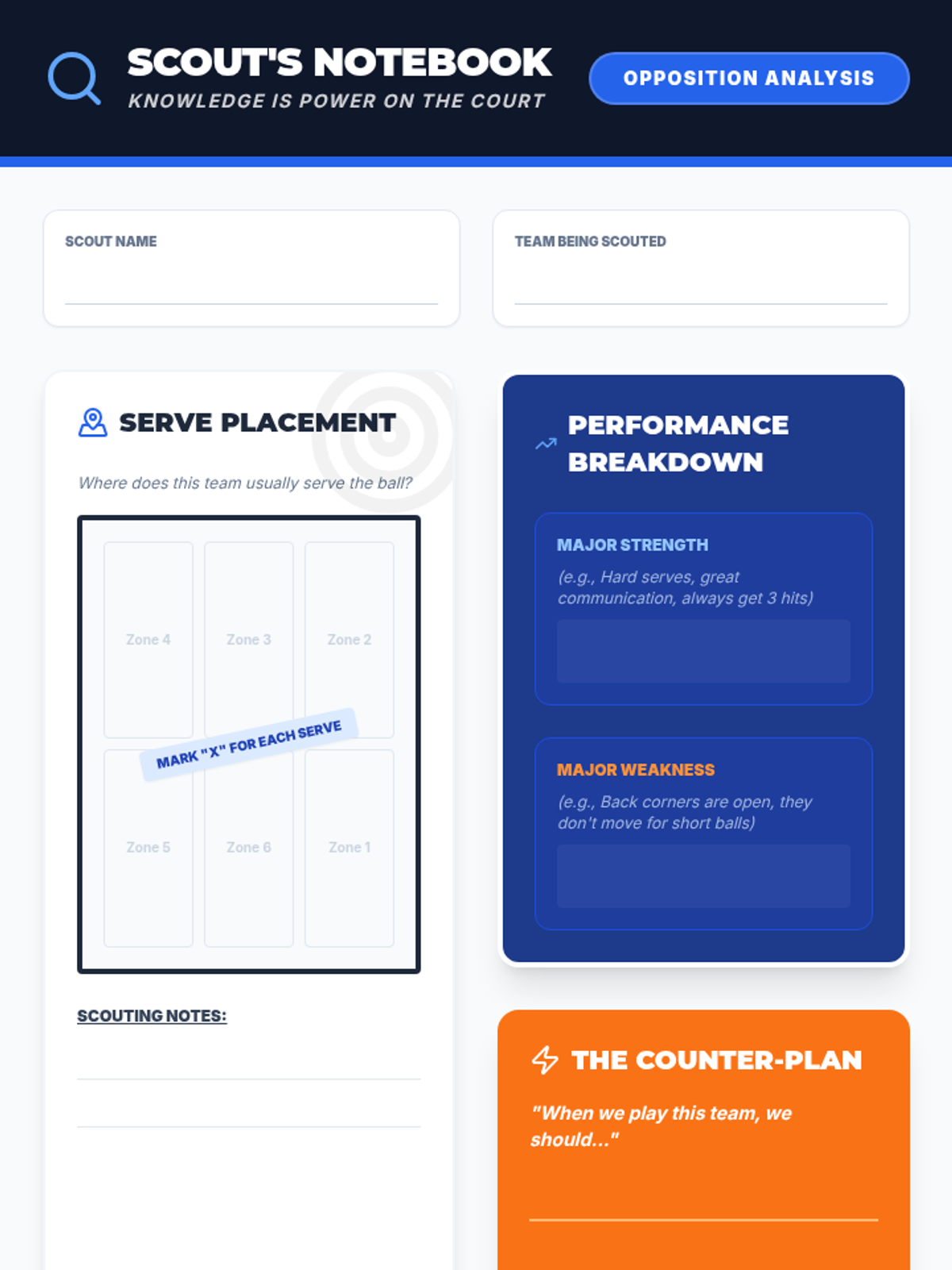
Tournament play continues with Pool B matchups. The teacher introduces tactical timeouts, enabling teams to regroup and adjust their gameplay based on scouting observations of their opponents.
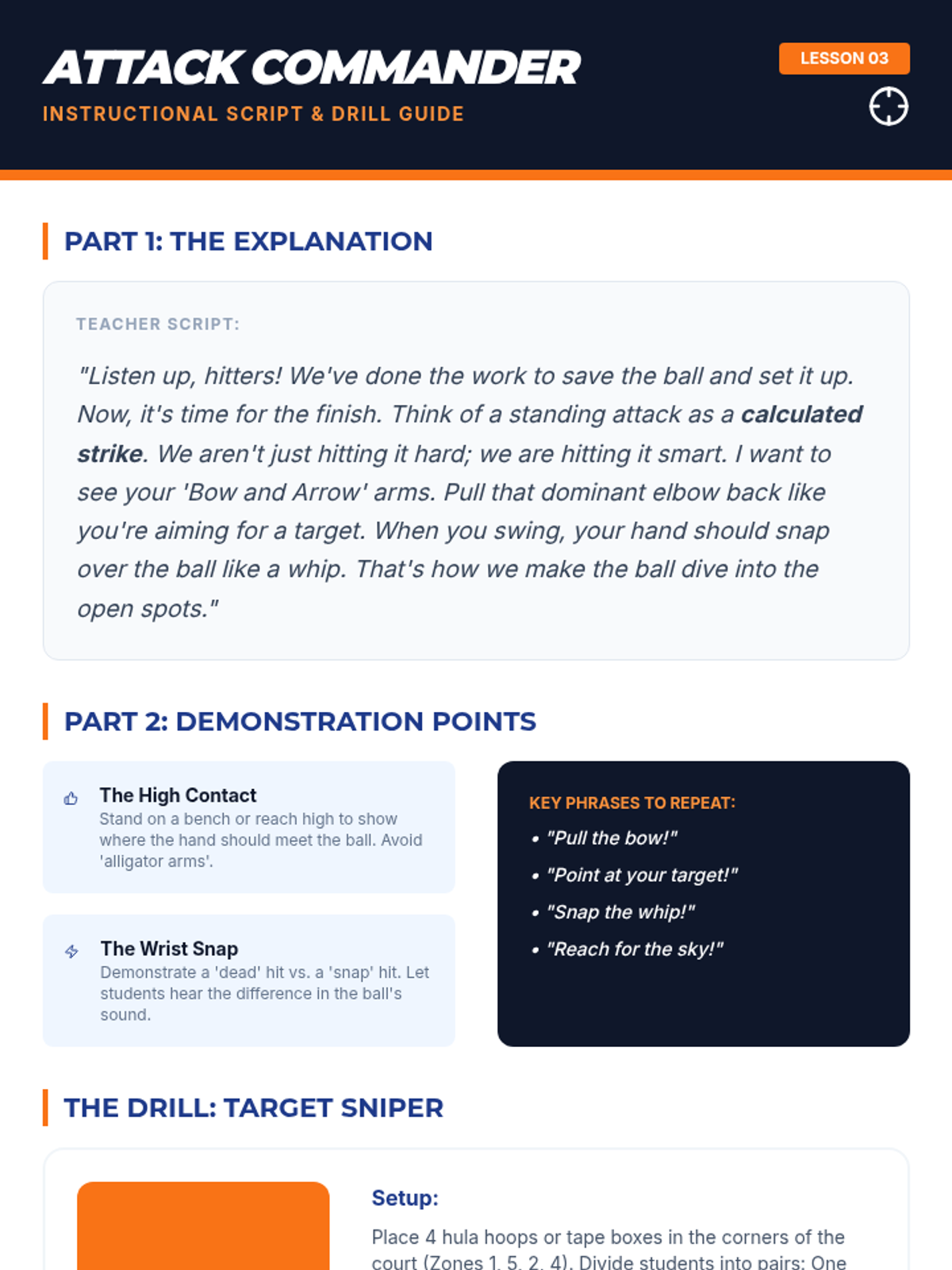
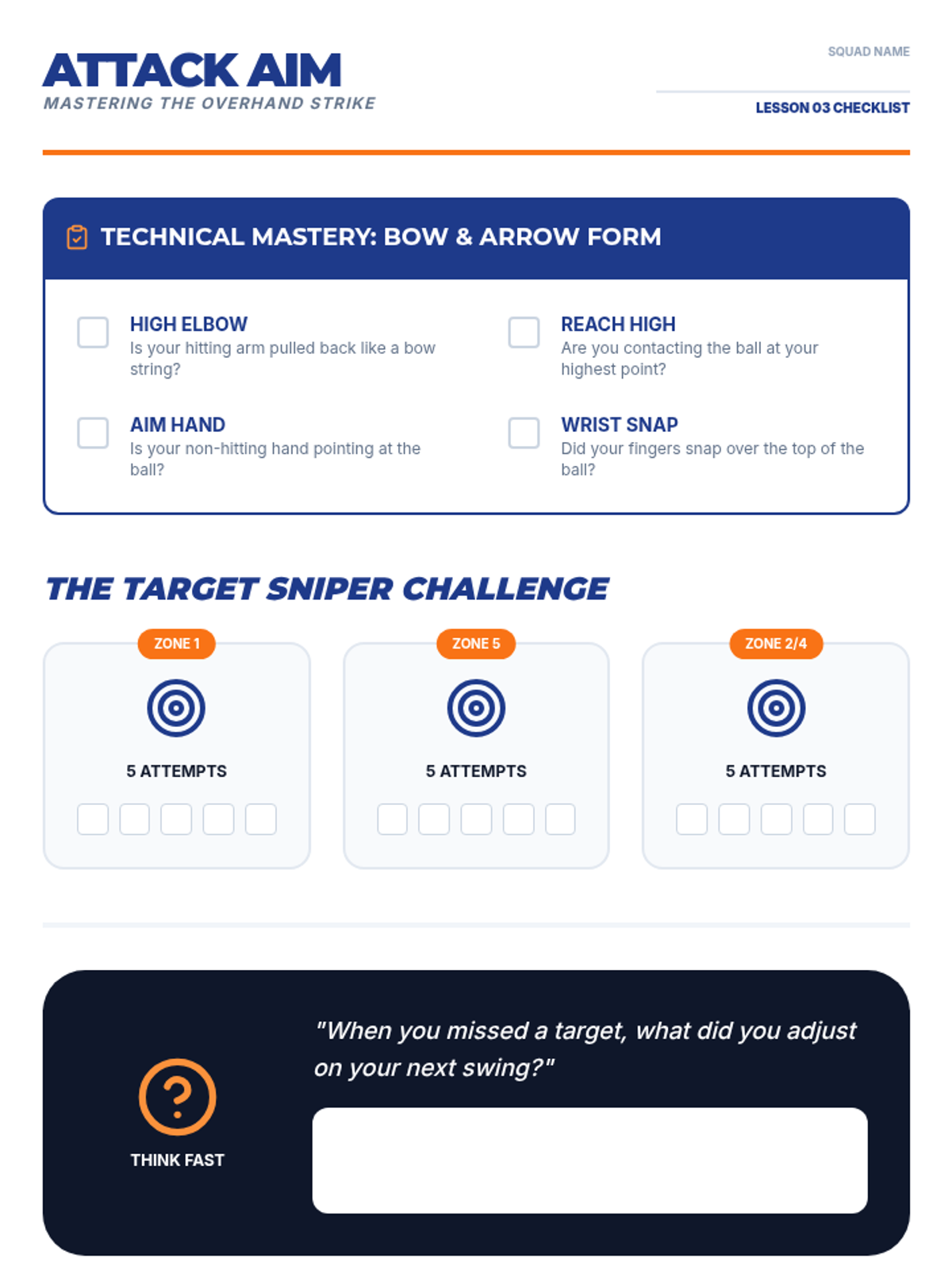
Students learn the mechanics of a standing attack (hitting the ball over the net with an overhand motion) focusing on the arm swing and wrist snap. This is introduced as the third contact in the sequence.
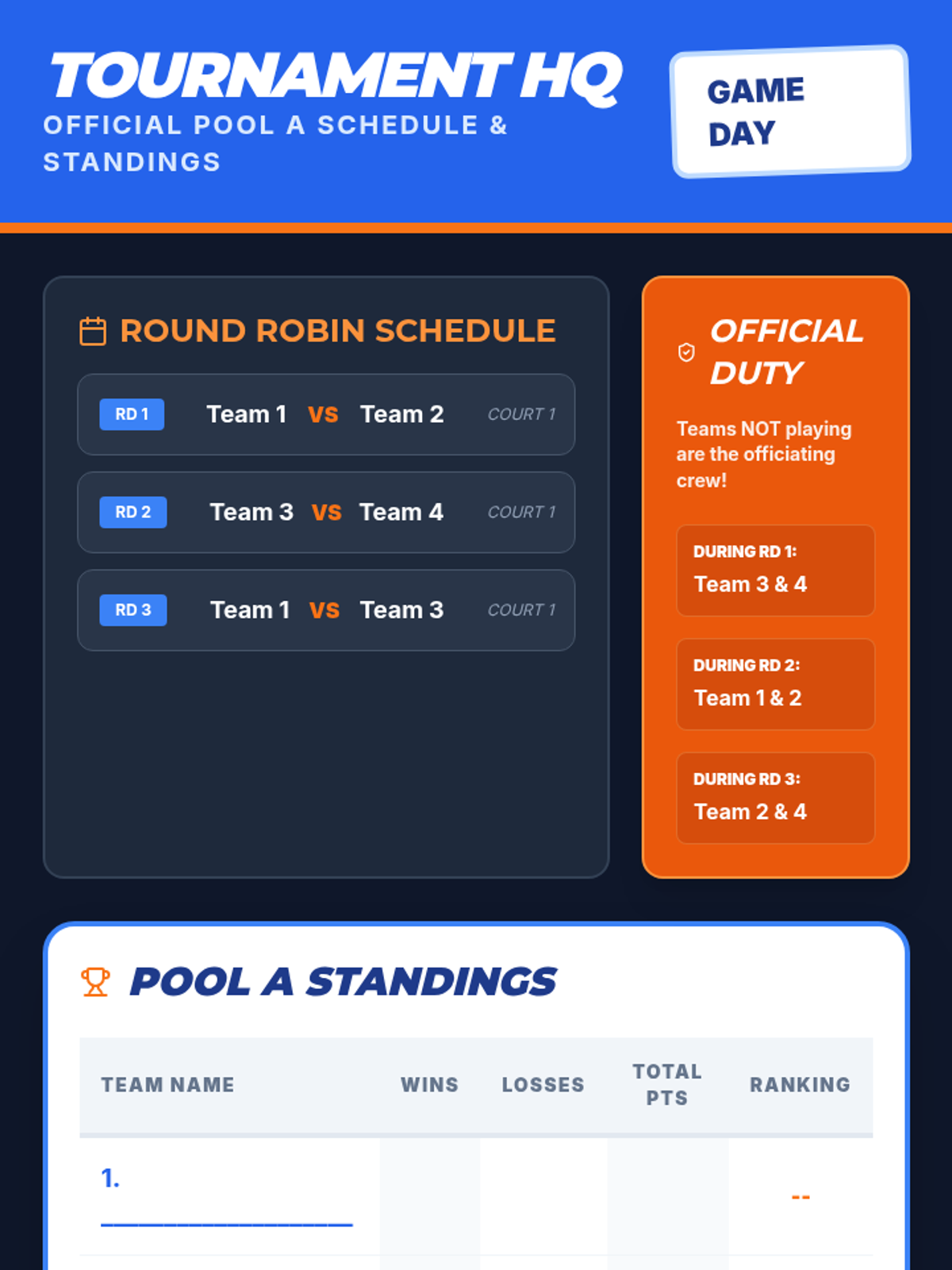
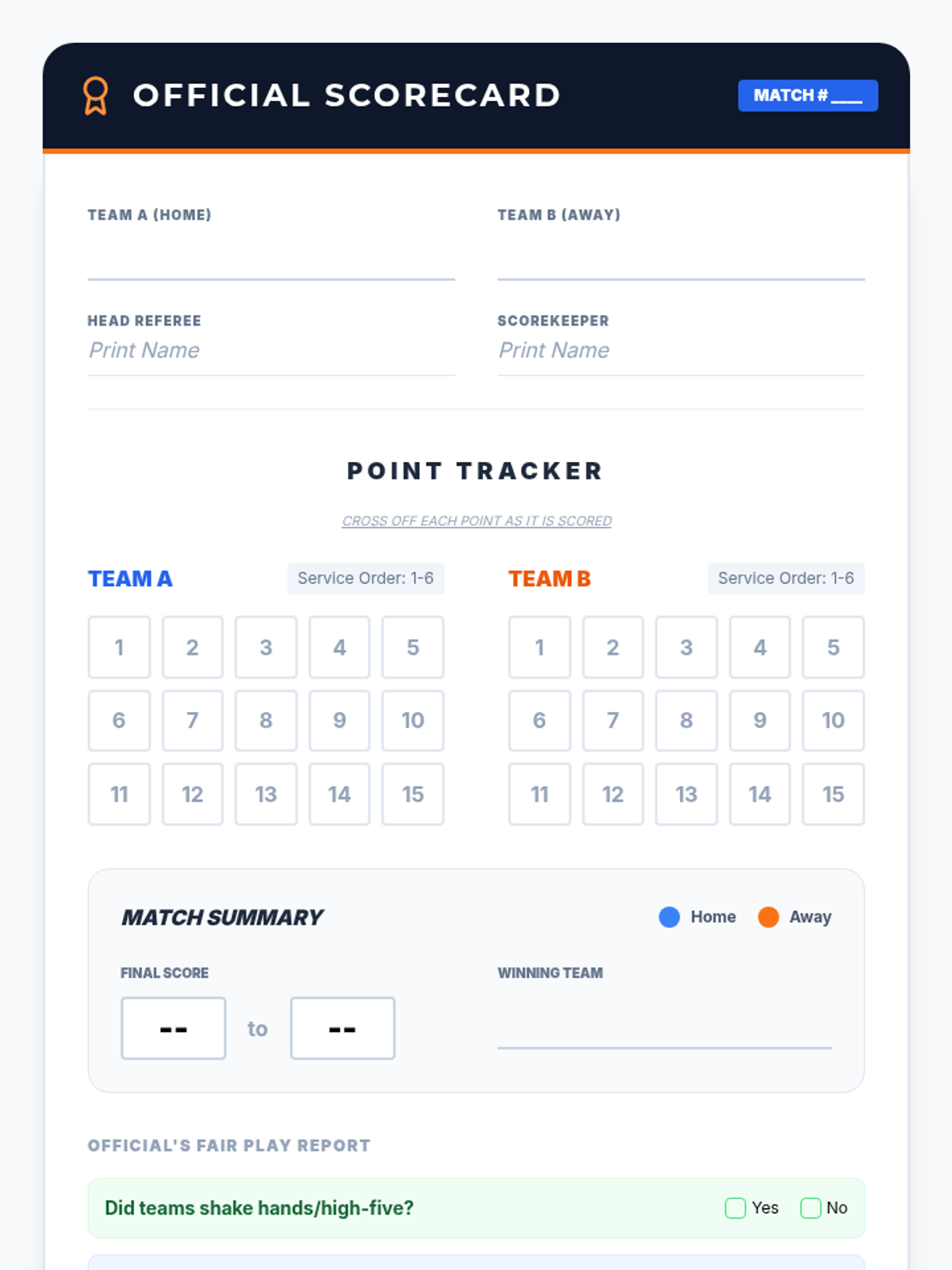
The class begins round-robin tournament play. Students alternate between competing on the court and serving as court officials (referees, line judges, and scorekeepers). The primary tactical focus is executing the 'bump-set-over' strategy.
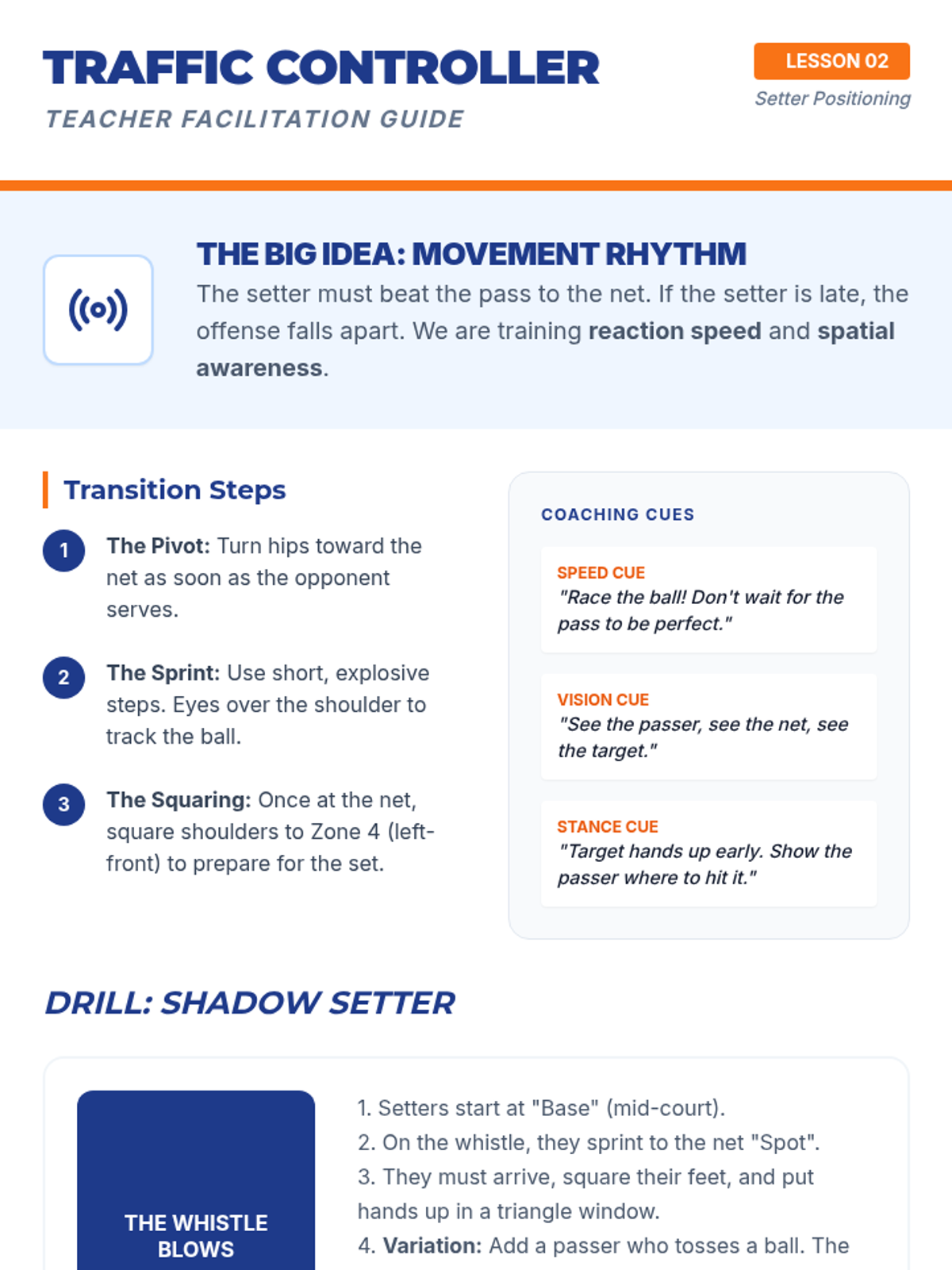
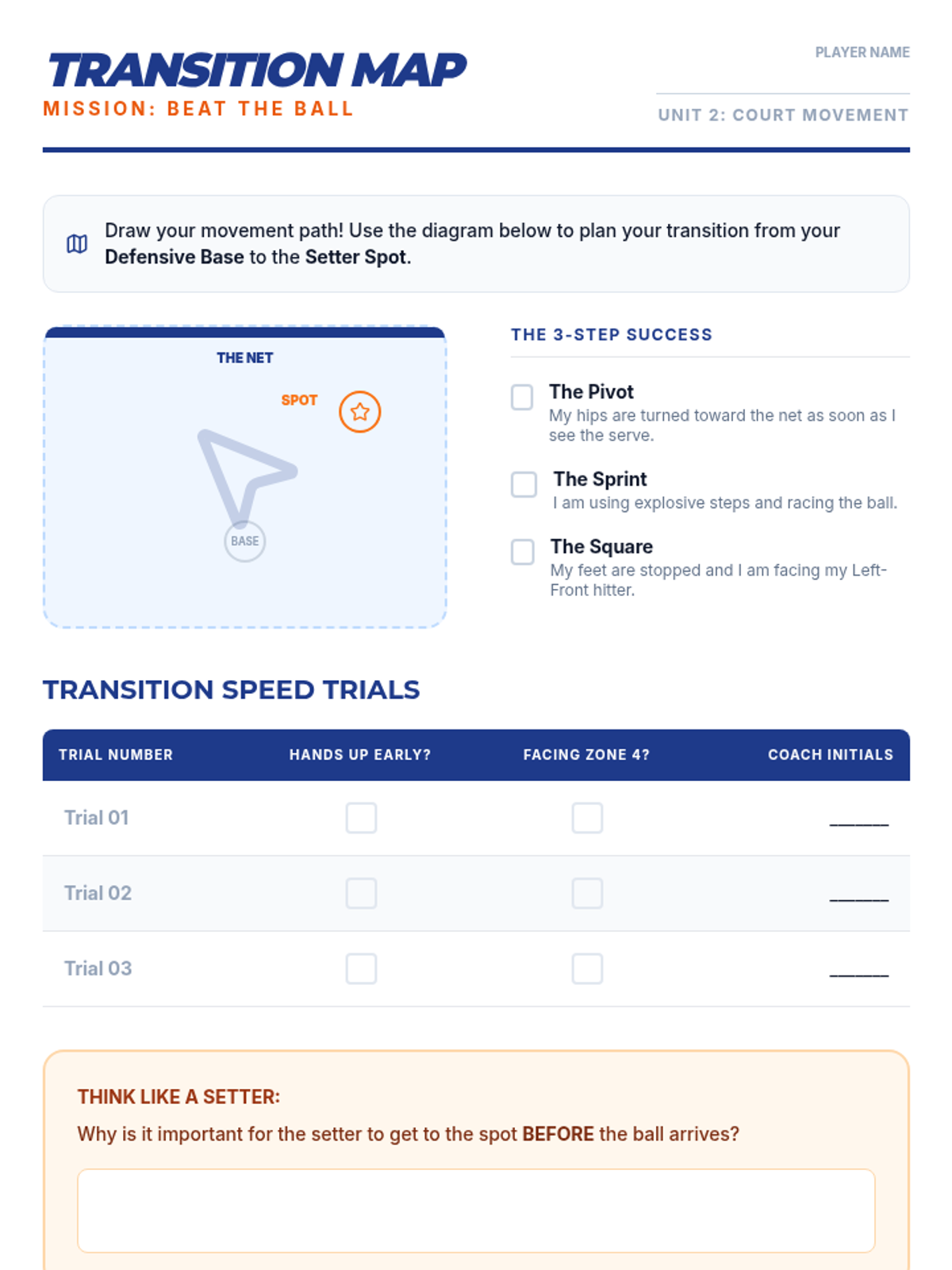
Students practice moving from a defensive base to the 'setter spot' at the net. Drills involve transitioning quickly after a ball is passed to be ready to set the second contact.
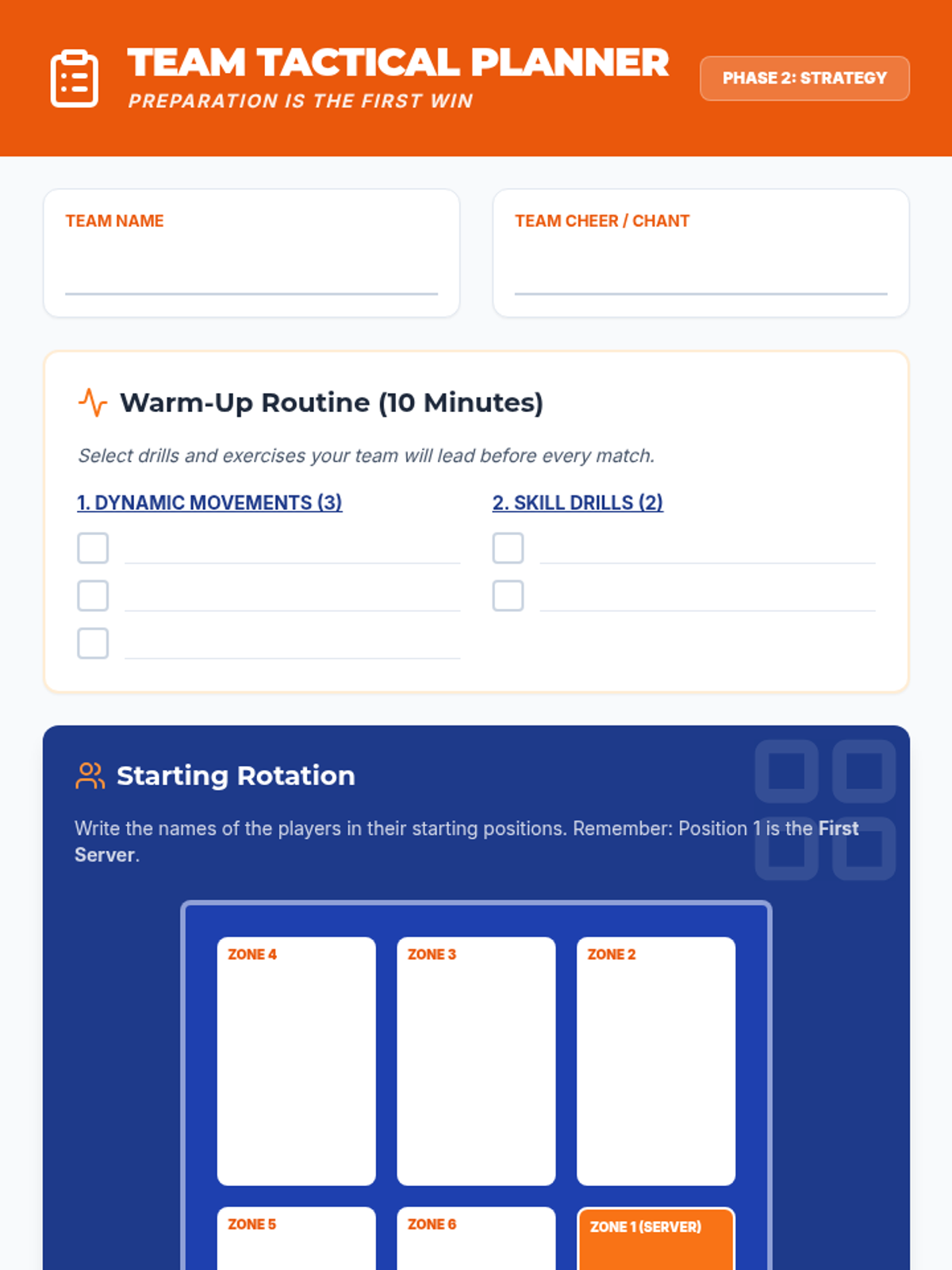
Teams are formed and tasked with creating a structured warm-up routine and a strategic game plan. They define player rotations and build team identity through collaborative planning.
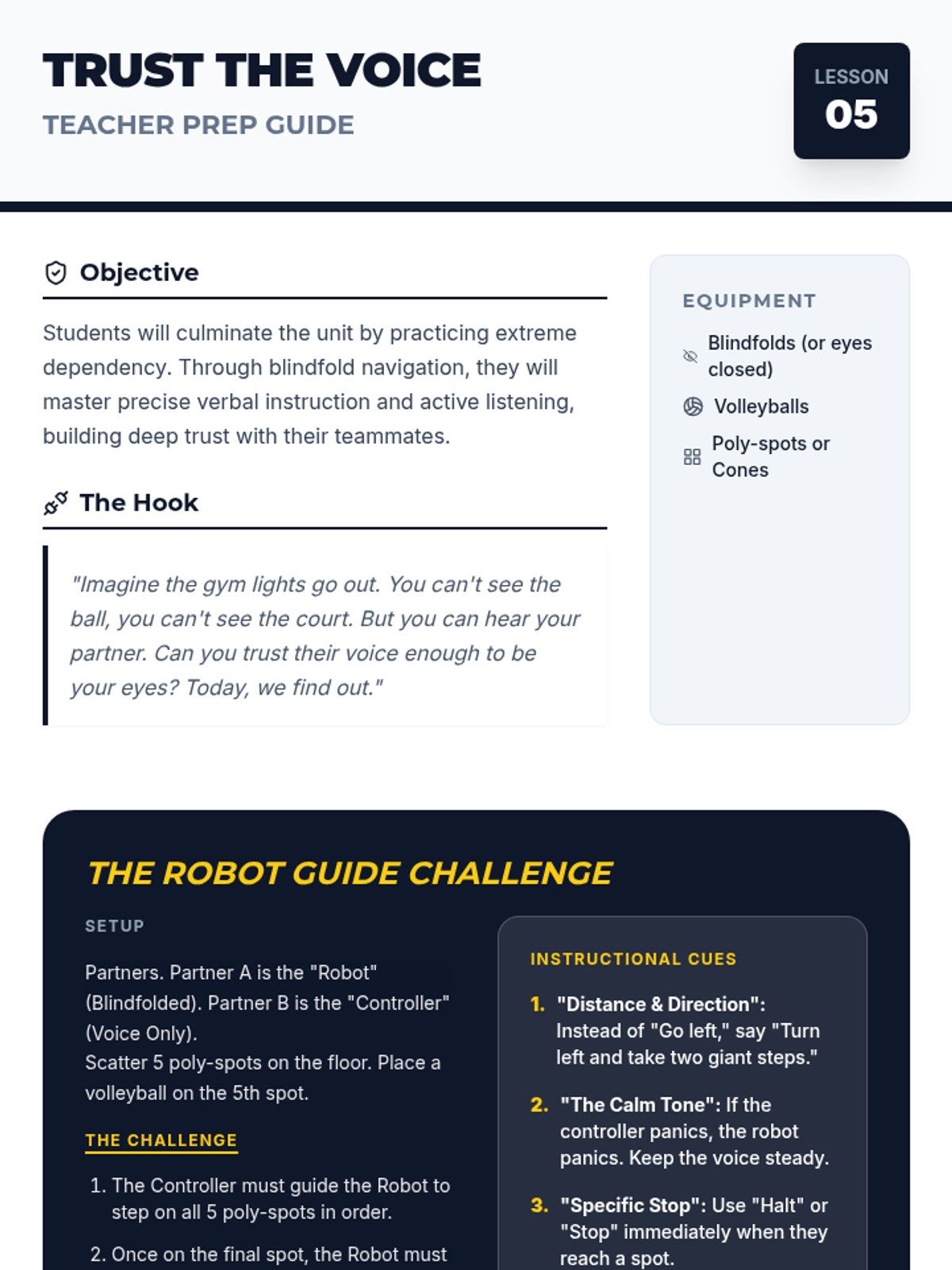
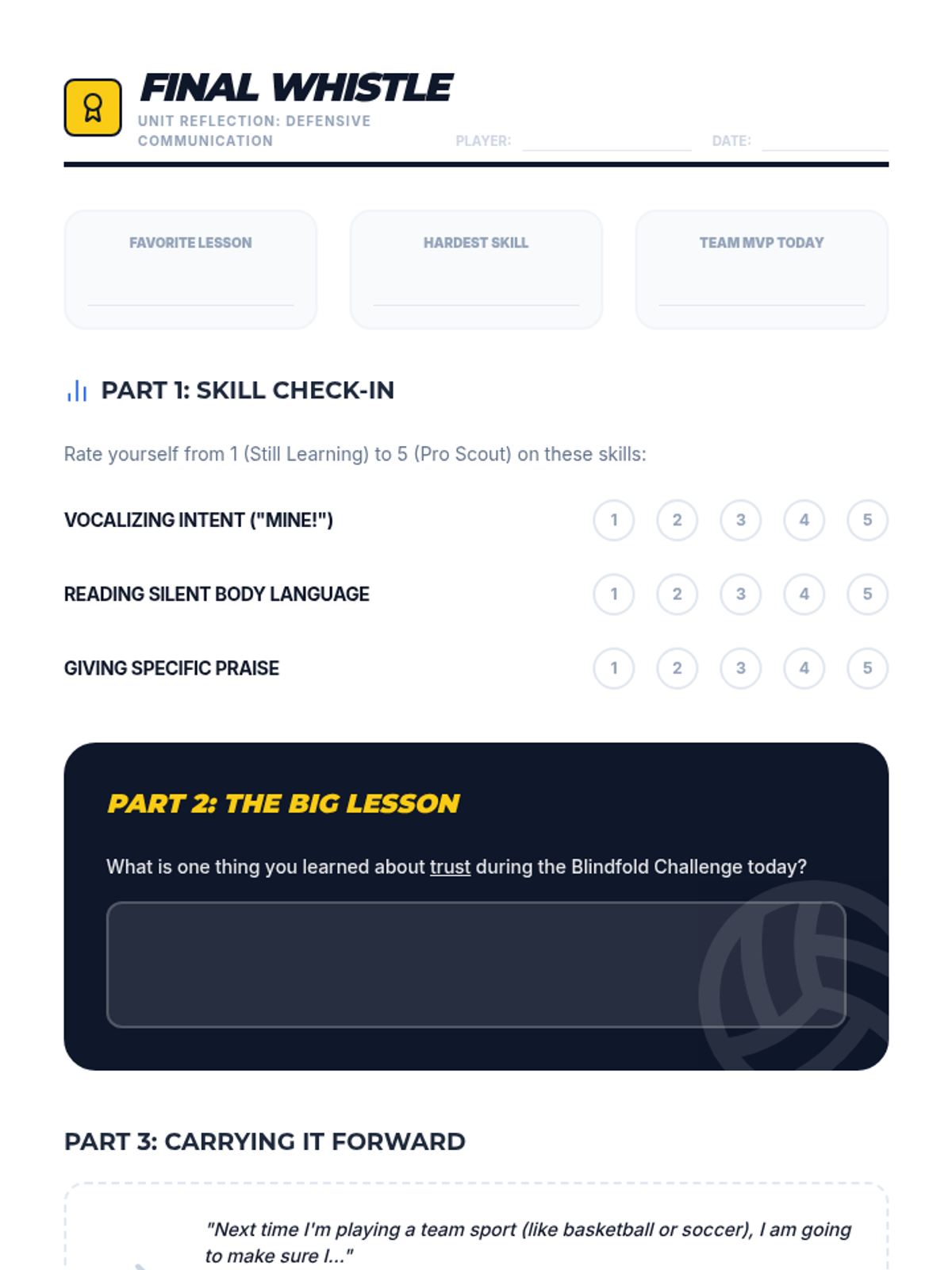
A culminating trust-building activity where students use precise verbal directions to guide a 'blind' teammate, emphasizing clarity and listening.
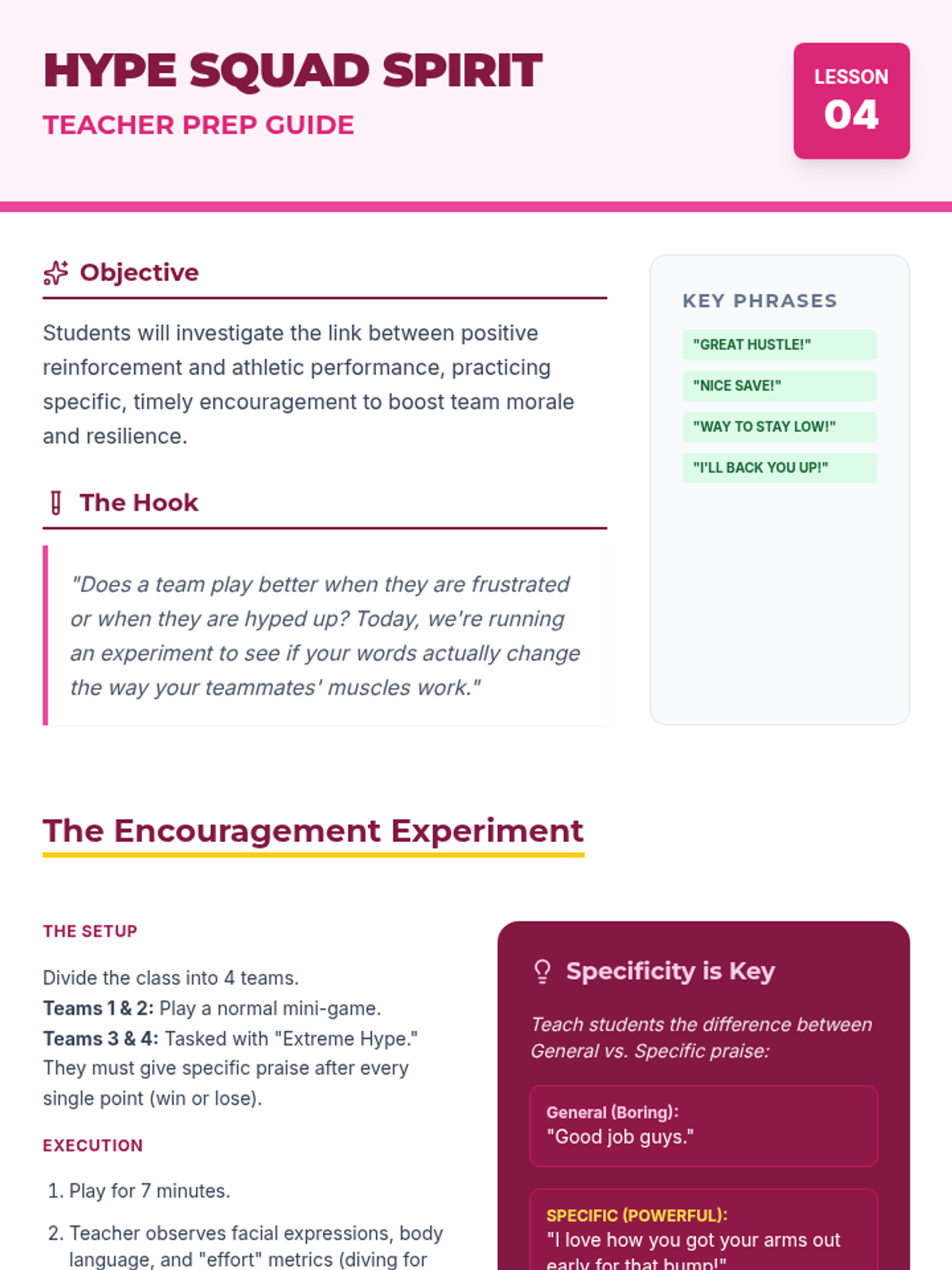
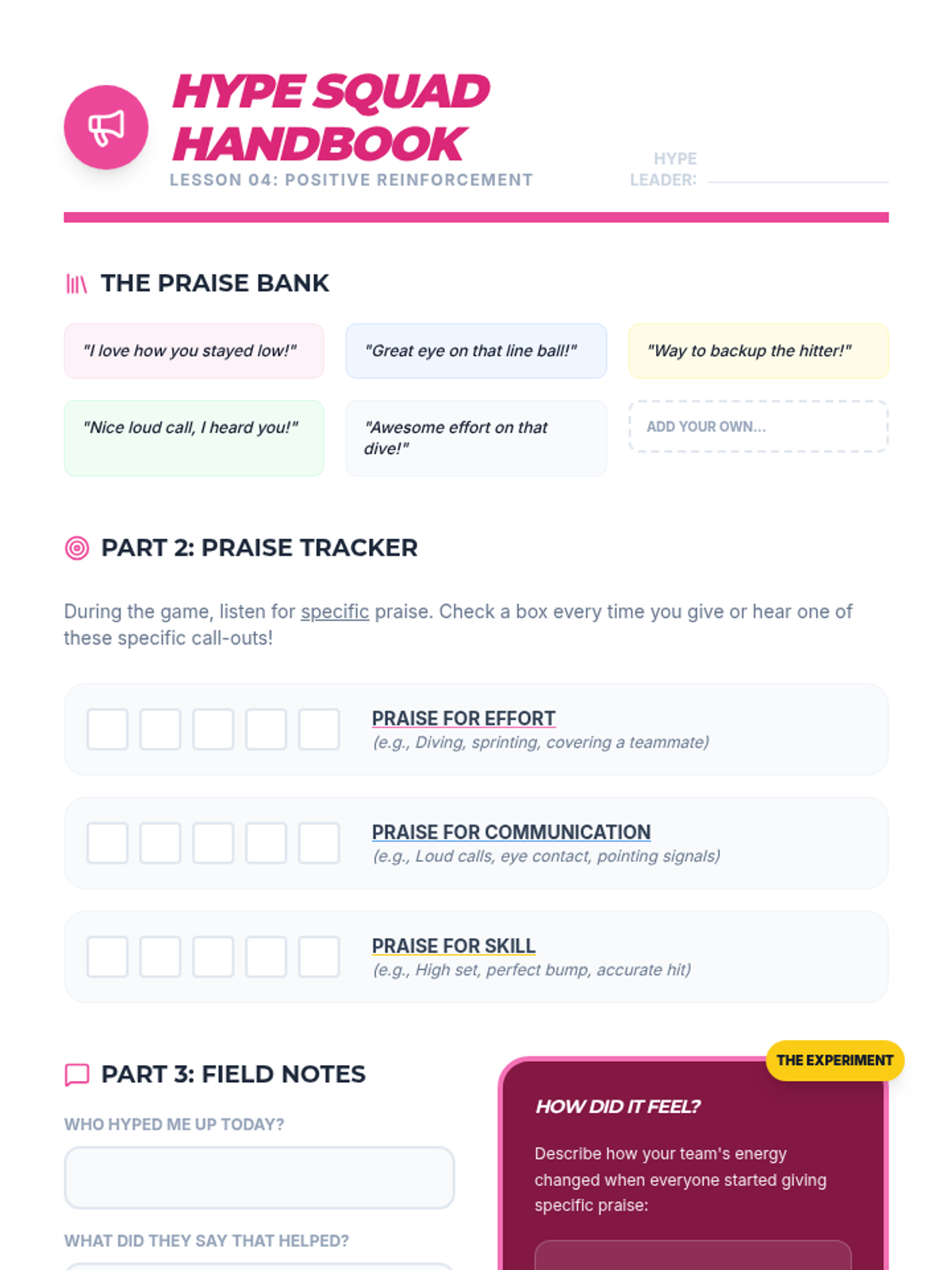
This lesson explores how positive feedback impacts team performance and morale, challenging students to provide specific encouragement after every rally.
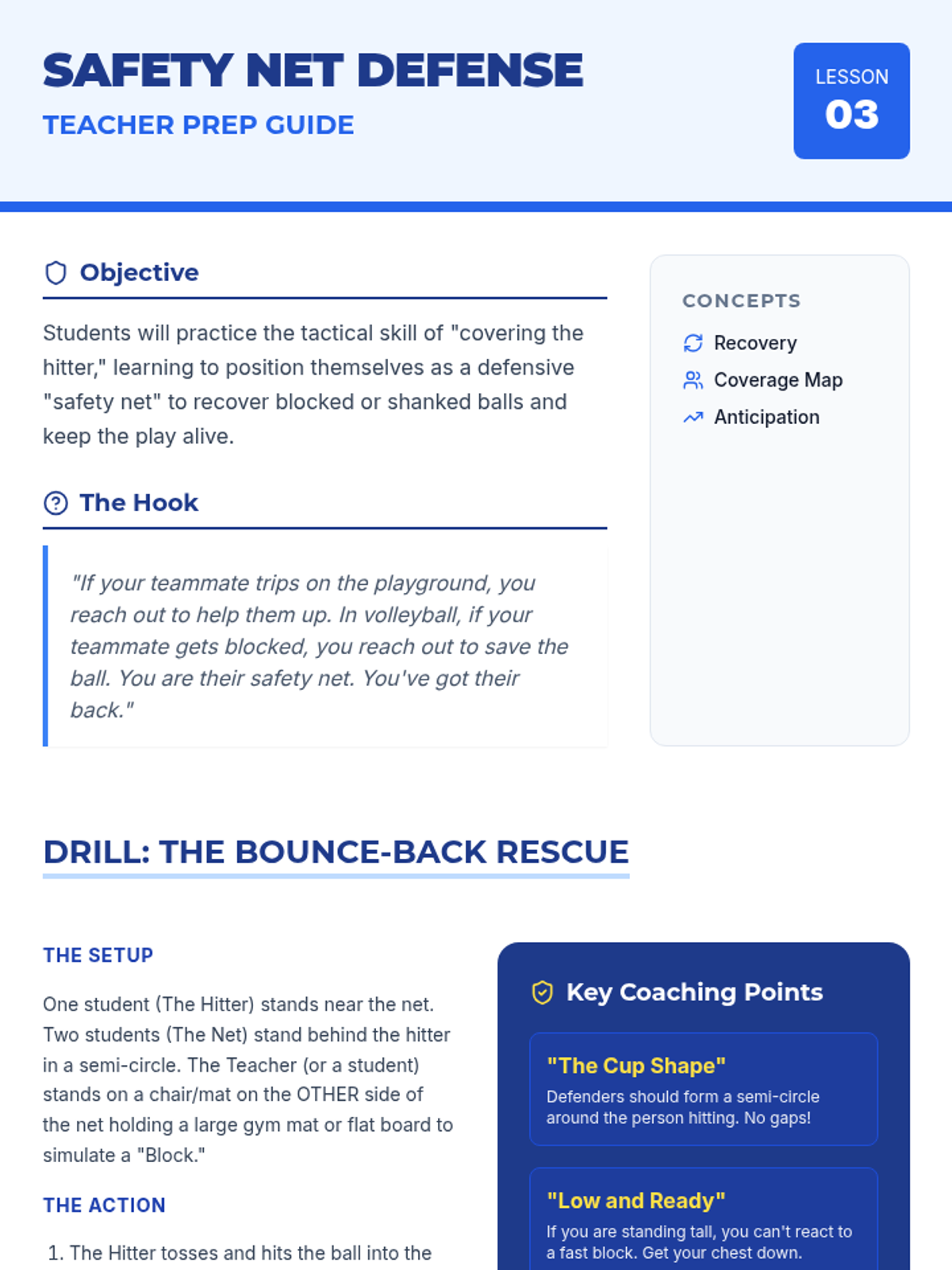
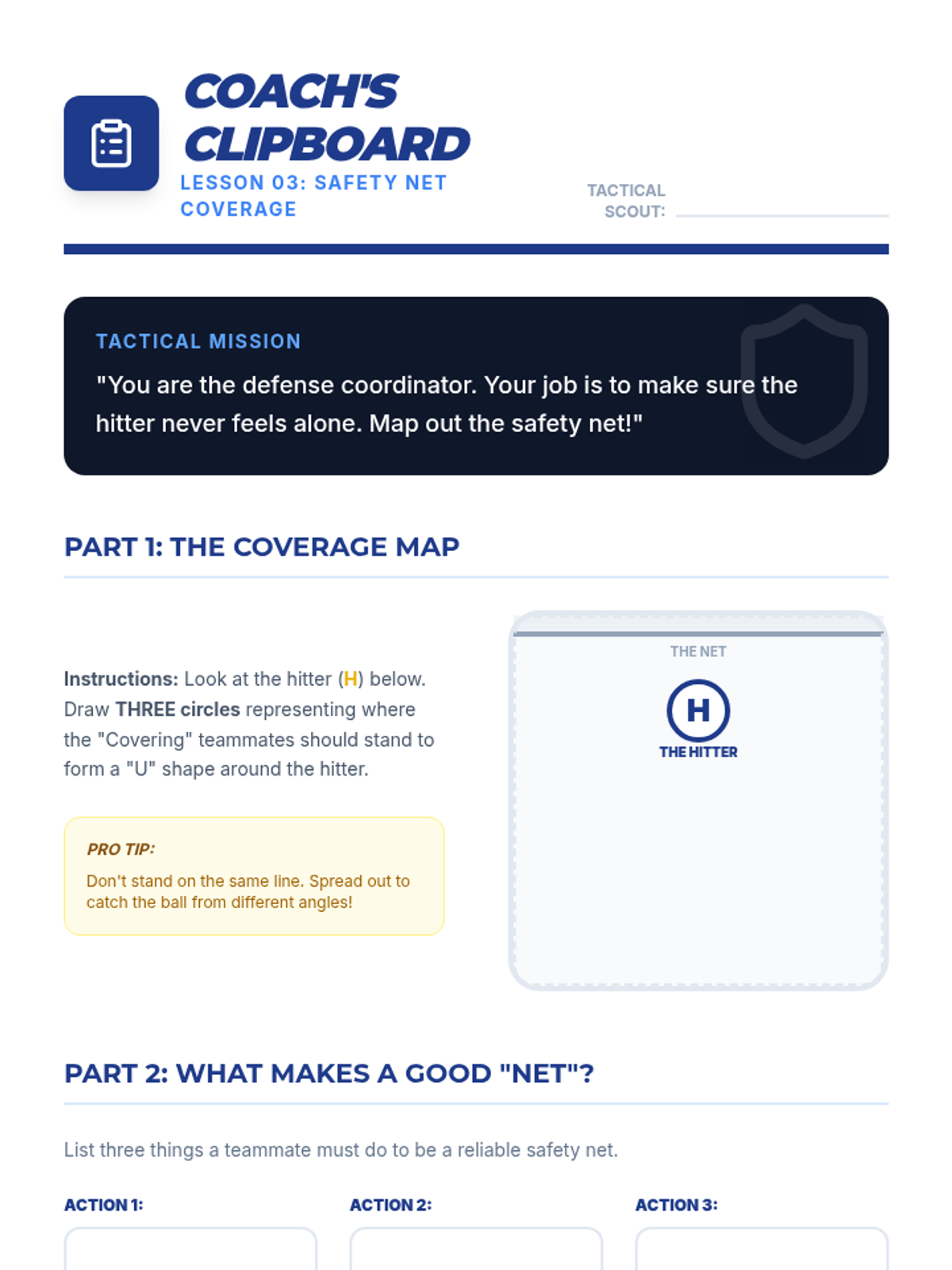
Students practice 'covering' teammates during plays, learning to anticipate errors or blocks and provide defensive backup to keep the ball in play.
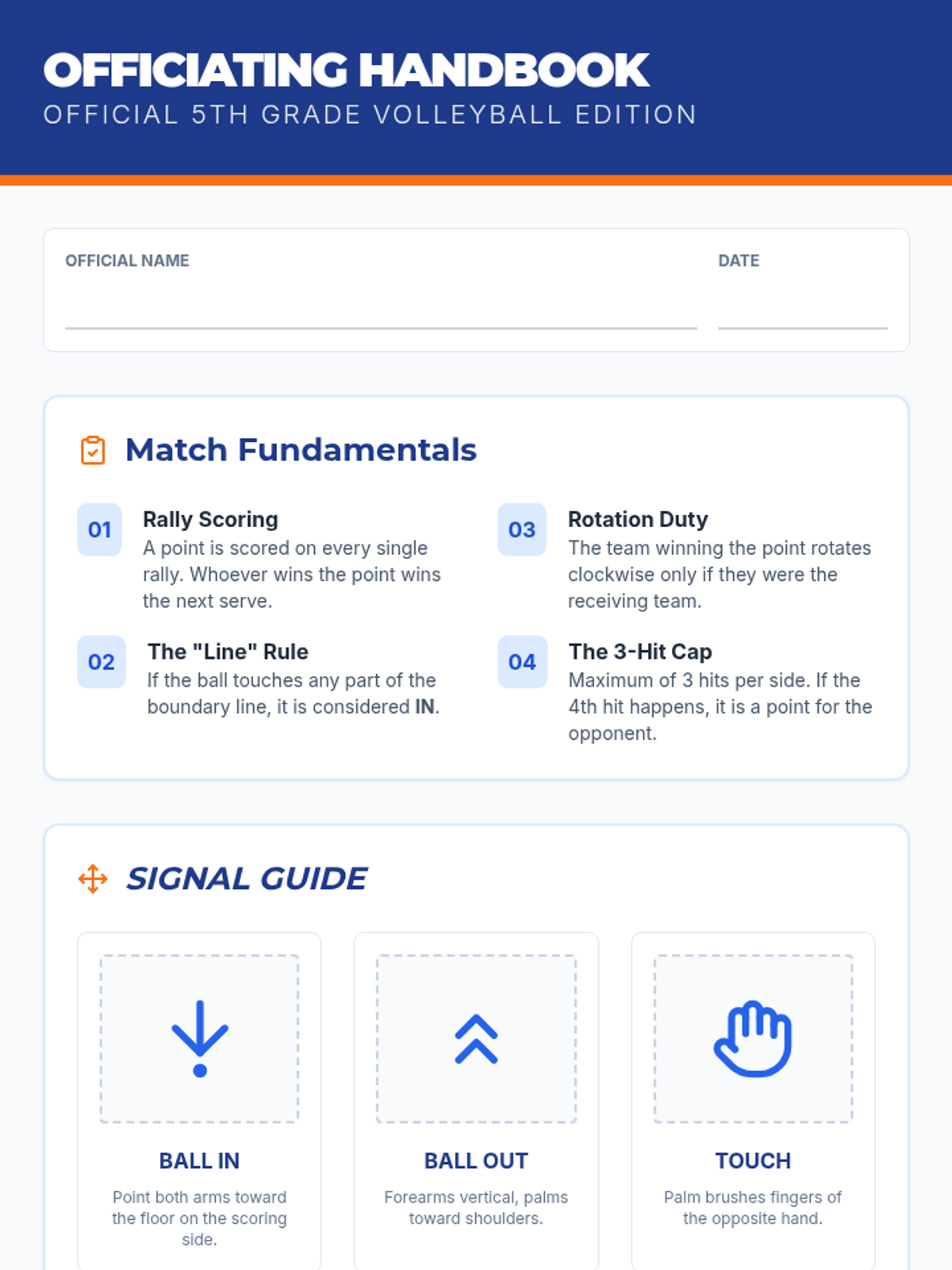
Students review modified volleyball rules, rally scoring, and boundary lines while practicing officiating hand signals for 'in,' 'out,' and 'touch.'
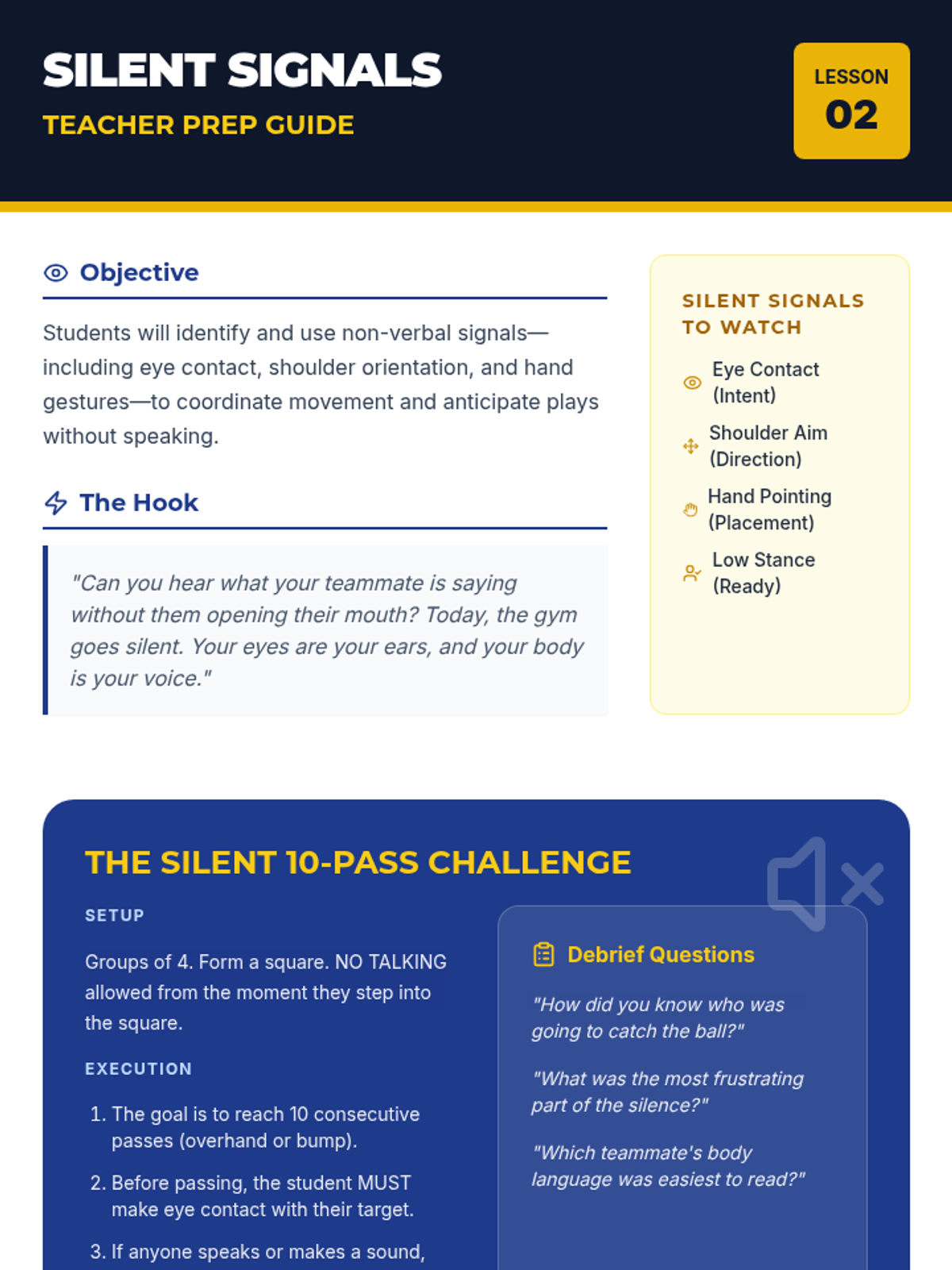
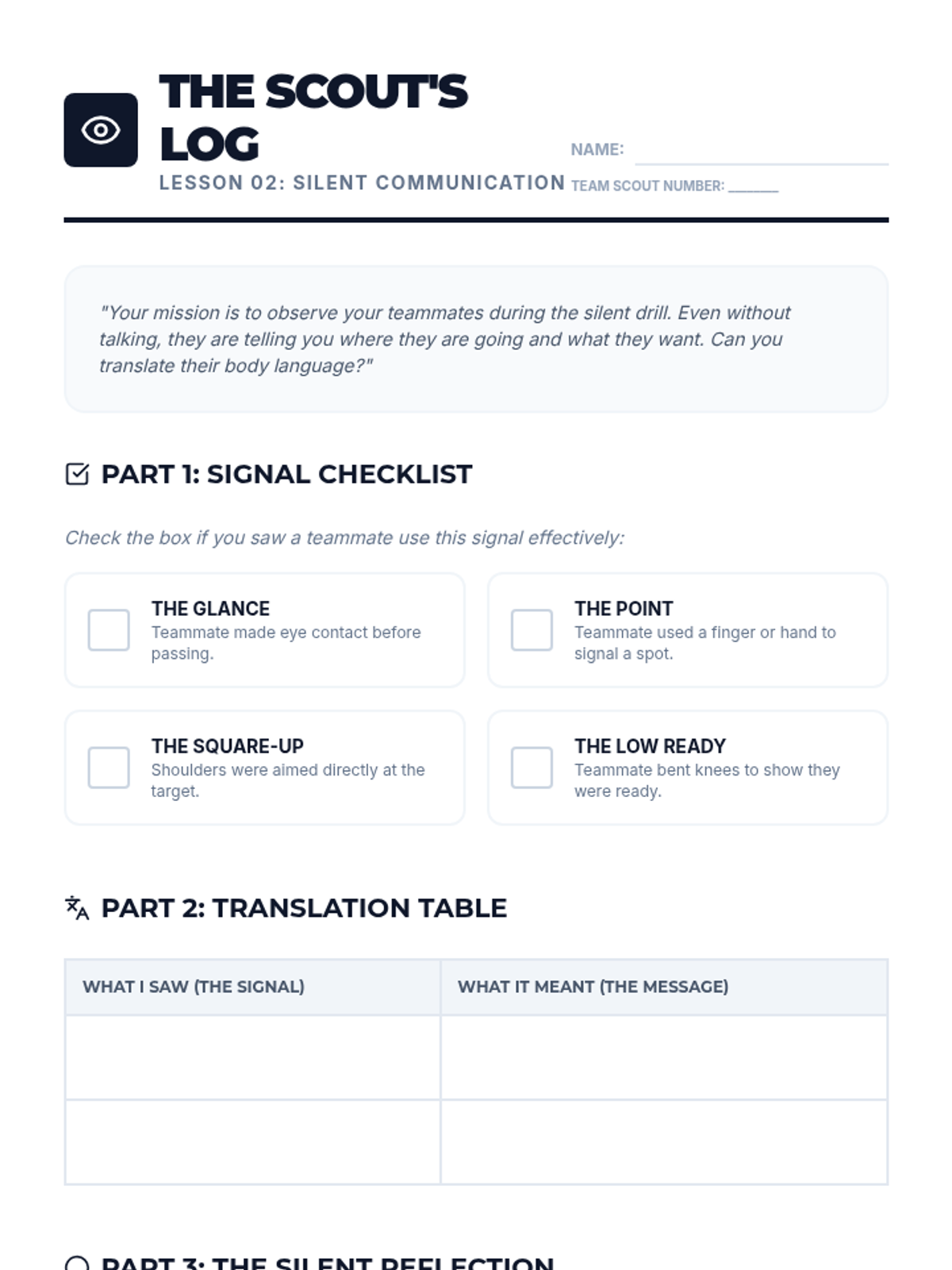
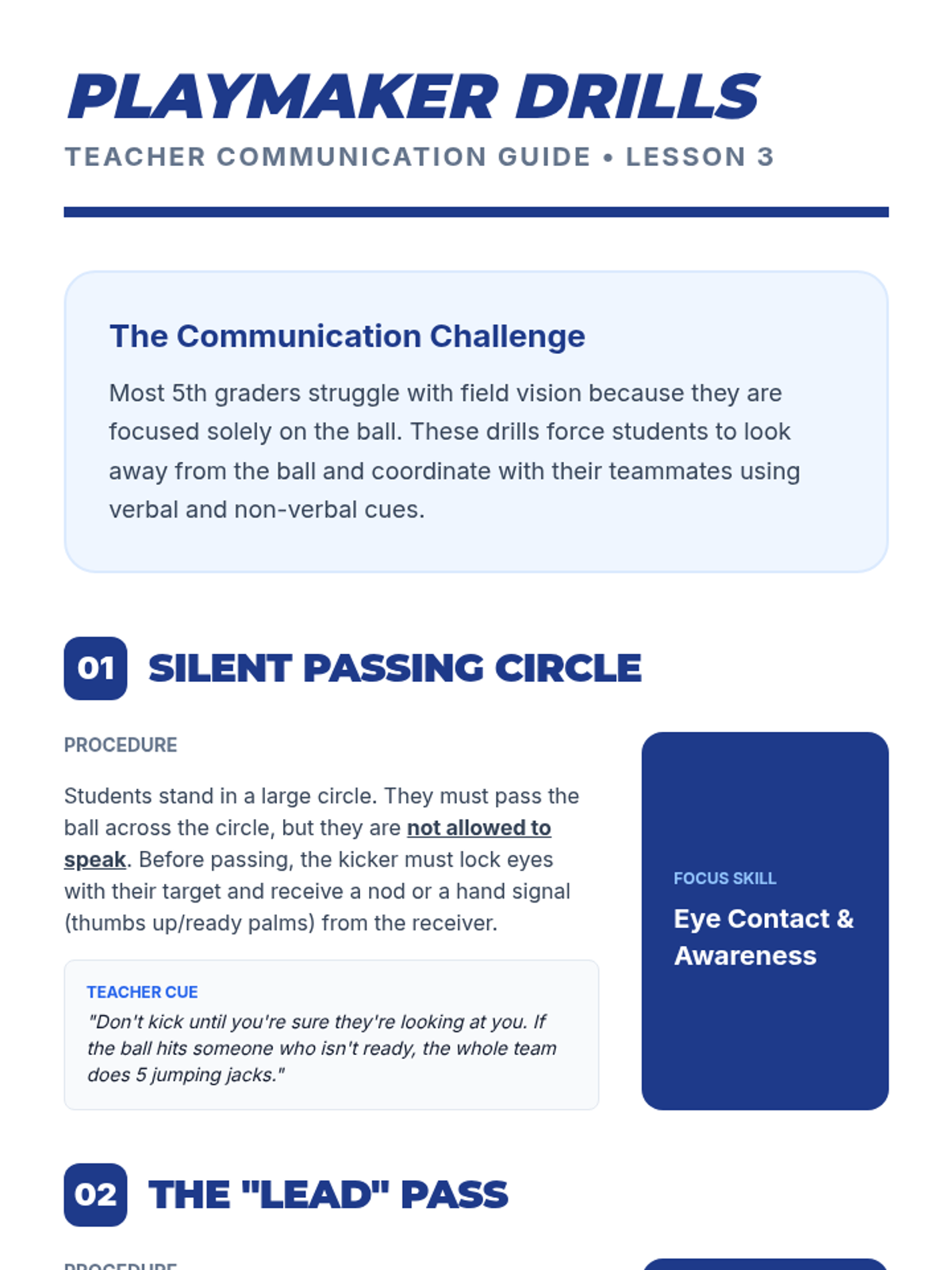
A lesson focused on silent coordination, where students use eye contact and body positioning to anticipate teammate movements without speaking.
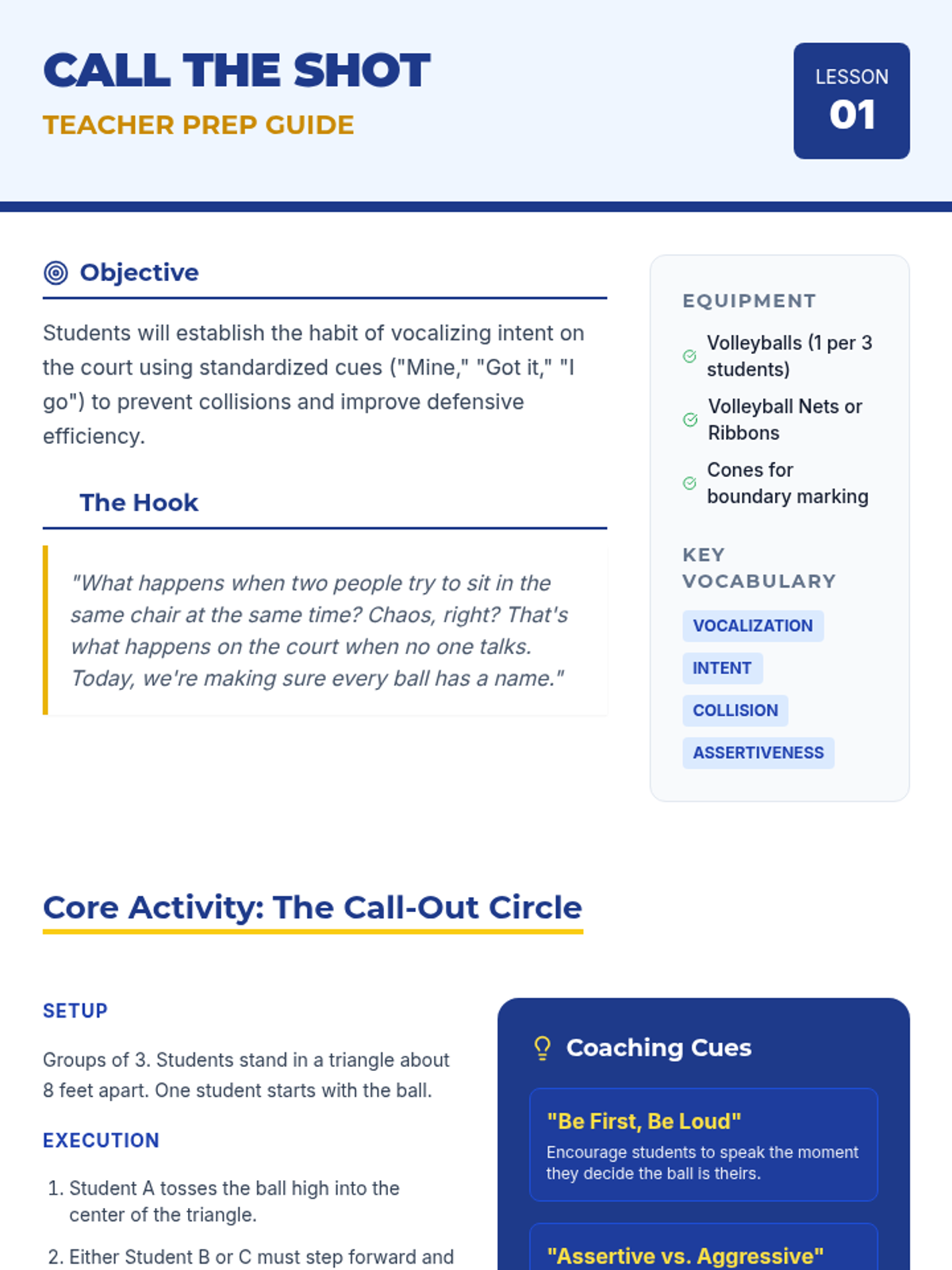
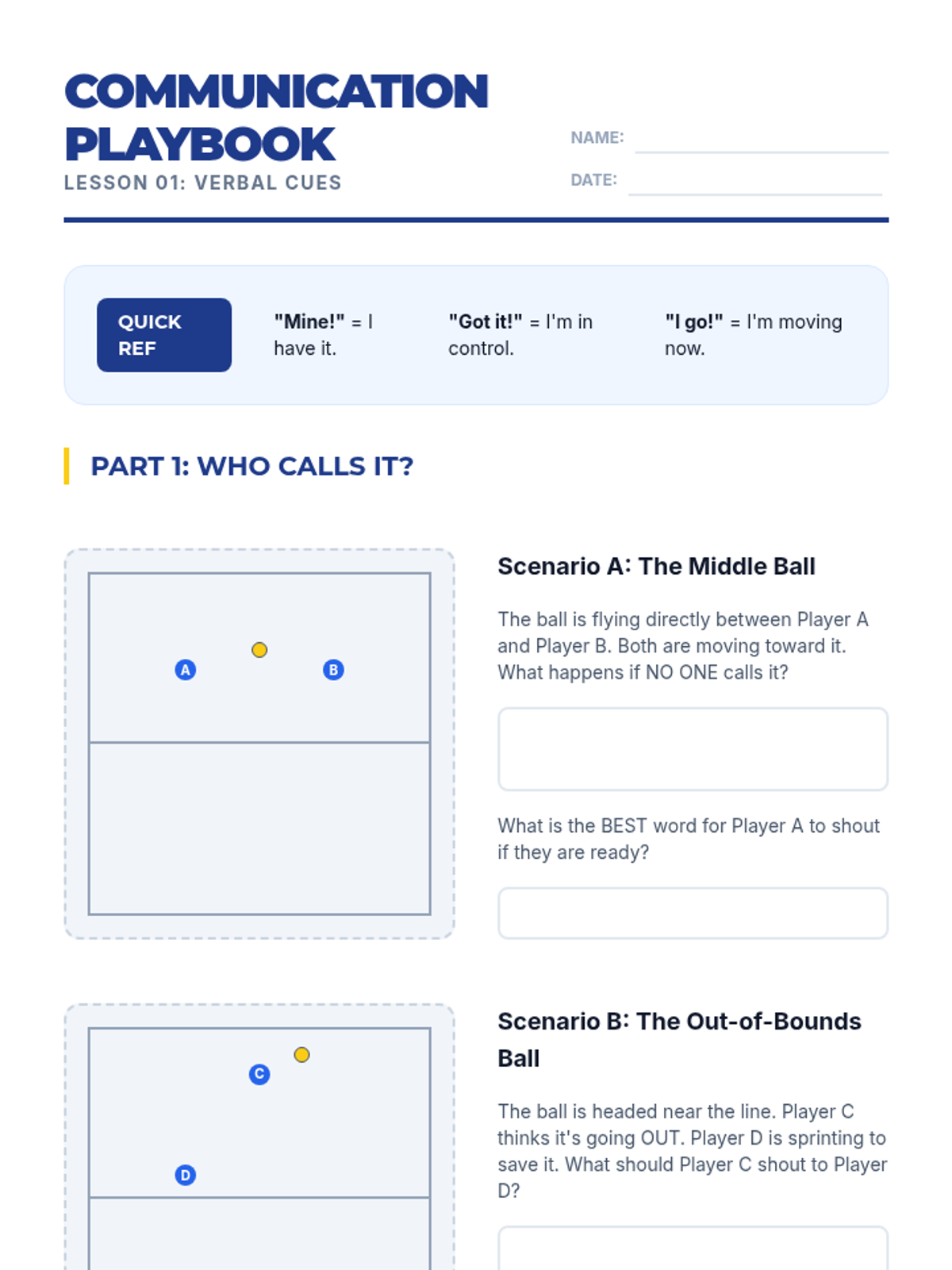
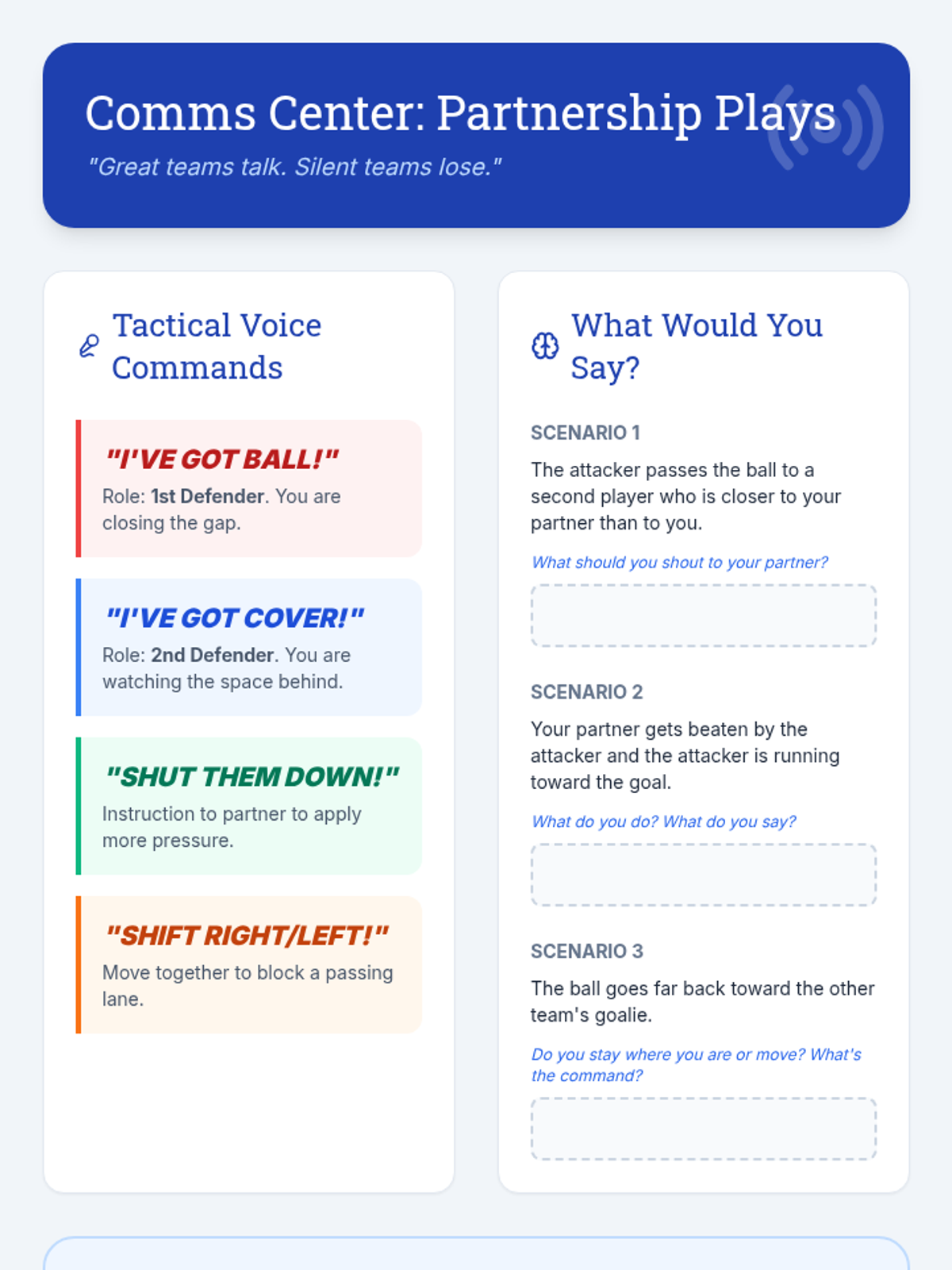
Students learn the importance of calling the ball to avoid collisions and confusion, practicing specific verbal cues like 'Mine' and 'Got it' during drills.
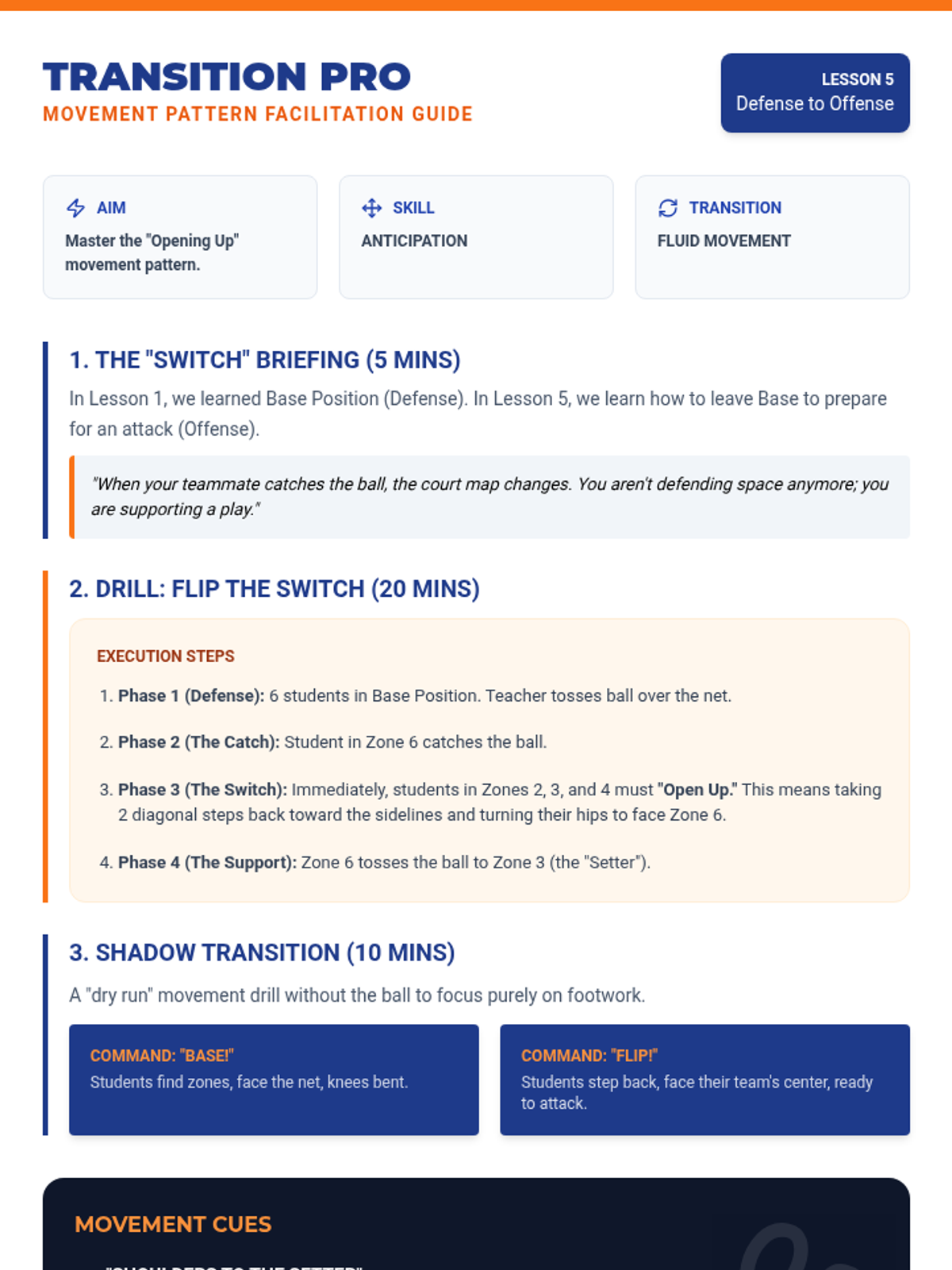
Students learn movement patterns for transitioning from a defensive stance to an offensive ready position.
A Star Wars themed Physical Education lesson deck featuring training protocols, expectations, and galactic activities for May the 4th.
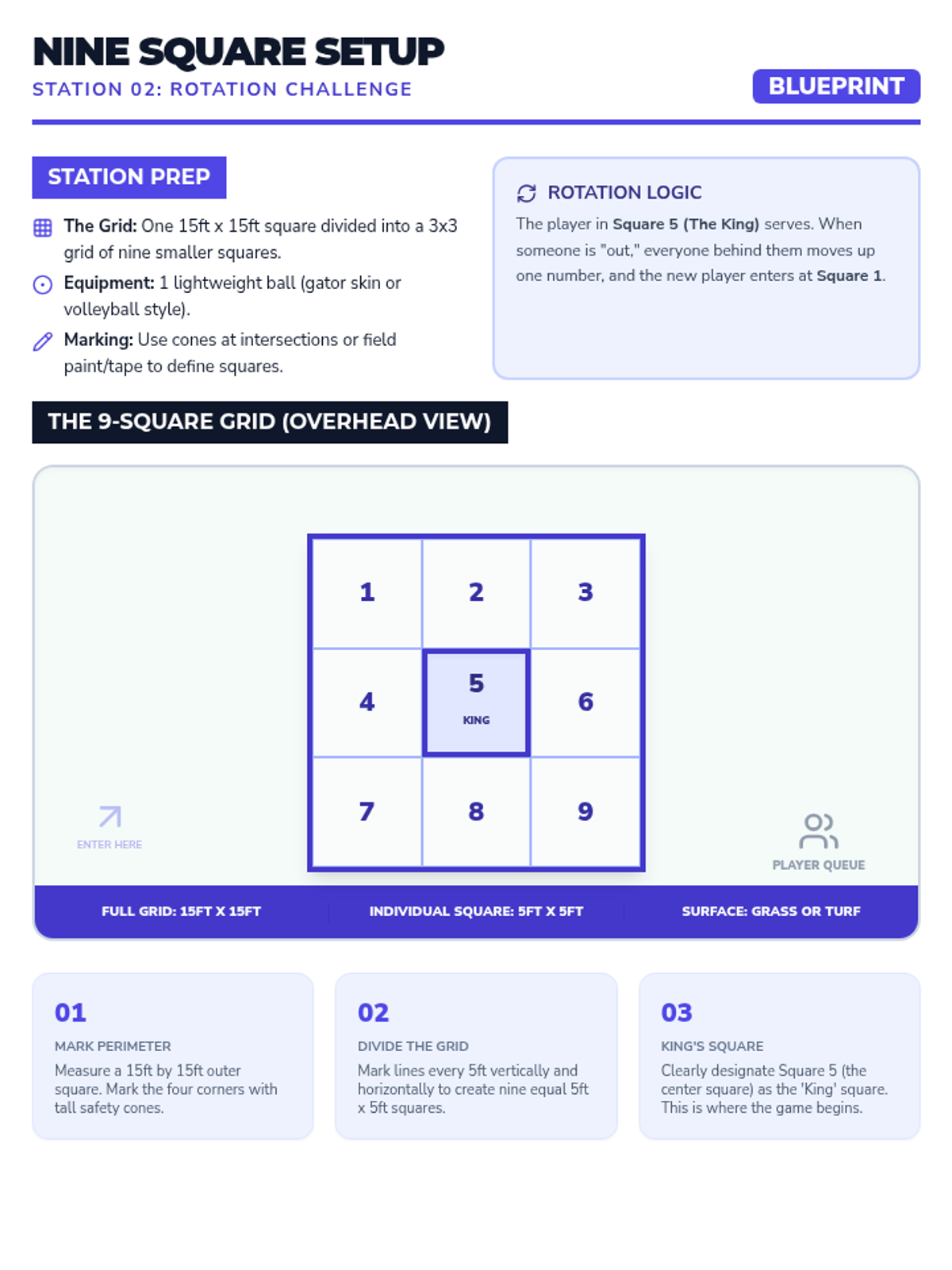
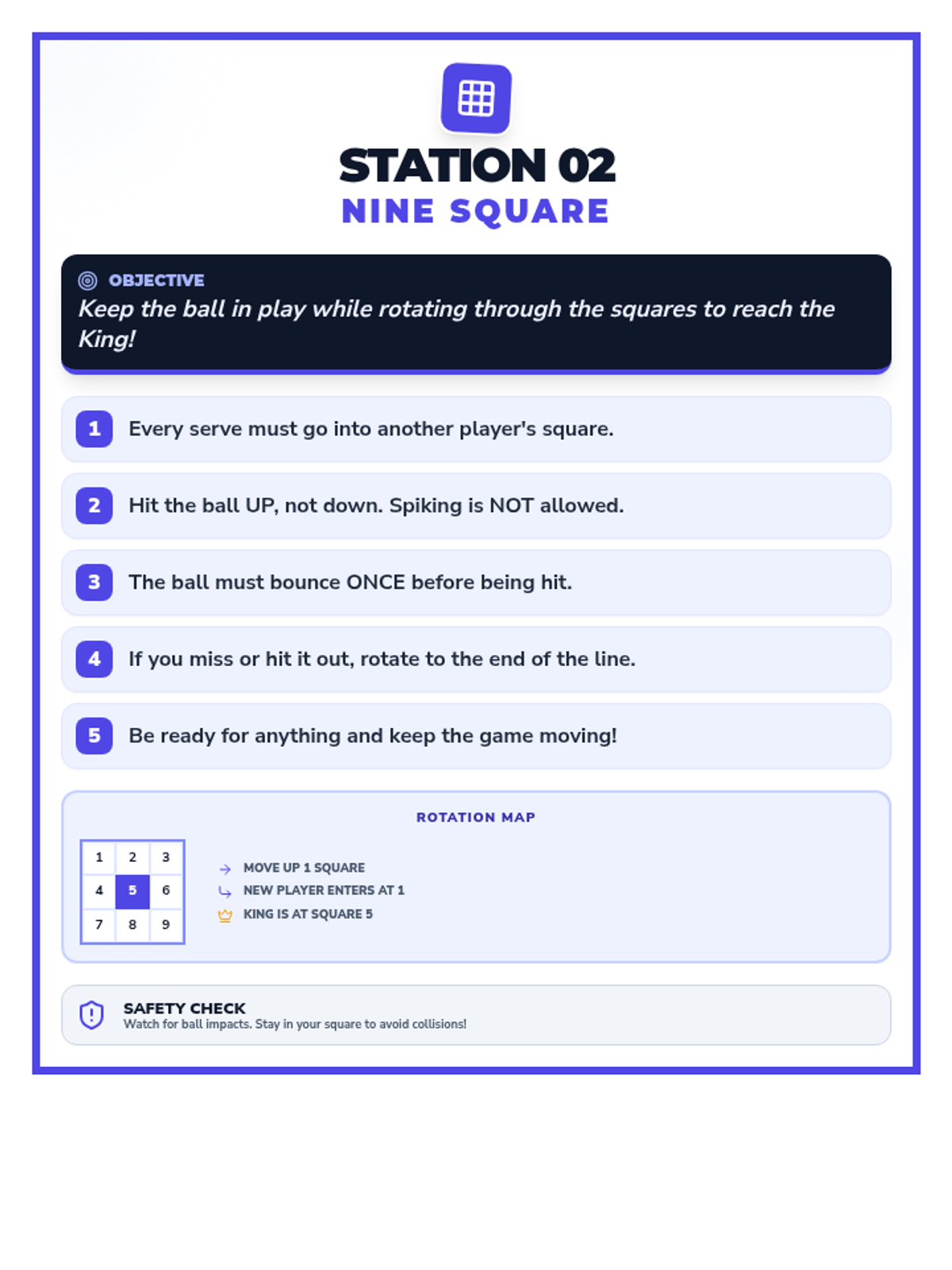
A fast-paced rotation game involving a 3x3 grid, focusing on hand-eye coordination and reaction time as players compete to reach the King square.
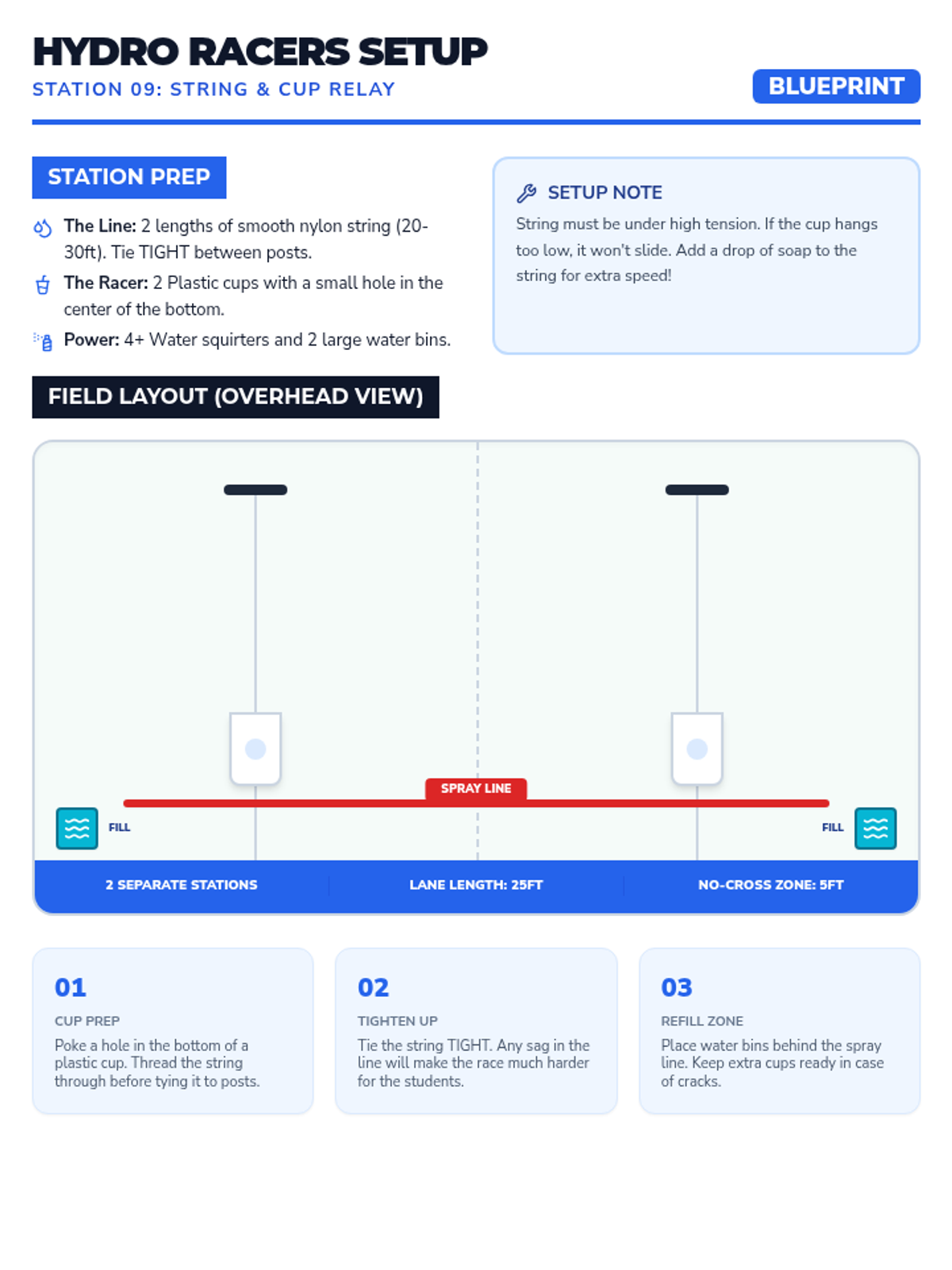
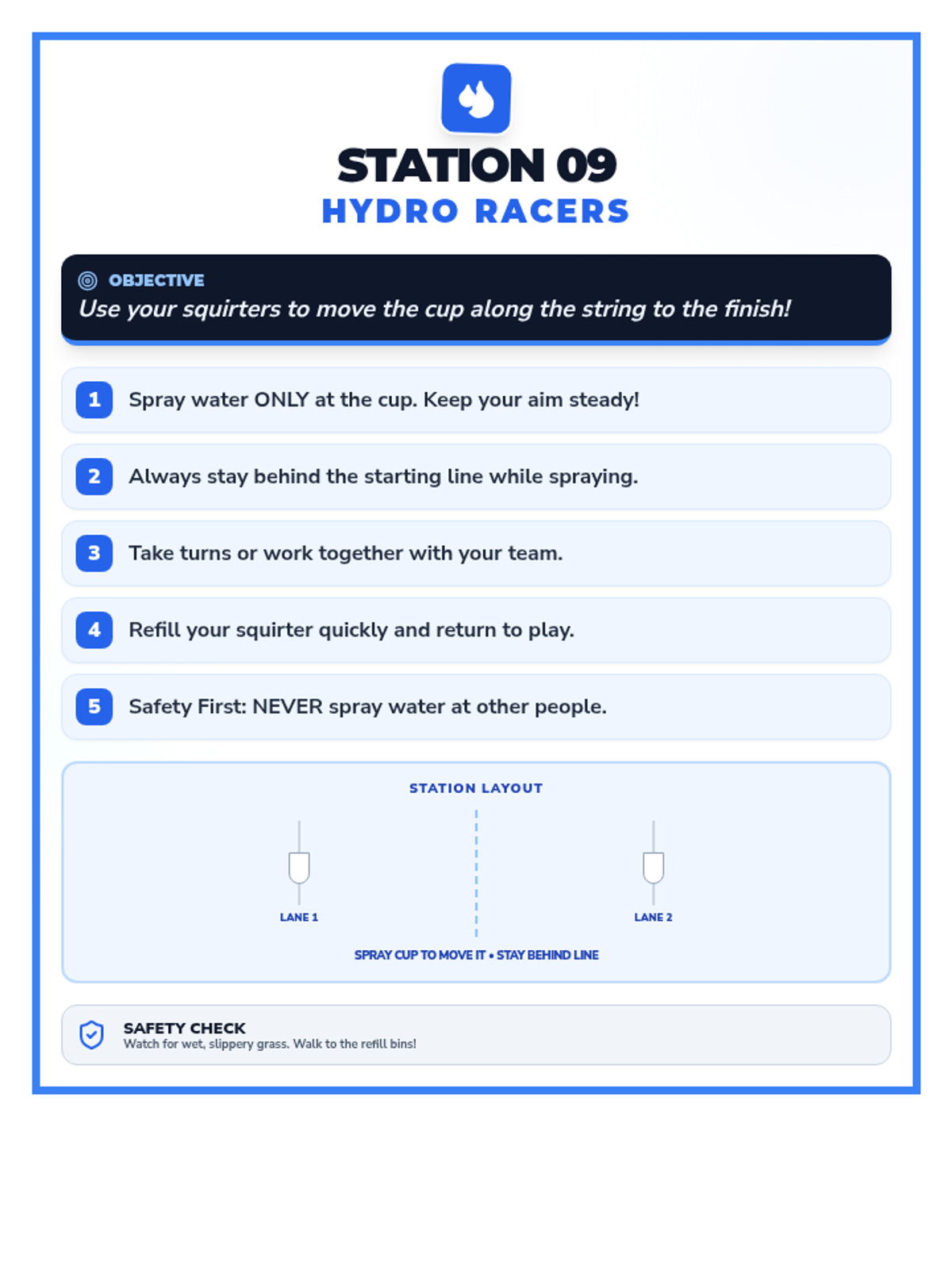
A high-energy water station guide for Hydro Racers, featuring string-and-cup relay setup, water gun mechanics, and safety protocols for aquatic racing.
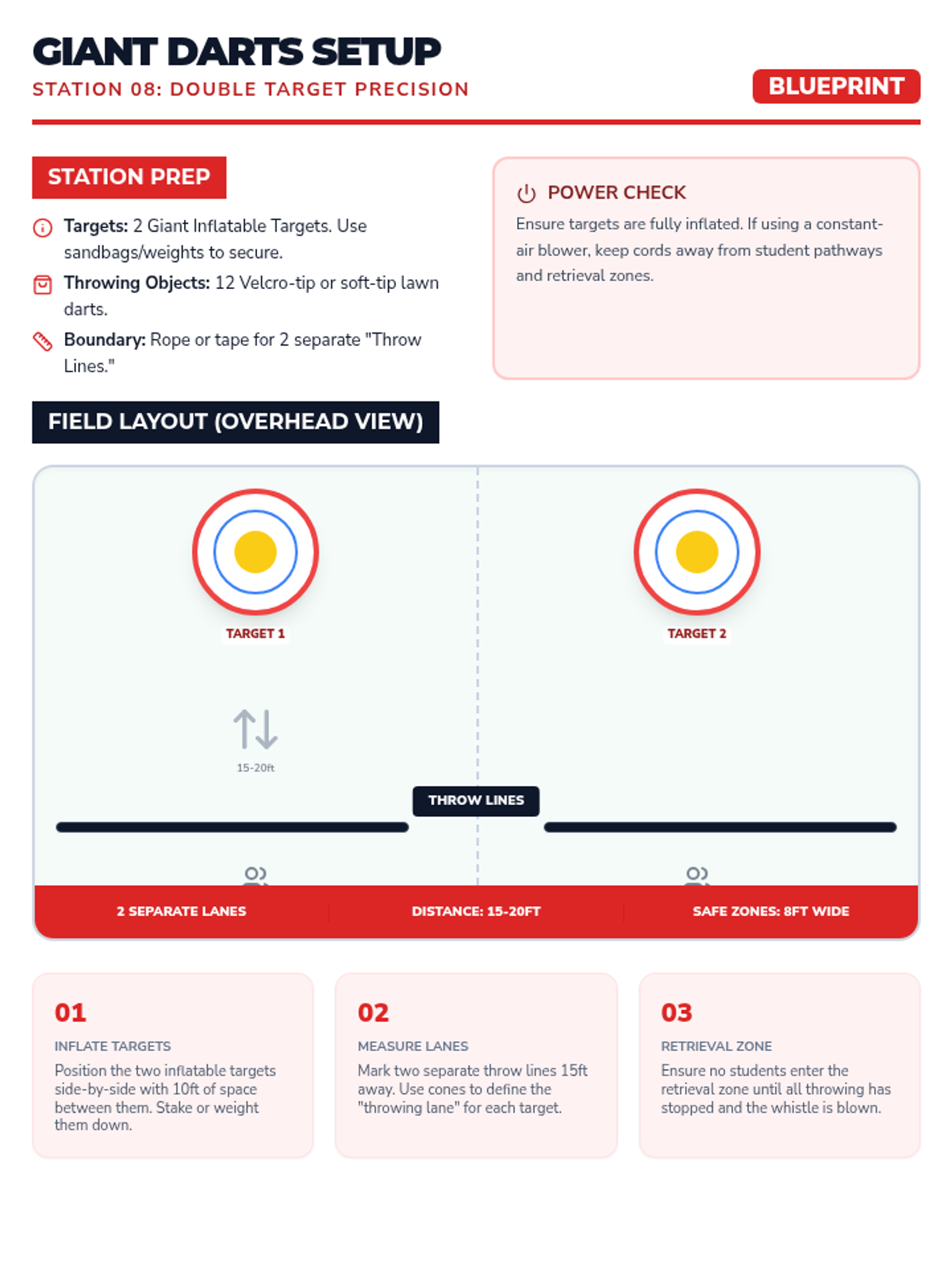
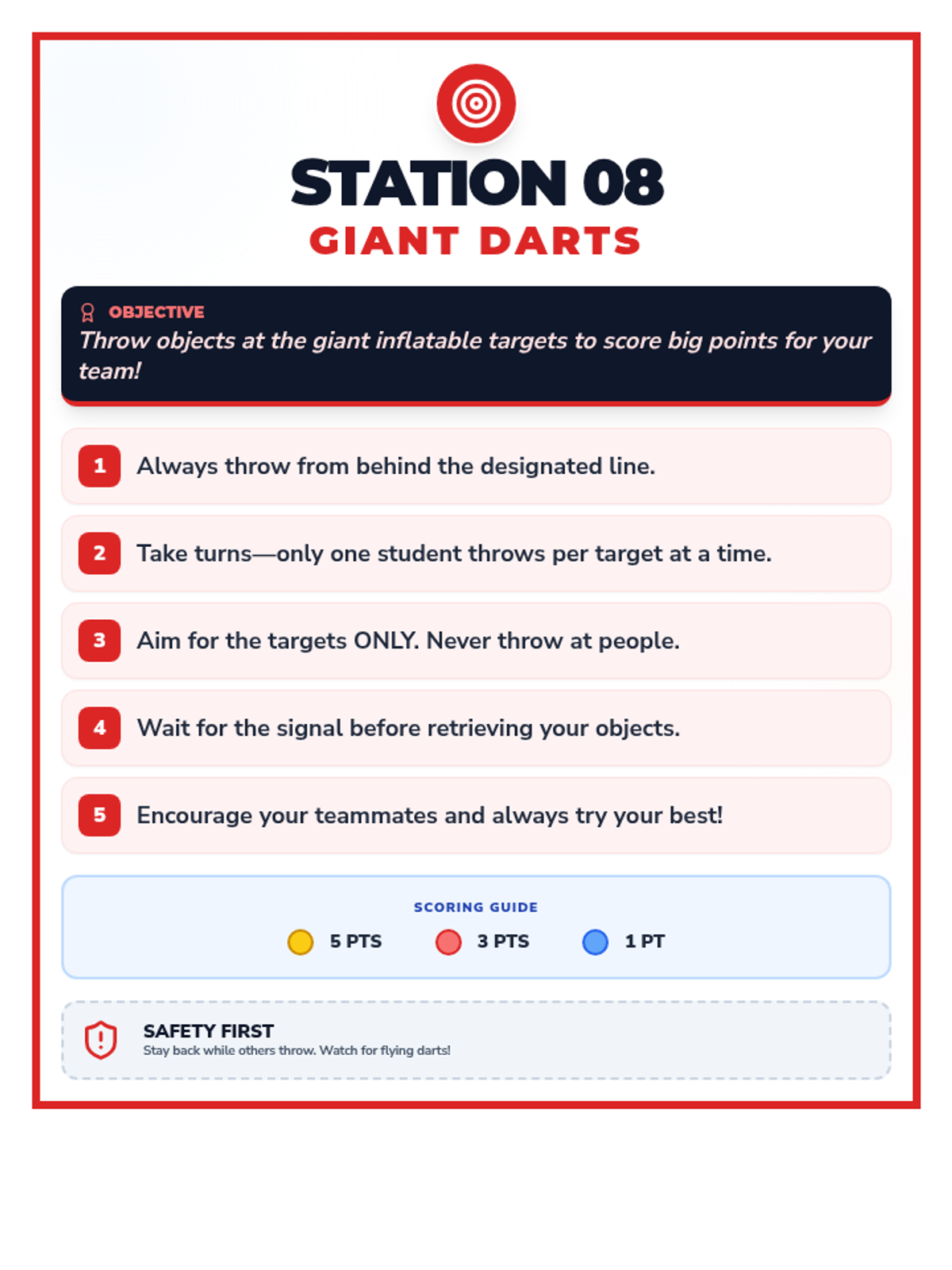
A target-based game guide for Giant Darts, featuring field setup for hula hoop targets, scoring systems, and safety protocols for throwing accuracy.
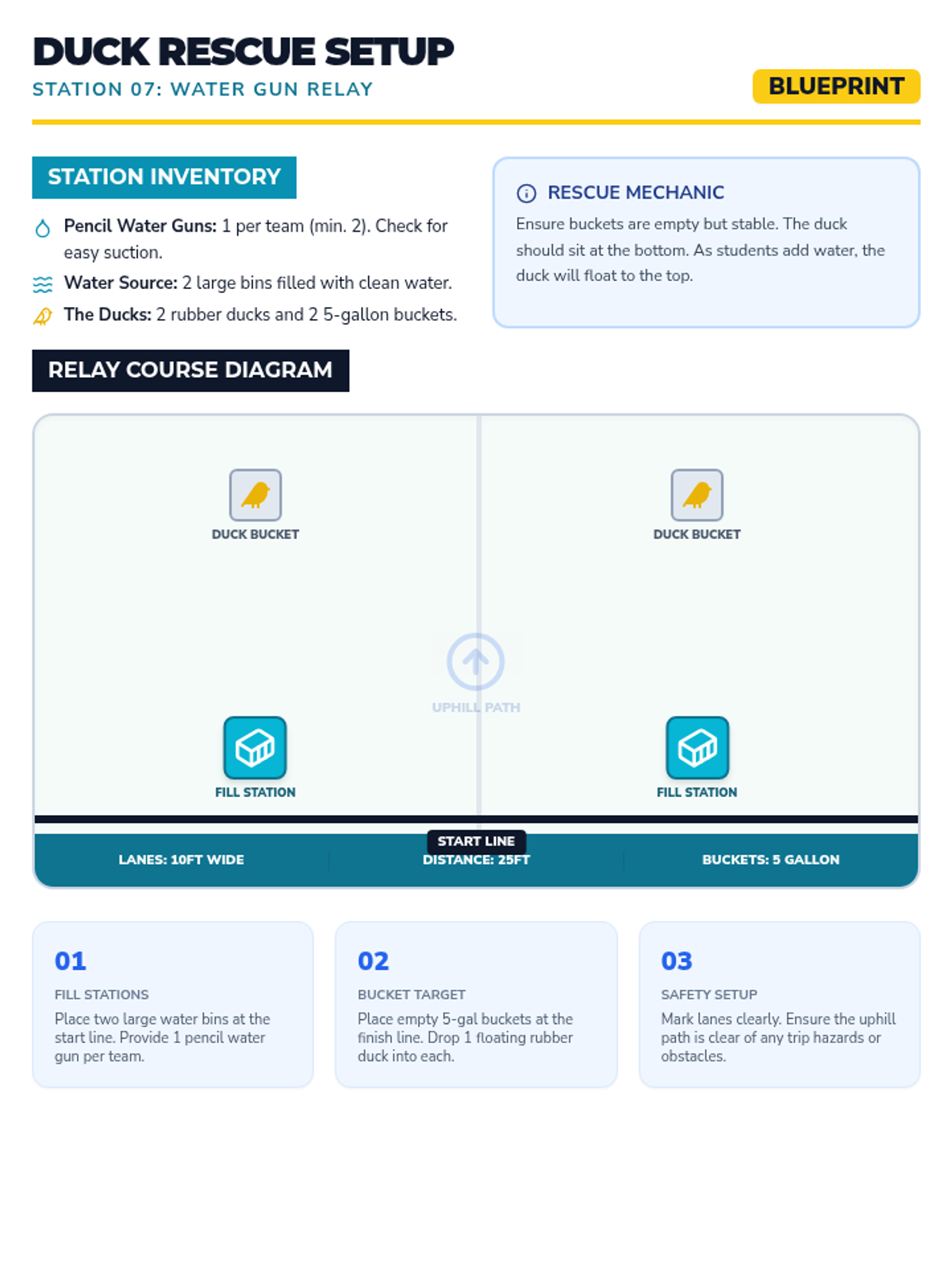
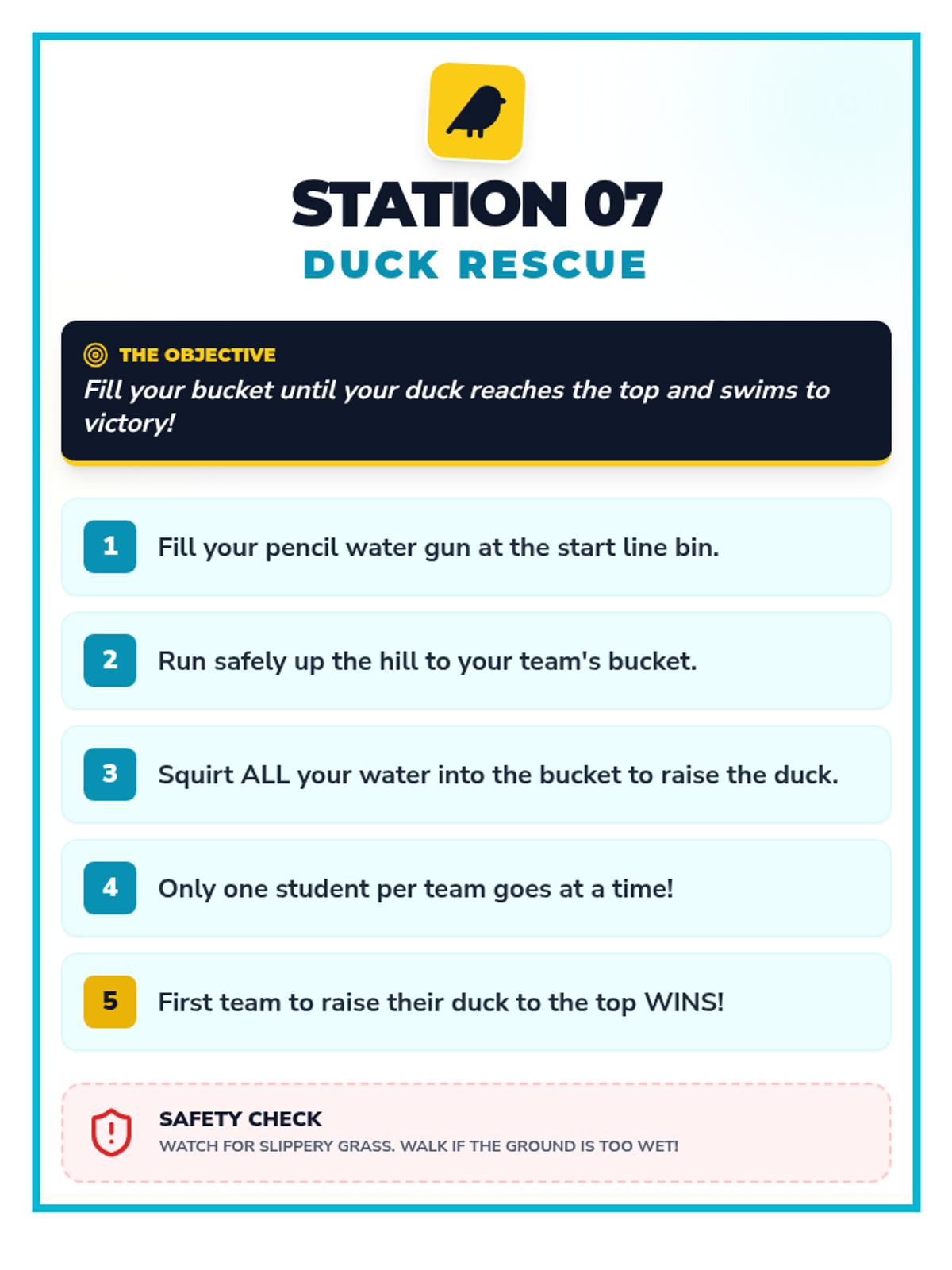
A high-energy water station guide for Duck Rescue, featuring field setup for water gun relays, duck-raising mechanics, and safety protocols for slippery fun.
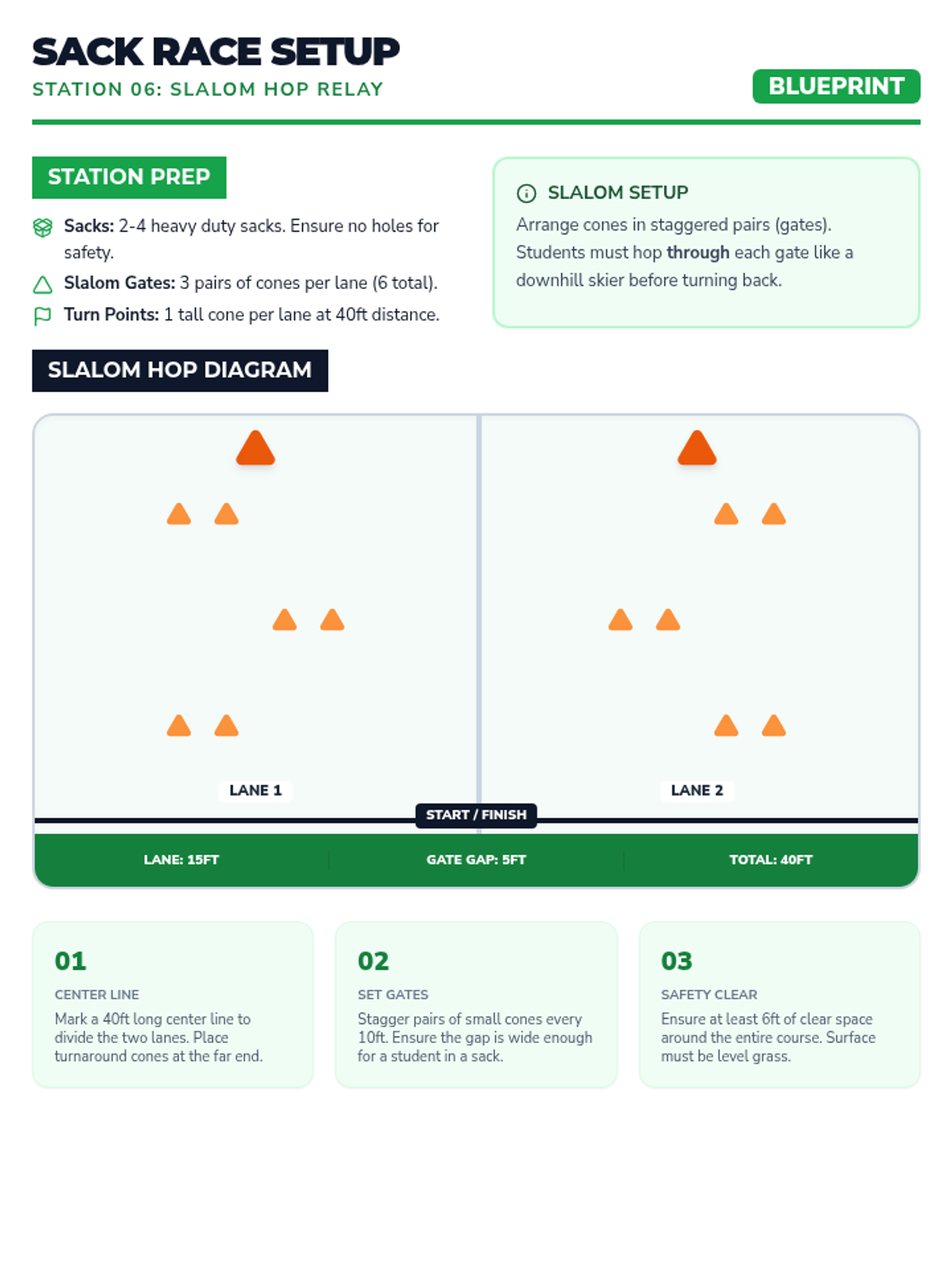
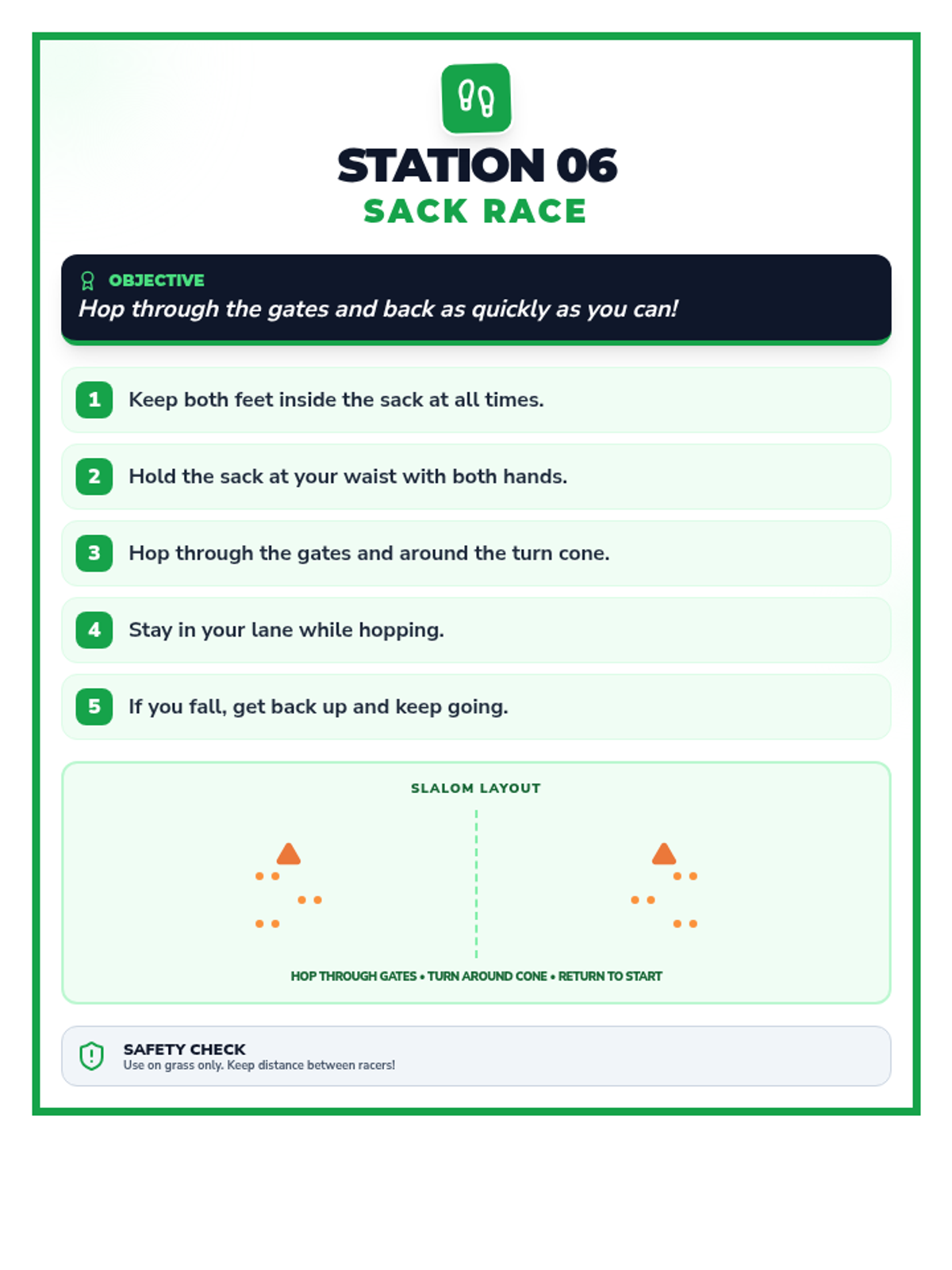
A high-energy station guide for the classic Sack Race, including lane setup diagrams, jumping technique tips, and safety protocols for a fun-filled race.
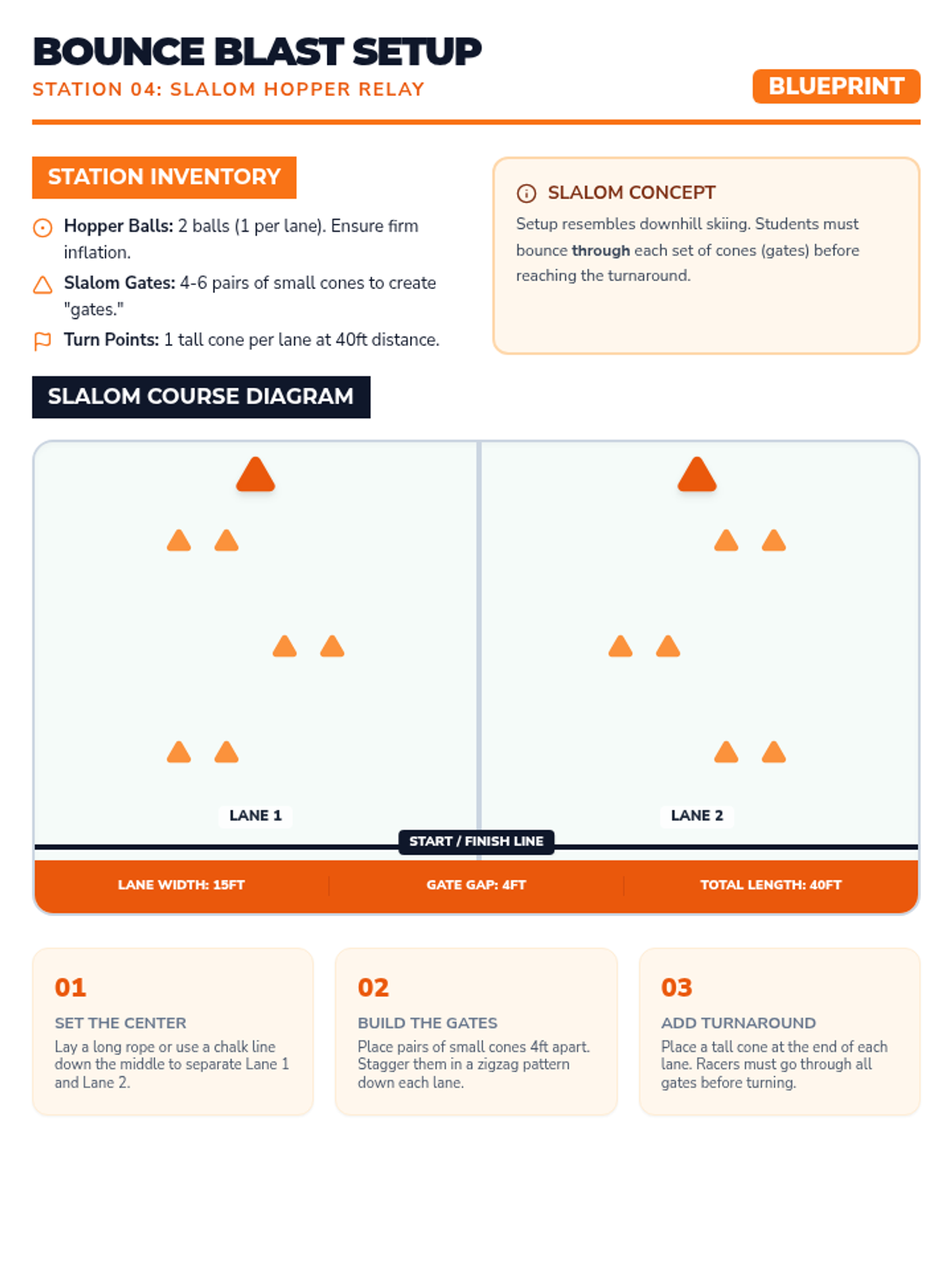
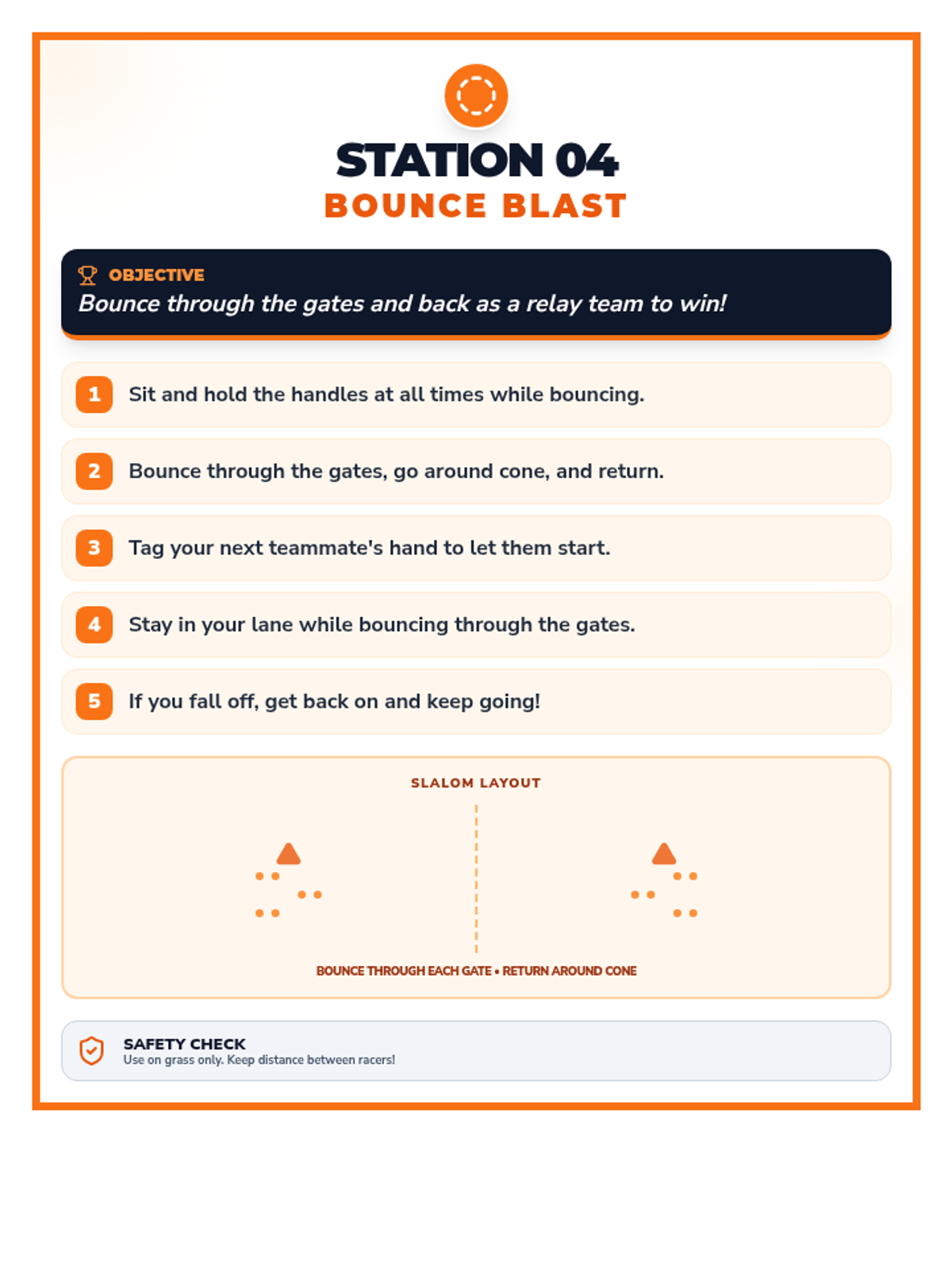
A high-energy relay station guide for the Bounce Blast hopper ball race, including lane setup diagrams, safety protocols, and relay hand-off instructions.
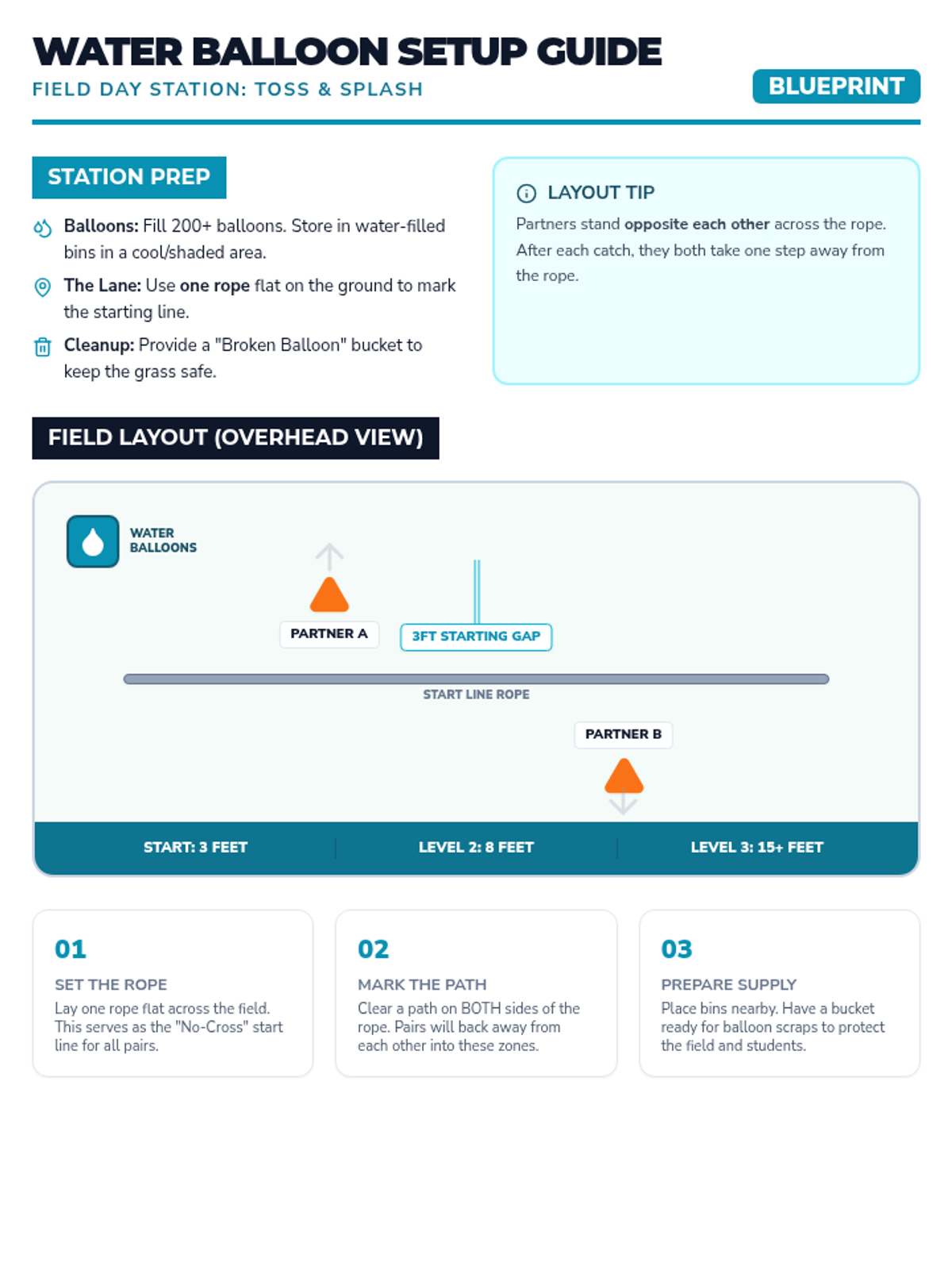
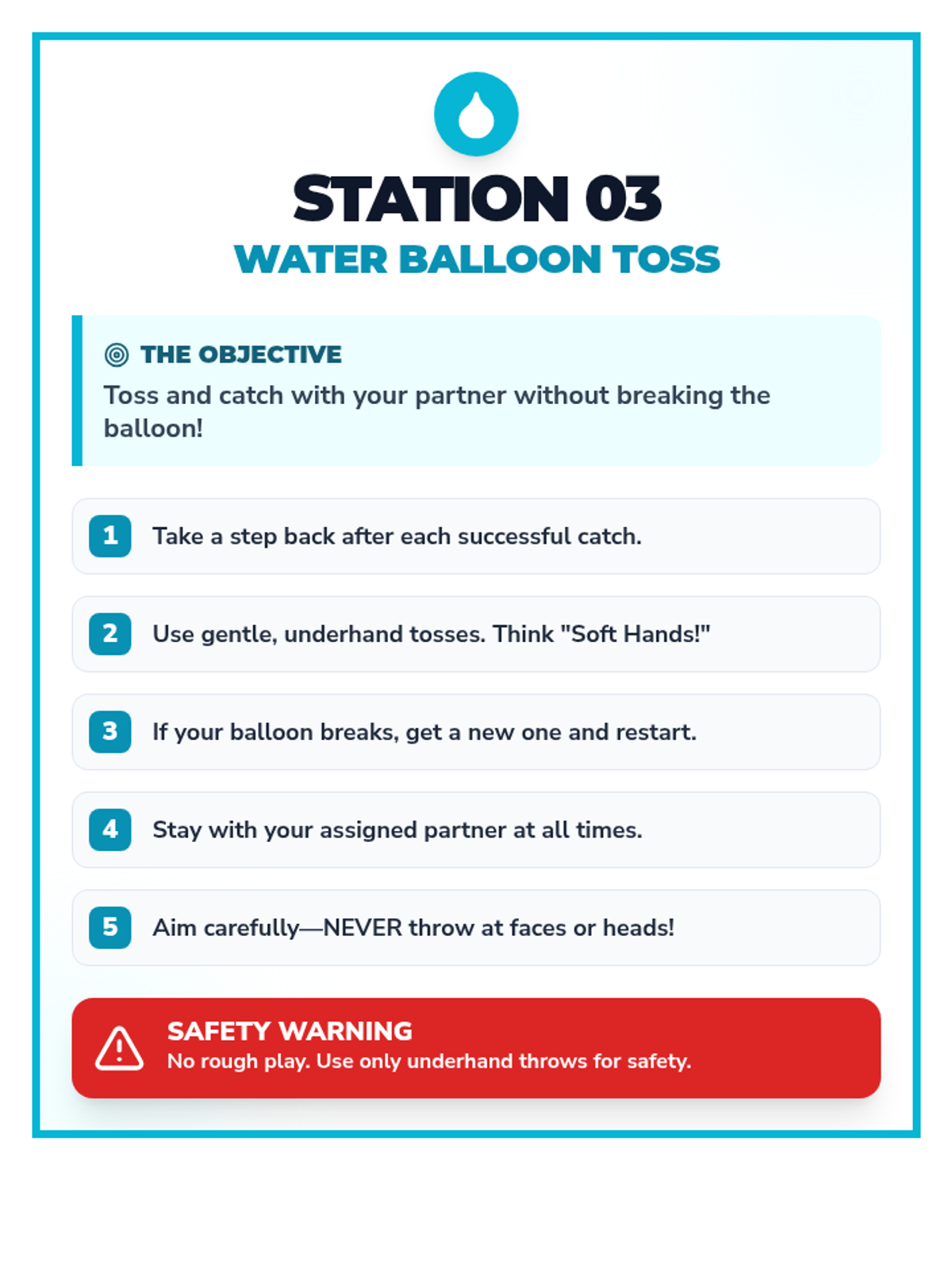
A comprehensive station guide for the Water Balloon Toss, including field setup diagrams, technique tips for catching, and safety protocols for aquatic fun.
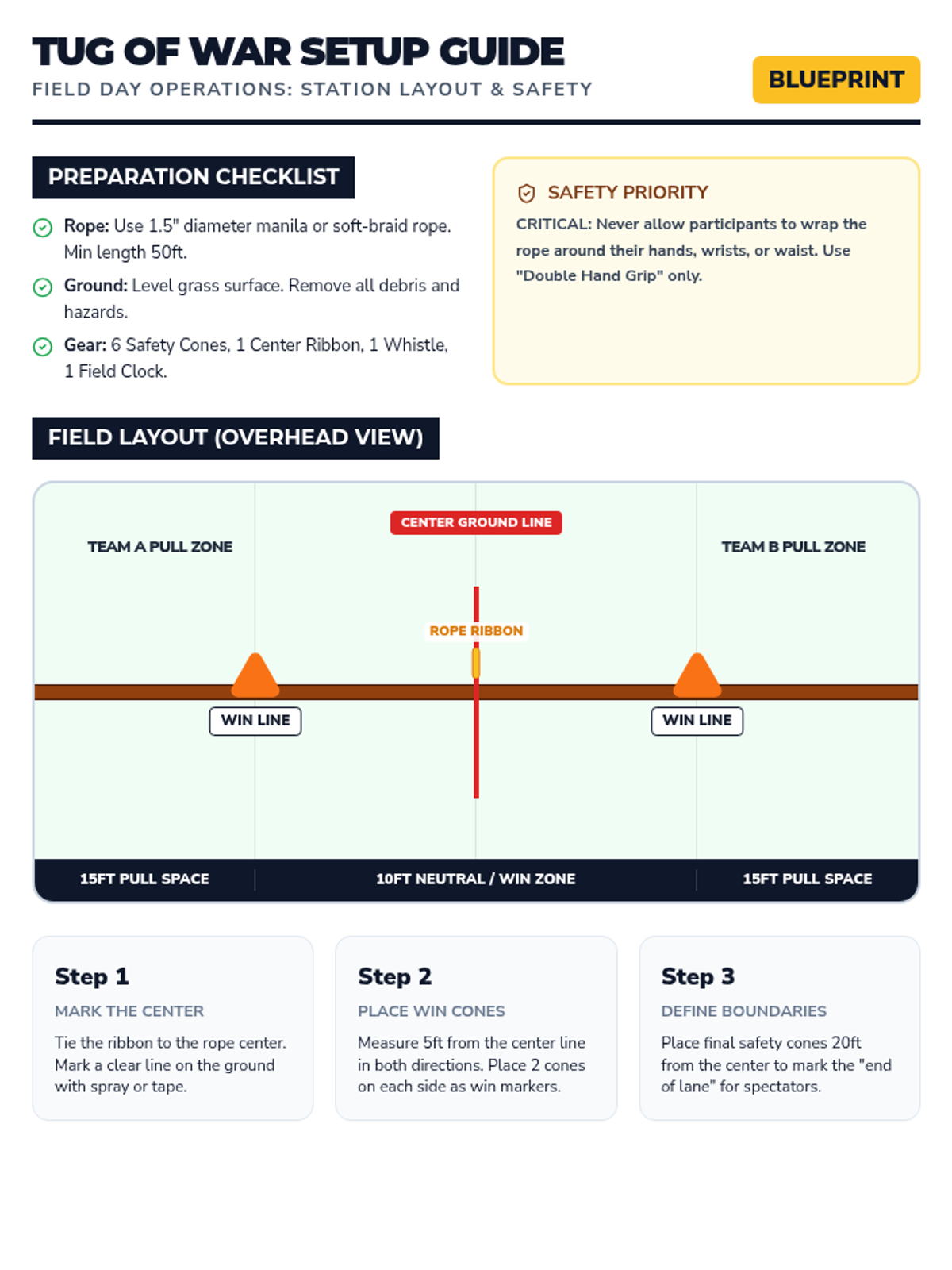
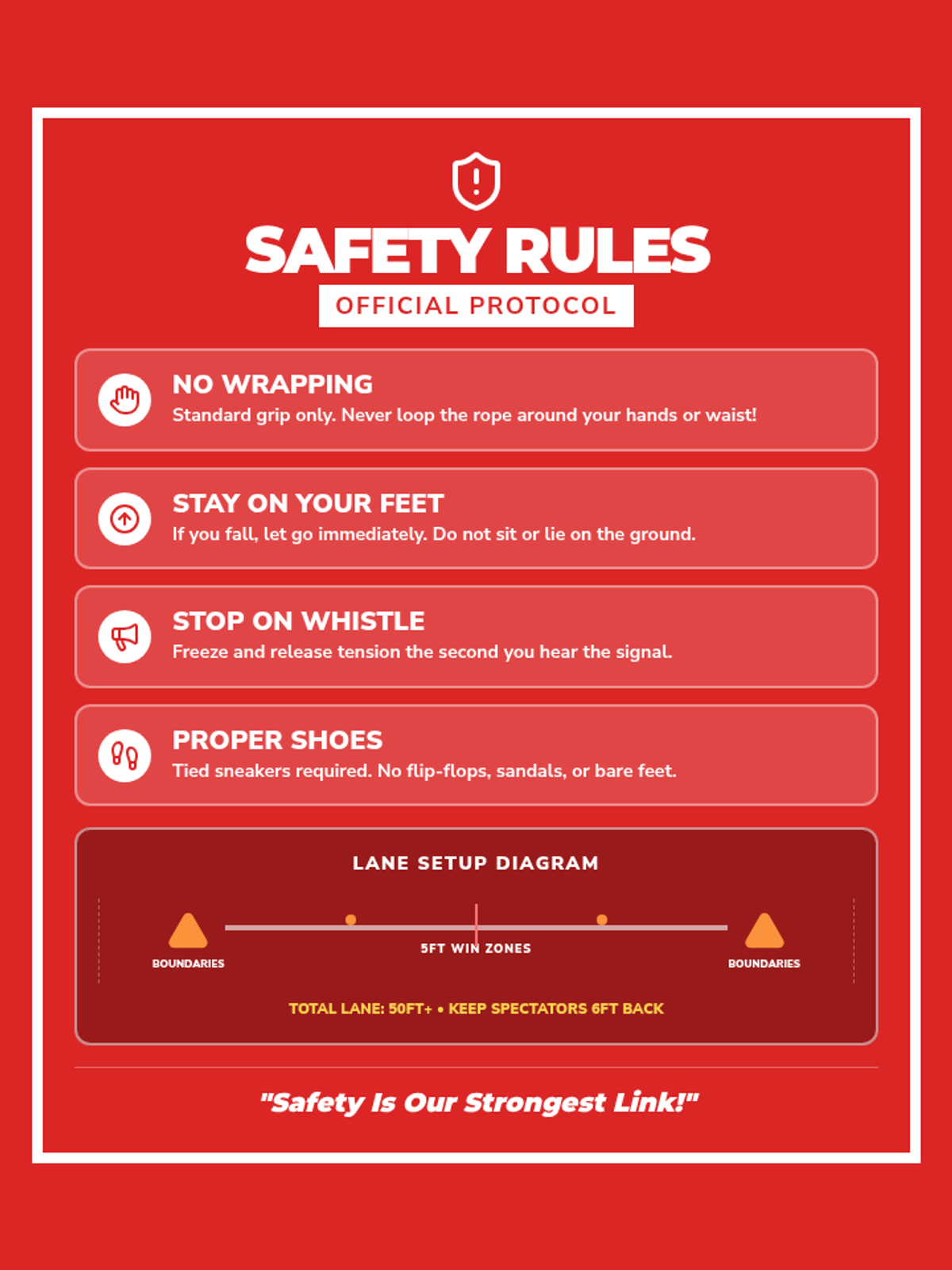
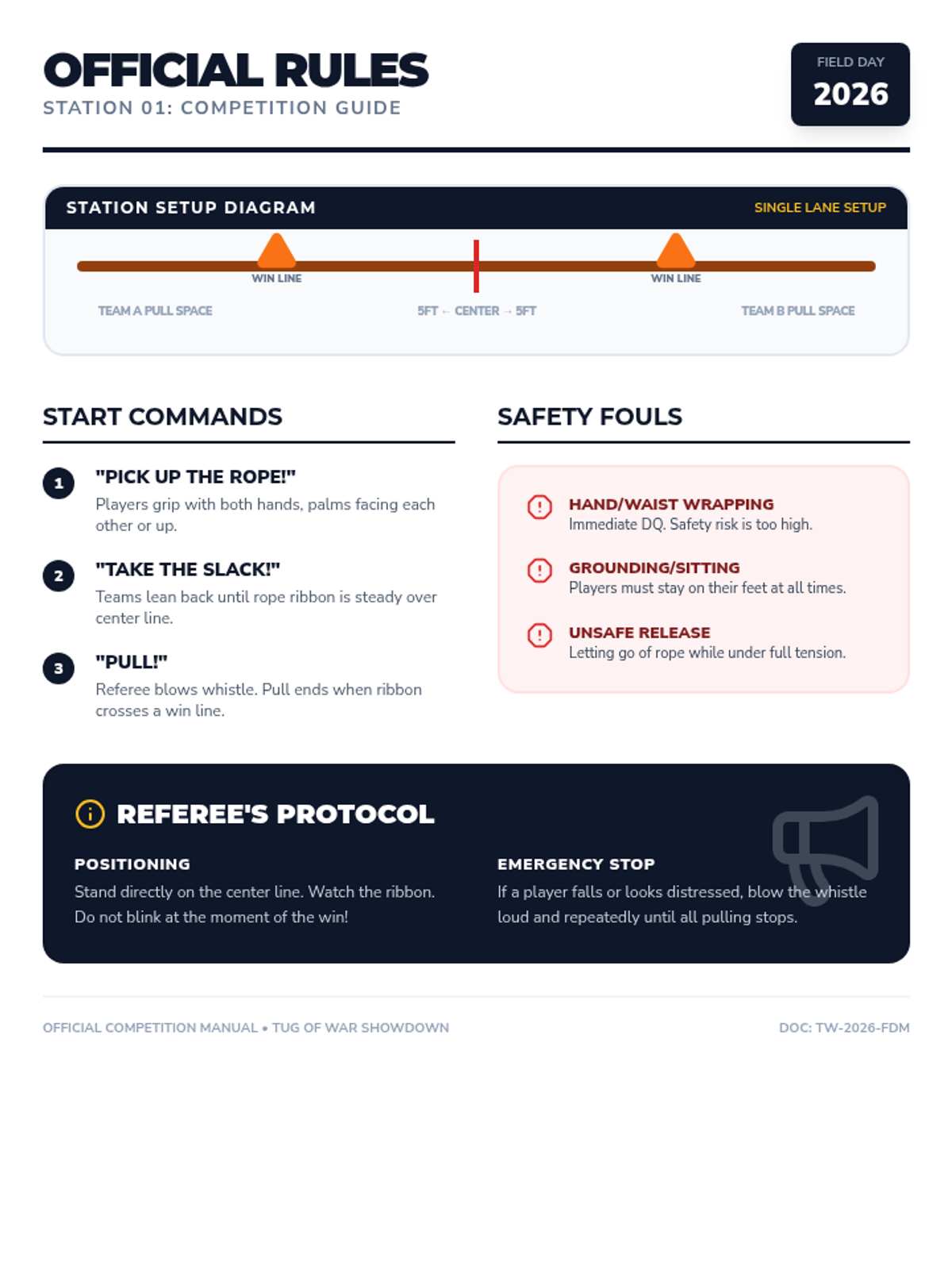
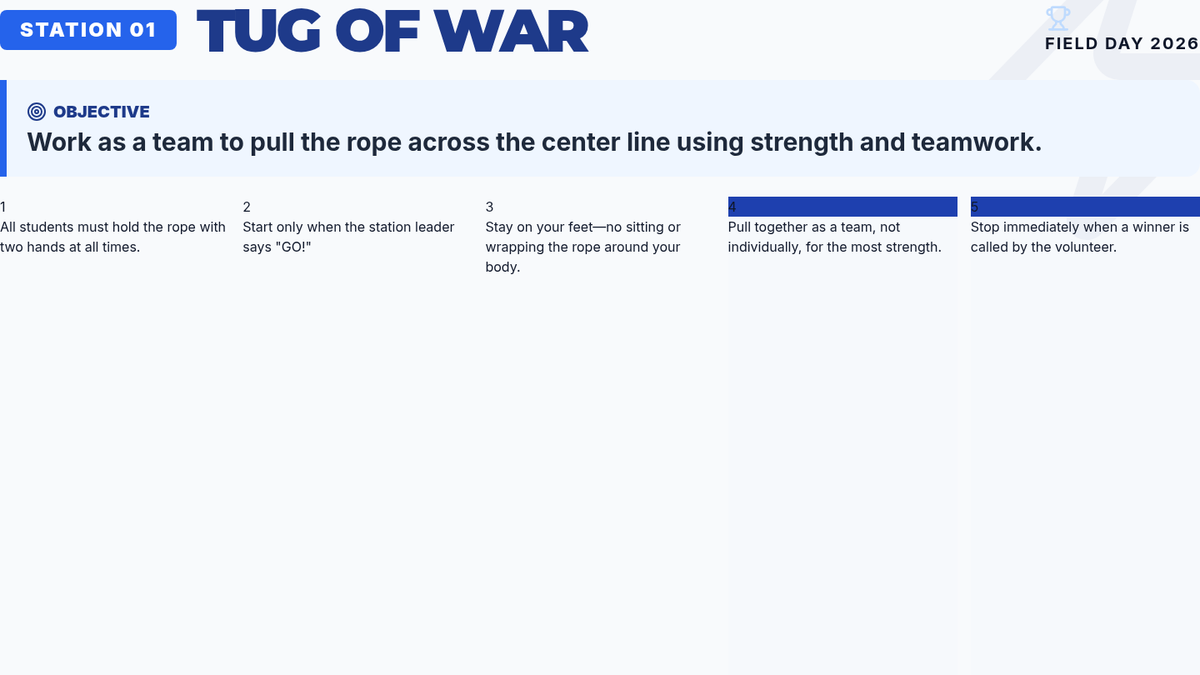
A complete guide for organizing a safe and fun tug of war event, including visual setup diagrams, safety protocols, and official competition rules.
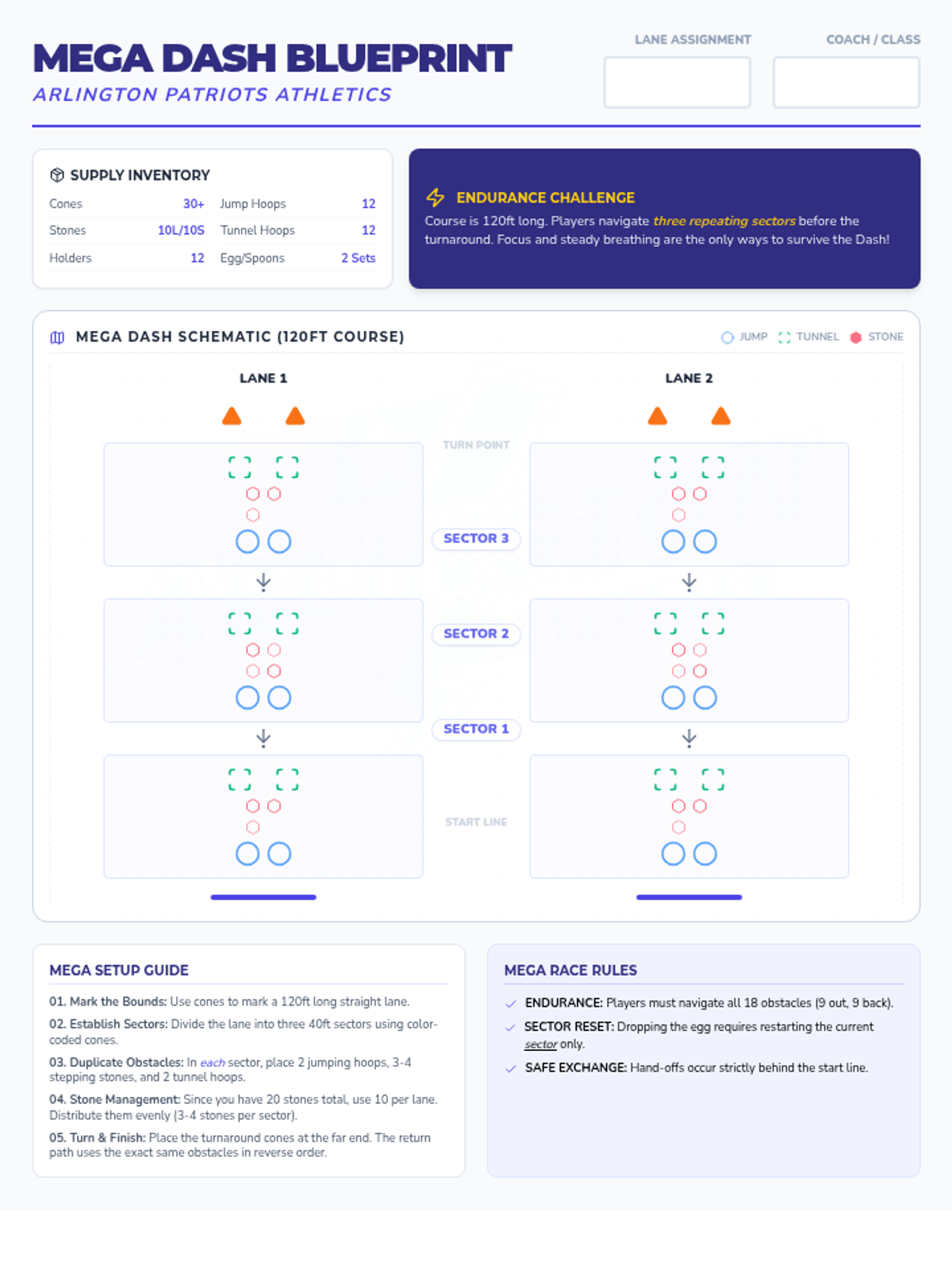
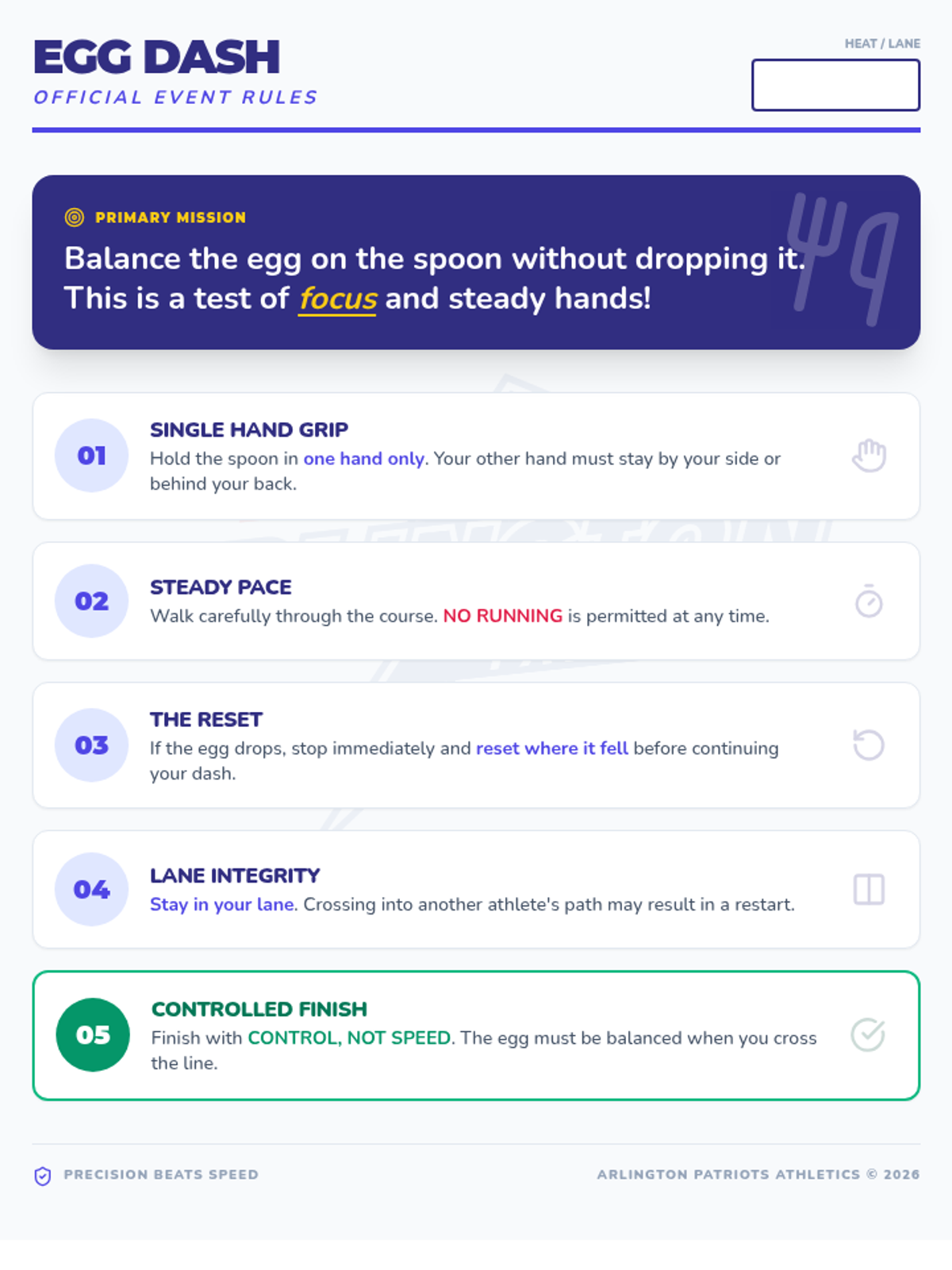
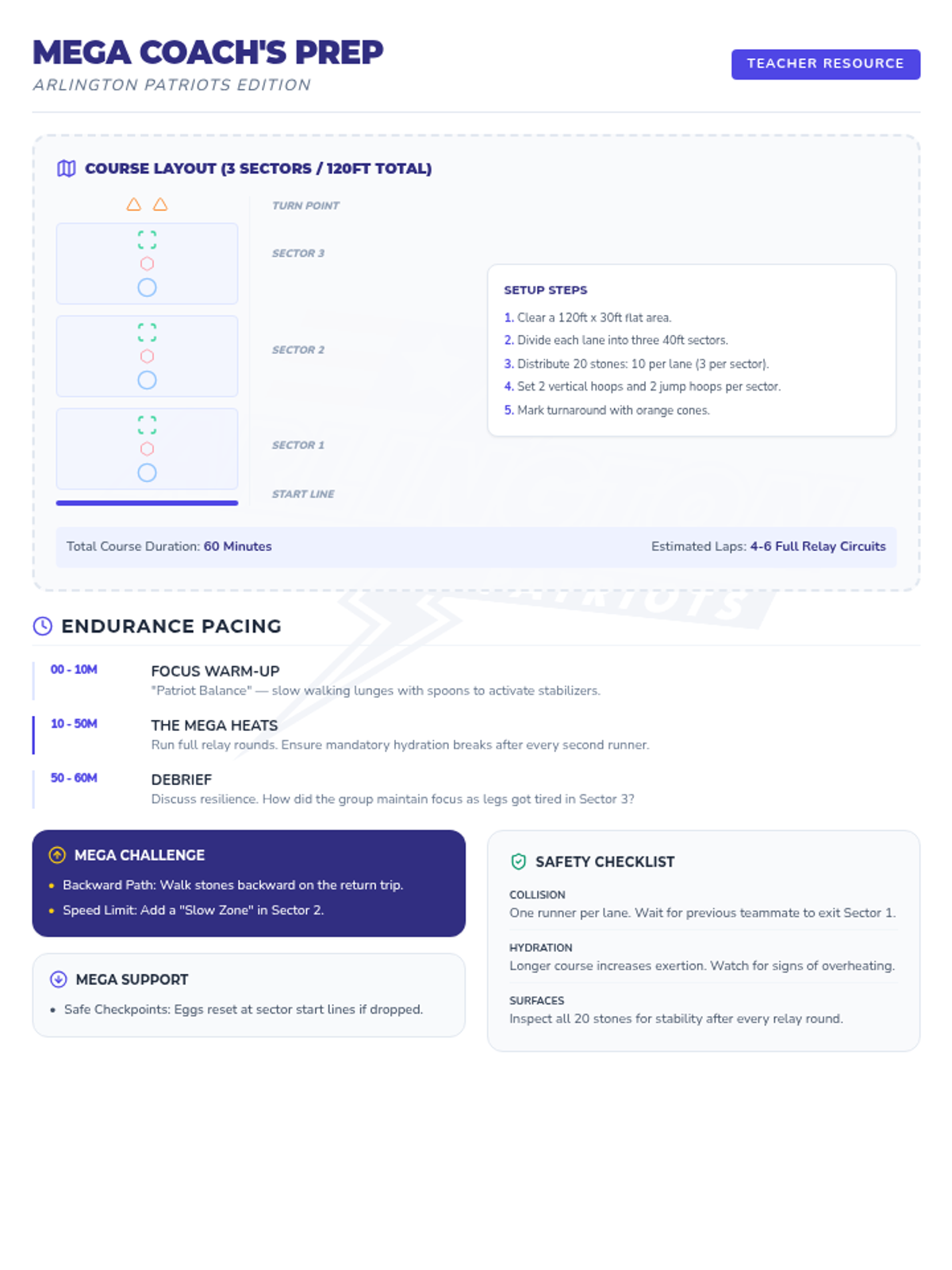
A high-energy relay race lesson where students navigate an expanded 120ft obstacle course while balancing a giant egg. Focuses on motor skills, endurance, and coordination for the Arlington Patriots.
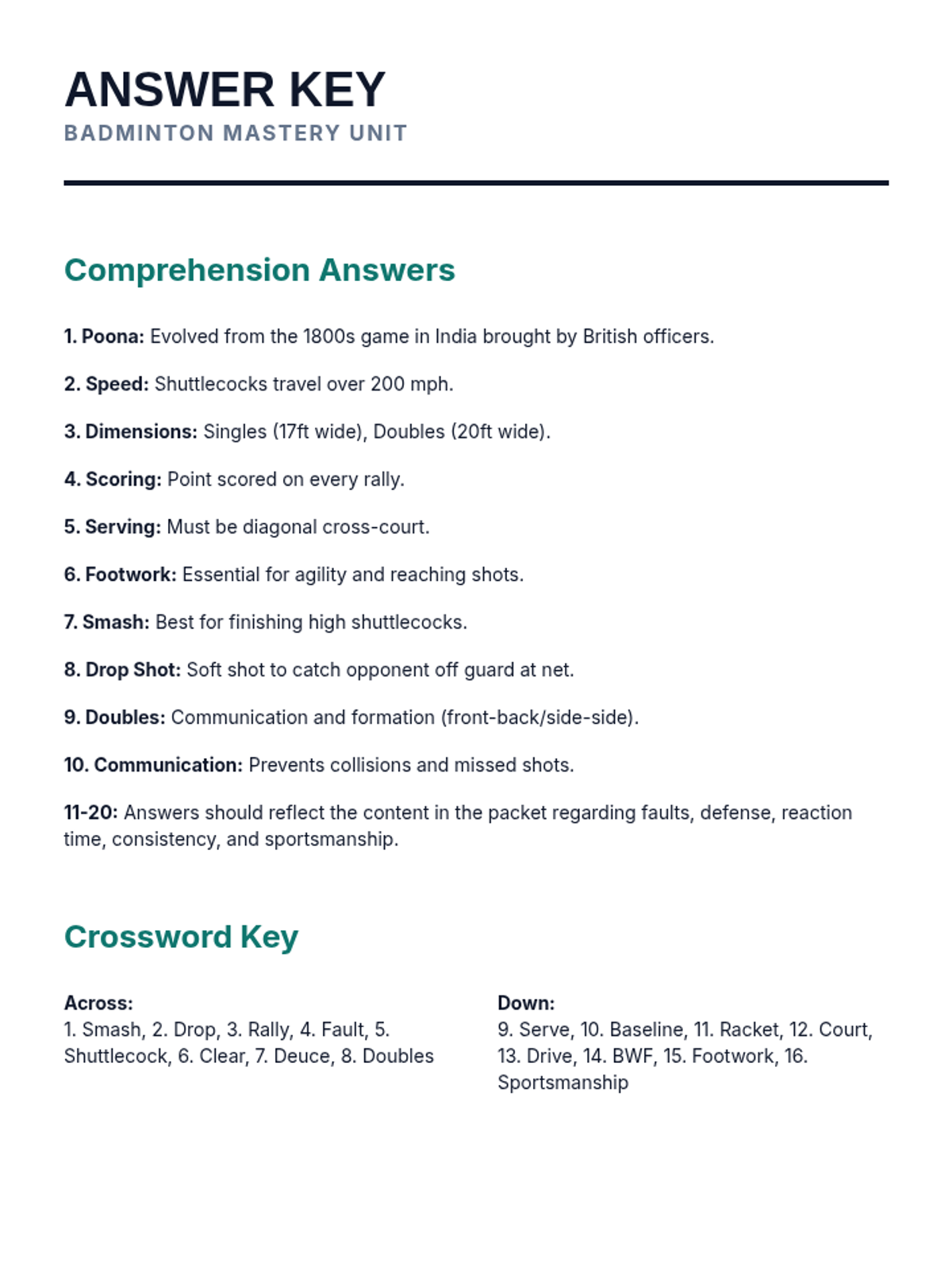
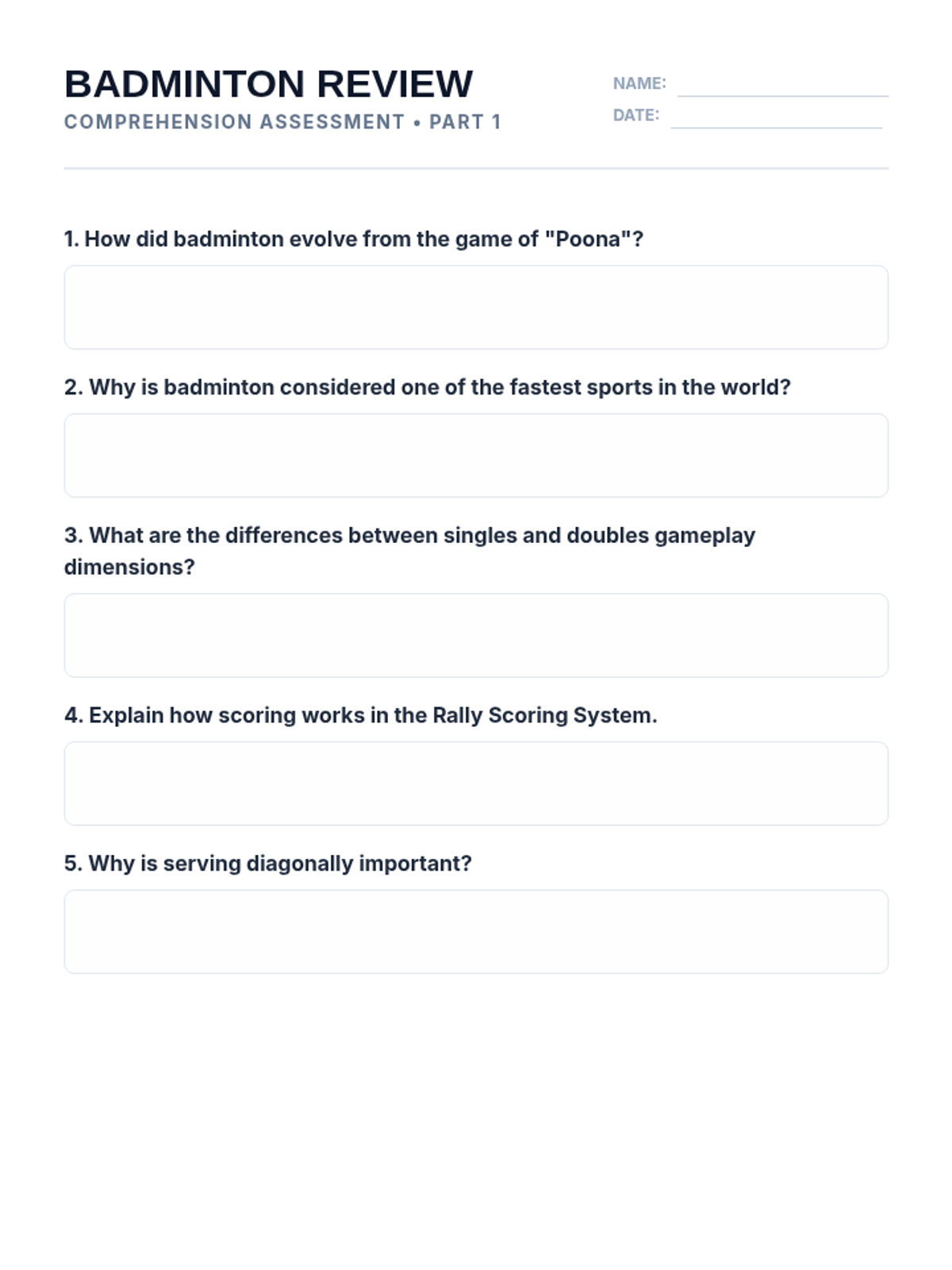
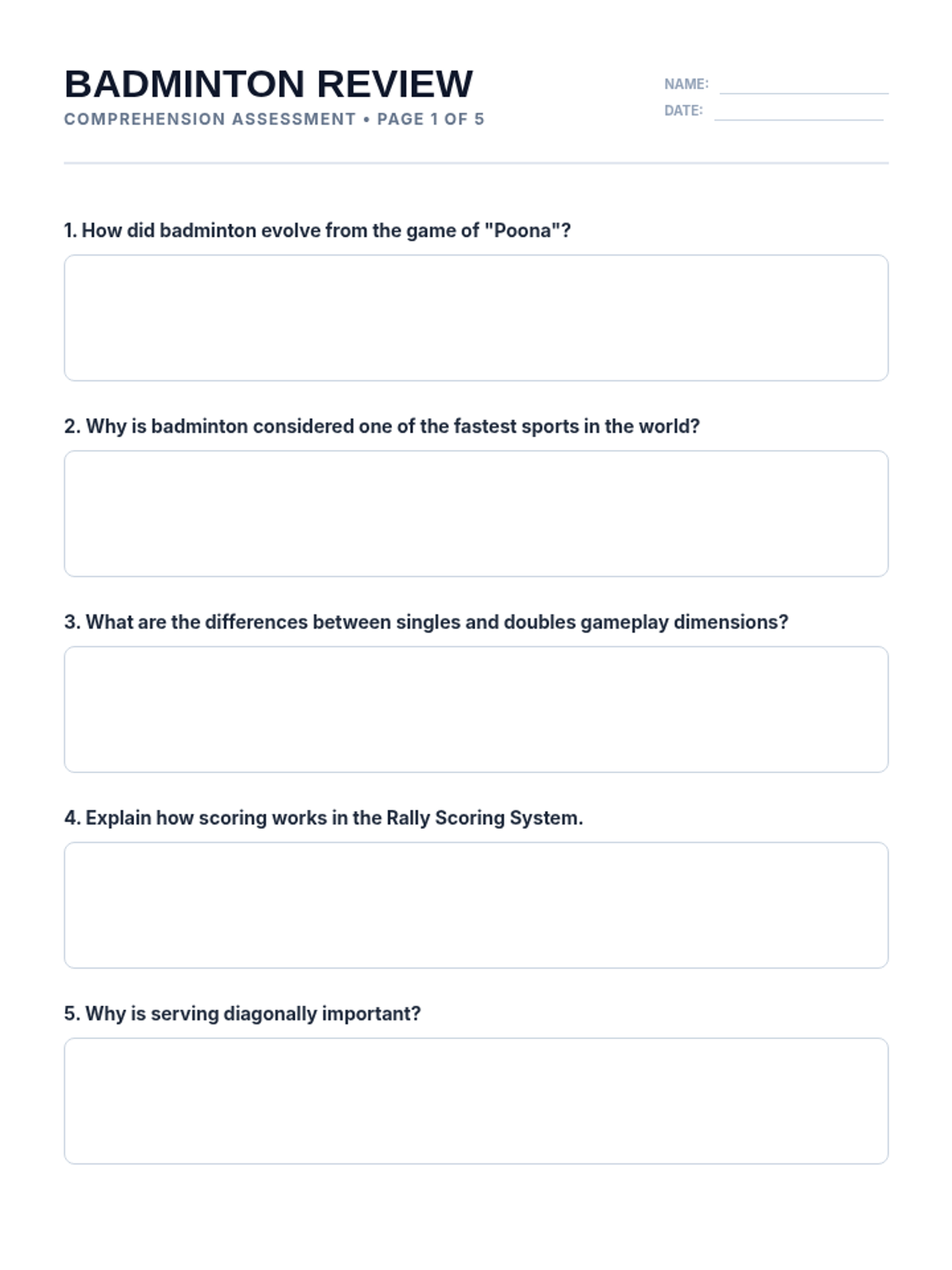
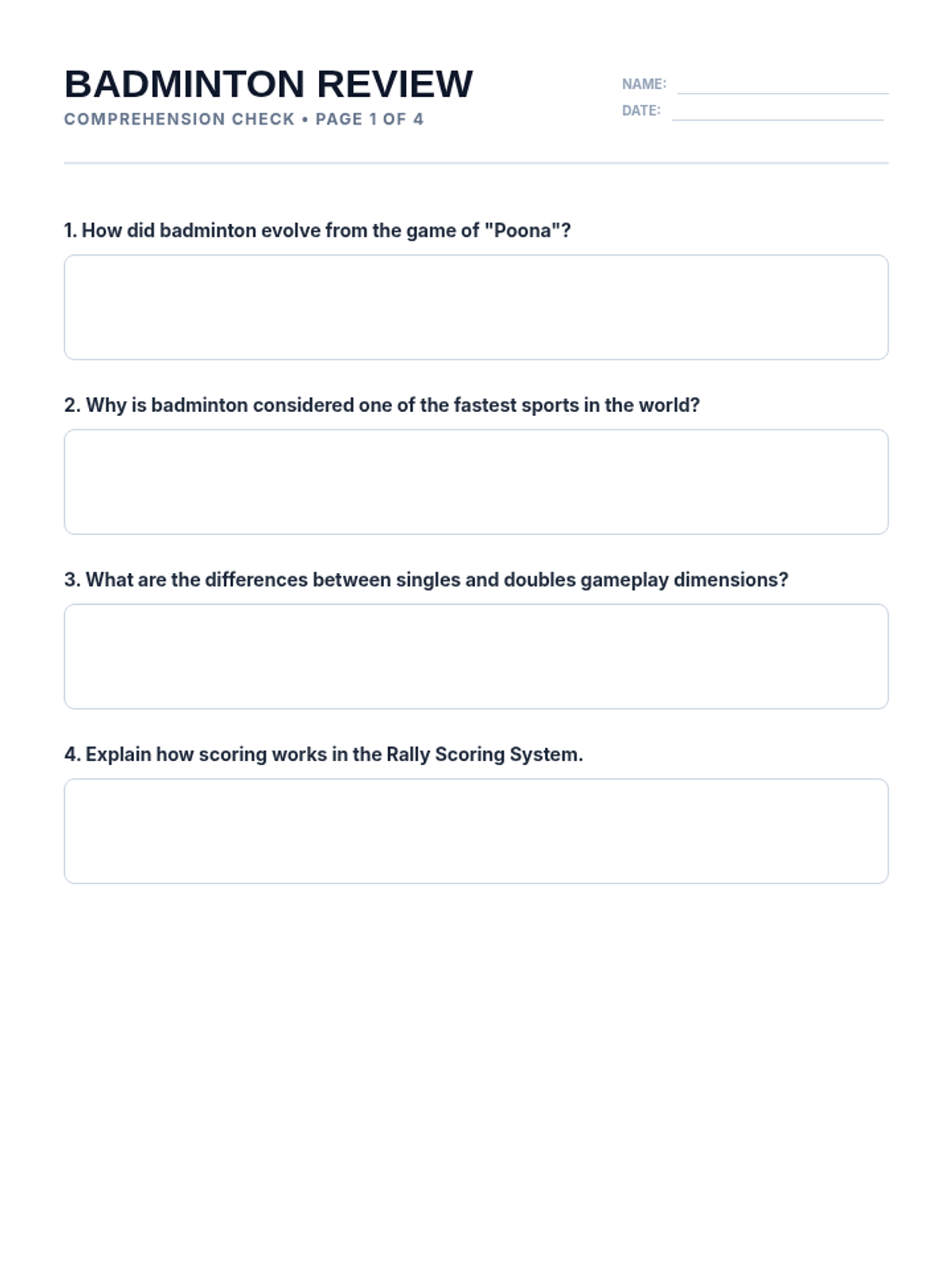
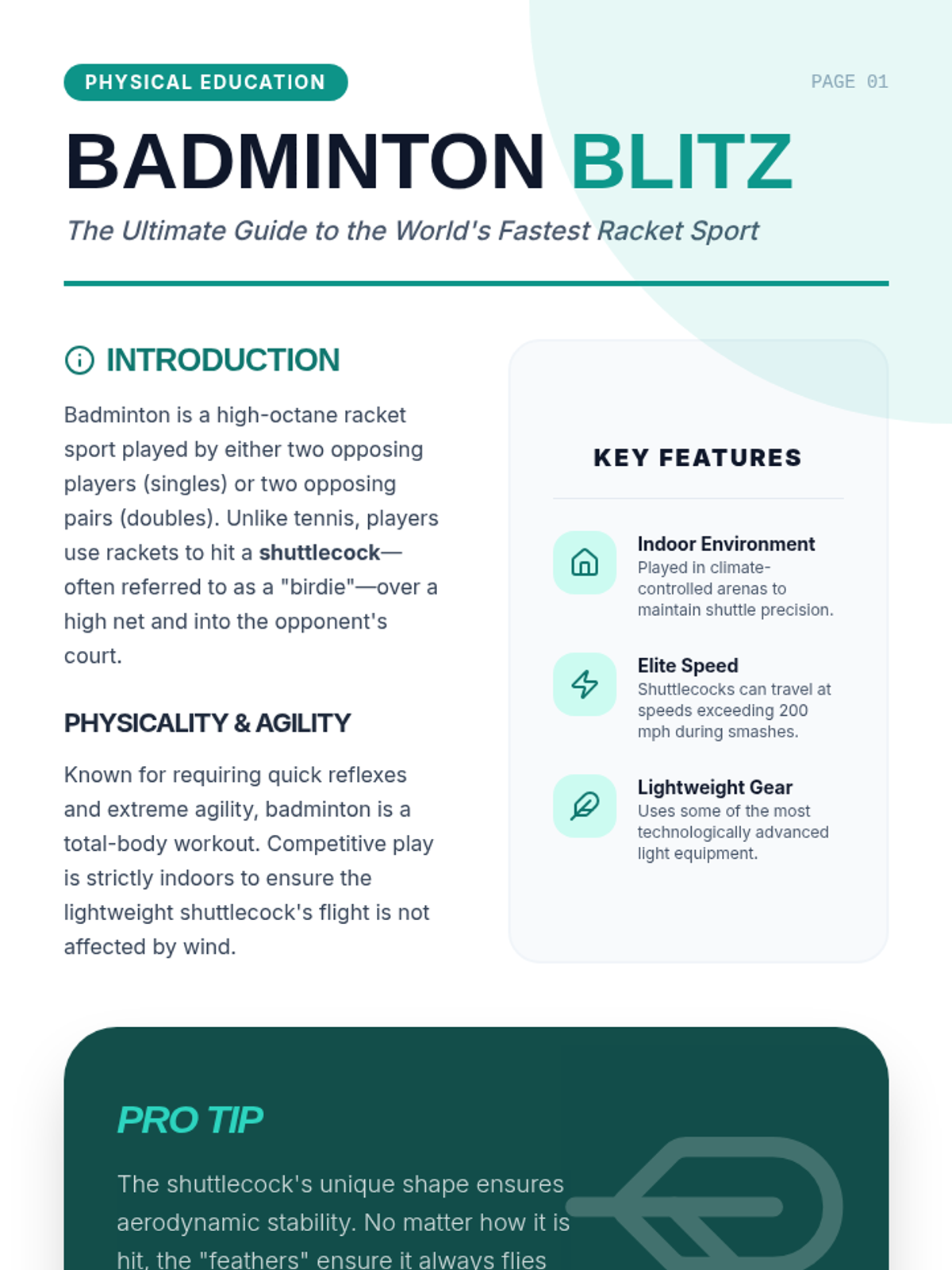
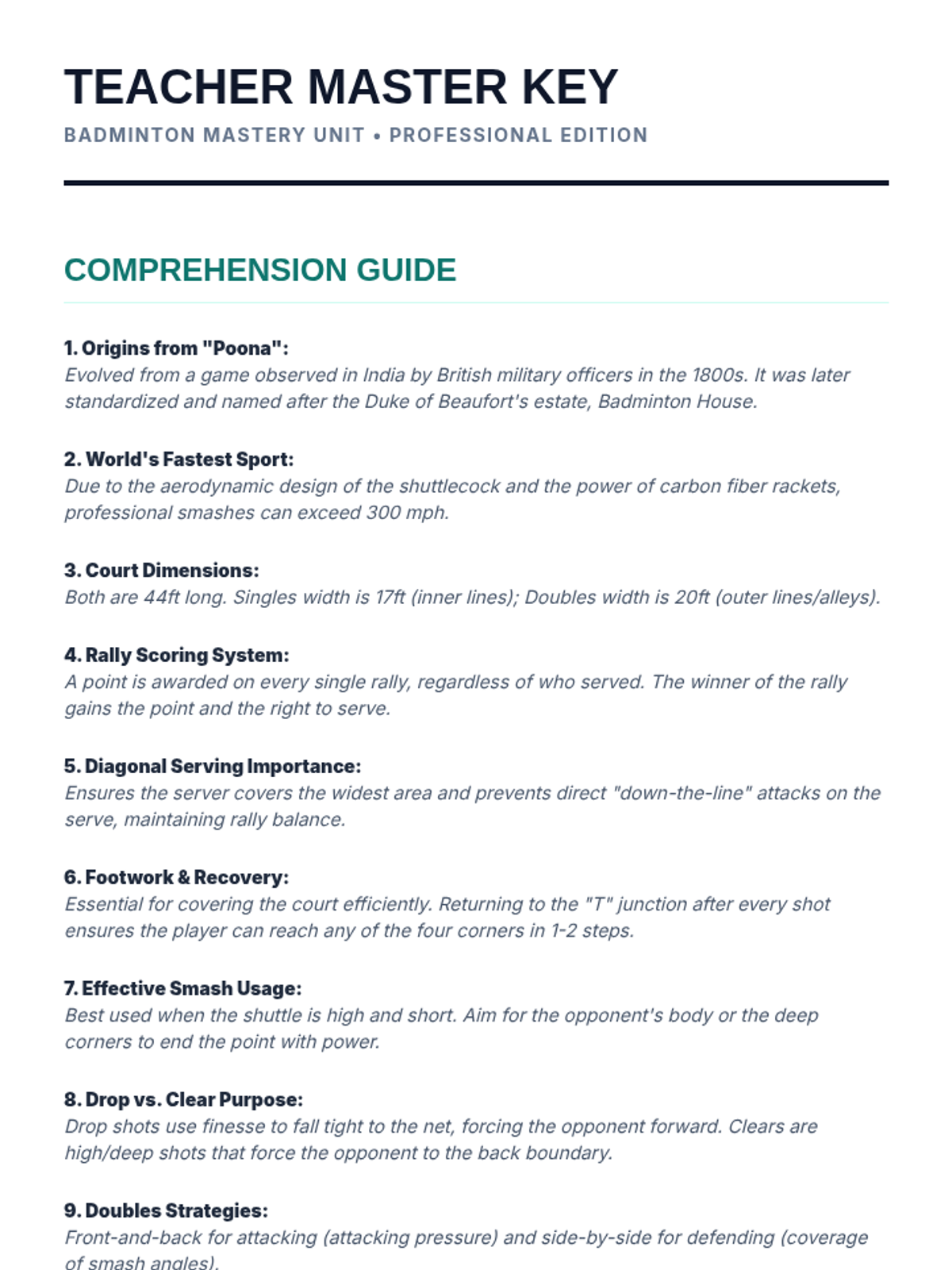
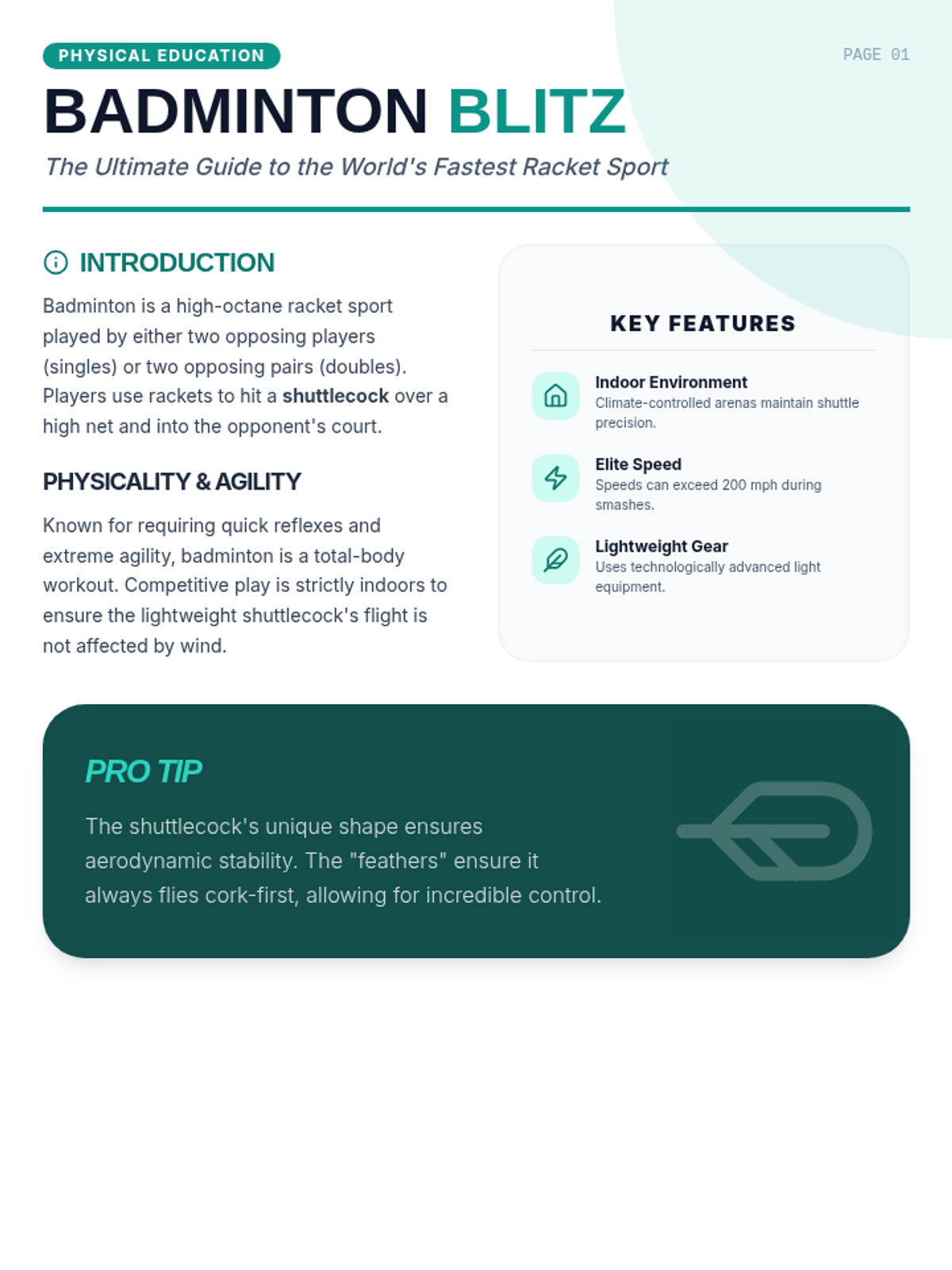
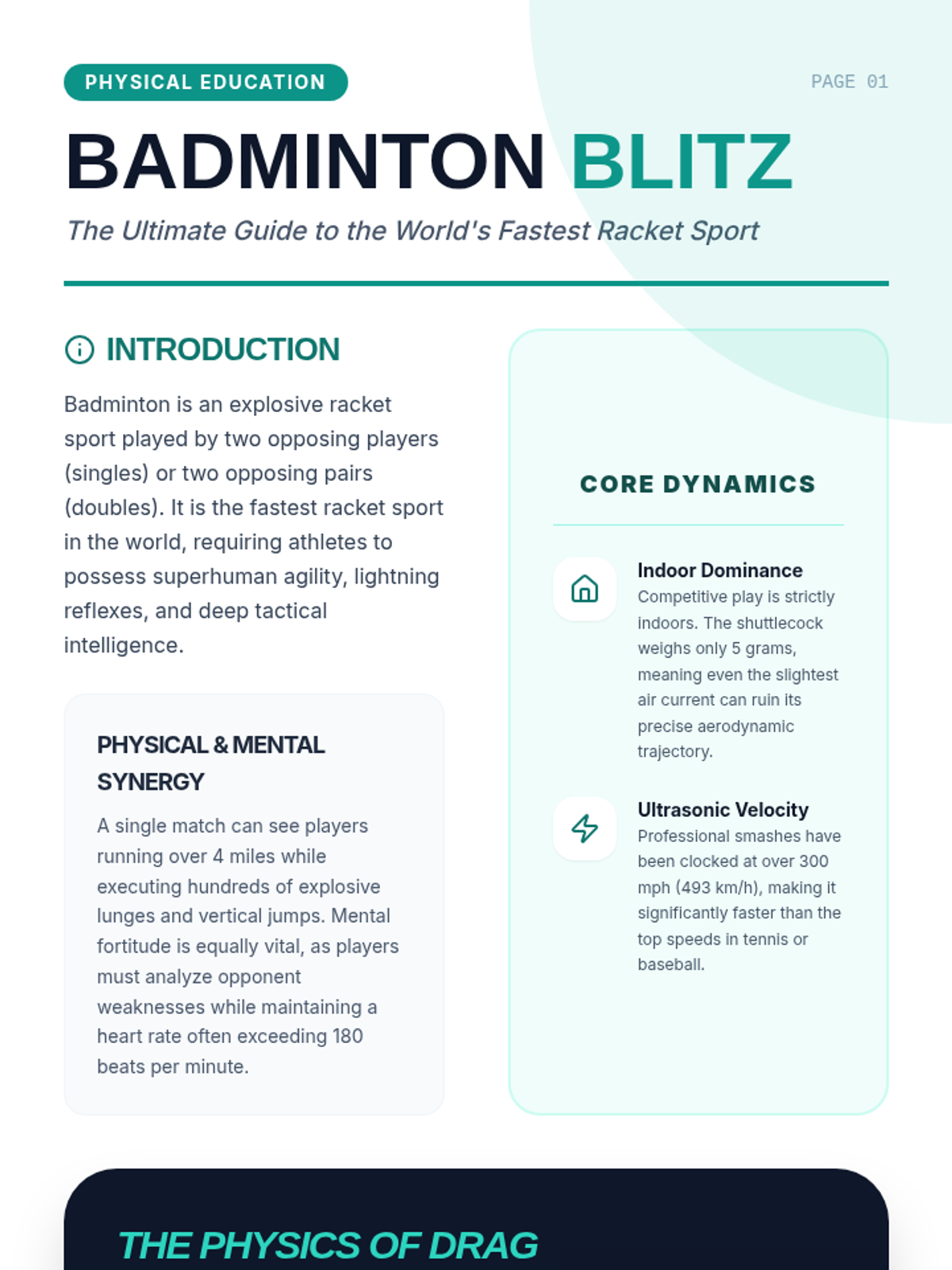
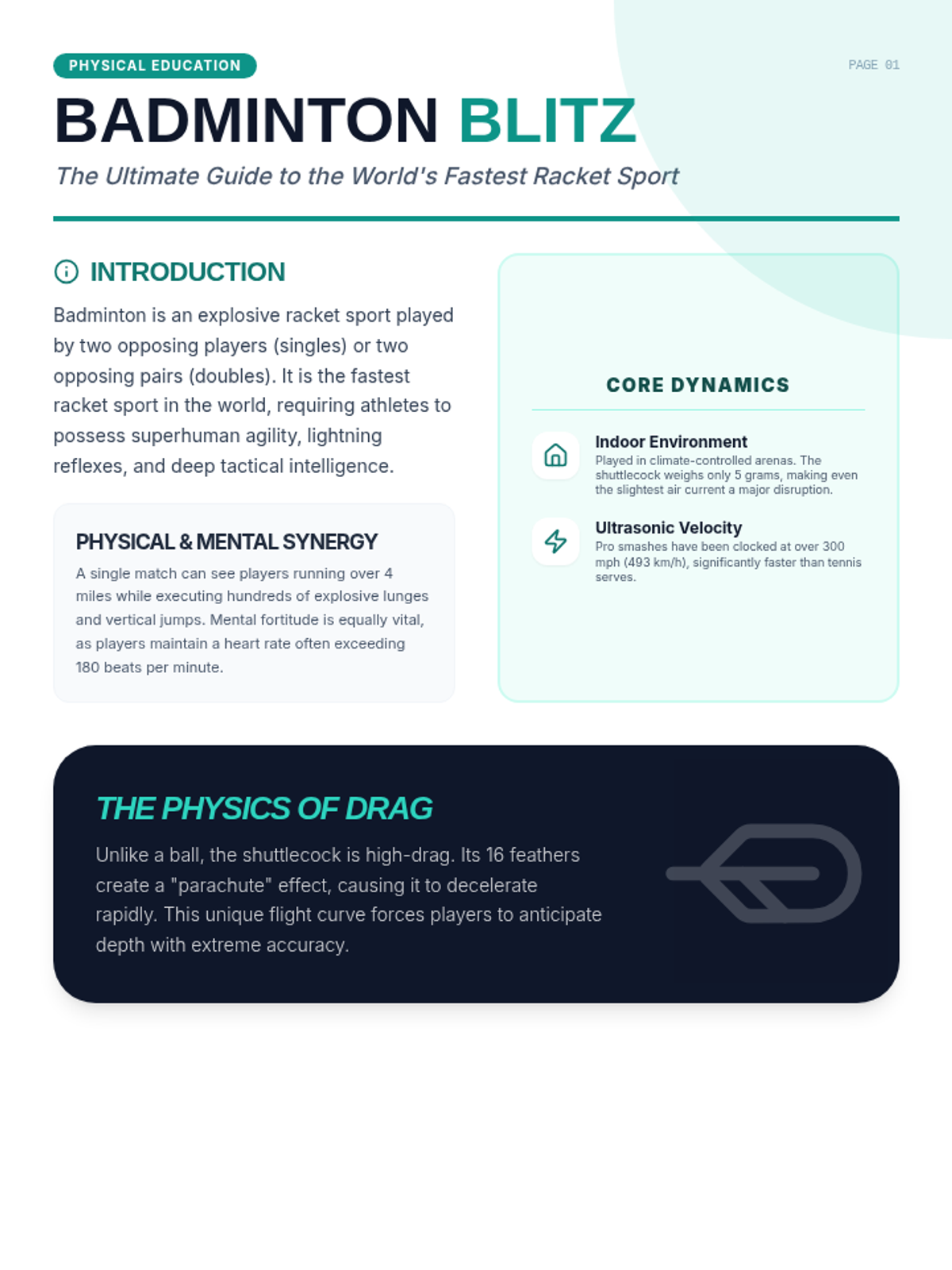
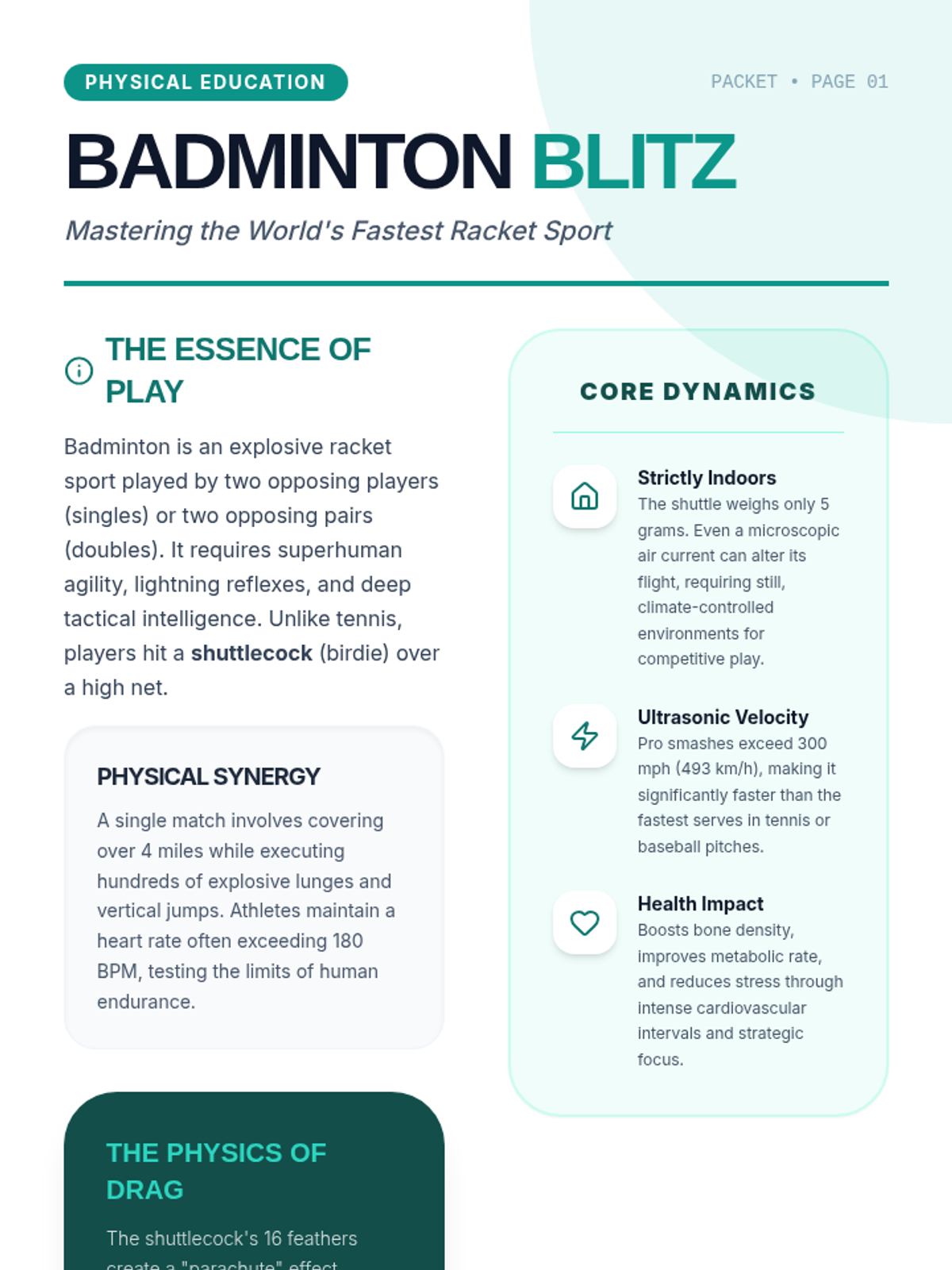
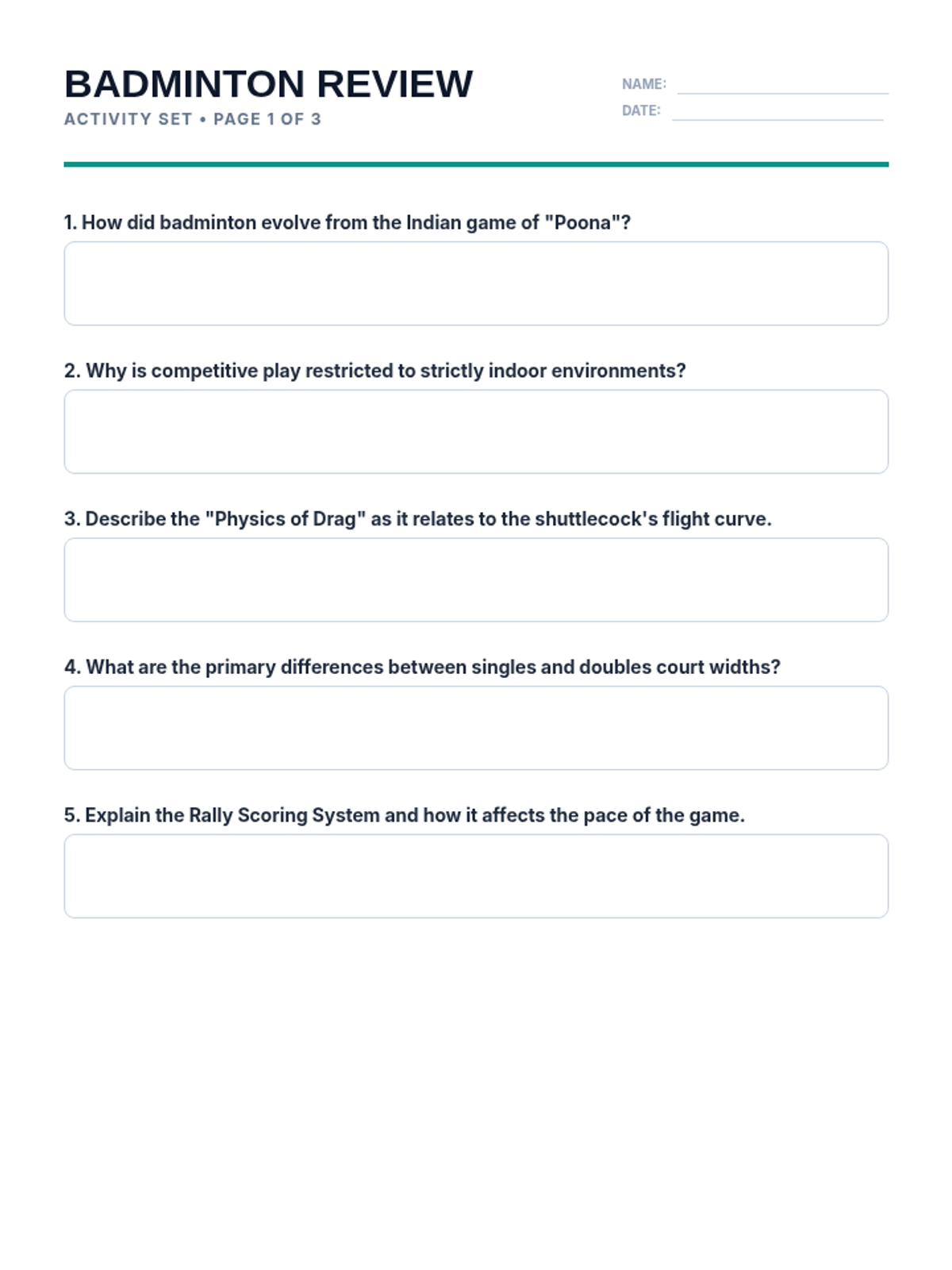
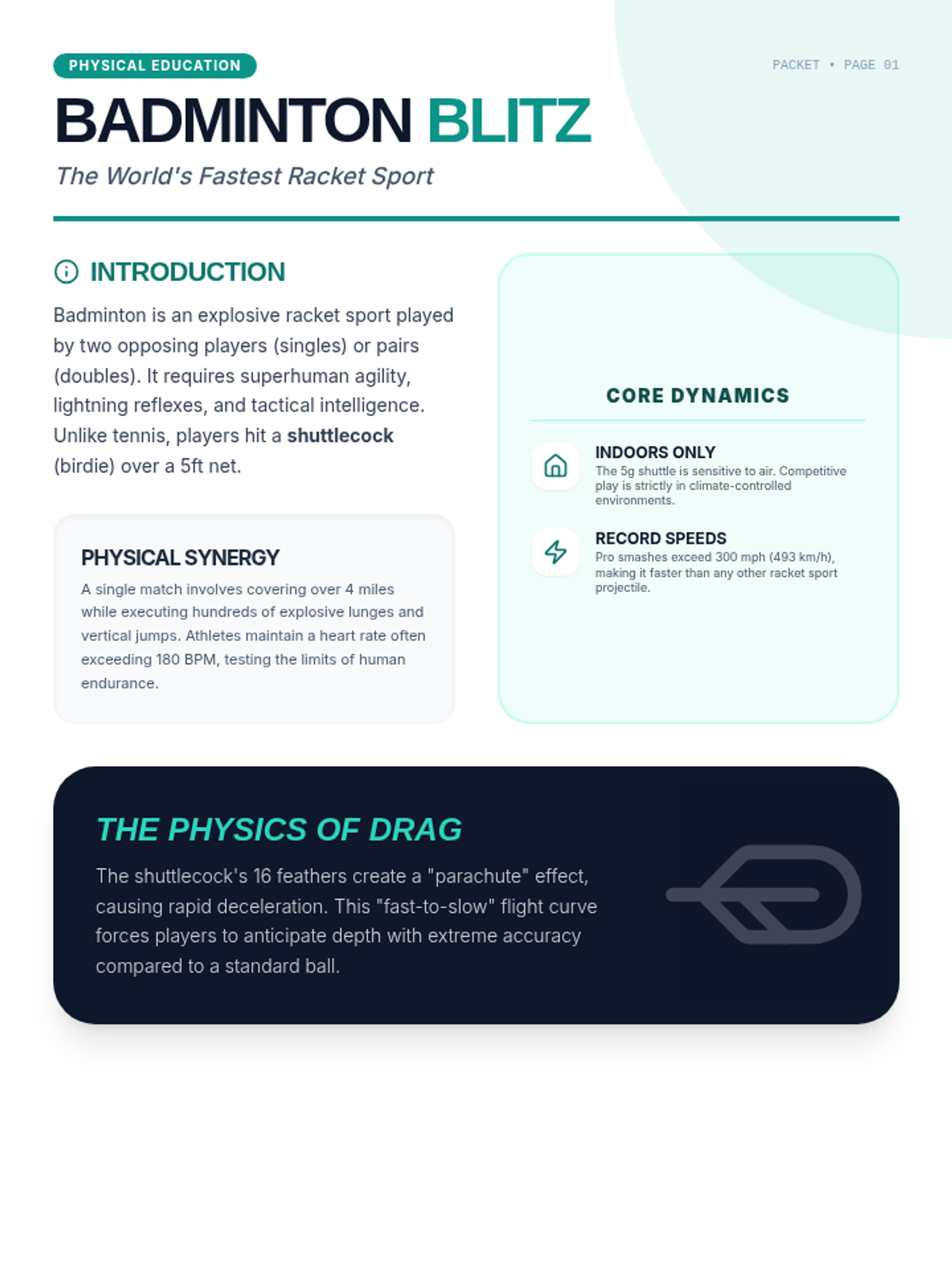
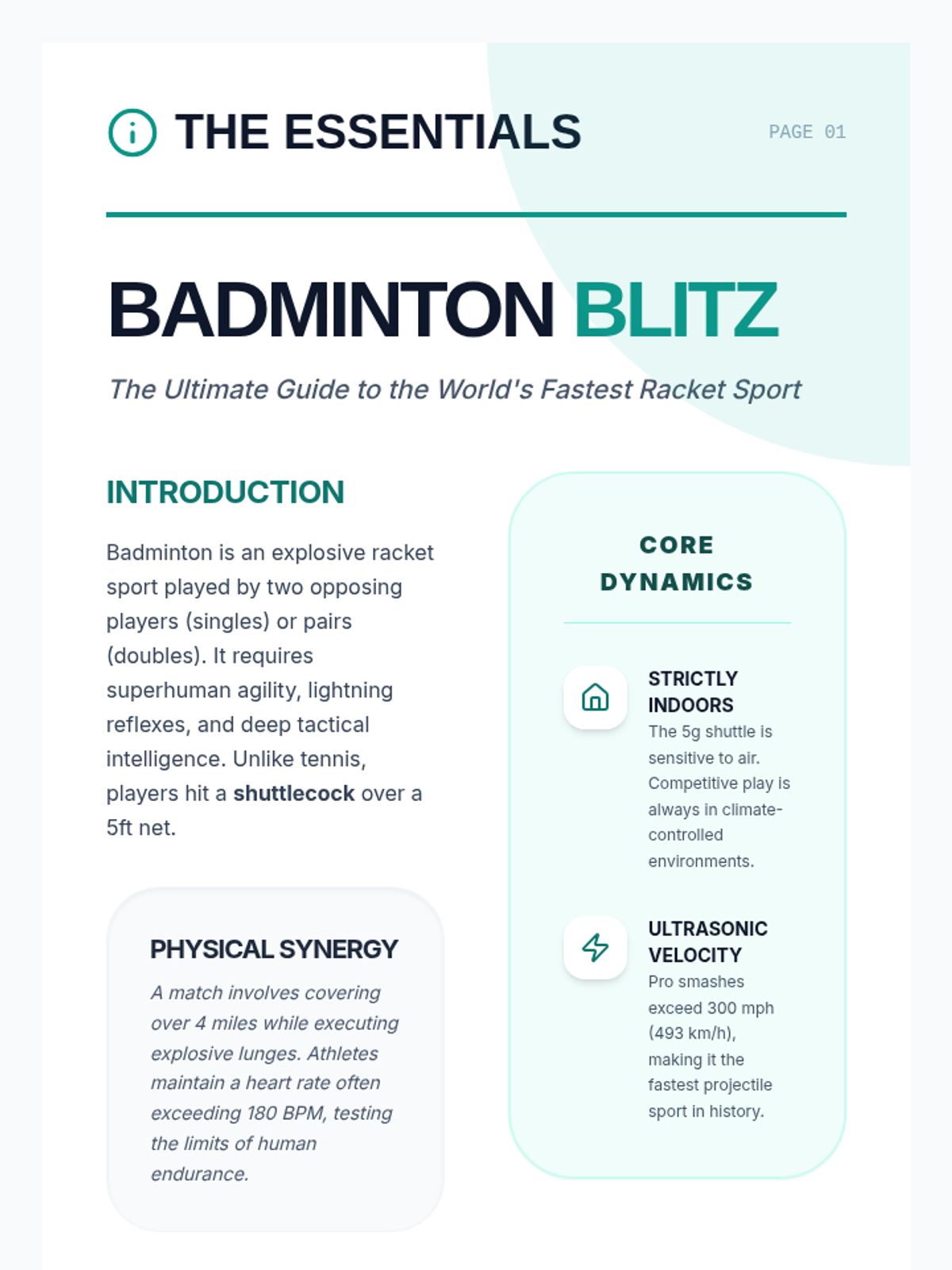
A comprehensive unit on badminton covering its history, official rules, terminology, and advanced strategies through an informational packet, comprehension exercises, and interactive puzzles.
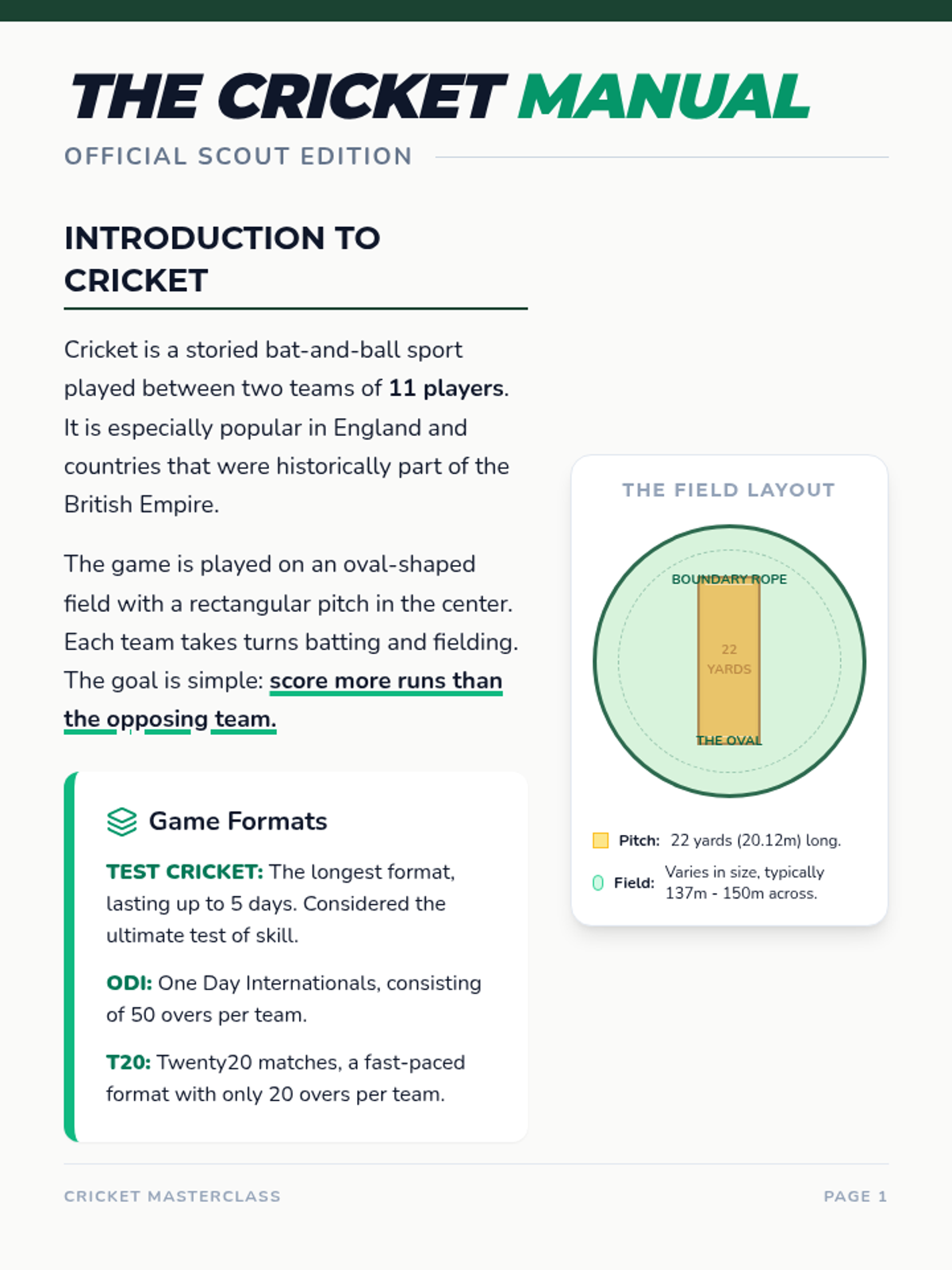
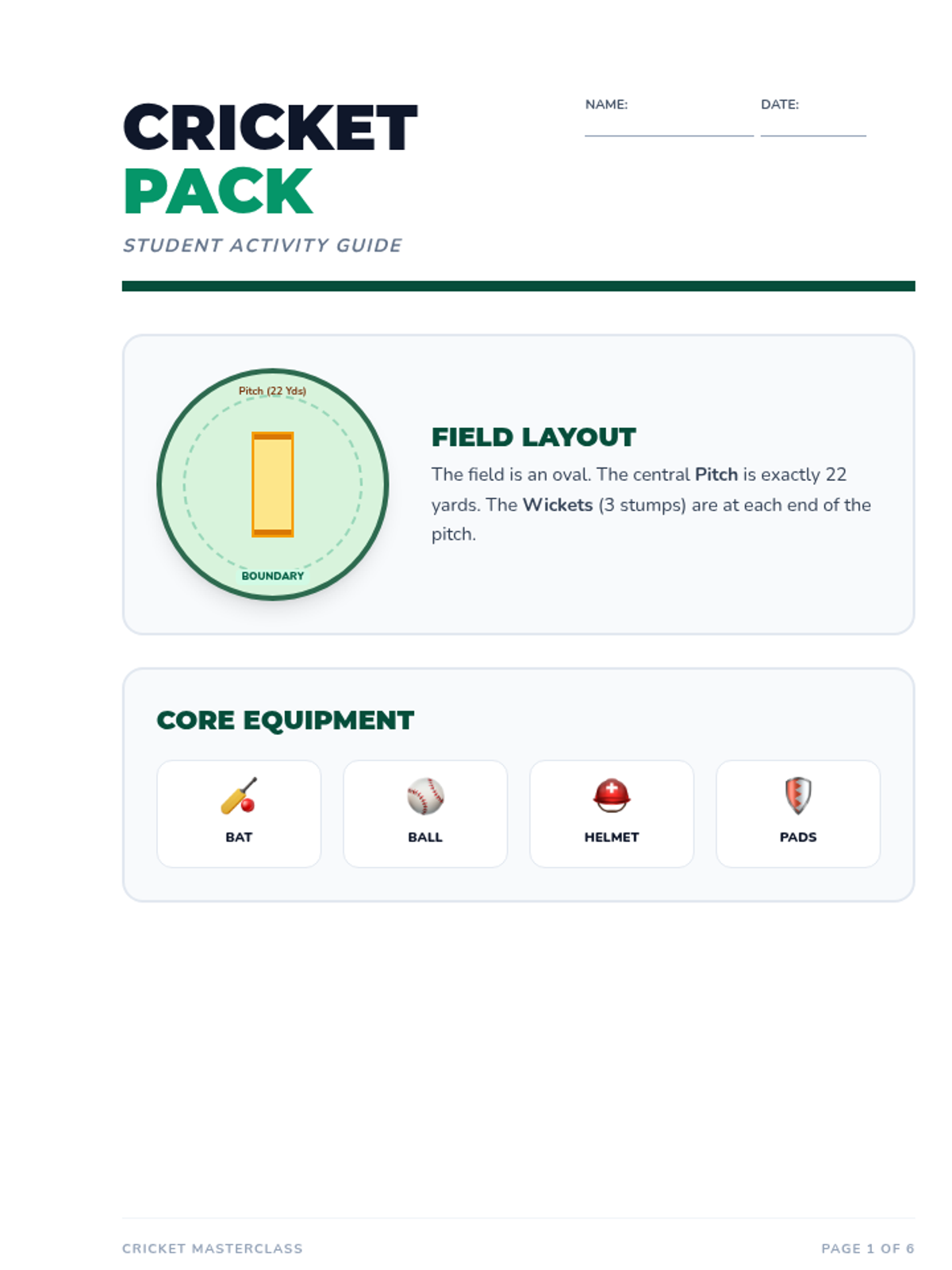
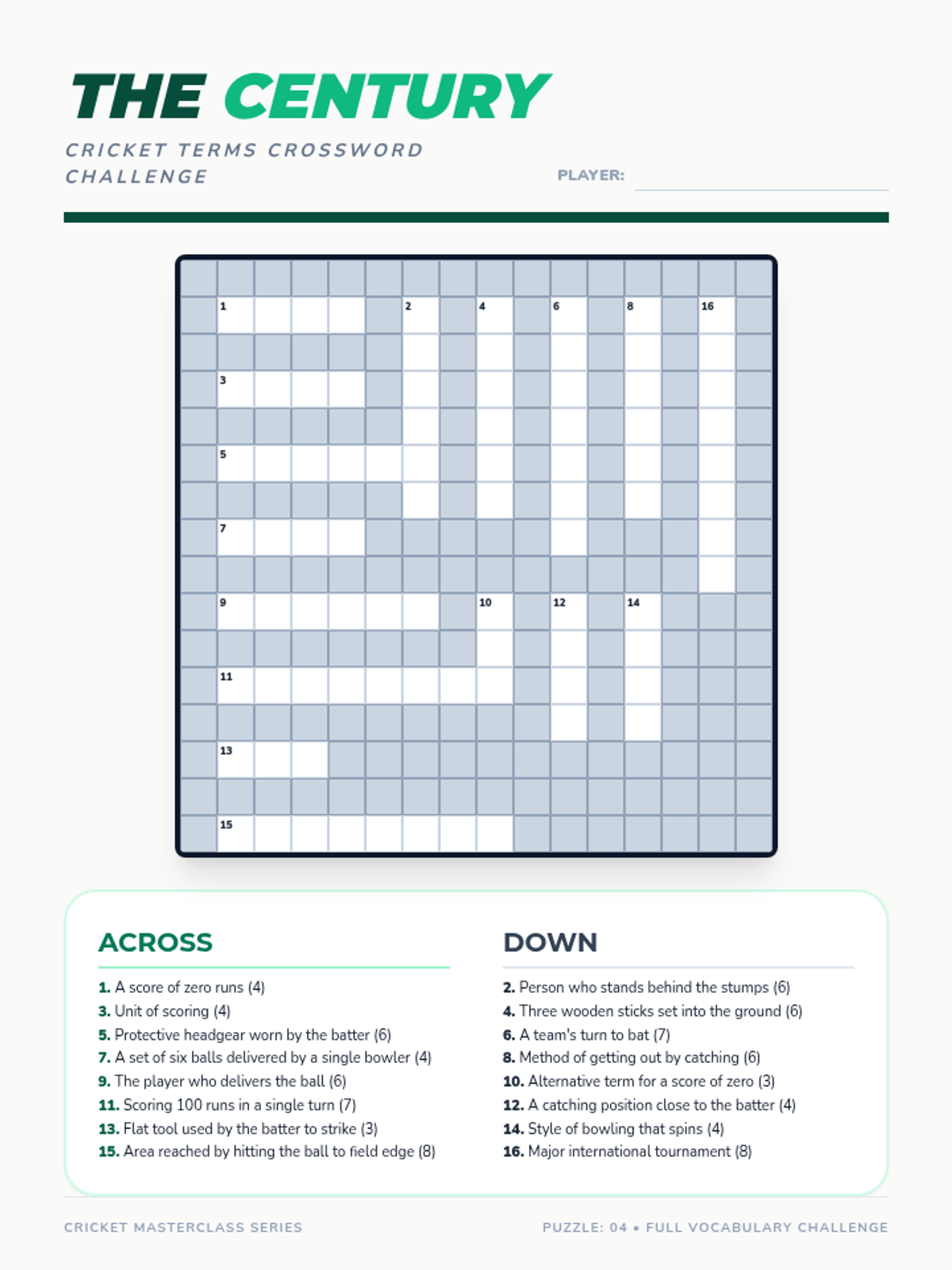
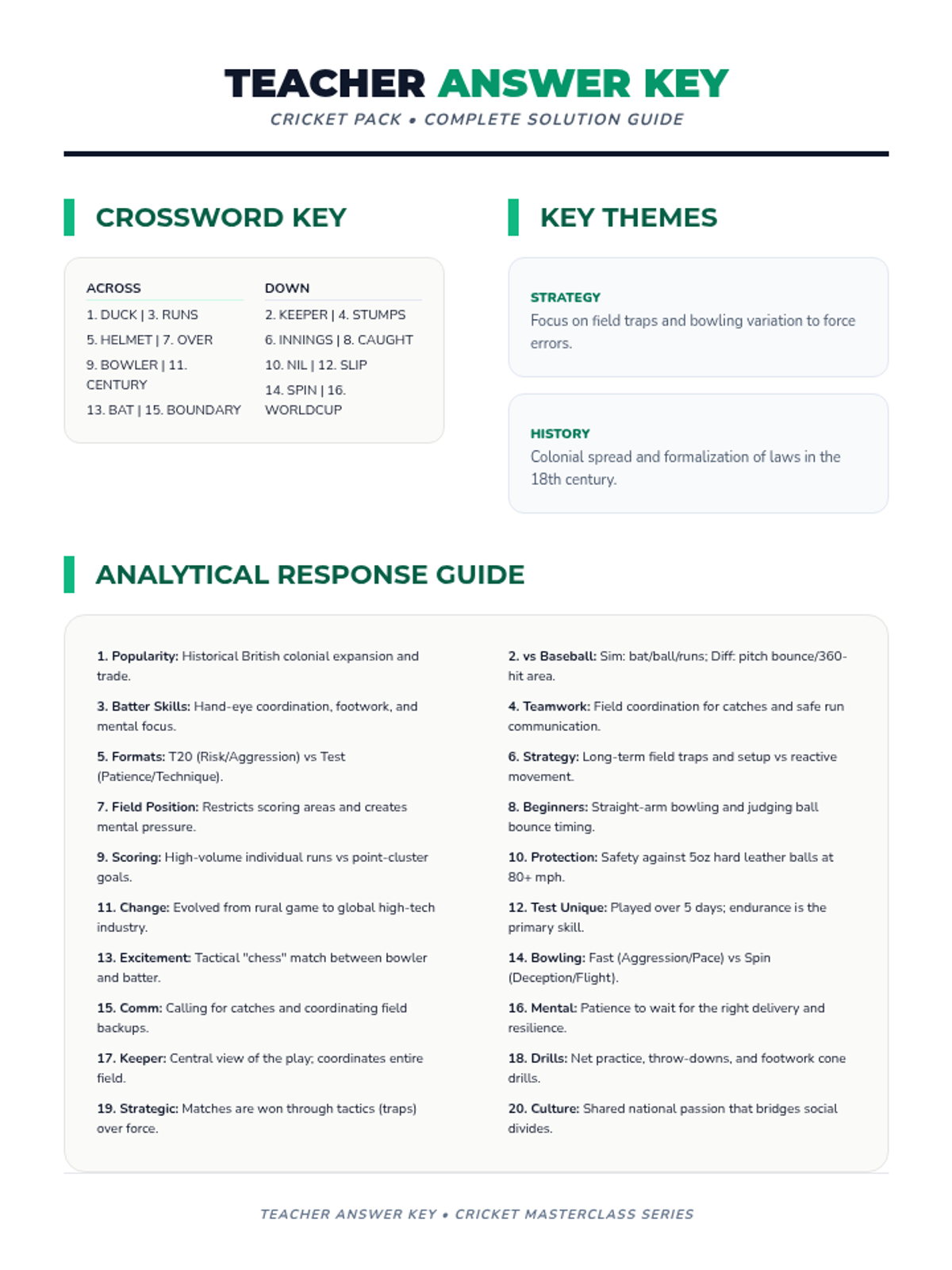
An introductory lesson on the fundamentals of cricket, including its historical origins, essential equipment, basic rules, and the layout of the field.
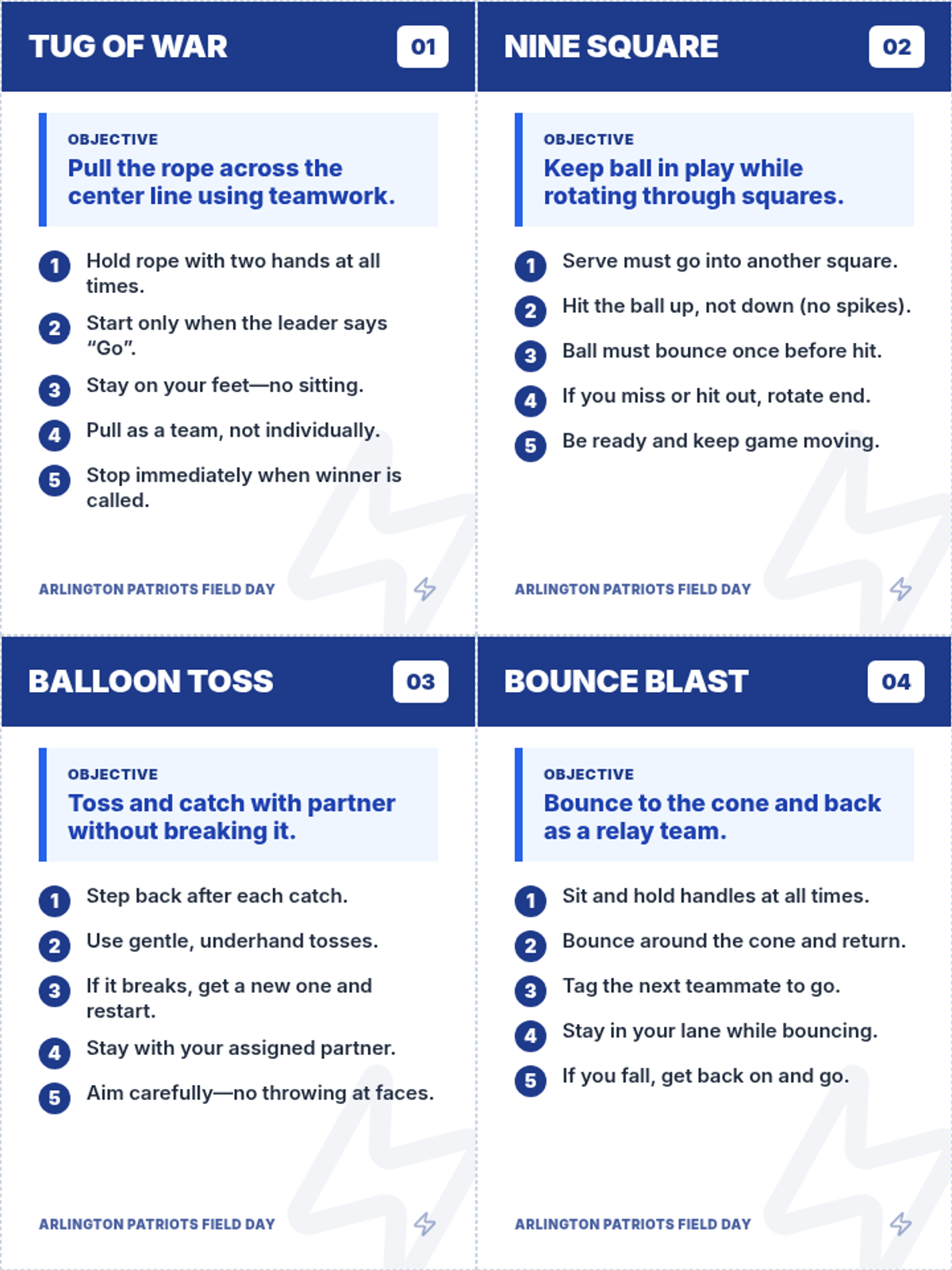
A comprehensive set of resources for the Arlington Patriots Field Day event, including presentation slides for instruction and printable station cards for volunteers.
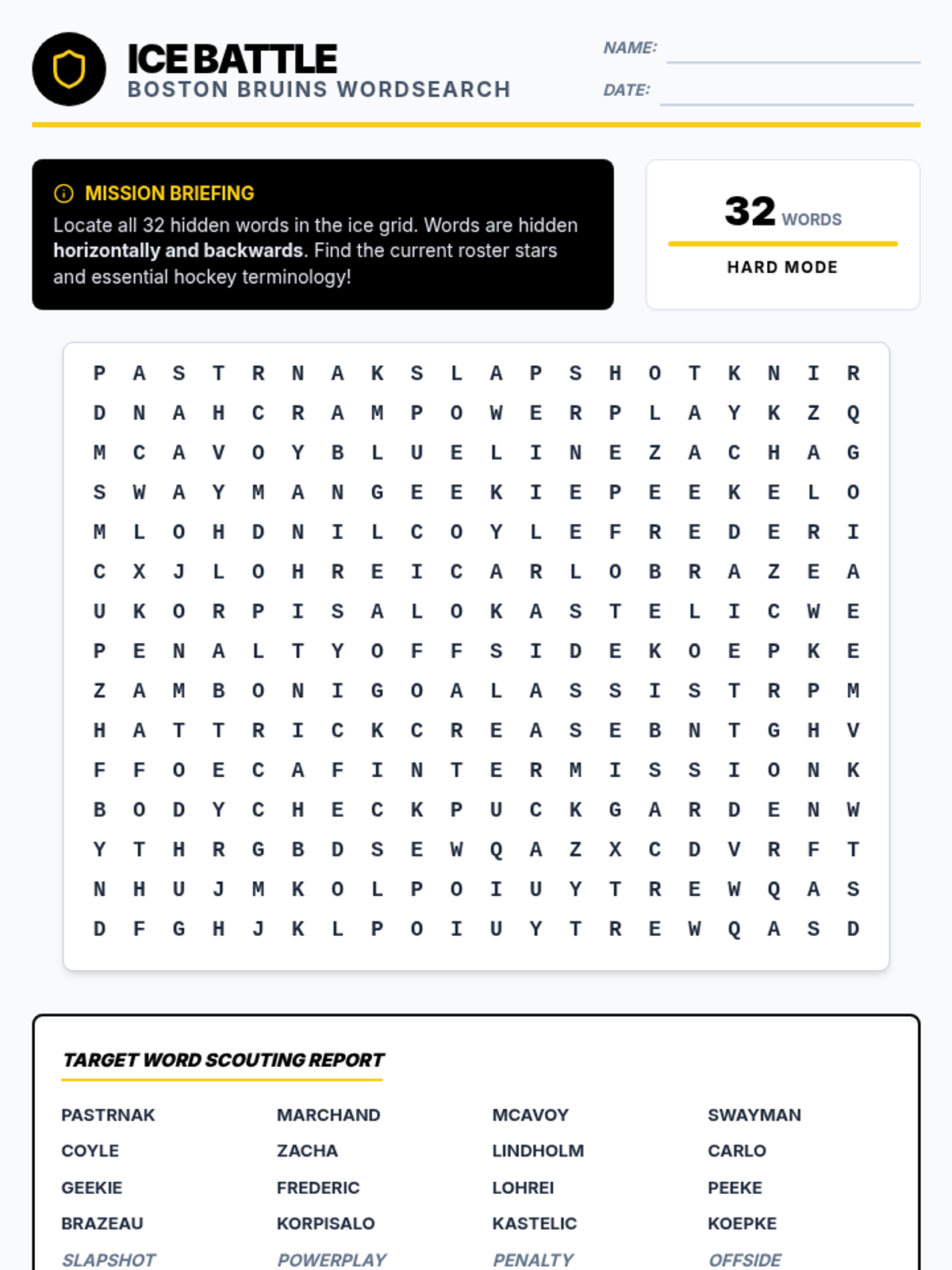
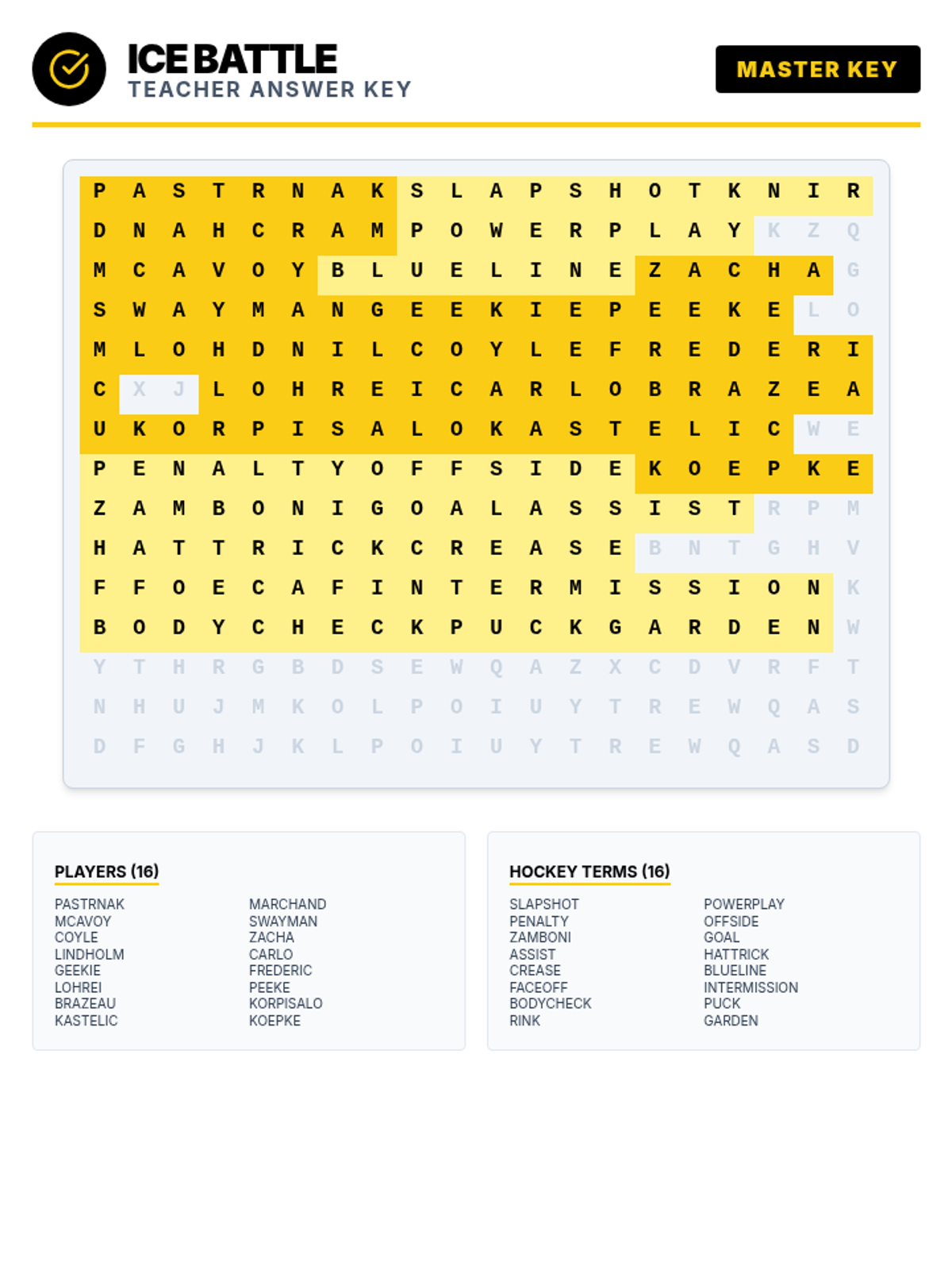
A challenging vocabulary activity focused on the Boston Bruins hockey team, including current roster players and essential hockey terminology. Students will identify key figures and concepts while navigating a complex grid.
A 10-slide presentation exploring the history, rules, and legendary moments of Team USA hockey in the Winter Olympics.
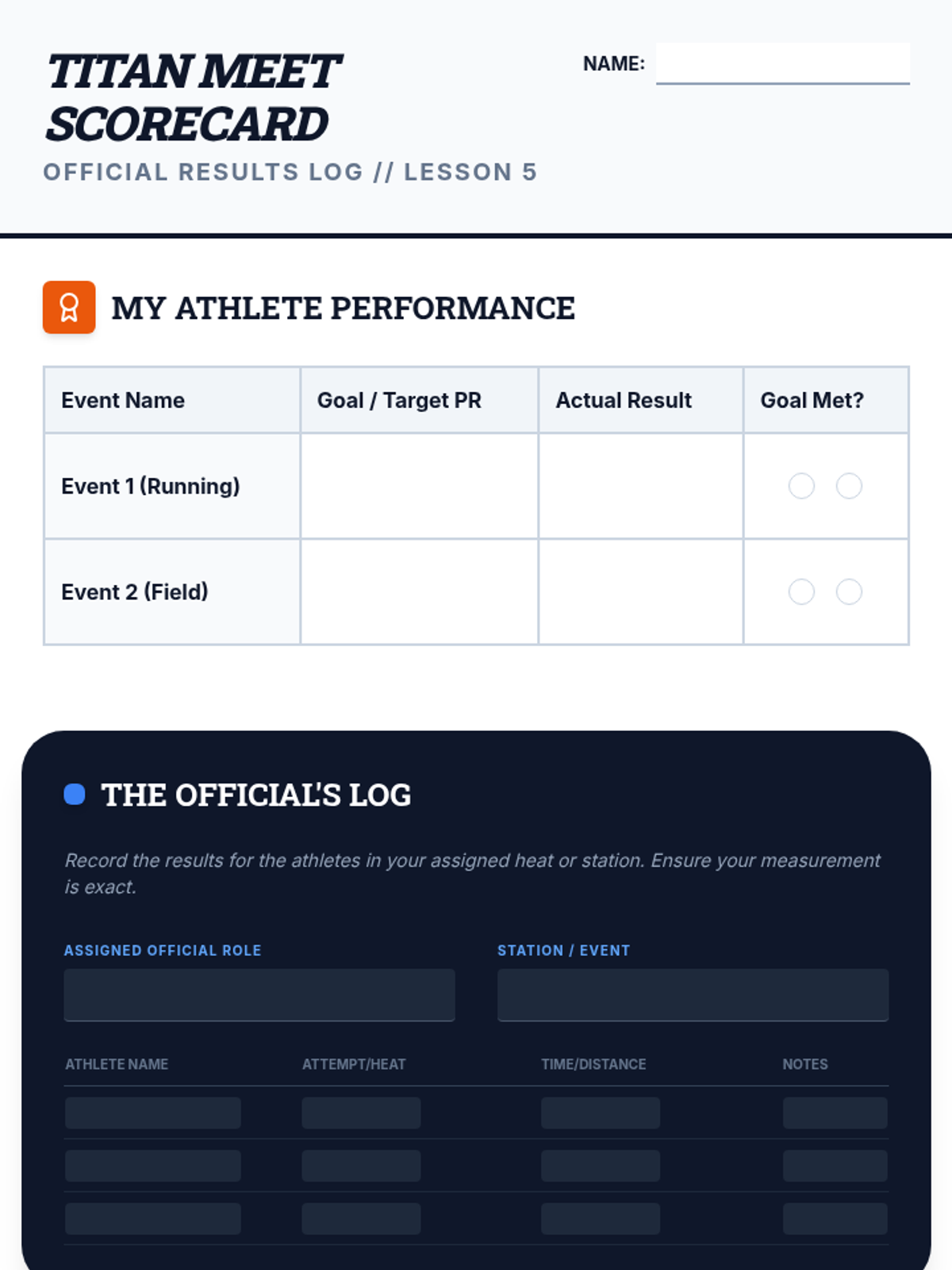
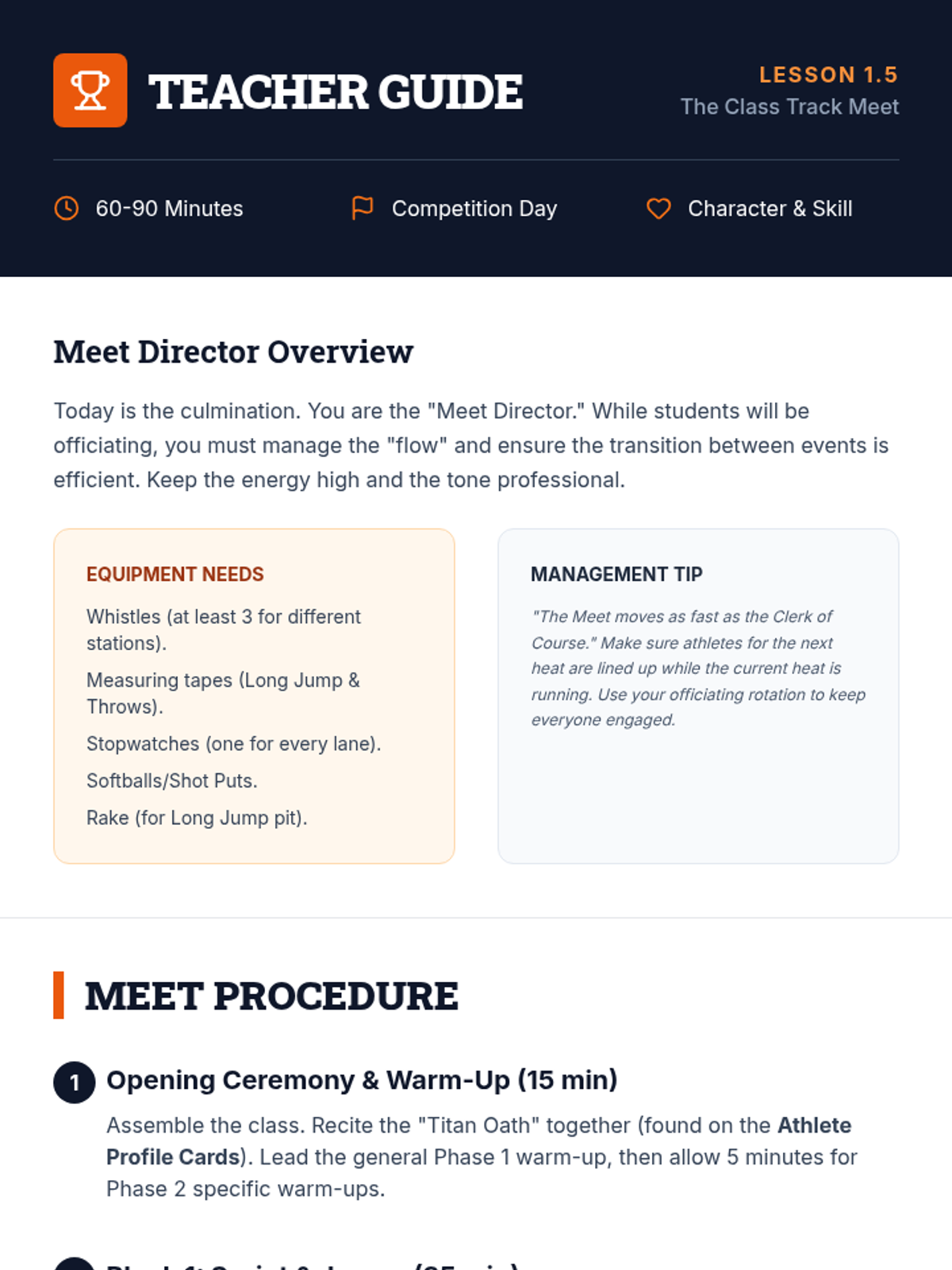
A culminating event where students rotate between competing and officiating. Students apply all learned skills—running, jumping, throwing, and measuring—in a structured, rule-bound environment.
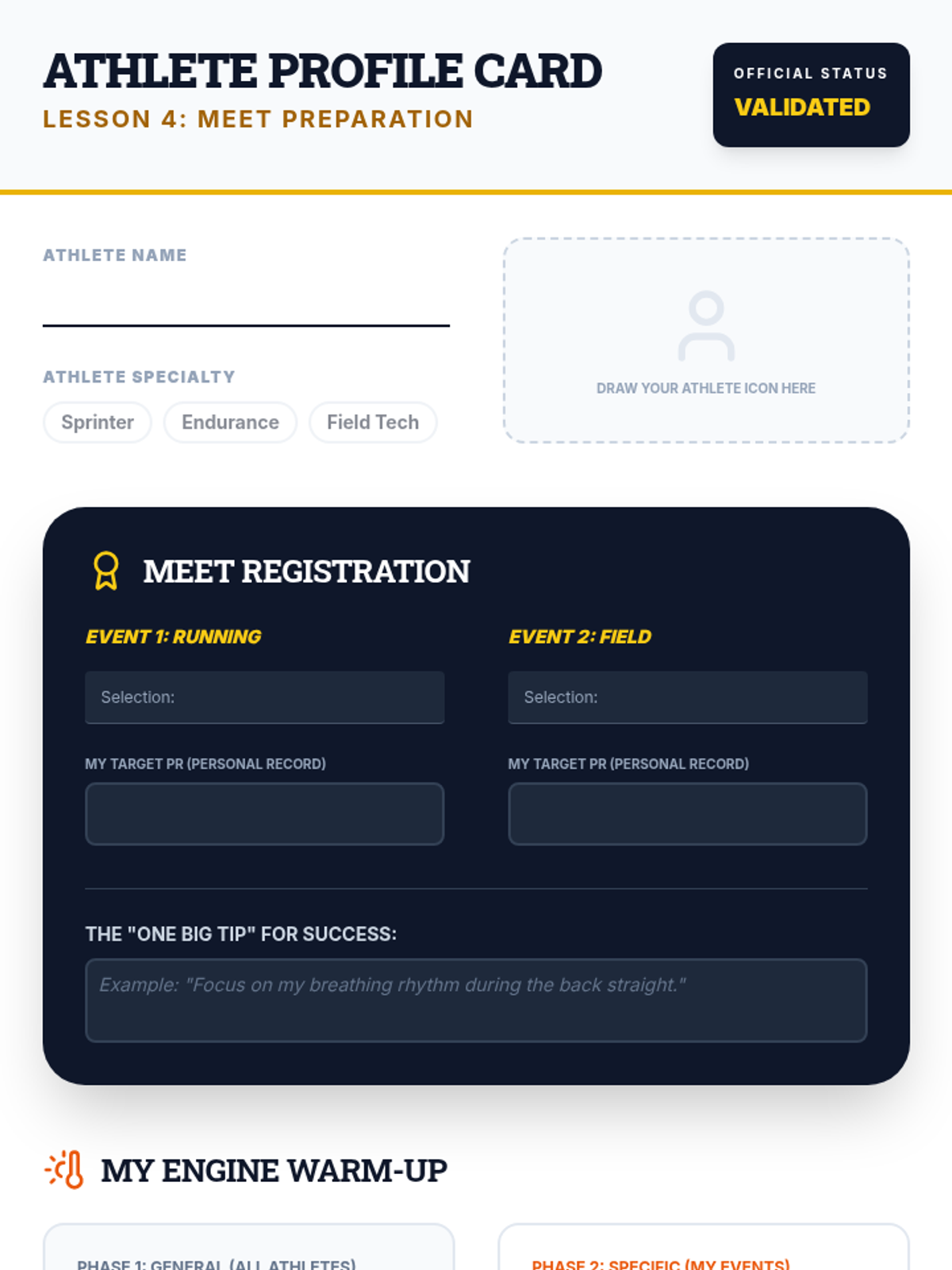
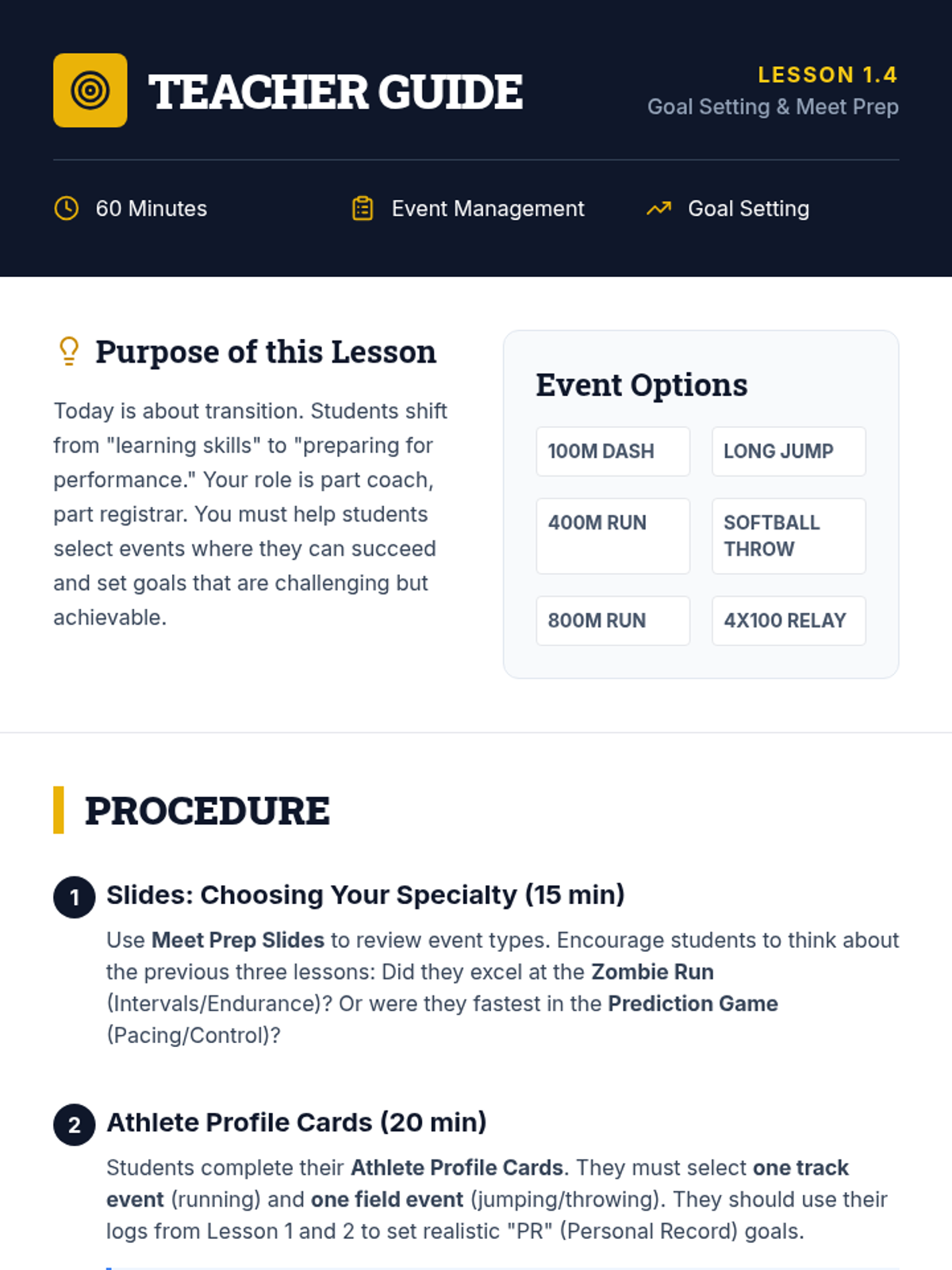
Students select events for a final class meet based on their strengths discovered in previous sequences. They set specific performance goals (time or distance) and practice warm-up routines specific to their events.
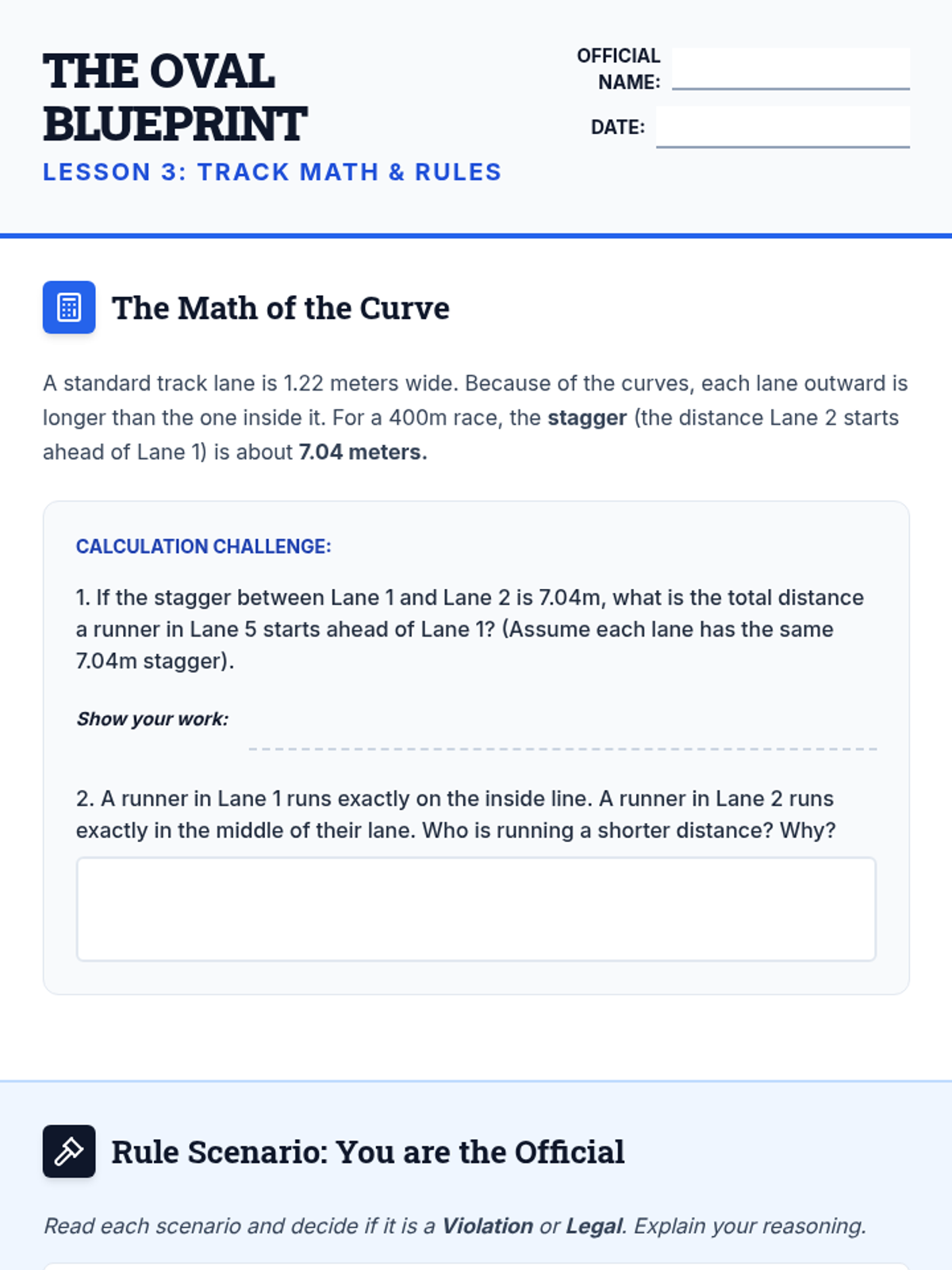
This classroom and track-side lesson teaches the 'why' behind track markings. Students learn about staggered starts, lane violations, false starts, and how distances are measured and timed.
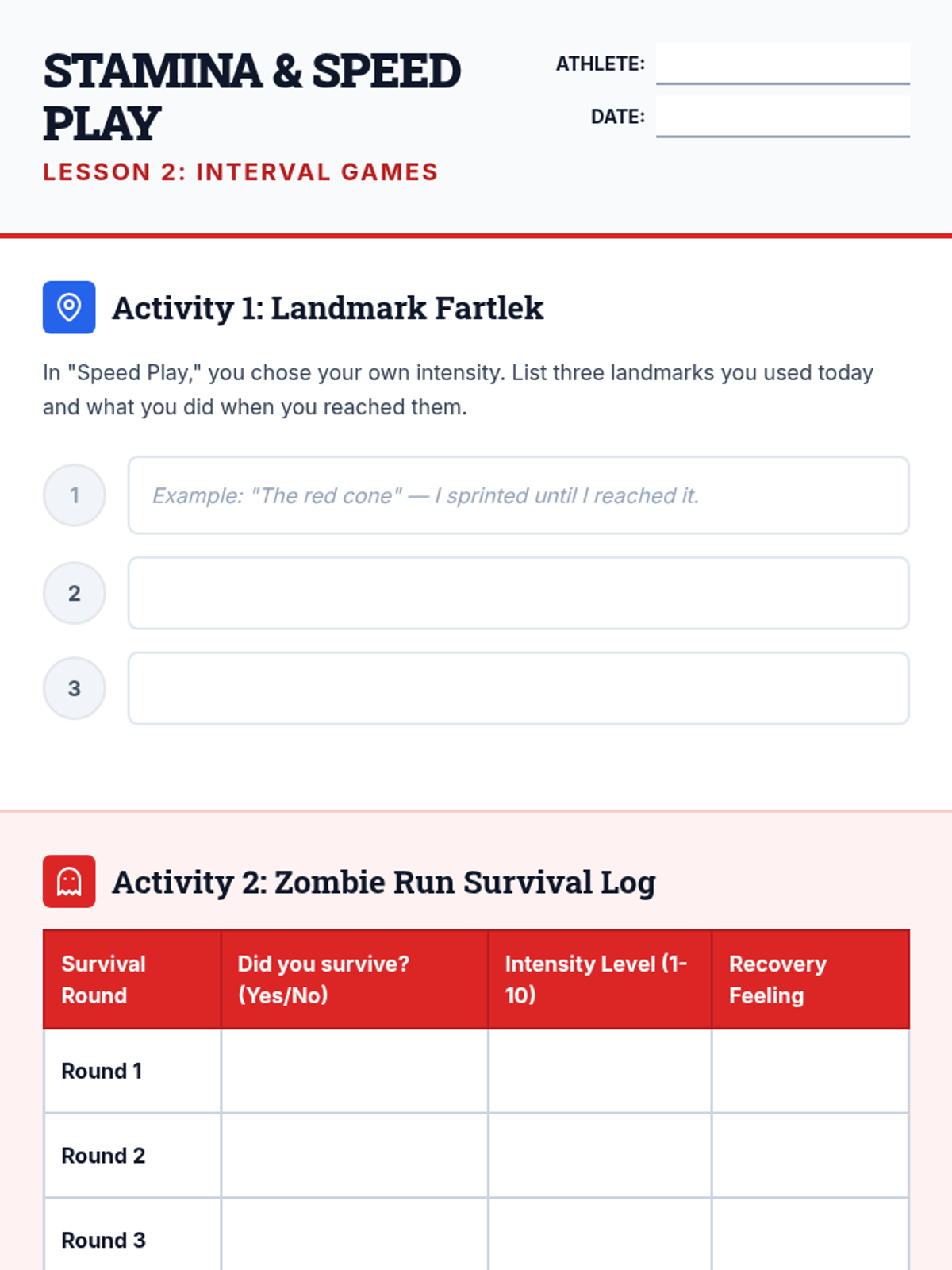
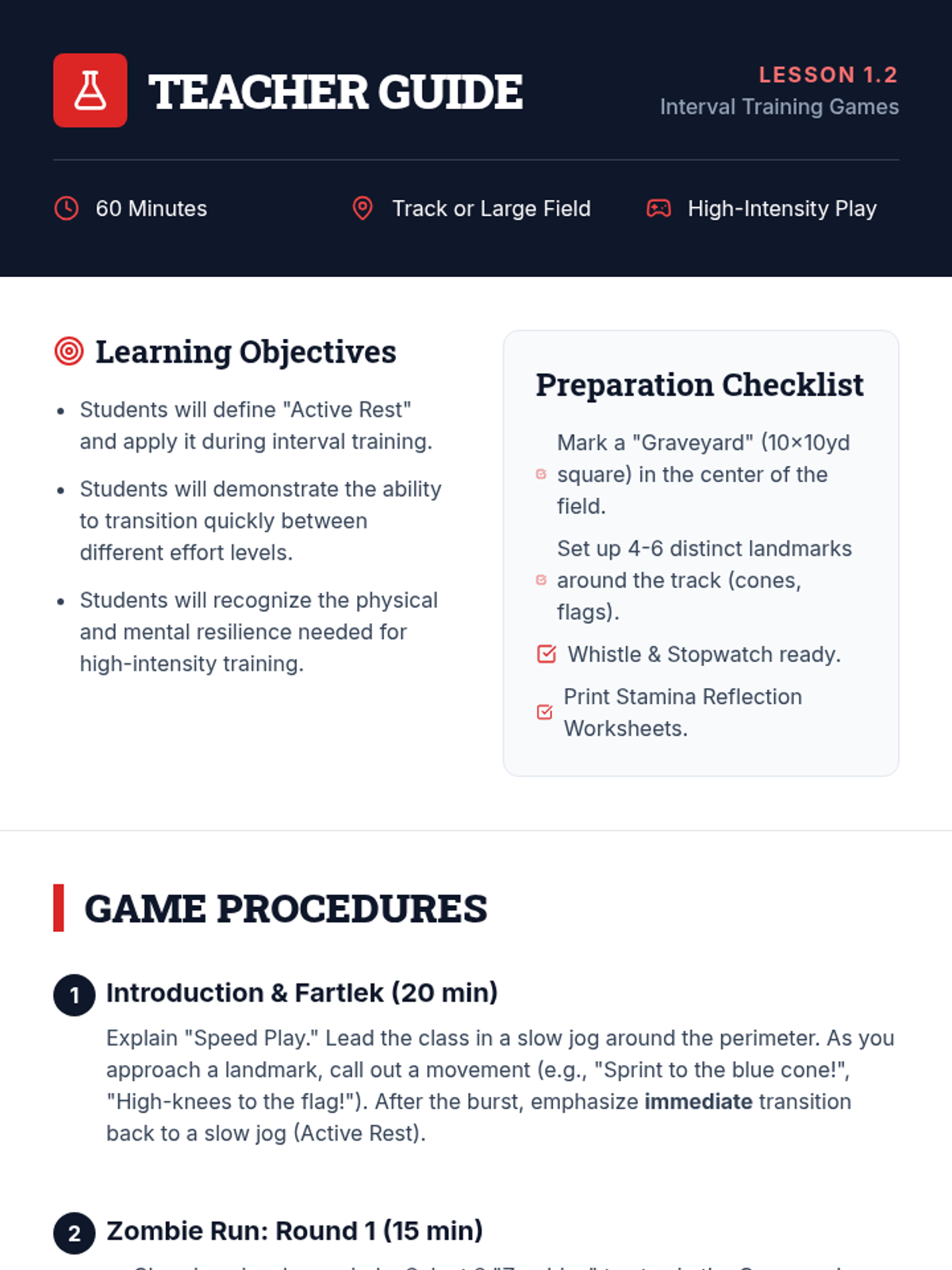
Students participate in Fartlek (speed play) activities and interval training to build stamina. The lesson turns endurance training into a game using whistle signals and changing terrain or obstacles.
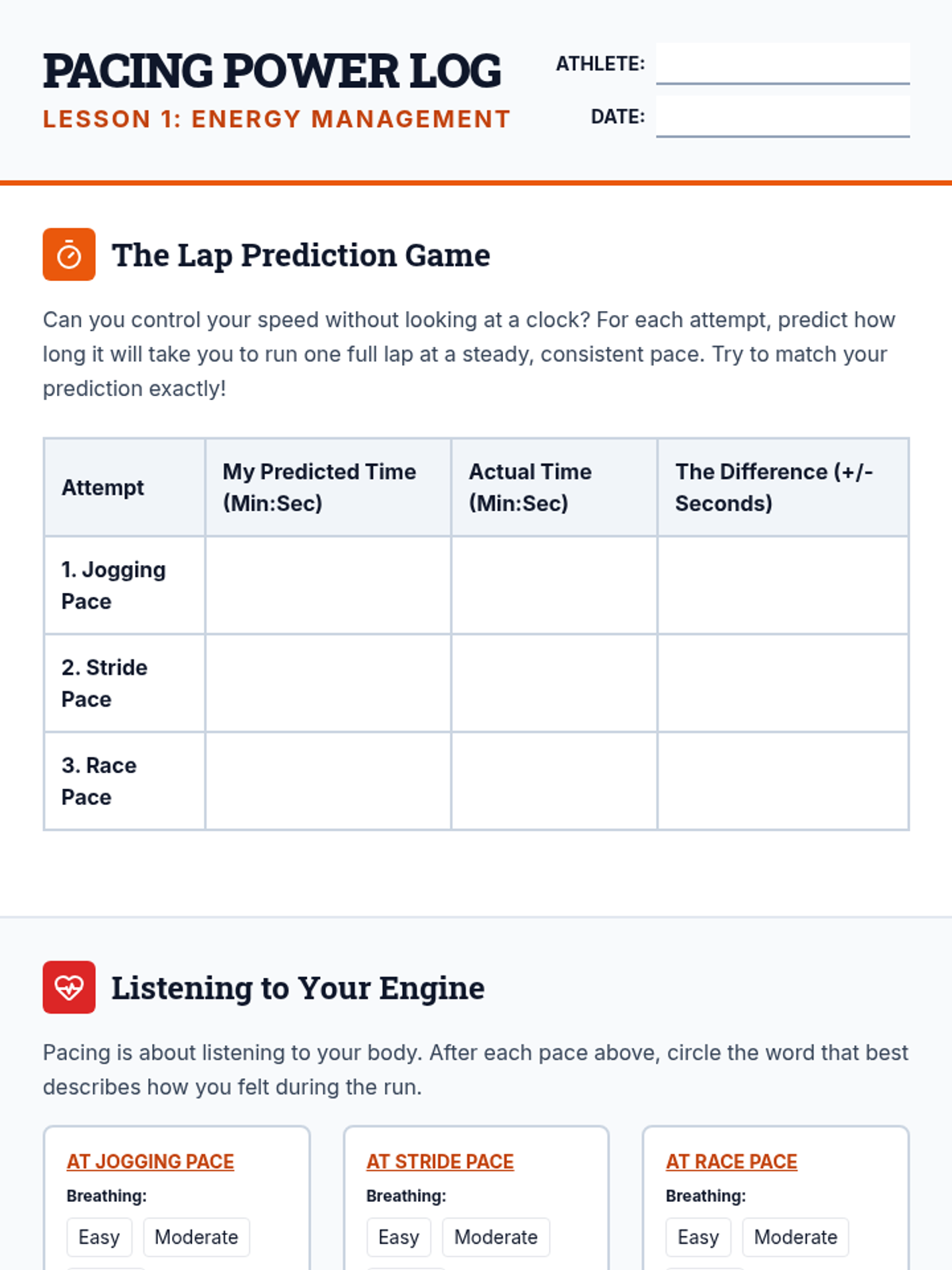
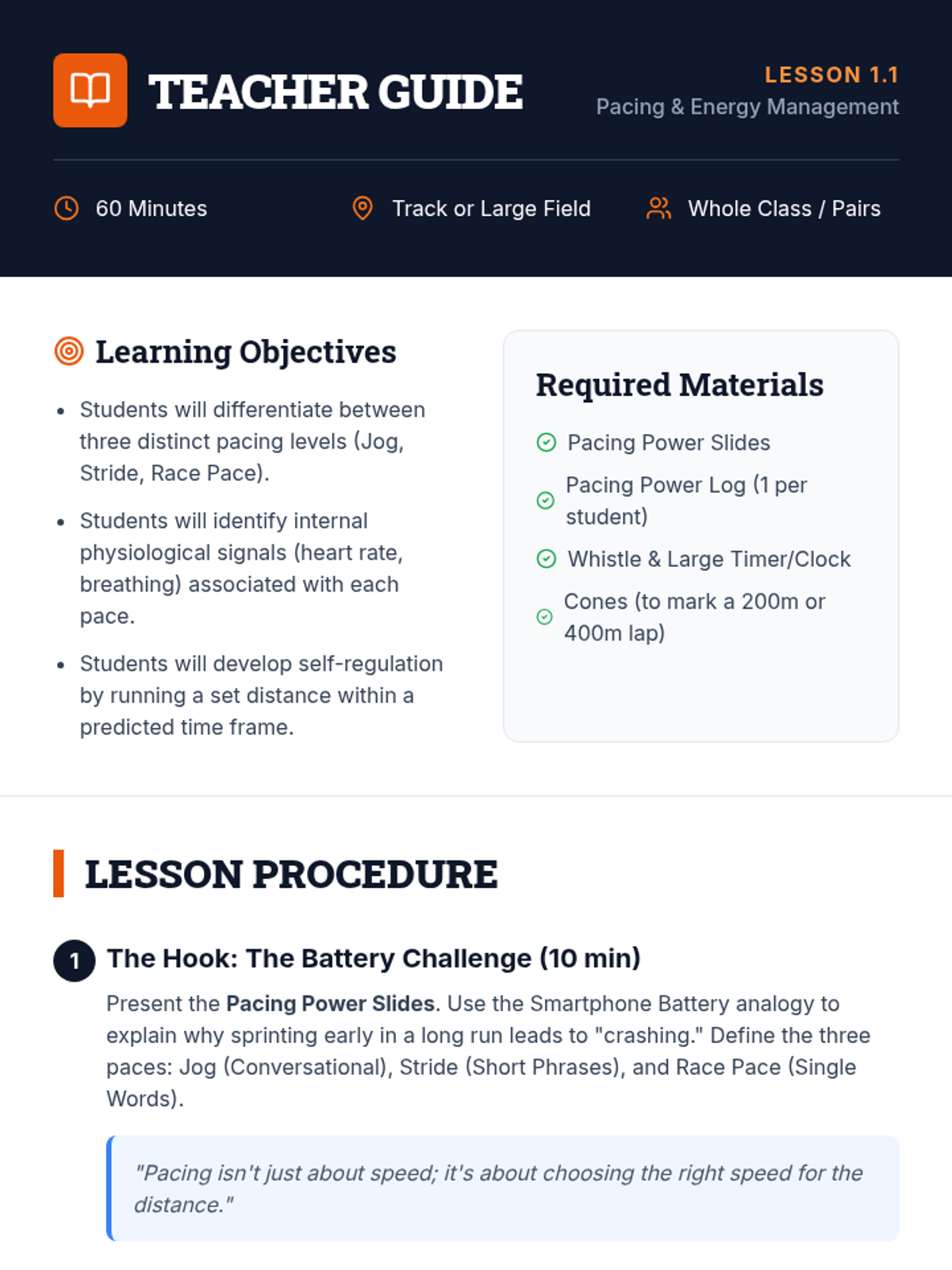
Students explore the concept of pacing by running laps at different commanded speeds and learning to listen to their body's signals (breathing, heart rate) to maintain a steady rhythm.
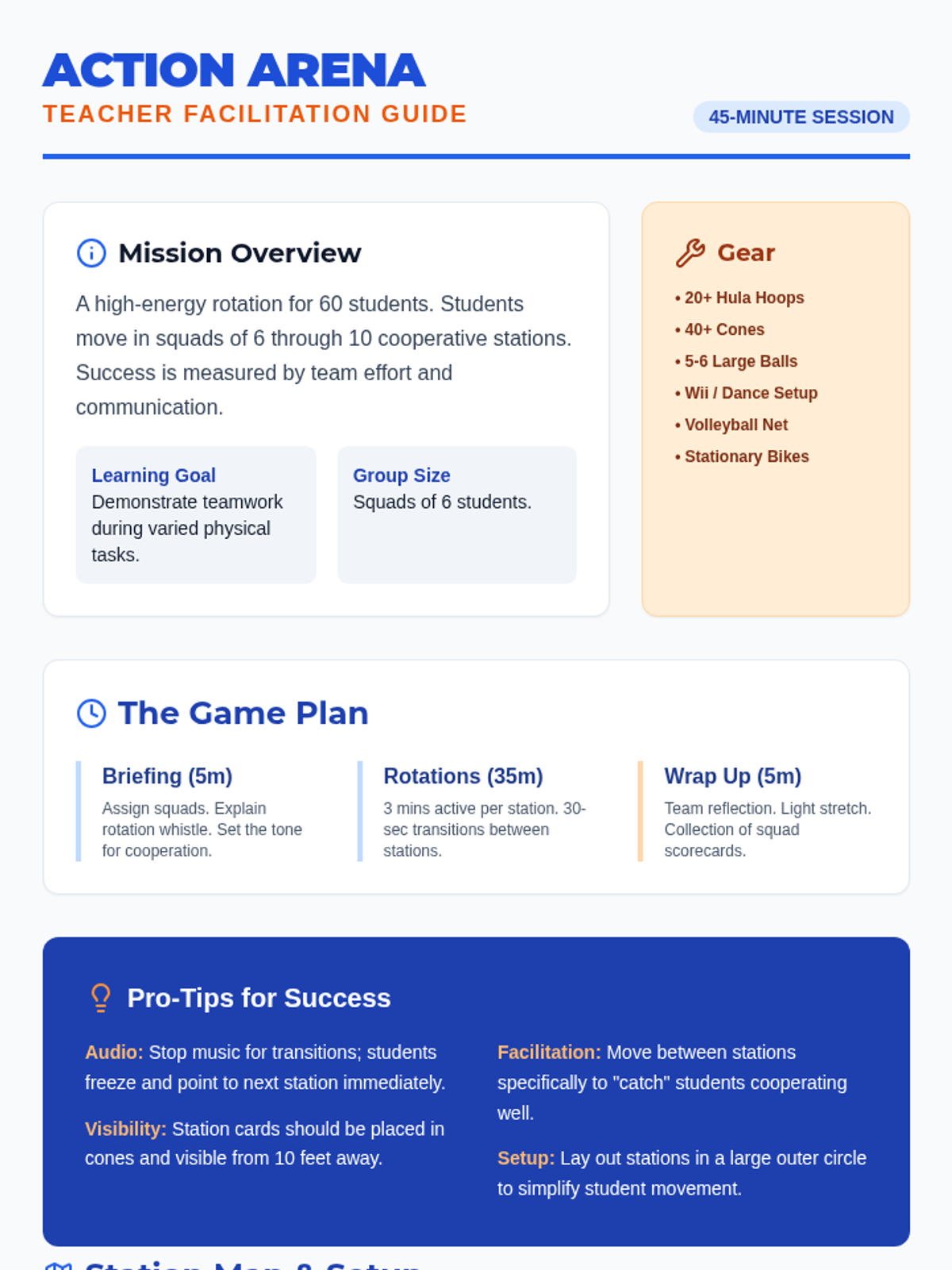
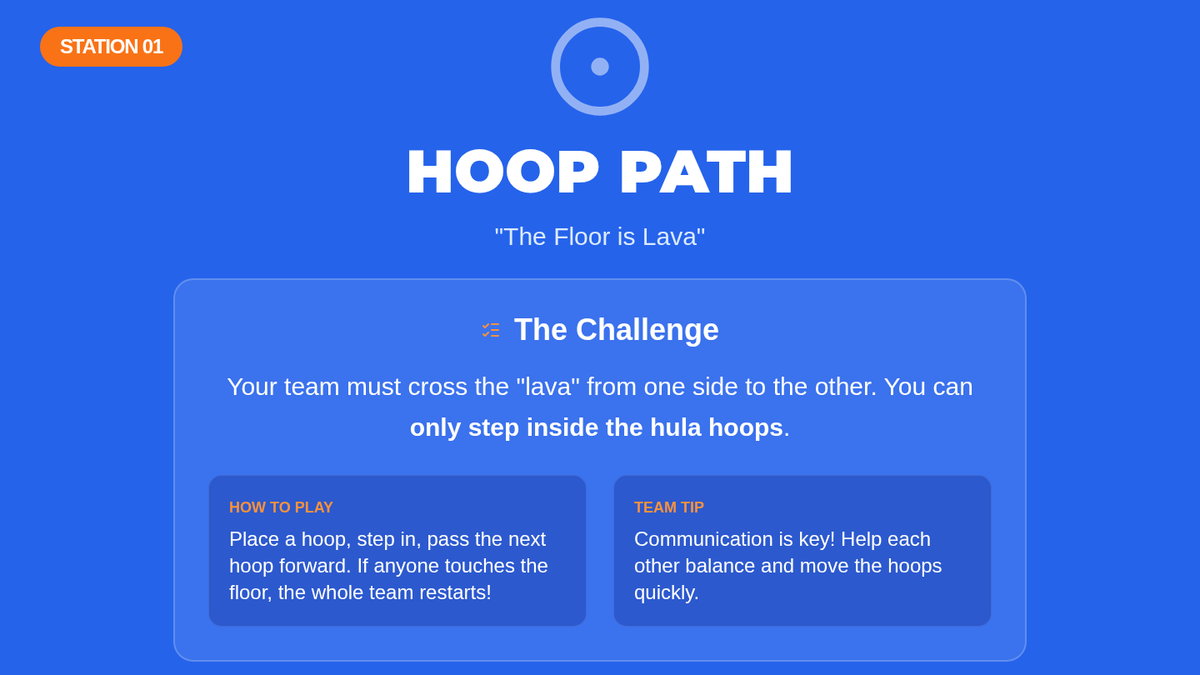
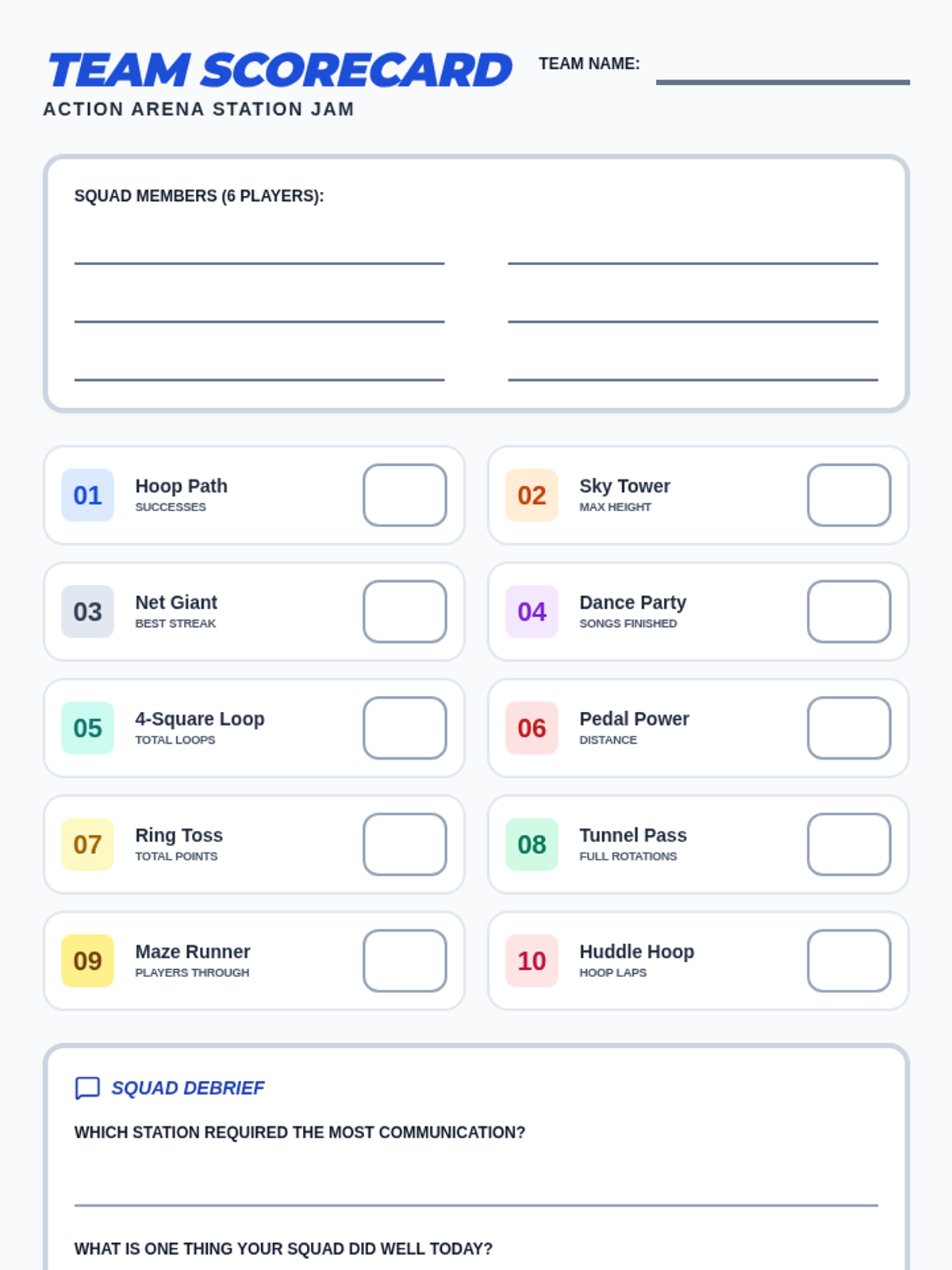
A high-energy, 45-minute PE lesson featuring 10 active stations designed for large groups. Students rotate through teamwork-based challenges using hoops, balls, cones, and technology to build cooperation and fitness.
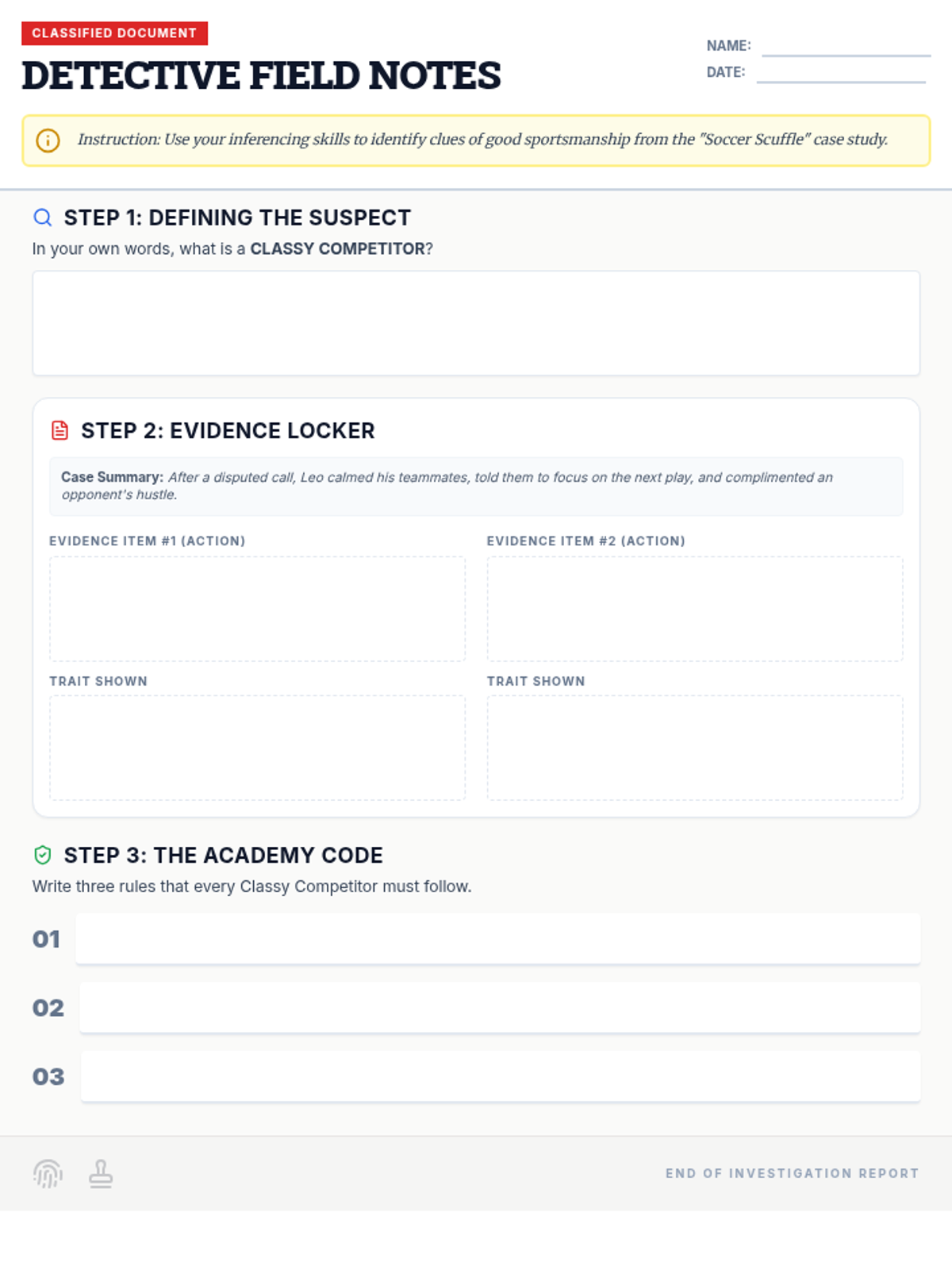
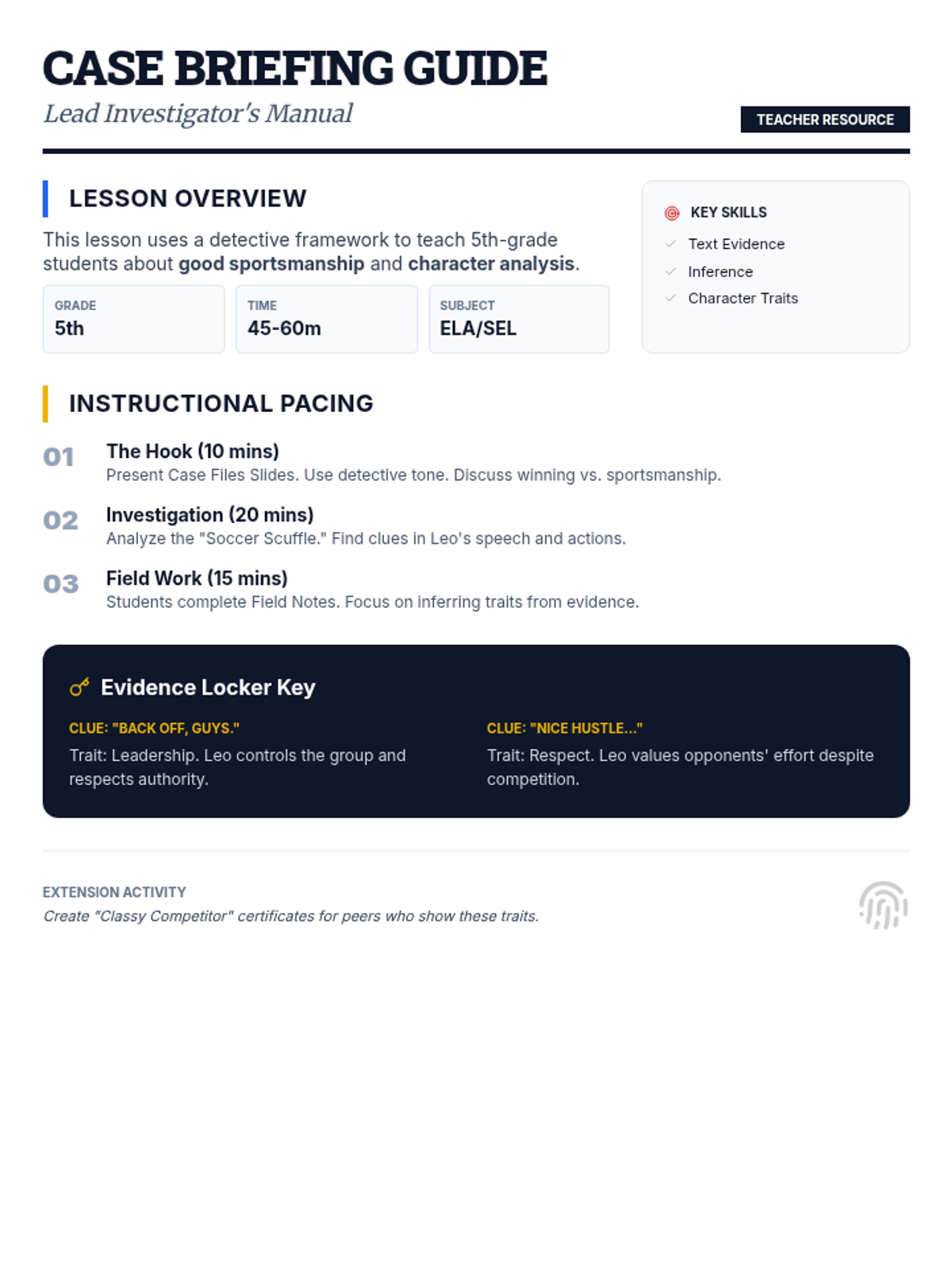
A detective-themed reading lesson where students analyze character actions to understand and define good sportsmanship. Students use inference and evidence-gathering skills to solve the mystery of what makes a 'Classy Competitor'.
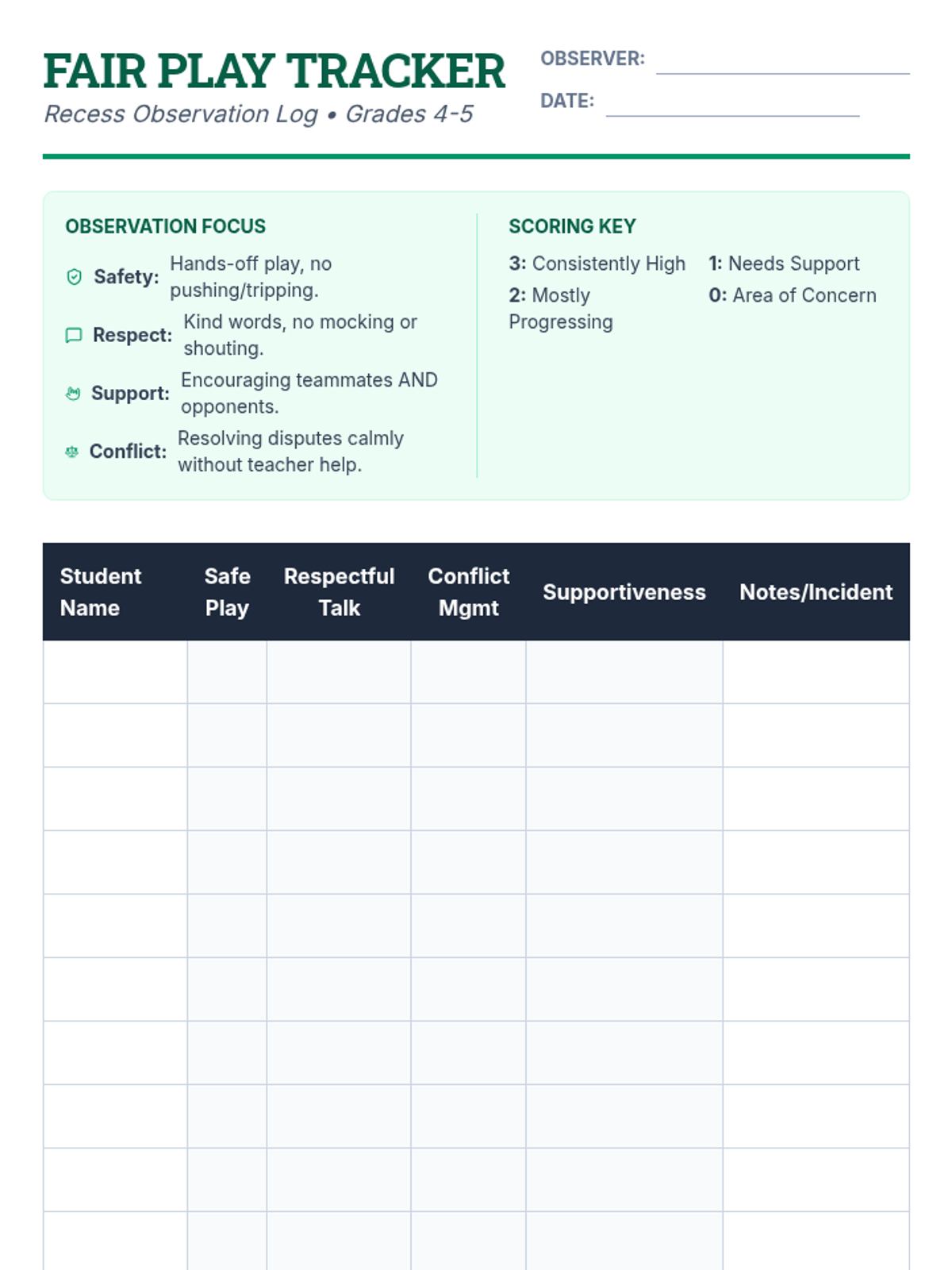
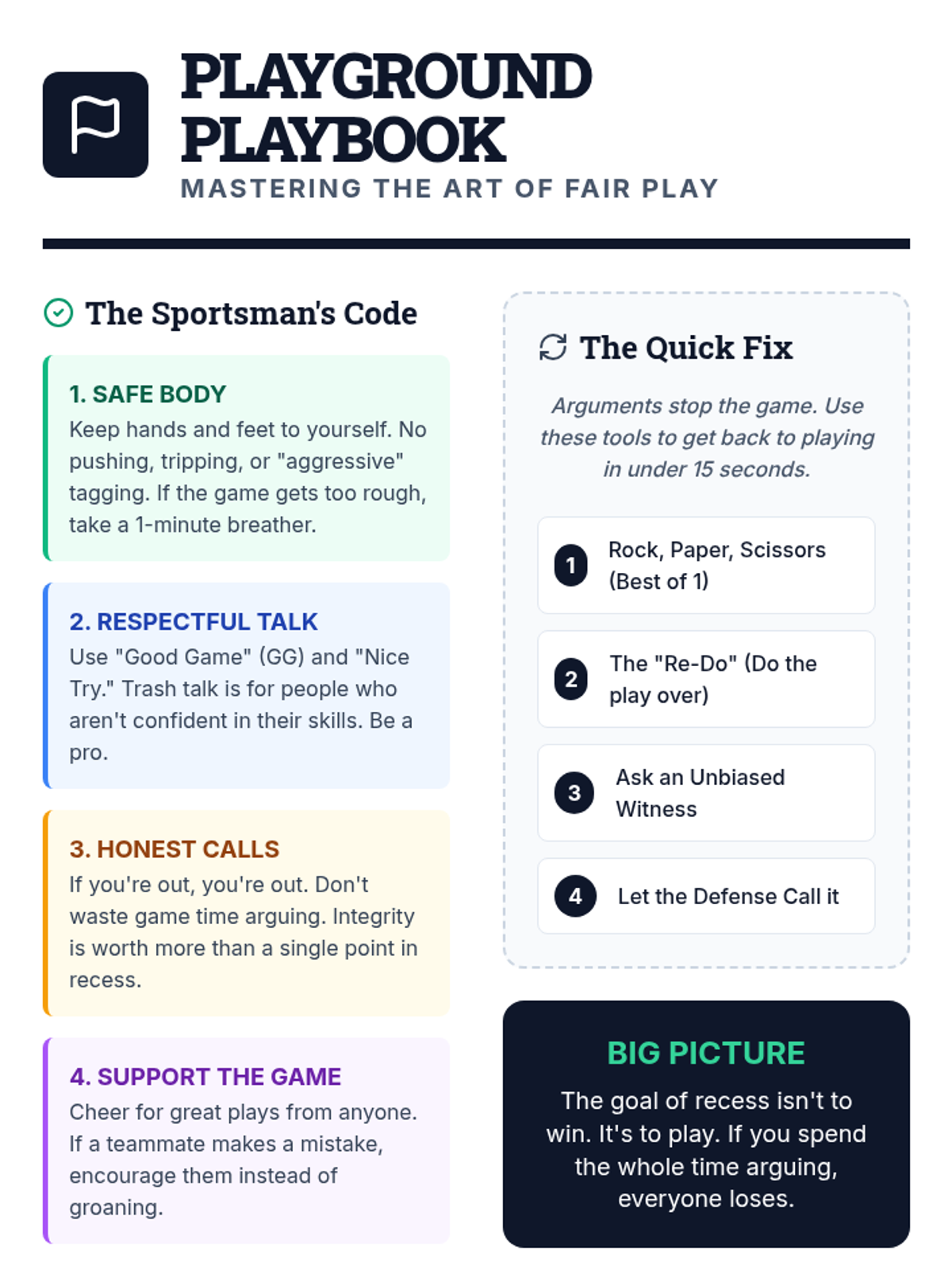
A lesson and set of resources designed to monitor and promote positive sportsmanship and safe play during recess for upper elementary students.
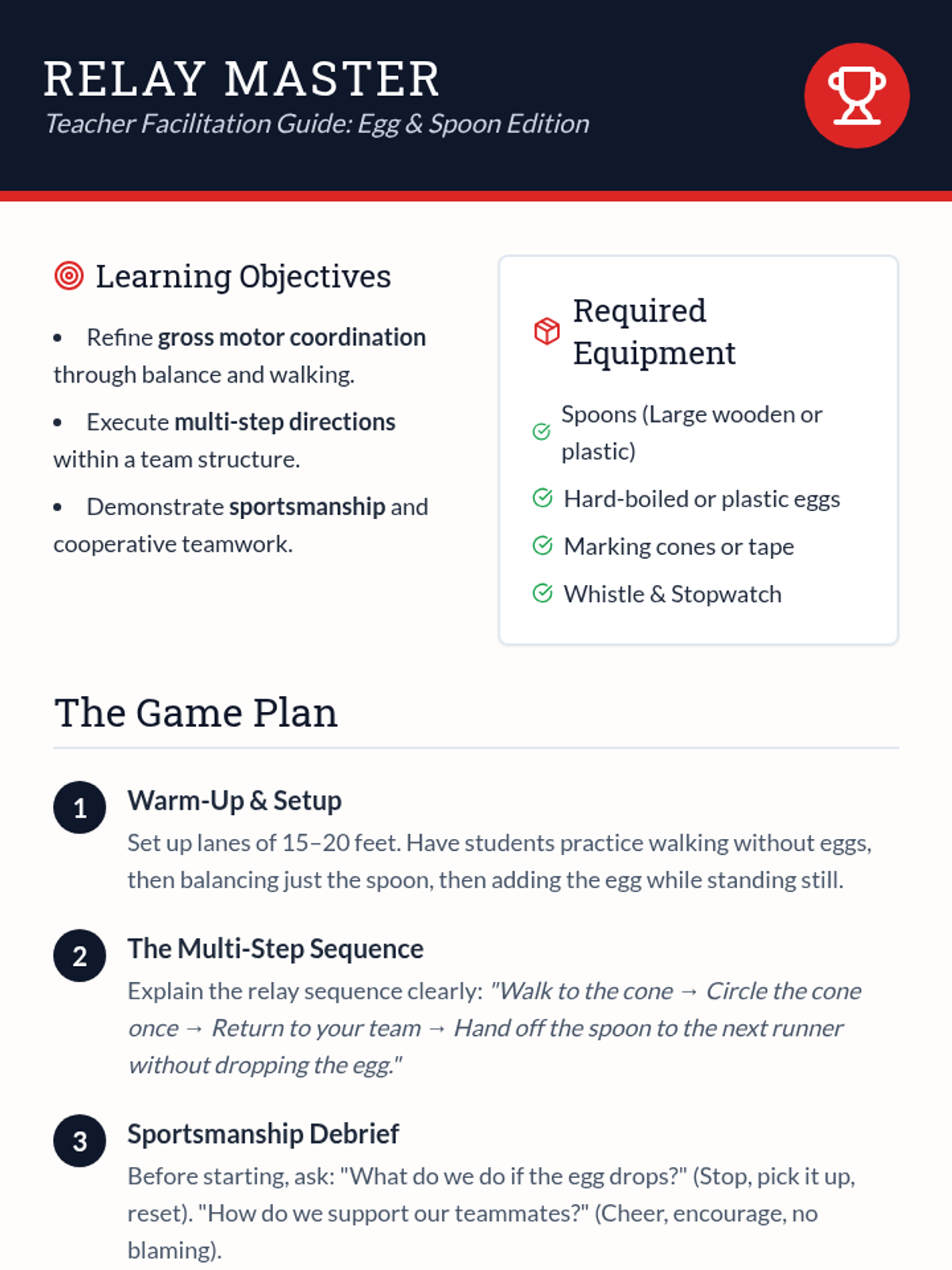
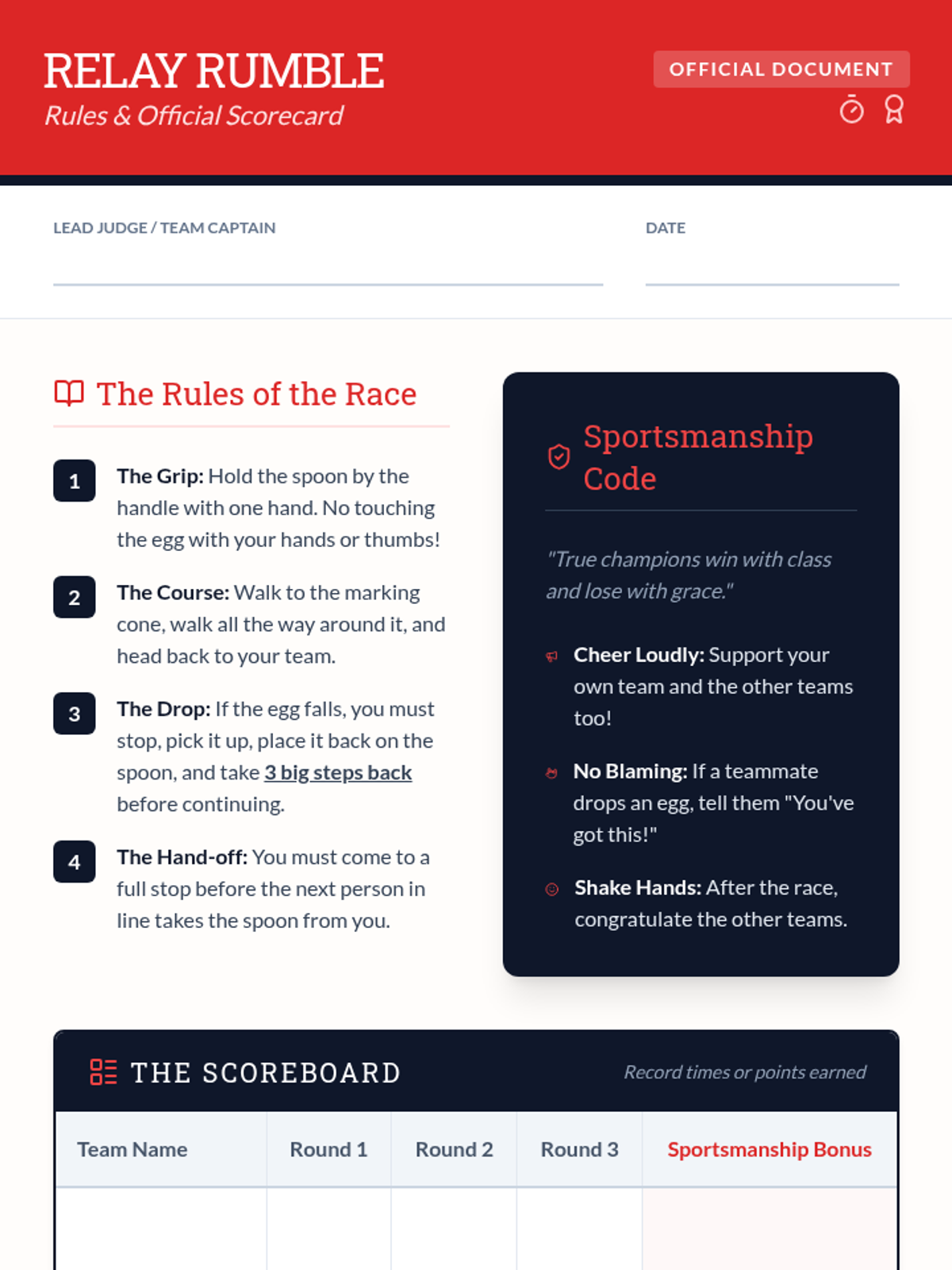
A high-energy lesson focused on gross motor skills, following complex directions, and practicing good sportsmanship through an egg and spoon relay race.
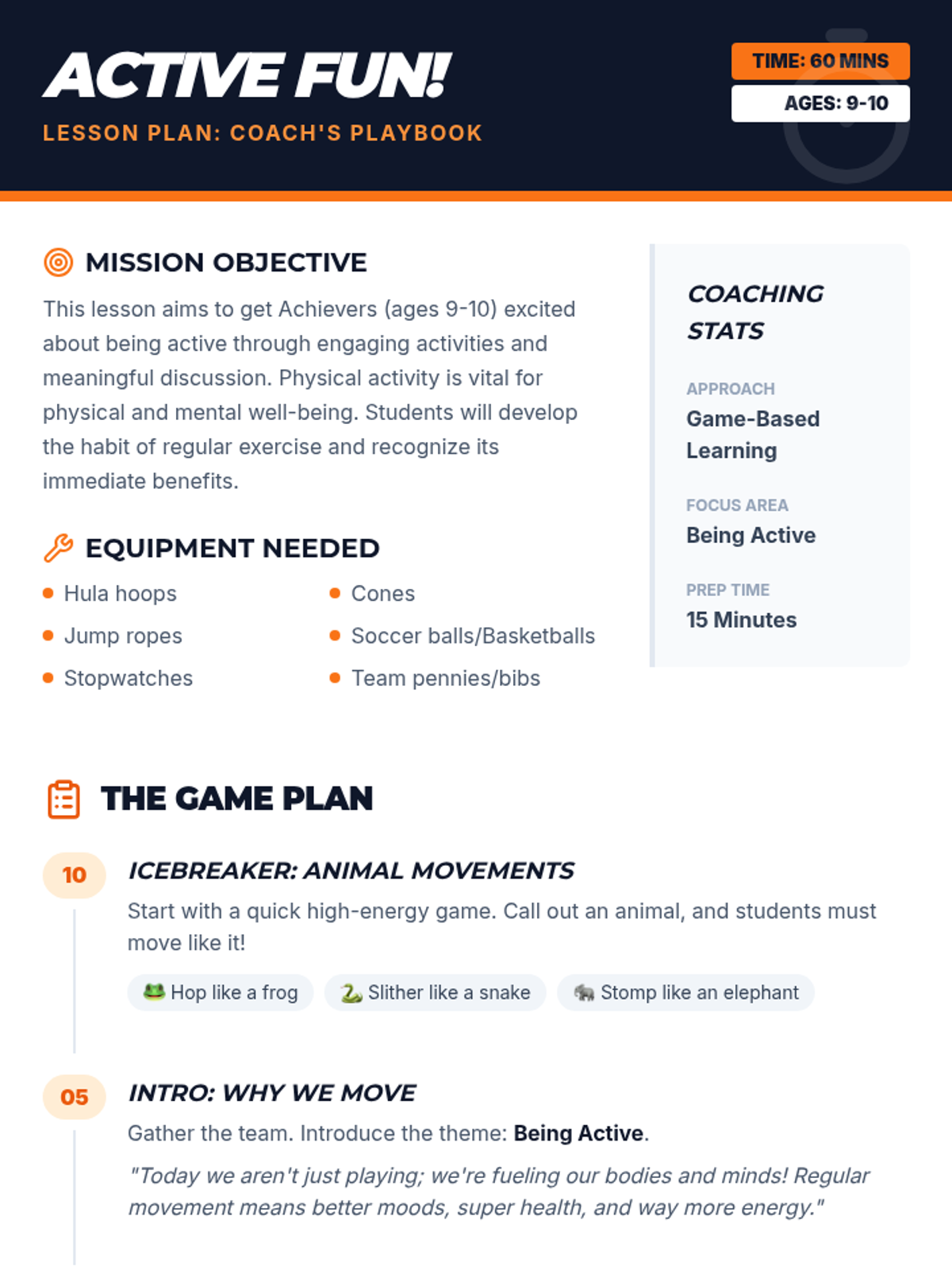
A high-energy lesson designed to get students aged 9-10 excited about physical activity through games, teamwork, and reflective discussion. Students explore the benefits of being active while participating in mini-tournaments and creative movement exercises.
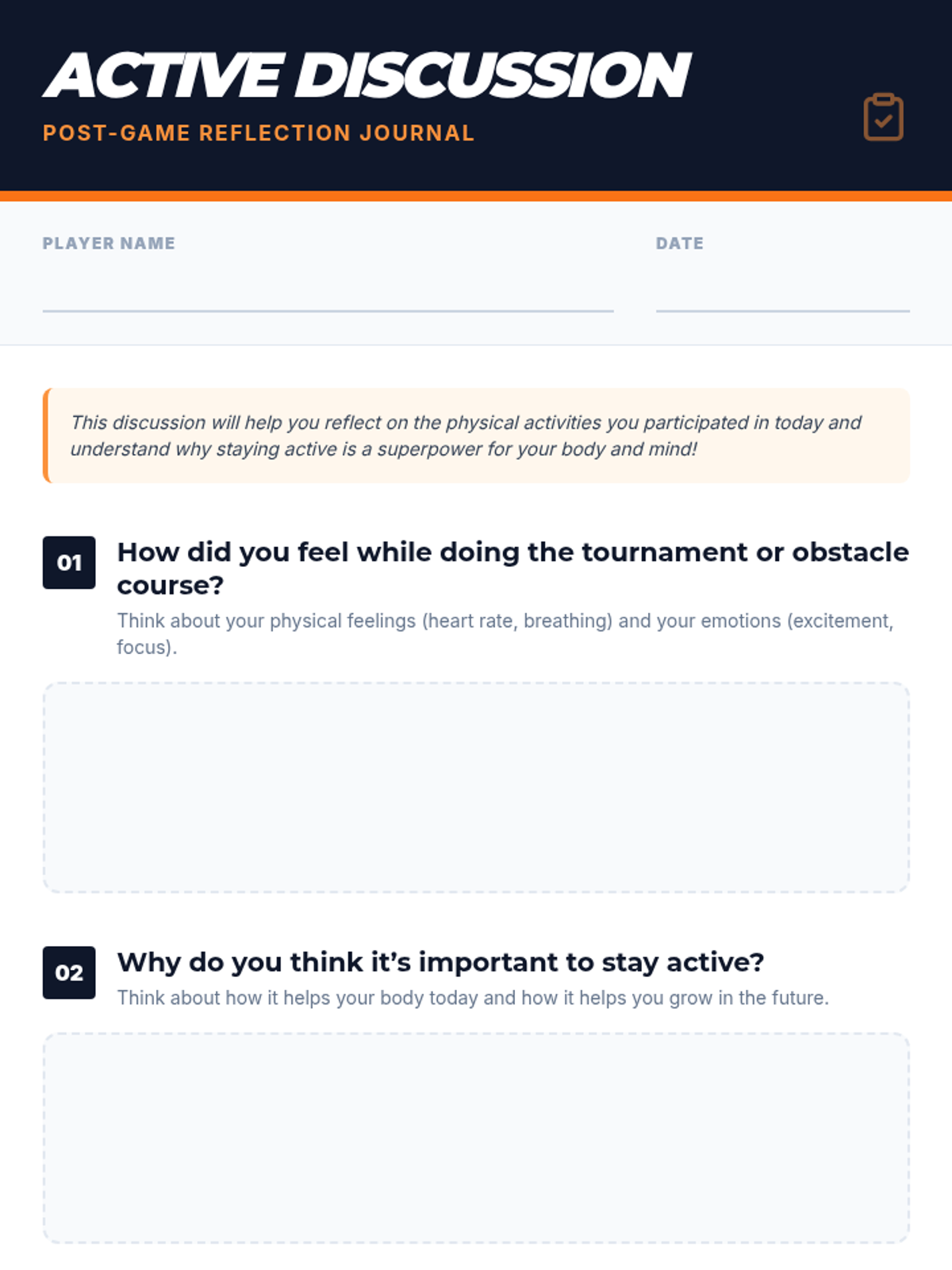
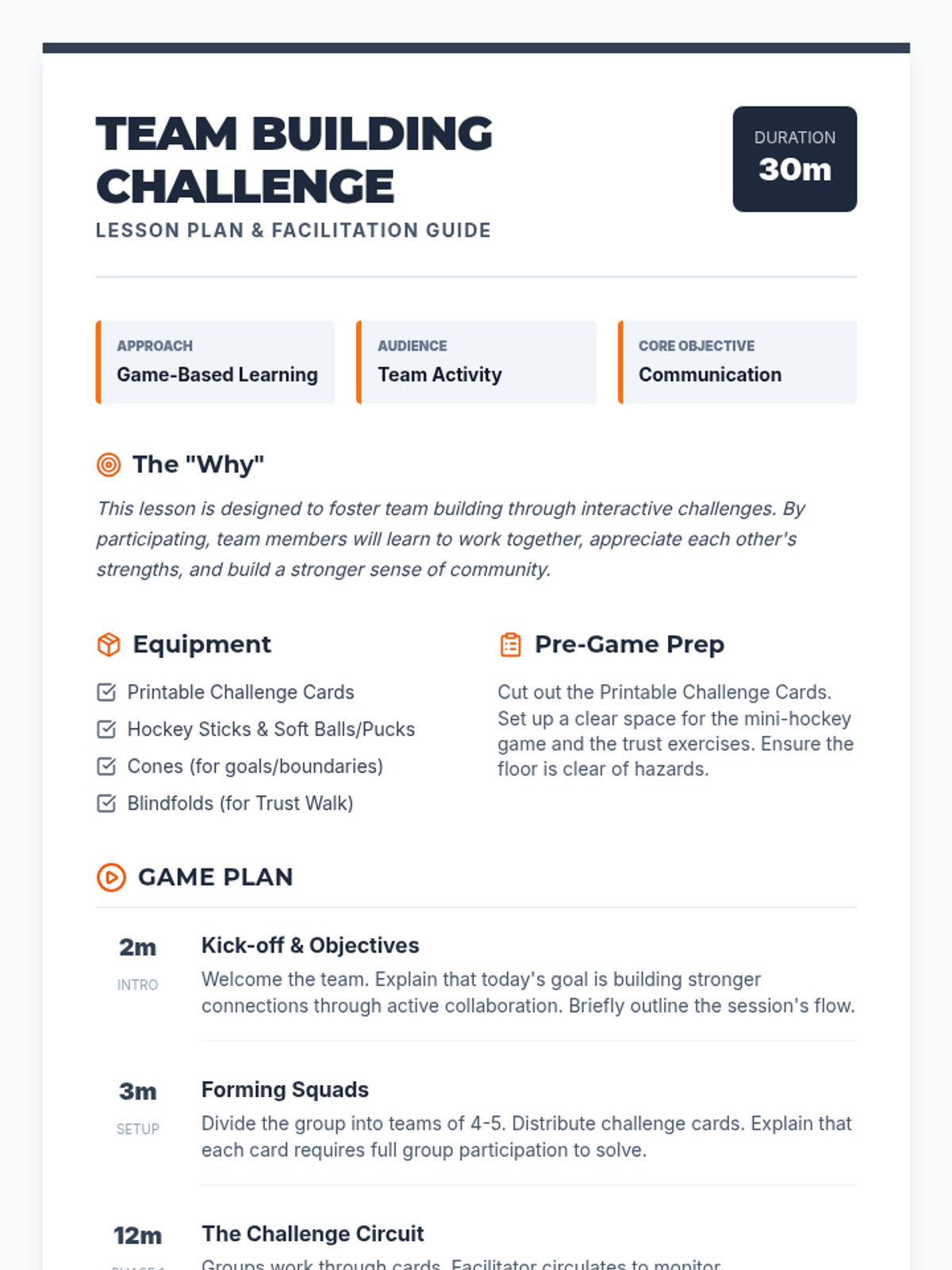
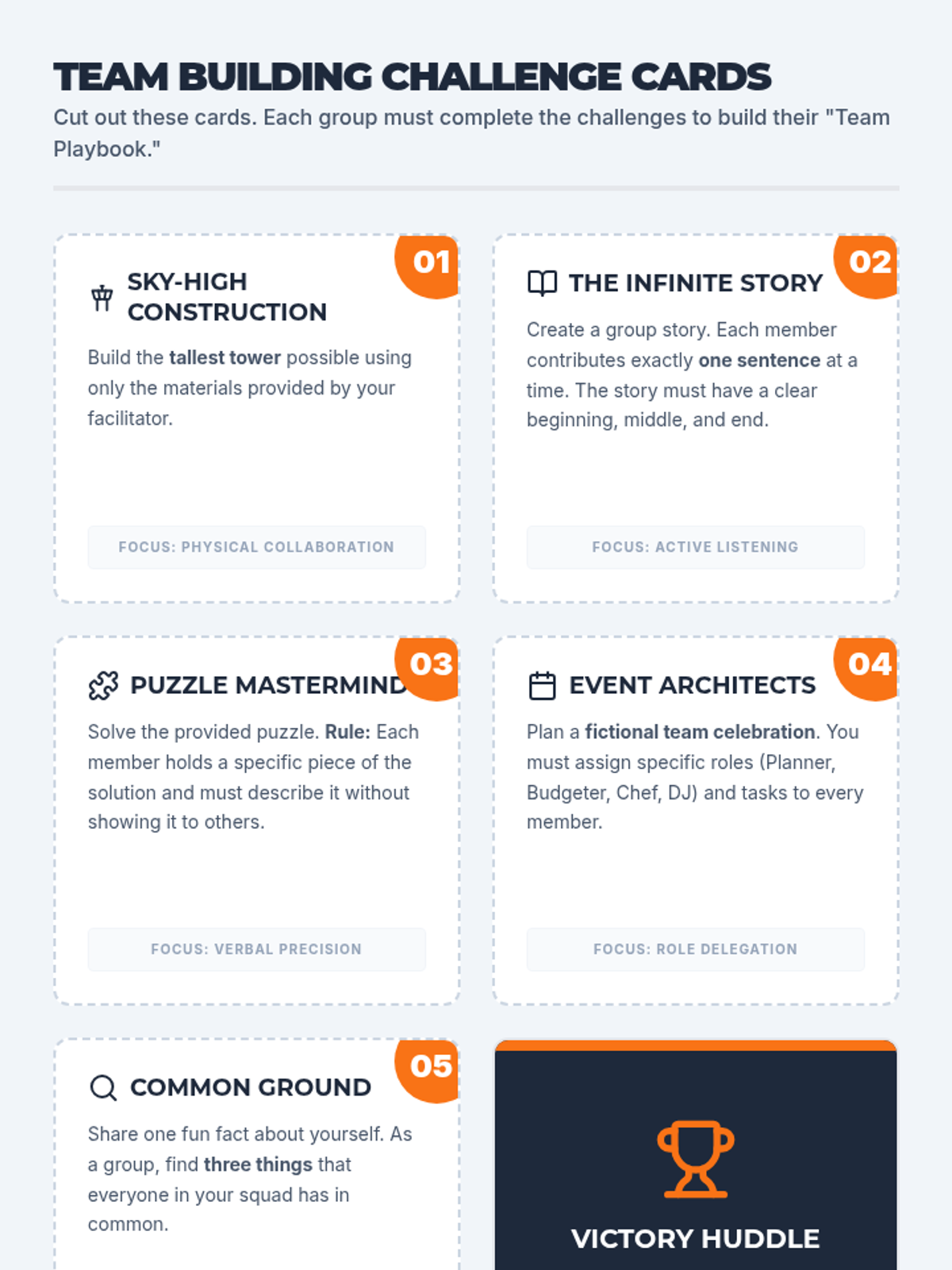
A high-energy team-building lesson focused on communication, trust, and collaboration through interactive challenges and a hockey-themed strategy game.
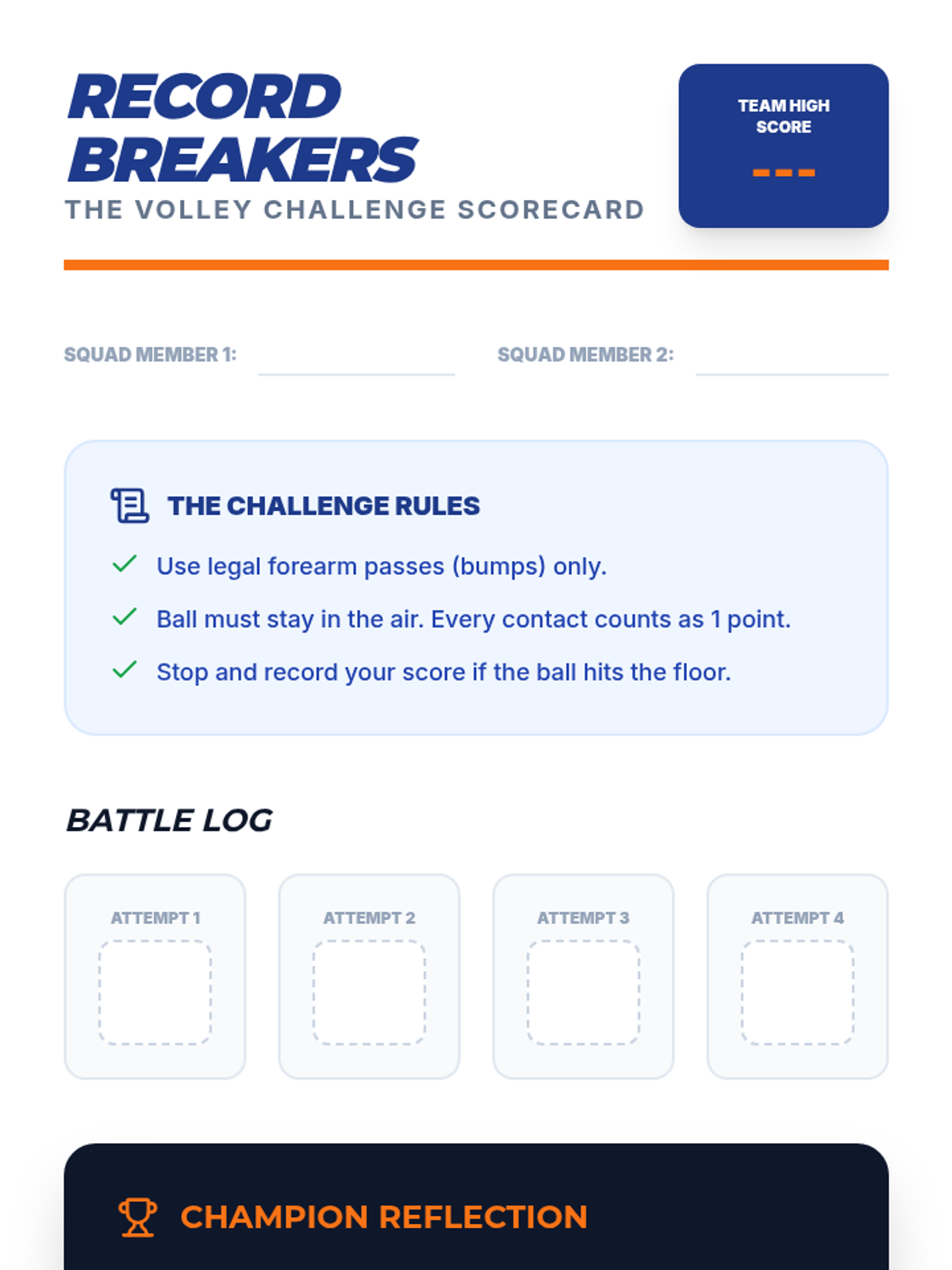
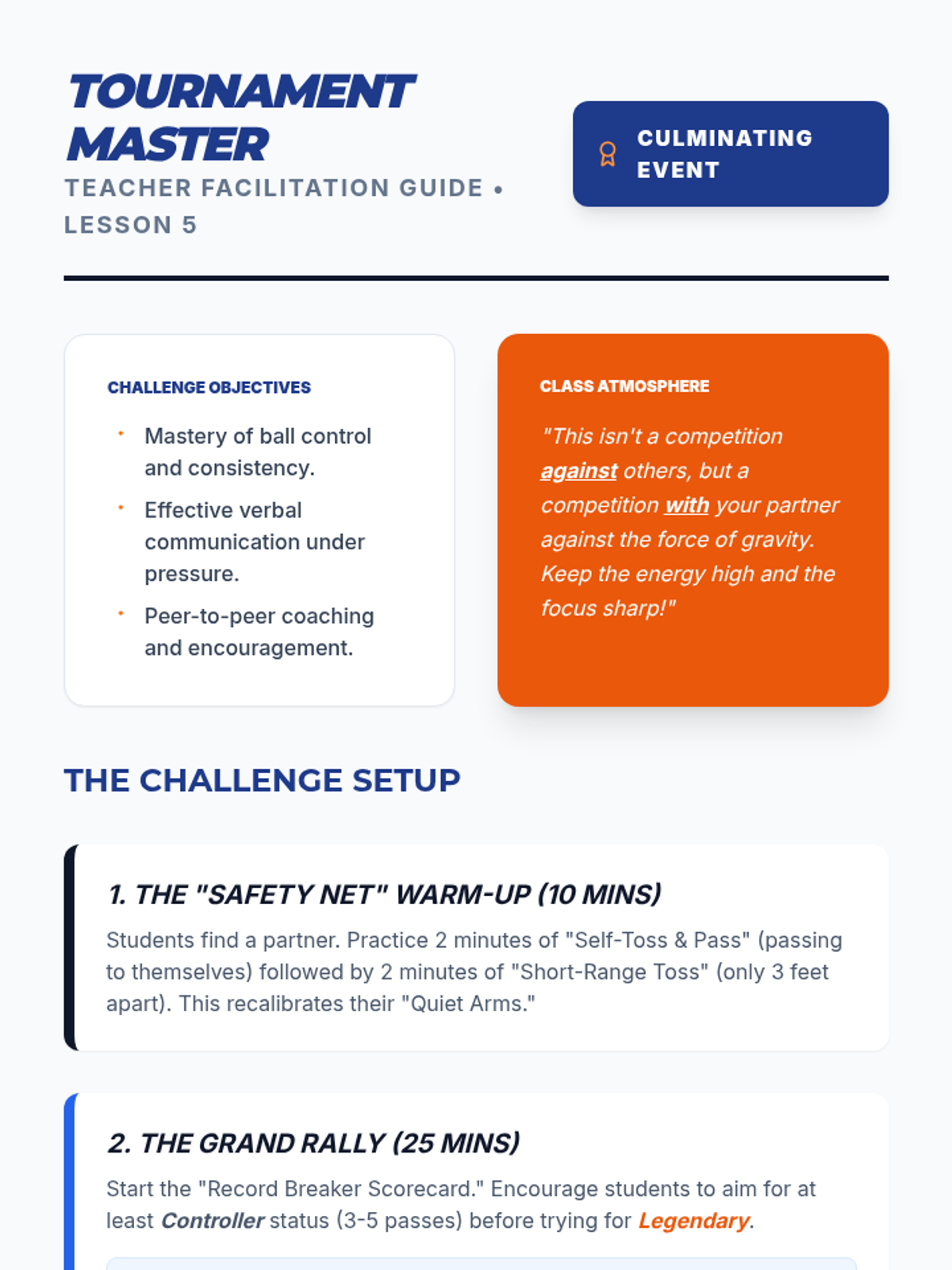
A culminating cooperative challenge where students apply all learned skills to maintain the longest possible rally.
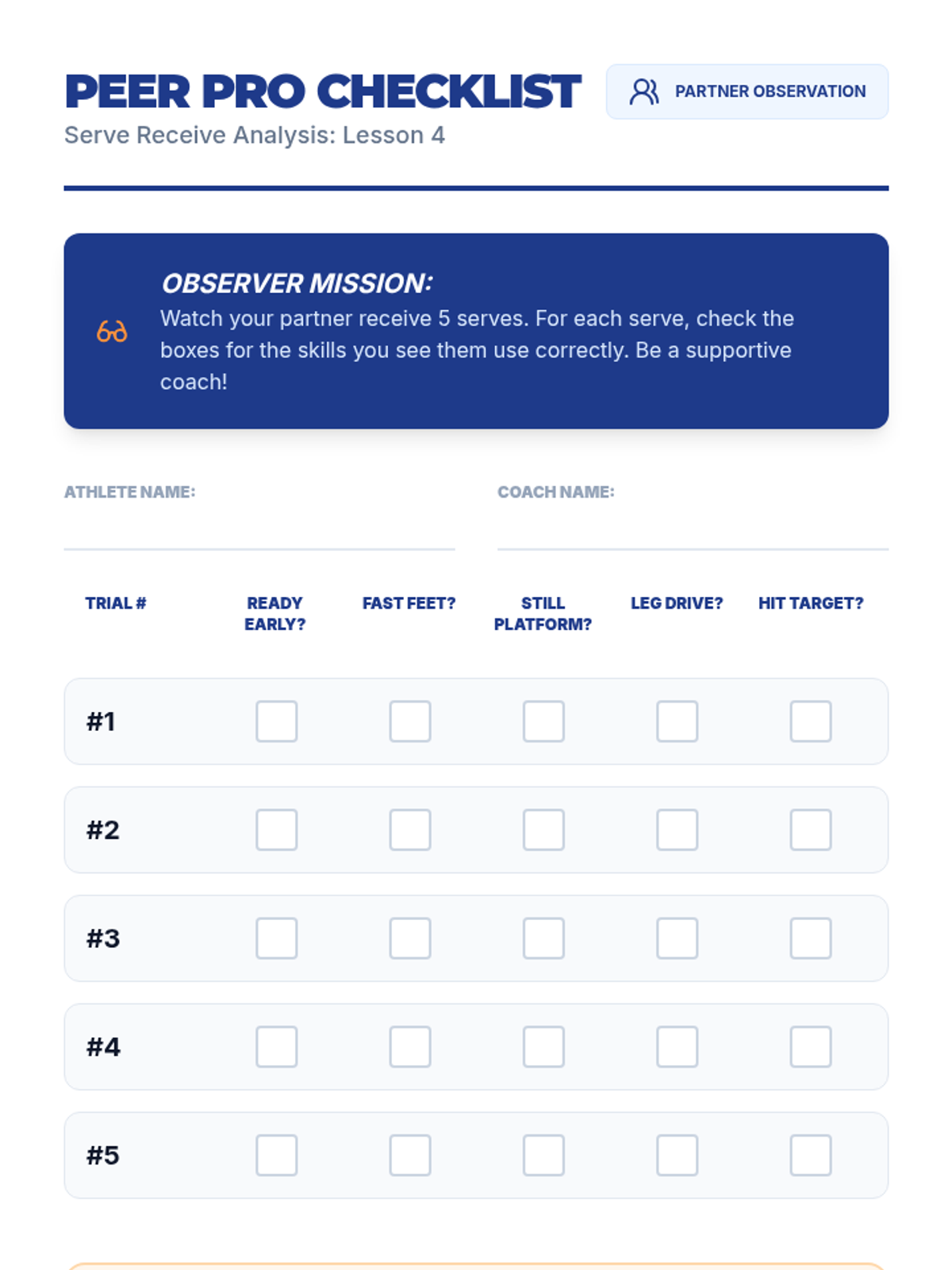
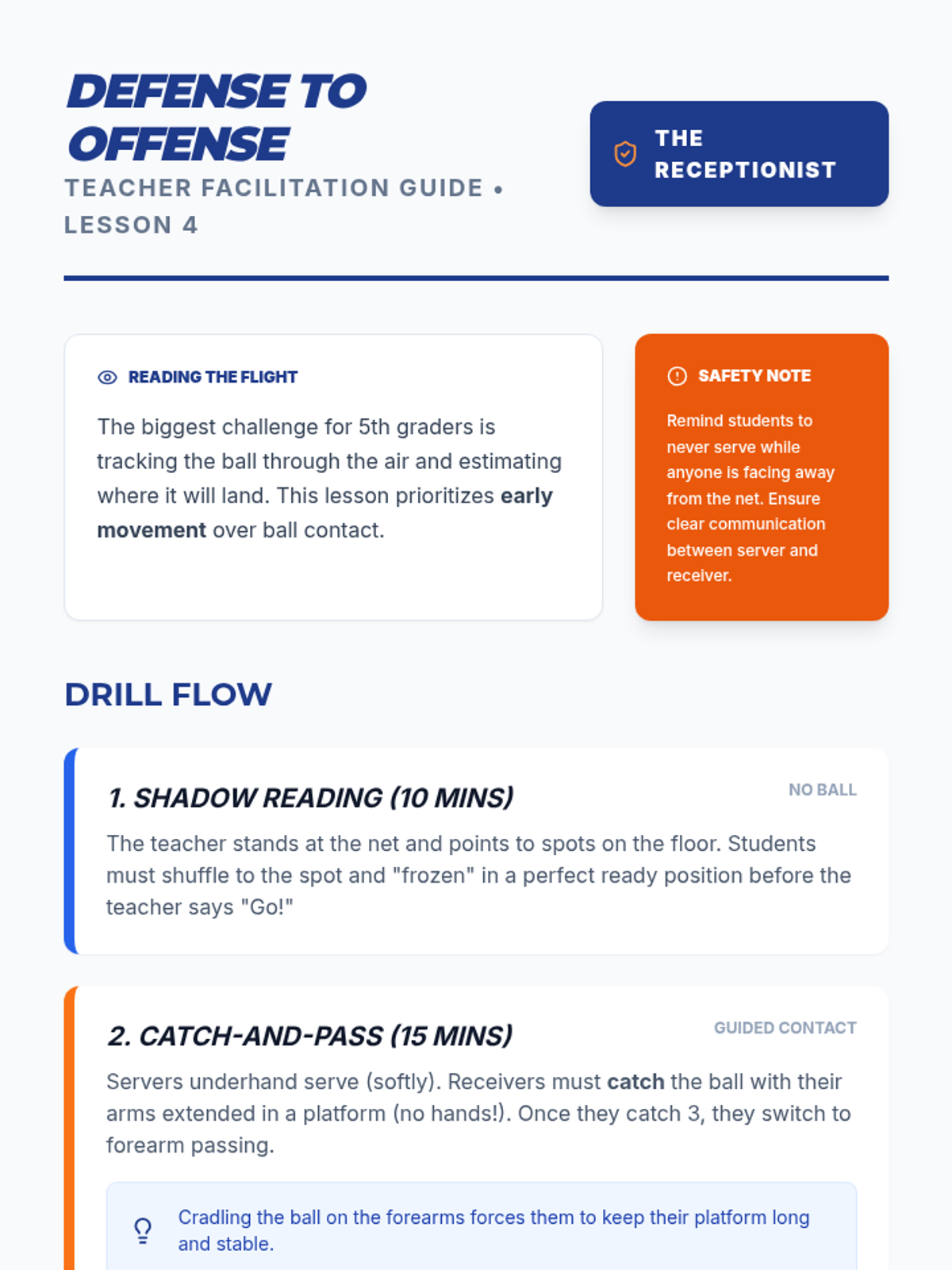
Combines movement and passing skills to teach students how to read, react to, and receive an incoming serve.
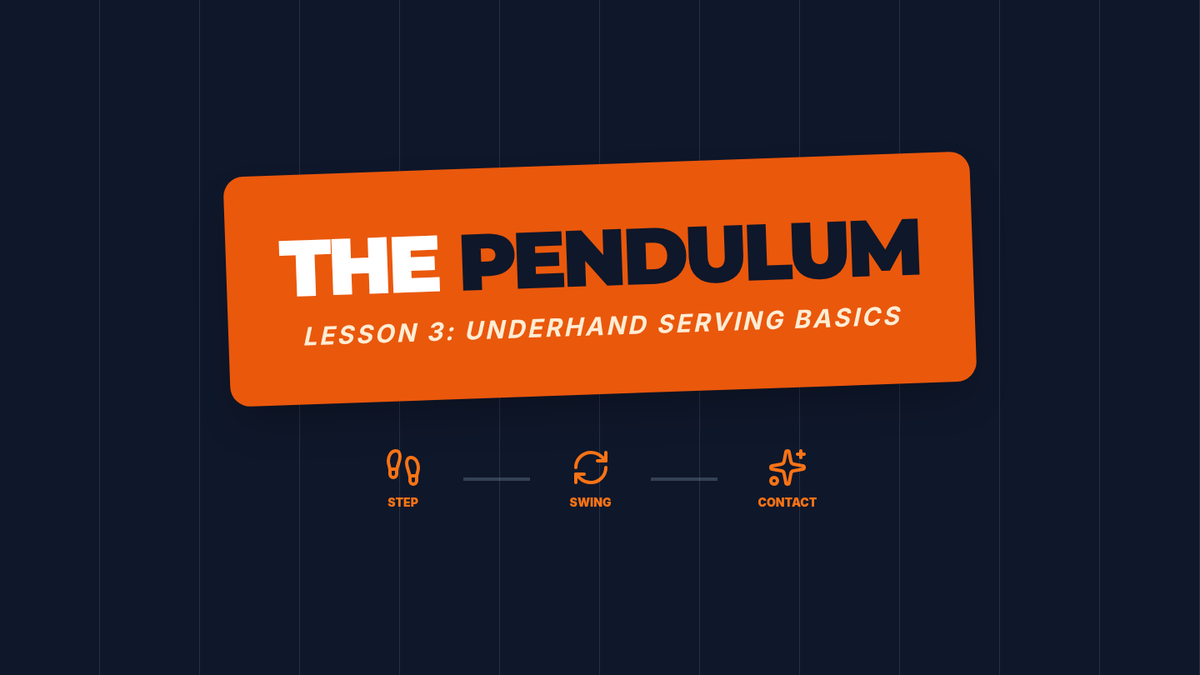
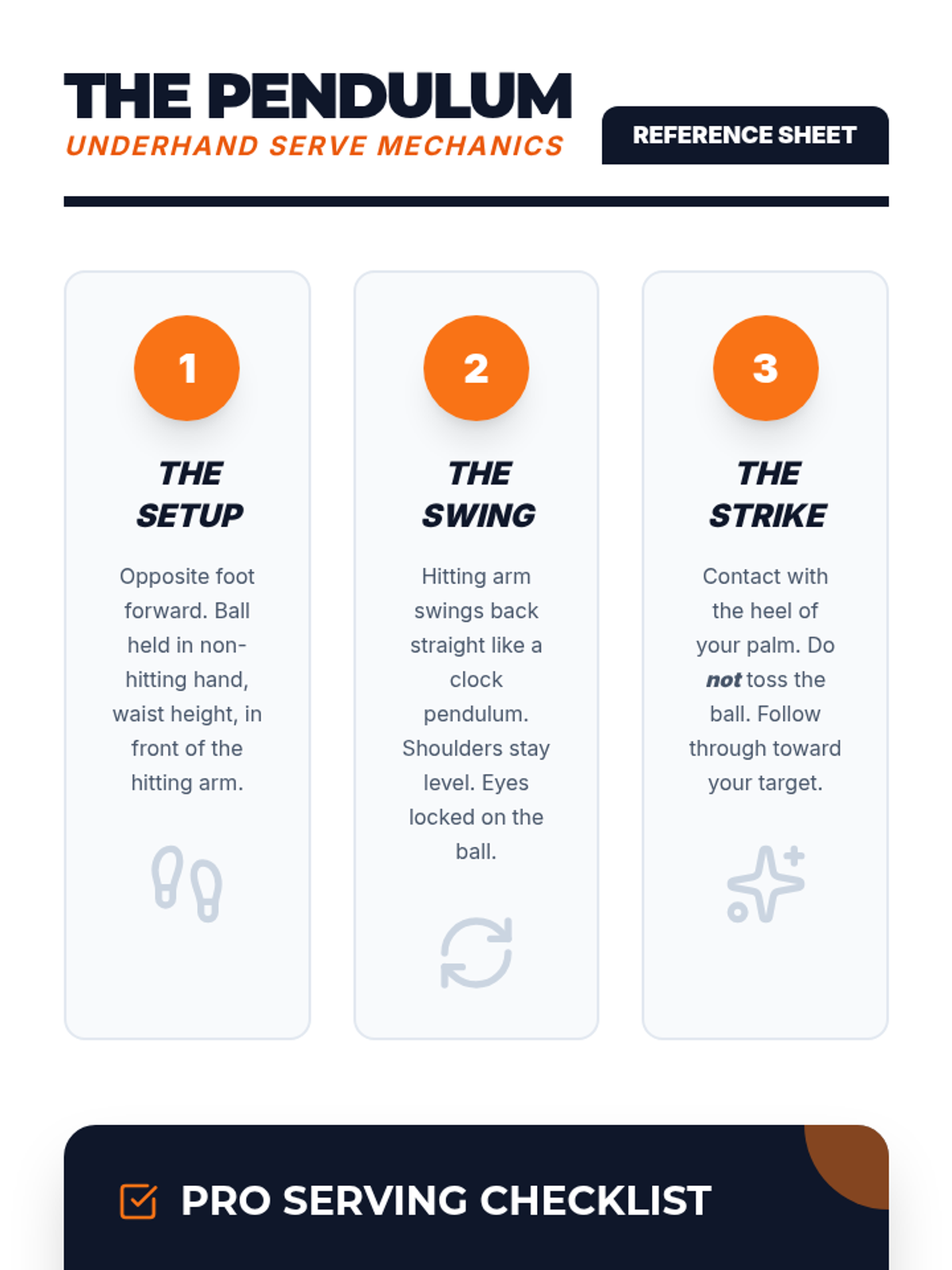
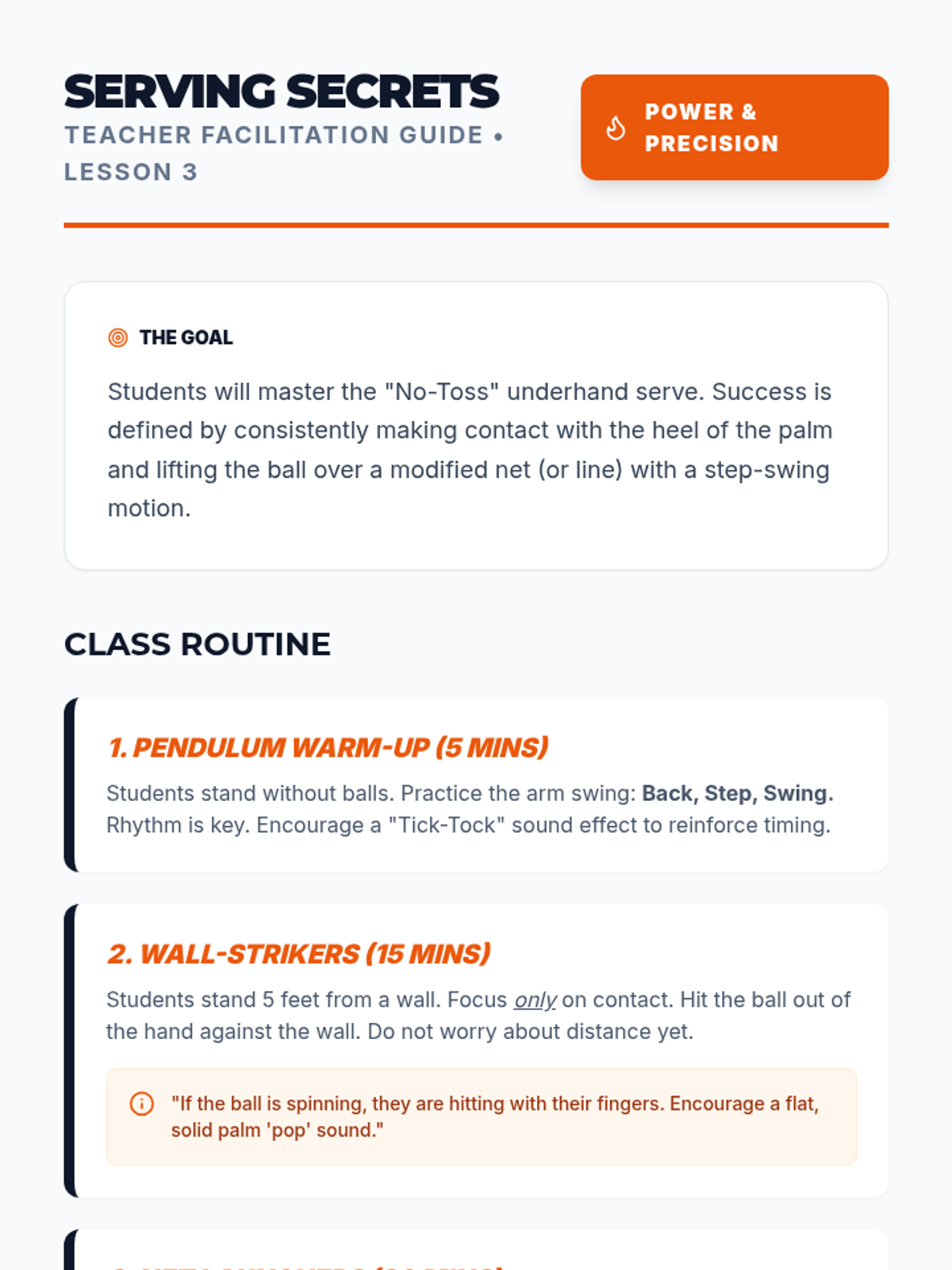
Introduces the underhand serve through a step-by-step breakdown of the pendulum swing and contact point.
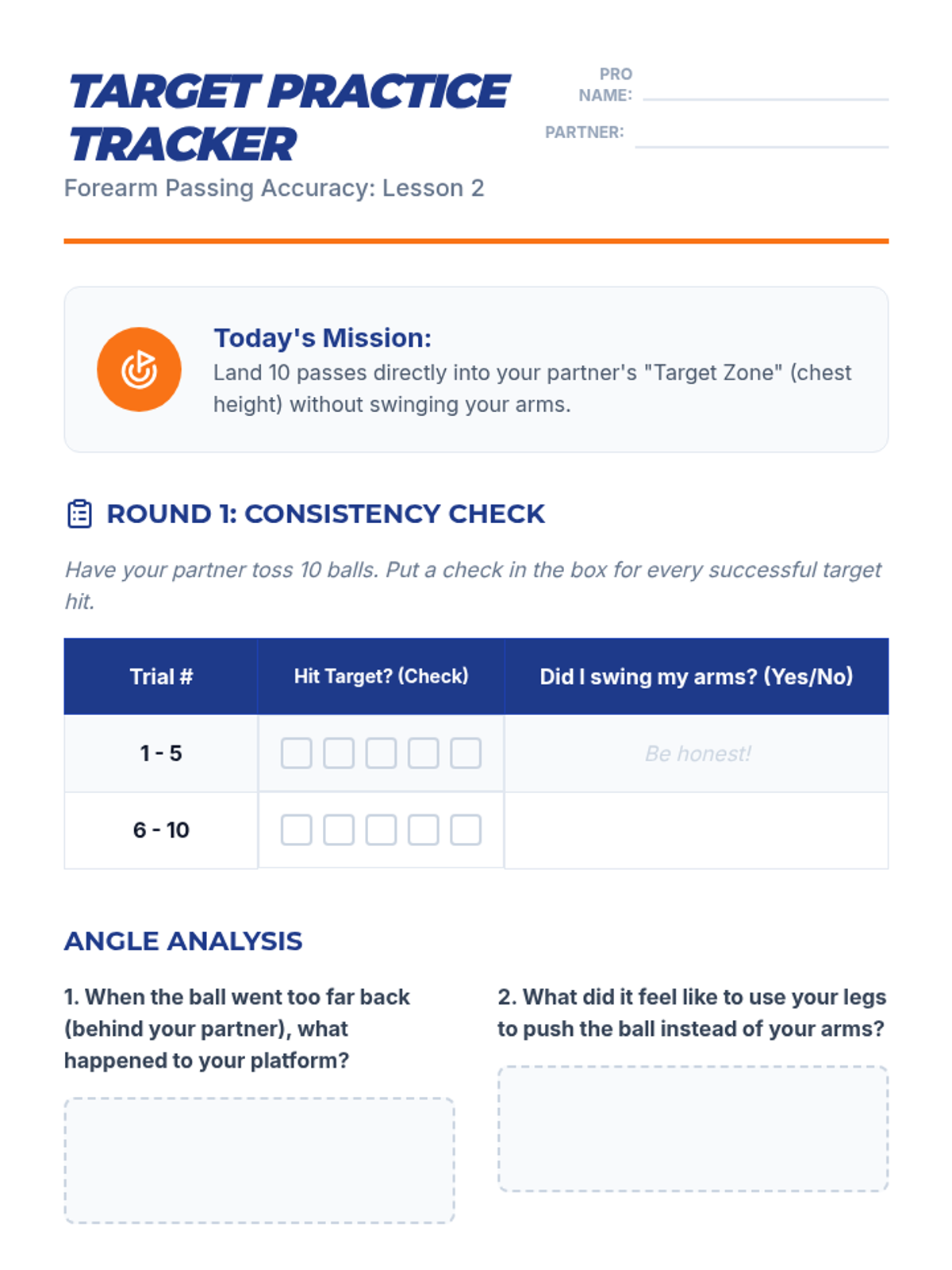
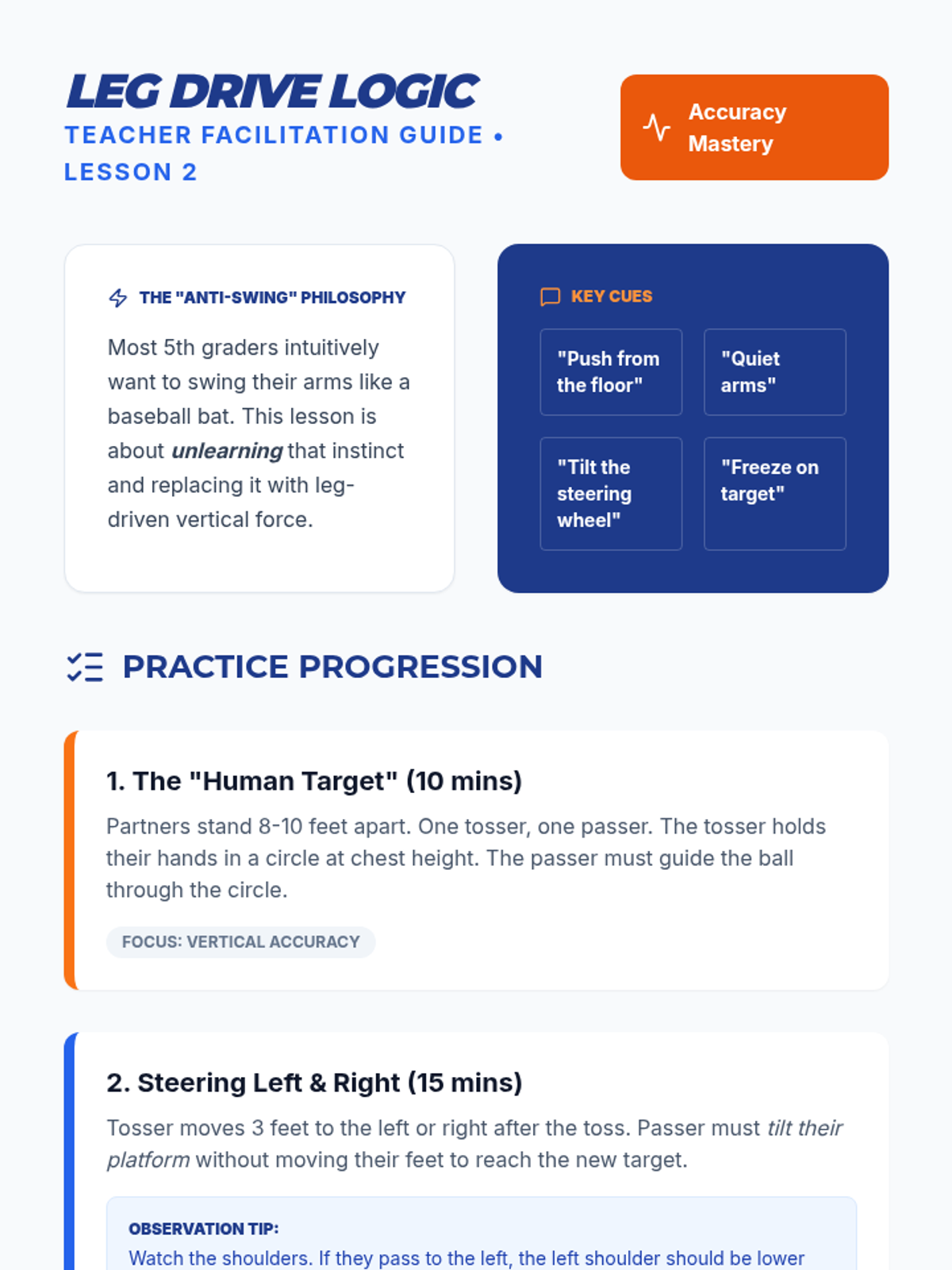
Develops accuracy in the forearm pass by teaching students to angle their platform and use their legs for power instead of swinging their arms.
Focuses on the fundamental athletic stance and the construction of the 'platform' for forearm passing, using lightweight materials to build muscle memory.
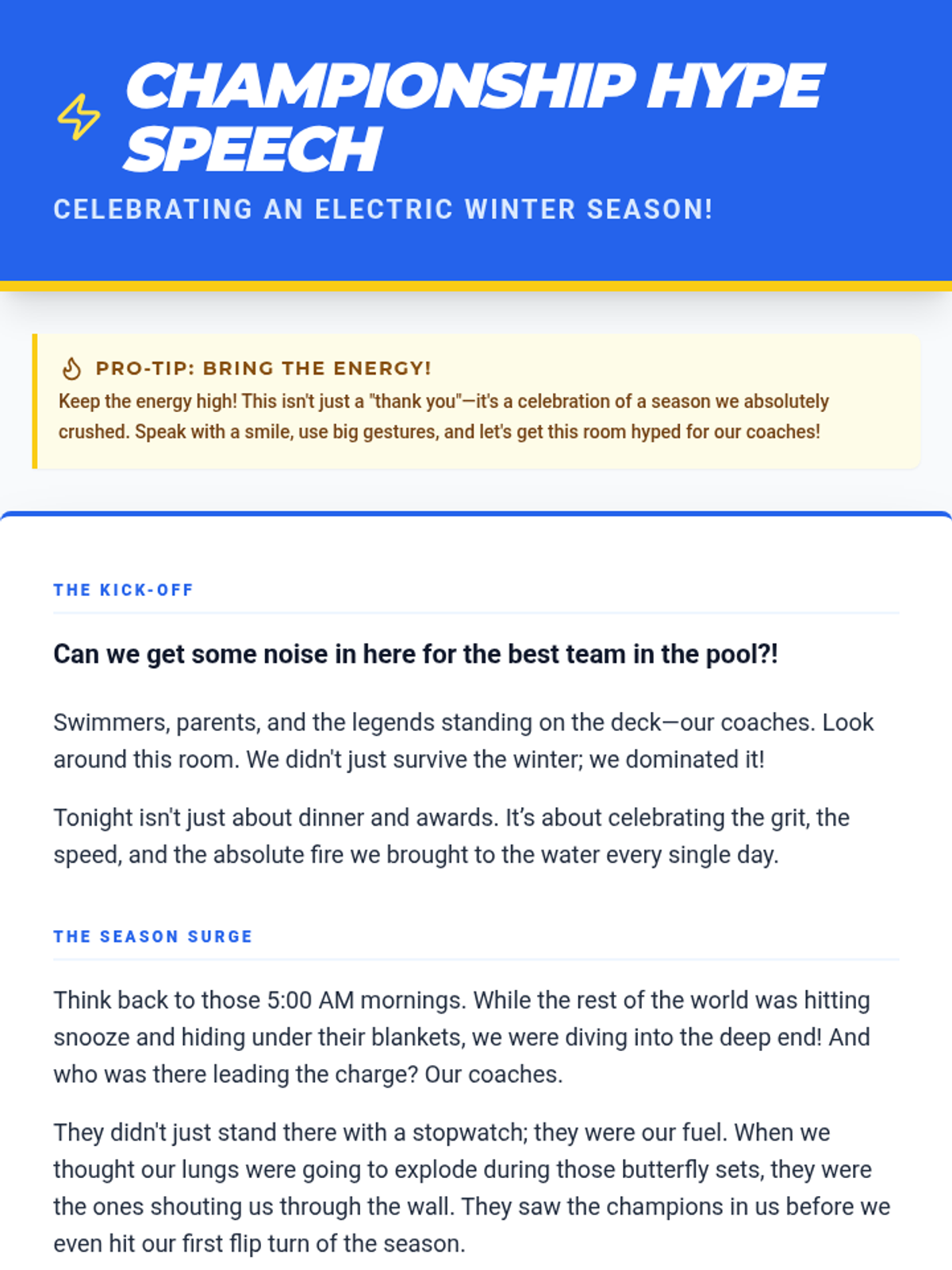
A collection of resources to celebrate and thank swim coaches at a winter banquet, including a heartfelt speech, a visual presentation of season highlights, and personalized thank-you cards for athletes to sign.
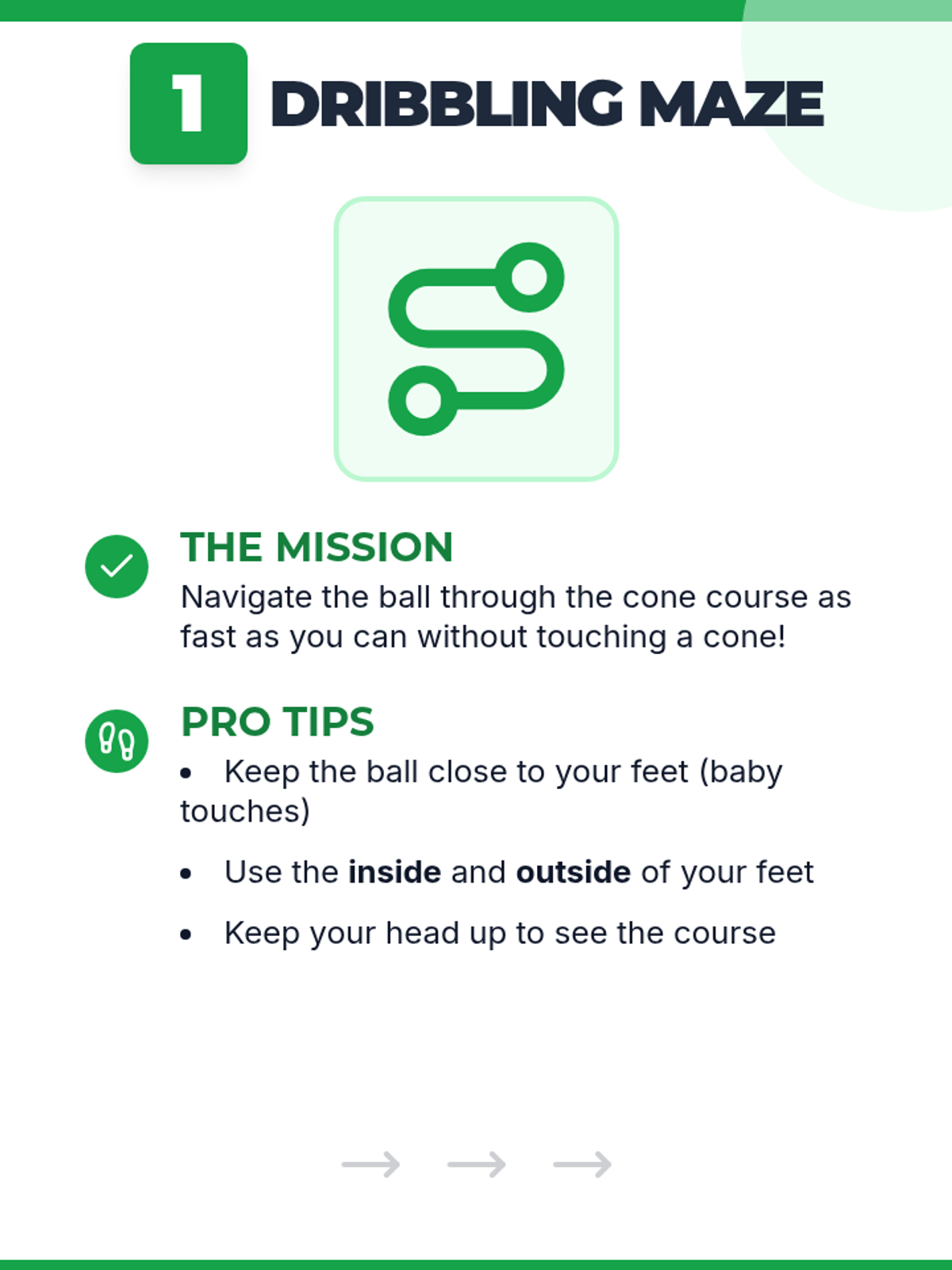
A set of high-energy station signs for a soccer skills circuit, focusing on dribbling, passing, accuracy, distance, and ball control.
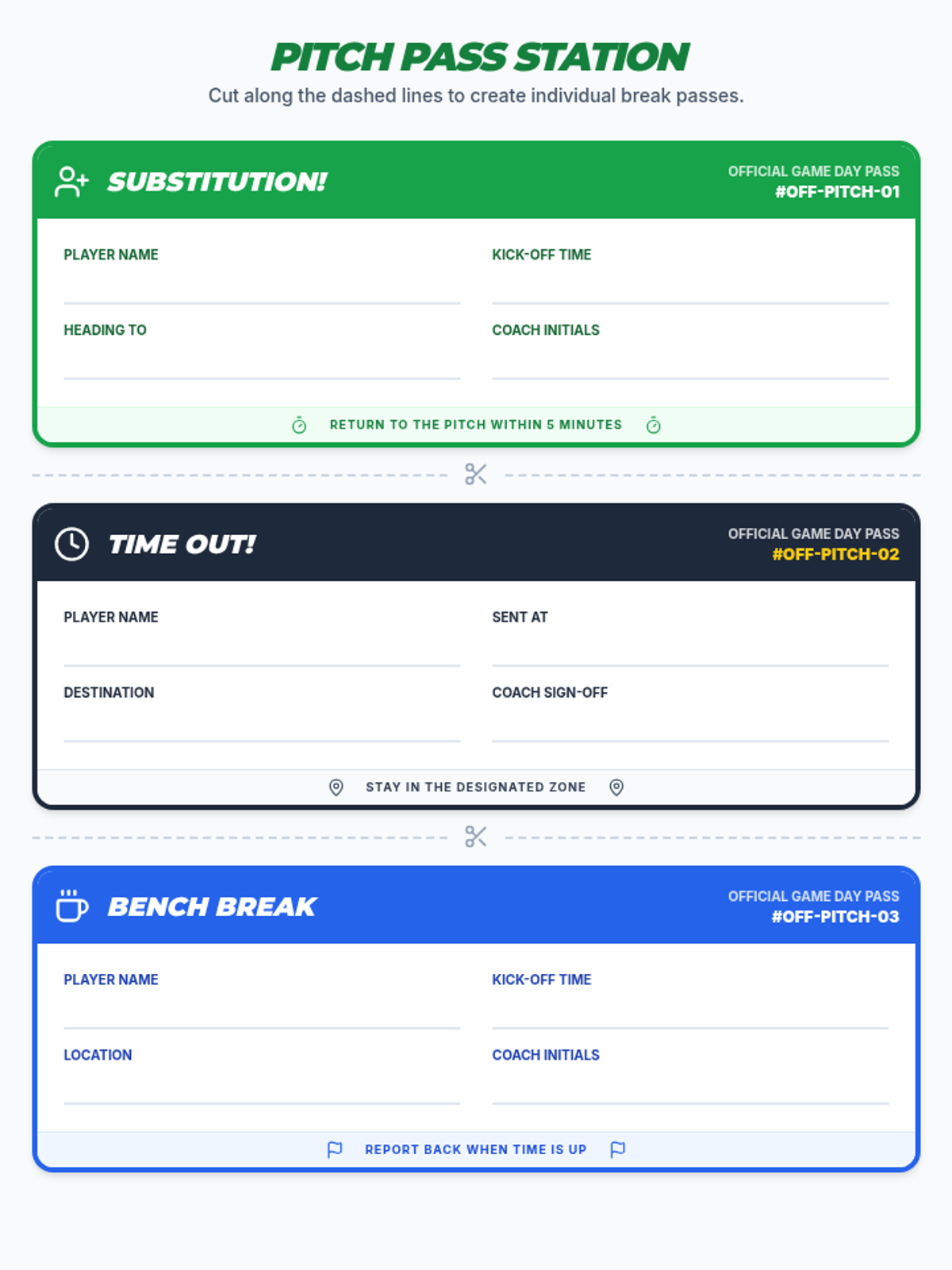
A collection of soccer-themed classroom management tools to keep students on the ball.
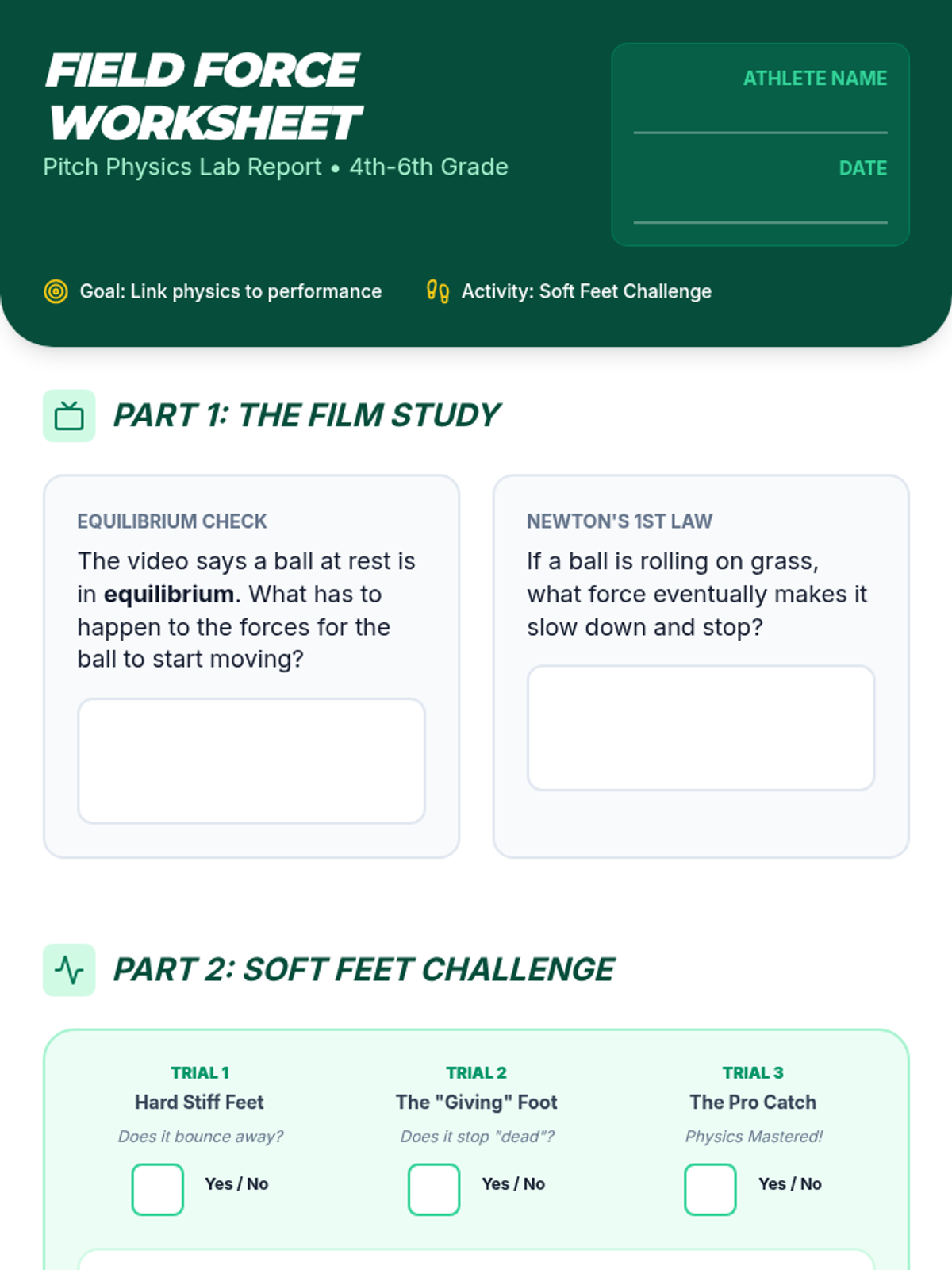
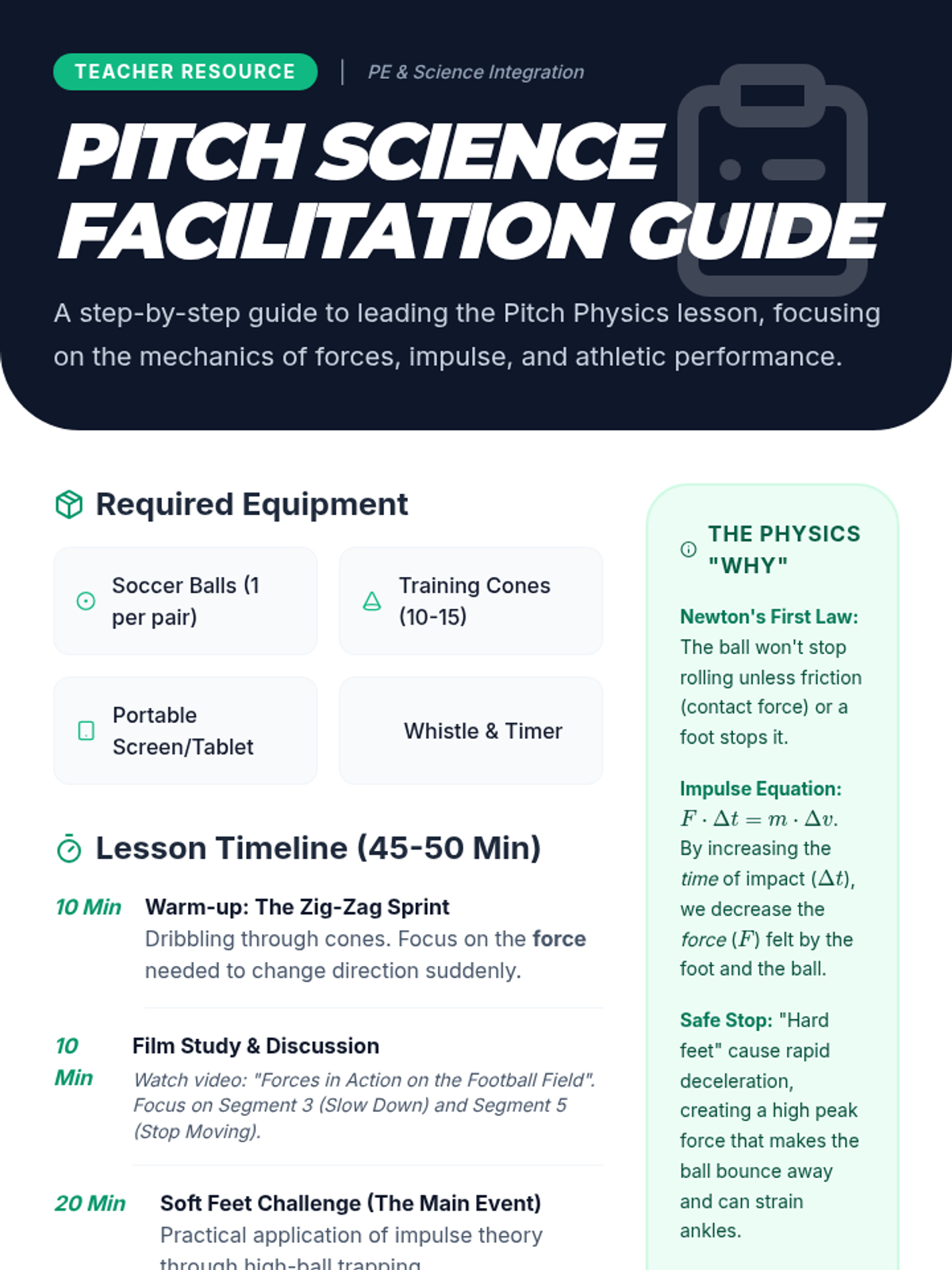
A PE and Science integration lesson where students explore the physics of soccer, focusing on forces like impulse, friction, and Newton's First Law through a 'Soft Feet Challenge'.
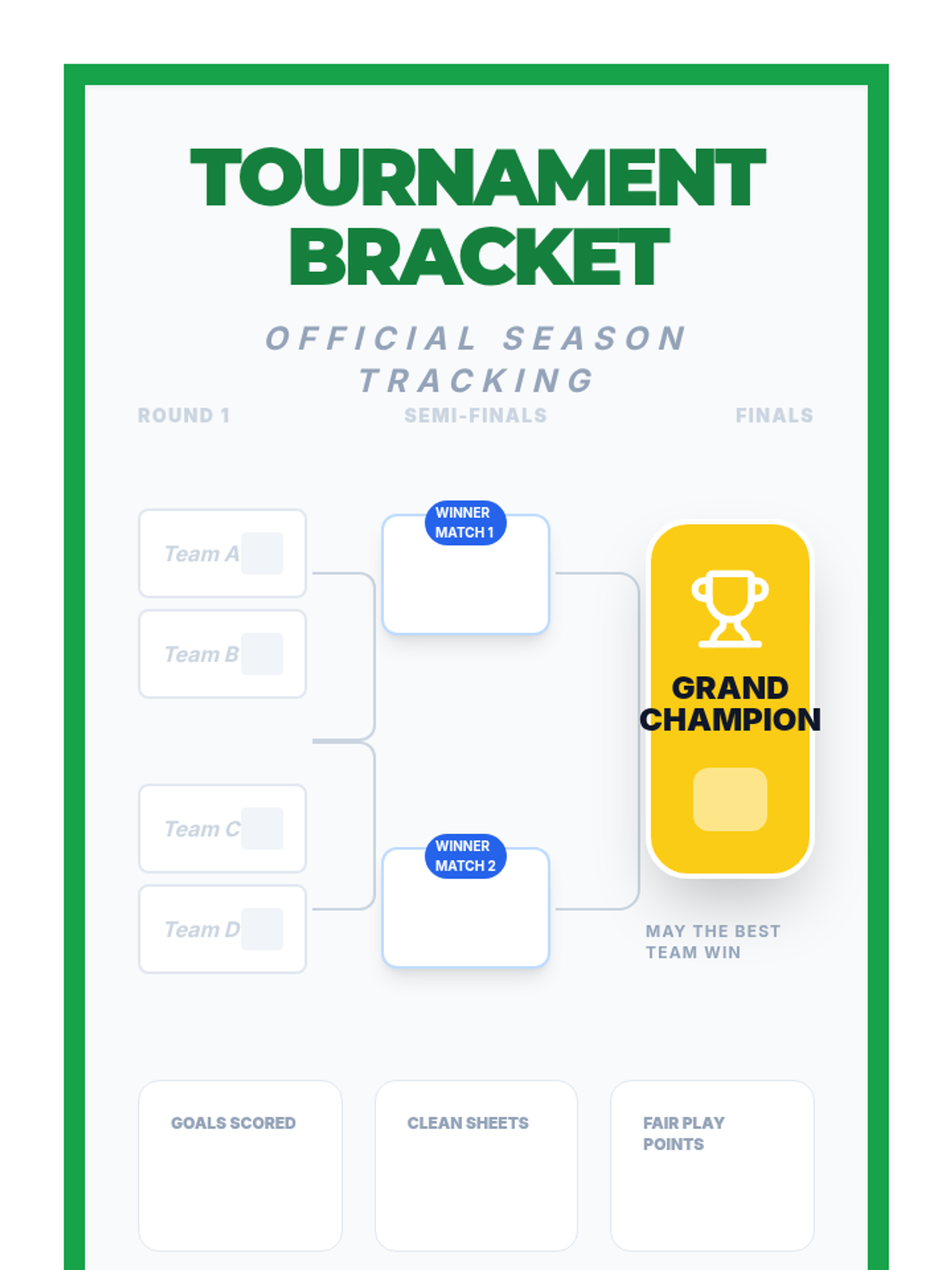
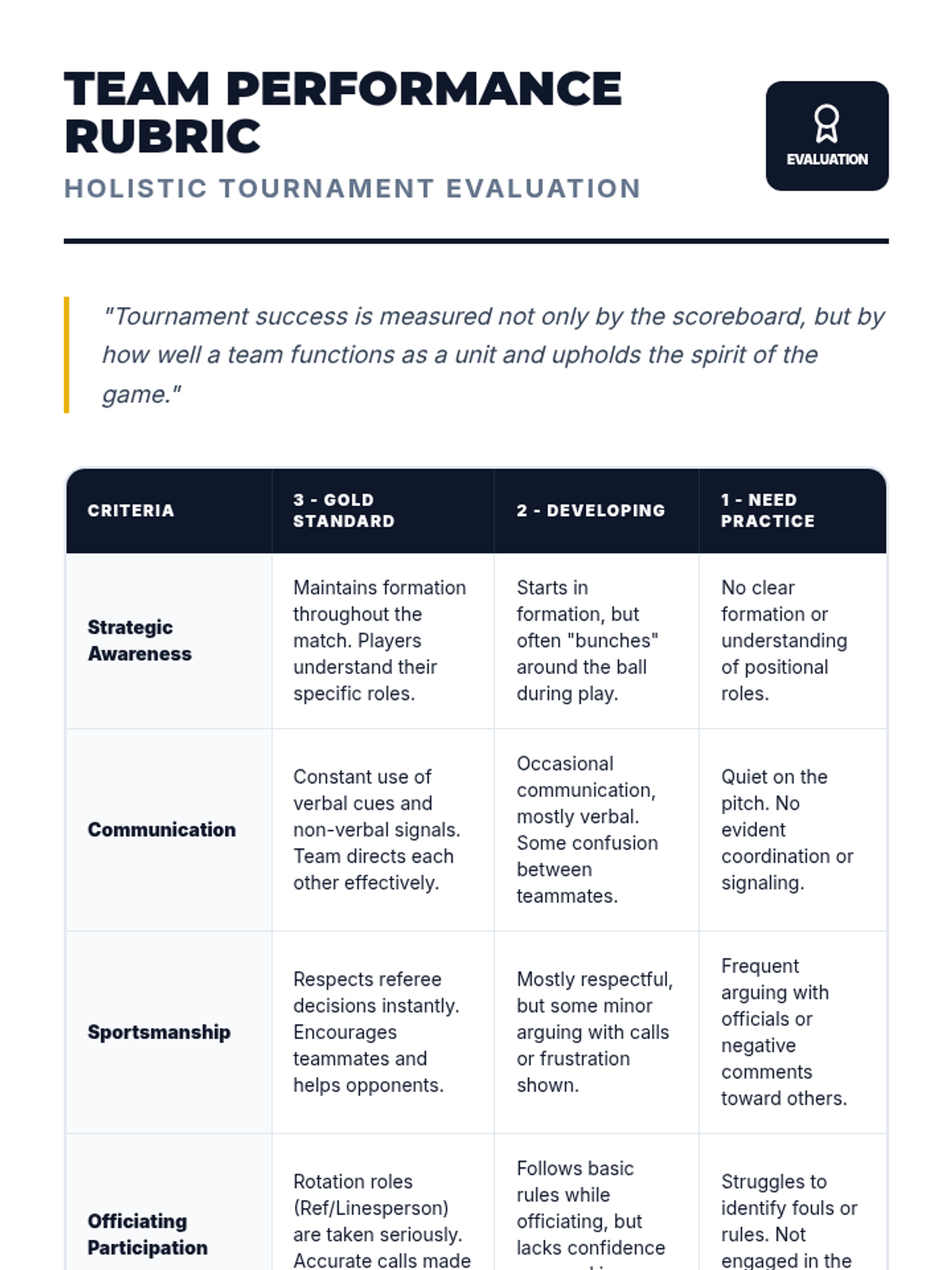
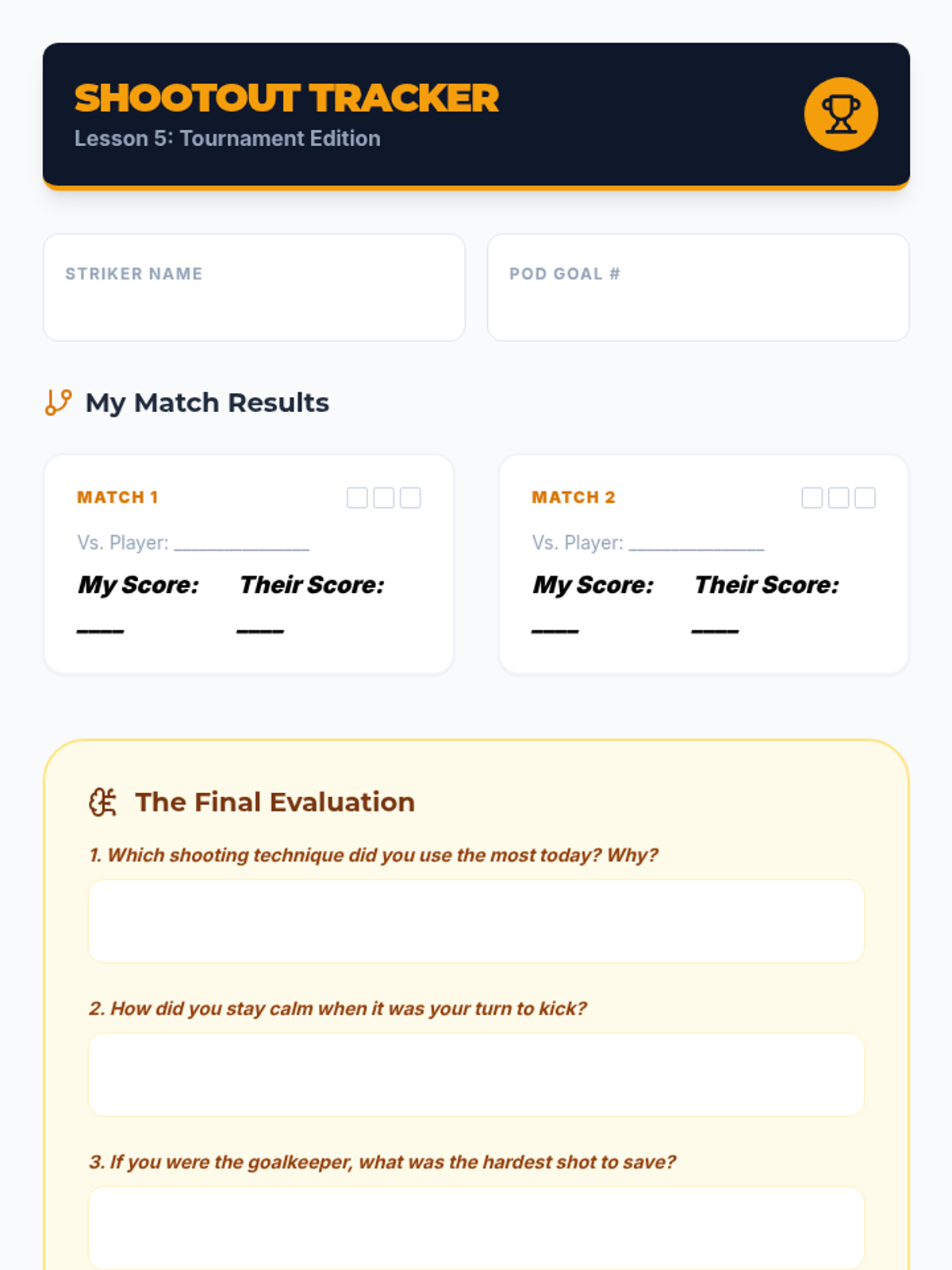
A culminating mini-tournament where students apply tactical knowledge, skill, and sportsmanship in a competitive but fair environment.
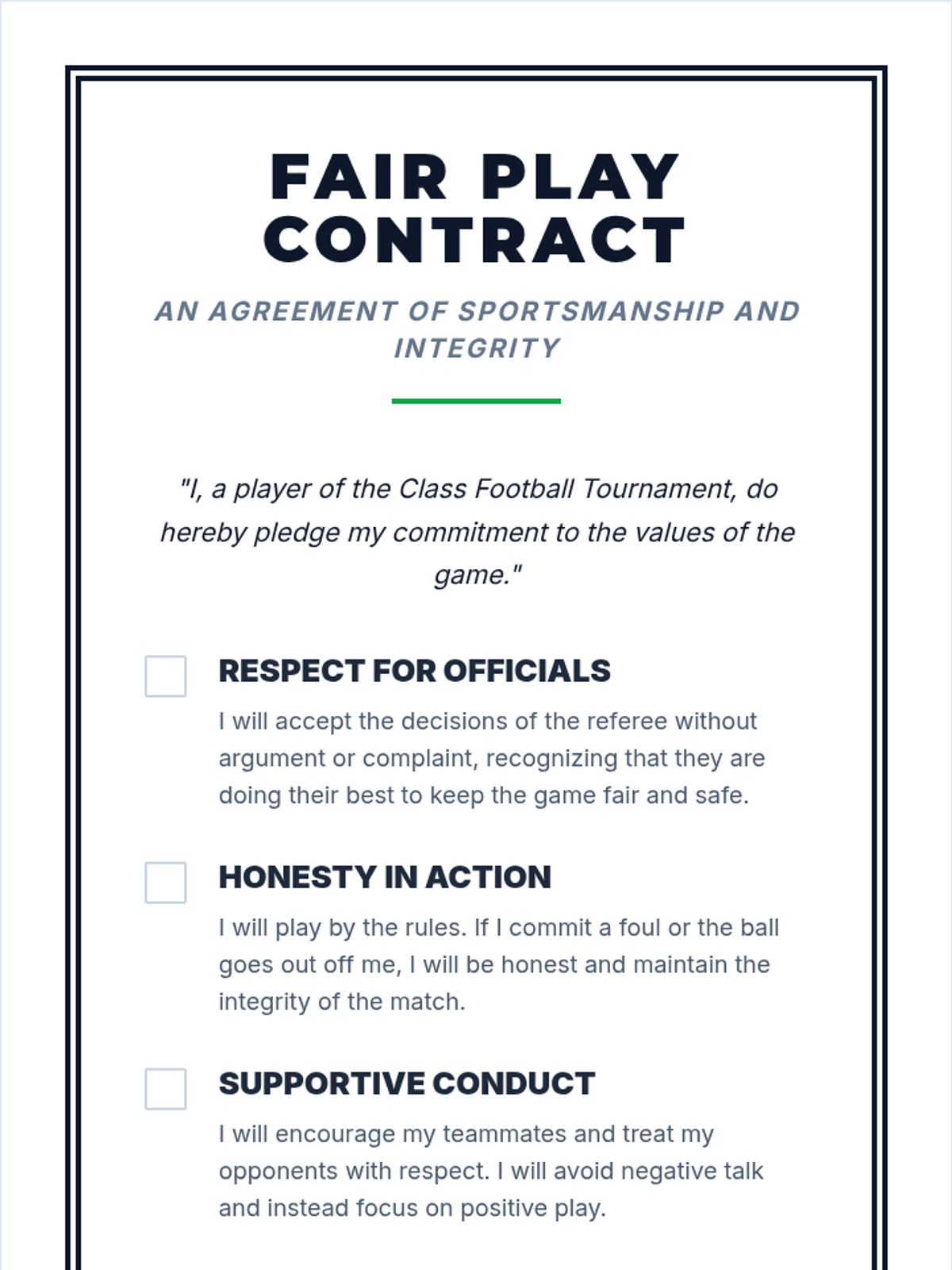
Focuses on the ethics of play, conflict resolution, and the role of the referee, emphasizing respect for decisions and maintaining fair play.
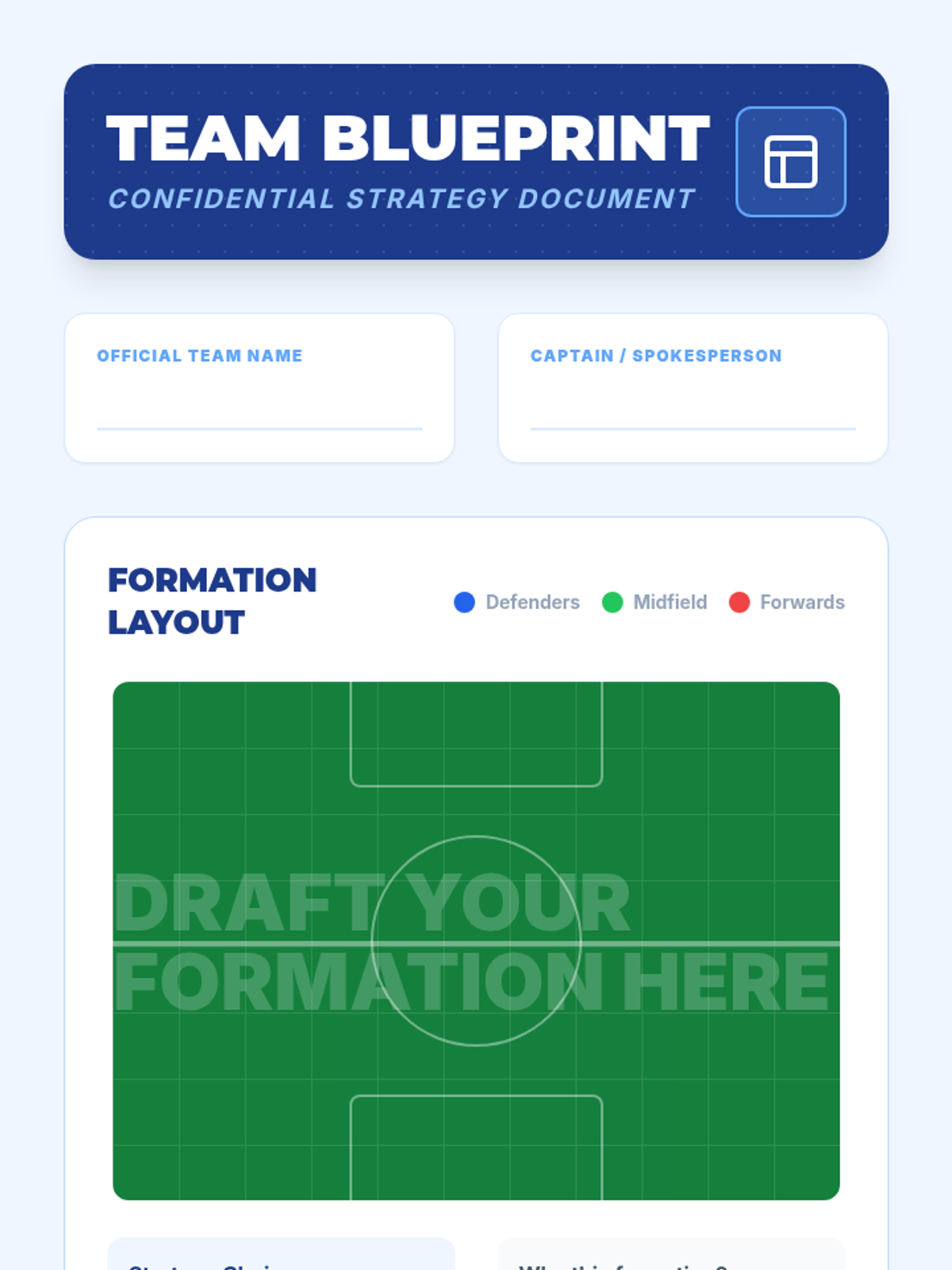
Teams design formations and communication strategies, practicing both verbal and non-verbal signals to coordinate play on the field.
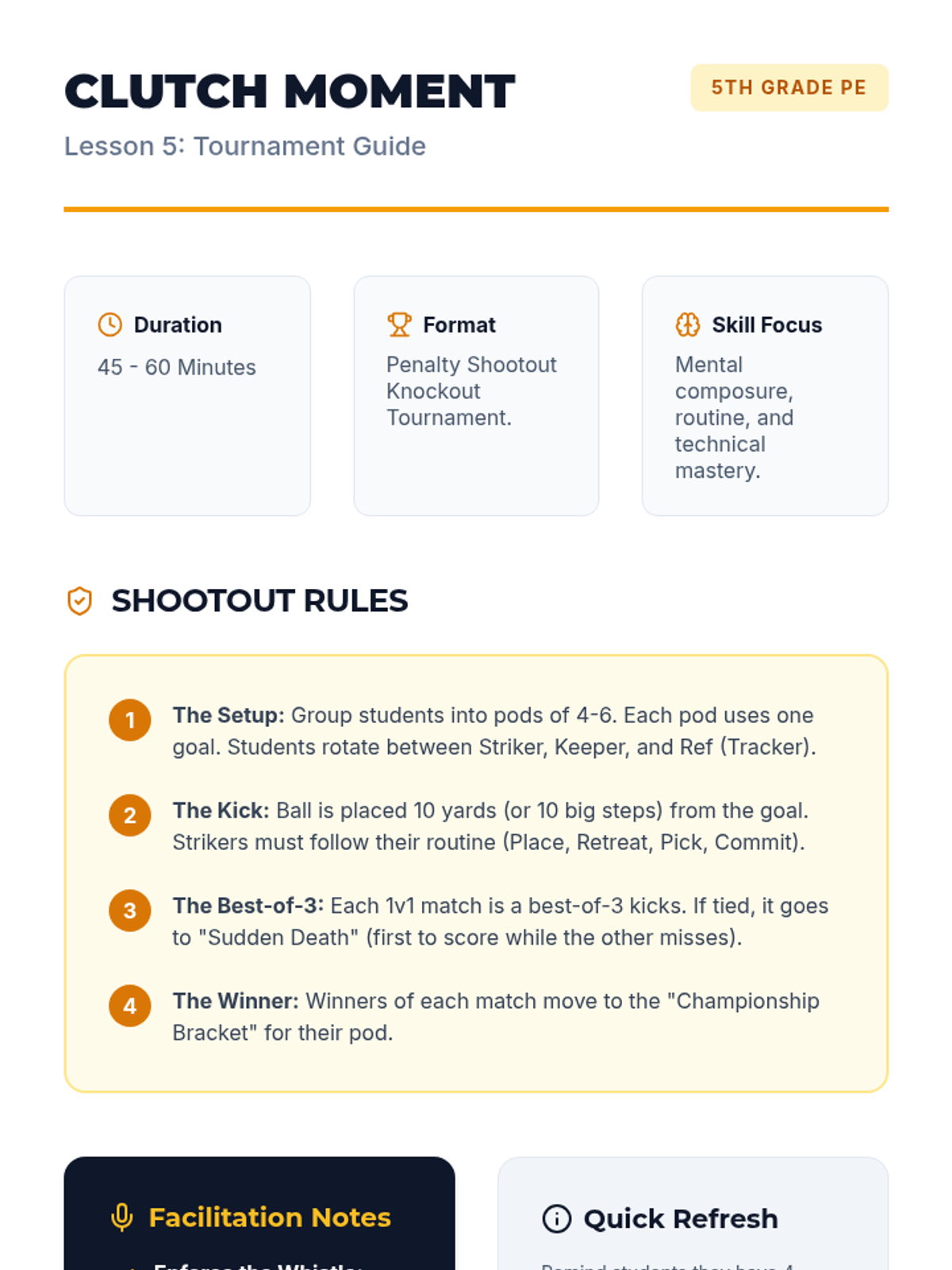
The sequence concludes with a focus on dead-ball situations, specifically penalty kicks and free kicks, including a tournament.
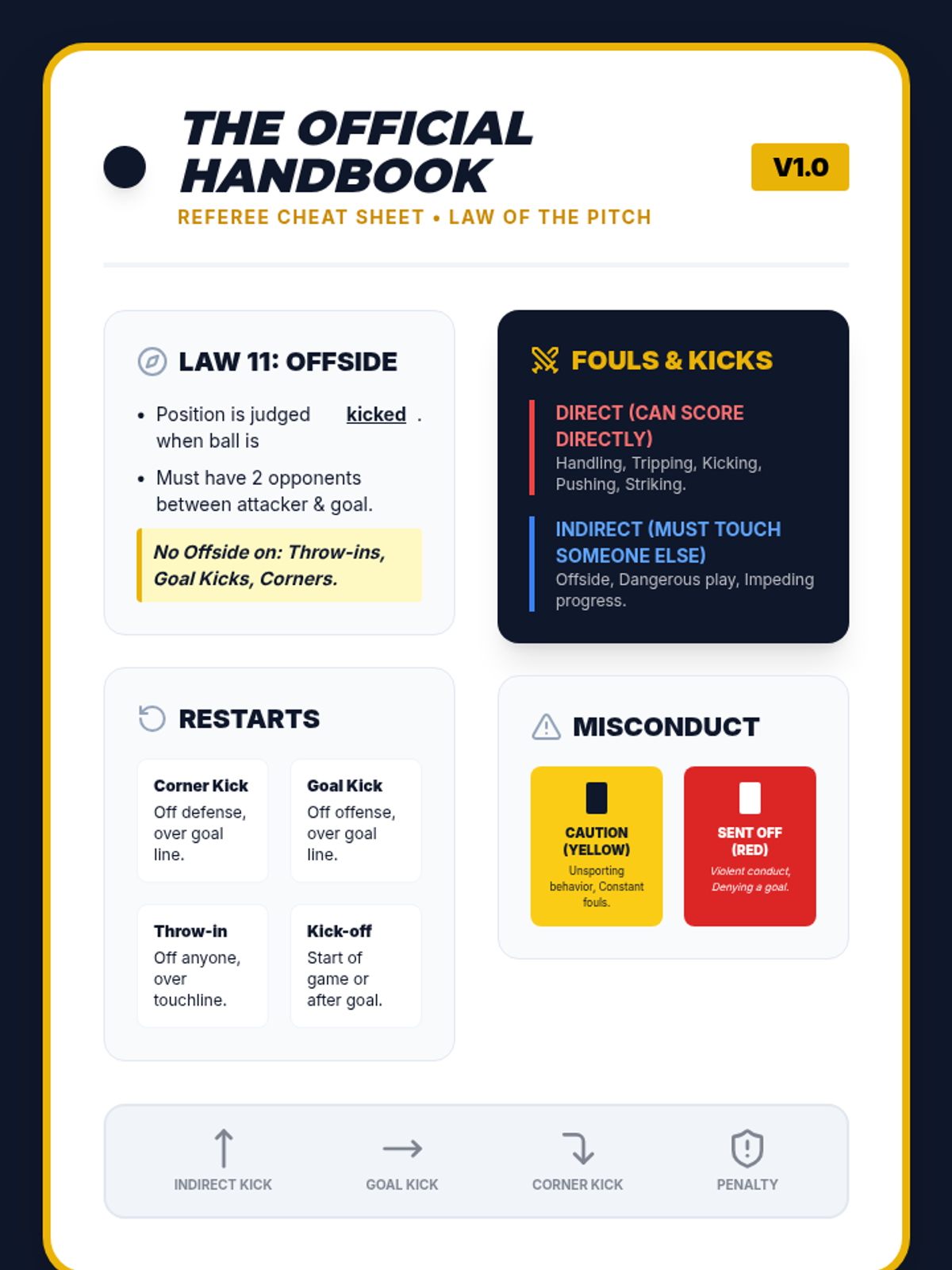
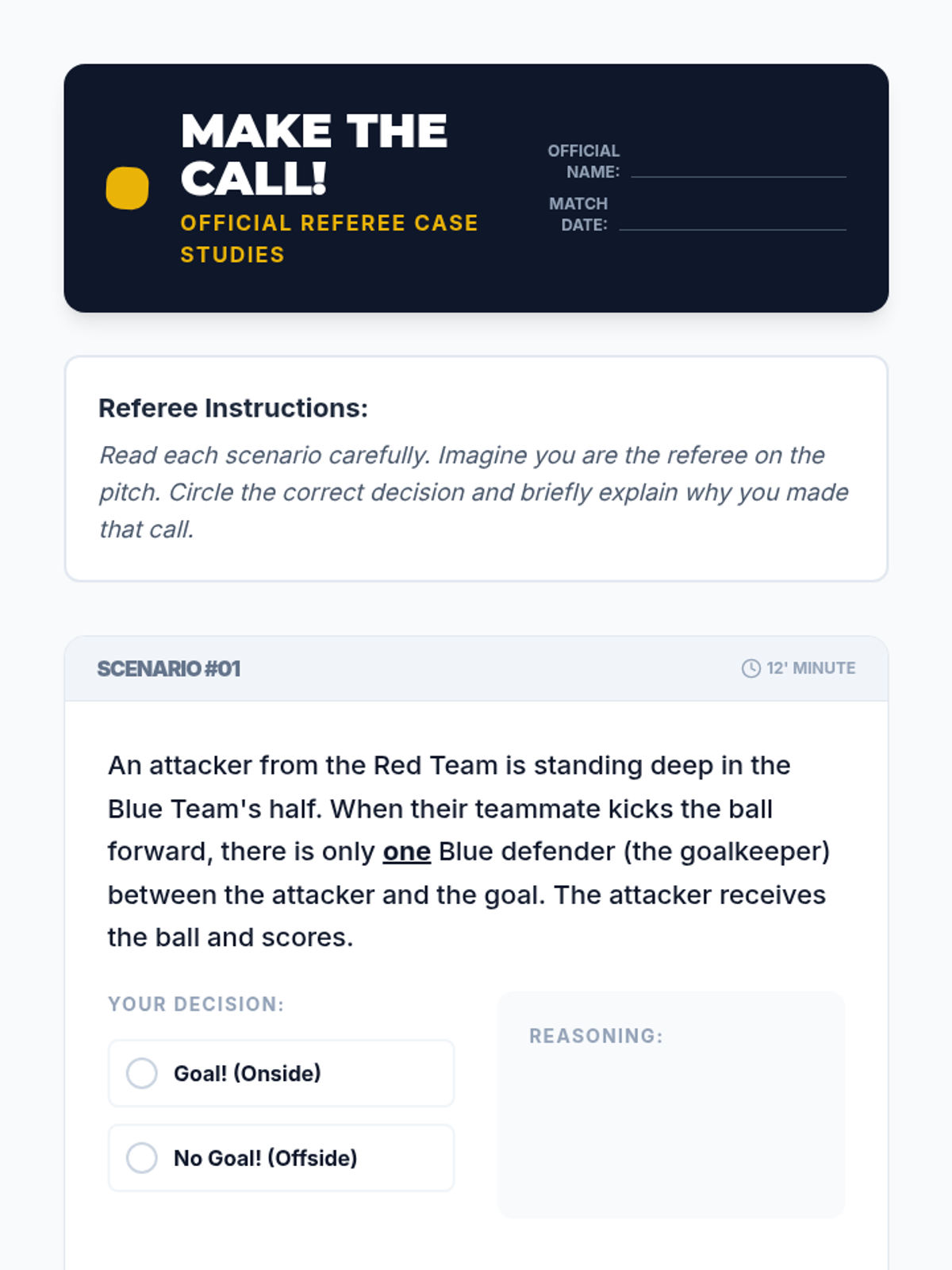
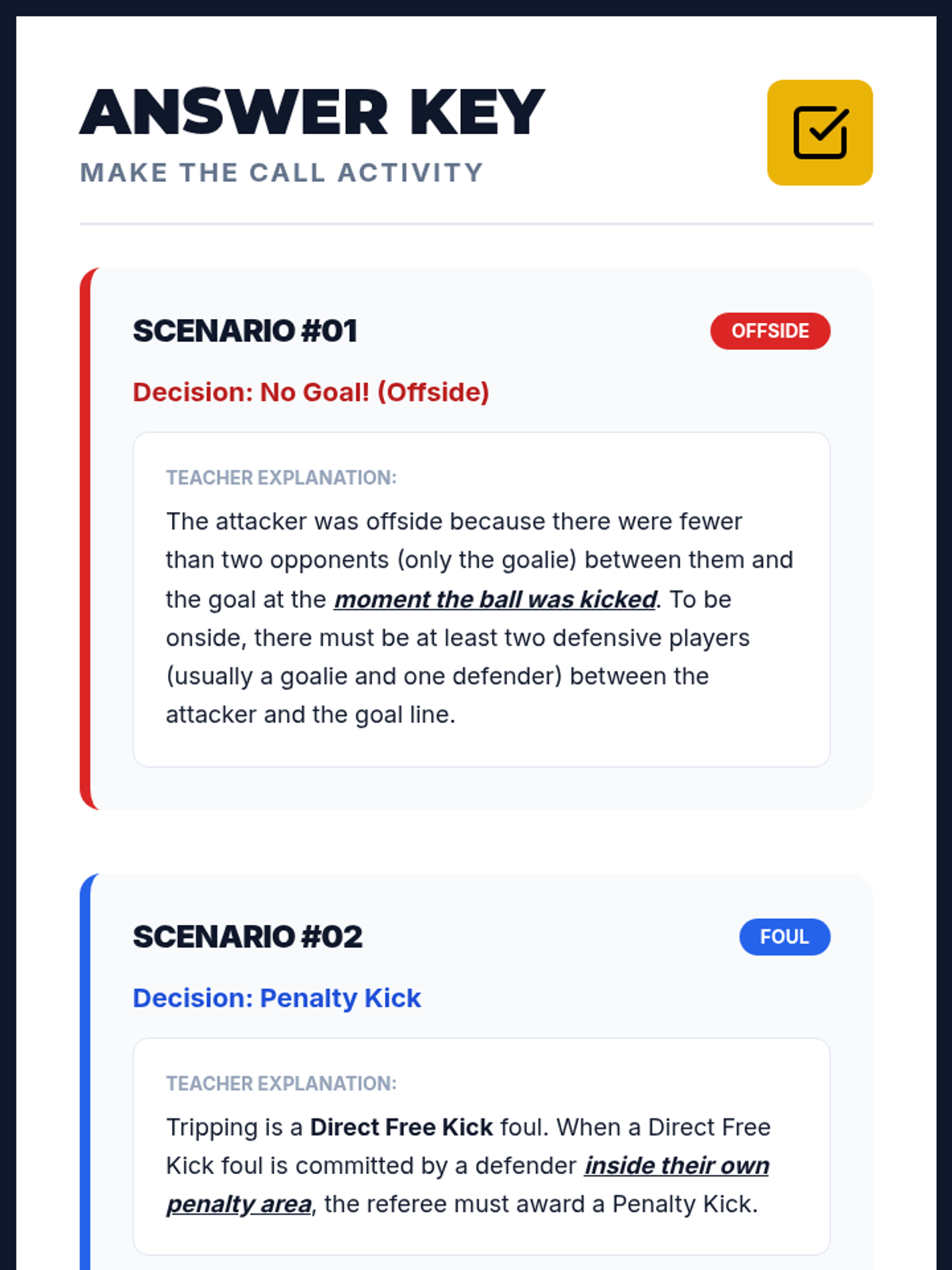
A breakdown of complex football rules, including offside, fouls, and the difference between direct and indirect free kicks through case studies and simulations.
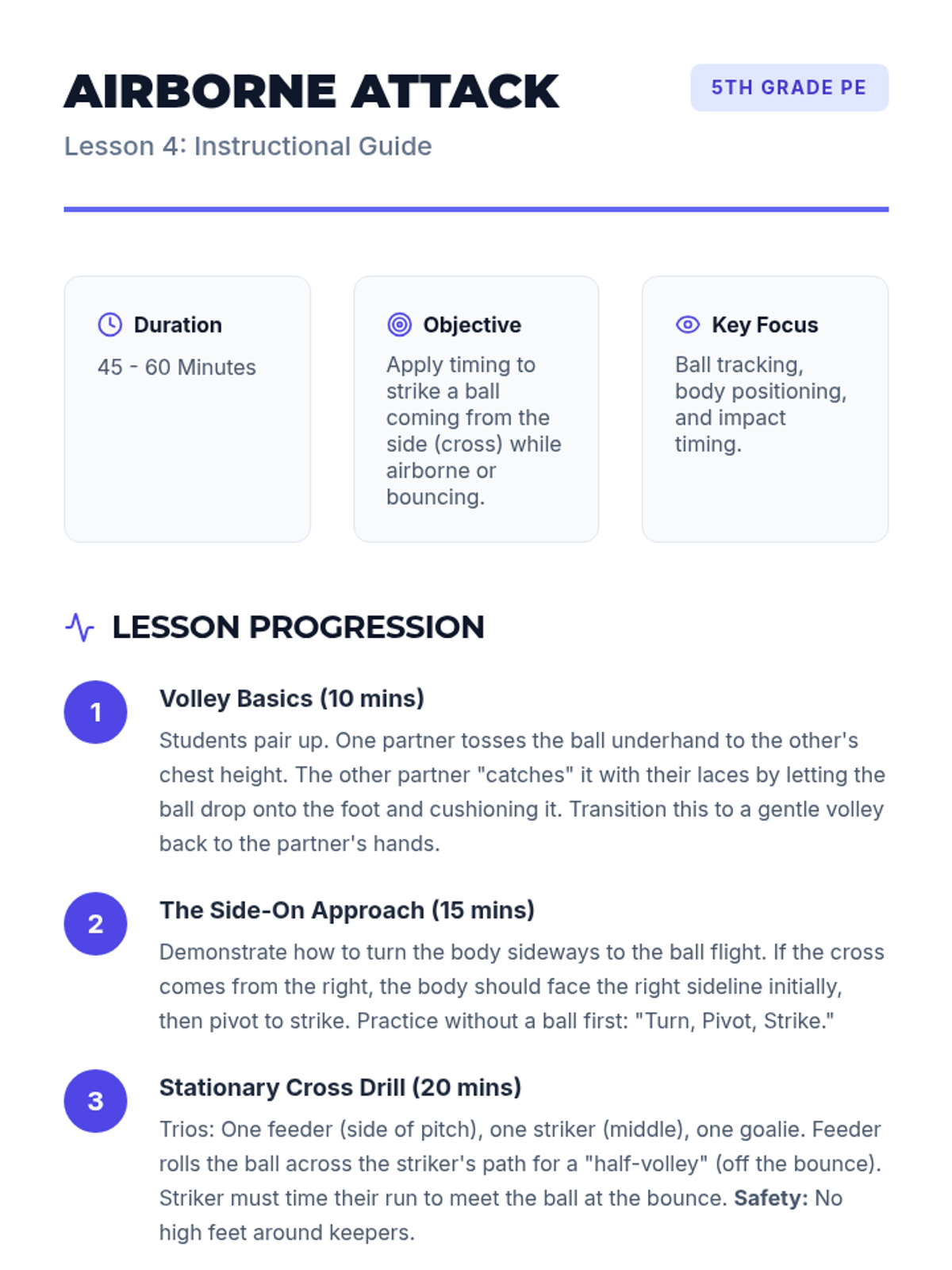
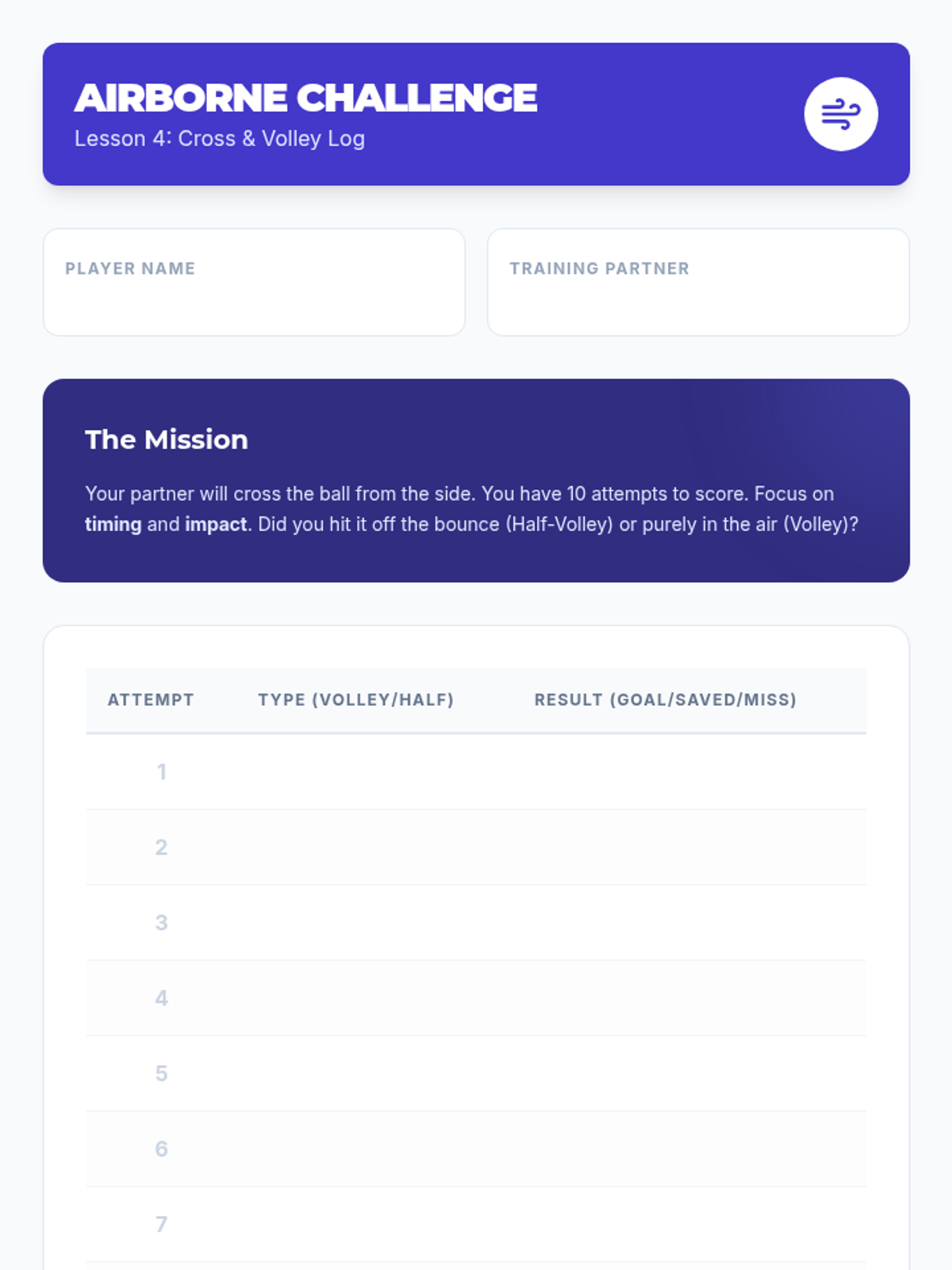
Learners attempt to connect with balls coming from the sides (crosses), introducing the timing required for volleys or half-volleys.
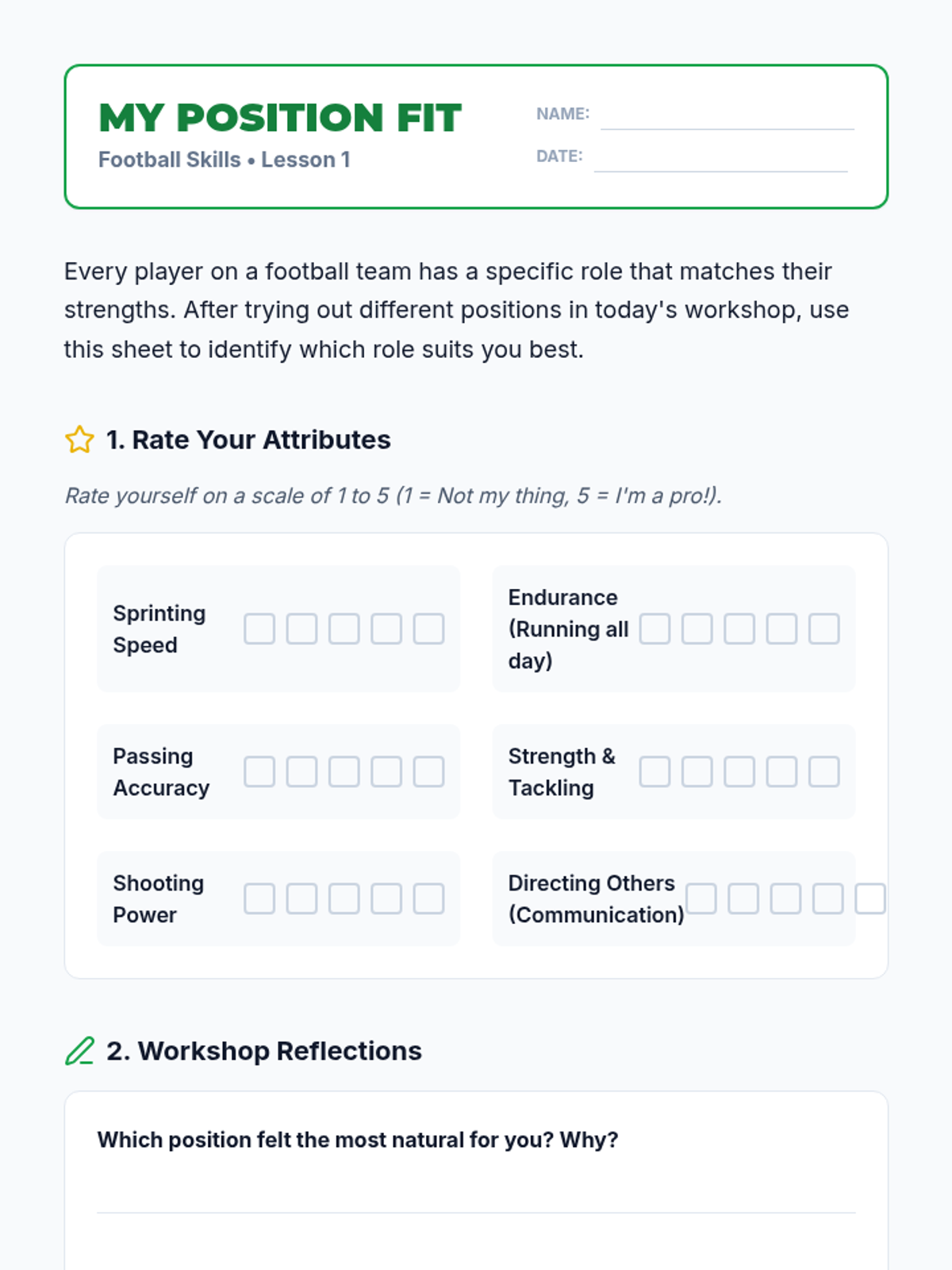
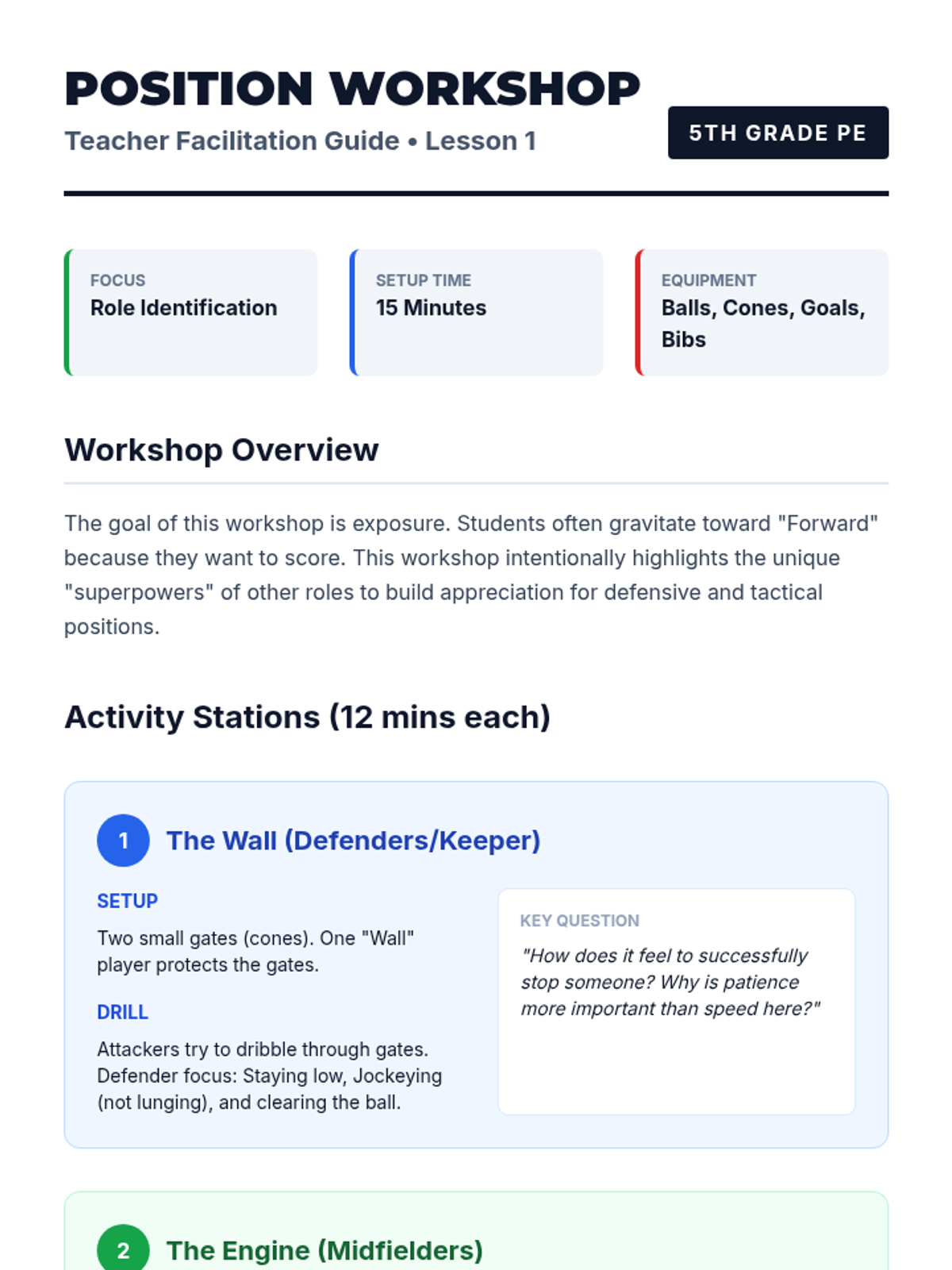
Students explore the standard positions in football (forwards, midfielders, defenders, goalkeeper) and identify their personal strengths to match with specific roles.
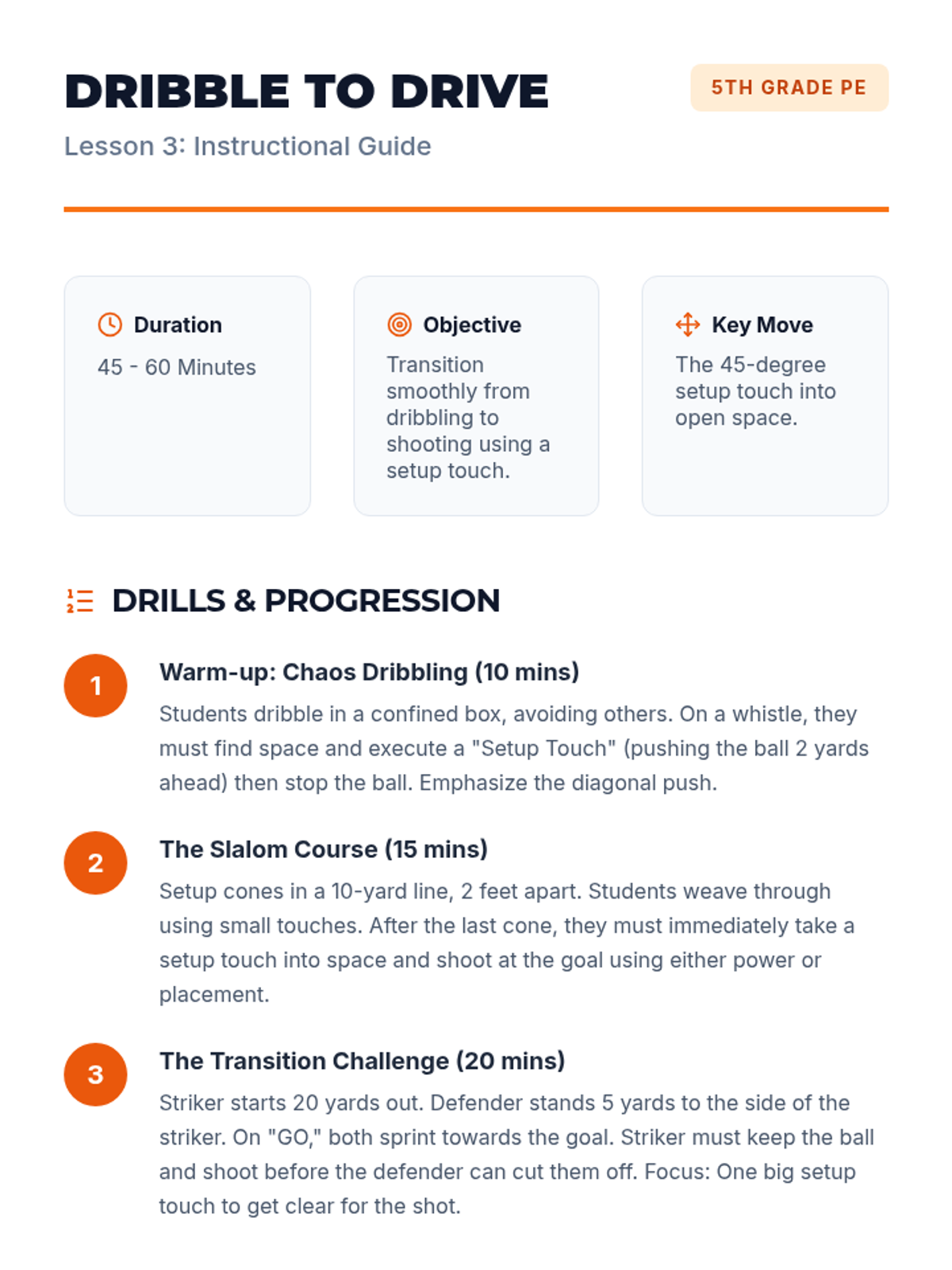
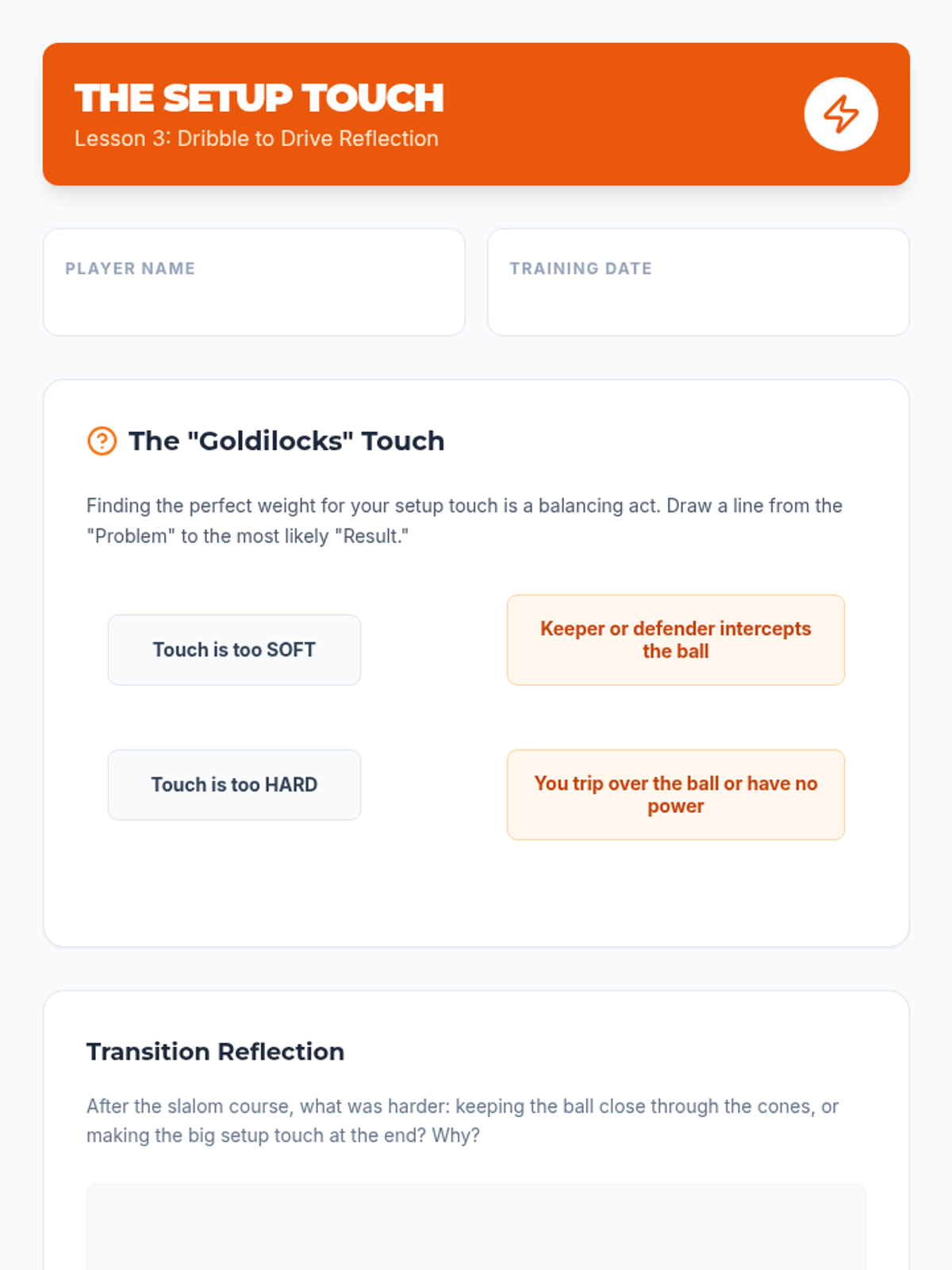
Students practice transitioning from dribbling immediately into a shooting stride without stopping, focusing on the final 'setup touch'.
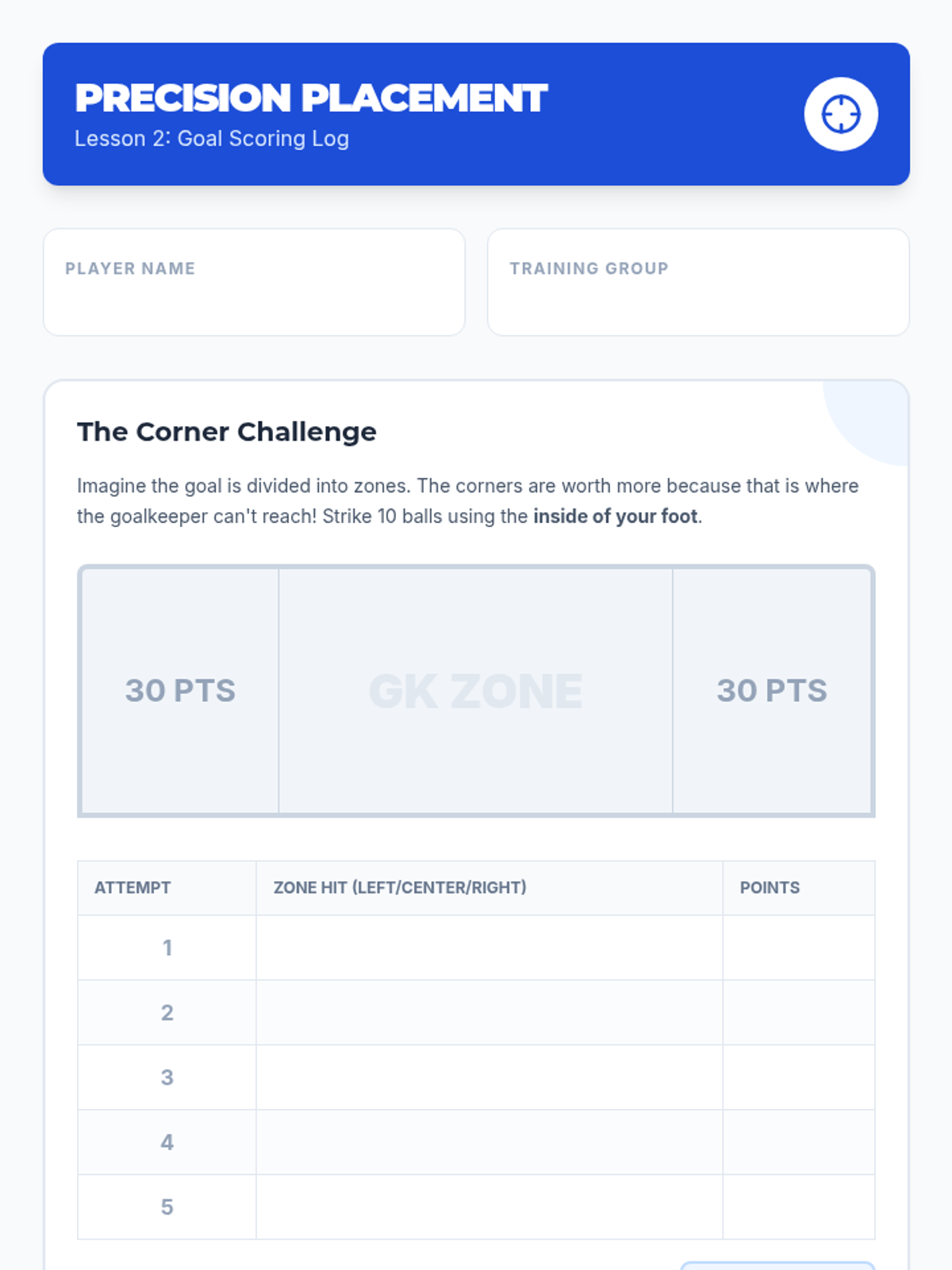
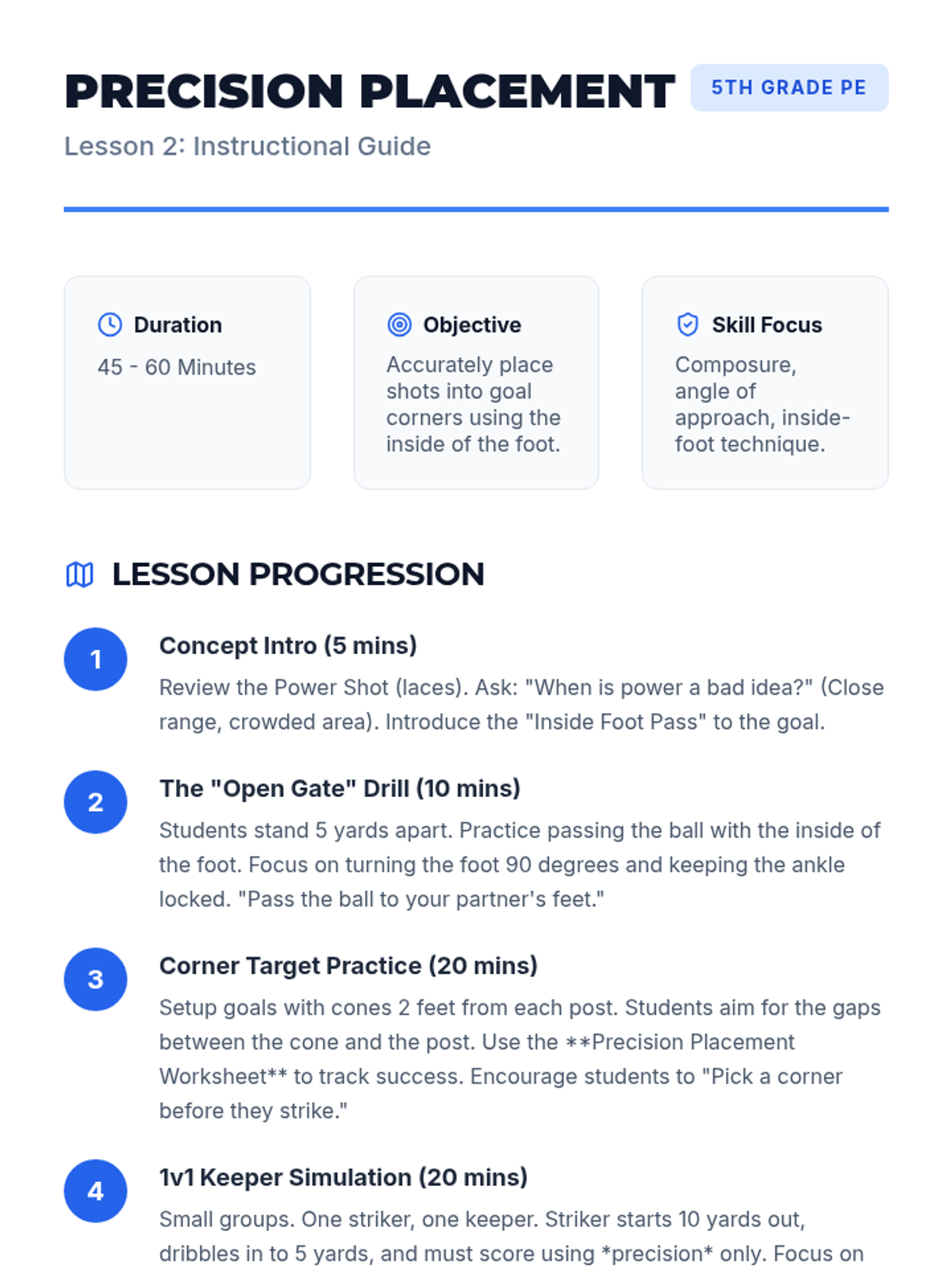
The lesson contrasts power with placement, teaching students to use the inside of the foot to 'pass' the ball into the corners of the goal.
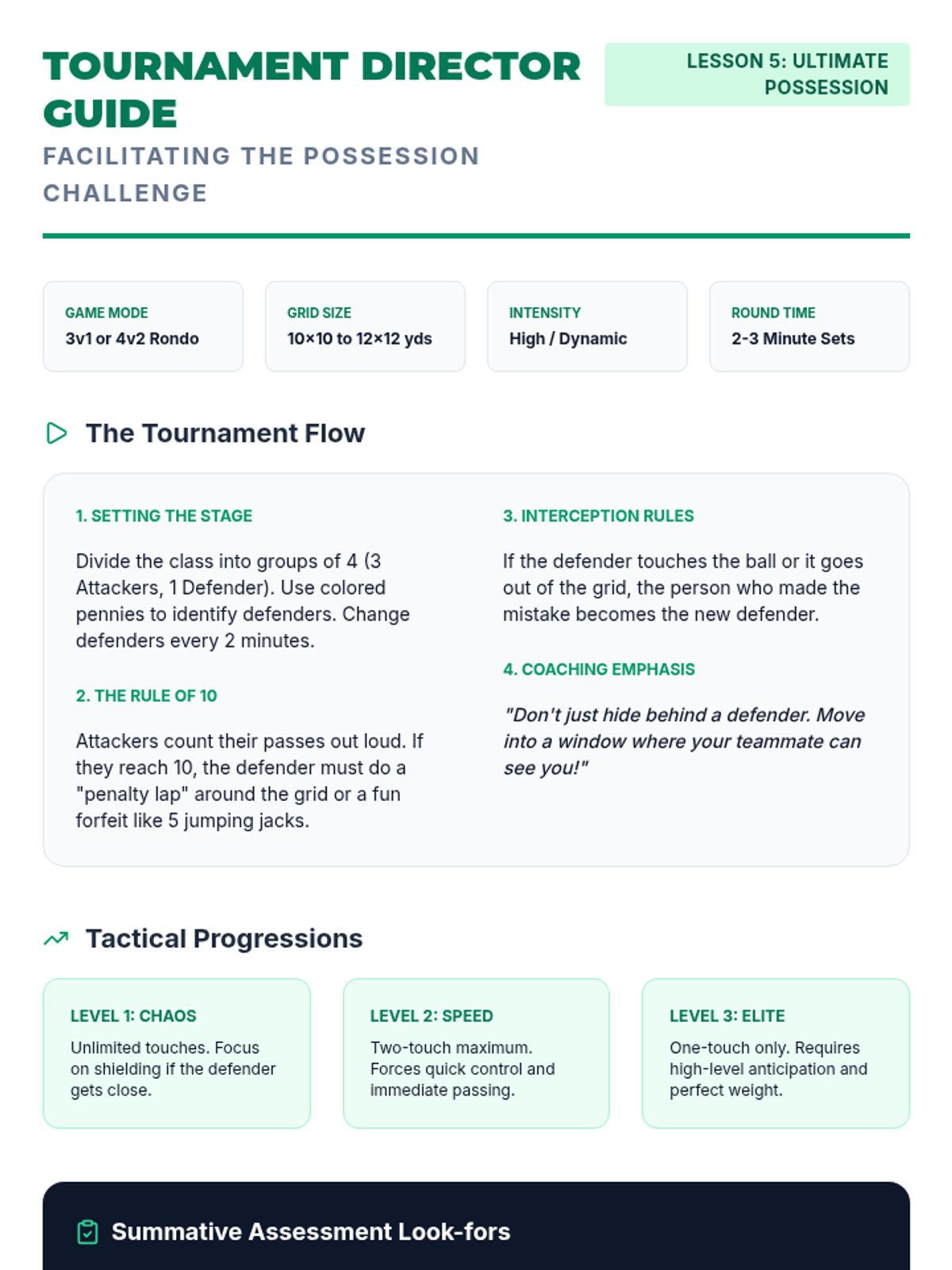
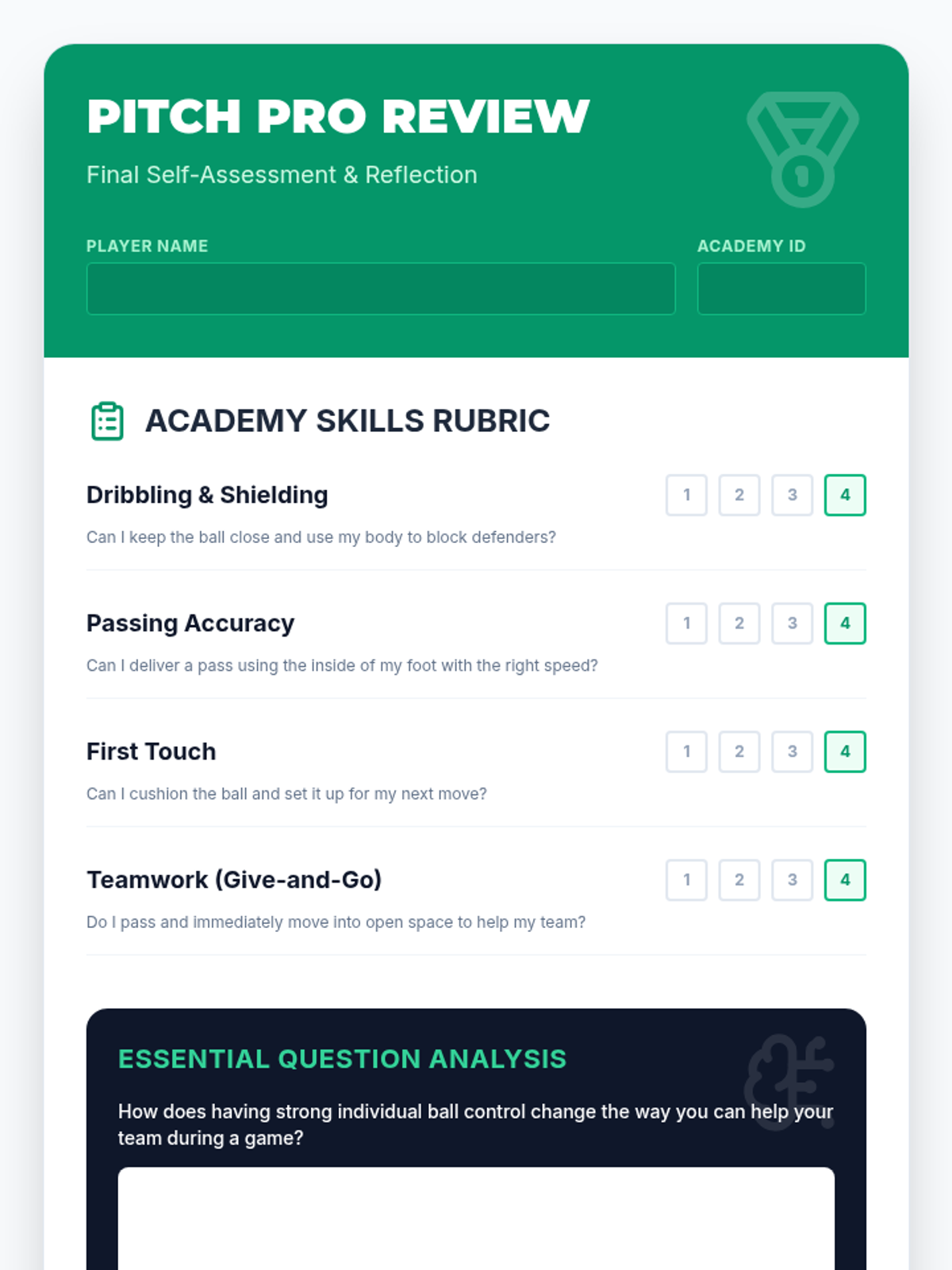
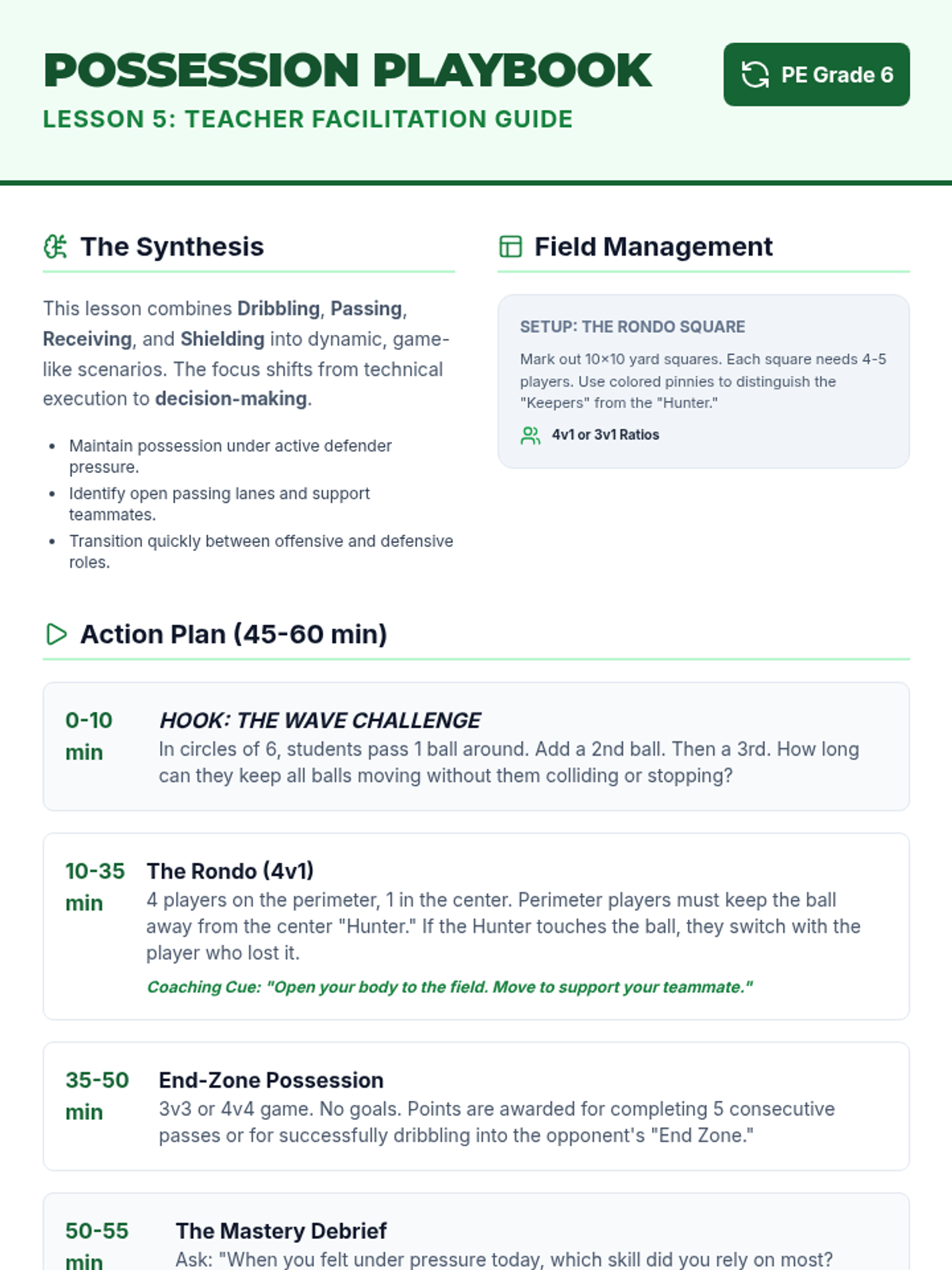
A culmination of skills applied in small-sided possession games focusing on decision-making.
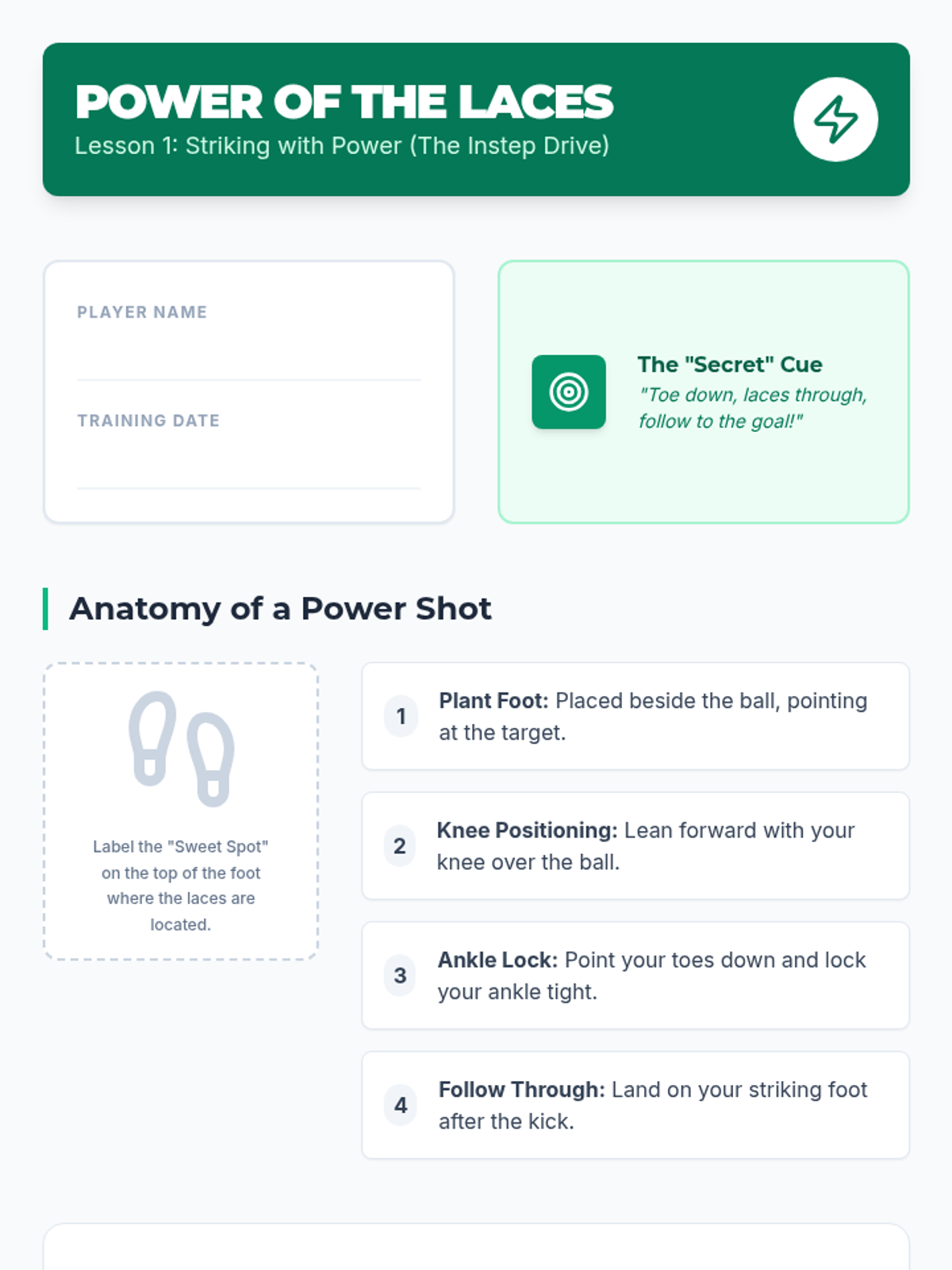
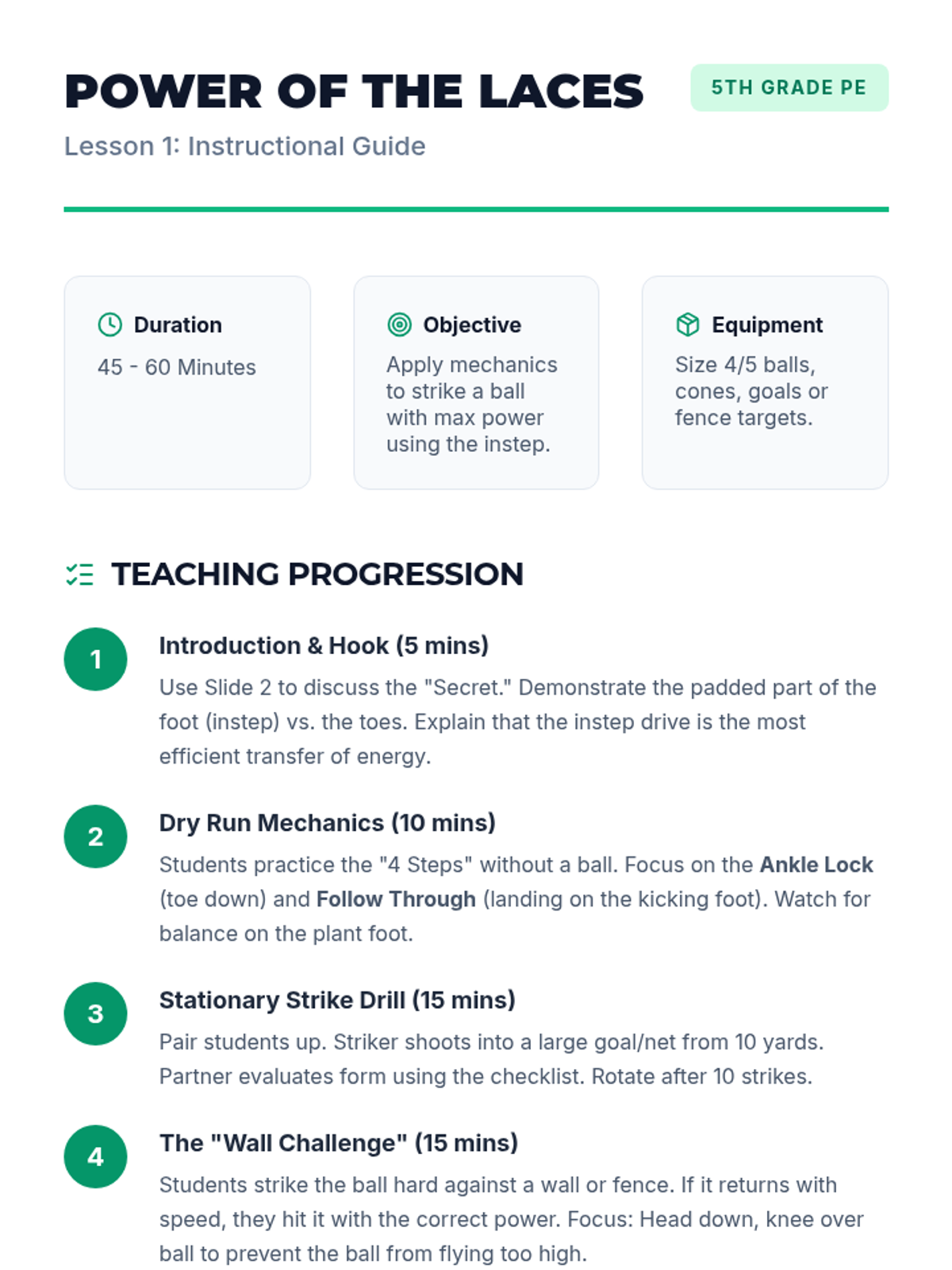
Students learn the mechanics of shooting for power by striking the ball with the laces (instep) while keeping the head down and knee over the ball.
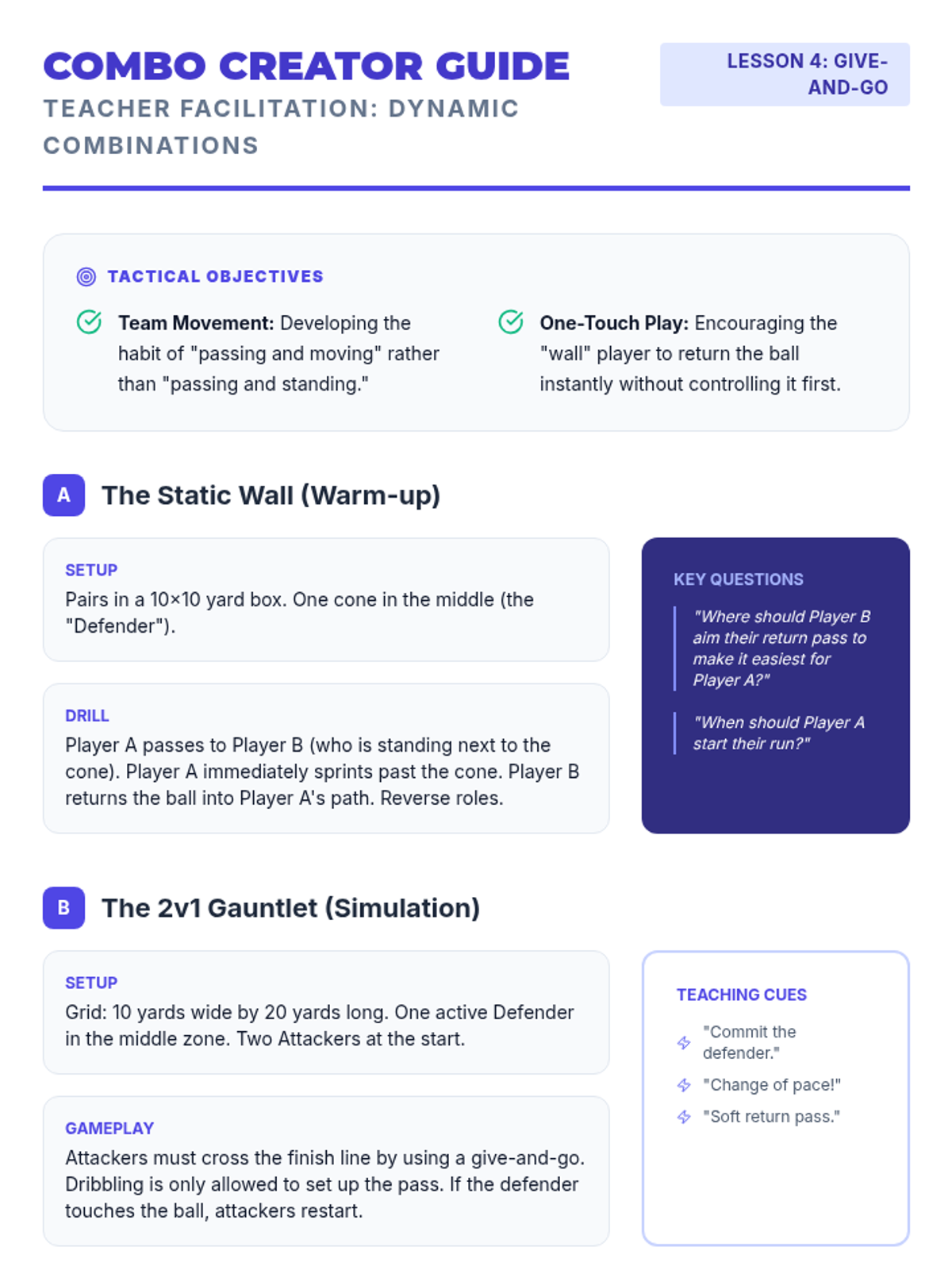
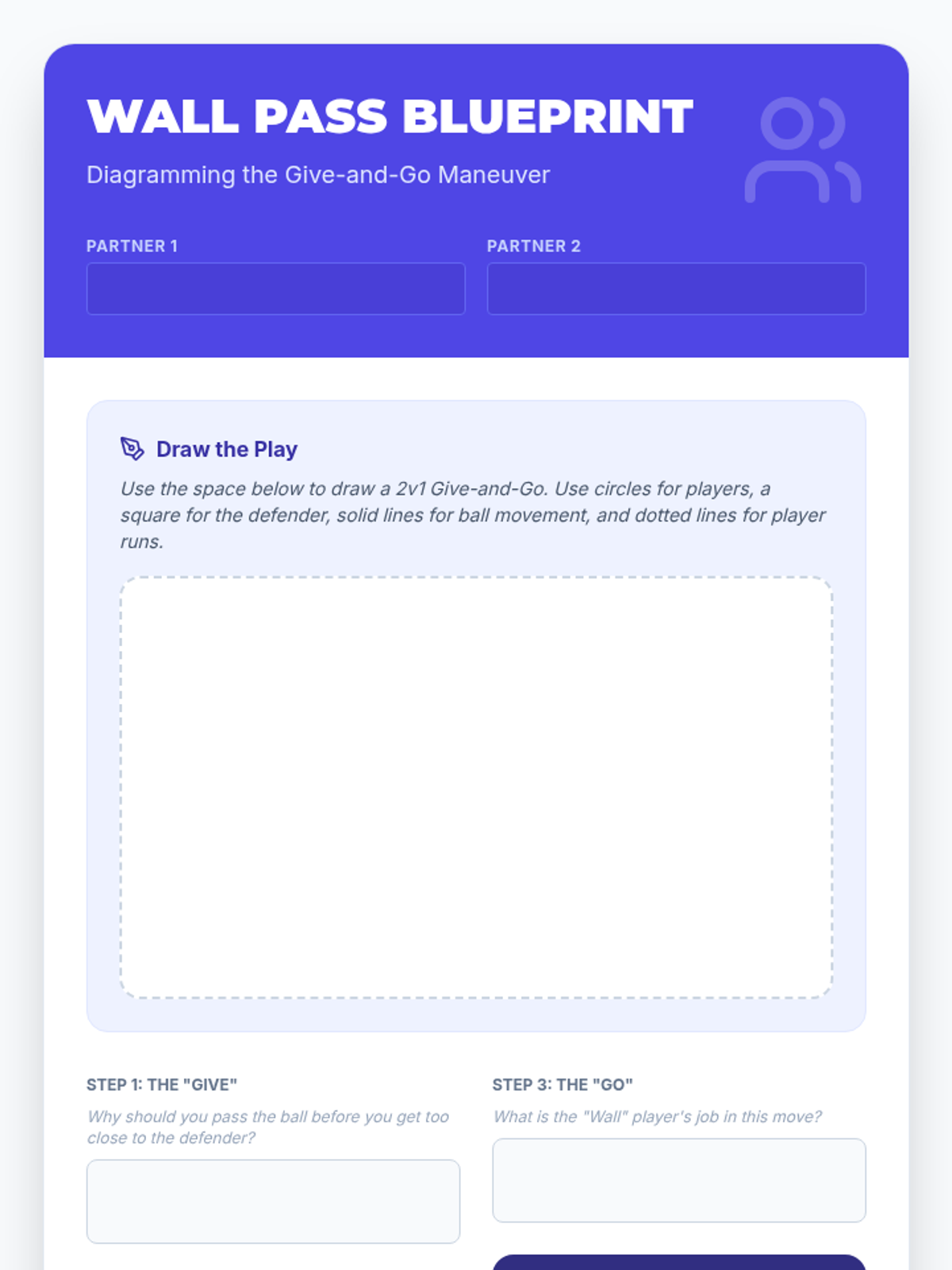
Introduces the wall pass or give-and-go as a way to bypass defenders through teamwork.
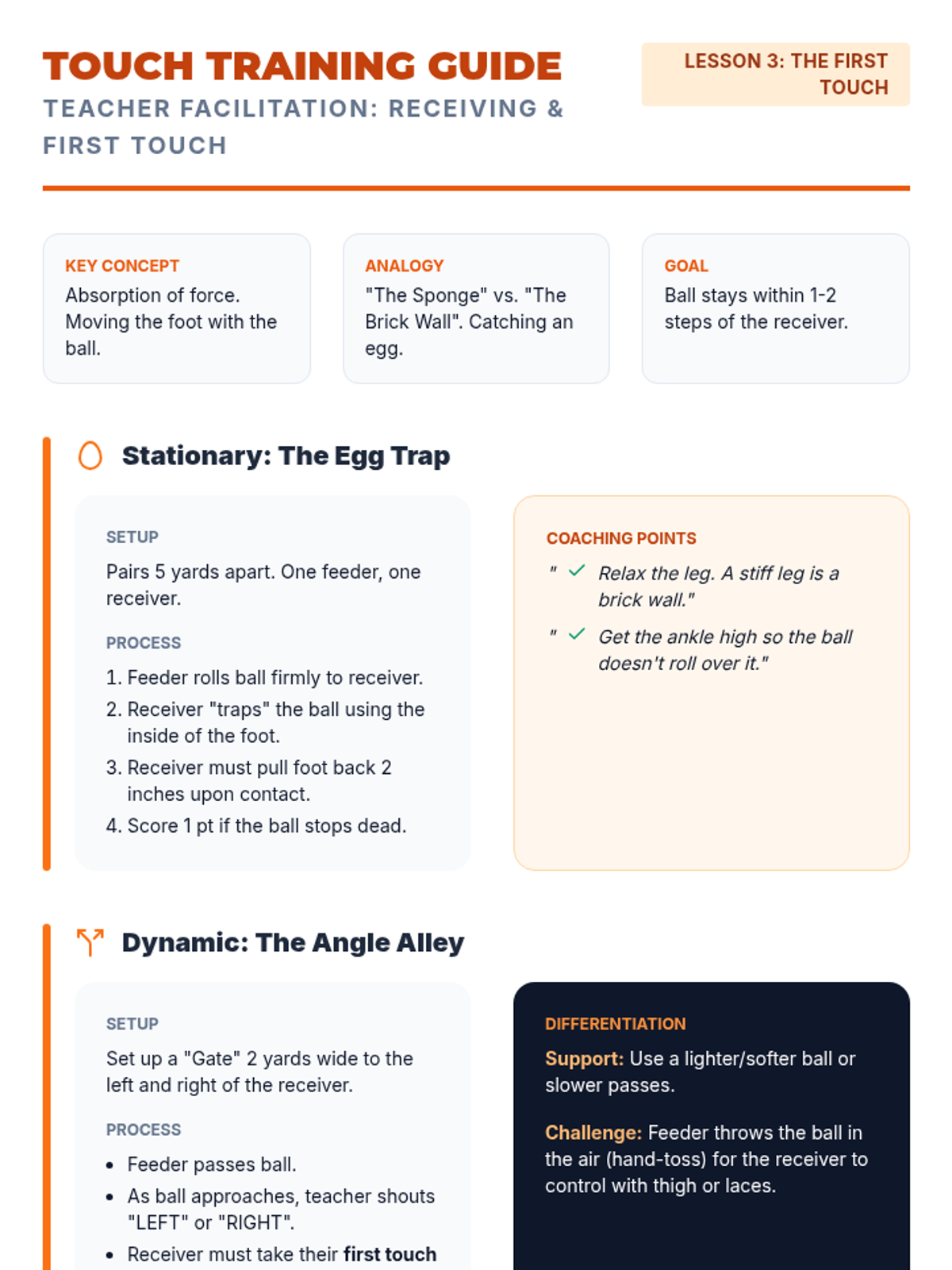
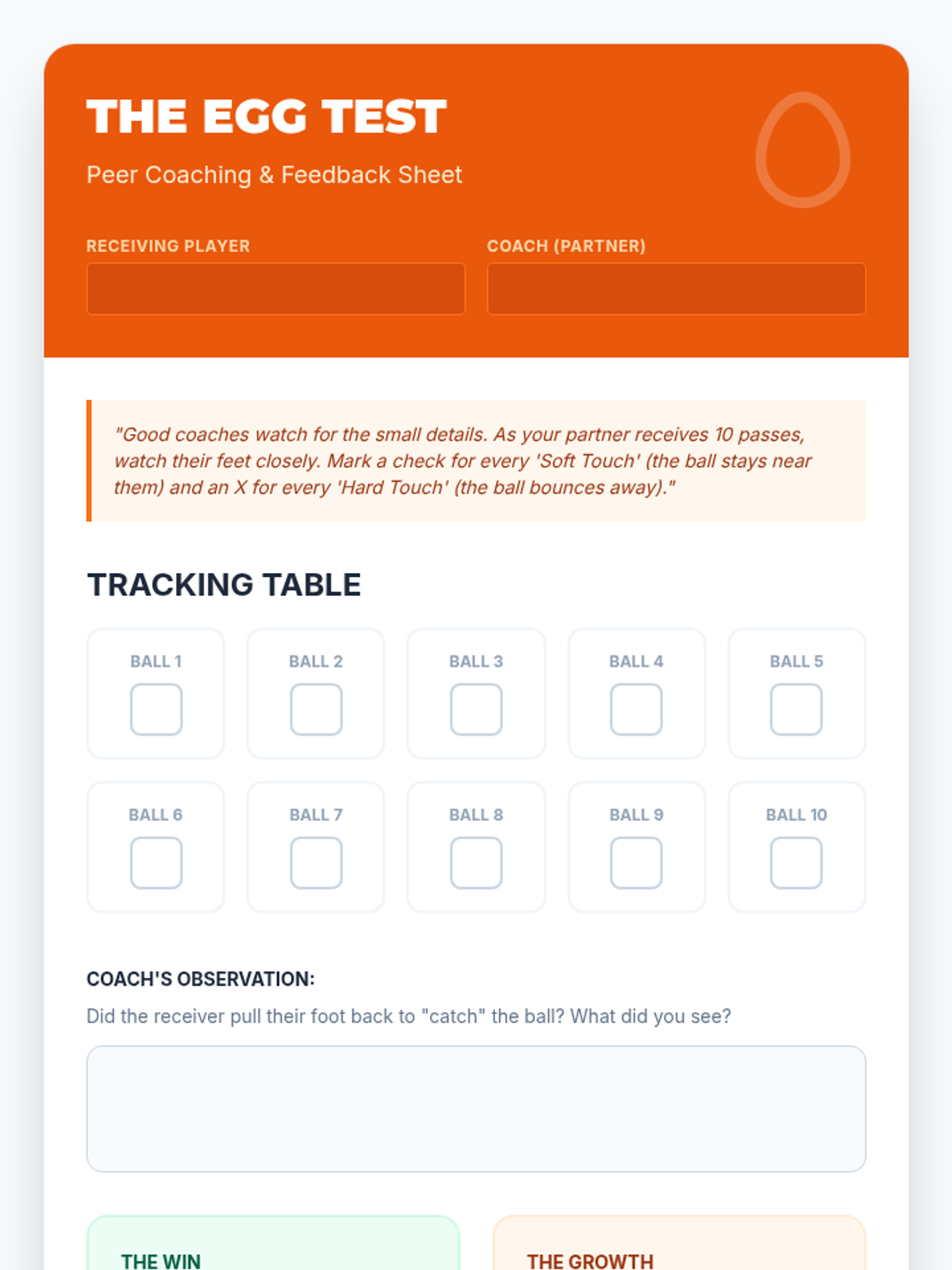
Teaches students how to cushion the ball's impact to maintain control during the first touch.
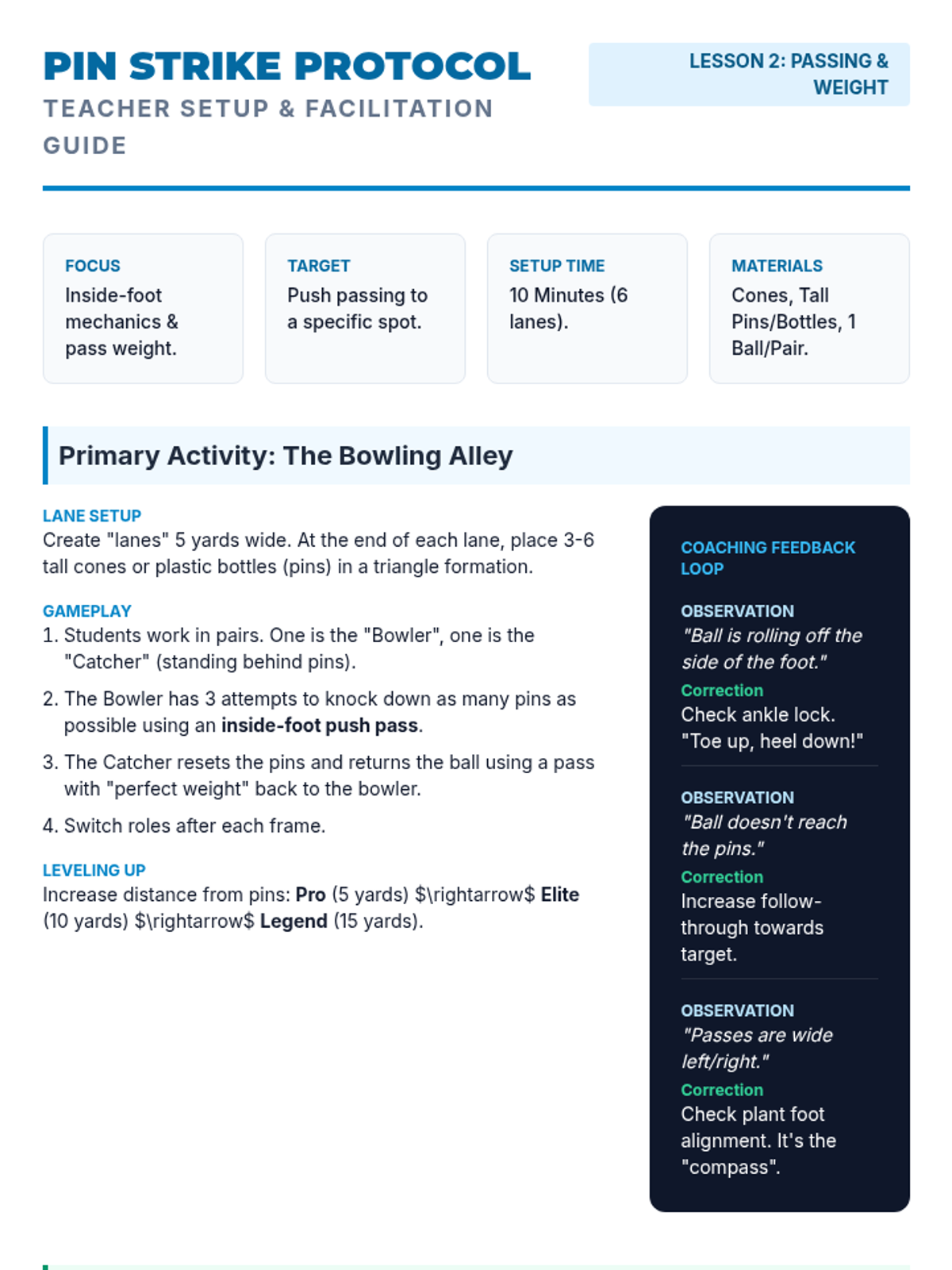
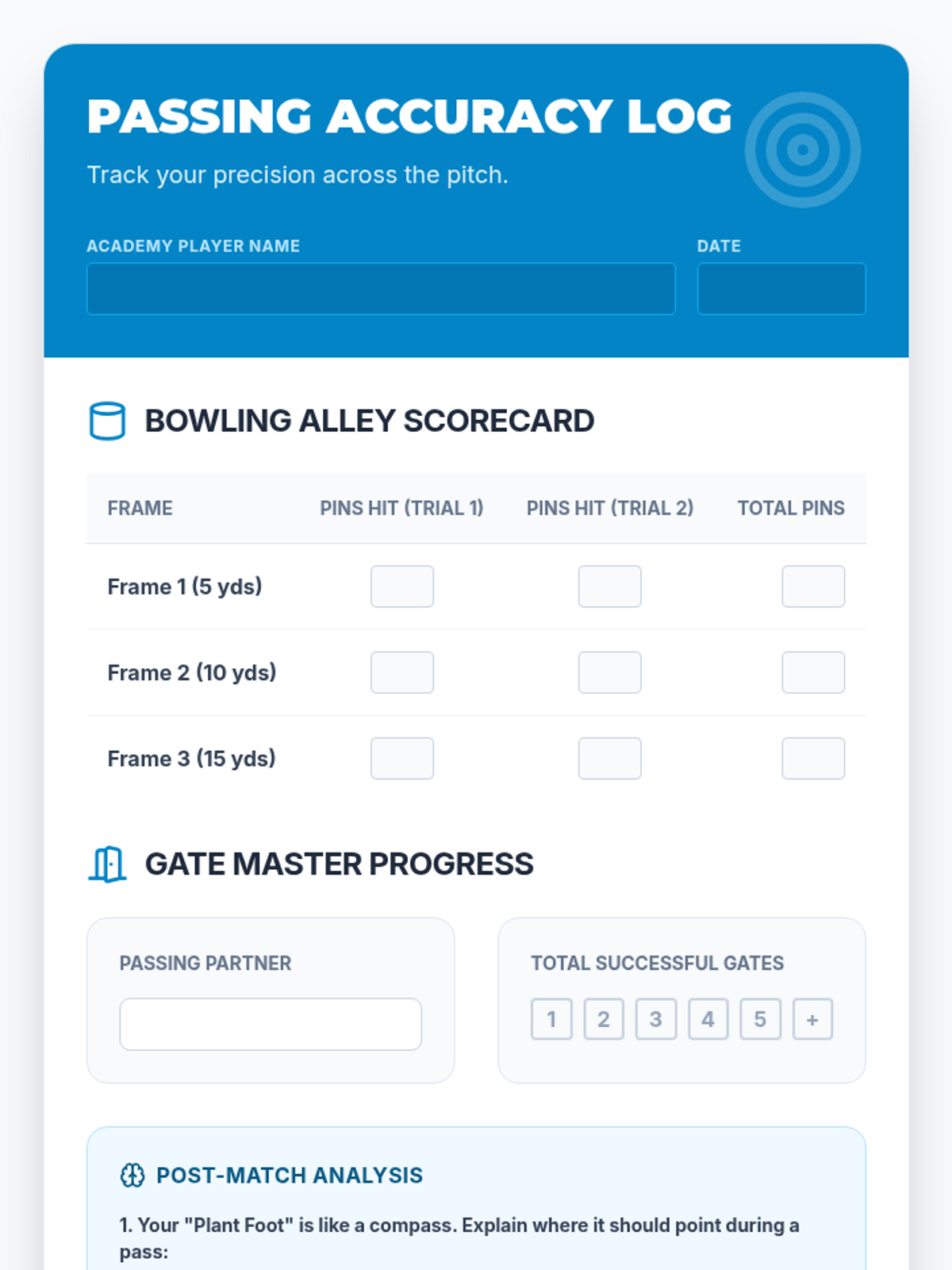
Focuses on the mechanics of the push pass for accuracy and the concept of 'weight' in passing.
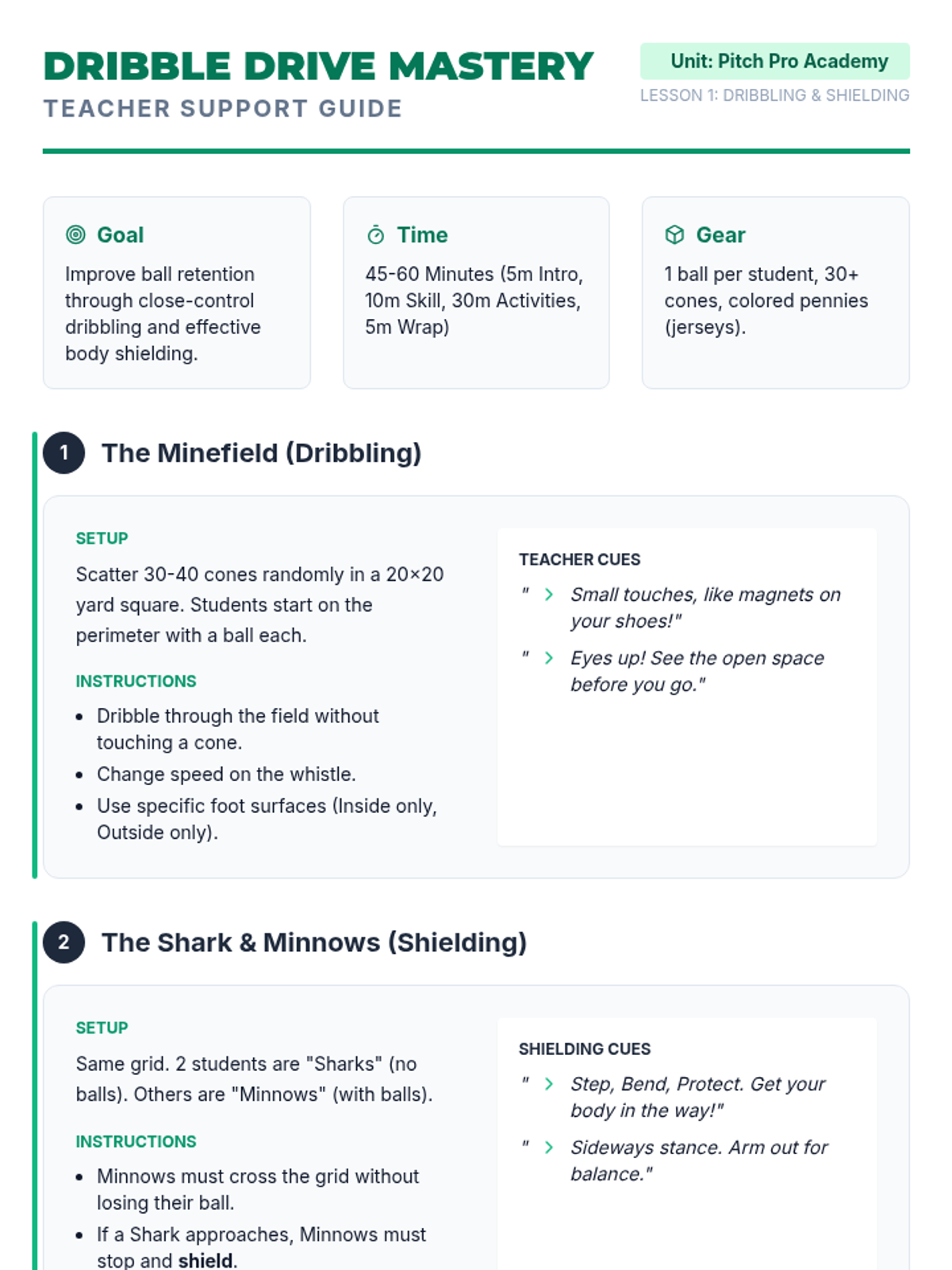
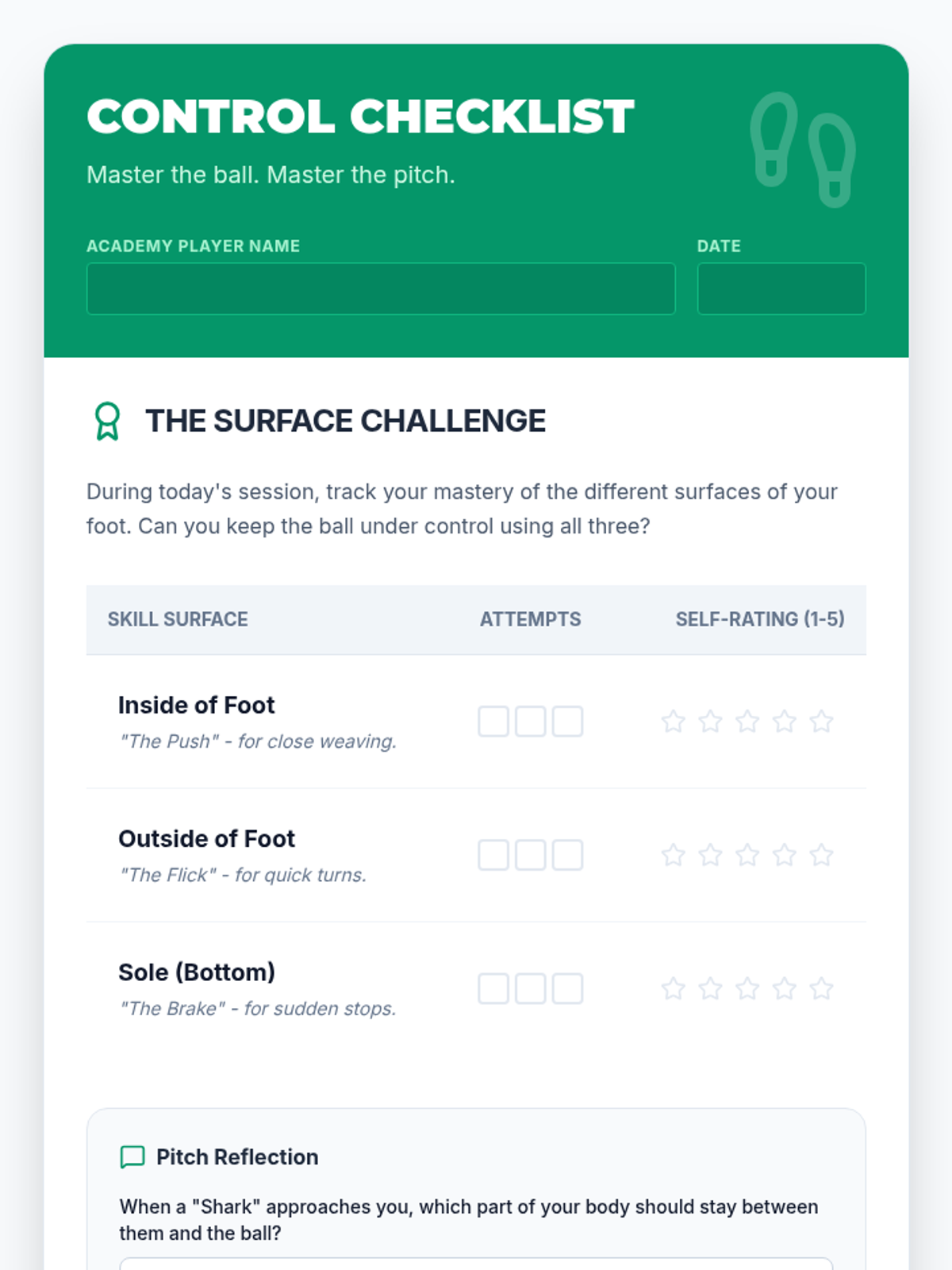
Students focus on keeping the ball close while moving and using their body to protect the ball from opponents.
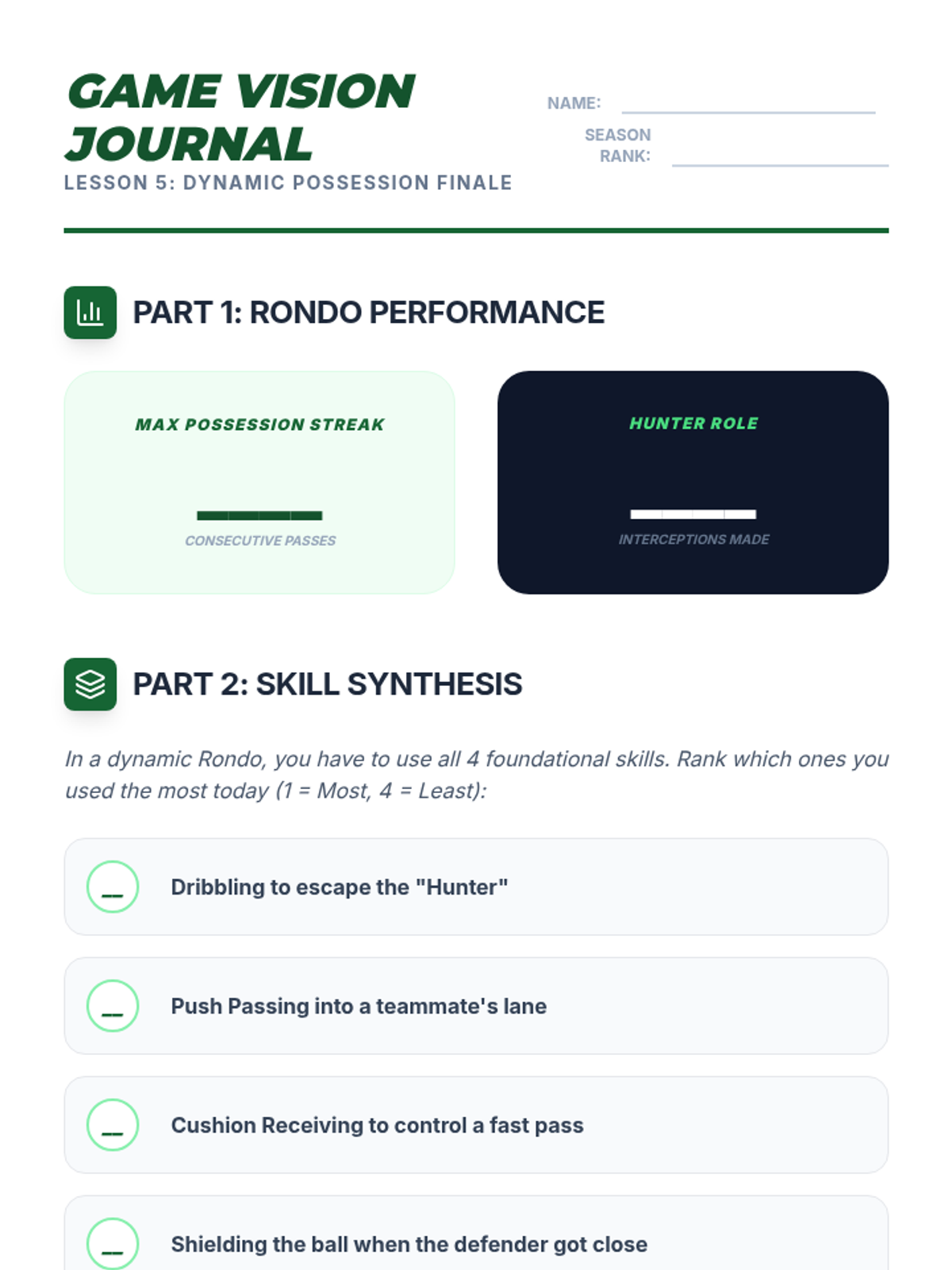
Combining all previous skills, students participate in dynamic 'keep-away' drills and Rondo circles to apply techniques under pressure.
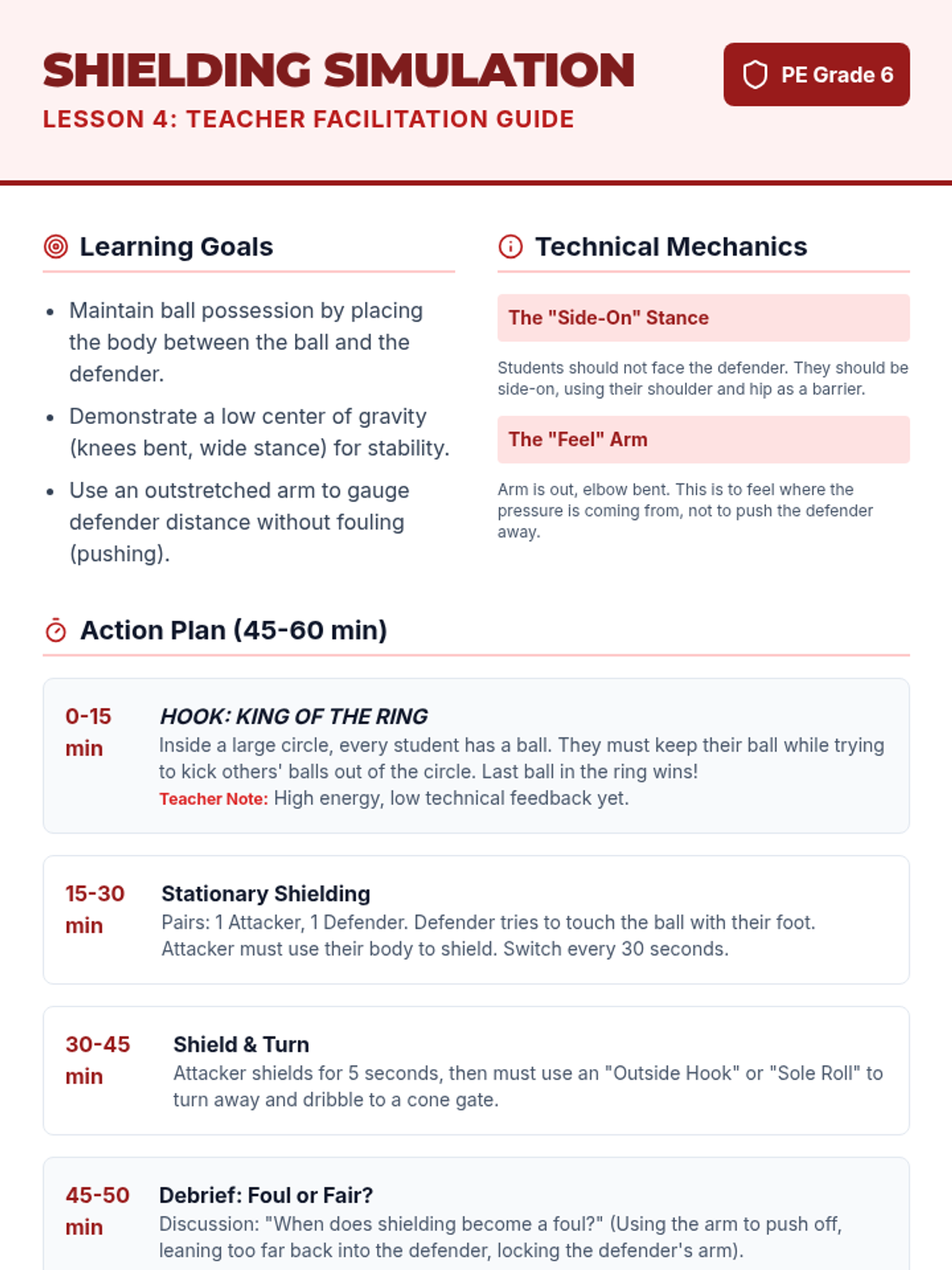
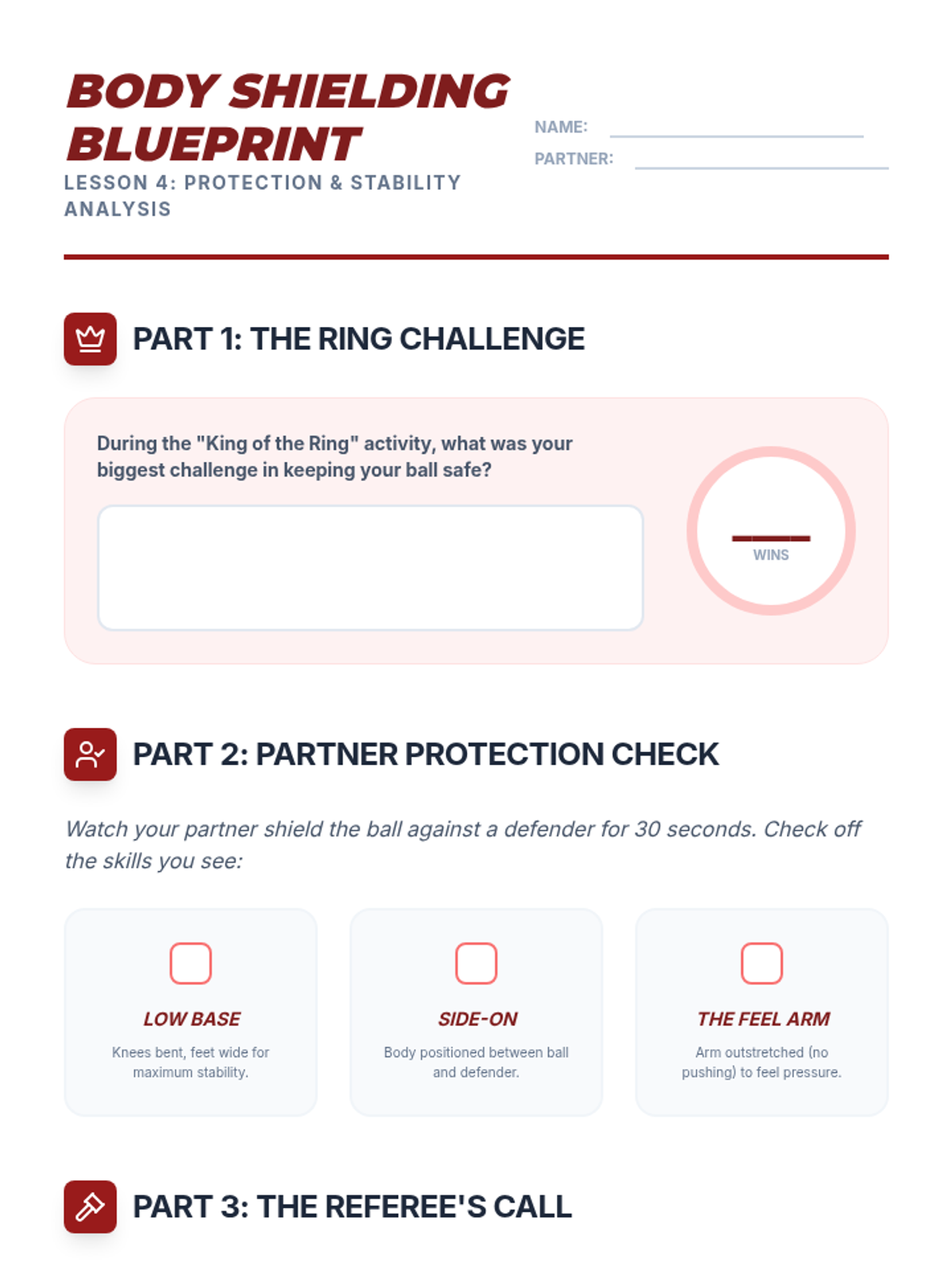
This lesson introduces body positioning to protect the ball from defenders, focusing on balance and shielding mechanics.
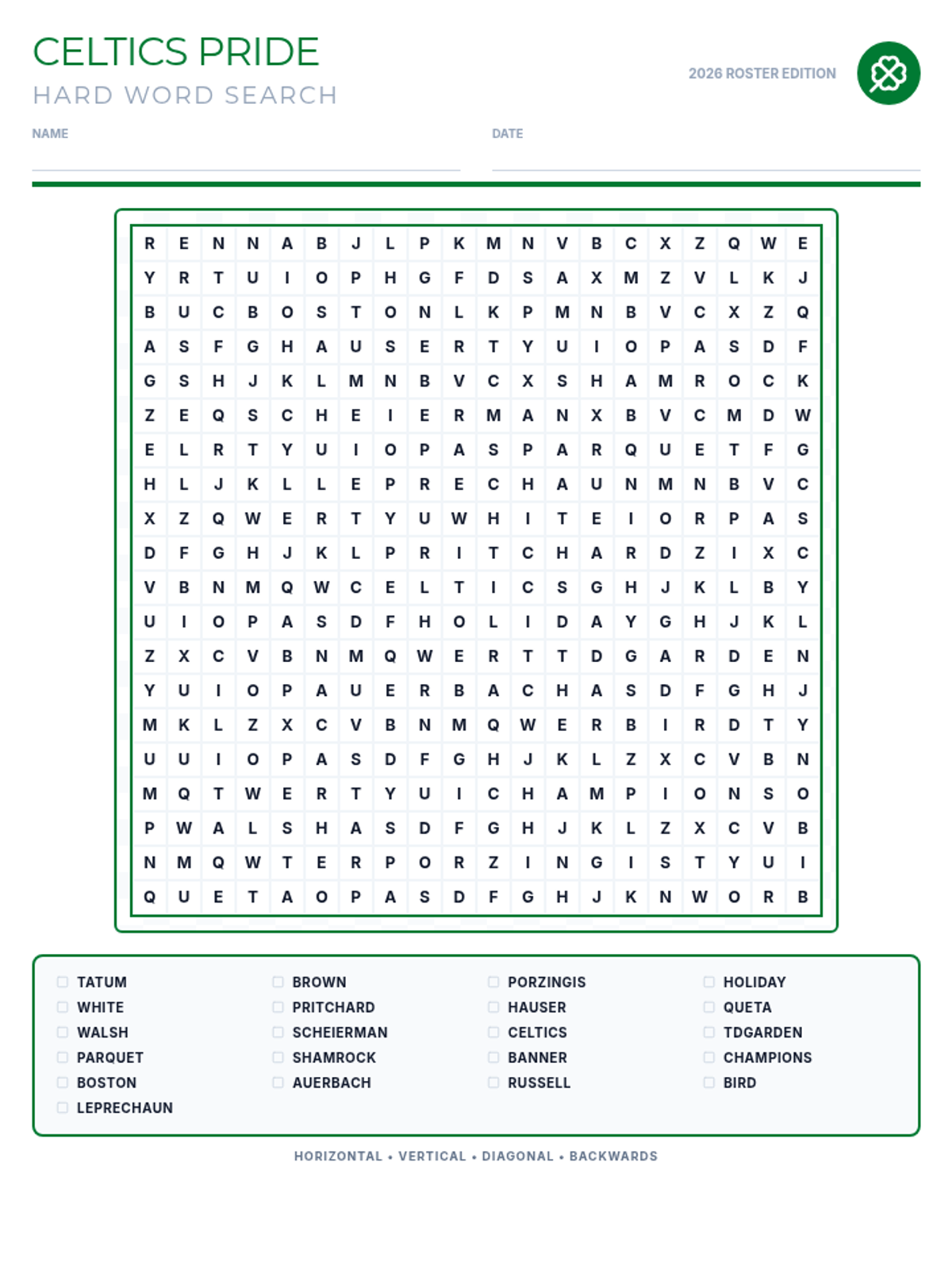
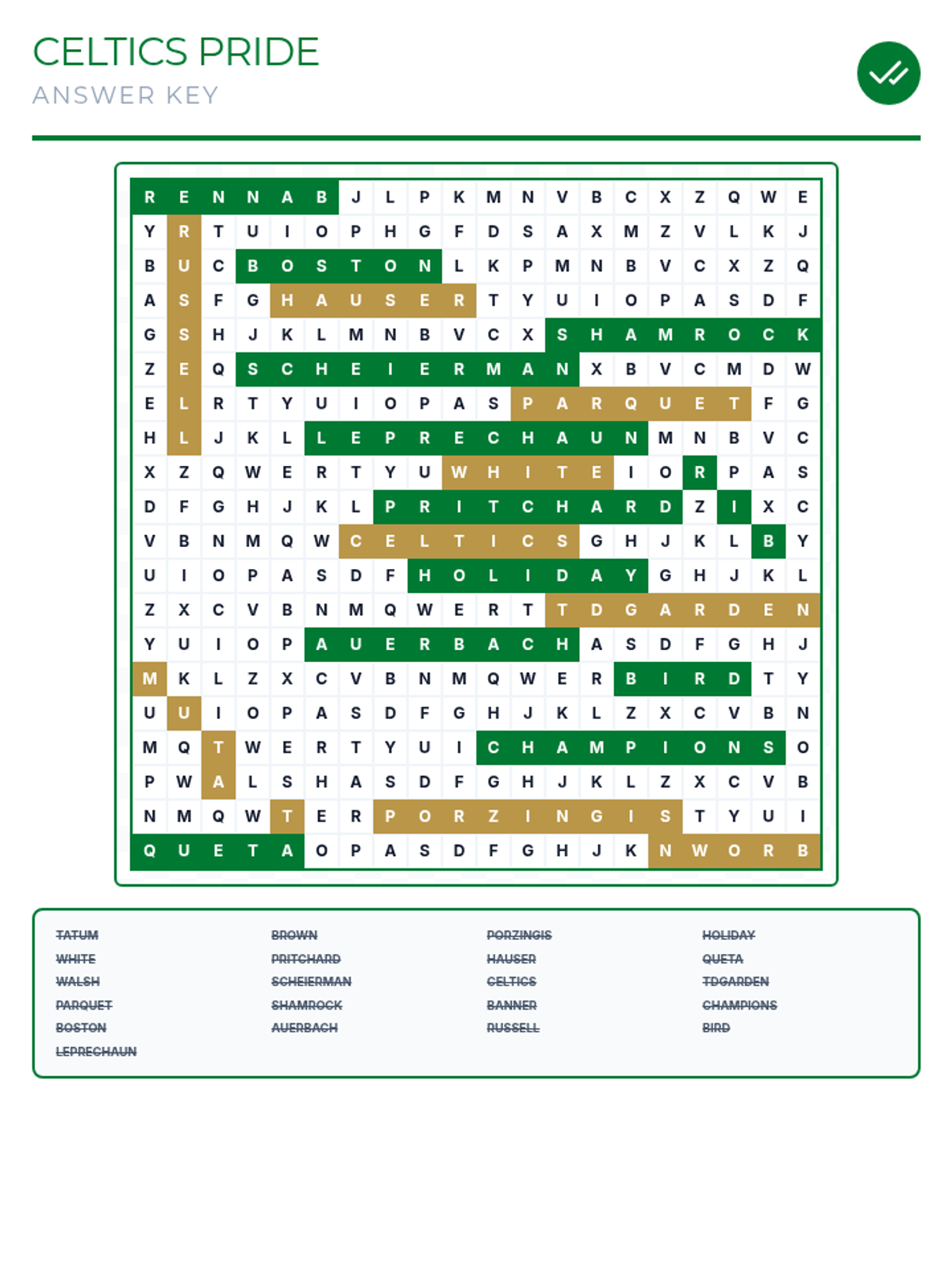
A challenging word search activity focused on the Boston Celtics, featuring 2026 roster players and franchise terminology.
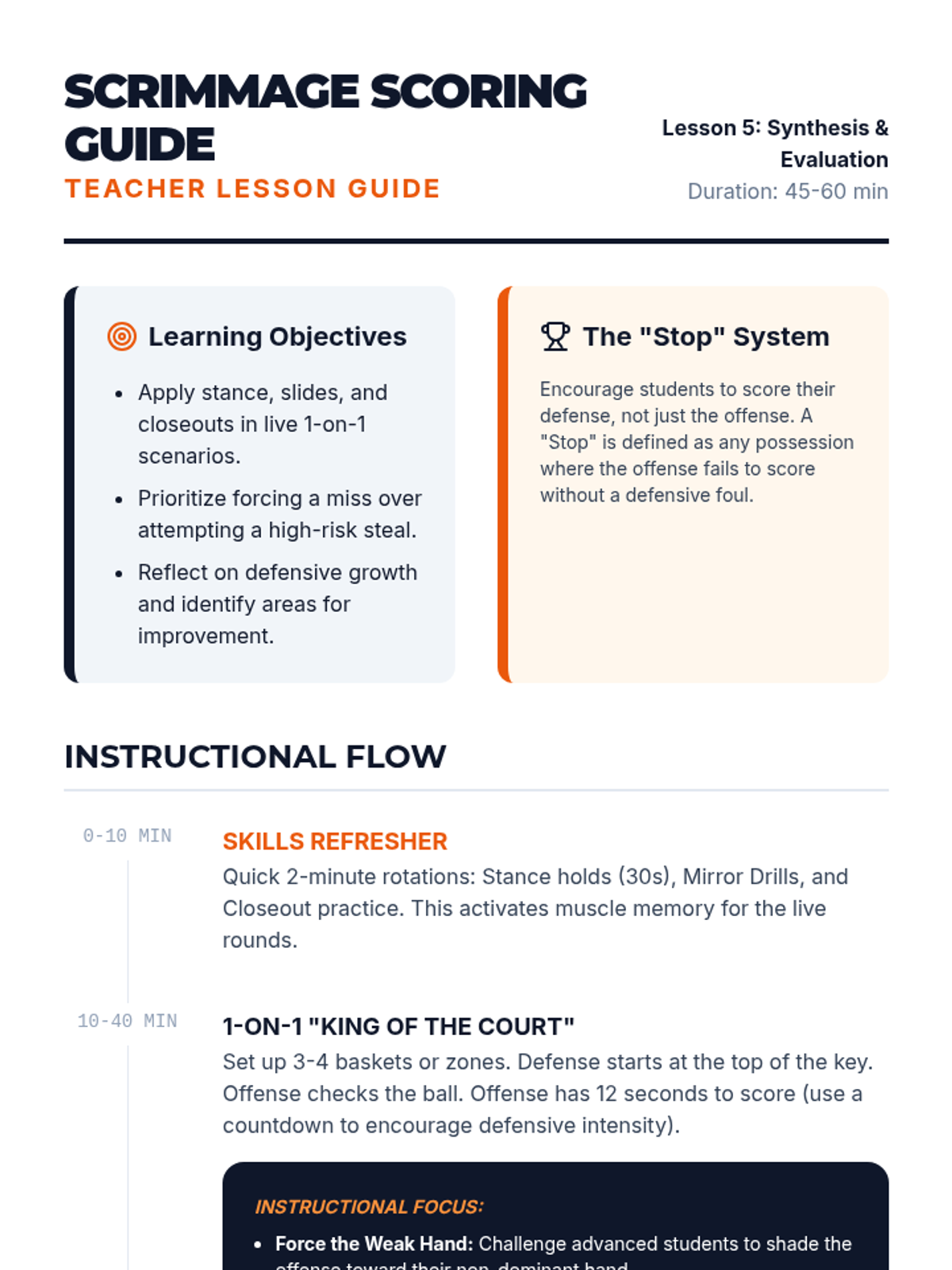
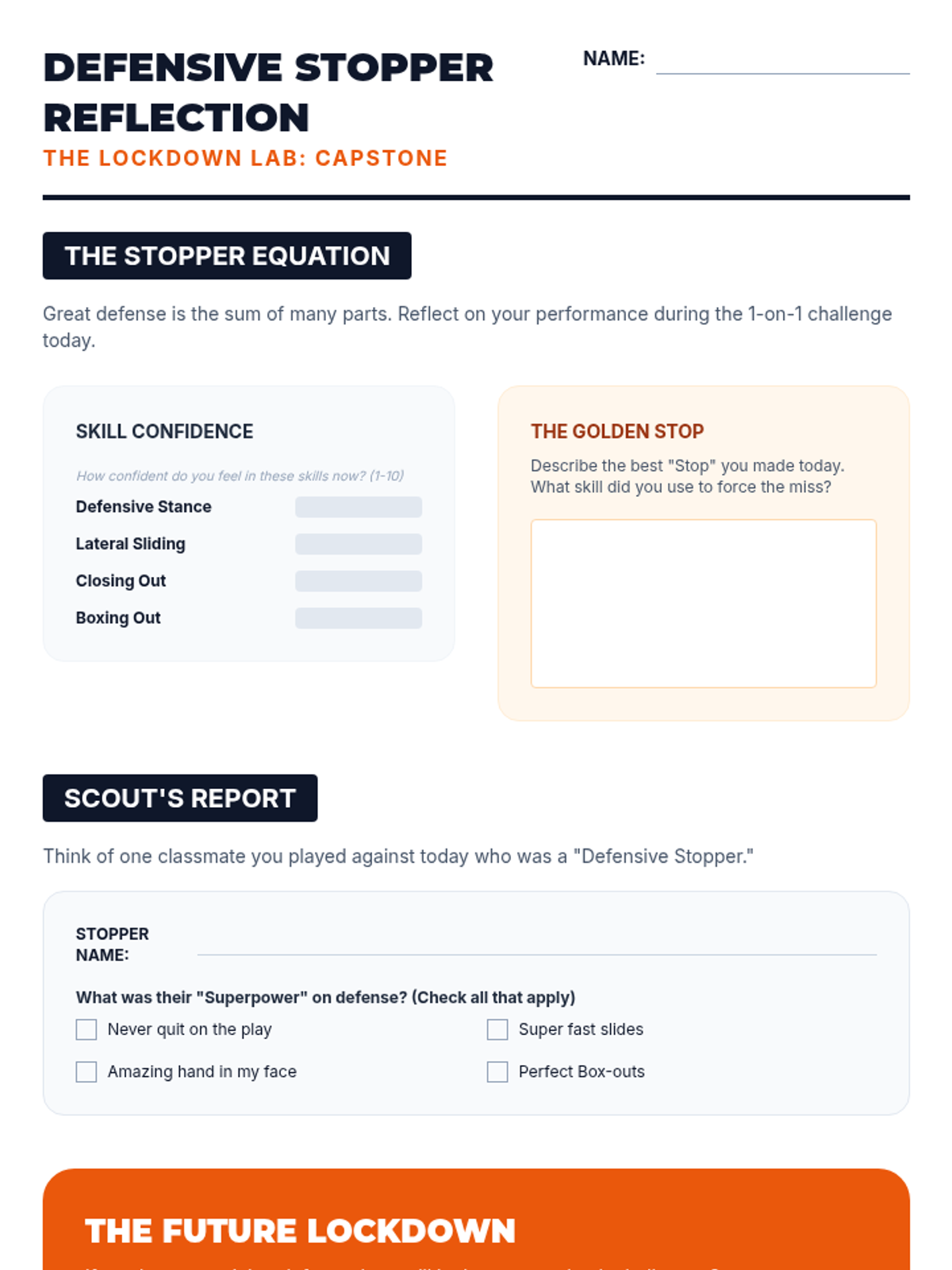
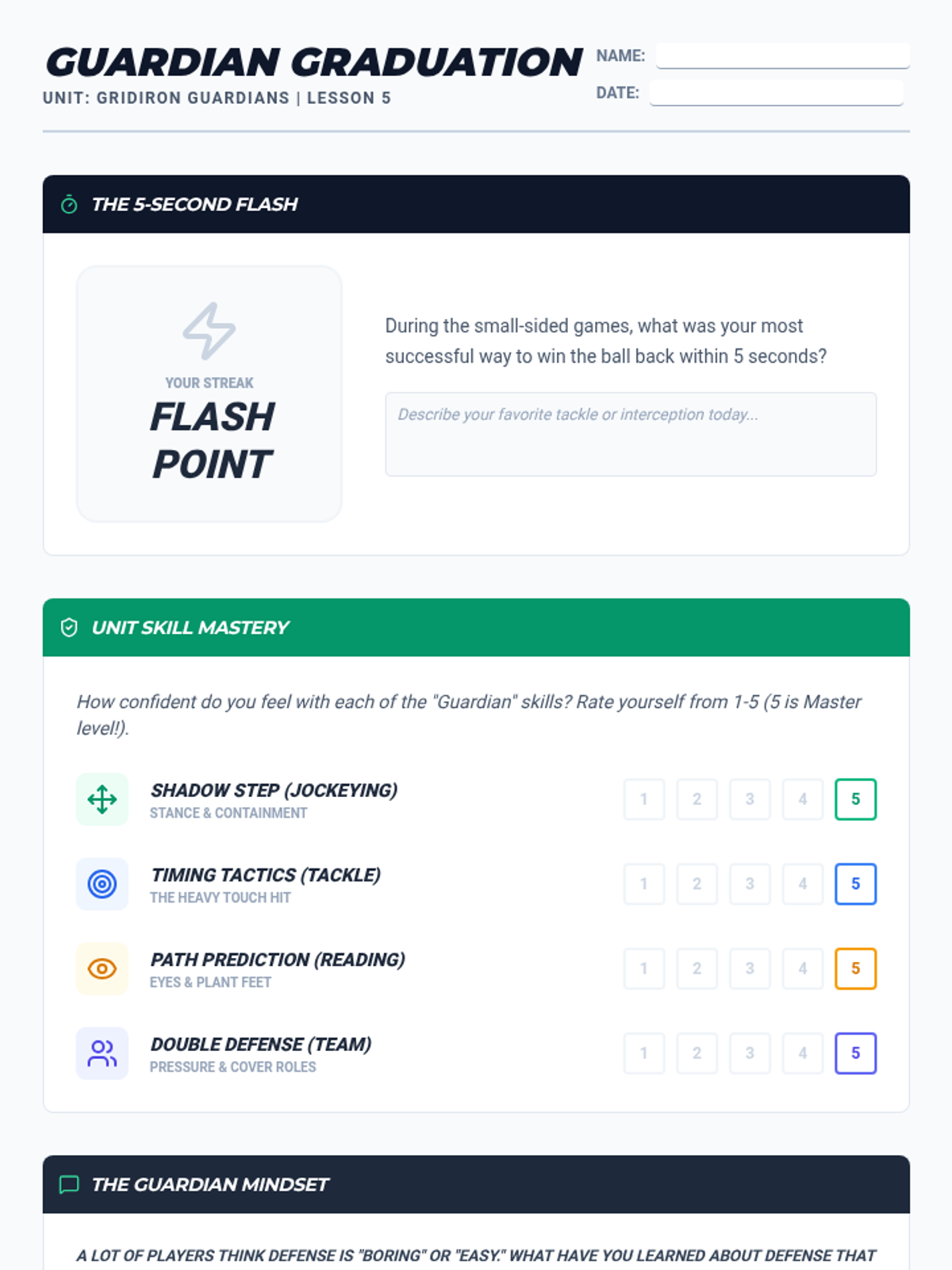
The culmination of the sequence where students synthesize all previous skills (stance, slides, positioning, closeouts, and rebounding) in live 1-on-1 defensive scenarios. Focuses on mental toughness and forcing difficult shots.
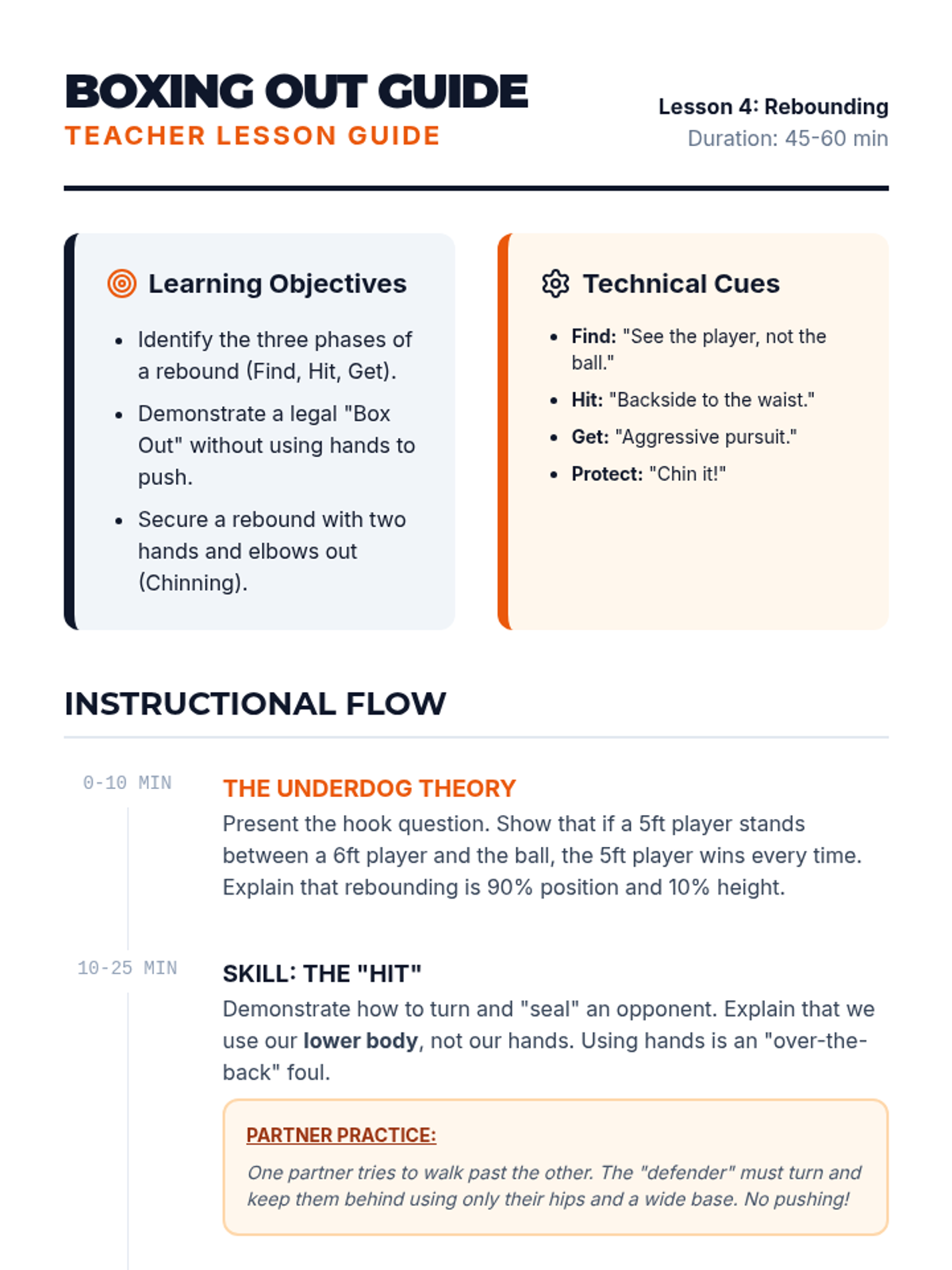
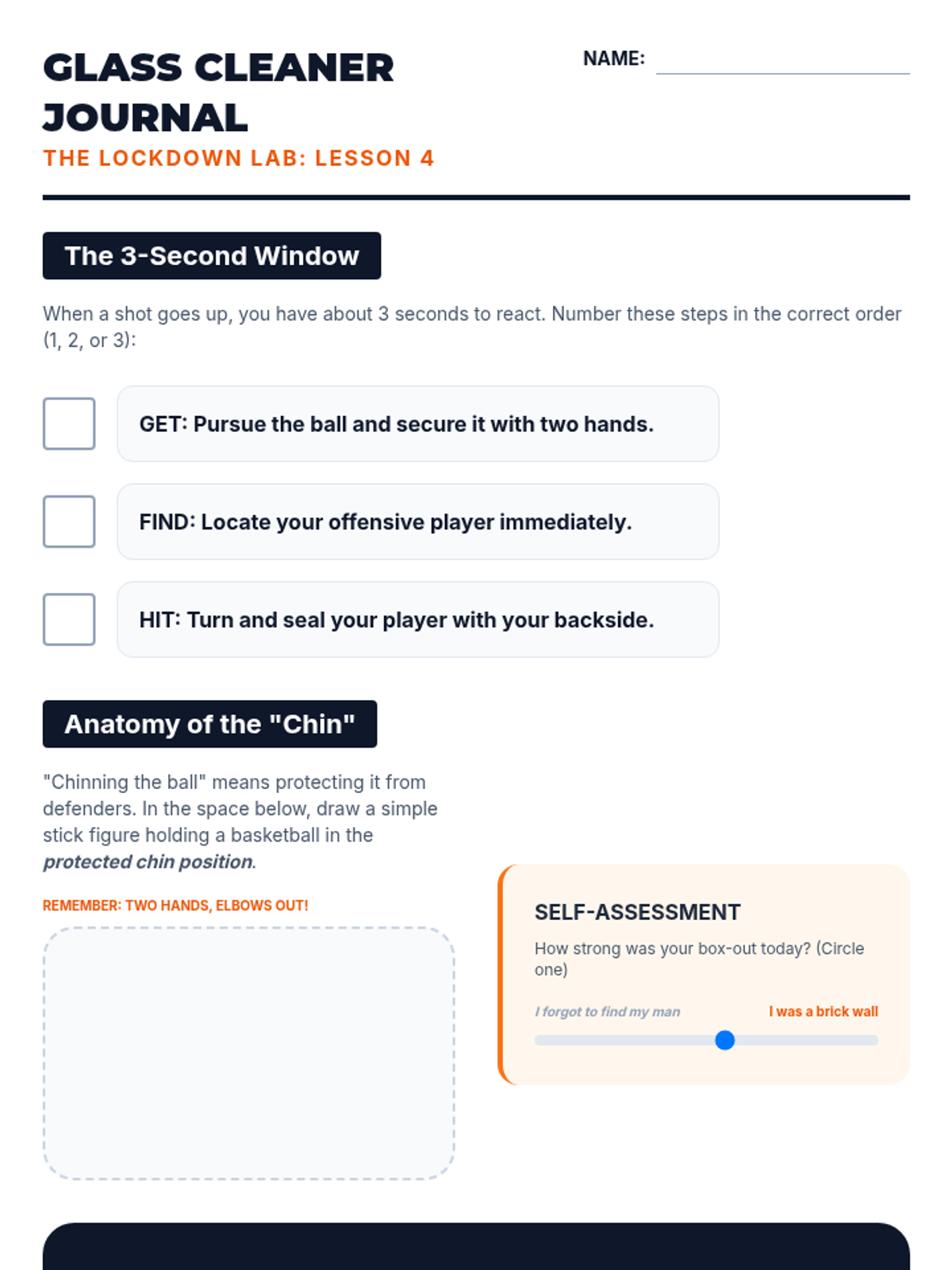
Teaches students how to secure a defensive possession through the 'box out' technique. Focuses on finding the opponent, making contact, and pursuing the basketball to finish the defense.
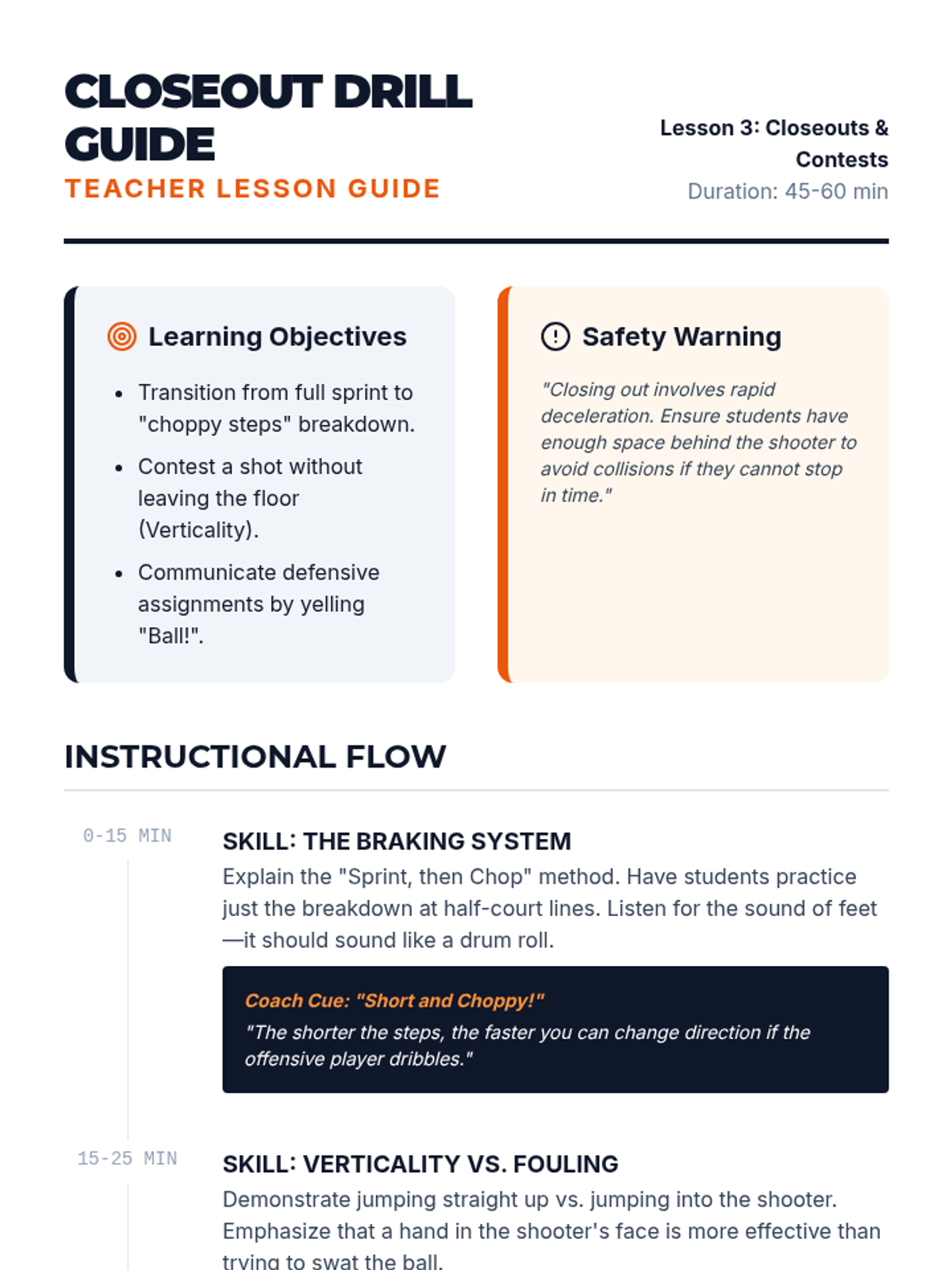
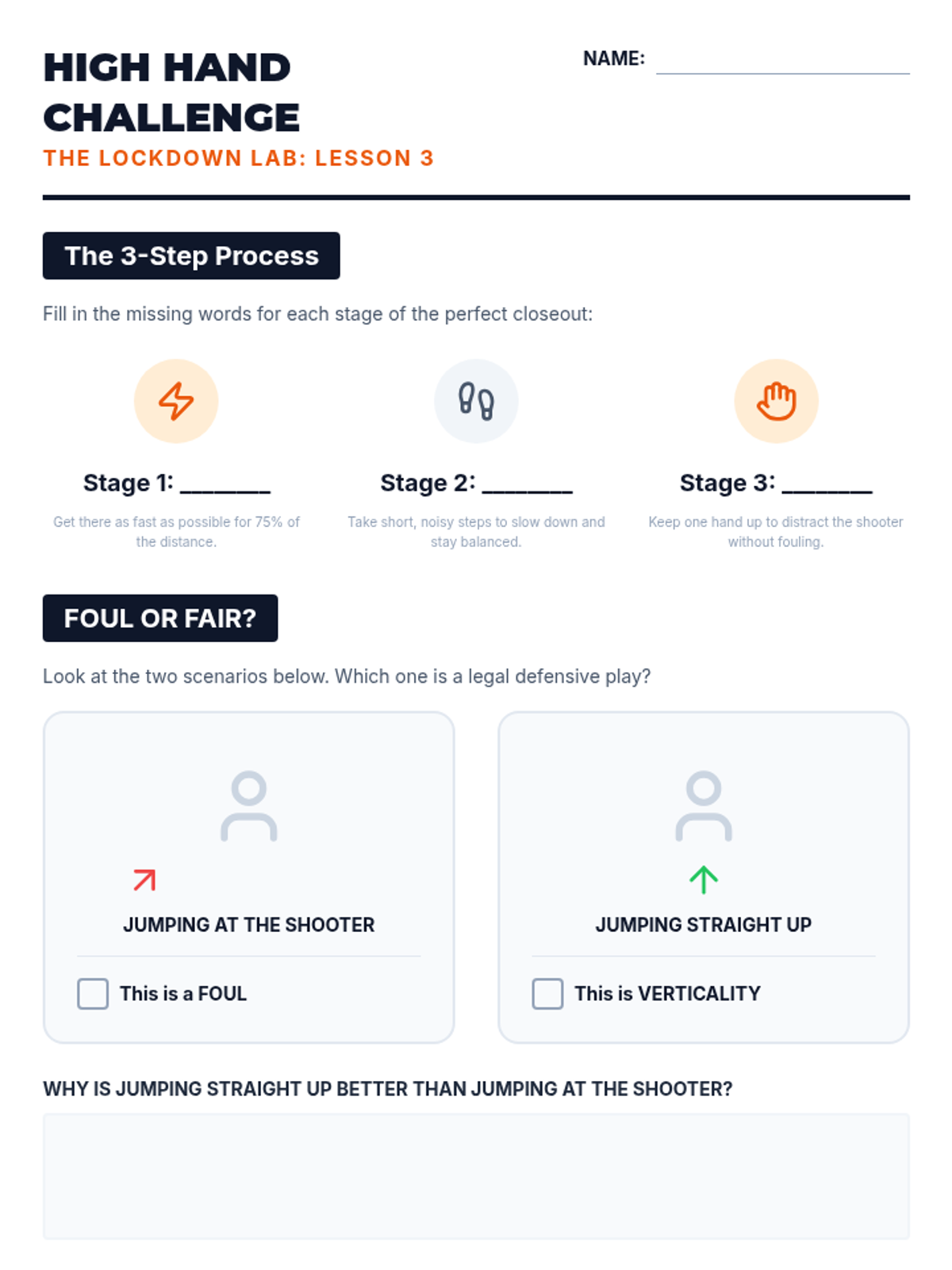
Teaches the essential defensive skill of closing out on a shooter. Students learn to transition from a full sprint to a controlled stance with a hand up, contesting shots without fouling.
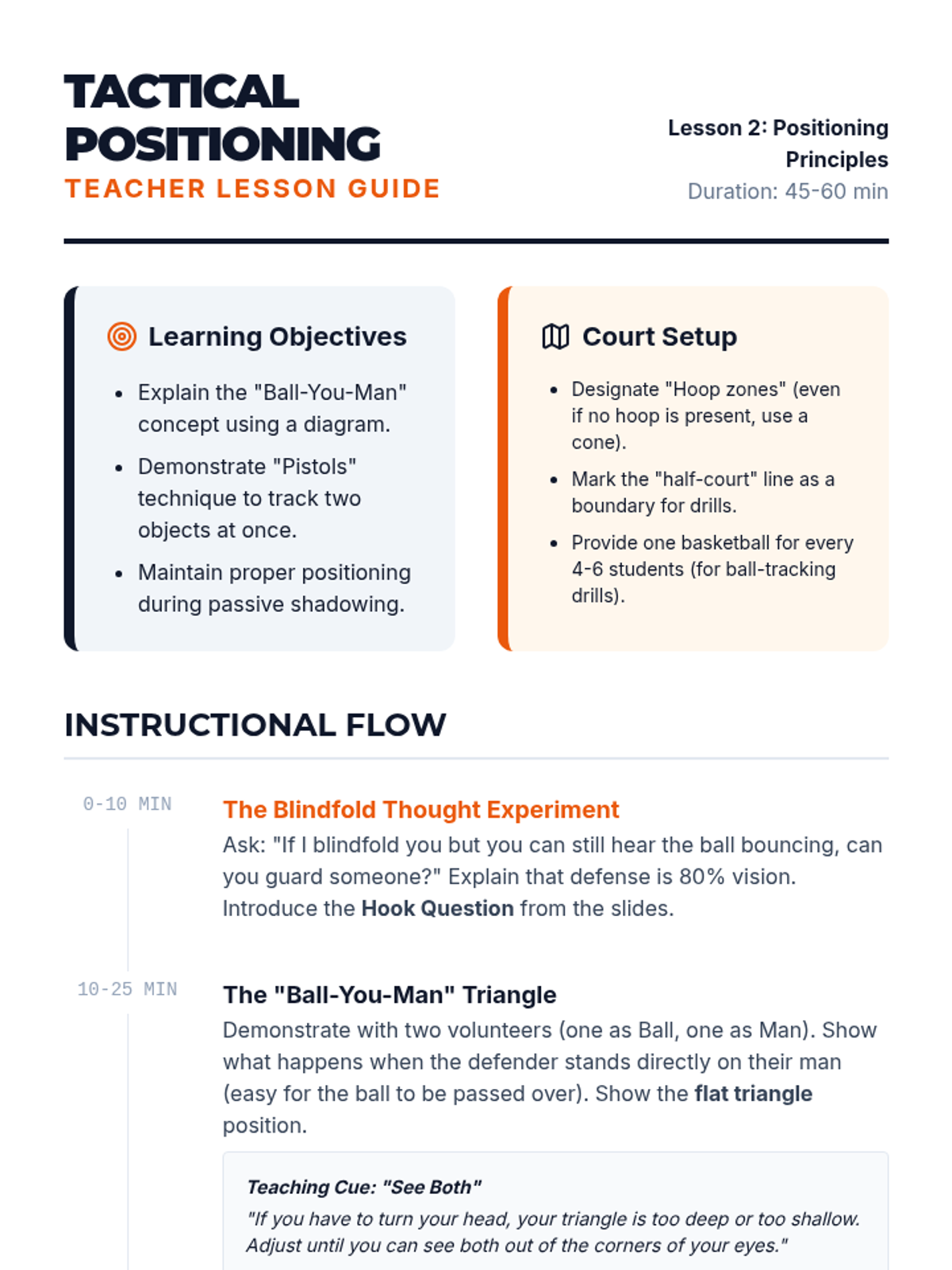
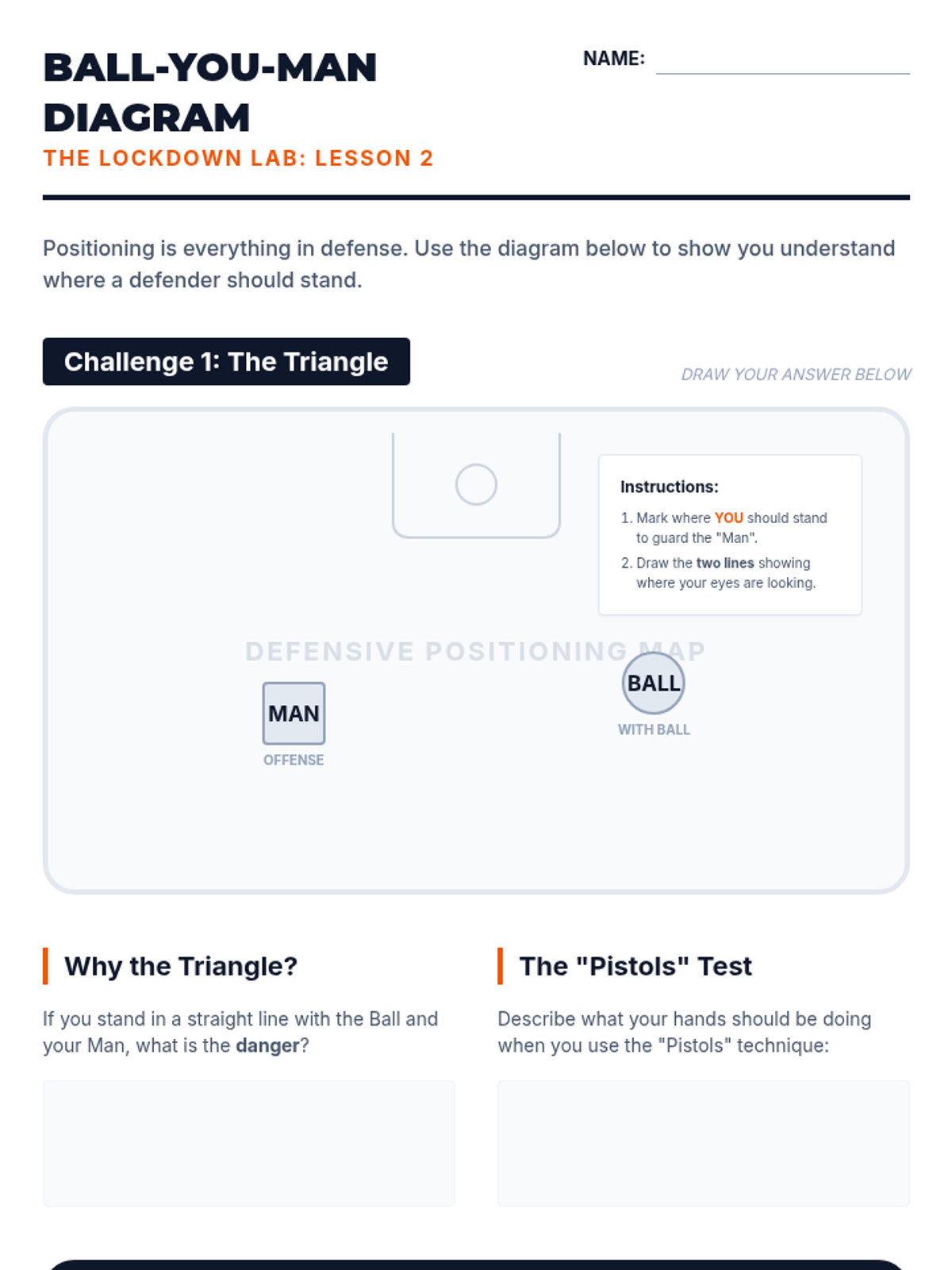
Focuses on the spatial relationship between the ball, the defender, and the assigned offensive player. Students learn the 'Ball-You-Man' principle to prevent backdoor cuts and easy passes.
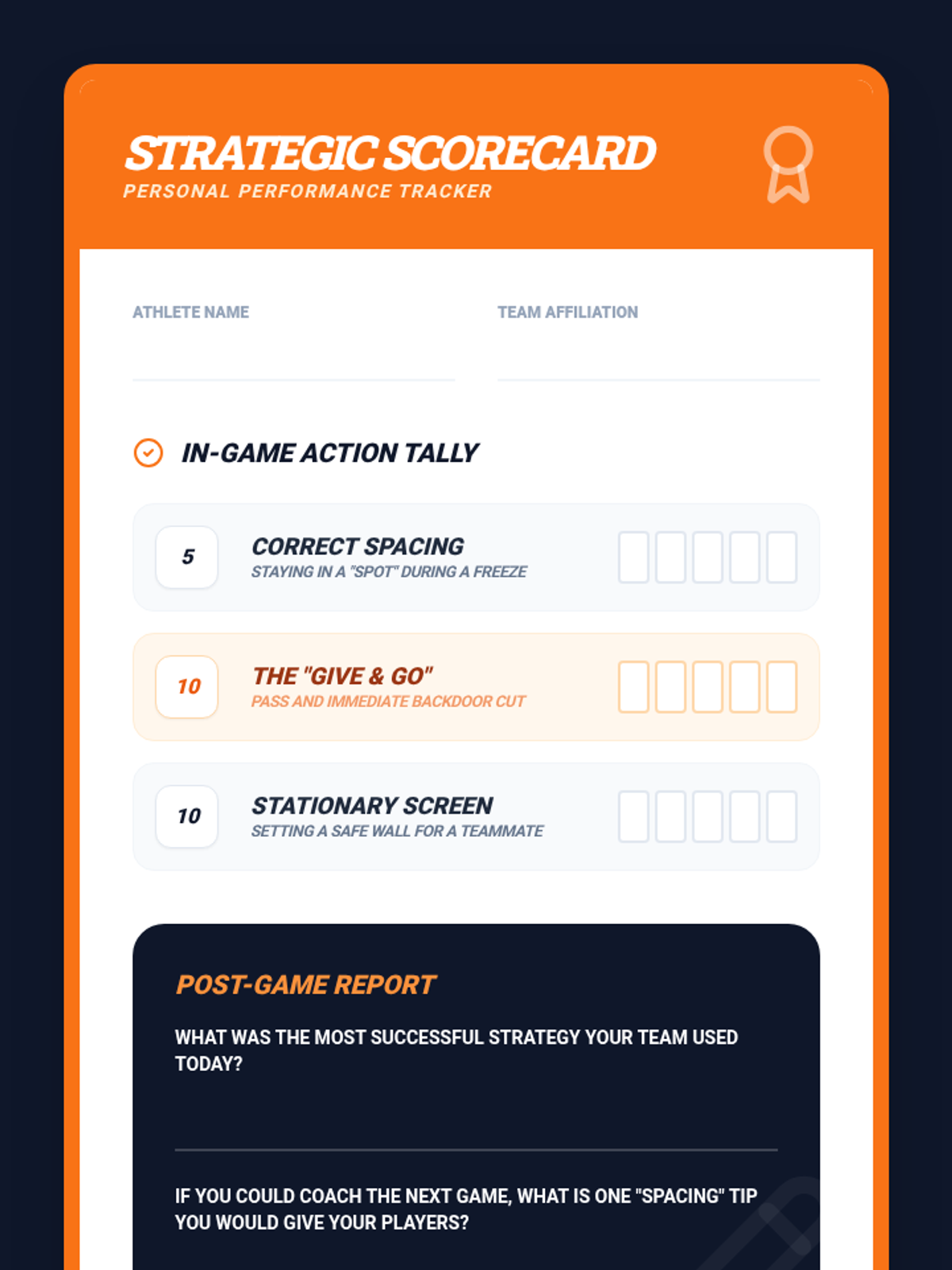
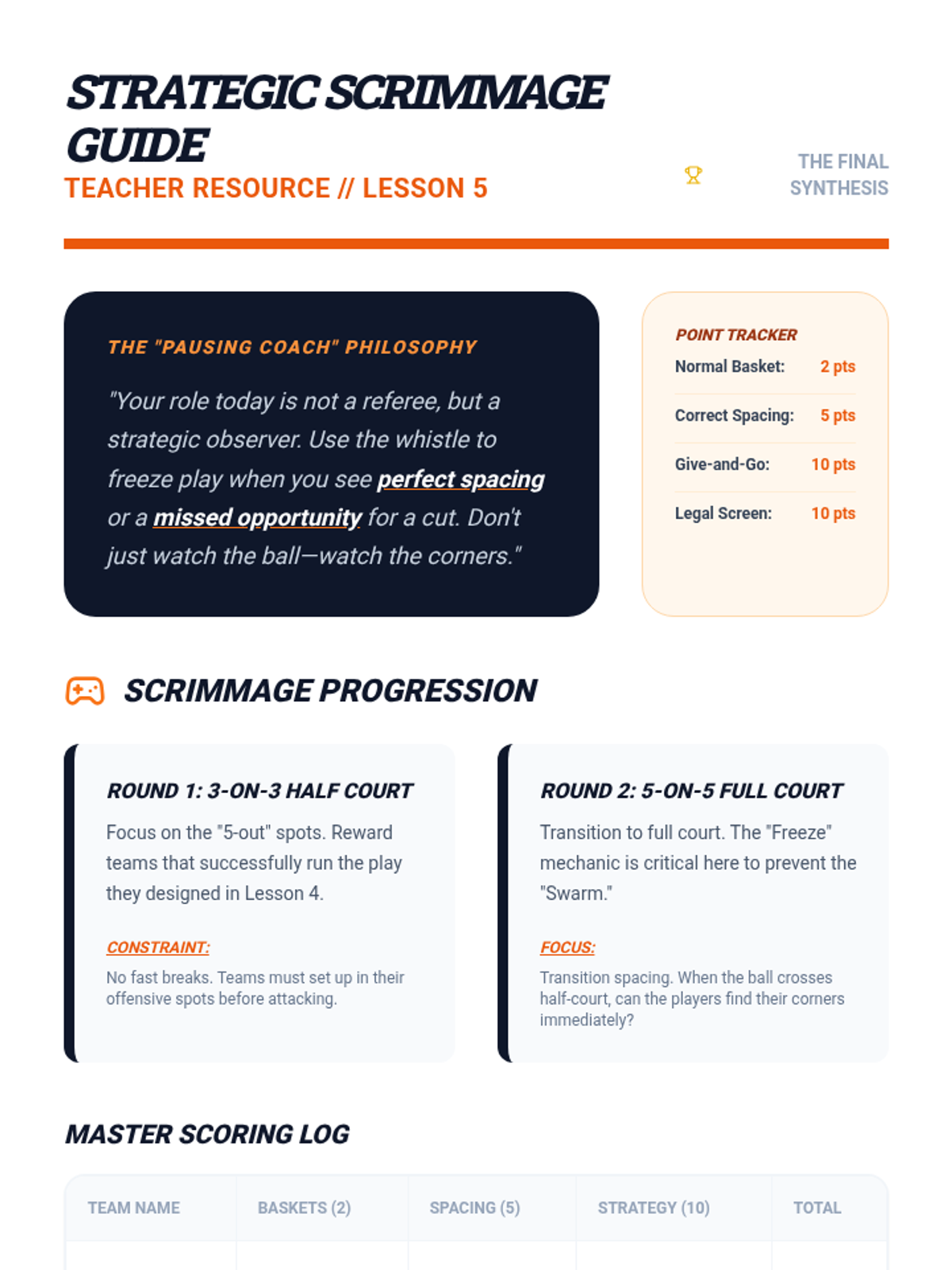
A culminating game experience where success is measured by tactical execution, rewarded through a unique strategic scoring system.
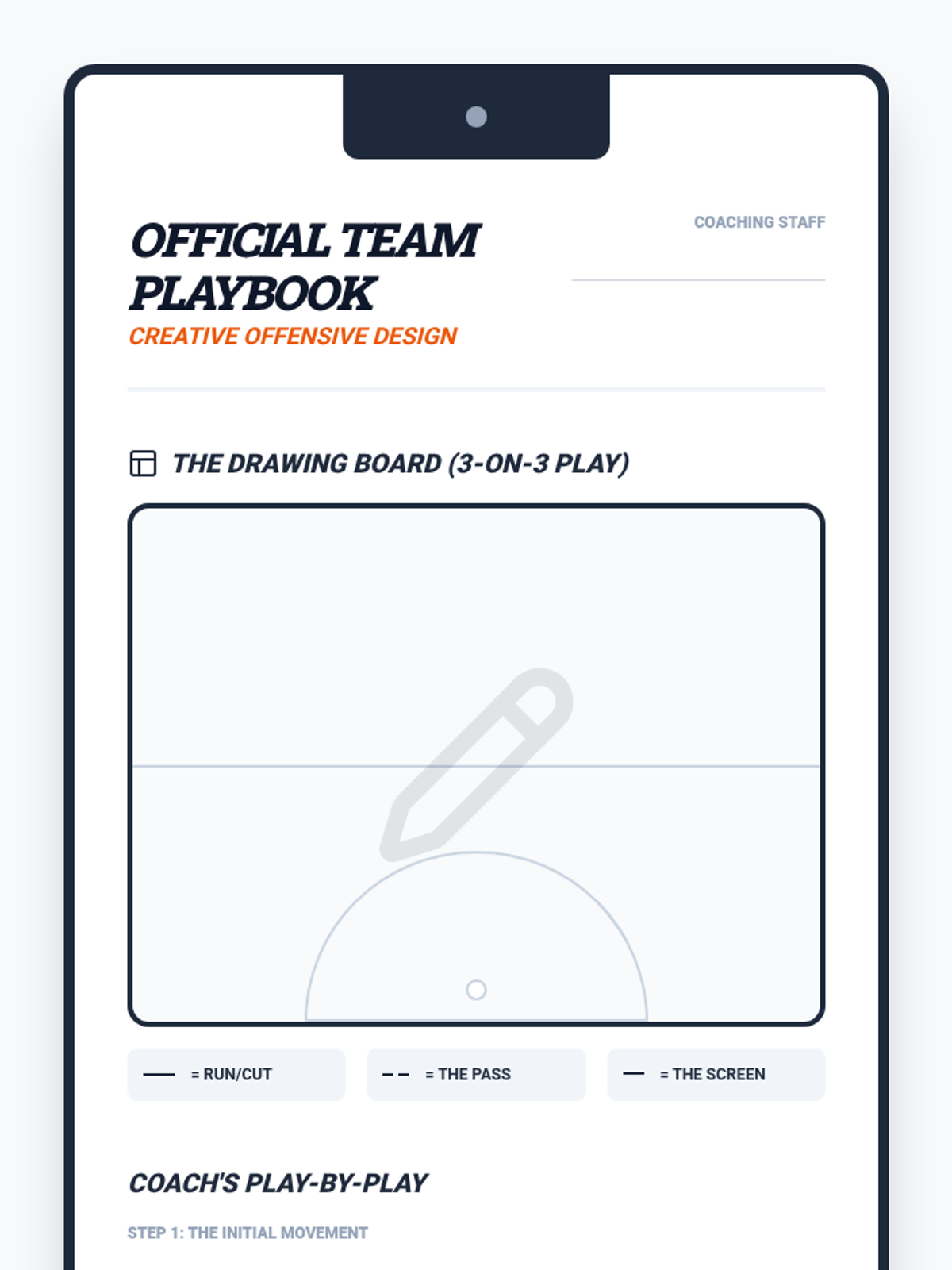
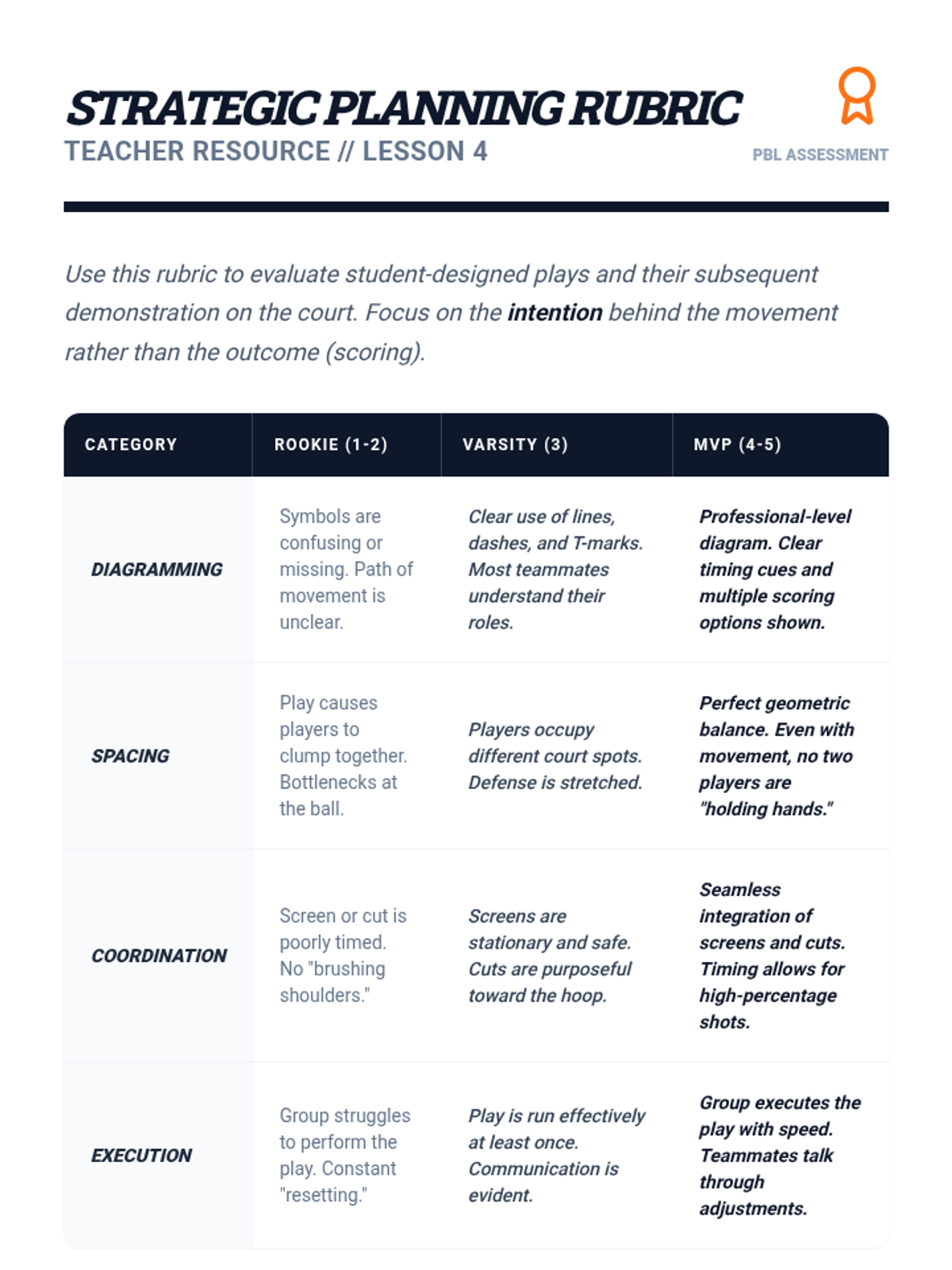
A project-based lesson where students collaborate to design and practice their own 3-on-3 offensive plays using learned concepts.
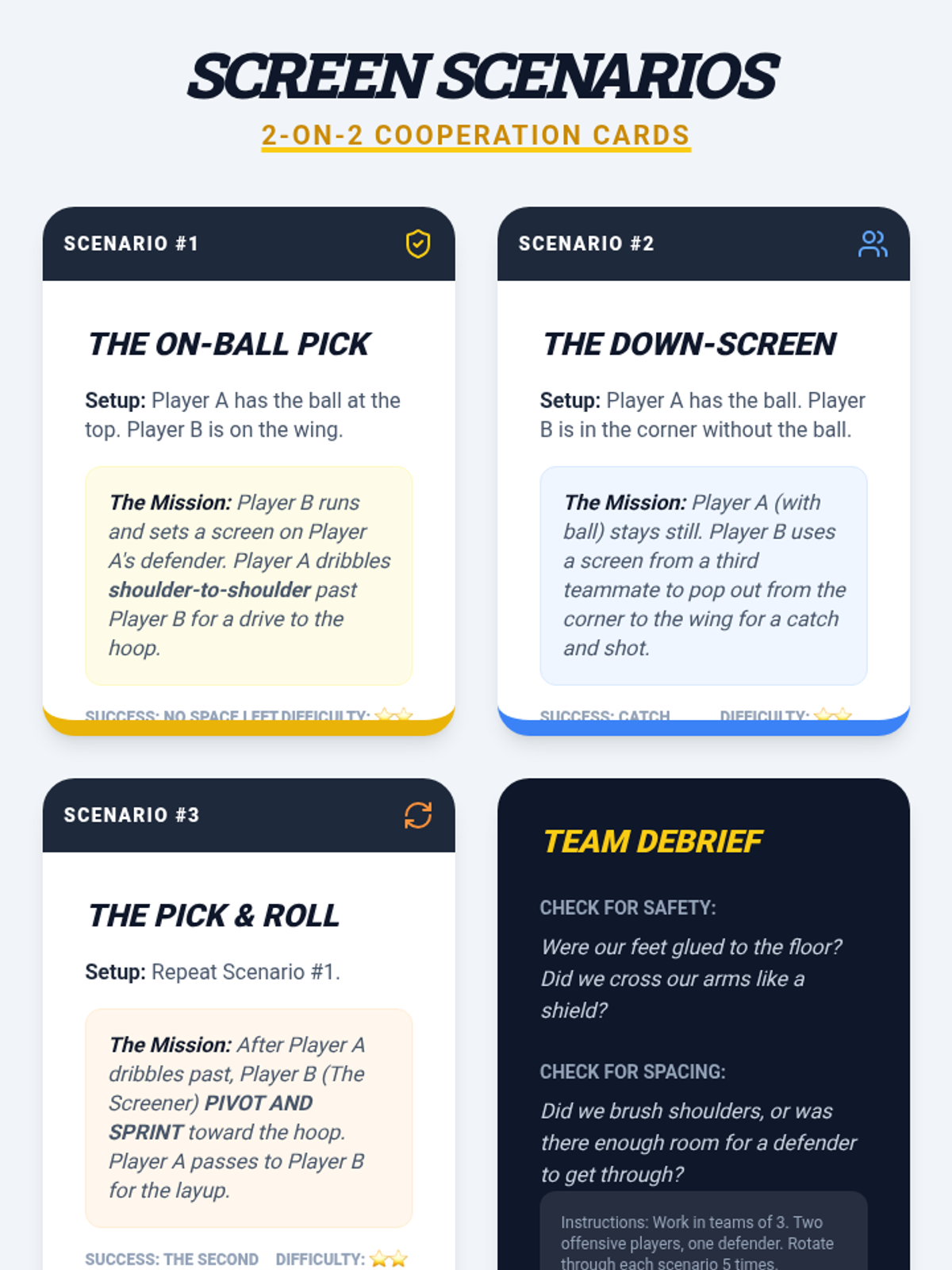
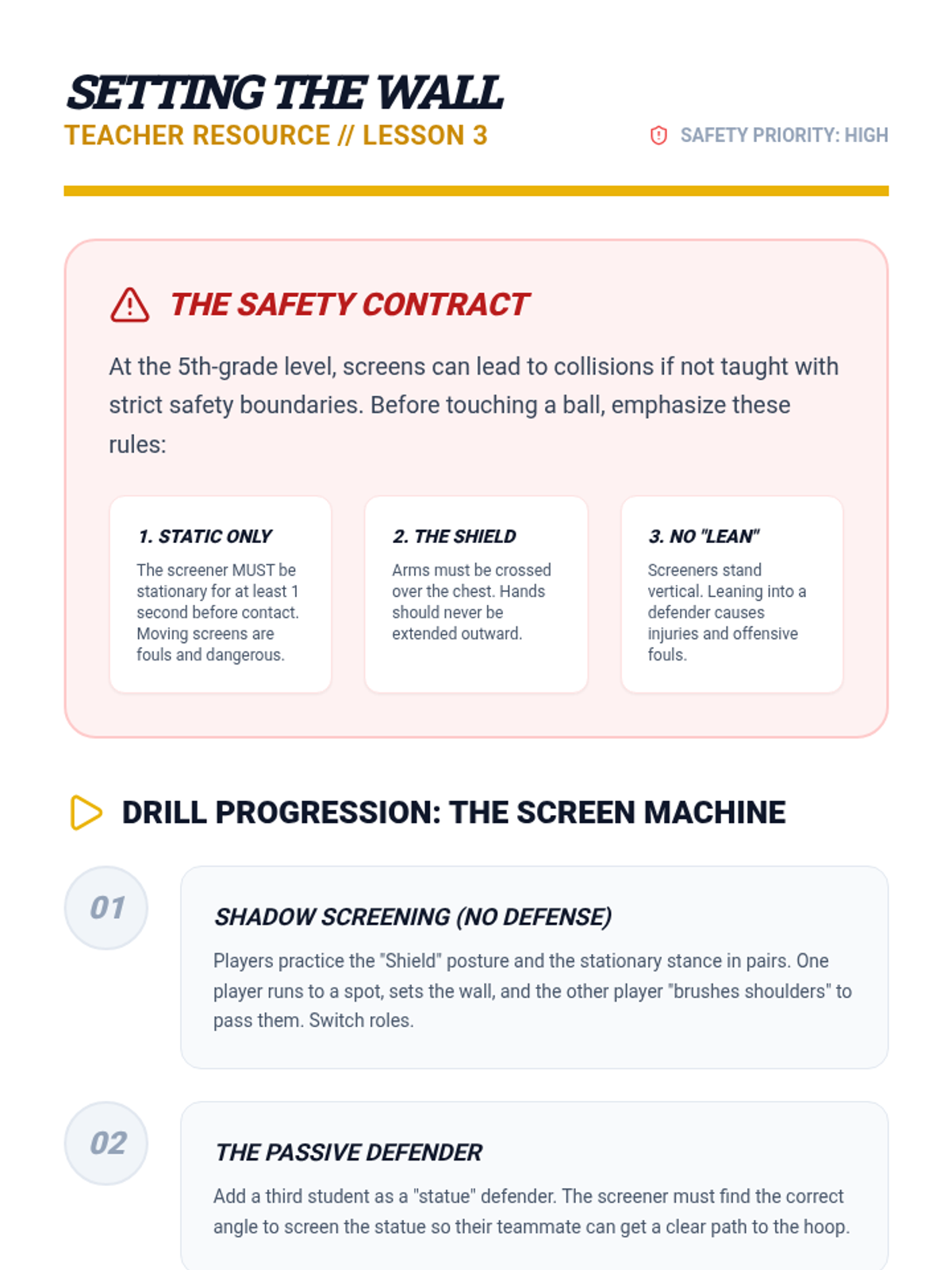
Introduces the mechanics of setting safe, stationary screens and how teammates can use them to create scoring opportunities.
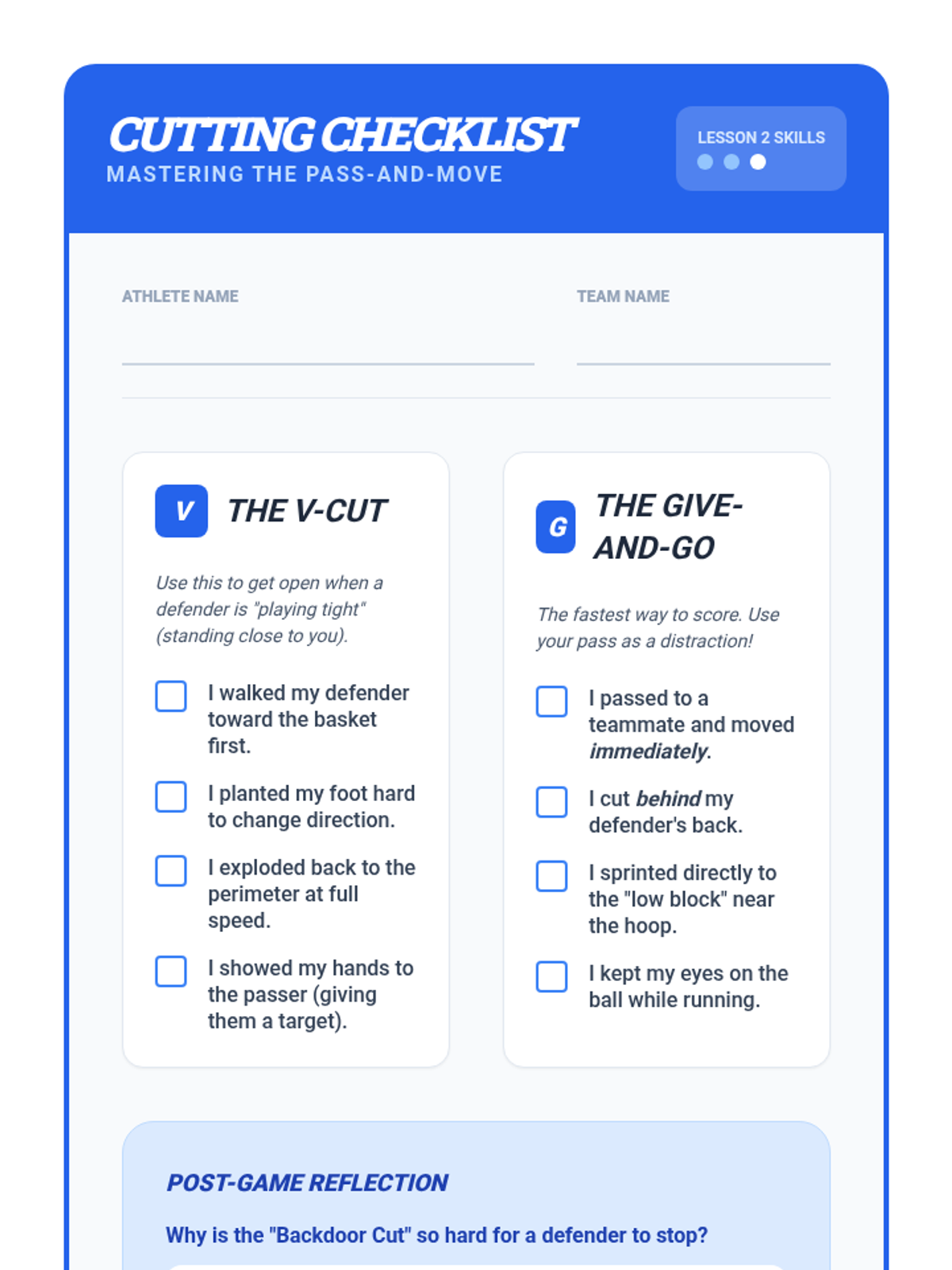
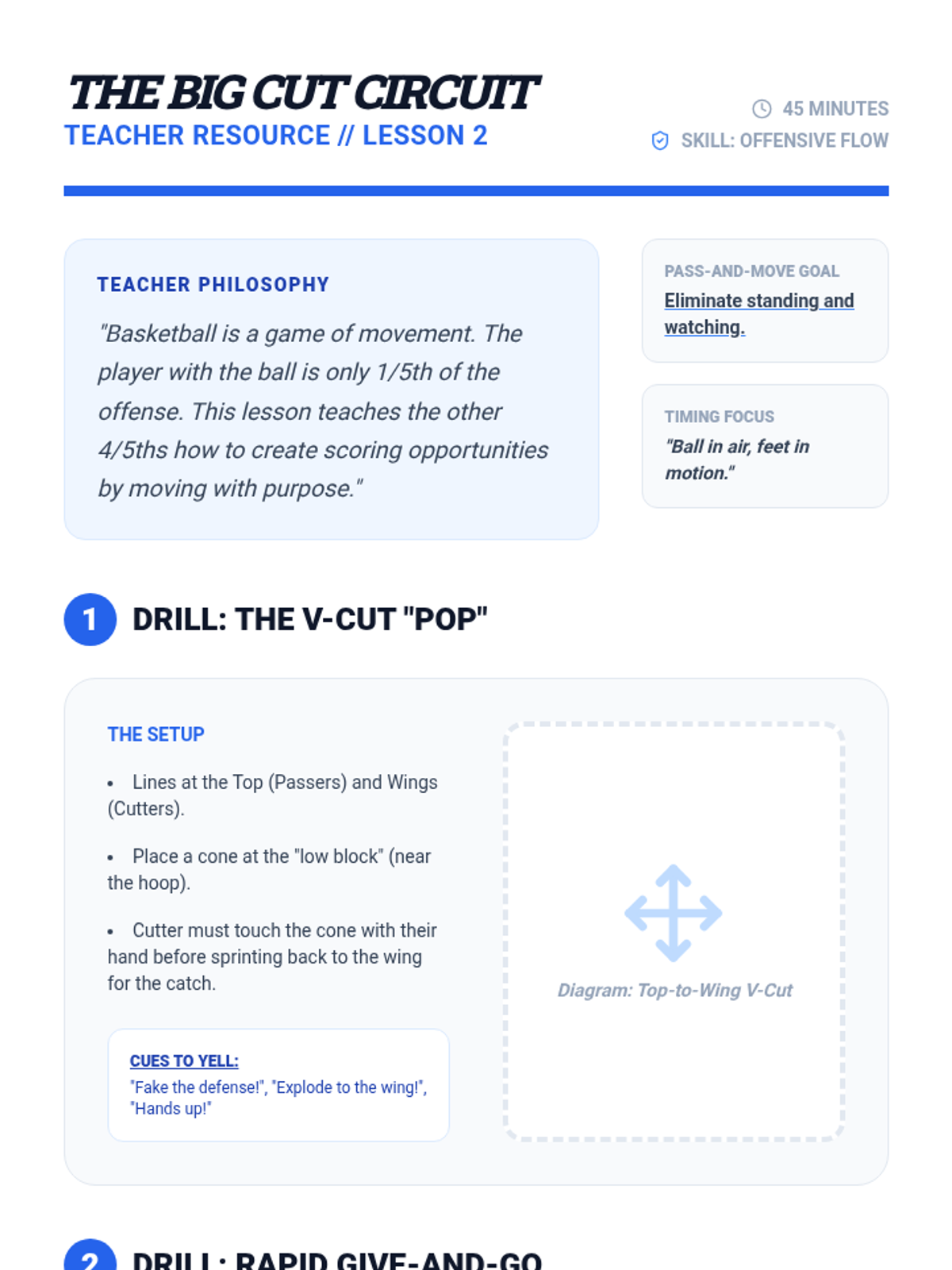
Focuses on purposeful movement off the ball using V-cuts and backdoor cuts, as well as the classic give-and-go maneuver.
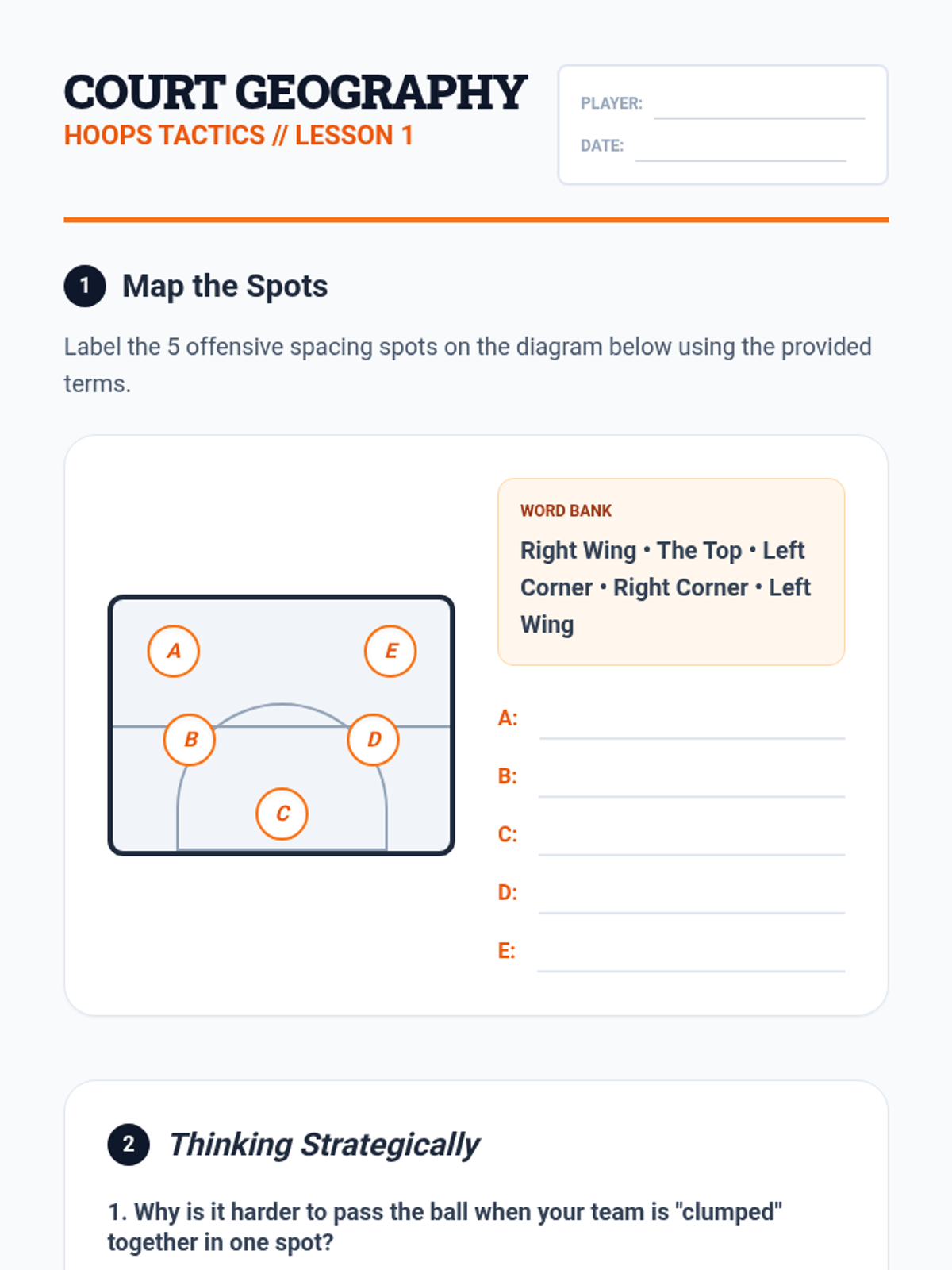
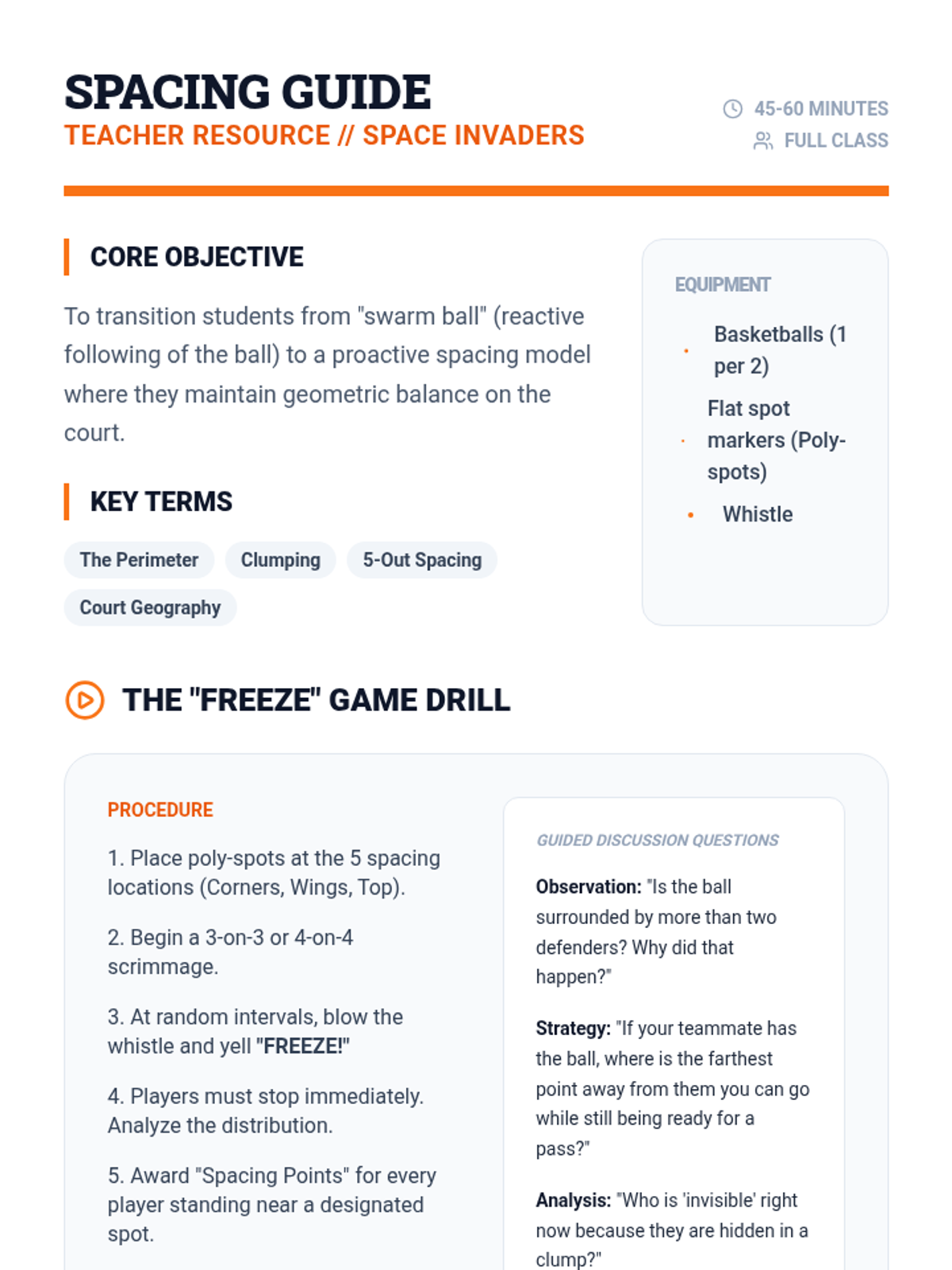
Students explore the geometry of the court and learn the '5-out' spacing model to stretch the defense and prevent clumping.
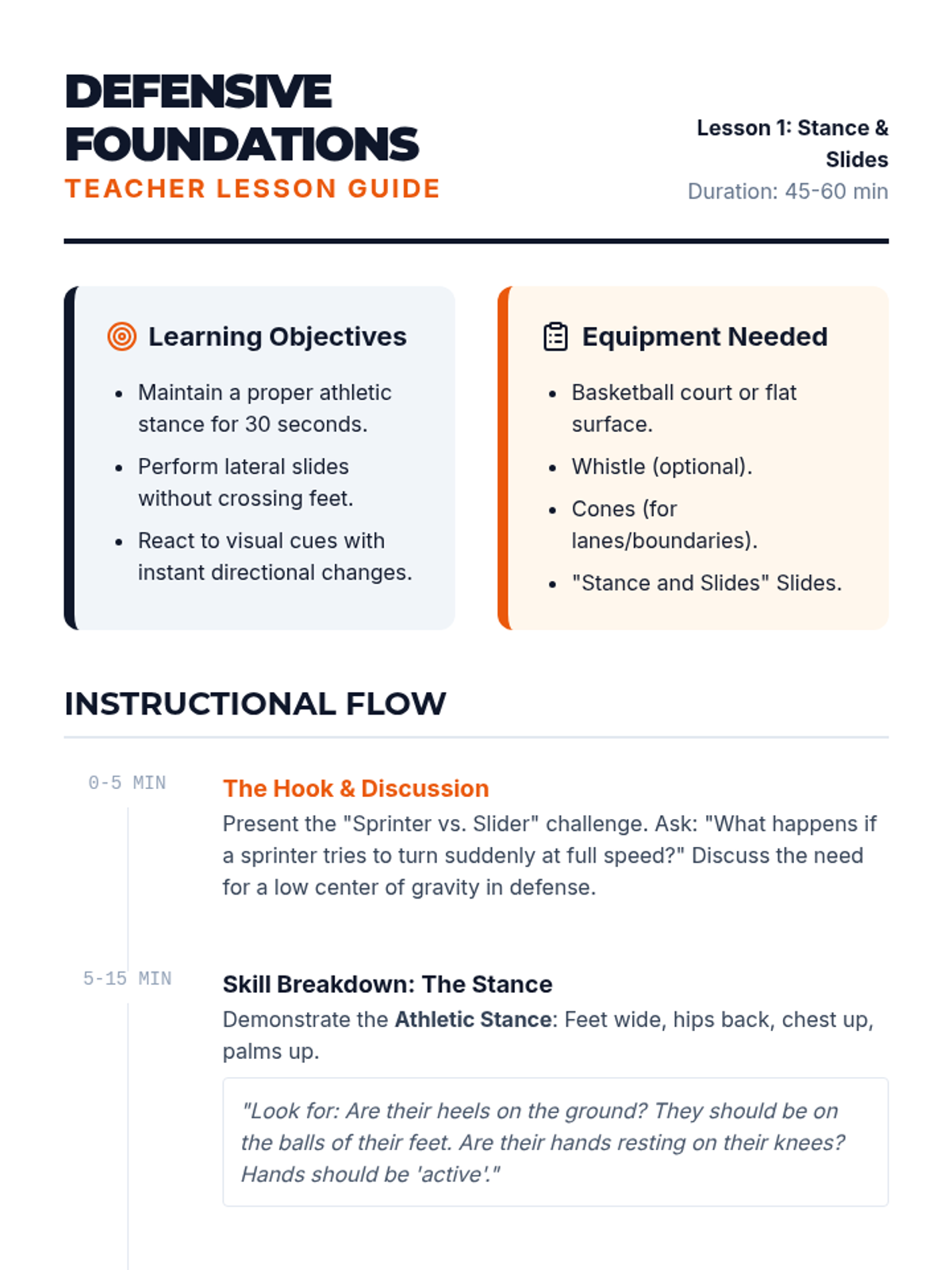
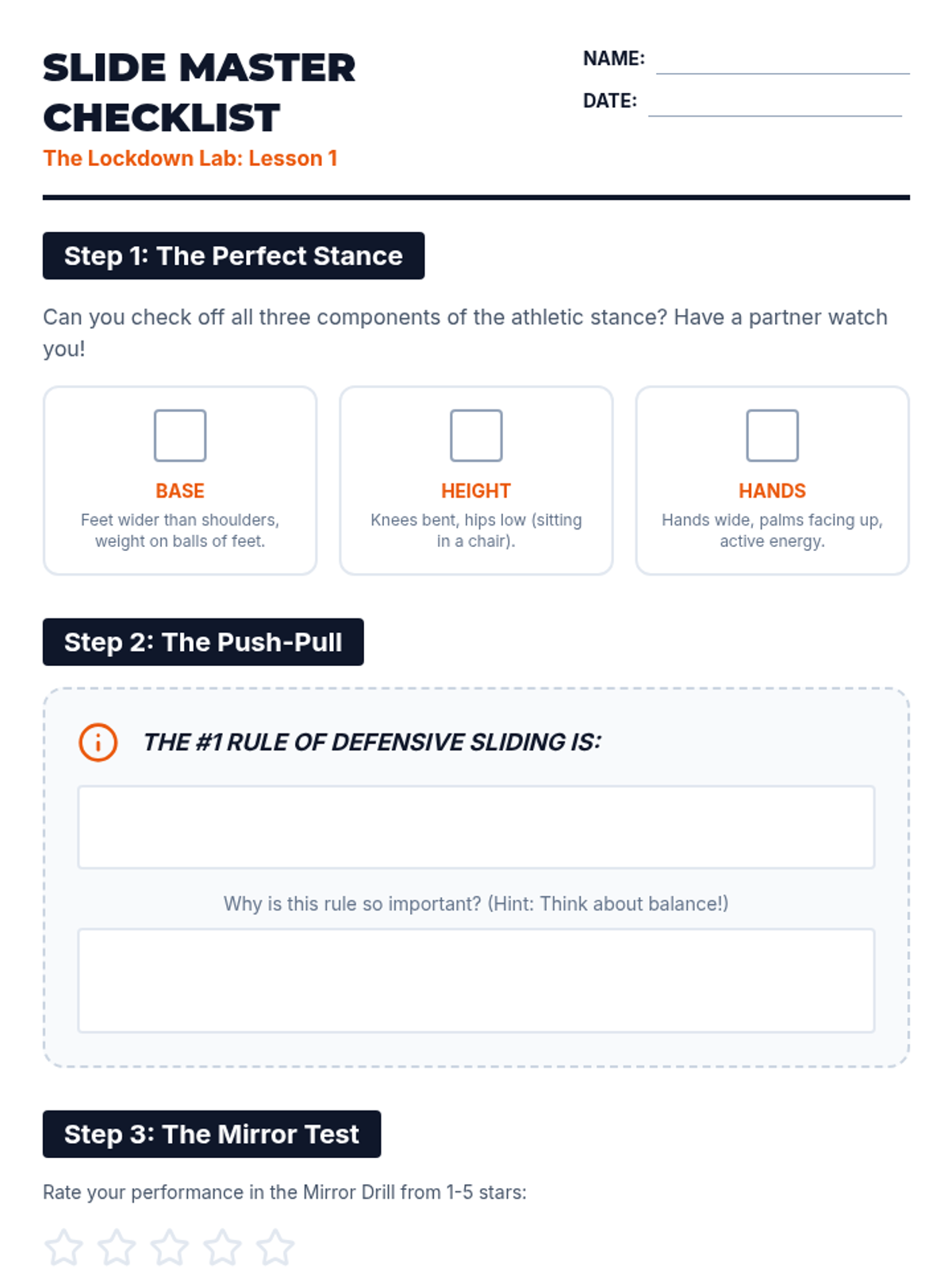
Introduces the athletic defensive stance and the lateral 'defensive slide' technique, emphasizing footwork that prevents tripping and maintains balance.
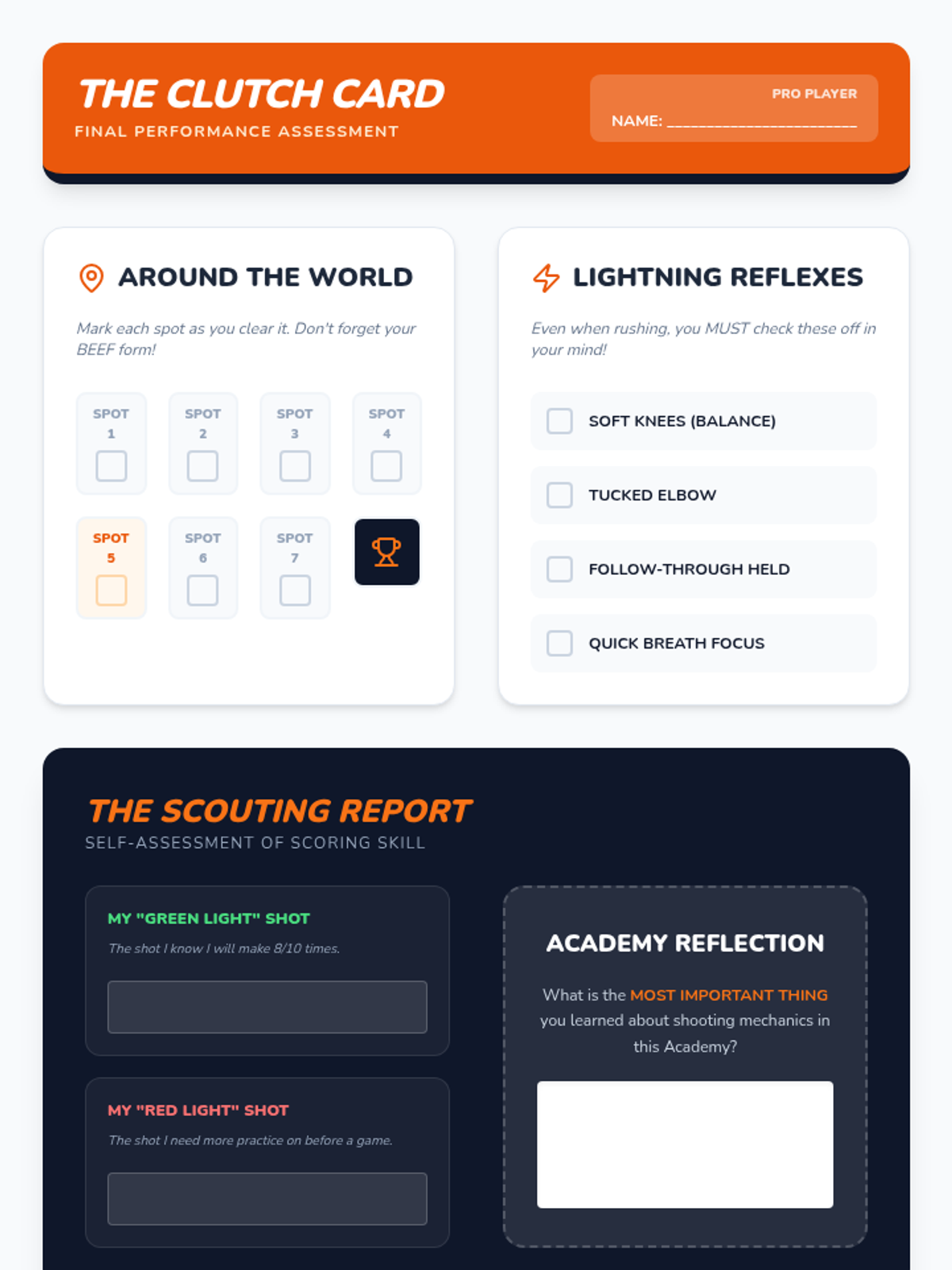
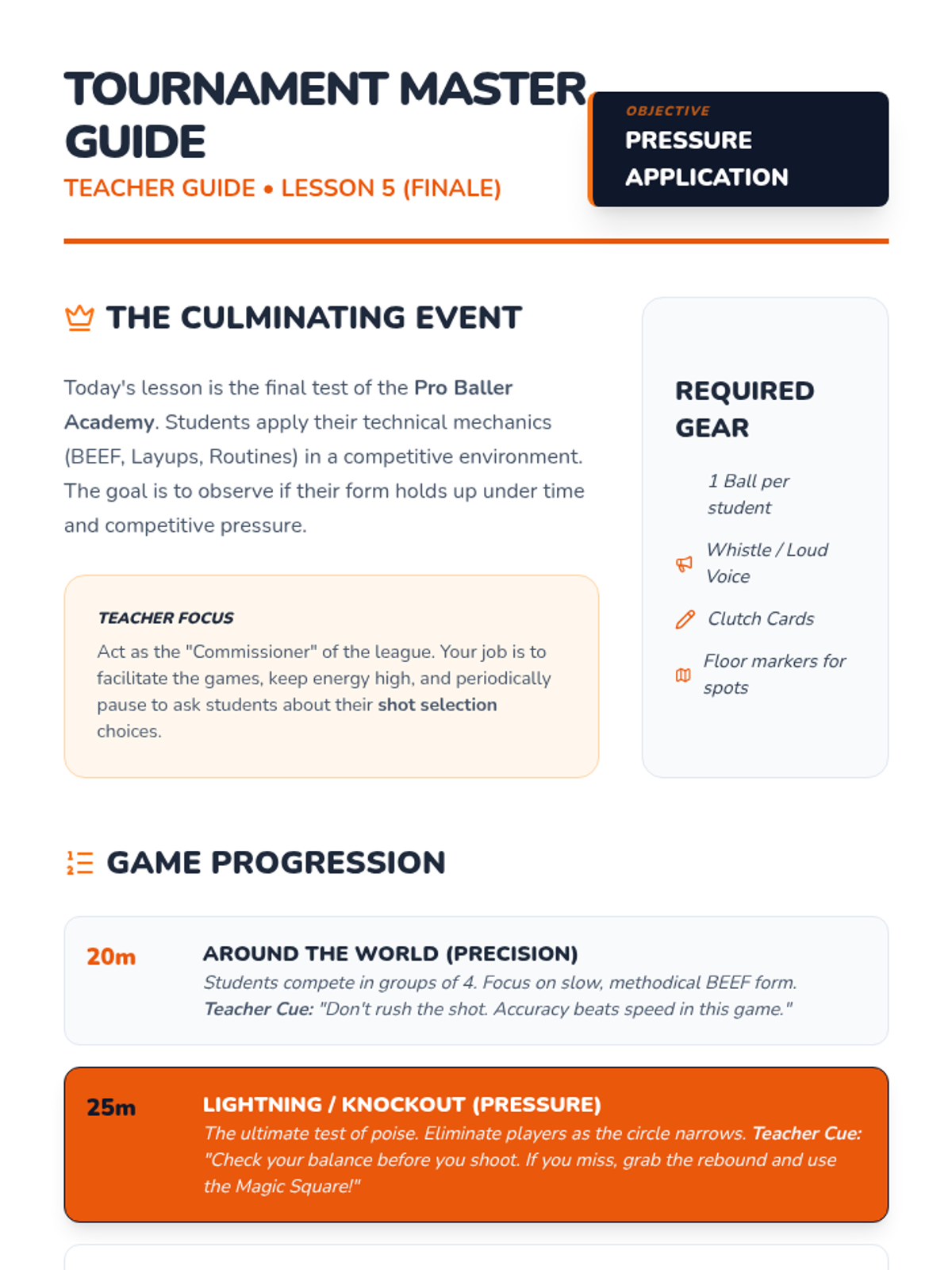
Applying mechanics under time and competitive pressure through classic shooting games, emphasizing shot selection and maintaining form when tired.
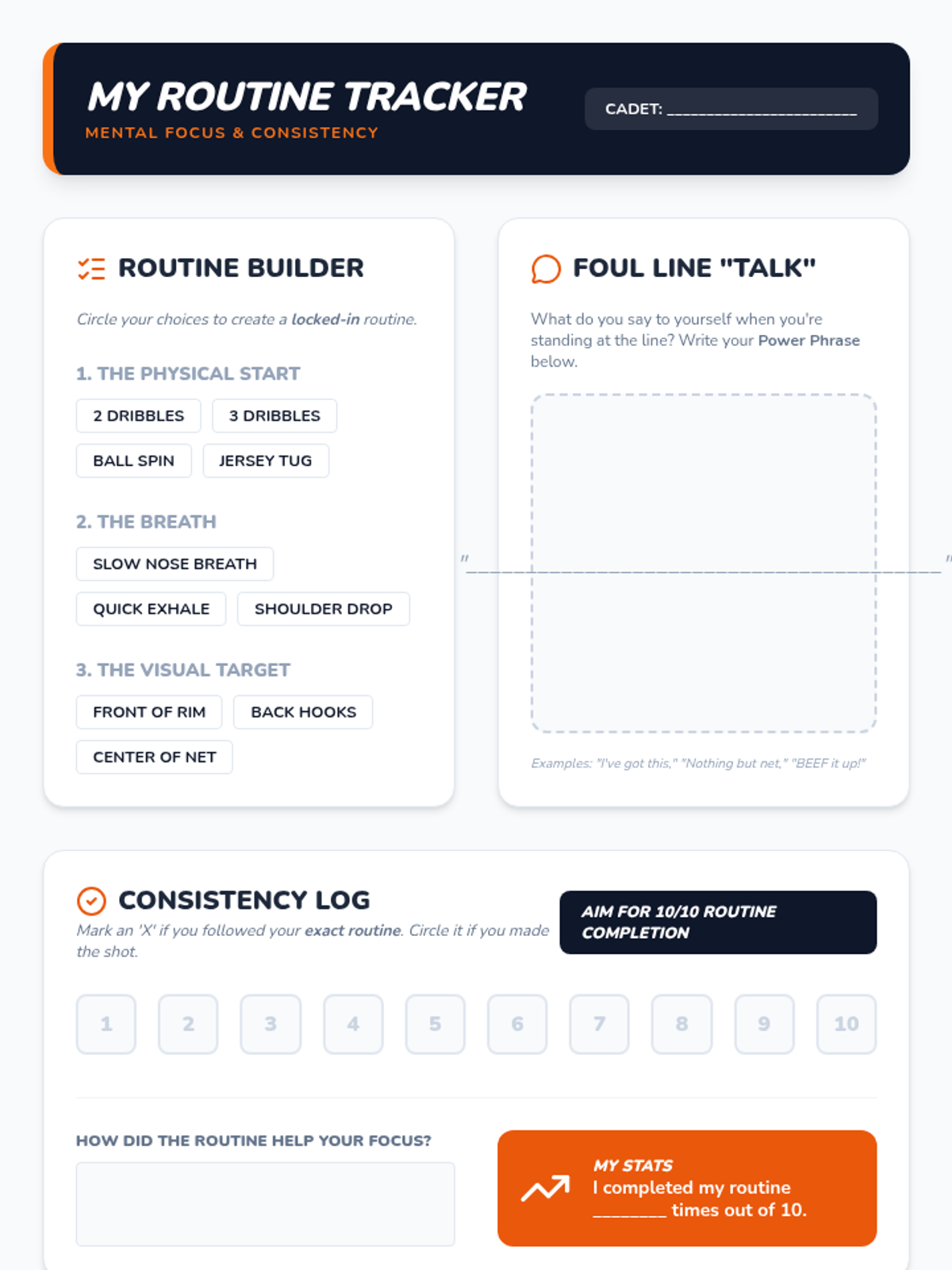
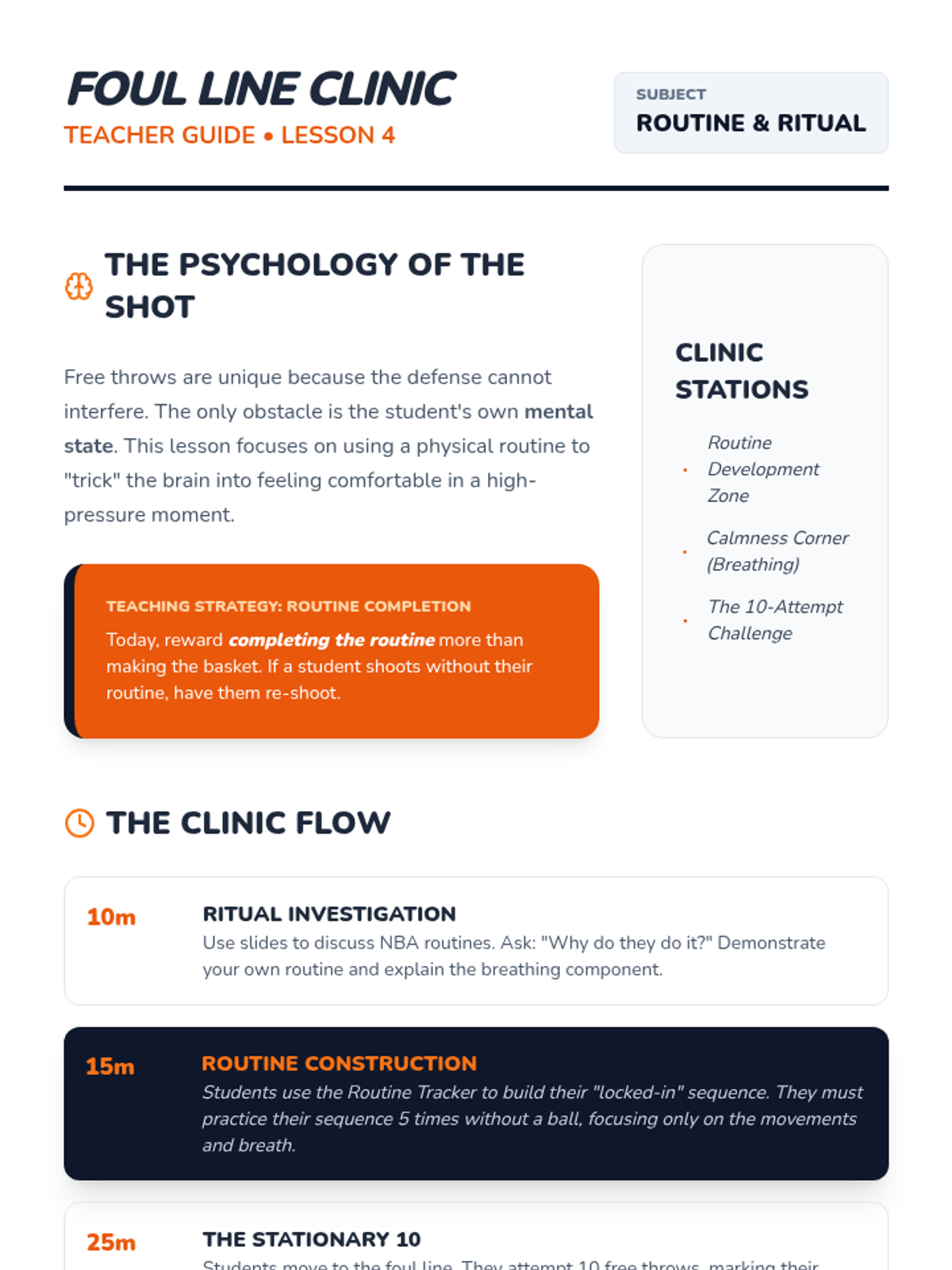
Focusing on the mental and physical consistency required for free throws, including developing a personal routine and tracking shooting percentages.
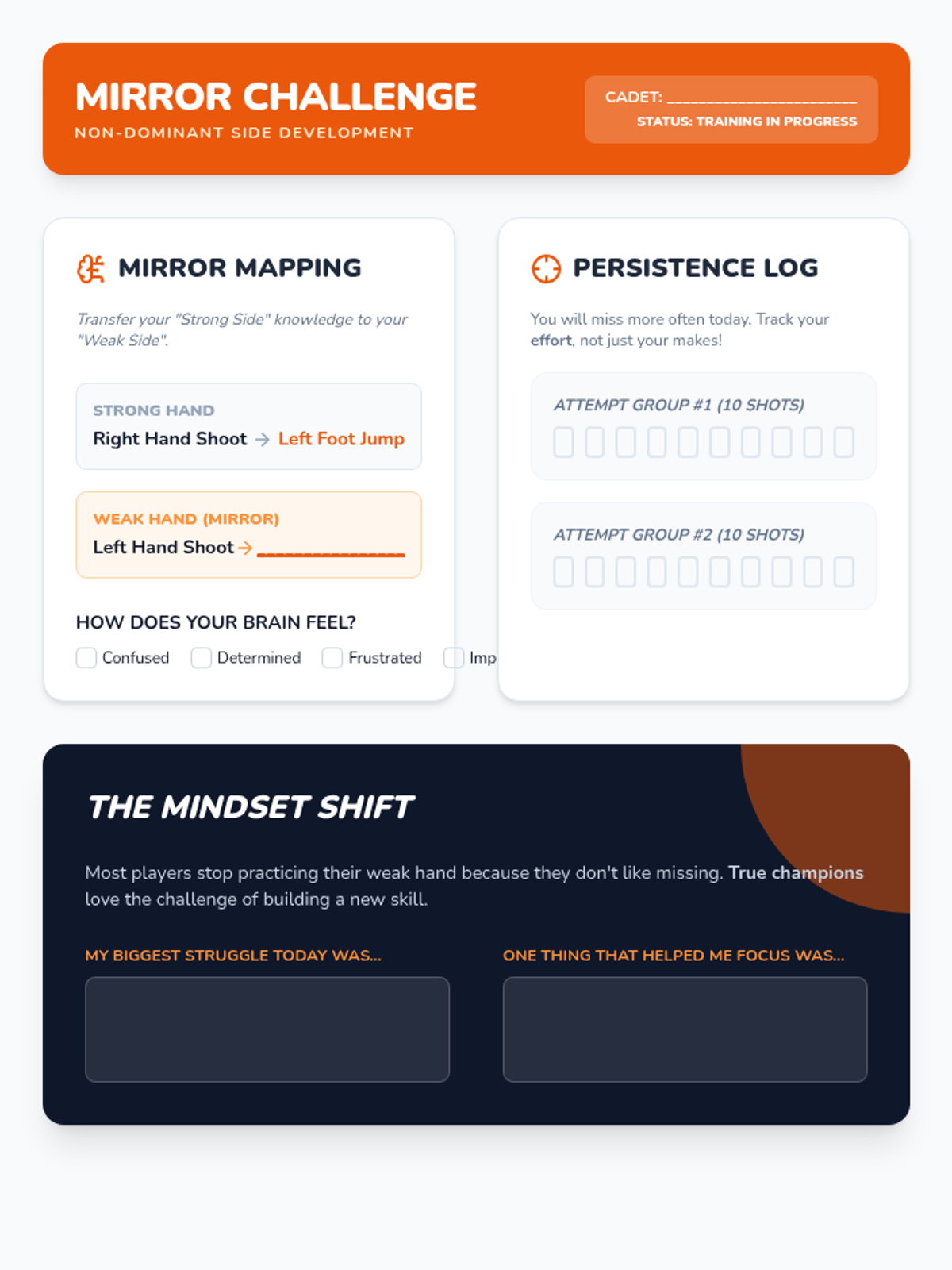
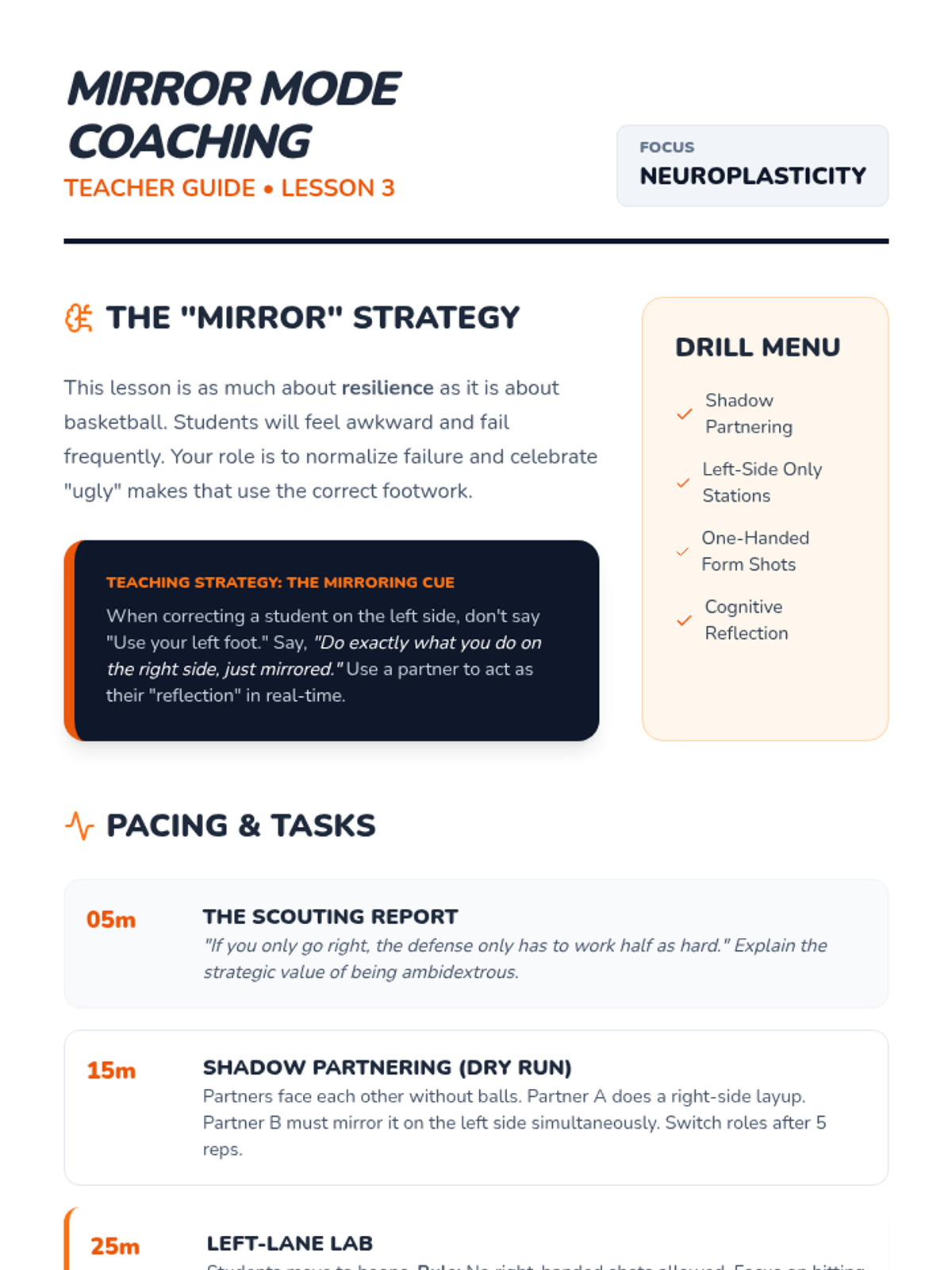
Challenging students to mirror their dominant-side mechanics on their non-dominant side to become a multi-dimensional scoring threat on the court.
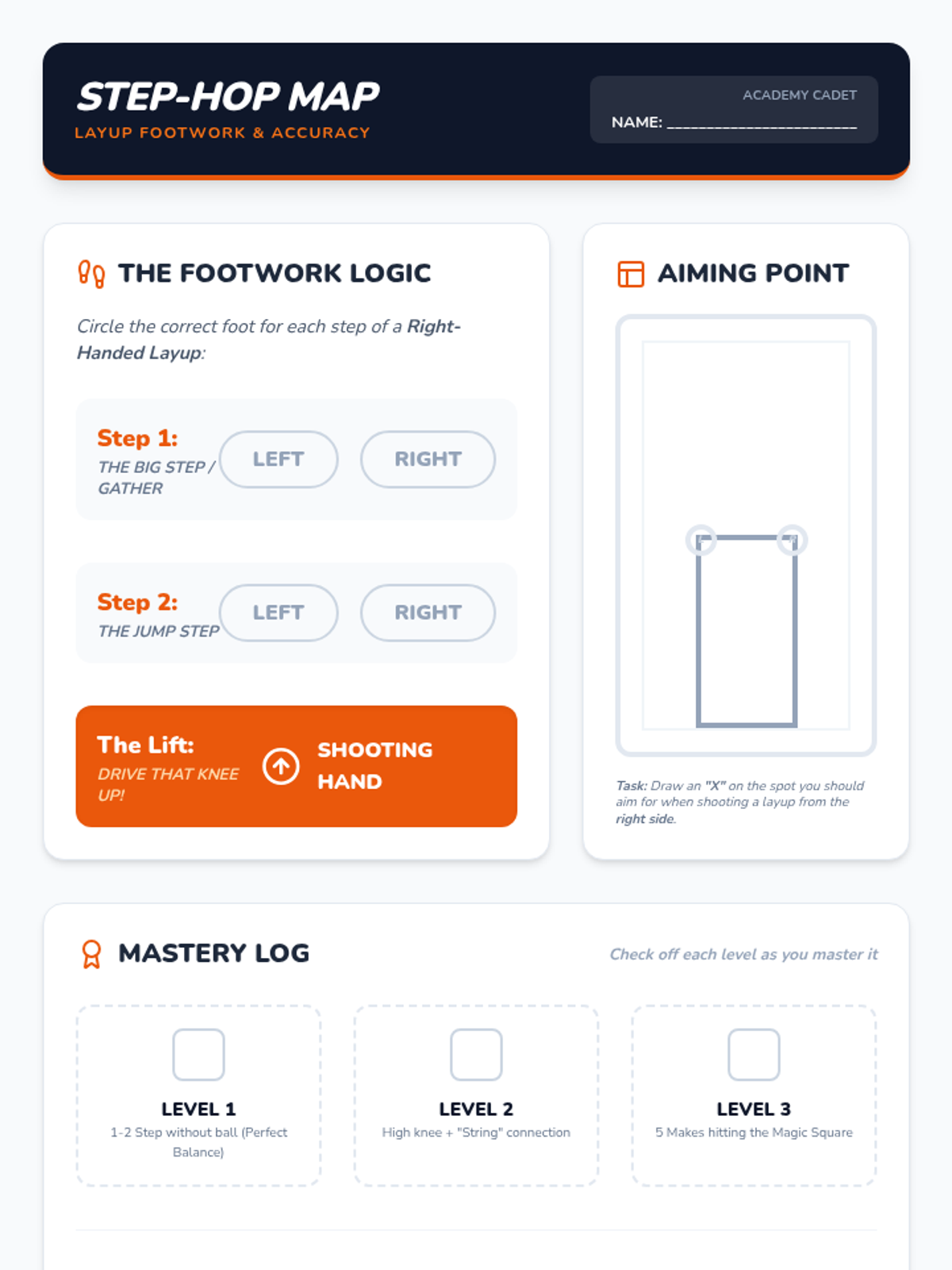
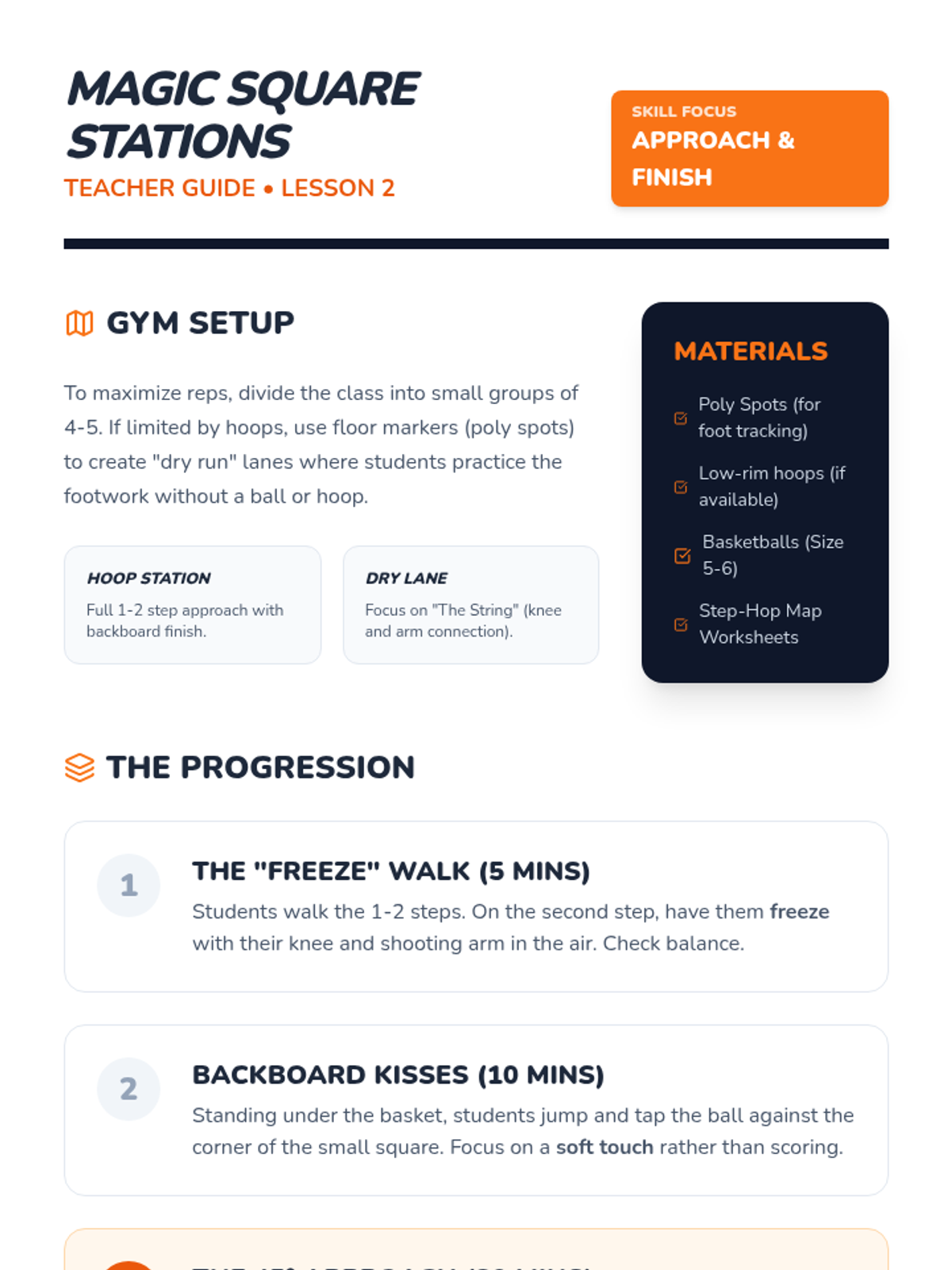
Breaking down the layup into its component parts: the two-step footwork, the high-knee jump, and utilizing the backboard square for high-percentage scoring.
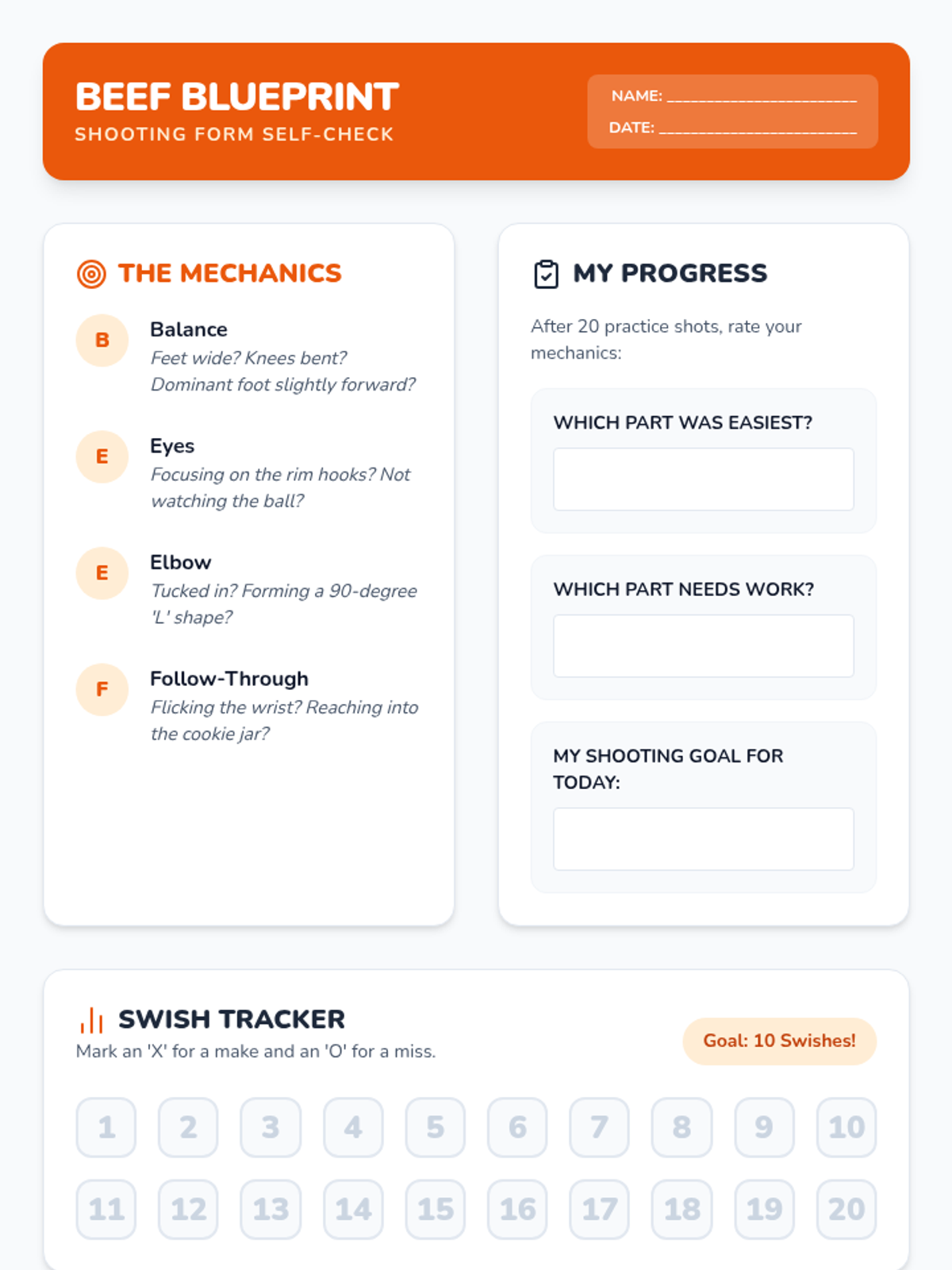
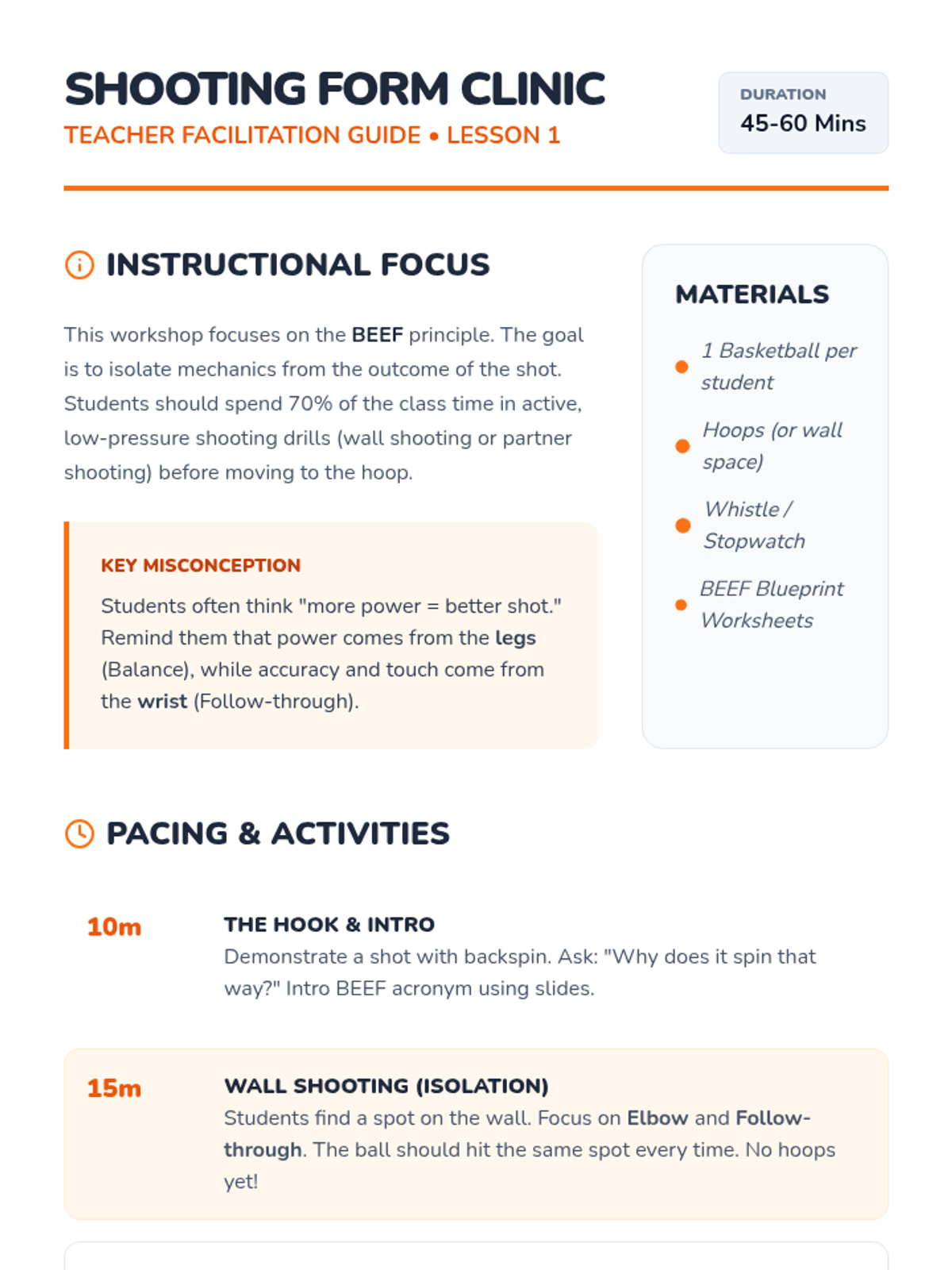
Introduction to the BEEF (Balance, Eyes, Elbow, Follow-through) principle using form shooting drills to build vertical alignment and a consistent 'goose-neck' release.
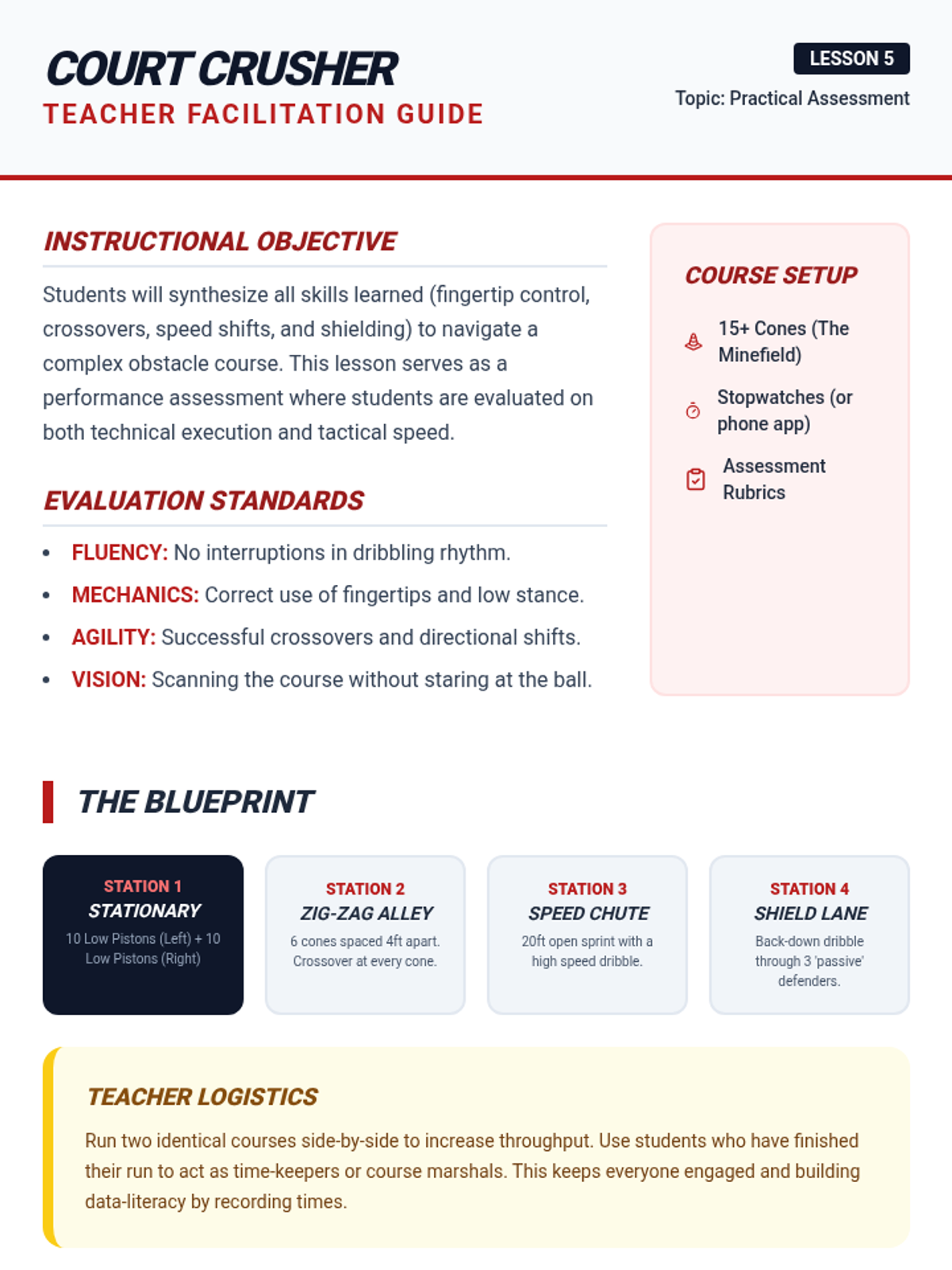
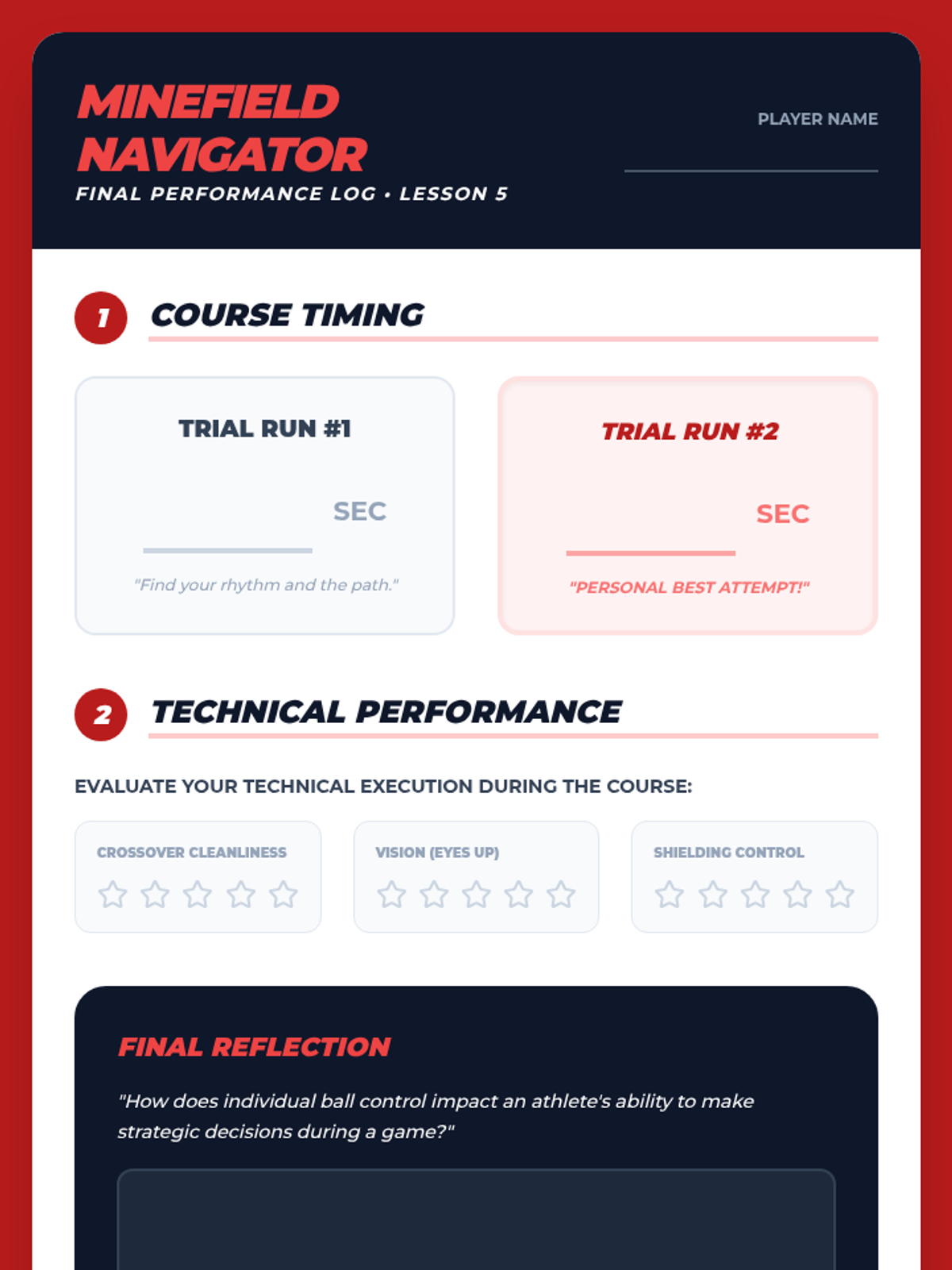
A culminating obstacle course that assesses speed, control, crossovers, and agility under time pressure.
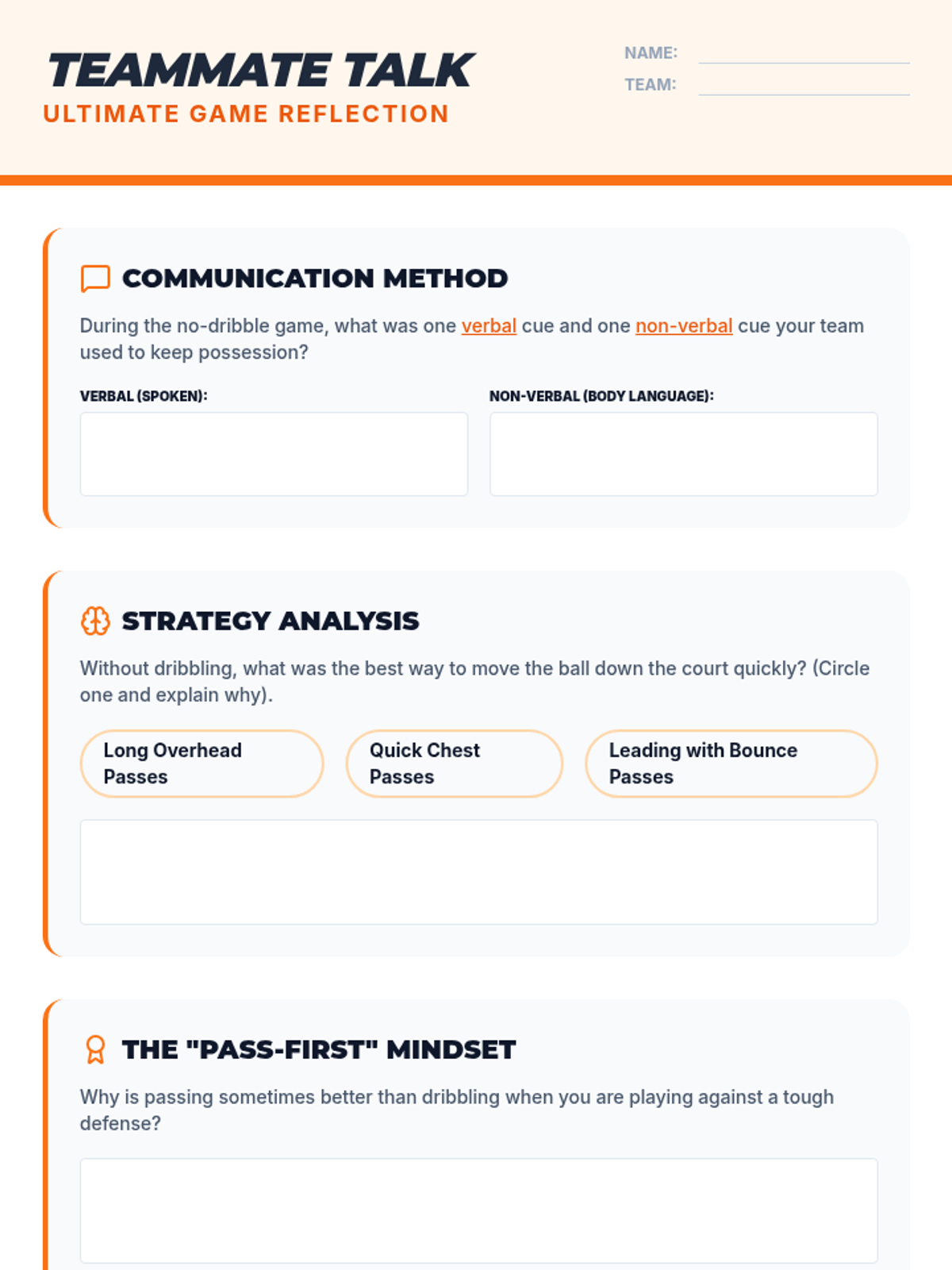
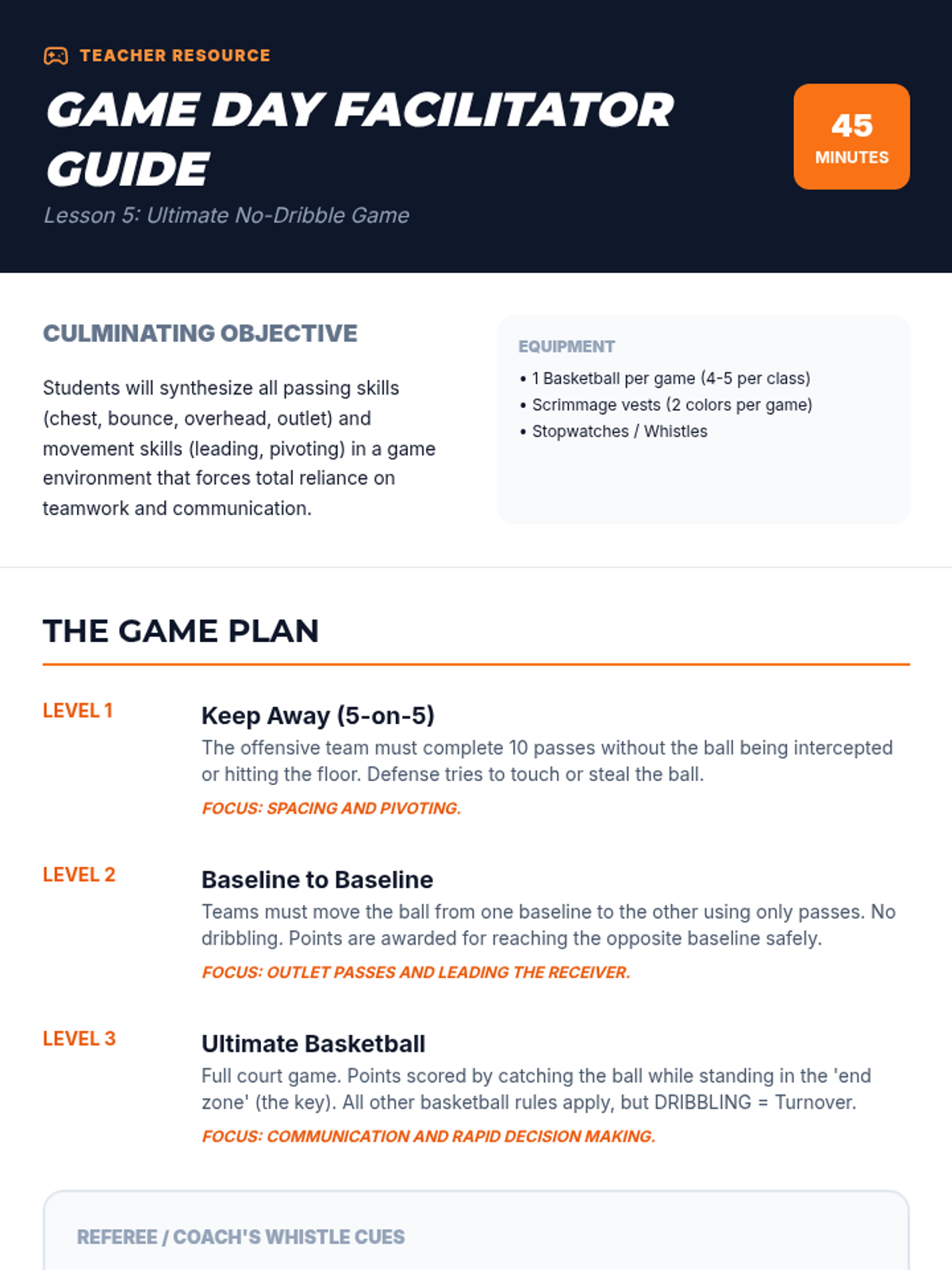
A culminating game-based lesson where students play without dribbling, relying entirely on passing, movement, and communication.
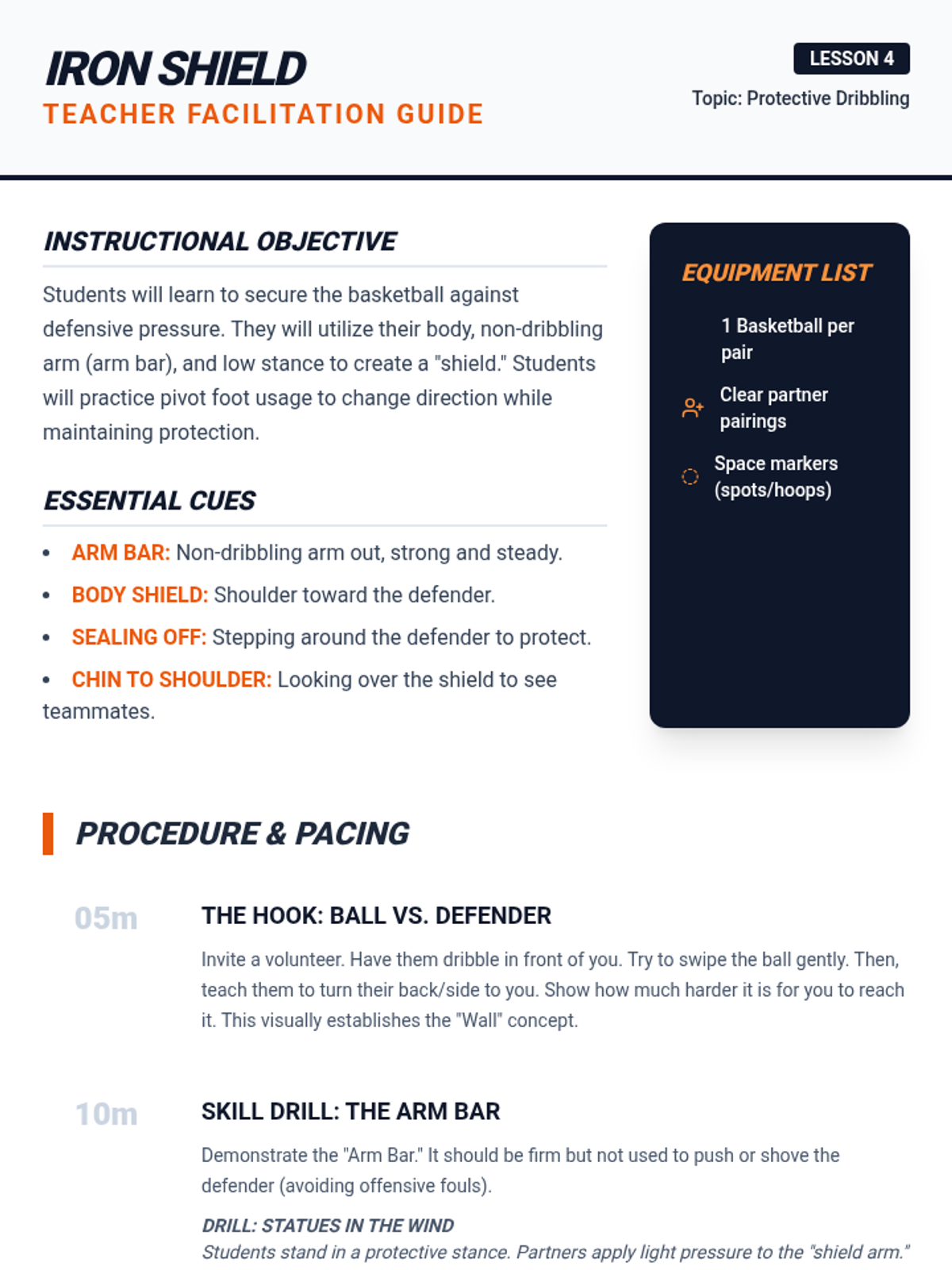
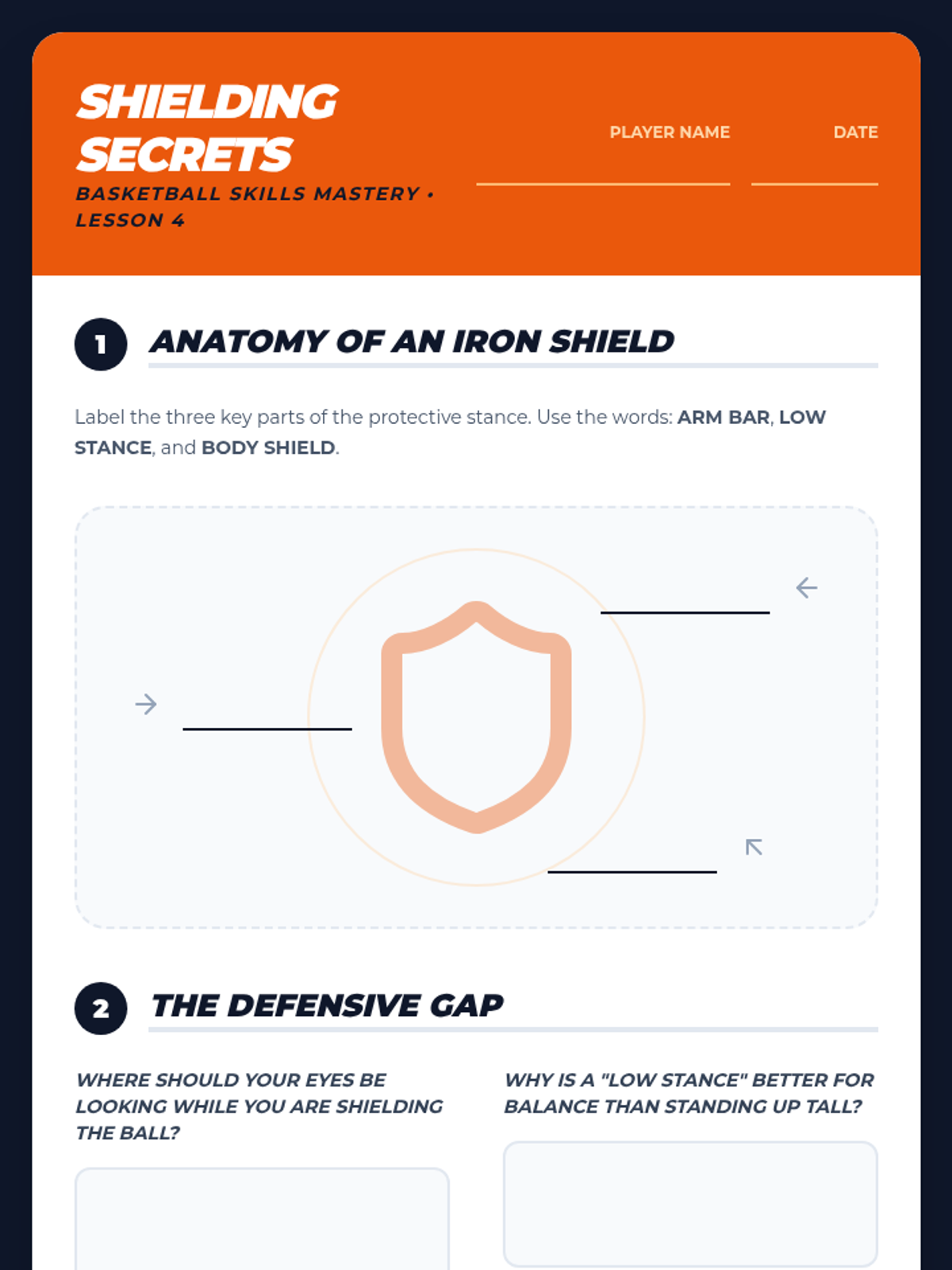
Teaches students how to use their body as a shield to protect the ball from defenders using an arm bar and low stance.
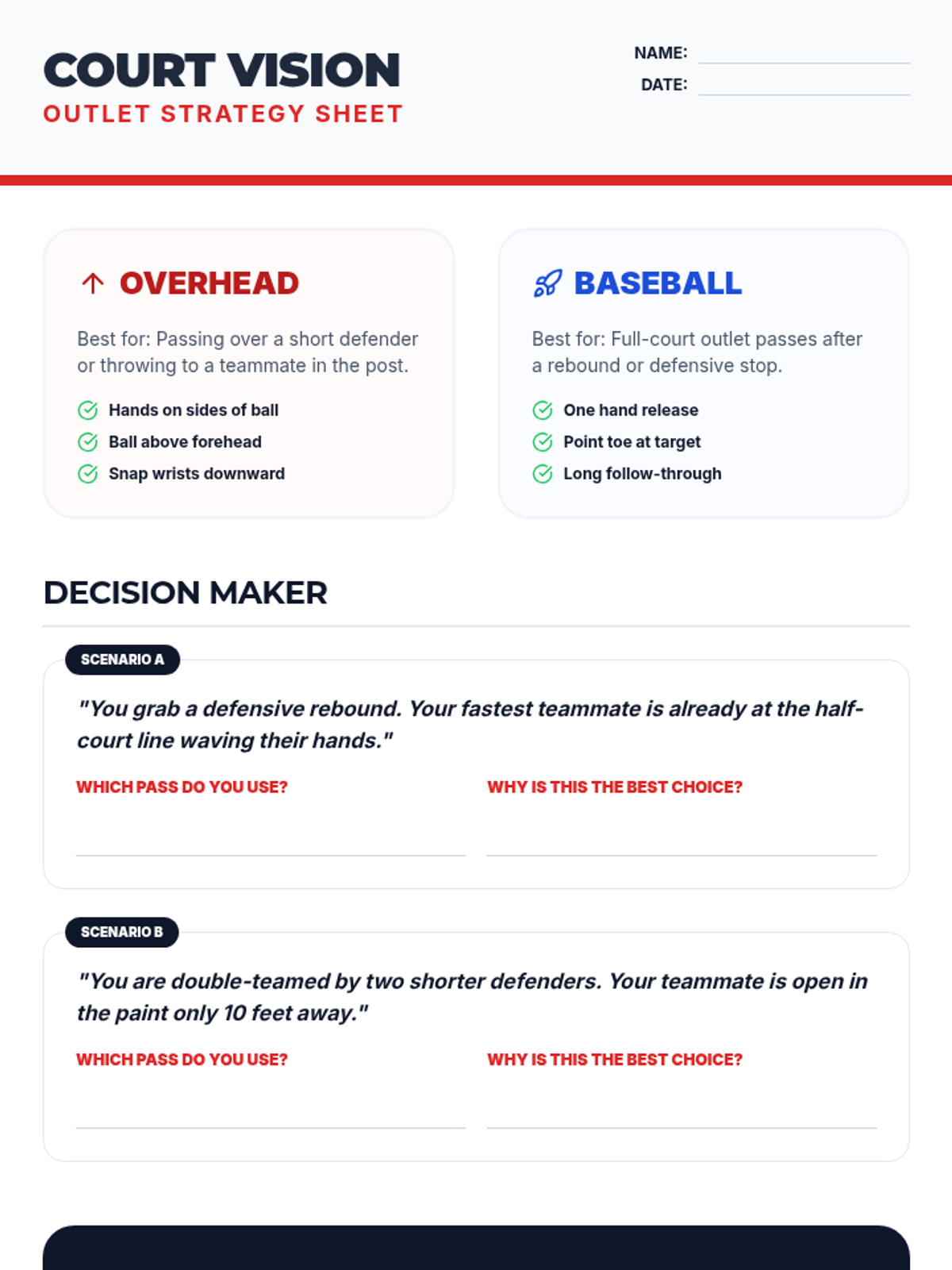
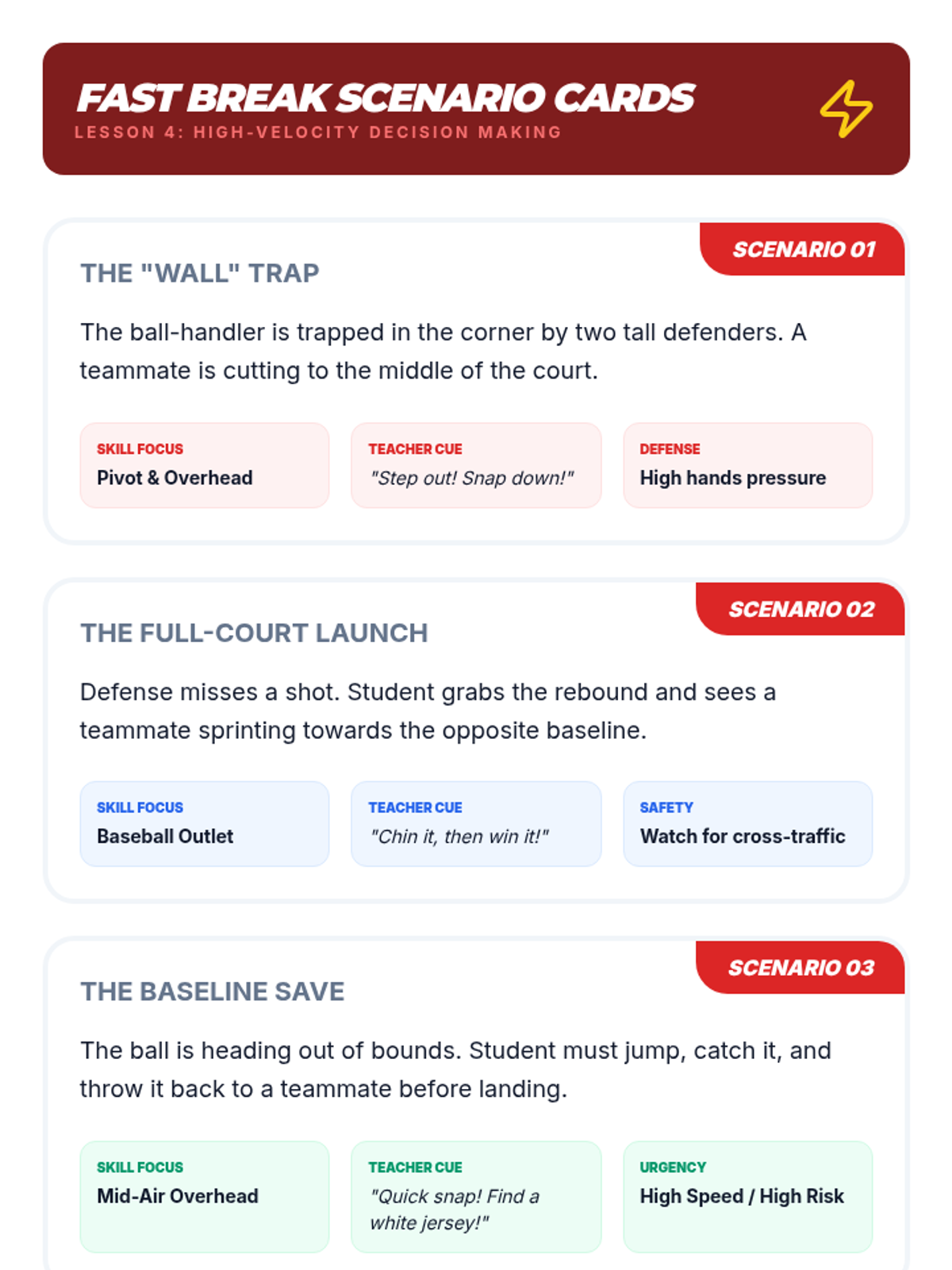
Covers long-distance overhead and baseball passes for outlet plays and clearing the ball after a rebound.
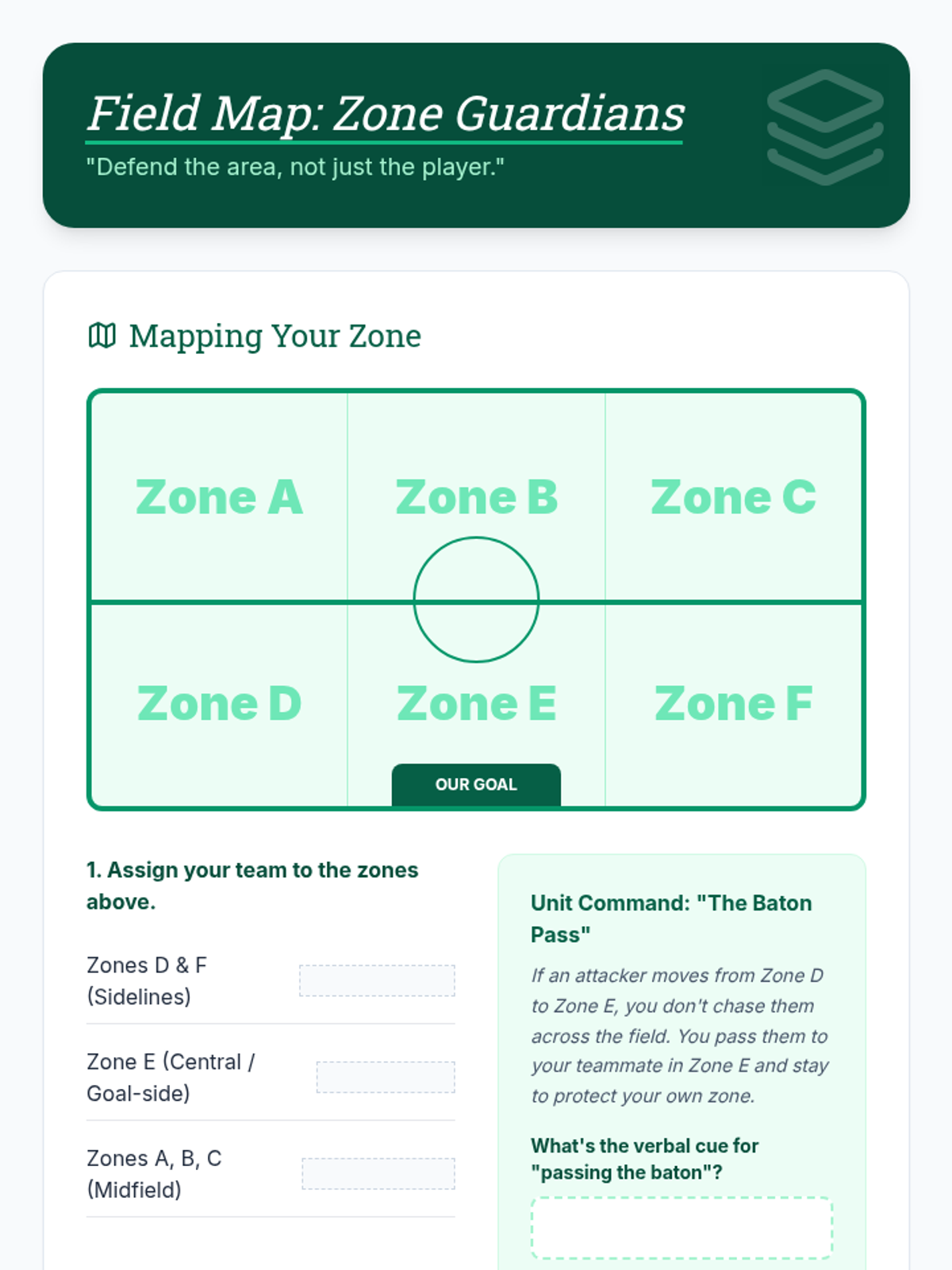
Synthesizes defensive concepts into a zonal system. Students work as a whole unit to guard specific areas of the field, communicating to pass on marking duties as the ball moves.
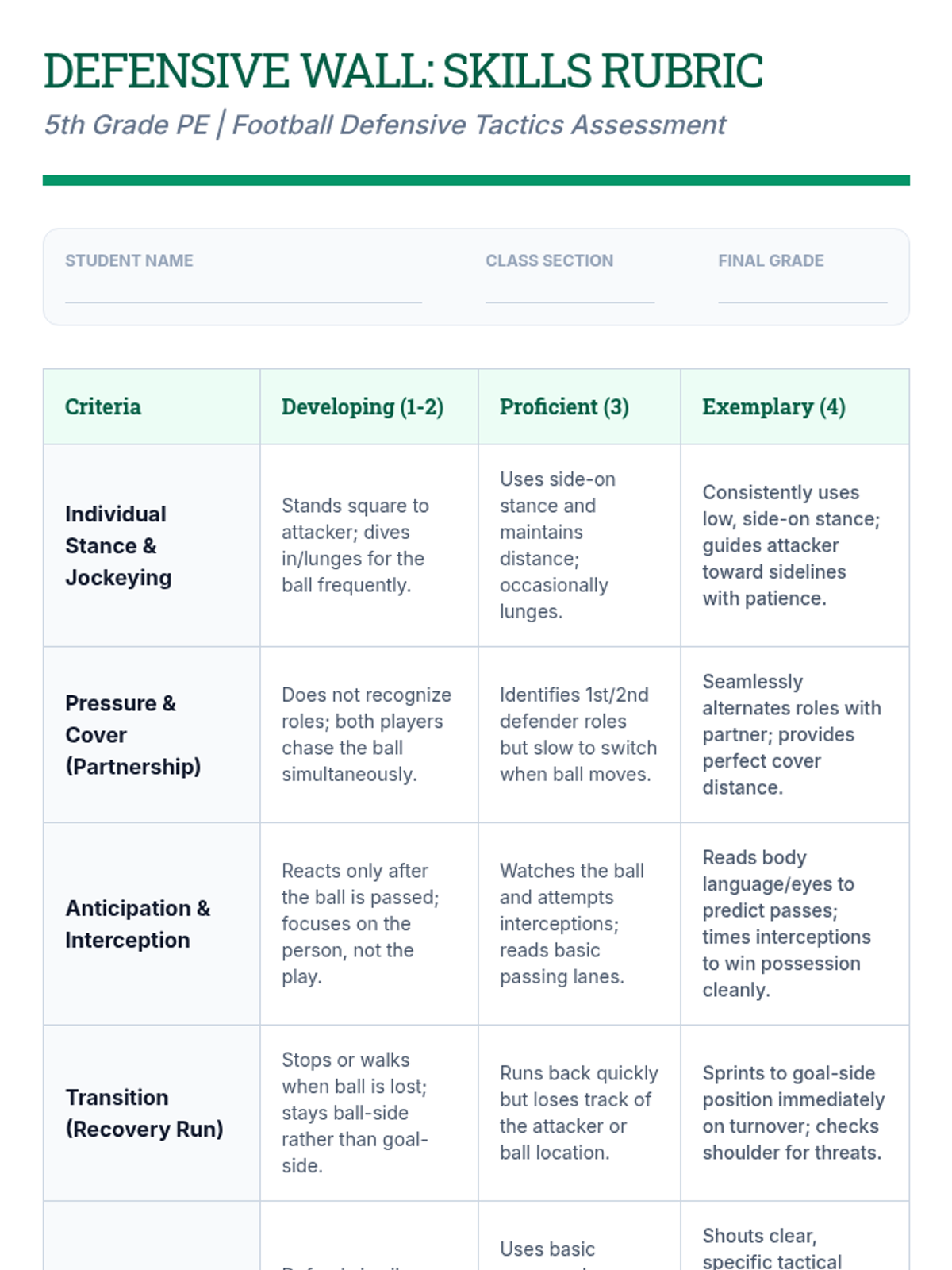
Teaches the mental and physical shift required when possession is lost. Students focus on rapid recovery runs and re-organizing the defensive shape immediately after a turnover.
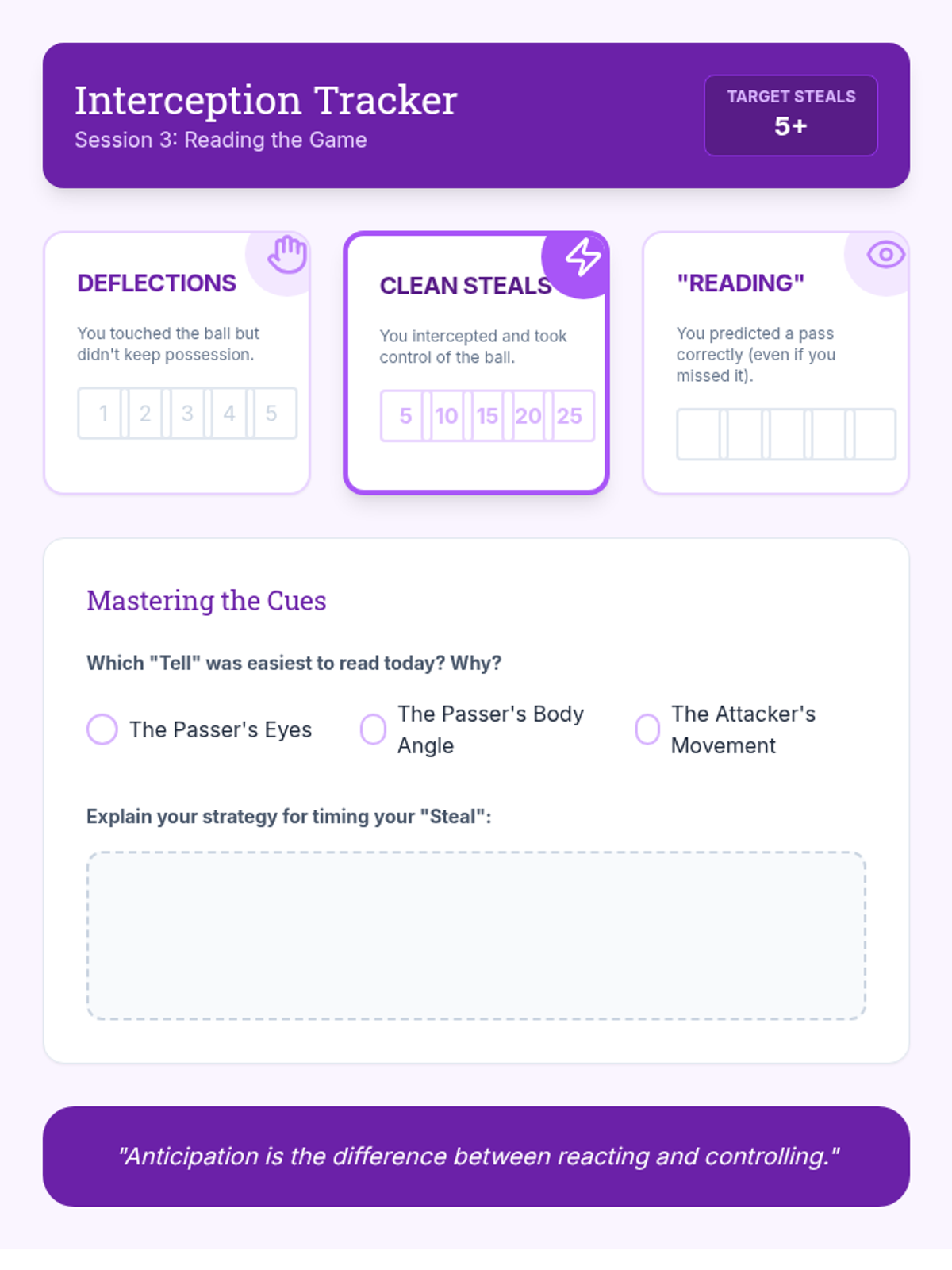
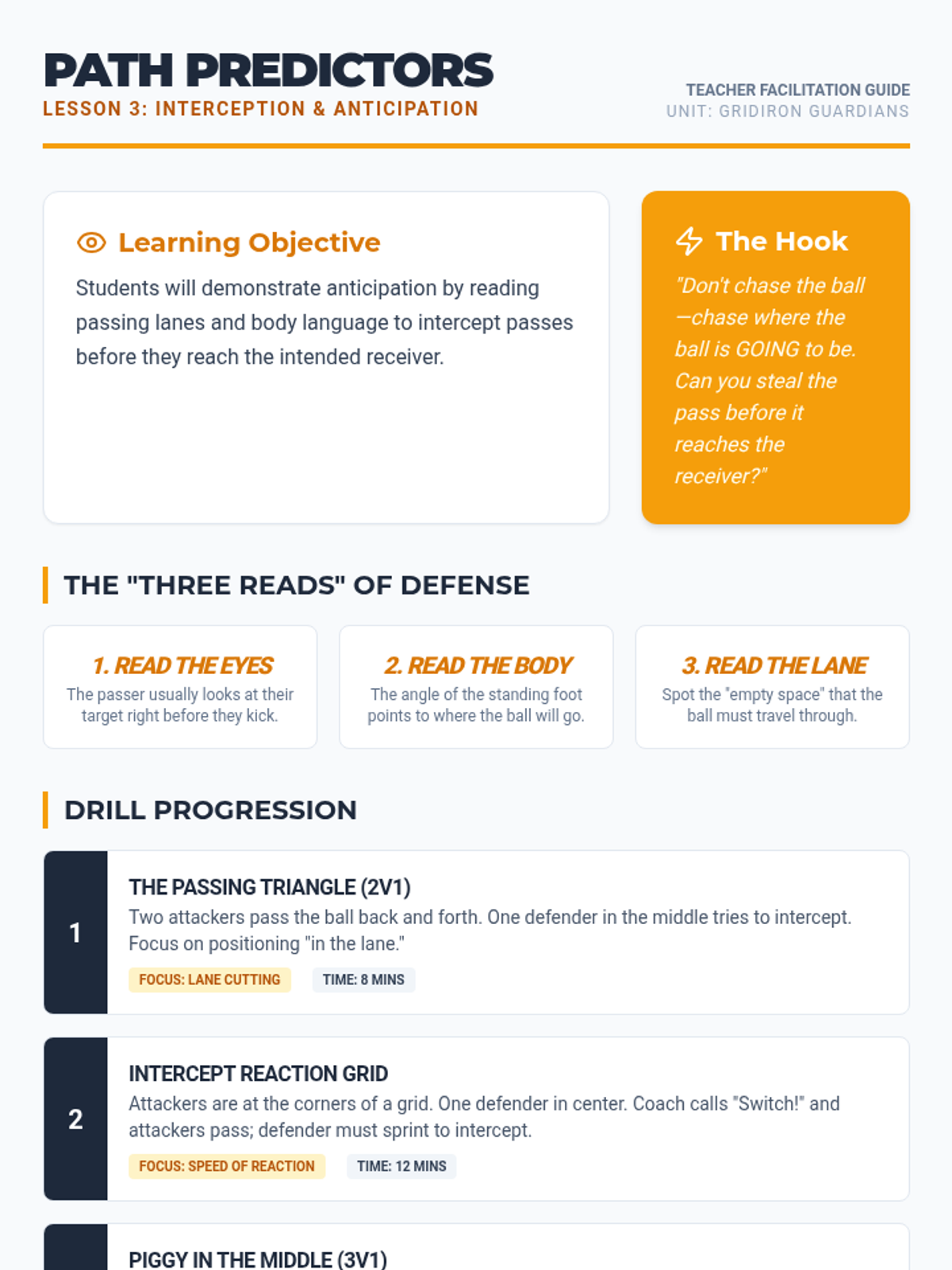
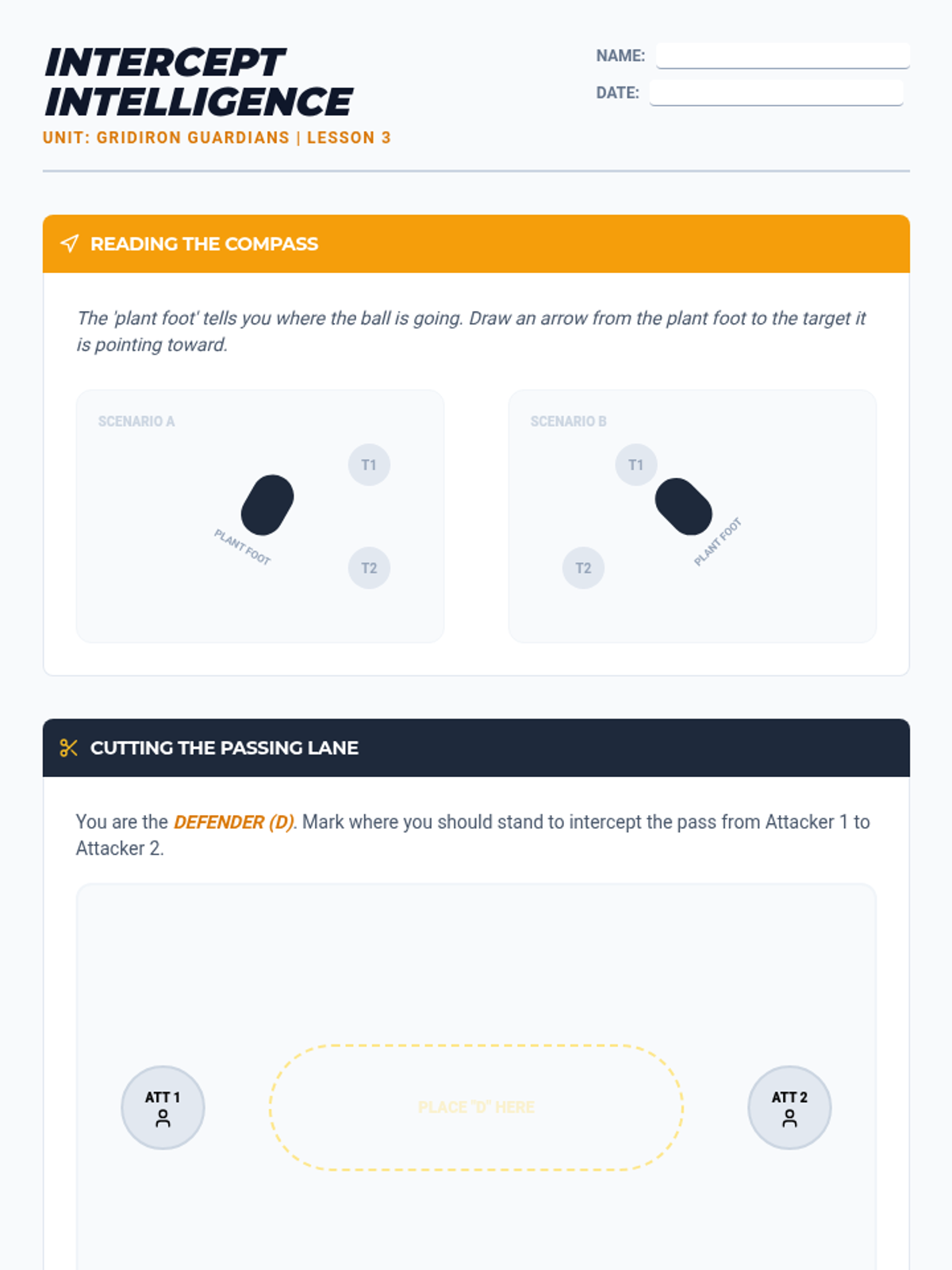
Develops anticipation and game-reading skills. Students practice predicting passing lanes and timing their movements to intercept the ball before it reaches the intended target.
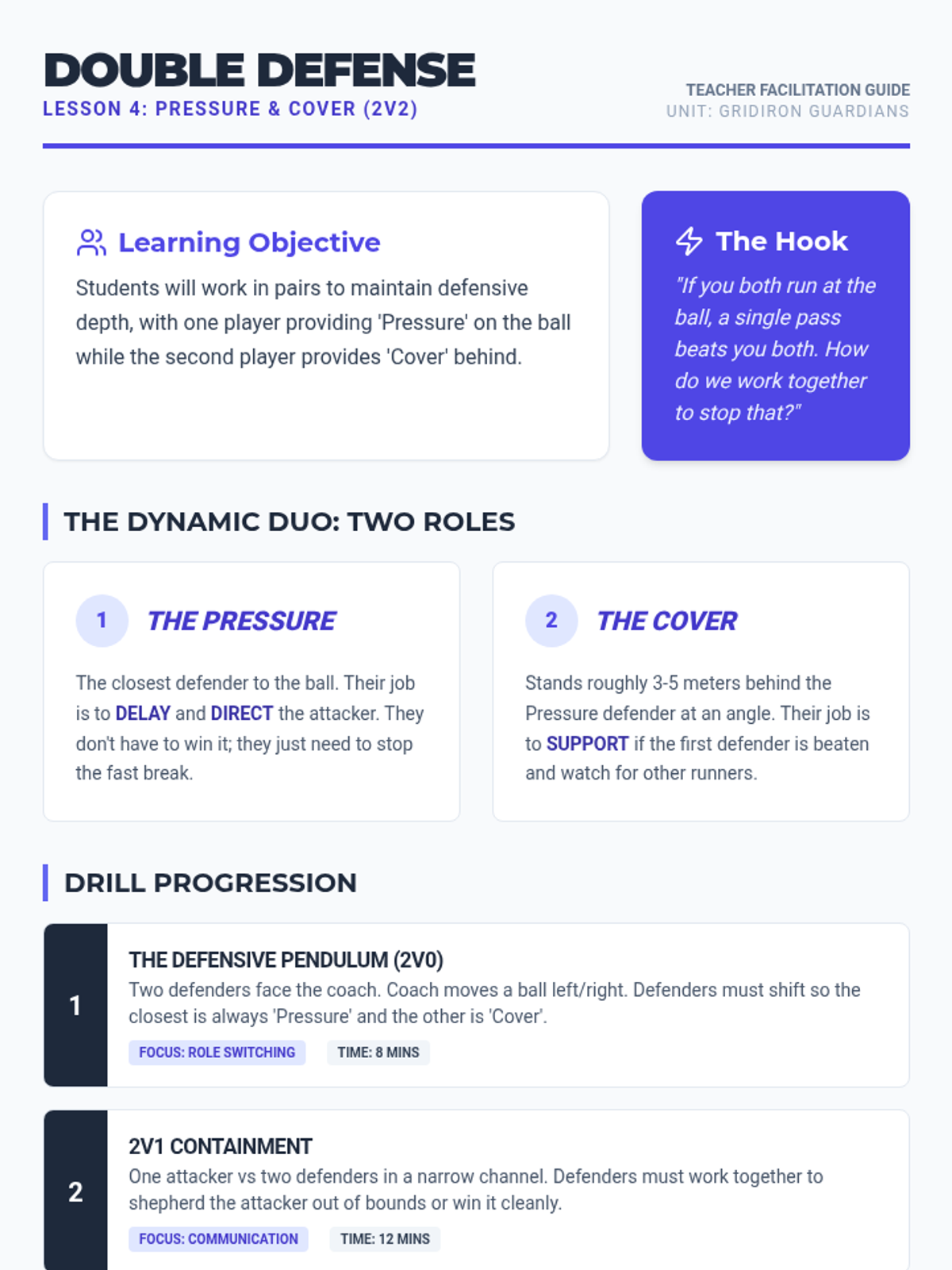
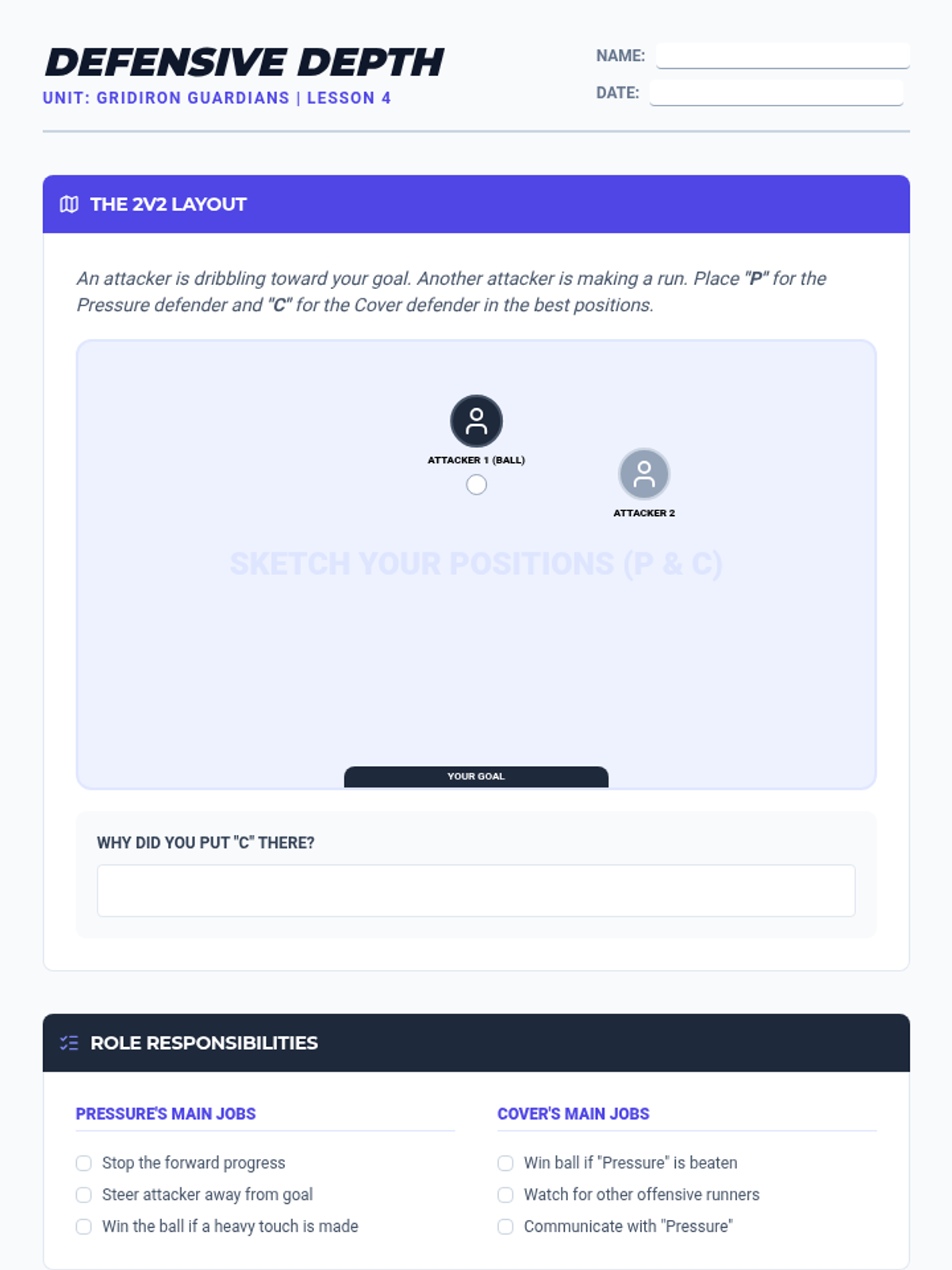
Introduces the 1st and 2nd defender roles. Students learn how to work in pairs to provide pressure on the ball while covering the space behind to prevent breakthroughs.
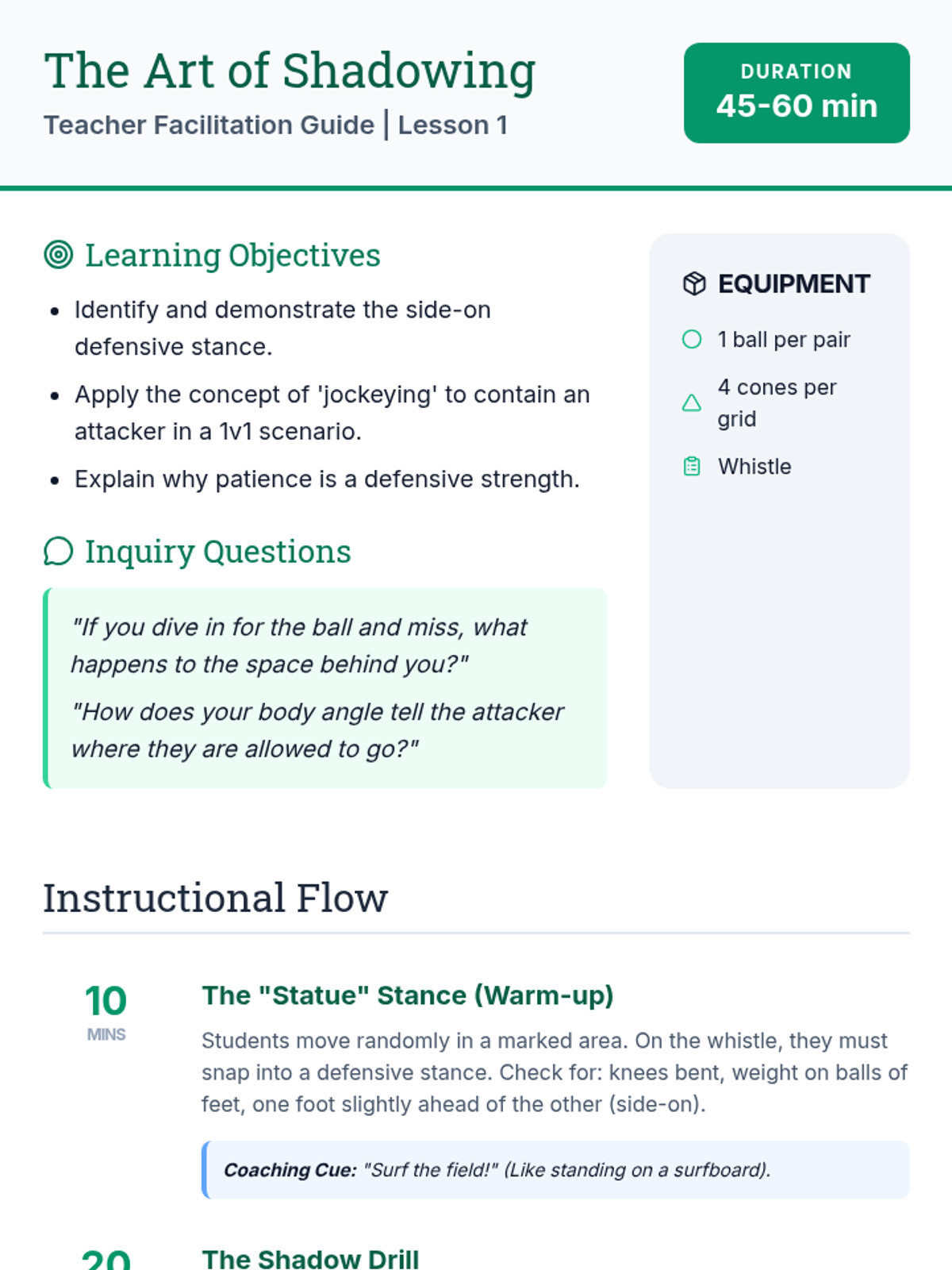
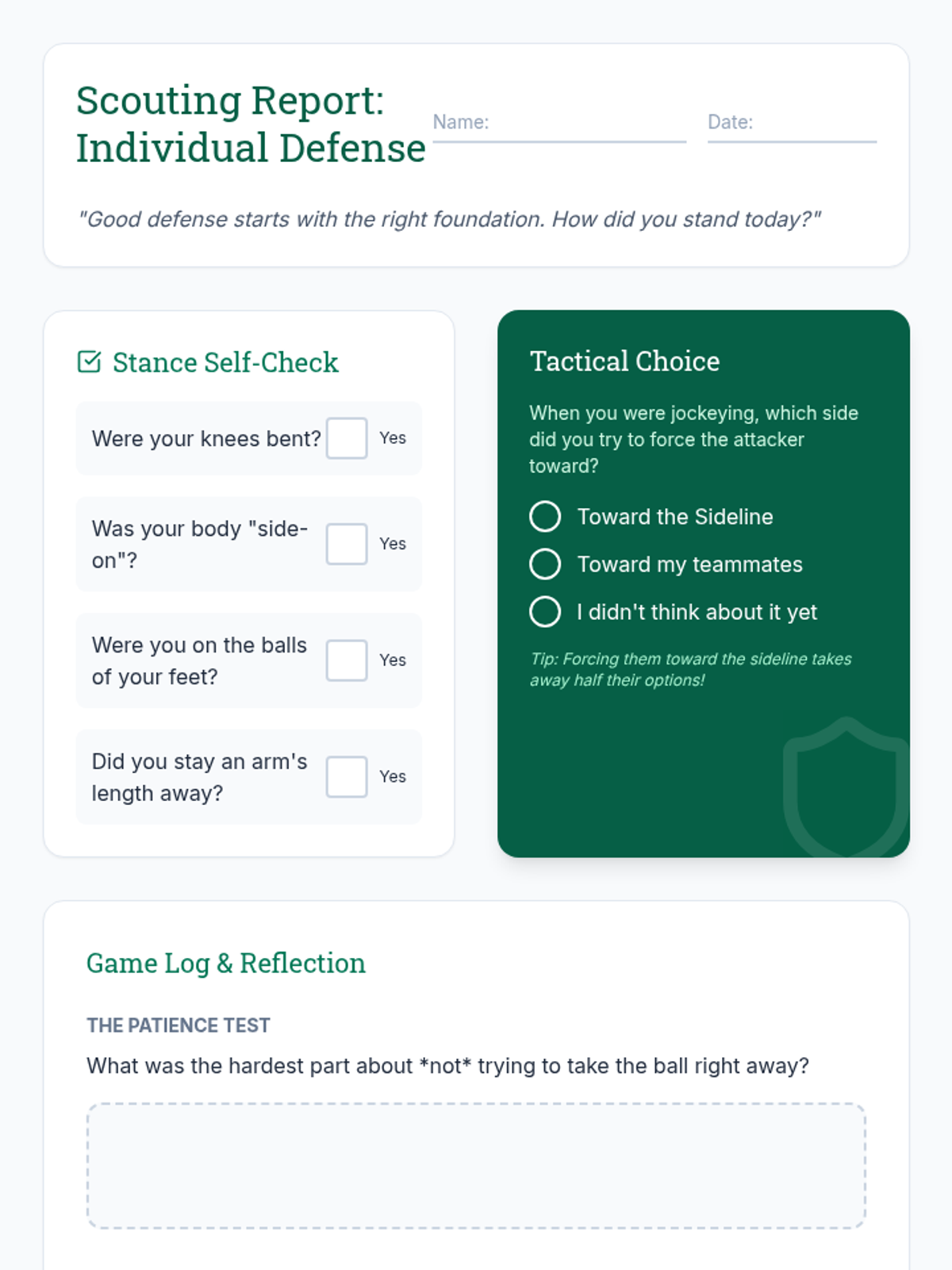
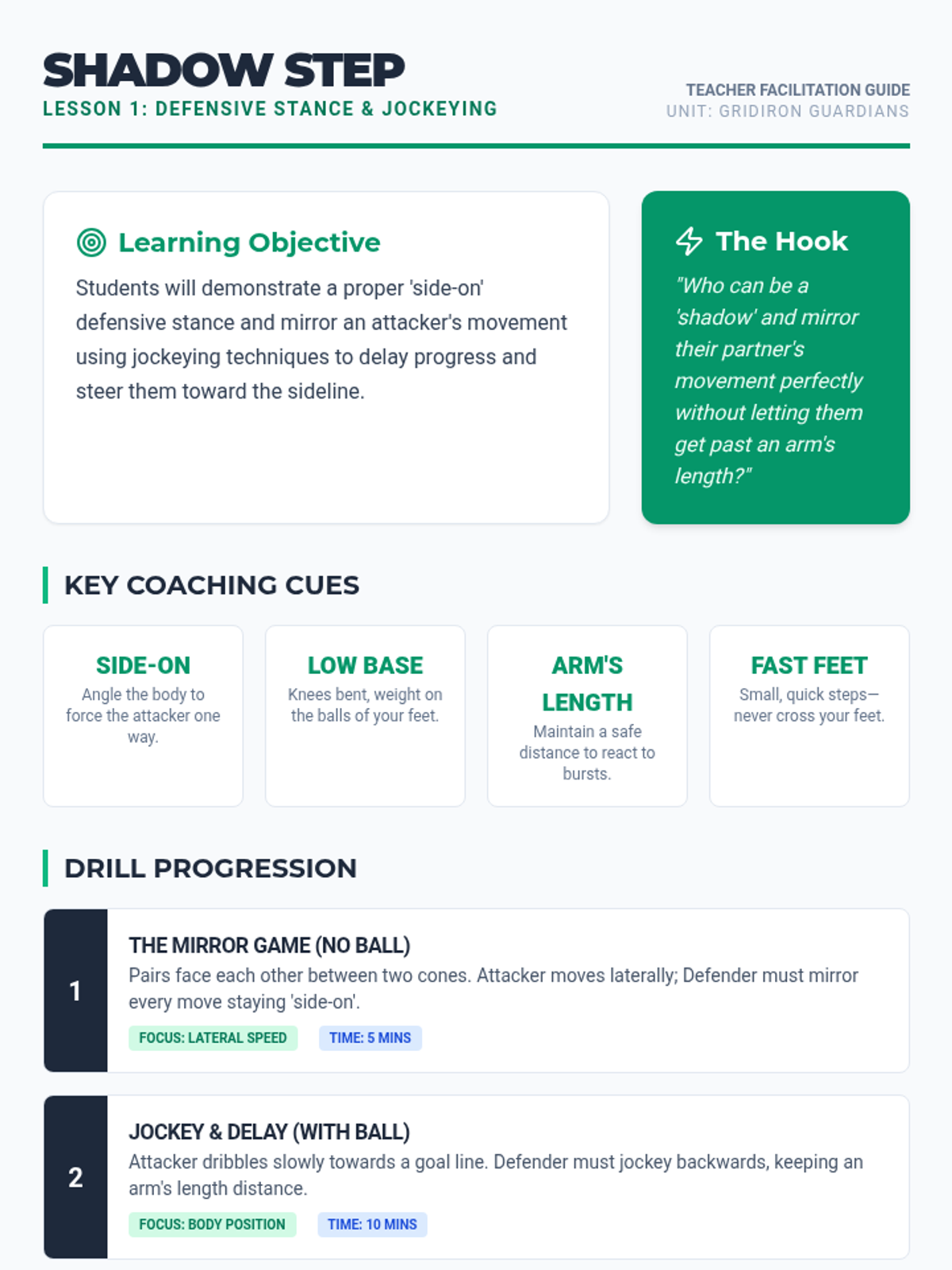
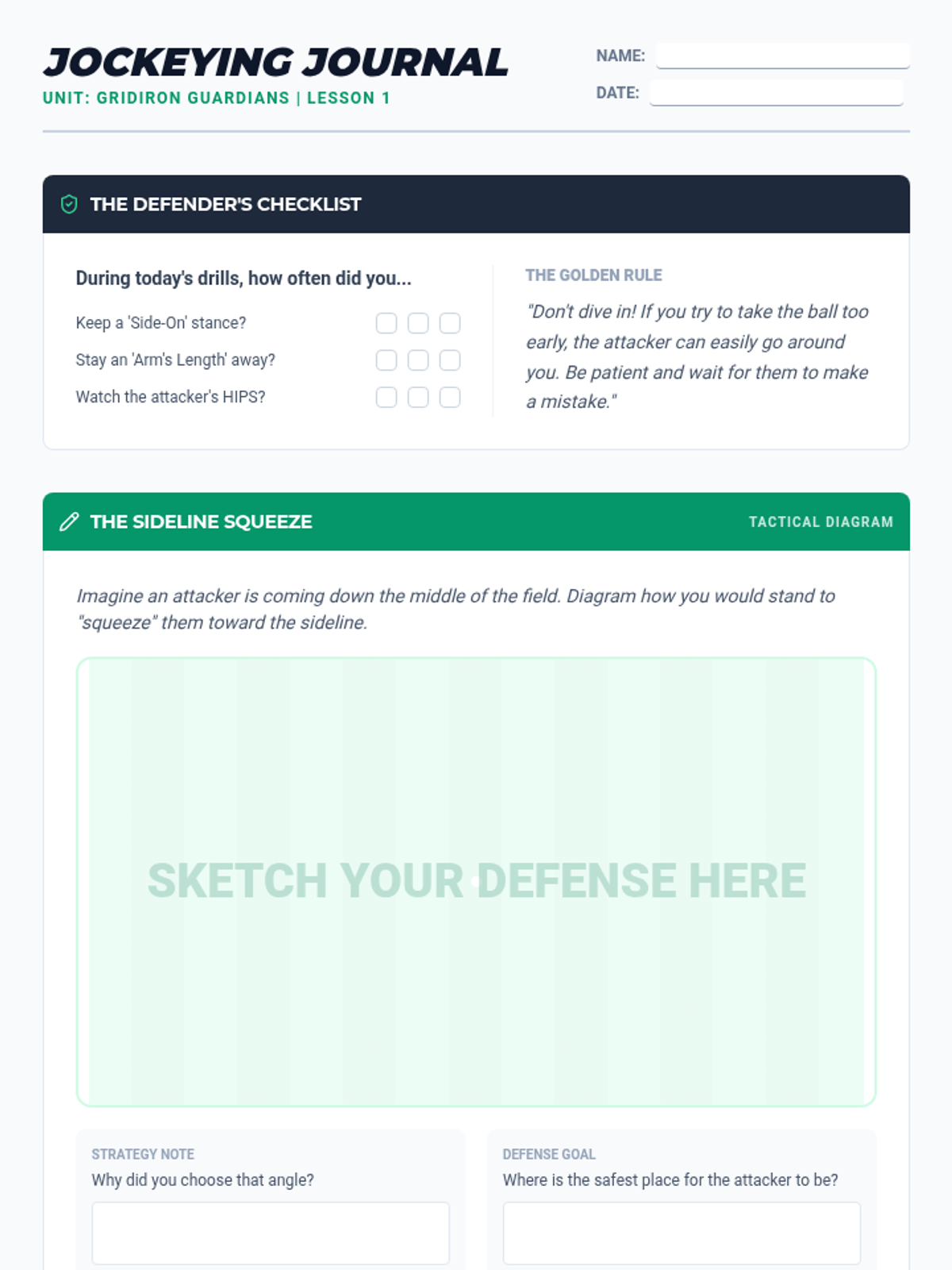
Focuses on the individual defensive stance and 'jockeying' technique to contain attackers. Students learn to use patience and body positioning to direct play rather than lunging for the ball.
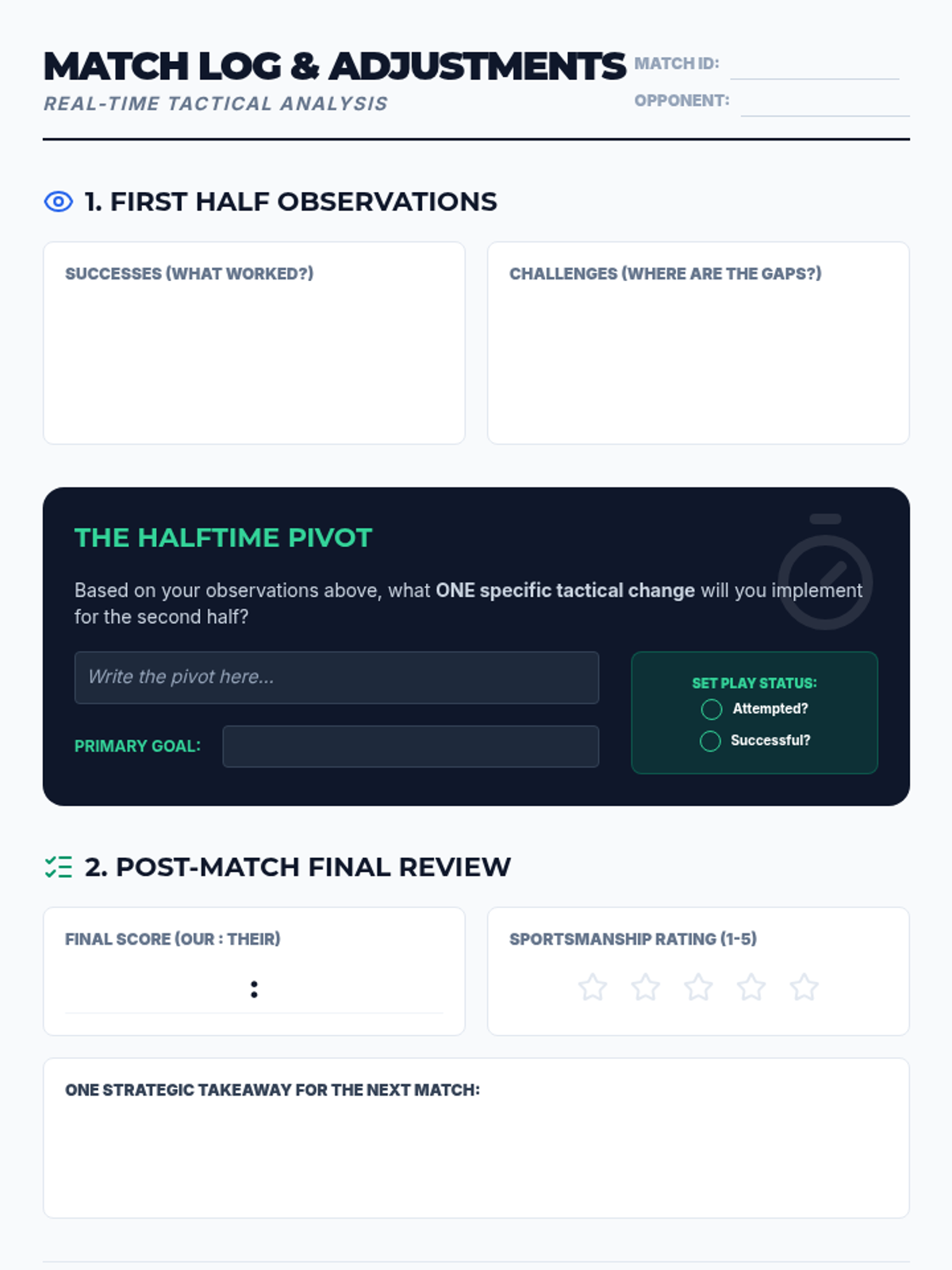
The class tournament begins with a focus on implementing the practiced strategies. Between games, teams conduct brief 'halftime talks' to discuss what is working and what needs to change.
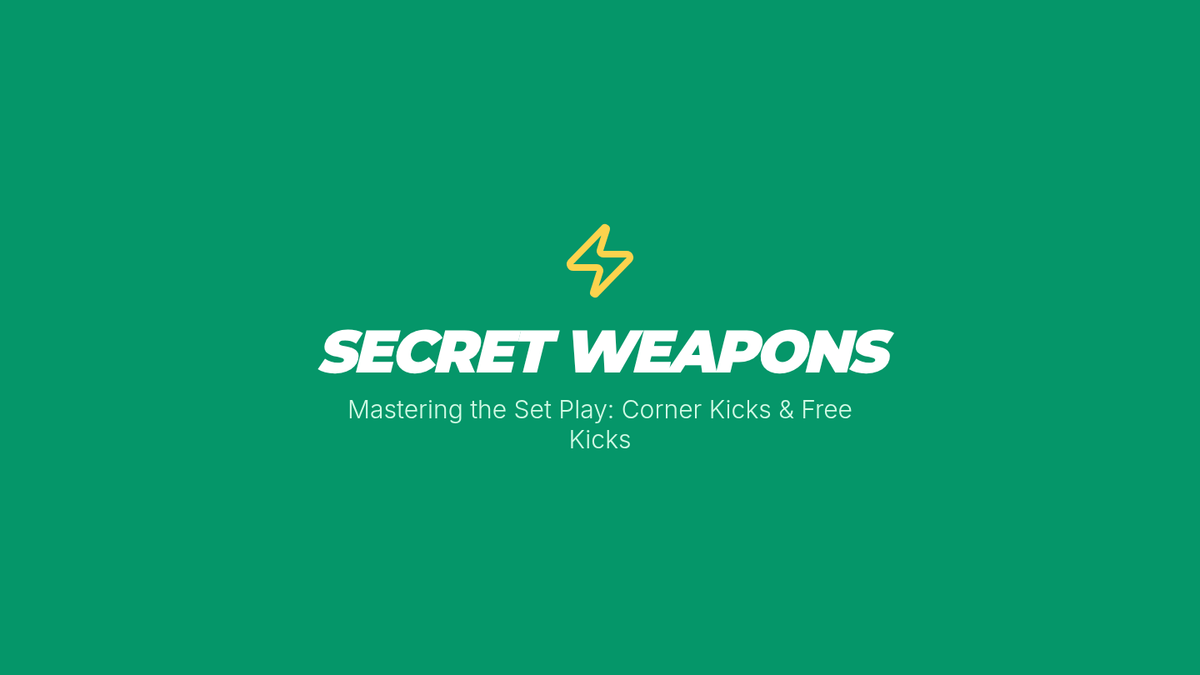
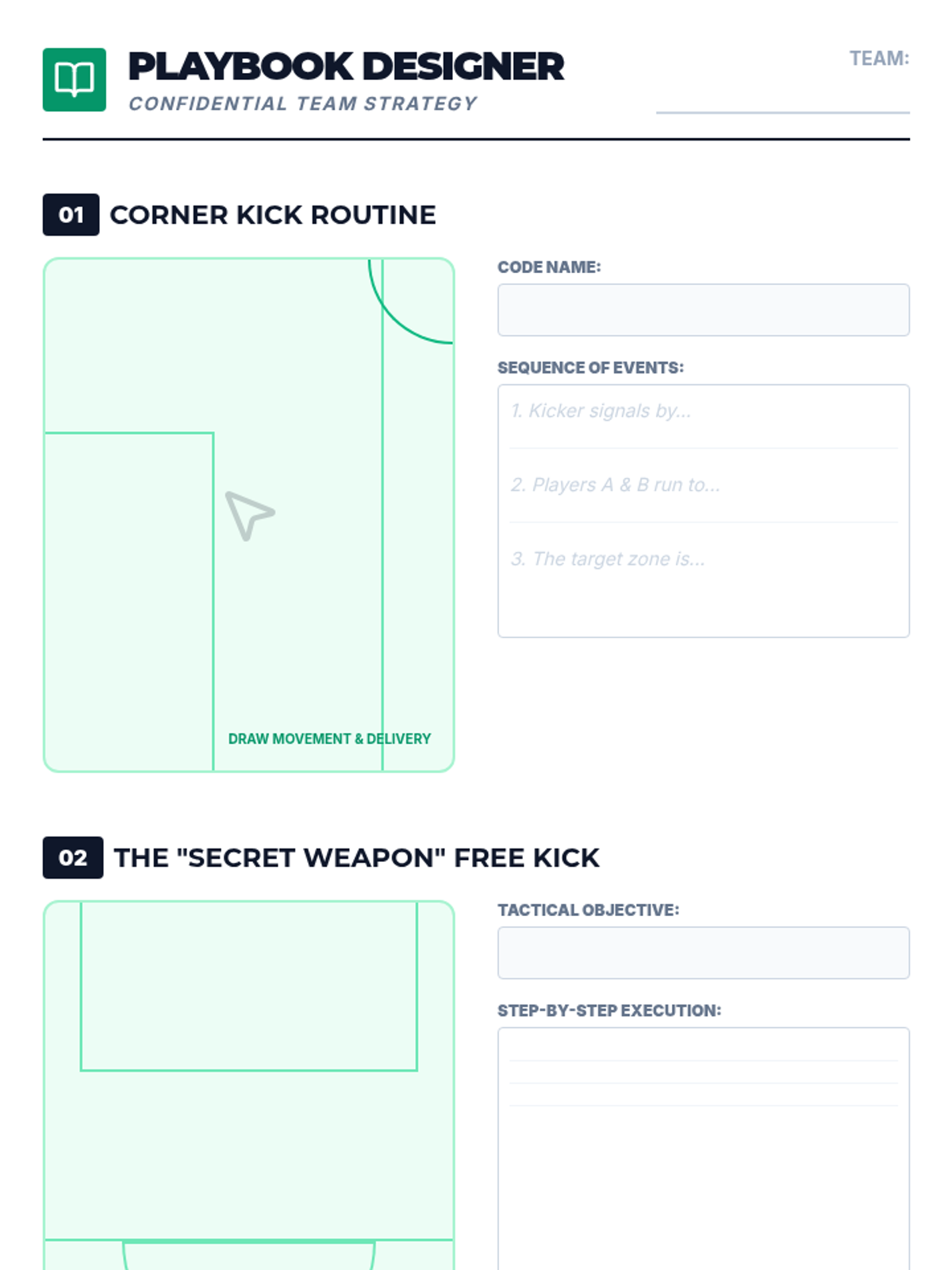
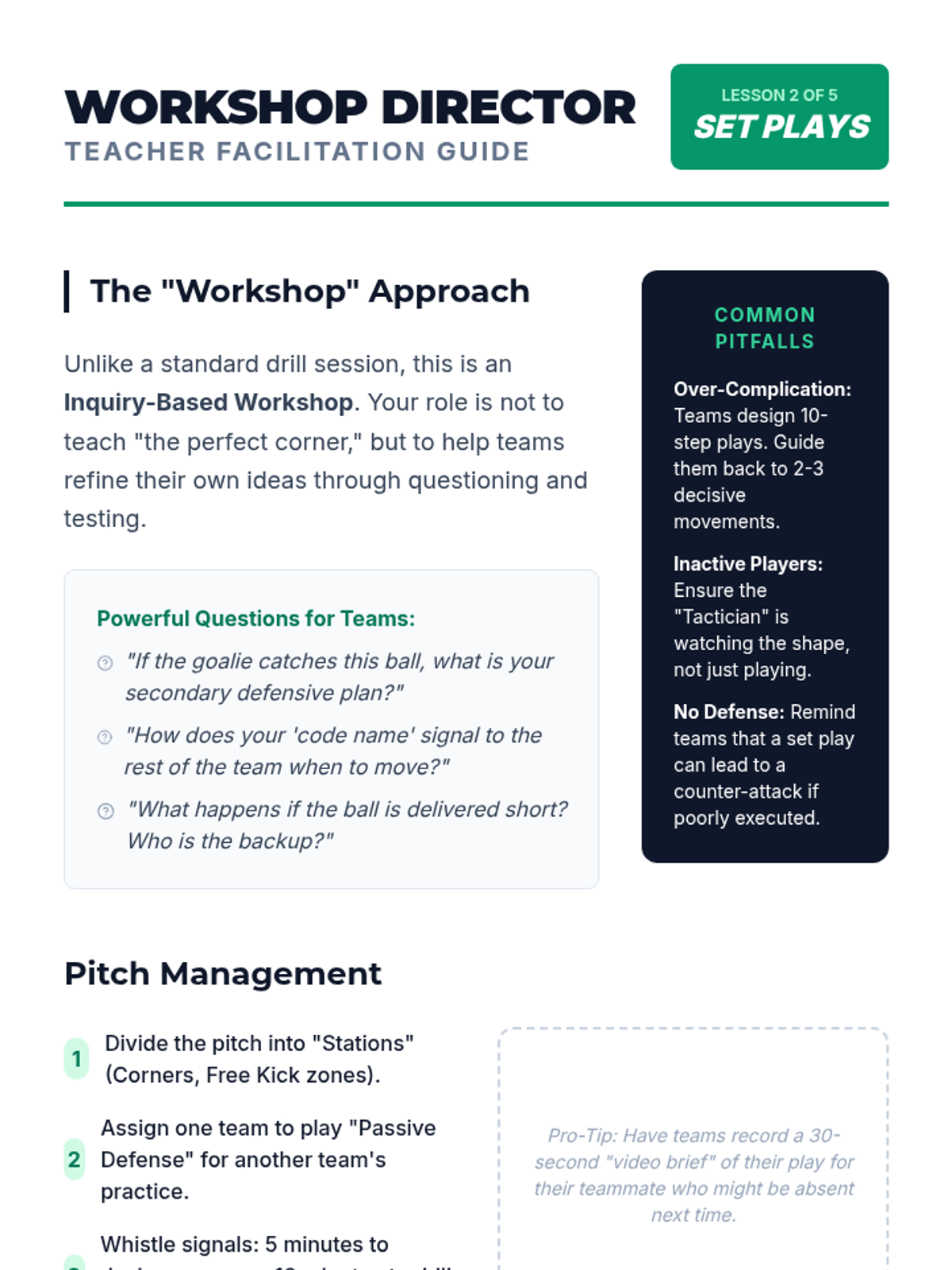
Teams spend the lesson designing and practicing two specific set plays (one corner kick, one free kick) and one defensive protocol. They document these plays to be used in the upcoming tournament.
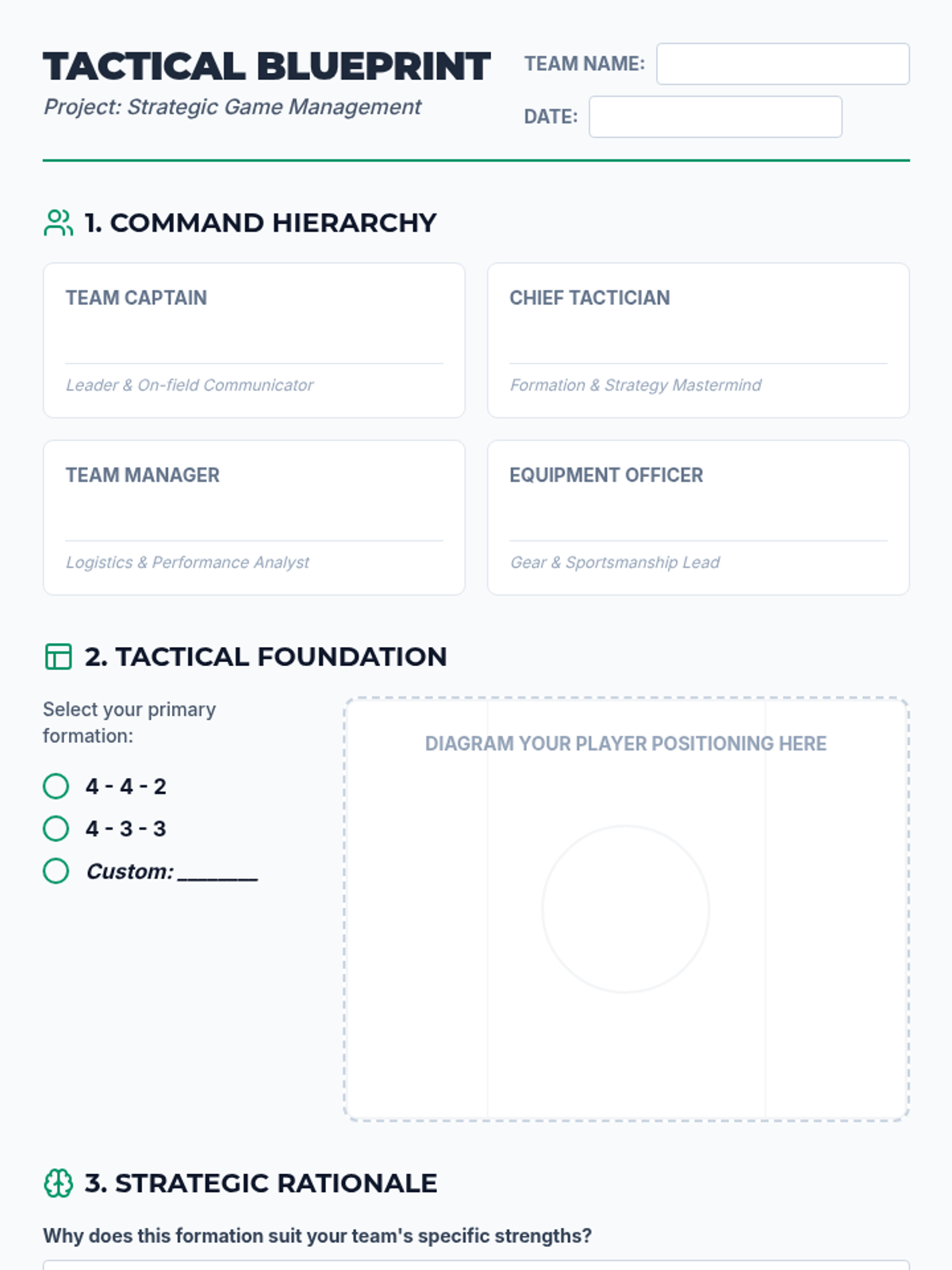
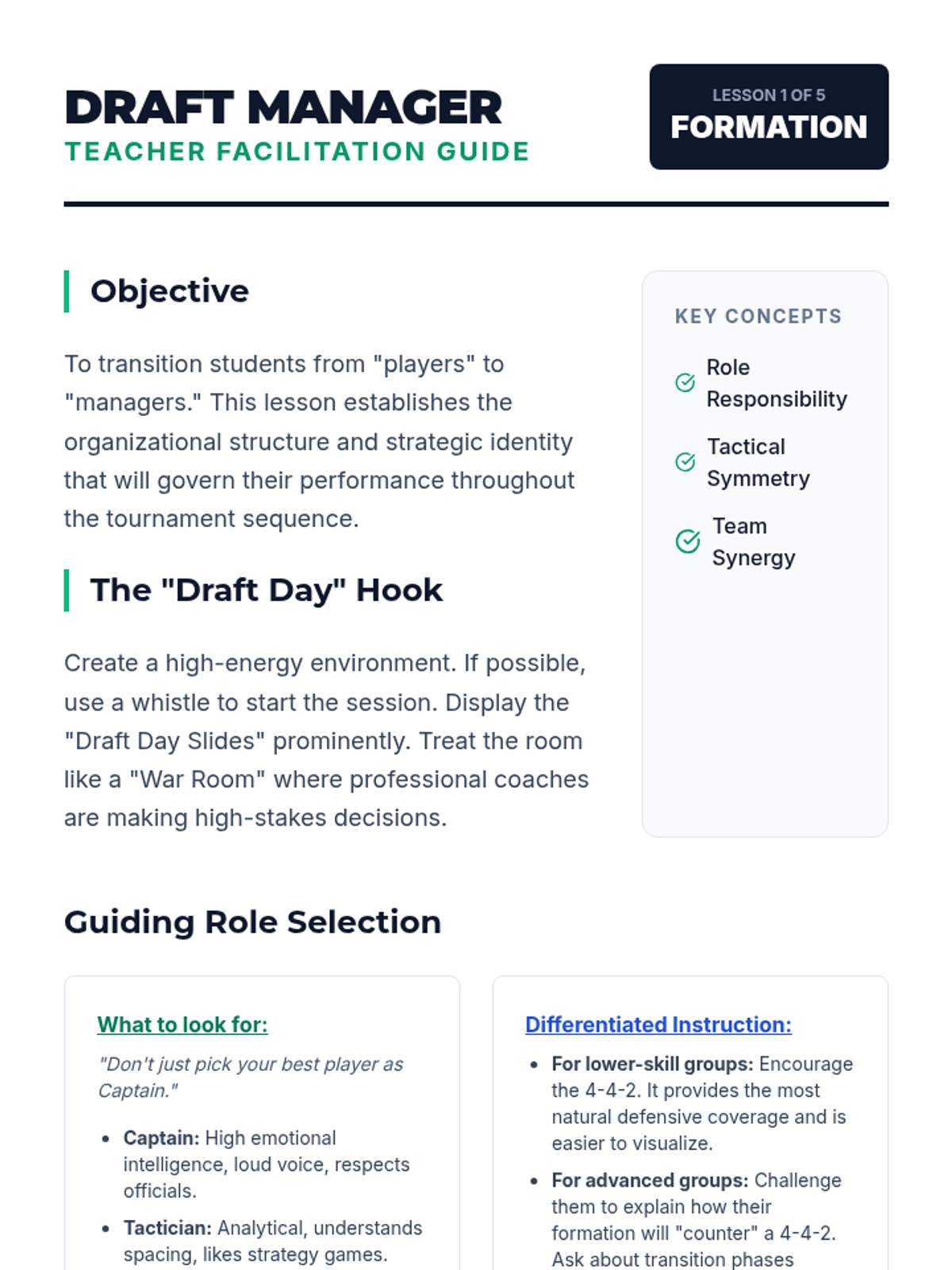
Students form teams and assume roles such as captain, tactician, and manager. They draft a team charter and choose a formation (e.g., 4-4-2, 4-3-3) that best suits their players' strengths.
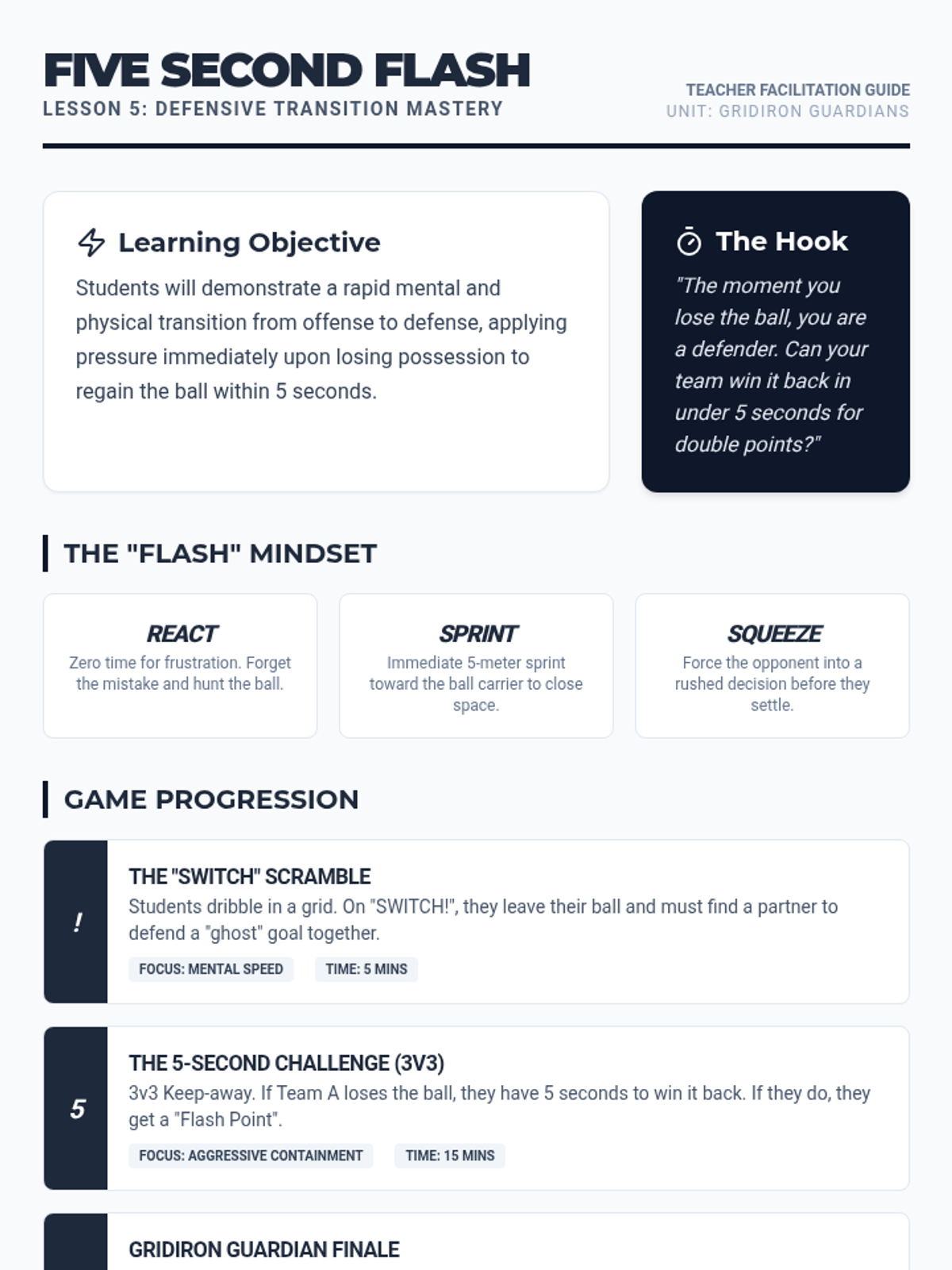
Mastering the transition from offense to defense with high intensity and immediate pressure.
Working in pairs to provide pressure and cover, ensuring defensive depth.
Learning to read the game to intercept passes before they reach their targets.
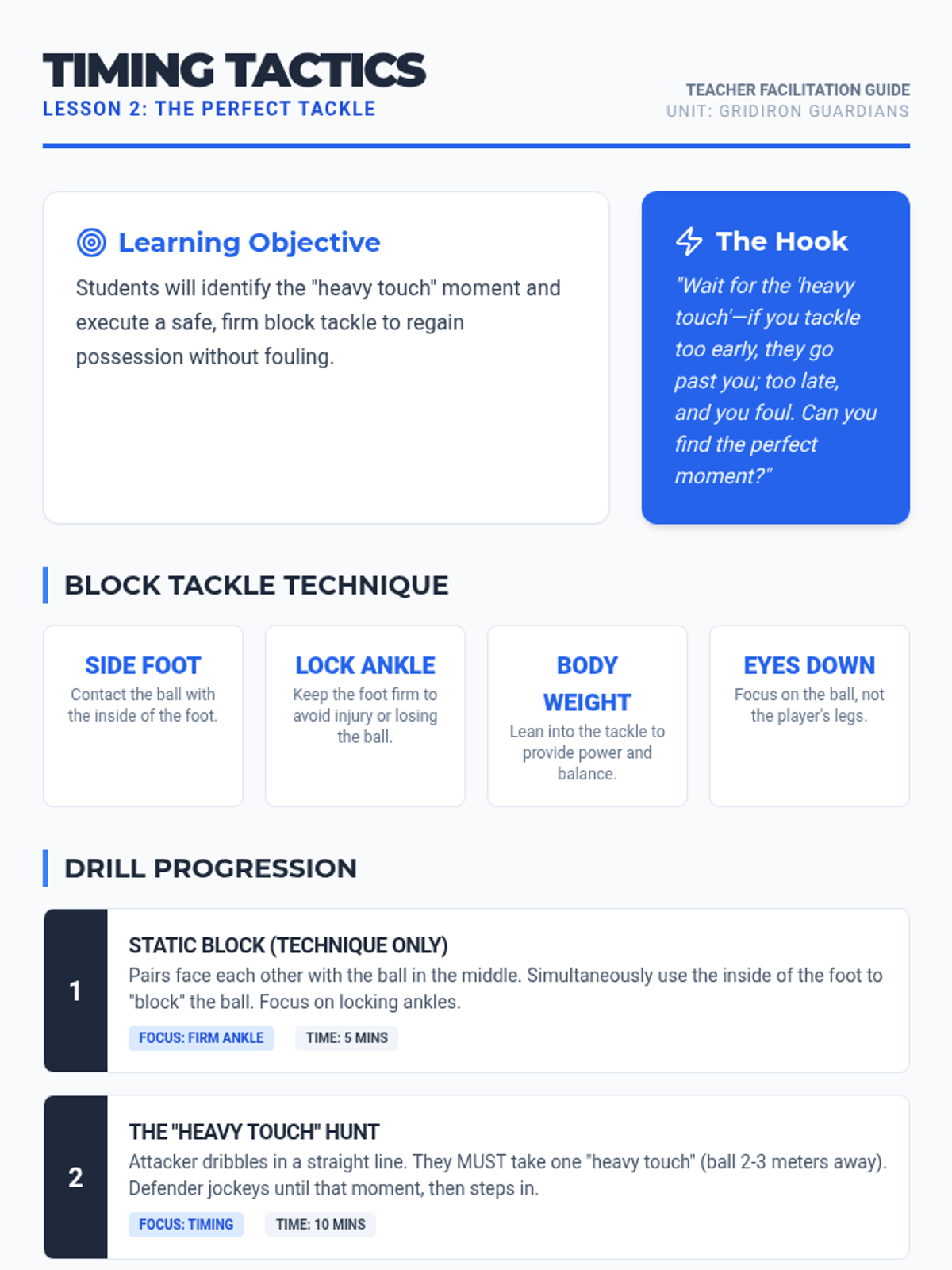
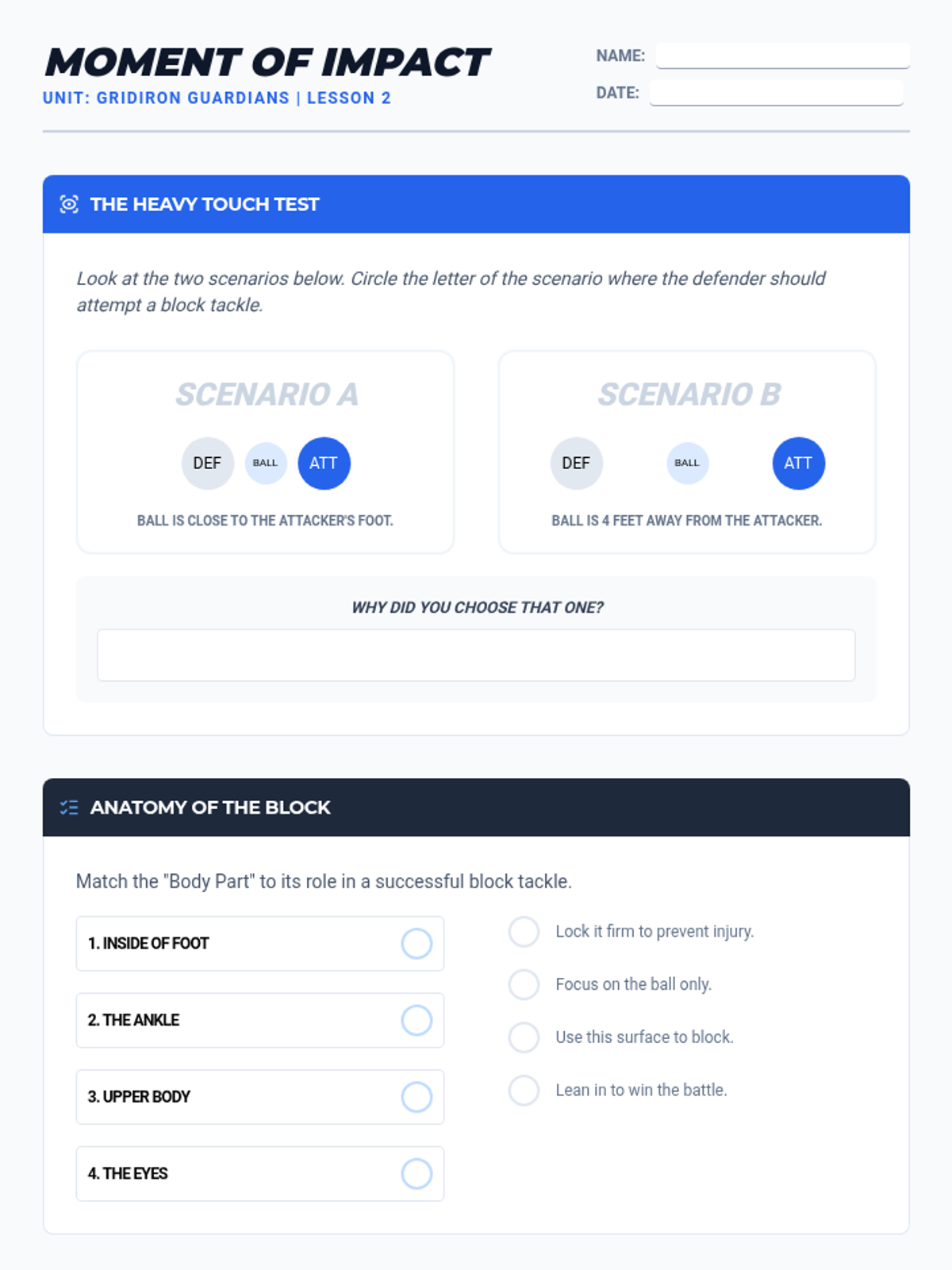
Focusing on the "heavy touch" to execute clean block tackles safely and effectively.
Introduction to defensive stance and jockeying to contain attackers and steer them away from danger.
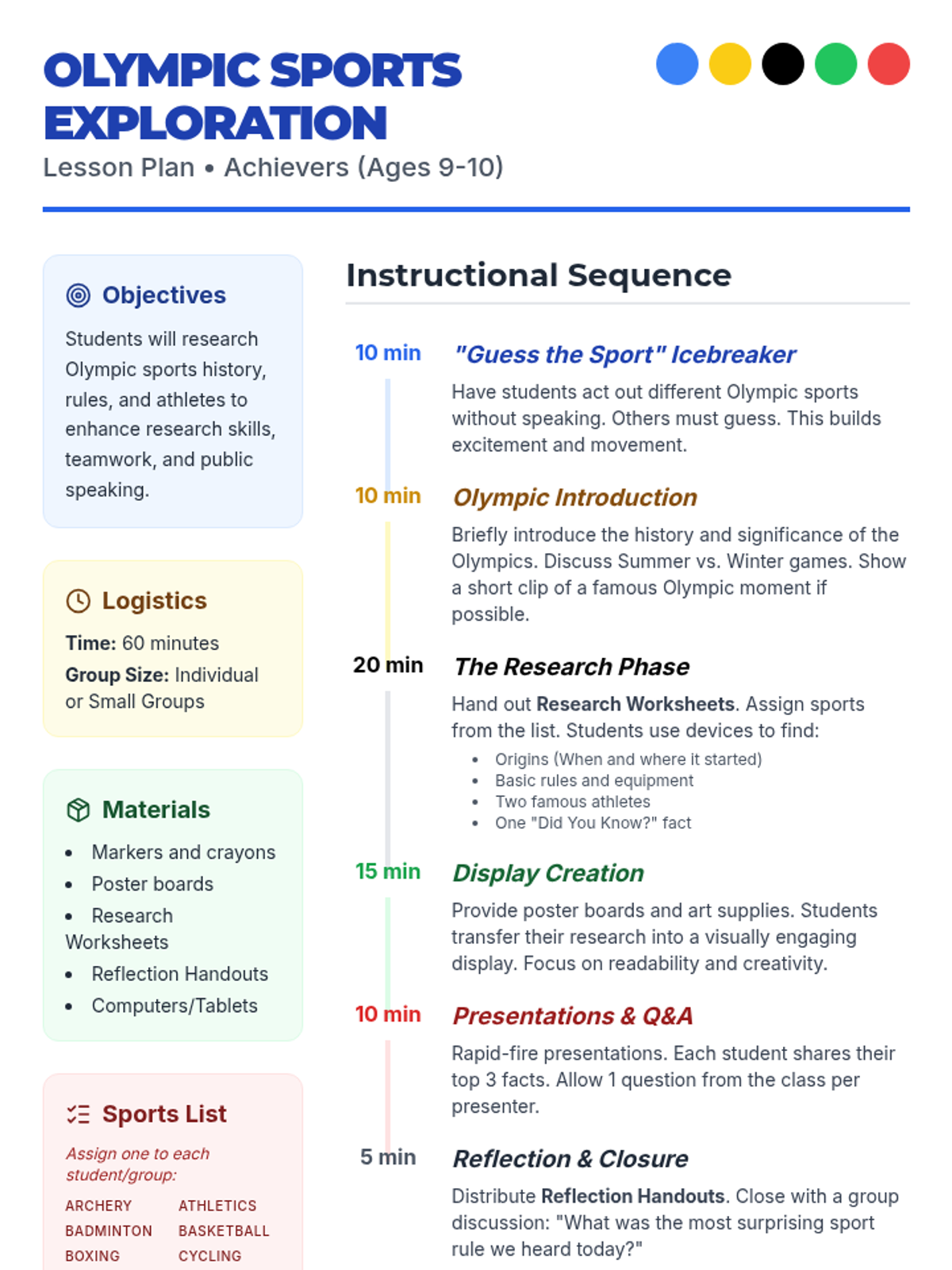
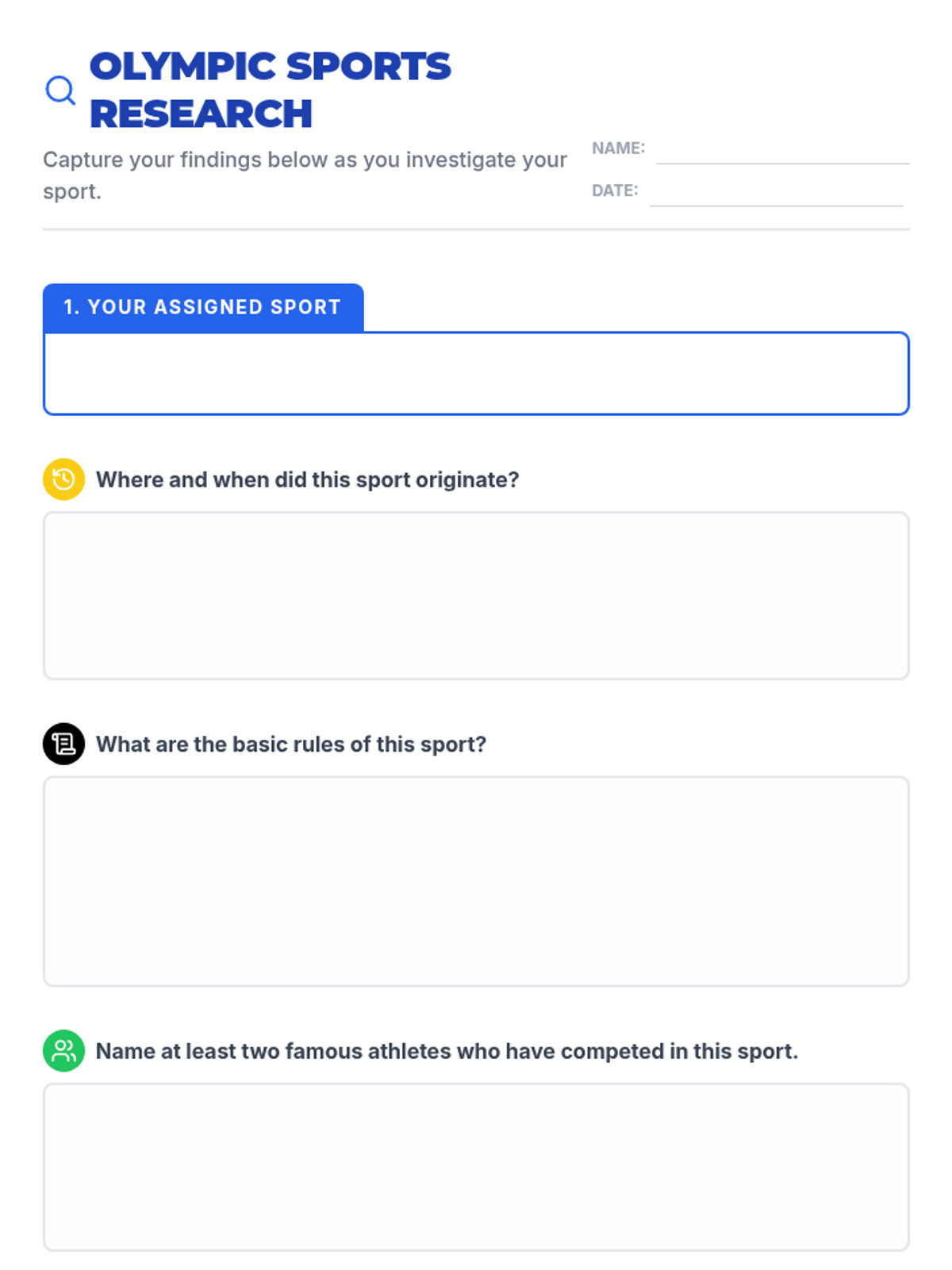
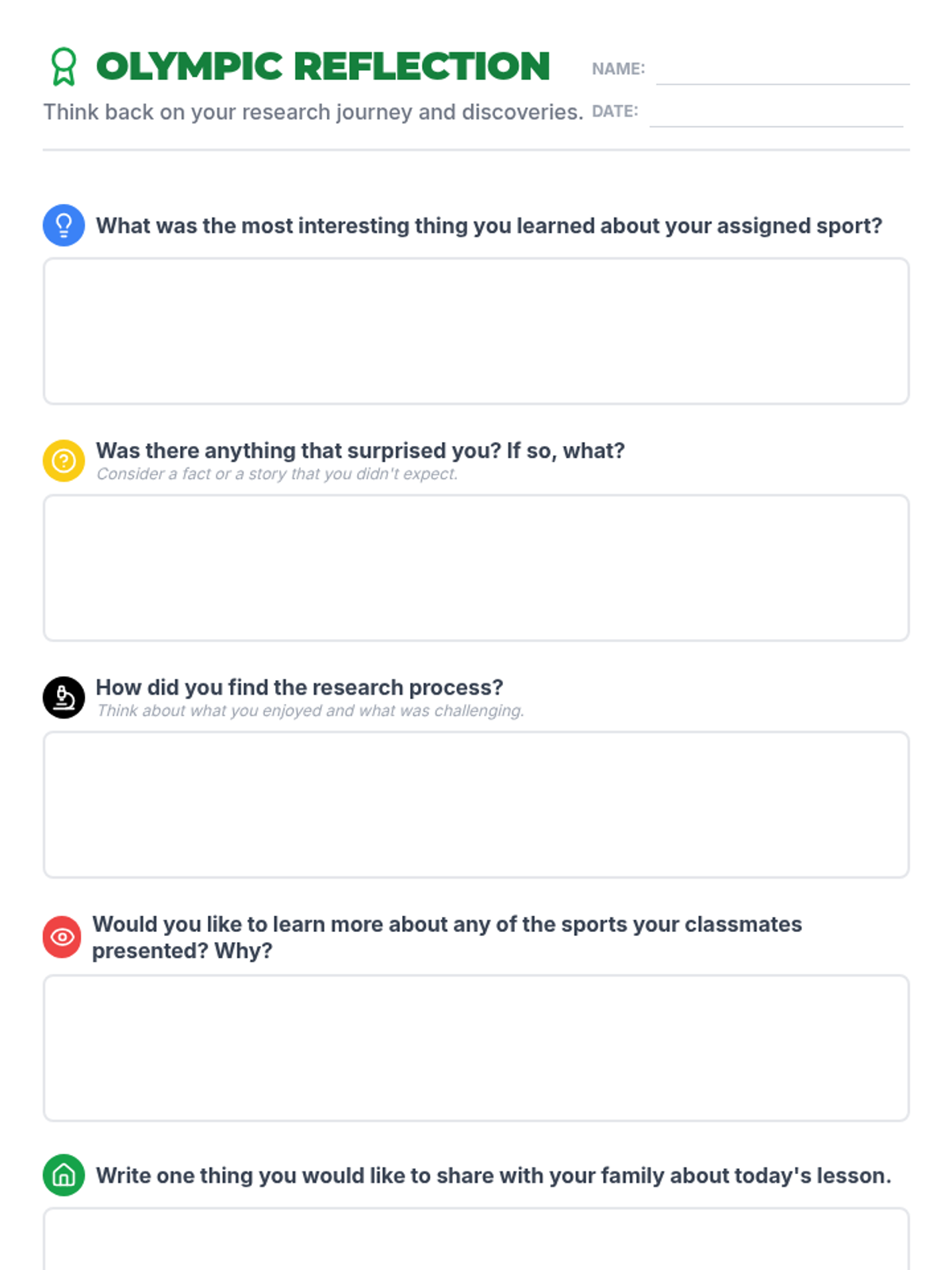
Students will explore various Olympic sports, researching their origins, rules, and famous athletes through research, display creation, and presentations.