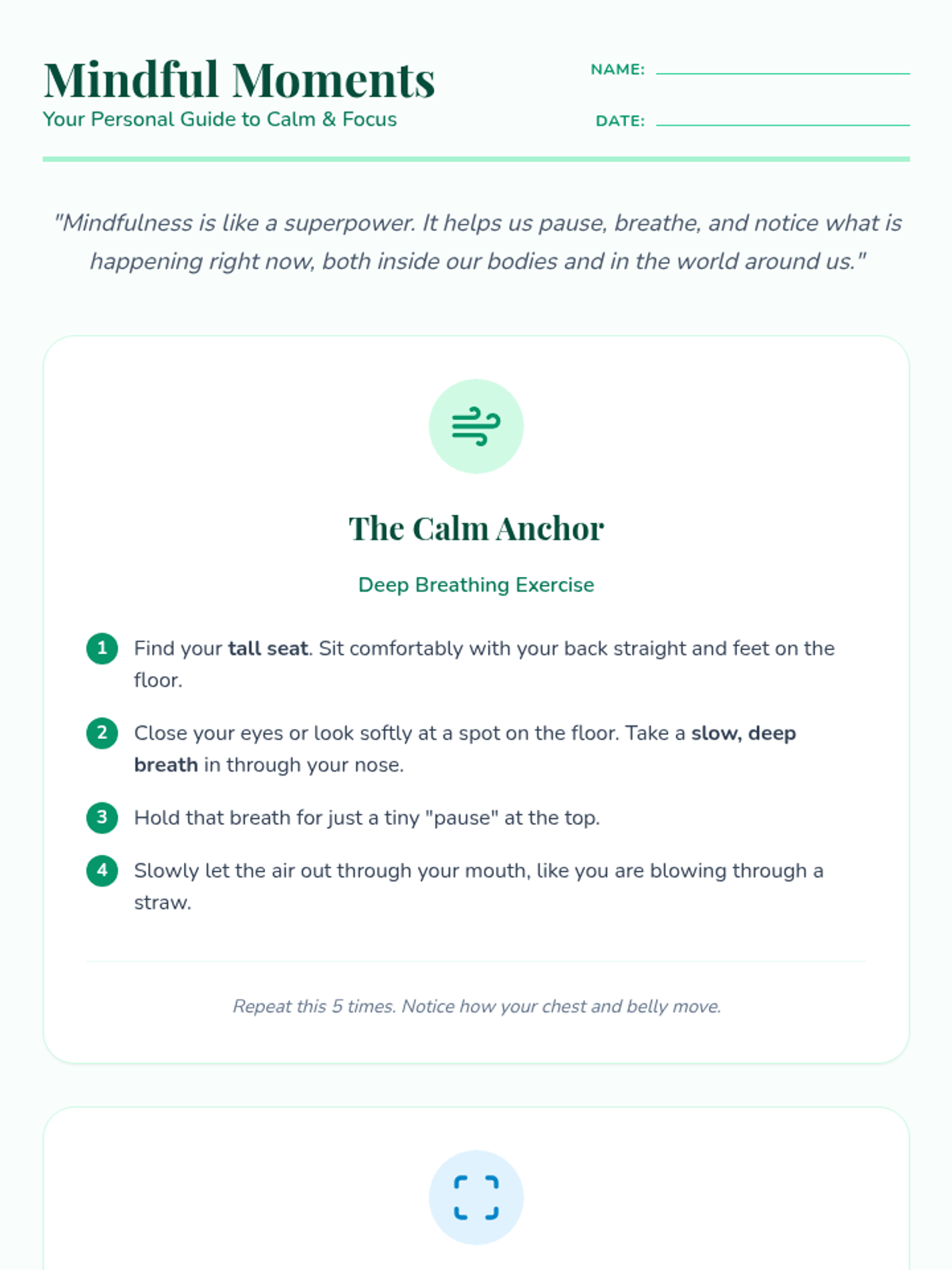
Fundamental concepts of emotional intelligence, stress reduction, and relaxation exercises. Develops skills for healthy relationships, digital balance, and resilience while establishing pathways for help-seeking and support systems.
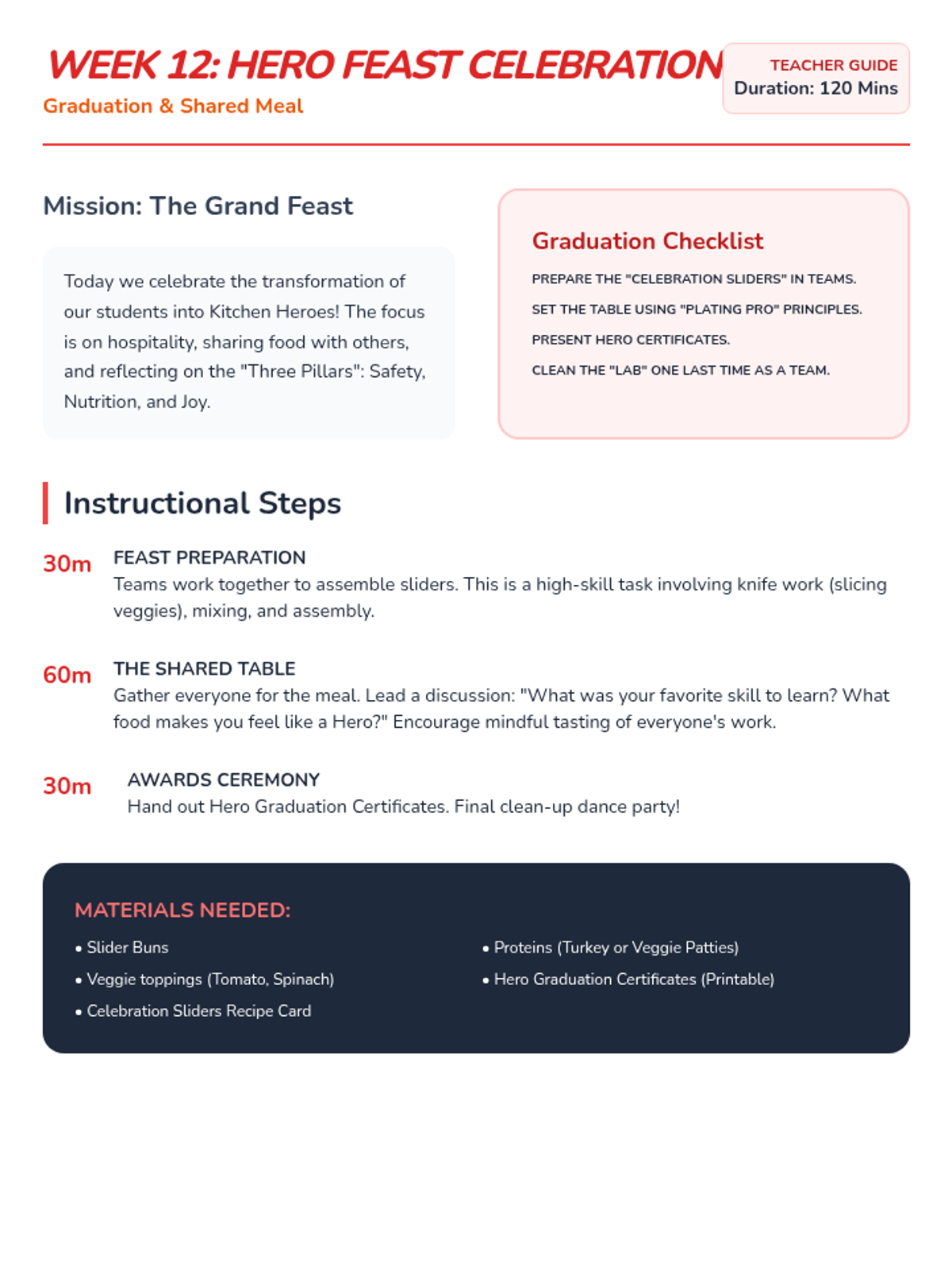
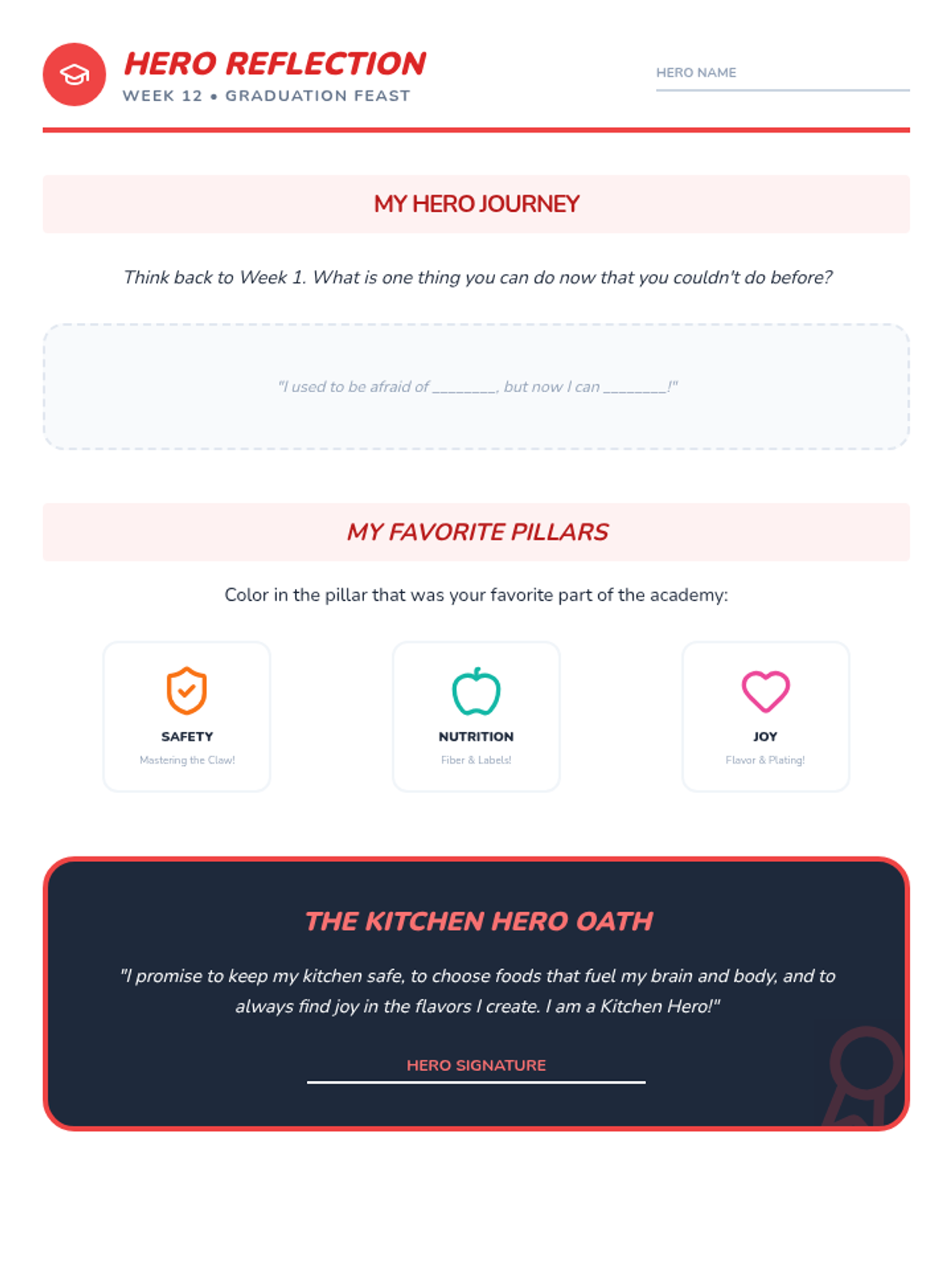
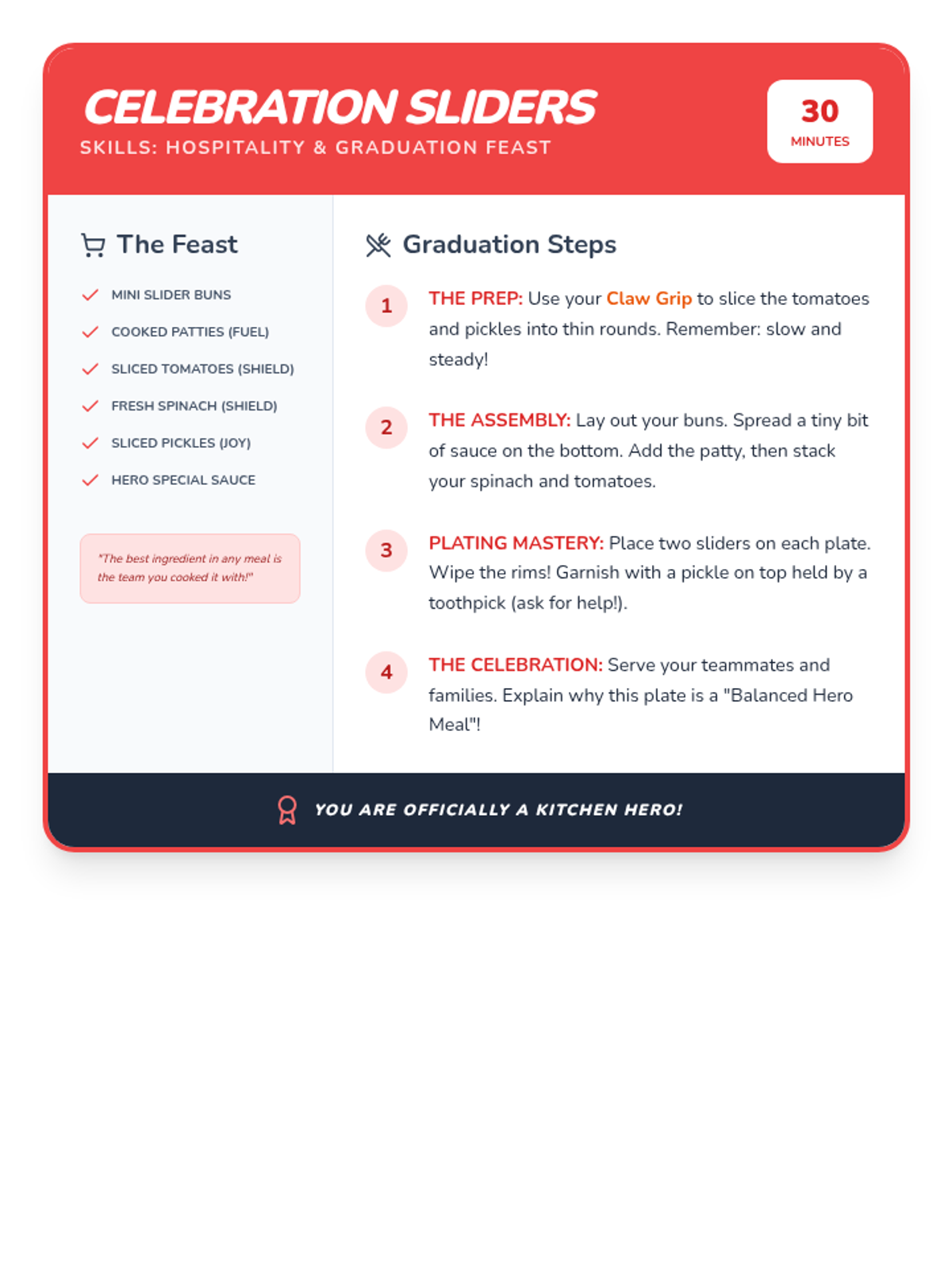
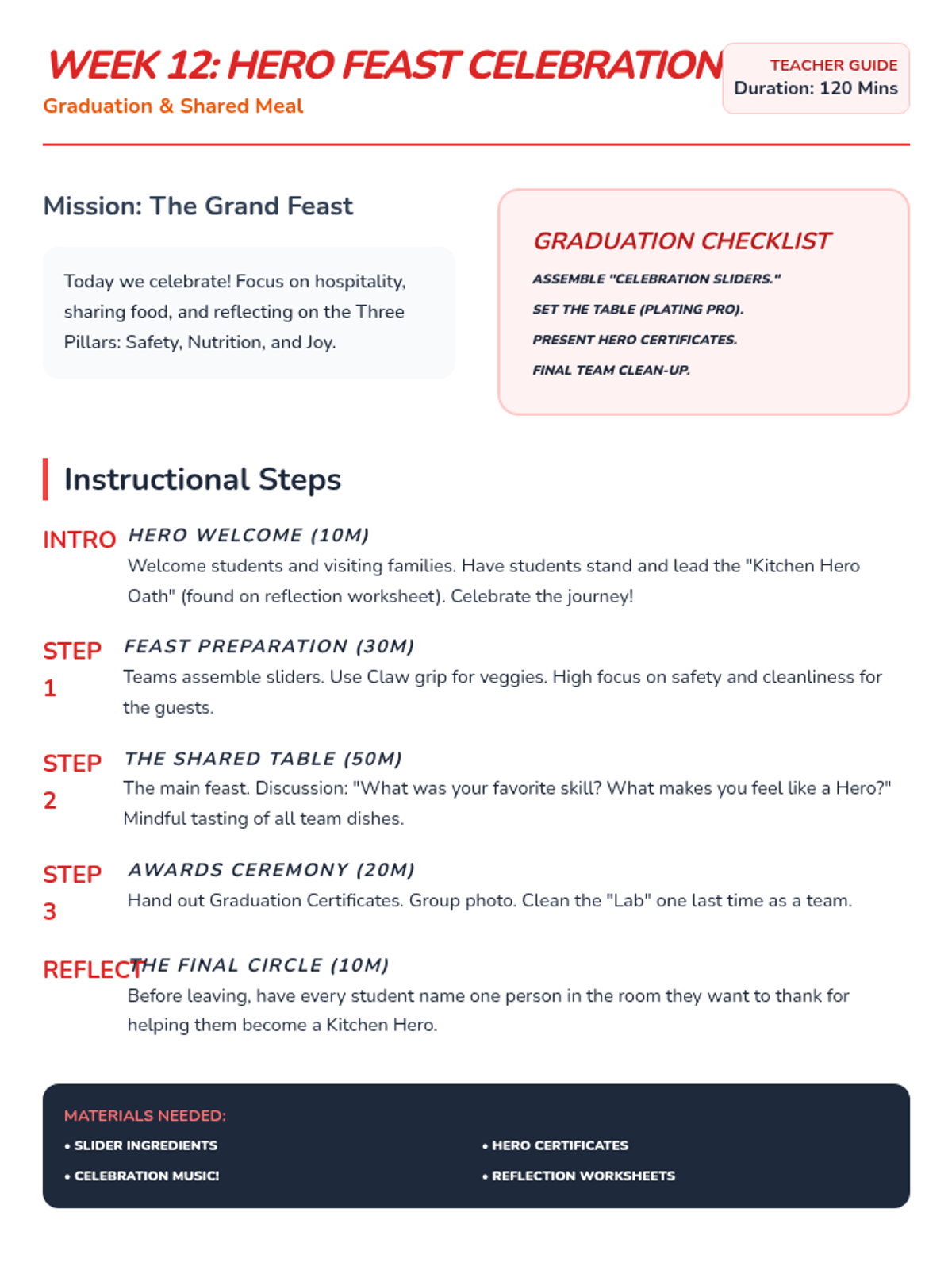
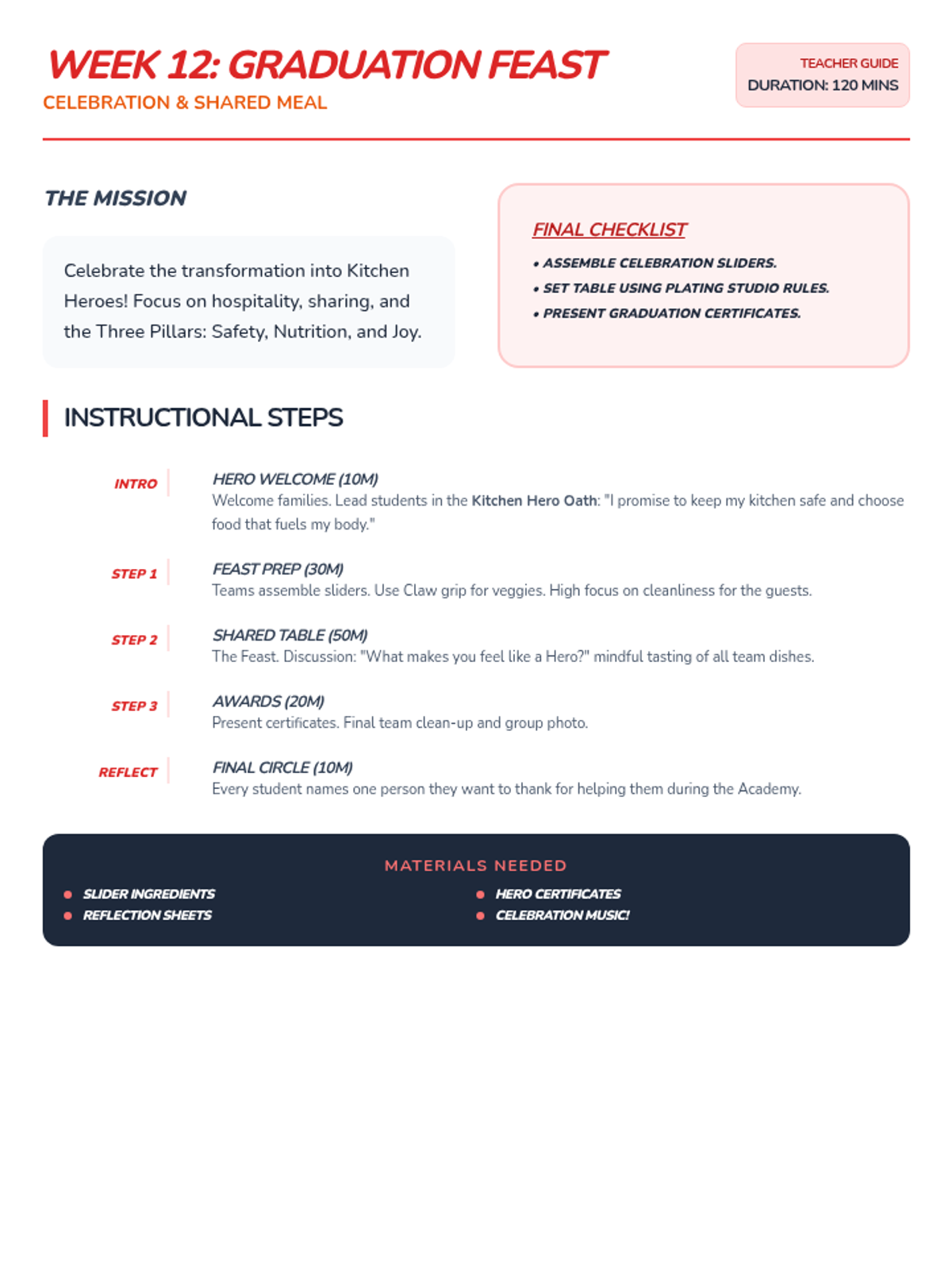
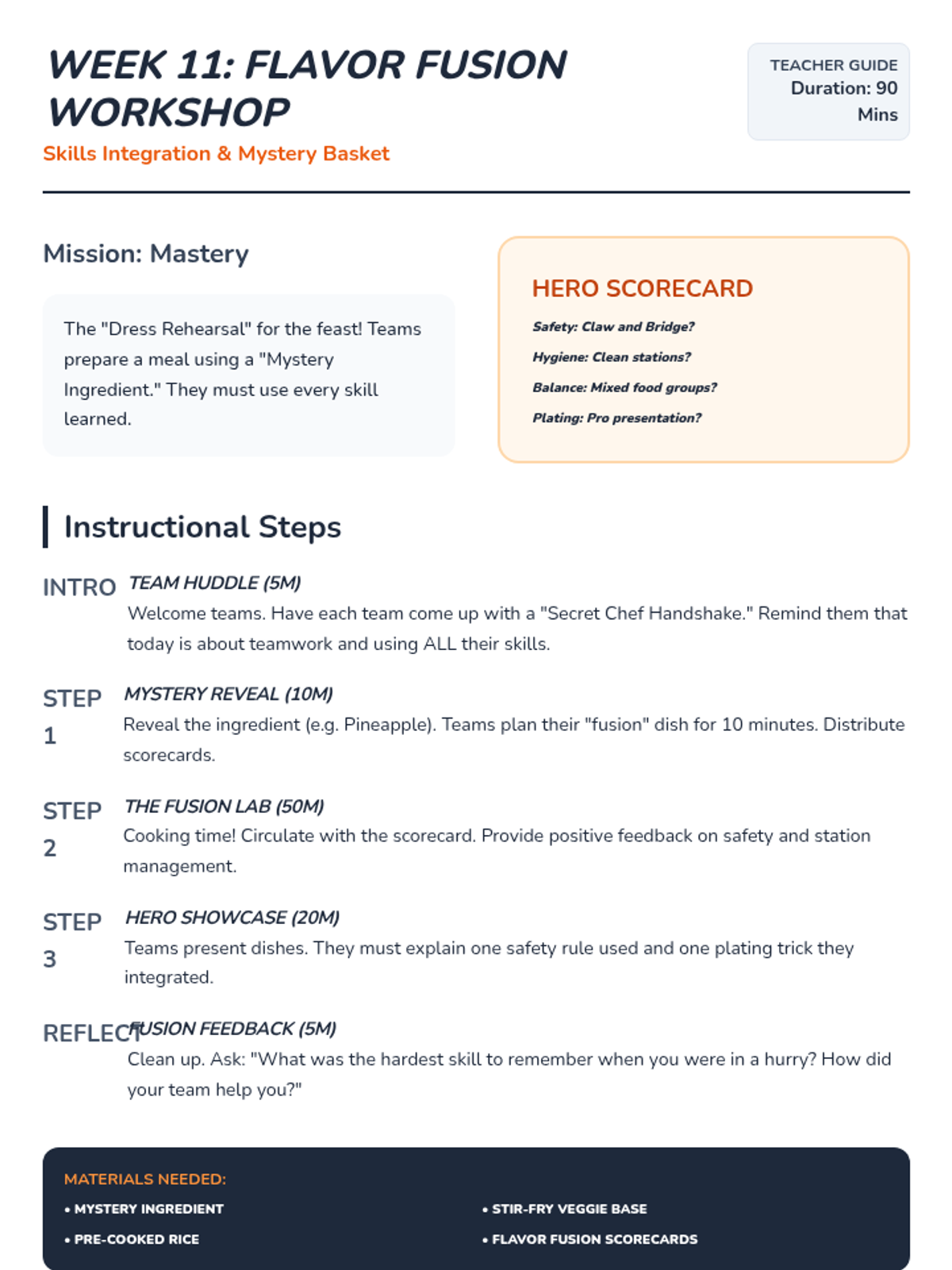
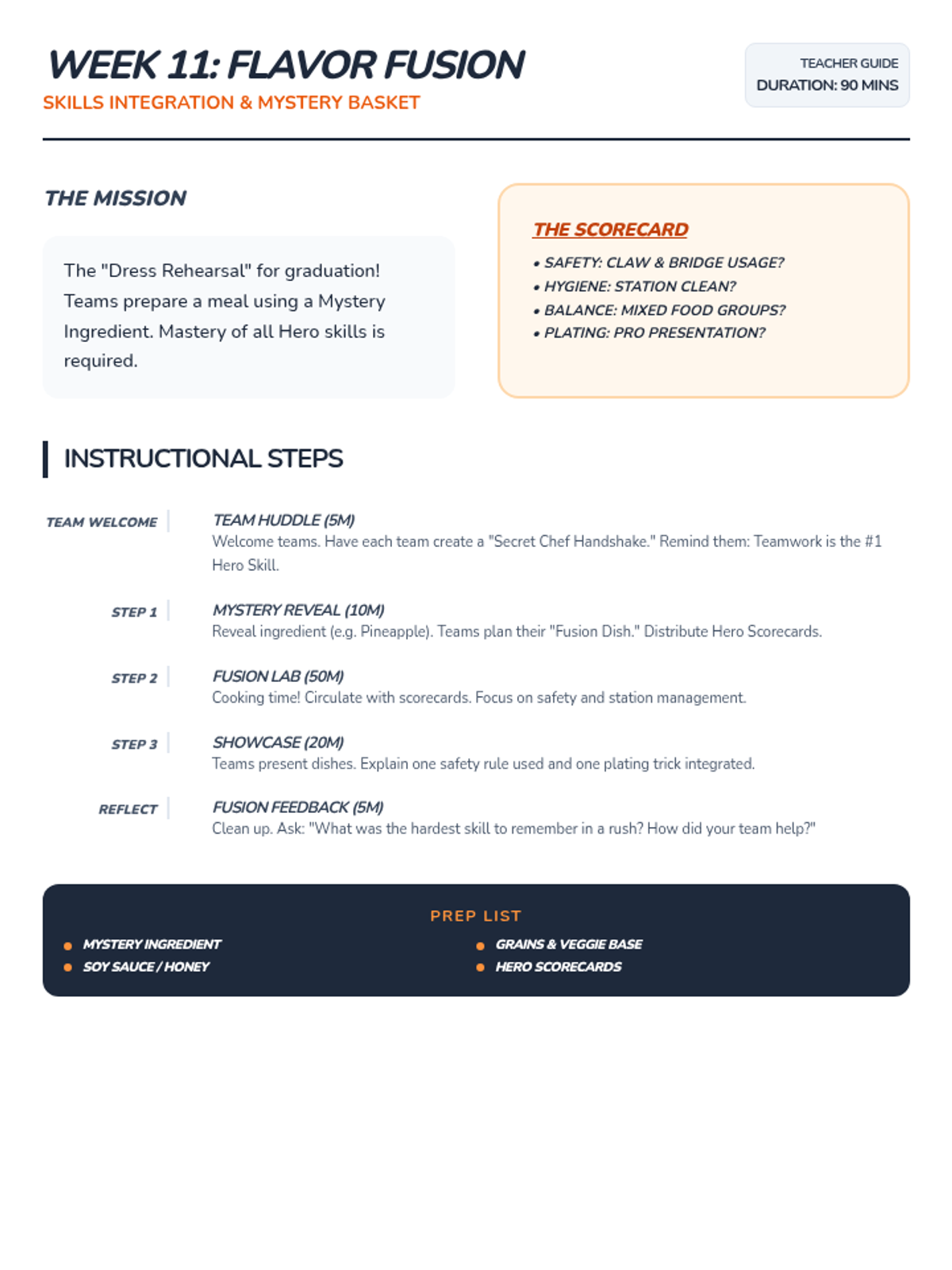
A final celebration showcase of skills learned throughout the course.
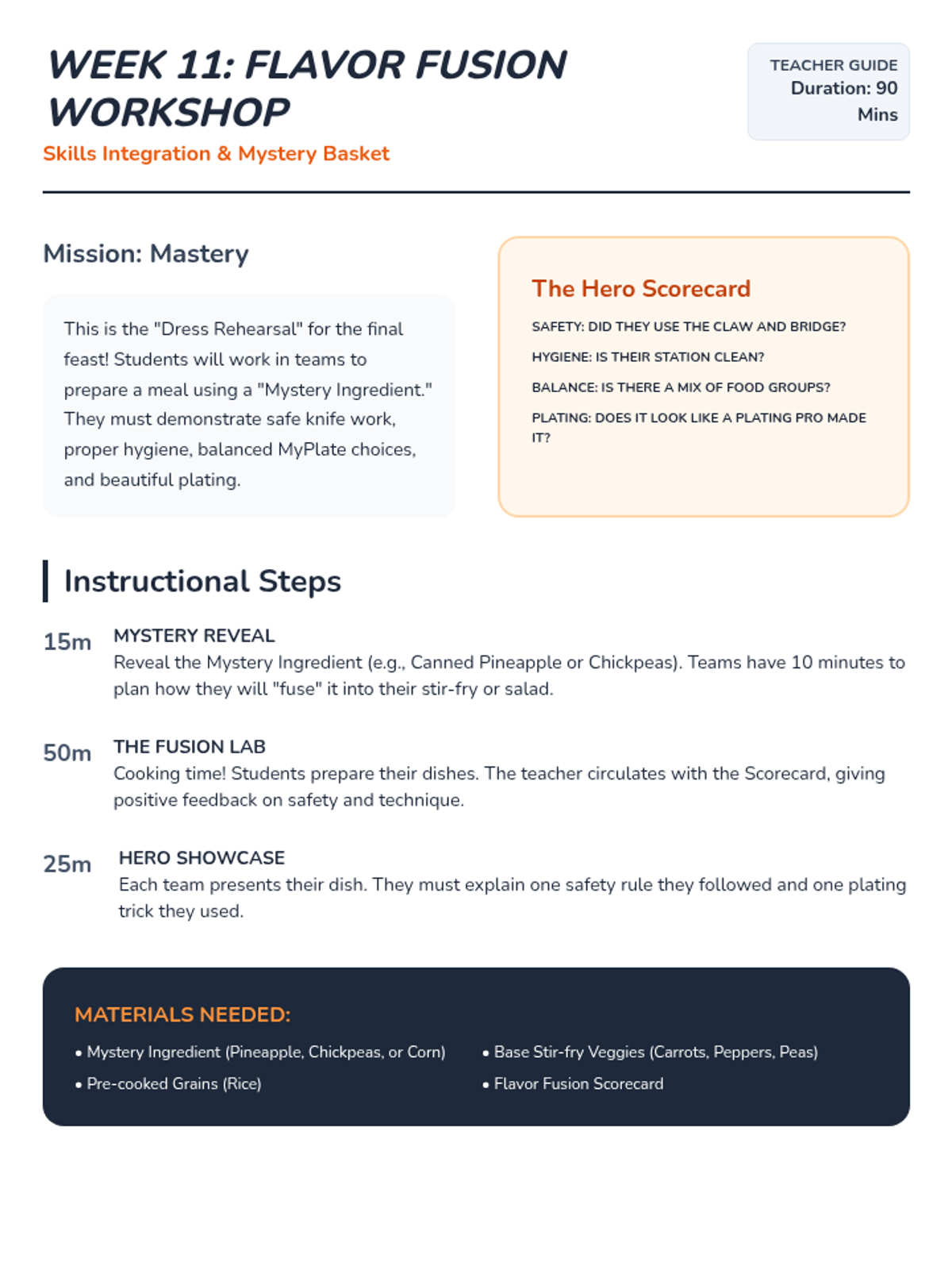
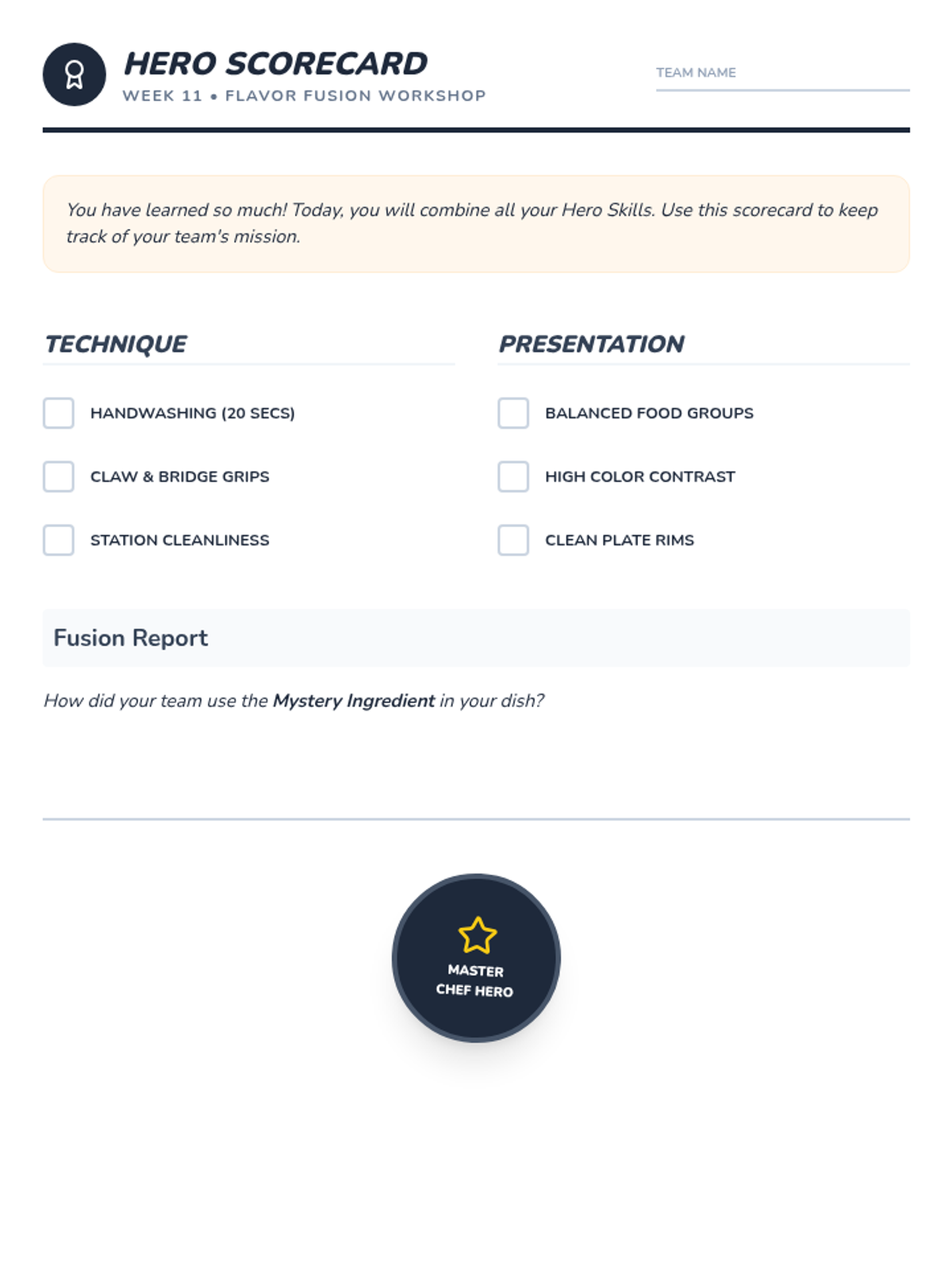
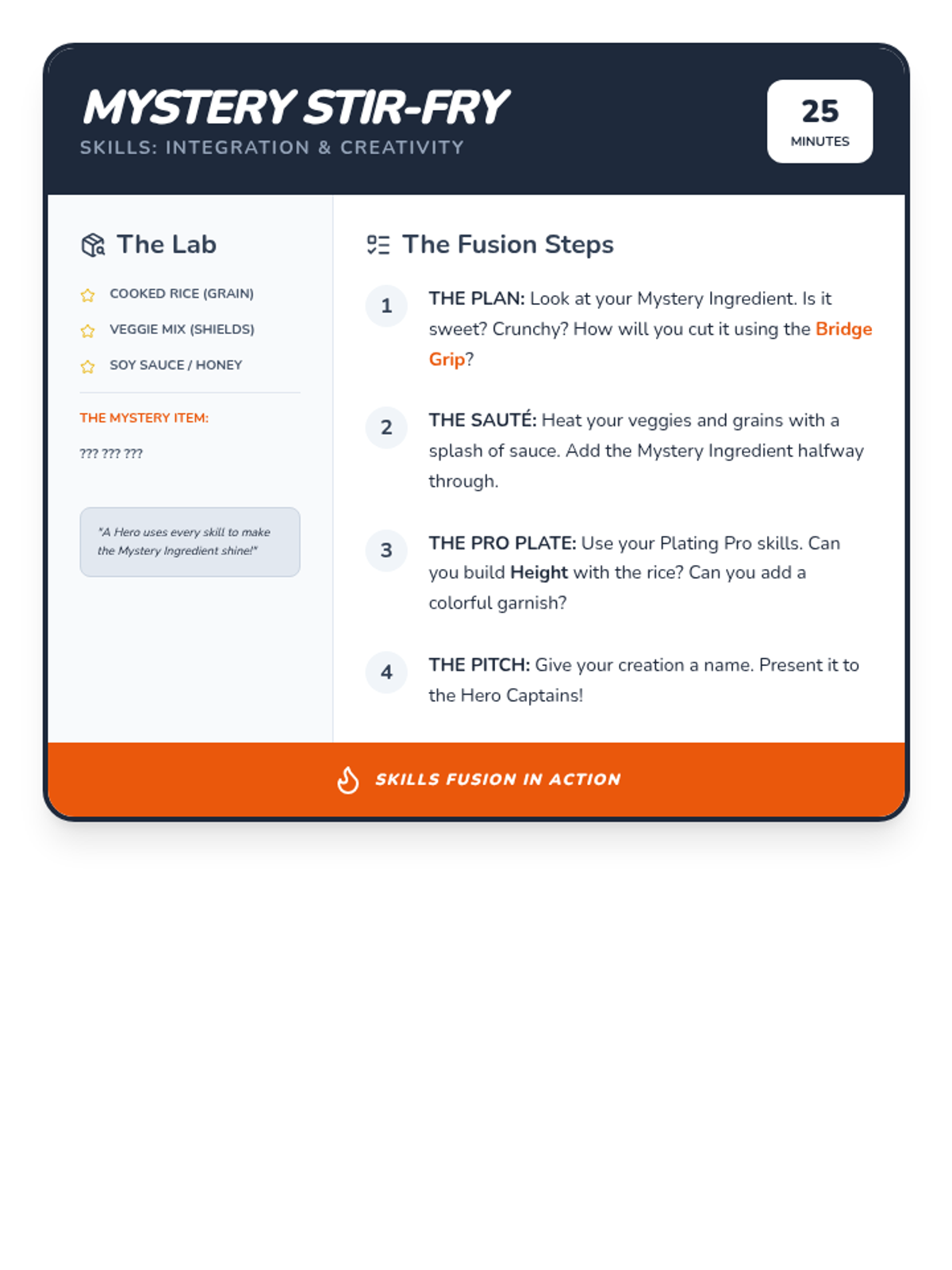
Applying skills to create a cohesive meal with limited ingredients.
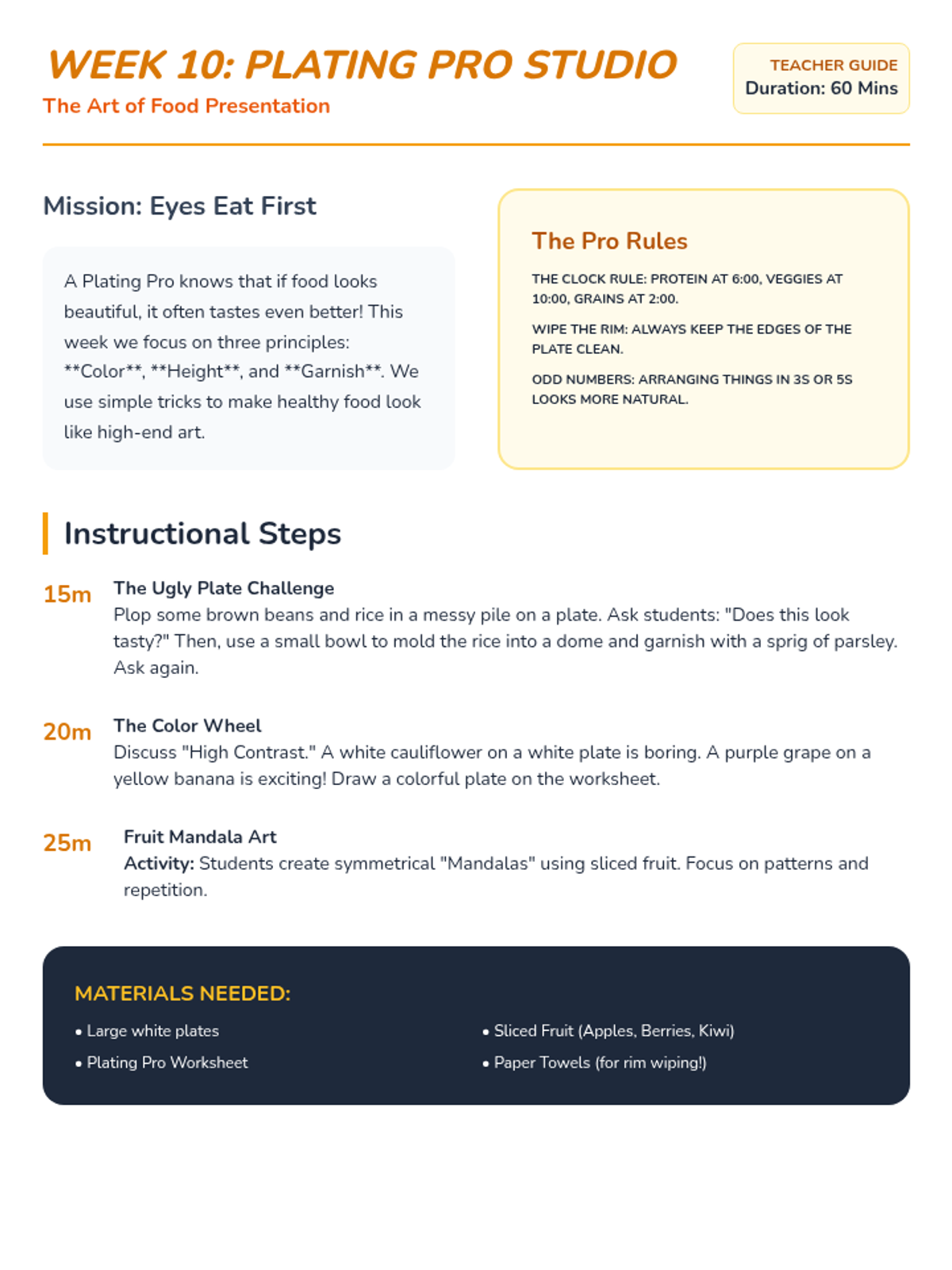
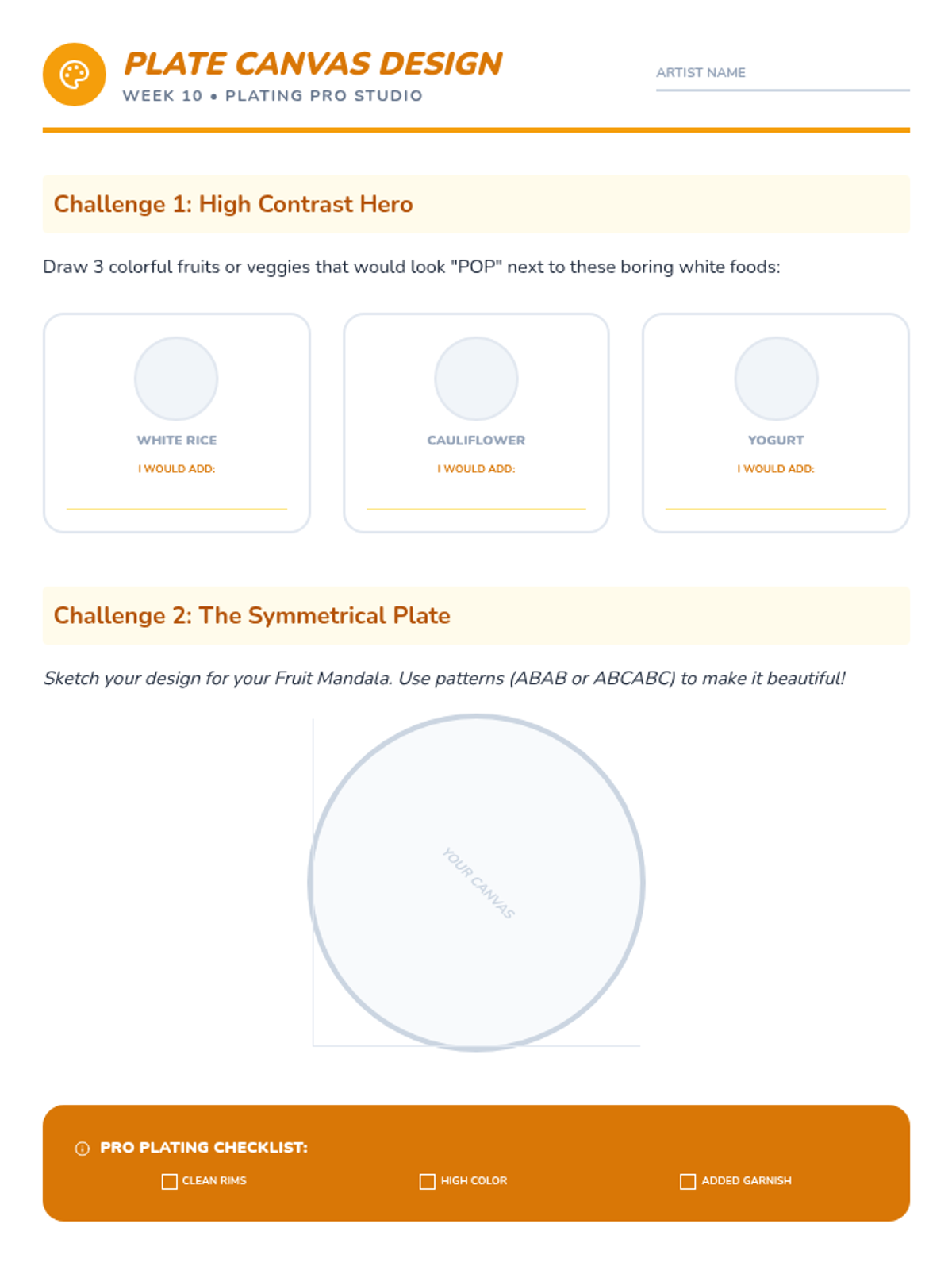
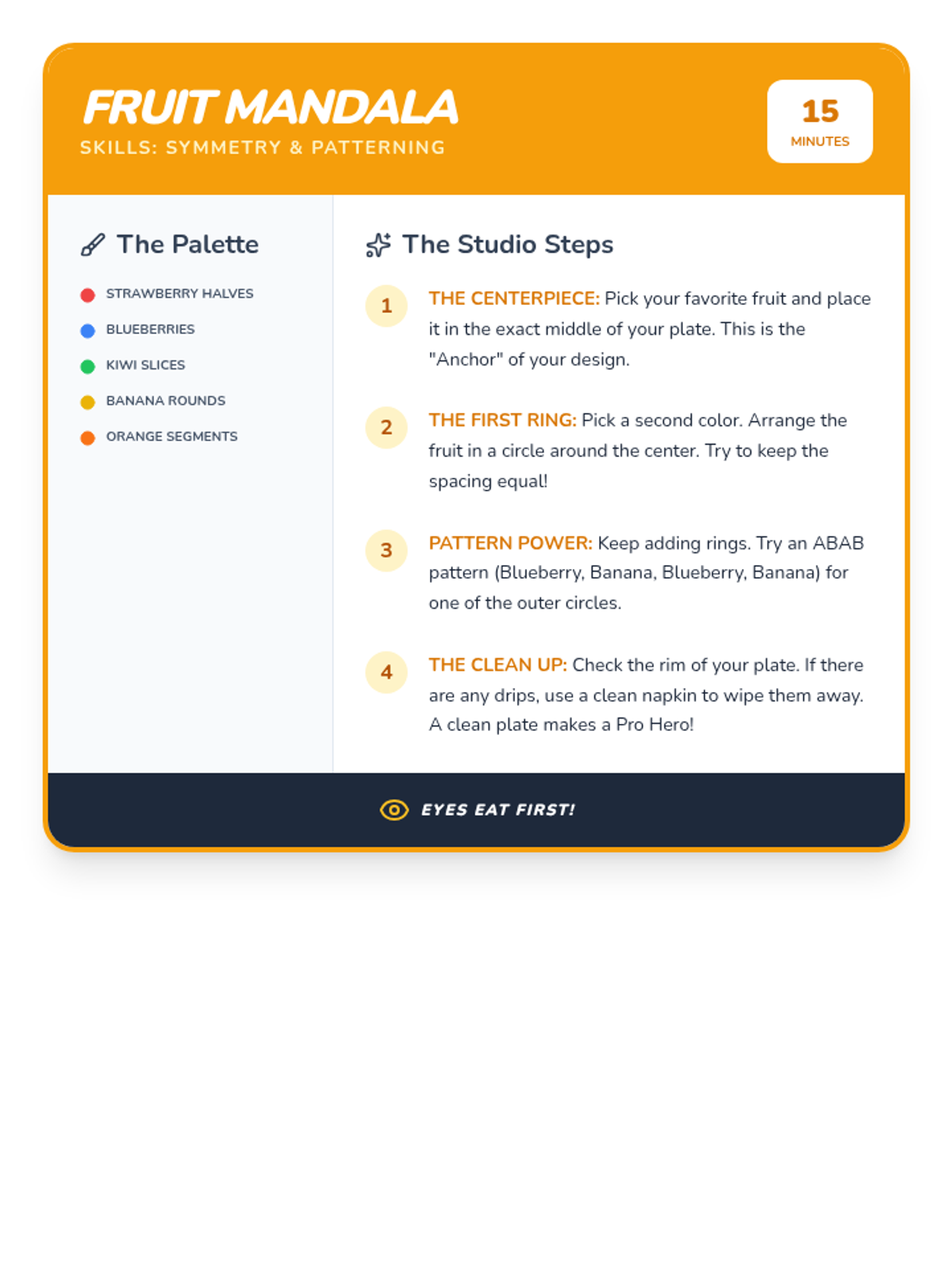
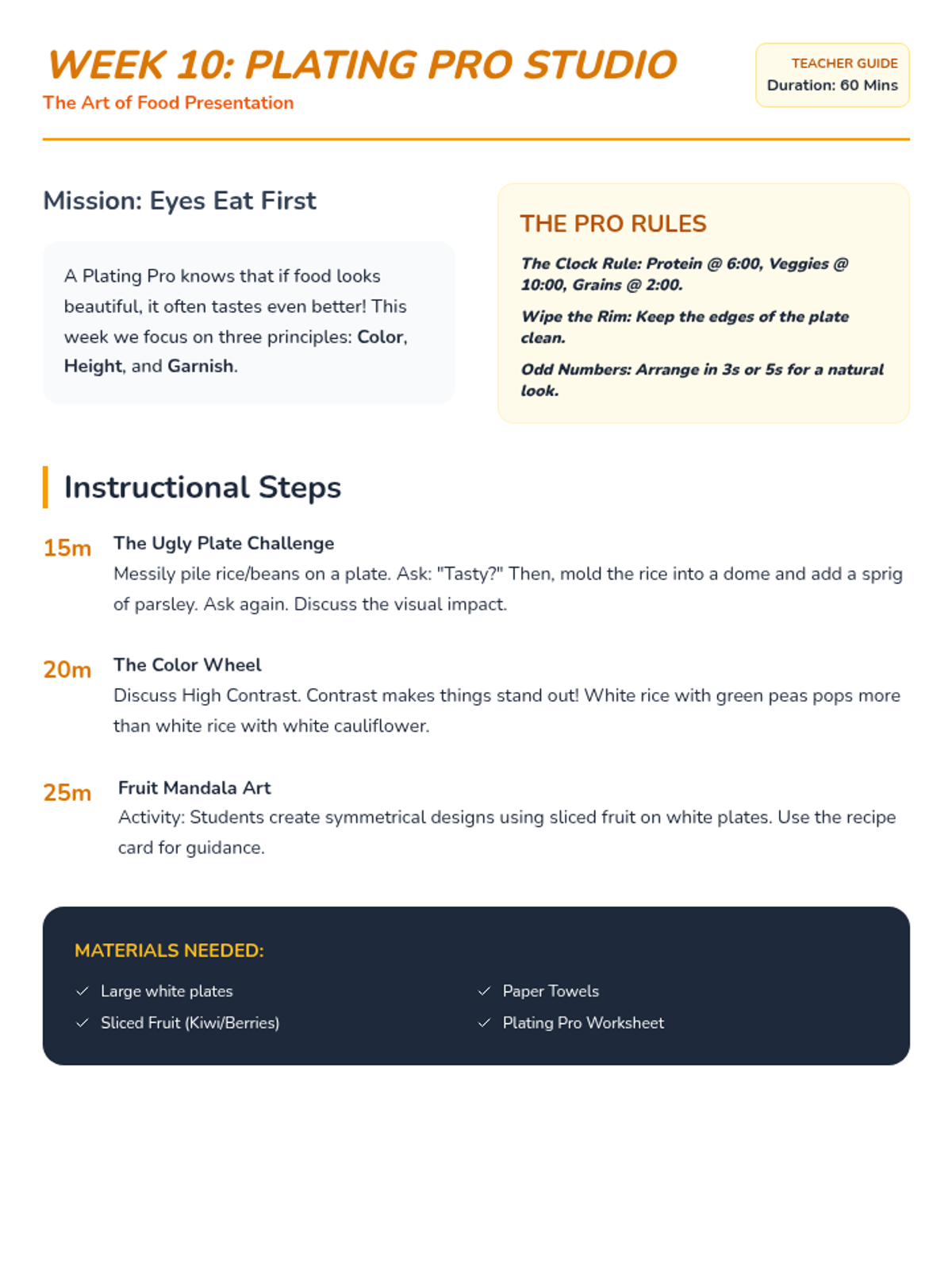
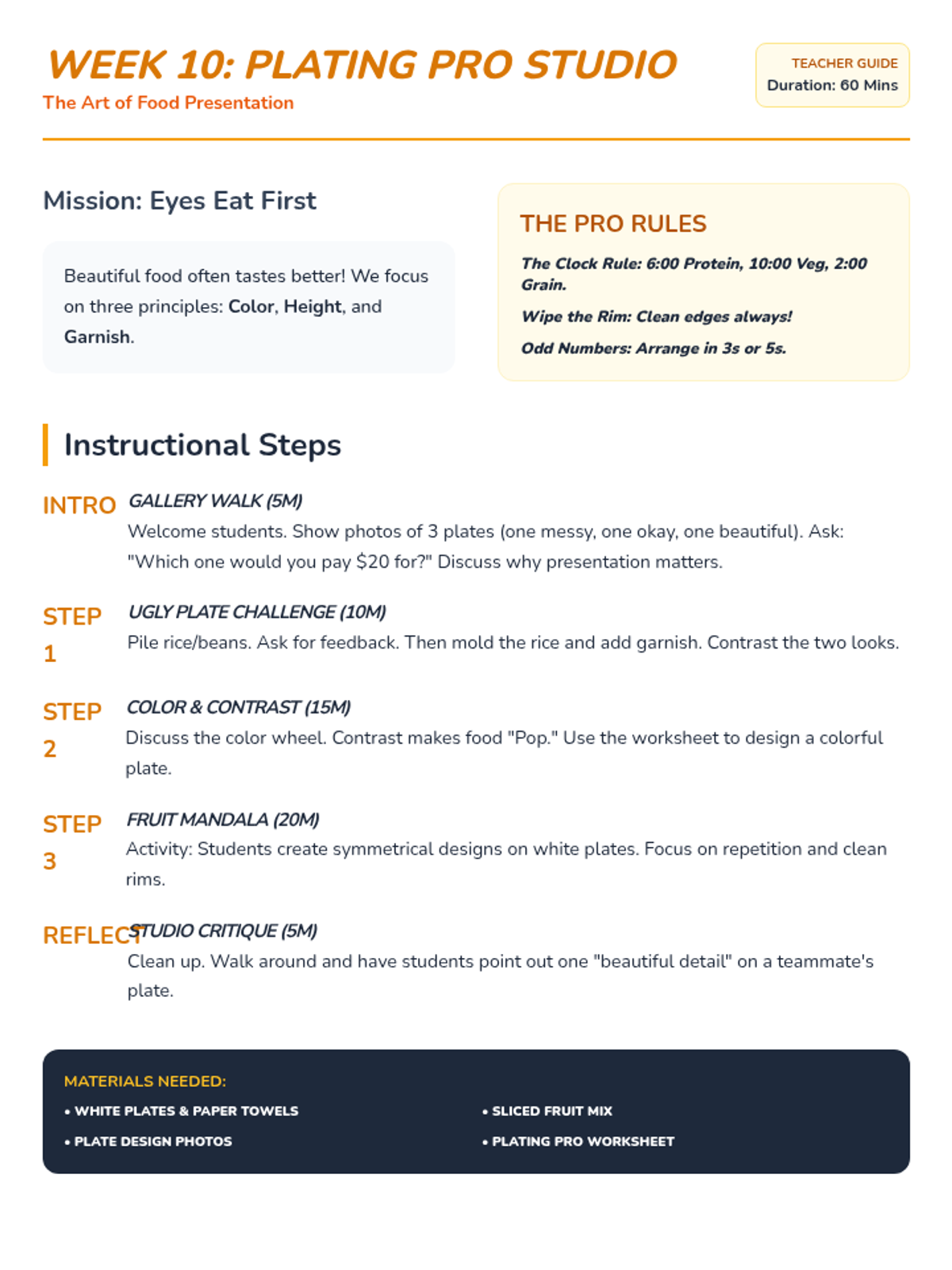
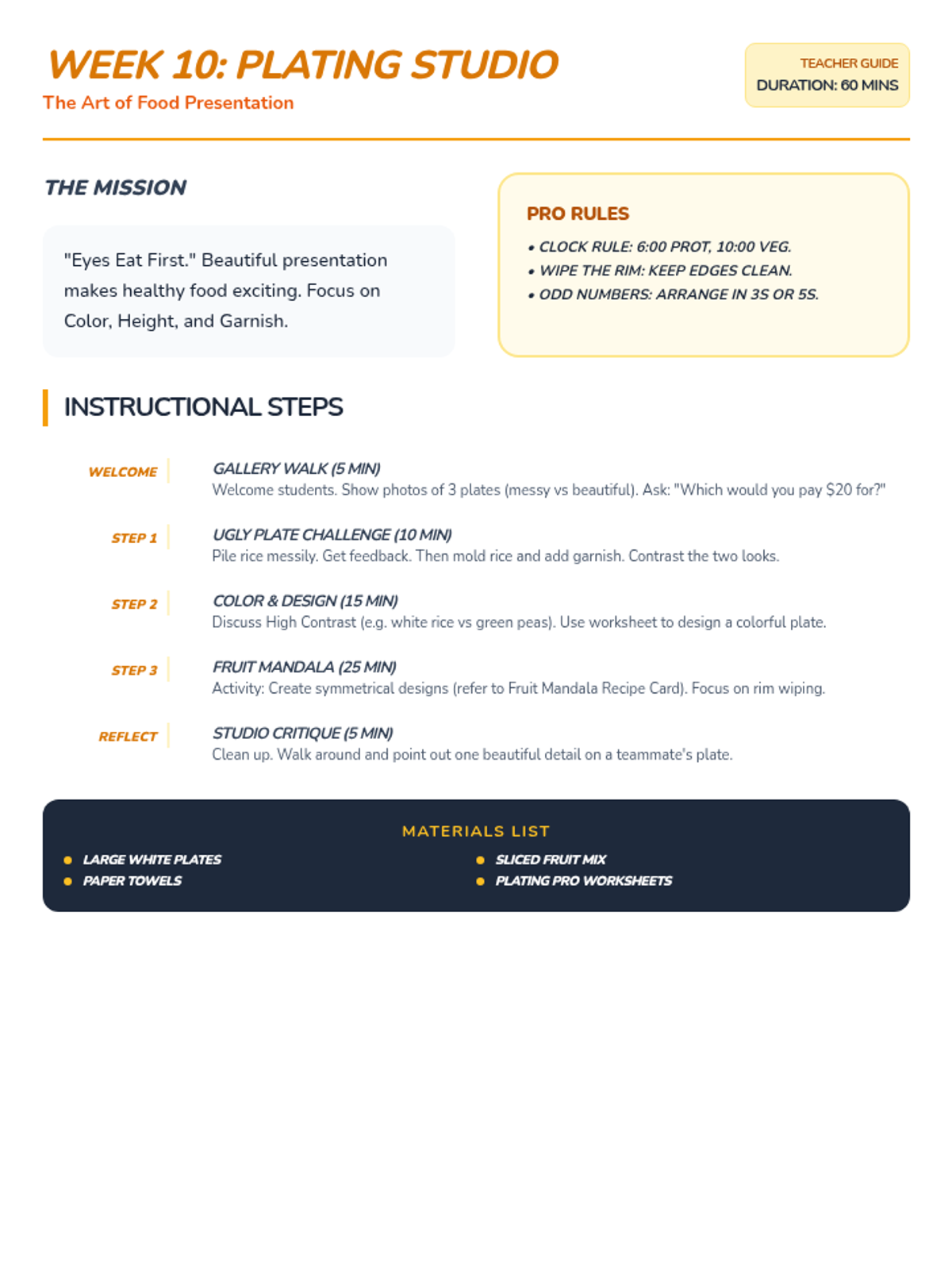
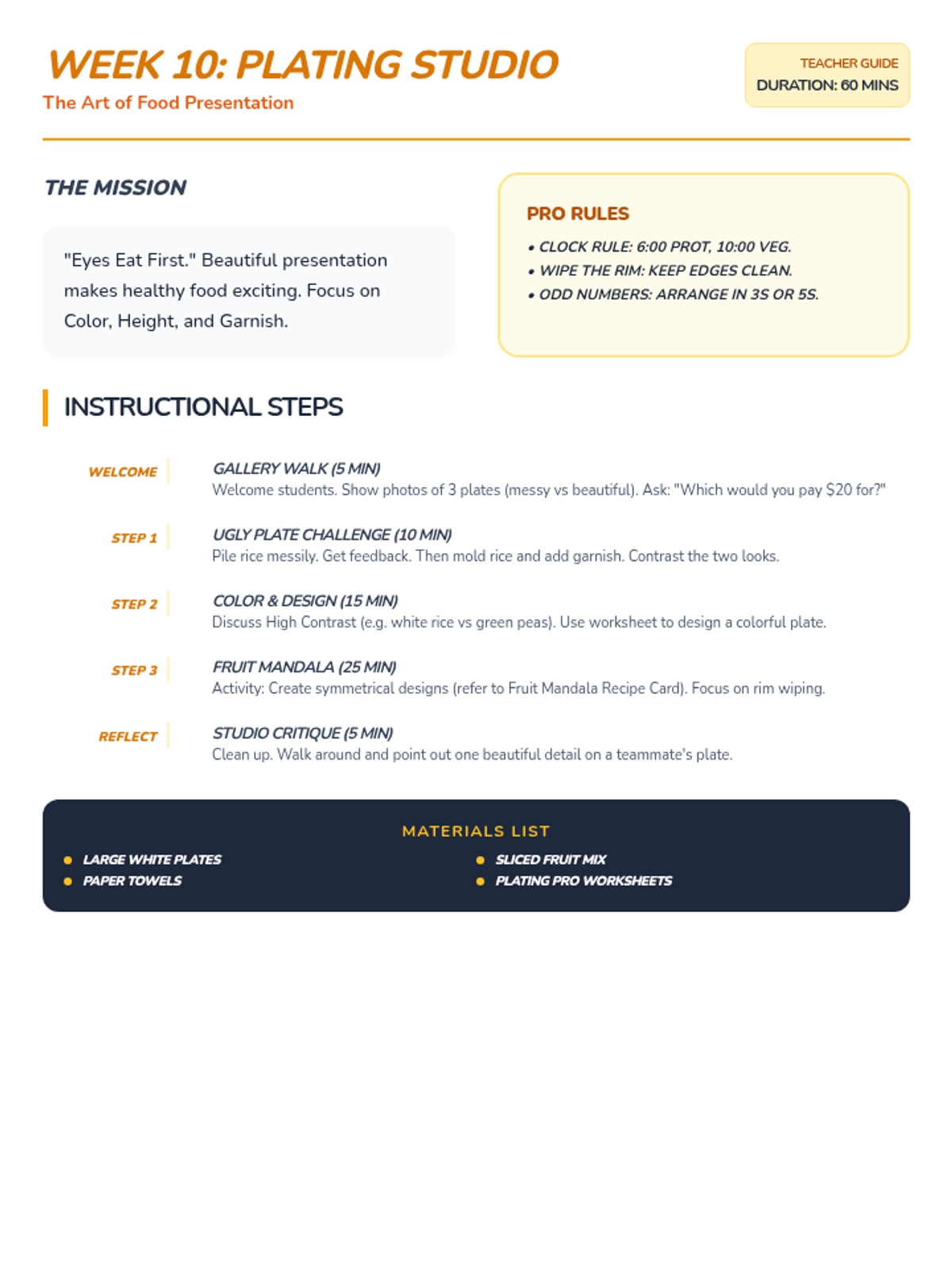
Elevating simple dishes through creative arrangement and garnishes.
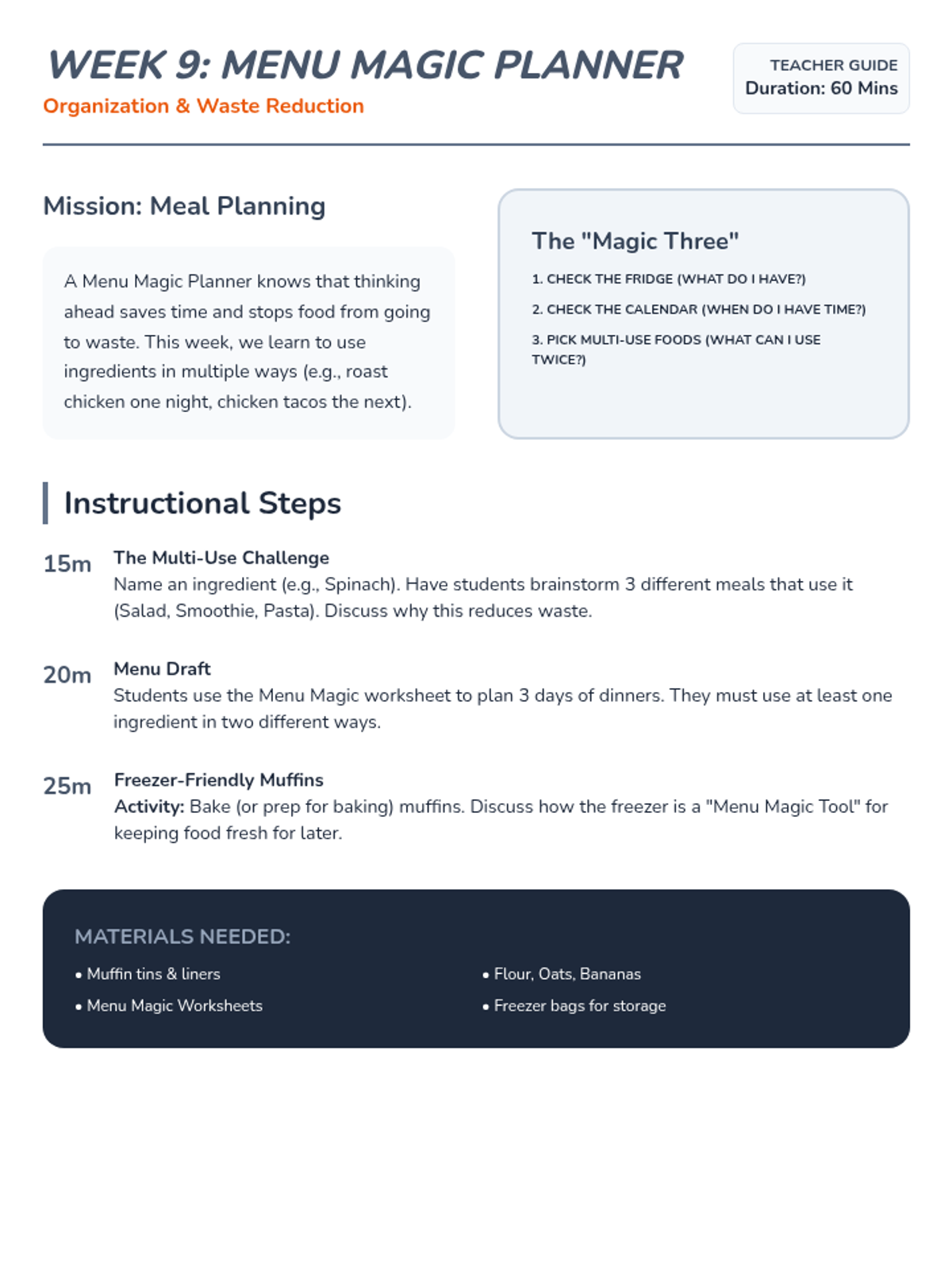
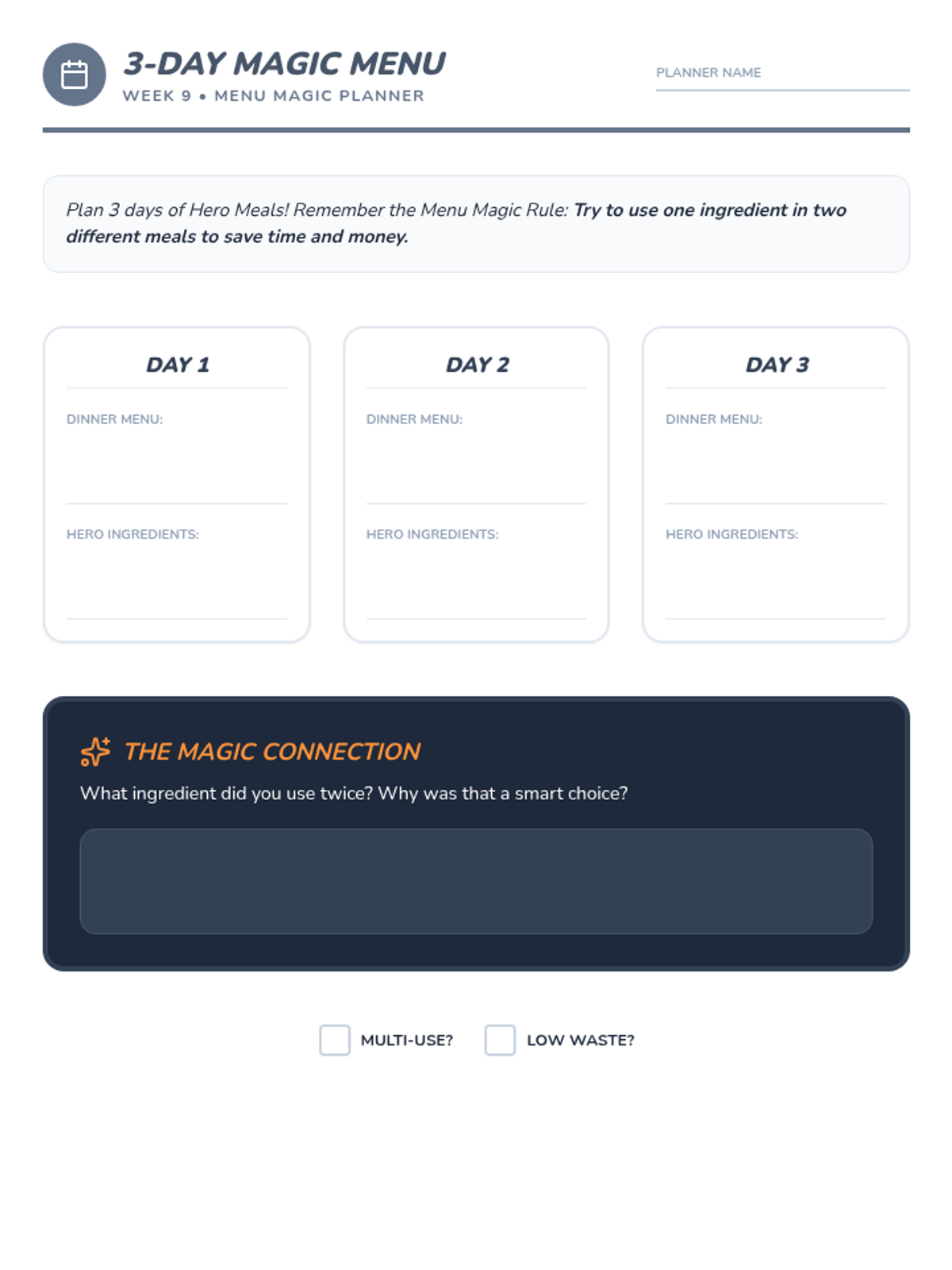
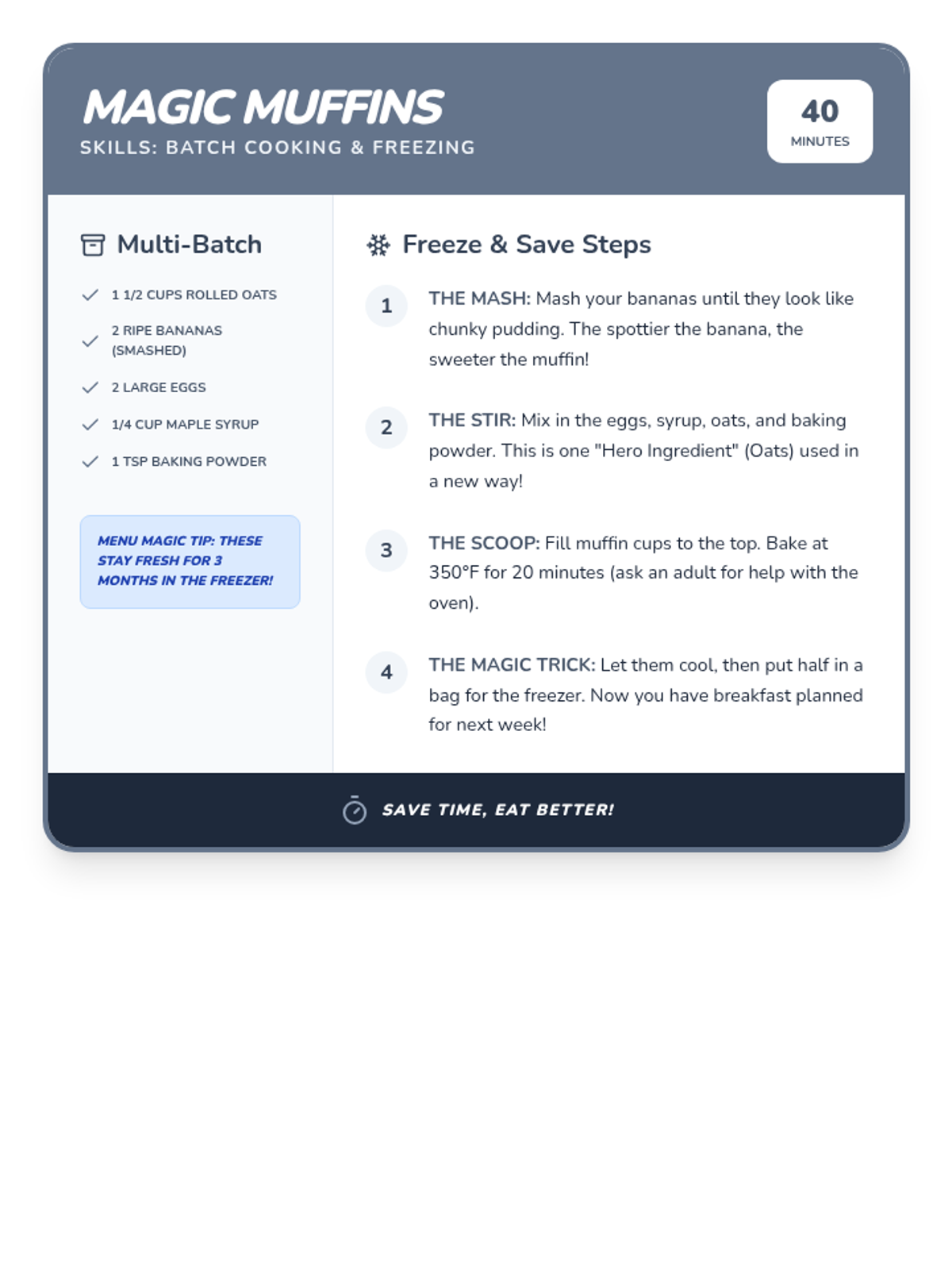
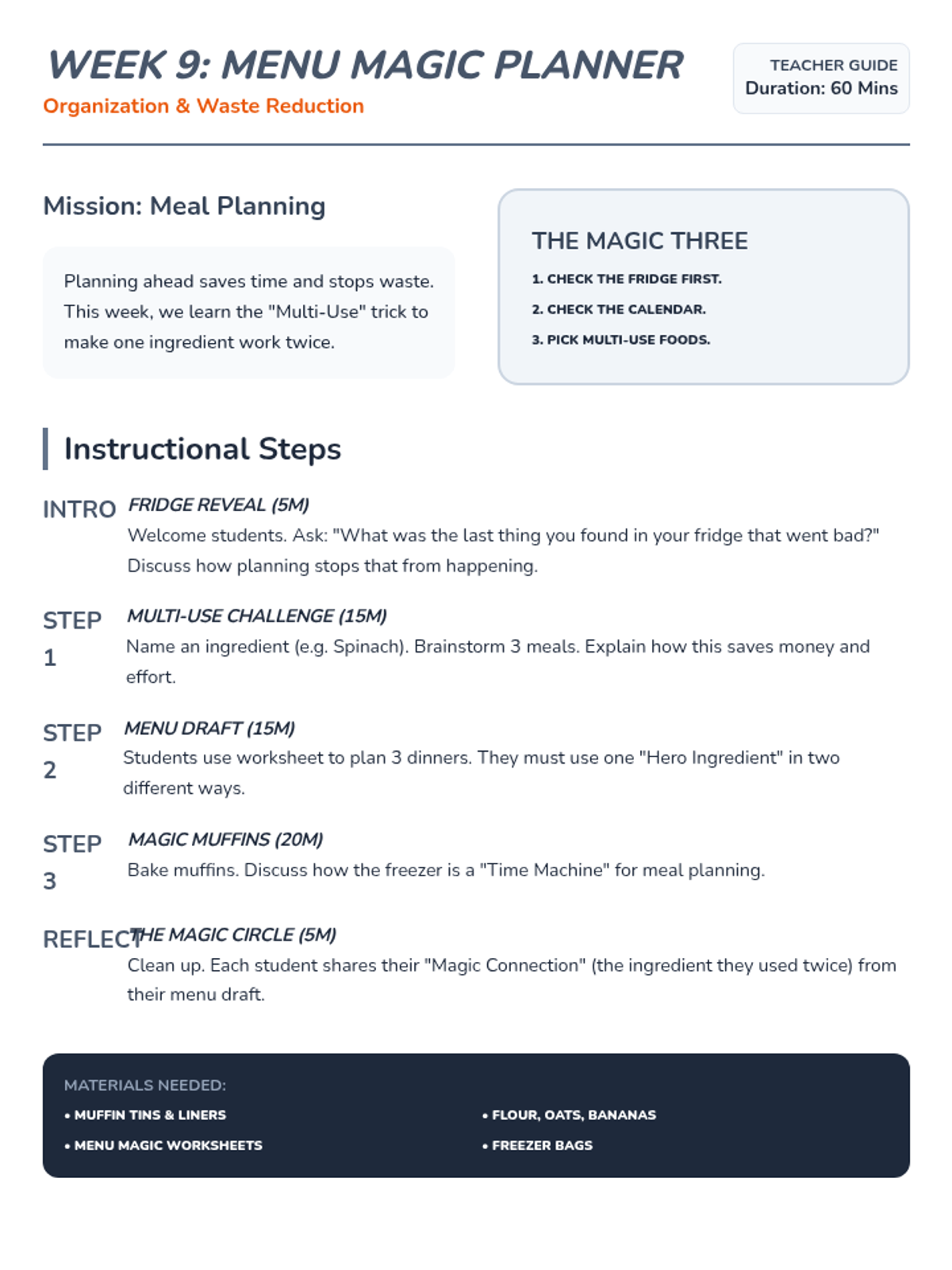
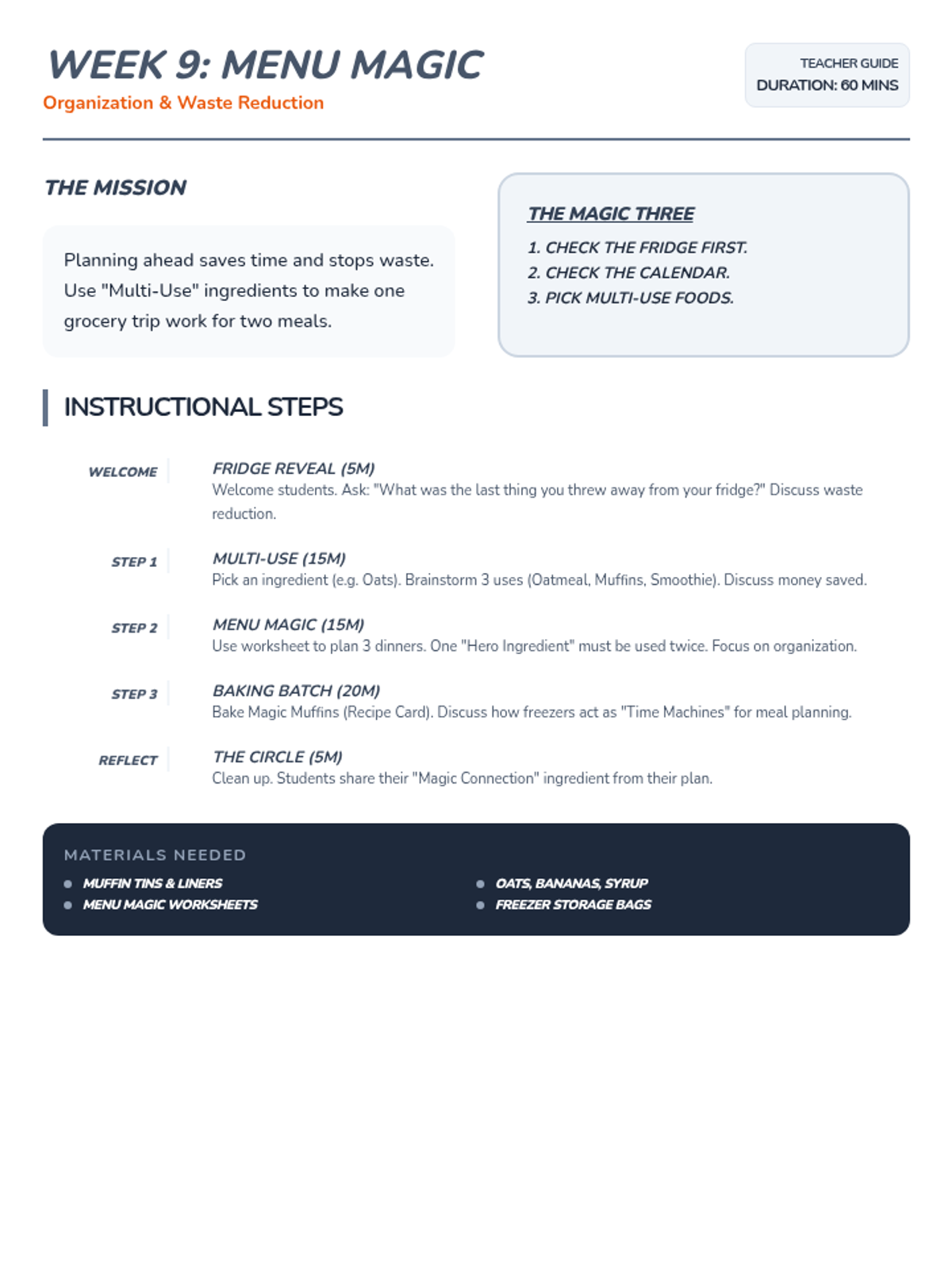
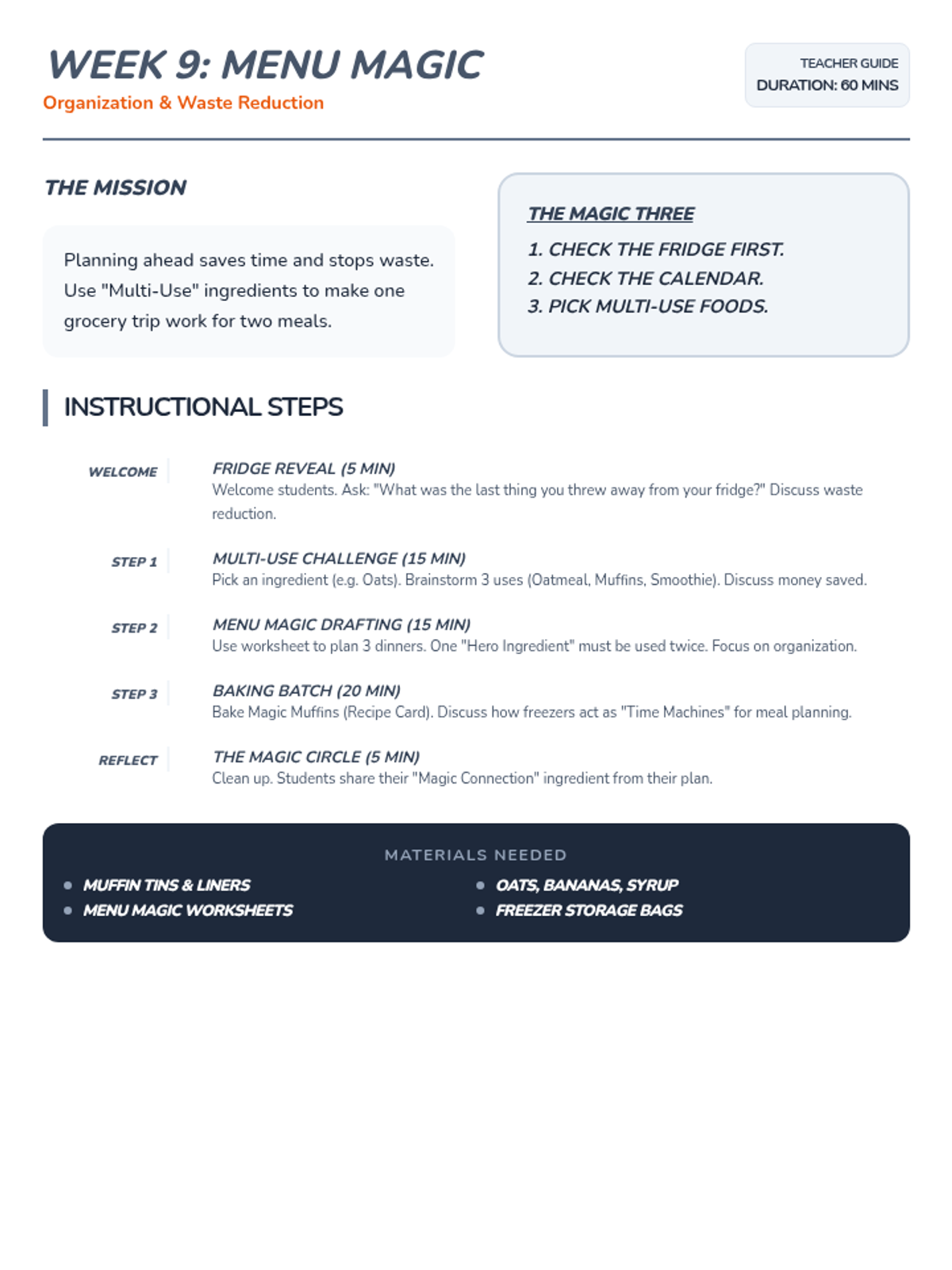
Strategies for organizing weekly meals to reduce waste and stress.
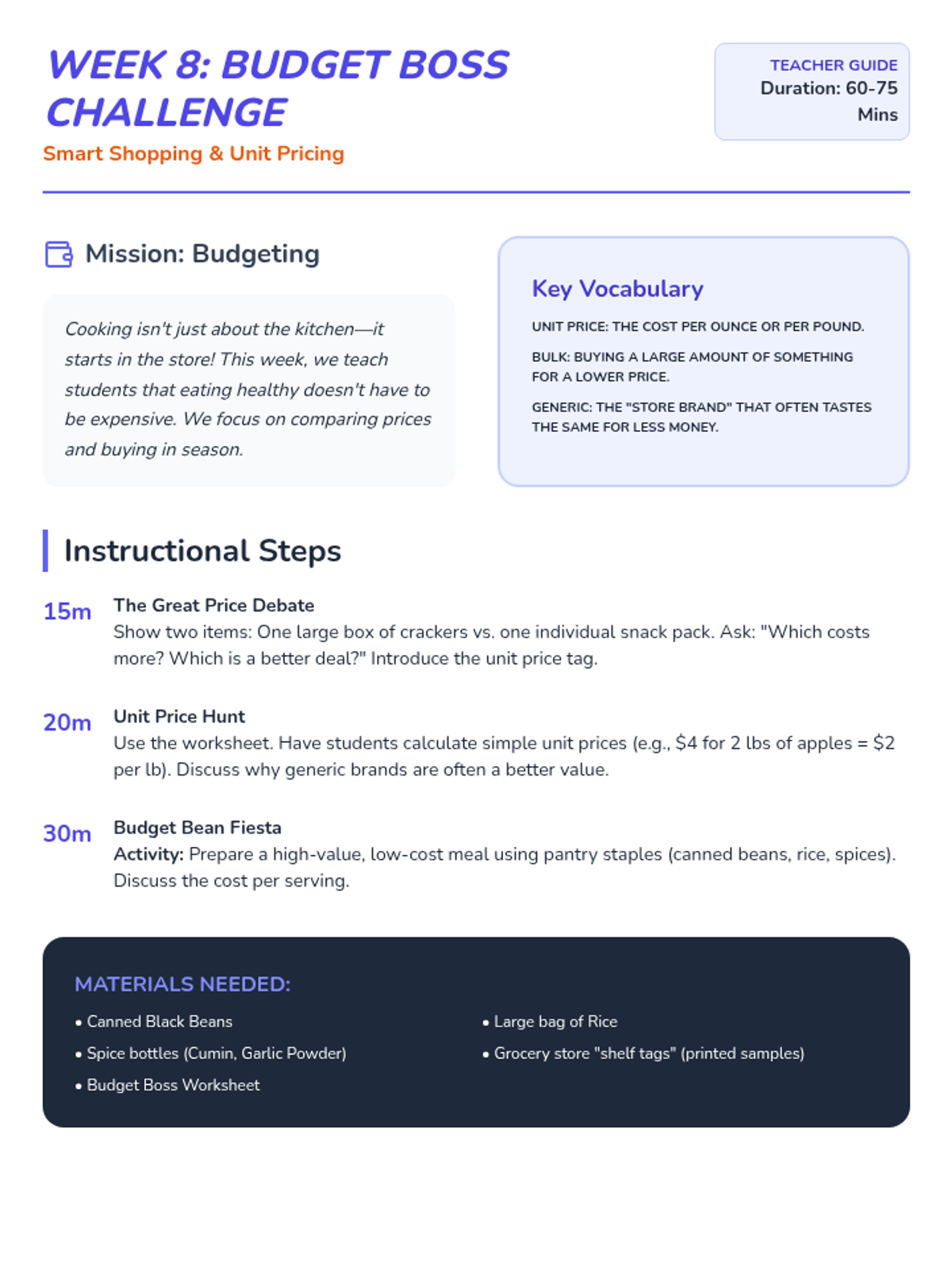
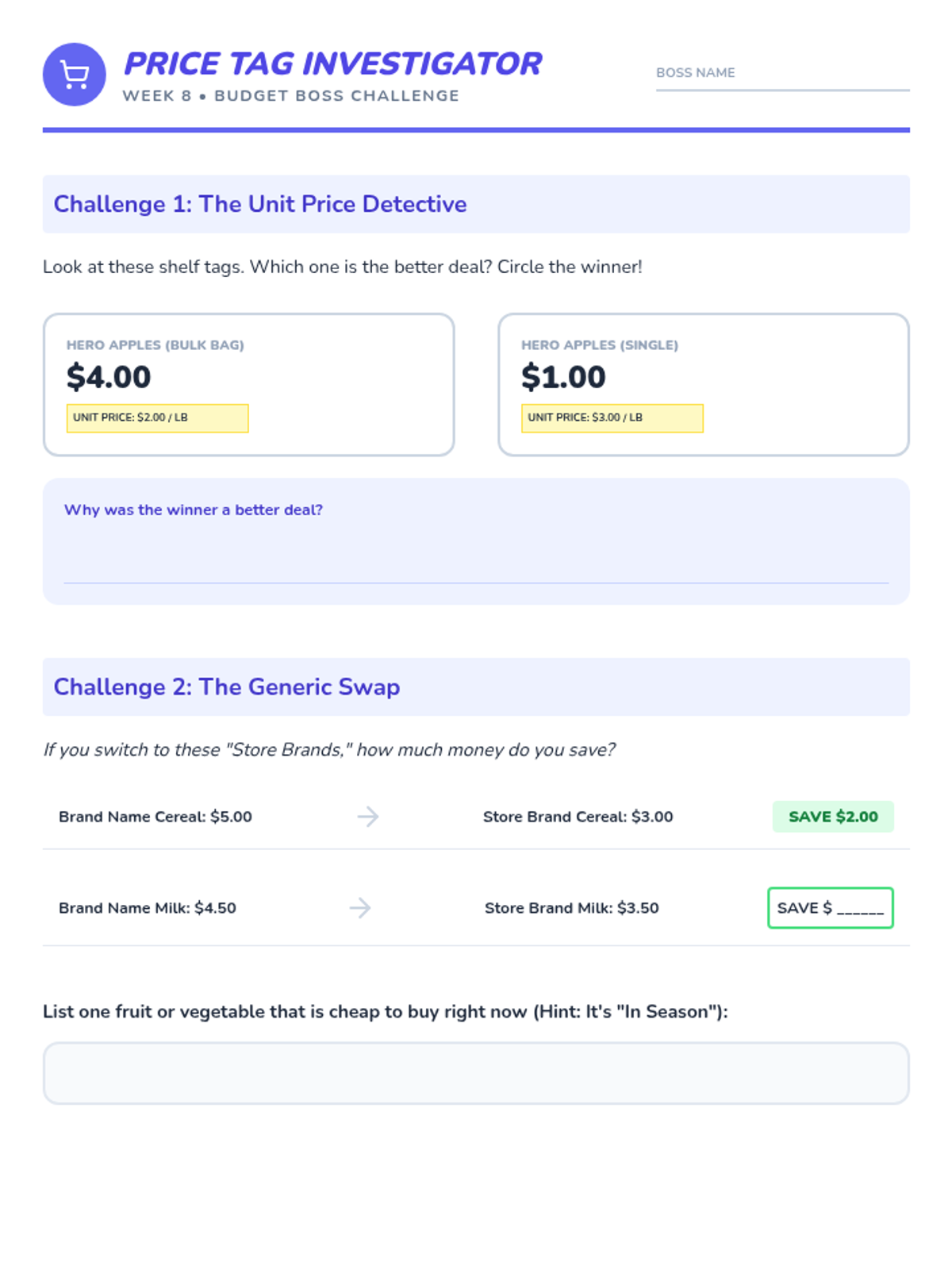
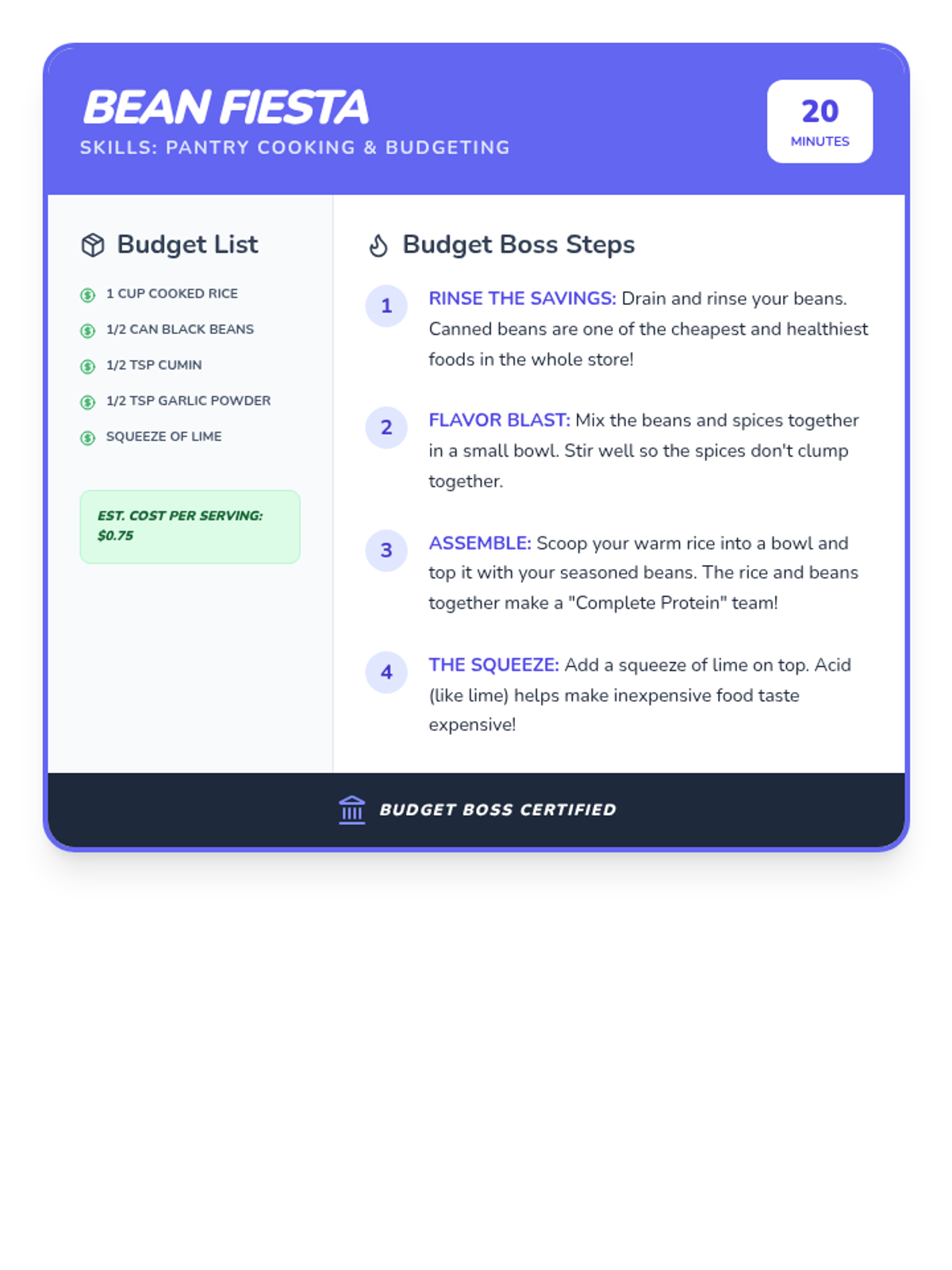
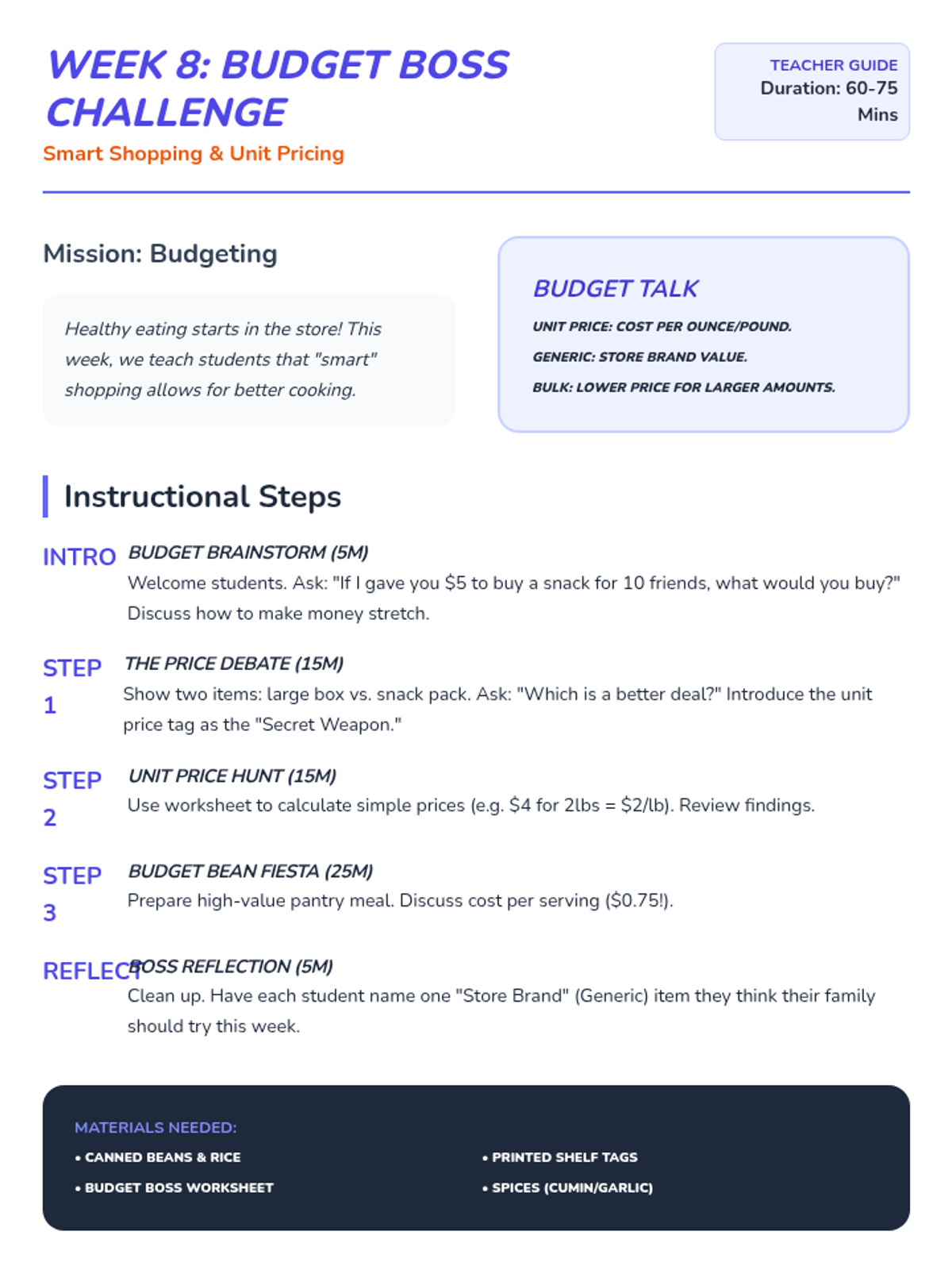
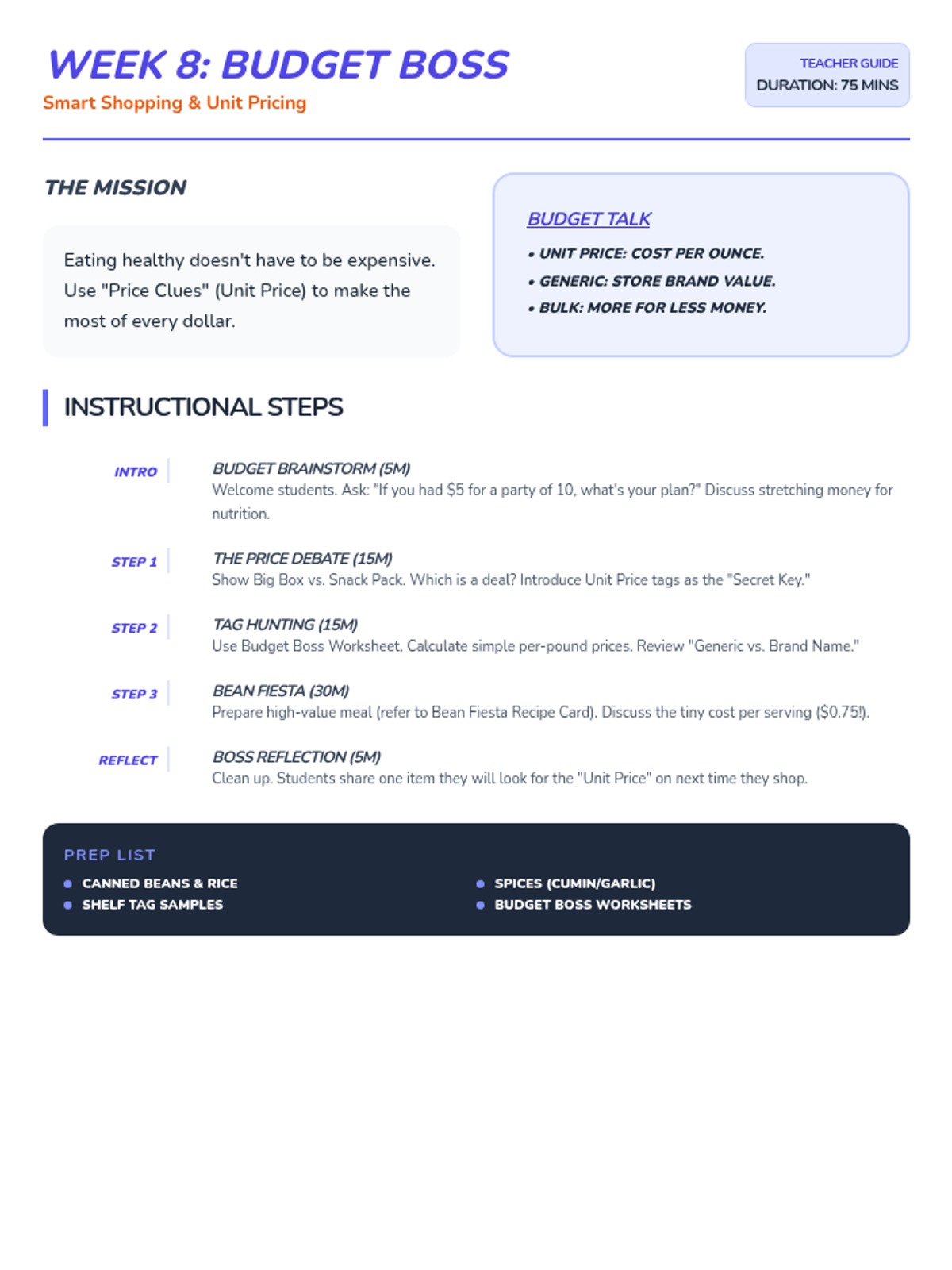
Learning to shop smart and make the most of every dollar.
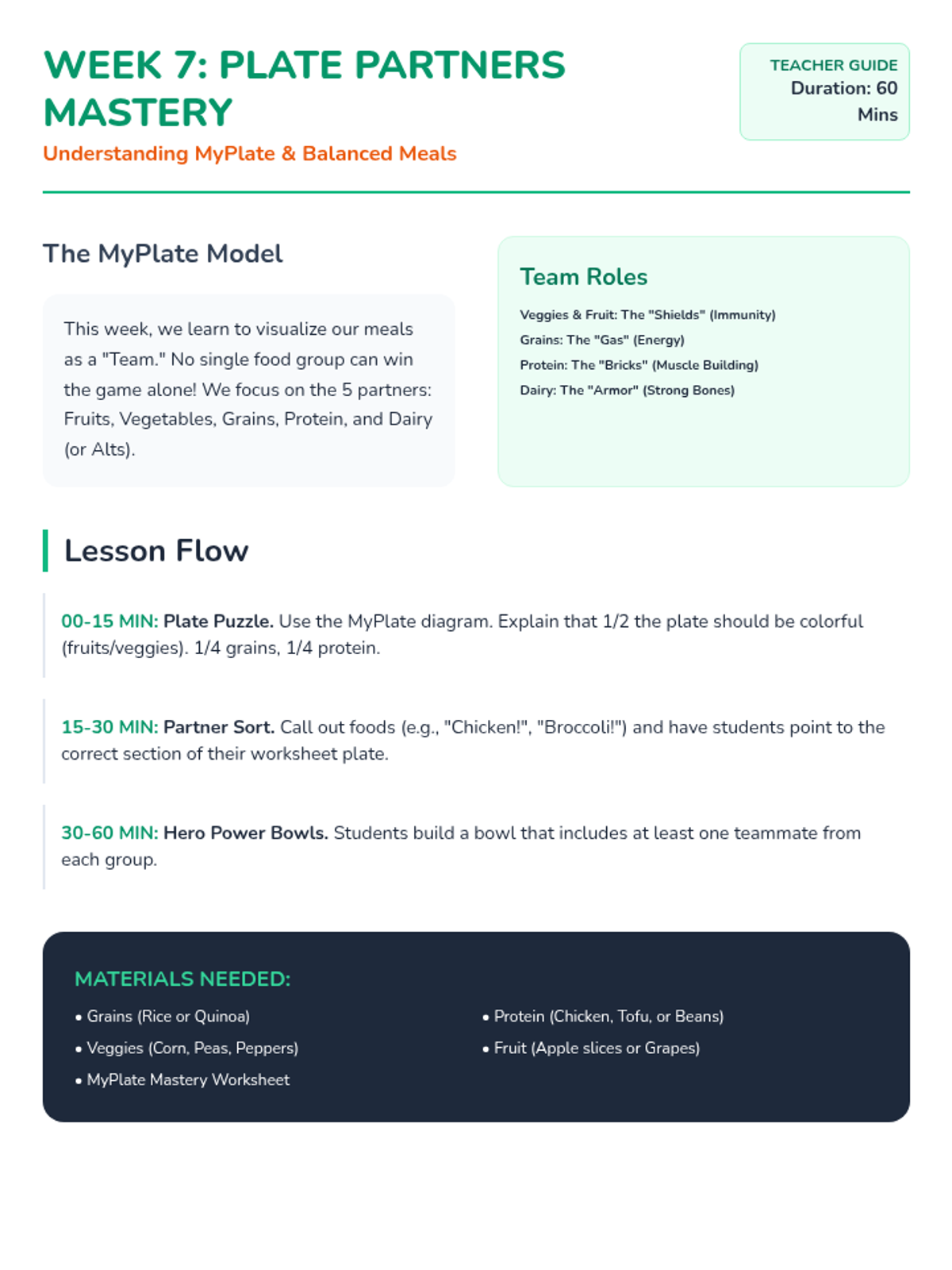
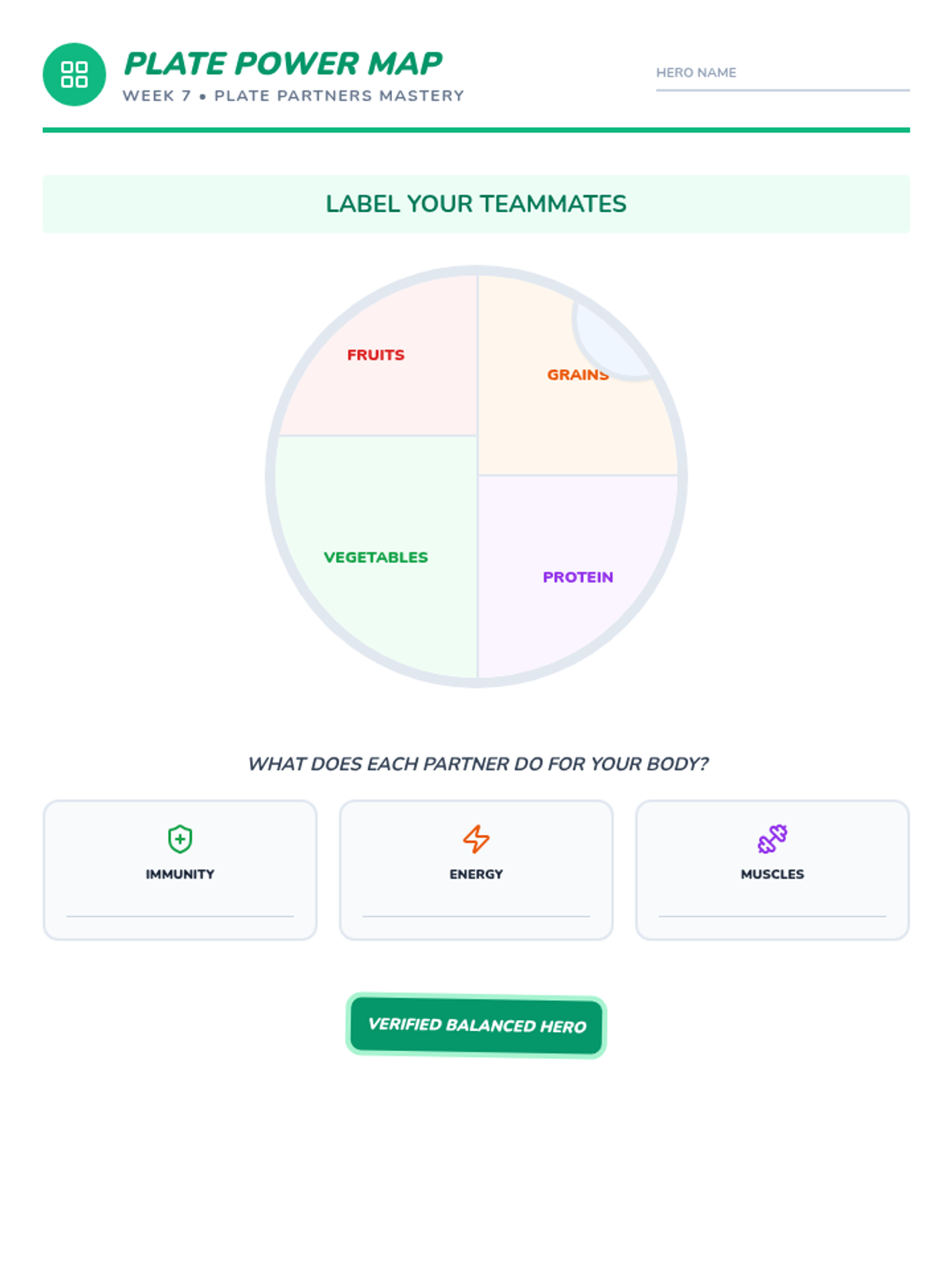
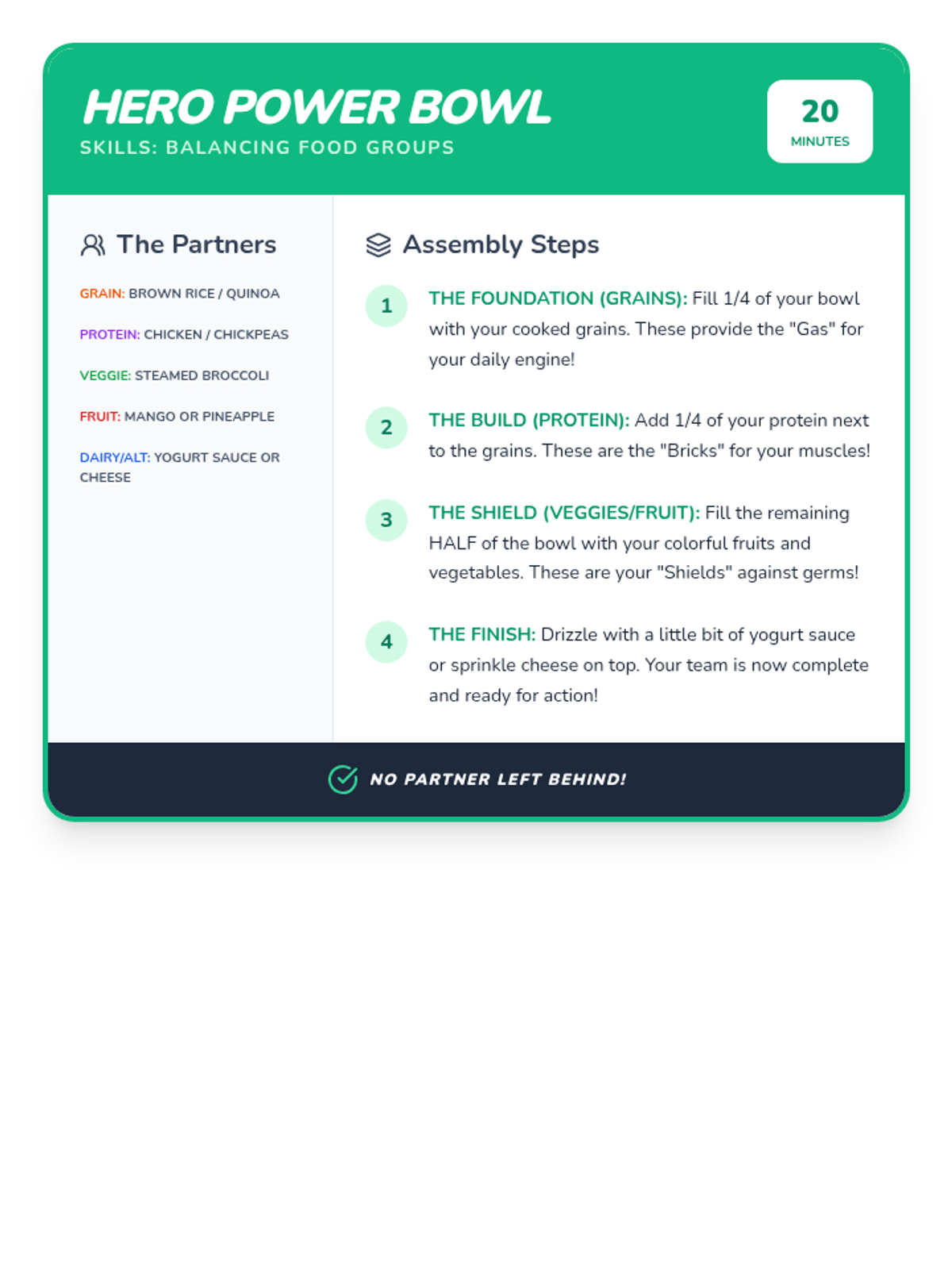
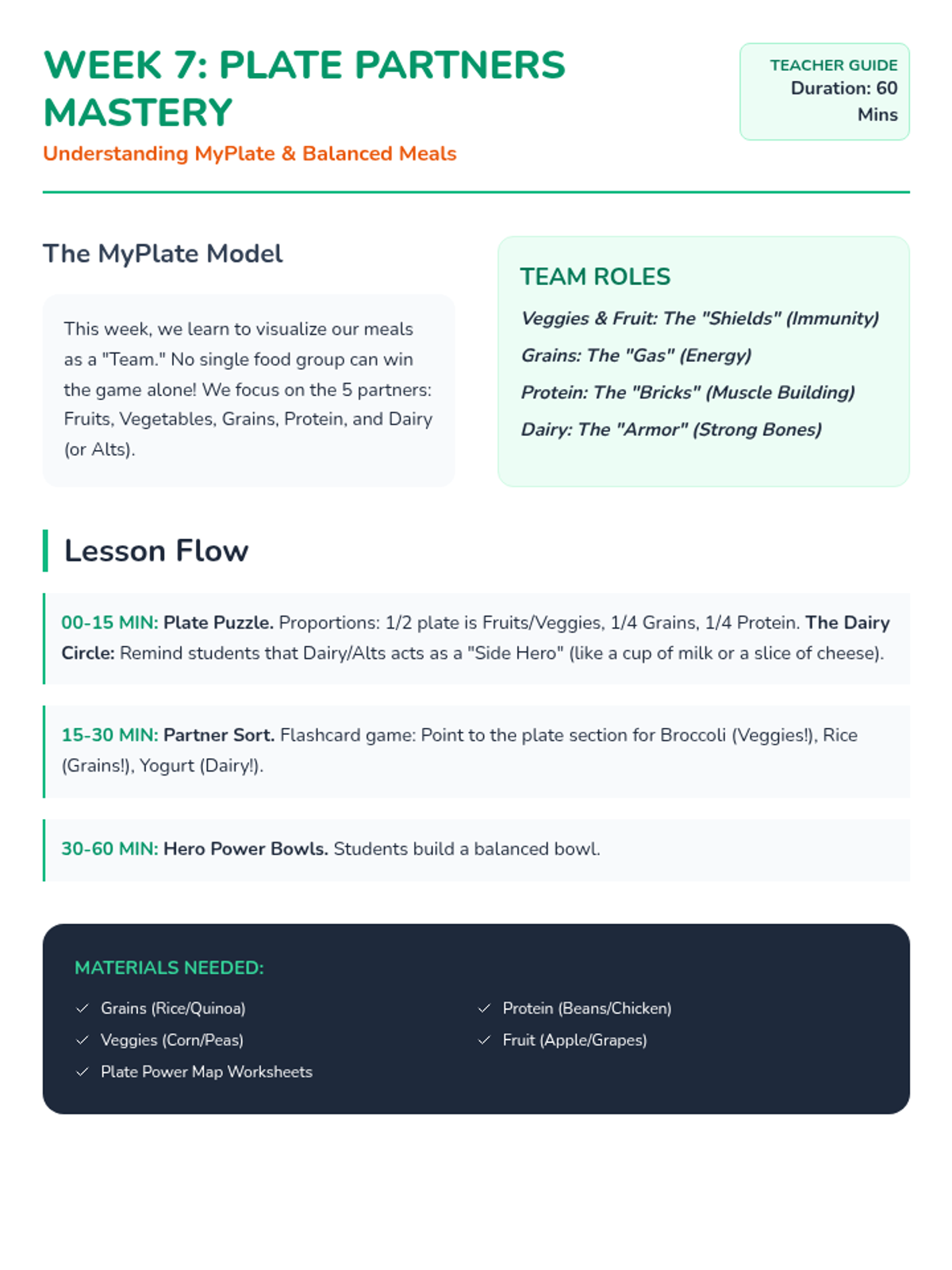
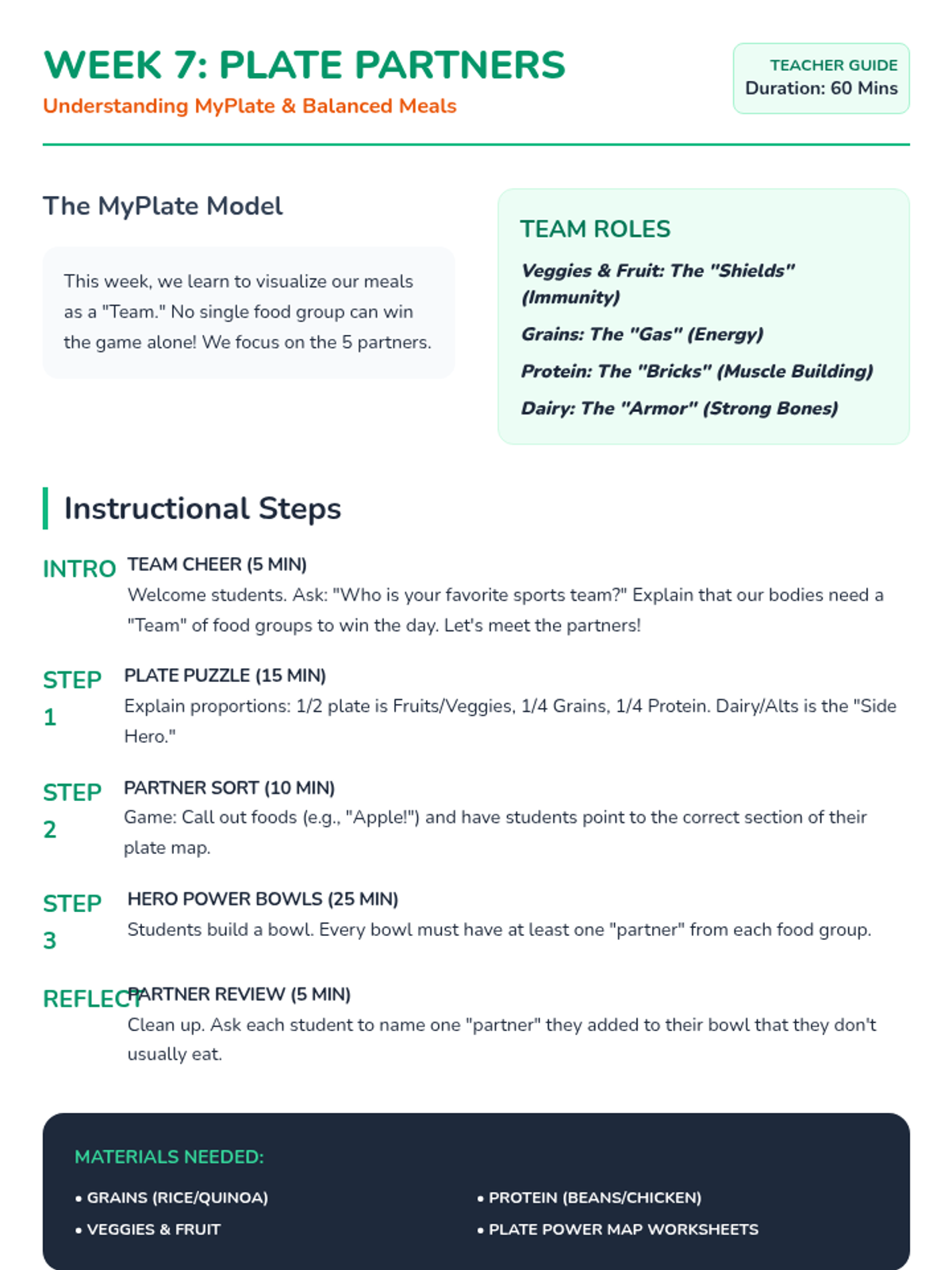
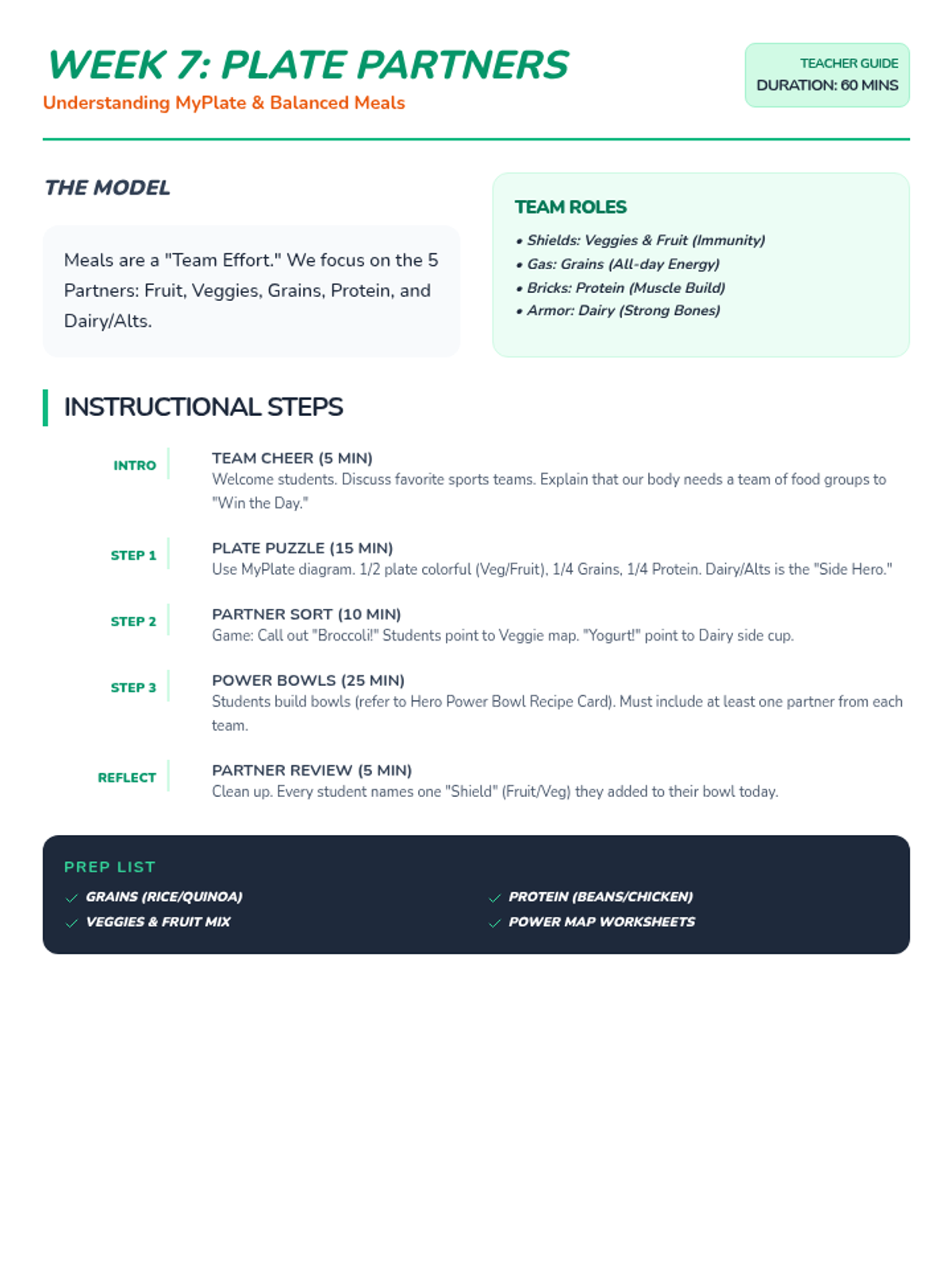
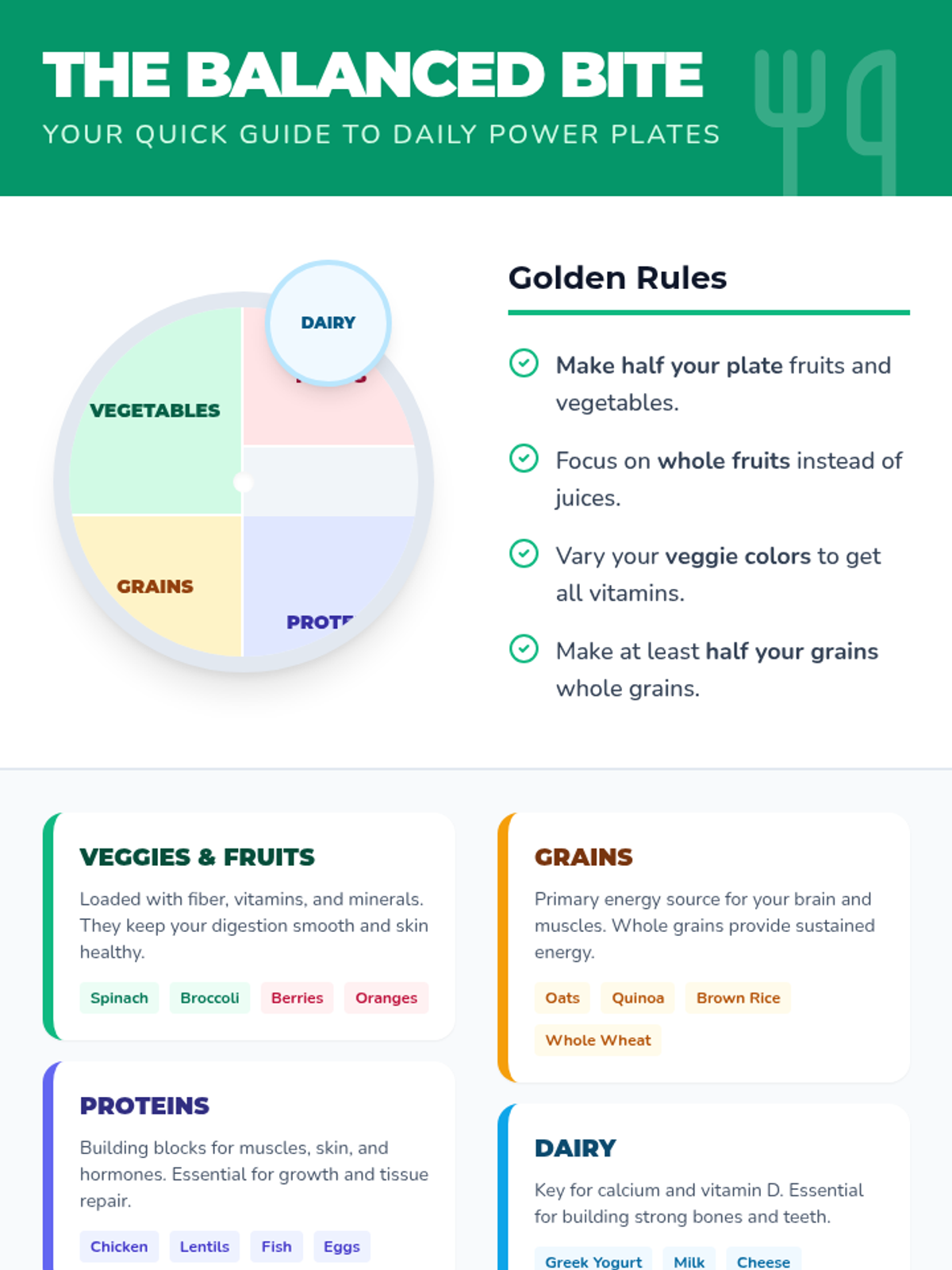
Visualizing food groups and balanced meals using the MyPlate model.
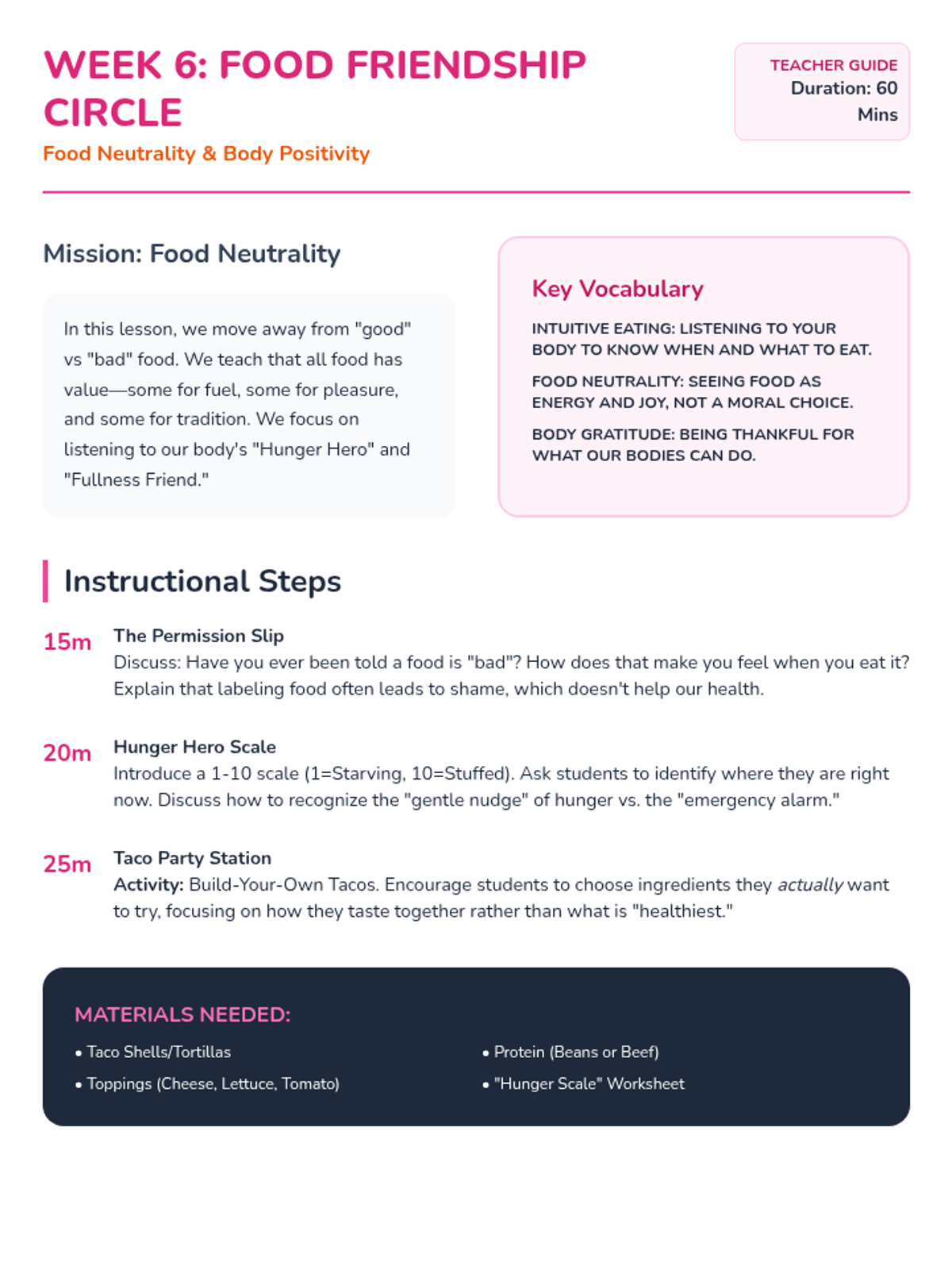
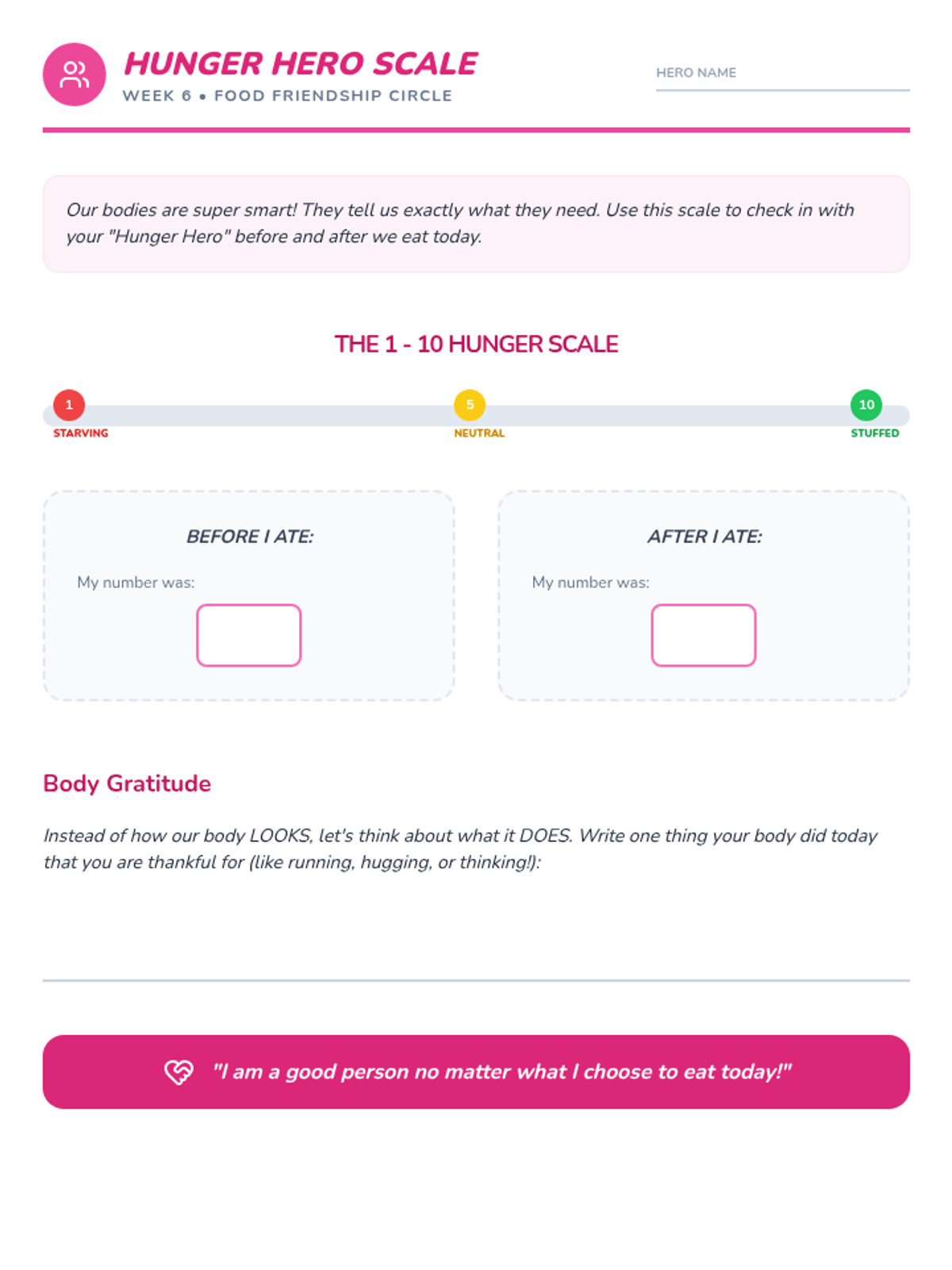
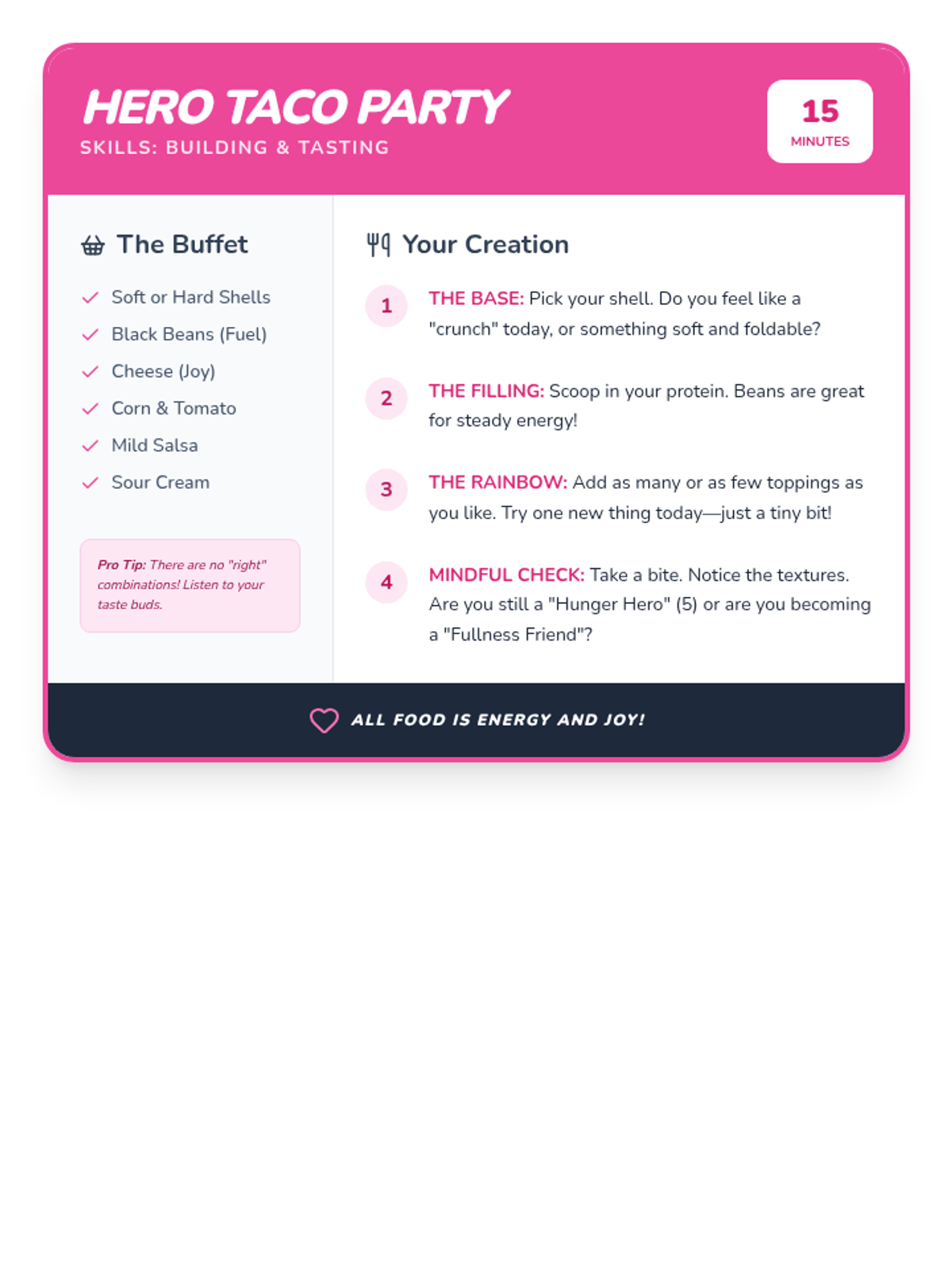
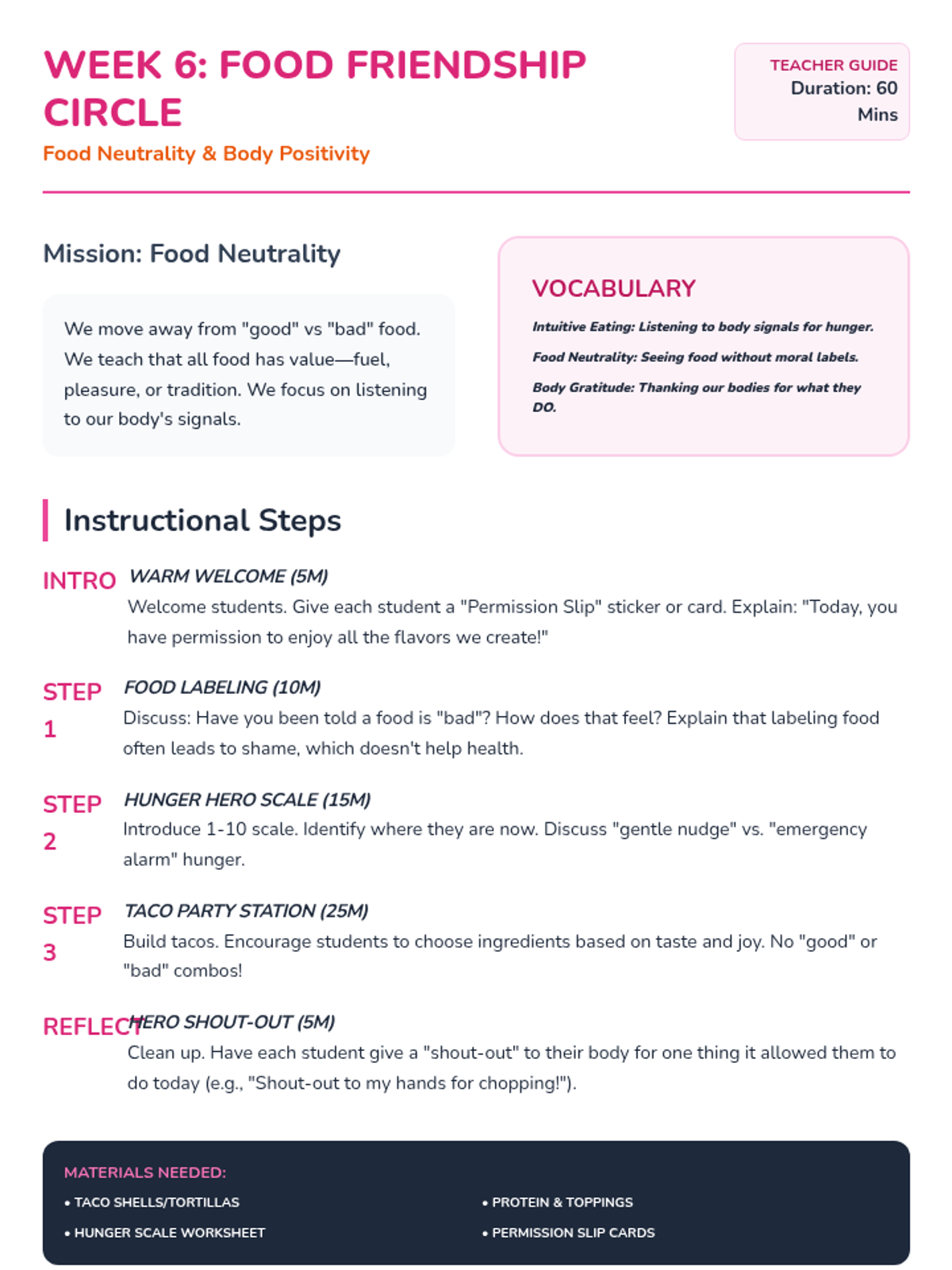
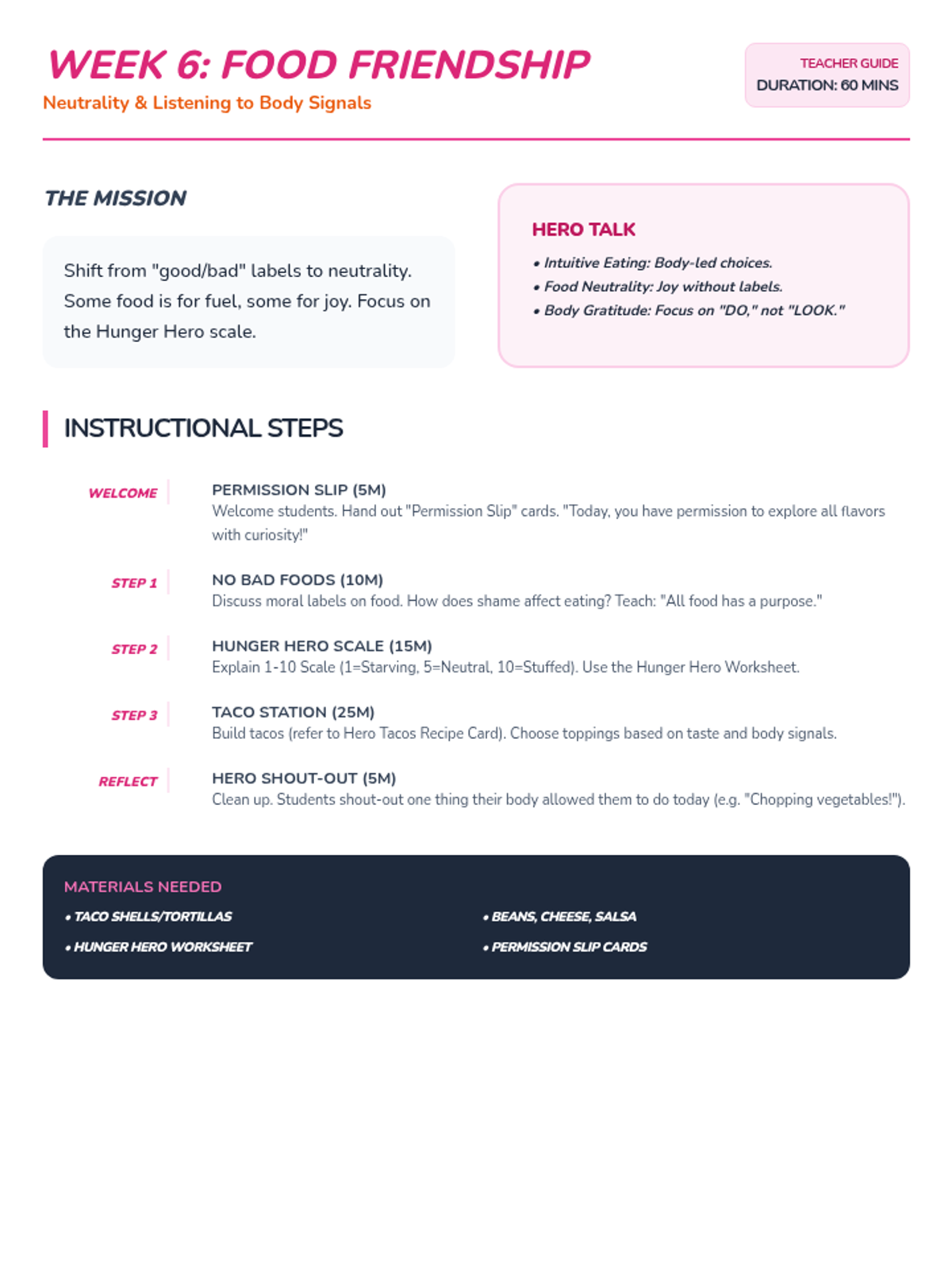
Building a positive relationship with all types of food.
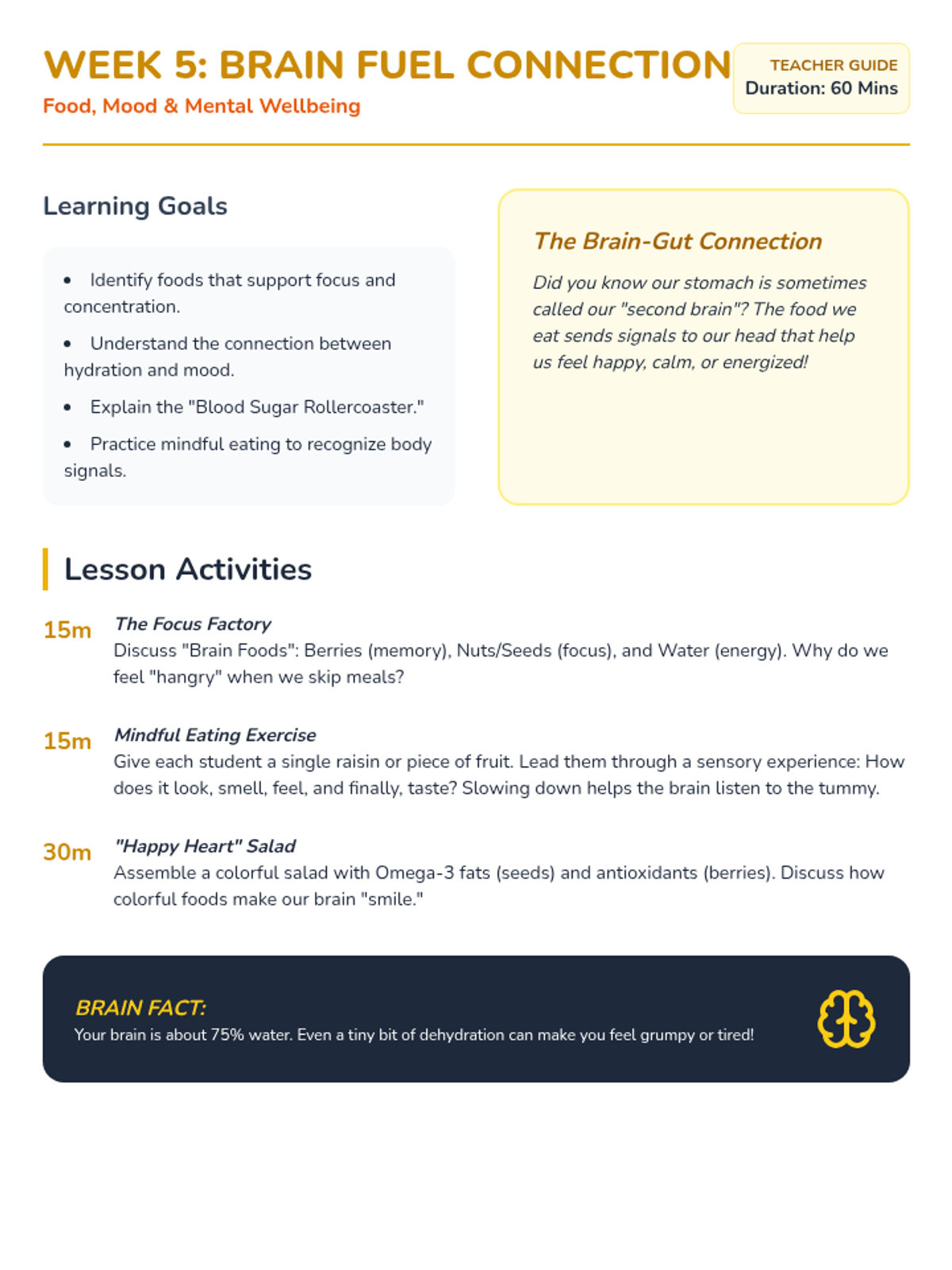
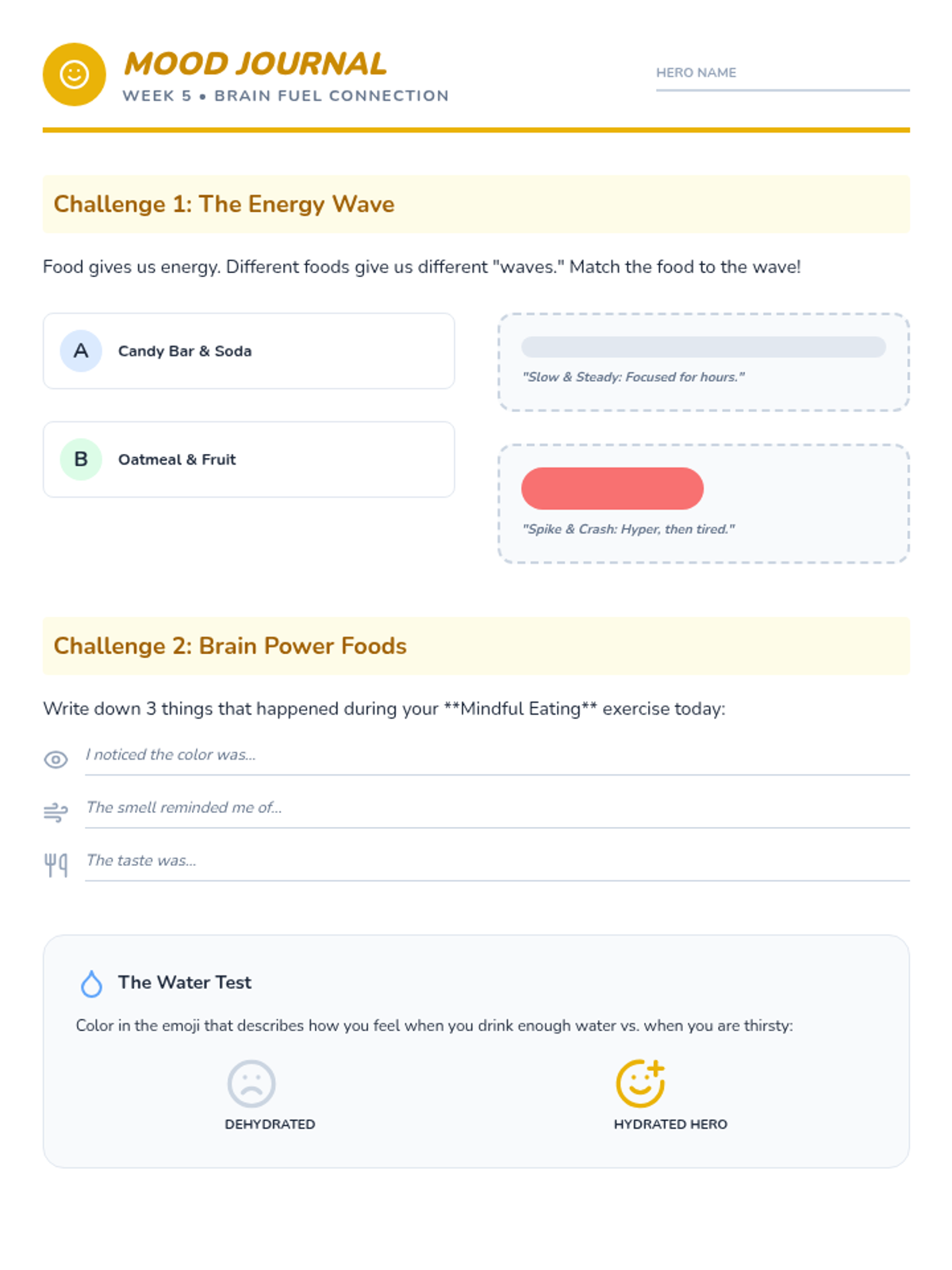
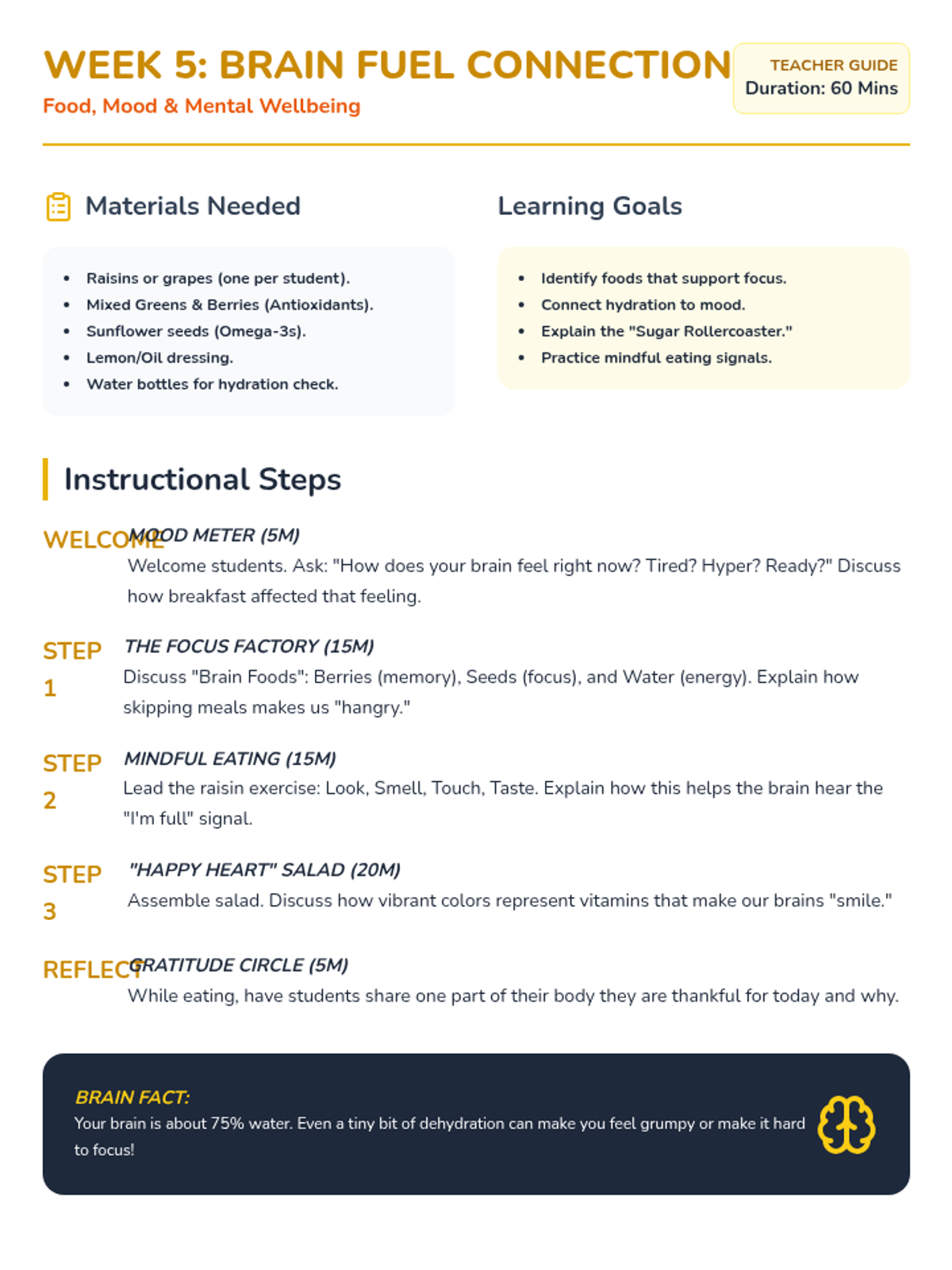
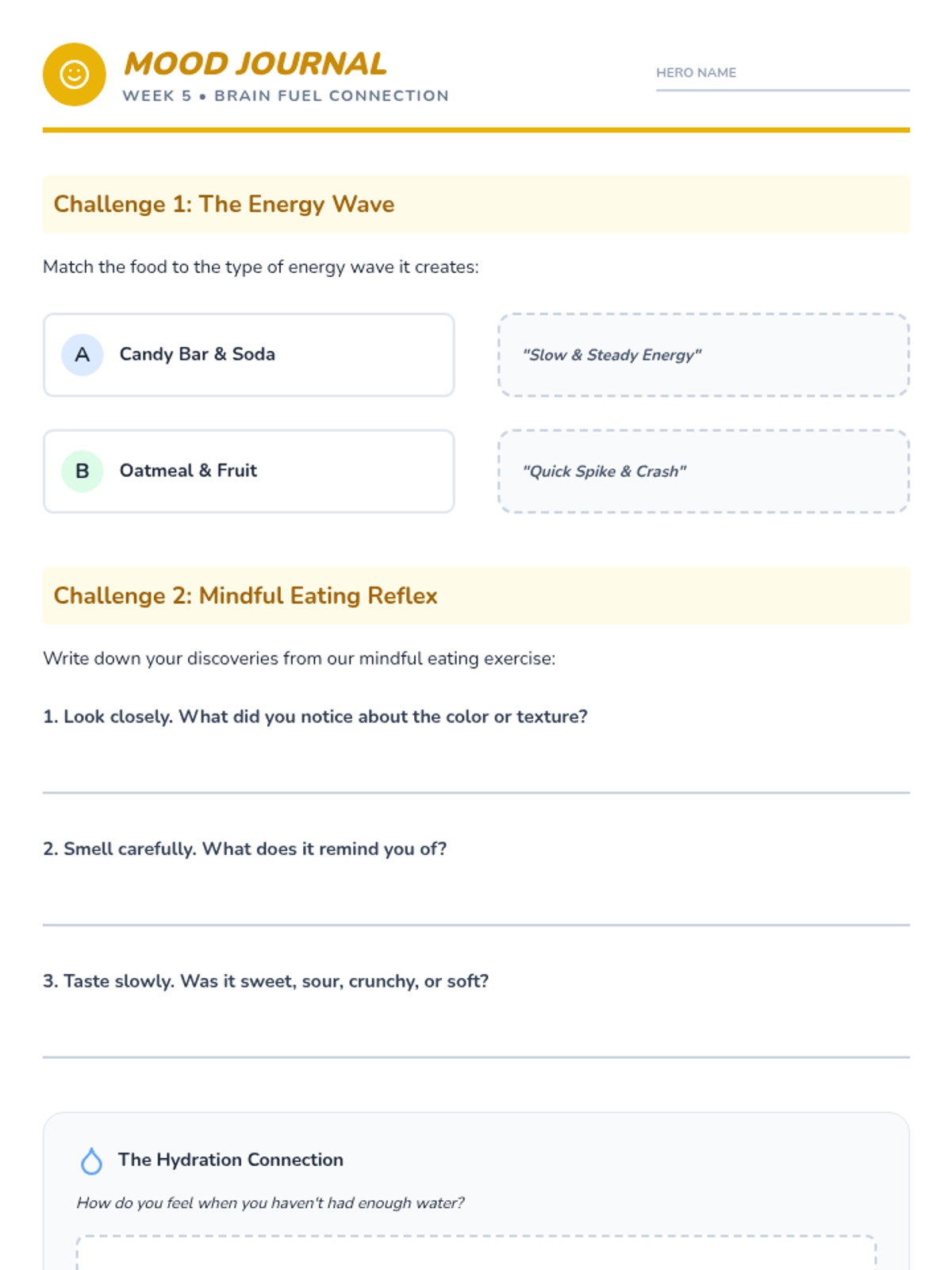
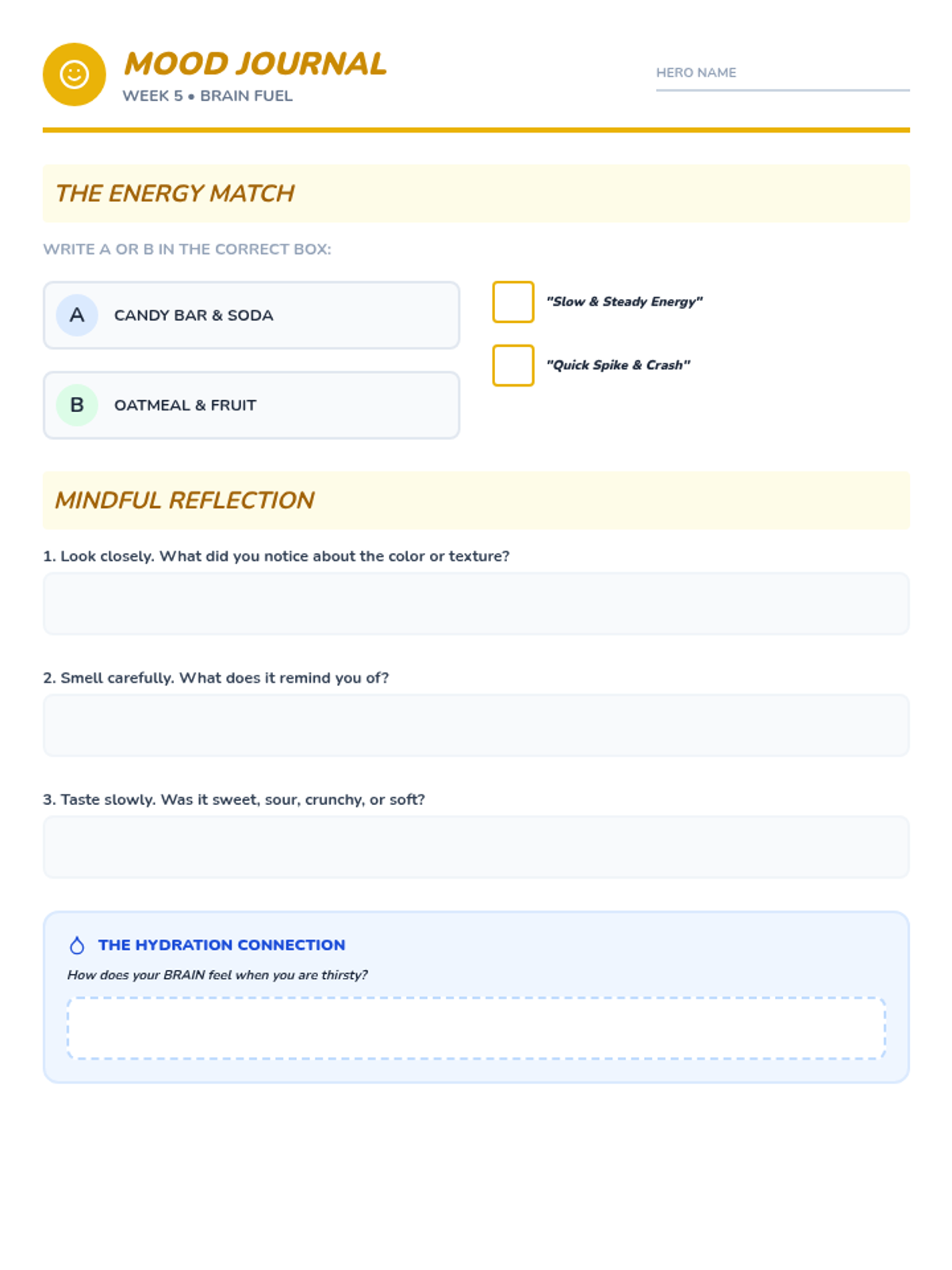
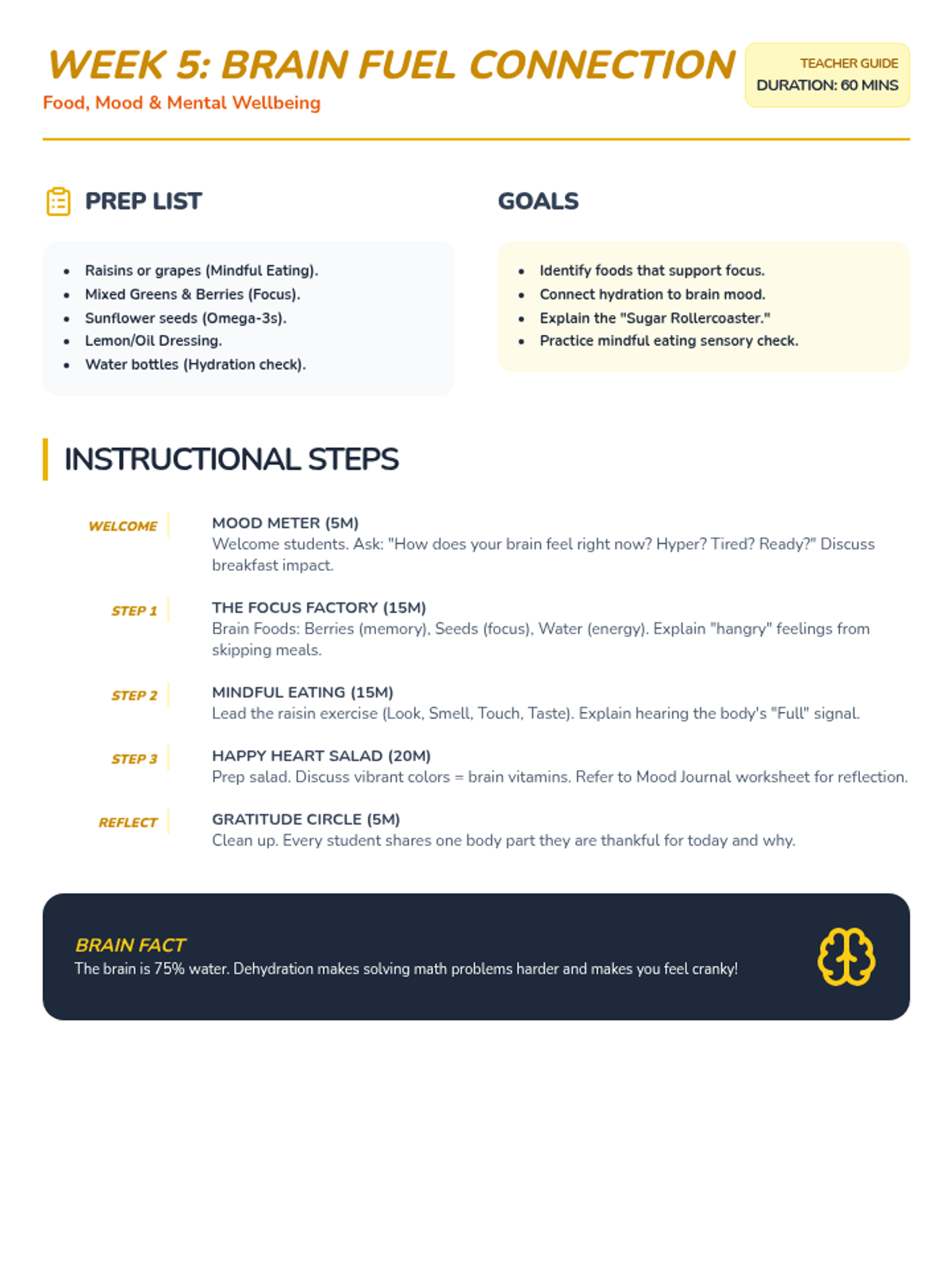
Exploring the link between what we eat and how we feel.
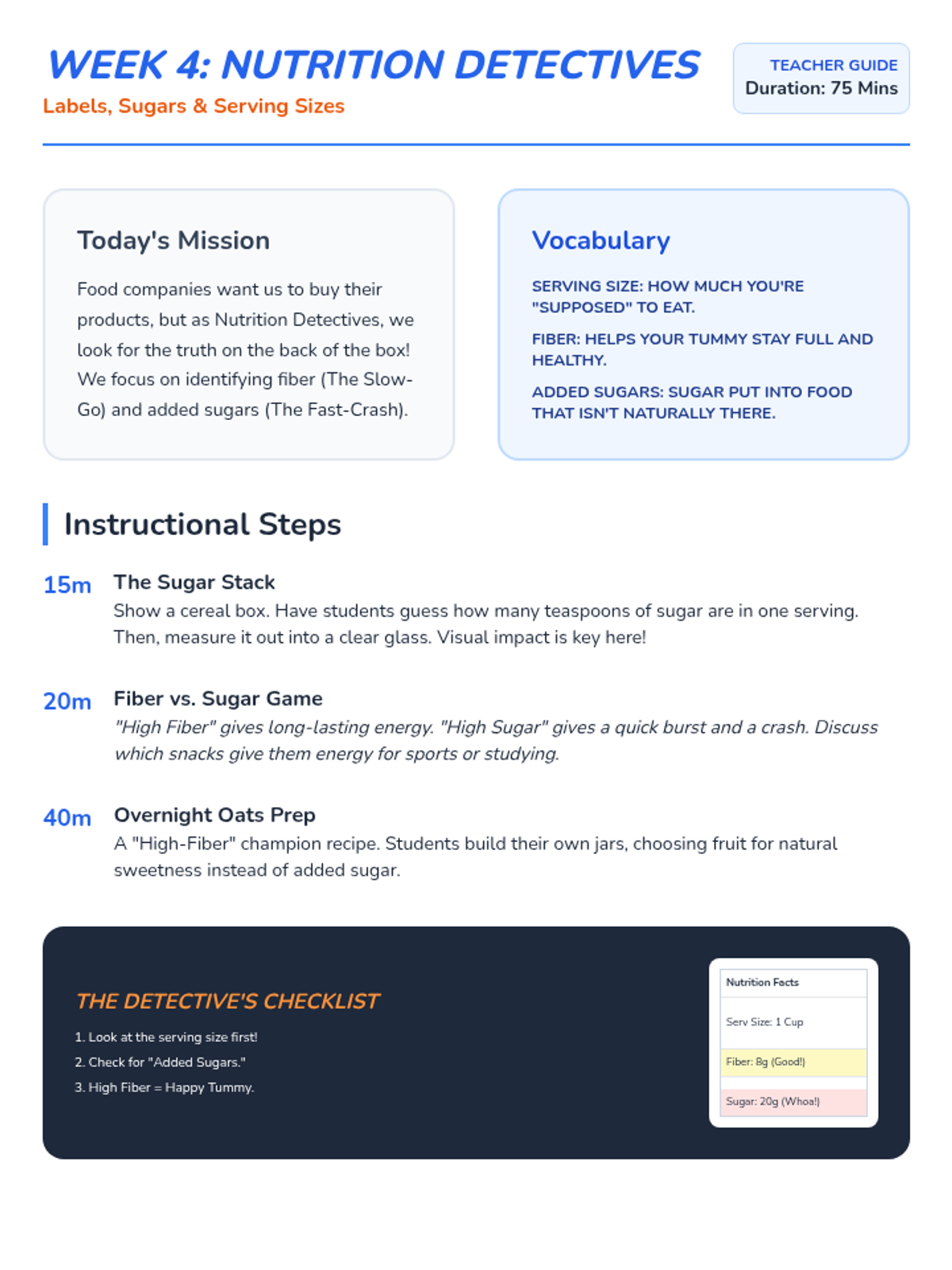
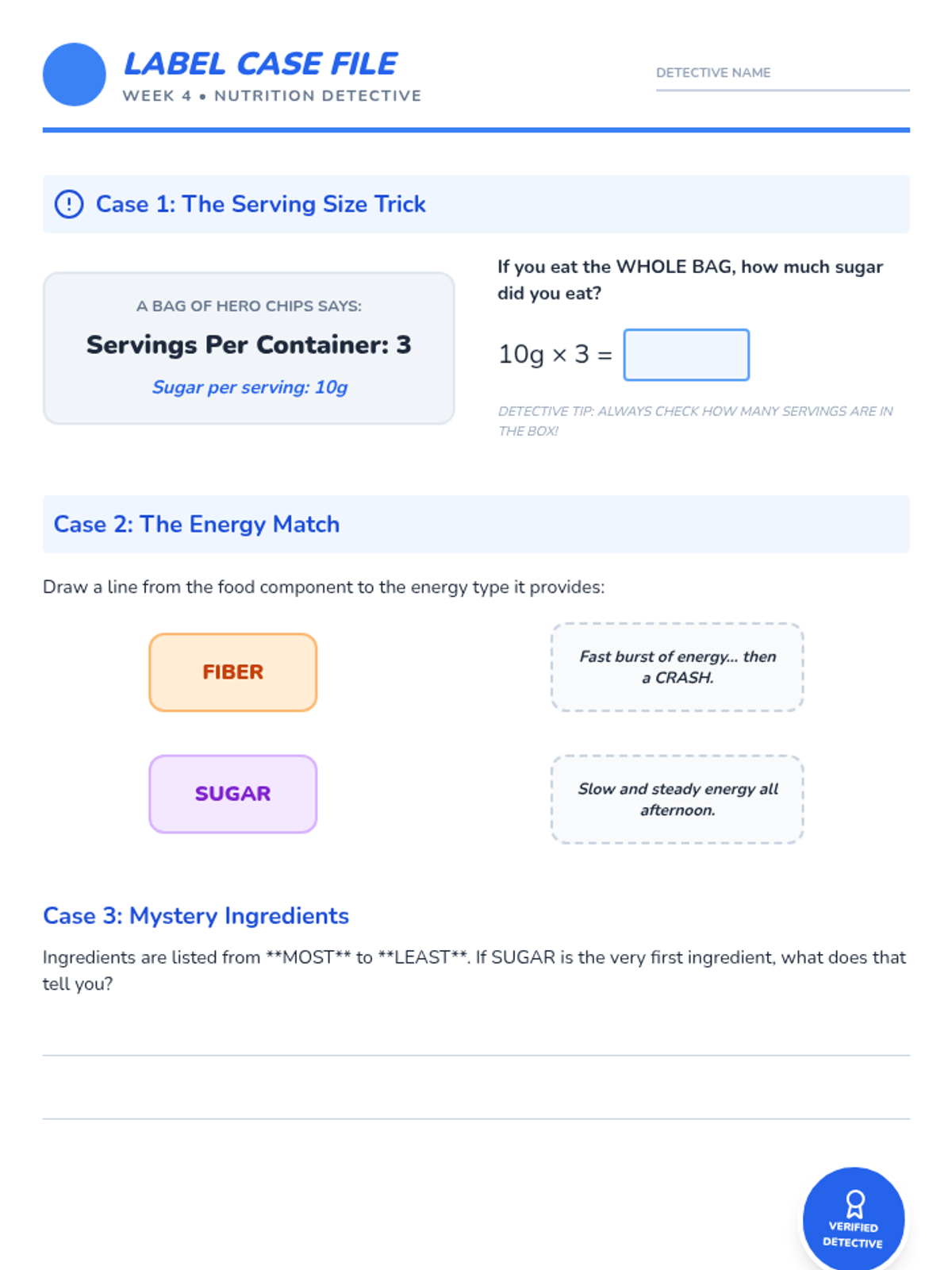
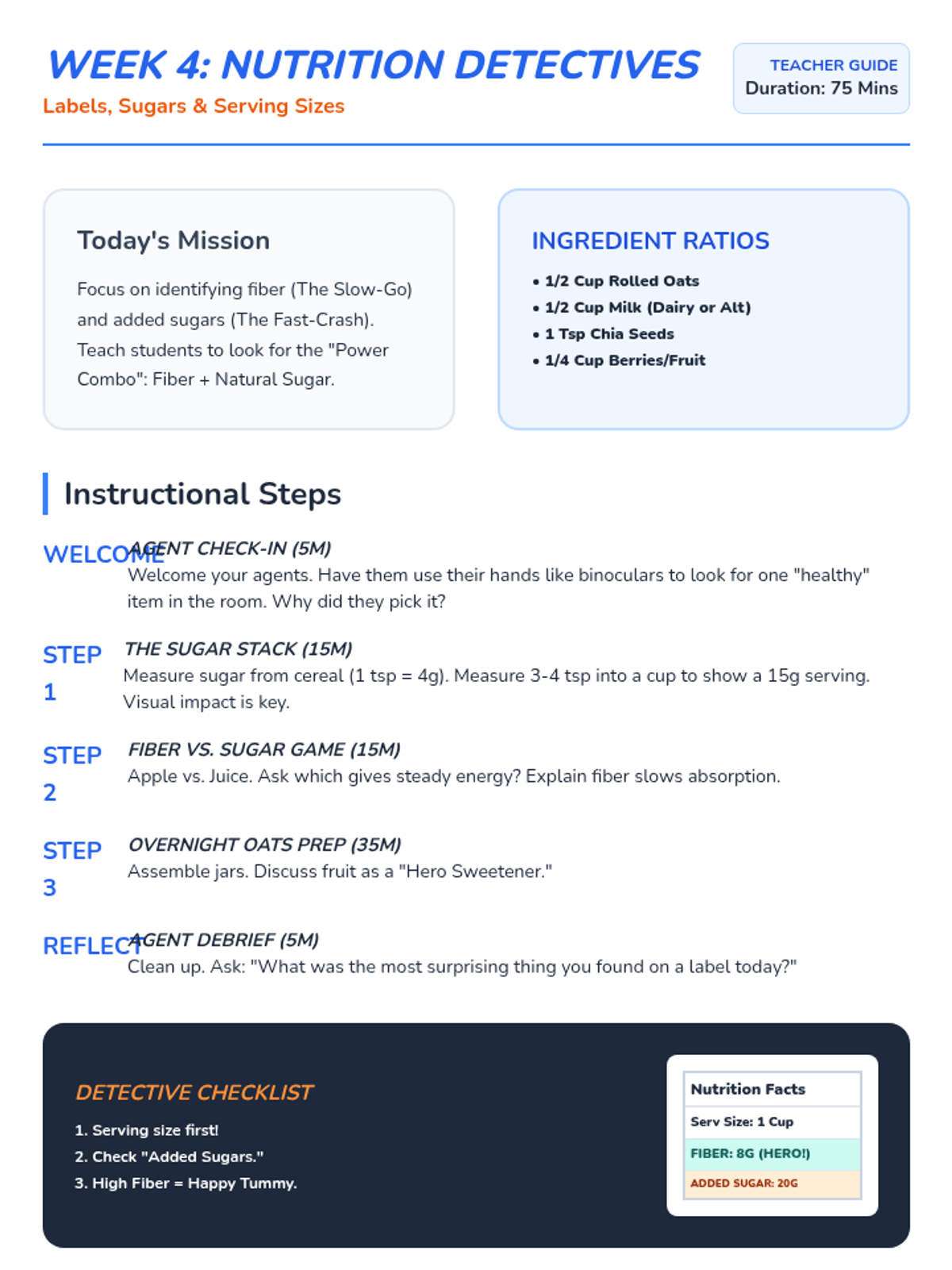
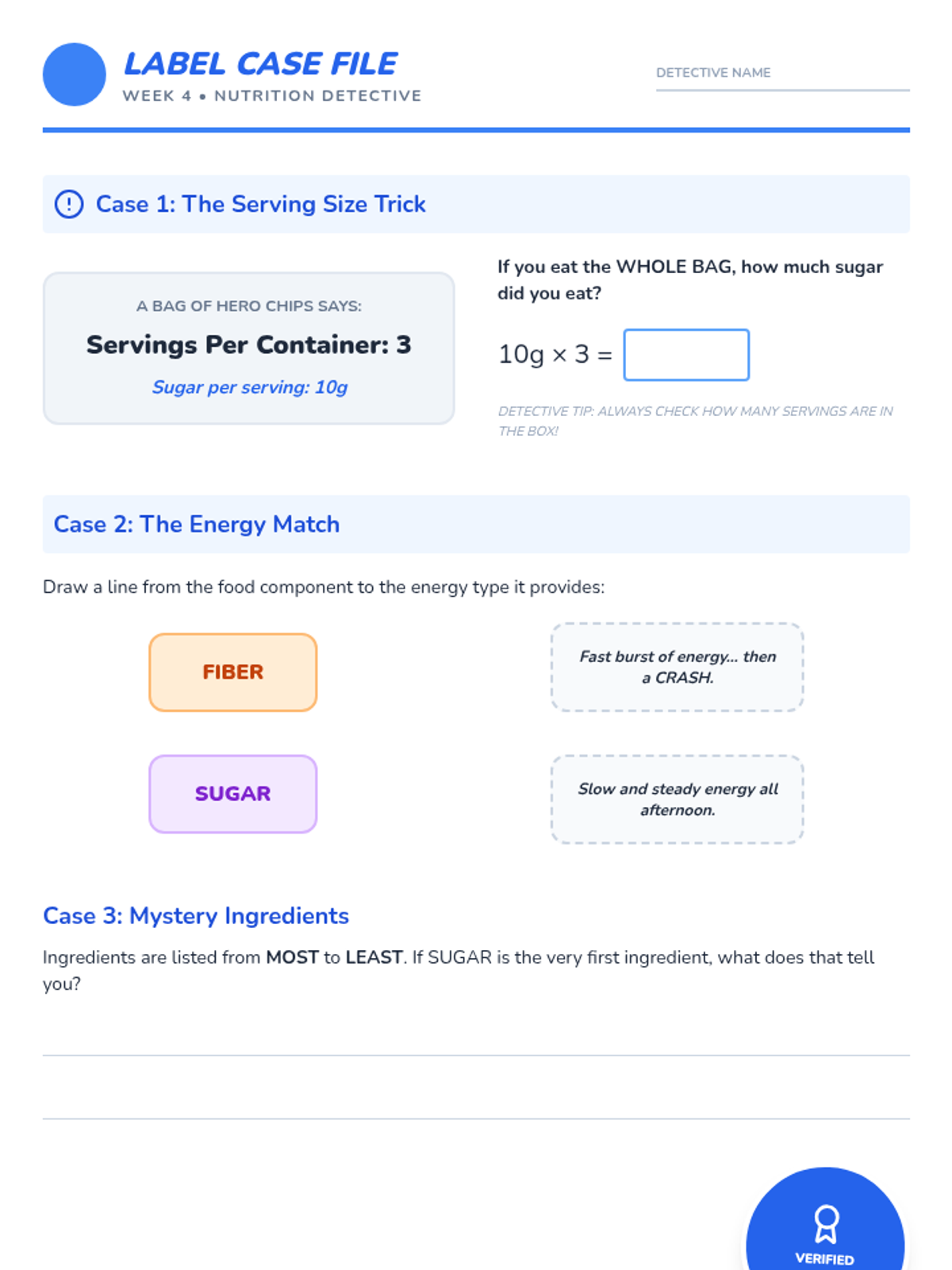
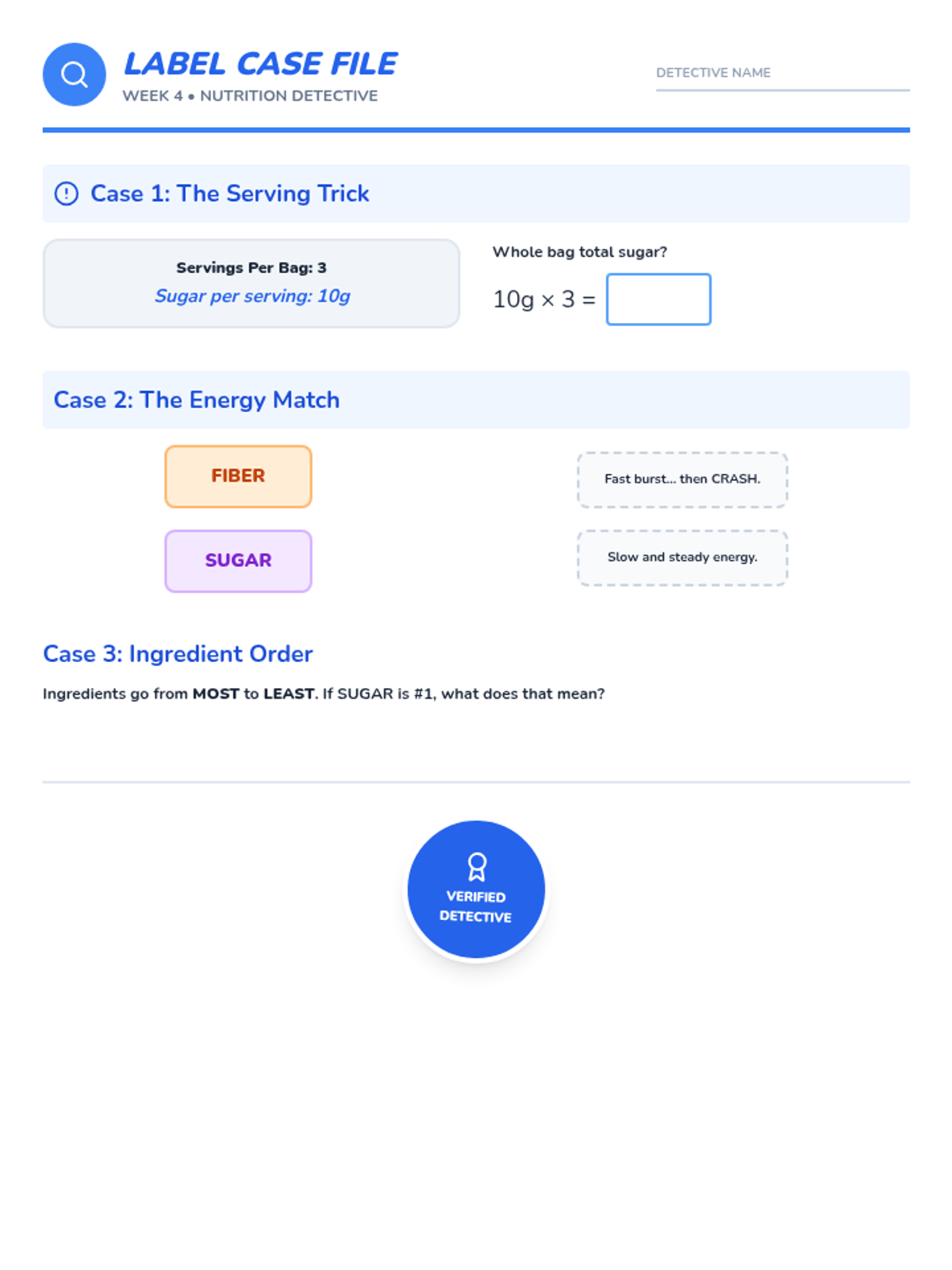
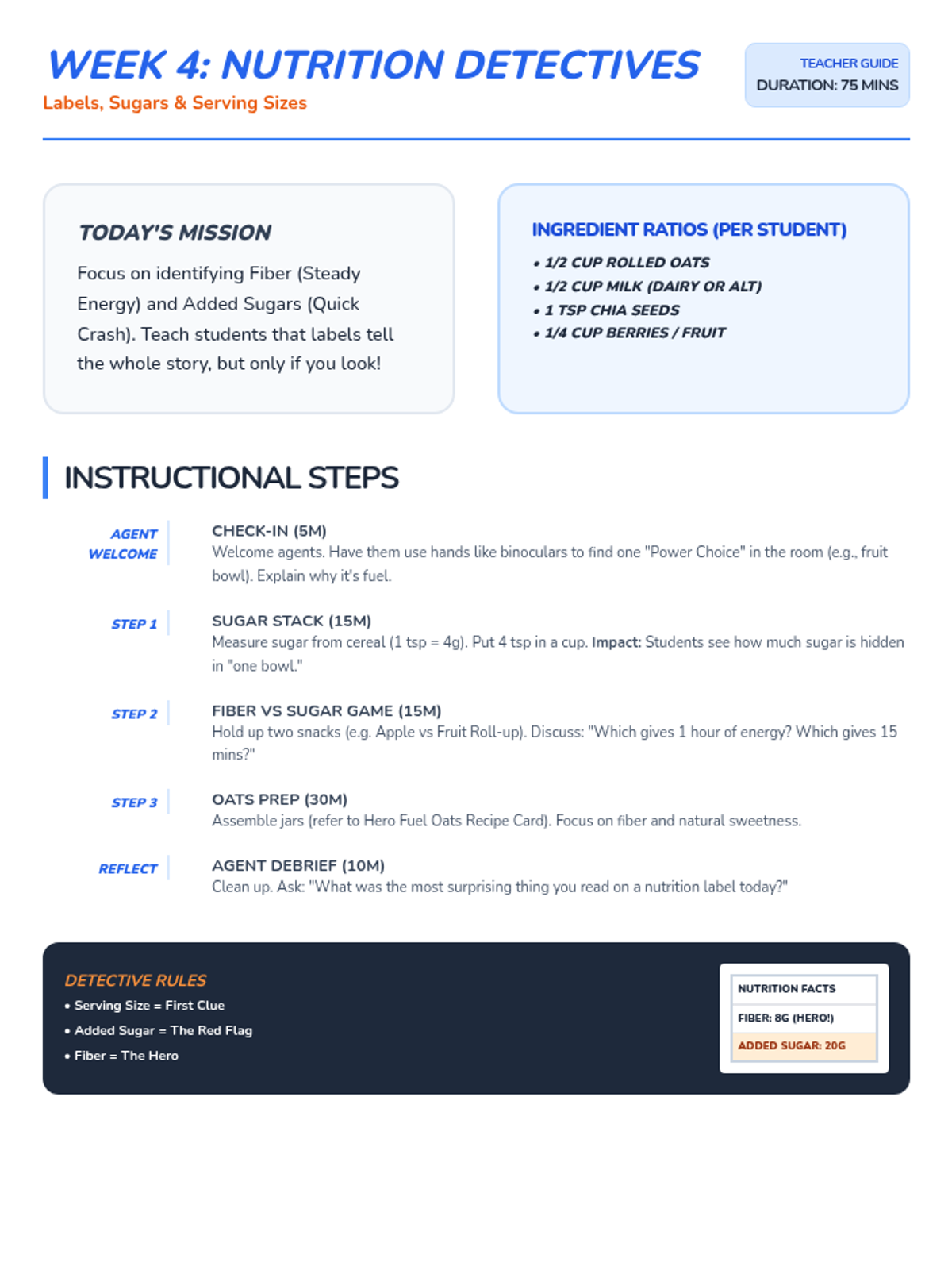
Decoding nutrition labels and making empowered choices for the body.
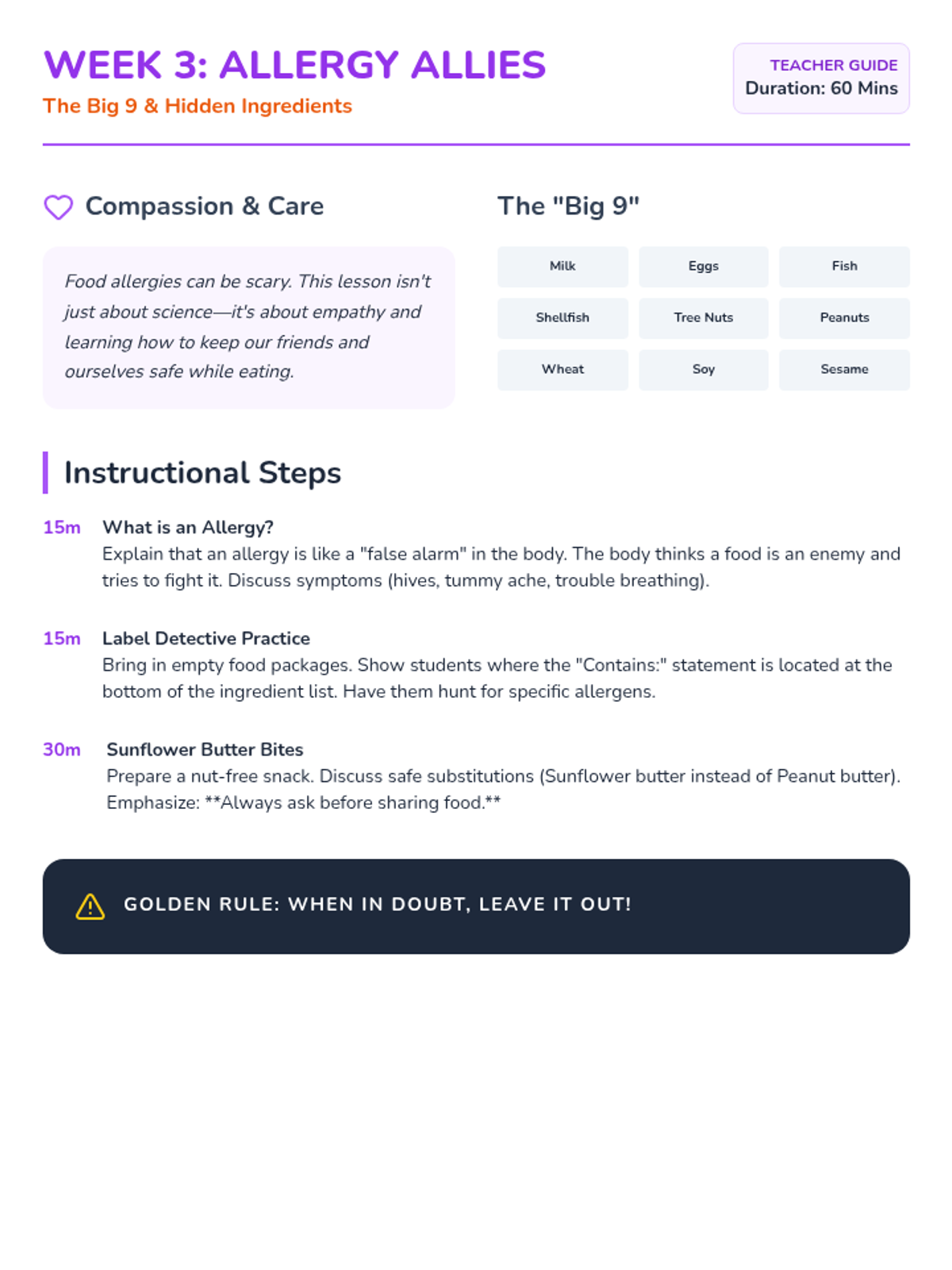
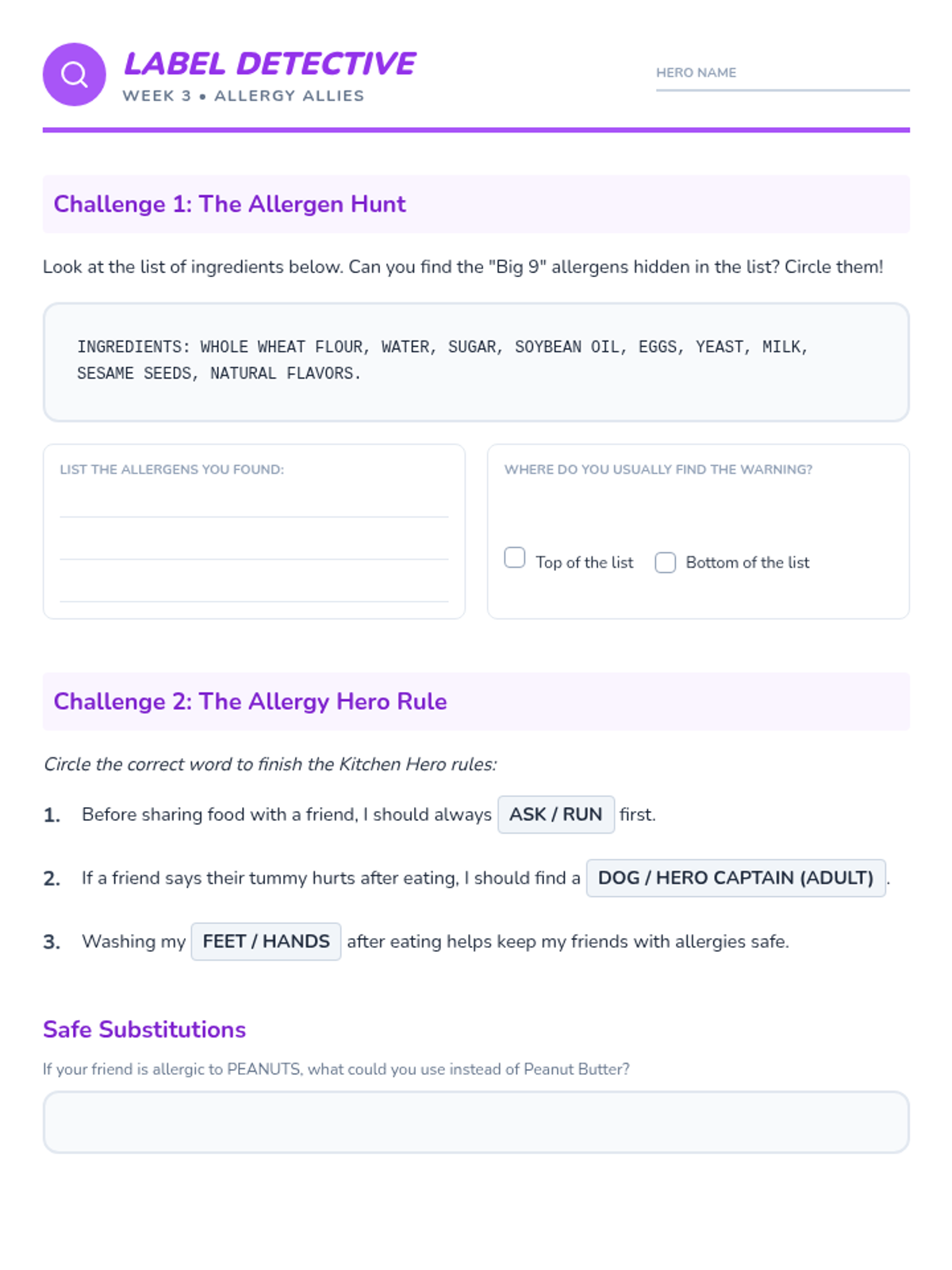
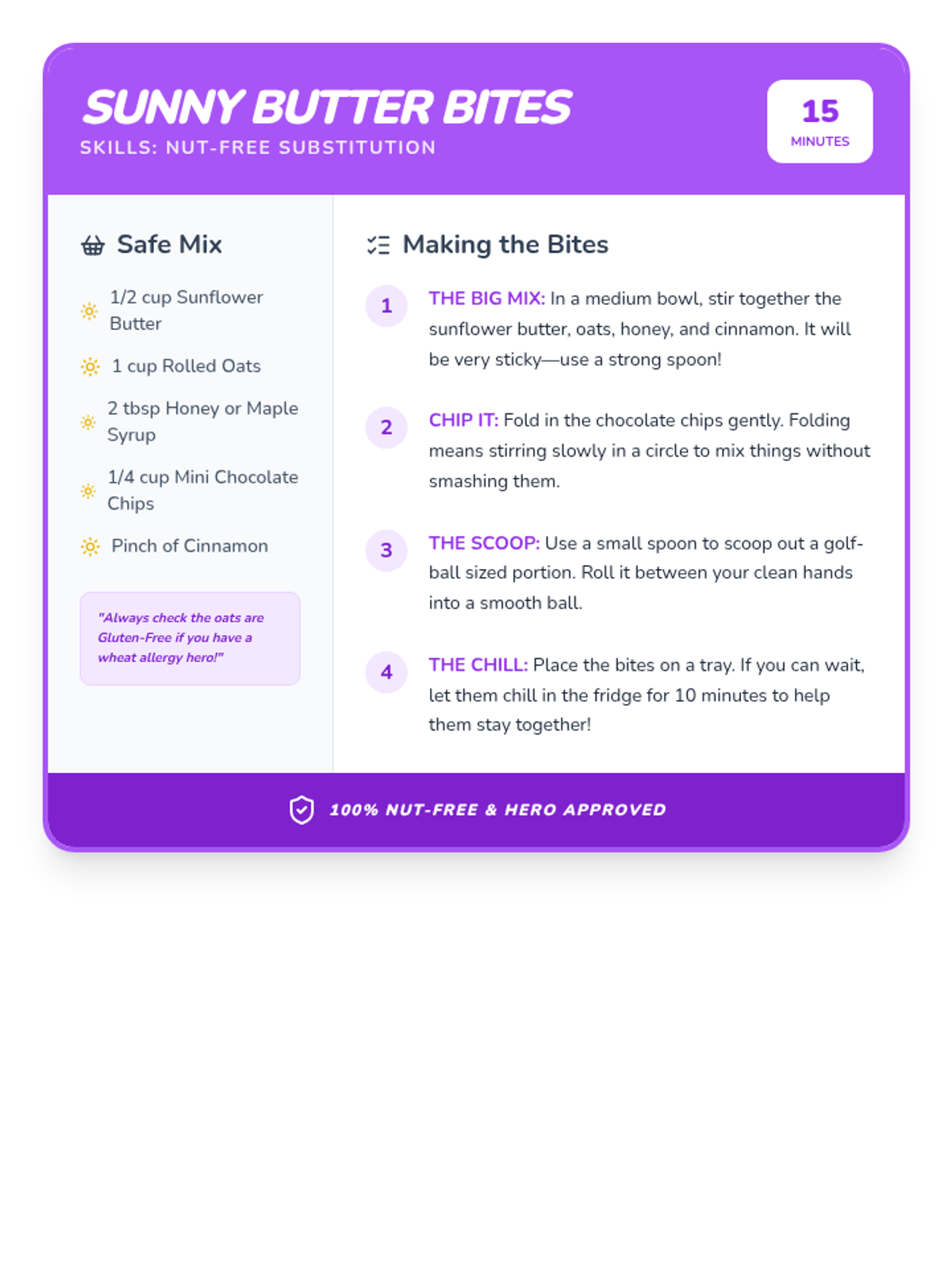
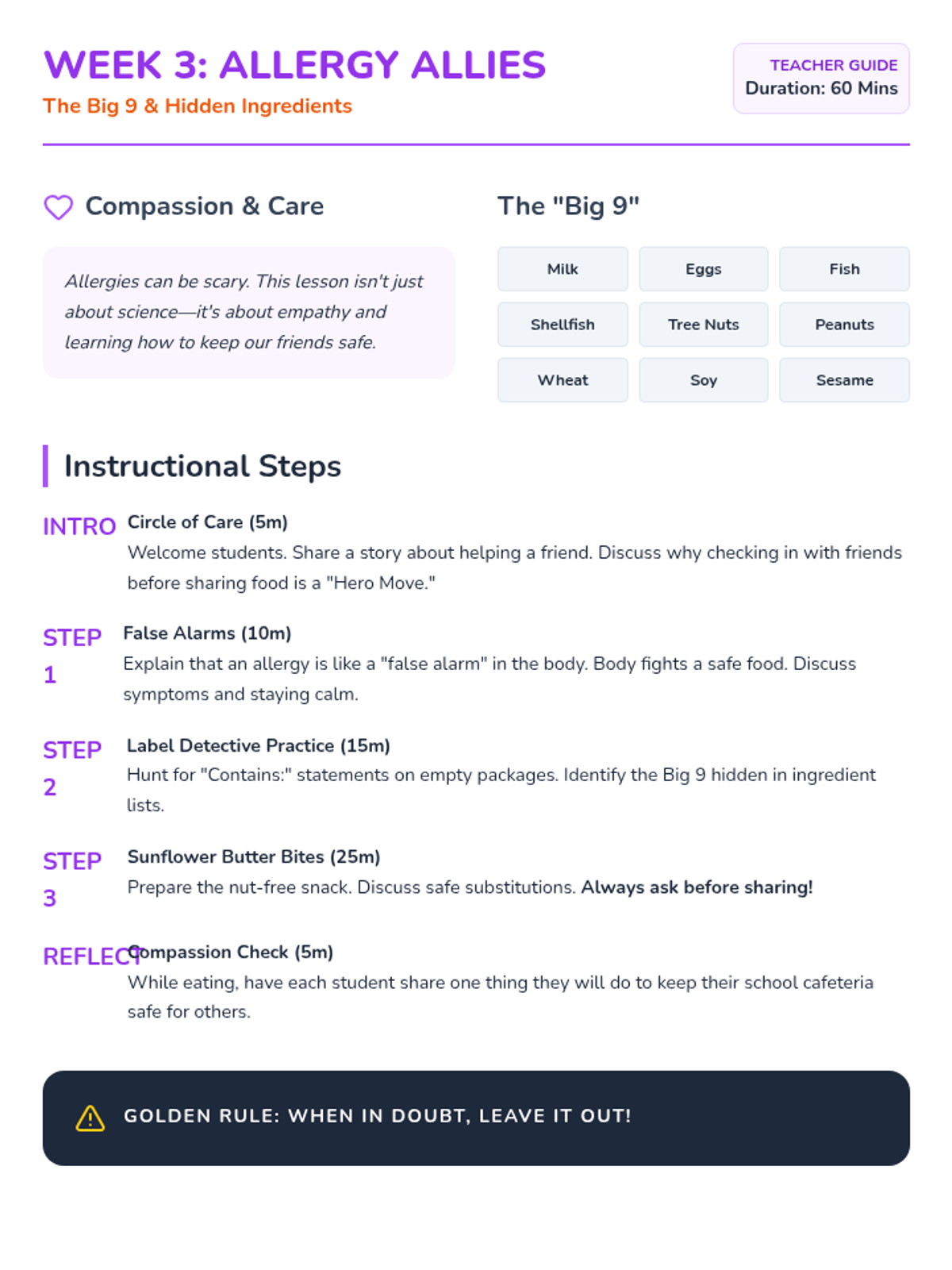
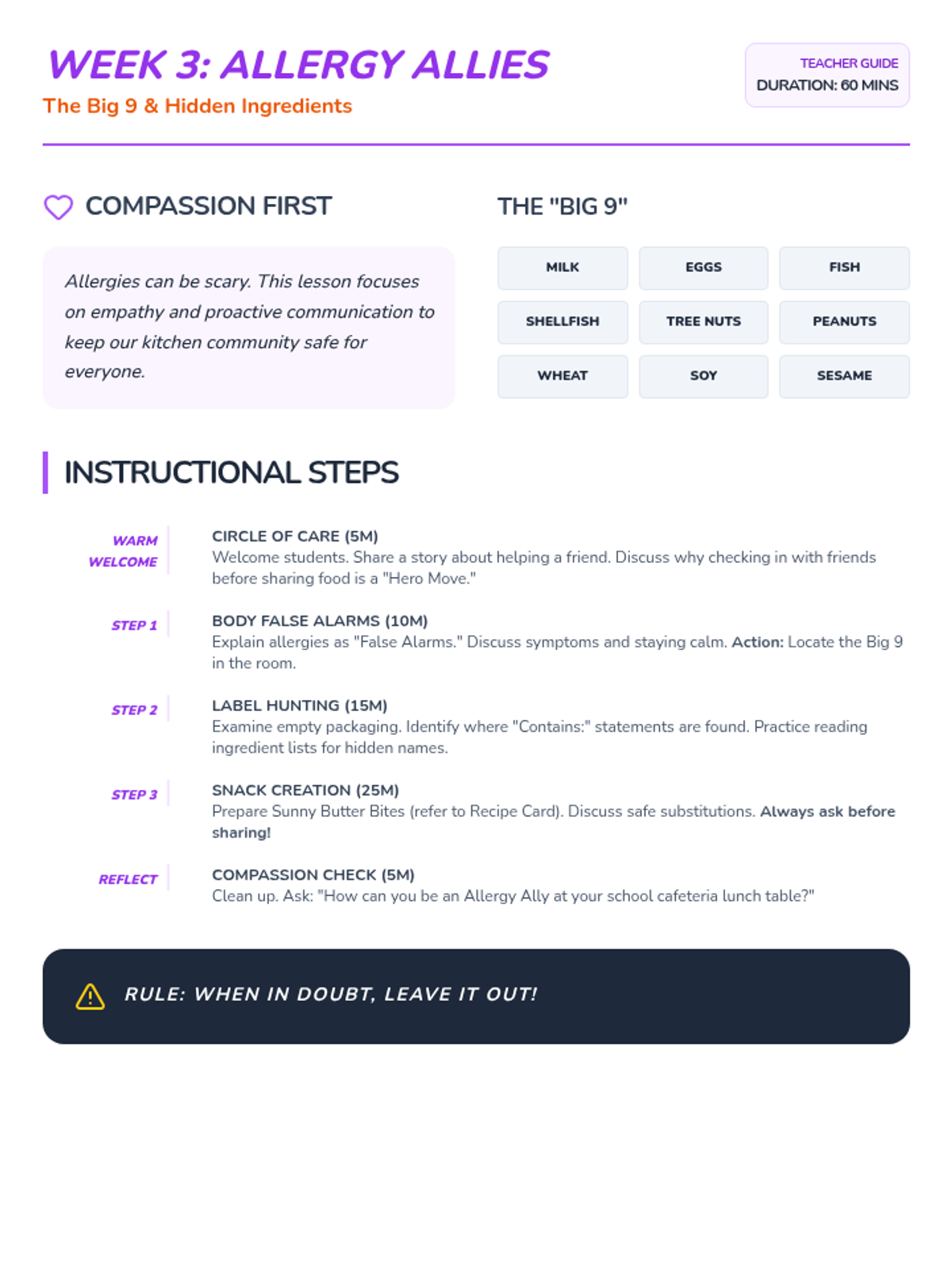
Learning about common food allergies and how to keep everyone safe at the table.
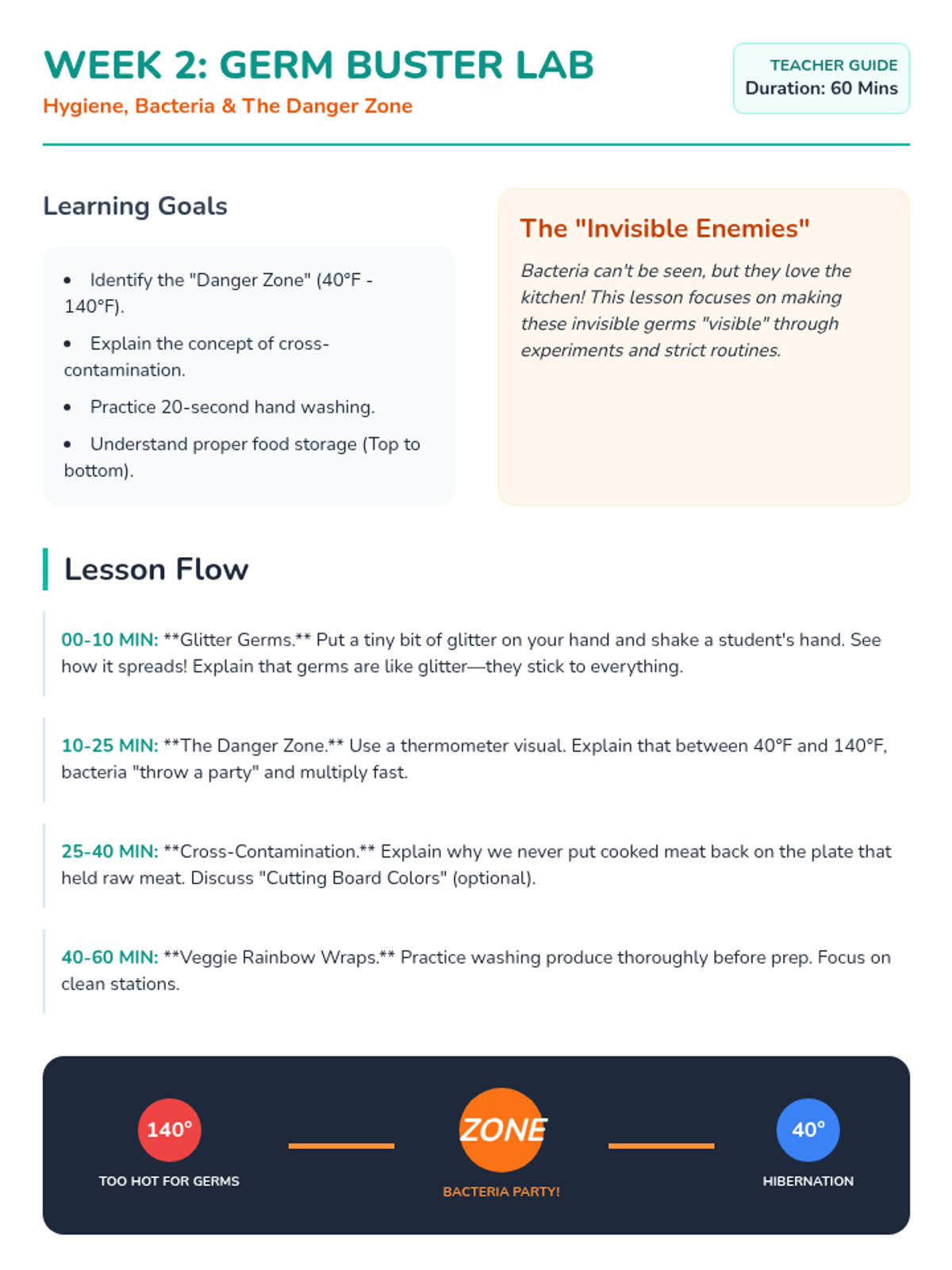
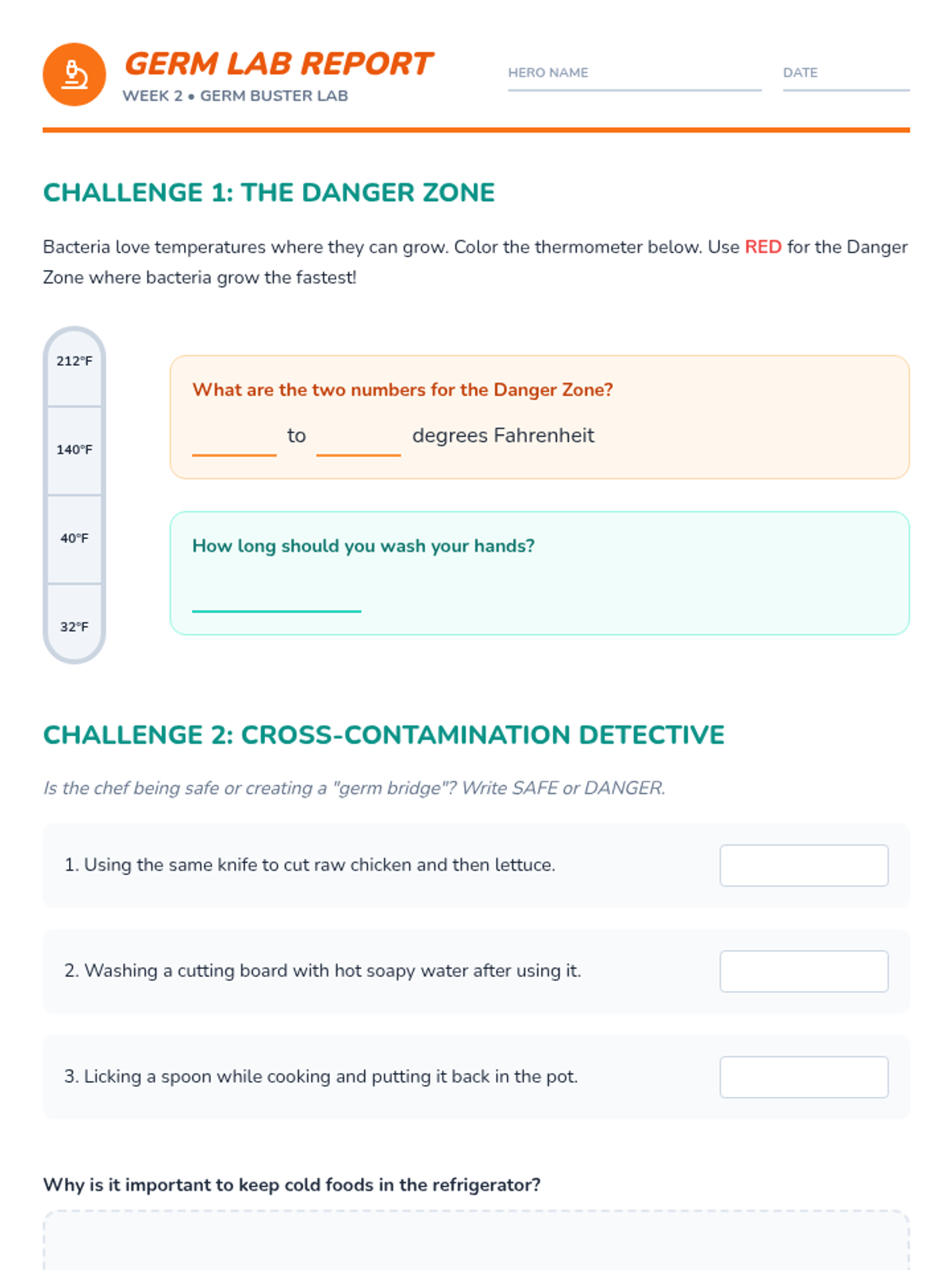
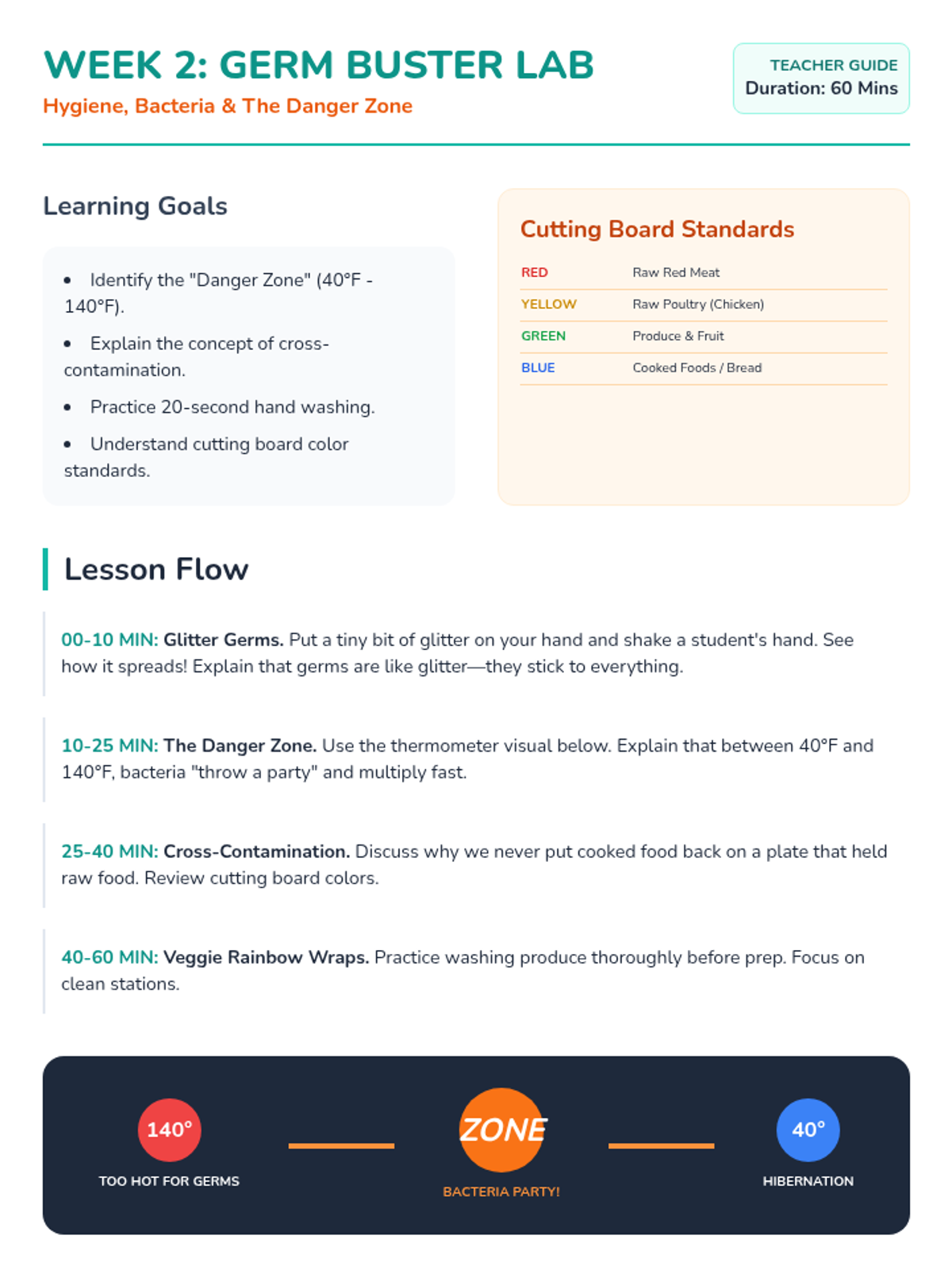
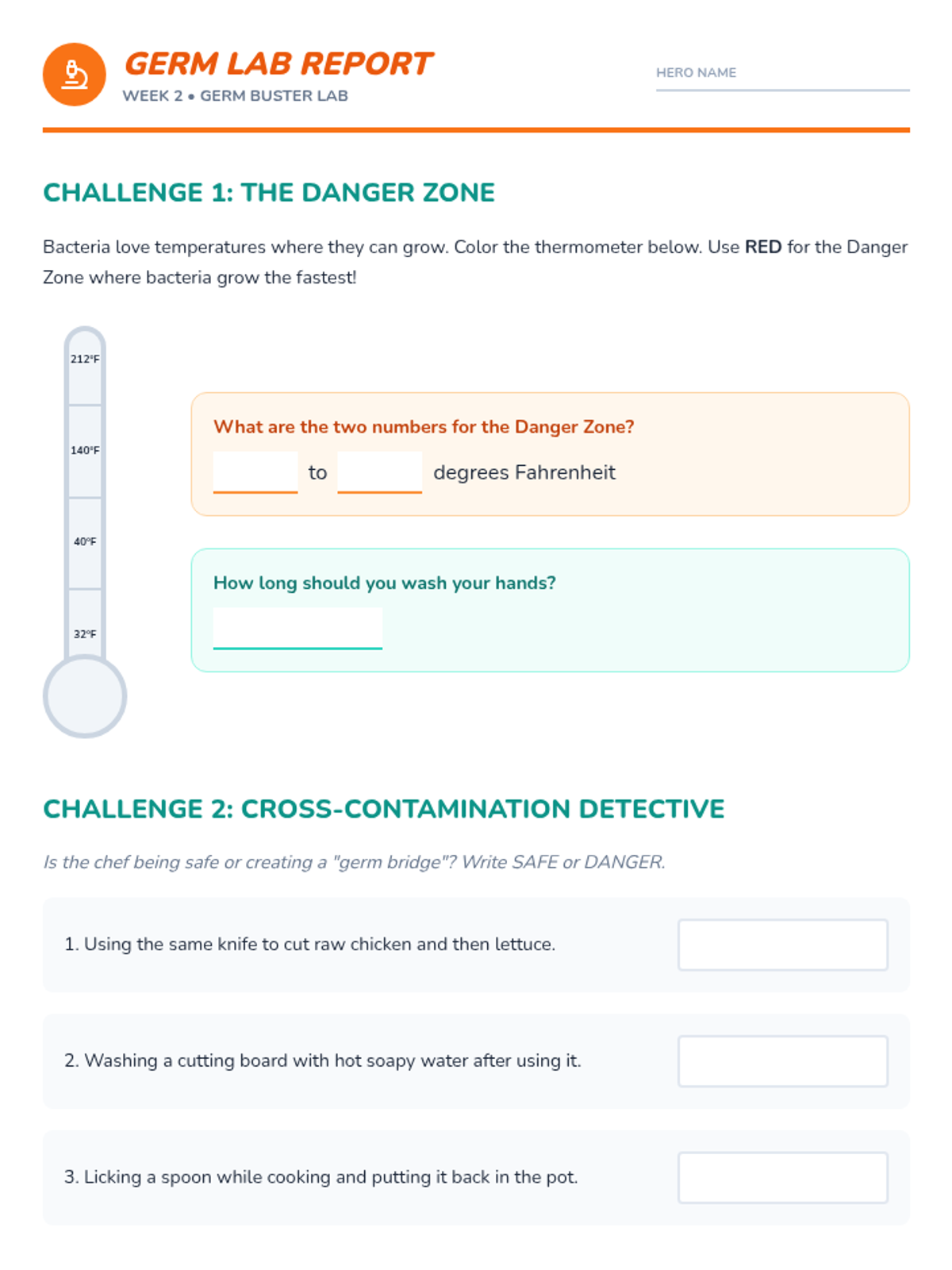
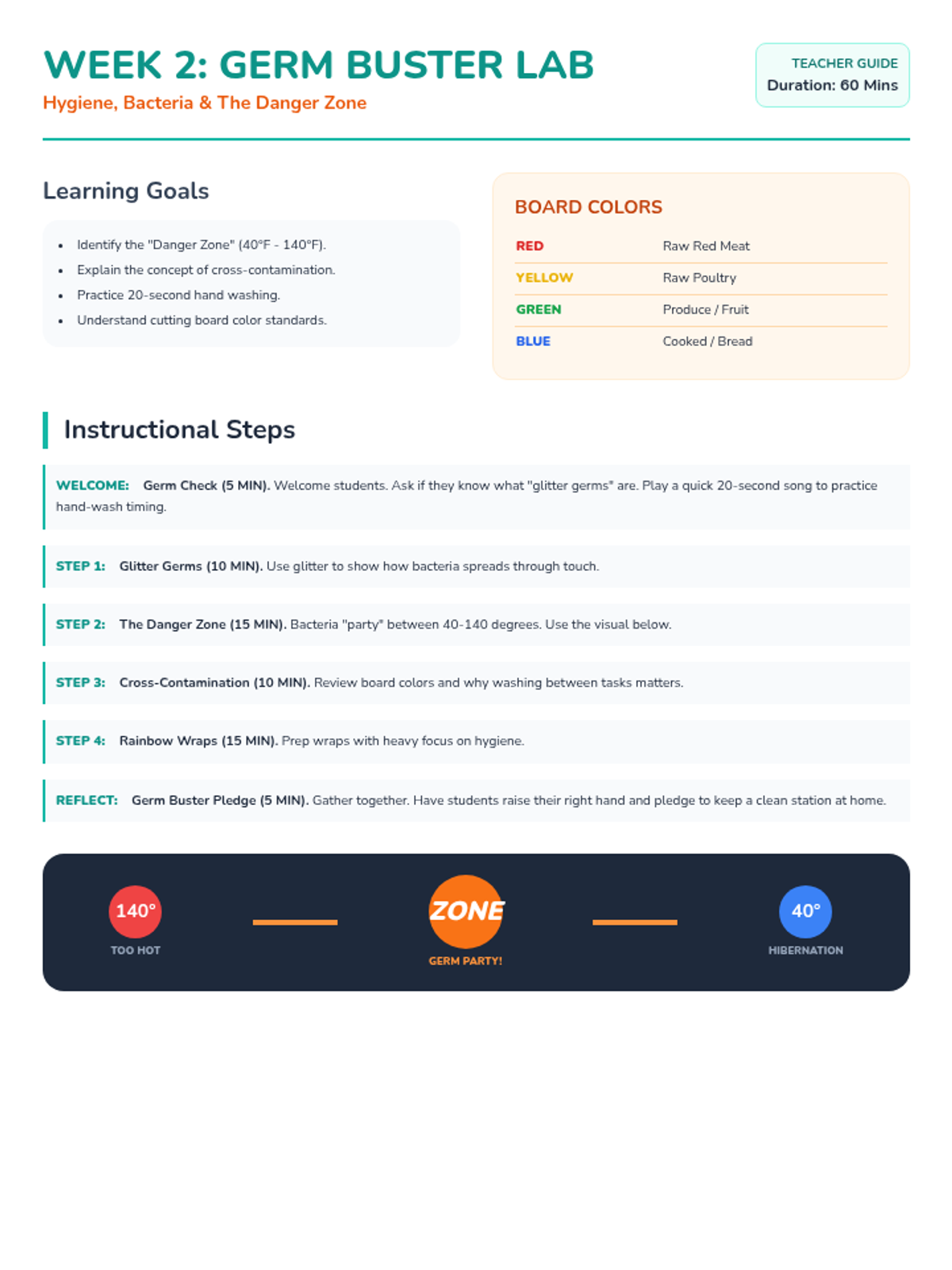
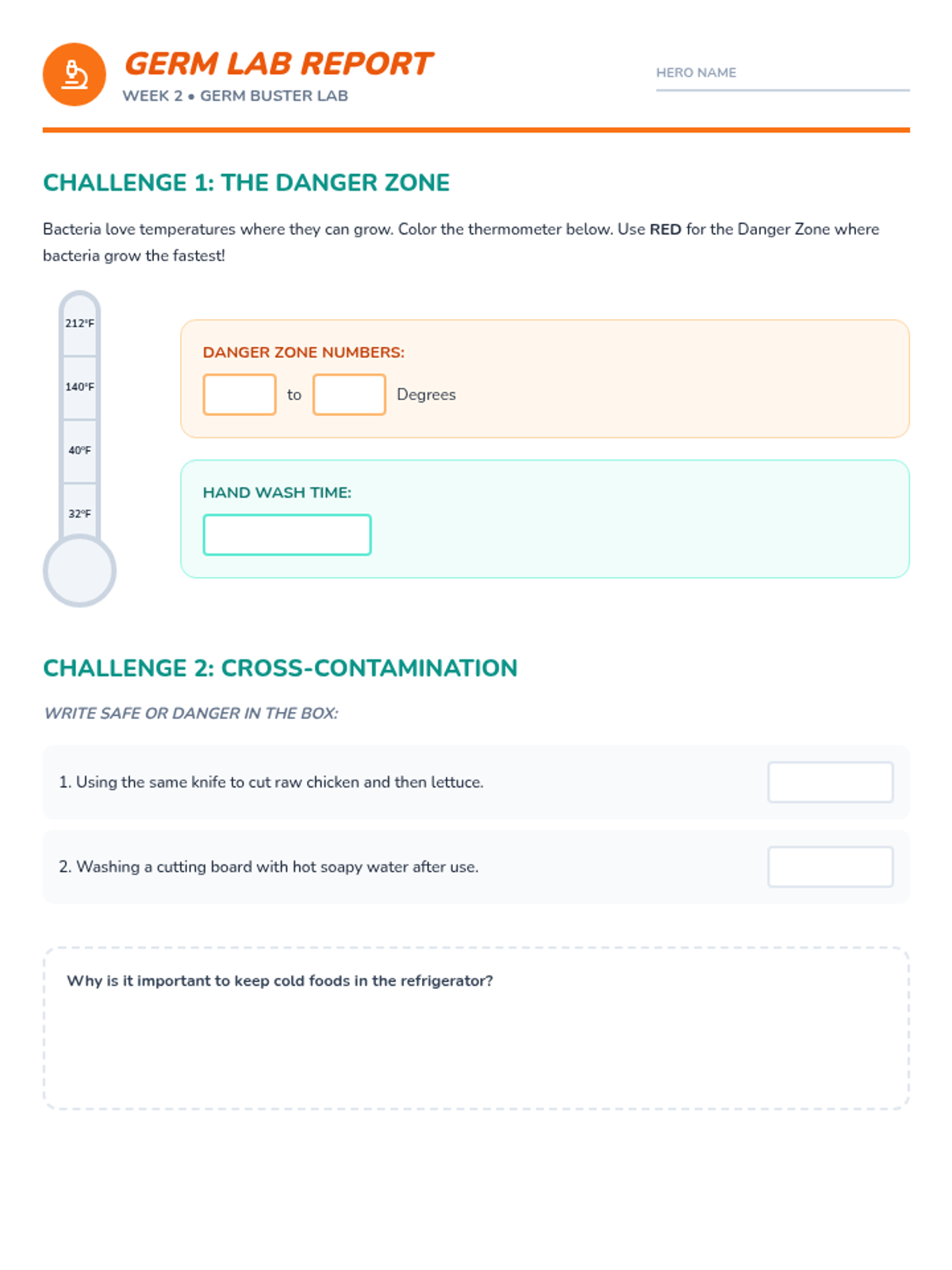
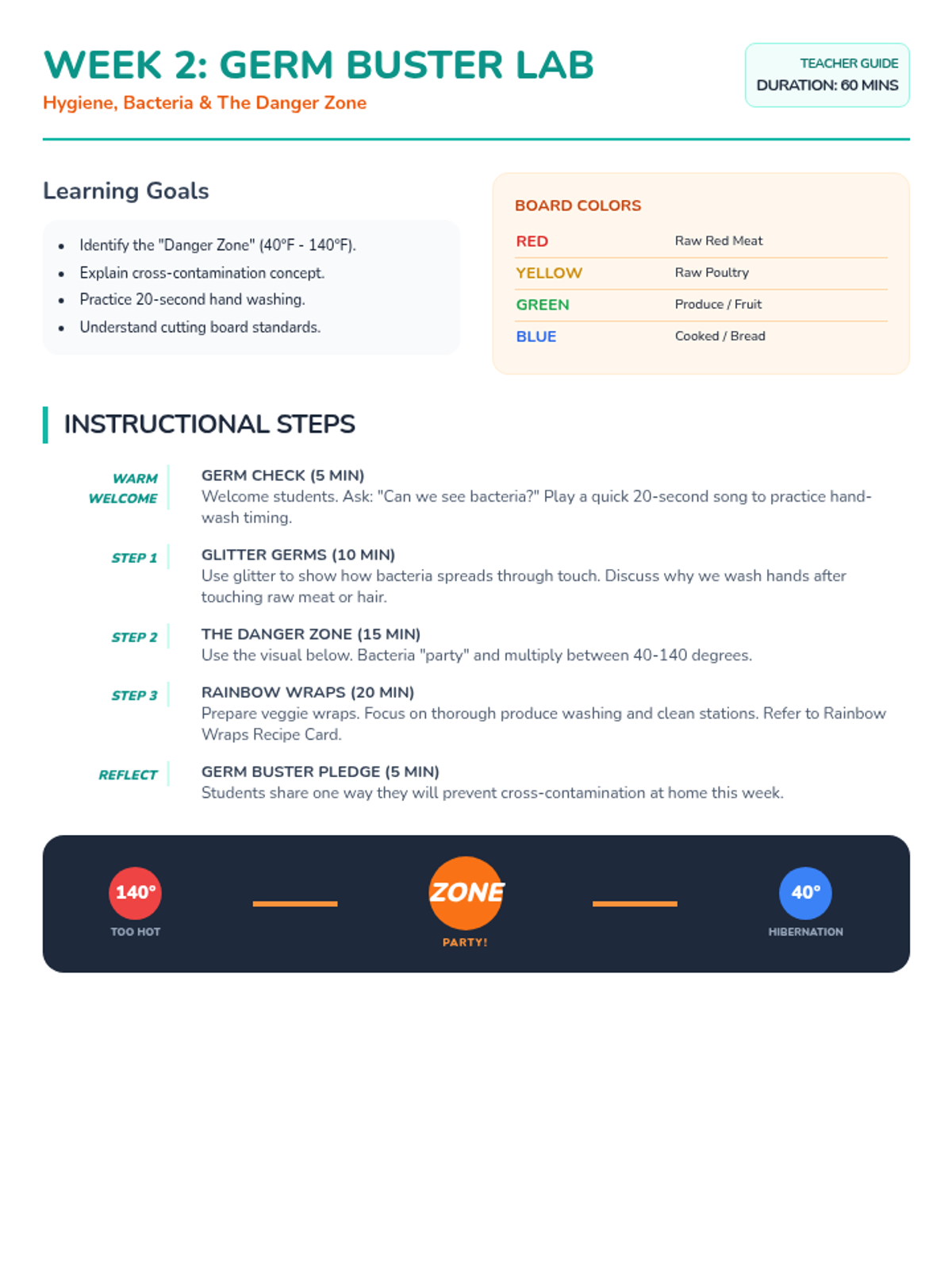
Understanding food-borne illnesses and the importance of a clean workspace.
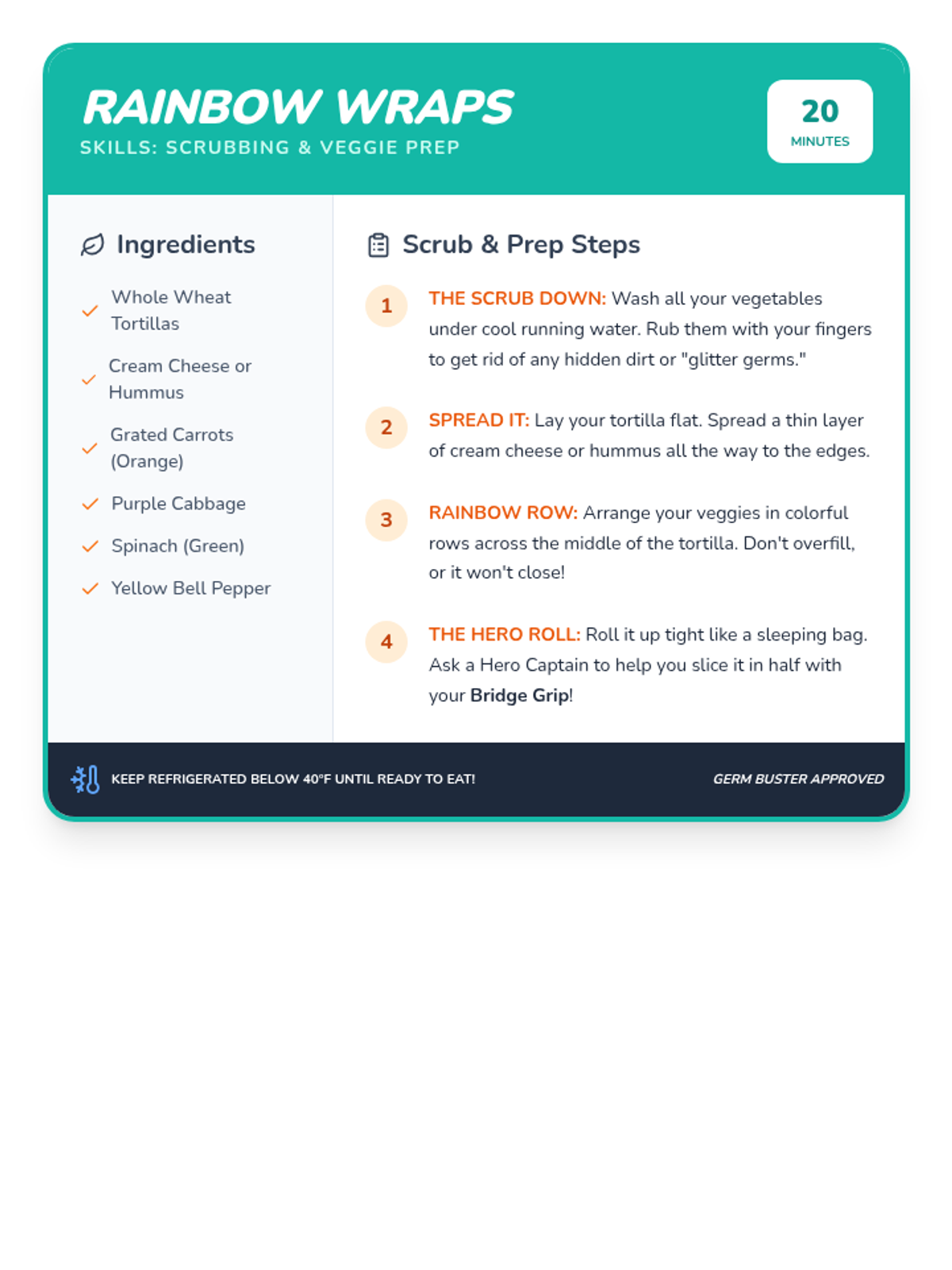
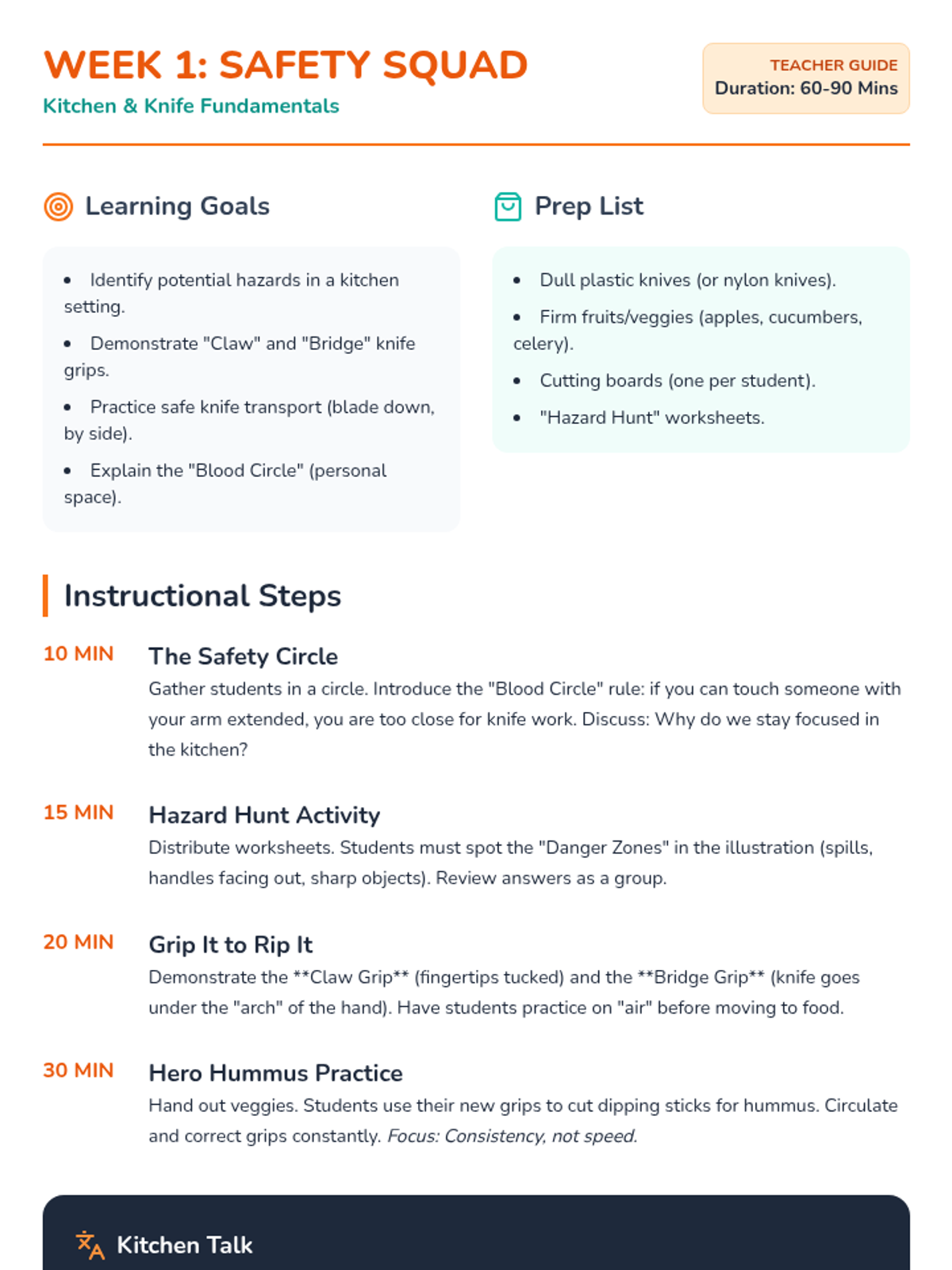
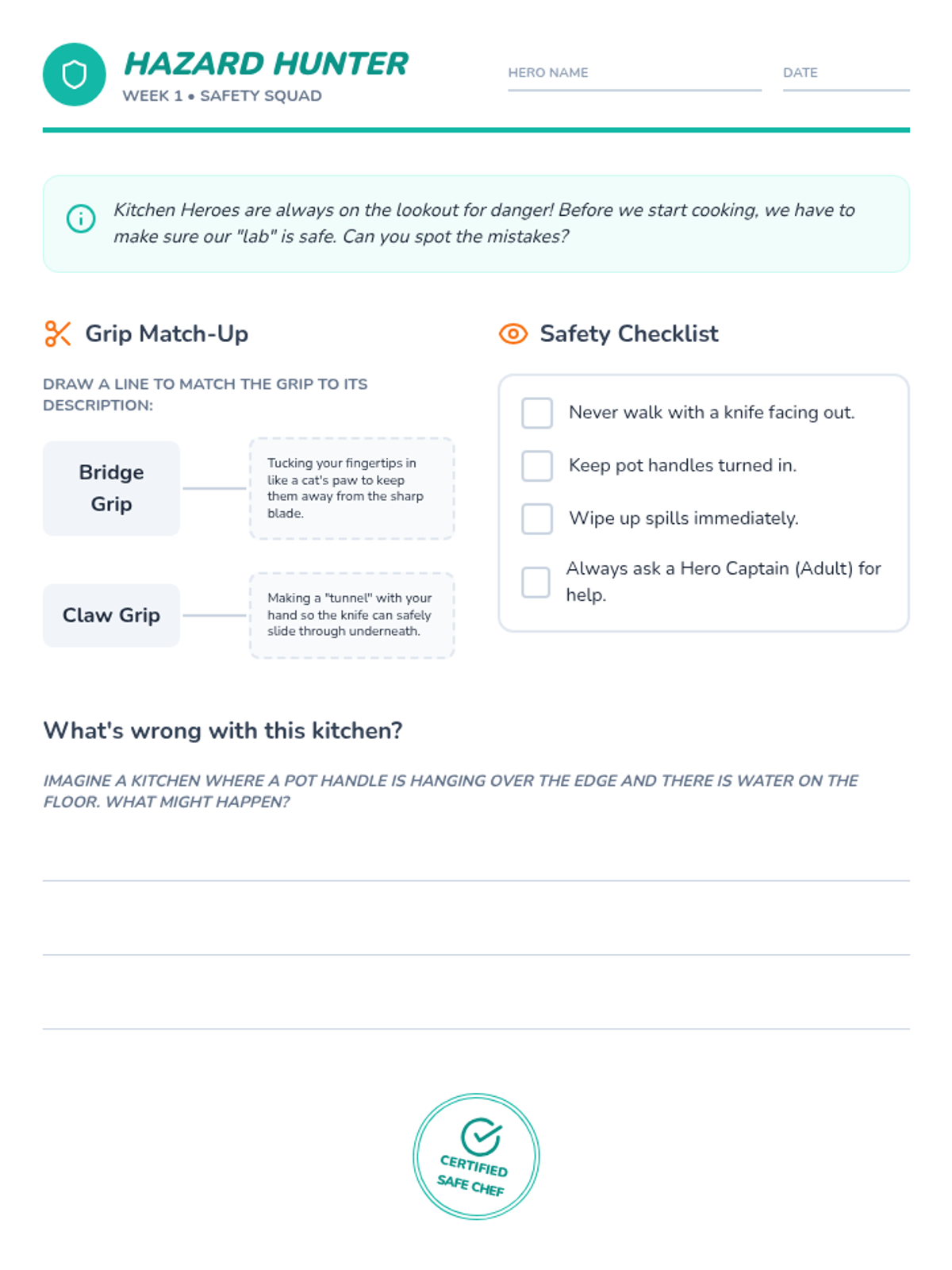
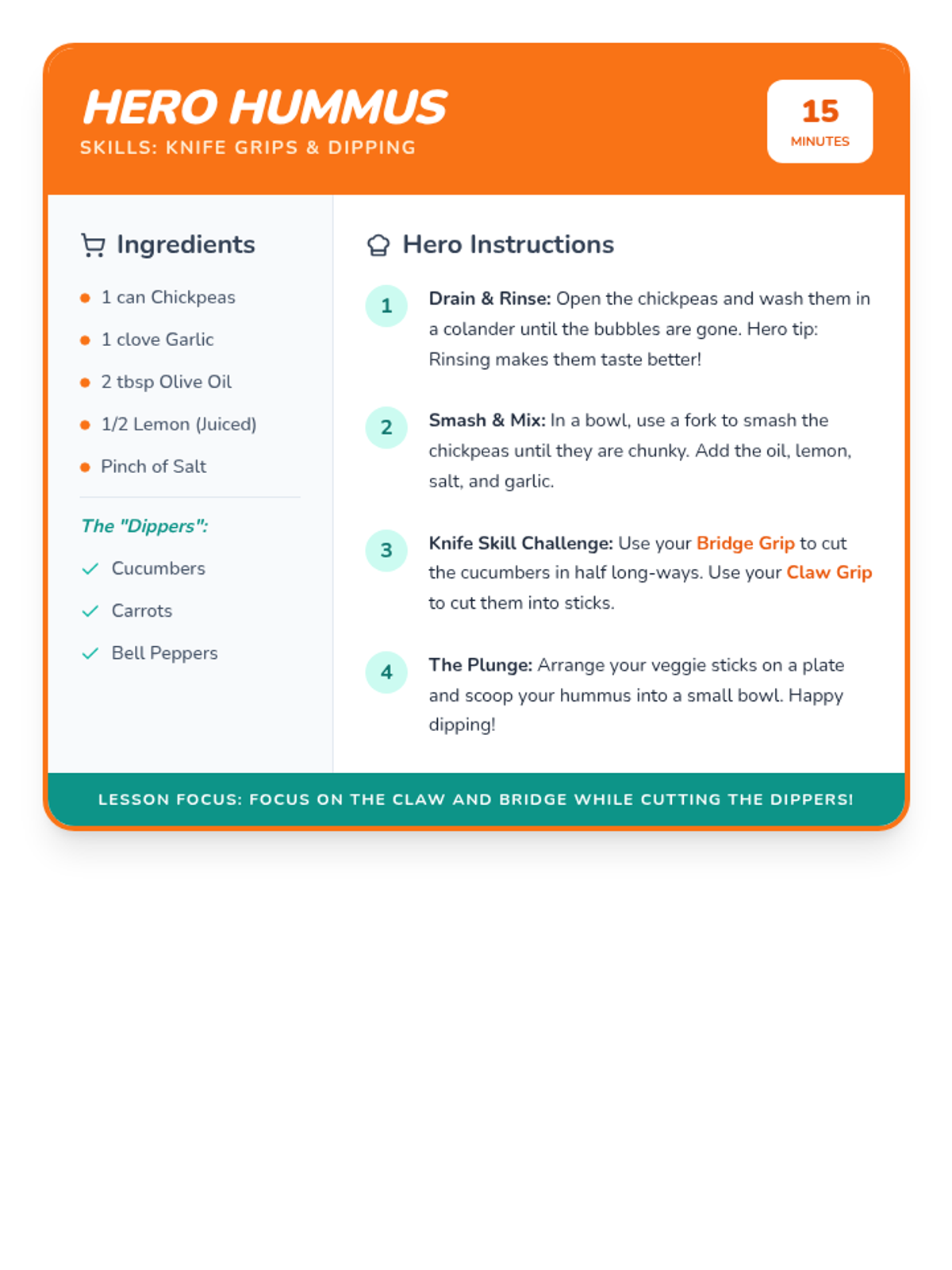
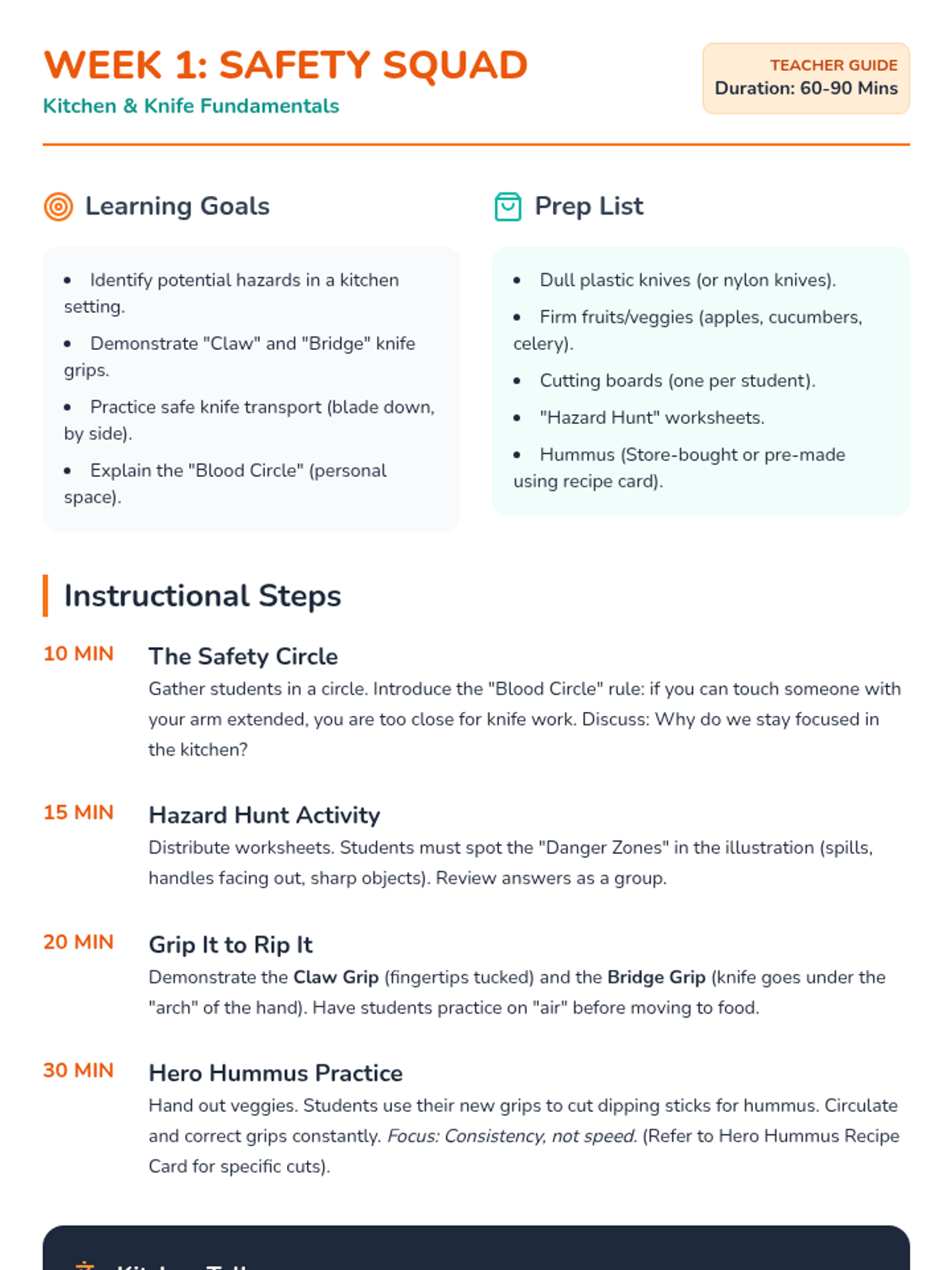
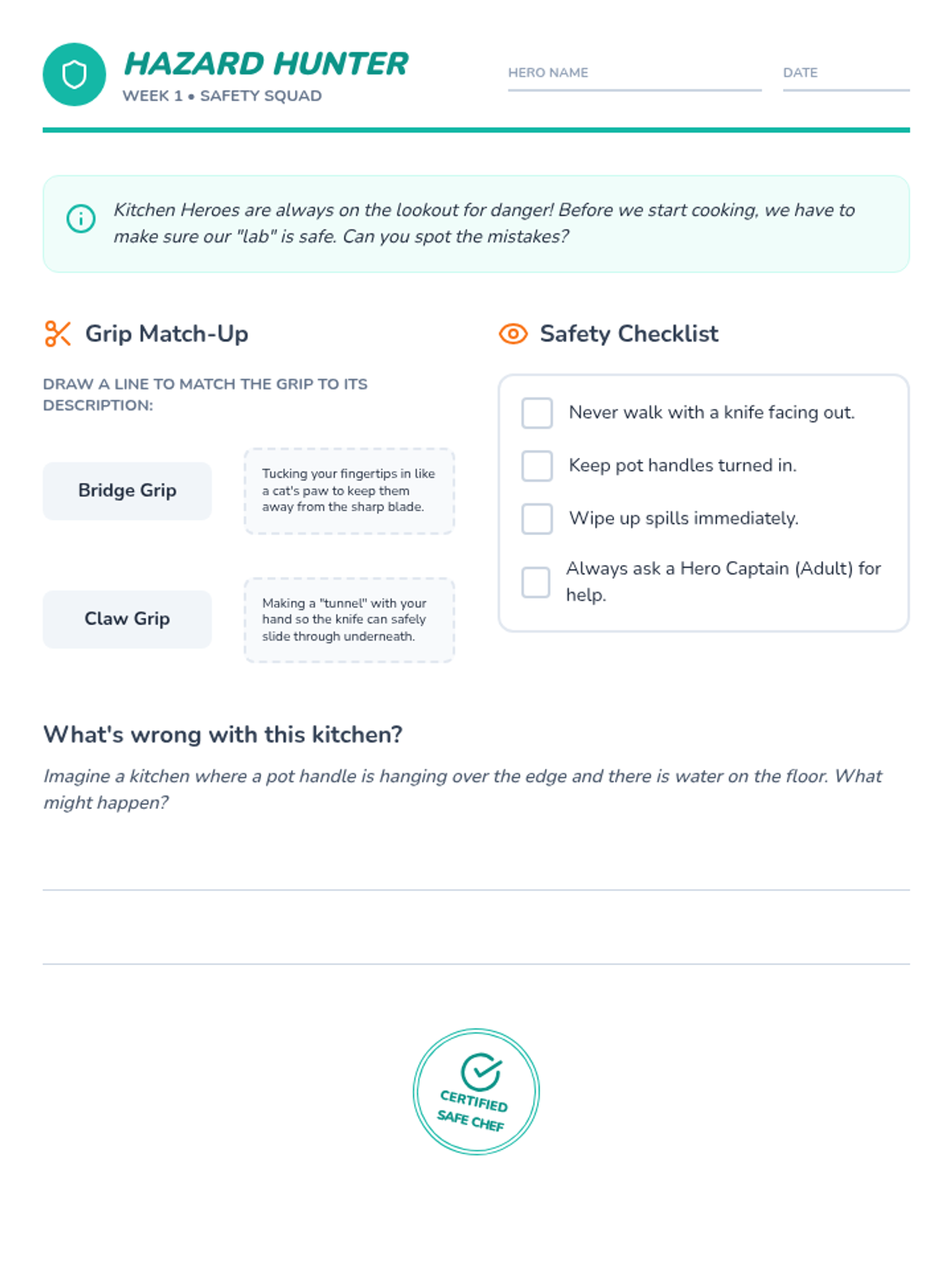
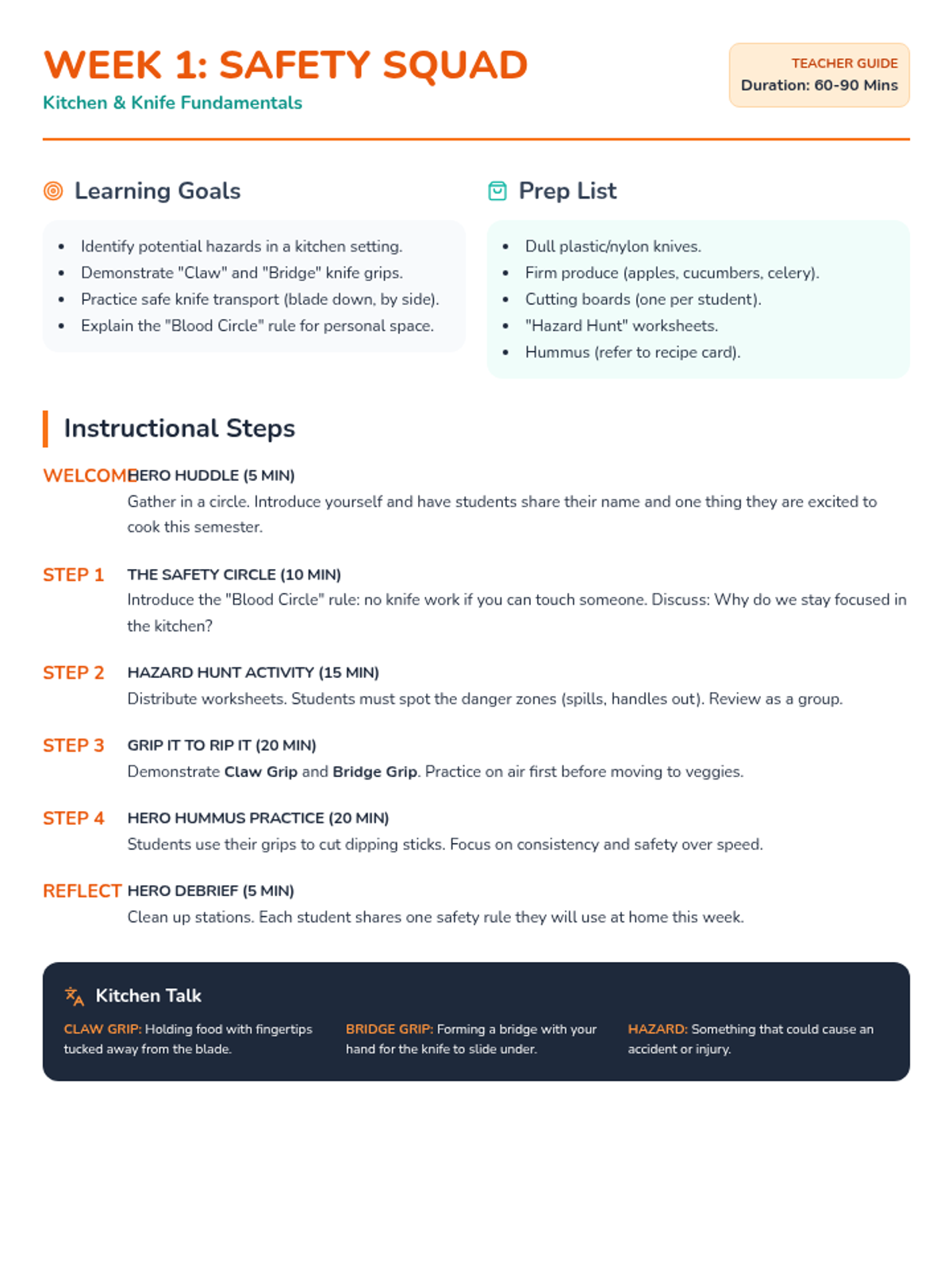
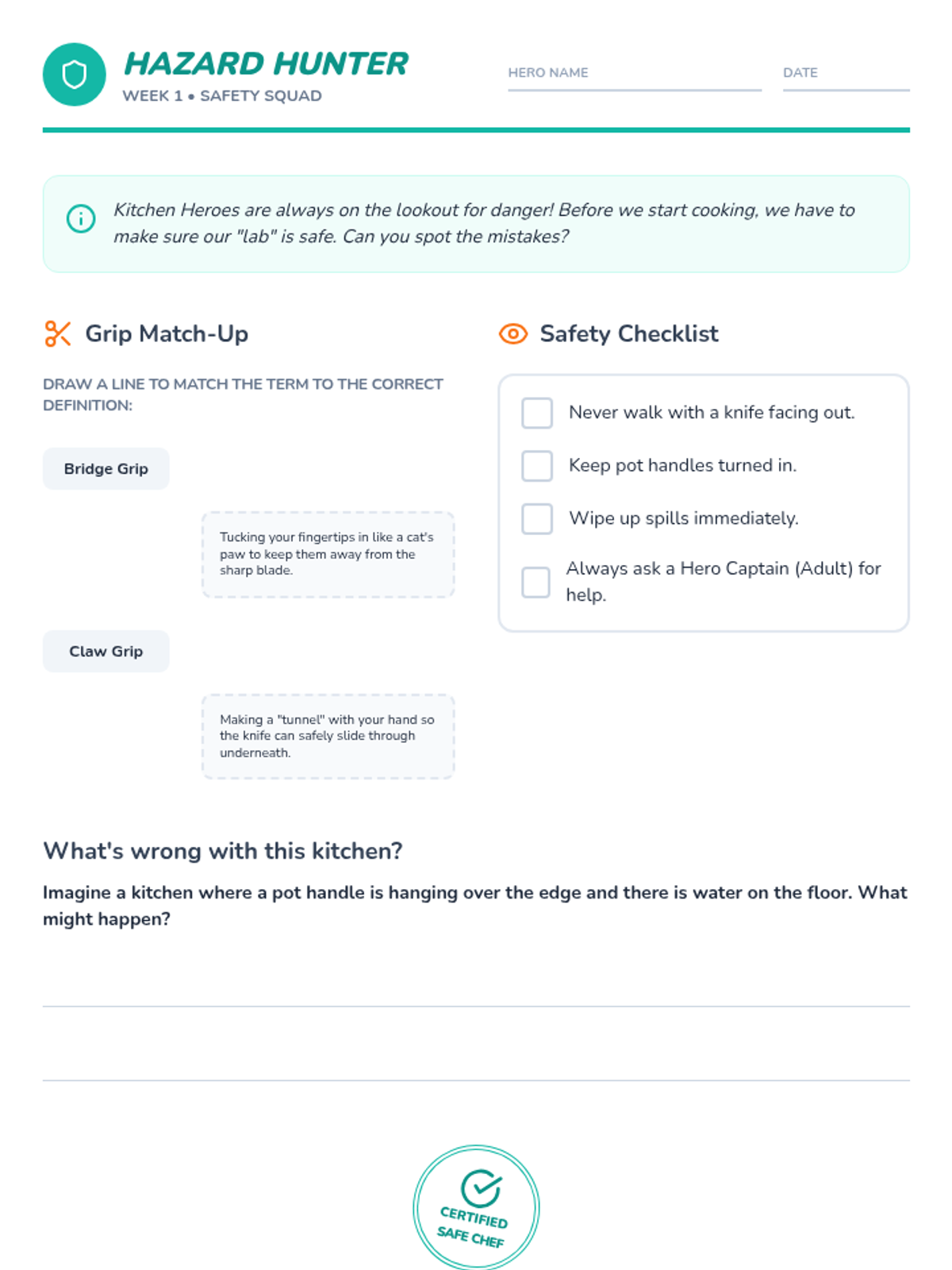
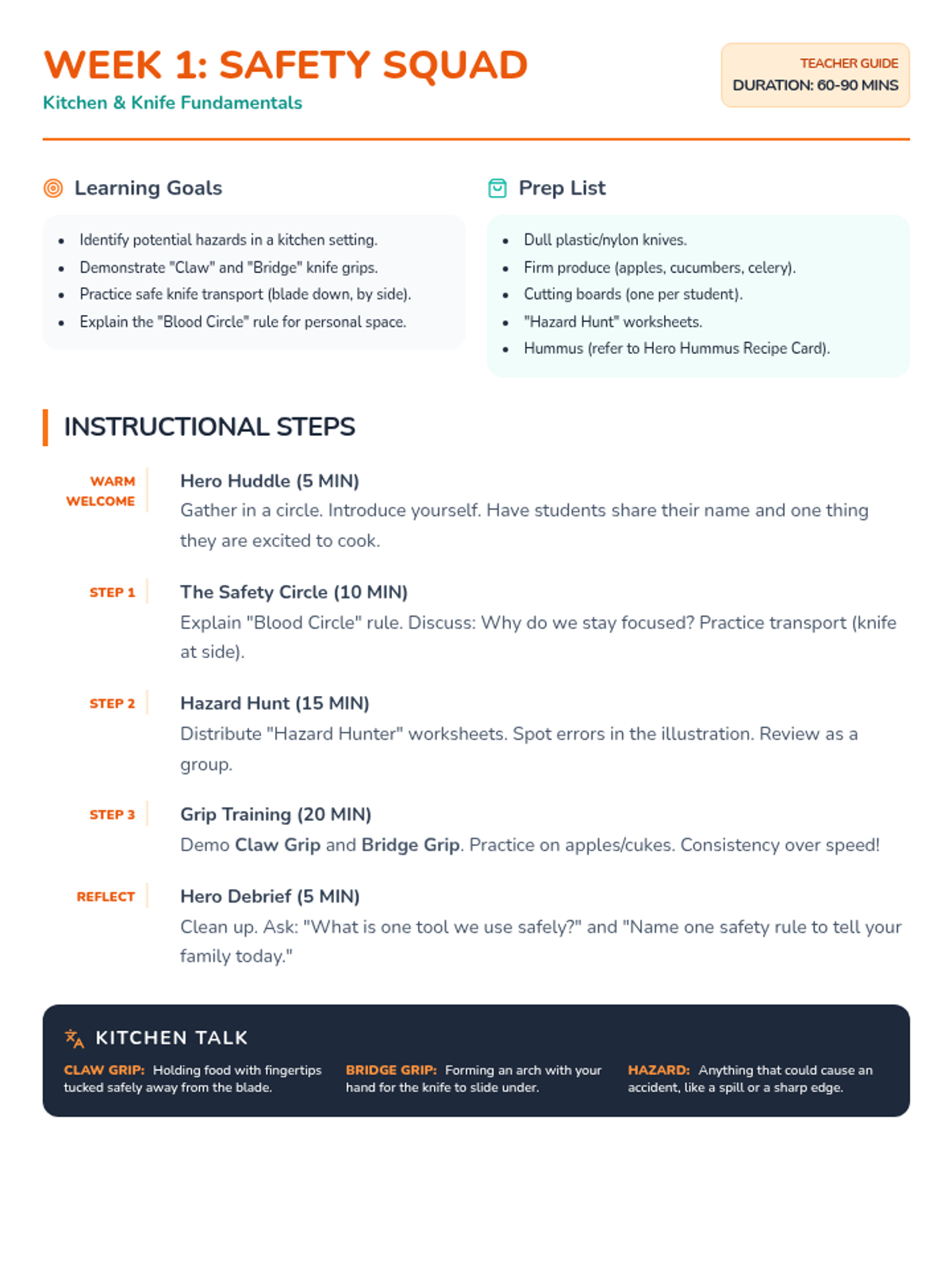
Mastering the basics of kitchen safety and proper knife handling techniques.
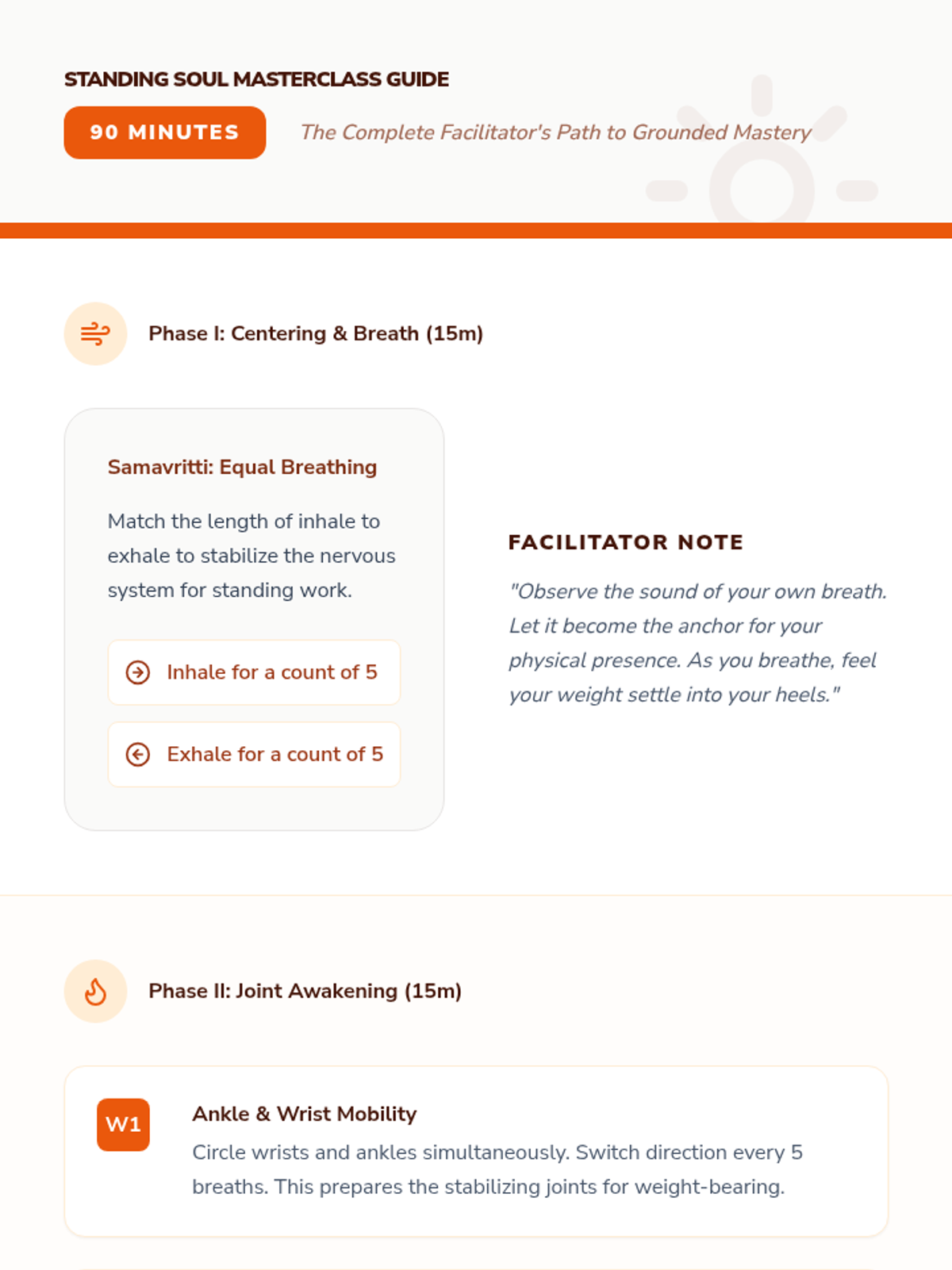
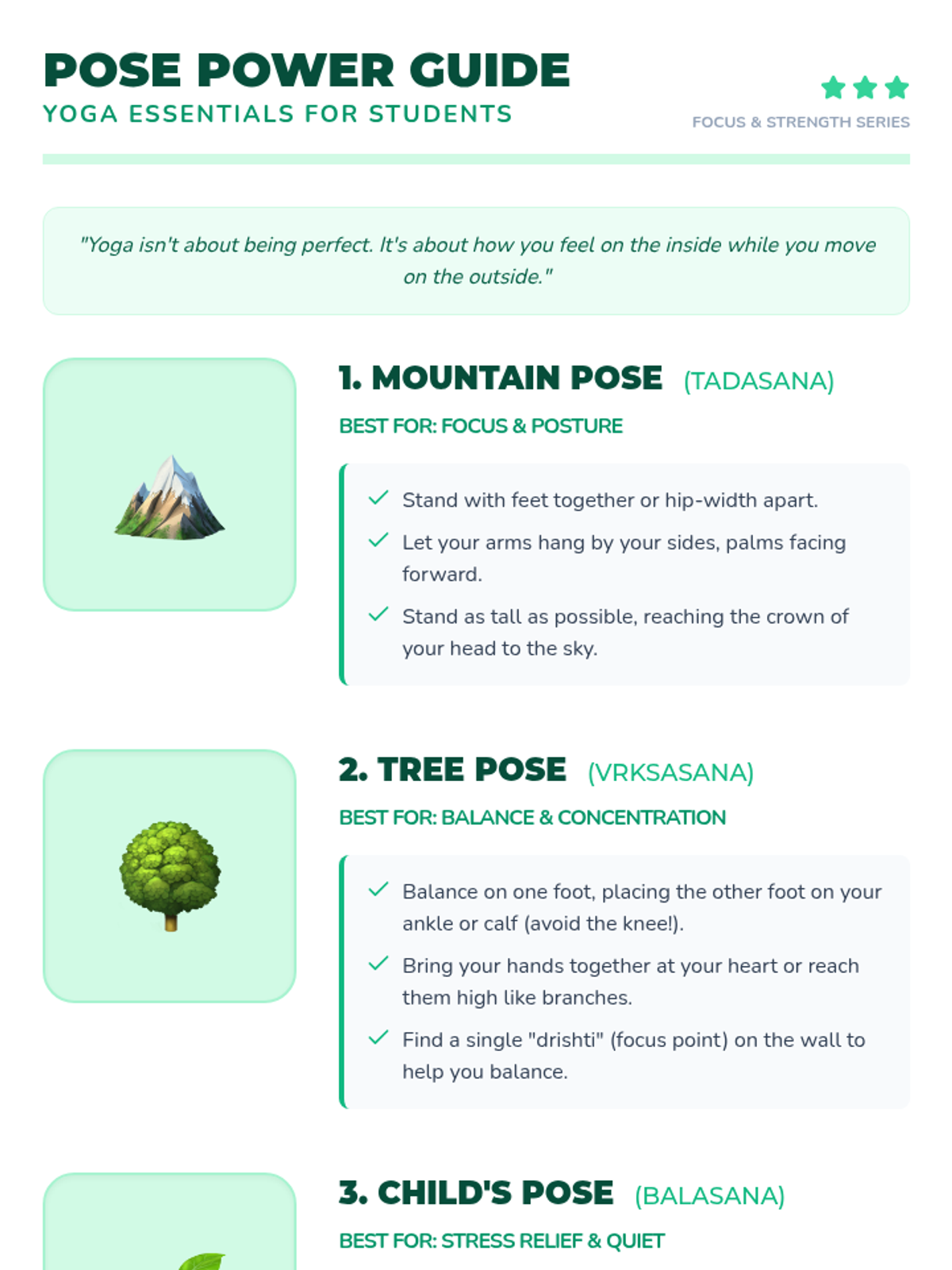
A beginner-friendly 90-minute standing yoga session focused on grounding, balance, and fundamental postures to transition from seated to standing practice.
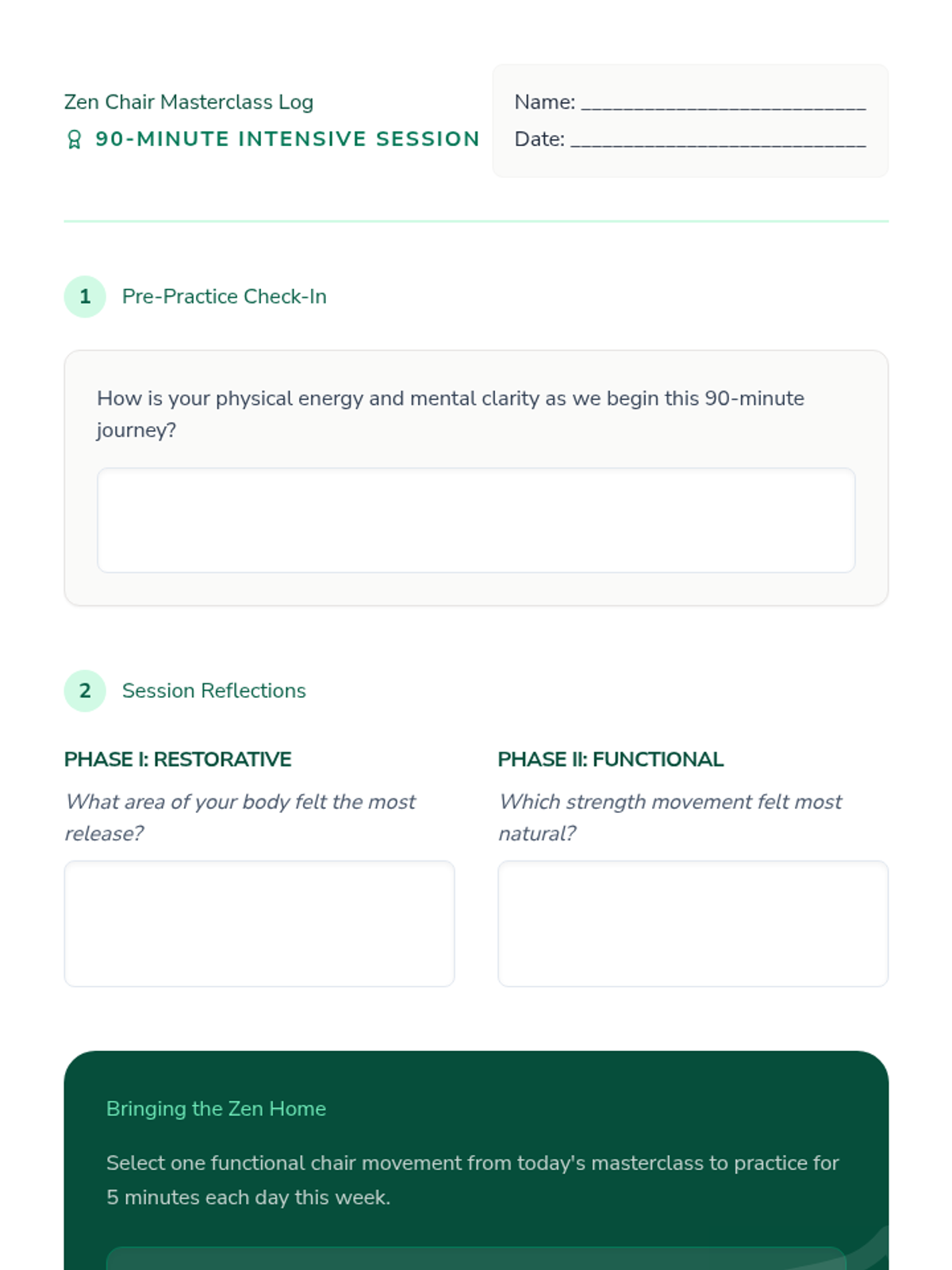
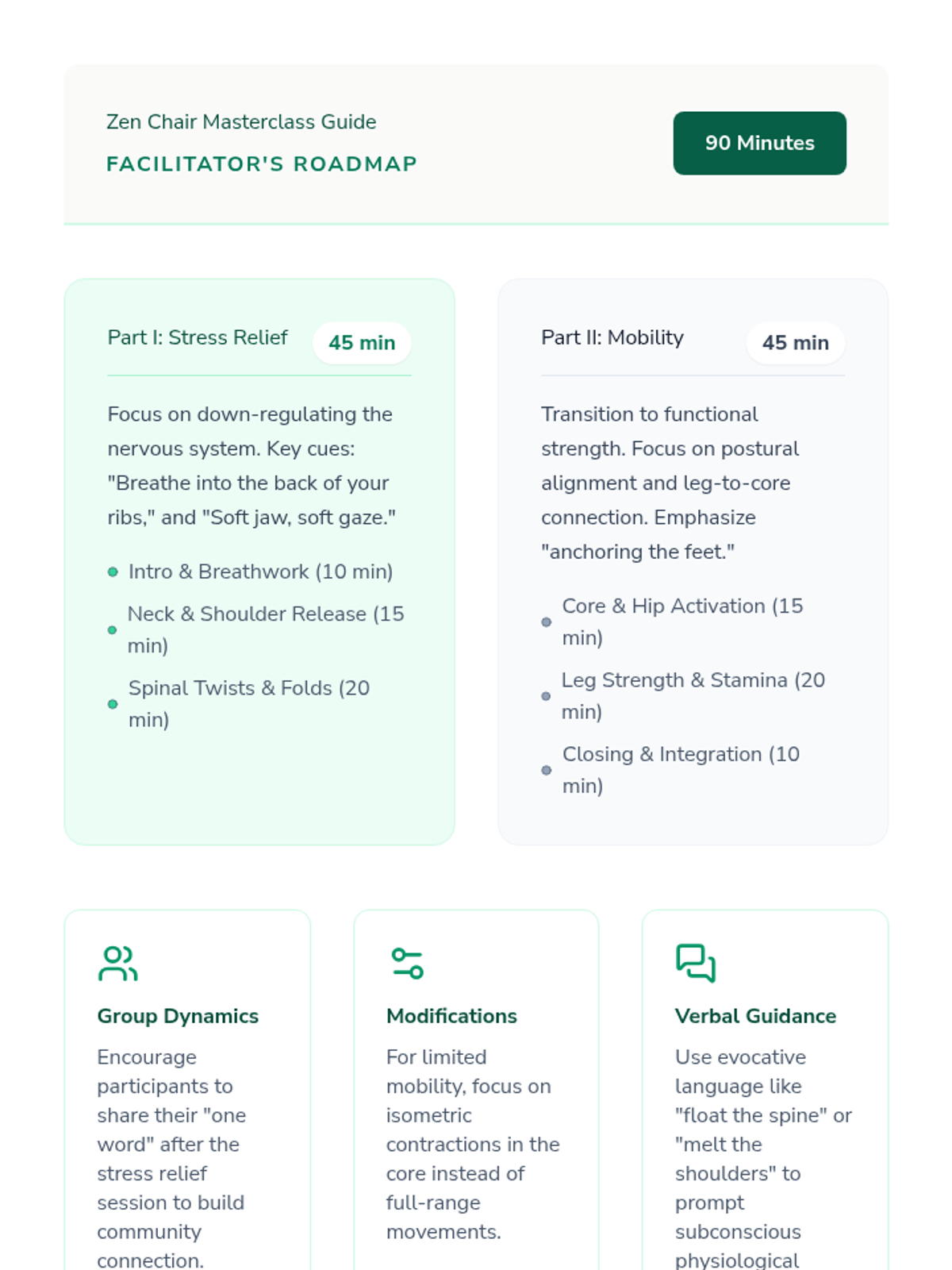
A deep-dive chair yoga experience combining stress relief and functional mobility, featuring two full-length guided practice videos. This 90-minute masterclass is designed to build both mental calm and physical strength.
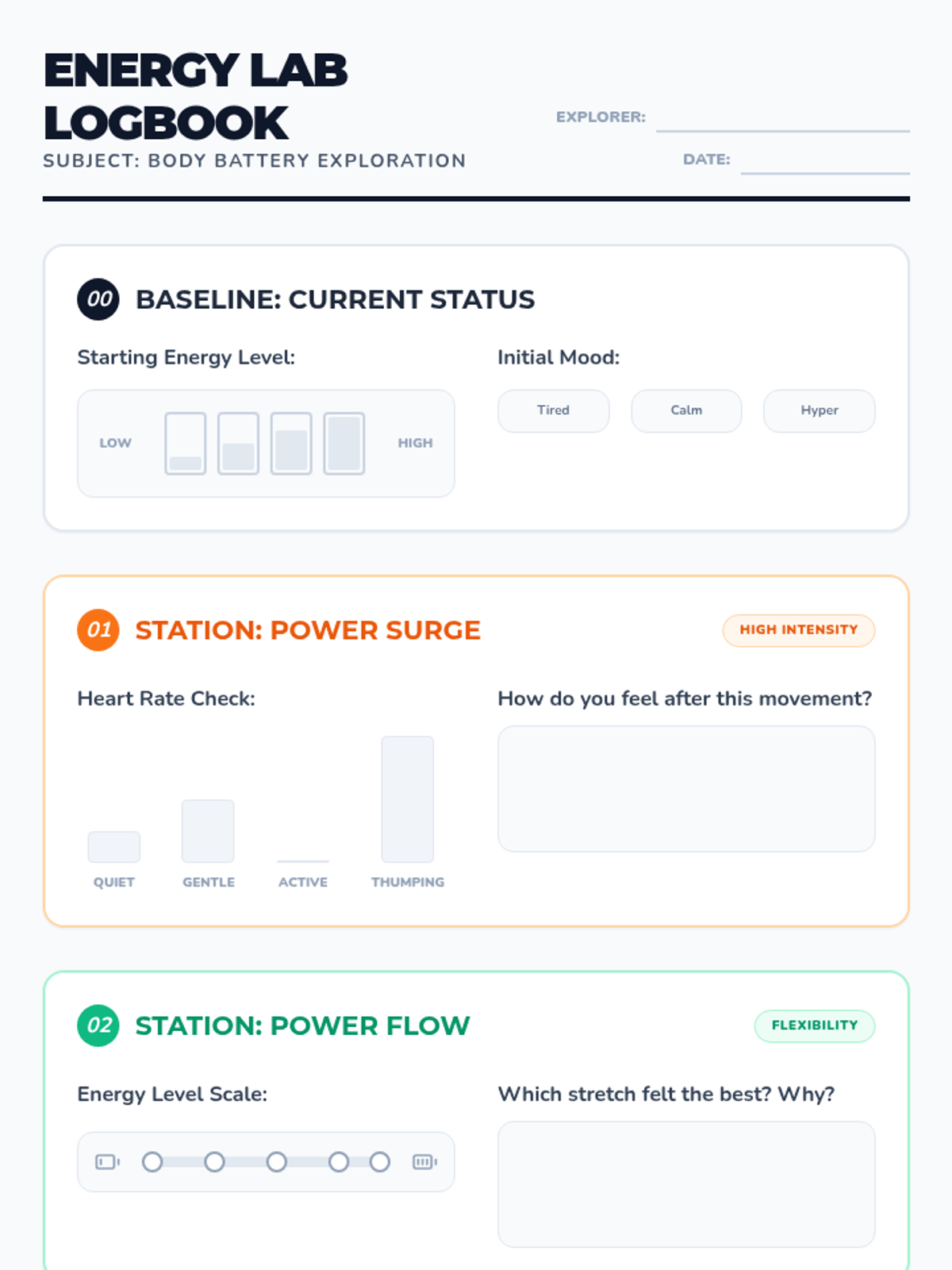
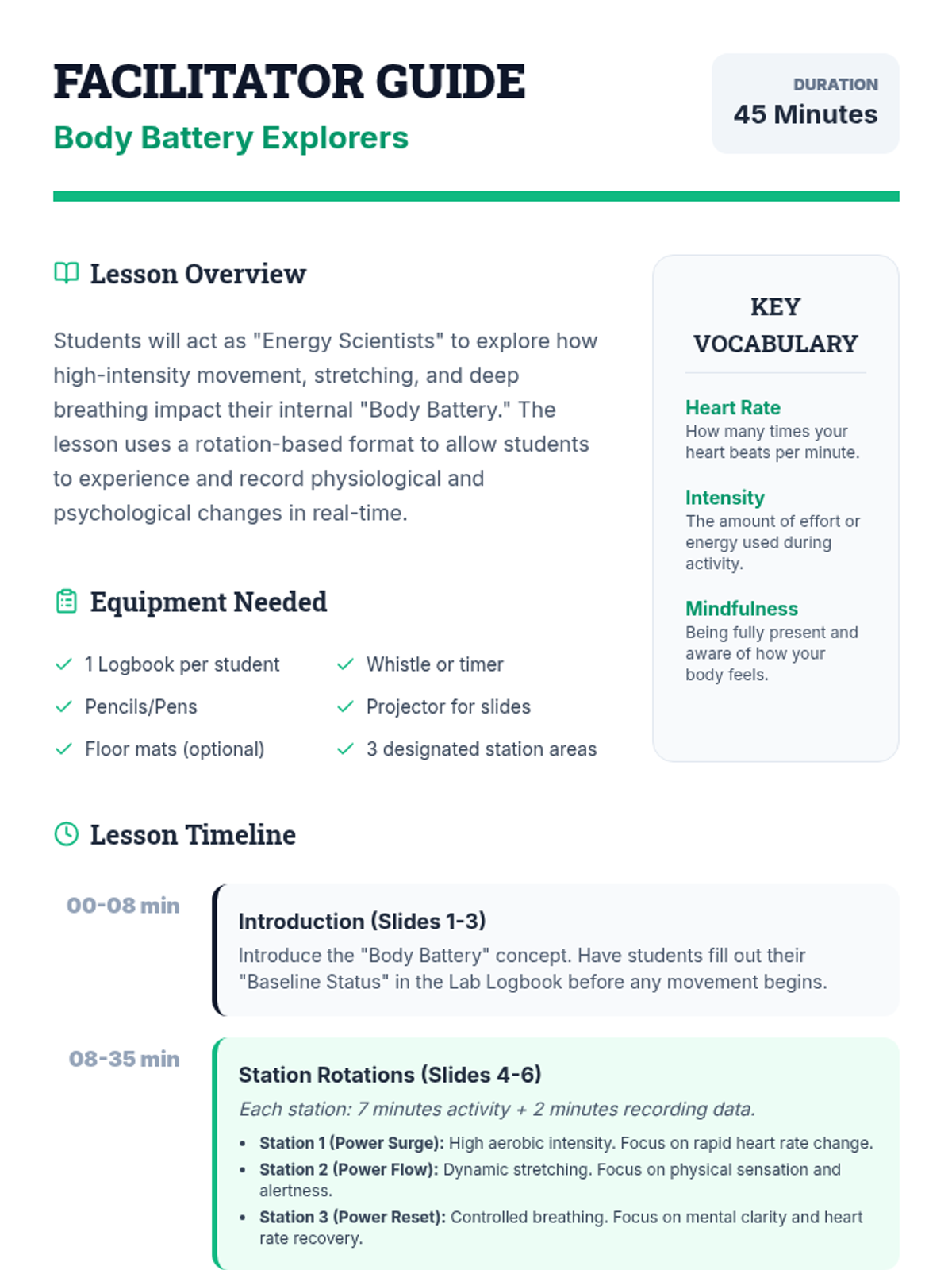
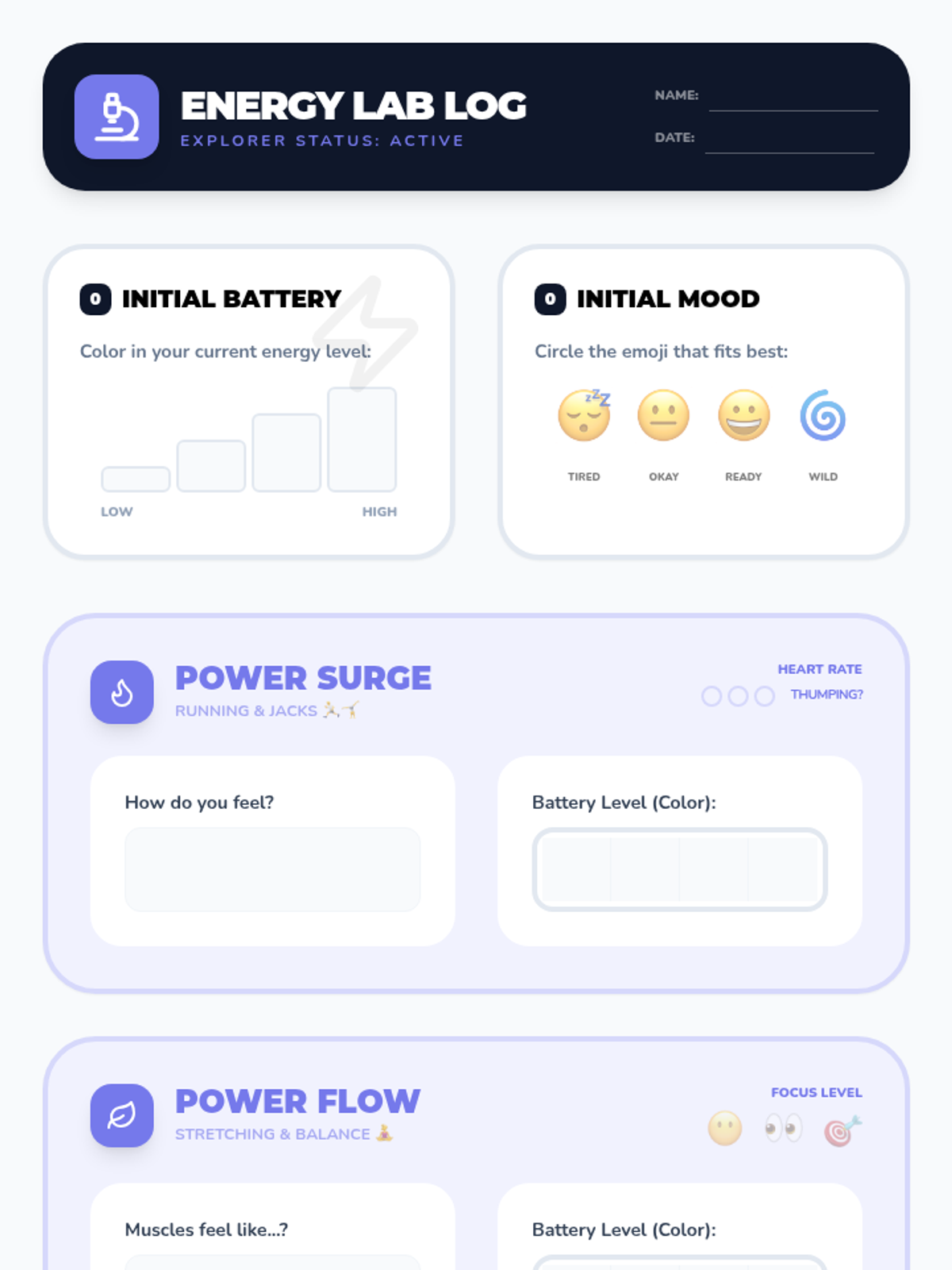
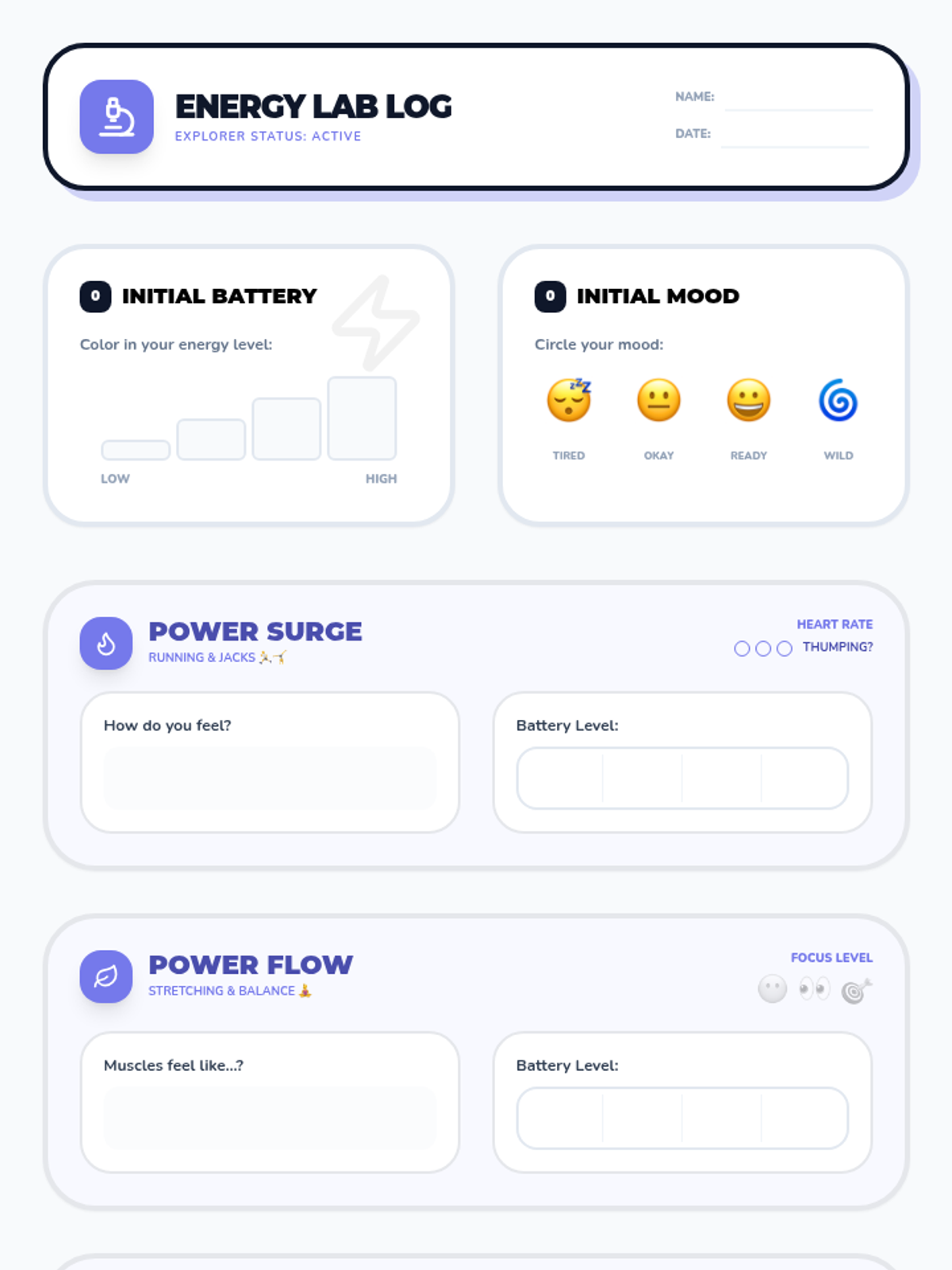
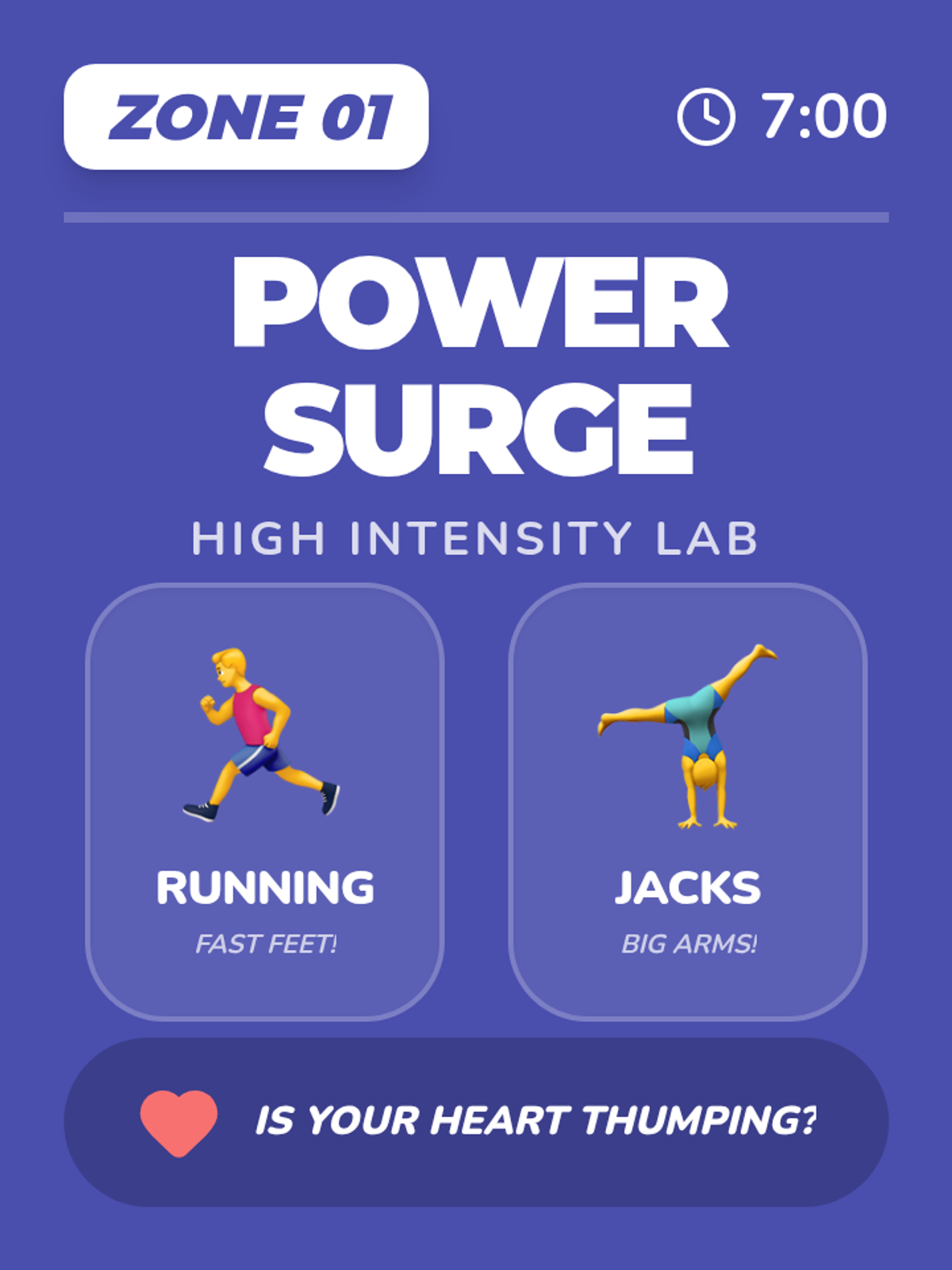
A movement-based physical health lesson where students investigate how different physical activities (aerobic, stretching, and breathing) impact their heart rate and perceived energy levels through 'Body Battery' stations.
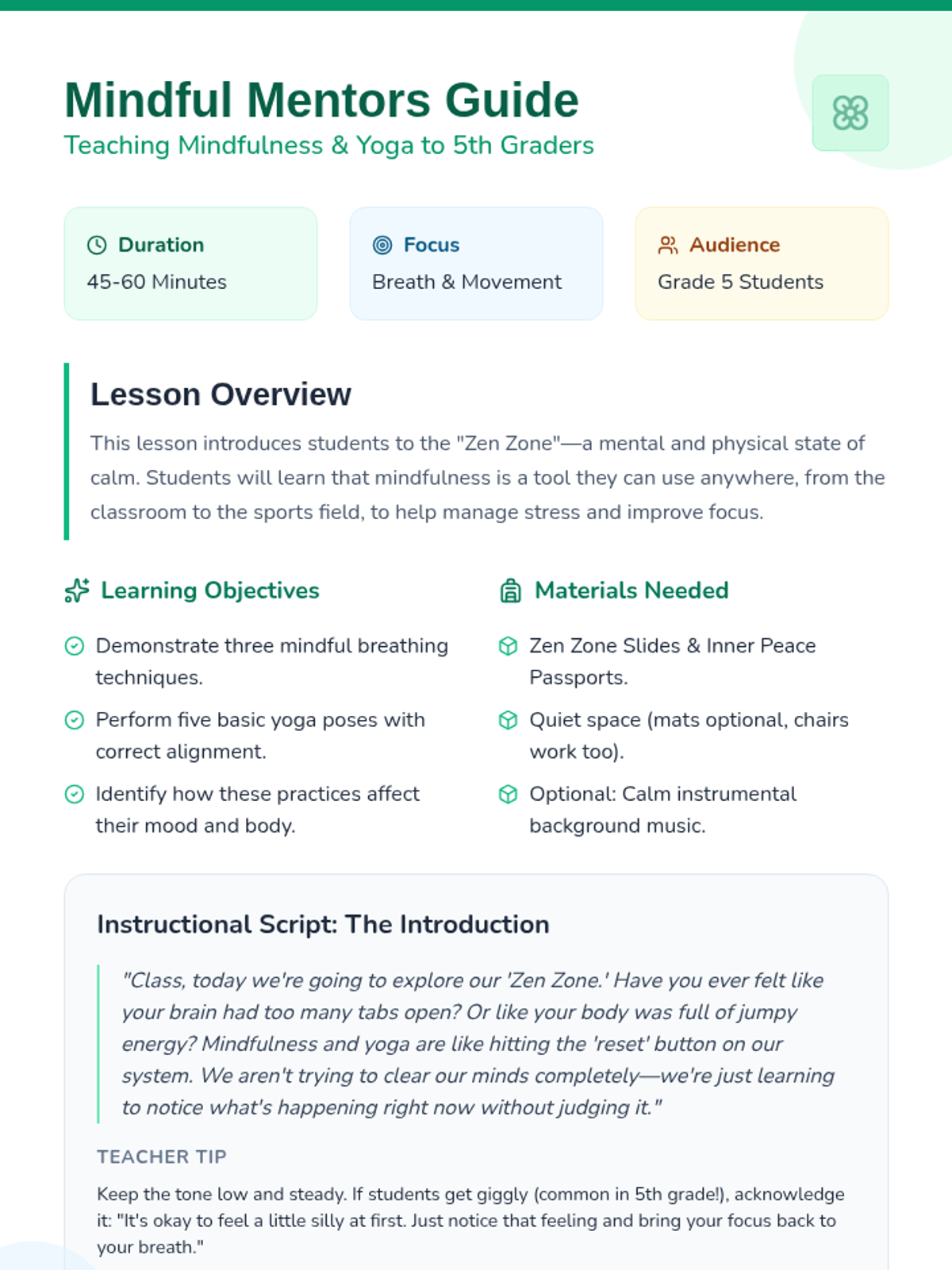
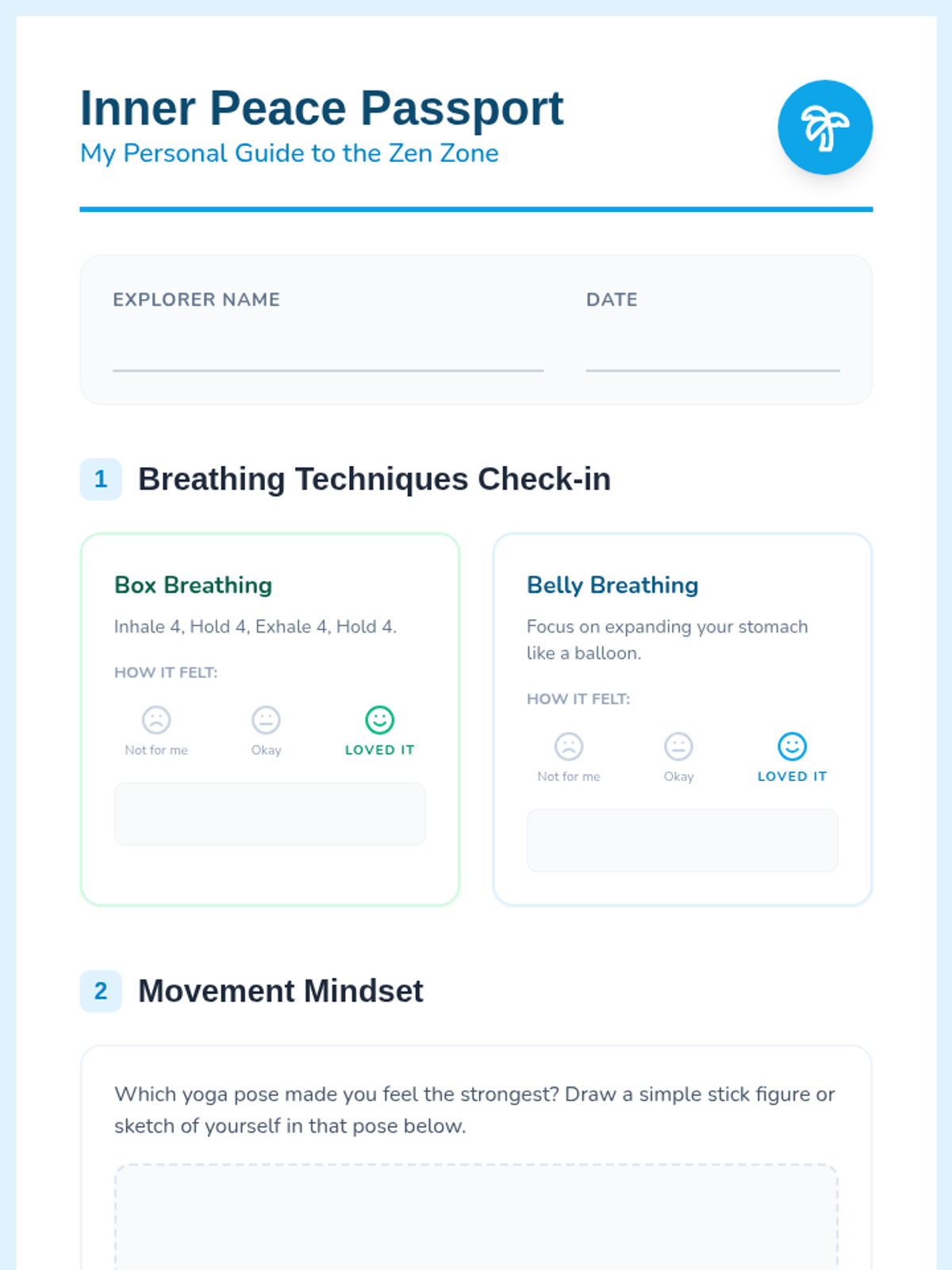
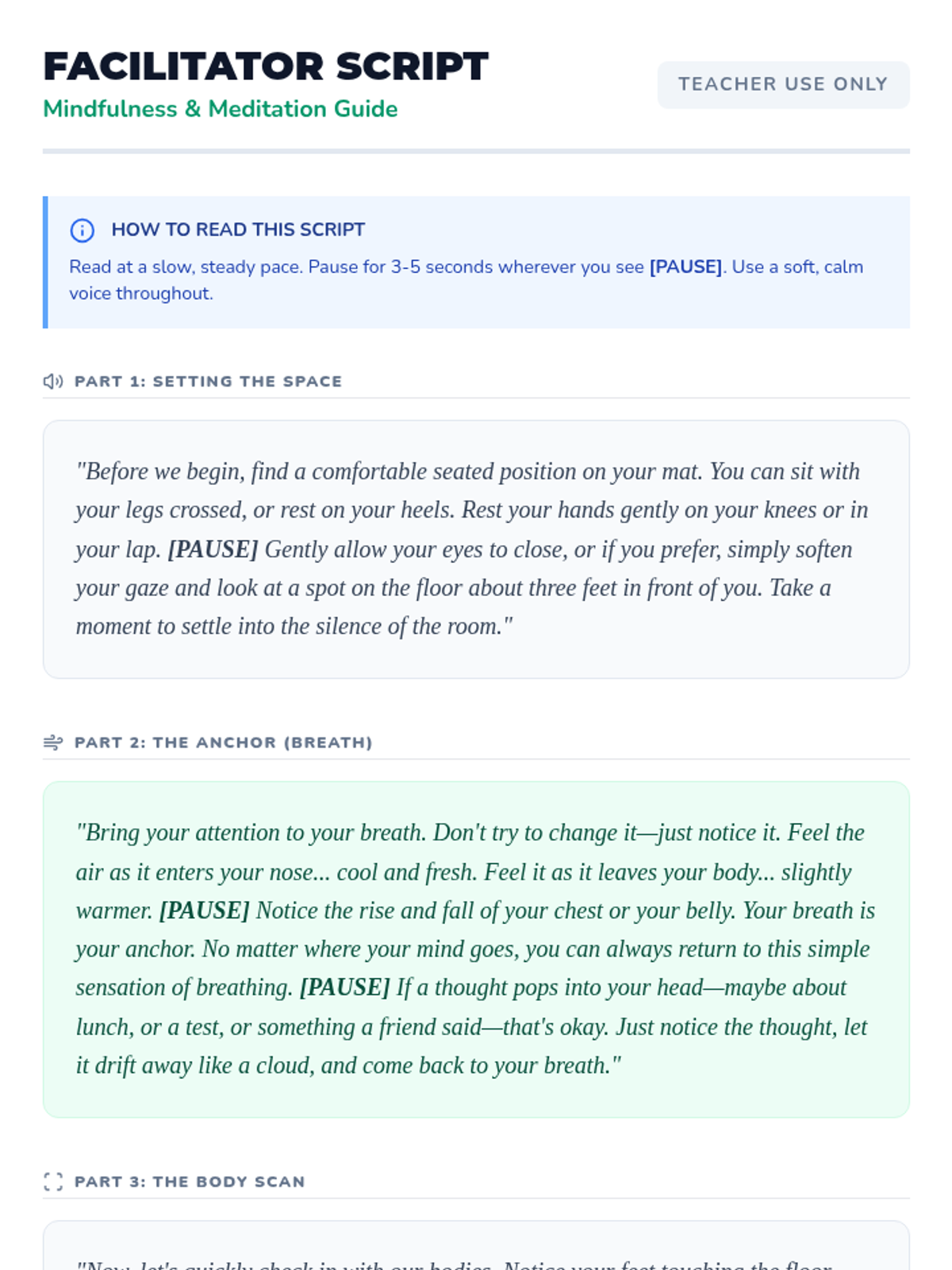
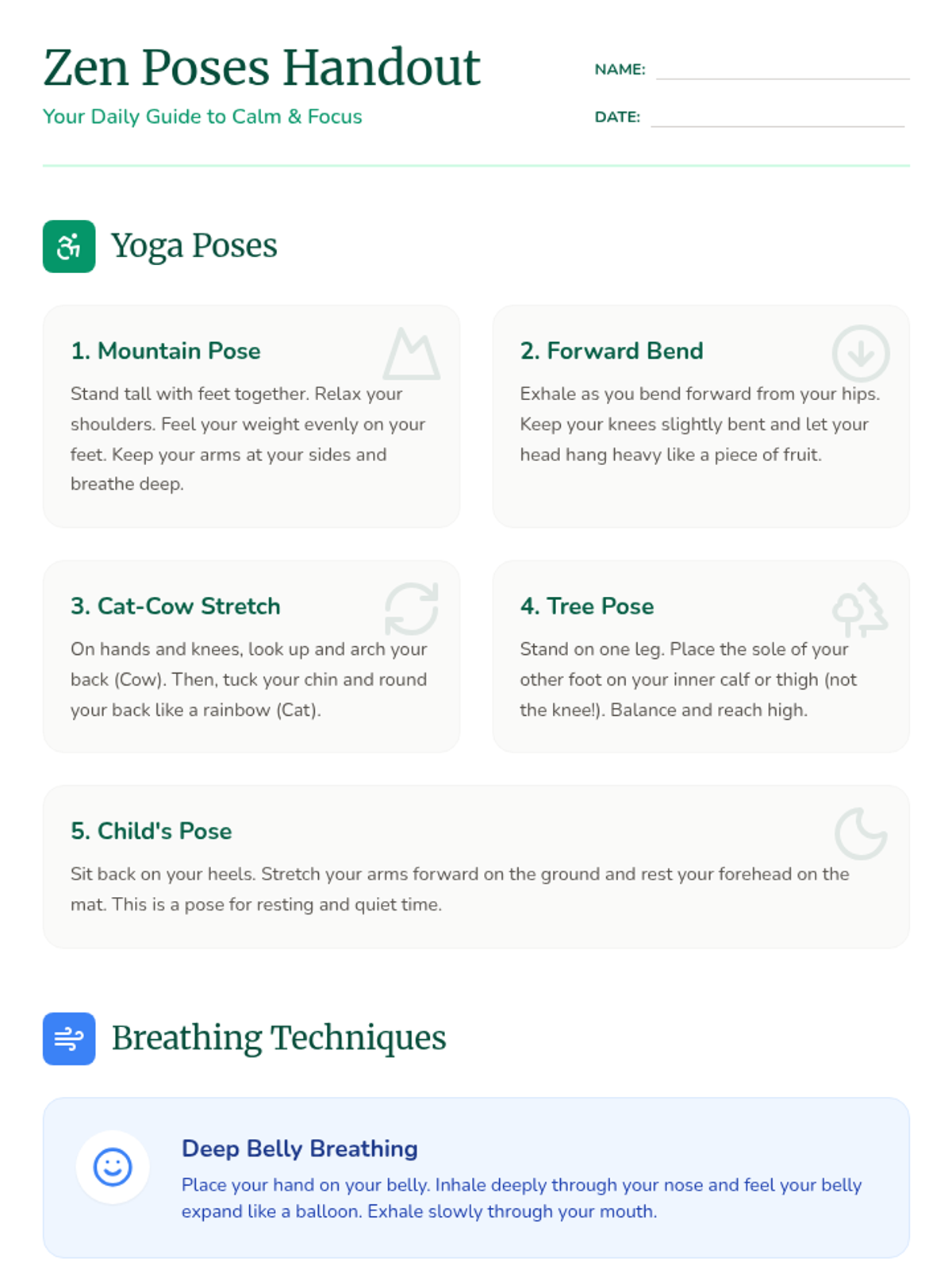
An introductory lesson on mindfulness and yoga, teaching students how to regulate their emotions and relax their bodies through focused breathing and gentle movement.
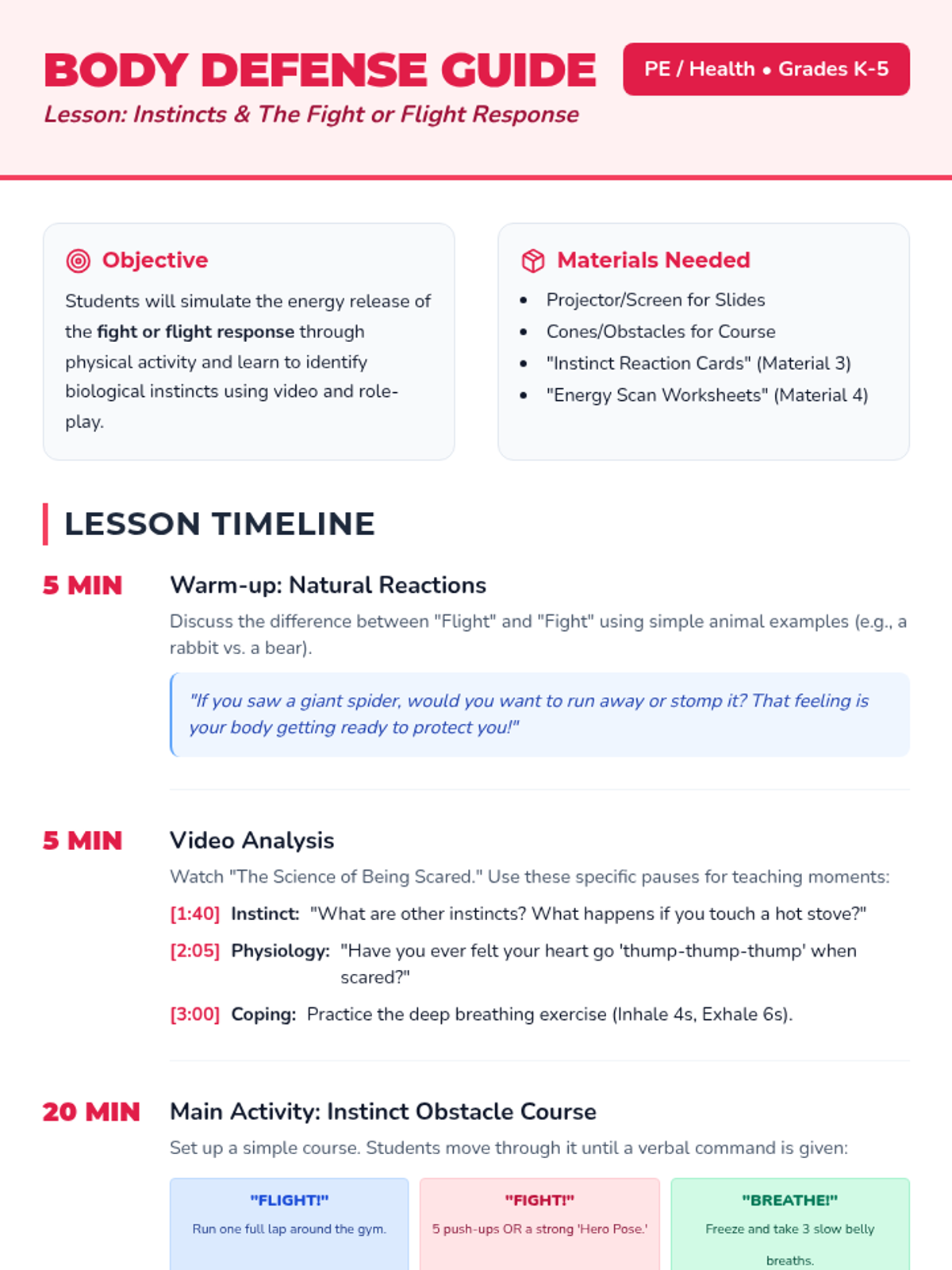
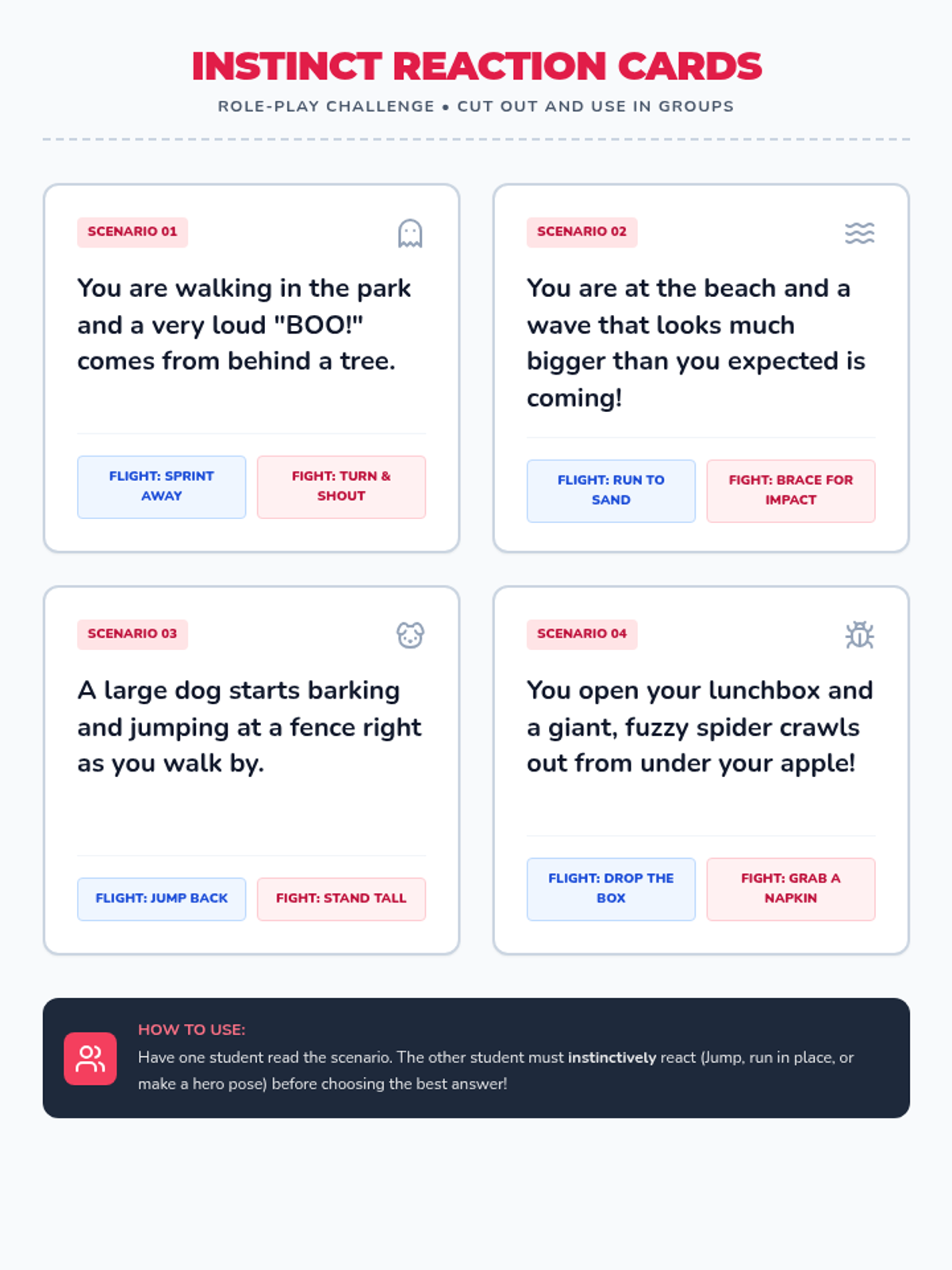
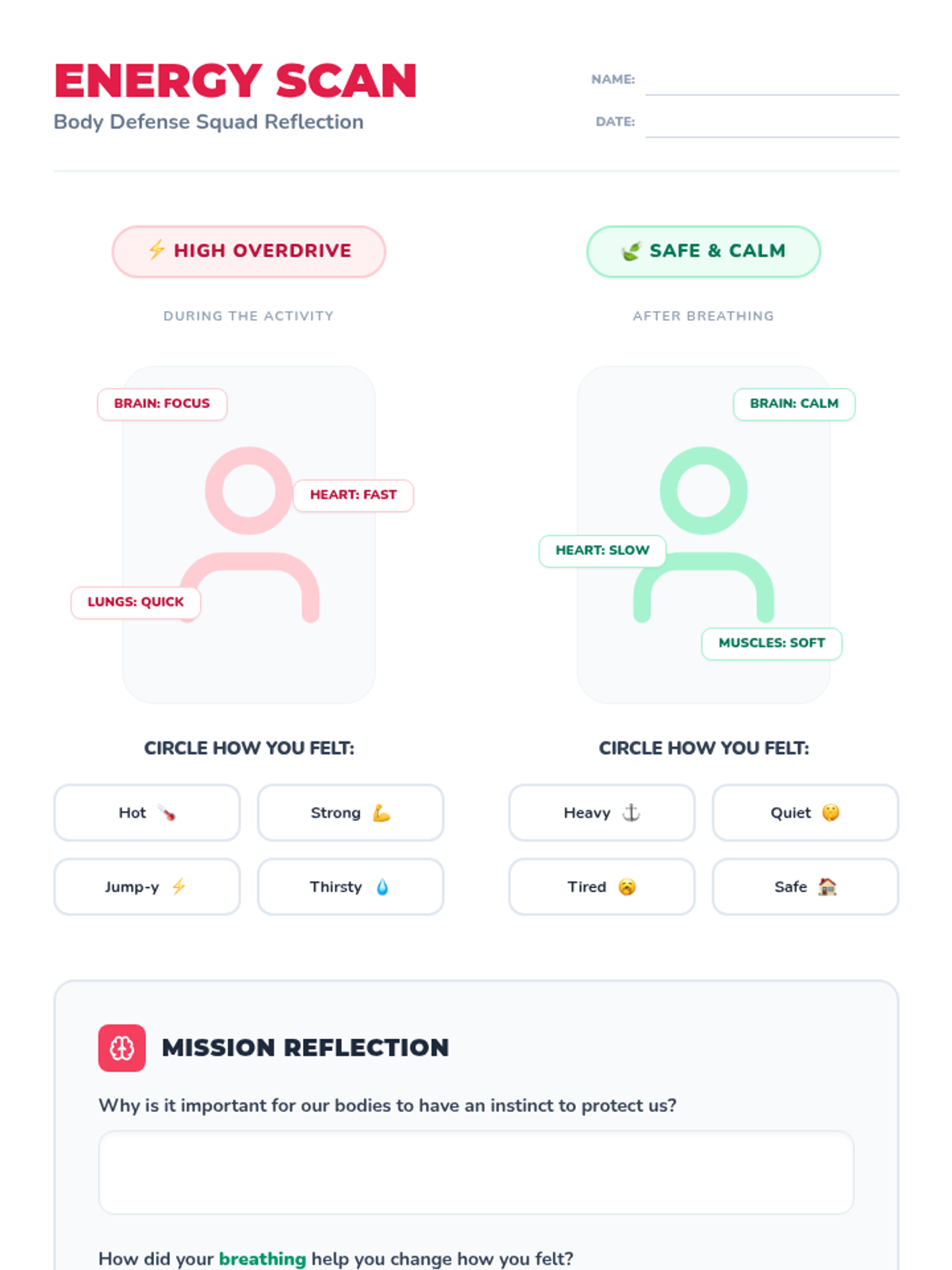
A physical education and health lesson that teaches elementary students about the fight or flight response through active simulation, video analysis, and breathing techniques. Students will learn to recognize their body's automatic instincts and how to regulate them.
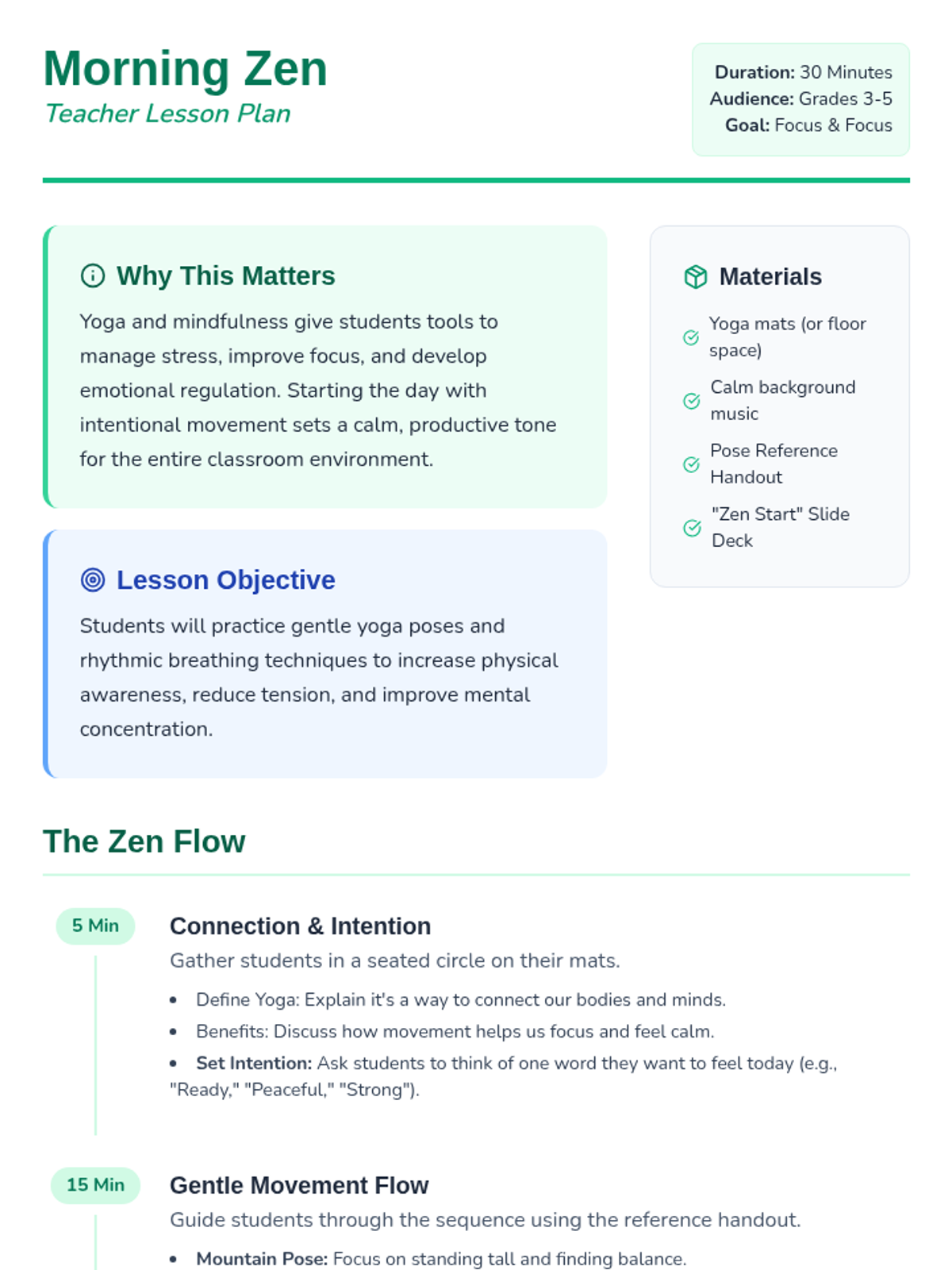
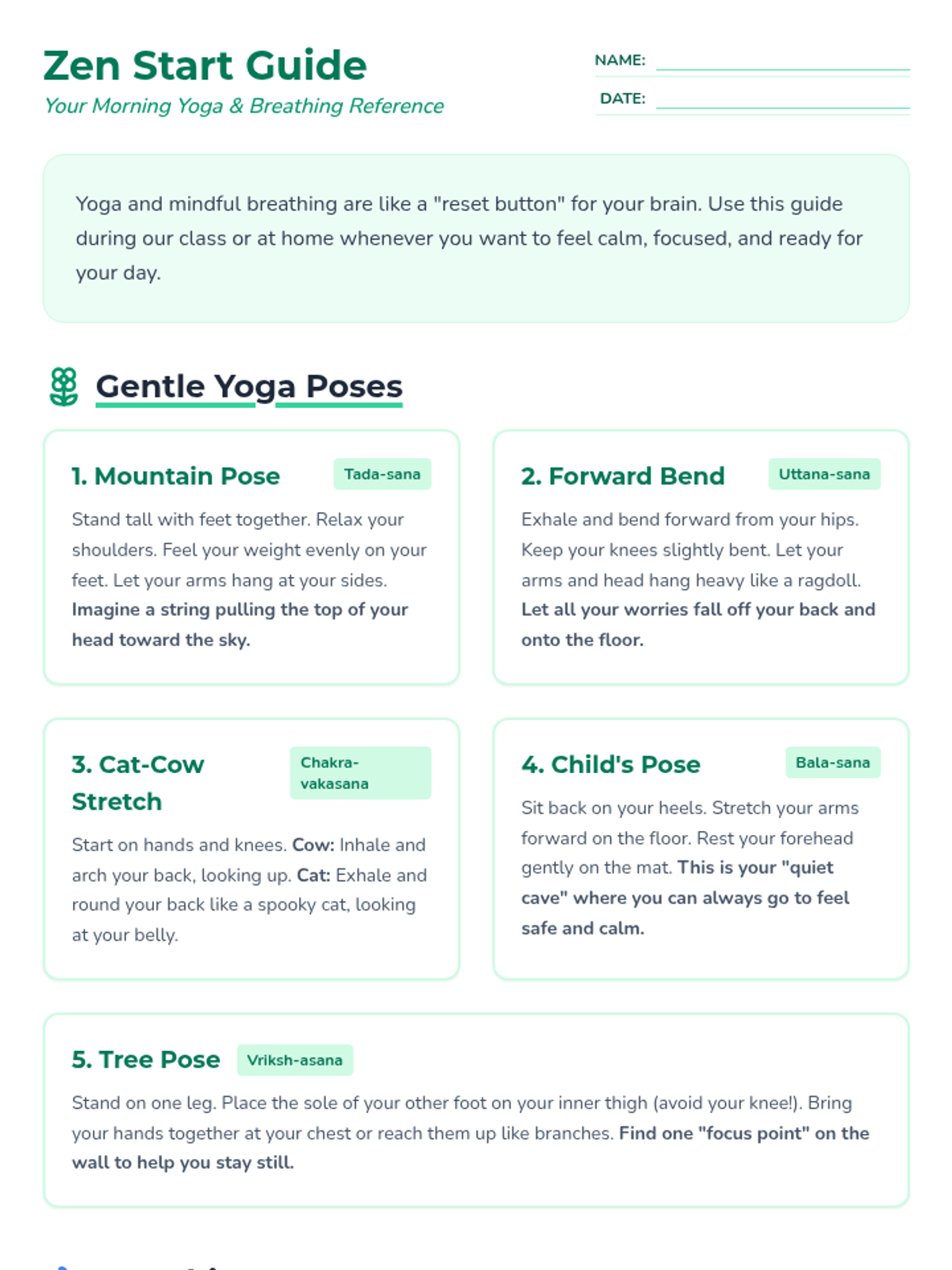
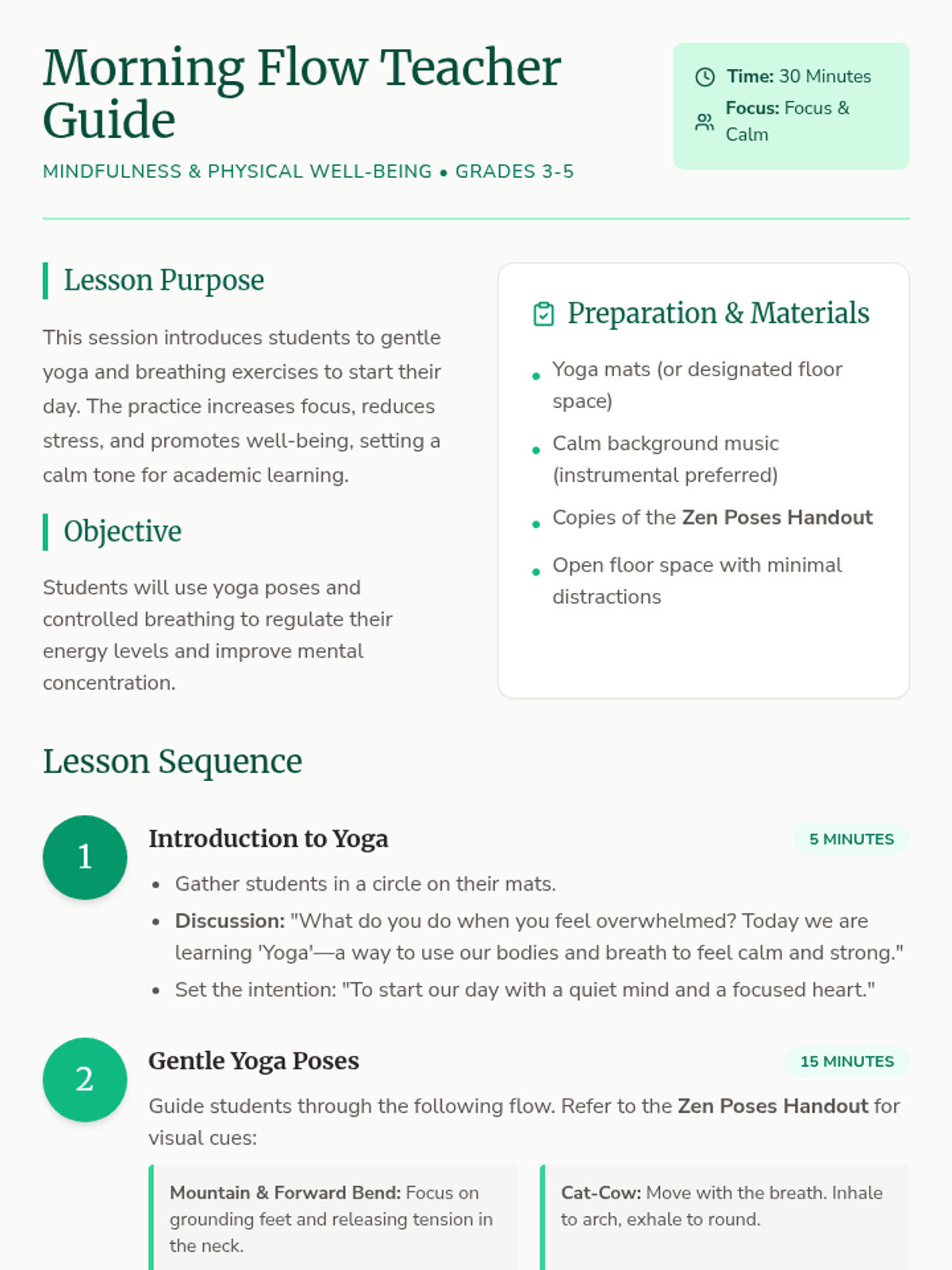
This lesson introduces students to gentle yoga and breathing exercises designed to increase focus and reduce stress. Students will learn specific poses and breathing techniques to promote physical and mental well-being, setting a positive tone for their school day.
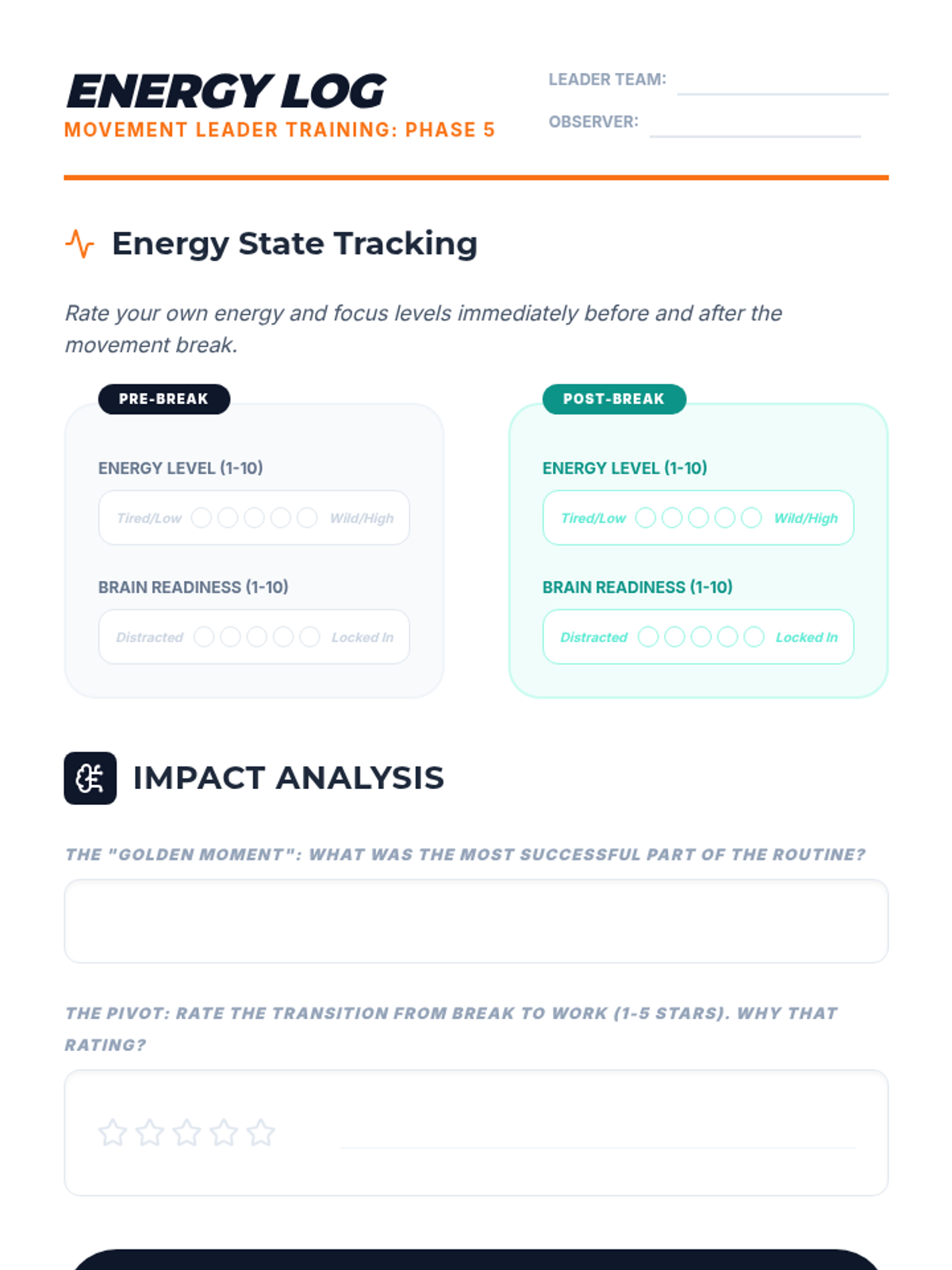
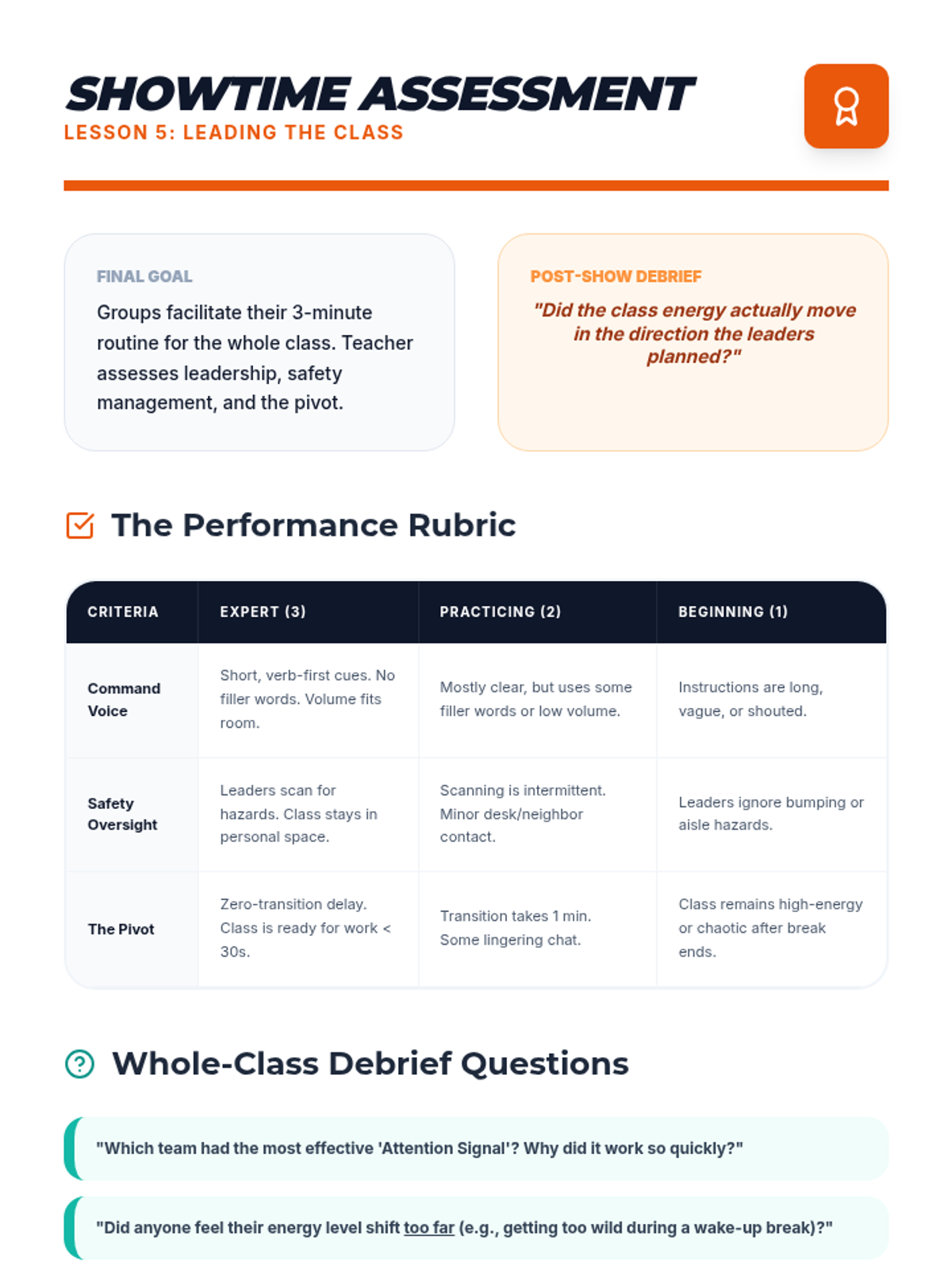
Students lead the whole class through their routines and reflect on the impact these breaks have on the group's energy and focus.
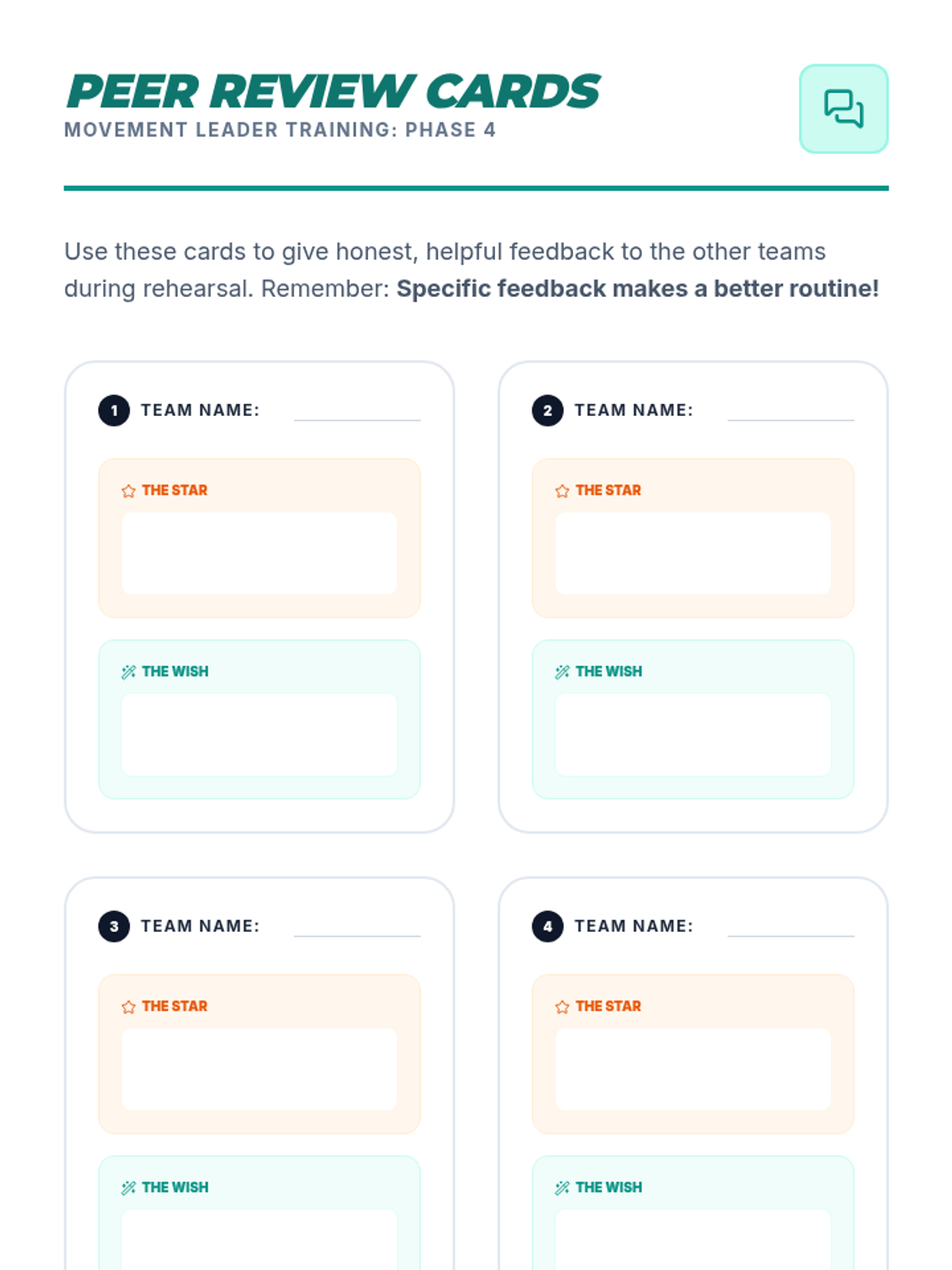
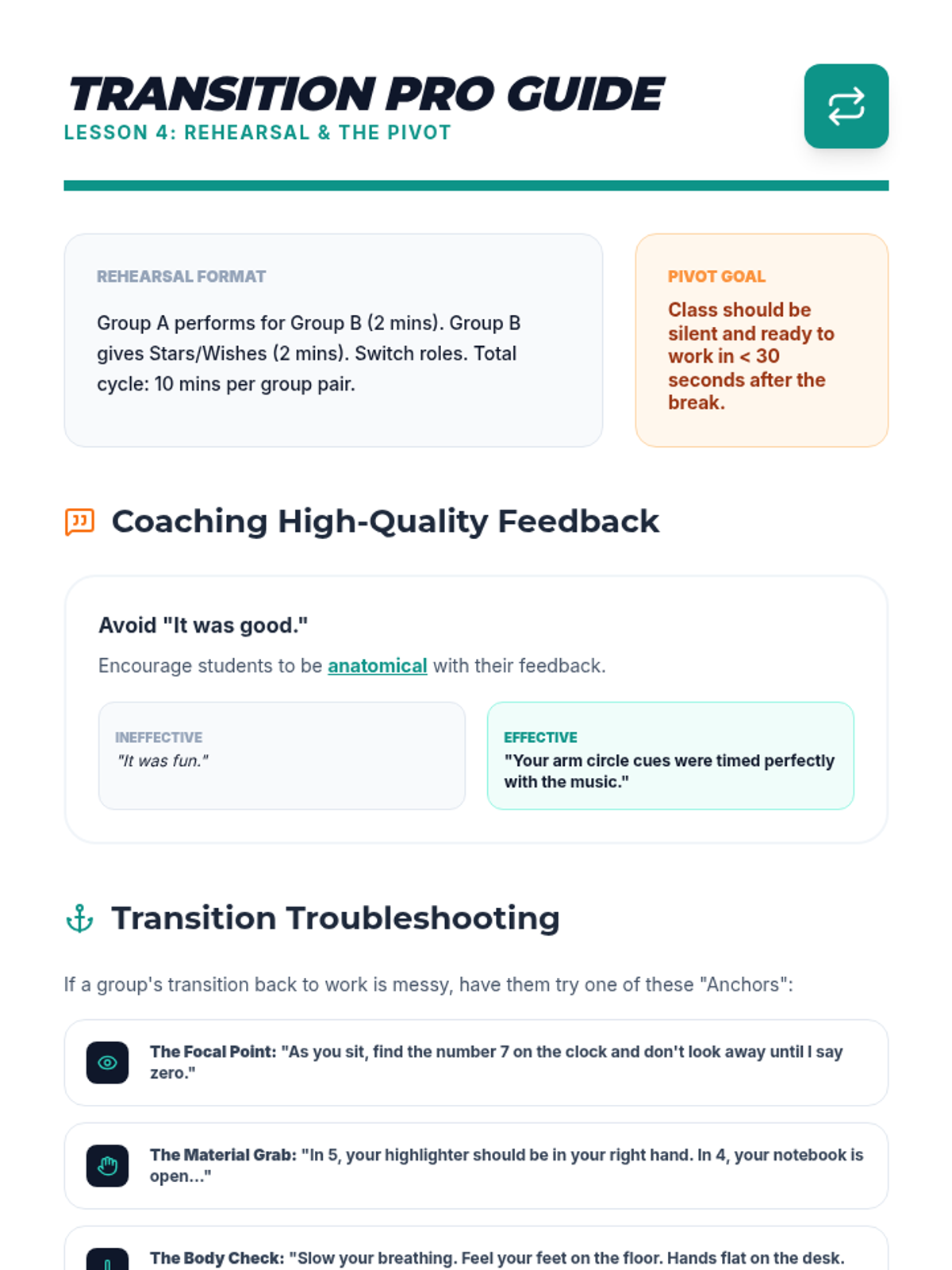
Groups rehearse their routines, receive peer feedback, and focus on the 'pivot'—the critical transition from movement back to academic work.
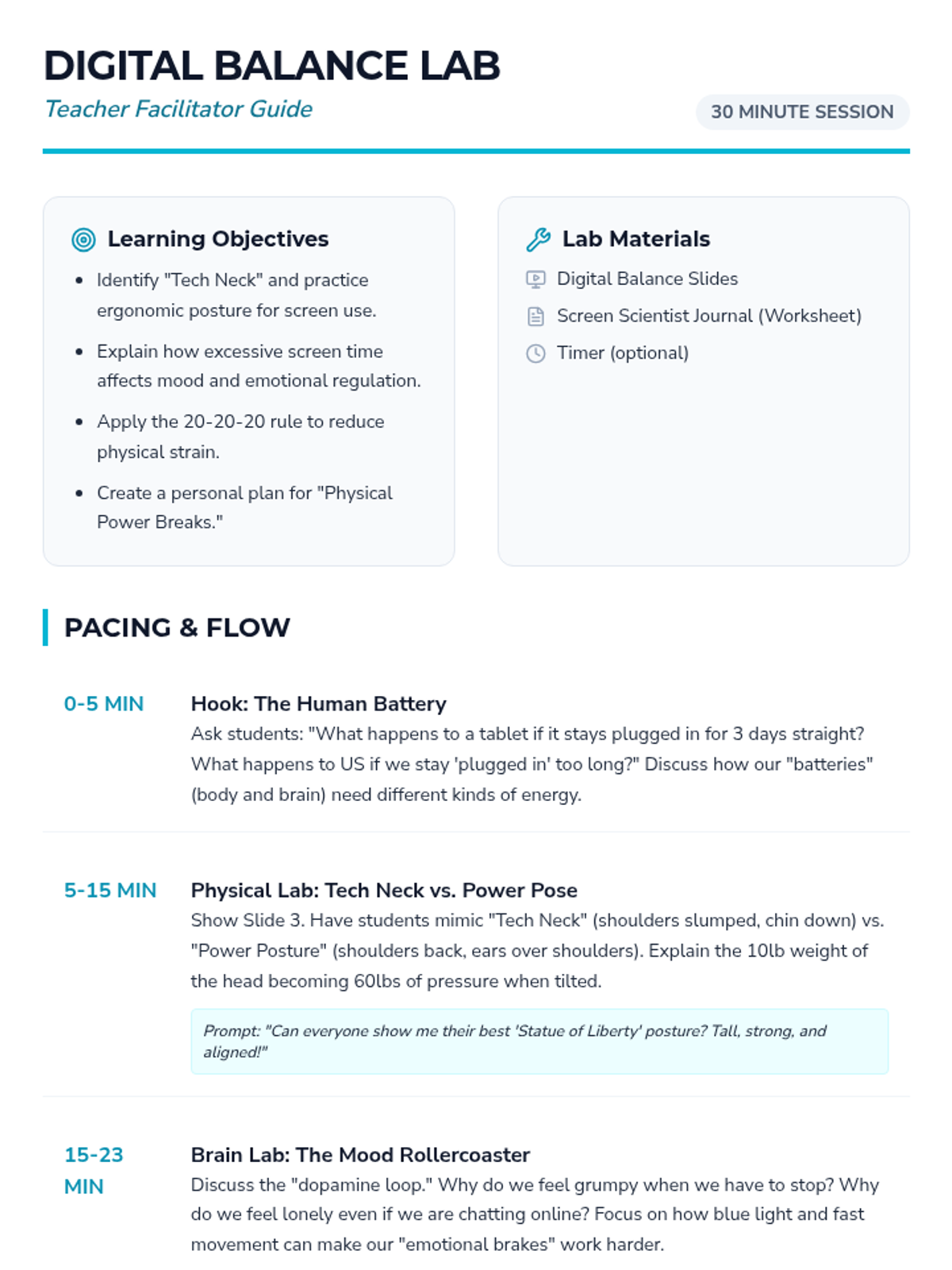
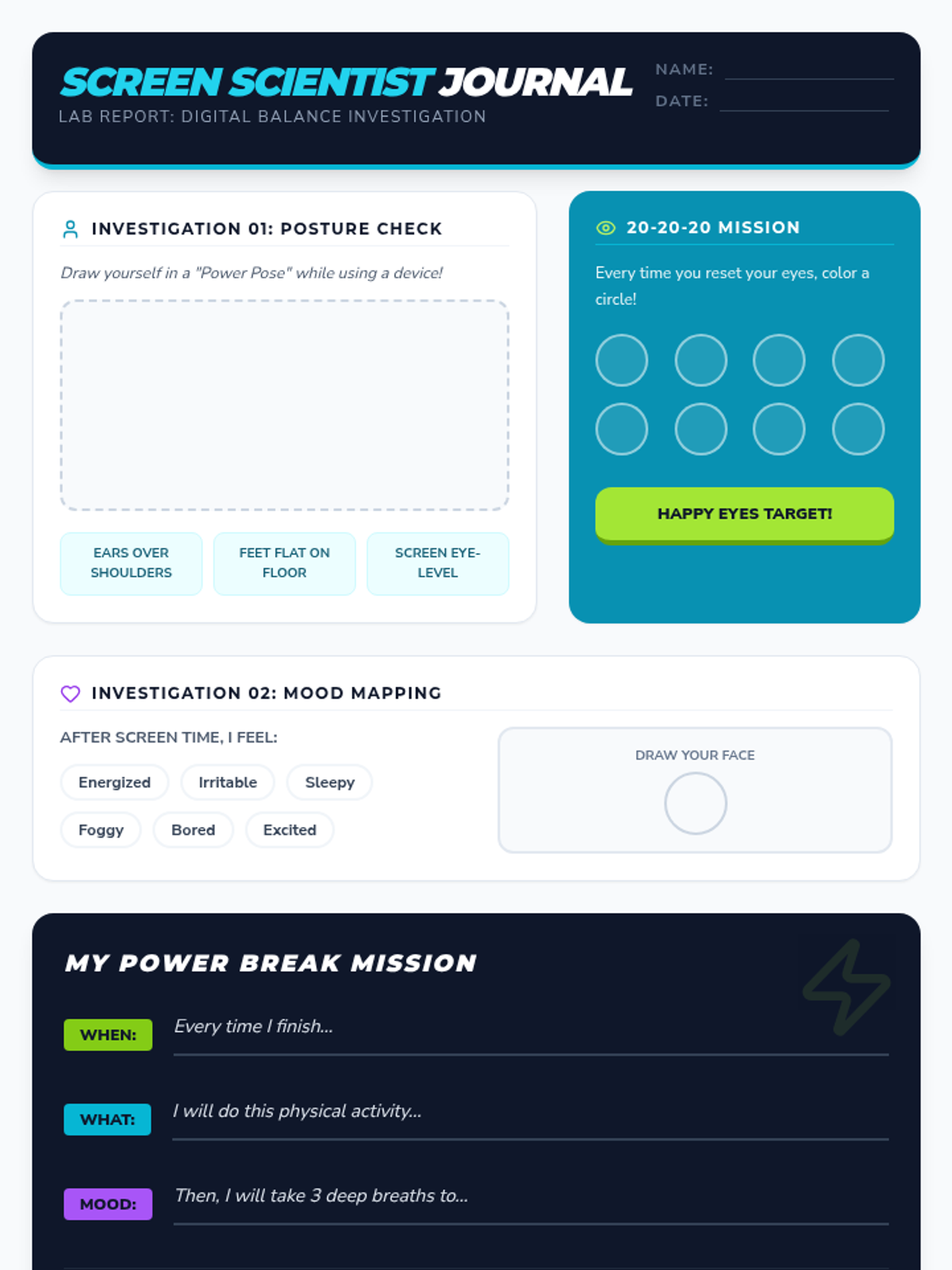
A 30-minute lesson for 3rd-5th graders focusing on the physical and emotional impacts of screen time, featuring posture tips and mood regulation strategies.
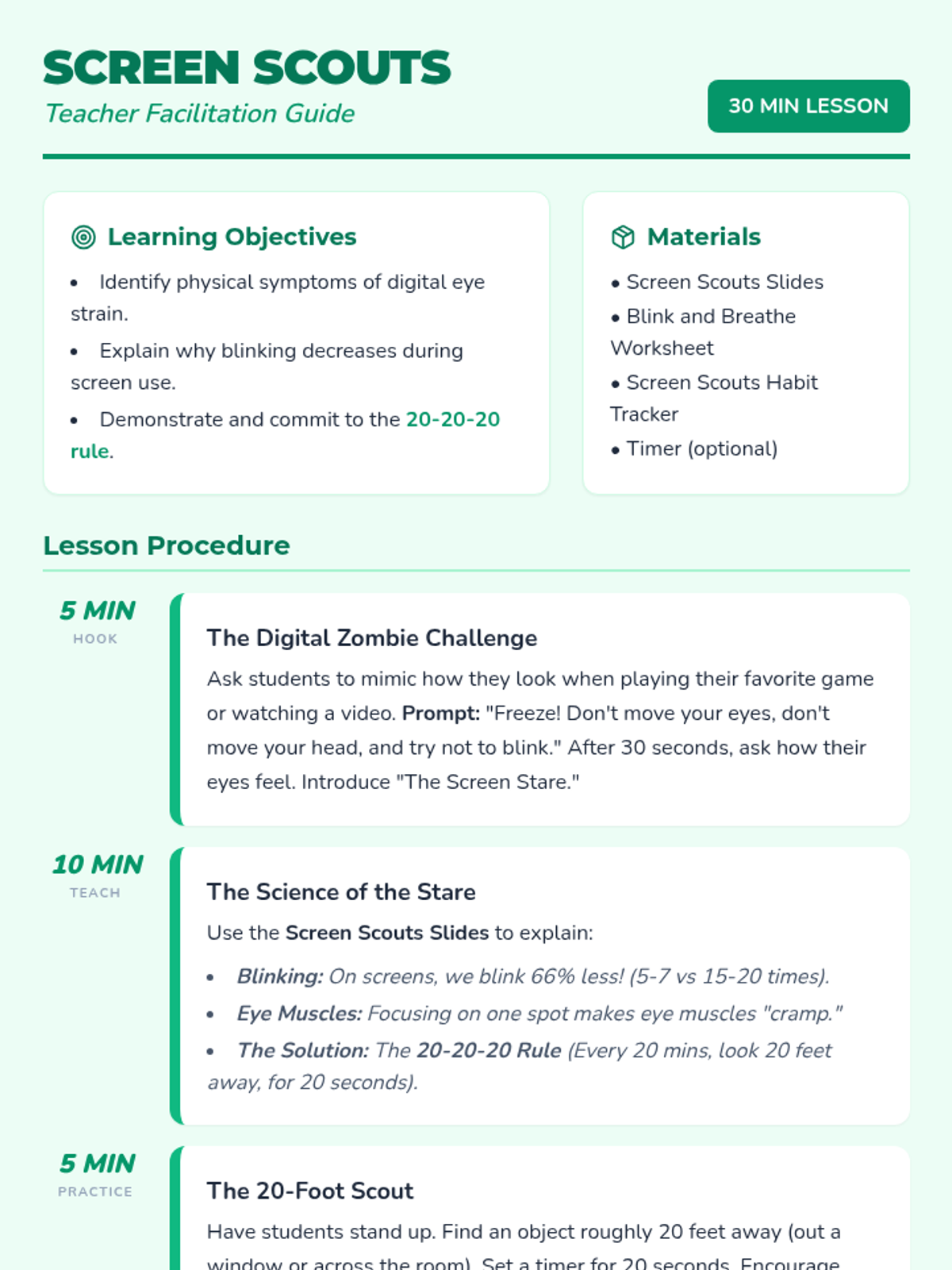
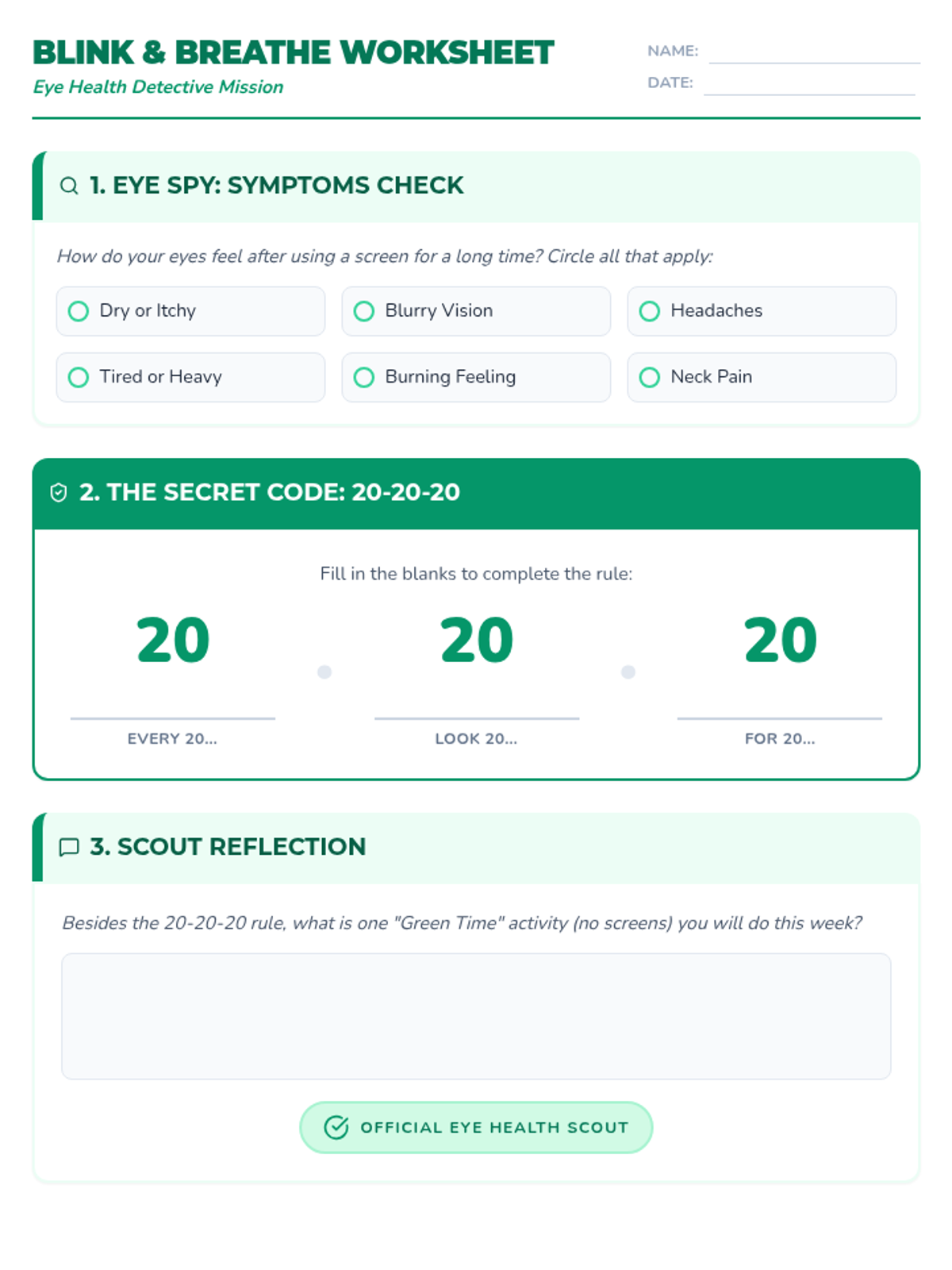
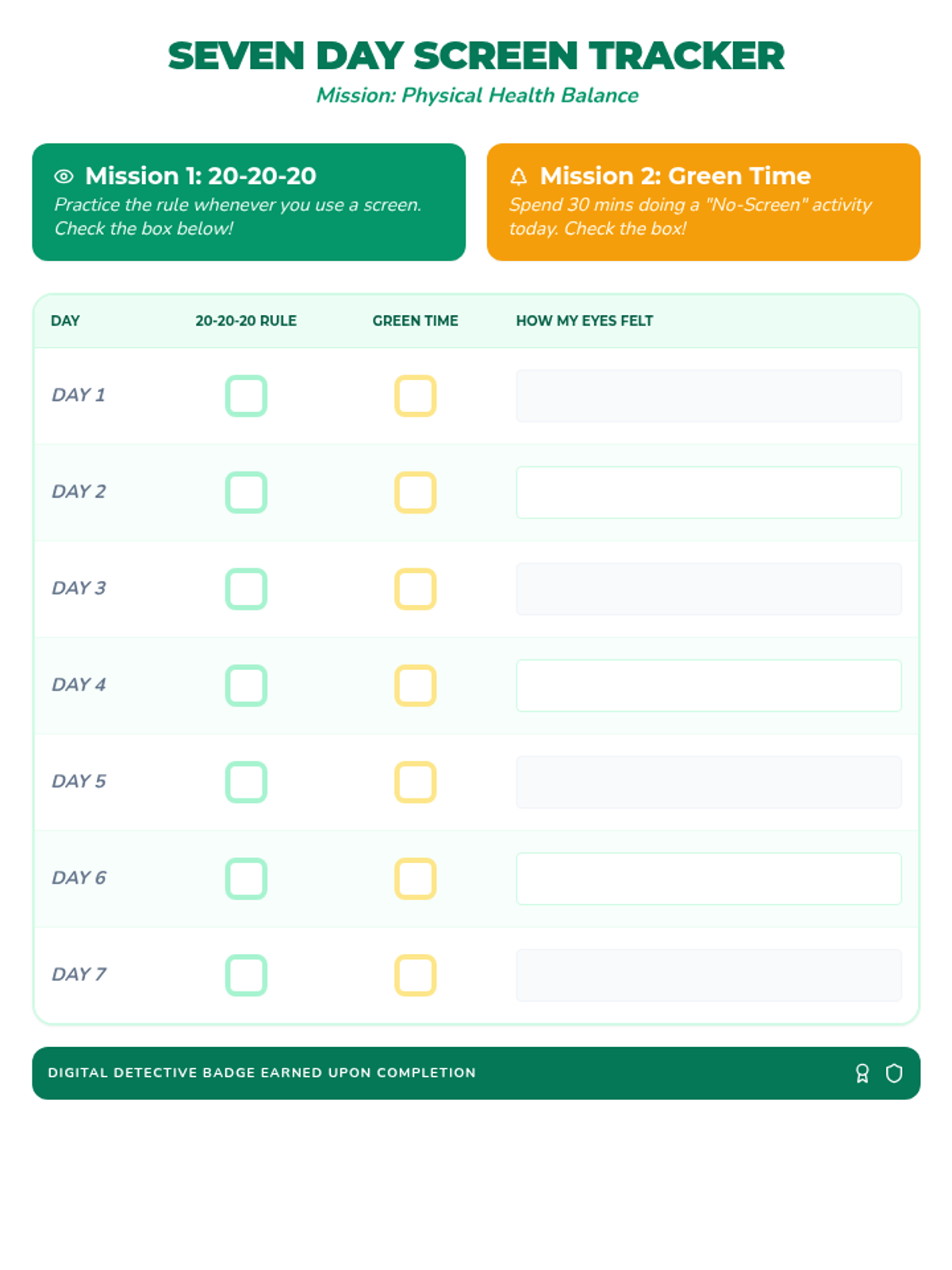
A 30-minute lesson designed for 3rd-5th graders to understand the impact of excessive screen time on physical health, specifically focusing on eye strain, and introducing the 20-20-20 rule.
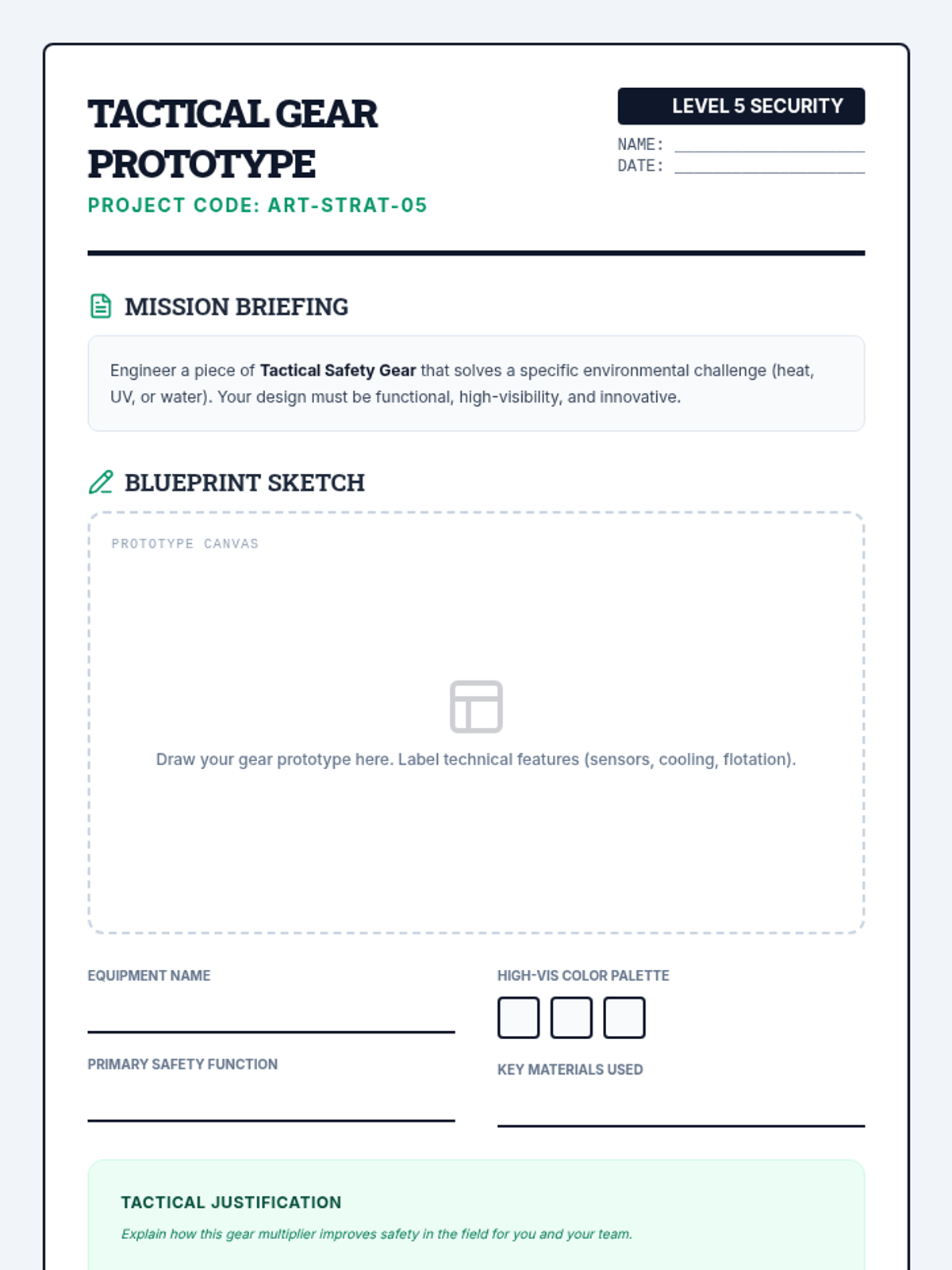
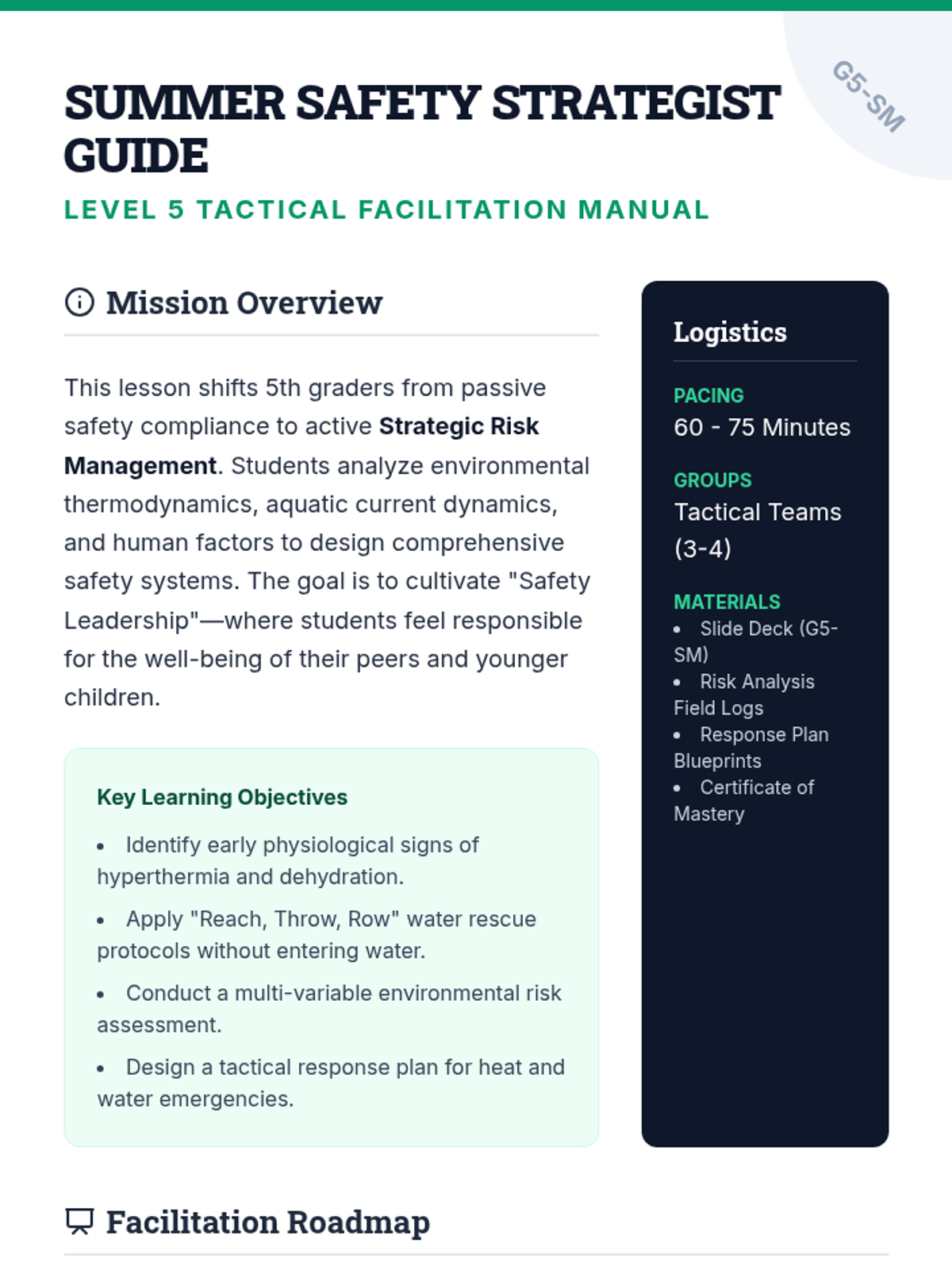
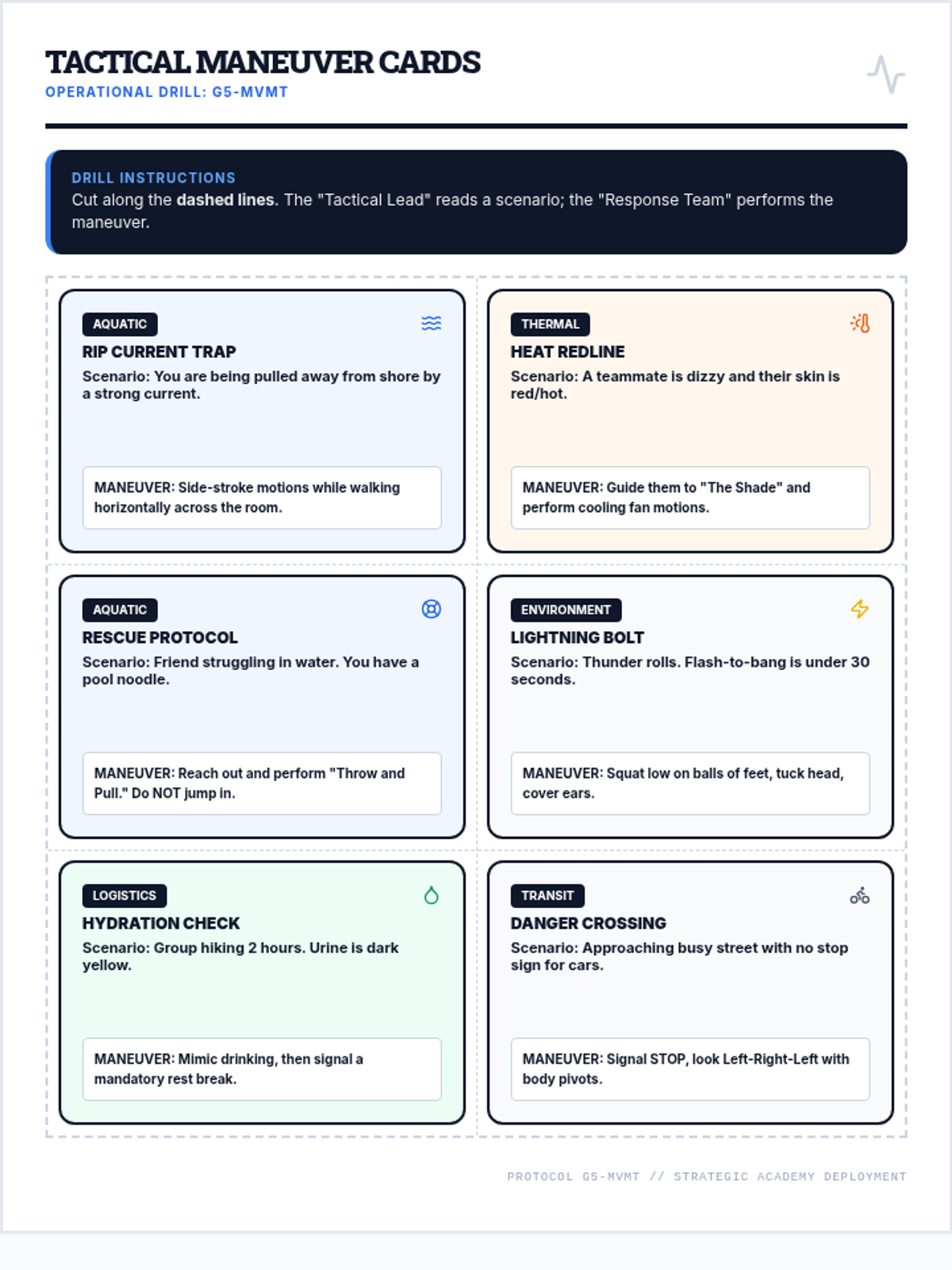
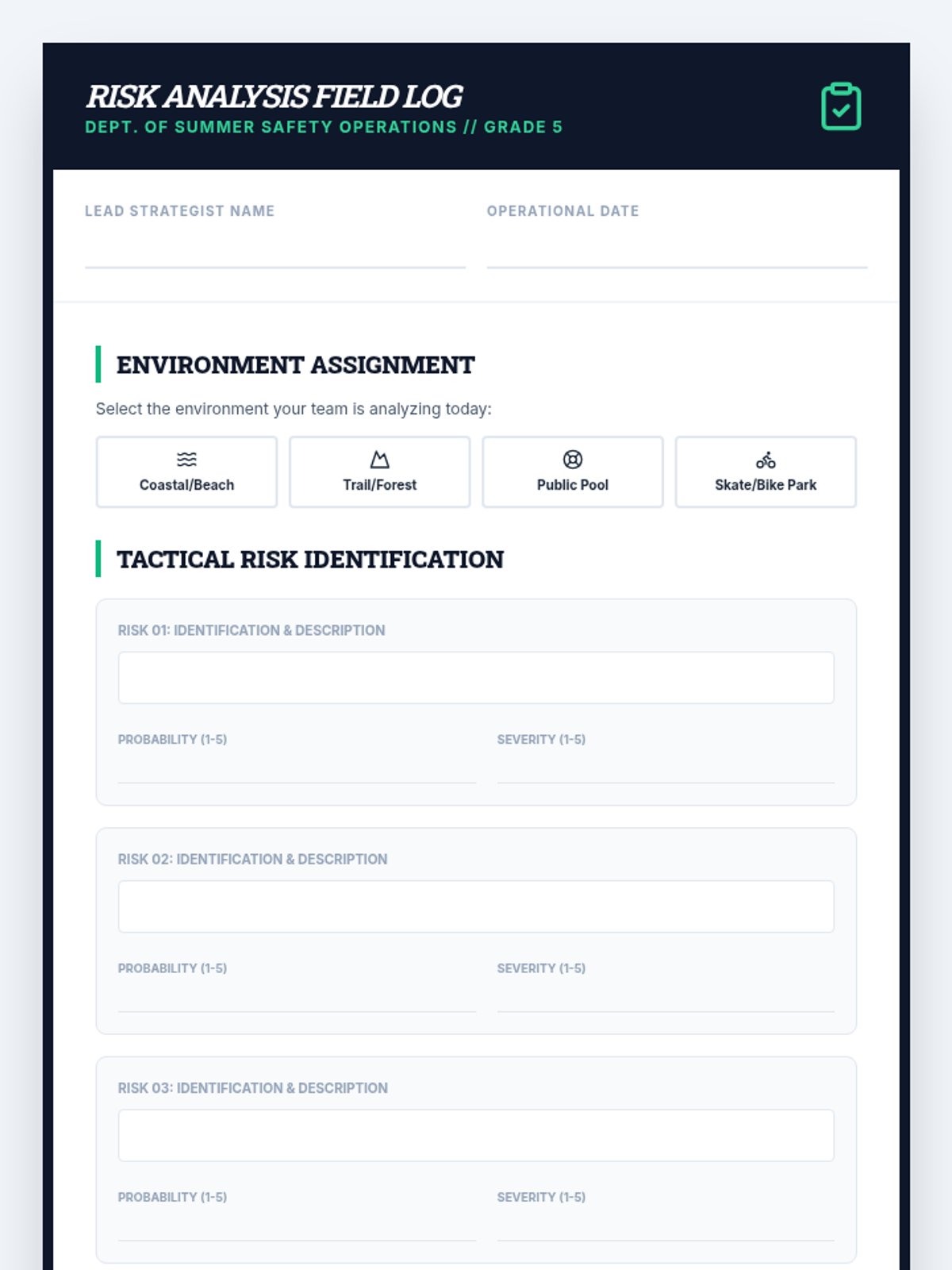
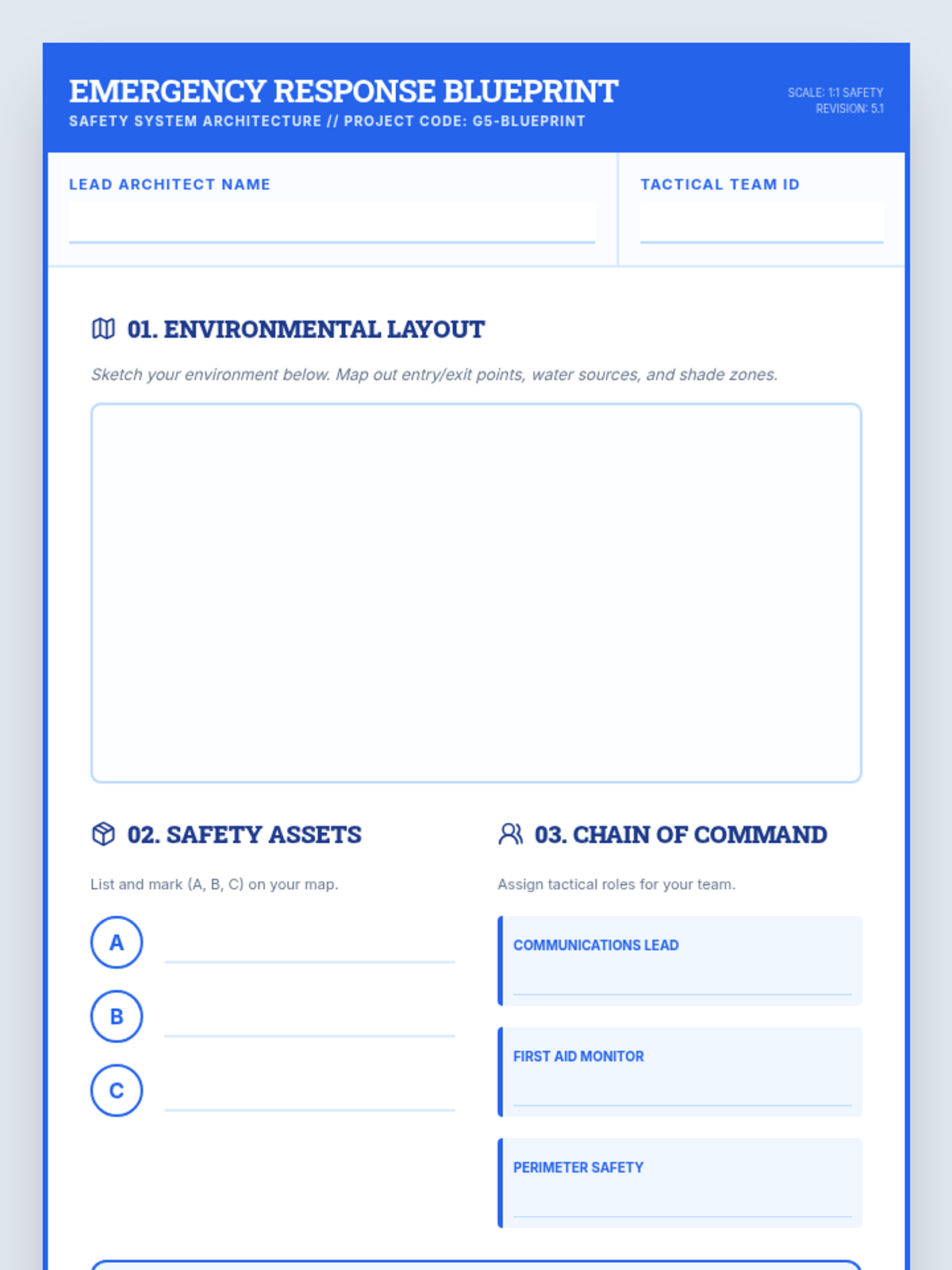
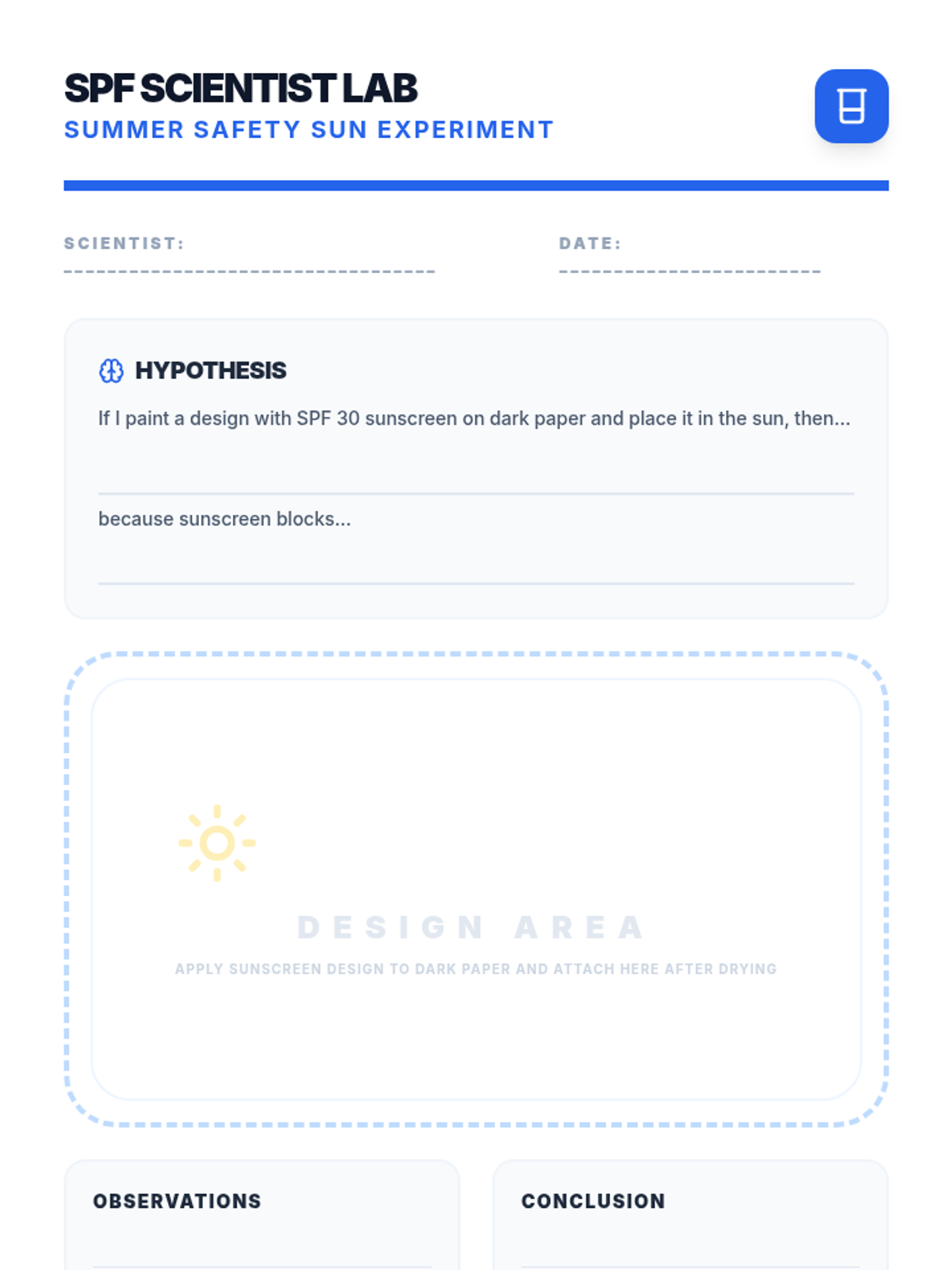
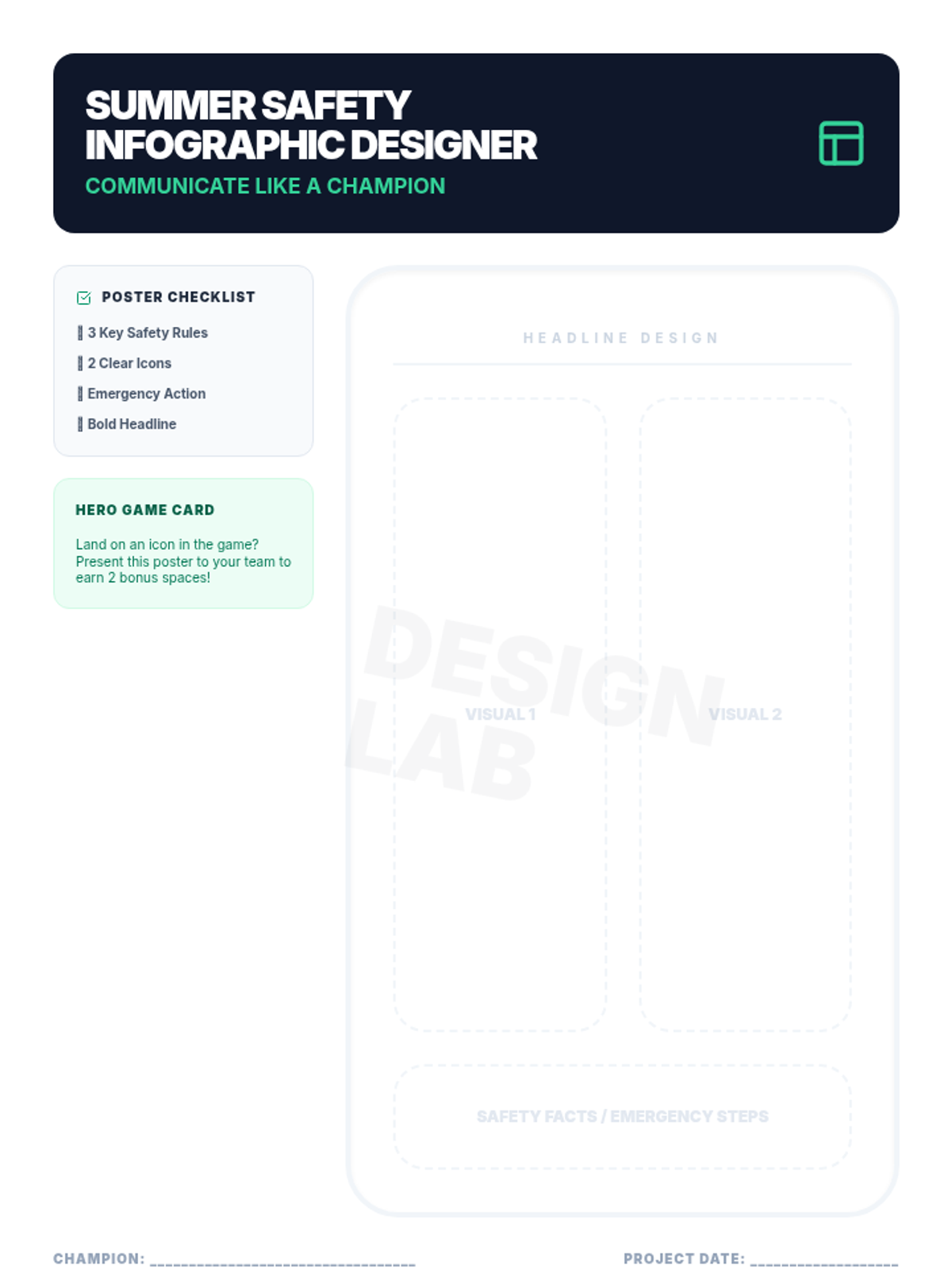
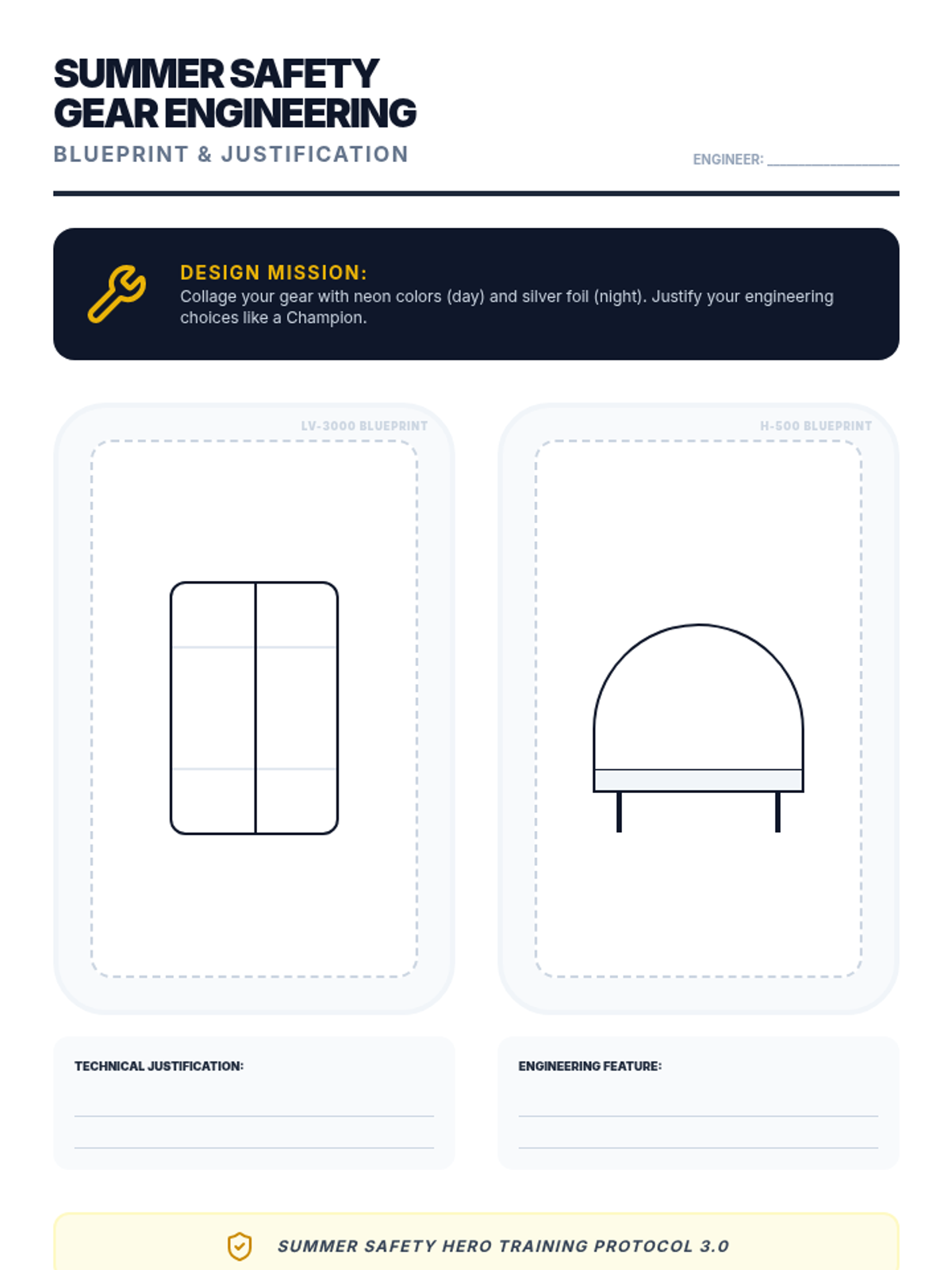
An advanced summer safety lesson for 5th graders focused on leadership, environmental health, and complex risk management strategies. Students analyze scenarios and design comprehensive safety systems.
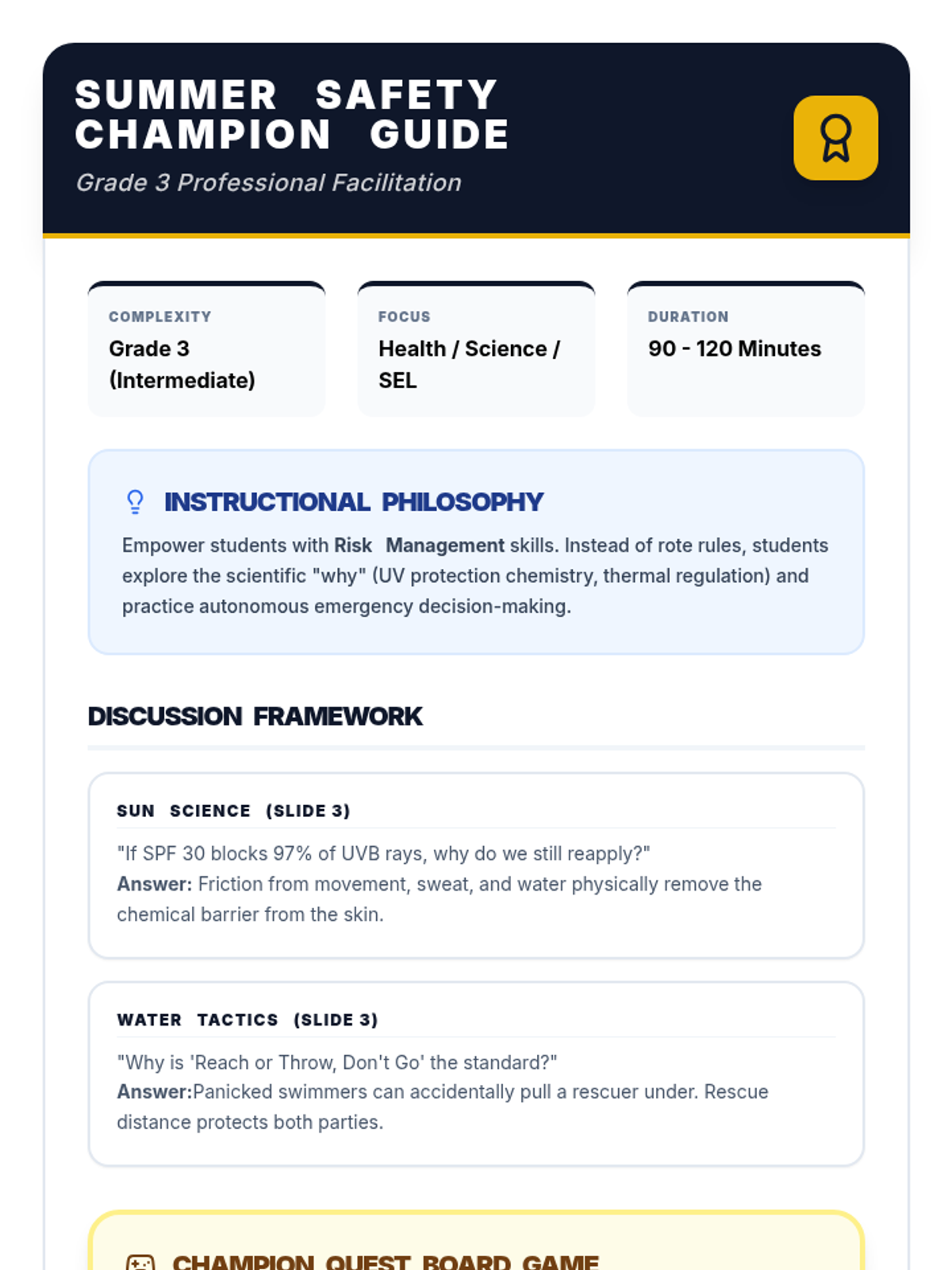
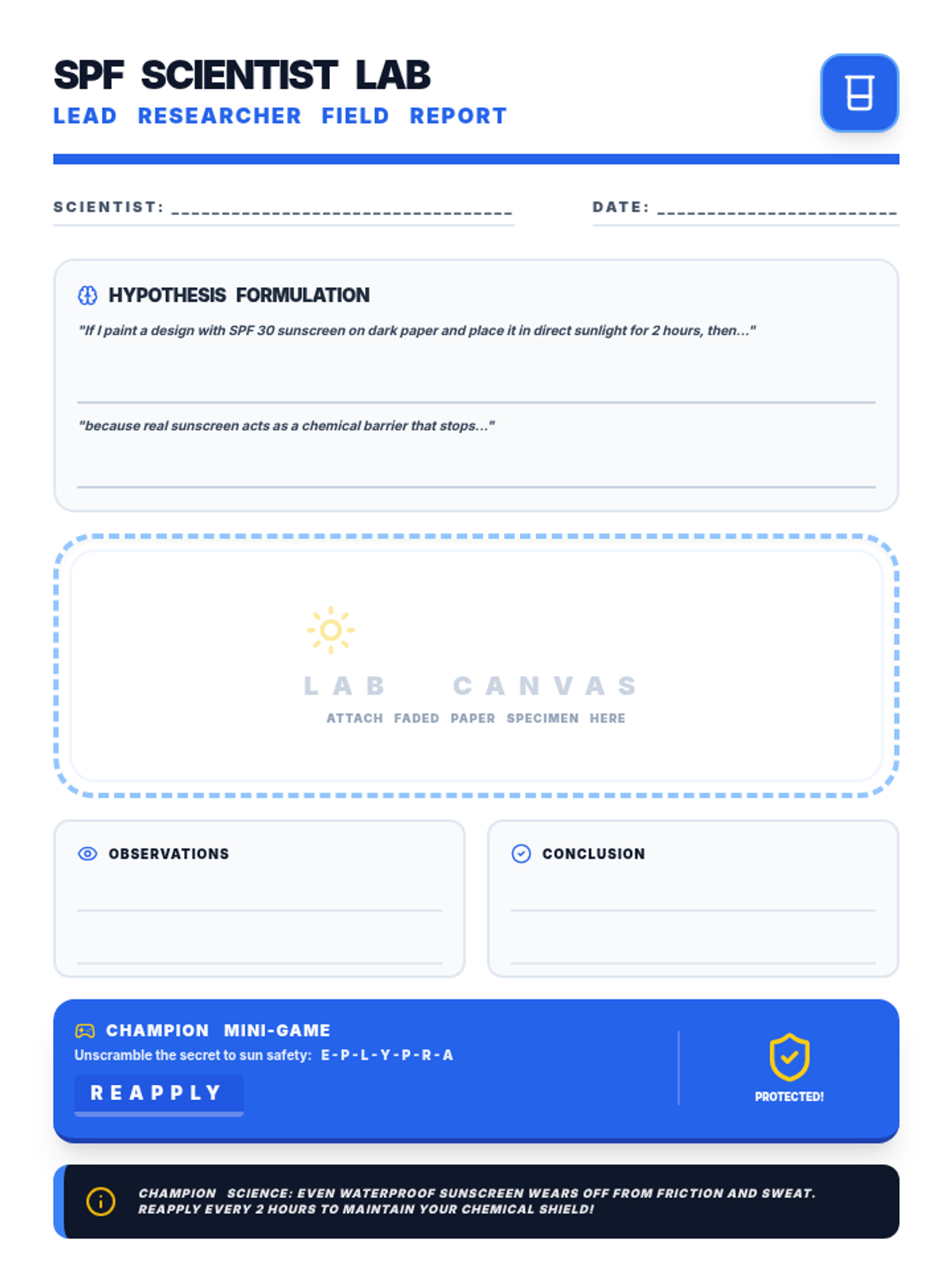
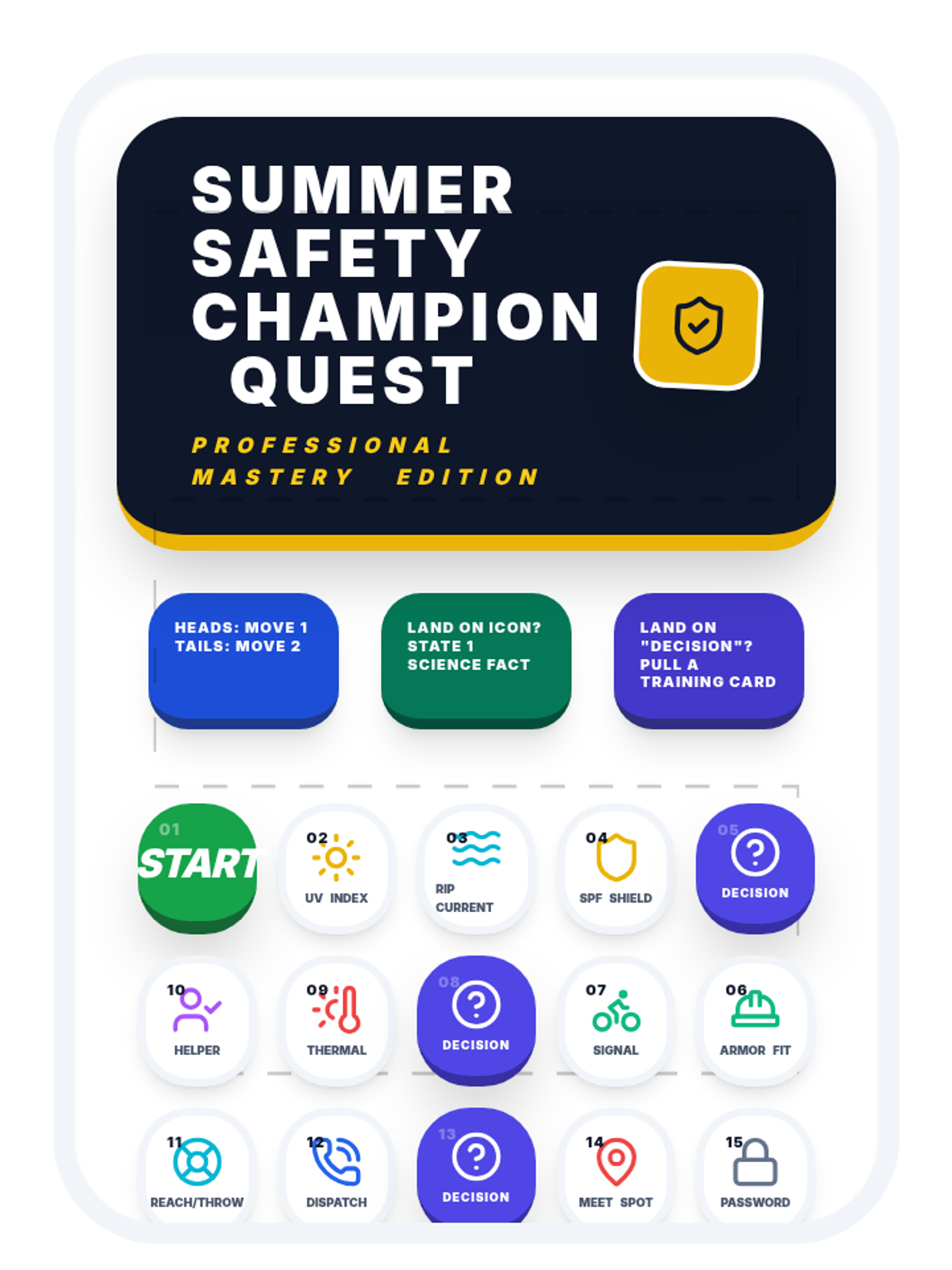
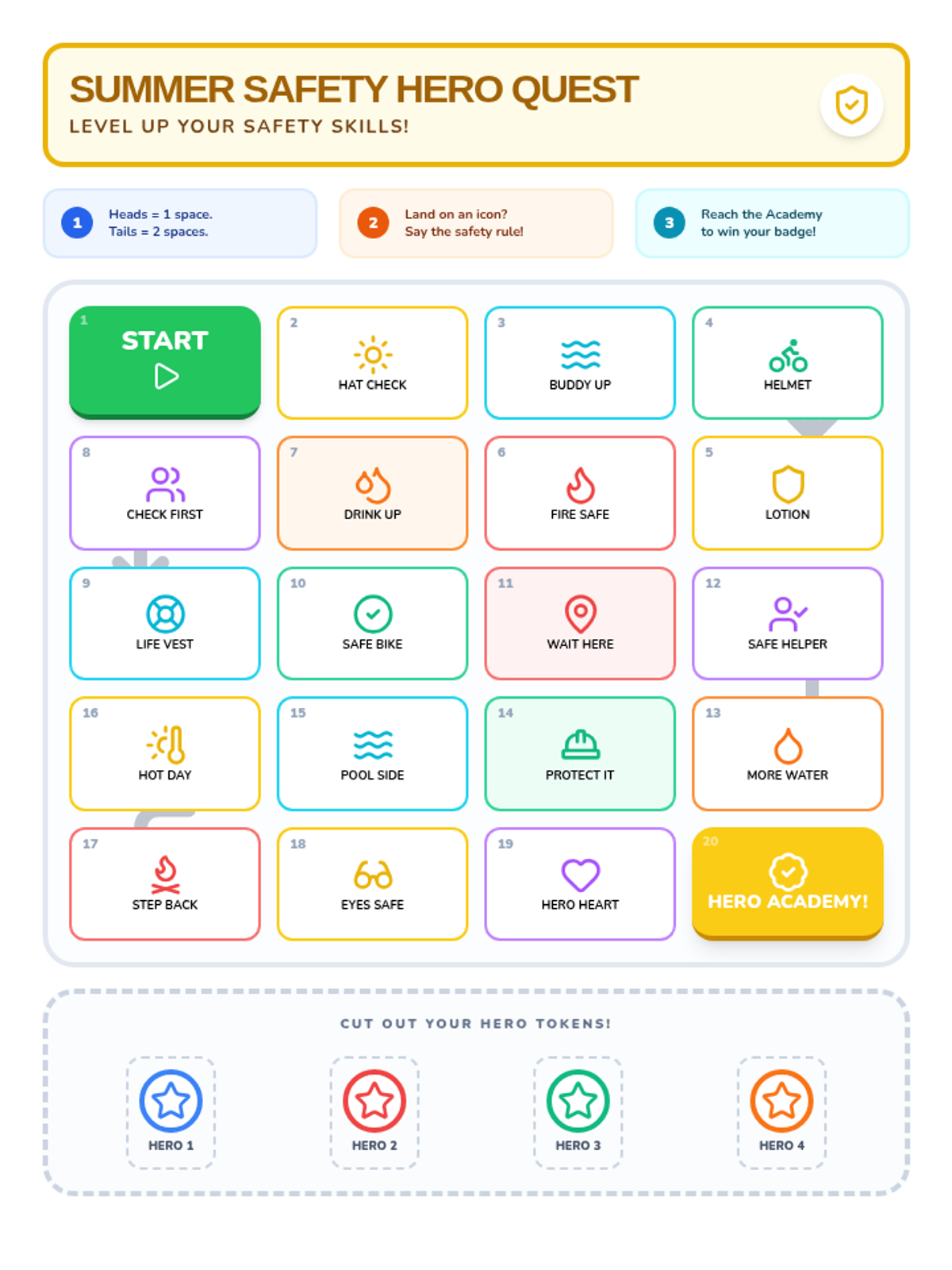
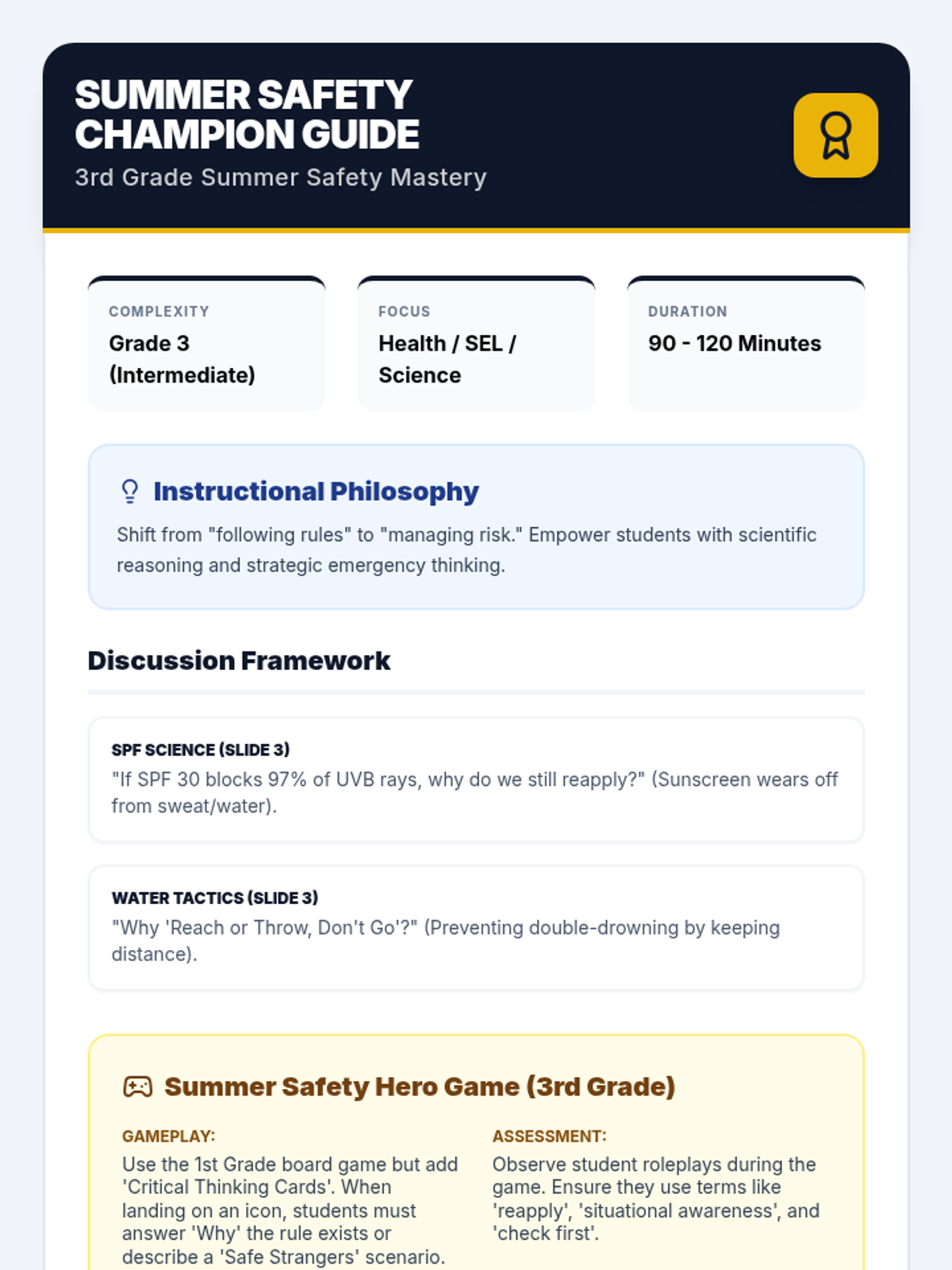
An advanced summer safety lesson for 3rd graders focused on scientific principles of protection, risk management strategies, and professional safety design.
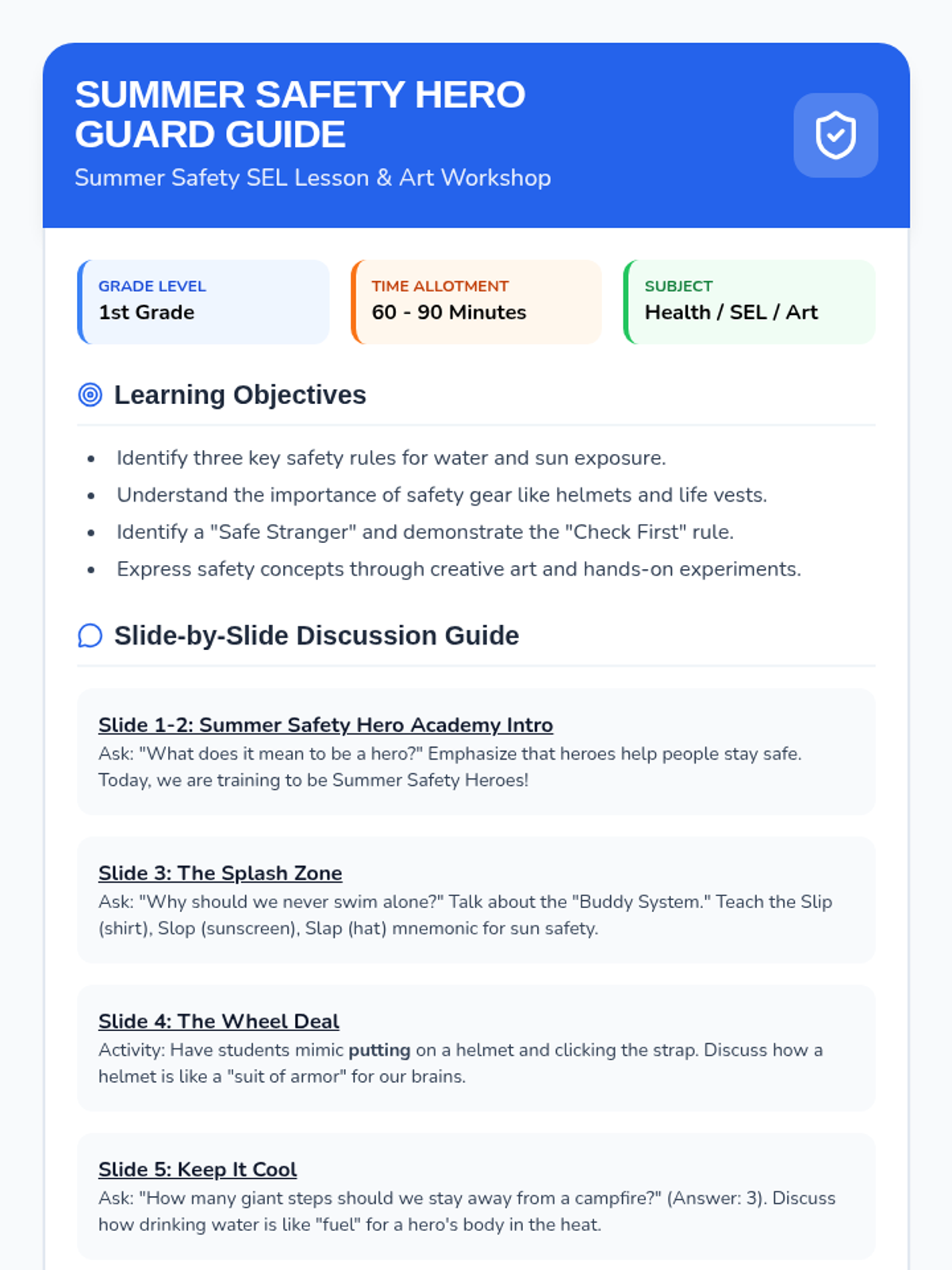
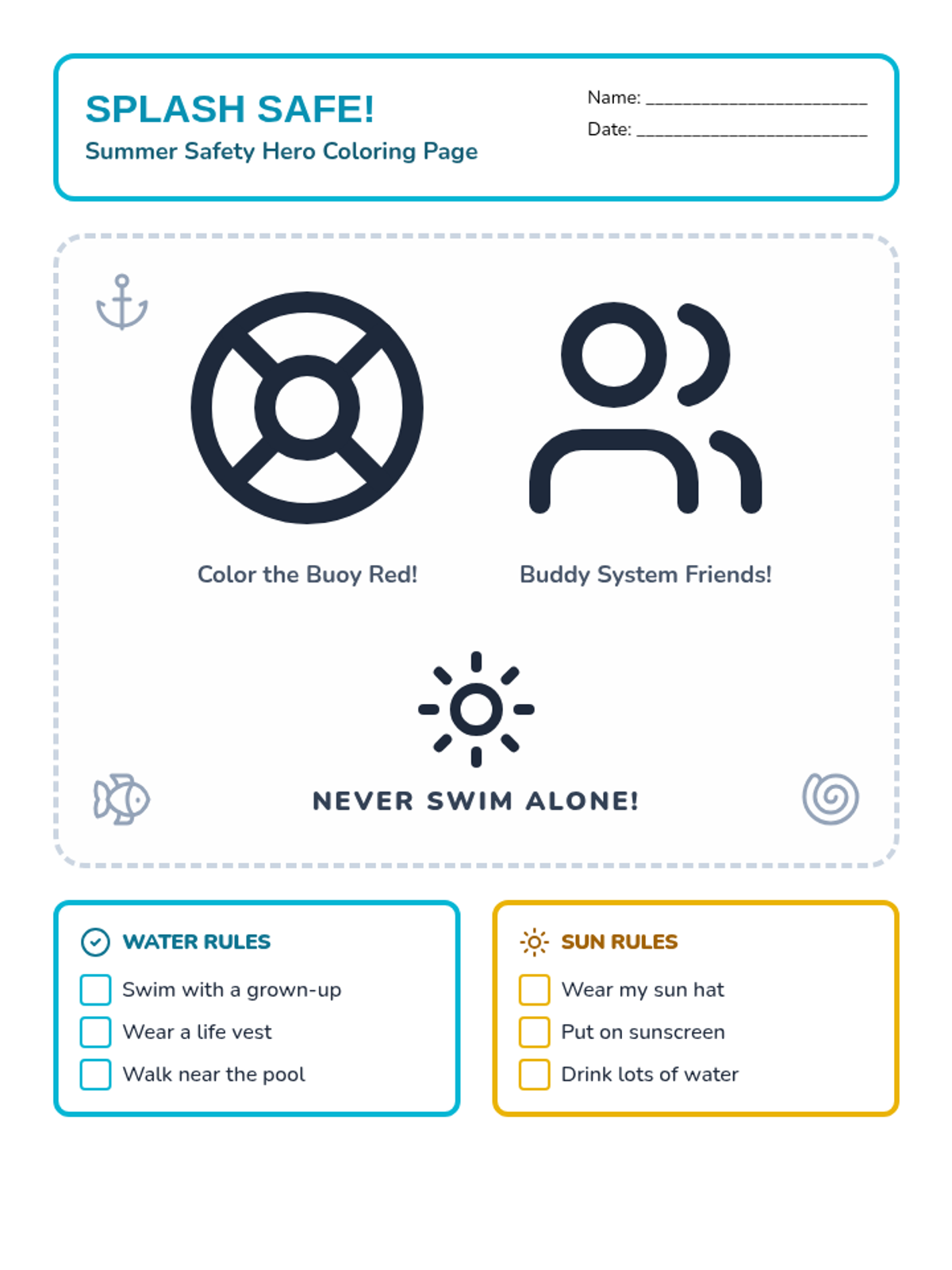
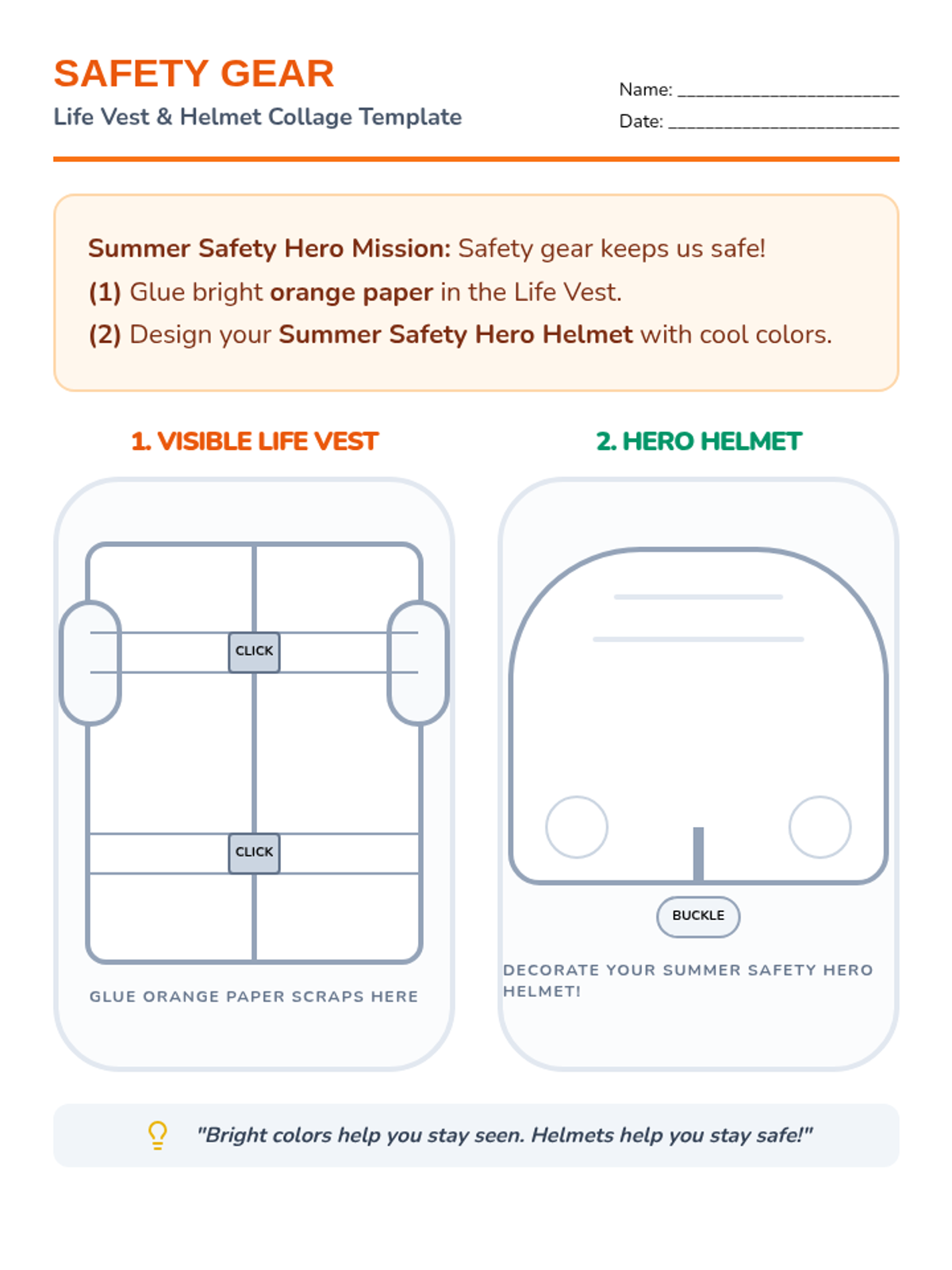
A comprehensive social-emotional learning lesson for 1st graders focused on staying safe during summer activities. Students will learn about sun, water, bike, fire safety, and personal safety through interactive slides and creative art projects.
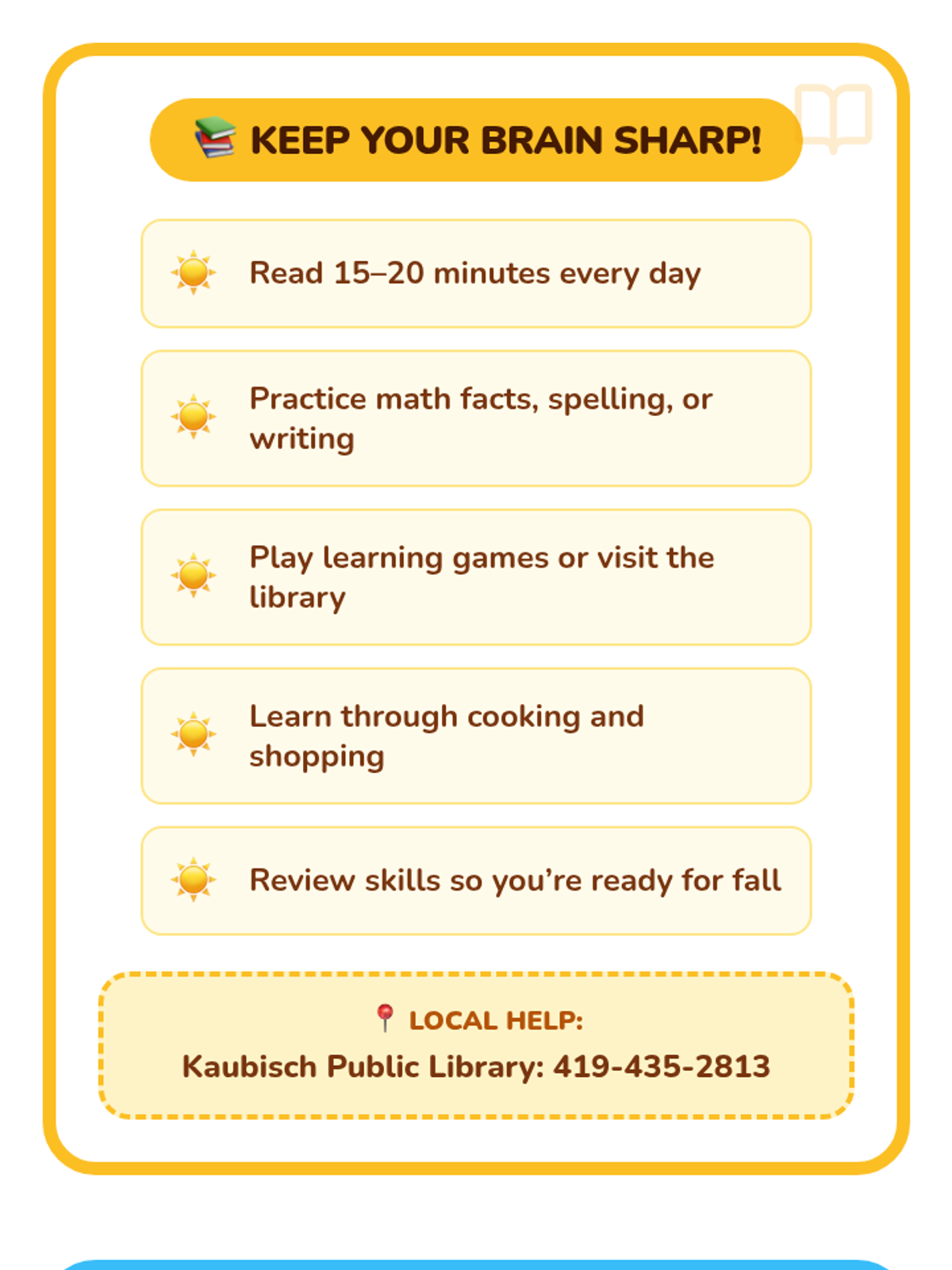
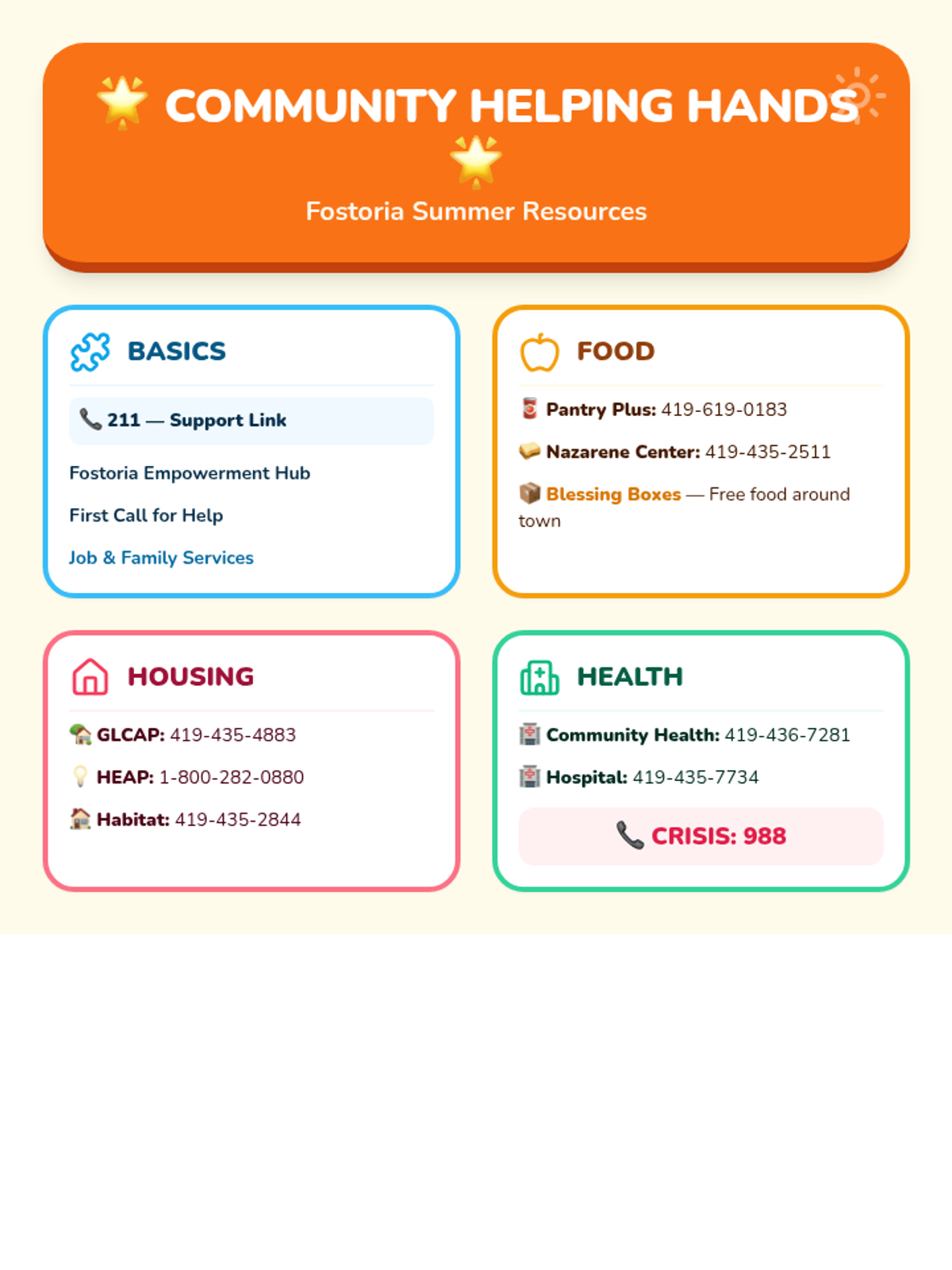
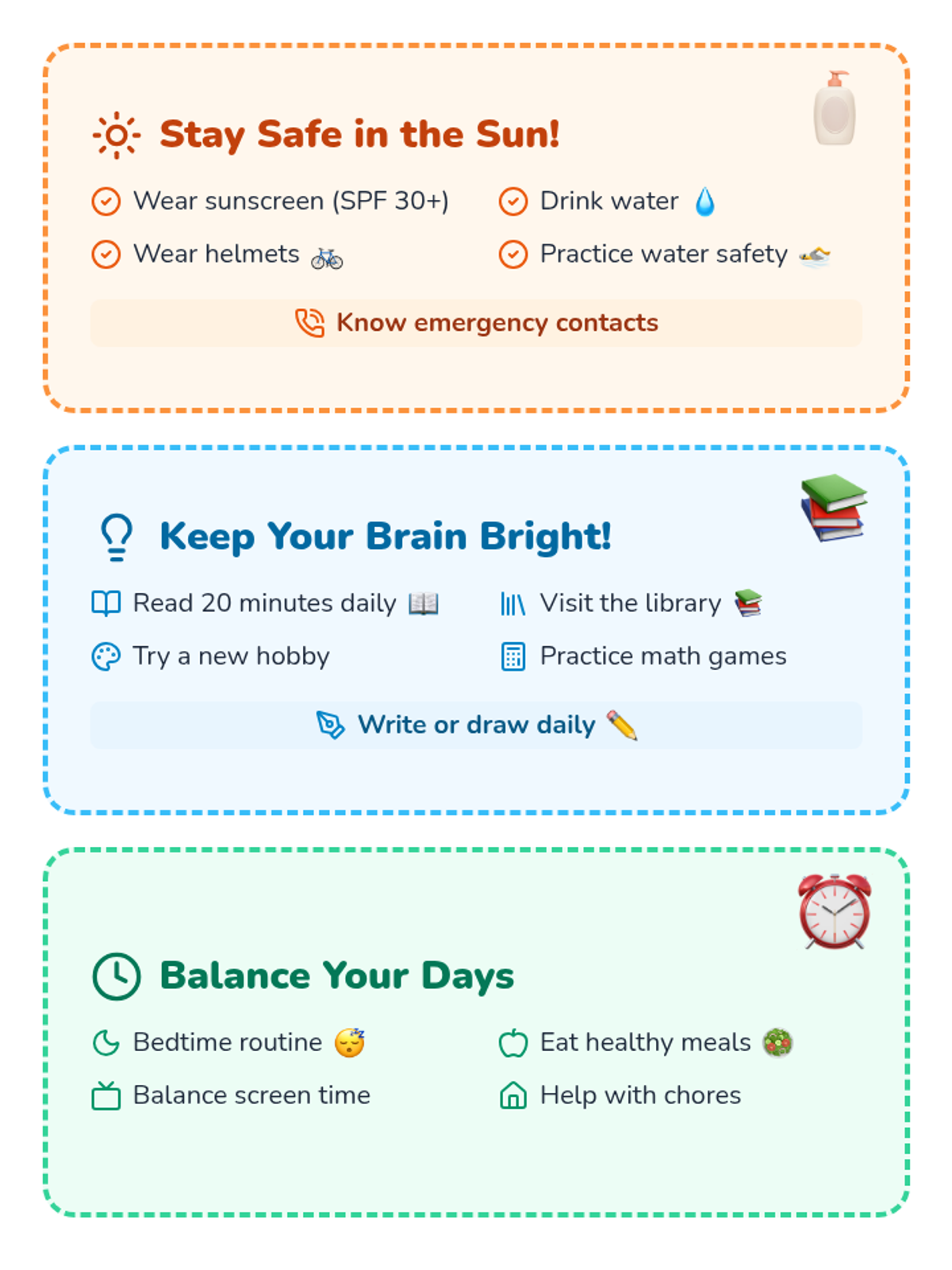
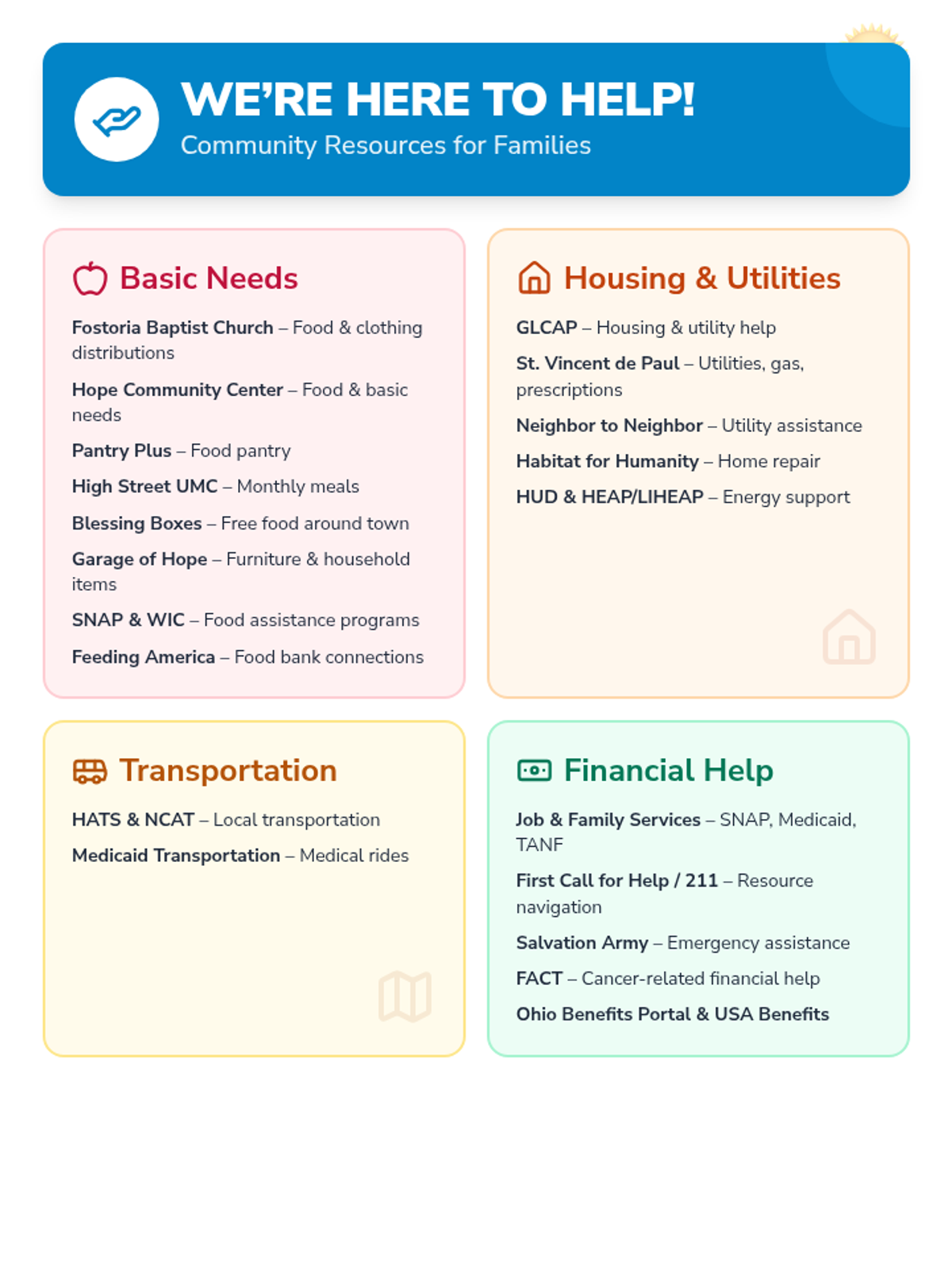
A complete set of vibrant, summer-themed bulletin board materials designed to provide students and families with healthy habits, learning tips, and community resources.
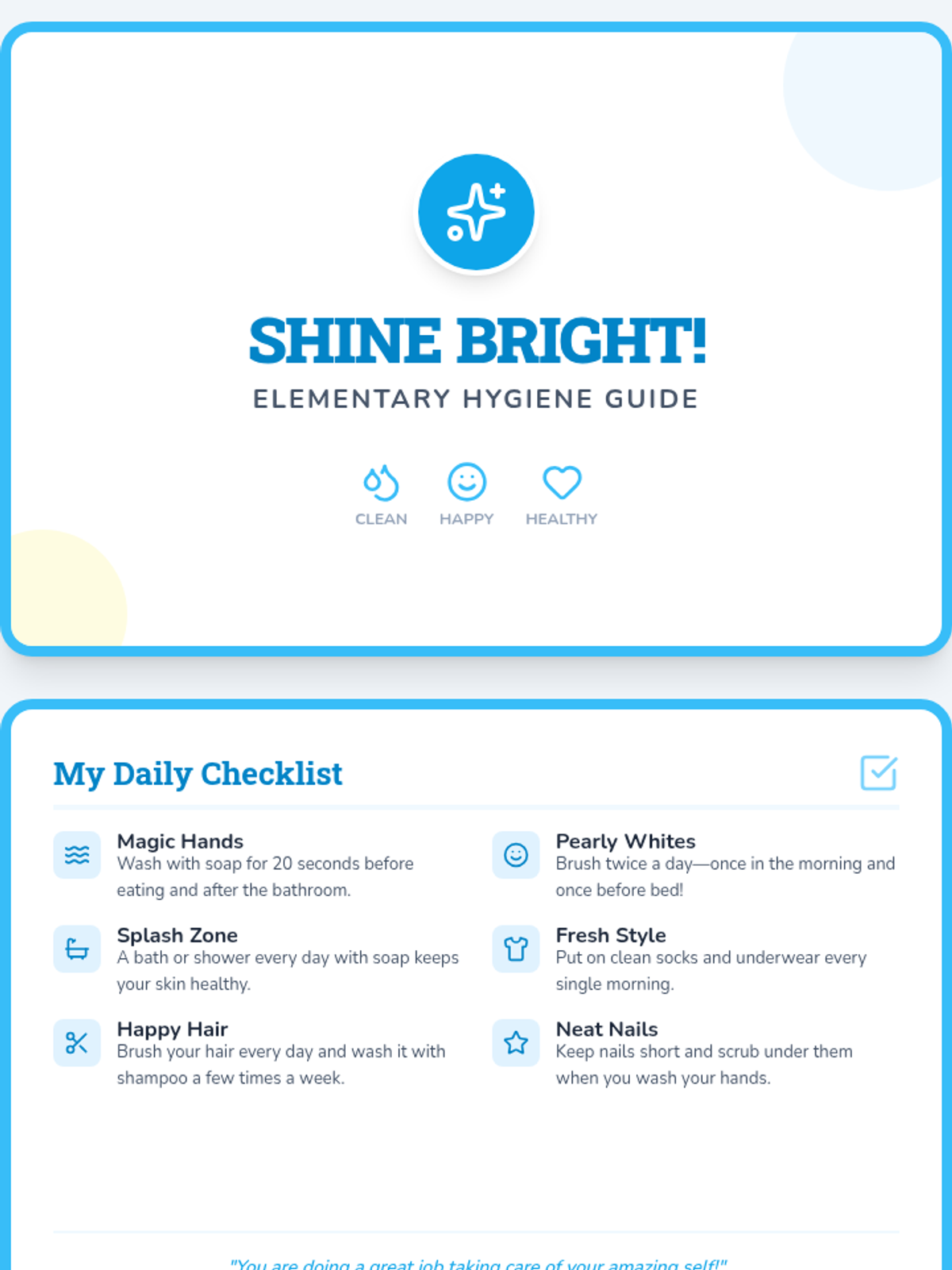
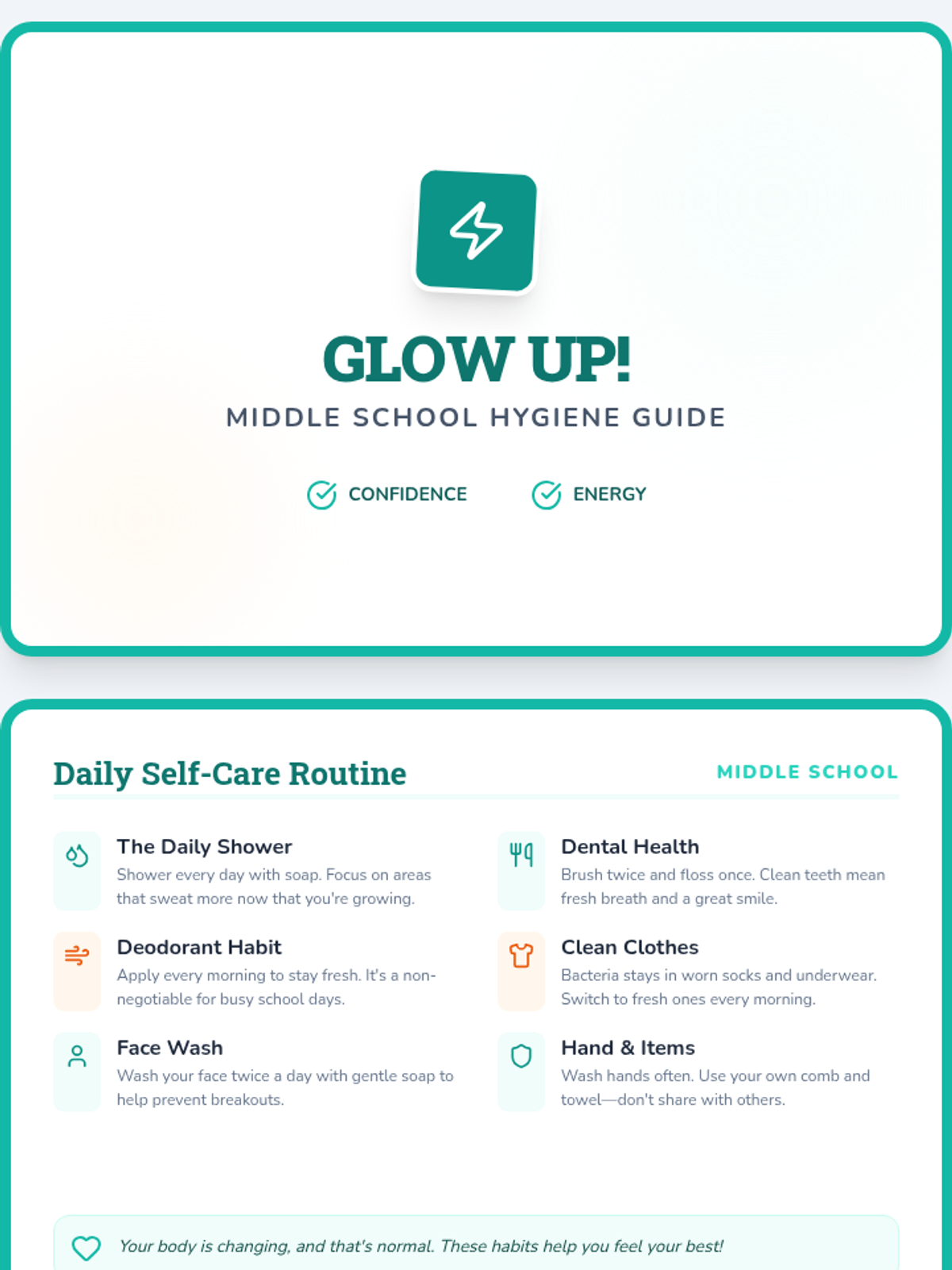
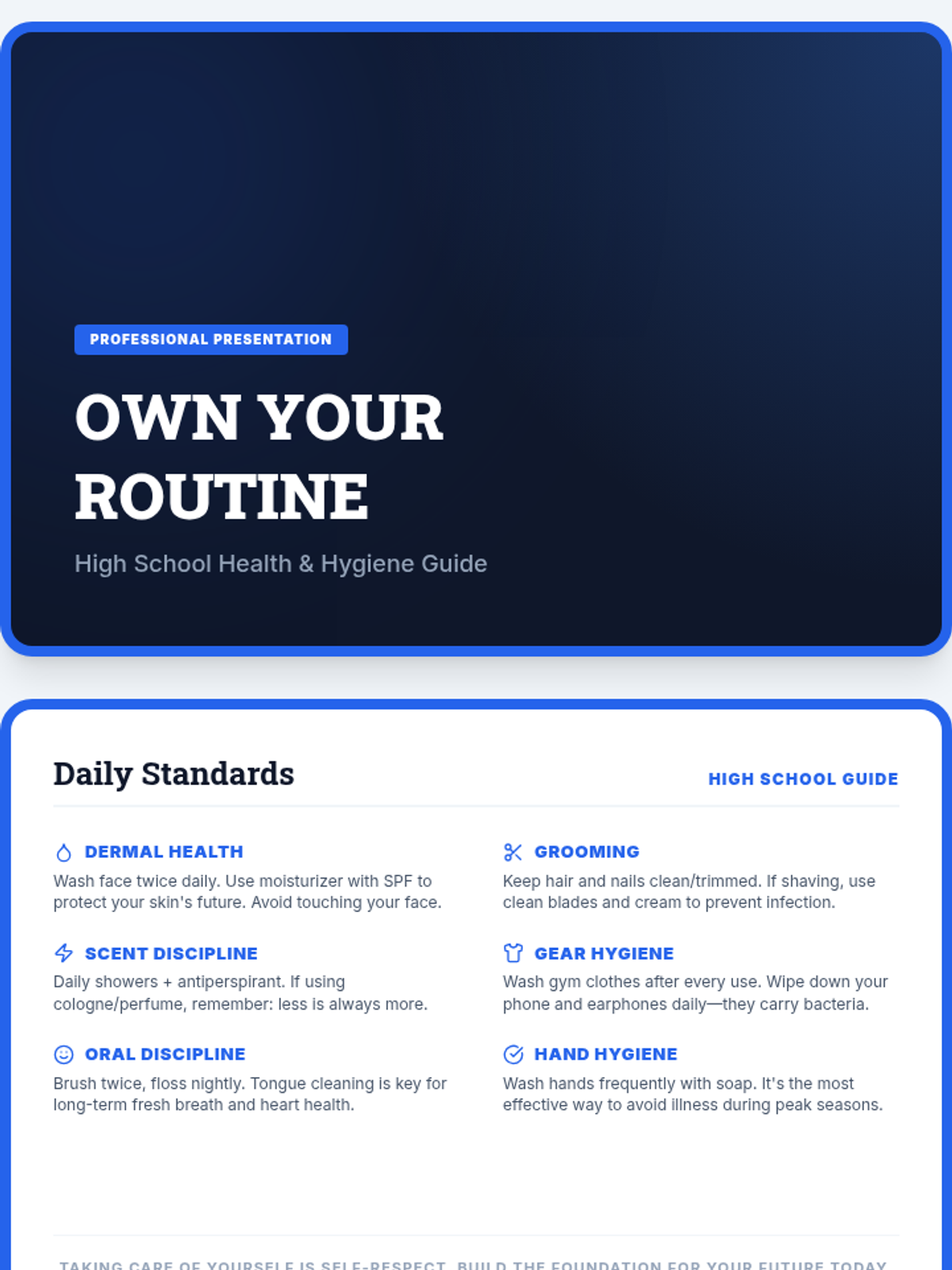
A collection of hygiene reference postcards tailored for elementary, middle school, high school, and adults. Each double-sided card provides empathetic, age-appropriate guidance on essential daily routines to support health and confidence.
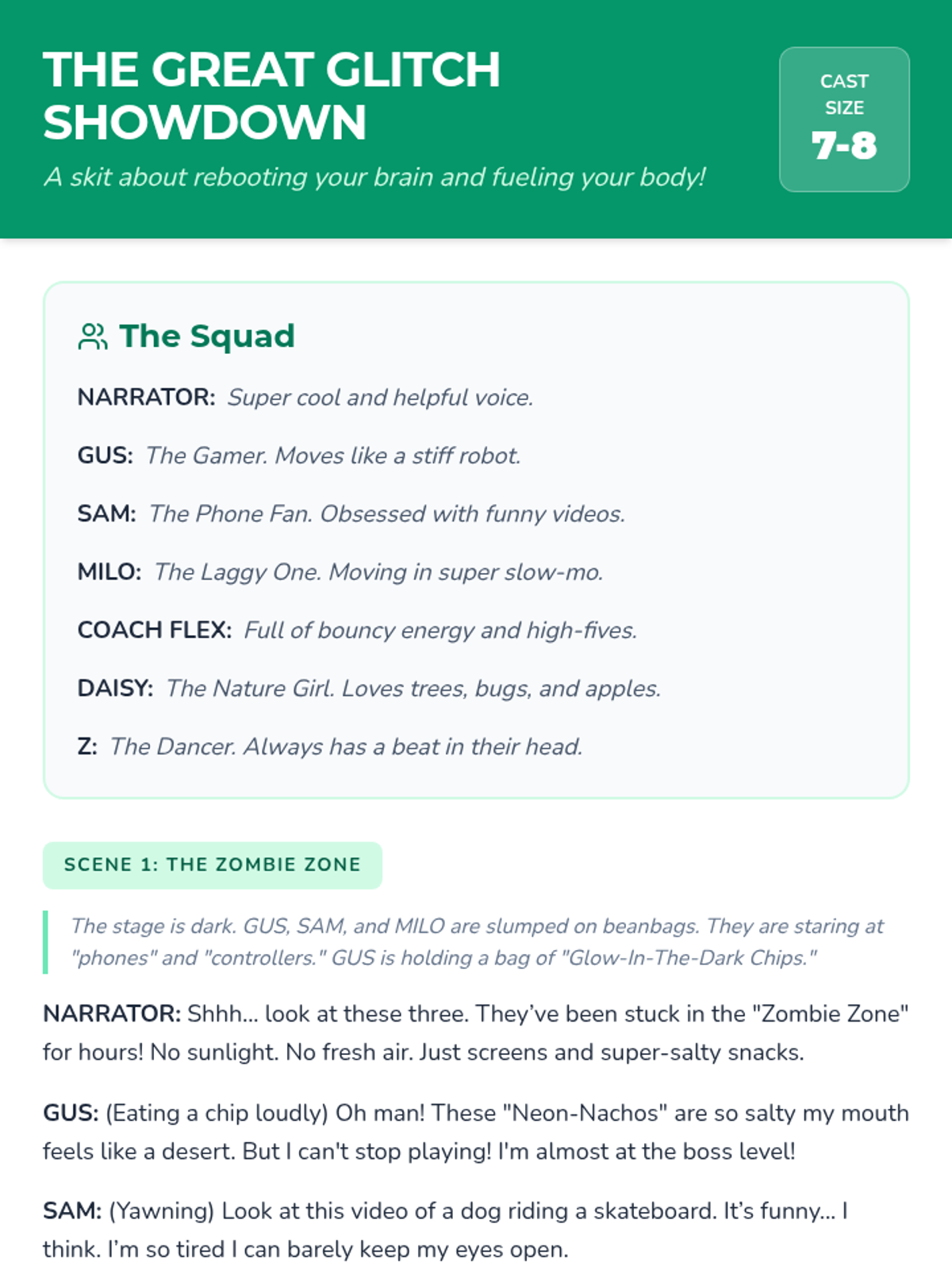
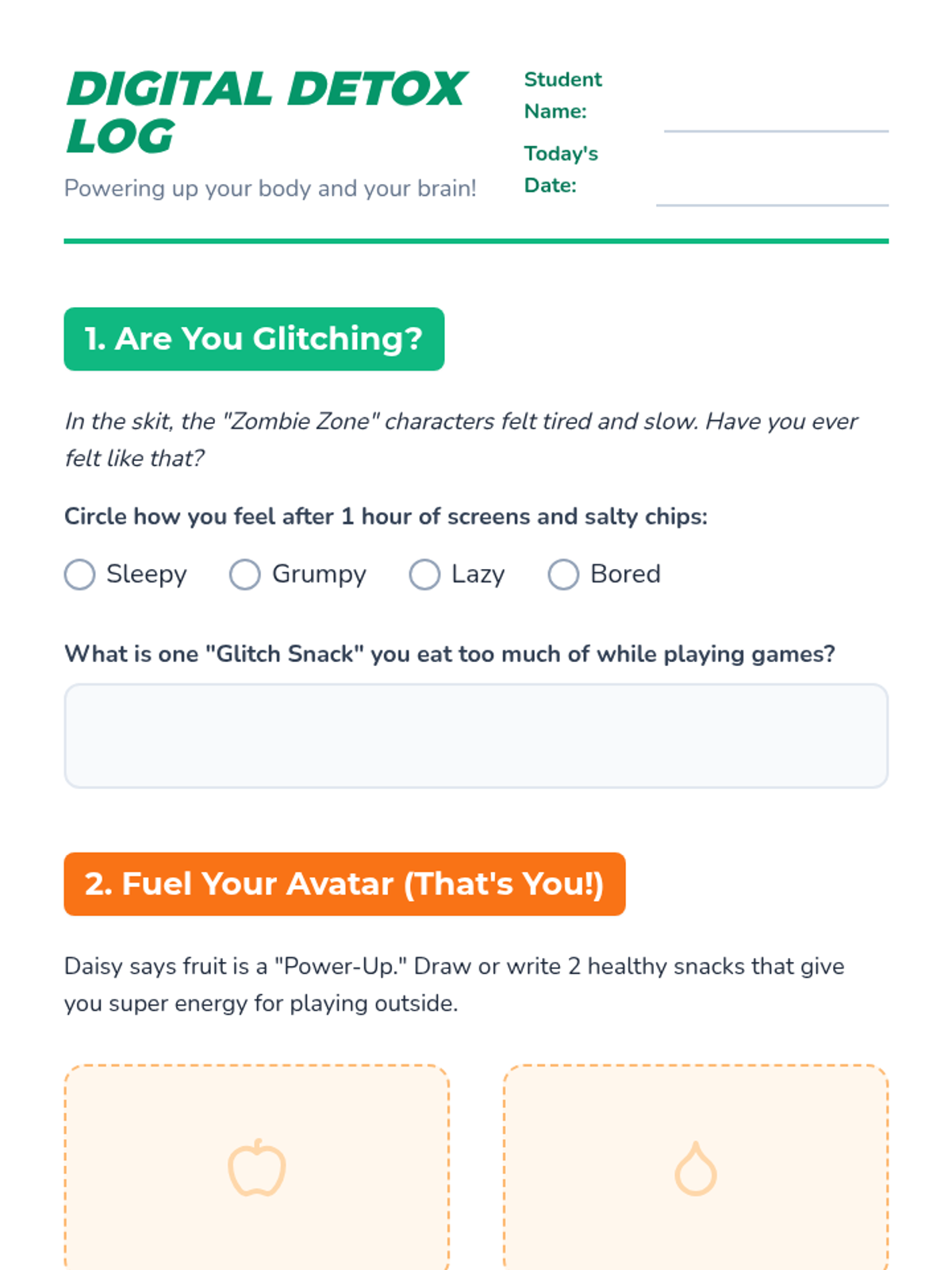
A high-energy lesson focused on digital wellness and the benefits of physical activity, featuring a funny skit and interactive reflection.
A Star Wars themed Physical Education lesson deck featuring training protocols, expectations, and galactic activities for May the 4th.
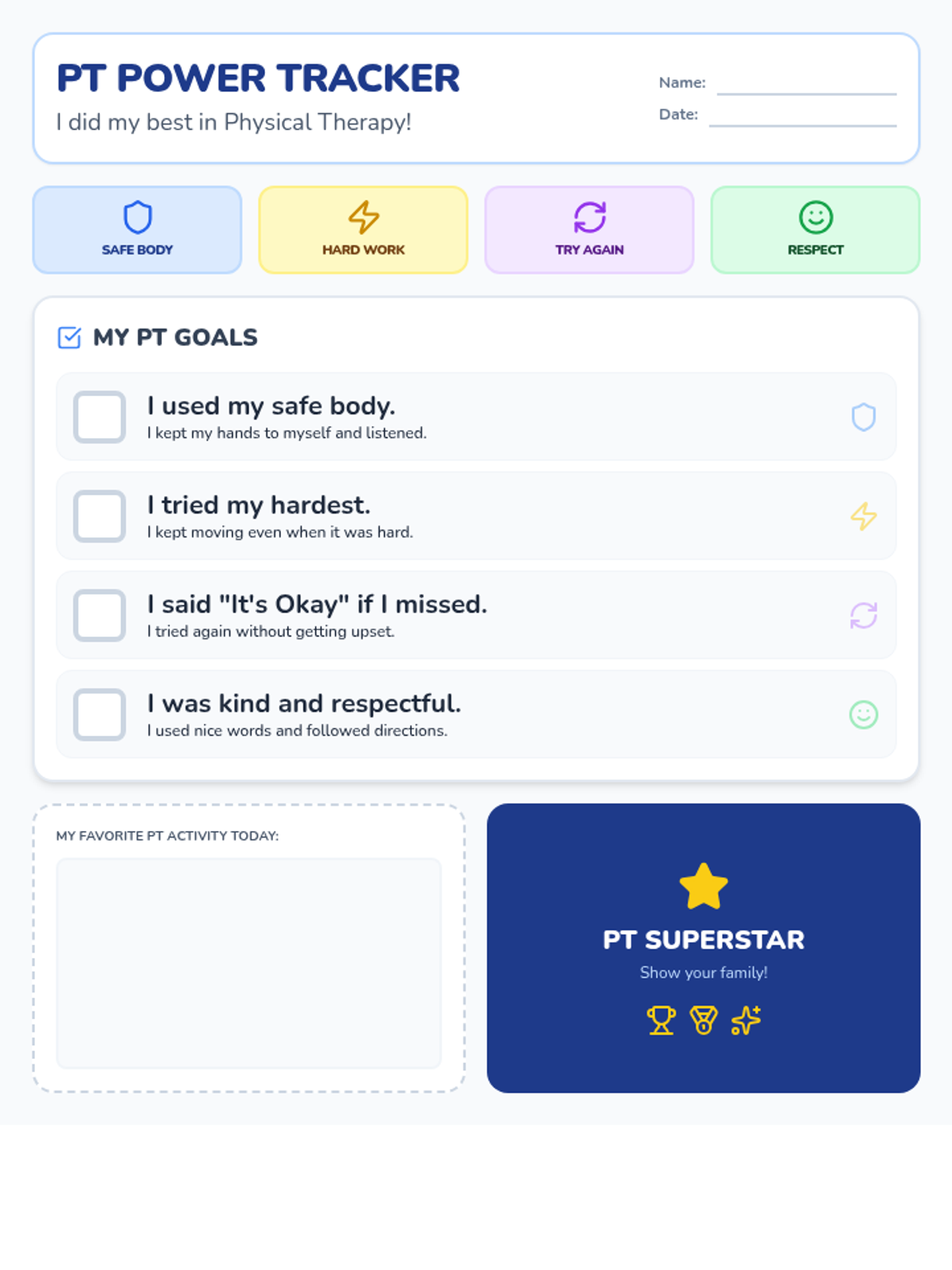
A series of visual-heavy slides and a supporting visual guide to help students understand and practice positive behaviors during physical therapy sessions.
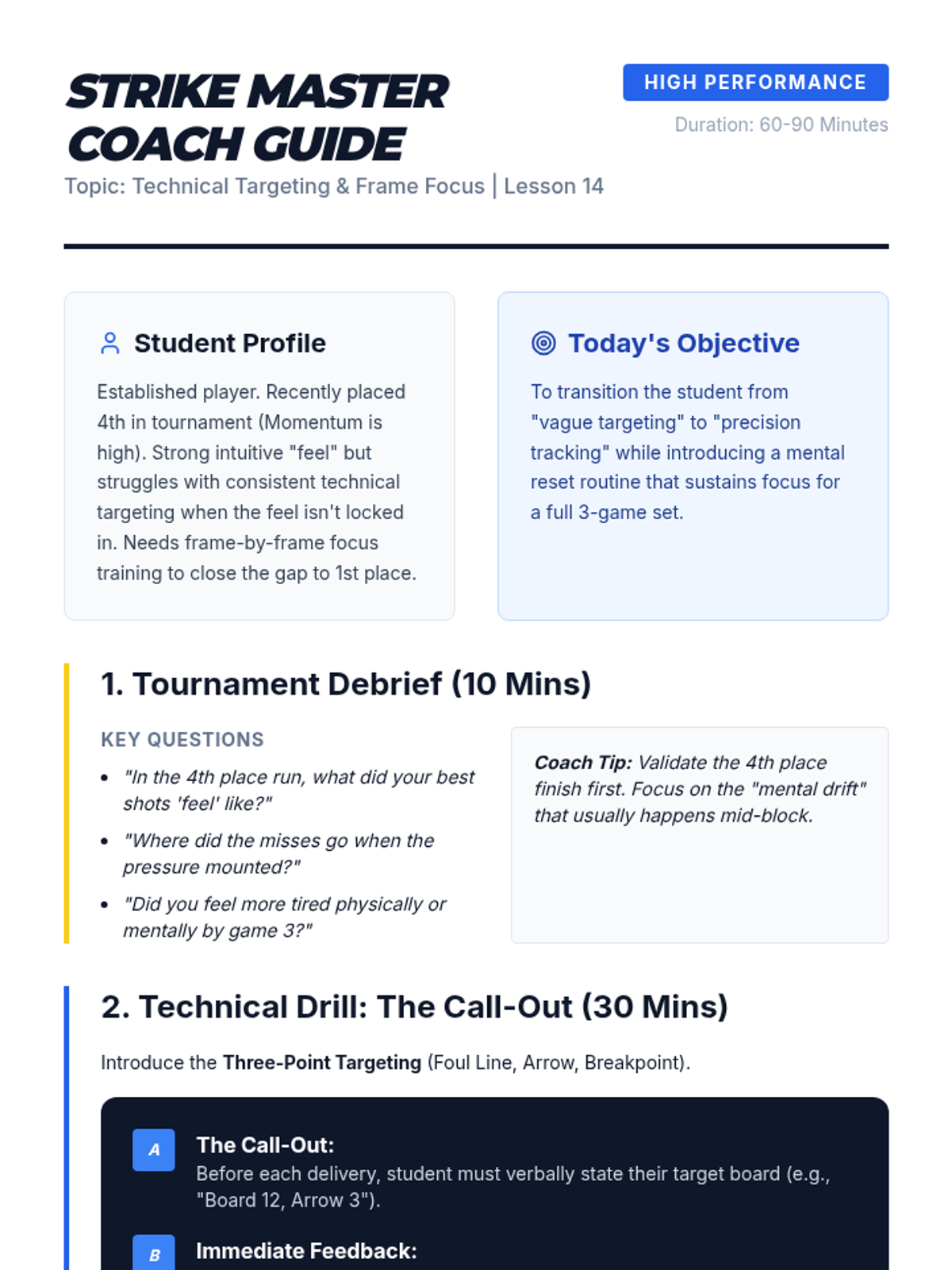
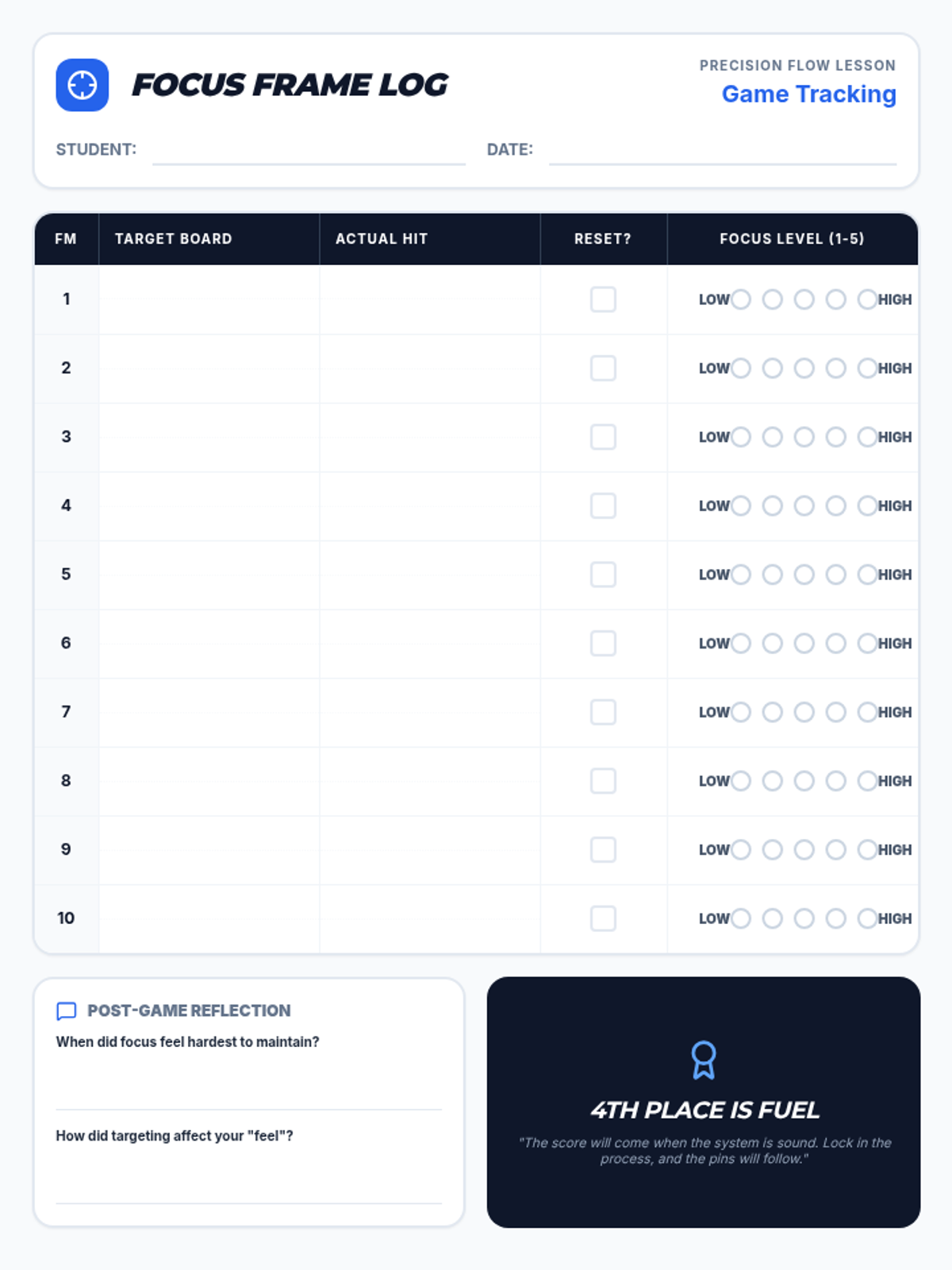
A high-performance bowling lesson designed to bridge the gap between intuitive 'feel' and technical precision targeting. Focused on maintaining mental stamina and frame-by-frame consistency for competitive athletes.
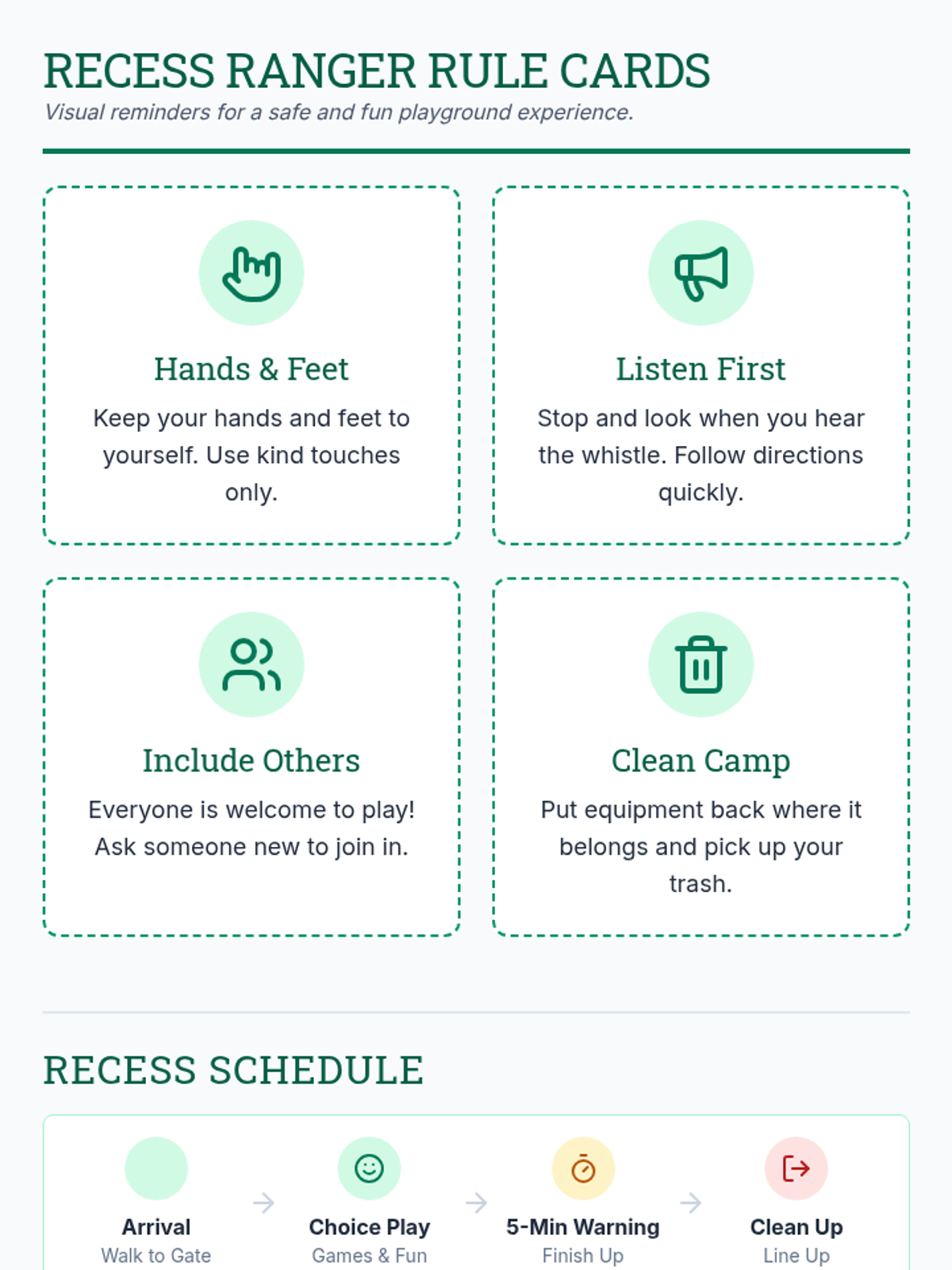
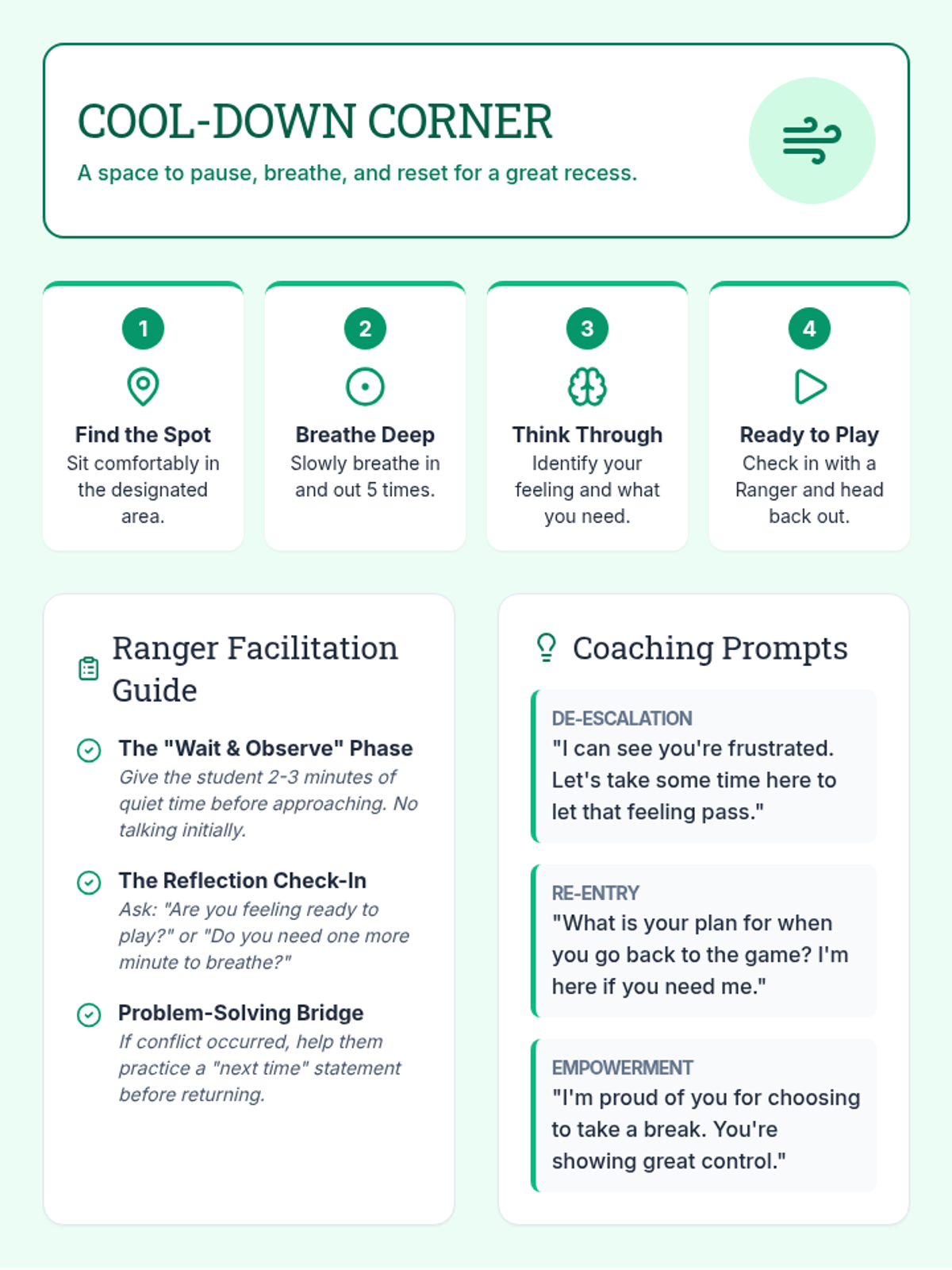
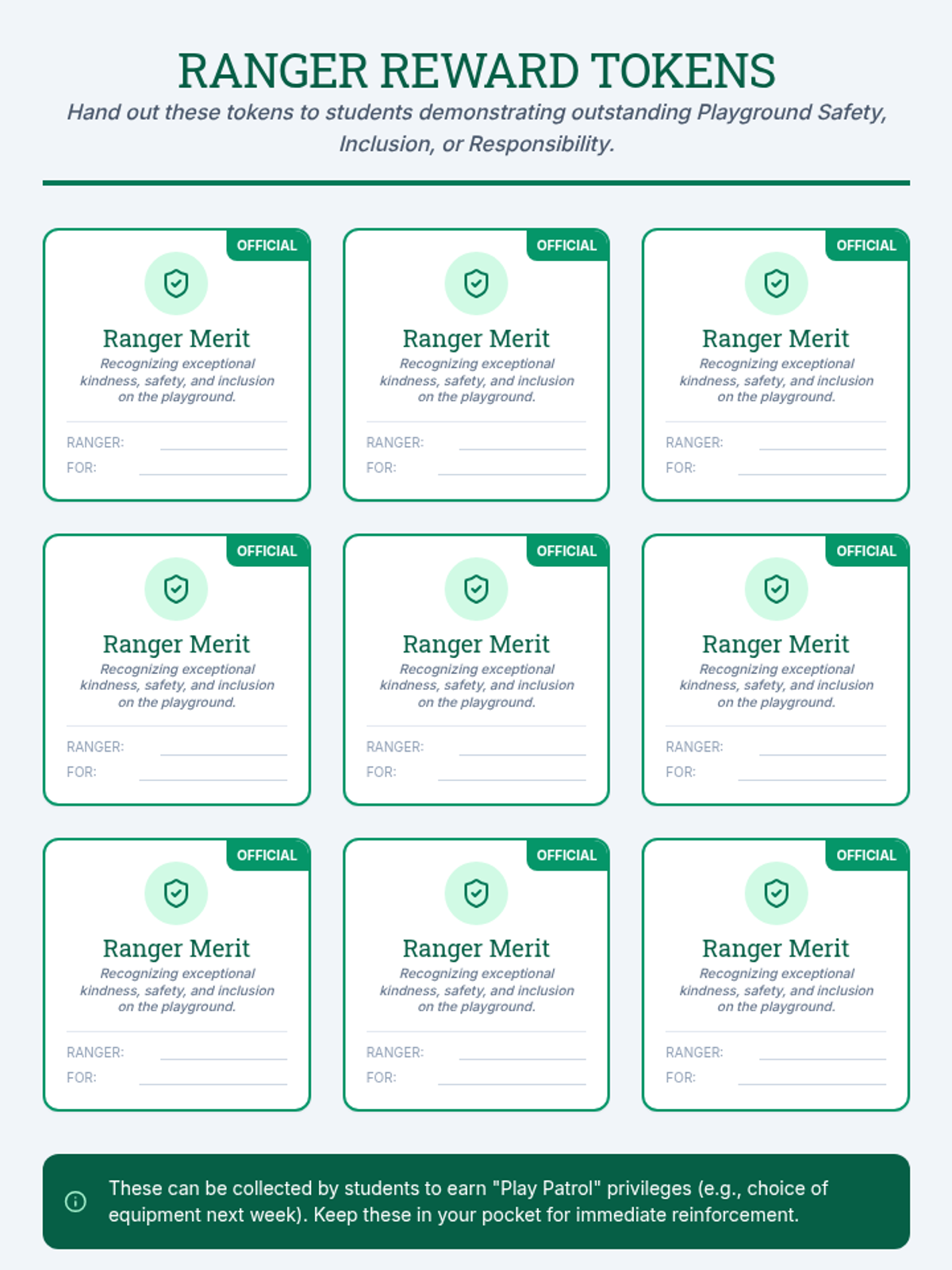
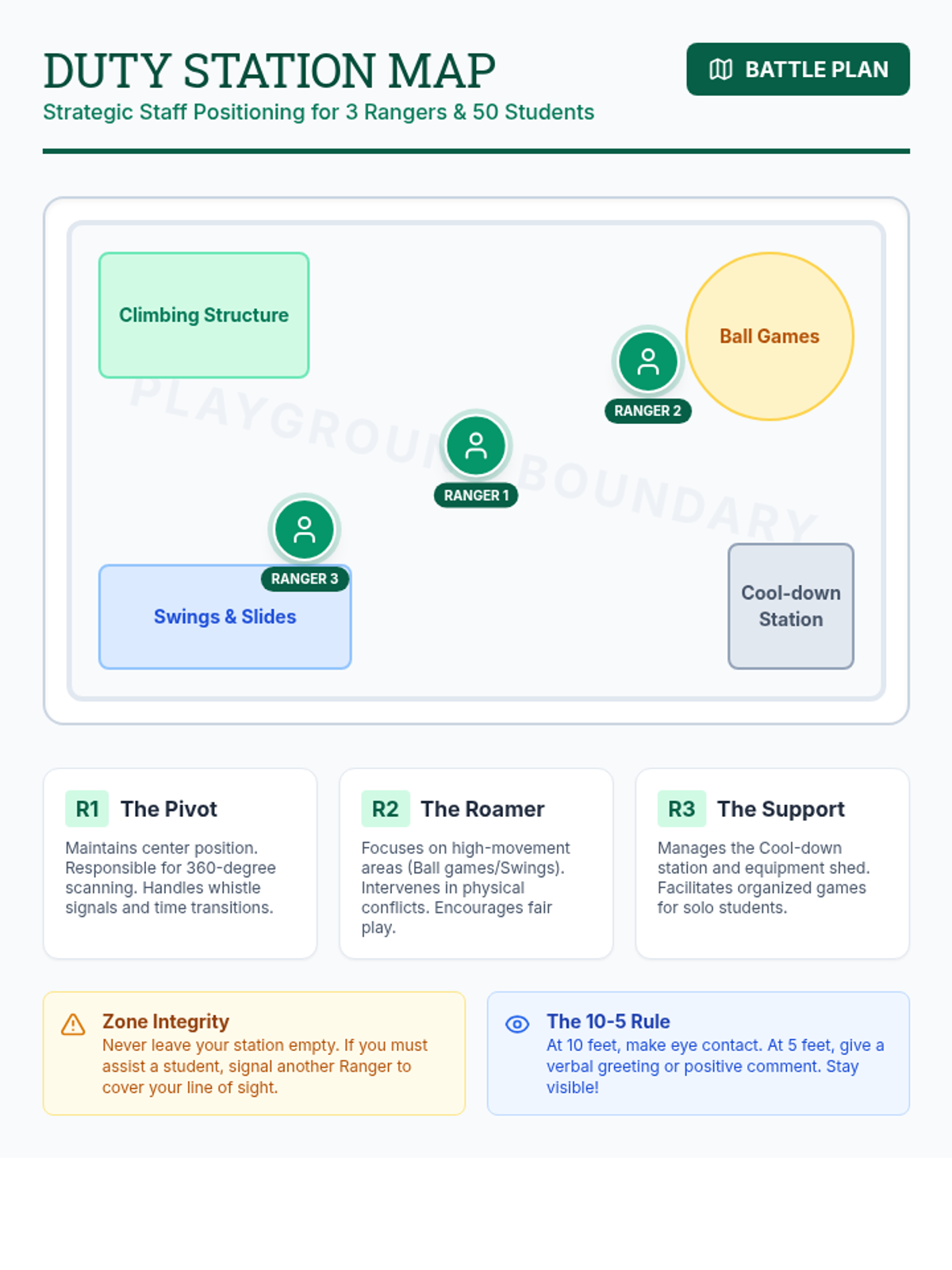
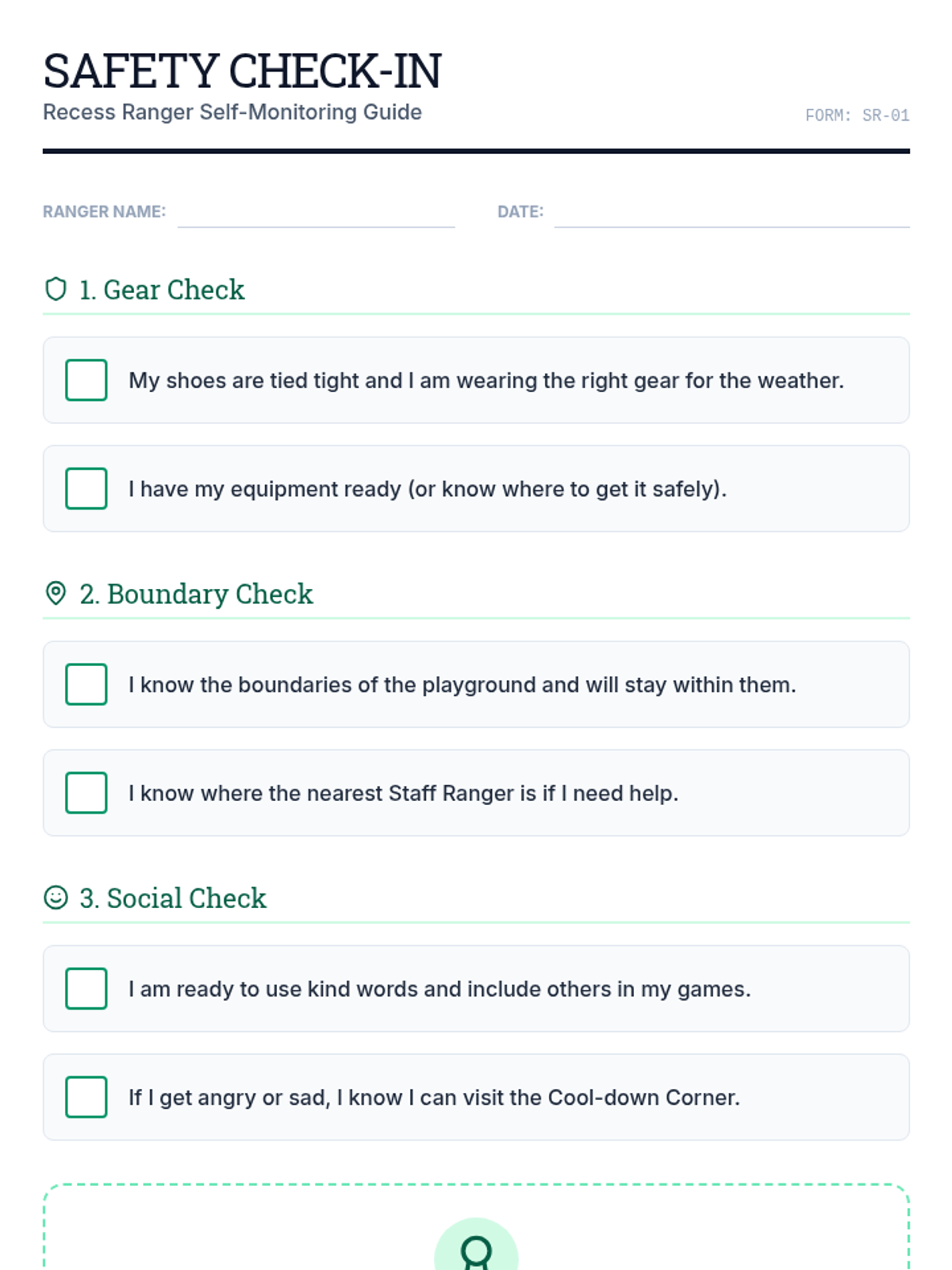
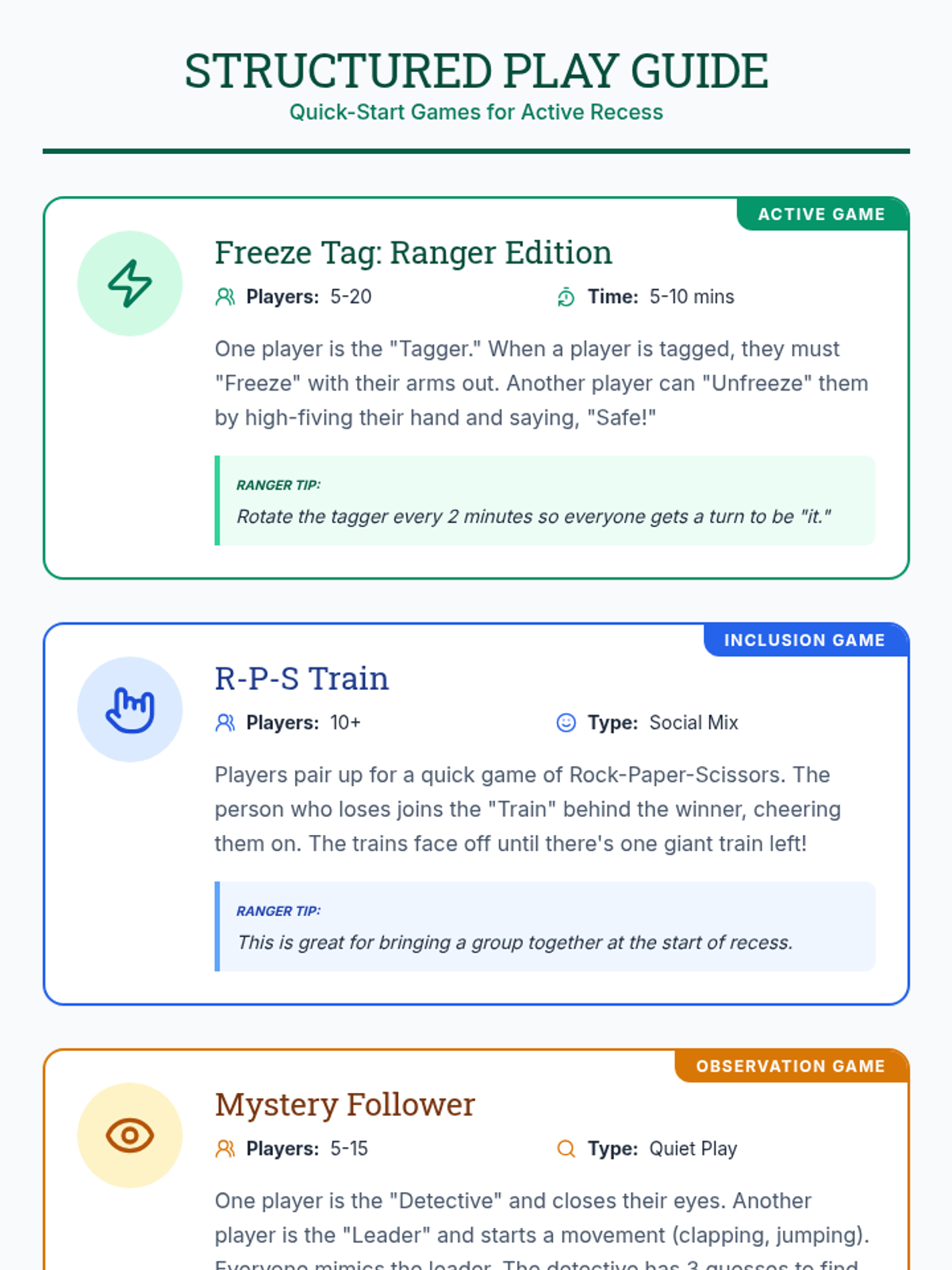
A comprehensive management system for outdoor recess, designed for 3 staff members overseeing 50 students. Includes visual supports, safety protocols, and structured play guides.
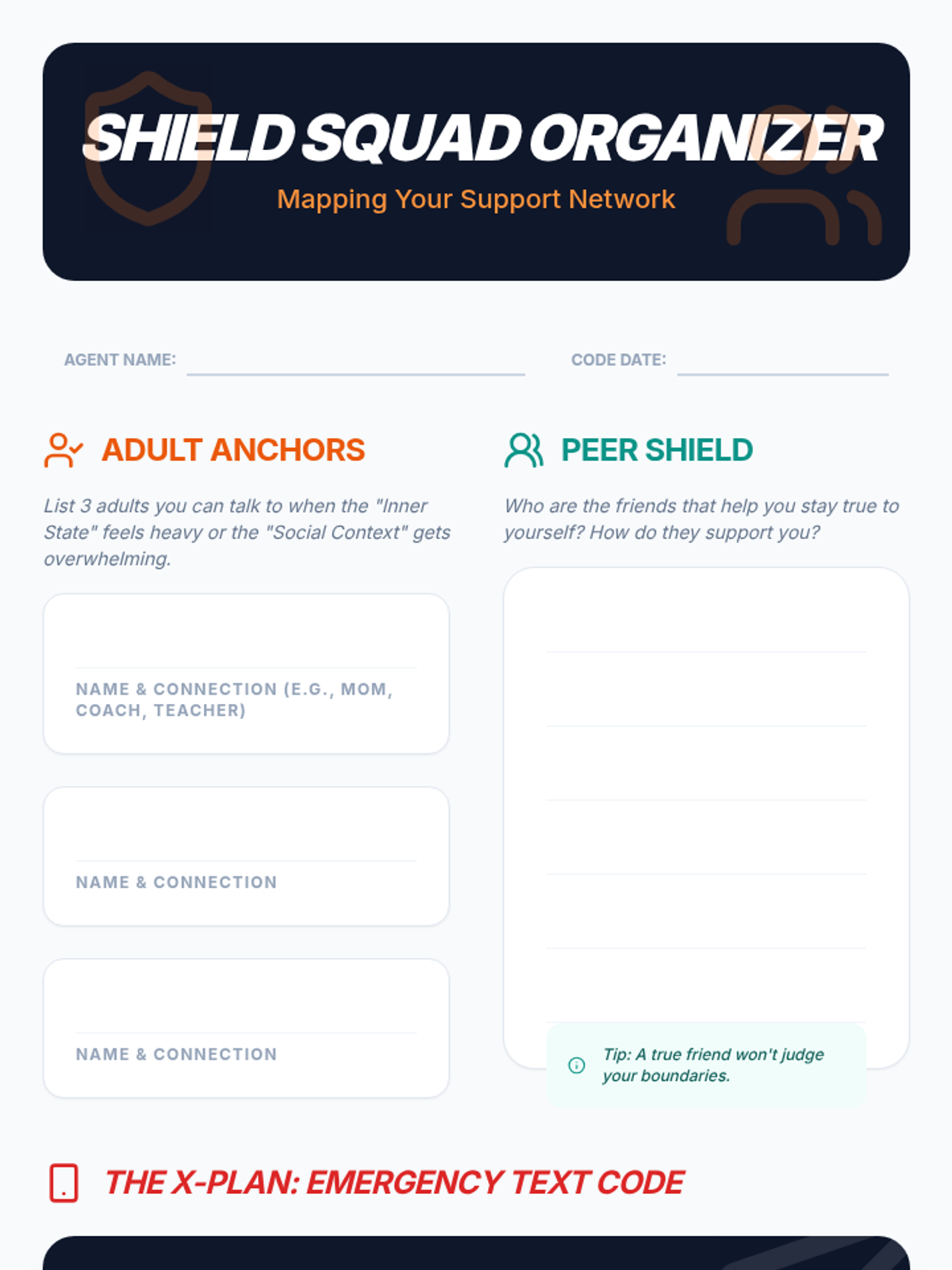
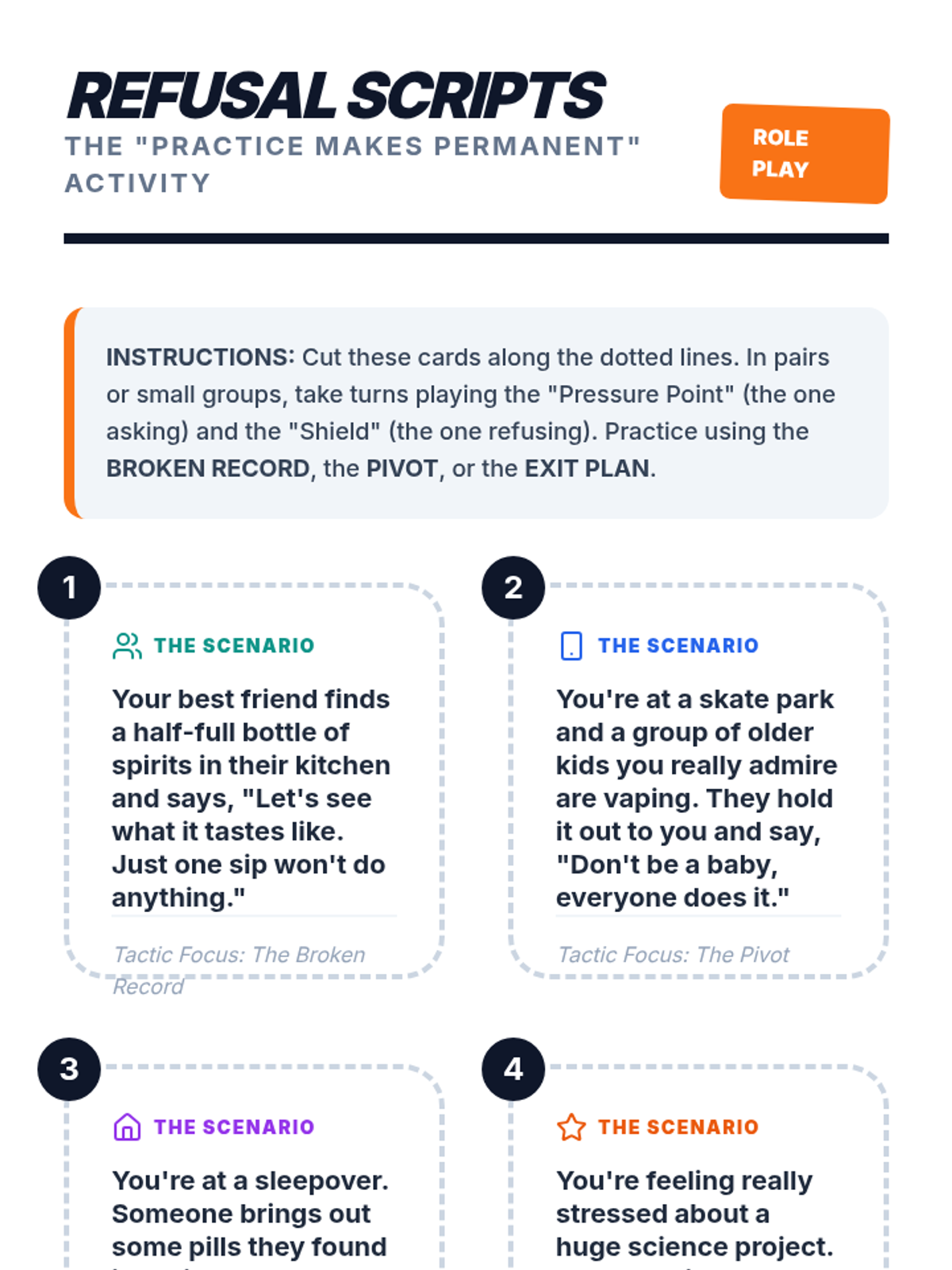
This lesson focuses on building practical refusal skills and strengthening the 'Shield Squad' (support systems). Students learn specific strategies to navigate high-pressure social contexts while acknowledging their inner feelings.
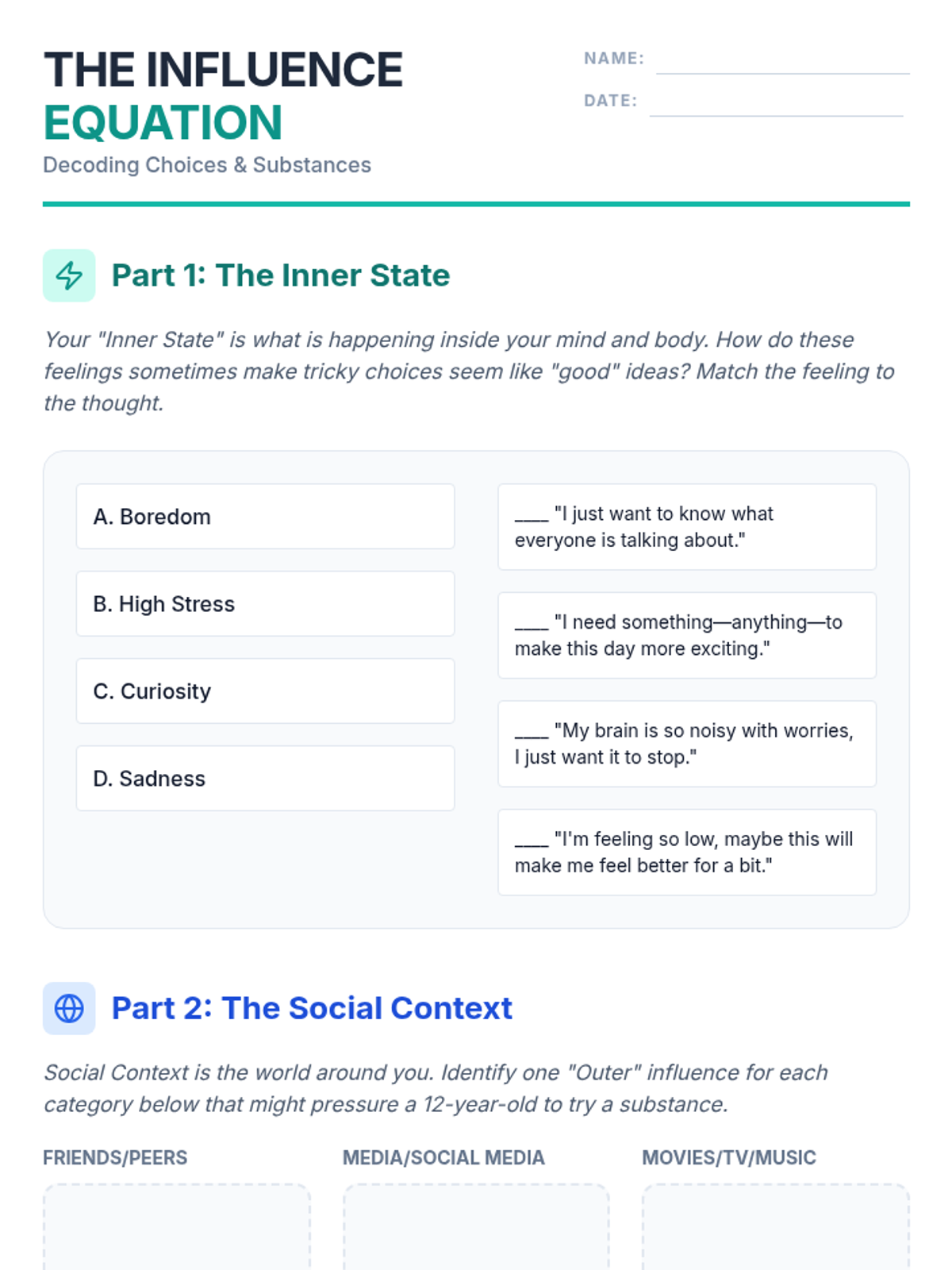
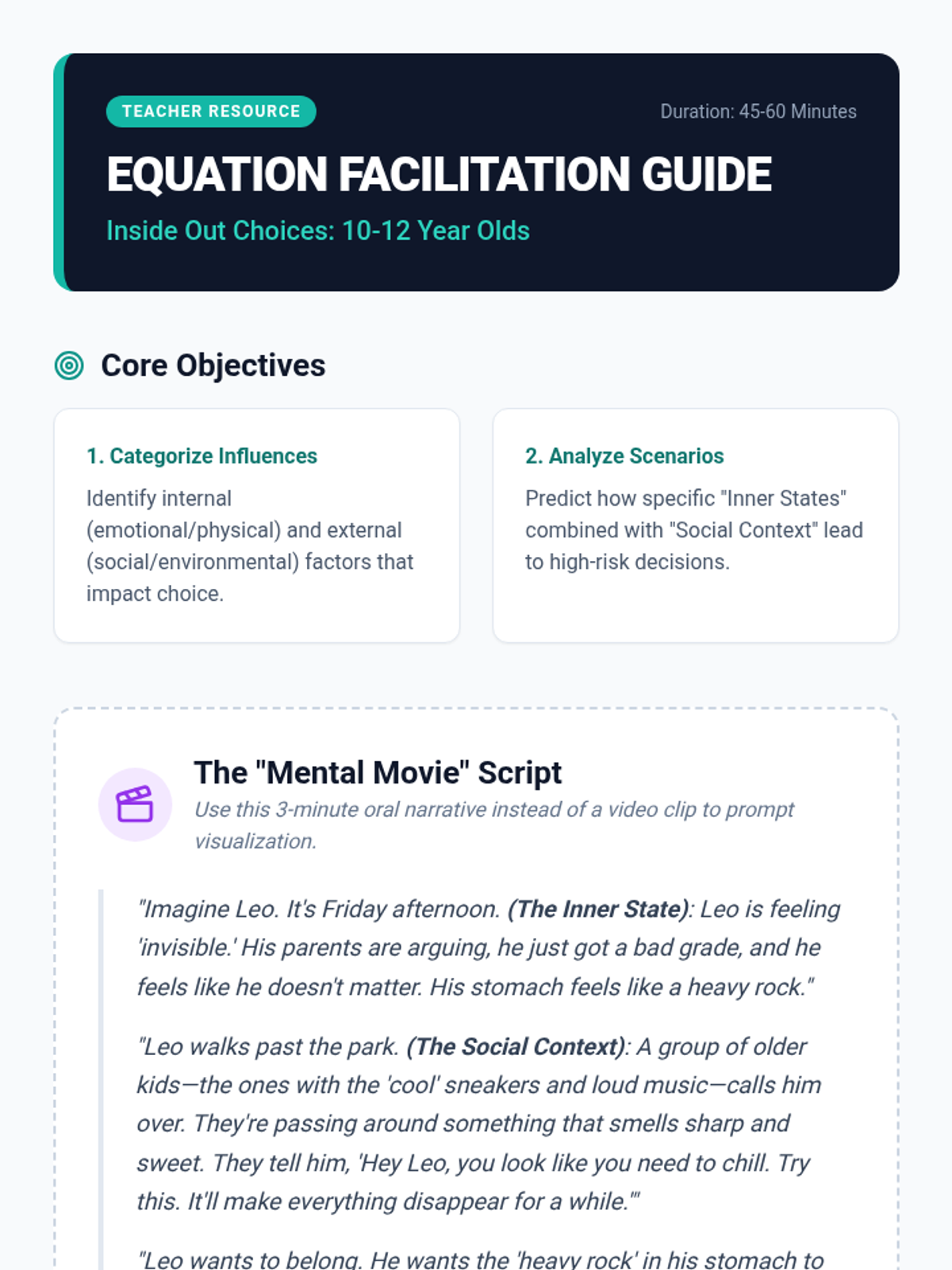
This lesson helps students identify the 'Inner State' (emotions, curiosity, stress) and 'Social Context' (peers, media, environment) that can lead to substance use. Students will develop awareness of these influences to make healthier choices.
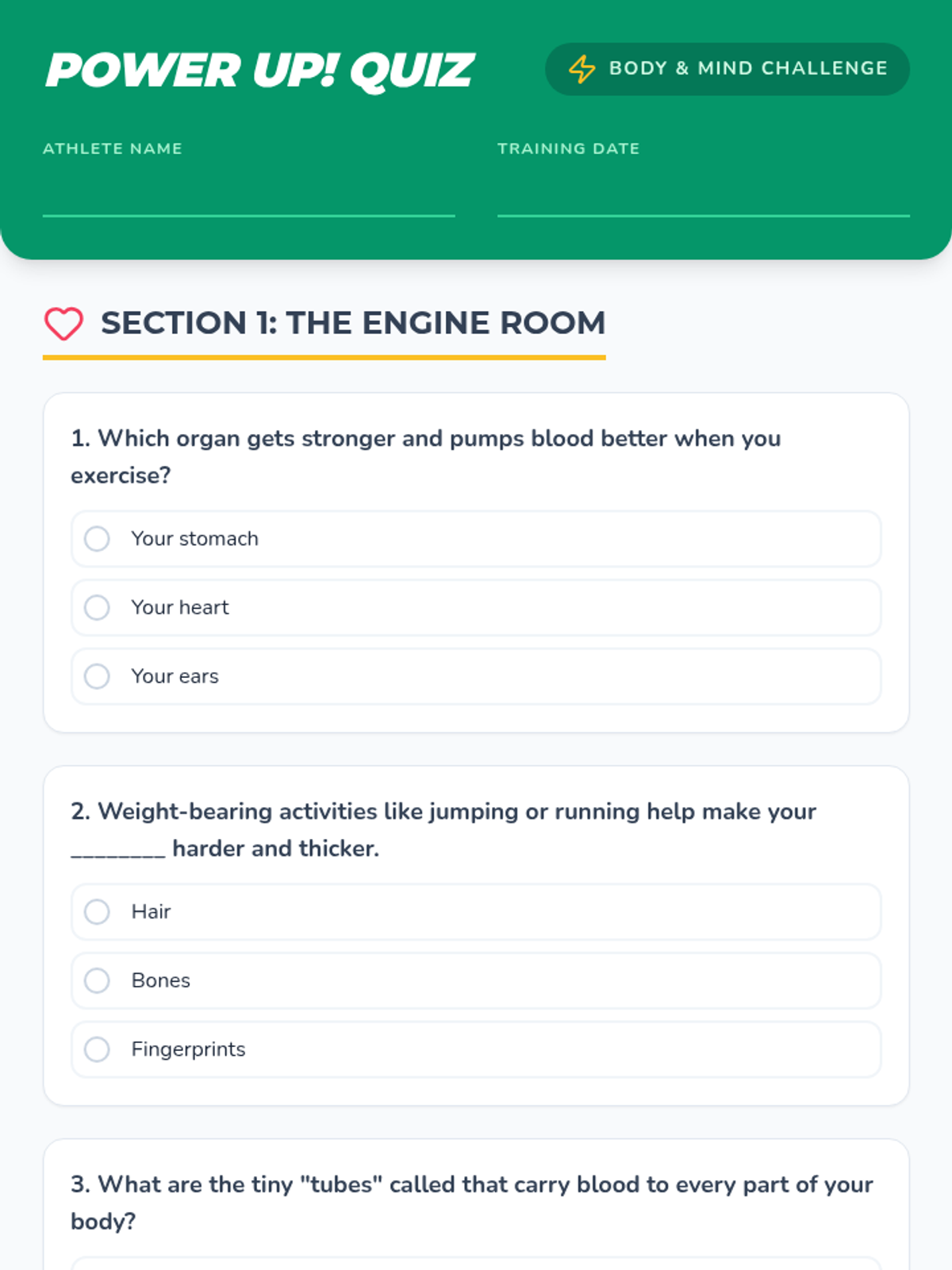
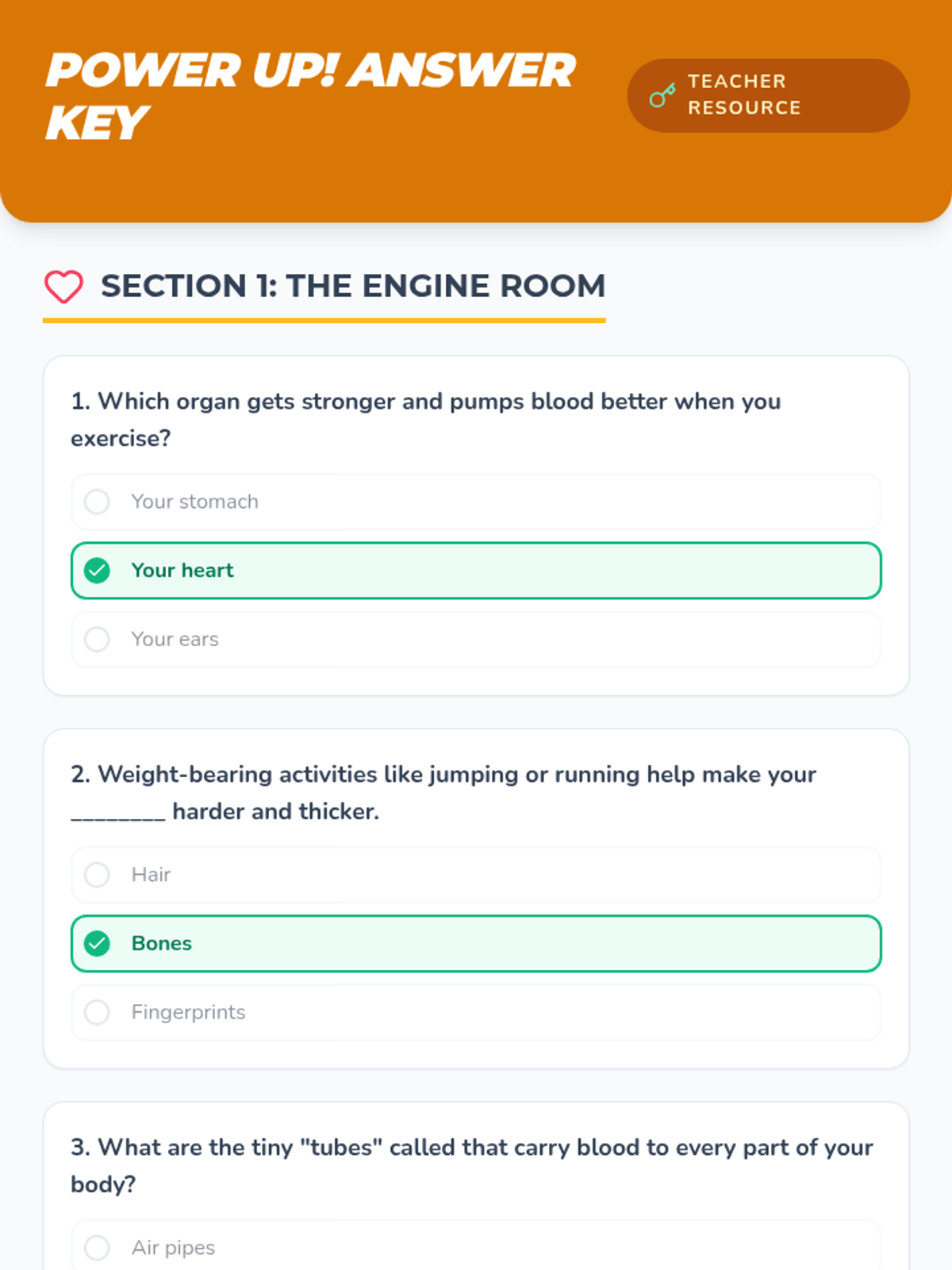
A fun and engaging assessment focused on how physical activity strengthens the body, improves mental health, and supports heart and bone health.
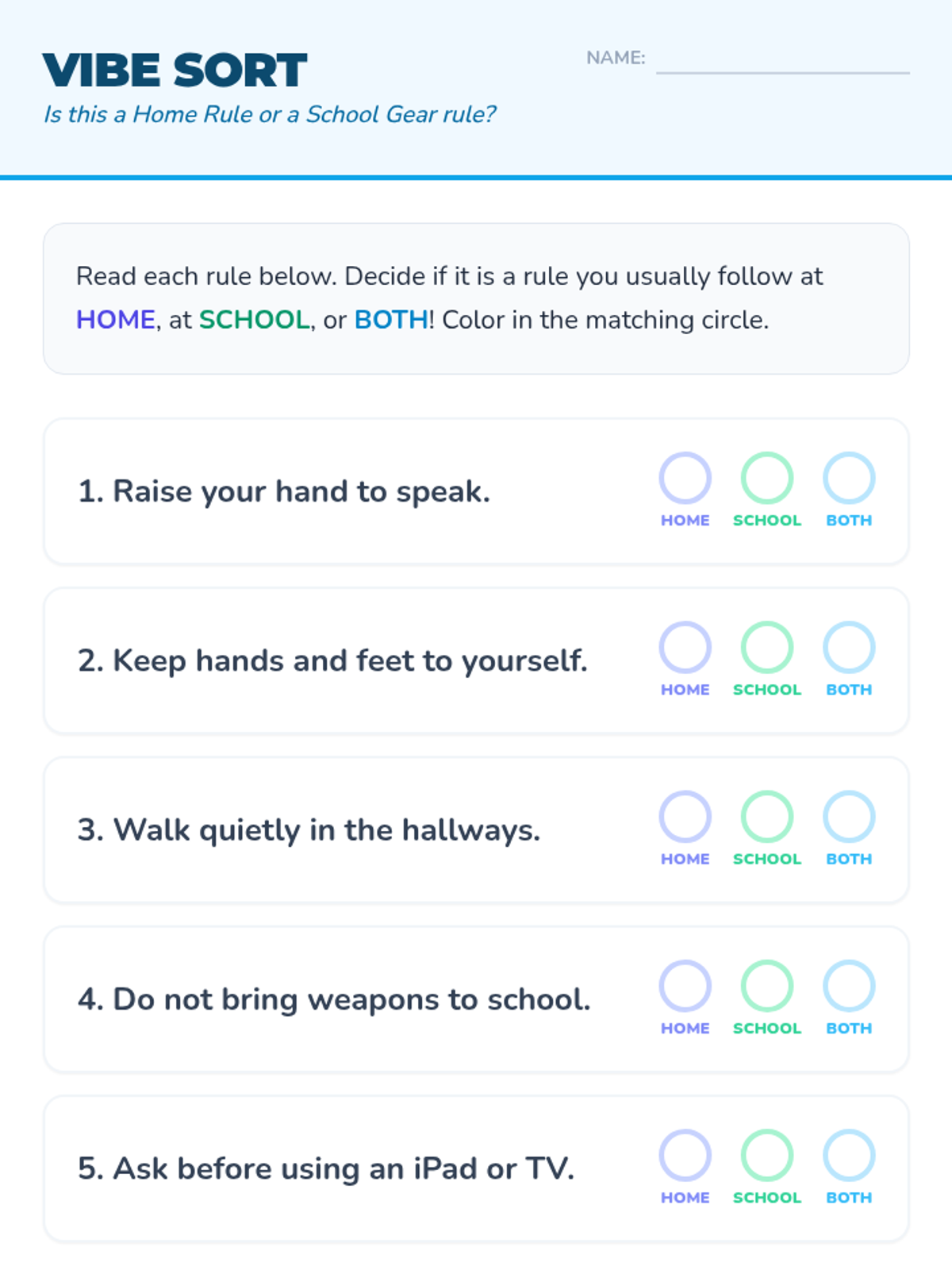
Students learn to navigate different social environments by understanding that rules and expectations change based on the setting (home vs. school).
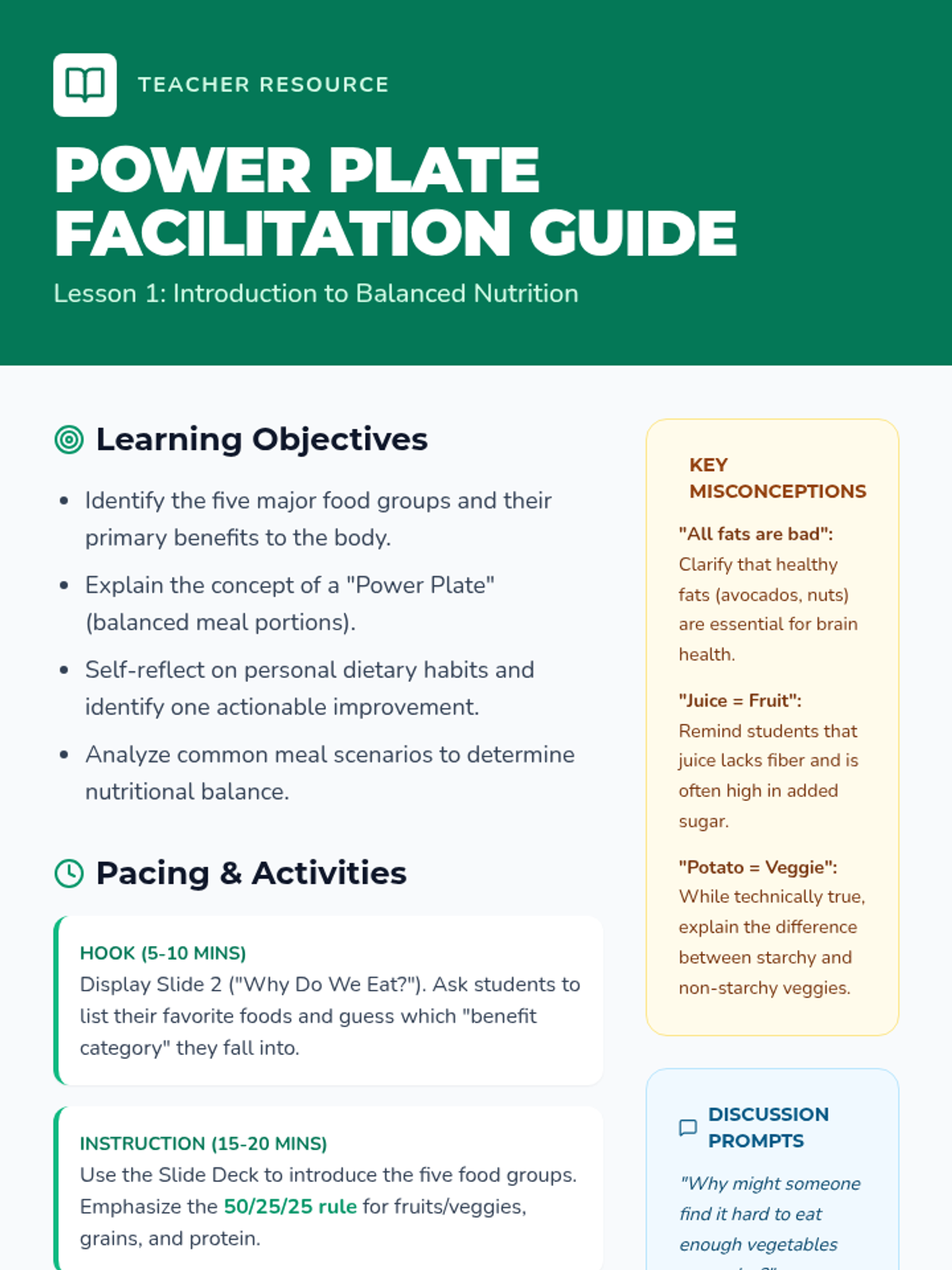
Students explore the five food groups, understand the importance of balanced nutrition, and learn how to build a healthy plate.
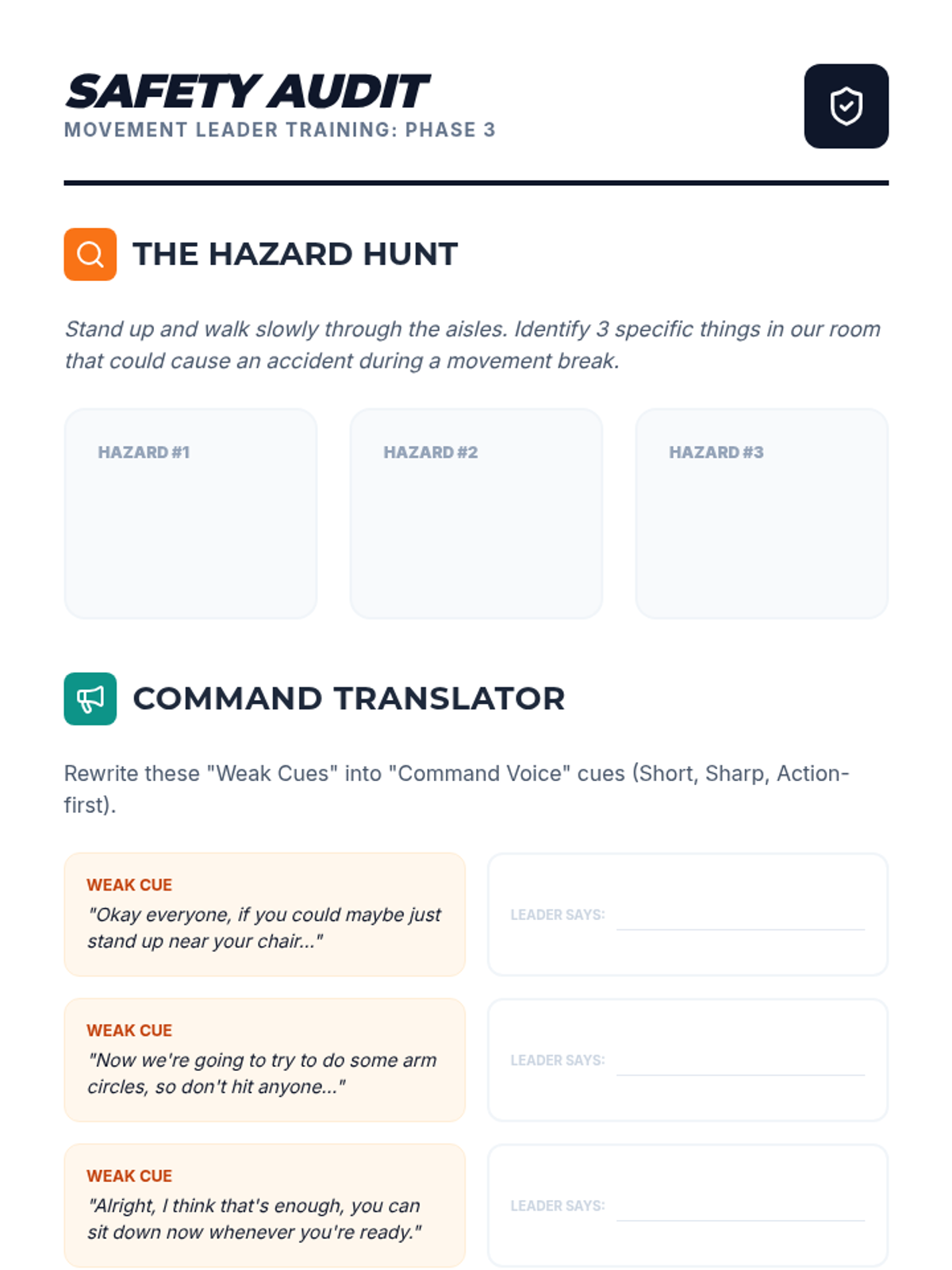
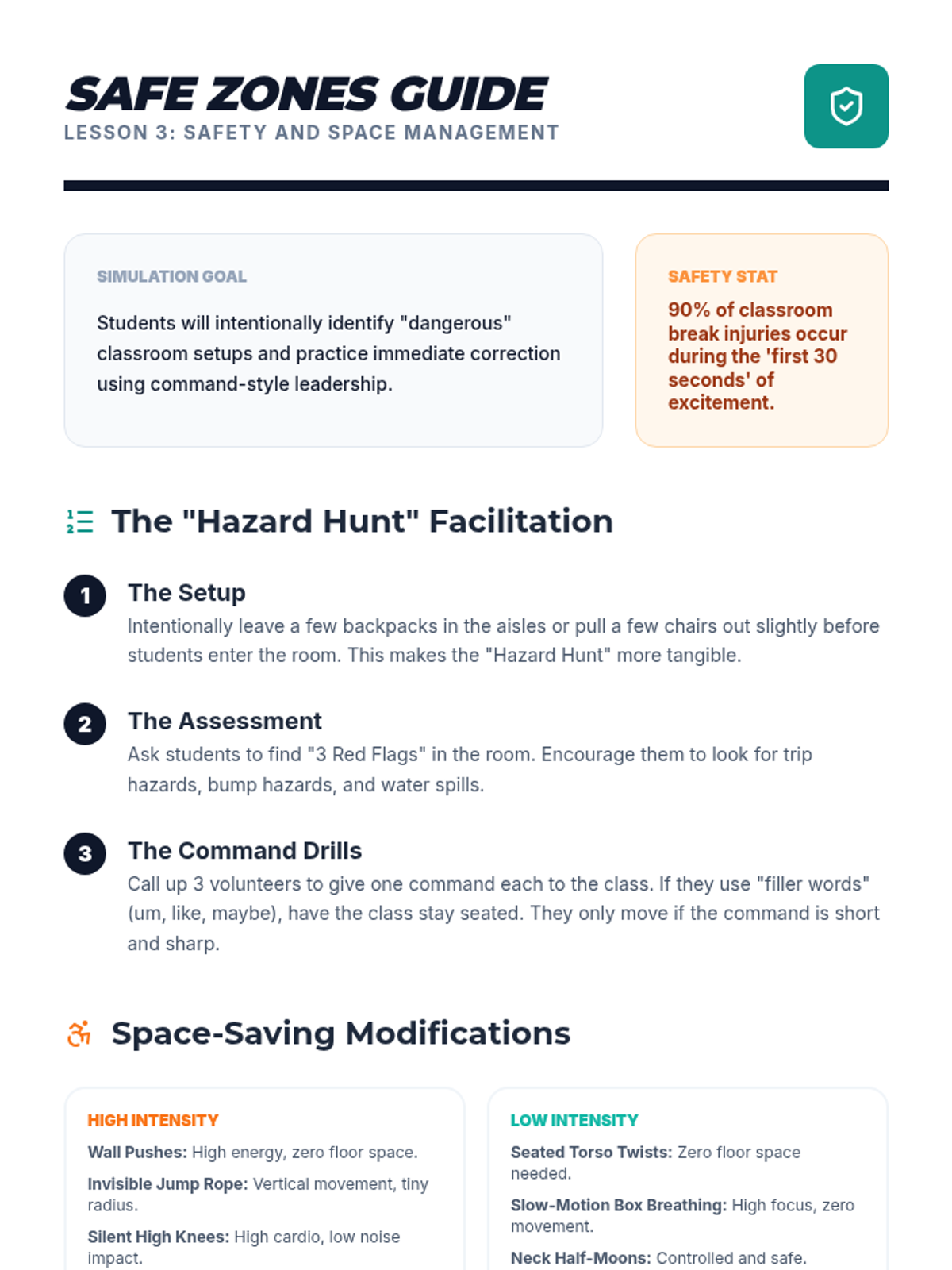
Students assess classroom space for safety and practice 'command-style' directions to manage 25 bodies safely in a confined area.
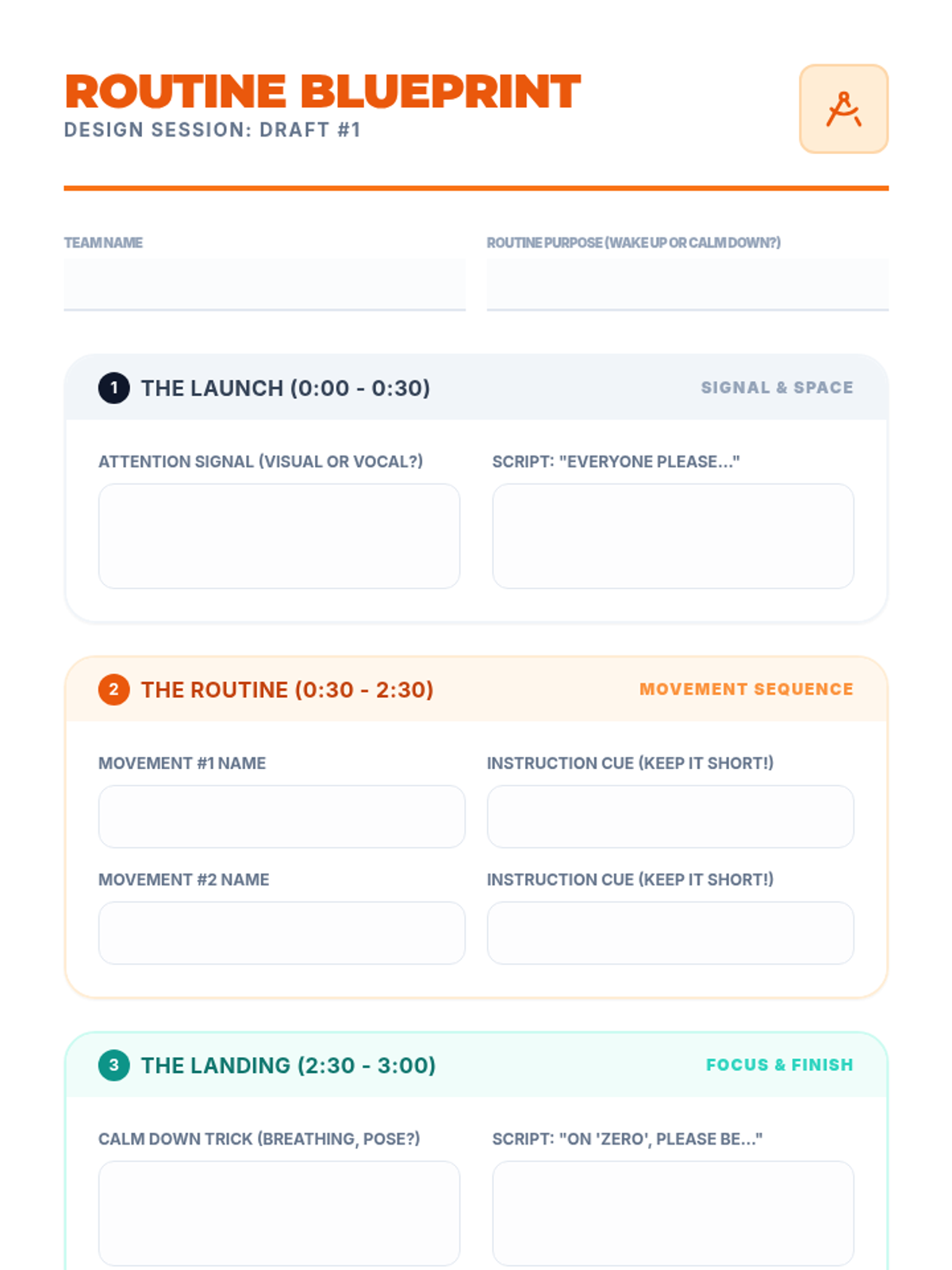
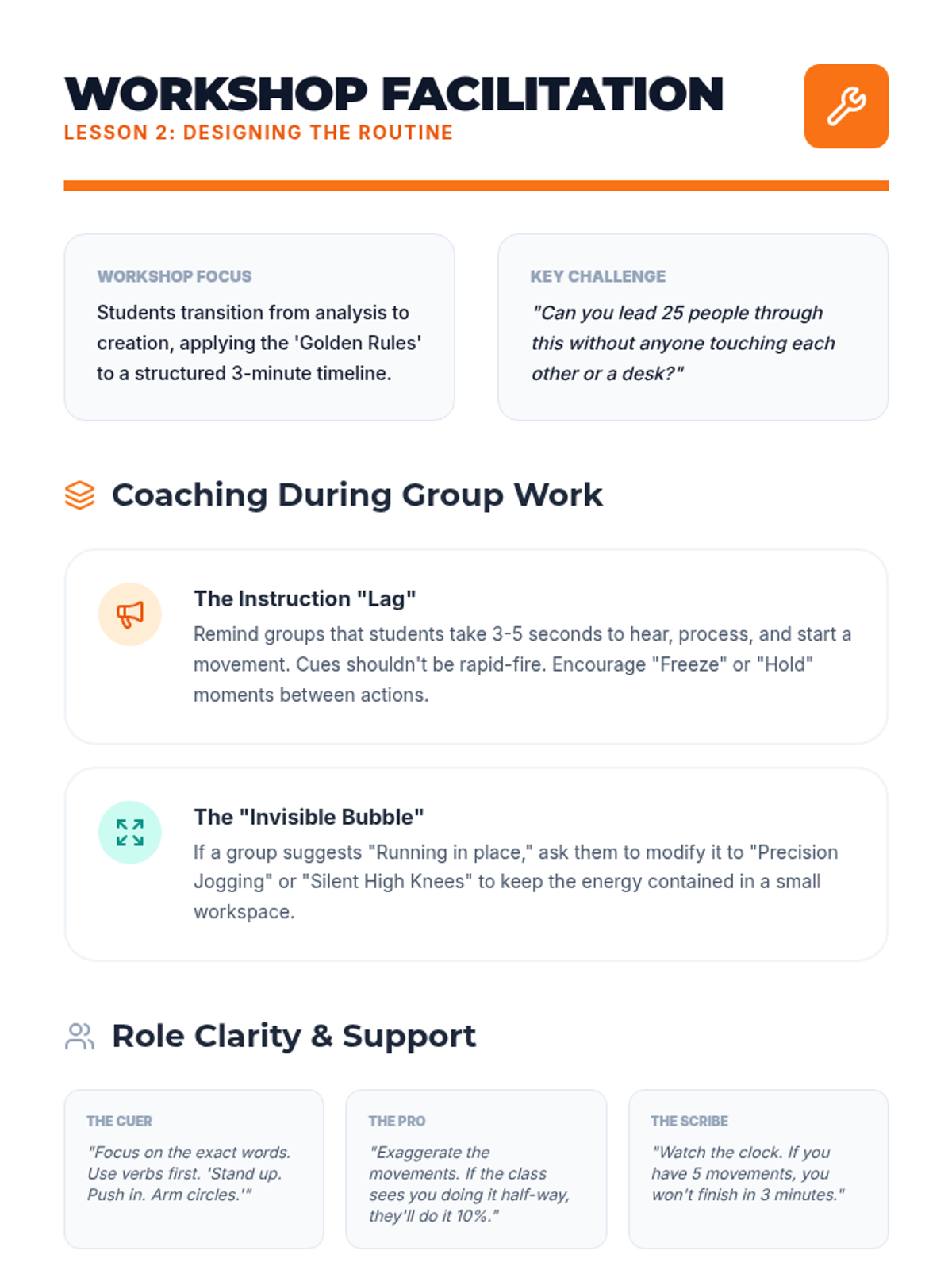
Small groups draft 3-minute movement sequences tailored to specific classroom needs, such as waking up or calming down.
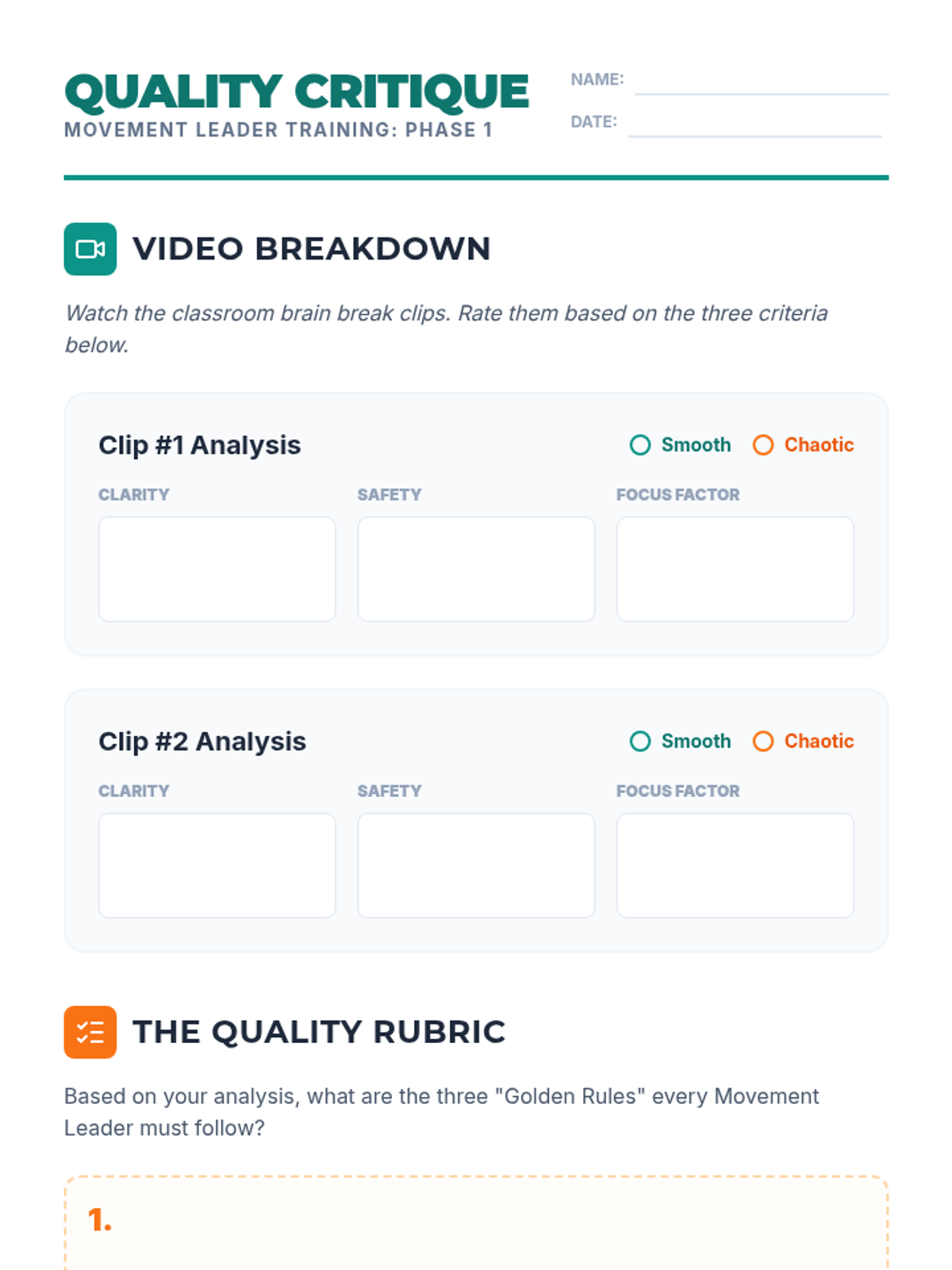
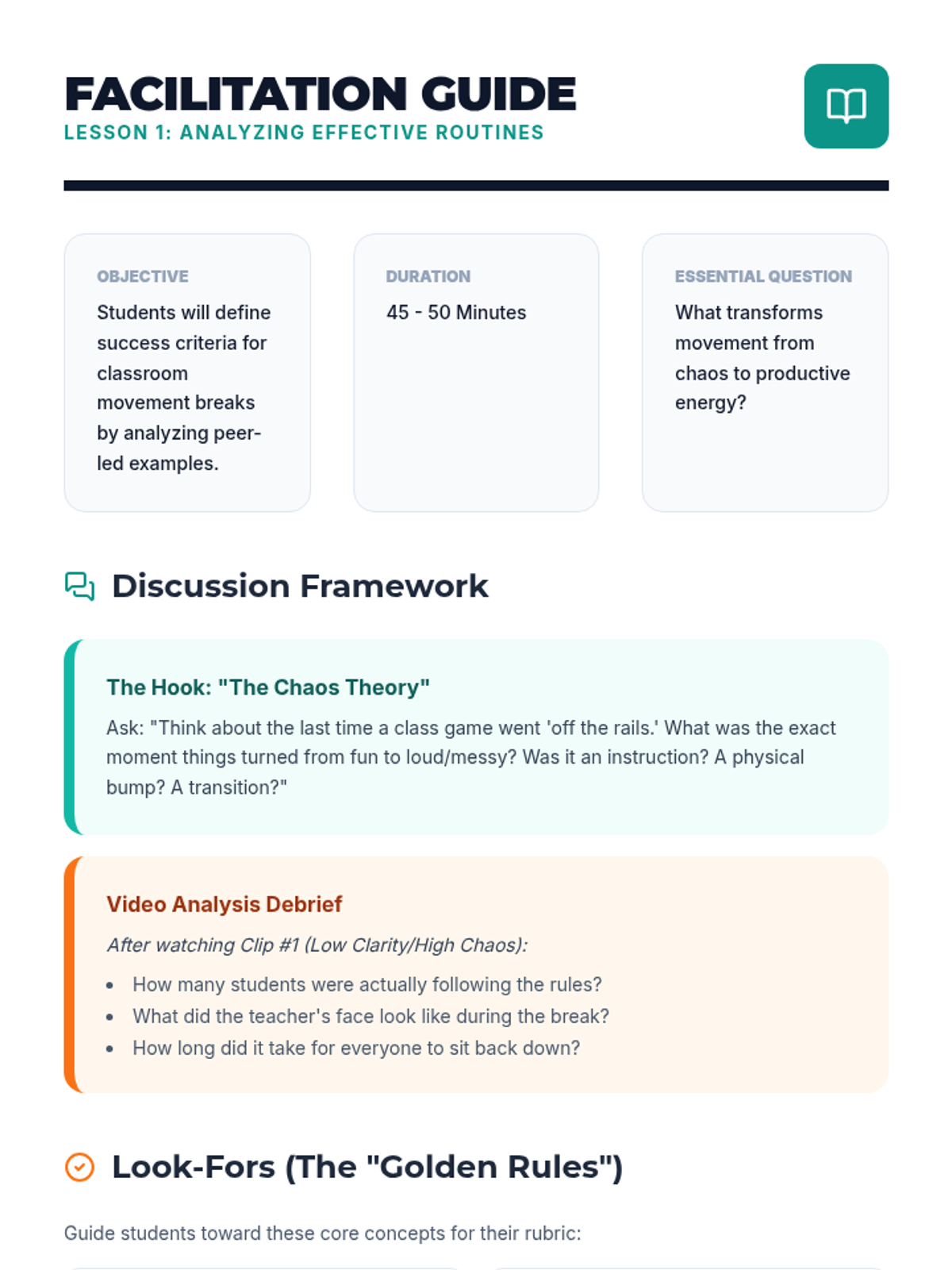
Students critique brain break videos to identify what makes a routine successful versus chaotic, culminating in a co-created 'Quality Break Rubric'.
Students compile their favorite strategies into a personal 'Wellness Toolkit' and plan for future challenges.
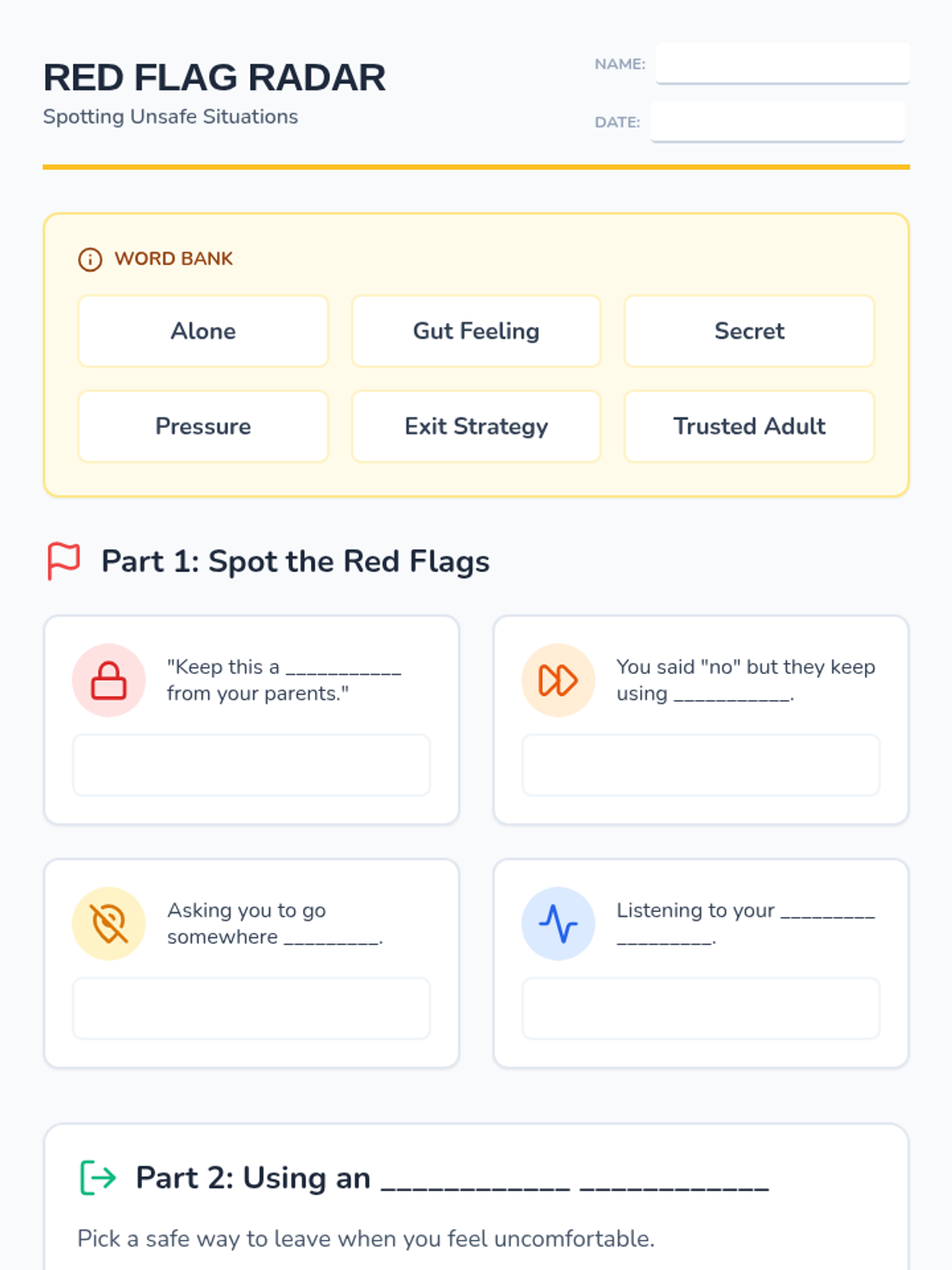
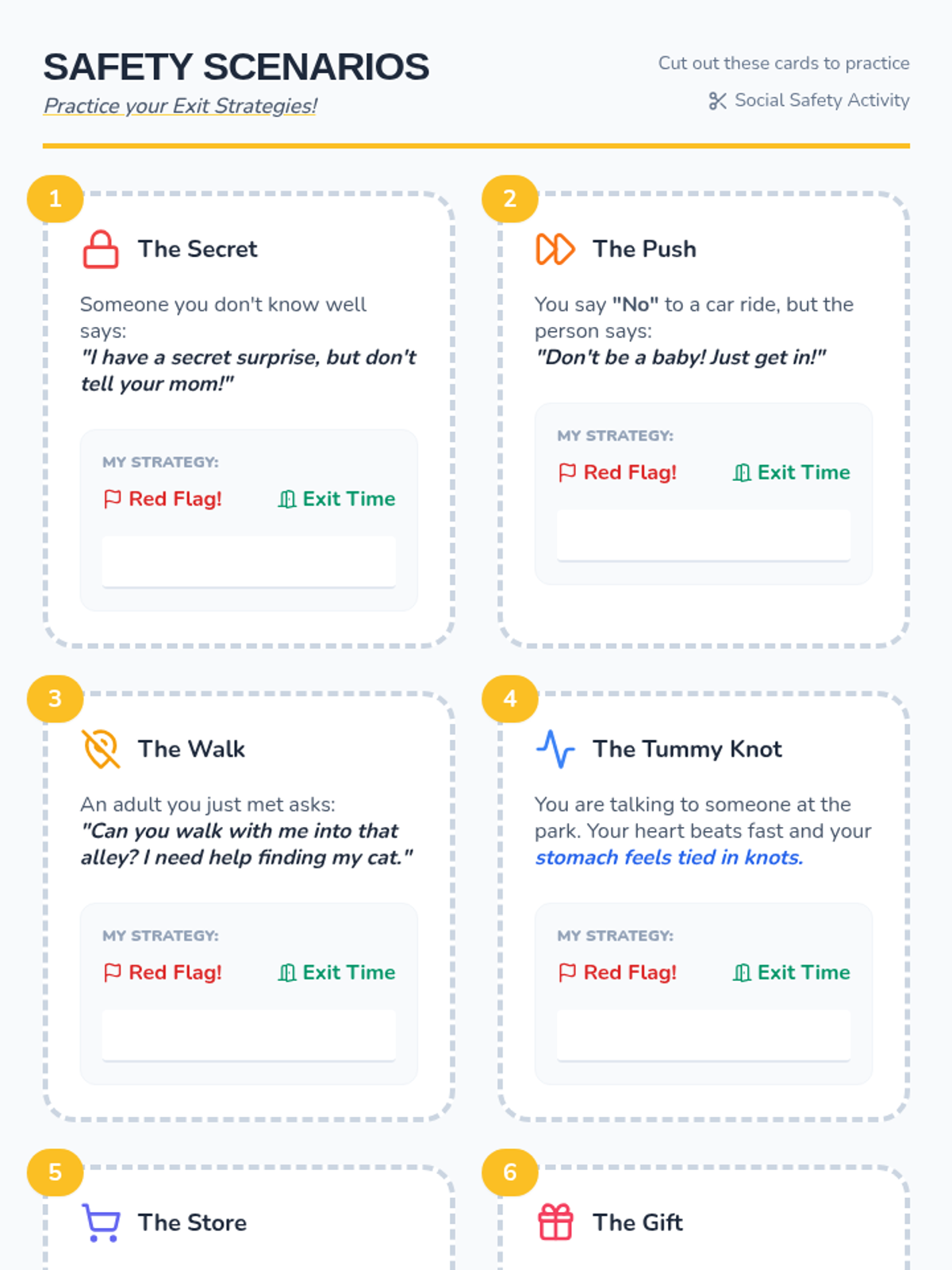
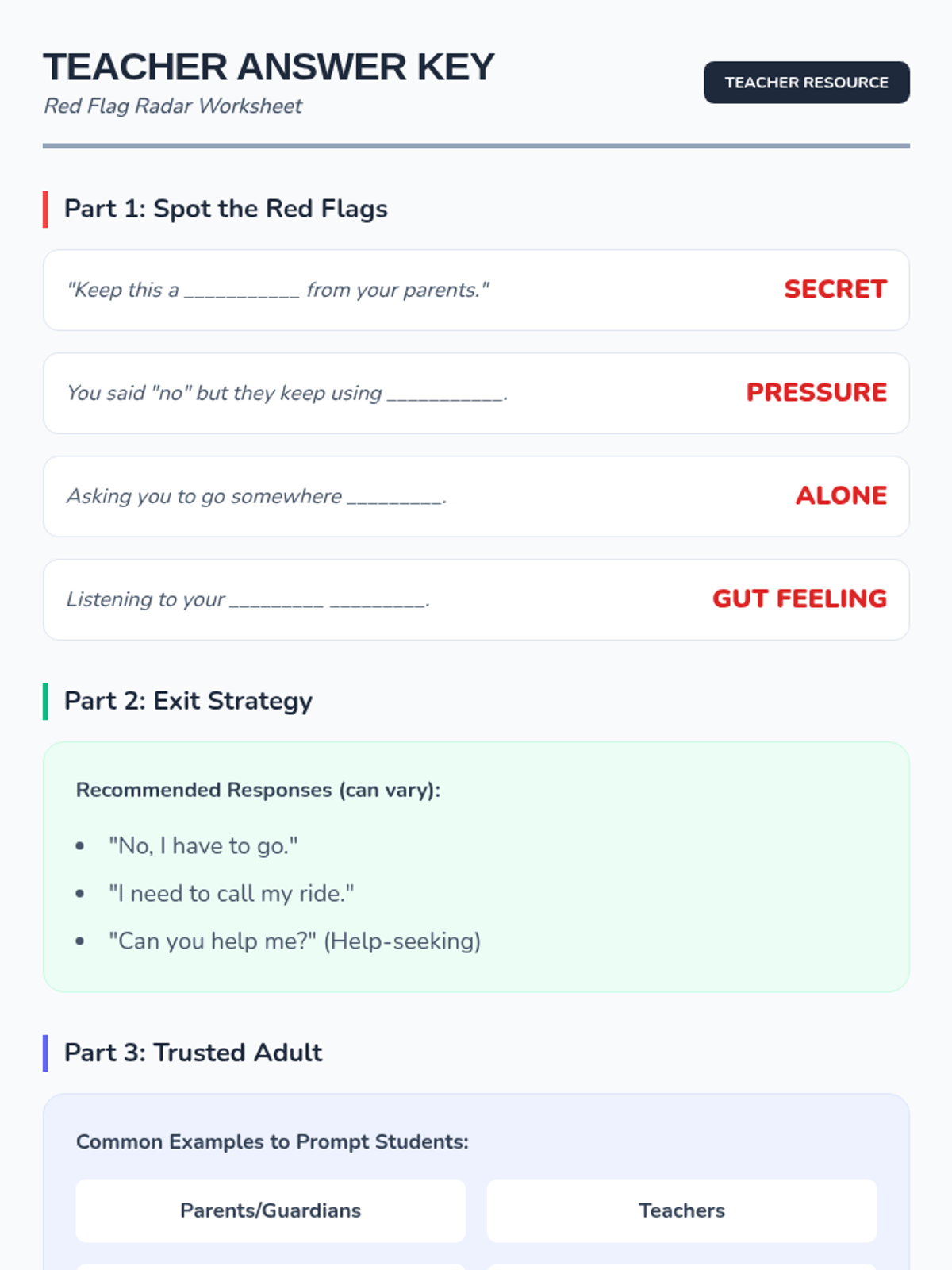
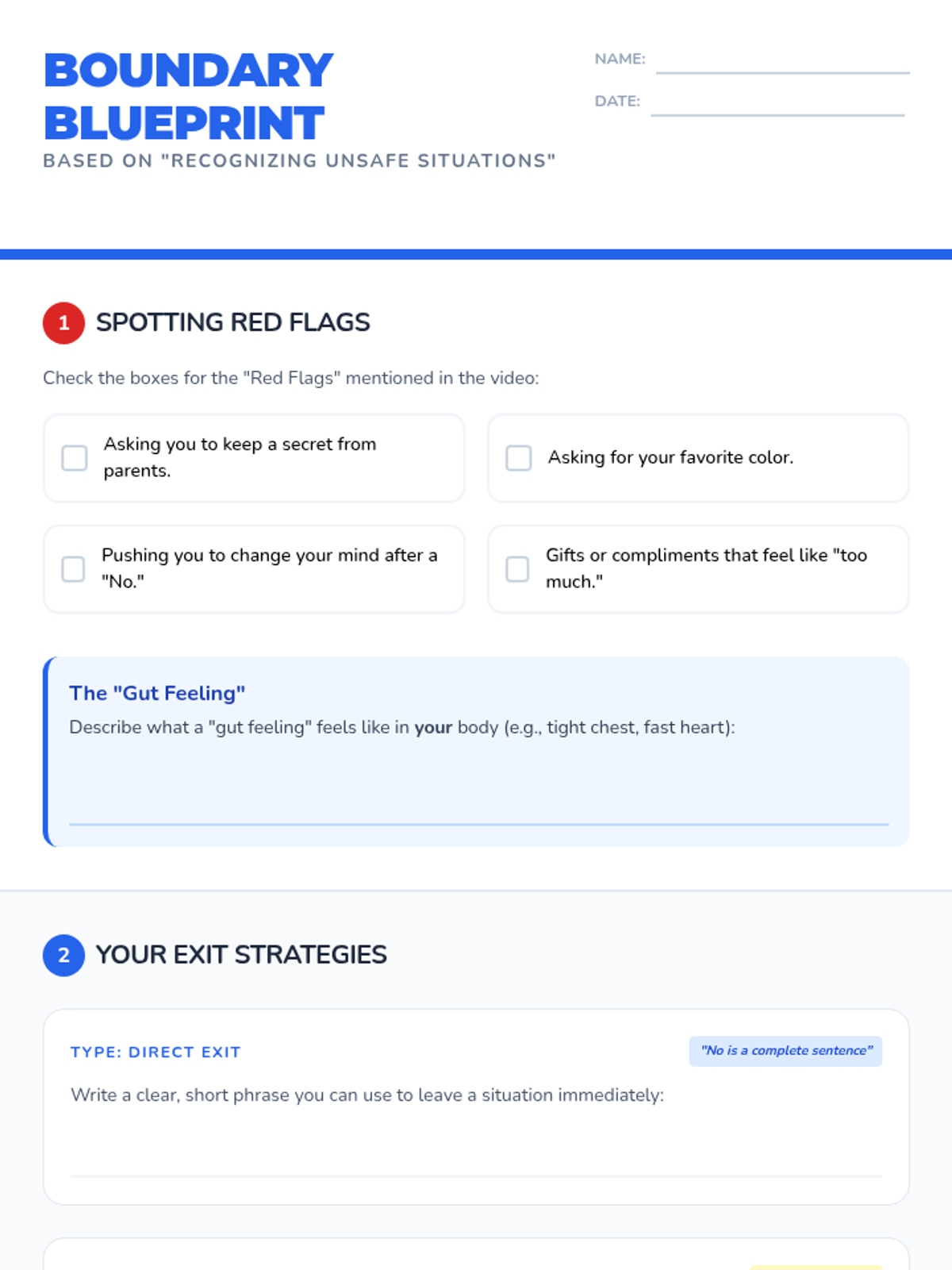
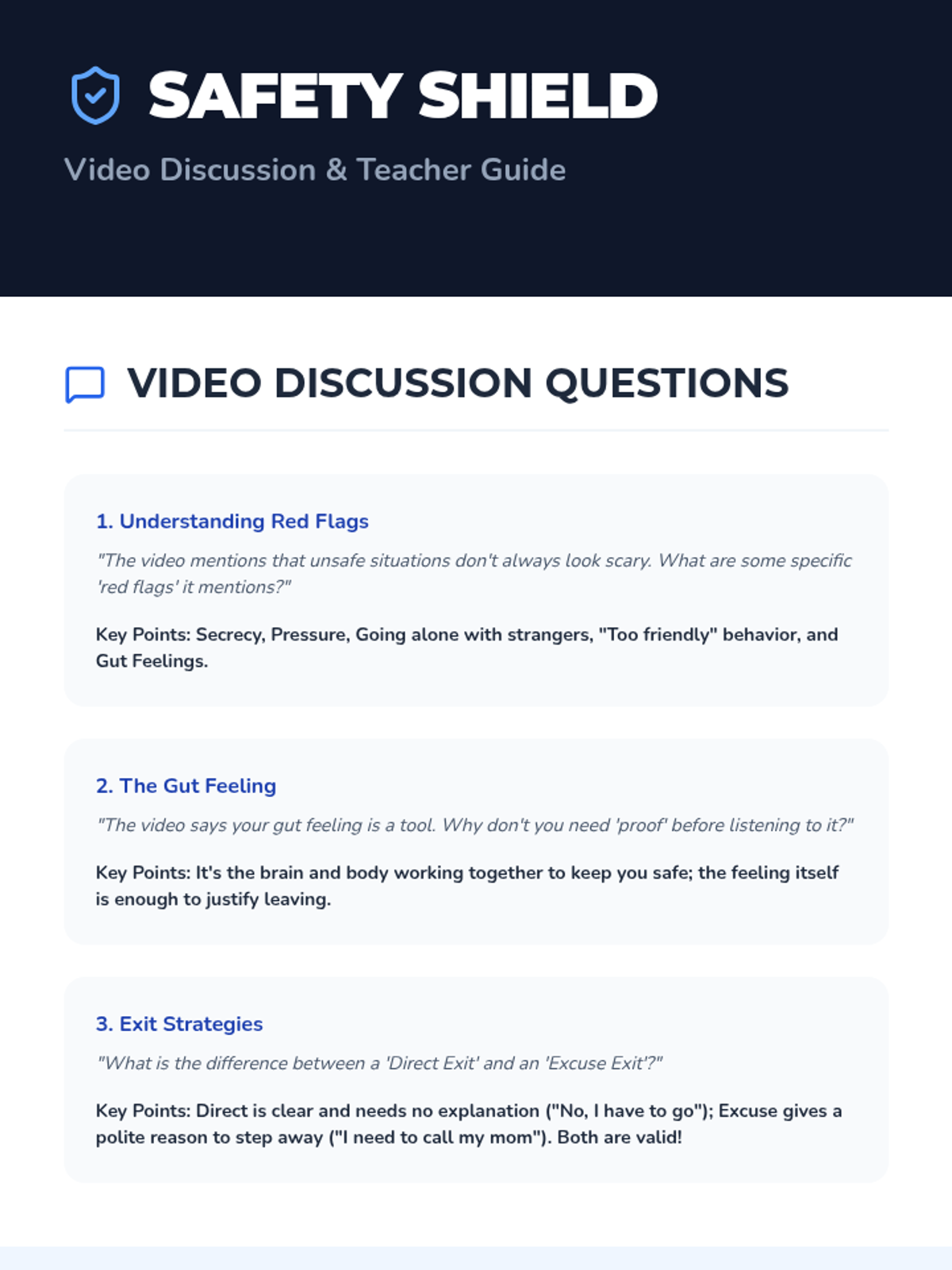
This lesson focuses on identifying 'red flags' in social situations, understanding the importance of 'gut feelings', and practicing exit strategies to move to safety. Students will learn to recognize subtle warning signs and identify trusted adults they can turn to for help.
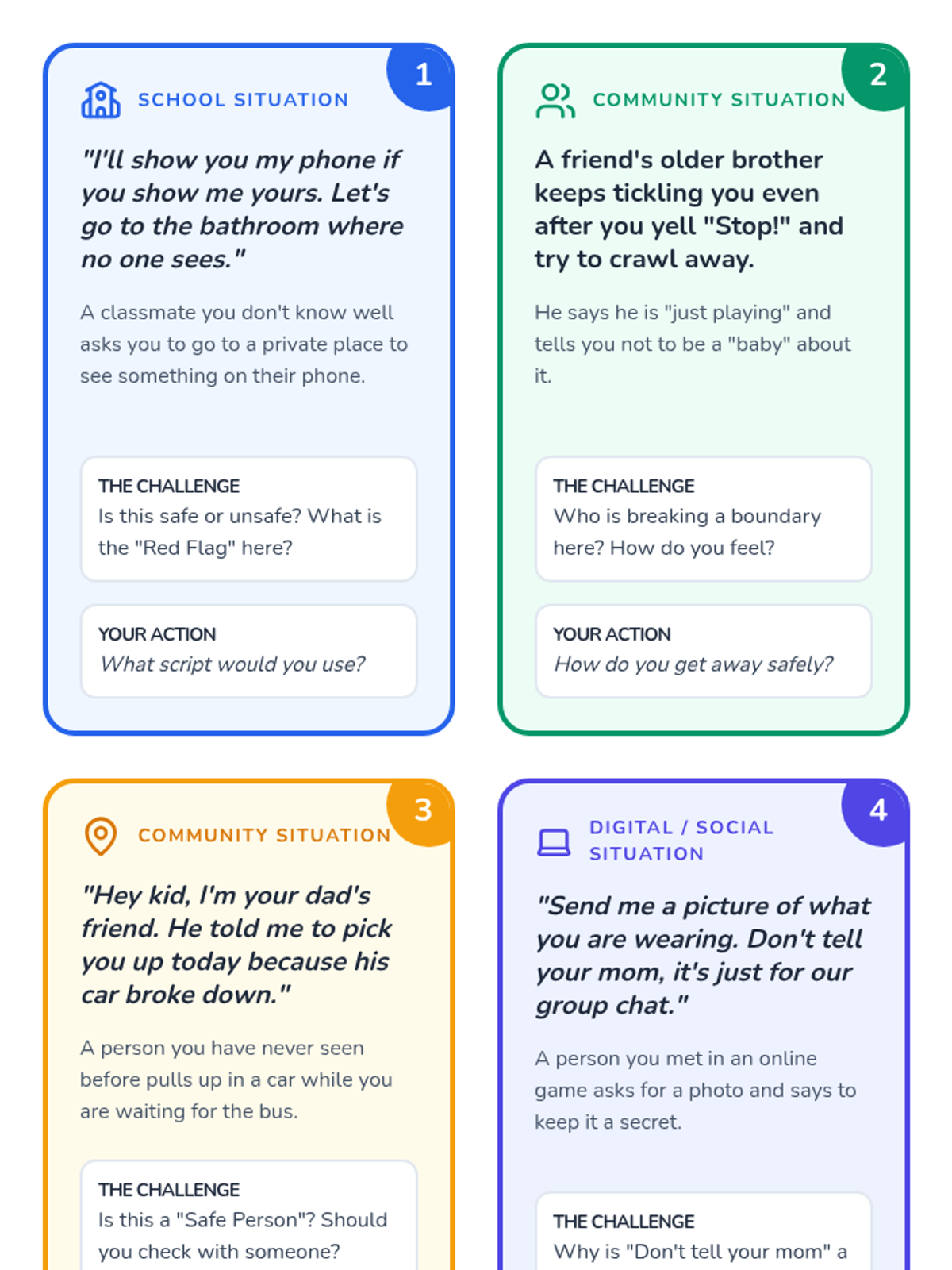
A comprehensive lesson on identifying unsafe social situations, setting physical and emotional boundaries with peers, and practicing assertive communication across school and community settings.
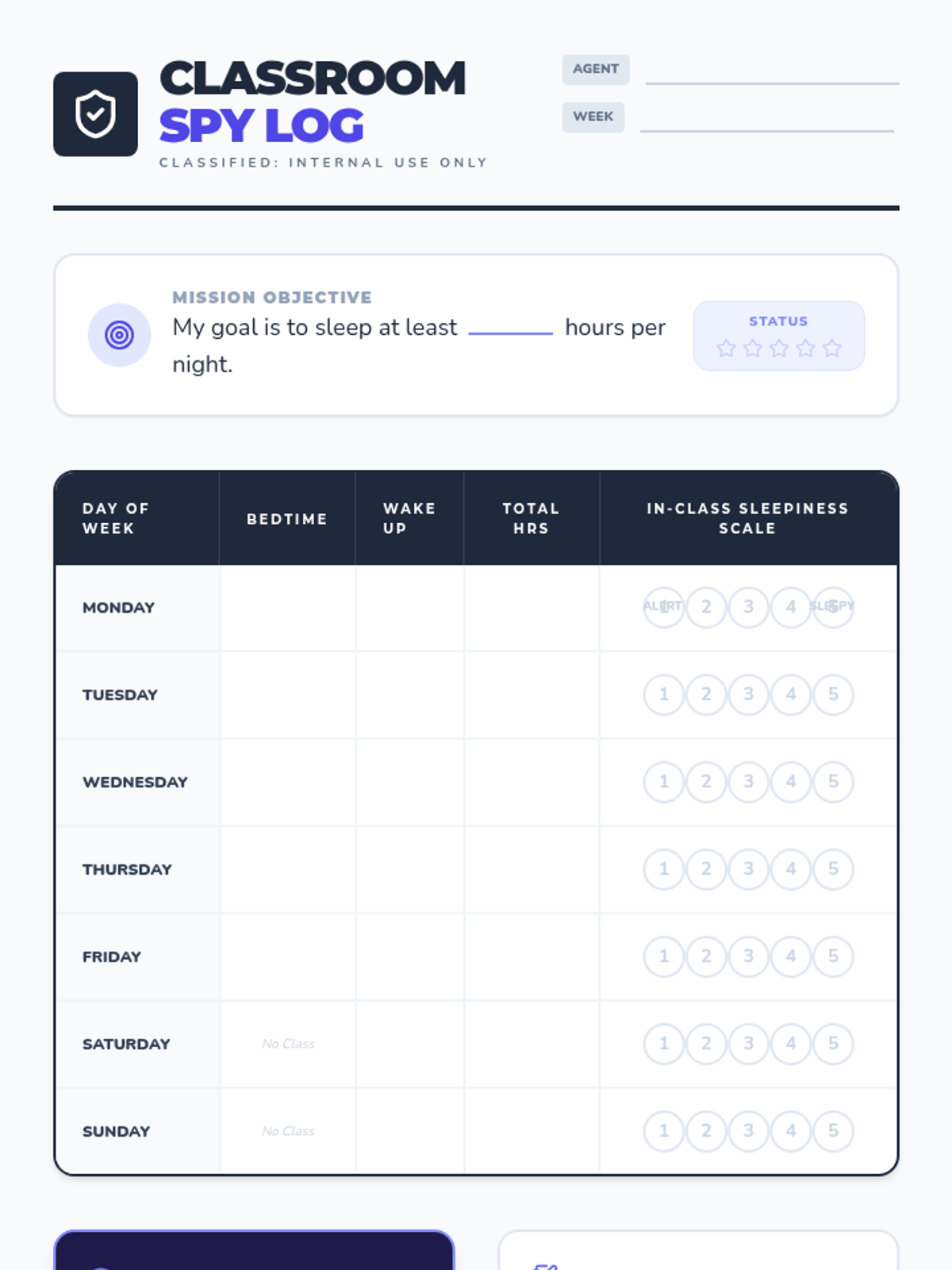
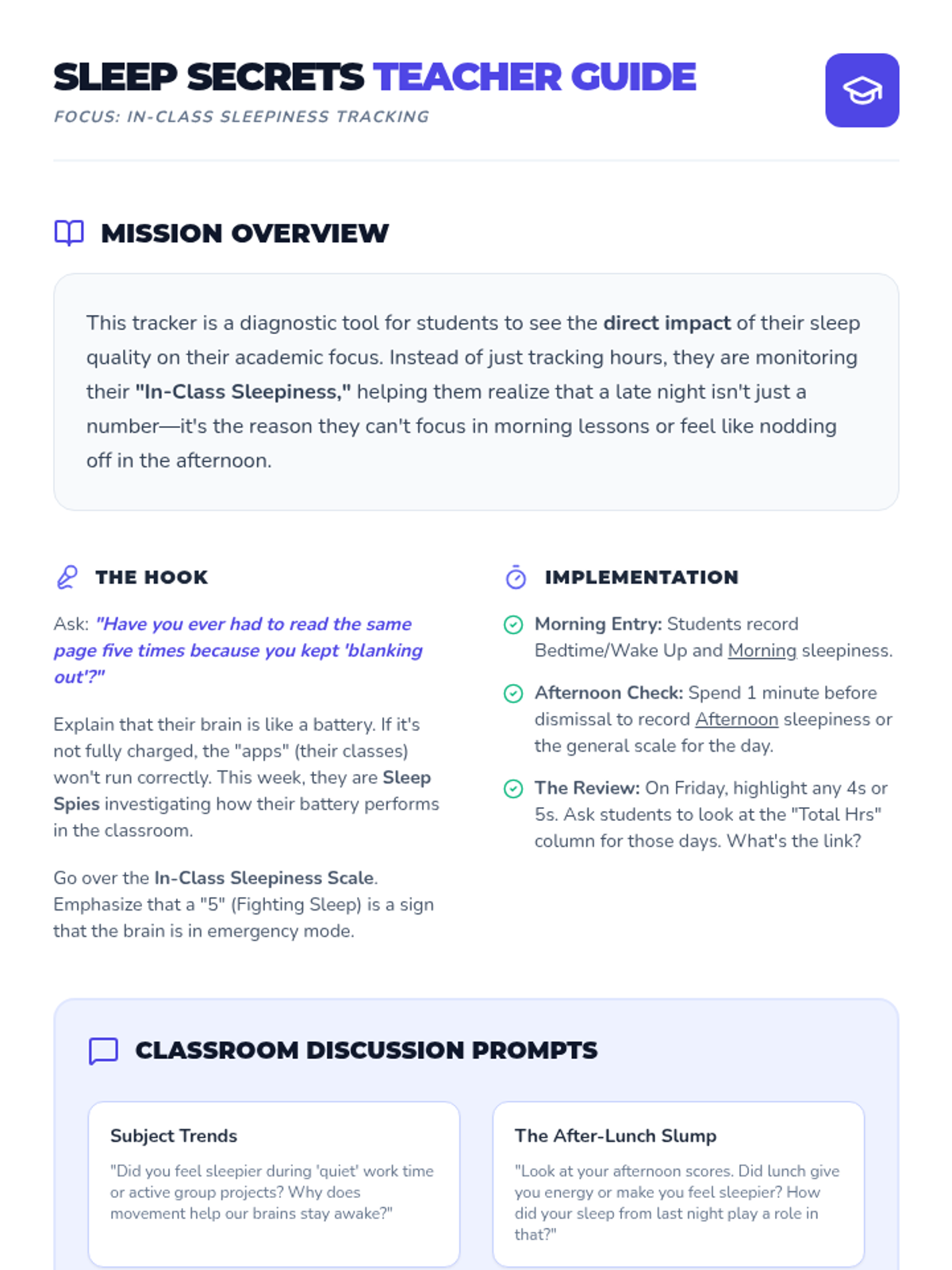
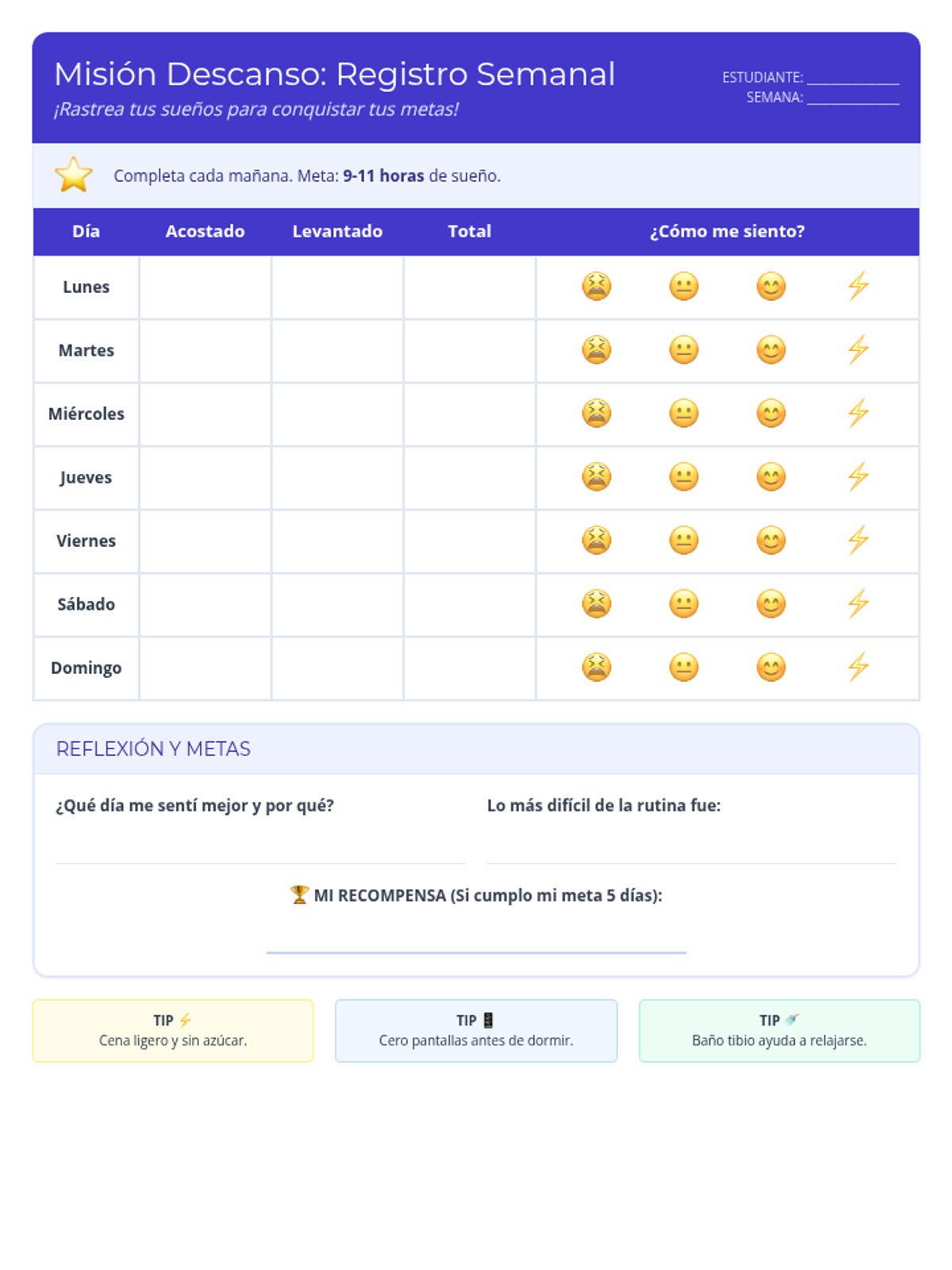
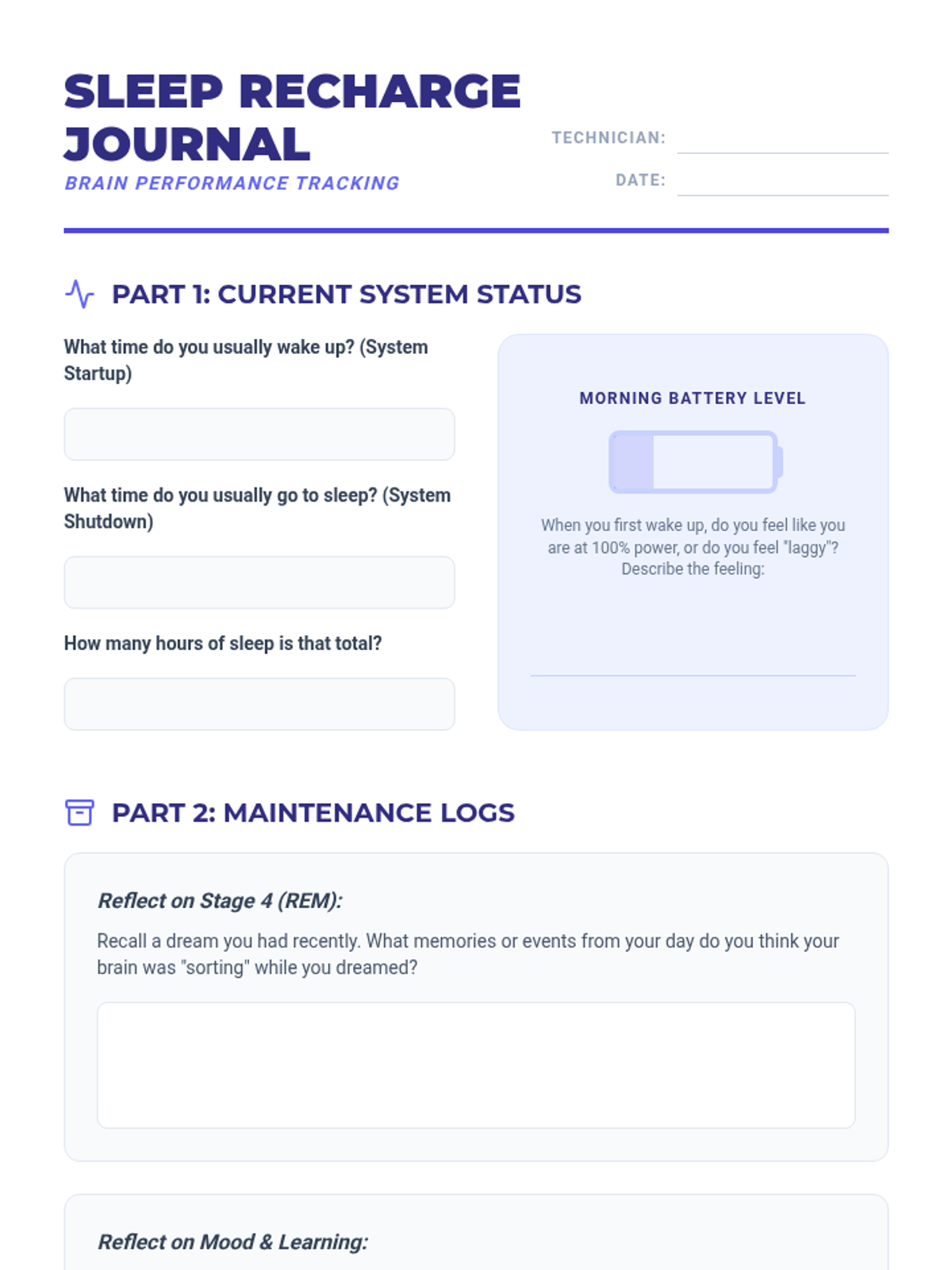
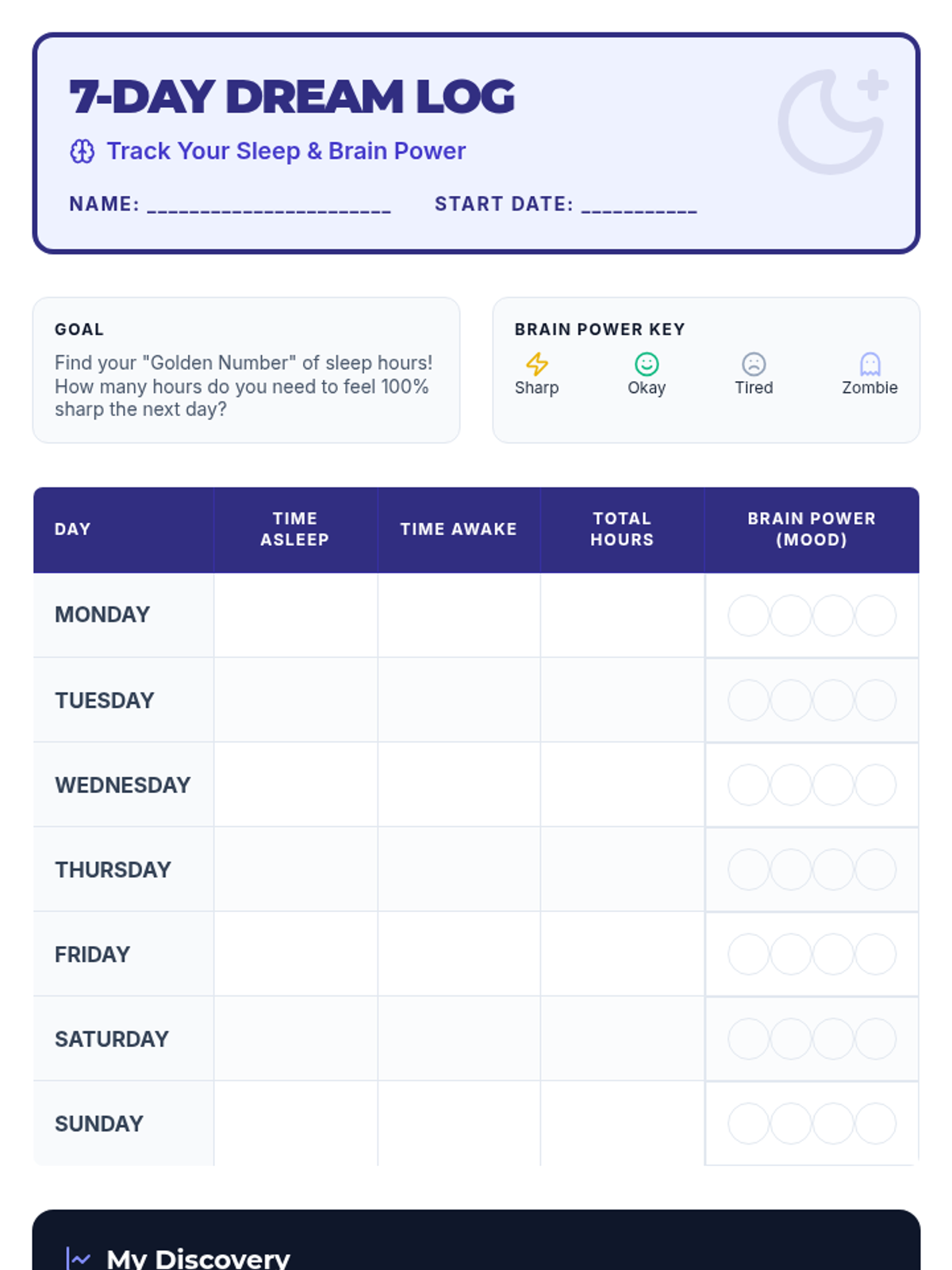
A lesson focused on helping students track and analyze their sleep patterns to understand the impact of rest on their daily energy and mood.
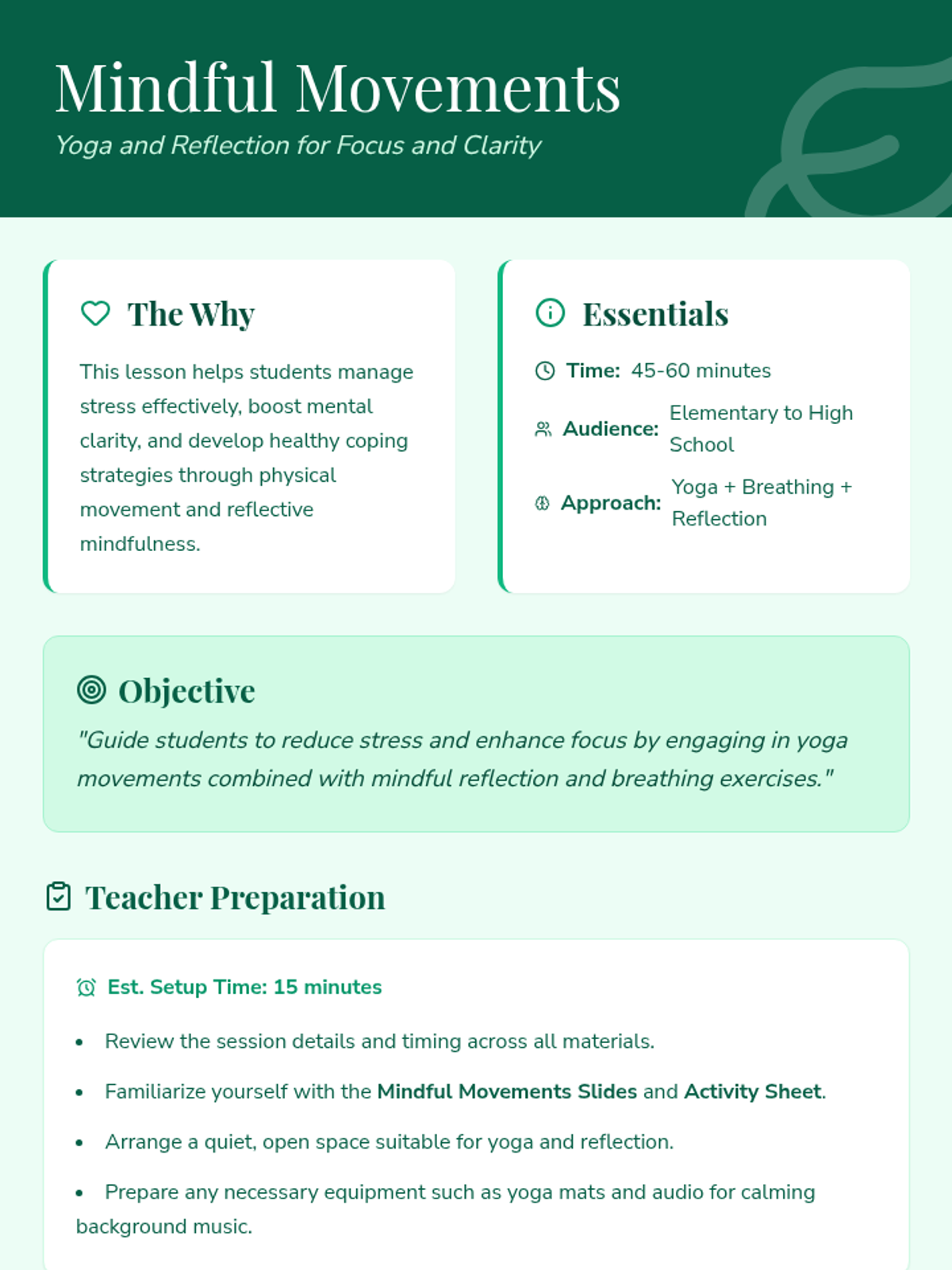
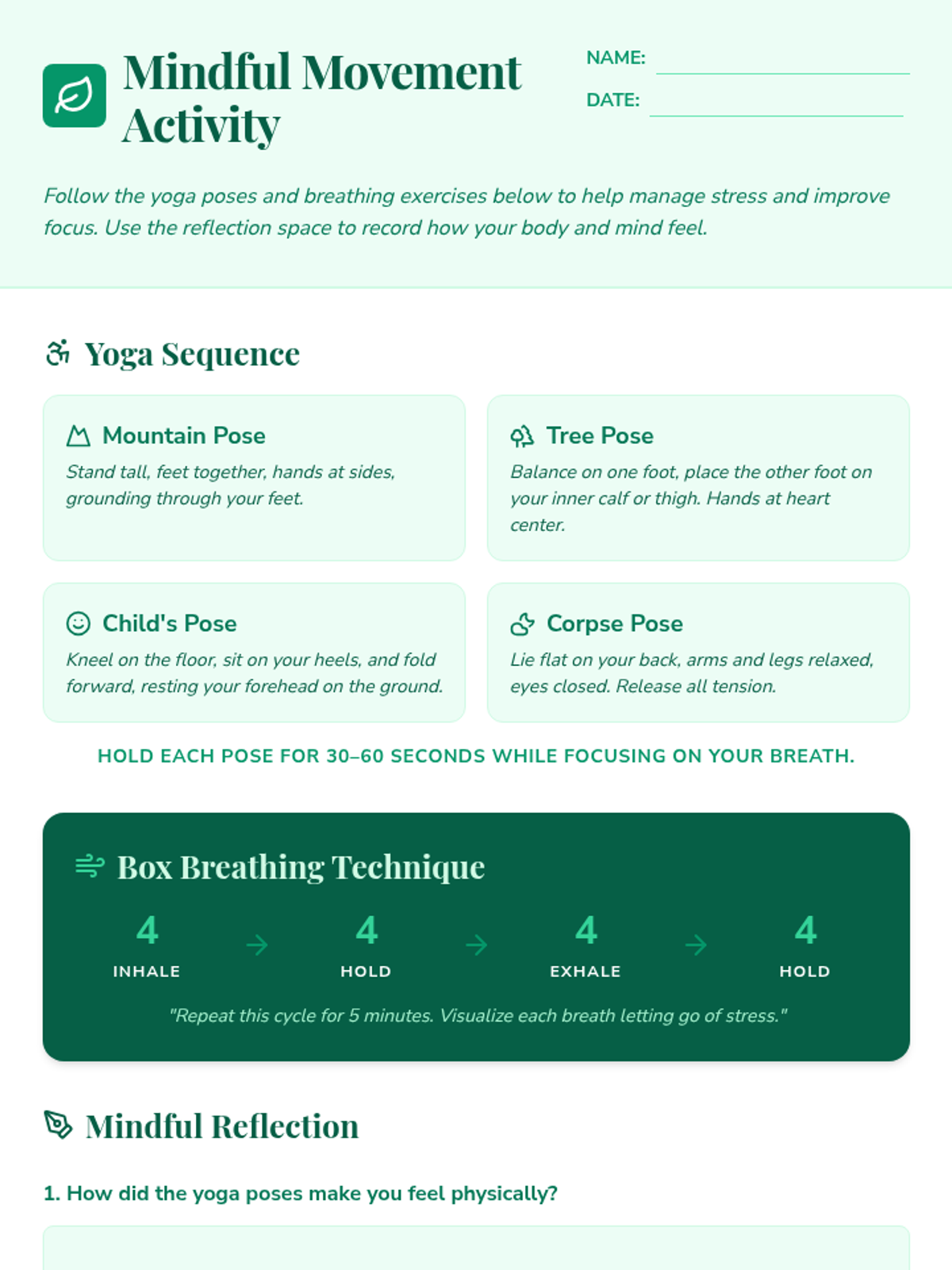
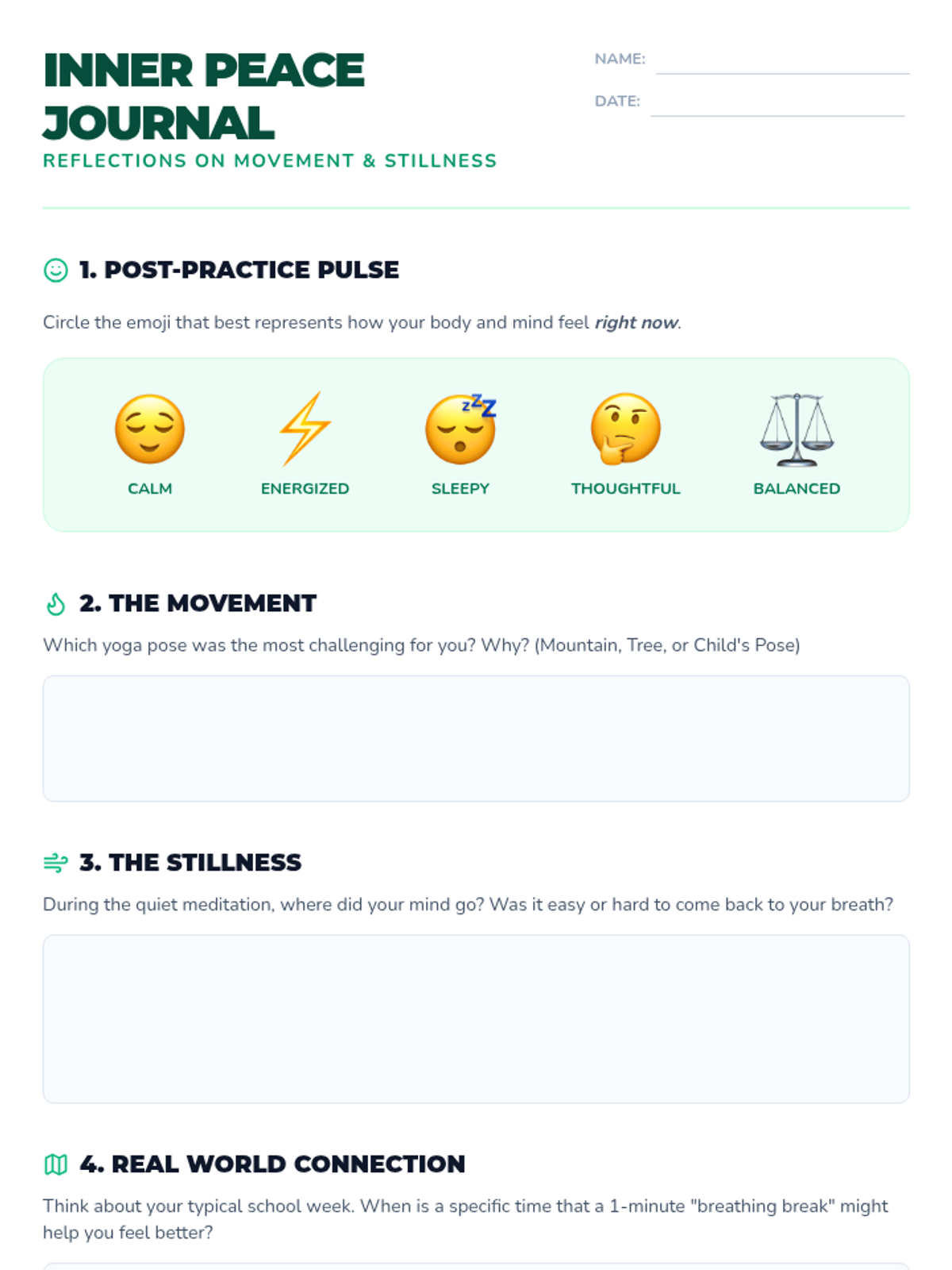
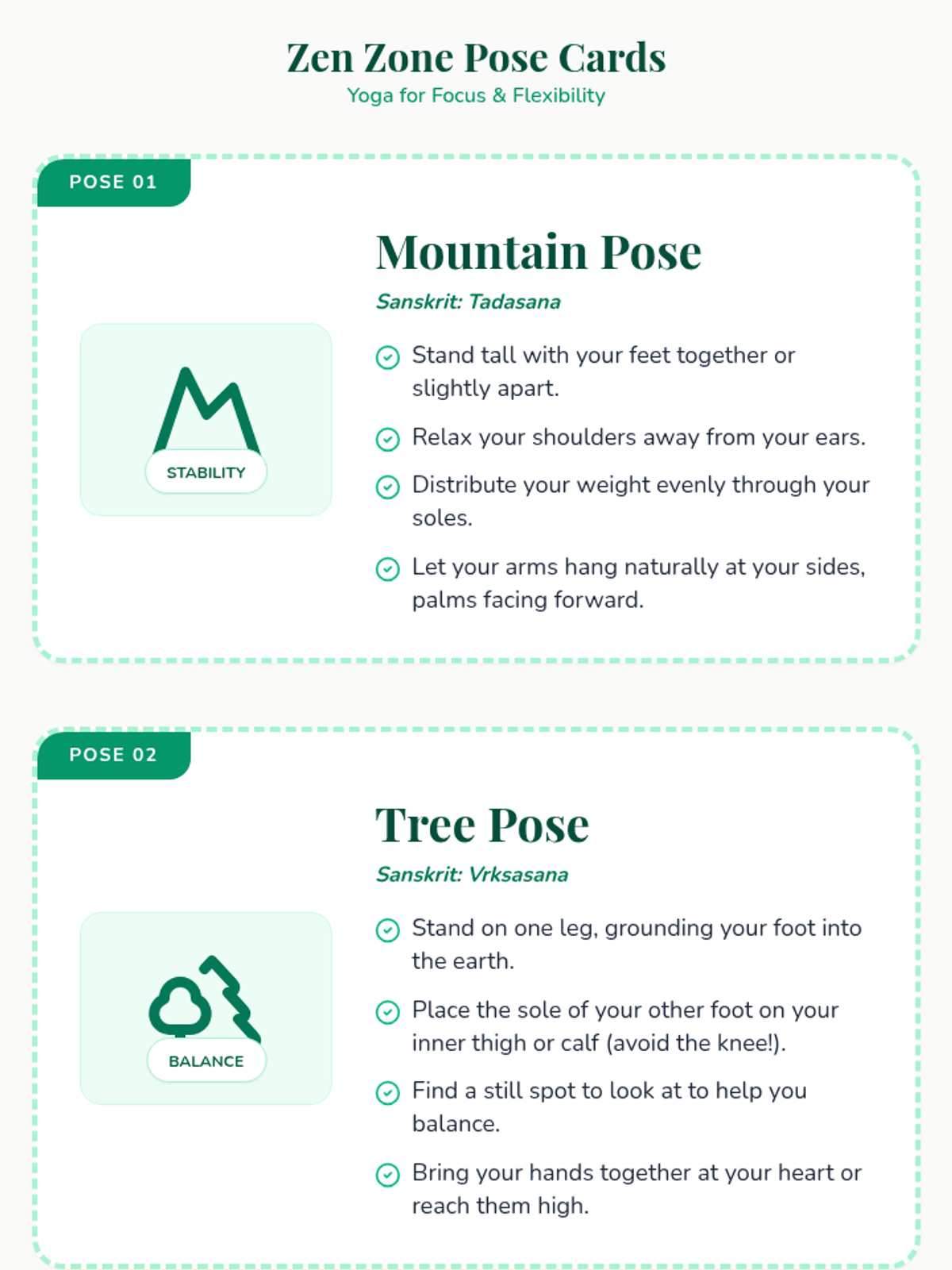
A lesson that combines yoga poses with mindfulness and reflection to help students manage stress, improve focus, and develop mental clarity through physical movement and breathing.
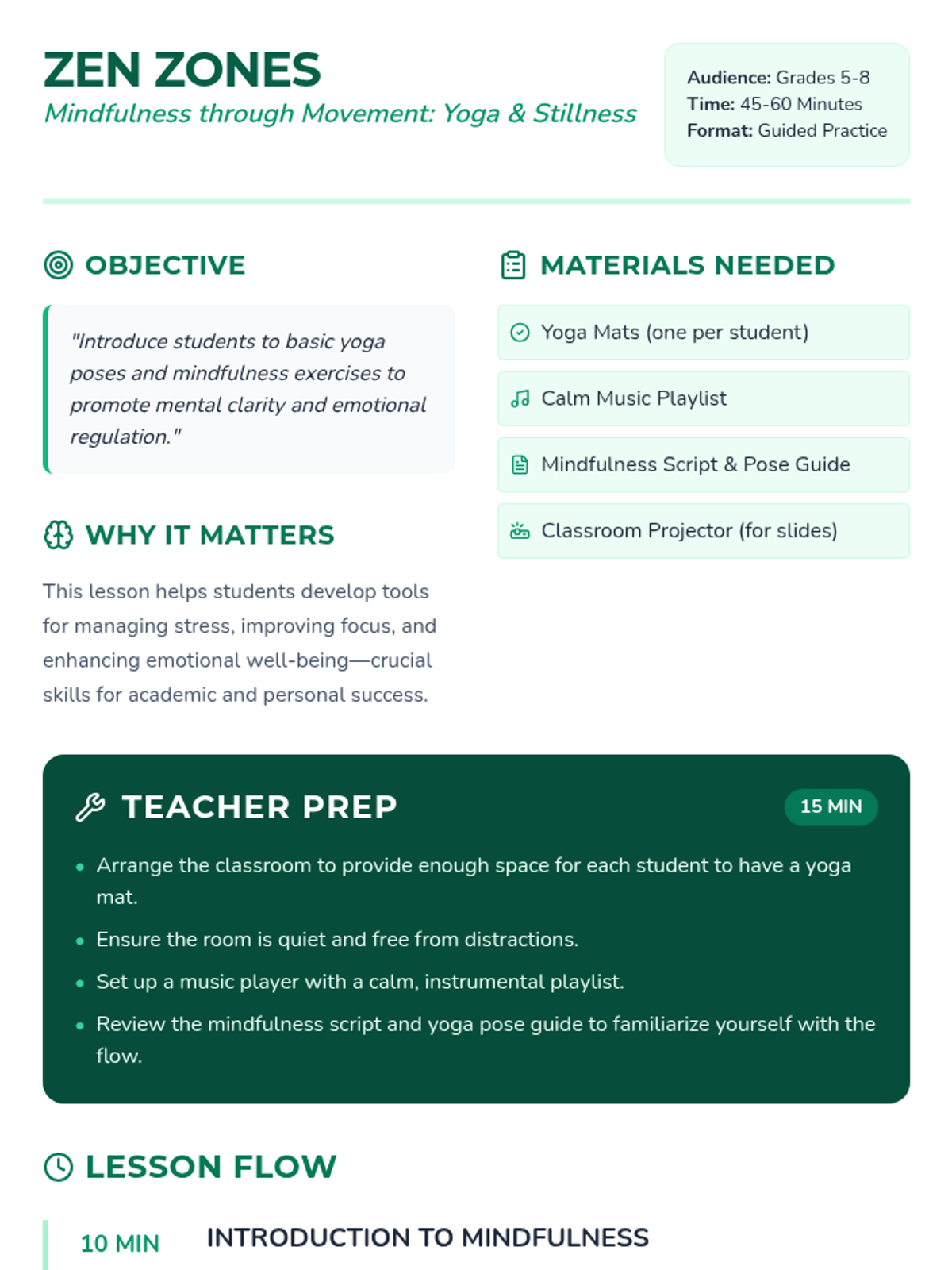
Introduce students to basic yoga poses and mindfulness exercises as a means to promote mental clarity and emotional regulation. Ideal for students in grades 5-8.
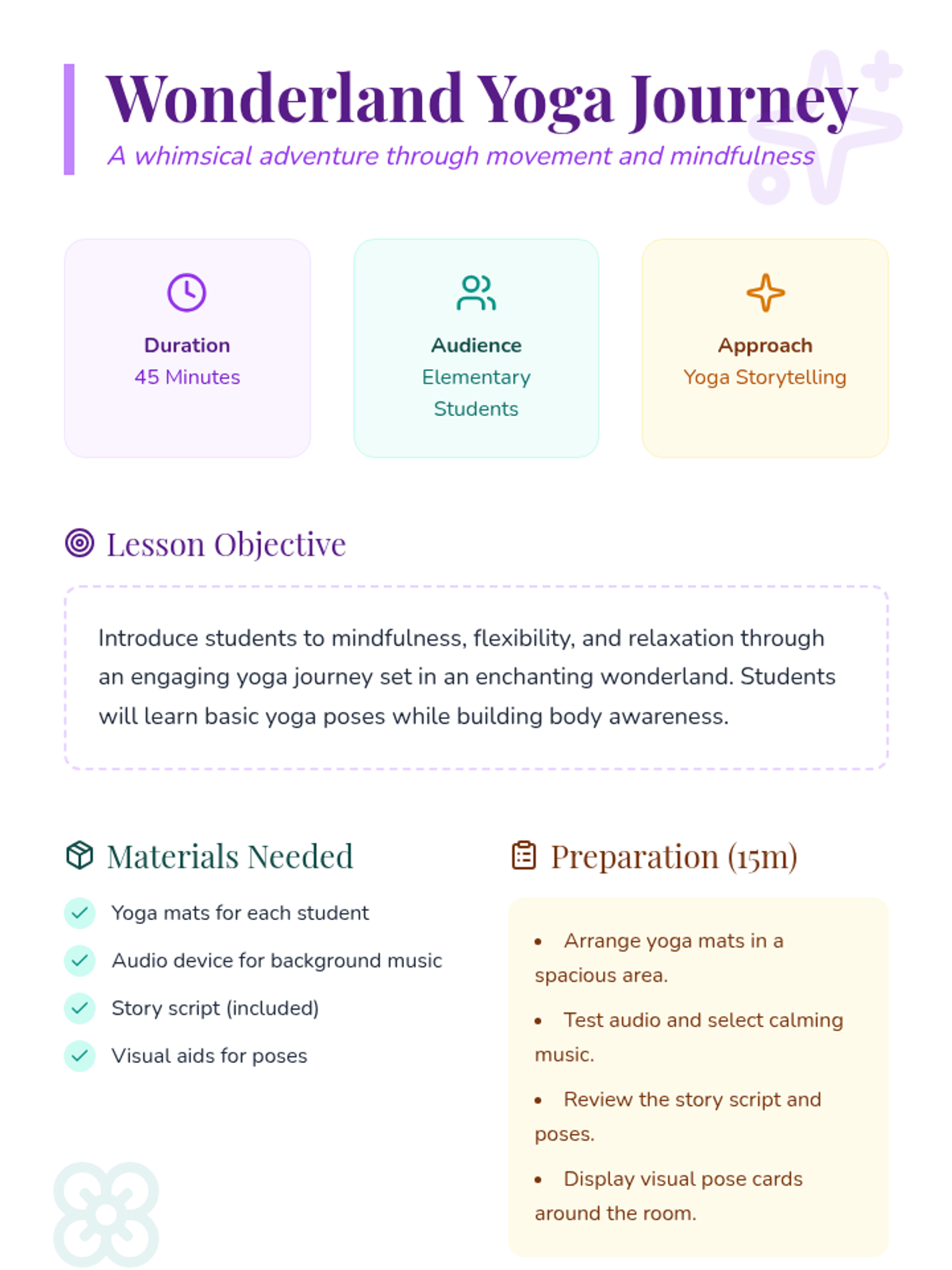
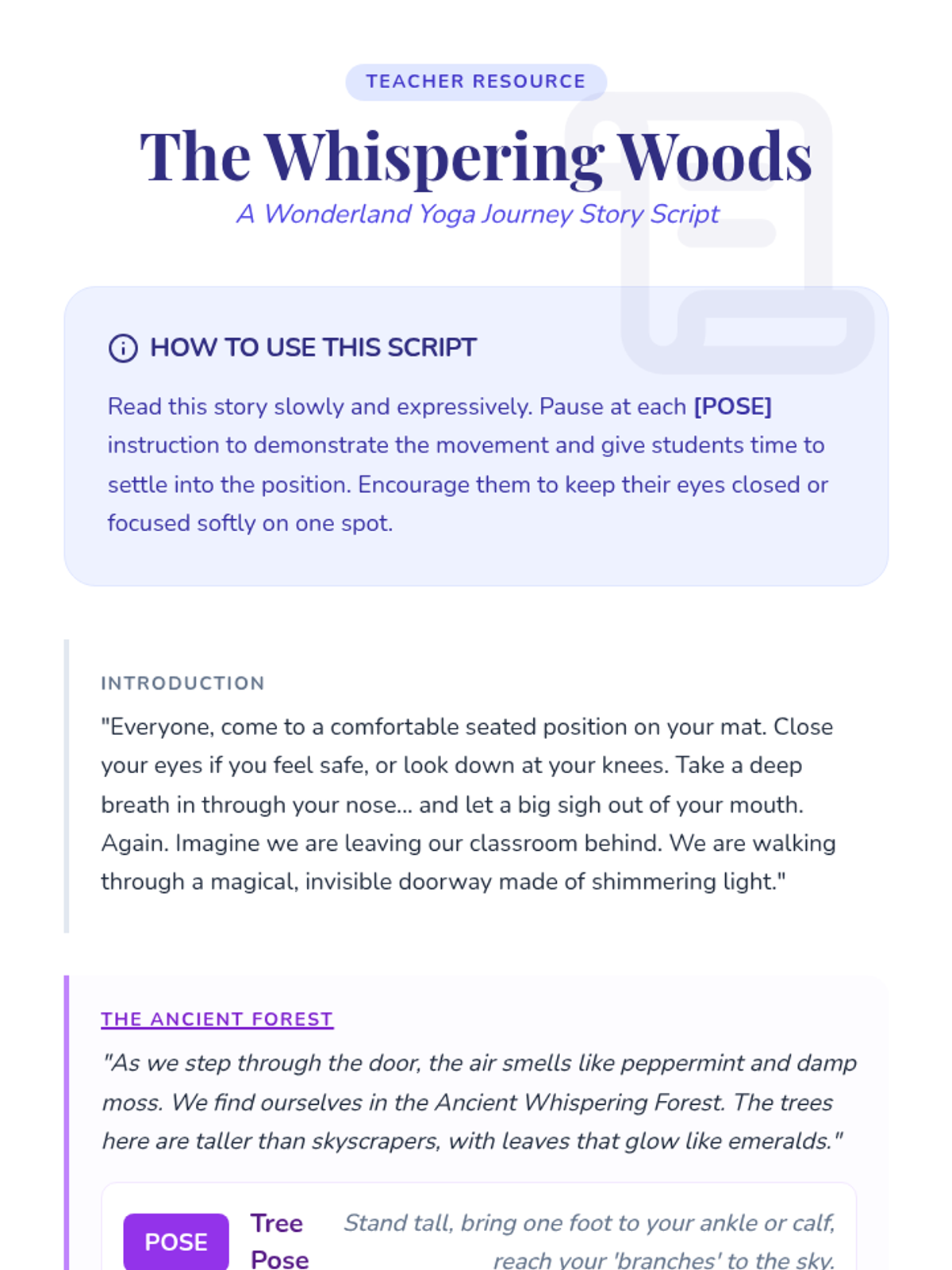
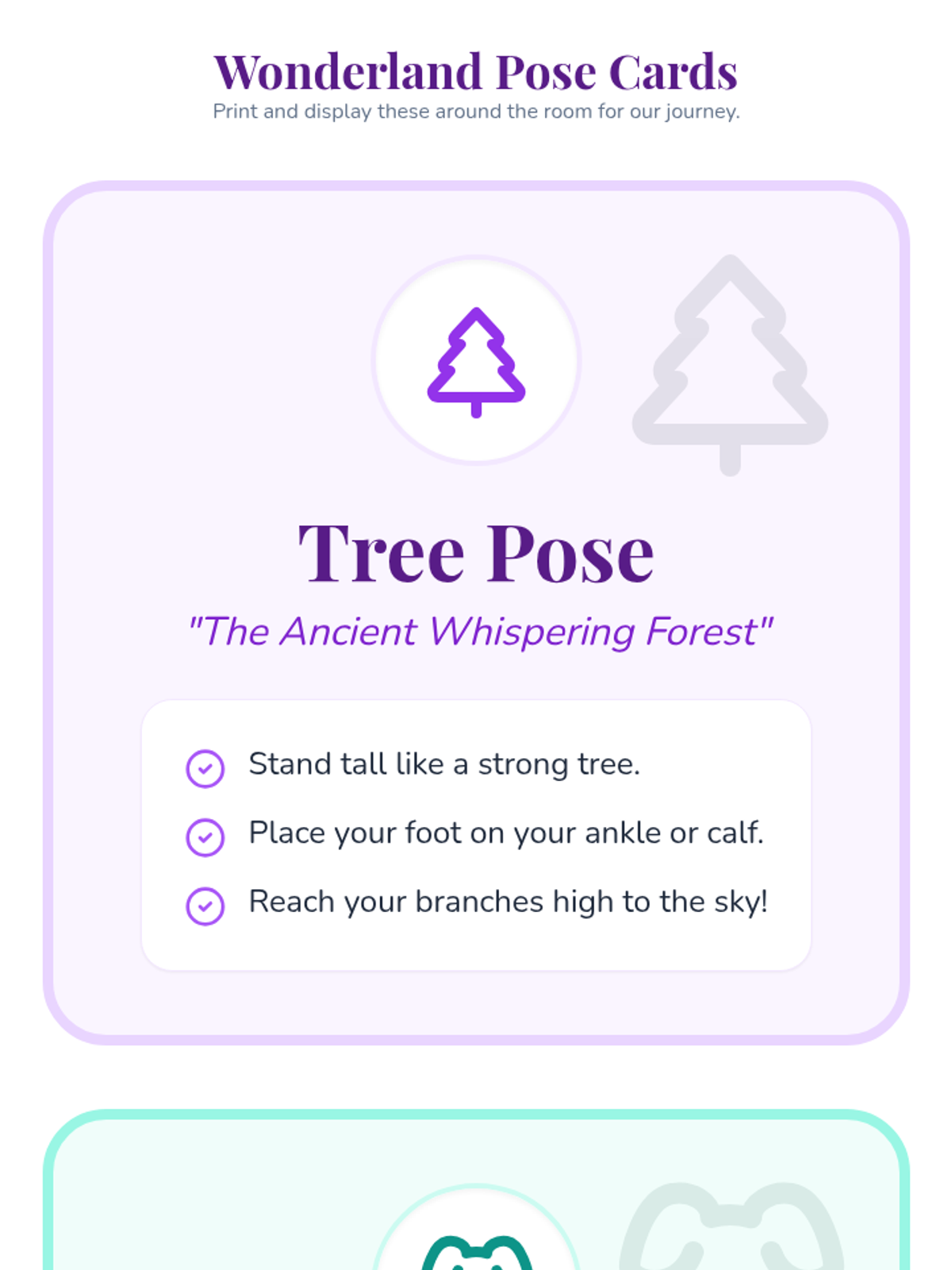
An enchanting yoga adventure that combines storytelling with mindfulness and physical activity. Students explore a whimsical wonderland through yoga poses, fostering flexibility and relaxation.
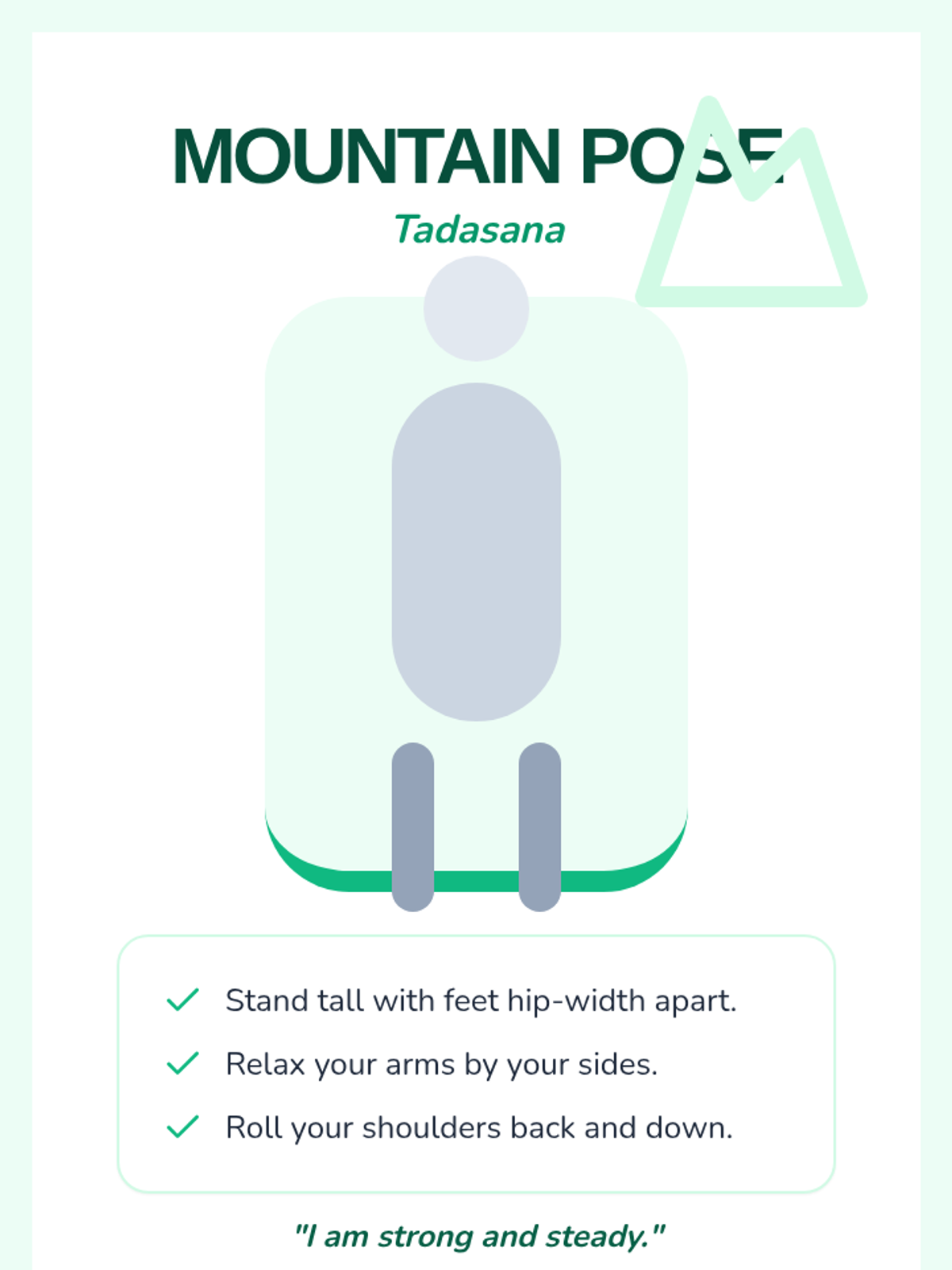
A gentle introduction to yoga and mindfulness for elementary students, focusing on poses and breathing techniques to improve focus and reduce stress.
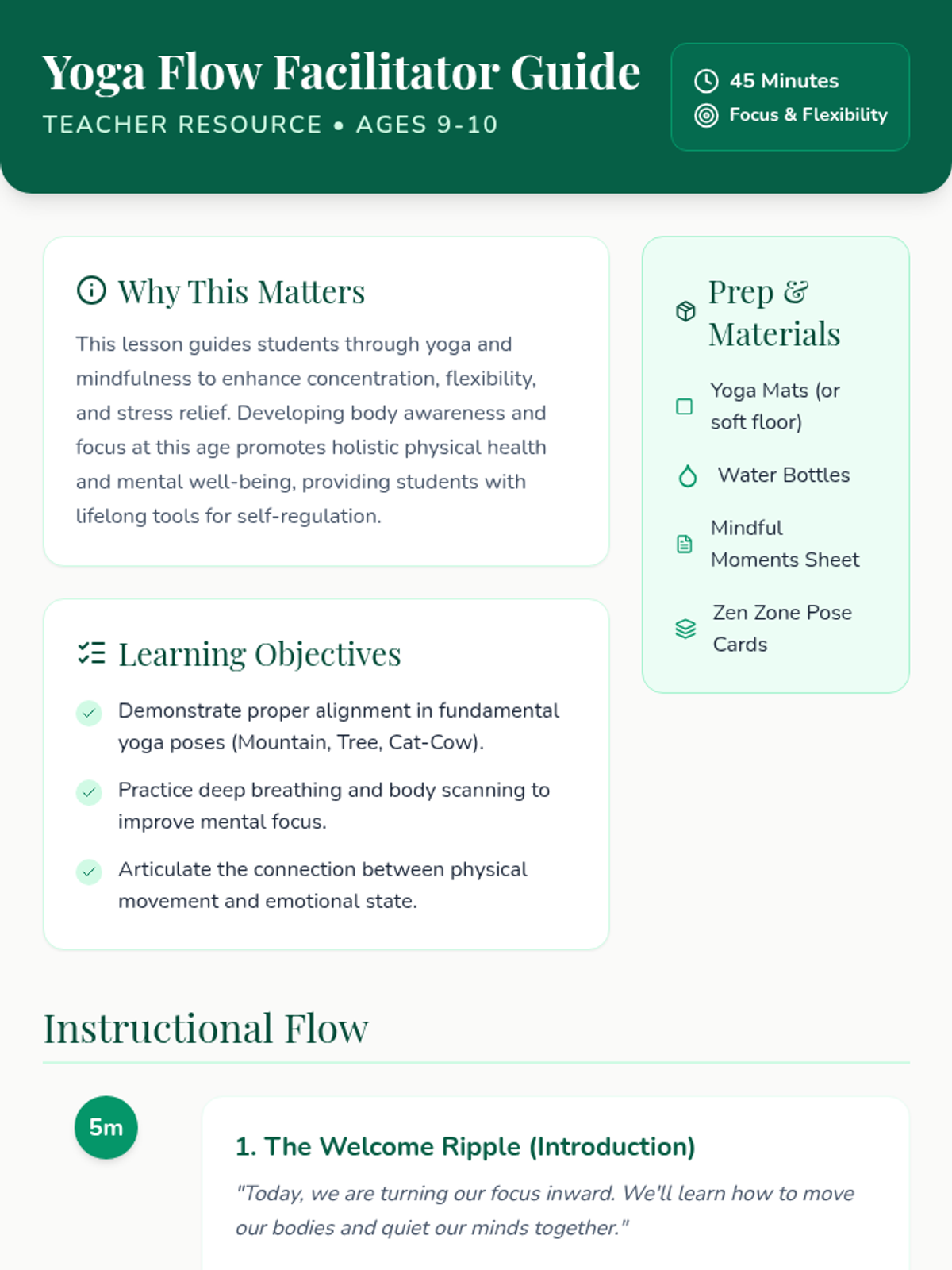
A comprehensive lesson designed for 9-10 year olds to improve physical flexibility and mental focus through guided yoga poses and mindfulness exercises.
A comprehensive set of bulletin board materials for elementary school hallways, featuring summer safety tips, educational advice, and local community resources.
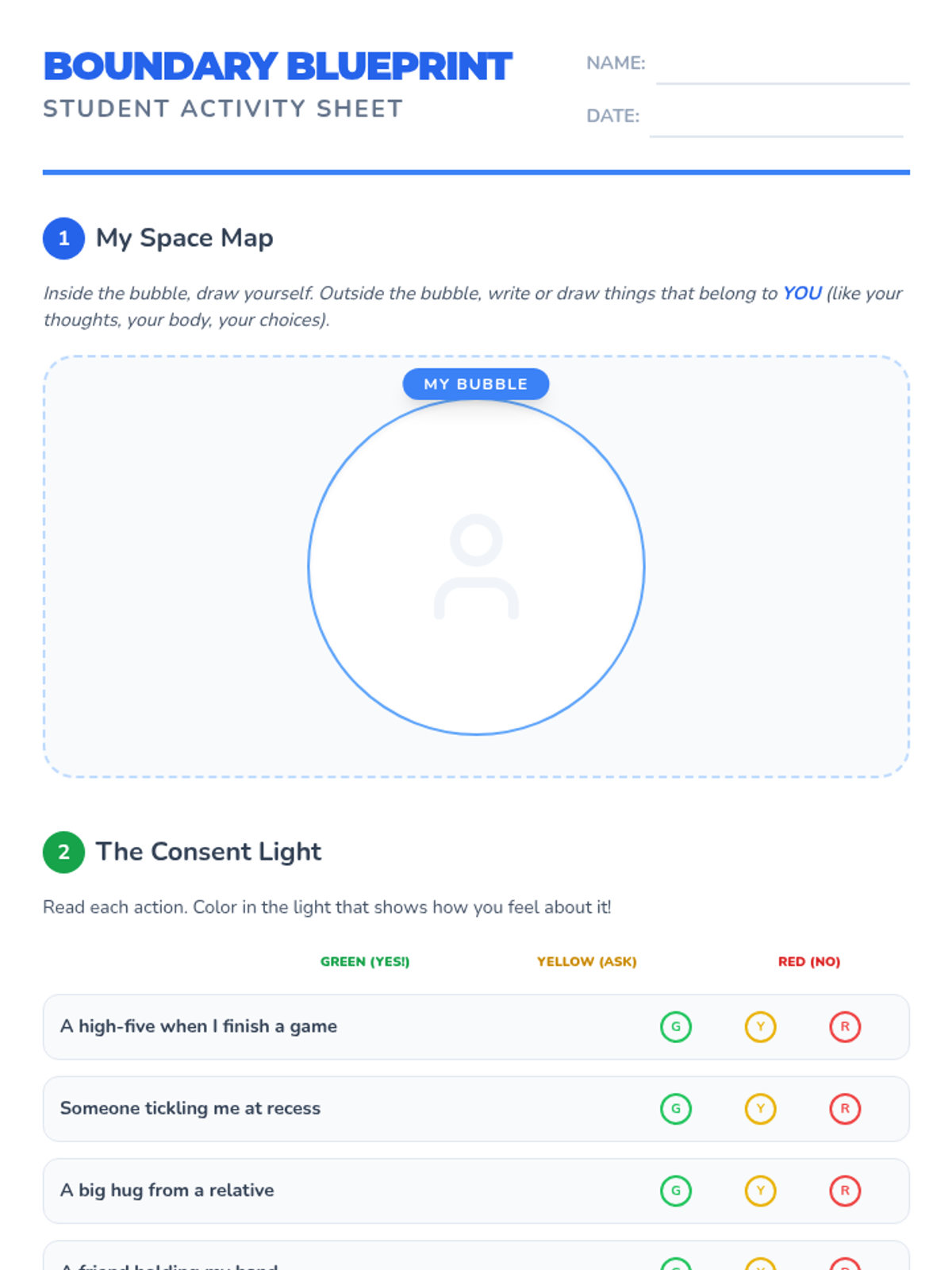
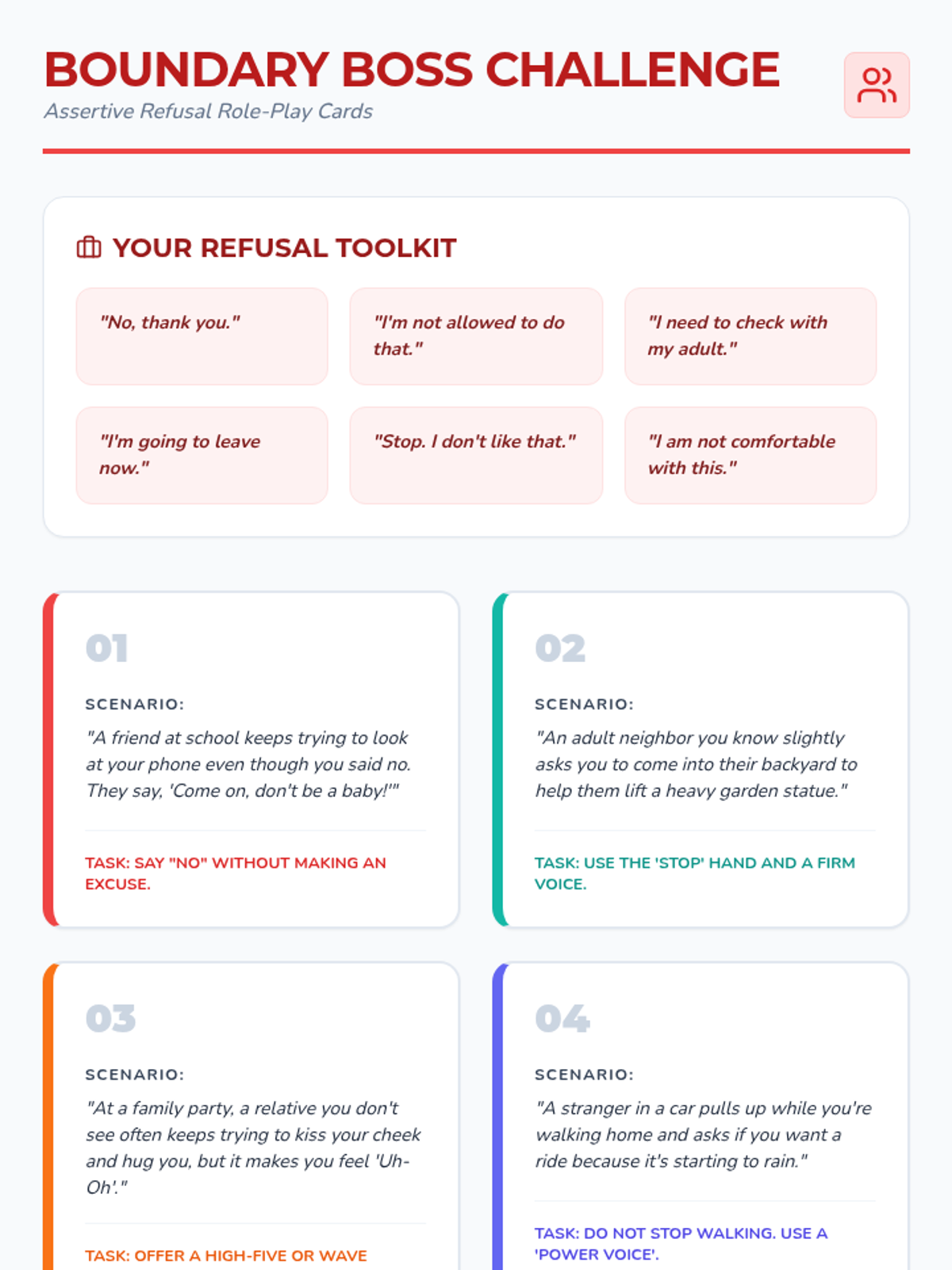
A 30-minute lesson empowering students to understand body autonomy, practice consent, and identify trusted adults using the "Boundary Boss" framework. Aligned with Ontario Health & Physical Education curriculum.
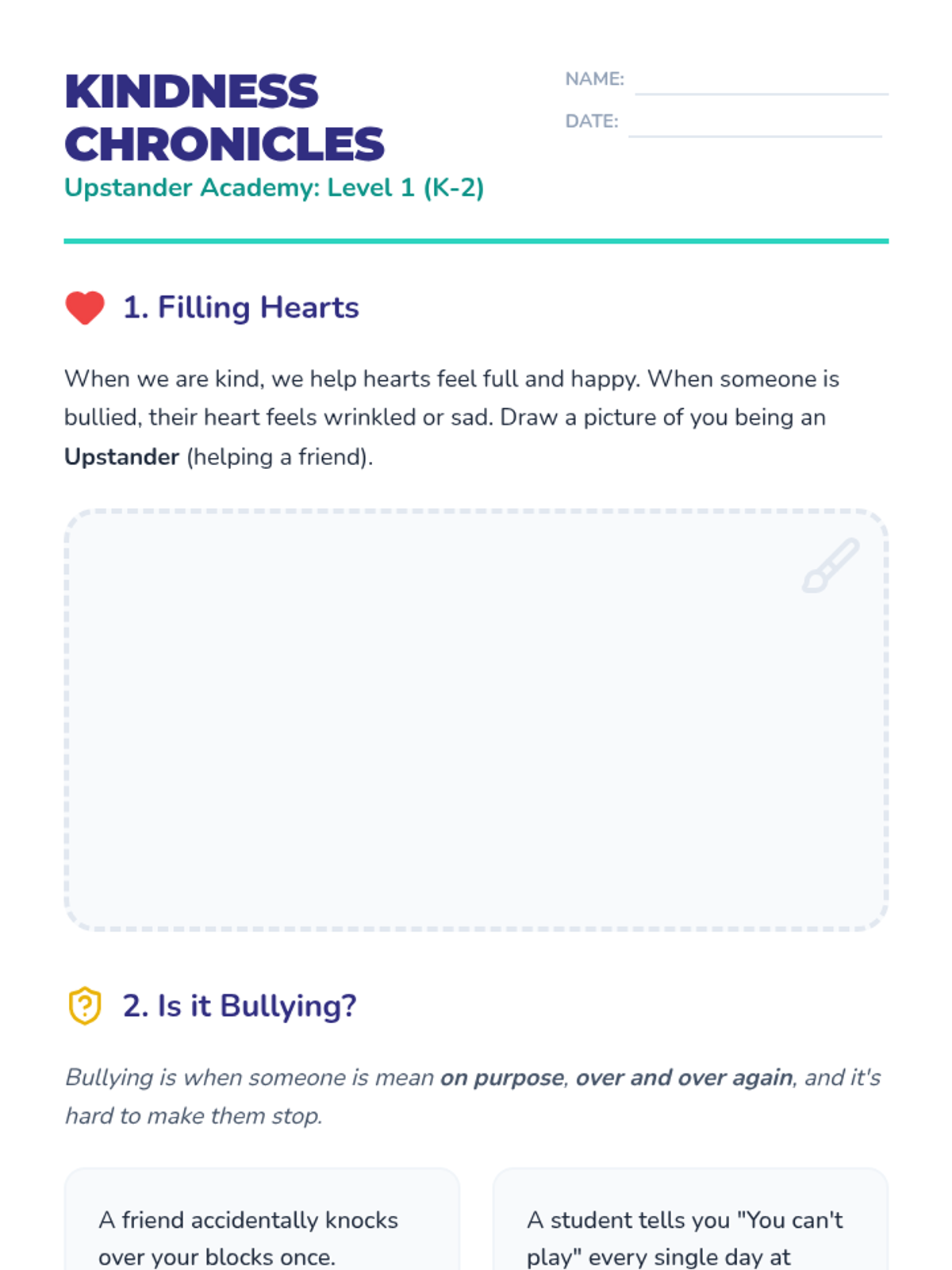
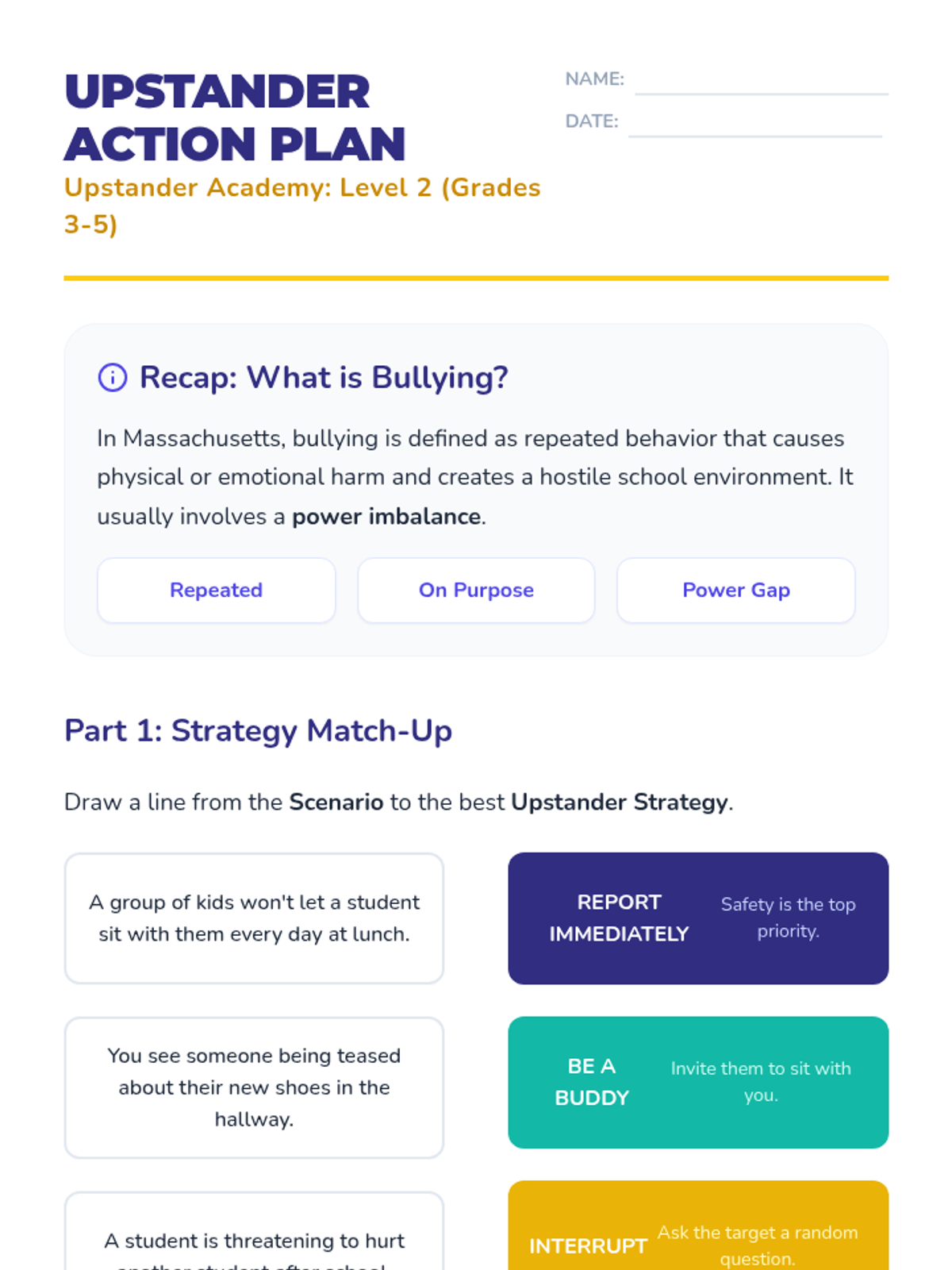
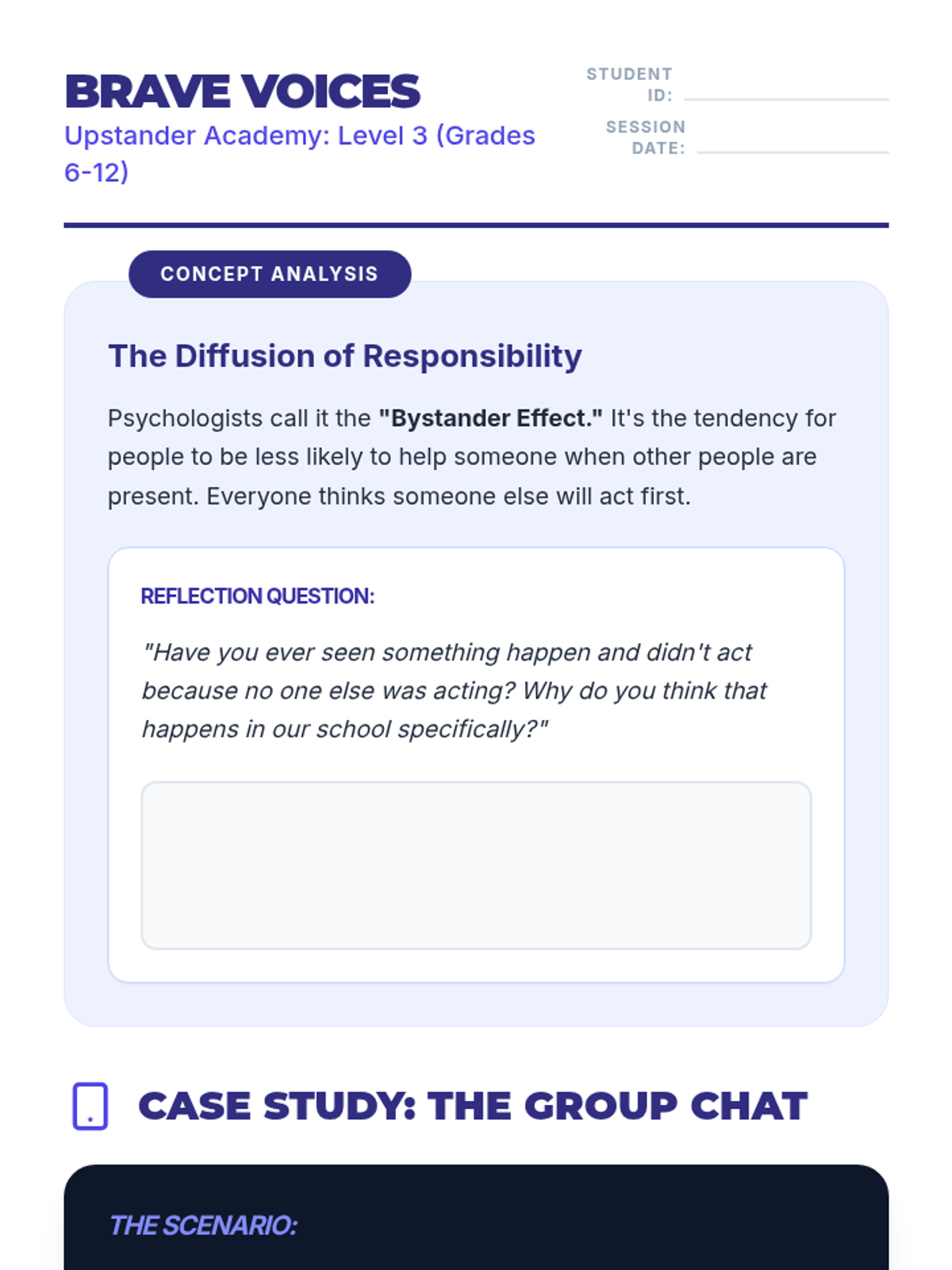
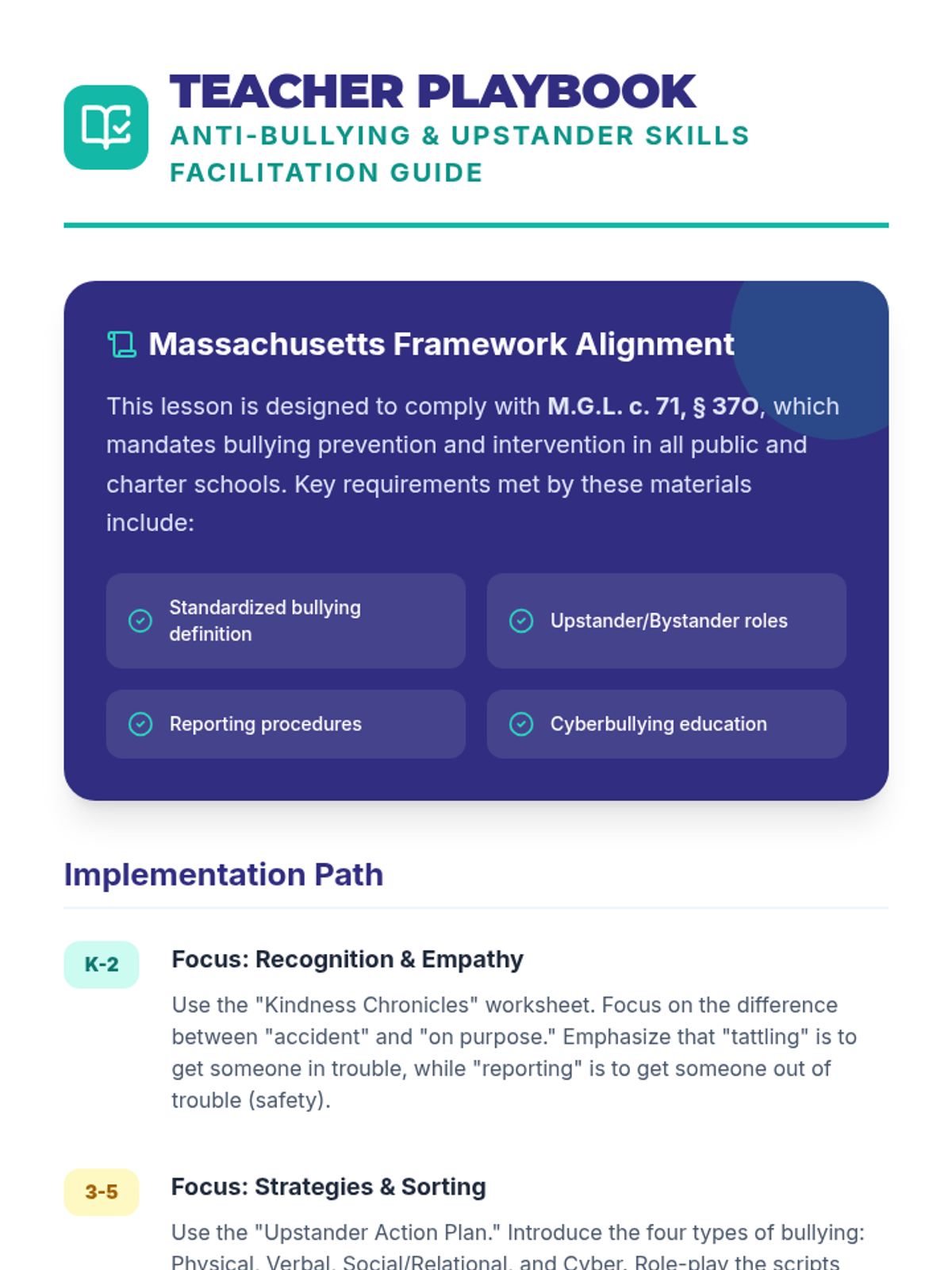
A comprehensive anti-bullying and upstander skills lesson designed for K-12 students. It focuses on identifying bullying, developing empathy, and providing concrete reporting strategies aligned with Massachusetts state frameworks.
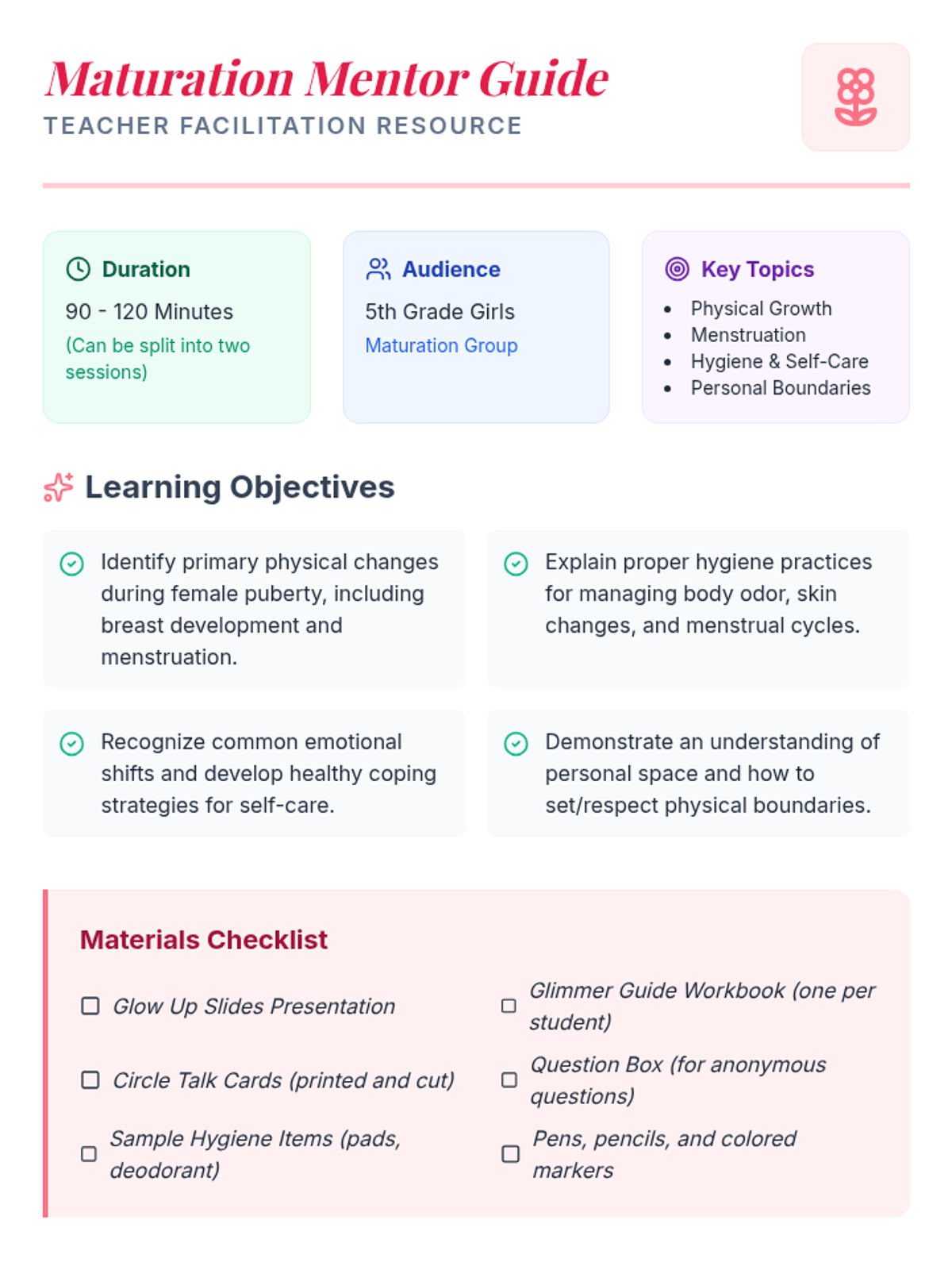
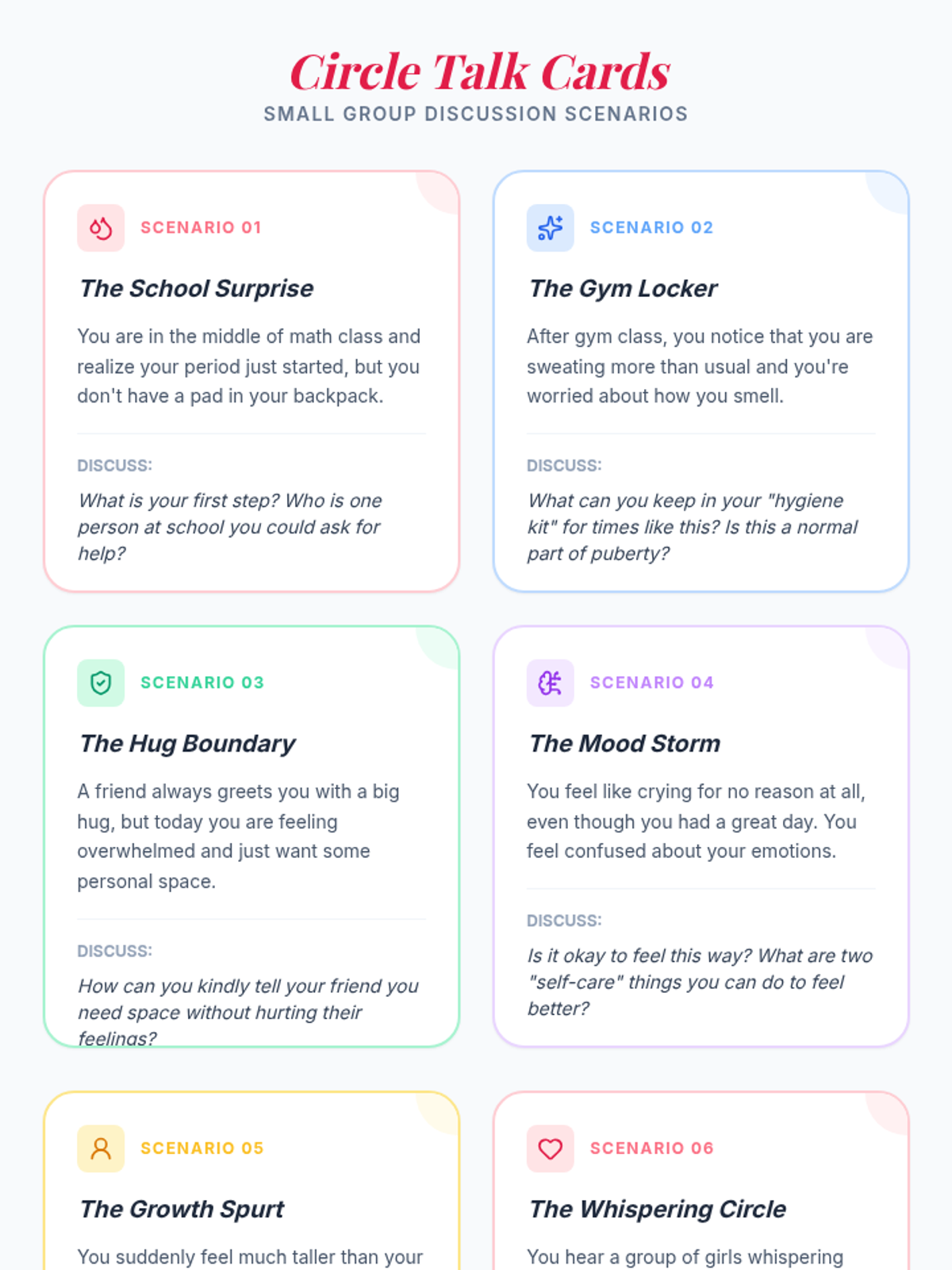
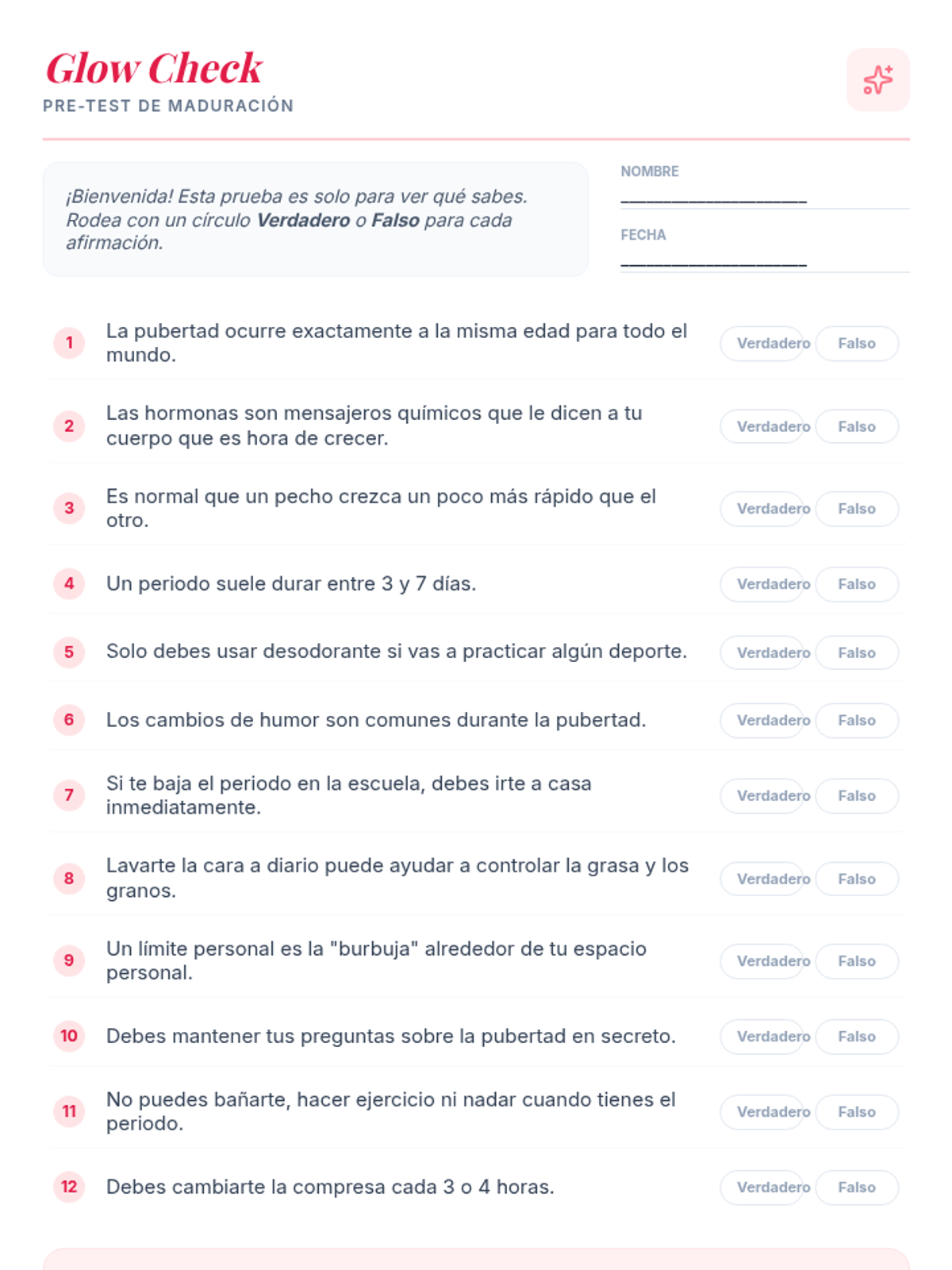
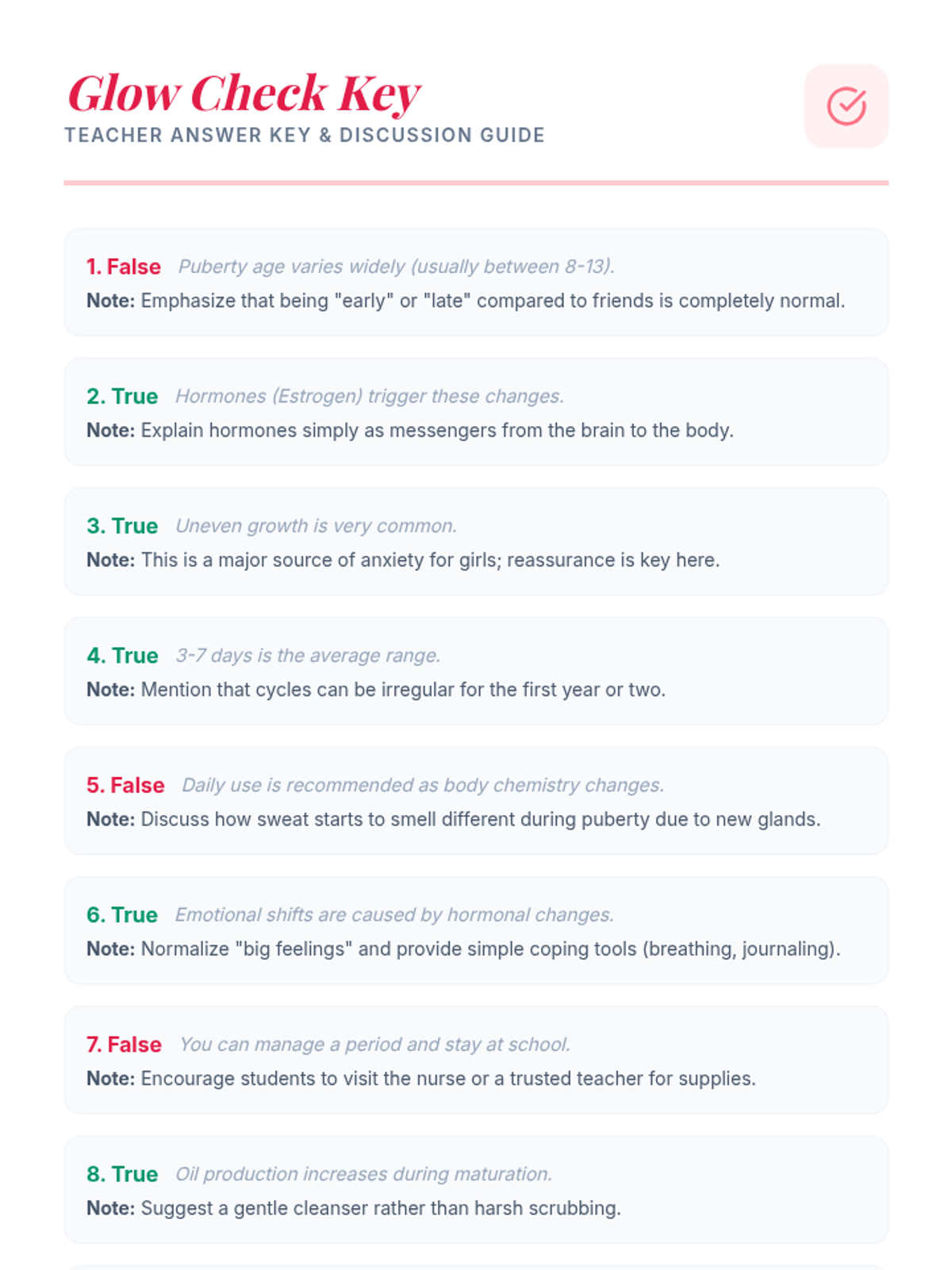
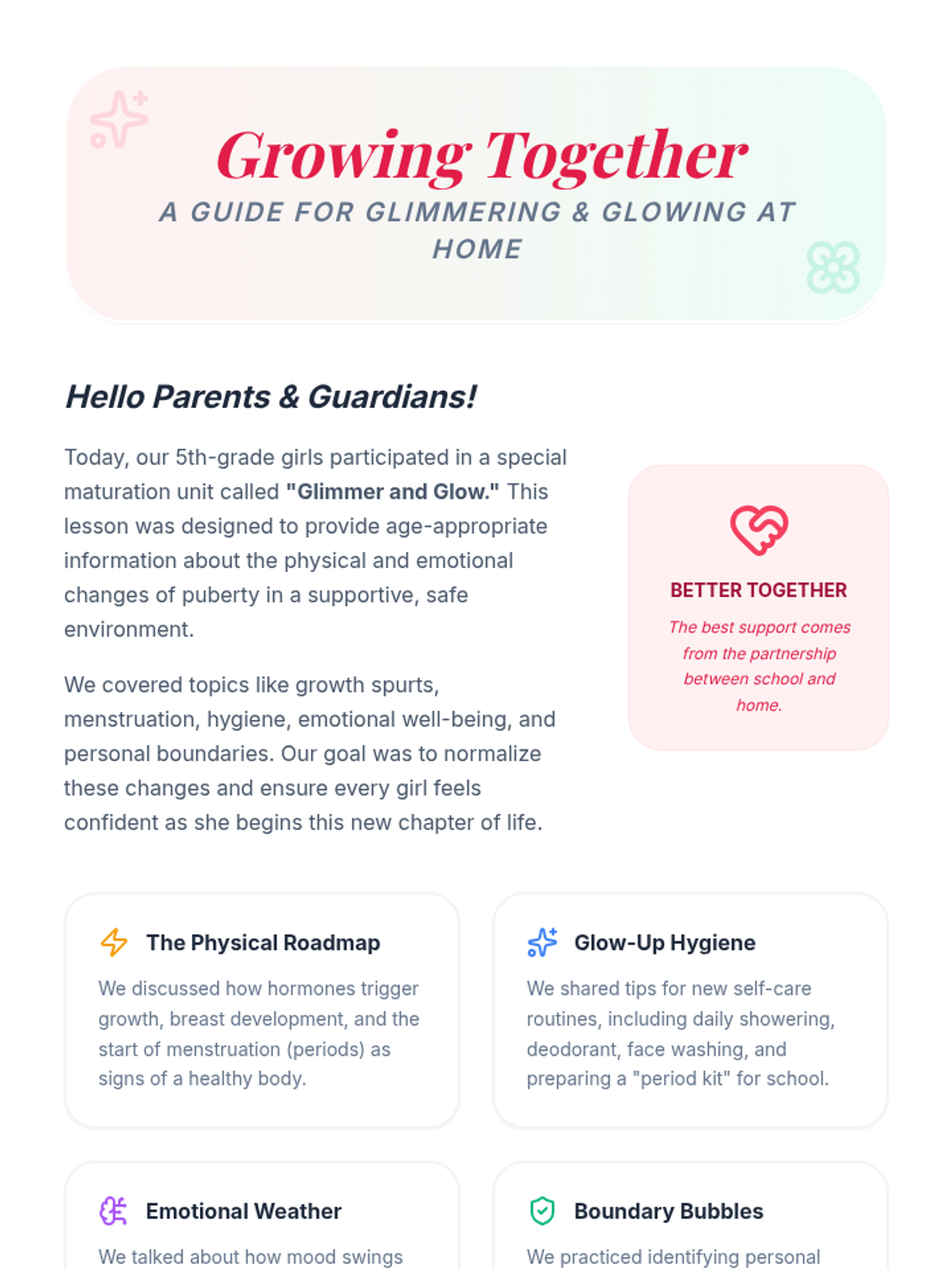
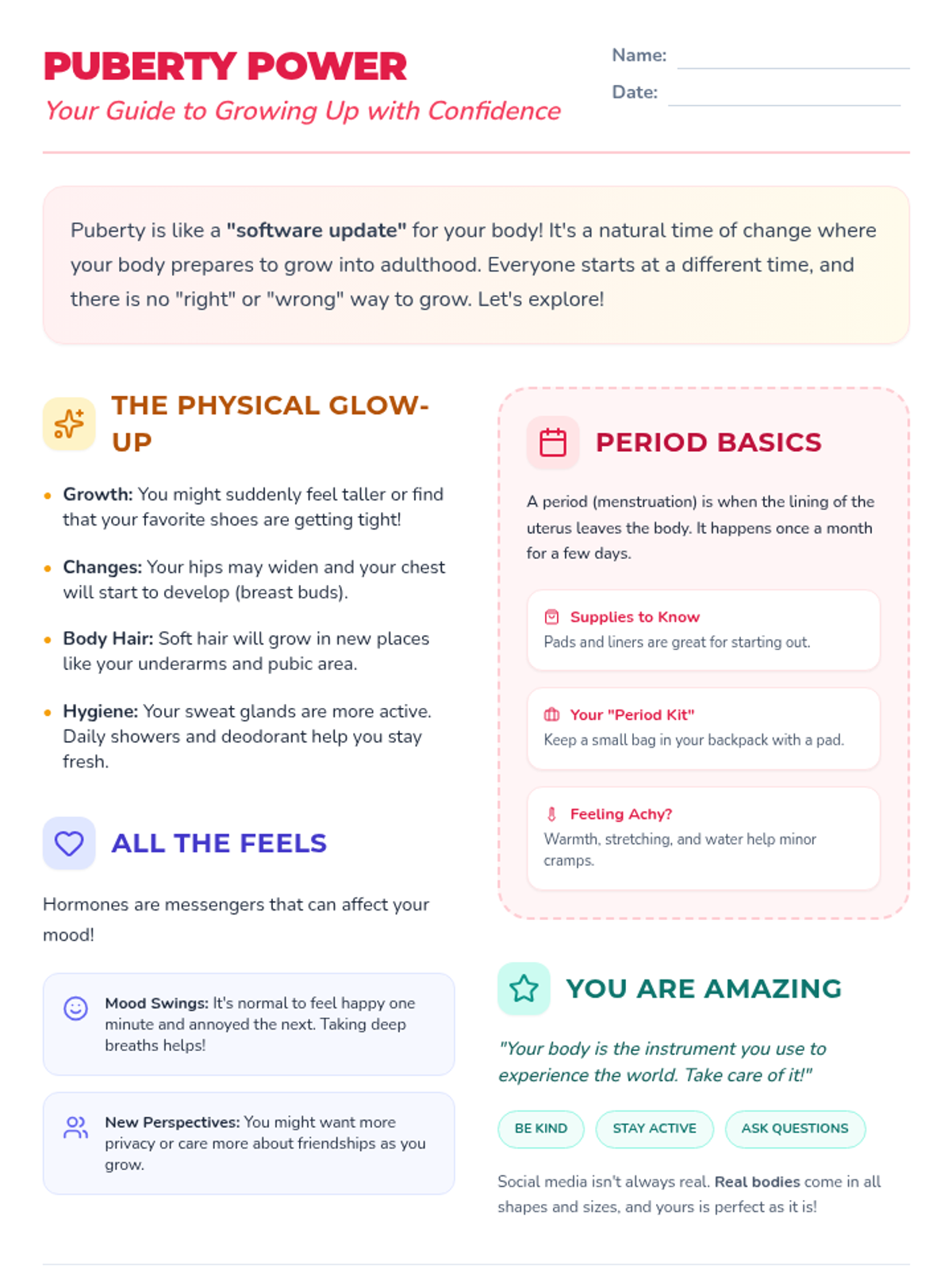
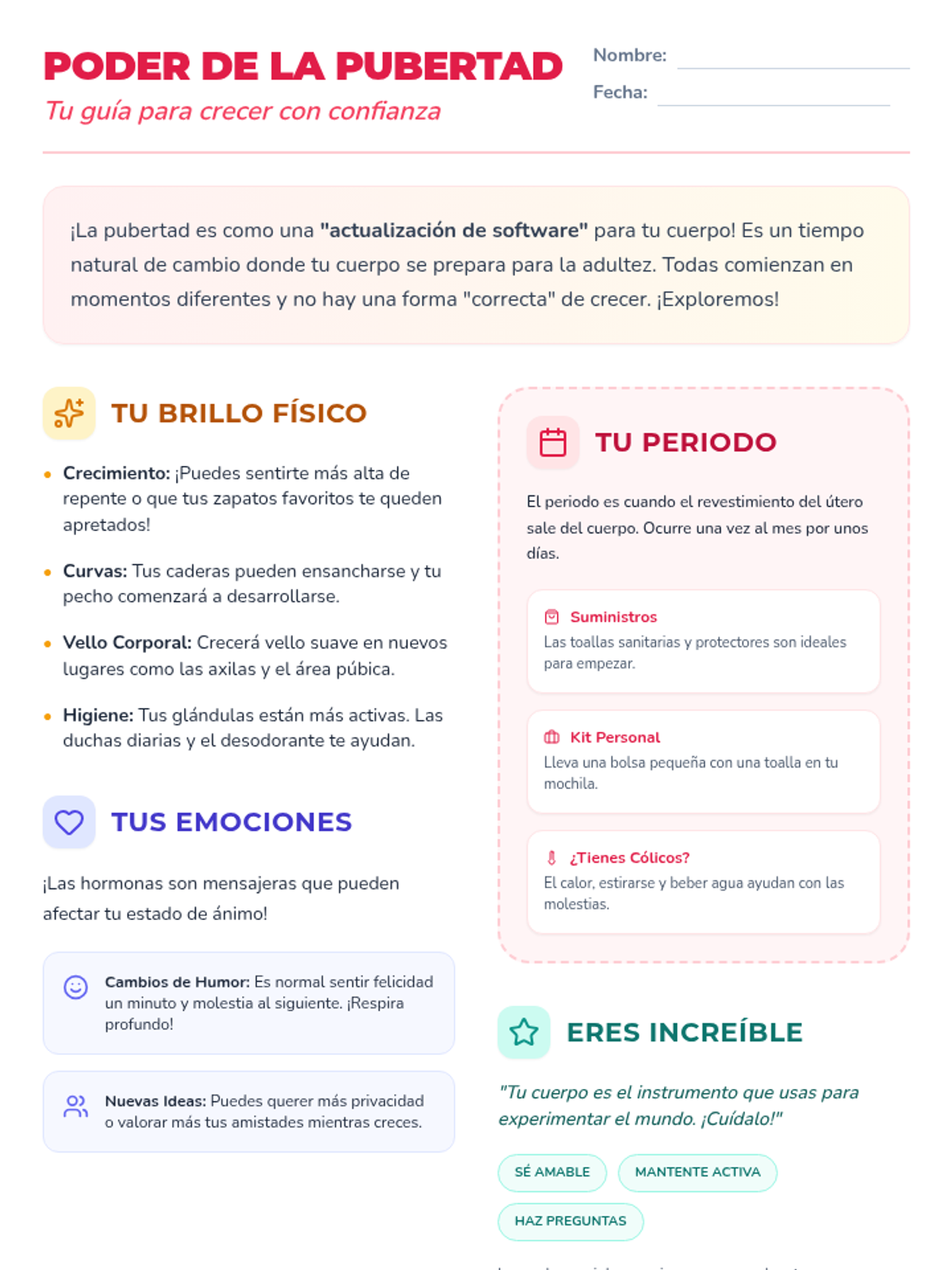
This lesson guides 5th-grade girls through the transition of puberty, focusing on physical changes, hygiene, menstruation, emotional health, and personal boundaries.
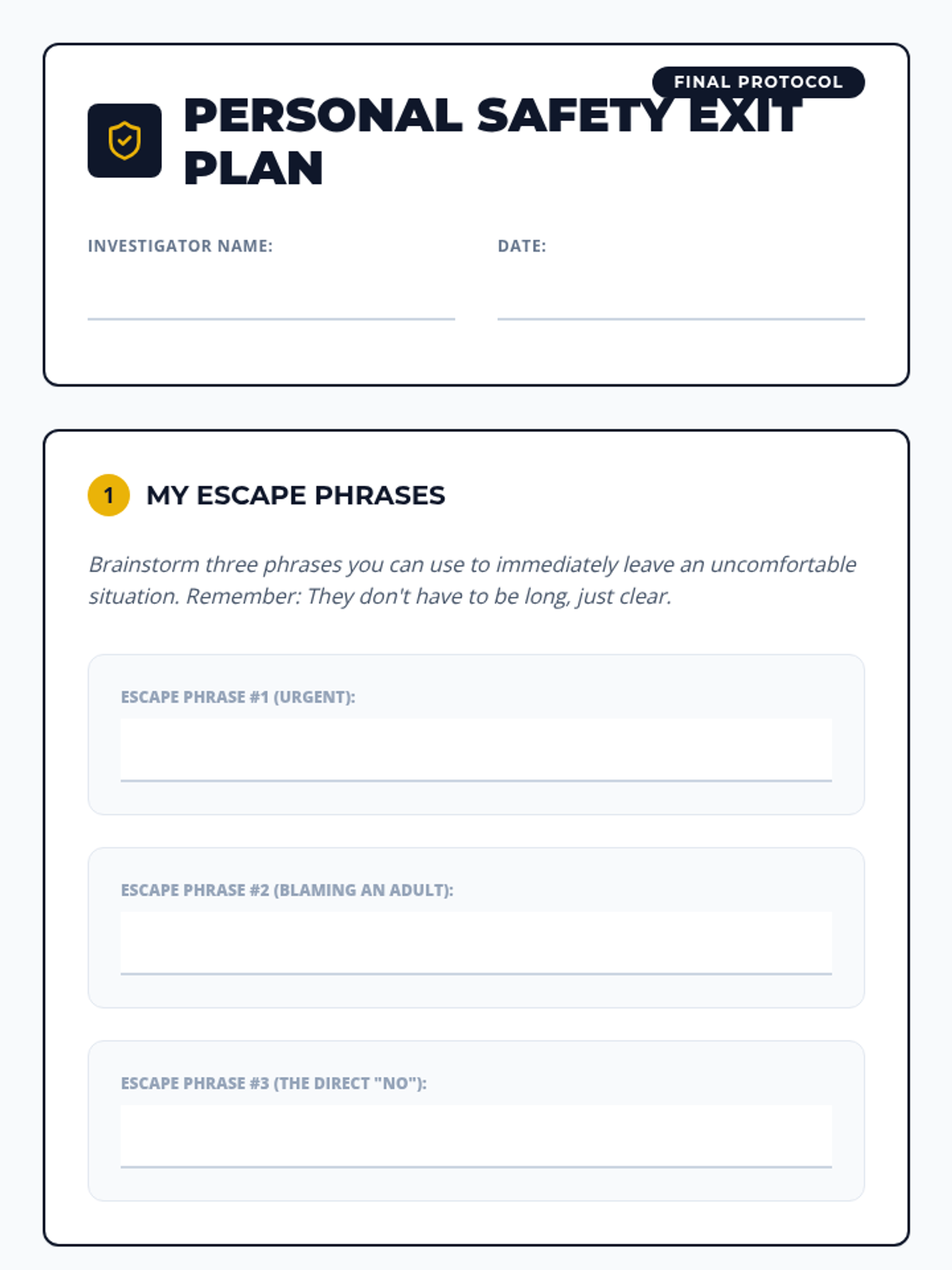
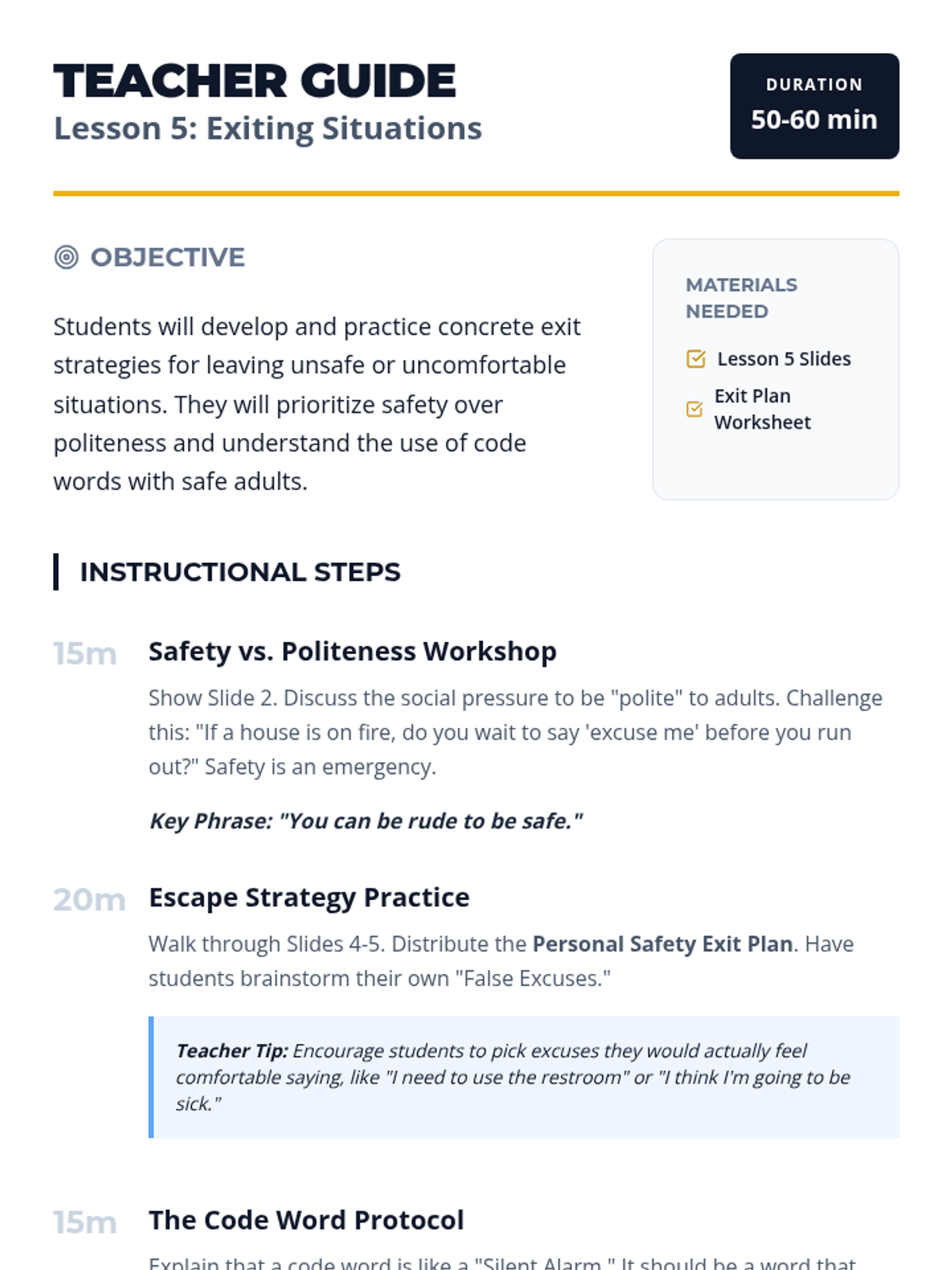
Students brainstorm and practice excuses and exit strategies to get away from people who display tricky behaviors. The focus is on prioritization of safety over politeness.
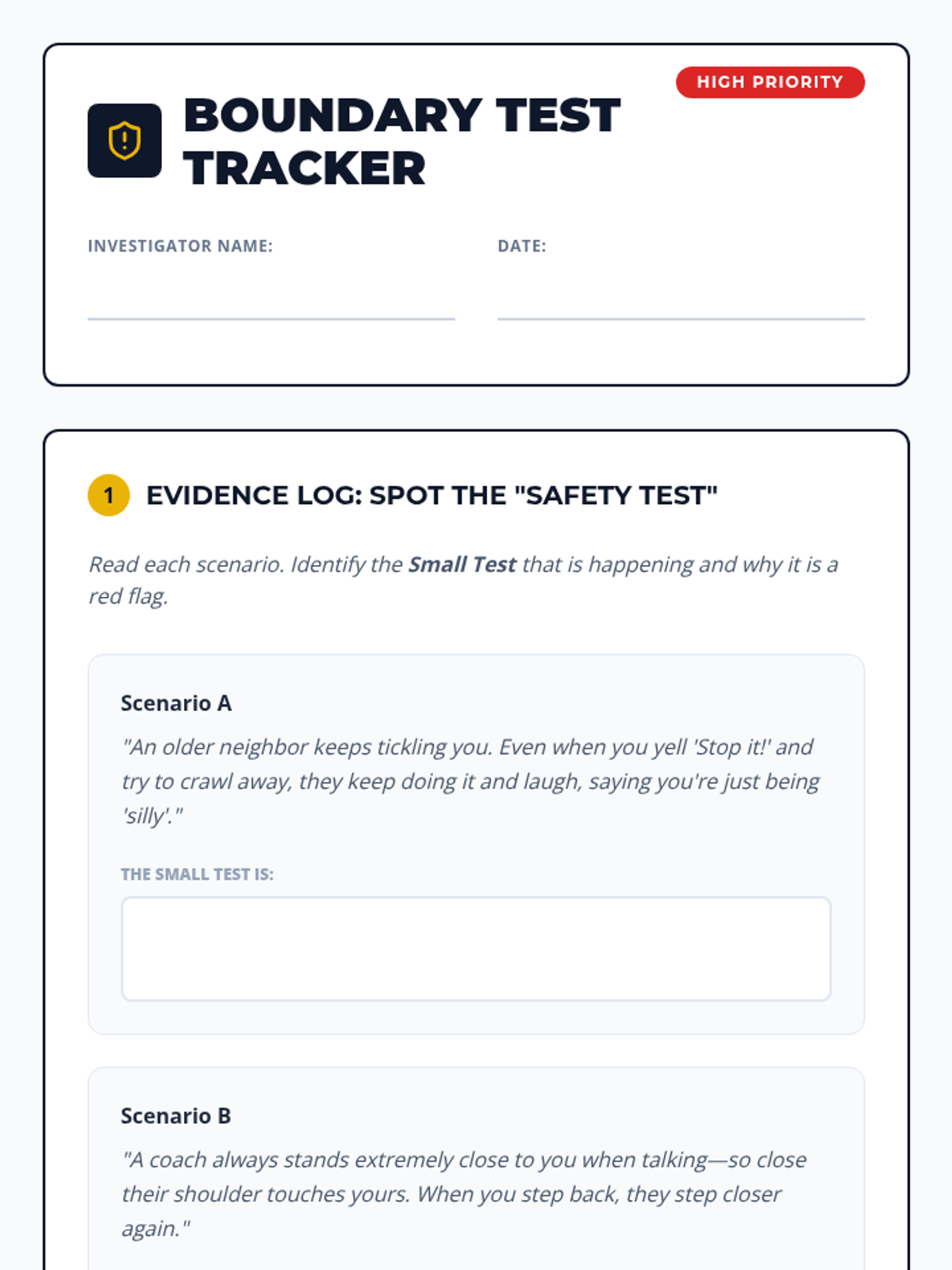
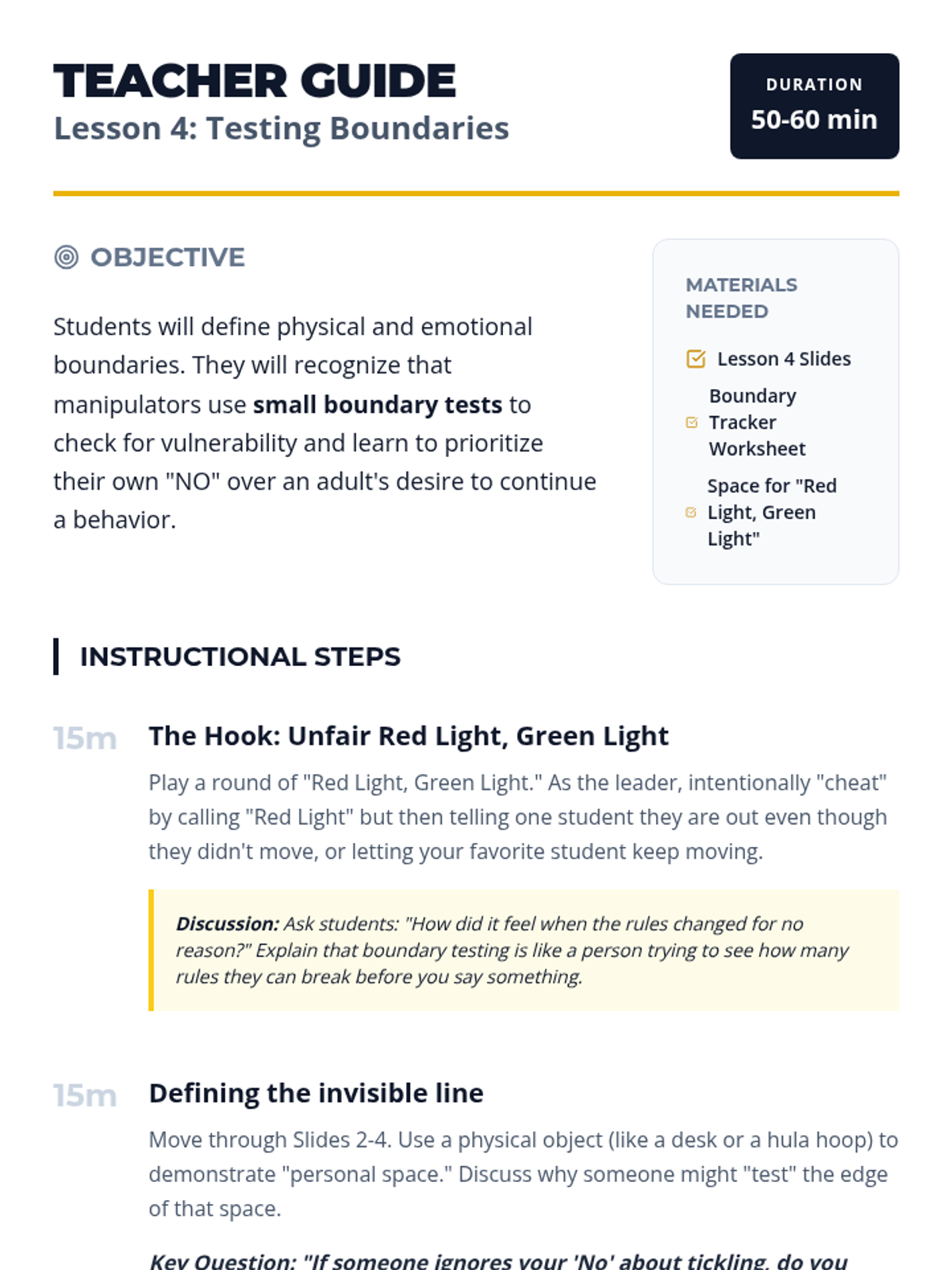
This lesson explains how manipulators test small boundaries to see if they can cross bigger ones later. Students practice recognizing 'test' behaviors like tickling too long or invading personal space.
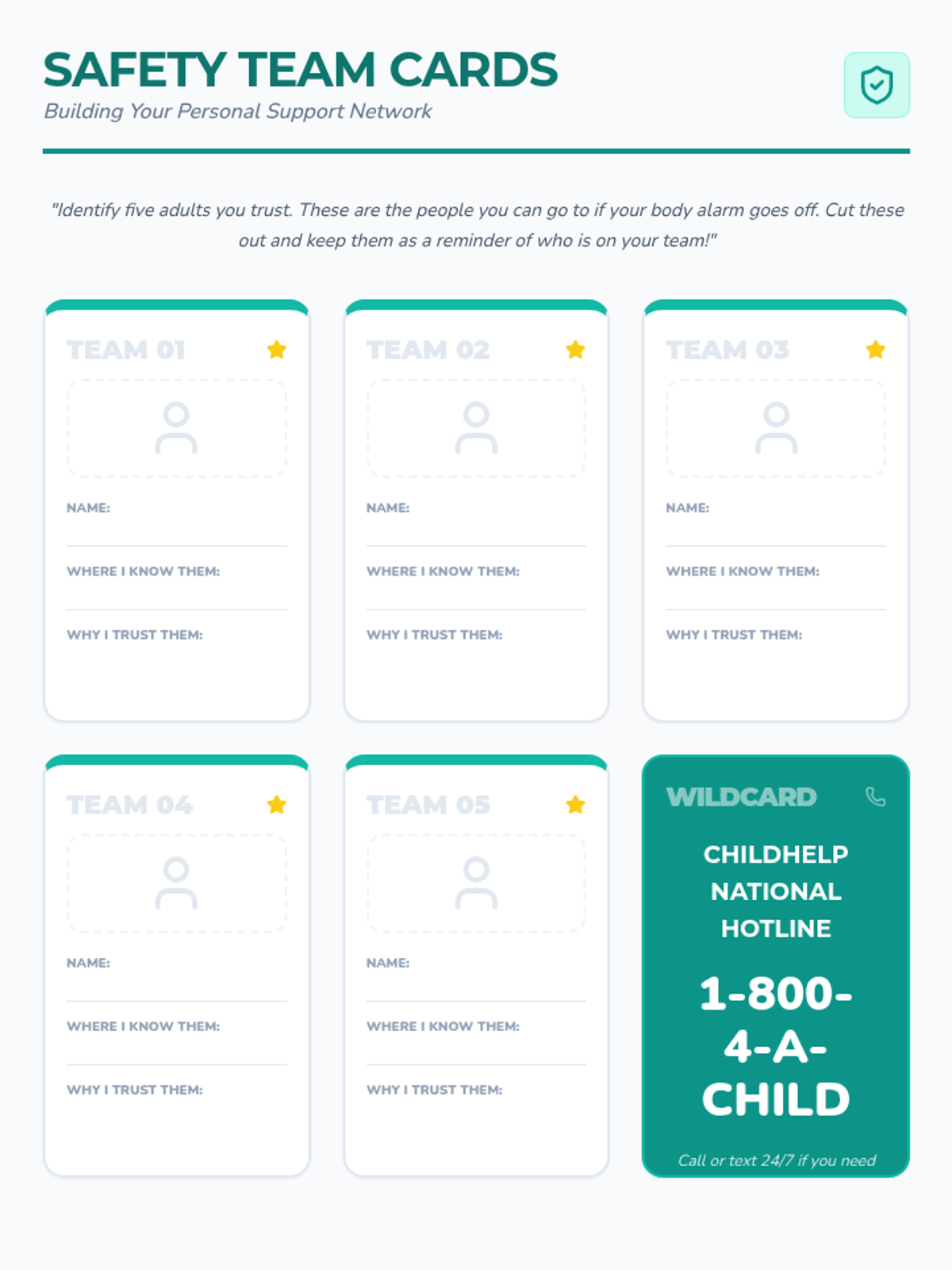
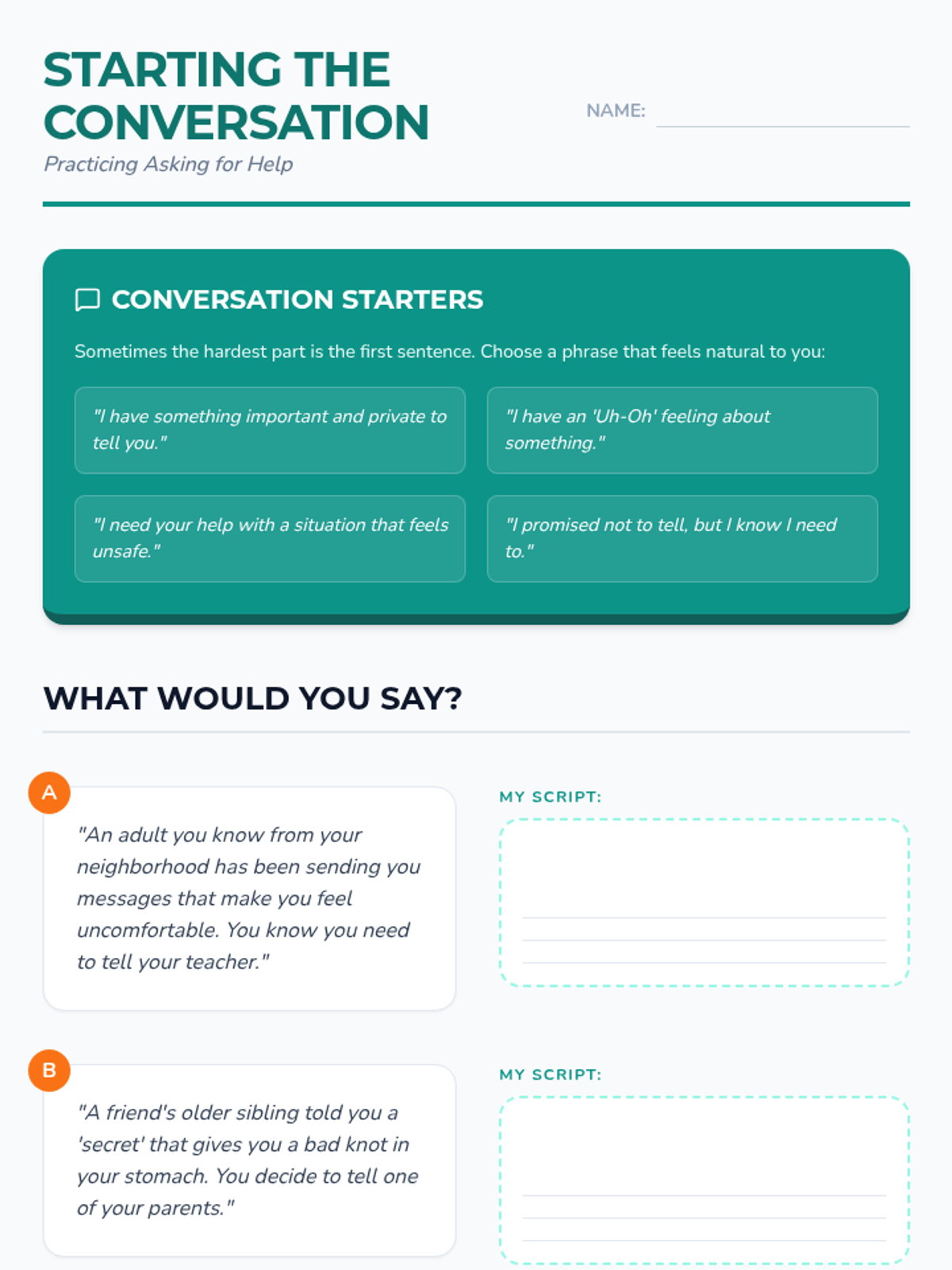
Students map out their personal safety network, identifying adults in various contexts (home, school, community) who can help. They practice how to initiate a conversation if they feel their boundaries have been violated.
Students practice verbal and non-verbal techniques for saying 'no' effectively in pressure situations. The lesson uses role-playing to help students overcome the social pressure to be compliant when they feel unsafe.
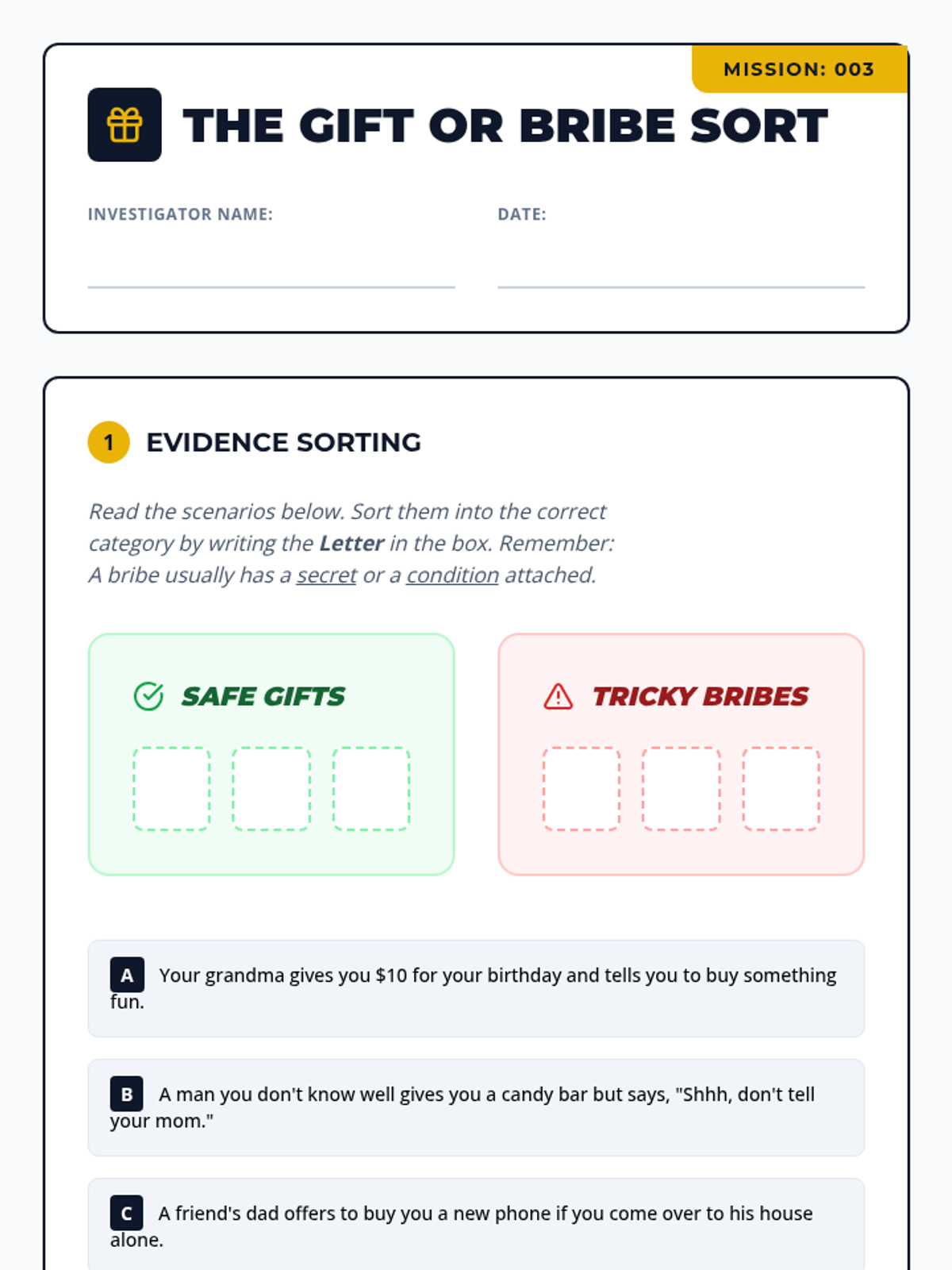
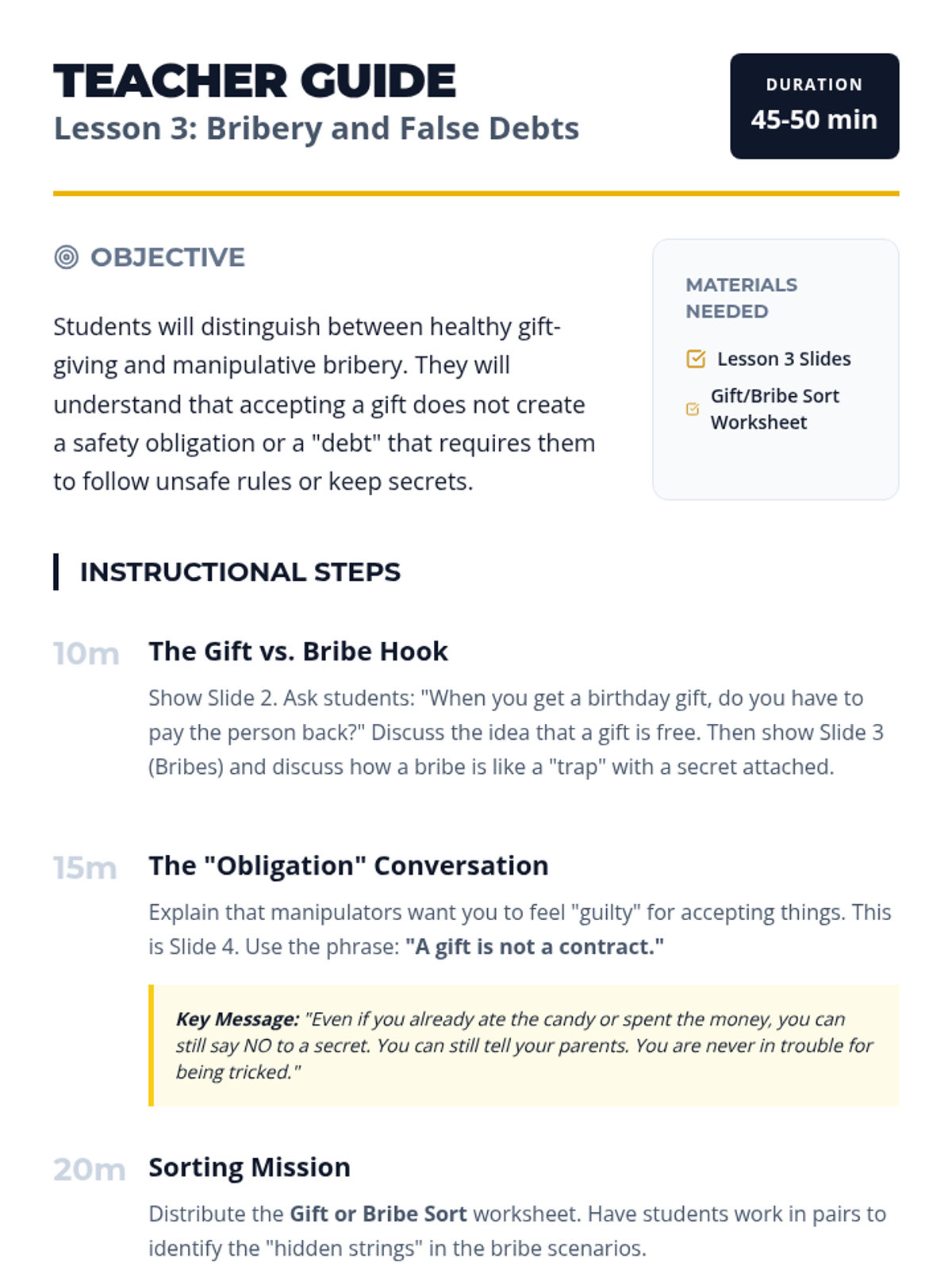
Students explore how gifts, money, or favors can be used to create a sense of obligation. The lesson emphasizes that they do not 'owe' anyone anything that compromises their safety, even if they accepted a gift.
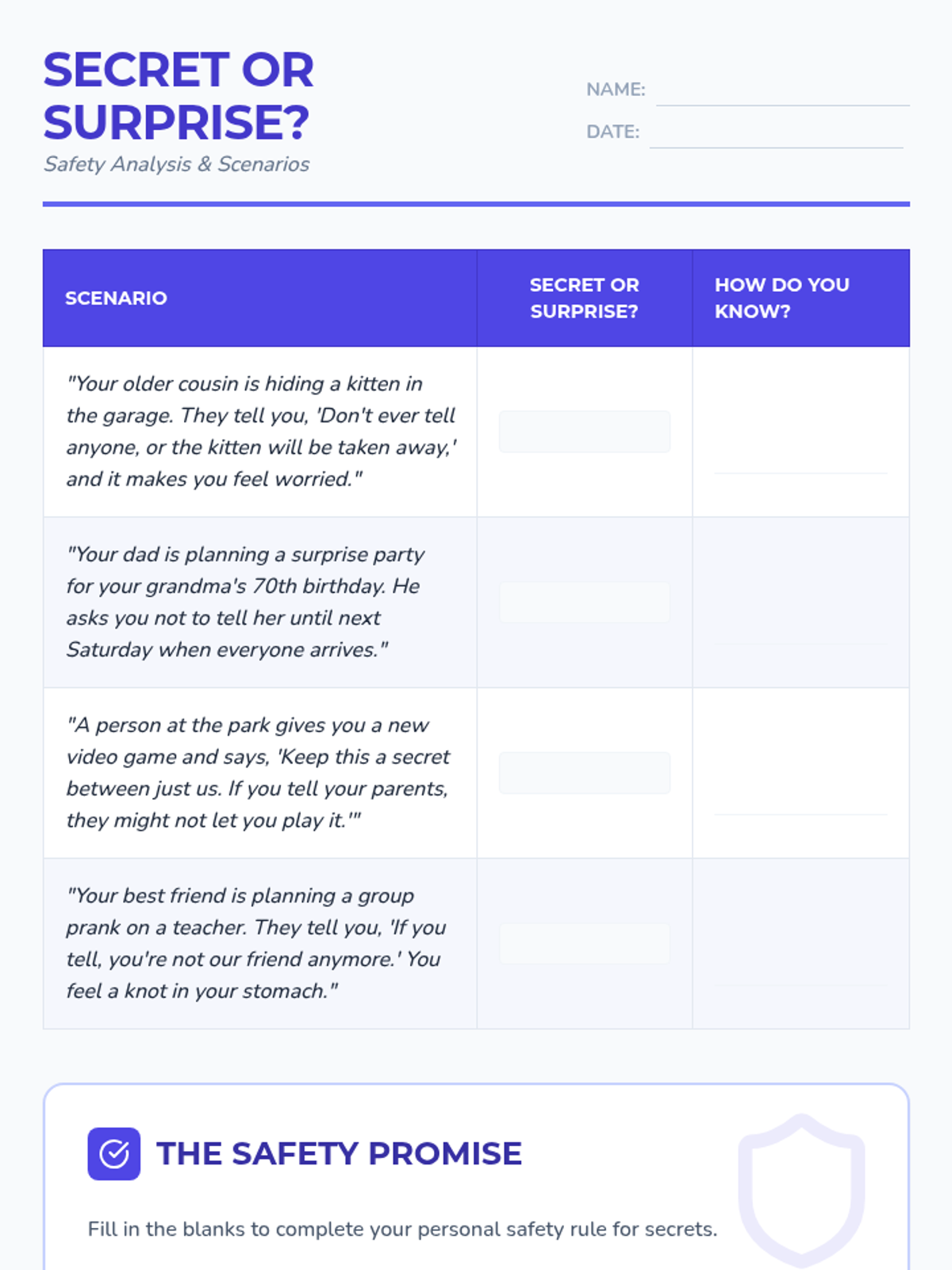
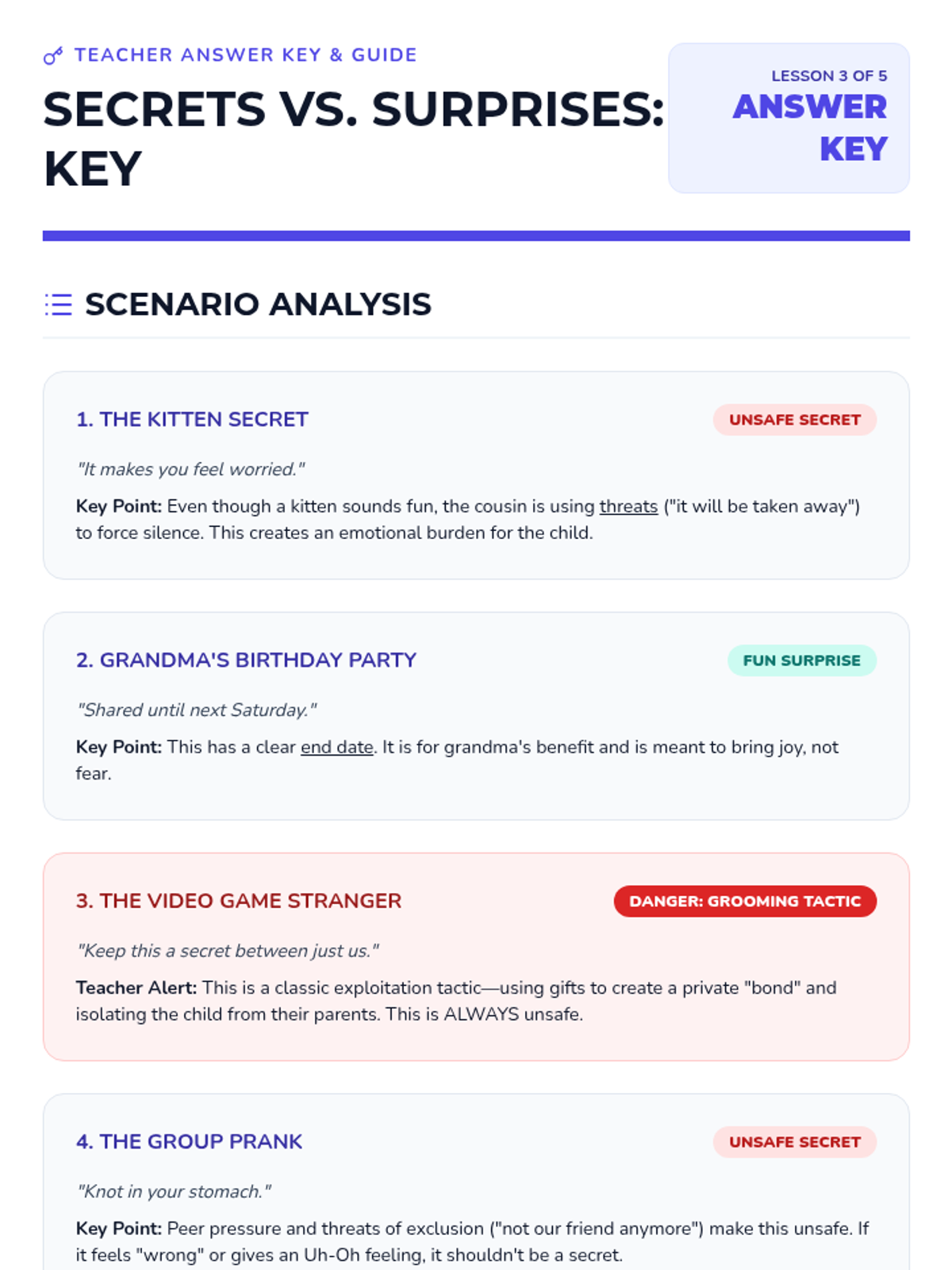
This lesson distinguishes between fun surprises (that are eventually told) and unsafe secrets (that are meant to be kept forever). Students analyze scenarios to determine if a secret is being used to manipulate or isolate them.
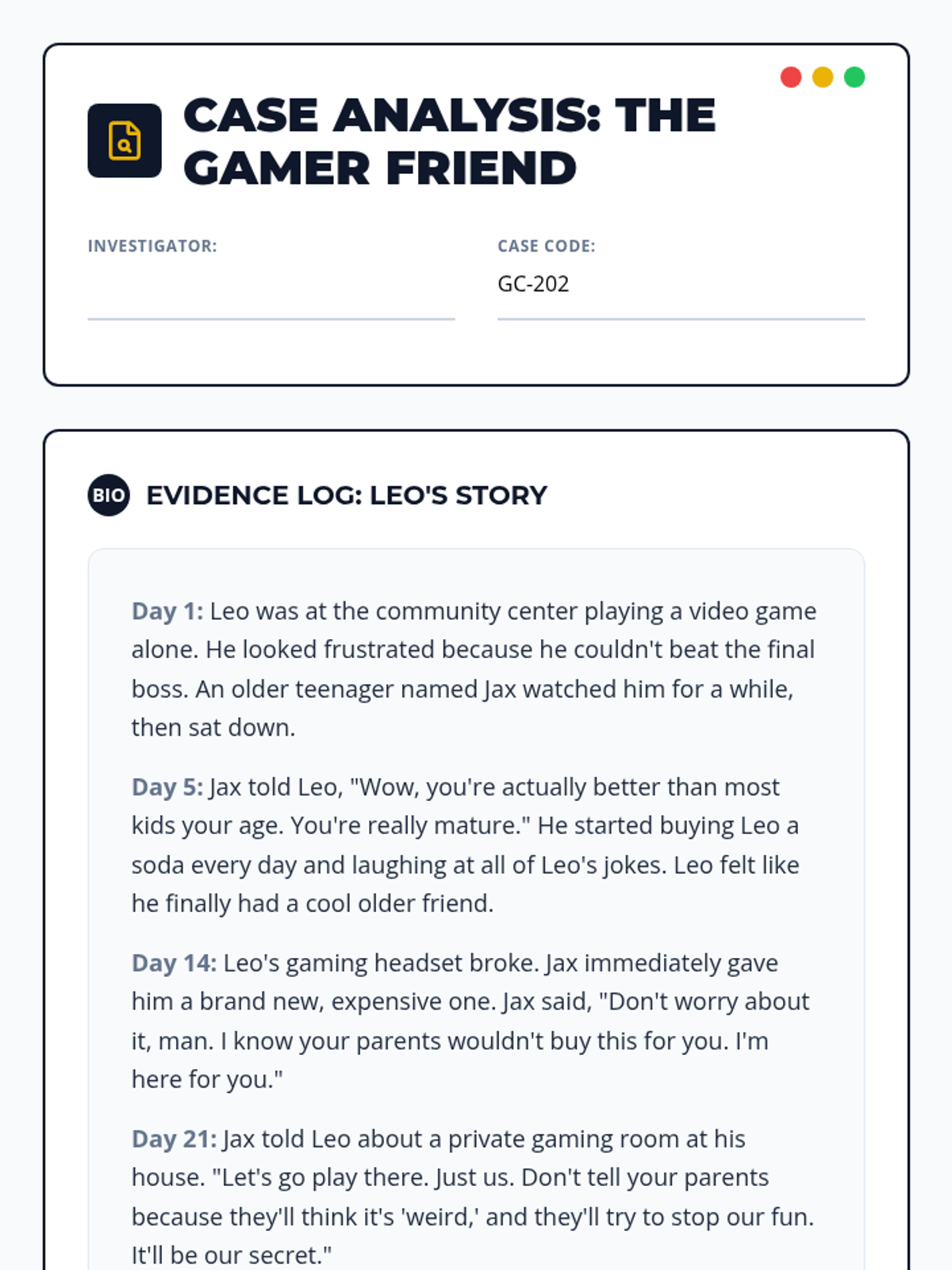
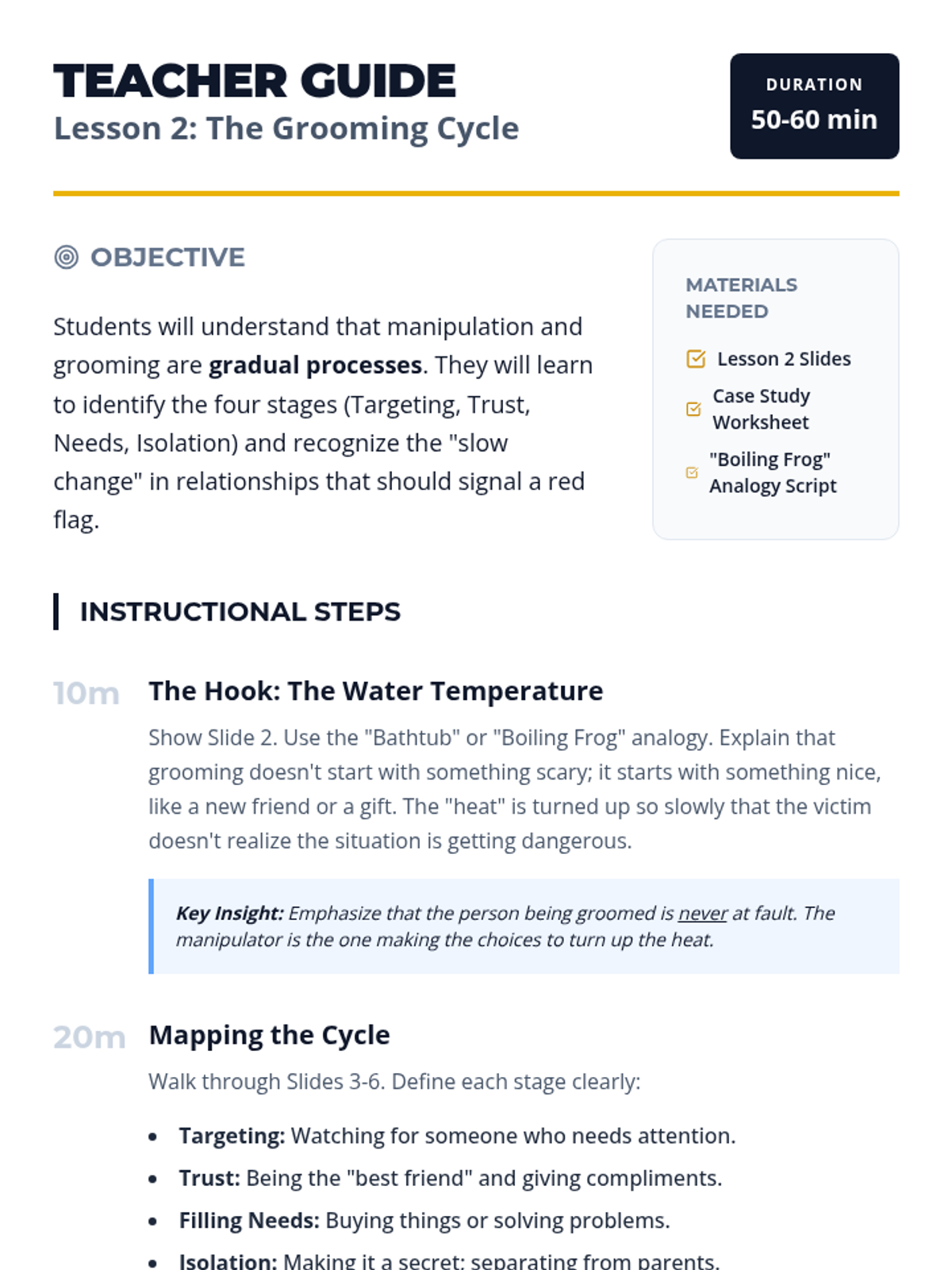
Using age-appropriate language, students map out the stages of manipulation: targeting, gaining trust, filling a need, and isolating. They analyze stories to identify which stage is occurring.
Students learn to identify physiological responses to danger, often called the 'Uh-Oh' feeling. The lesson focuses on validating gut feelings as a primary safety tool rather than dismissing them to be polite.
Students create public service announcements or posters to share safety knowledge with their peers, demonstrating mastery of prevention concepts.
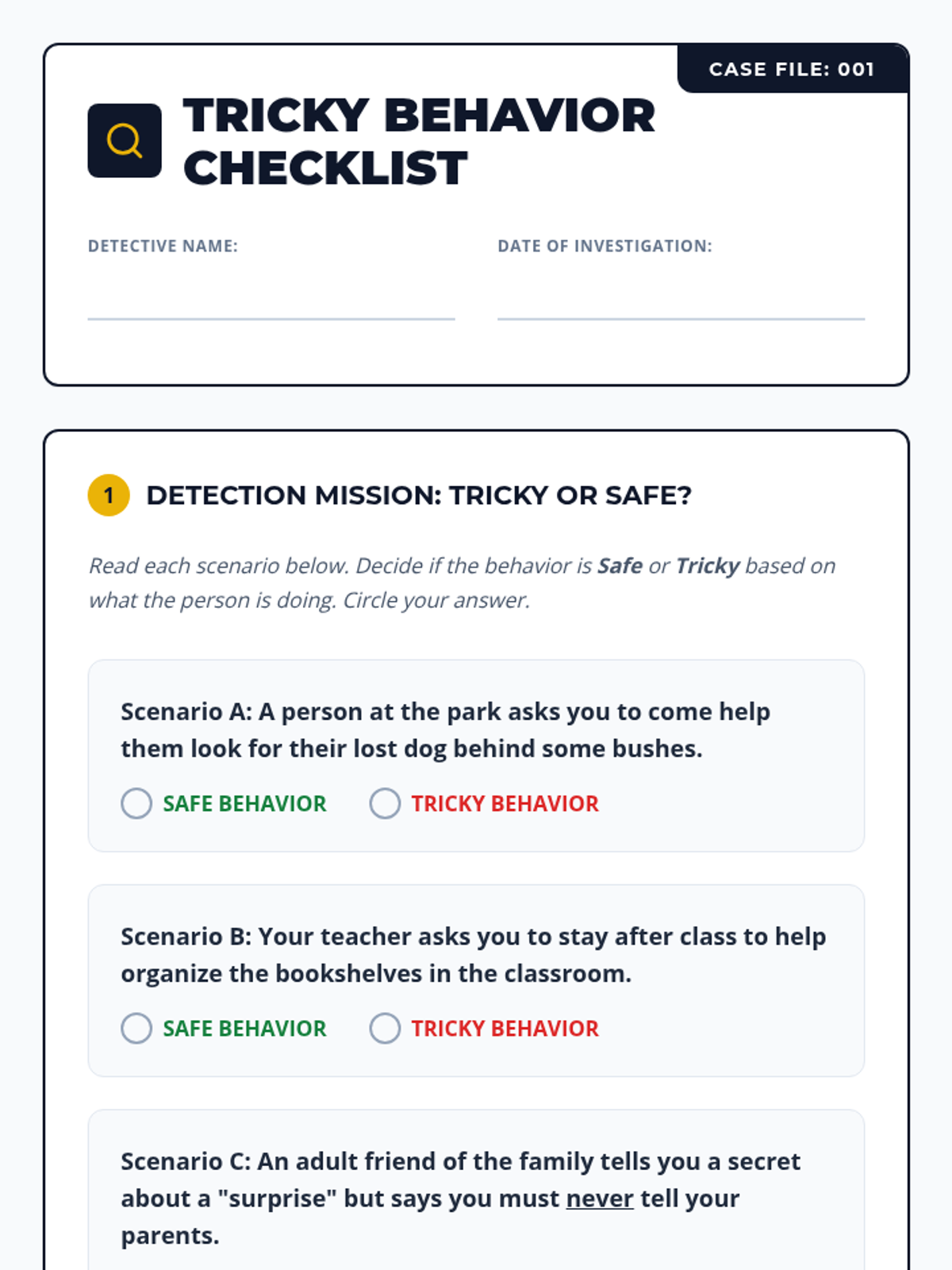
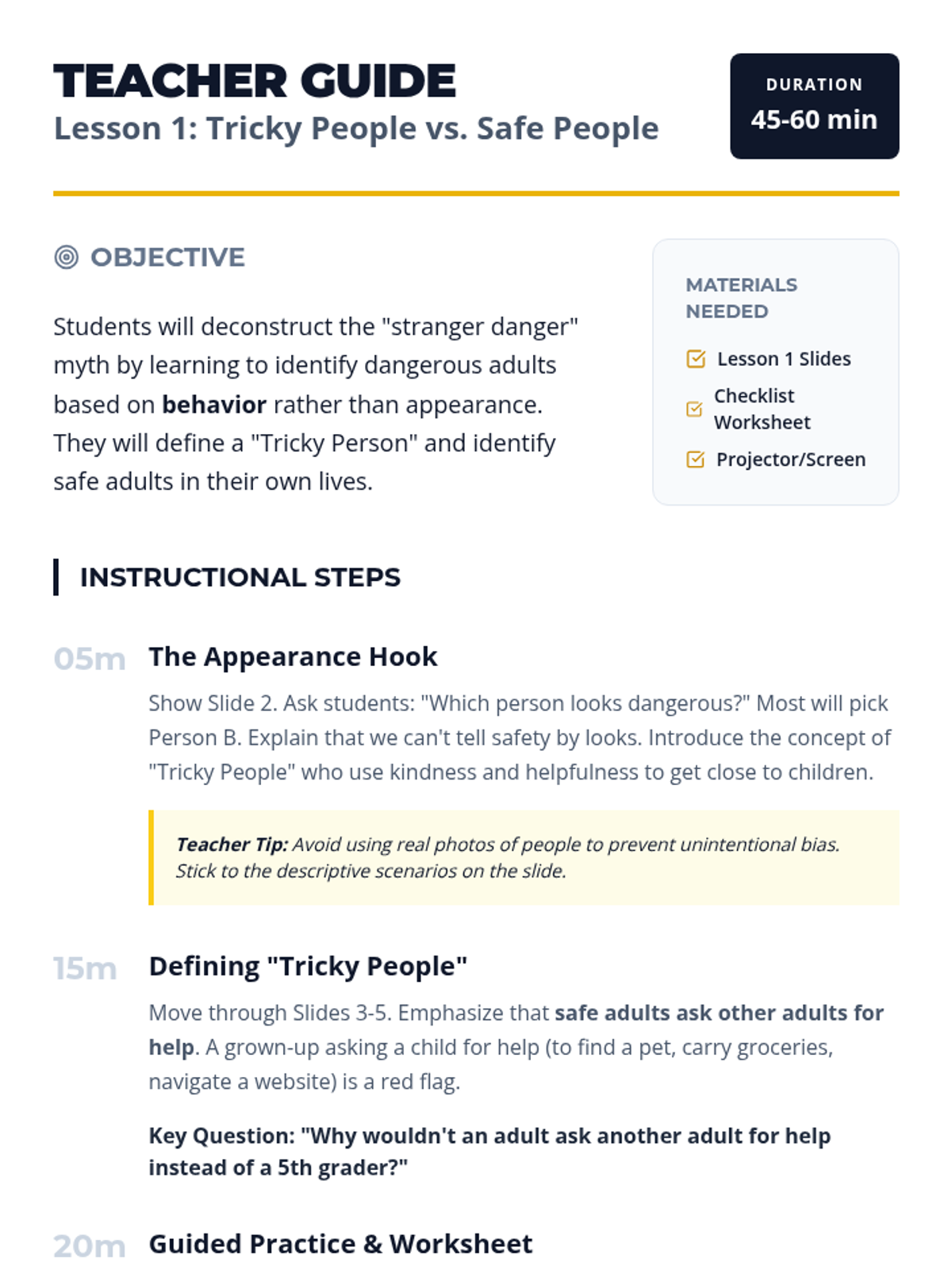
Students challenge the myth that dangerous people look scary, focusing instead on 'tricky' behaviors. They learn that a tricky person is an adult who asks a child for help or asks them to break safety rules.
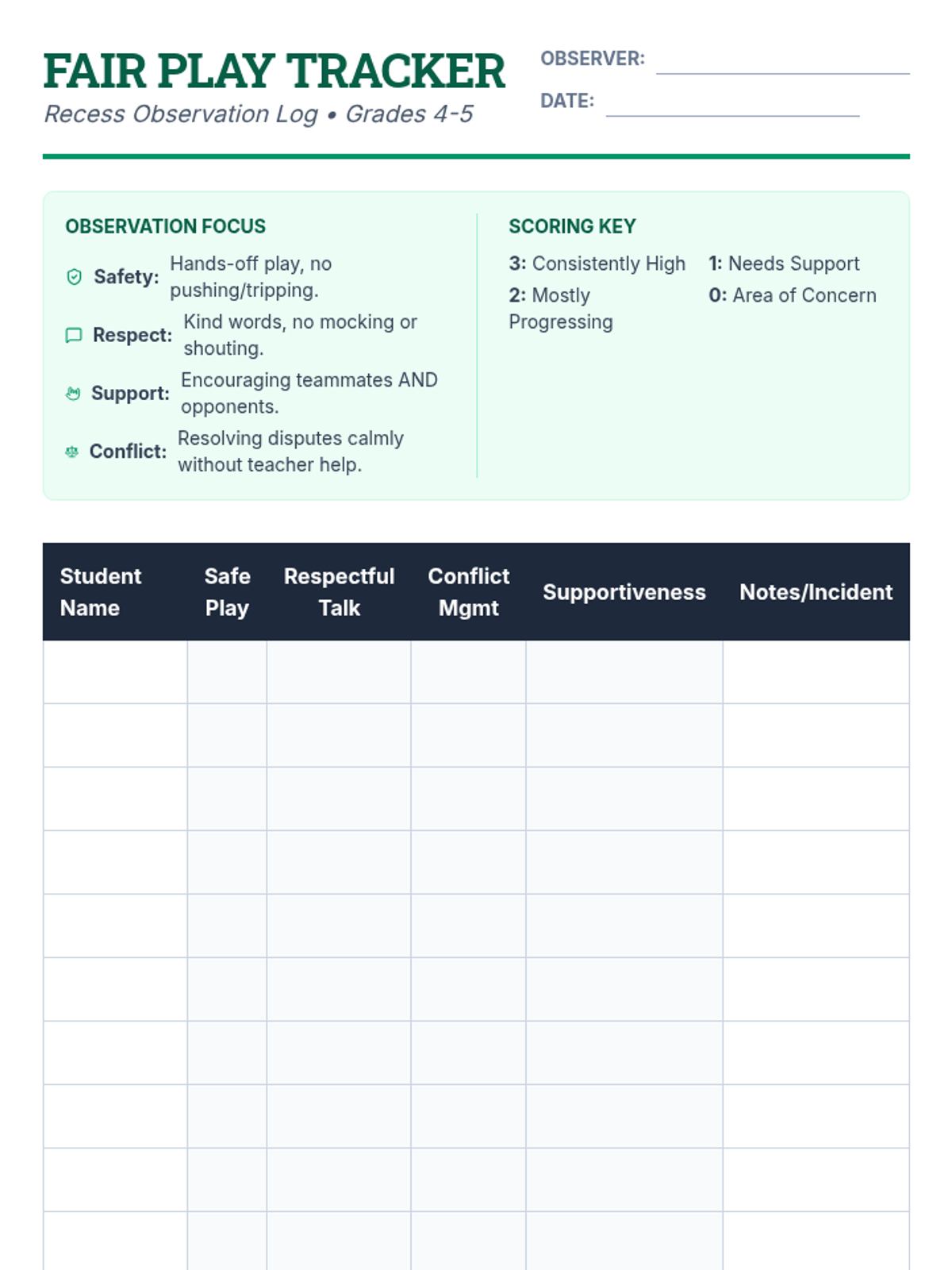
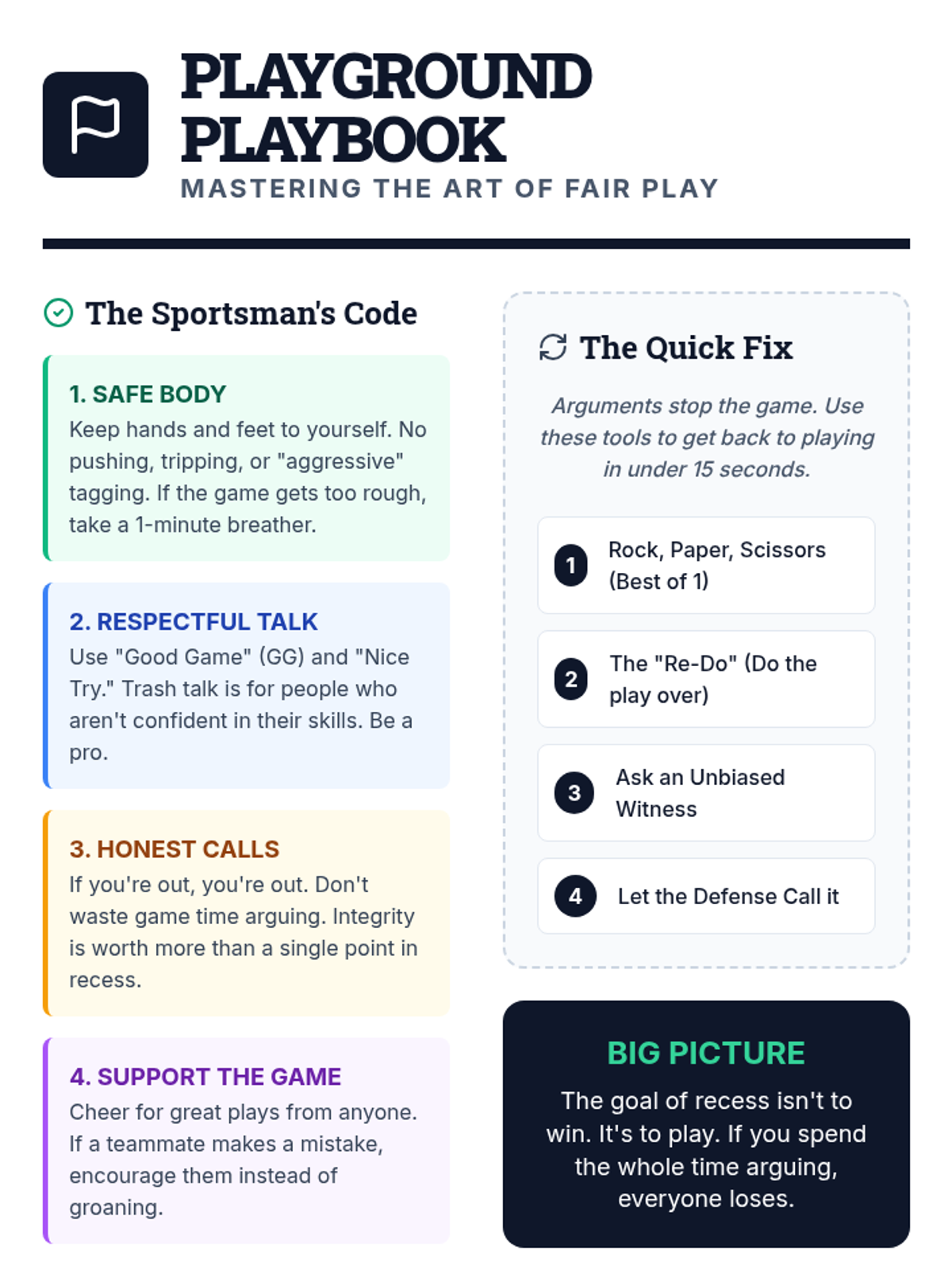
A lesson and set of resources designed to monitor and promote positive sportsmanship and safe play during recess for upper elementary students.
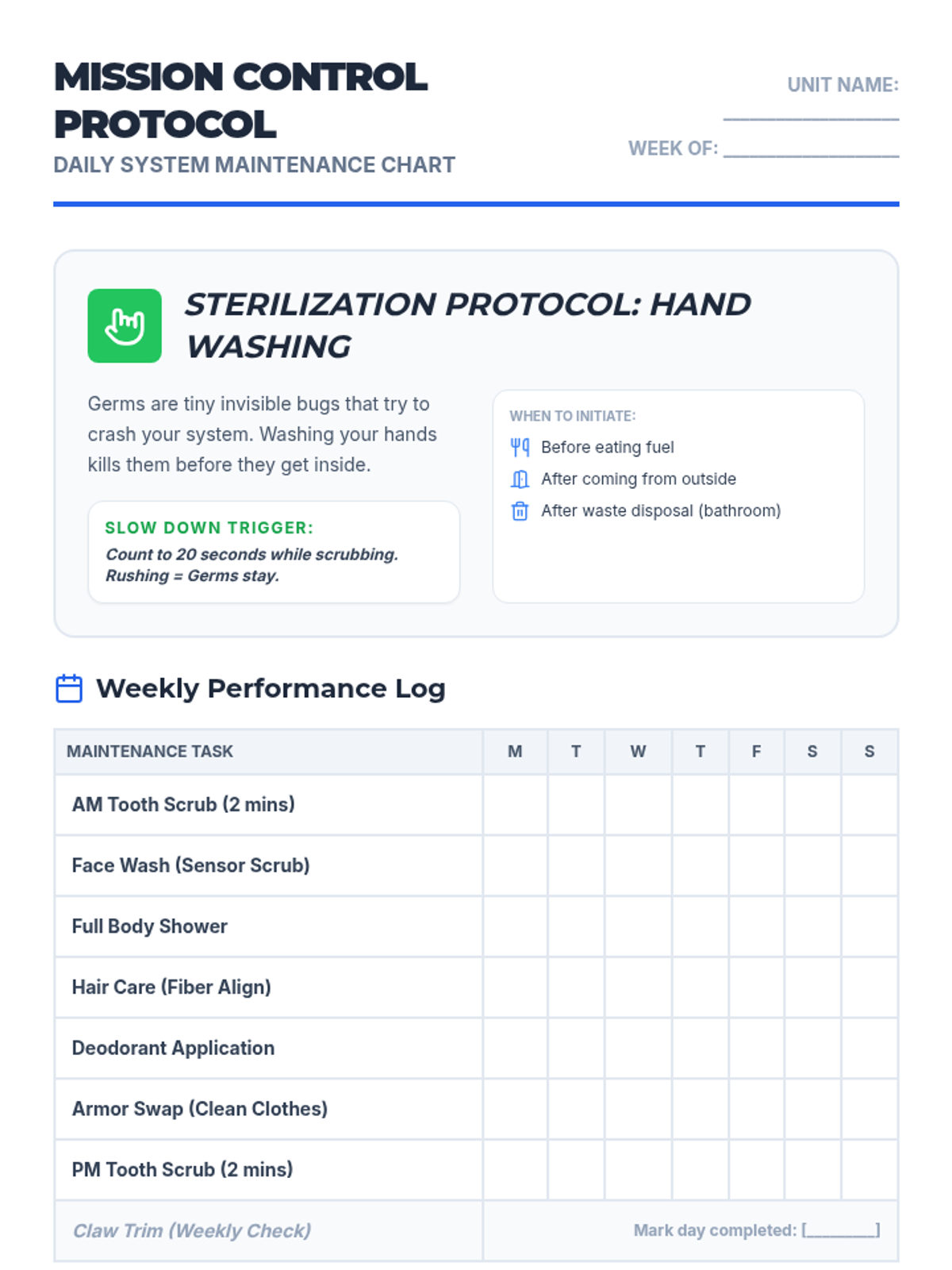
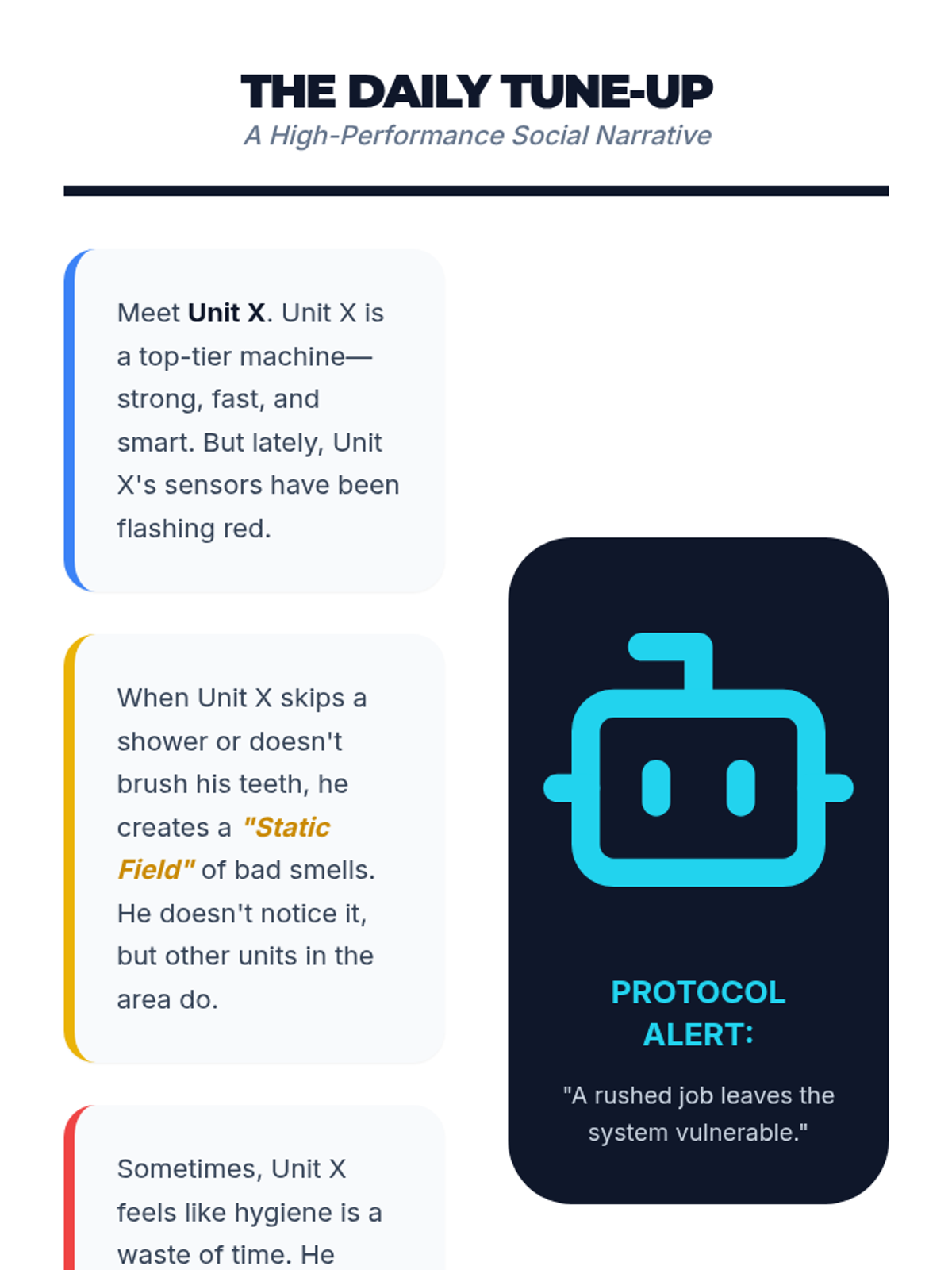
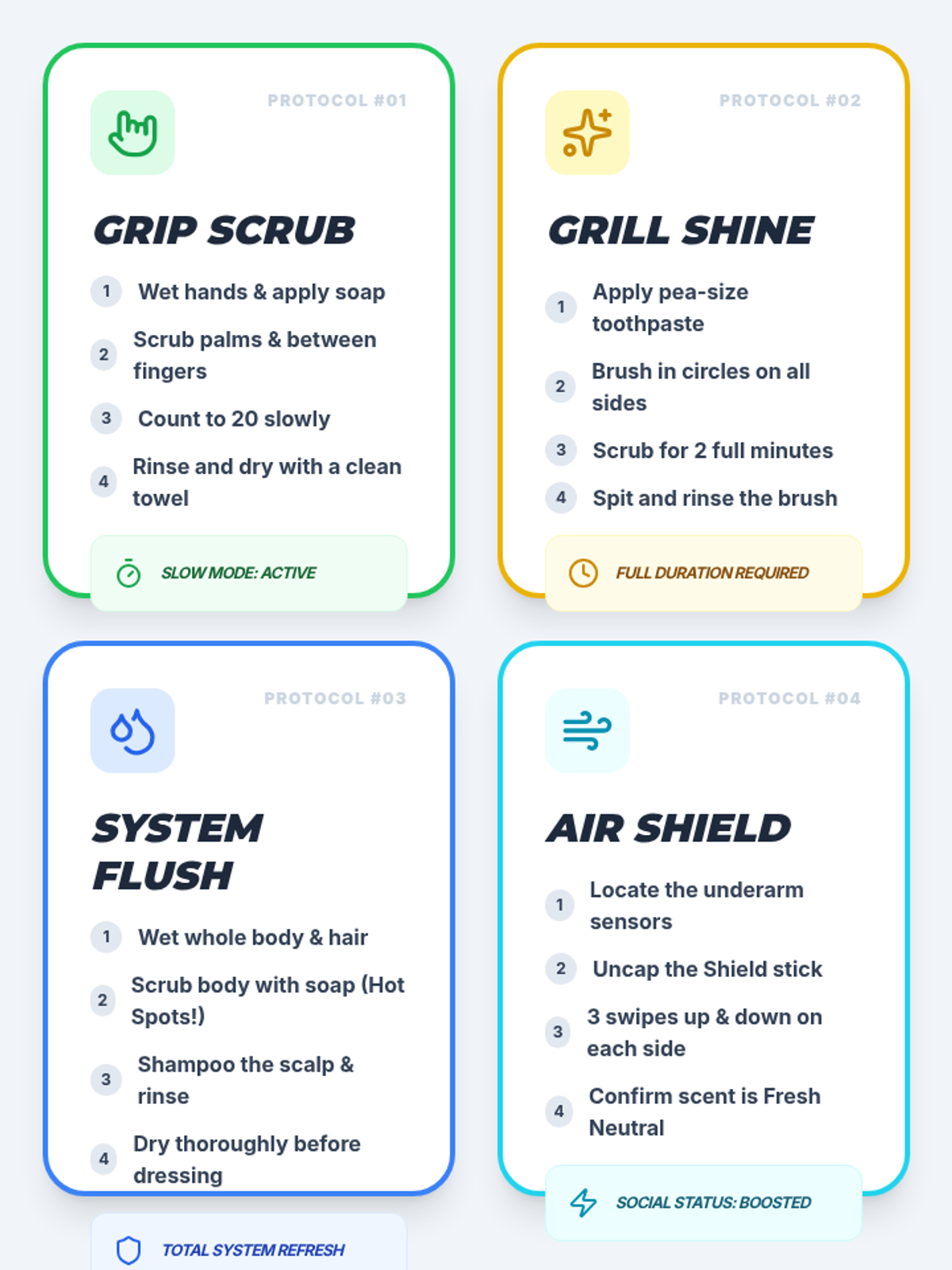
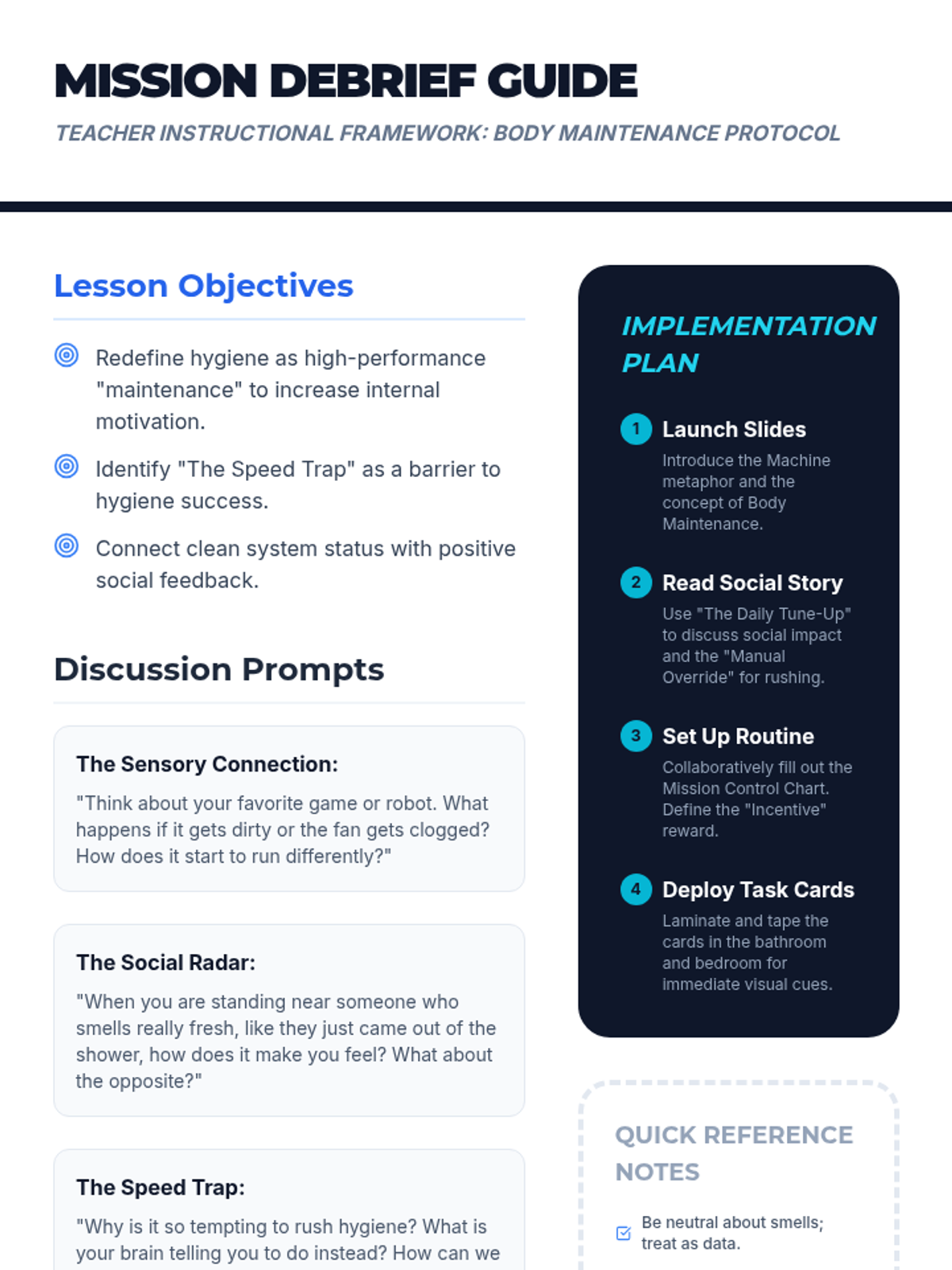
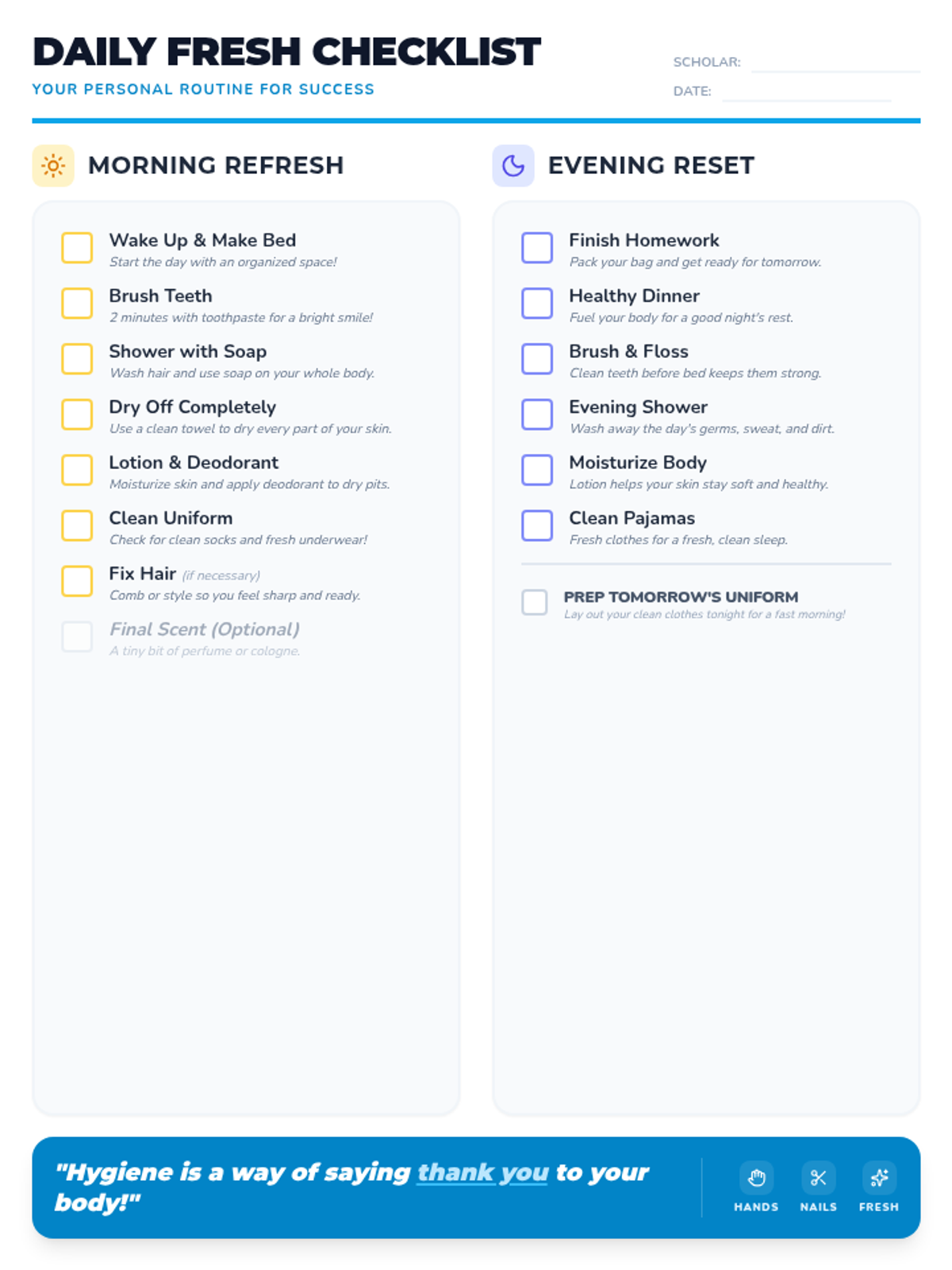
A comprehensive hygiene lesson for older children (ages 9-12) framed through a high-performance machine theme to address reluctance and impulsivity. Includes a visual schedule, social narrative, task cards, and teacher guidance.
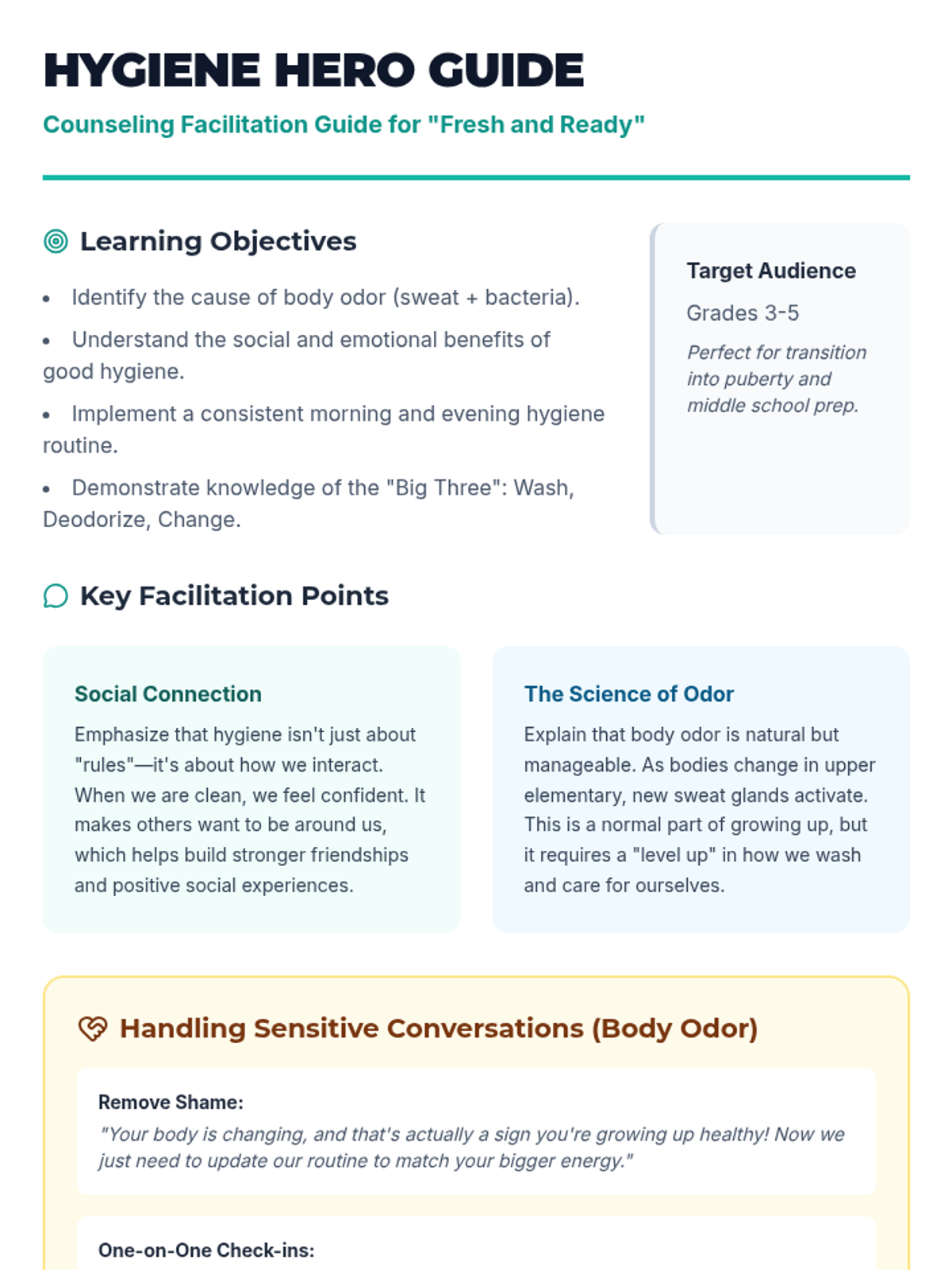
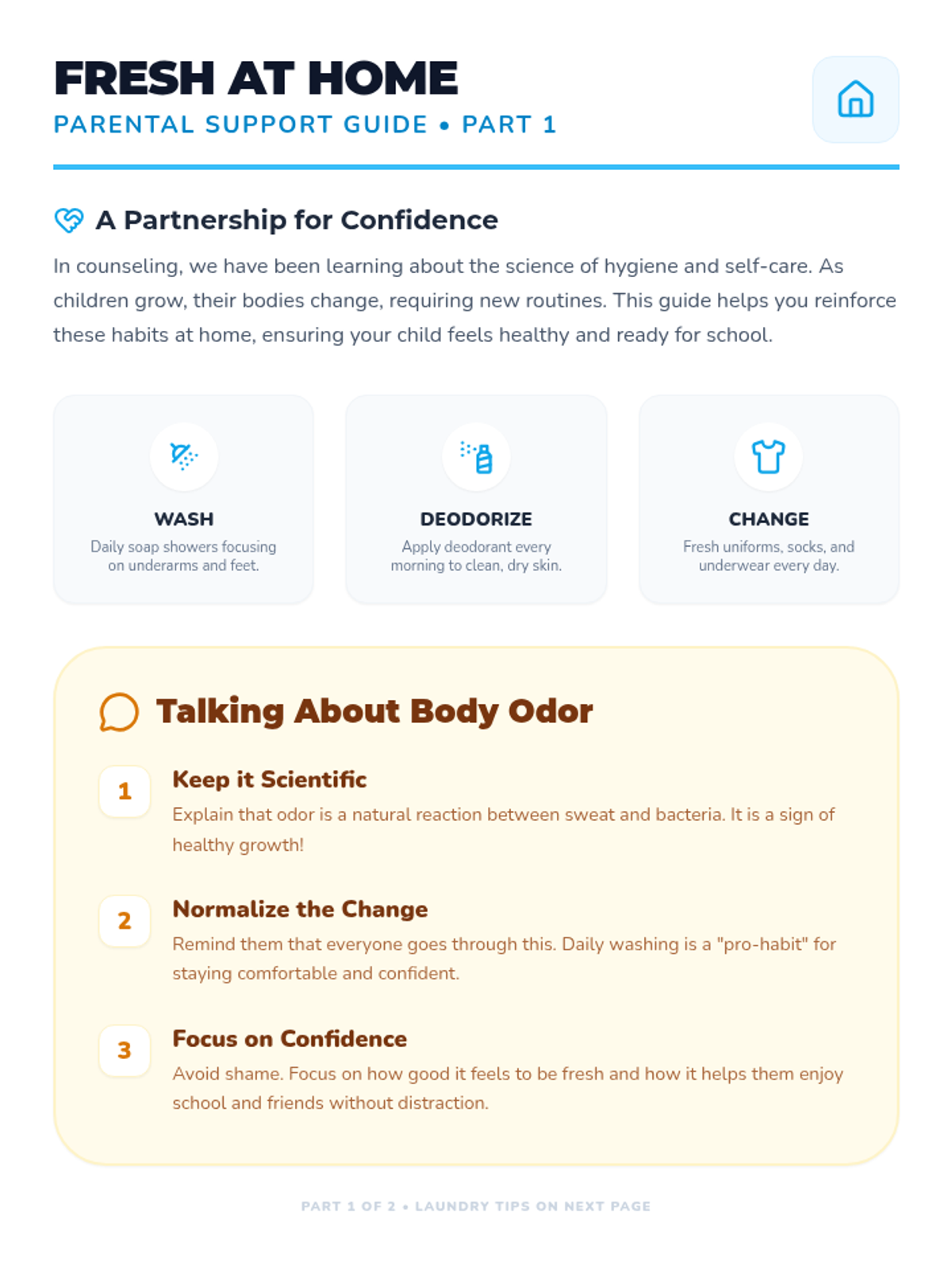
A comprehensive lesson on personal hygiene routines, the science of body odor, and the social-emotional benefits of self-care, designed specifically for upper elementary students.
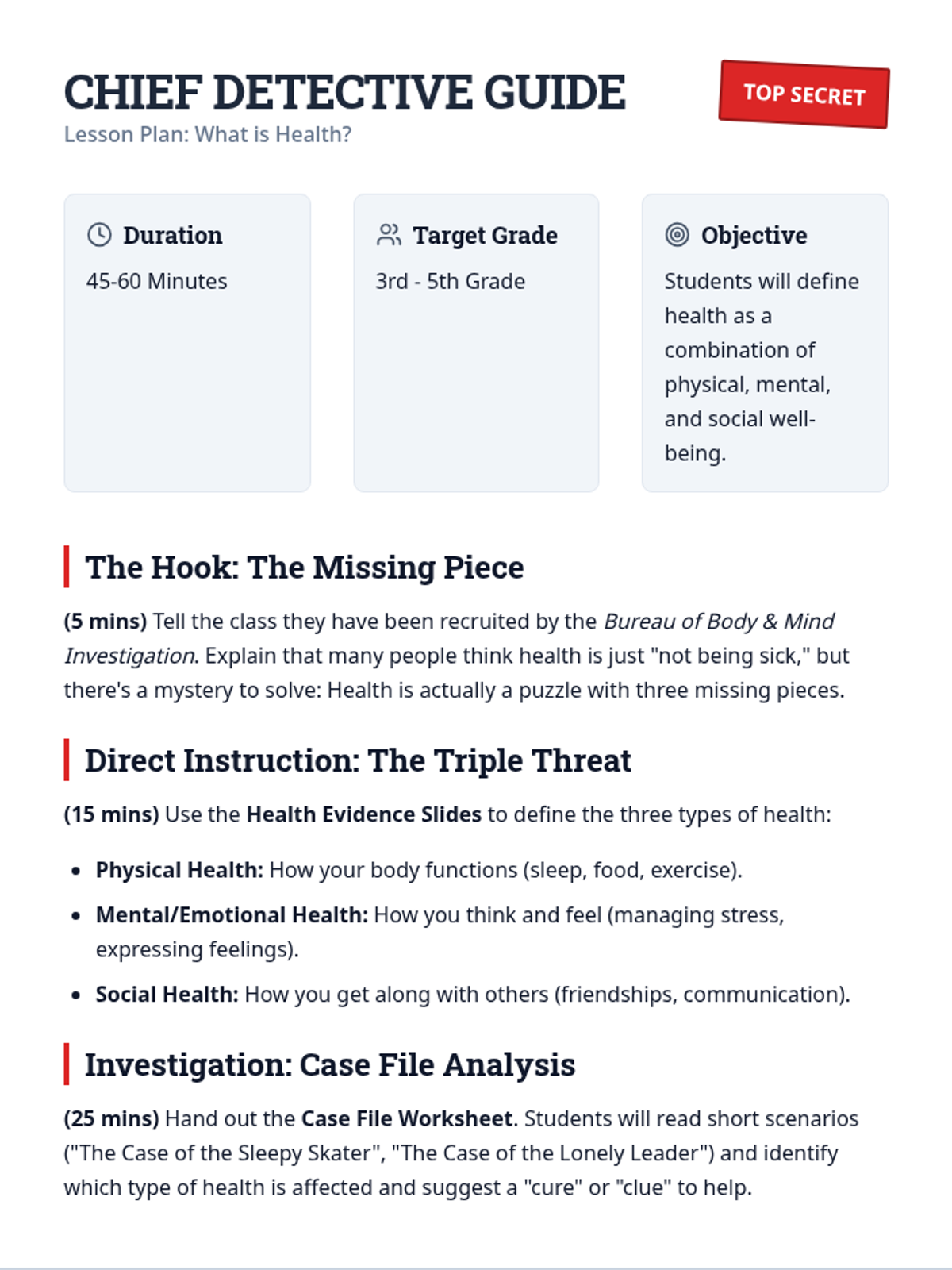
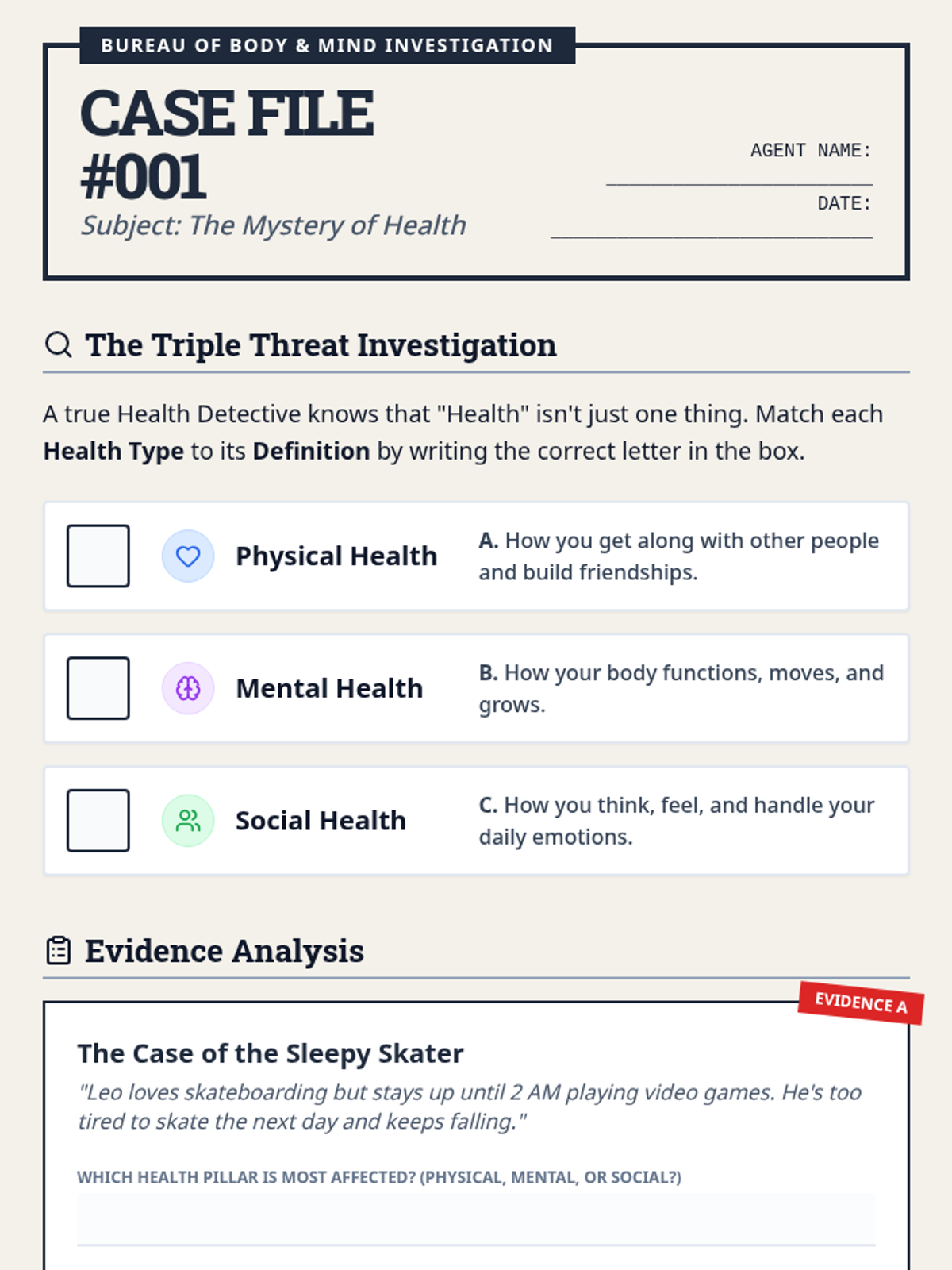
A mystery-themed introduction to the three pillars of health: physical, mental, and social. Students act as 'Health Detectives' to identify the clues that make up a healthy lifestyle.
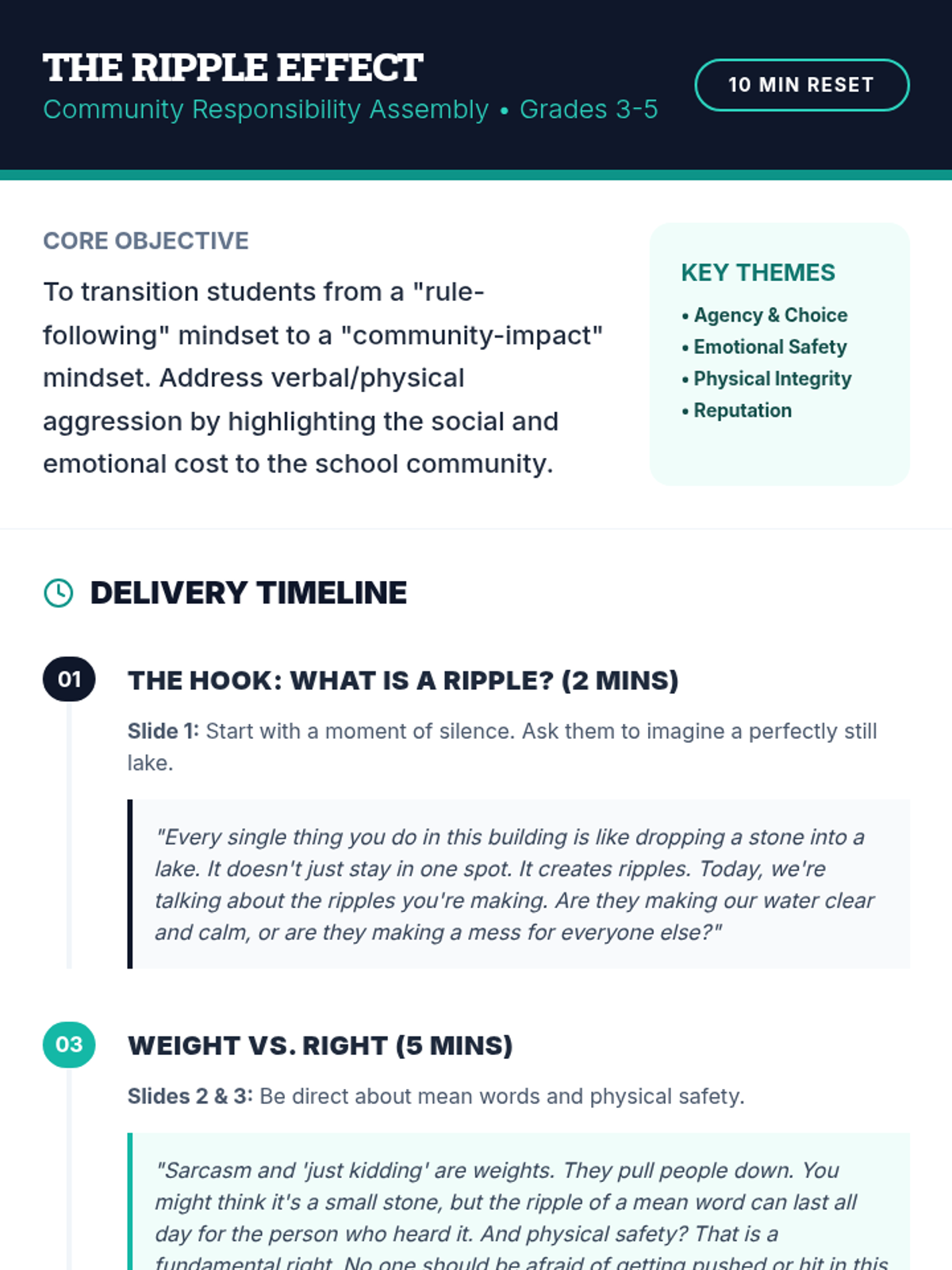
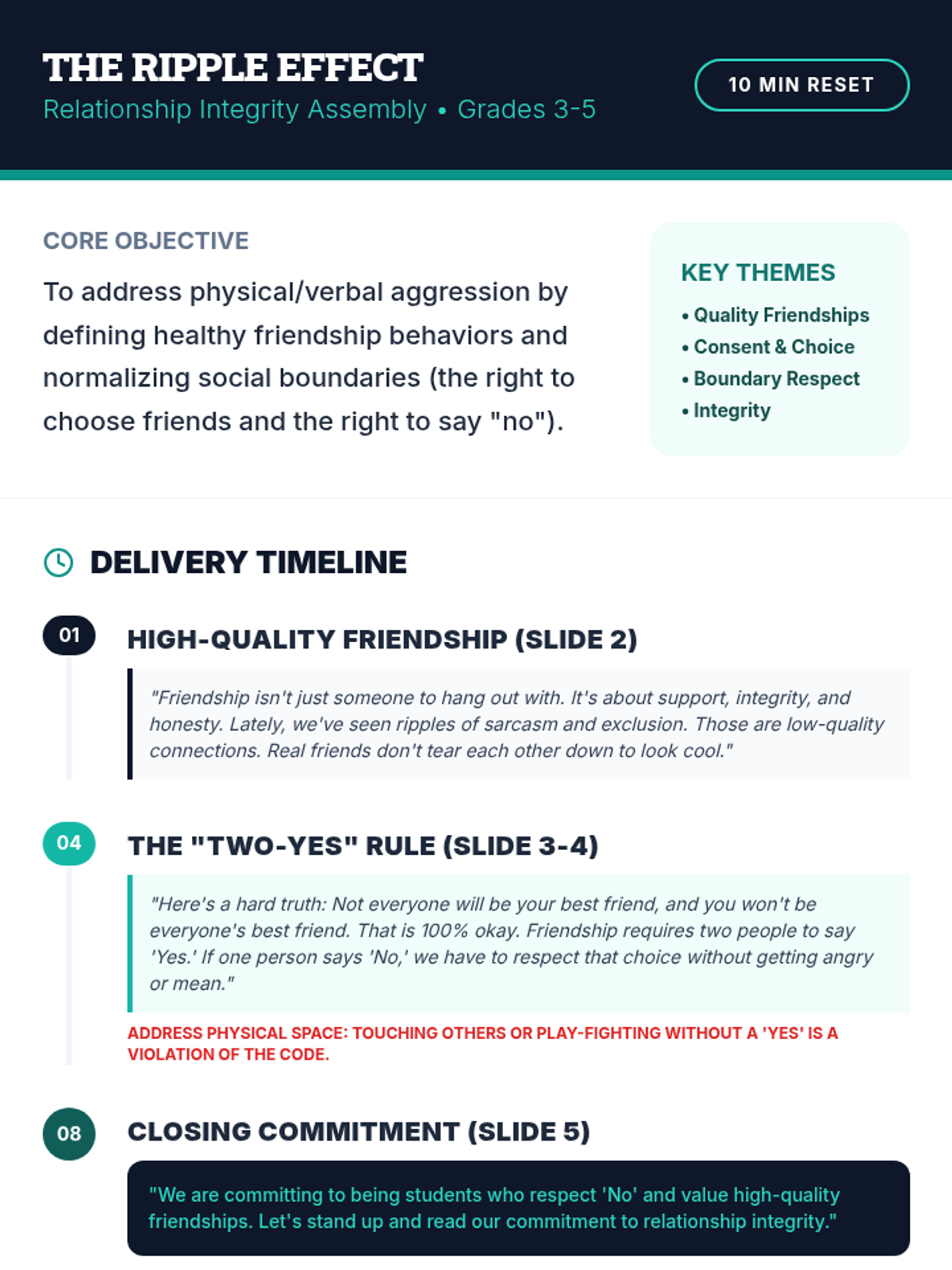
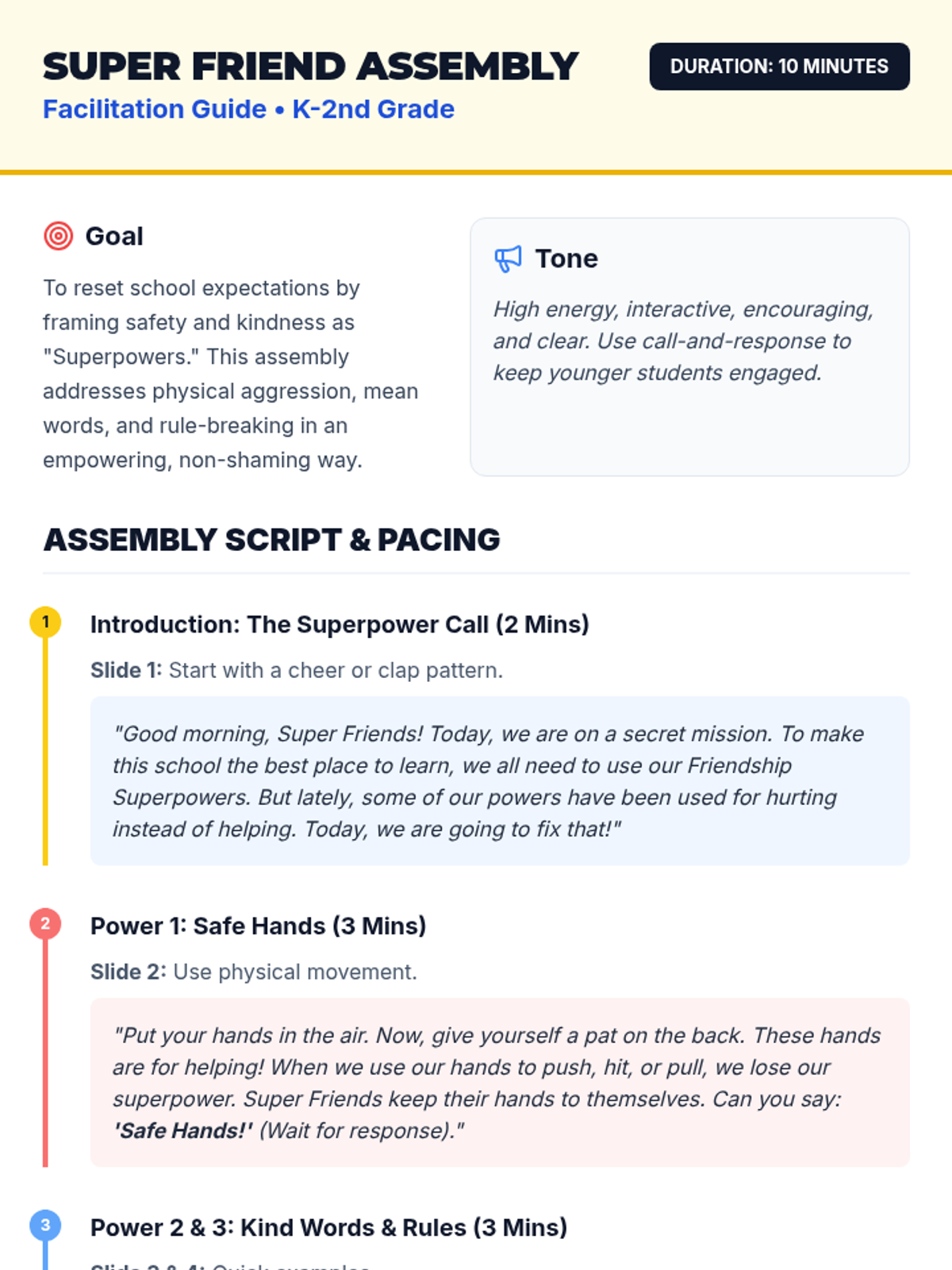
A 10-minute assembly for upper elementary students focusing on the impact of their choices on the school community and building a culture of respect.
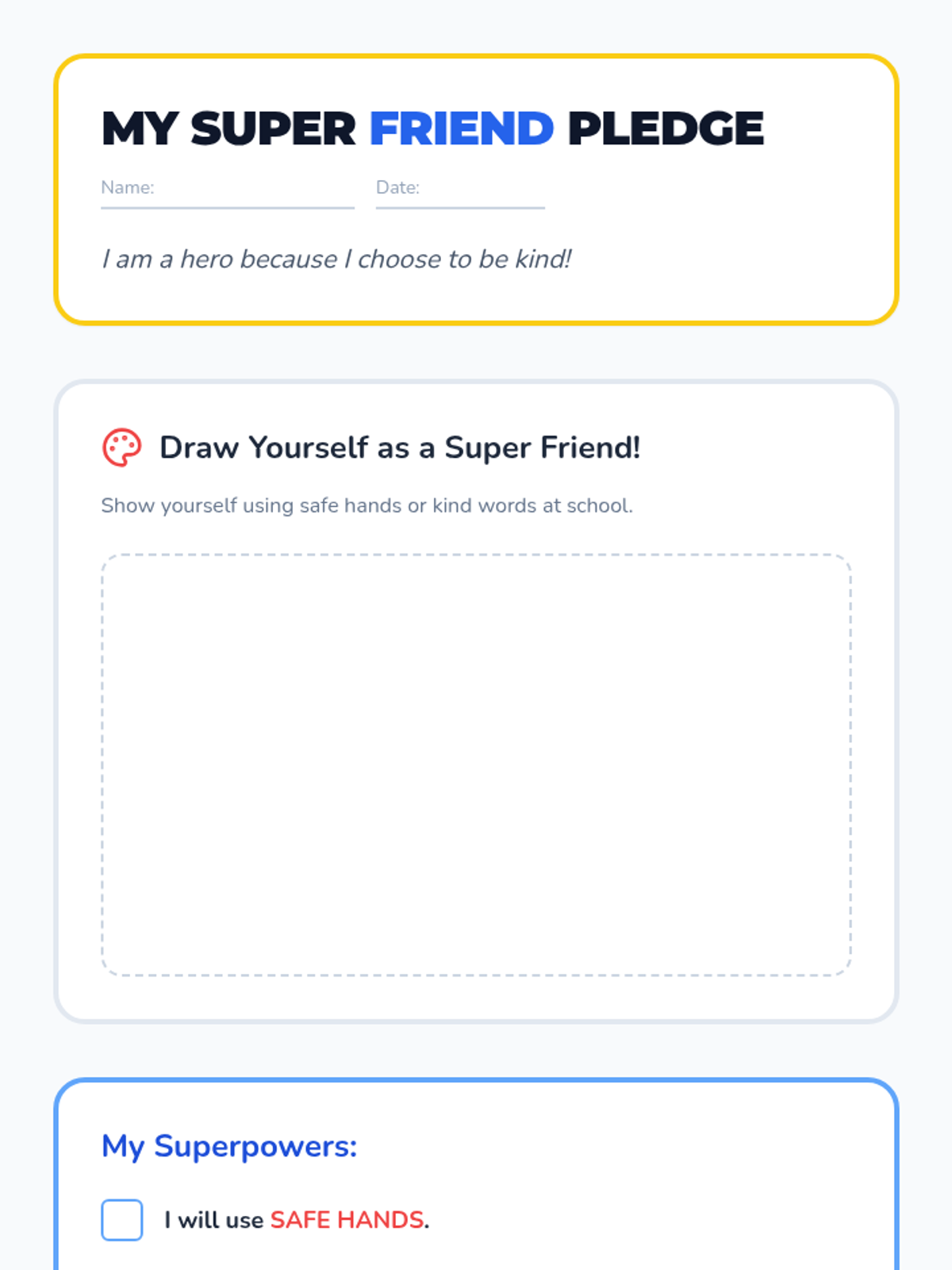
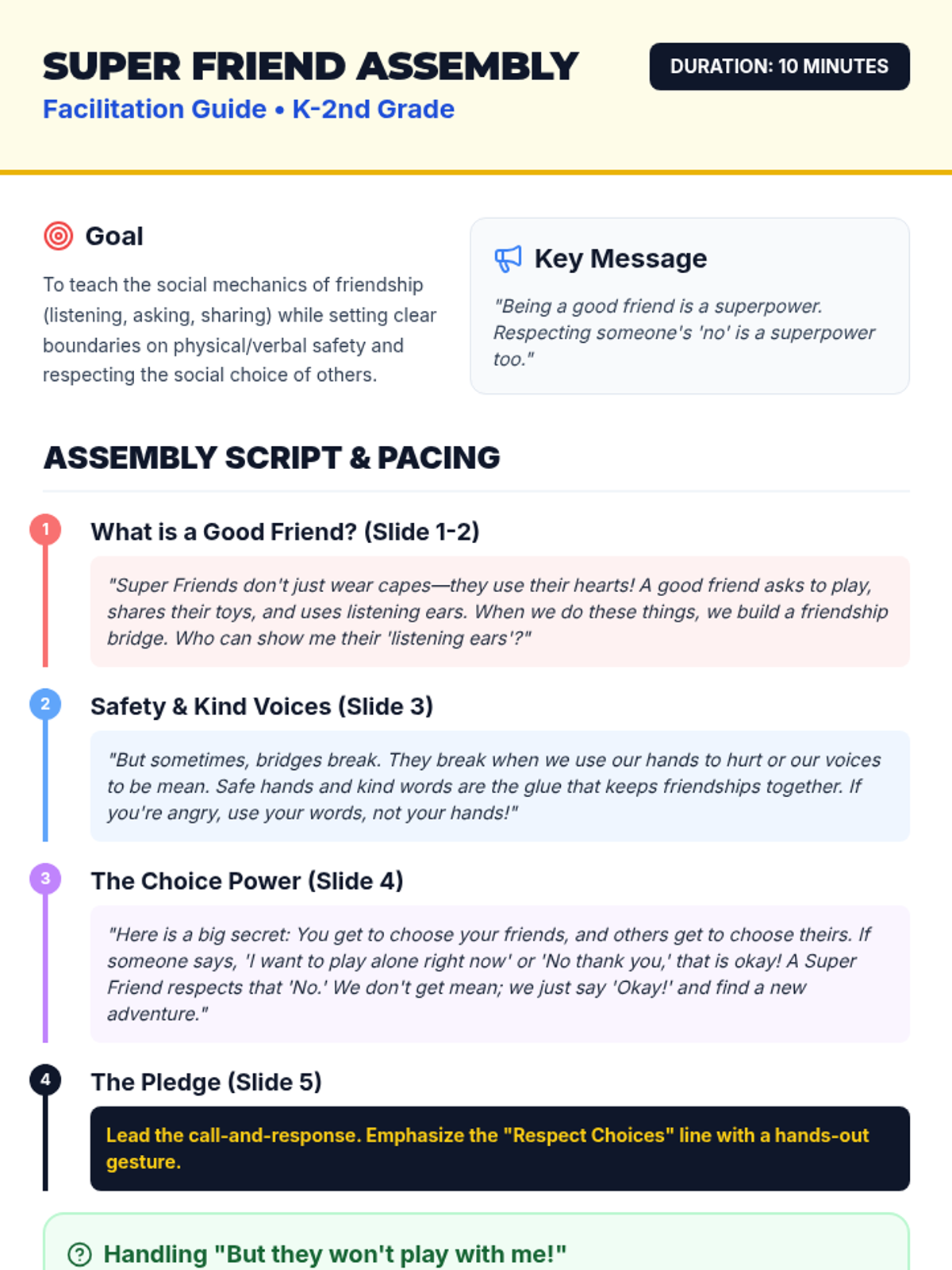
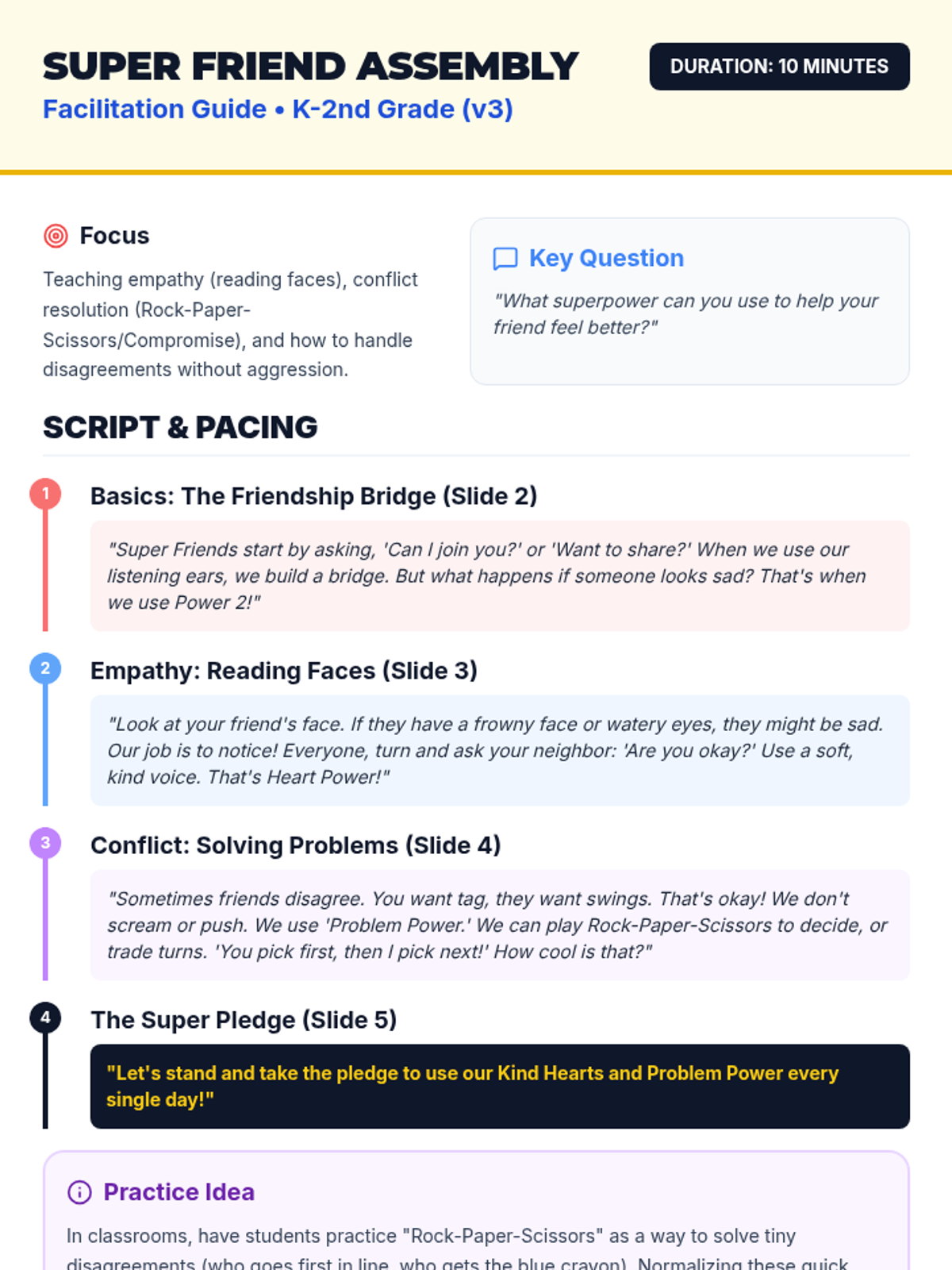
A high-energy, visual 10-minute assembly focused on basic rules, safe hands, and kind words for younger students.
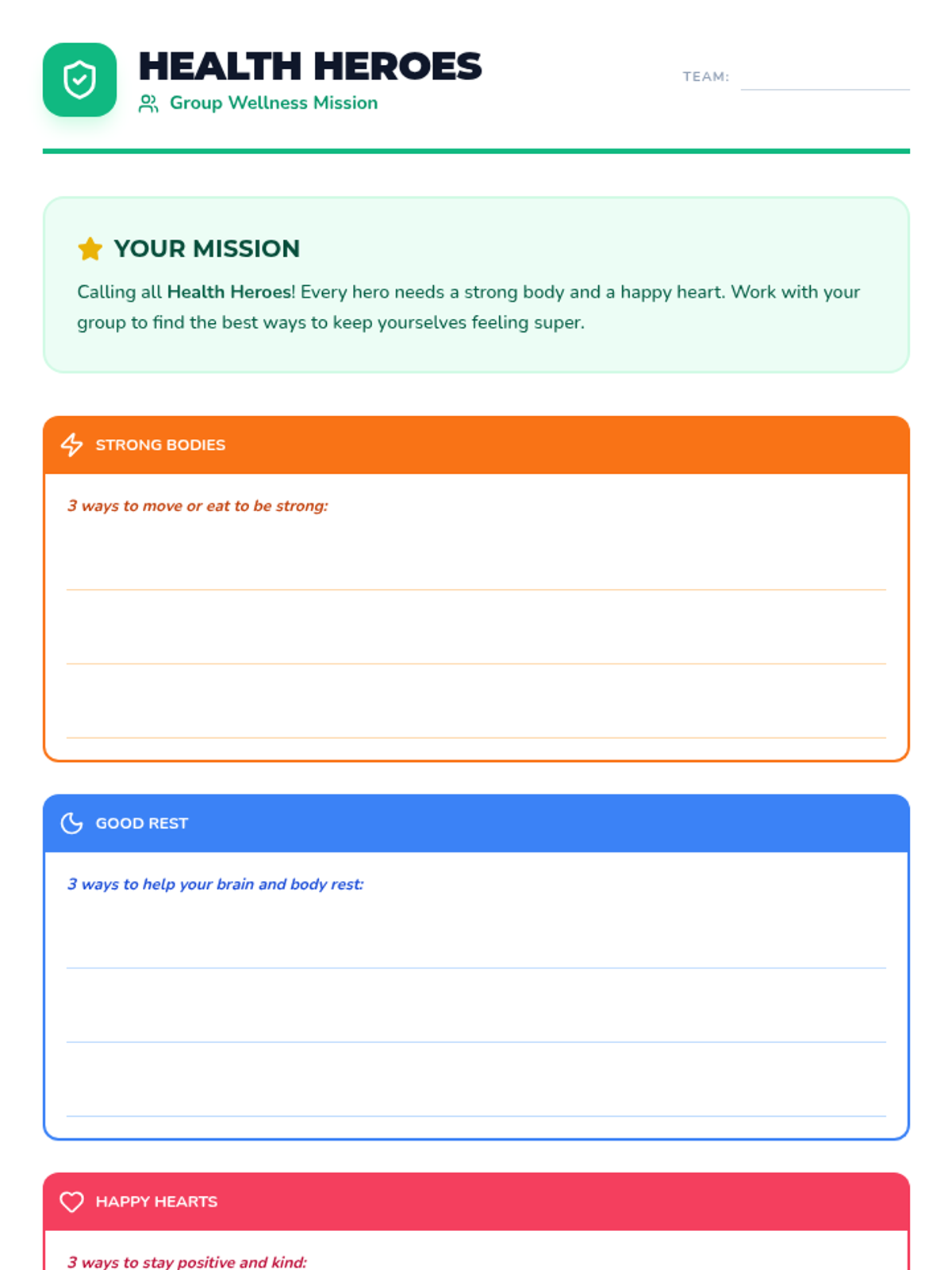
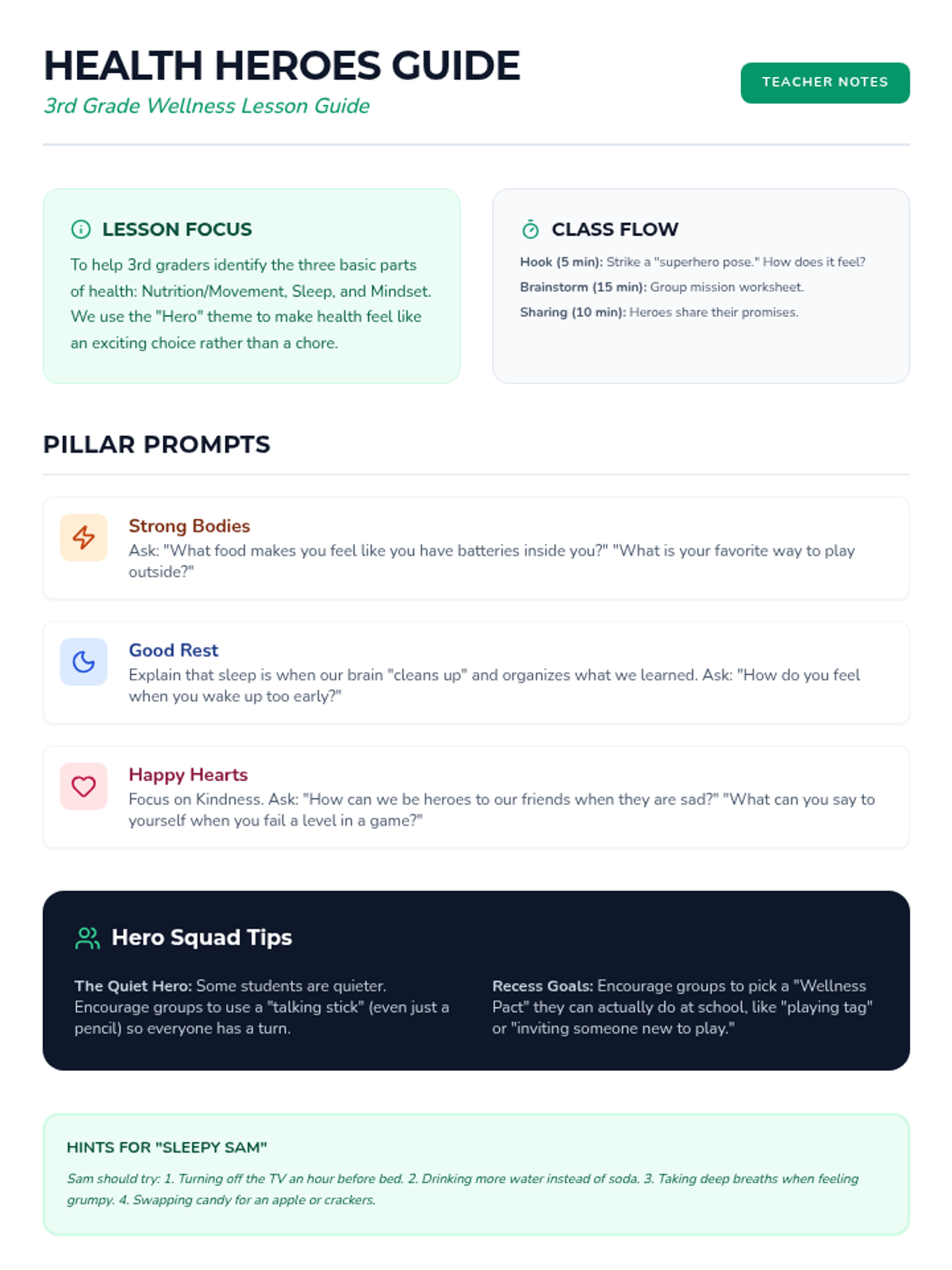
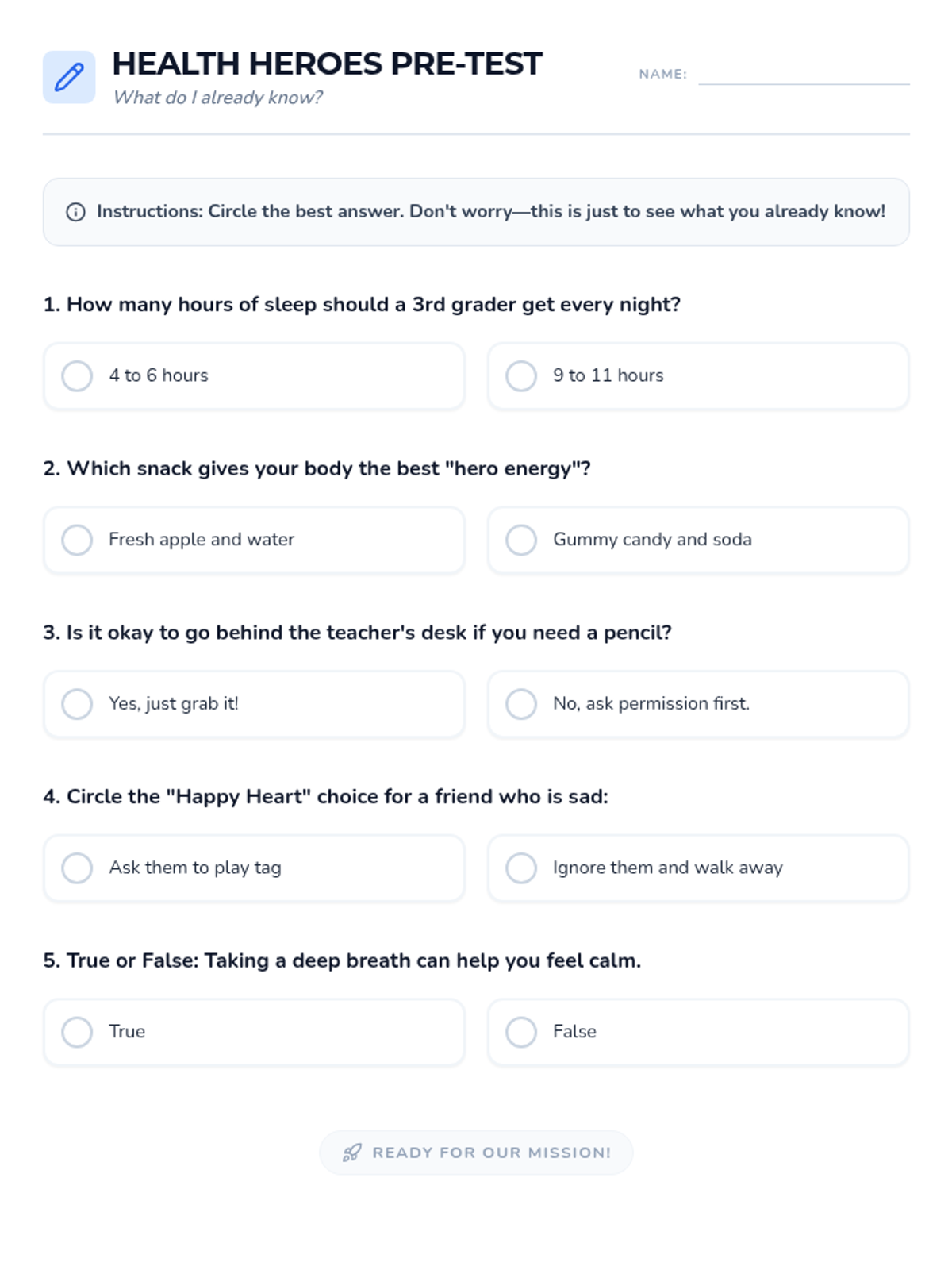
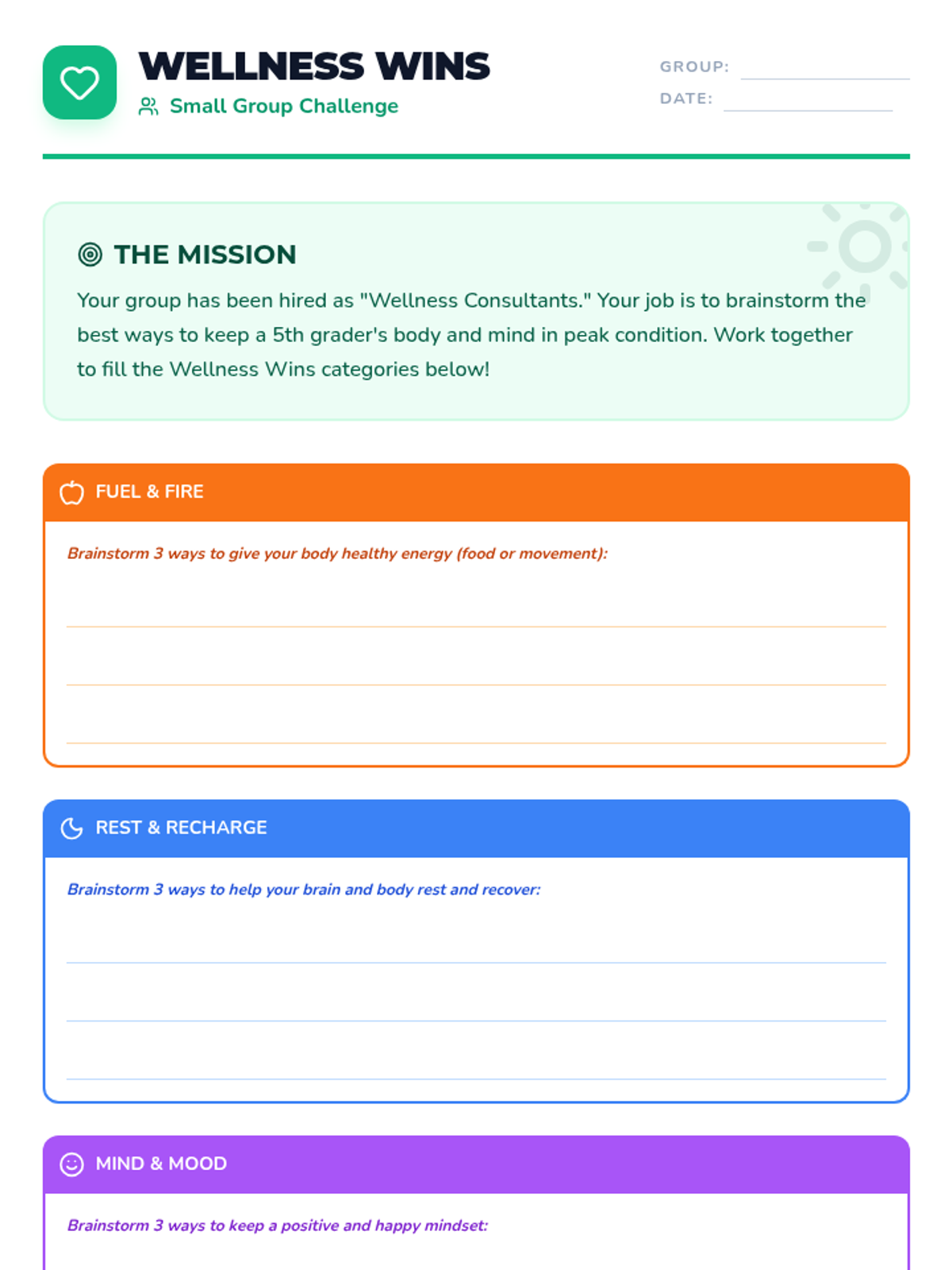
A lesson designed to help 3rd-grade students explore the pillars of physical and emotional well-being. Through collaborative group work as "Health Heroes," students will identify habits that contribute to a "happy and healthy" lifestyle.
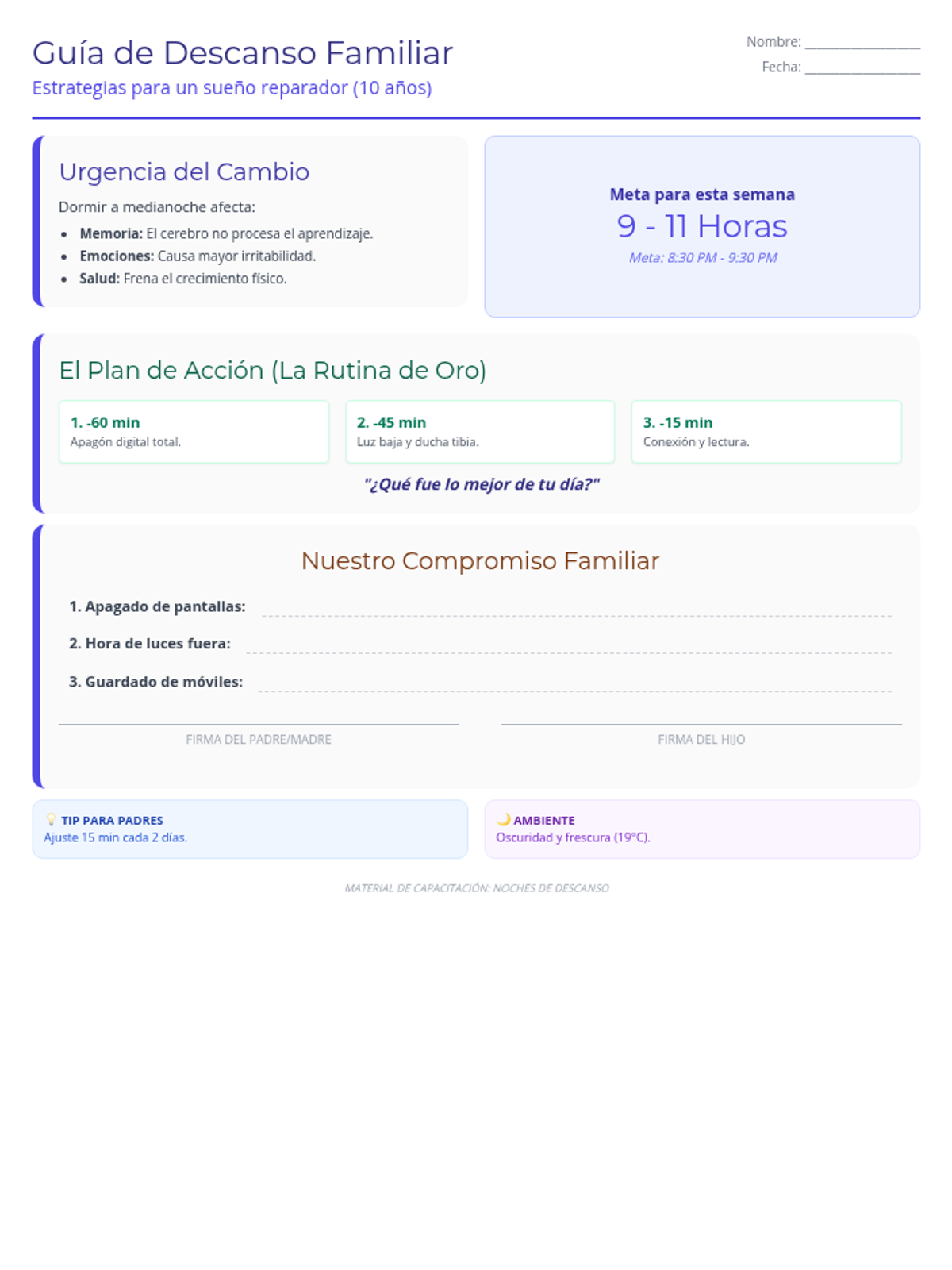
Una lección diseñada para padres sobre la importancia del sueño en niños de 10 años, enfocándose en el desarrollo cerebral, el rendimiento escolar y la creación de rutinas saludables.
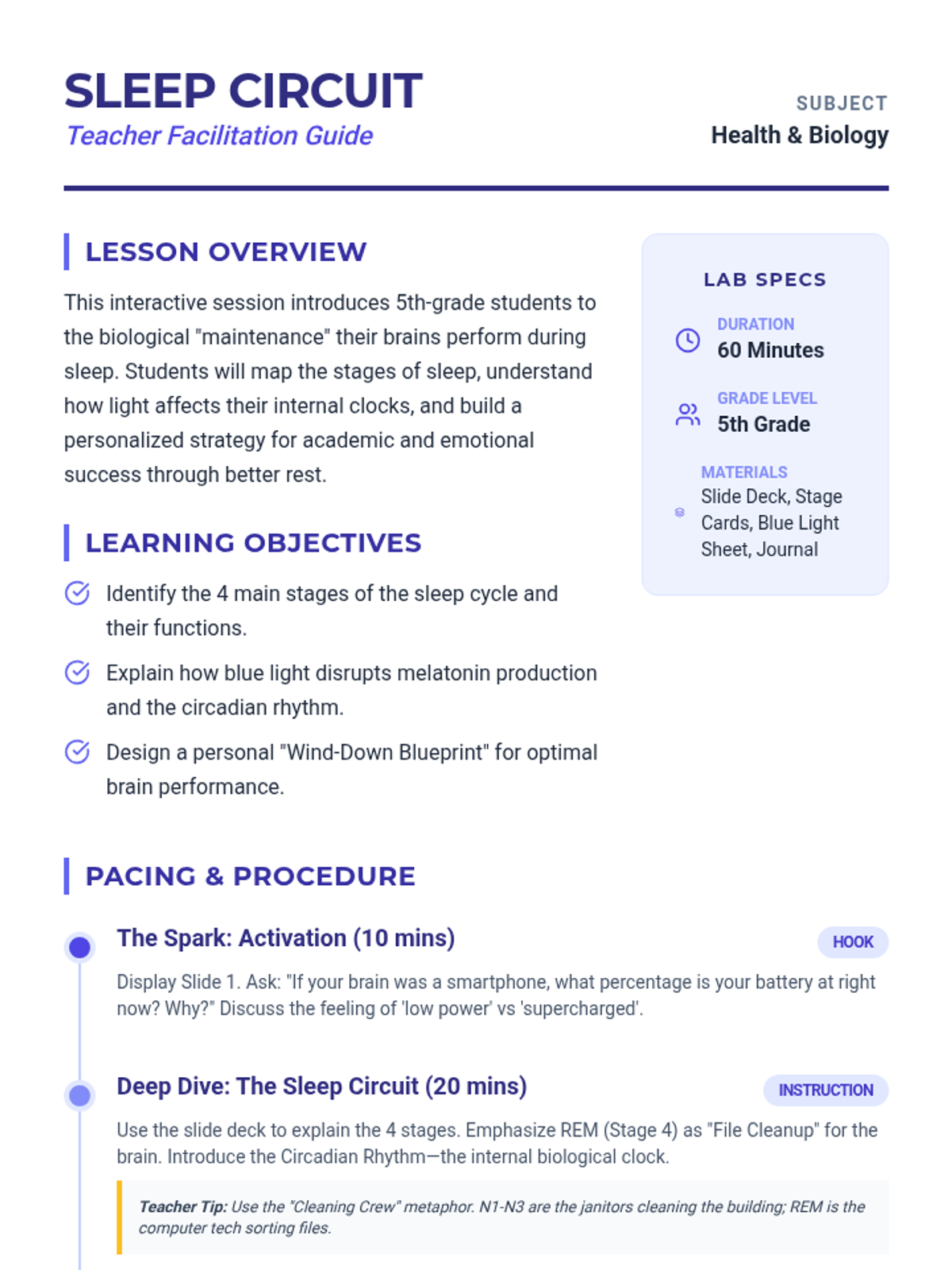
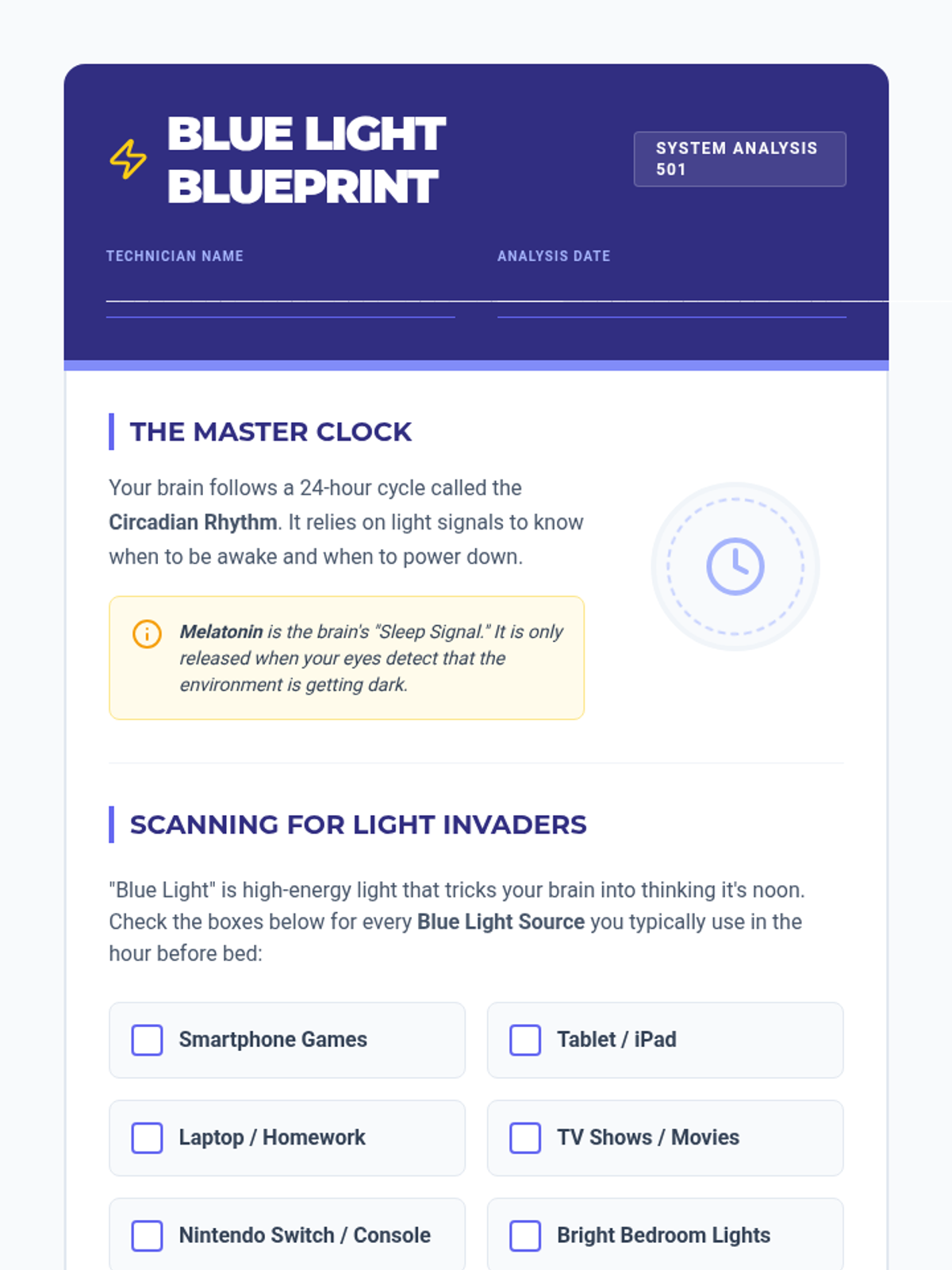
An interactive exploration of the biology of sleep, the circadian rhythm, and the impact of blue light on 5th-grade students' brains and bodies.
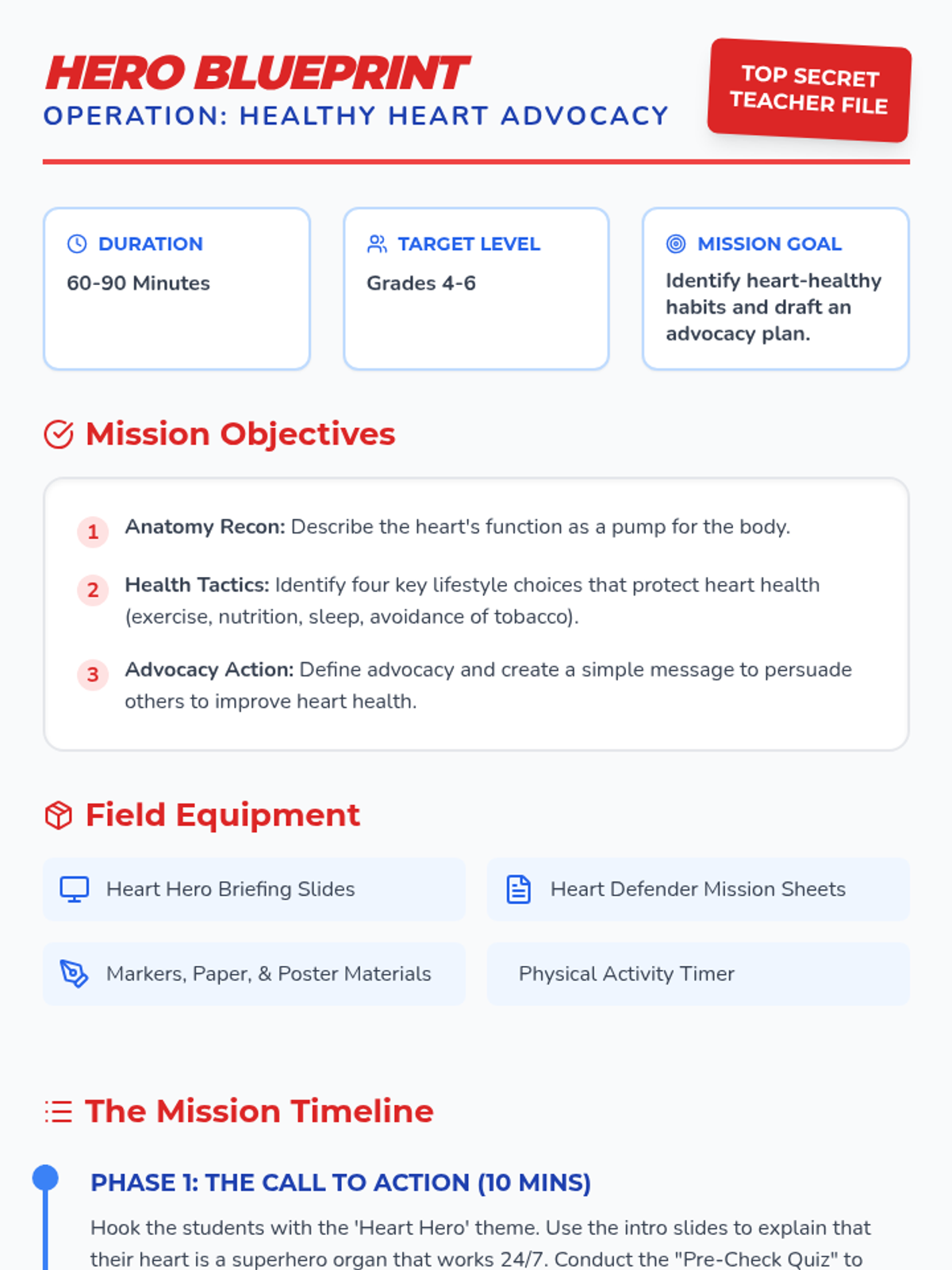
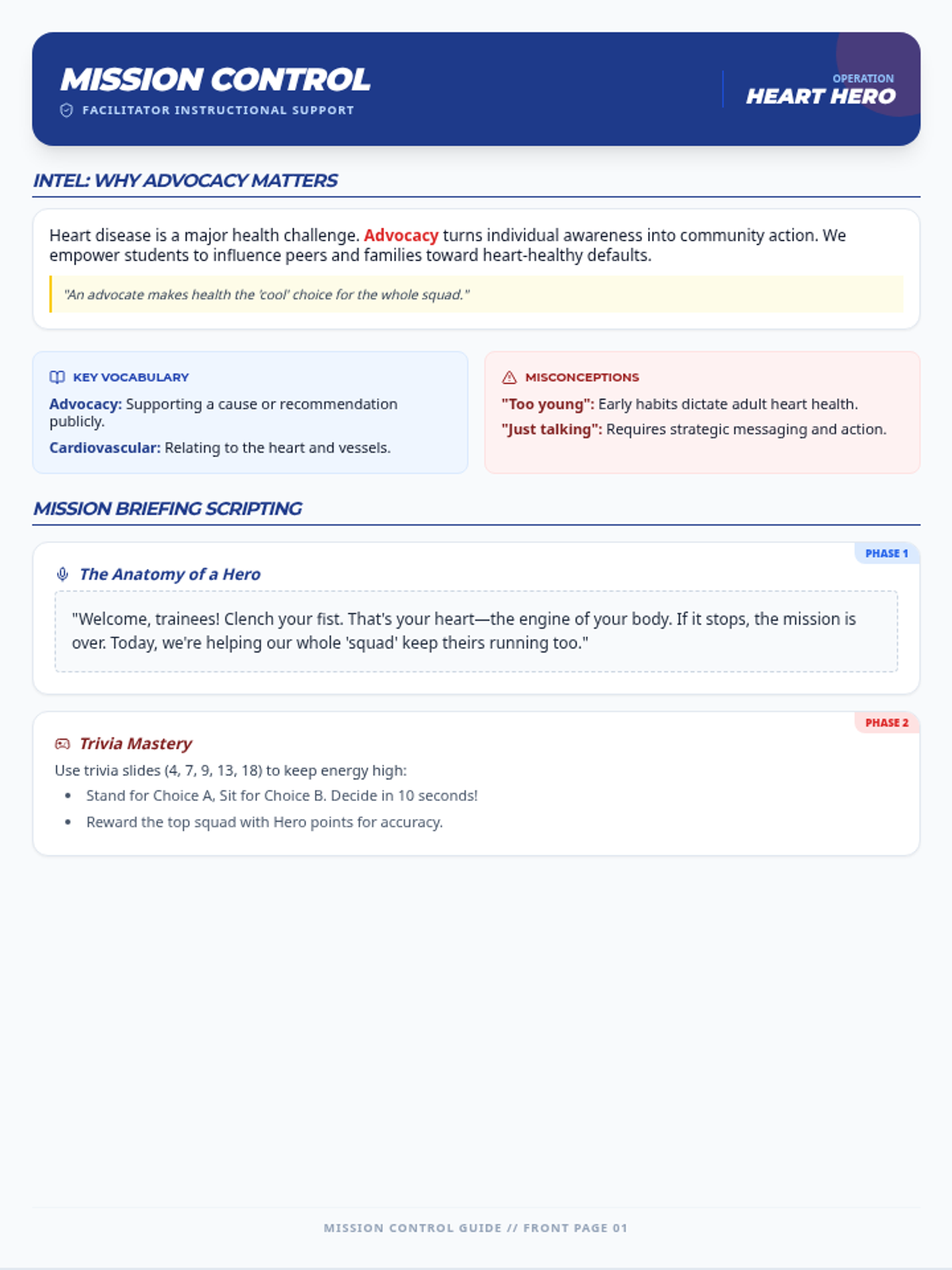
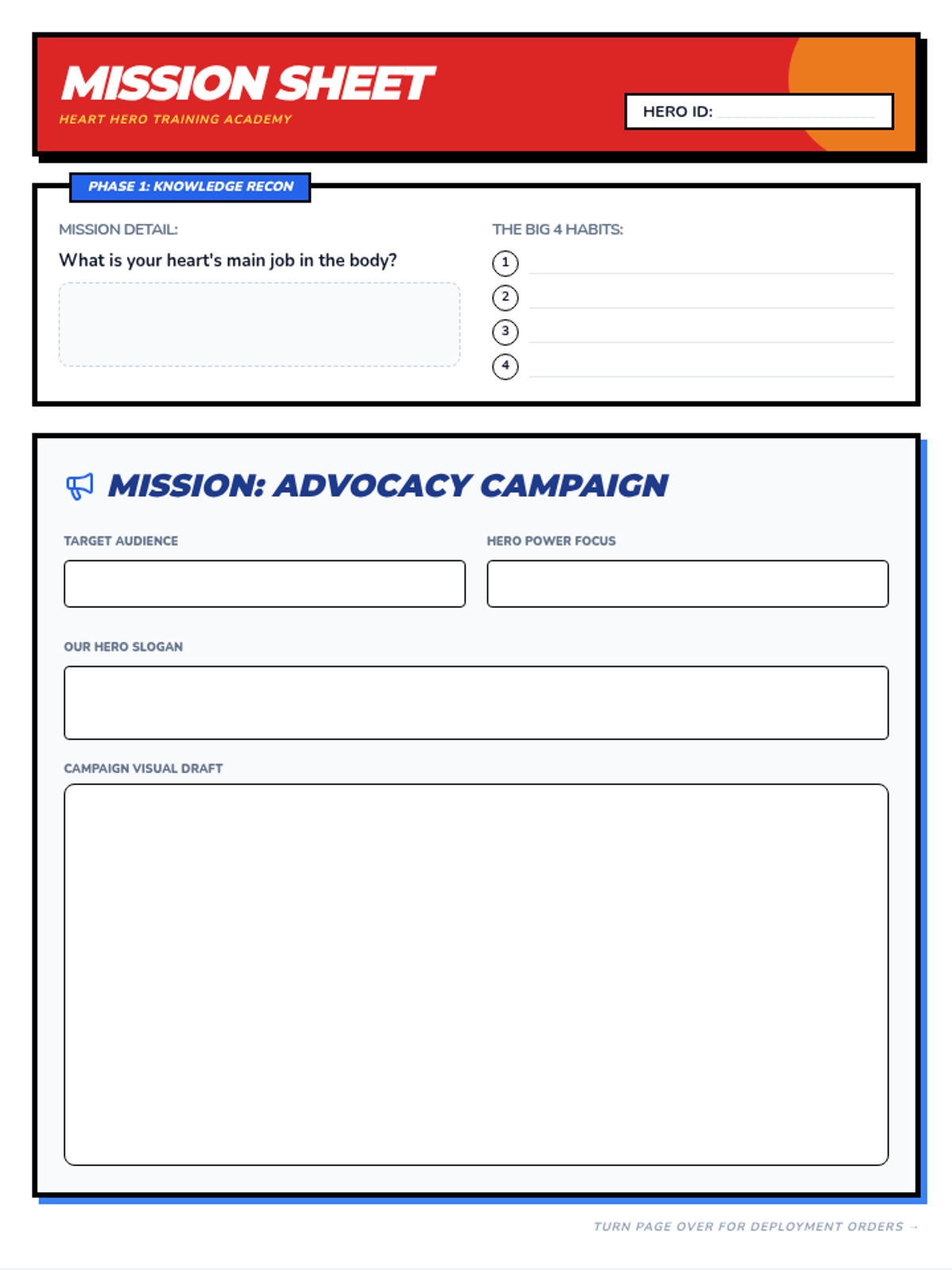
Students learn the fundamentals of heart health and how to advocate for healthy habits in their community through a superhero-themed training program.
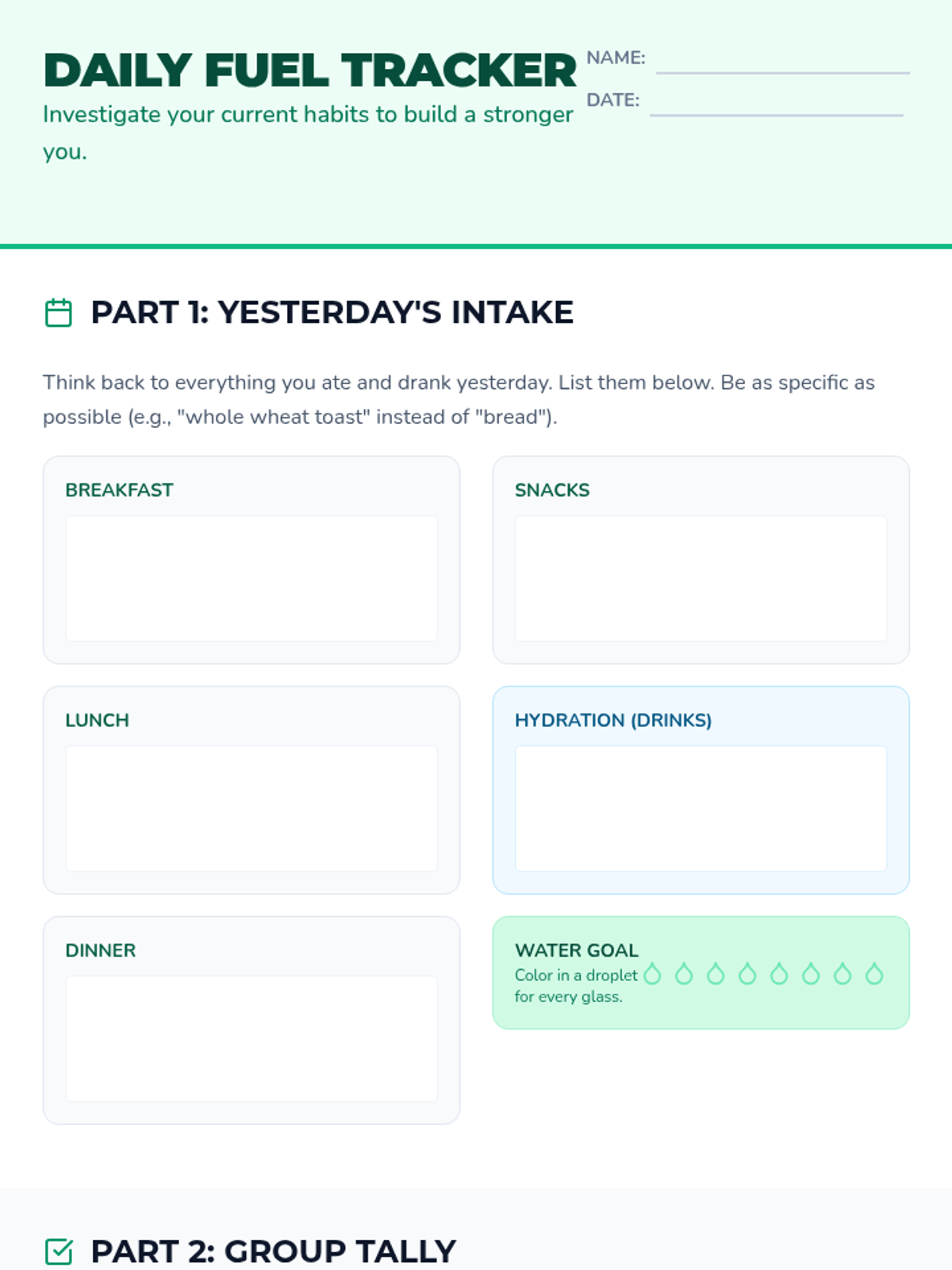
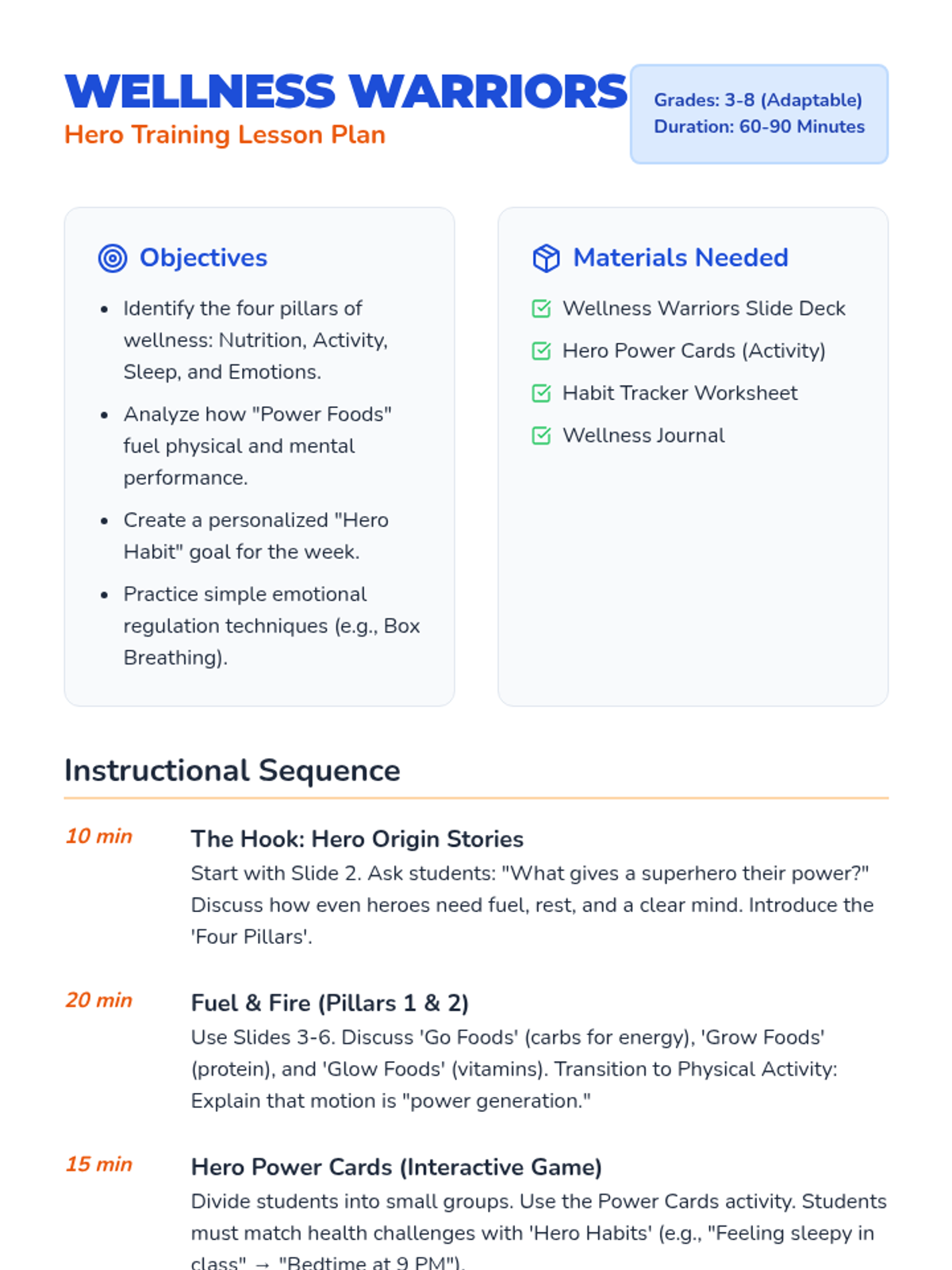
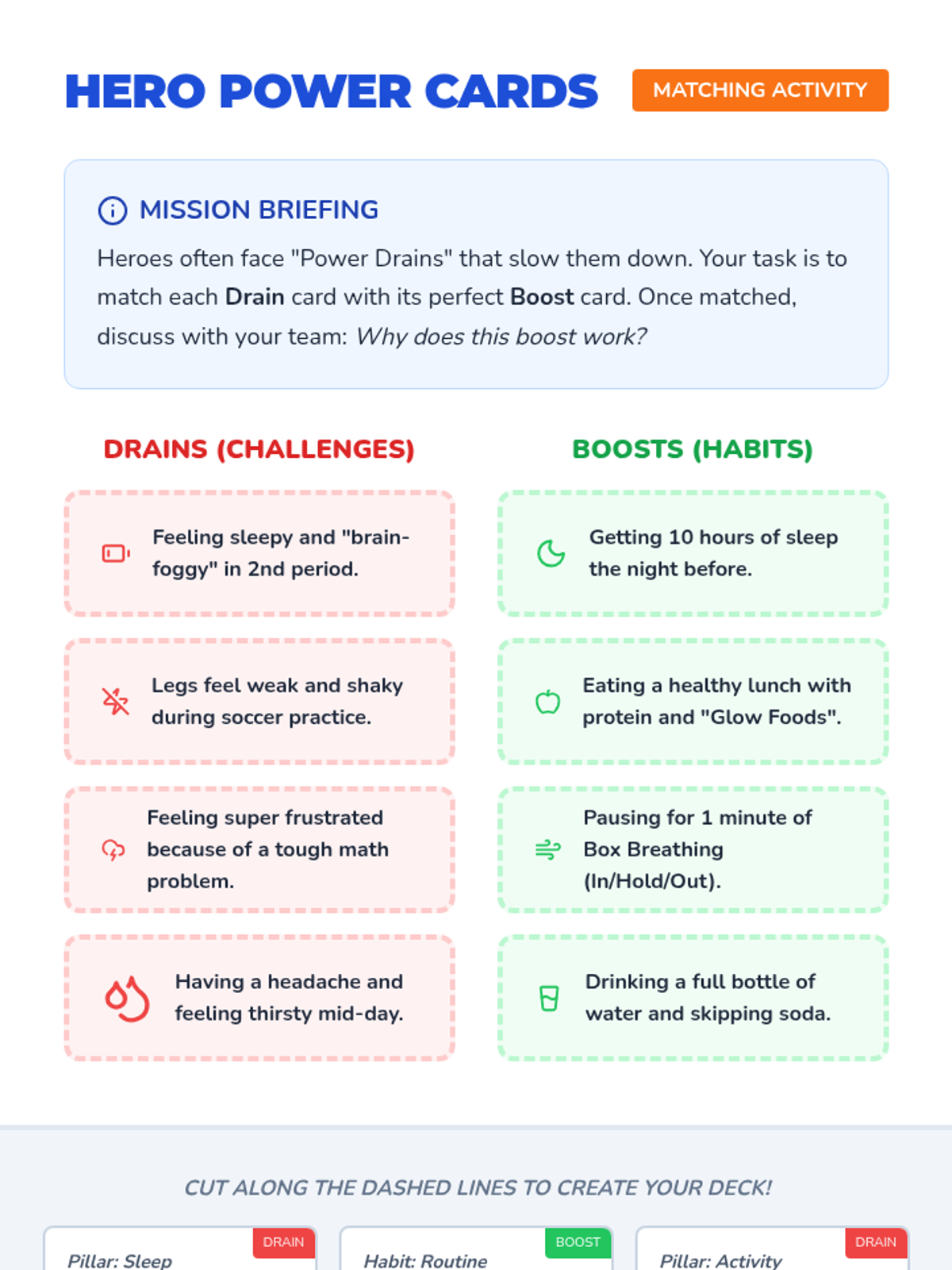
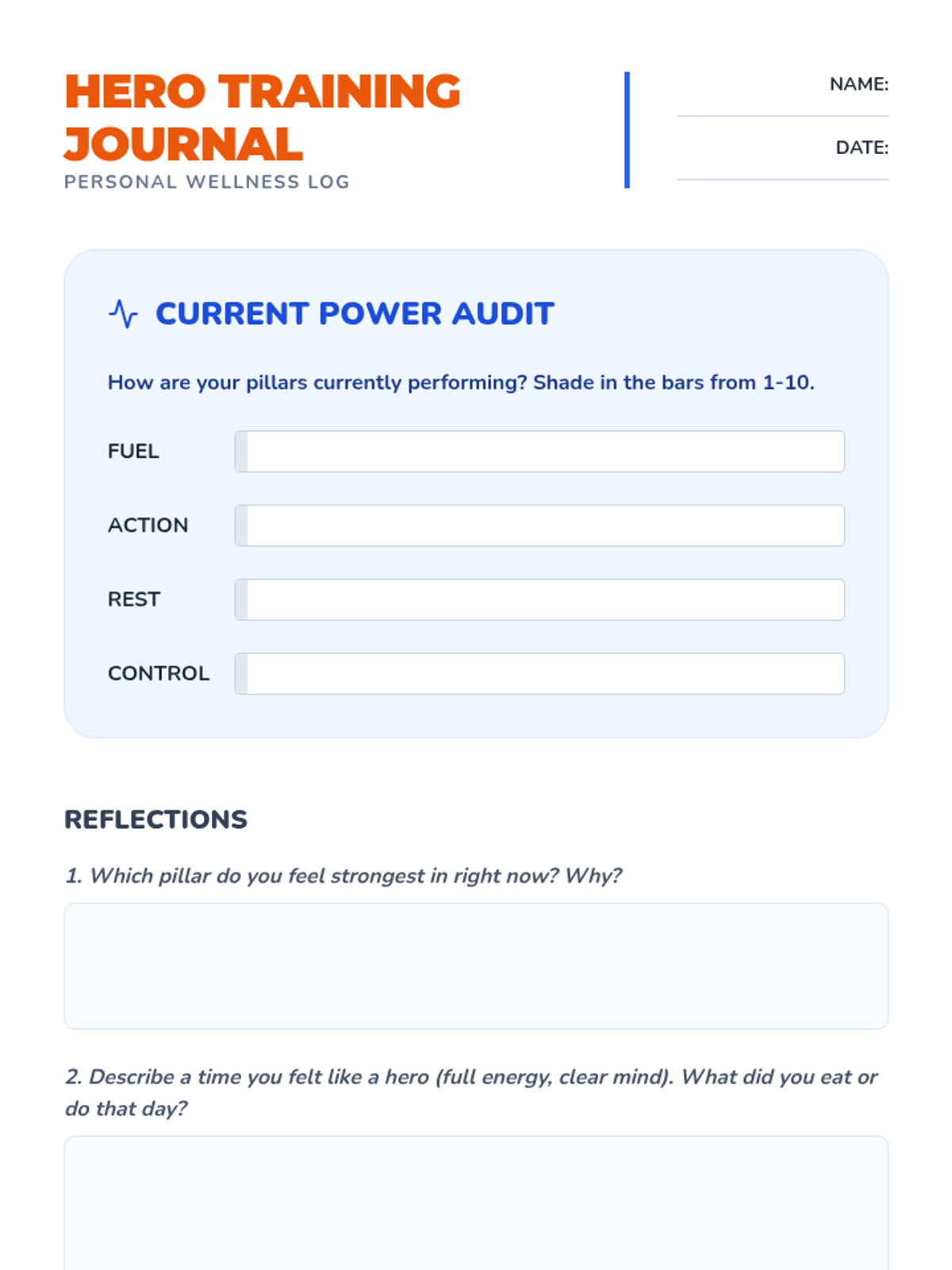
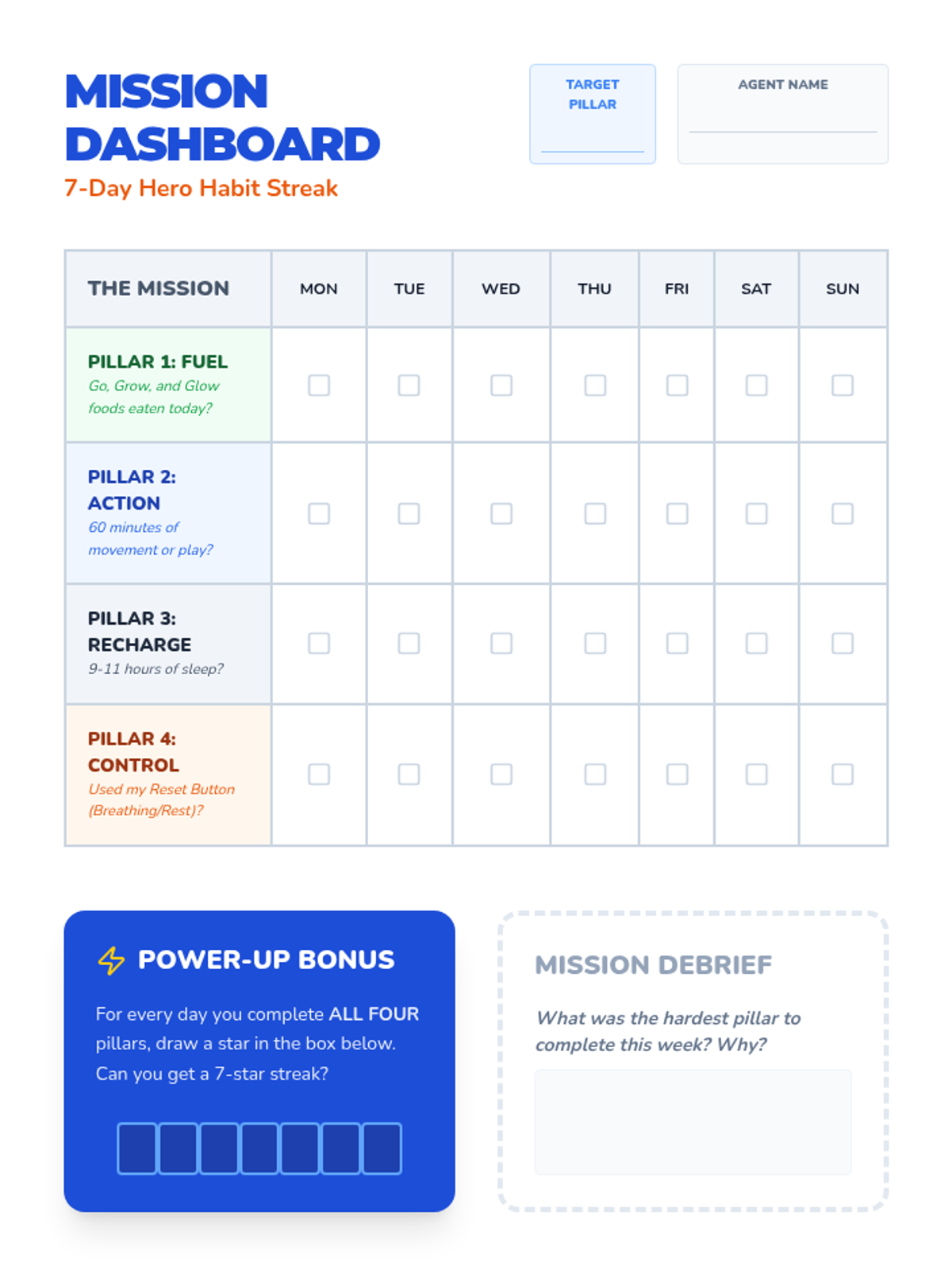
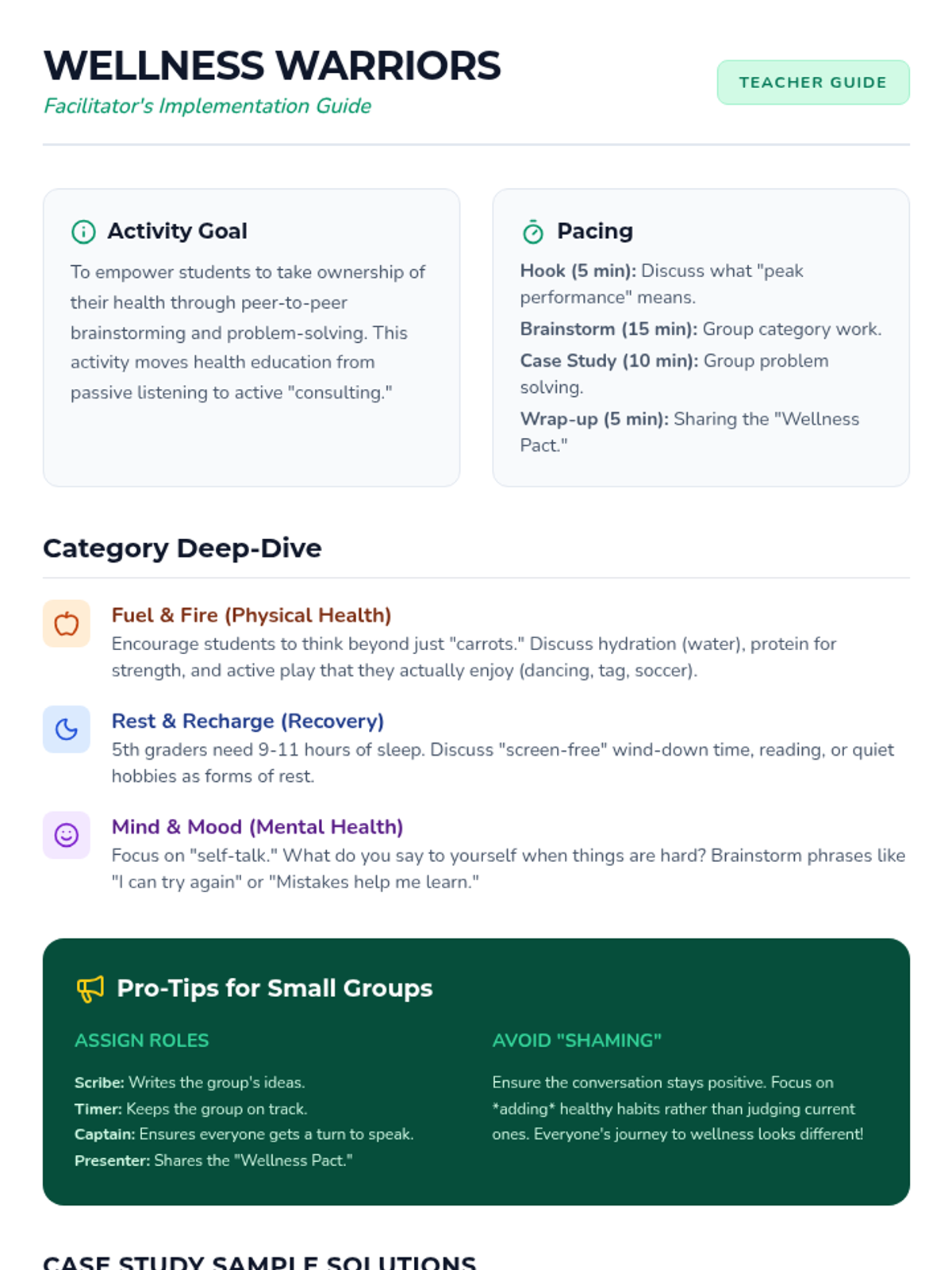
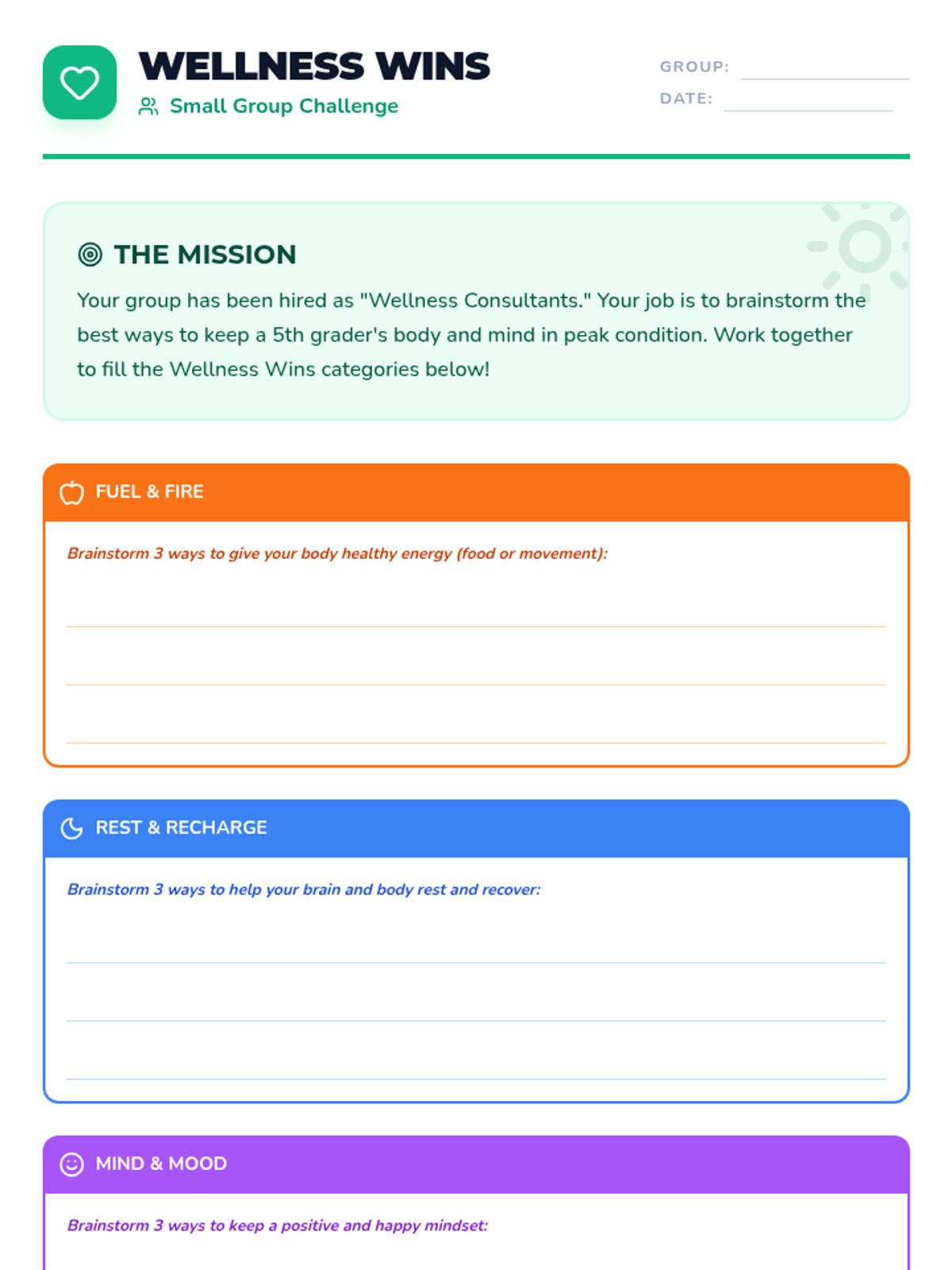
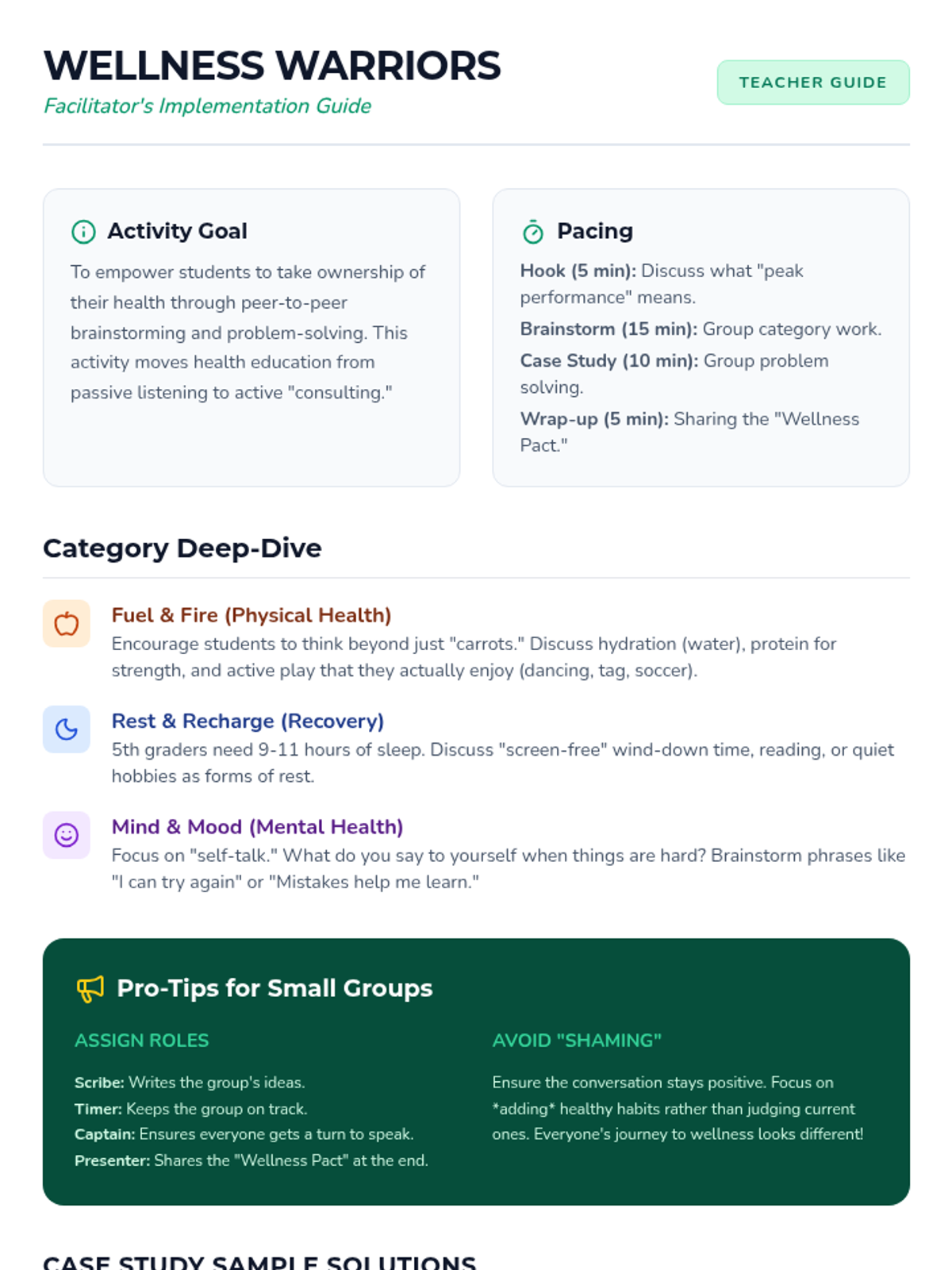
Students learn how to fuel their bodies and keep them moving while mastering the art of rest and emotional balance. Includes interactive discussions, goal-setting, and practical habit-building activities.
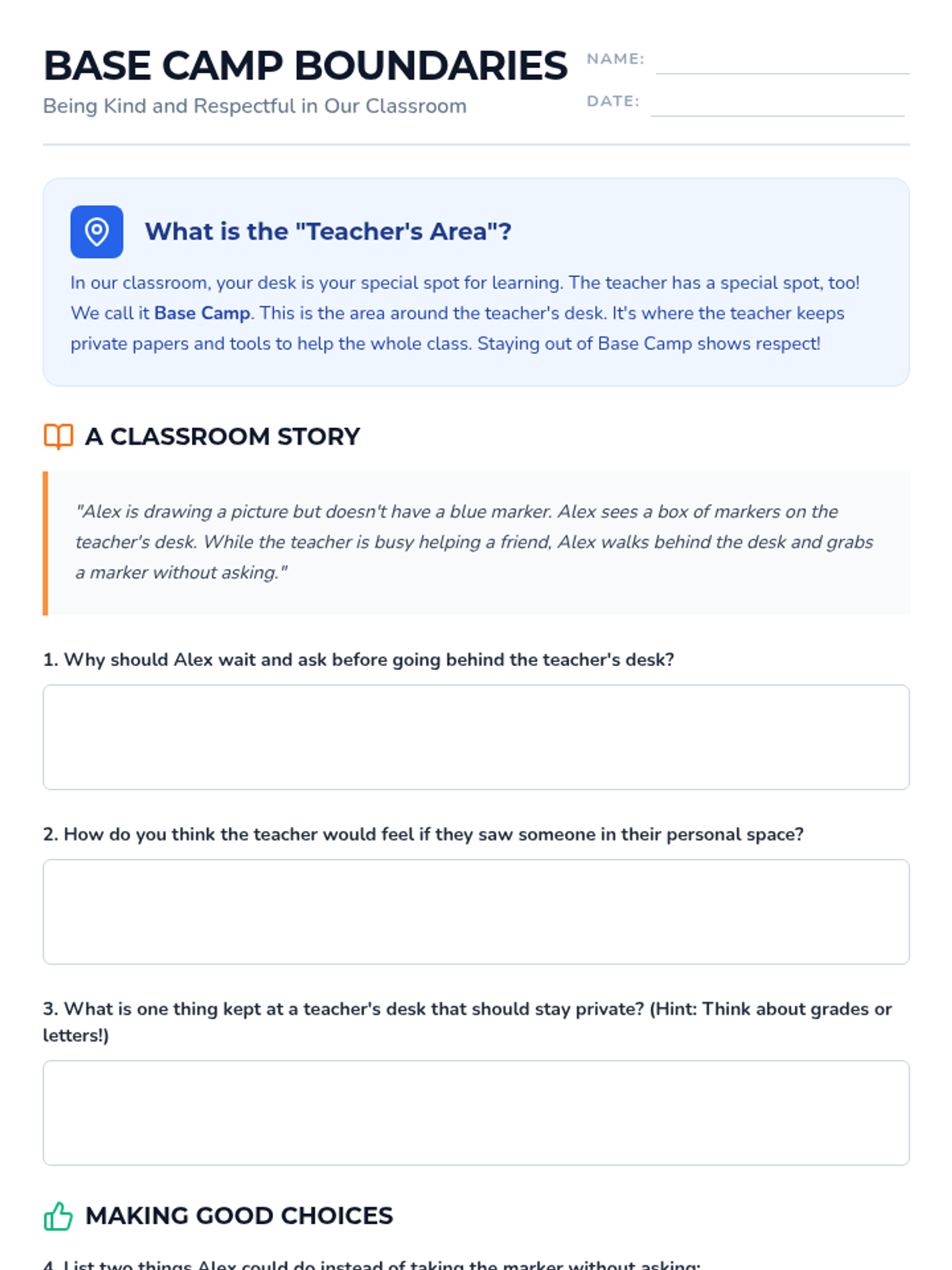
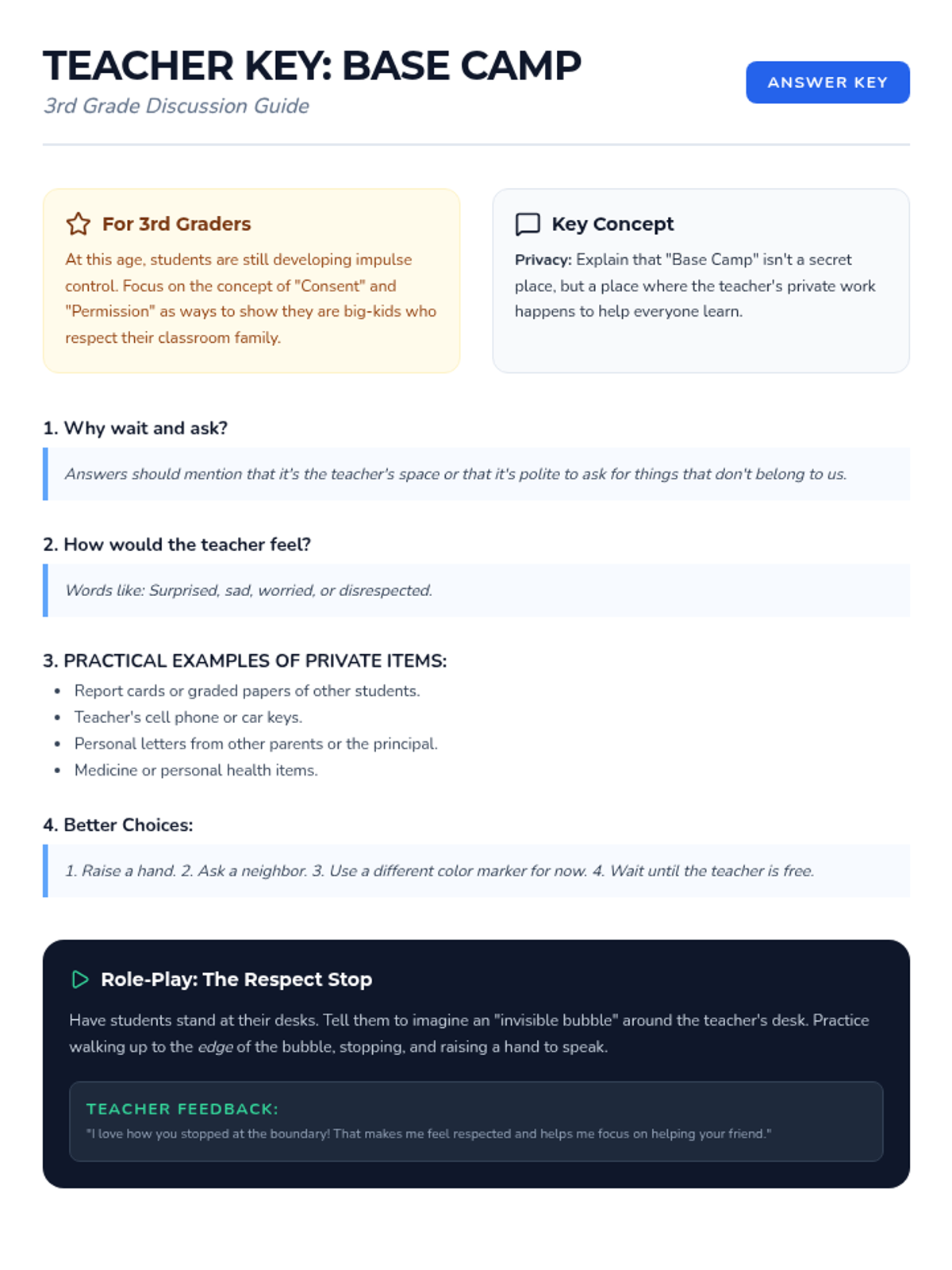
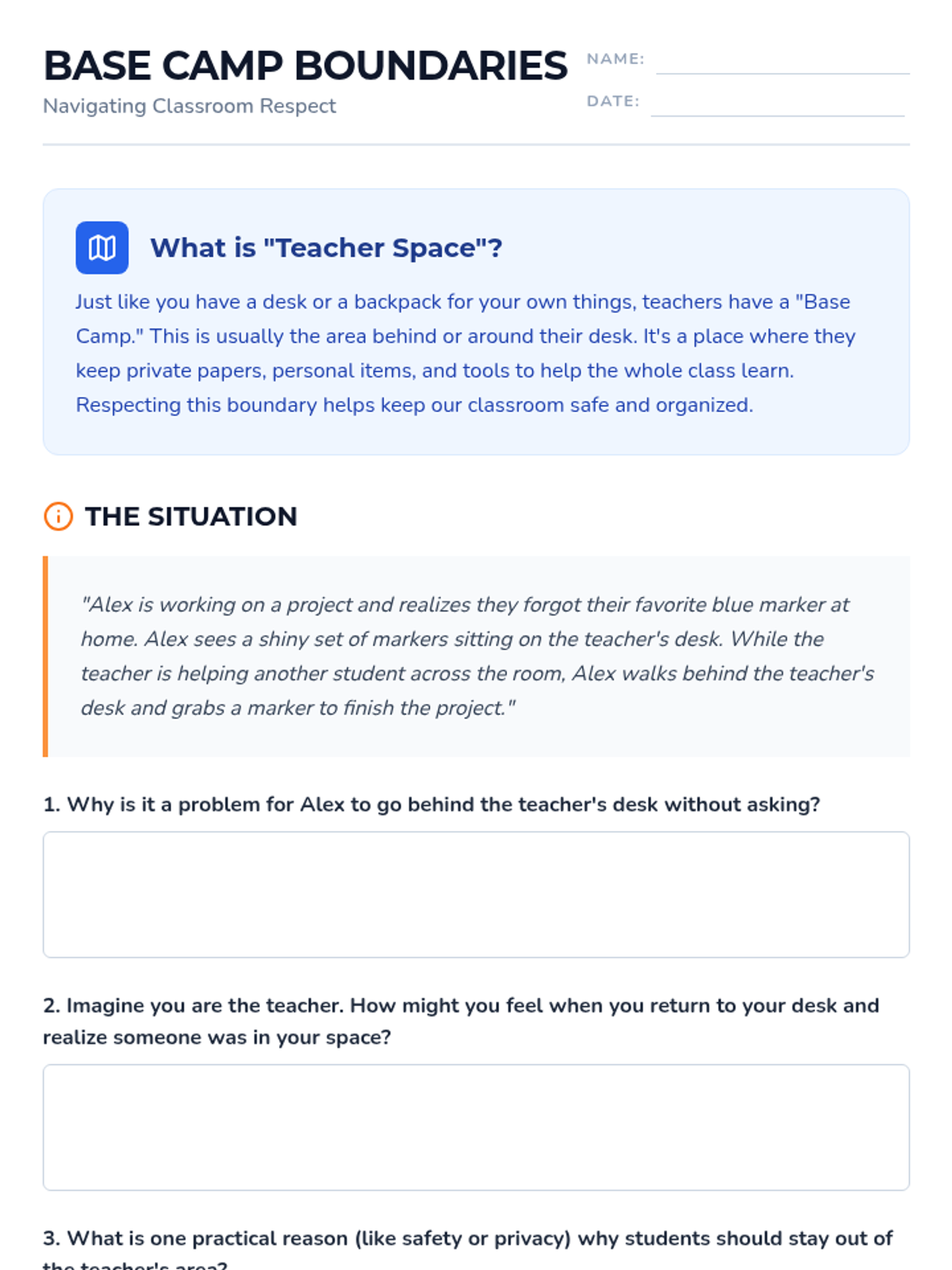
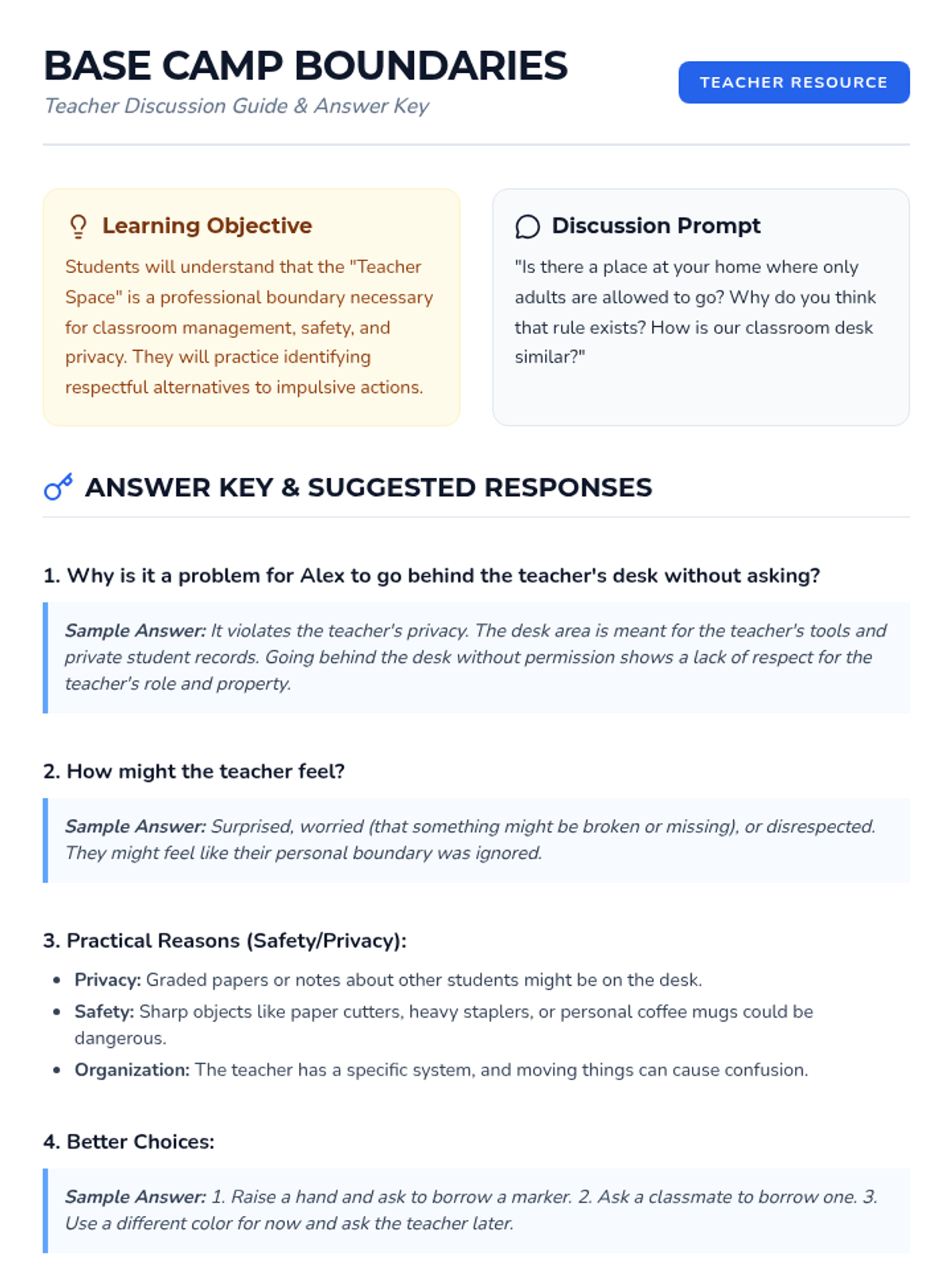
A lesson focused on teaching 3rd-grade students the importance of physical boundaries in the classroom, specifically regarding the teacher's desk and personal area. Students will explore scenarios, reflect on the impact of their actions, and practice respectful communication using the "Base Camp" theme.
A lesson designed to help students explore the pillars of physical and emotional well-being. Through collaborative group work, students will identify habits that contribute to a "happy and healthy" lifestyle.
A lesson focused on teaching 5th-grade students the importance of physical boundaries in the classroom, specifically regarding the teacher's desk and personal area. Students will explore scenarios, reflect on the impact of their actions, and practice respectful communication.
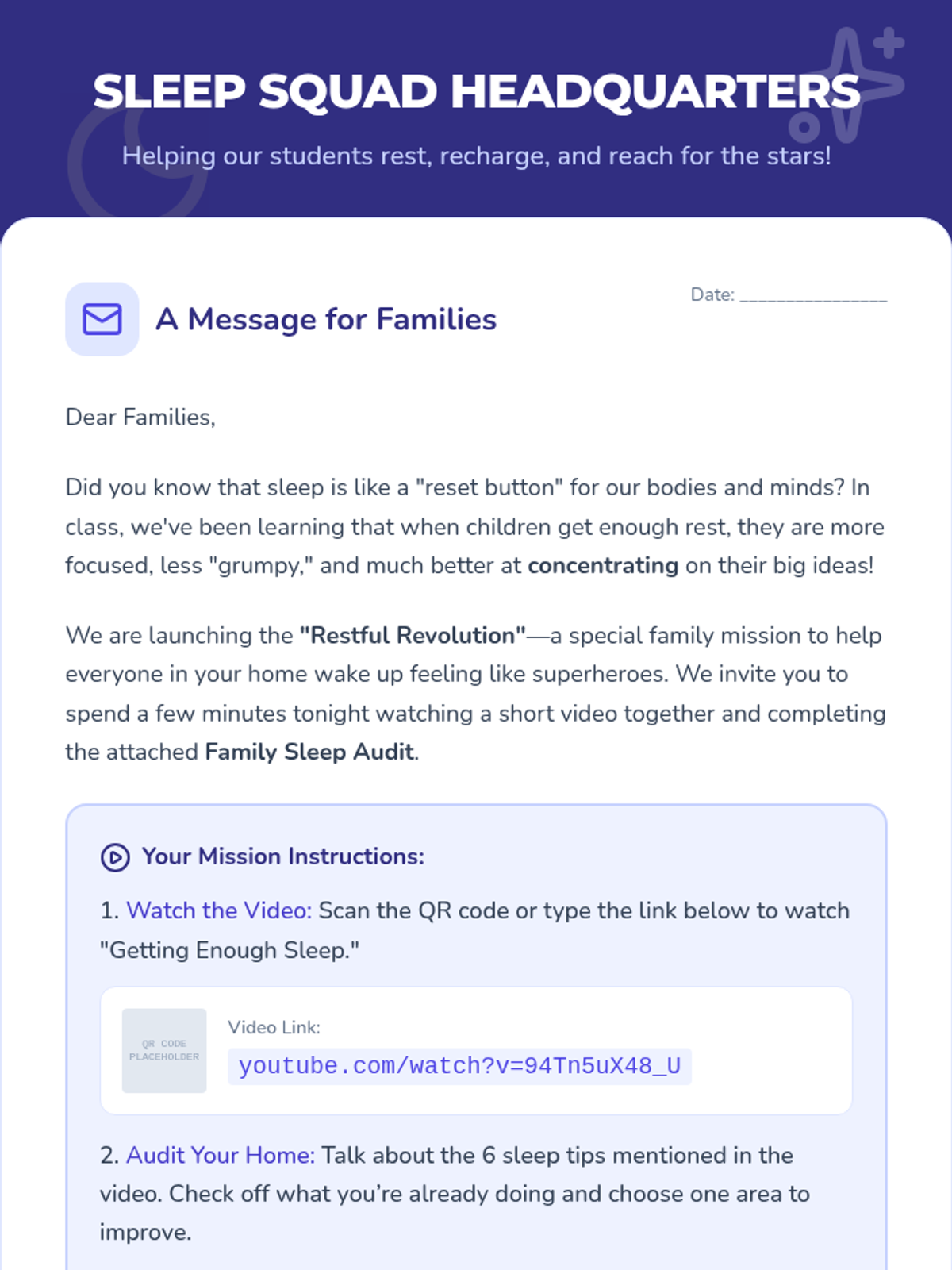
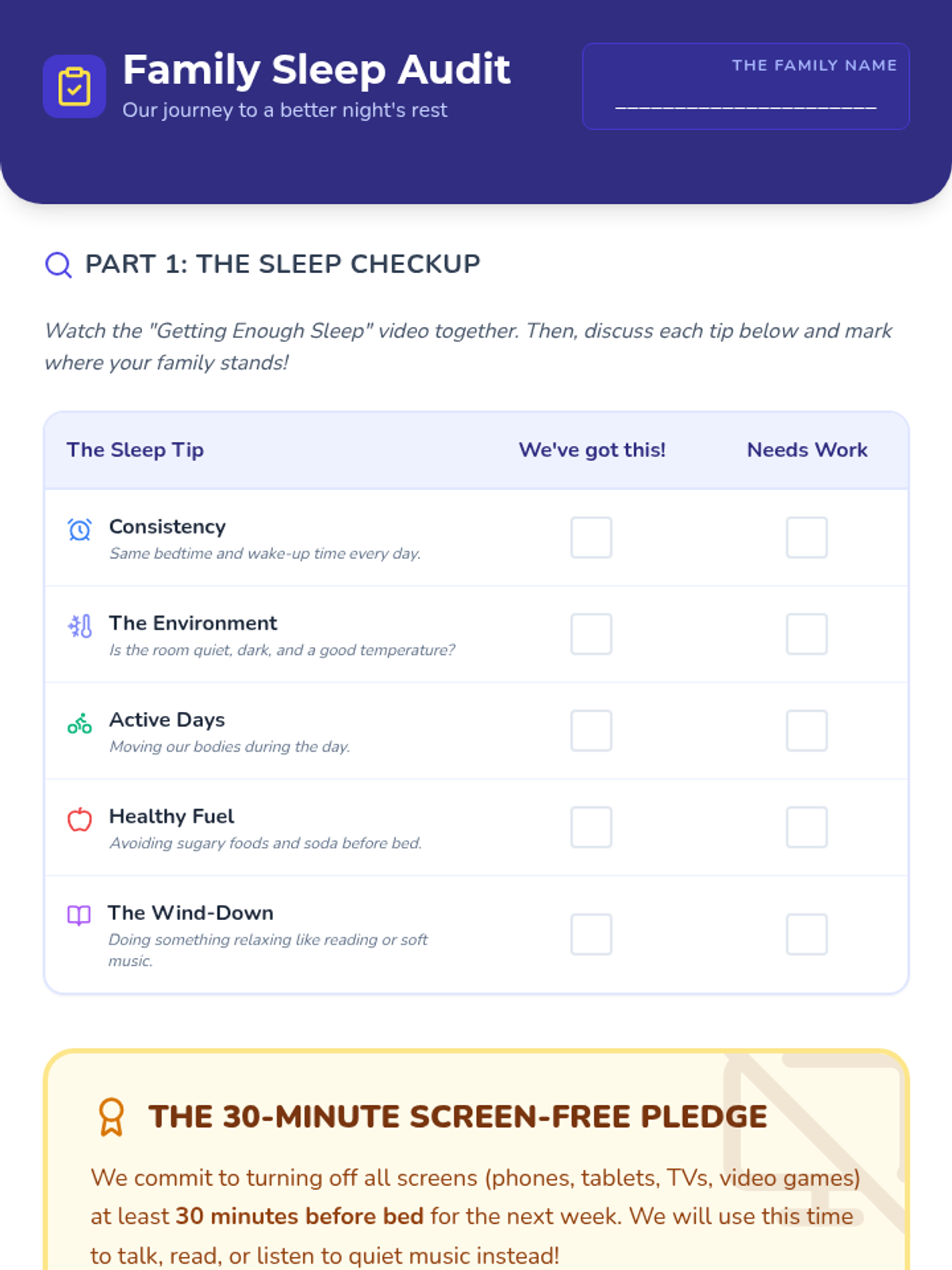
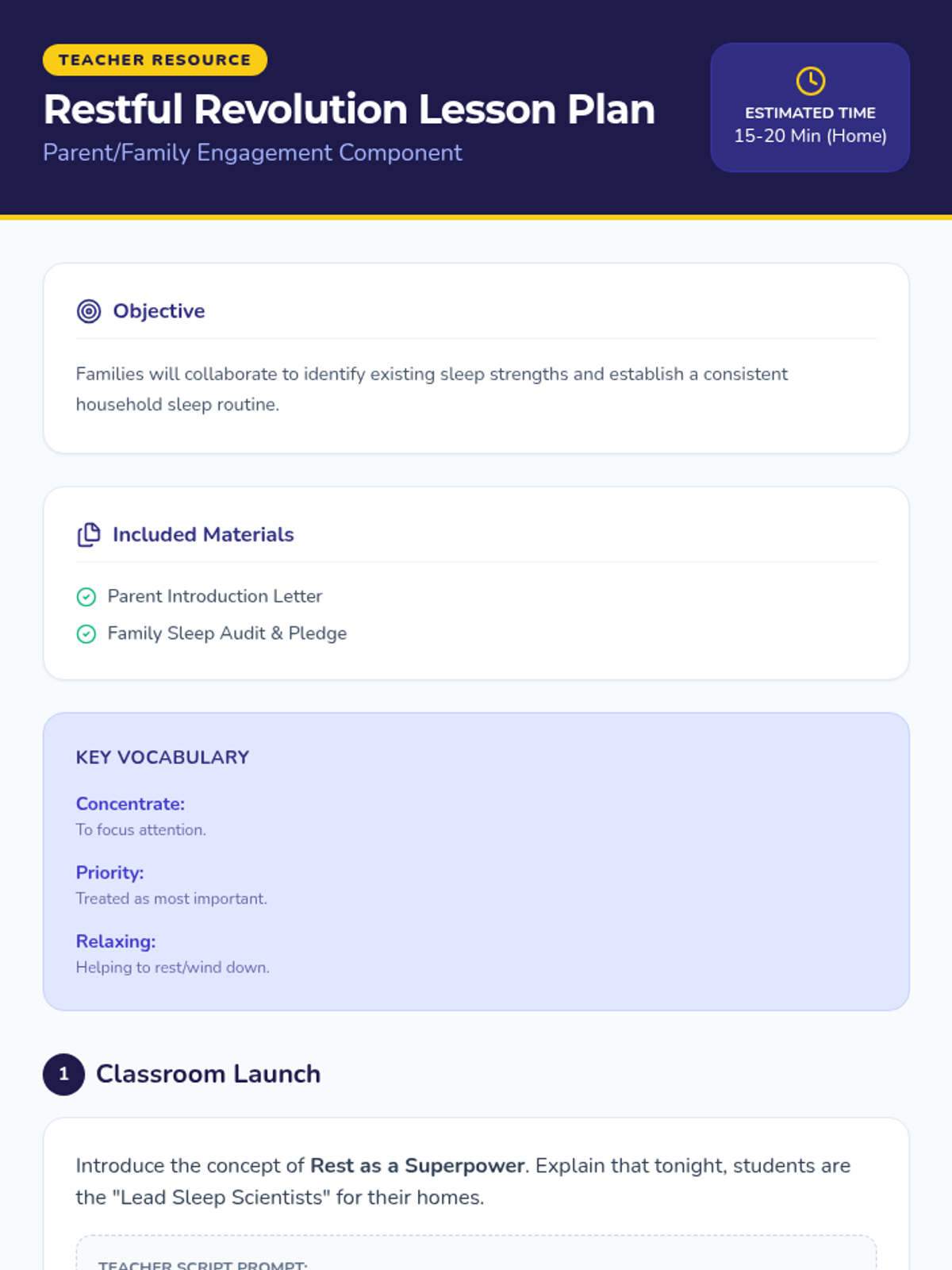
A home-connection lesson designed to help families establish healthy sleep habits through a shared video viewing, a household audit, and a screen-free commitment.
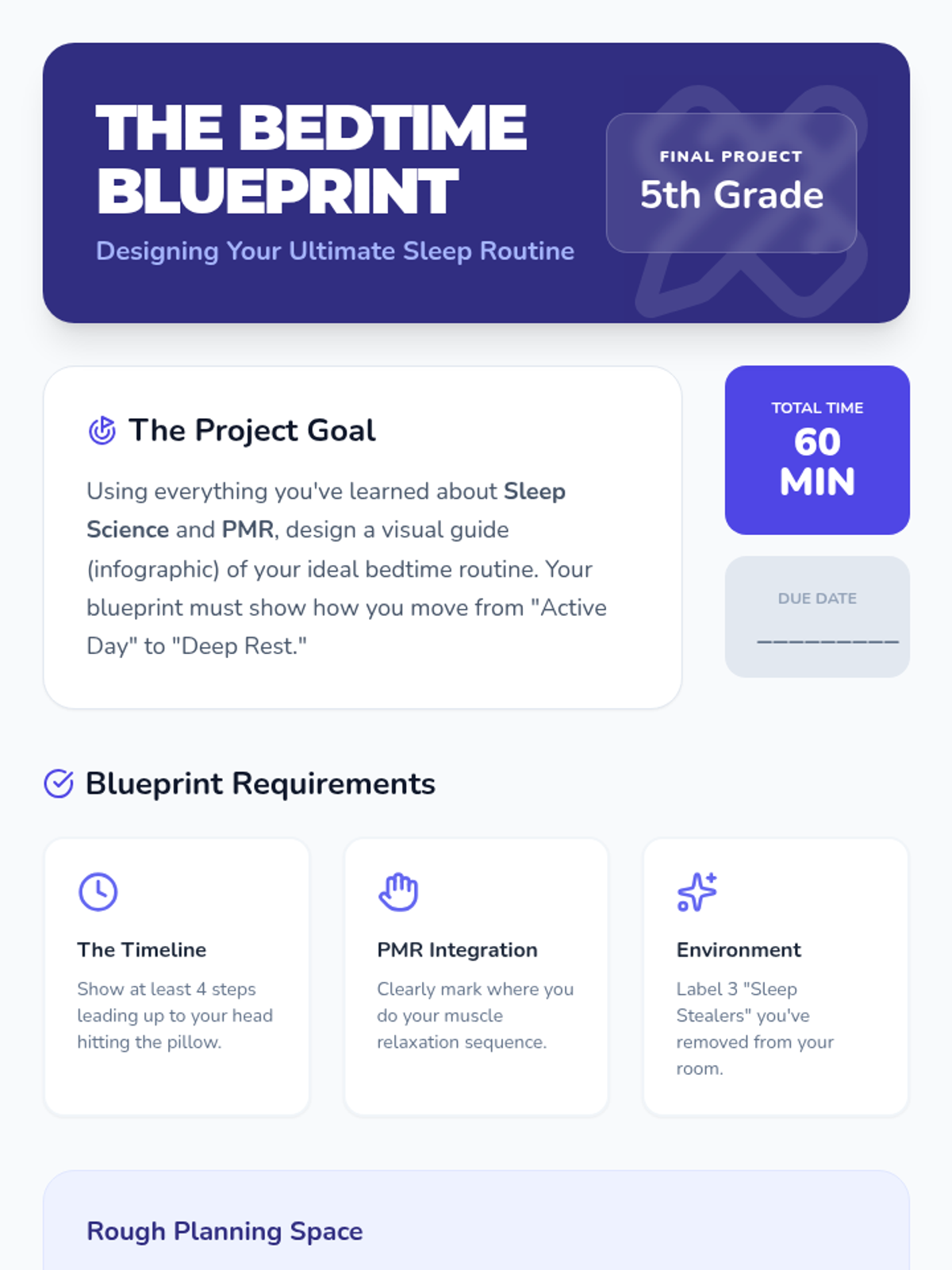
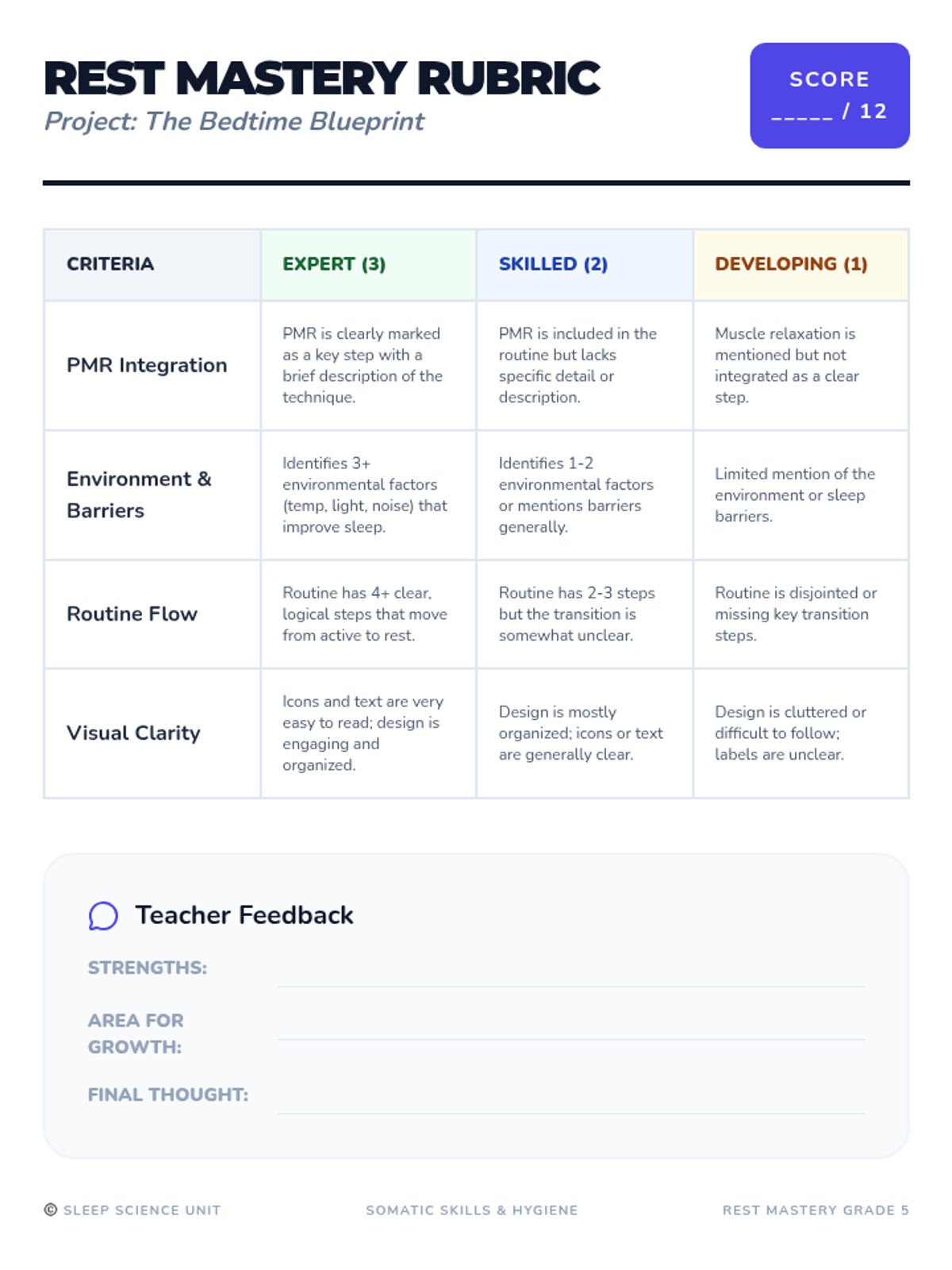
Based on their experiments, students create an ideal pre-sleep routine infographic that includes PMR and environmental factors. The final output is a visual guide to healthy sleep hygiene.
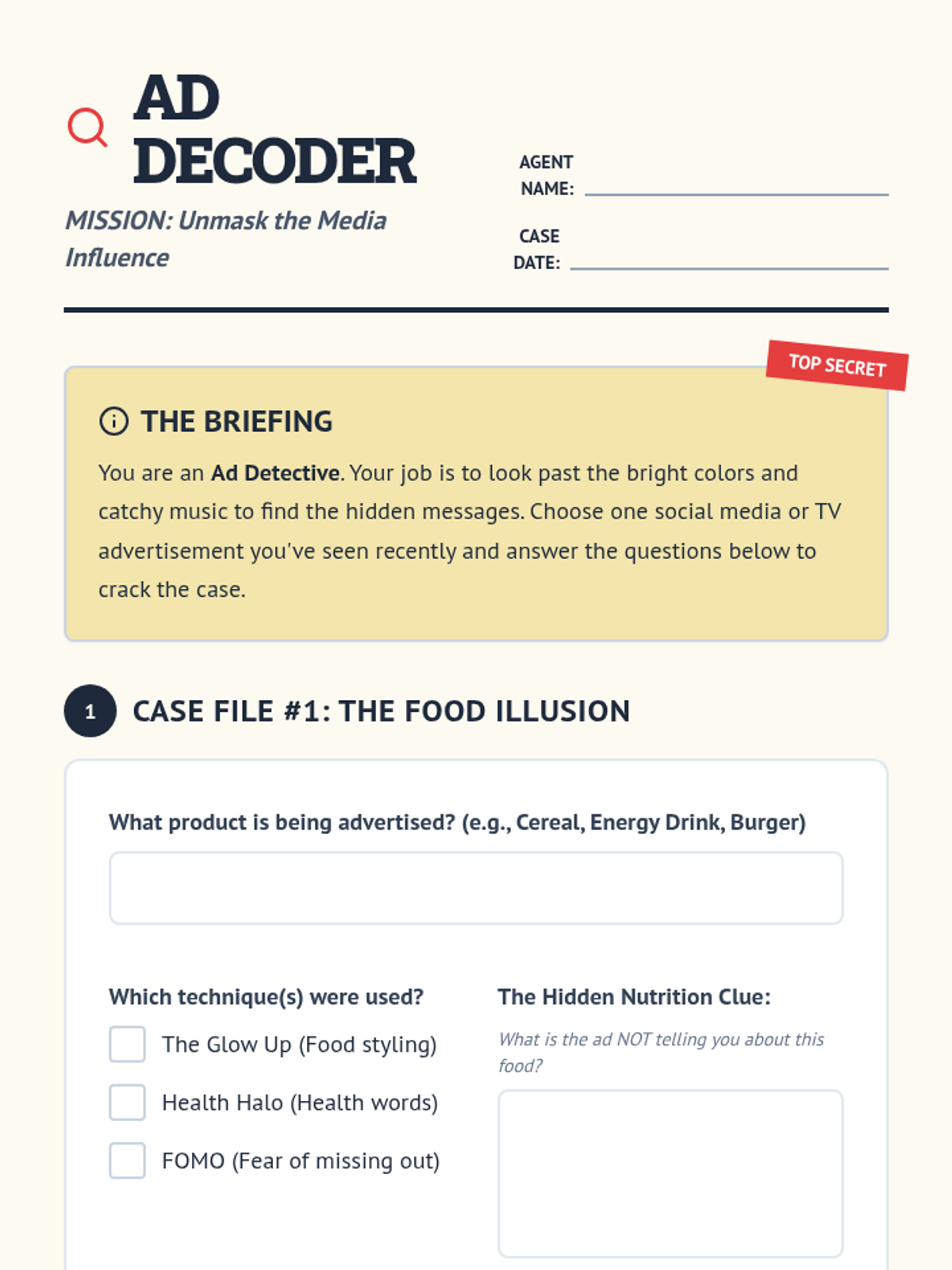
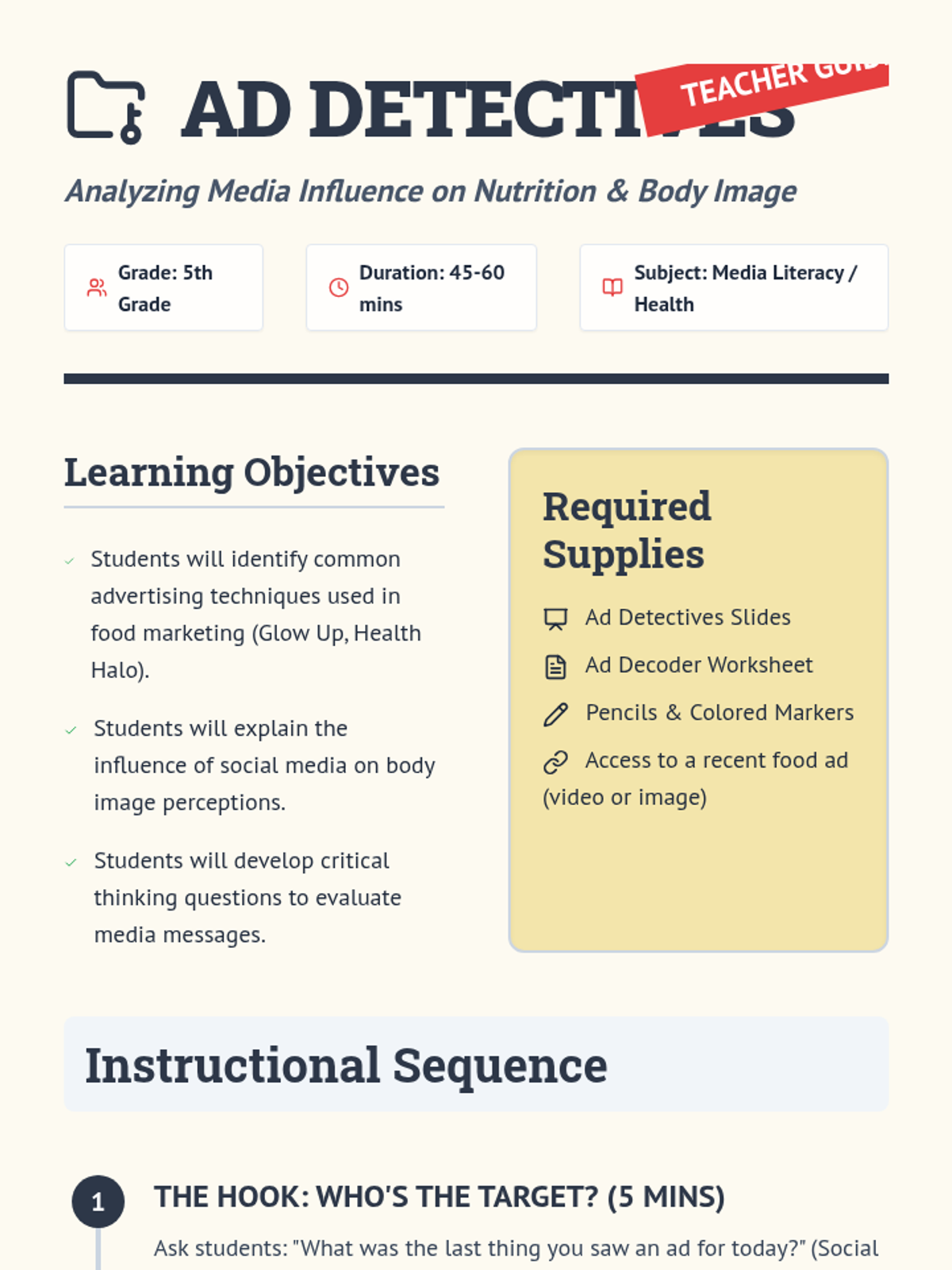
A lesson designed to help 5th-grade students critically analyze how advertisements and social media influence their food choices and body image. Students will learn common advertising techniques and develop strategies to be media-literate consumers.
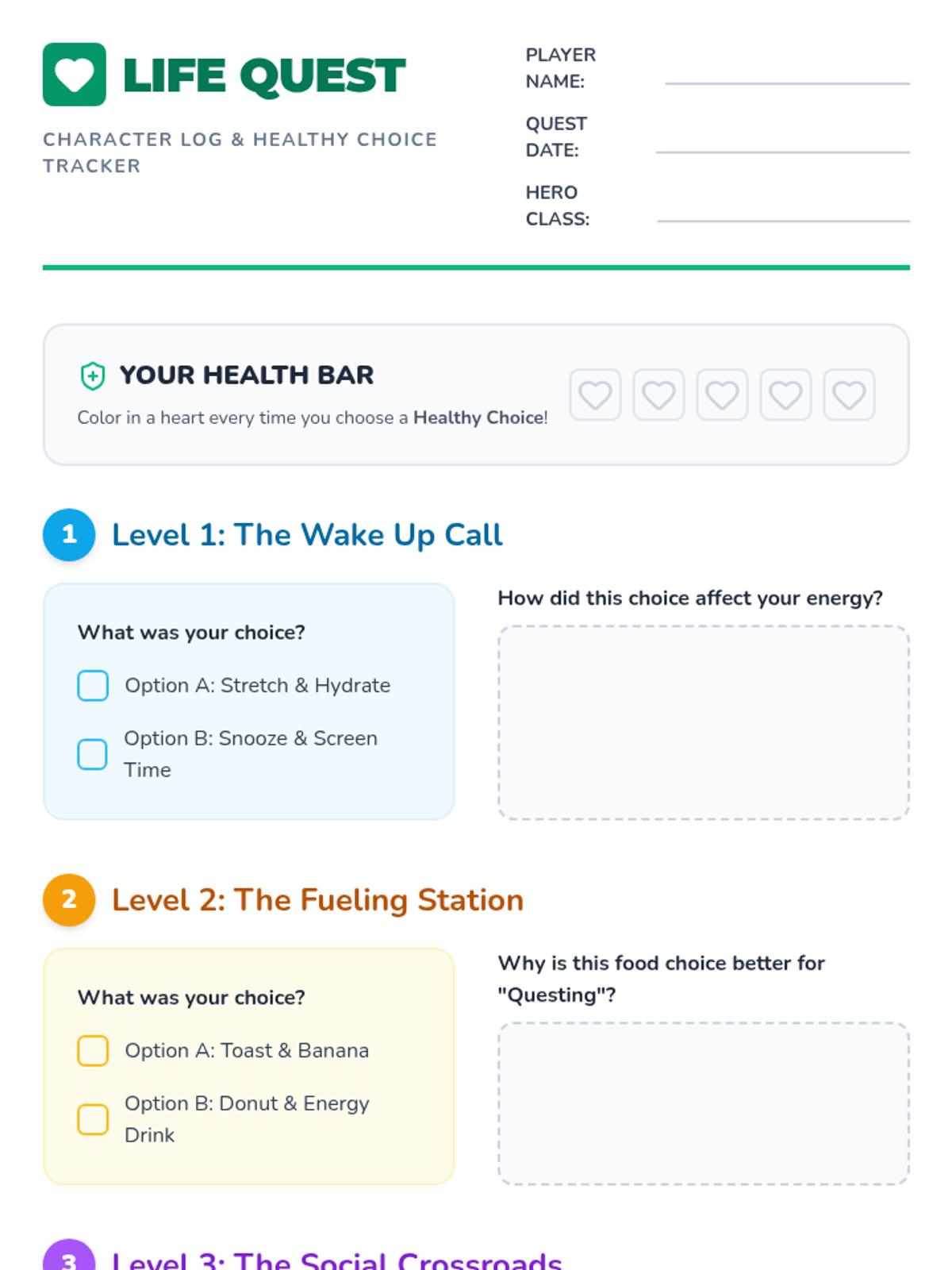
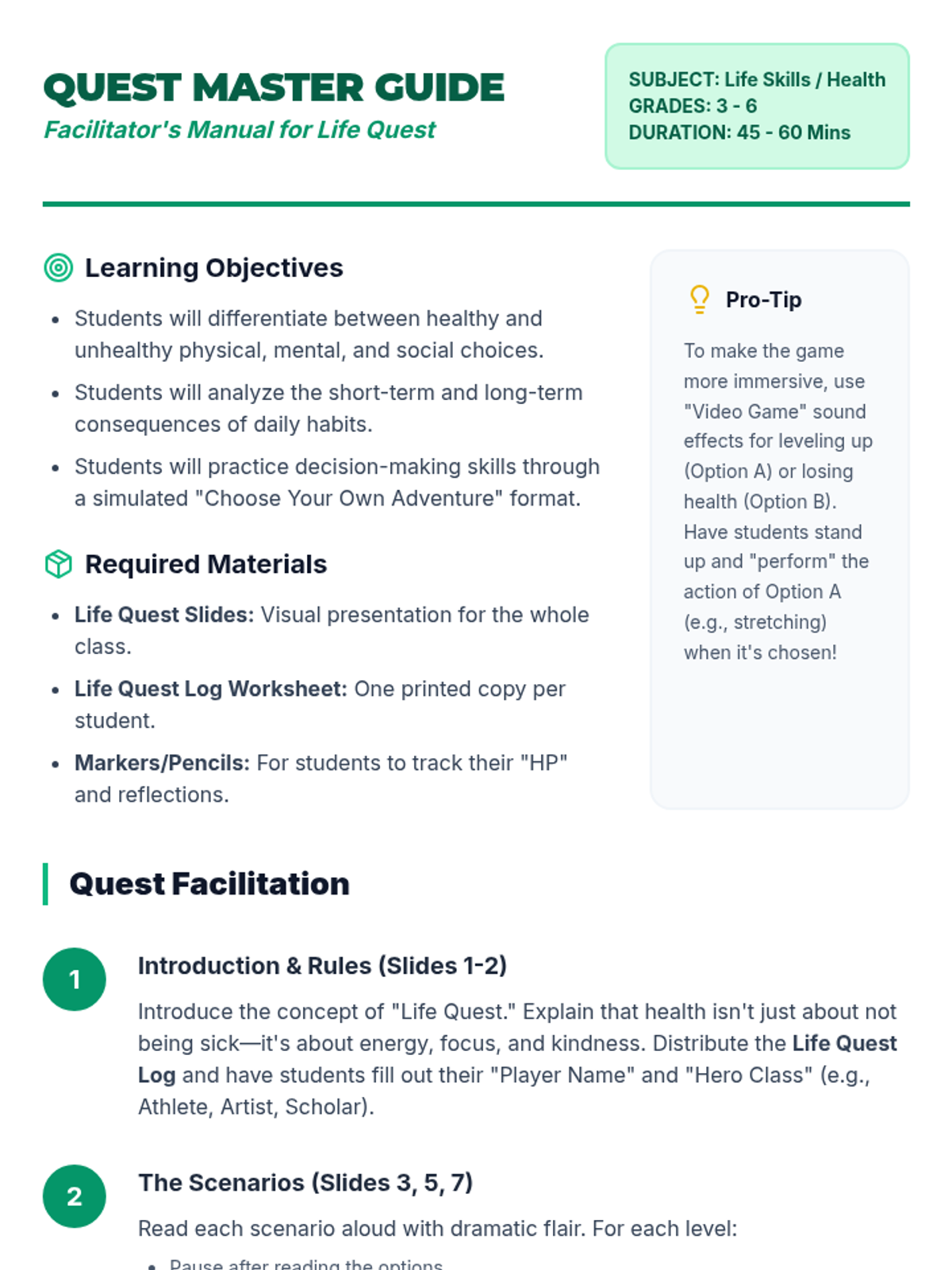
A game-based lesson where students navigate daily scenarios to make healthy physical, mental, and social choices using a 'choose your own adventure' format.
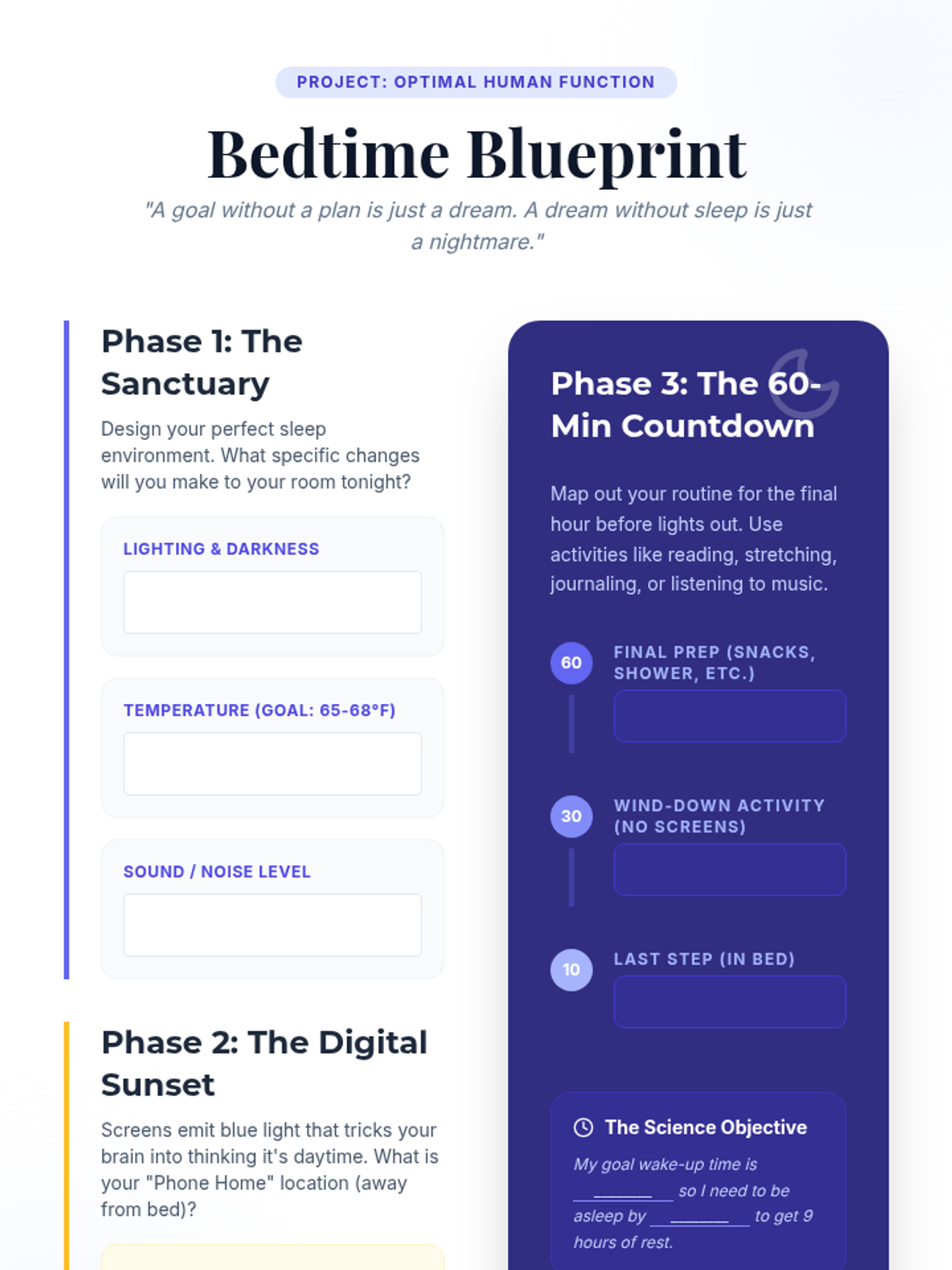
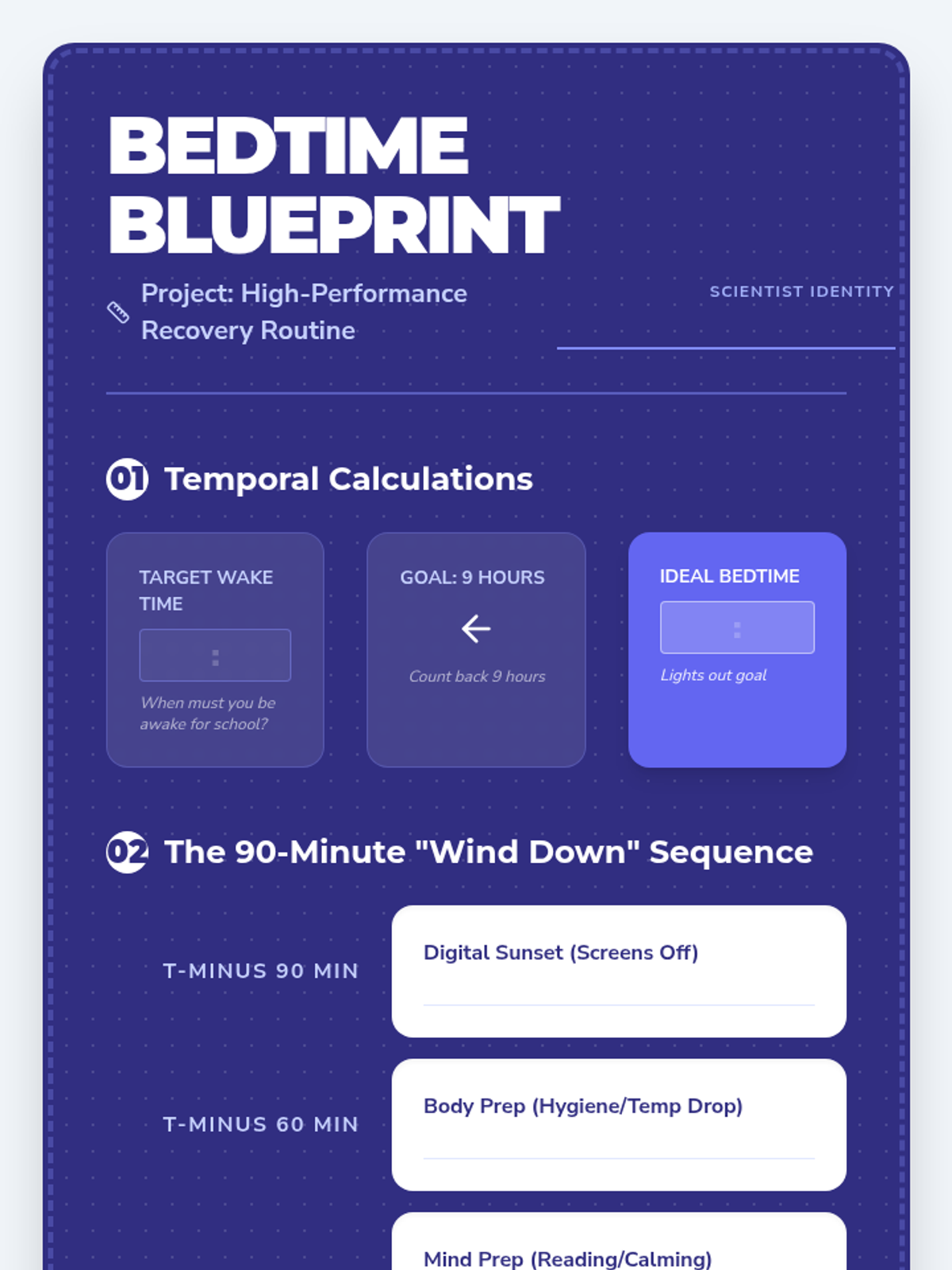
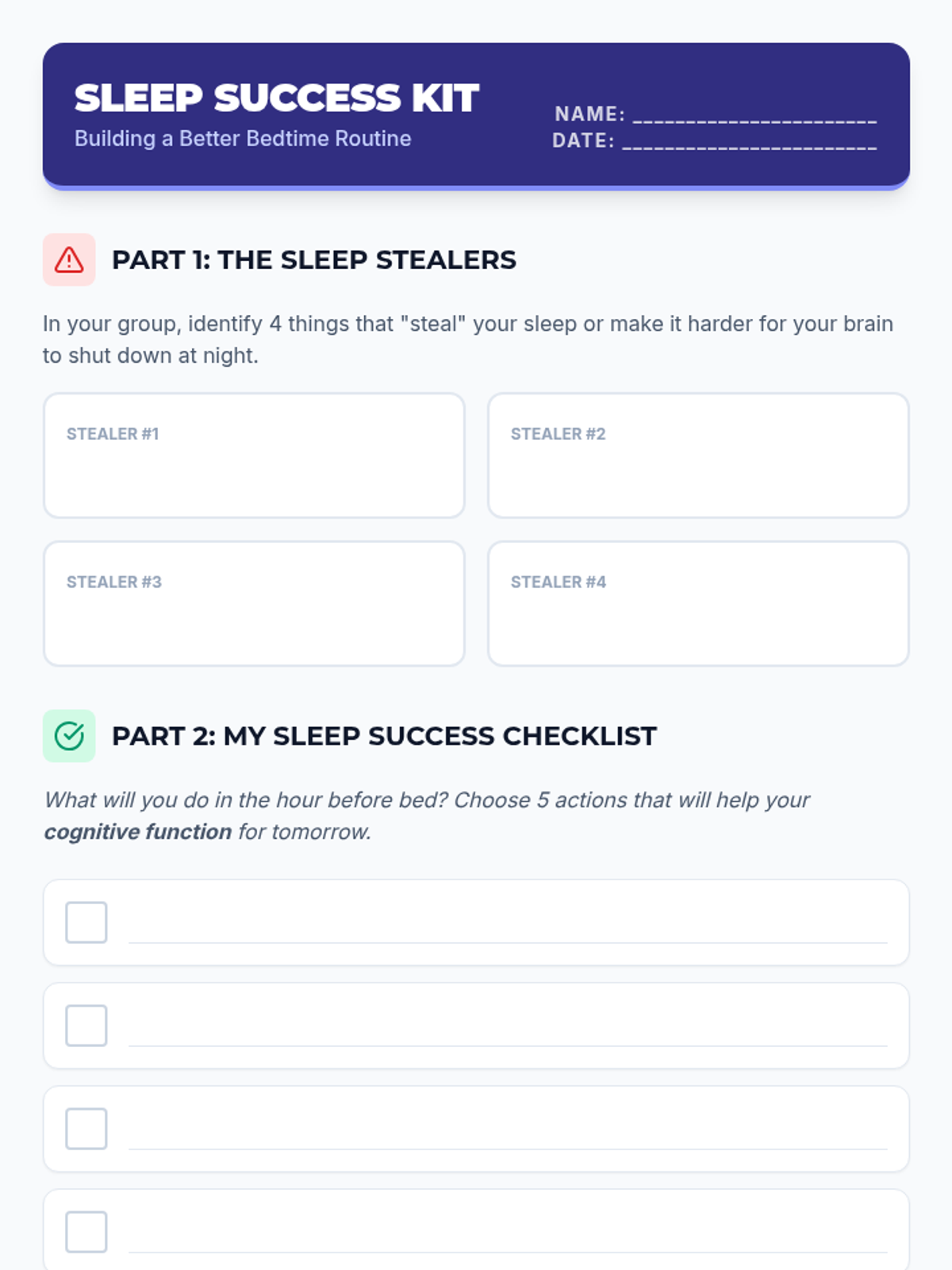
This lesson explores the biological necessity of sleep, the stages of the sleep cycle, and how rest impacts cognitive function and emotional regulation. Students will analyze their own sleep hygiene and develop a 'bedtime blueprint' to improve their quality of rest.
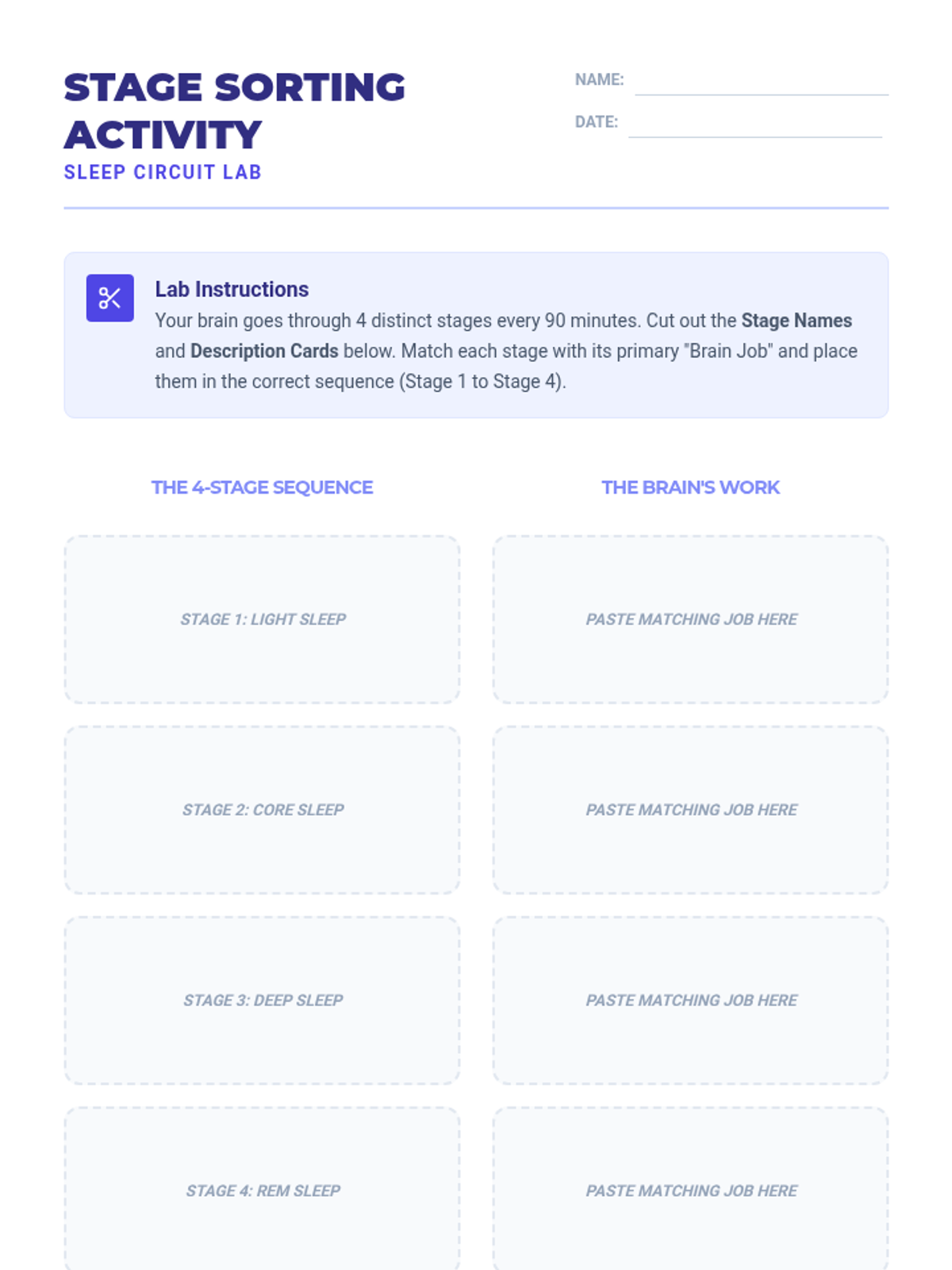
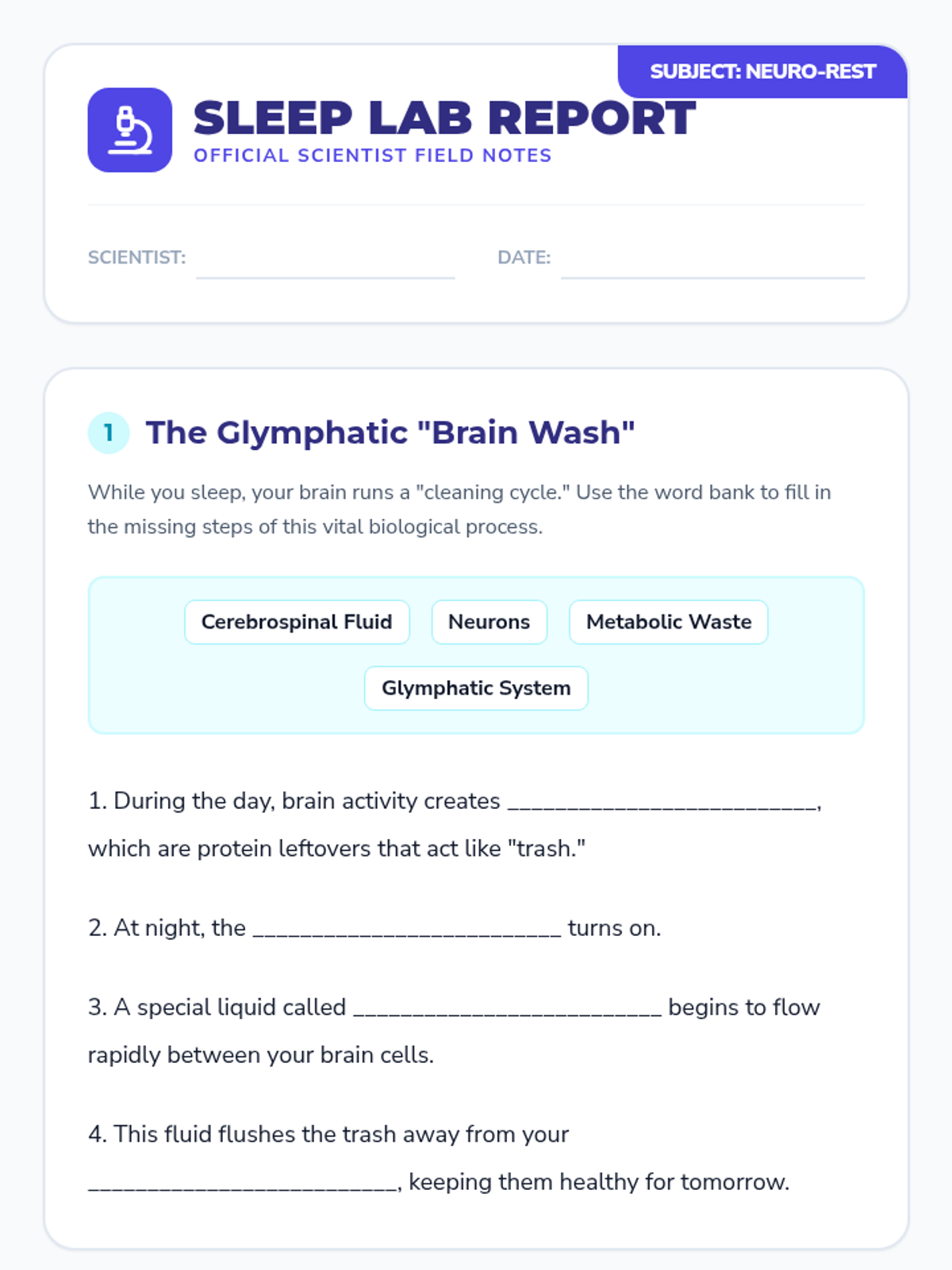
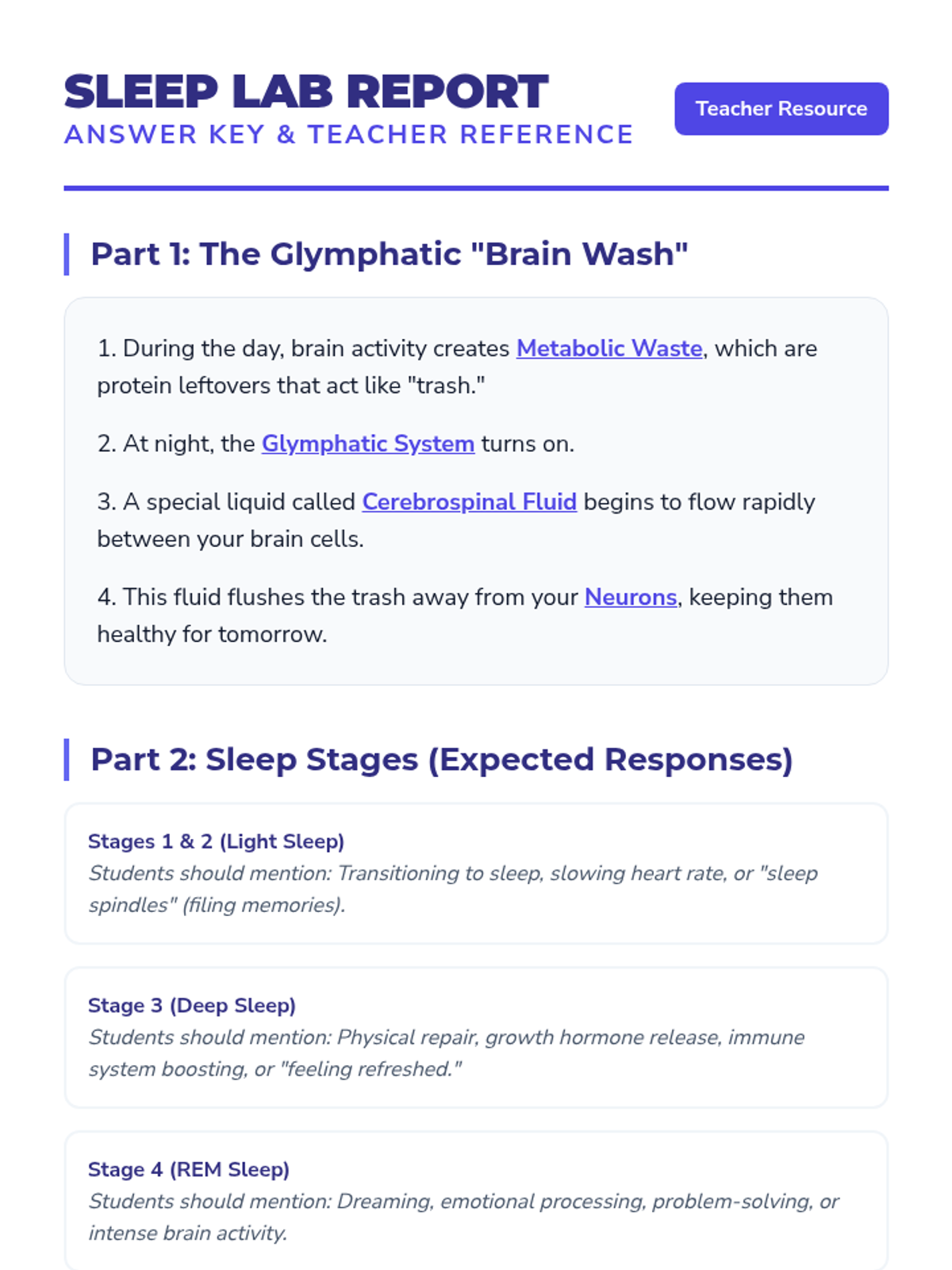
This lesson transforms students into Sleep Scientists to explore the biological necessity of rest. Students will learn about the four stages of sleep, the brain's "cleaning" process during the night, and the direct link between sleep hygiene and emotional/cognitive performance. The lesson culminates in students designing a personalized 'Bedtime Blueprint' to optimize their own recovery.
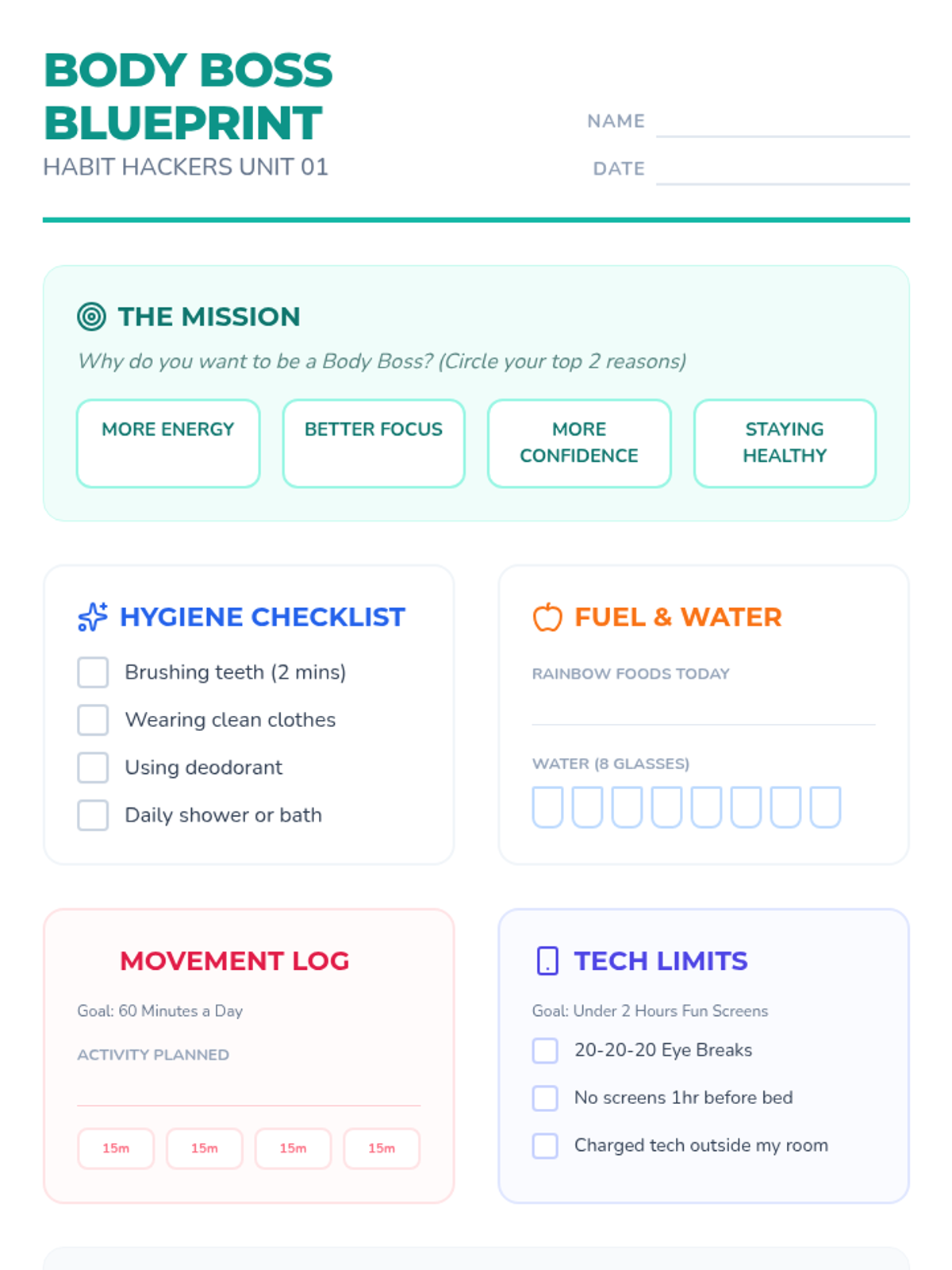
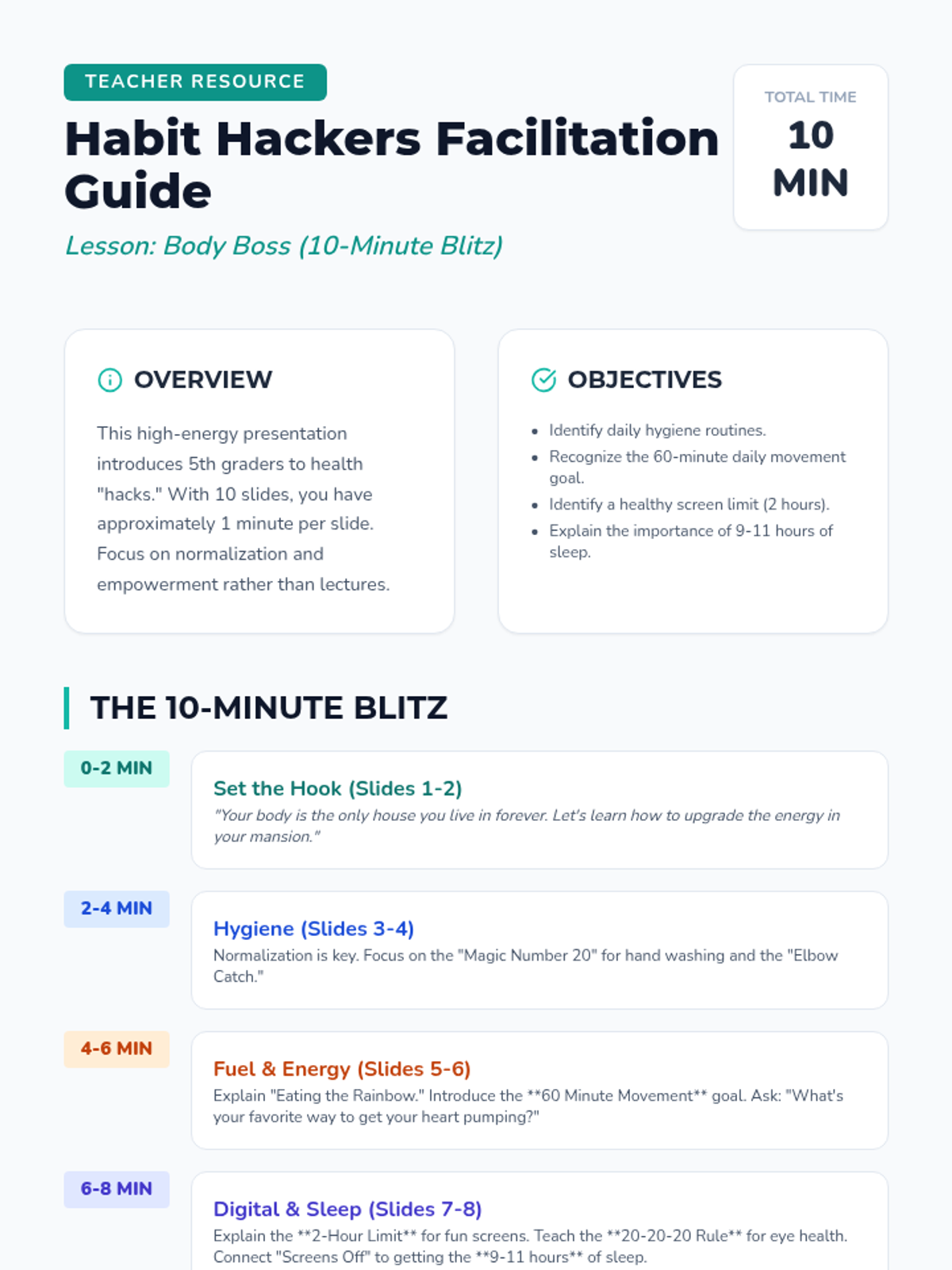
A fast-paced, engaging introduction to personal hygiene and healthy daily routines specifically designed for 5th graders entering puberty.
A supportive and informative lesson for 4th and 5th-grade girls about the changes of puberty, covering physical health, emotional well-being, and menstruation.
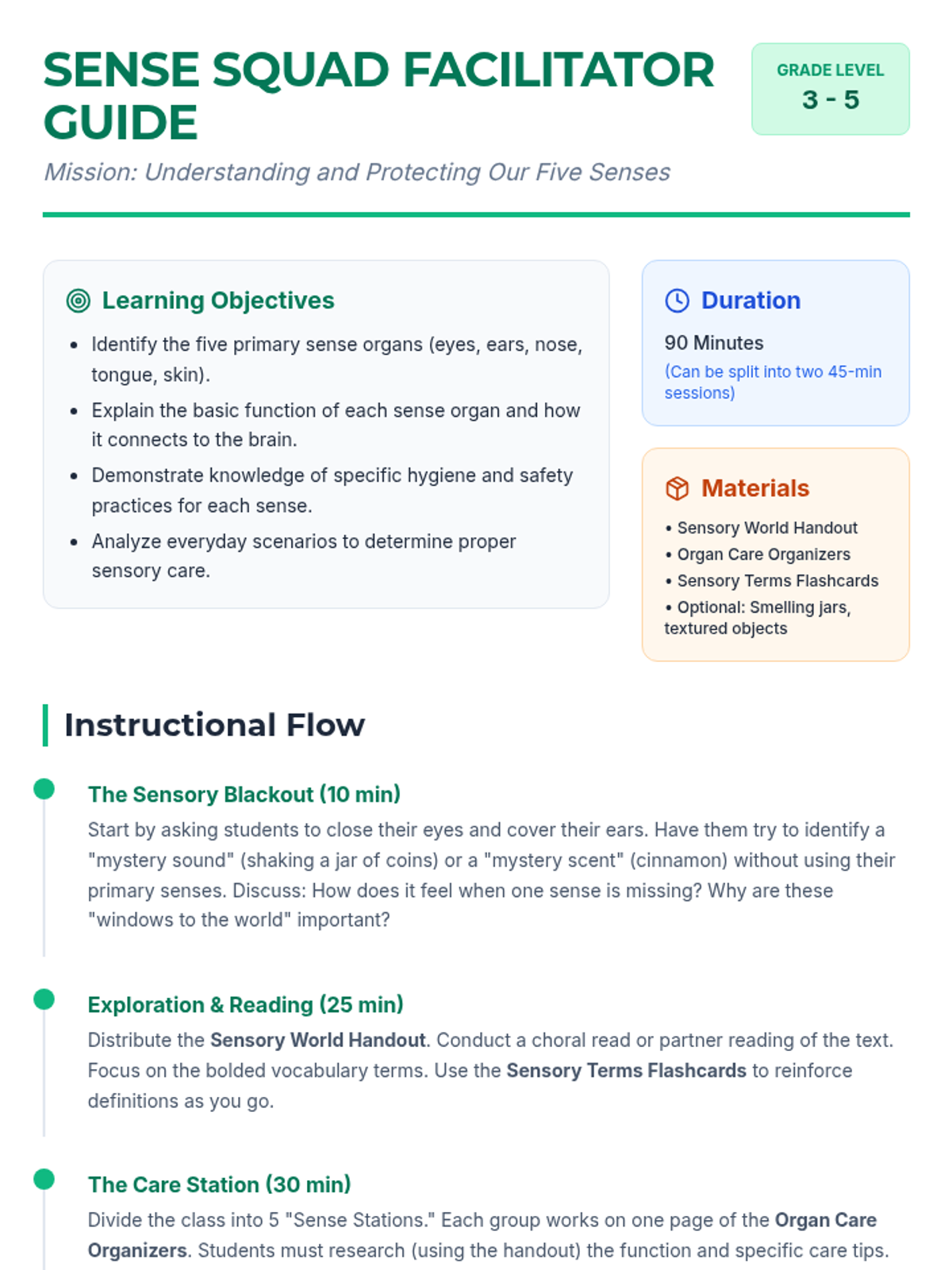
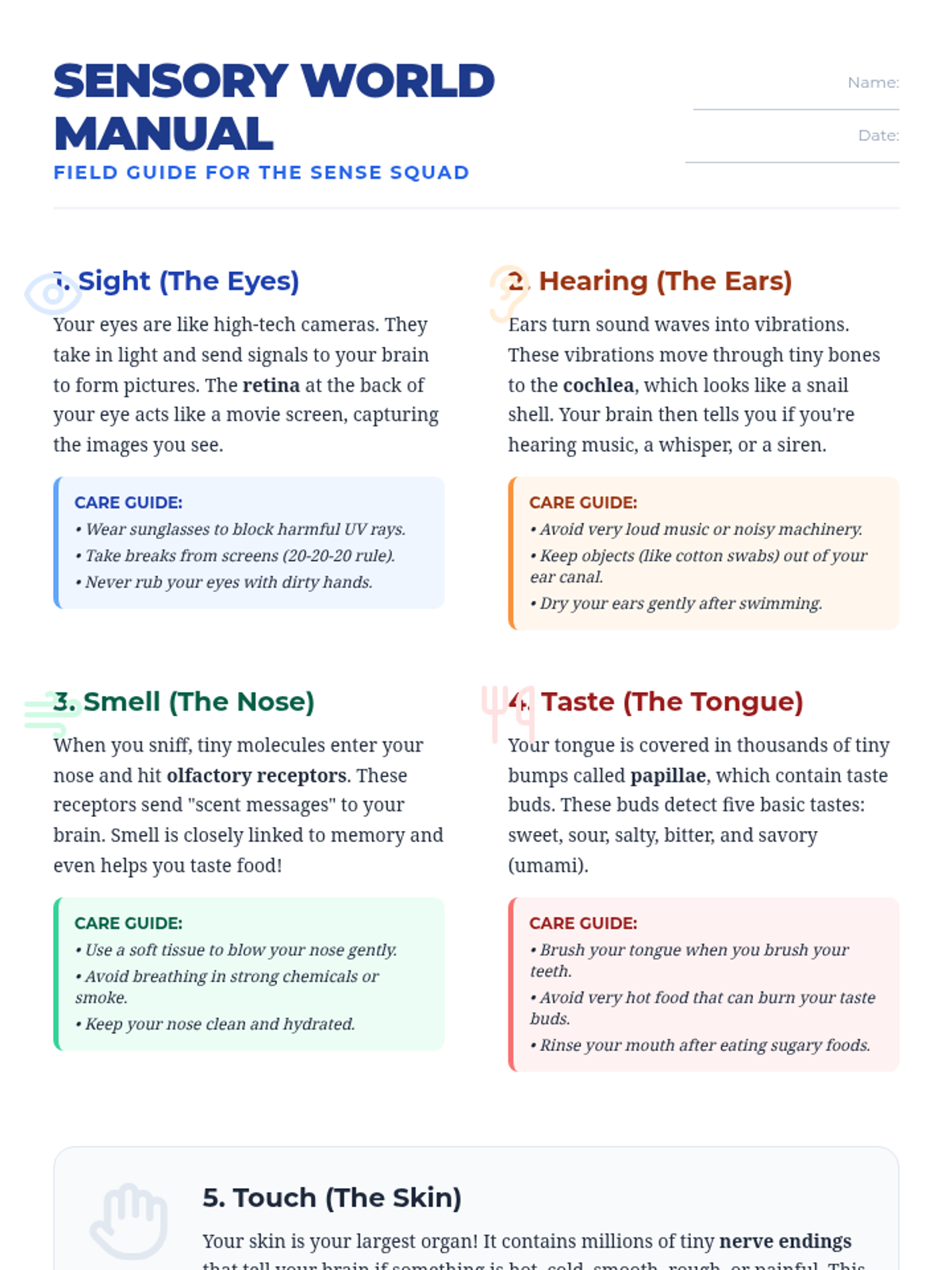
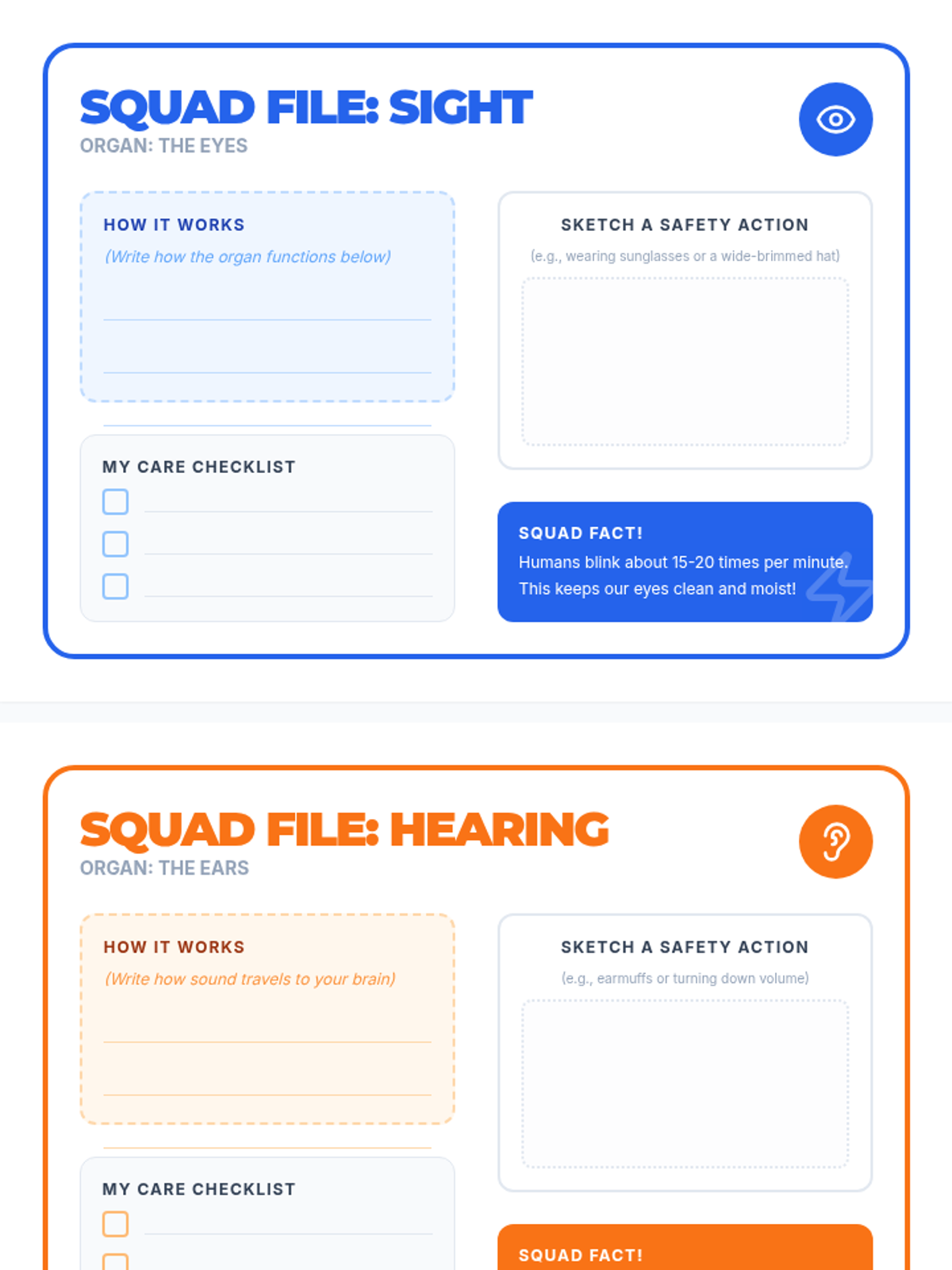
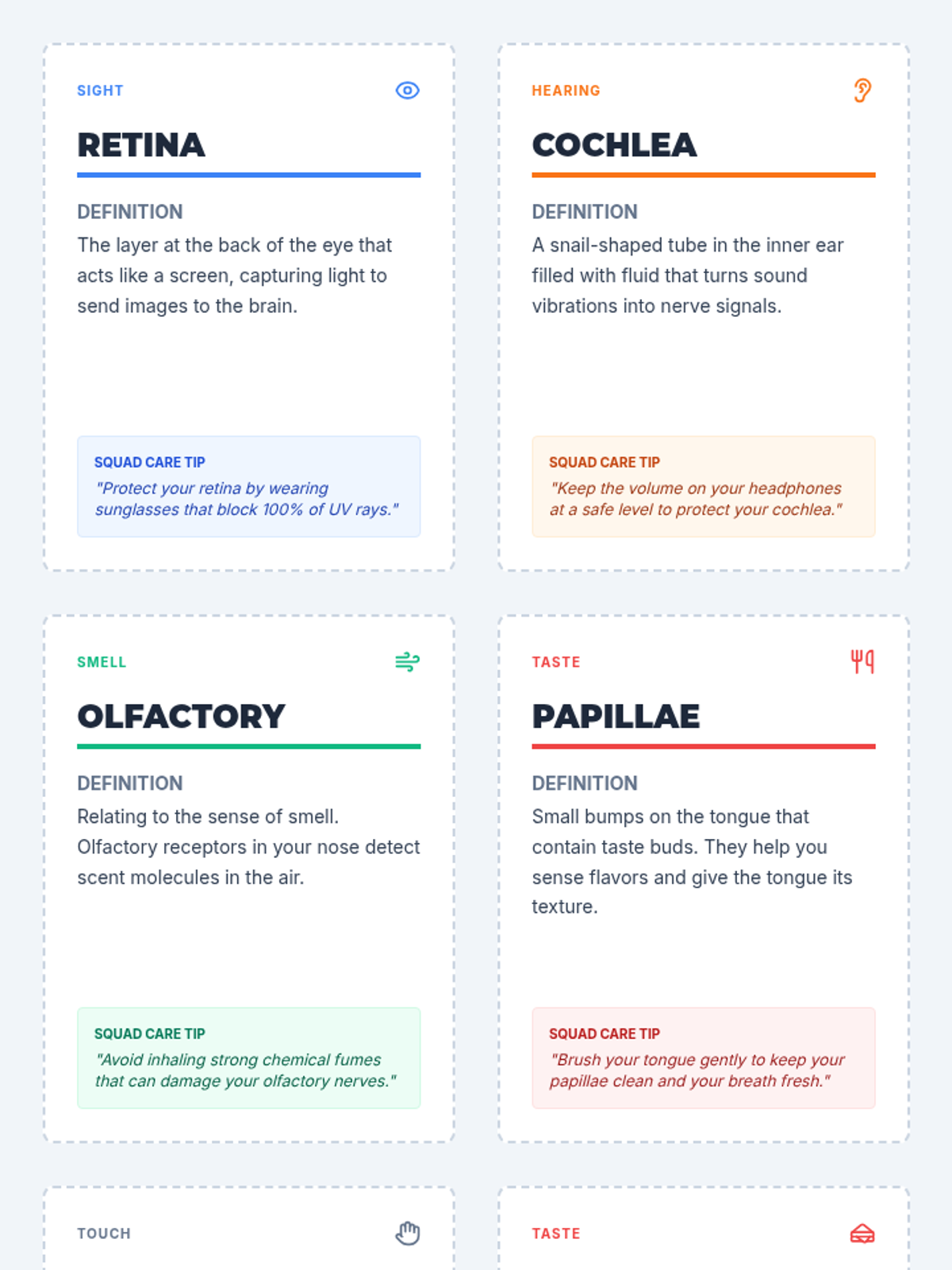
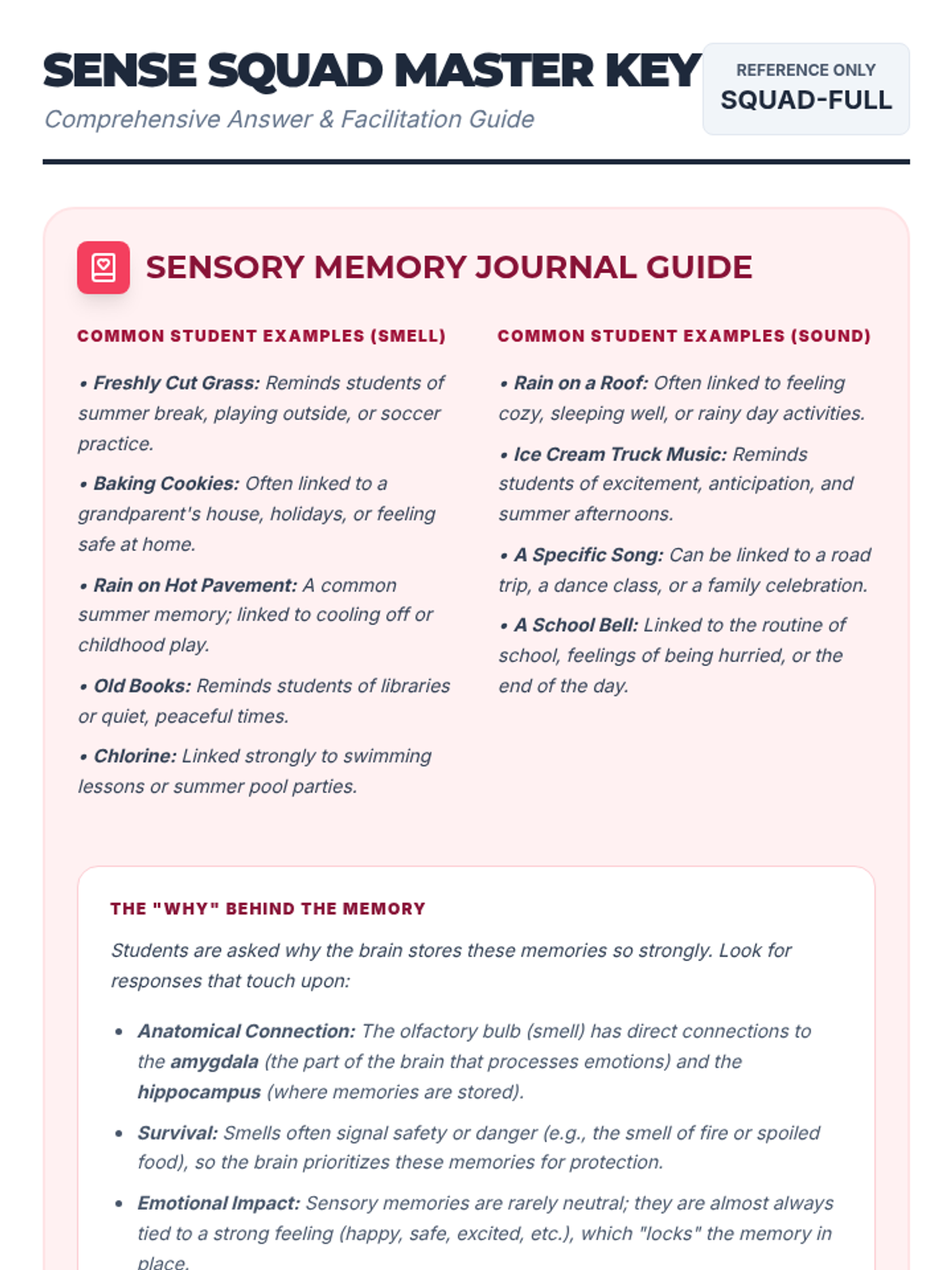
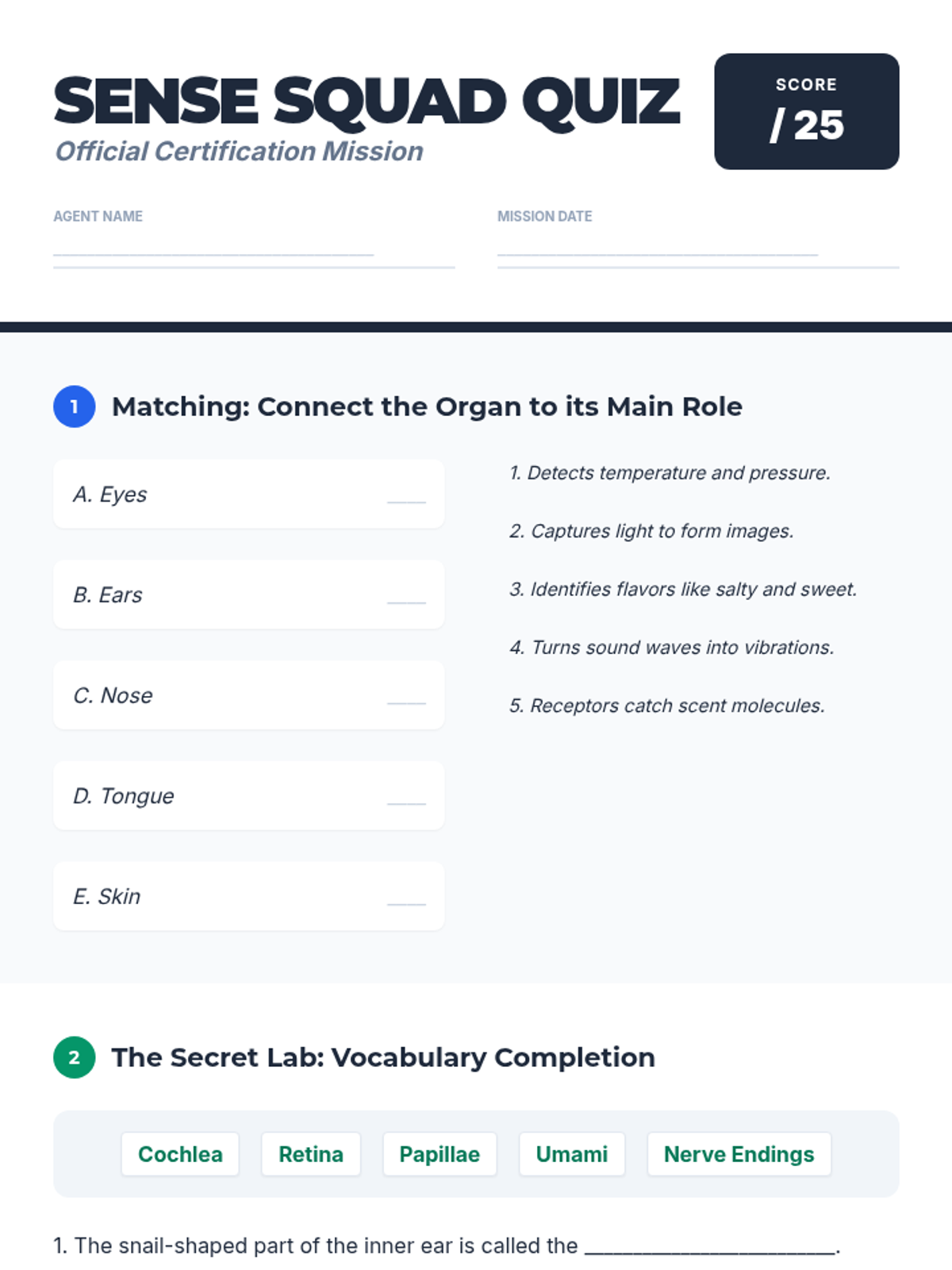
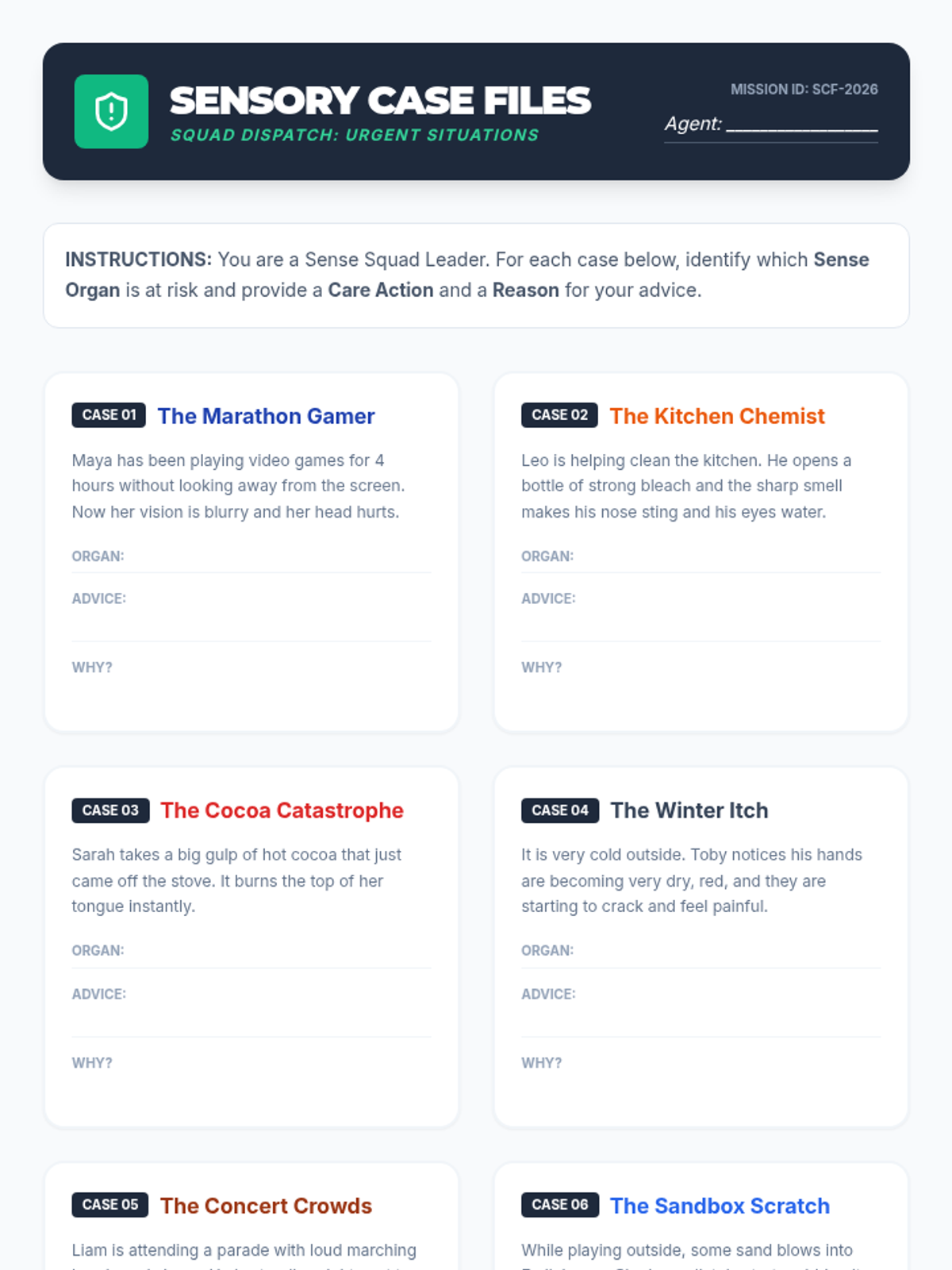
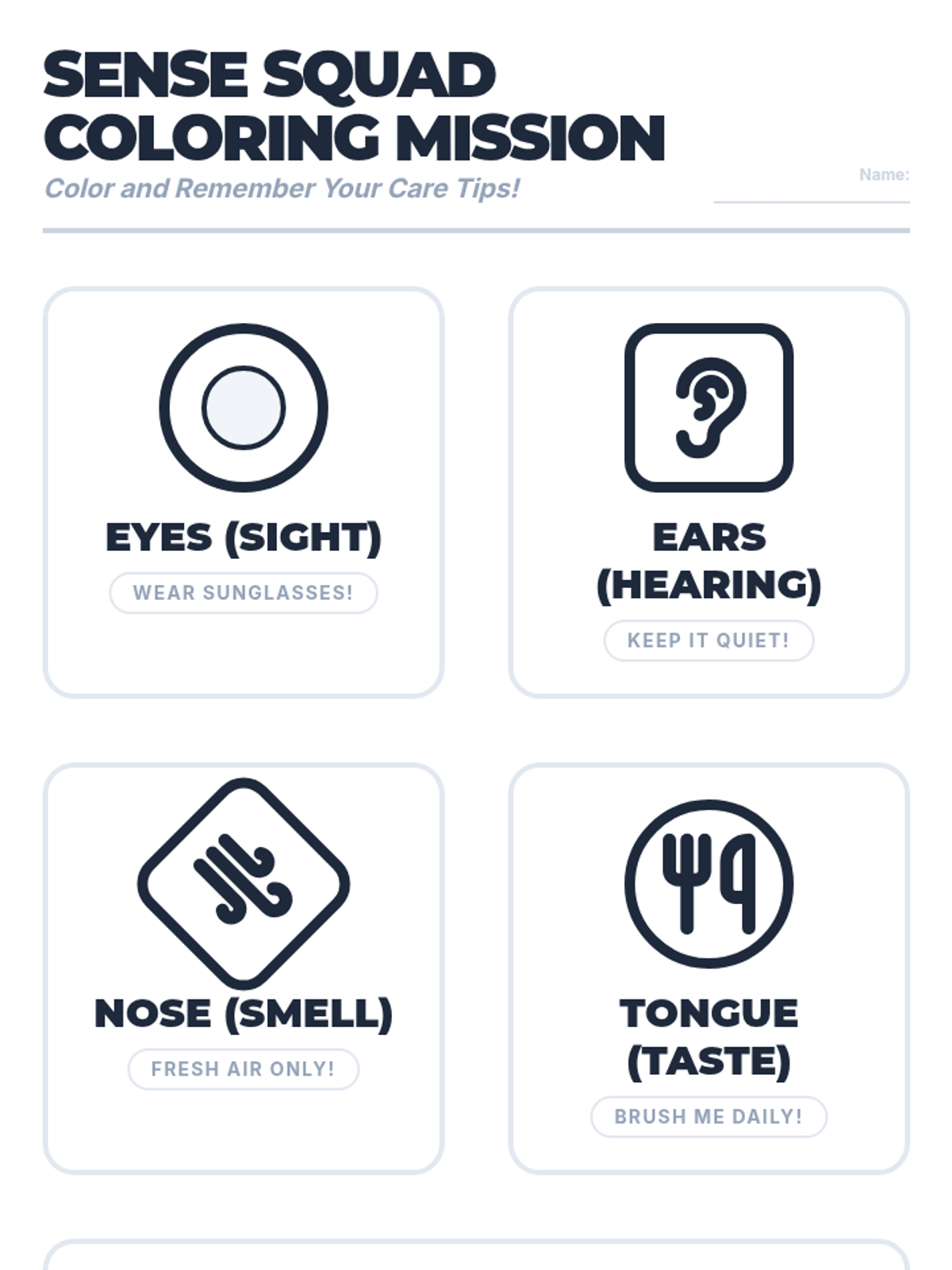
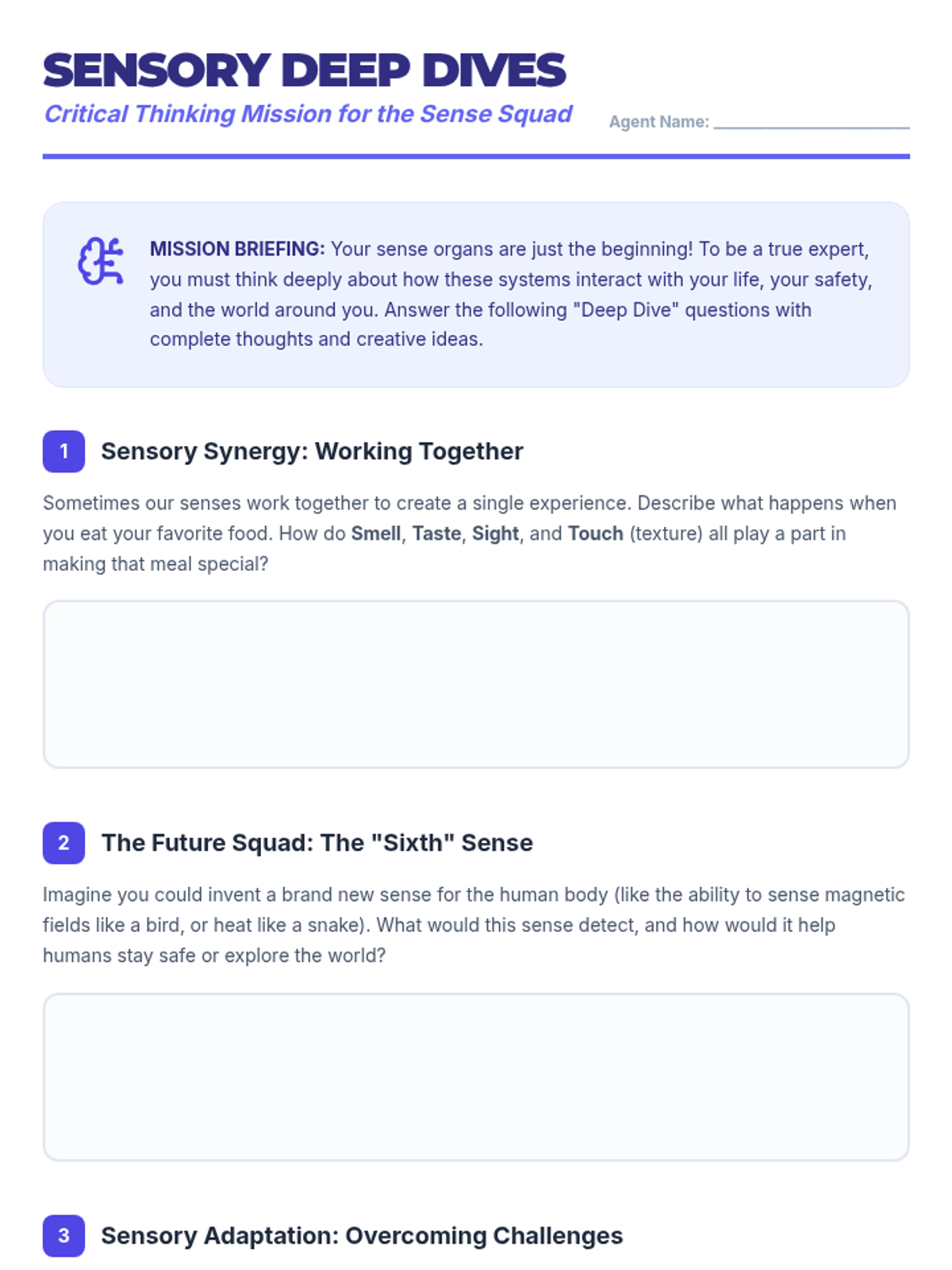
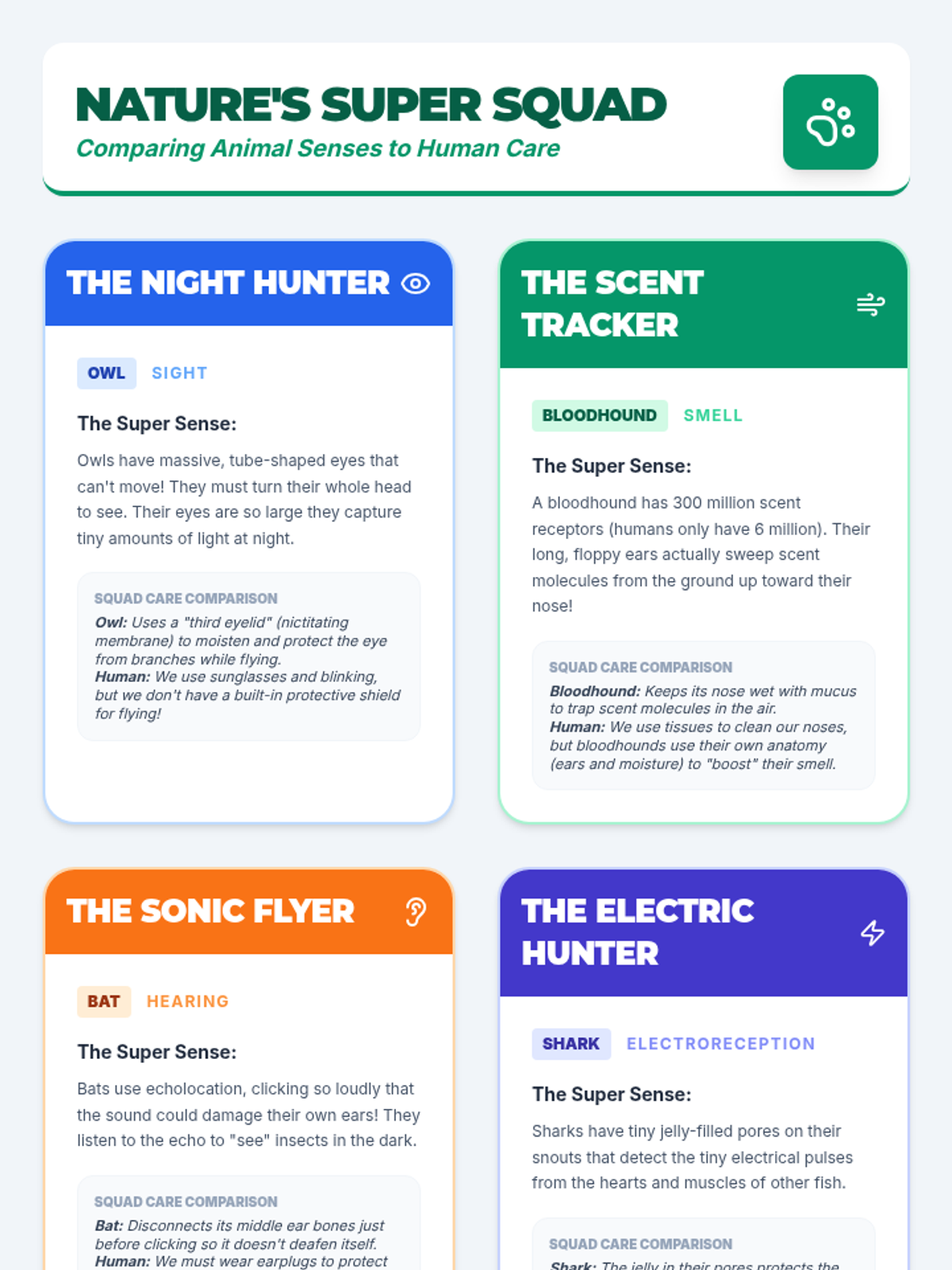
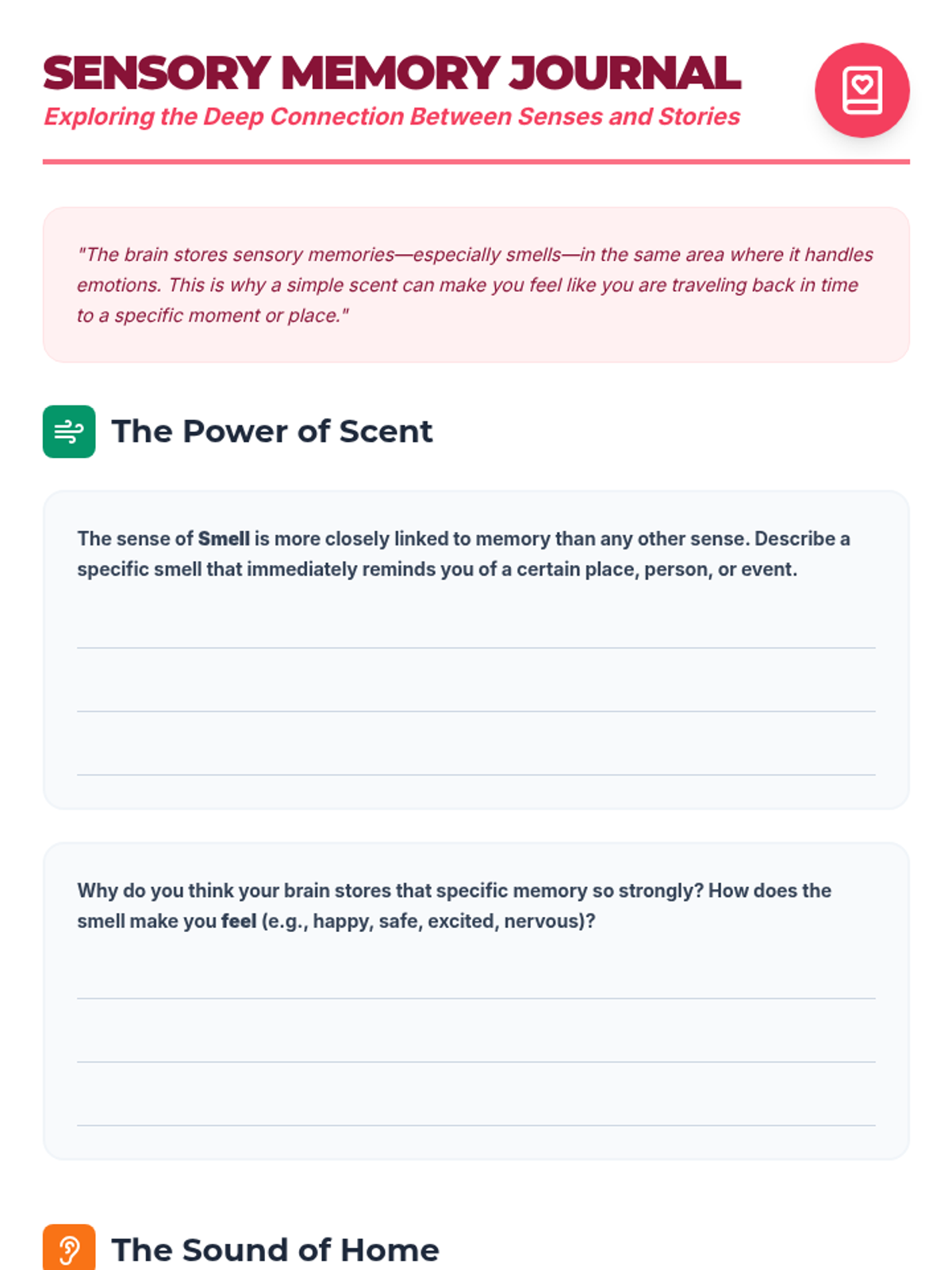
A comprehensive lesson exploring the five human sense organs, their functions, and essential care practices to maintain sensory health.
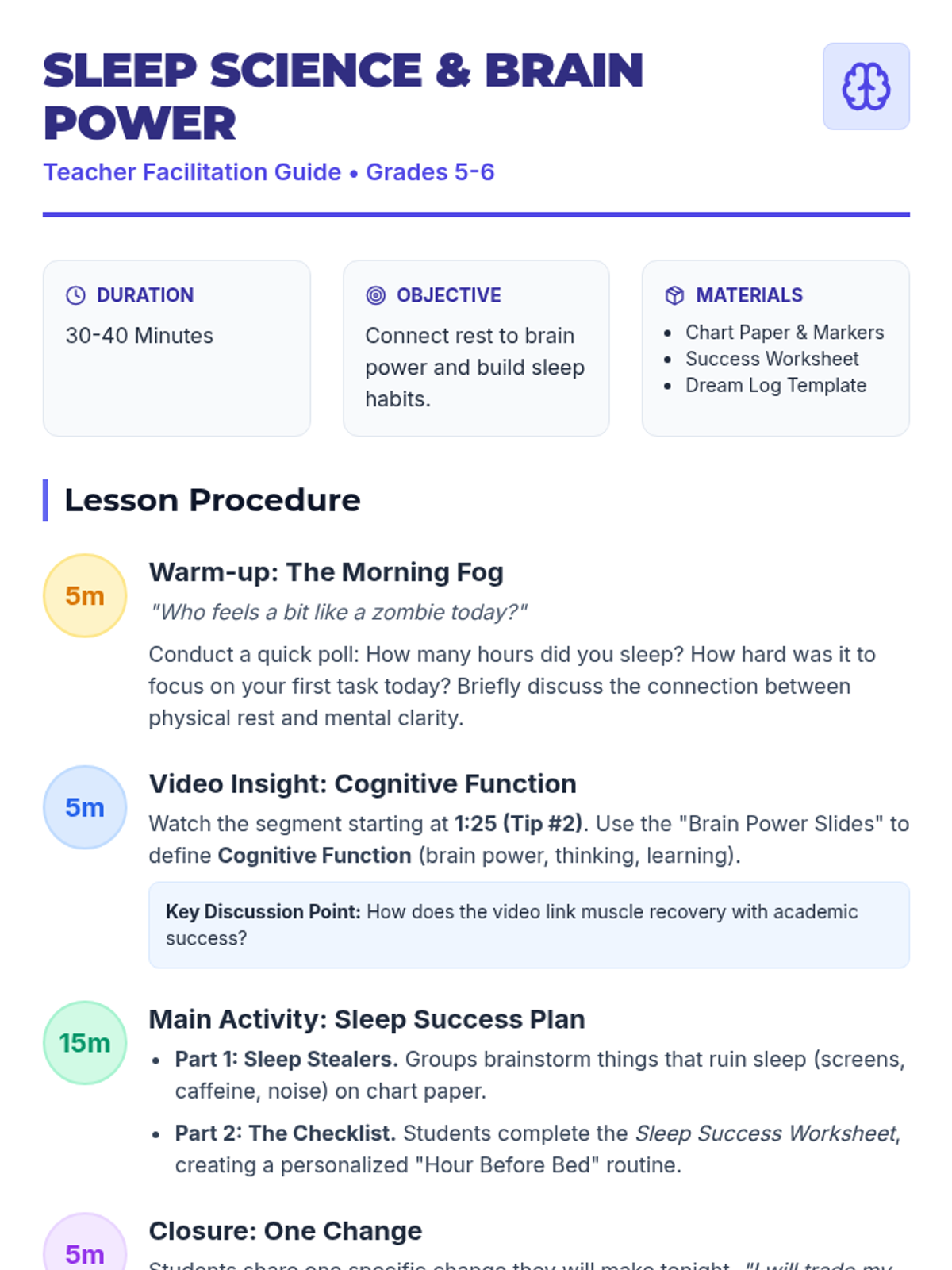
A comprehensive lesson exploring the critical link between sleep and cognitive function, featuring a guided video analysis, group brainstorming on sleep hygiene, and a personal sleep journaling project.