Geometric classification, measurement of area and volume, and the study of transformations and rigid motions. Builds toward complex proofs, trigonometry for general triangles, and the algebraic representation of conic sections.
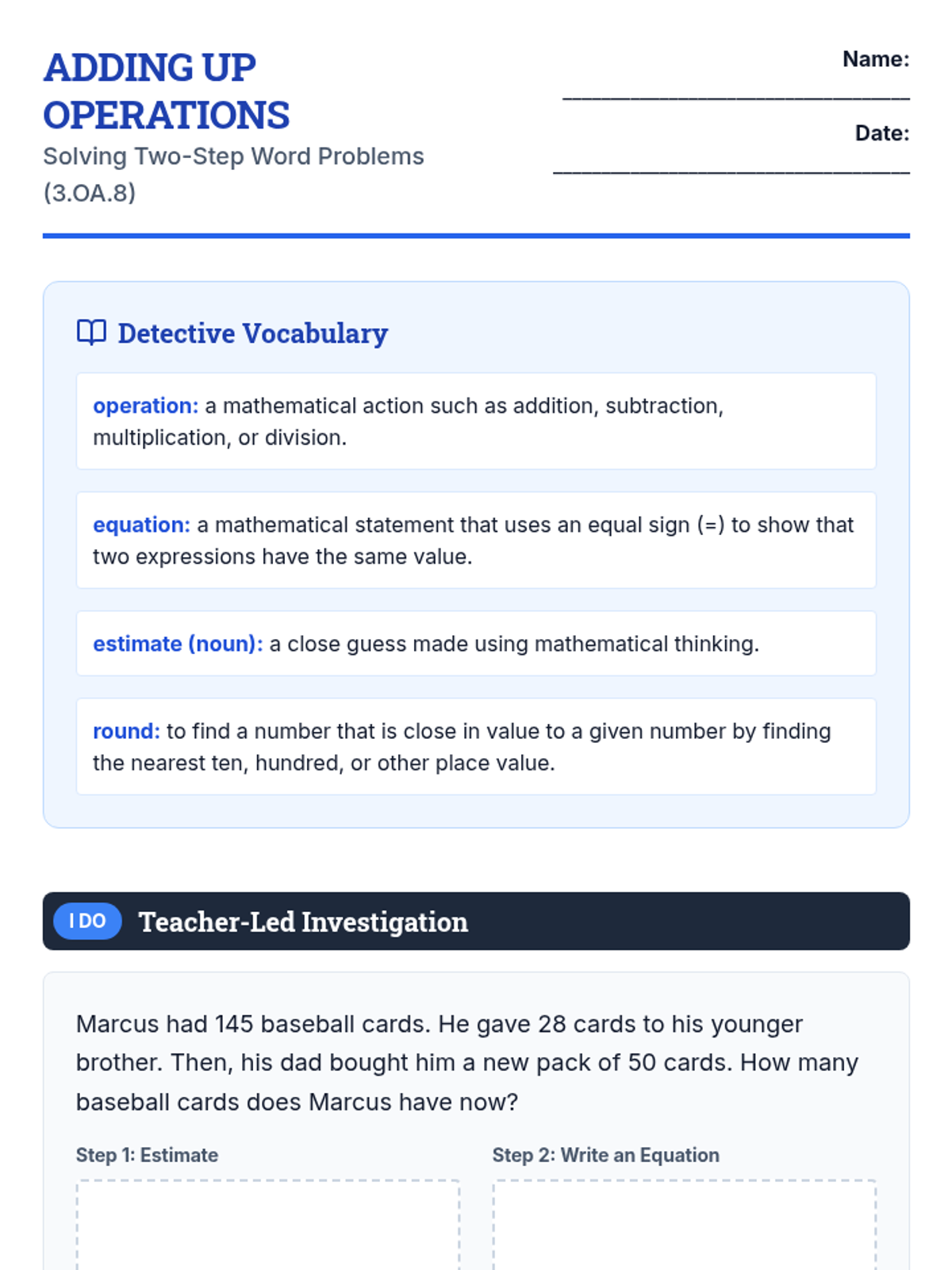
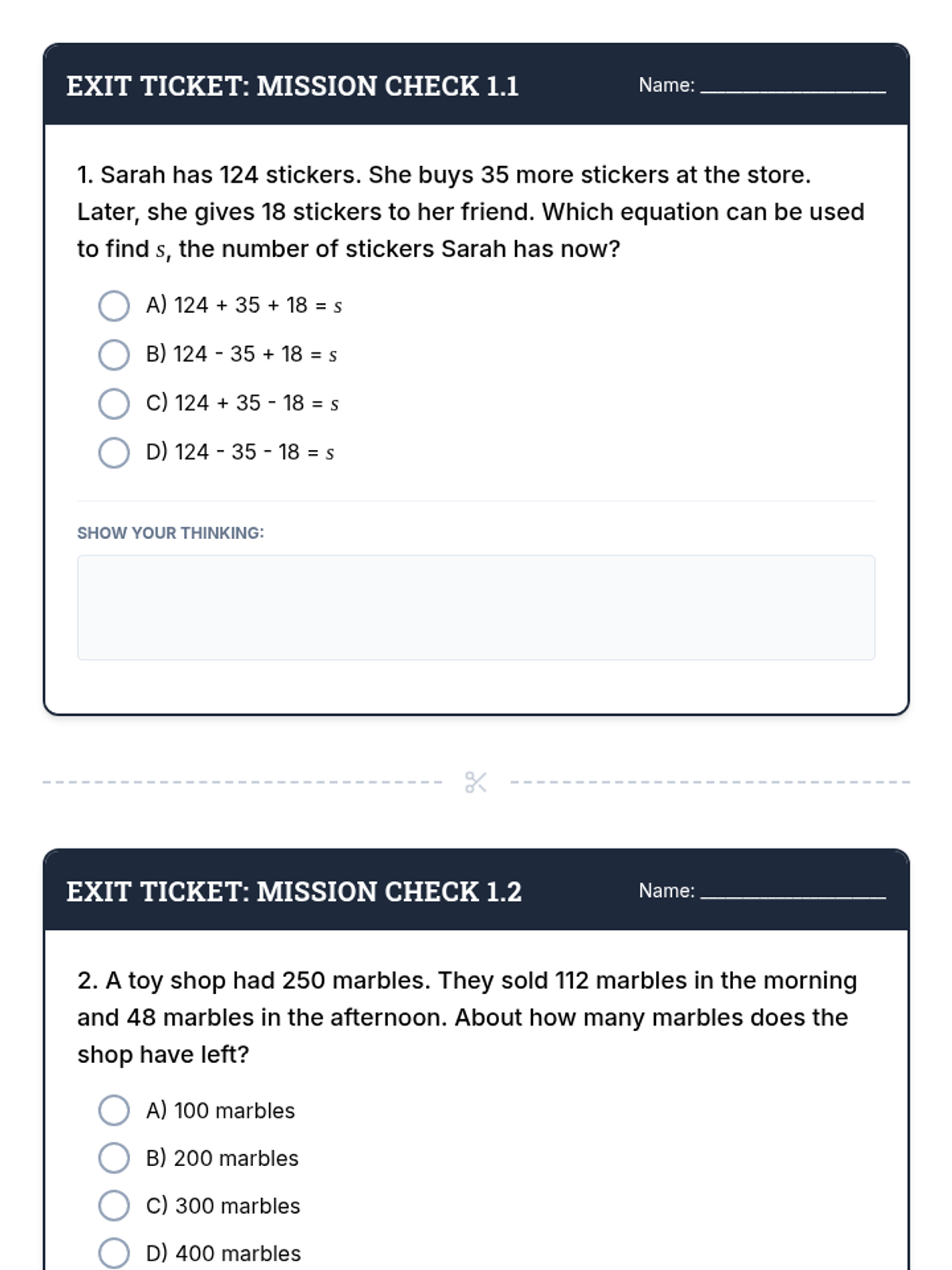
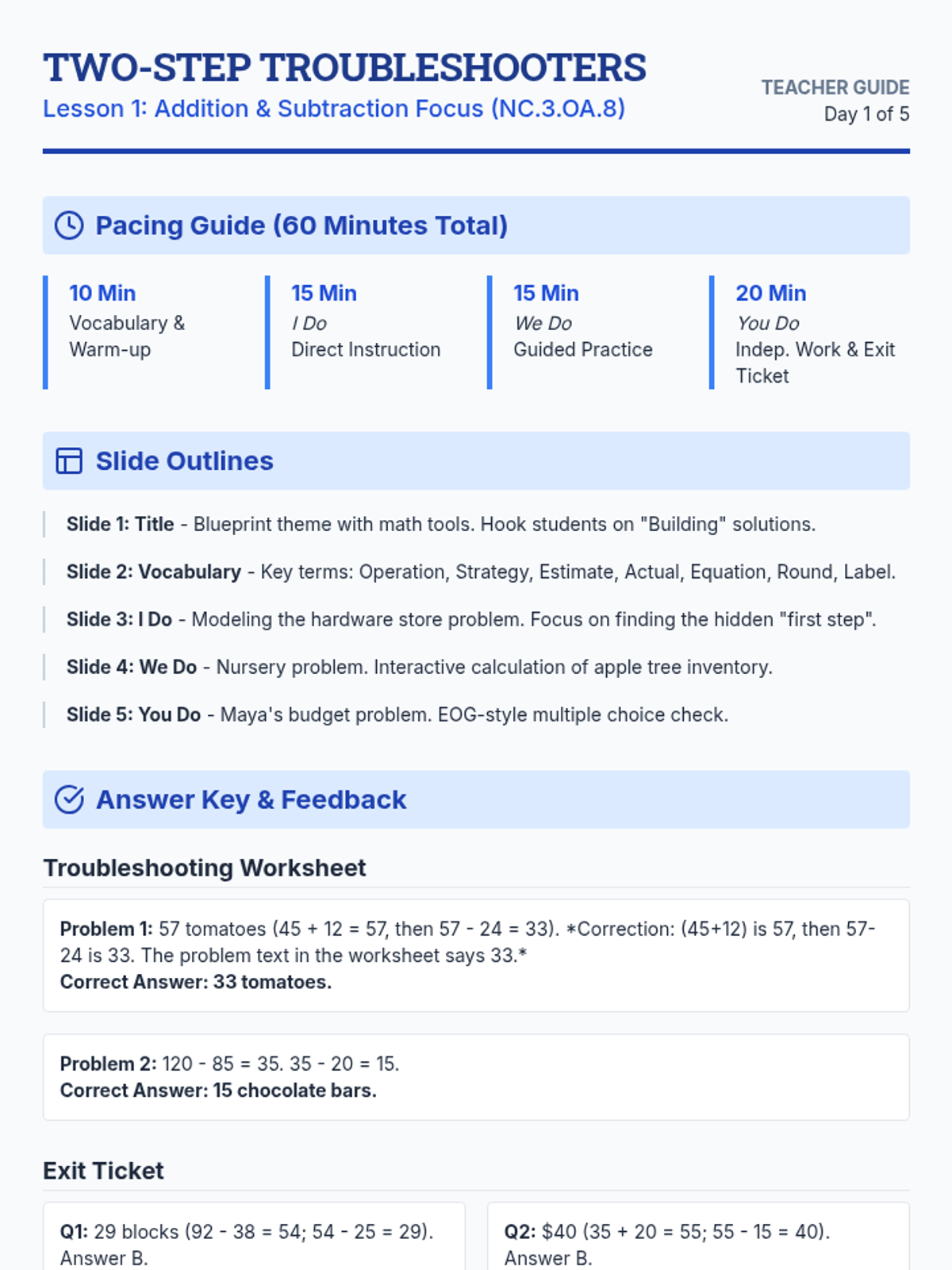
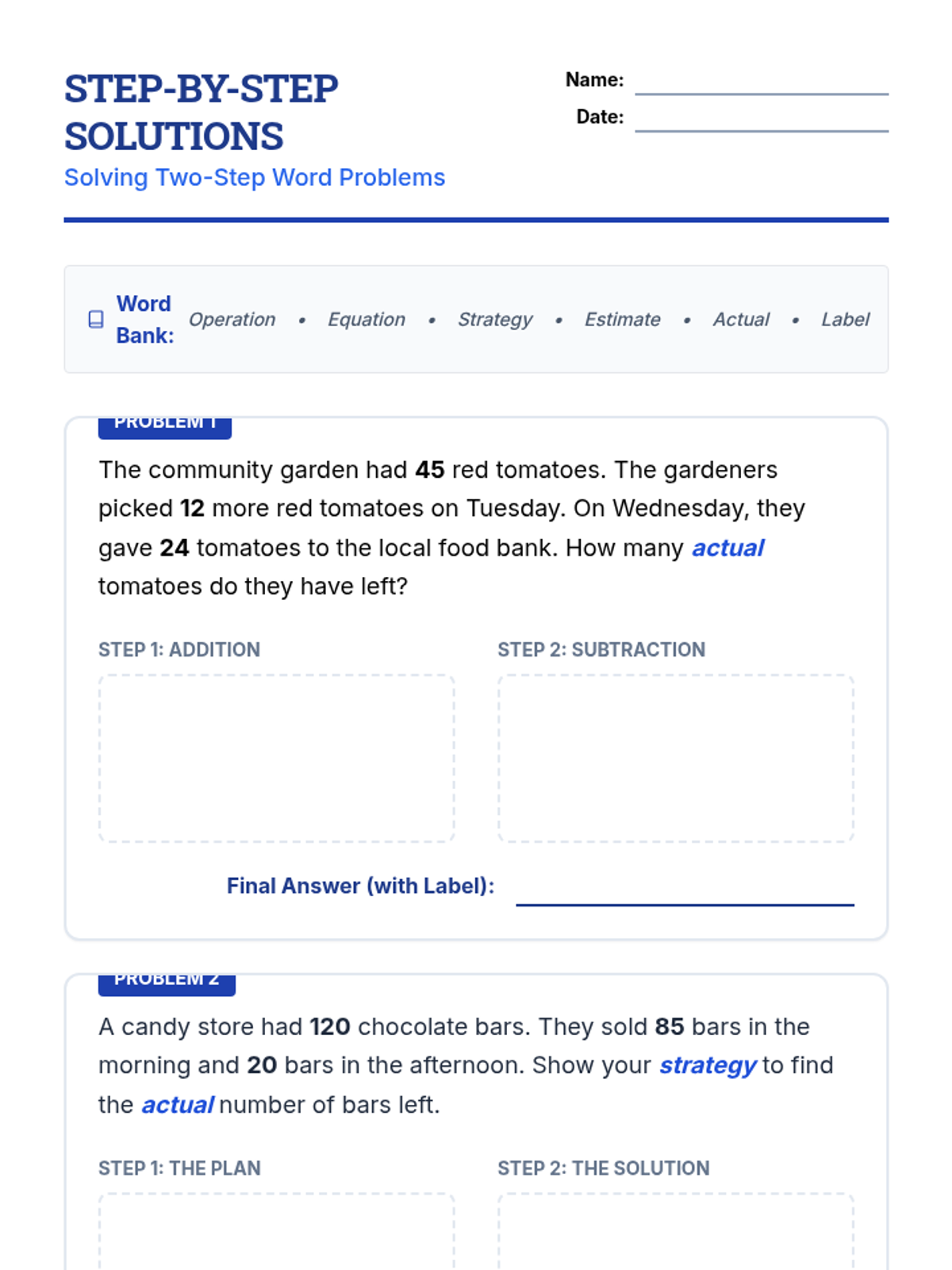
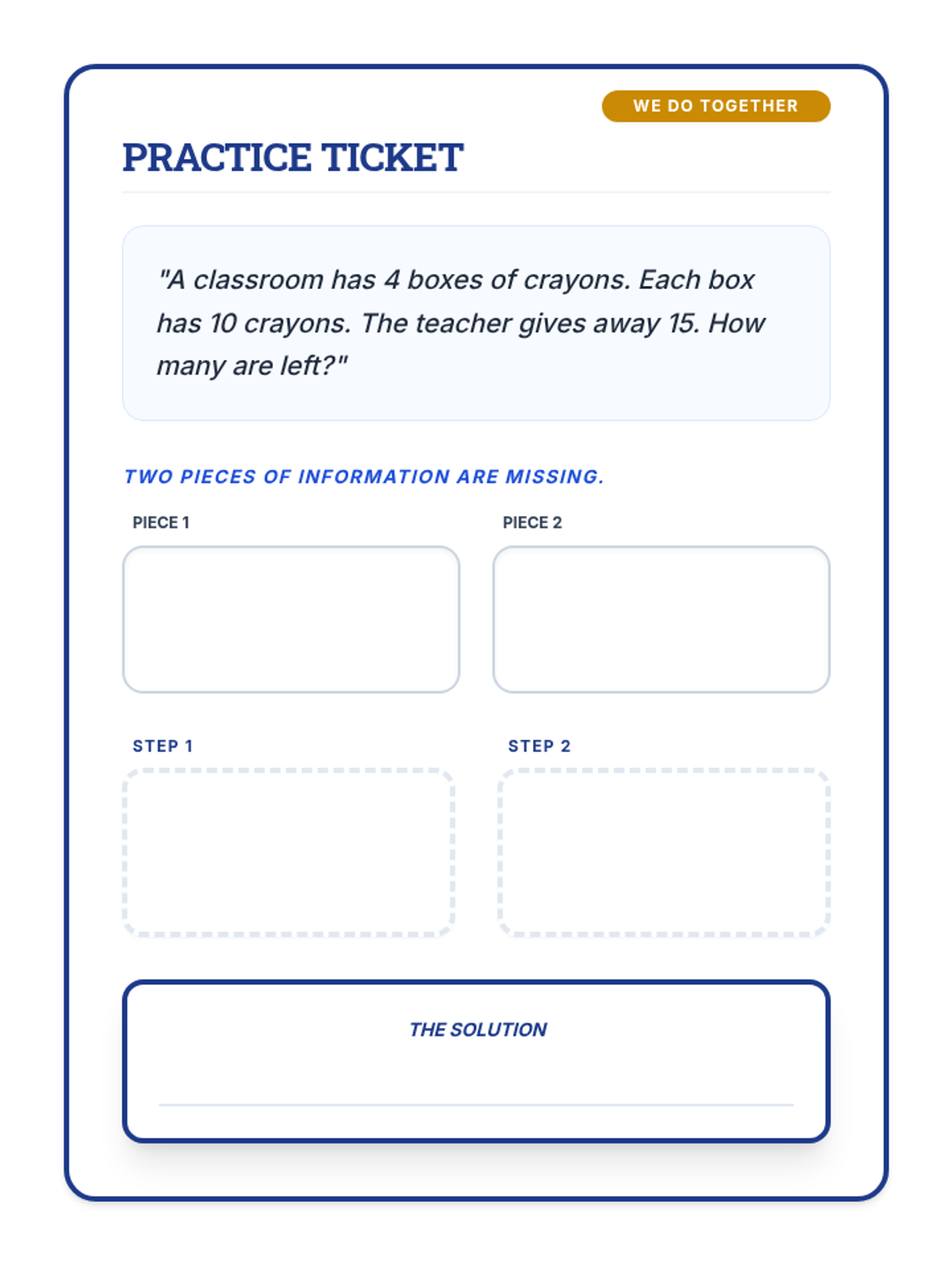
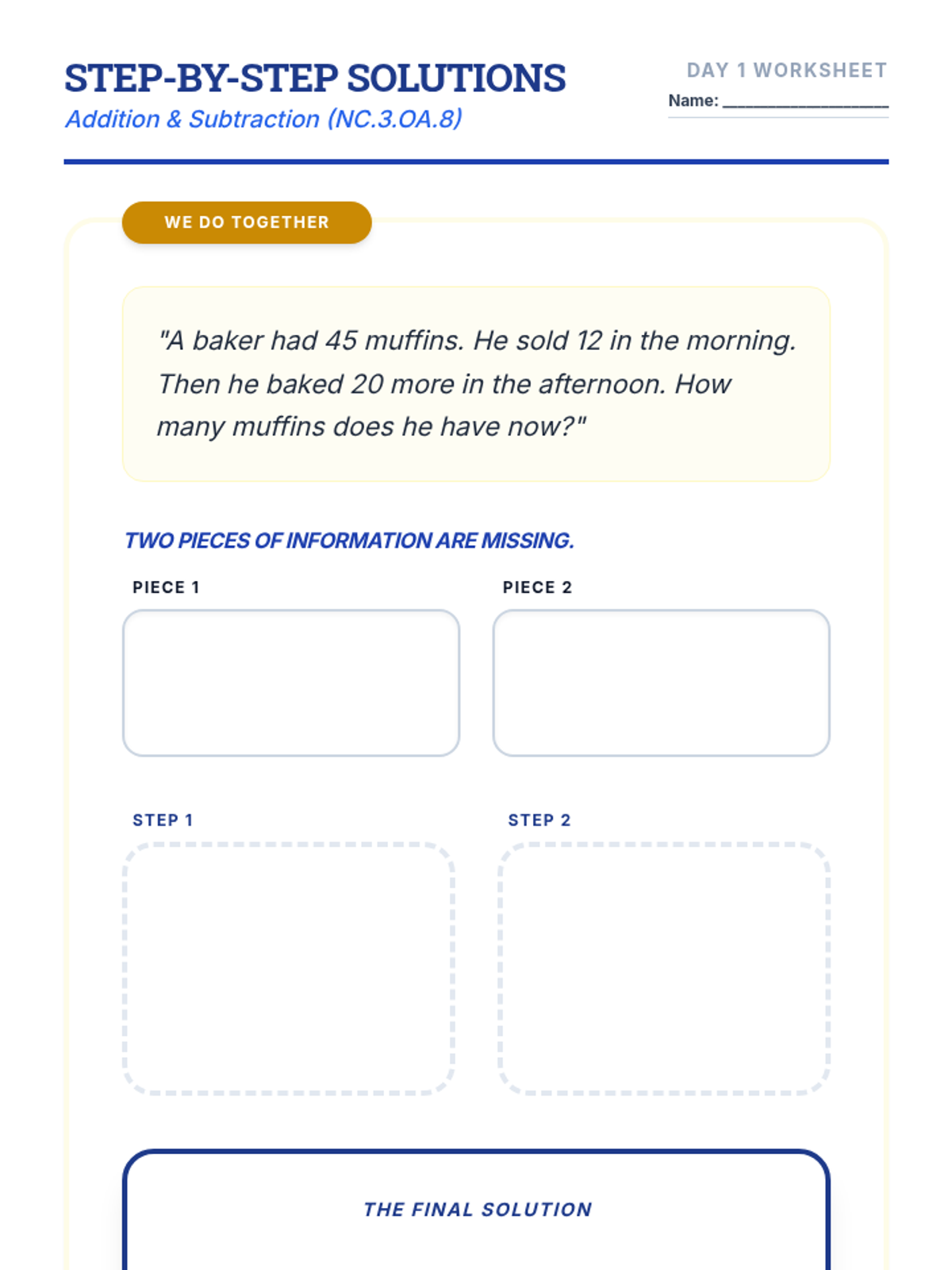
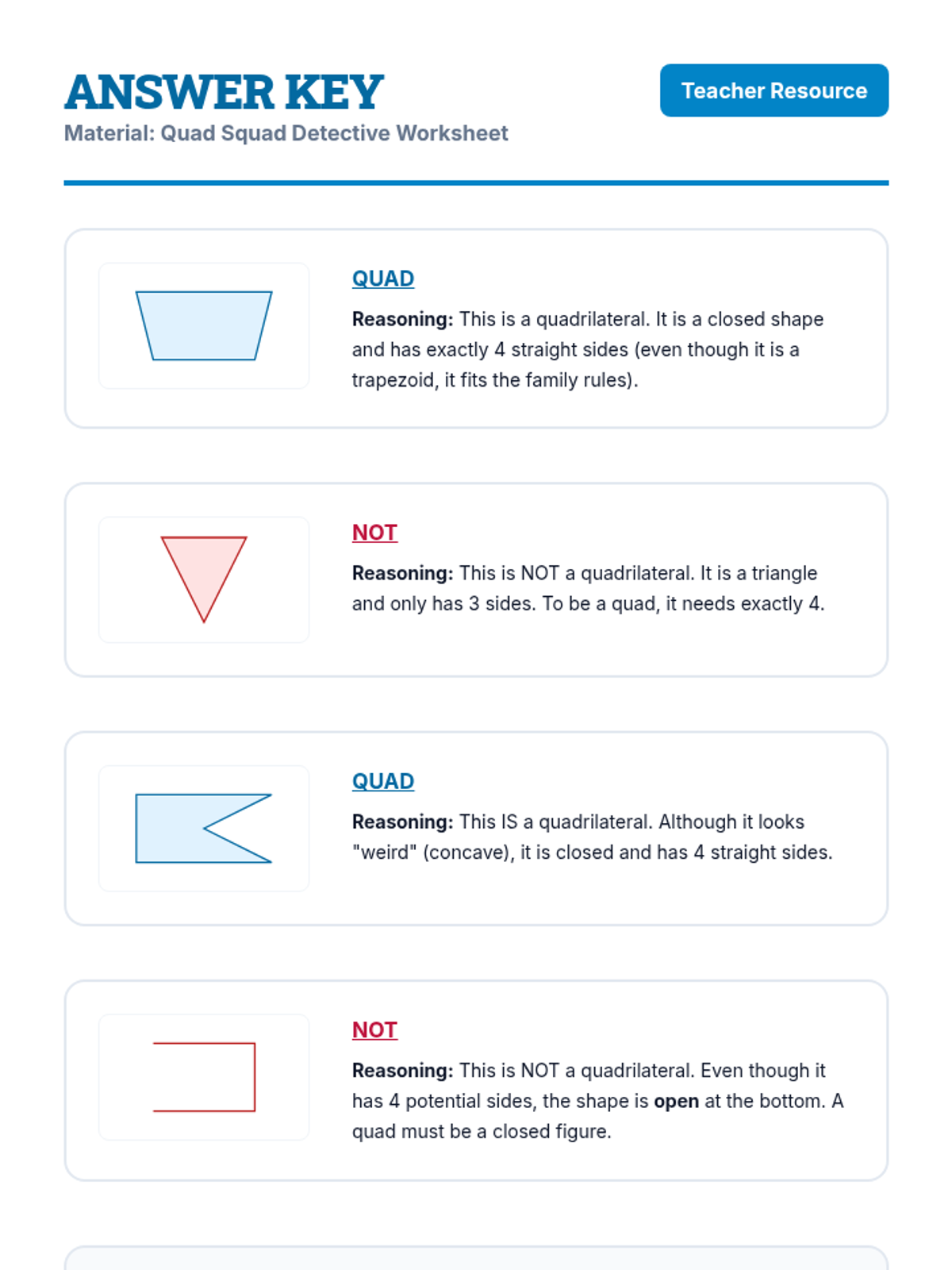
A comprehensive 5-day math unit focusing on solving two-step word problems (3.OA.8) and classifying quadrilaterals (3.G.1) using the Gradual Release of Responsibility (I Do, We Do, You Do) model. Each day includes explicit vocabulary instruction, guided practice, and EOG-style assessments.
A comprehensive 5-day math unit for 3rd grade covering two-step word problems (NC.3.OA.8) and geometric reasoning with shapes (NC.3.G.1). The unit follows the 'I Do, We Do, You Do' instructional model with daily EOG-style practice.
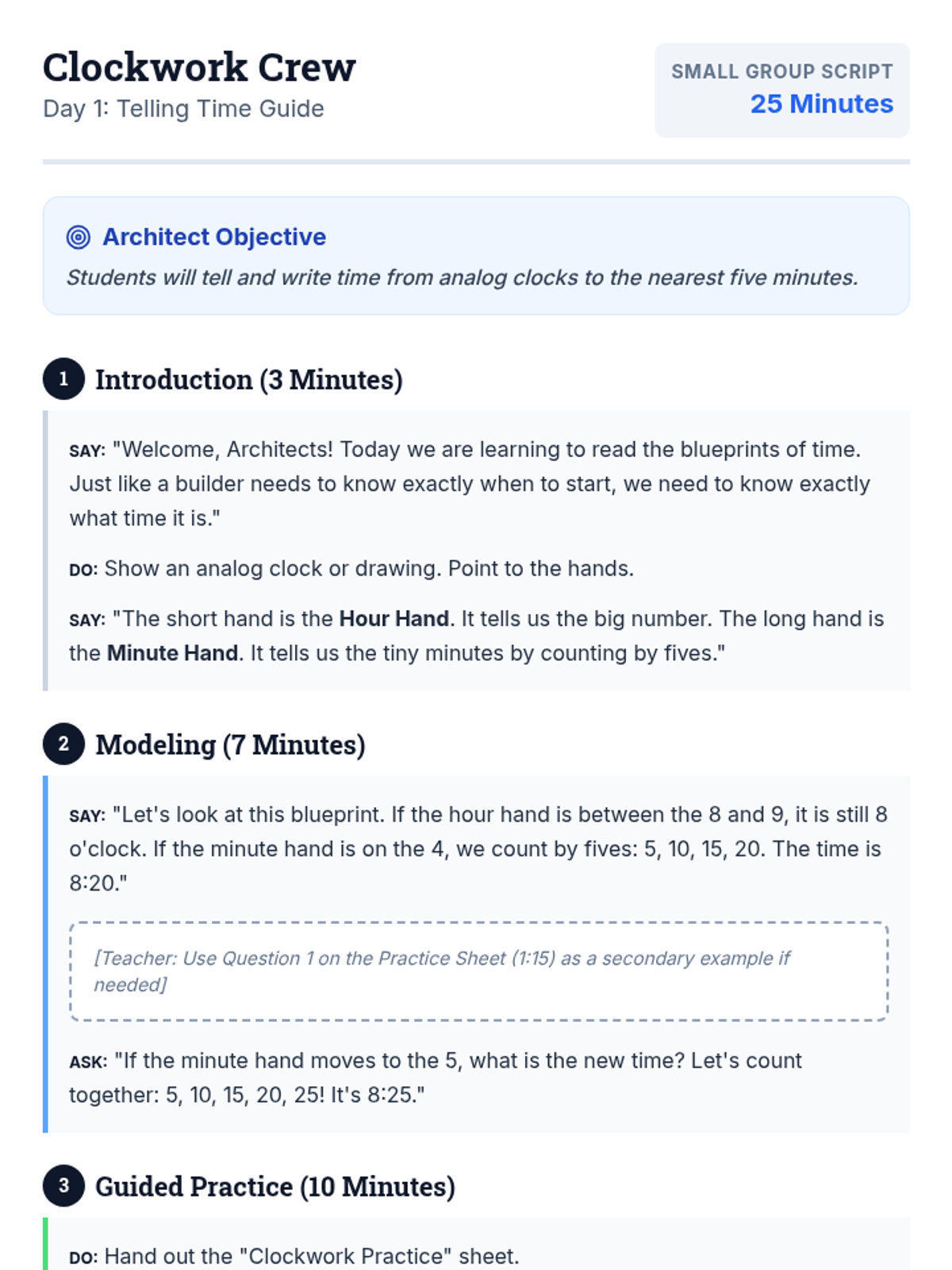
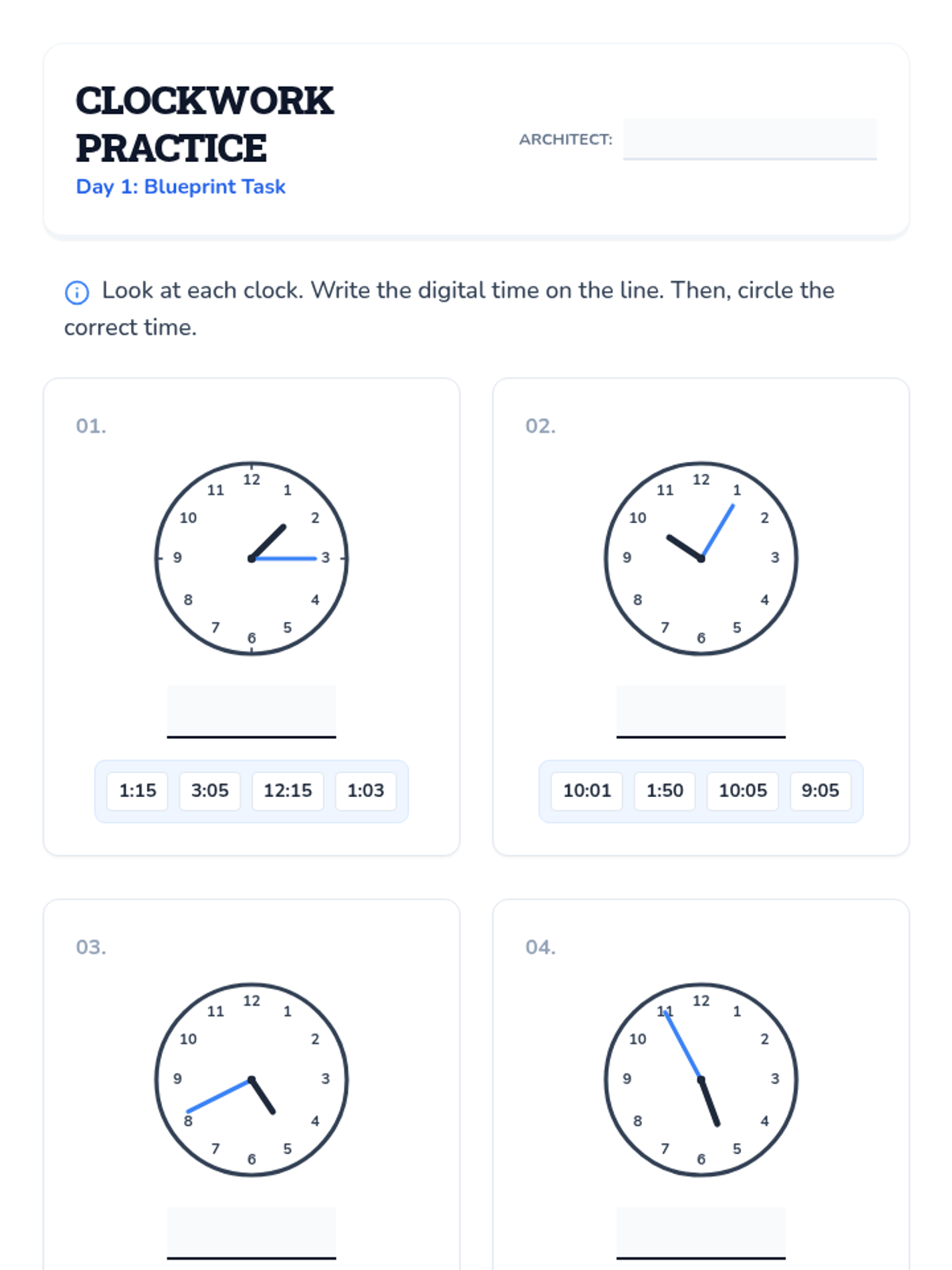
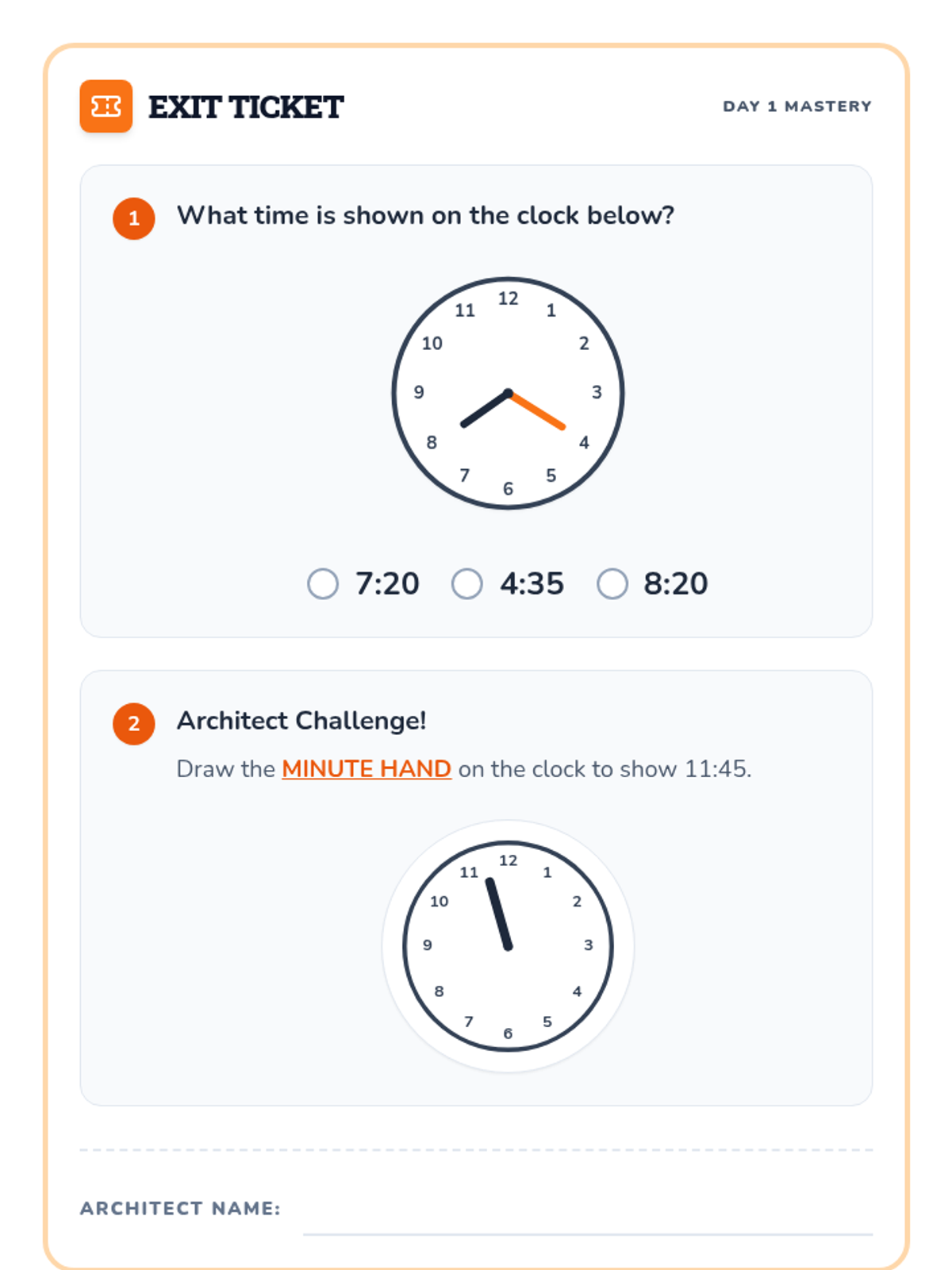
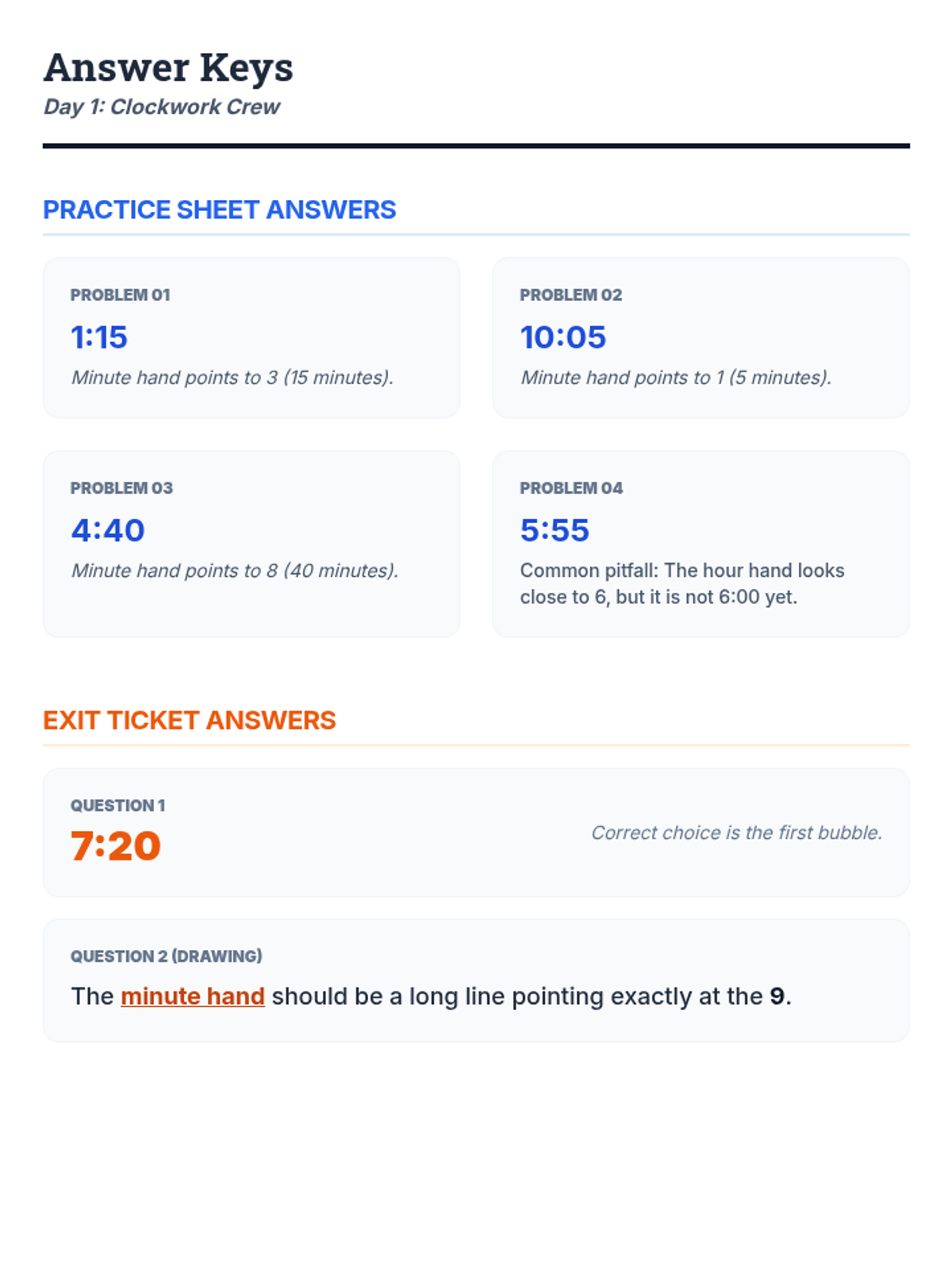
A 3-day small group sequence focused on Geometry and Measurement for NWEA RIT 171-180, covering time reading to the nearest 5 minutes and 2D/3D shape attributes.
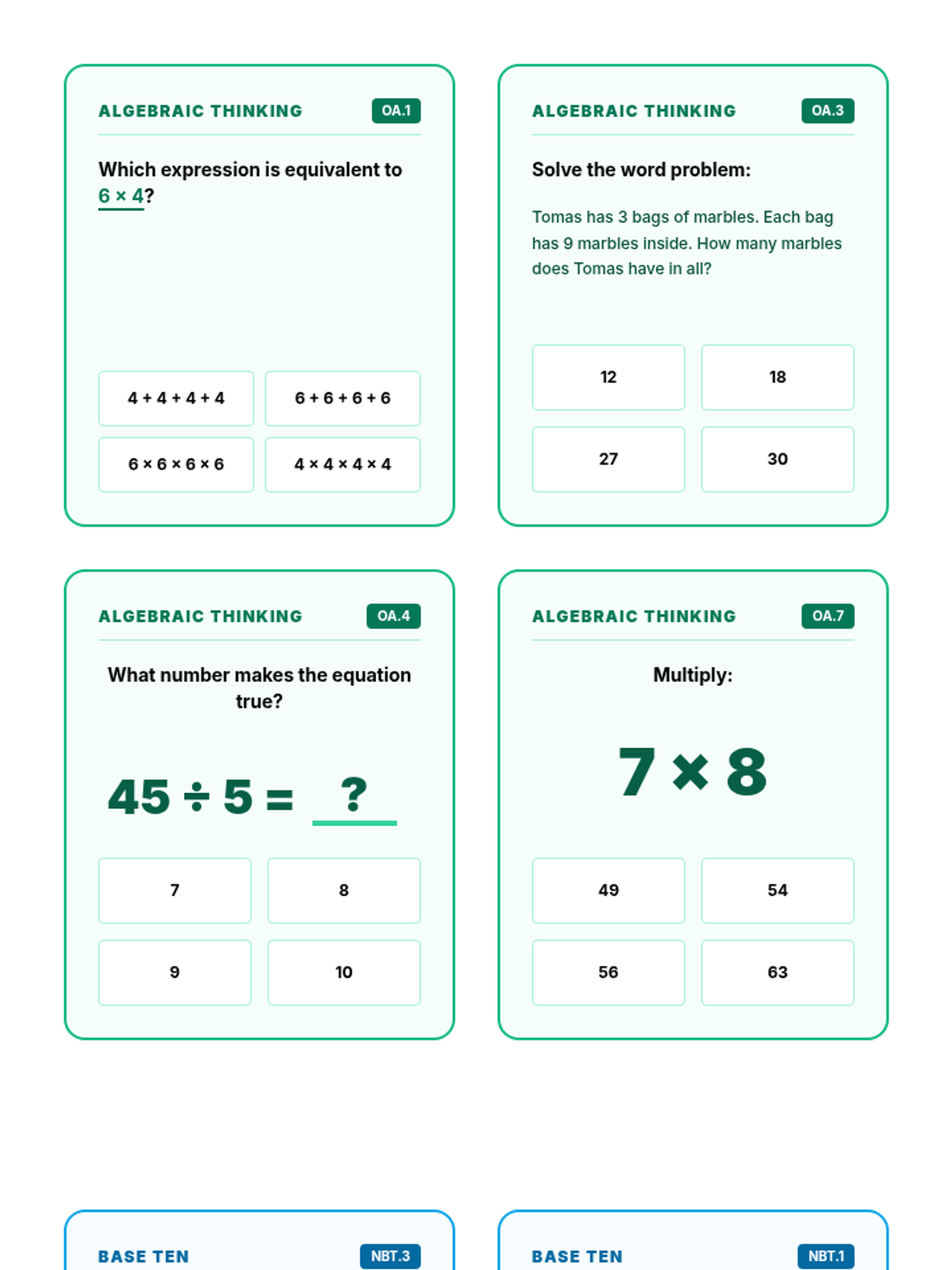
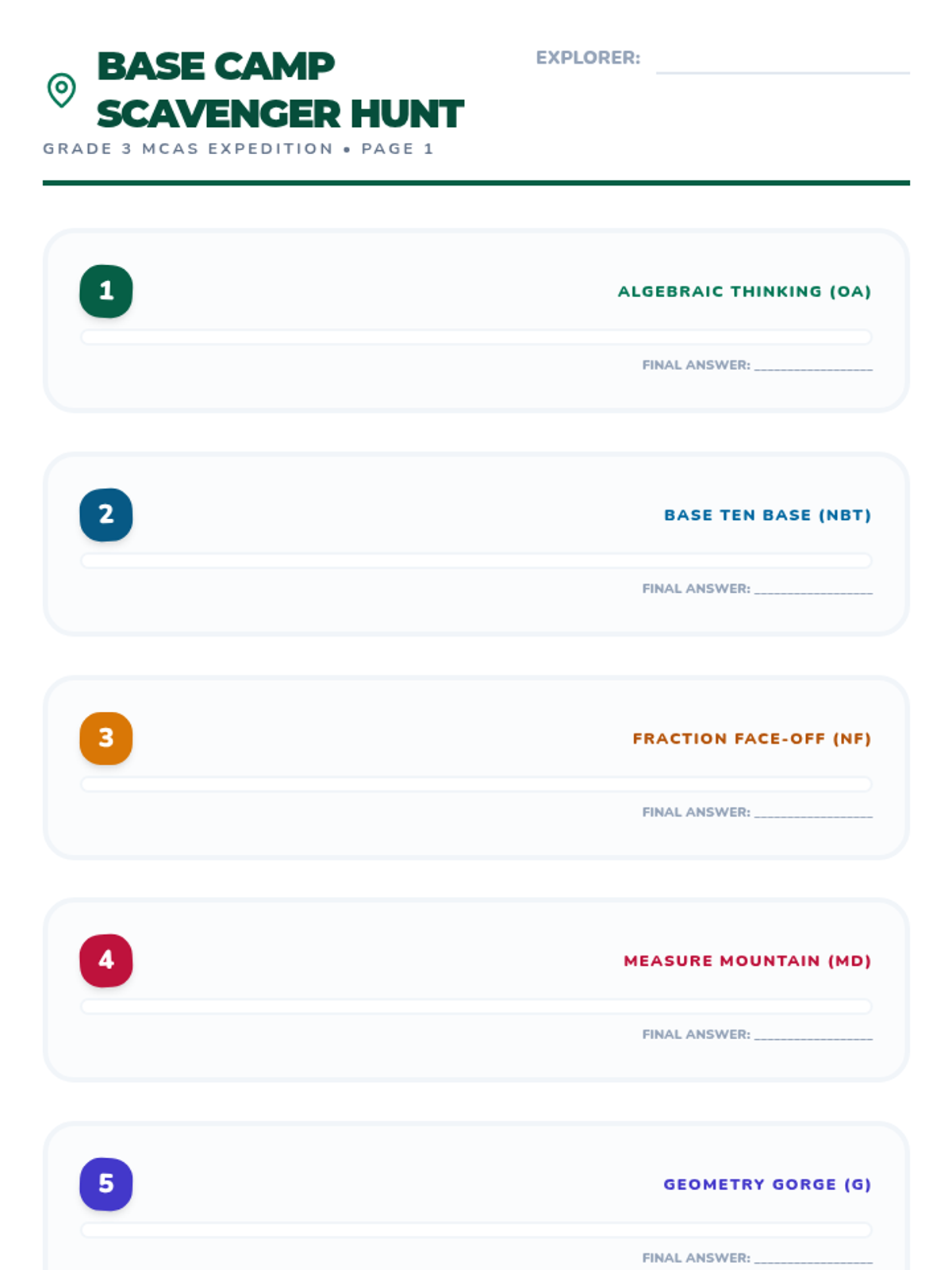
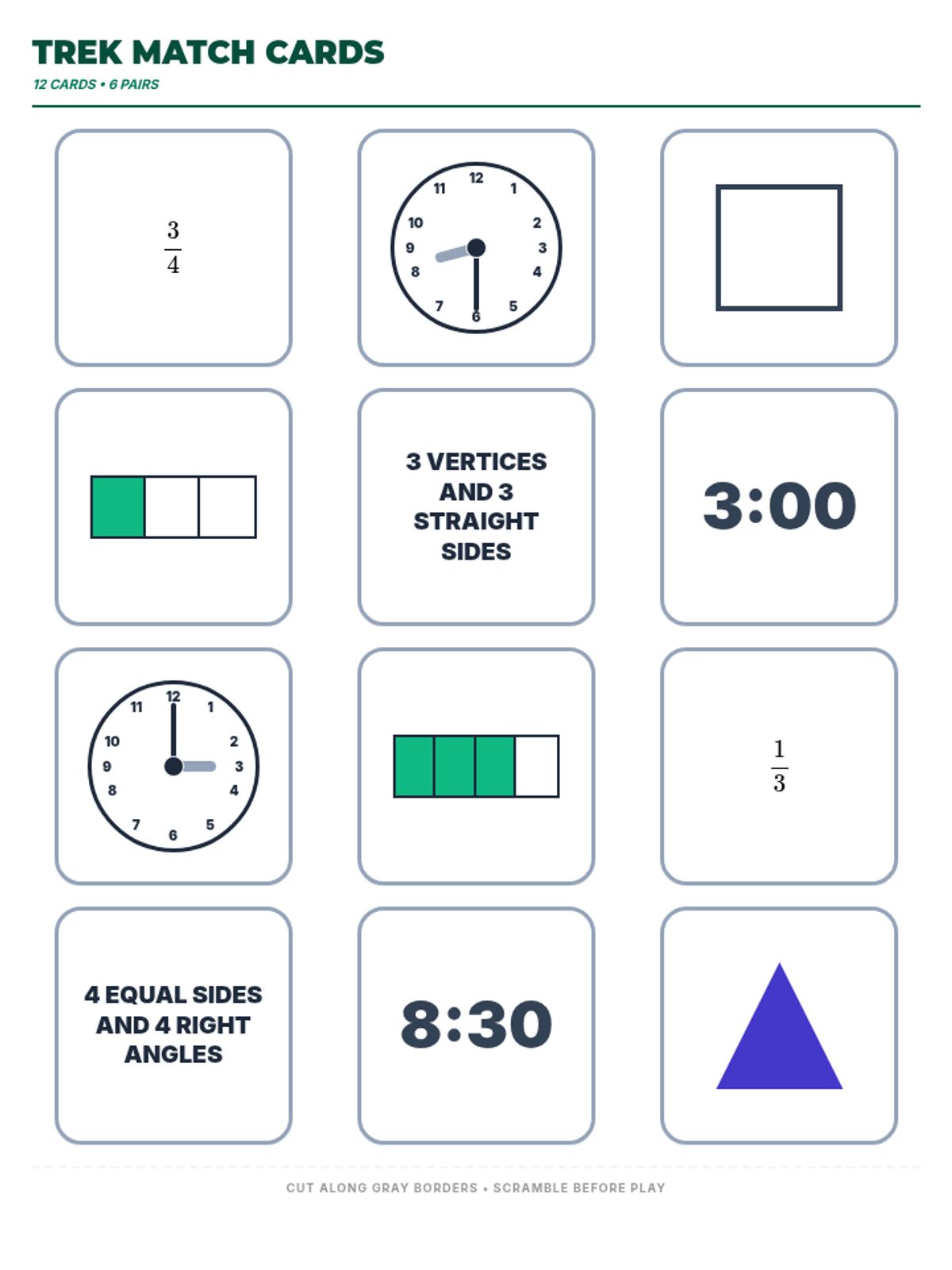
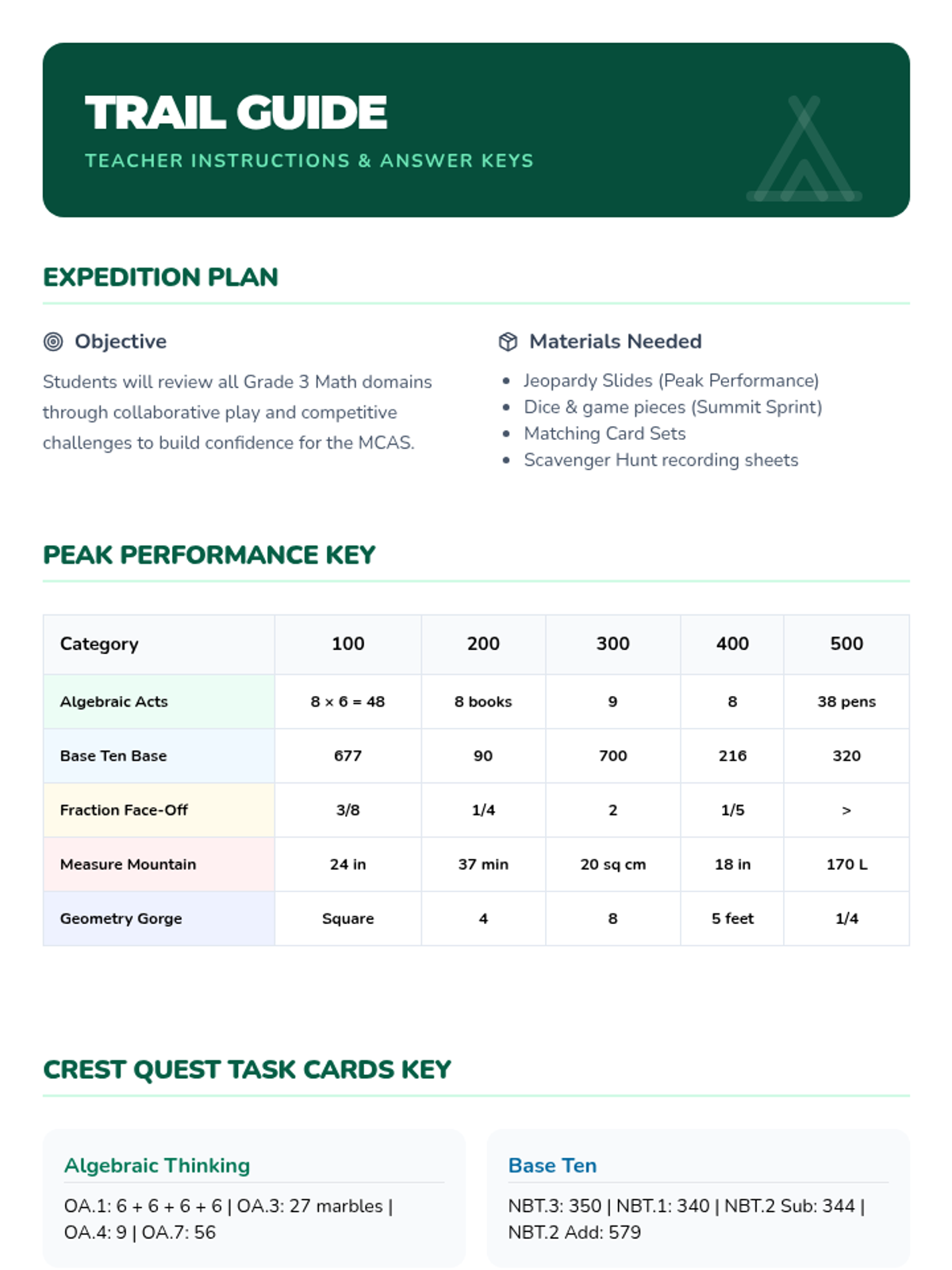
A comprehensive review suite for Grade 3 students preparing for the Math MCAS, featuring interactive games and collaborative activities covering all math domains.
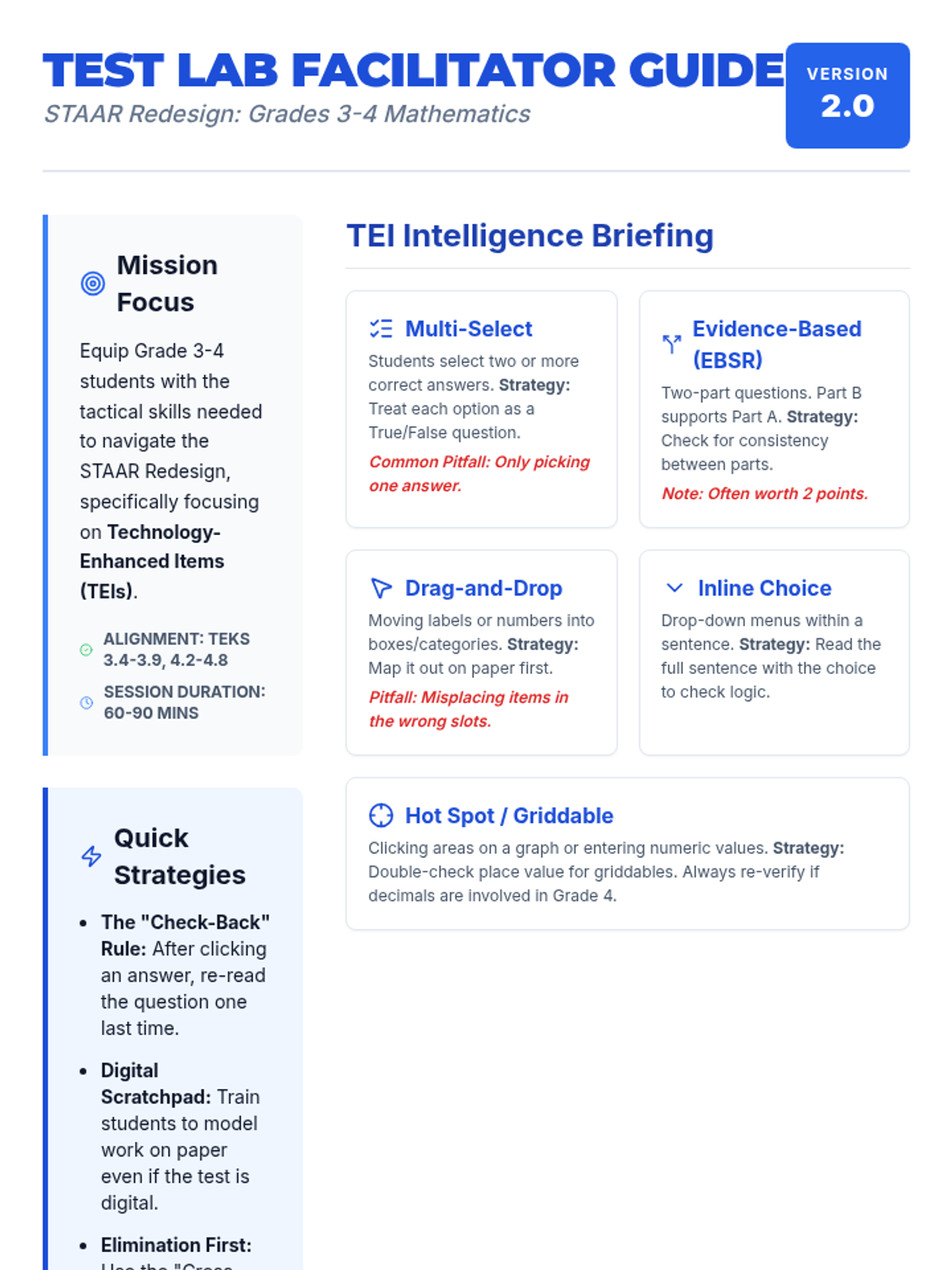
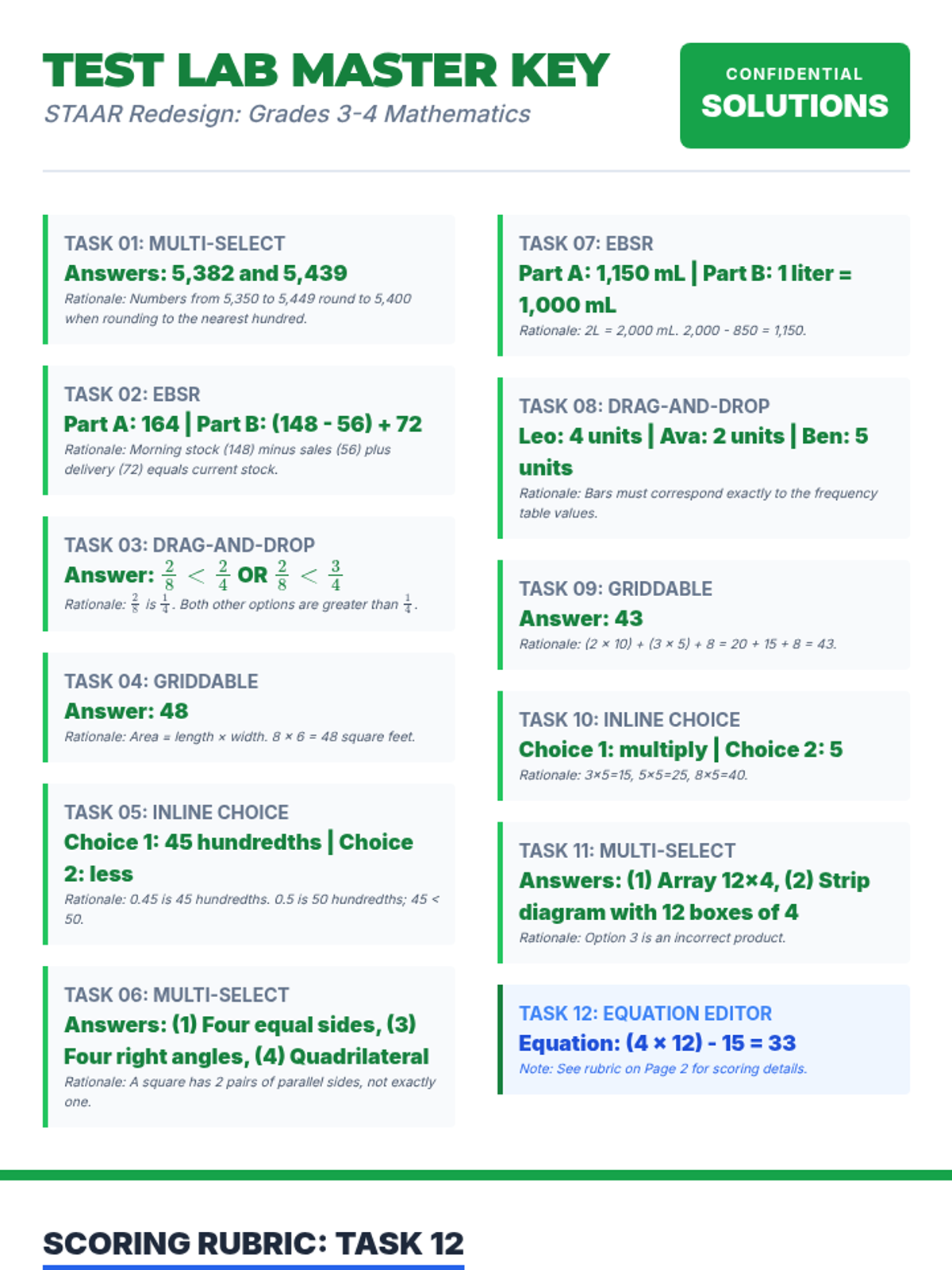
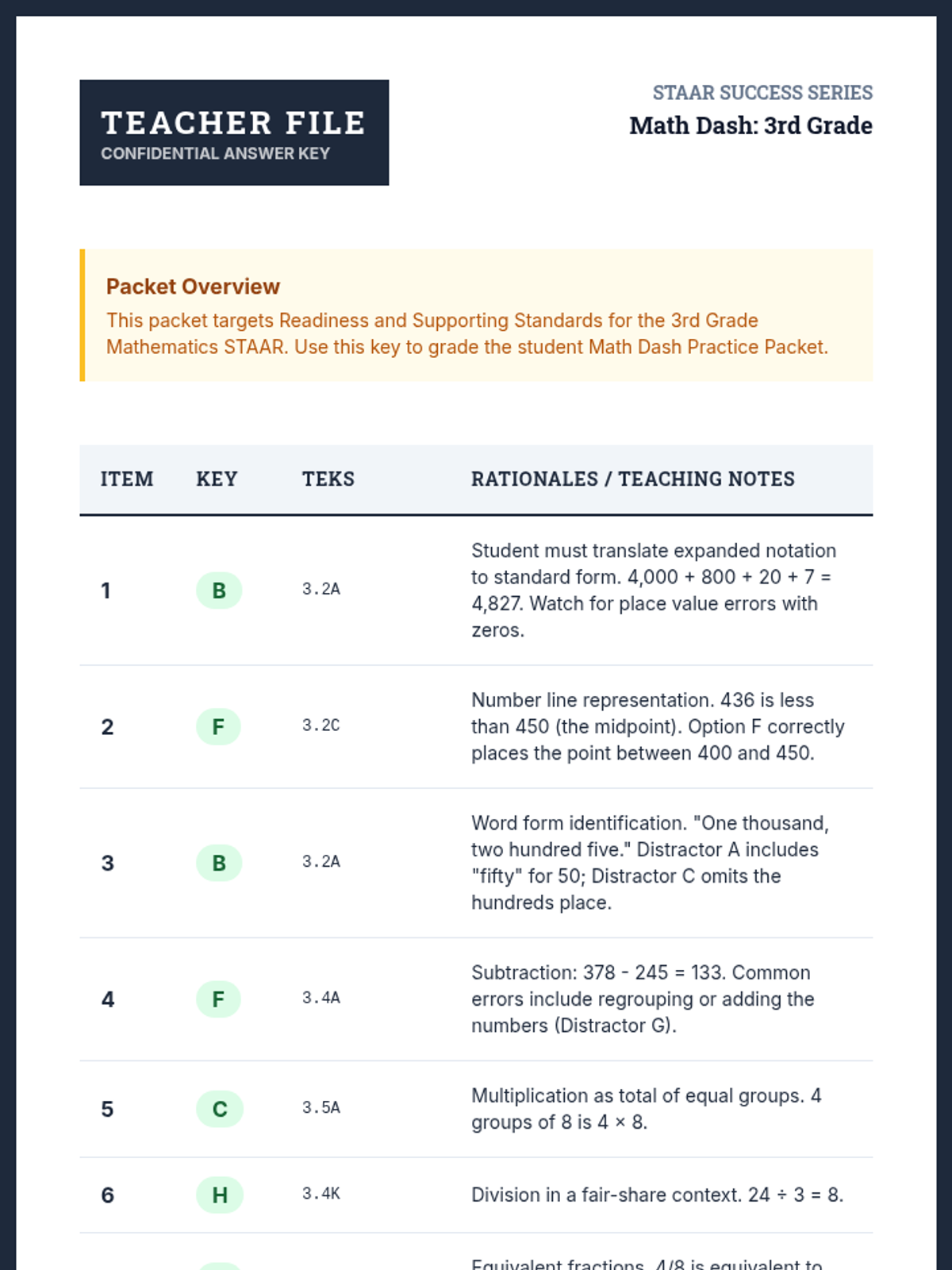
A series of resources designed to prepare Grade 3 and 4 students for the STAAR Mathematics assessment, with a specific focus on the STAAR Redesign and technology-enhanced items.
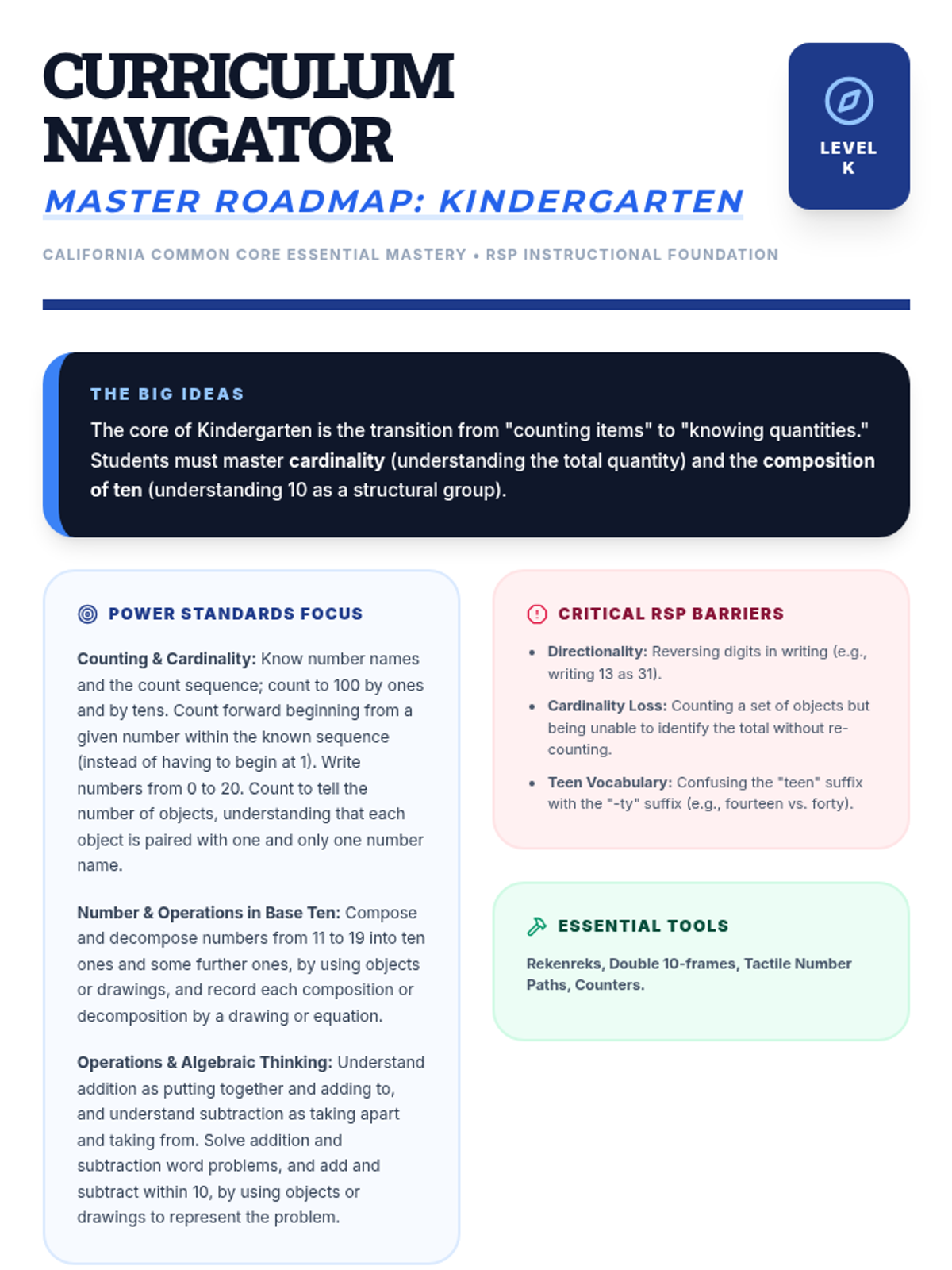
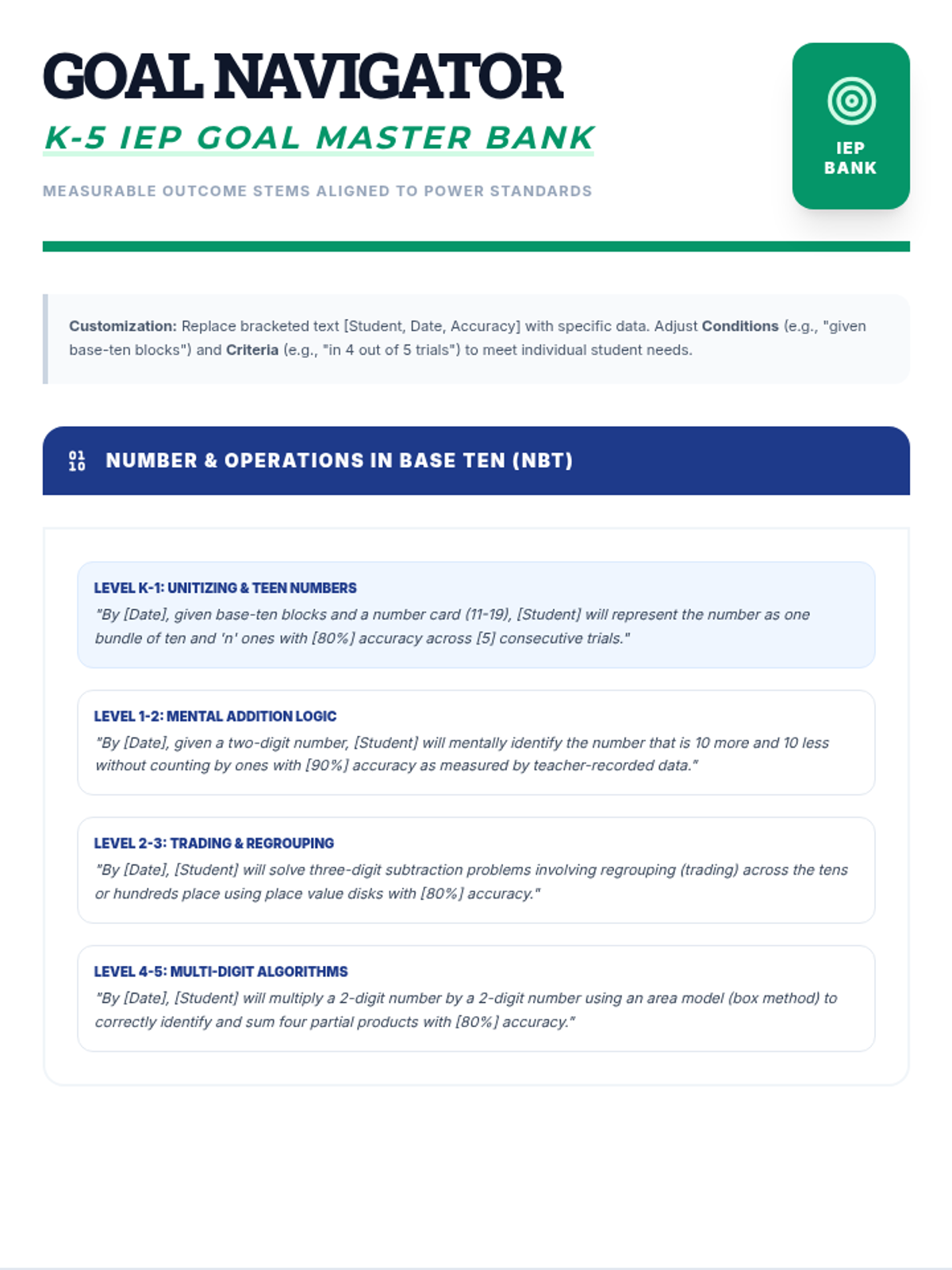
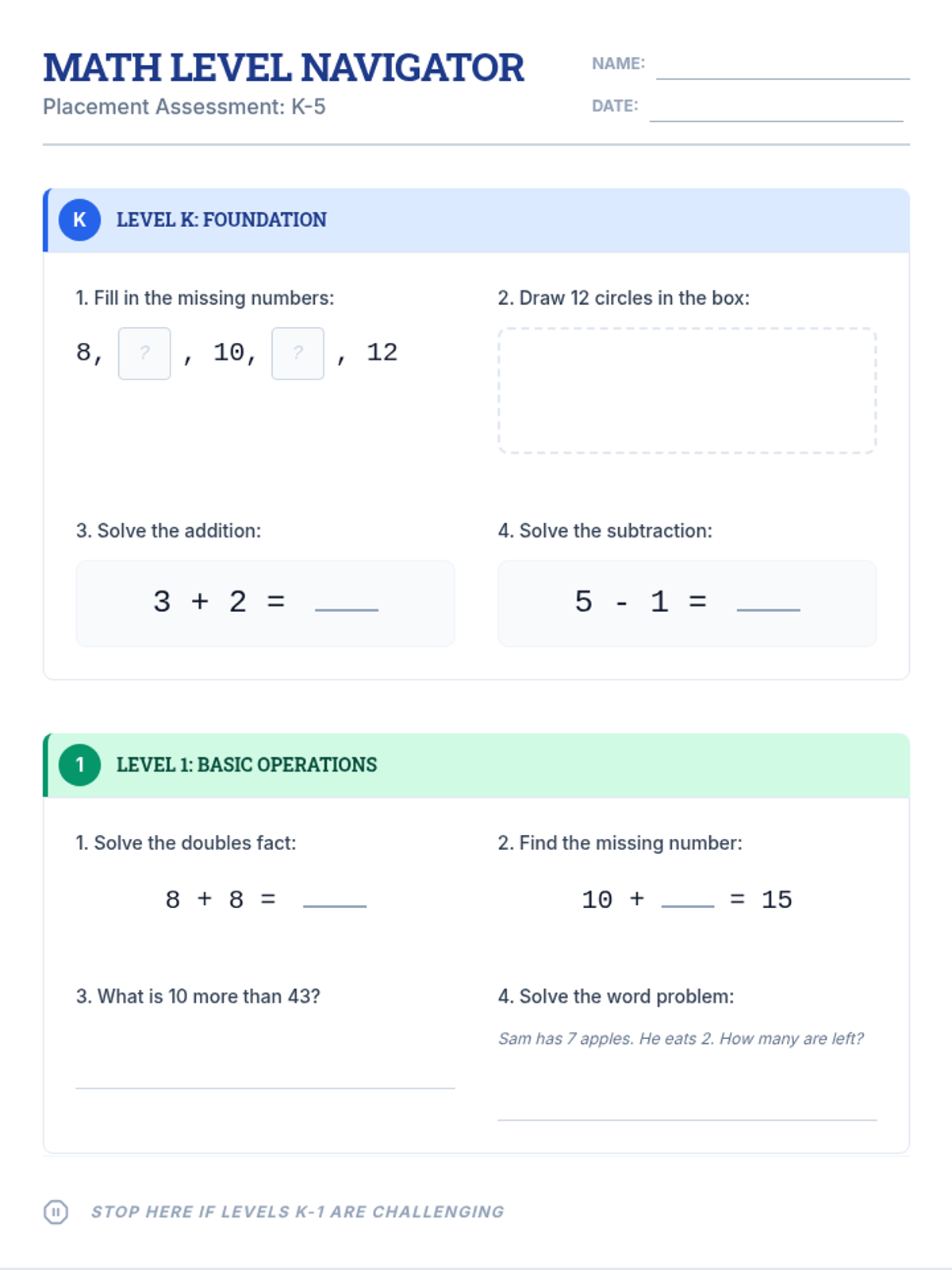
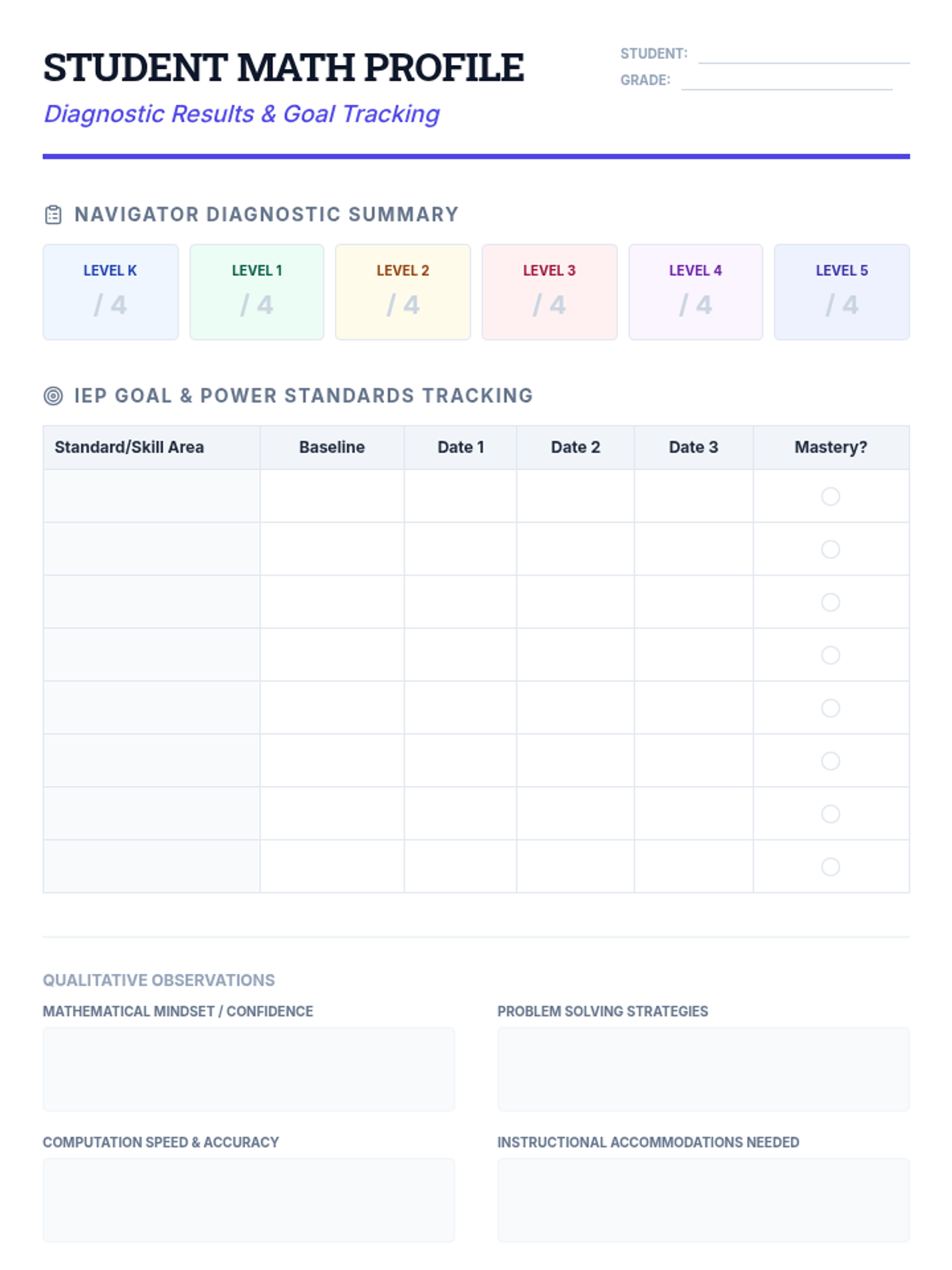
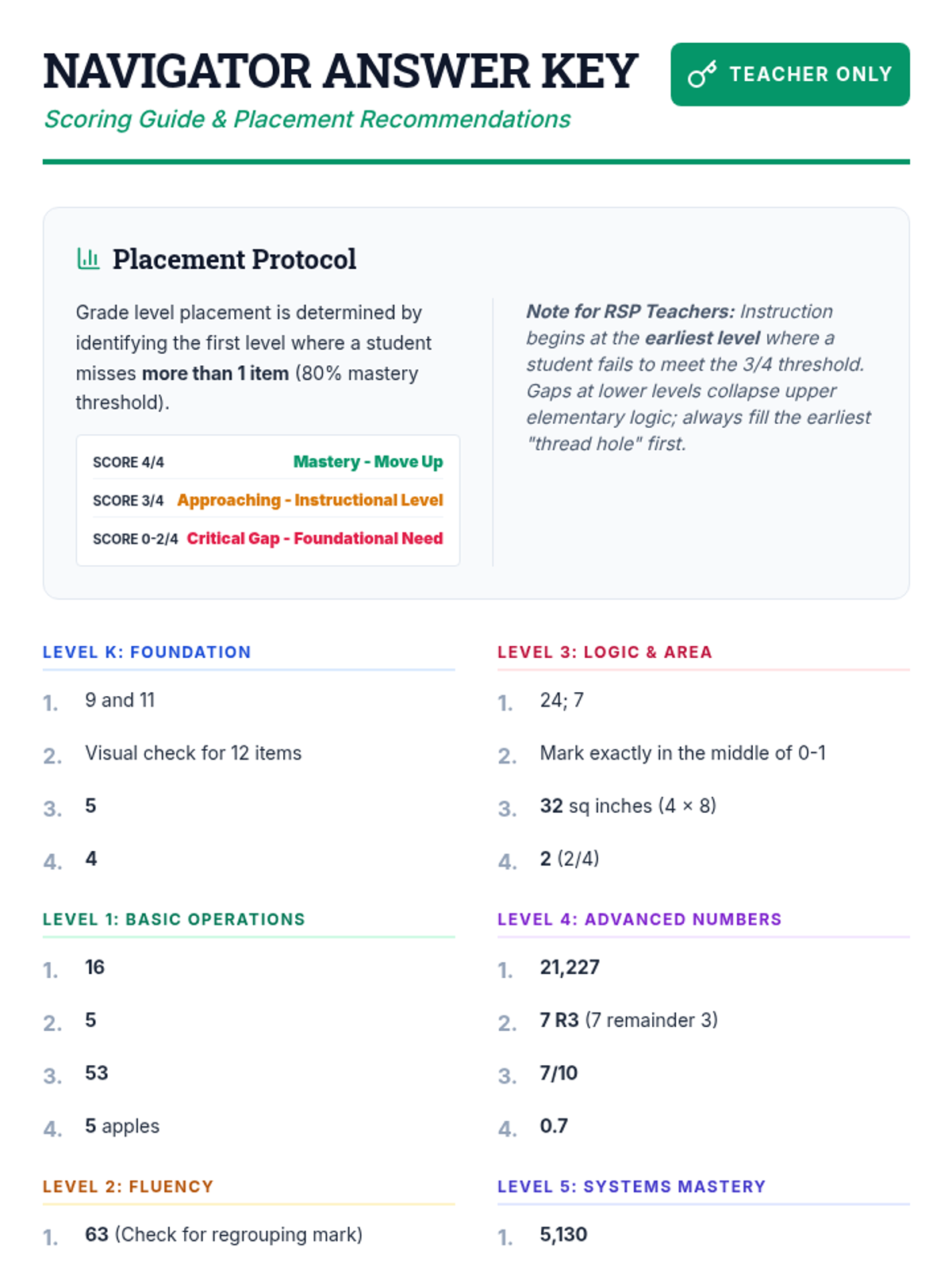
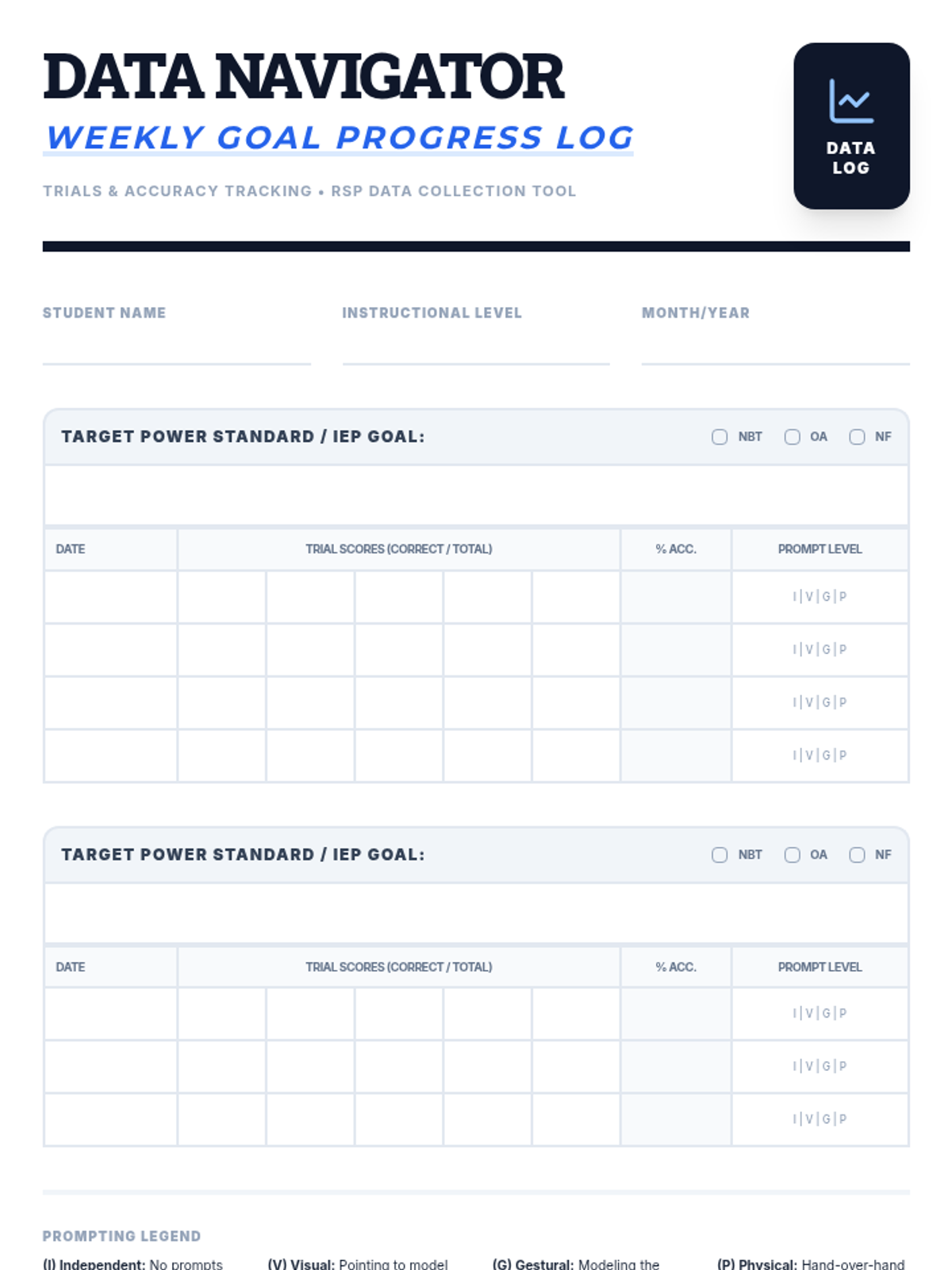
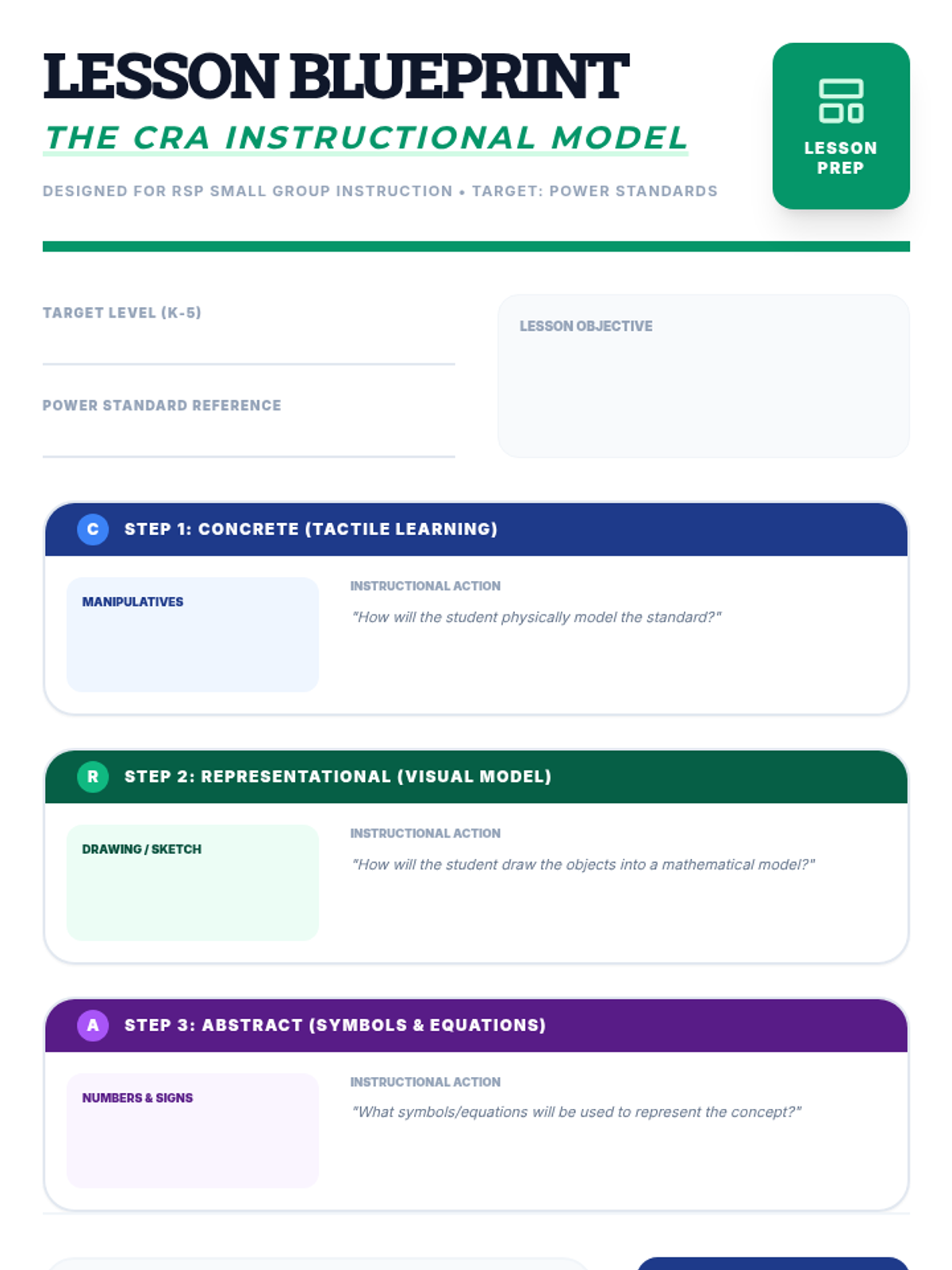
A comprehensive framework for K-5 RSP math instruction, including a California Common Core aligned scope and sequence of power standards and a leveled placement diagnostic.
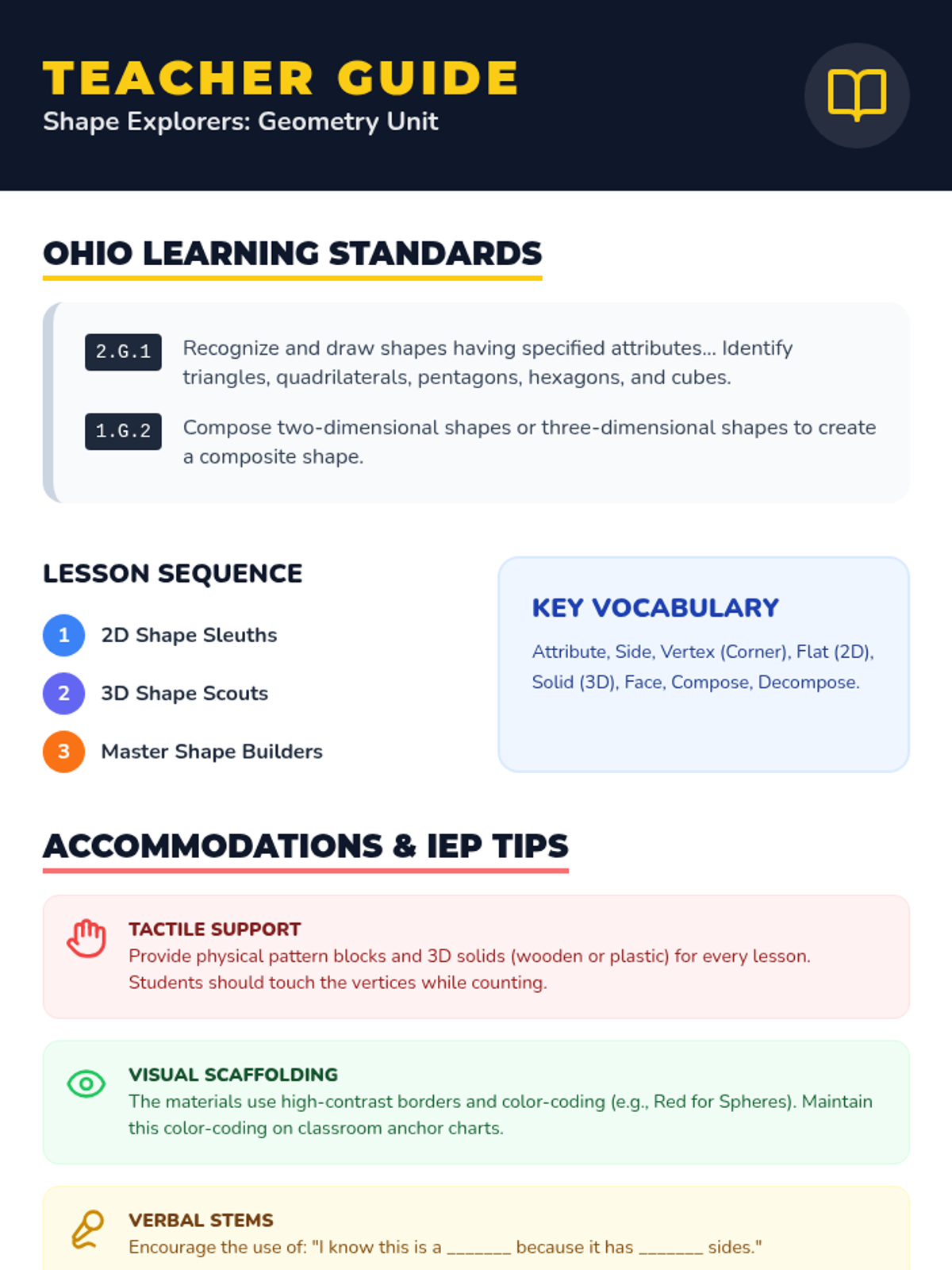
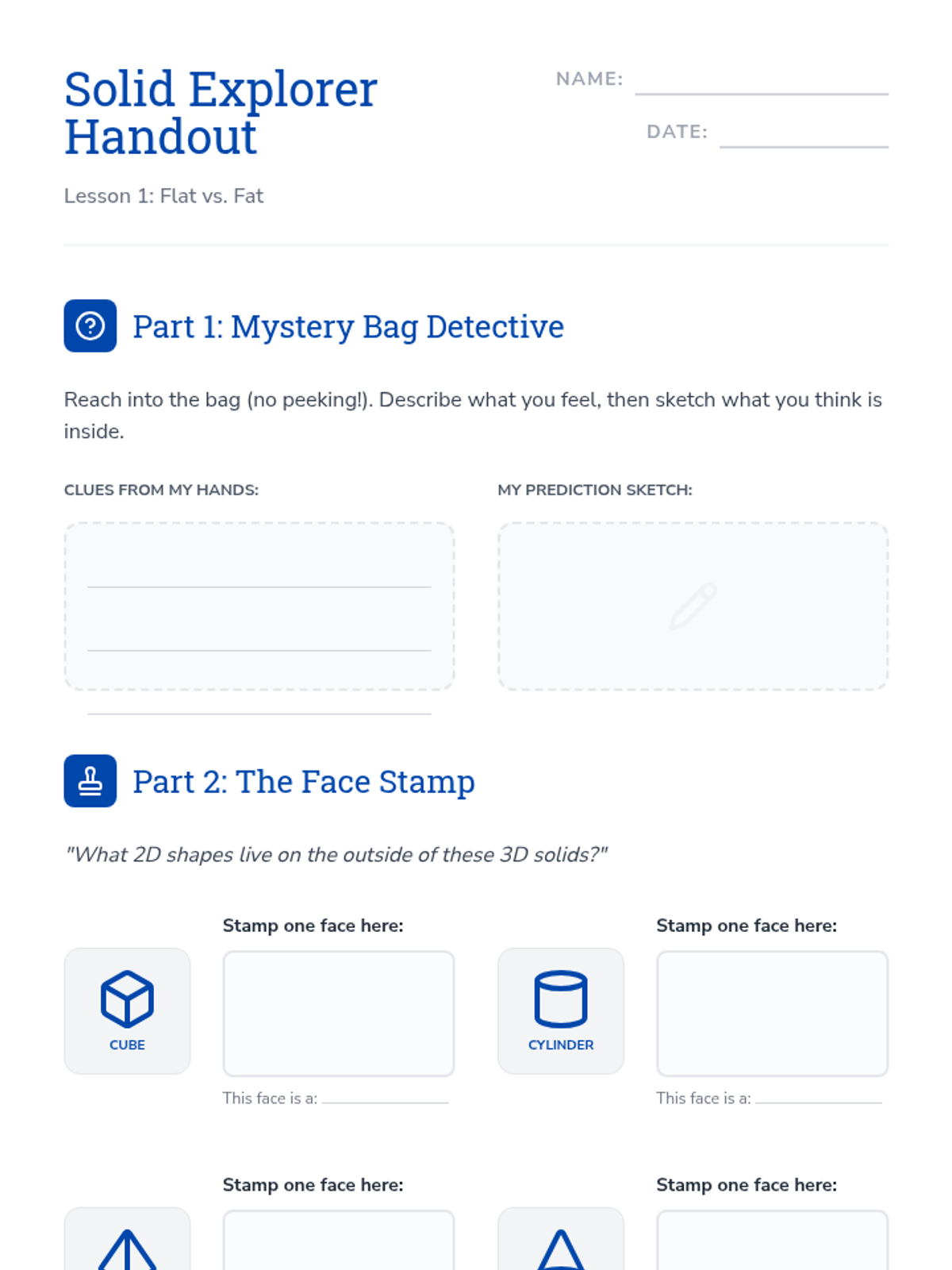
A comprehensive geometry unit for 2nd-grade special education students, focusing on 2D and 3D shape identification, attributes, and composition through visual and hands-on activities.
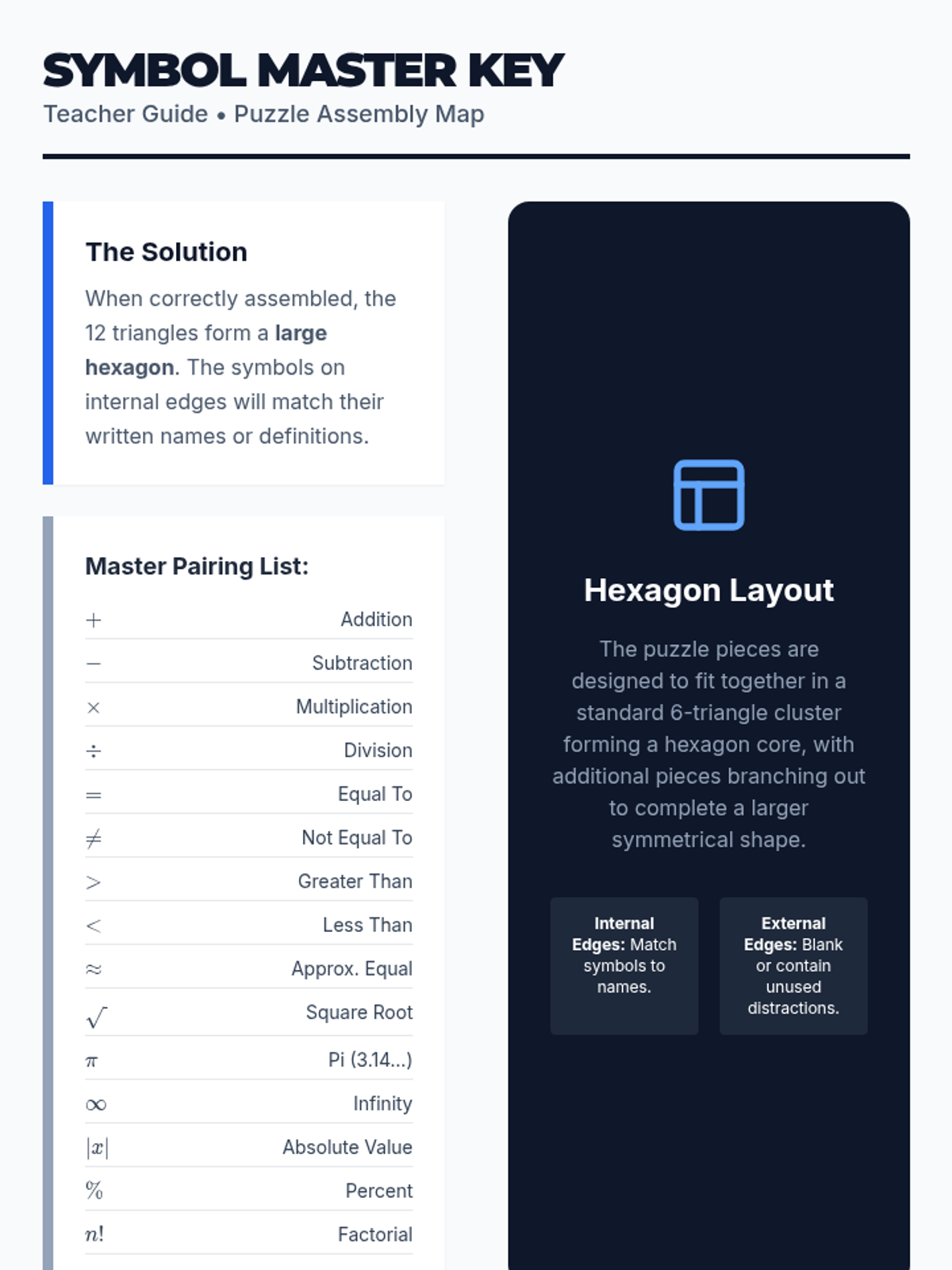
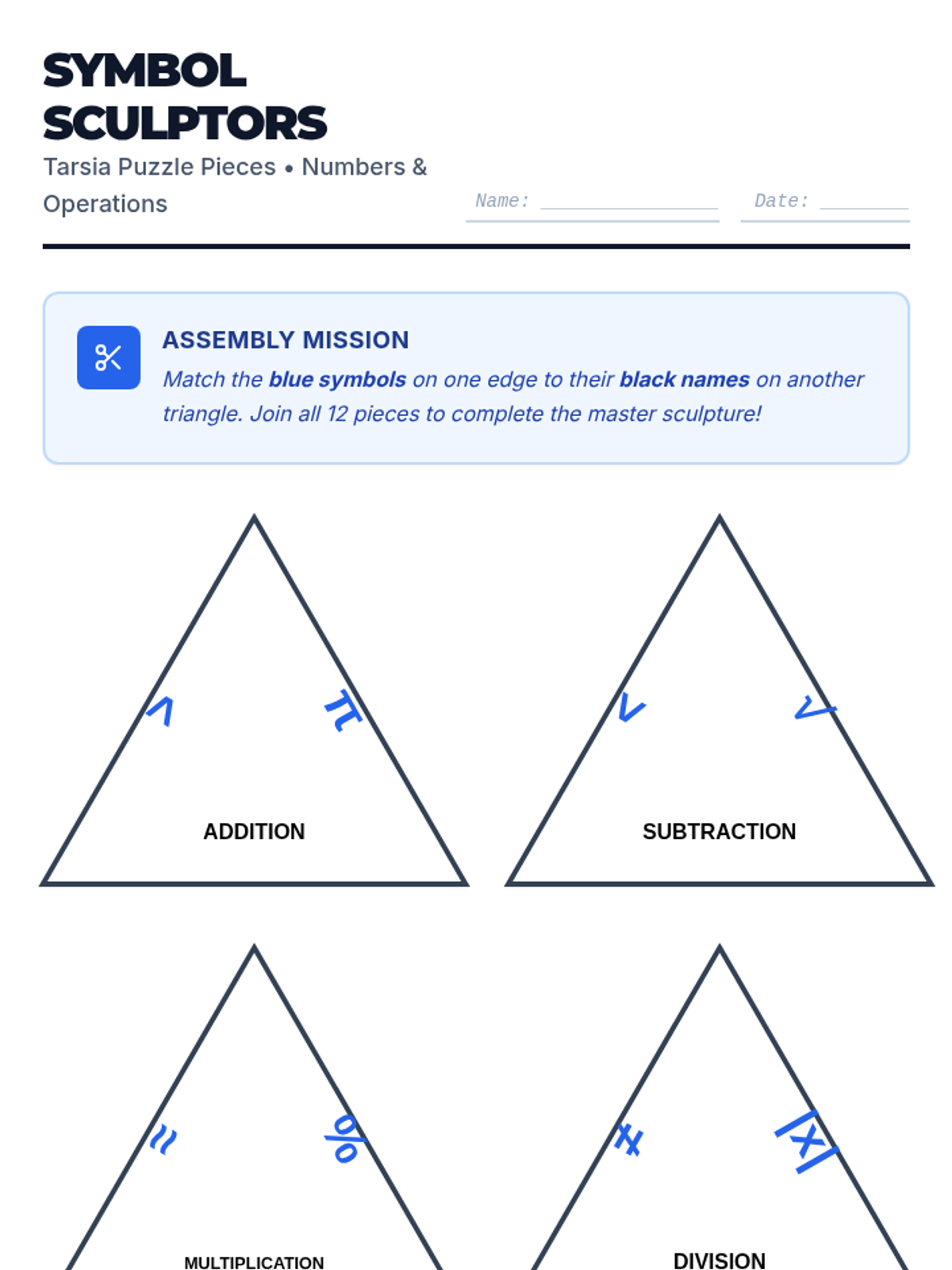
A series of lessons designed to build fluency in mathematical notation and operations through visual and tactile learning.
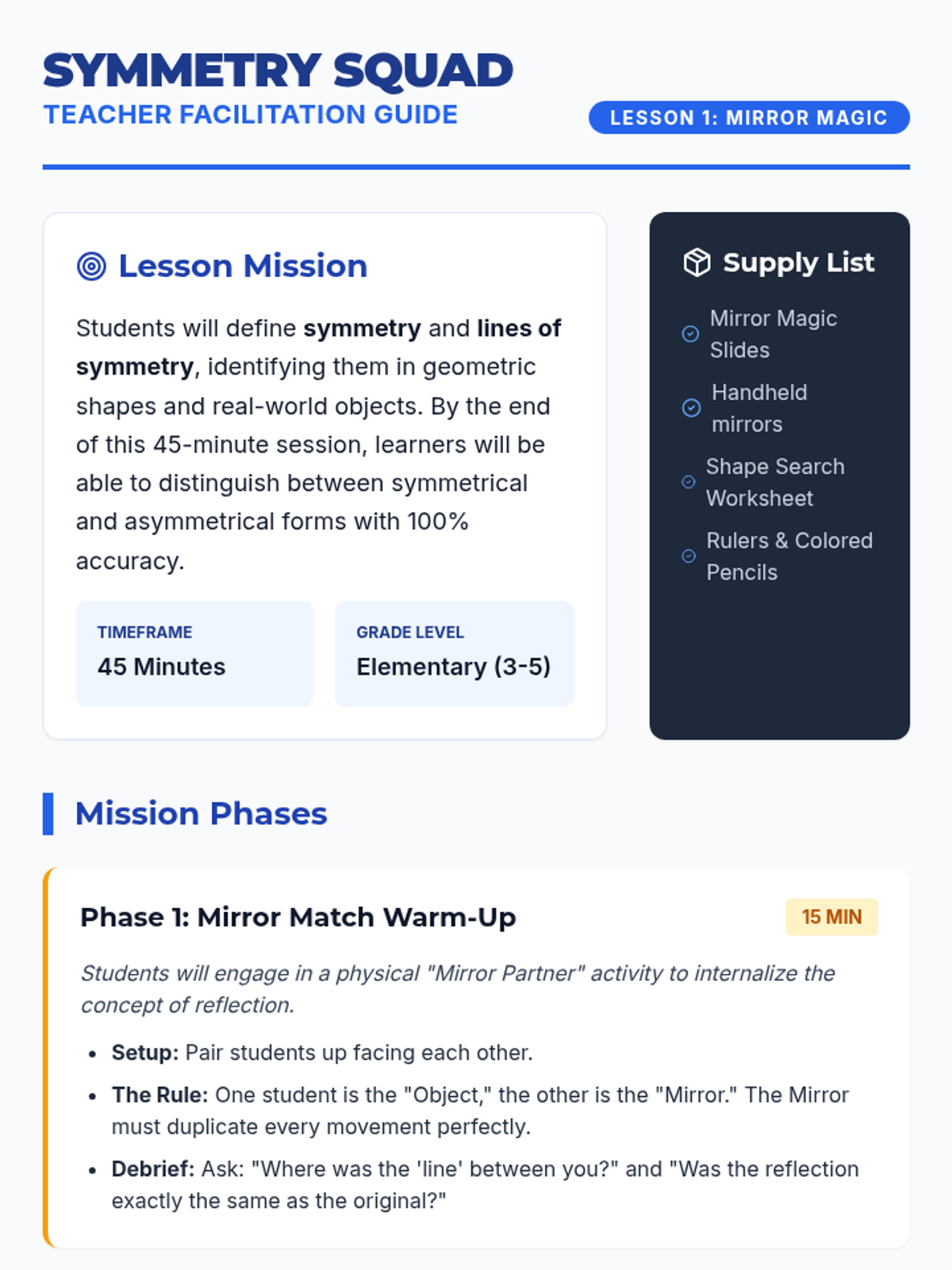
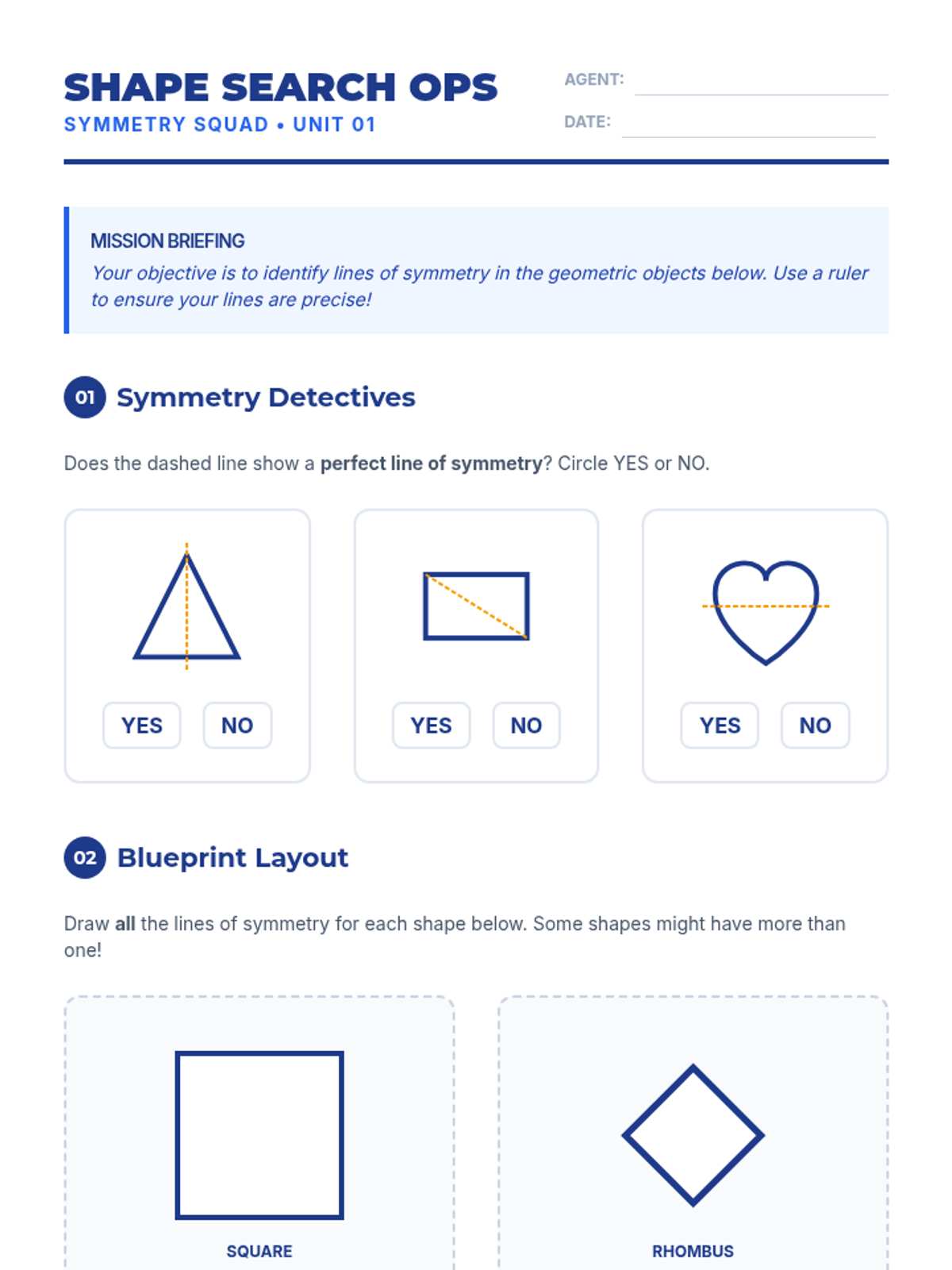
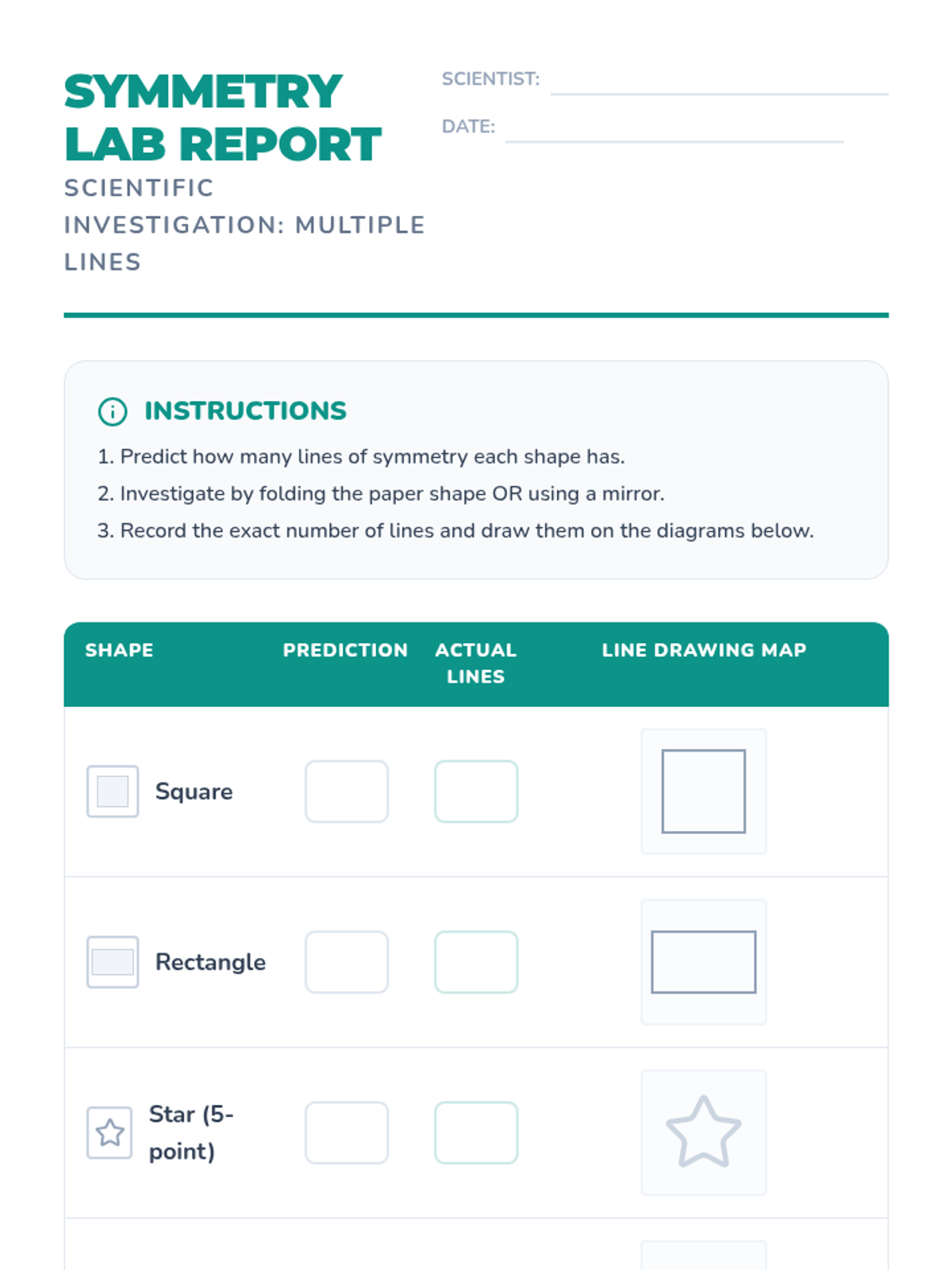
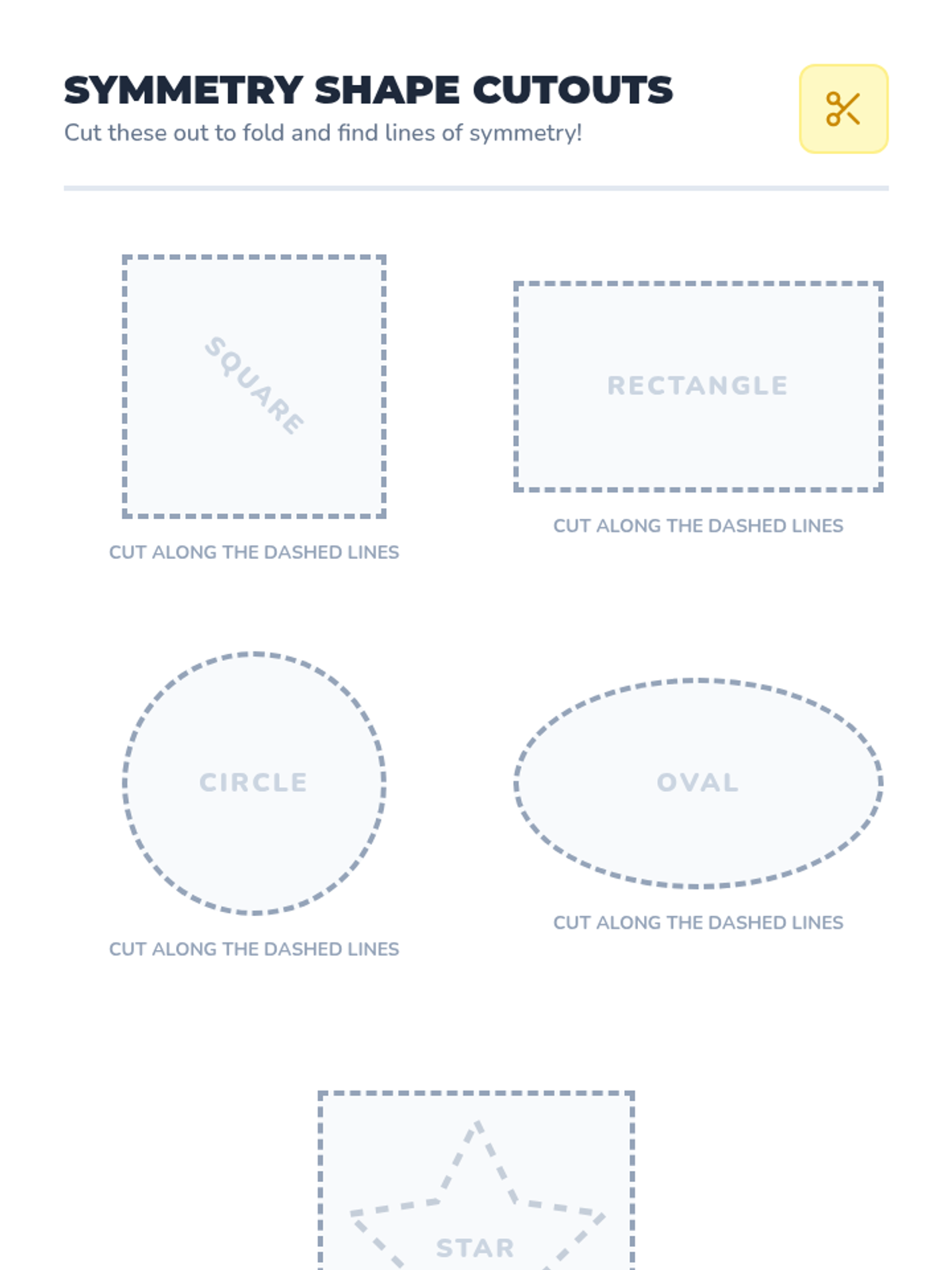
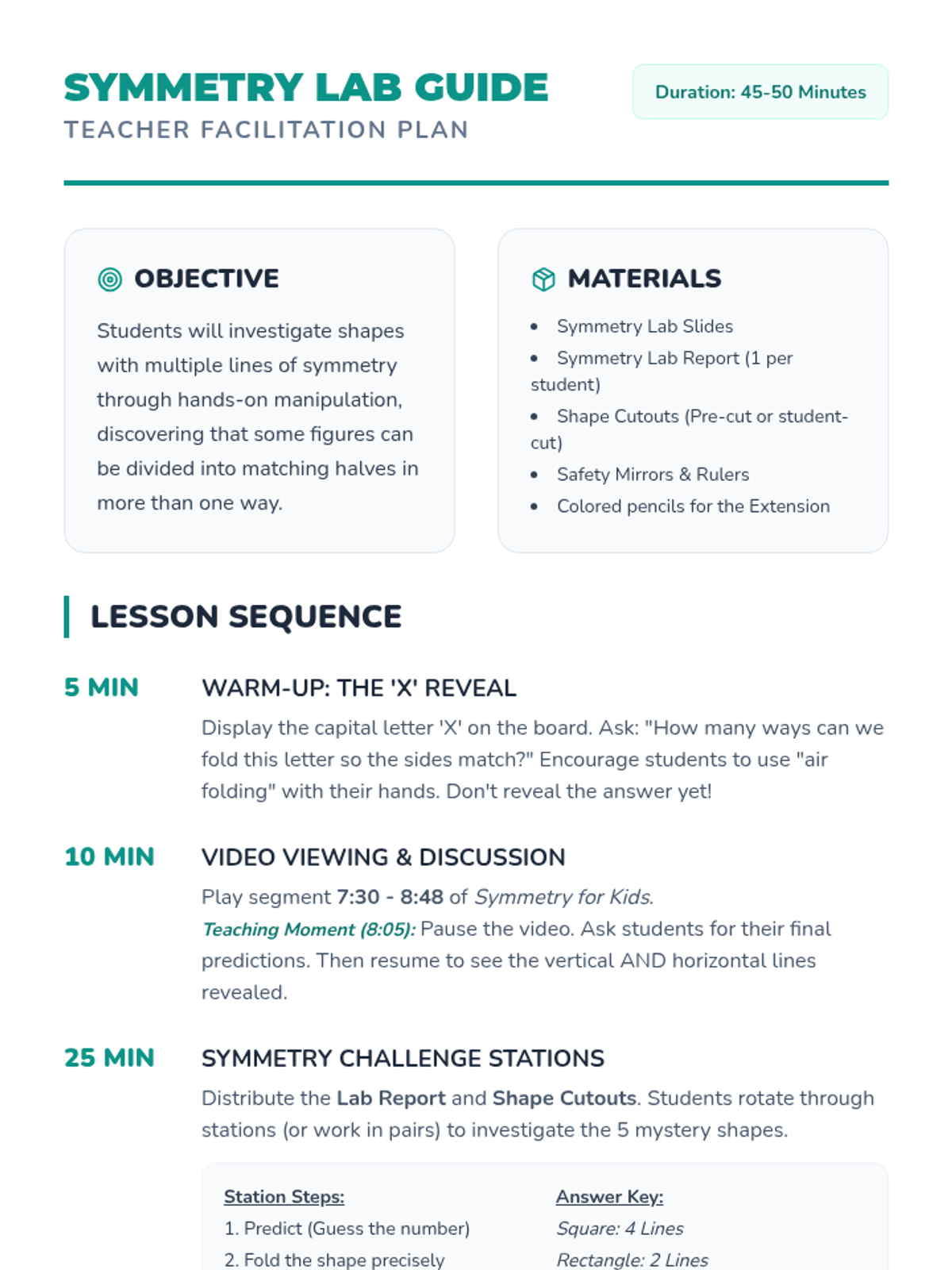
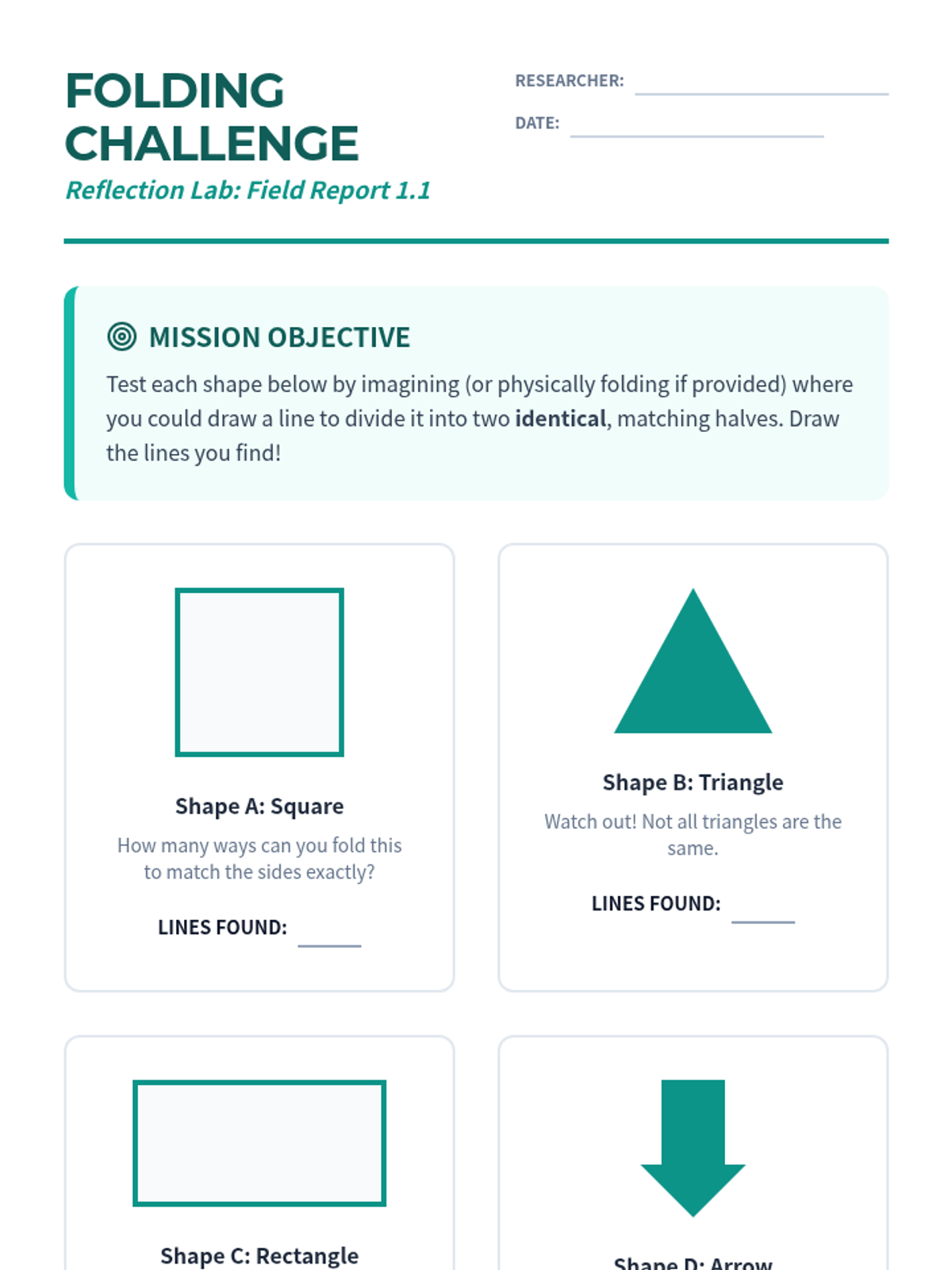
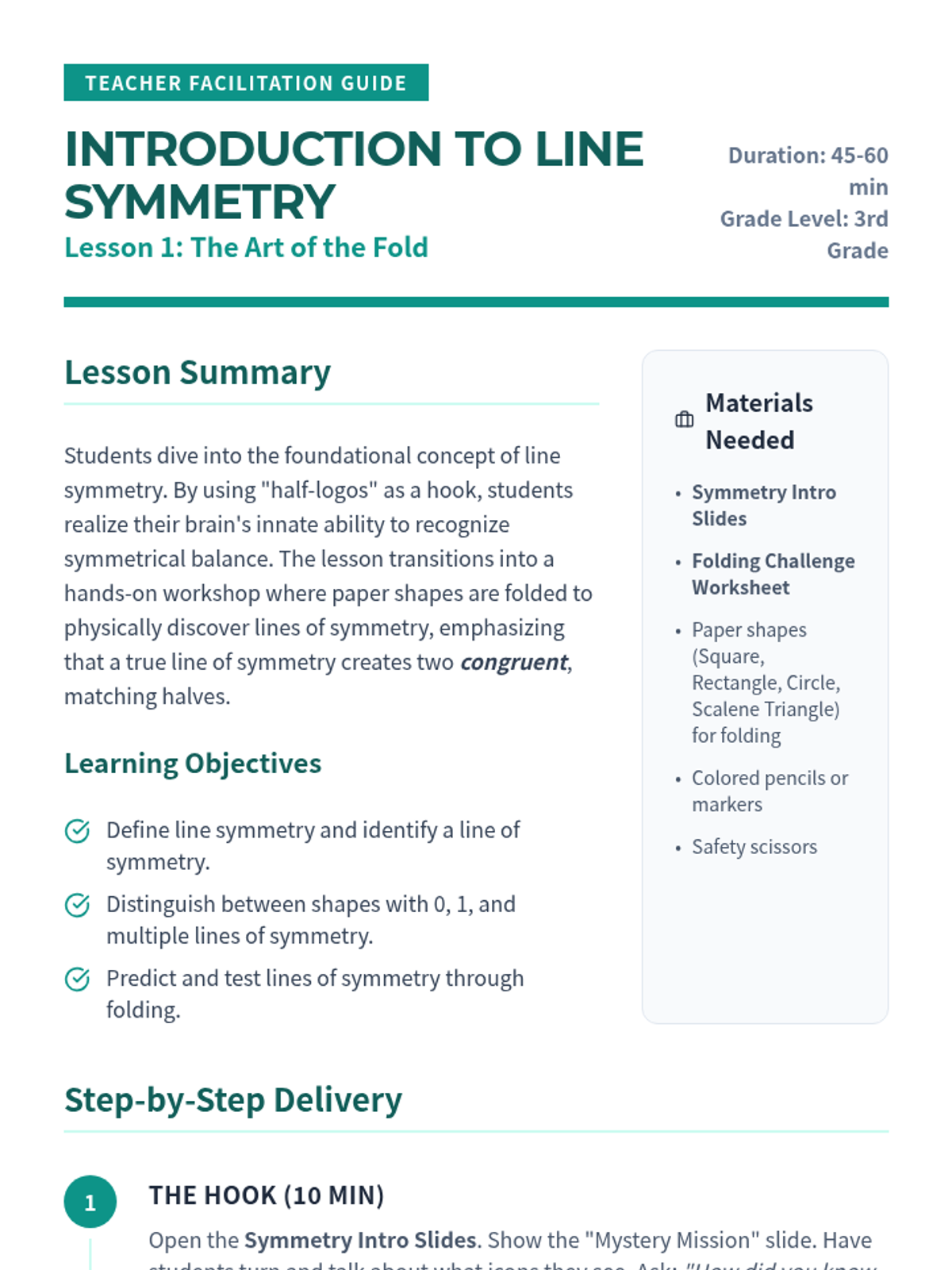
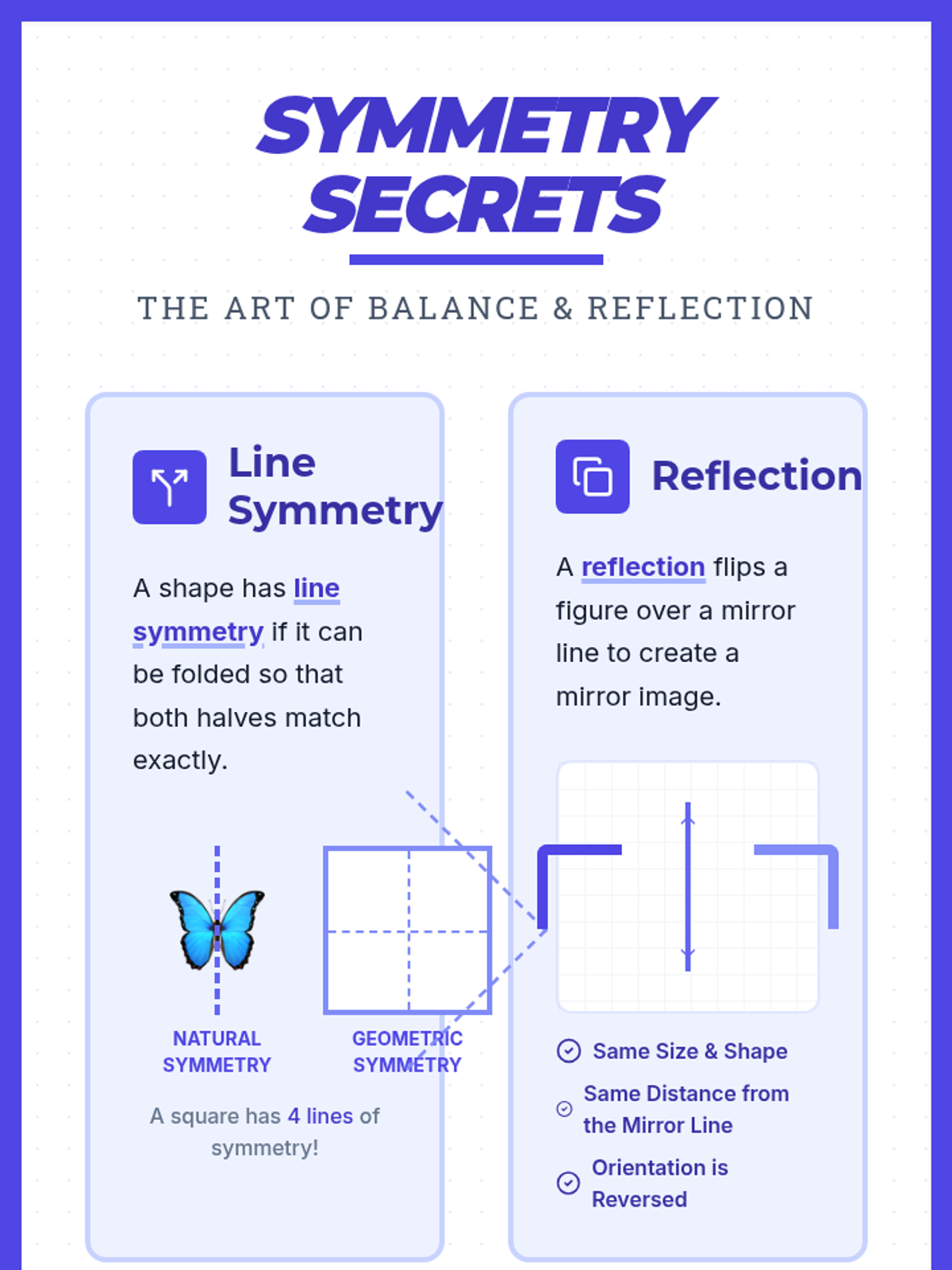
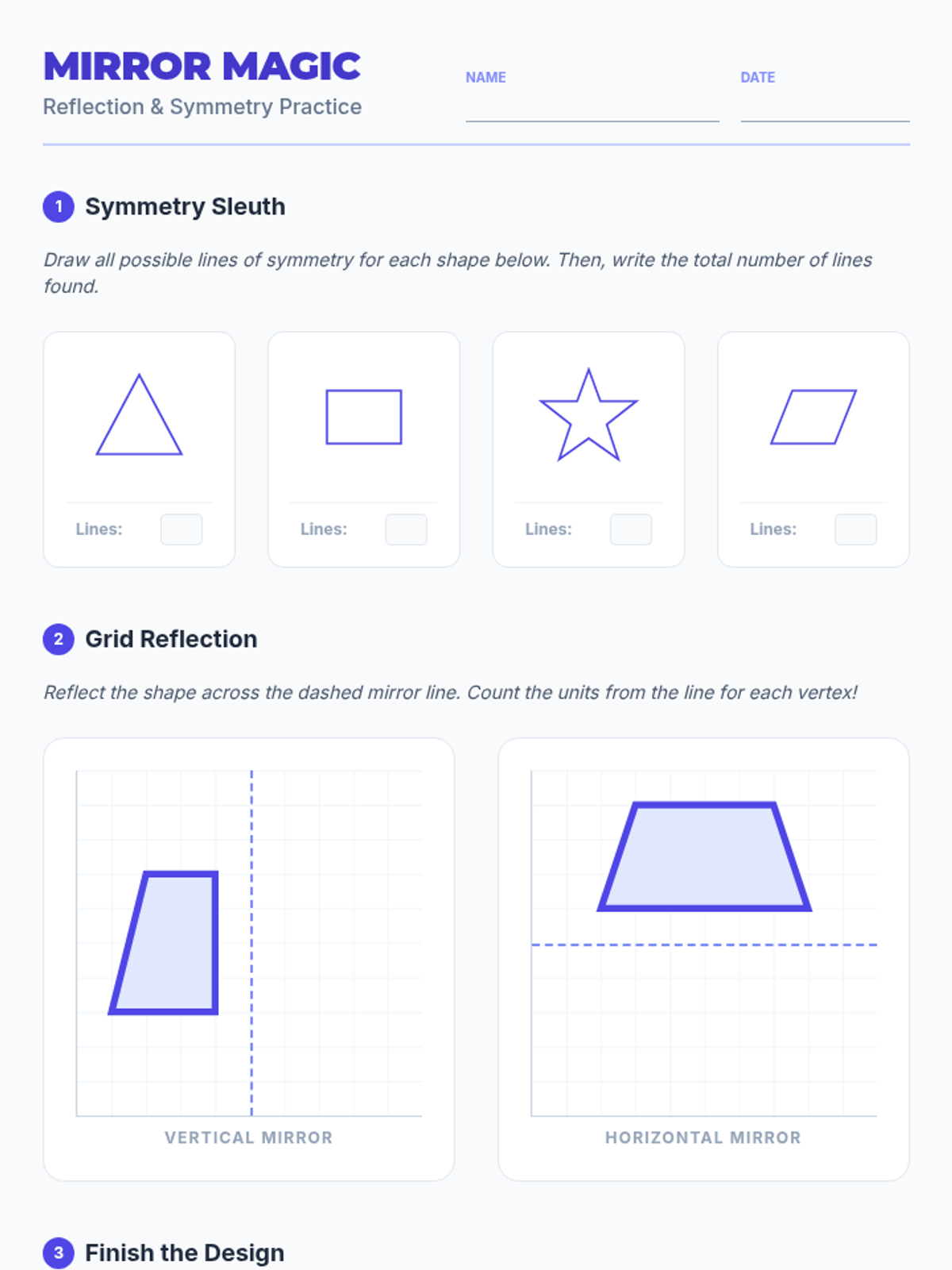
A comprehensive unit on lines of symmetry, exploring identification, drawing, and real-world applications through geometric and organic forms. Students will develop a deep understanding of balance and reflection.
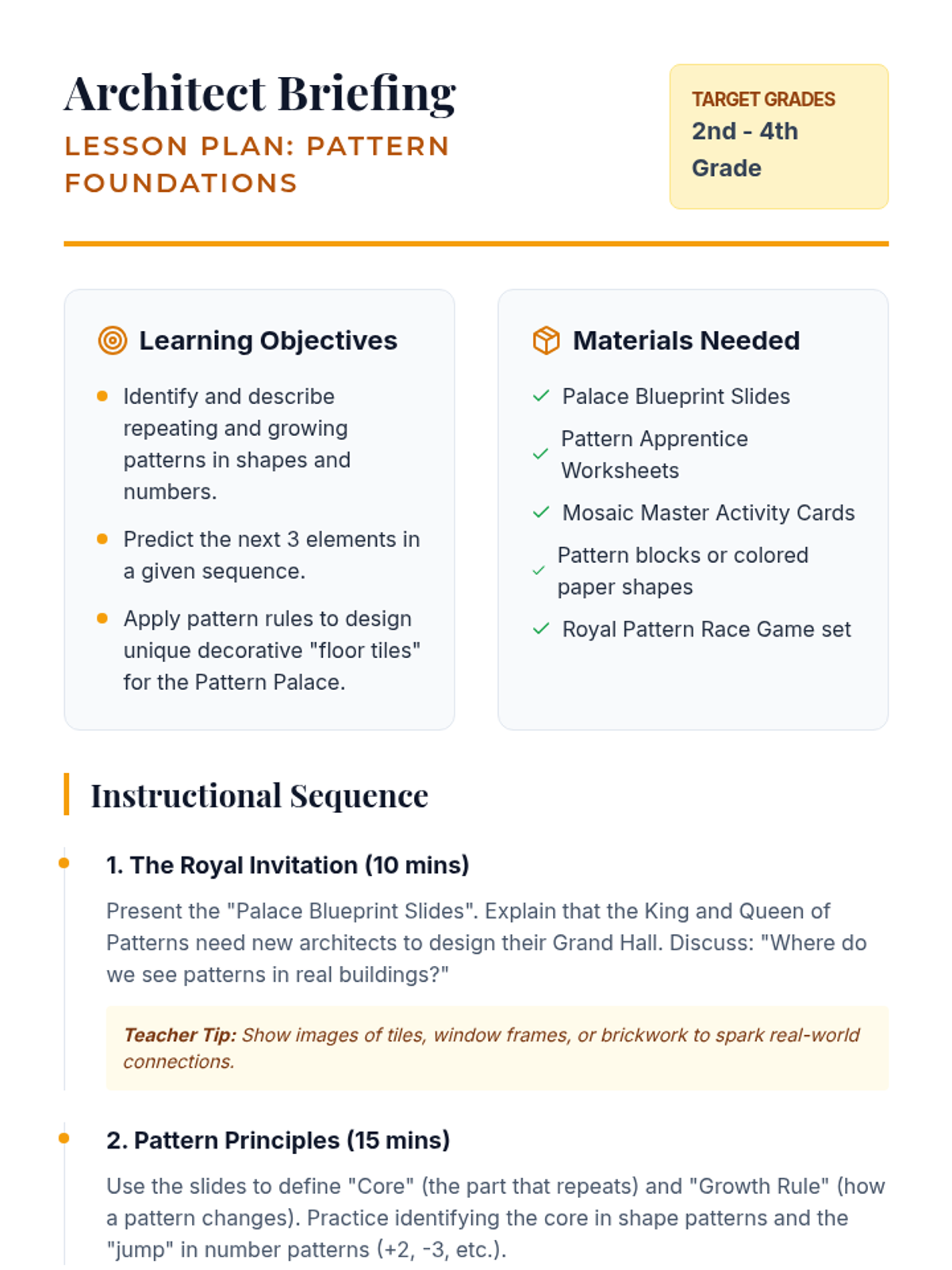
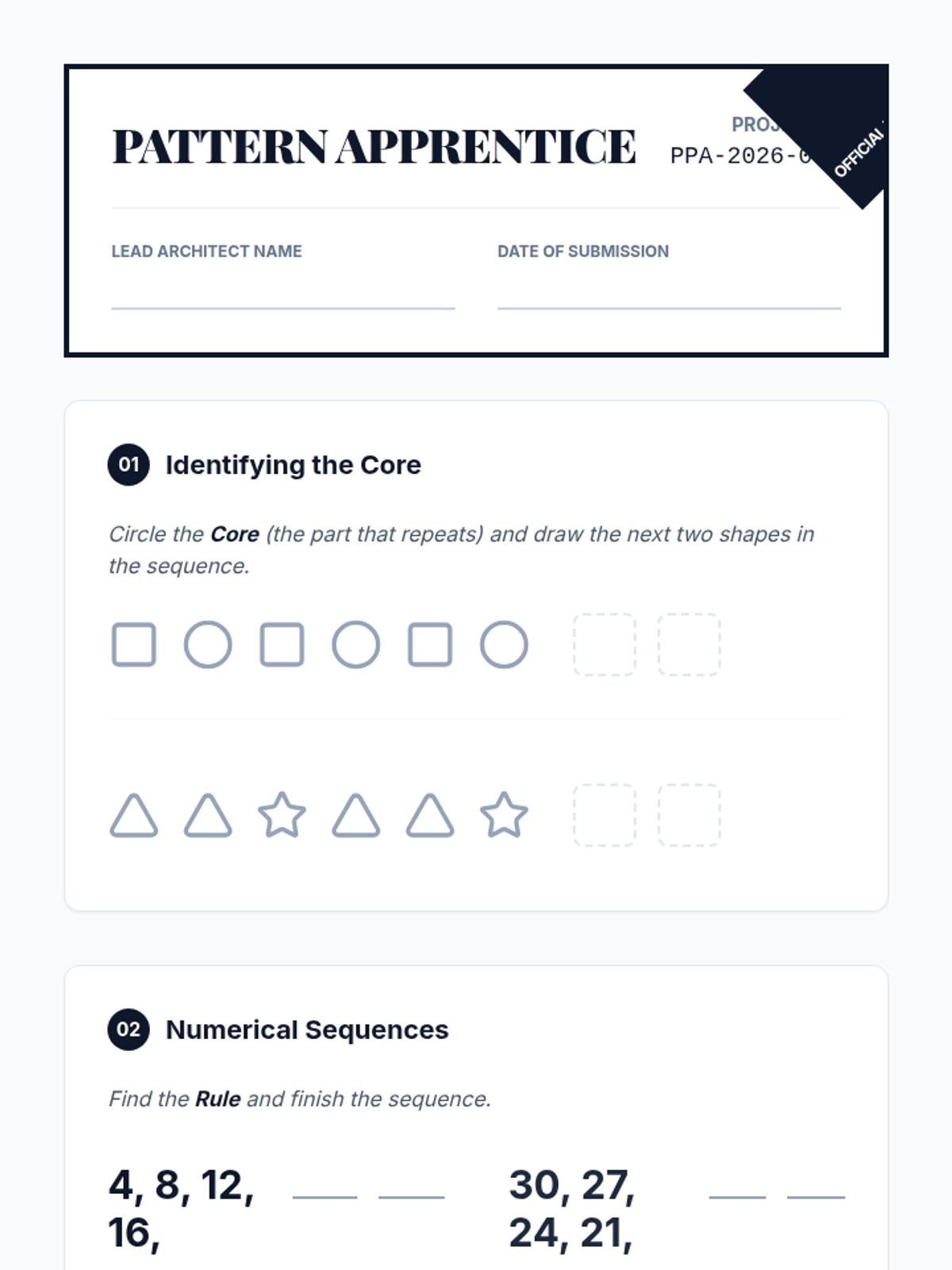
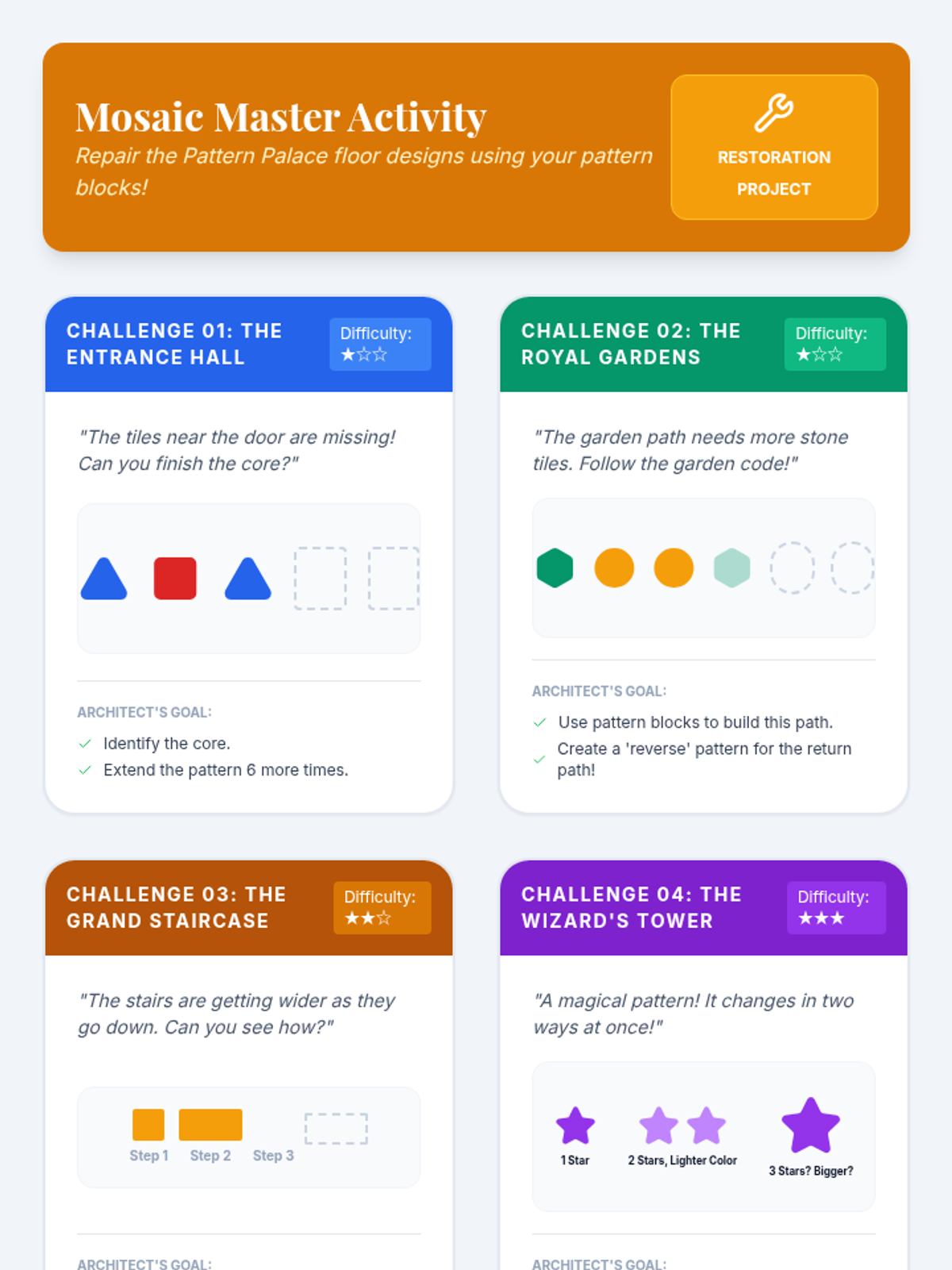
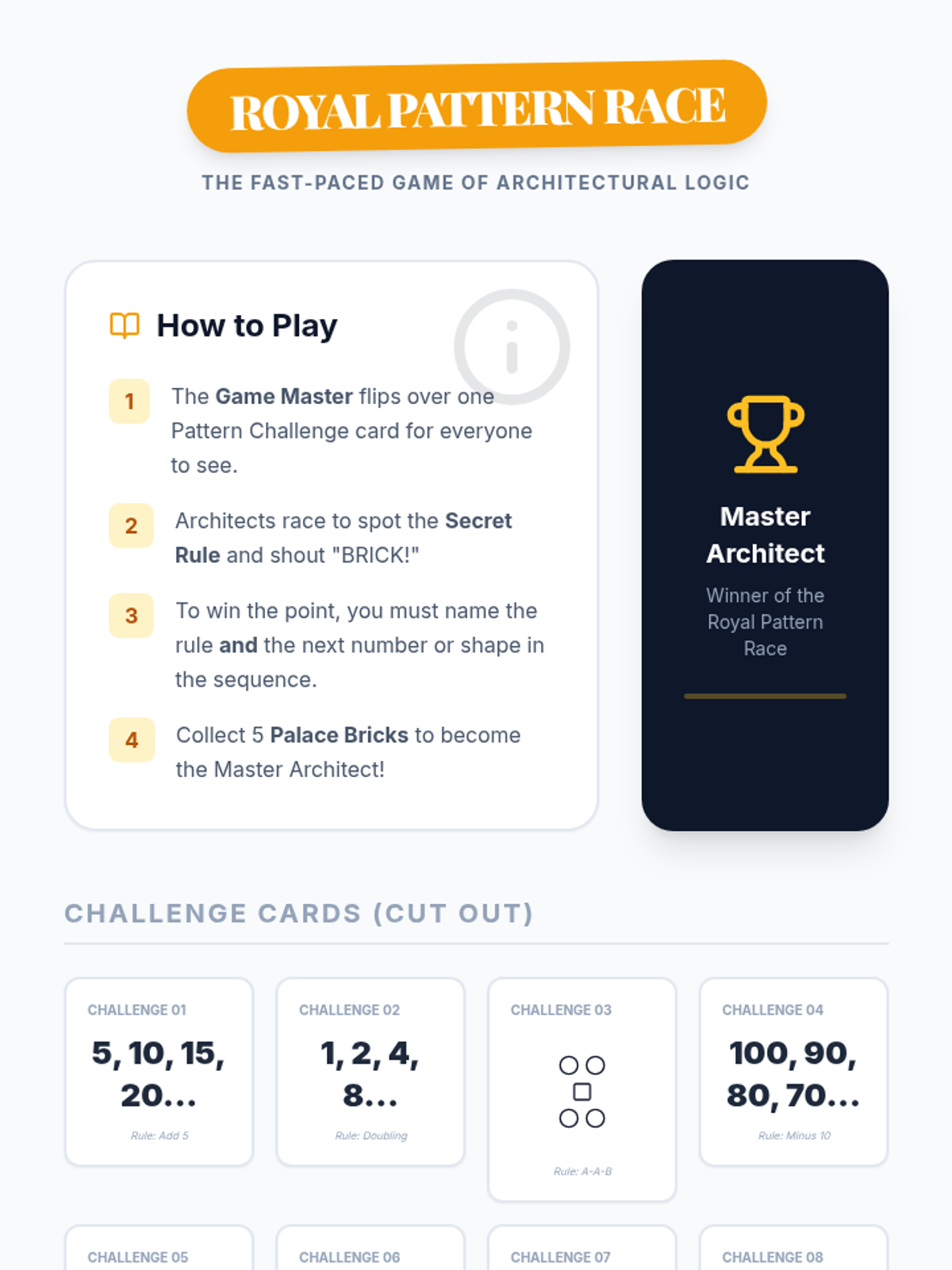
A comprehensive unit where students become architects in the 'Pattern Palace', learning to identify, extend, and create complex shape and number patterns. Students develop algebraic thinking through hands-on tiling activities, visual challenges, and numerical sequences.
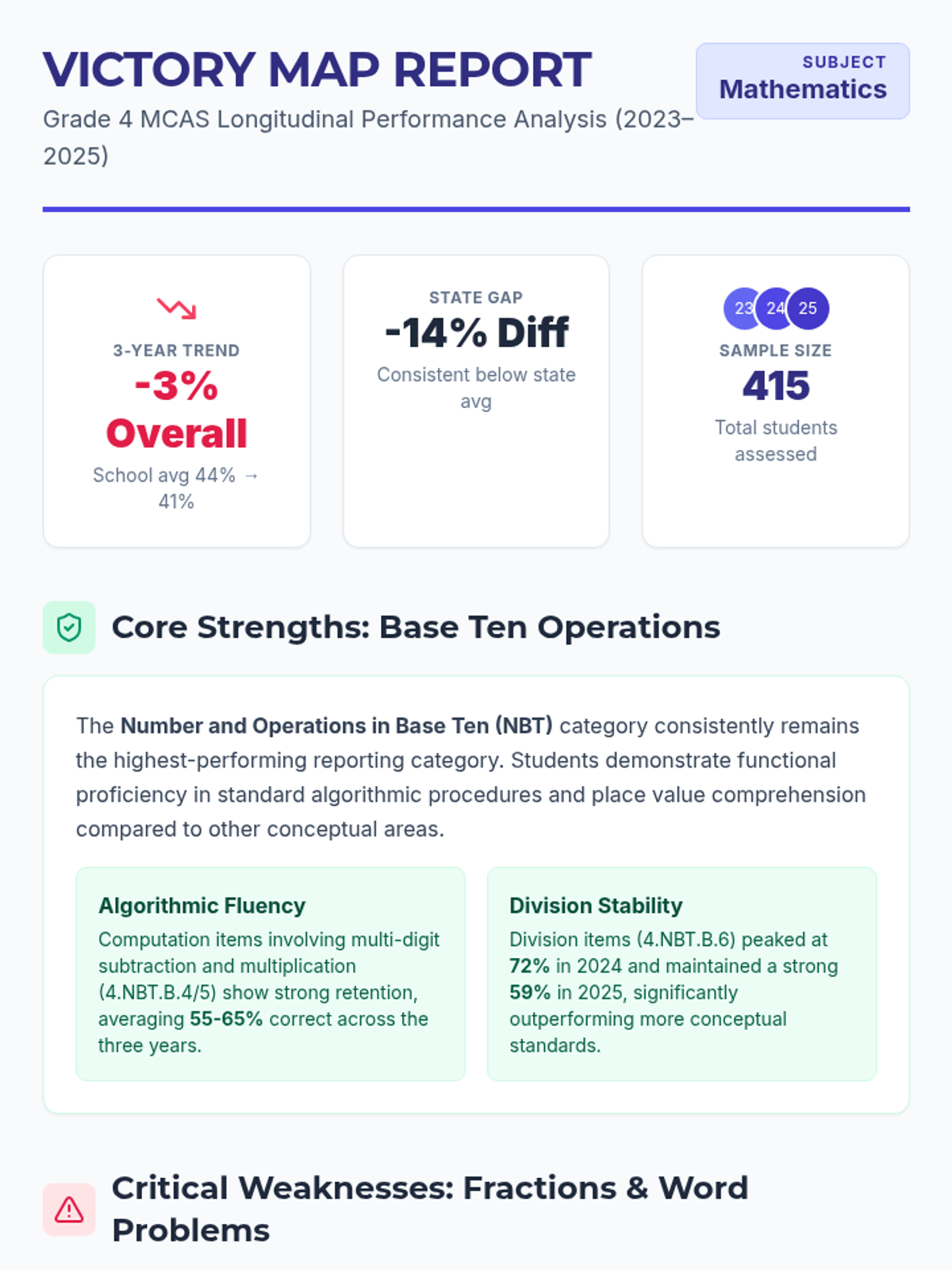
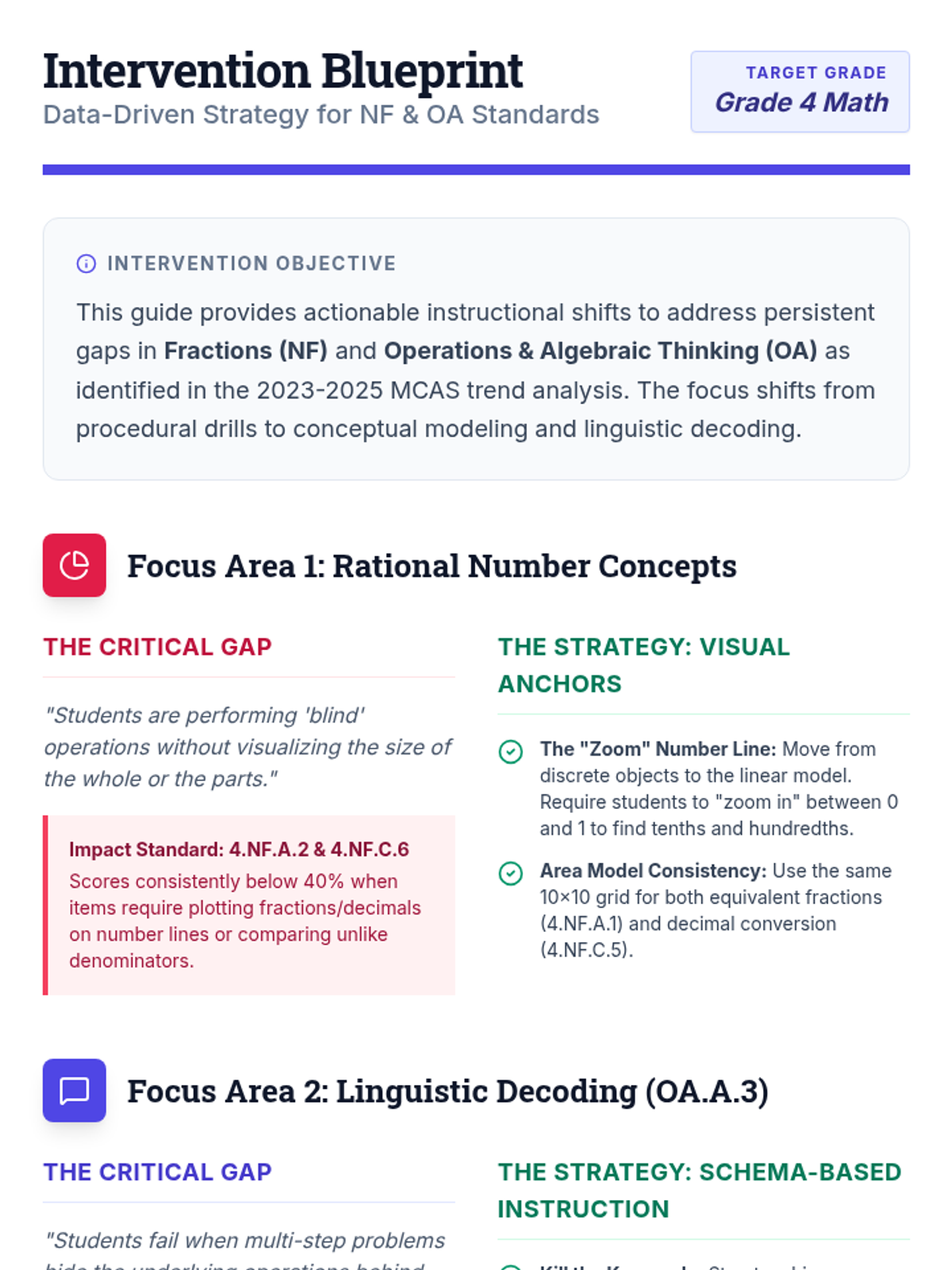
A comprehensive multi-grade longitudinal analysis of MCAS Math data (Grades 3-4) for 2023-2025. This sequence provides diagnostic reporting, visual aids, and instructional intervention strategies based on identified categorical trends.
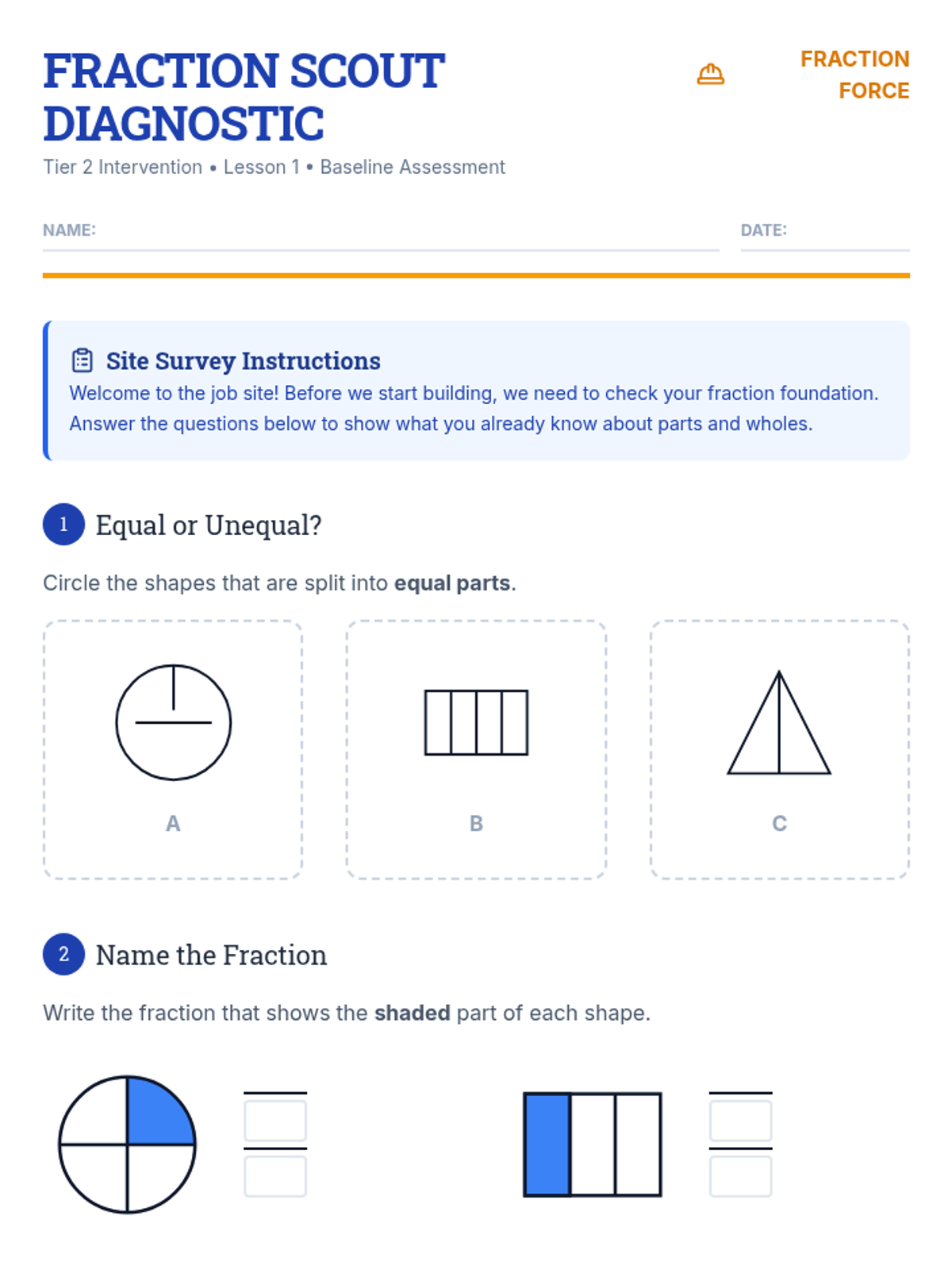
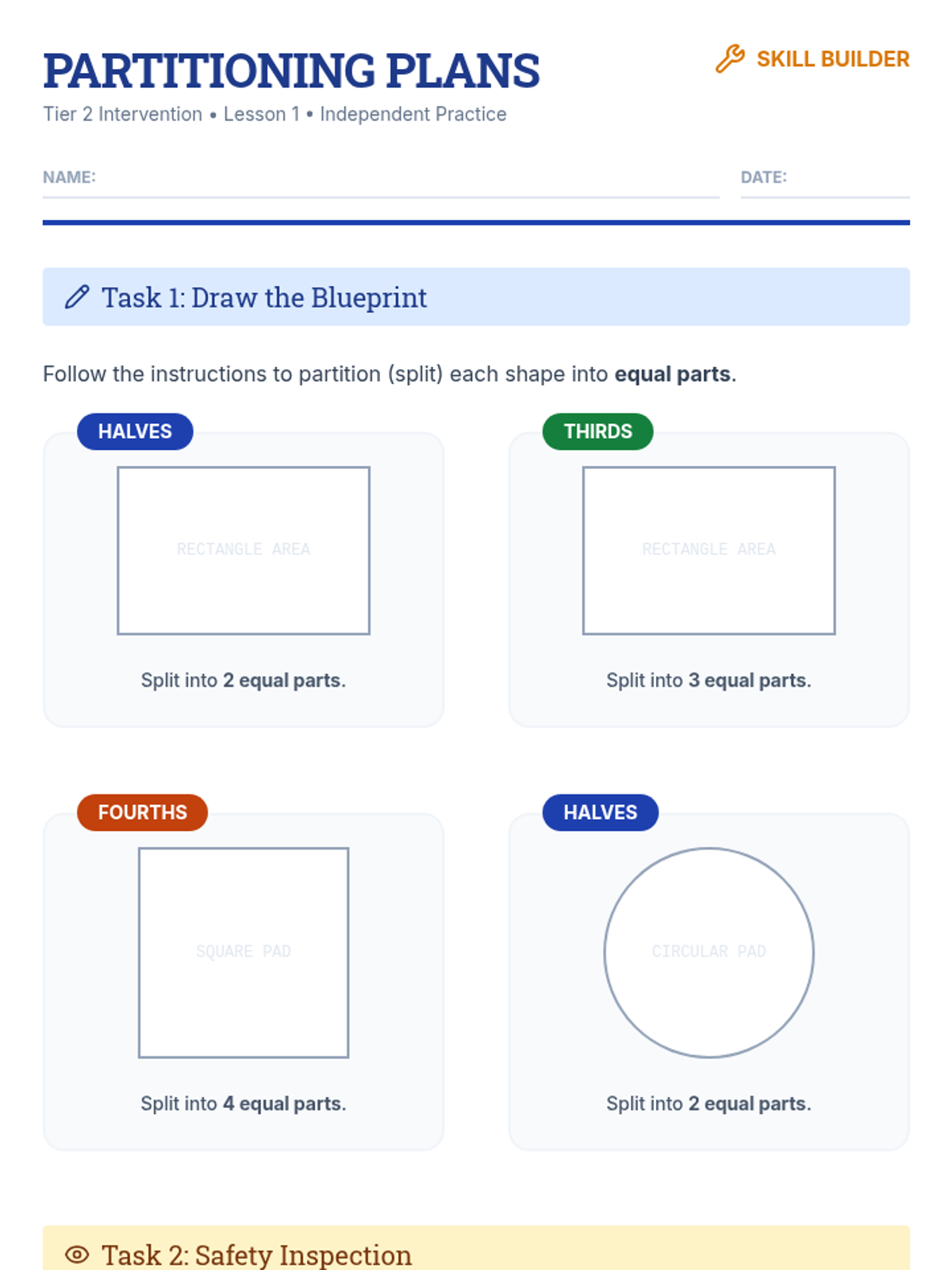
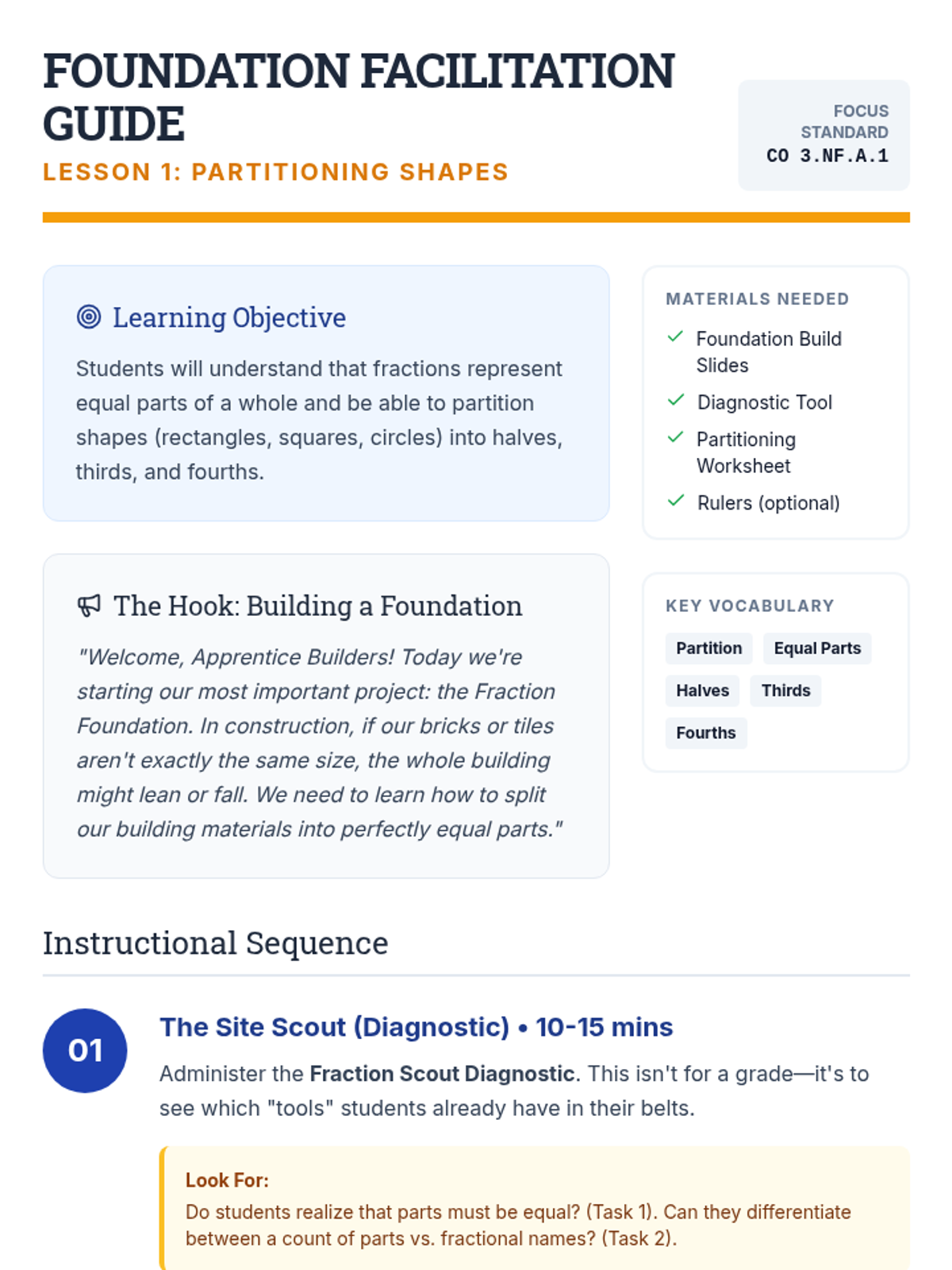
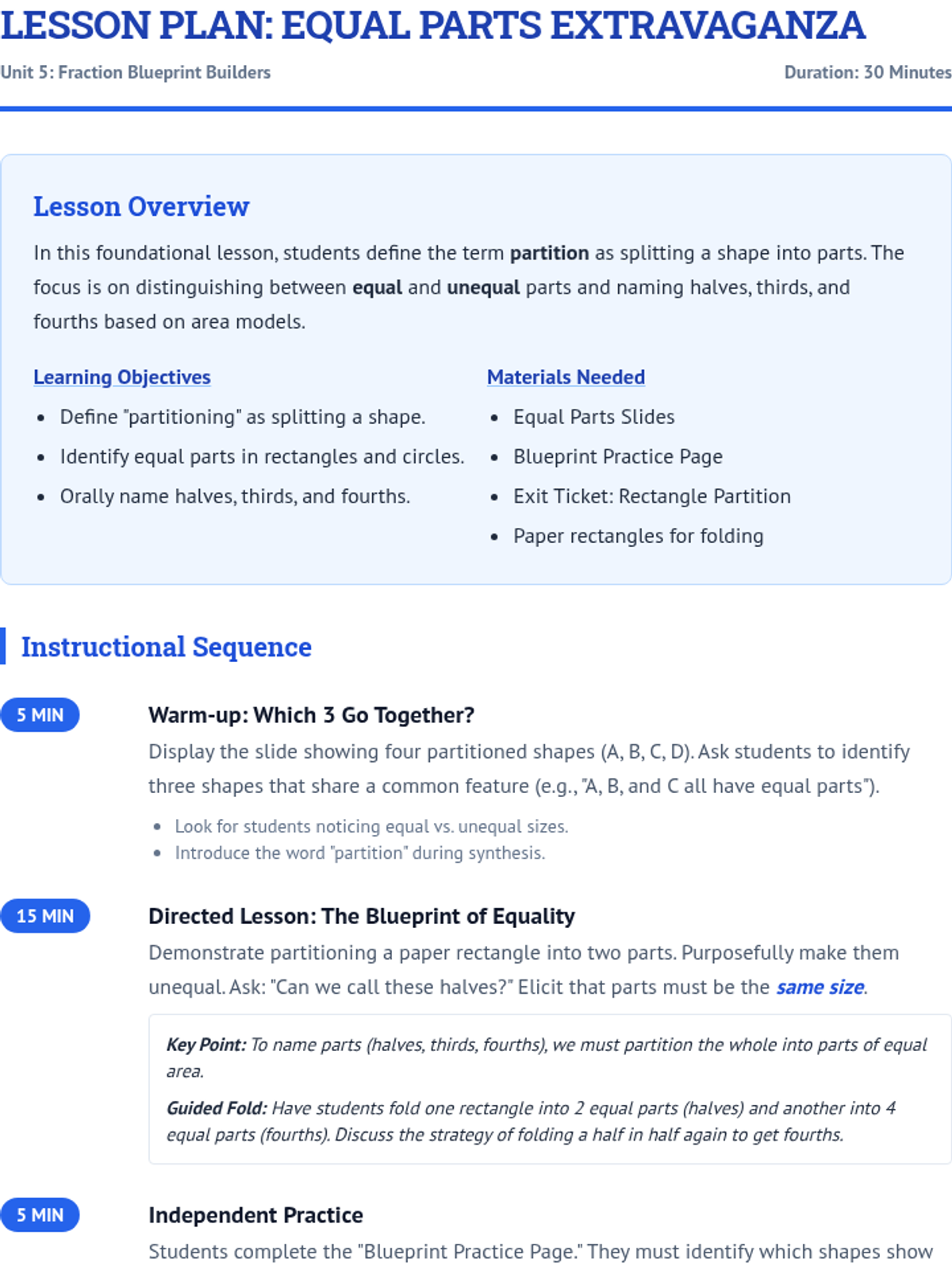
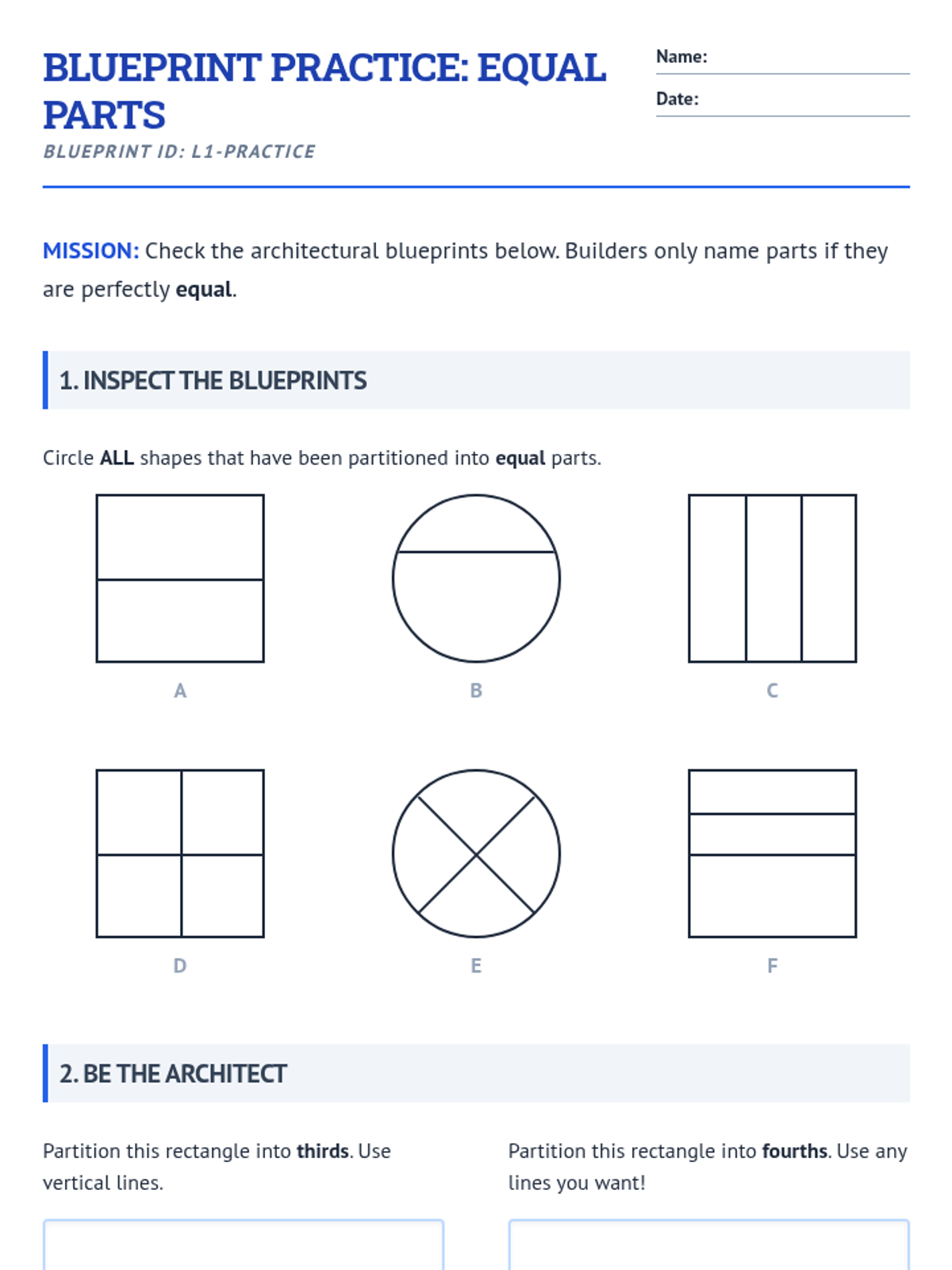
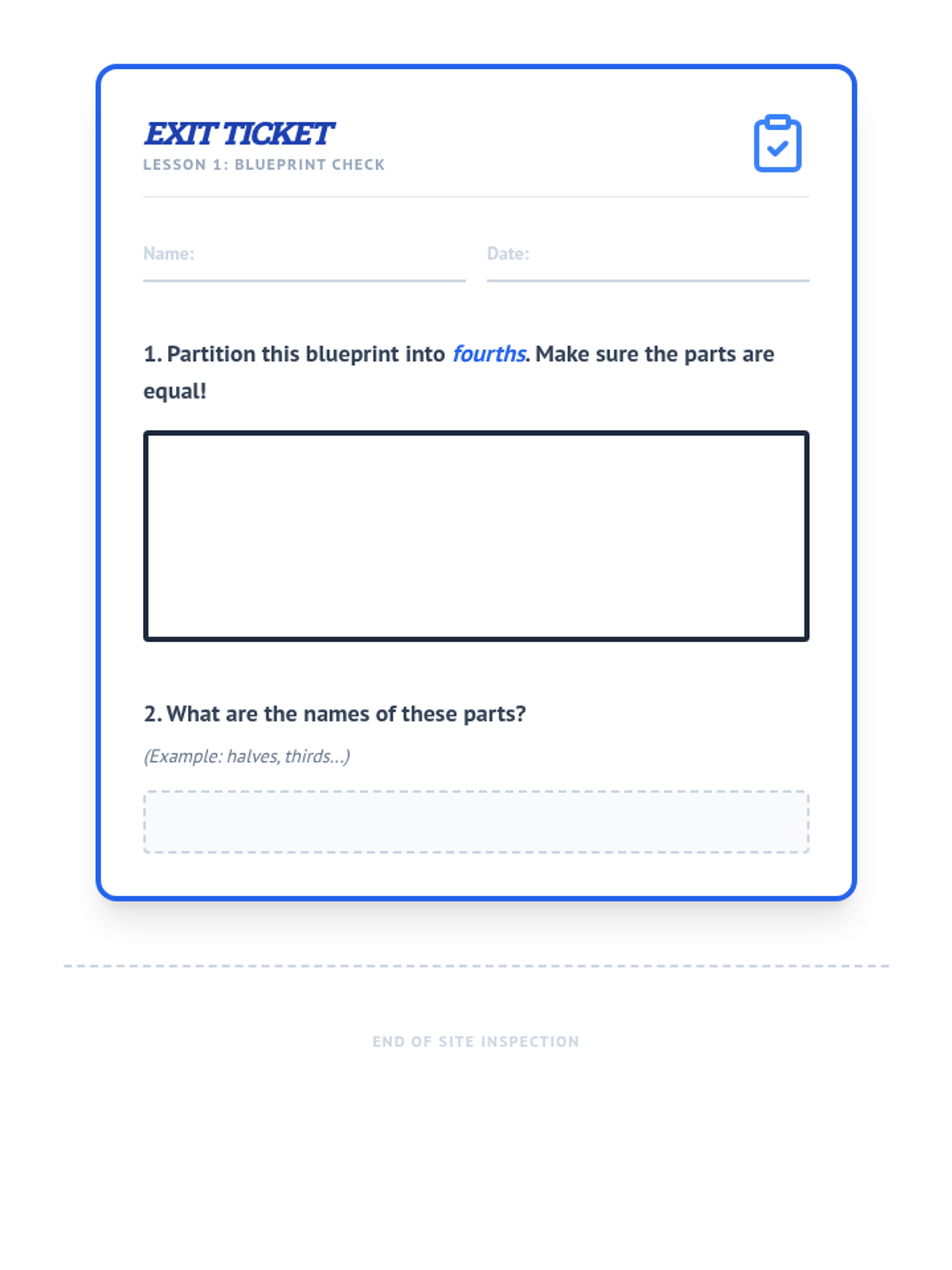
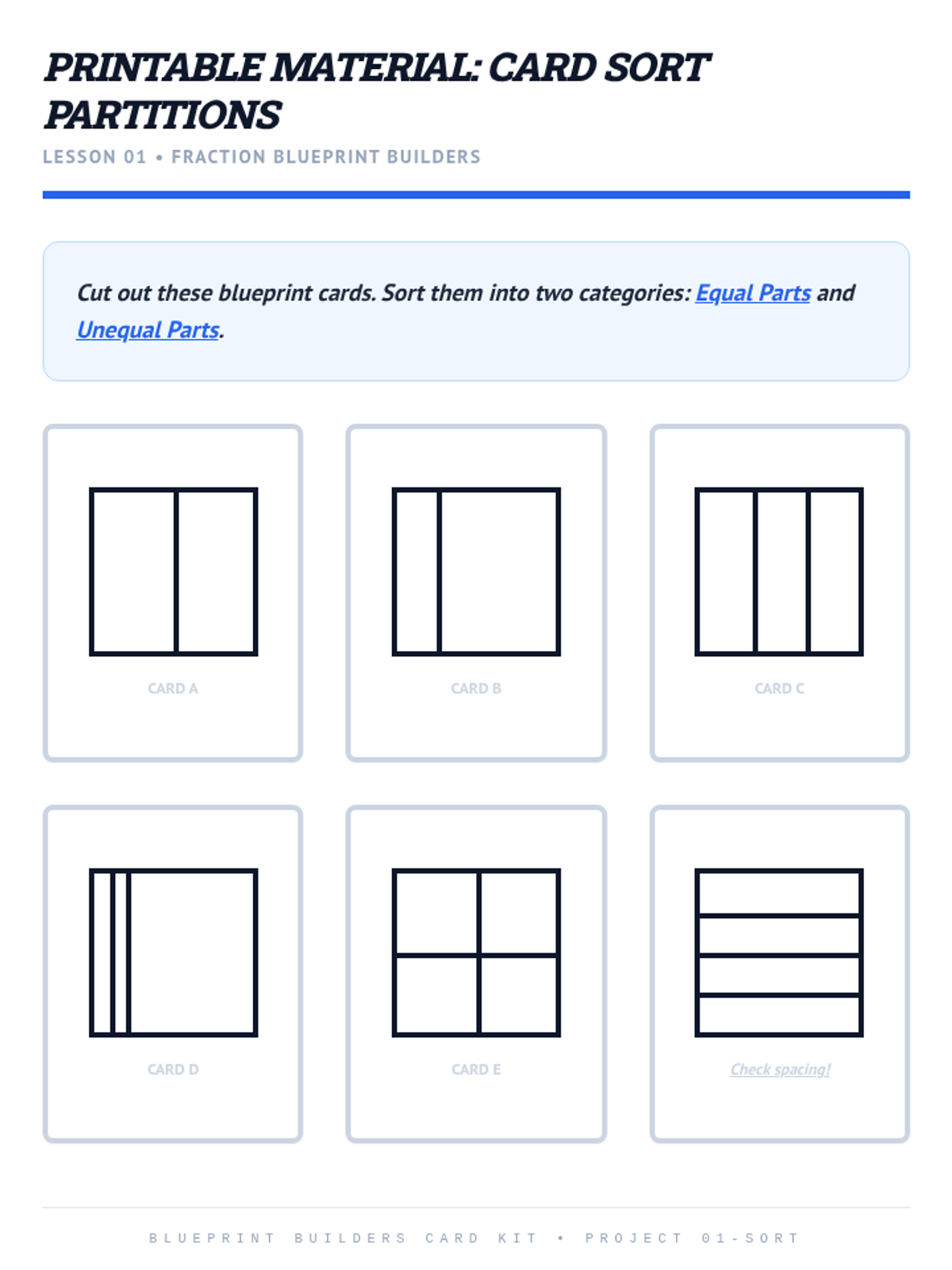
A comprehensive Tier 2 intervention sequence for 3rd-grade students struggling with fraction concepts. This unit covers partitioning shapes, understanding fractions as numbers on a line, comparing unit fractions, and introducing equivalency through a construction and blueprint theme.
A 12-lesson series focused on understanding fractions as numbers, partitioning shapes and number lines, and exploring equivalence through a 'Blueprint Builder' architectural theme. Students progress from naming parts of a whole to locating fractions greater than 1 on number lines.
A series of lessons focused on geometry and spatial reasoning, where students explore the properties of 2D shapes, symmetry, and patterns.
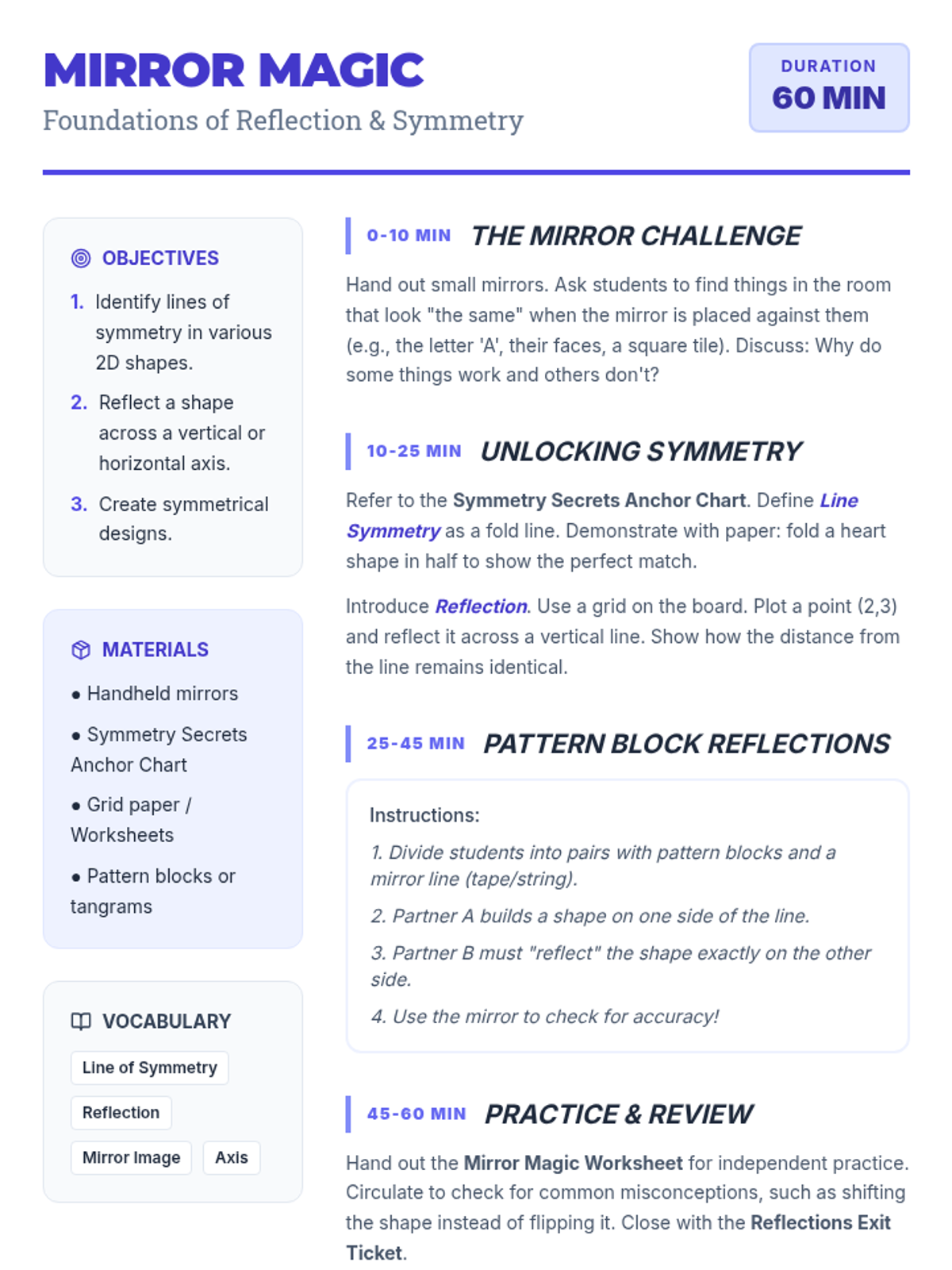
A multi-disciplinary unit exploring line symmetry and reflection through folding, mirrors, nature observation, and artistic creation. Students bridge mathematics and science to understand how balance and congruence appear in the world around them.
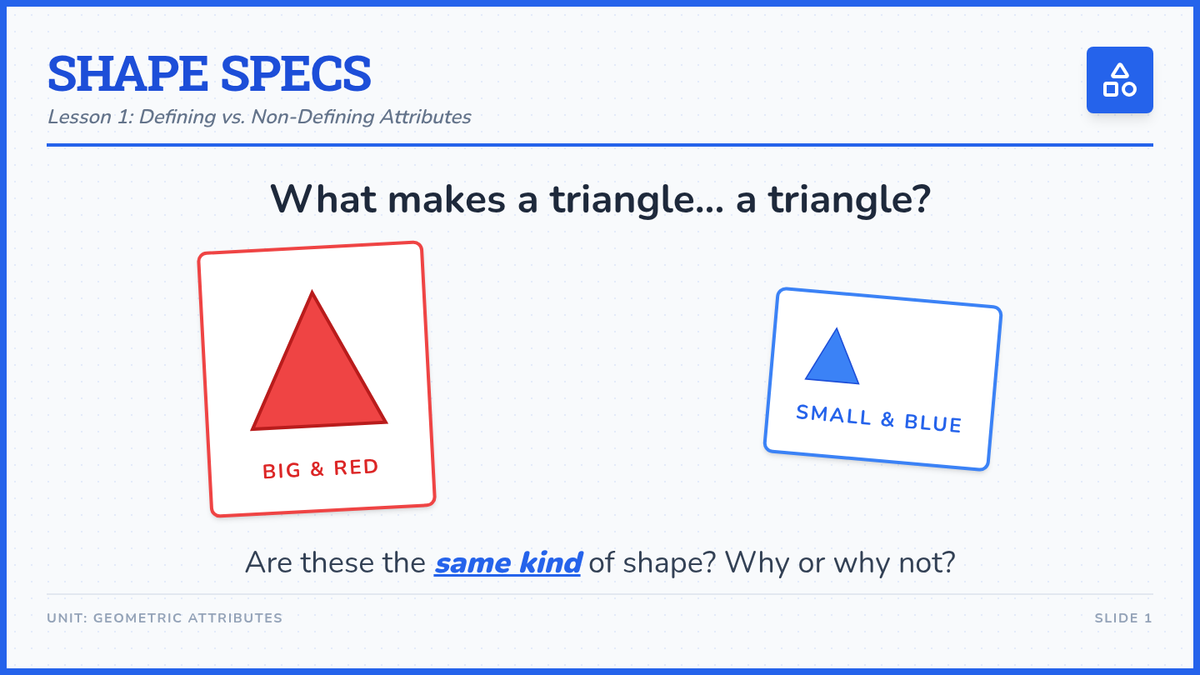
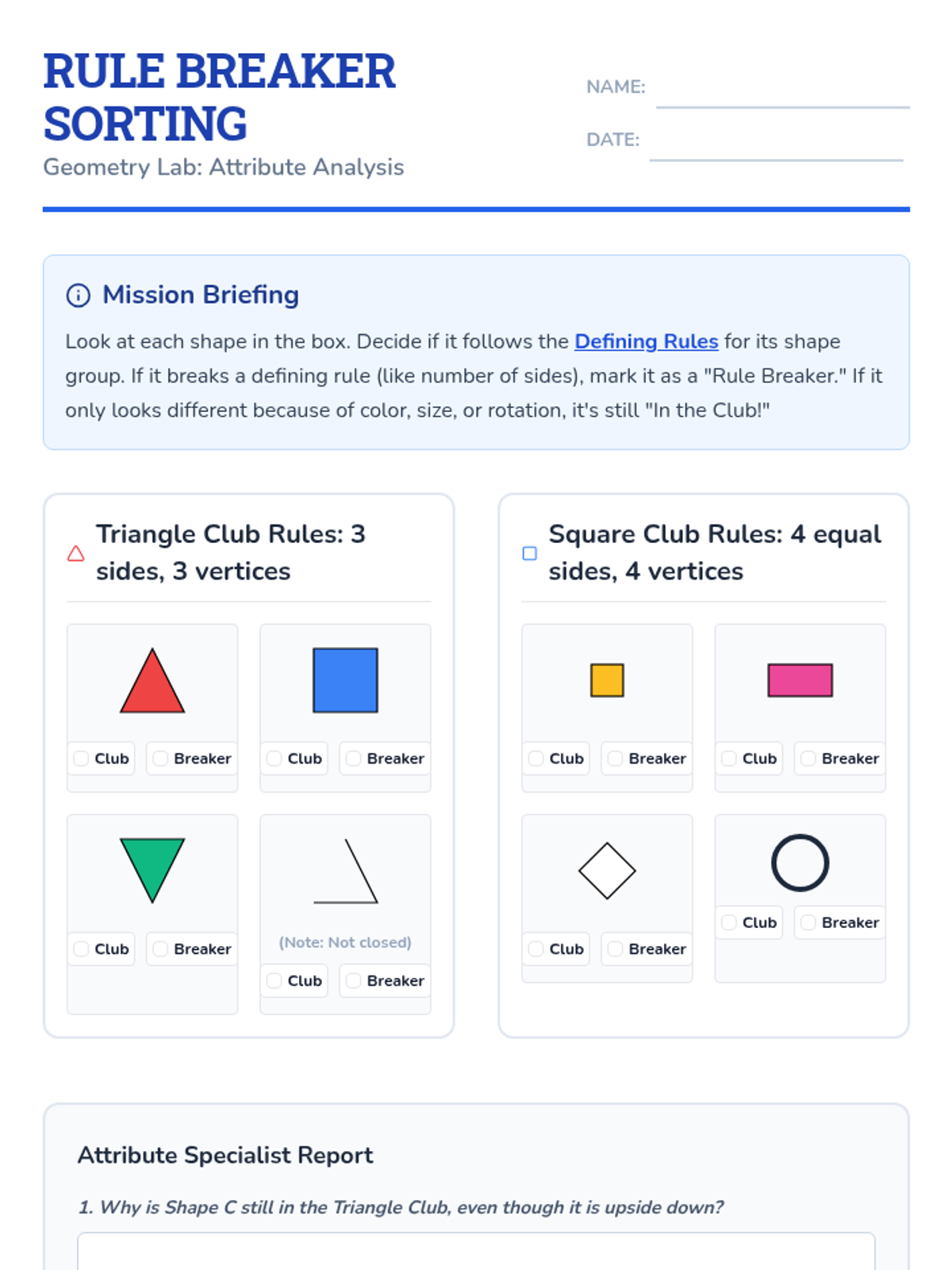
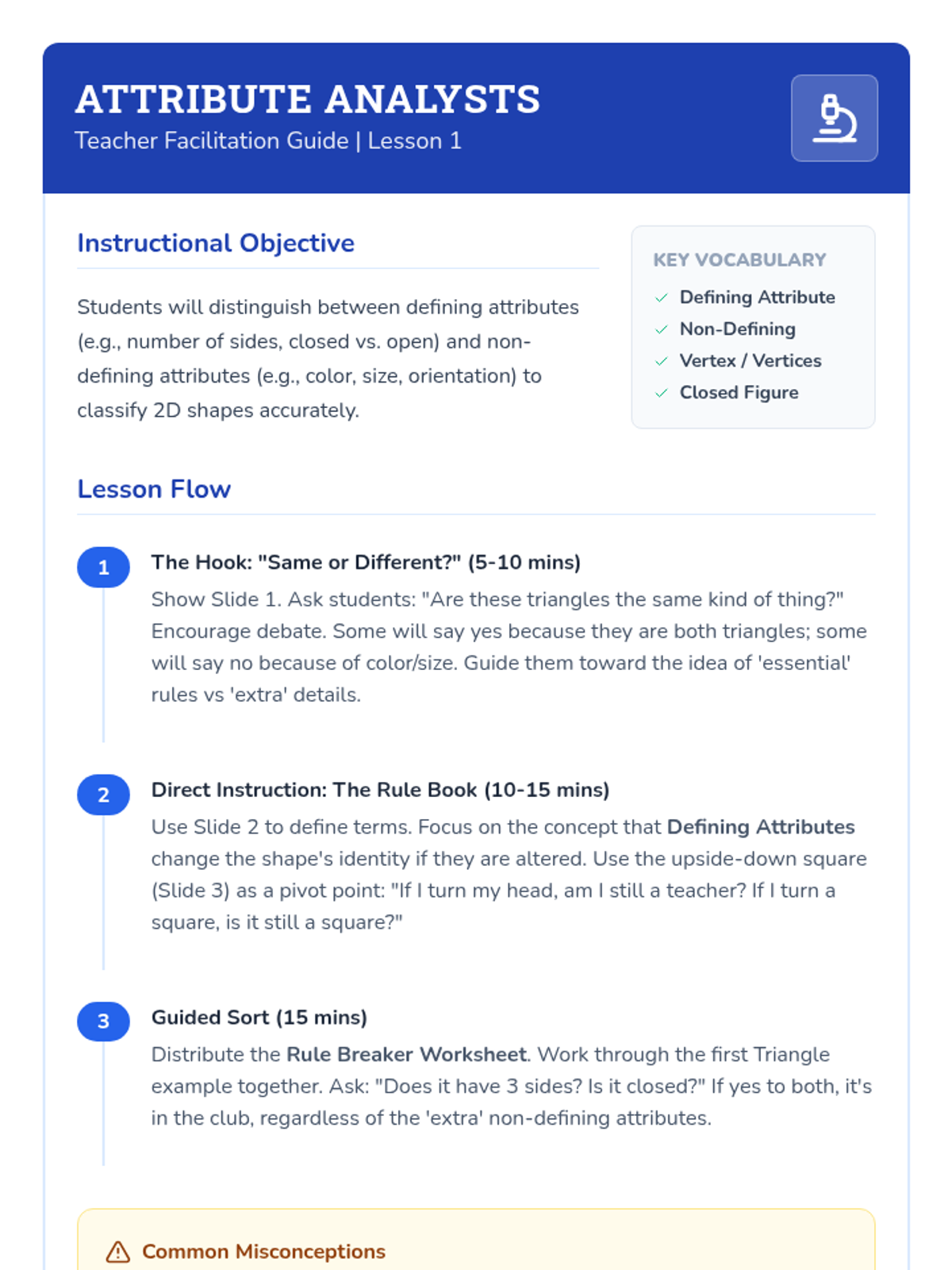
This 3rd-grade sequence guides students from recognizing basic shapes to analyzing their defining attributes, such as sides and vertices. Students explore polygons, distinguish between defining and non-defining attributes, and culminate their learning in a 'Geometry Gallery' project.
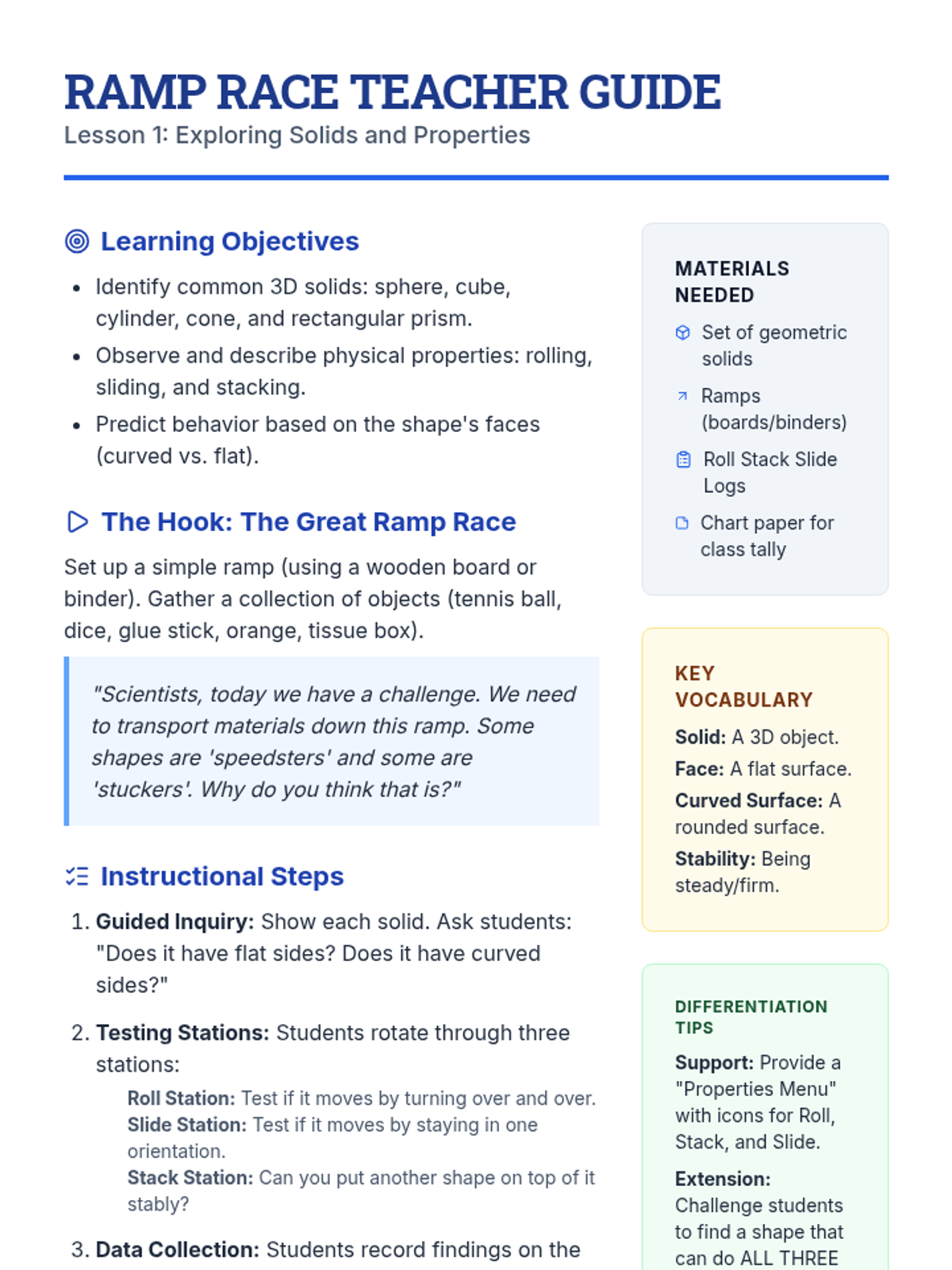
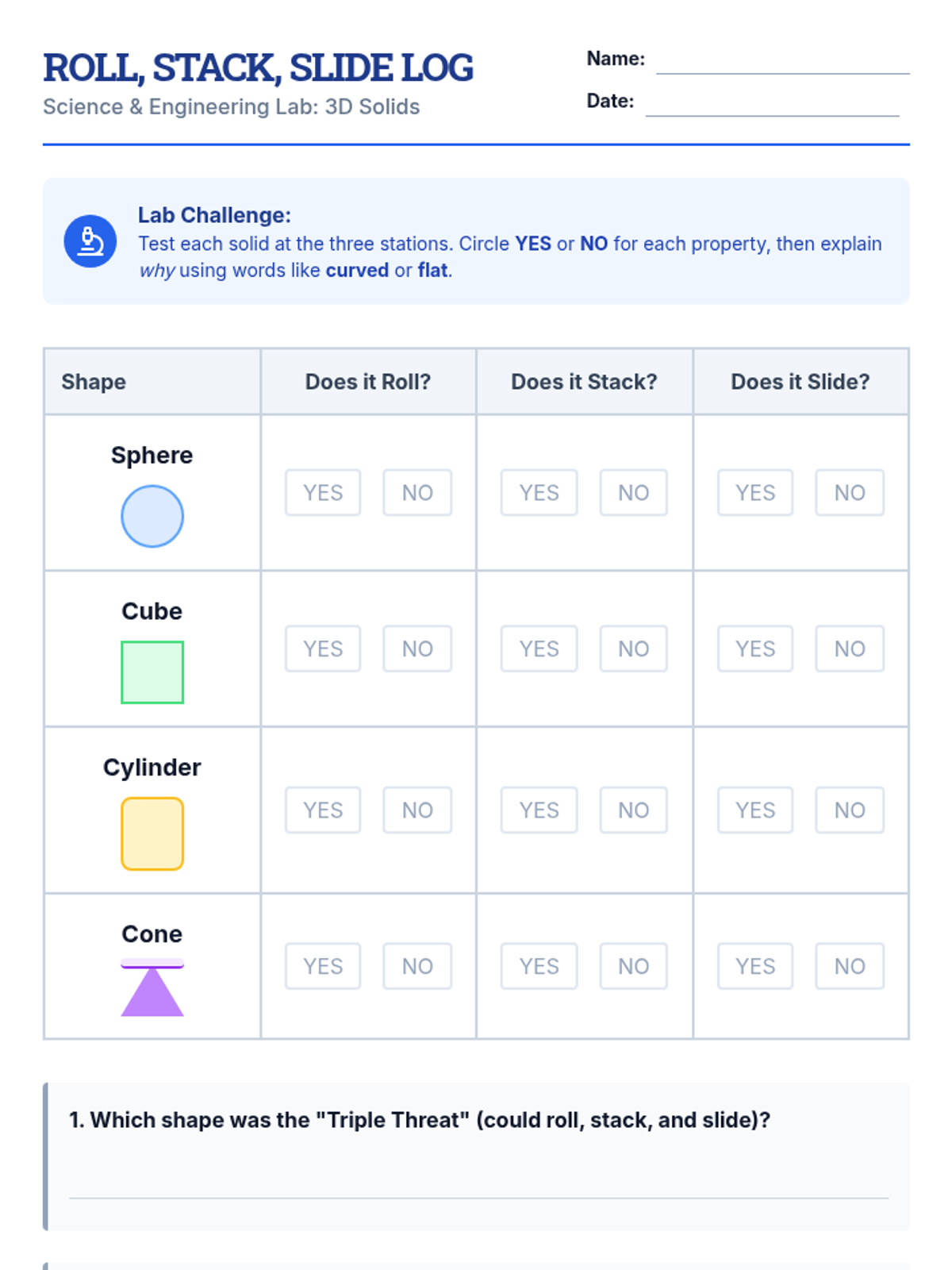
An engineering-focused sequence where 3rd Grade students explore the relationship between 2D shapes and 3D solids. Students investigate physical properties like rolling and stacking, analyze geometric features, and apply their knowledge to structural engineering challenges.
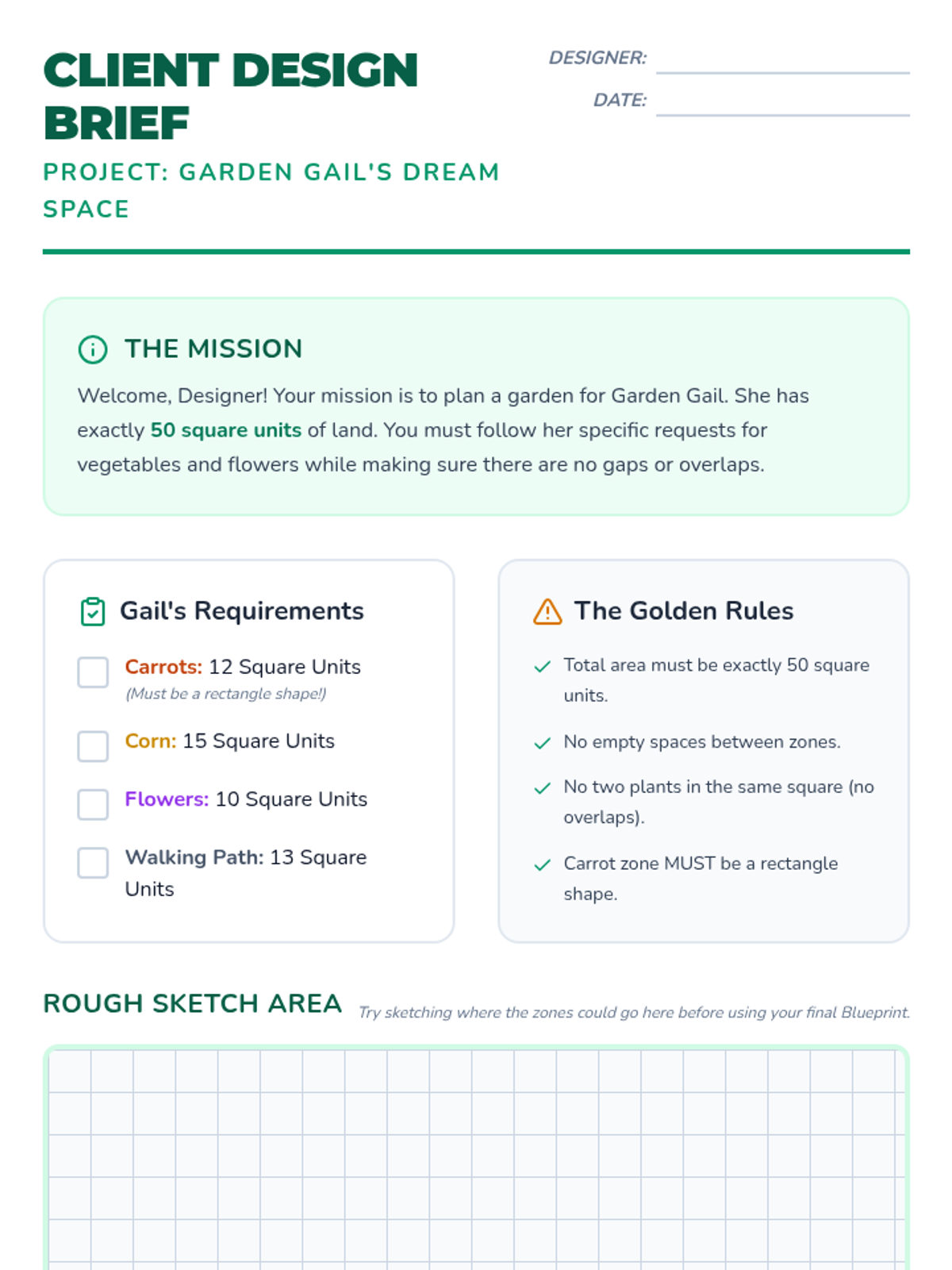
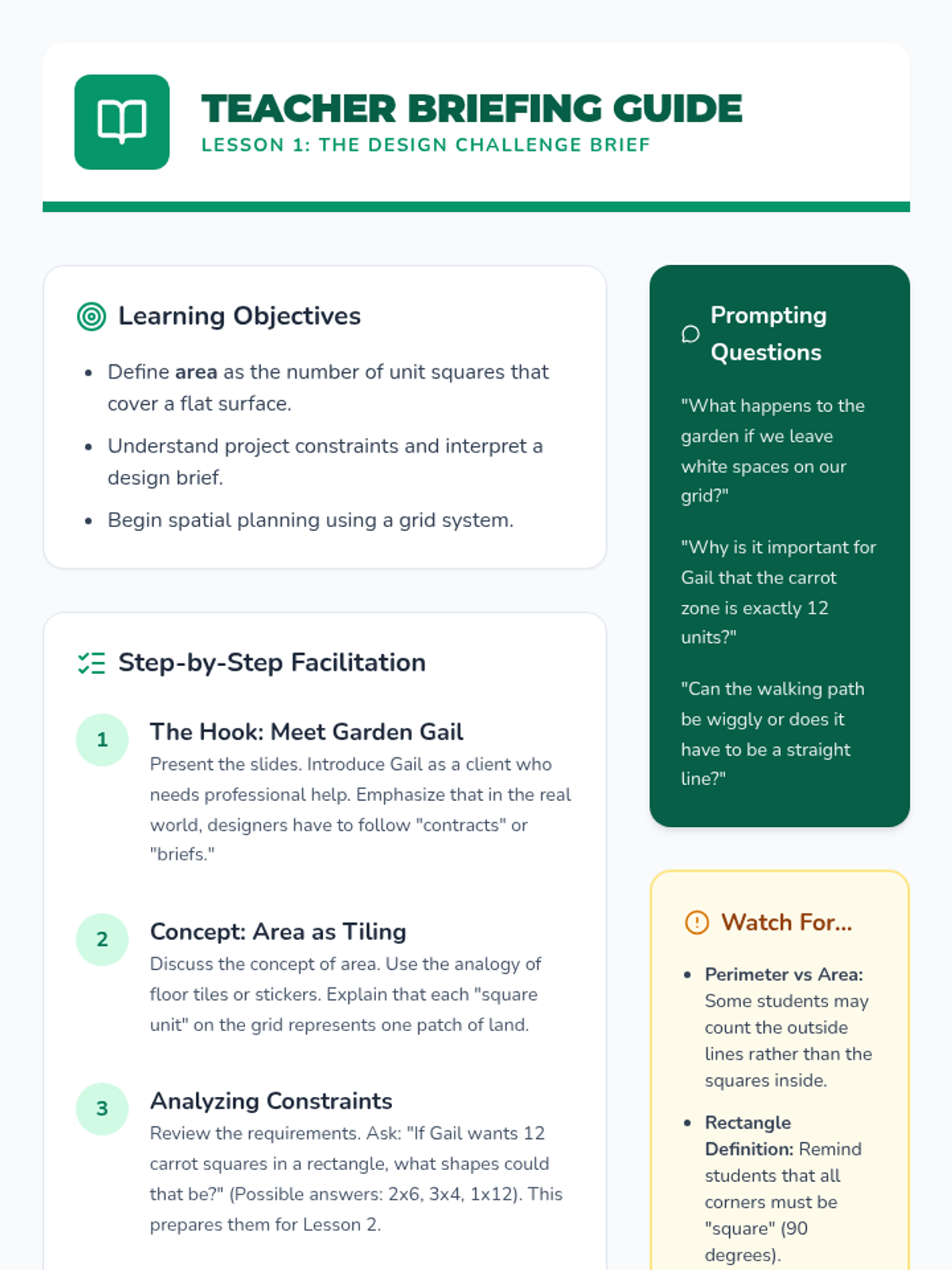
Students step into the shoes of garden designers to learn area. They use 1-inch grids to plan, calculate, and verify the layout of 'Dream Gardens', connecting the concept of square units to real-world spatial planning.
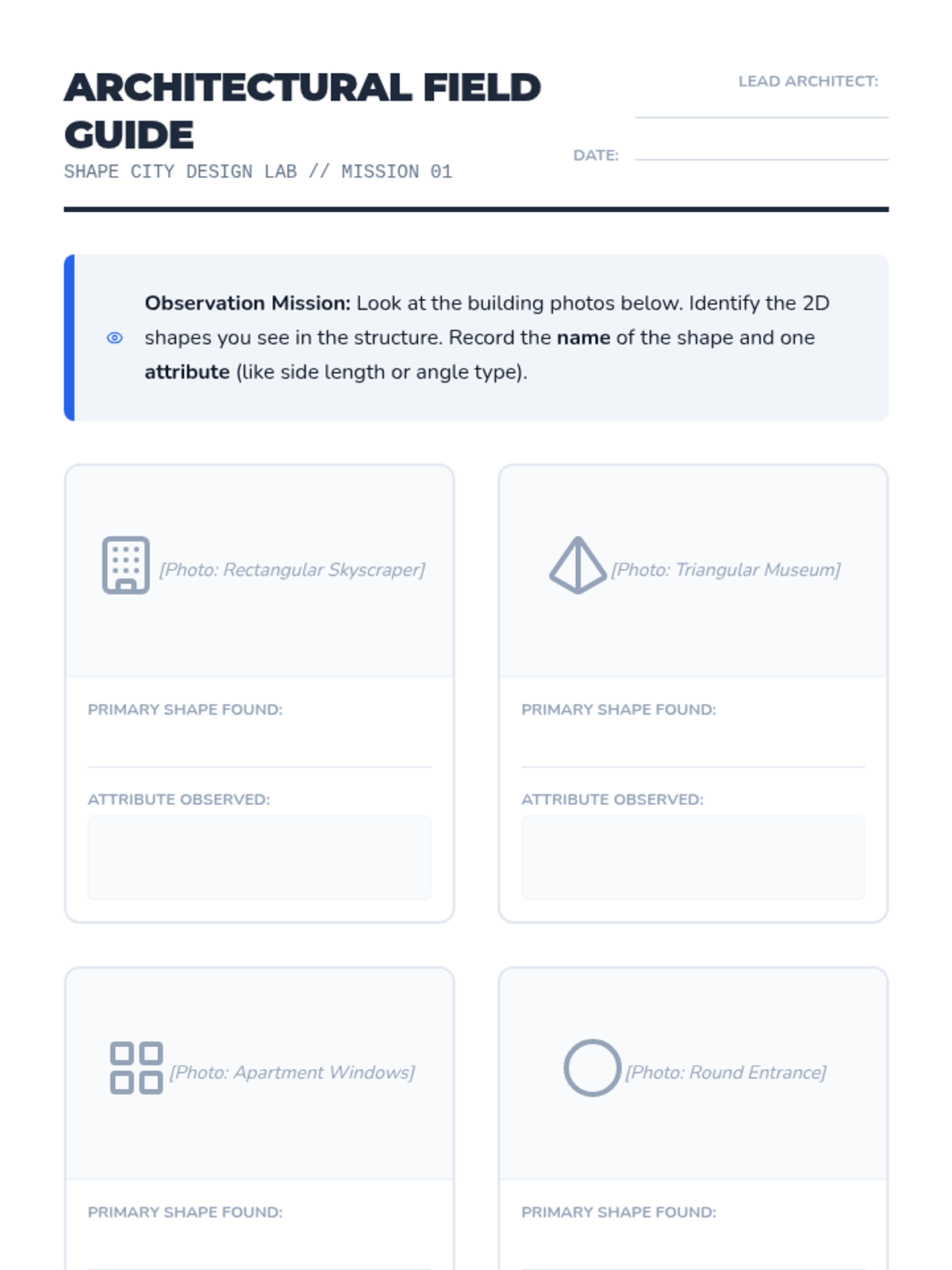
A project-based geometry unit where 3rd-grade students act as architects to design 'Shape City.' Students apply properties of 2D figures to meet specific architectural 'zoning laws,' explore tessellations for urban planning, and present their final structural designs.
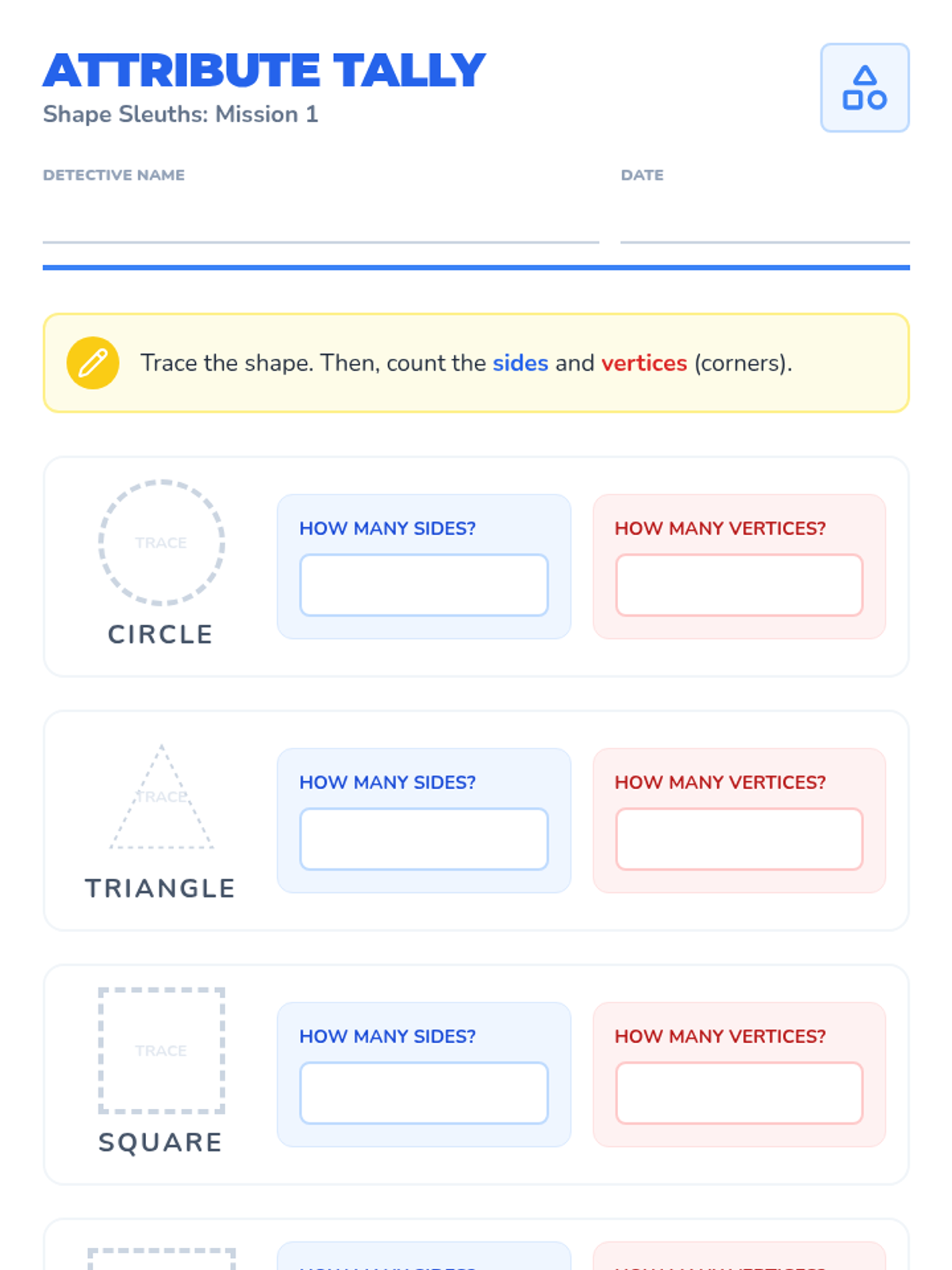
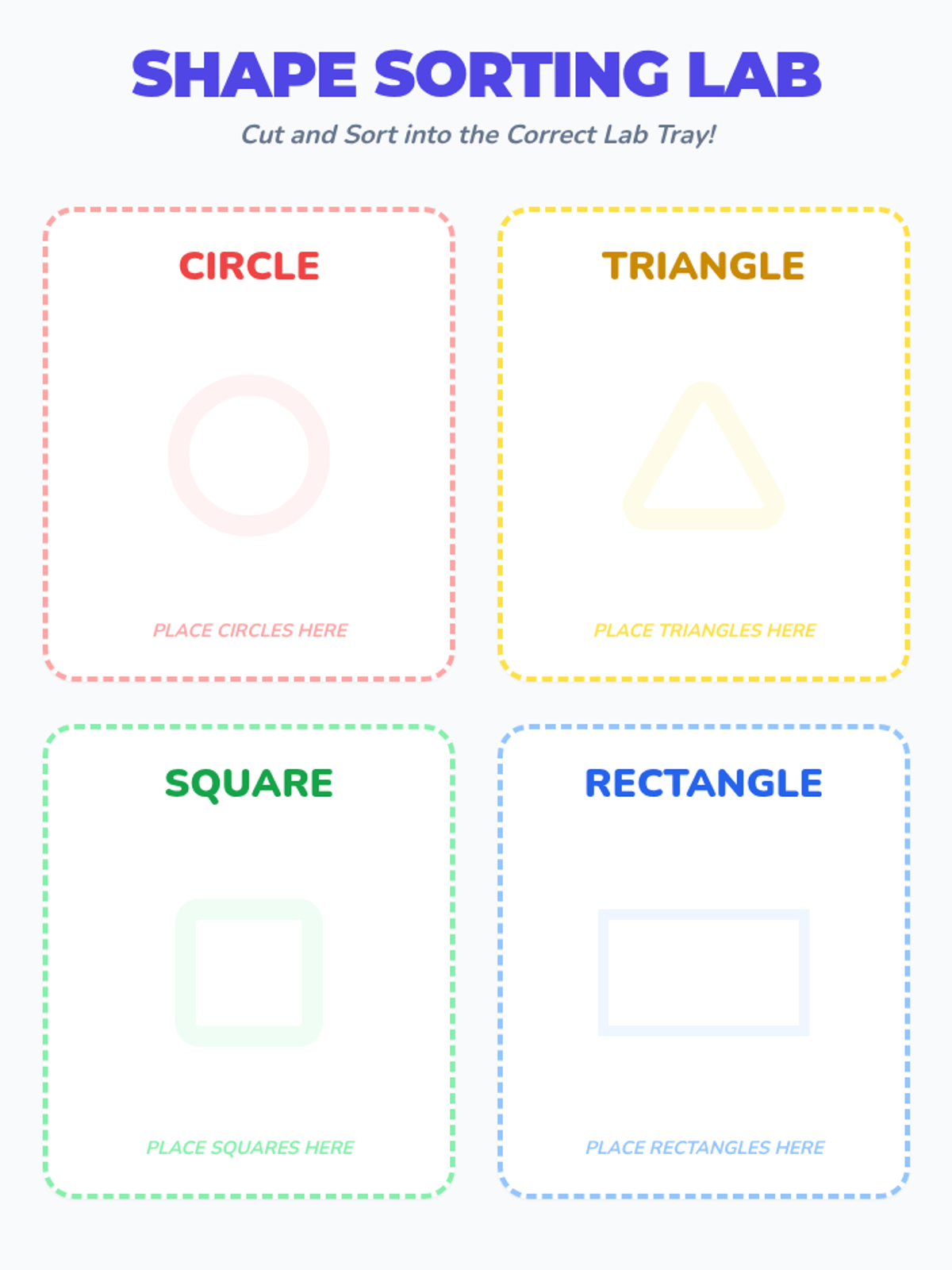
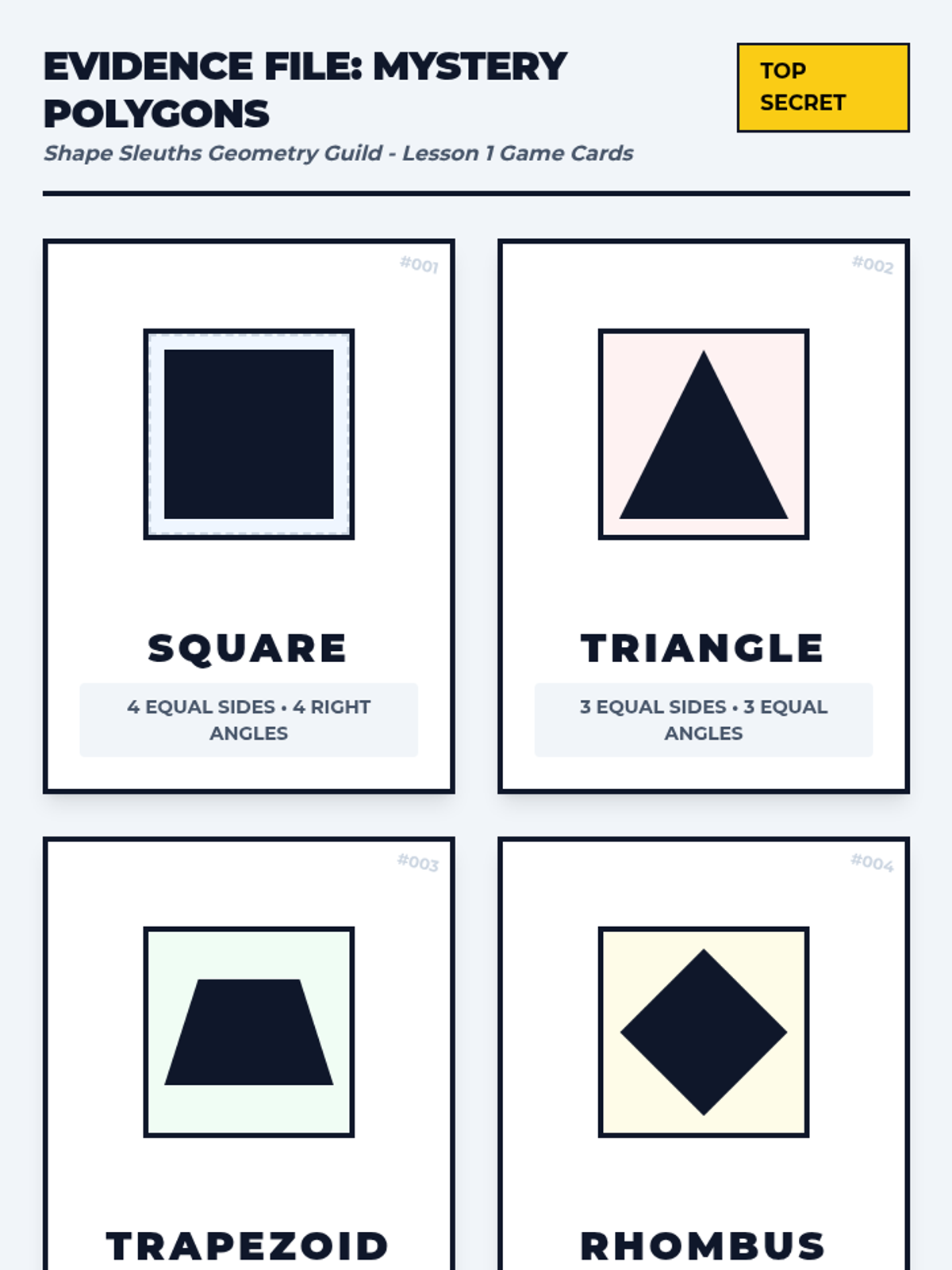
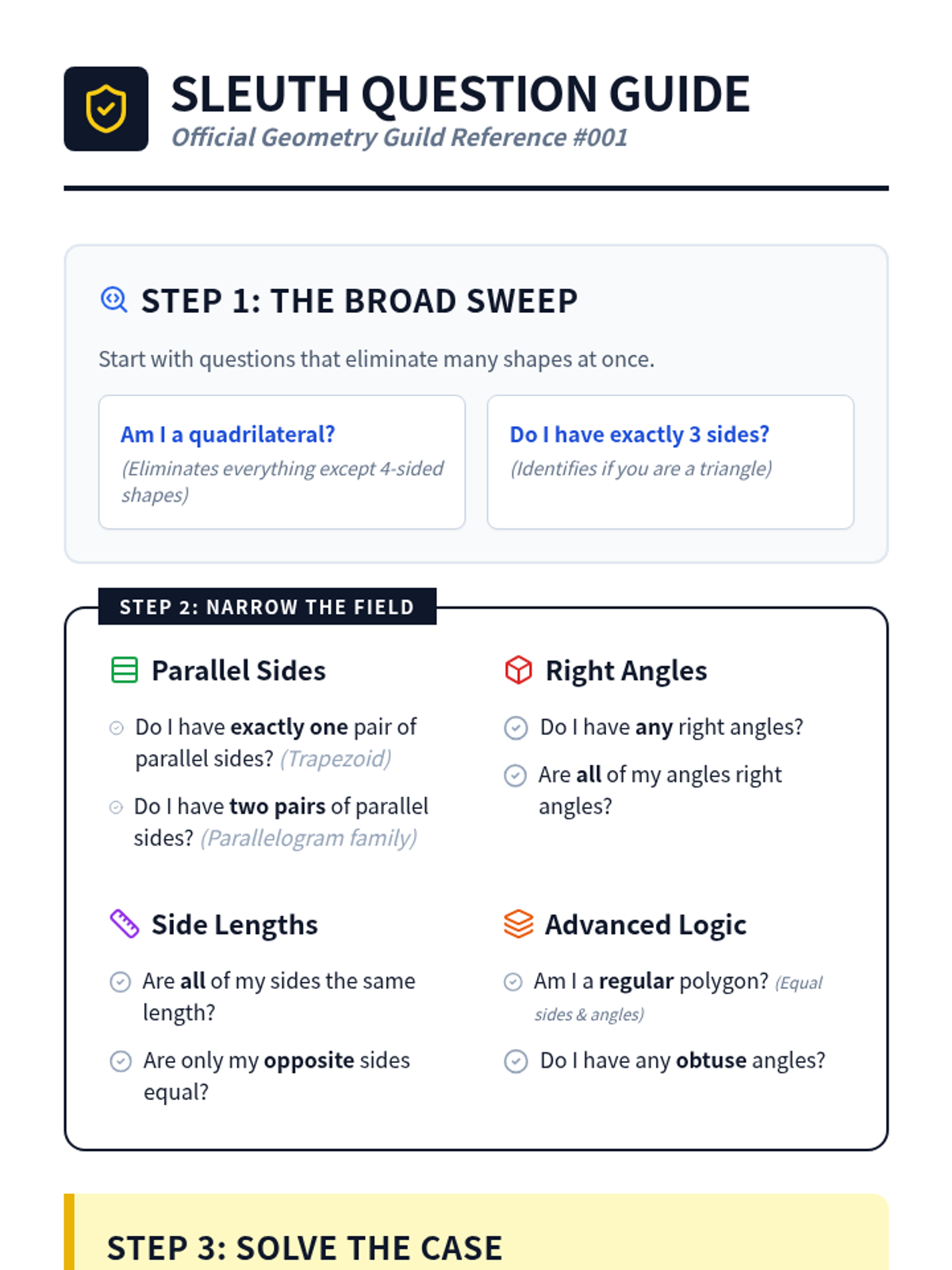
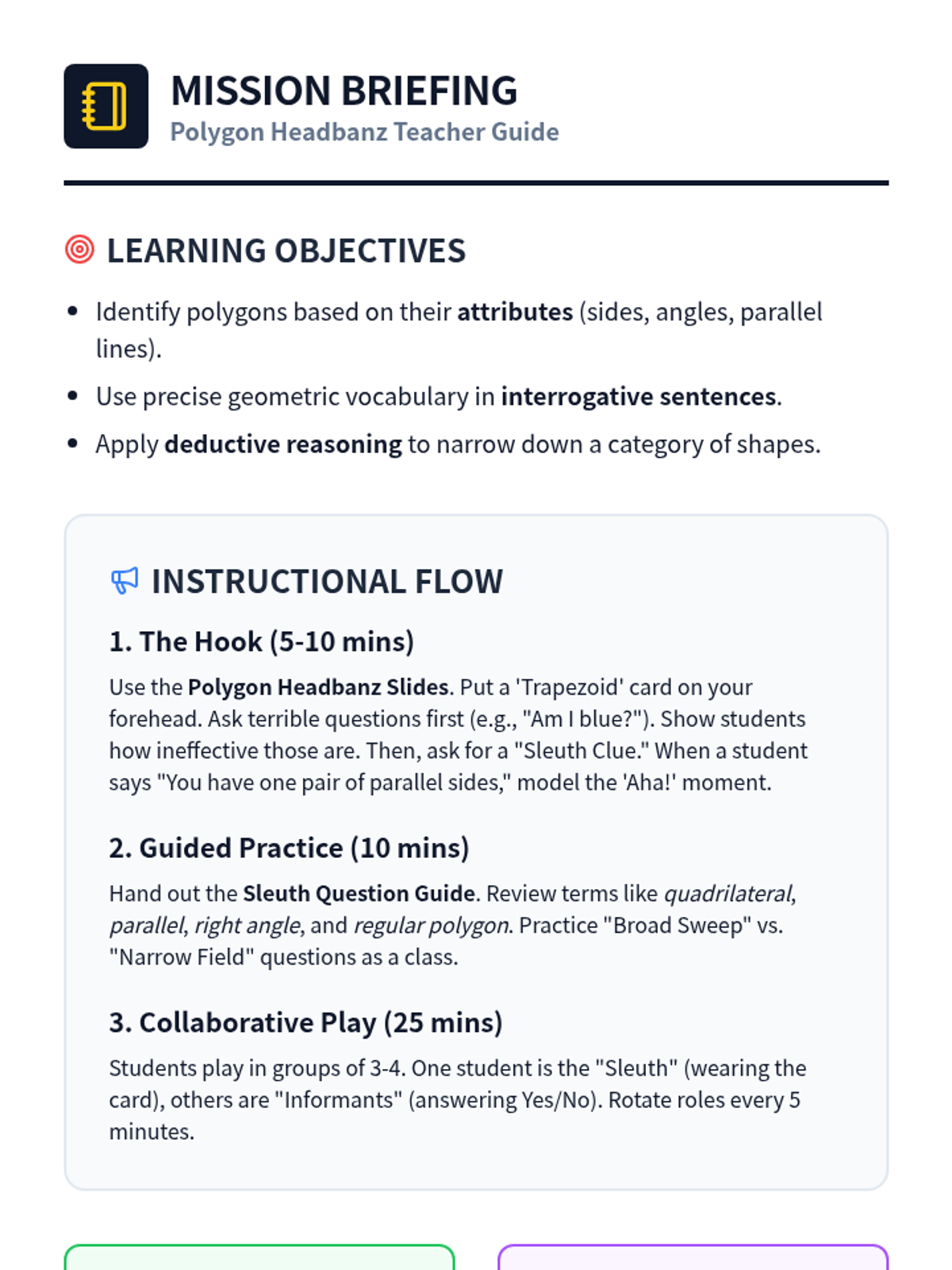
A gamified geometry unit where 3rd grade students become 'Shape Sleuths' to master the classification of 2D figures through strategic play and deductive reasoning. Students progress from attribute identification to complex spatial composition and hierarchical classification.
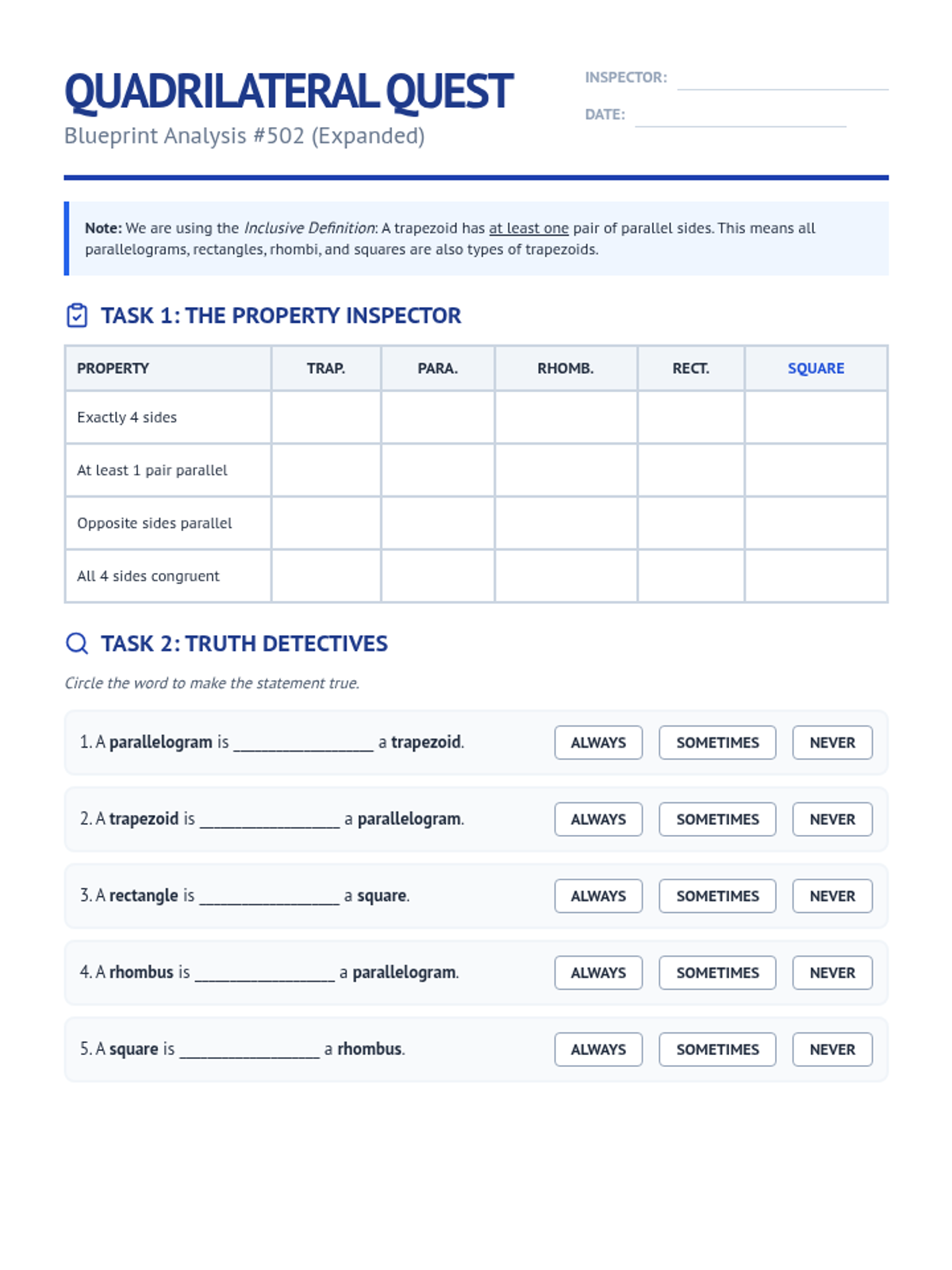
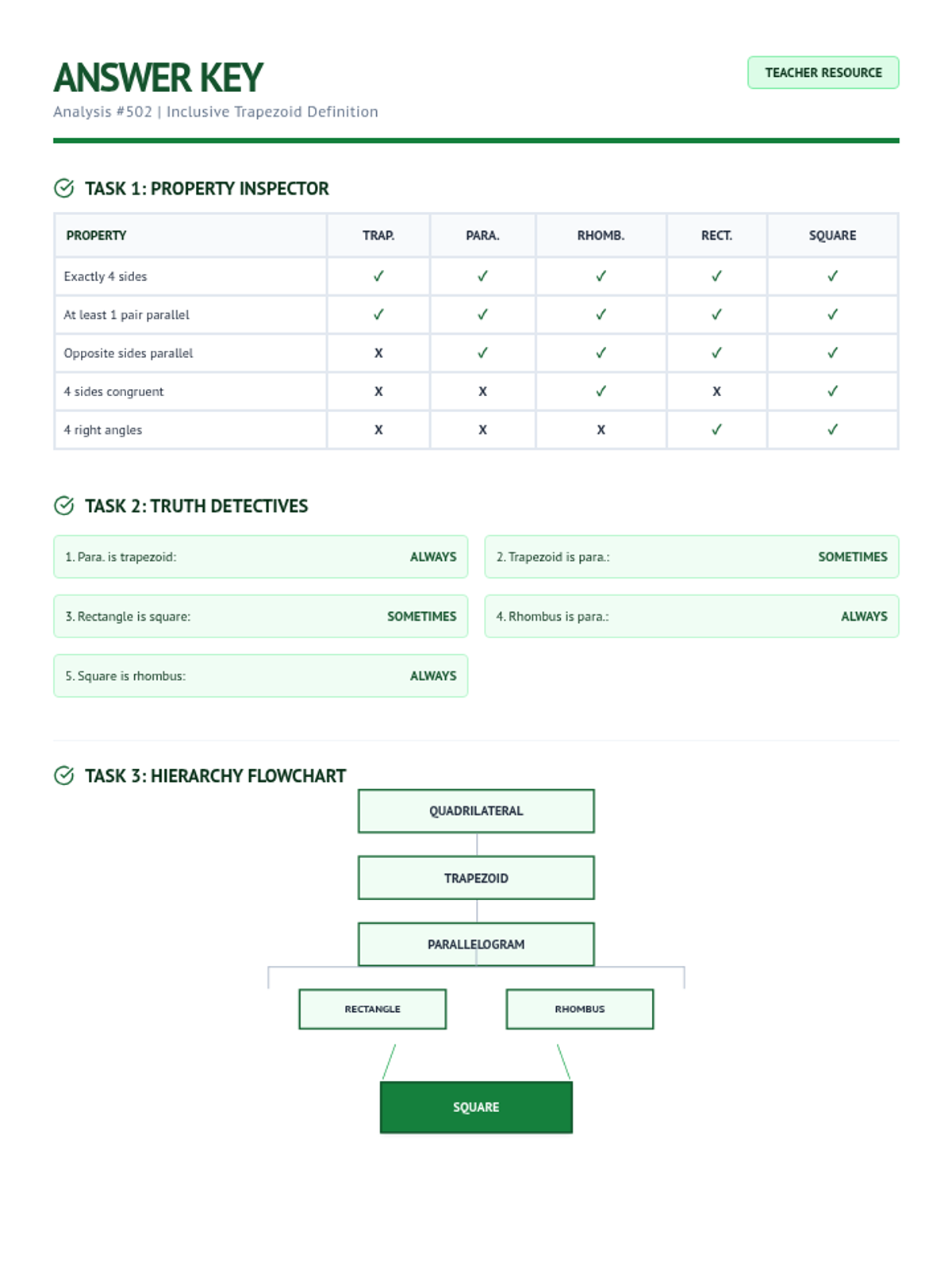
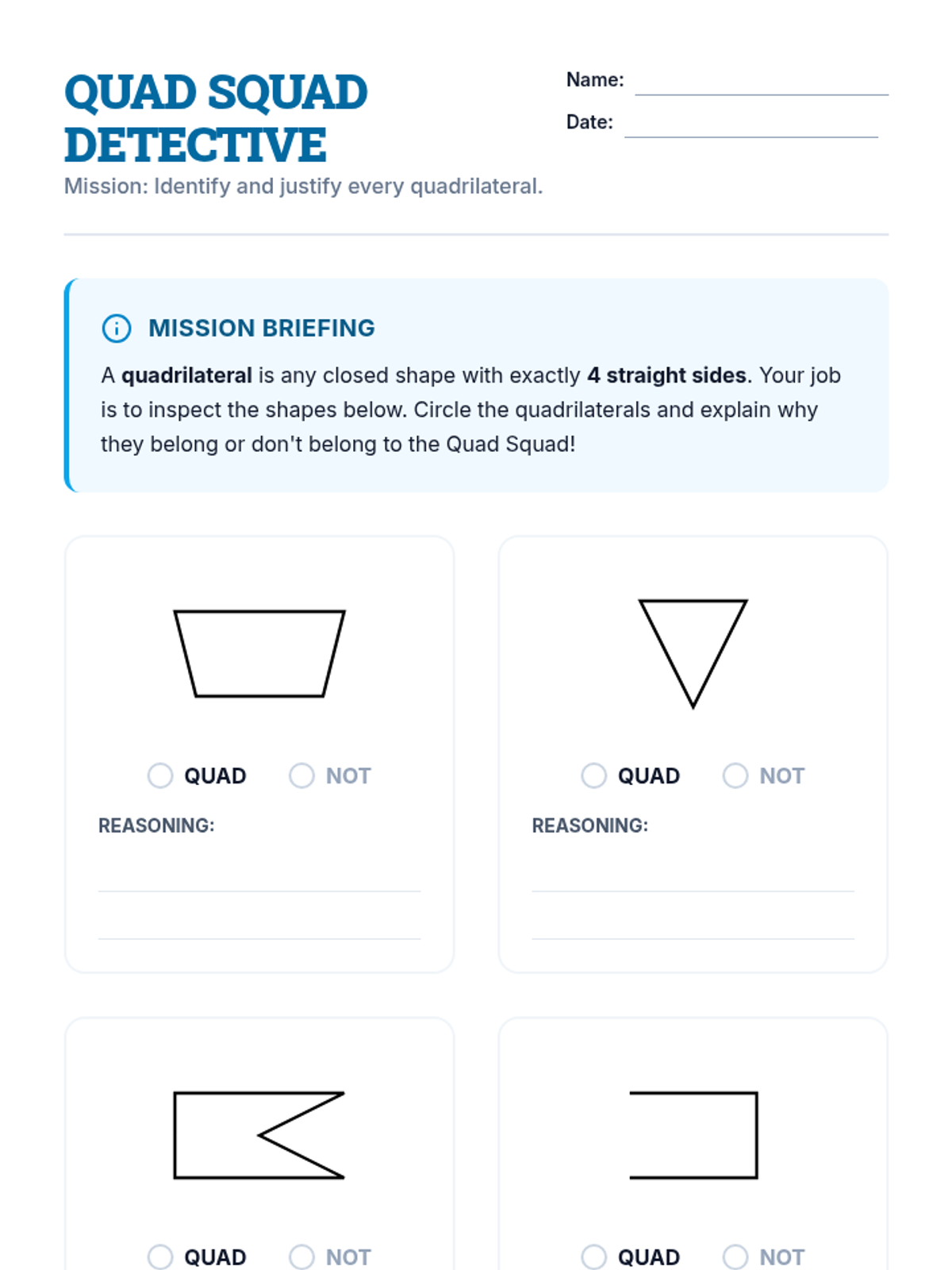
A comprehensive unit on classifying two-dimensional figures based on their properties and understanding the hierarchical relationships between different quadrilaterals.
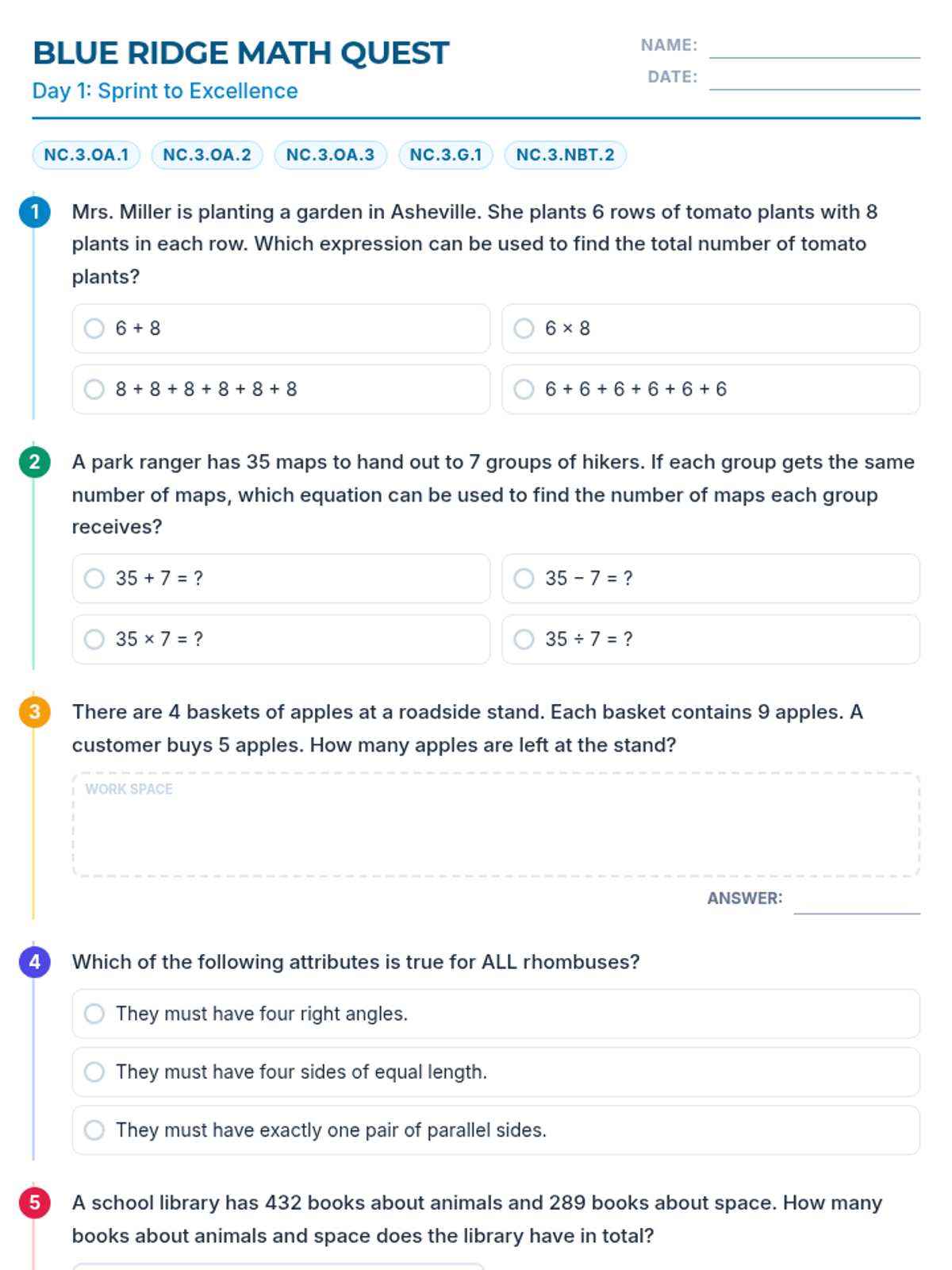
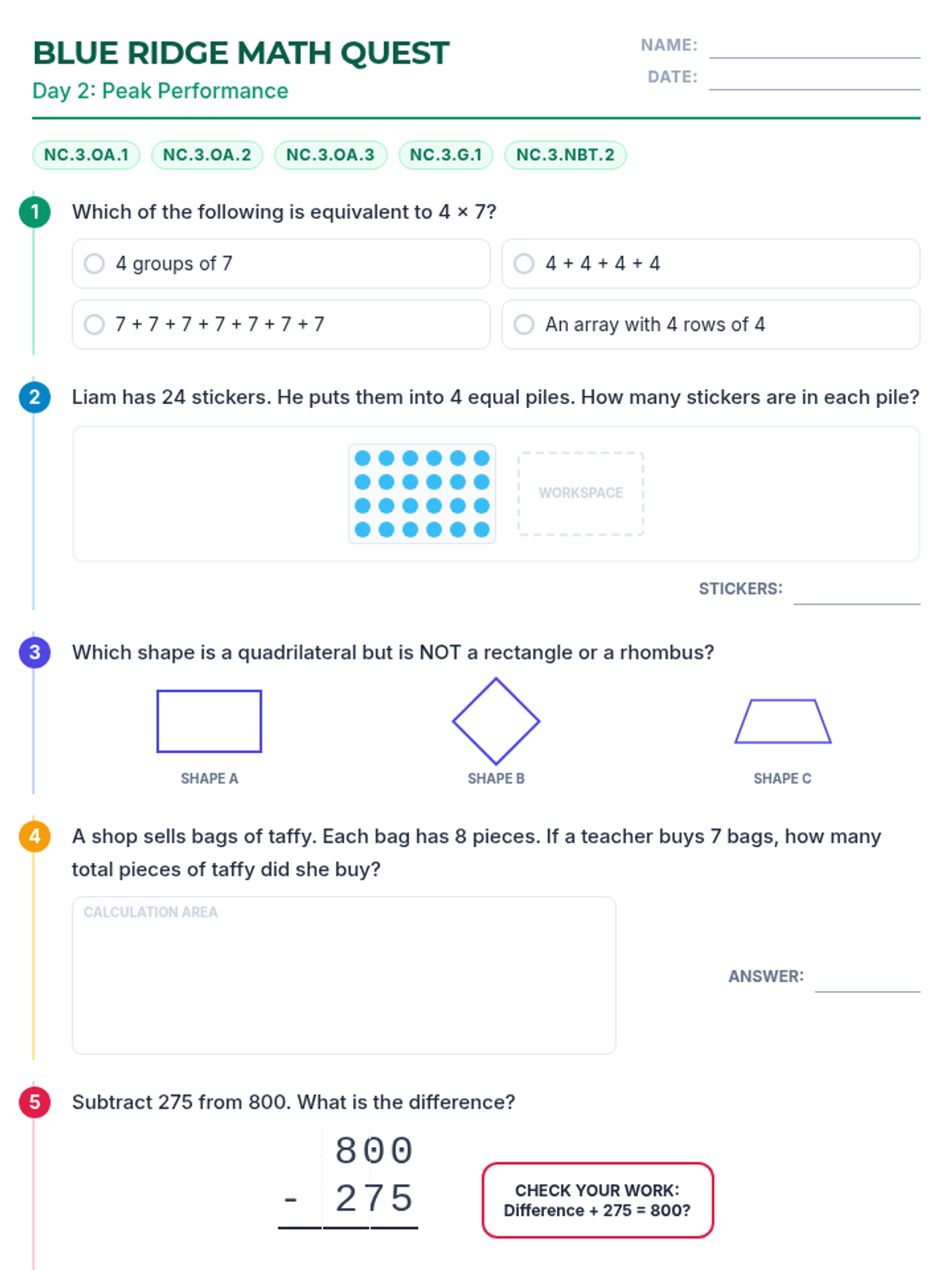
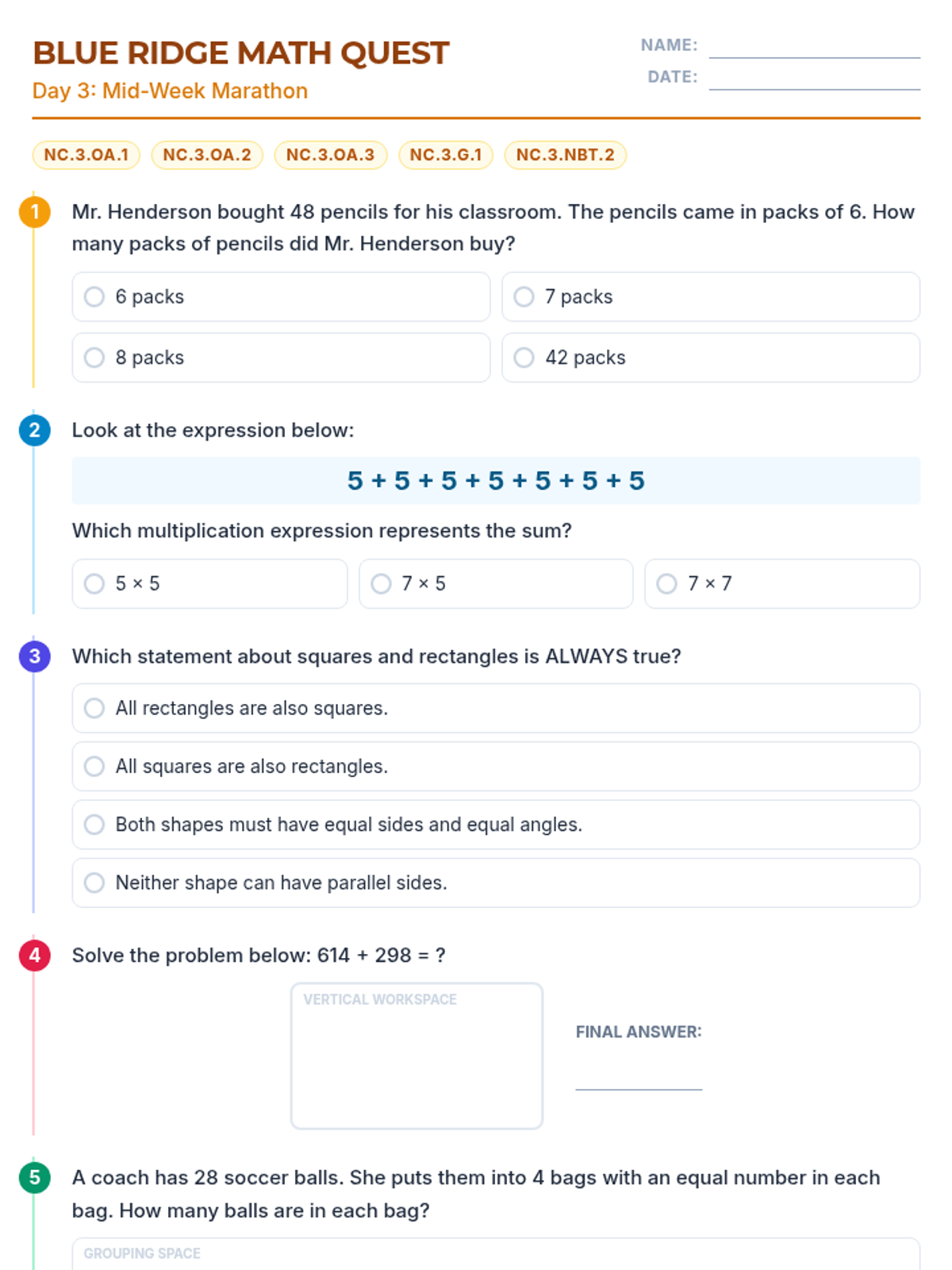
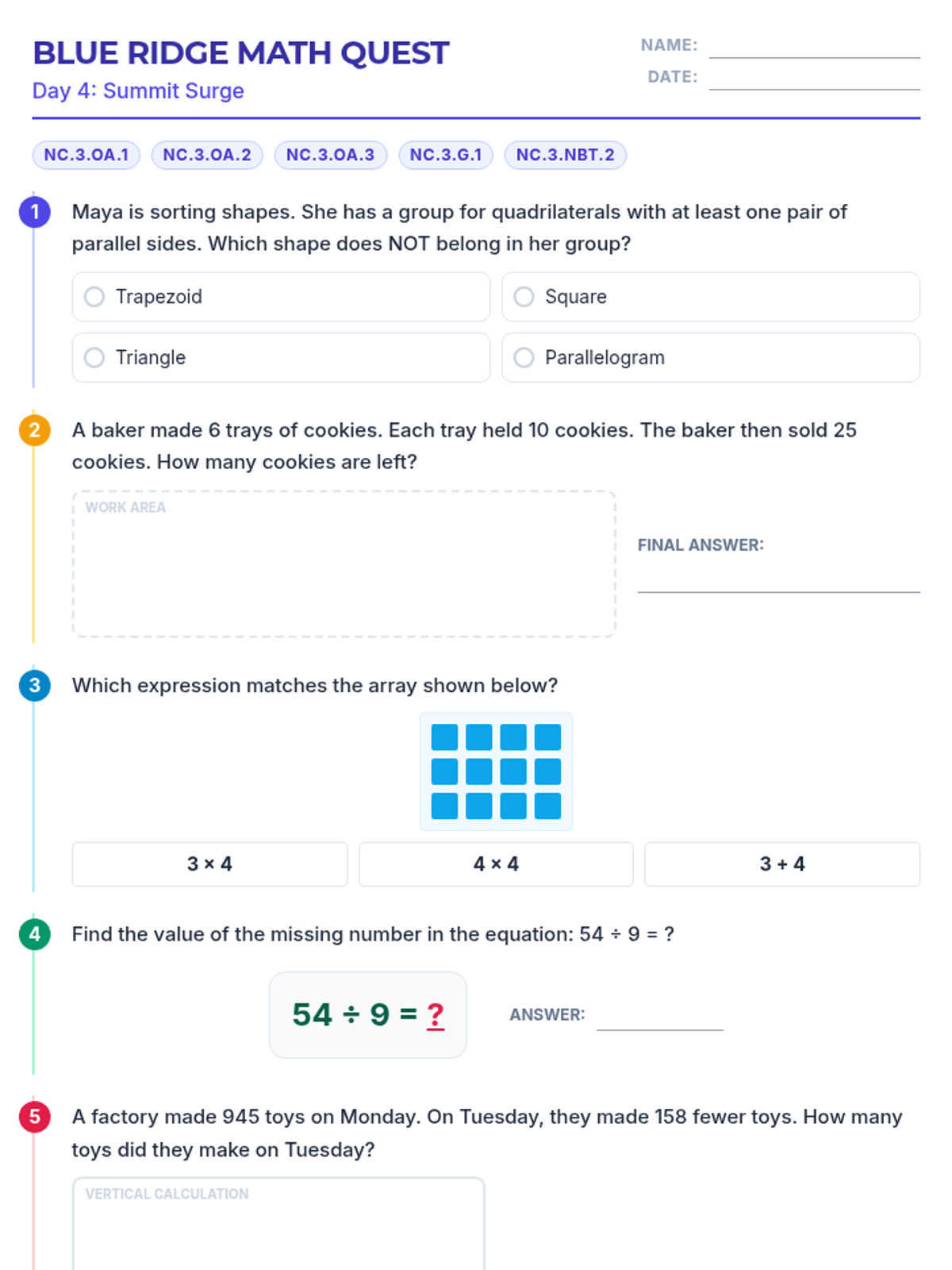
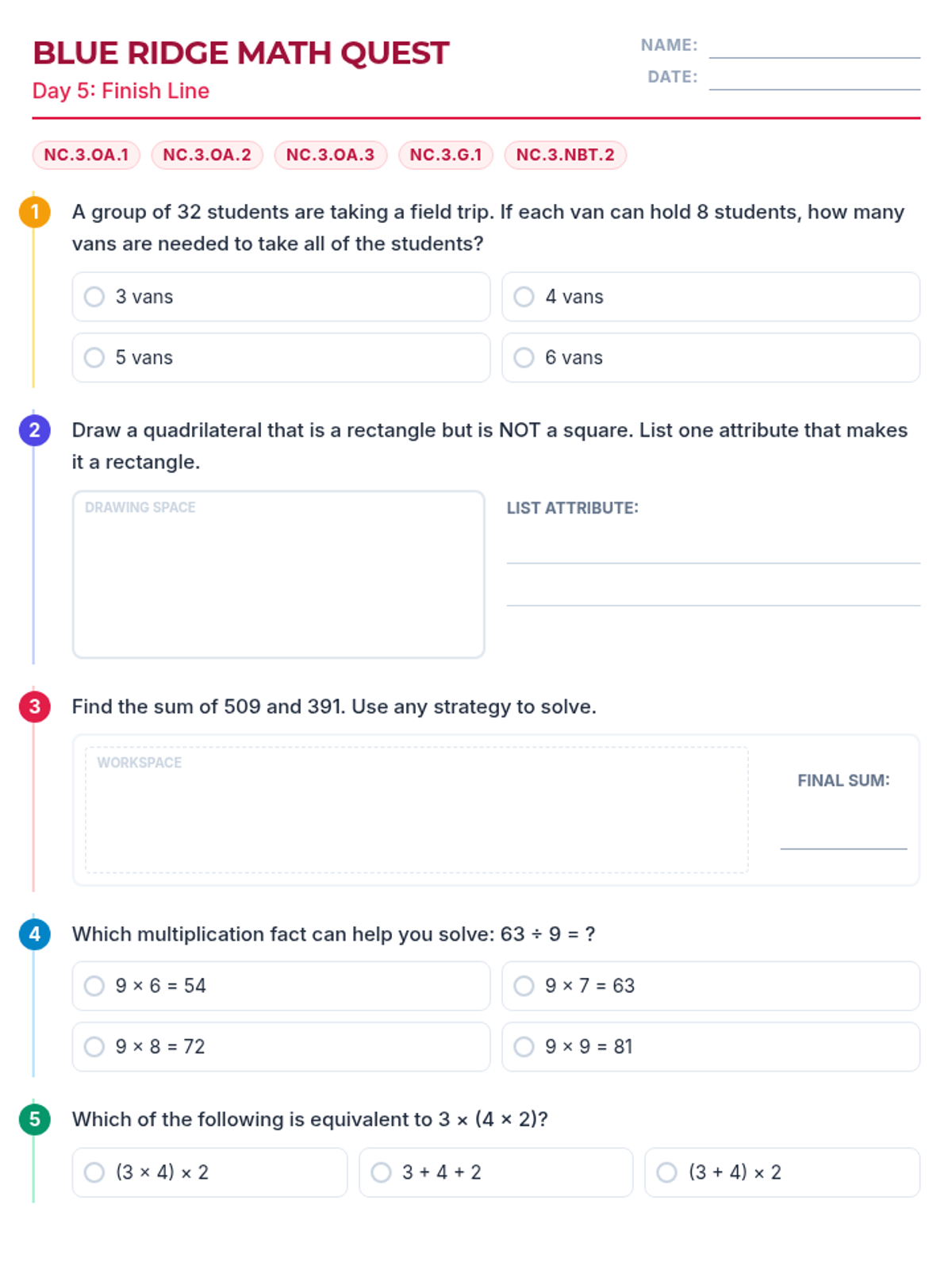
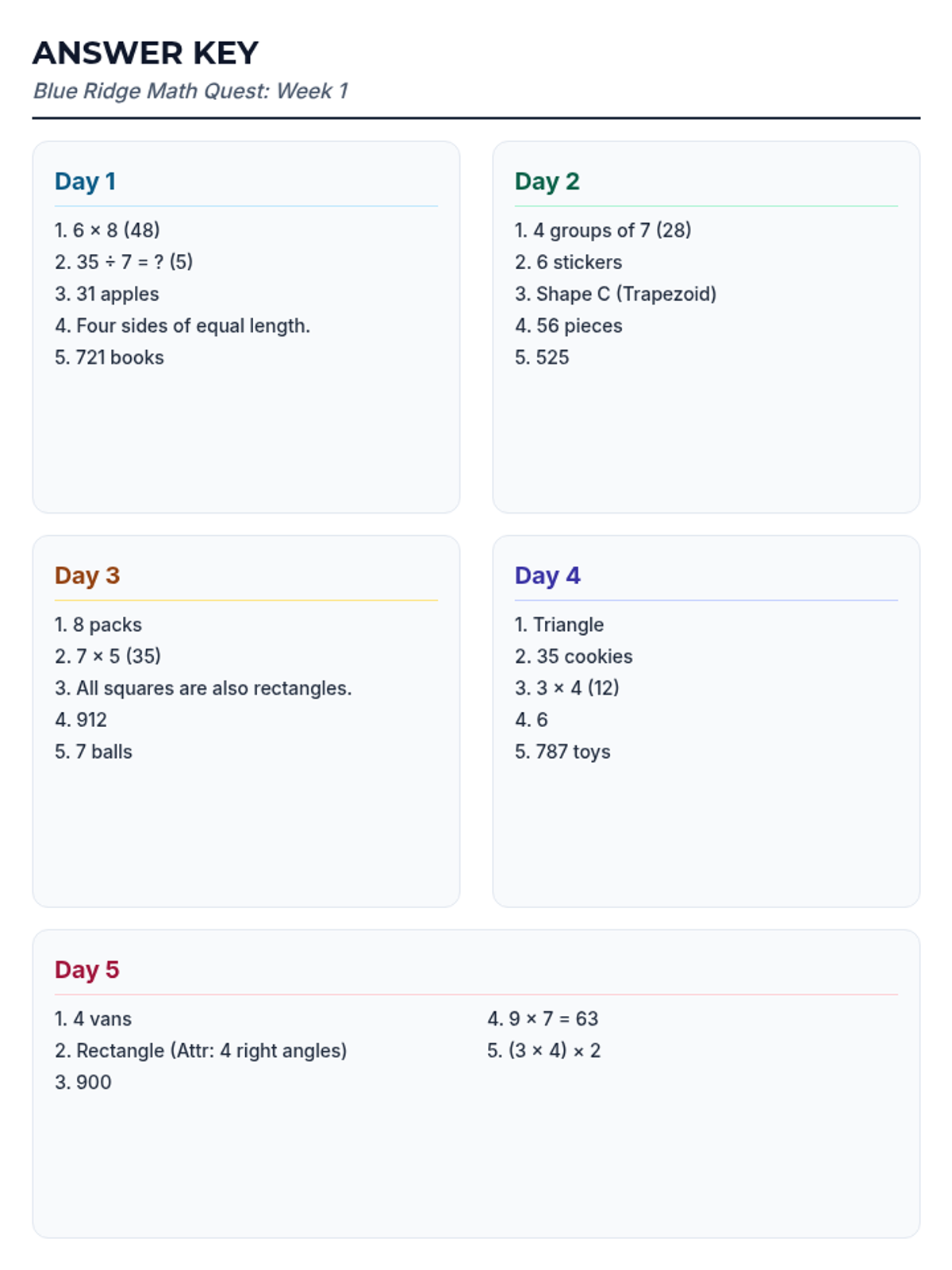
A 5-day math spiral review sequence targeting key 3rd grade North Carolina standards (OA, G, and NBT) to prepare students for the EOG assessment. Each day features high-rigor, test-prep style questions focusing on conceptual understanding and problem-solving.
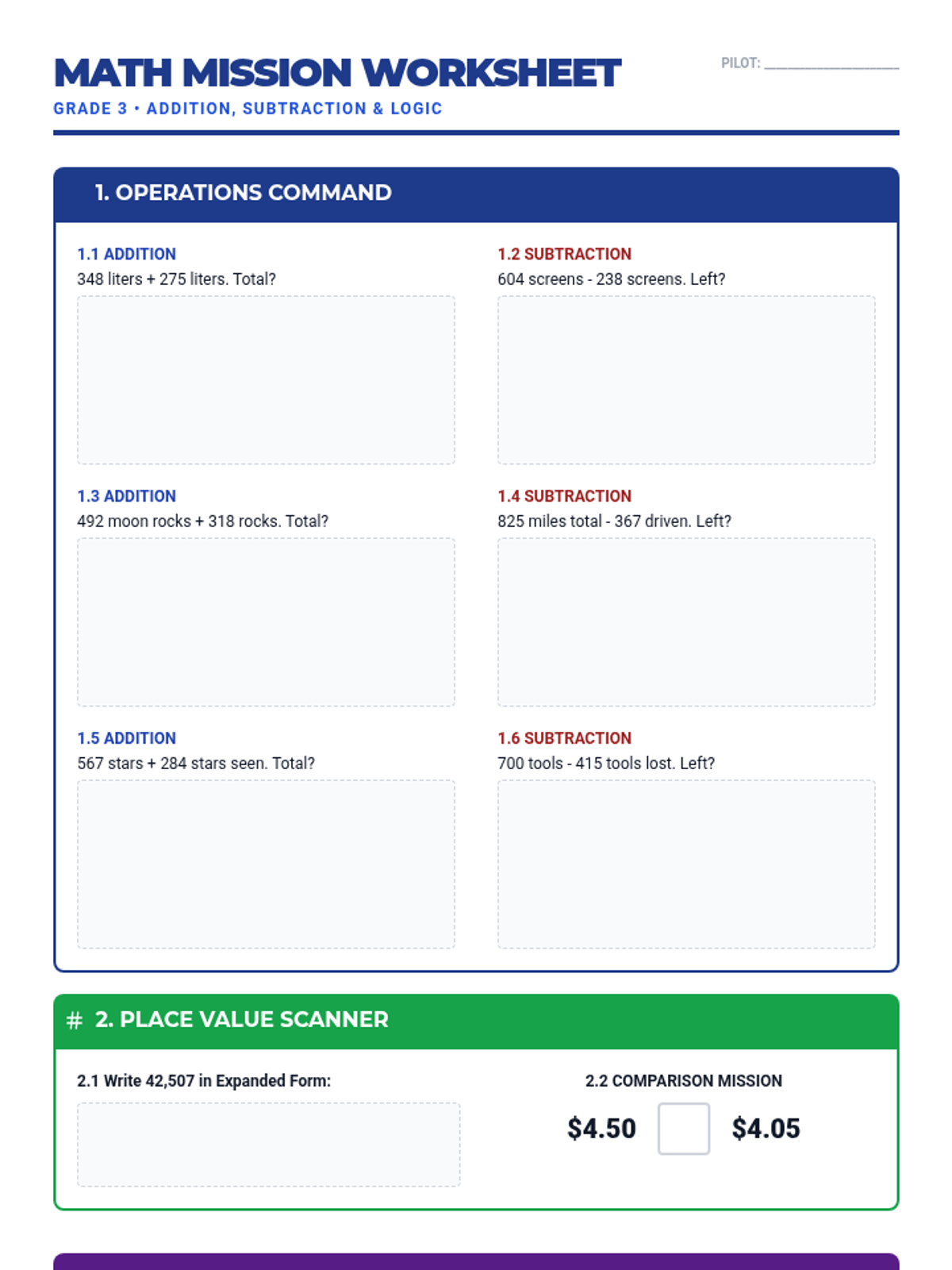
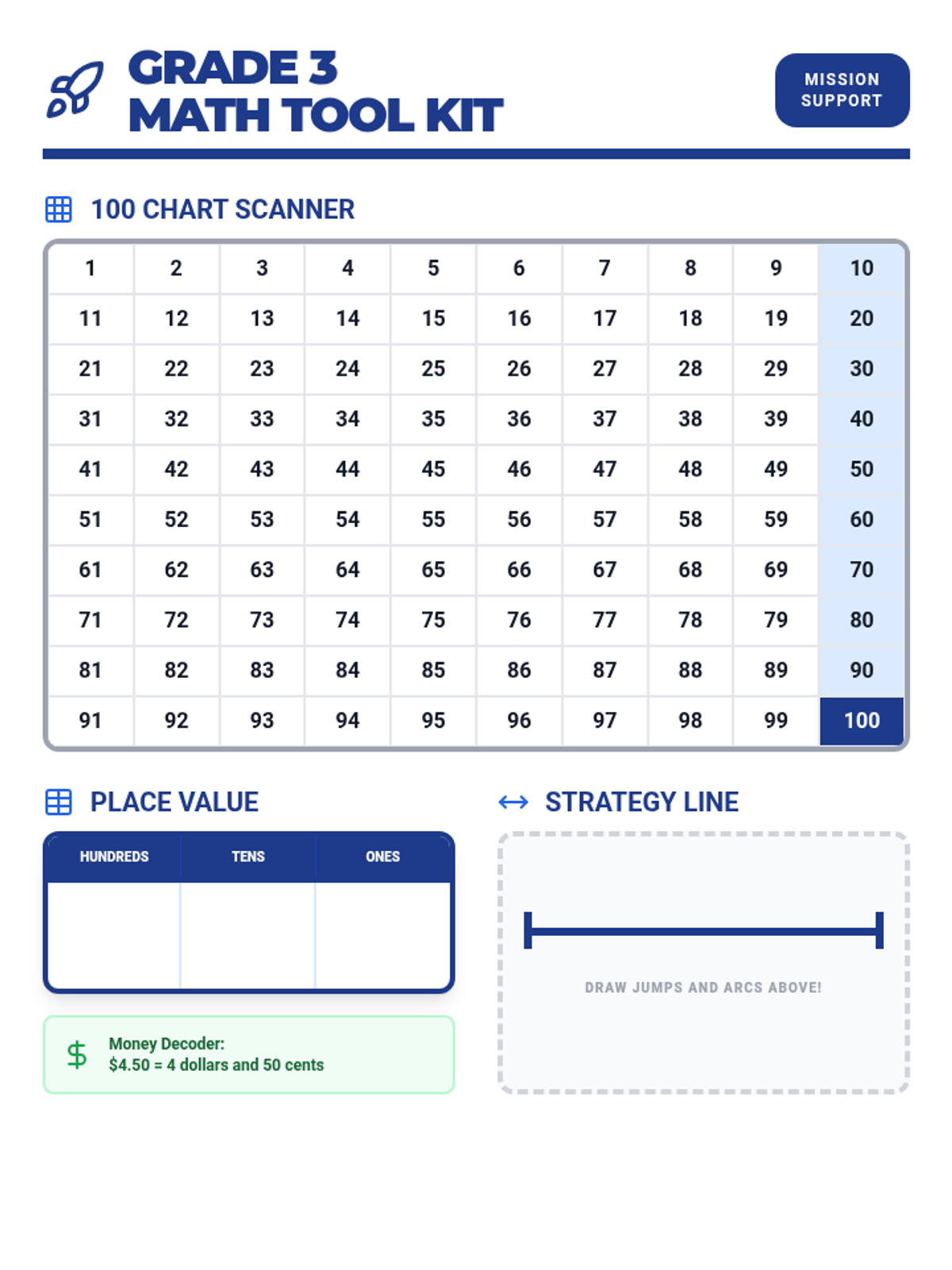
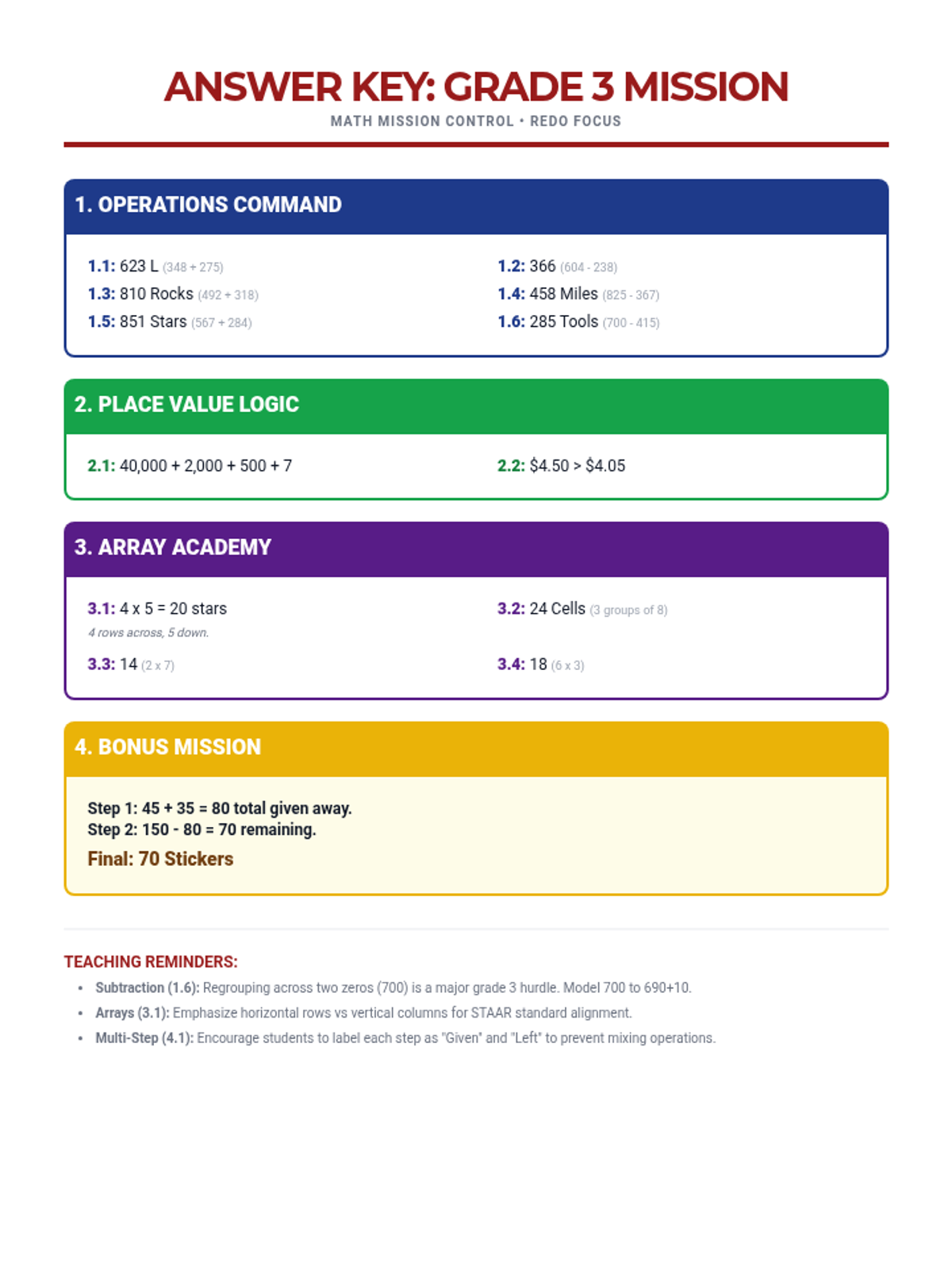
A comprehensive review sequence designed to prepare students for the math STAAR assessment, focusing on addition/subtraction, geometry, place value with decimals, and multiplication arrays.
A comprehensive collection of STAAR-aligned practice packets for 3rd-5th grade Math, RLA, and 5th grade Science, designed to build confidence and mastery through authentic test-style questions.
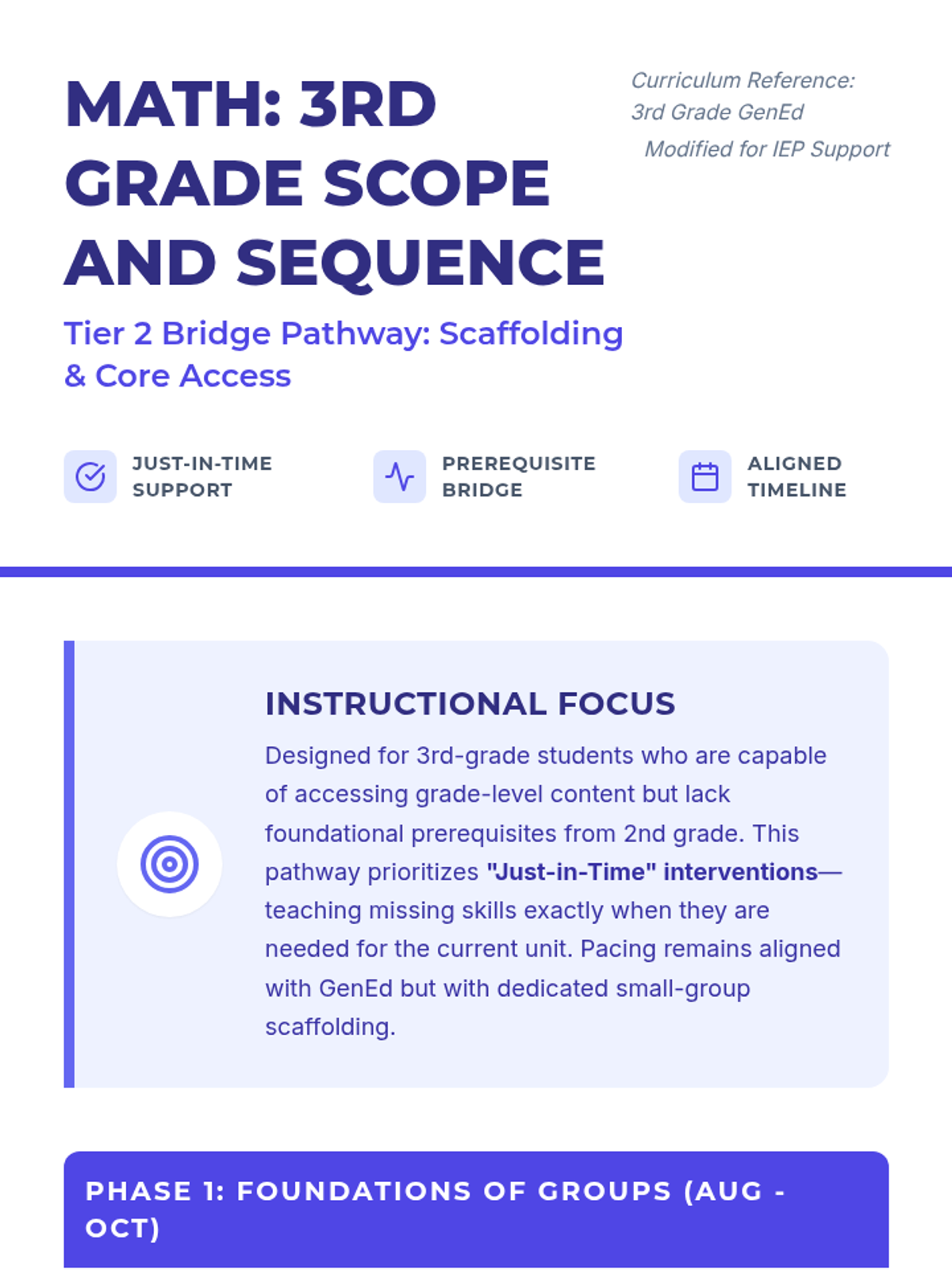
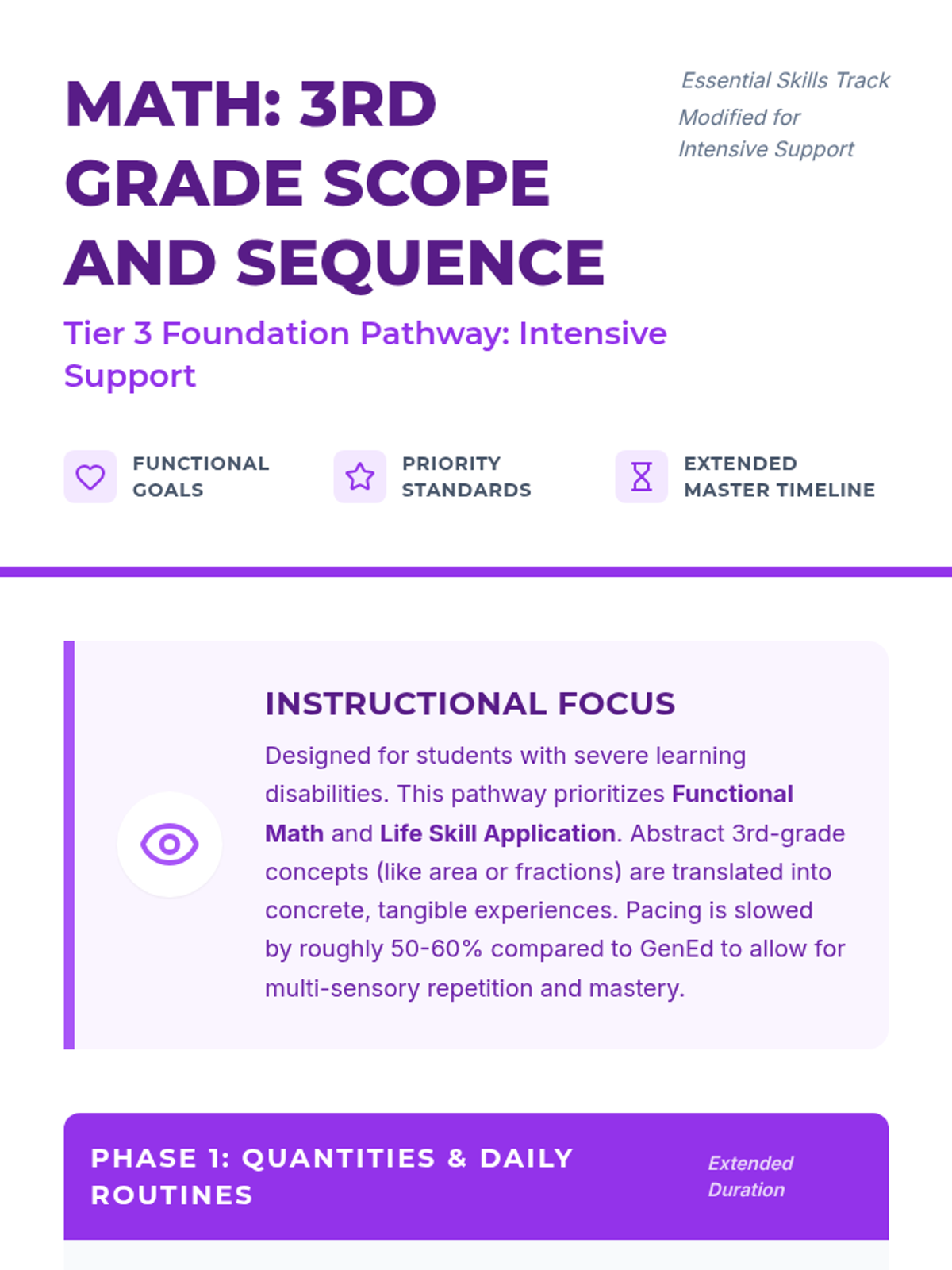
A collection of modified math scope and sequence documents for 3rd grade, tailored for Tier 2 and Tier 3 intervention pathways. These documents adapt grade-level standards into accessible, functional, and scaffolded learning goals.
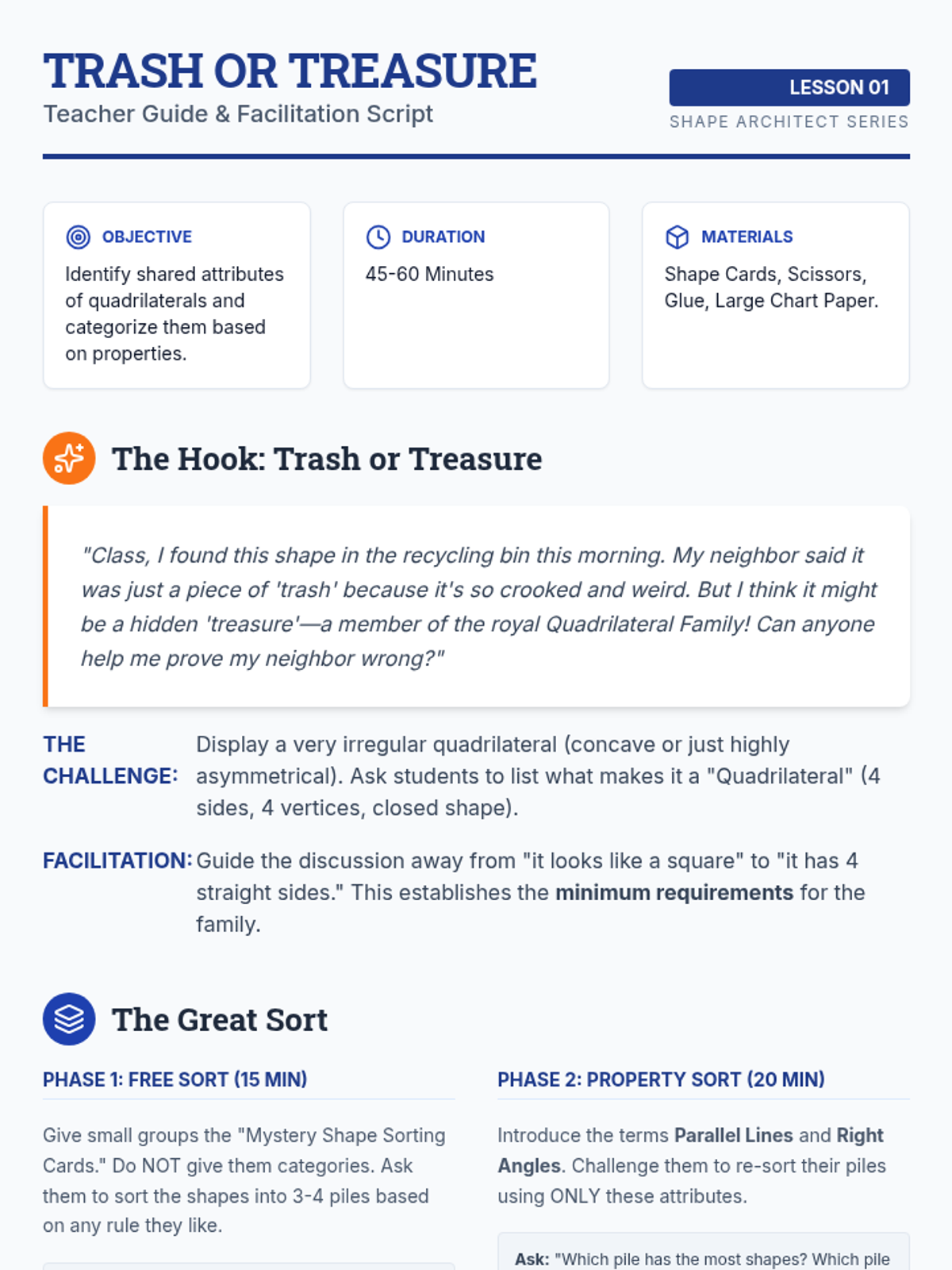
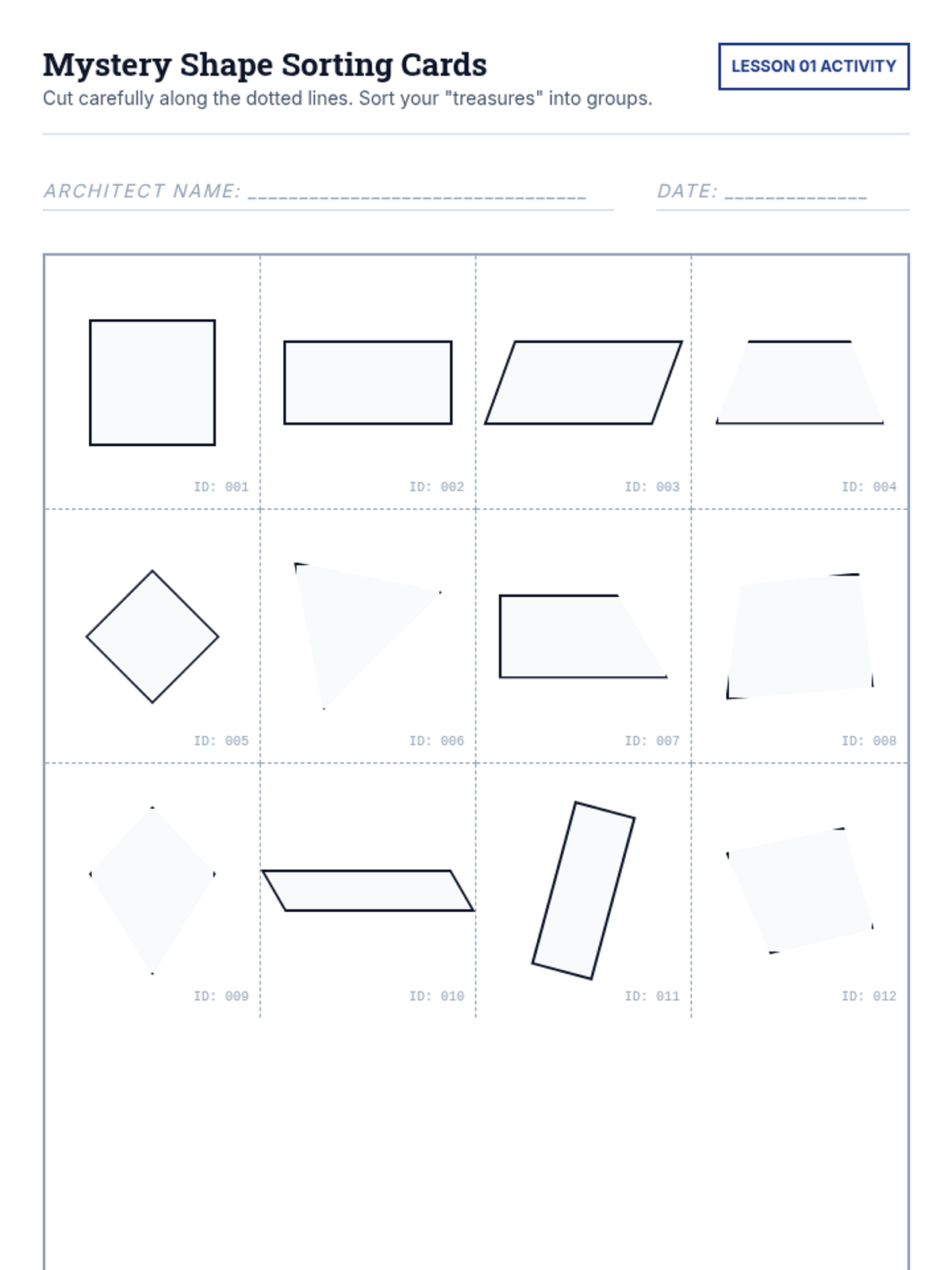
This sequence guides third graders through the hierarchical classification of quadrilaterals. Students move from basic sorting to understanding complex relationships, such as why a square is both a rectangle and a rhombus, using hands-on sorting, Venn diagrams, and a final design project.
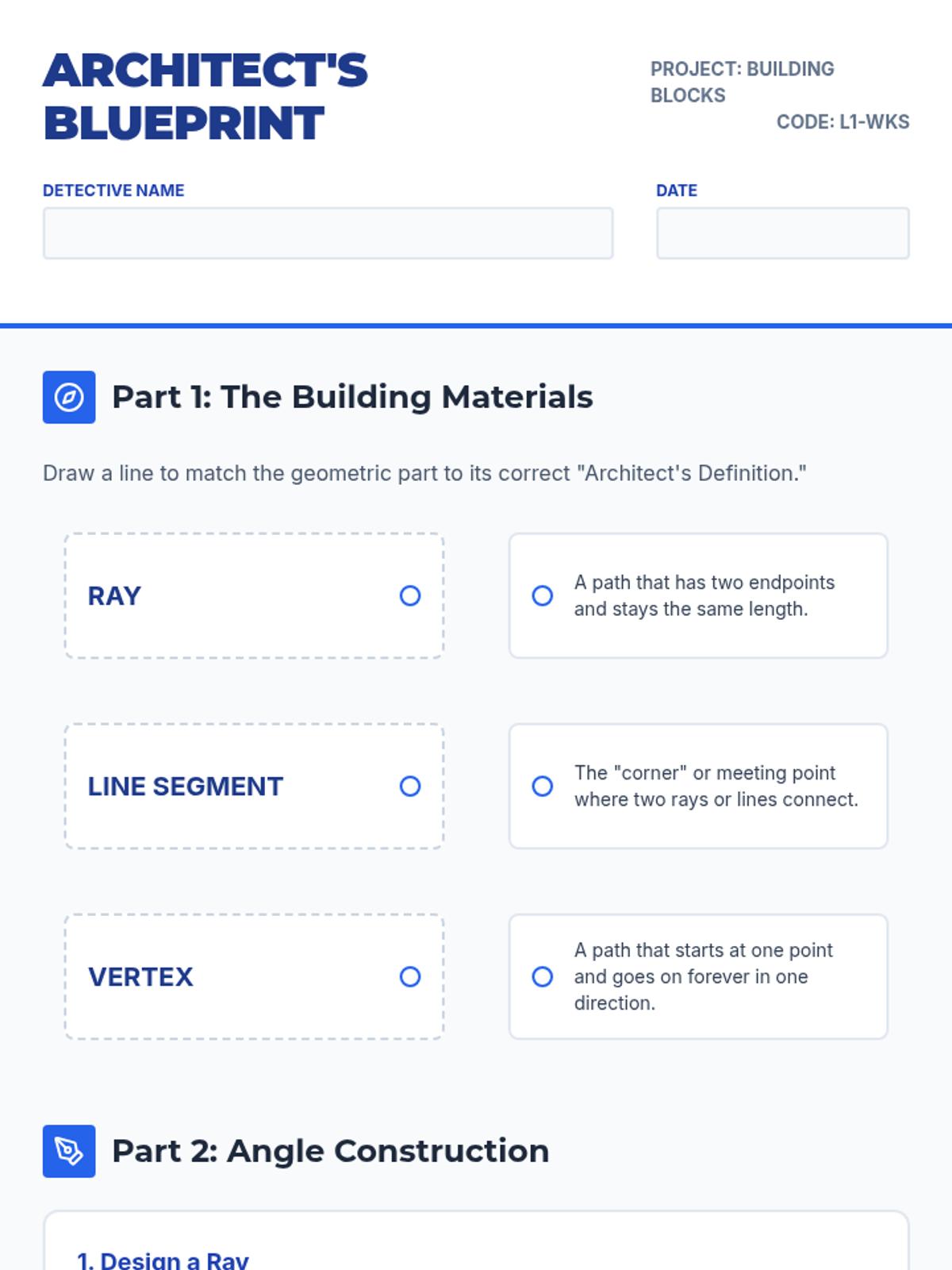
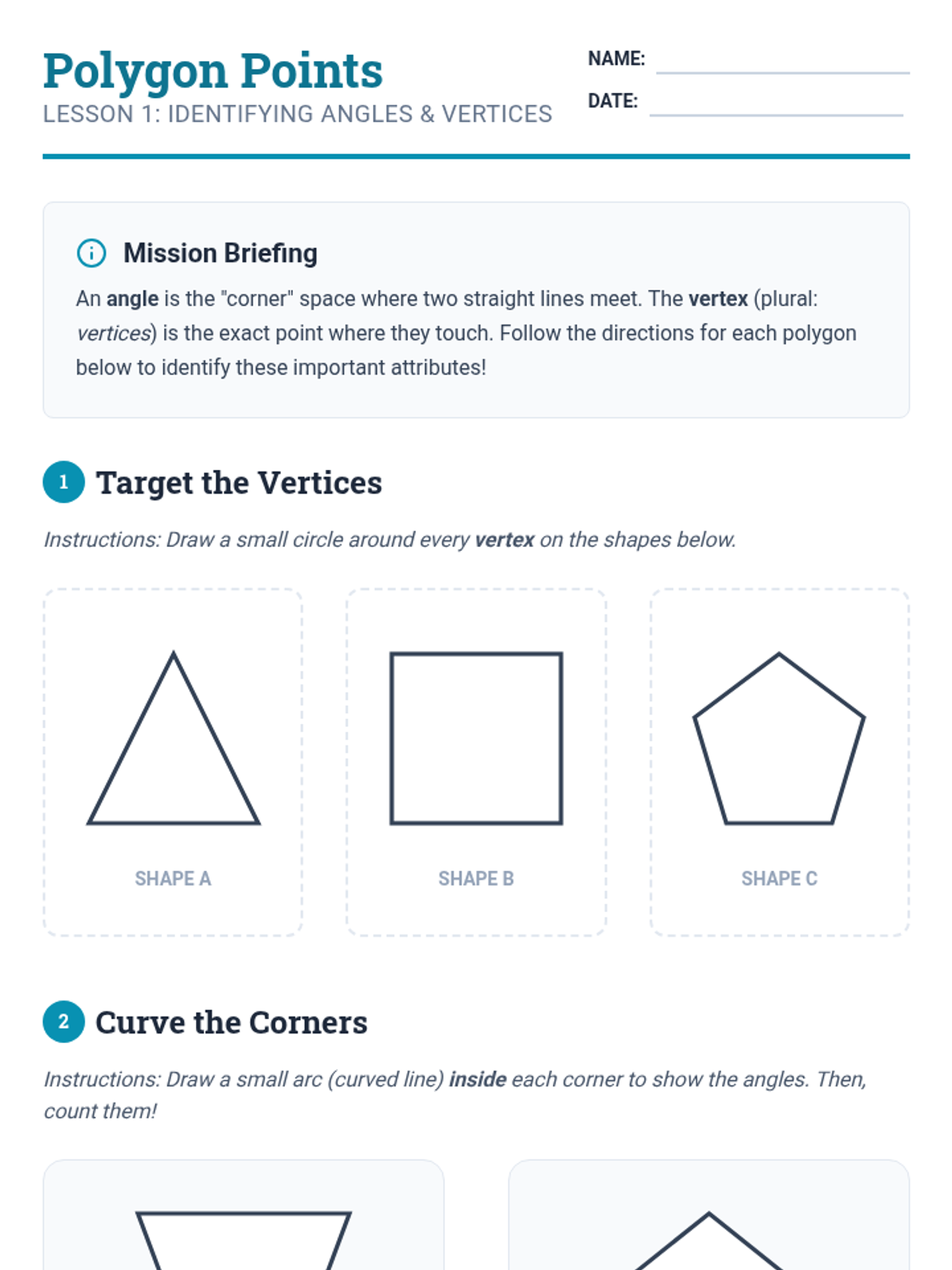
A hands-on geometry sequence where students explore the building blocks of angles, identify right angles in their environment, and classify angles as acute, obtuse, or straight through inquiry and shape analysis.
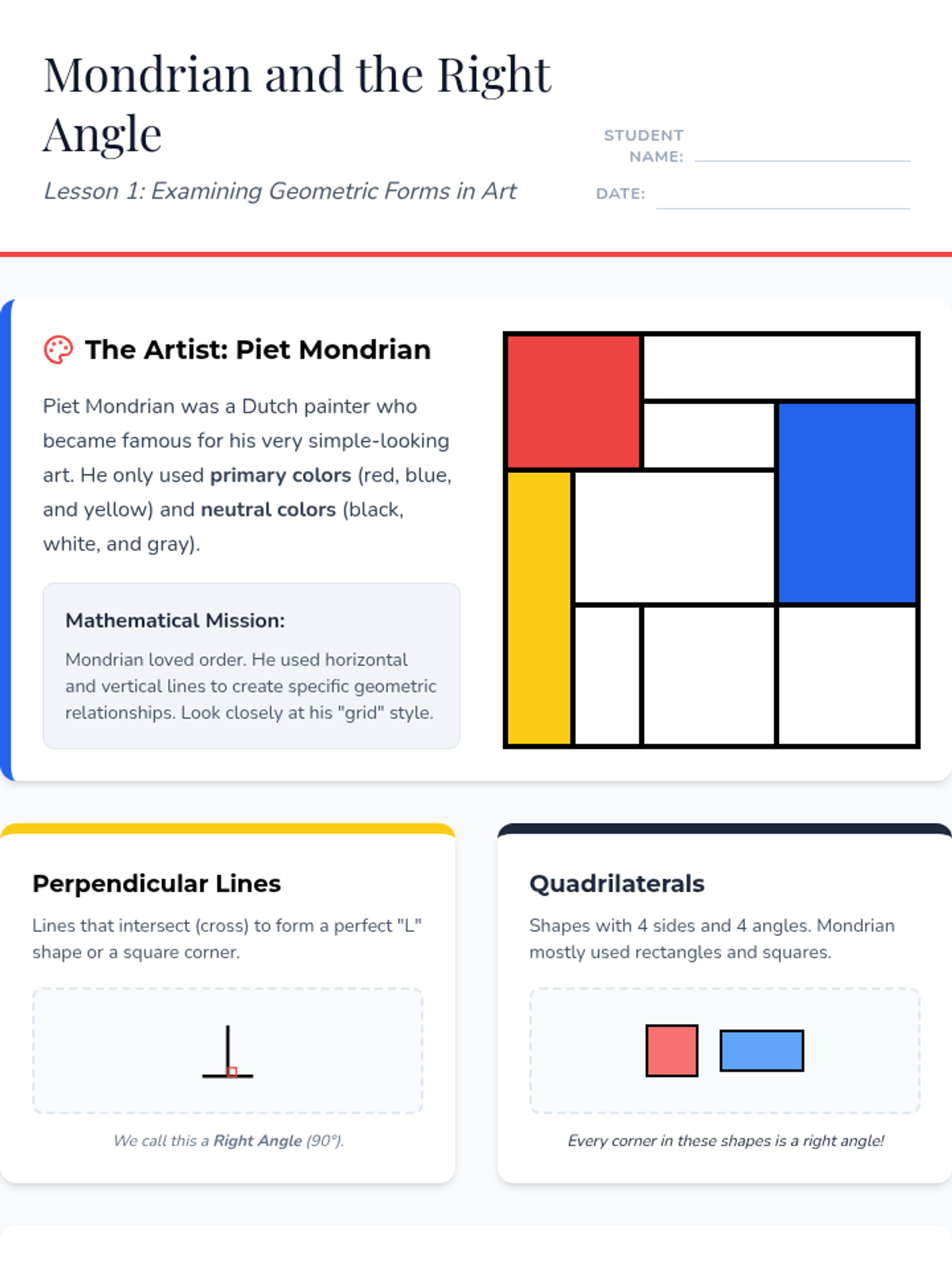
A geometry sequence for 3rd grade that explores 2D shapes and line attributes through the works of abstract artists like Mondrian and Kandinsky, culminating in an original art project and peer critique.
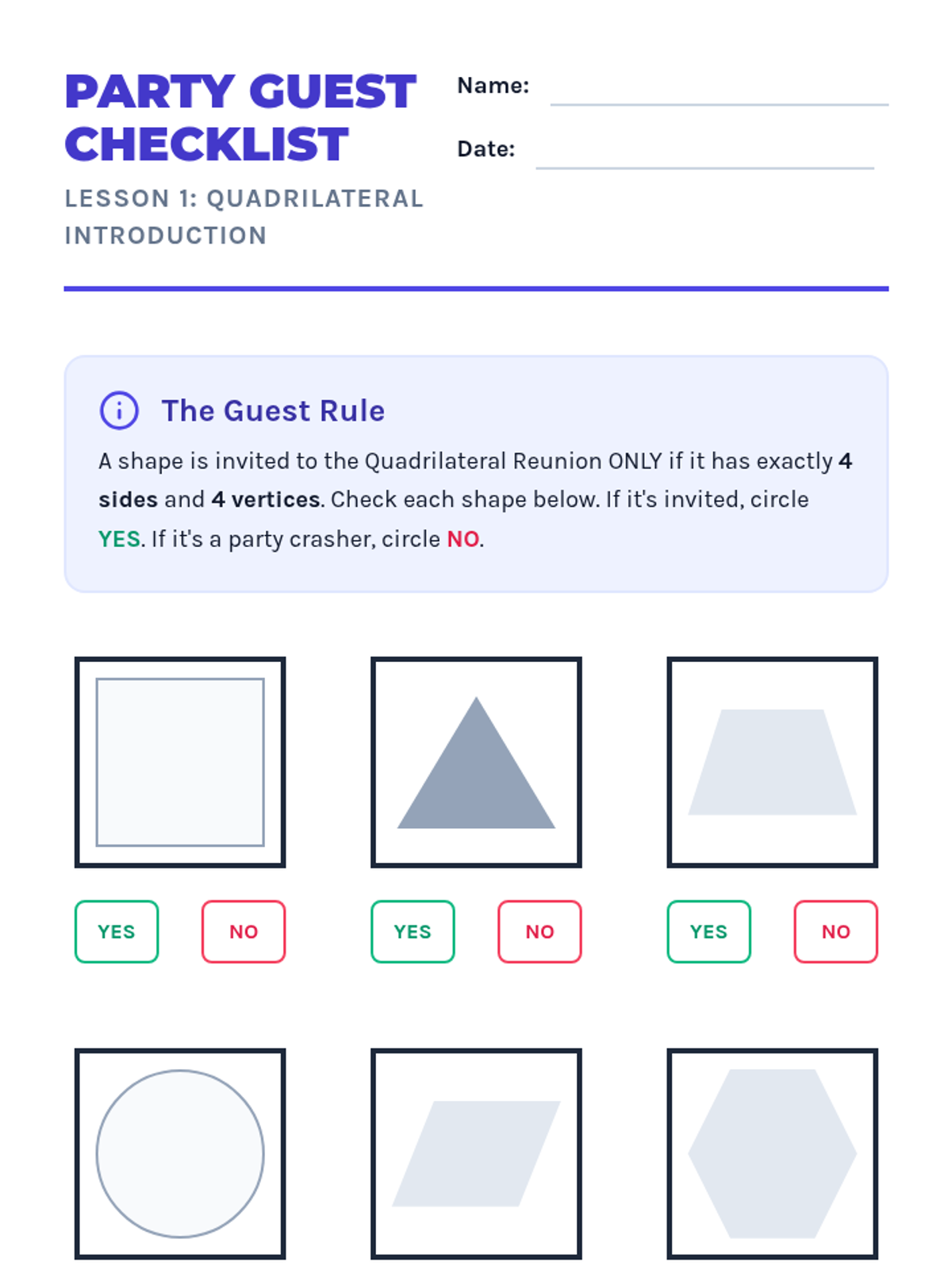
This workshop-style sequence focuses intensively on the hierarchical classification of quadrilaterals, a key third-grade standard. Students move from recognizing generic four-sided figures to distinguishing between rhombuses, rectangles, squares, parallelograms, and trapezoids based on shared attributes.
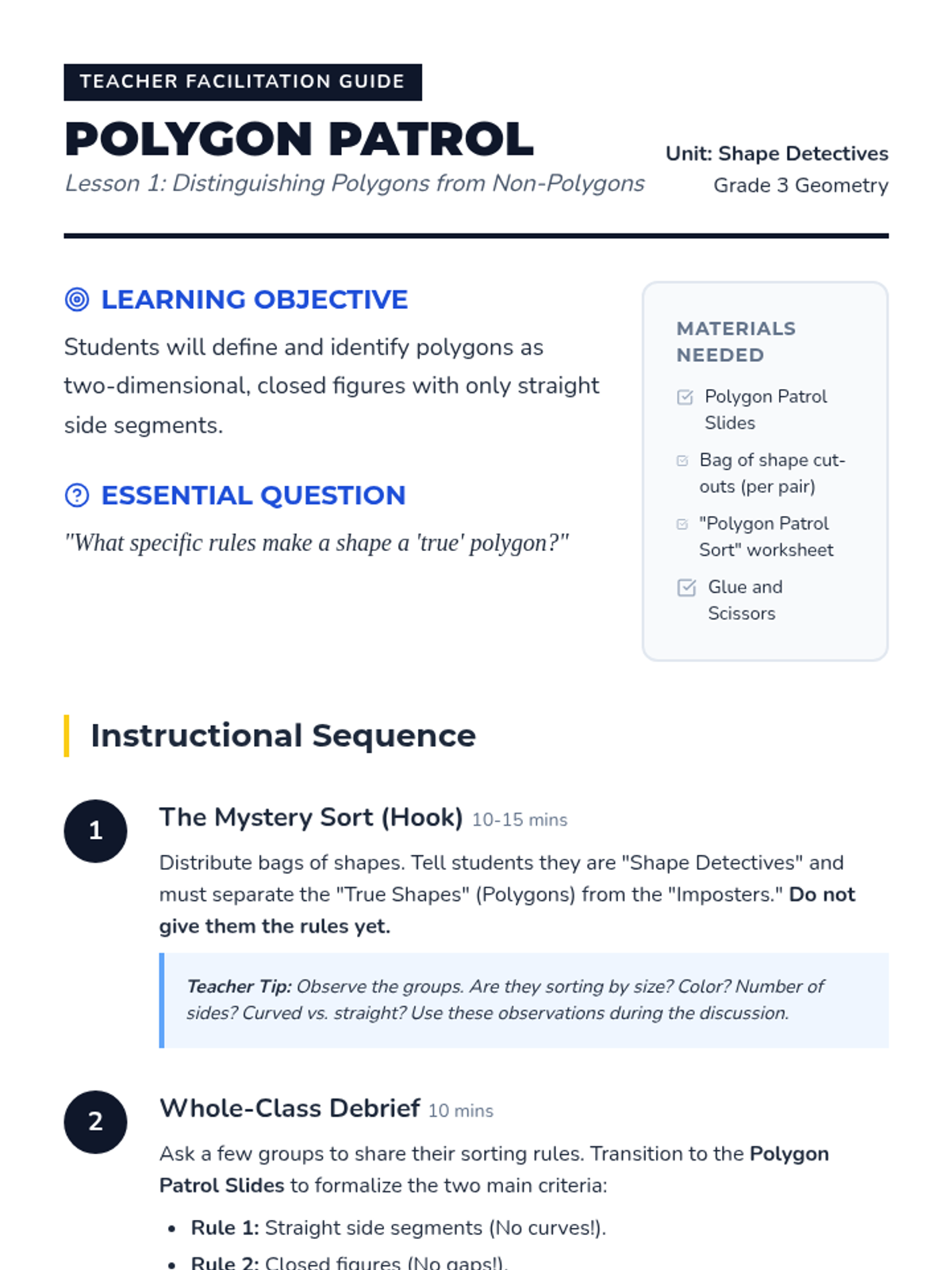
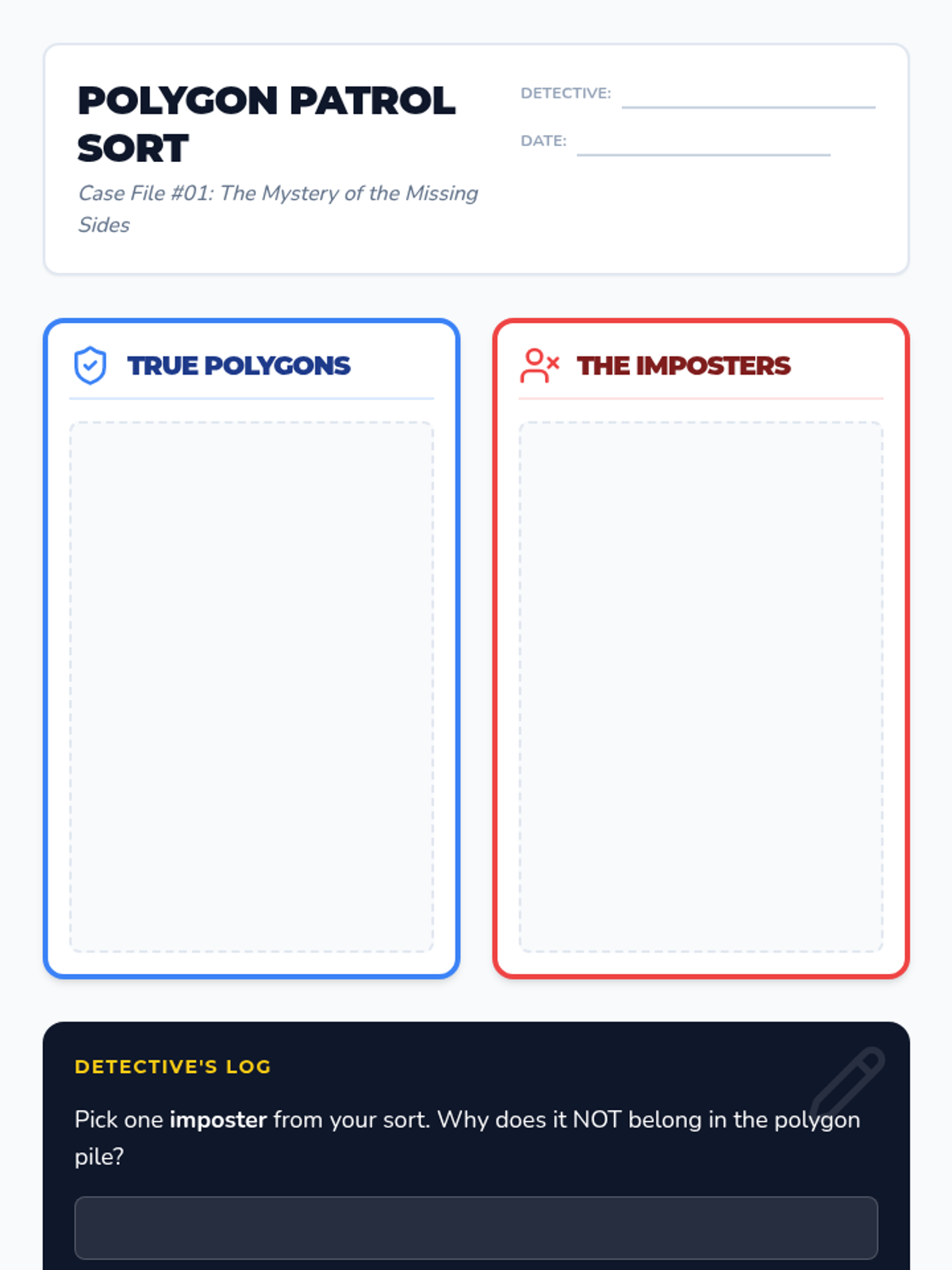
A comprehensive 3rd-grade geometry sequence focusing on the inquiry-based investigation of polygon attributes. Students progress from basic identification of polygons to defining complex shapes through angles, side lengths, and parallel relationships.
A 3rd-grade geometry sequence exploring angles as geometric attributes, identifying right angles, and using angle properties to classify polygons and quadrilaterals.
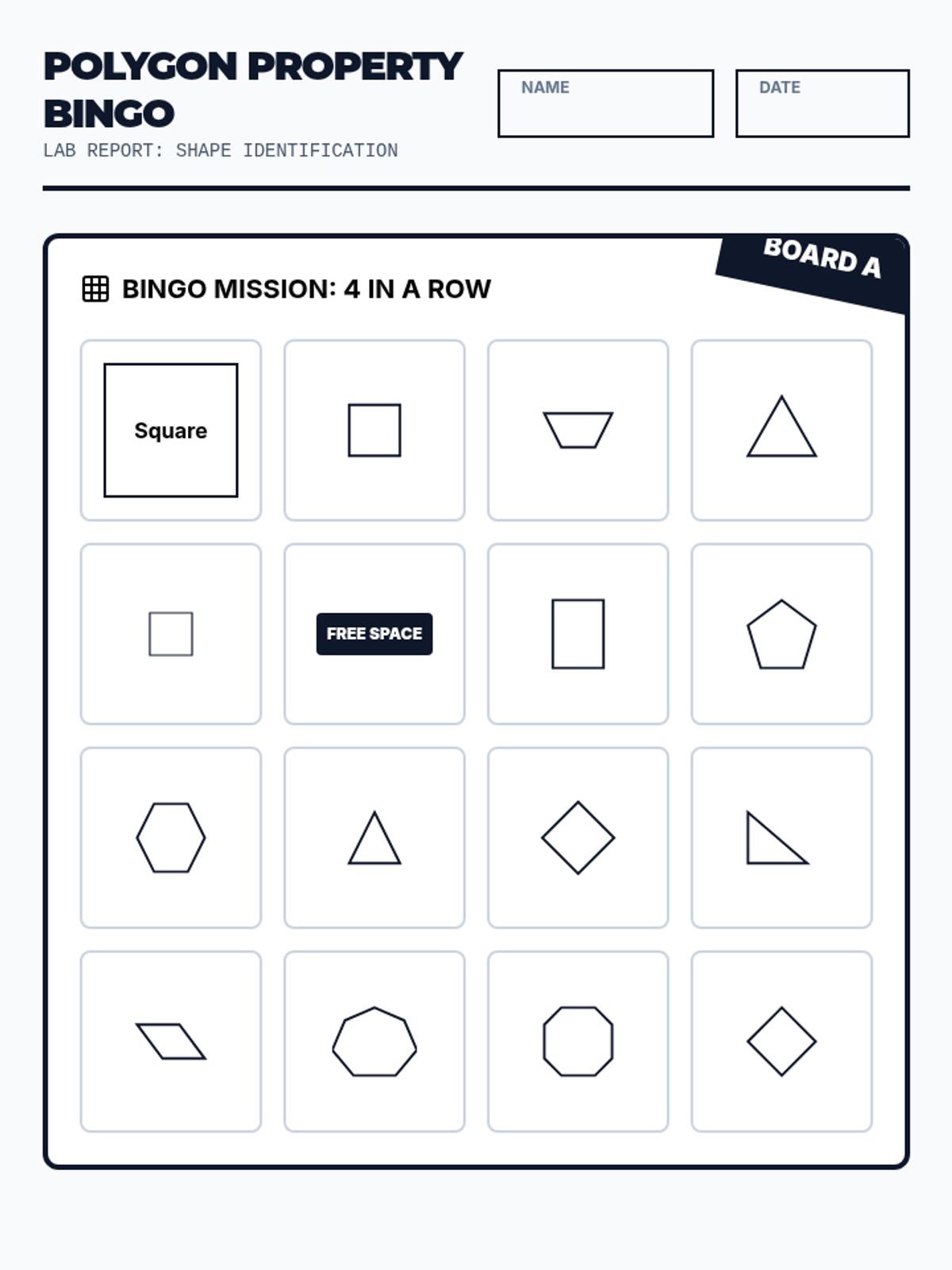
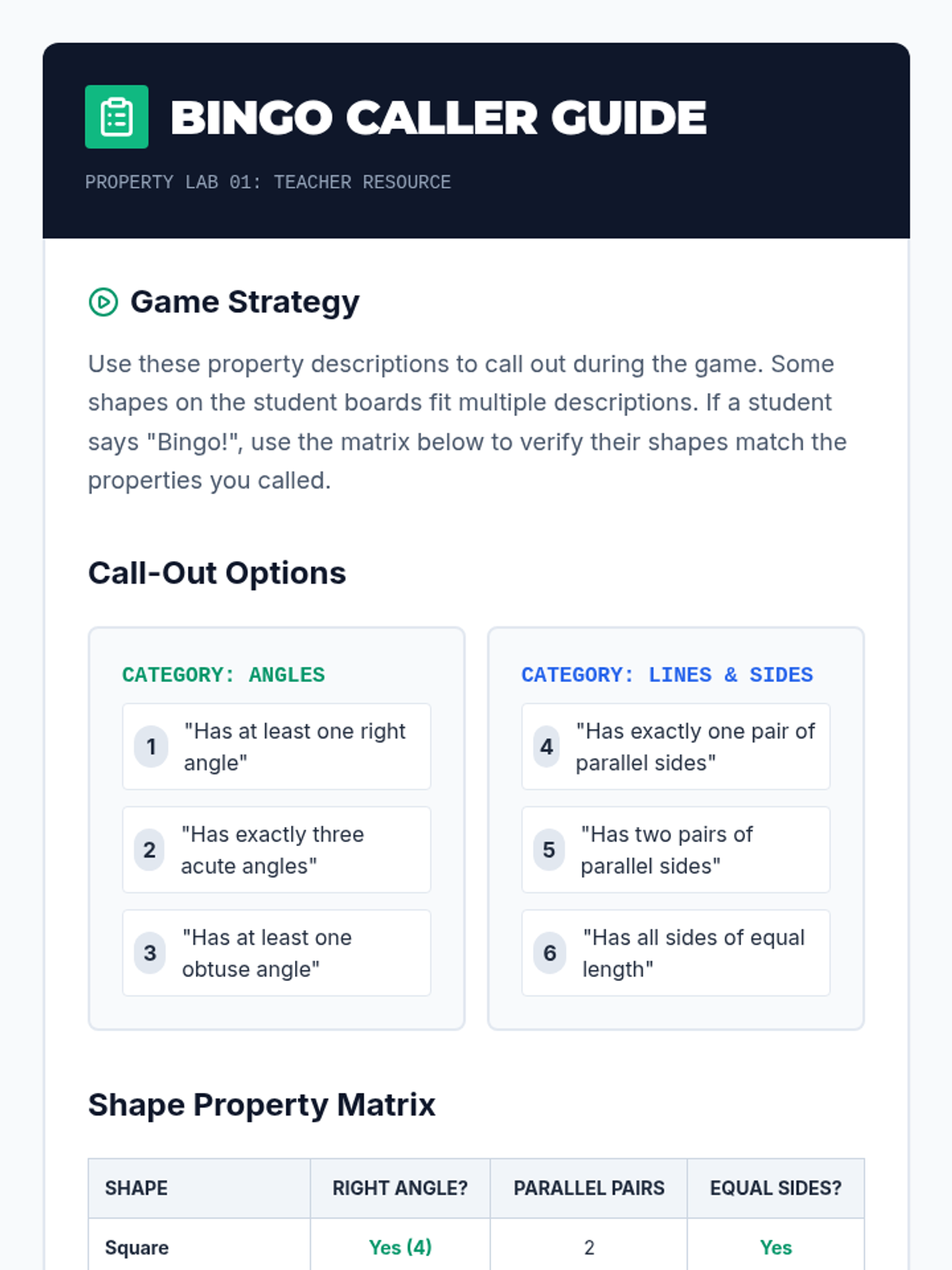
A game-based sequence focused on rapid identification and logical deduction using polygon properties through bingo, riddles, and simulations. Students build fluency in identifying shapes and distinguishing between subtle differences.
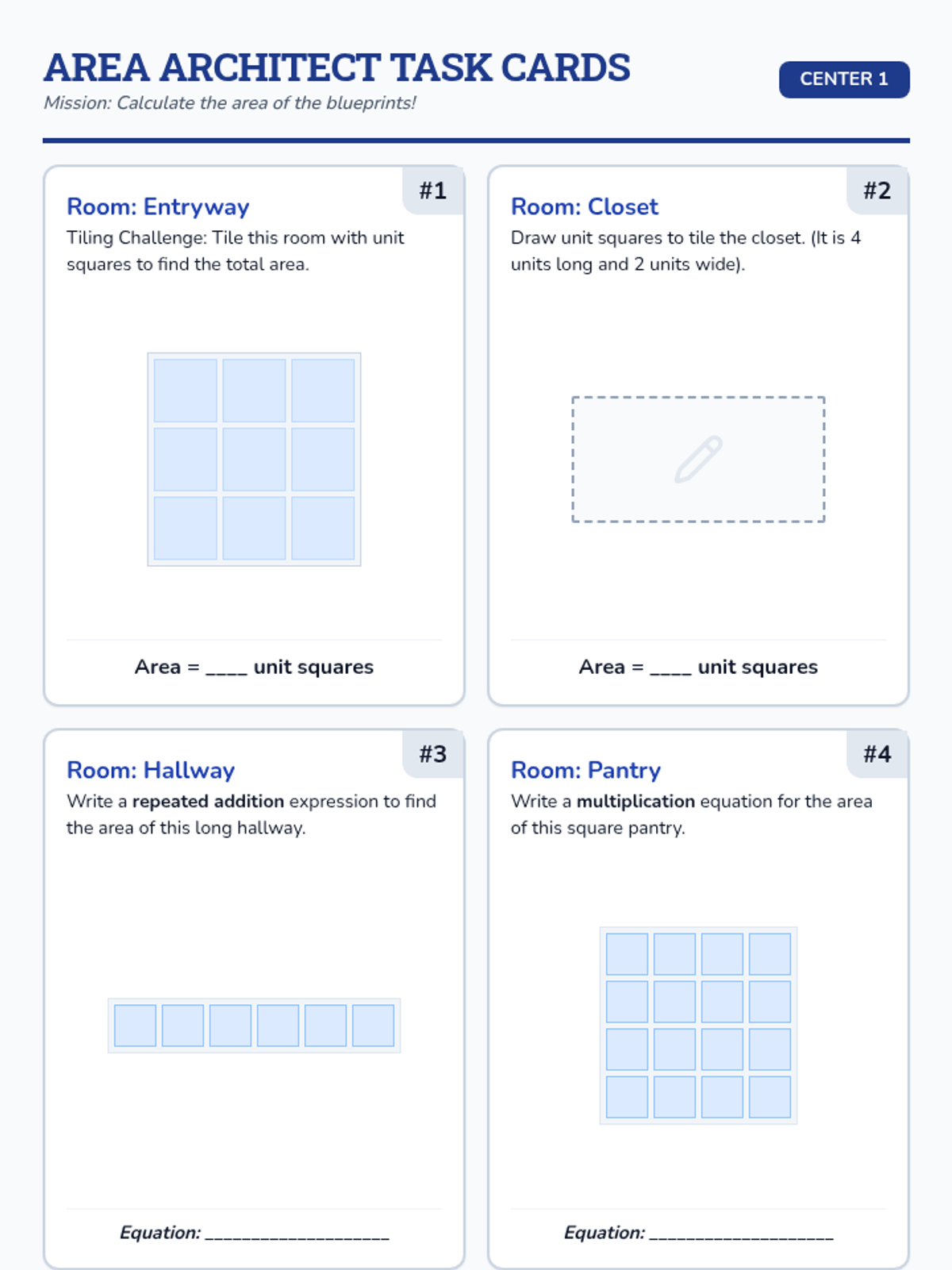
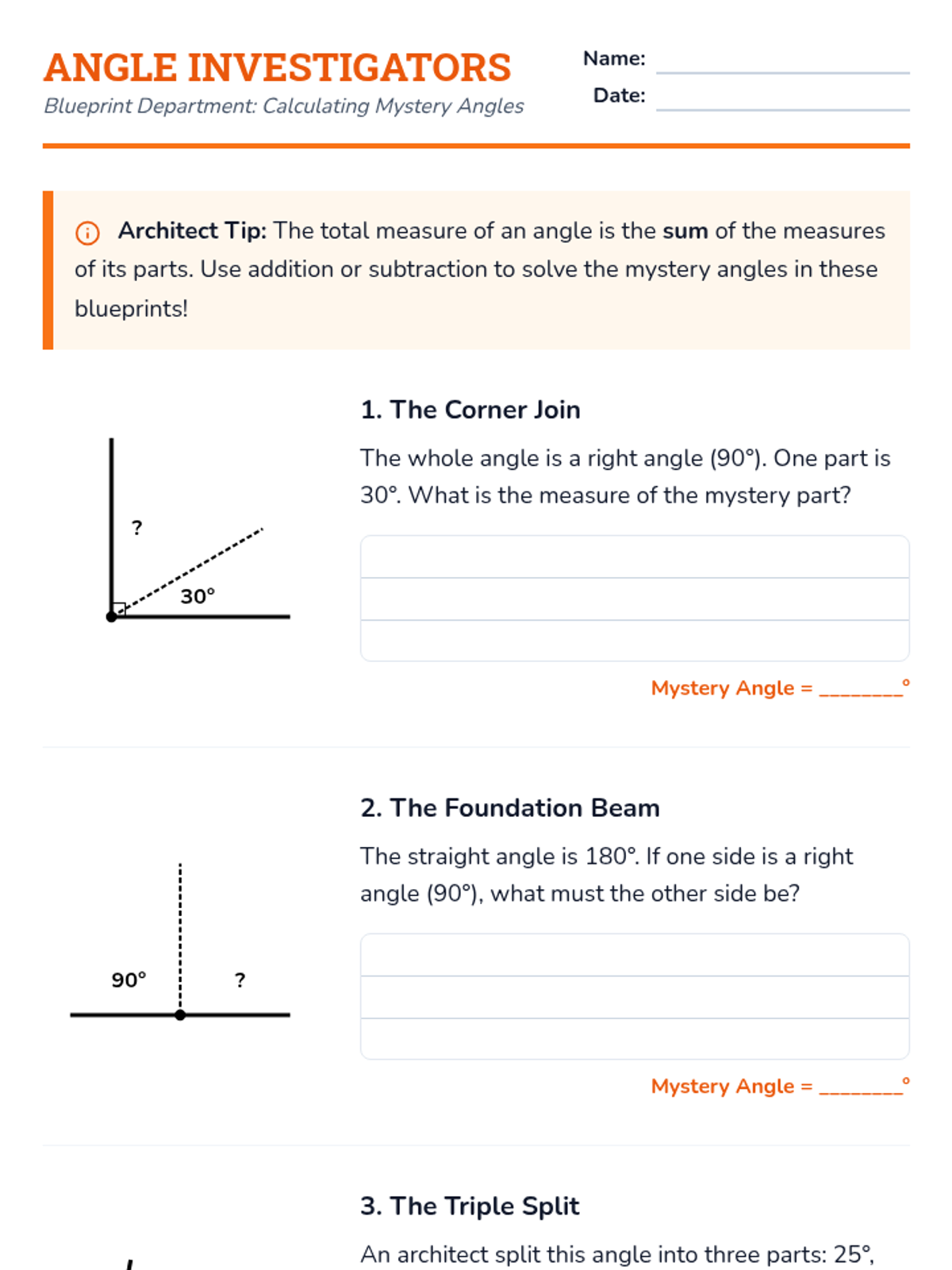
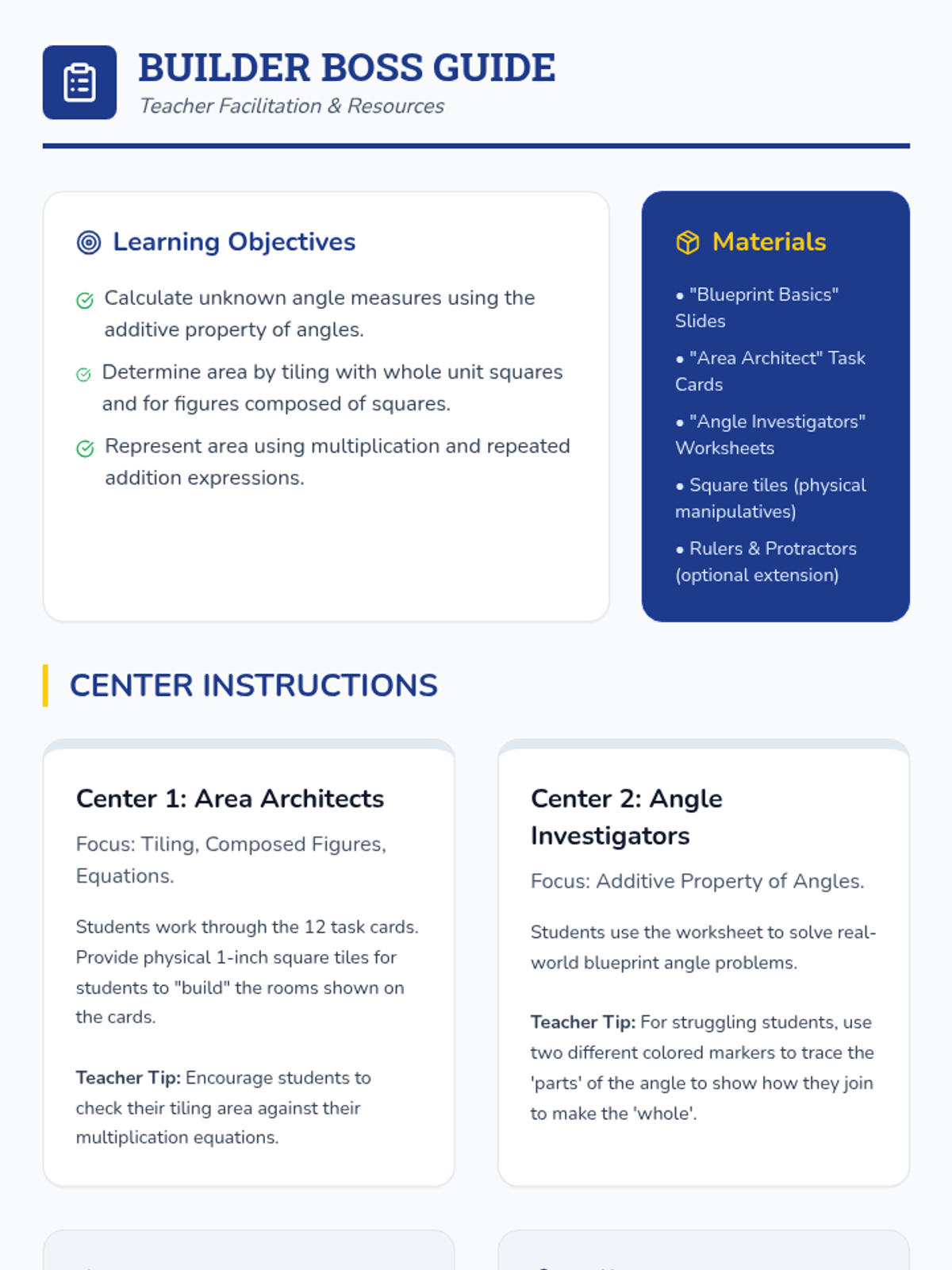
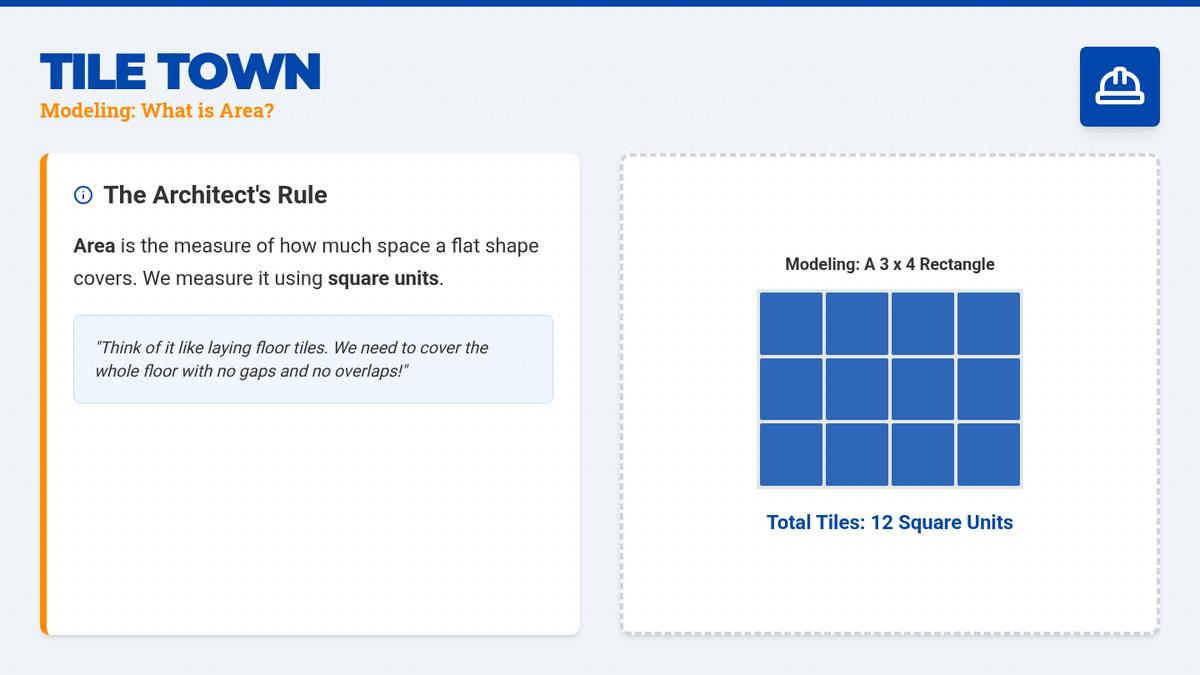
A hands-on geometry and measurement unit focused on area concepts and angle properties for third-grade students. Students explore tiling, equations for area, and the additive property of angles through a construction-themed approach.
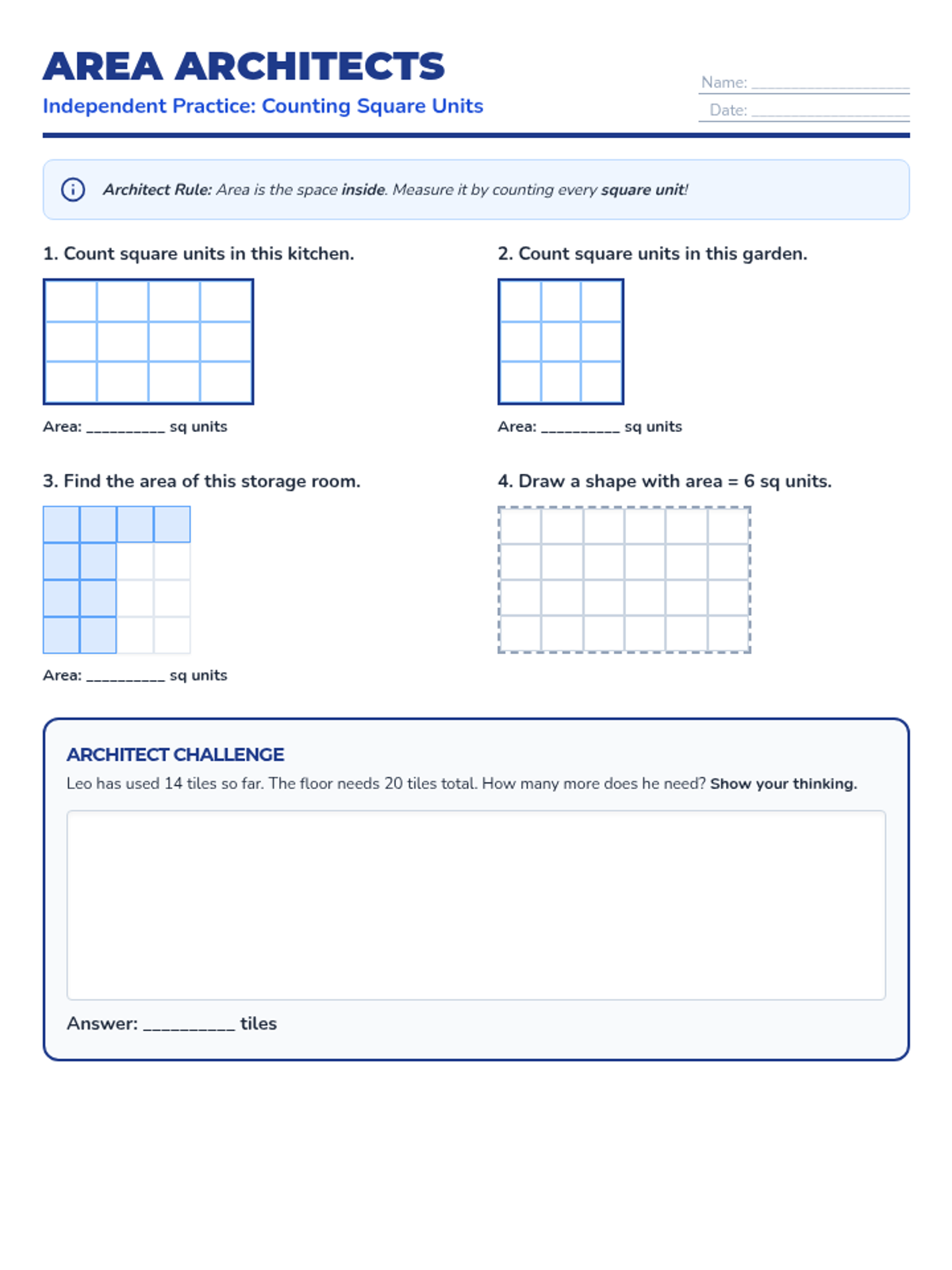
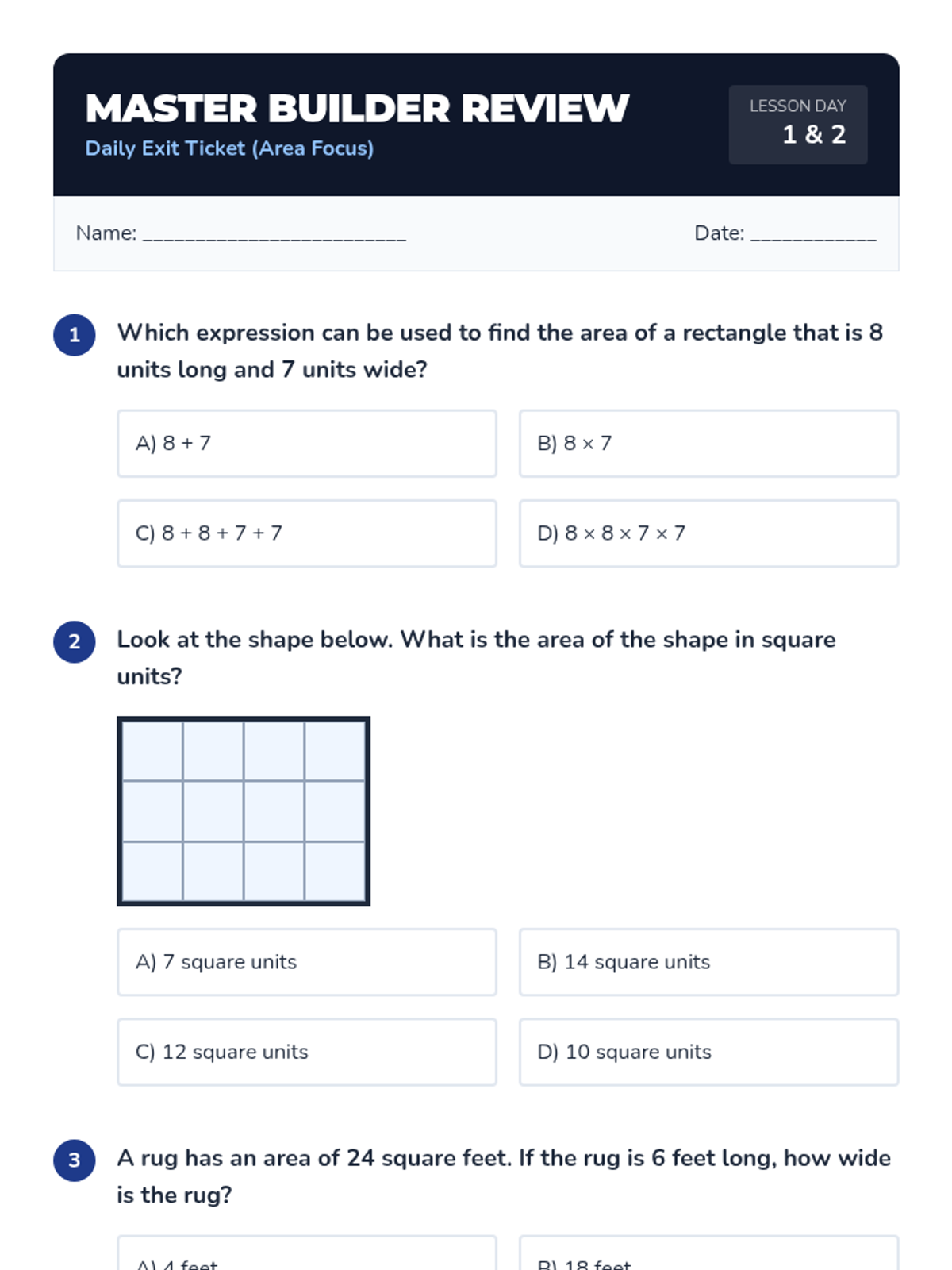
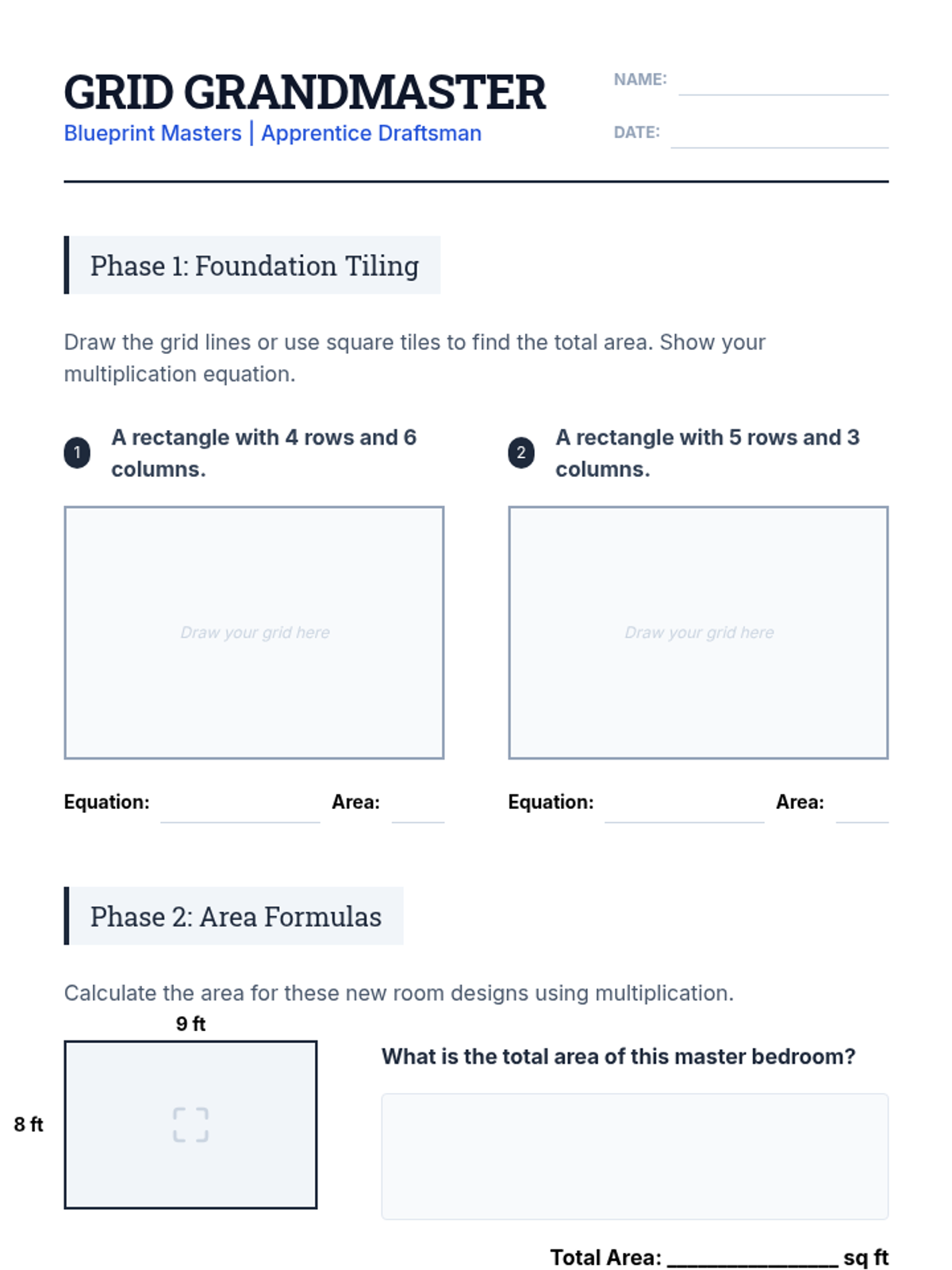
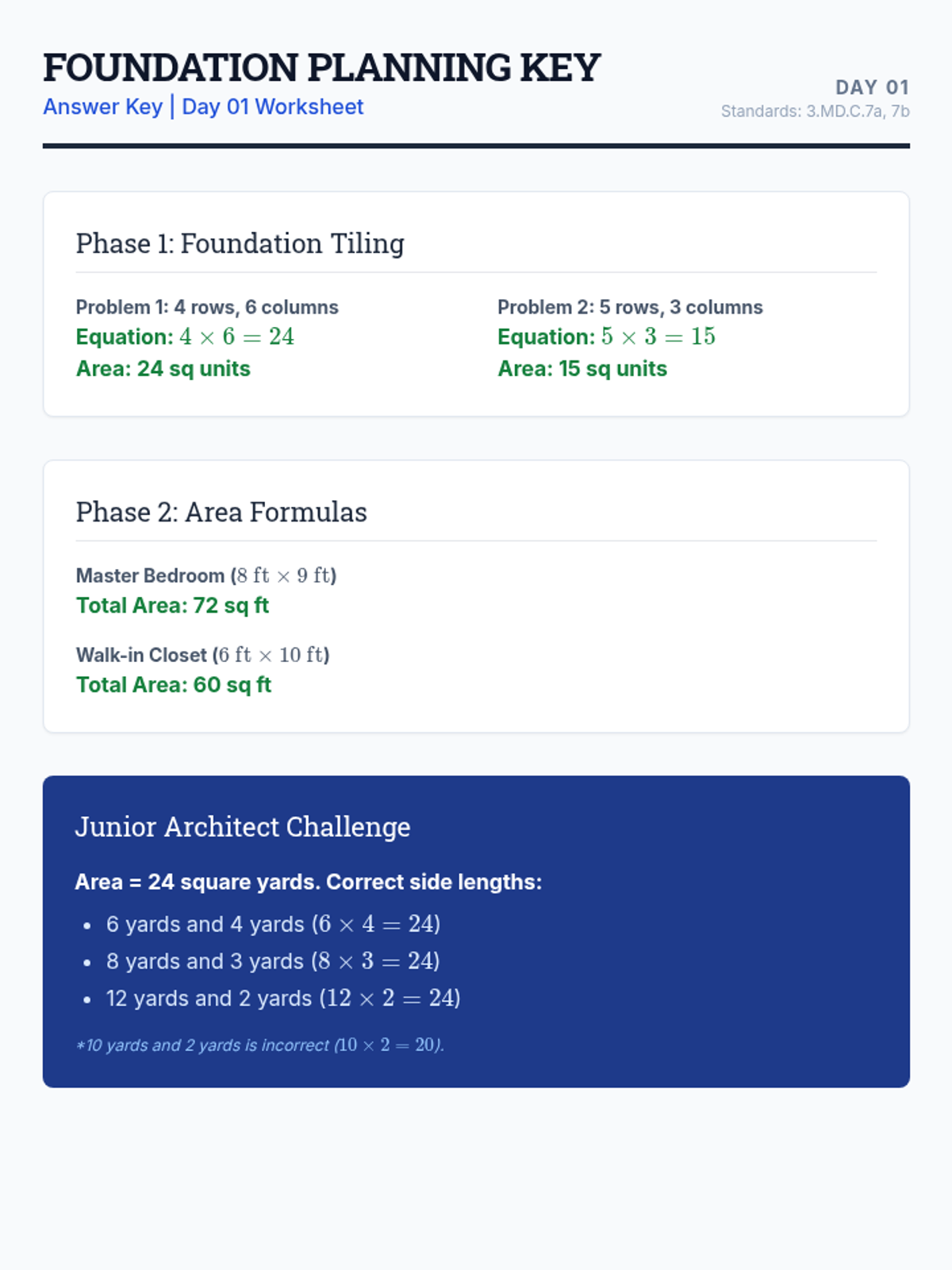
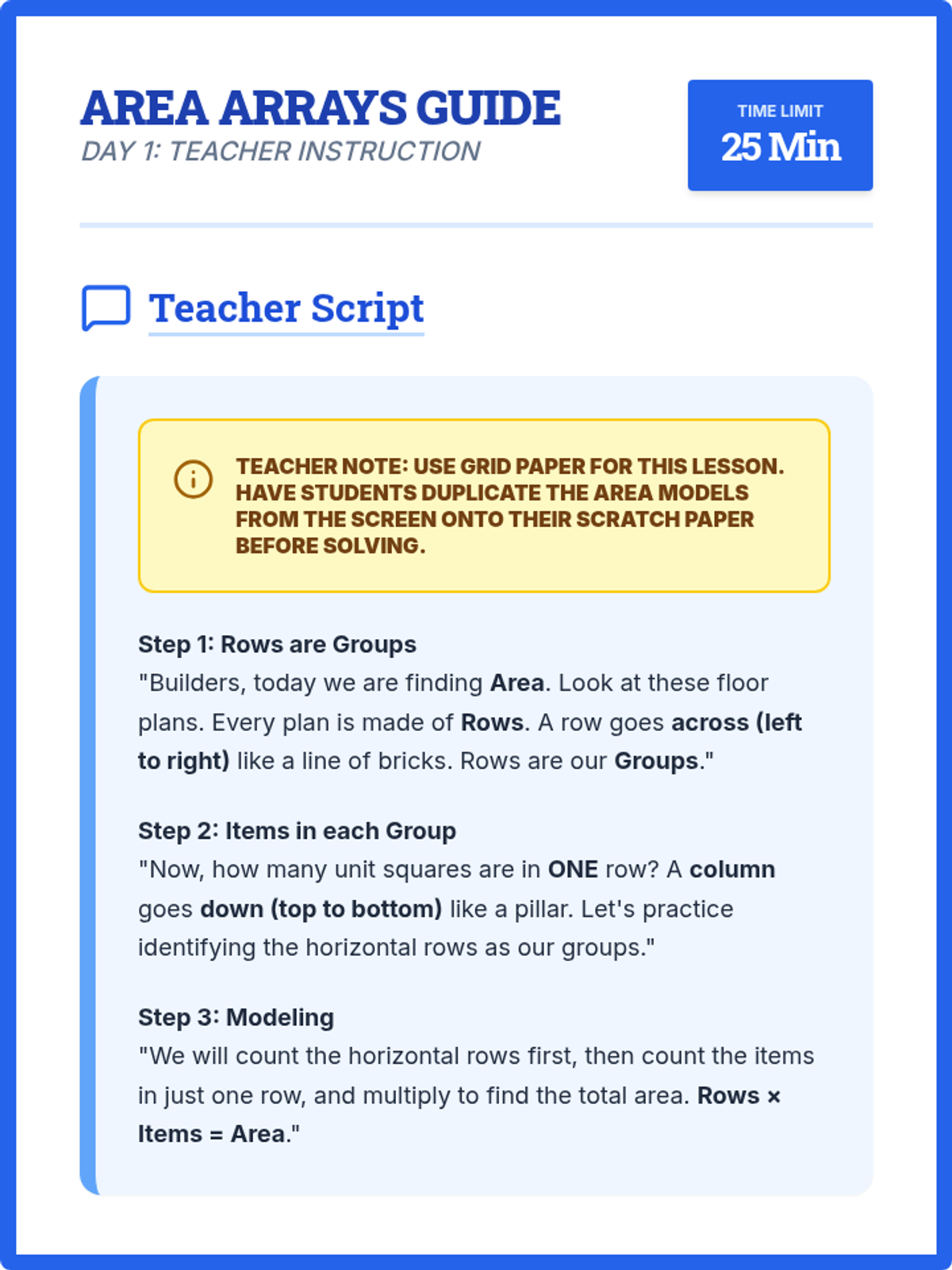
A 5-day intensive math unit for 3rd-grade students focused on North Carolina Standards NC.3.MD.7 (Area) and NC.3.MD.8 (Perimeter), using a cohesive 'Blueprint Builders' architectural theme.
A comprehensive 10-day intensive review packet covering North Carolina 3rd grade math standards for fractions, area, perimeter, and two-step word problems, designed for at-home study with a 'Math Blueprint' theme.
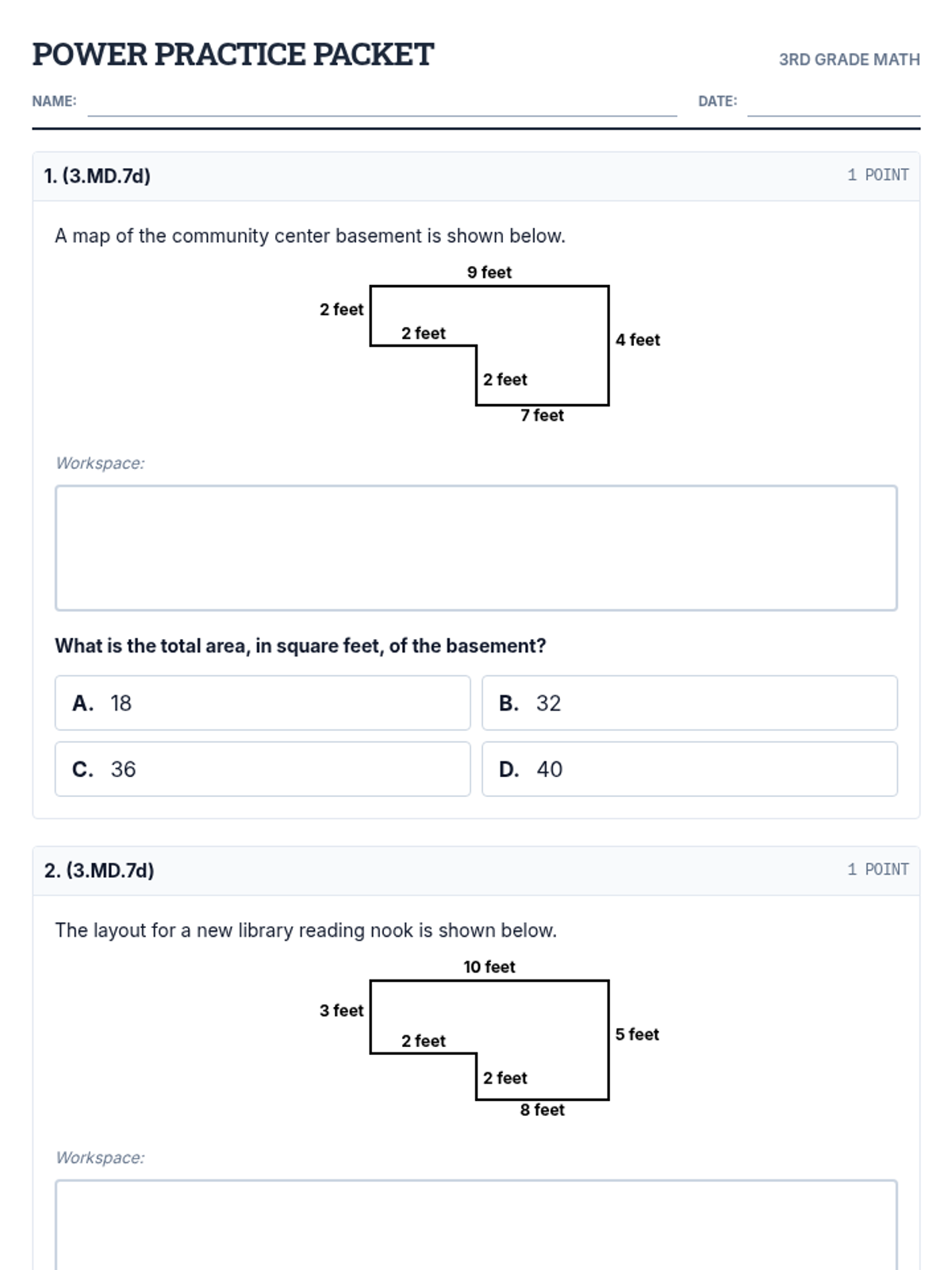
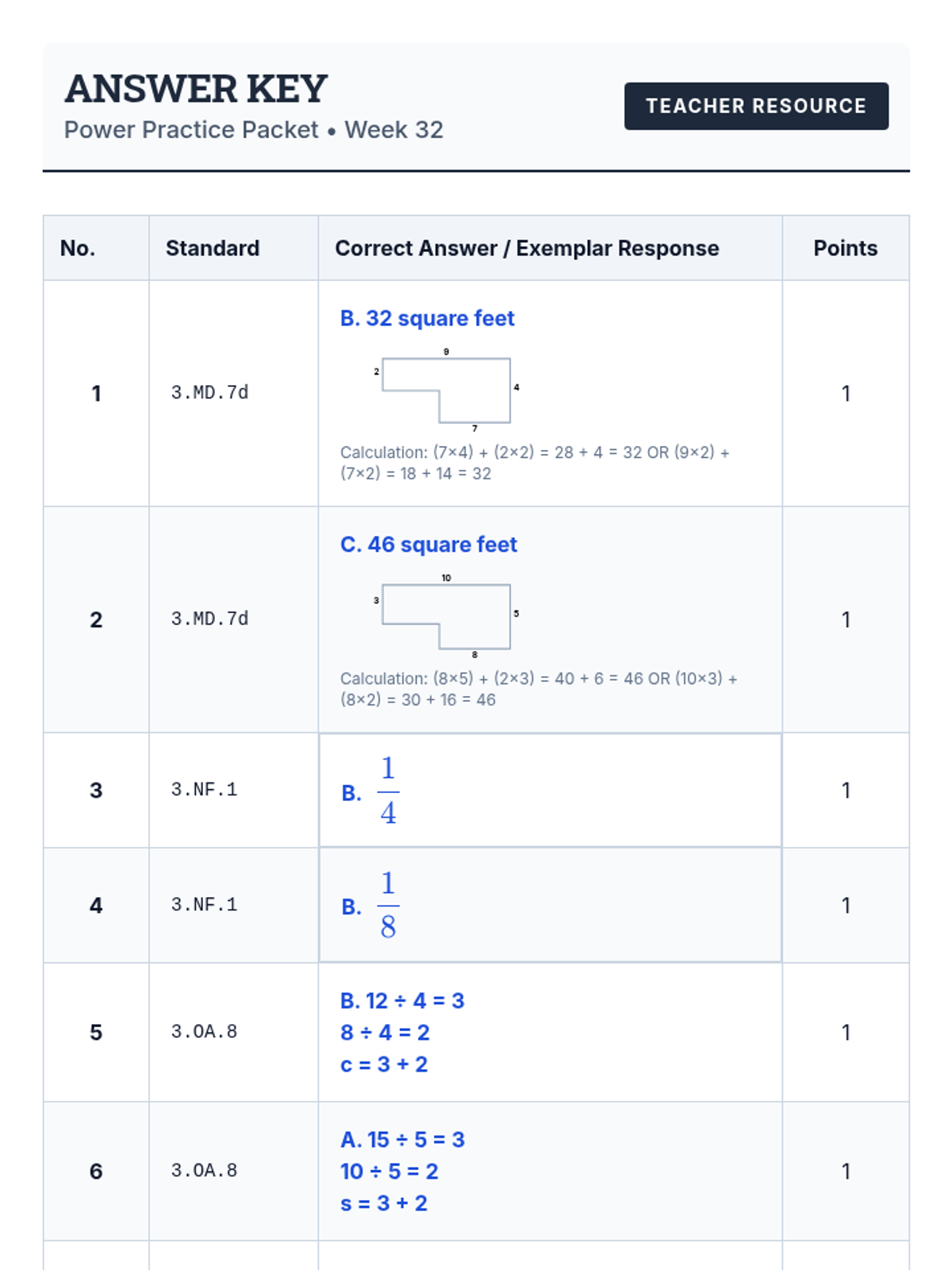
A targeted practice sequence designed to reinforce key 3rd-grade math standards including area of composite shapes, unit fractions, multi-step word problems, elapsed time, and fraction comparison. This sequence provides repeated practice with similar problem structures to build student confidence and fluency.
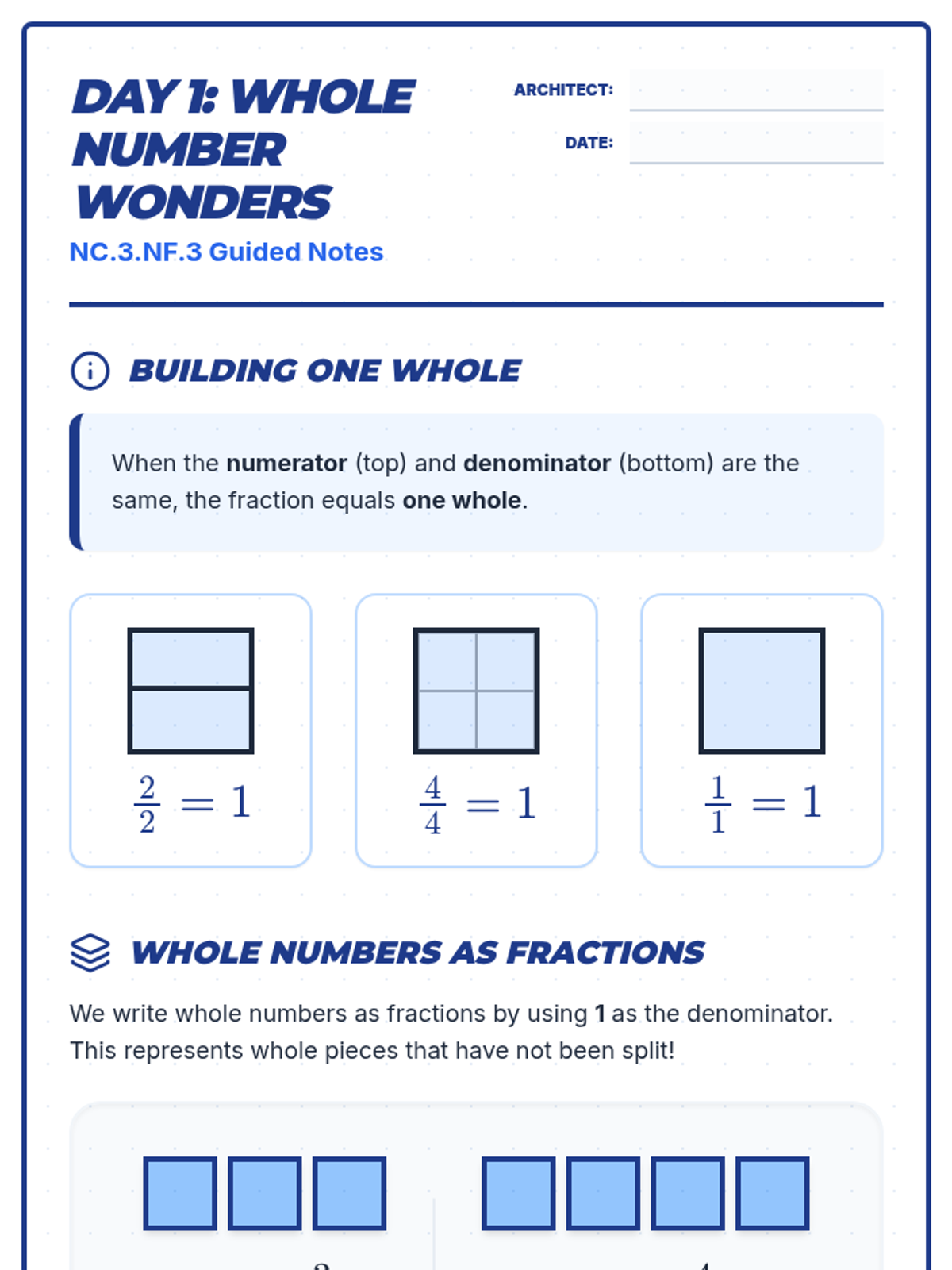
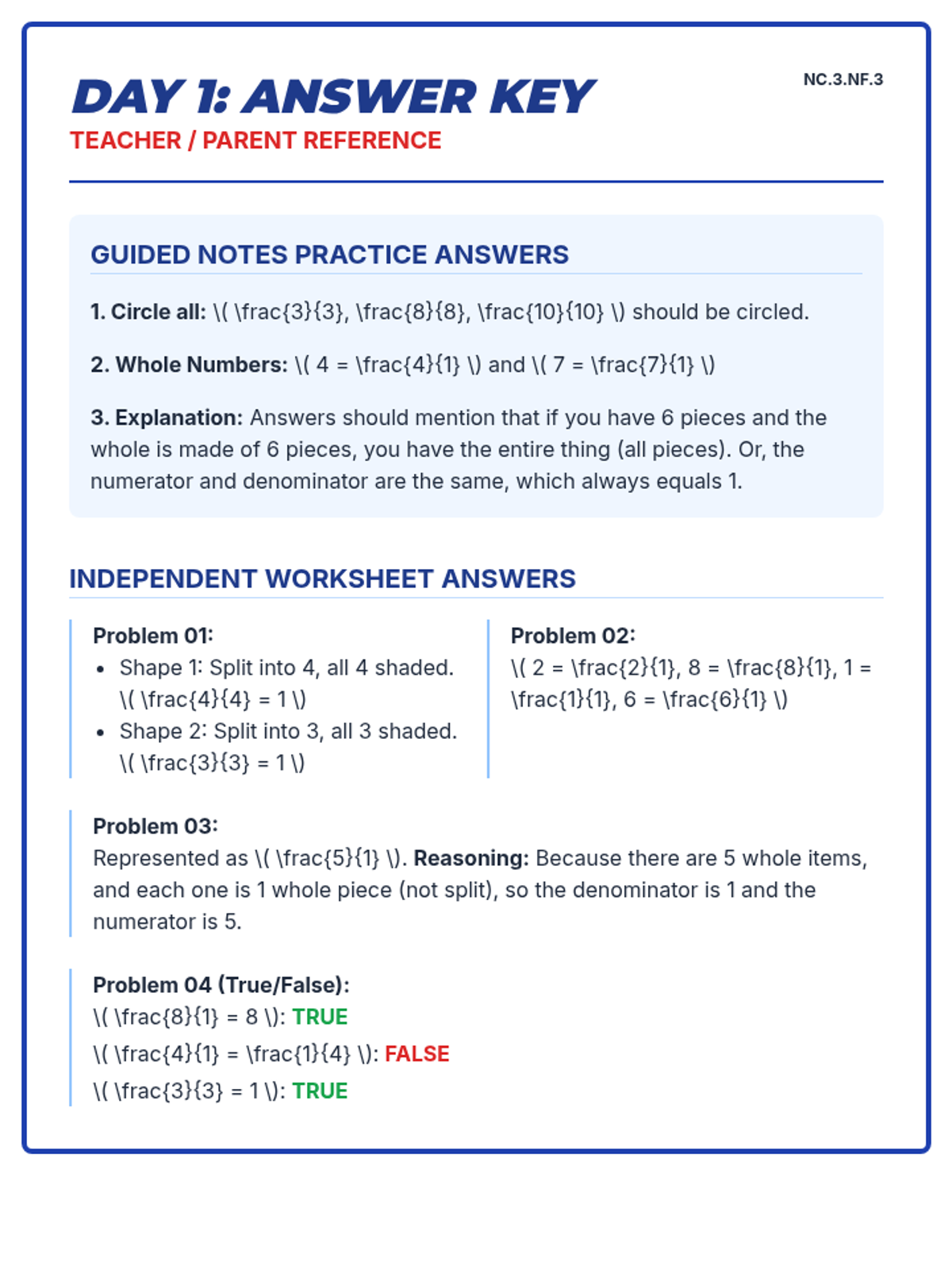
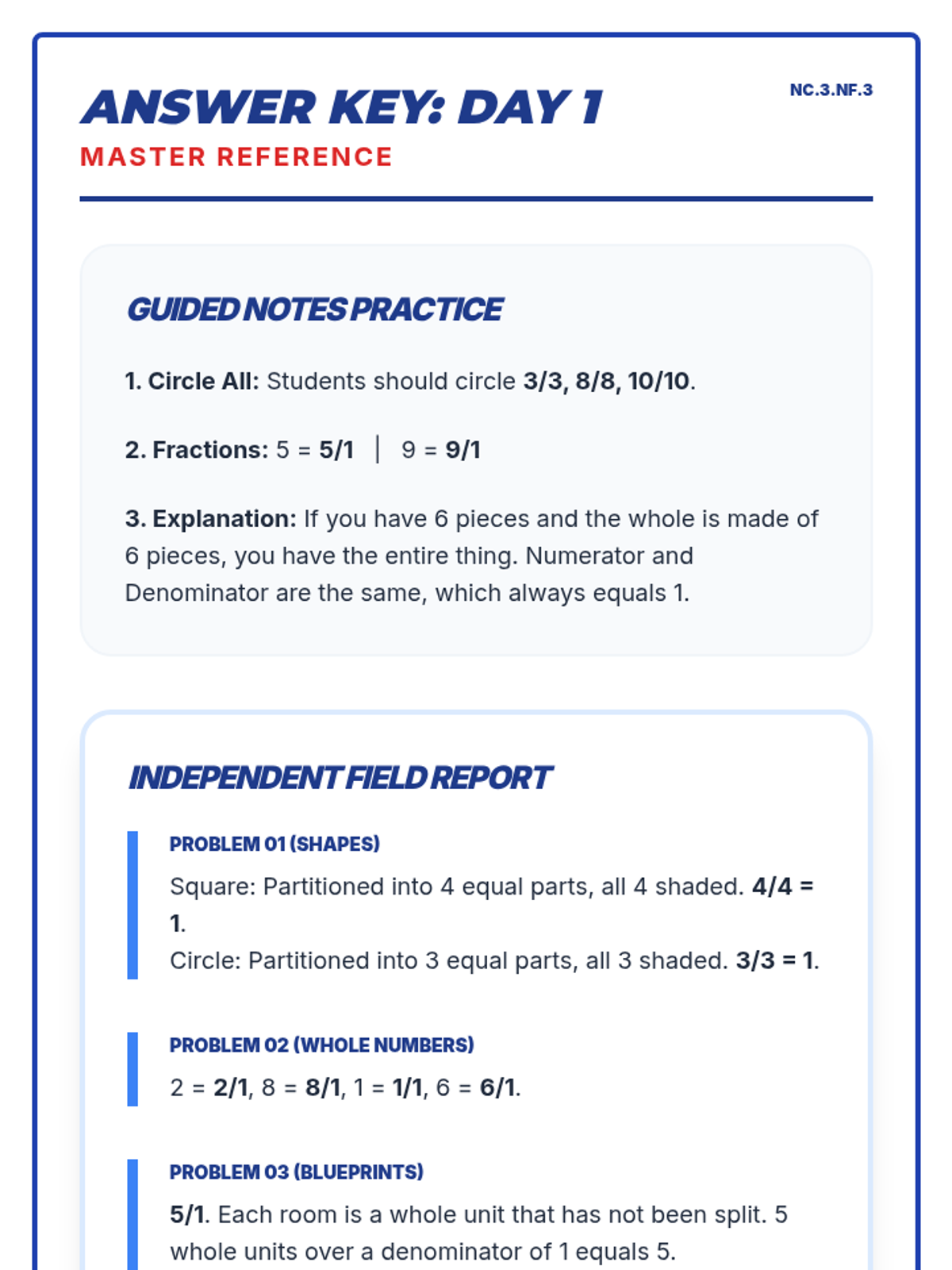
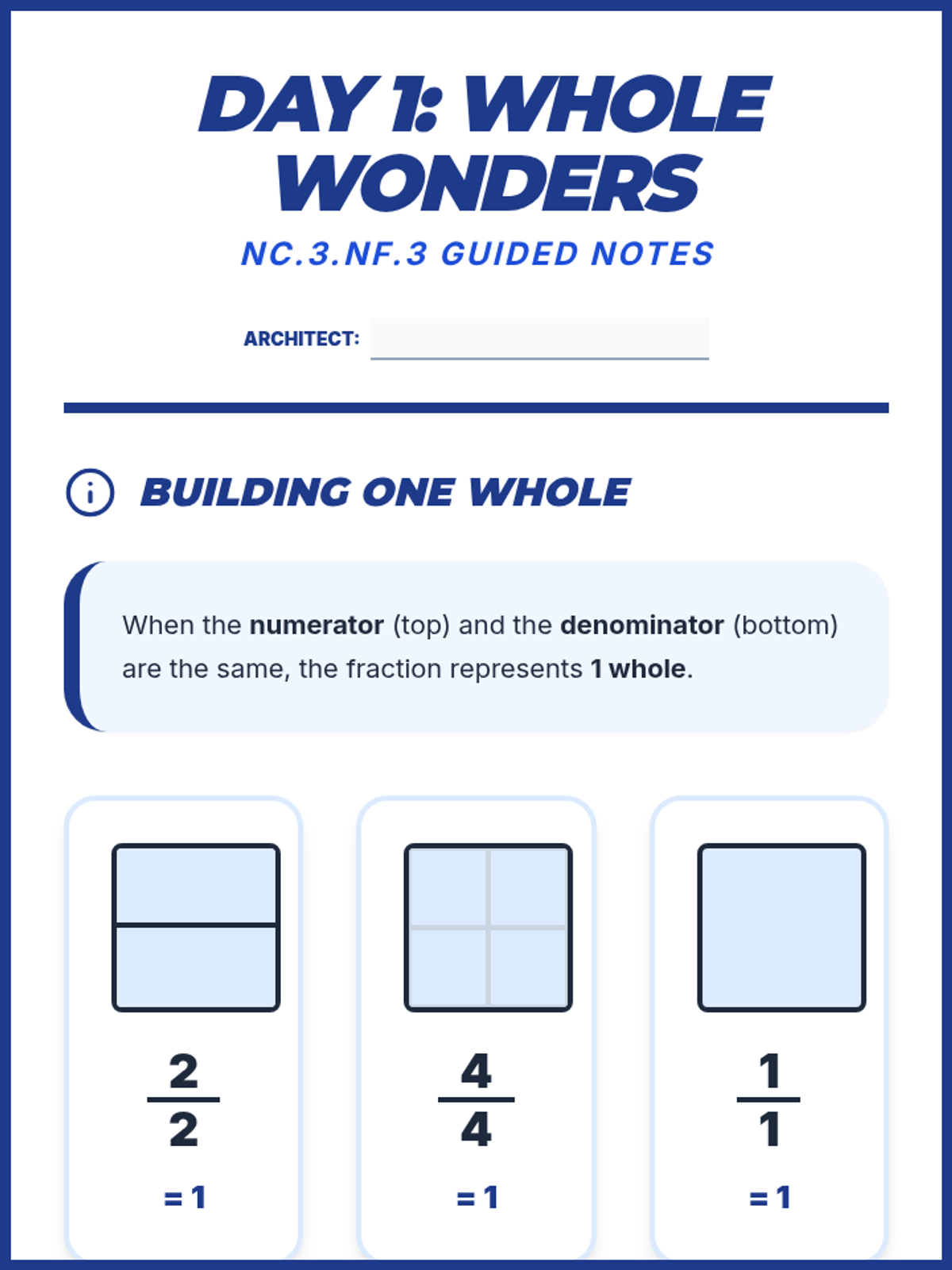
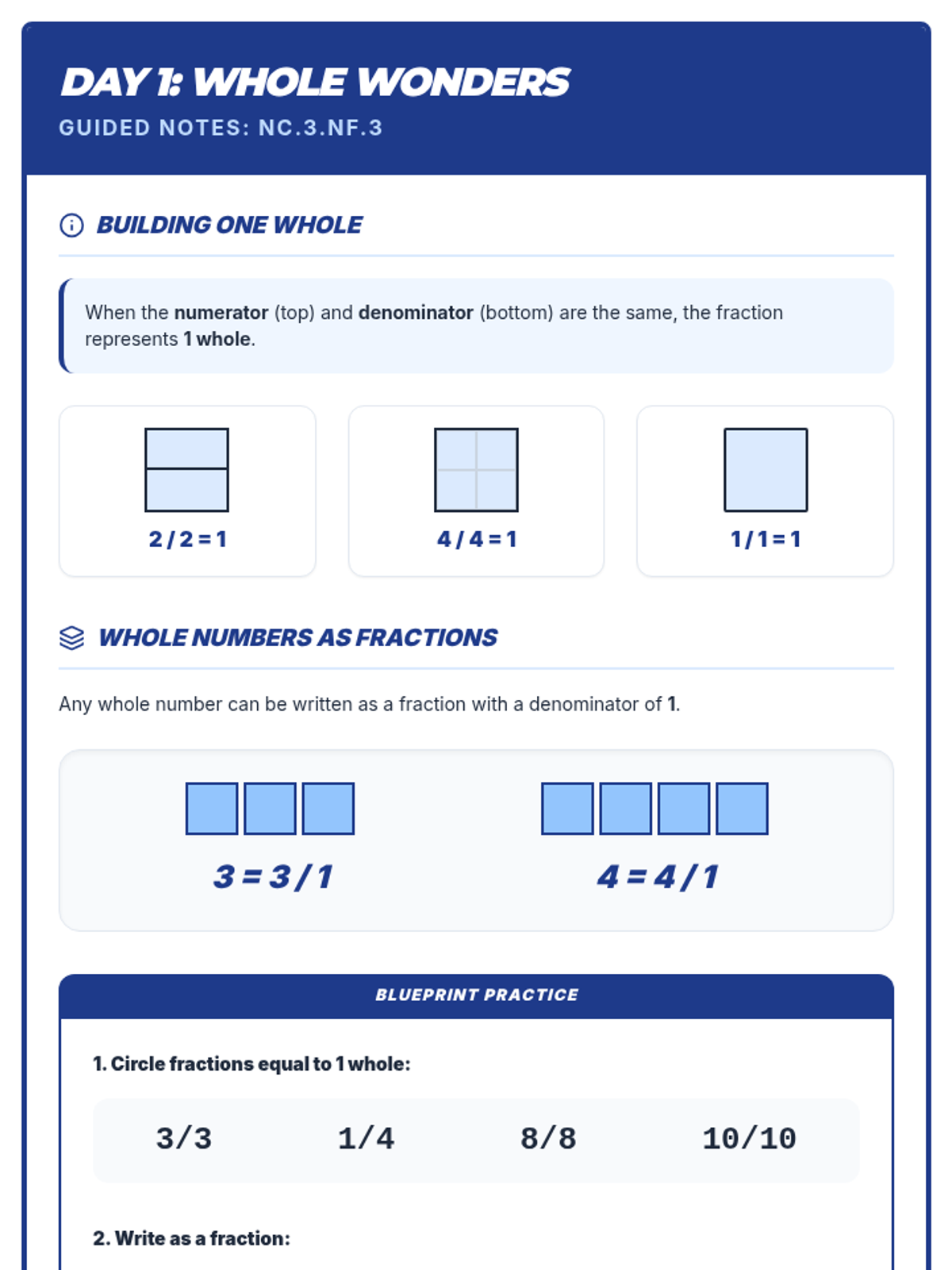
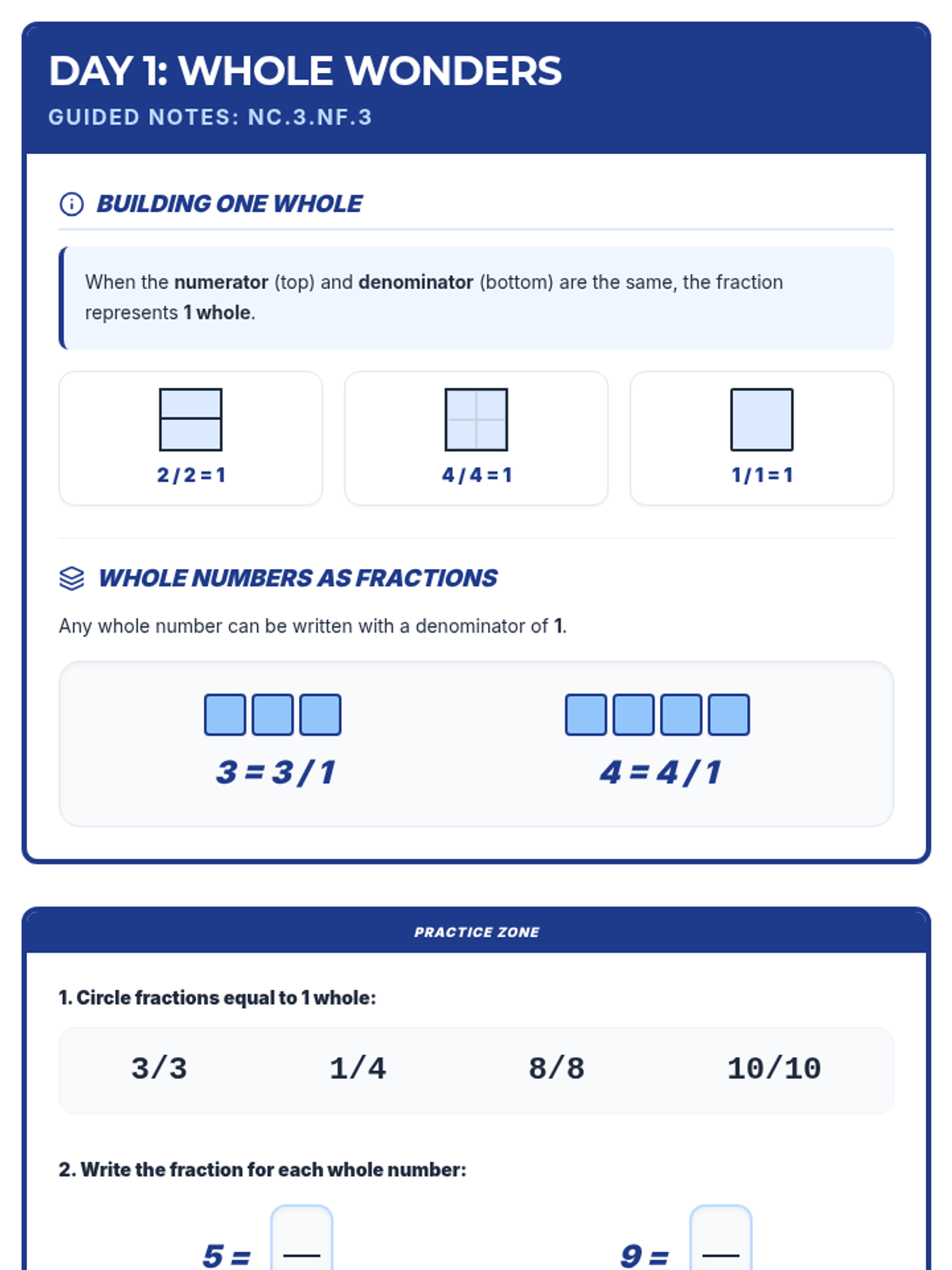
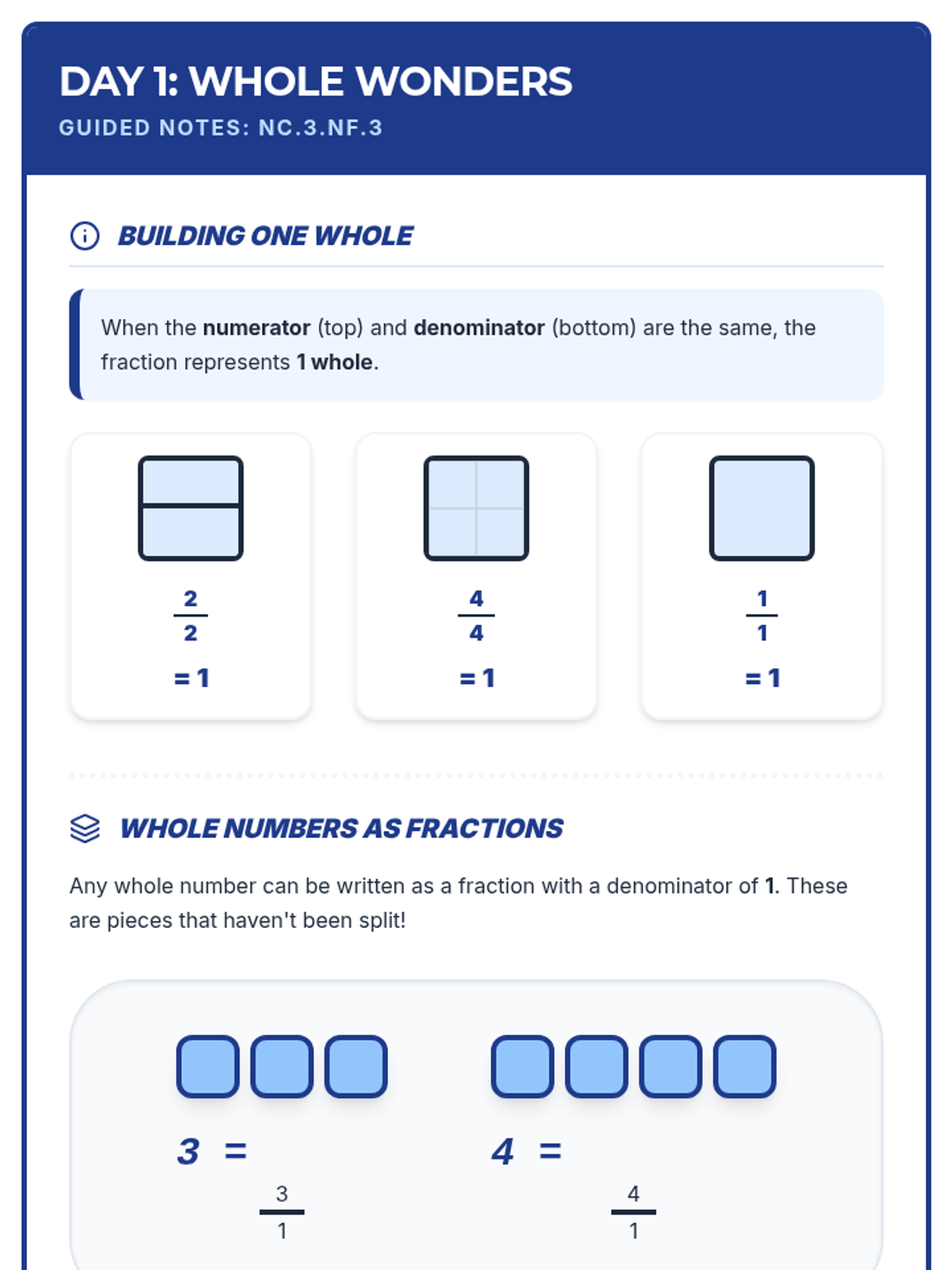
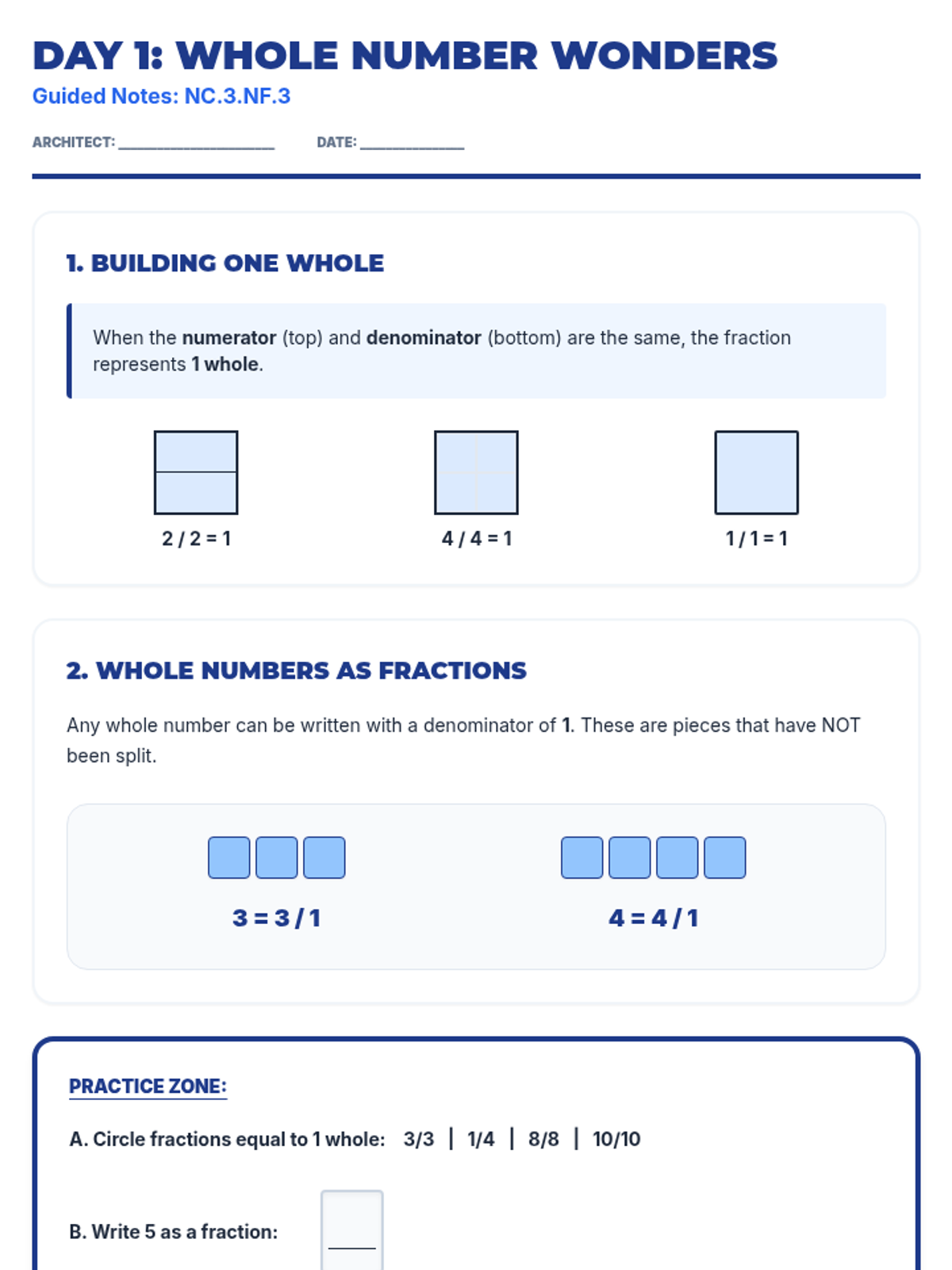
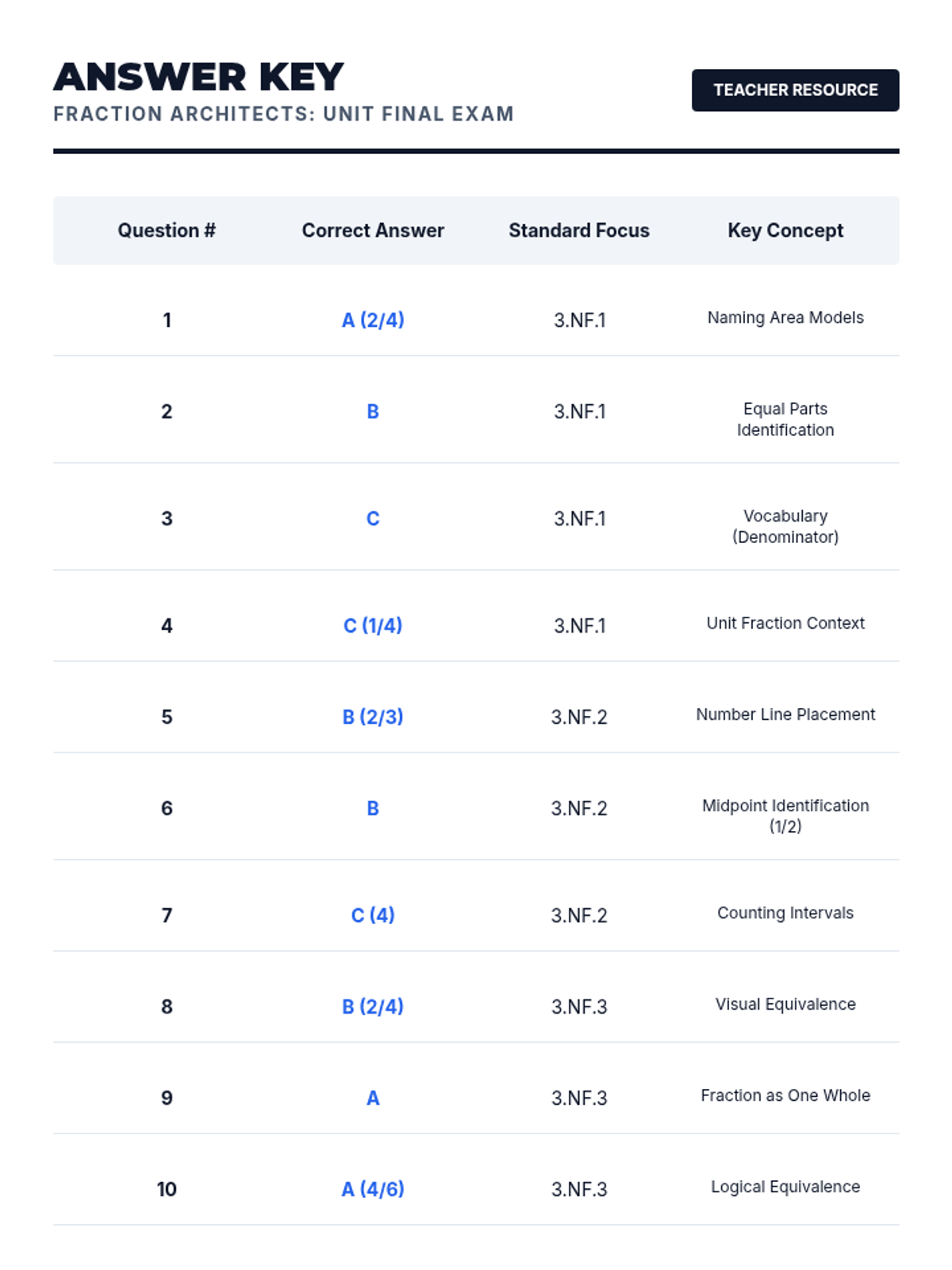
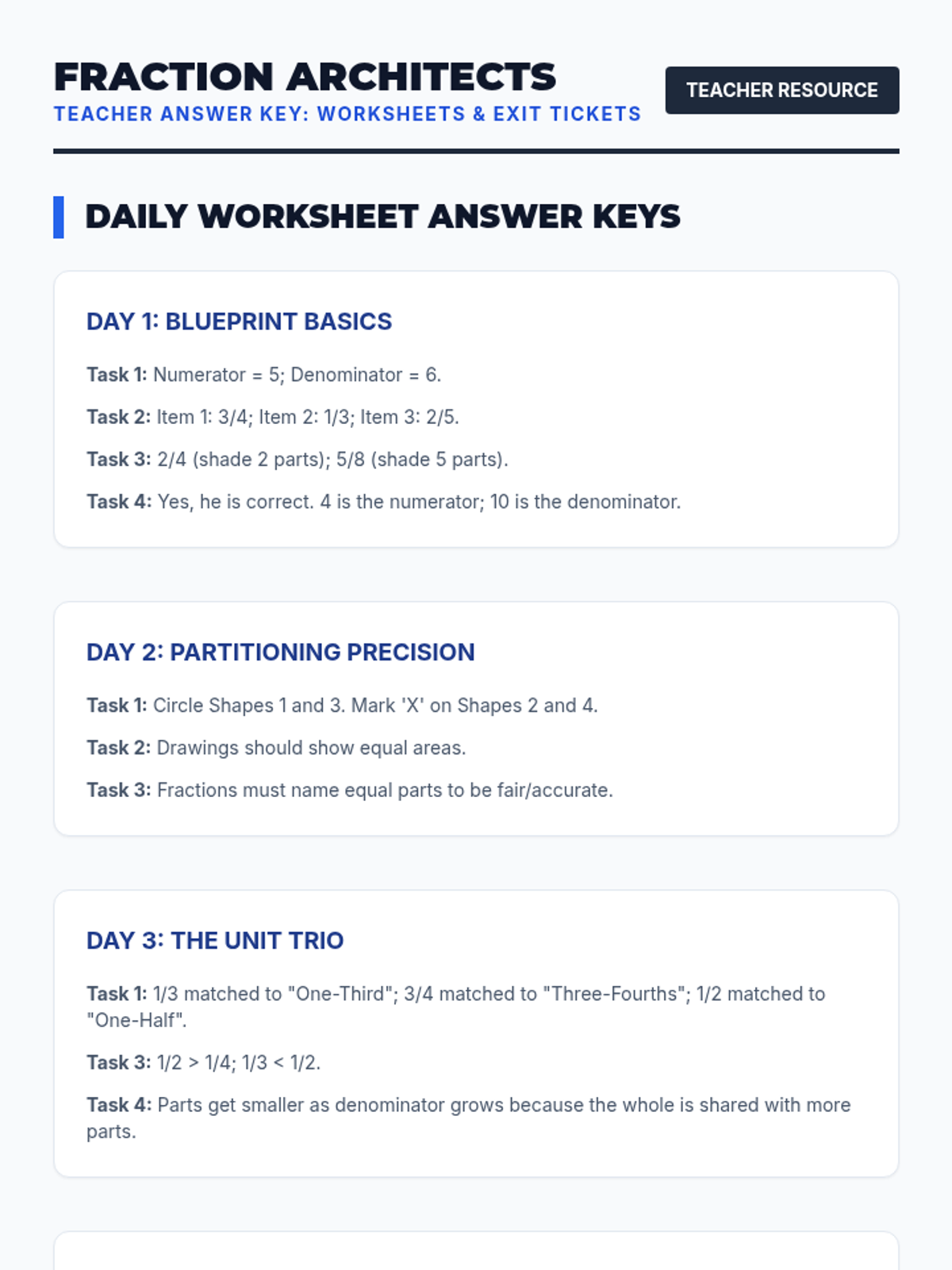
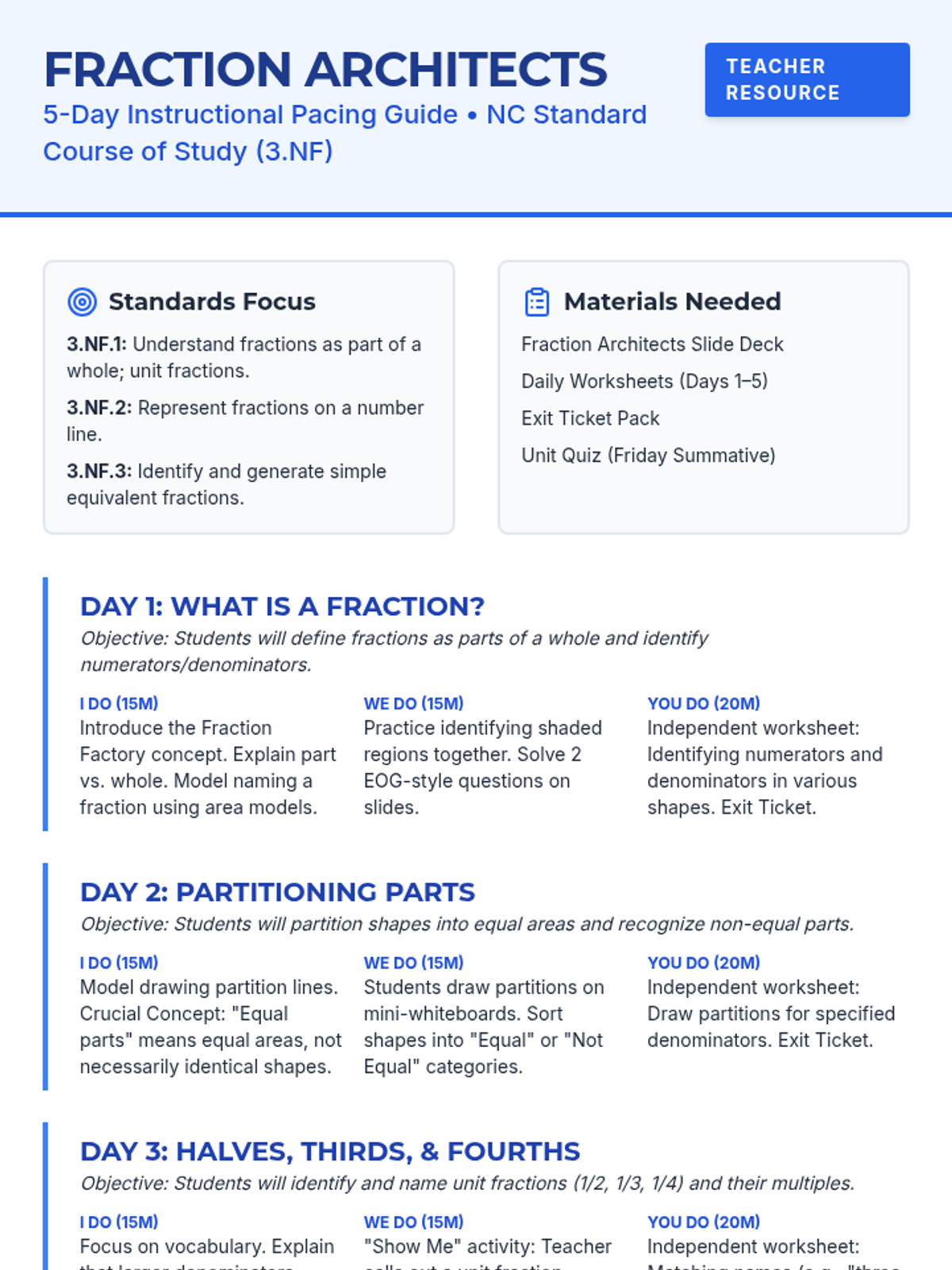
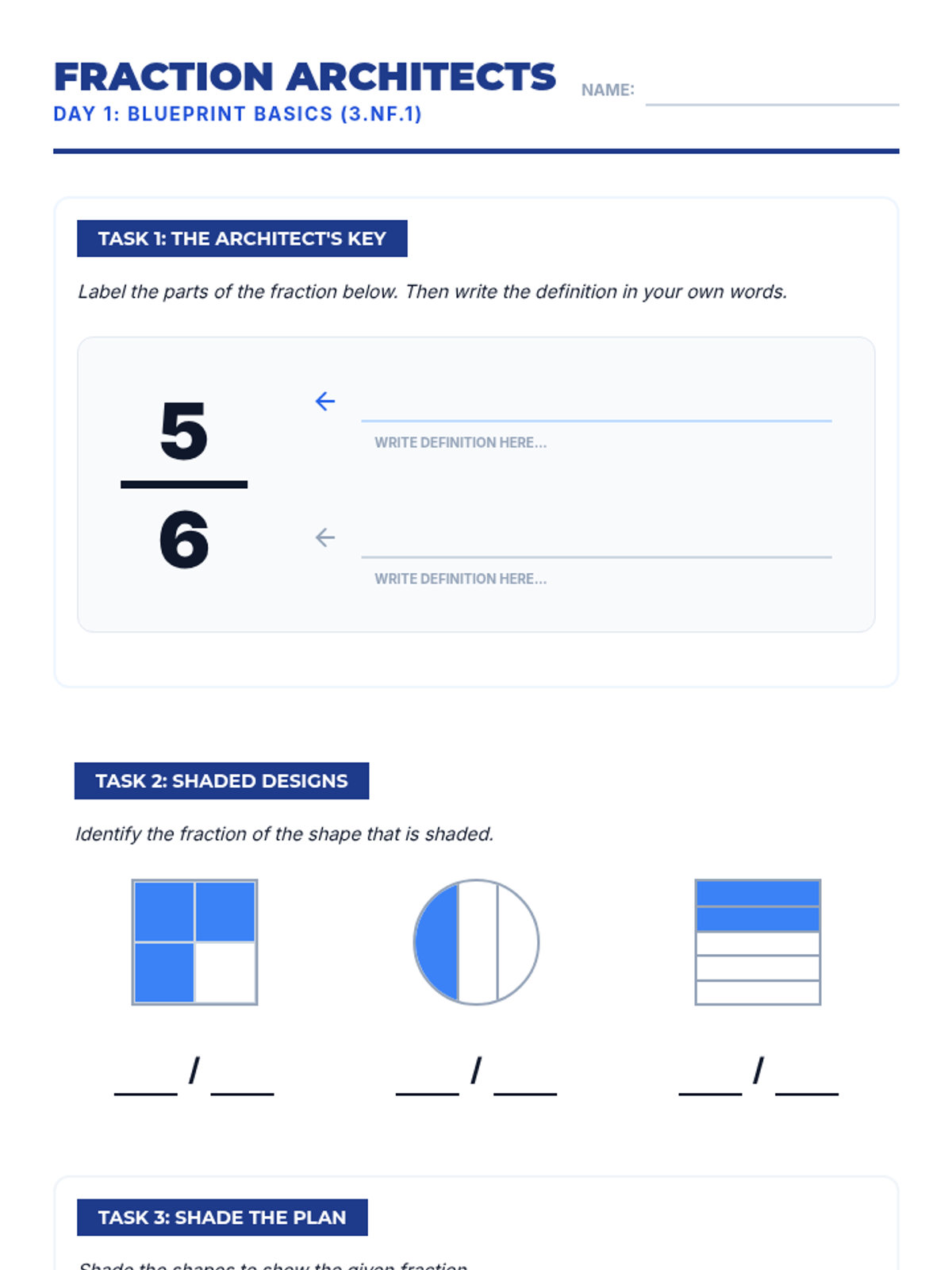
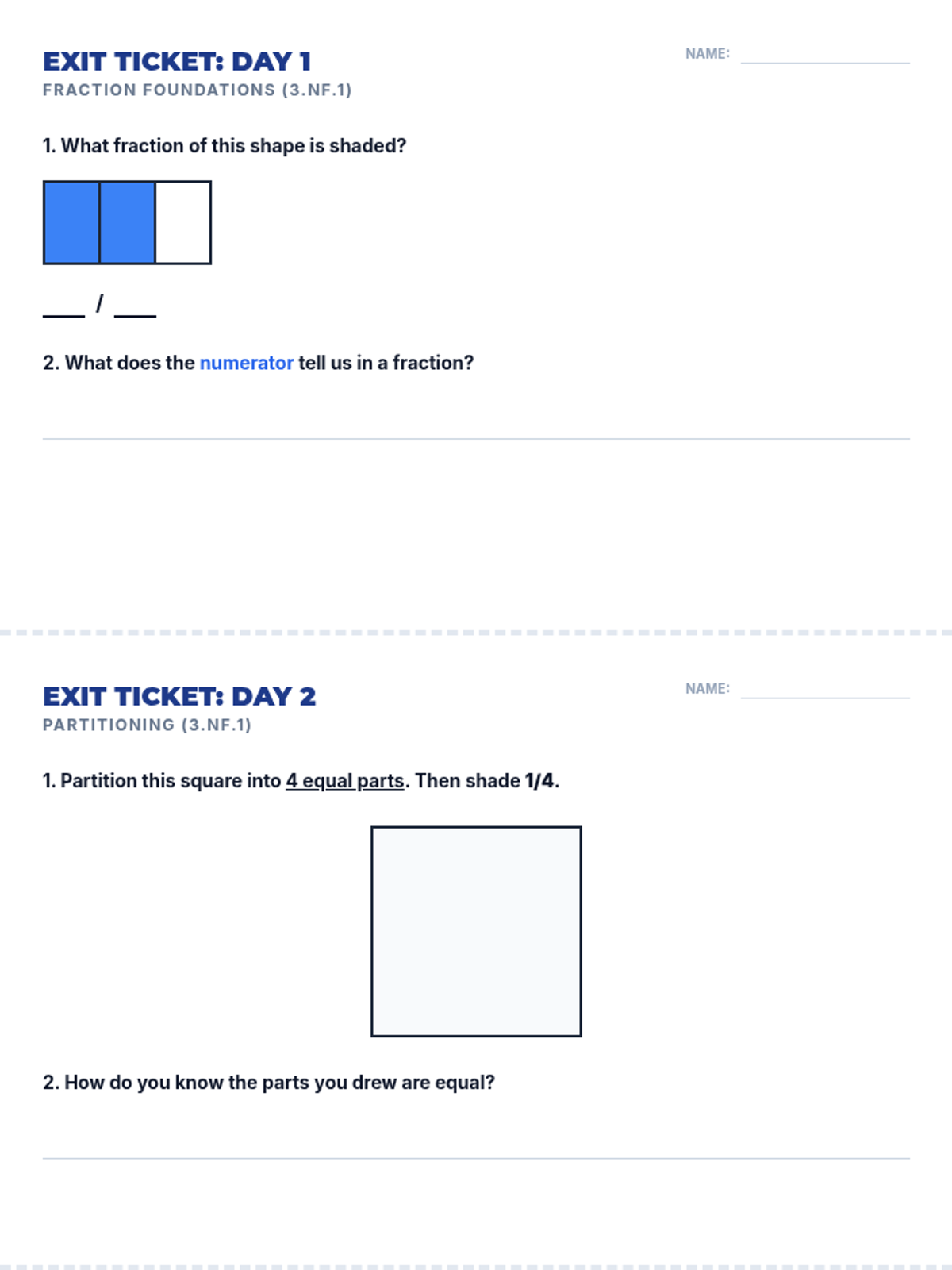
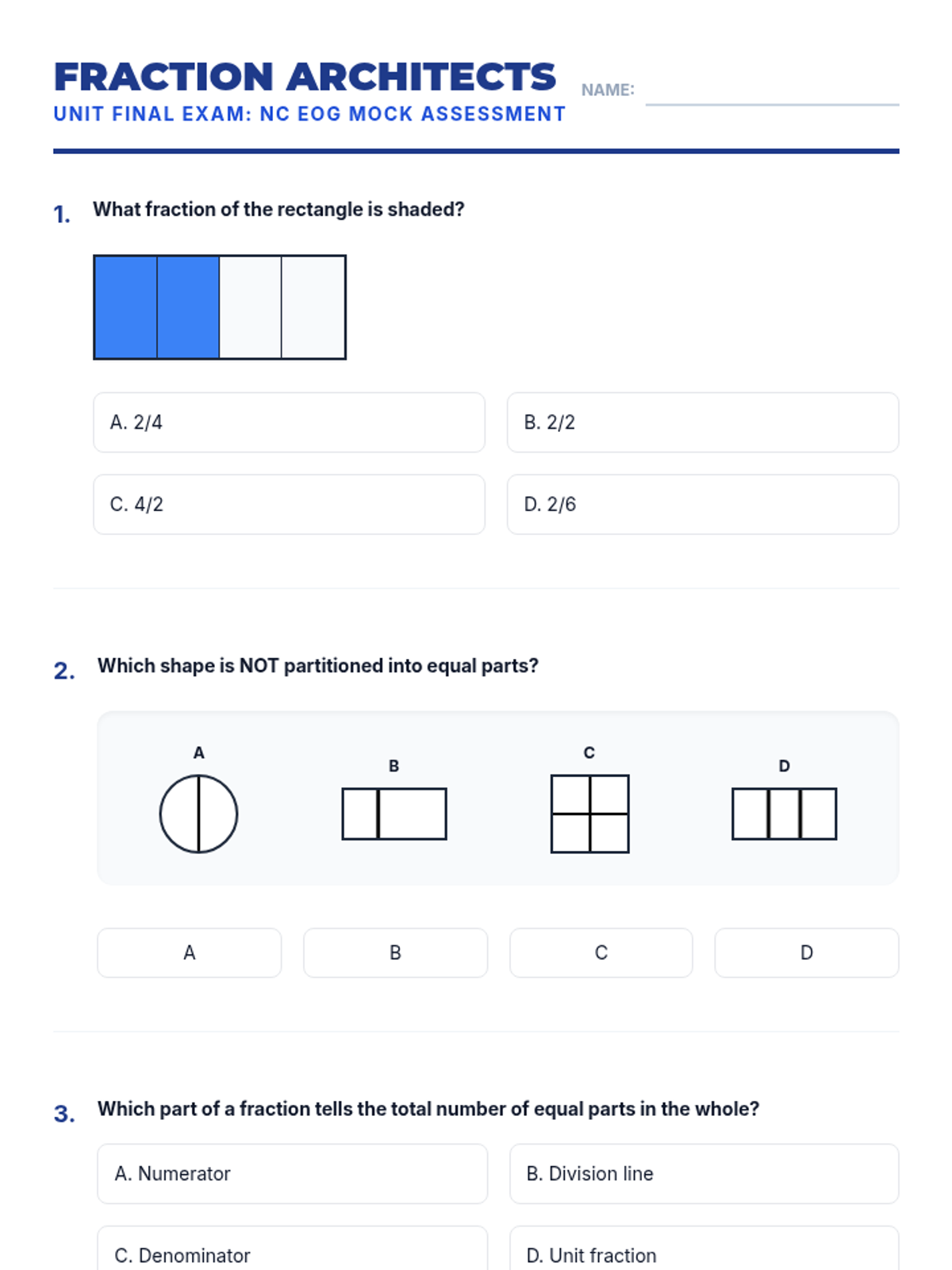
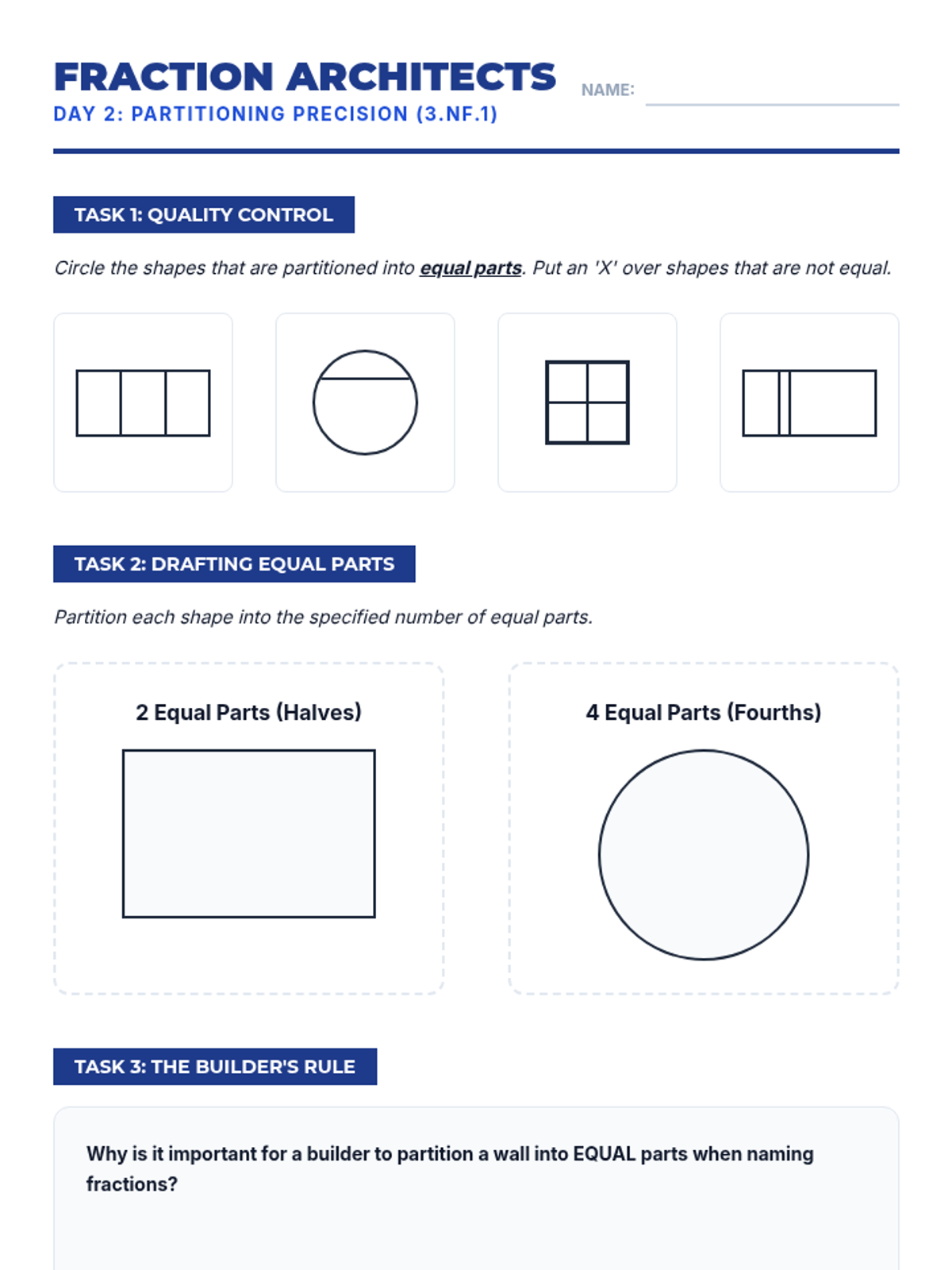
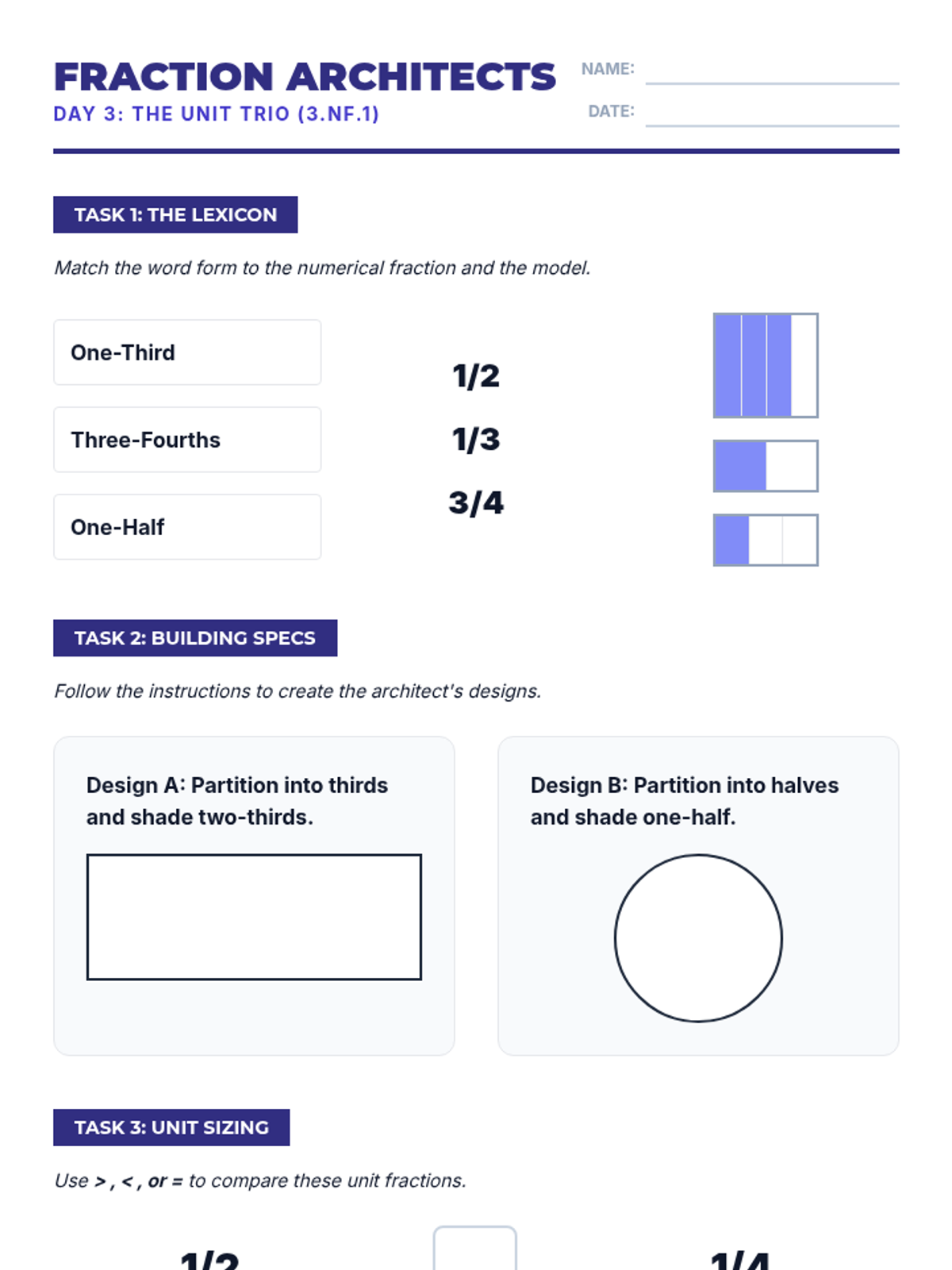
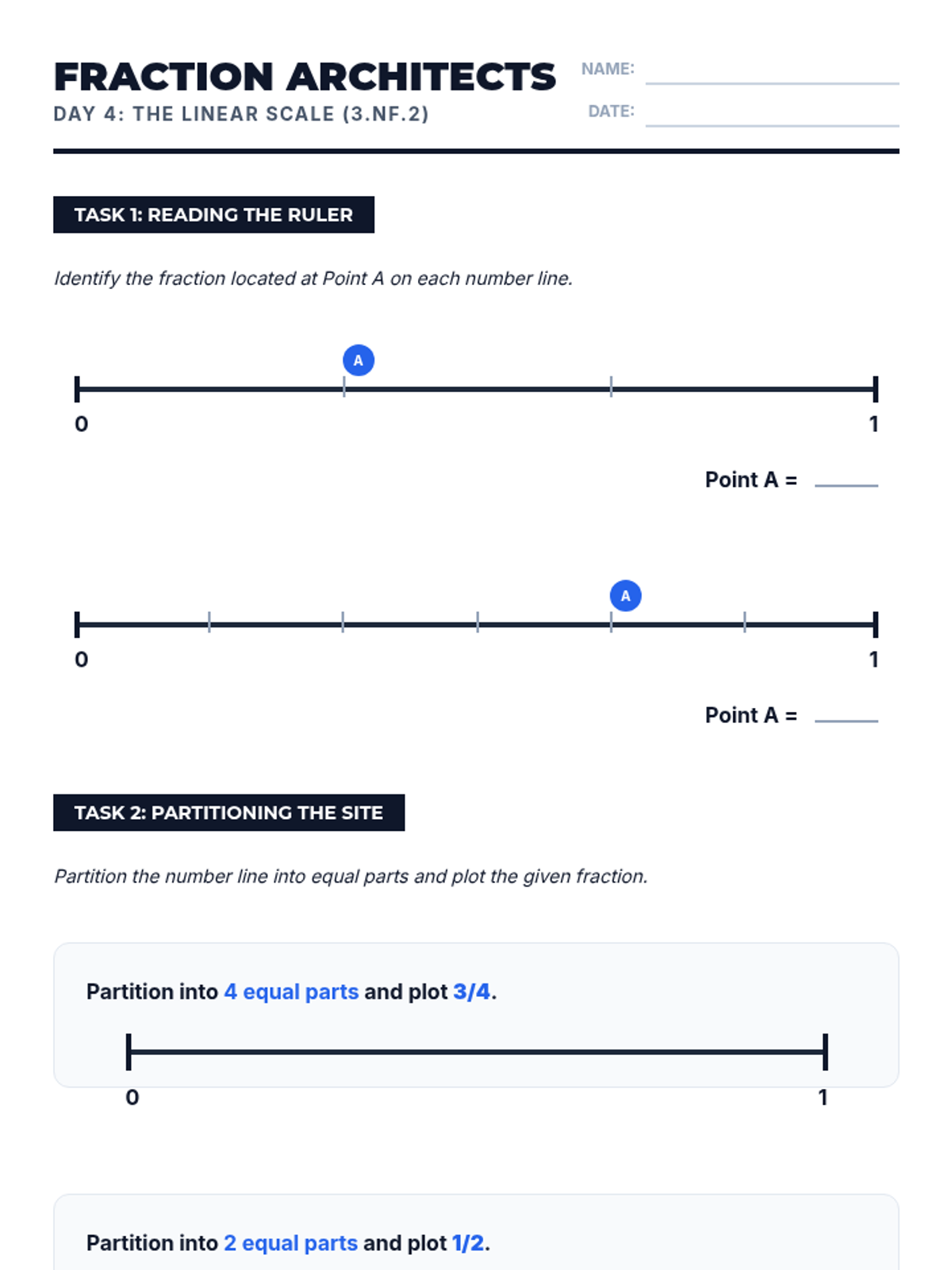
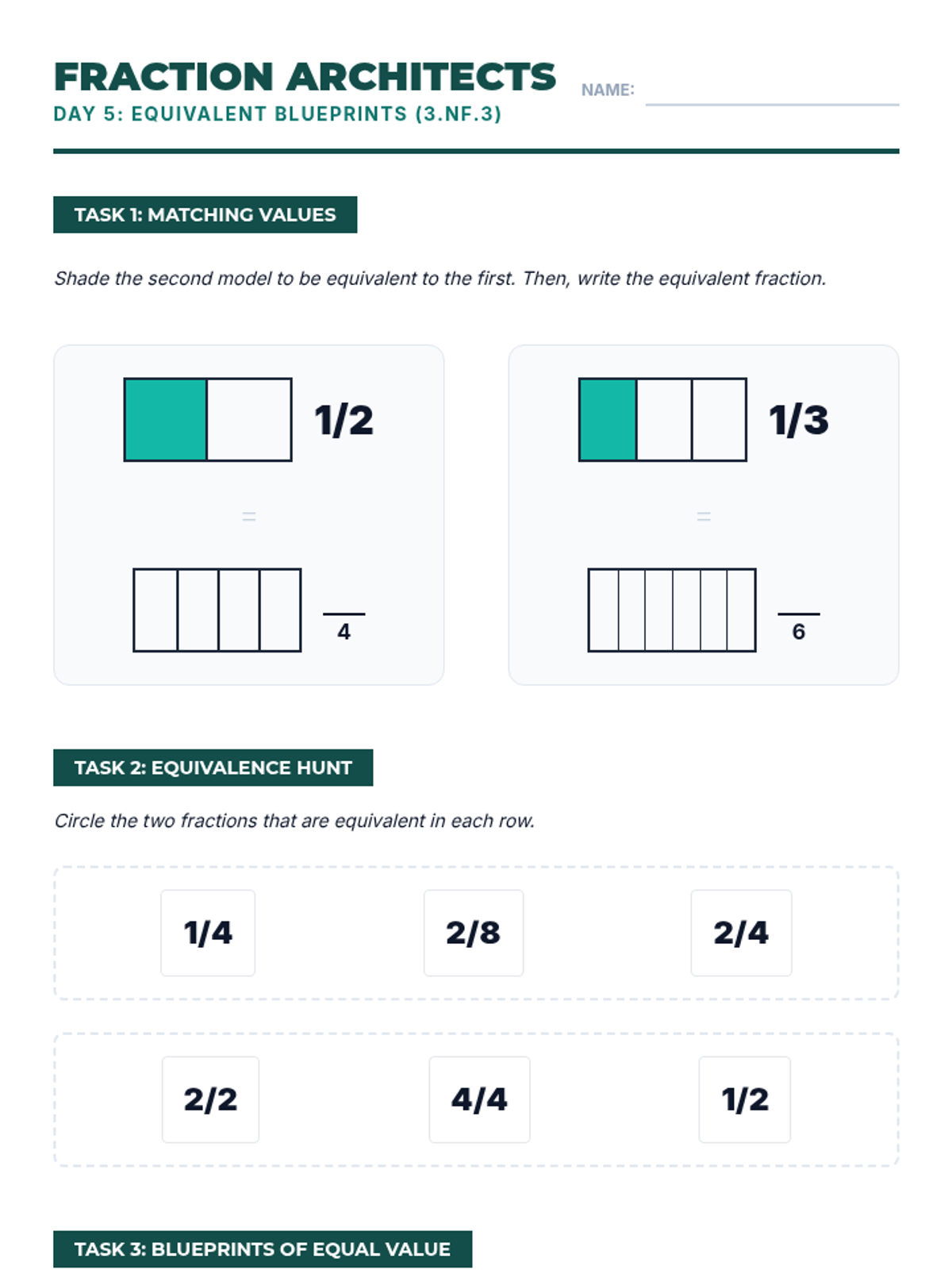
A 5-day unit focused on North Carolina 3rd Grade Fraction standards (3.NF.1, 3.NF.2, 3.NF.3). Students act as 'Fraction Architects' to master partitioning, naming, and placing fractions on number lines.
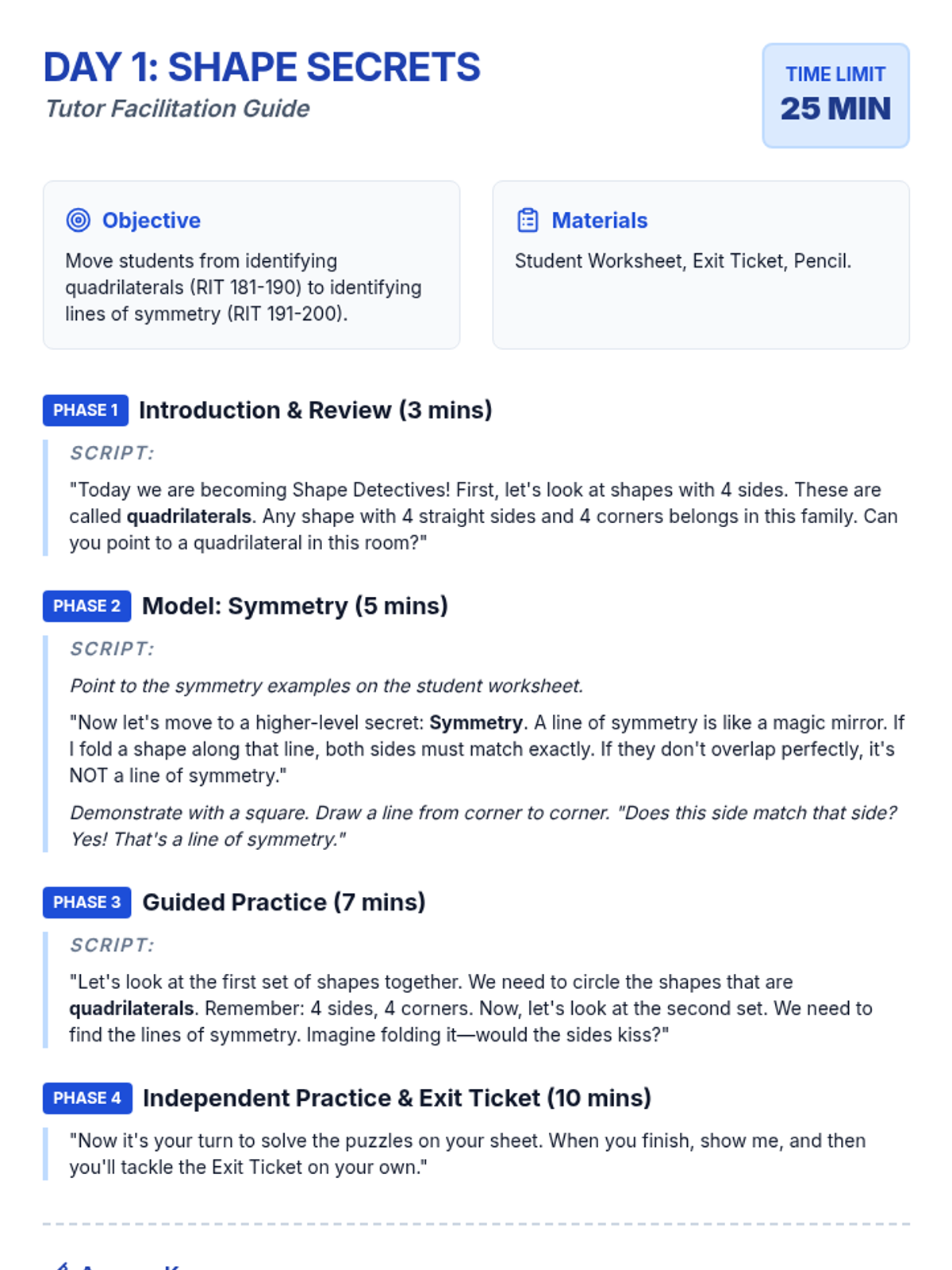
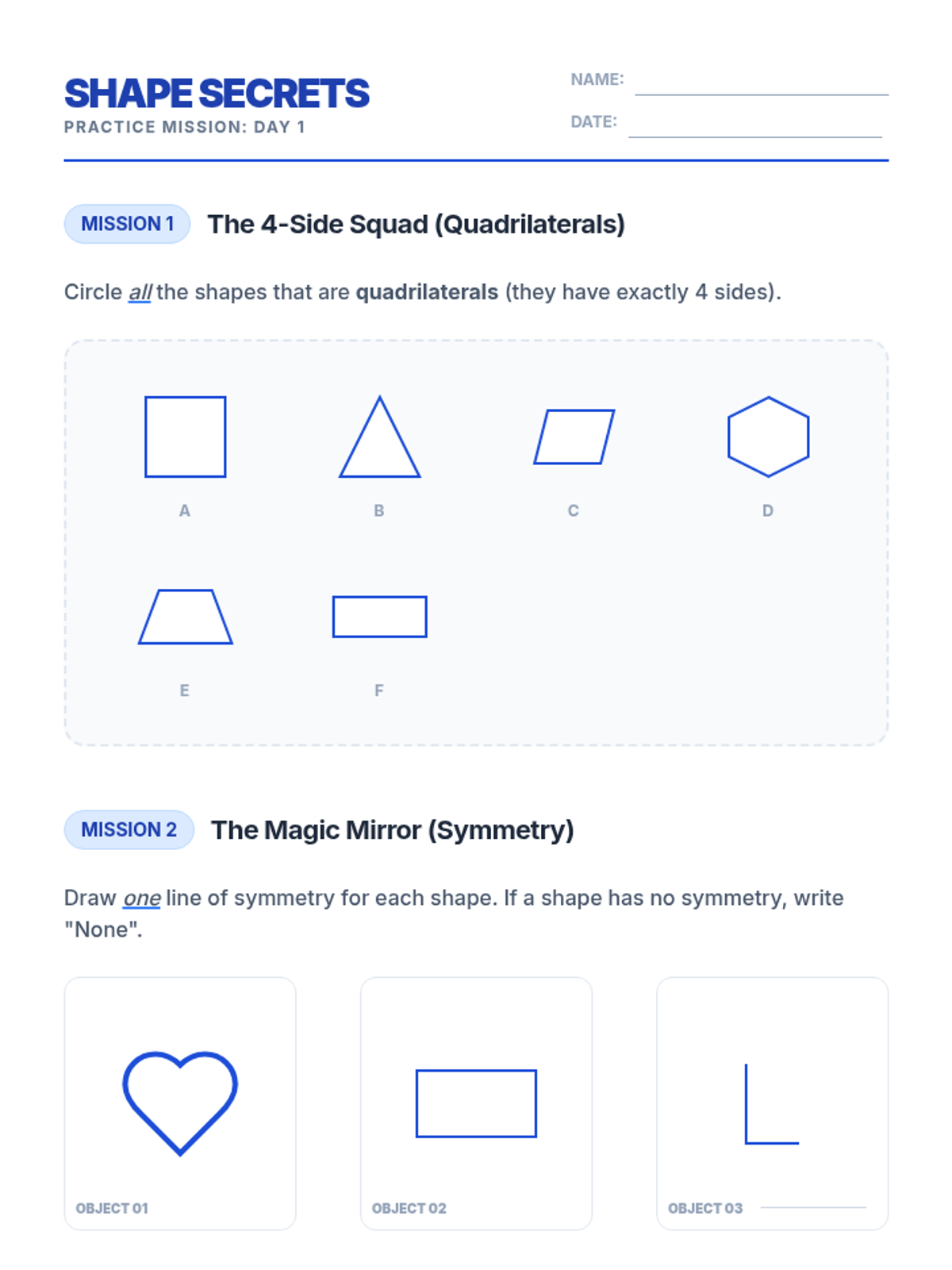
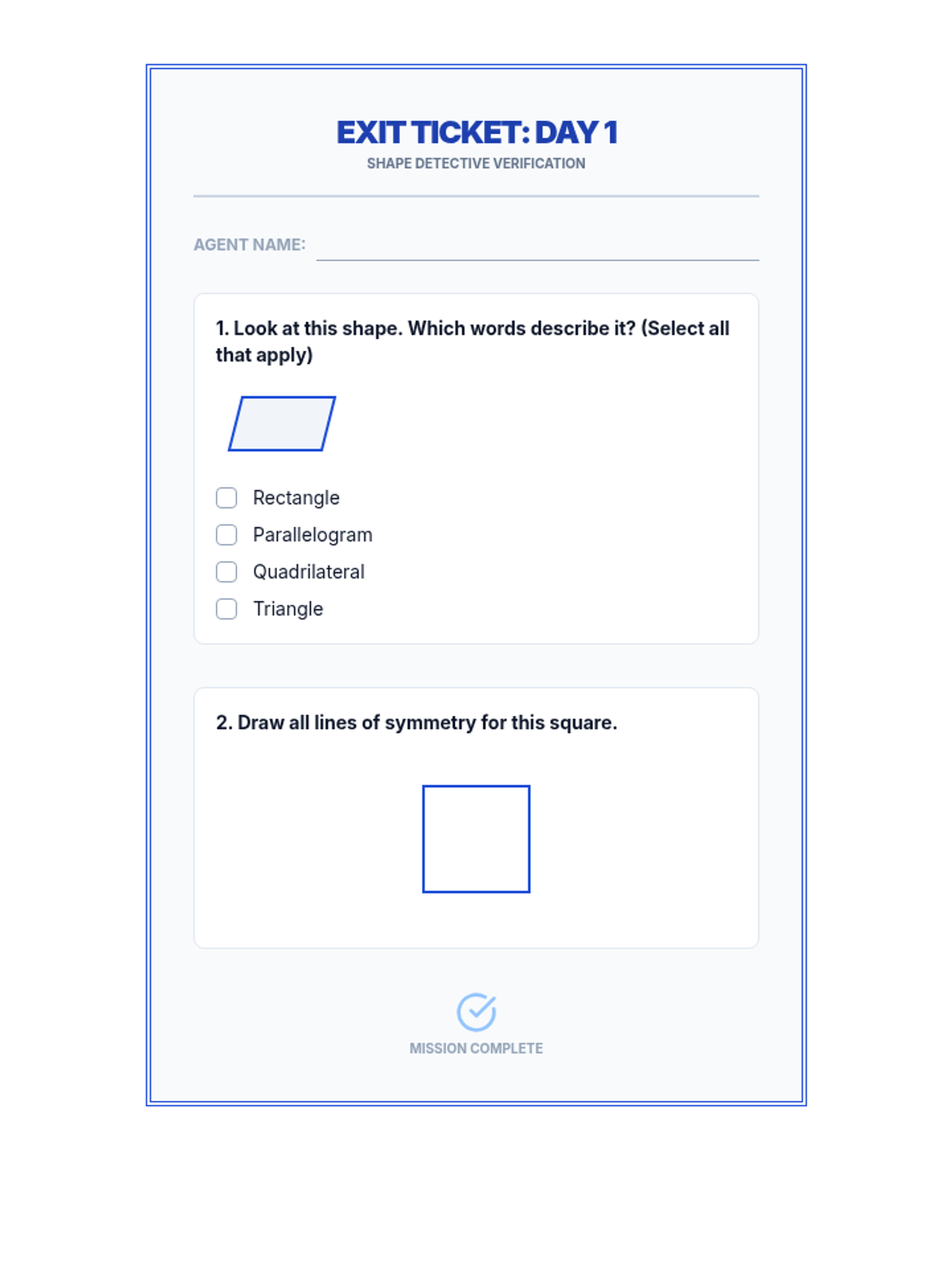
A 3-day targeted tutoring sequence designed to move students from RIT 181-190 to 191-200 in the MAP Growth Geometry and Measurement strand, focusing on shape attributes, symmetry, and perimeter.
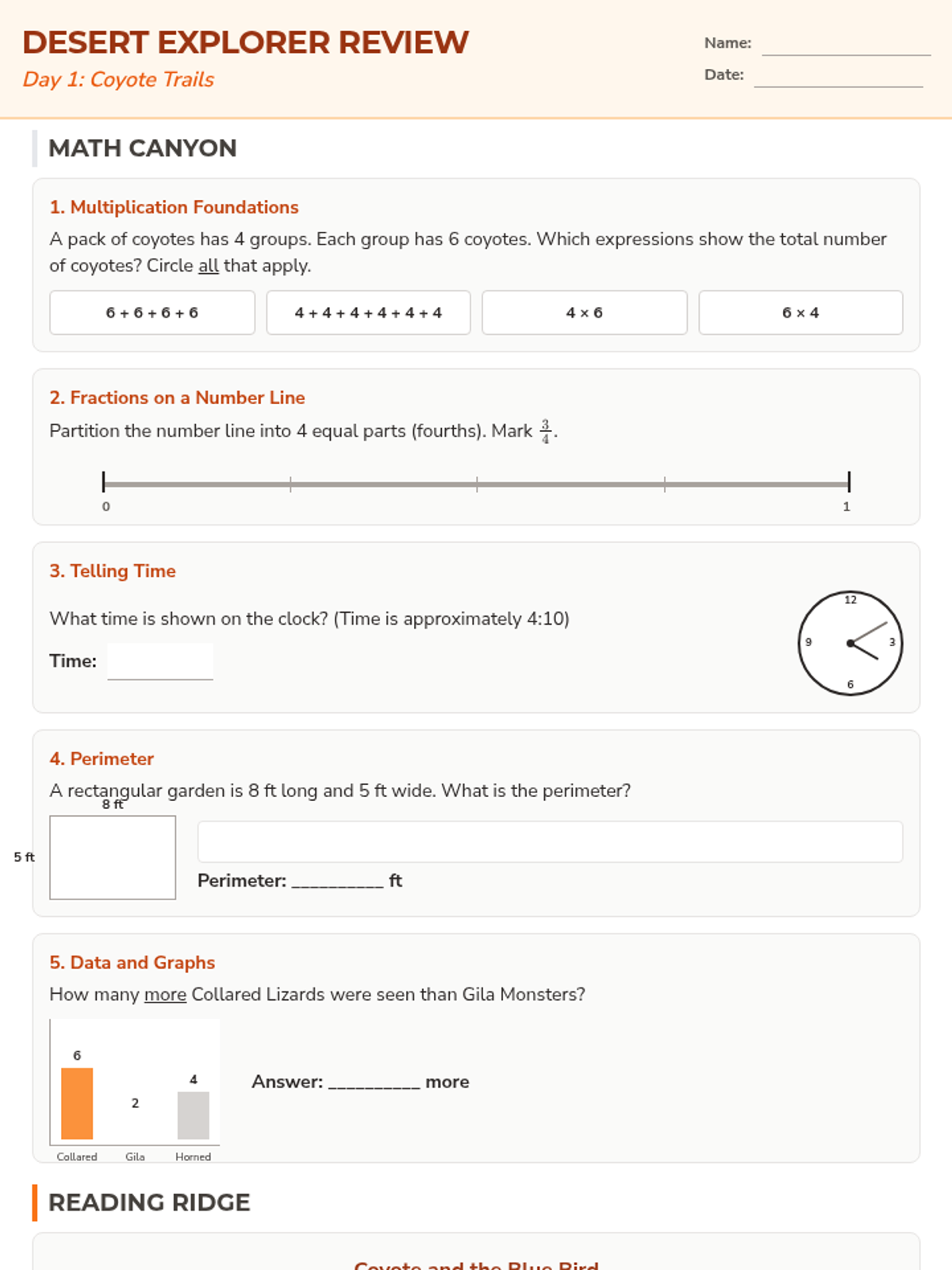
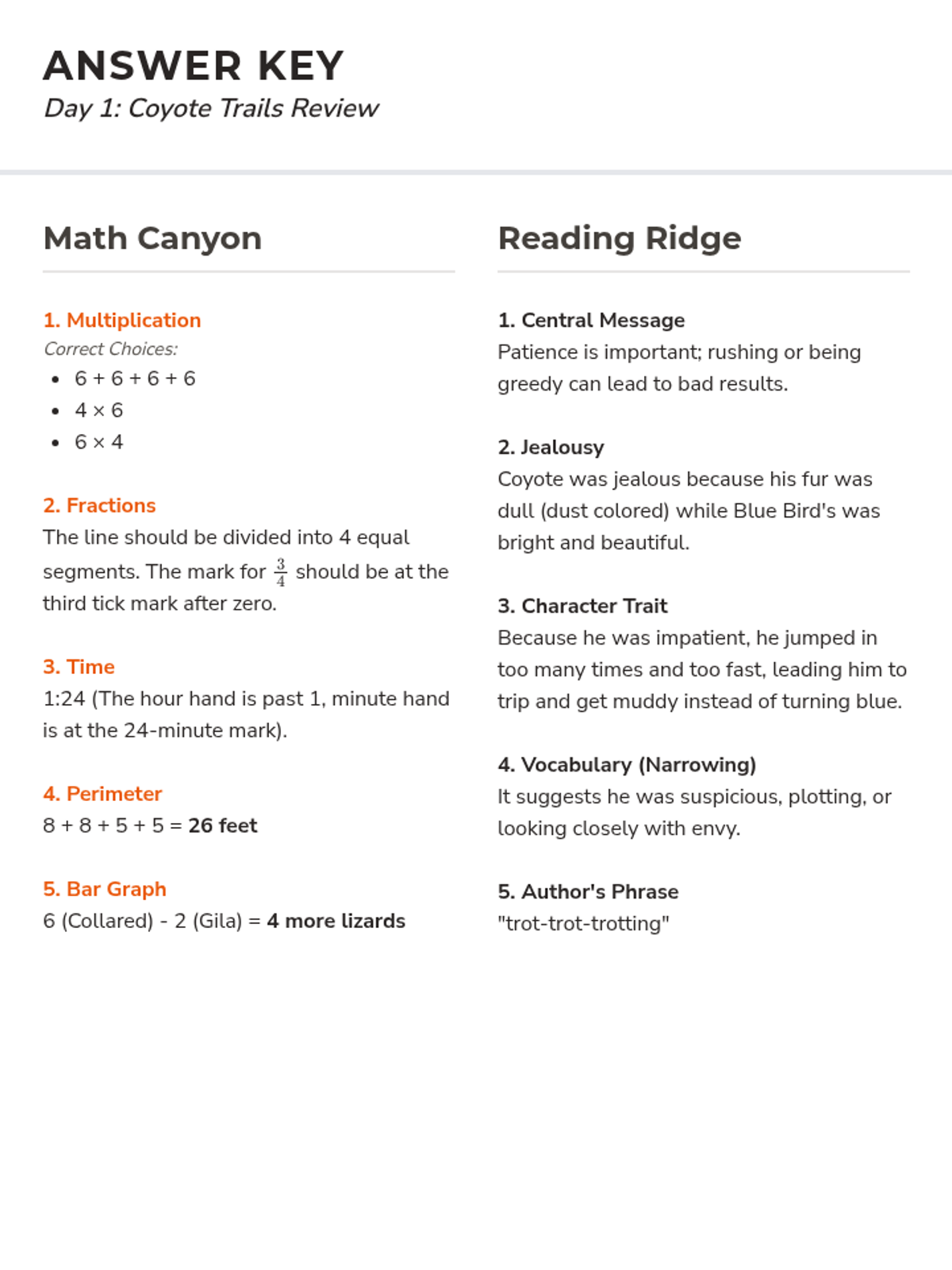
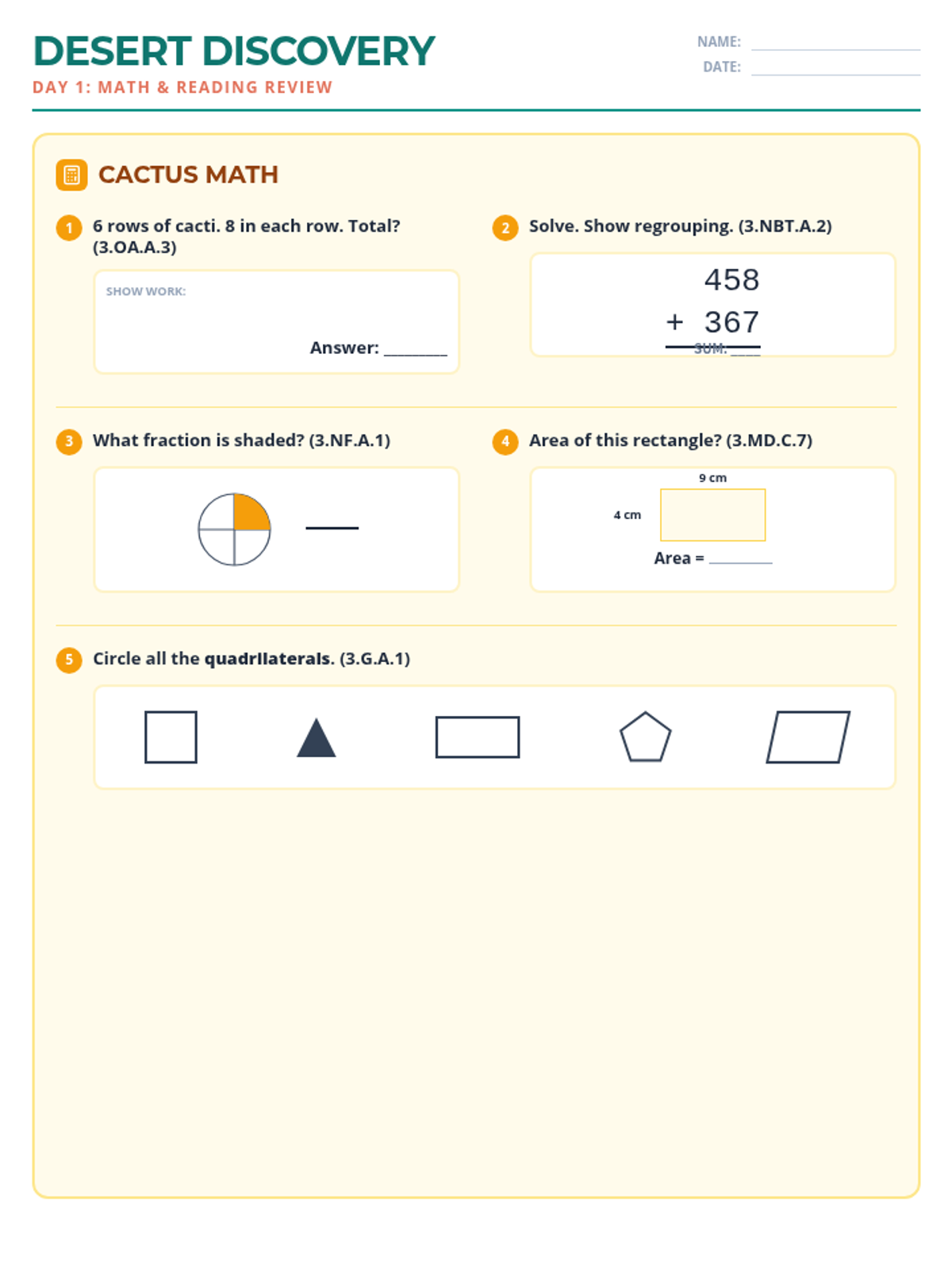
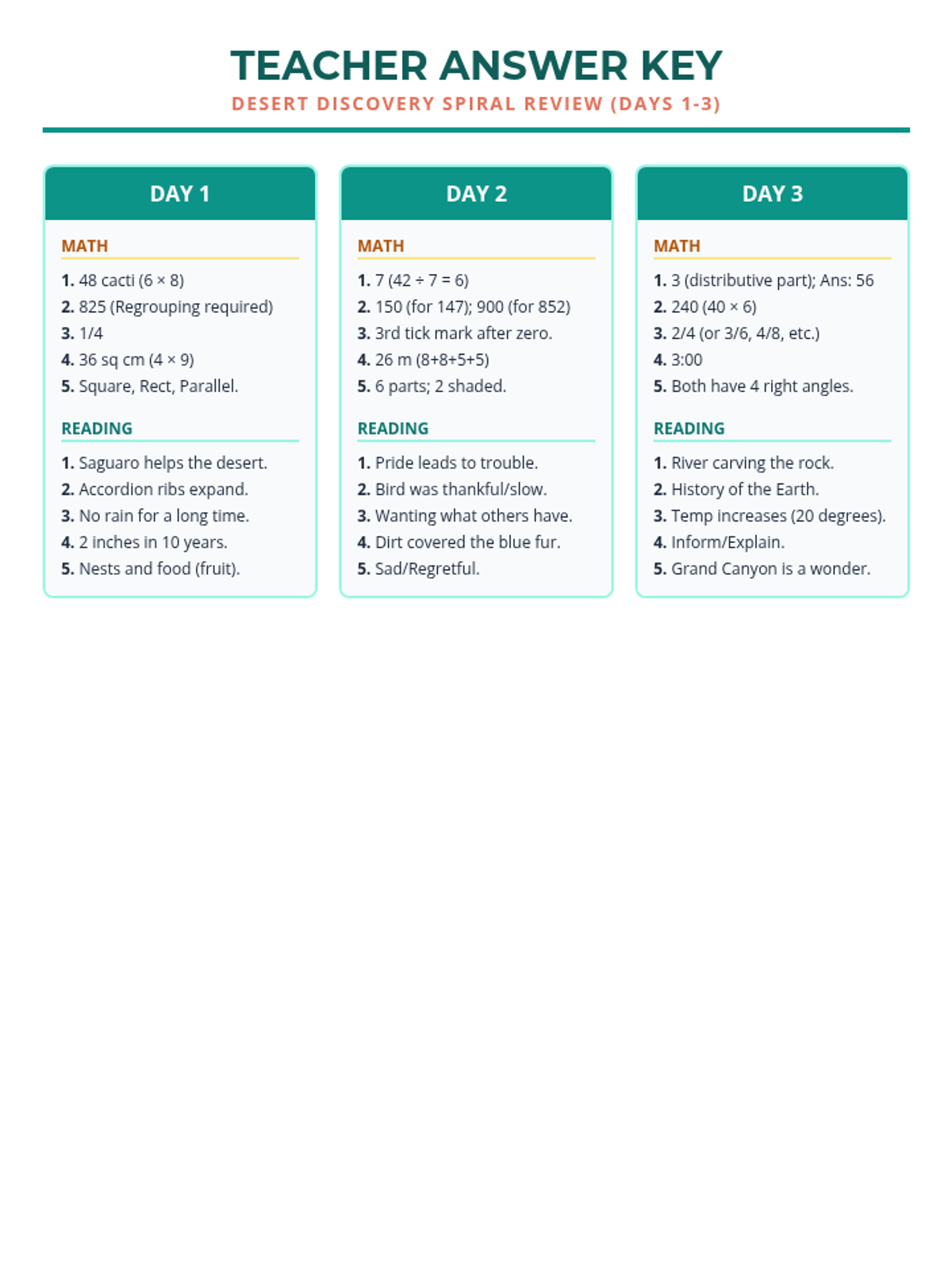
A 5-day spiral review sequence for 3rd grade students in Arizona, covering essential Math (multiplication, fractions, measurement) and ELA (RL and RI) standards with a Desert Explorer theme.
A 3-day spiral review for 3rd-grade students in Arizona, covering all math domains and a mix of informational and literary reading passages. Each day includes 5 math and 5 reading questions designed for daily practice and assessment.
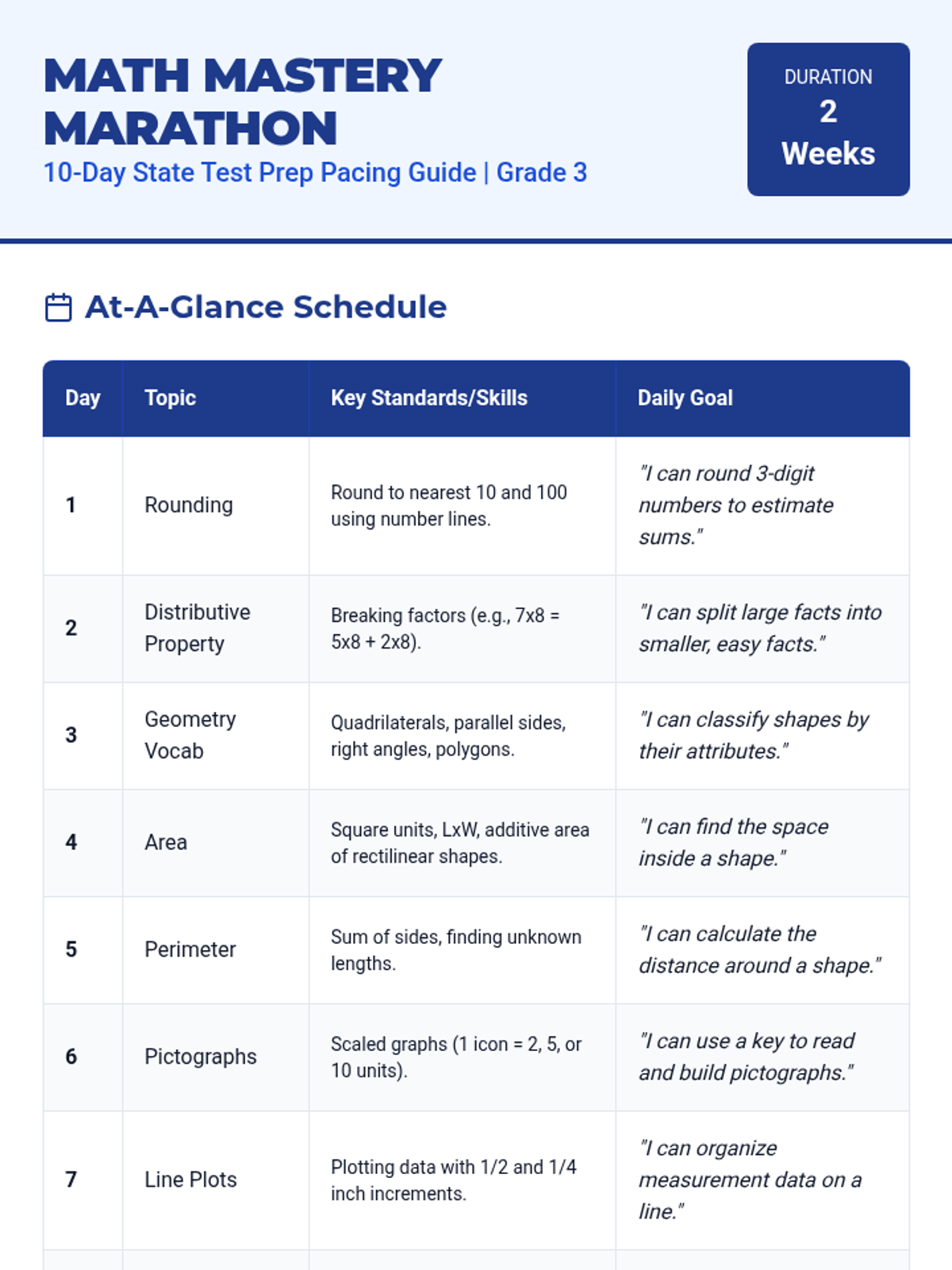
A 10-day intensive math review program for 3rd grade state testing, covering rounding, properties, geometry, data, and measurement.
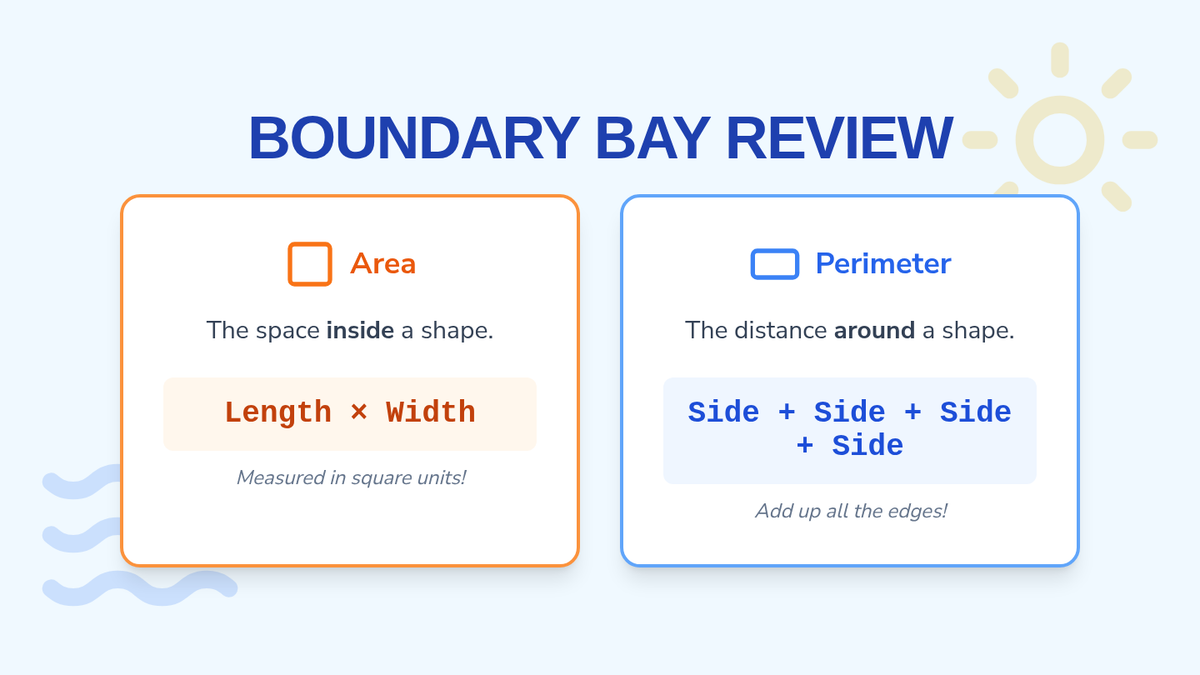
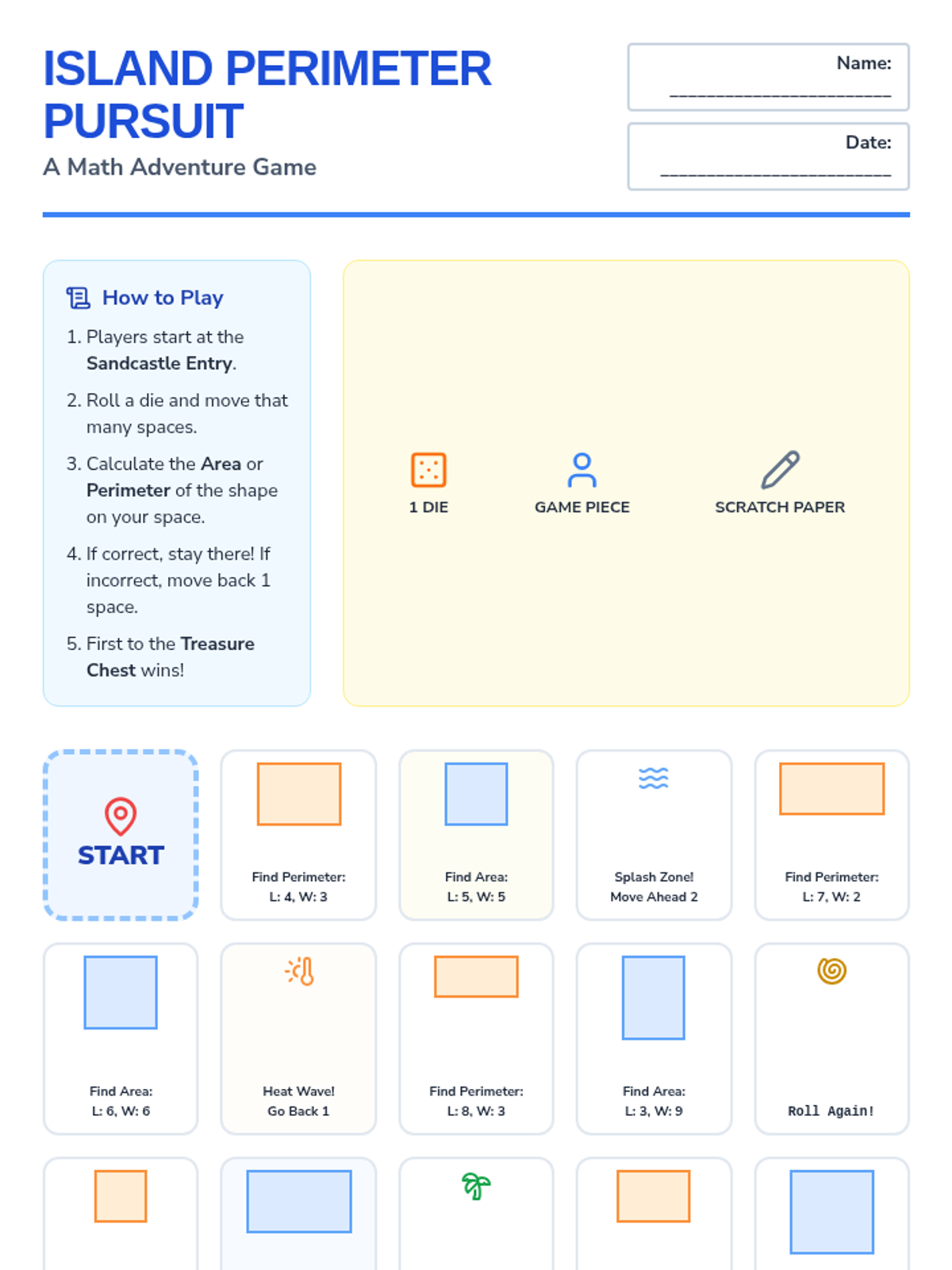
A week-long series of beach-themed math lessons for 3rd grade covering area, perimeter, multiplication, division, rounding, and multi-digit addition and subtraction through games and interactive reviews.
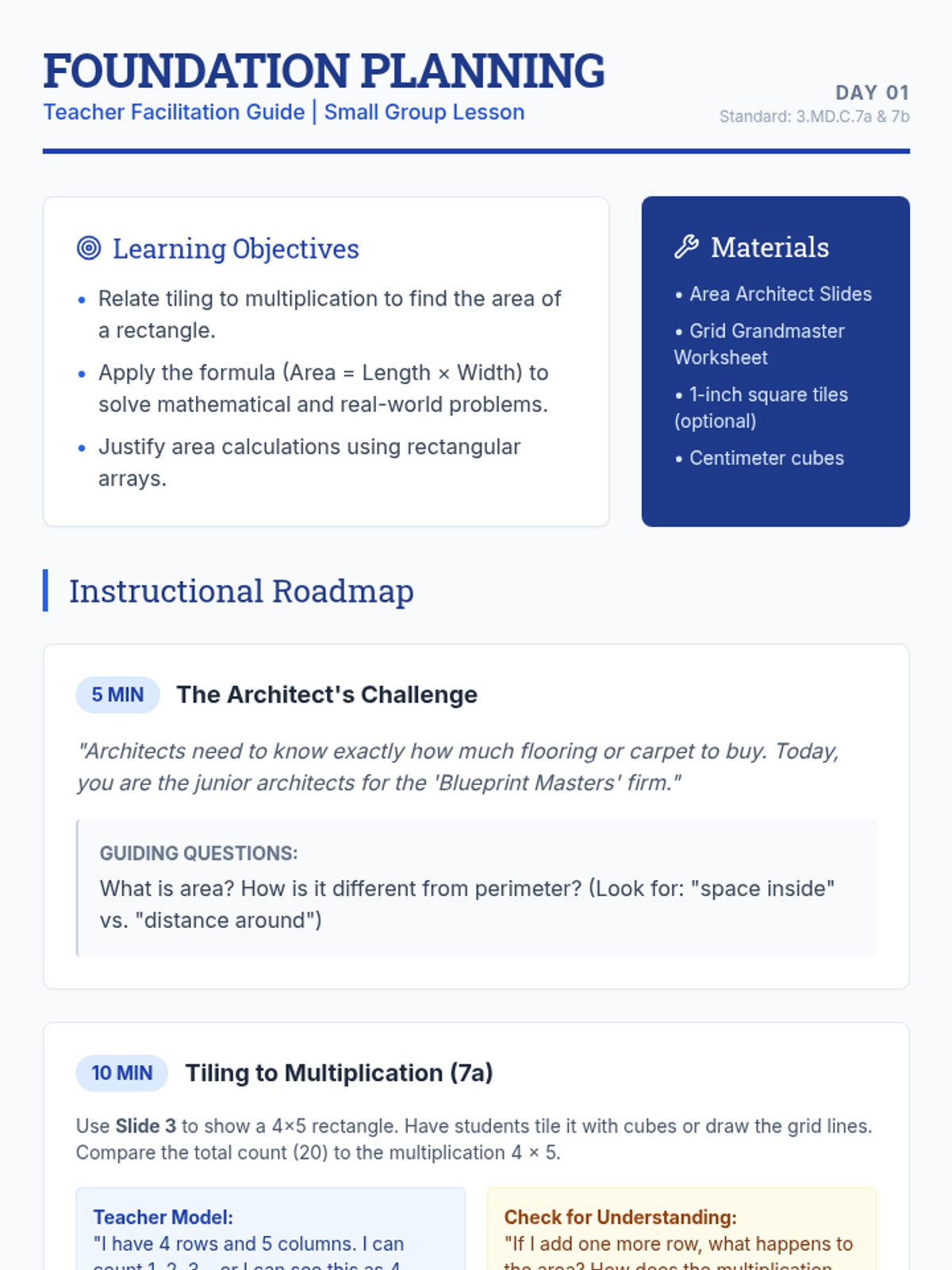
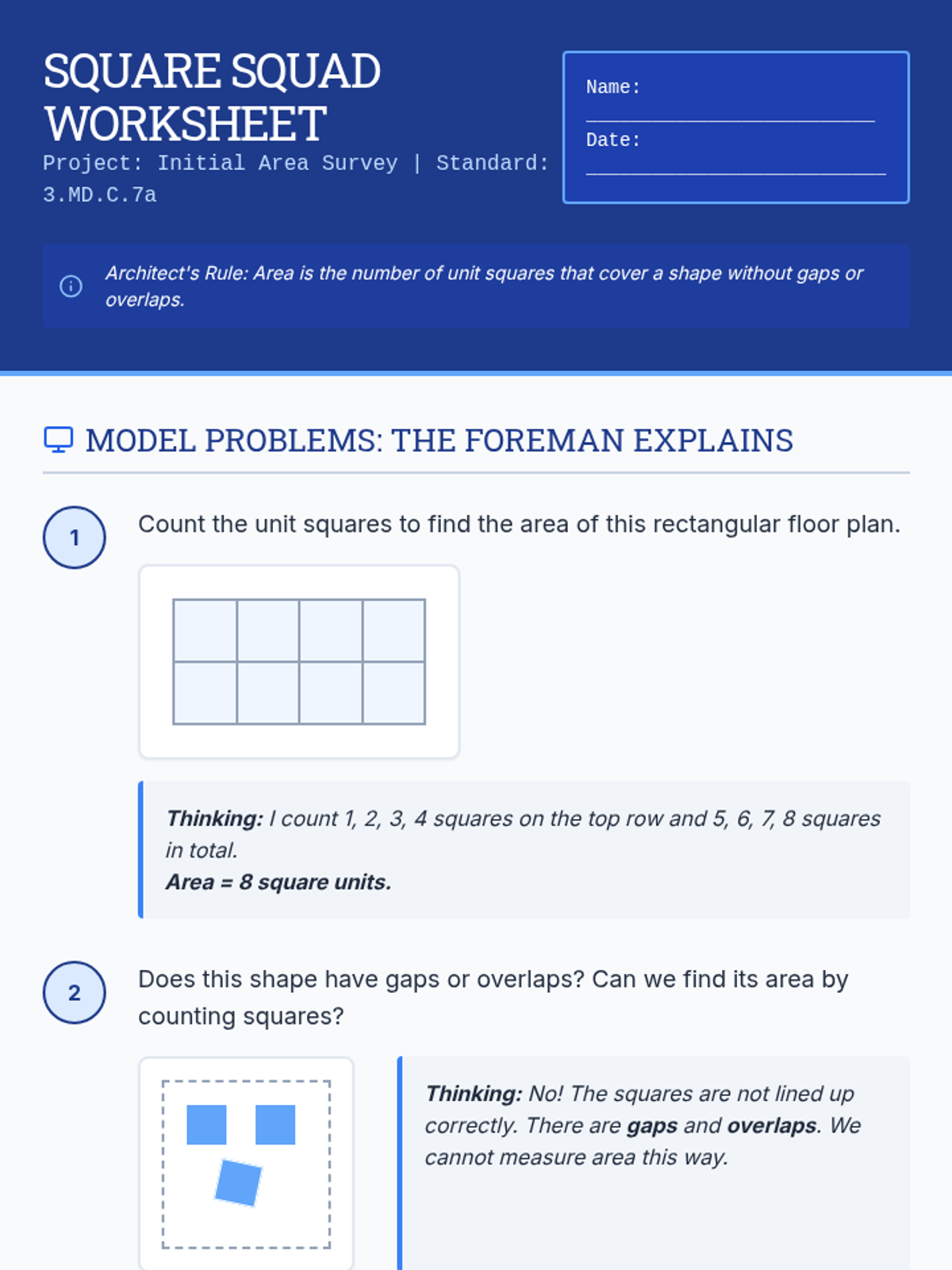
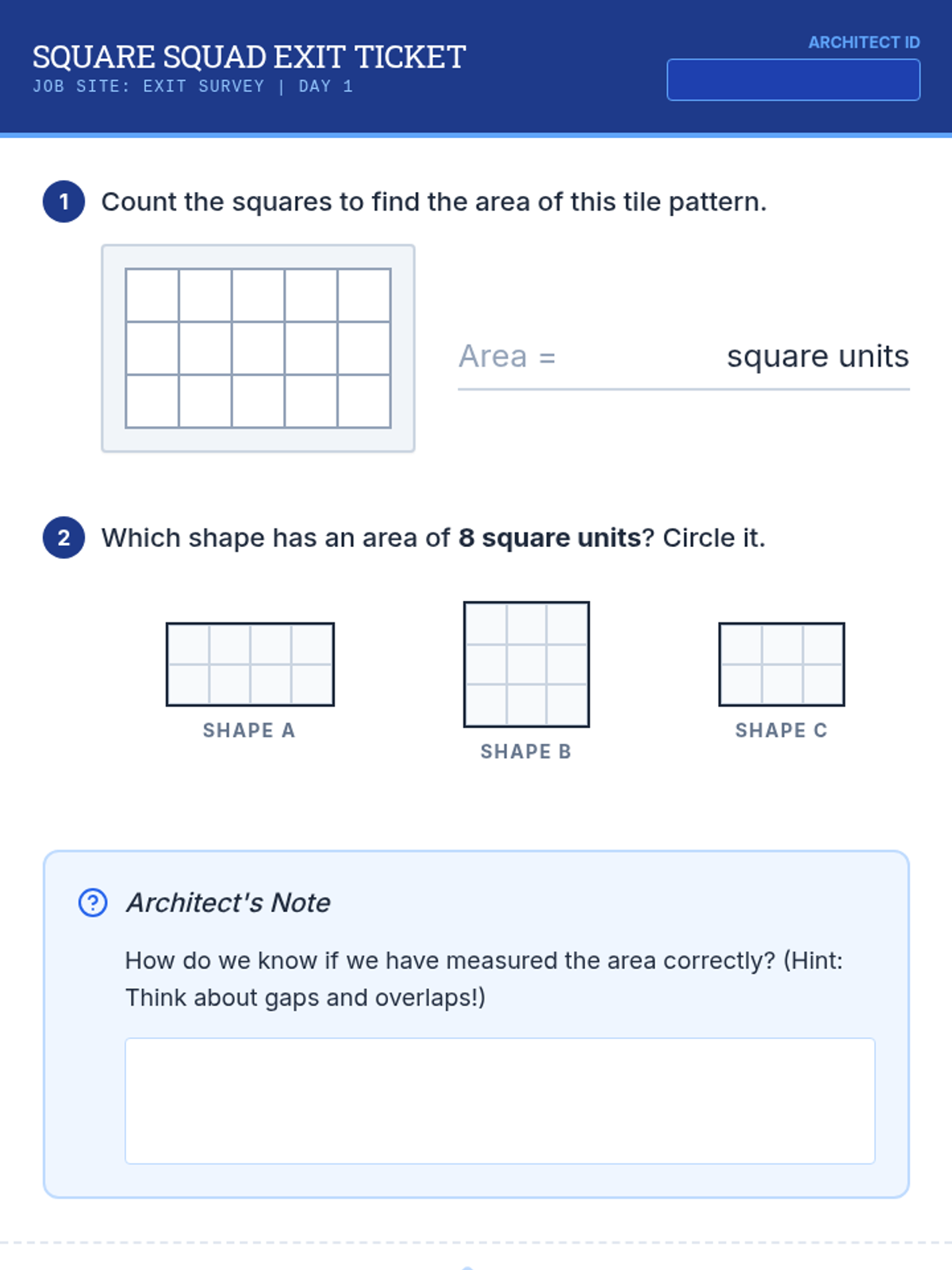
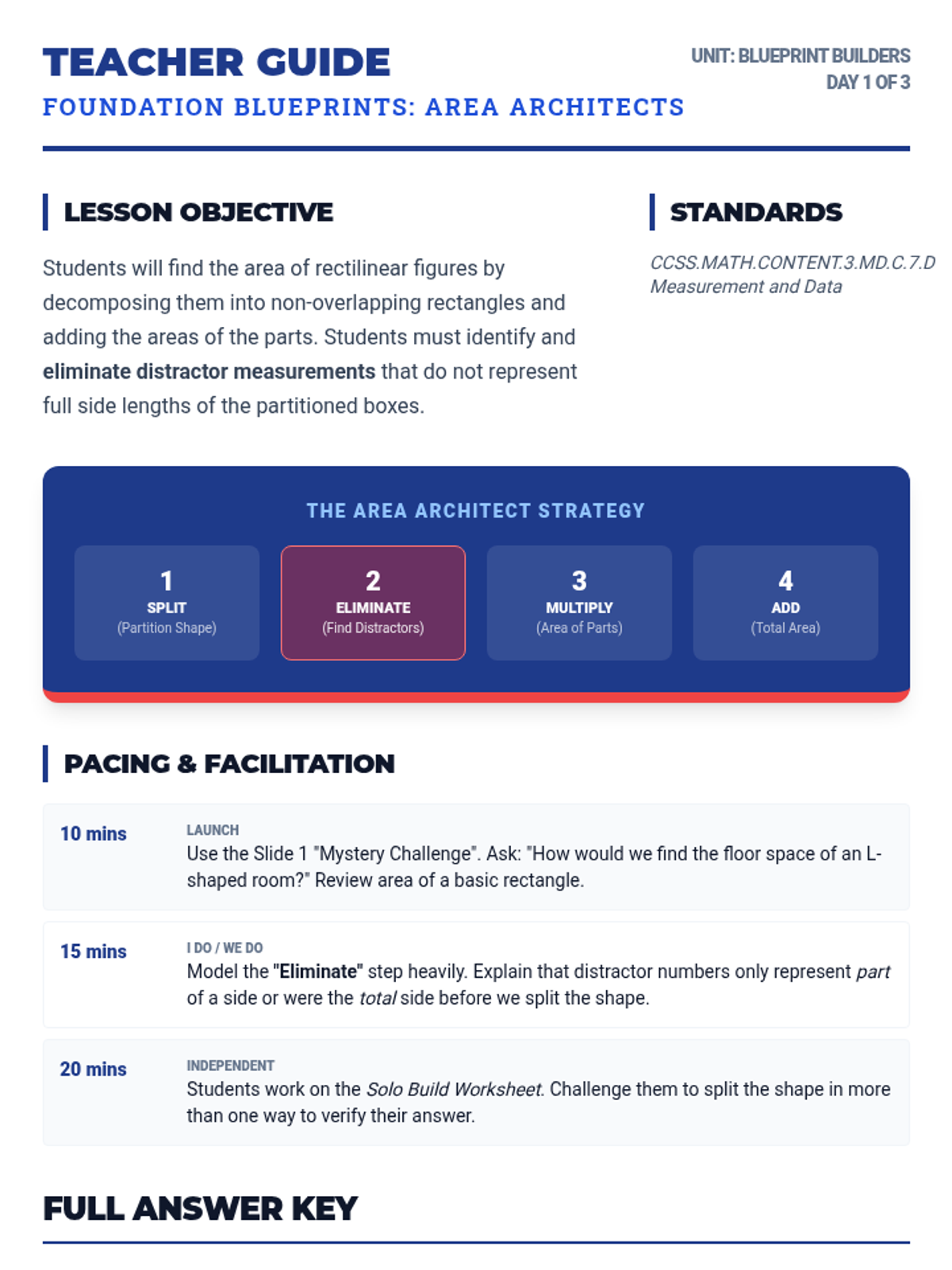
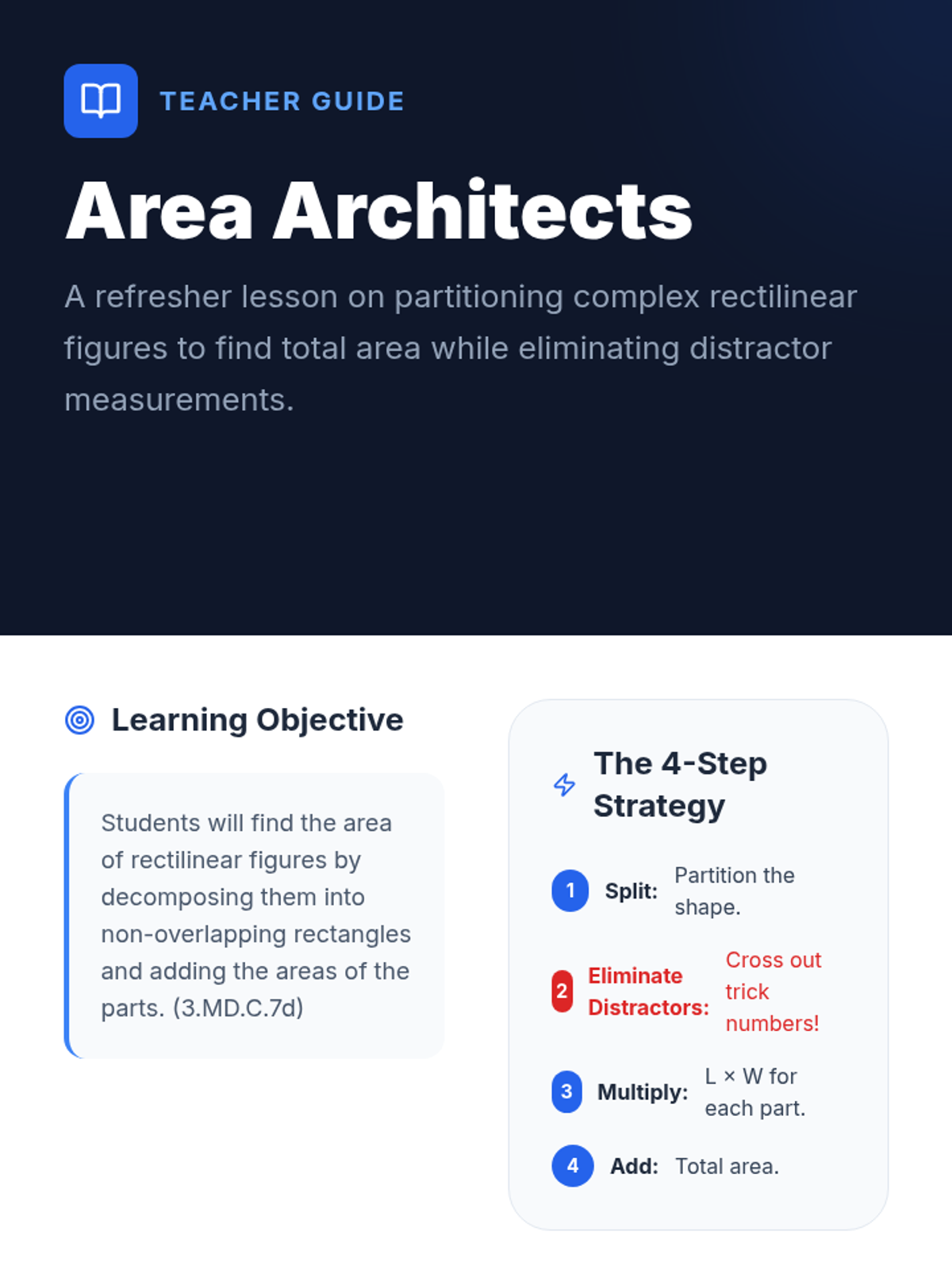
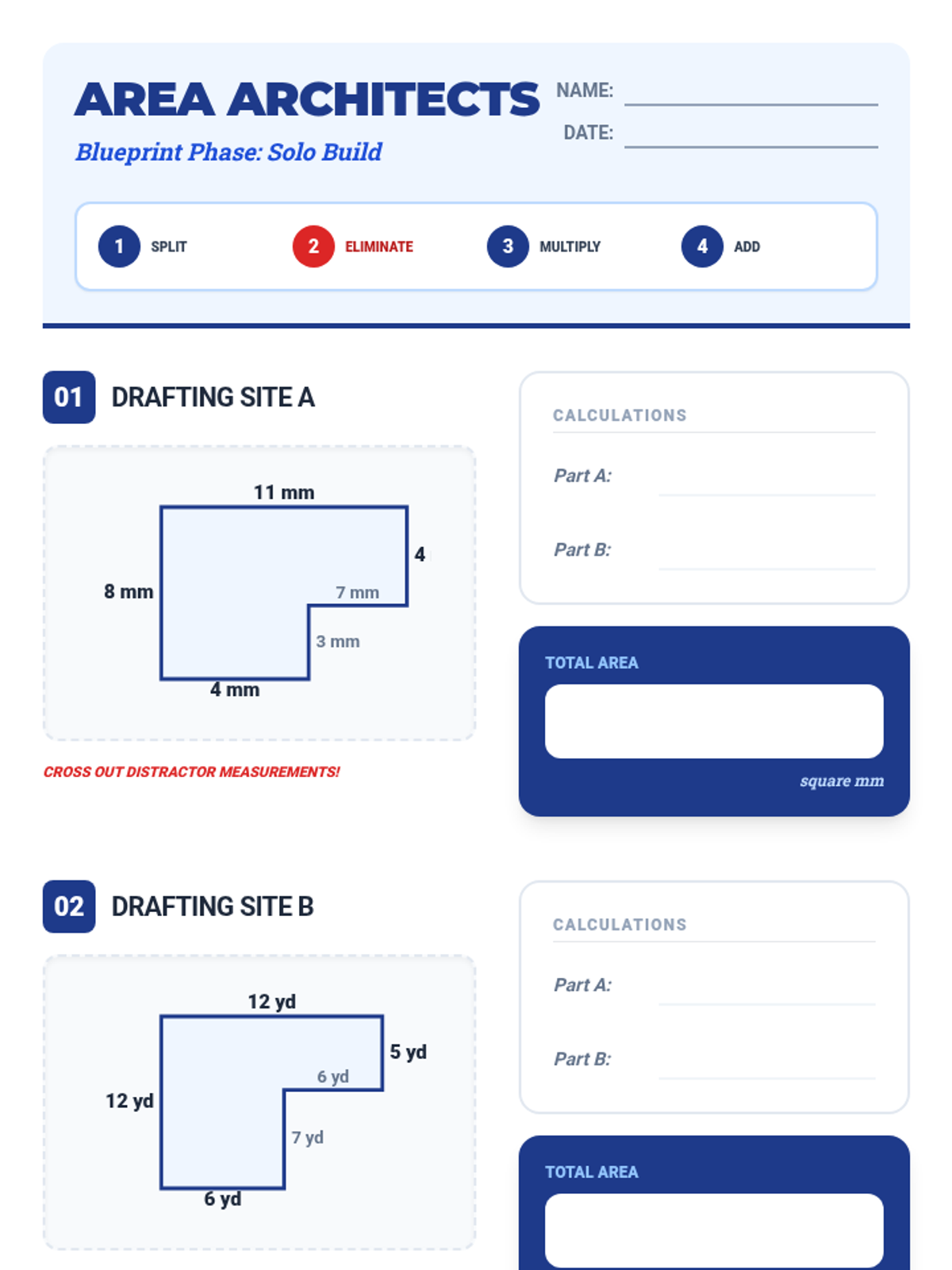
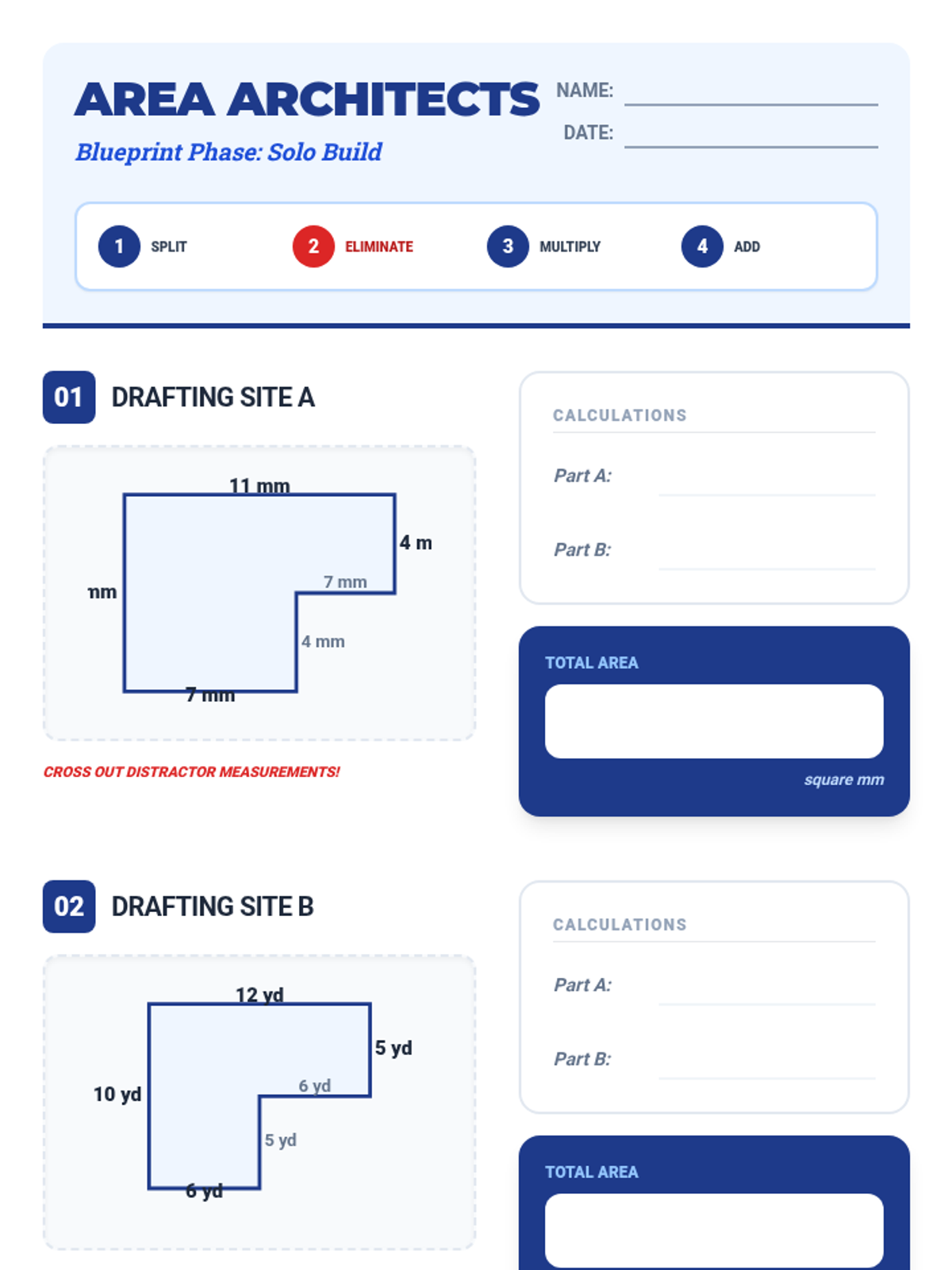
A 3-day small group math sequence focused on mastering area concepts (3.MD.C.7a, 7b, 7d) through the lens of architectural design and blueprinting. Students move from tiling and multiplication to finding the area of complex rectilinear figures.
A 5-day intensive intervention sequence focused on determining area using multiplication (3.6C) and calculating perimeter including missing side lengths (3.7B). The unit uses a 'Boundary Builders' construction theme to make geometric concepts concrete and engaging for small group instruction.
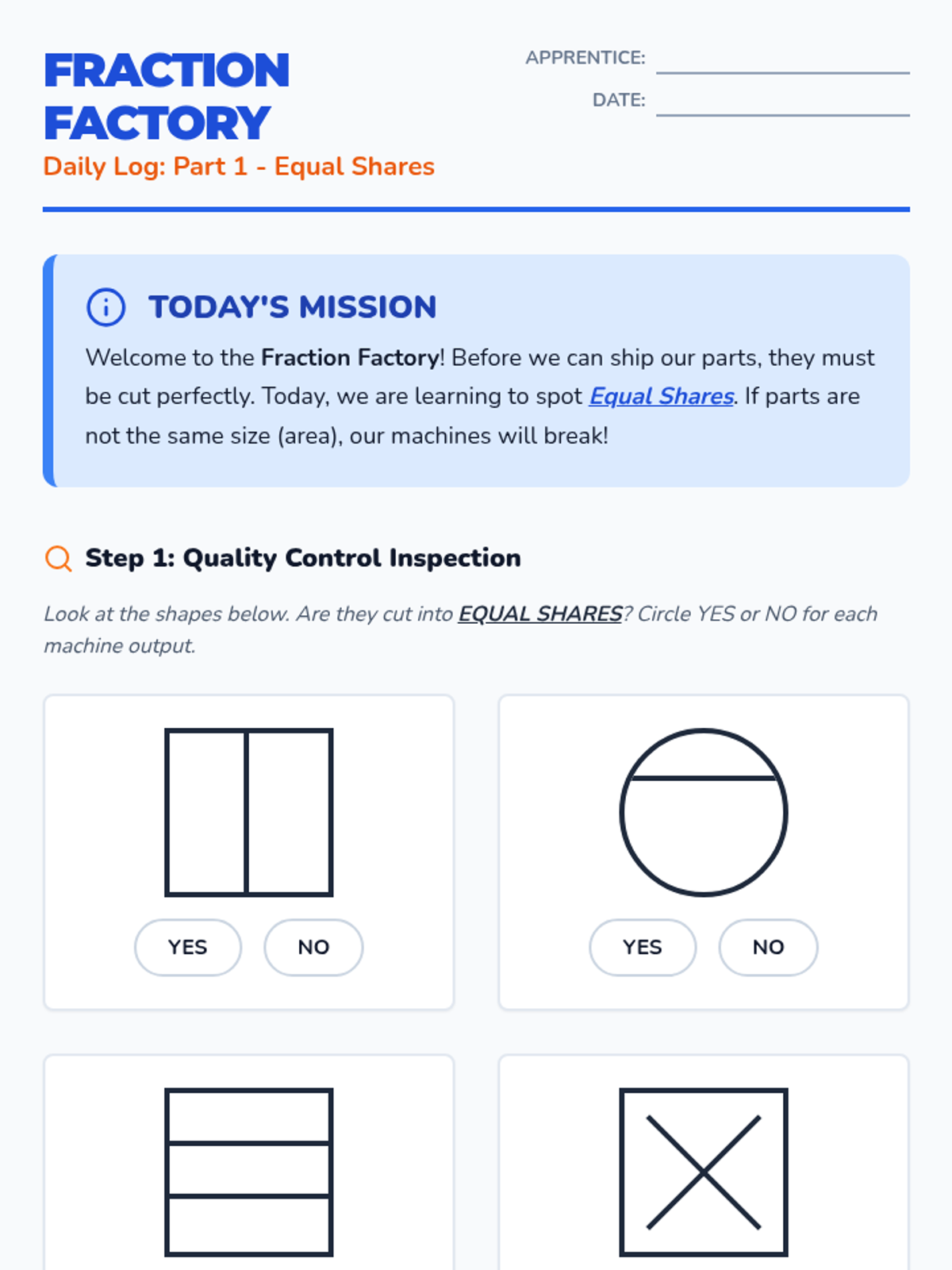
A 5-day self-paced unit explicitly aligned to Arizona Mathematics Standard 3.G.A.2. Students partition shapes into equal areas and express the parts as unit fractions (1/b). The 'Fraction Factory' theme provides a real-world engineering context for geometry and spatial reasoning.
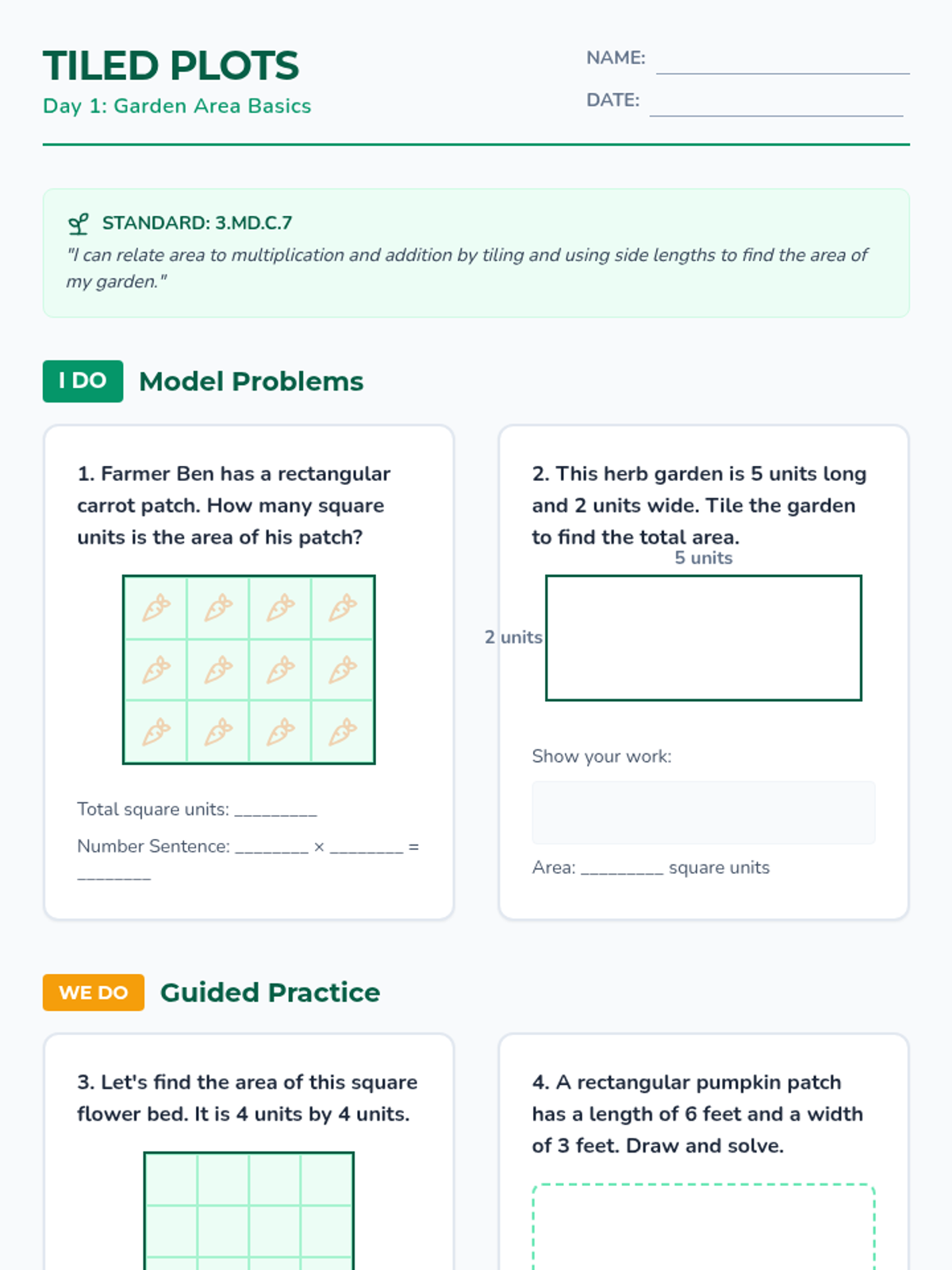
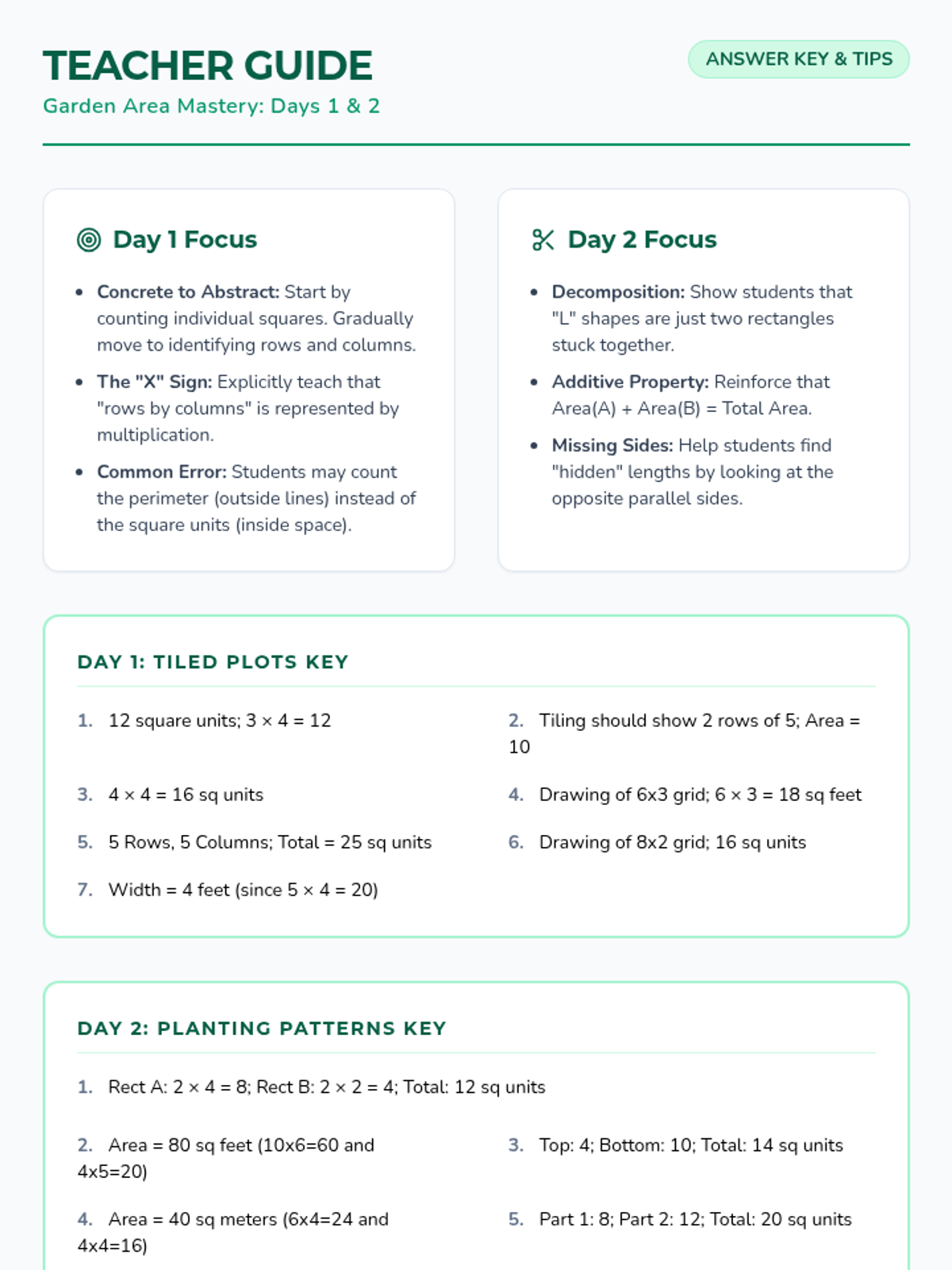
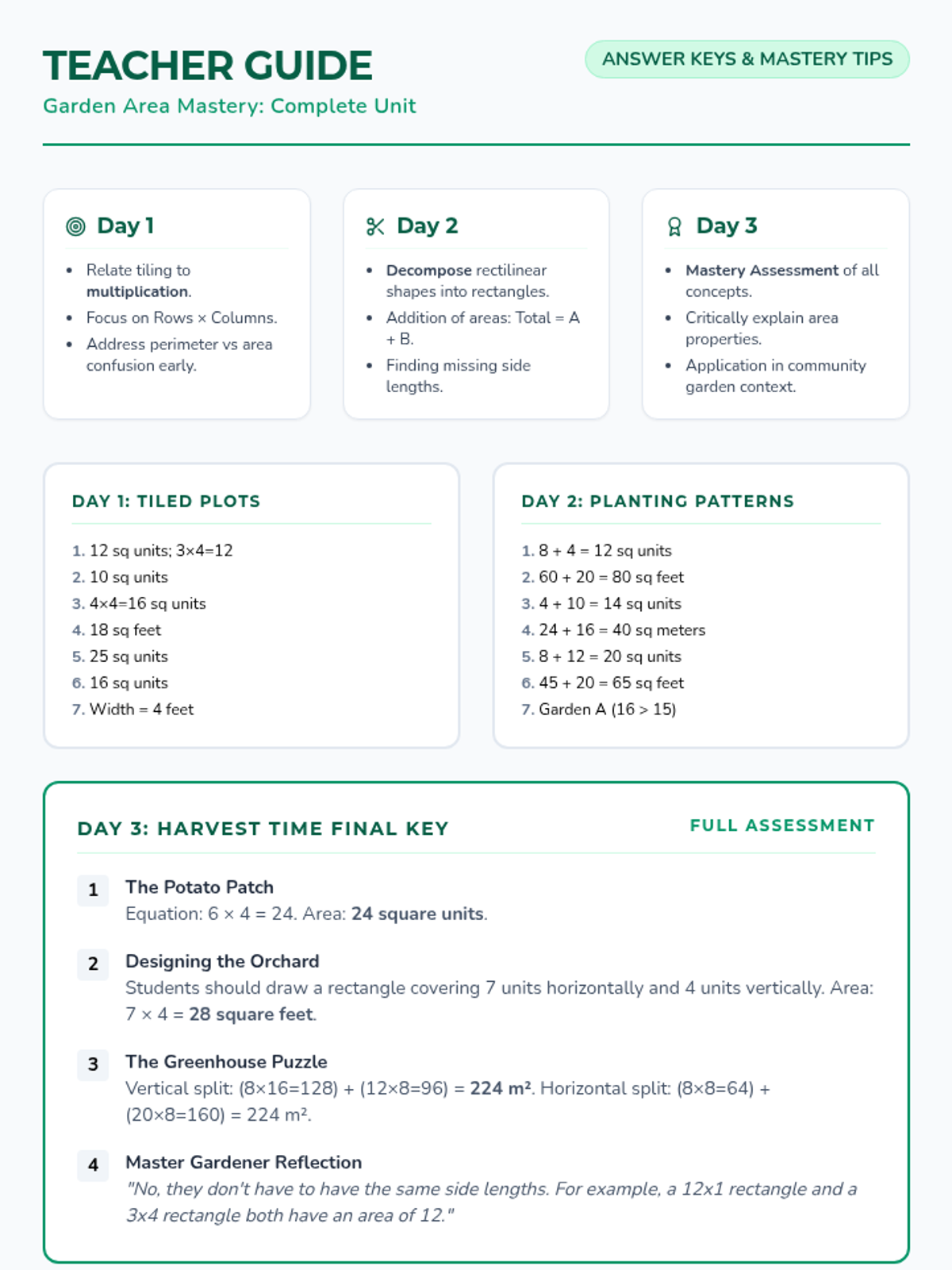
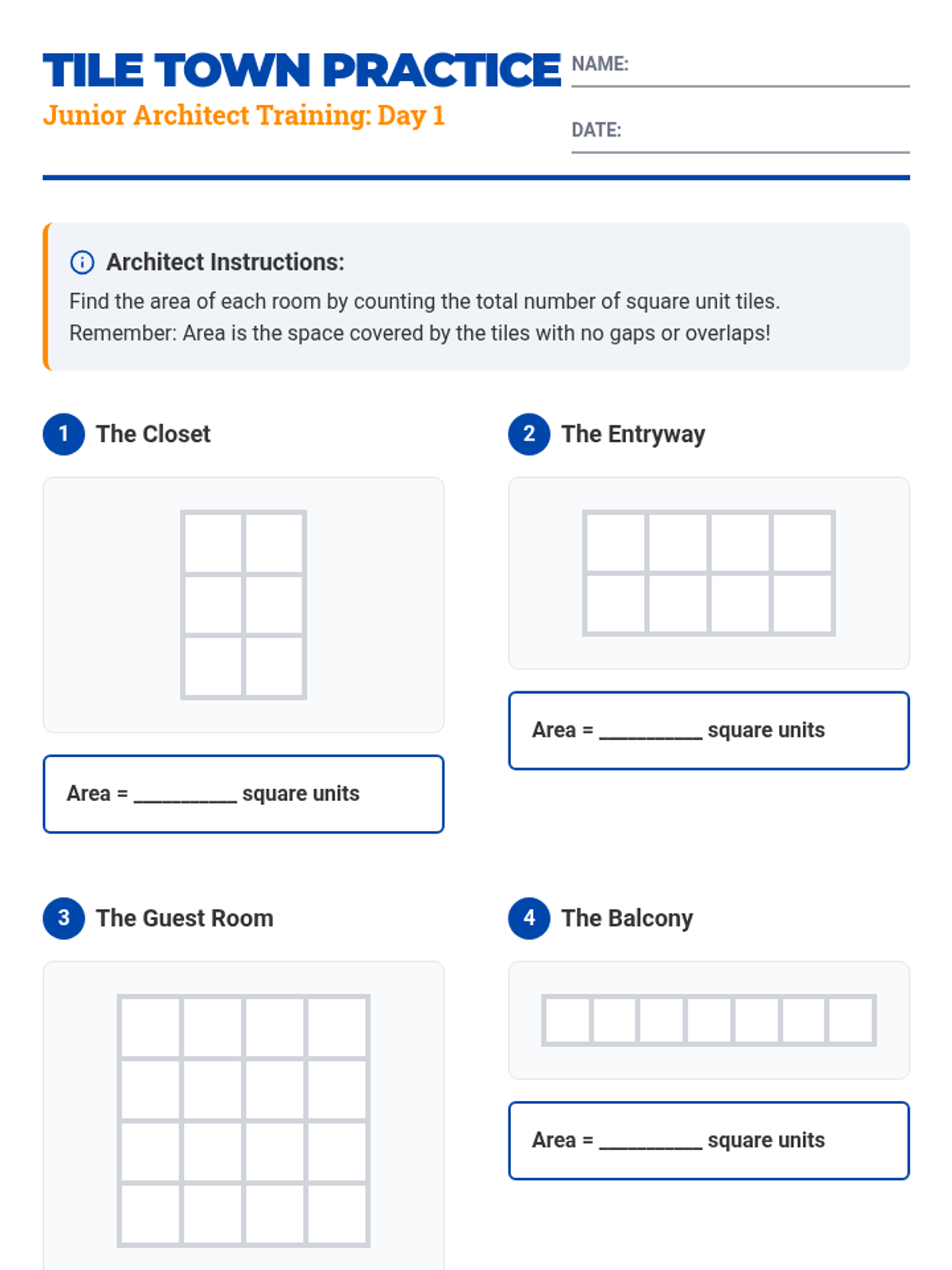
A comprehensive math unit for 3rd grade focusing on area measurement through the context of garden planning, aligned with Arizona standard 3.MD.C.7. Students move from concrete tiling to abstract multiplication.
A 4-day unit on area measurement for 3rd grade students, covering tiling, the relationship between multiplication and addition, and decomposing rectilinear shapes. Designed with a 'Blueprint Builders' architectural theme.
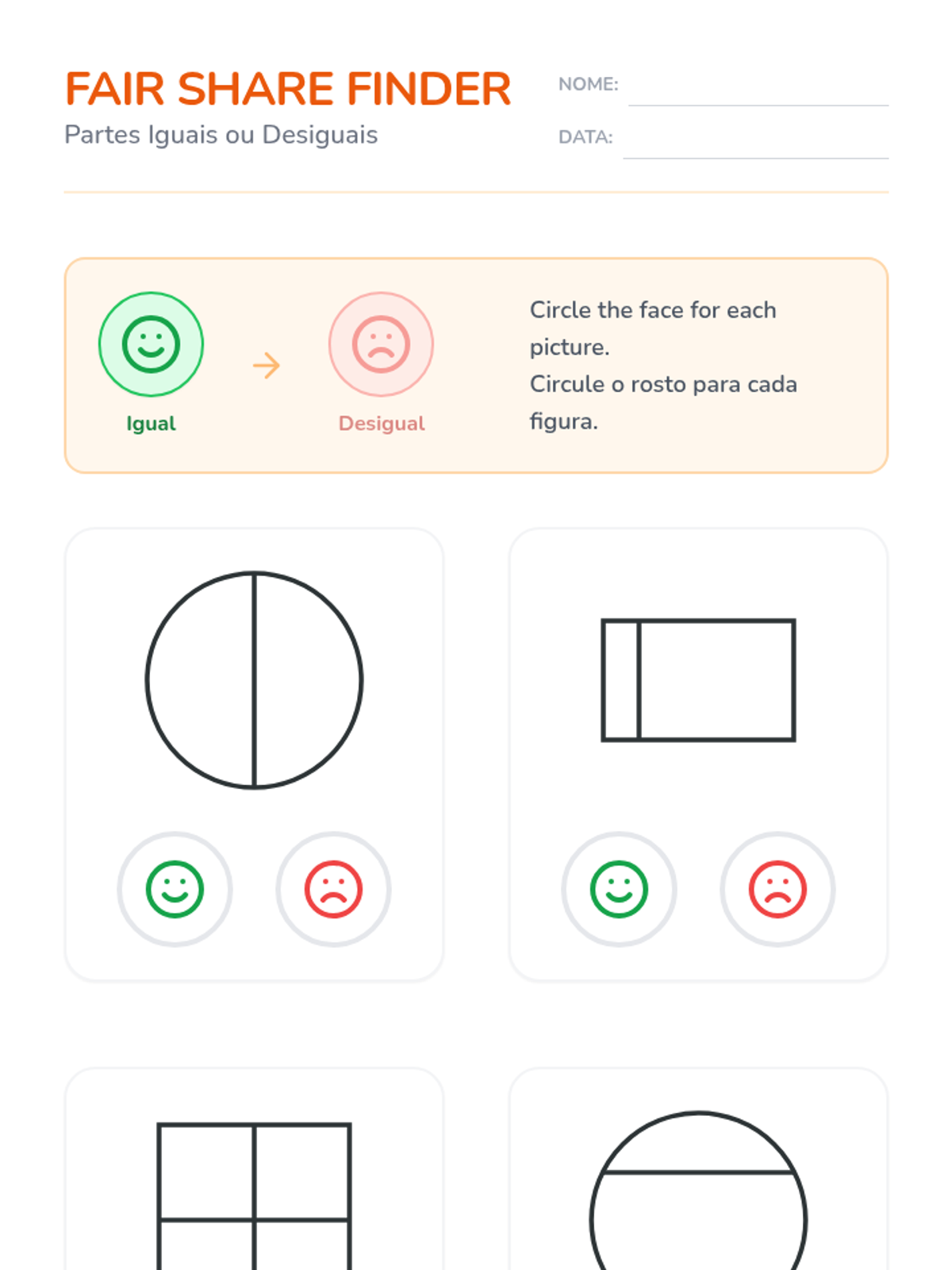
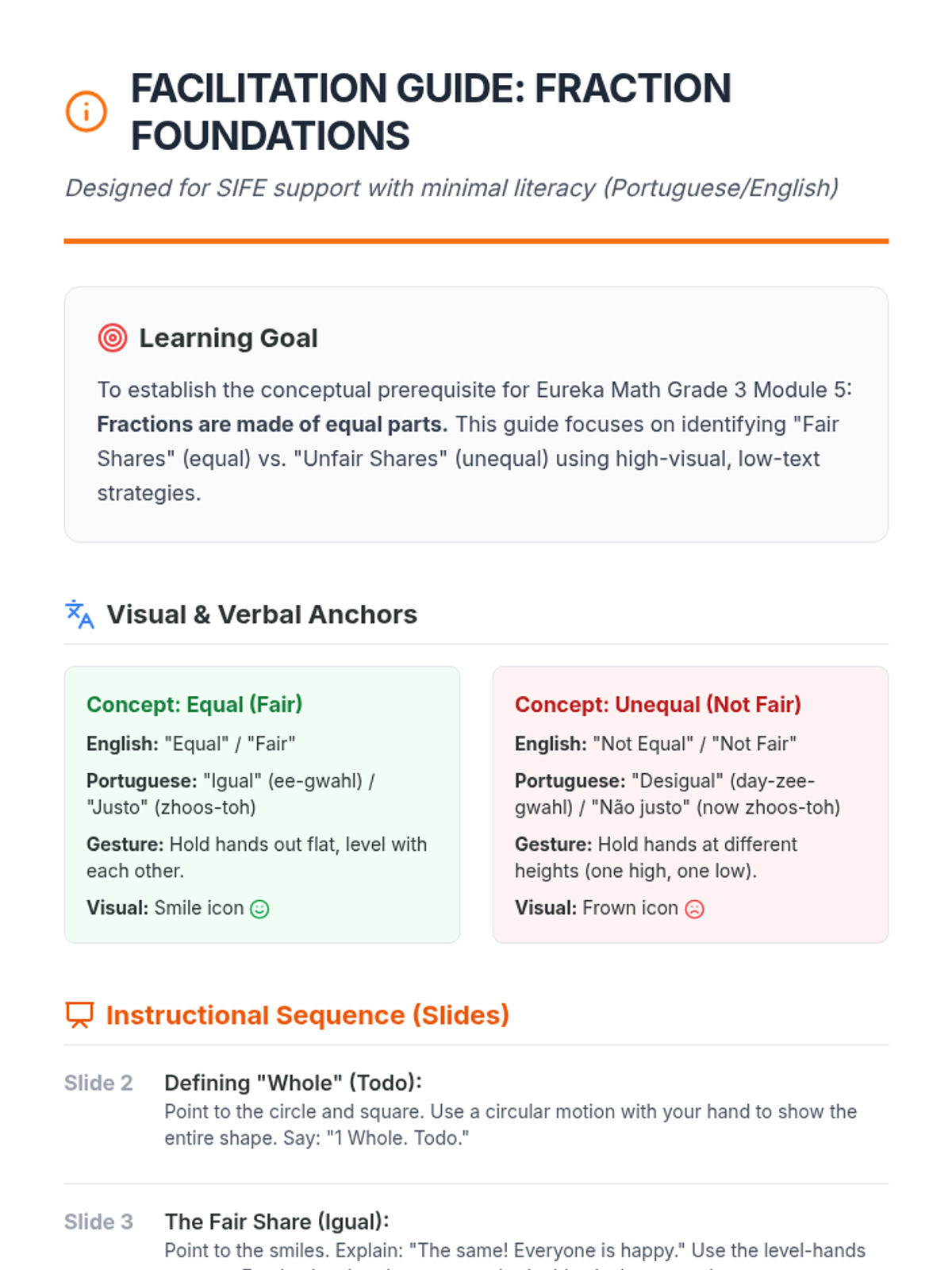
A scaffolded introduction to fractions designed for SIFE students with no literacy. This sequence moves from the concept of fair shares to counting equal parts and understanding unit fractions through high-visual support and Portuguese verbal anchors.
A multi-day math unit on complex rectilinear figures, progressing from finding area with all labels to identifying missing side lengths and solving multi-step problems.
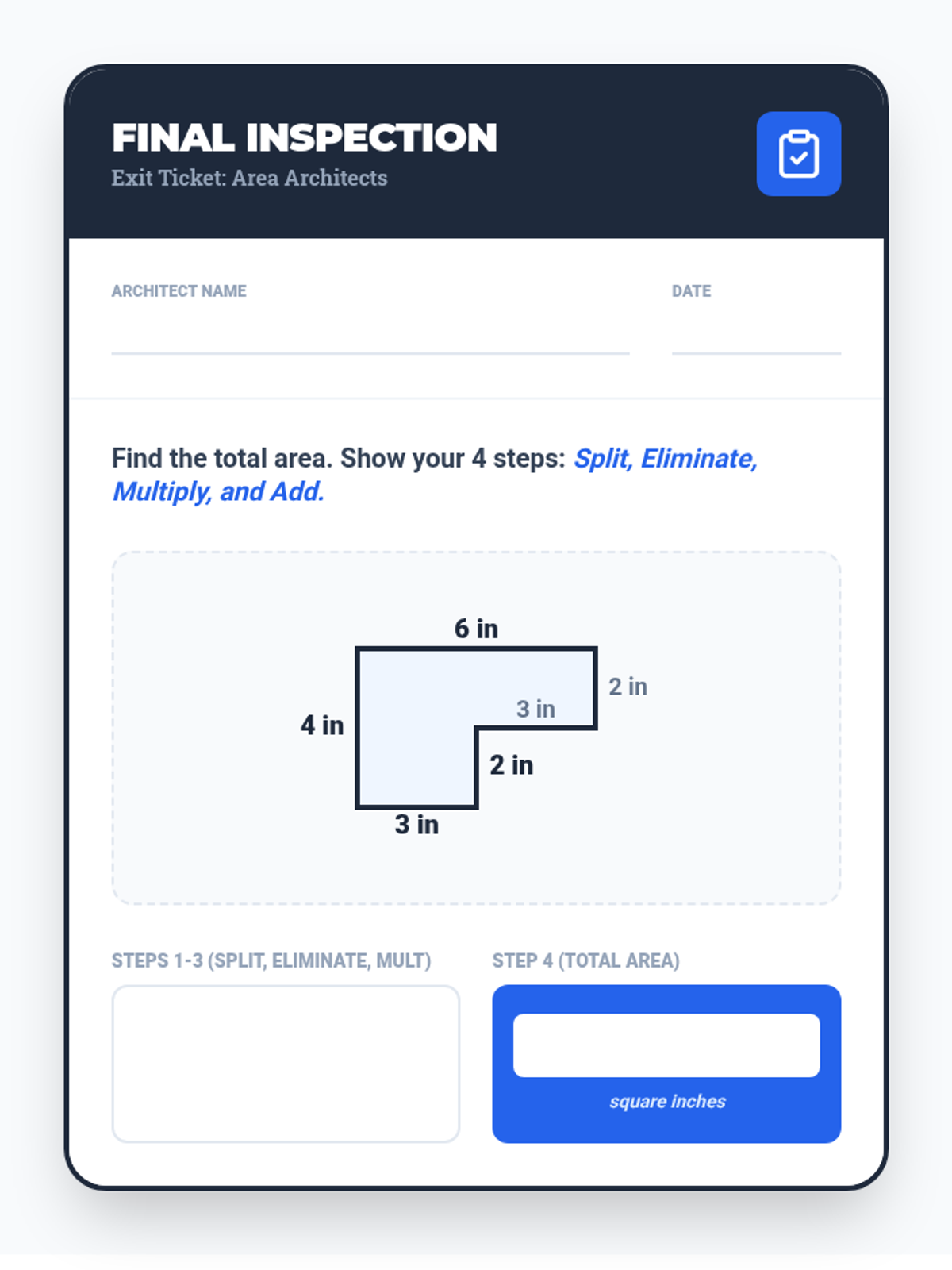
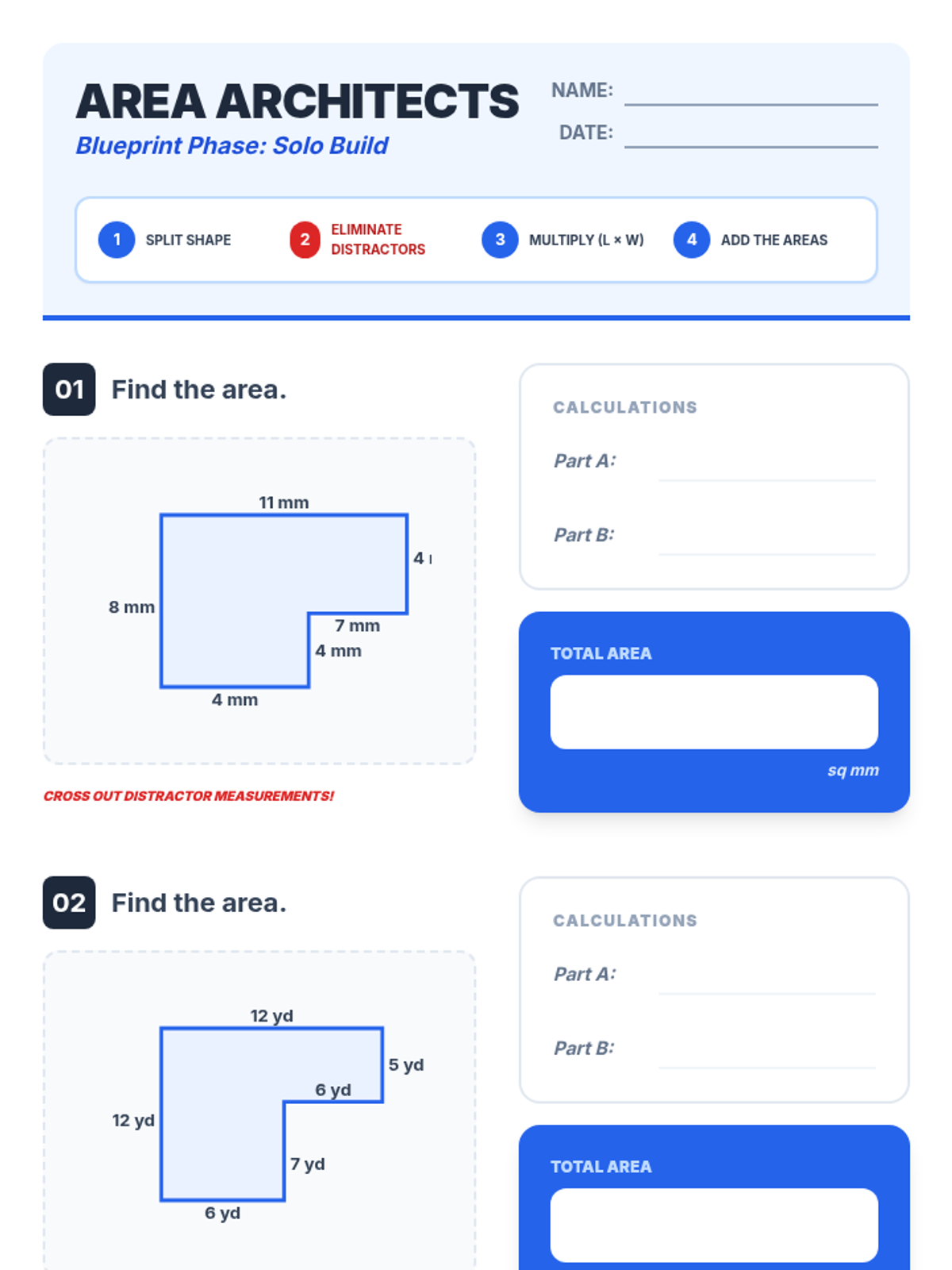
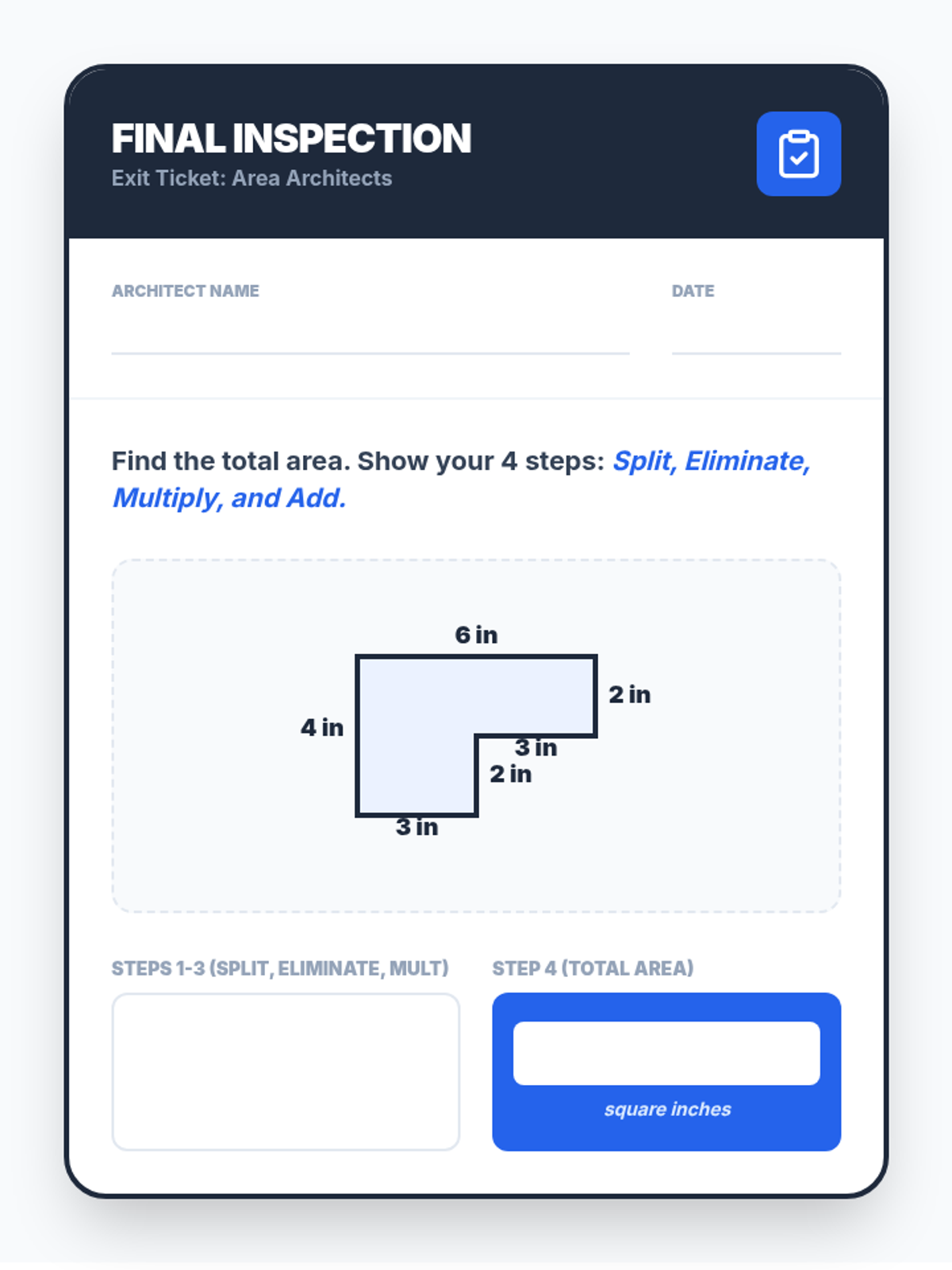
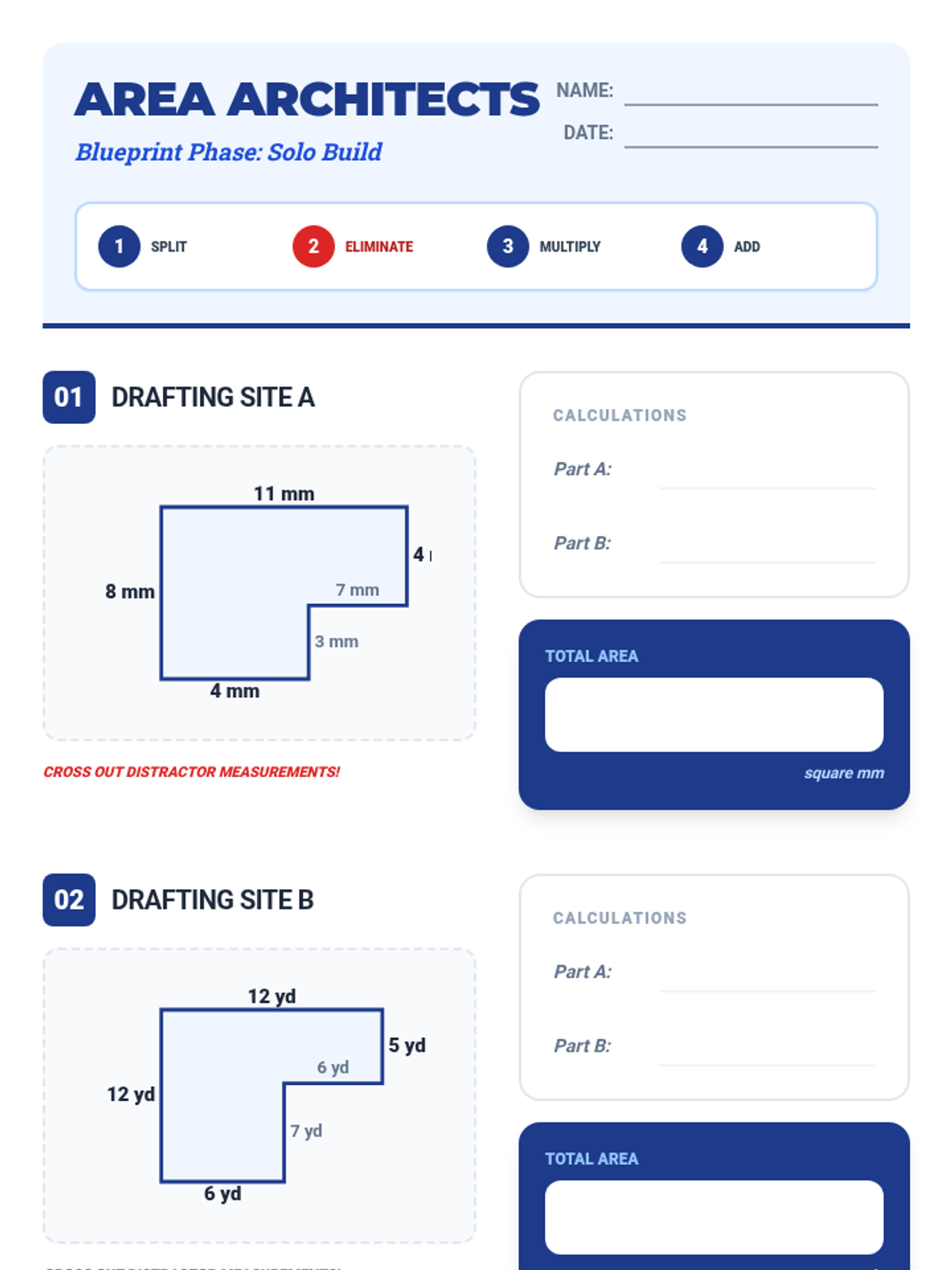
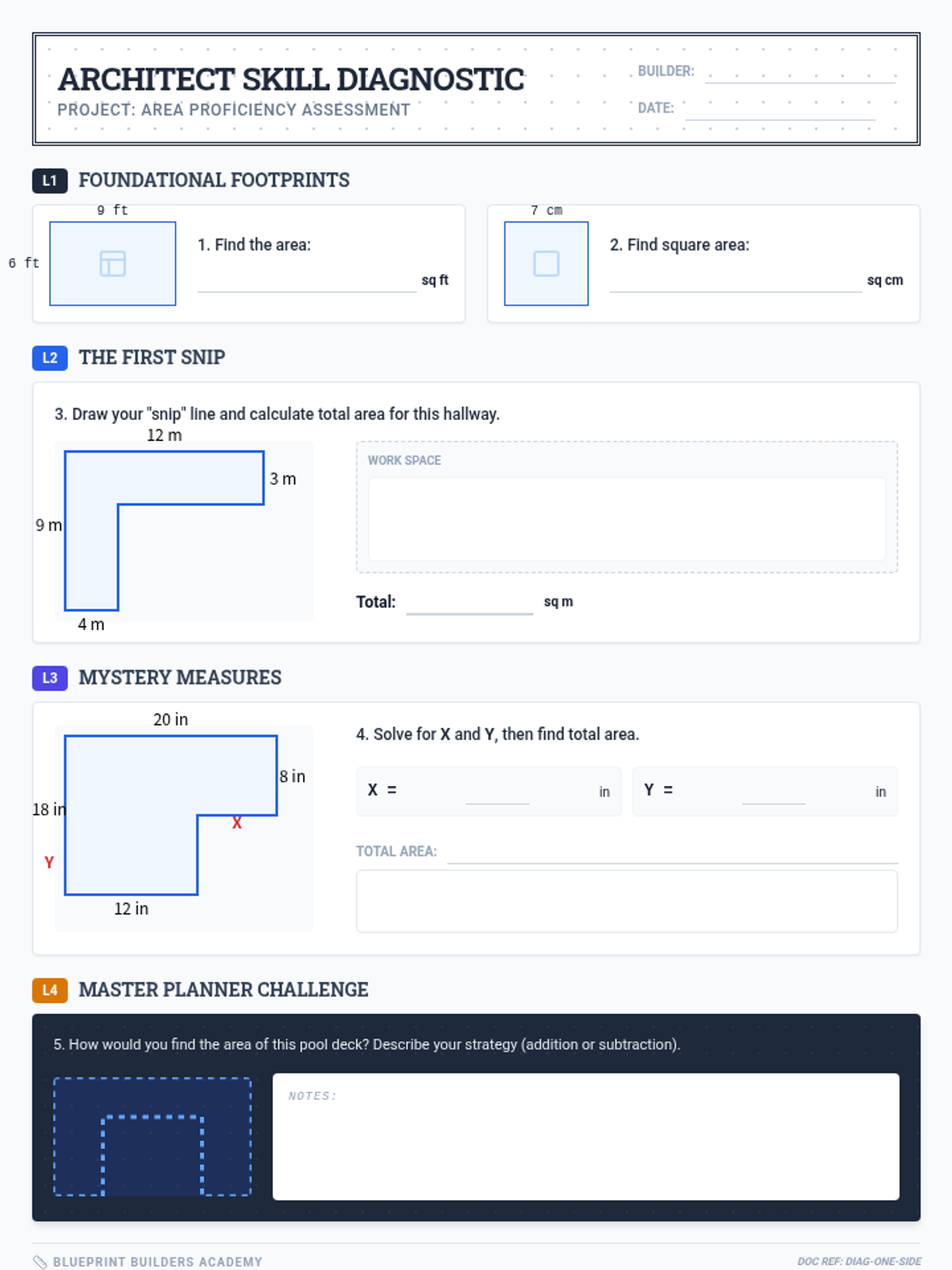
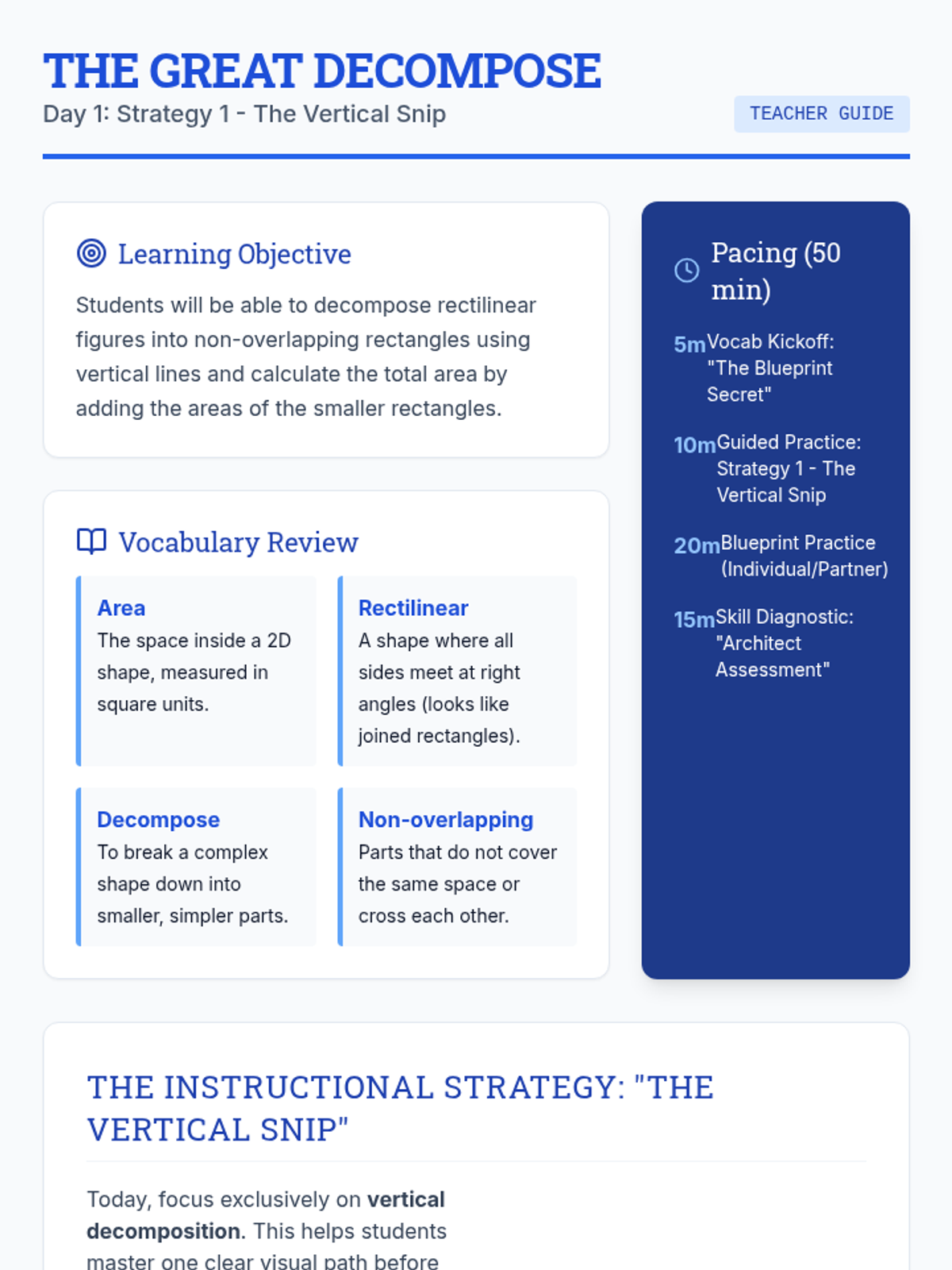
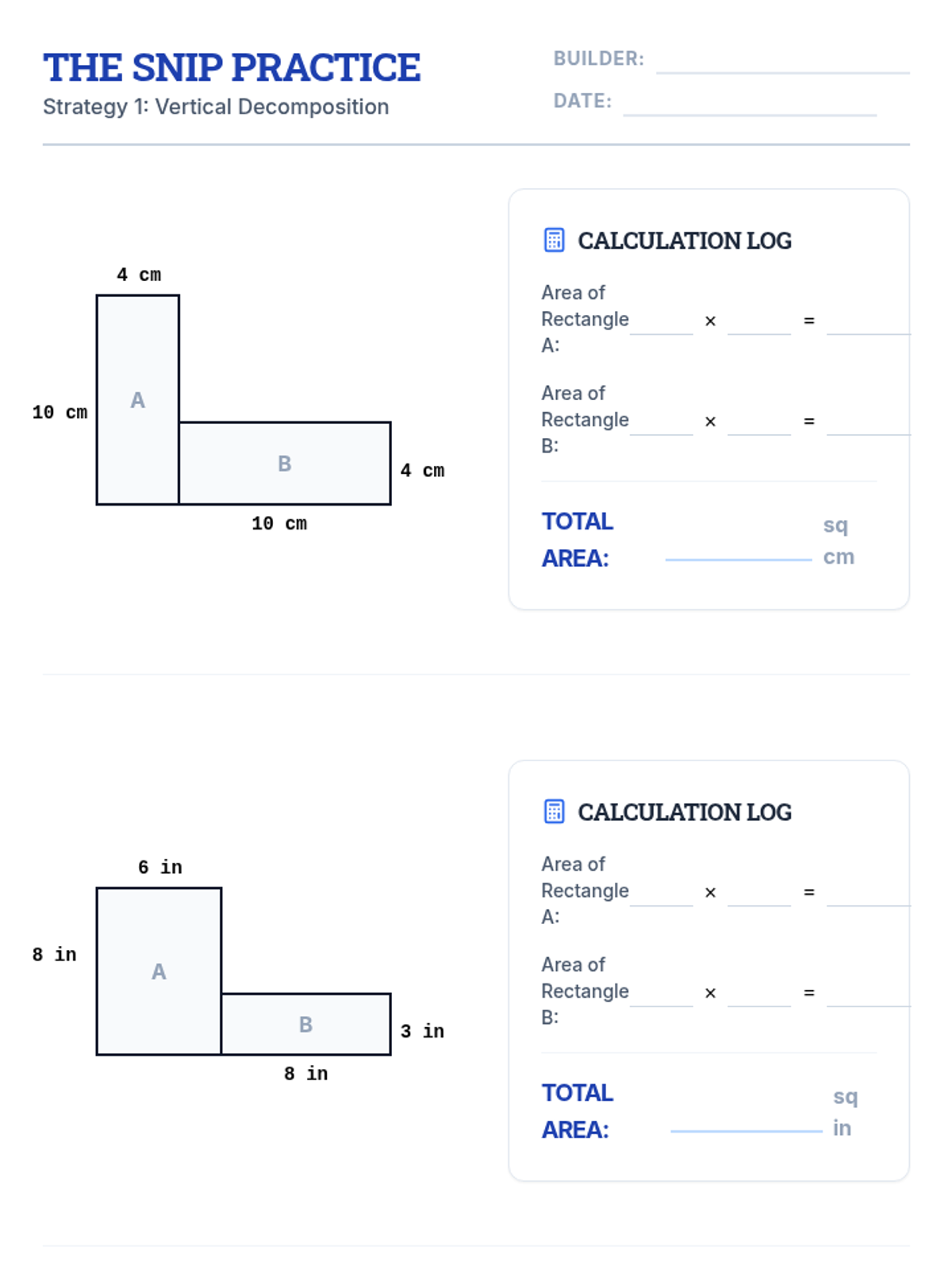
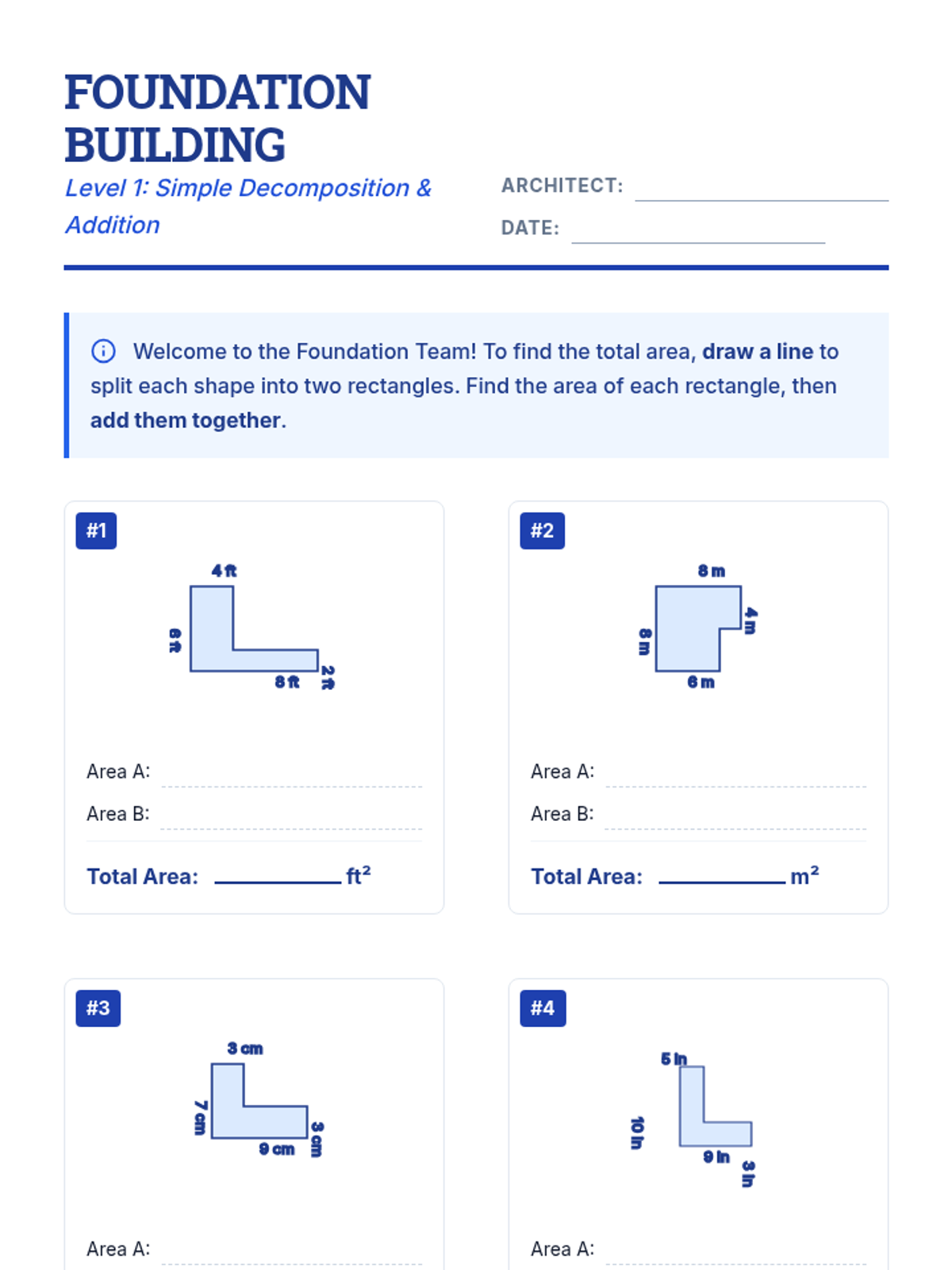
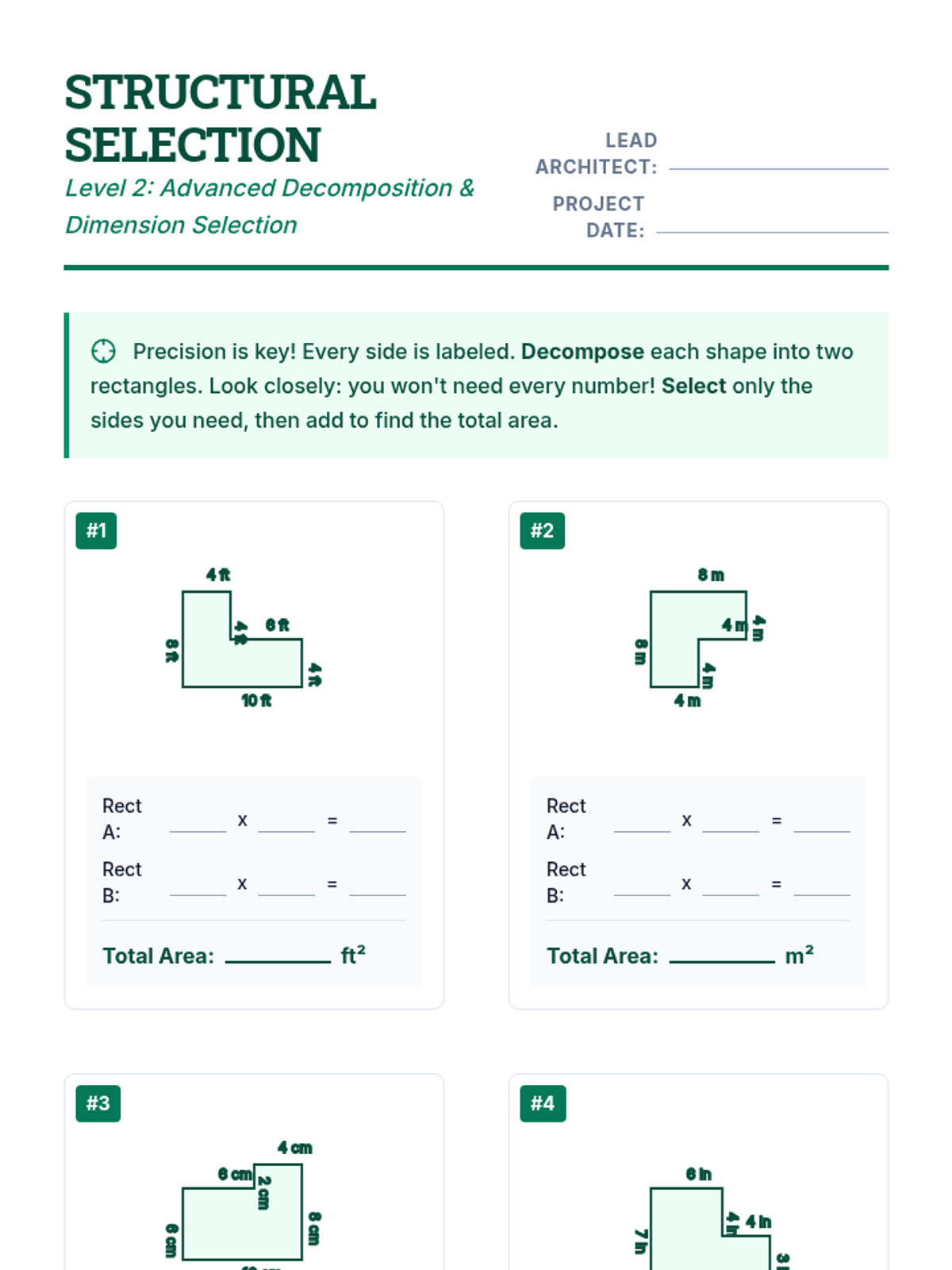
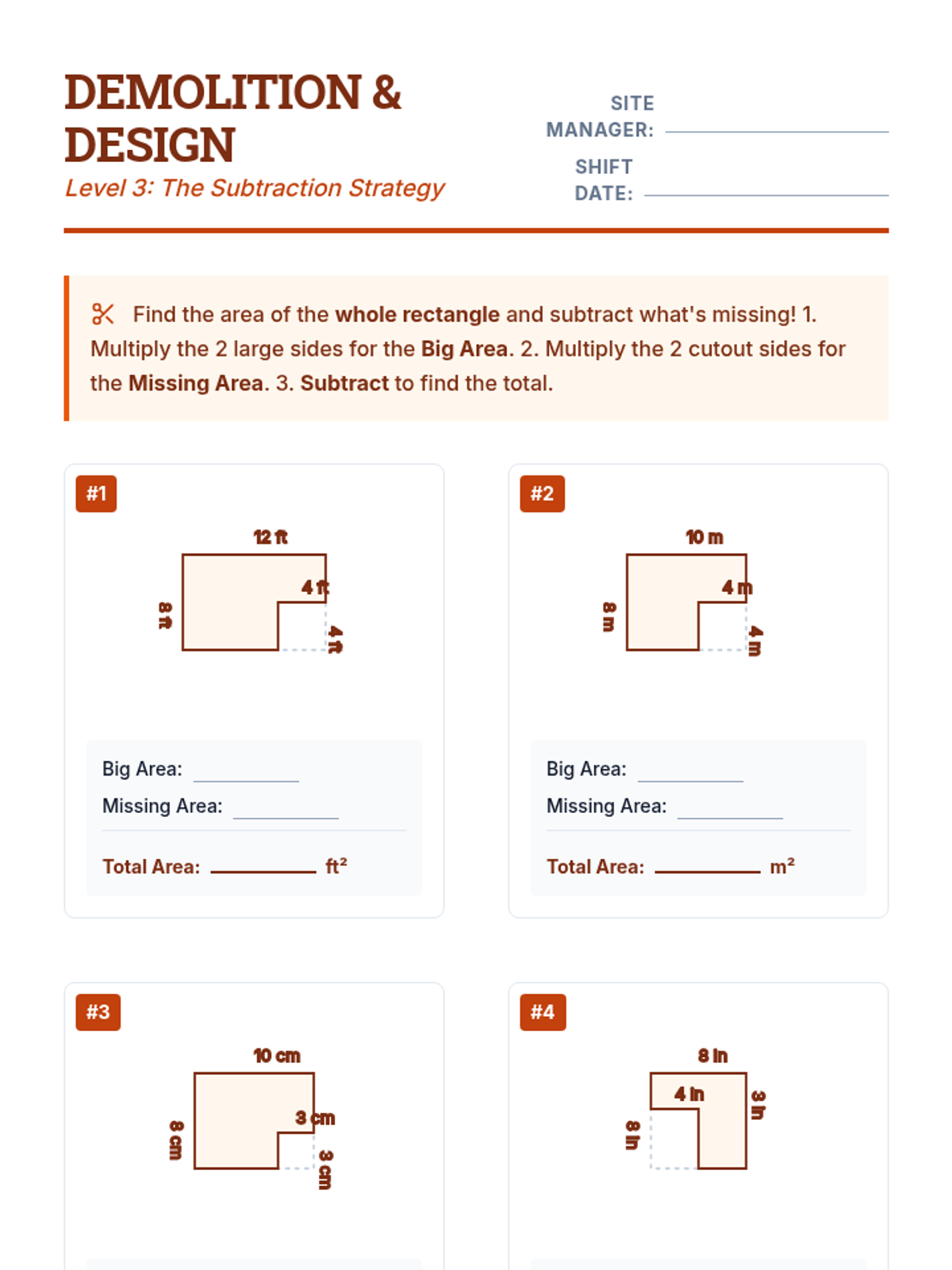
A four-day intensive unit on decomposing rectilinear figures to find total area, progressing from basic strategies to complex real-world architectural challenges. Students act as 'Blueprint Builders' to master vertical cuts, horizontal cuts, and additive/subtractive methods.
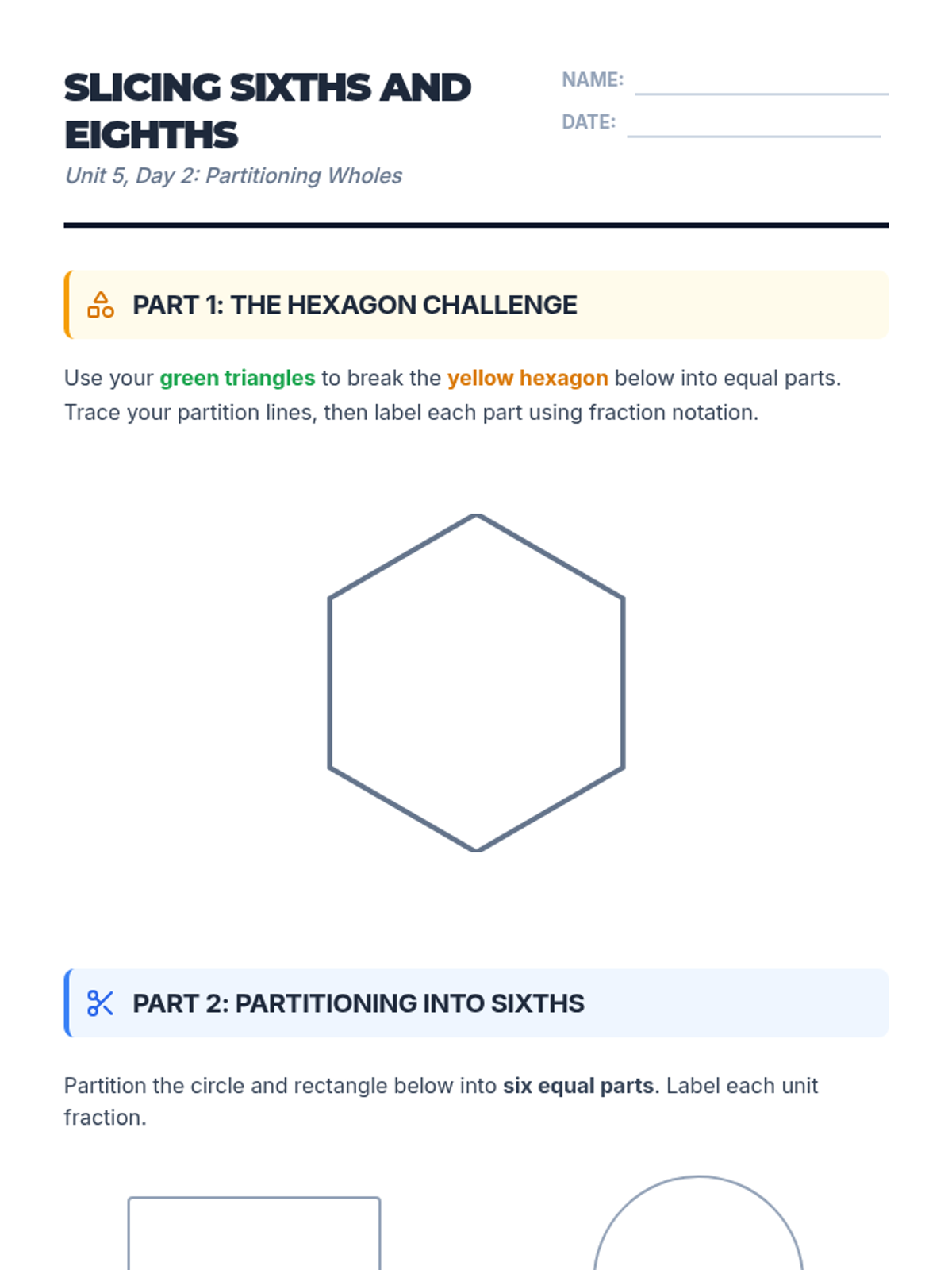
A comprehensive unit on foundational fraction concepts for 3rd grade, focusing on partitioning shapes into equal parts, understanding unit fractions, and naming parts through eighths.
A foundational geometry sequence for 3rd graders exploring the transition from 2D shapes to 3D solids and introducing the concept of volume through unit cubes. Students build, count, and design with 3D figures to understand spatial attributes.
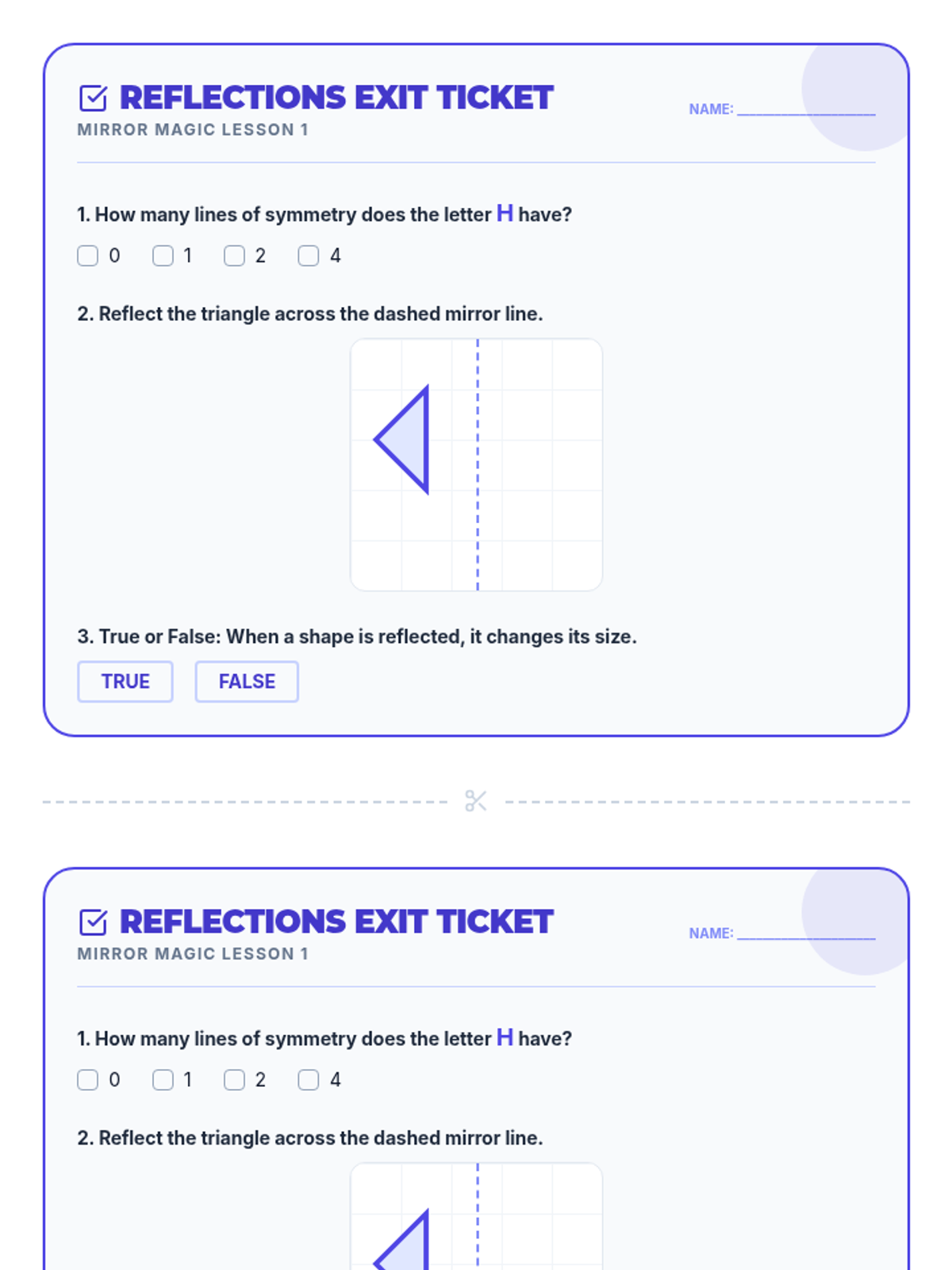
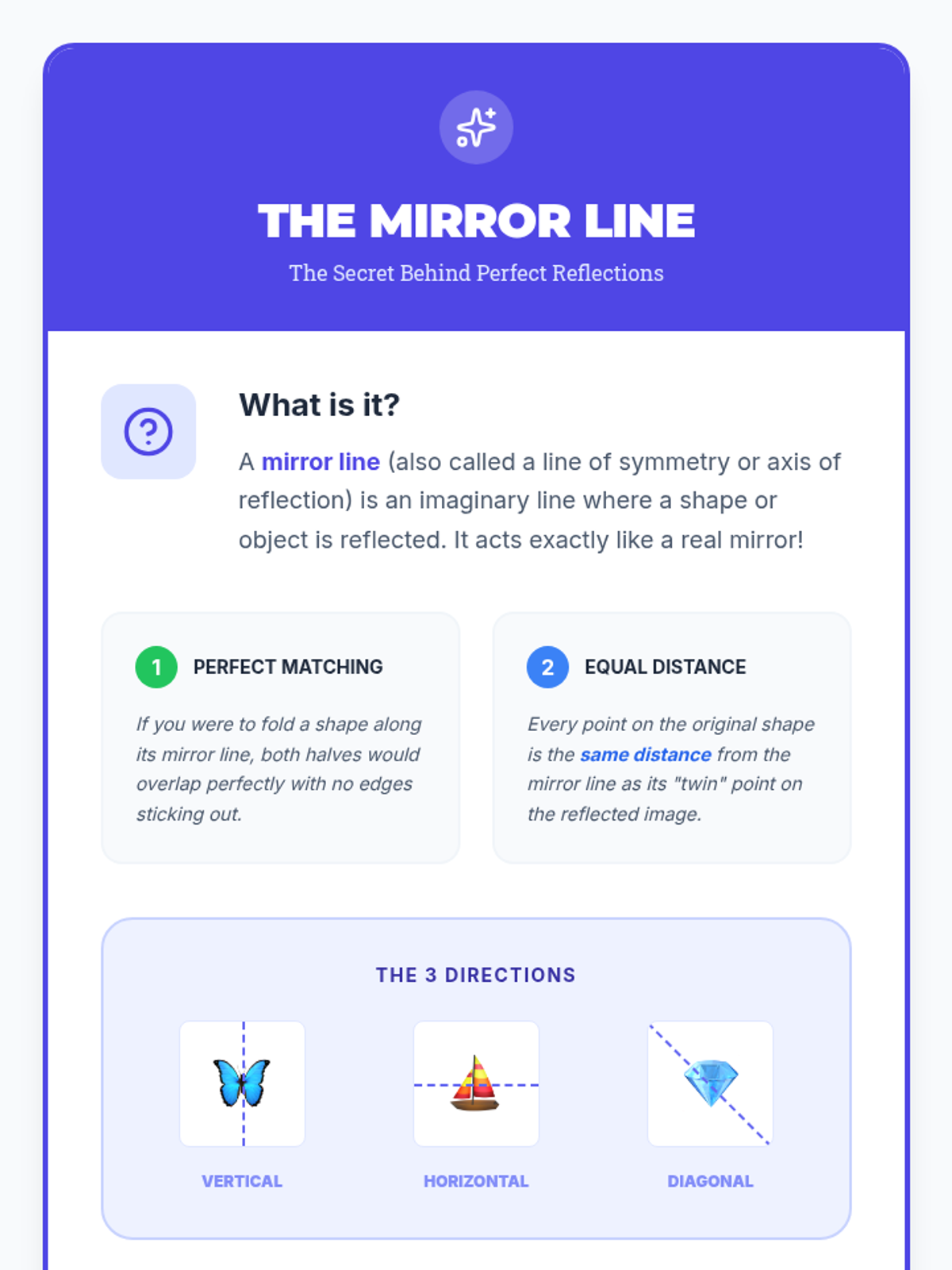
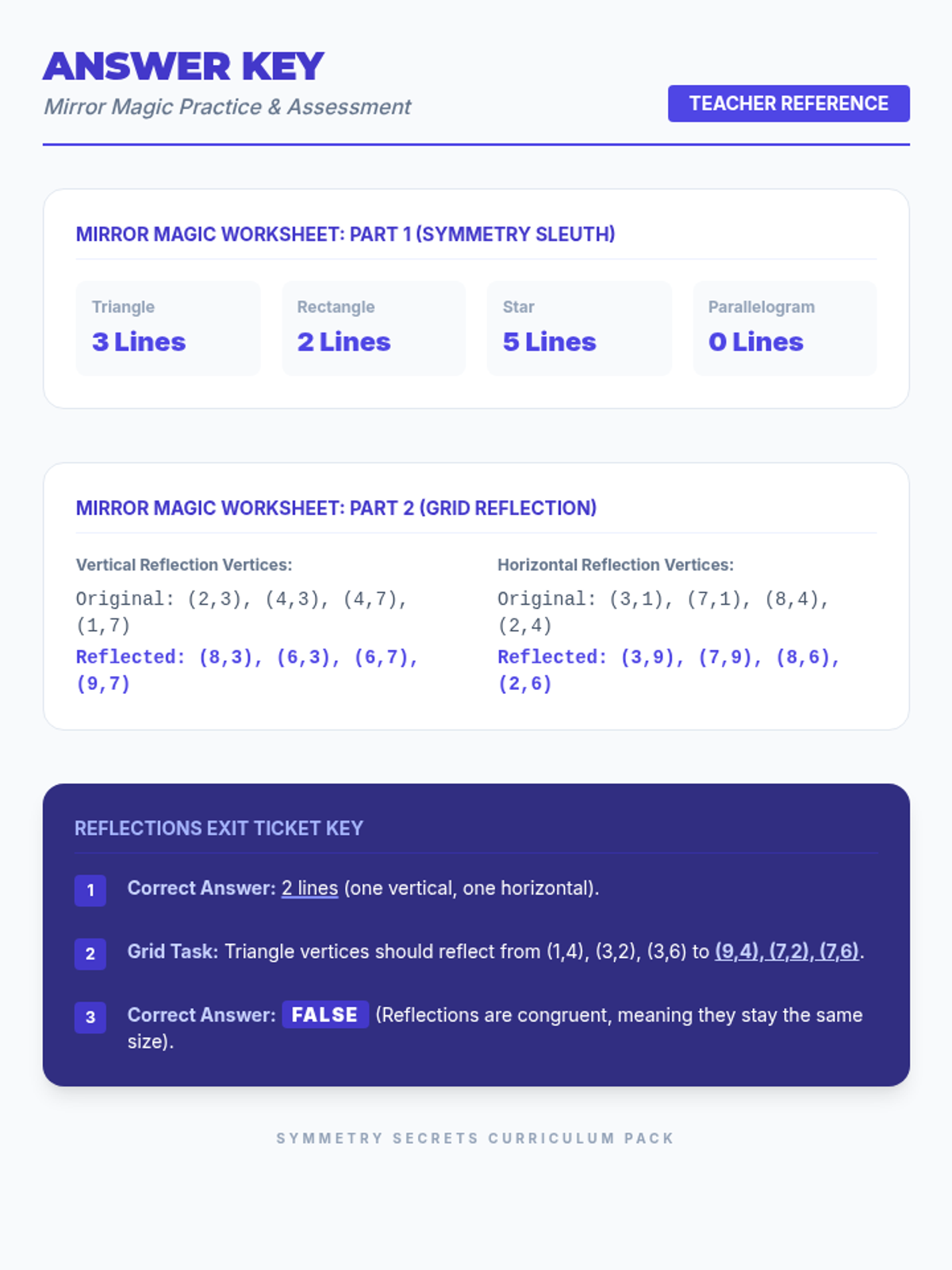
A deep dive into geometric transformations, starting with the foundational concepts of symmetry and reflection through hands-on exploration and visual practice.
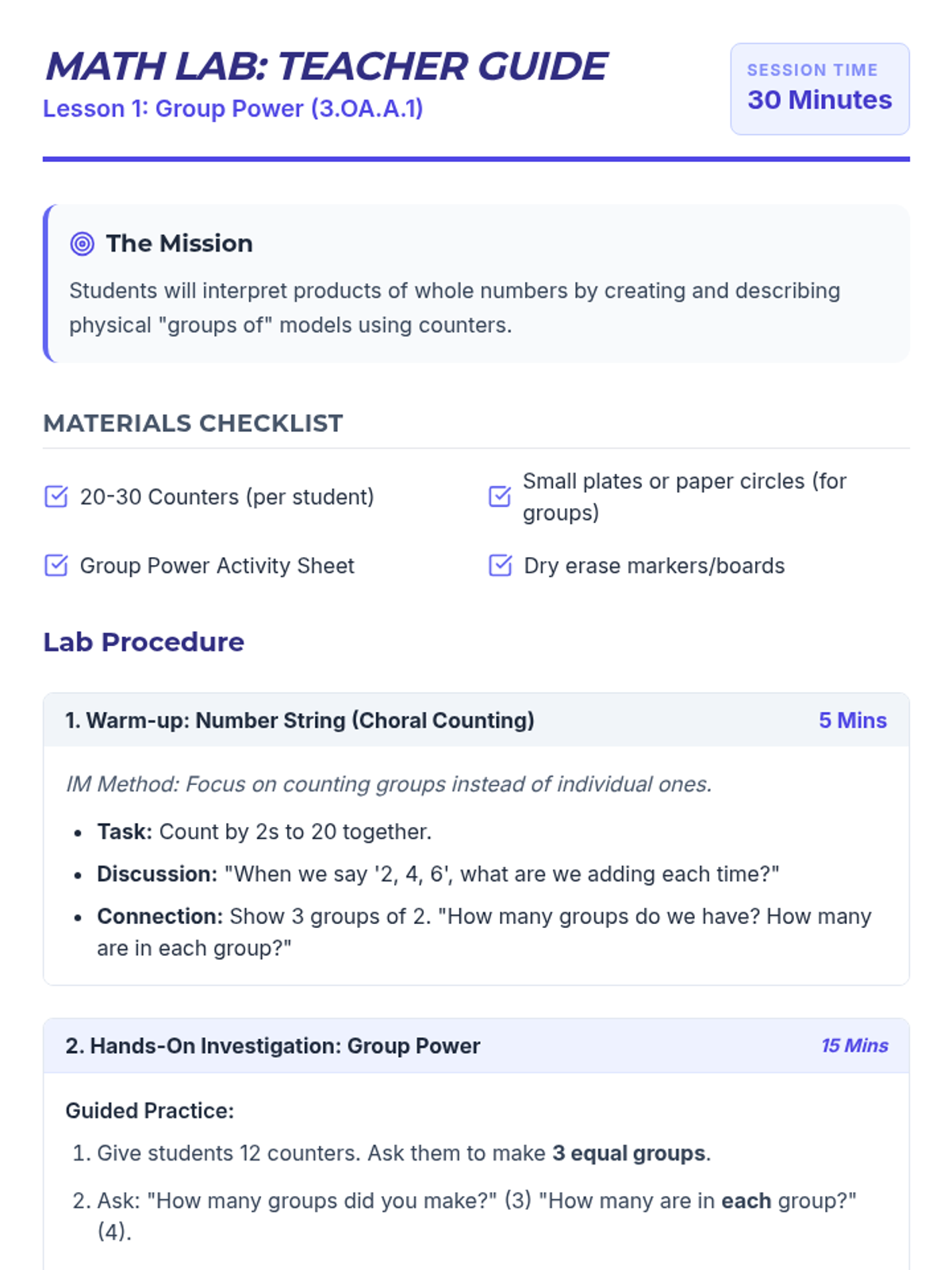
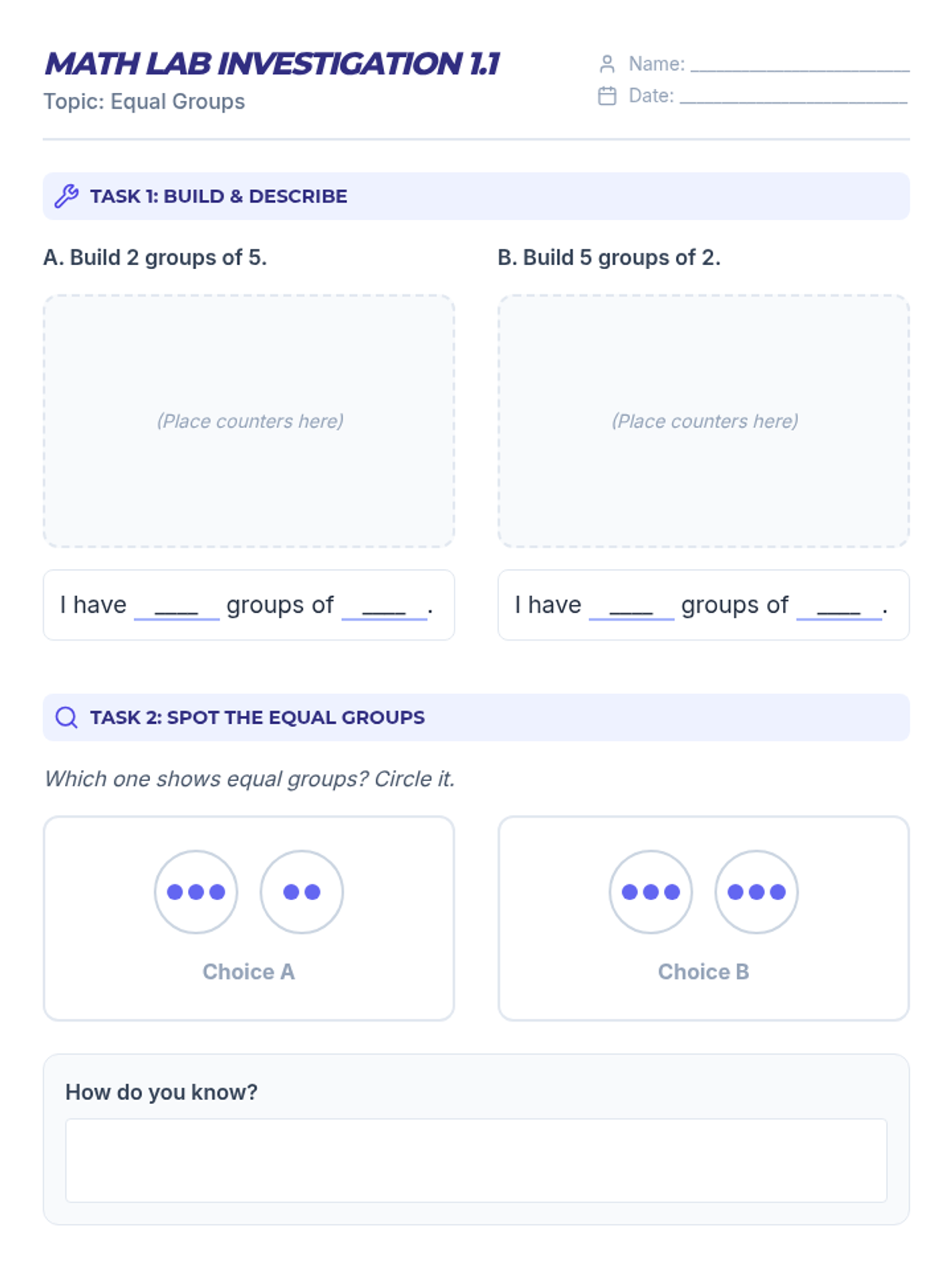
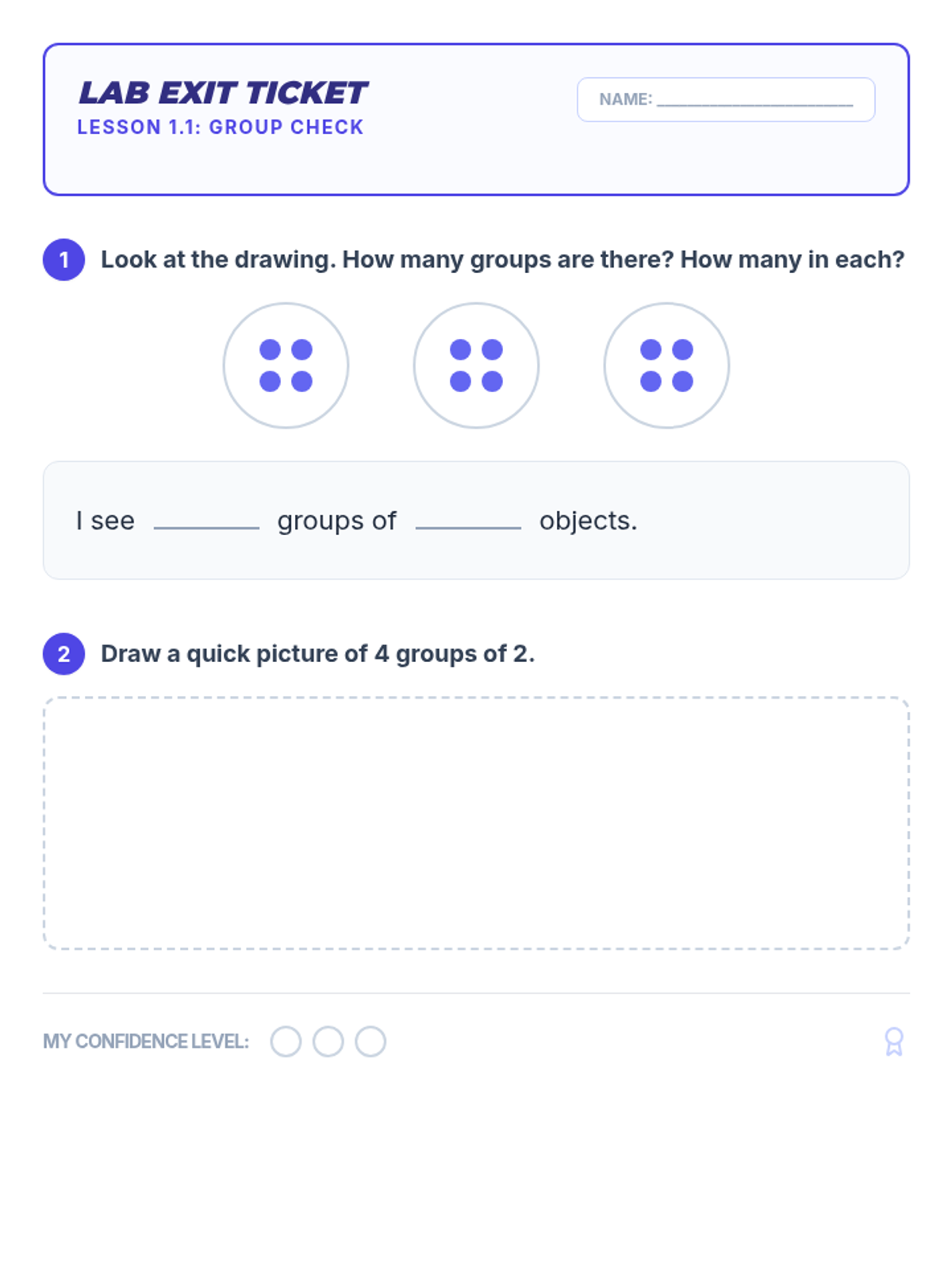
A 12-lesson Tier 2 intervention sequence for third-grade multiplication standards, focusing on equal groups, arrays, and unknown factors using IM-aligned strategies and All Learners Network concepts.
A project-based unit where 3rd-grade students learn to construct angles and geometric figures using protractors and straightedges. The sequence culminates in an 'Angle Art' project where students apply their precision drawing skills to create a labeled masterpiece.
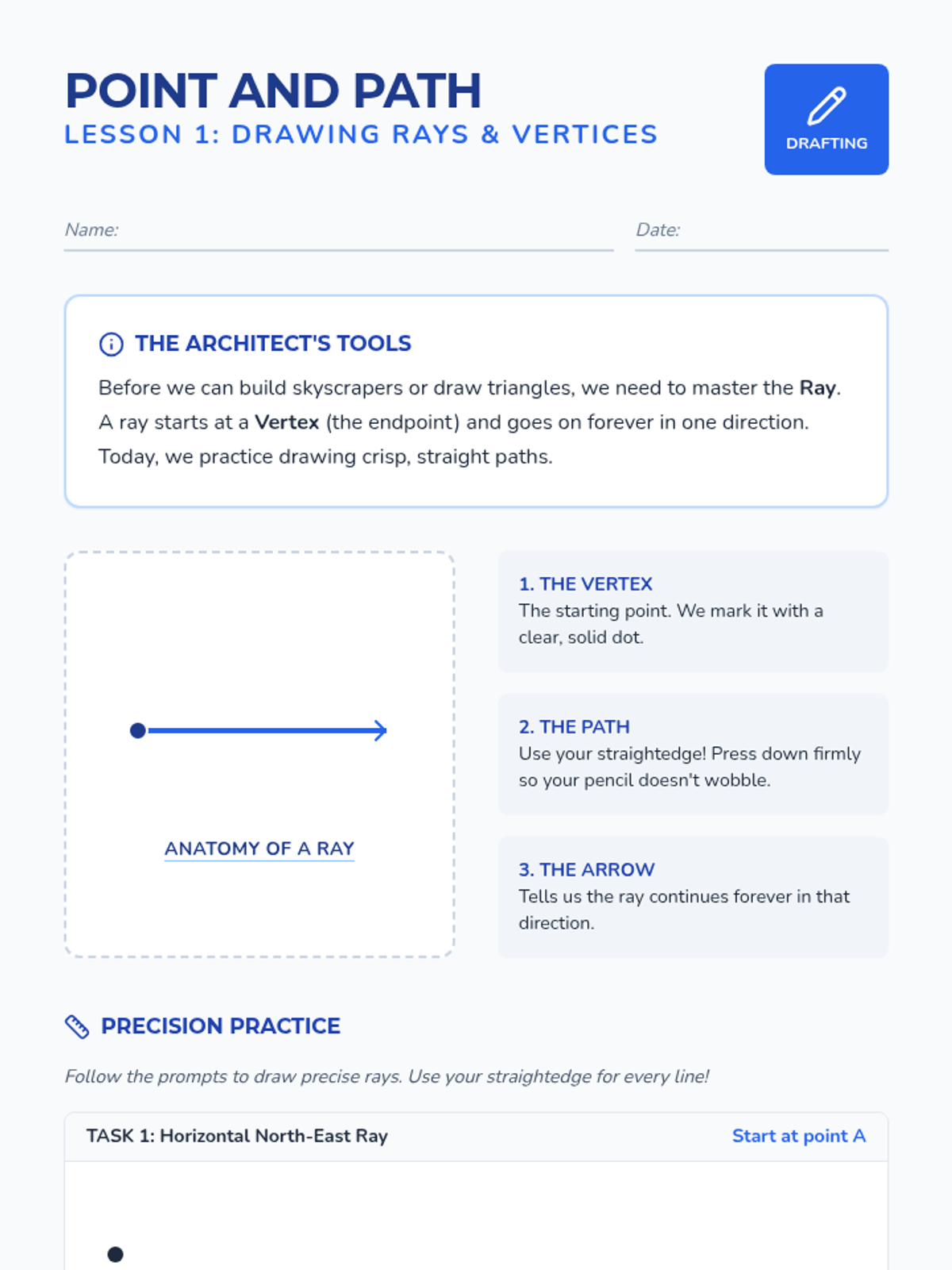
This 3rd-grade math sequence introduces students to the world of angles. Students learn to identify rays, vertices, and classify angles as right, acute, obtuse, and straight through movement, environmental exploration, and creative projects.
This mastery-based sequence focuses on precise mathematical communication and reasoning. Students engage in discussions and logic exercises to refine their definitions of shapes, moving beyond basic naming to attribute-based definitions and hierarchical relationships.
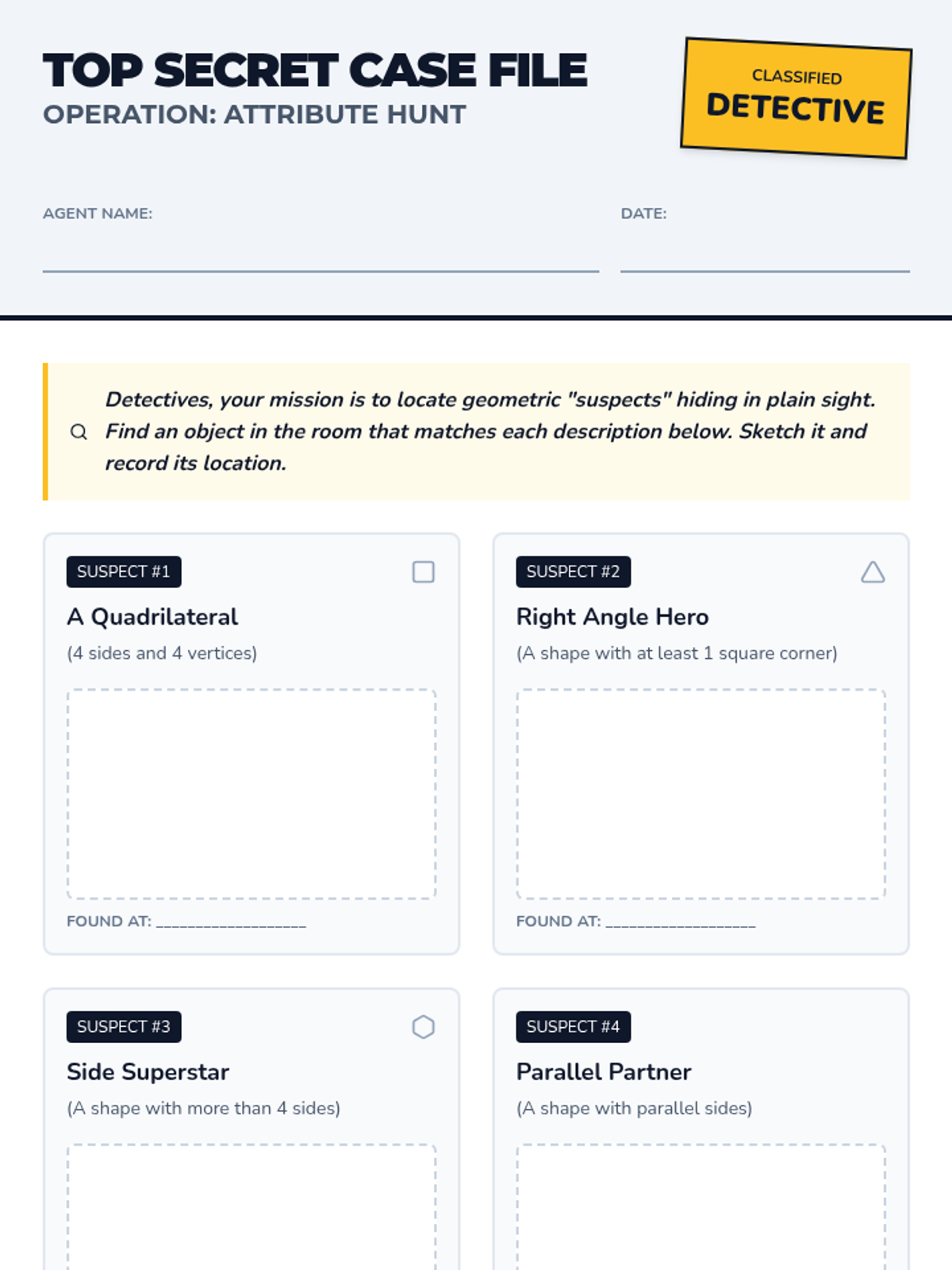
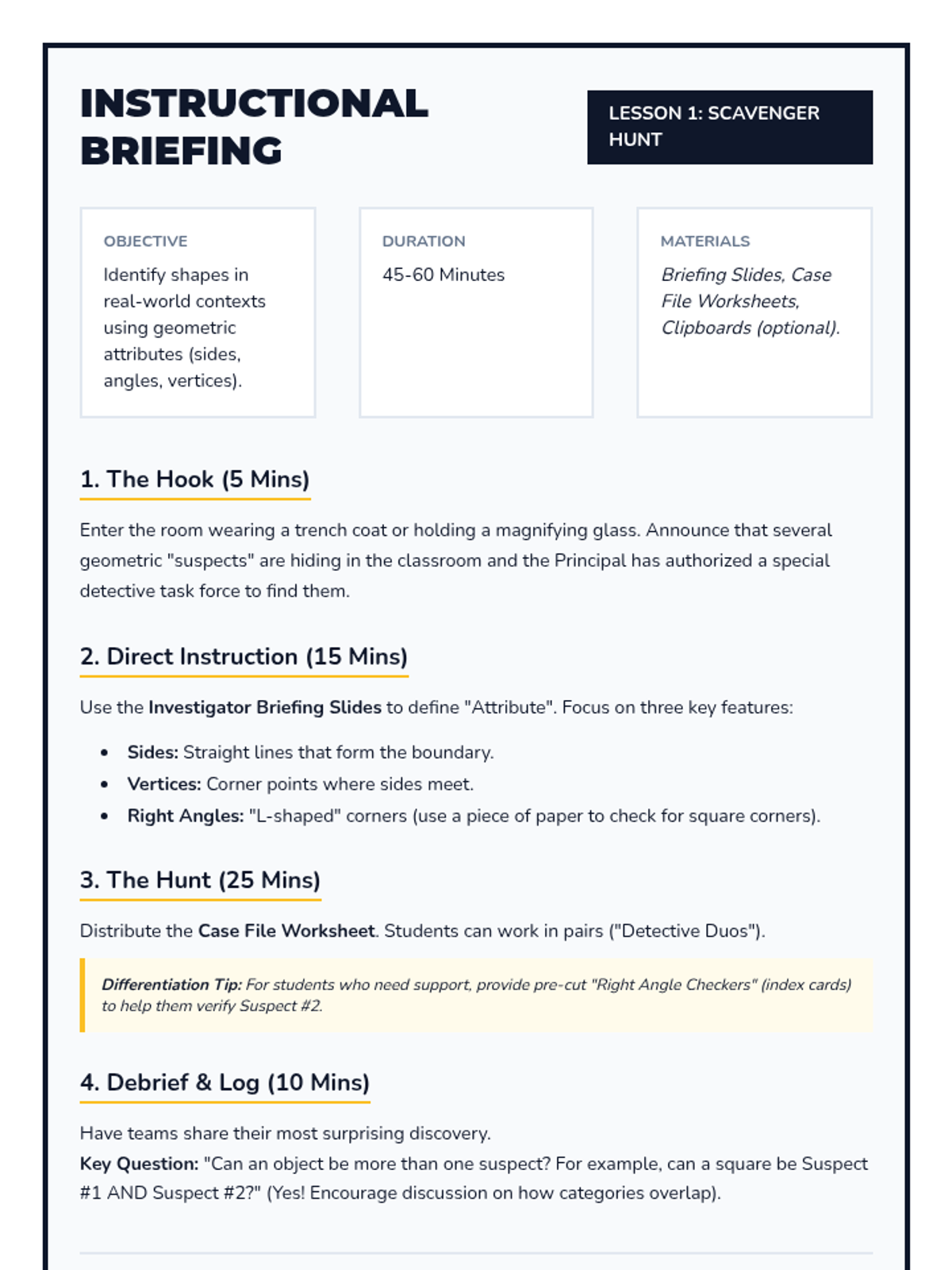
A gamified geometry unit for 3rd graders focused on identifying and classifying shapes based on attributes like sides, angles, and vertices. Students act as 'Geometry Detectives' solving mysteries, riddles, and logic puzzles.
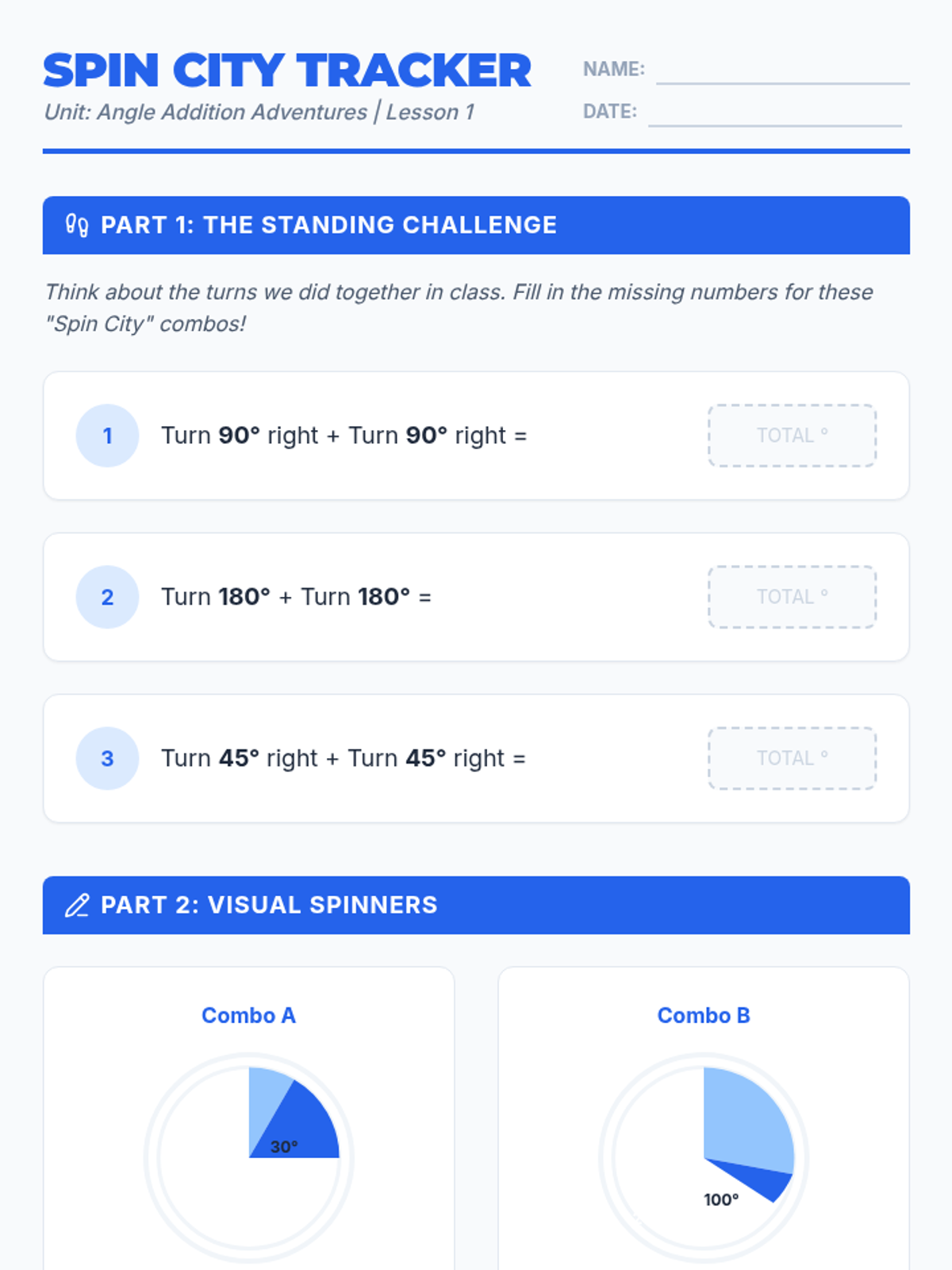
A 5-lesson unit for 3rd graders exploring the additive nature of angles. Students move from kinesthetic turns to calculating missing measurements in complementary, supplementary, and complex angle diagrams.
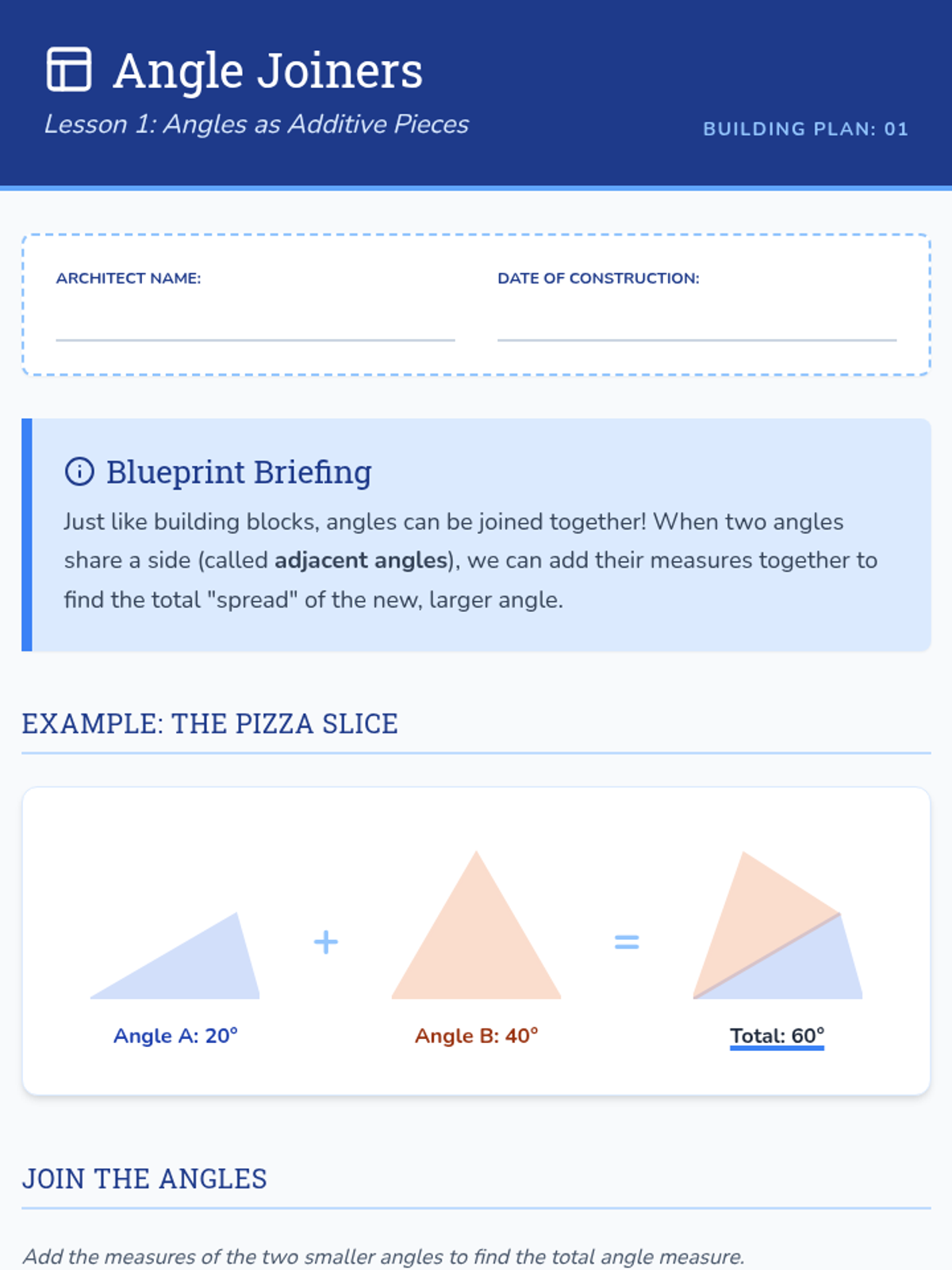
A 5-lesson unit for 3rd graders exploring the additive nature of angles. Students learn to combine smaller angles to form right angles (90 degrees) and straight lines (180 degrees) through visual puzzles and design challenges.
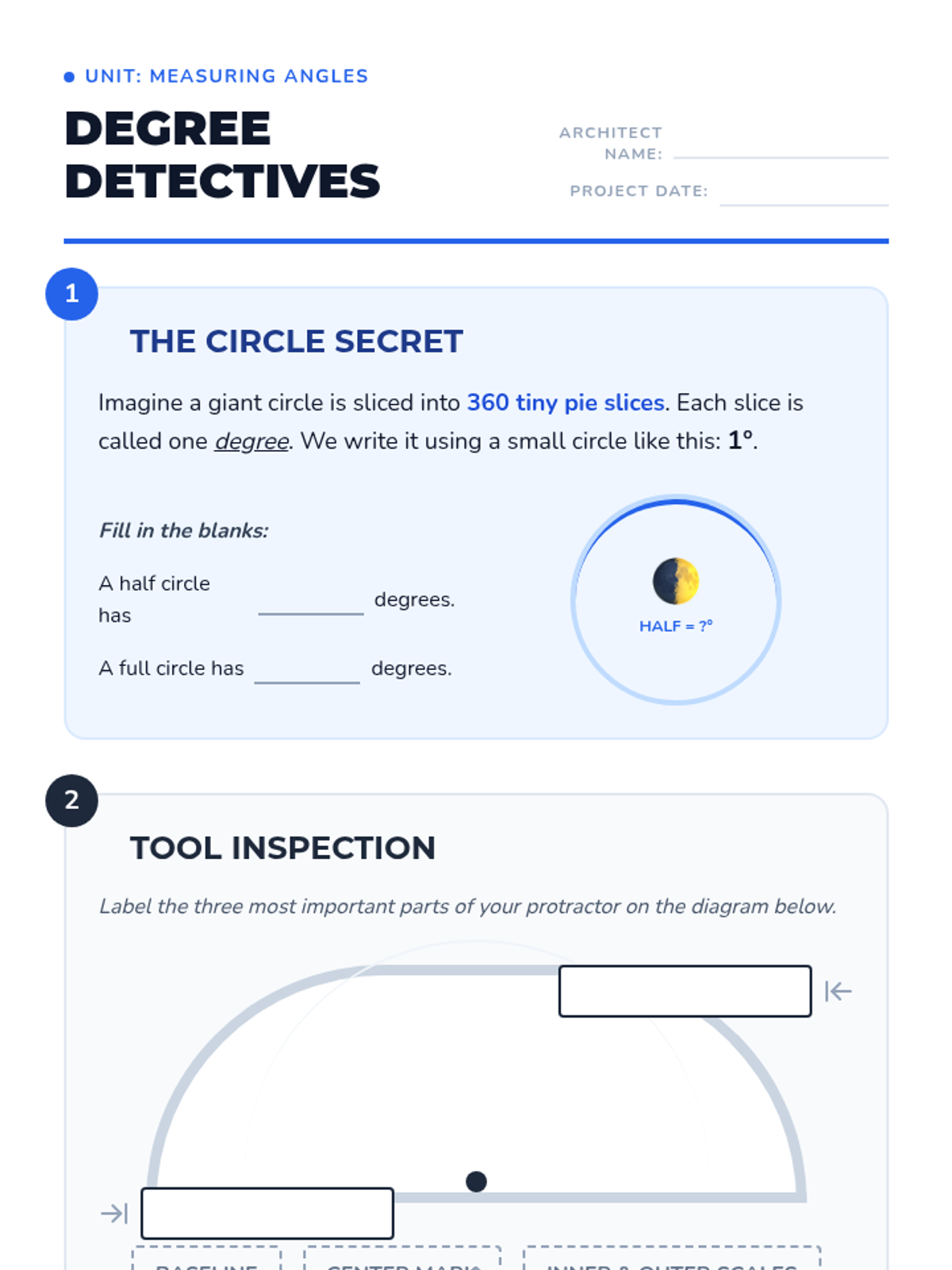
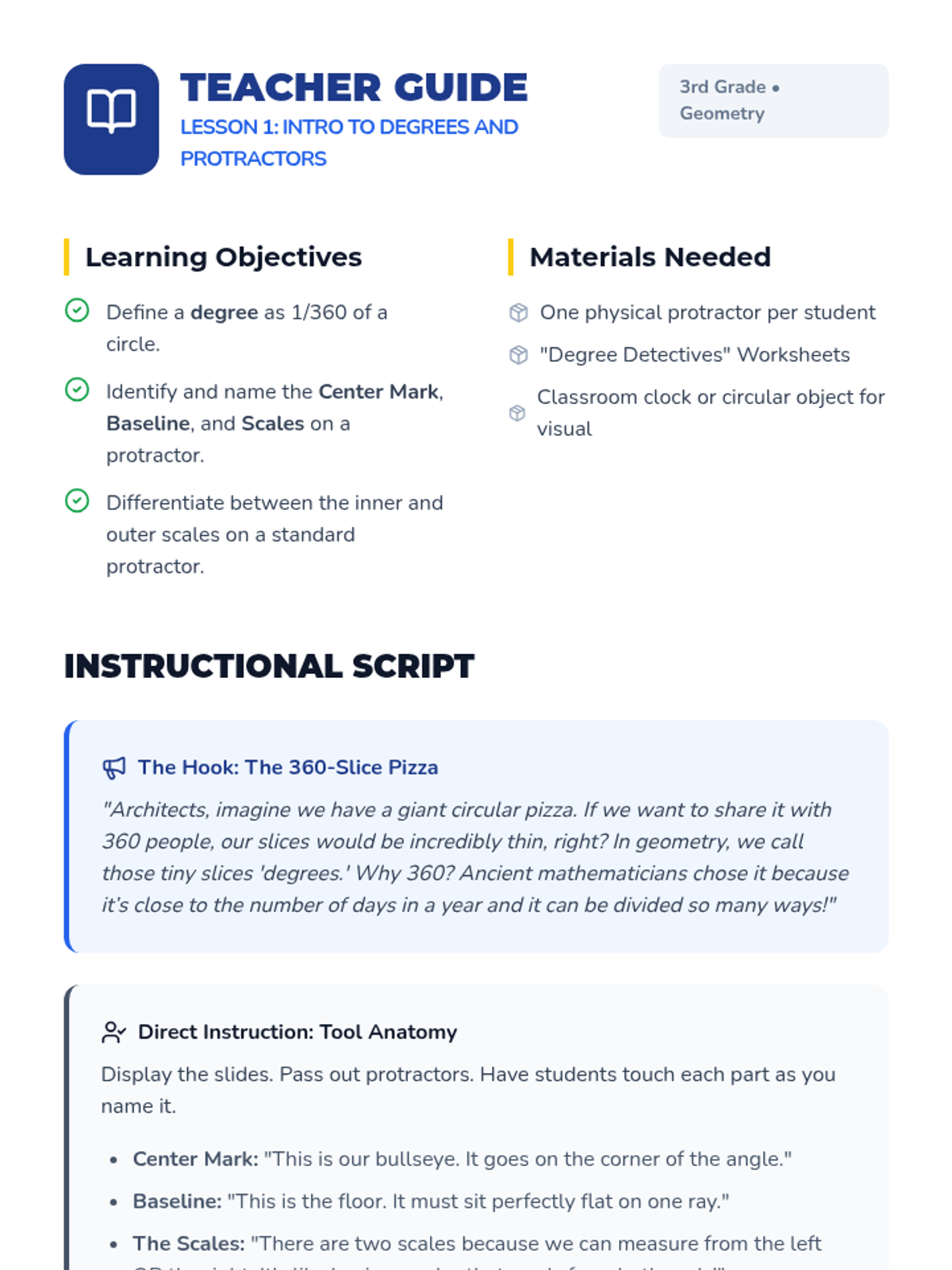
This sequence guides 3rd-grade students from the conceptual understanding of degrees as units of rotation to the precise technical skill of using a protractor. Students explore the geometry of a circle, master tool alignment, navigate dual scales, and apply their skills to construct blueprints and solve measurement challenges.
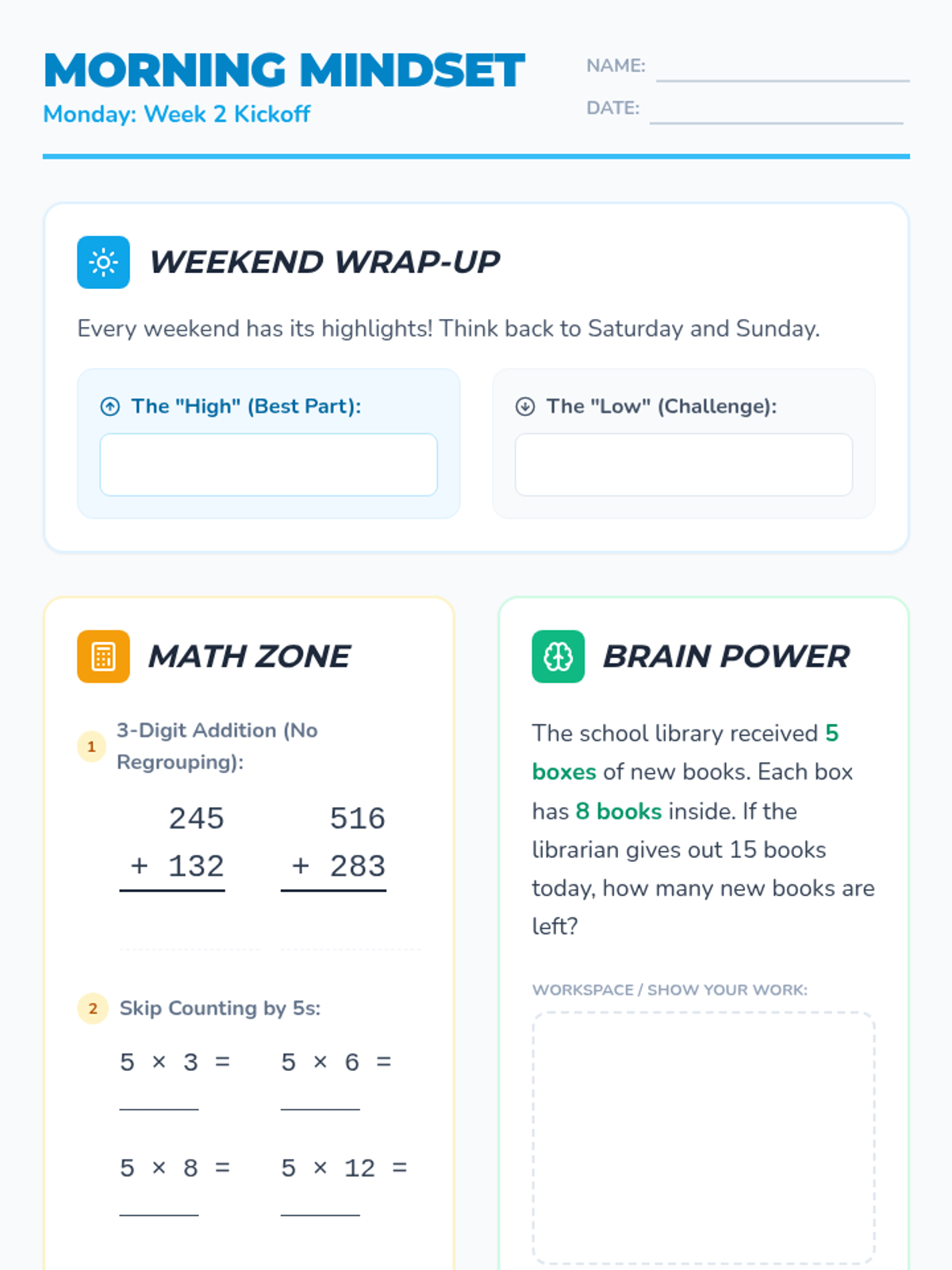
A growing 180-day morning work volume for 3rd grade. Month 1: Basic ops & 2-8x facts. Month 2: 0,1,9,11x facts & intro fractions. Month 3: Equiv. fractions, perimeter, & 12x facts. Month 4: Area basics, 2-step word problems, and self-awareness.
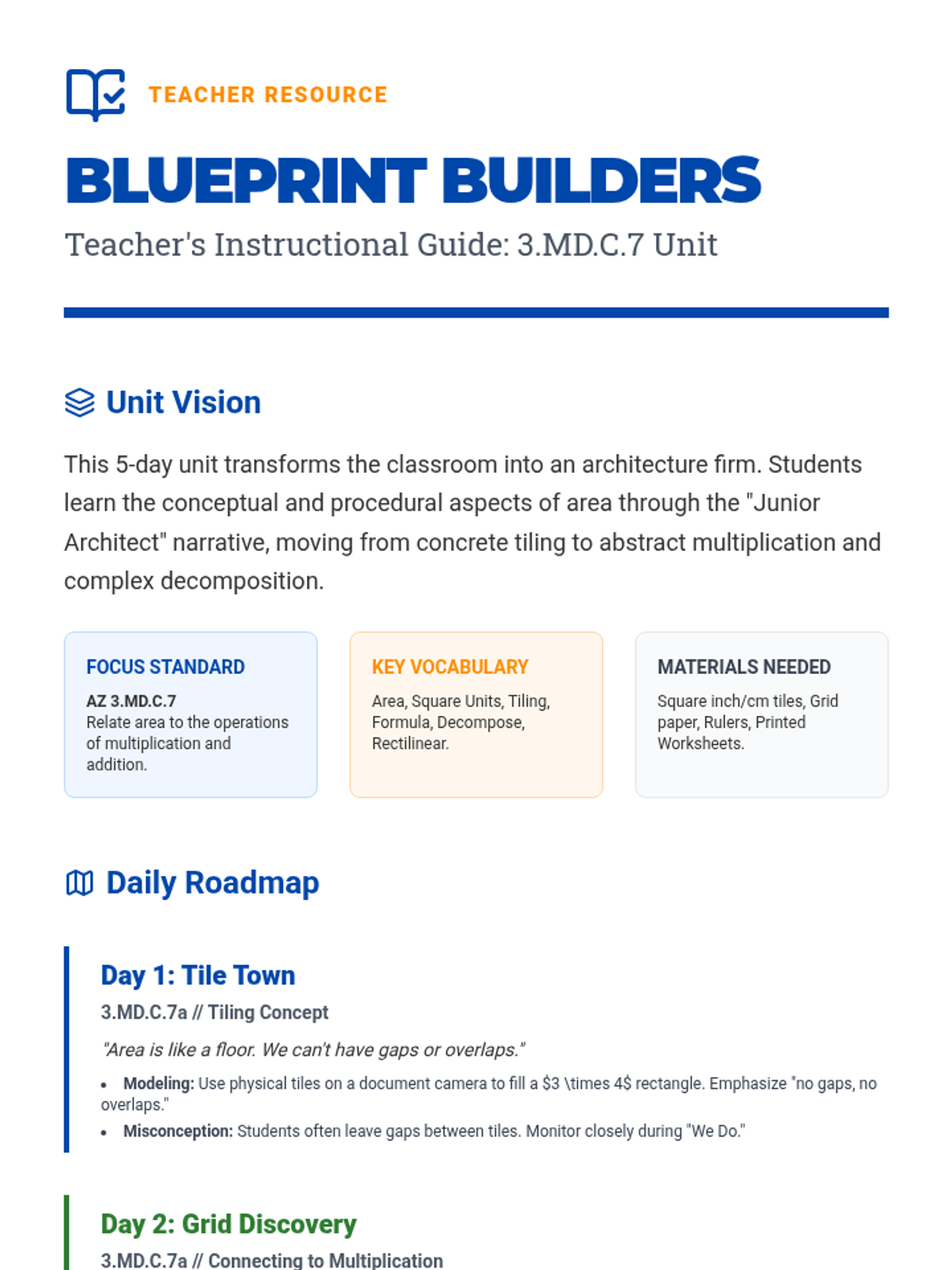
A 5-day unit exploring area through the lens of architectural design. Students move from physical tiling to multiplication and finally to decomposing complex rectilinear shapes, aligned with Arizona 3.MD.C.7 standards.
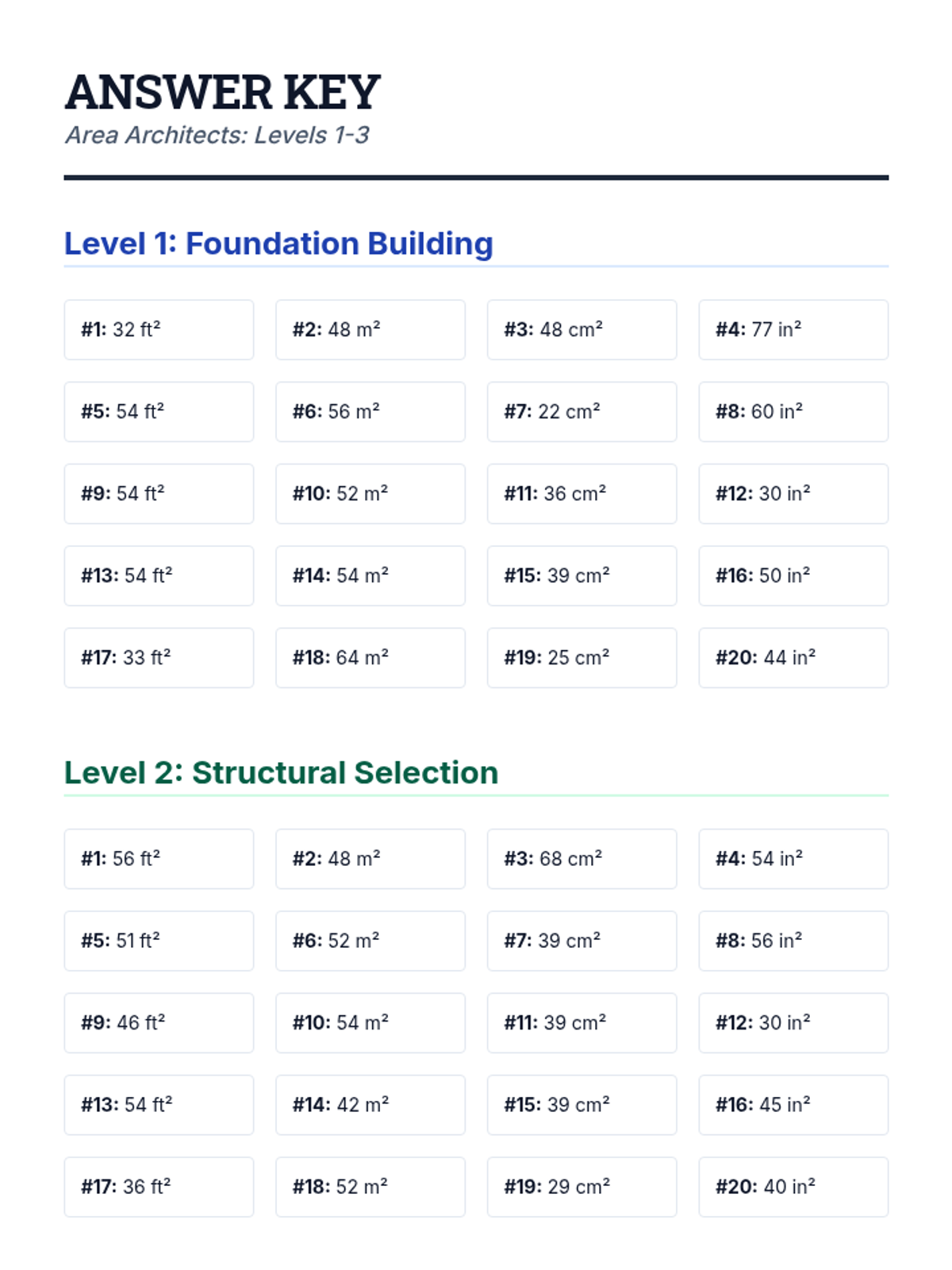
A comprehensive sequence for third-grade students to master finding the area of complex, rectilinear shapes using additive and subtractive strategies.
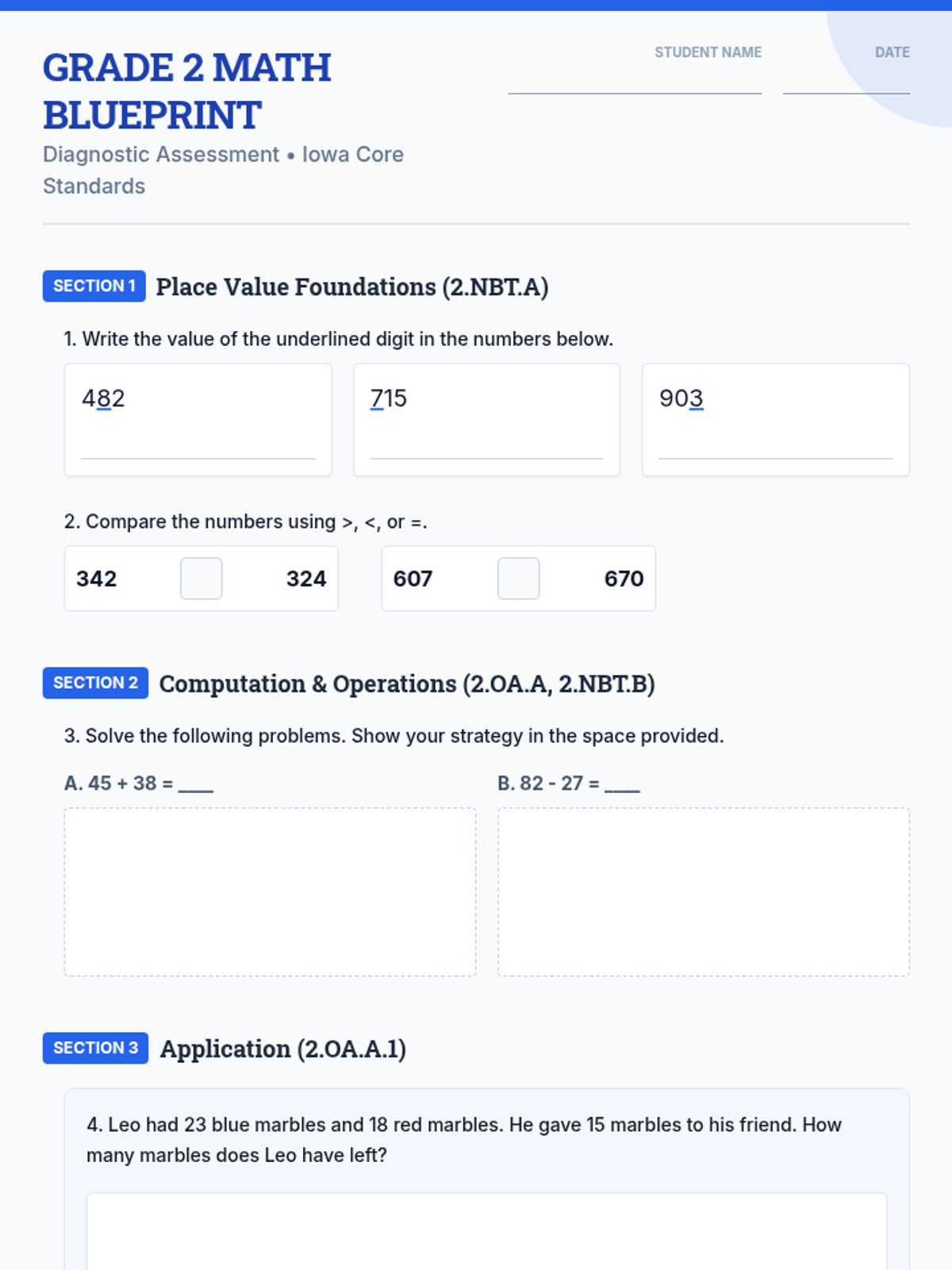
A comprehensive diagnostic suite for grades 2-5 designed to identify specific skill gaps in foundational math domains aligned to the Iowa Core standards. This series helps educators pinpoint exactly where students have discrepancies in place value, arithmetic, and early rational numbers.