Geometric classification, measurement of area and volume, and the study of transformations and rigid motions. Builds toward complex proofs, trigonometry for general triangles, and the algebraic representation of conic sections.
A high-energy math vocabulary review game designed for third graders. This lesson covers multiplication, division, measurement, fractions, and geometry through a Jeopardy-style competitive format.
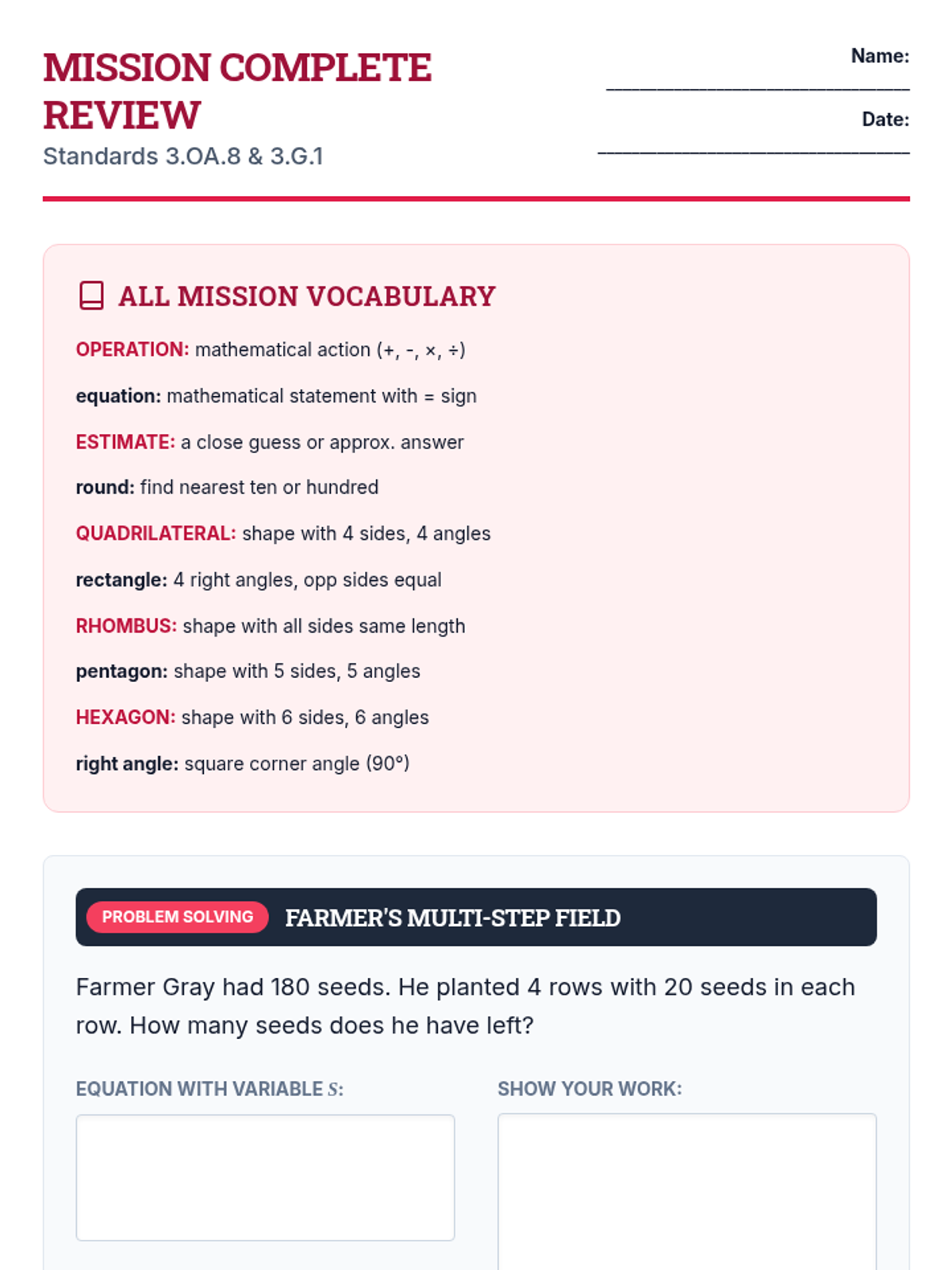
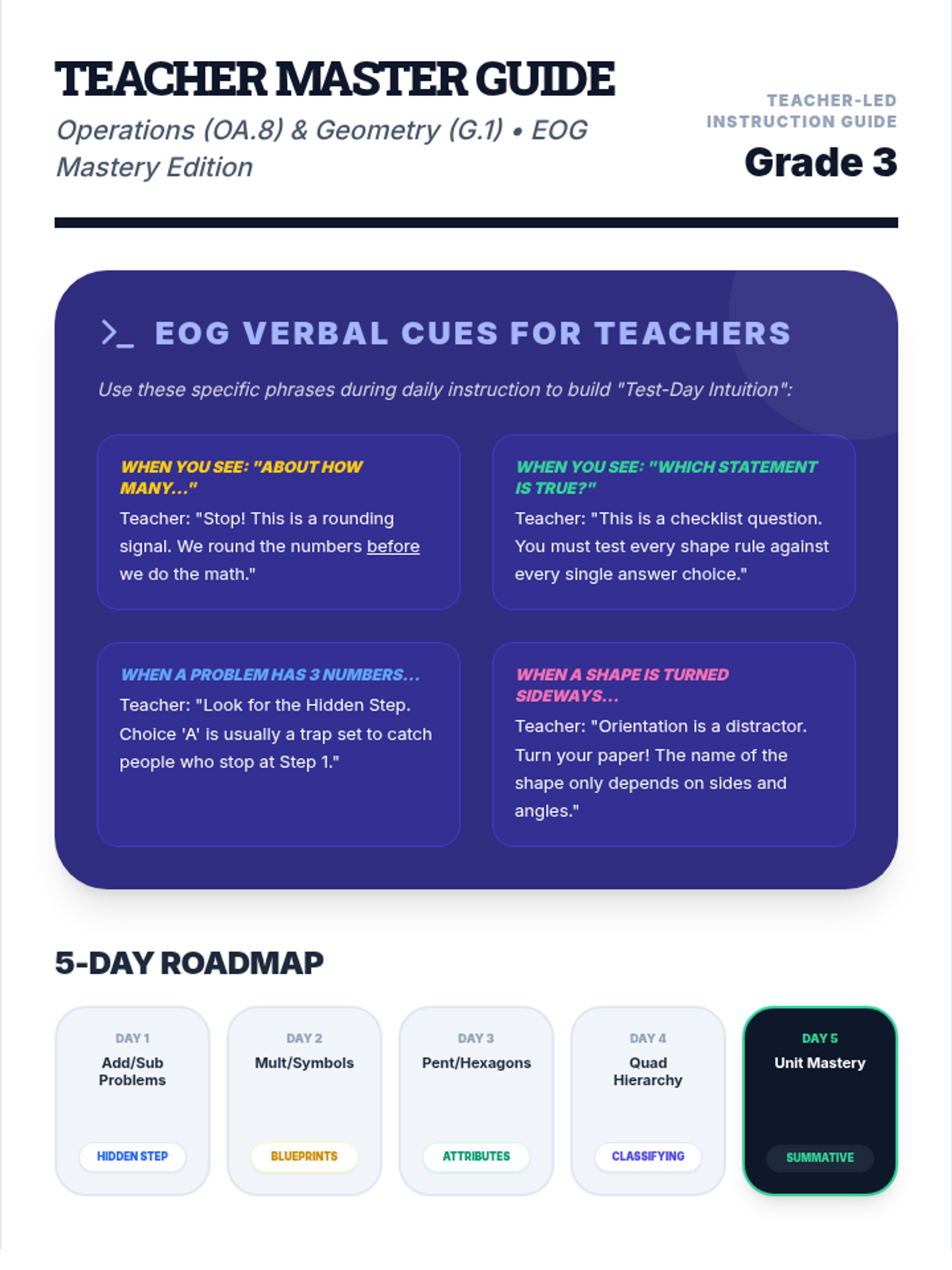
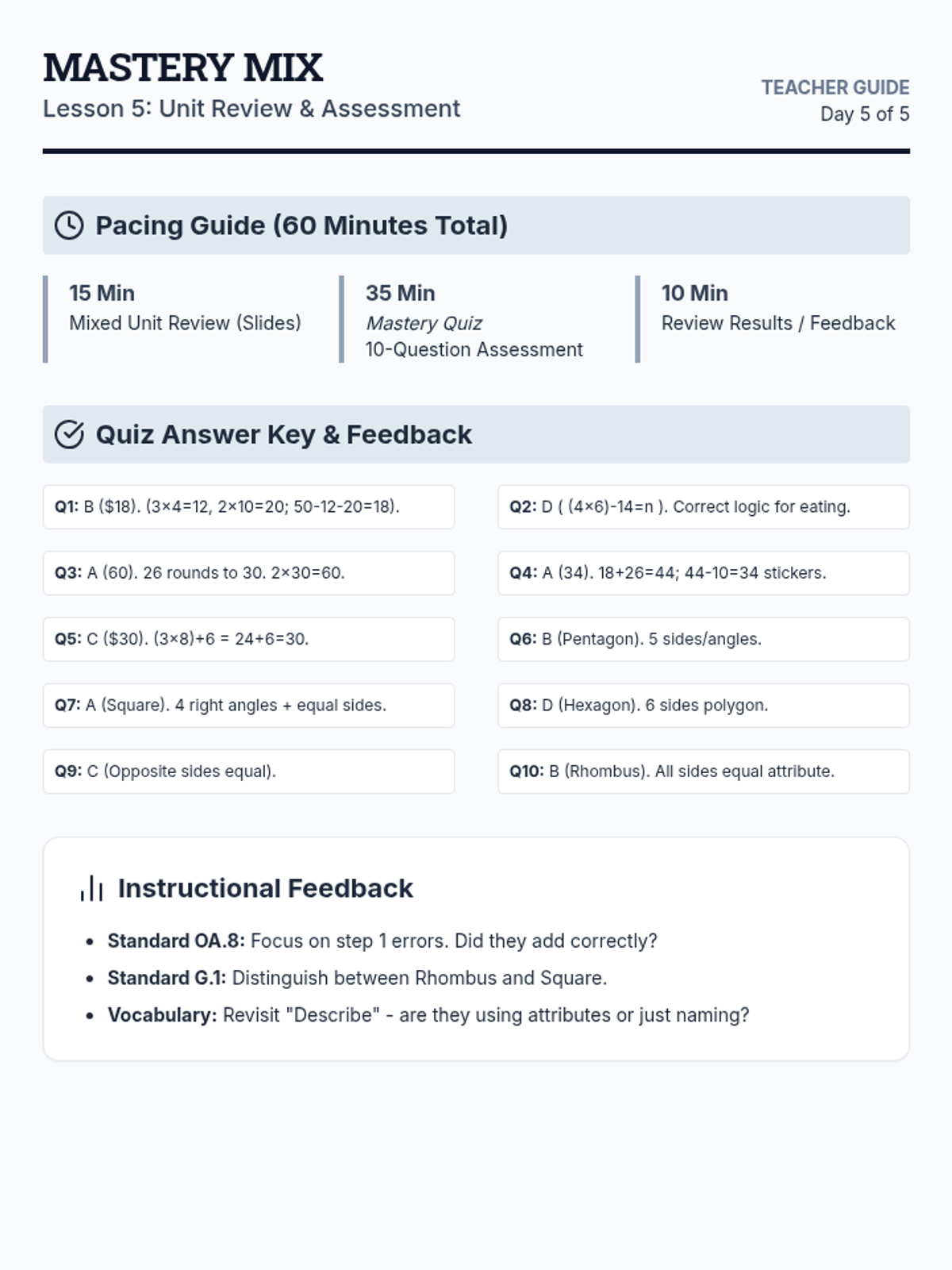
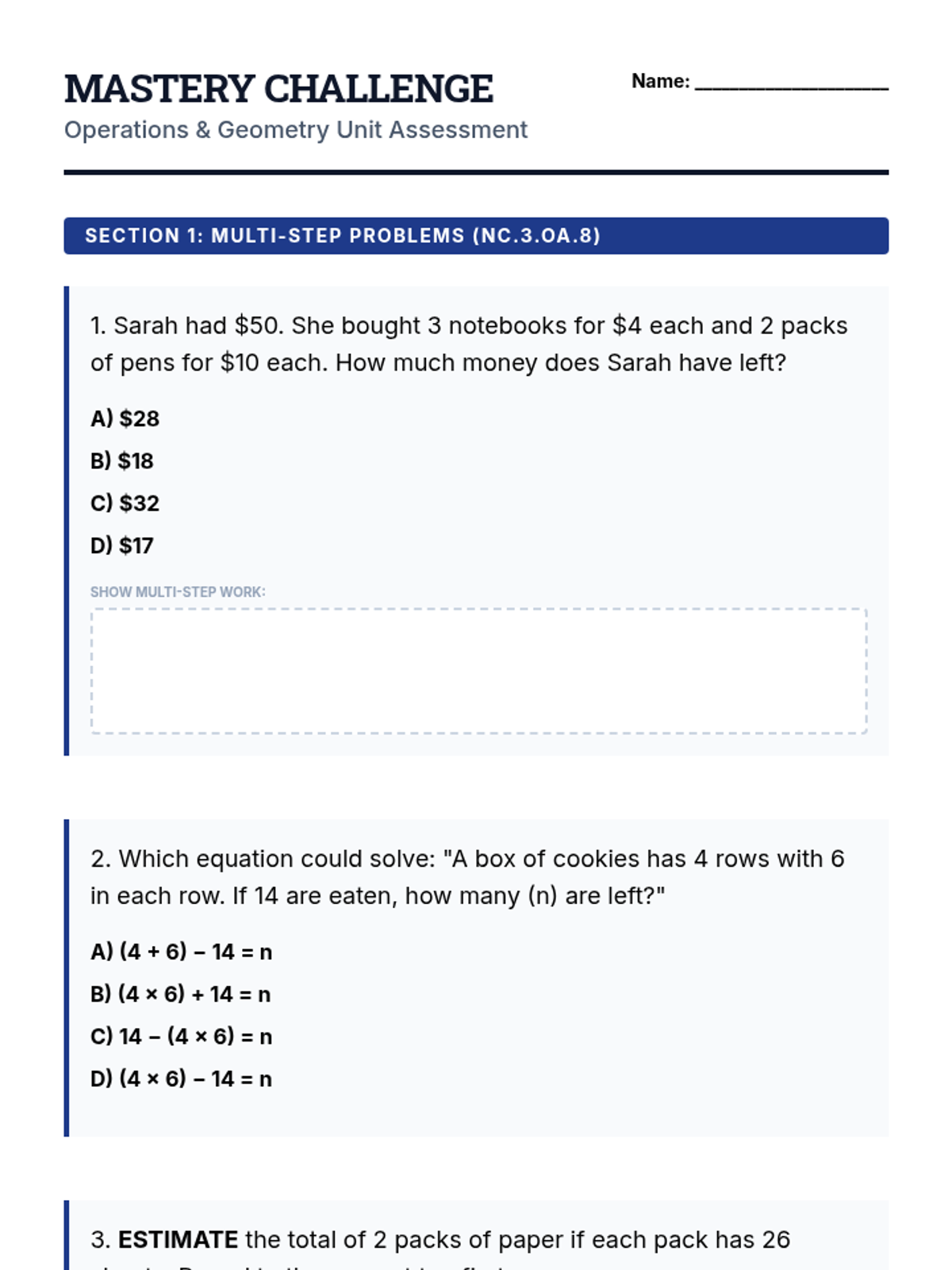
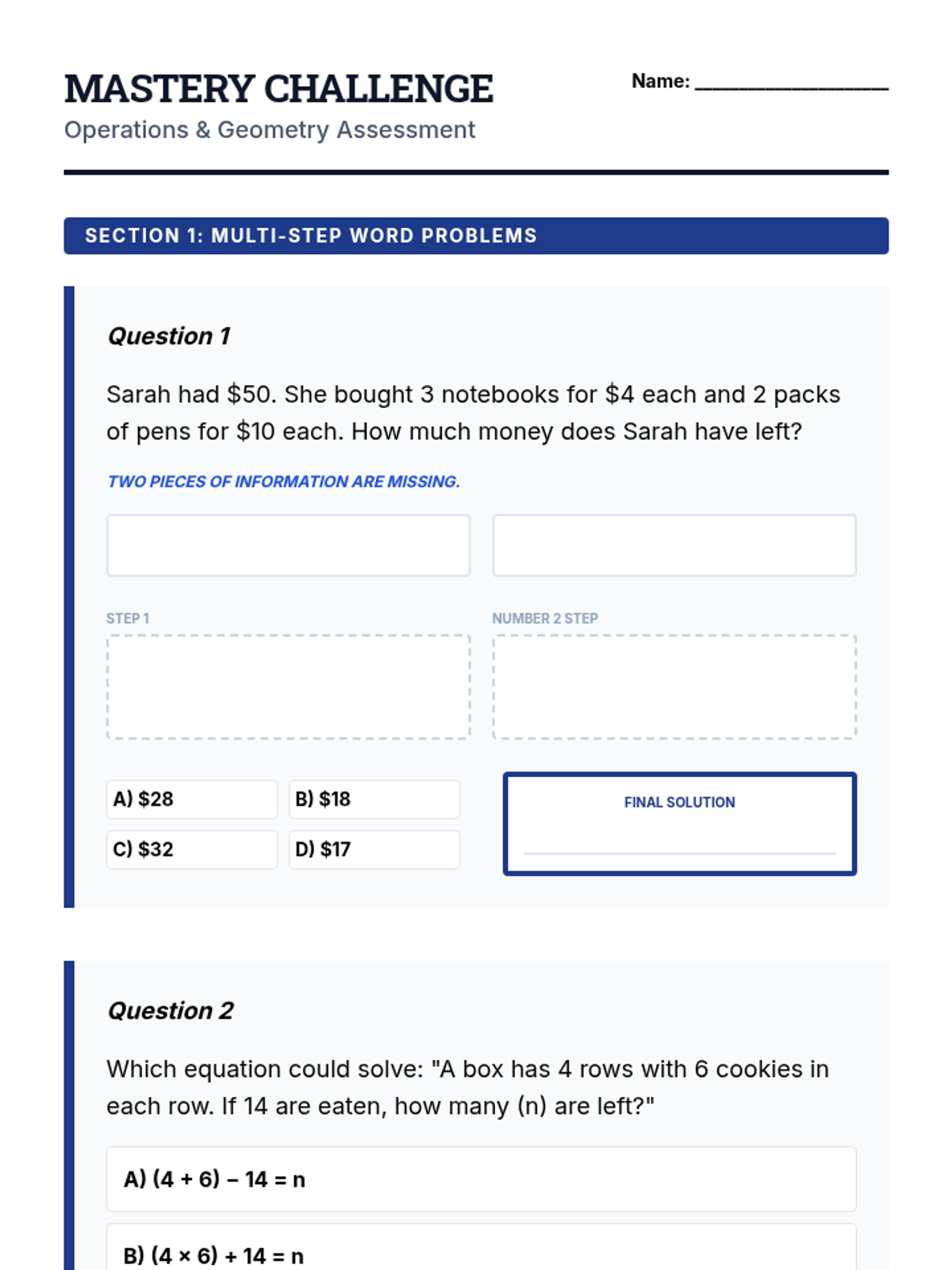
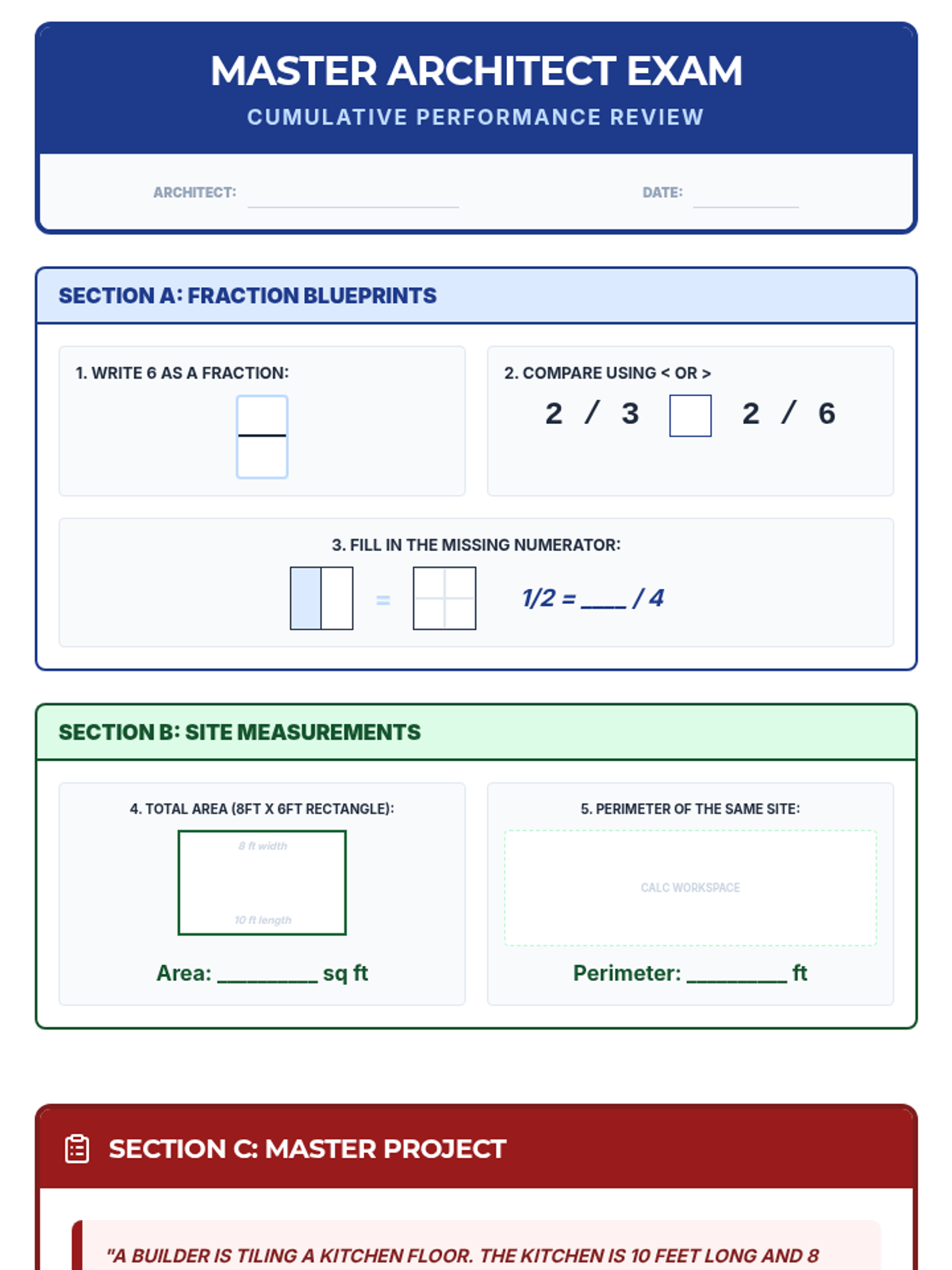
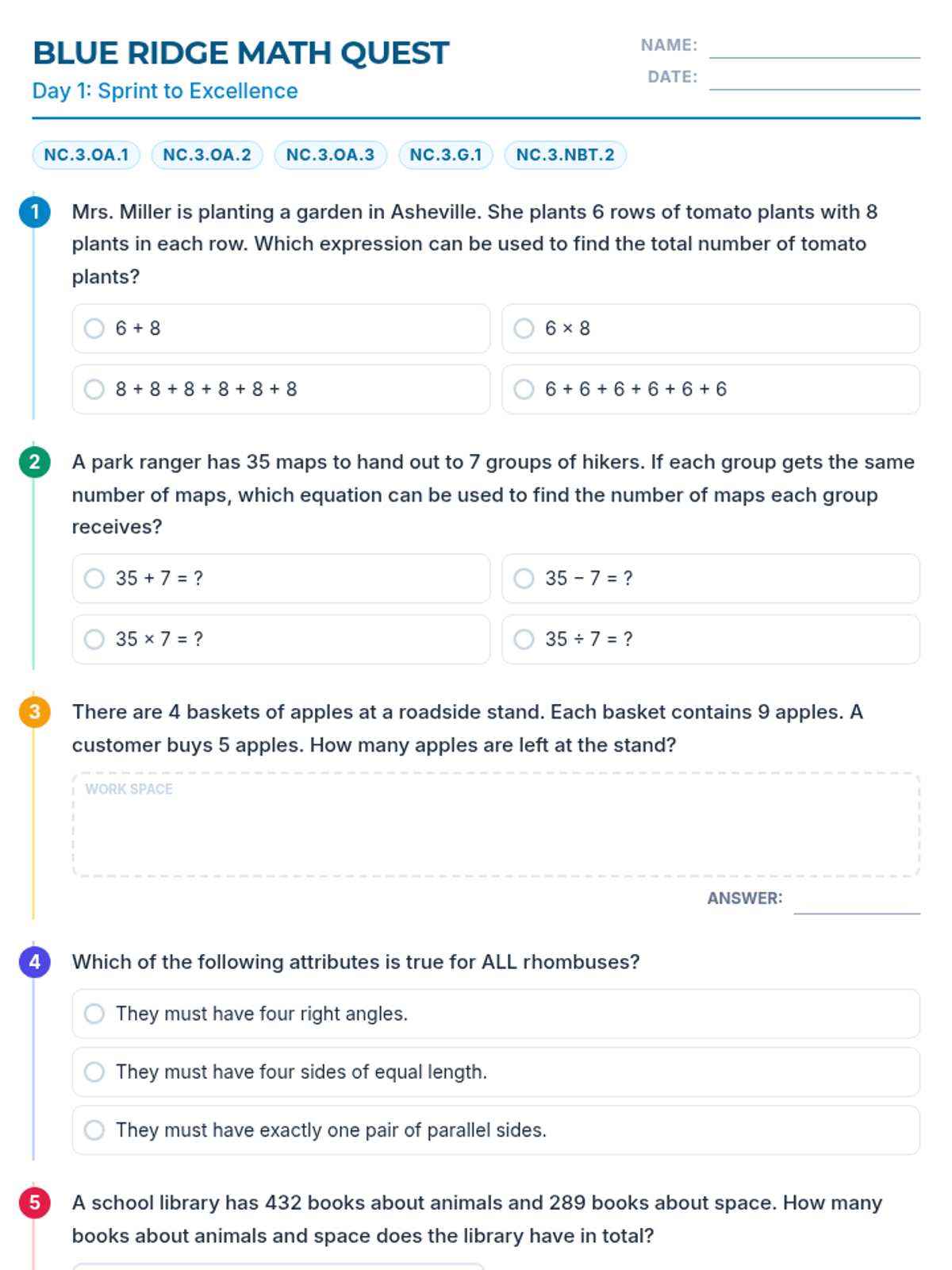
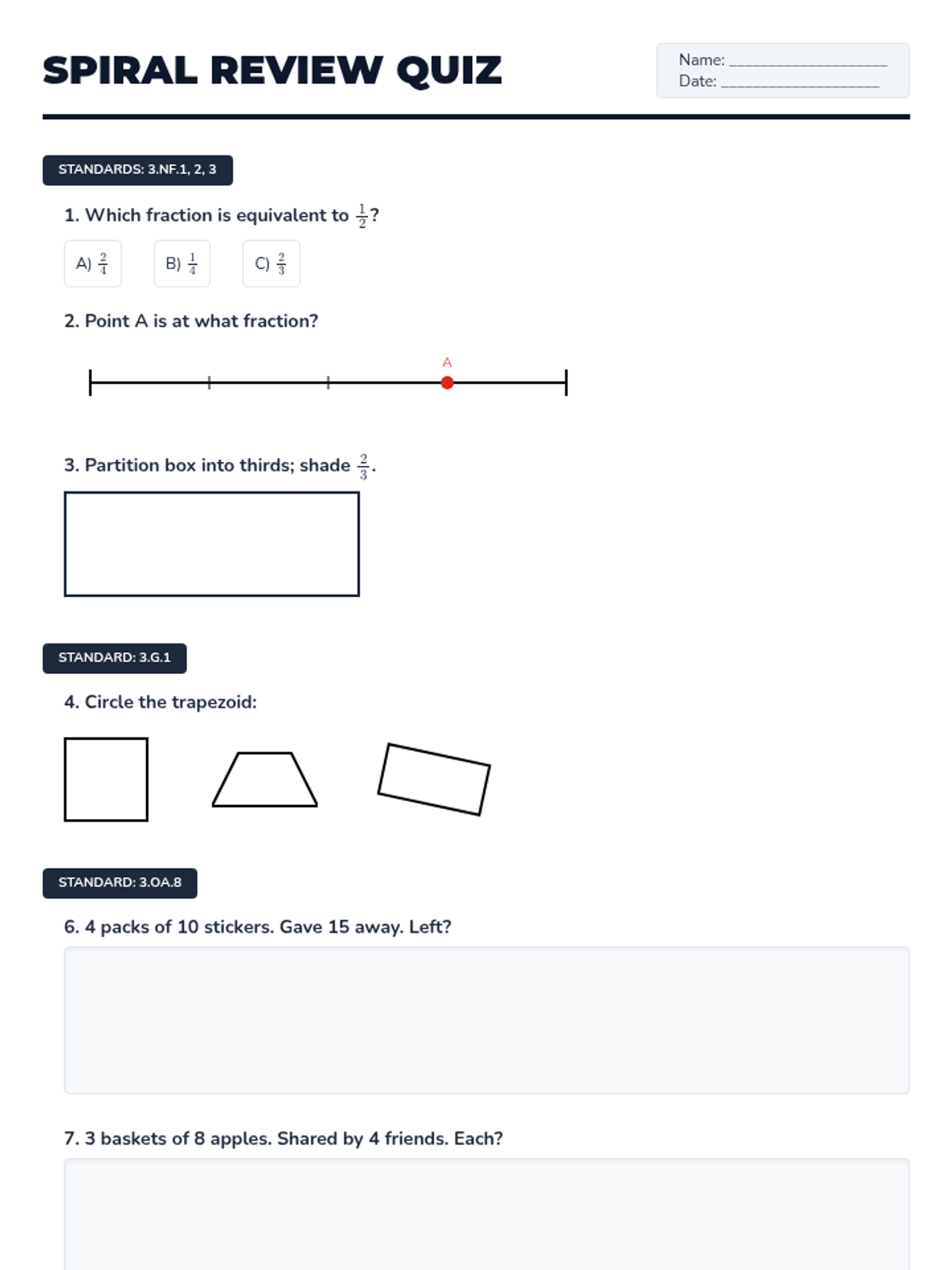
A cumulative review and final assessment covering both word problem solving and geometric classification to ensure mastery of standards 3.OA.8 and 3.G.1.
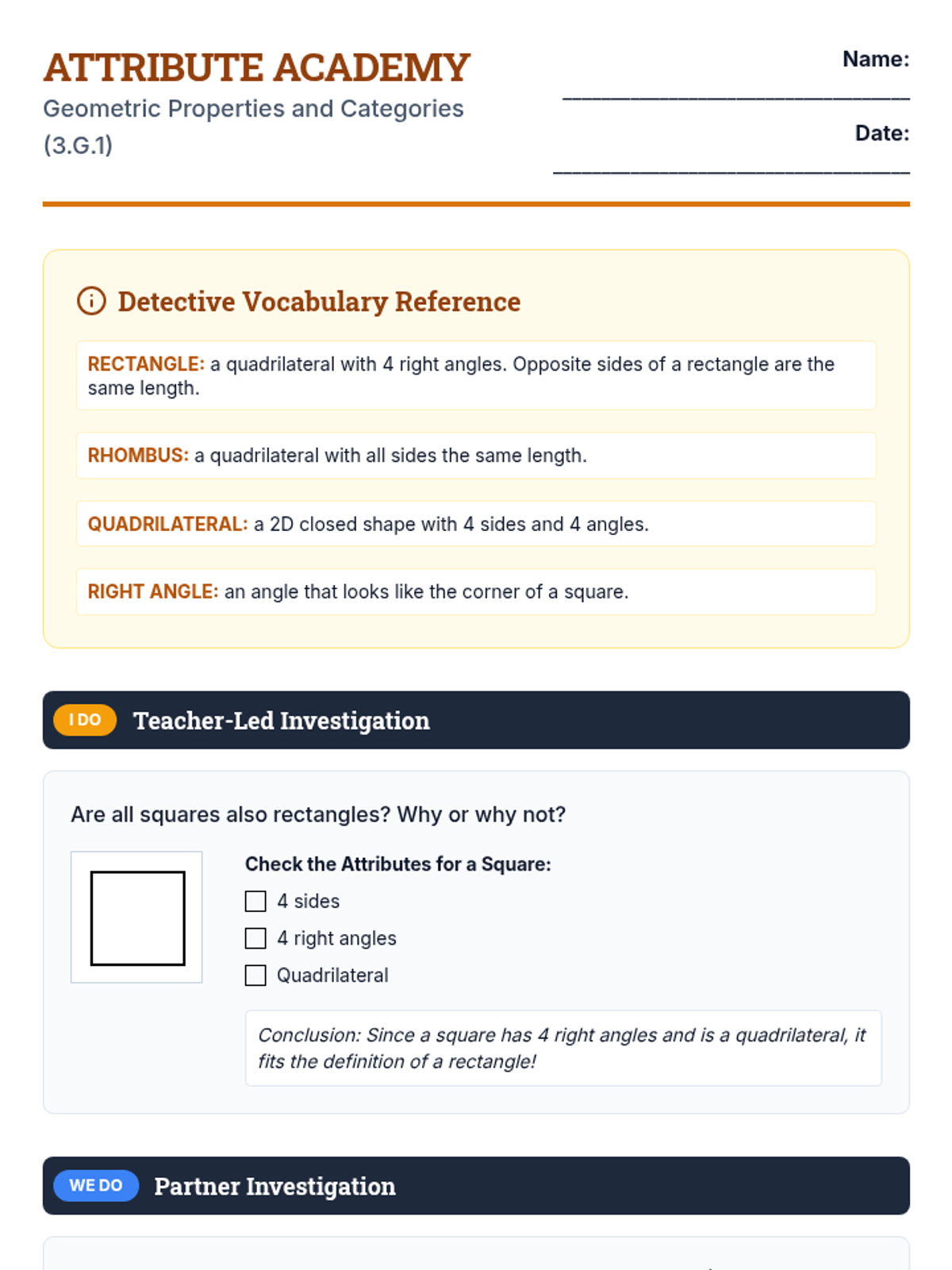
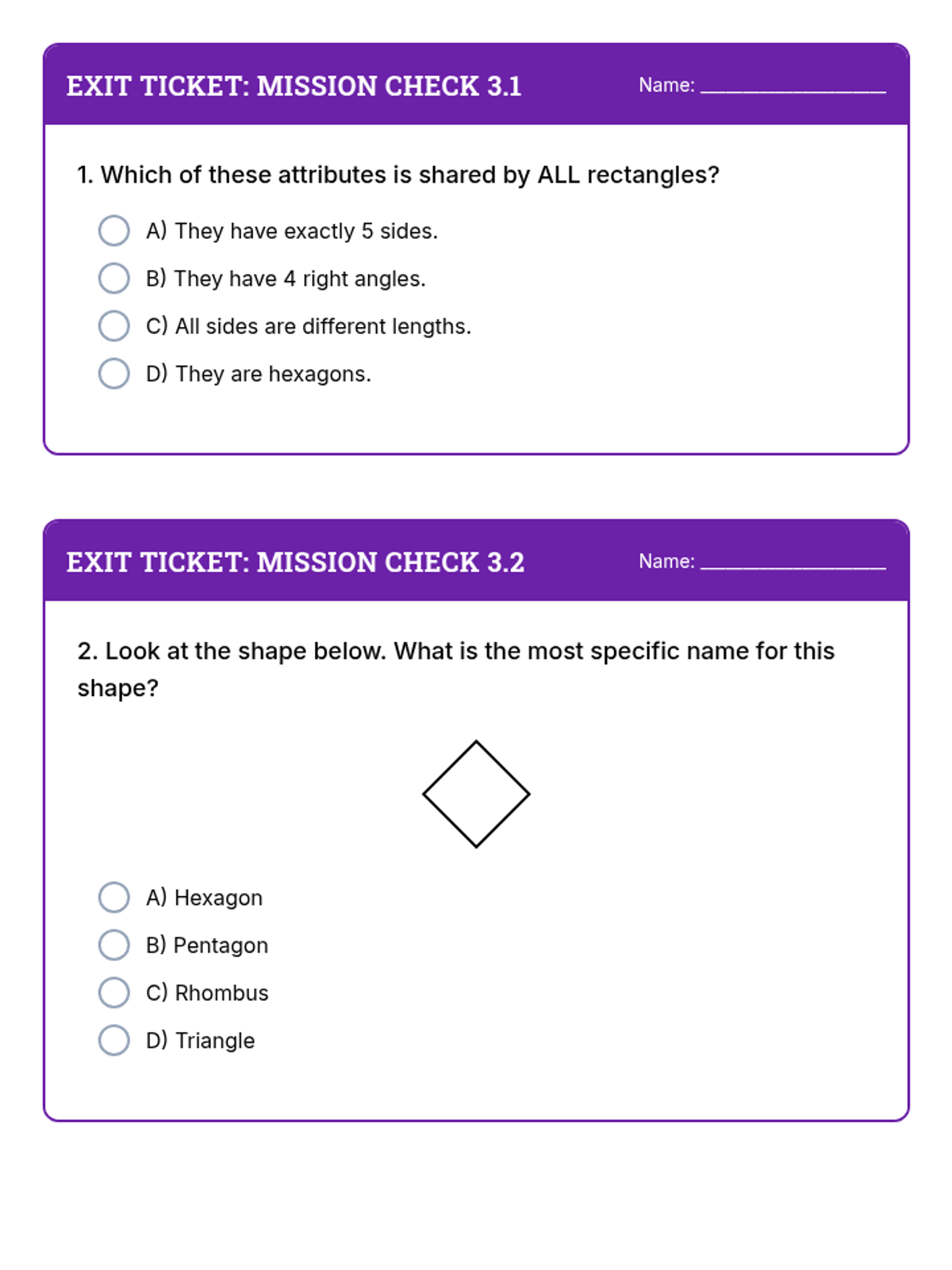
Deeper exploration of geometric attributes, focusing on classifying shapes within larger categories and recognizing shared properties.
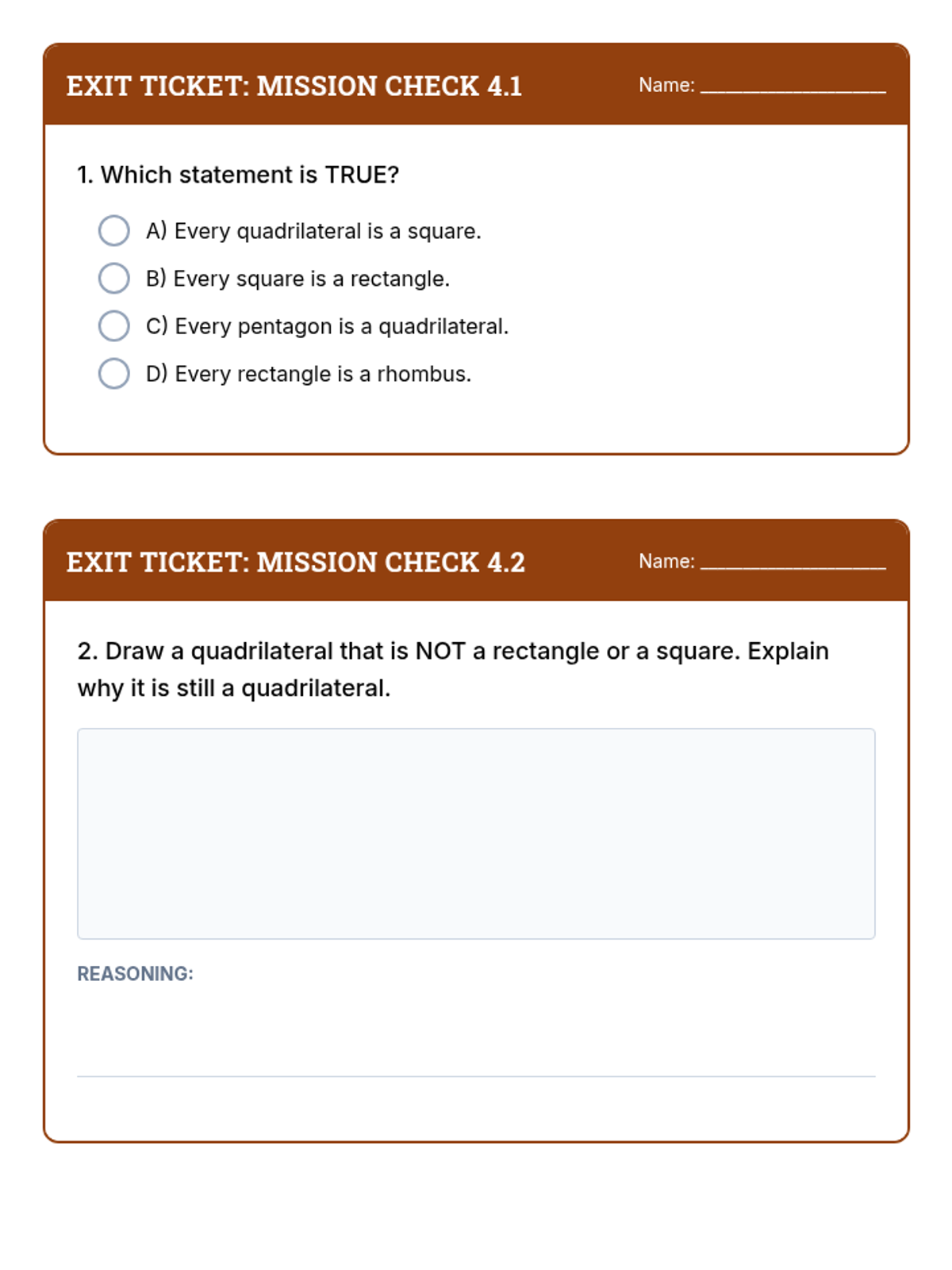
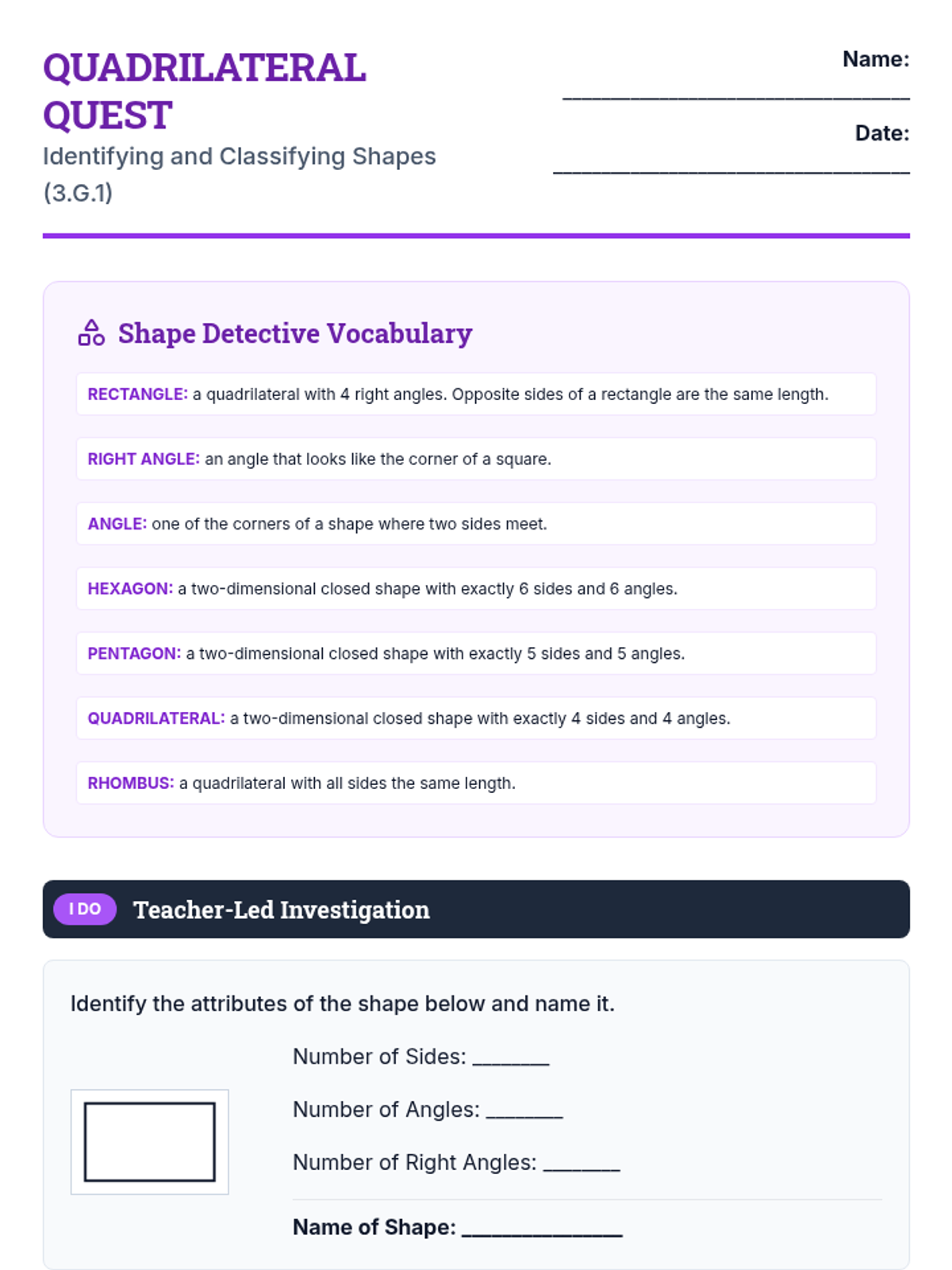
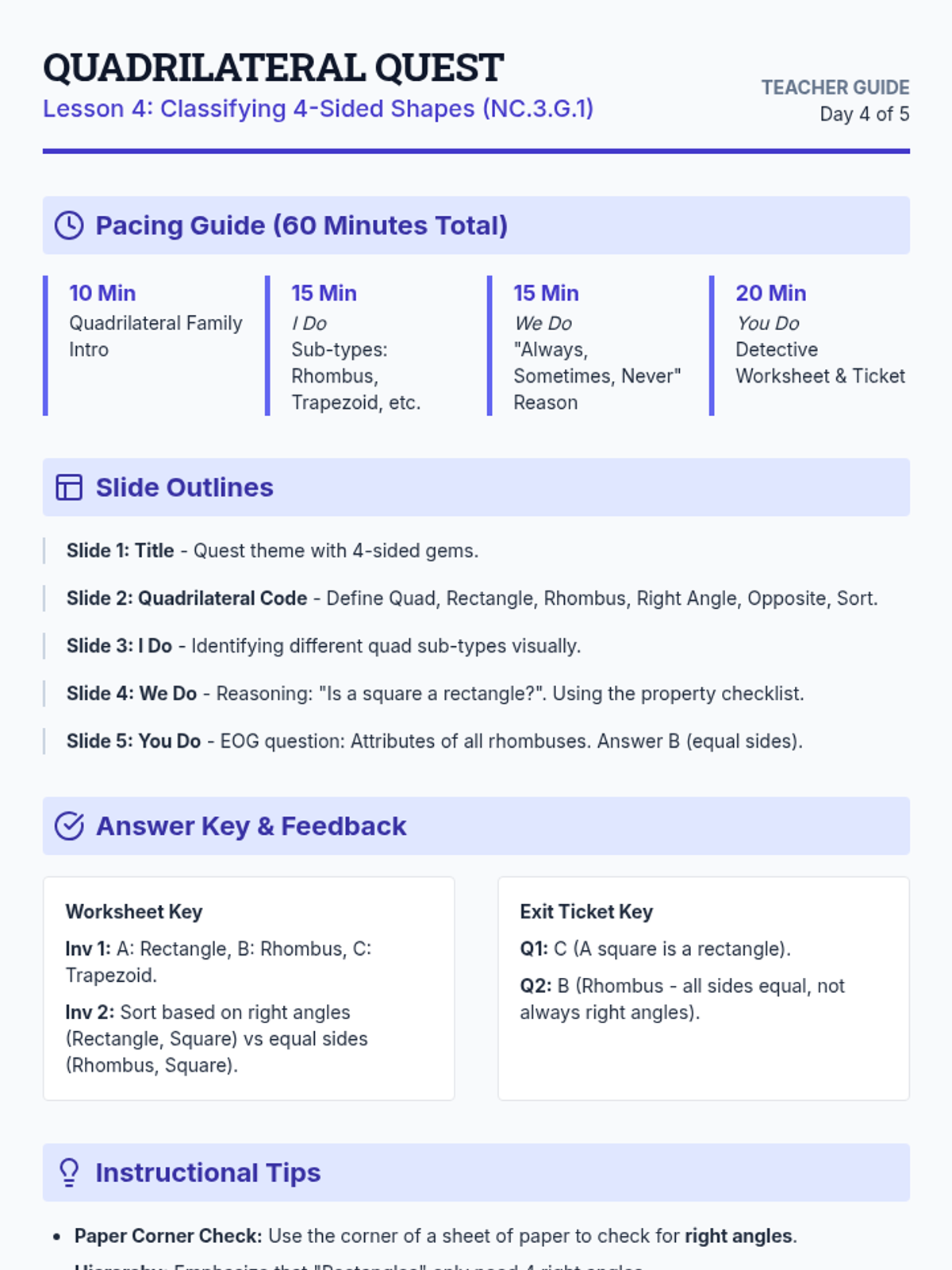
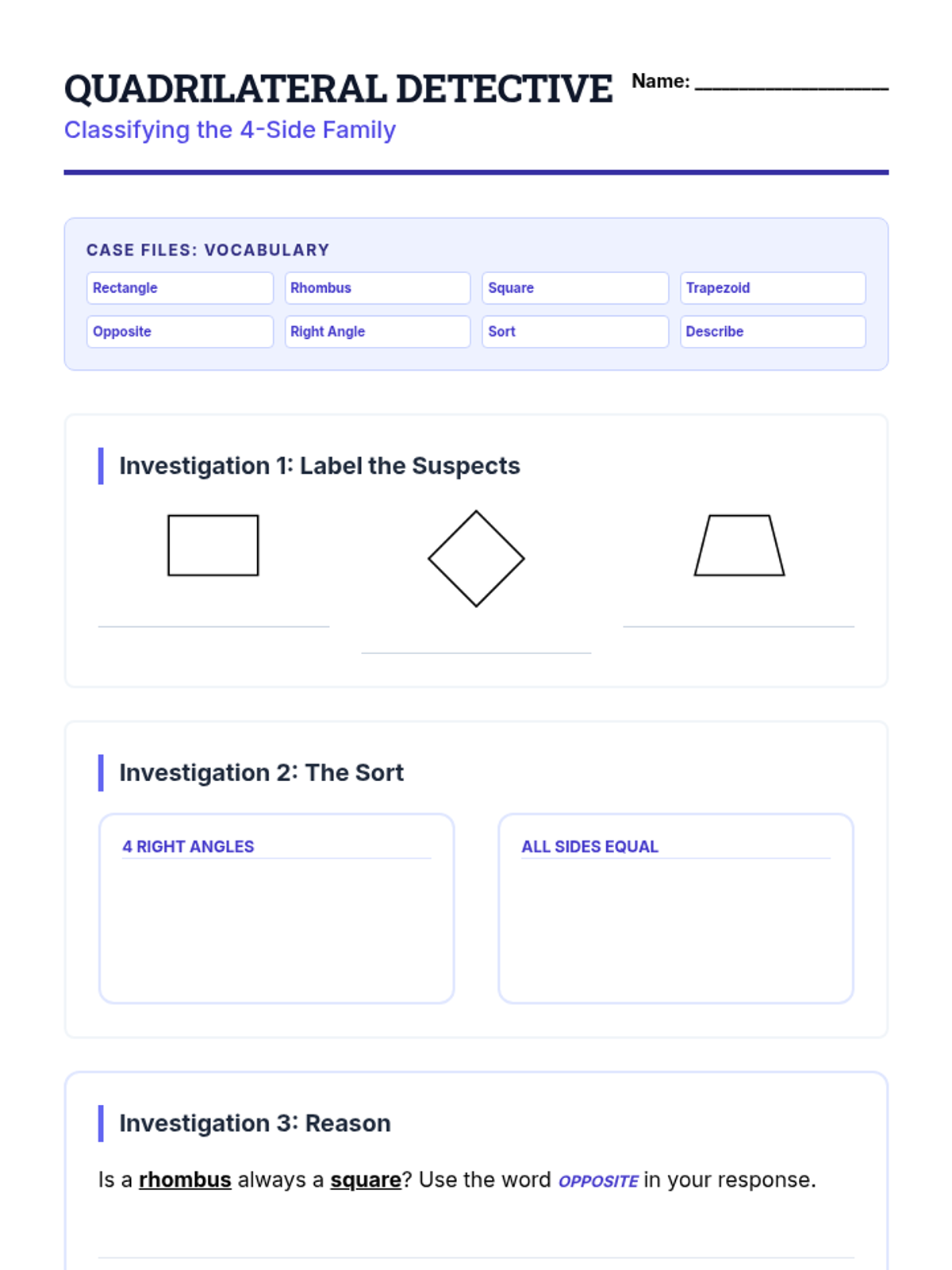
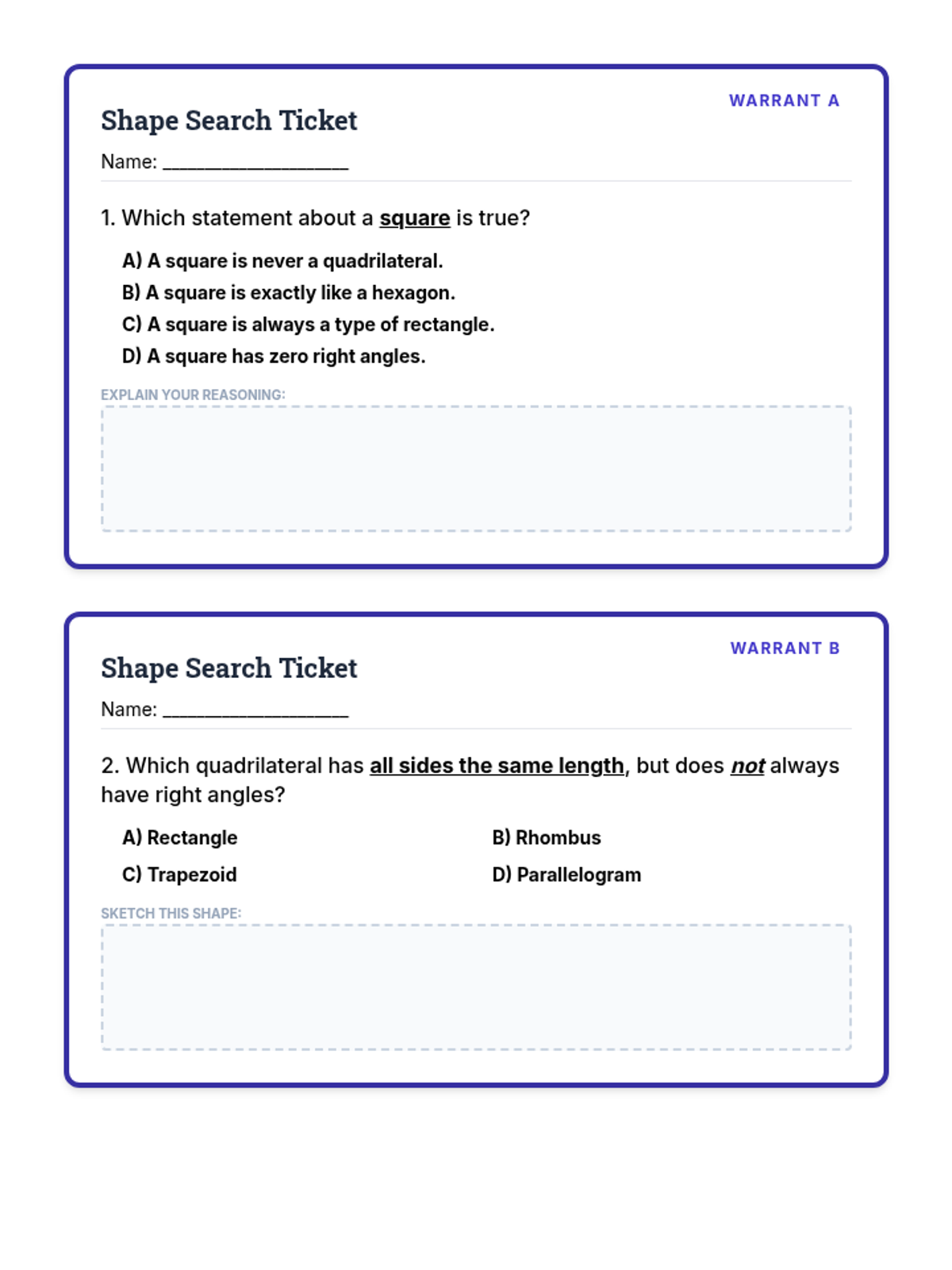
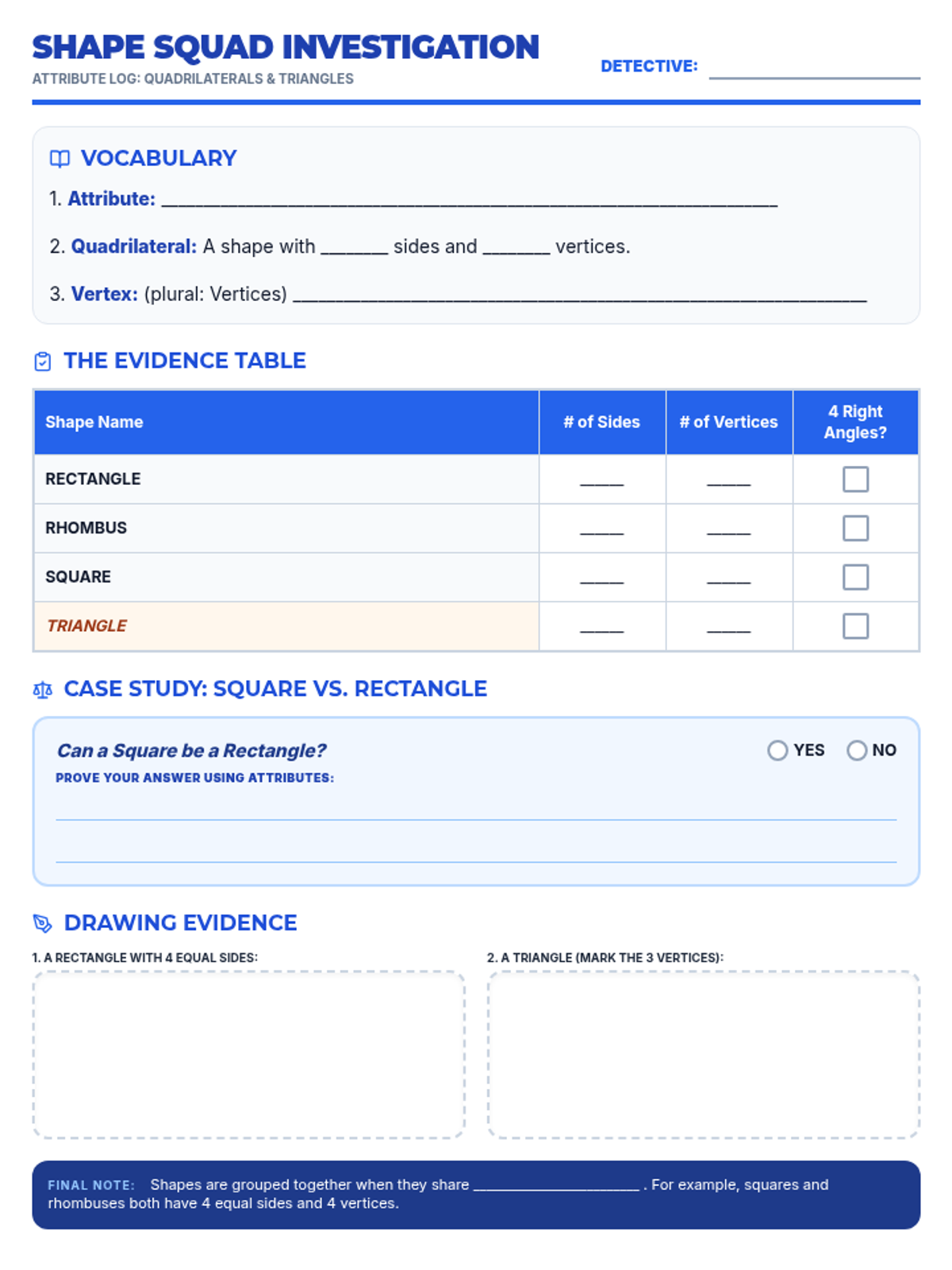
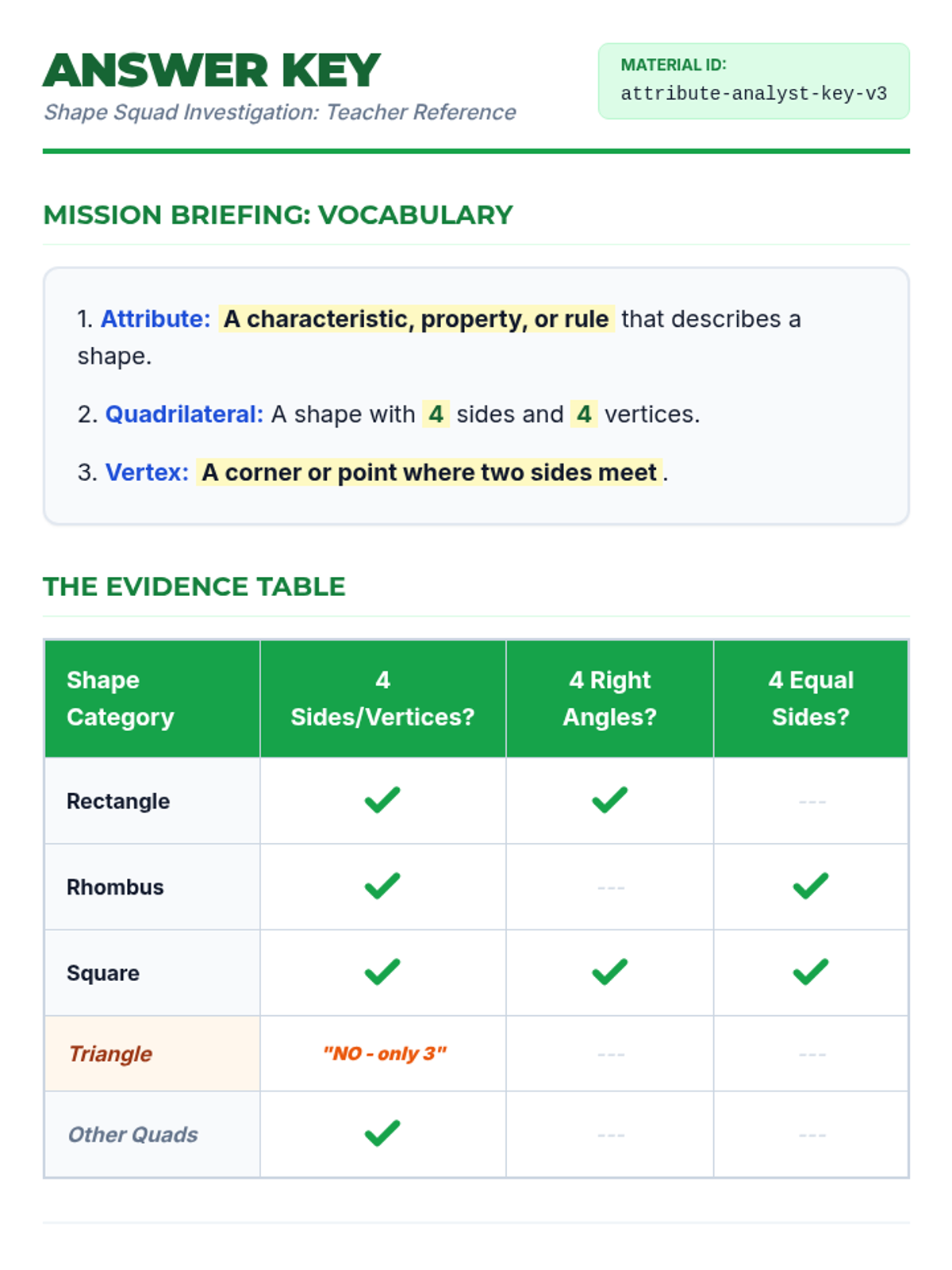
Introduction to identifying and classifying quadrilaterals based on their attributes, including sides, angles, and specific definitions of common shapes.
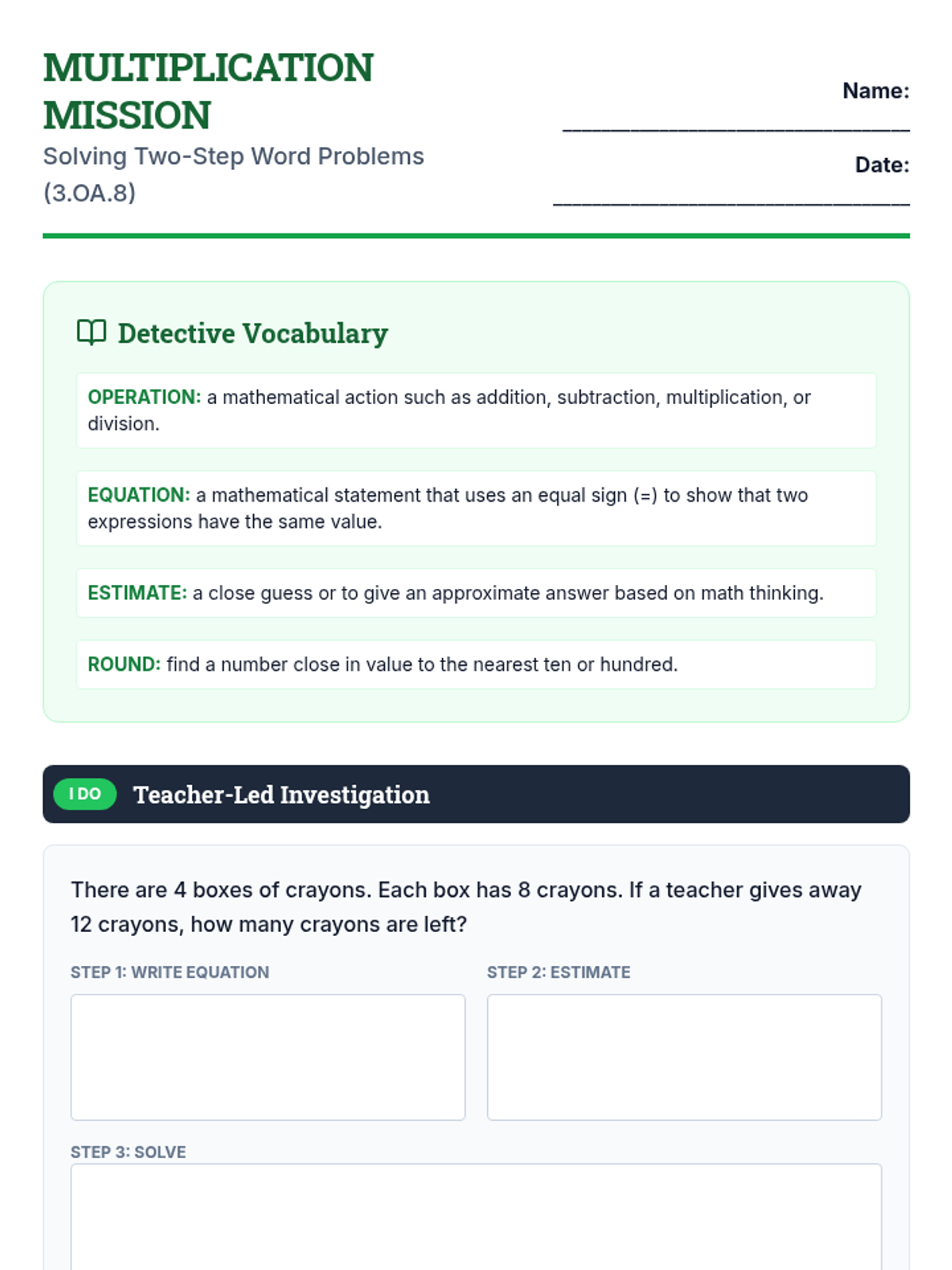
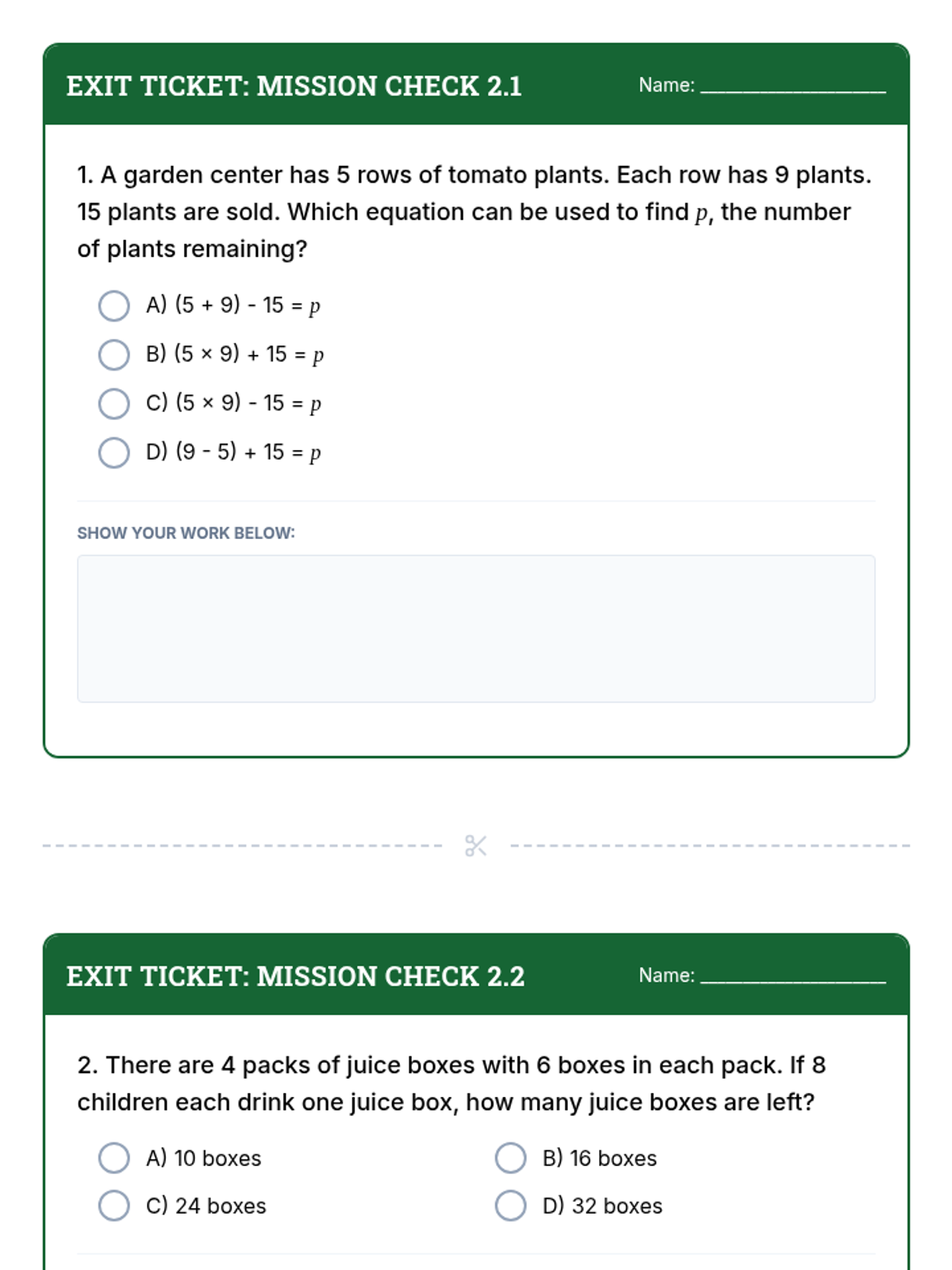
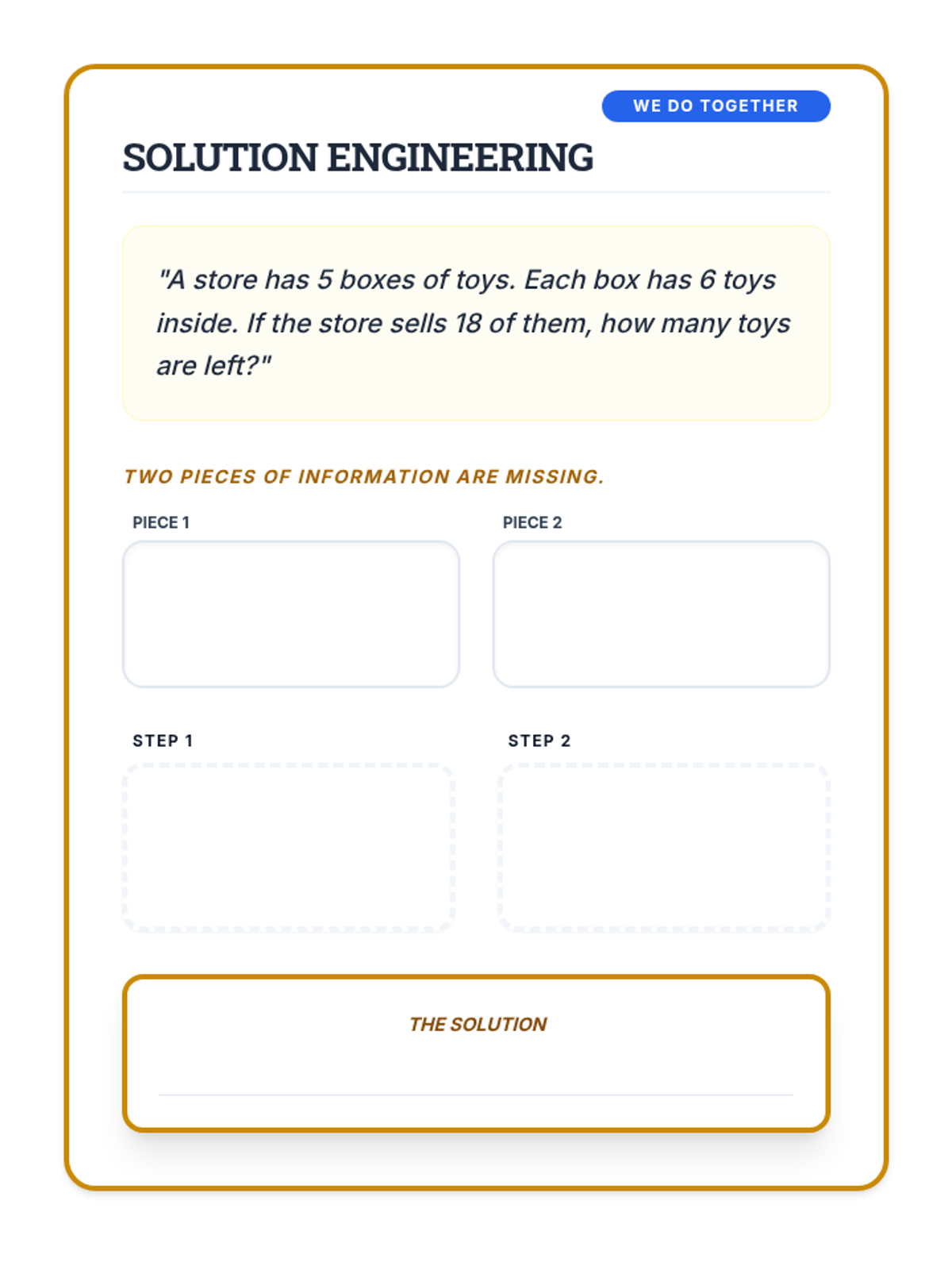
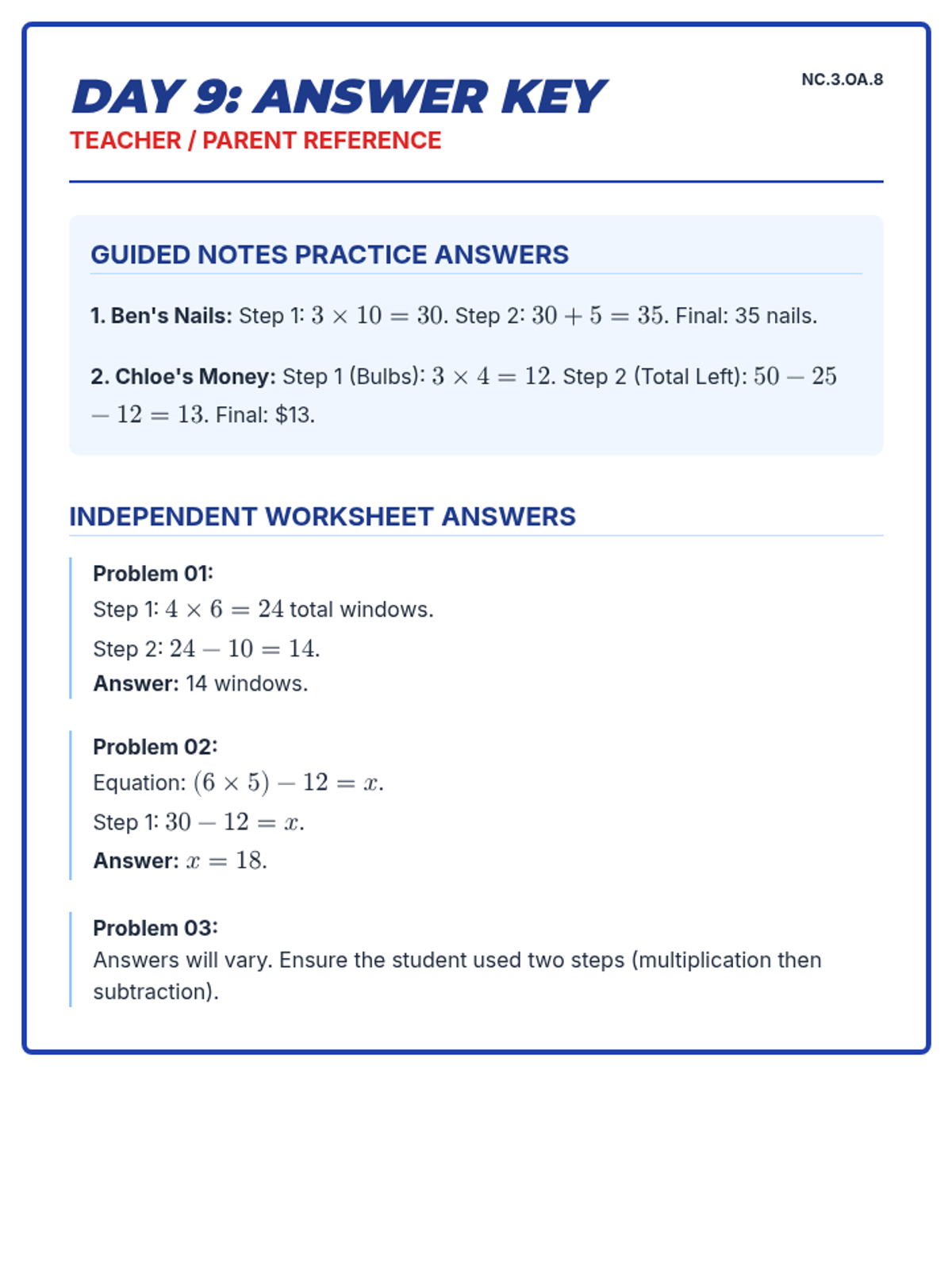
Extends problem-solving skills to two-step word problems involving multiplication and other operations, focusing on equation representation and estimation strategies.
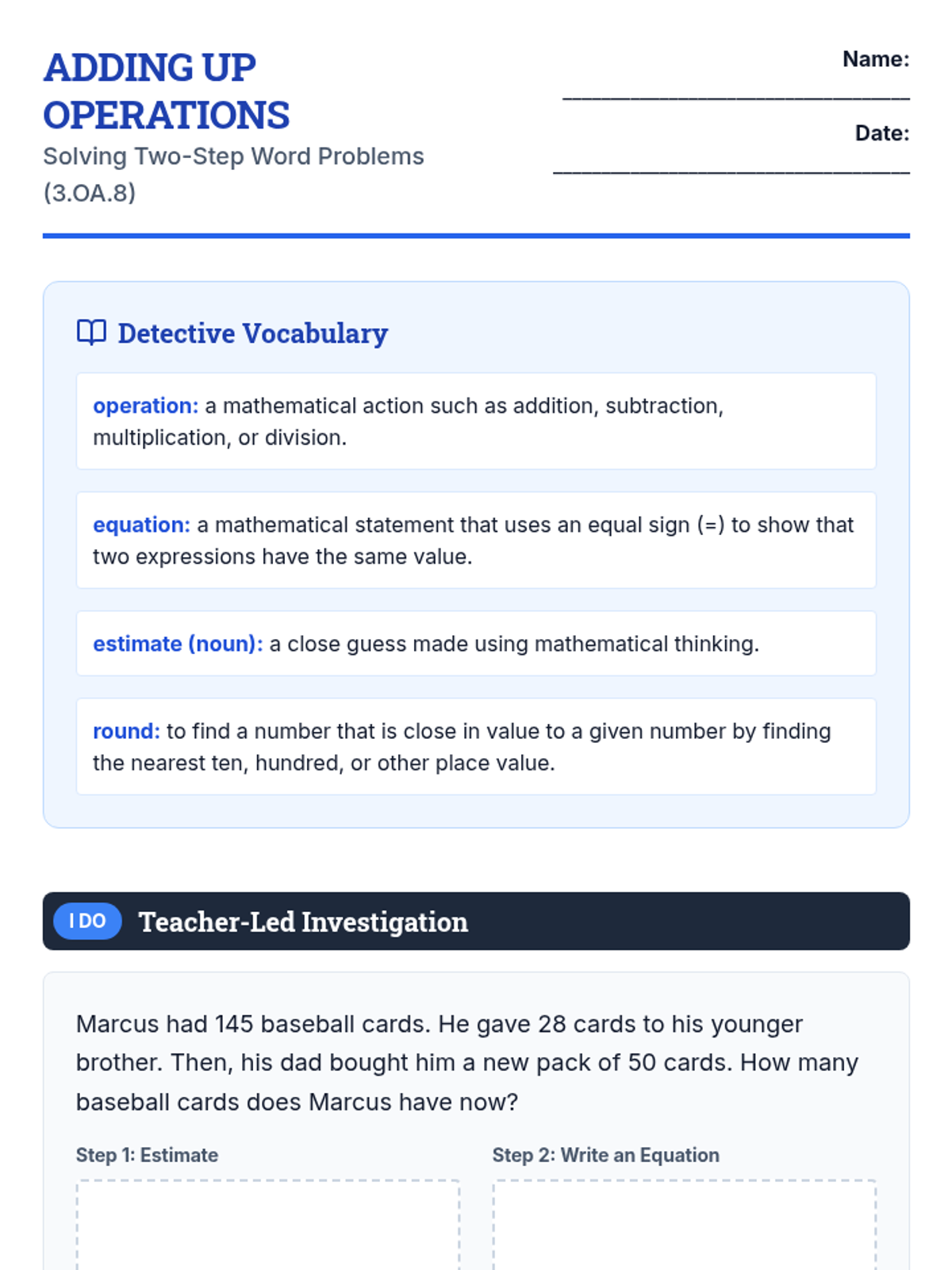
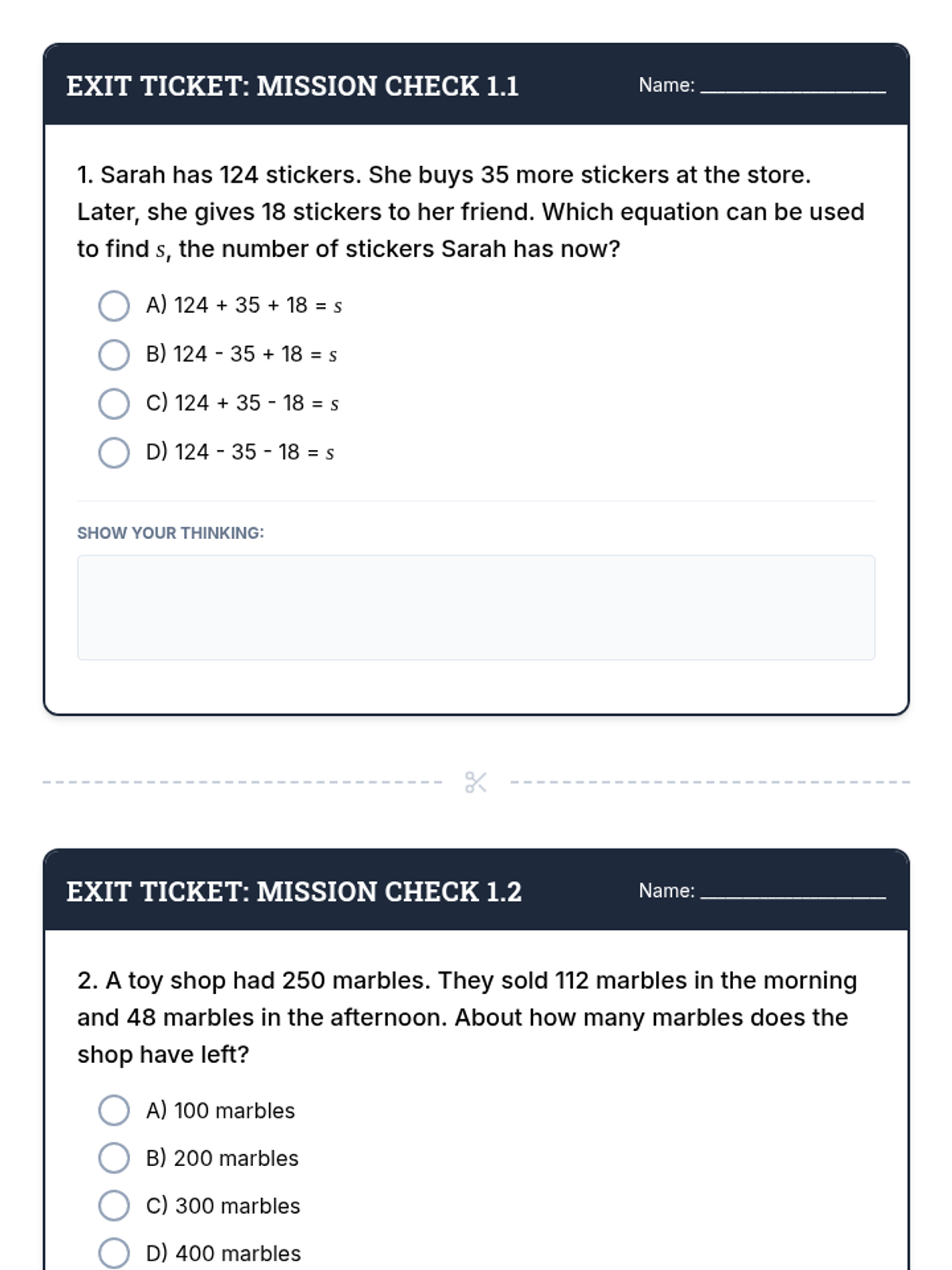
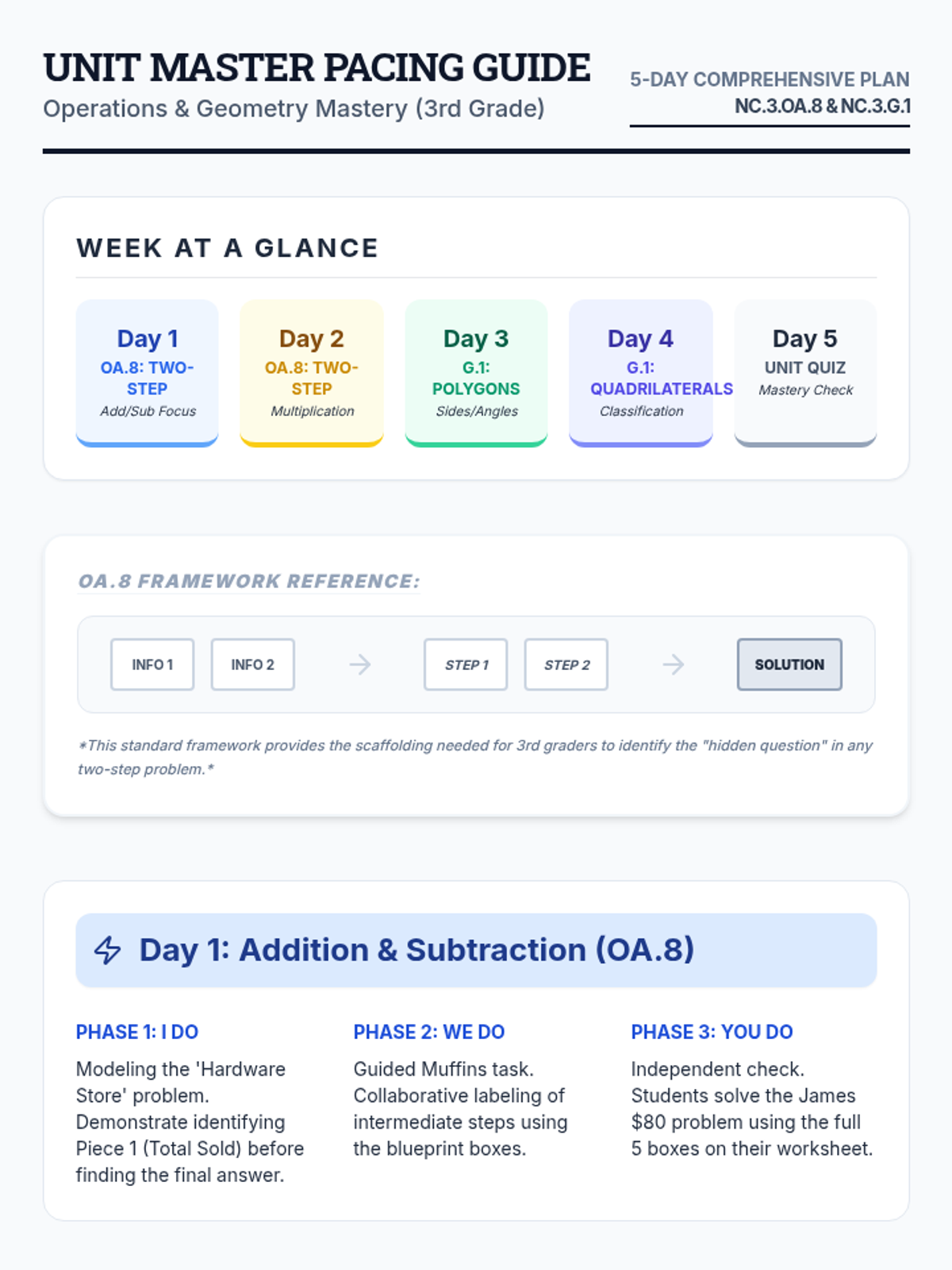
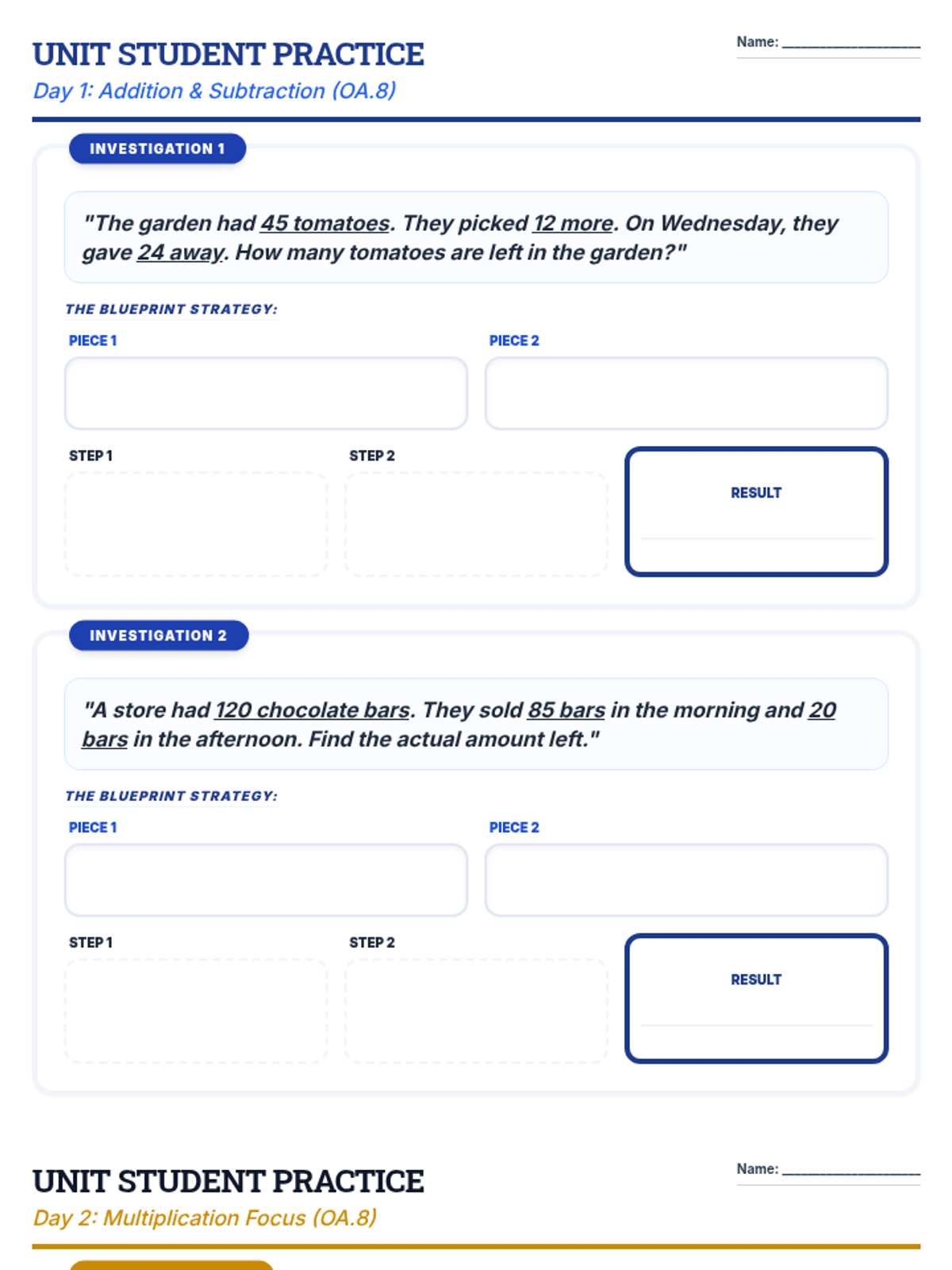
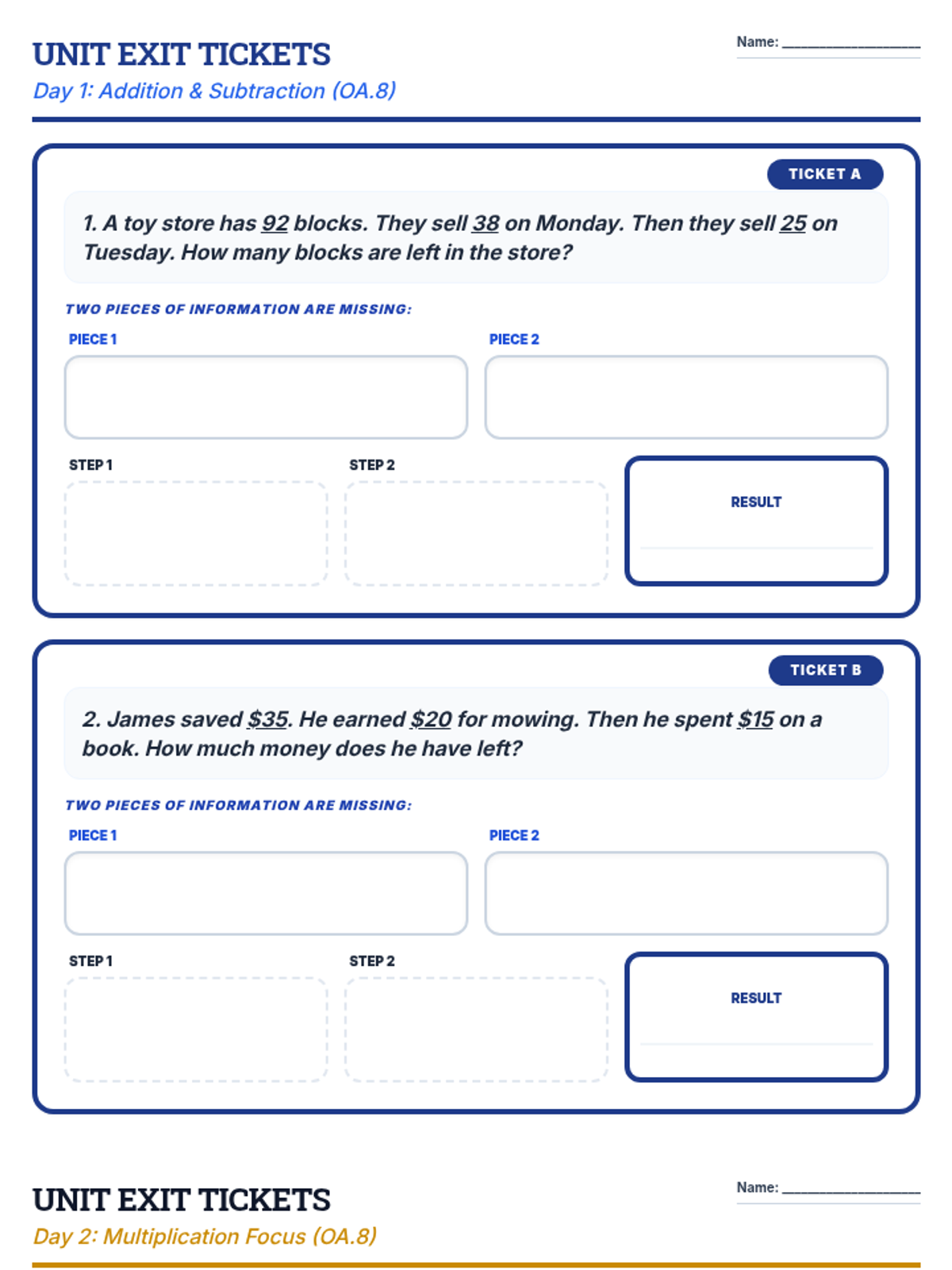
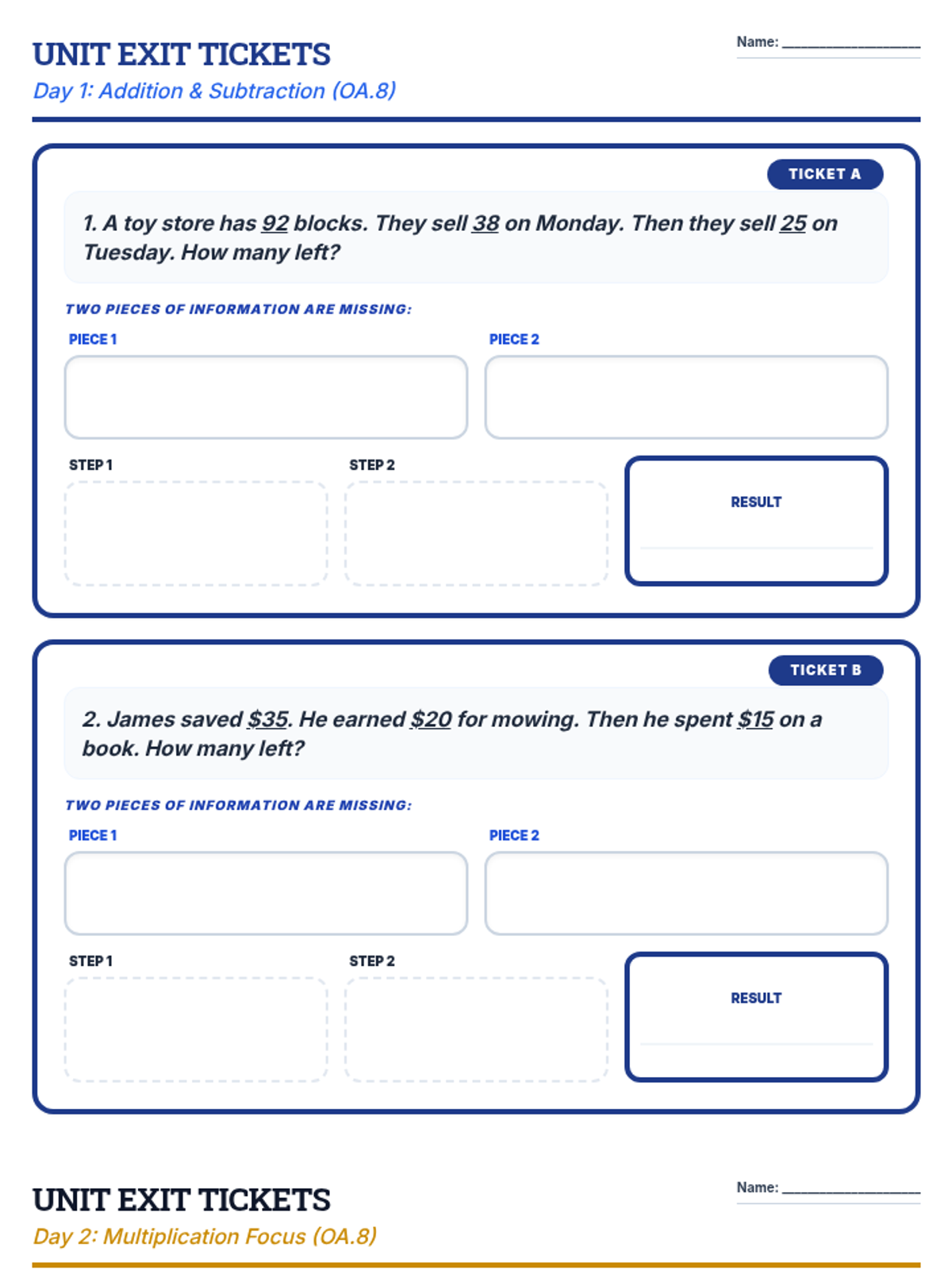
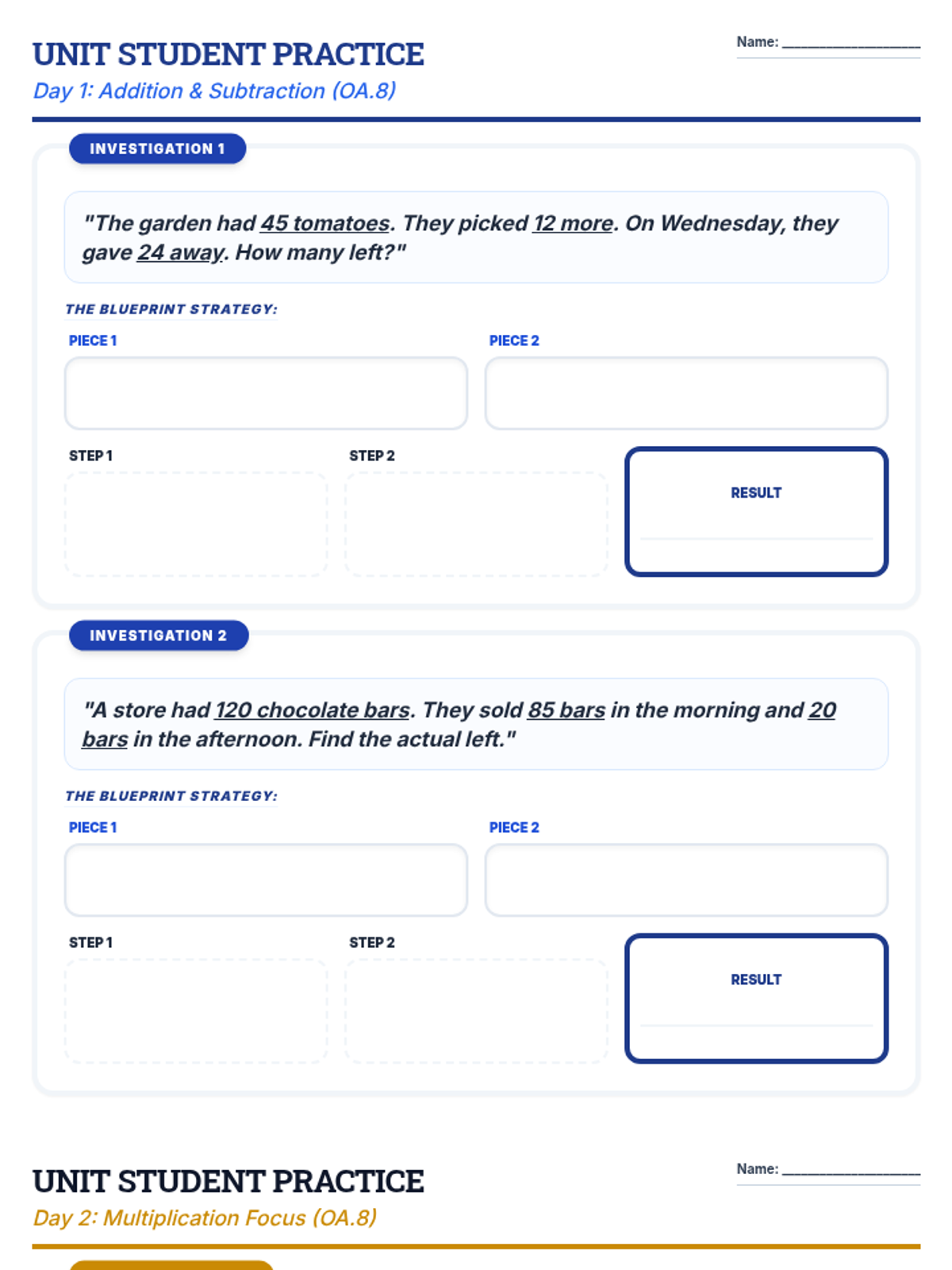
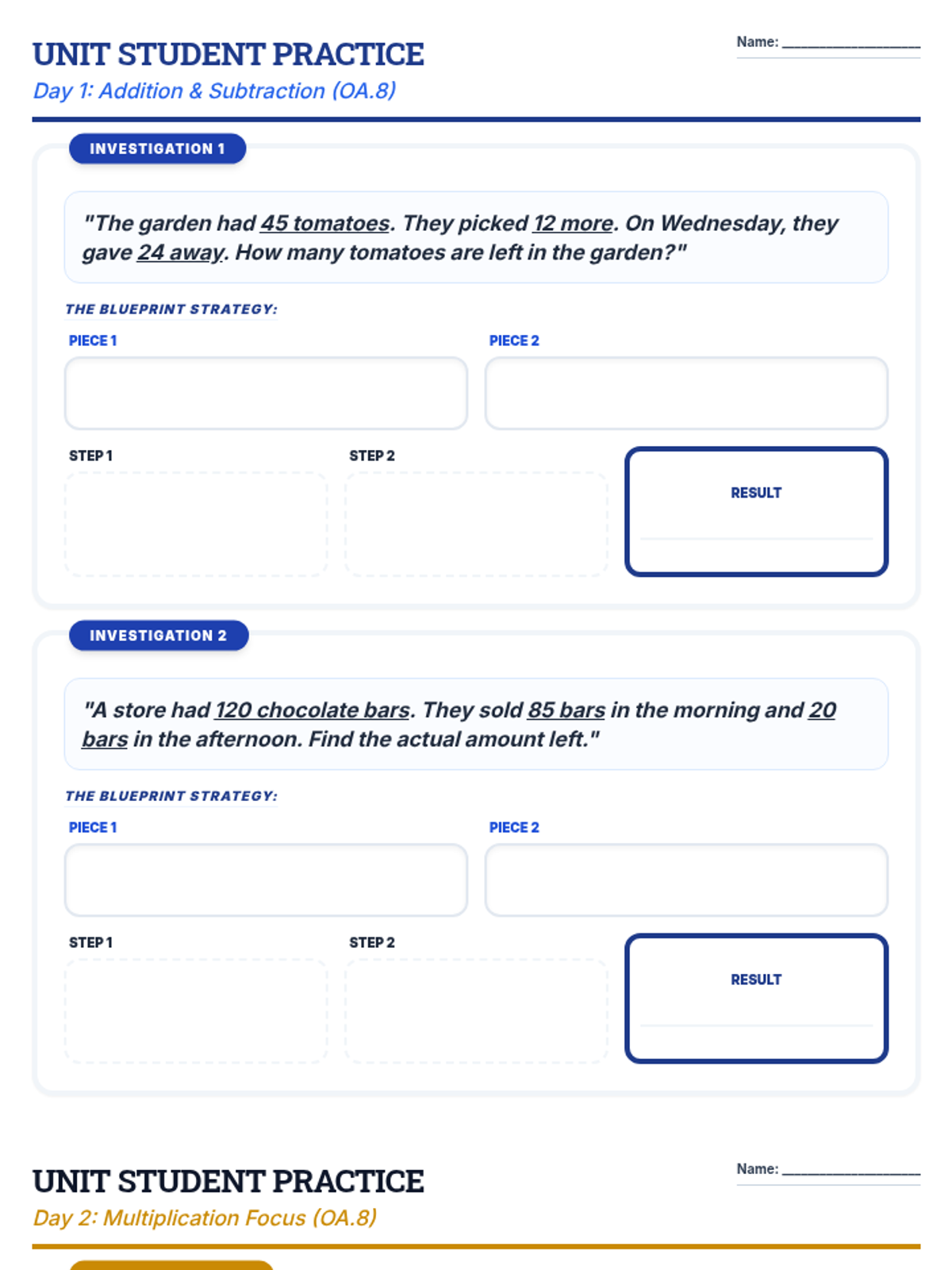
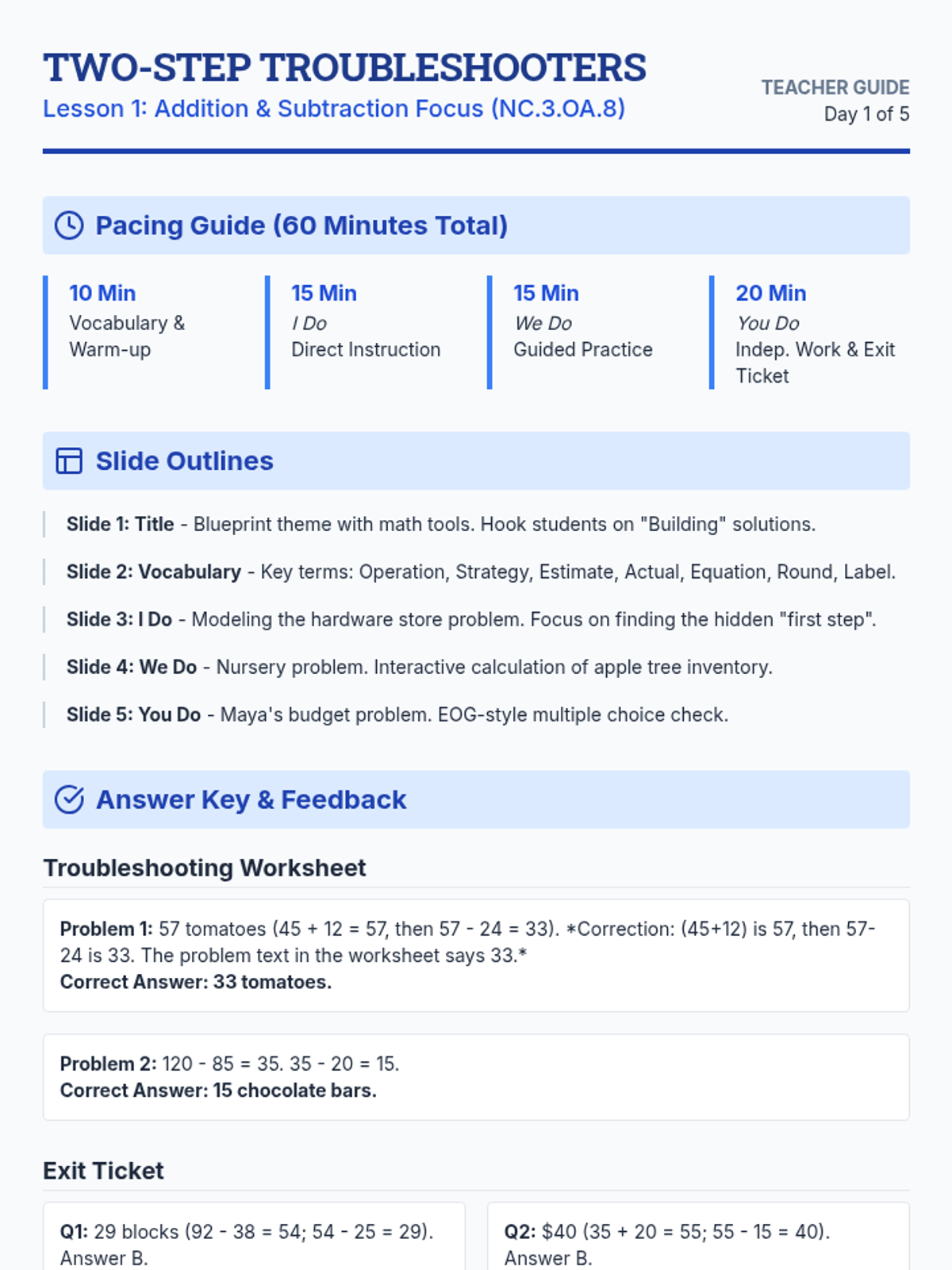
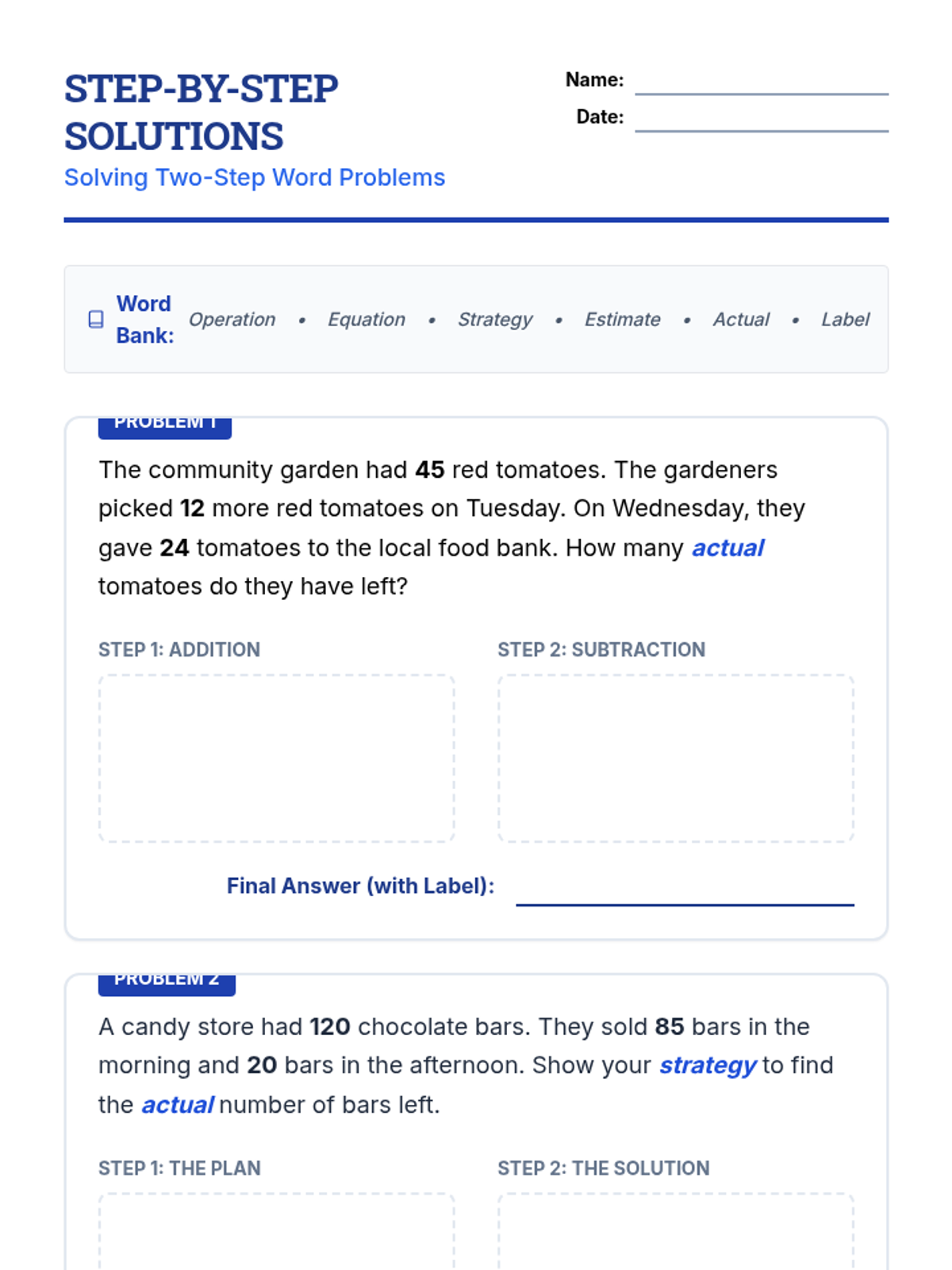
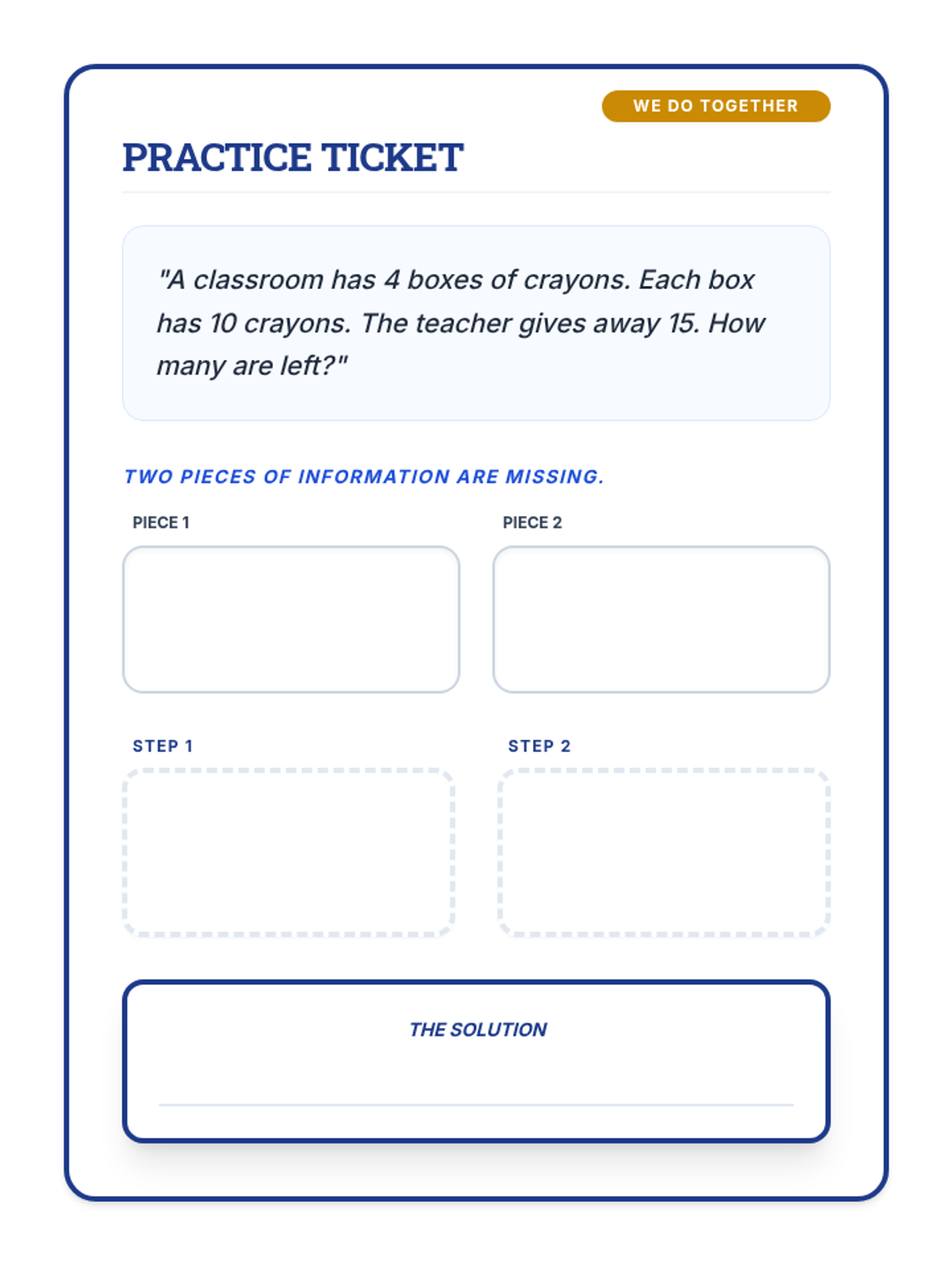
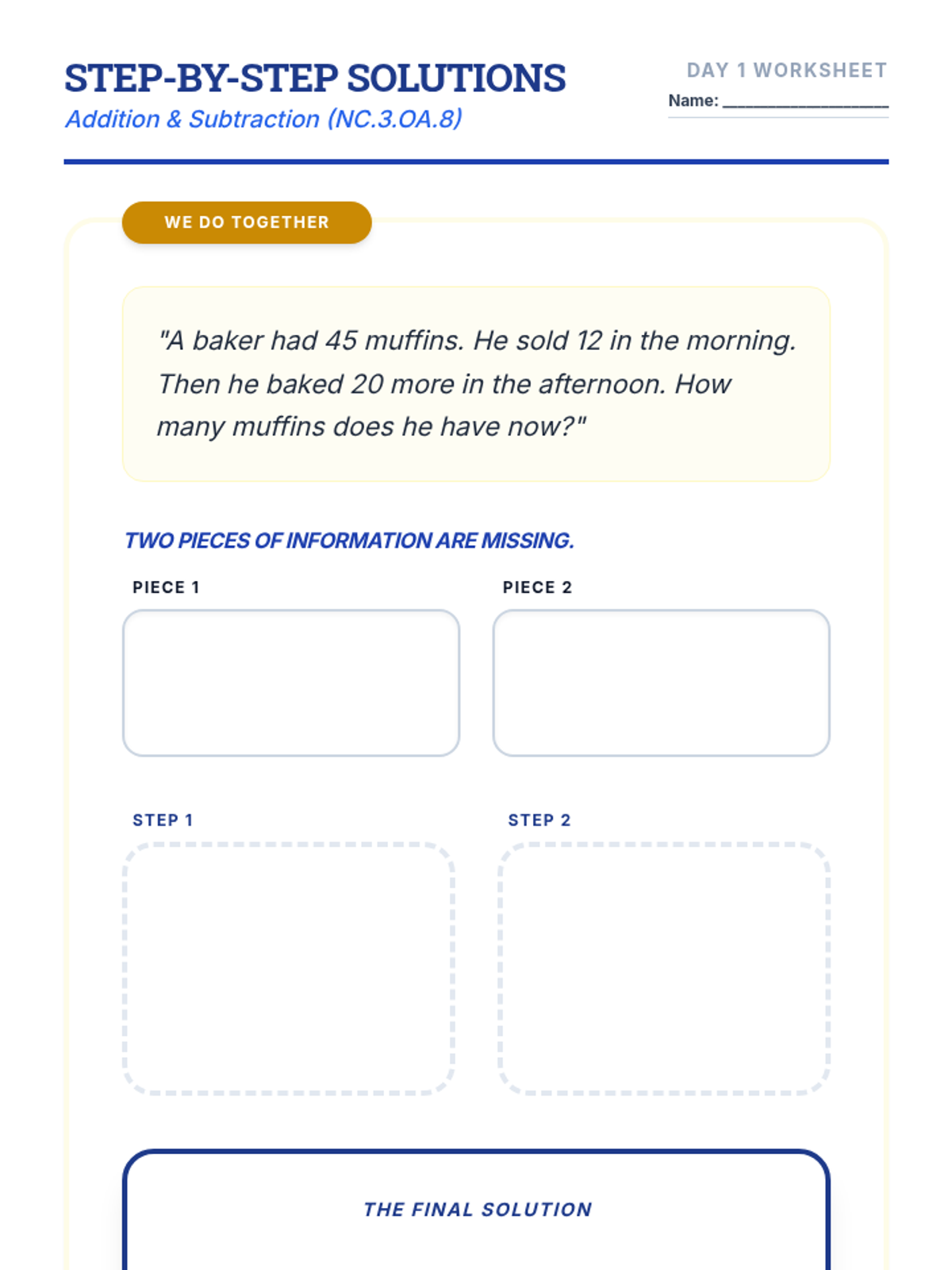
Focuses on solving two-step word problems using addition and subtraction, emphasizing representing problems with equations and assessing reasonableness through estimation and rounding.
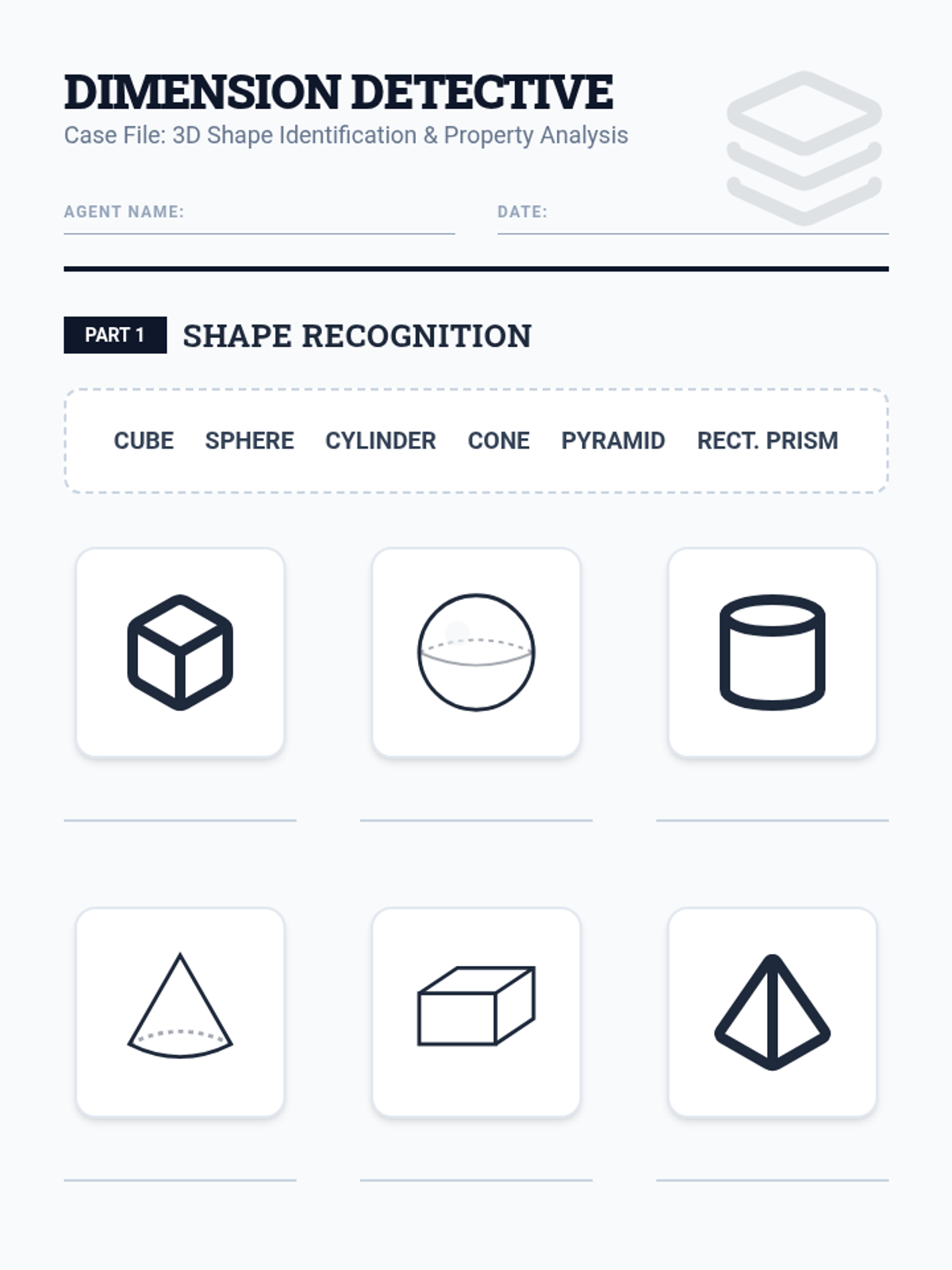
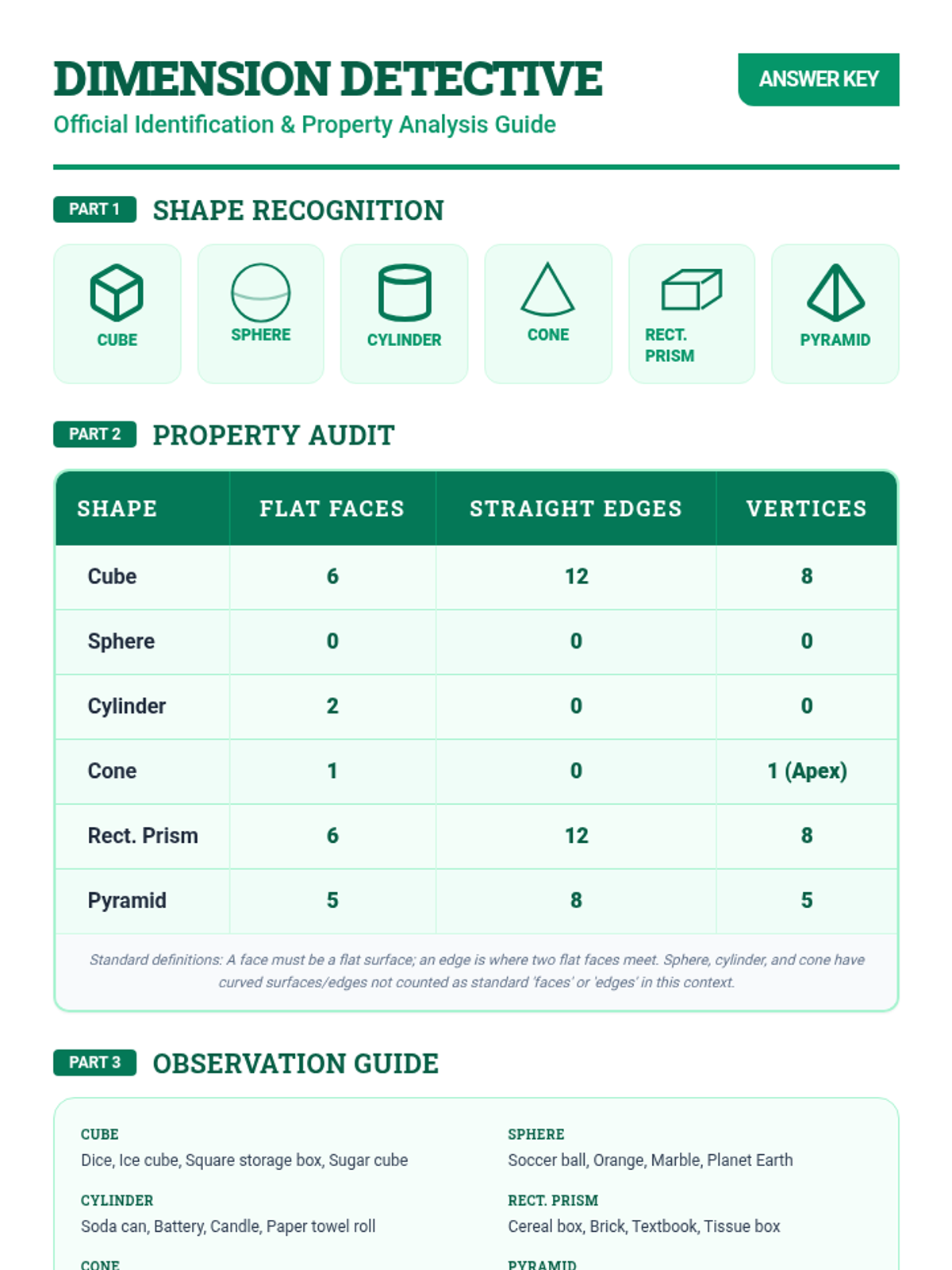
A comprehensive introduction to 3D geometric shapes including cubes, spheres, rectangular prisms, cones, pyramids, and cylinders. Students will learn to identify these shapes, count their attributes (faces, edges, vertices), and find them in the real world.
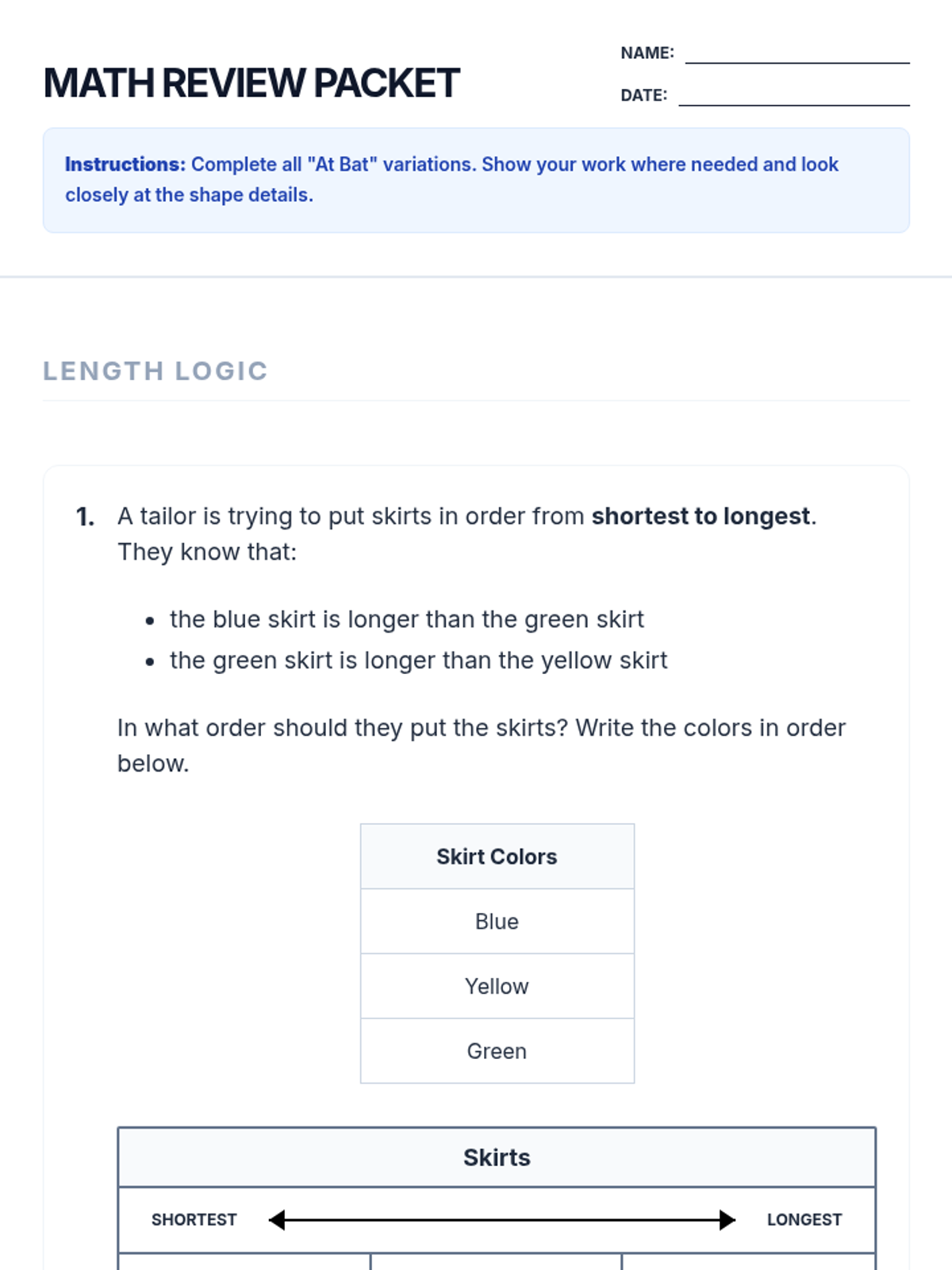
A comprehensive math review lesson designed to reinforce key elementary math skills including logical ordering, 2-digit subtraction, geometric attributes, and equal parts/fractions. This lesson uses a repeated "at-bat" structure to build mastery through multiple variations of the same problem format.
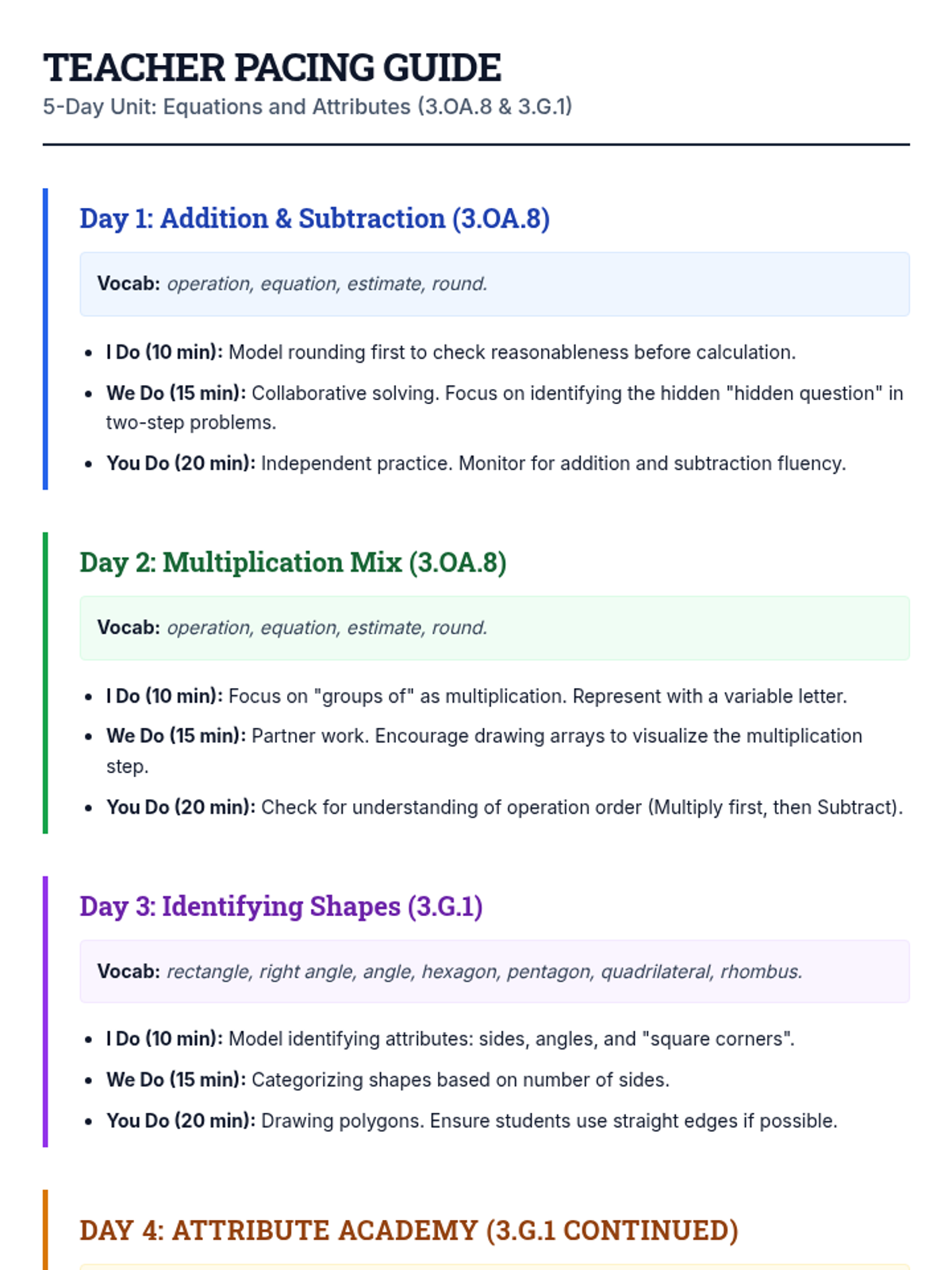
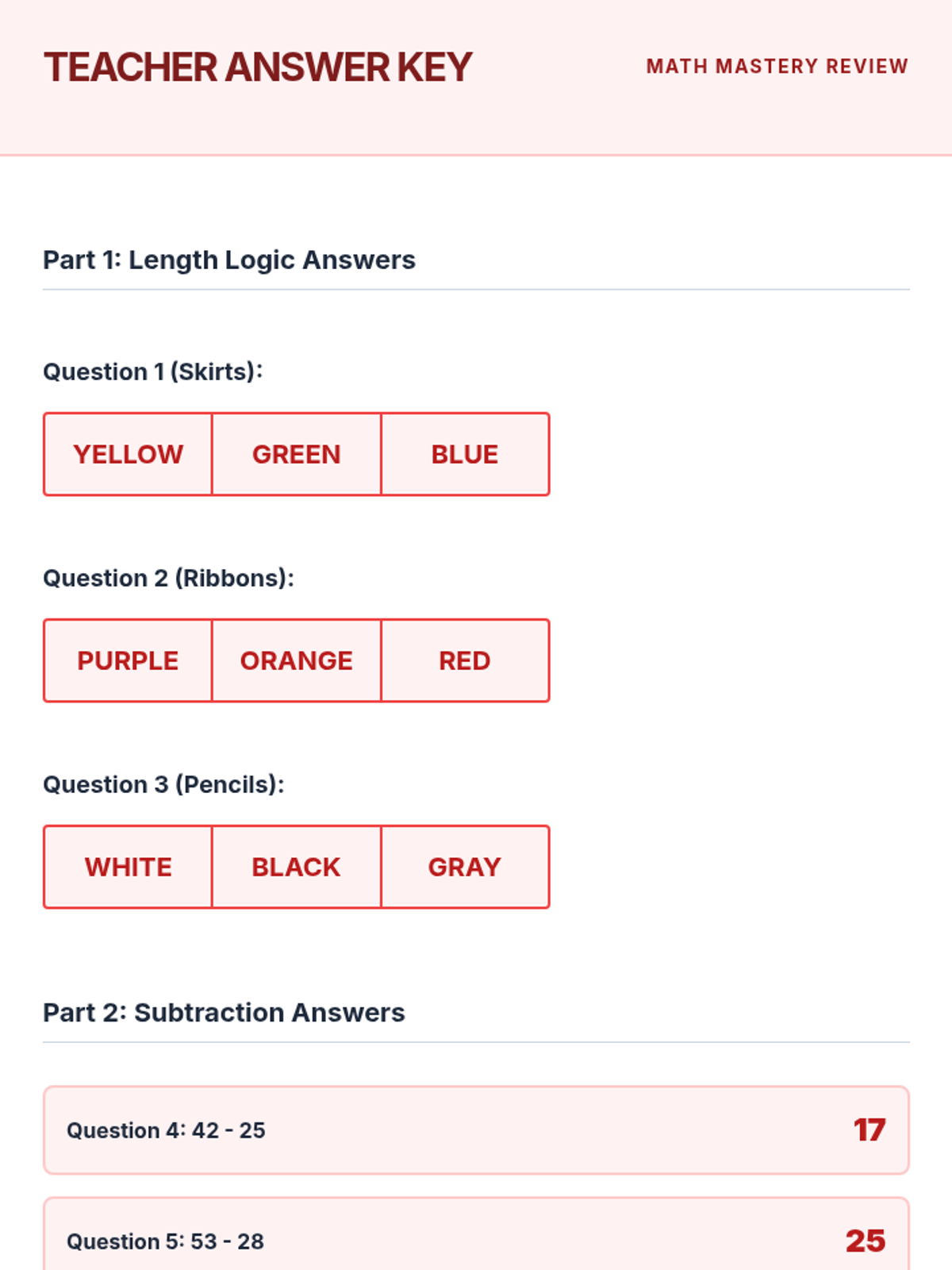
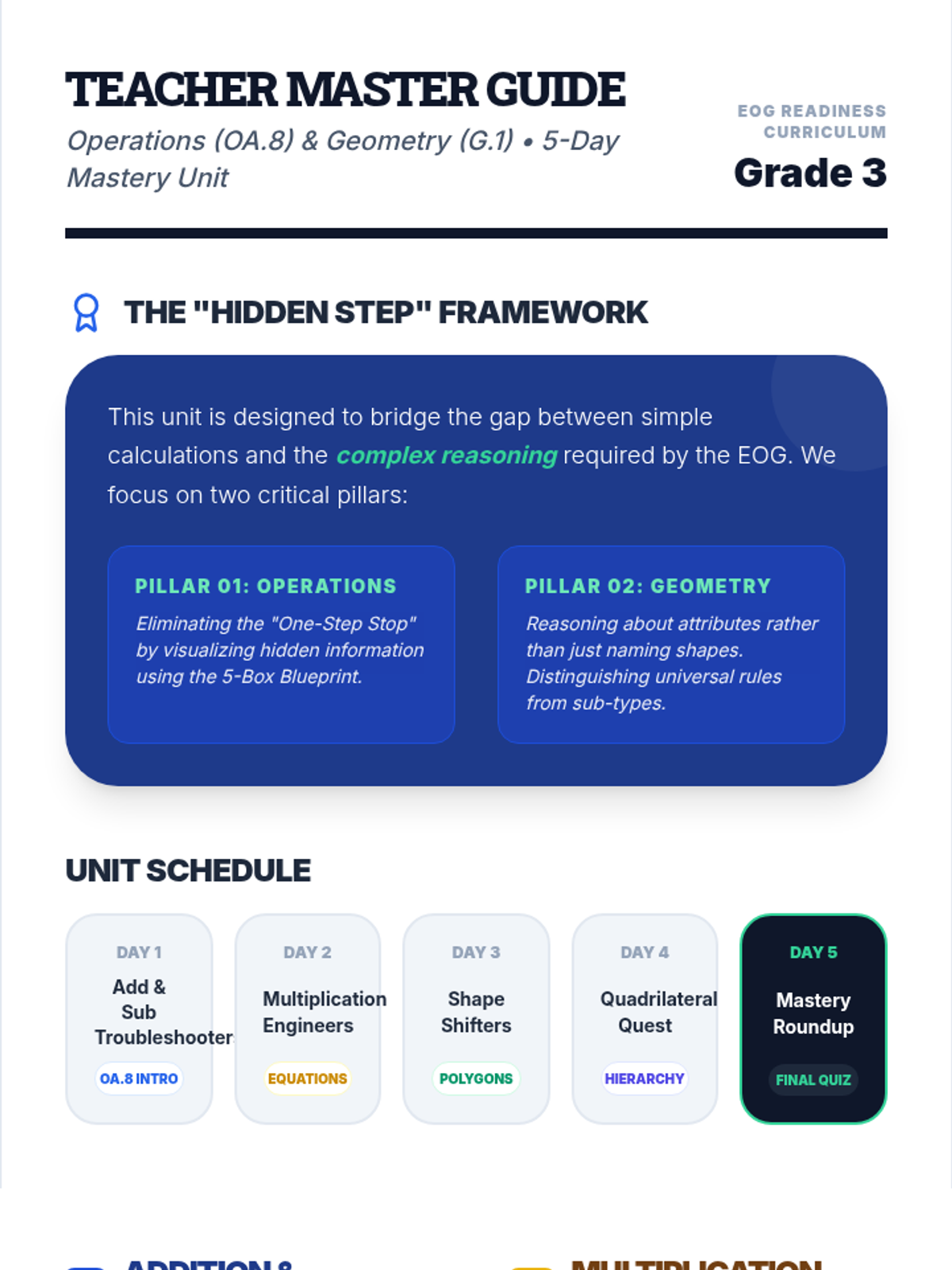
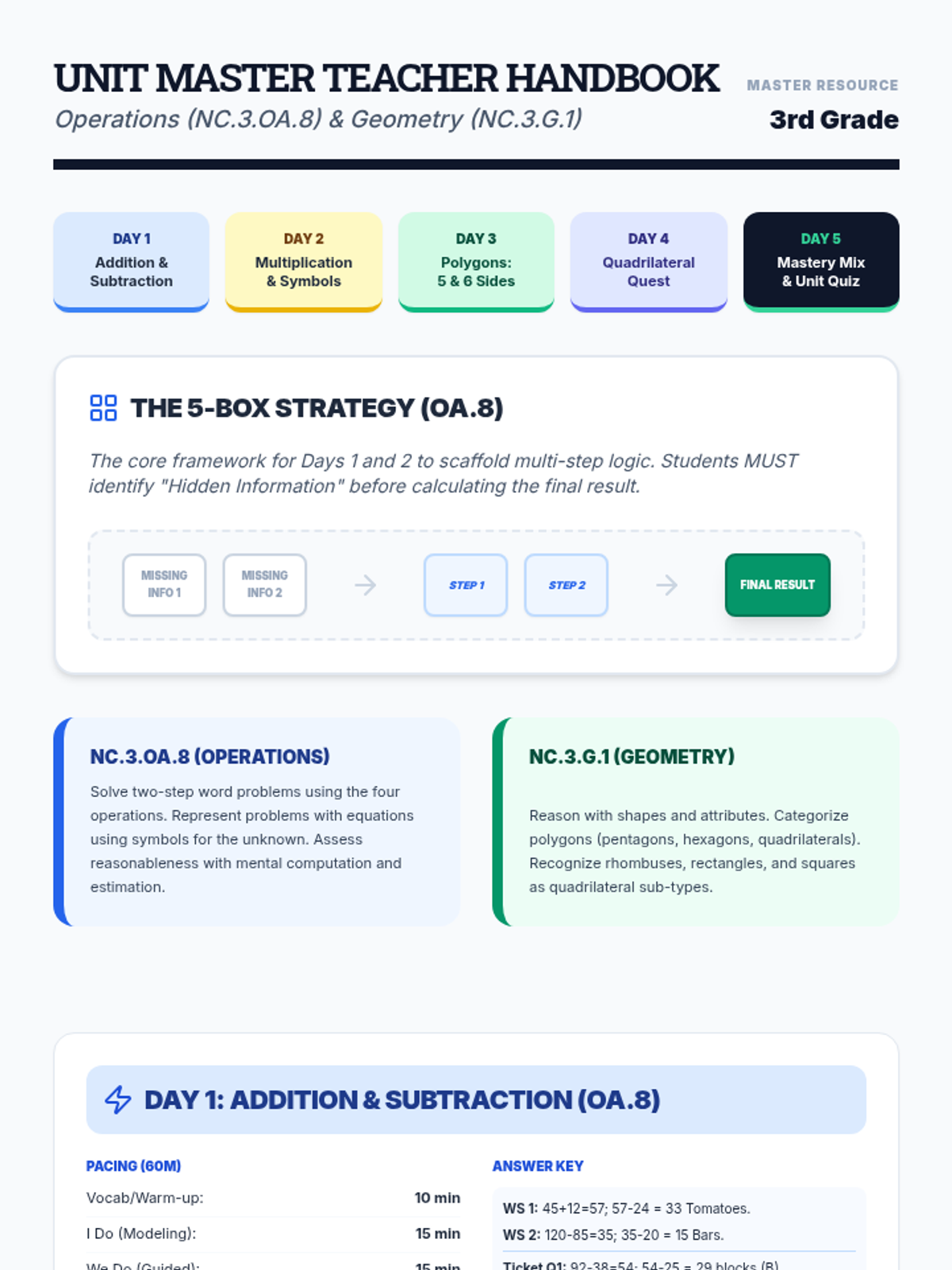
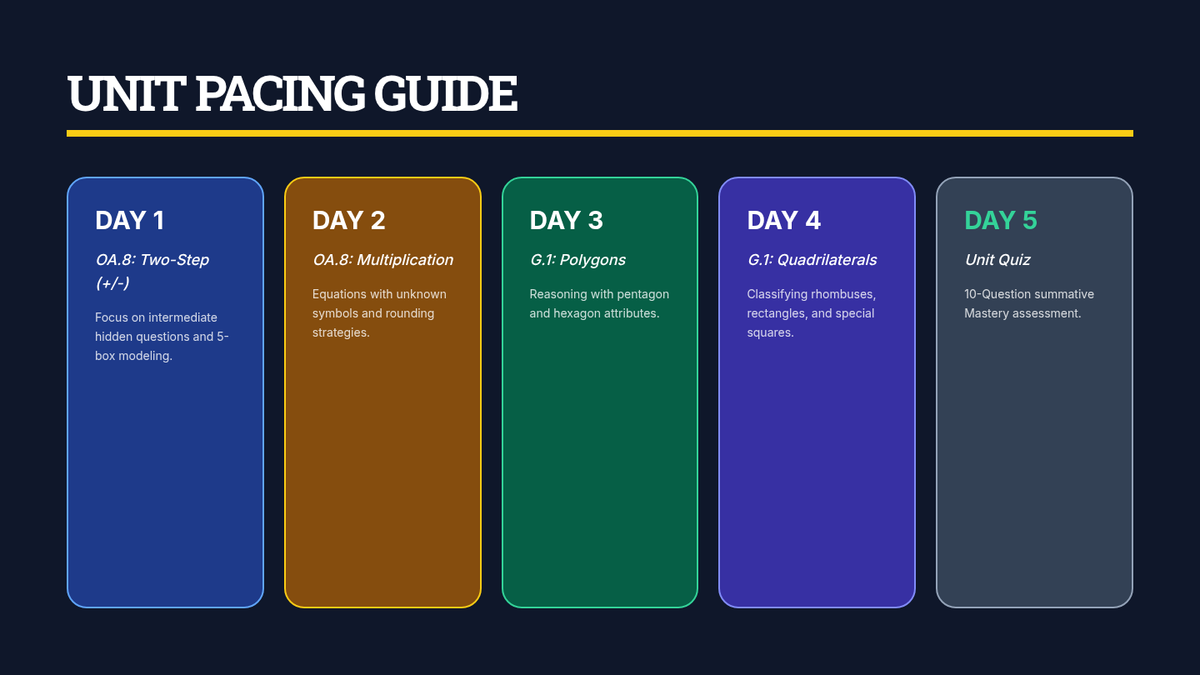
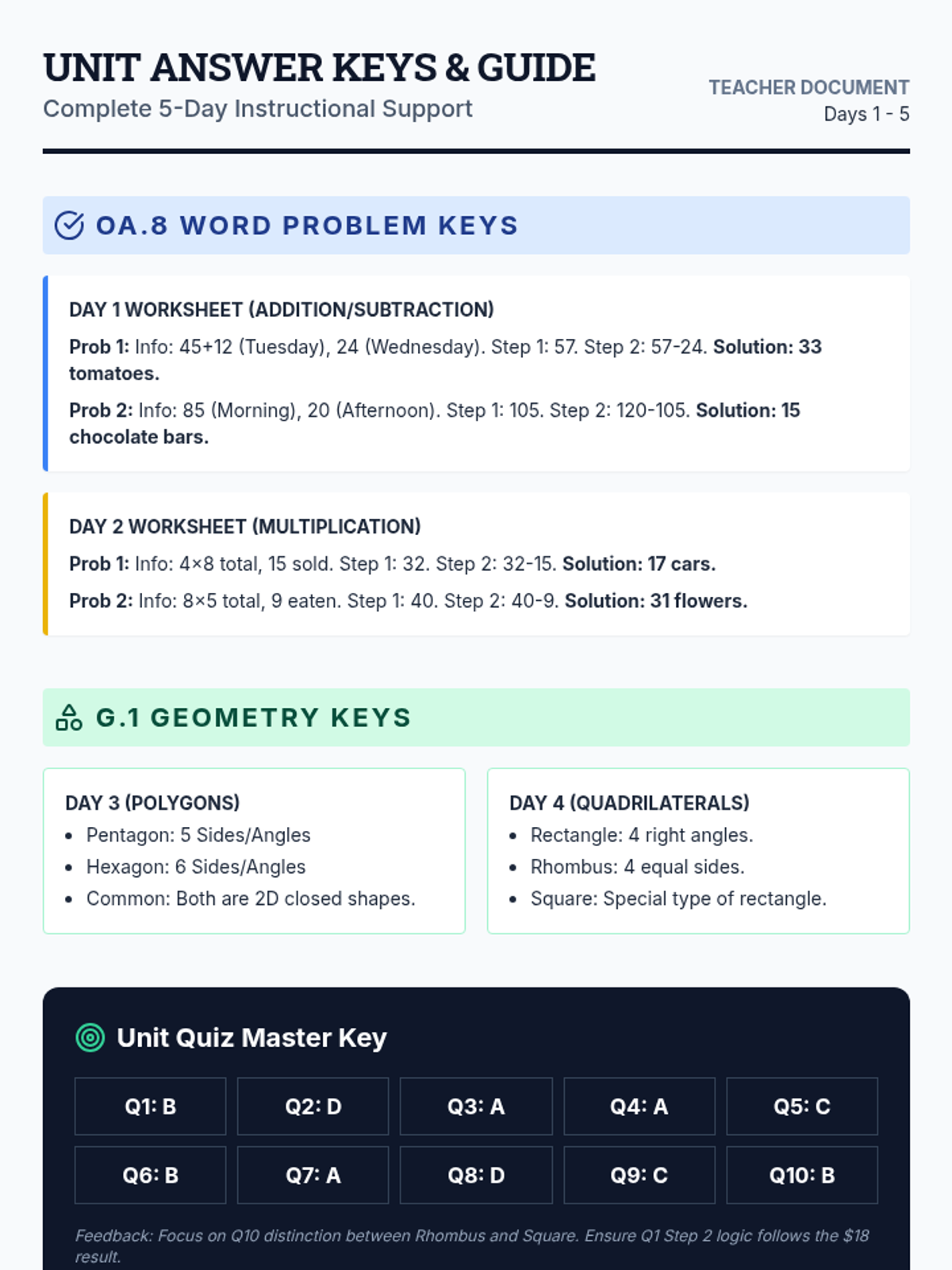
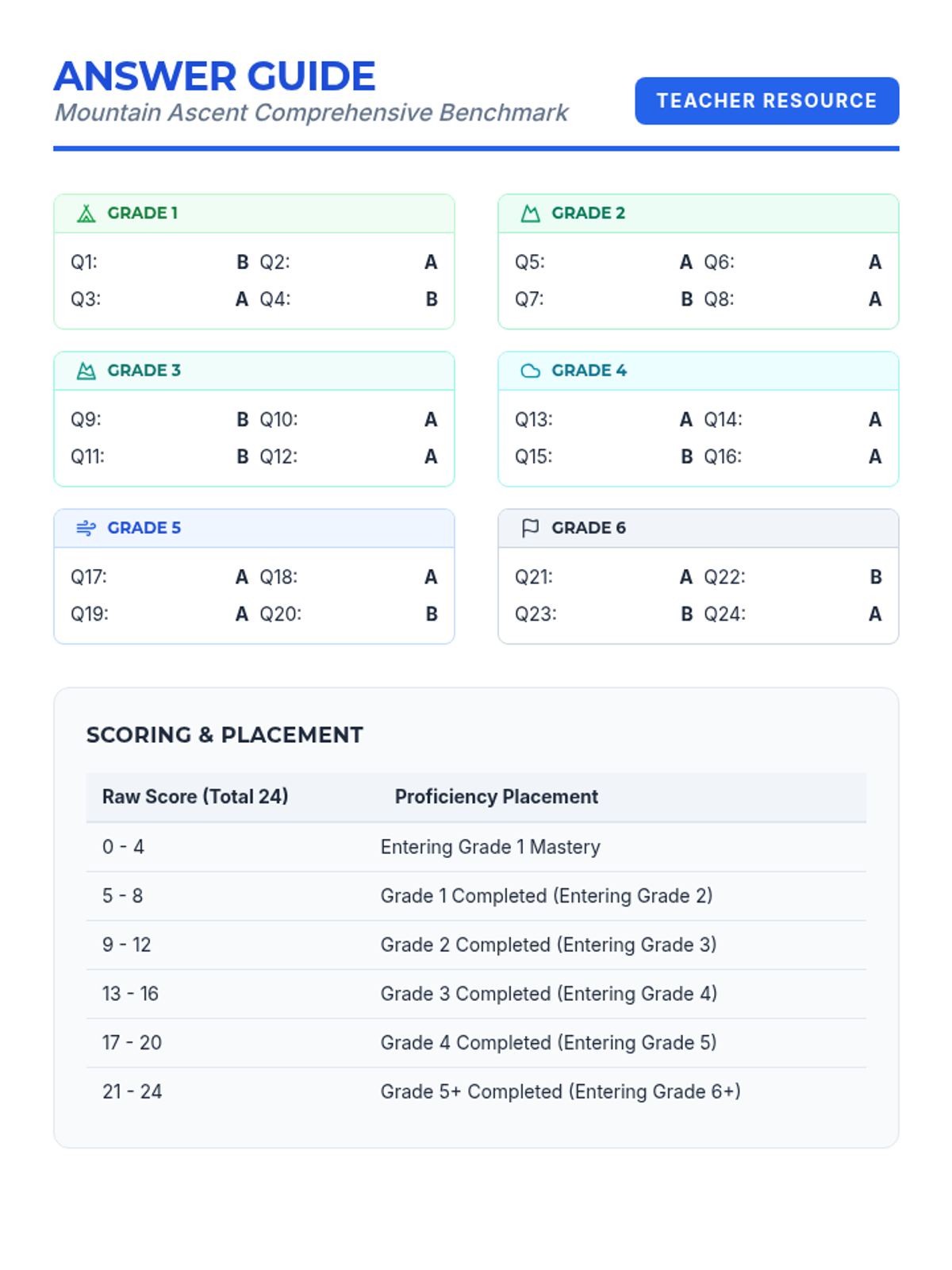
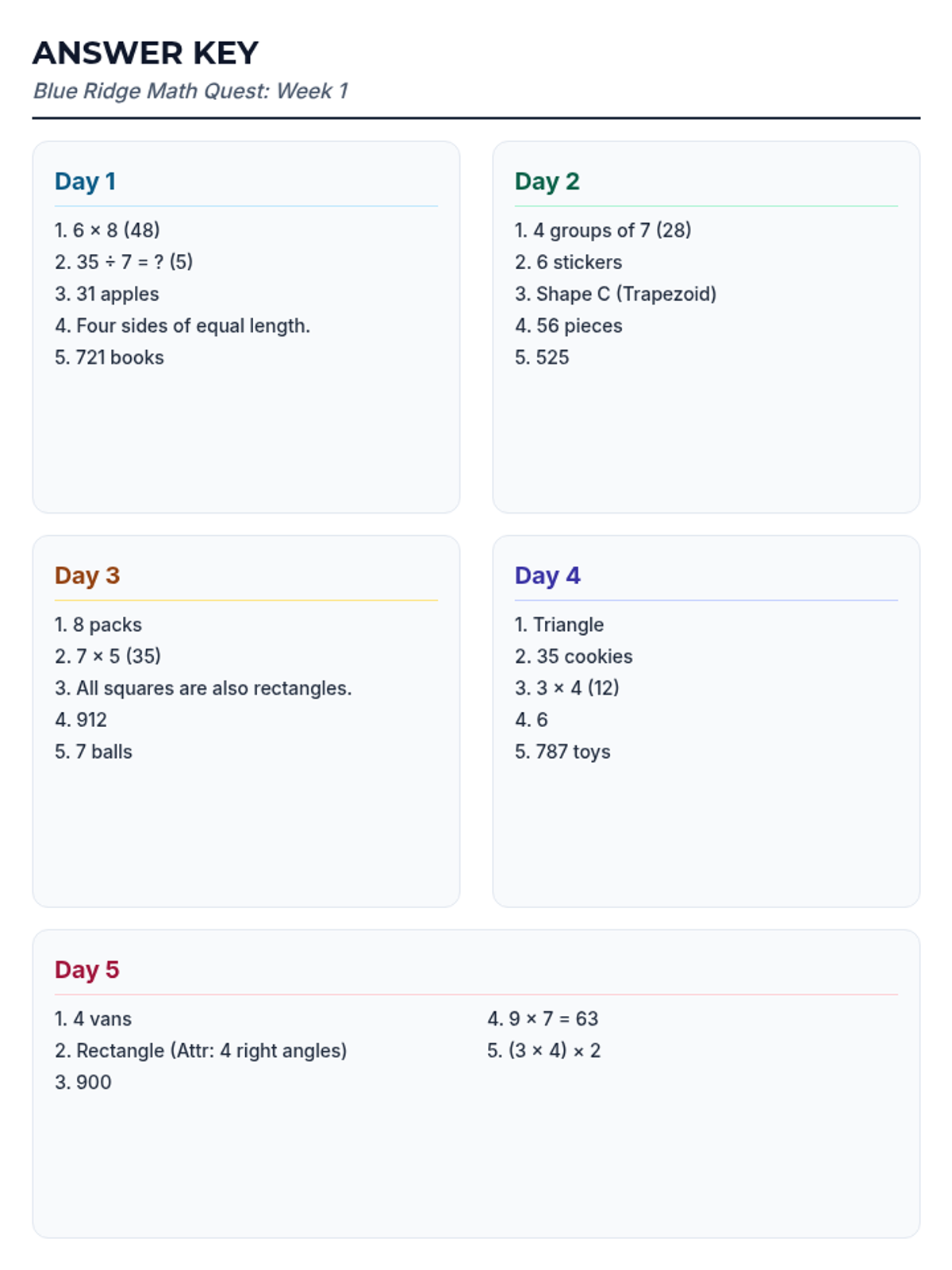
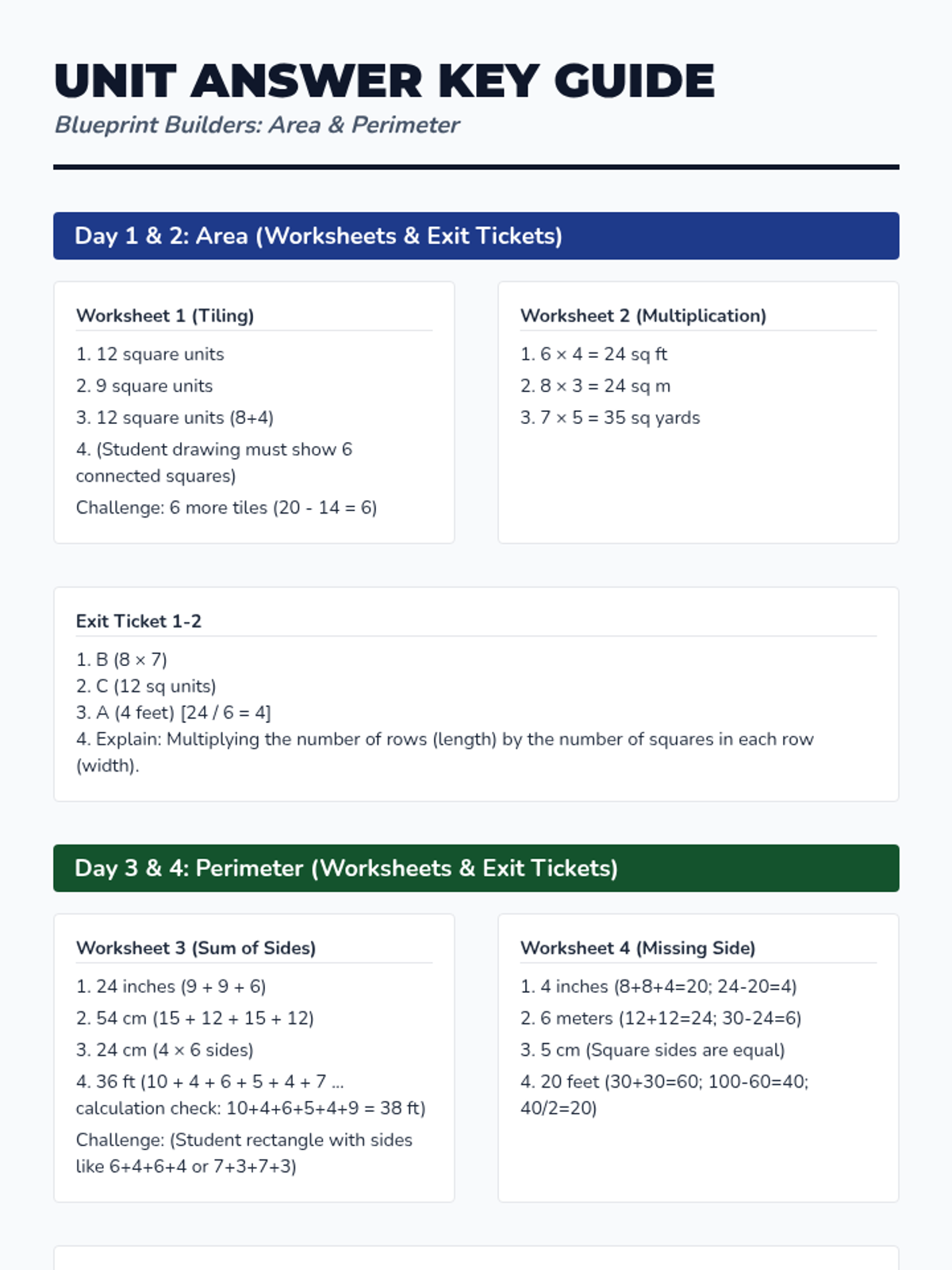
Master resources for the Unit, including the comprehensive 5-day slide deck and the unit-wide answer key guide.
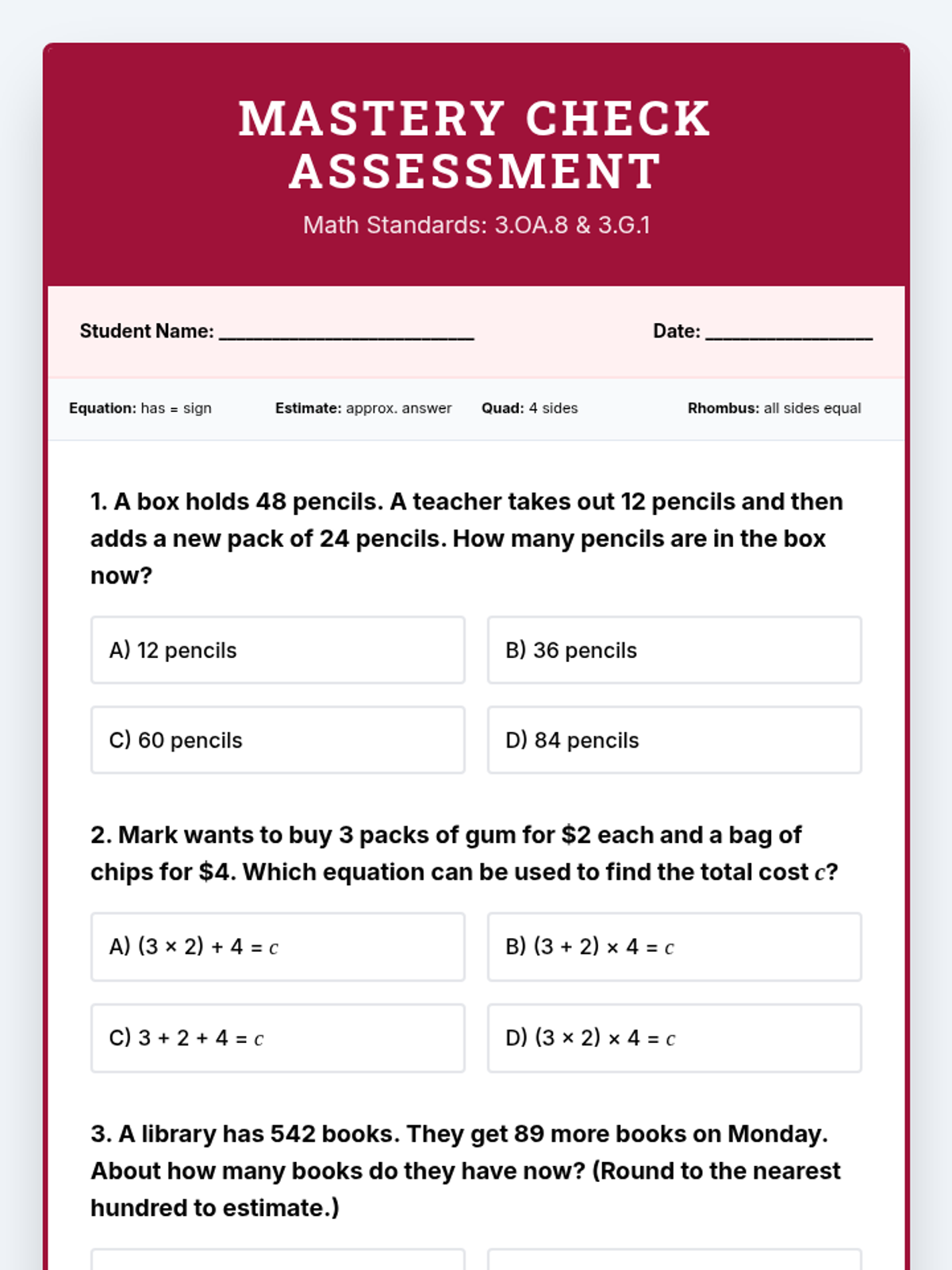
A comprehensive review of two-step word problems and geometry attributes followed by a 10-question EOG-style summative assessment.
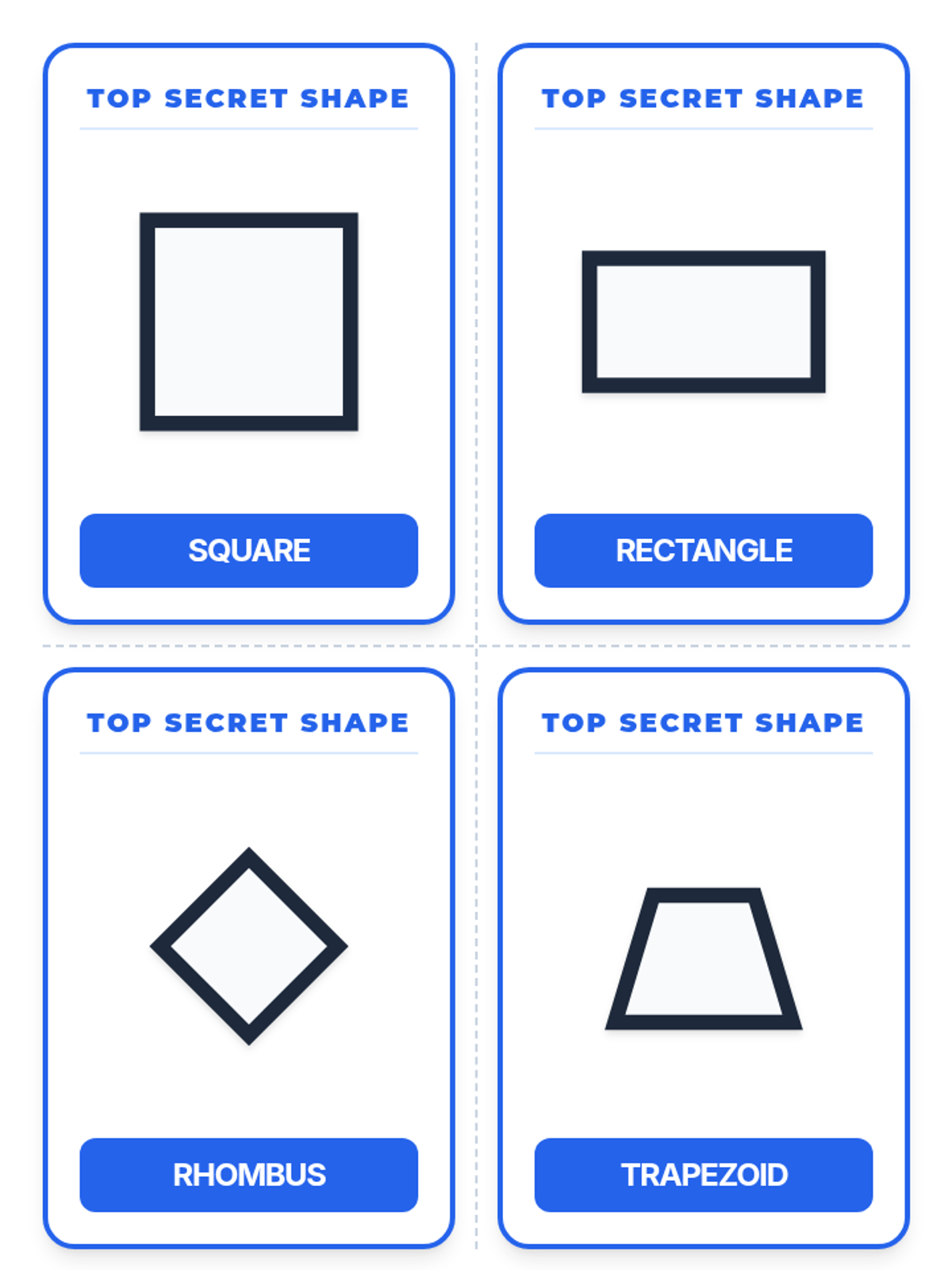
In-depth study of quadrilaterals, including rhombuses, rectangles, squares, parallelograms, and trapezoids, through attribute classification.
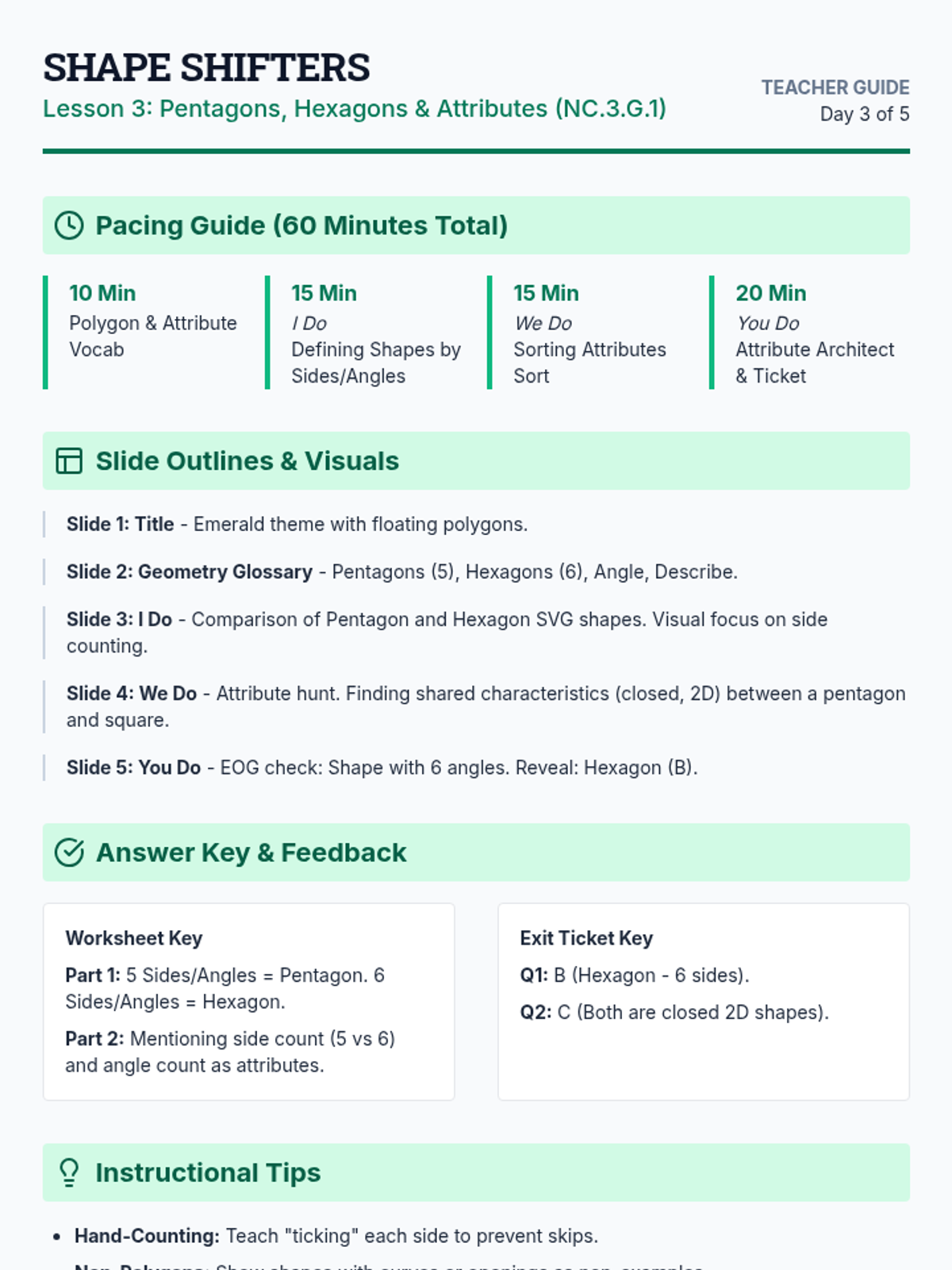
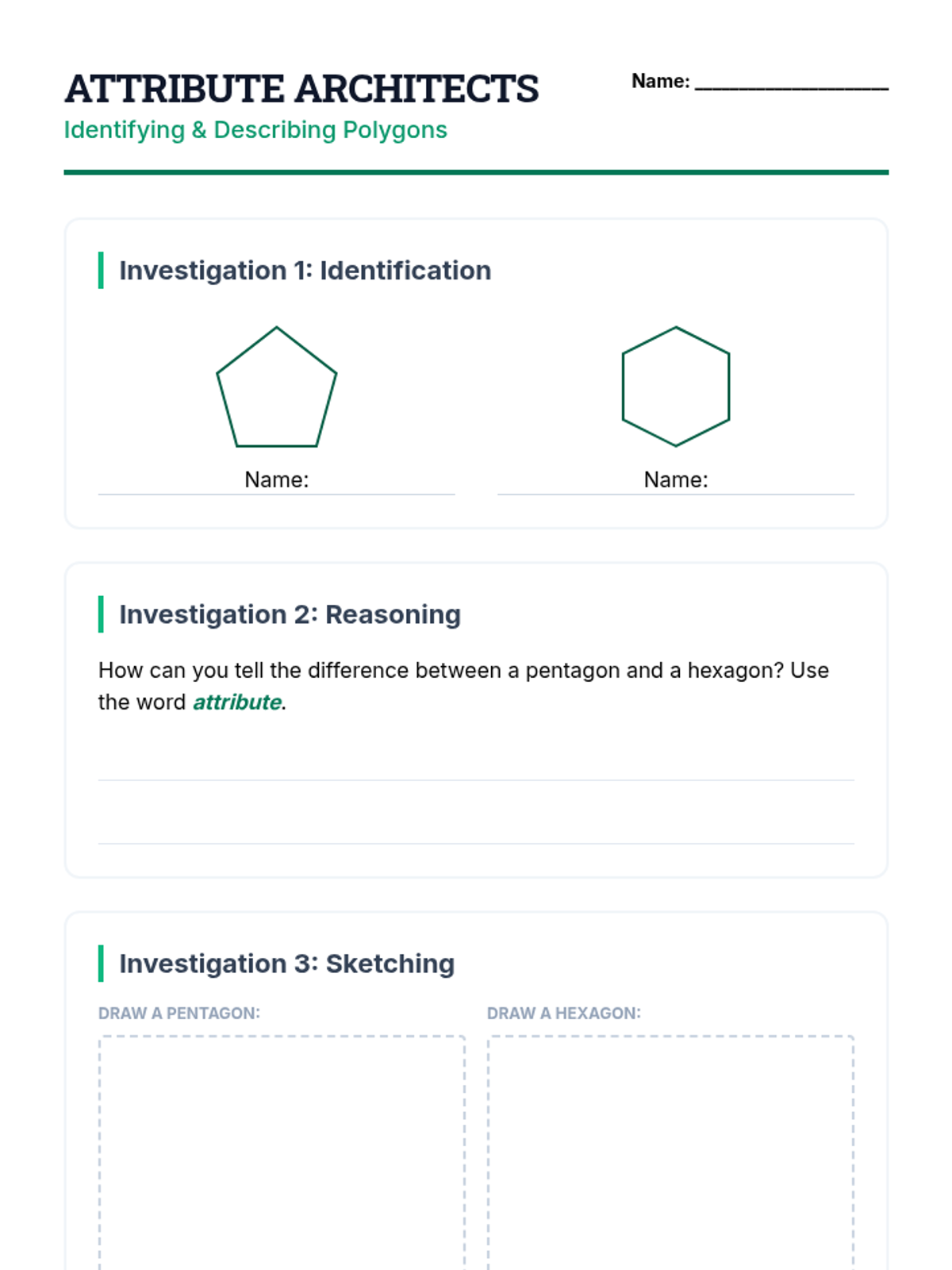
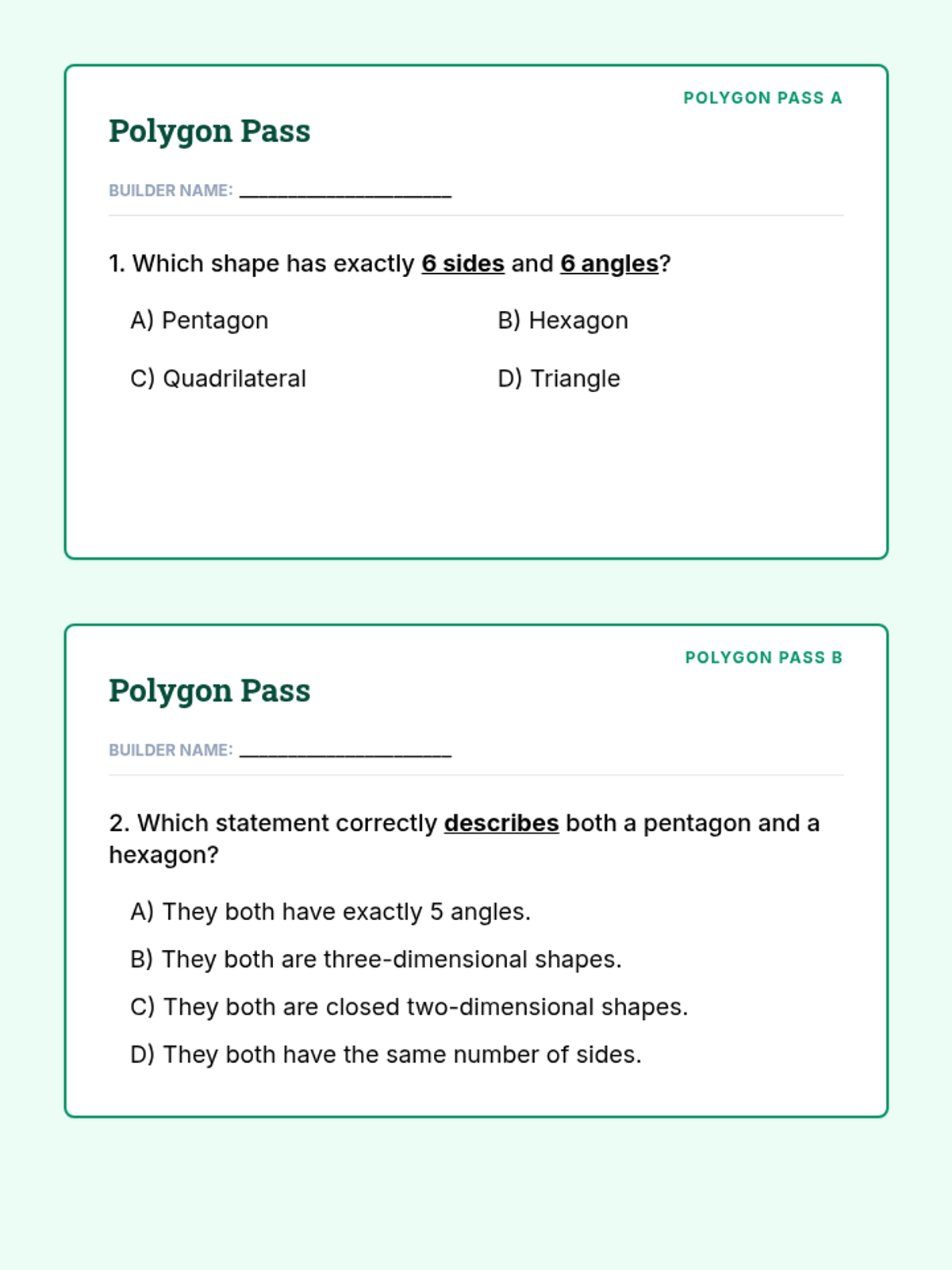
Exploring two-dimensional shapes, specifically pentagons and hexagons, while focusing on identifying attributes and reasoning about polygons.
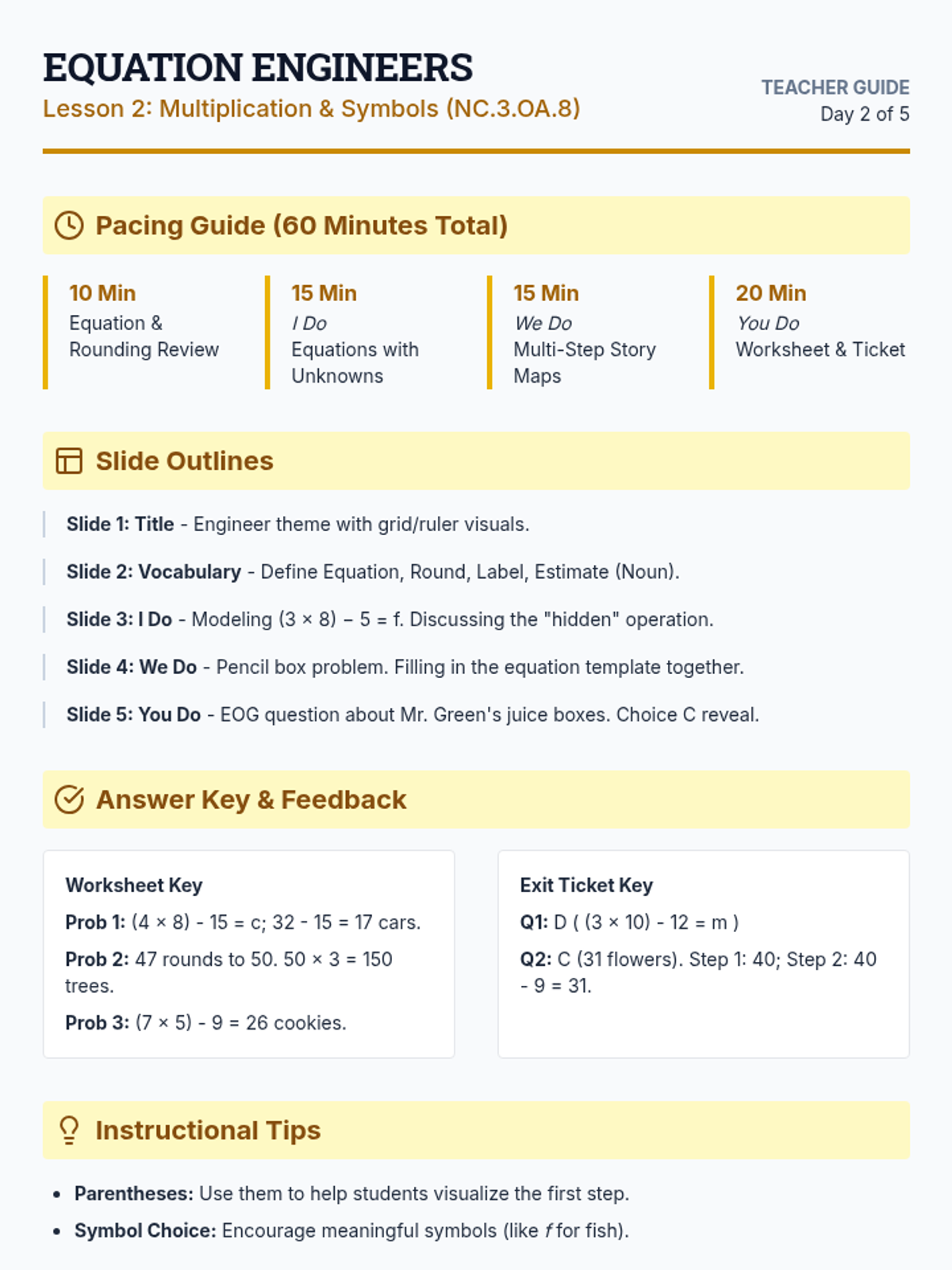
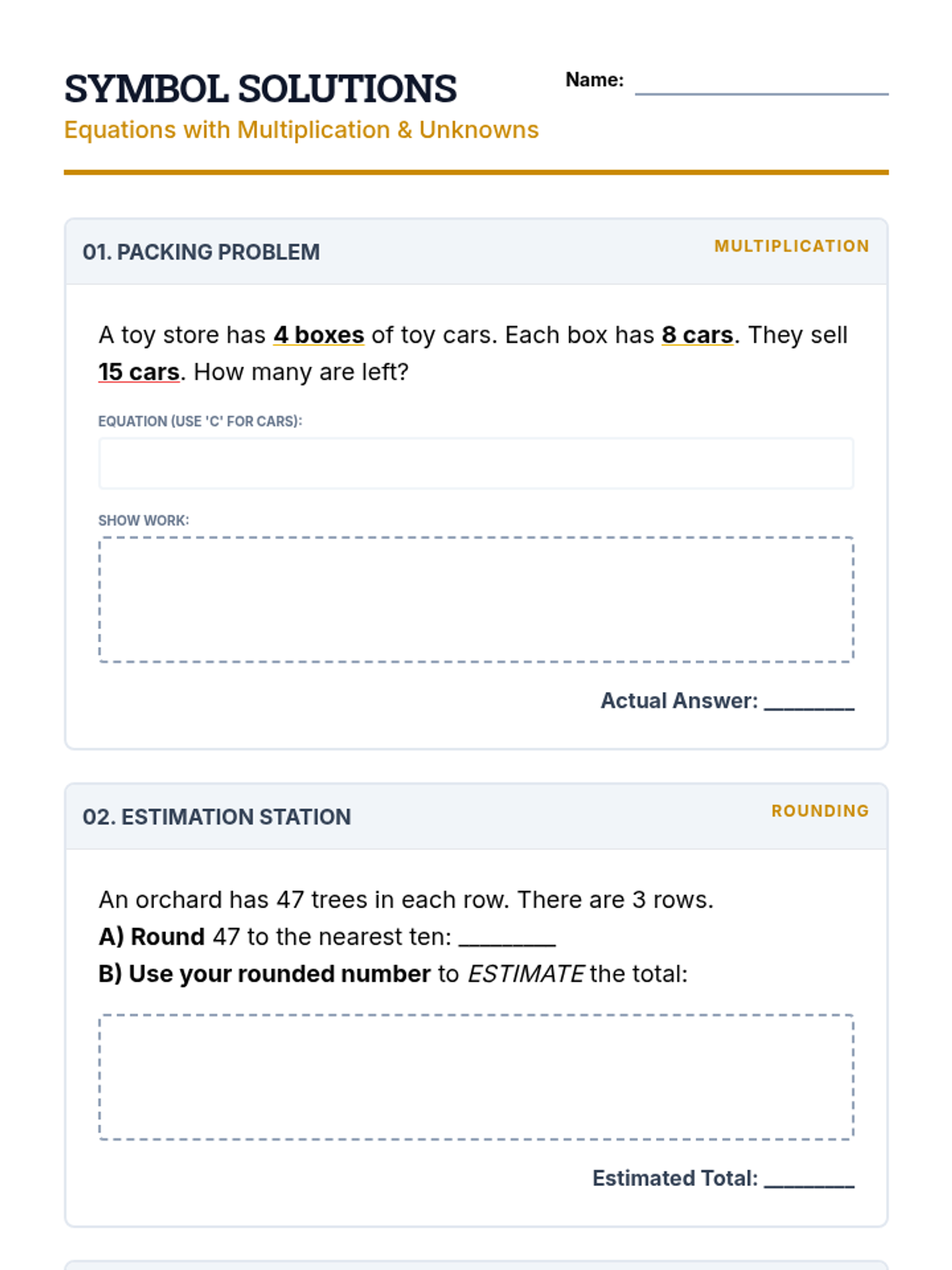
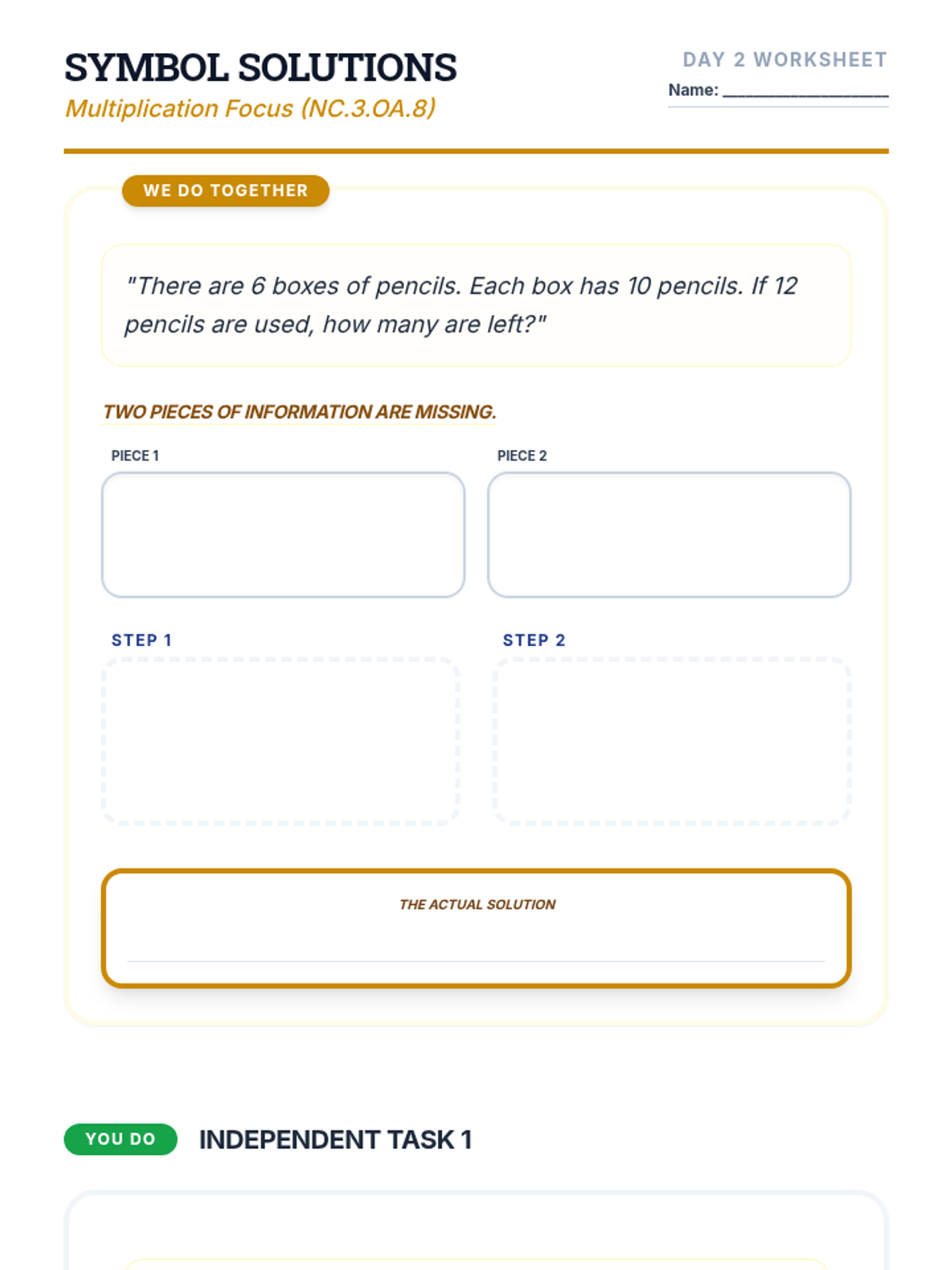
Solving two-step word problems involving multiplication and representating problems with equations and symbols for unknowns.
Introduction to solving two-step word problems using addition and subtraction. Focuses on identifying the operations and using estimation strategies.
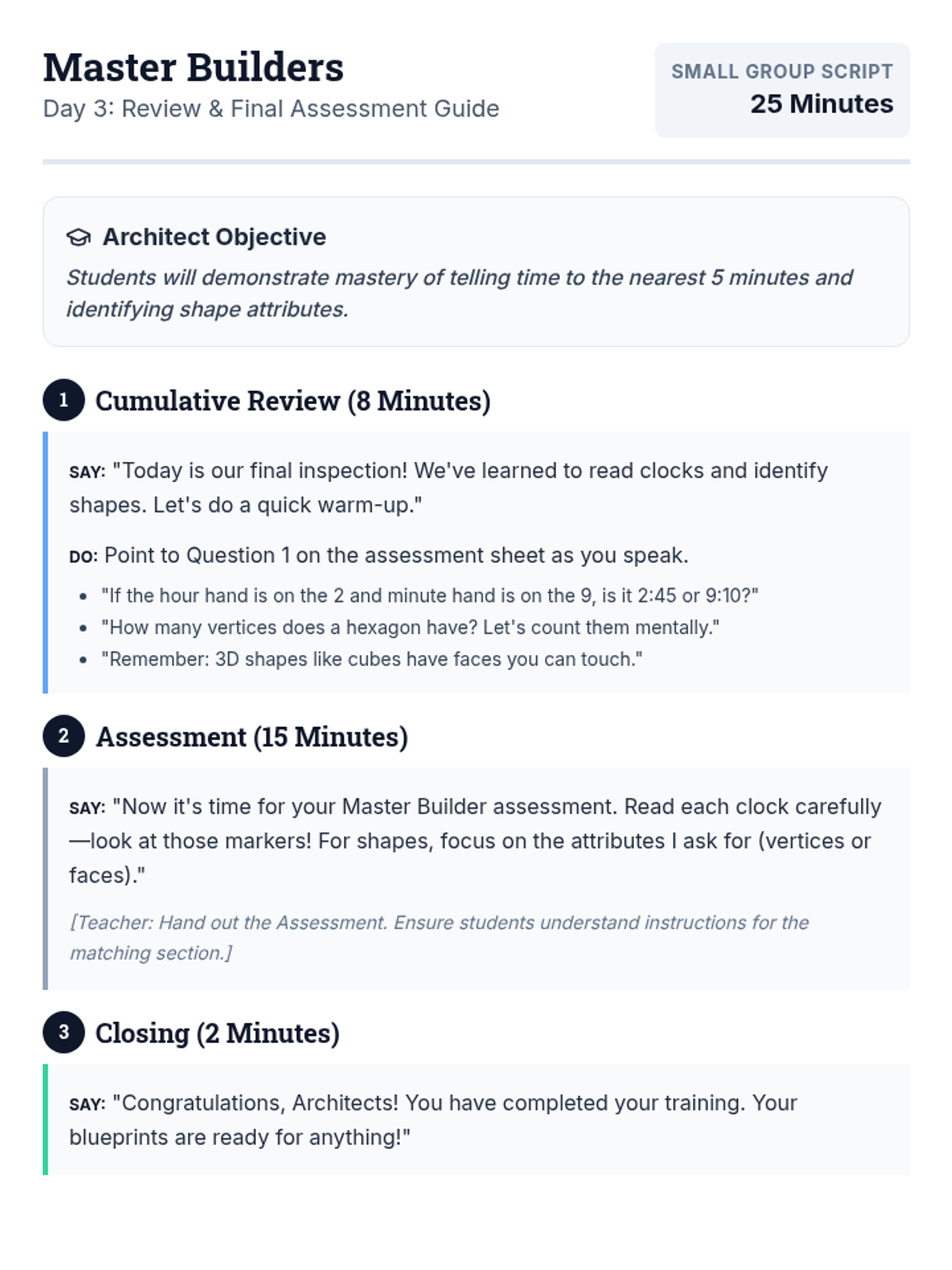
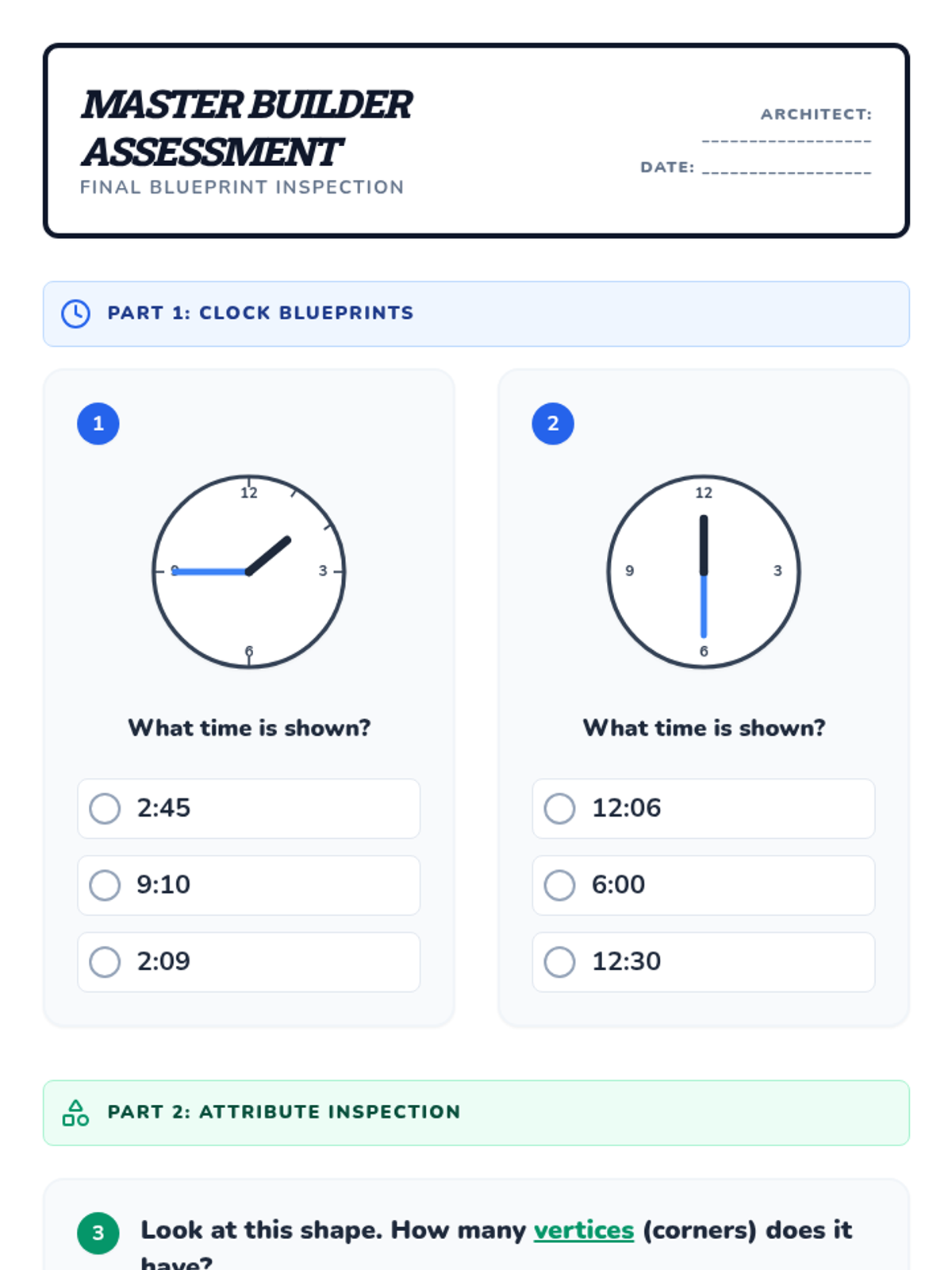
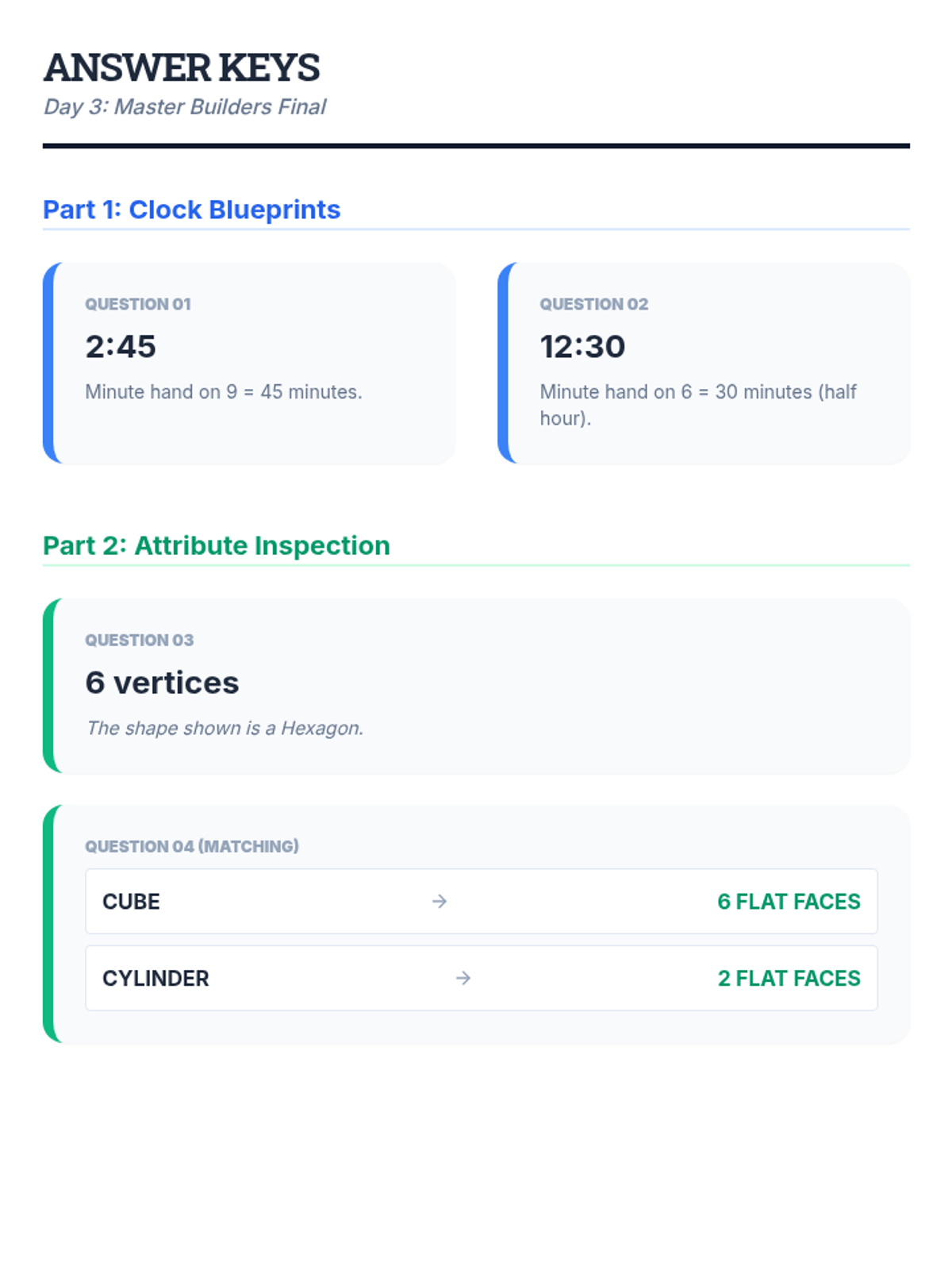
A cumulative review of time and shape attributes followed by a formal assessment to track student growth toward RIT 180 goals.
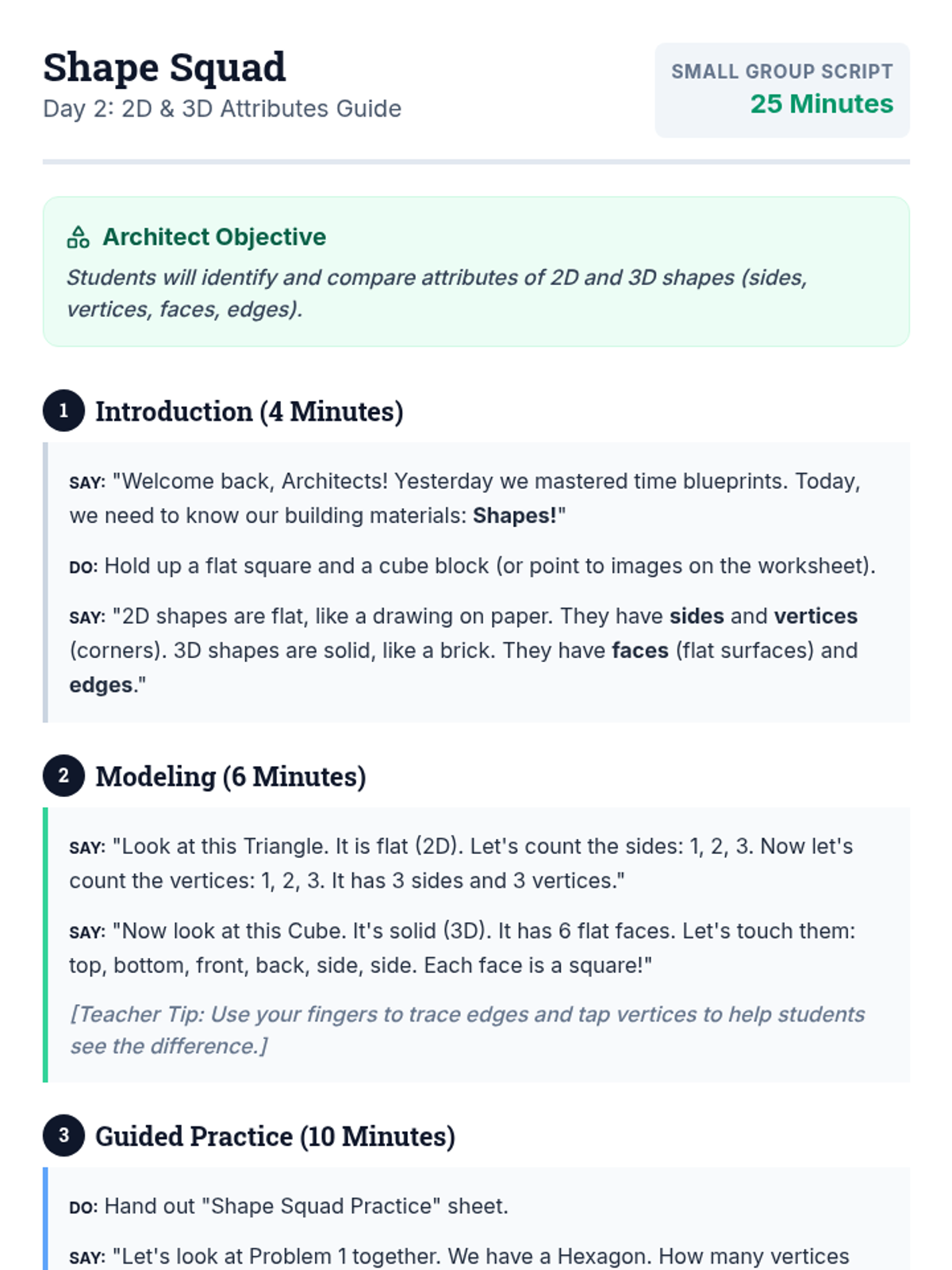
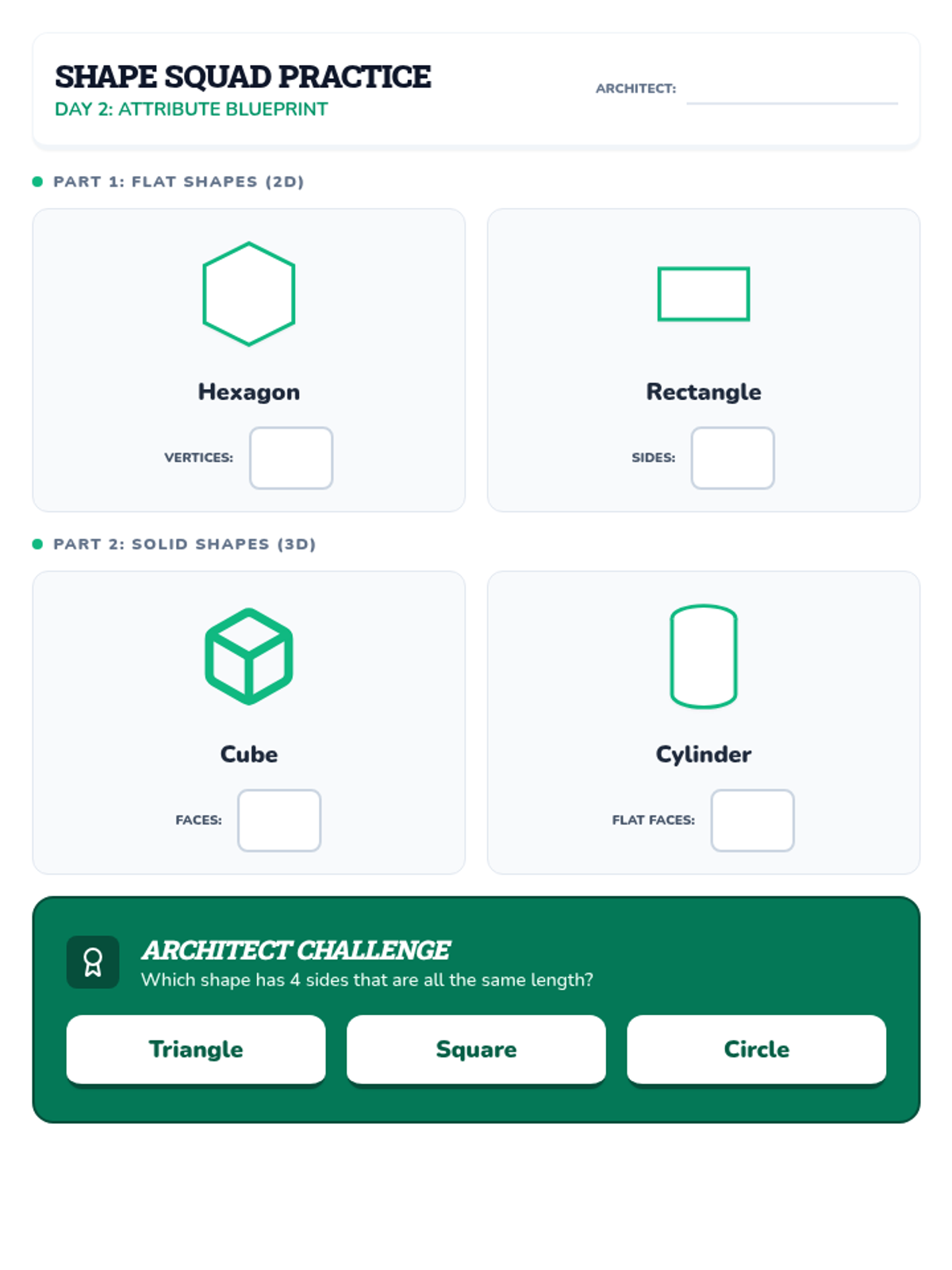
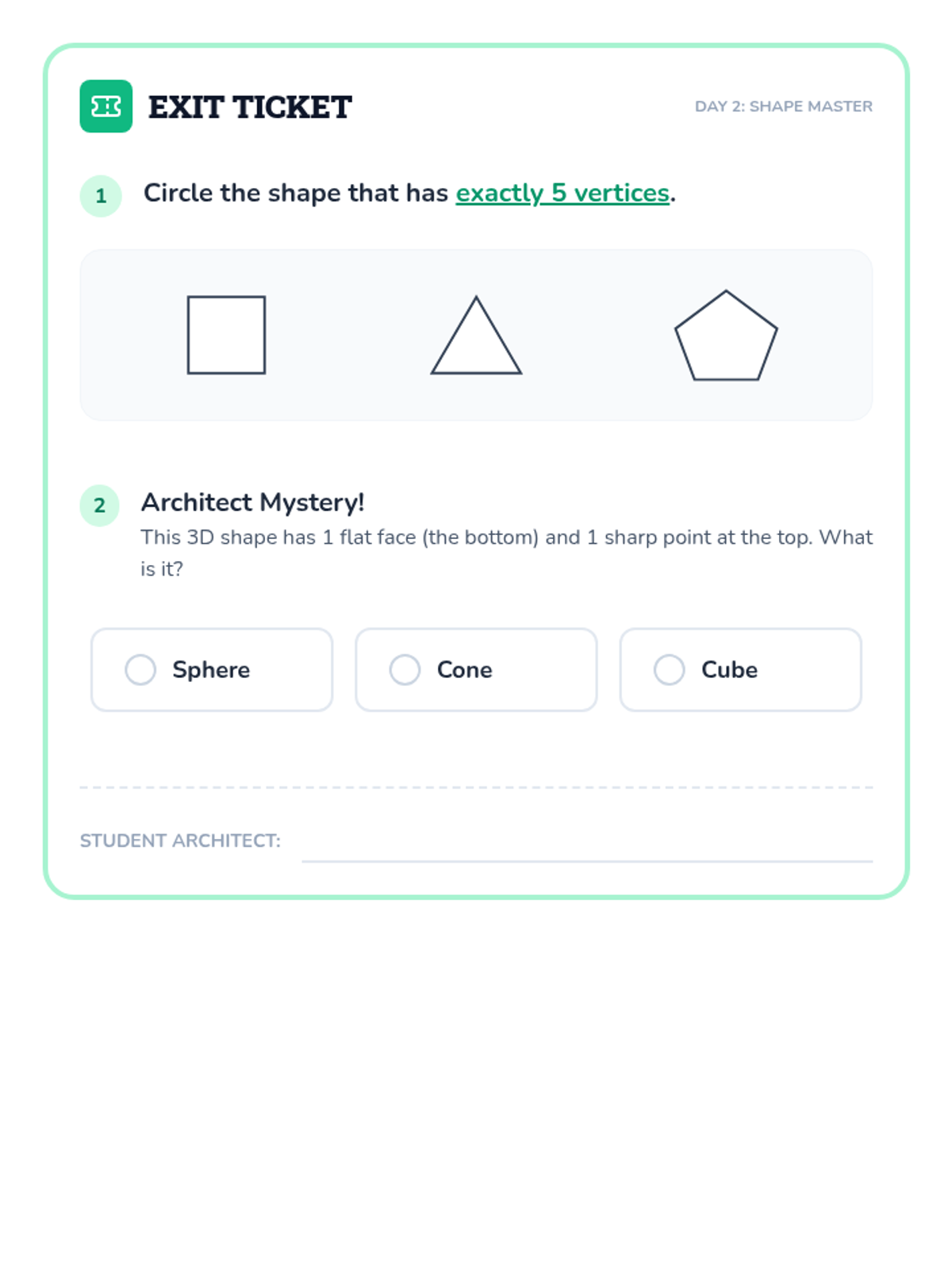
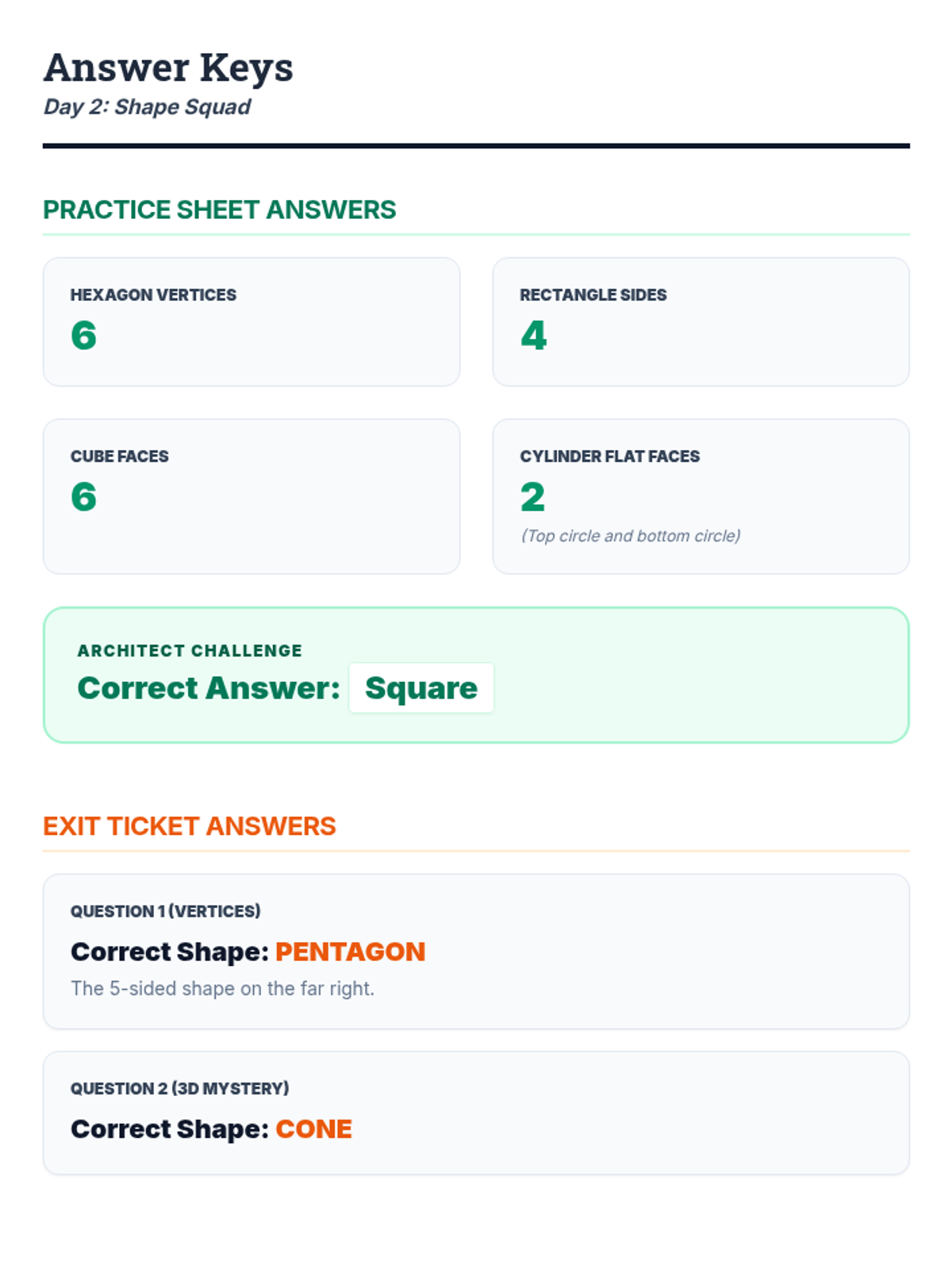
Identifying and describing defining attributes of 2D and 3D shapes, including sides, vertices, faces, and edges.
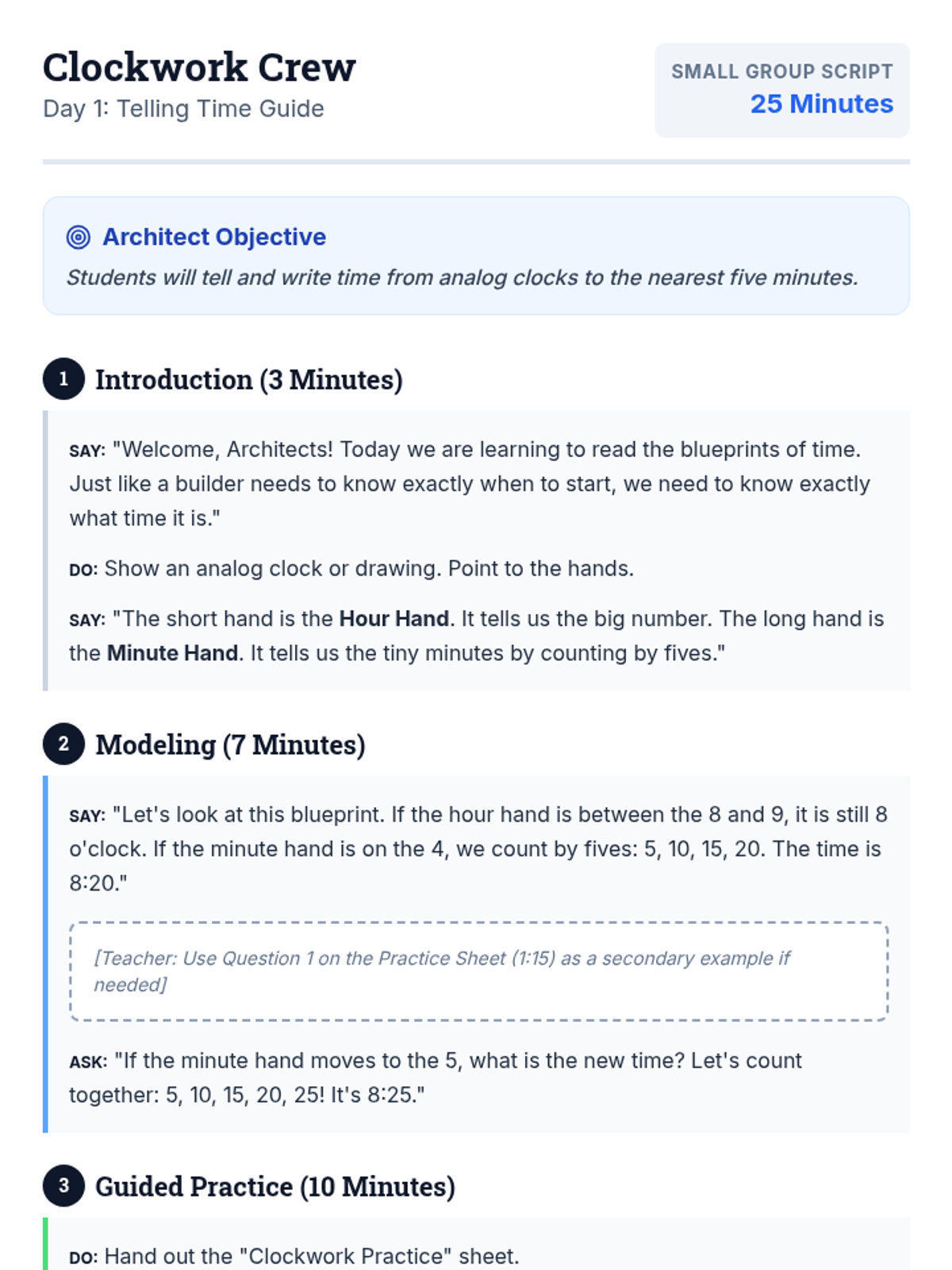
Mastering telling time to the nearest 5 minutes on an analog clock through guided practice and independent application.
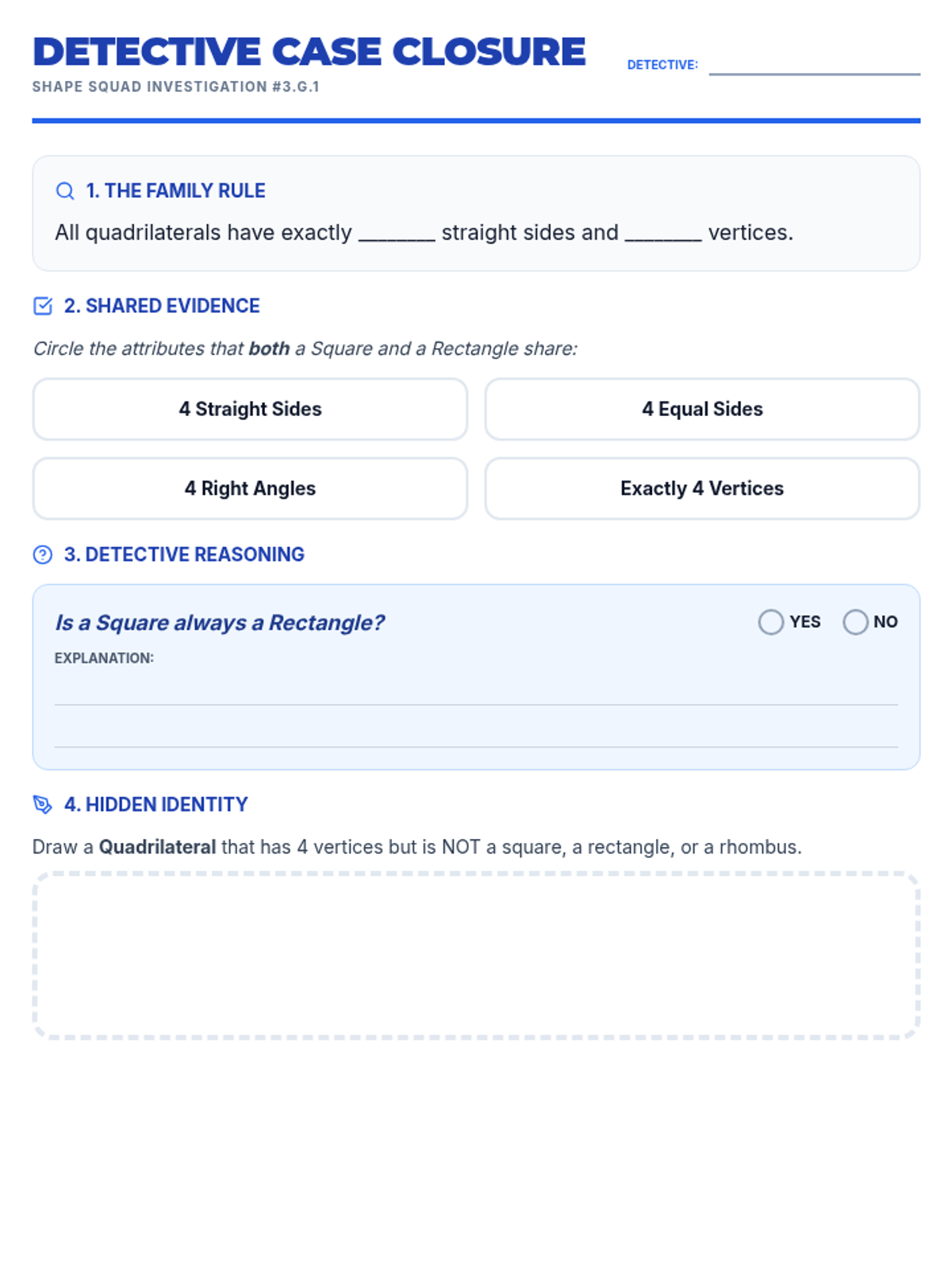
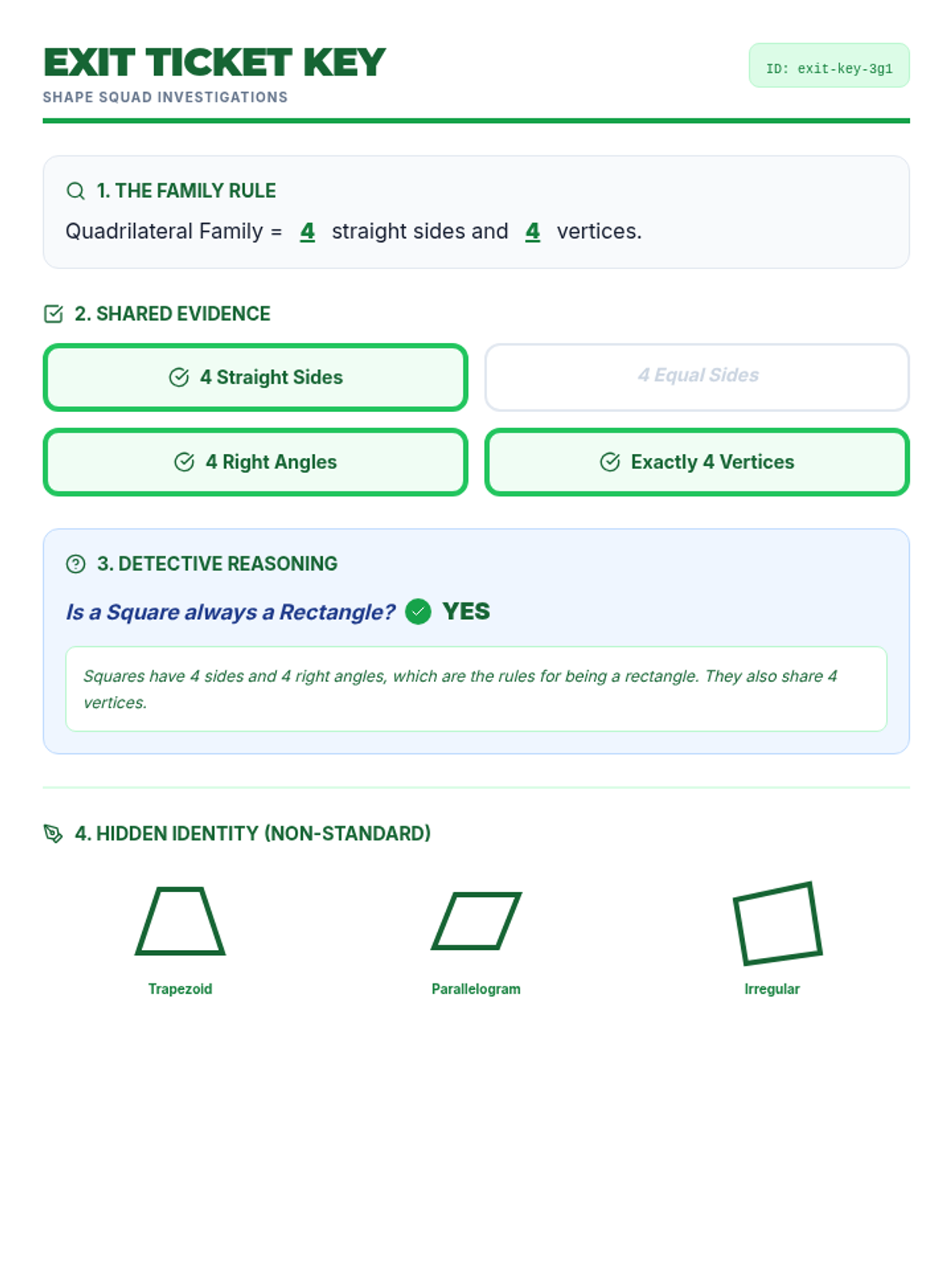
Students explore shared attributes of shapes to understand the category of quadrilaterals, specifically identifying squares, rectangles, and rhombuses while also creating non-standard quadrilaterals.
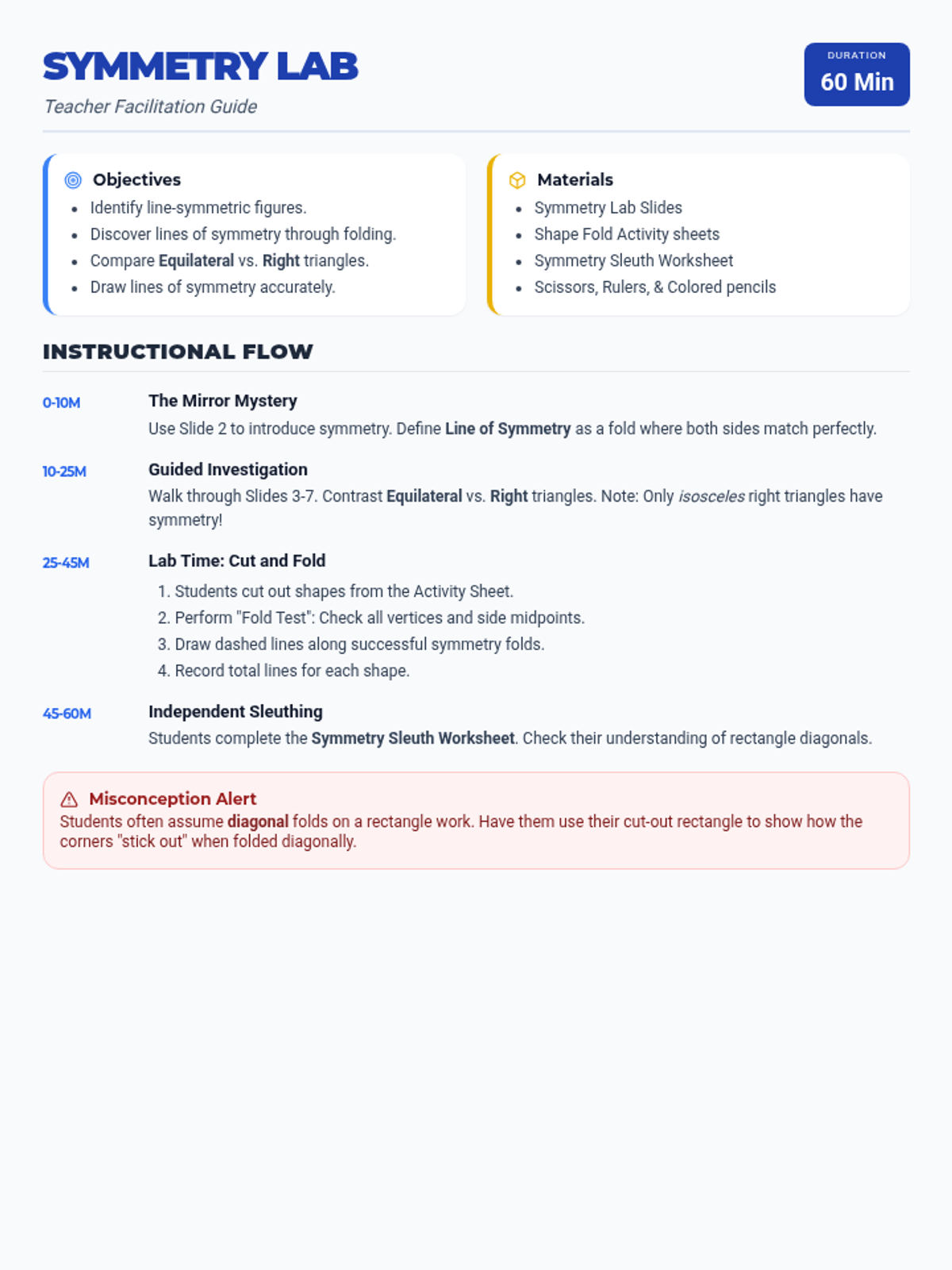
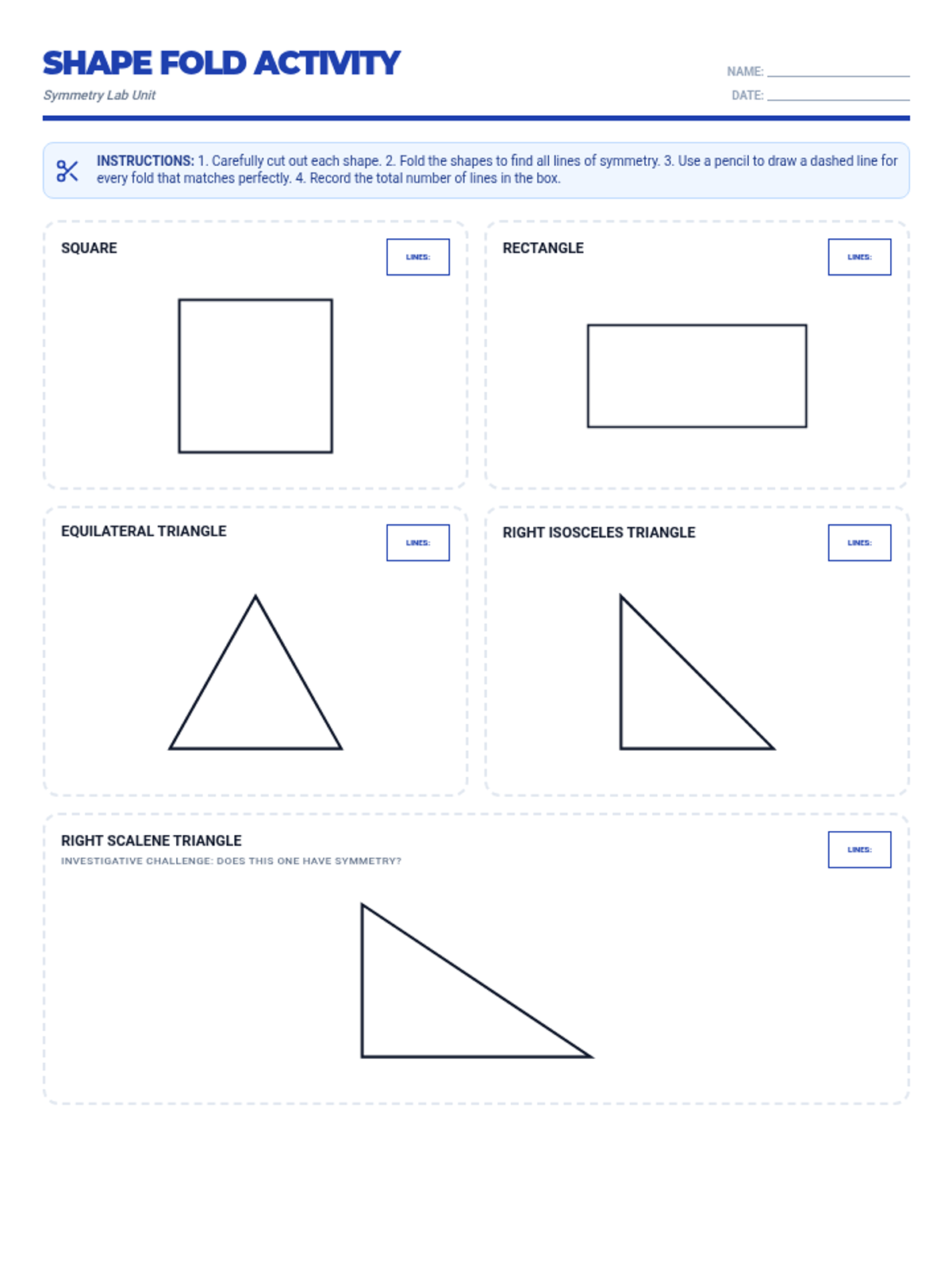
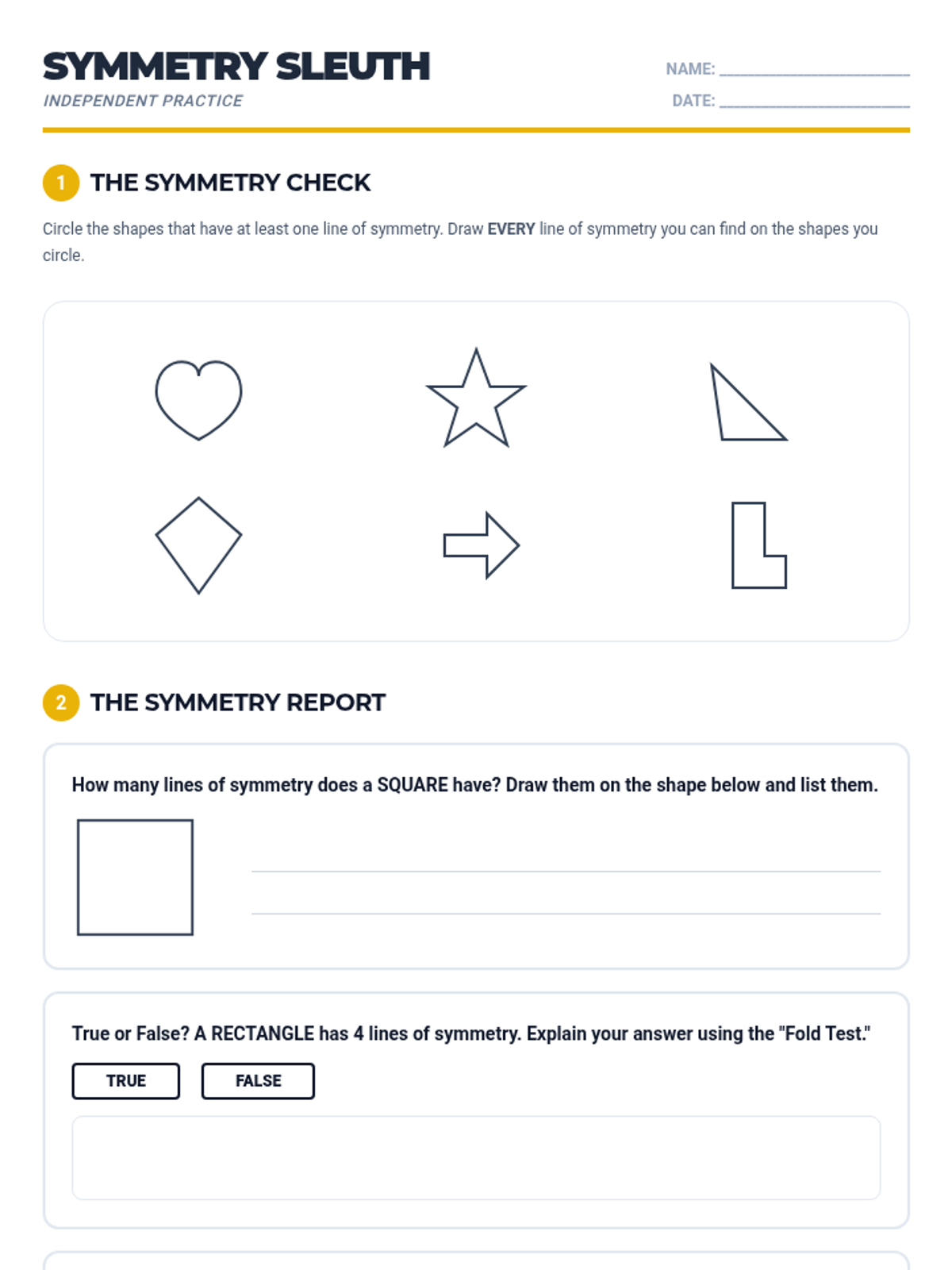
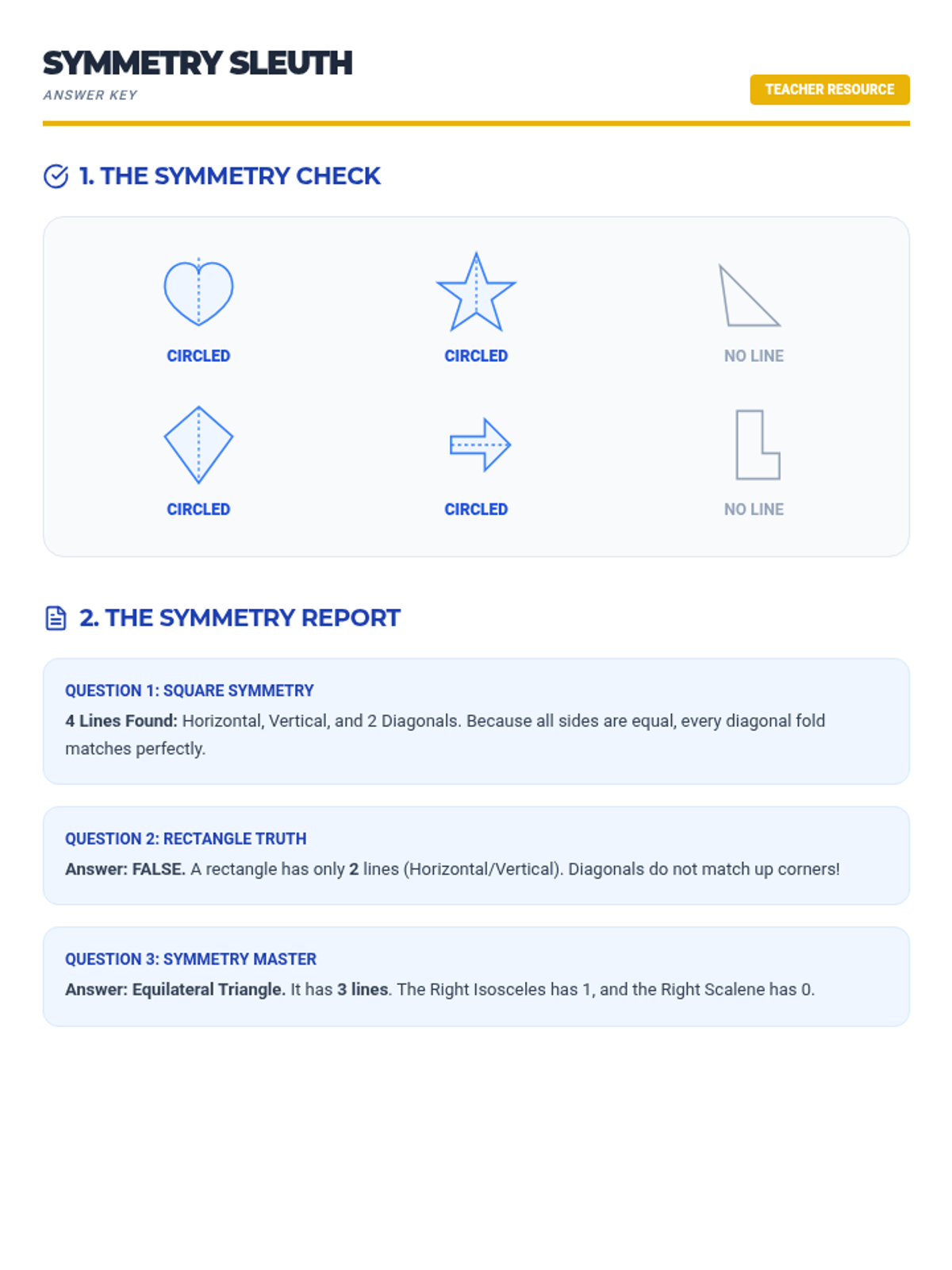
An investigative lesson where students use a 'cut and fold' technique to discover lines of symmetry in quadrilaterals and triangles.
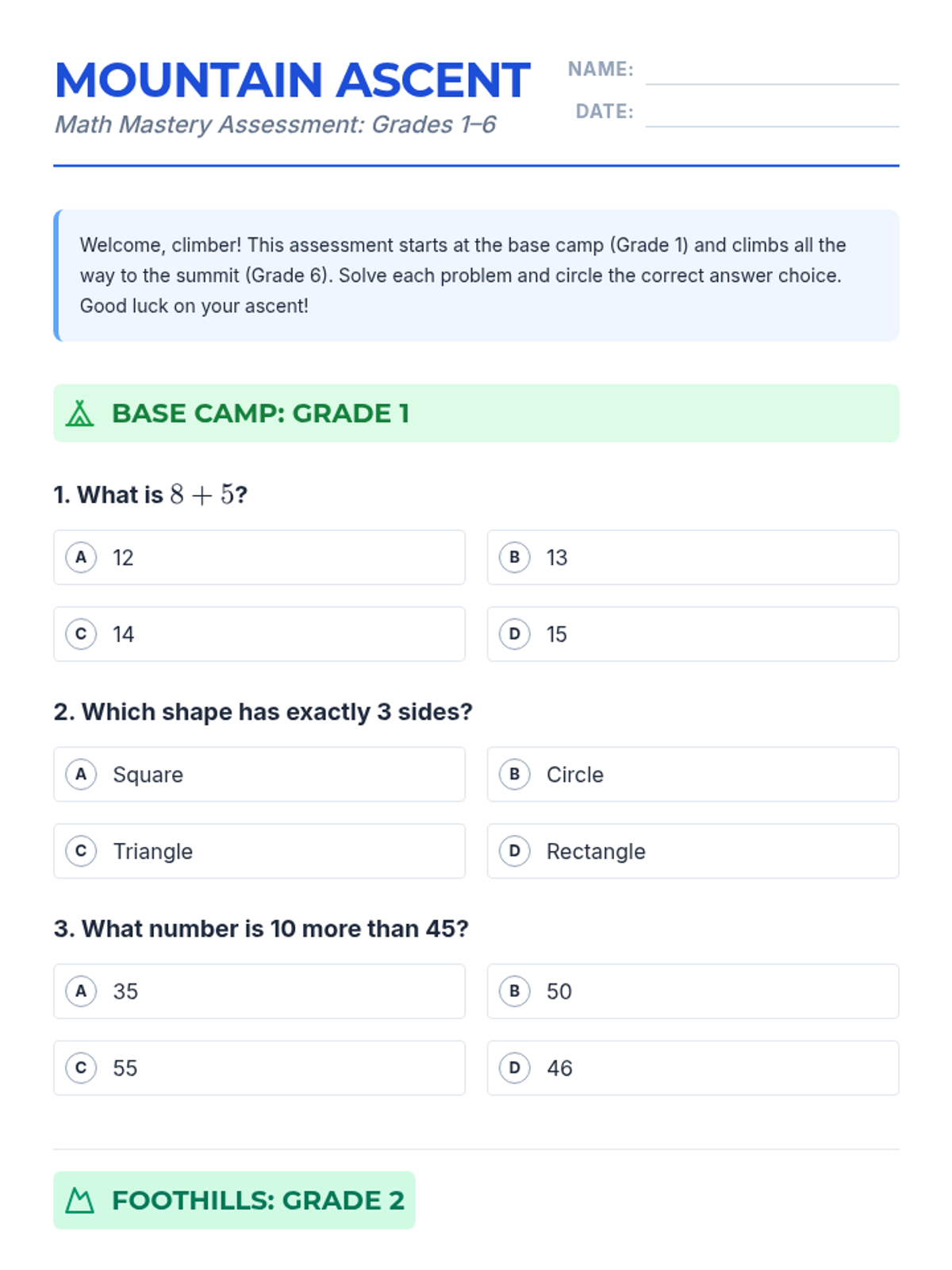
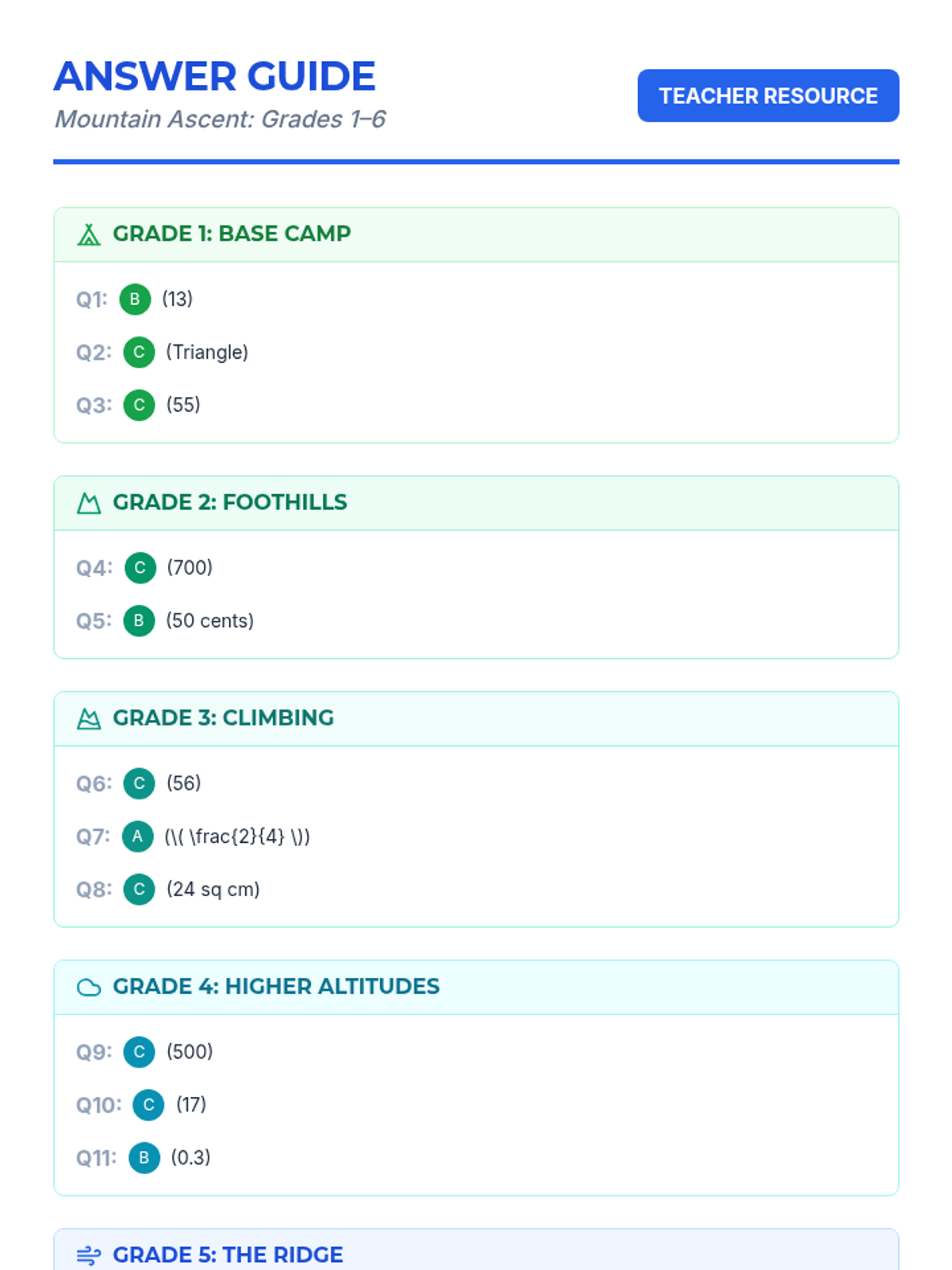
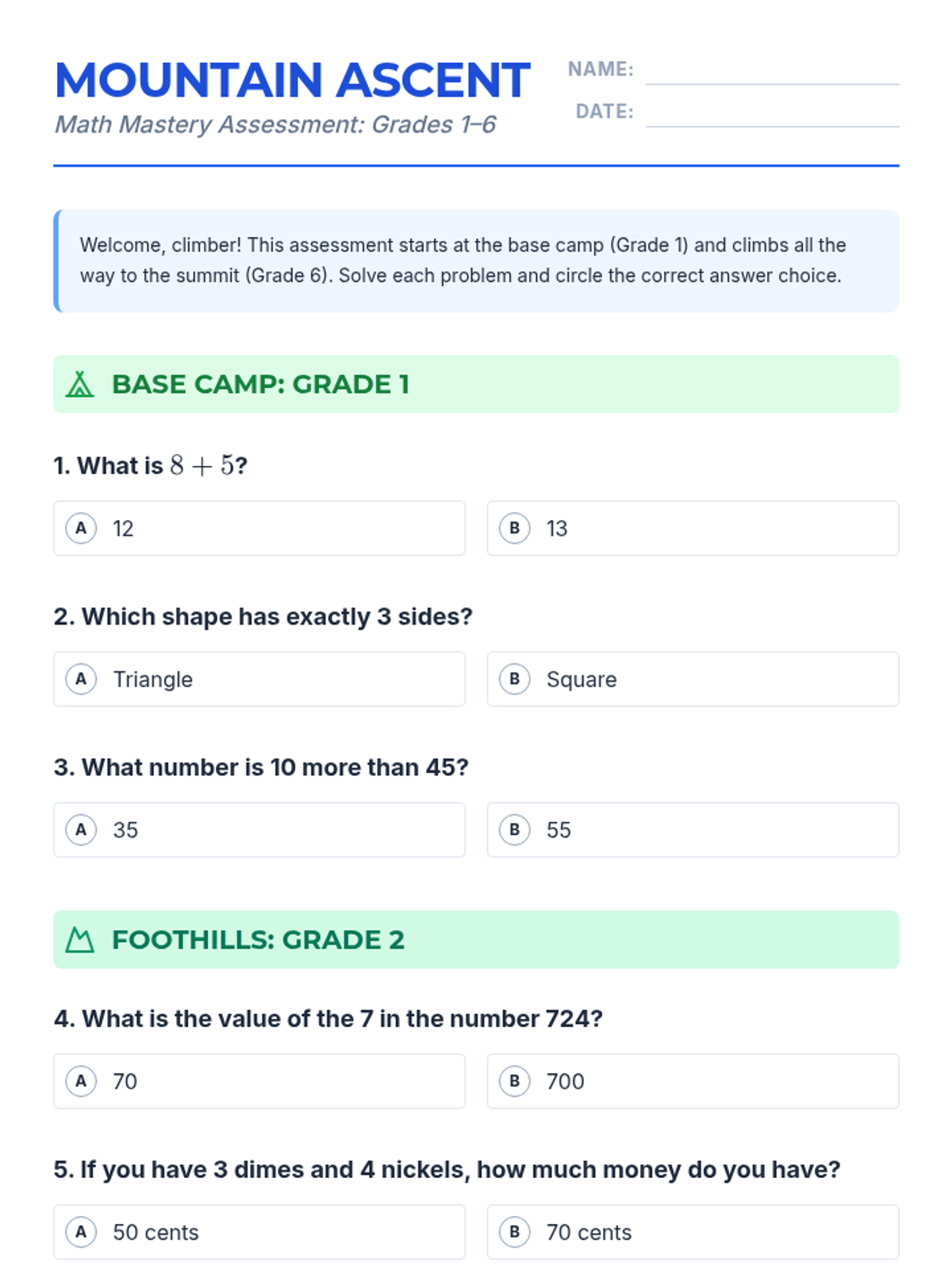
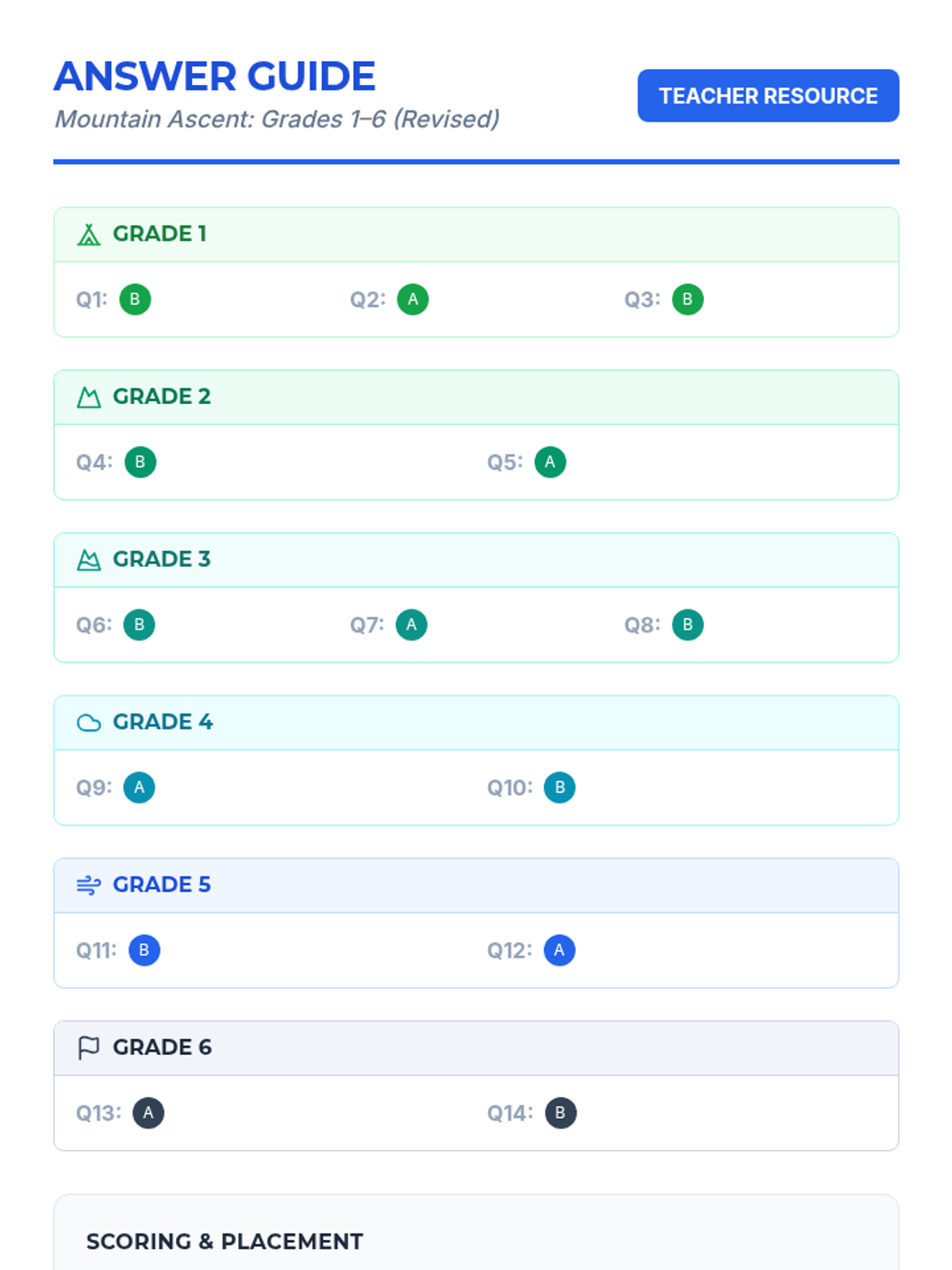
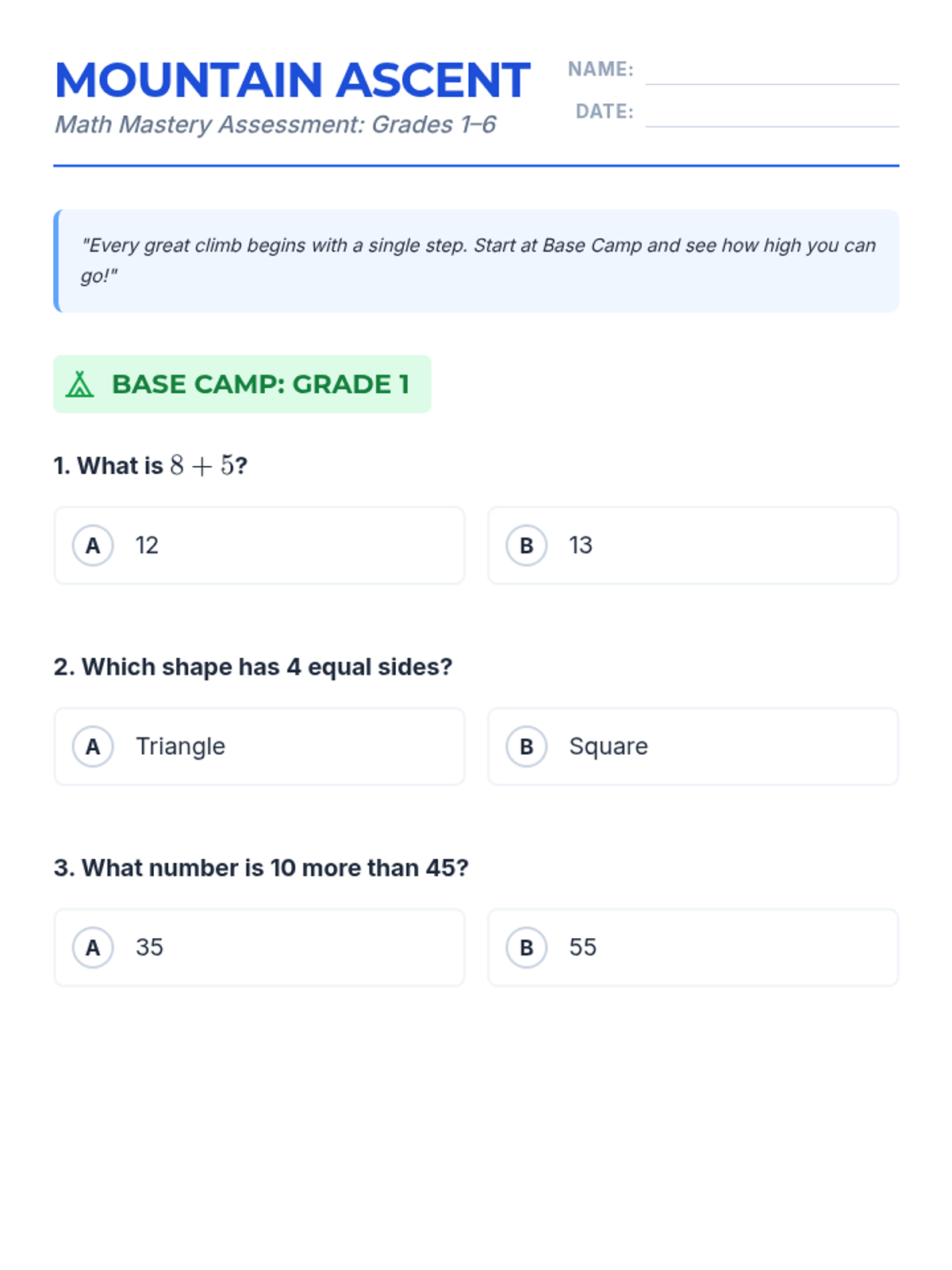
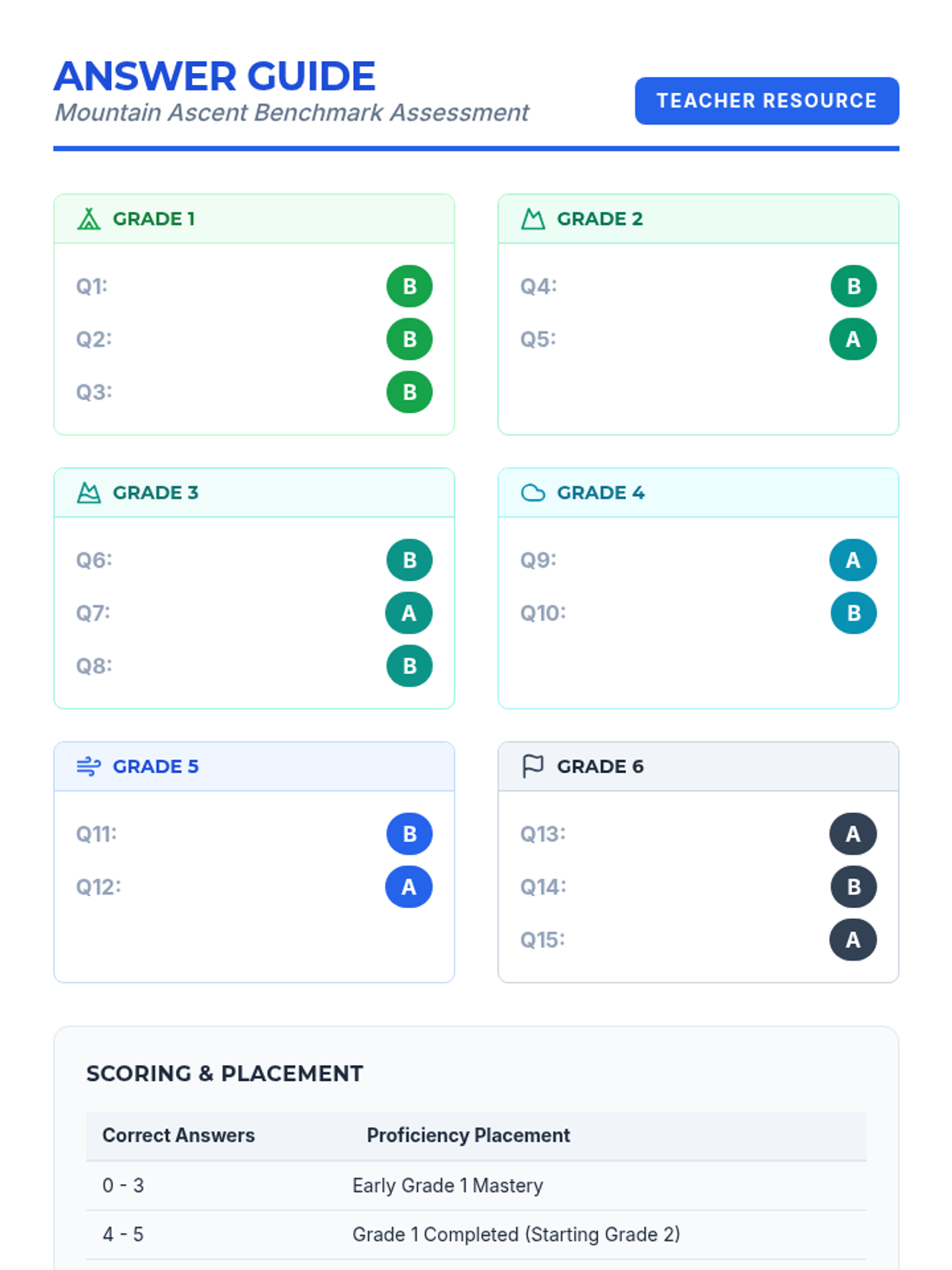
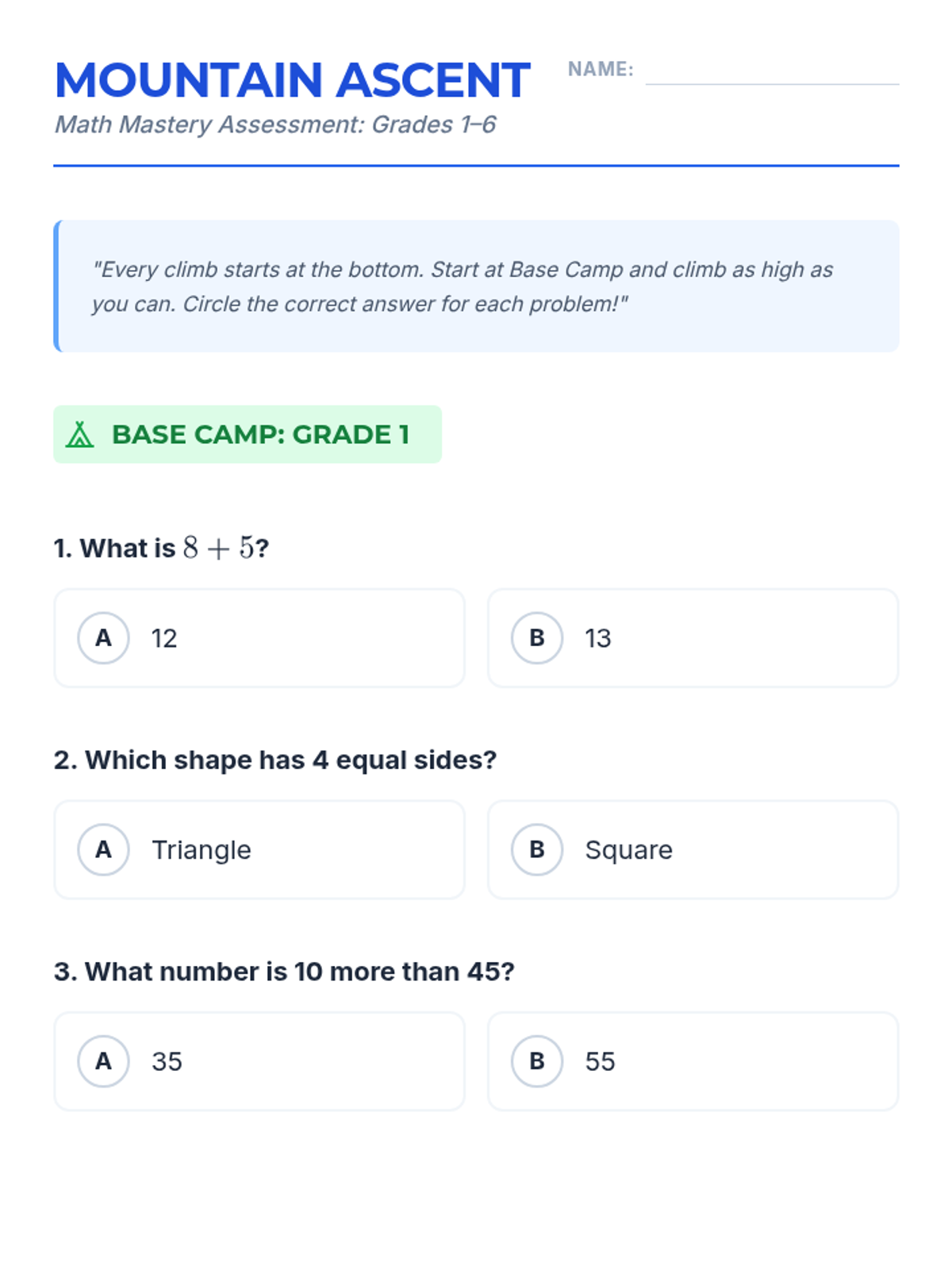
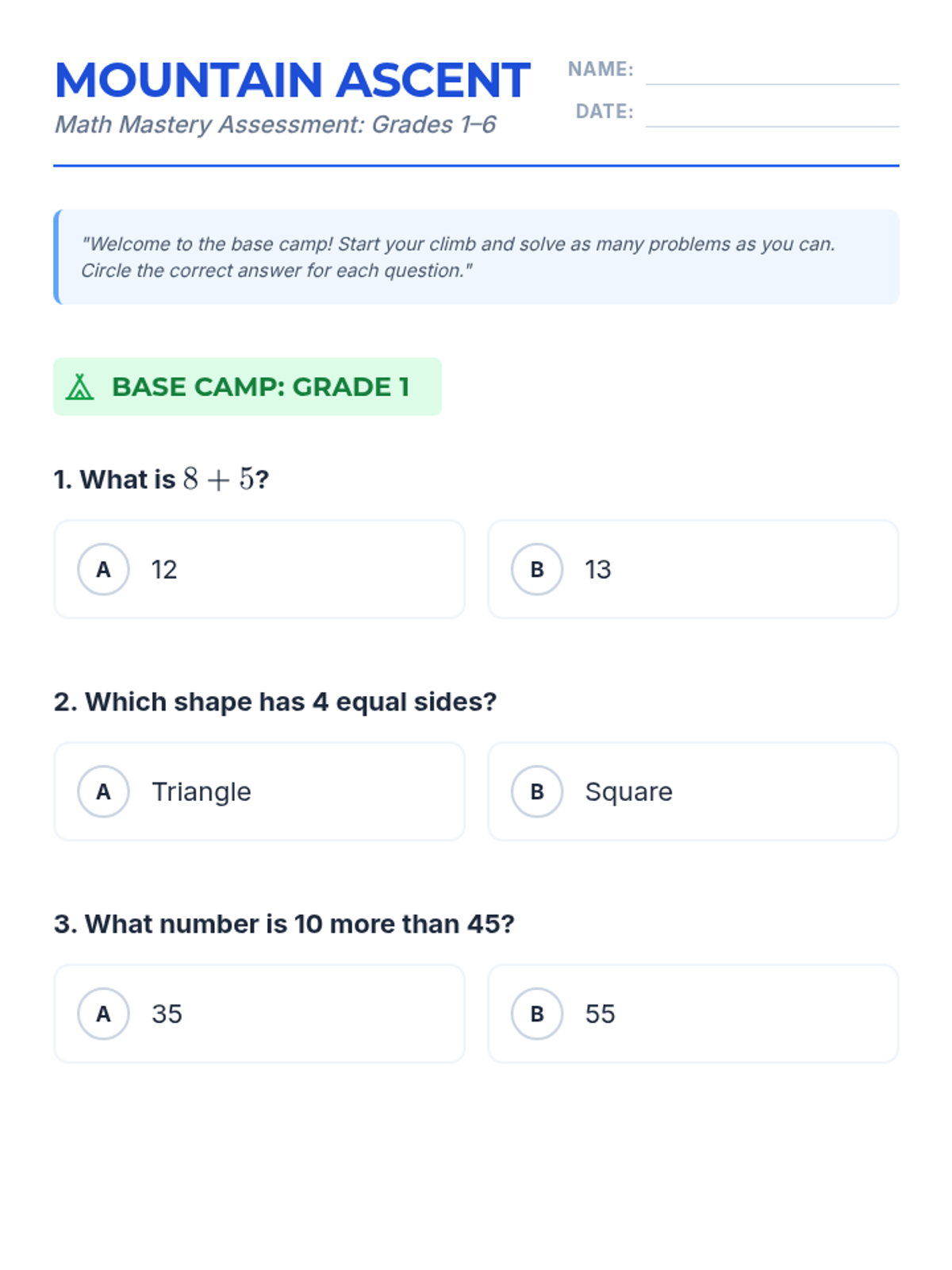
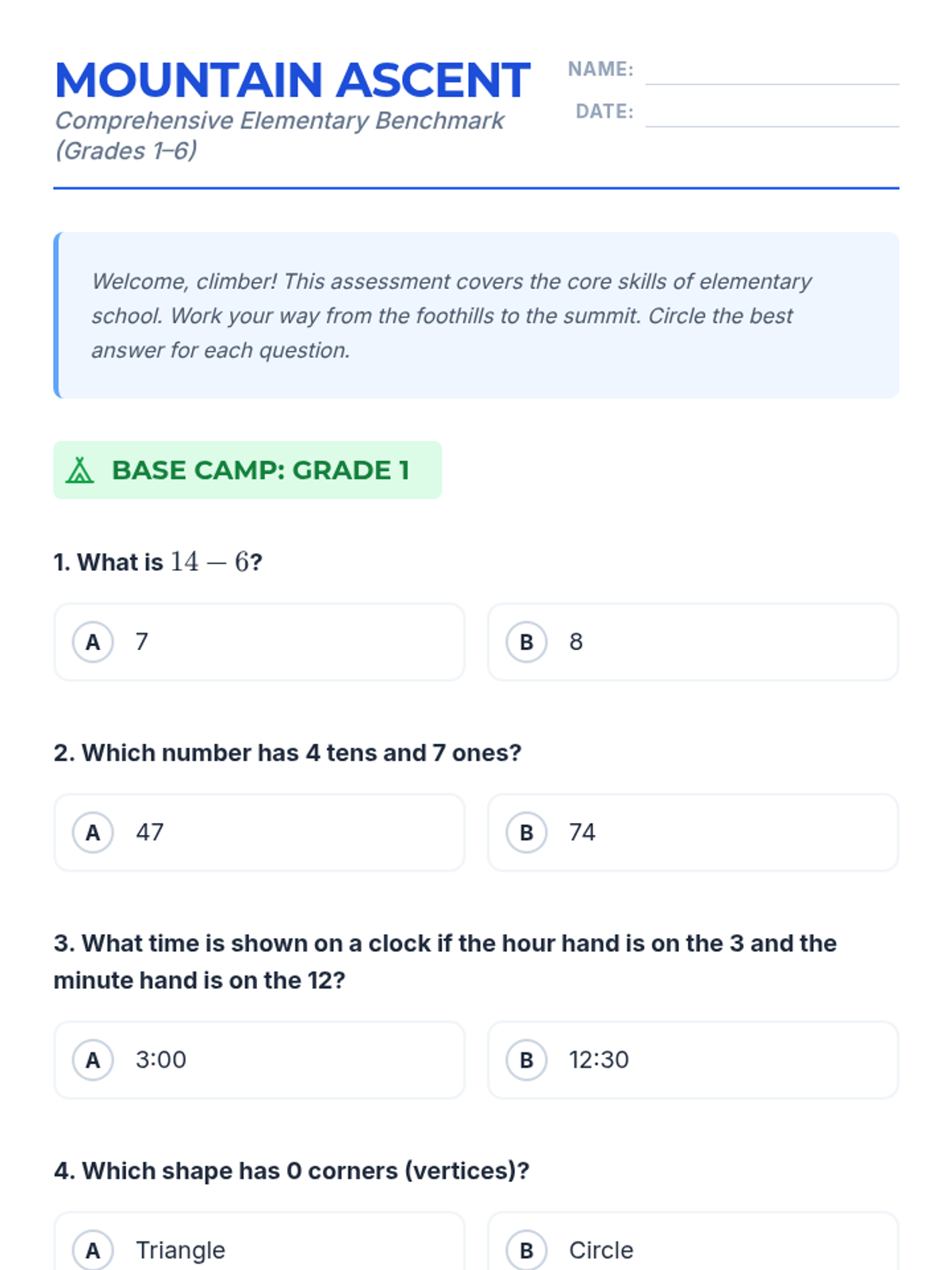
A comprehensive math benchmark assessment covering key standards from Grade 1 through Grade 6, designed to track student progress and identify skill gaps.
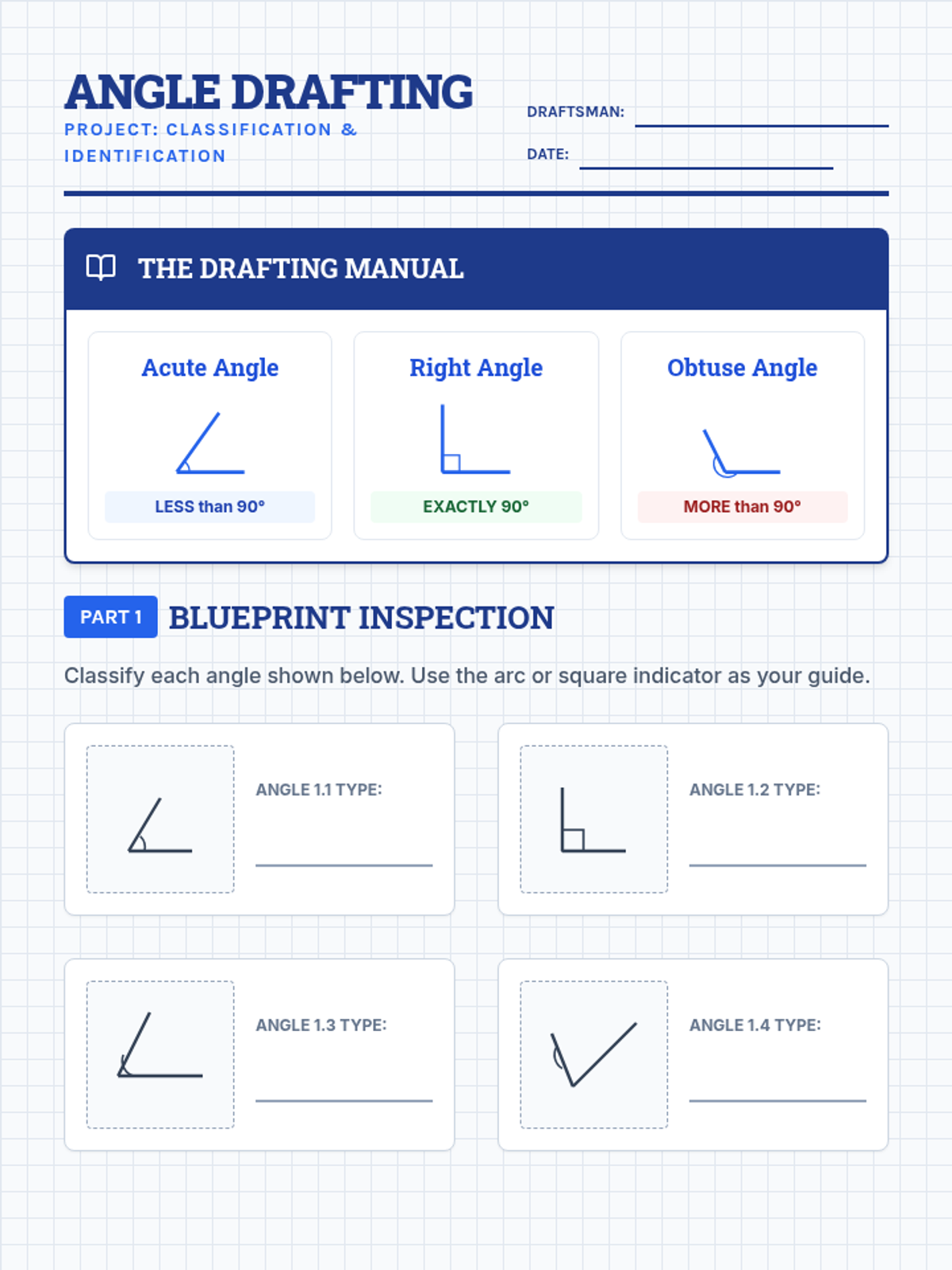
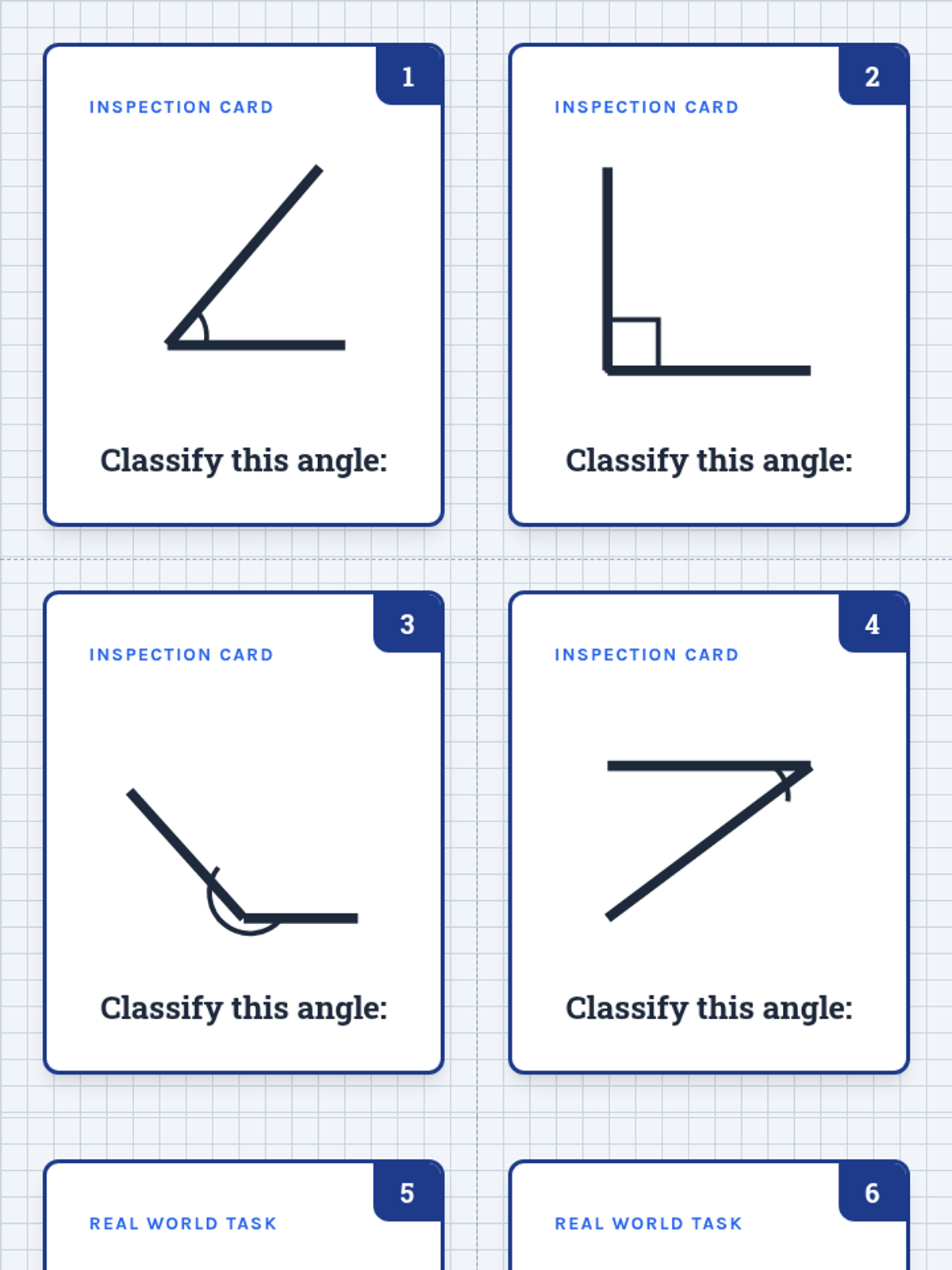
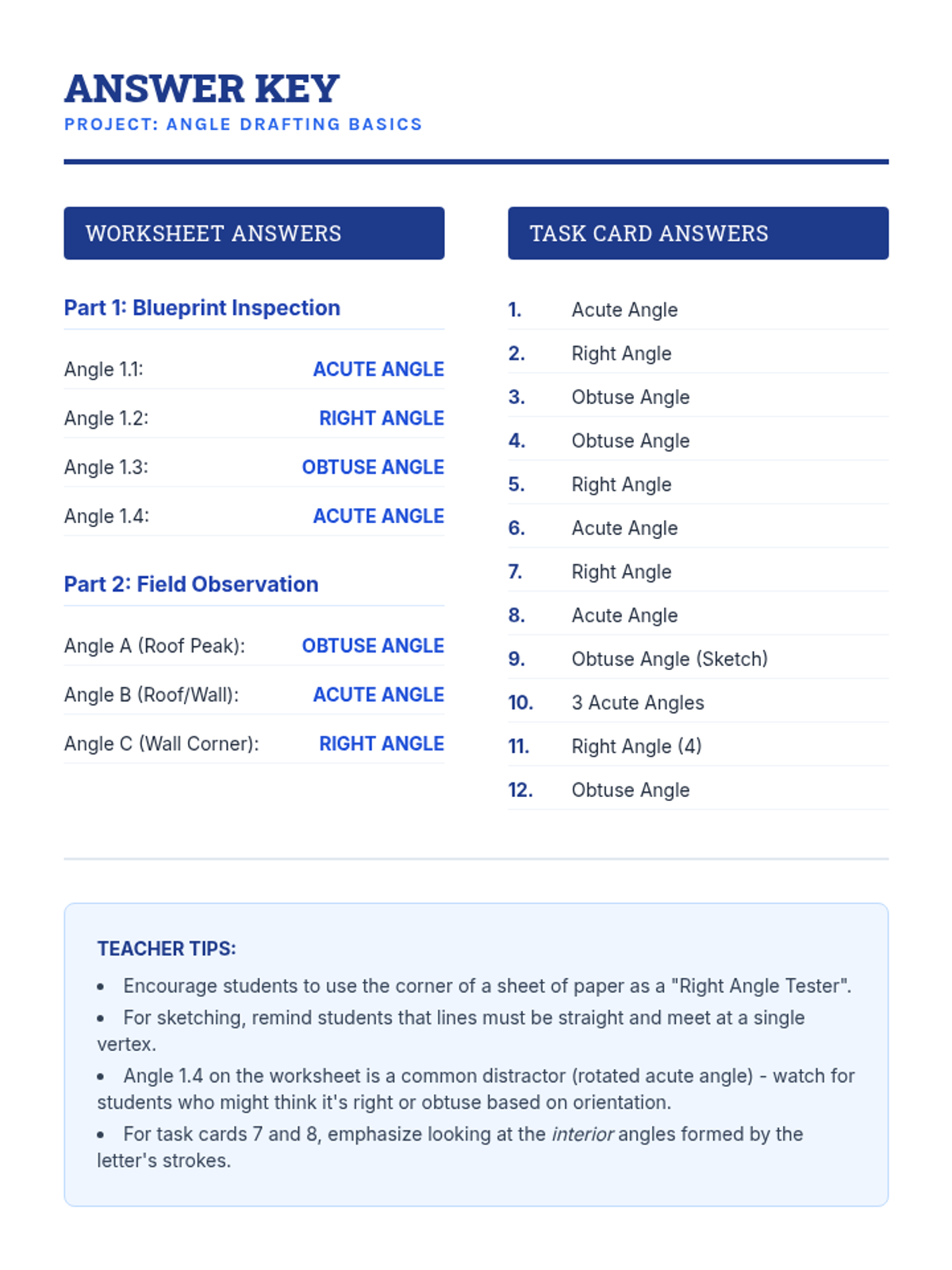
A foundational lesson on classifying angles as acute, obtuse, or right, serving as a prerequisite for measuring with a protractor. Students will identify, classify, and sketch angles within a technical blueprint-themed environment.
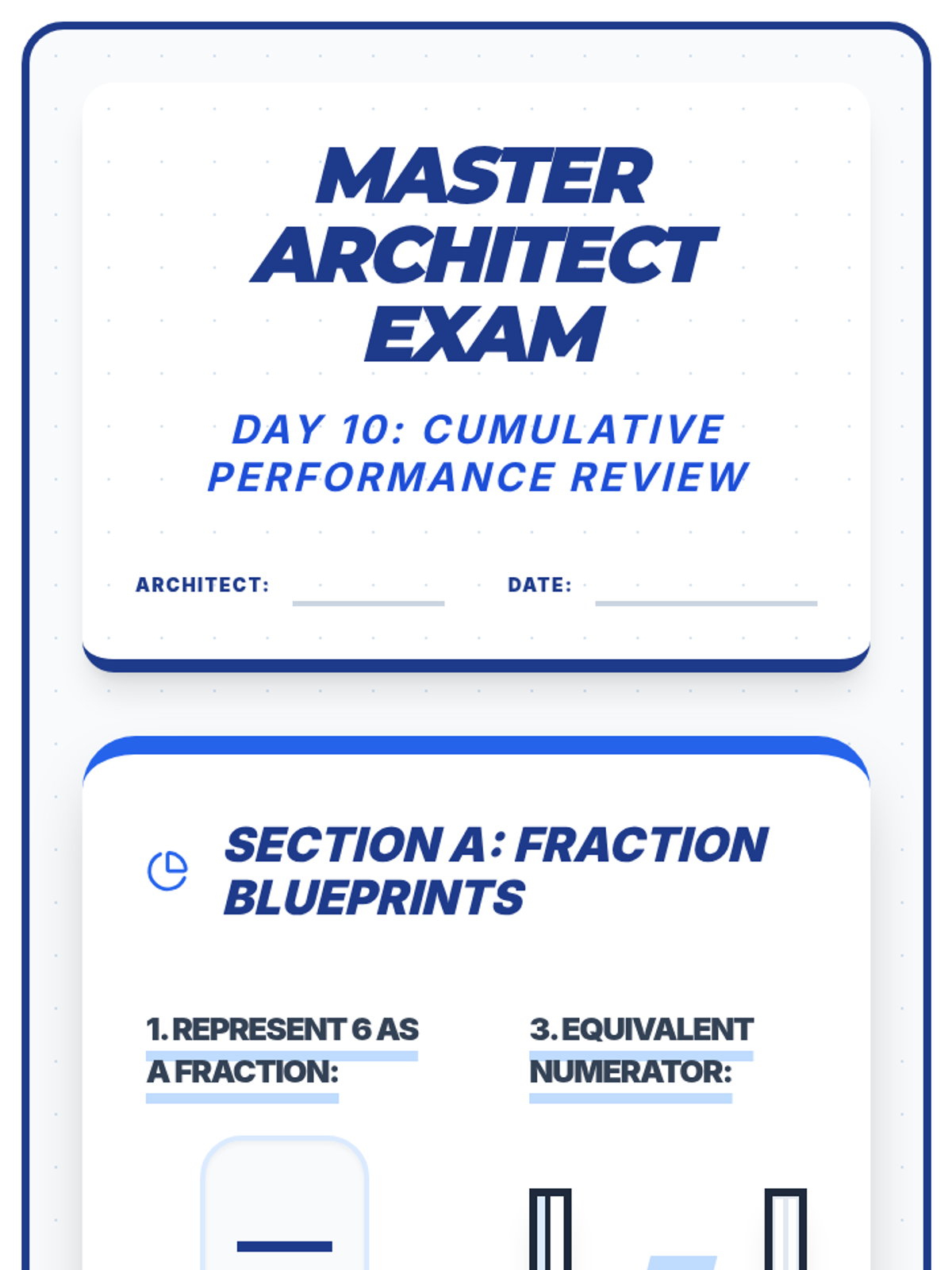
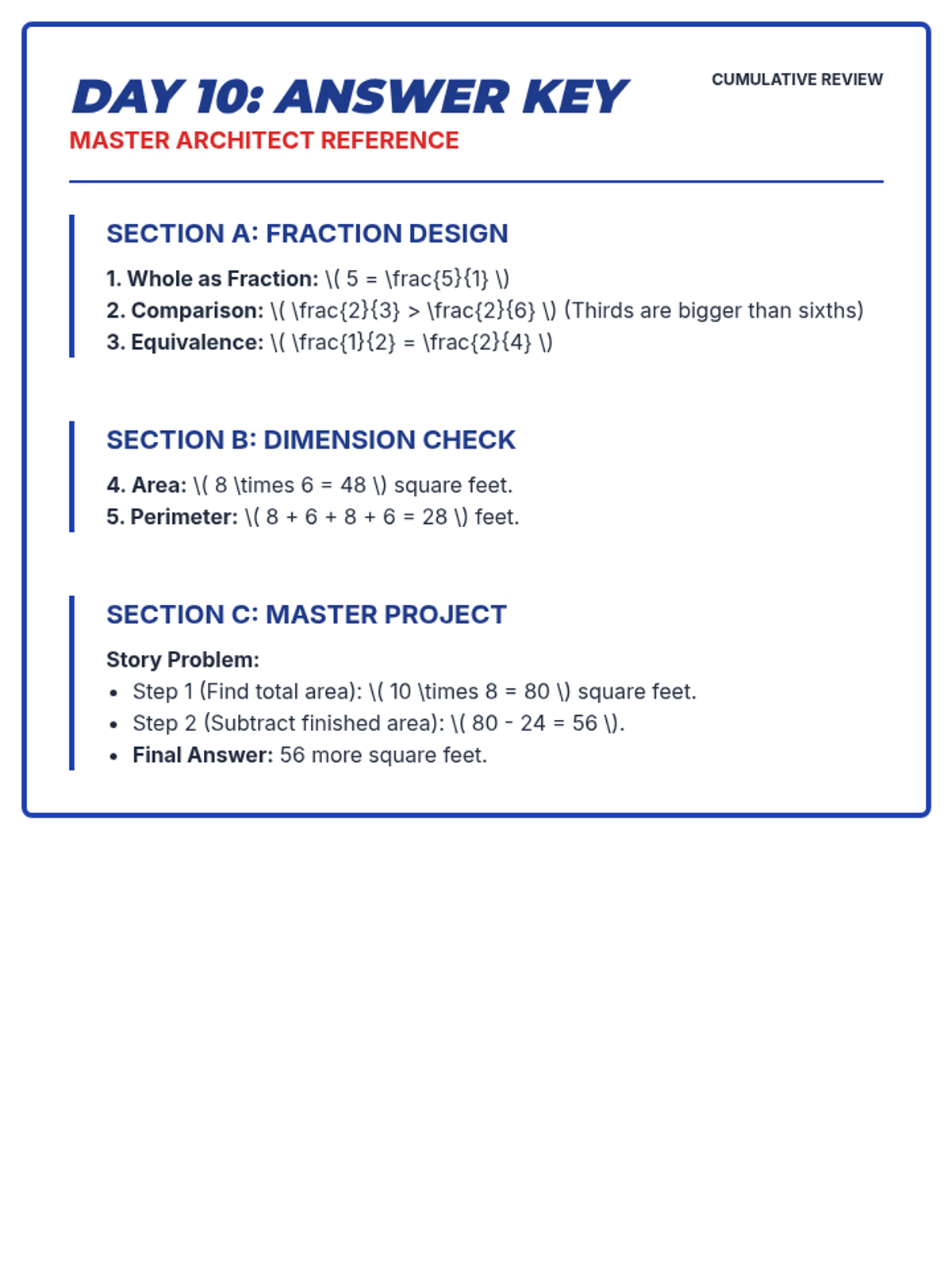
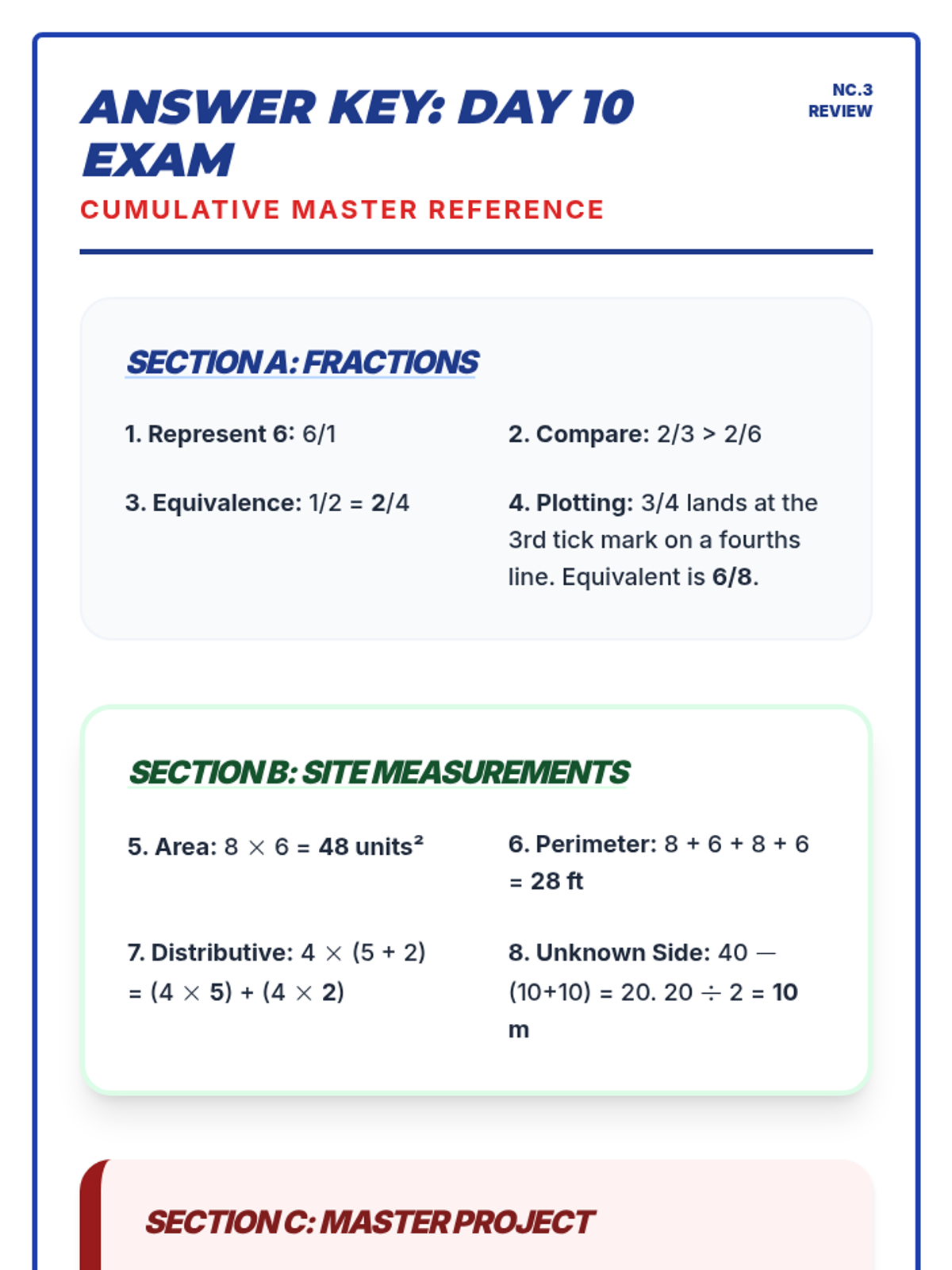
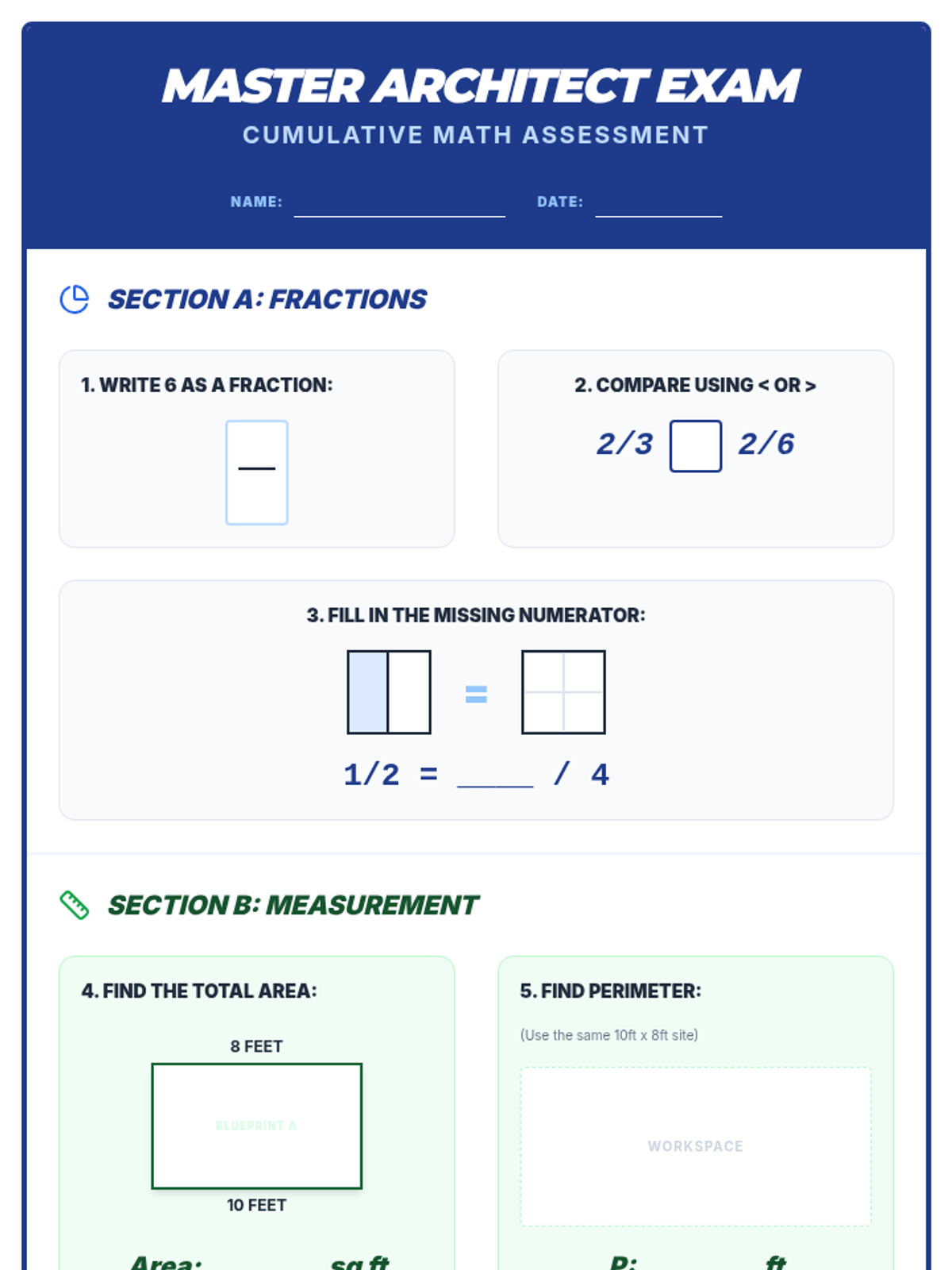
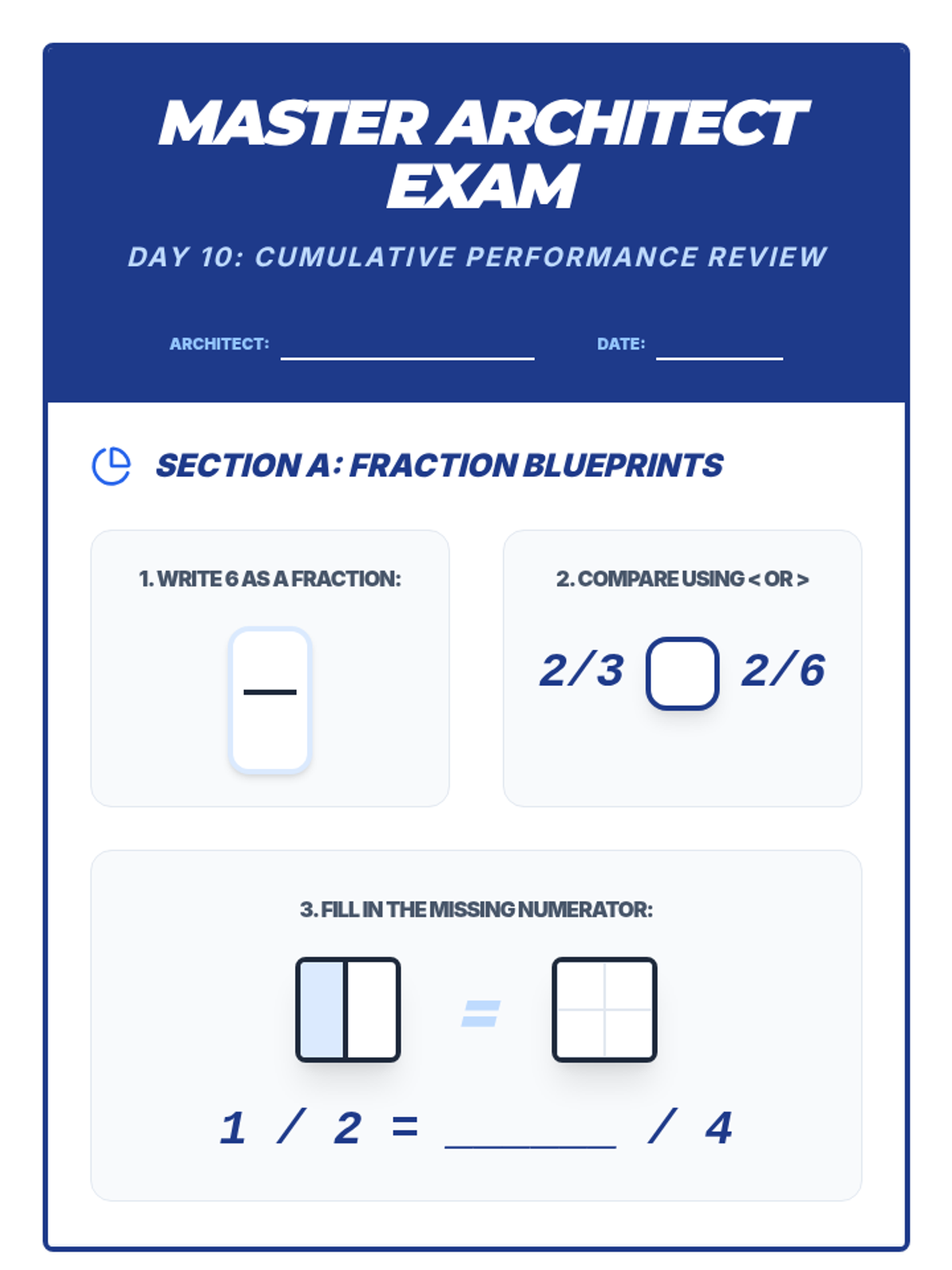
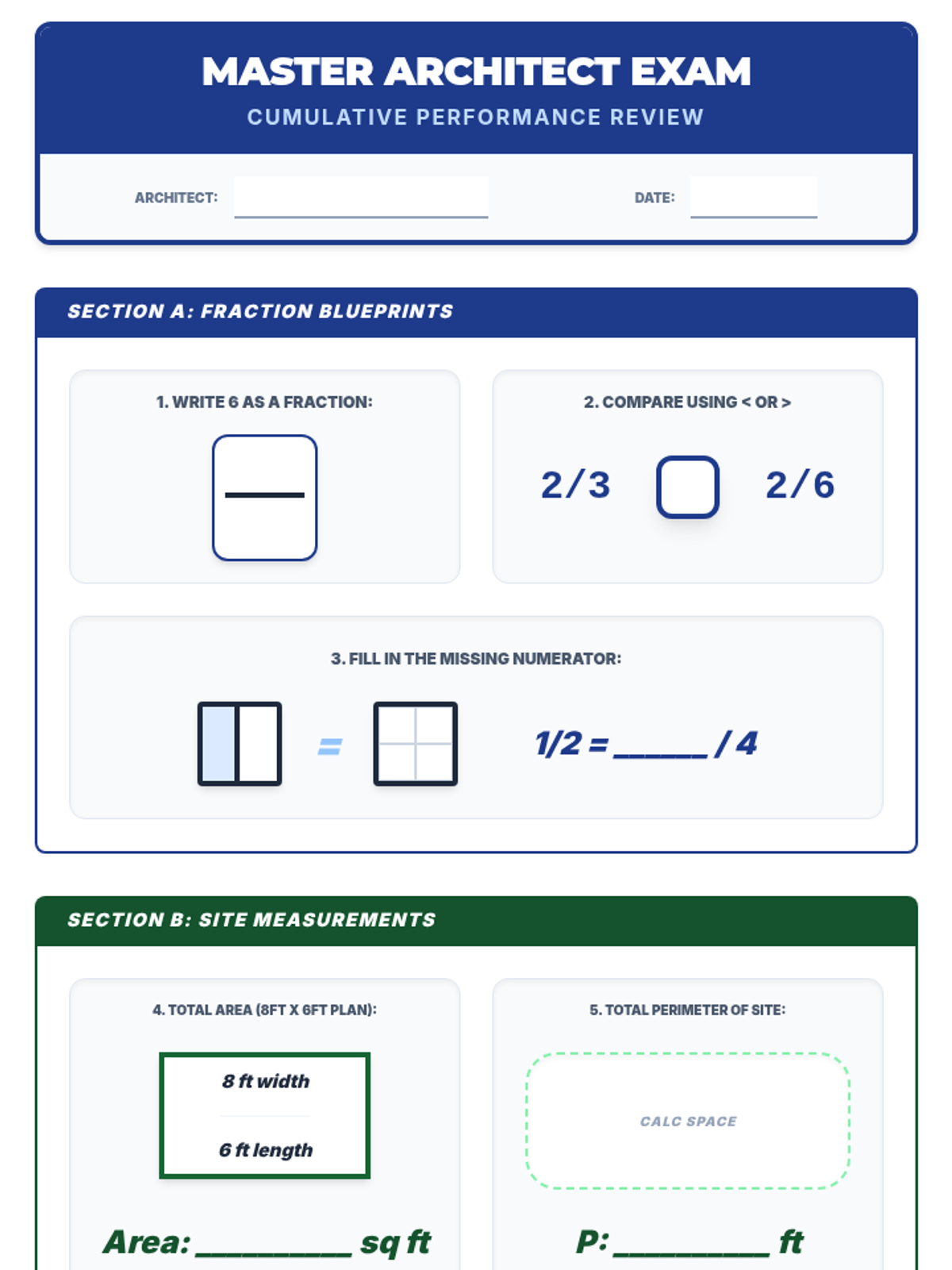
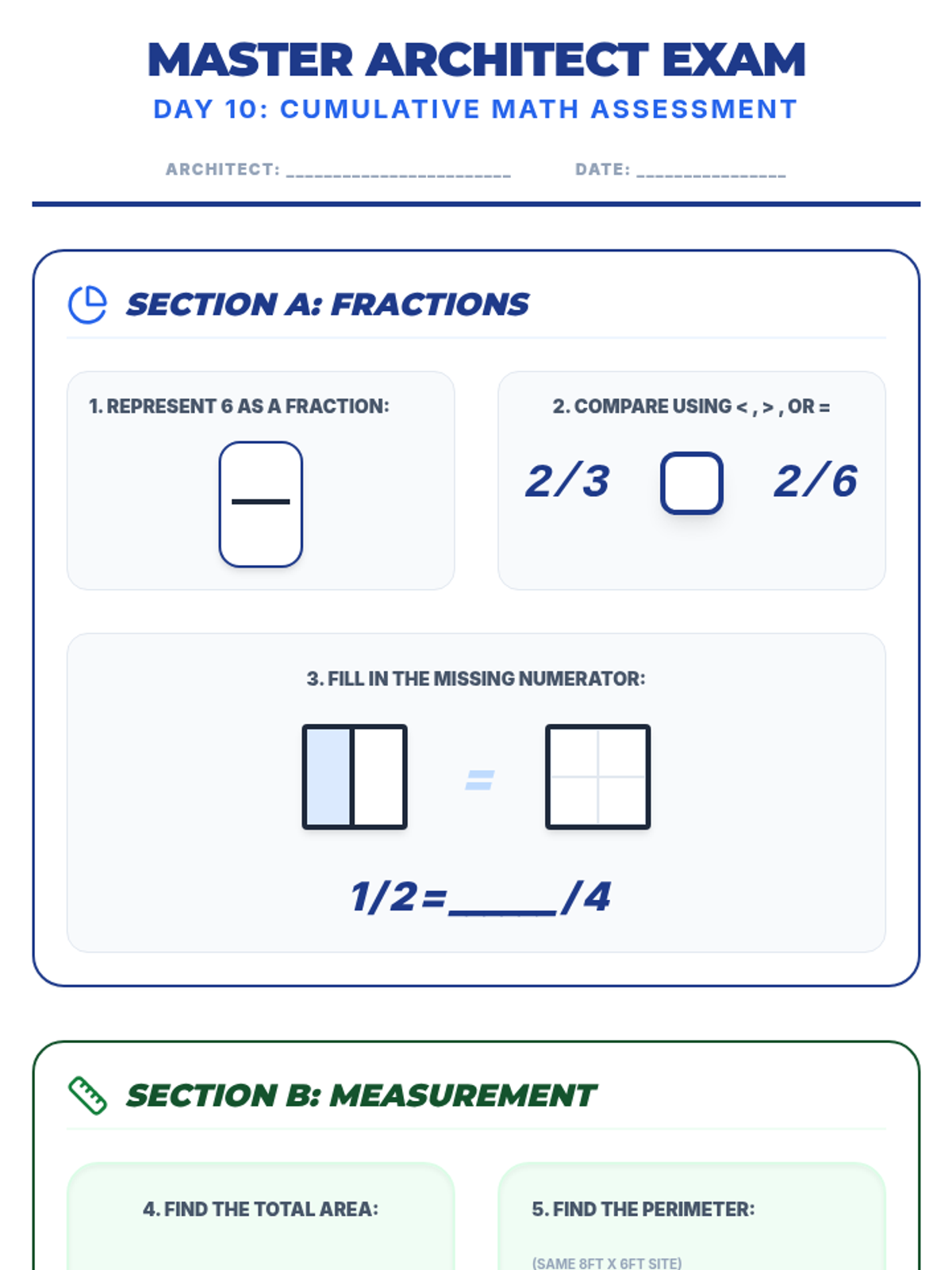
A cumulative review of all standards covered in the 10-day intensive program.
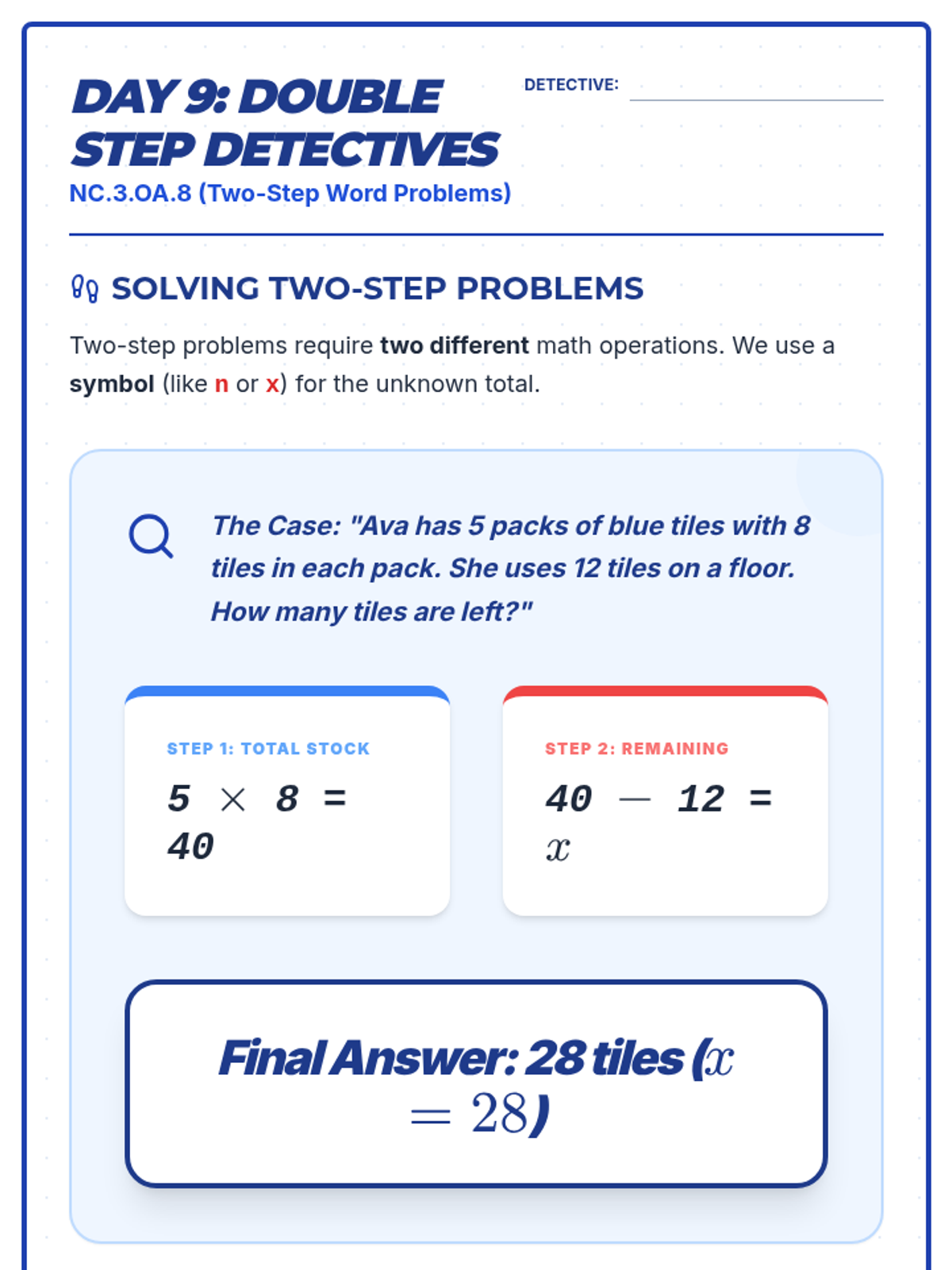
Strategies for solving two-step word problems involving addition, subtraction, and multiplication with unknowns.
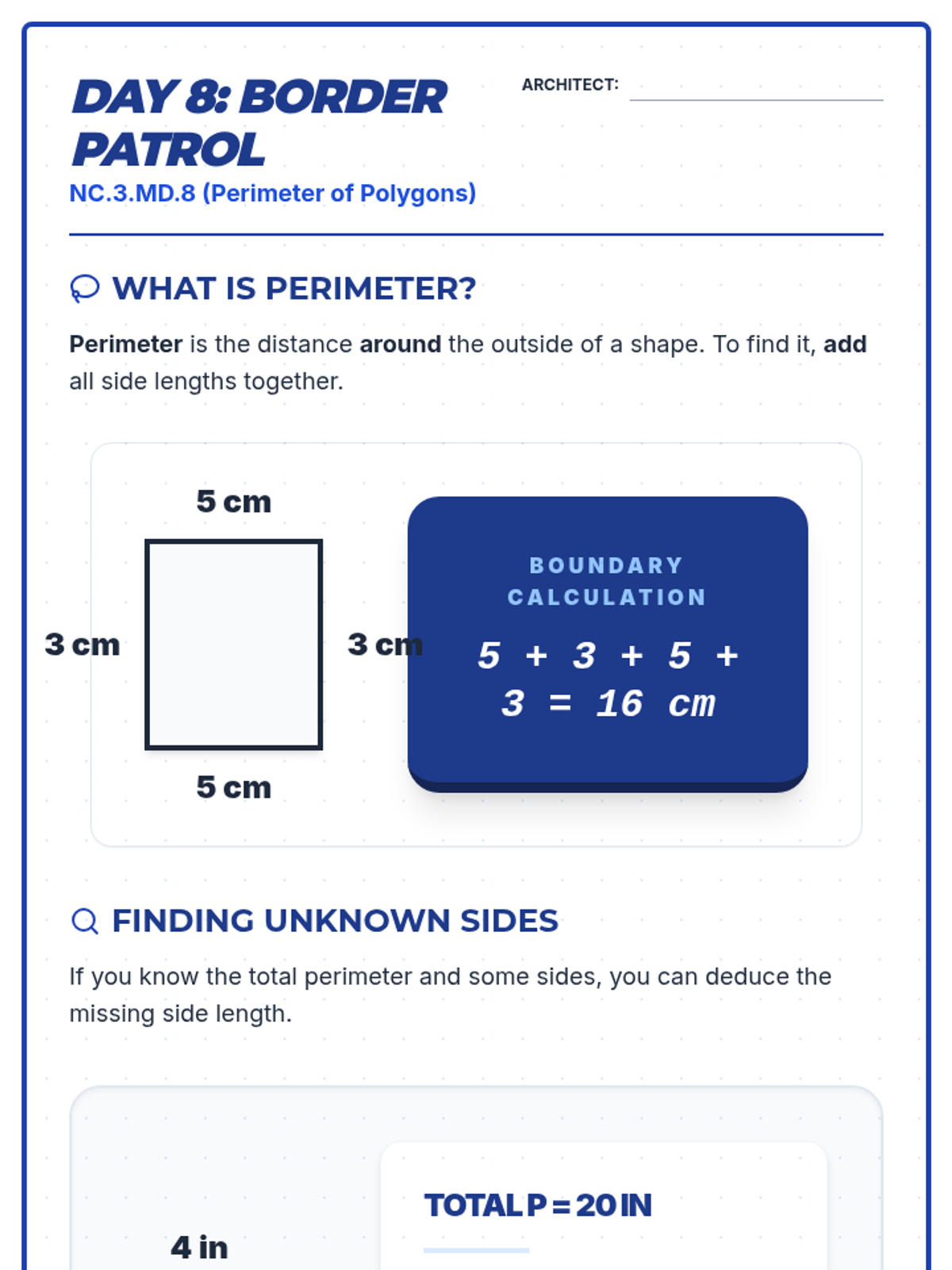
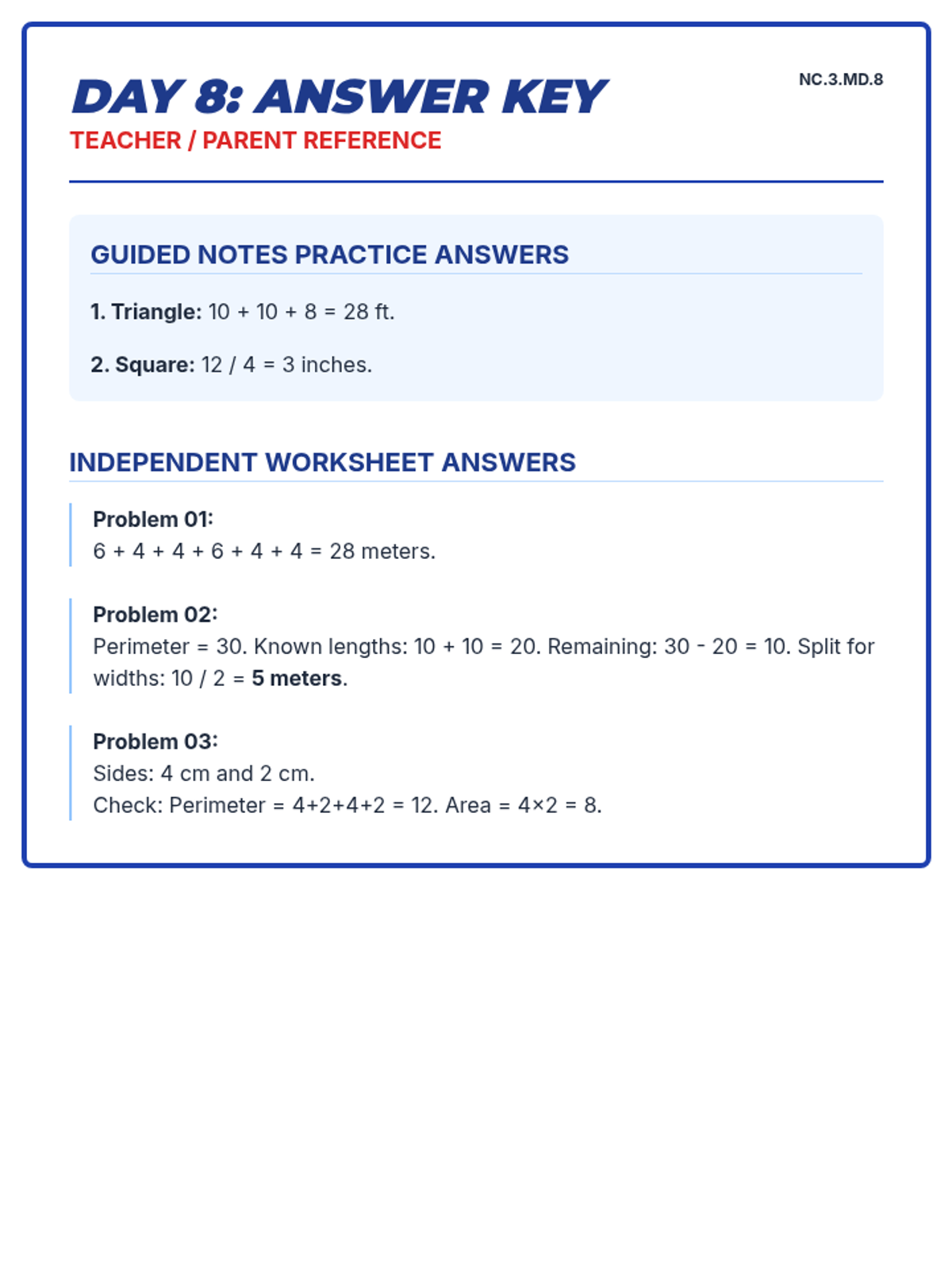
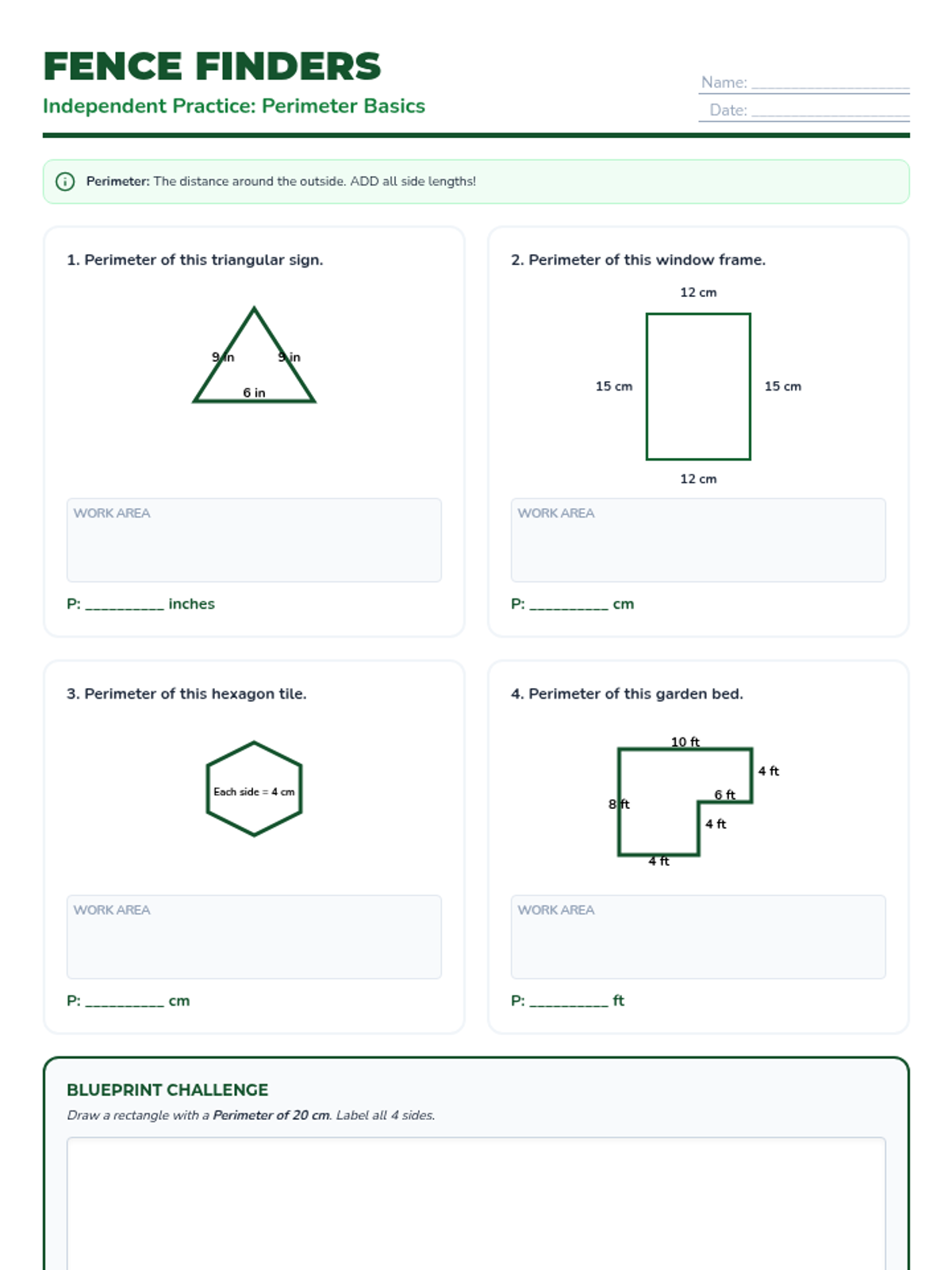
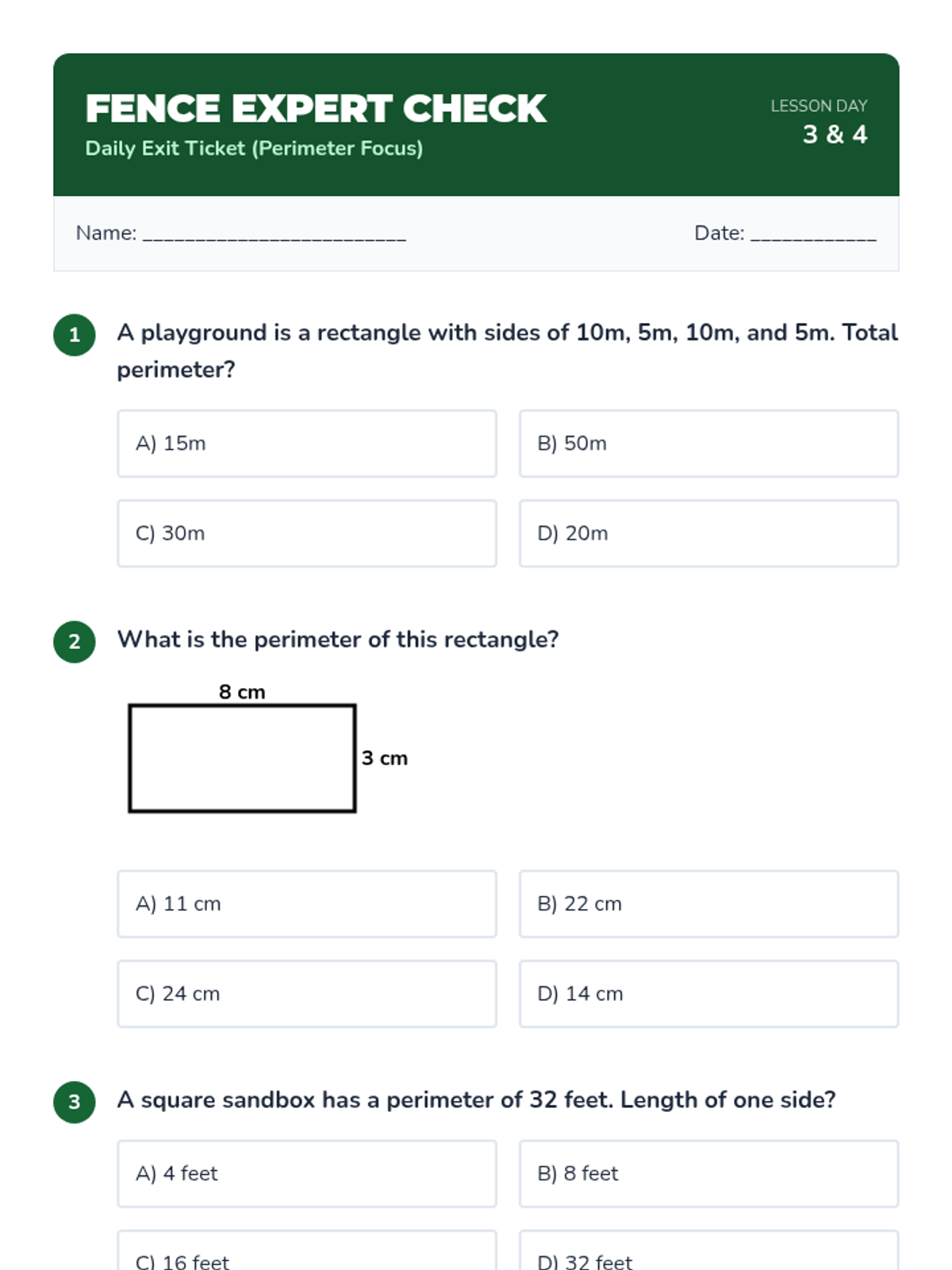
Covers finding the perimeter of polygons, including finding unknown side lengths.
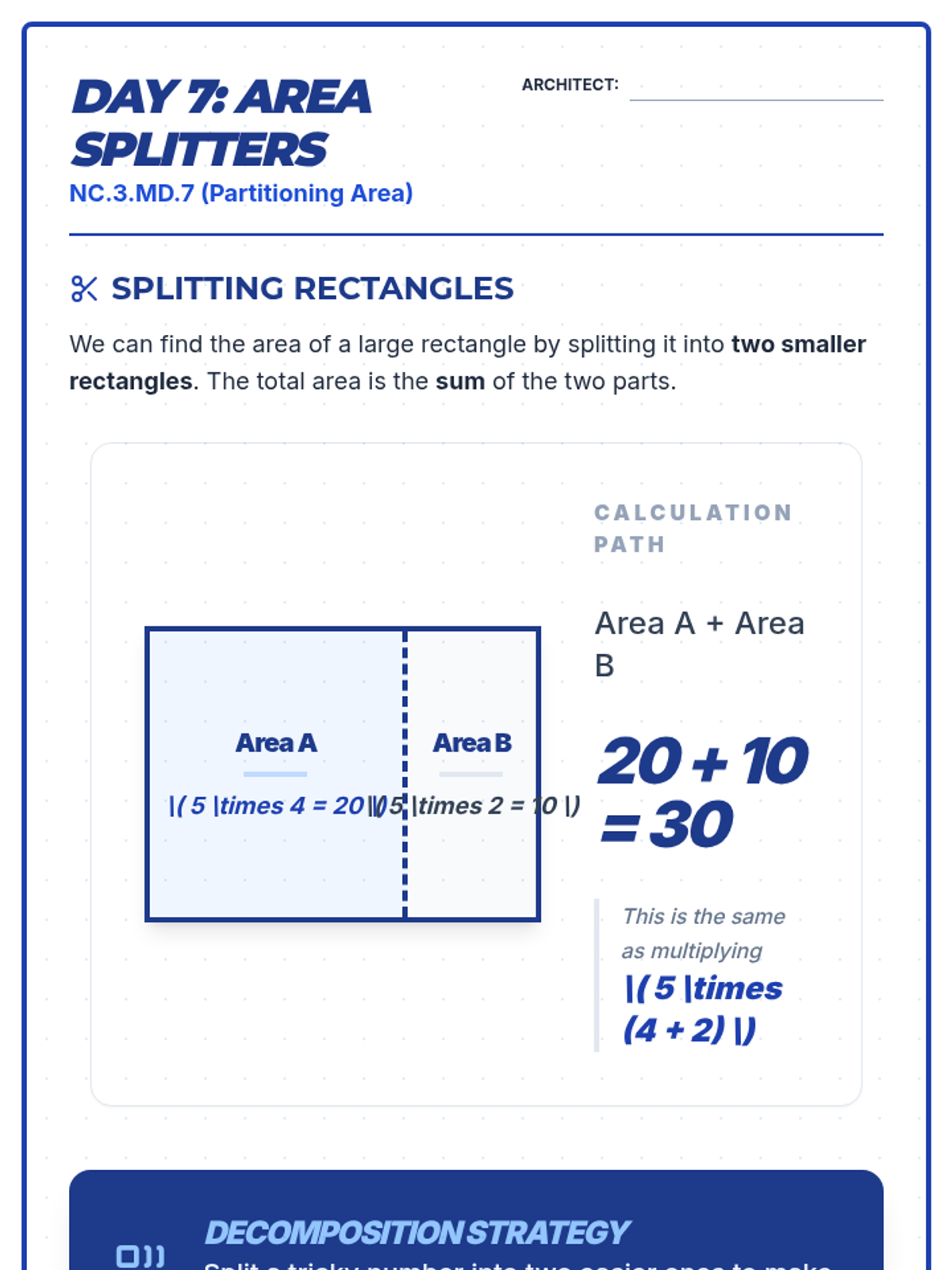
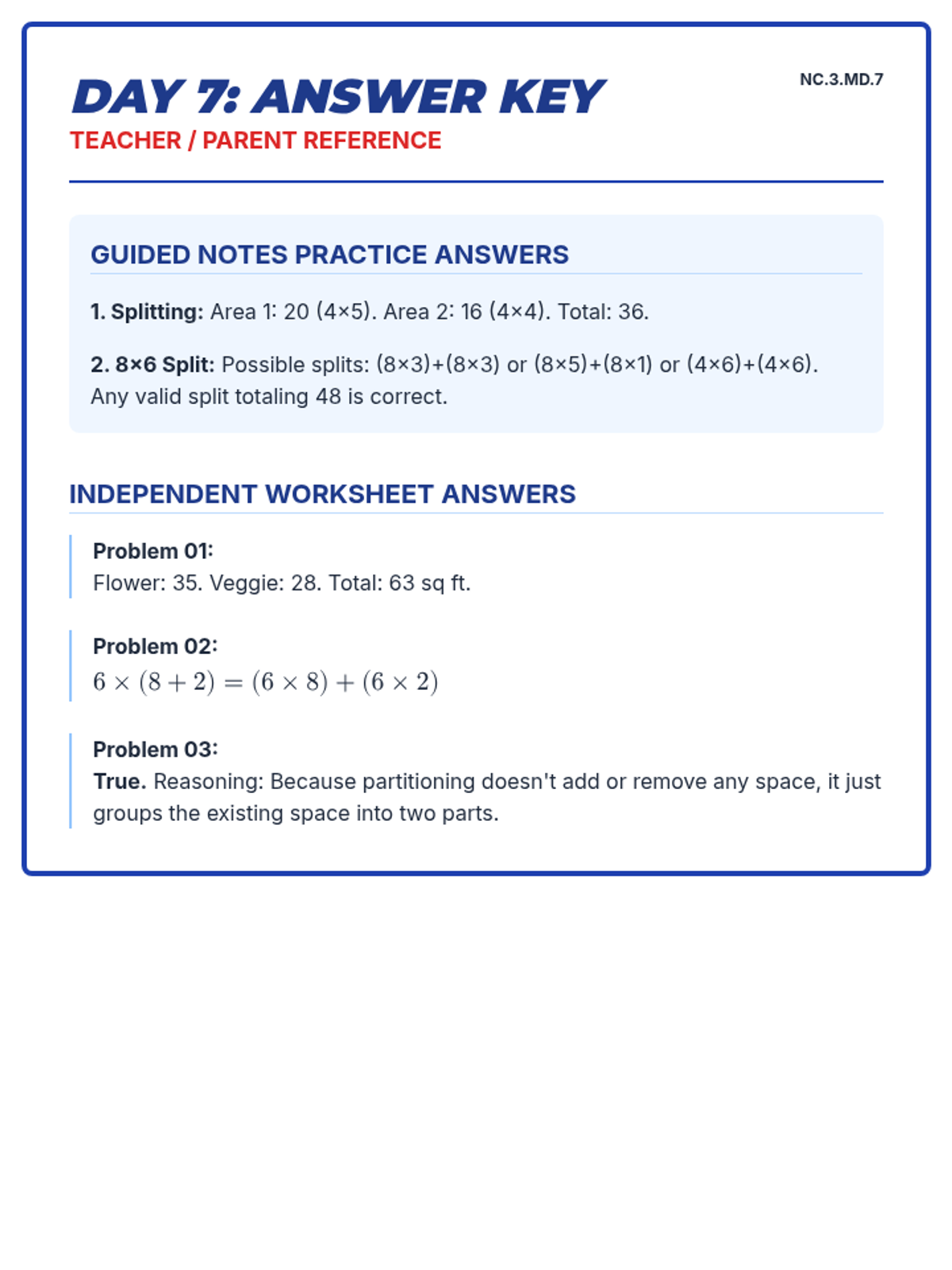
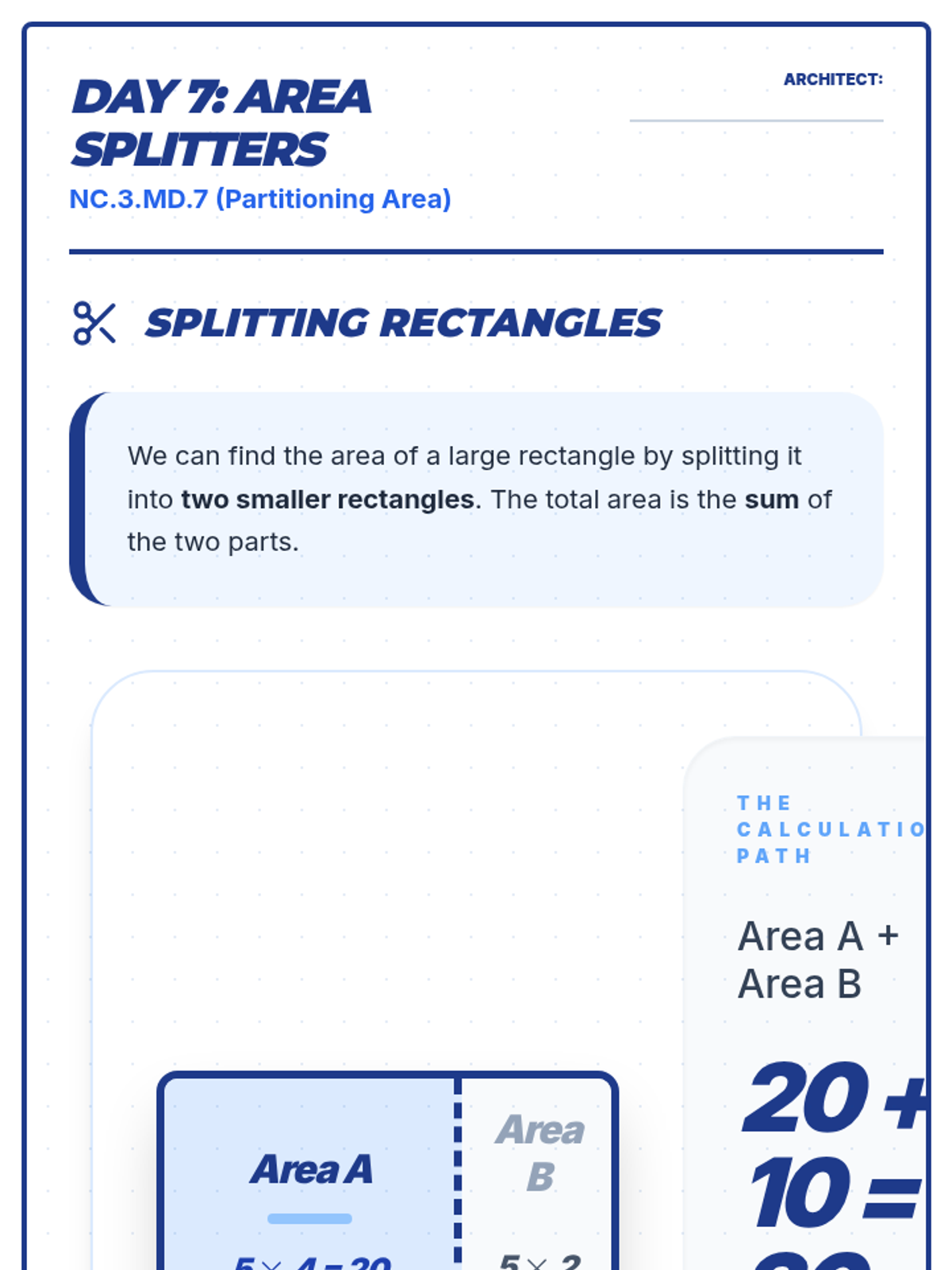
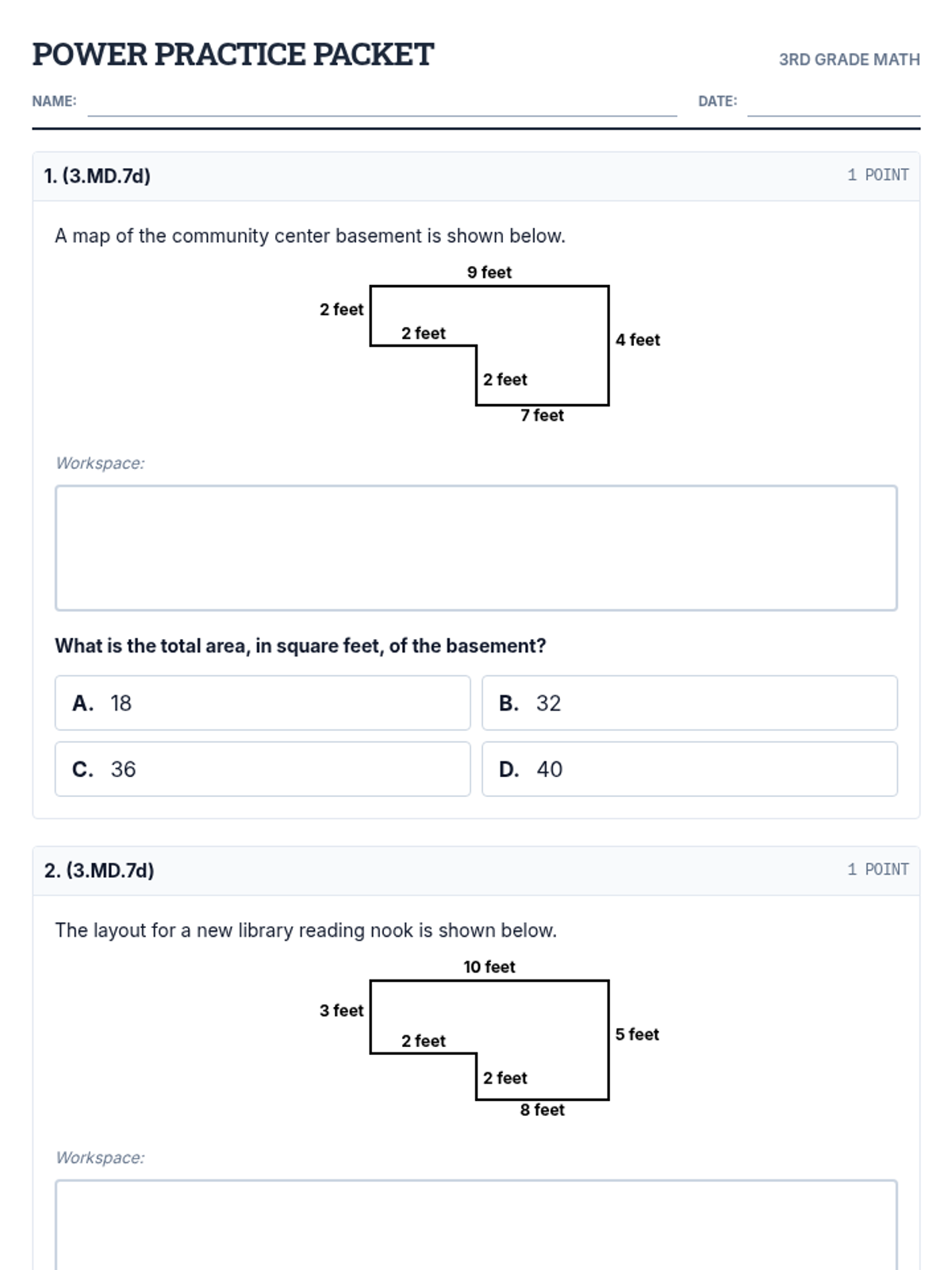
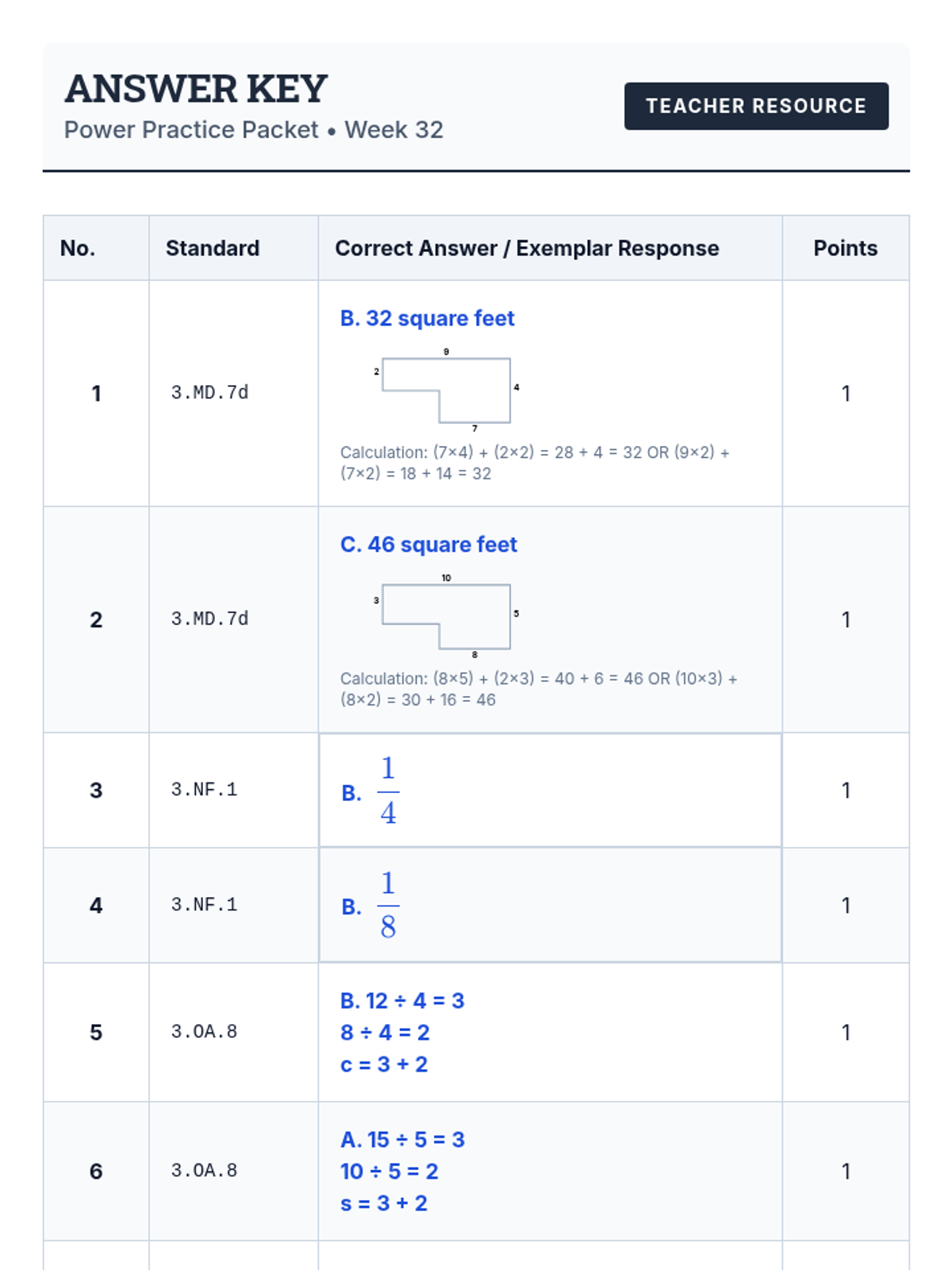
Uses partitioning of rectangles to illustrate the distributive property and additive nature of area.
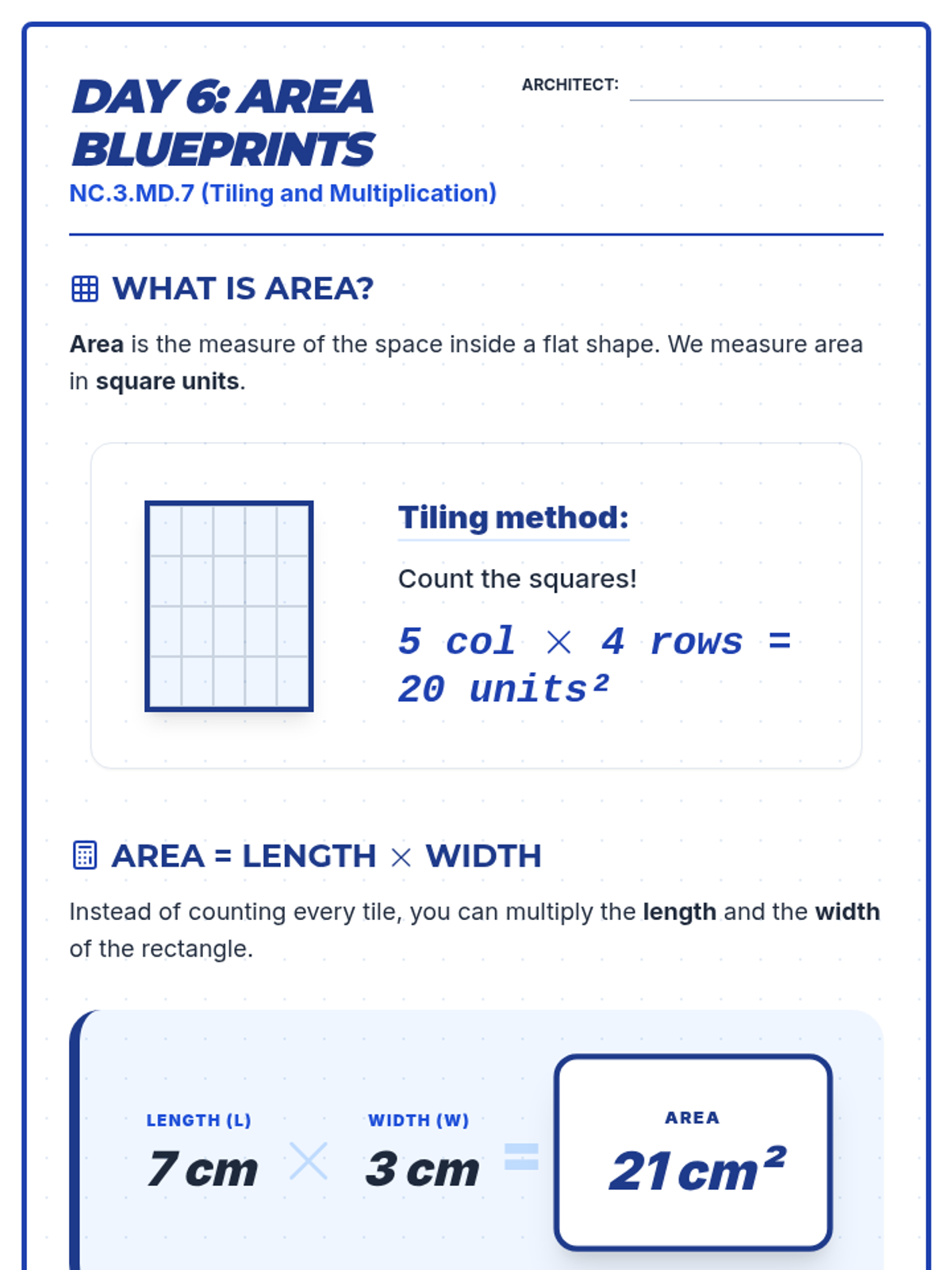
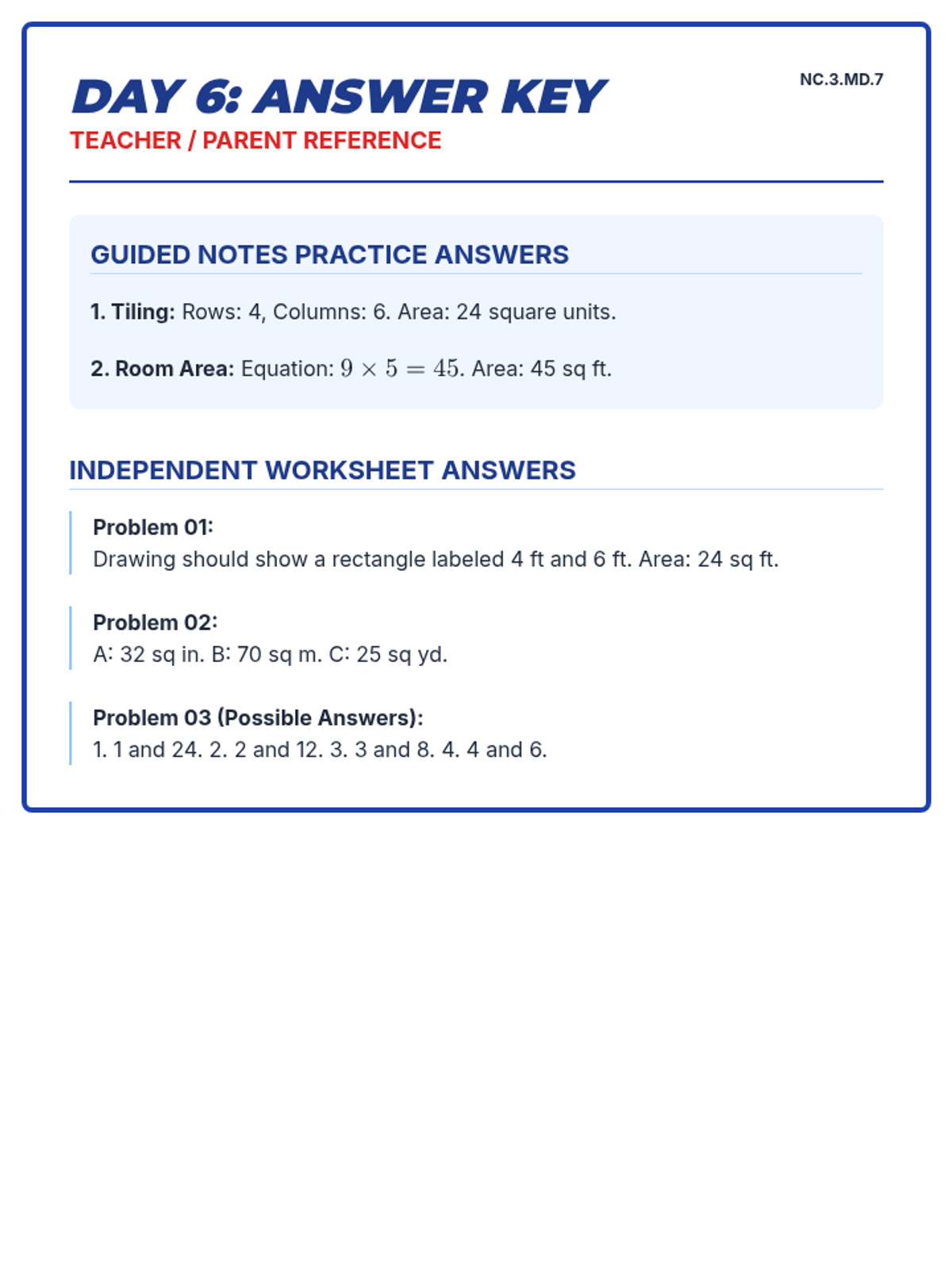
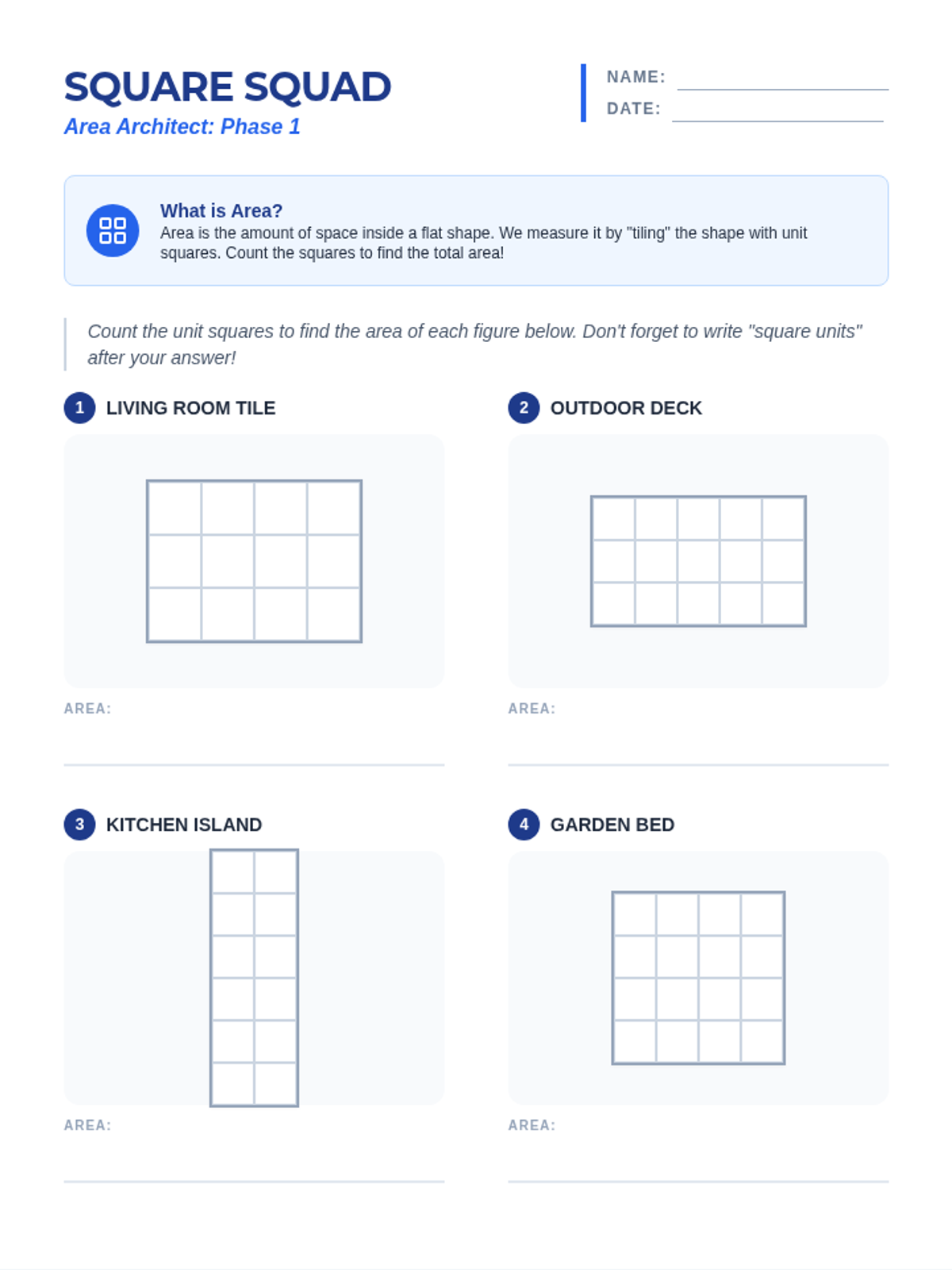
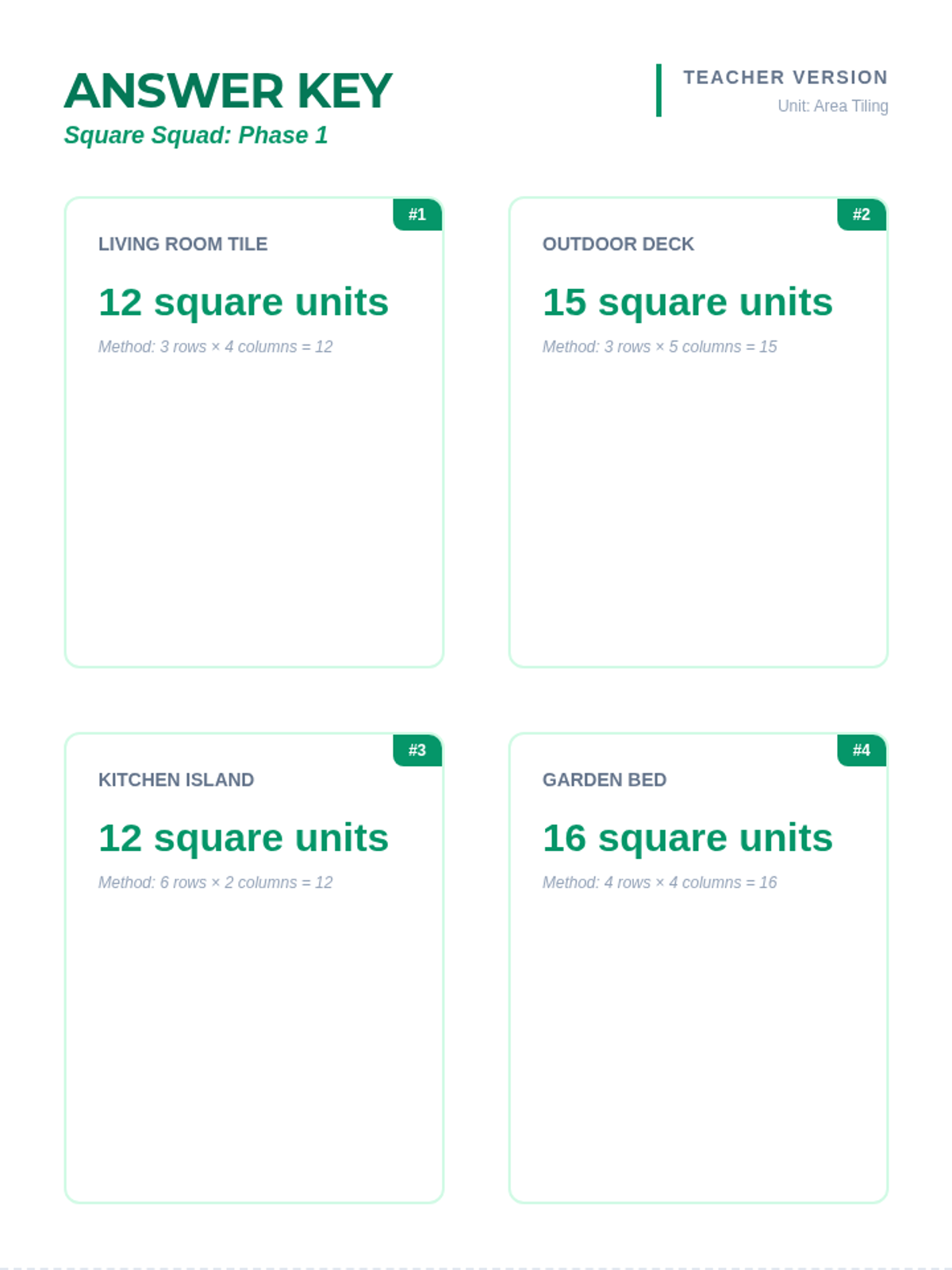
Introduces area through tiling and relates it to multiplication of side lengths.
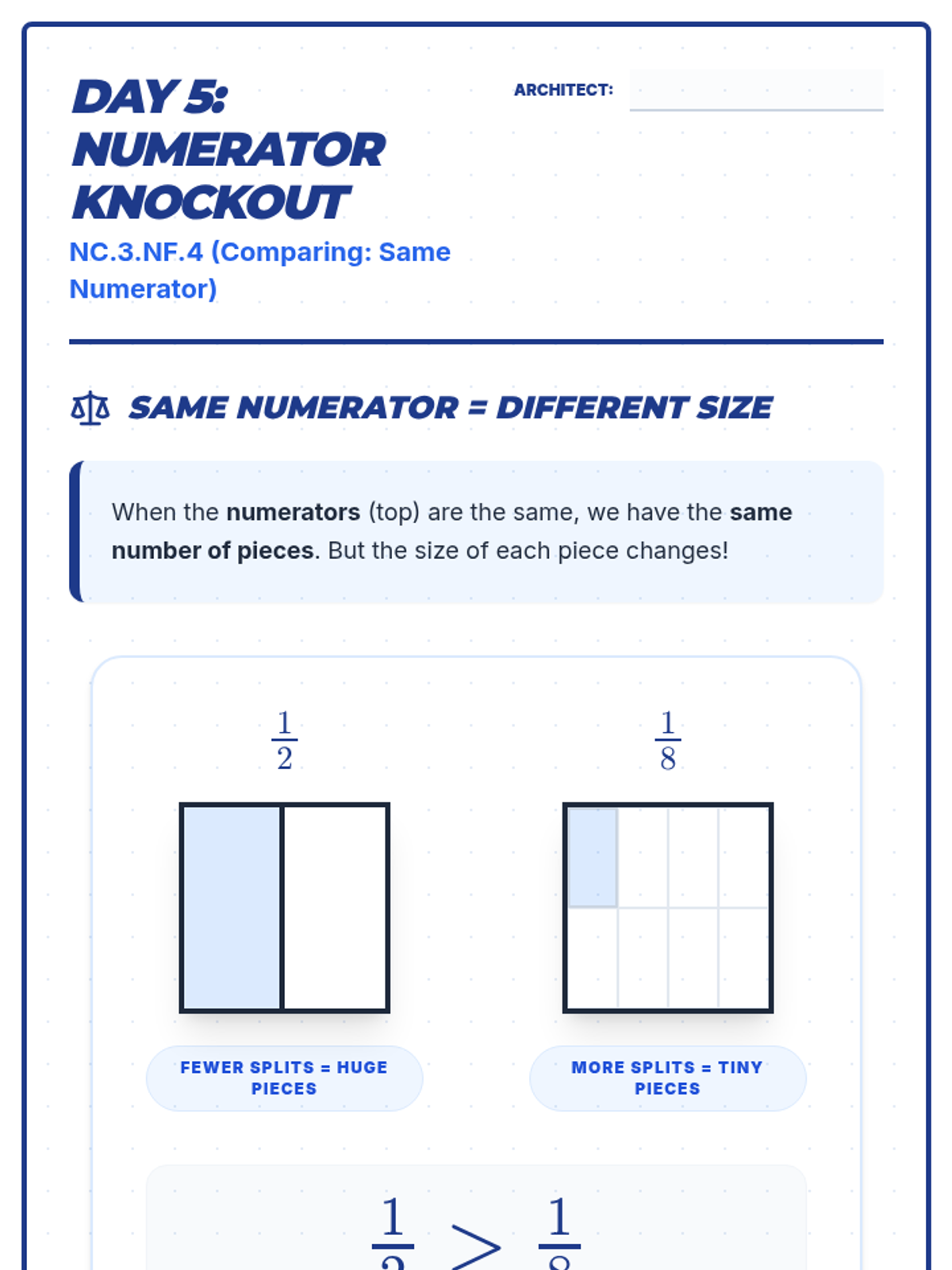
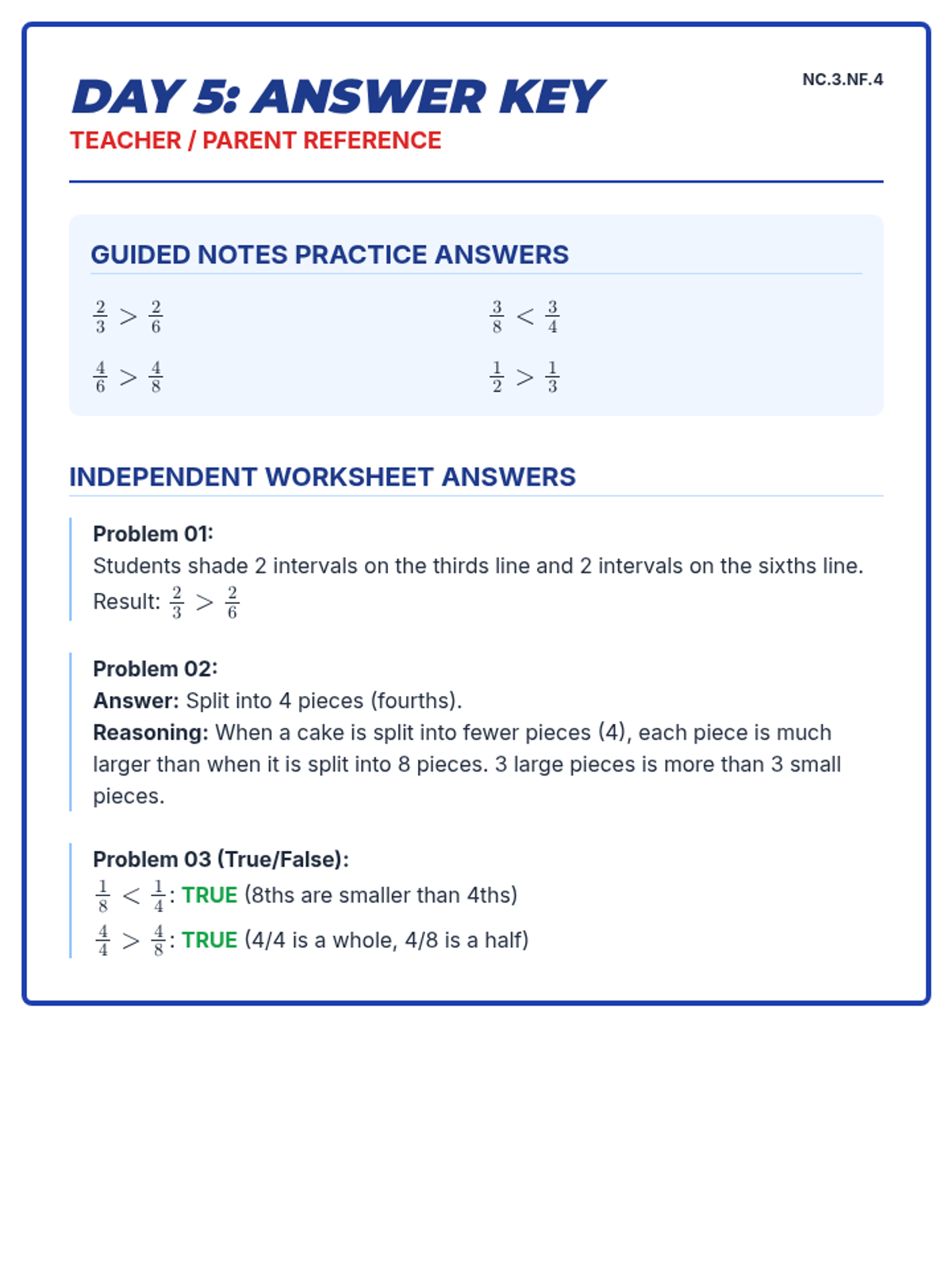
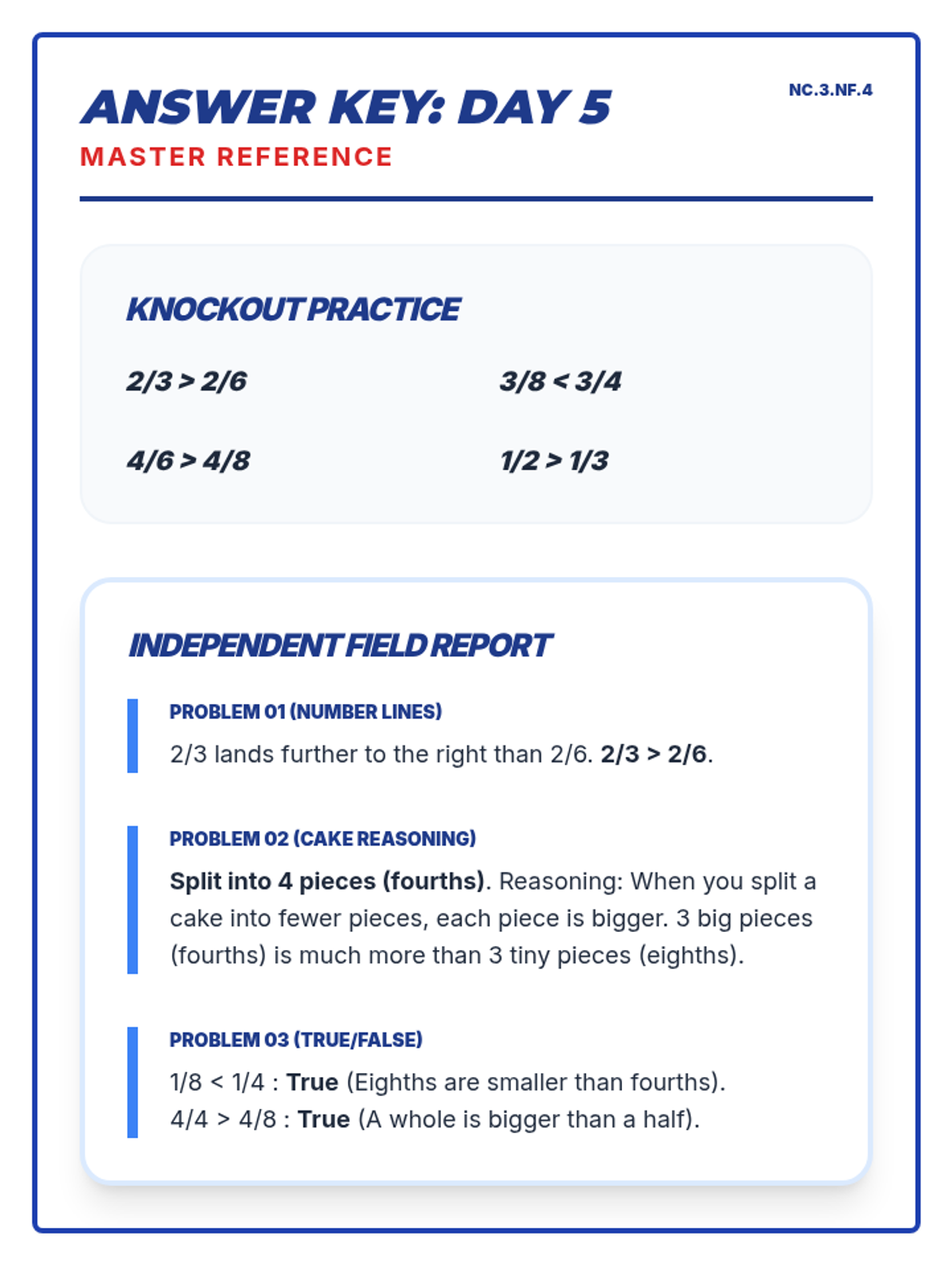
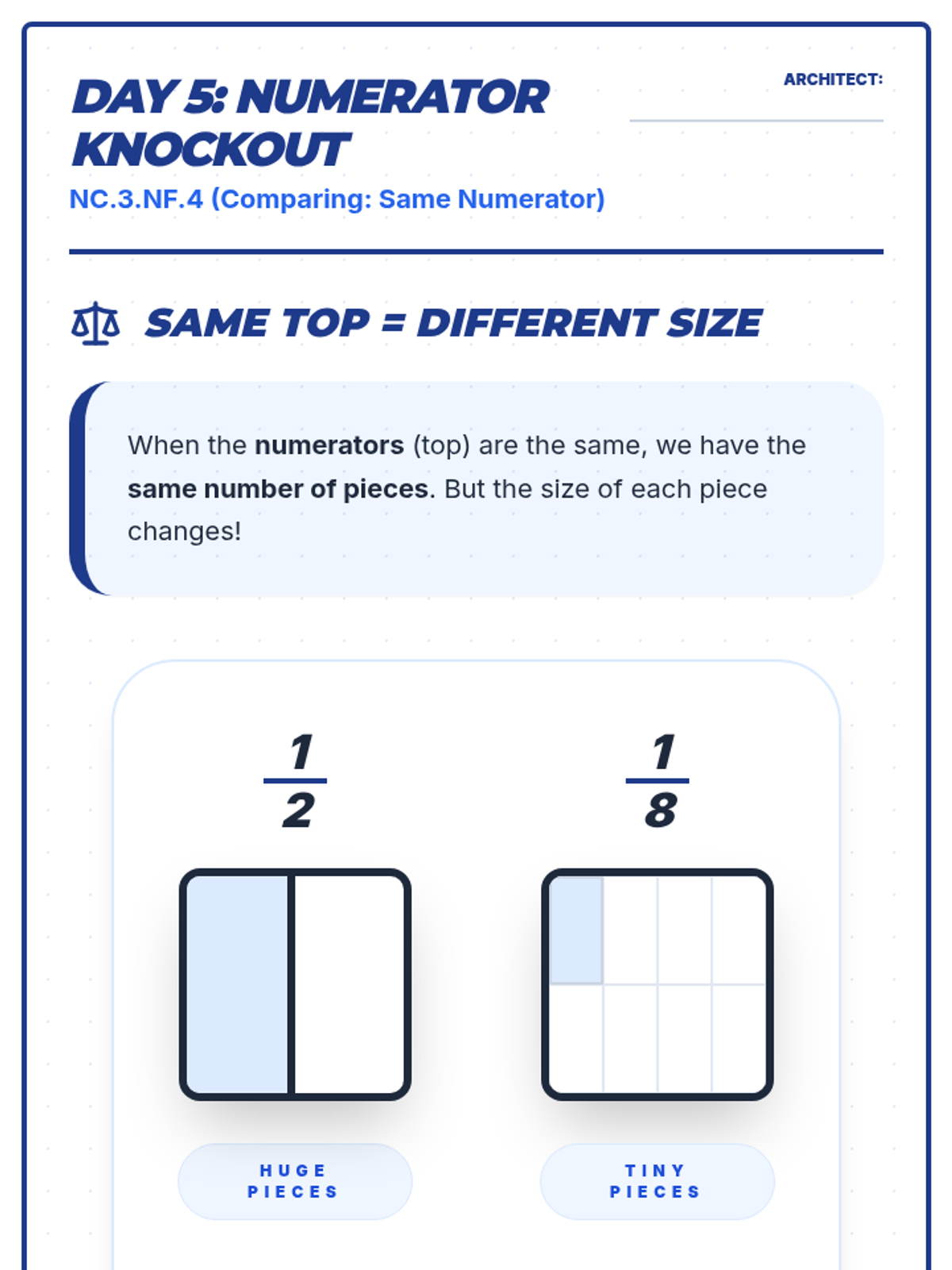
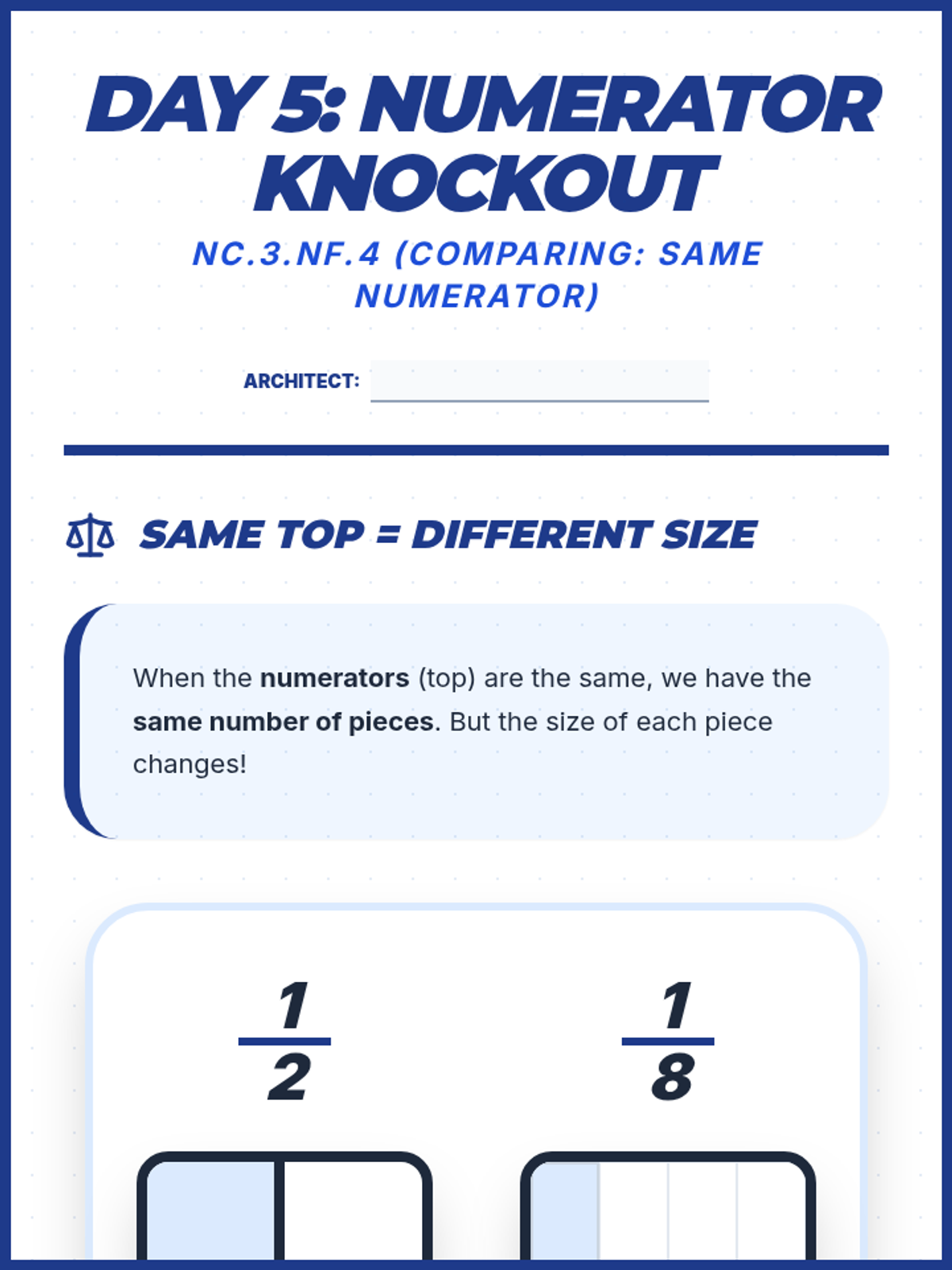
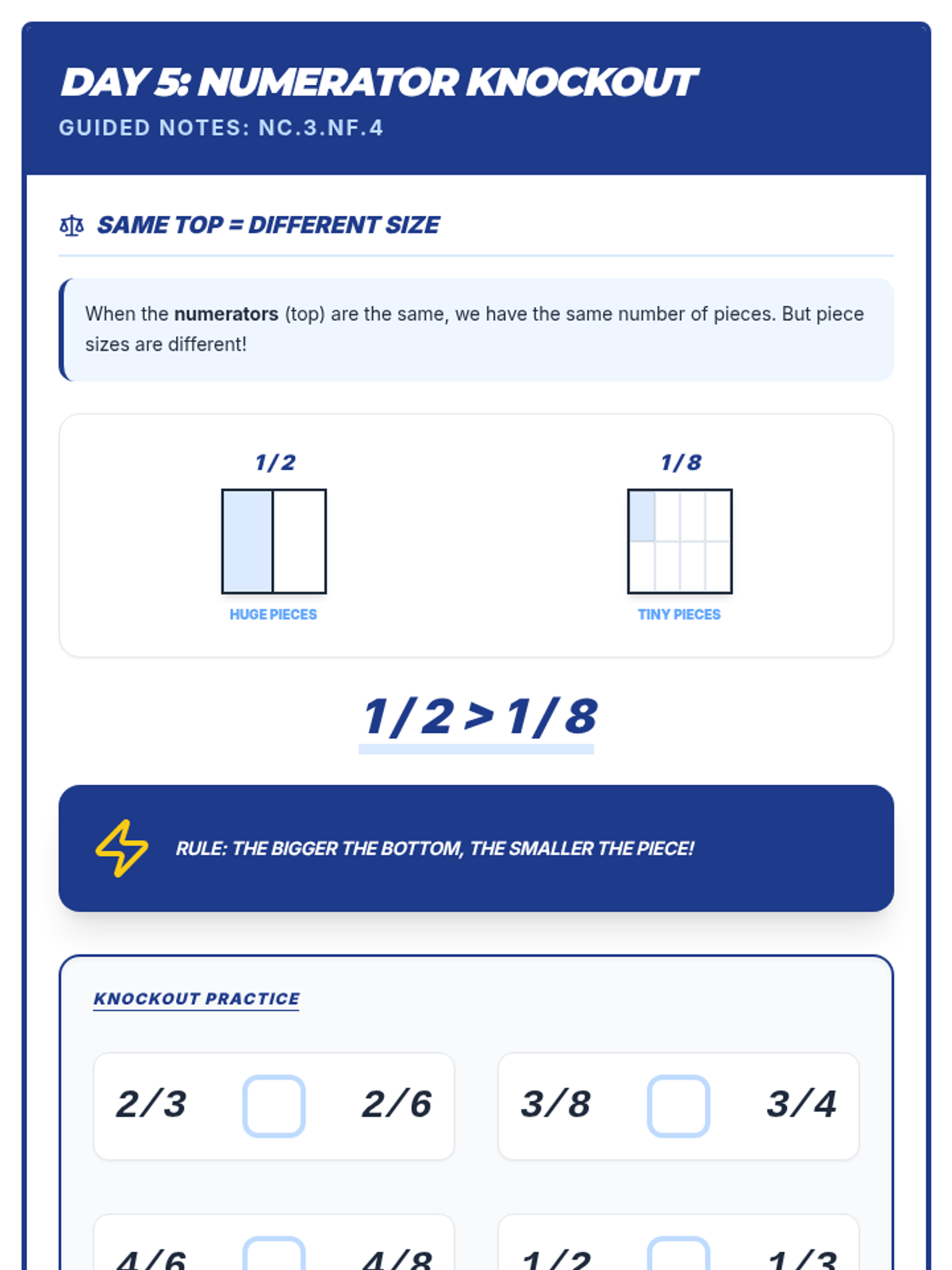
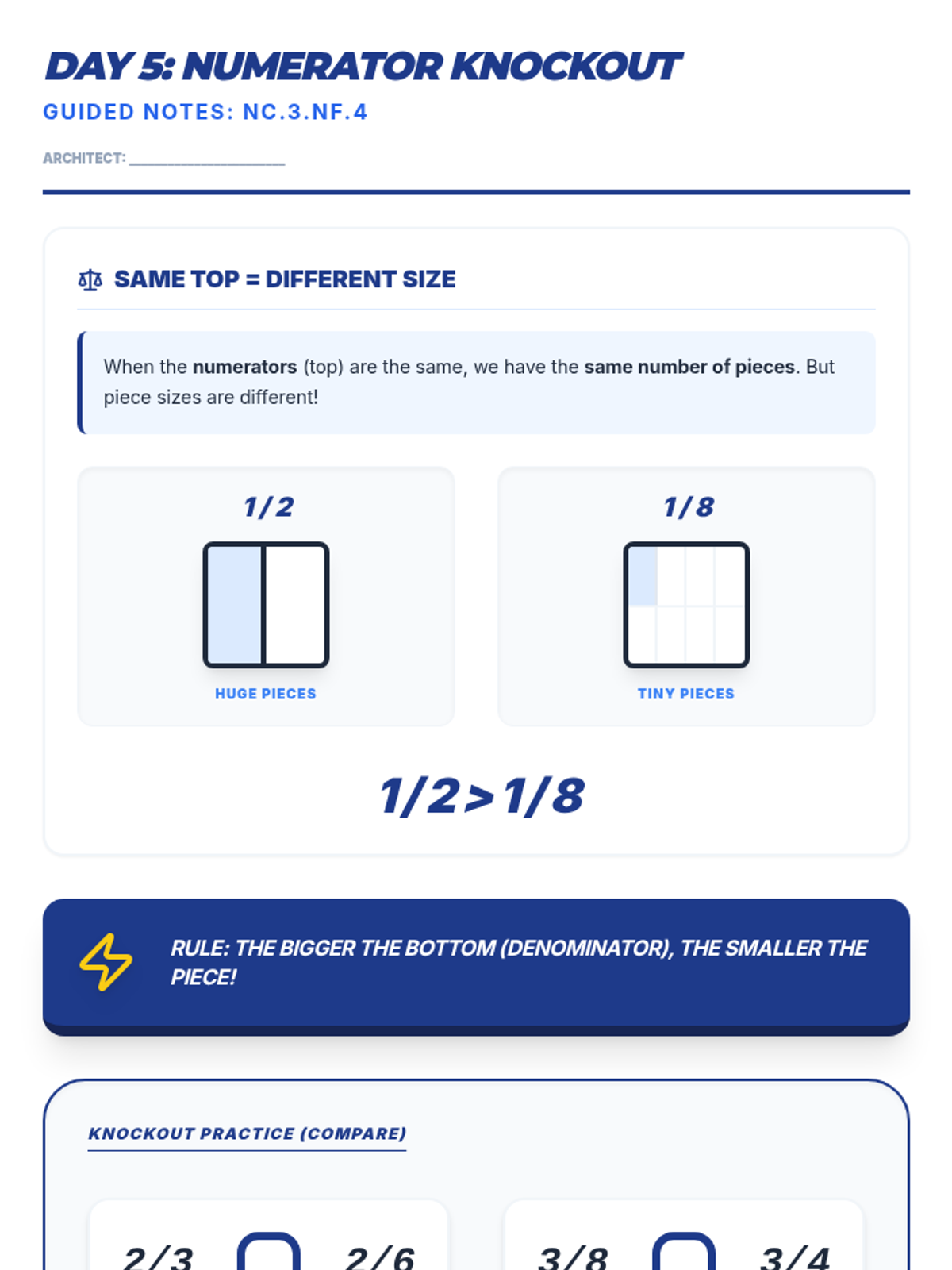
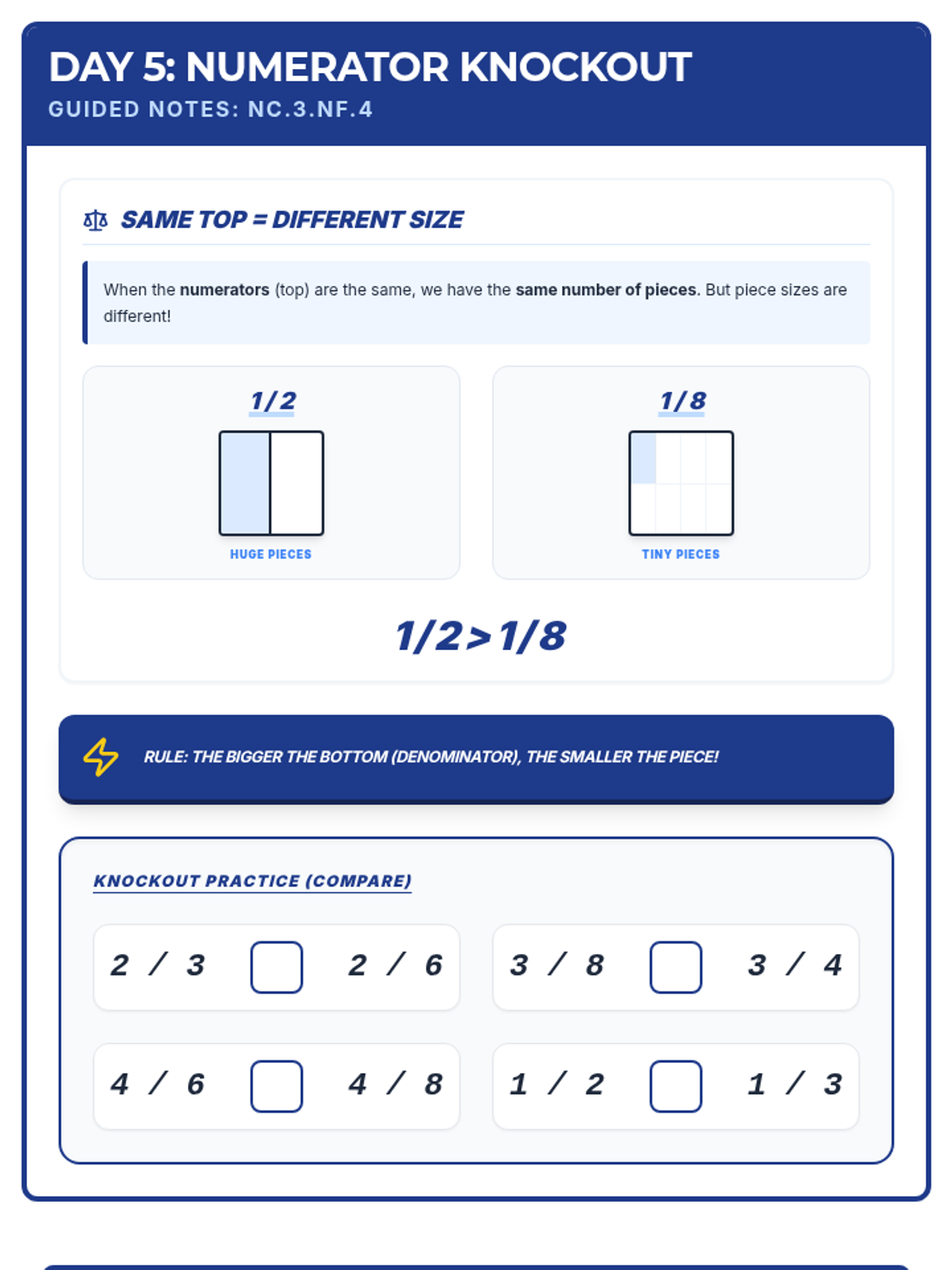
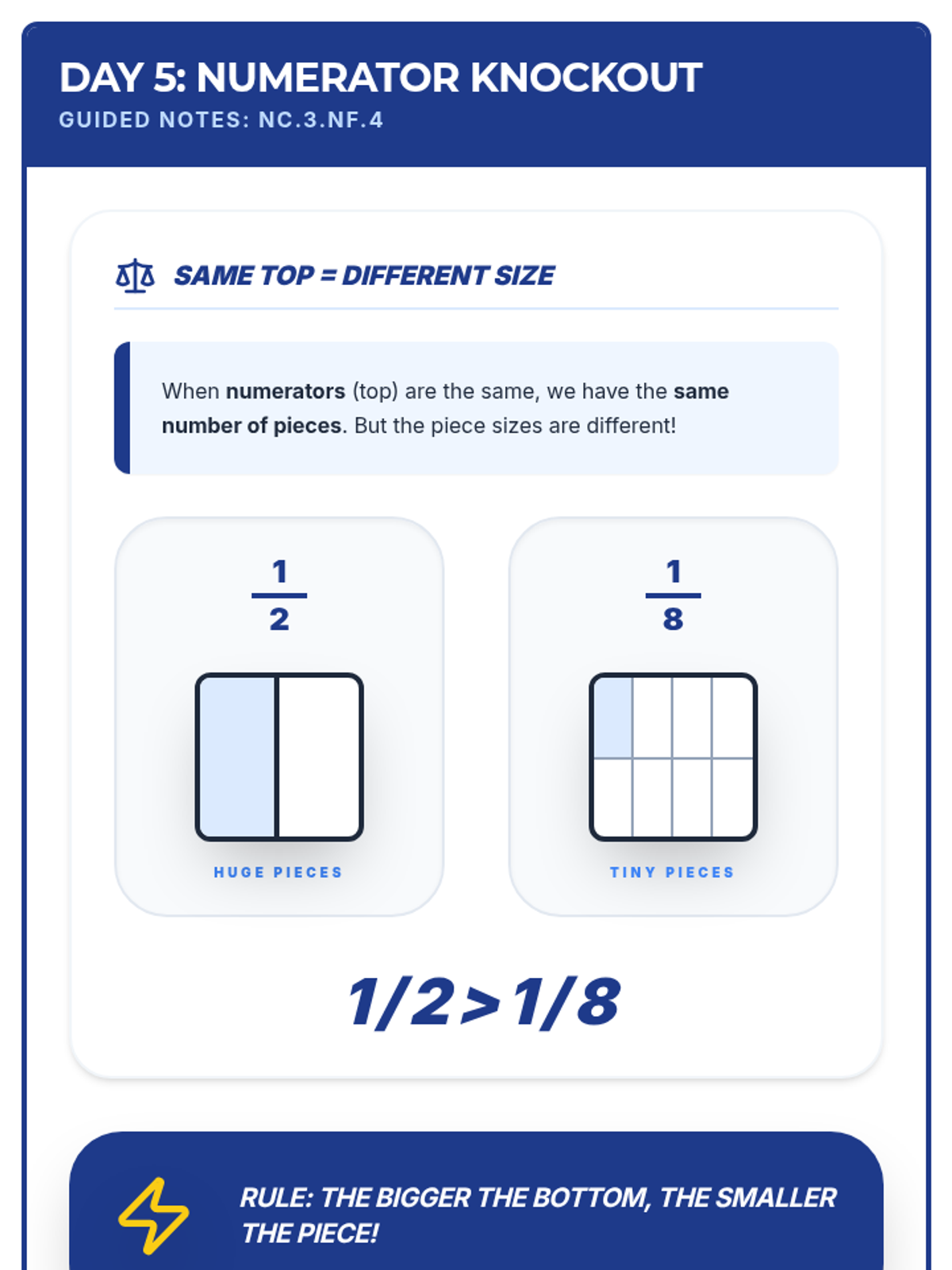
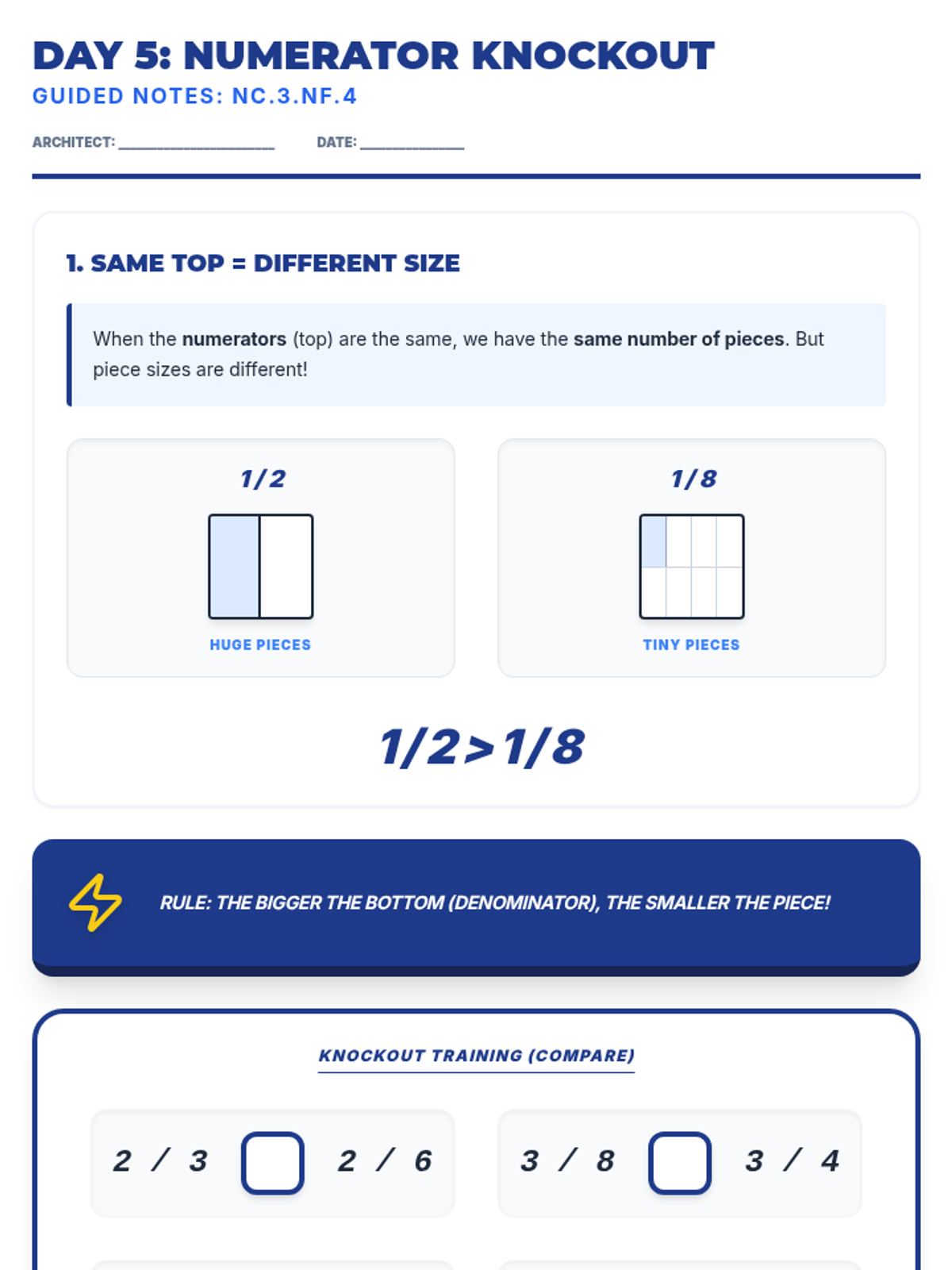
Focuses on comparing fractions with the same numerator by reasoning about the size of the denominator.
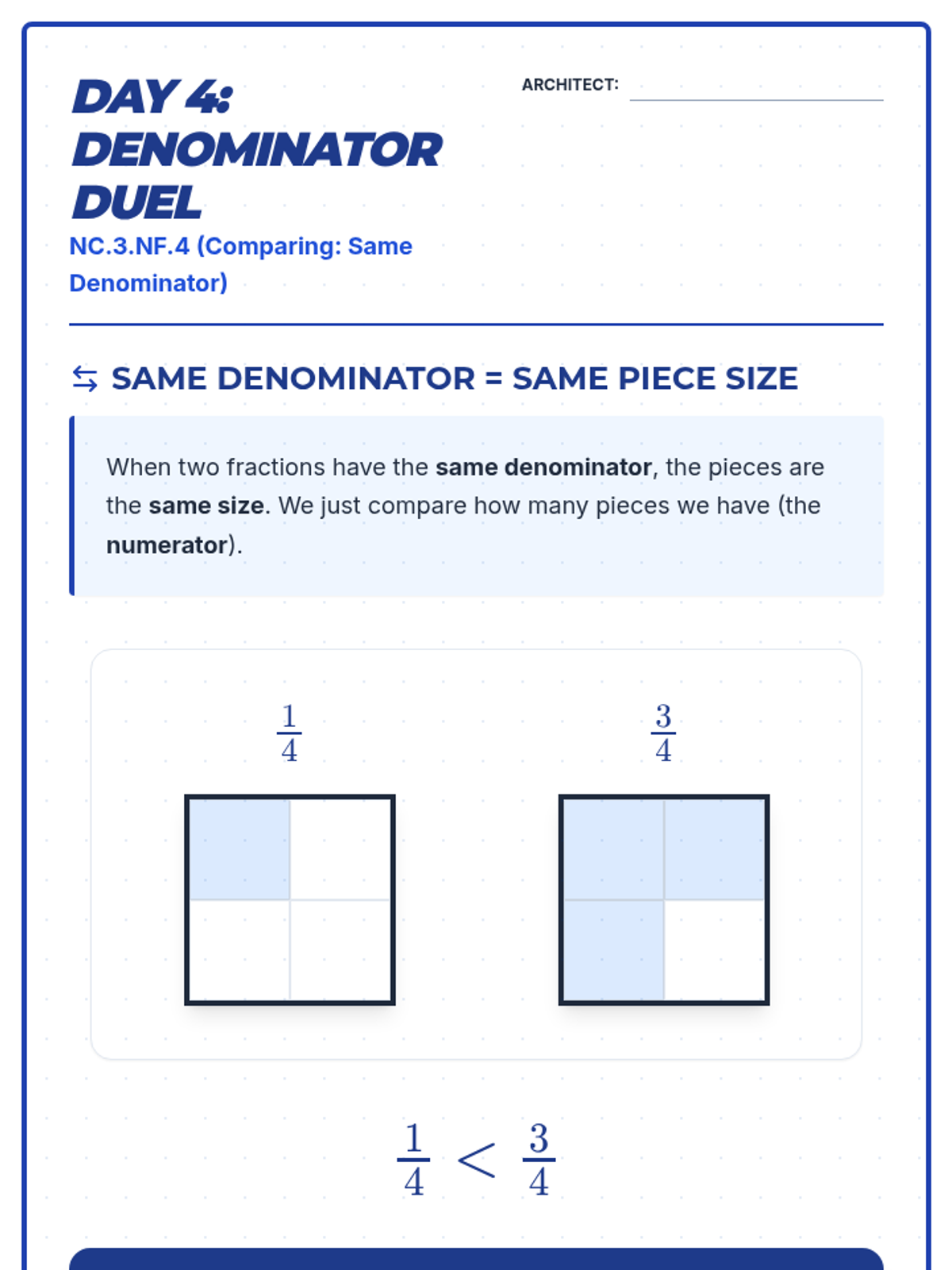
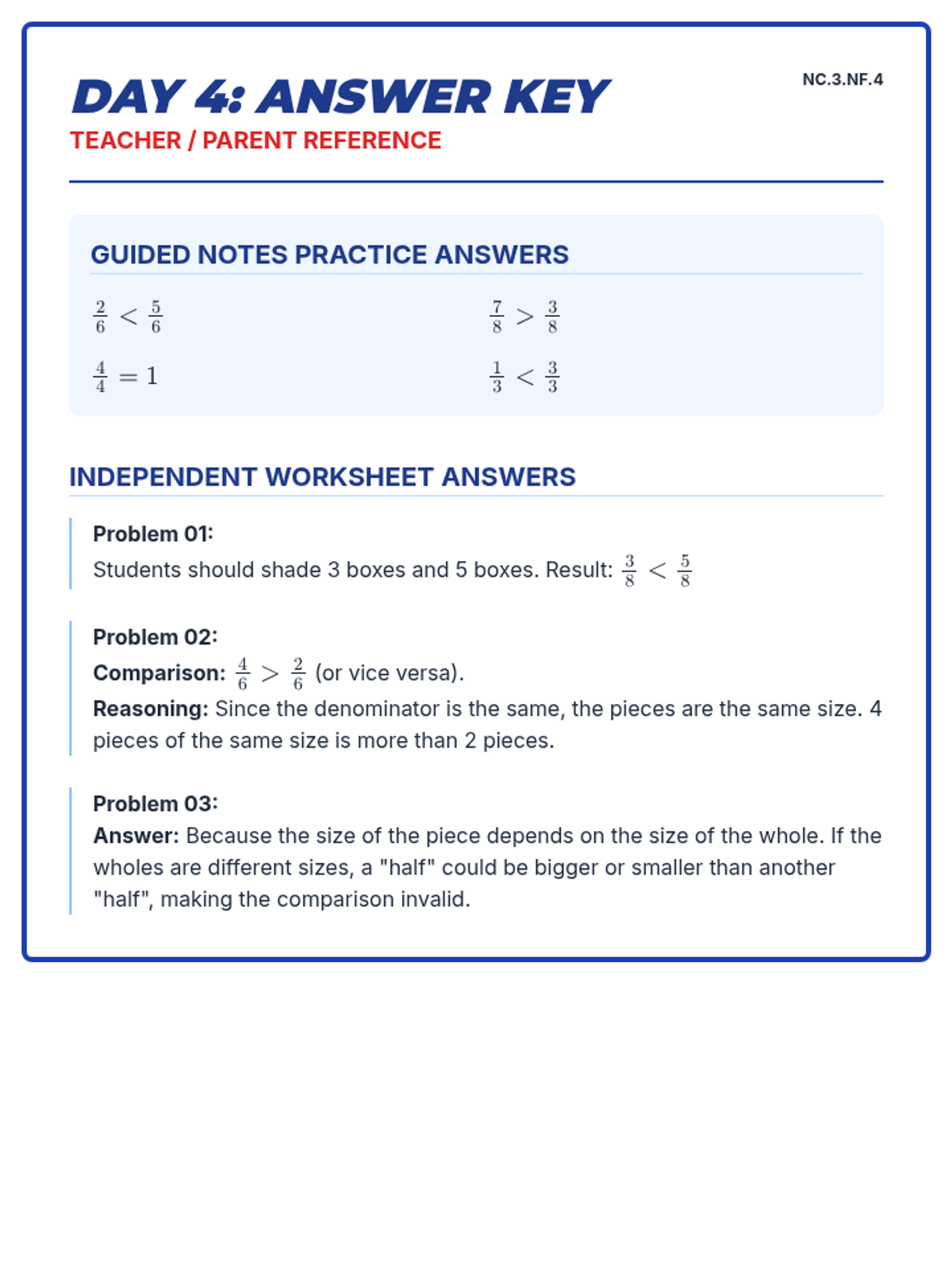
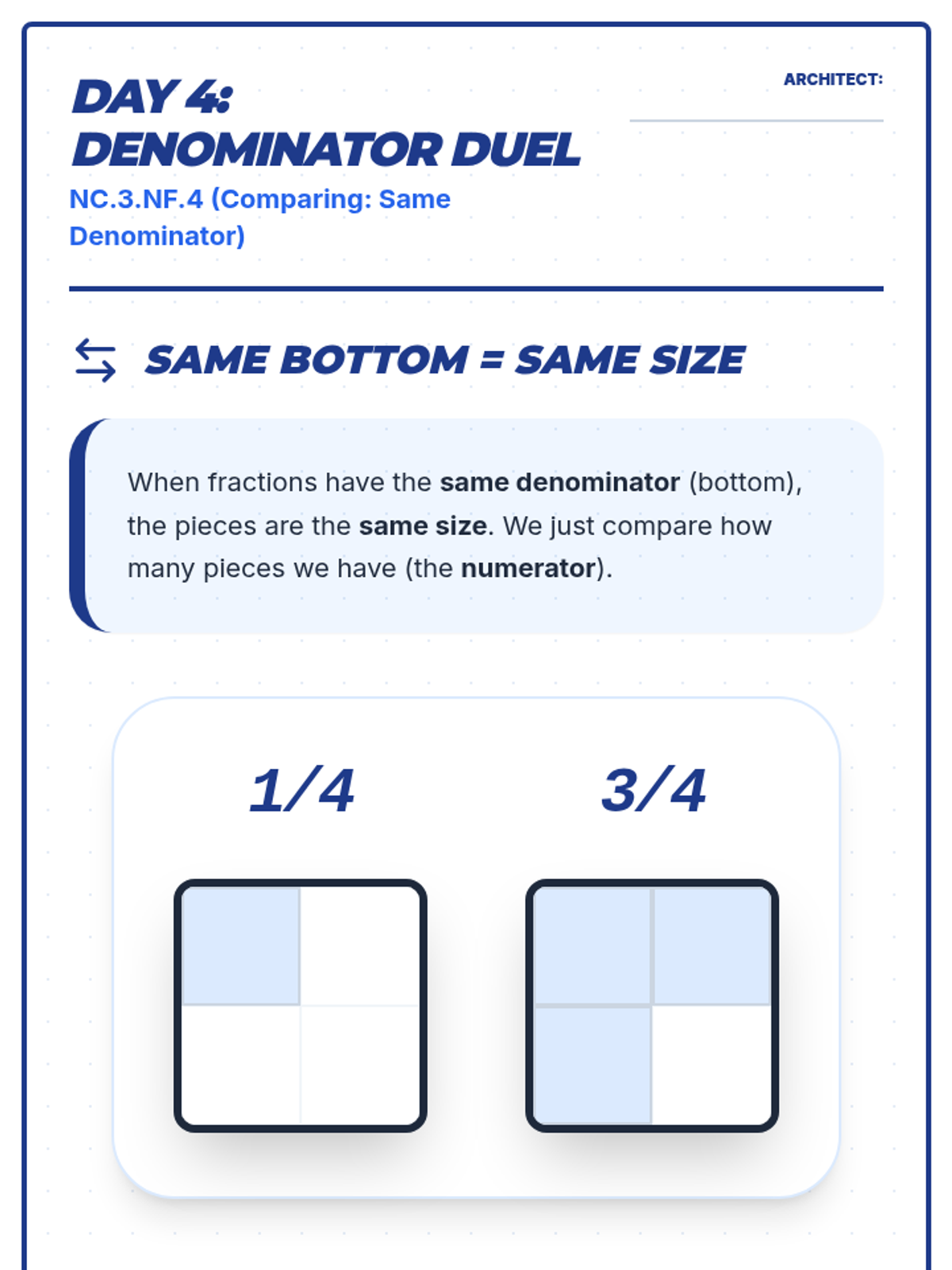
Teaches comparing fractions with the same denominator using area and length models.
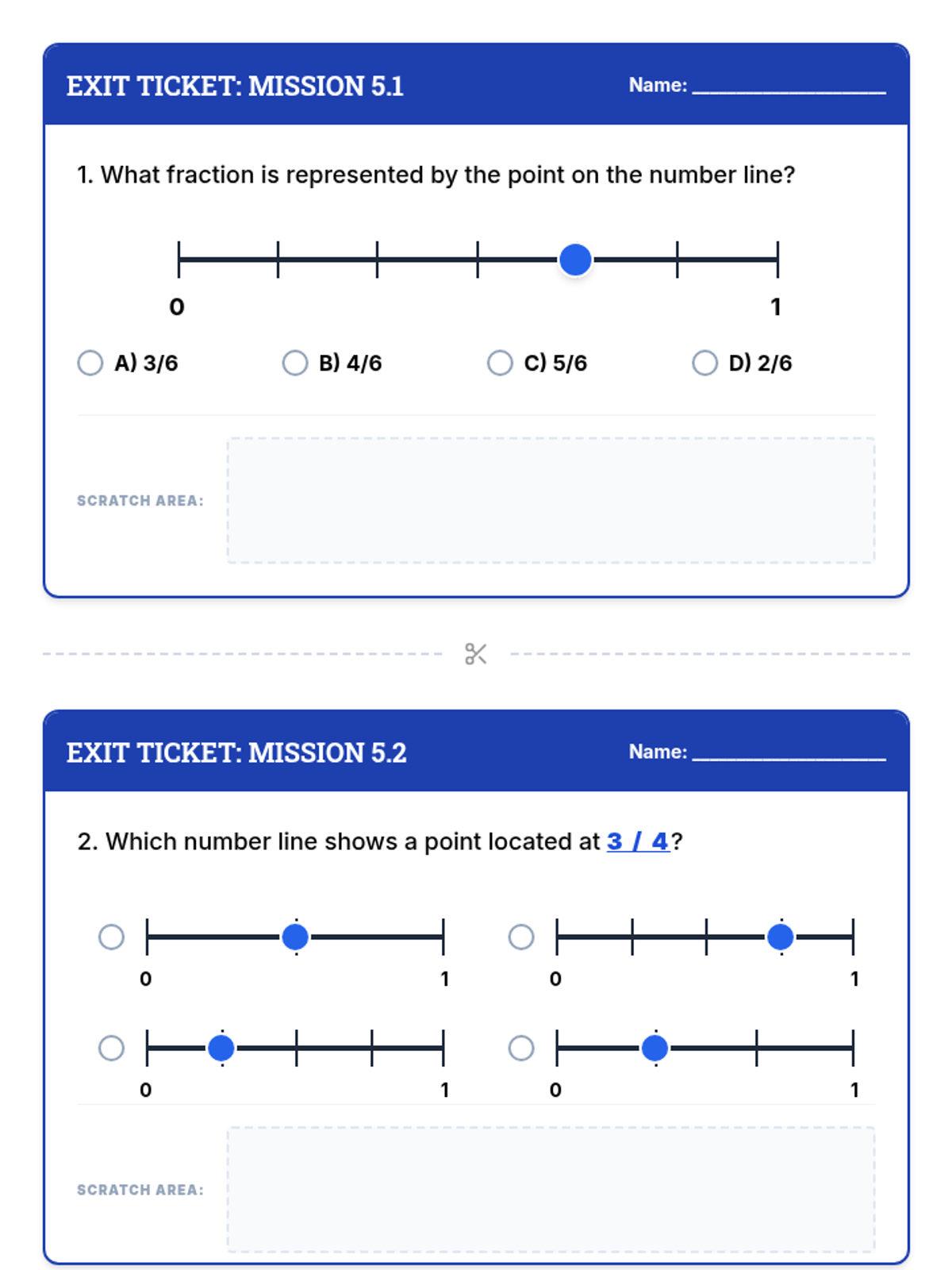
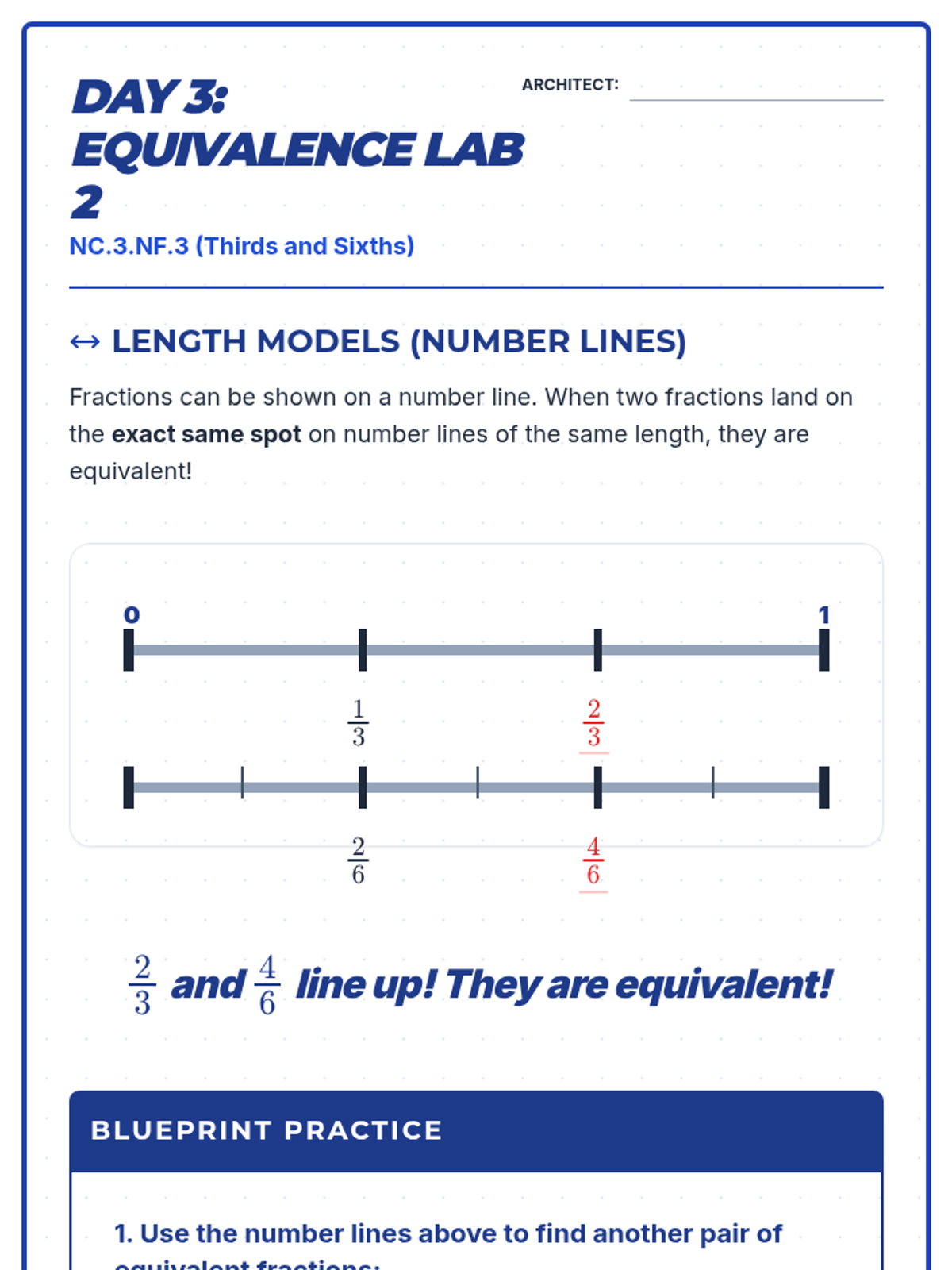
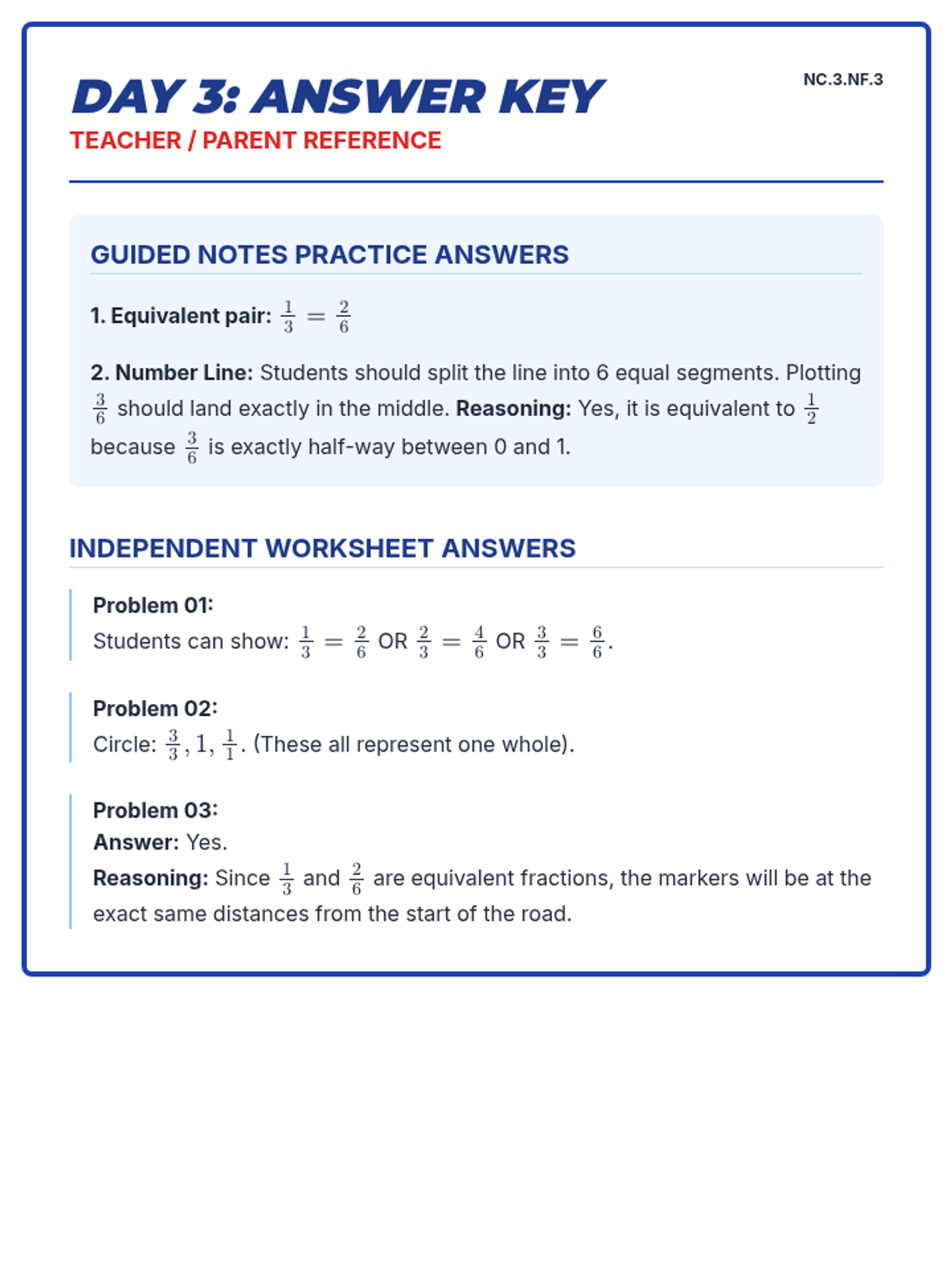
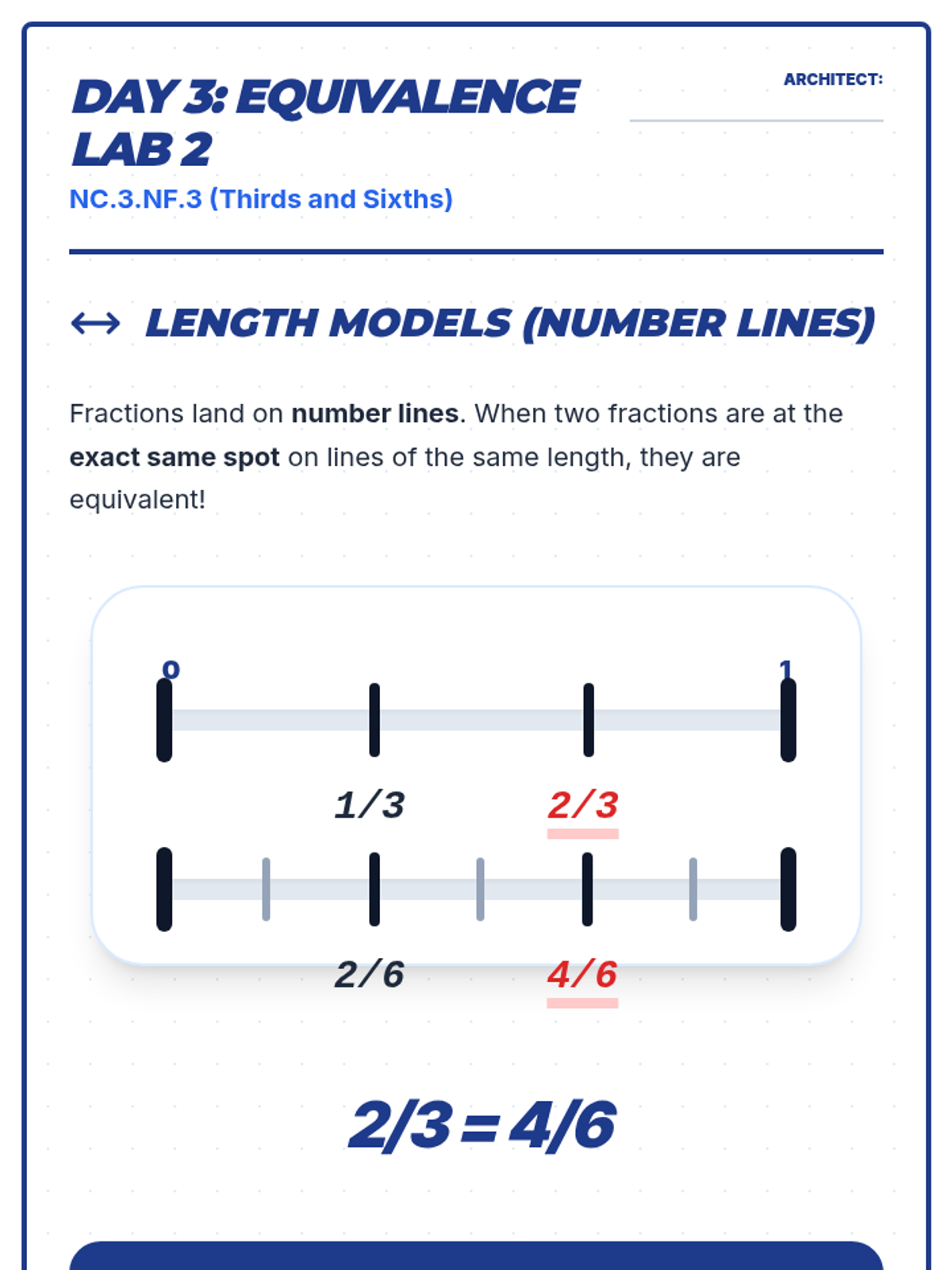
Focuses on thirds and sixths using length models (number lines) to find equivalent fractions.
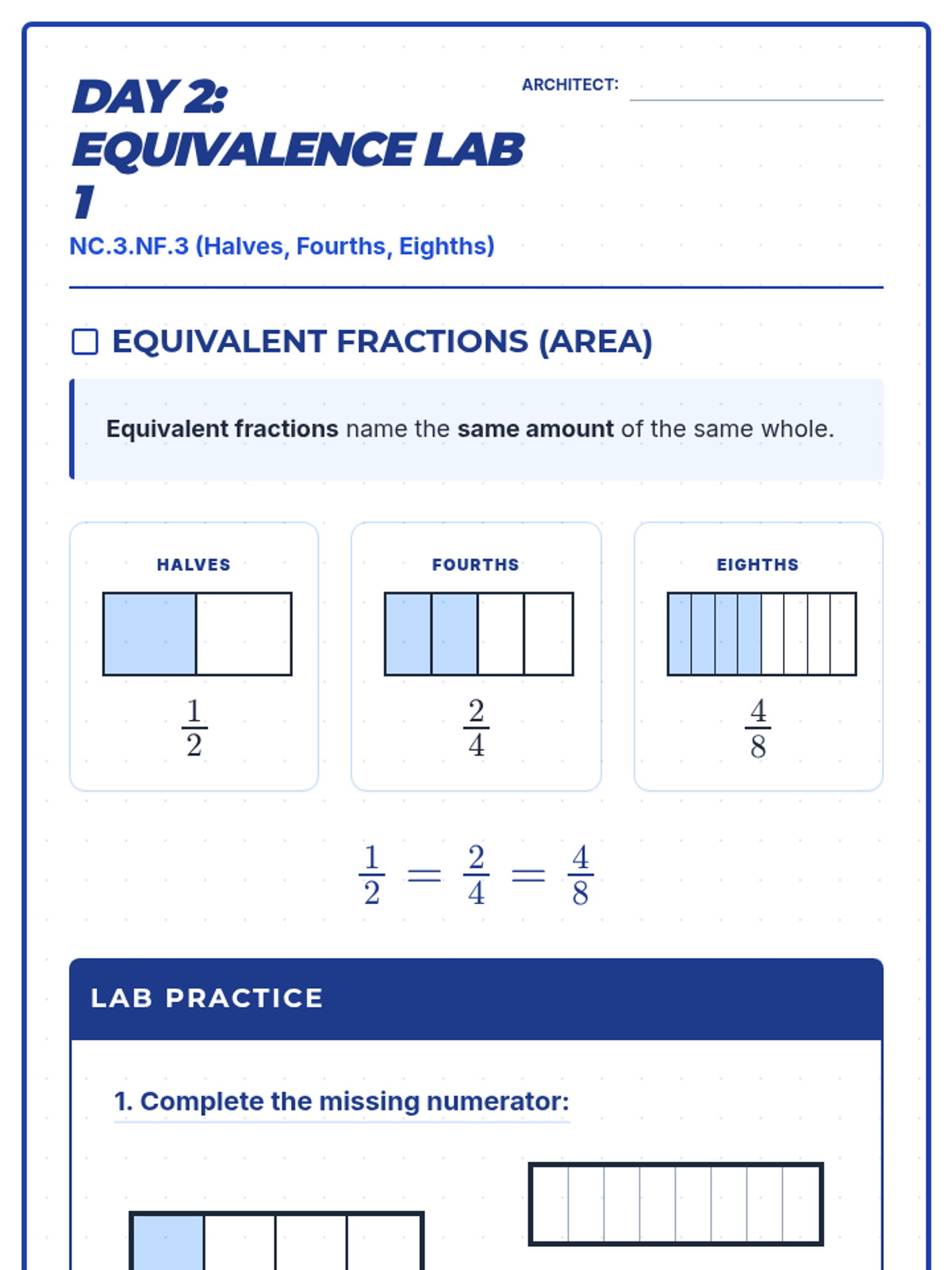
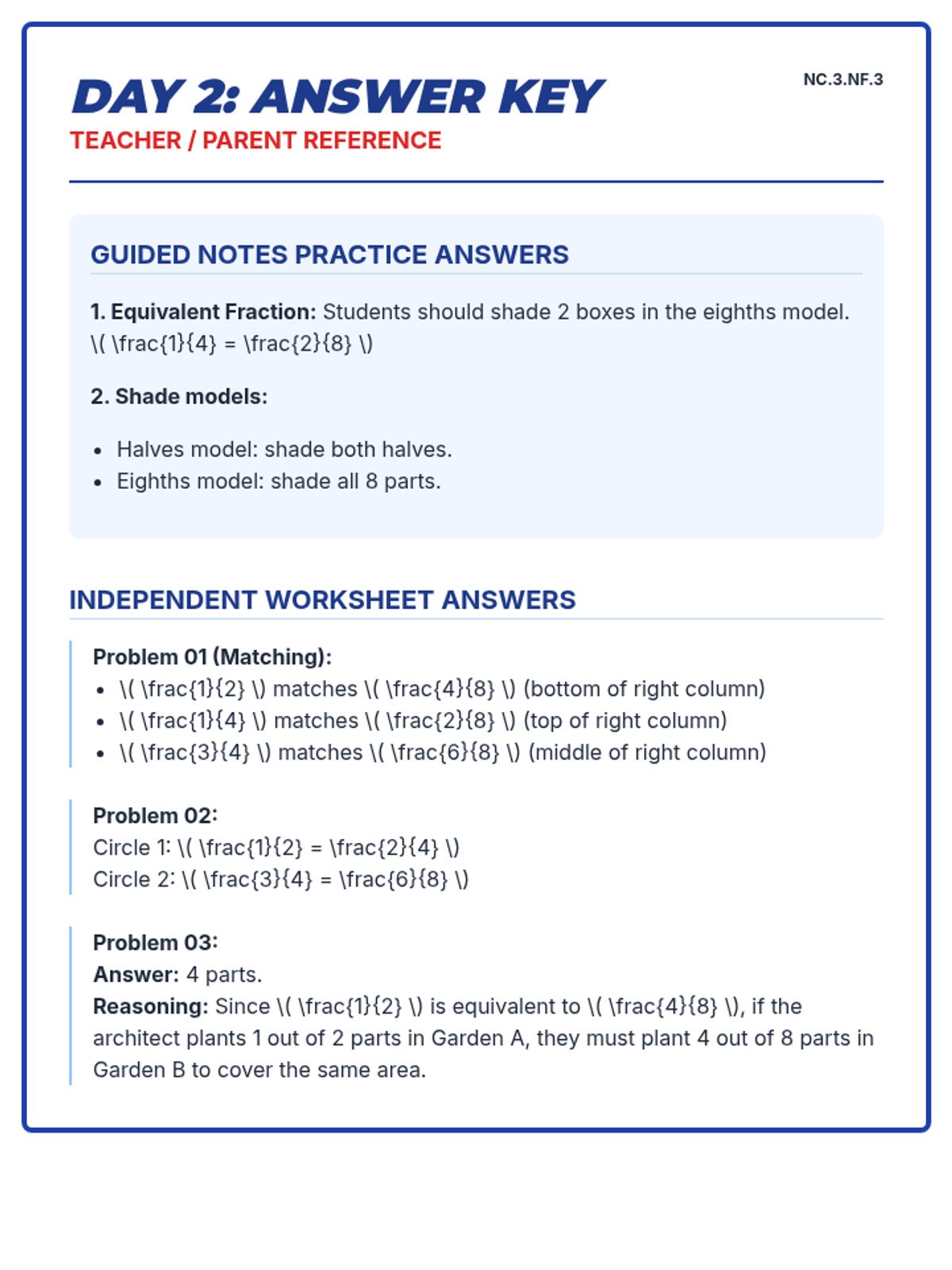
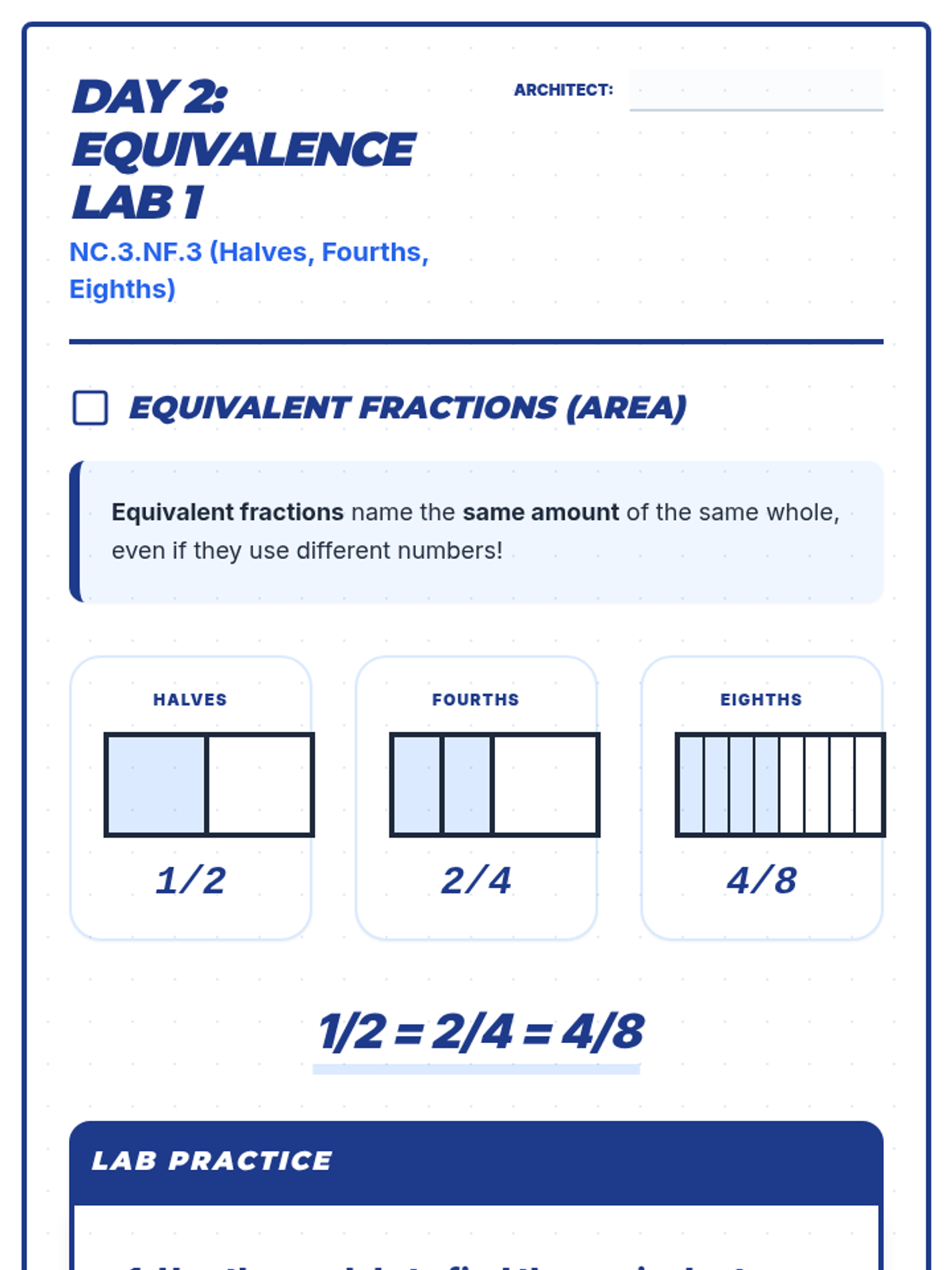
Covers composing and decomposing fractions into equivalent fractions using area models for halves, fourths, and eighths.
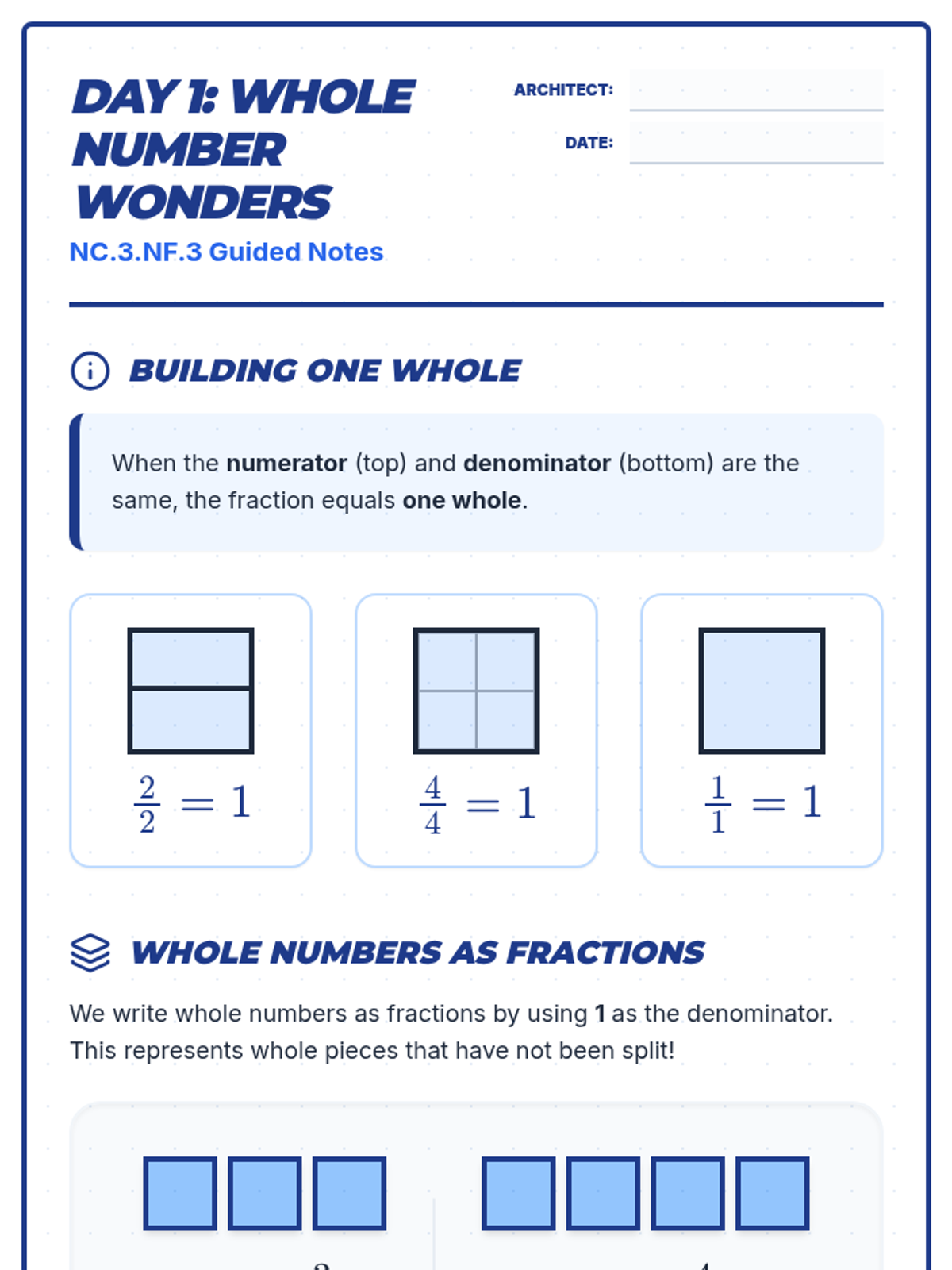
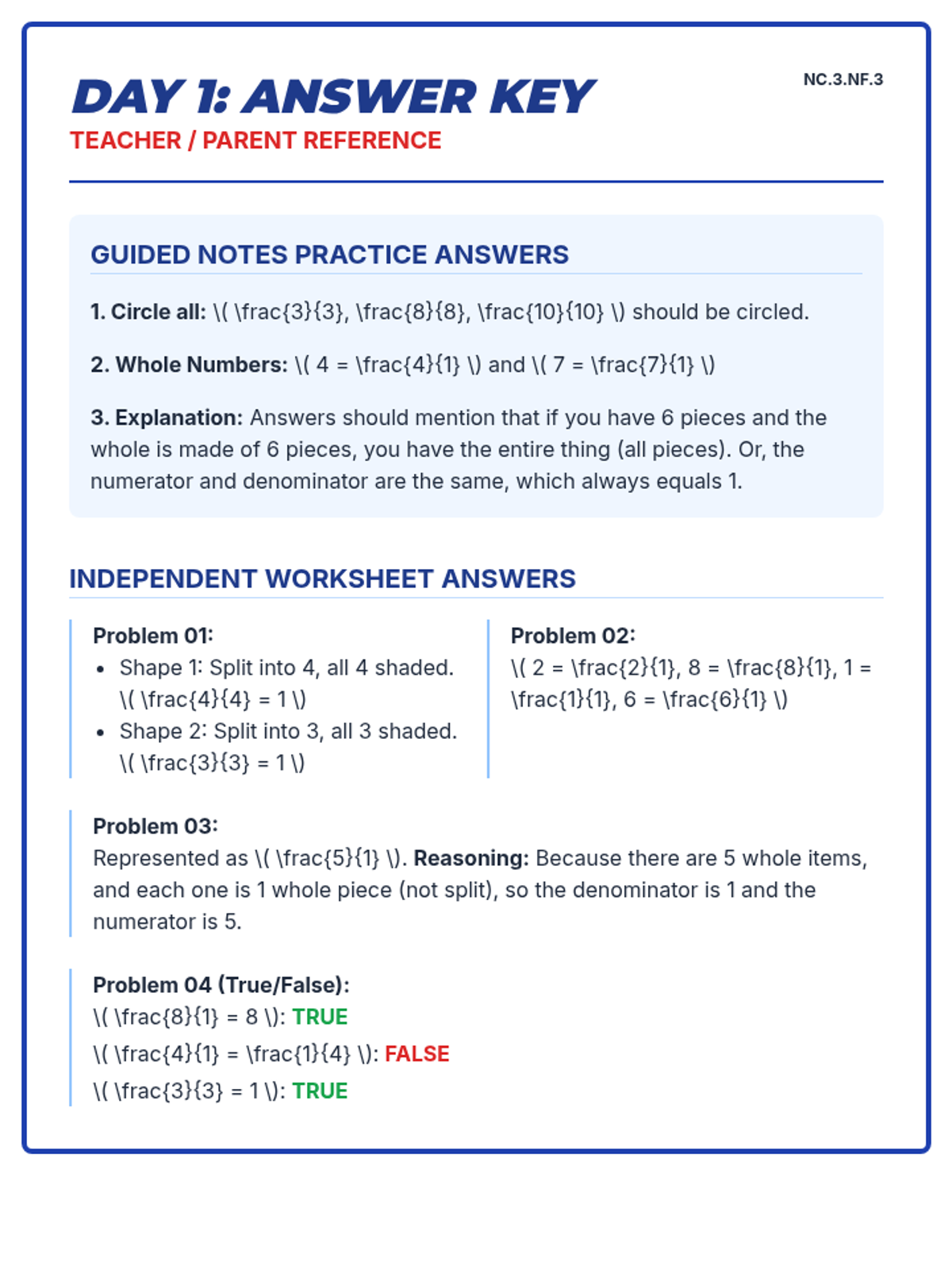
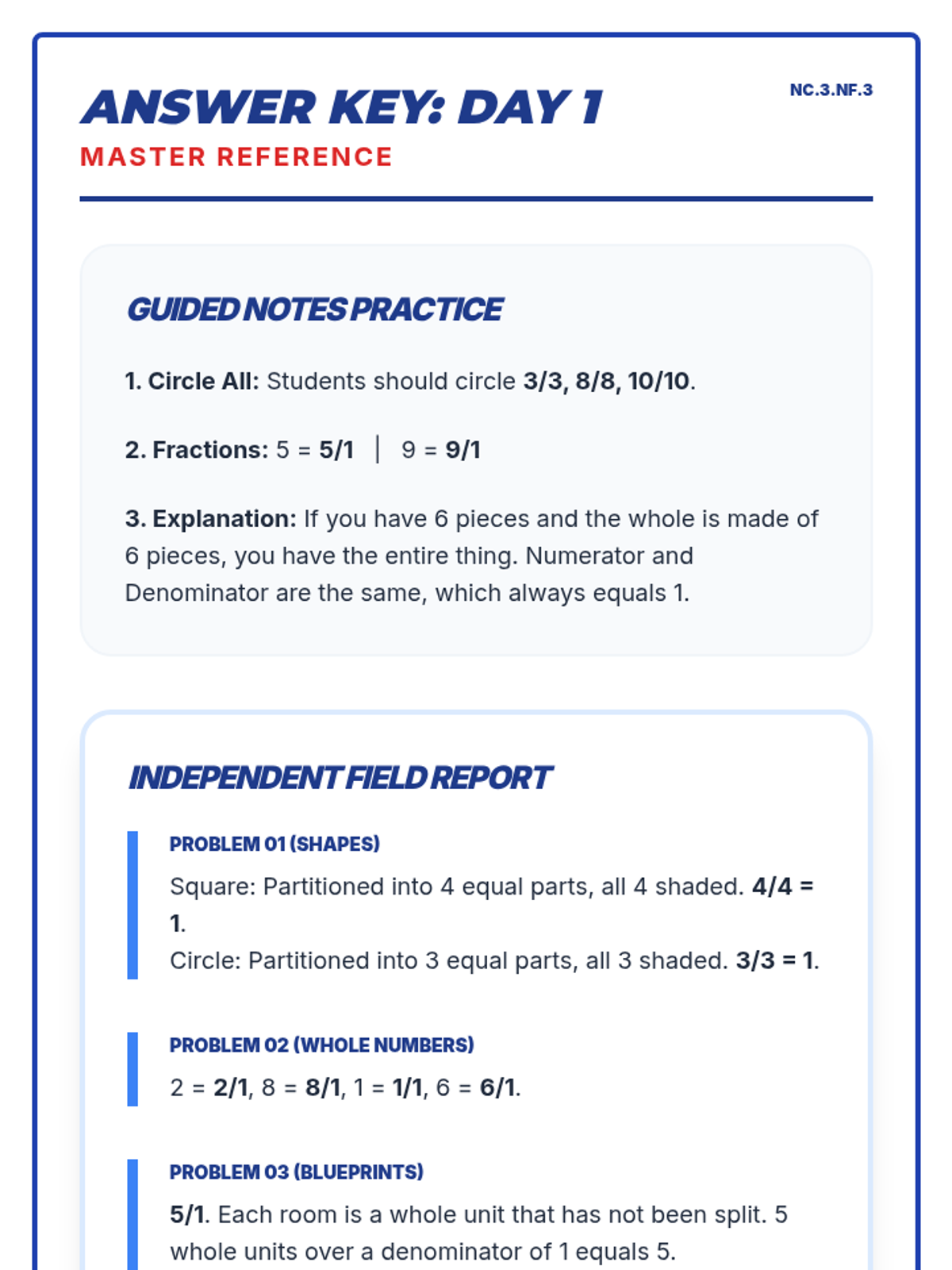
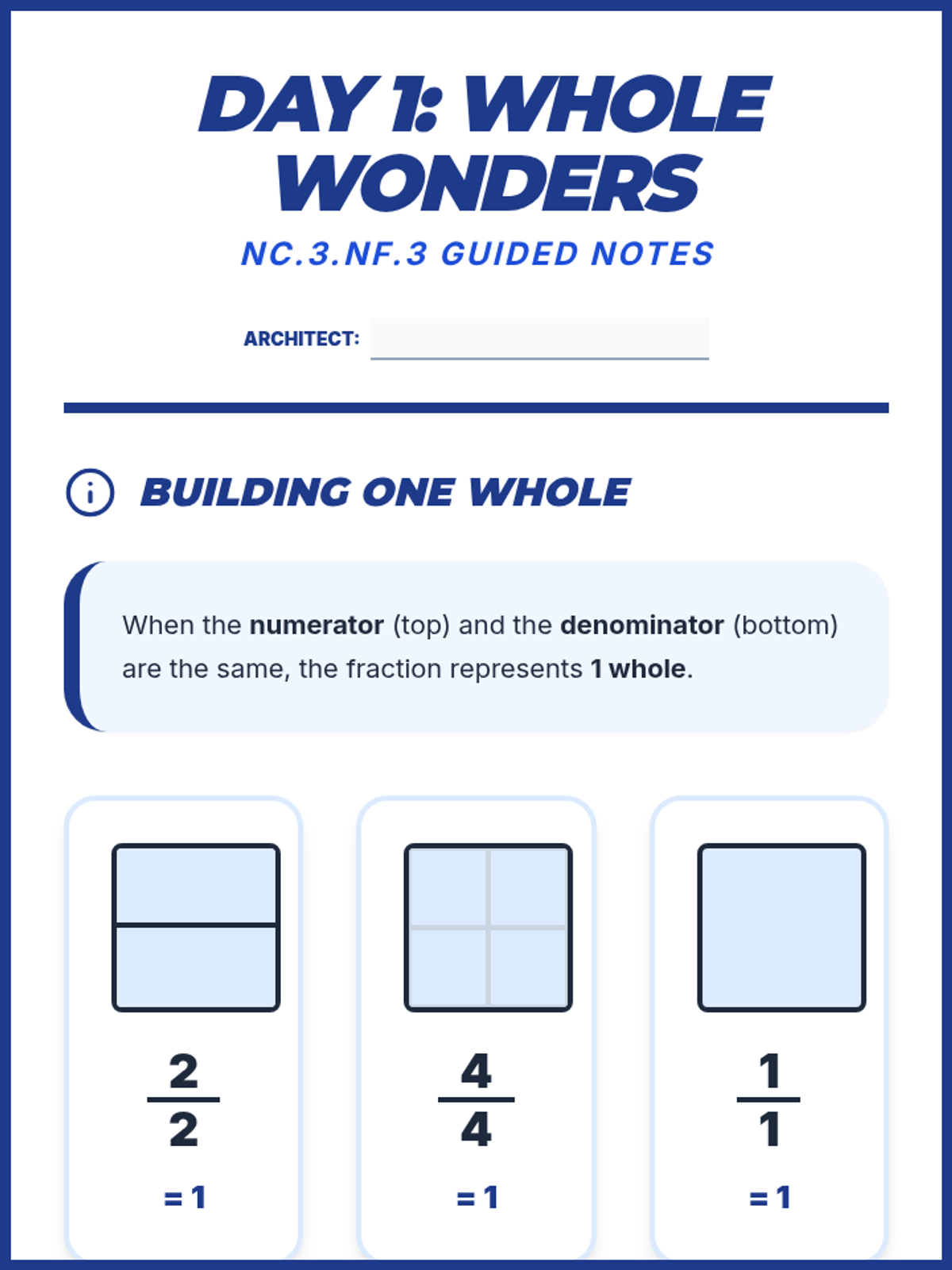
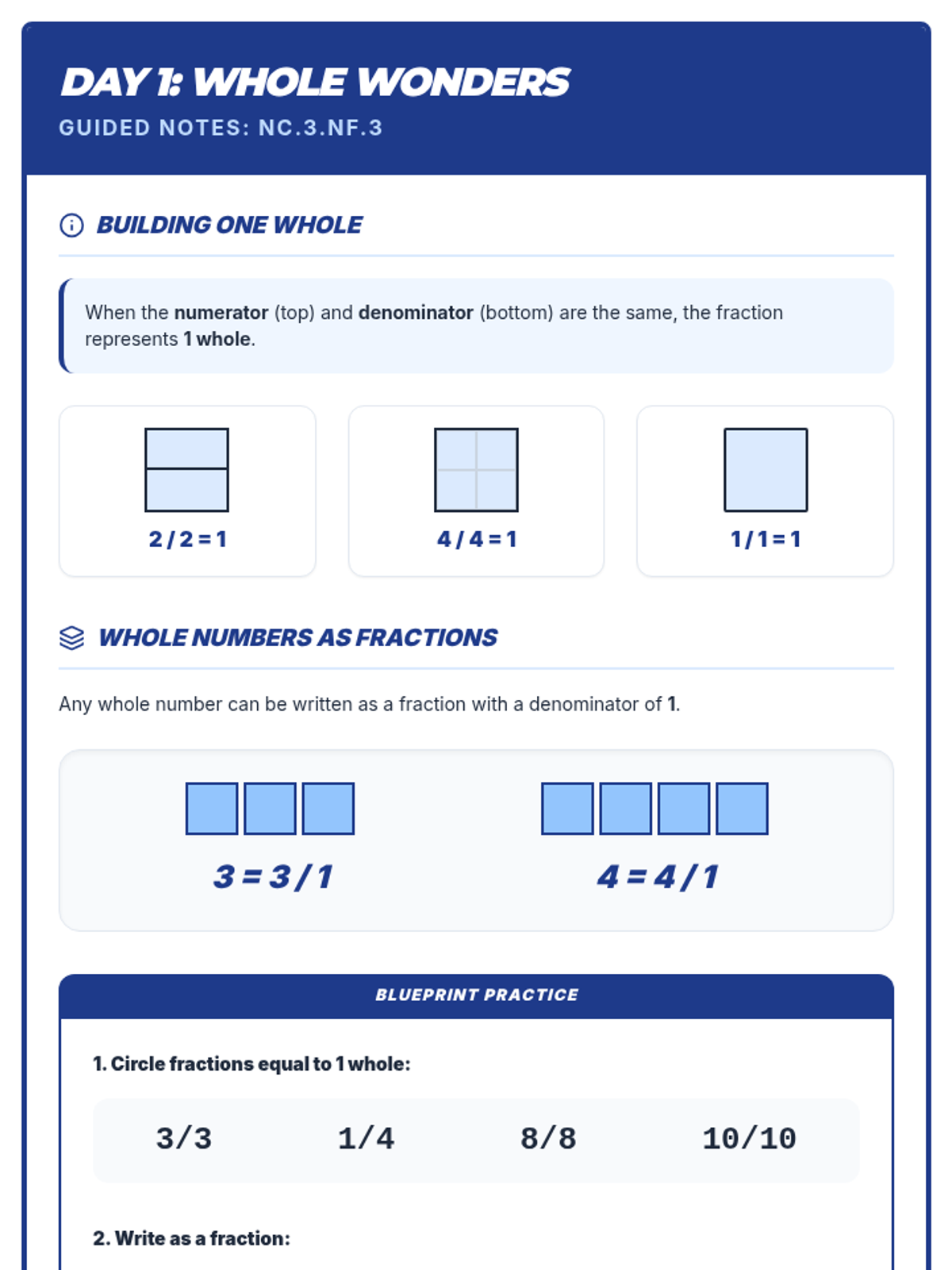
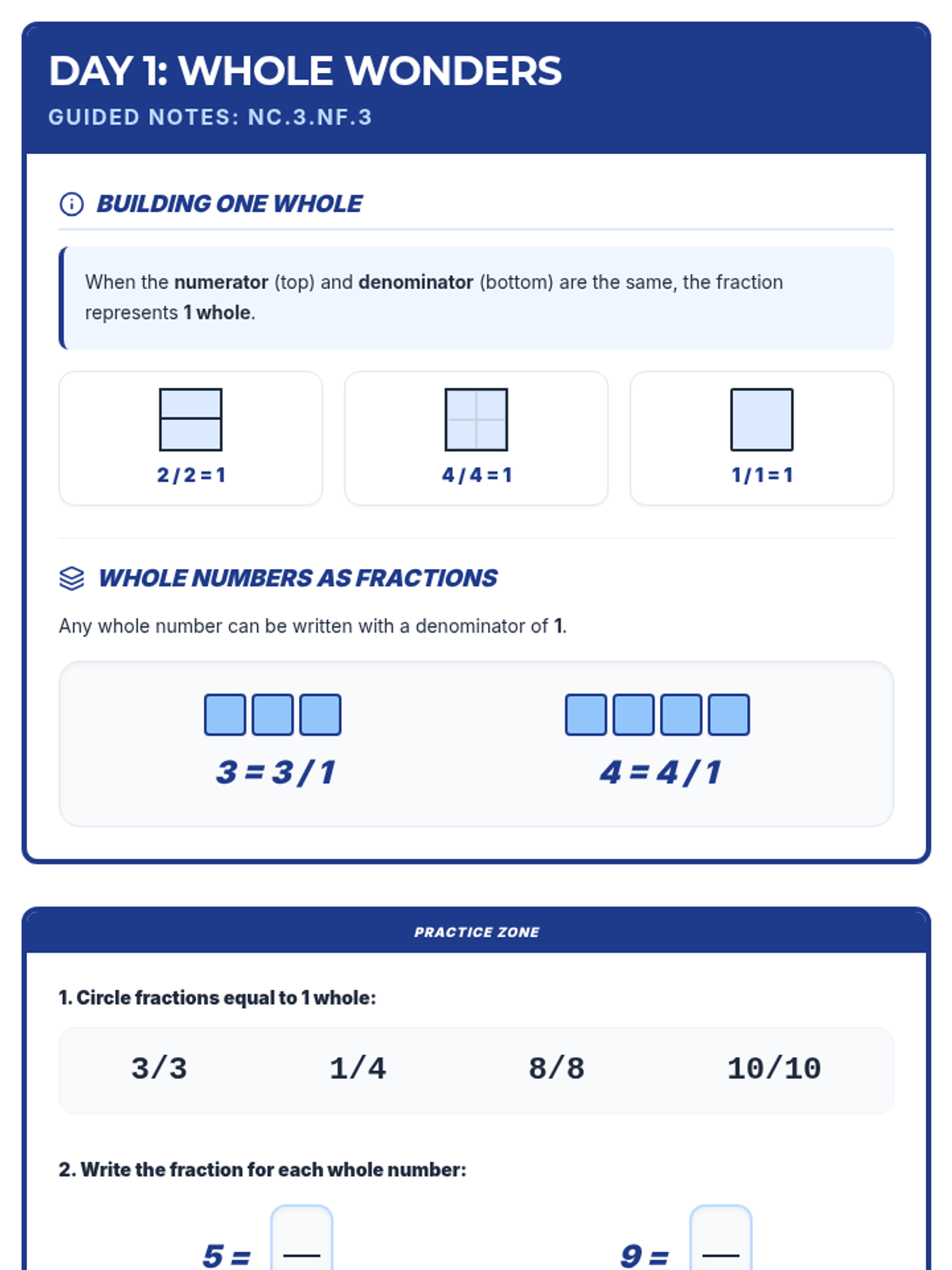
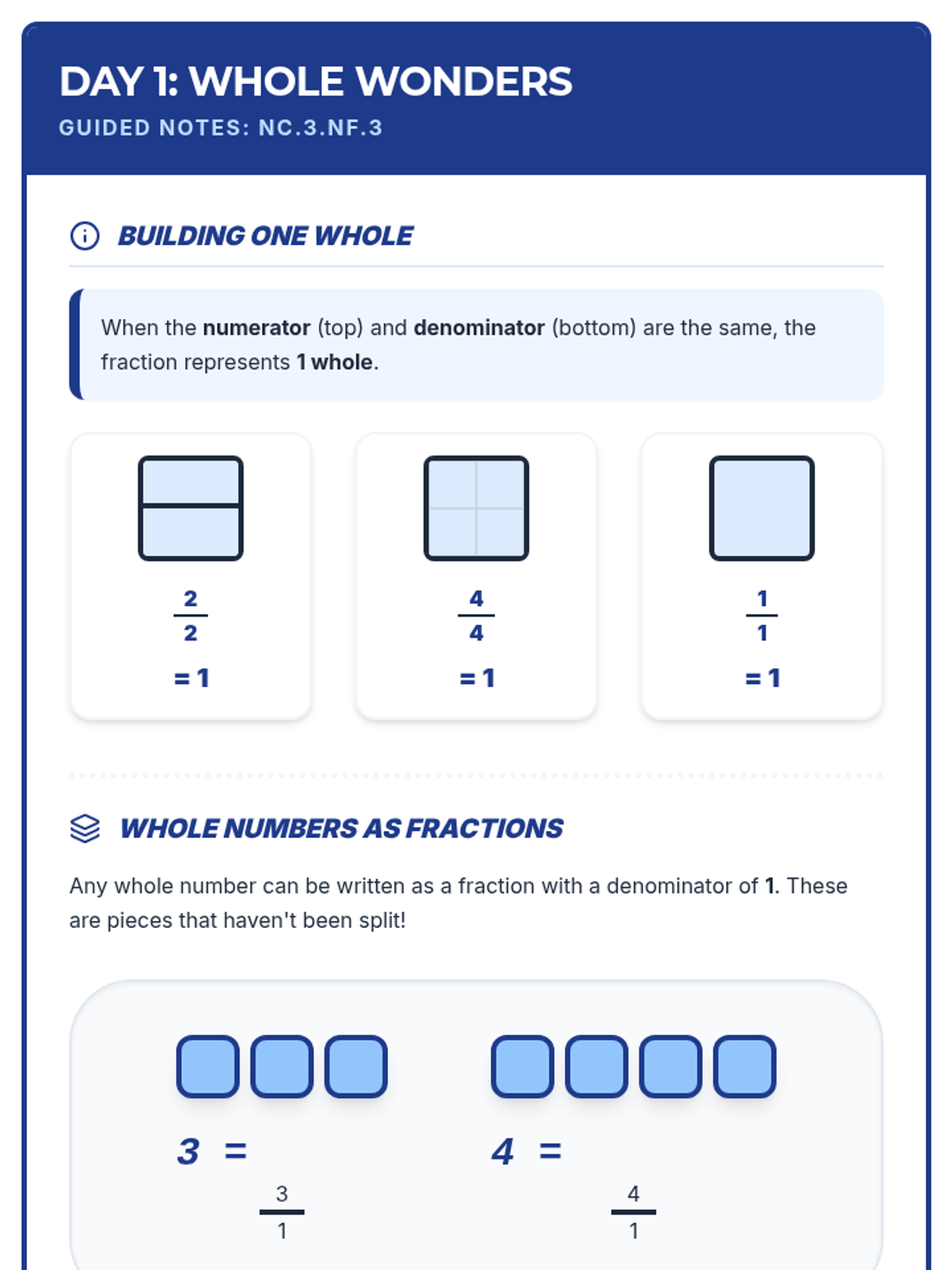
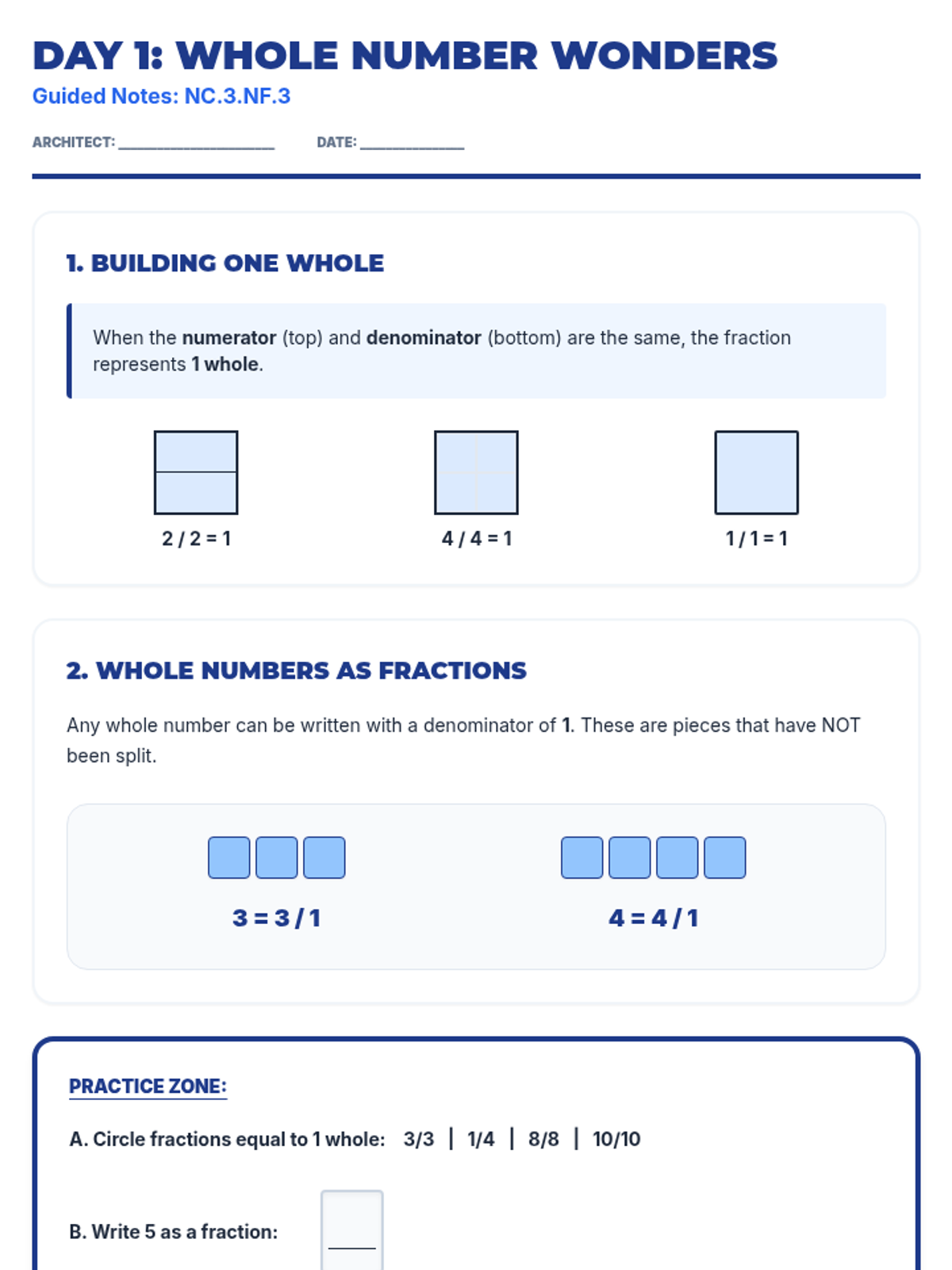
Focuses on expressing whole numbers as fractions and understanding that fractions with the same numerator and denominator equal one whole.
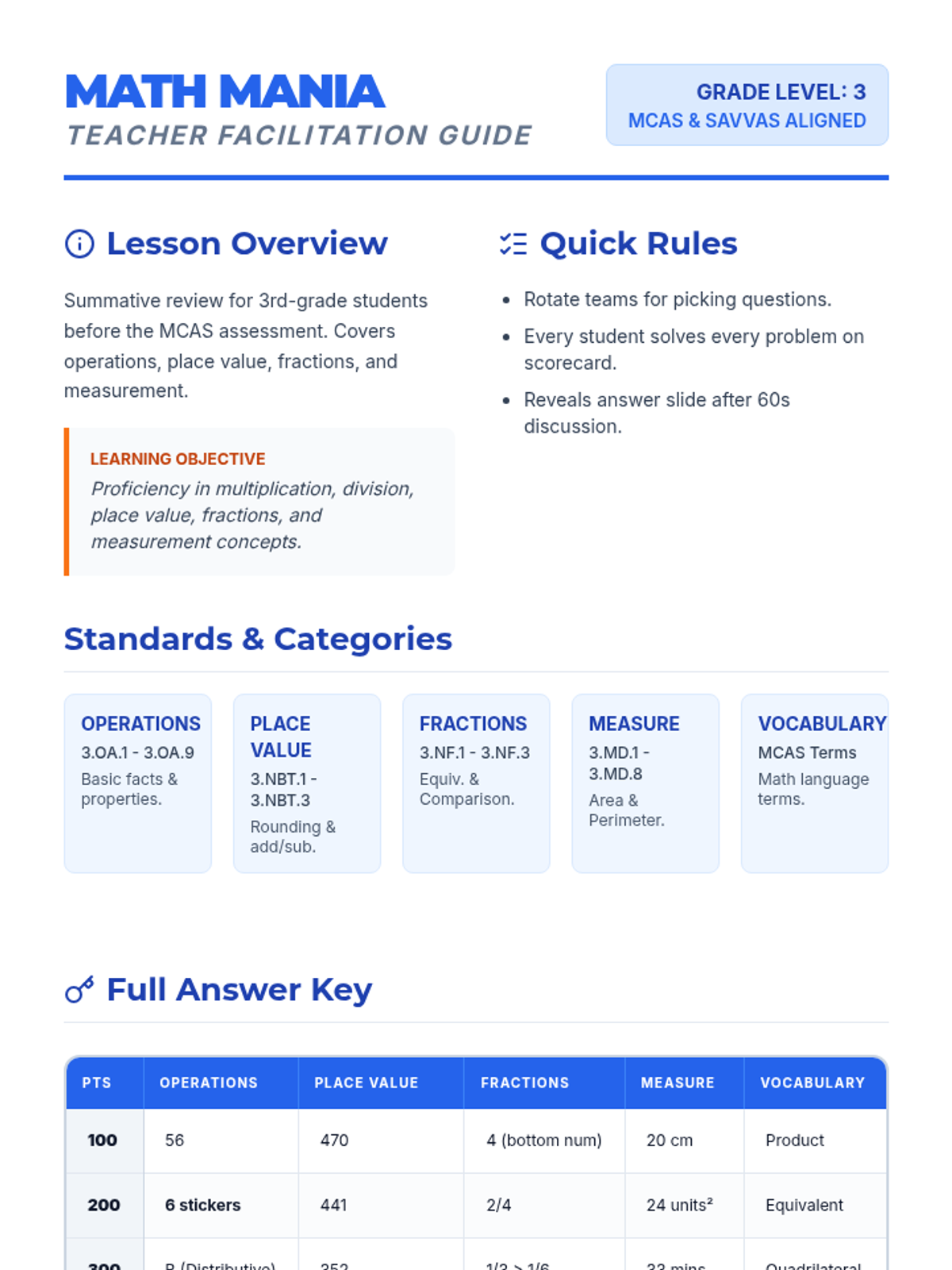
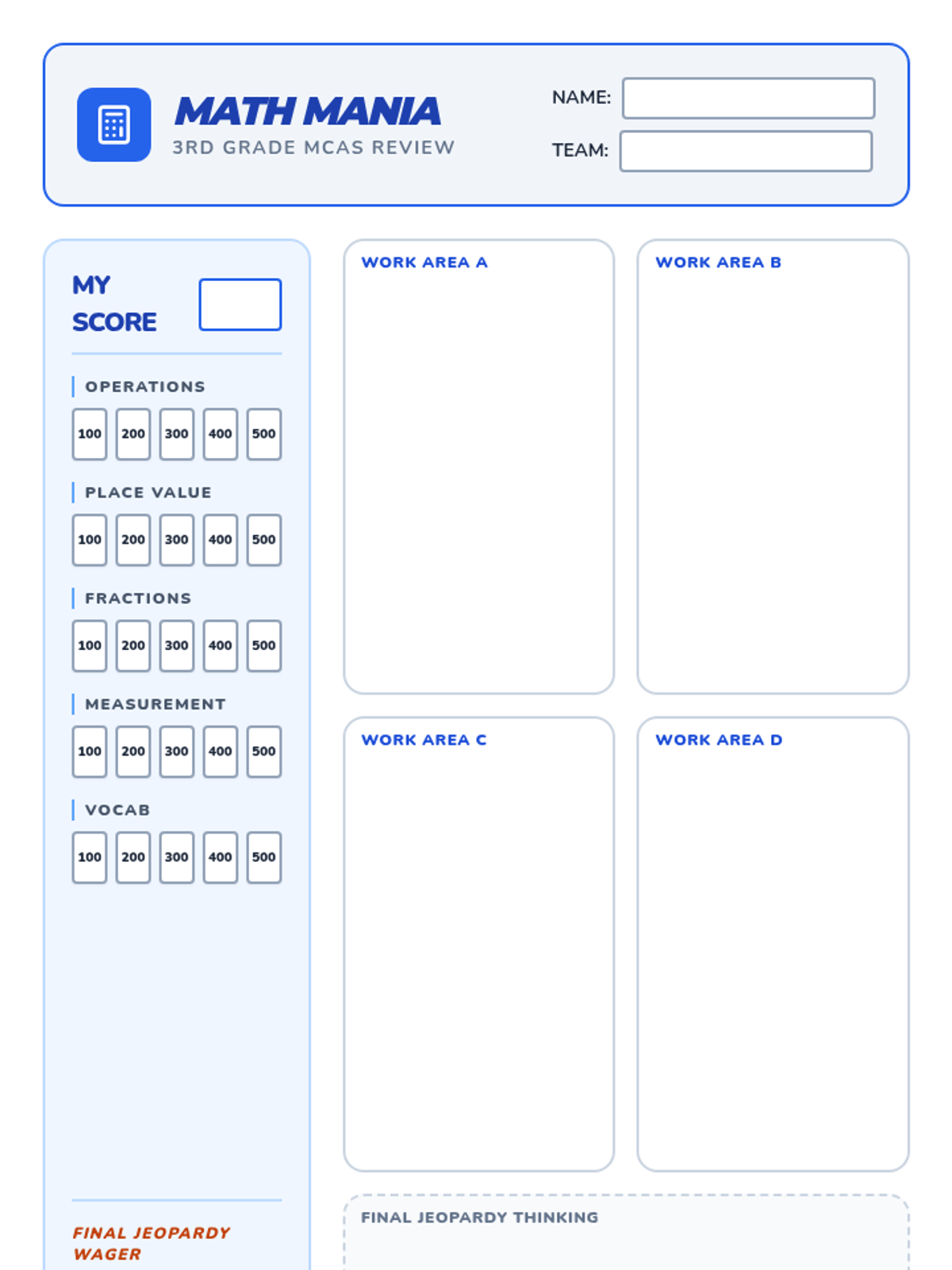
A comprehensive 3rd-grade math review game based on MCAS standards and Savvas curriculum, covering operations, place value, fractions, measurement, and vocabulary.
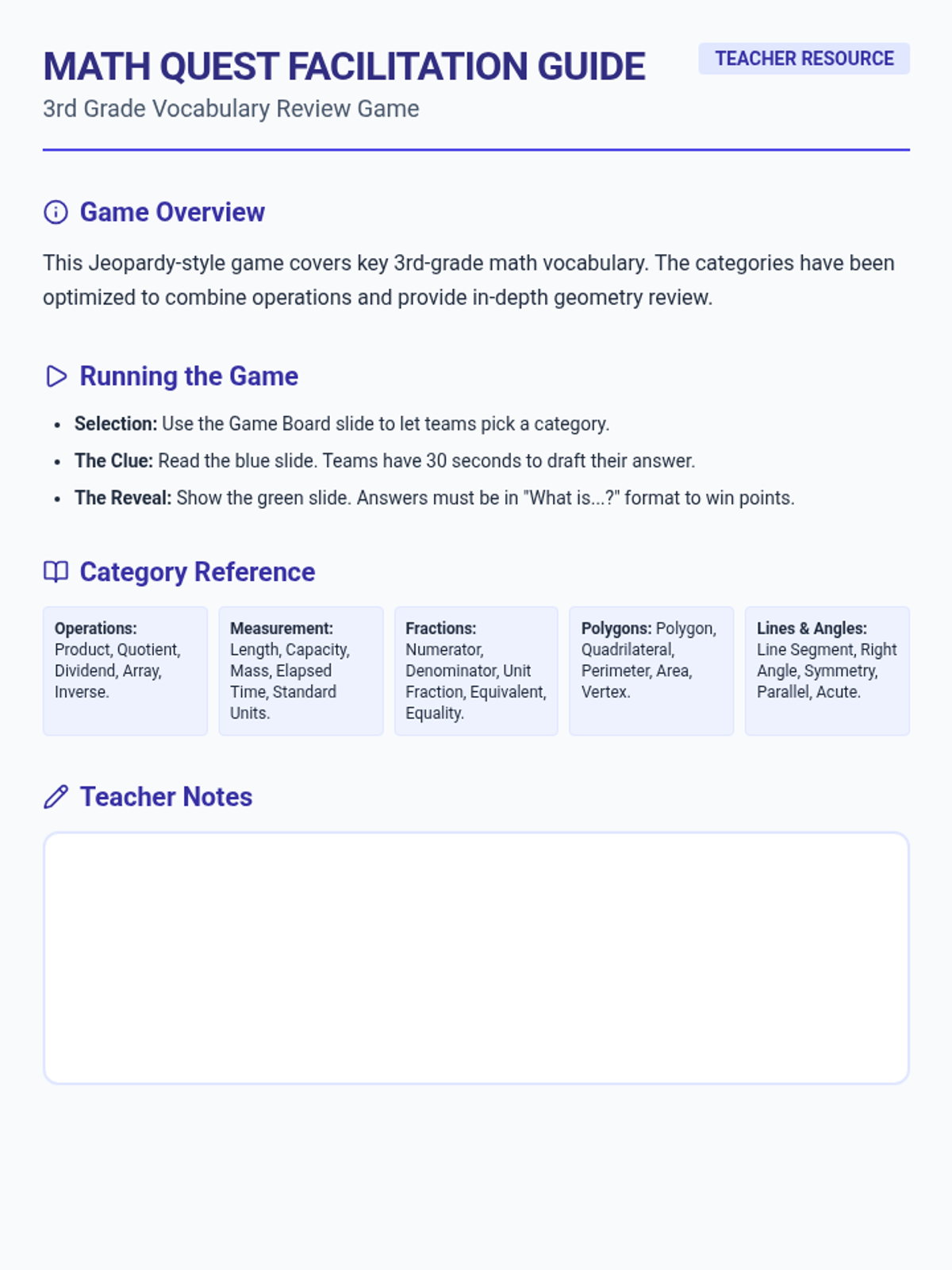
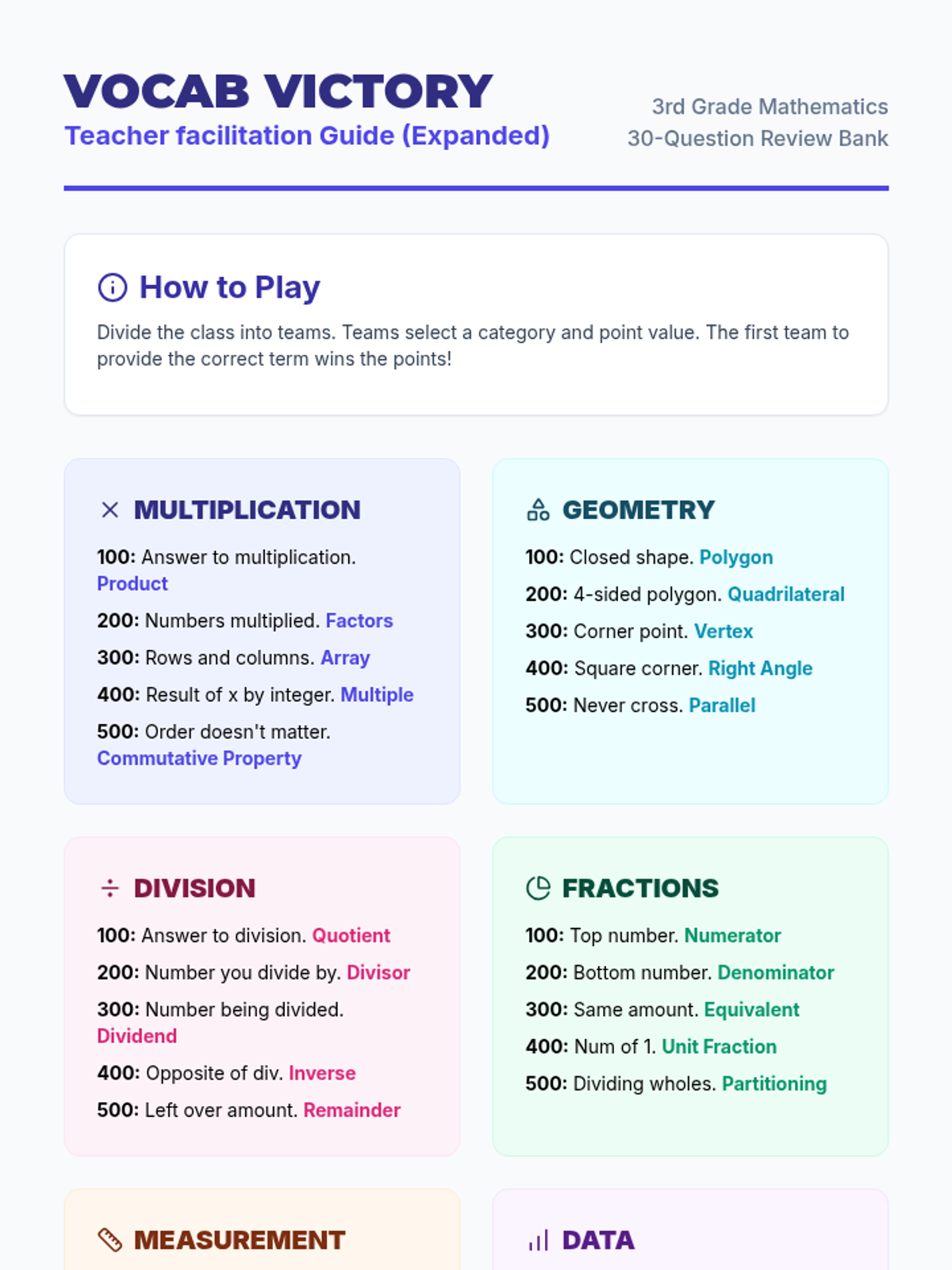
A high-energy Jeopardy-style review game focusing on essential third-grade mathematics vocabulary across six core domains, designed to reinforce terminology before assessments.
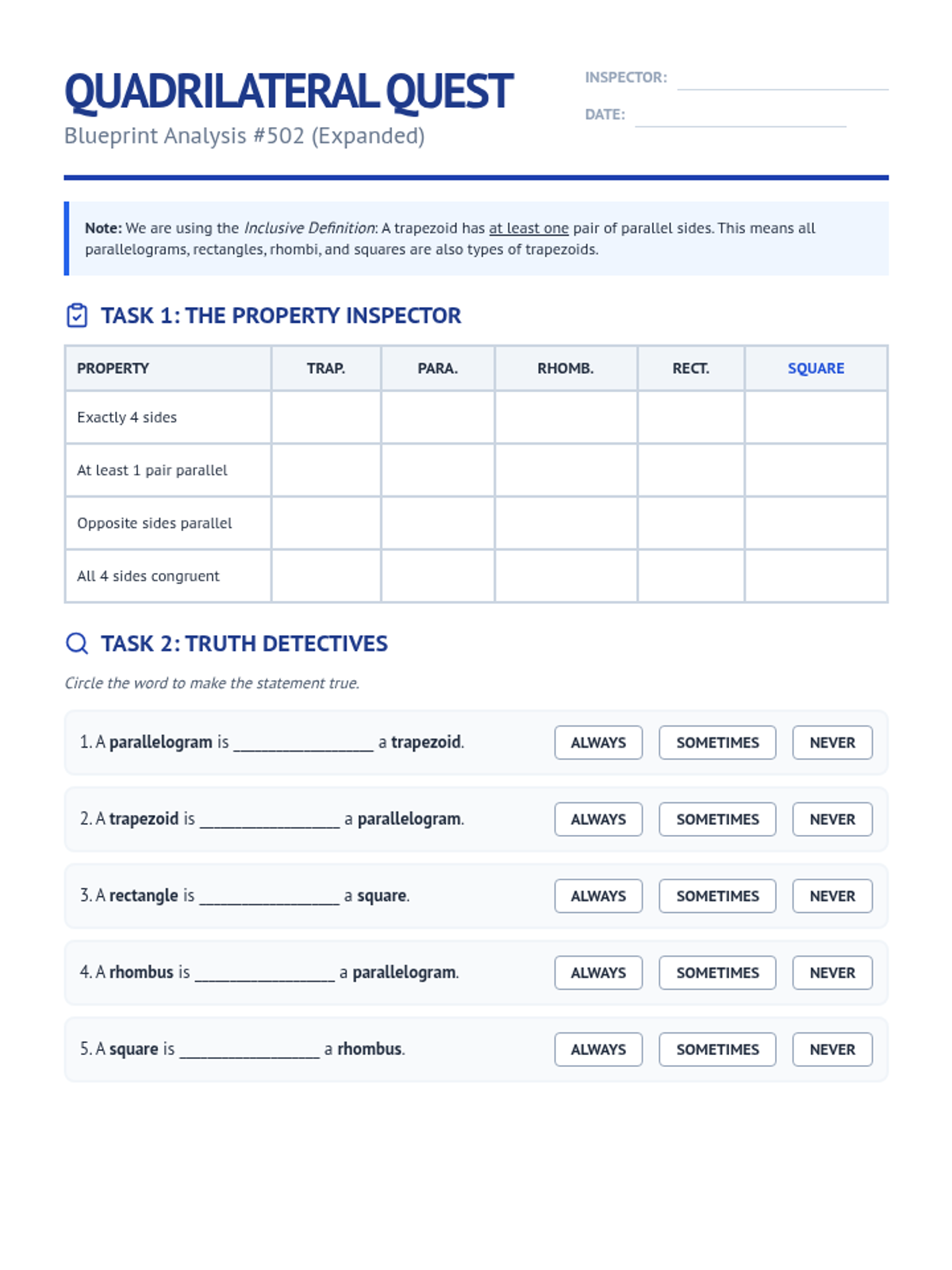
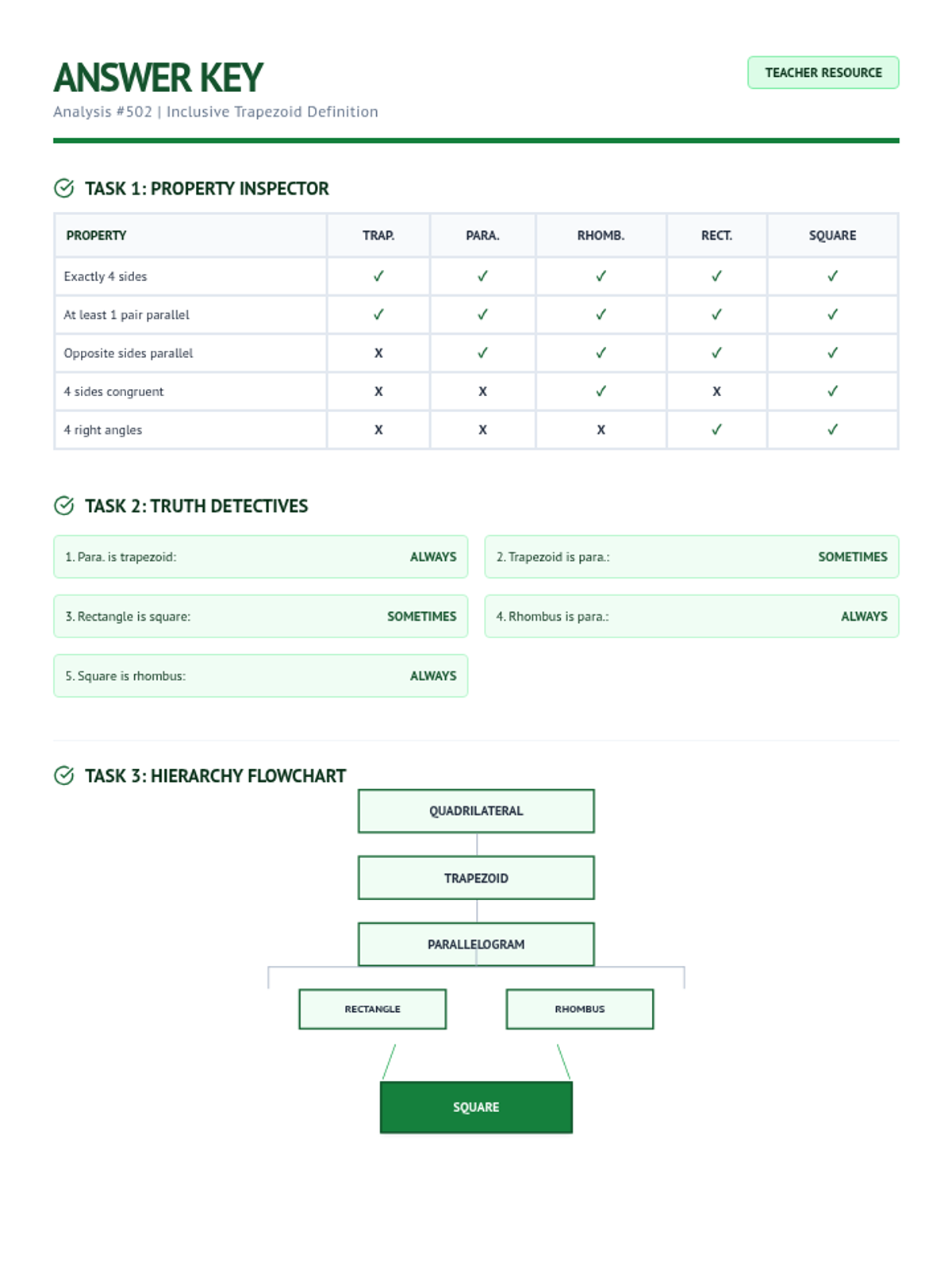
This lesson focuses on the hierarchical classification of quadrilaterals, helping students understand that subcategories inherit properties from their parent categories.
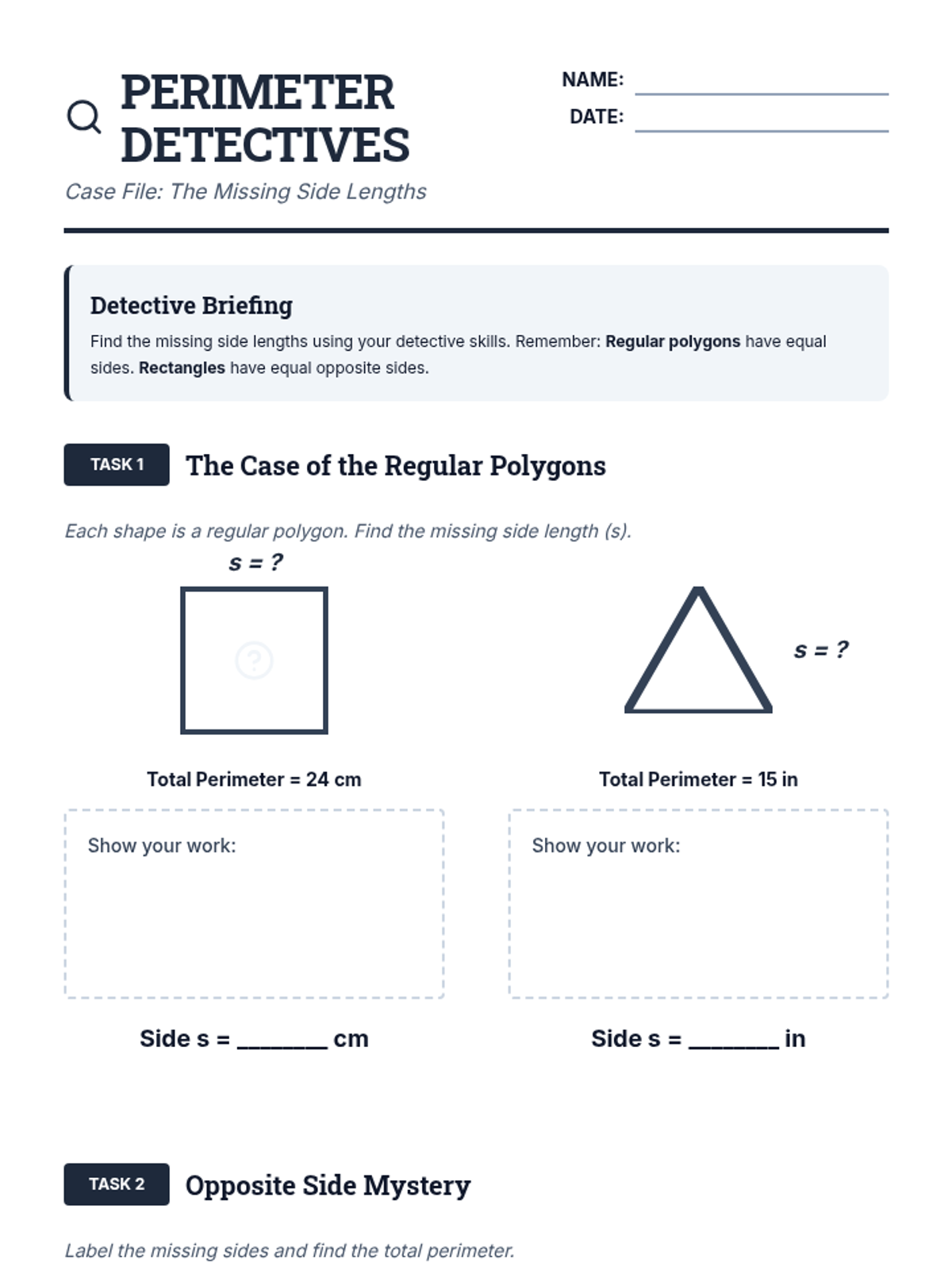
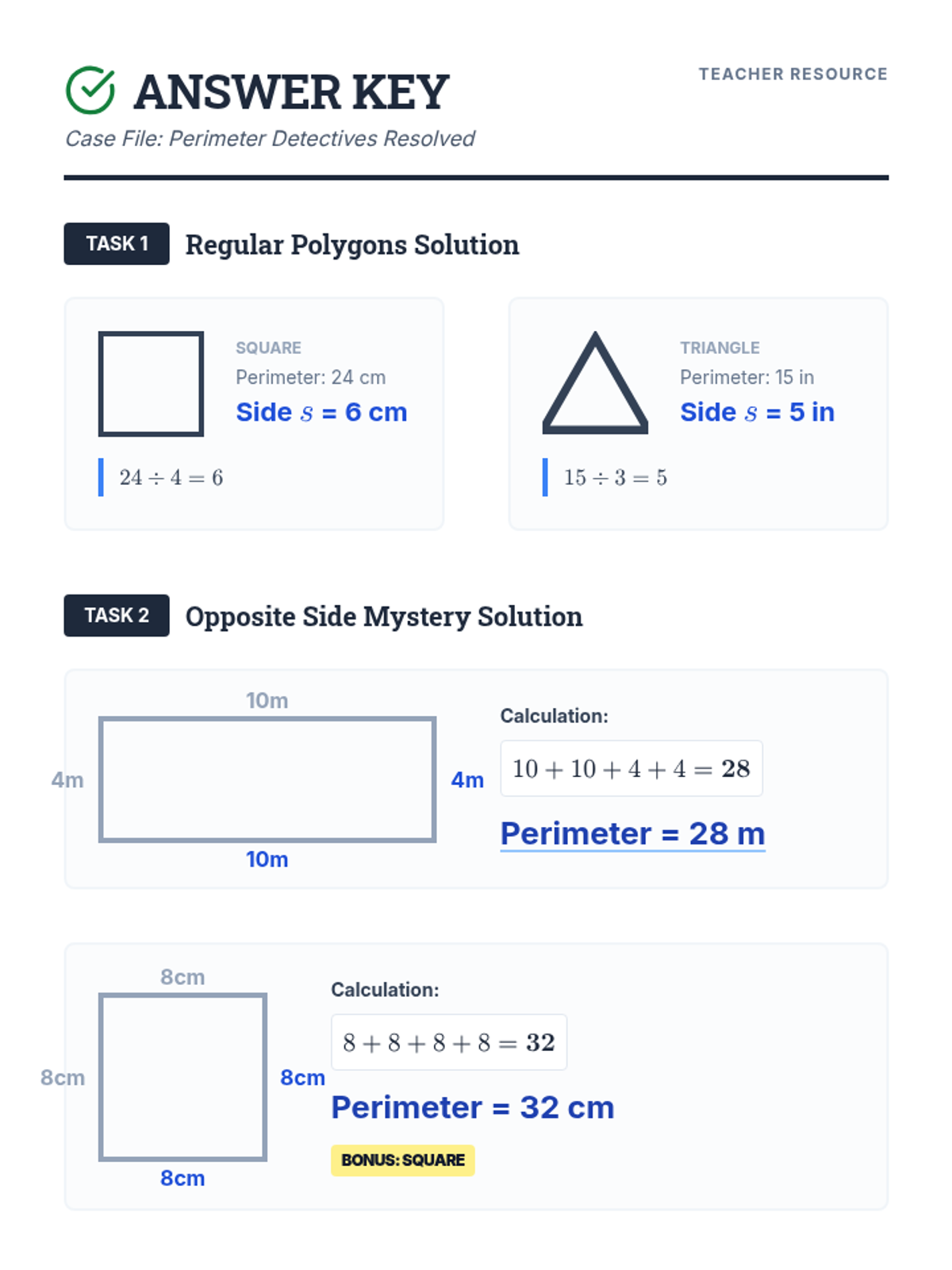
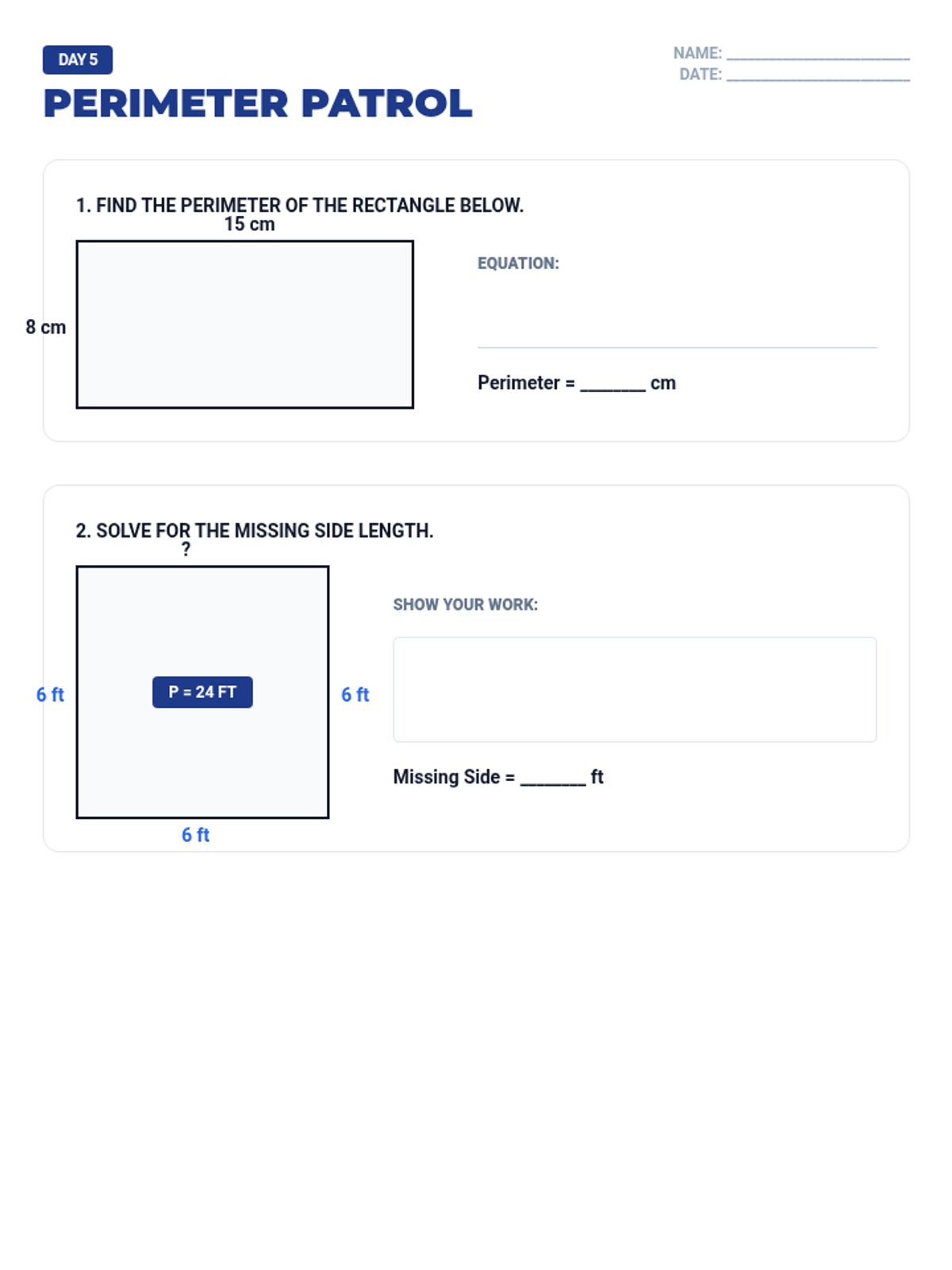
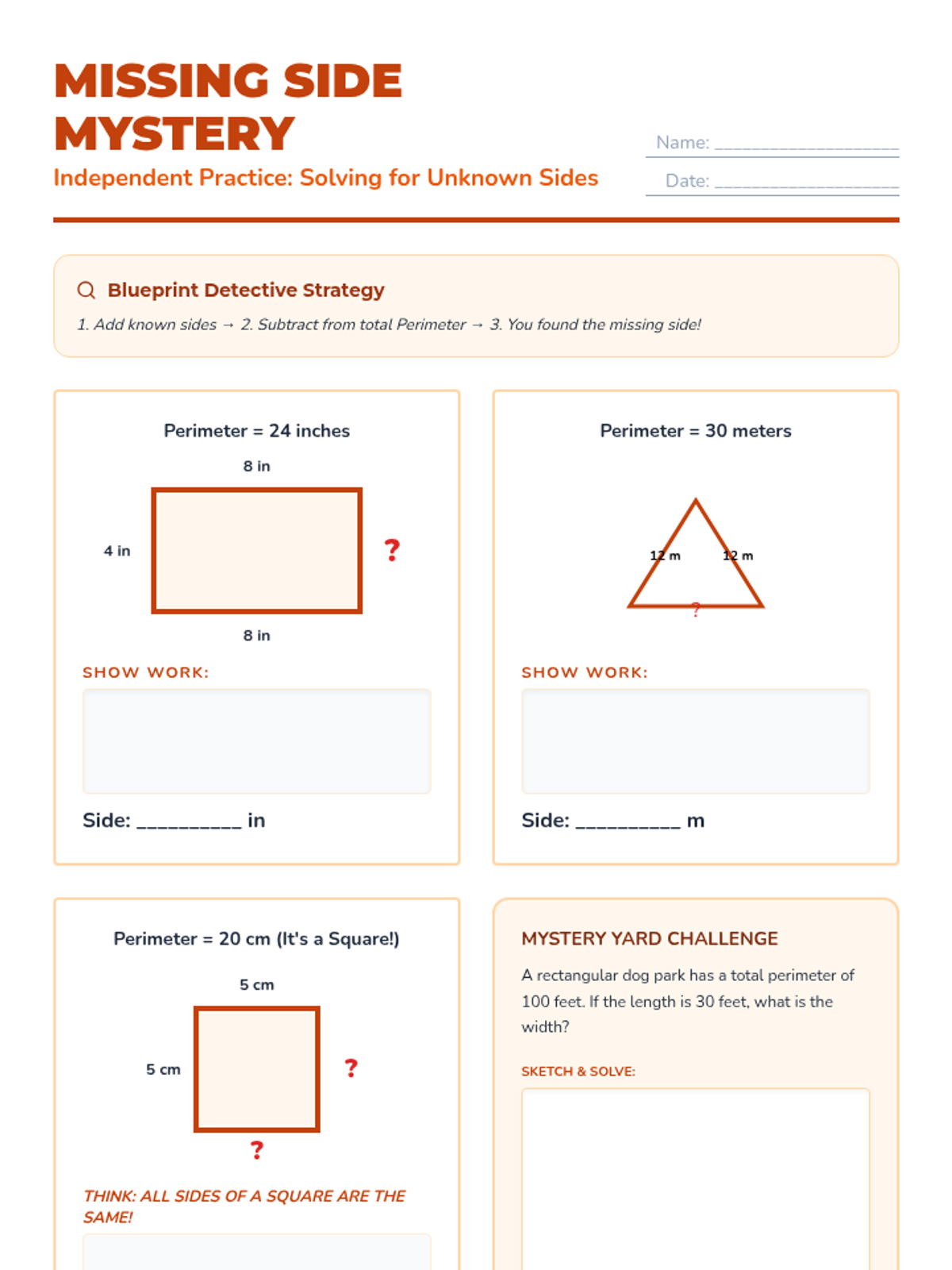
In this lesson, students become 'Perimeter Detectives' to solve for missing side lengths in regular polygons and rectangles. They use their knowledge of polygon properties and addition/subtraction to calculate perimeters and individual side measurements.
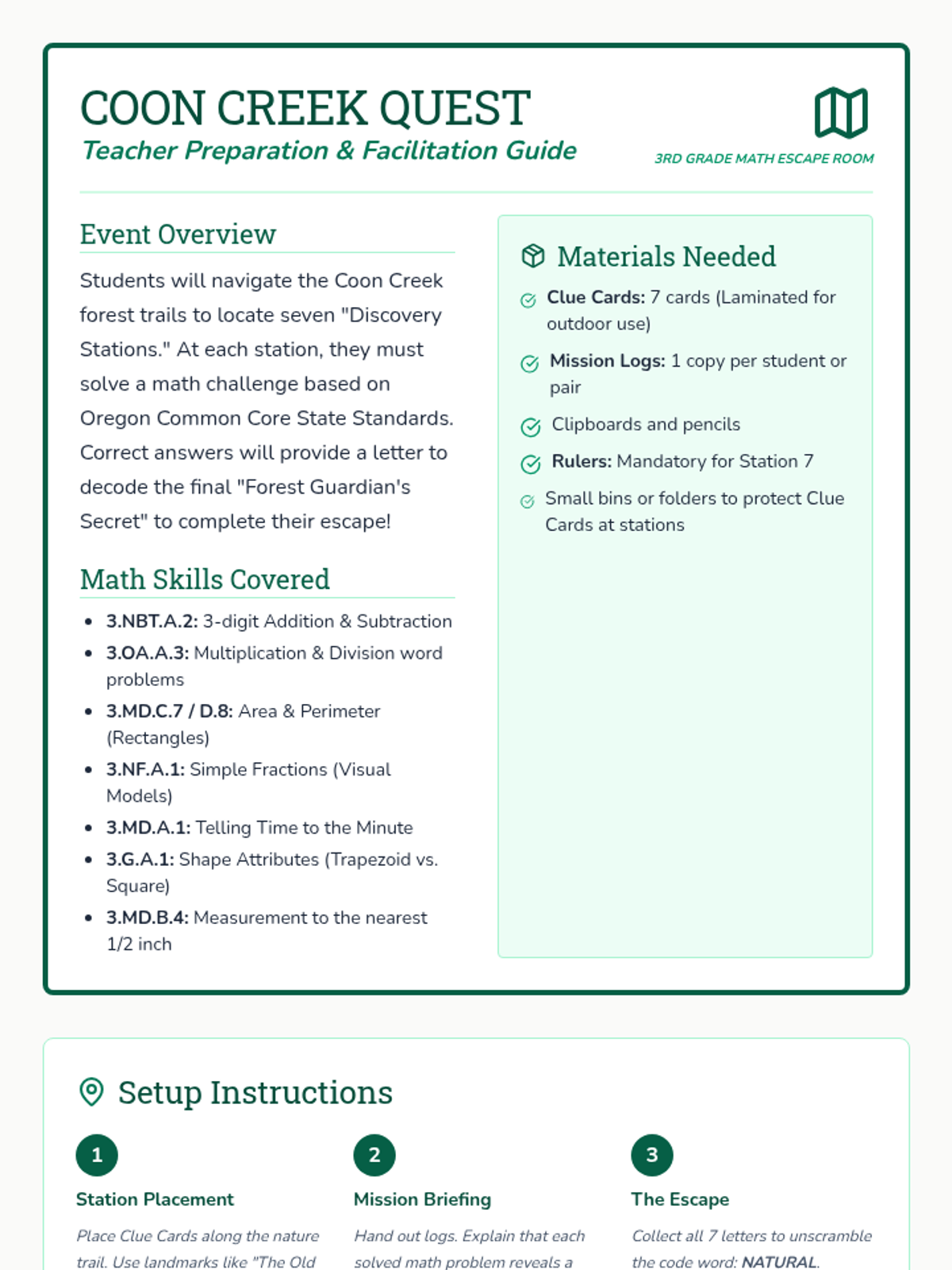
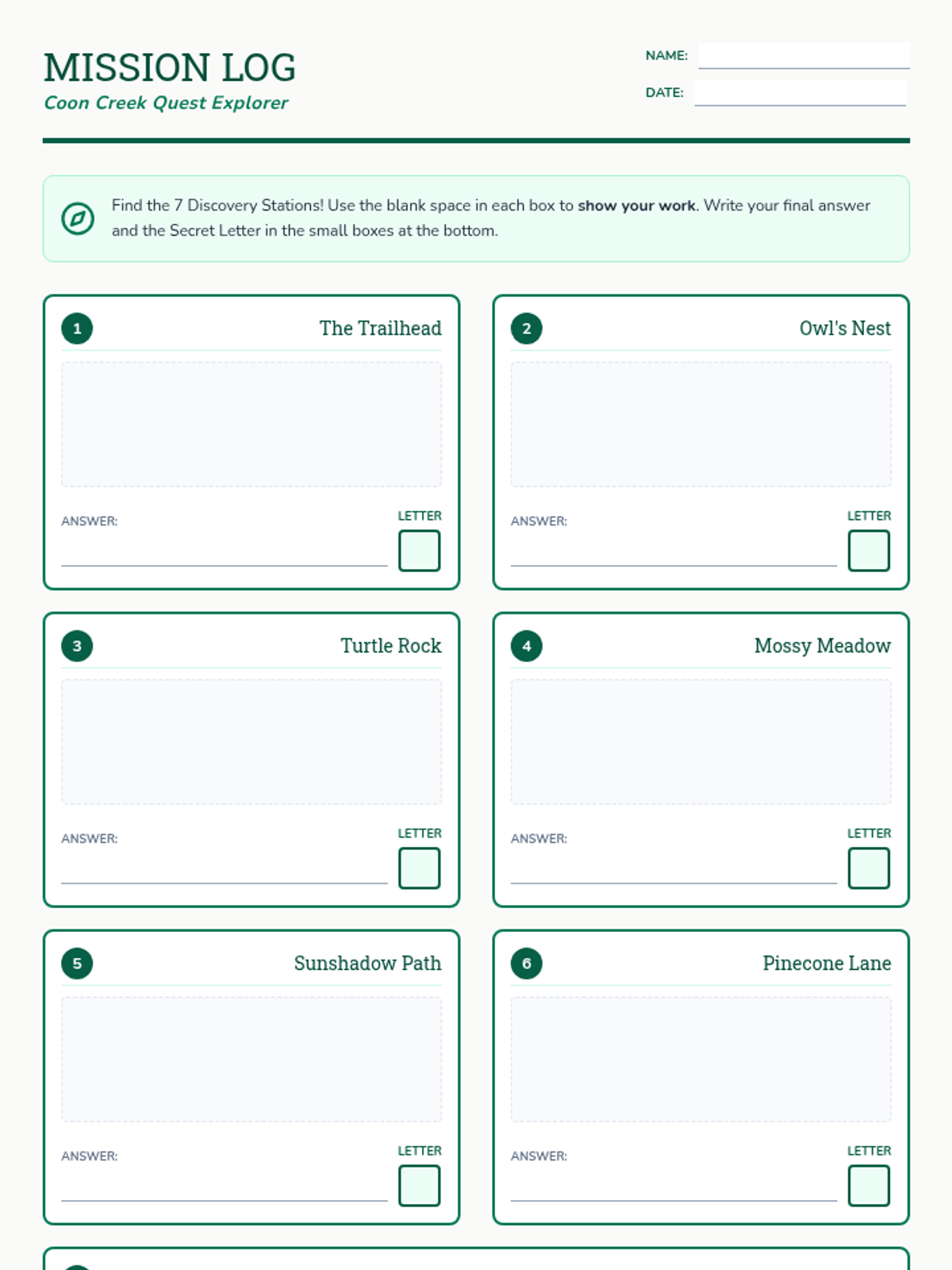
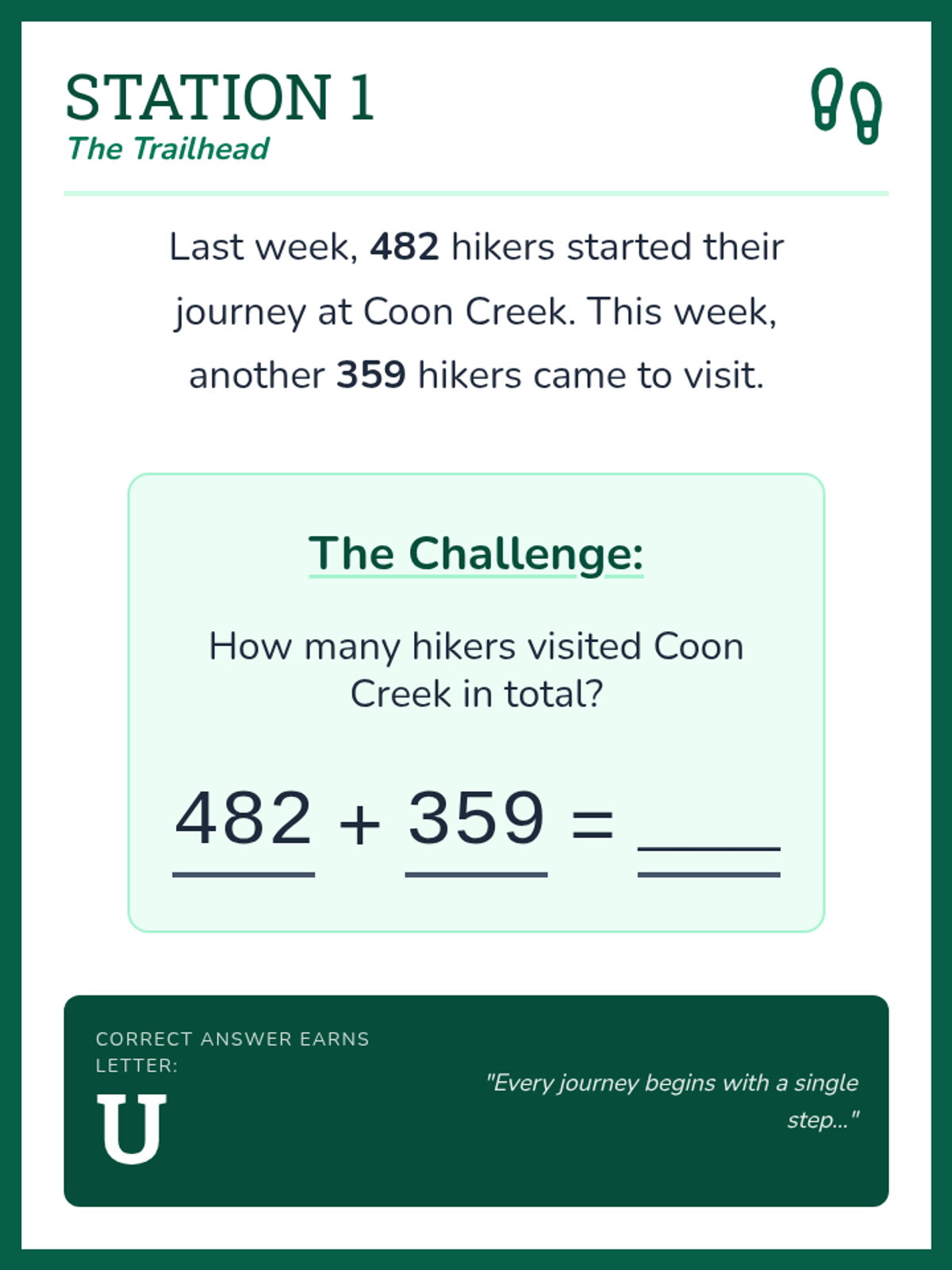
An outdoor math escape room set in the Coon Creek forest, reviewing 3rd-grade math standards including addition/subtraction, multiplication/division, area/perimeter, fractions, time, shapes, and measurement.
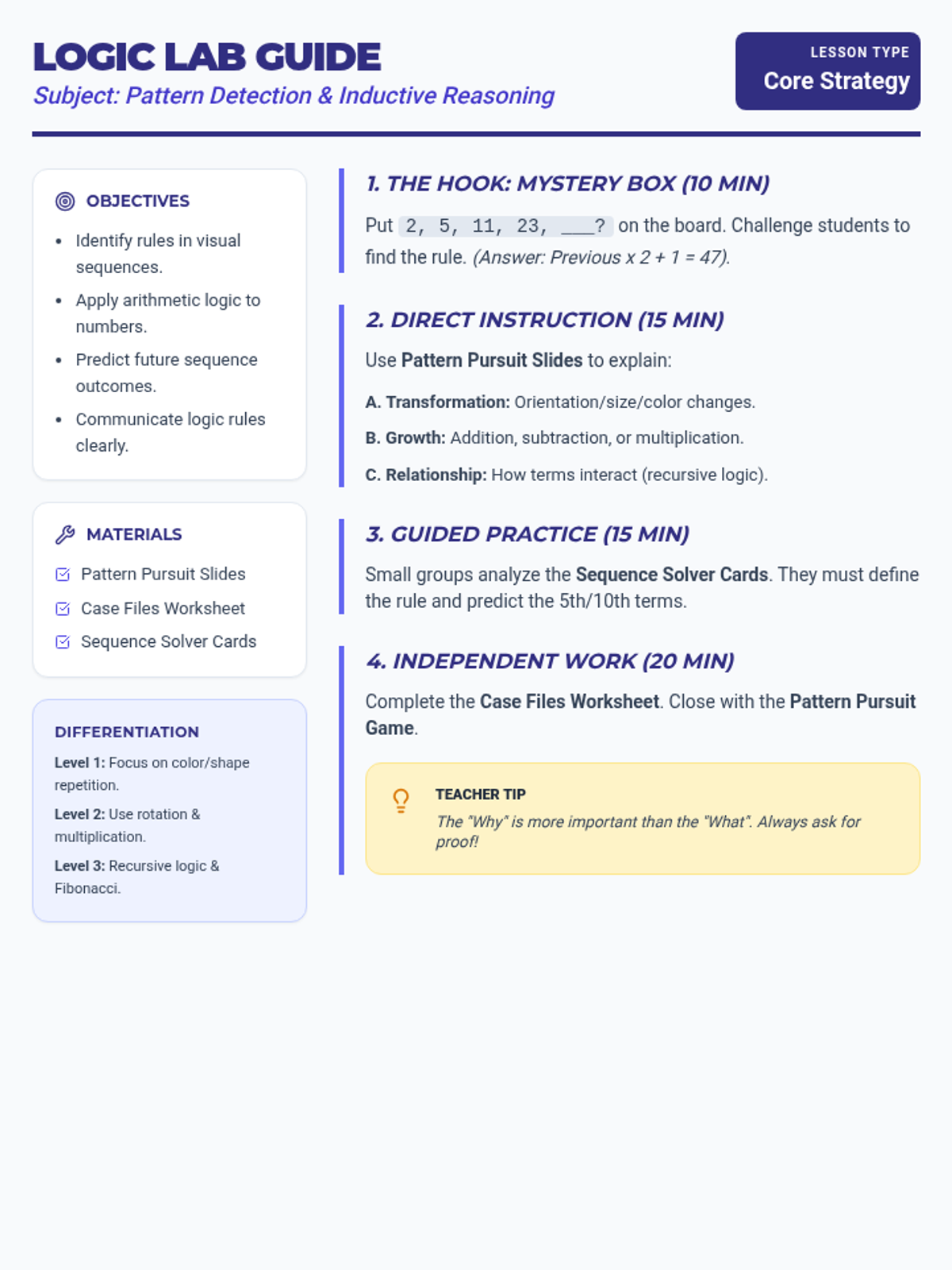
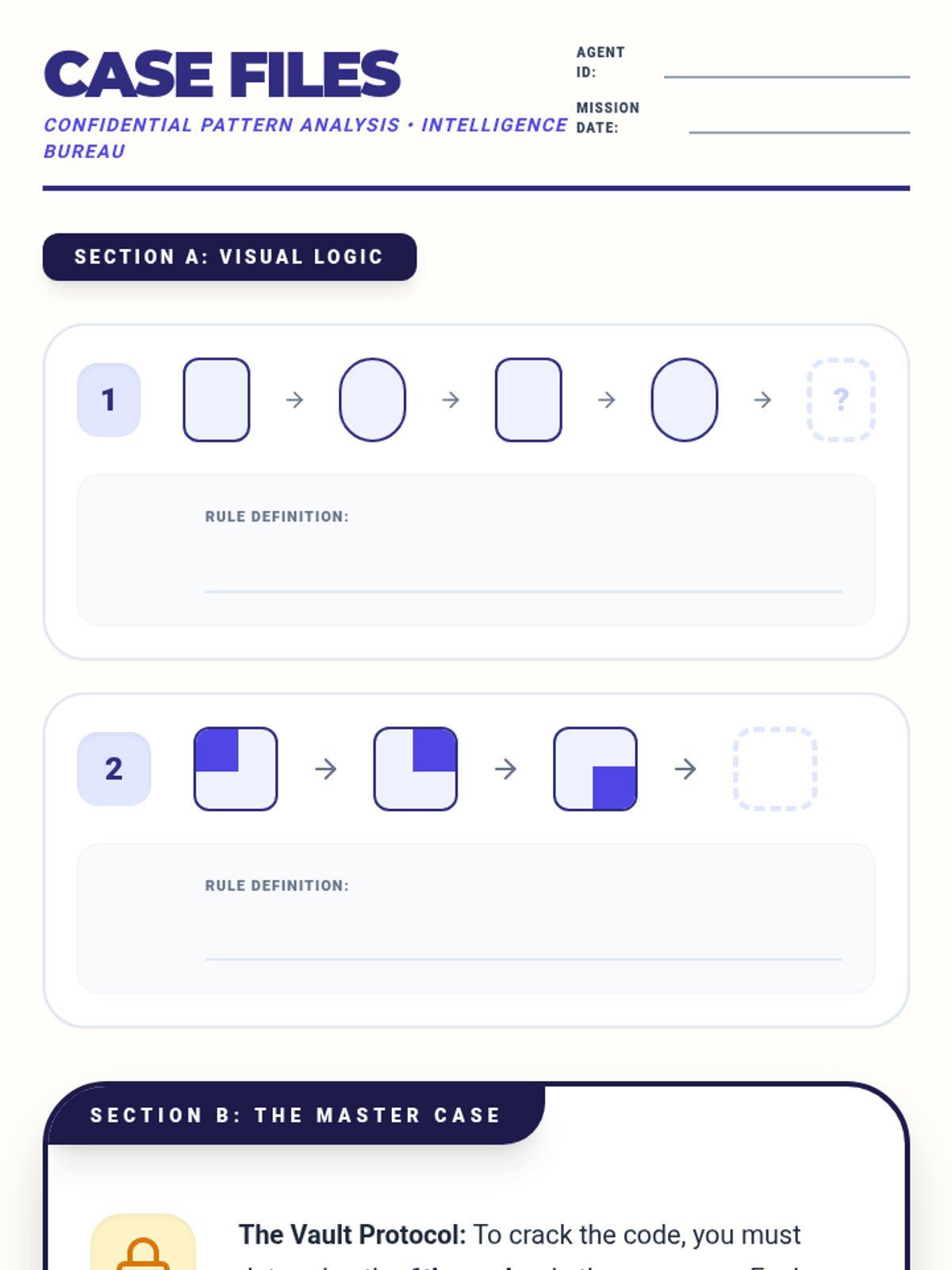
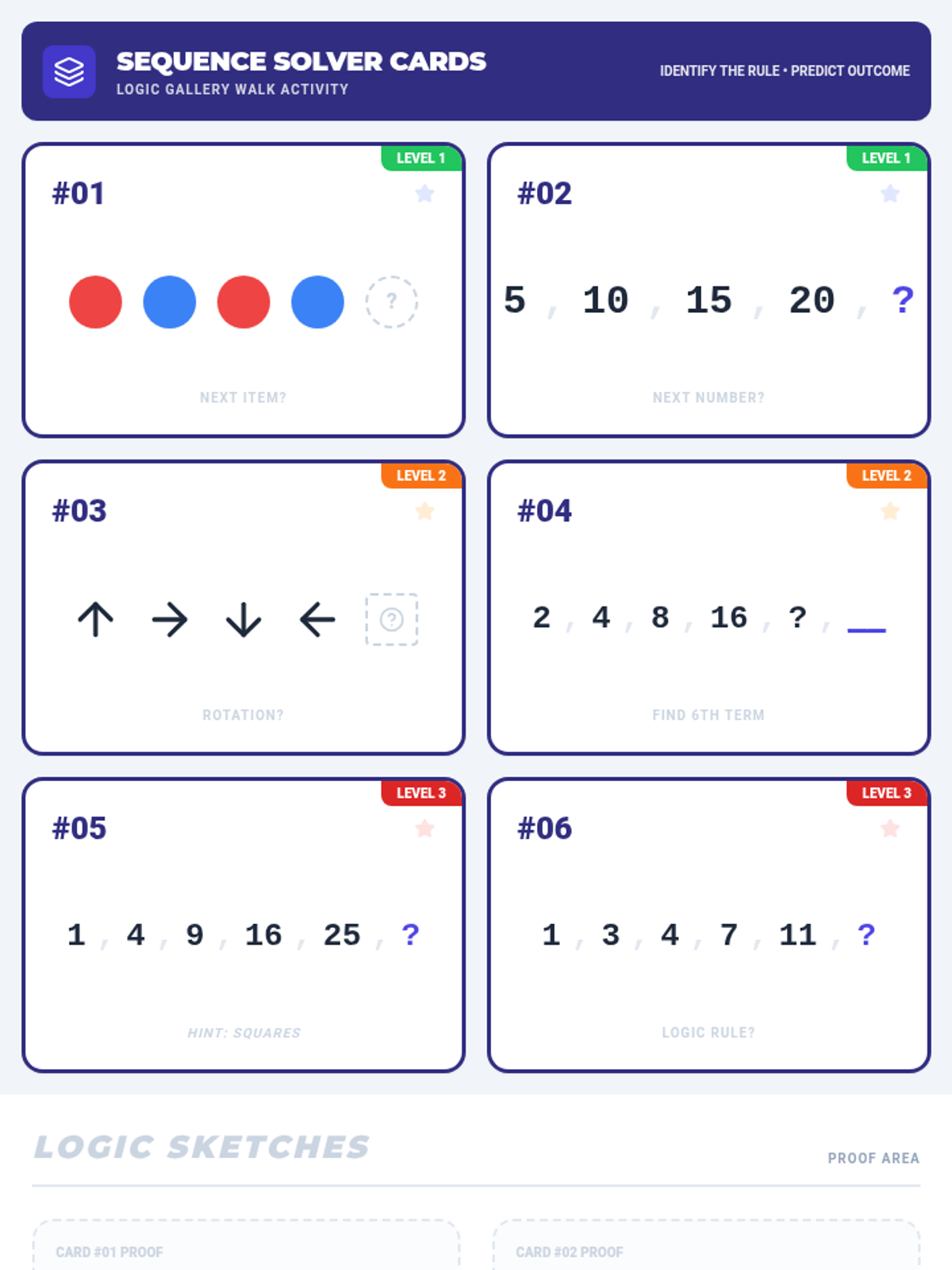
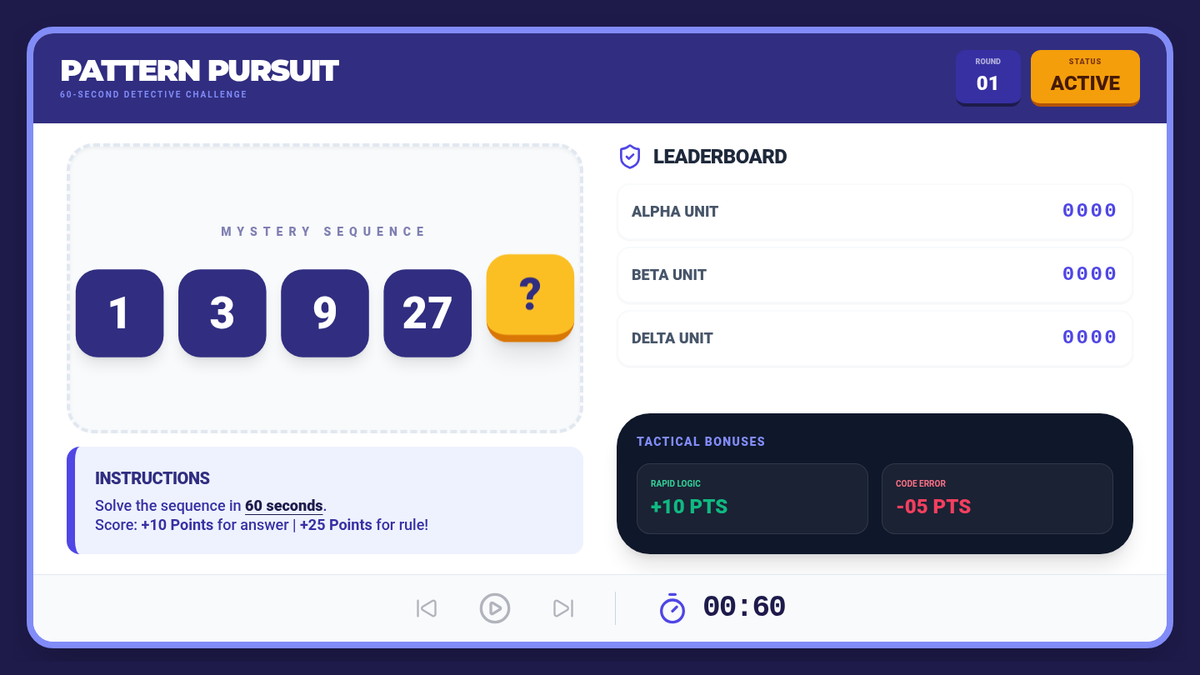
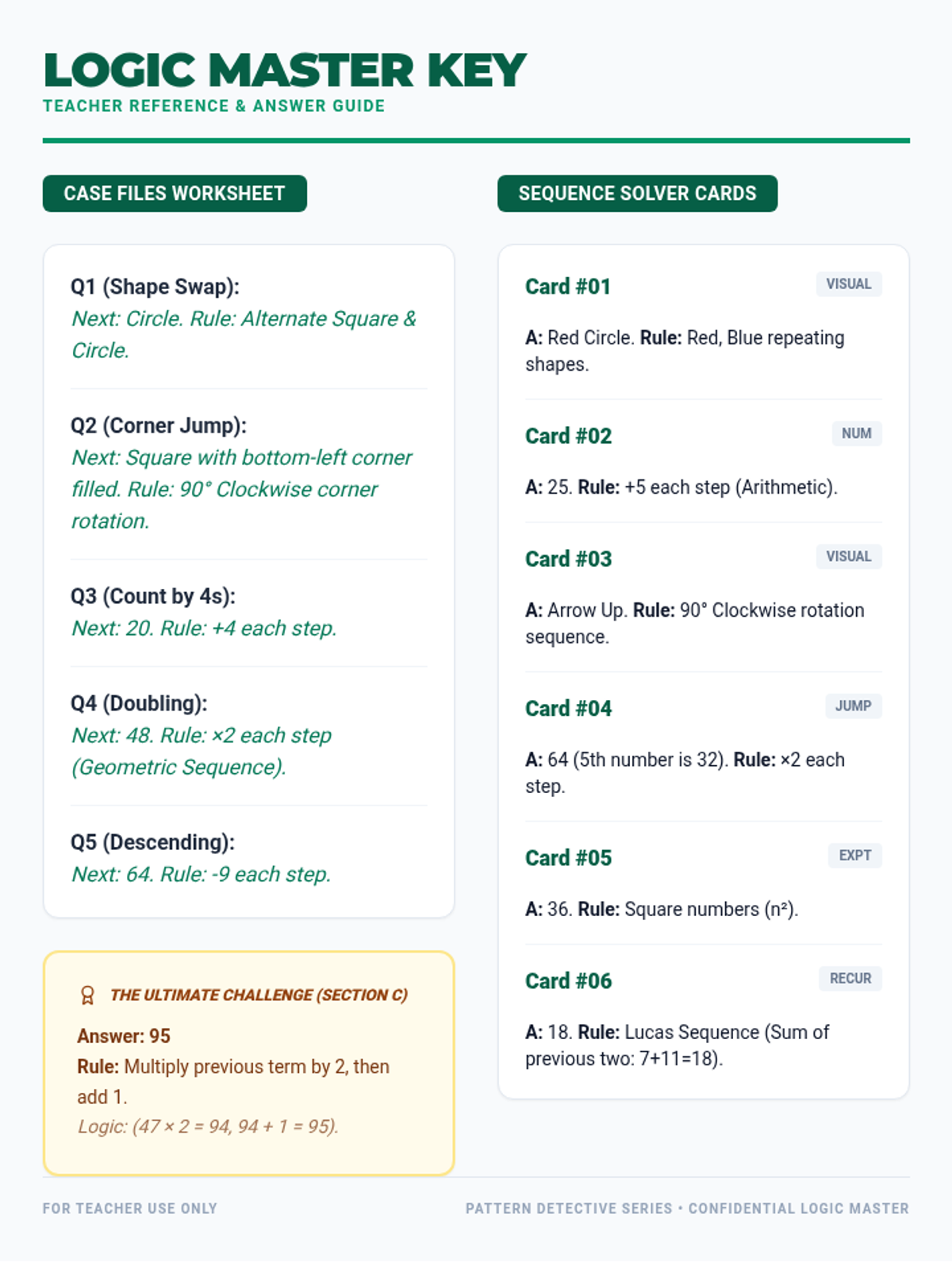
A comprehensive logic lesson where students act as detectives to identify rules in visual and numerical sequences, building inductive reasoning and prediction skills.
A comprehensive review of all marathon topics with a practice assessment format.
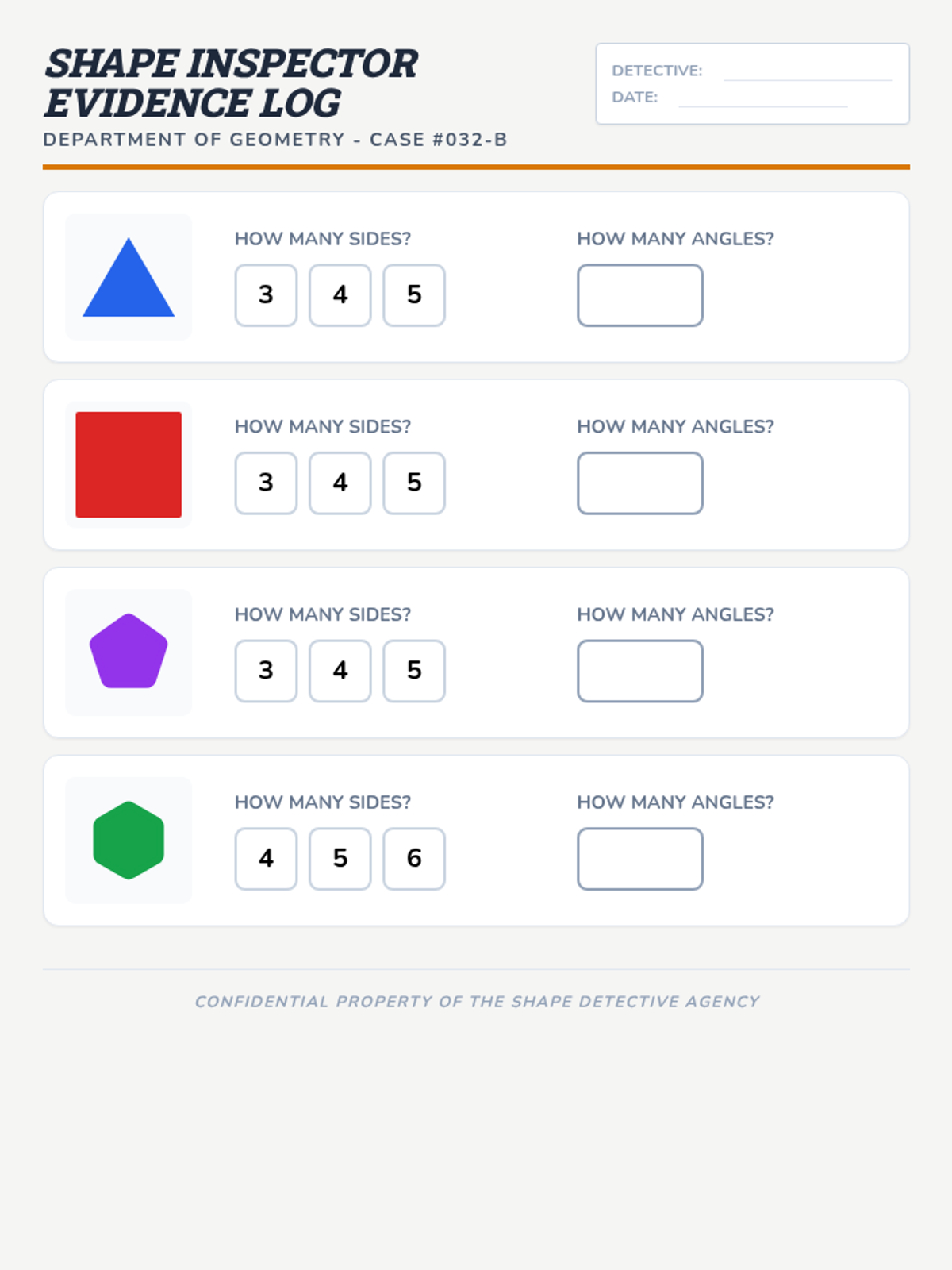
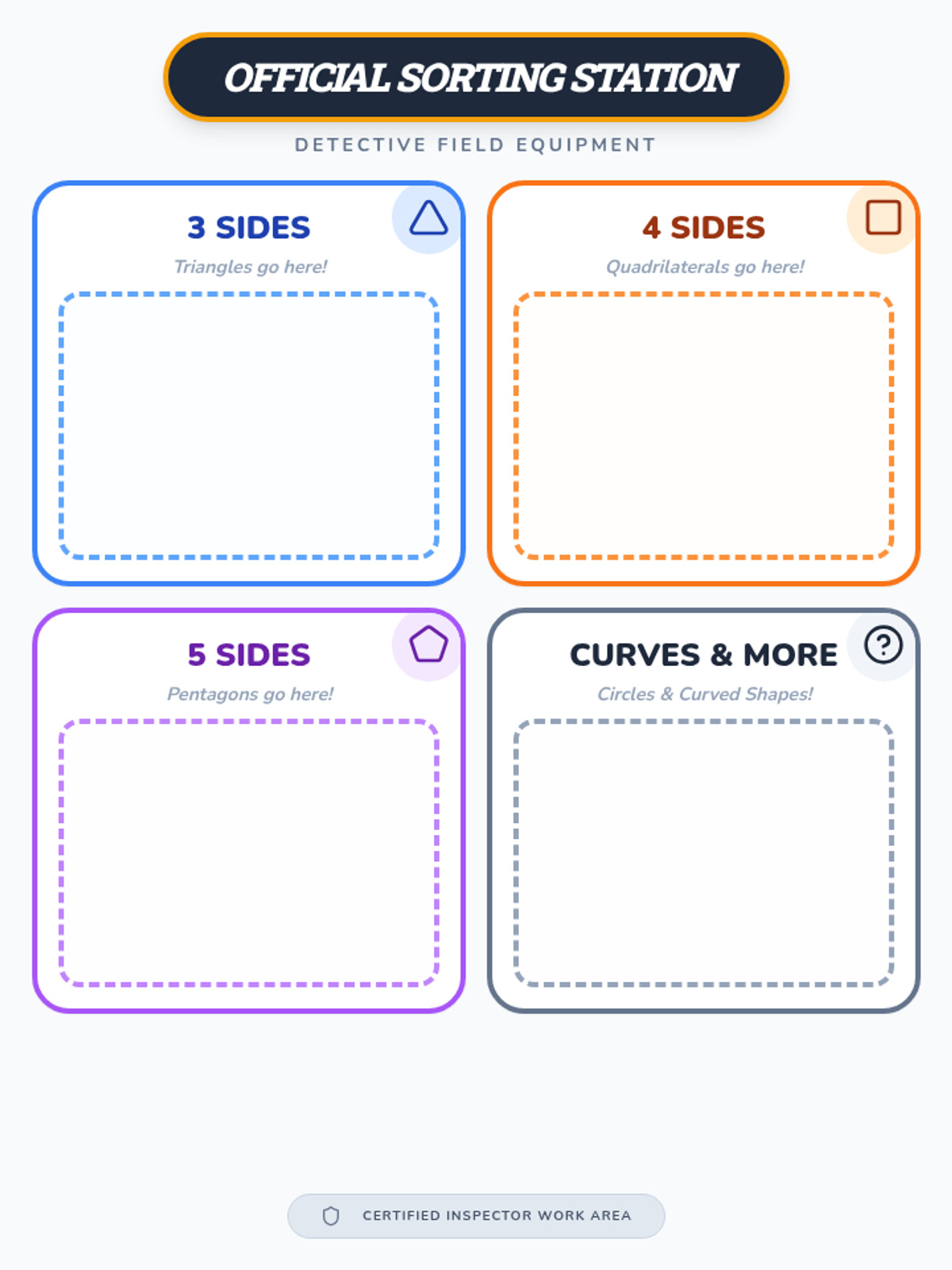
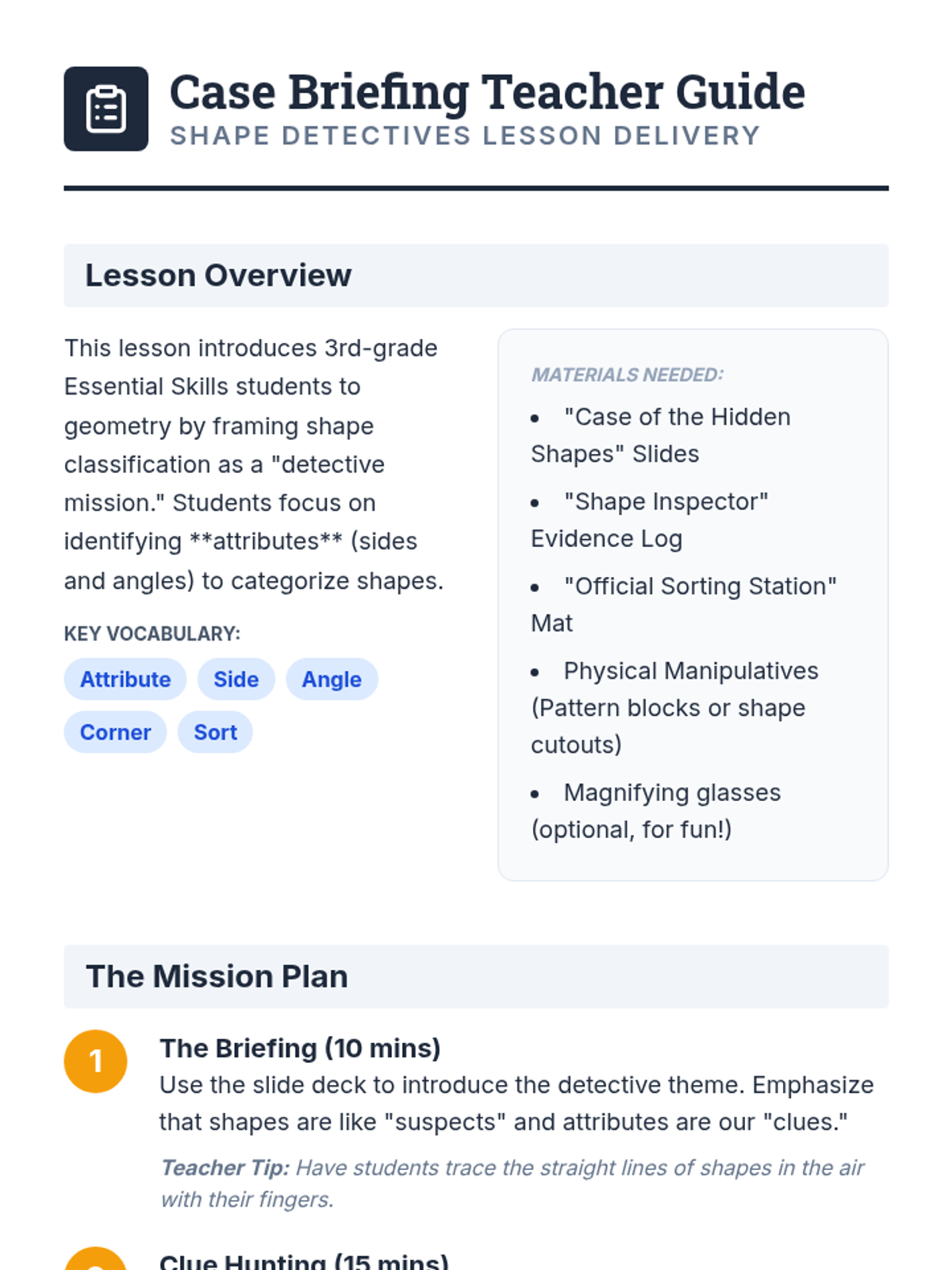
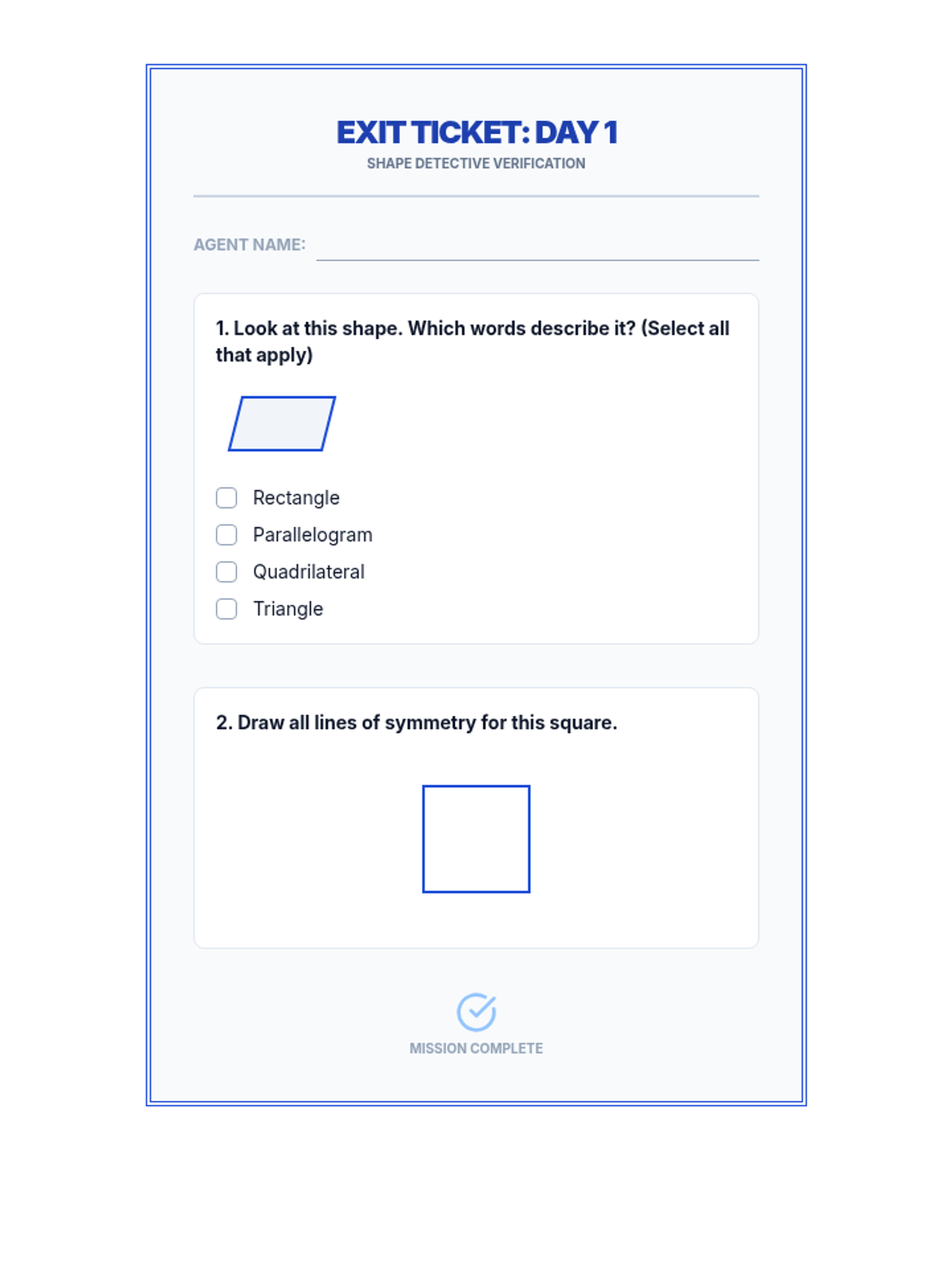
A foundational geometry lesson where students become 'Shape Detectives' to classify 2D shapes based on their attributes like sides and angles. Designed for Essential Skills students with high visual support and repetitive practice.
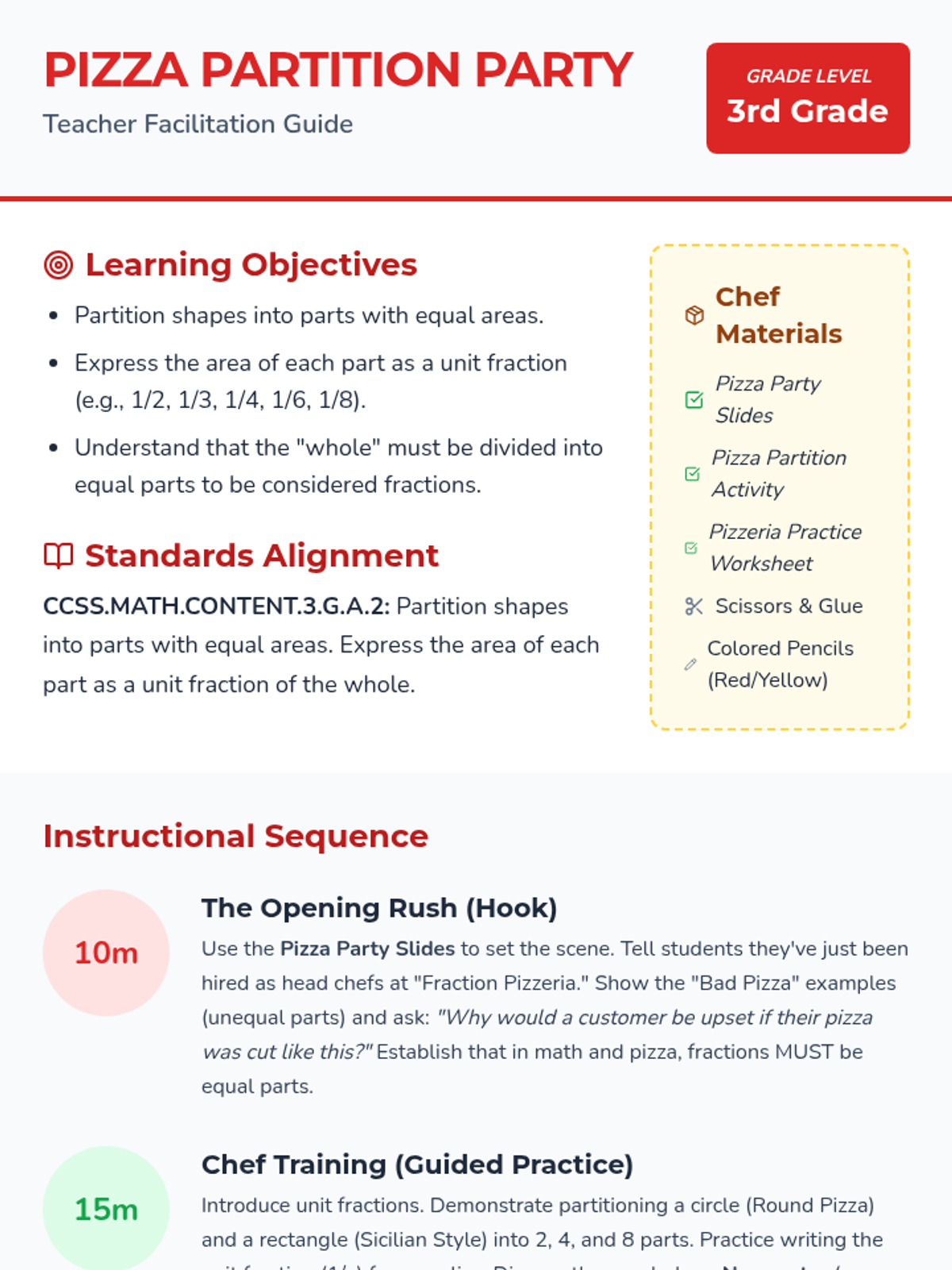
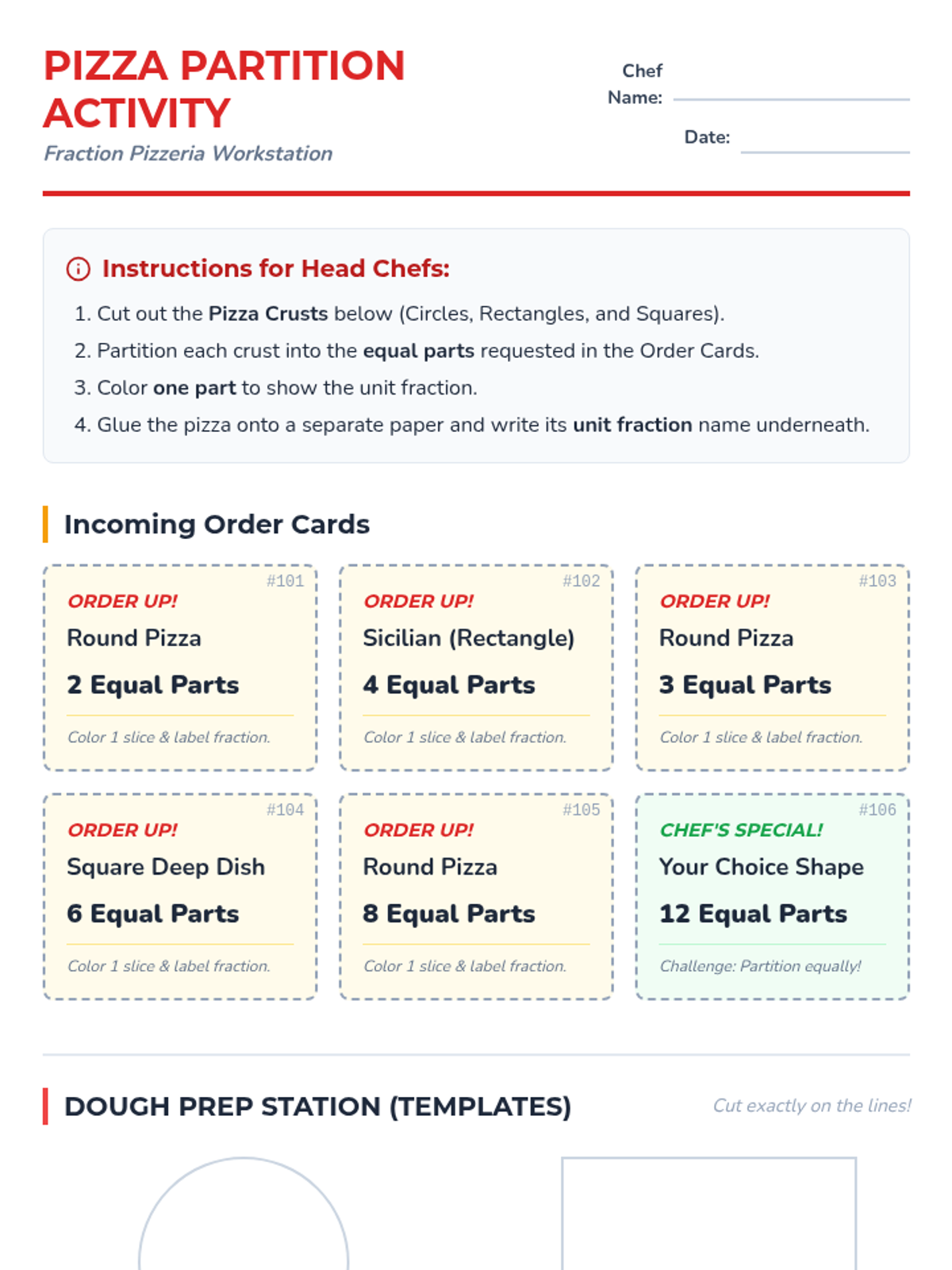
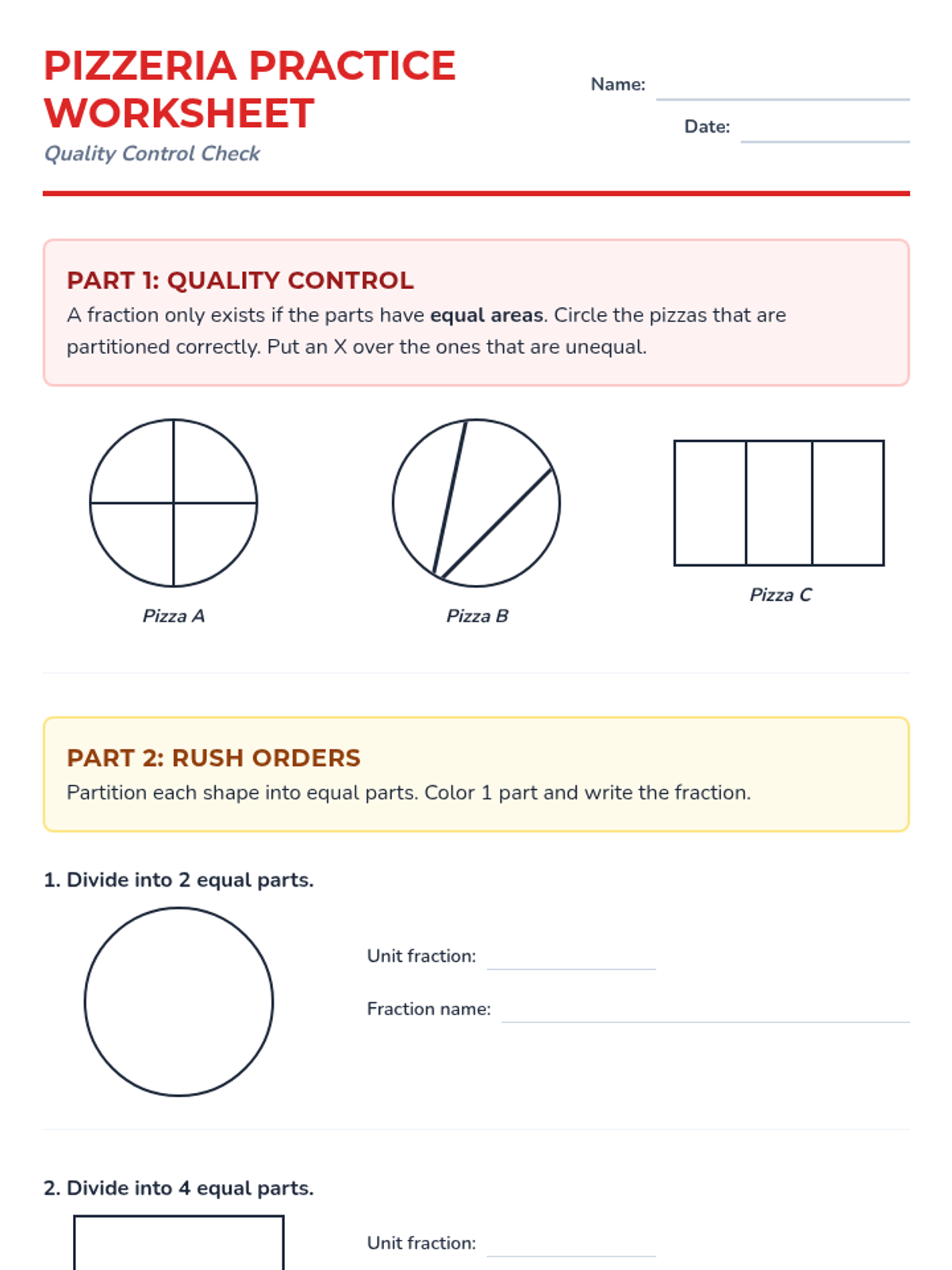
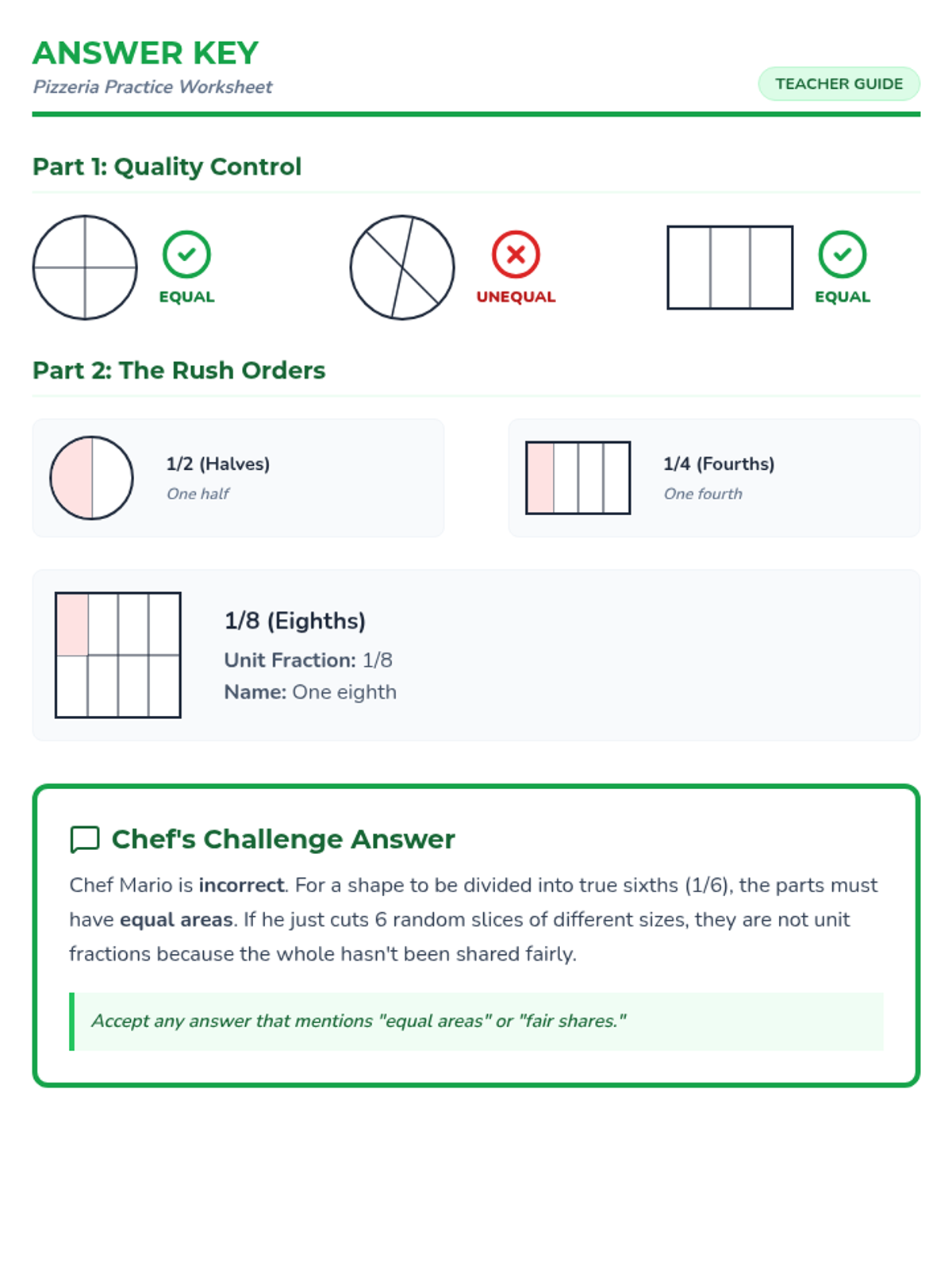
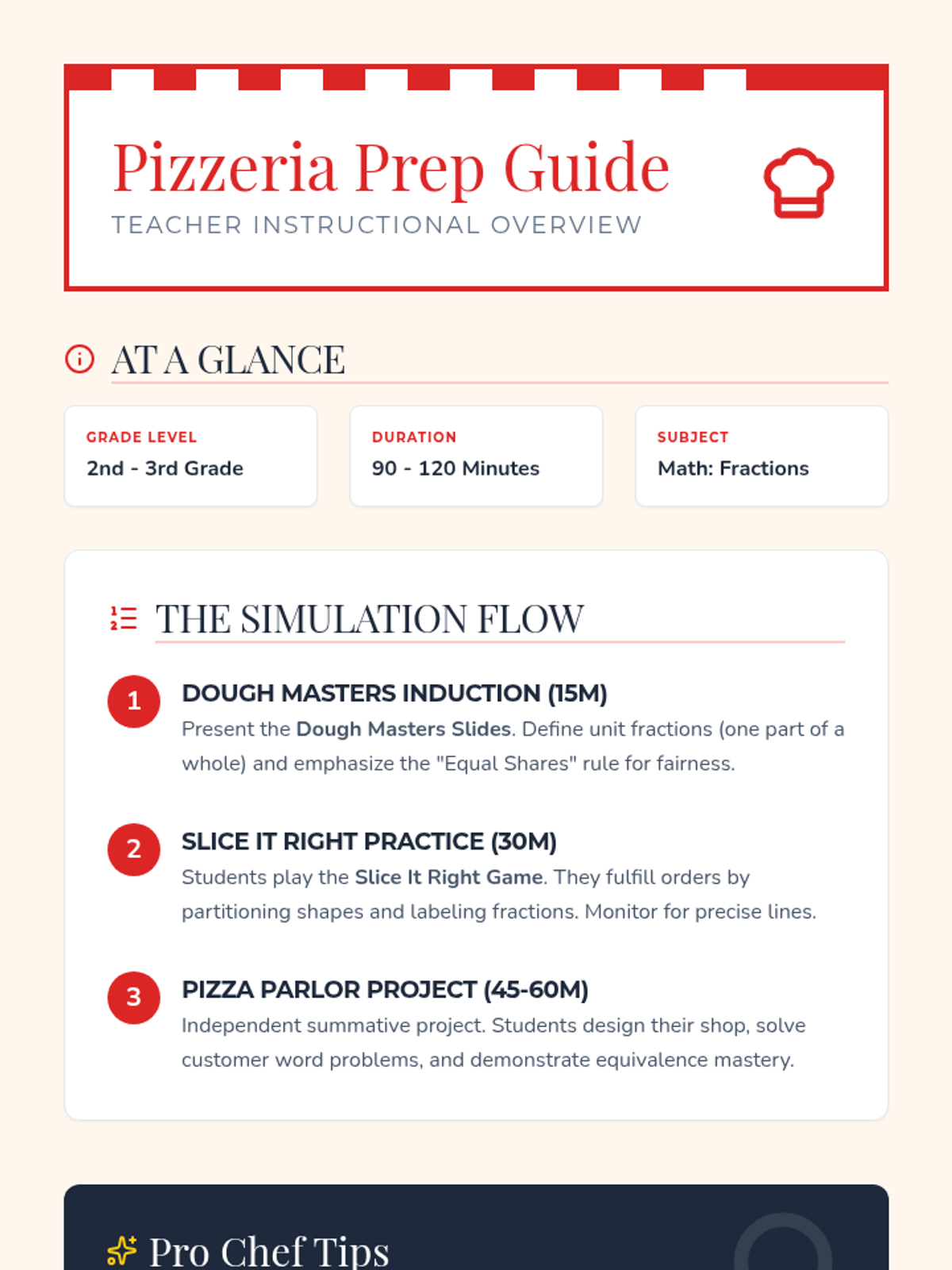
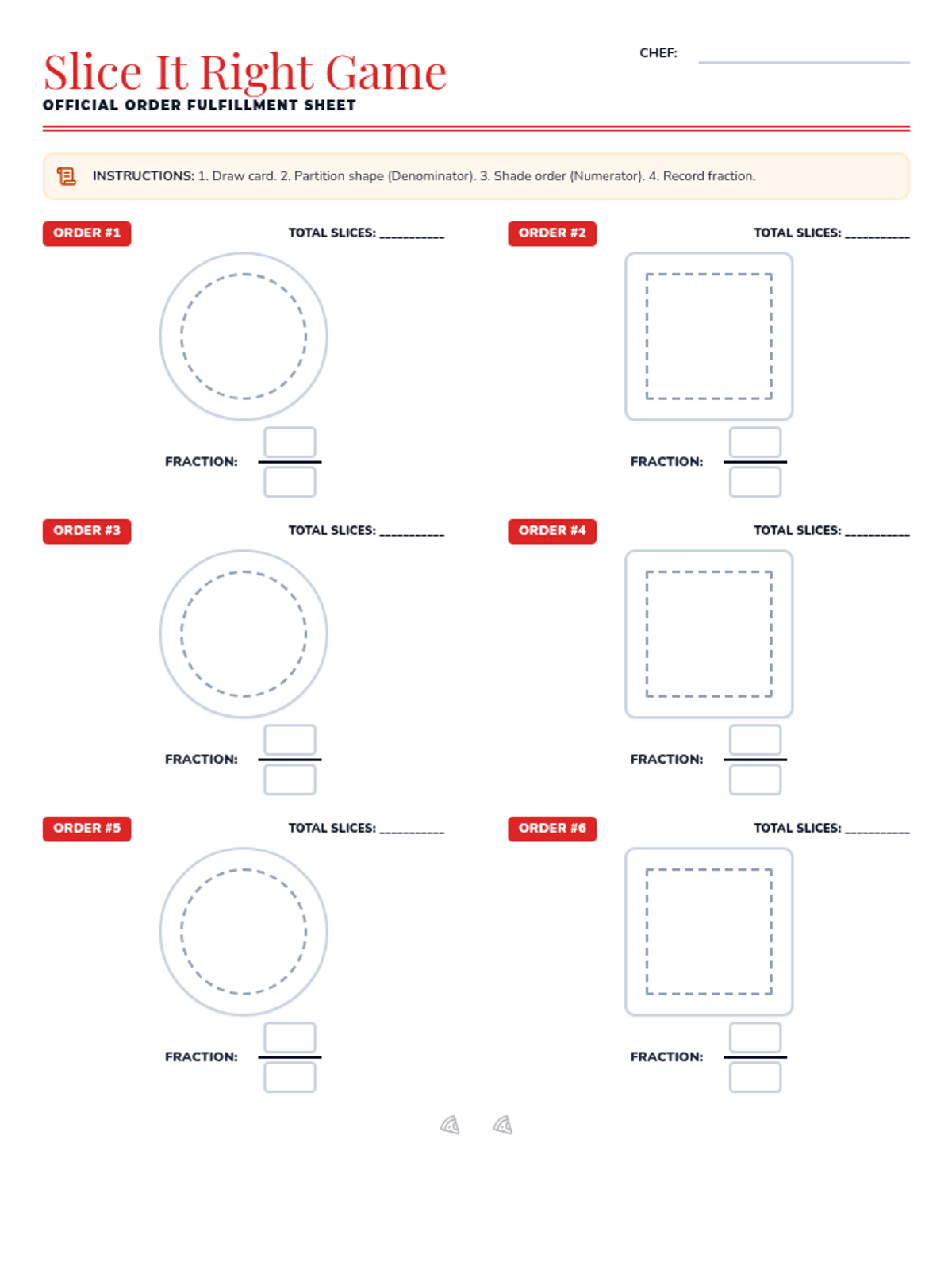
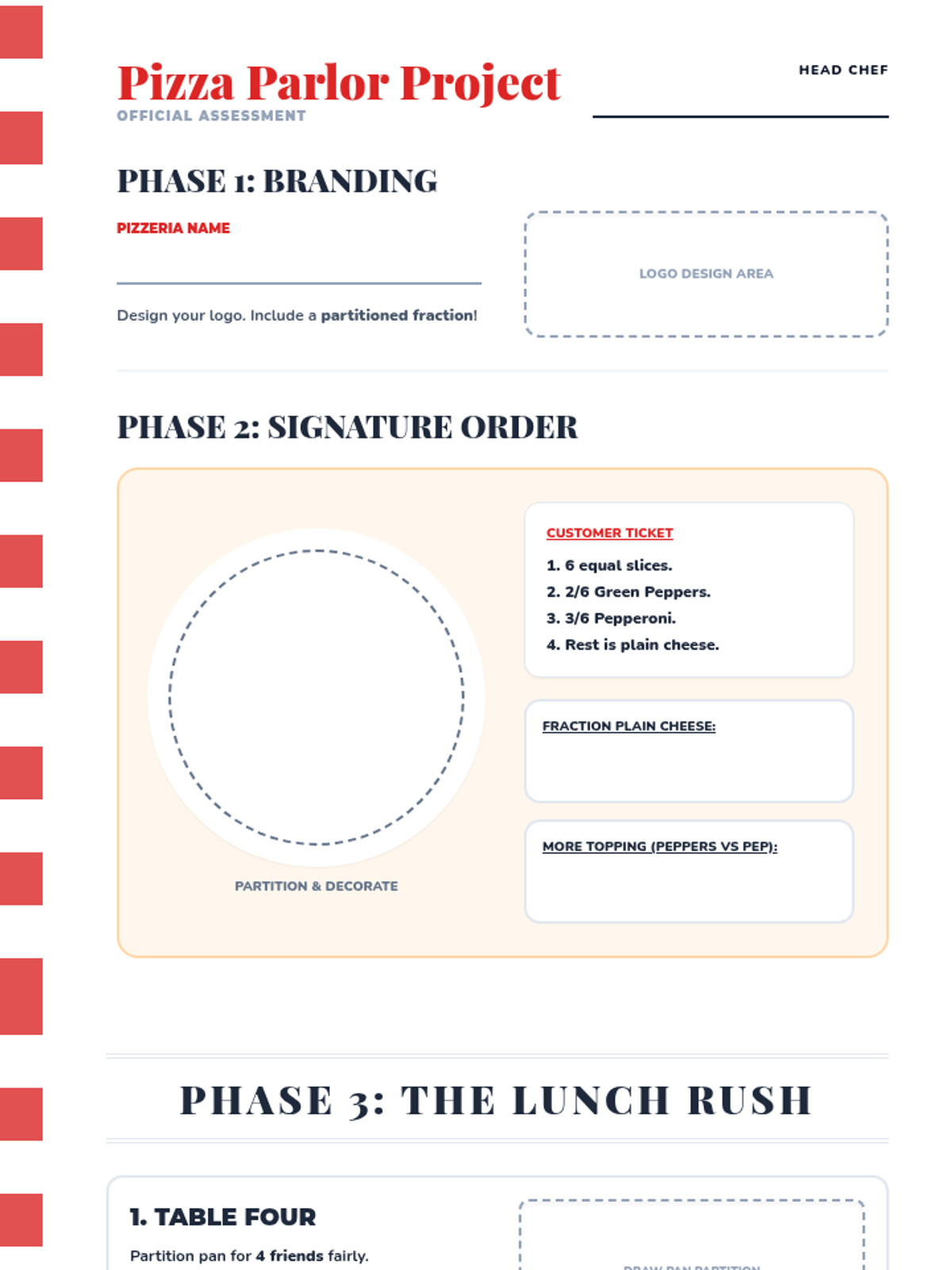
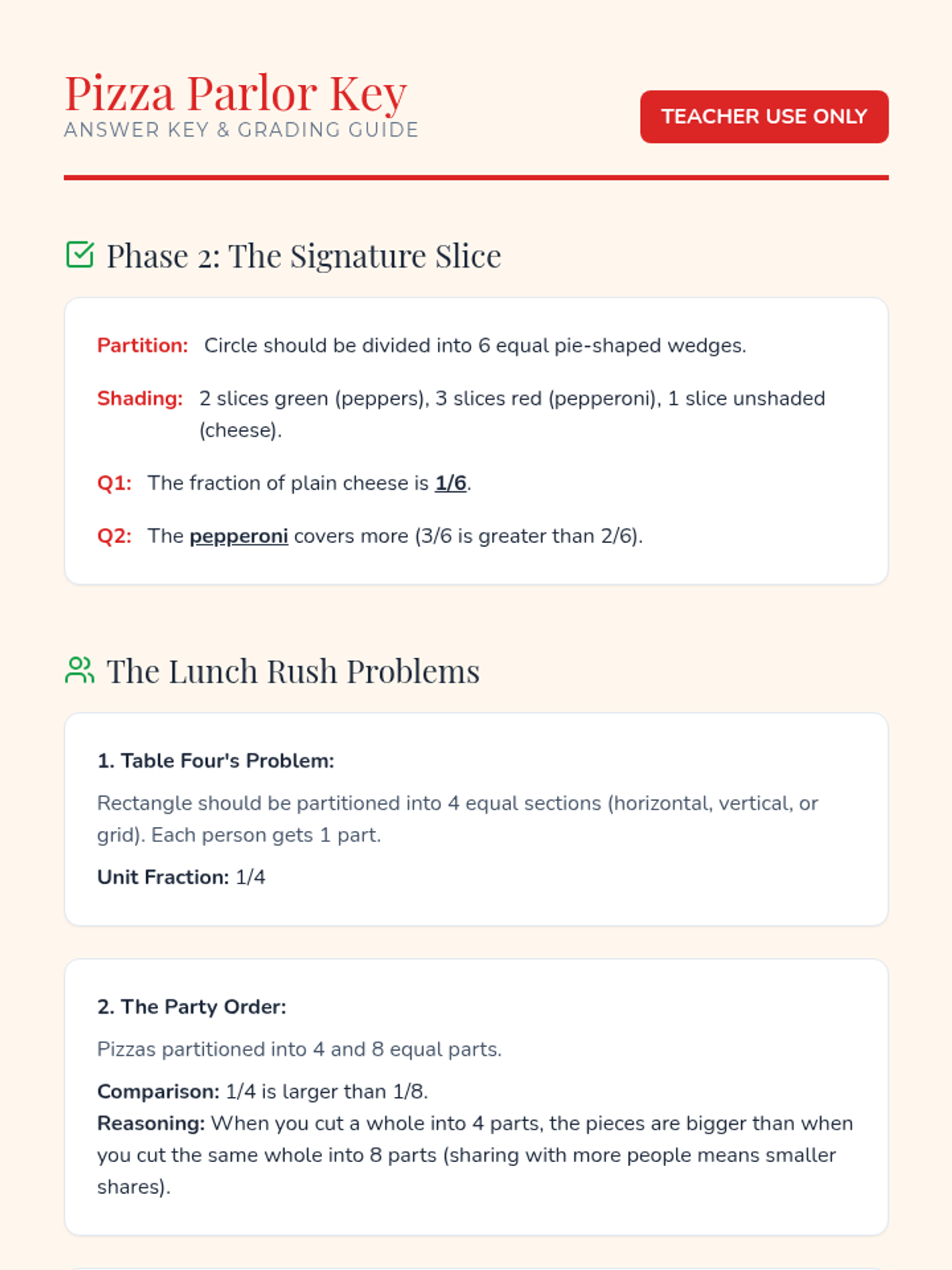
In this 3rd-grade math lesson, students become chefs in a busy pizzeria to master partitioning shapes into equal areas and identifying unit fractions. Through hands-on pizza-making scenarios, students bridge the gap between physical models and numerical fraction notation.
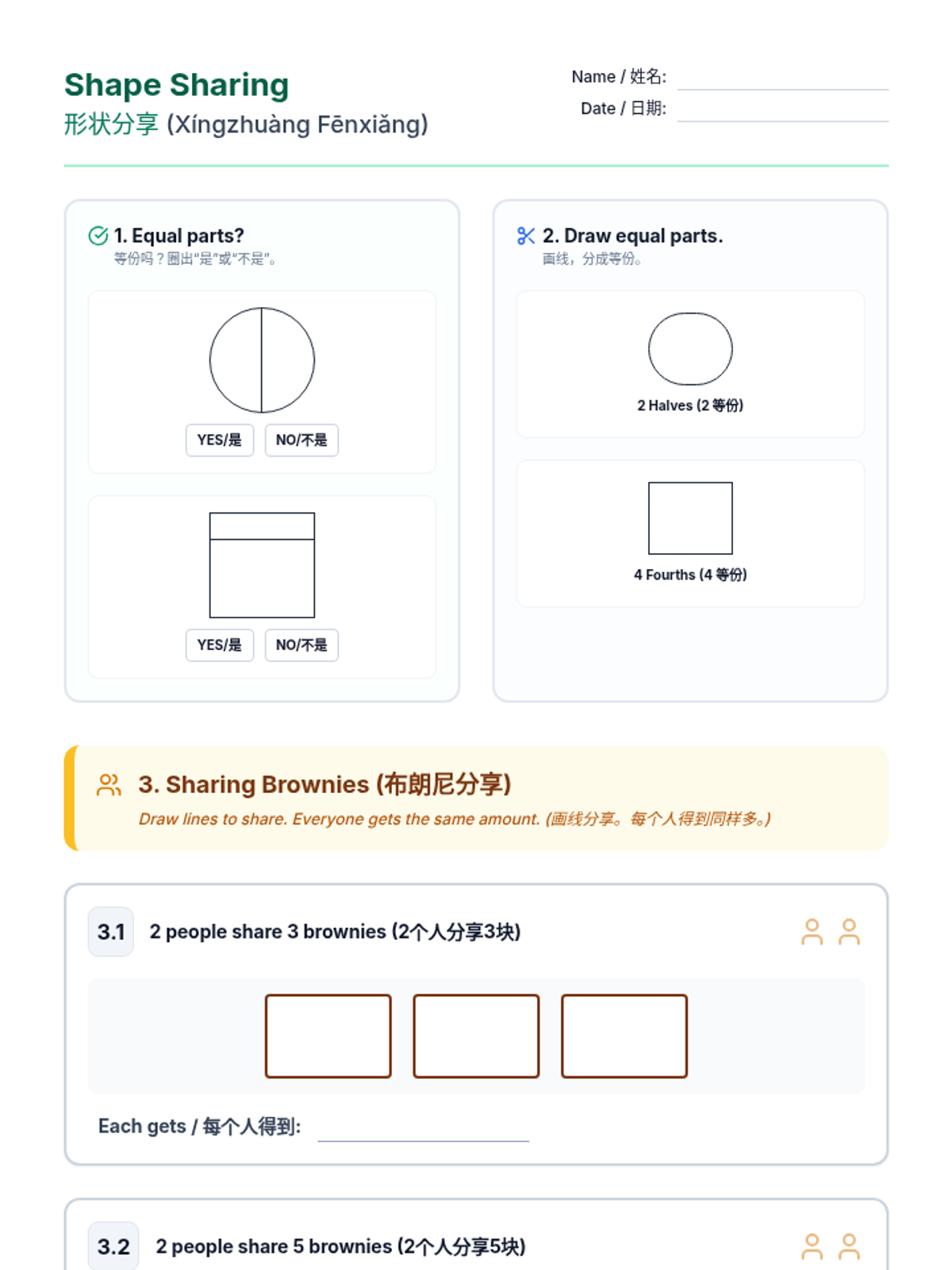
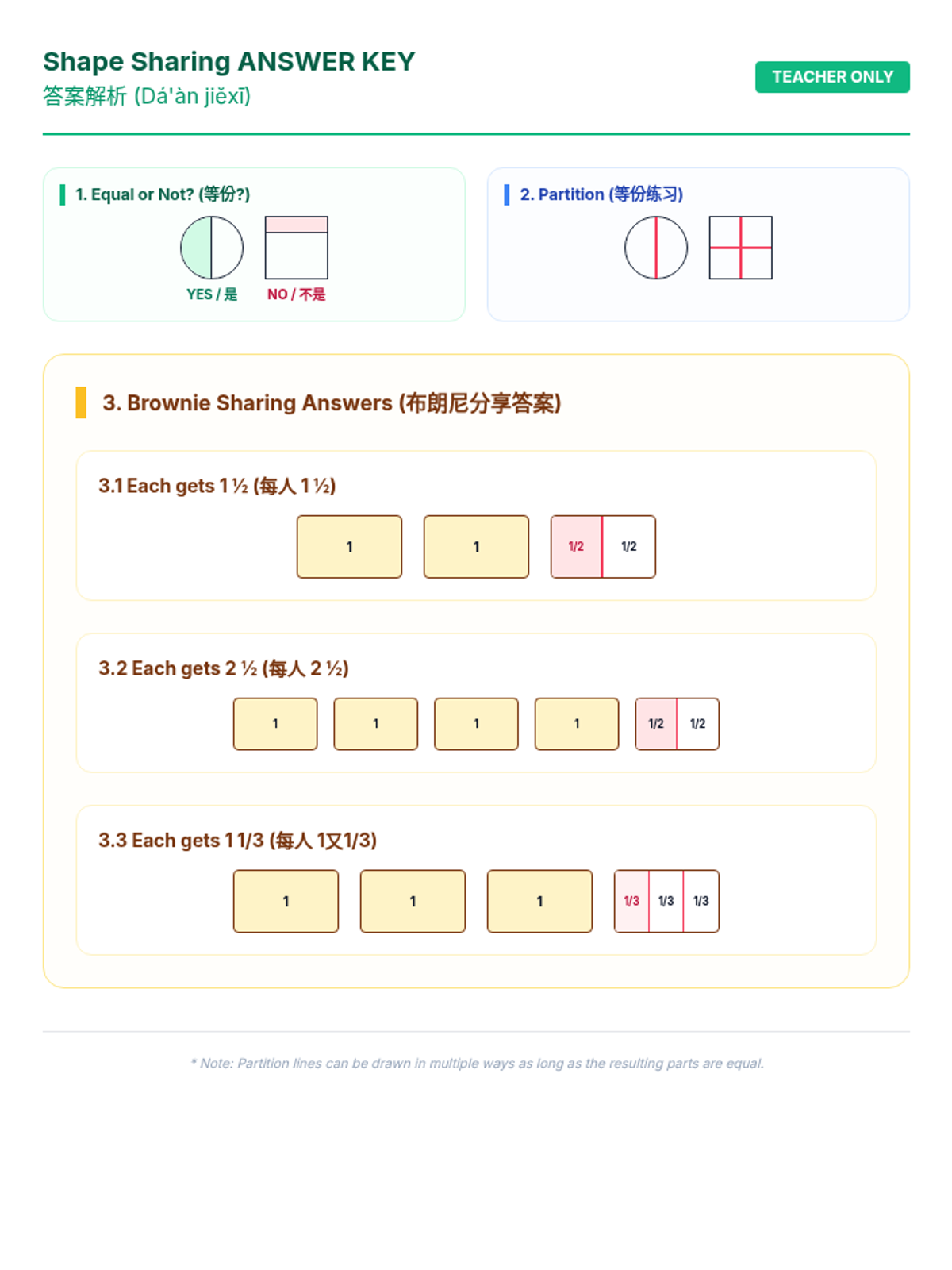
A bilingual (English/Simplified Chinese) lesson on partitioning shapes into equal shares (halves and fourths) for Level 1 ELL students. The lesson focuses on visual understanding and basic vocabulary like 'equal', 'half', and 'fourth'.
A comprehensive math simulation where students master unit fractions and partitioning through the lens of running a pizzeria. Includes instructional slides, a collaborative game, and an independent creative project.
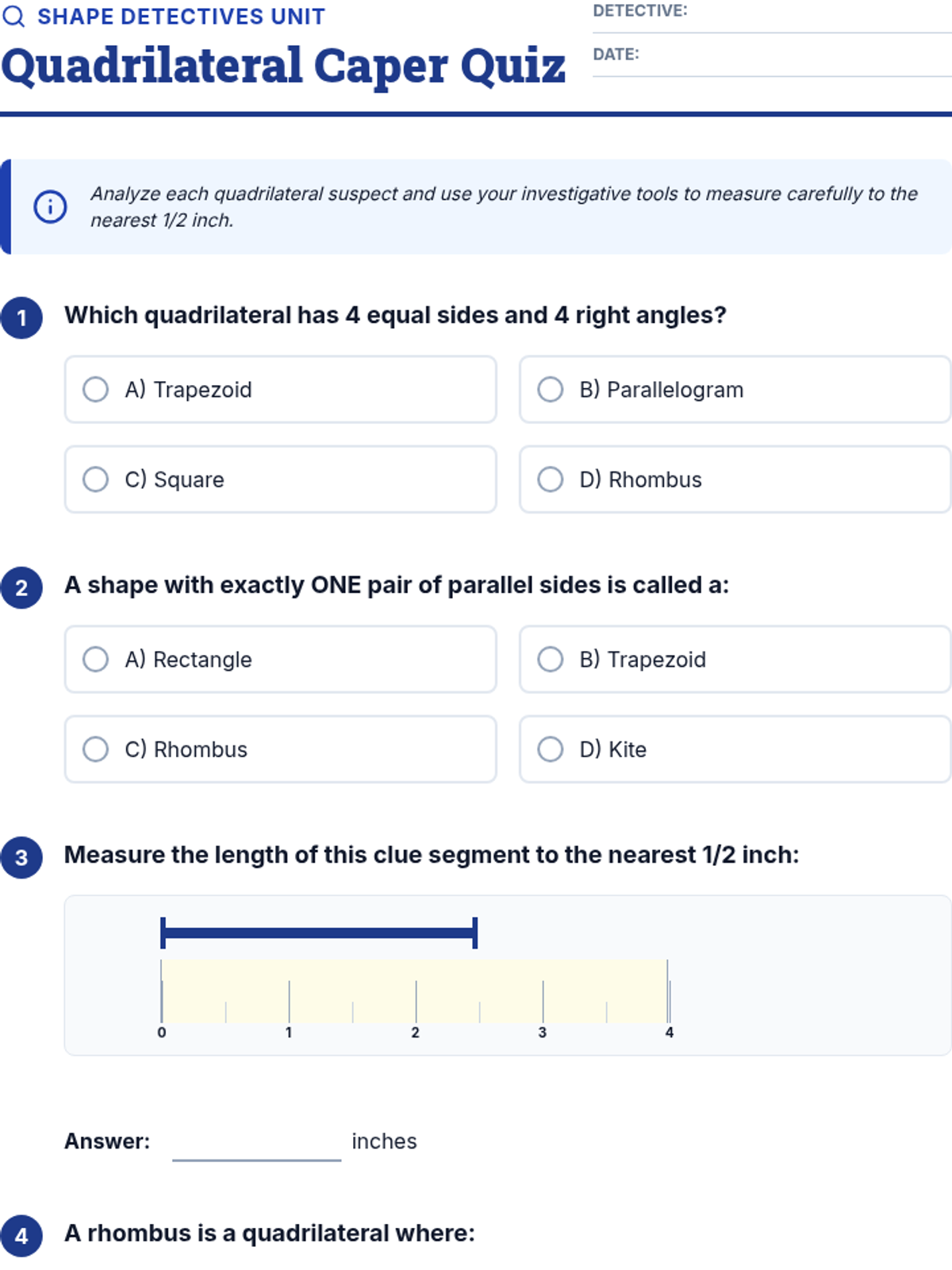
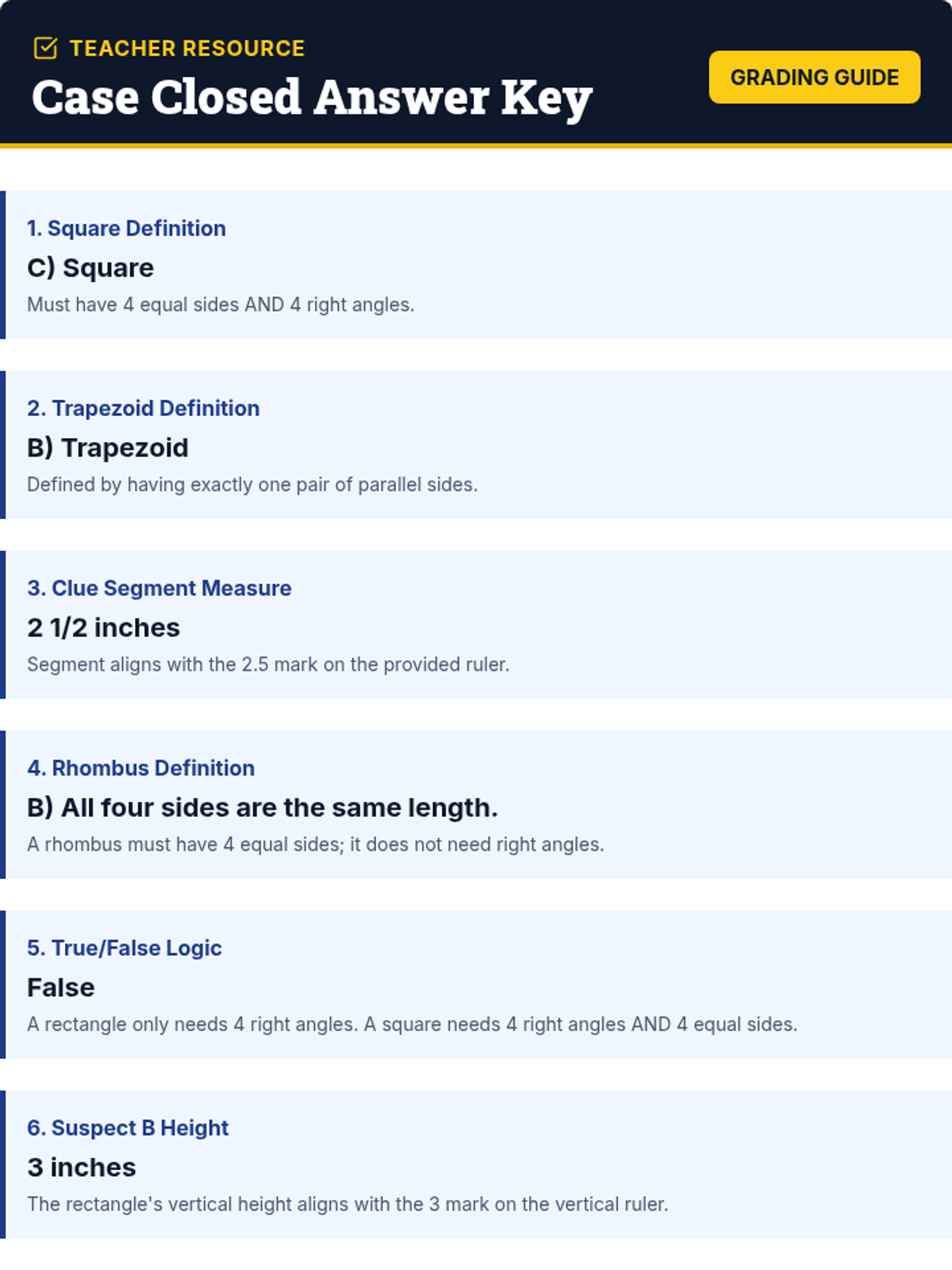
Students will identify various quadrilaterals by their attributes and practice measuring lengths to the nearest half-inch in this detective-themed lesson.
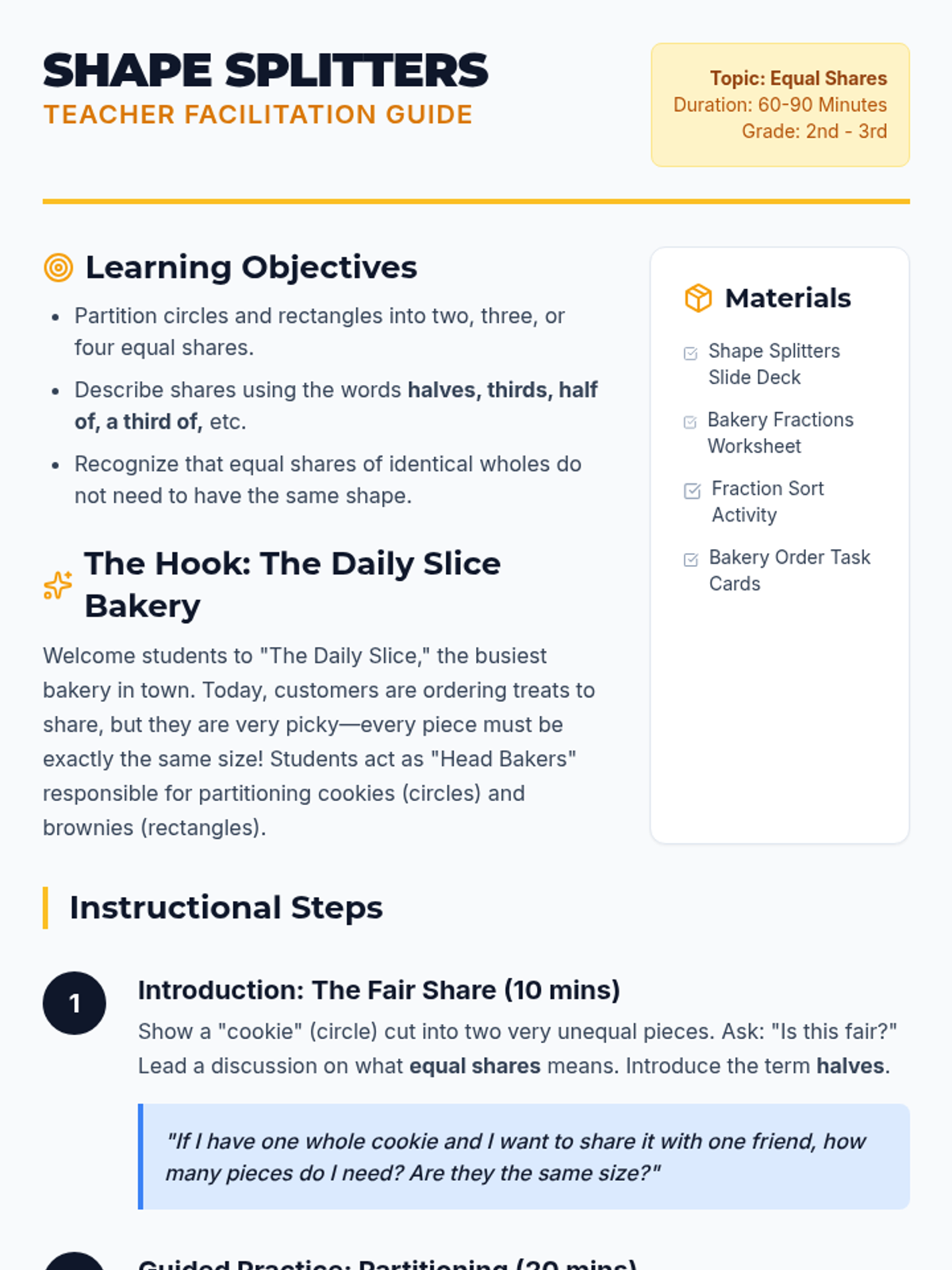
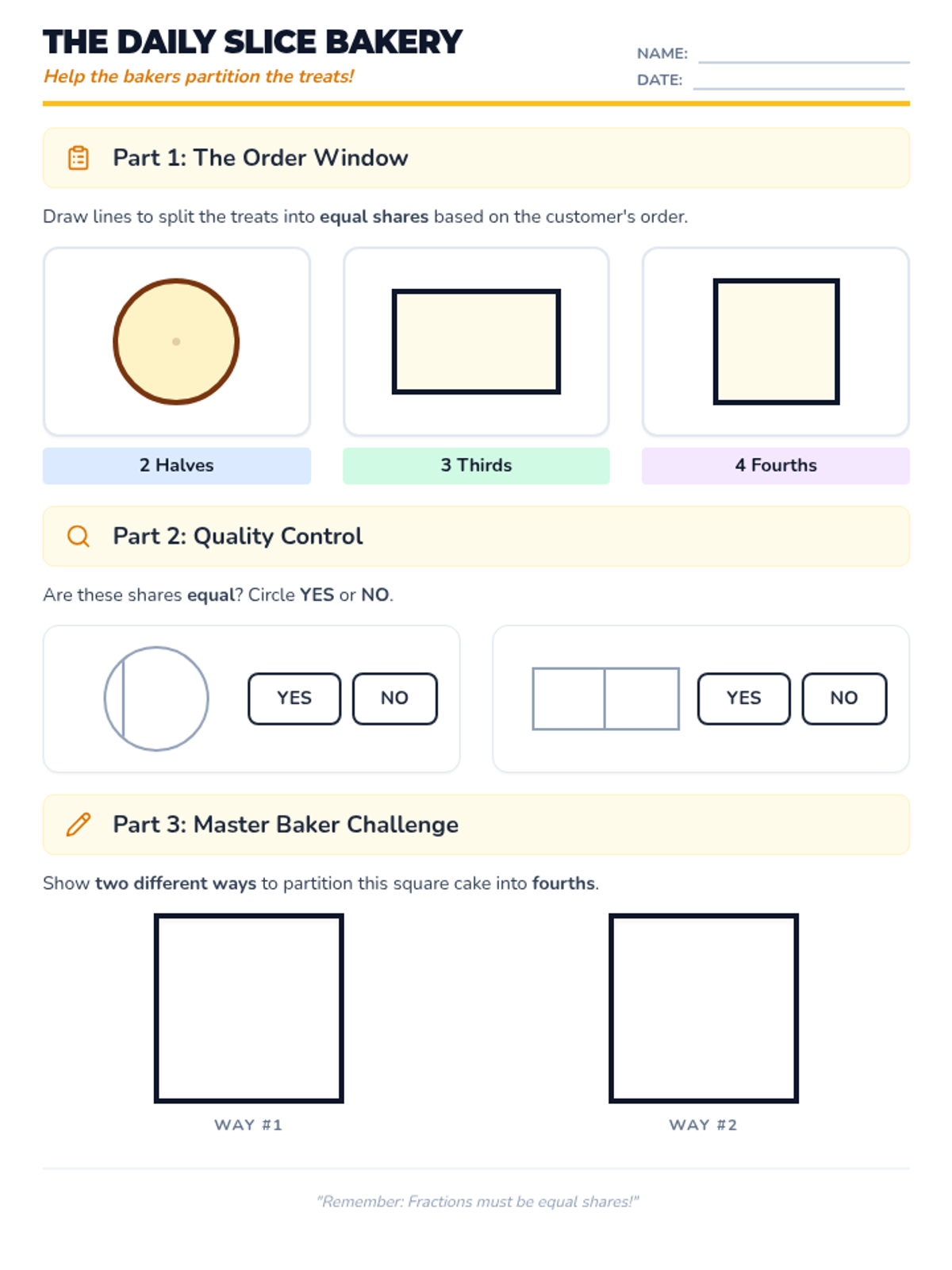
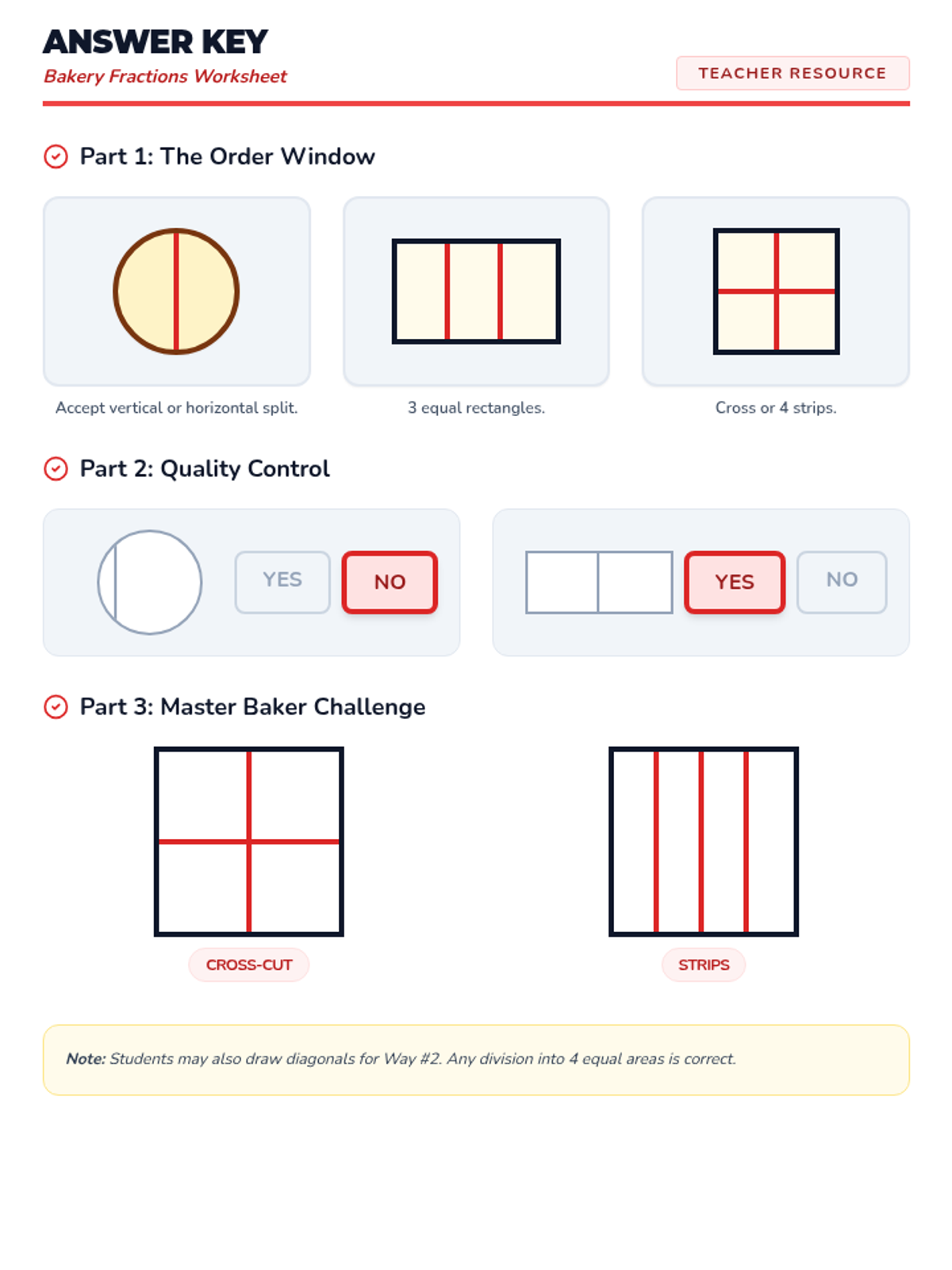
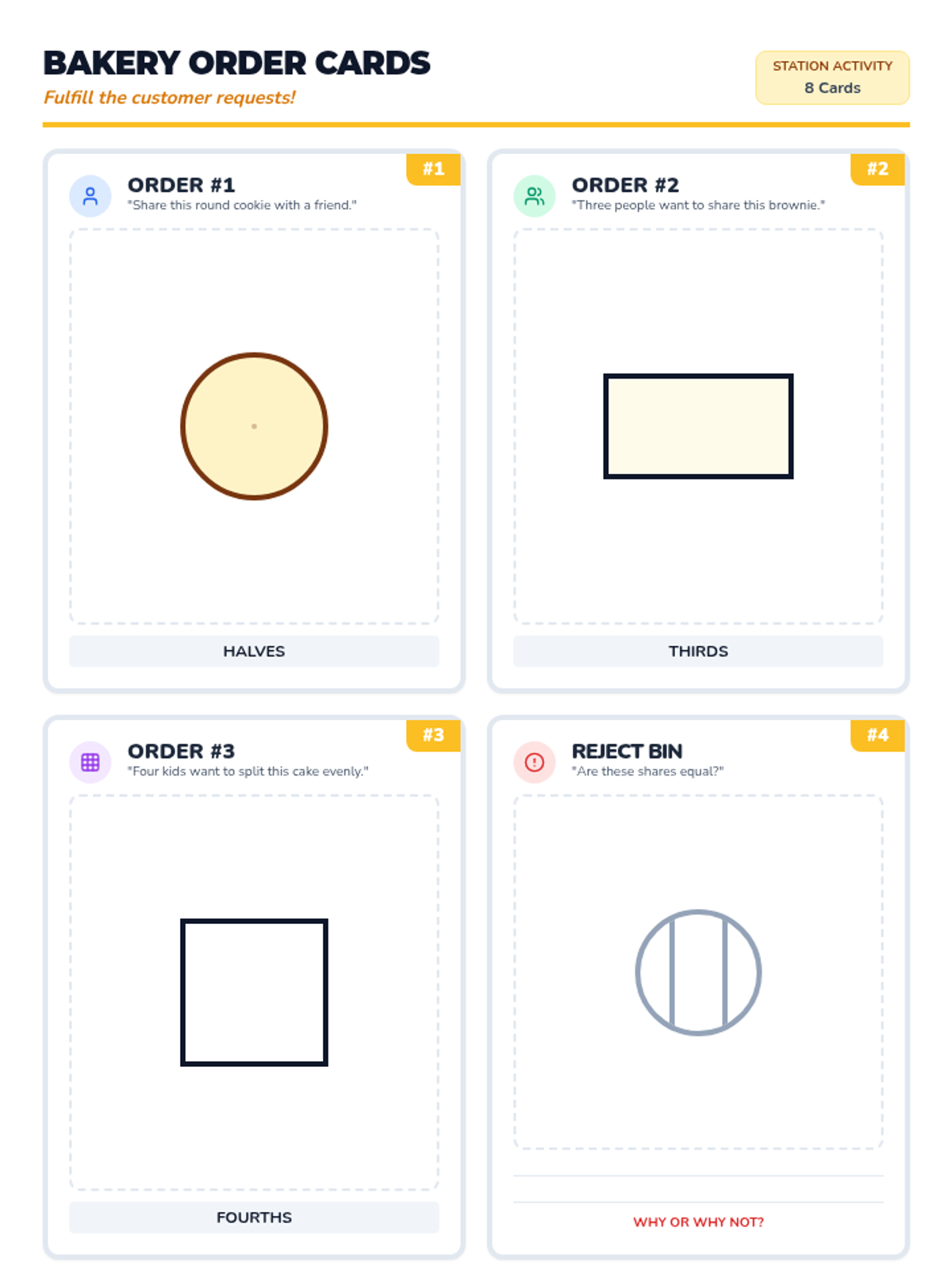
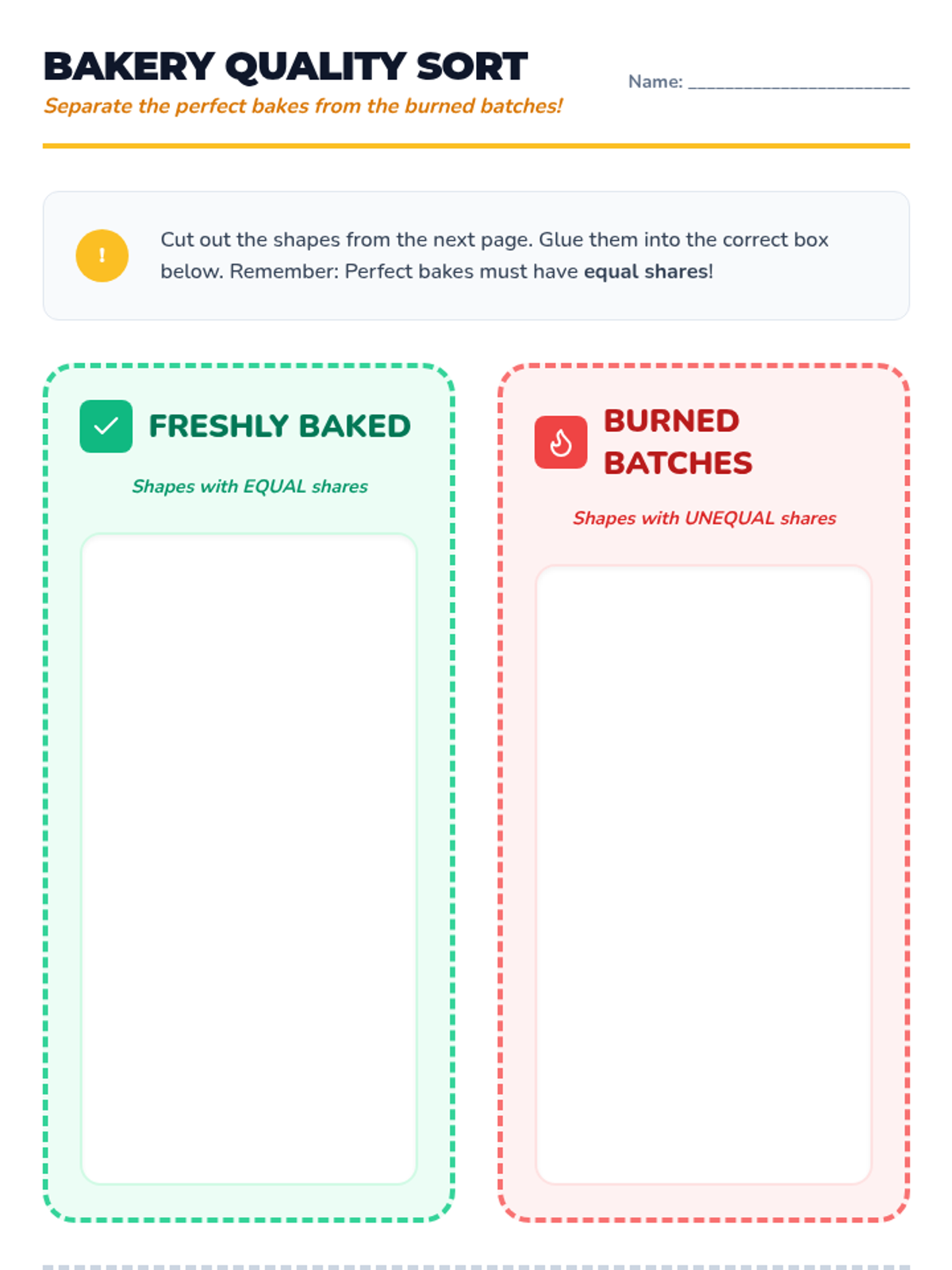
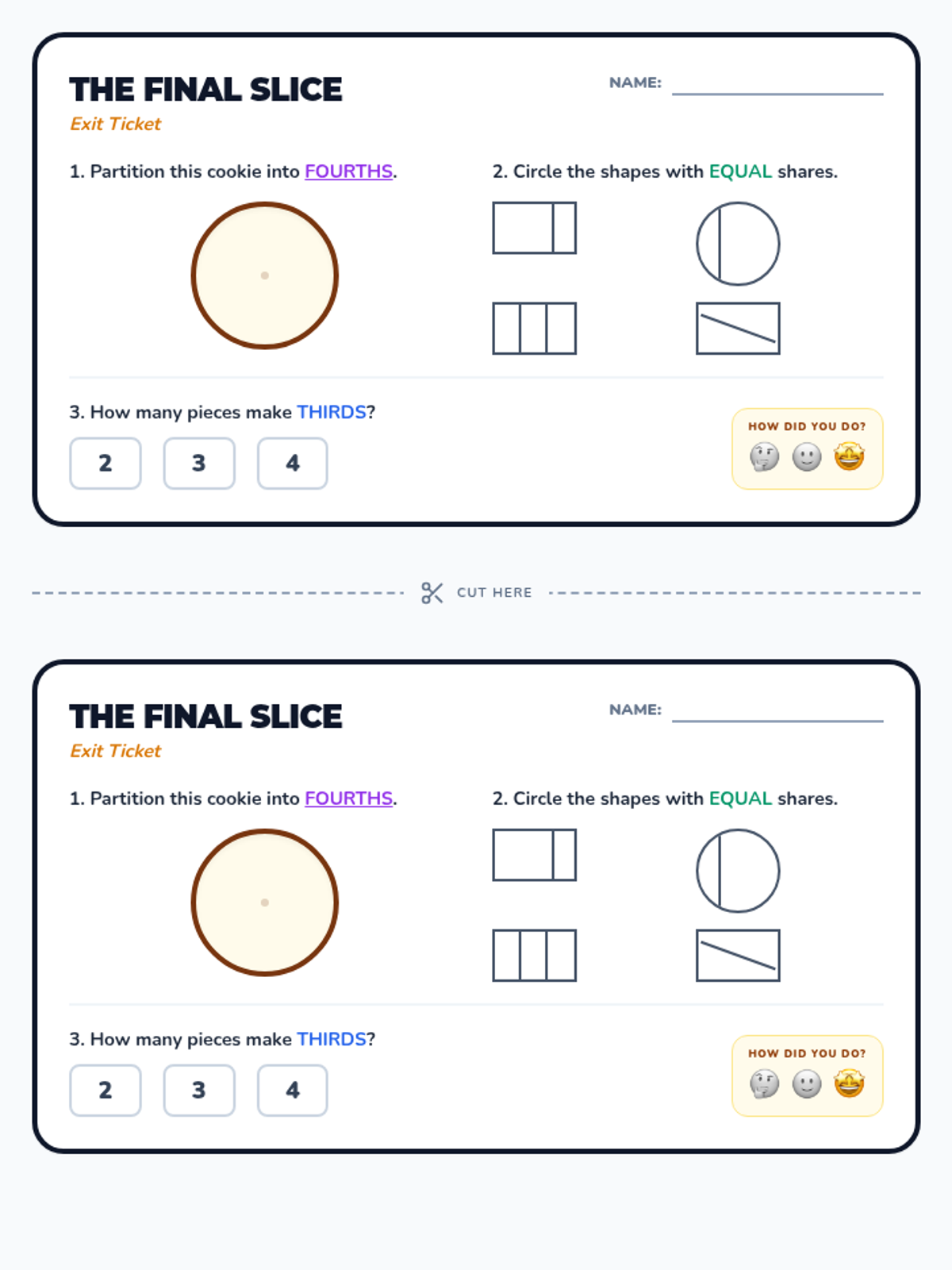
A hands-on introduction to partitioning circles and rectangles into halves, thirds, and fourths using a bakery theme. Students will learn to identify equal shares and use fractional language correctly.
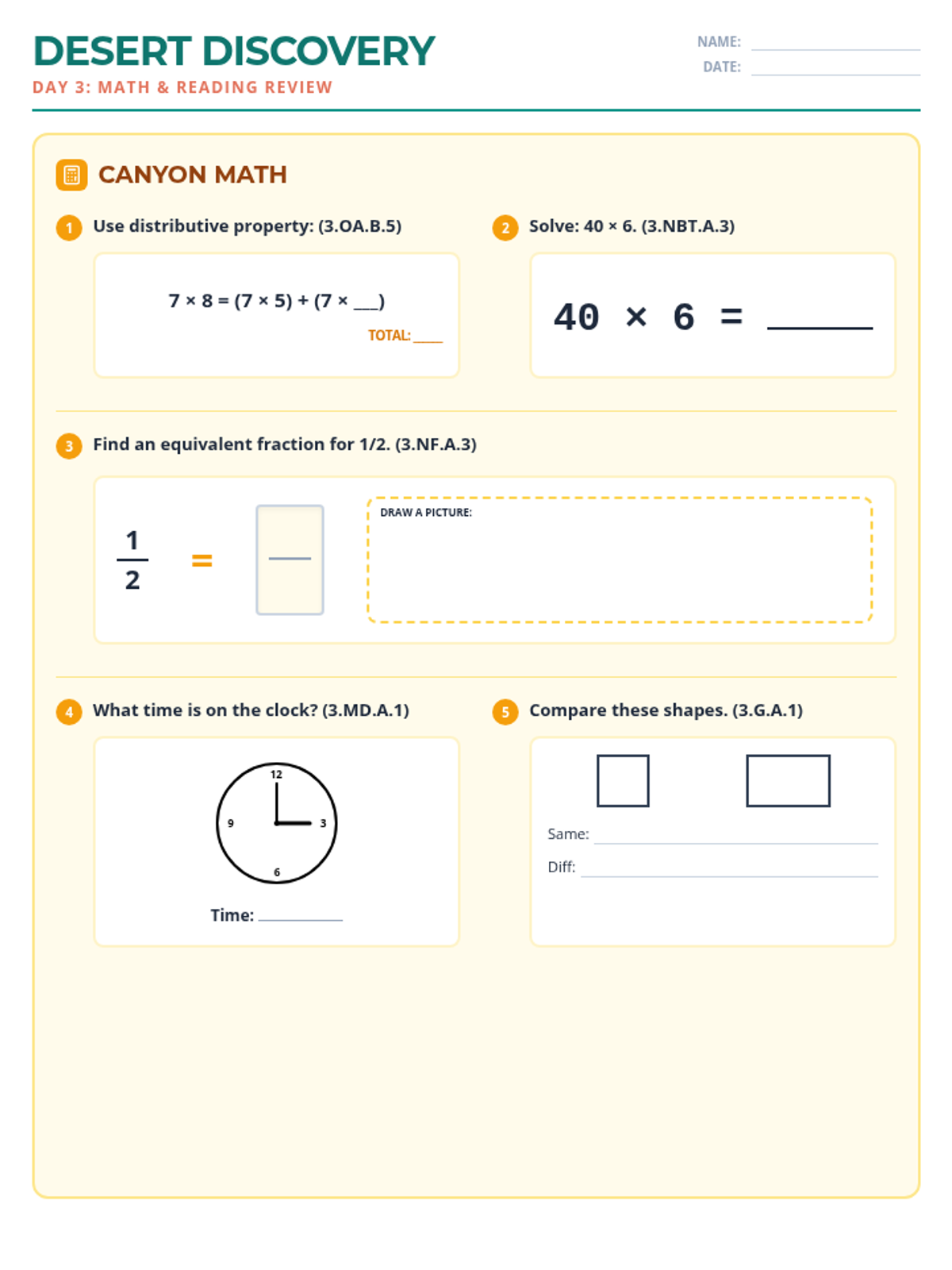
Day 3 of the desert-themed spiral review, featuring informational text about the Grand Canyon and math problems covering multiplication properties, time, equivalent fractions, and geometry attributes.
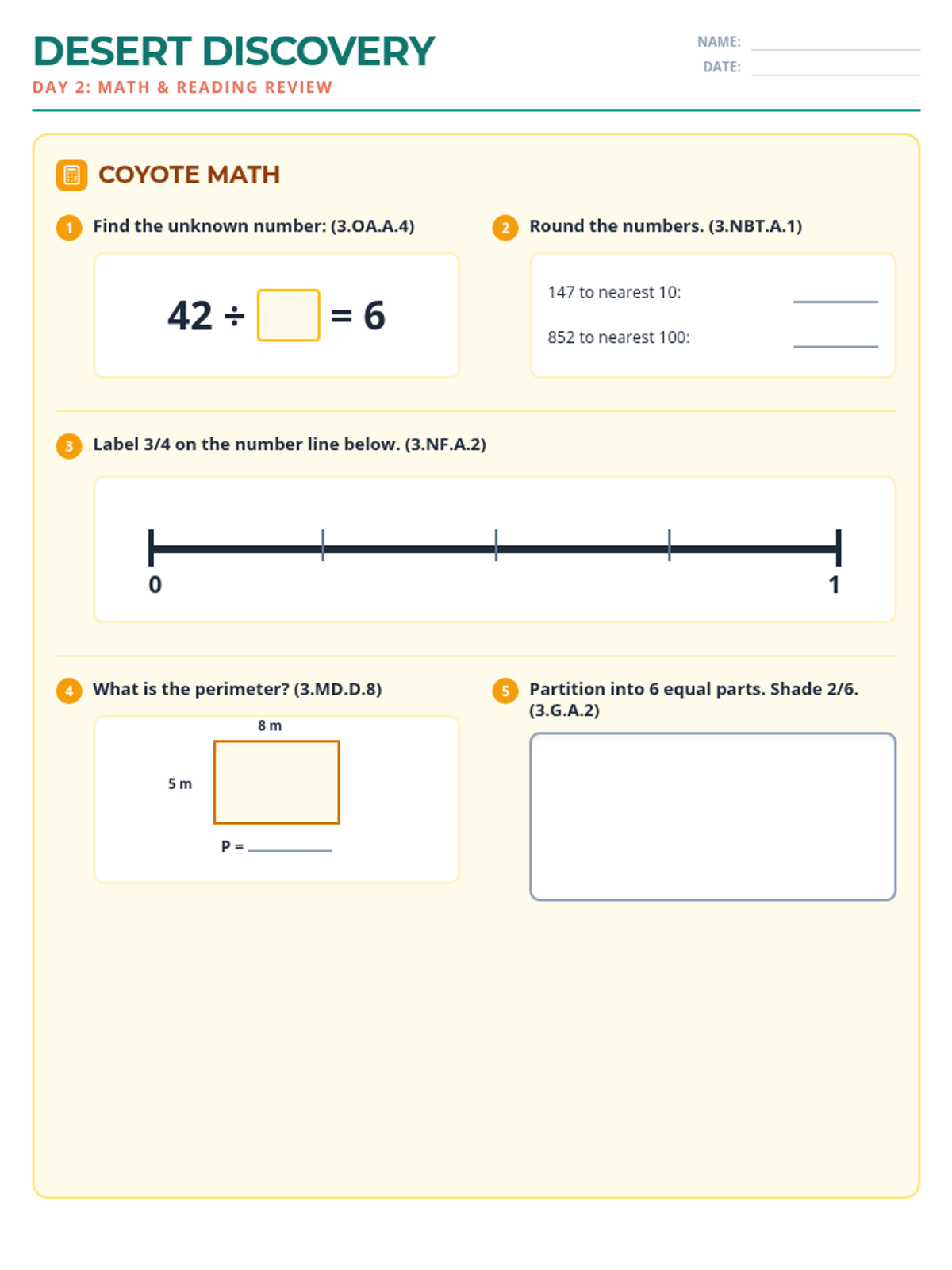
Day 2 of the desert-themed spiral review, featuring a desert-themed fable and math problems covering division, rounding, number lines, perimeter, and shape partitioning.
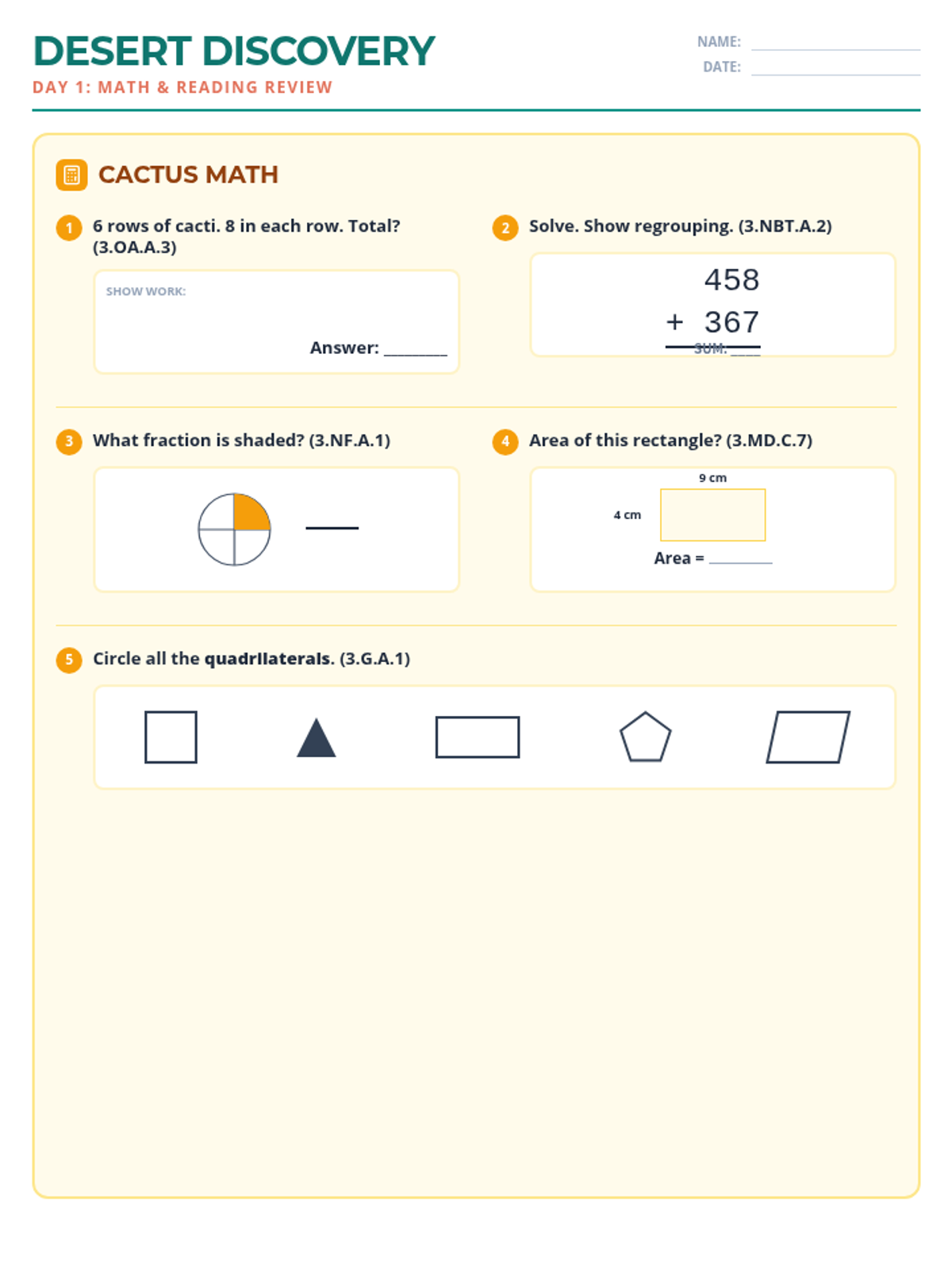
Day 1 of the desert-themed spiral review, featuring informational reading about the Saguaro cactus and math problems covering multiplication, addition, fractions, area, and geometry.
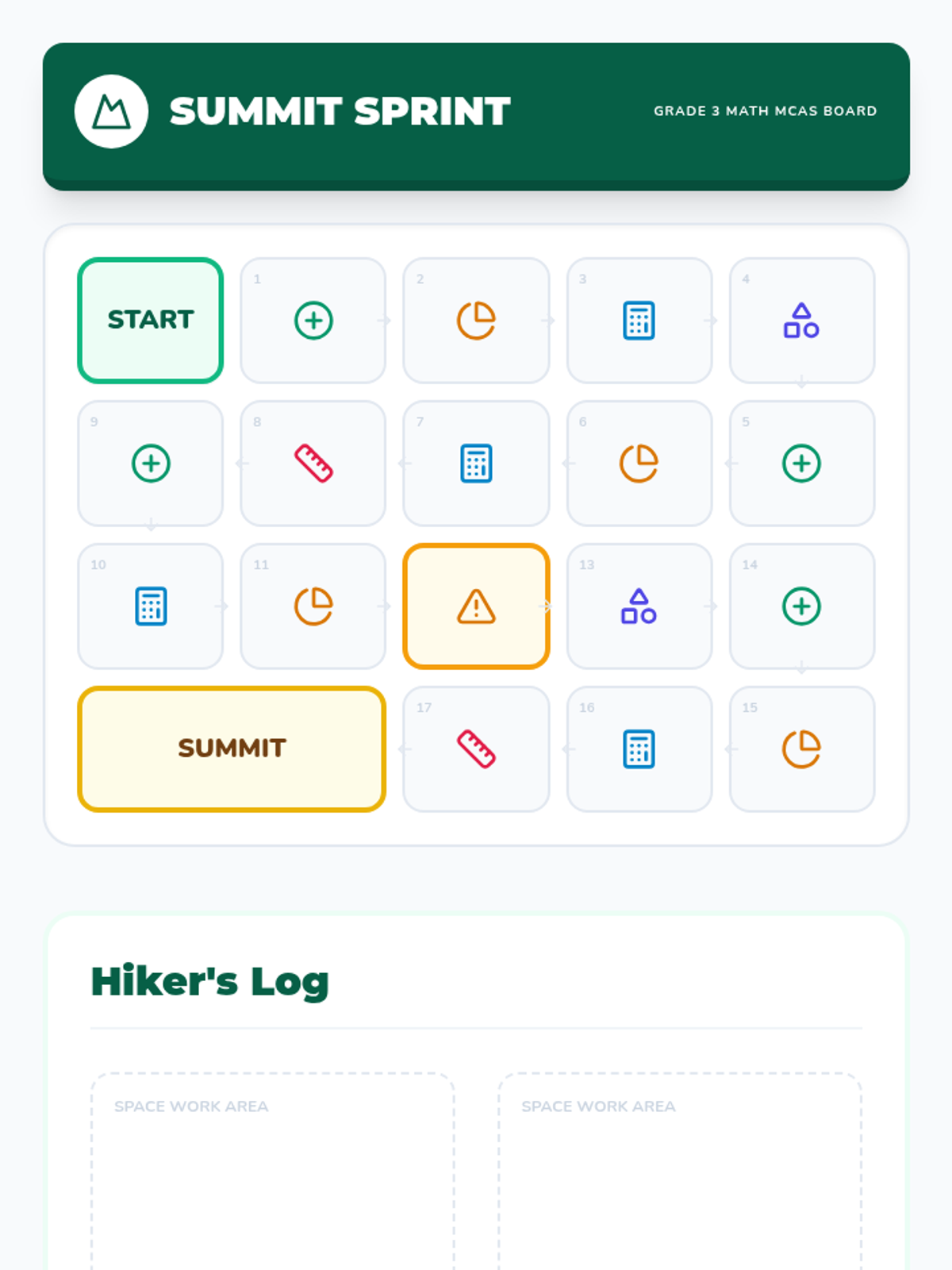
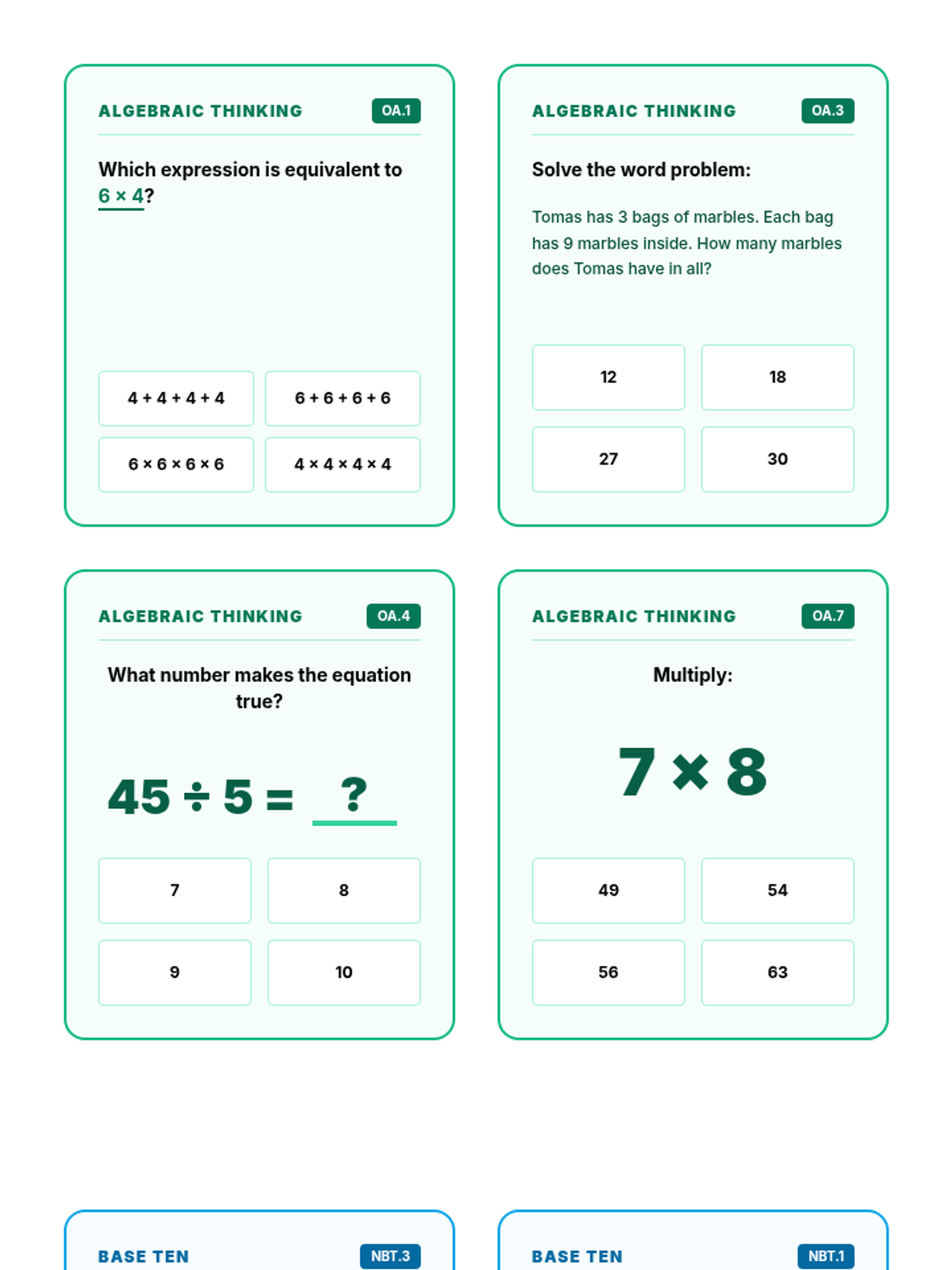
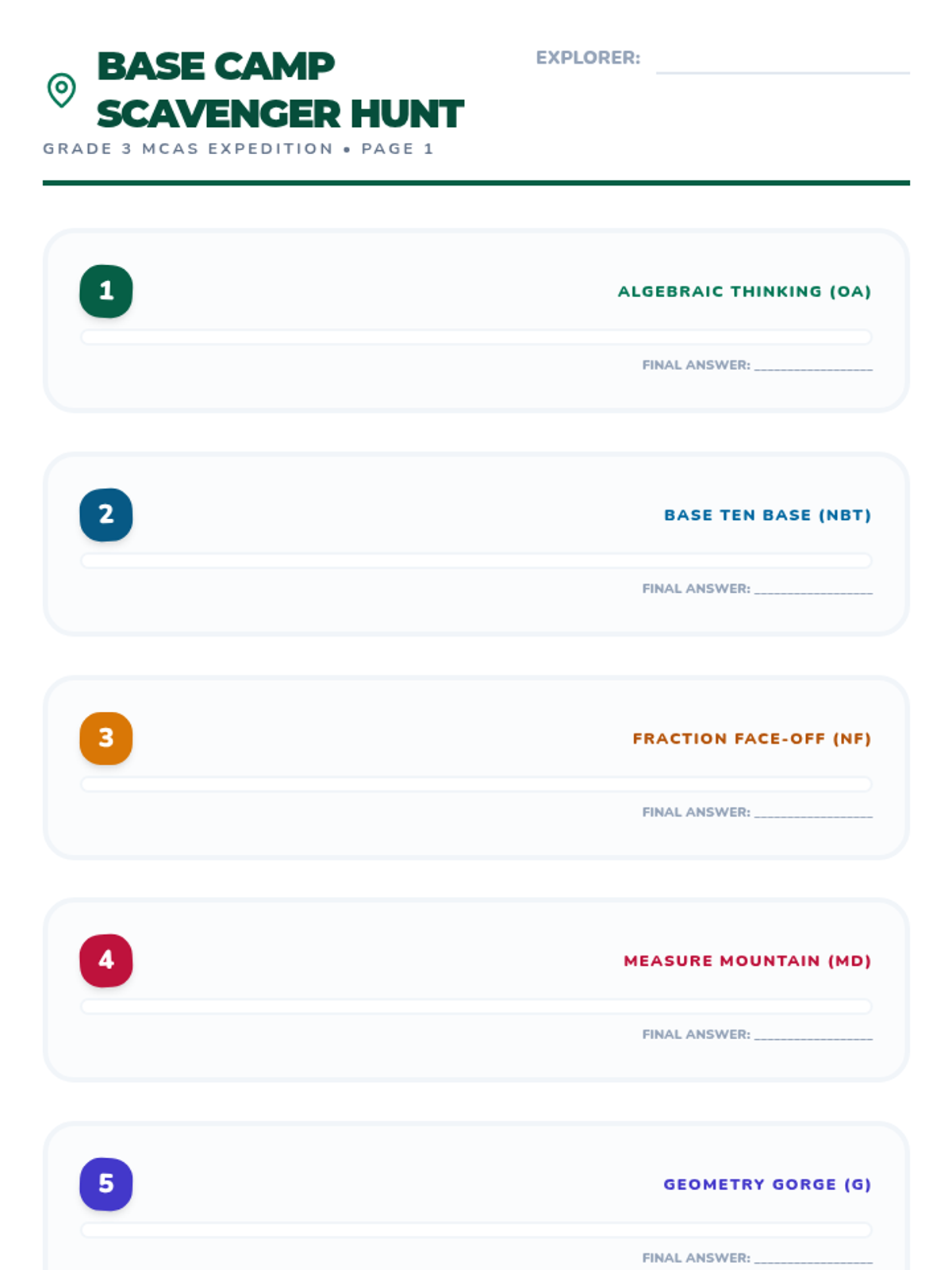
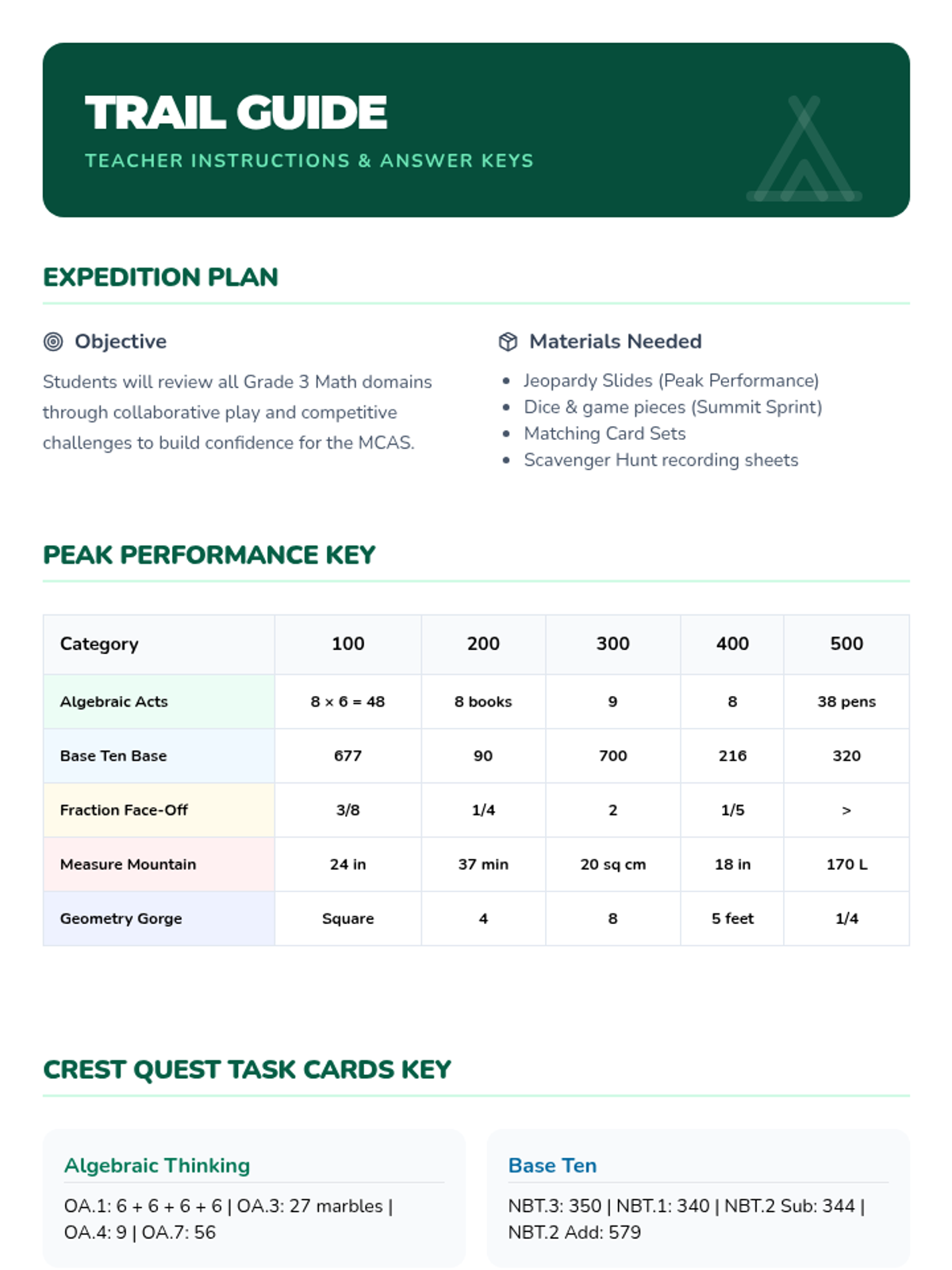
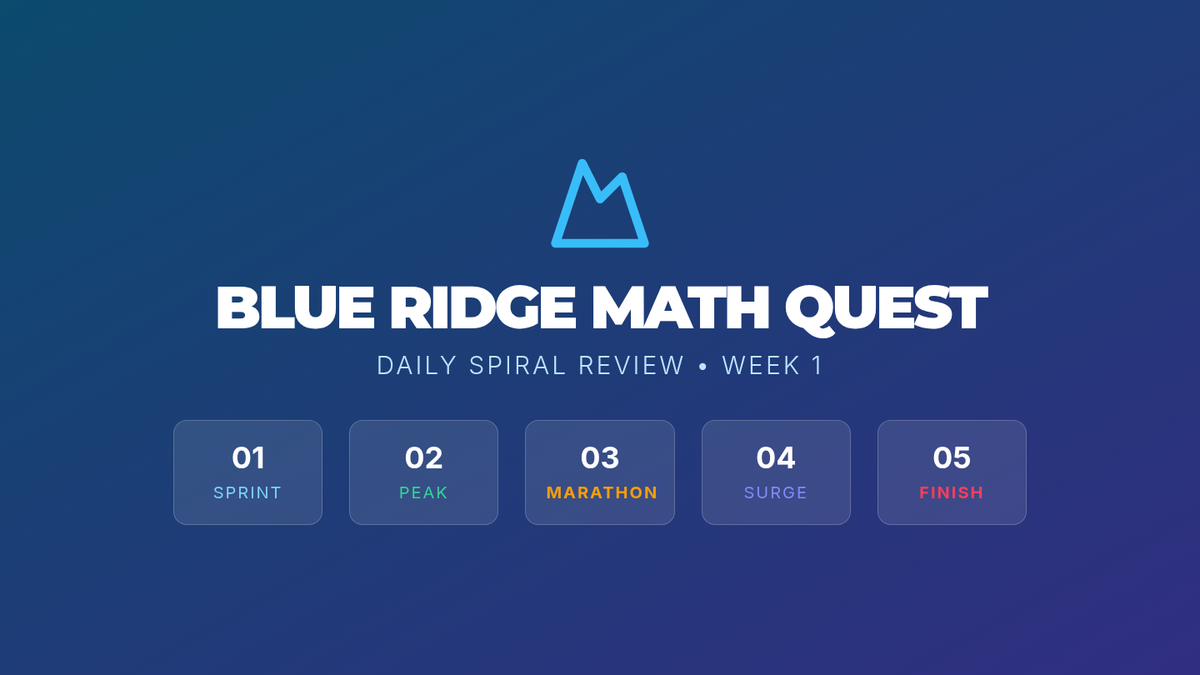
A high-energy review lesson using a mountain-climbing theme to practice third-grade math standards through board games, slides, and scavenger hunts.
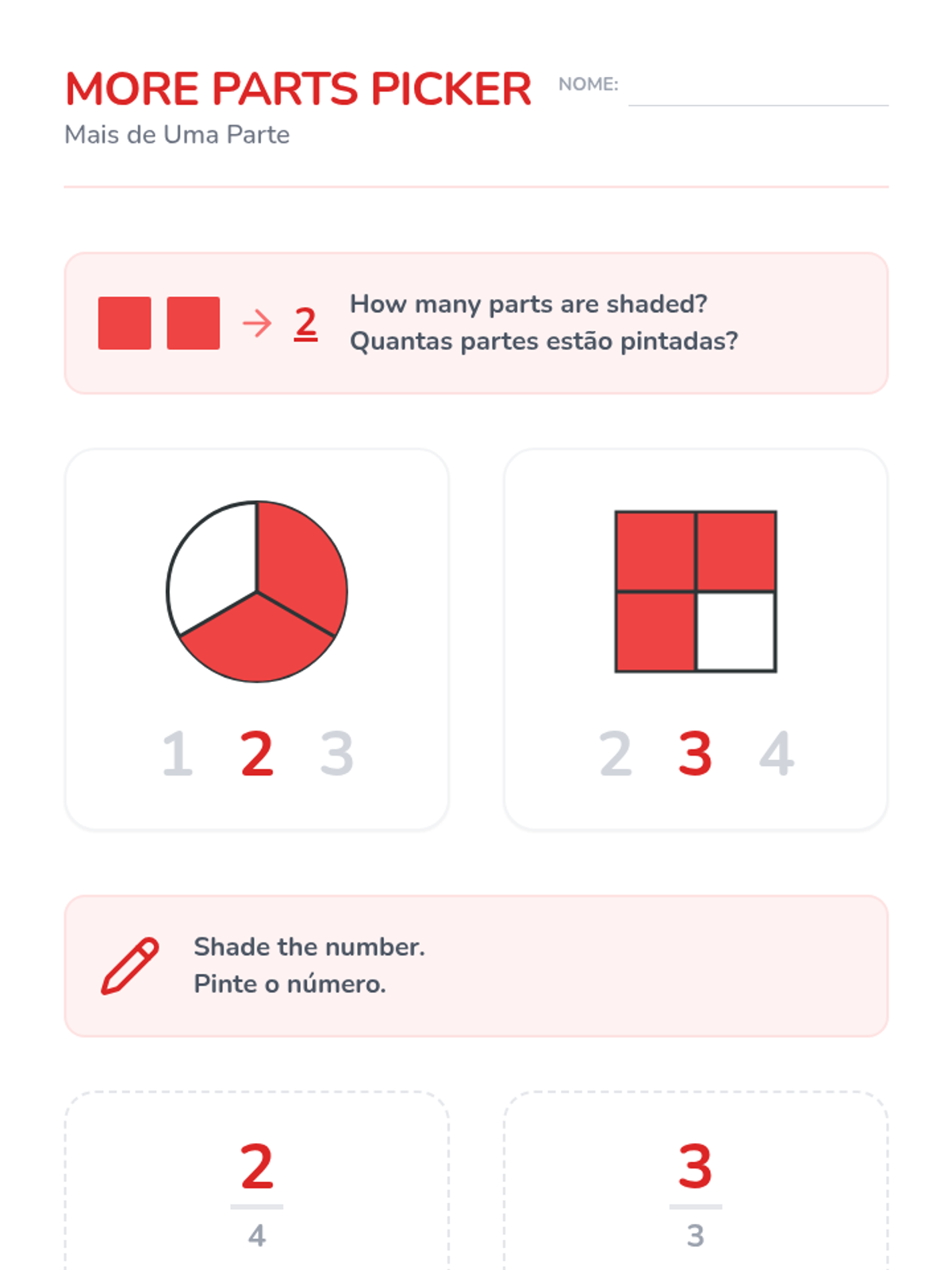
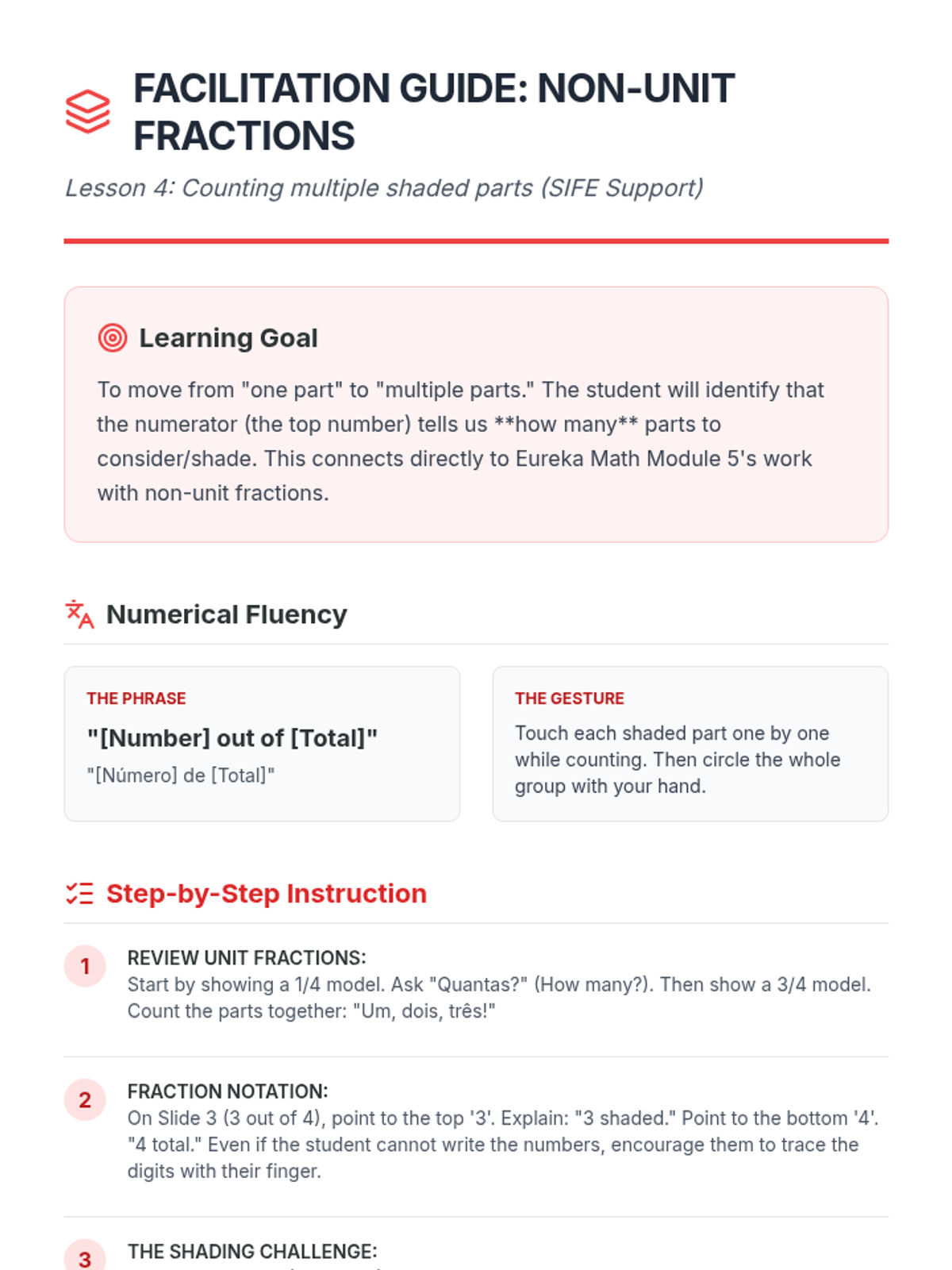
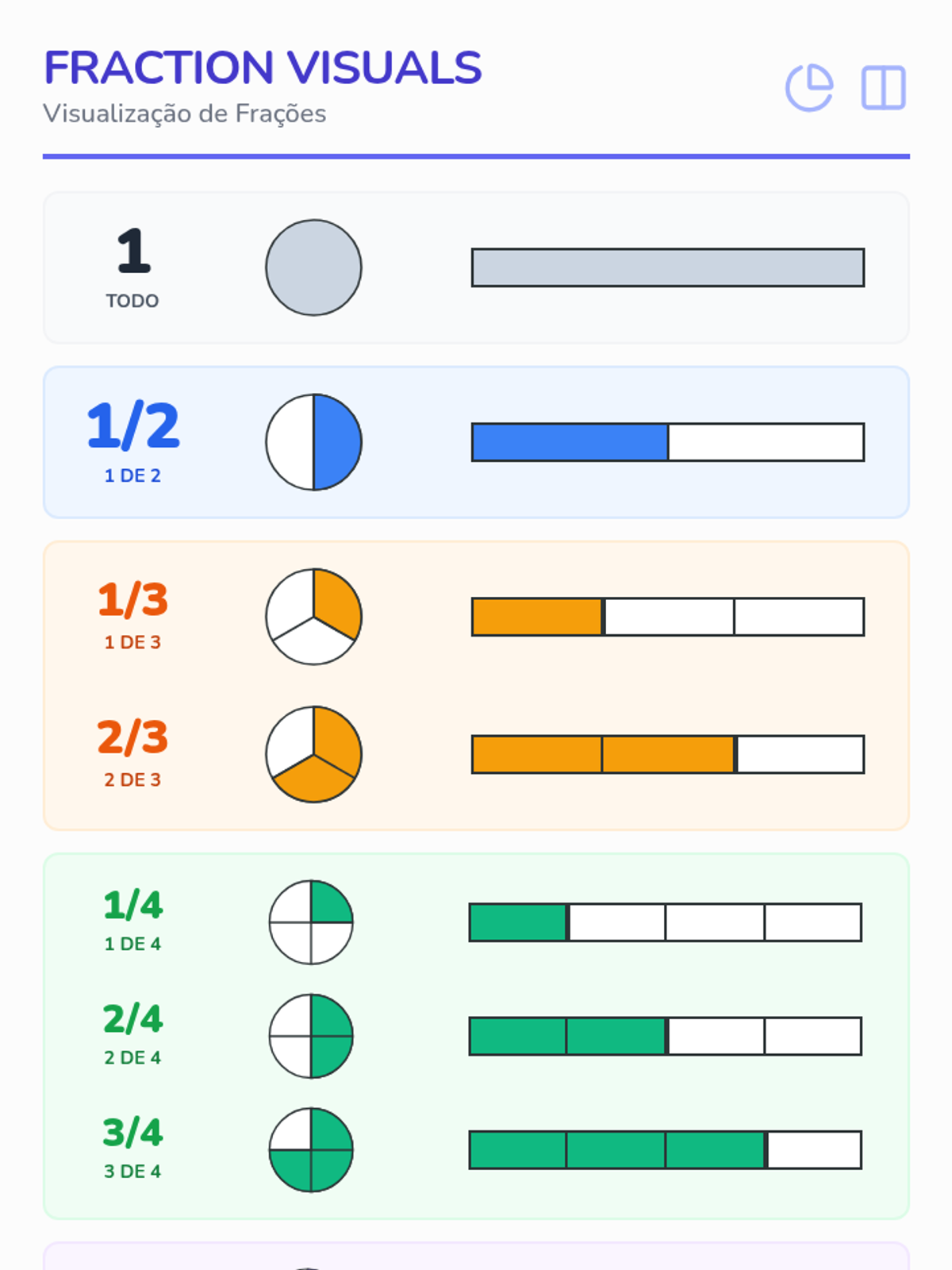
Introduces non-unit fractions by counting multiple shaded parts (e.g., 2 out of 3, 3 out of 4). Focuses on the verbal transition from "one part" to "many parts" while maintaining visual consistency.
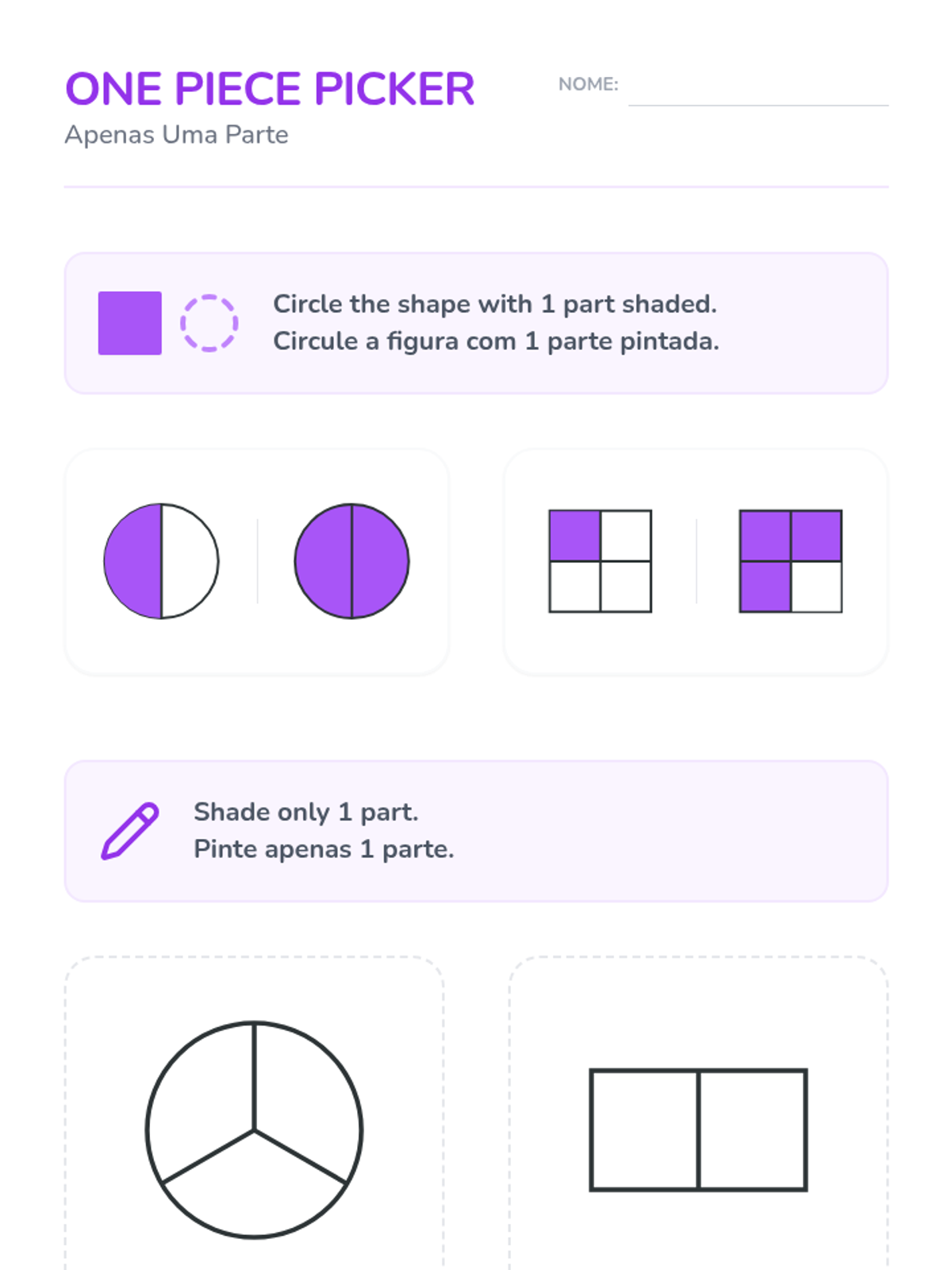
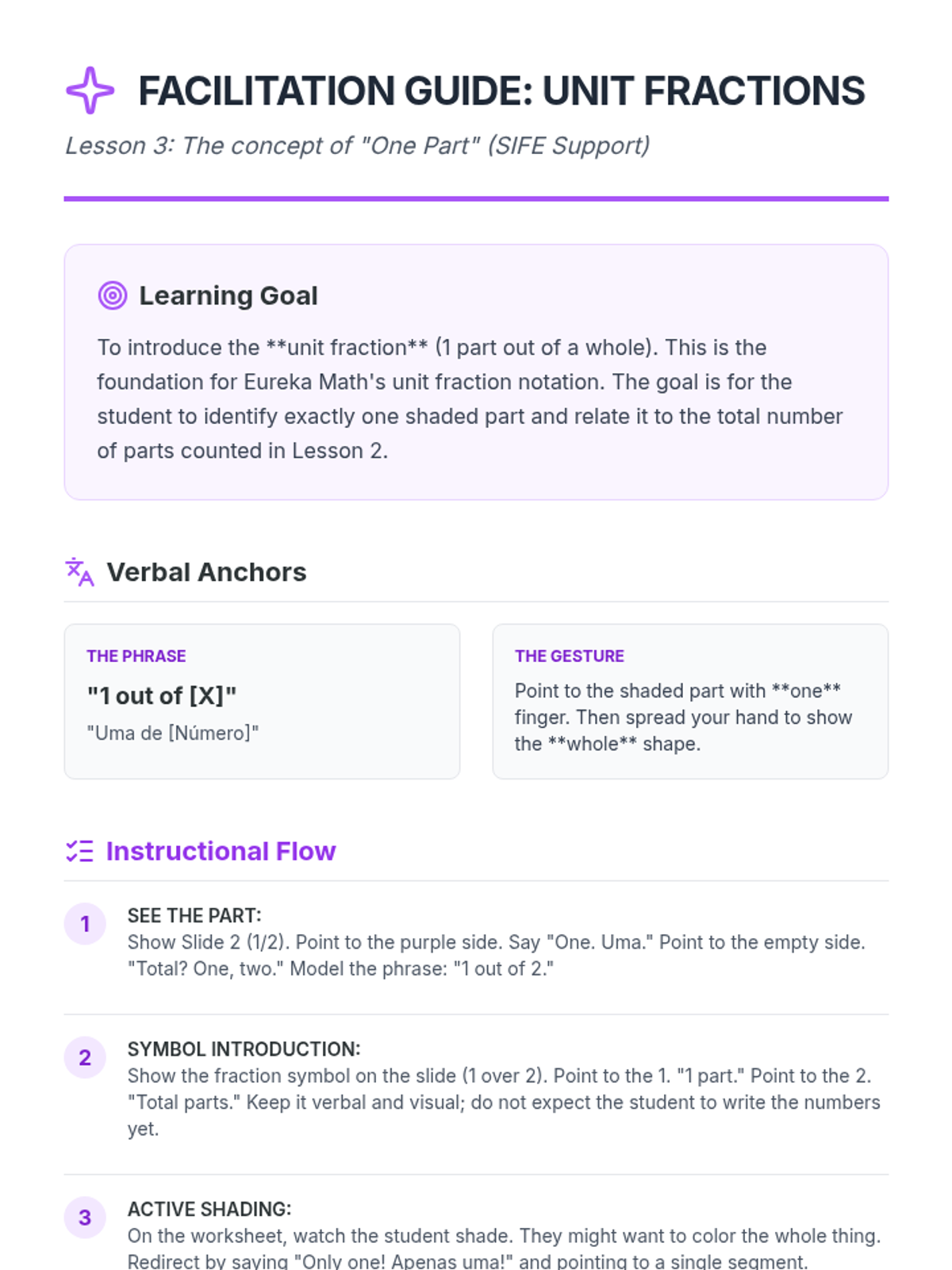
Introduces the concept of a unit fraction by identifying 'one part' out of a whole. Focuses on visual recognition of one shaded part and introduces the verbal phrasing 'one out of x' in English and Portuguese.
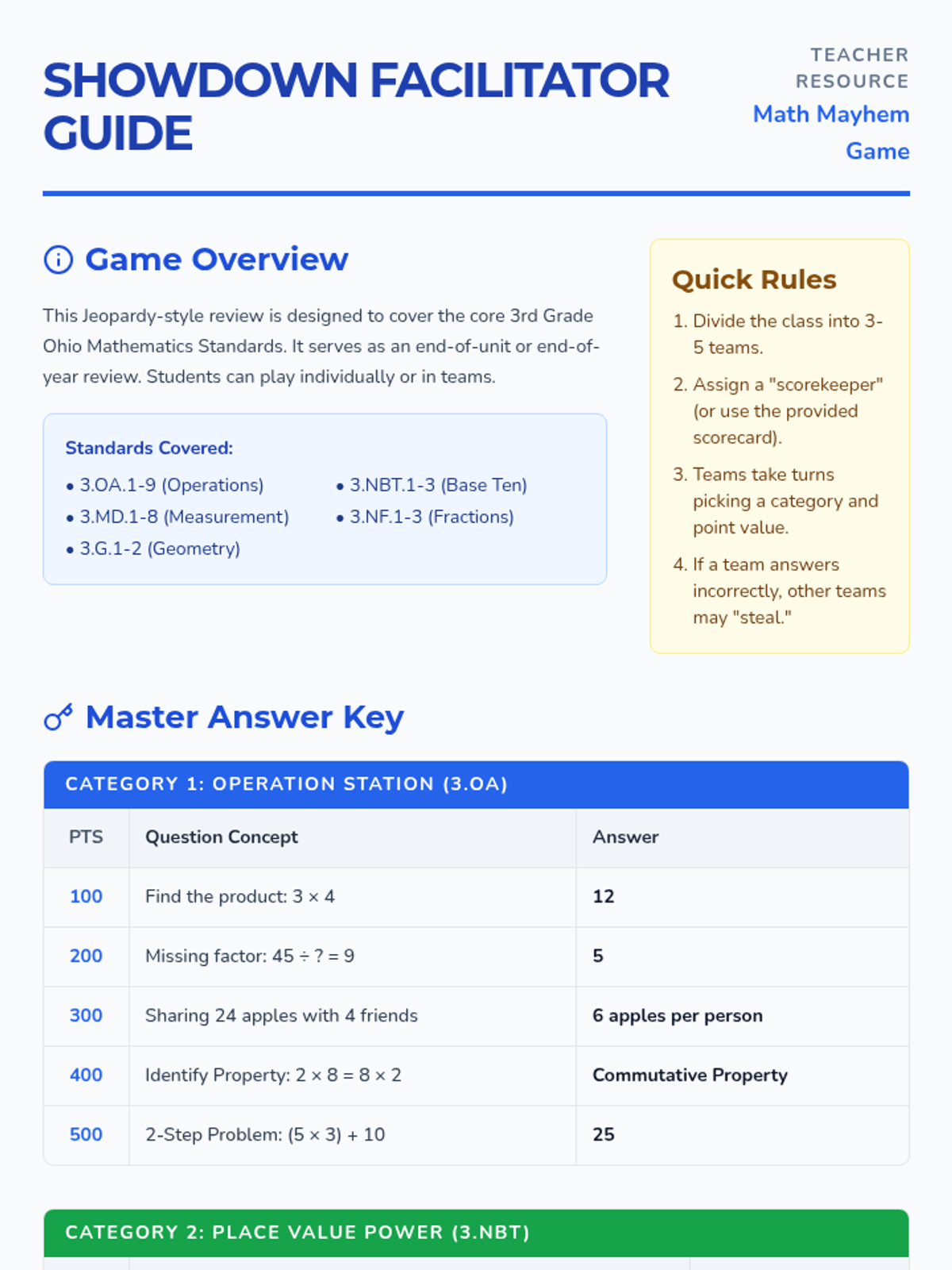
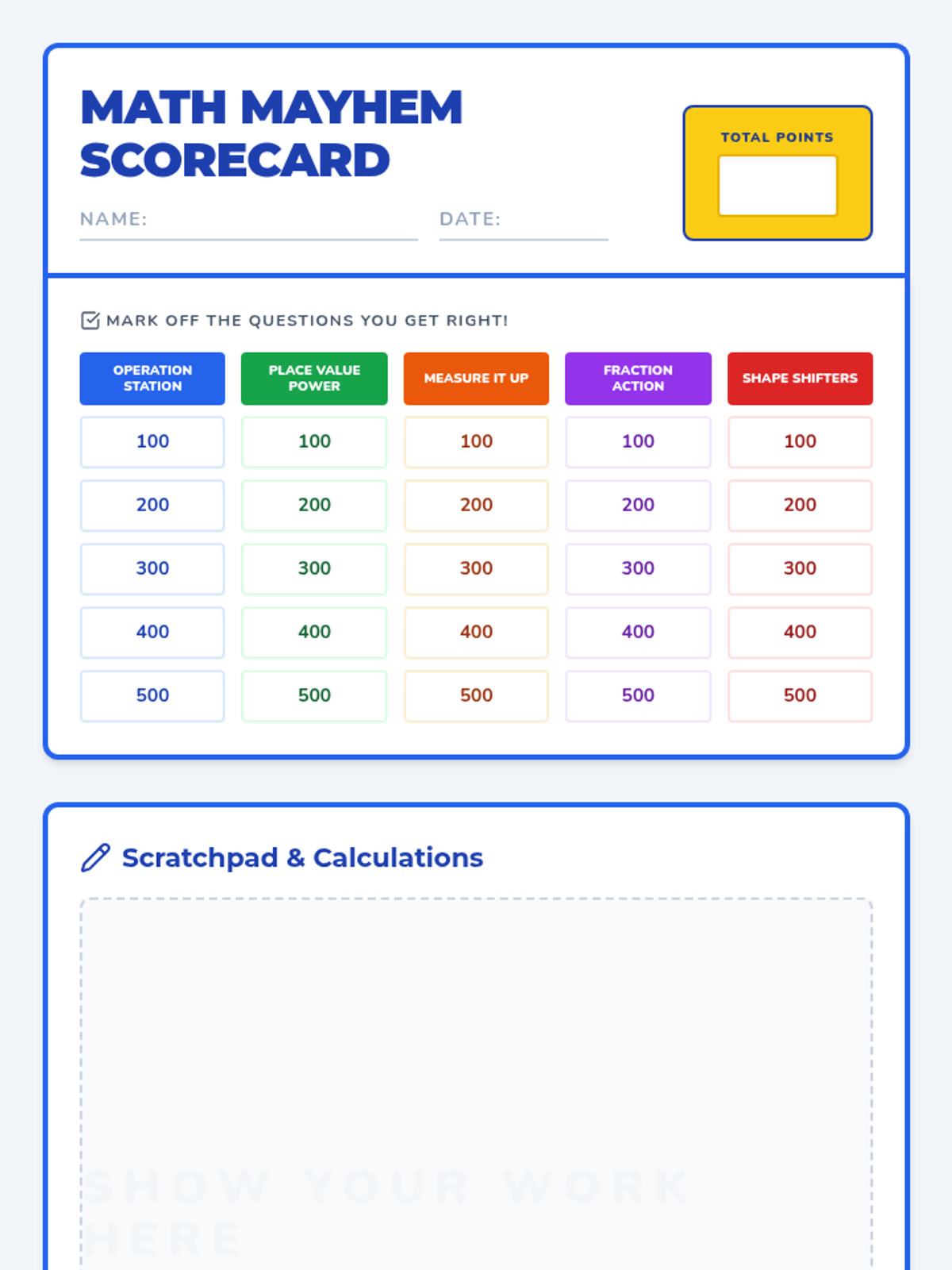
A comprehensive 3rd-grade math review game covering Ohio standards for OA, NBT, MD, G, and NF. Students compete in a Jeopardy-style showdown to test their knowledge across all domains.
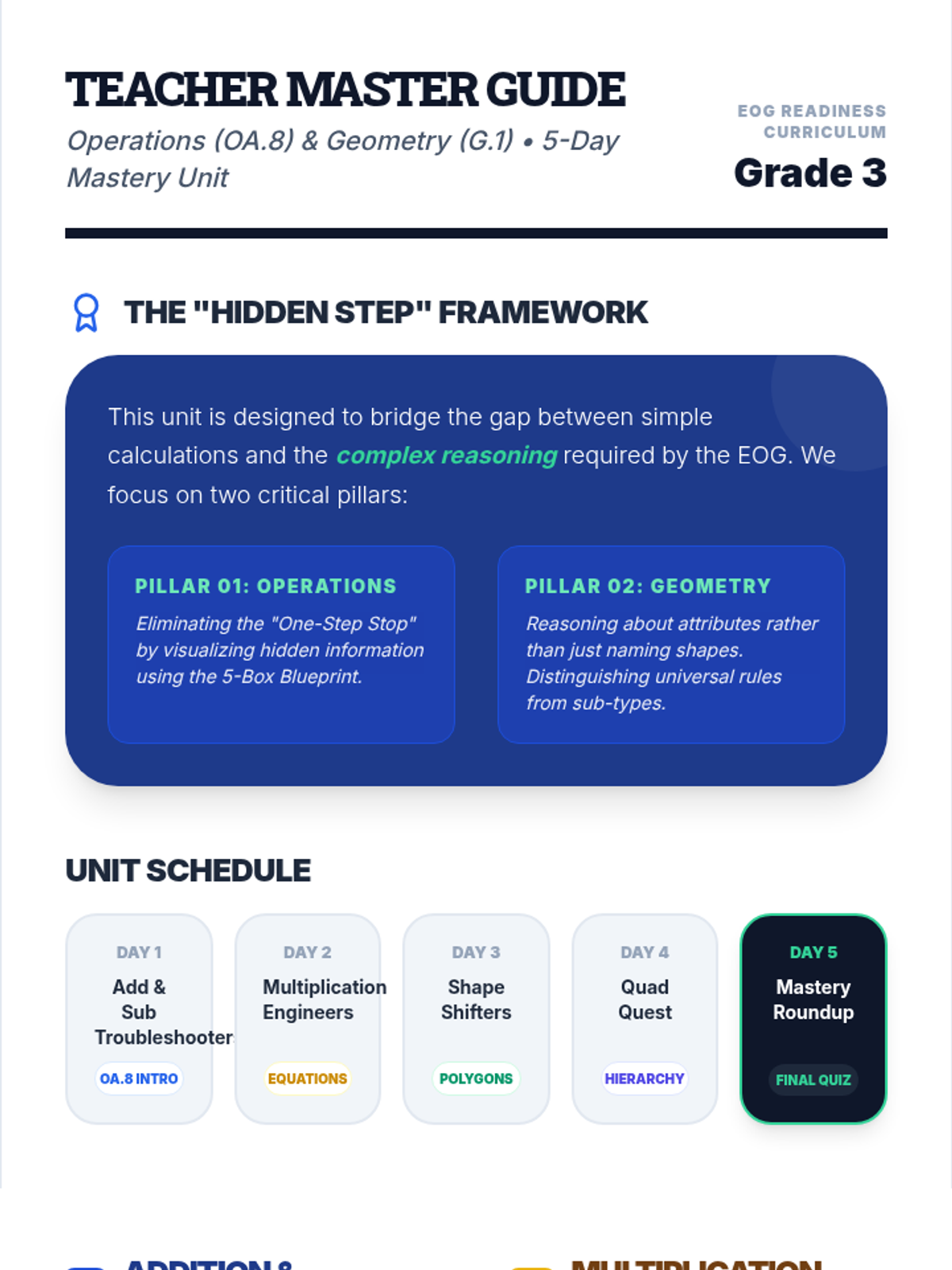
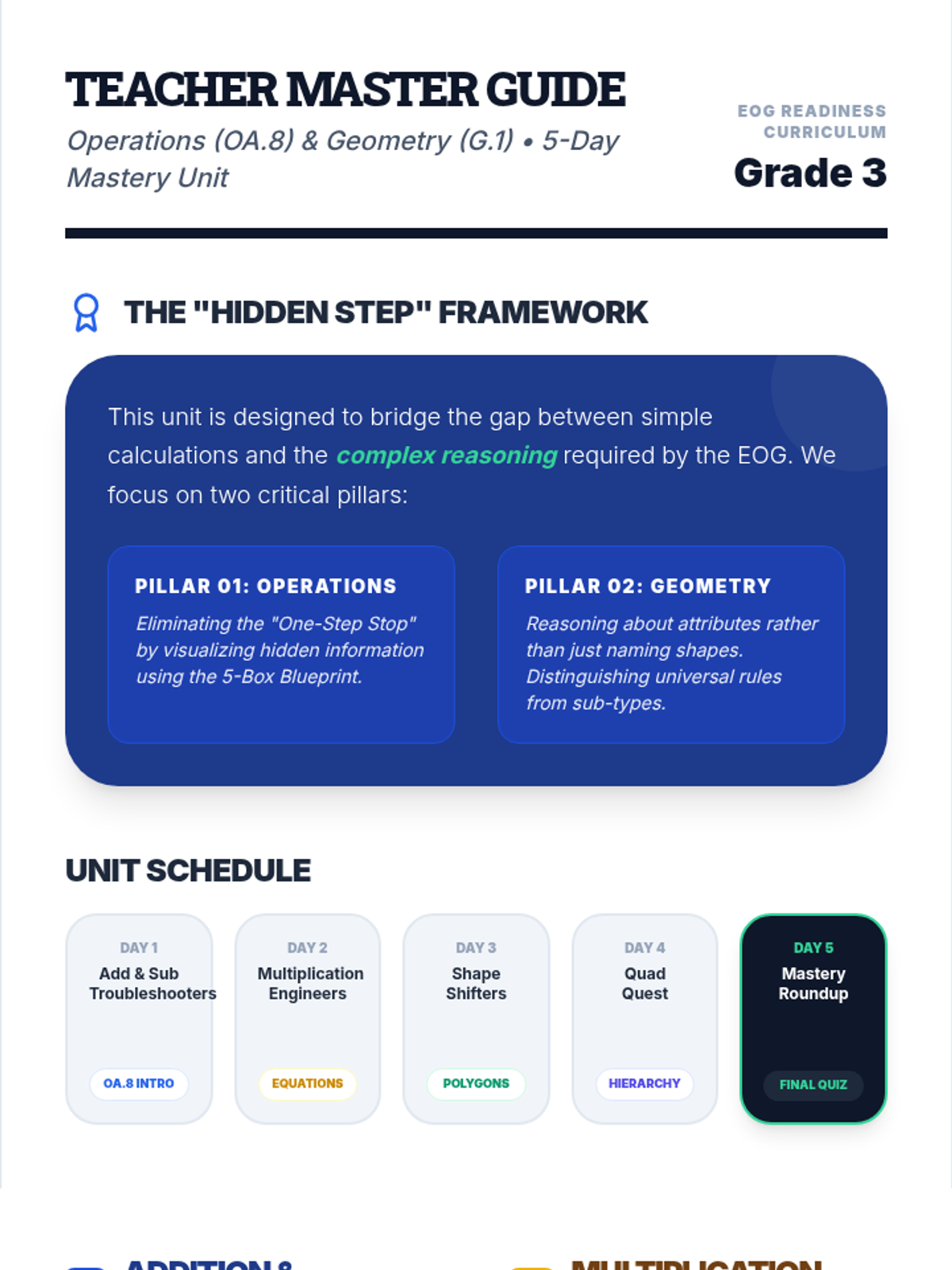
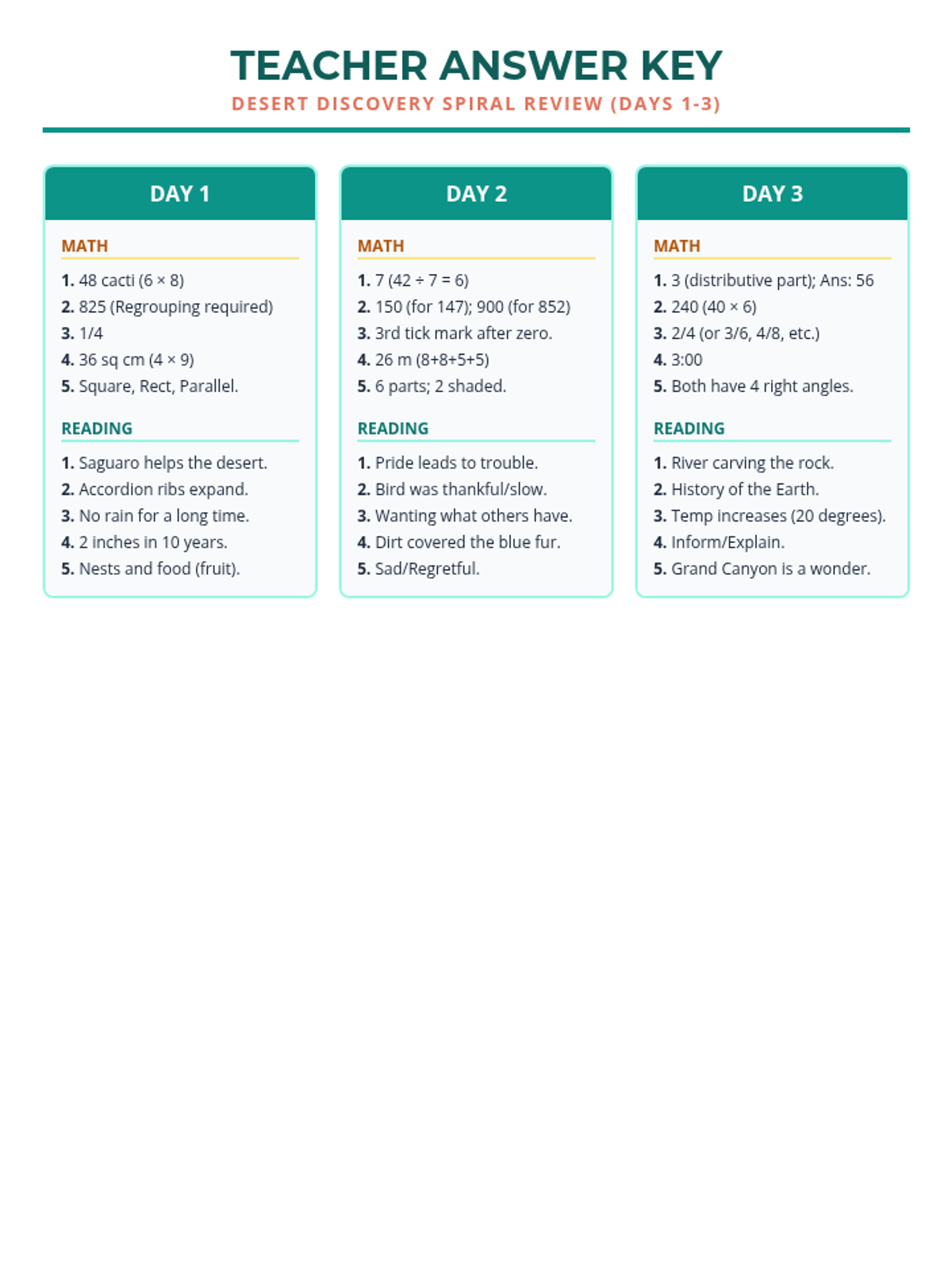
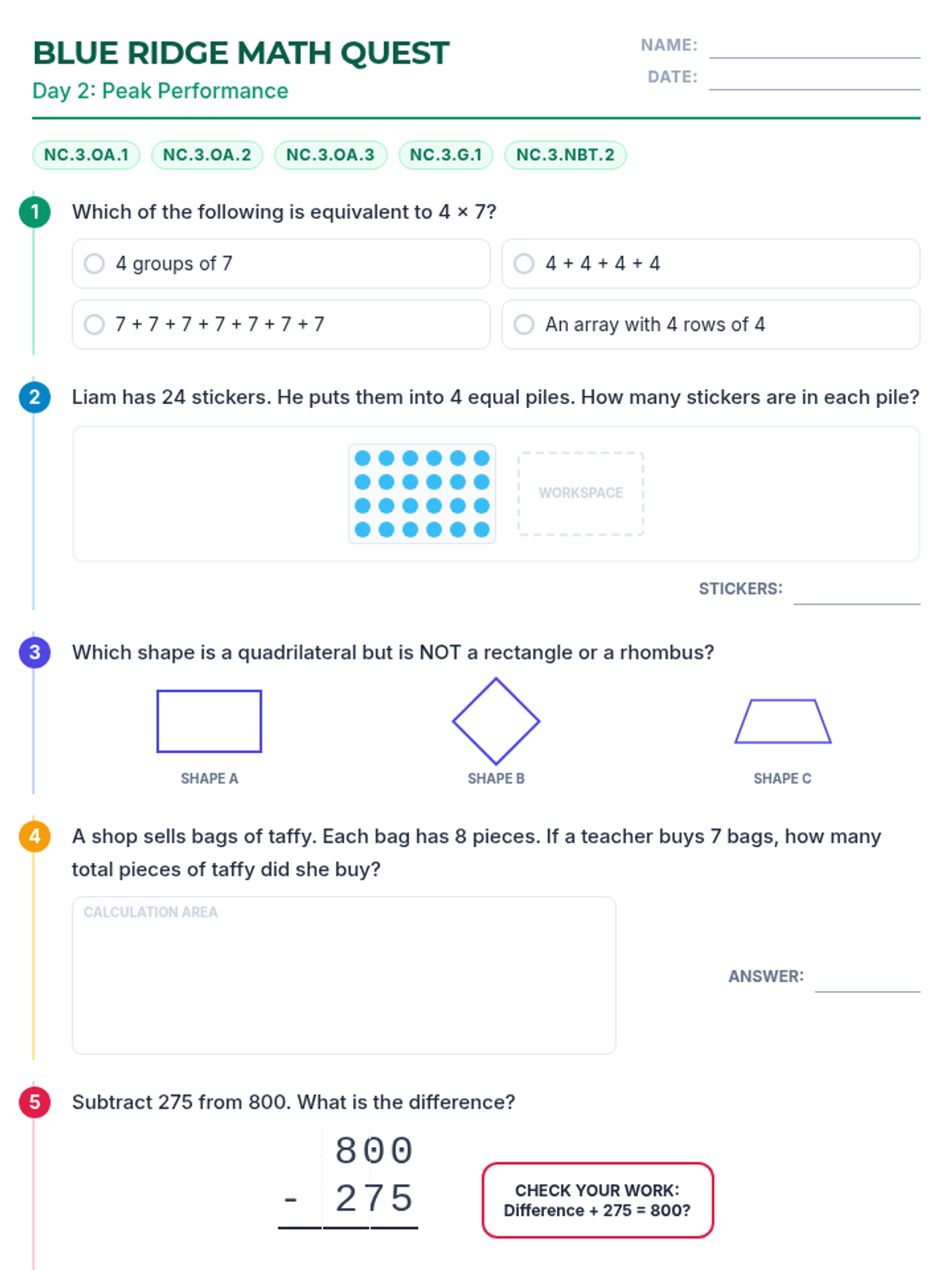
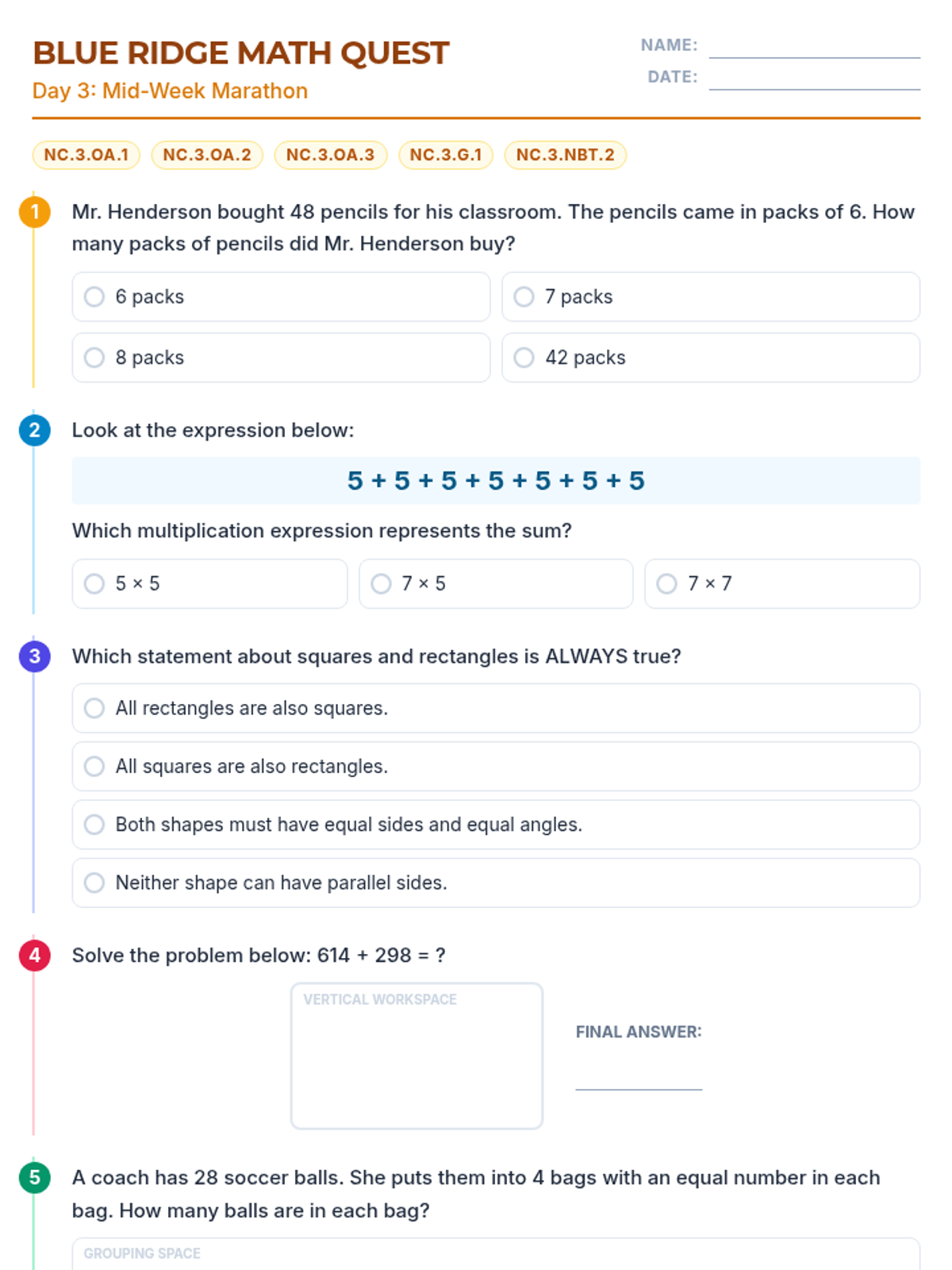
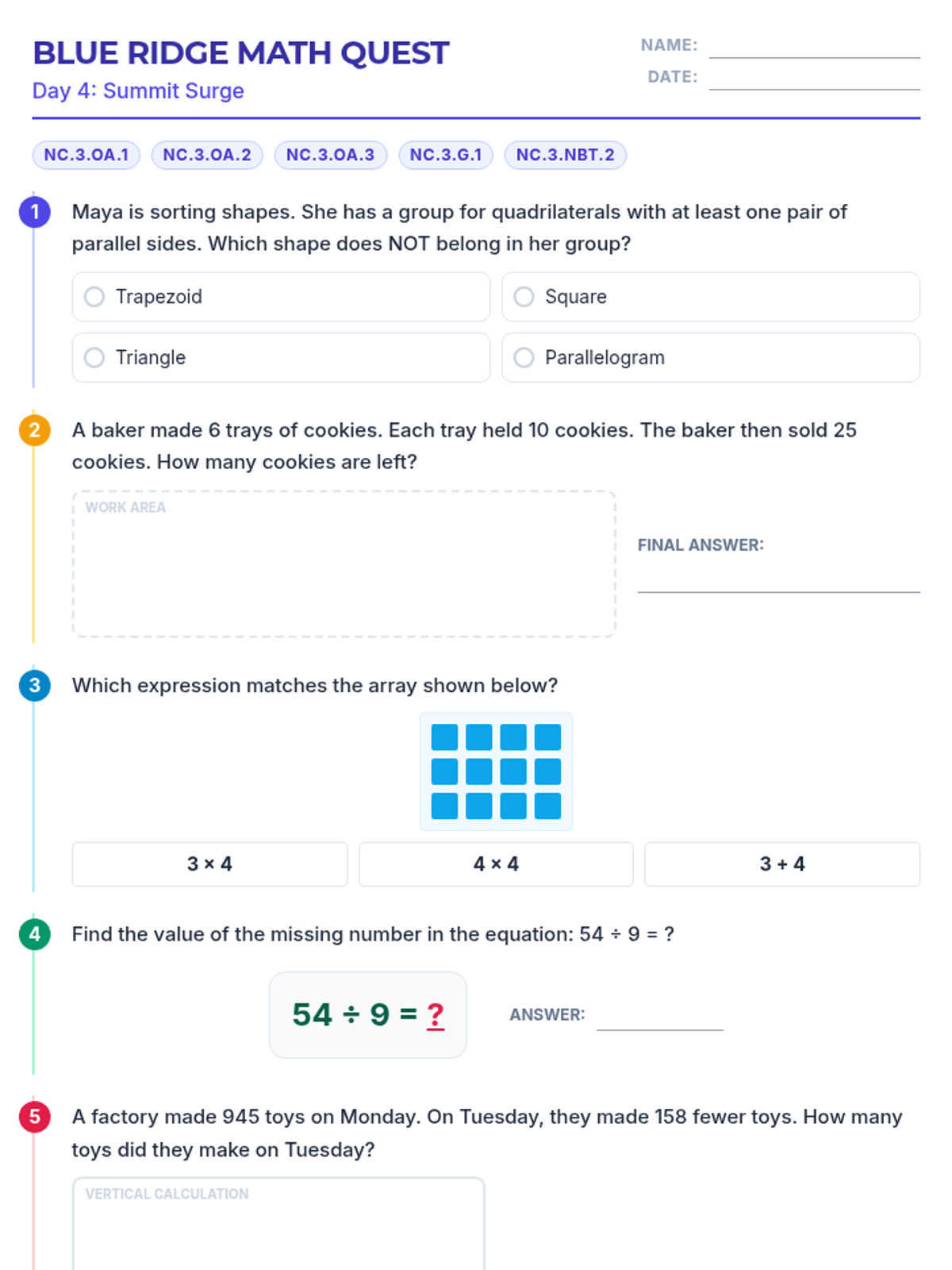
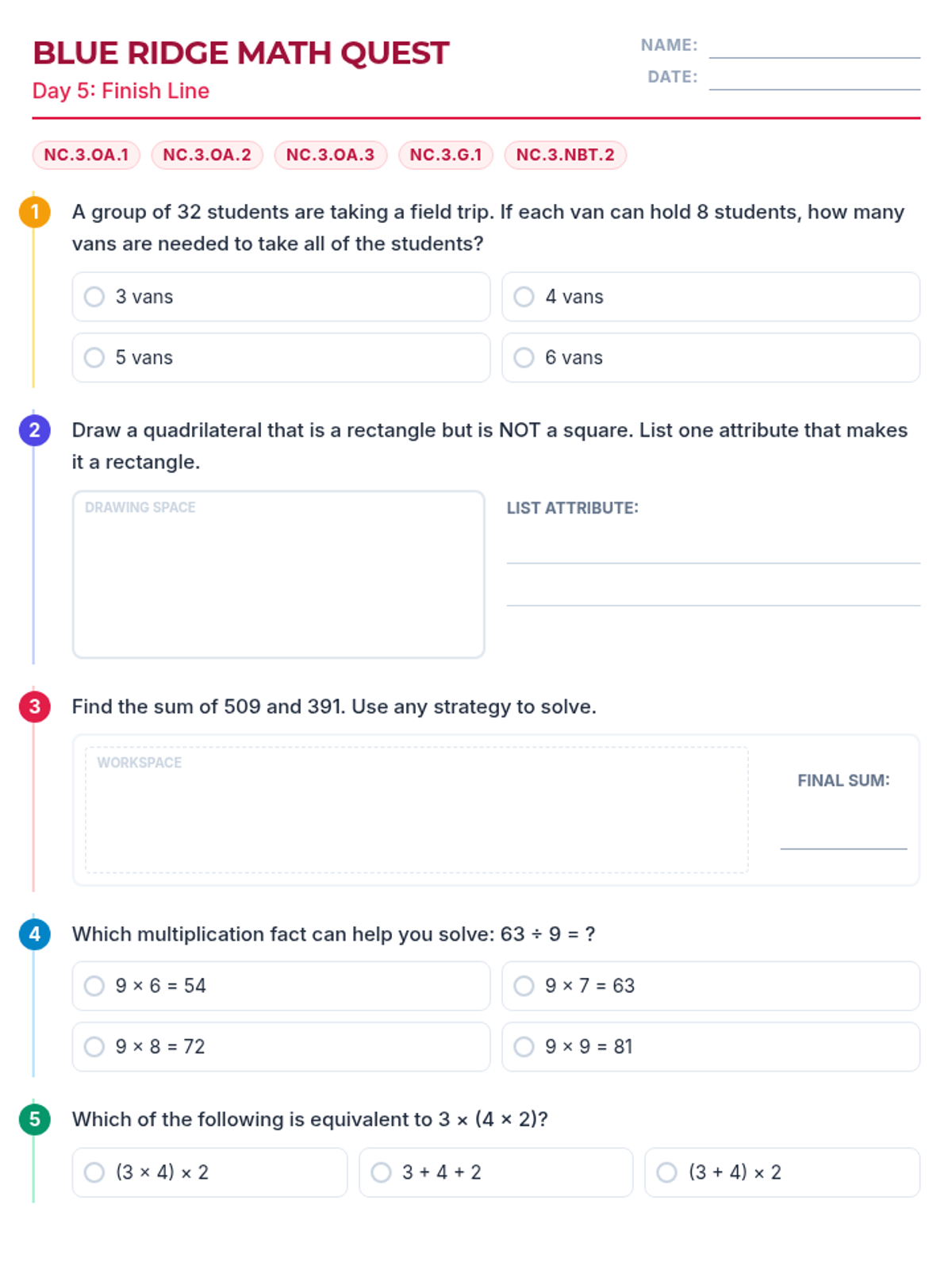
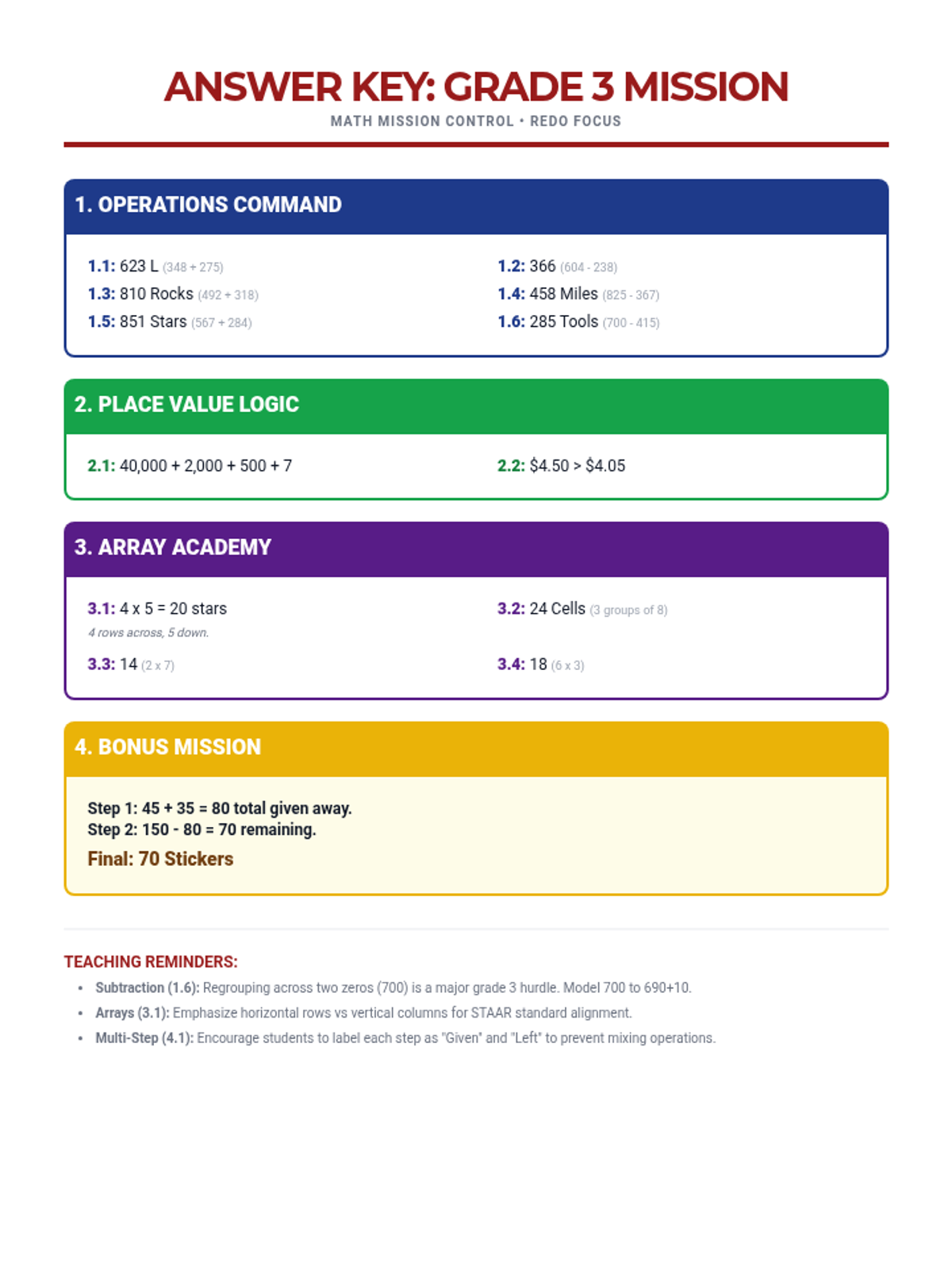
A comprehensive 5-day spiral review lesson focusing on multiplication, division, geometry, and multi-digit operations with EOG-level rigor. Includes daily practice sheets, instructional slides, and a full answer key.
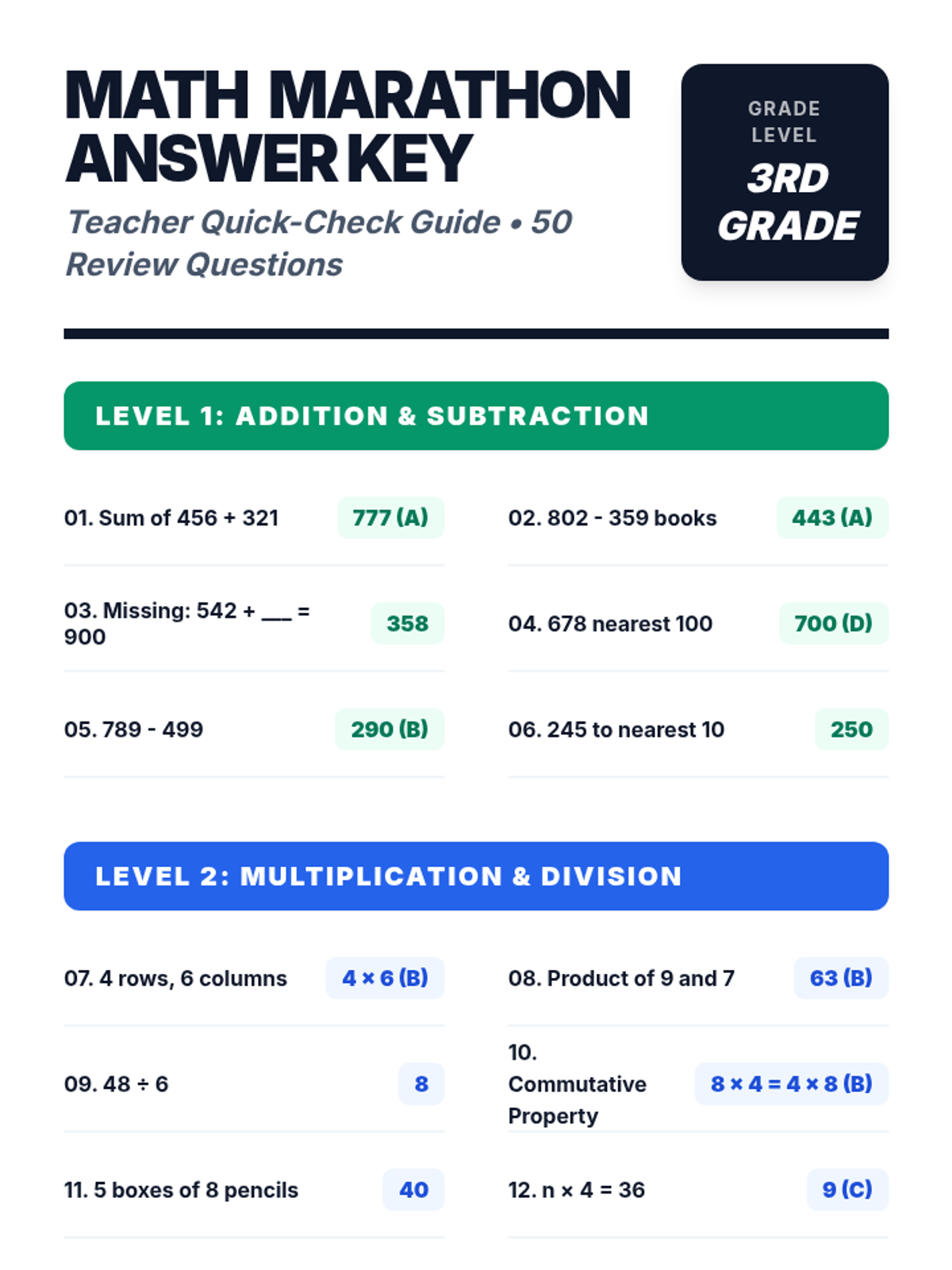
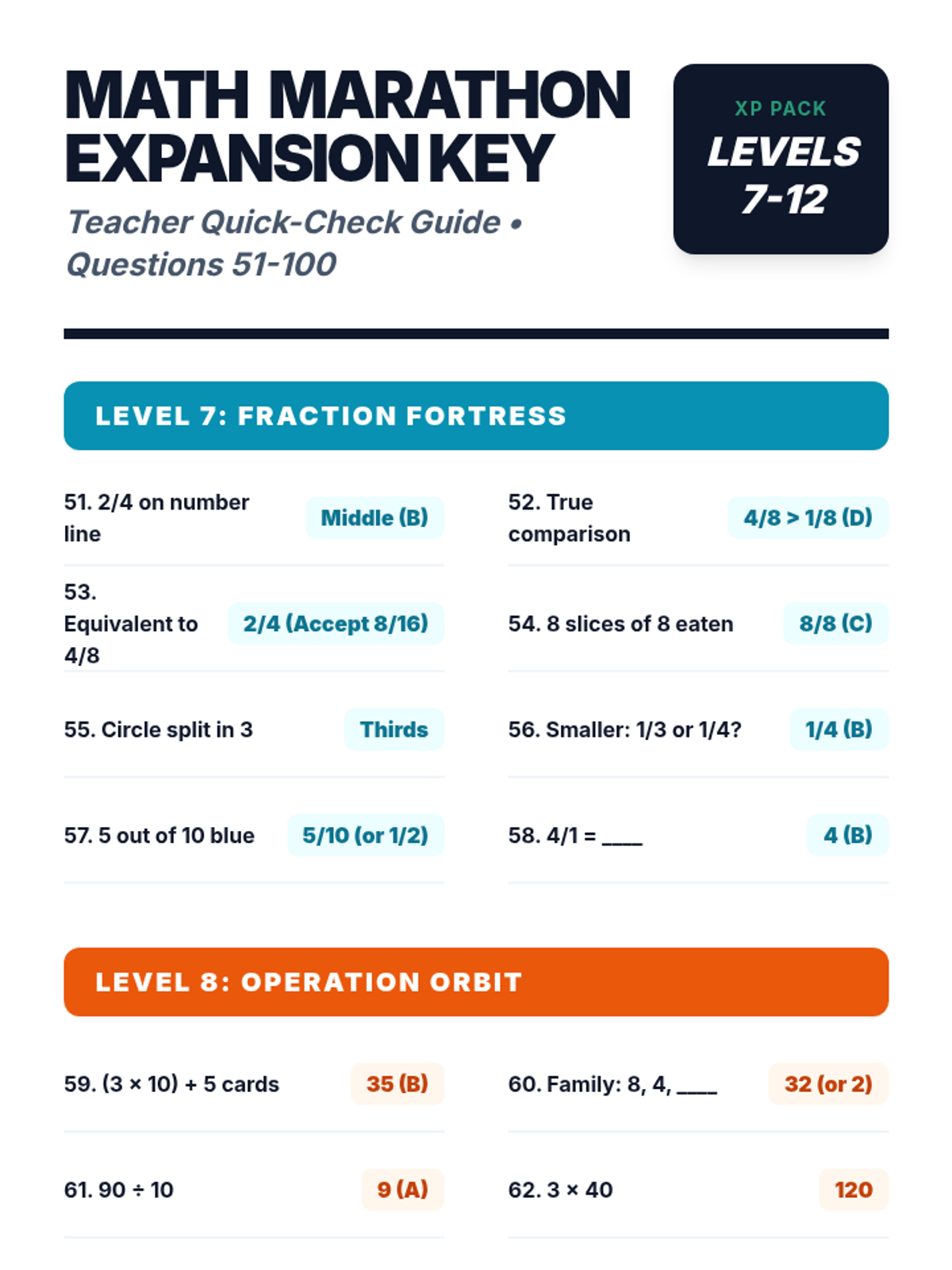
A comprehensive 50-question review of 3rd-grade math standards designed as a high-energy arcade-themed slideshow challenge. Students tackle fractions, geometry, operations, and data across six "levels" of difficulty.
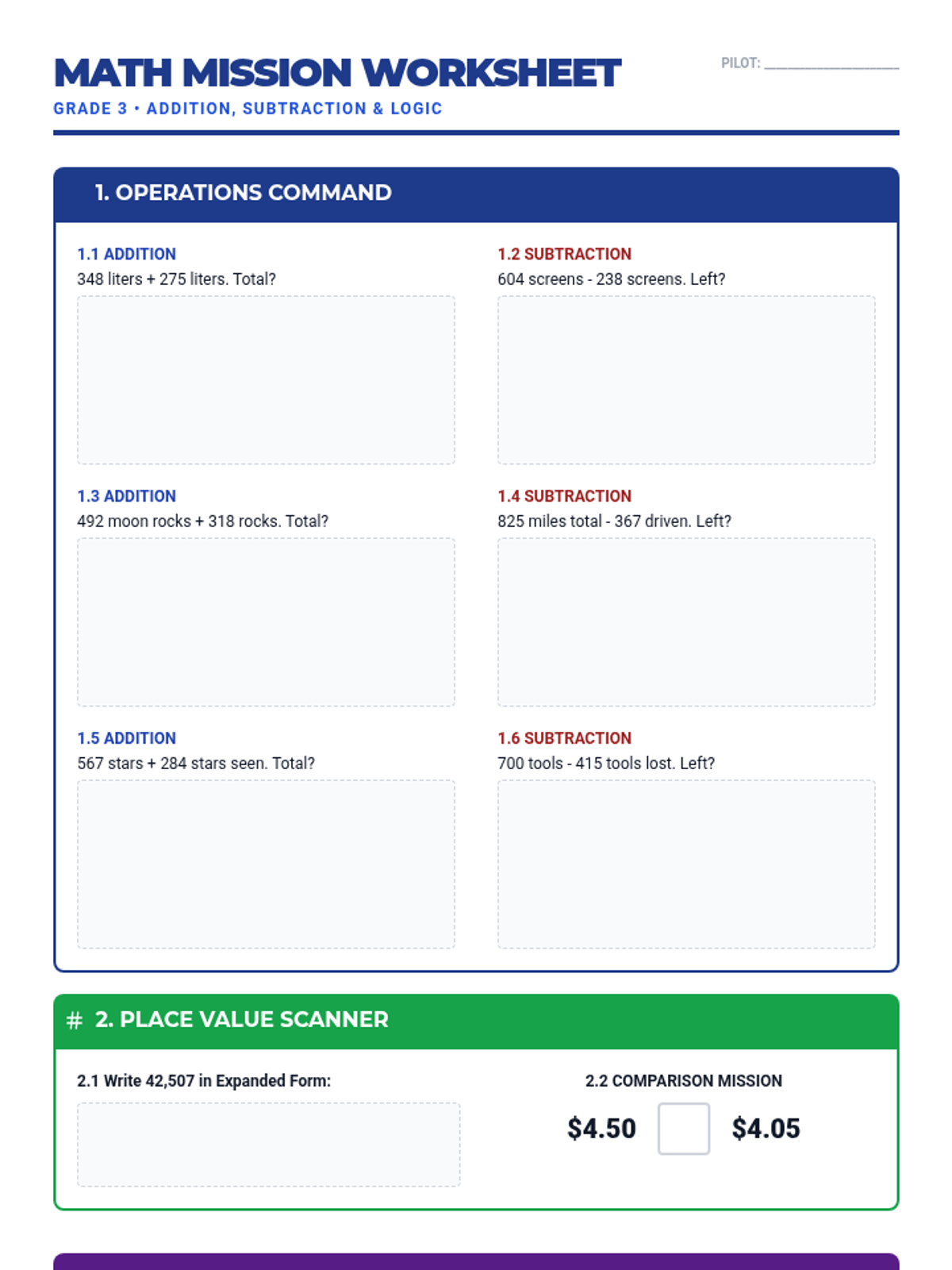
A targeted review lesson covering the core domains of the math STAAR assessment: addition/subtraction, geometry, decimals, and multiplication models.
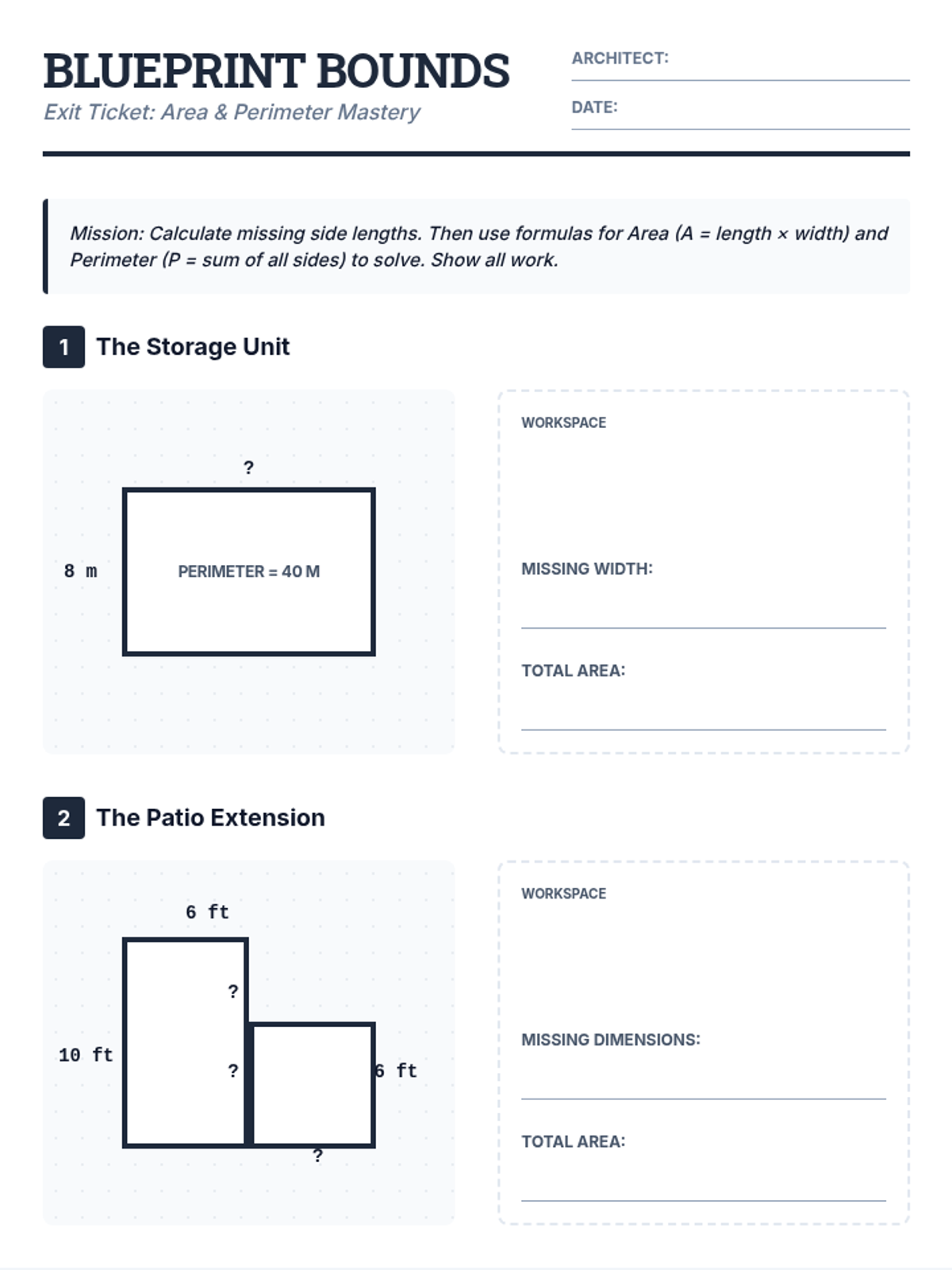
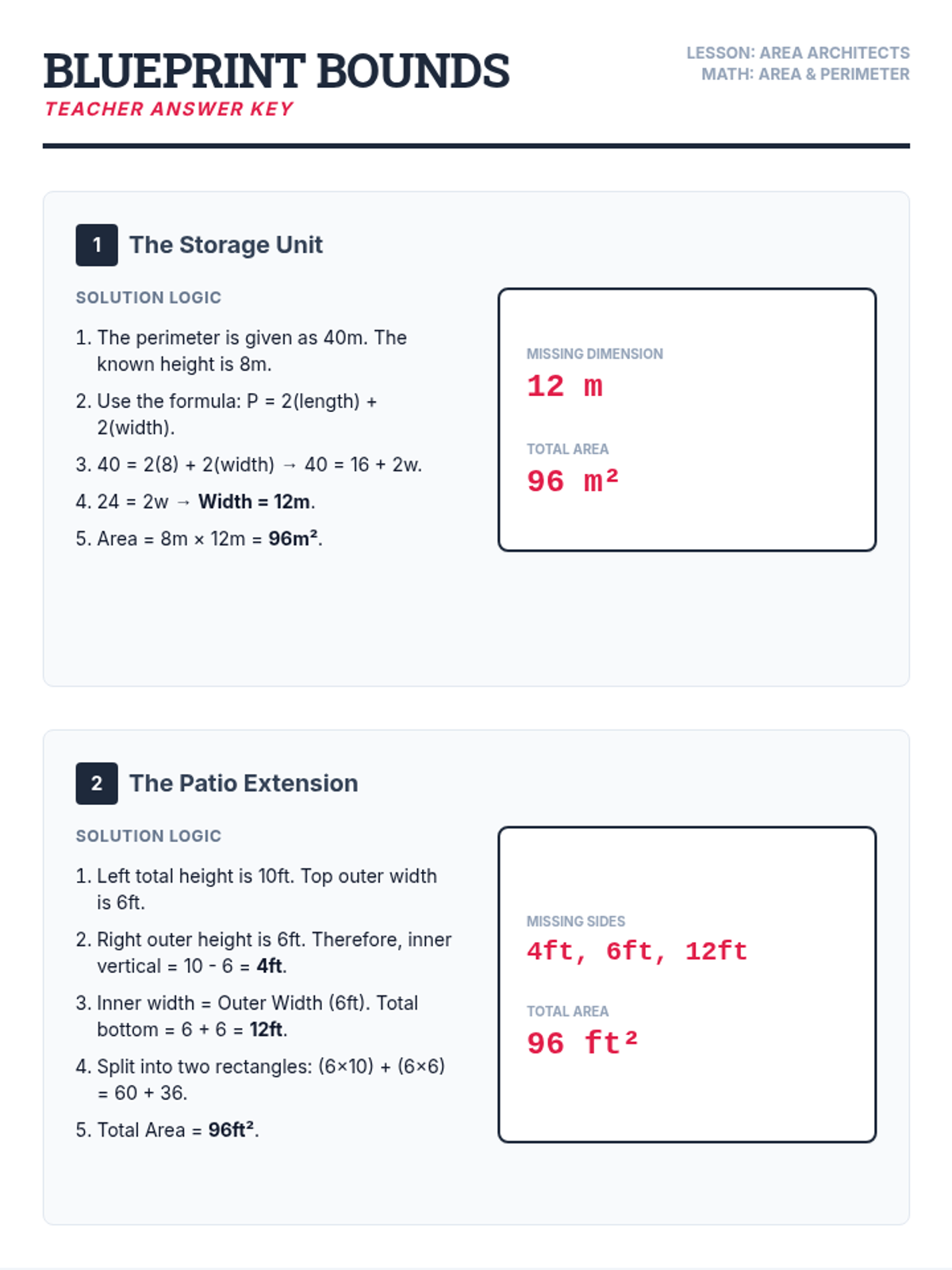
A focused lesson on calculating area and perimeter of complex rectilinear shapes by determining missing side lengths and applying geometric formulas.
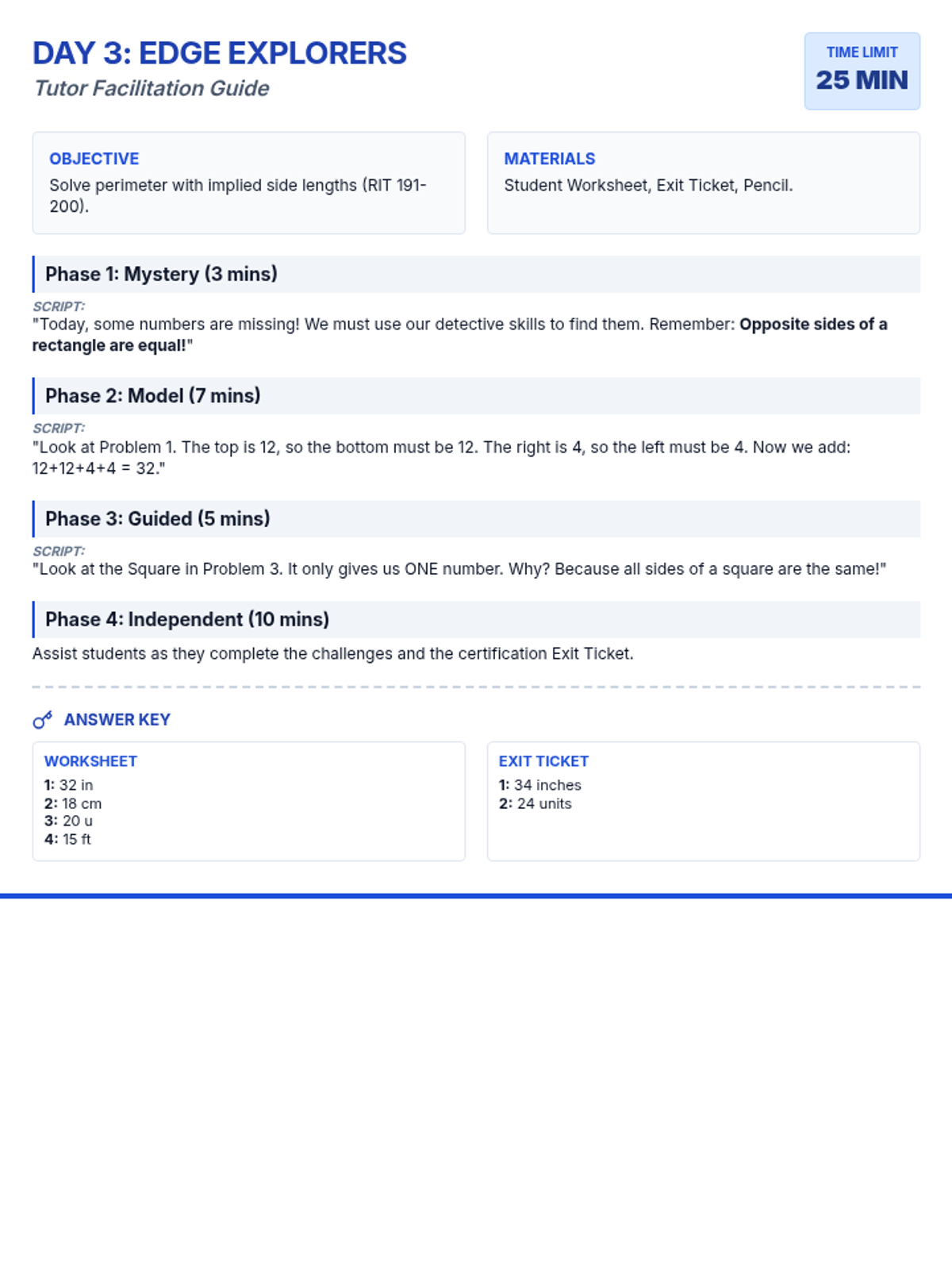
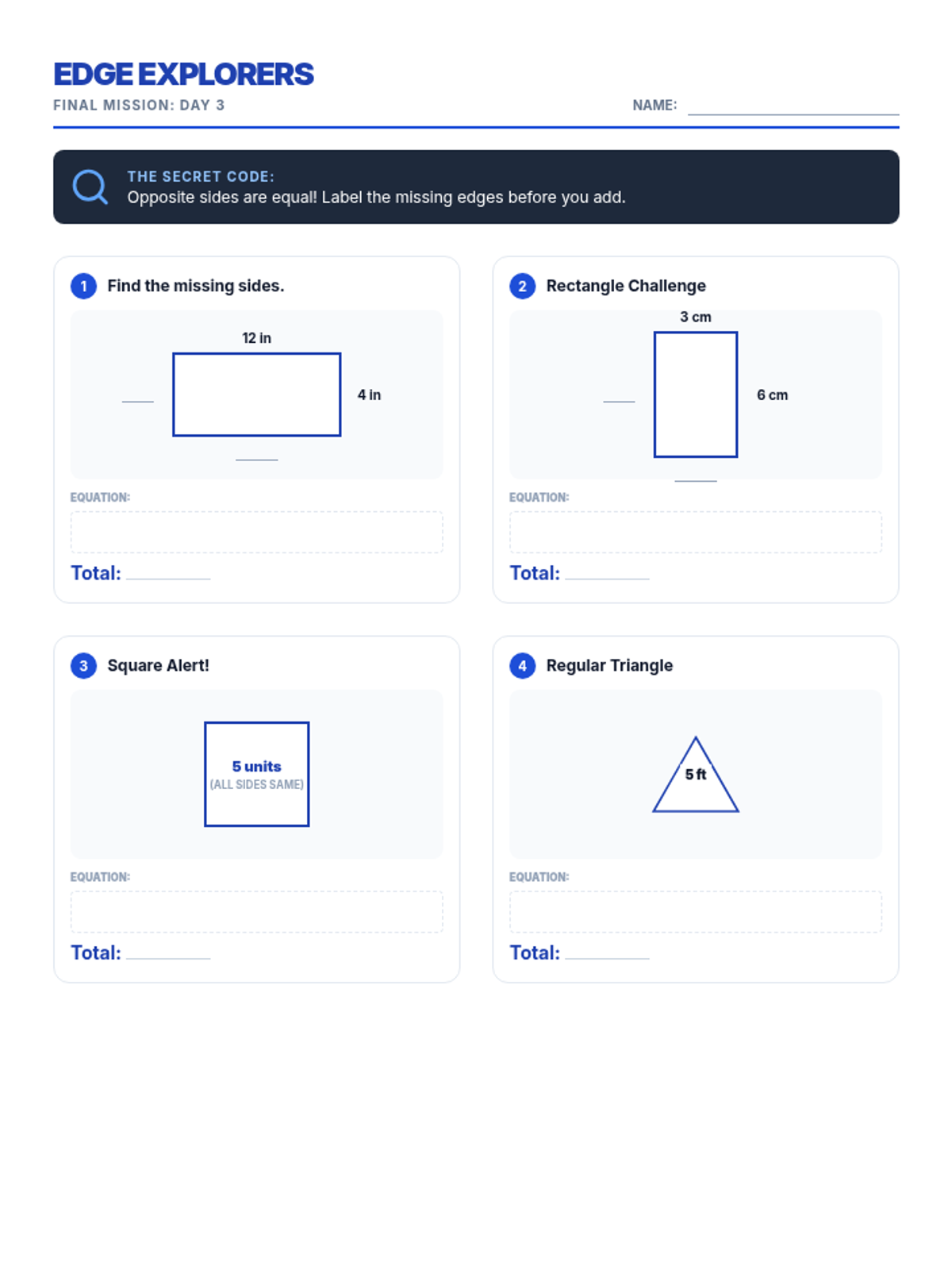
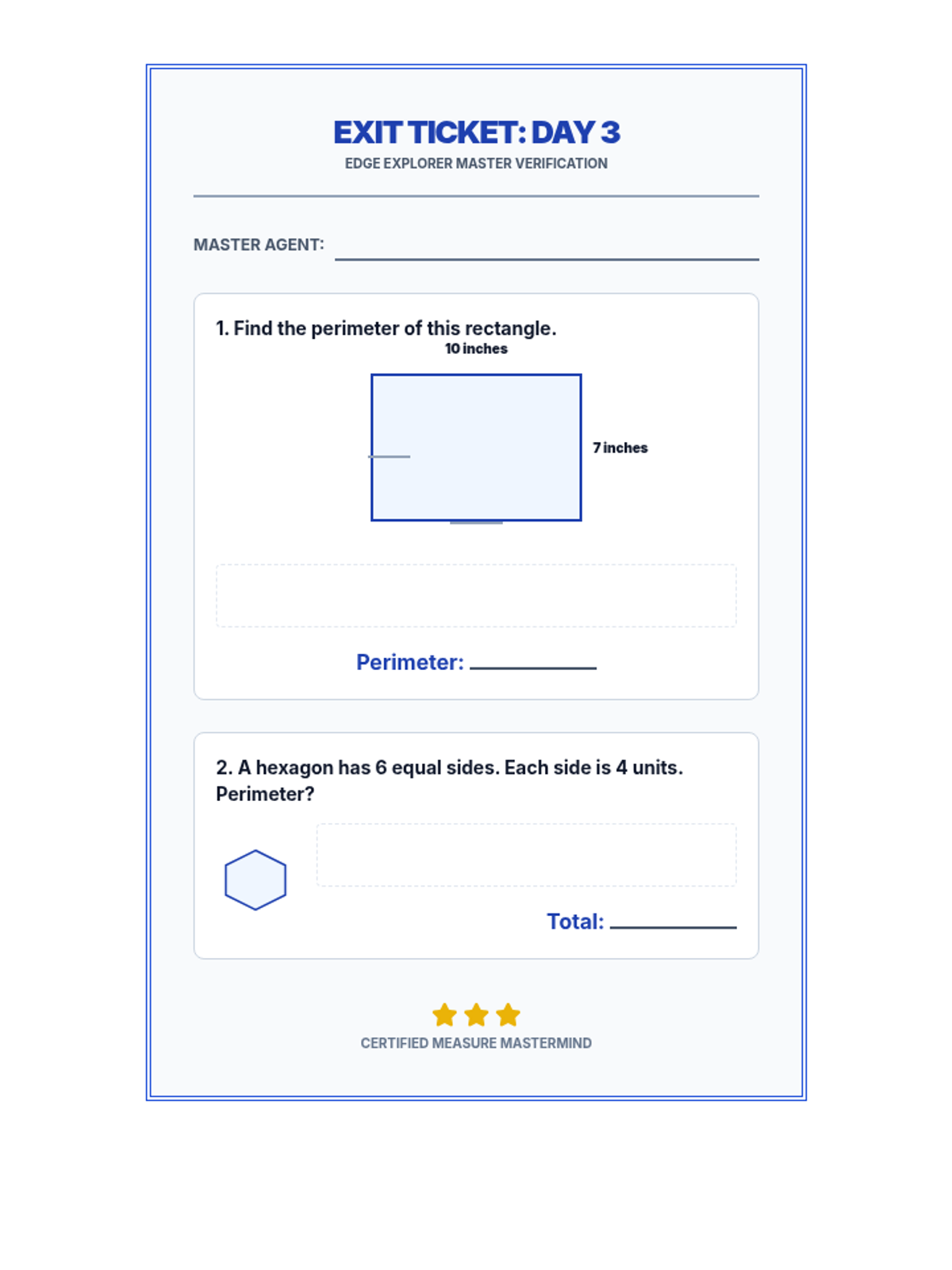
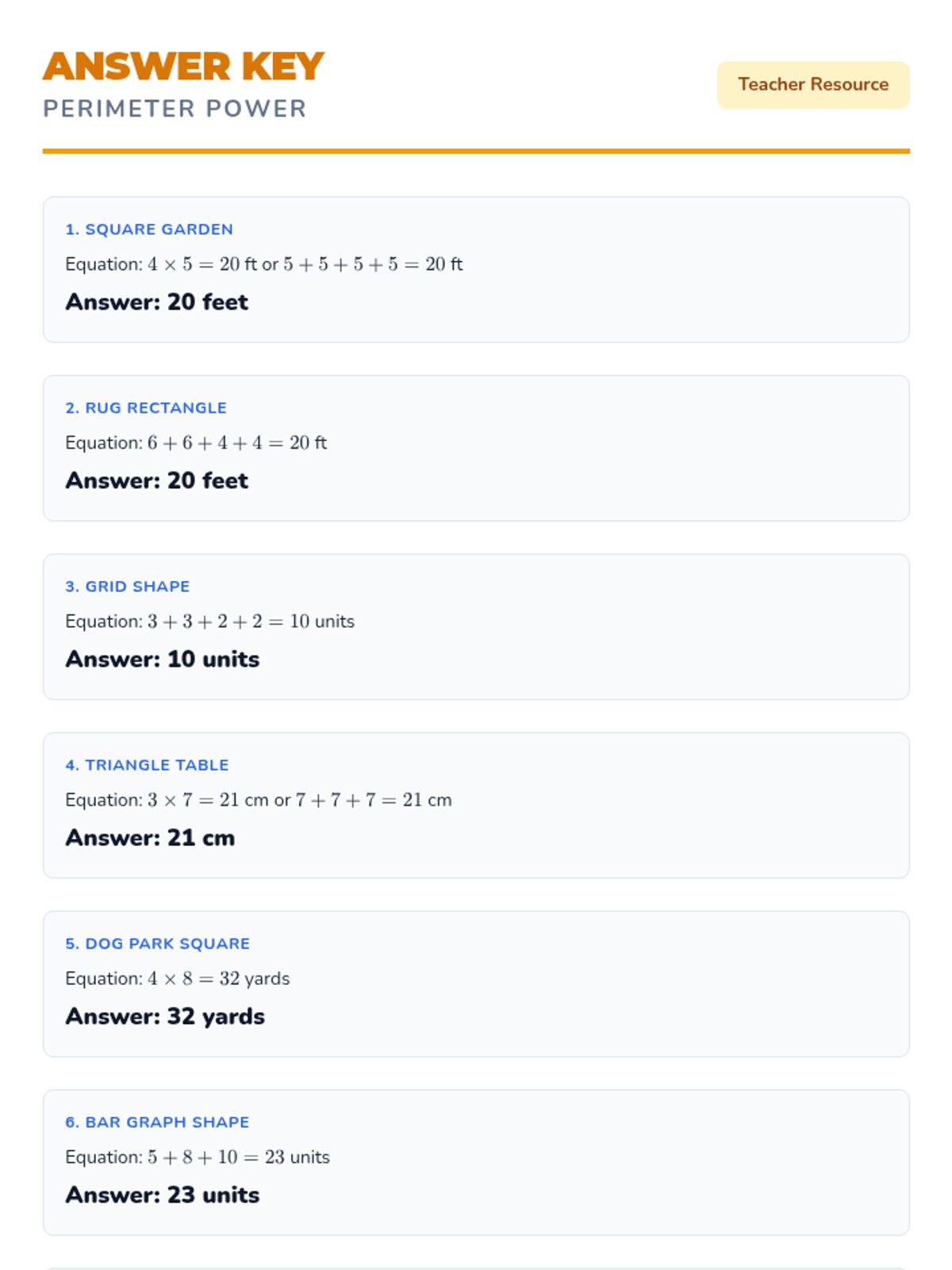
Students solve perimeter problems where some side lengths are implied or shapes are complex (191-200 focus).
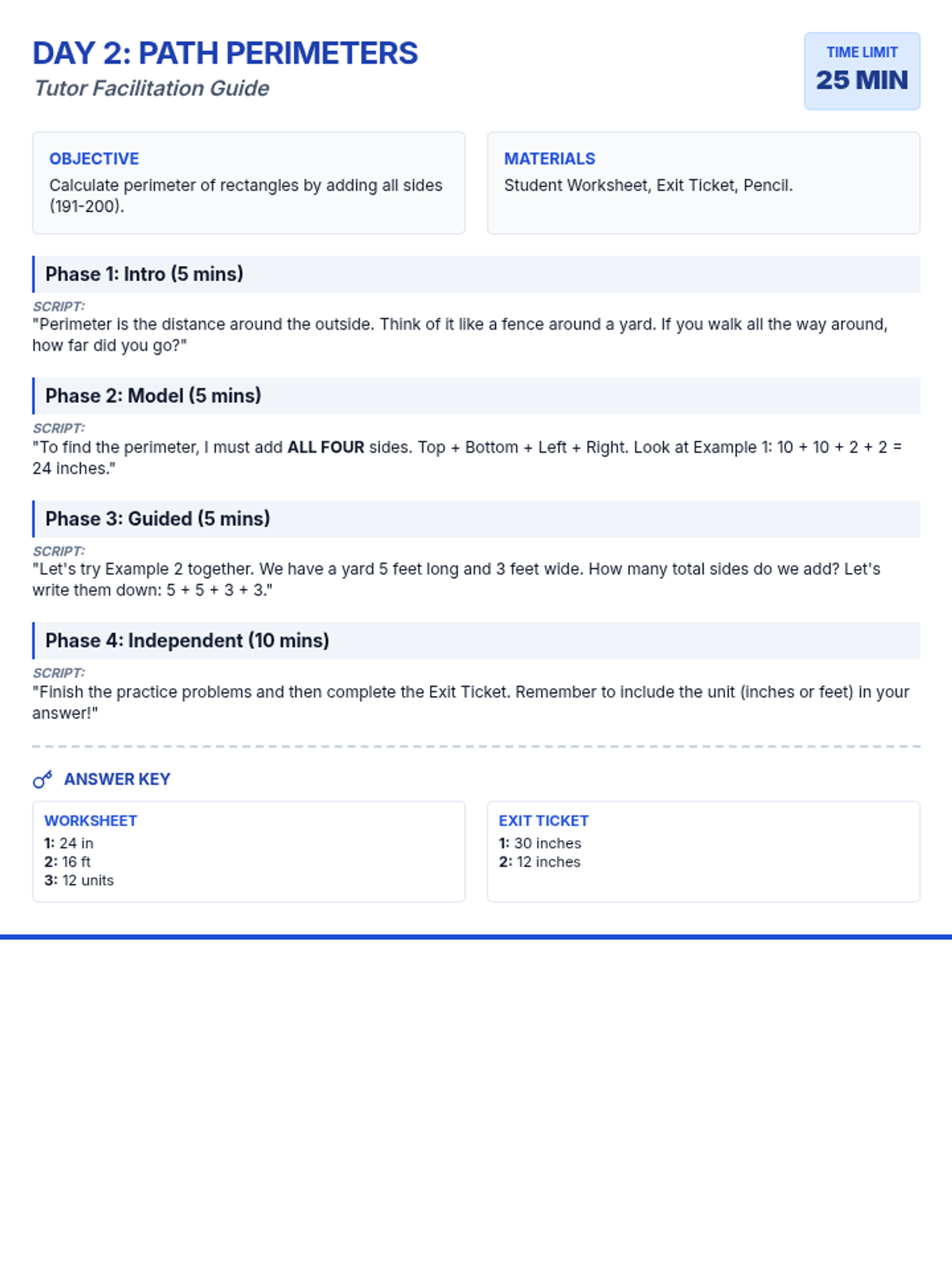
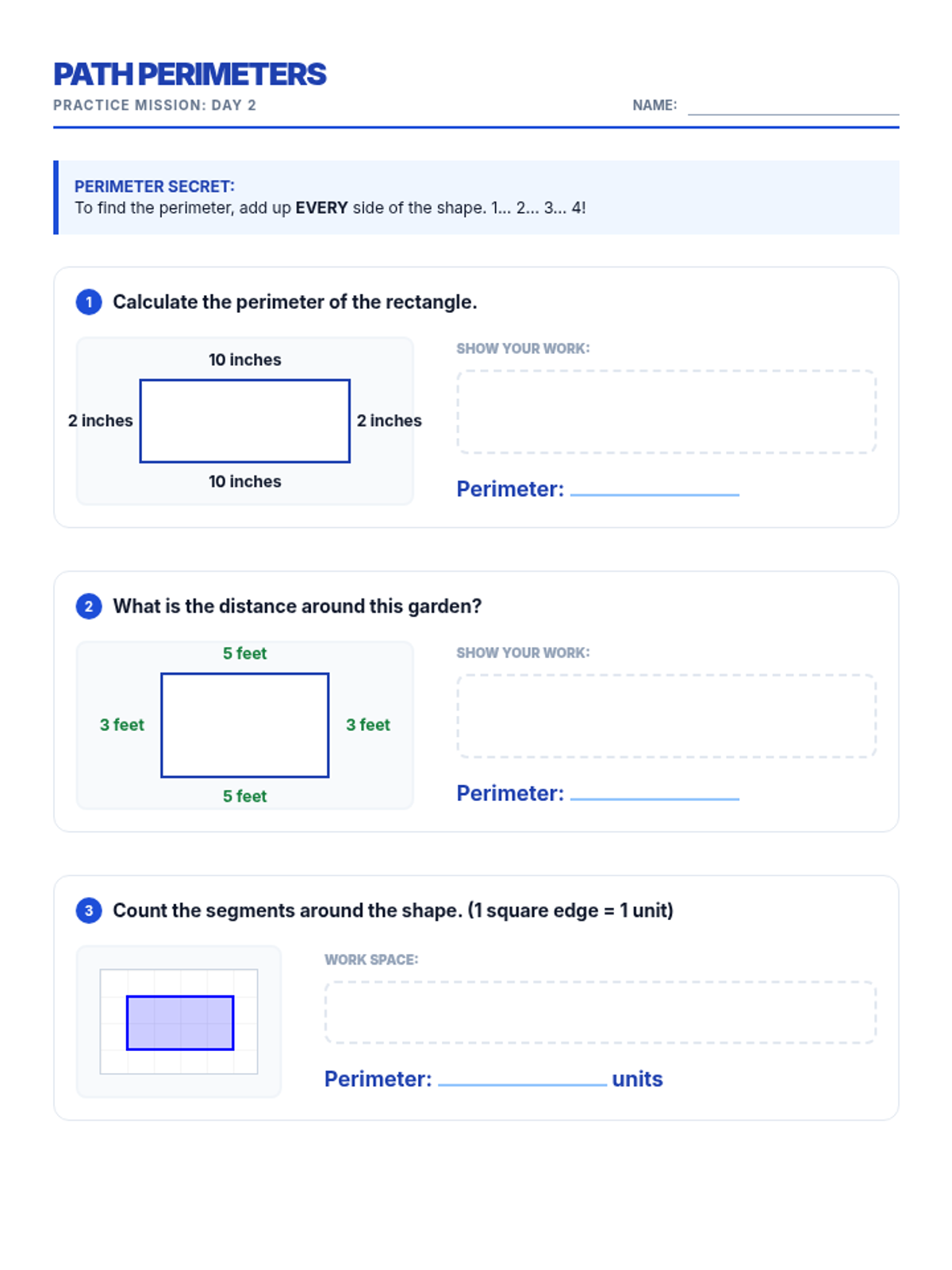
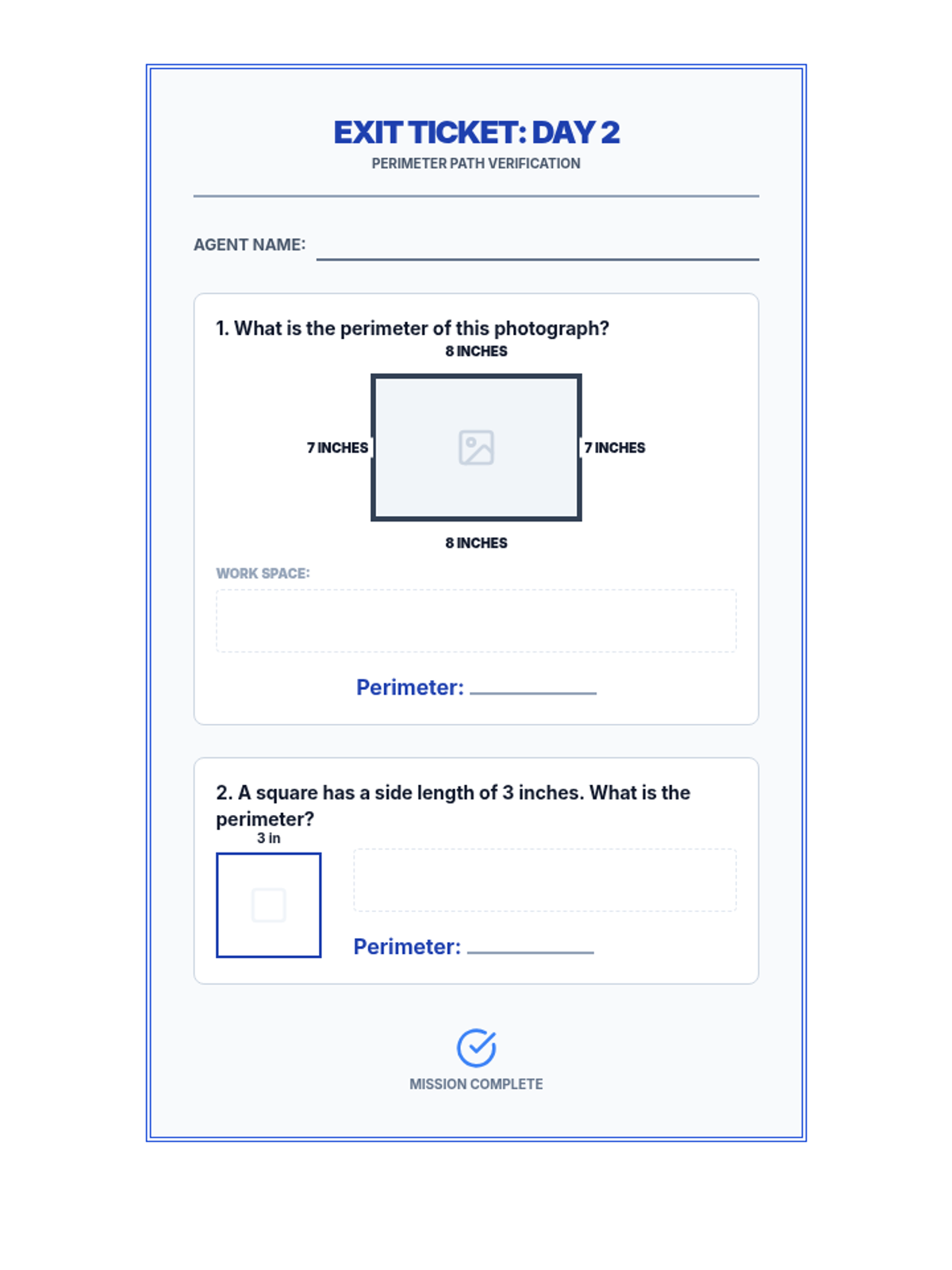
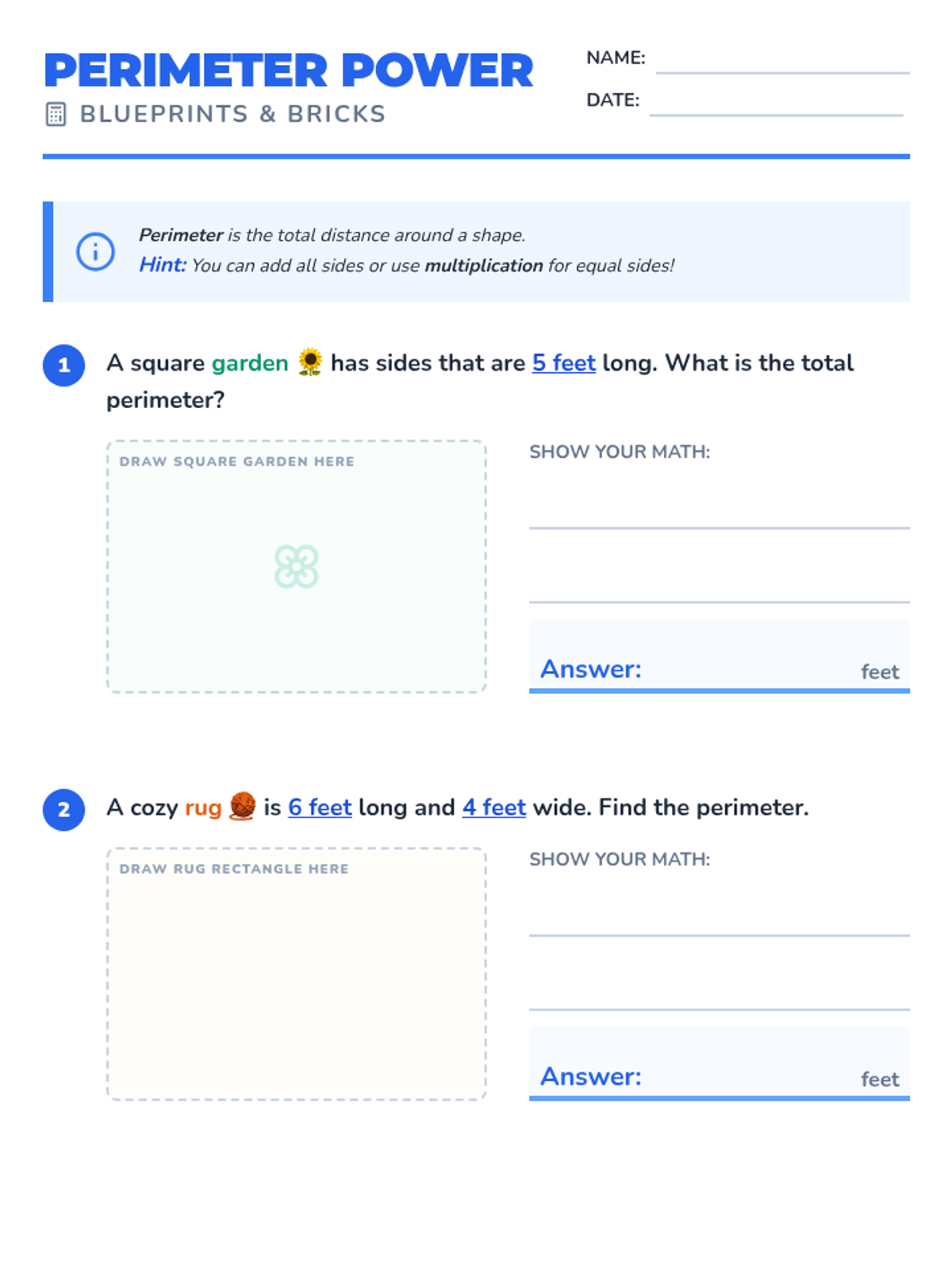
Students transition from basic counting and addition to calculating the perimeter of rectangles (191-200).
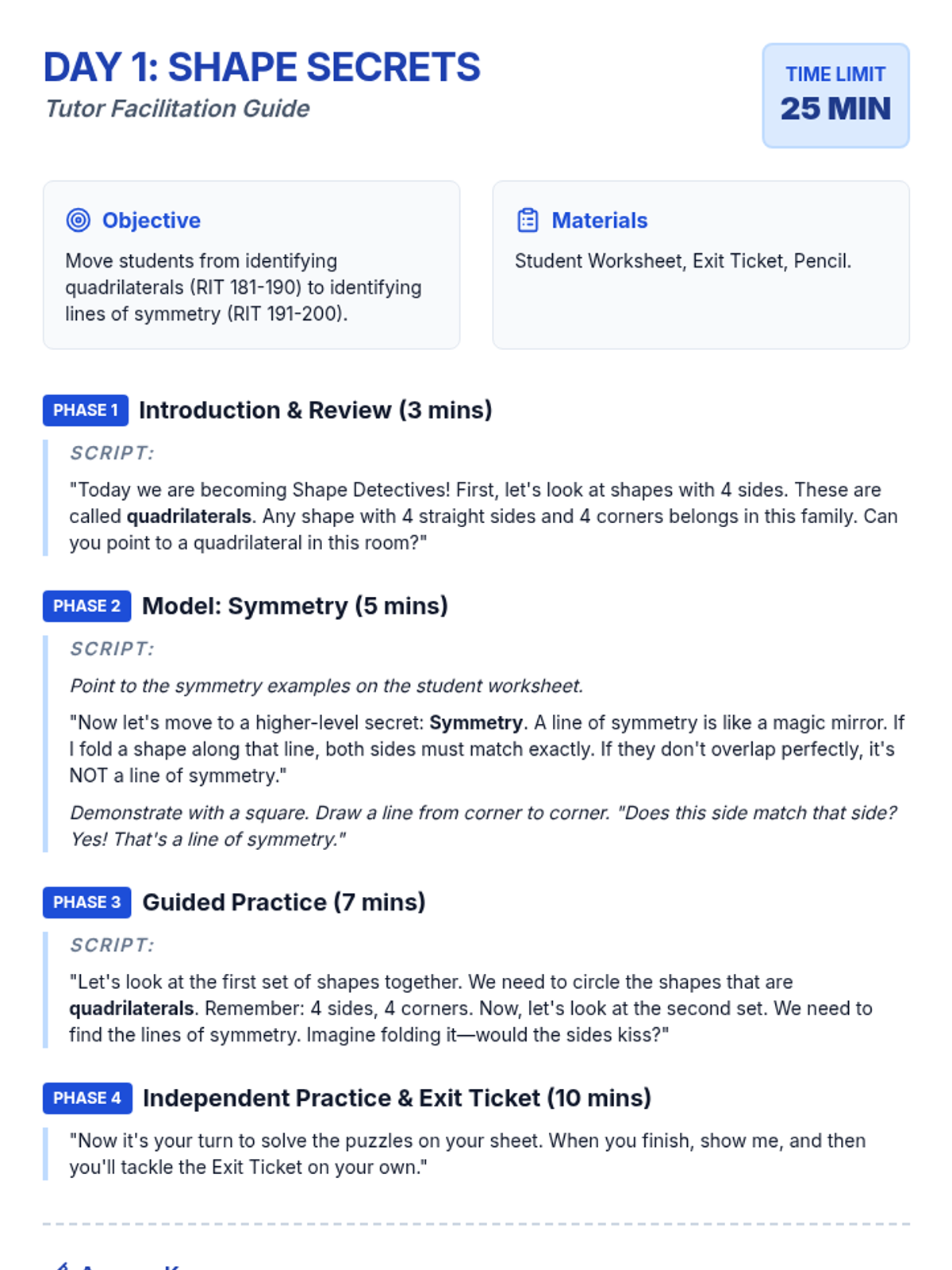
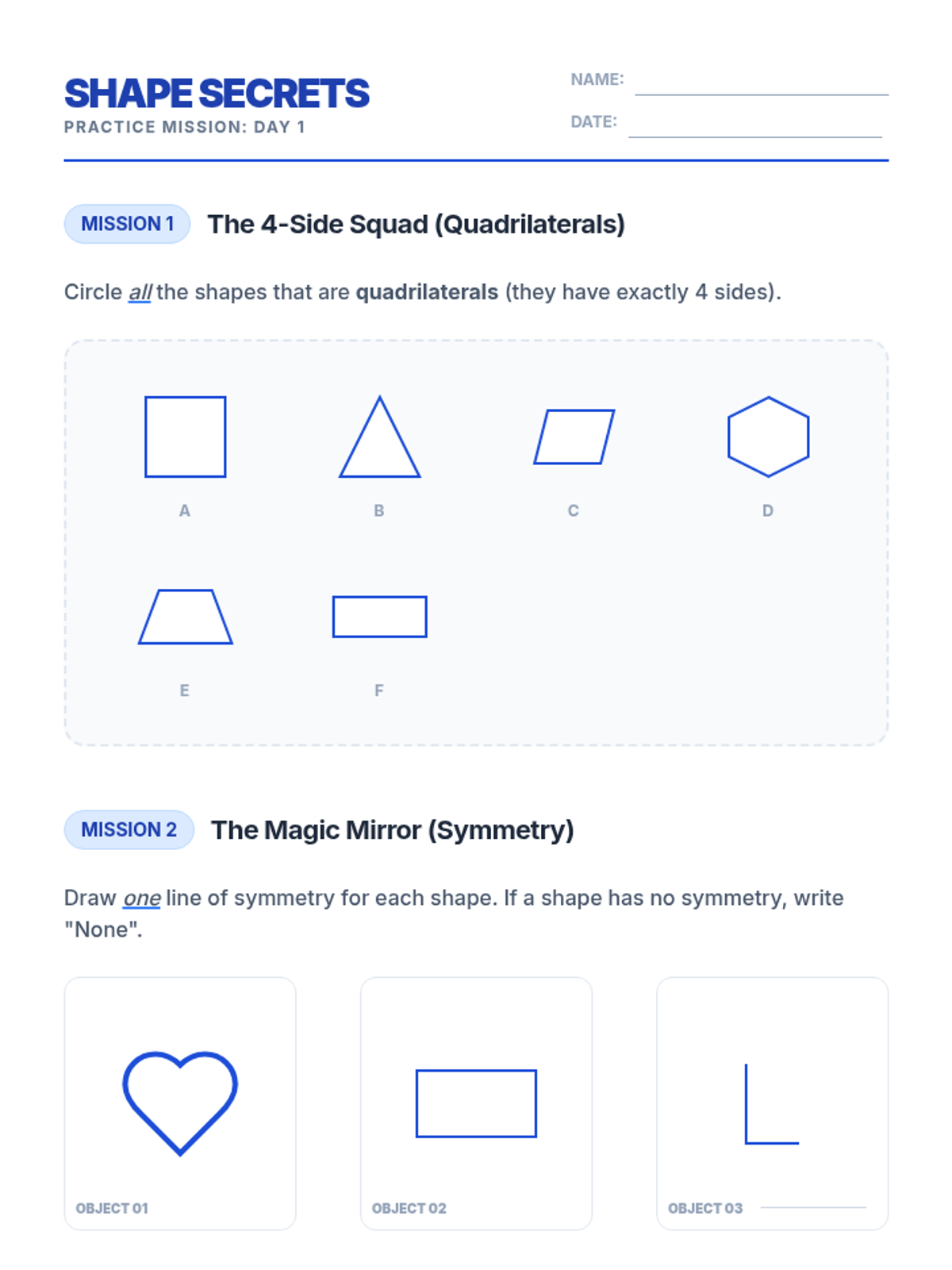
Students identify attributes of quadrilaterals (181-190) and explore lines of symmetry in 2D shapes (191-200).
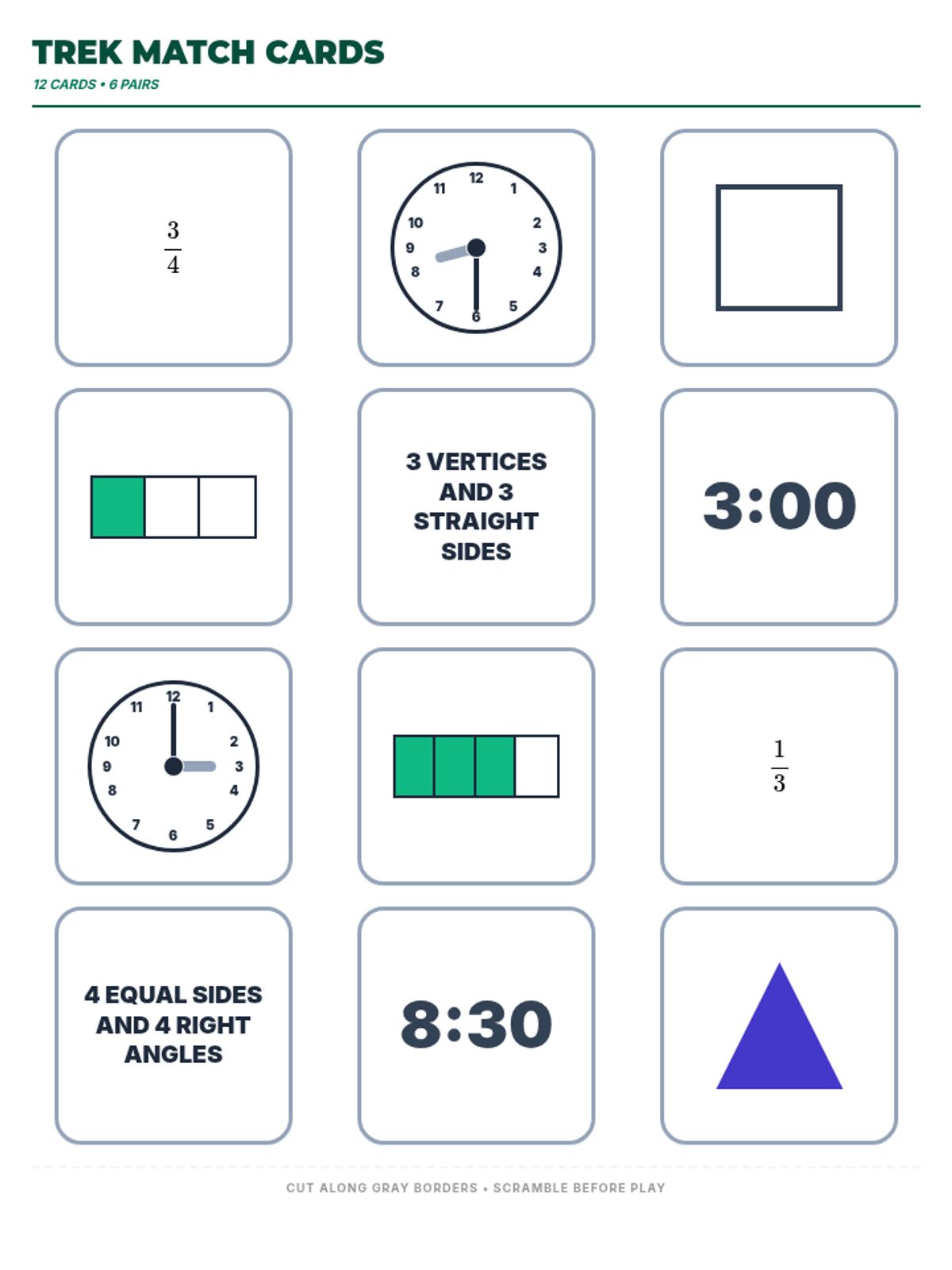
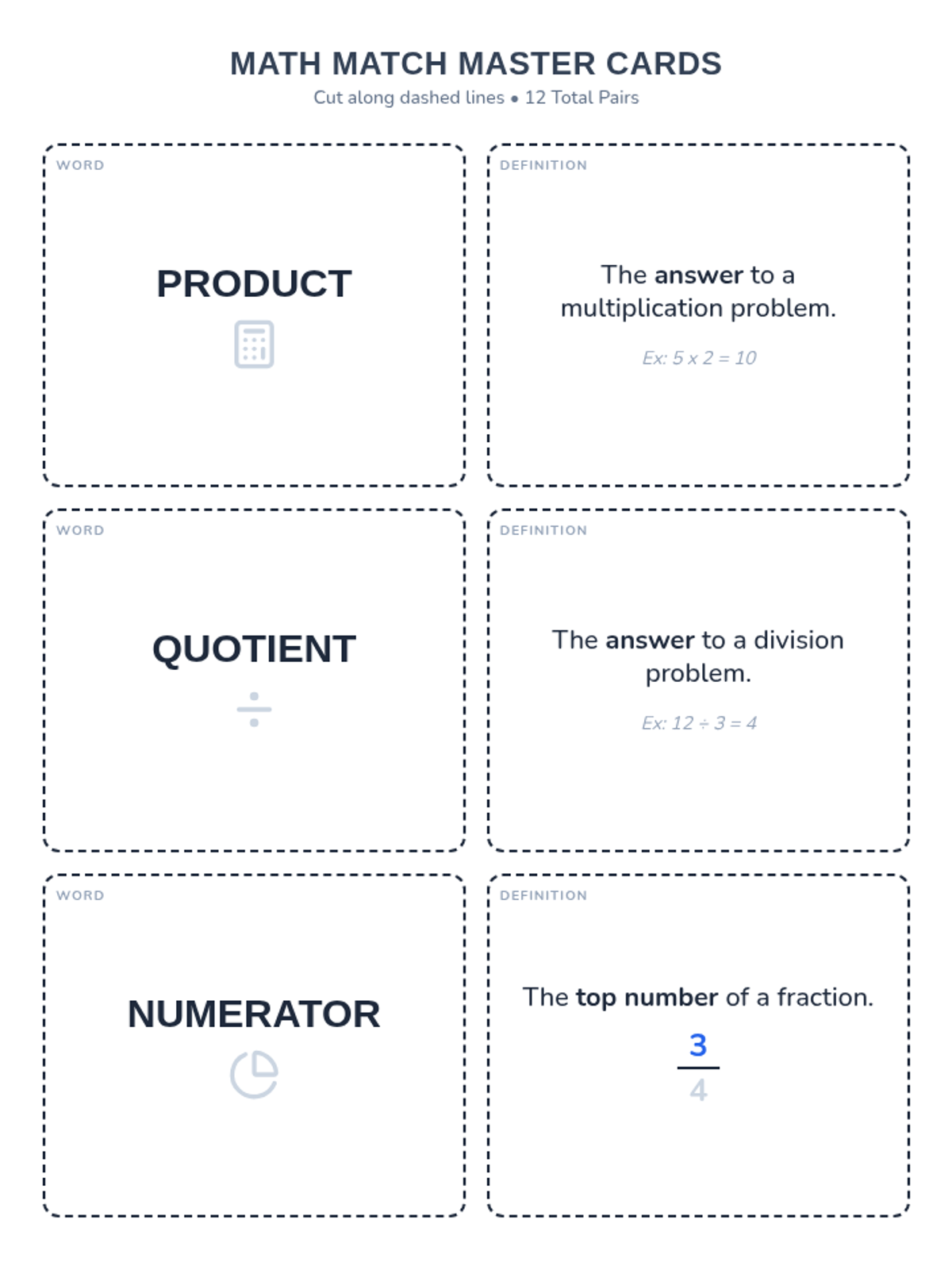
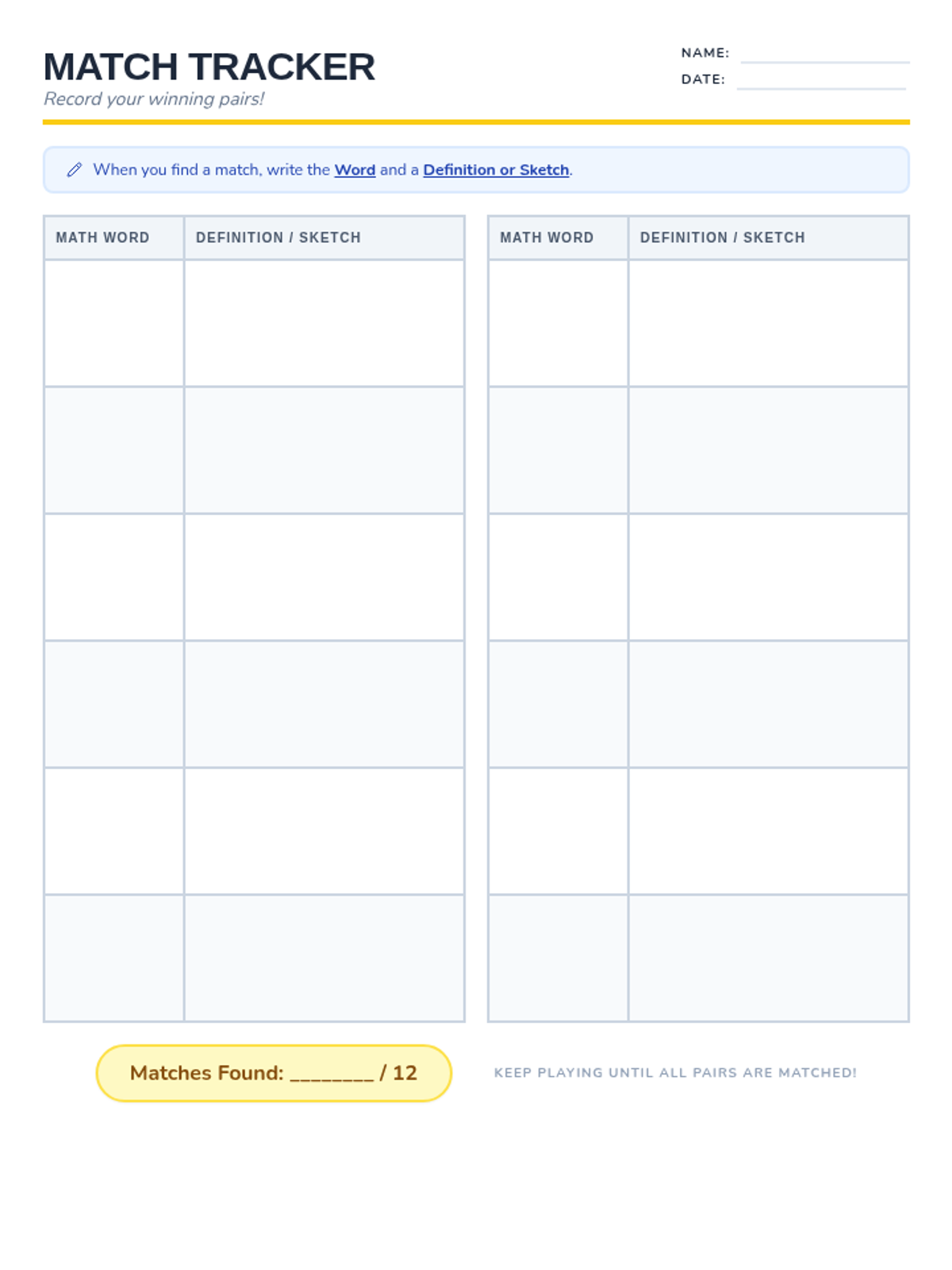
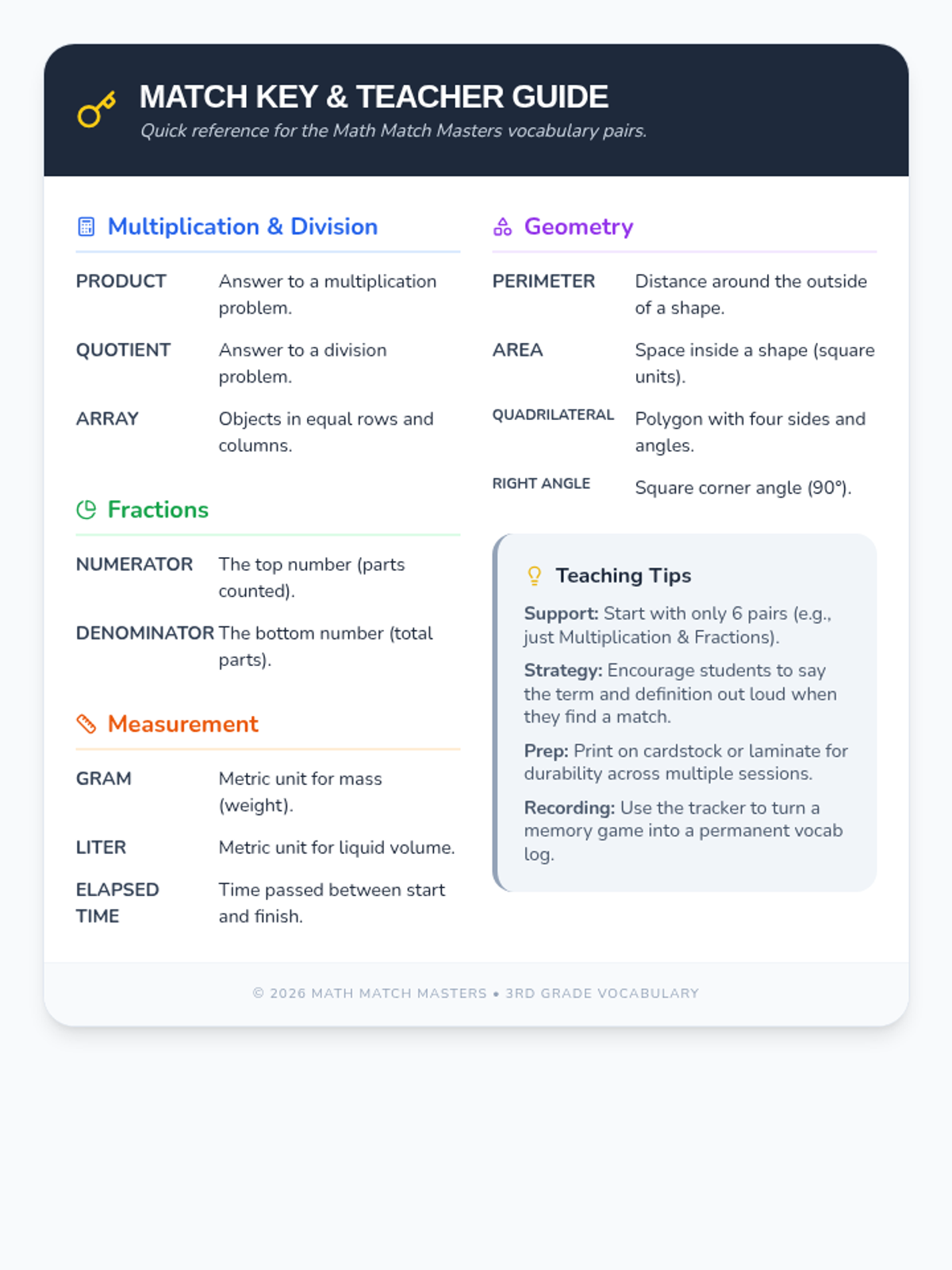
A high-energy math vocabulary game focused on key 3rd-grade concepts across multiplication, fractions, geometry, and measurement. Students practice identifying terms and definitions through a tactile memory match activity.
A hands-on lesson combining perimeter, multiplication, and data interpretation through tables and graphs for 3rd-grade students.
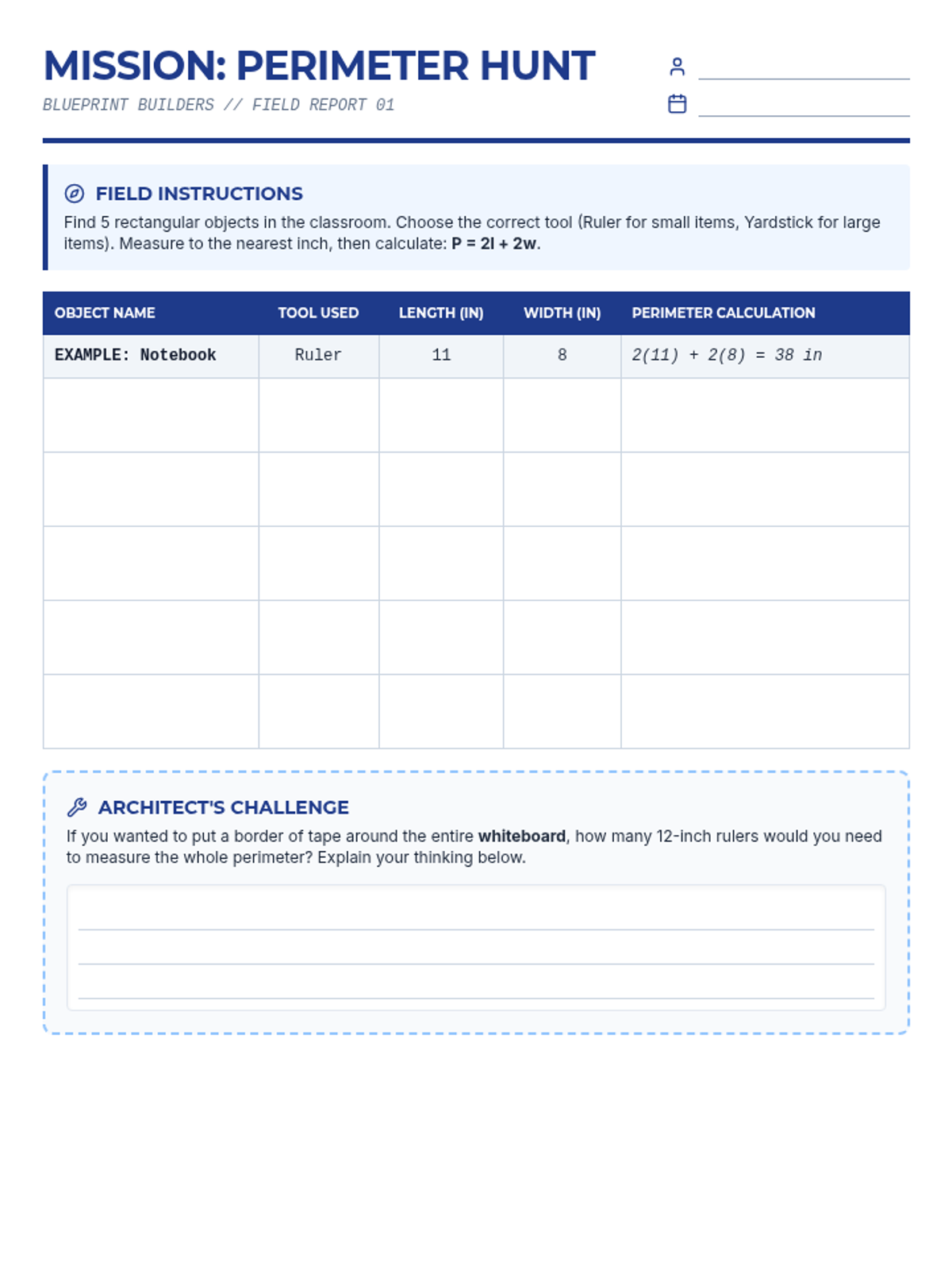
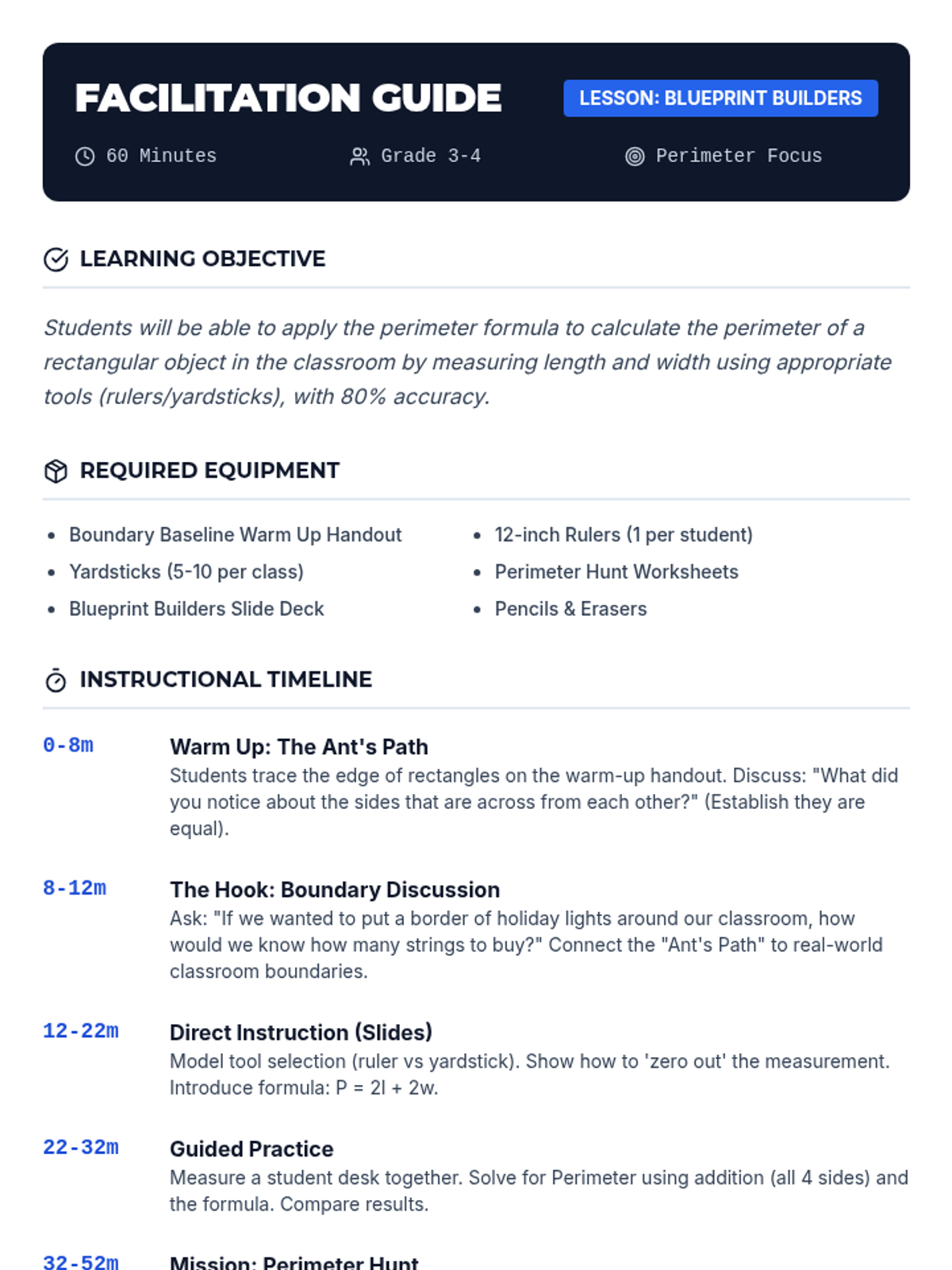
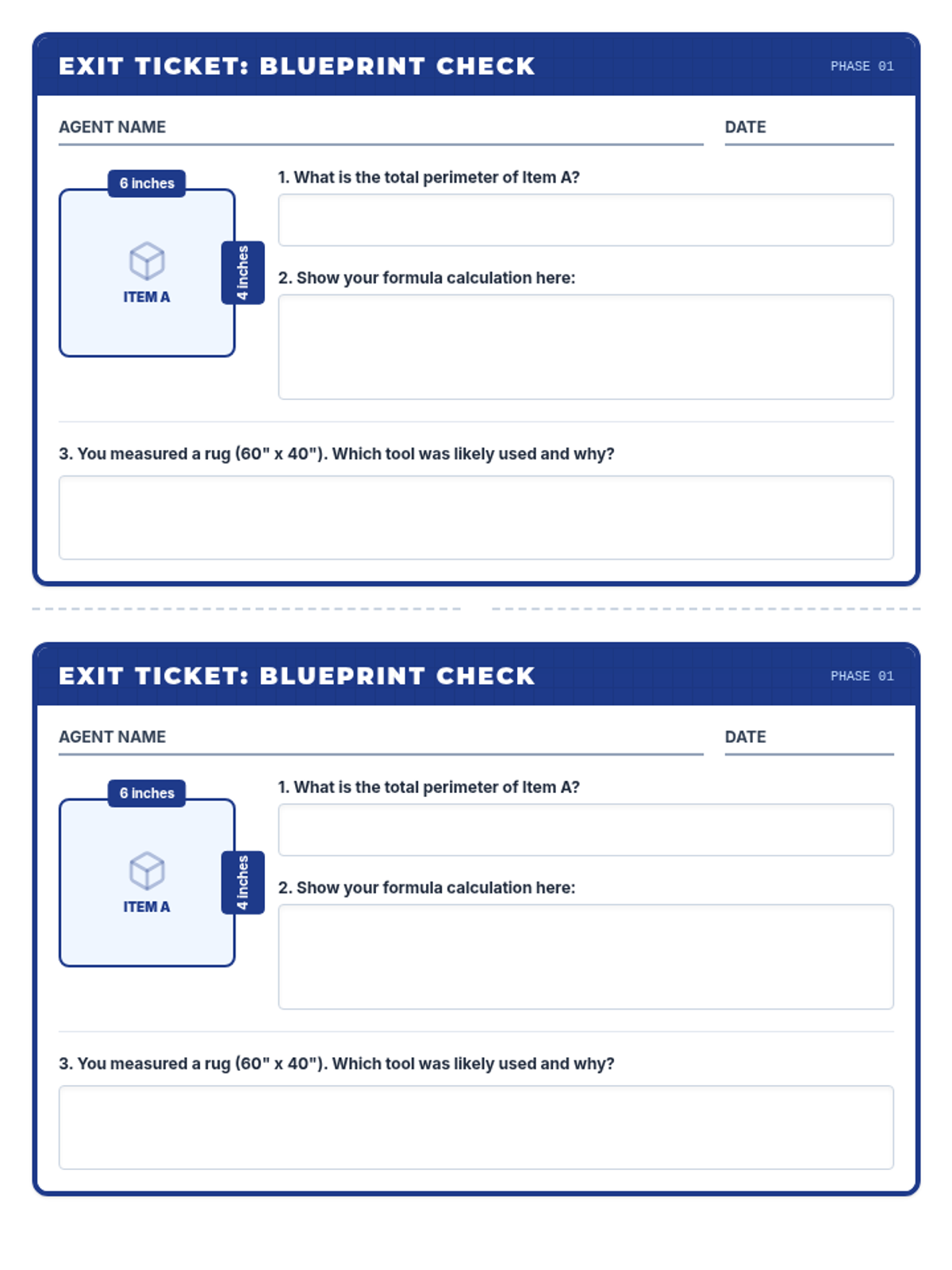
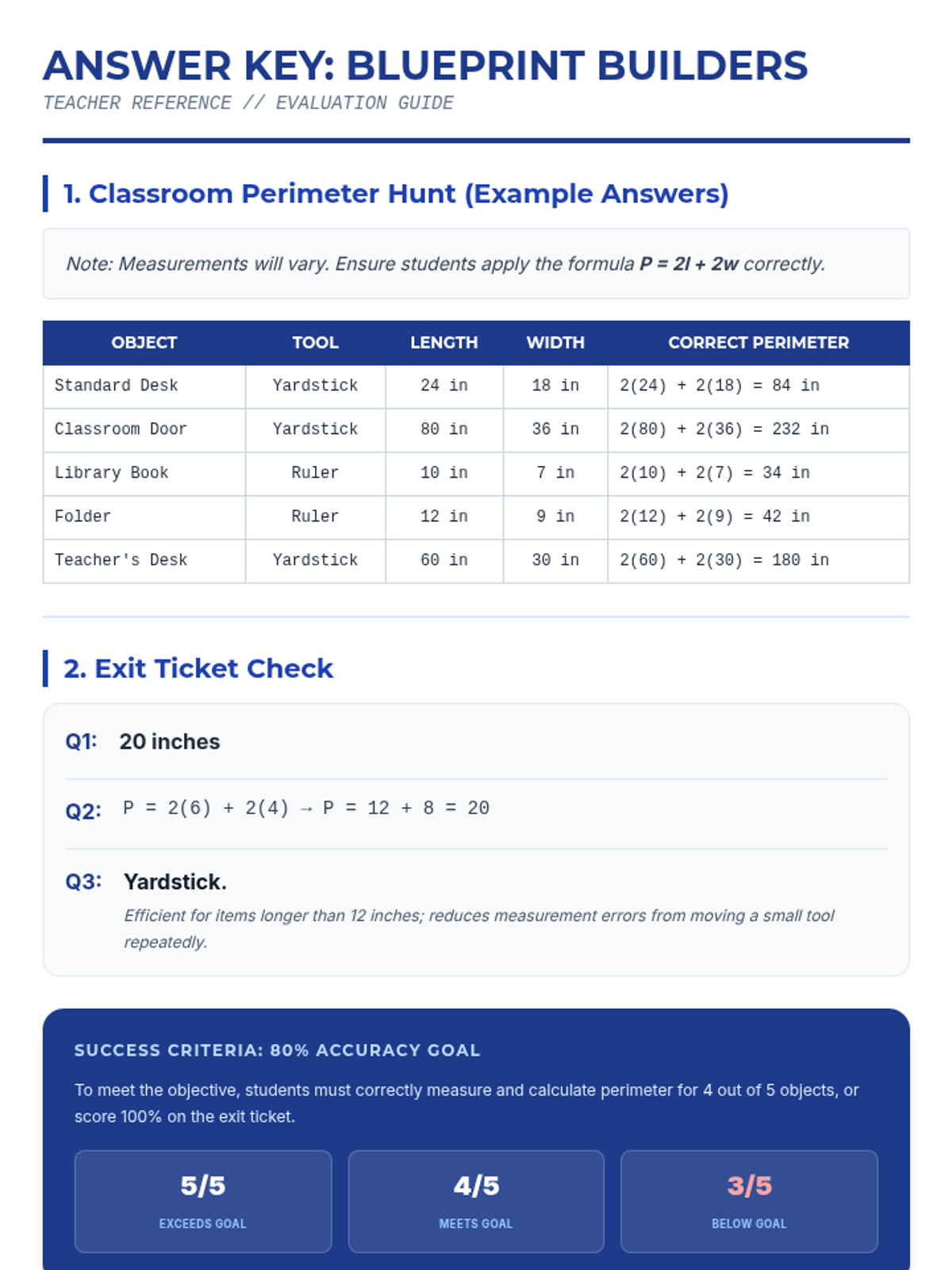
A hands-on geometry lesson where students measure classroom objects and apply the perimeter formula as architect-apprentices.
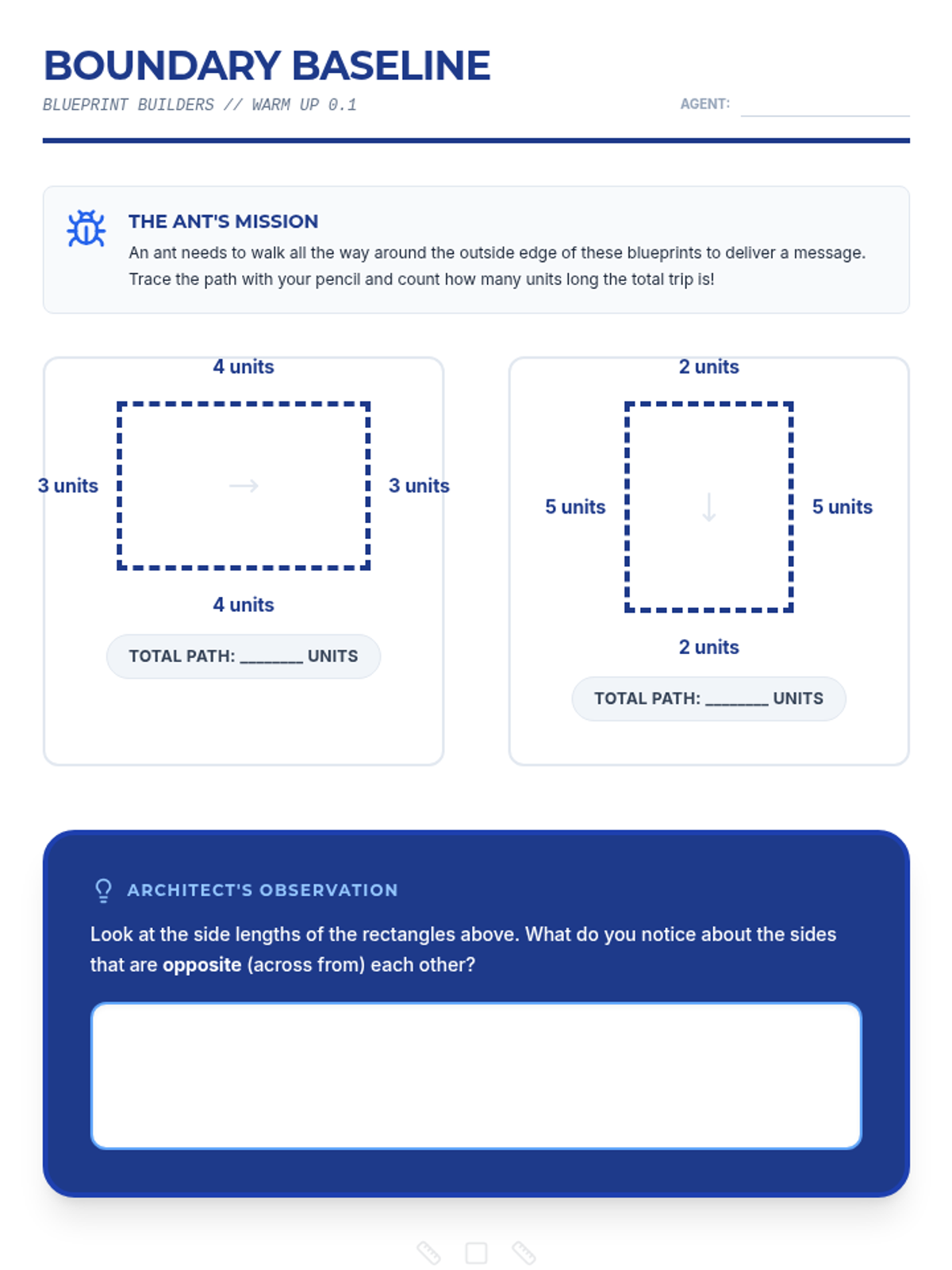
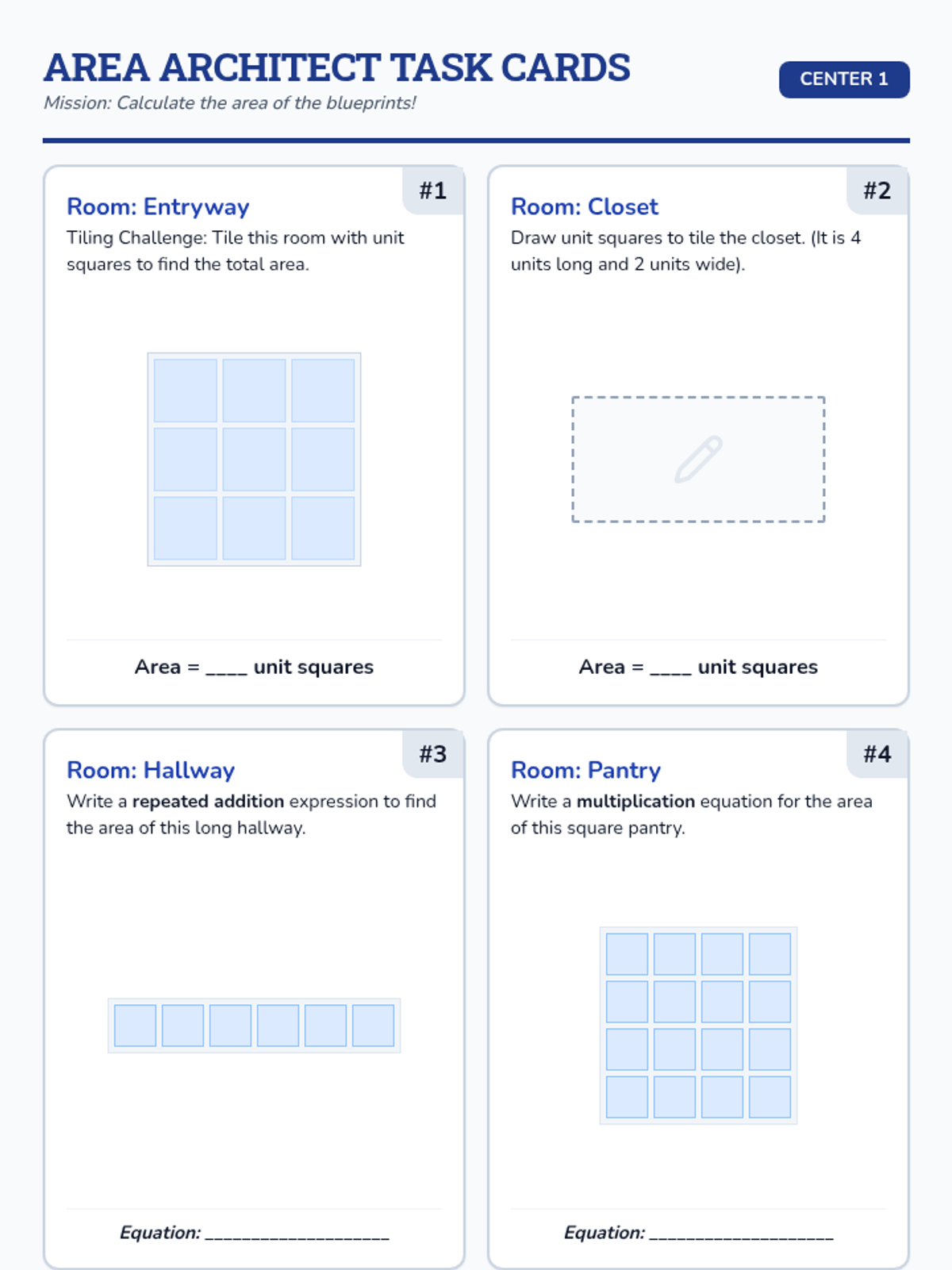
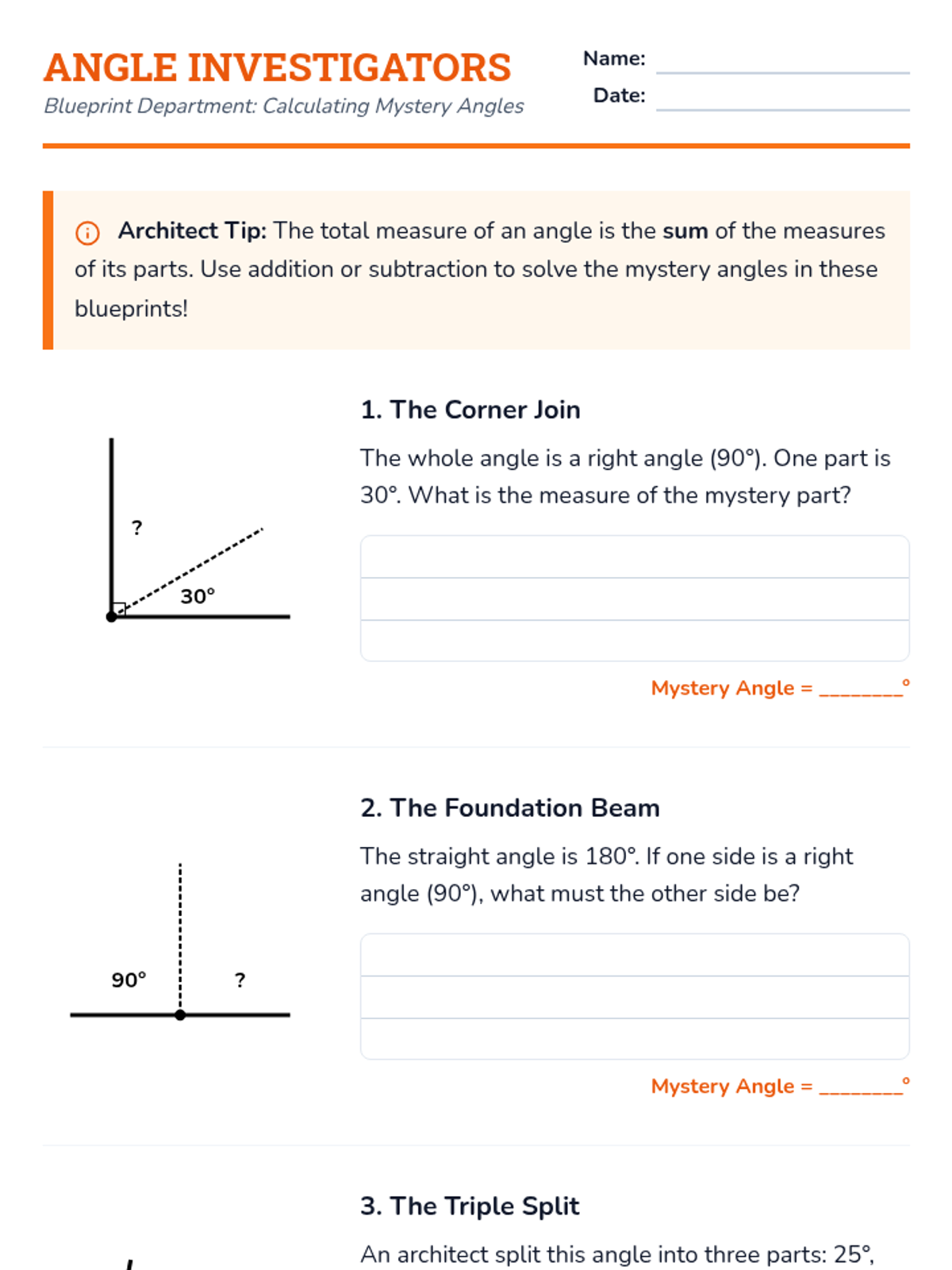
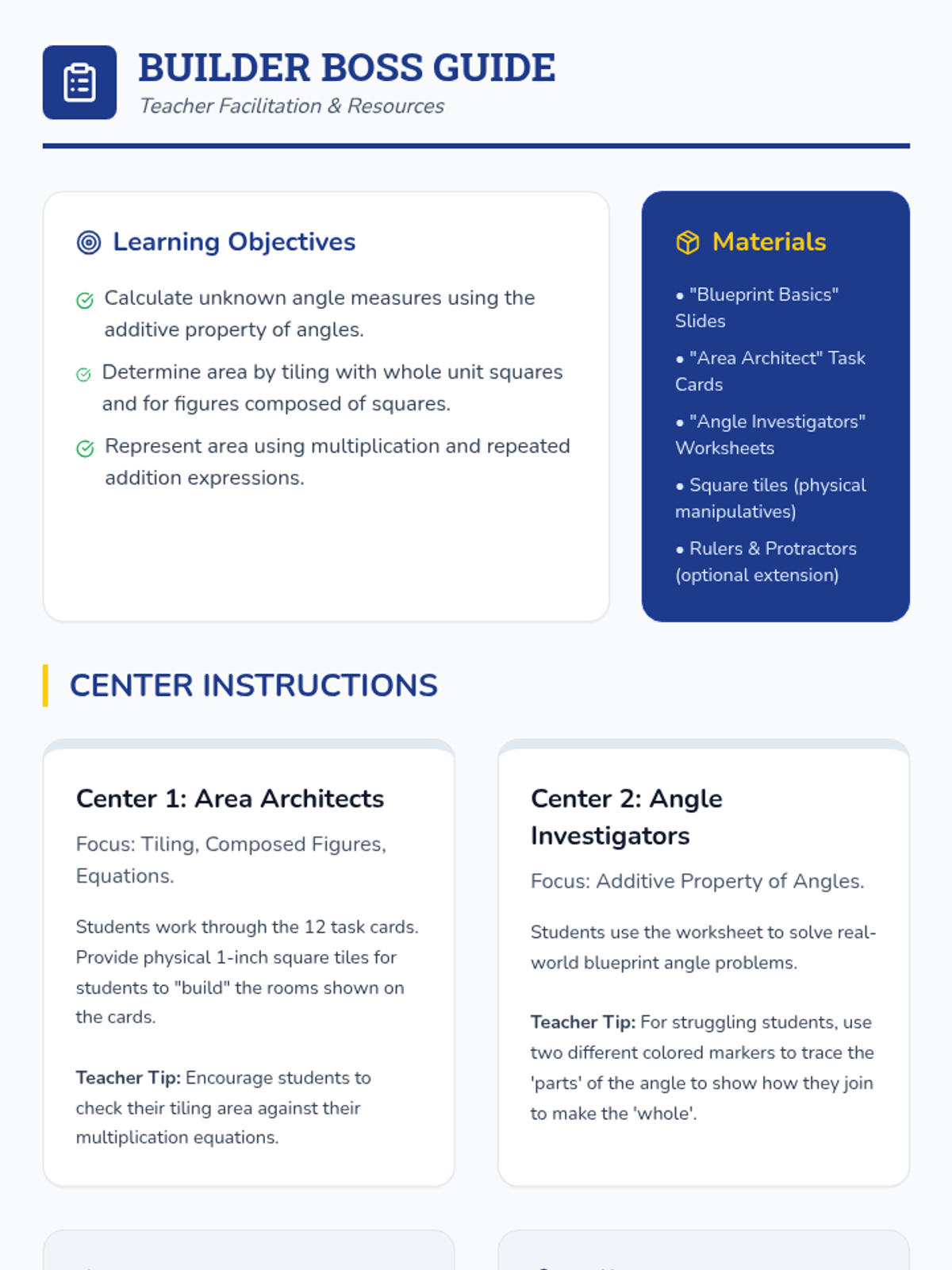
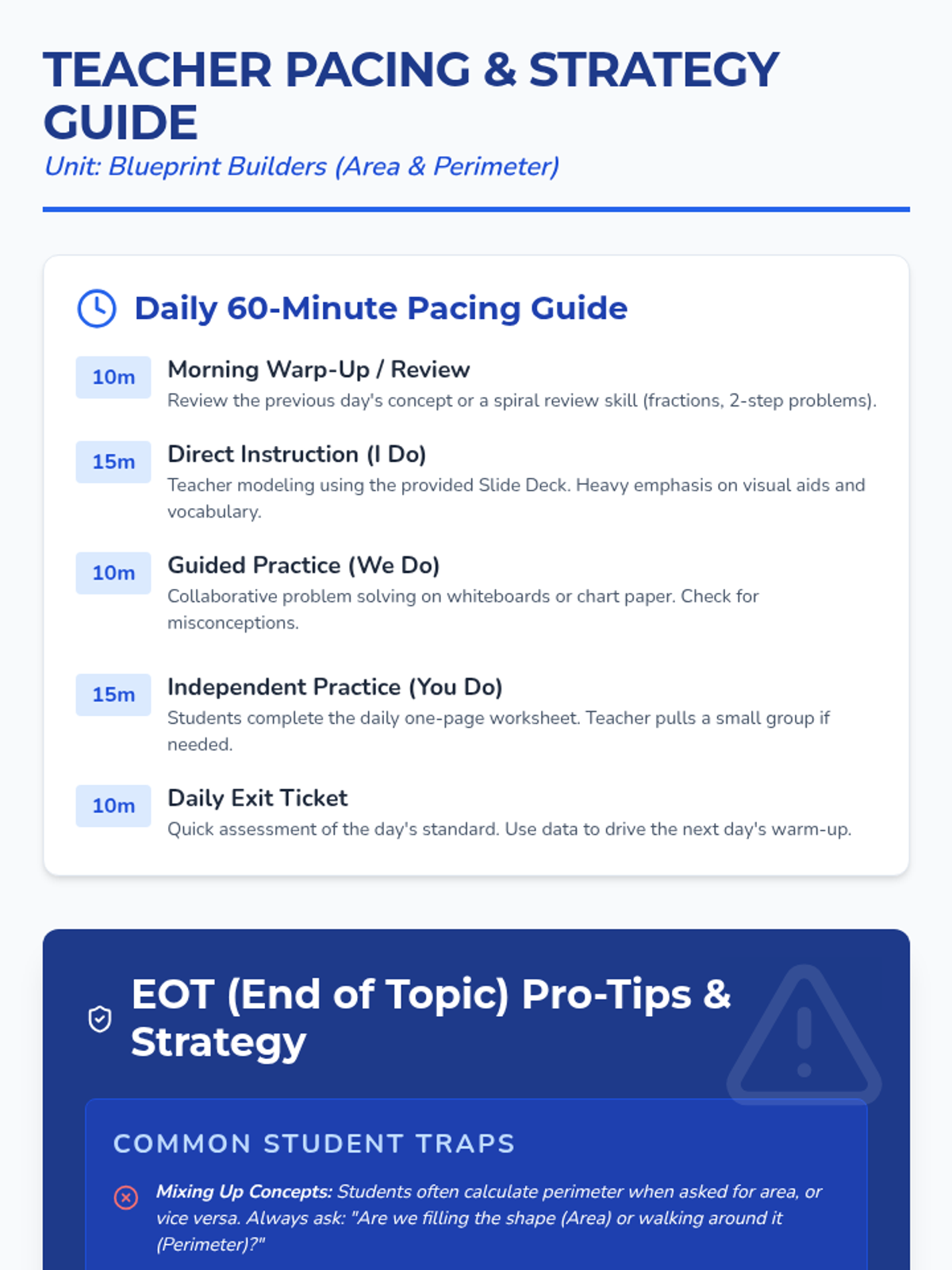
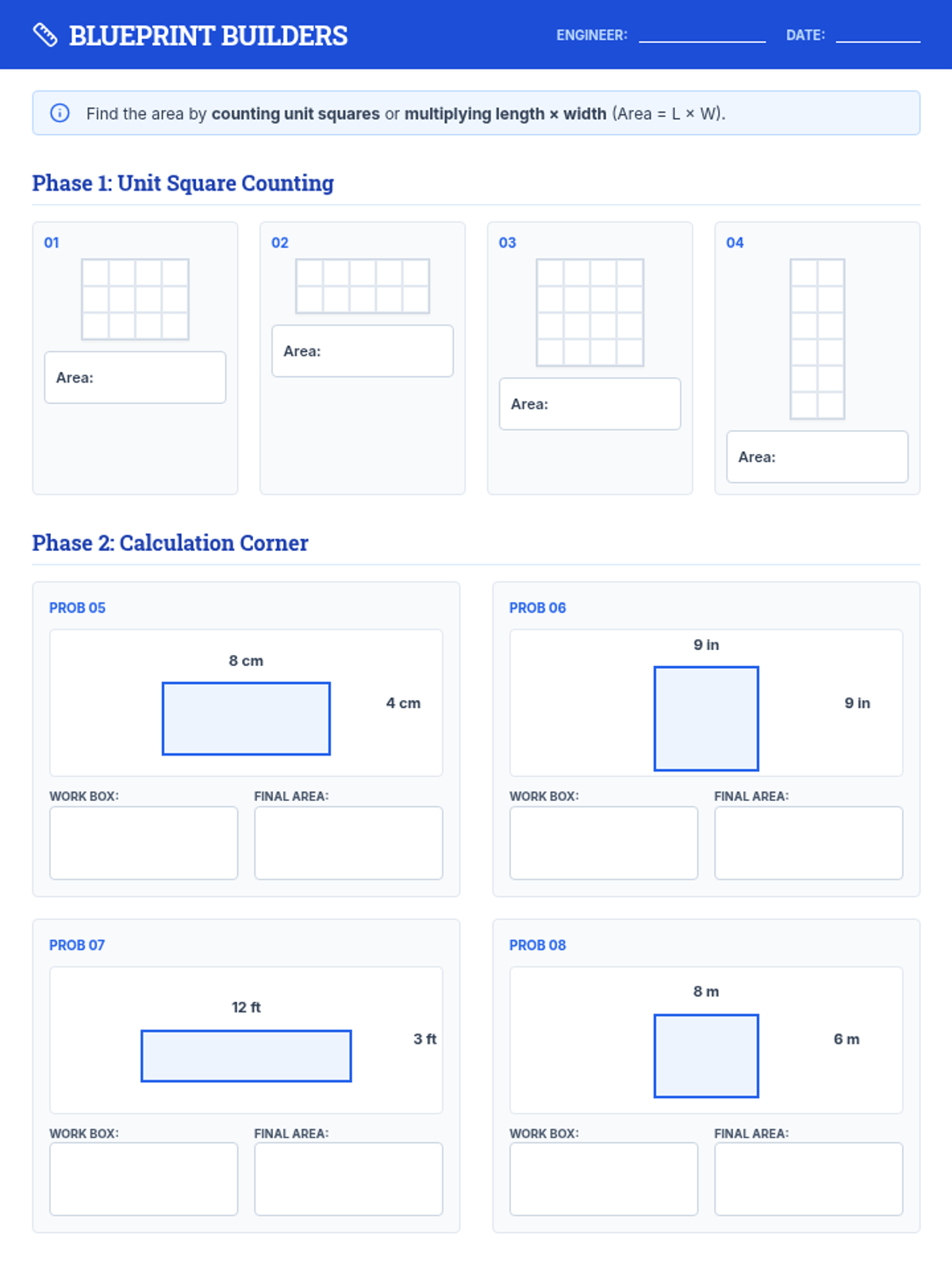
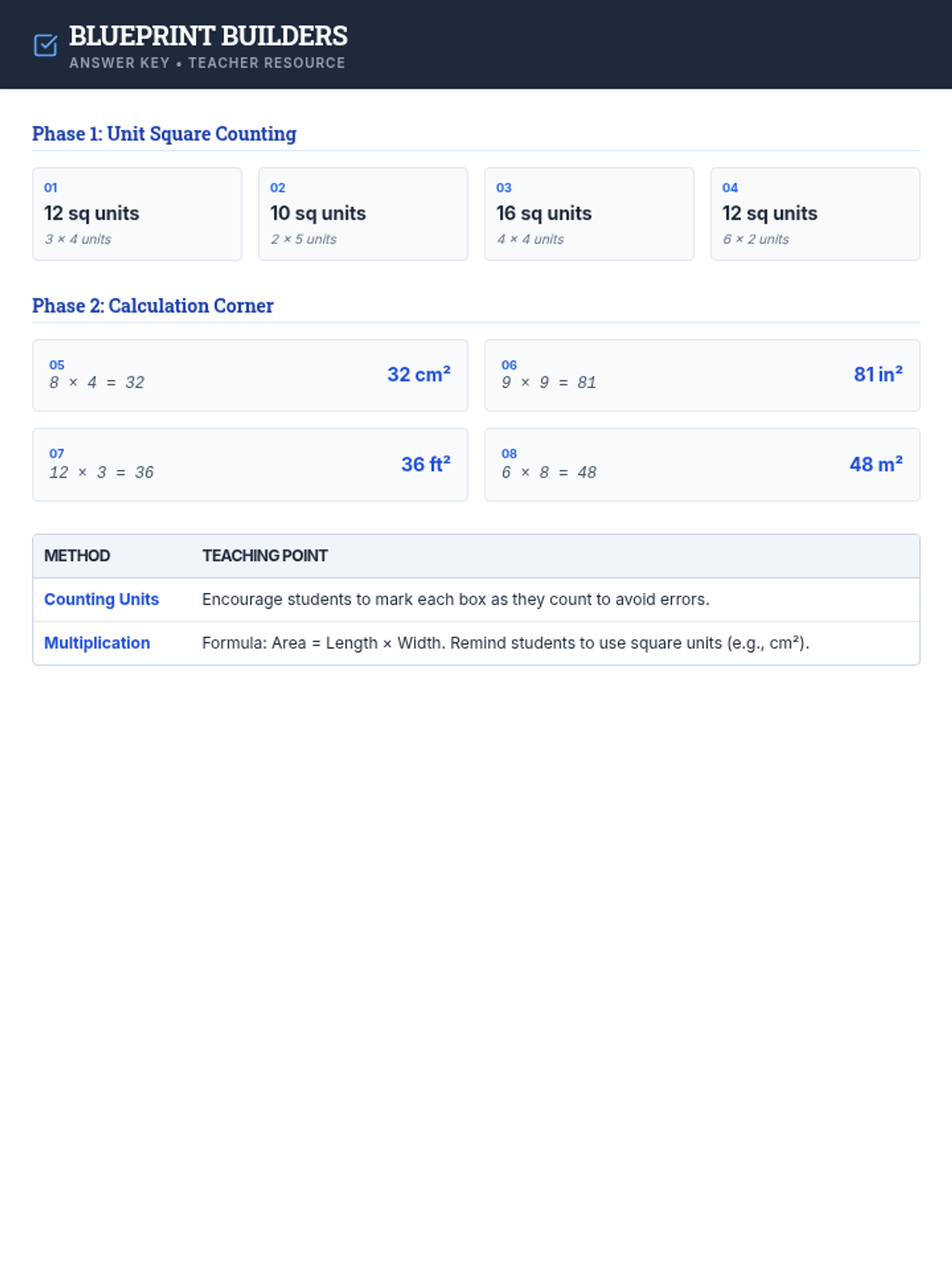
A comprehensive set of small group activities where students calculate unknown angles and determine the area of various figures using tiling and equations. The lesson uses a 'Blueprint Builders' theme to engage students in real-world mathematical applications.
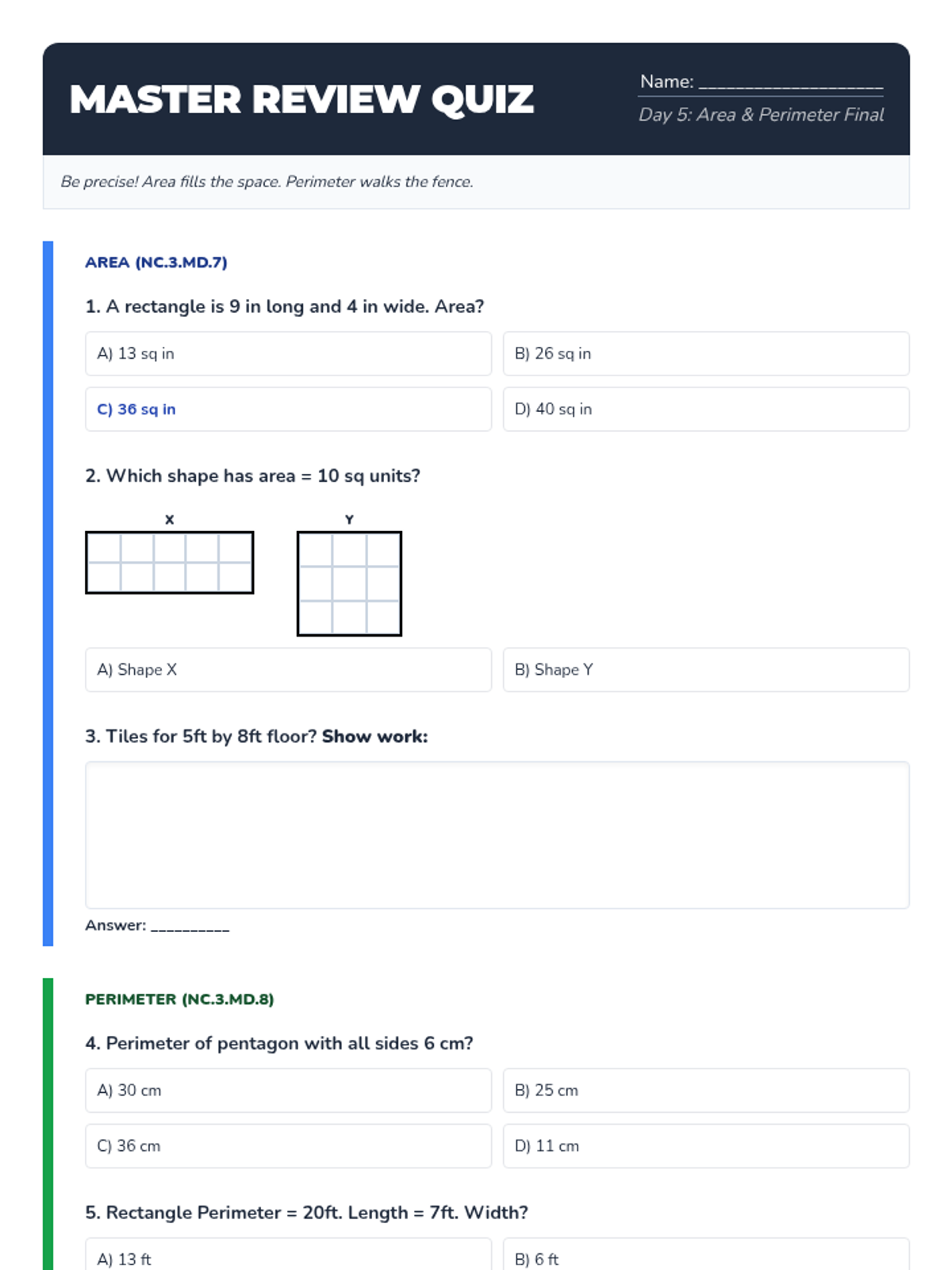
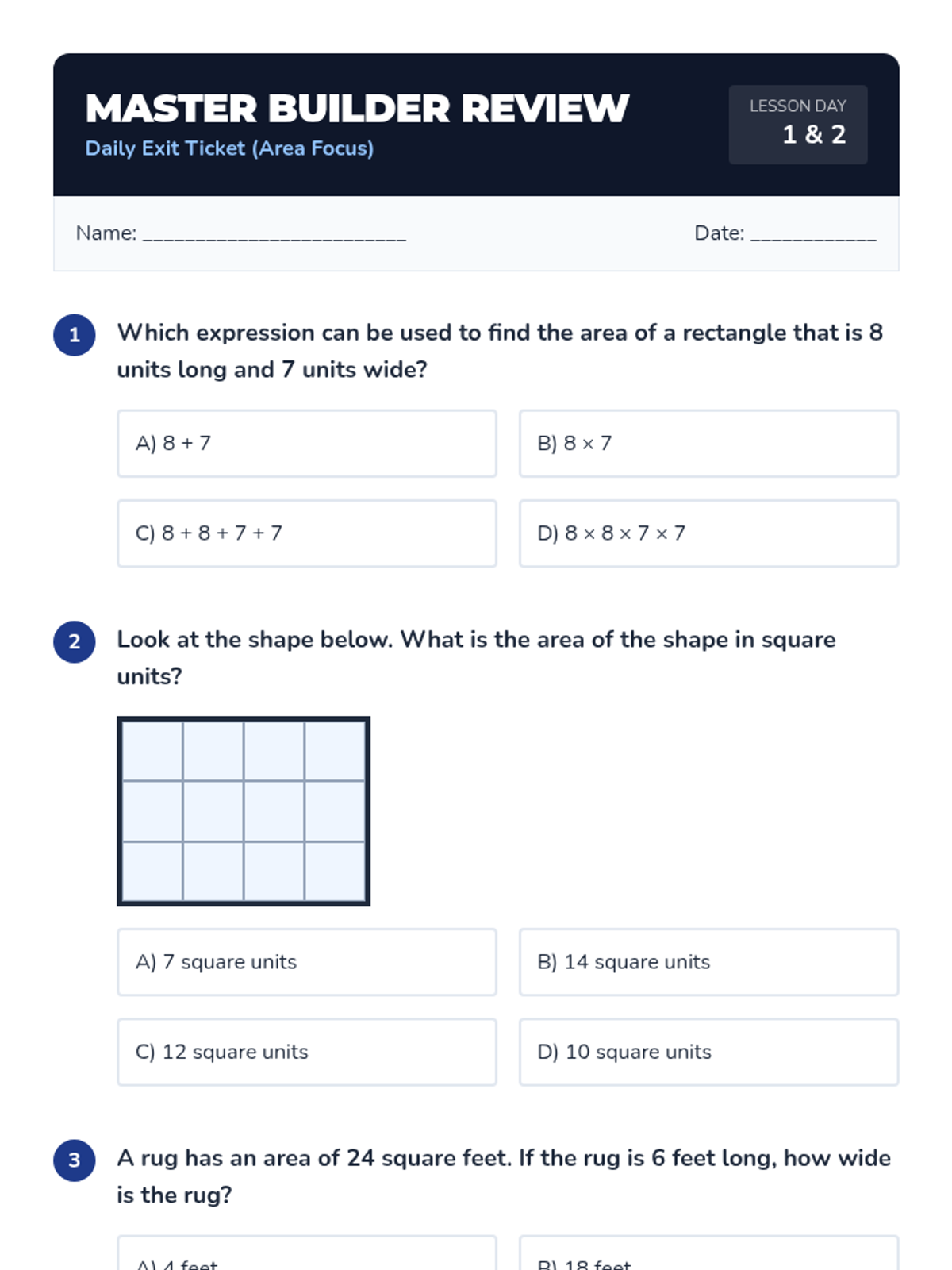
A comprehensive review of area and perimeter concepts including a spiral review assessment.
Challenges students to find missing side lengths when the total perimeter is known.
Introduces perimeter as the distance around a shape and calculates it by adding all side lengths.
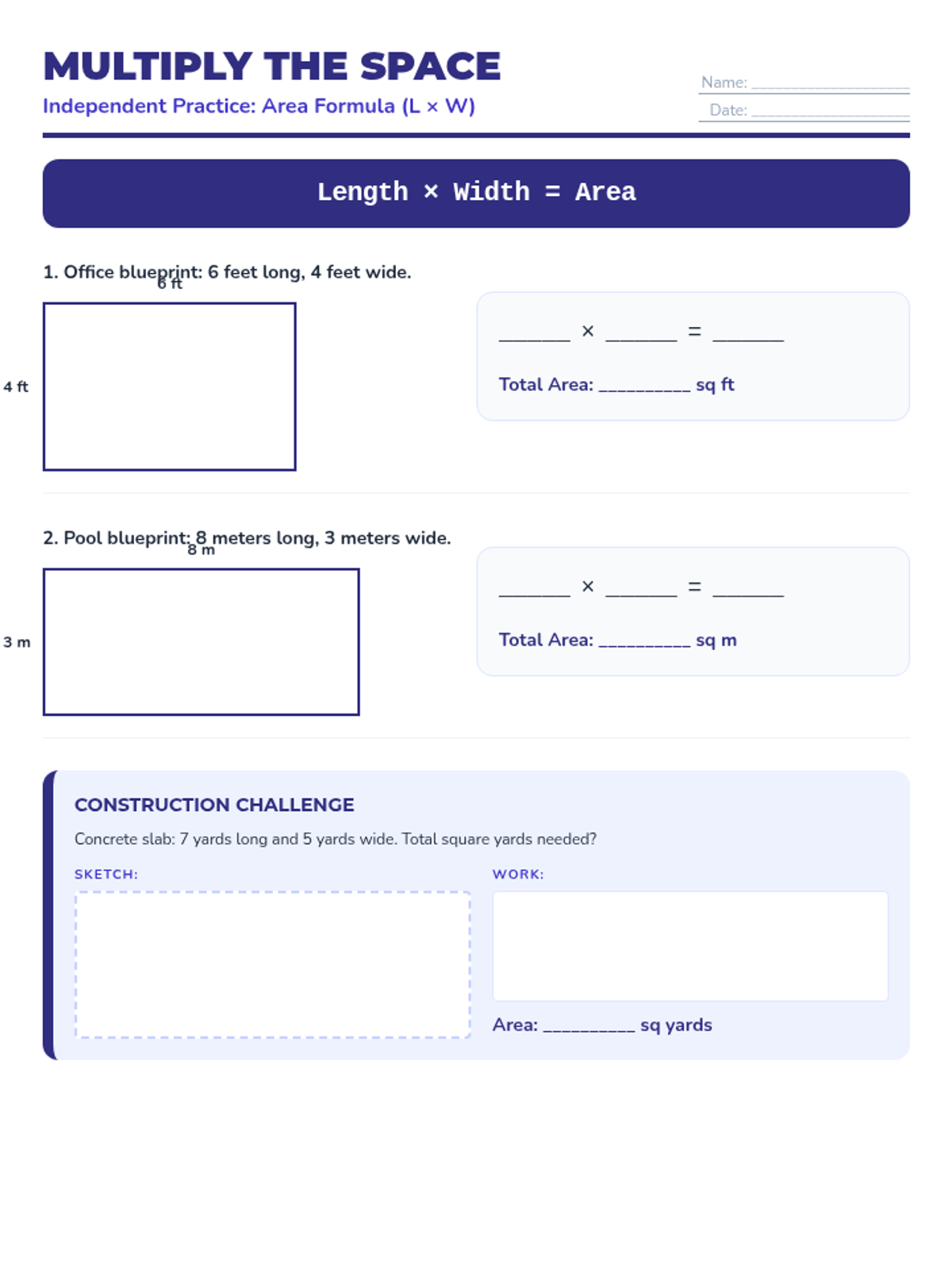
Connects area to multiplication by partitioning rectangles and using the Length x Width formula.
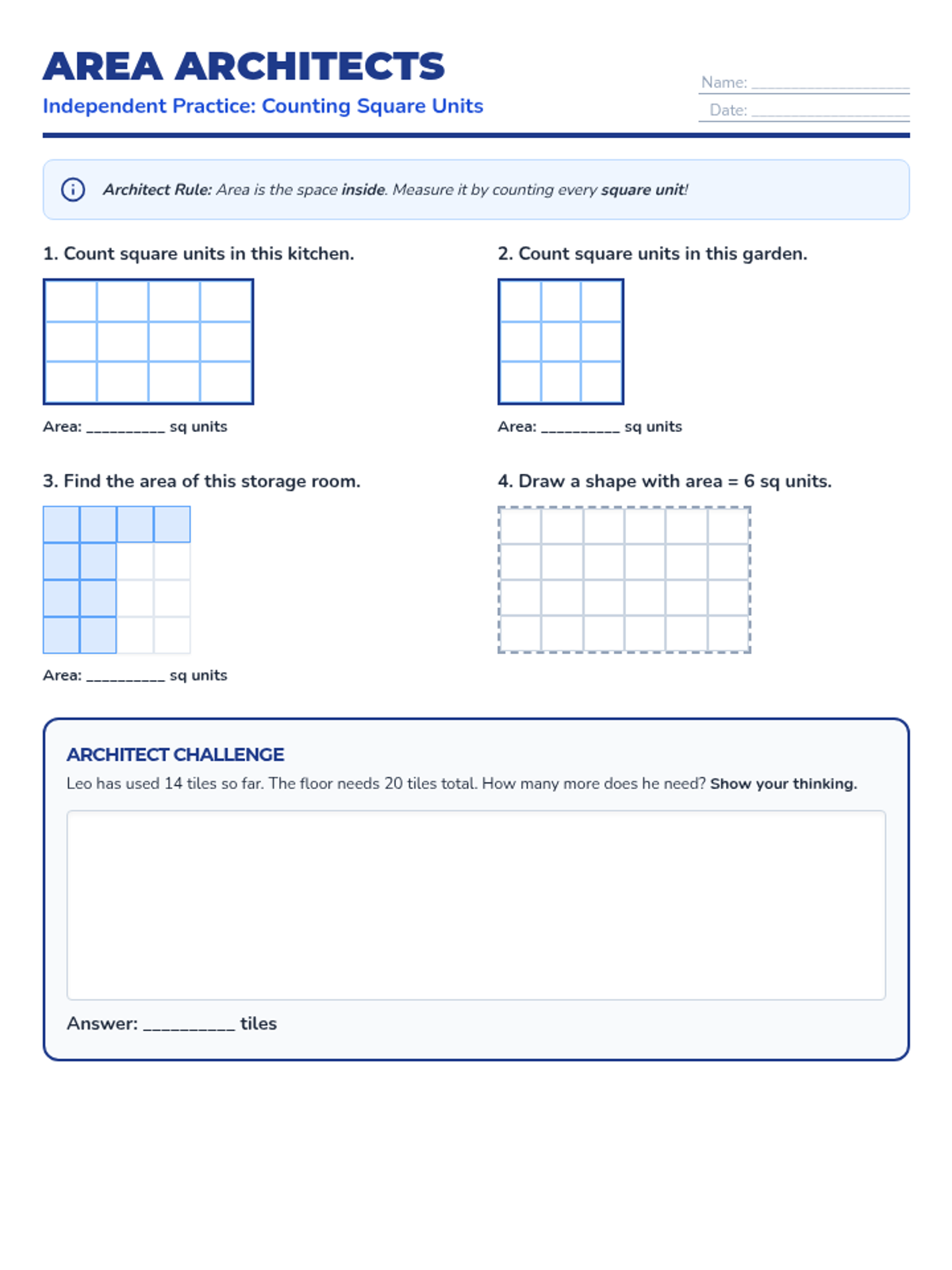
Focuses on relating area to tiling and counting square units to understand the concept of space inside a 2D figure.
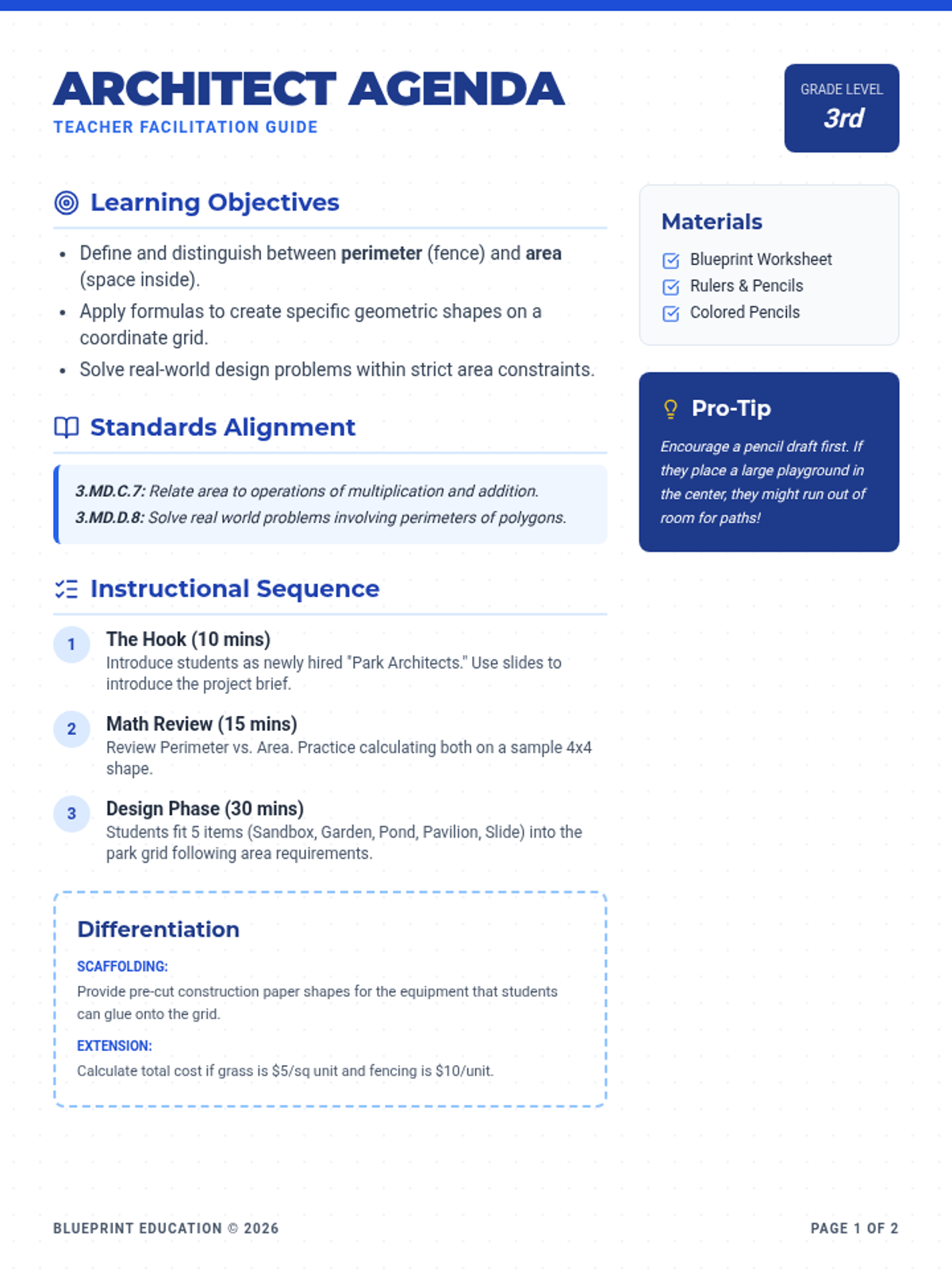
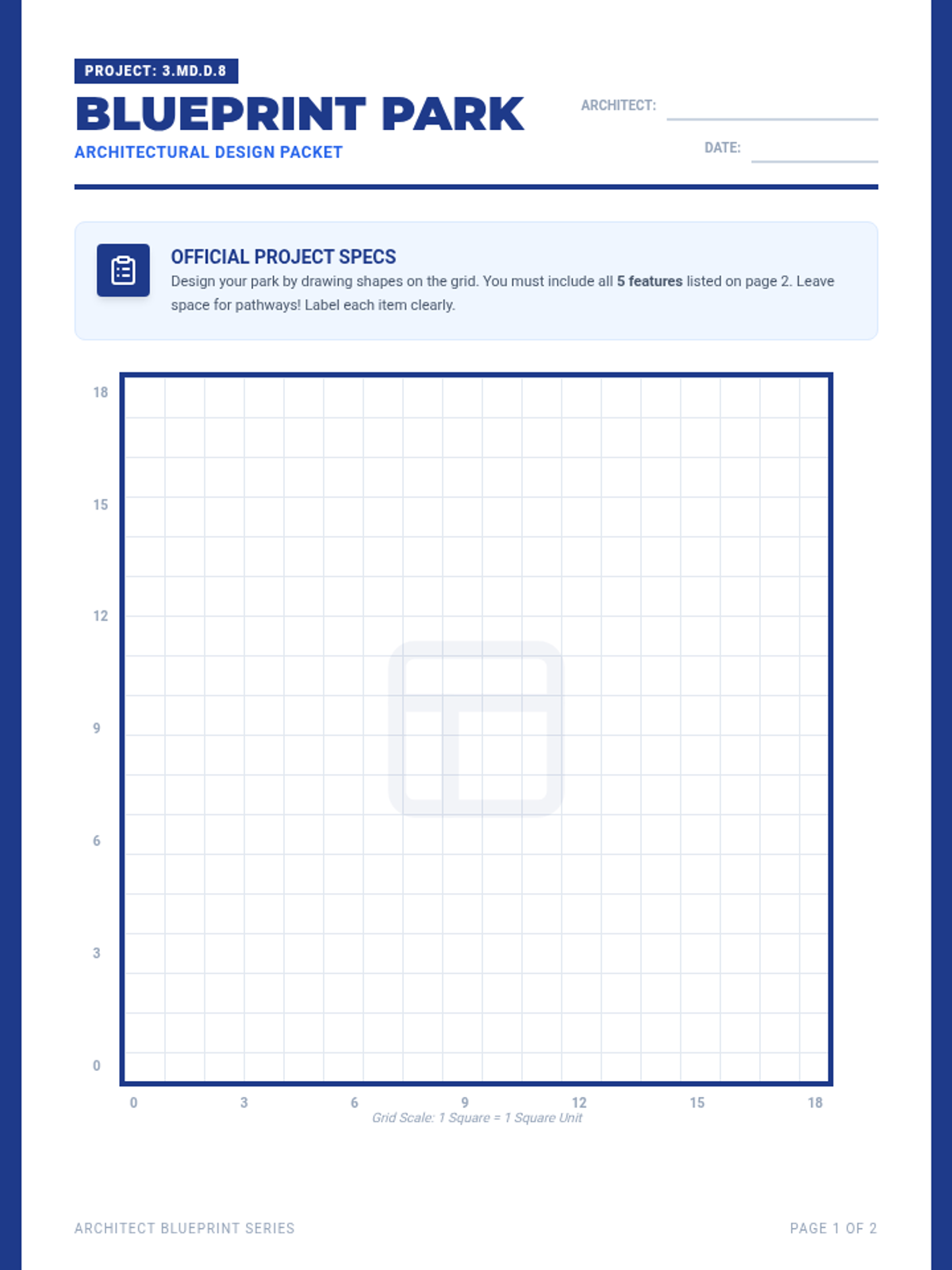
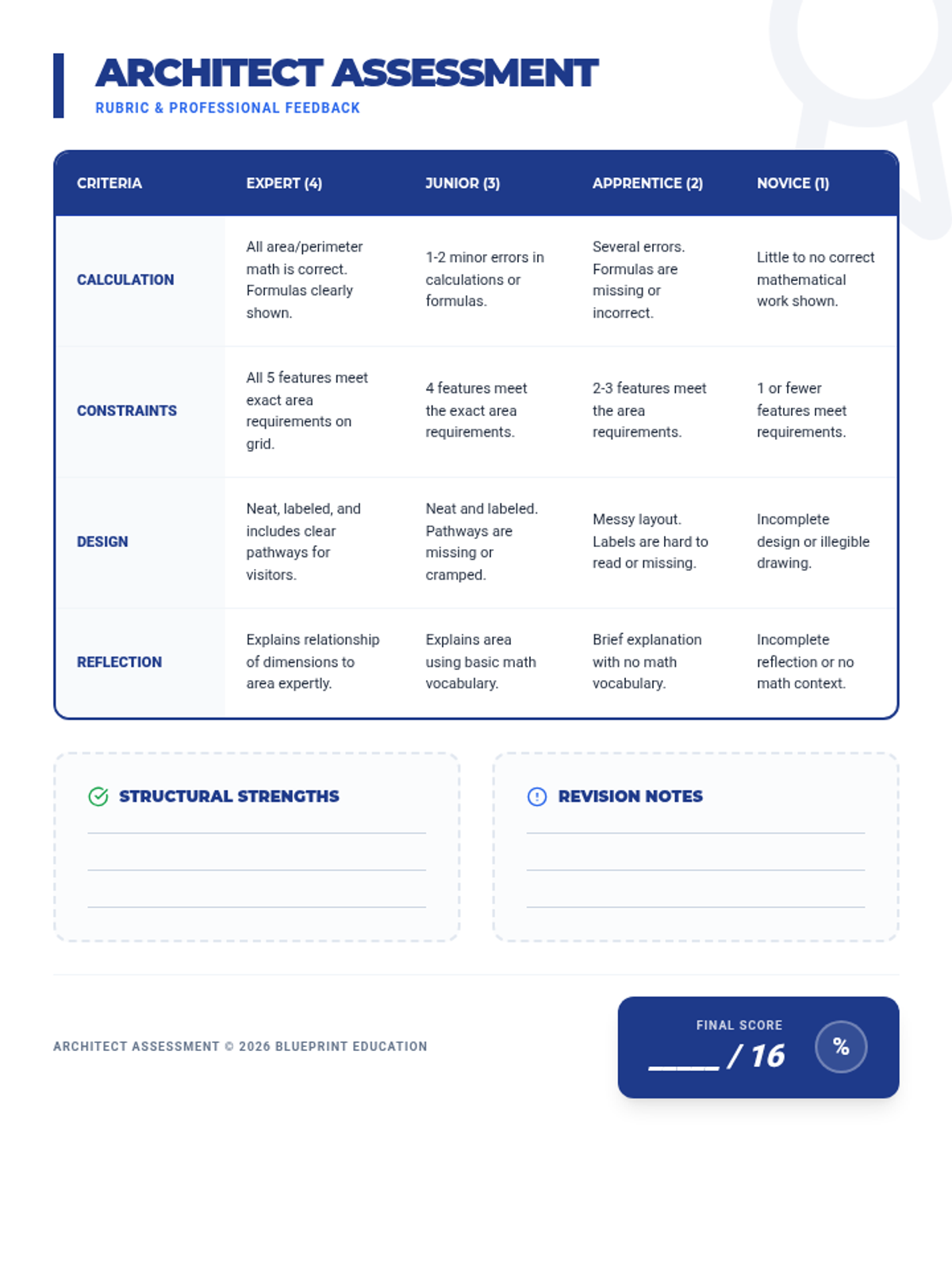
A hands-on geometry lesson where students act as urban planners to design a community park using area and perimeter calculations.
A hands-on lesson for 3rd graders to understand area by tiling figures with unit squares, moving from counting to understanding the concept of square units.
A focused practice session where students work through two variations of five core mathematical problems to solidify their understanding of measurement, data, and number operations.
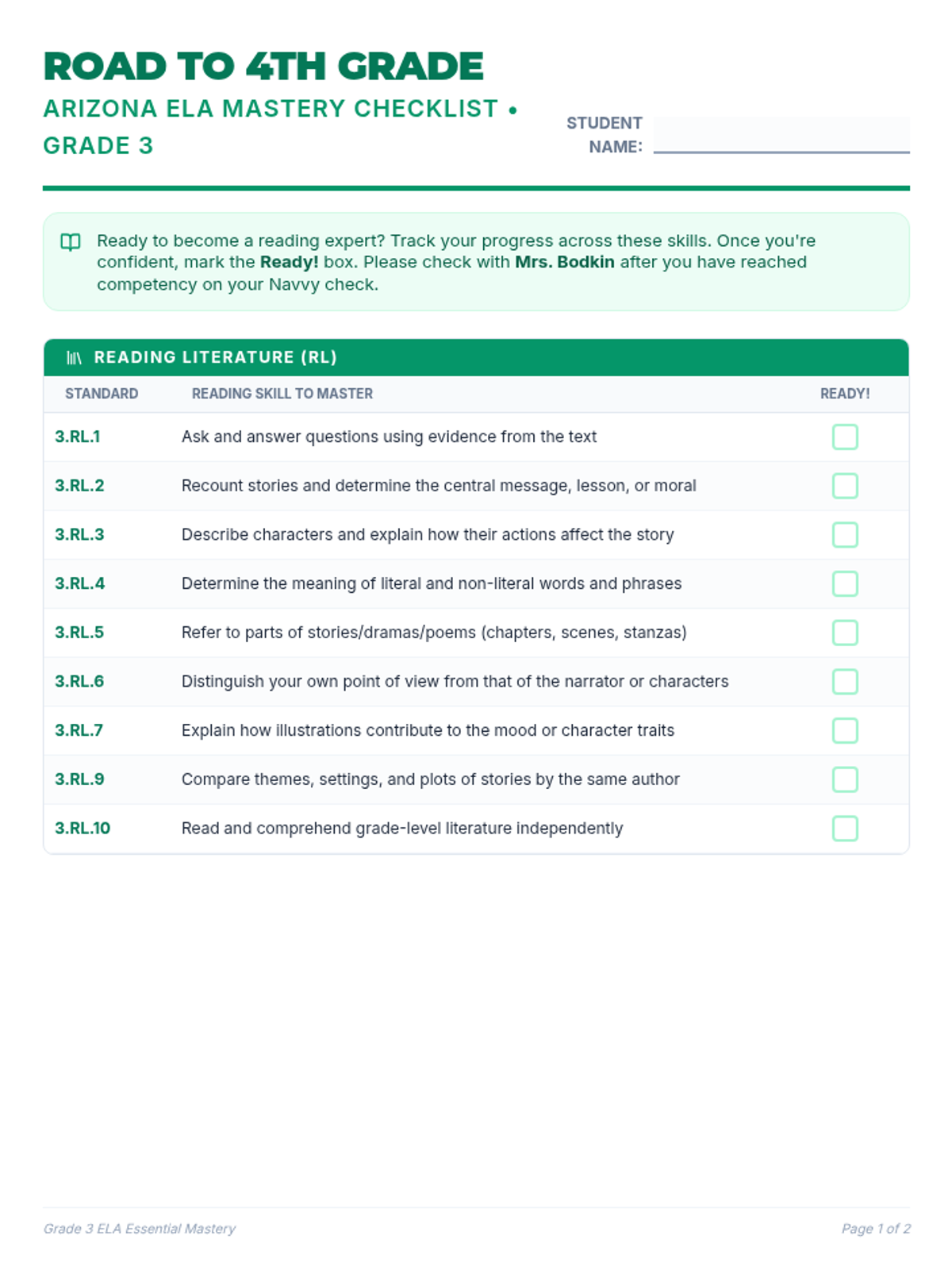
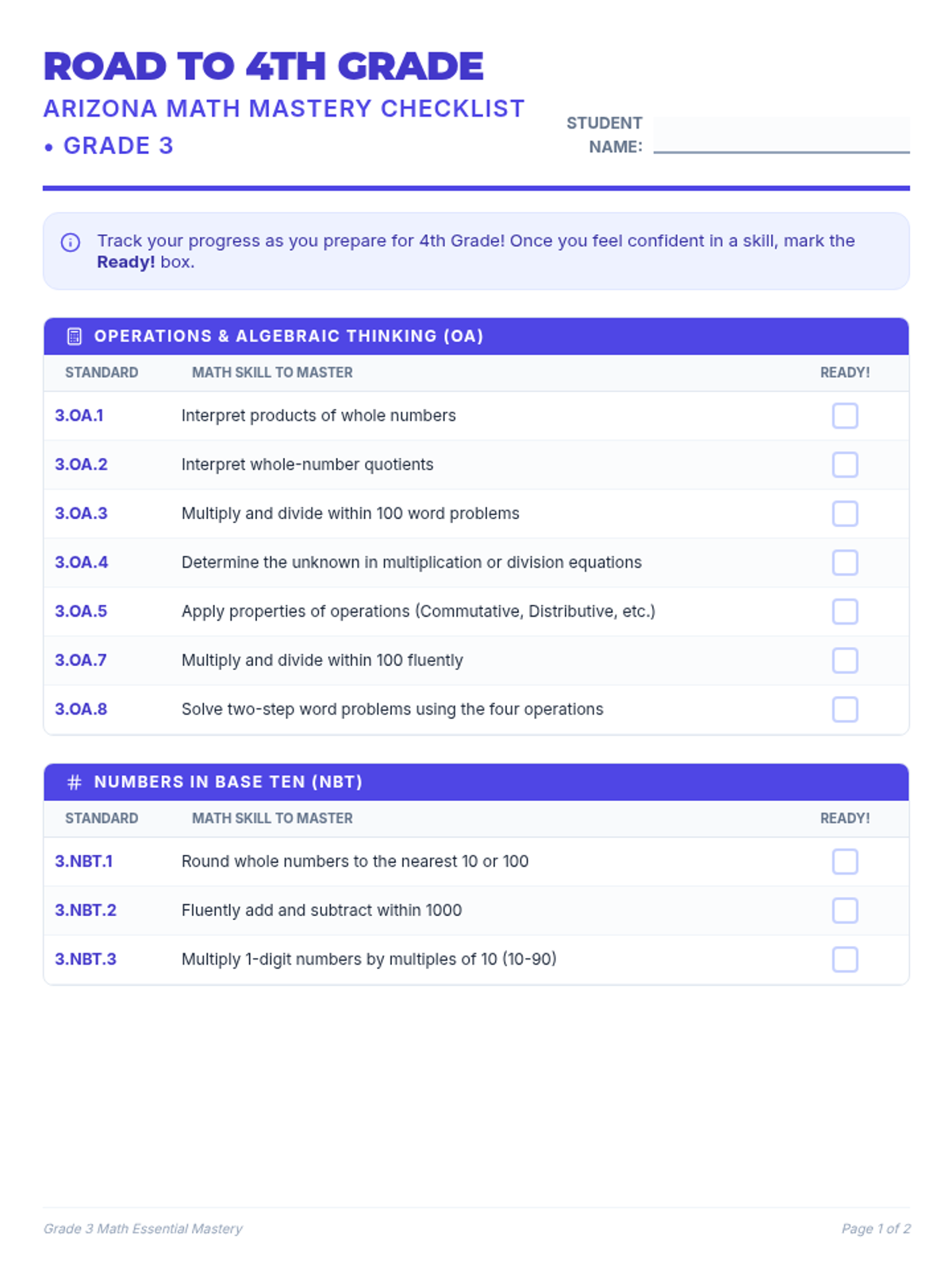
A collection of standards mastery tracking cards for Grade 3 Arizona students, covering Math and ELA with a consistent multi-attempt tracking system.
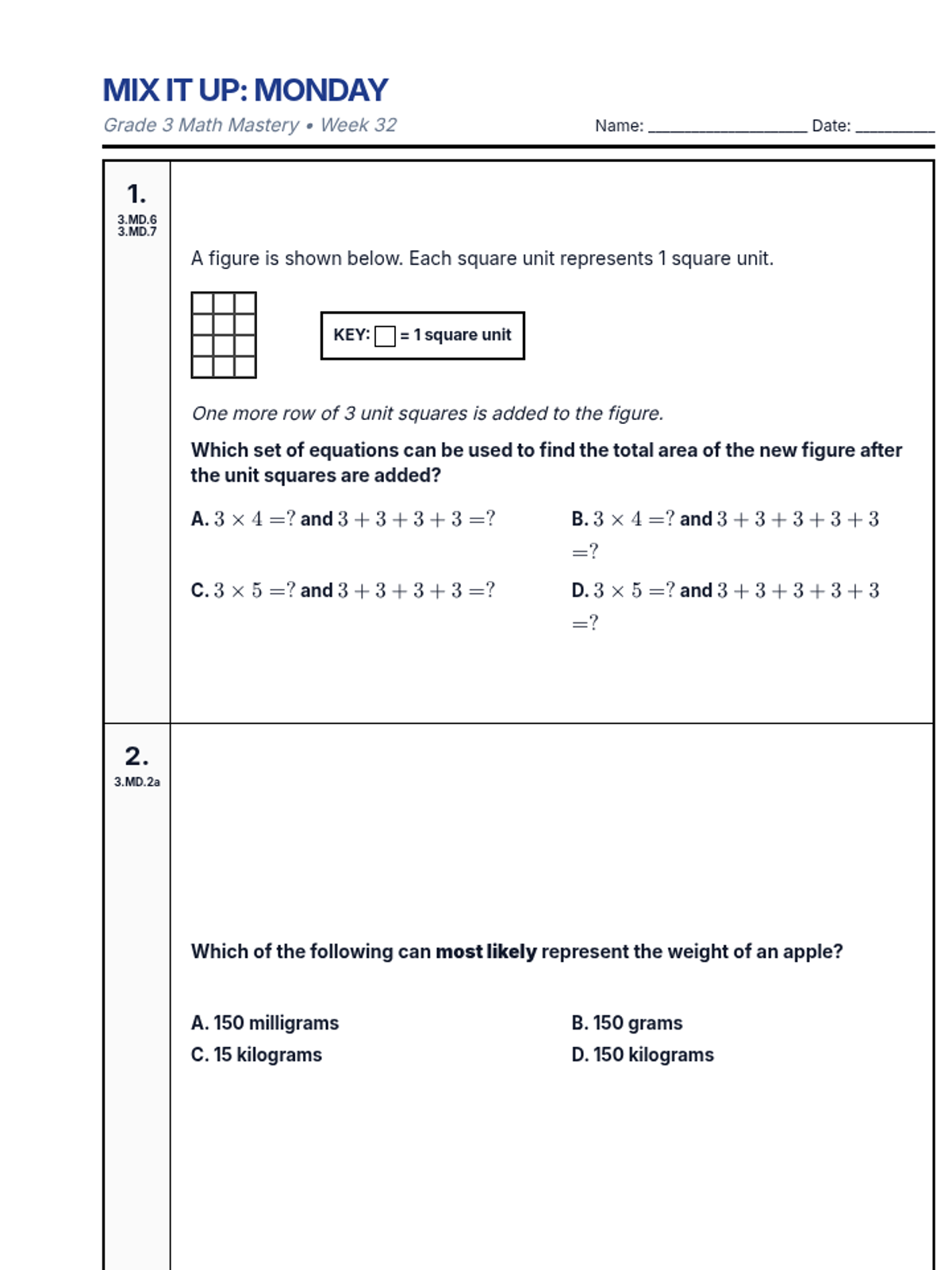
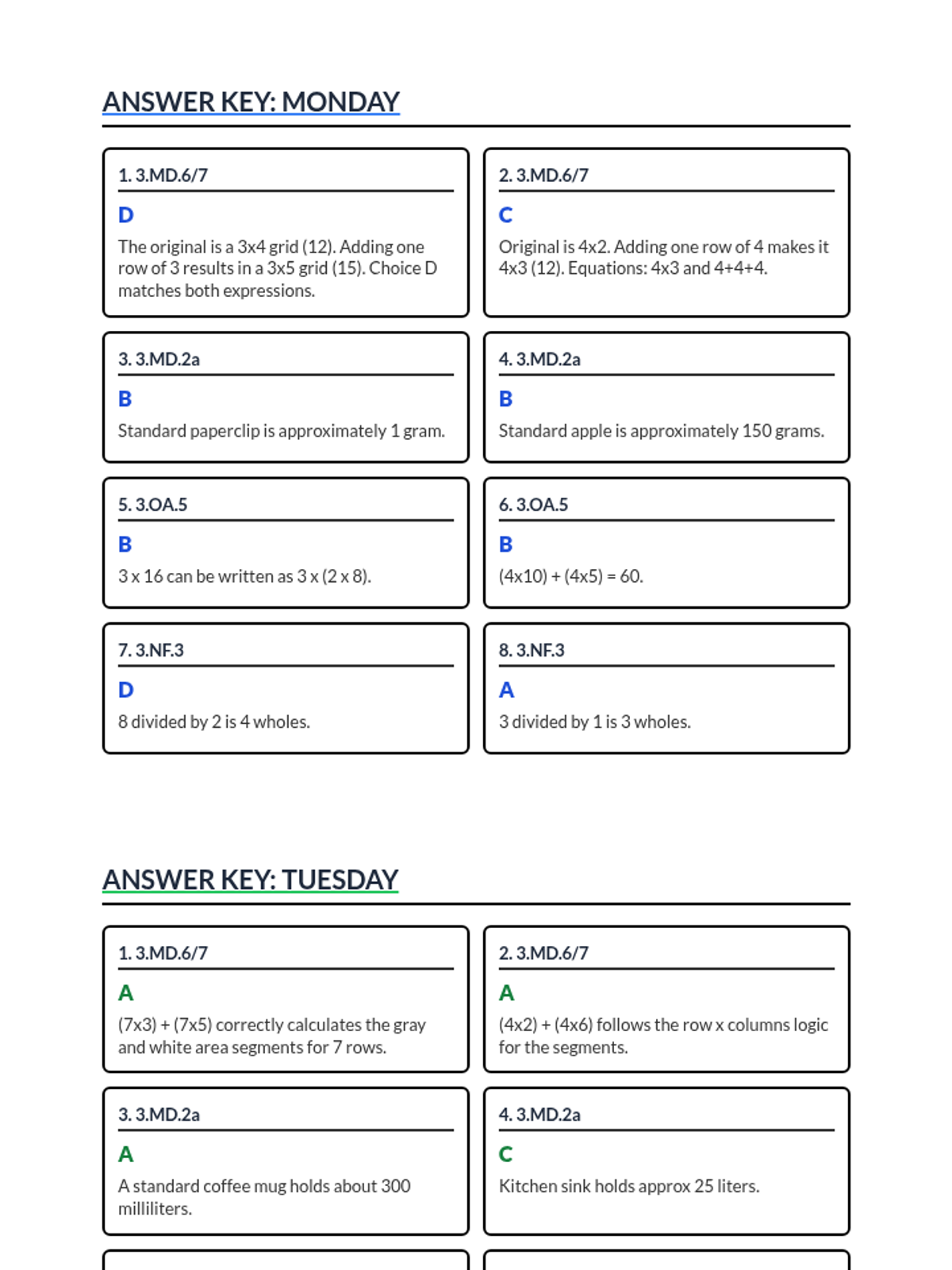
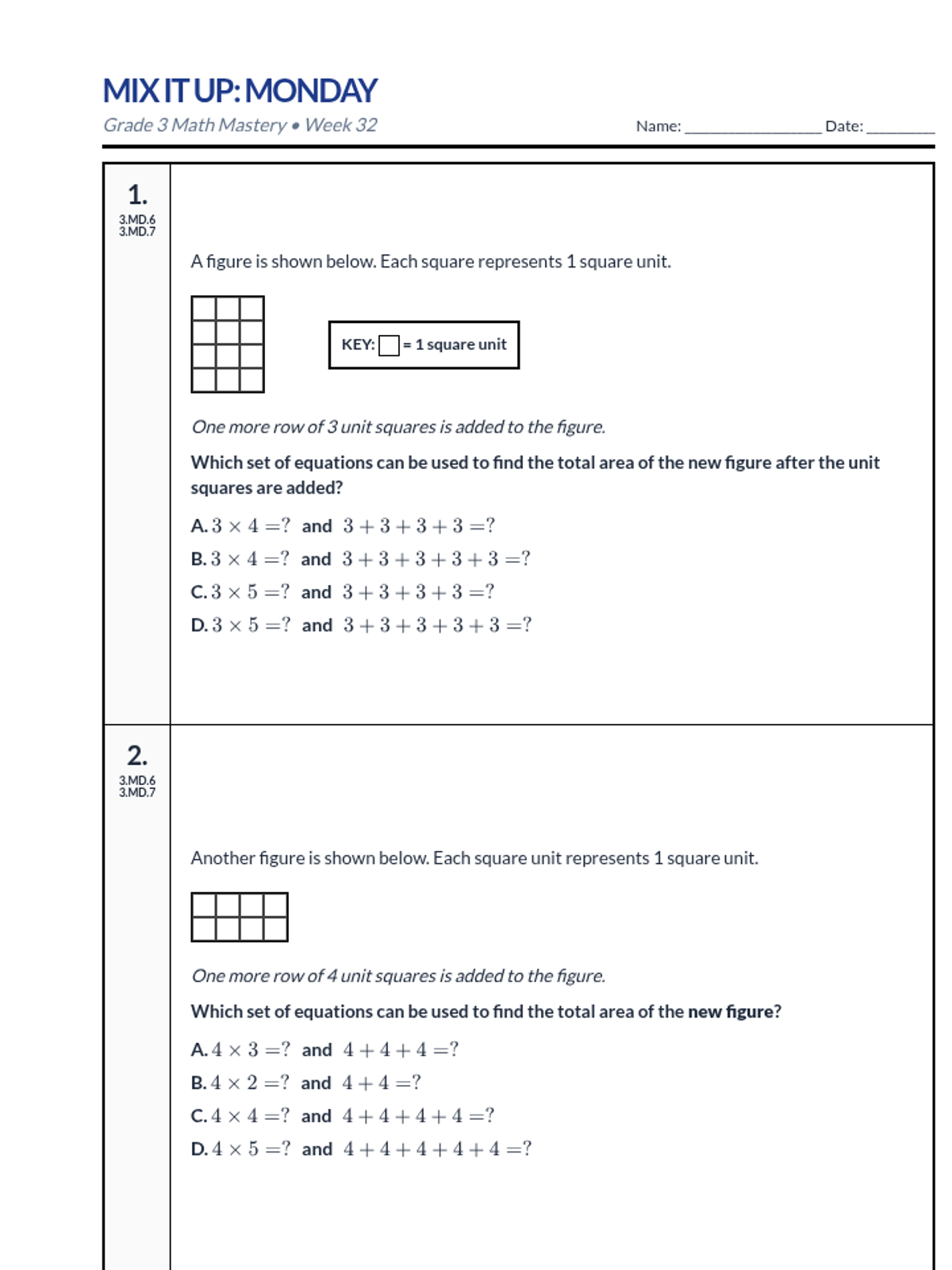
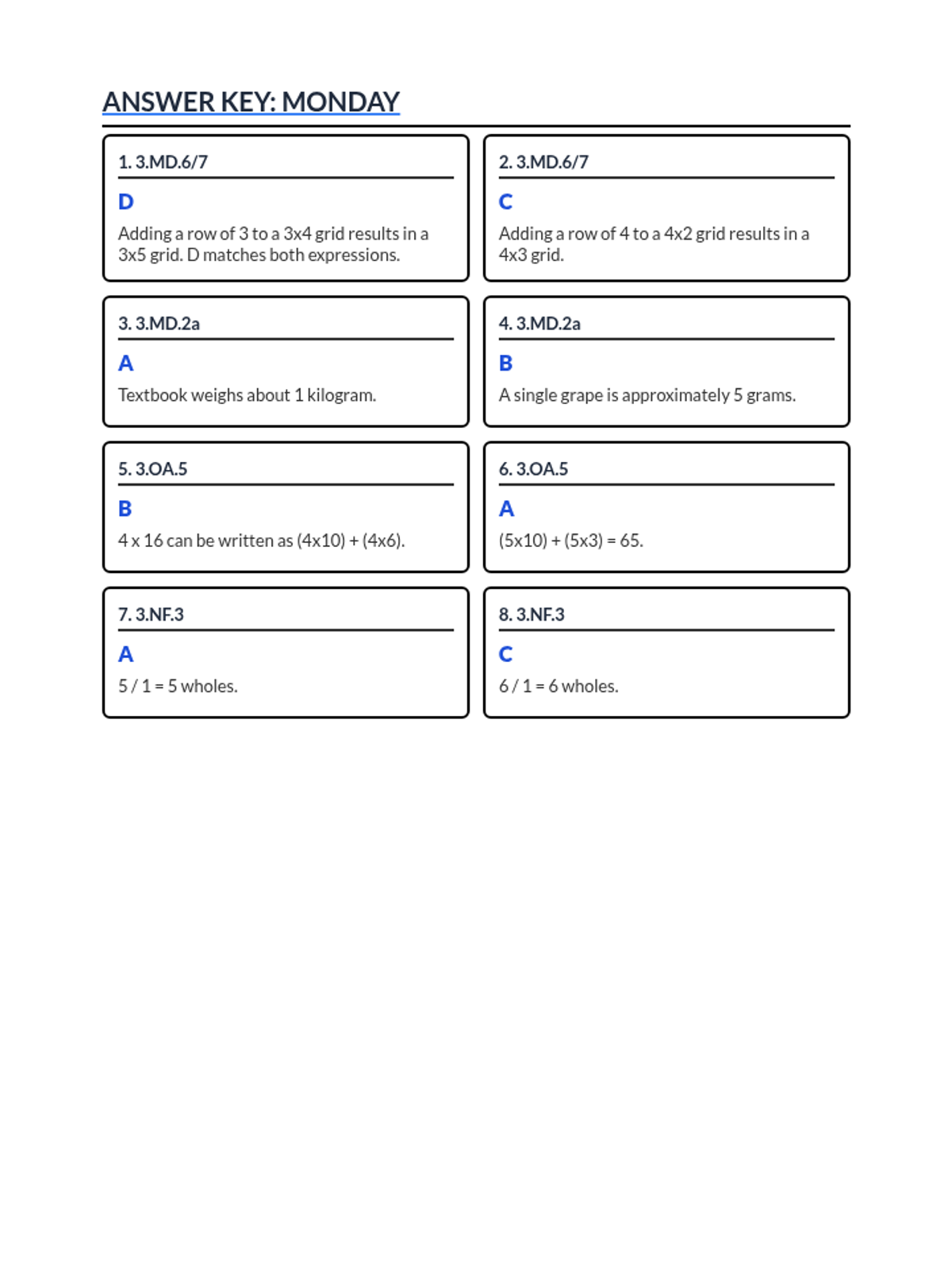
A comprehensive 4-day 3rd-grade math review packet covering area, measurement estimation, multiplication properties, and fraction equivalence. This packet follows a 'Mix It Up' format to build fluency and mastery across key standards.
Students learn to calculate the area of rectangles and squares using two methods: counting unit squares on a grid and multiplying side lengths. This lesson provides hands-on practice with whole number measurements to build a solid foundation in geometry.
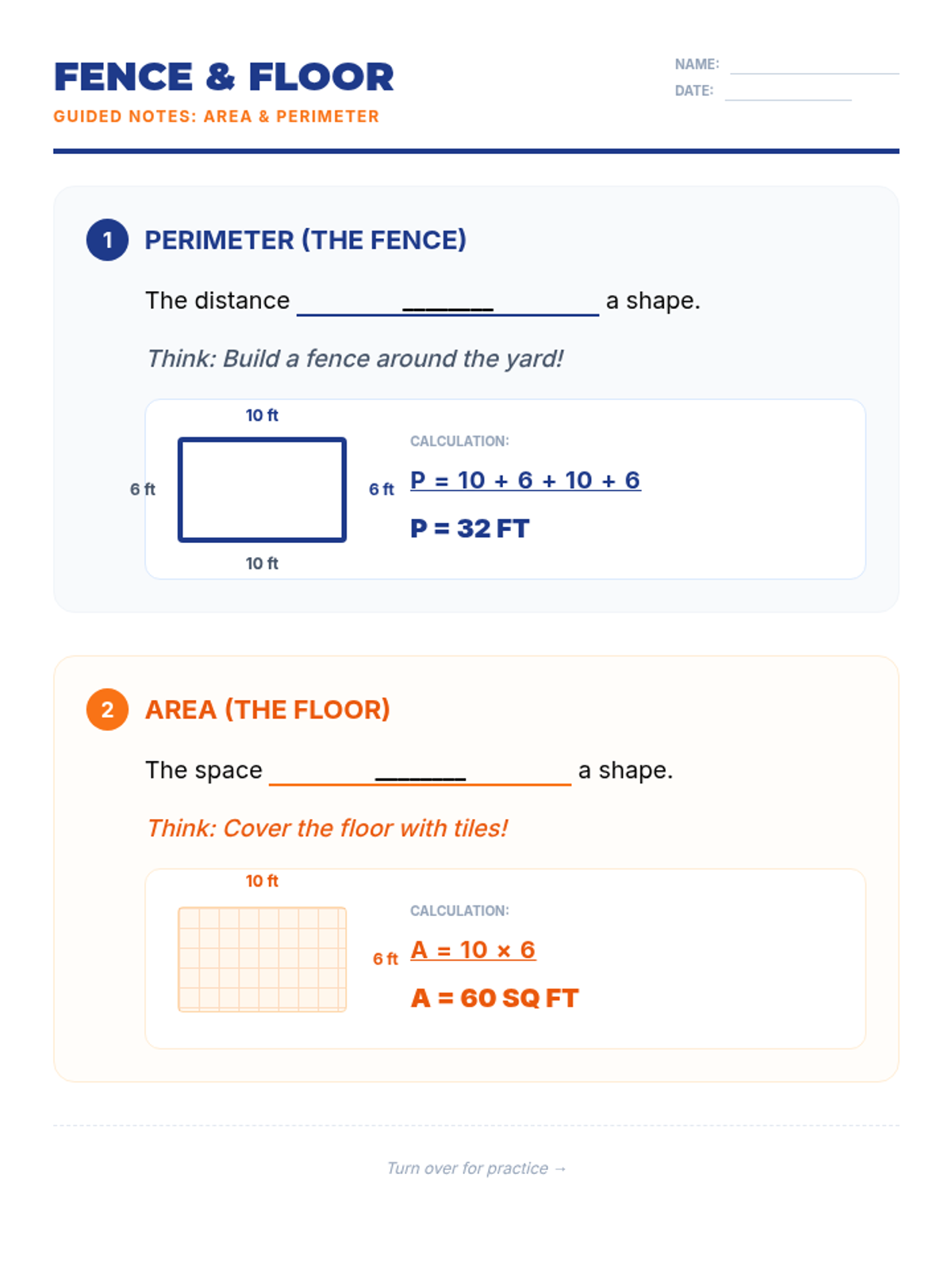
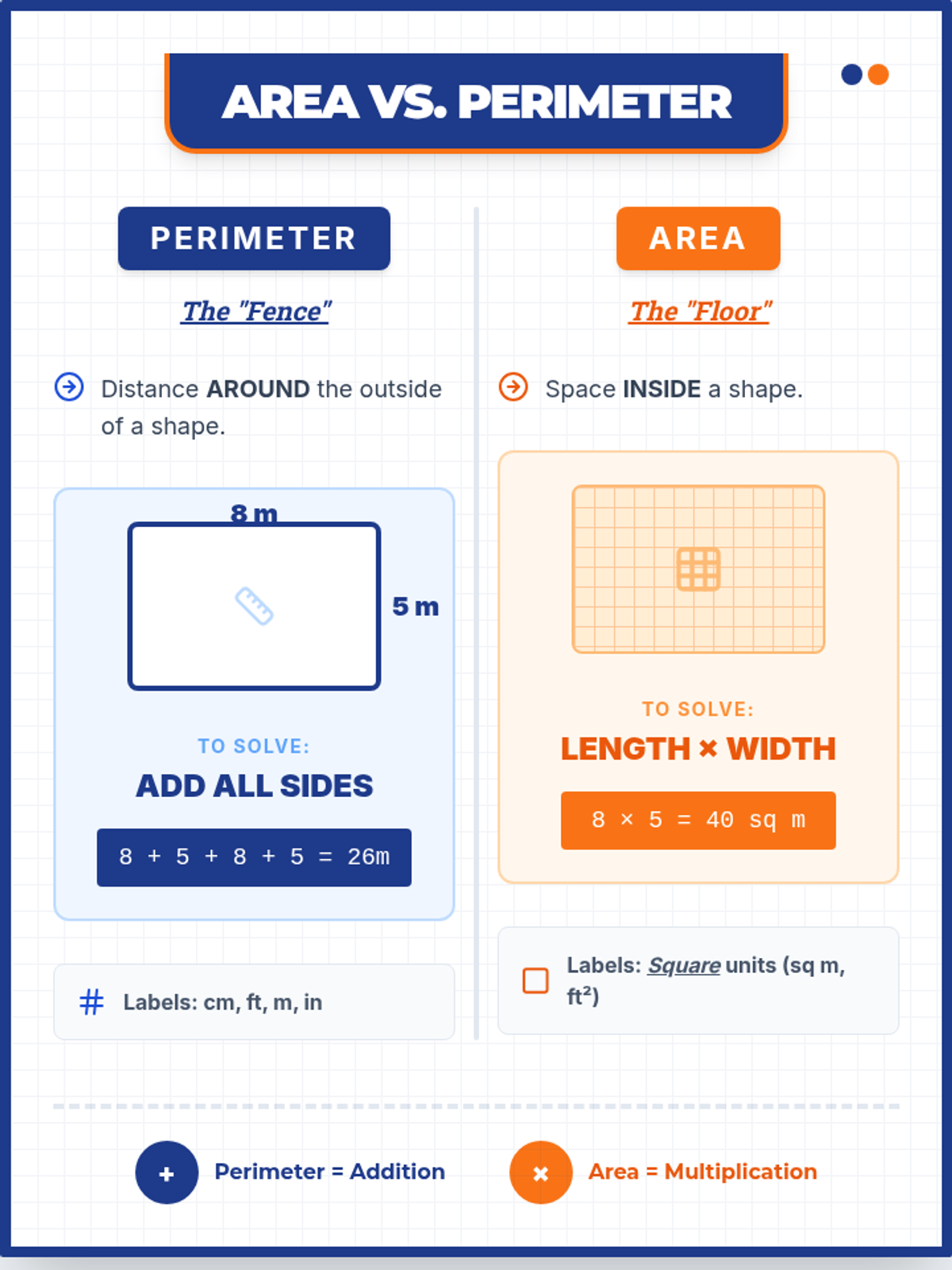
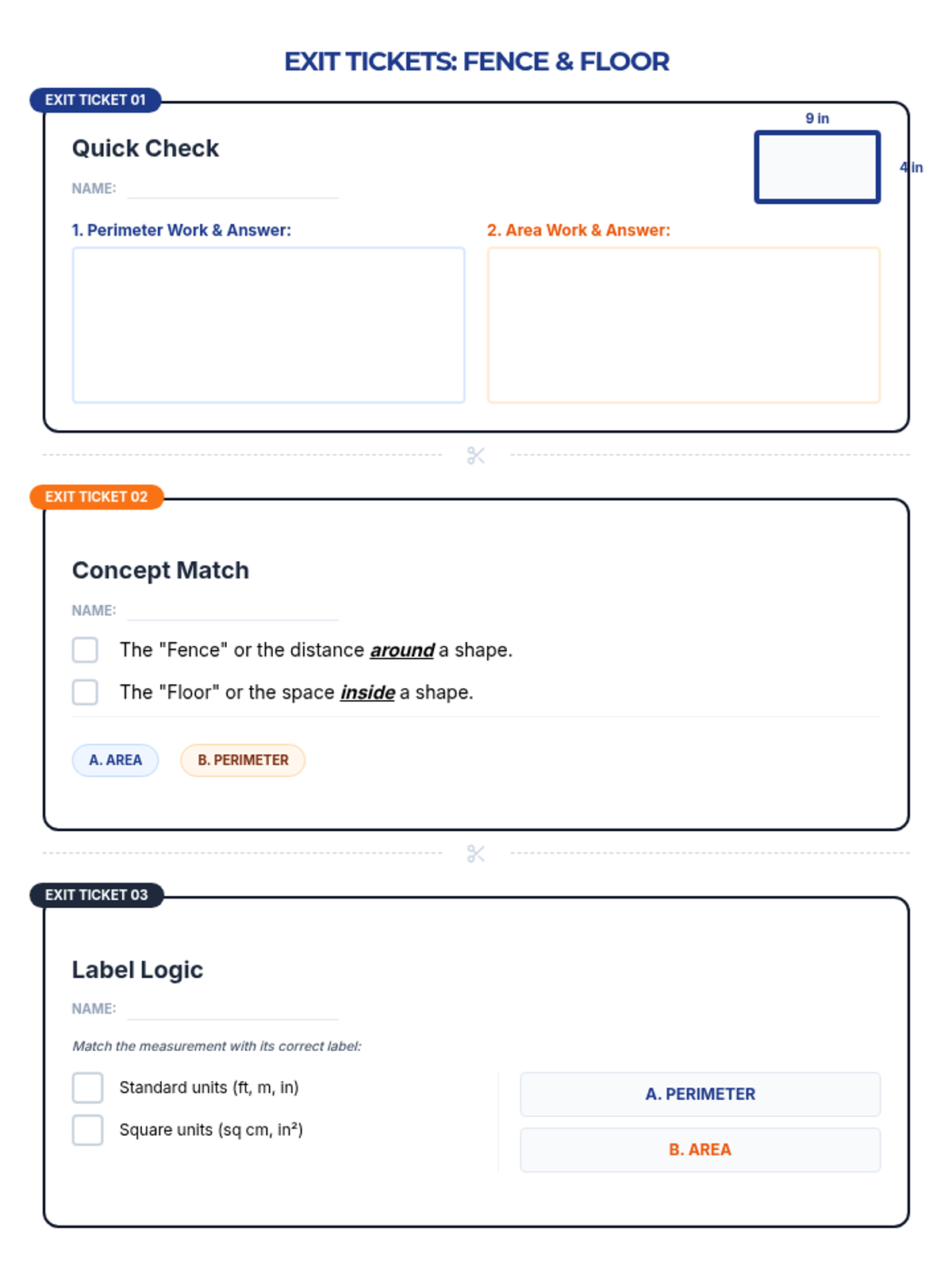
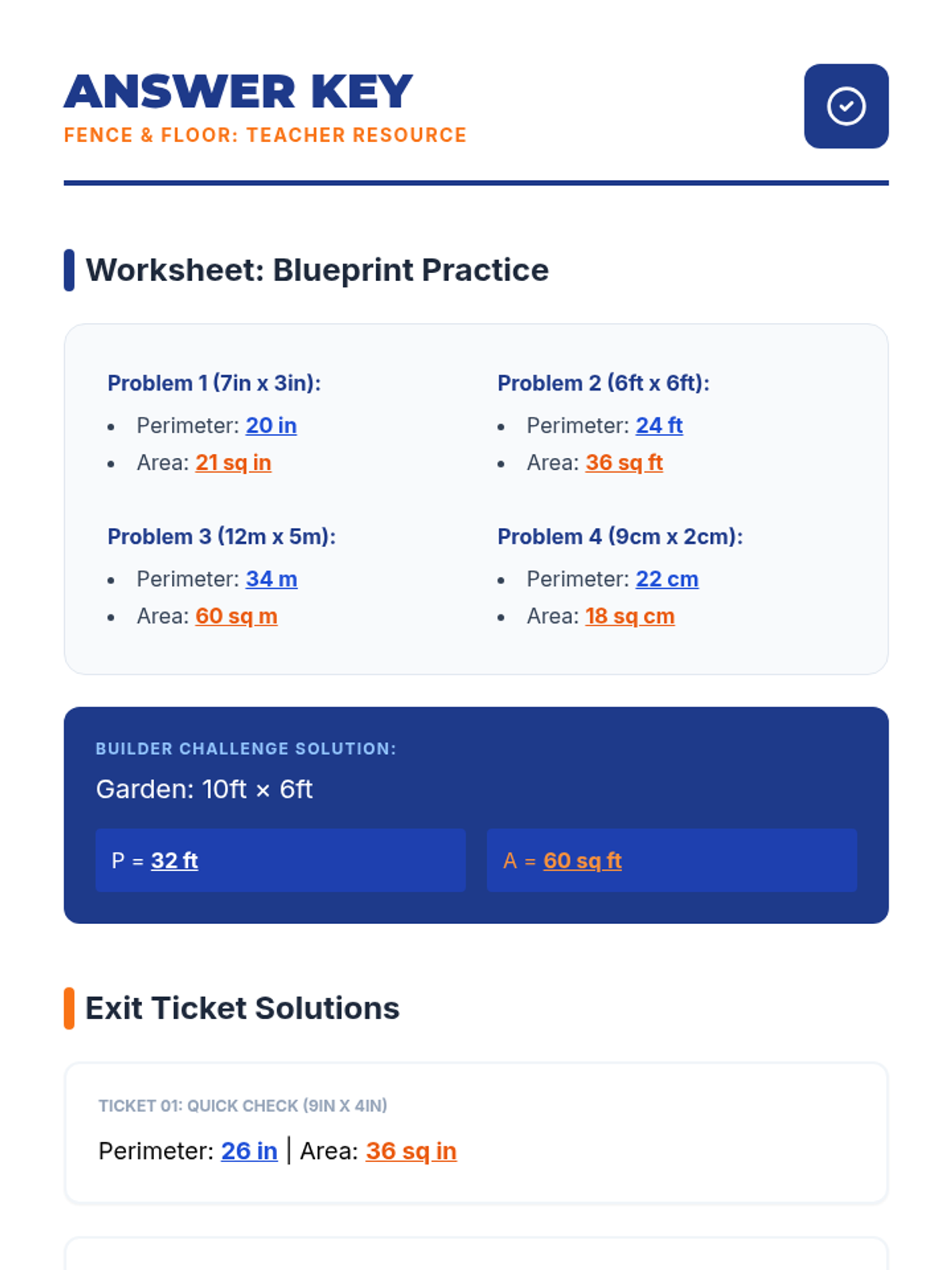
An introductory lesson on area and perimeter using the 'Fence and Floor' analogy. Students will learn the definitions, formulas, and real-world applications through visual aids and practice.