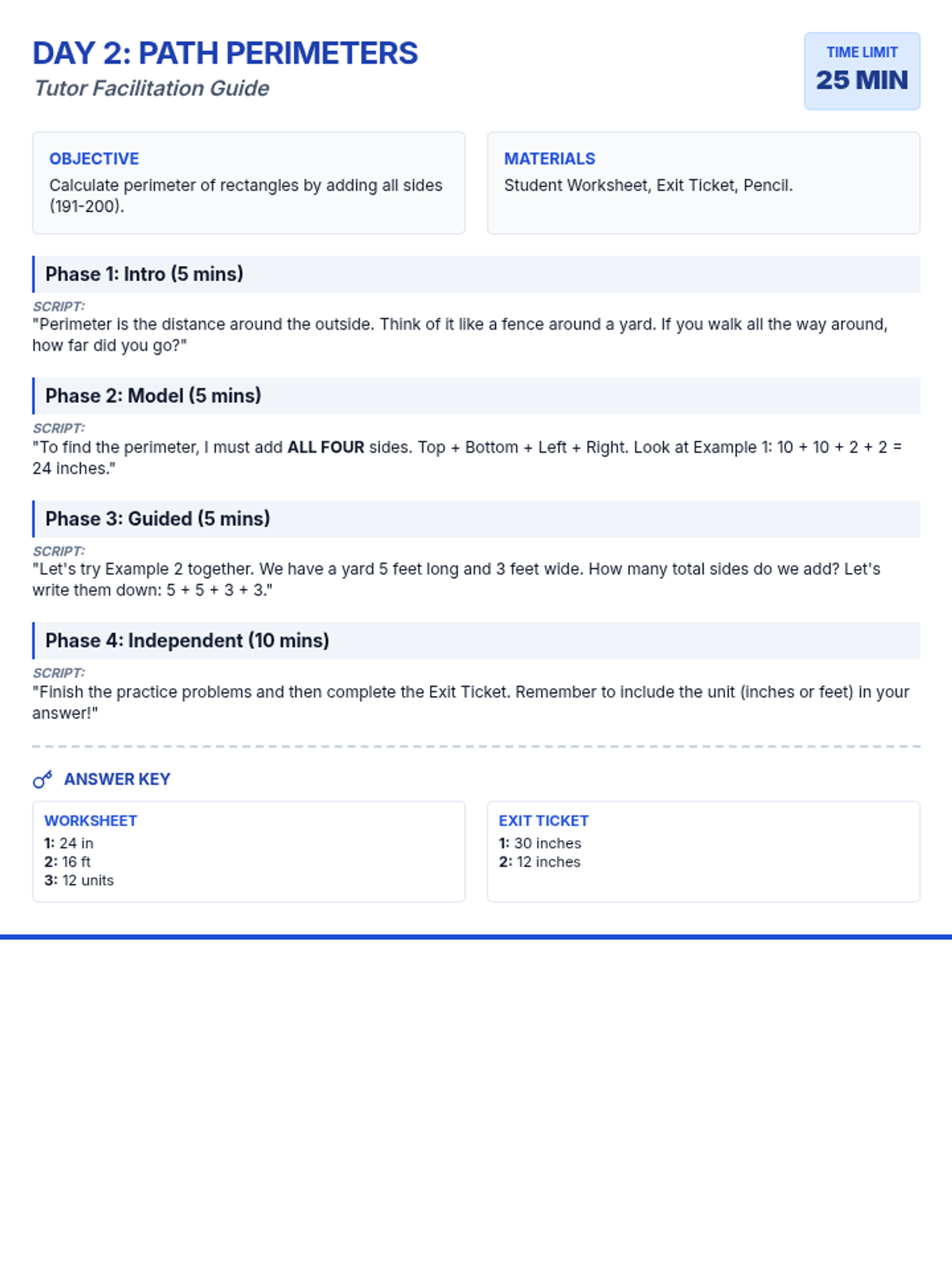
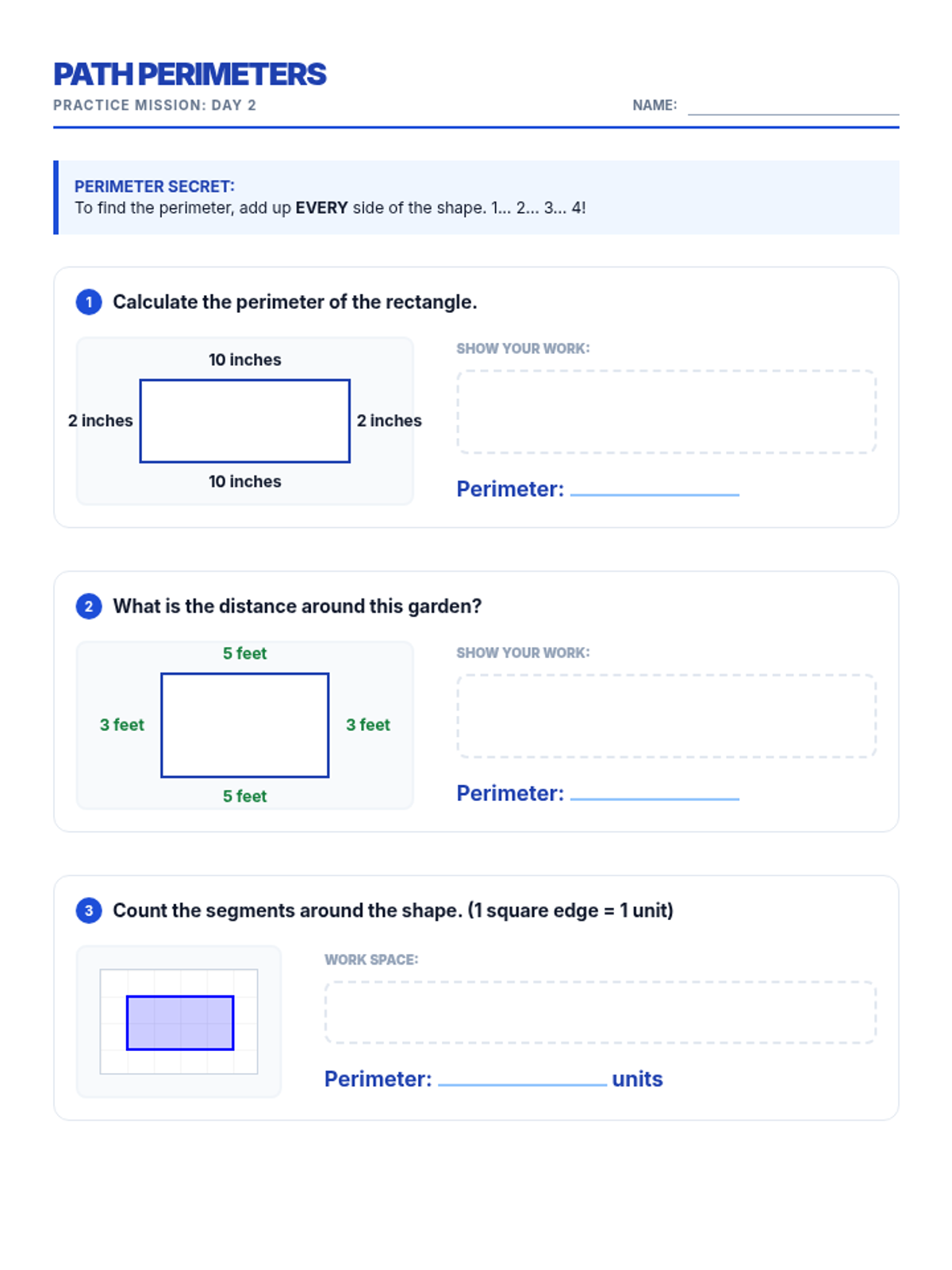
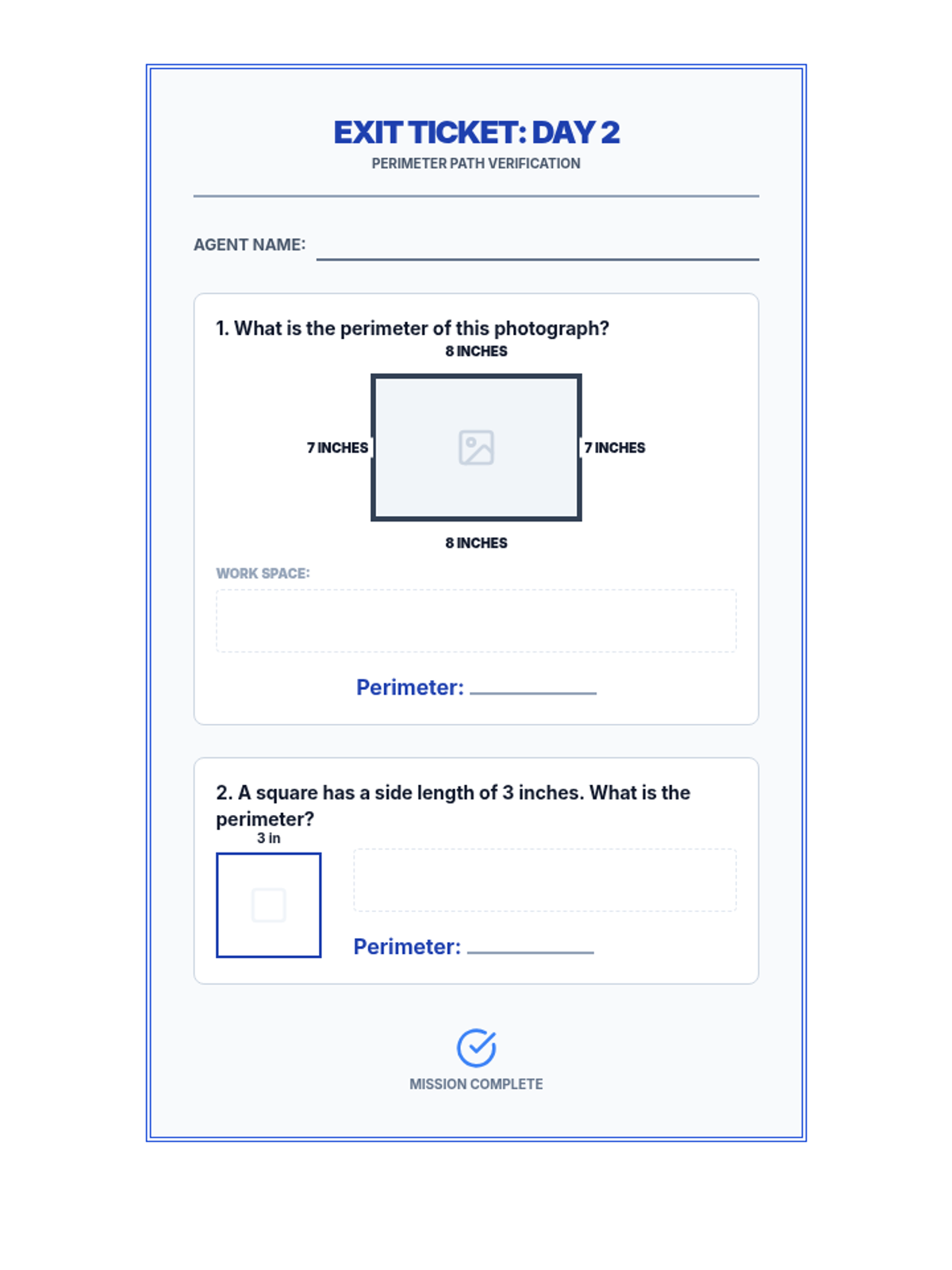
Students solve perimeter problems where some side lengths are implied or shapes are complex (191-200 focus).
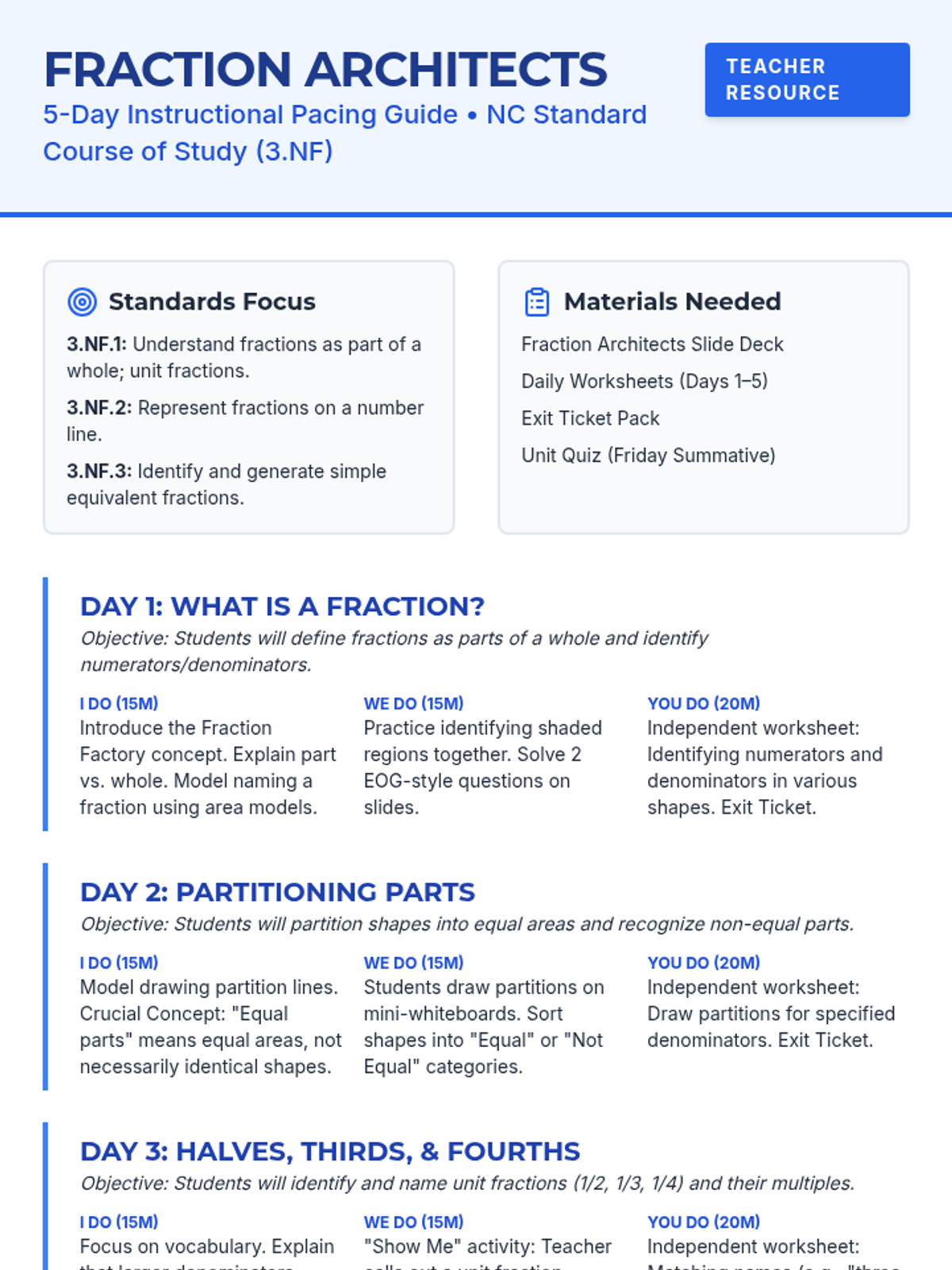
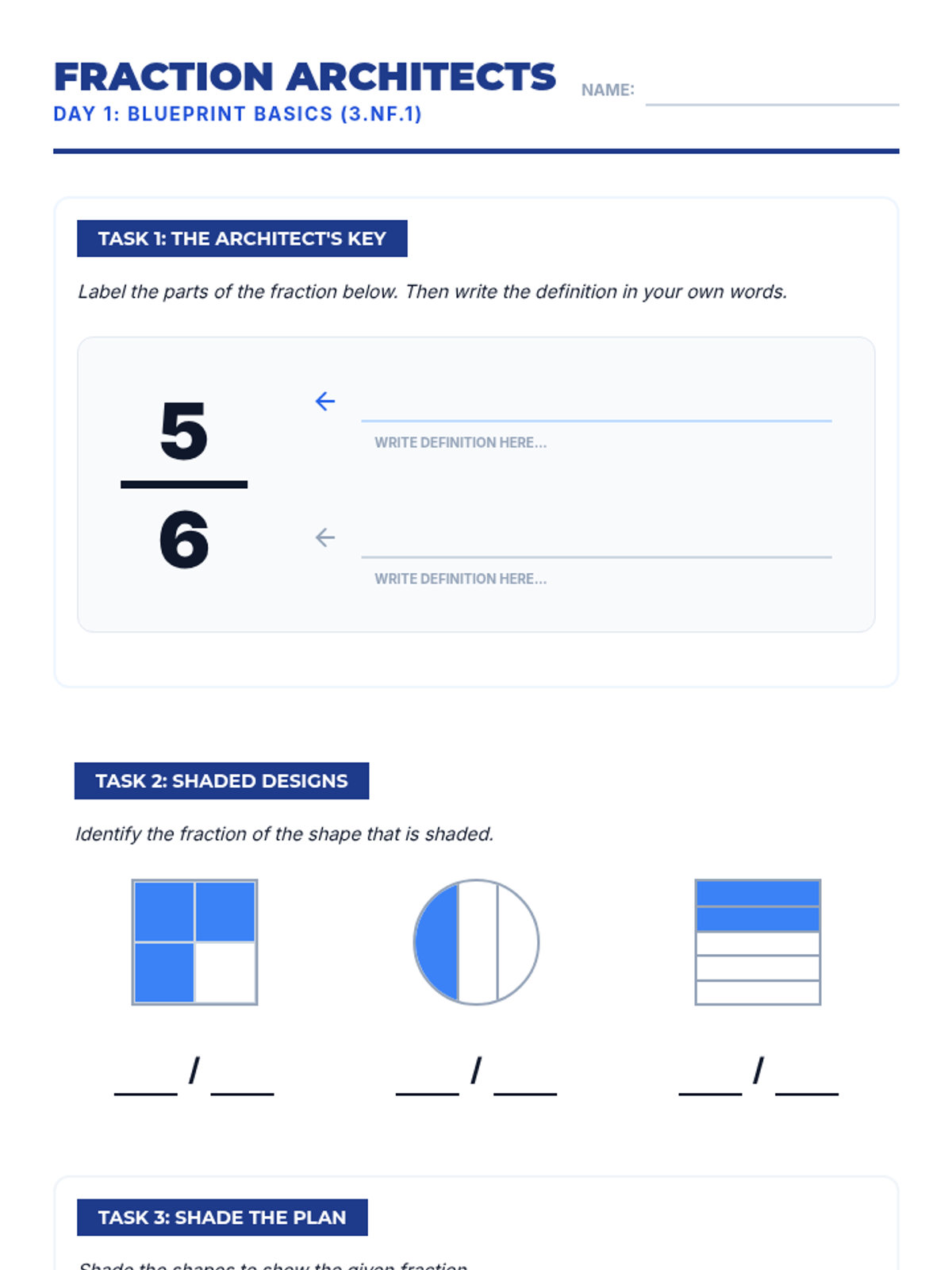
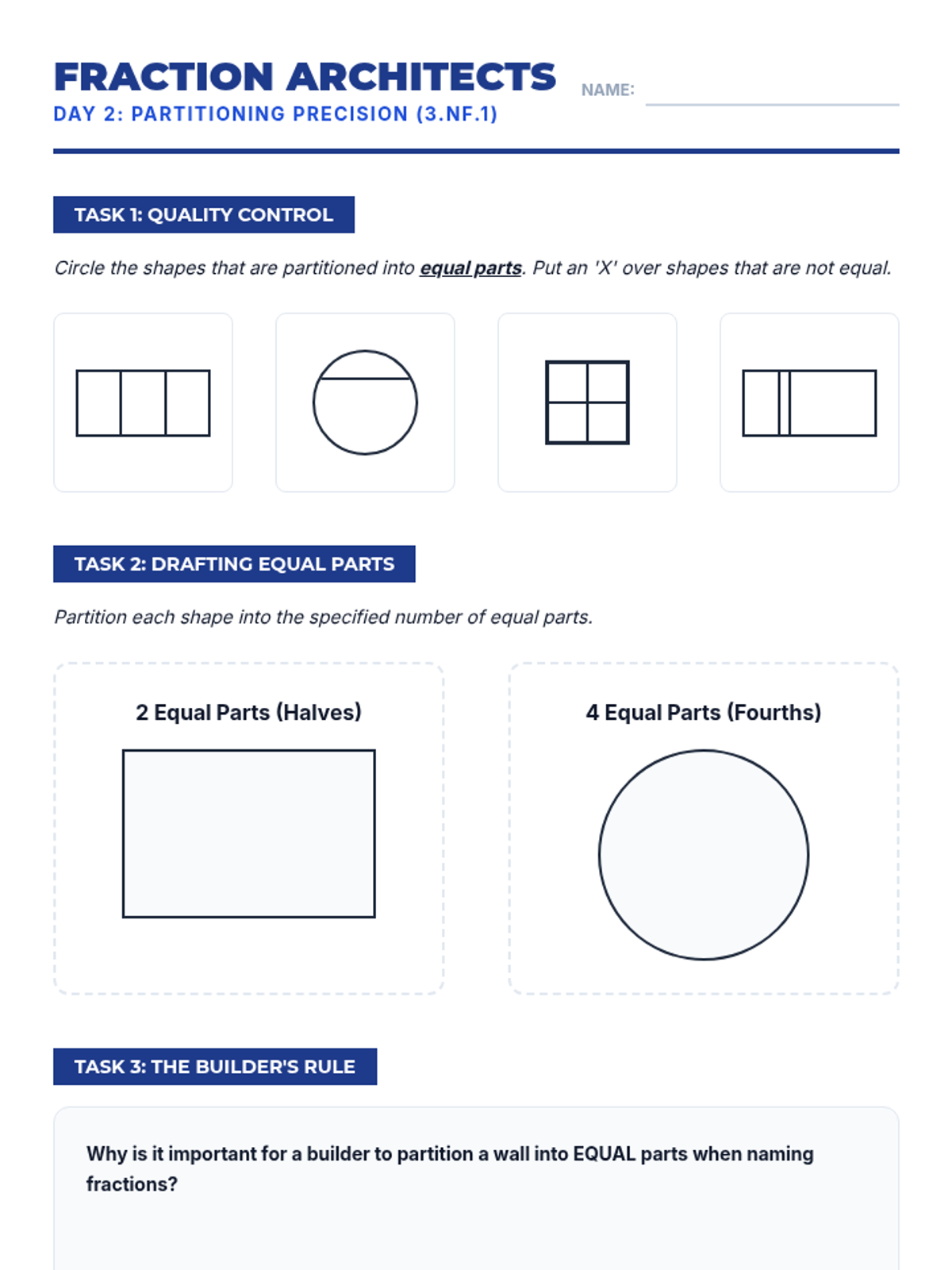
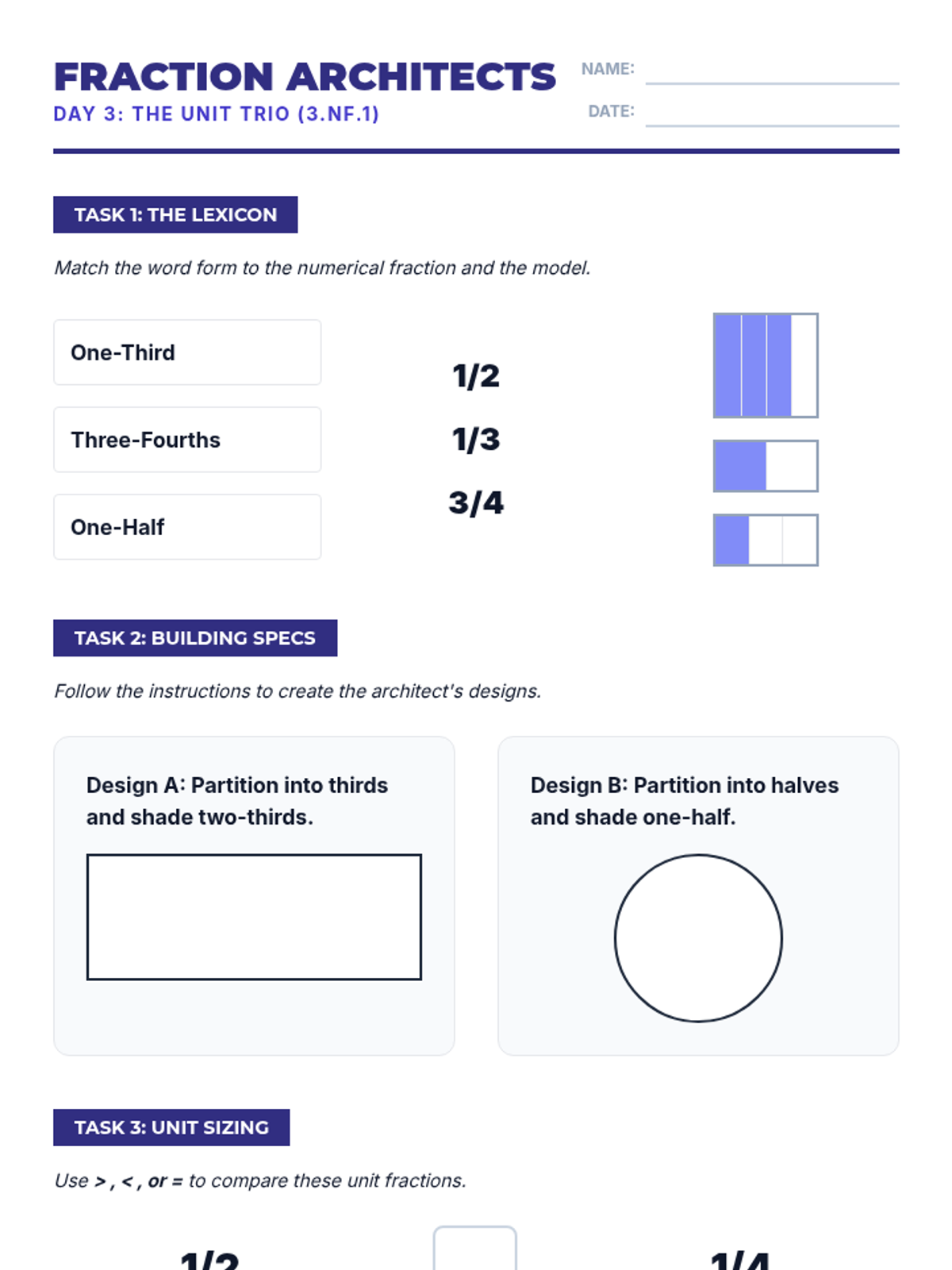
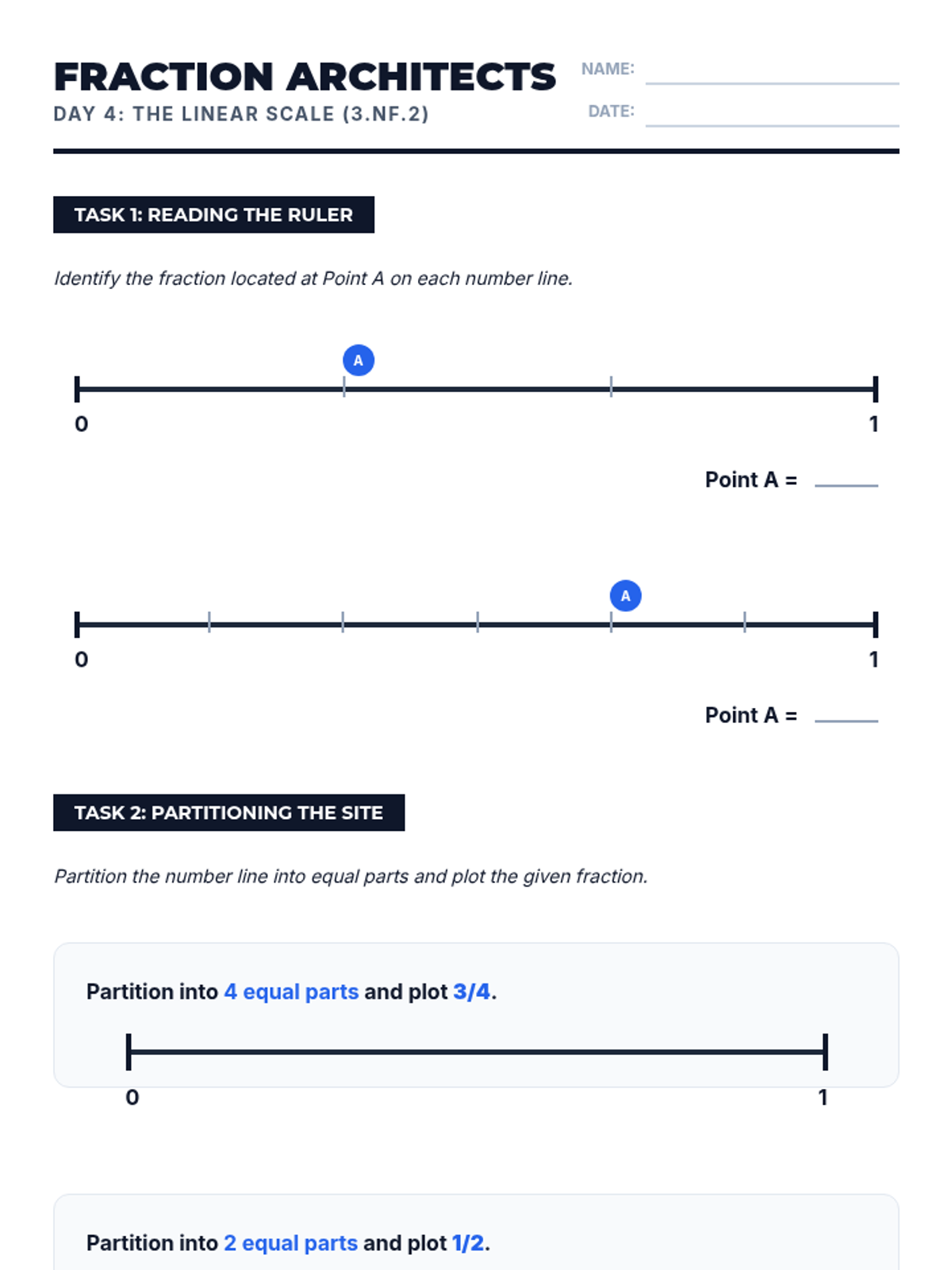
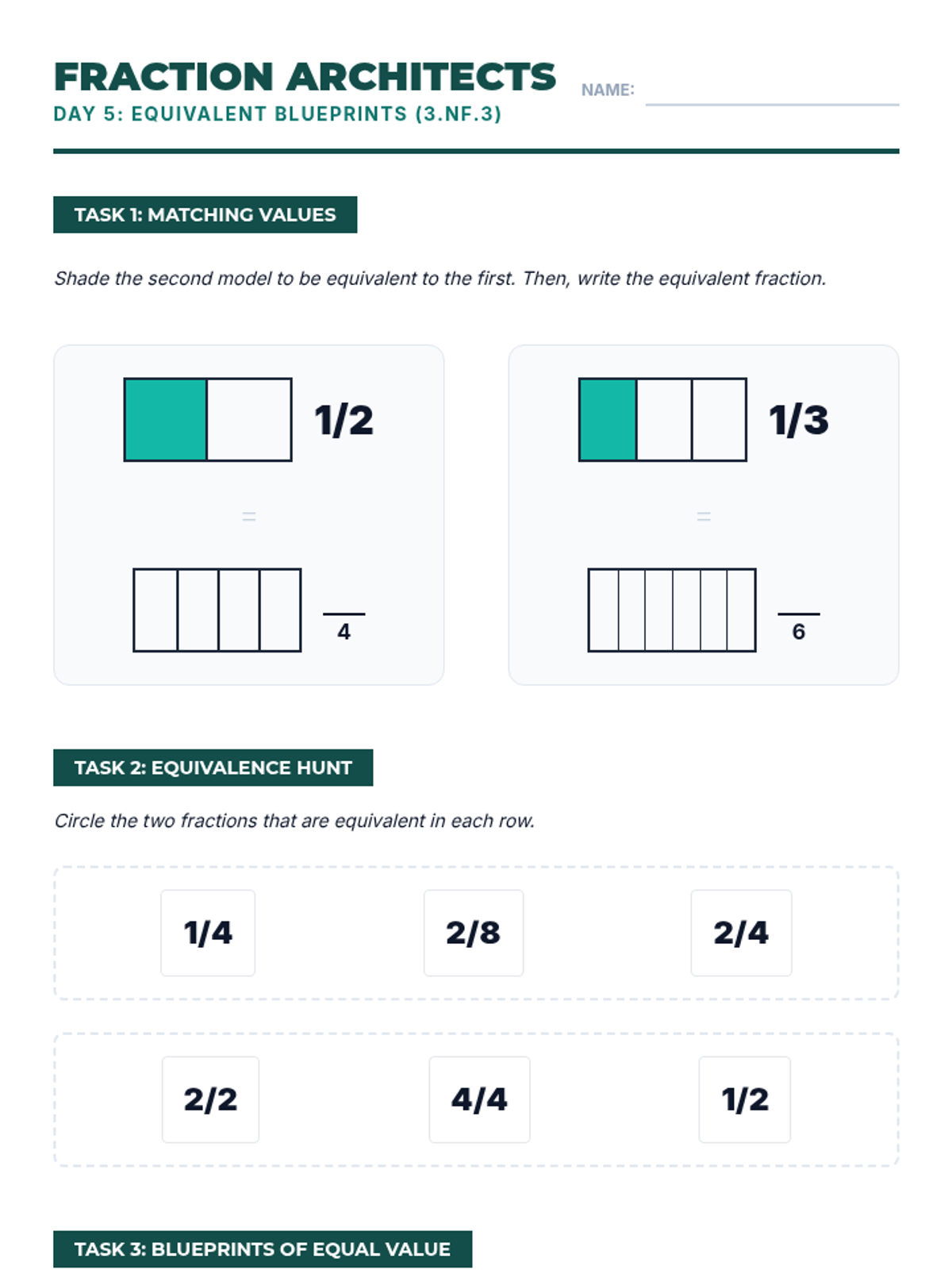
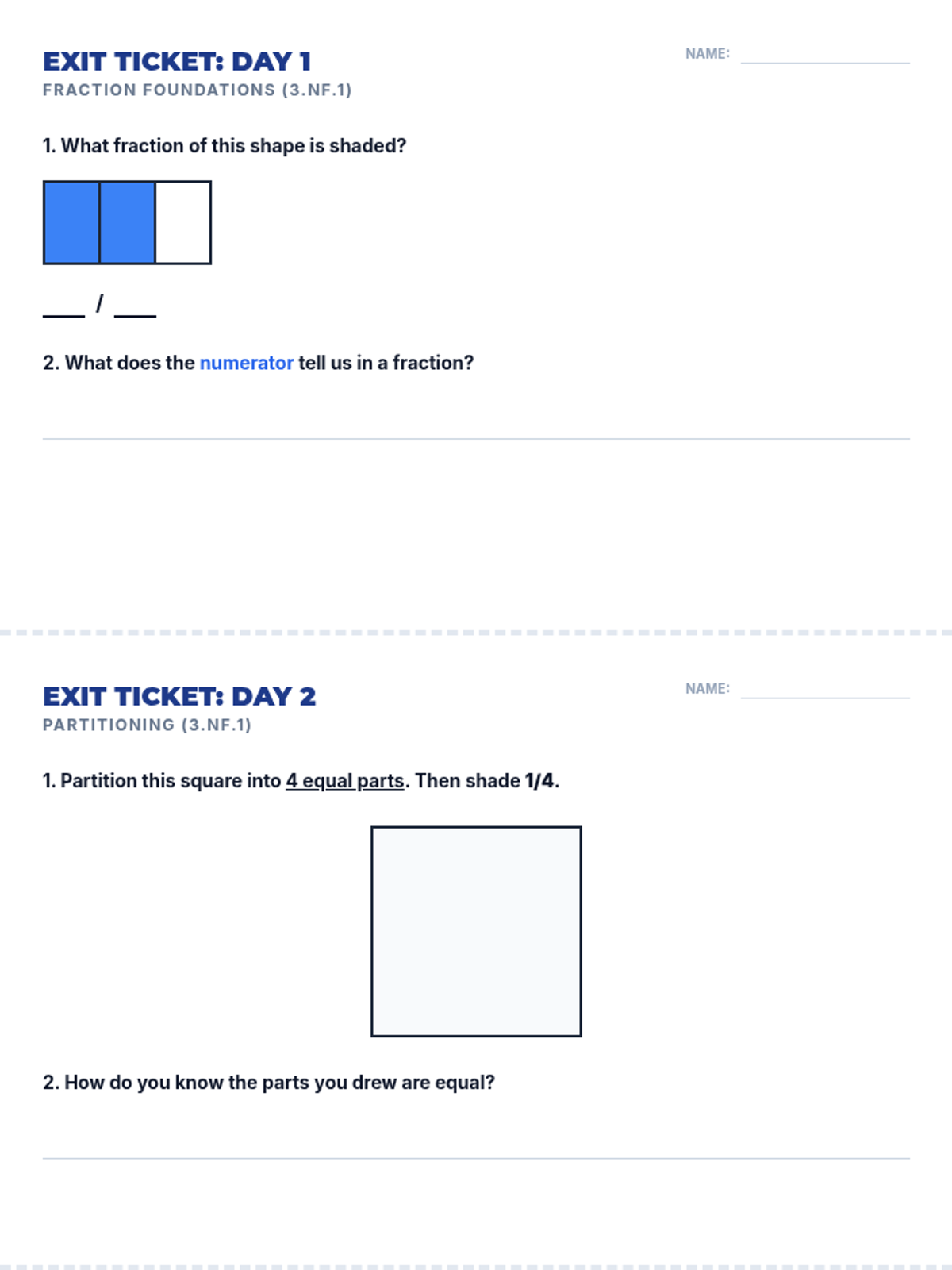
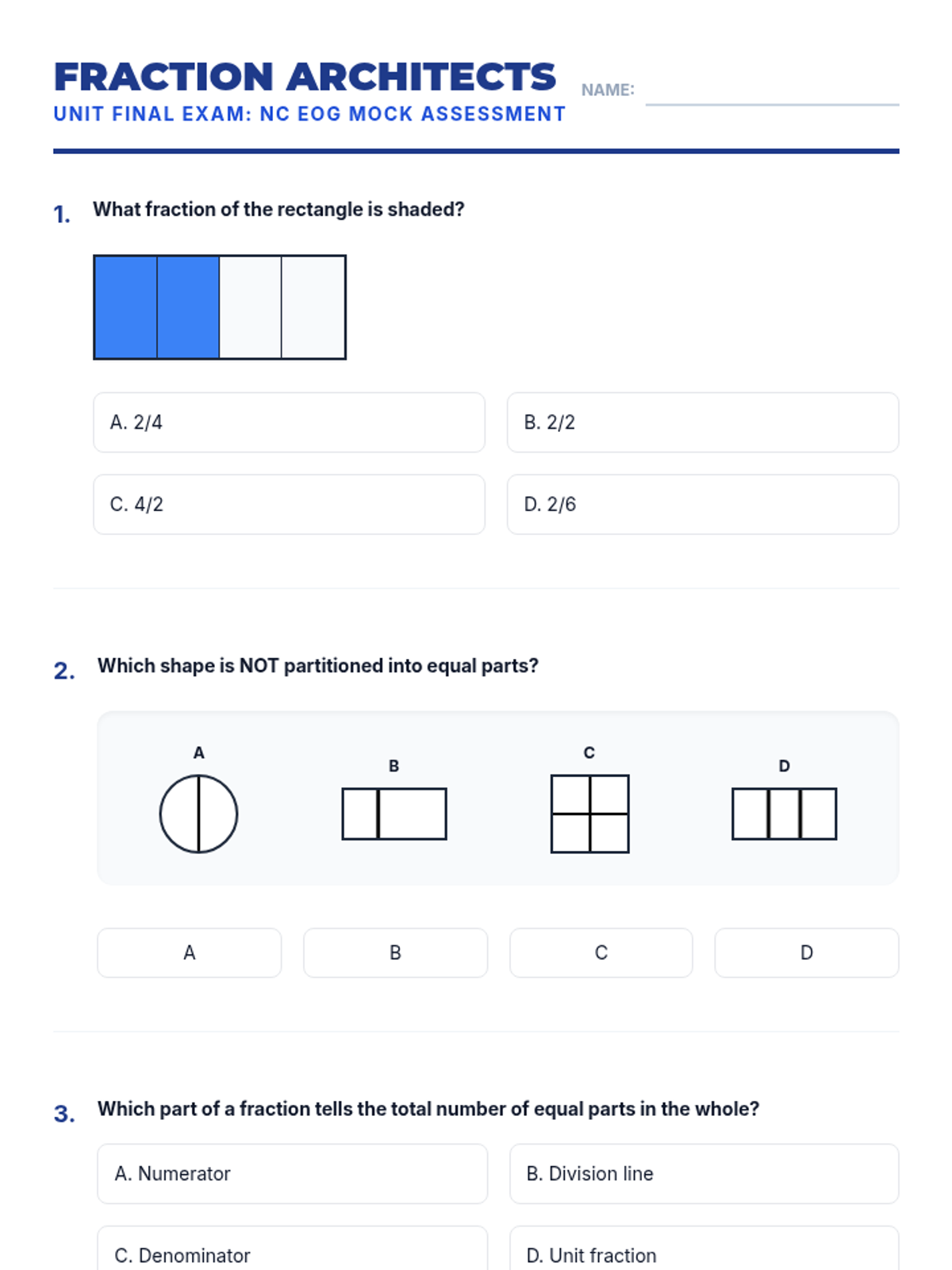
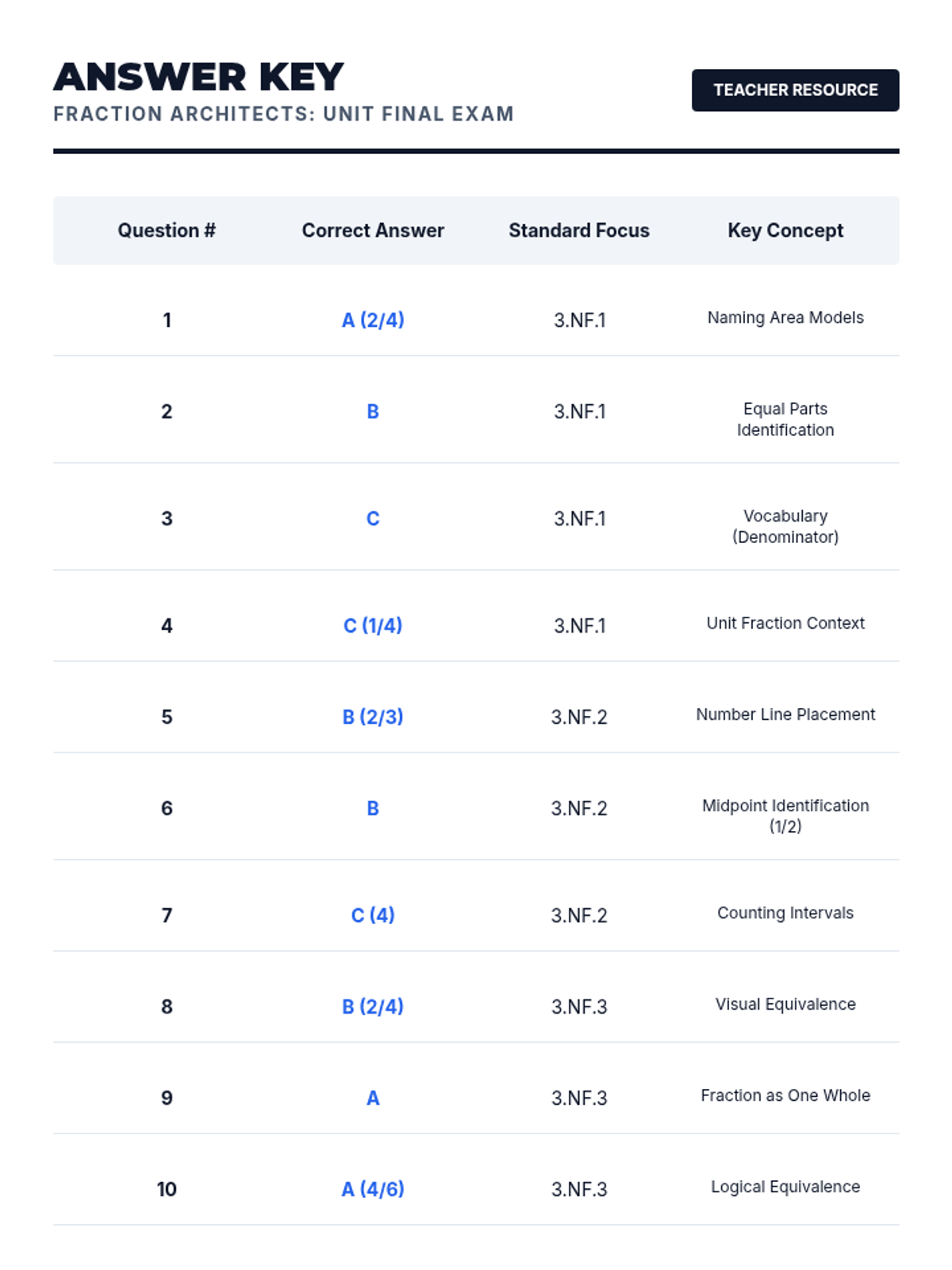
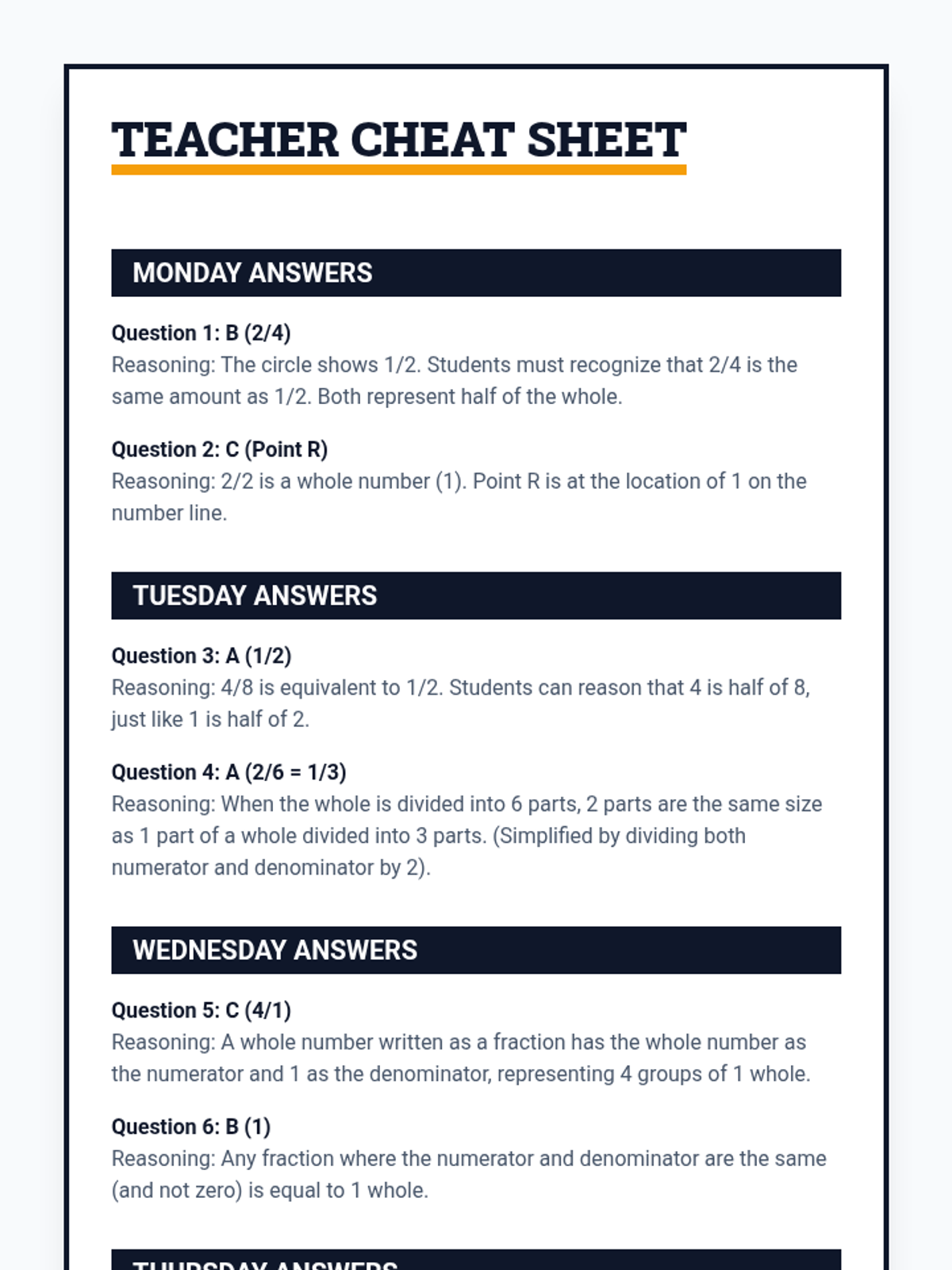
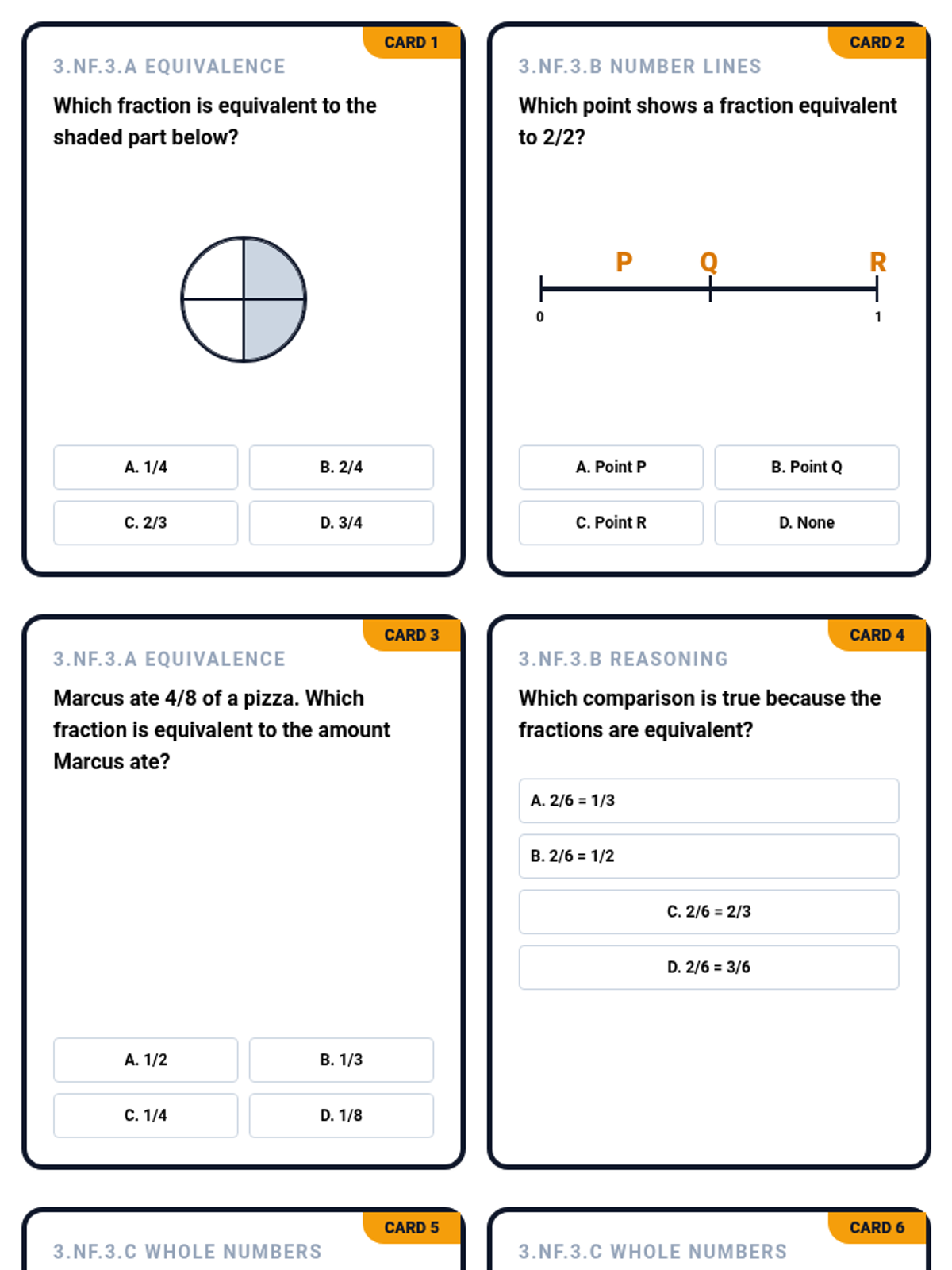
A comprehensive 5-day lesson covering the basics of fractions, partitioning shapes, unit fractions, number lines, and equivalent fractions using the I Do, We Do, You Do model.
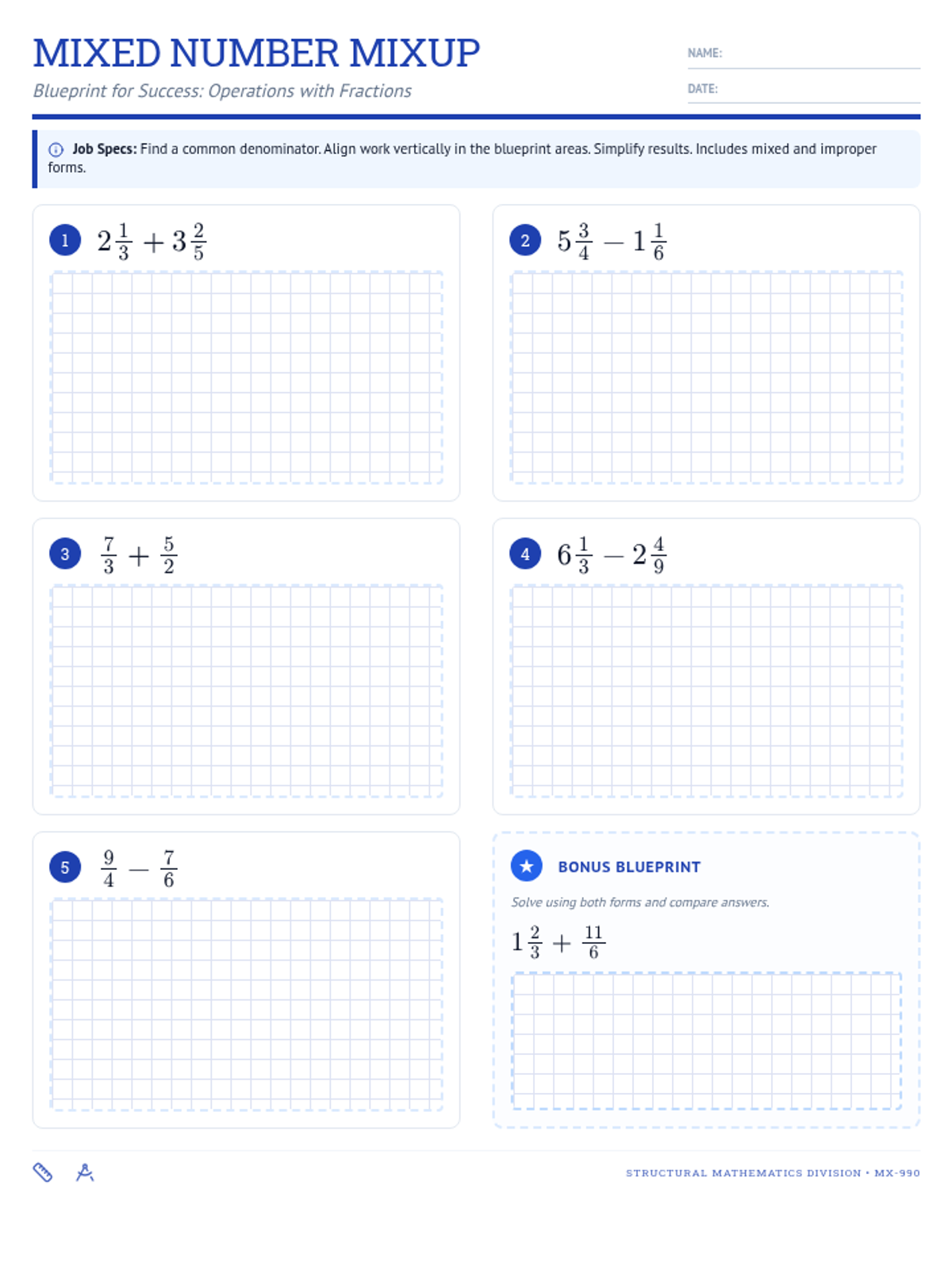
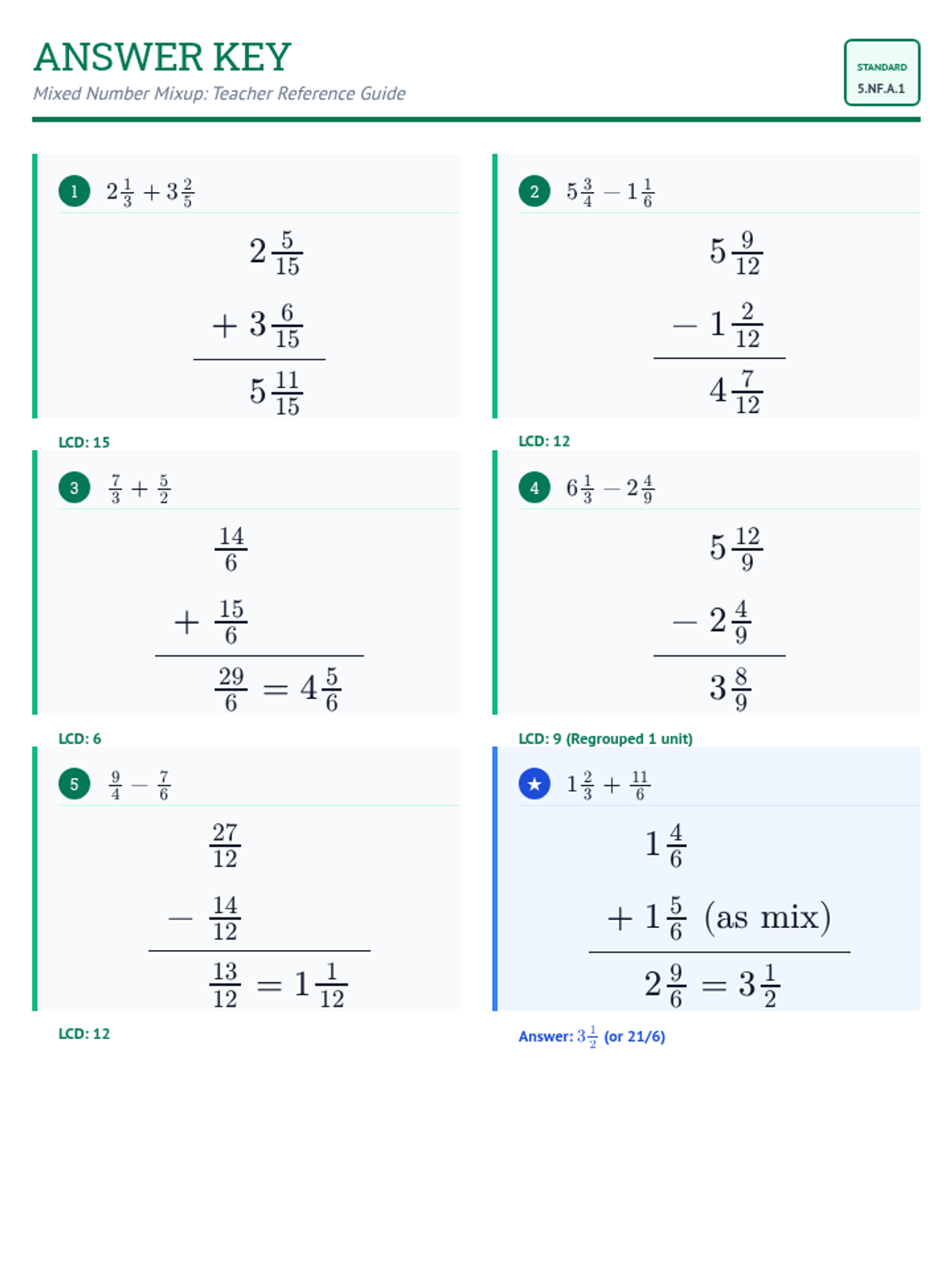
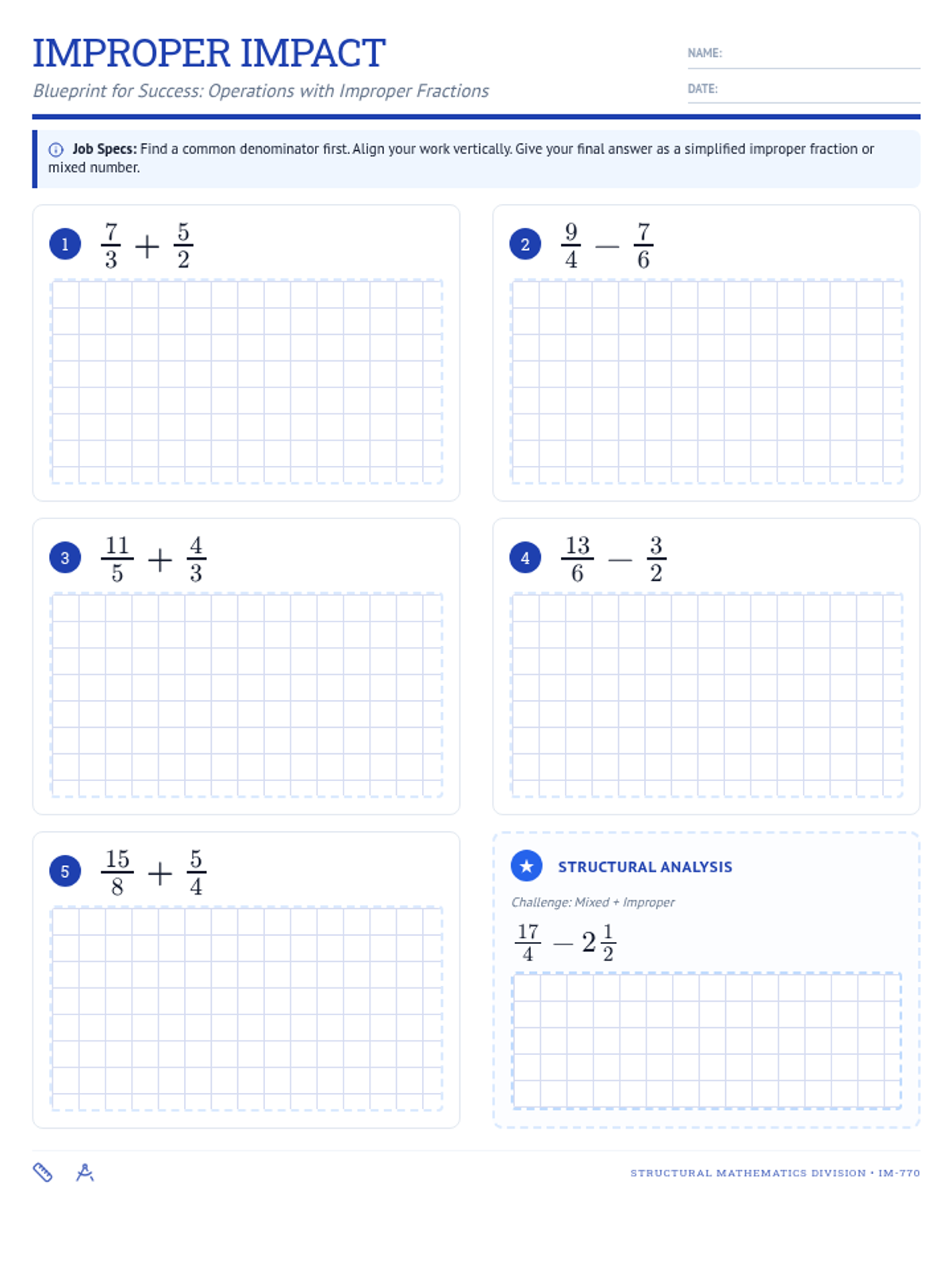
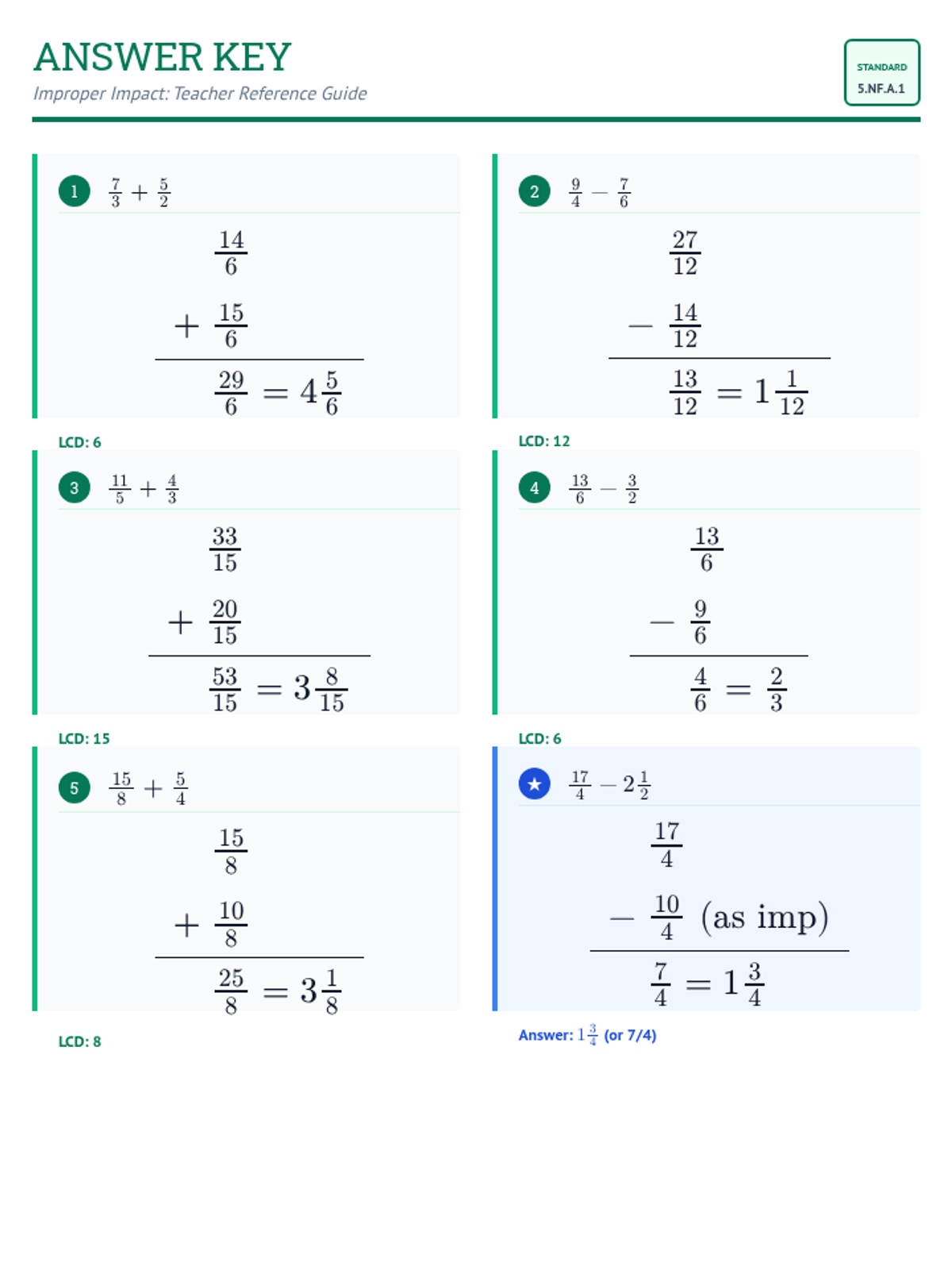
A comprehensive lesson on operations with mixed numbers and improper fractions, focusing on finding common denominators, regrouping, and converting between forms.
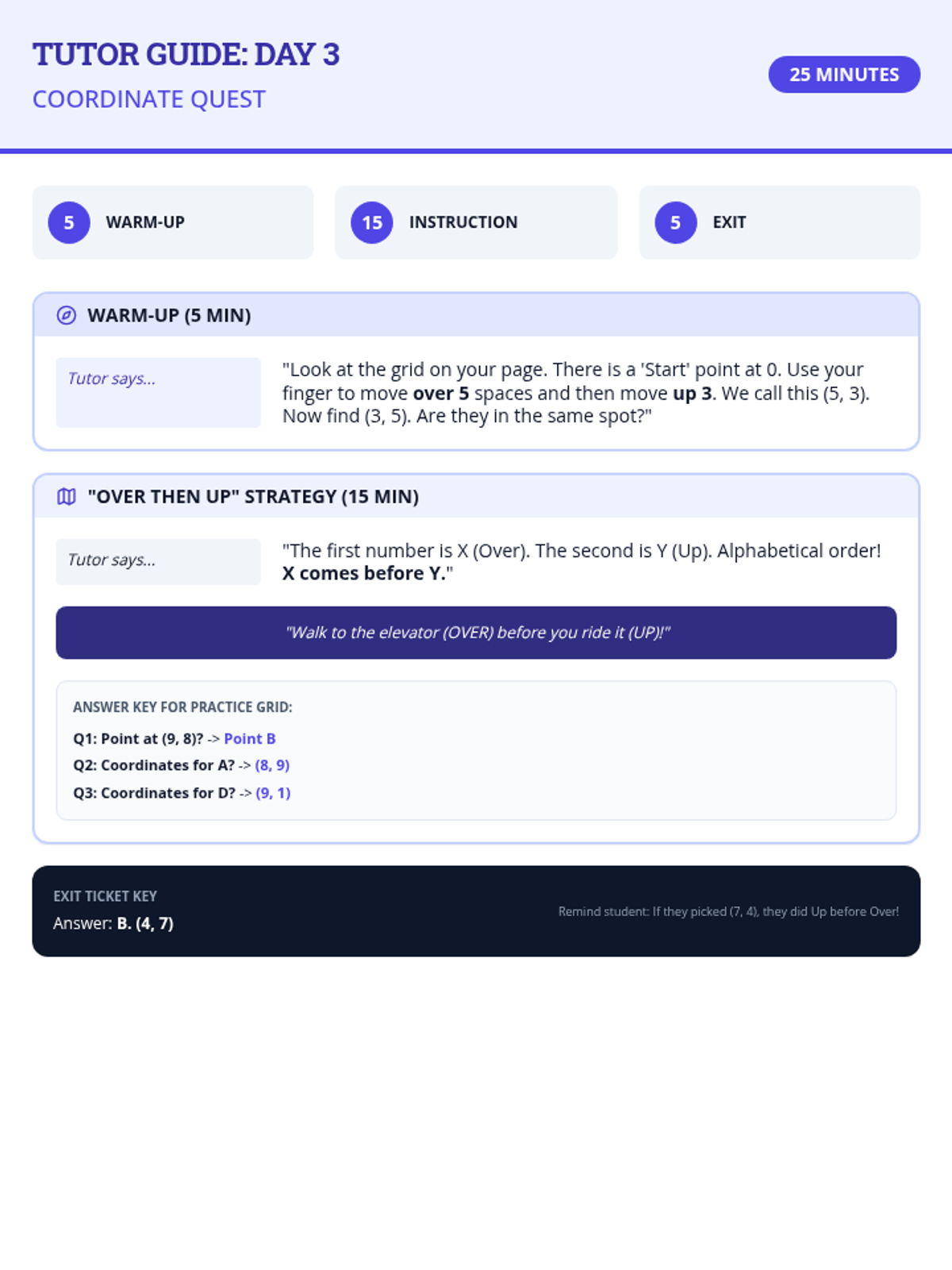
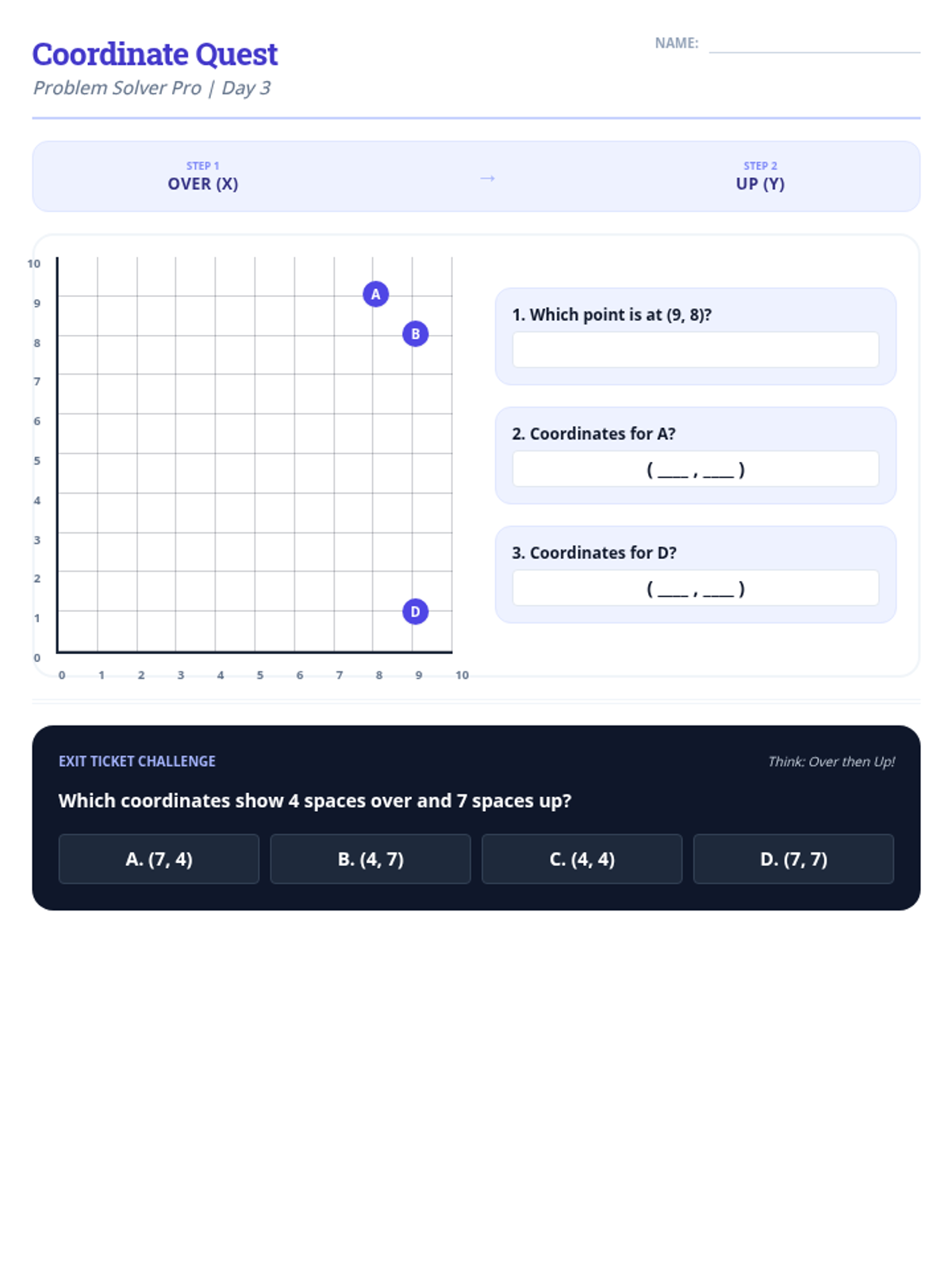
Introduces and reinforces the use of coordinate planes, focusing on identifying (x, y) coordinates using the 'over then up' strategy.
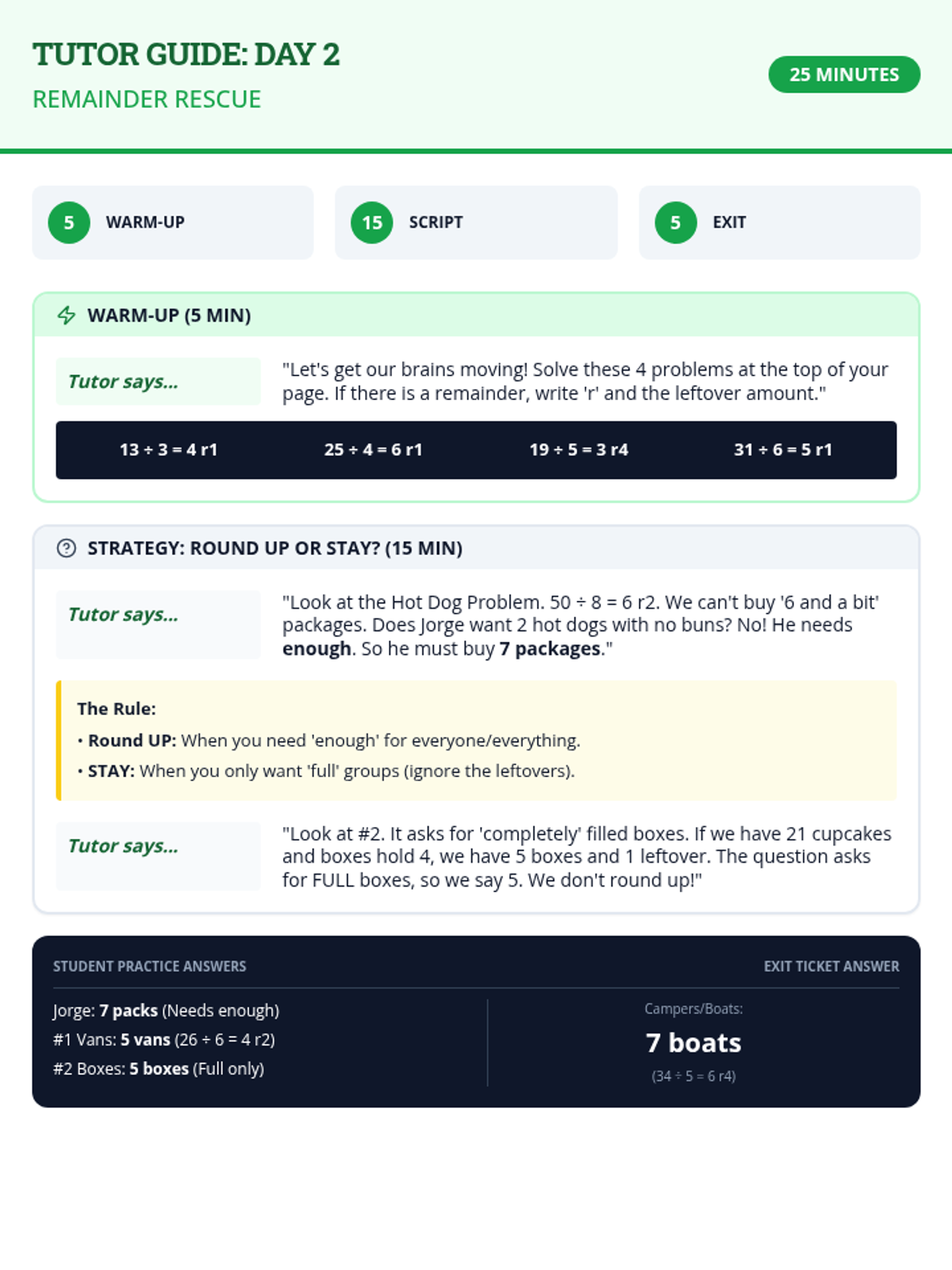
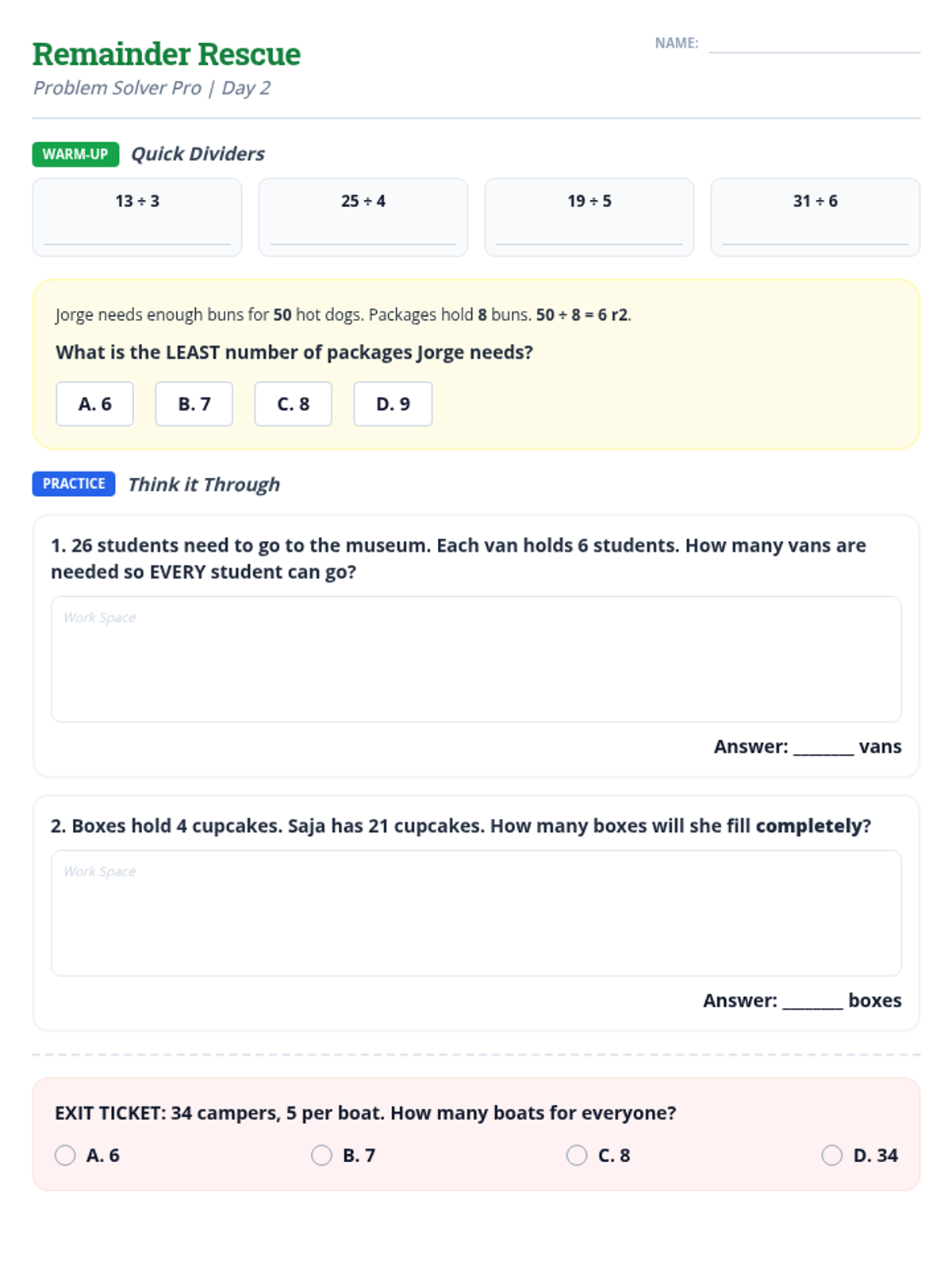
Teaches students how to interpret remainders in real-world division problems, specifically deciding when to 'round up' to ensure everyone or everything is included.
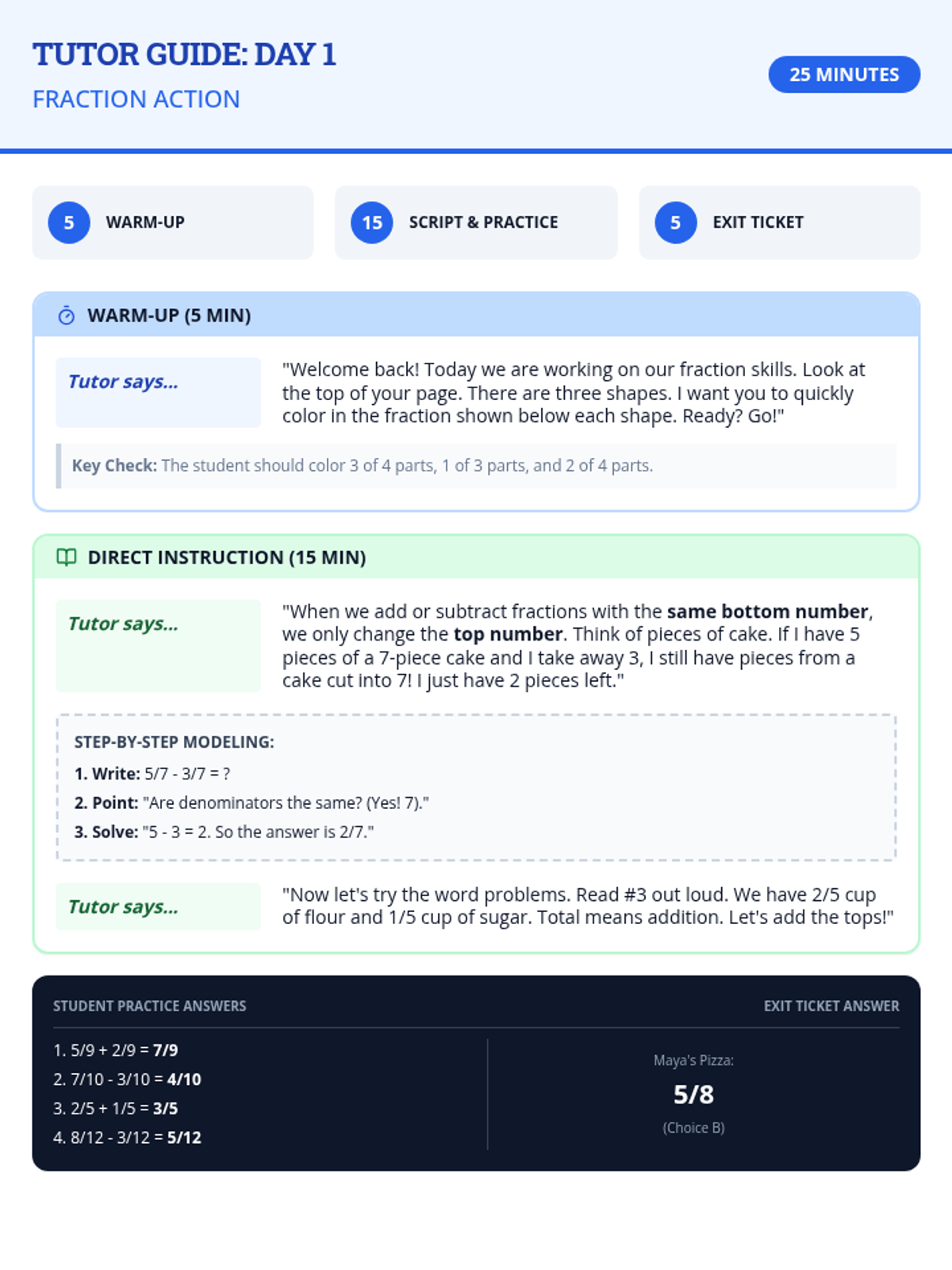
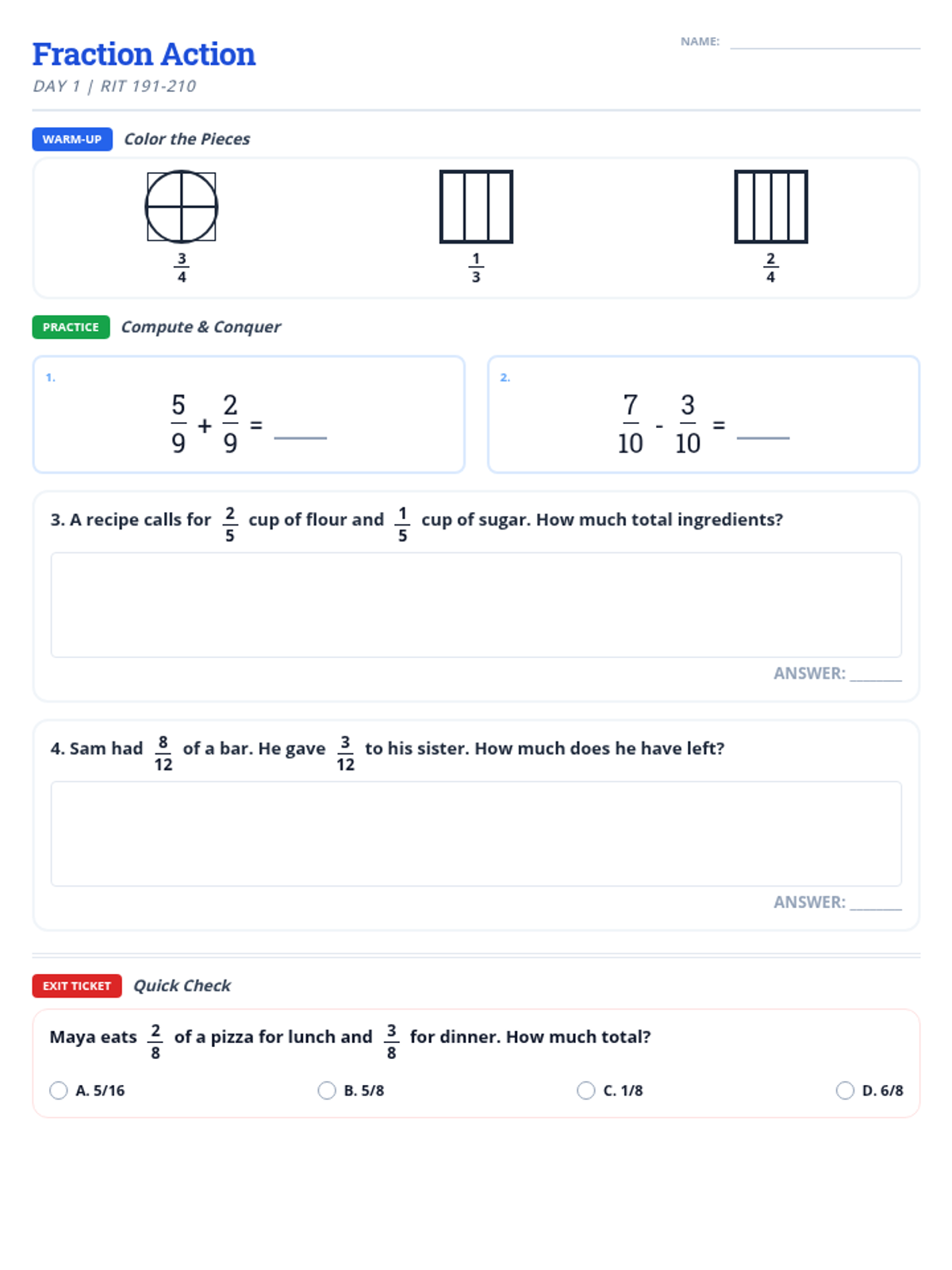
Focuses on adding and subtracting fractions with like denominators, emphasizing that the denominator represents the size of the piece and remains constant.
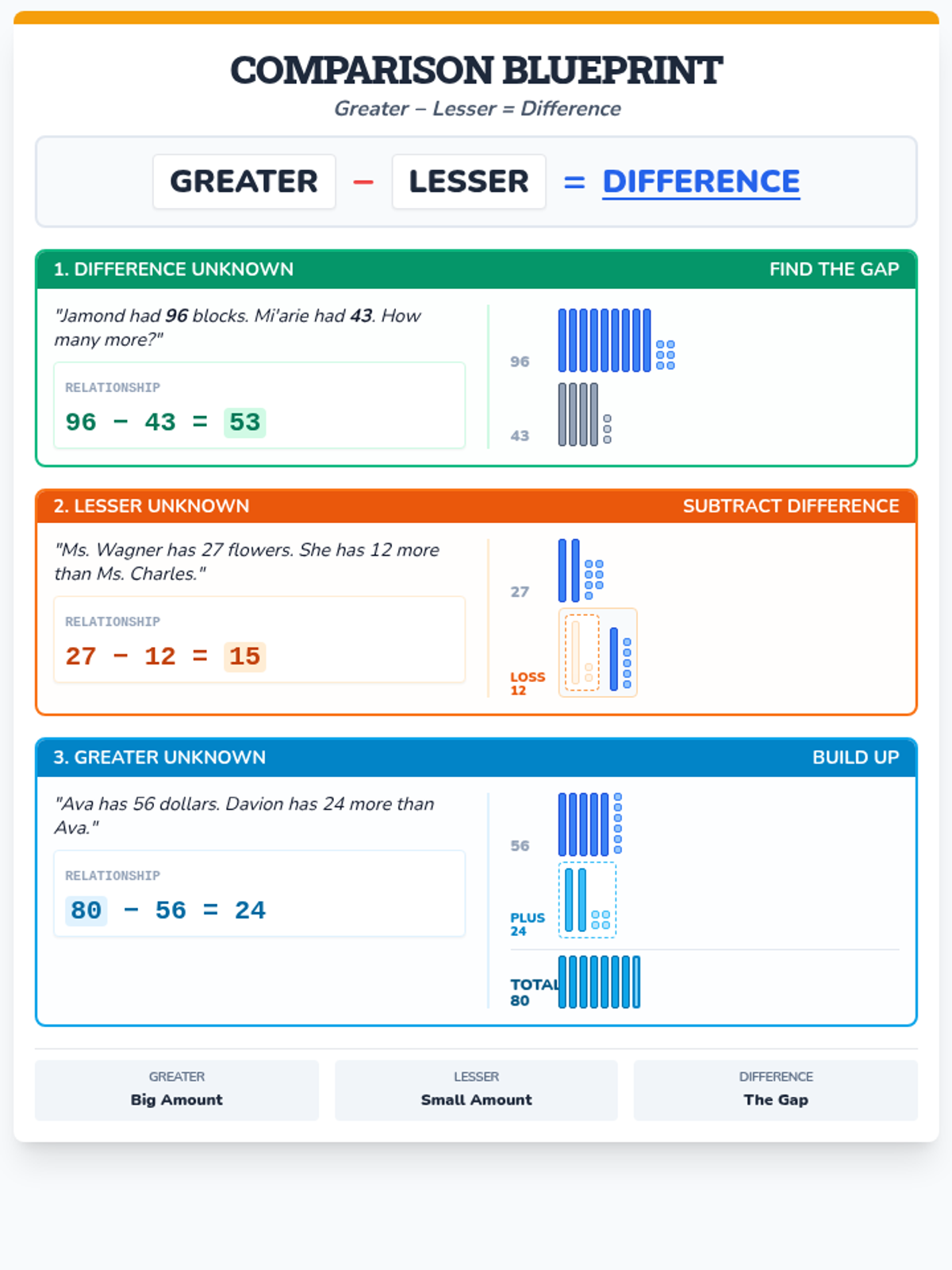
A comprehensive lesson on understanding and solving comparison story problems using the Greater-Lesser-Difference relationship and base ten block visuals.
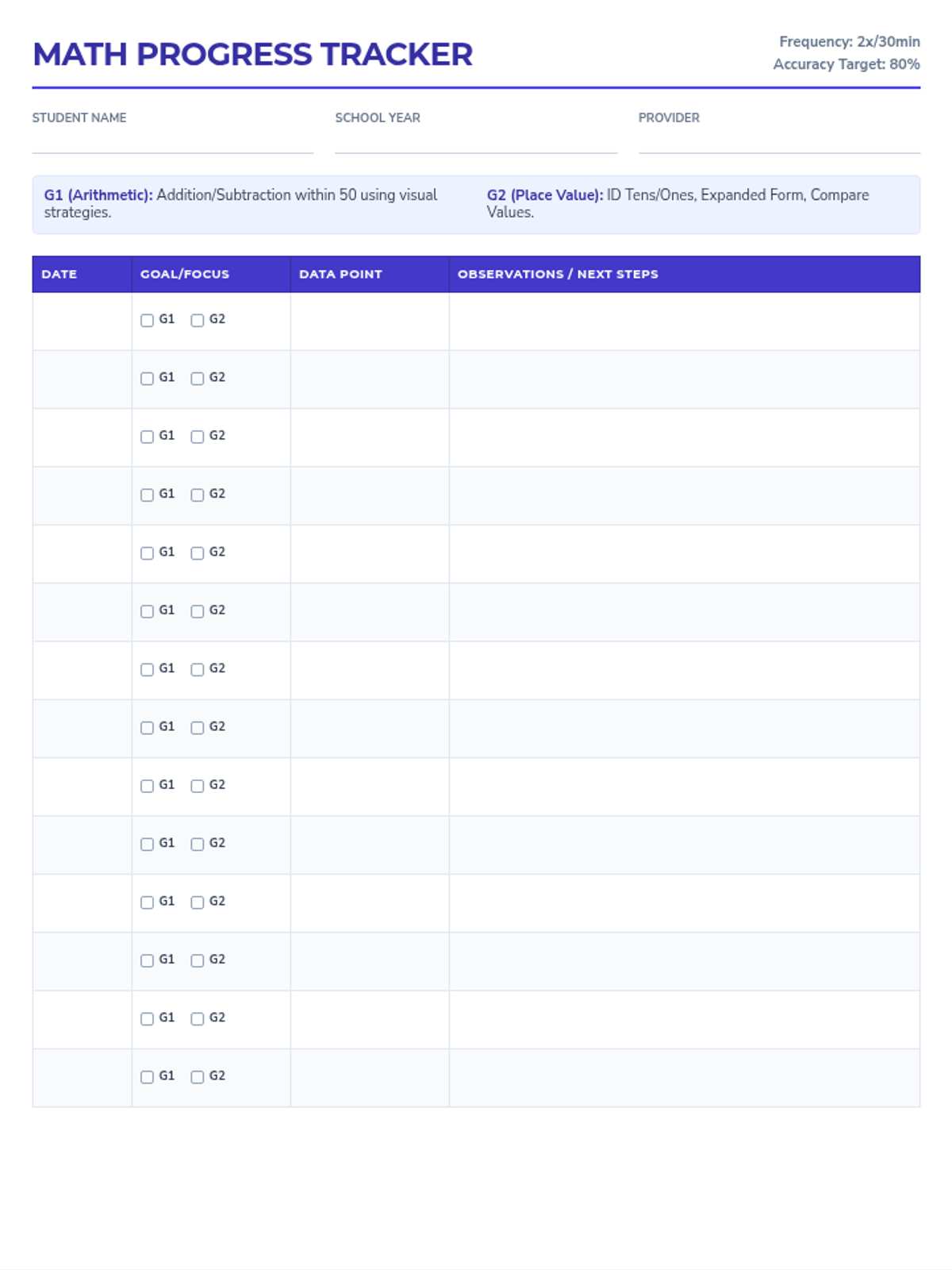
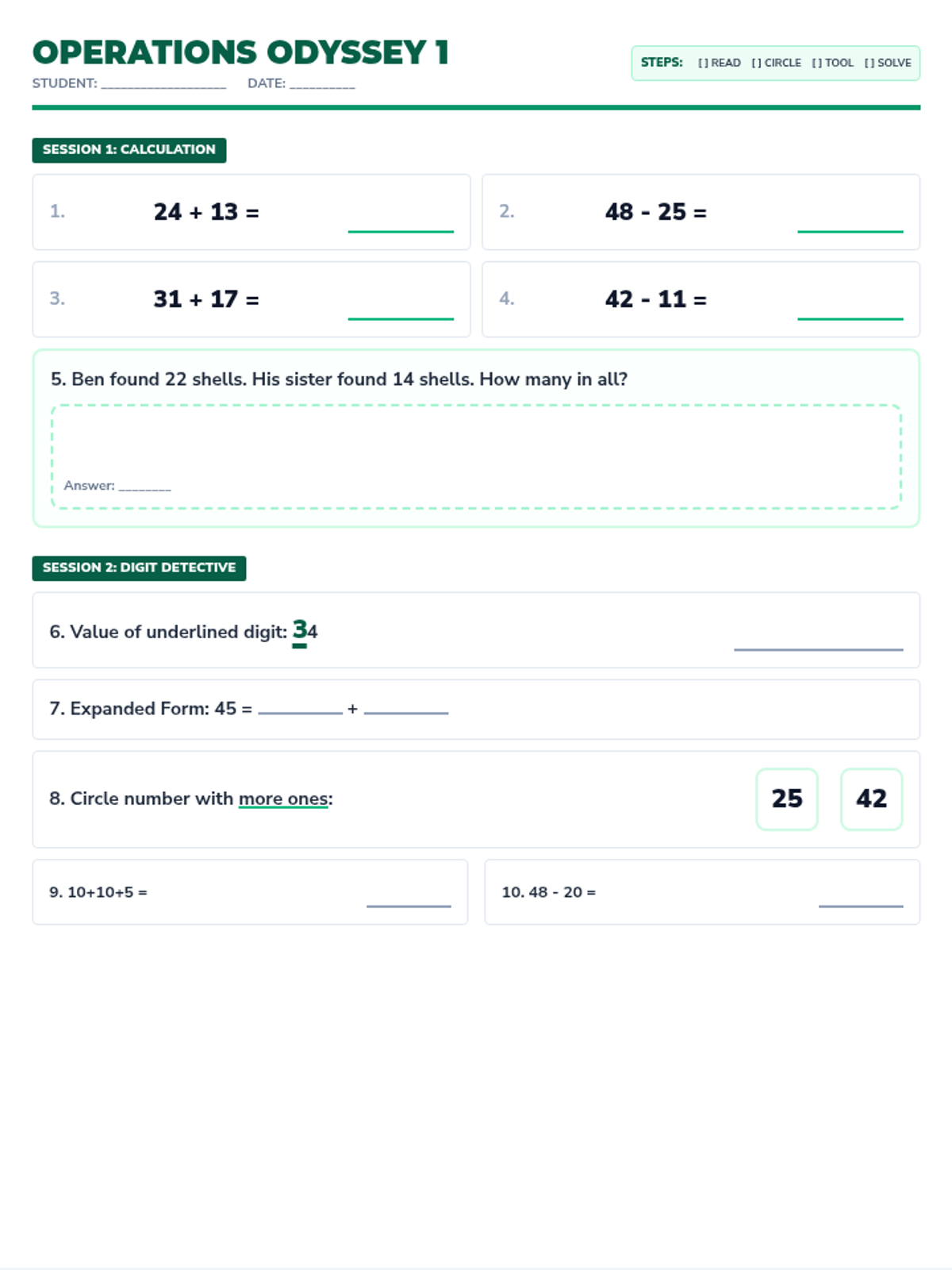
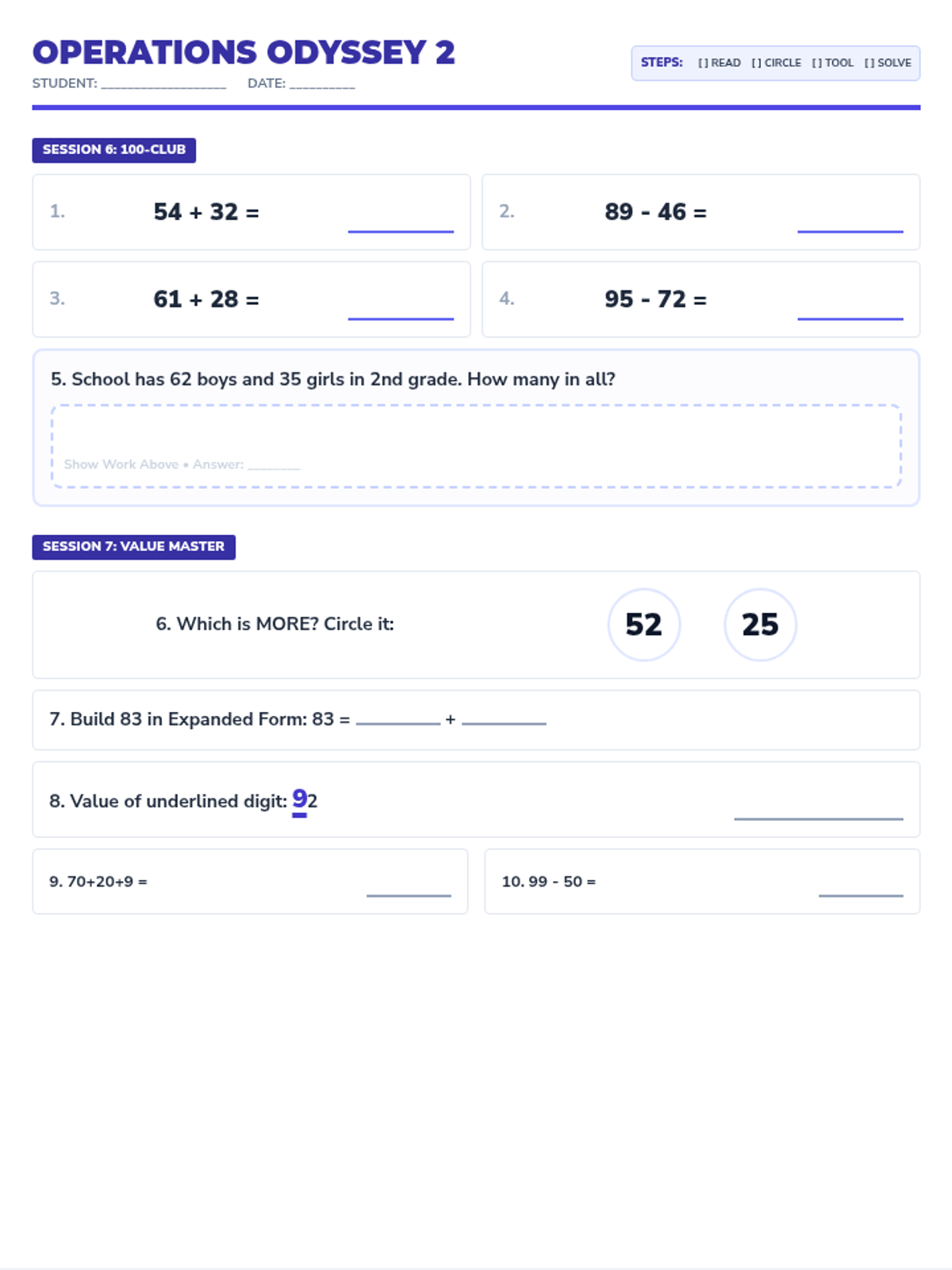
A comprehensive tracking system for monitoring student progress in basic arithmetic and place value concepts, designed for bi-weekly service delivery.
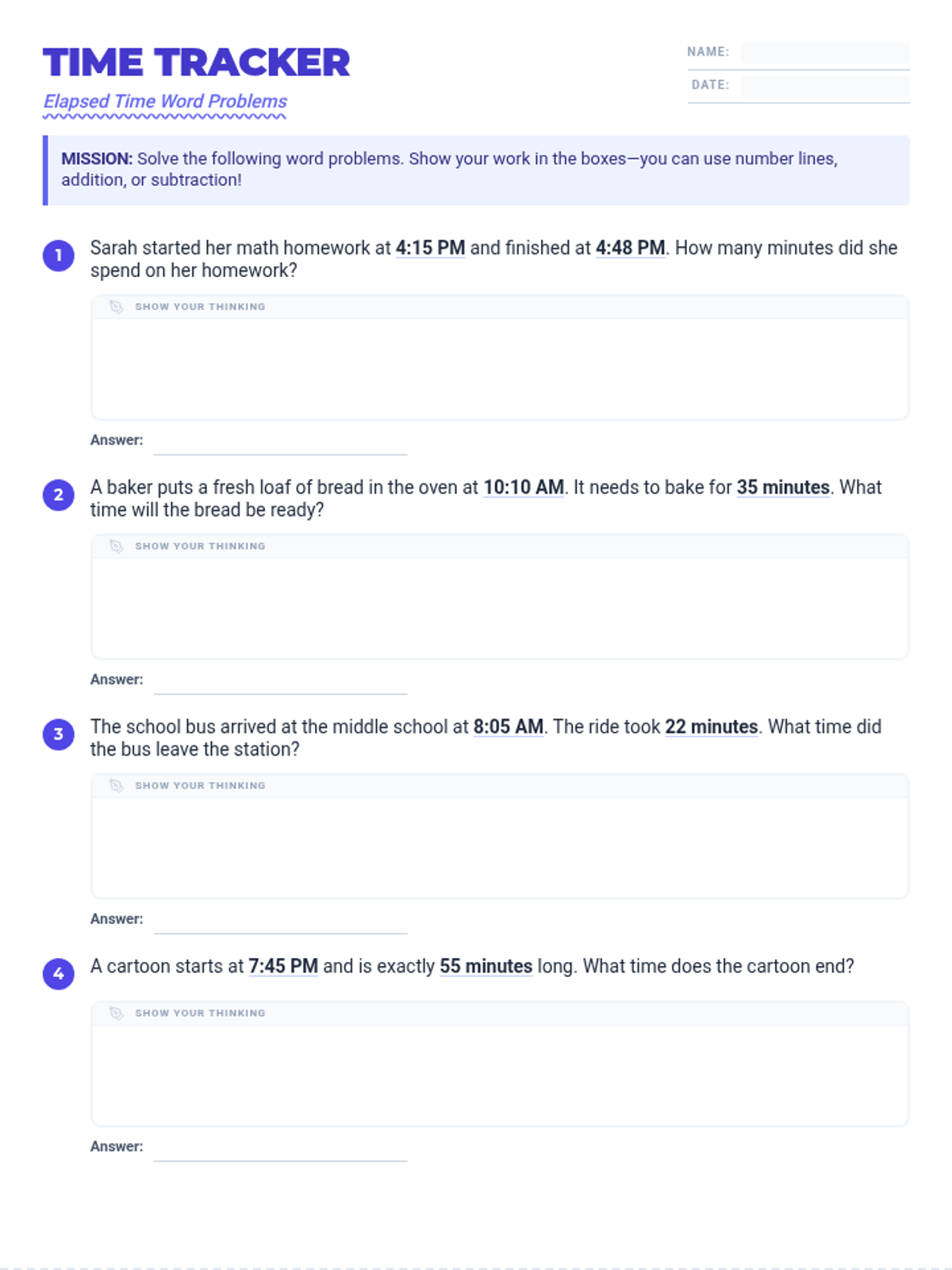
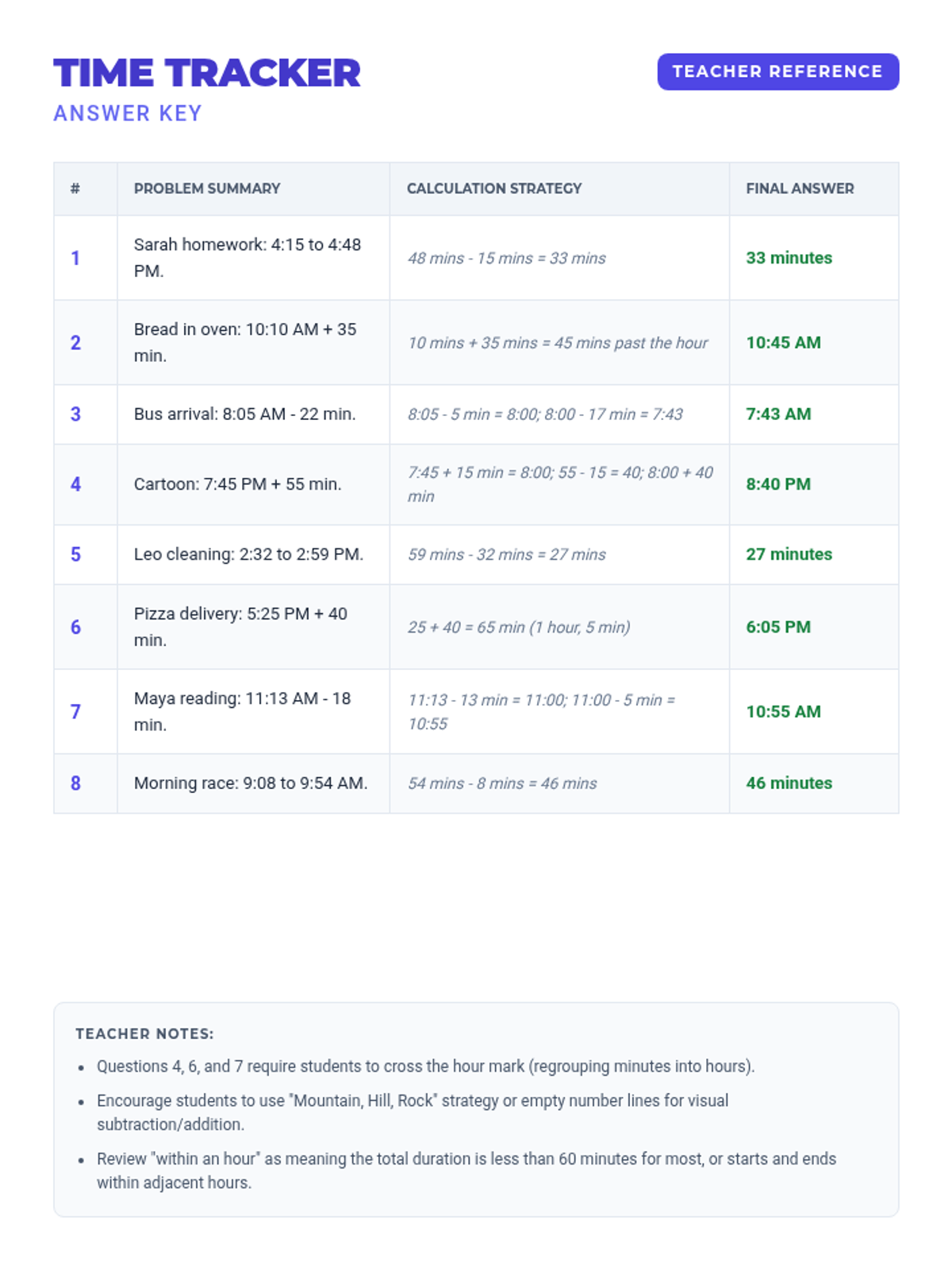
A practice-focused lesson on calculating elapsed time within a single hour, including word problems that cover finding start times, end times, and durations.
Students transition from basic counting and addition to calculating the perimeter of rectangles (191-200).
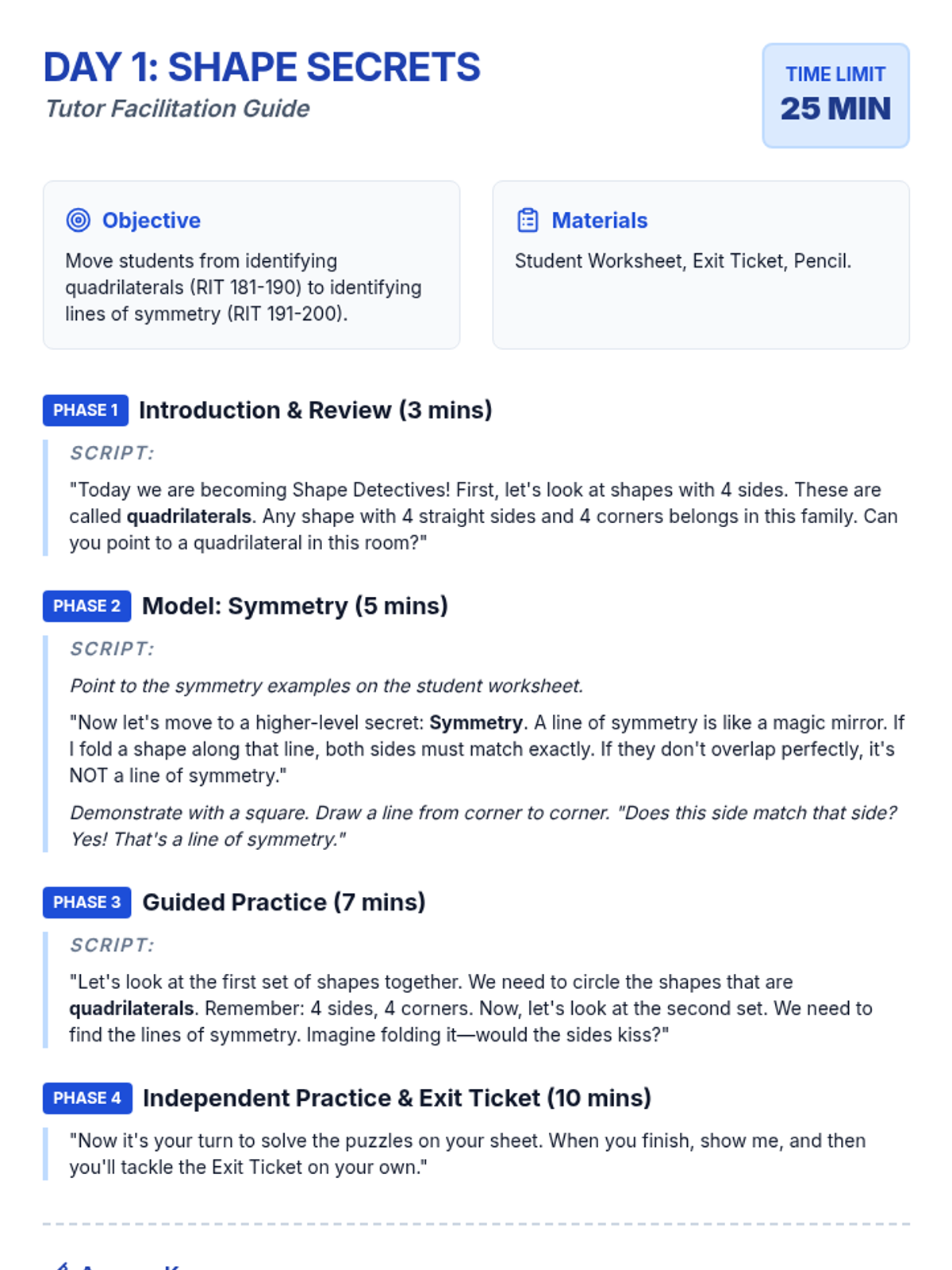
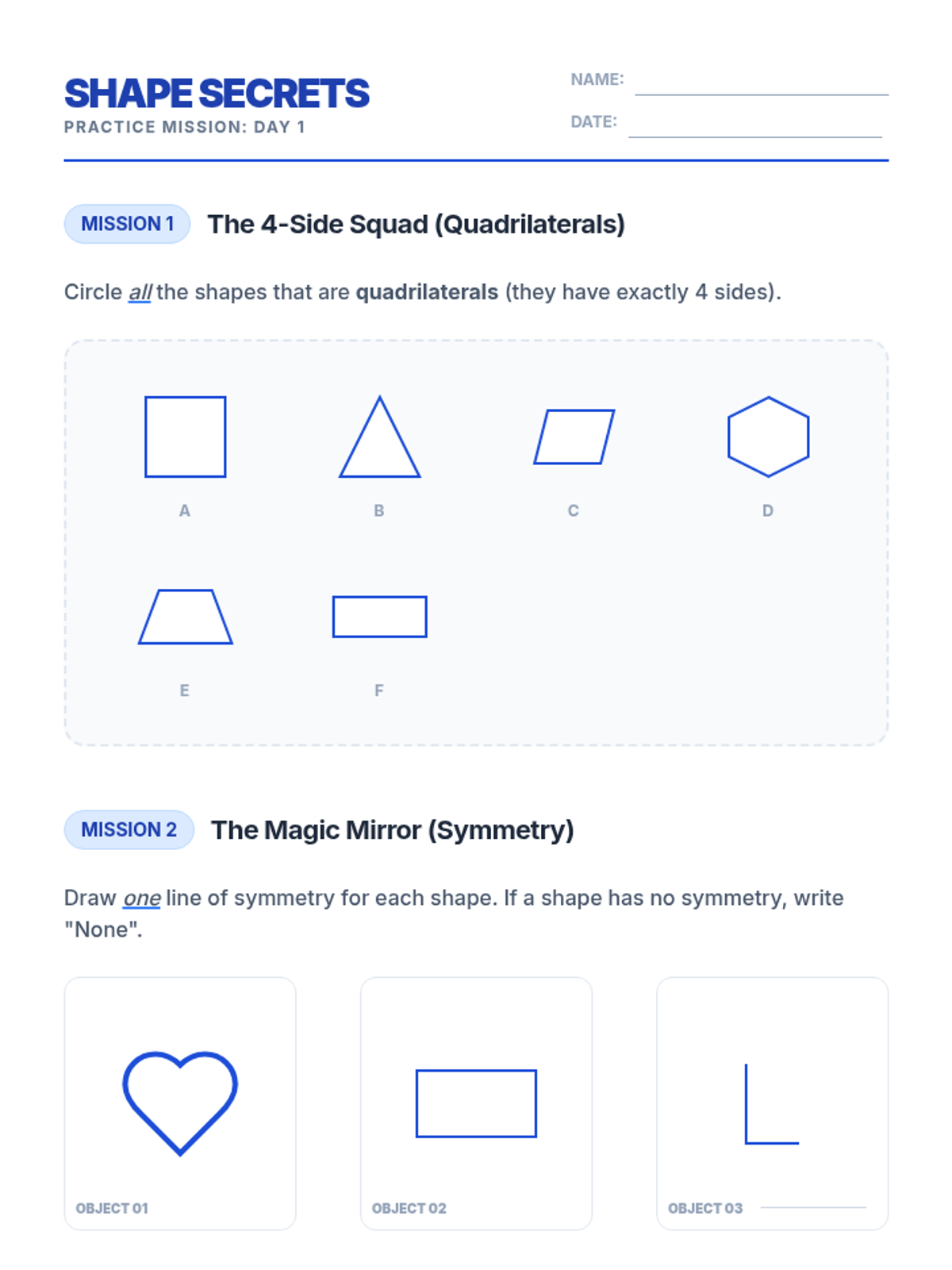
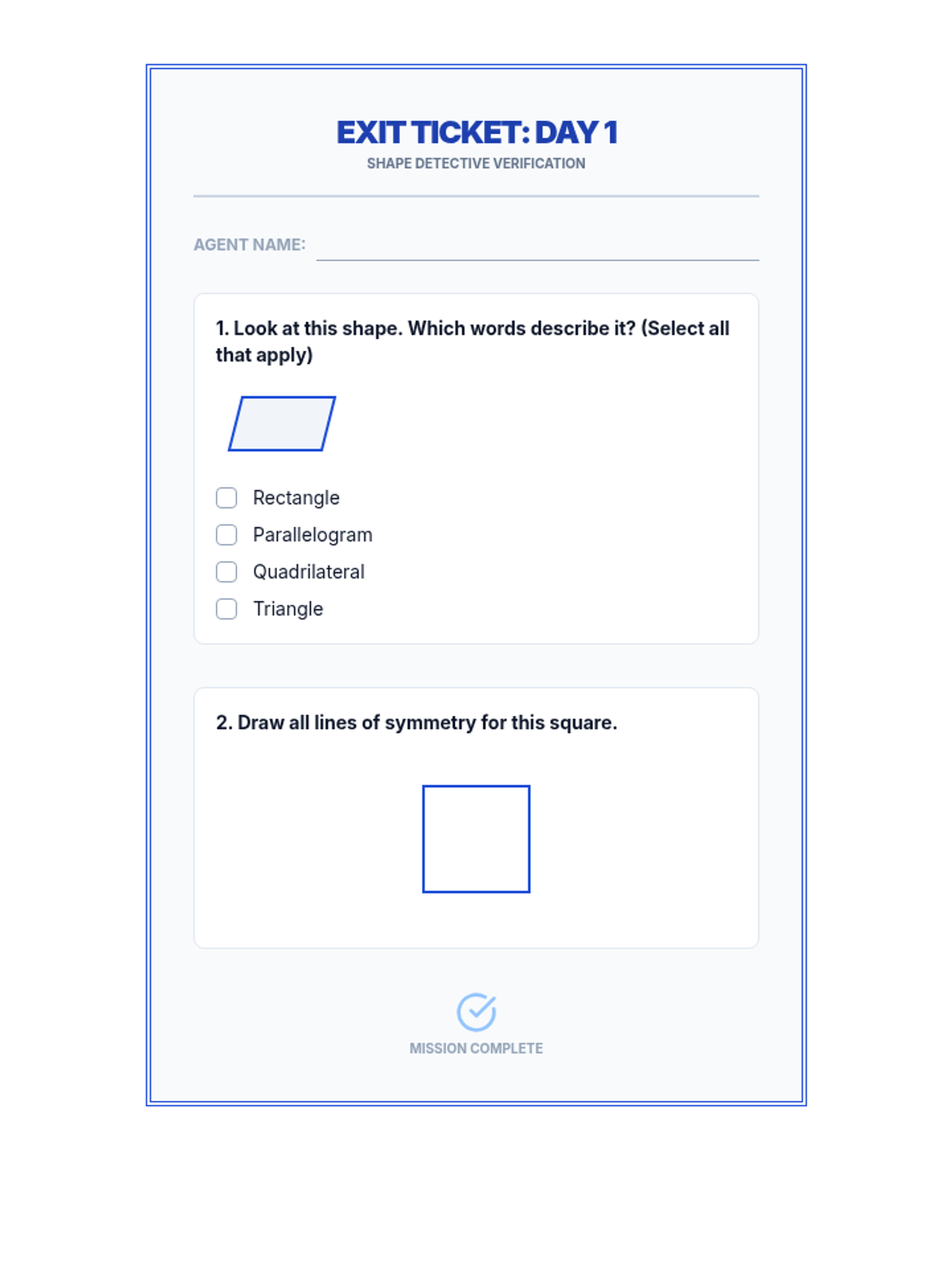
Students identify attributes of quadrilaterals (181-190) and explore lines of symmetry in 2D shapes (191-200).
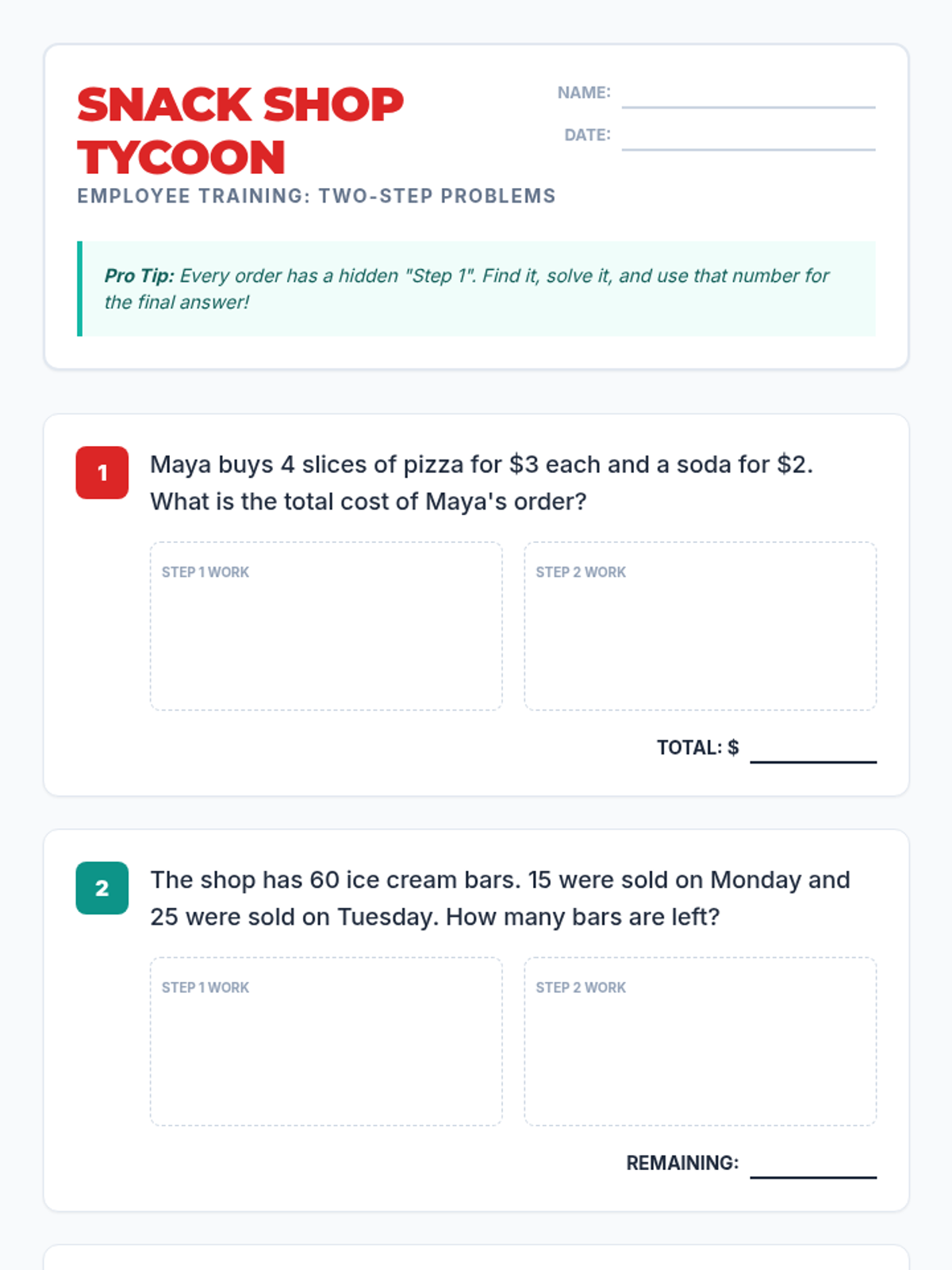
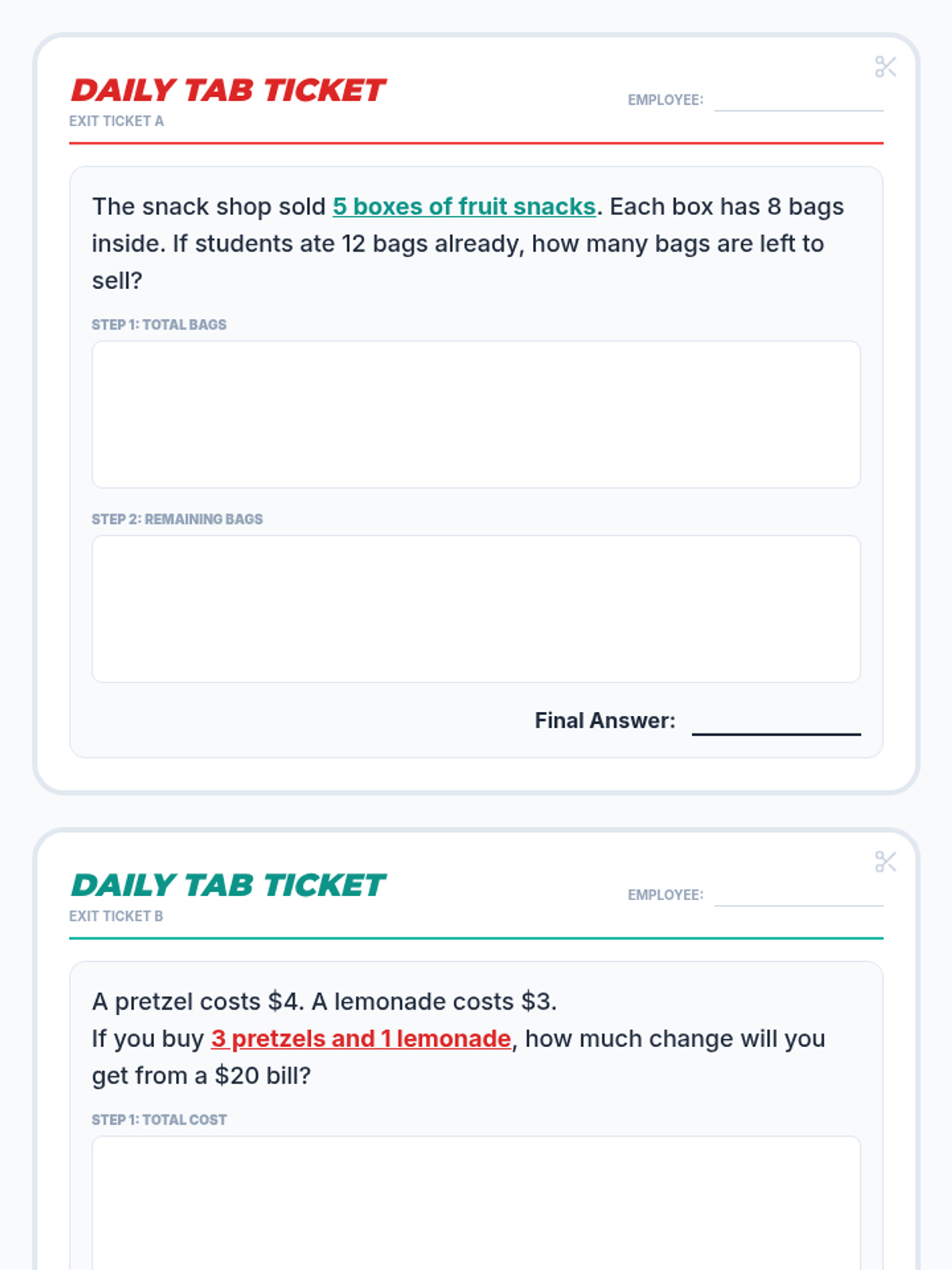
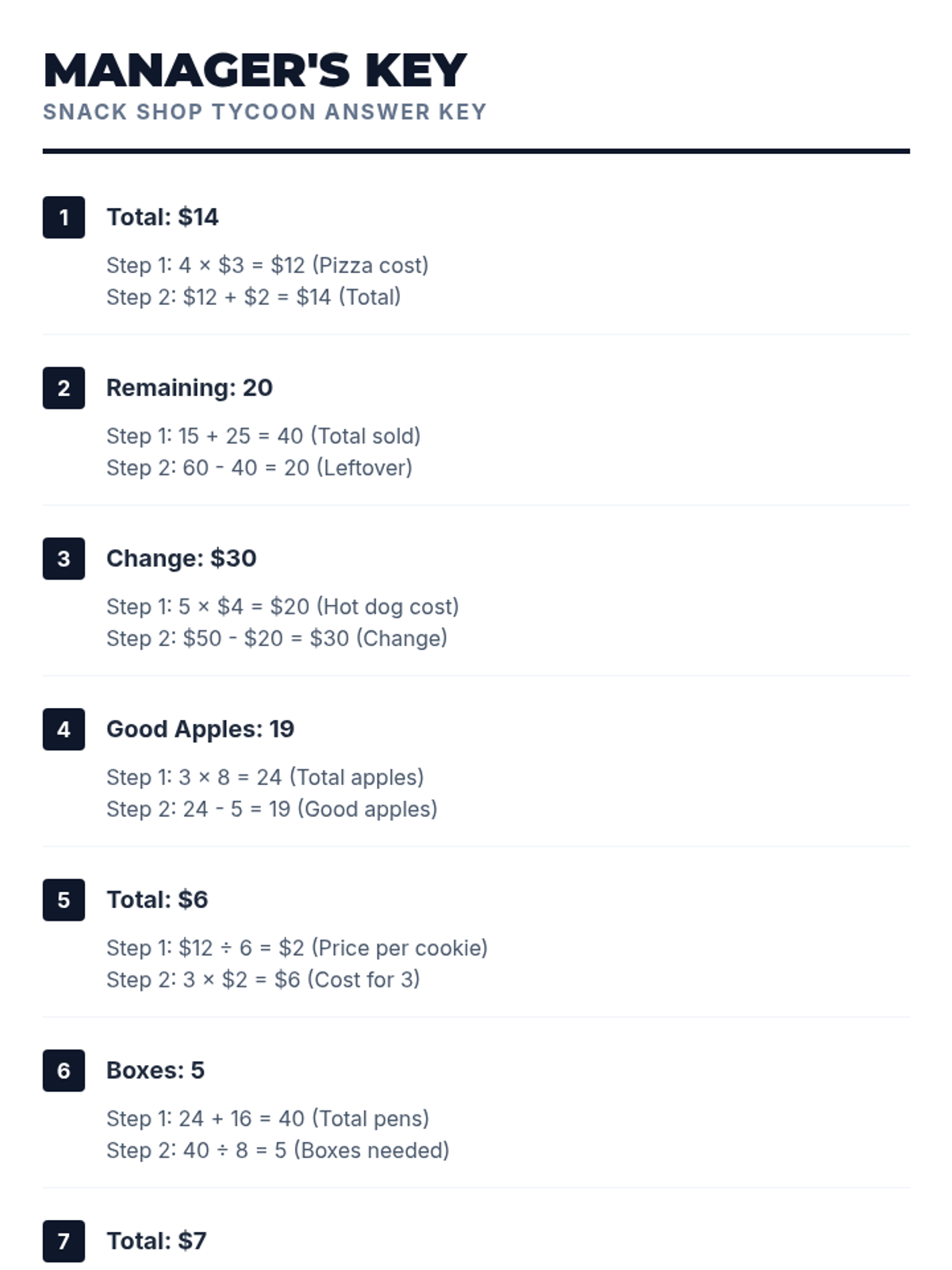
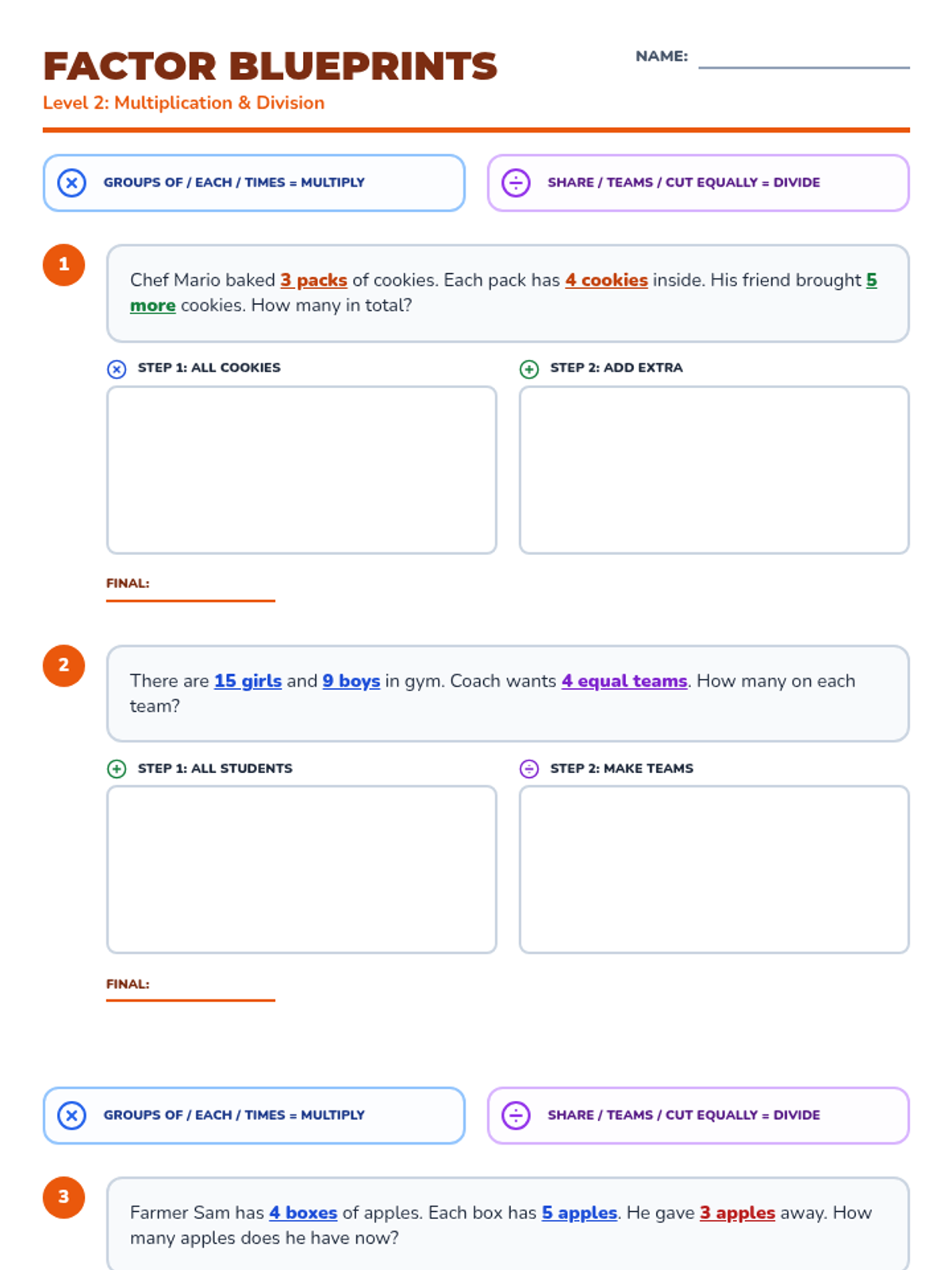
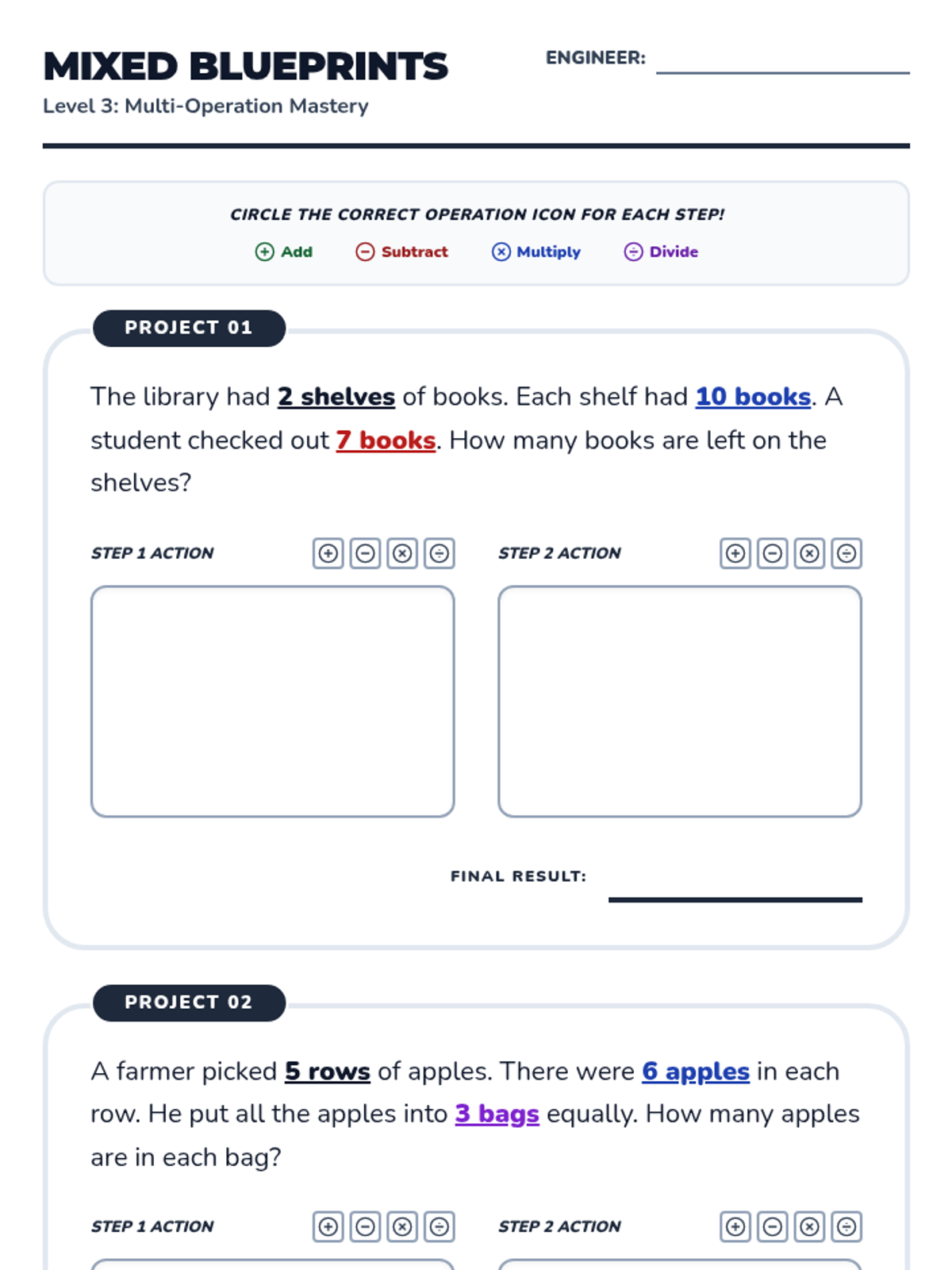
A math lesson focused on solving two-step word problems using the four operations, themed around managing a busy snack shop. Students learn to break down complex problems into manageable steps.
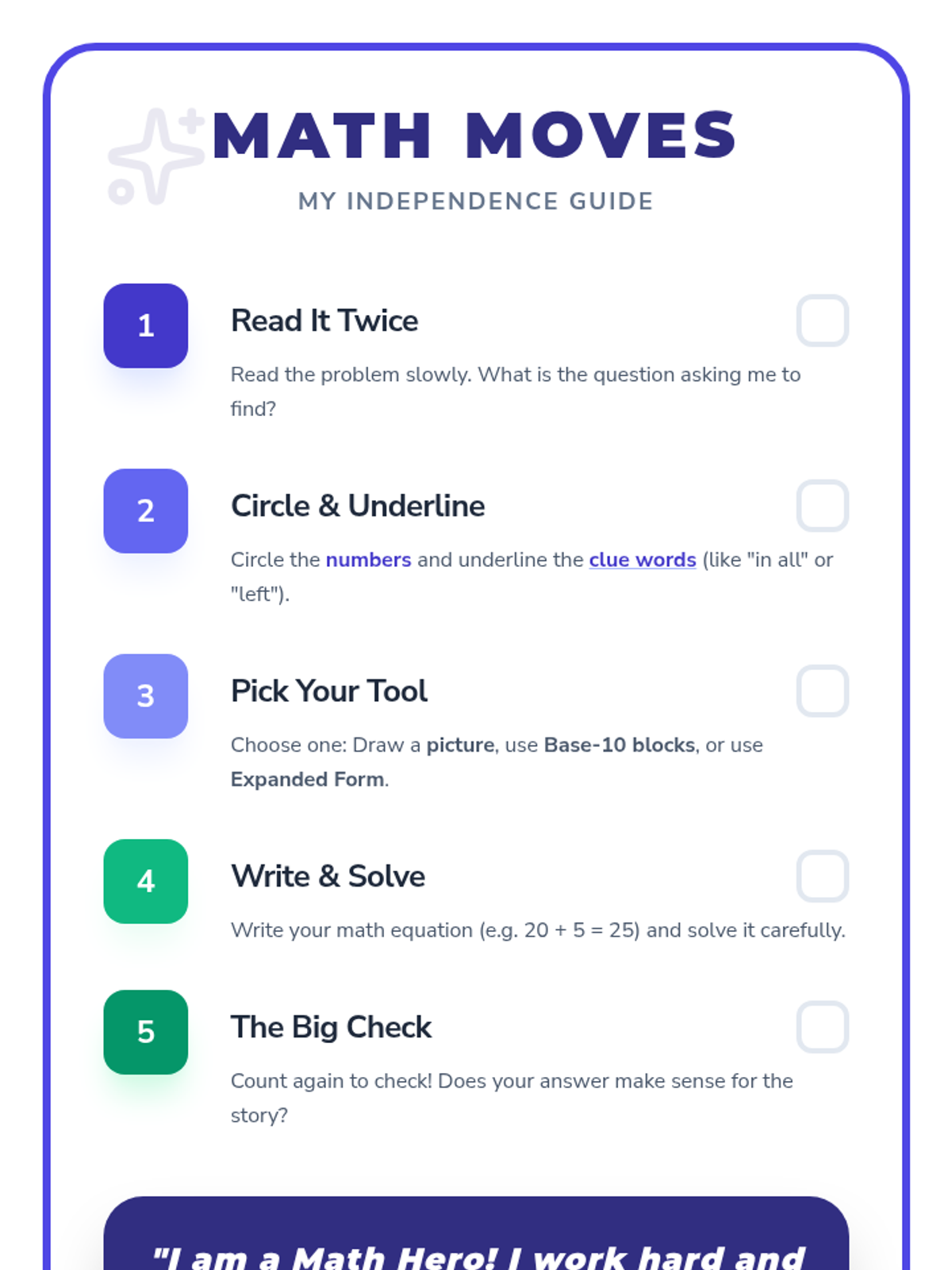
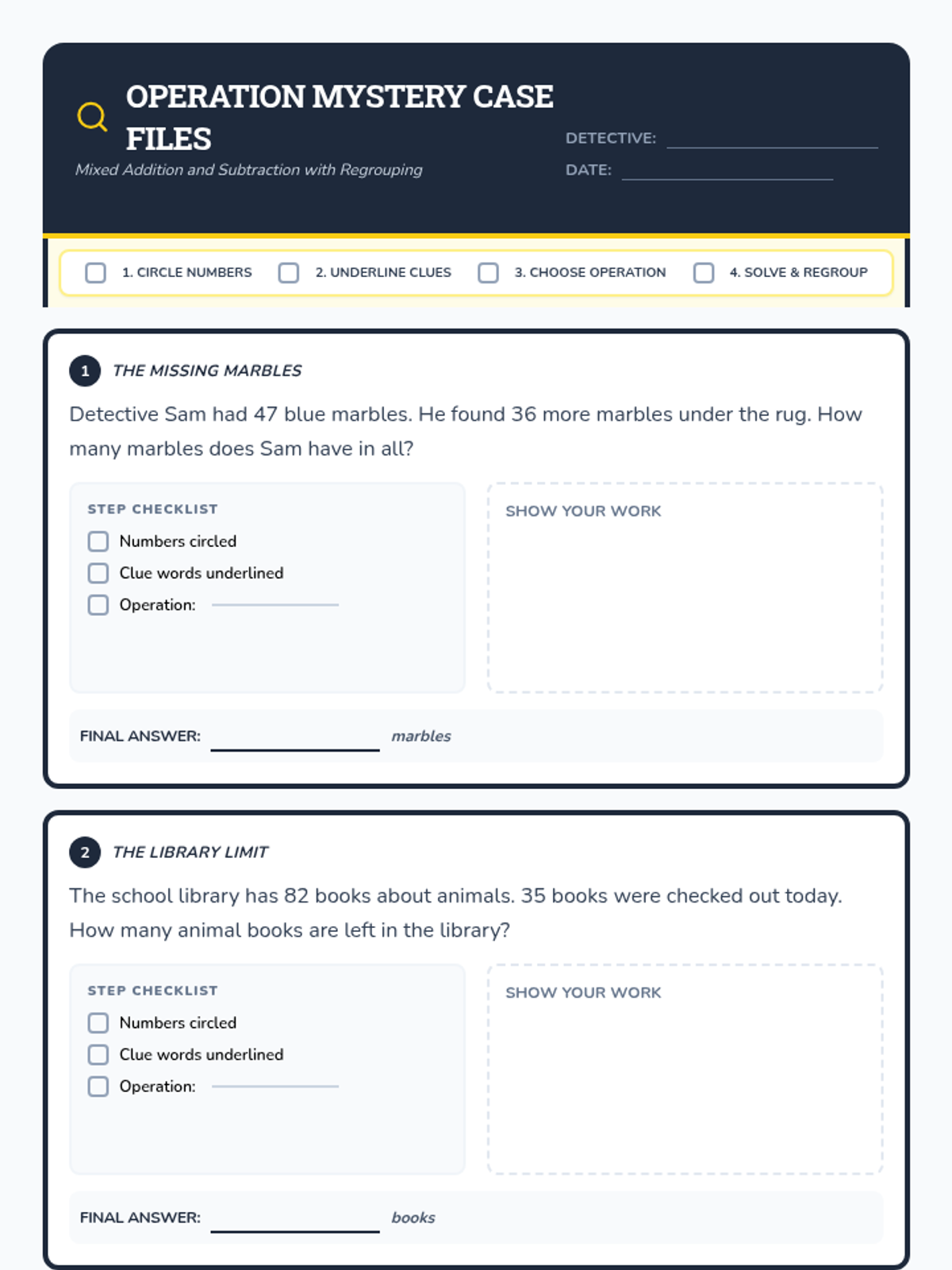
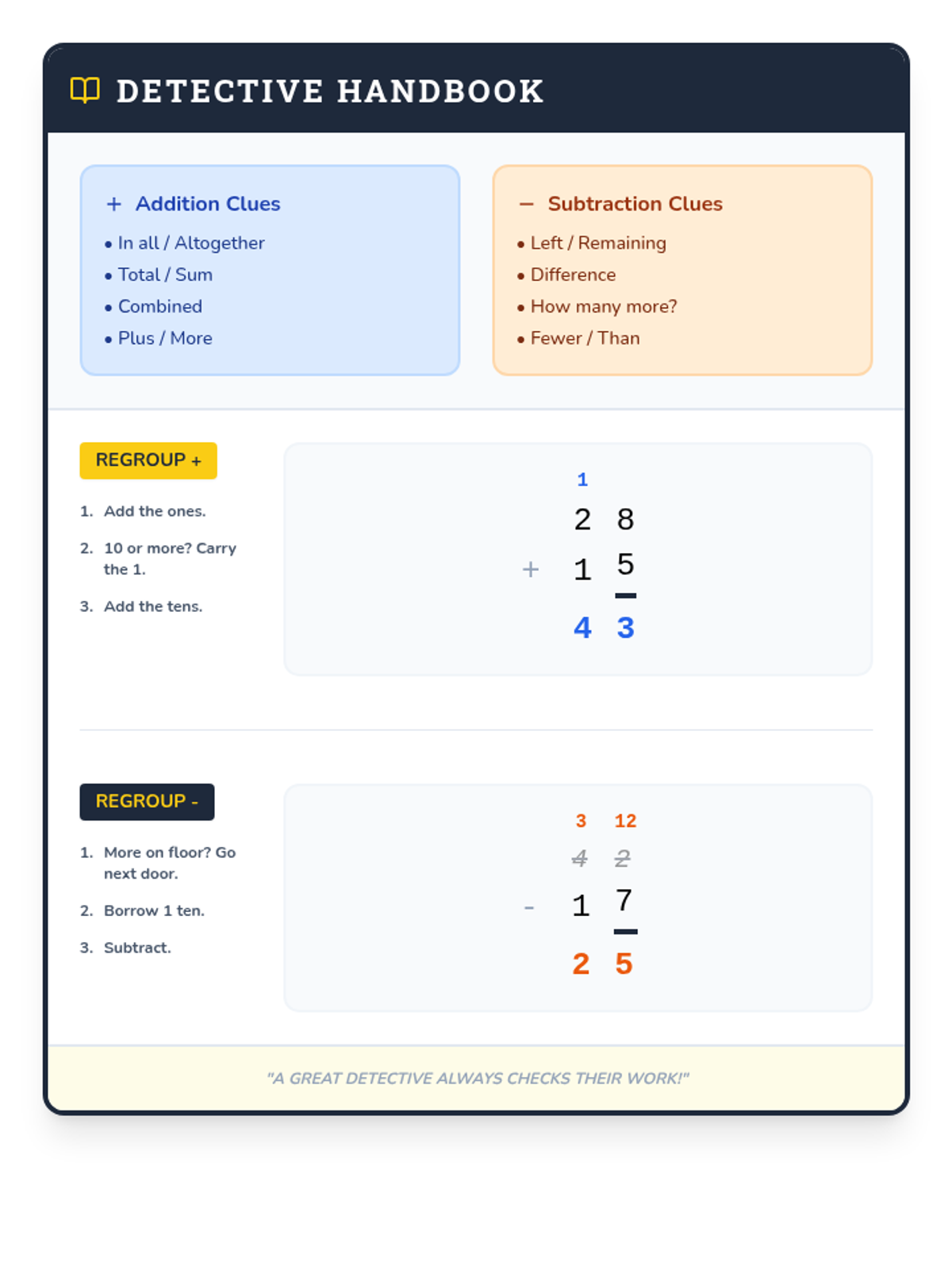
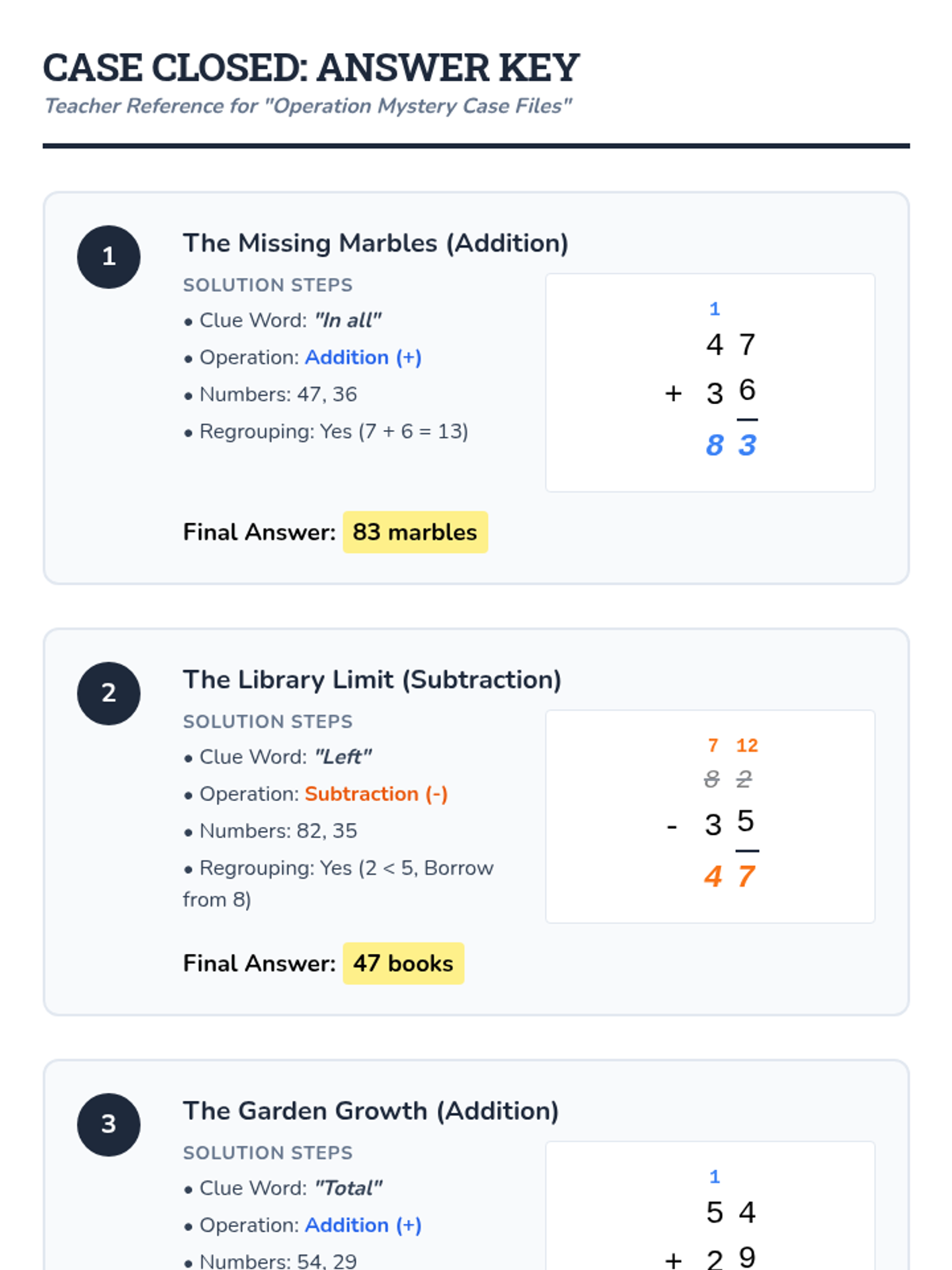
A lesson on solving mixed addition and subtraction word problems with regrouping for 2nd grade. Students use a detective-themed checklist to identify operations and solve double-digit problems accurately.
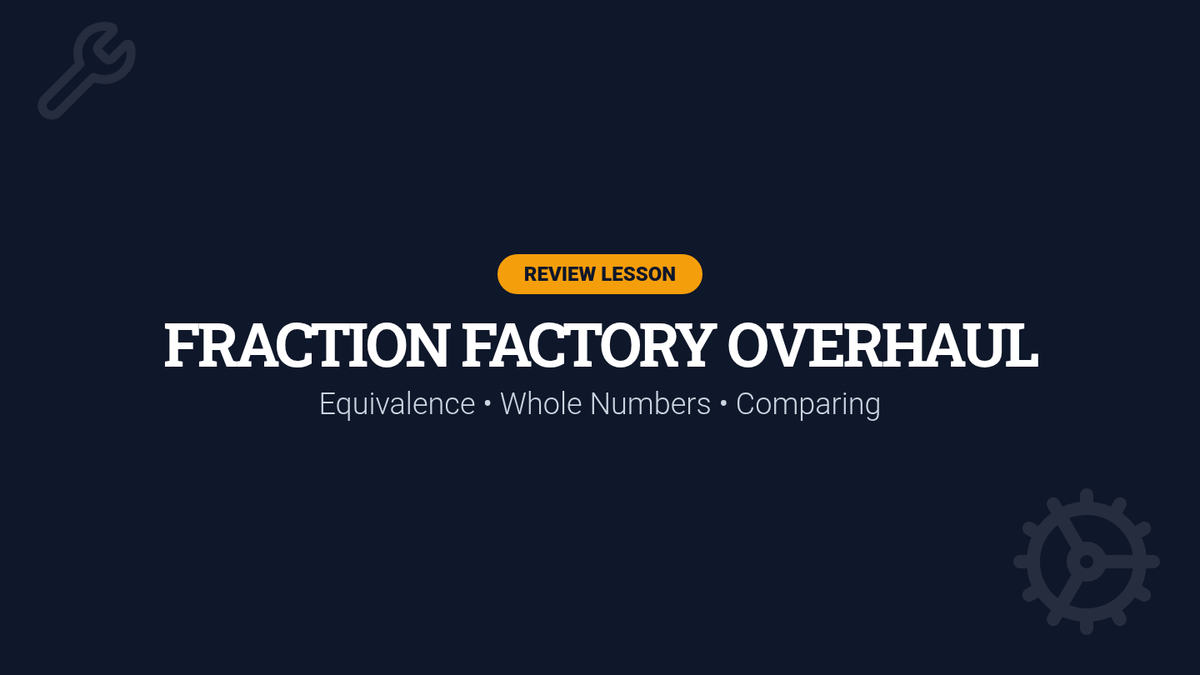
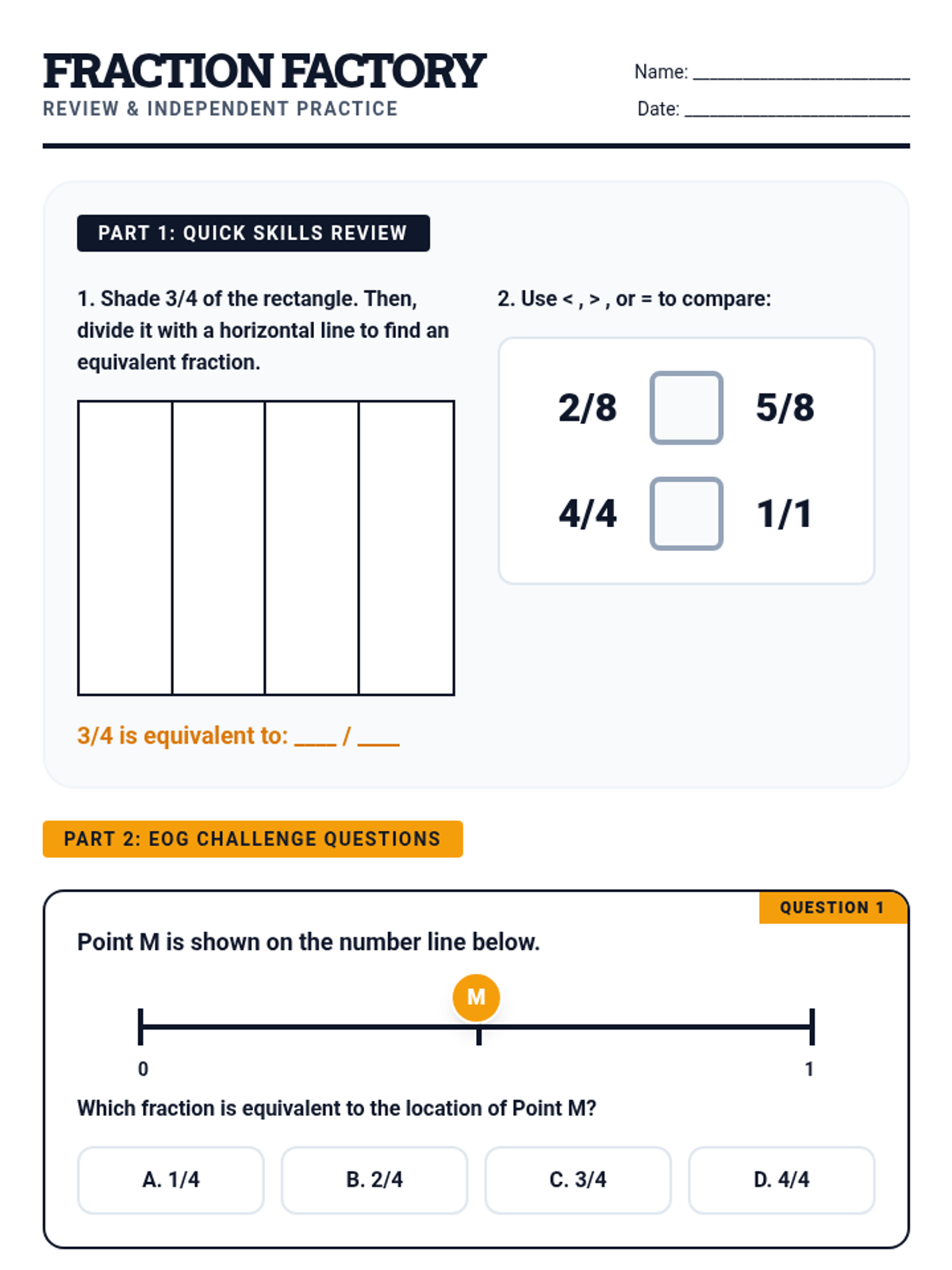
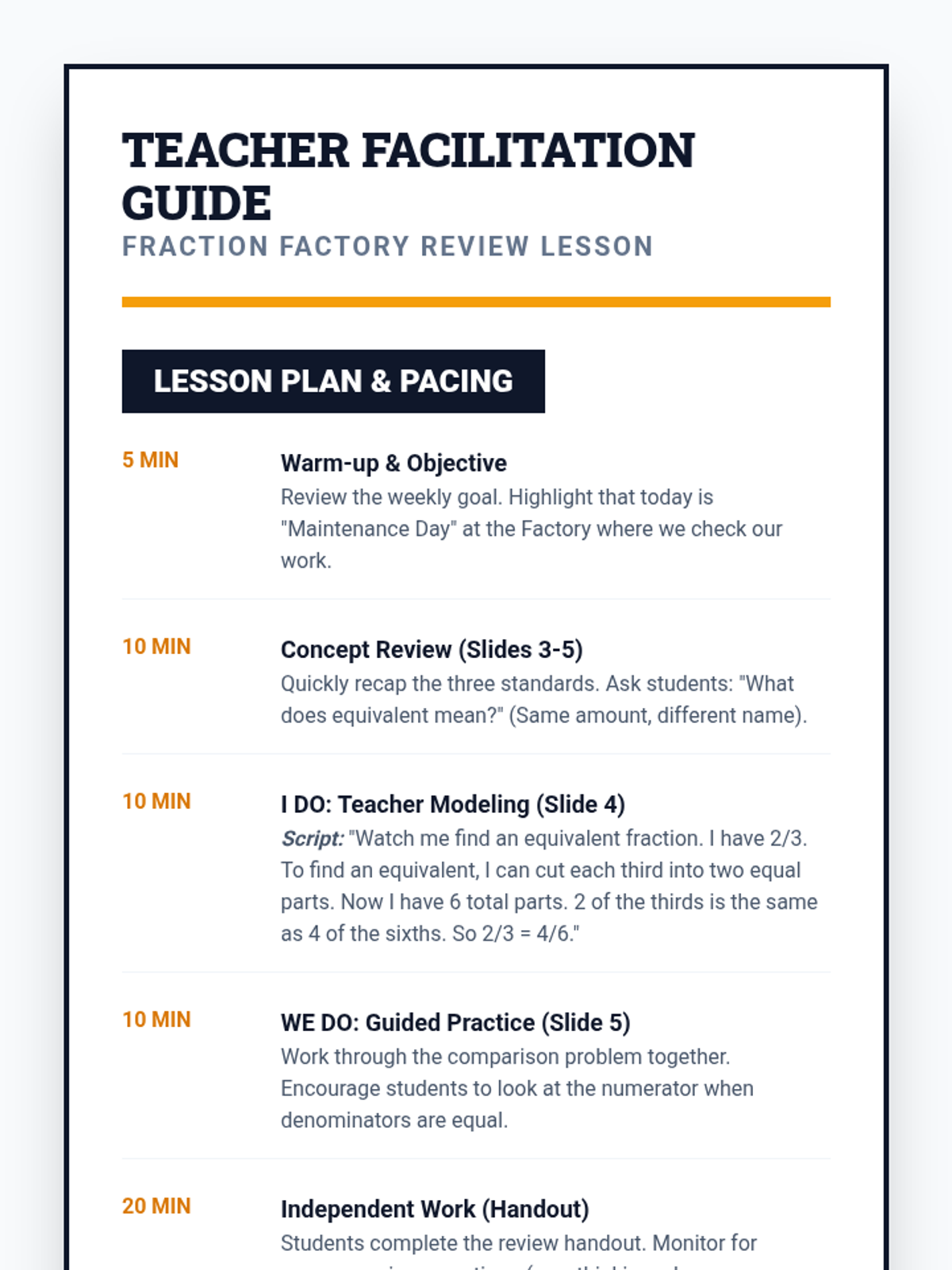
A comprehensive review lesson designed to synthesize the week's learning on equivalence, whole numbers, and comparisons, featuring guided instruction and EOG-style assessment.
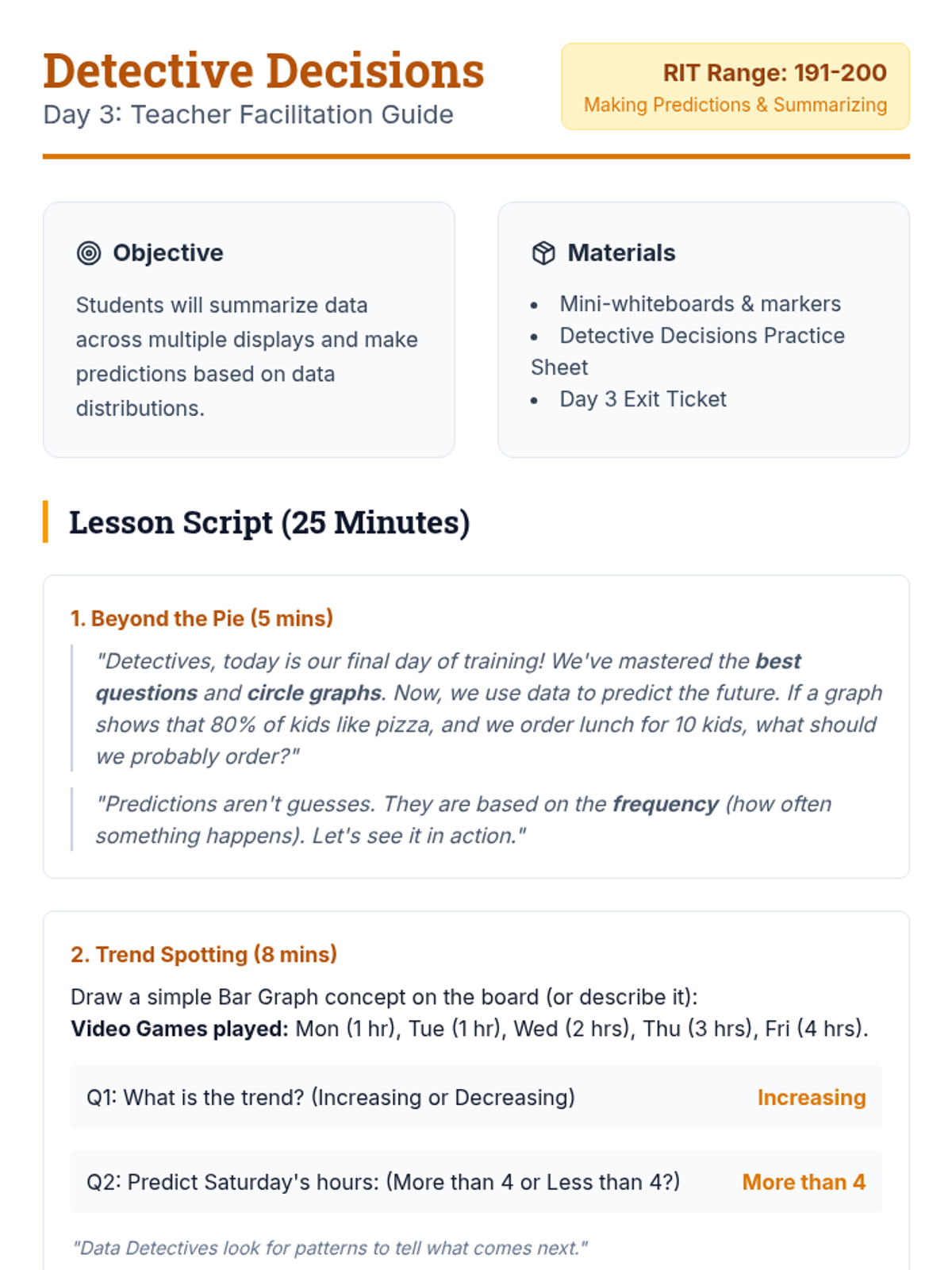
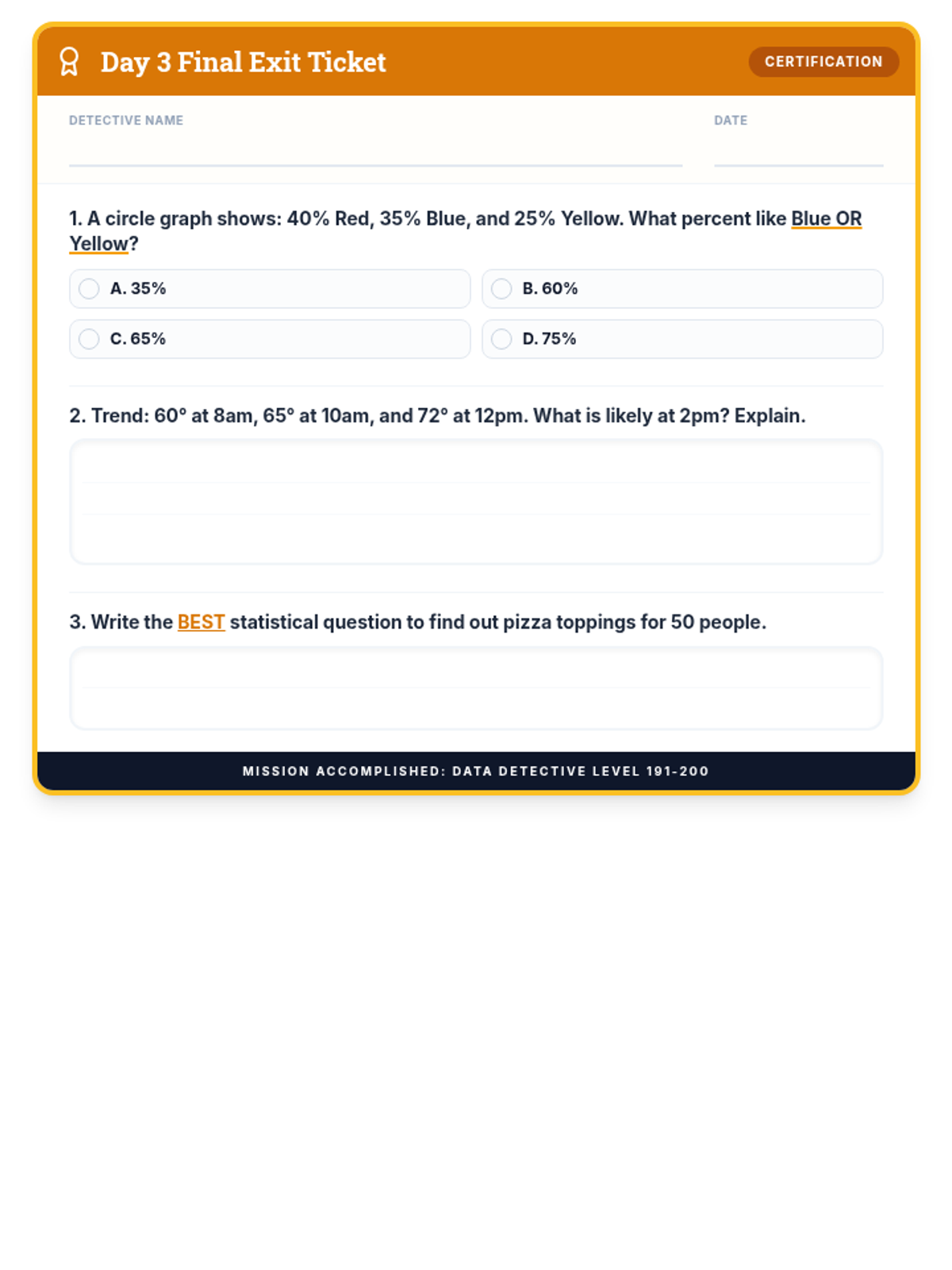
Students will use data from various displays to make predictions and solve multi-step problems.
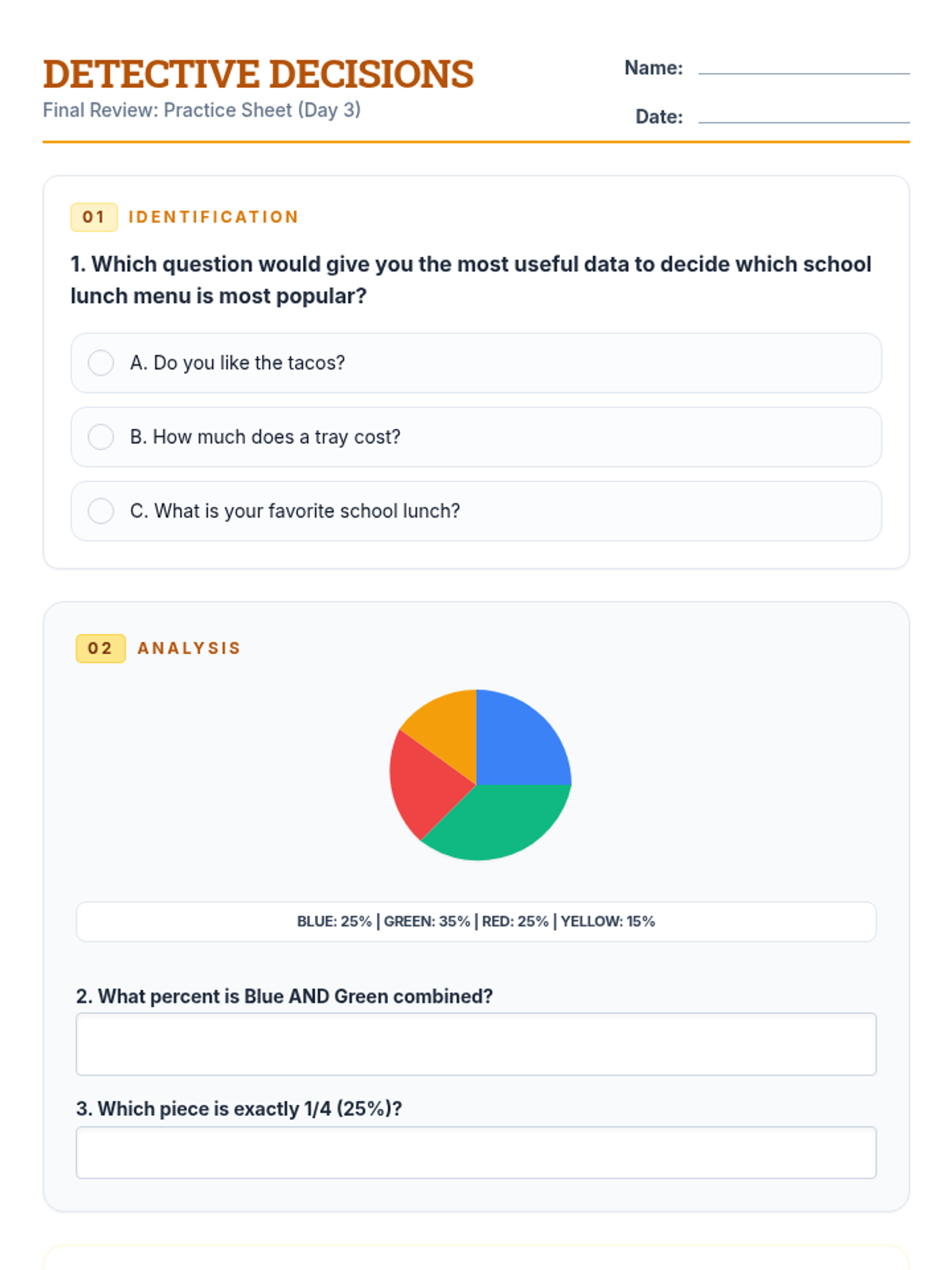
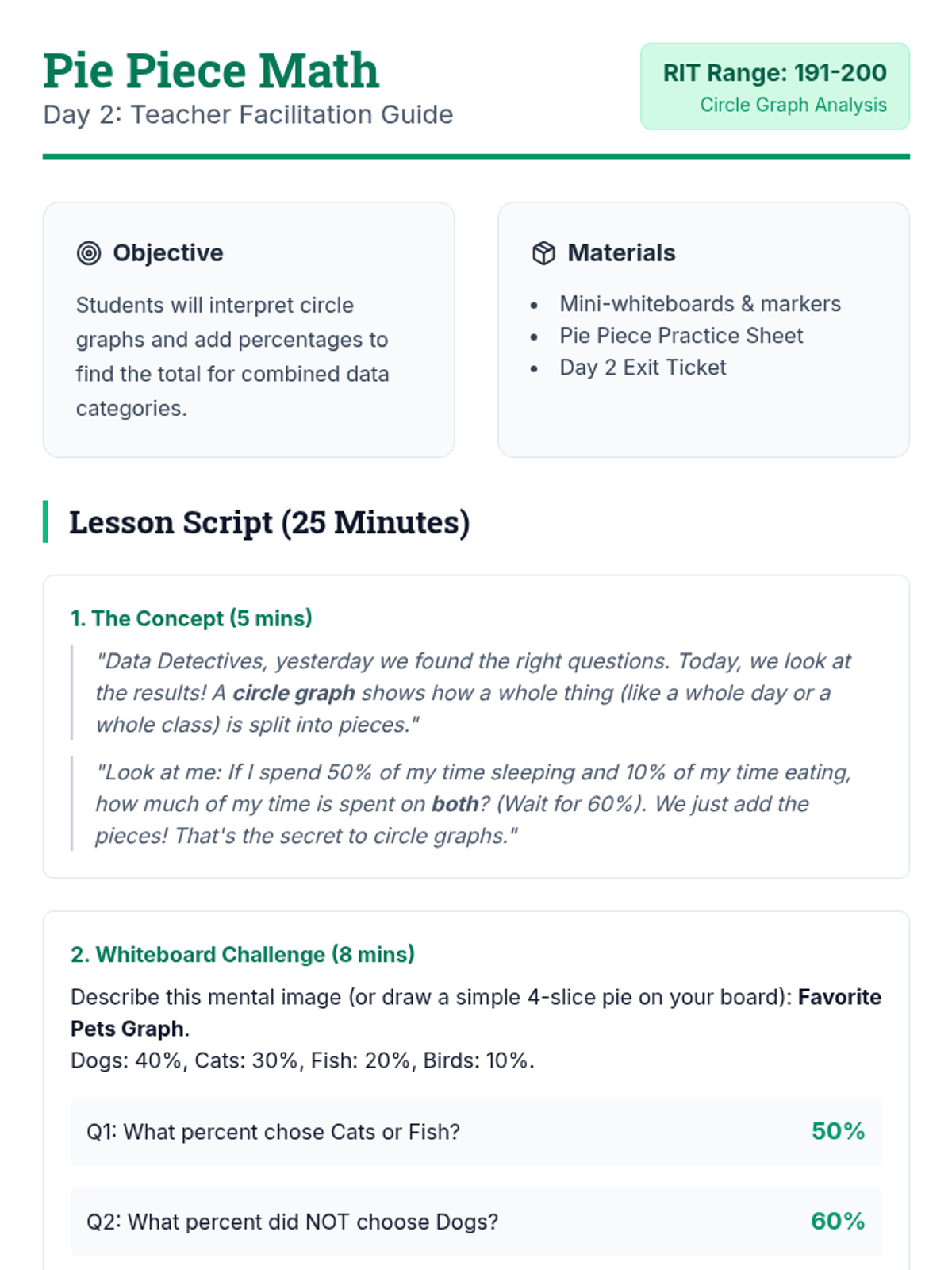
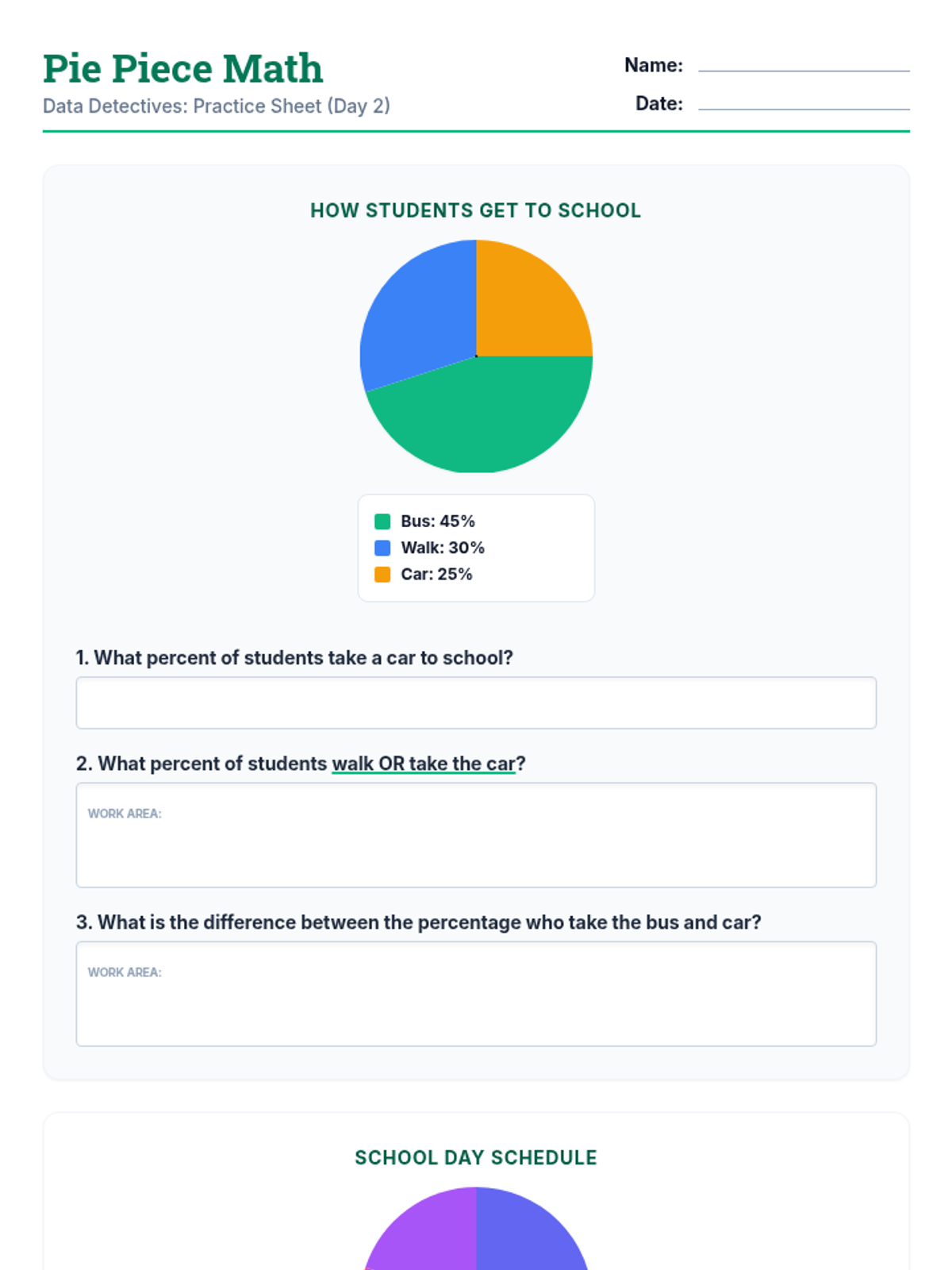
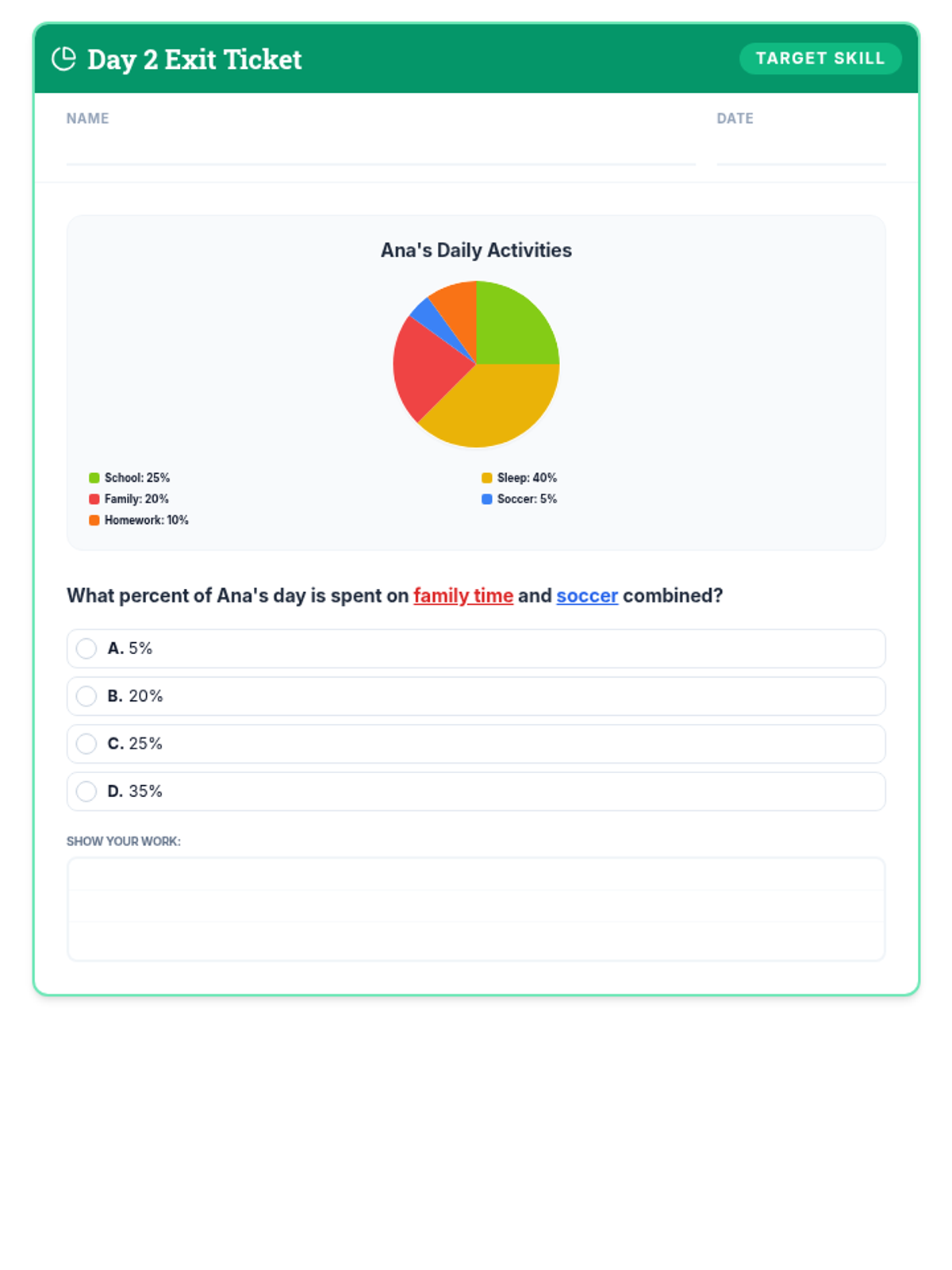
Students will interpret circle graphs and solve problems involving combining data categories, targeting RIT 191-200 skills.
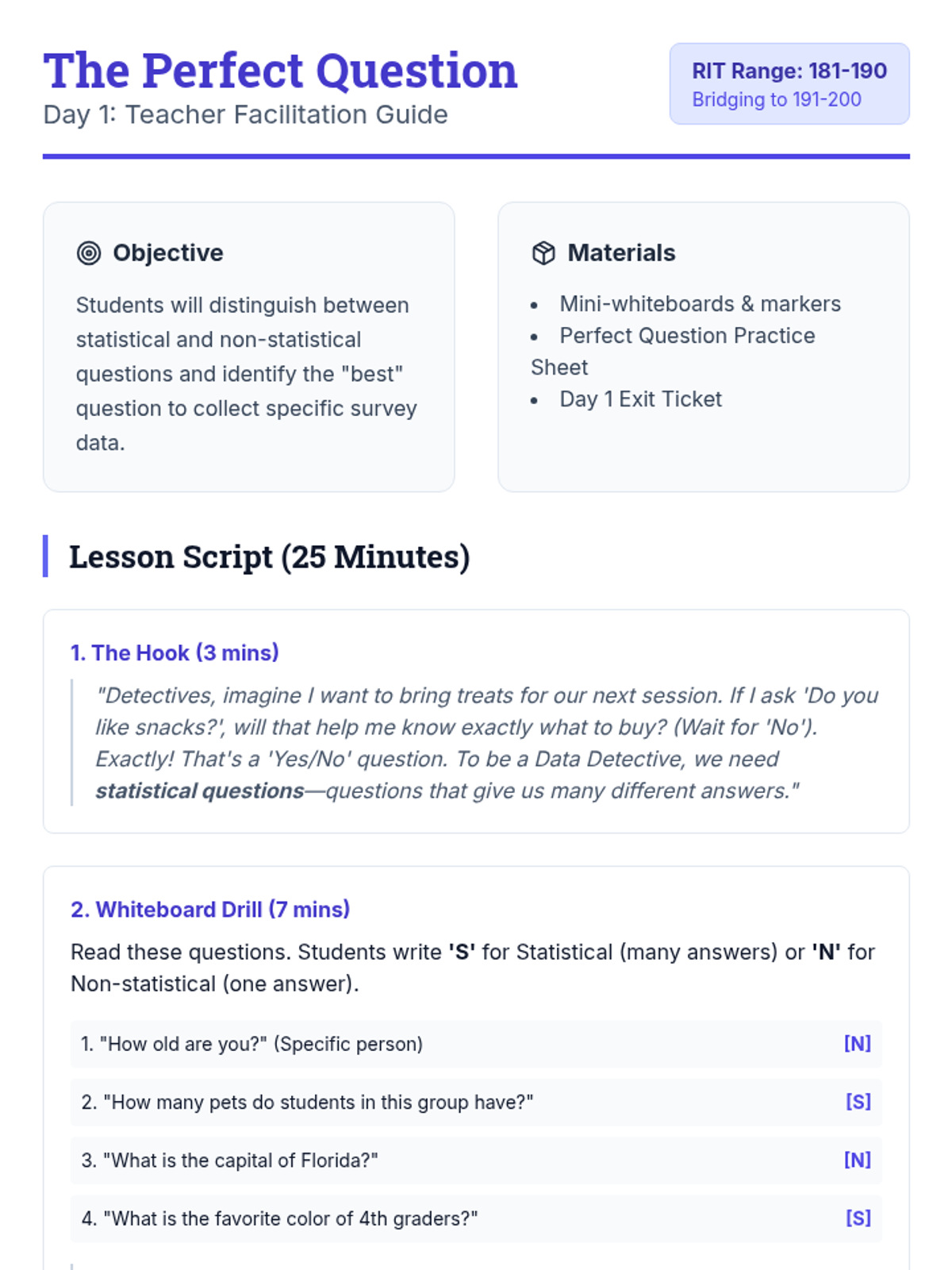
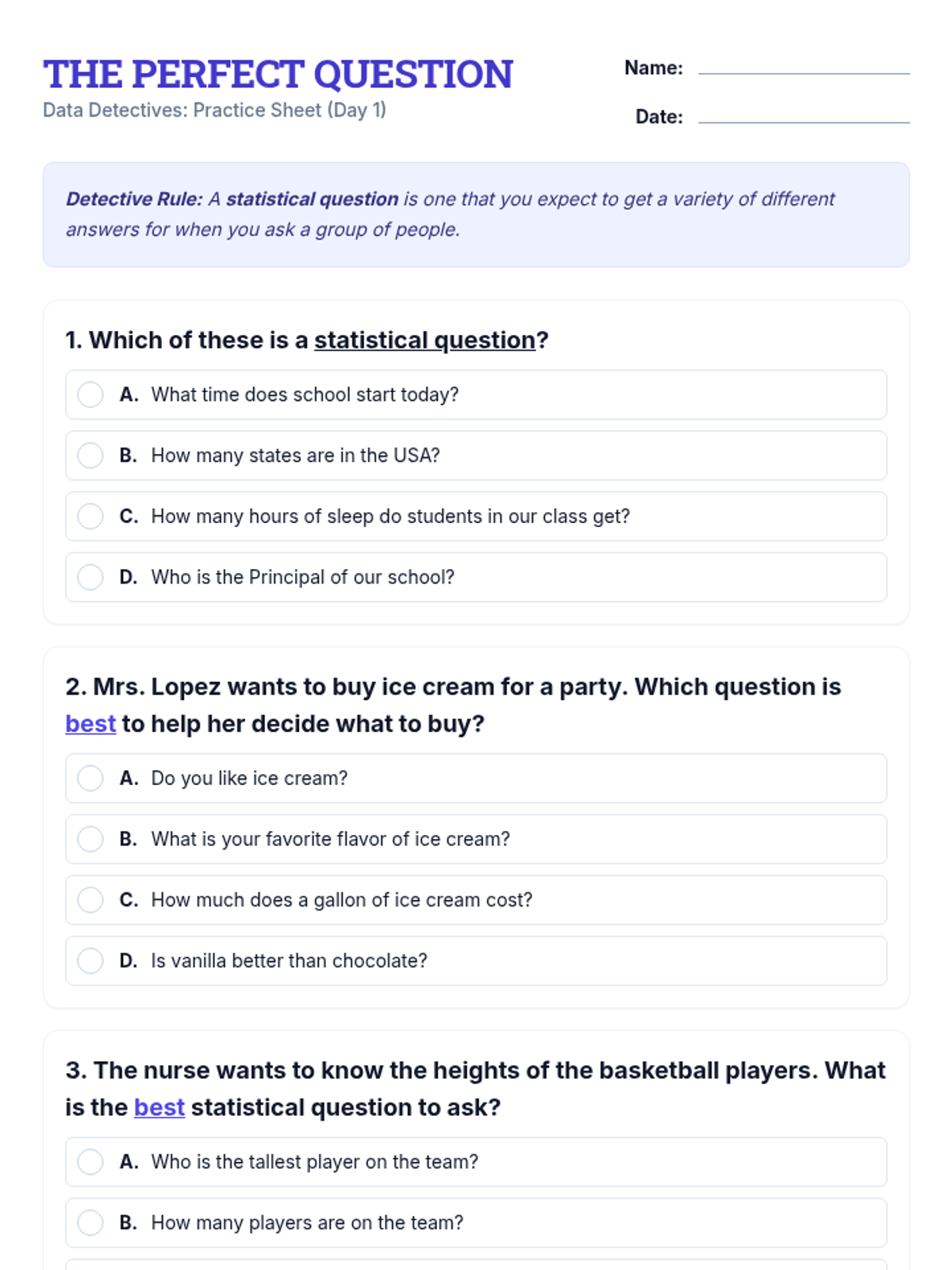
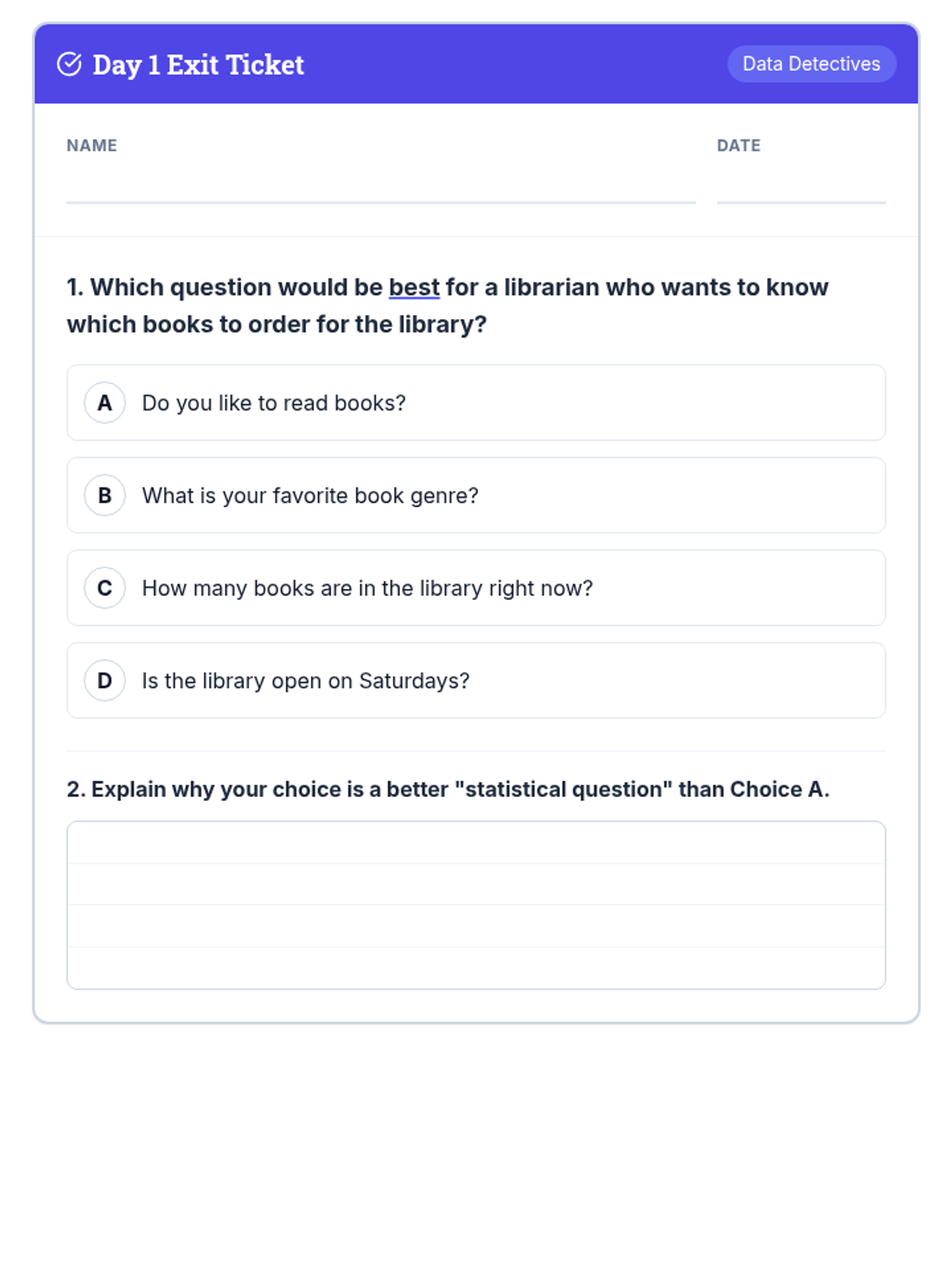
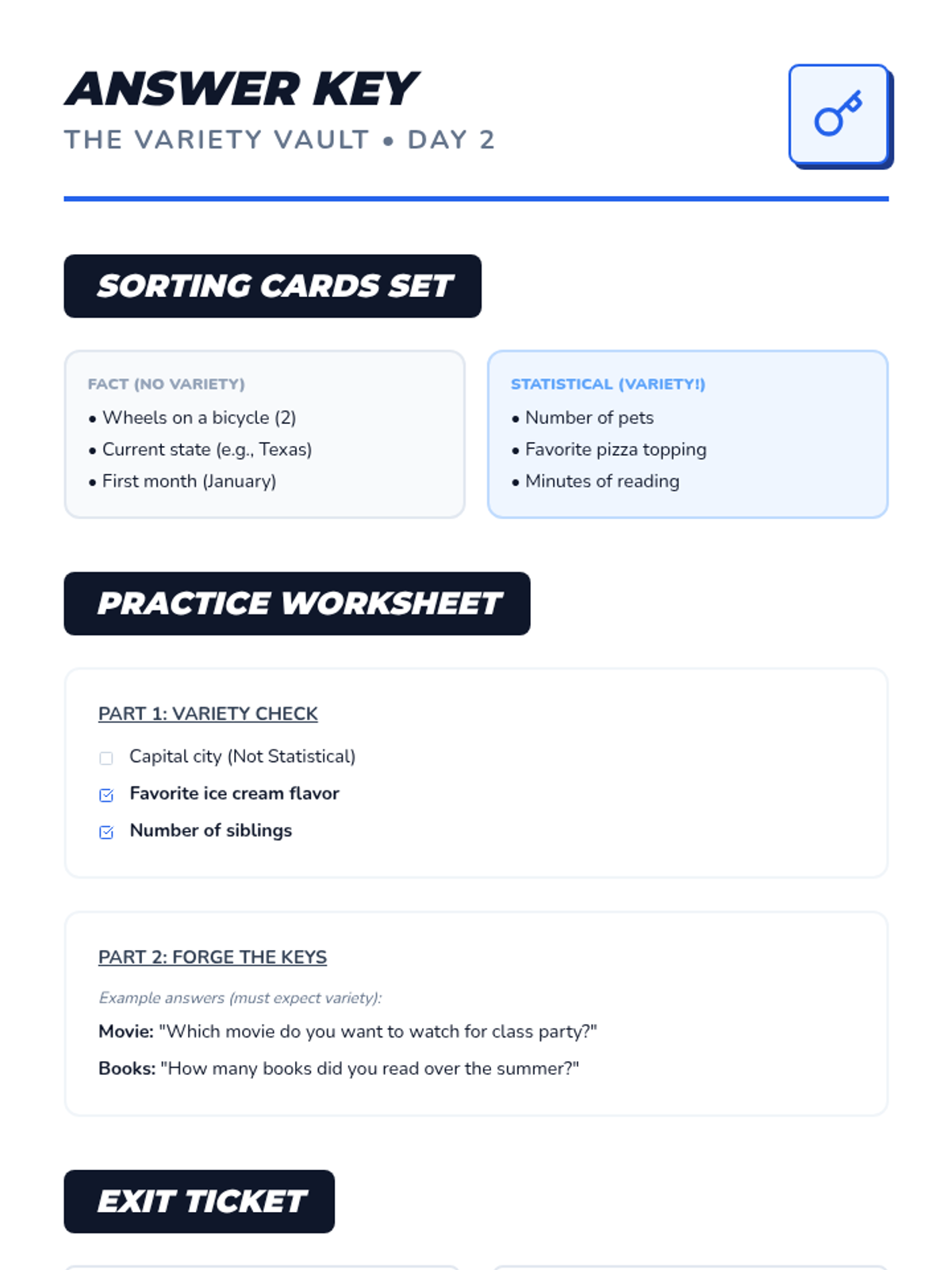
Students will learn to identify and formulate statistical questions that yield variable data, bridging the gap from RIT 181-190.
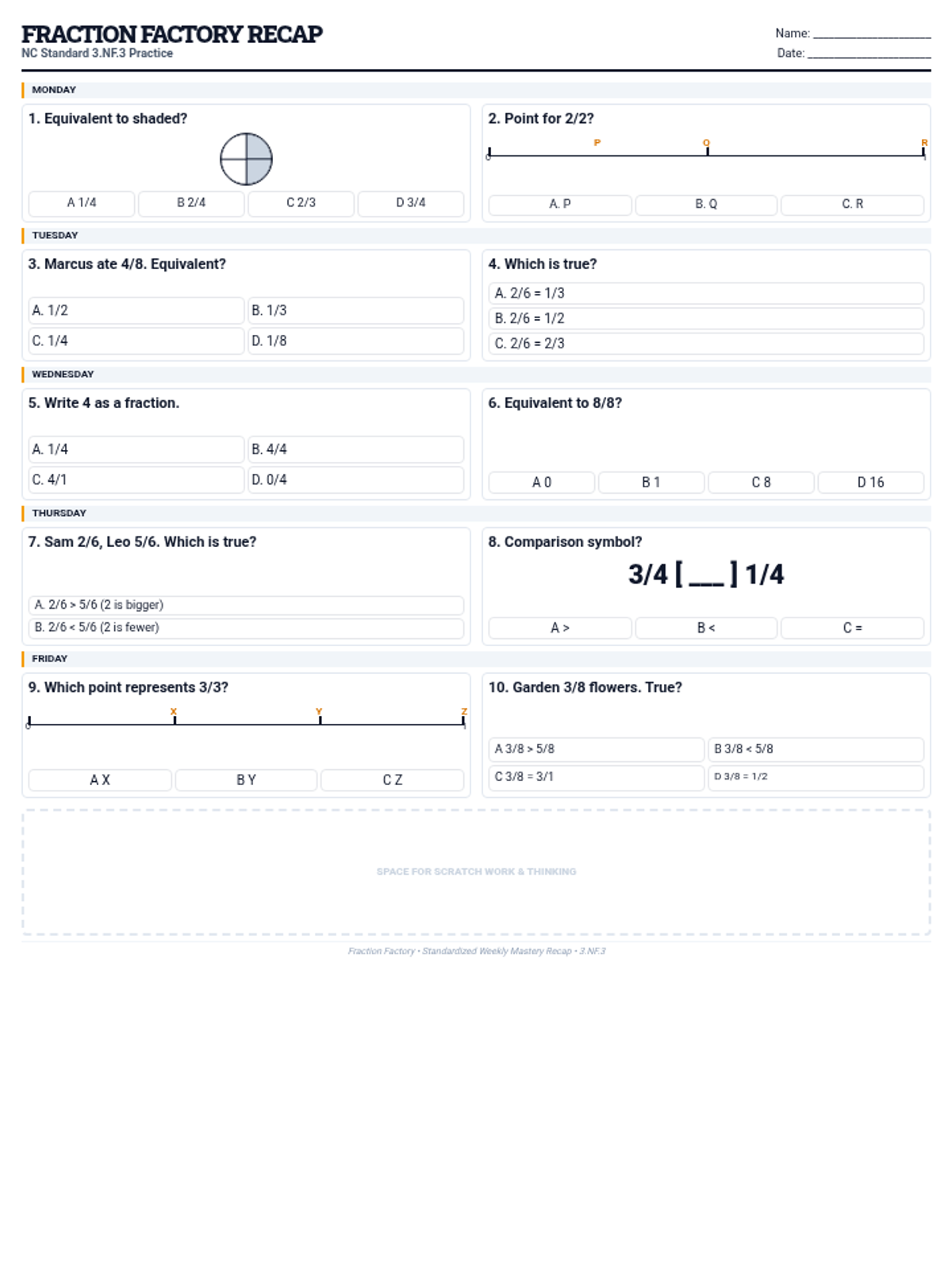
Daily warm-ups and practice for equivalent fractions, whole numbers, and comparisons designed to prepare students for EOG-style questions.
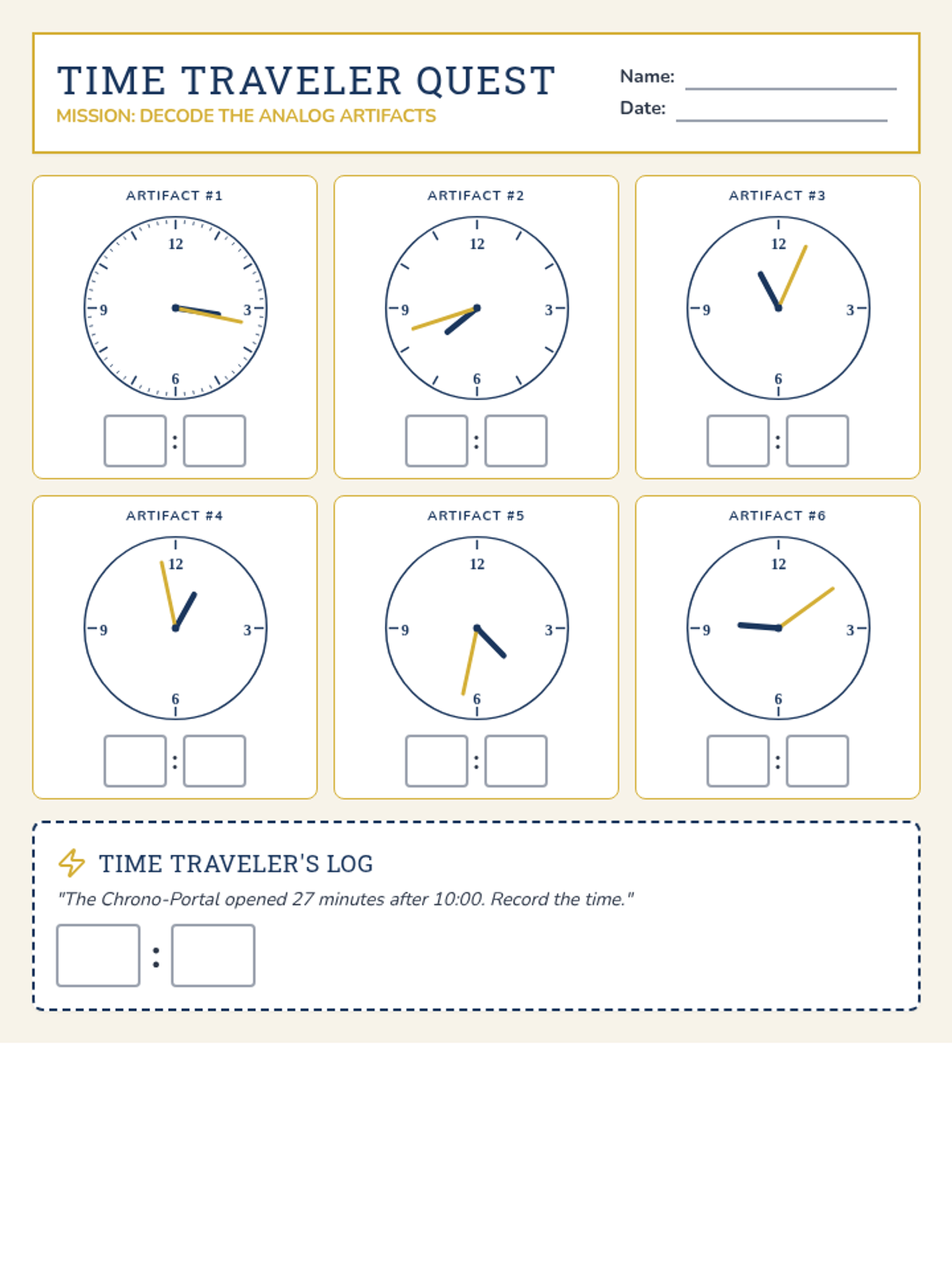
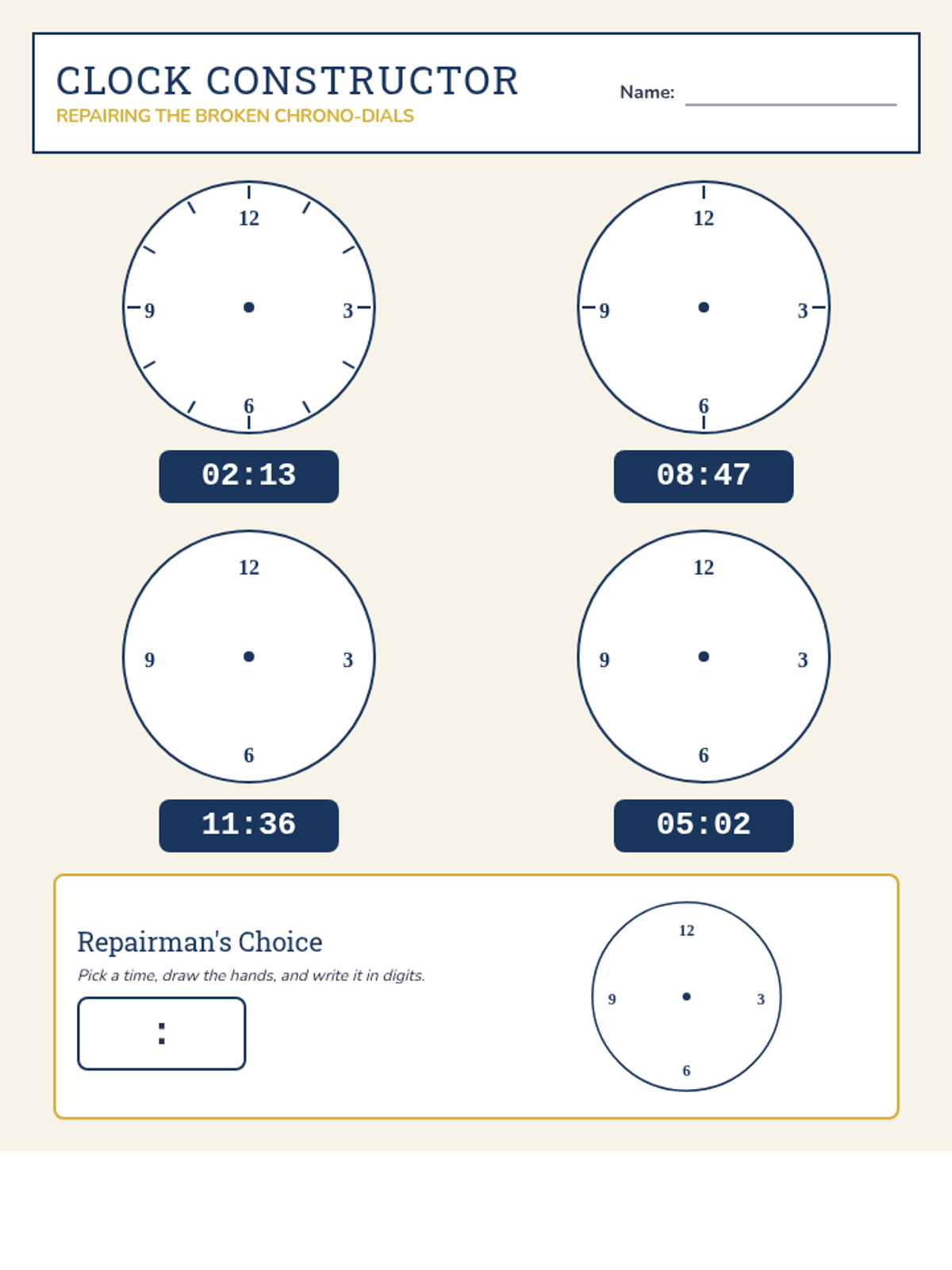
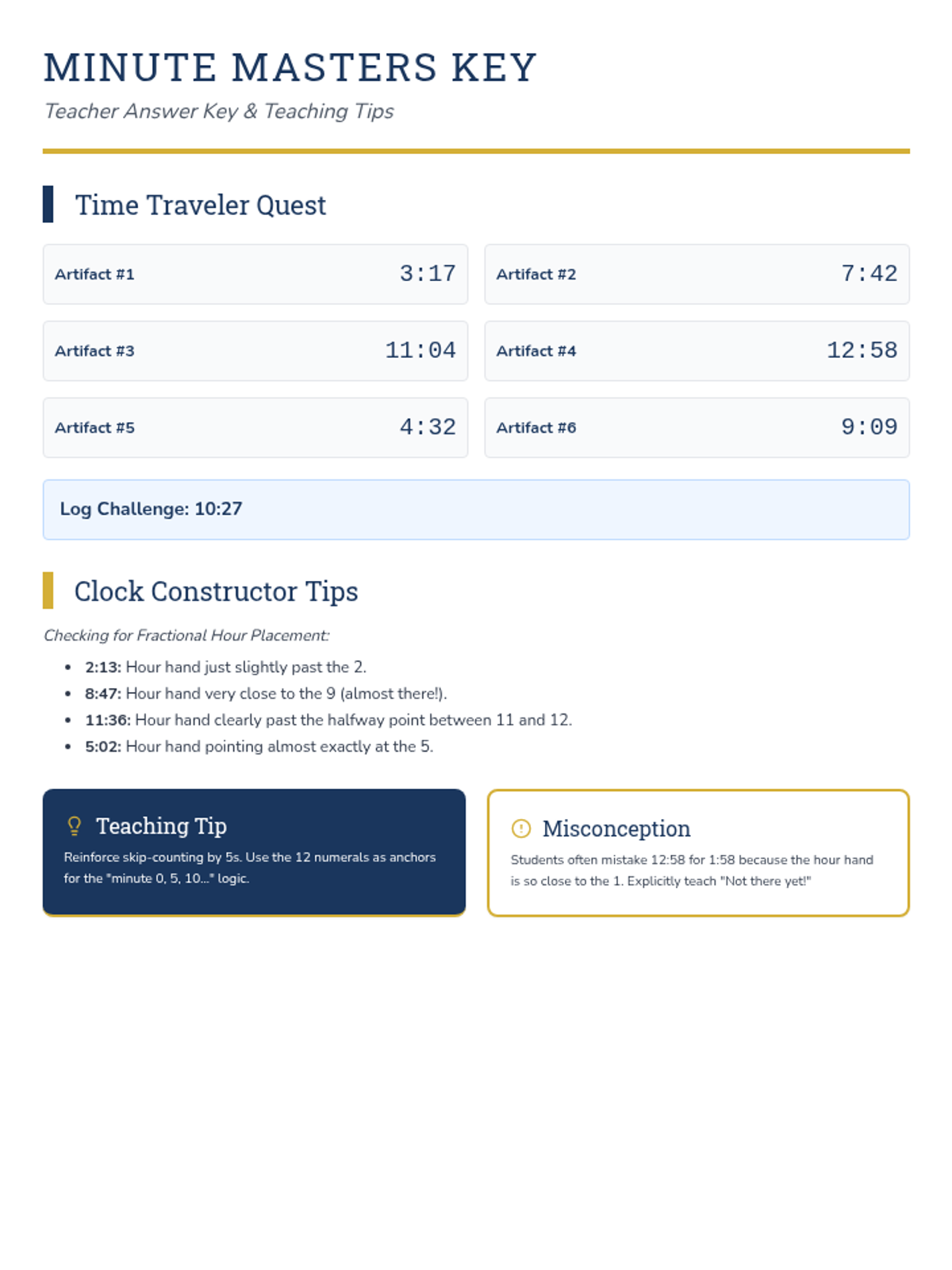
A comprehensive lesson on telling time to the minute, focusing on reading analog clocks and representing time accurately. Students will practice reading intricate clock faces and drawing hands to represent specific times.
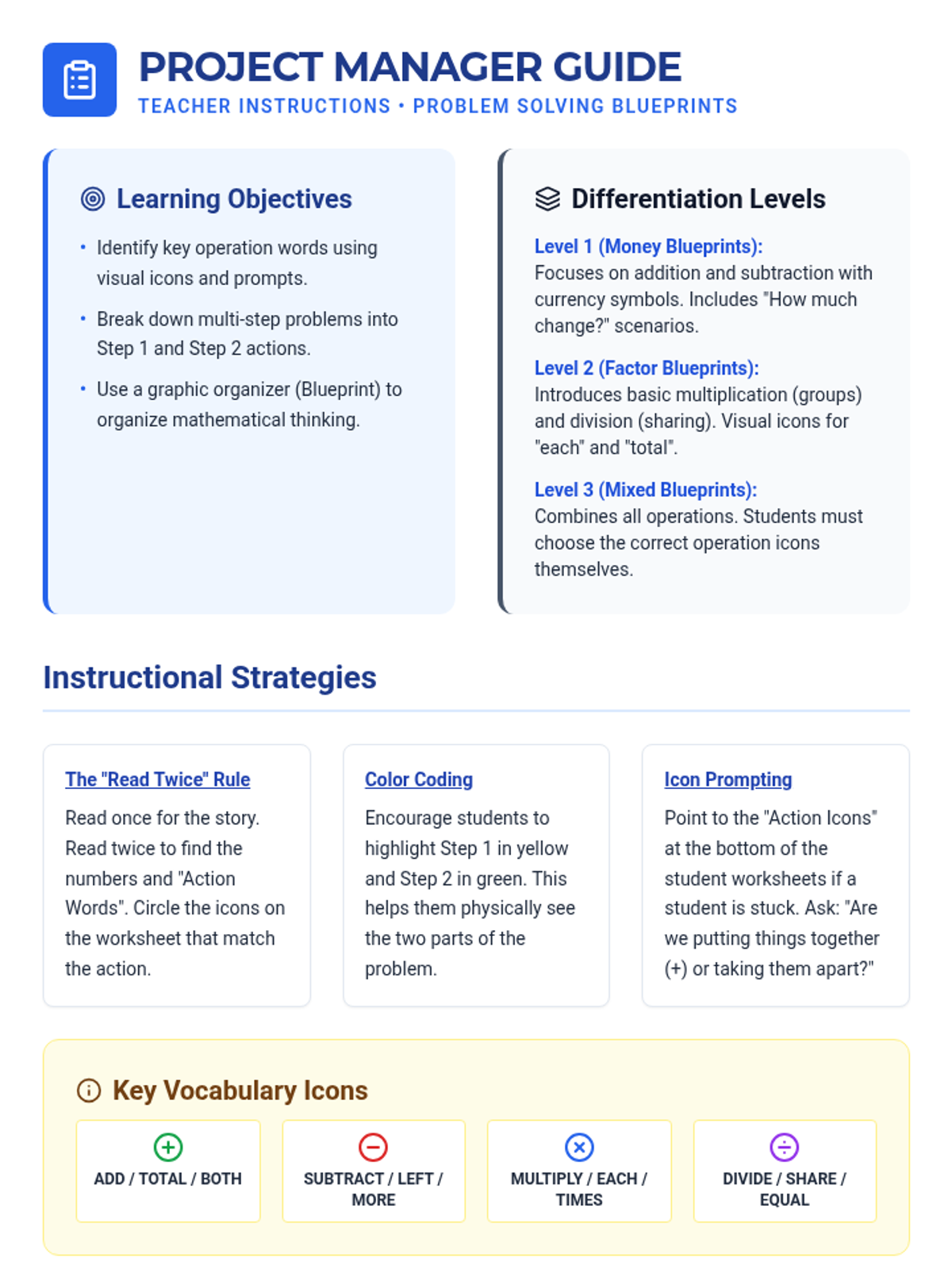
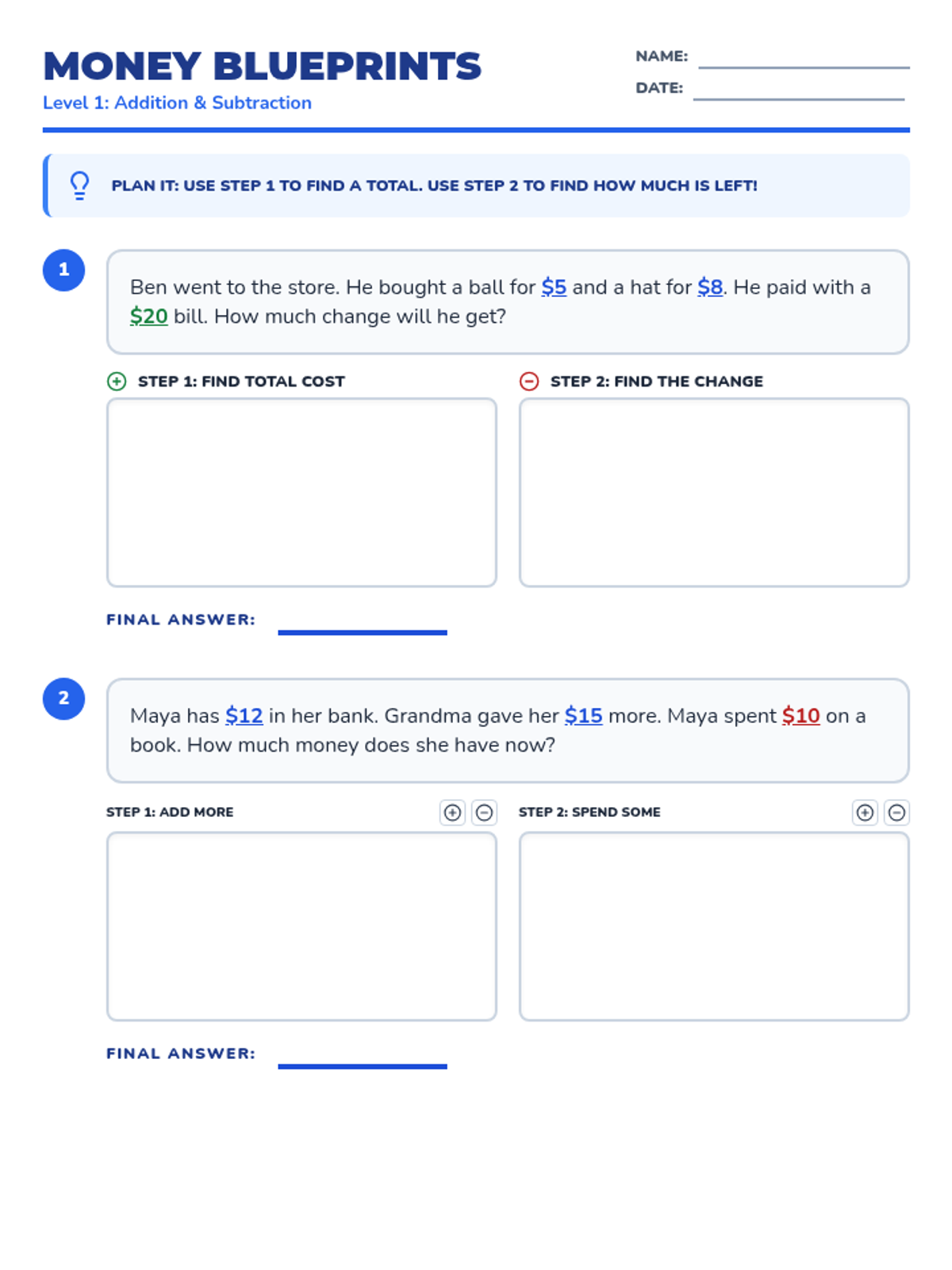
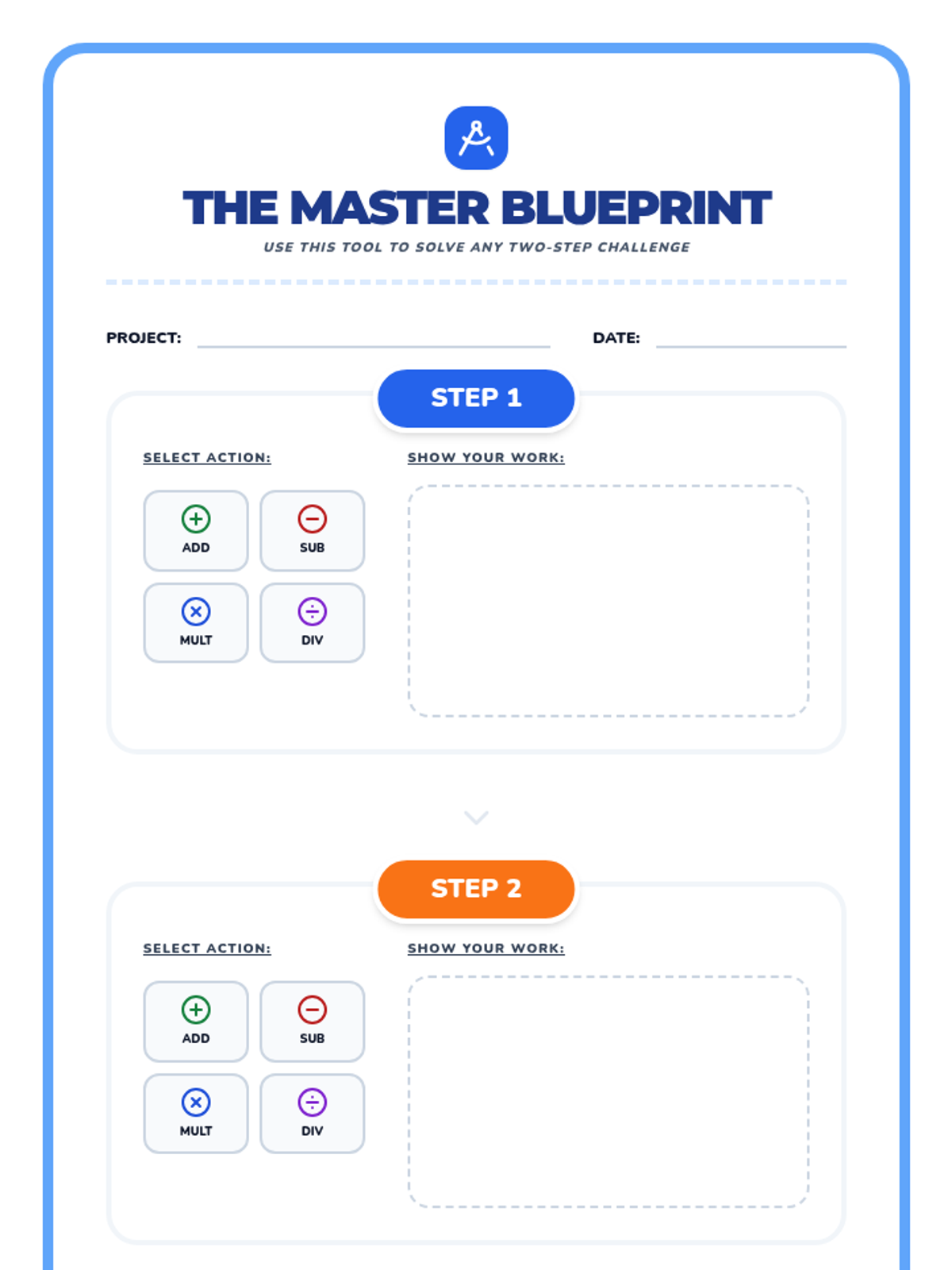
This lesson introduces students to multi-step word problems using a consistent graphic organizer (the Blueprint). It includes differentiated materials for various skill levels and operational focuses.
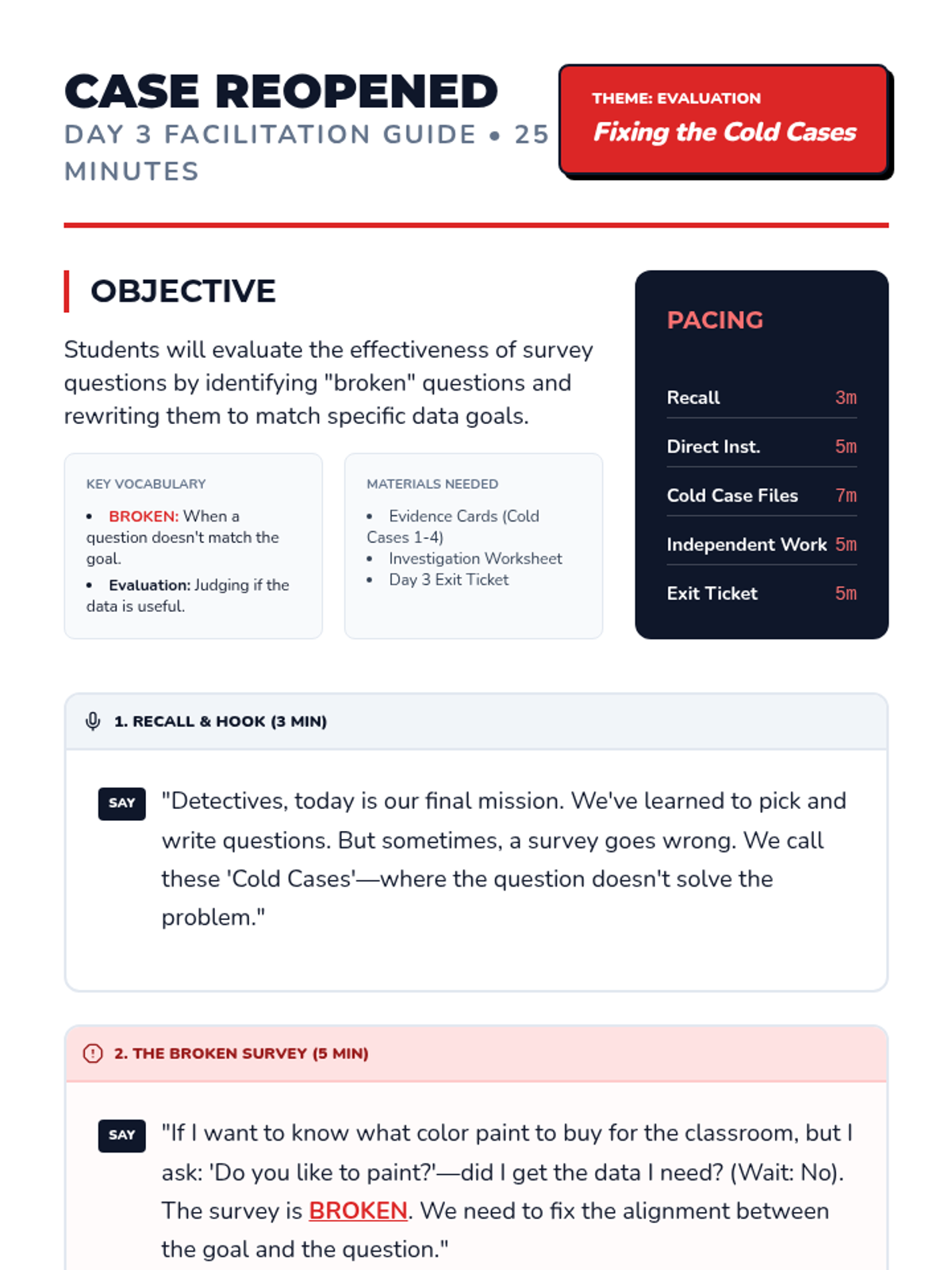
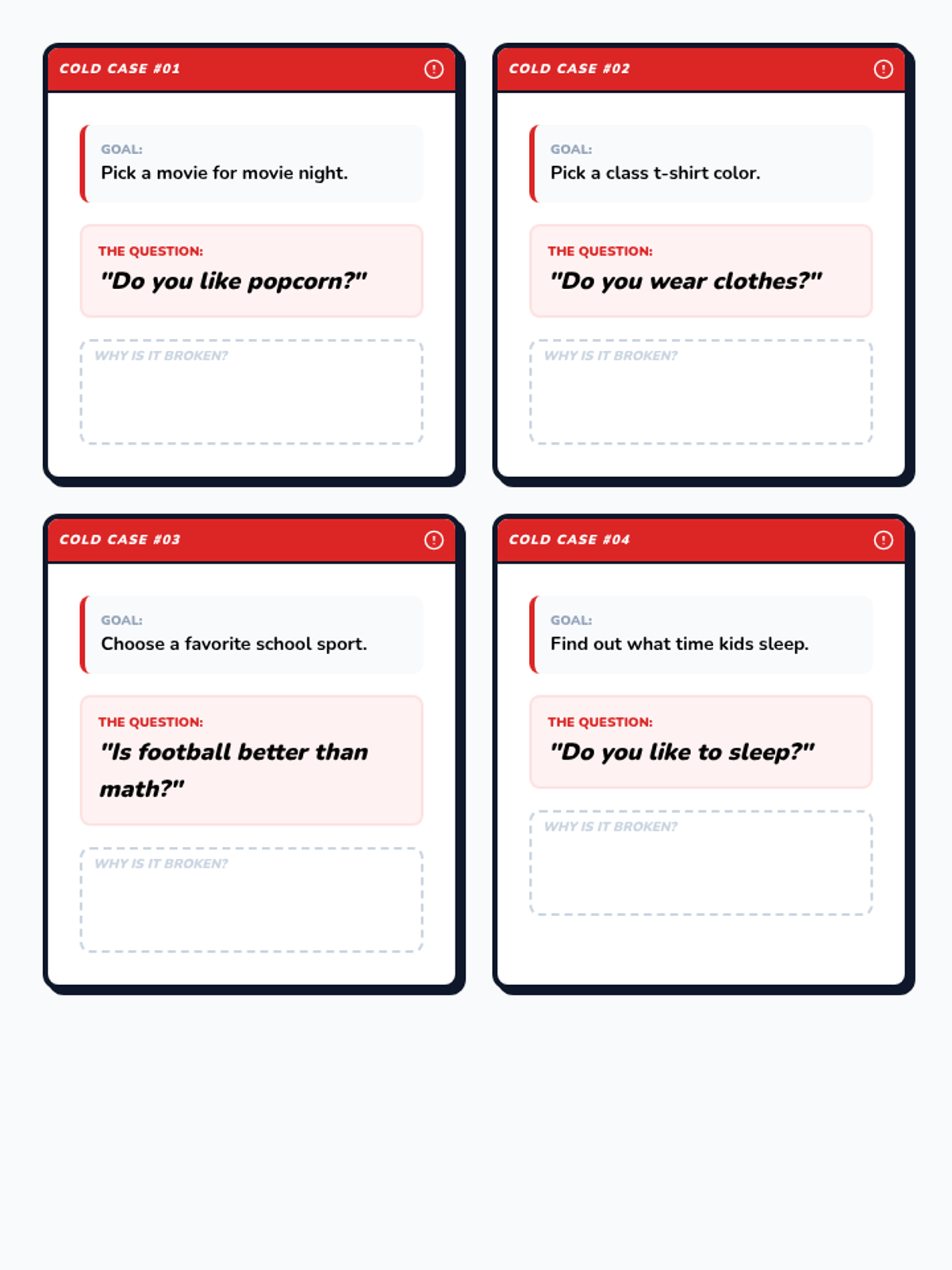
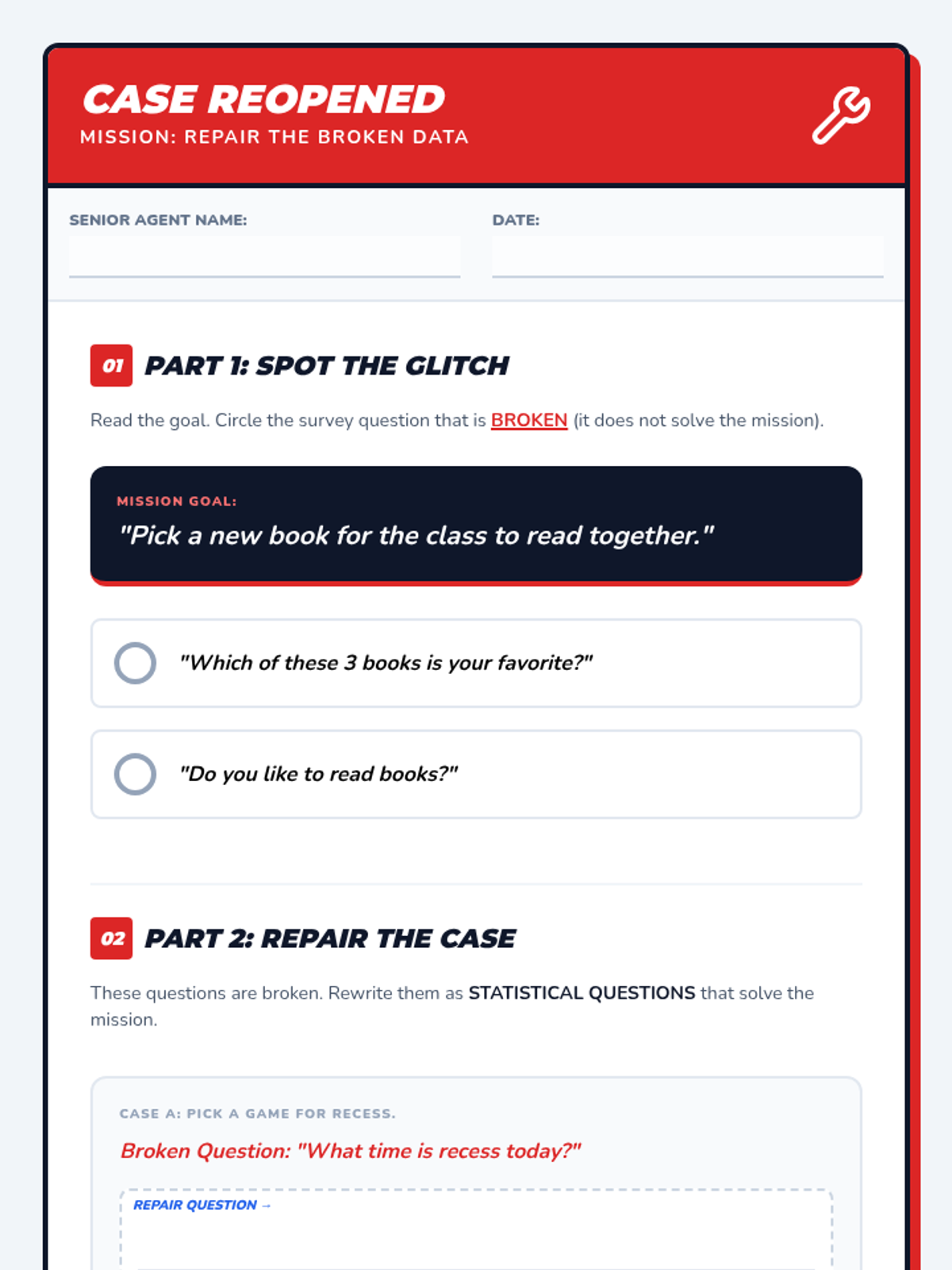
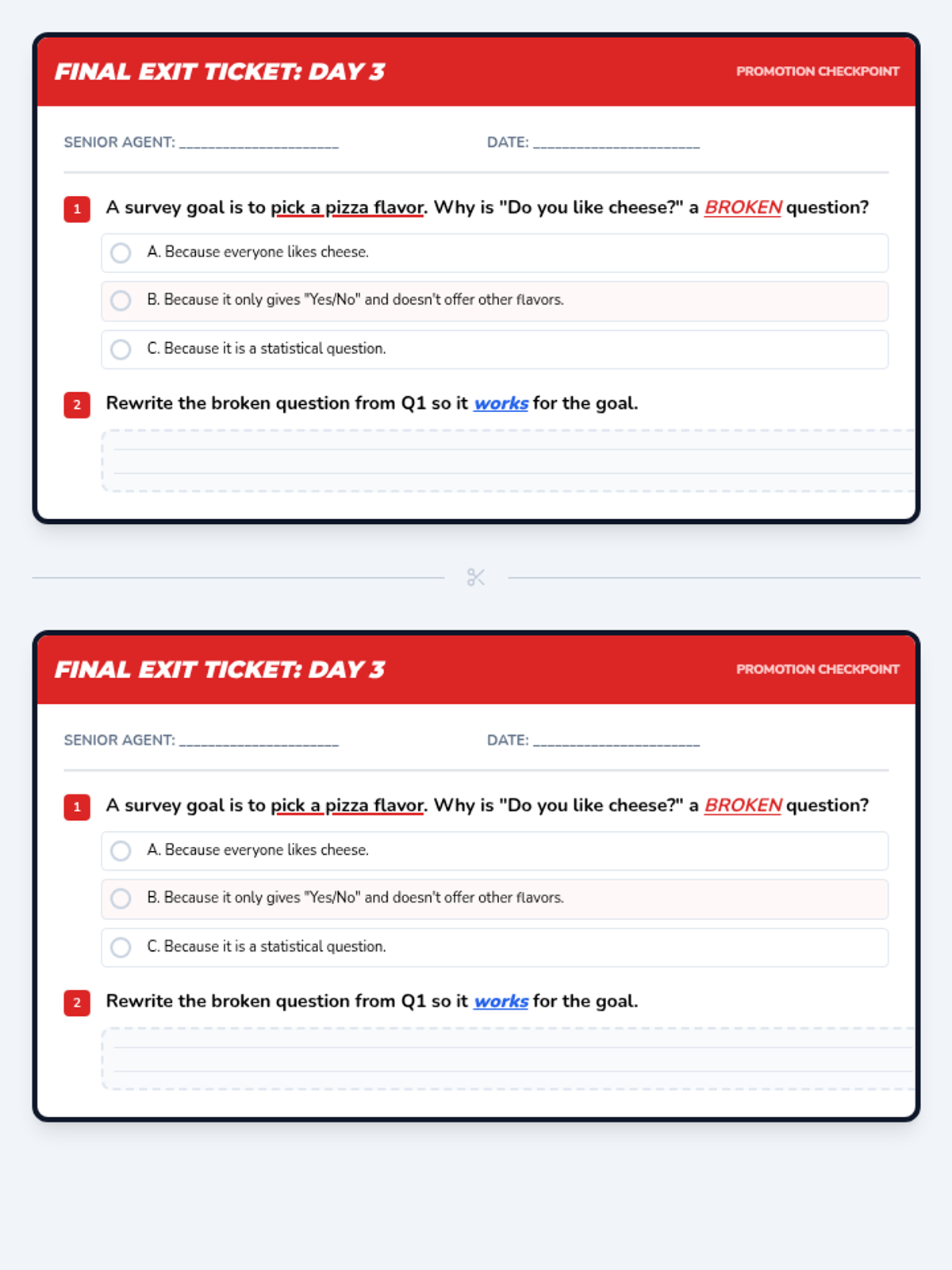
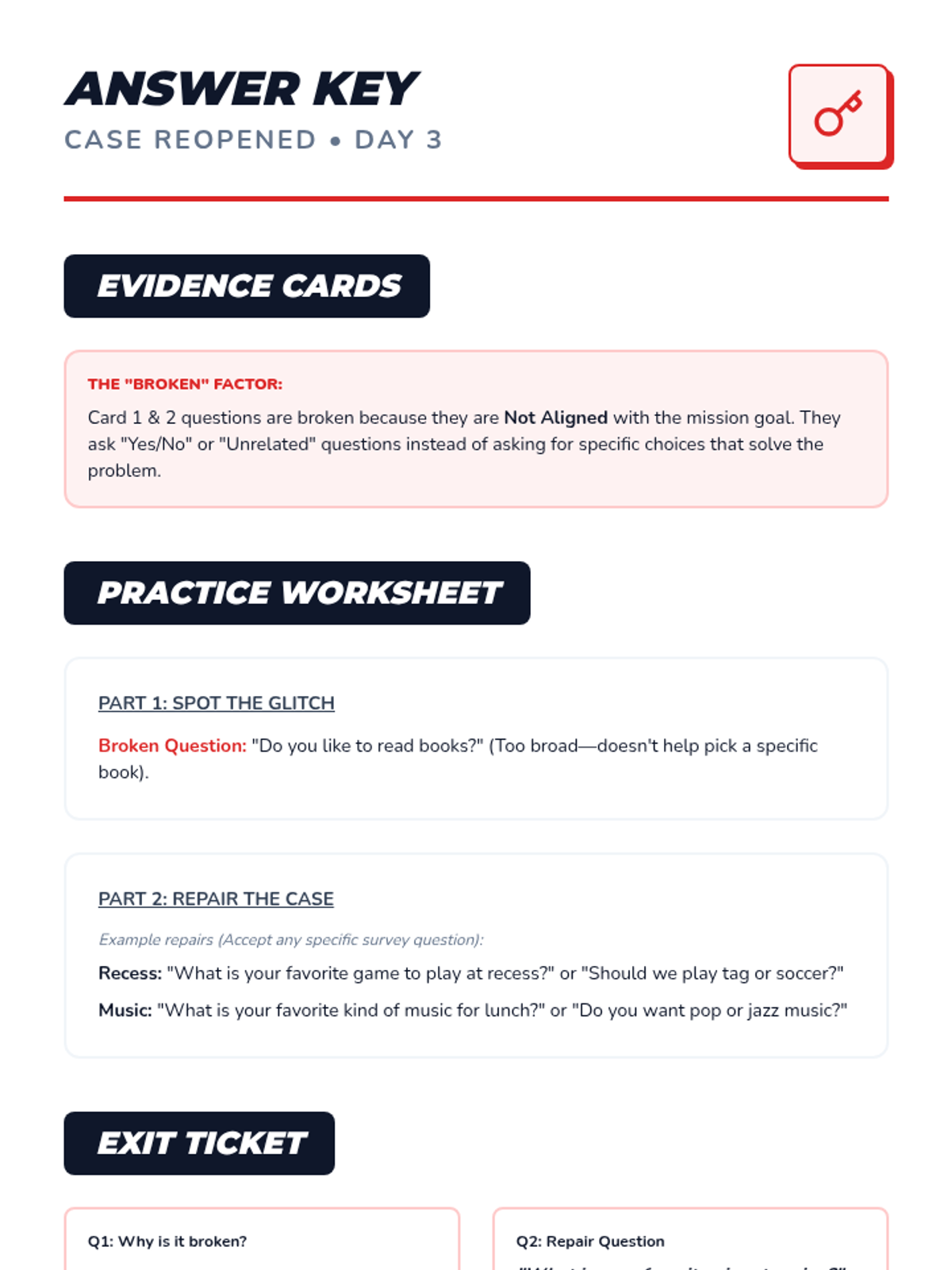
The final mission where students evaluate the effectiveness of data collection. They analyze "broken" surveys where the question didn't match the goal and practice rewriting them for accuracy.
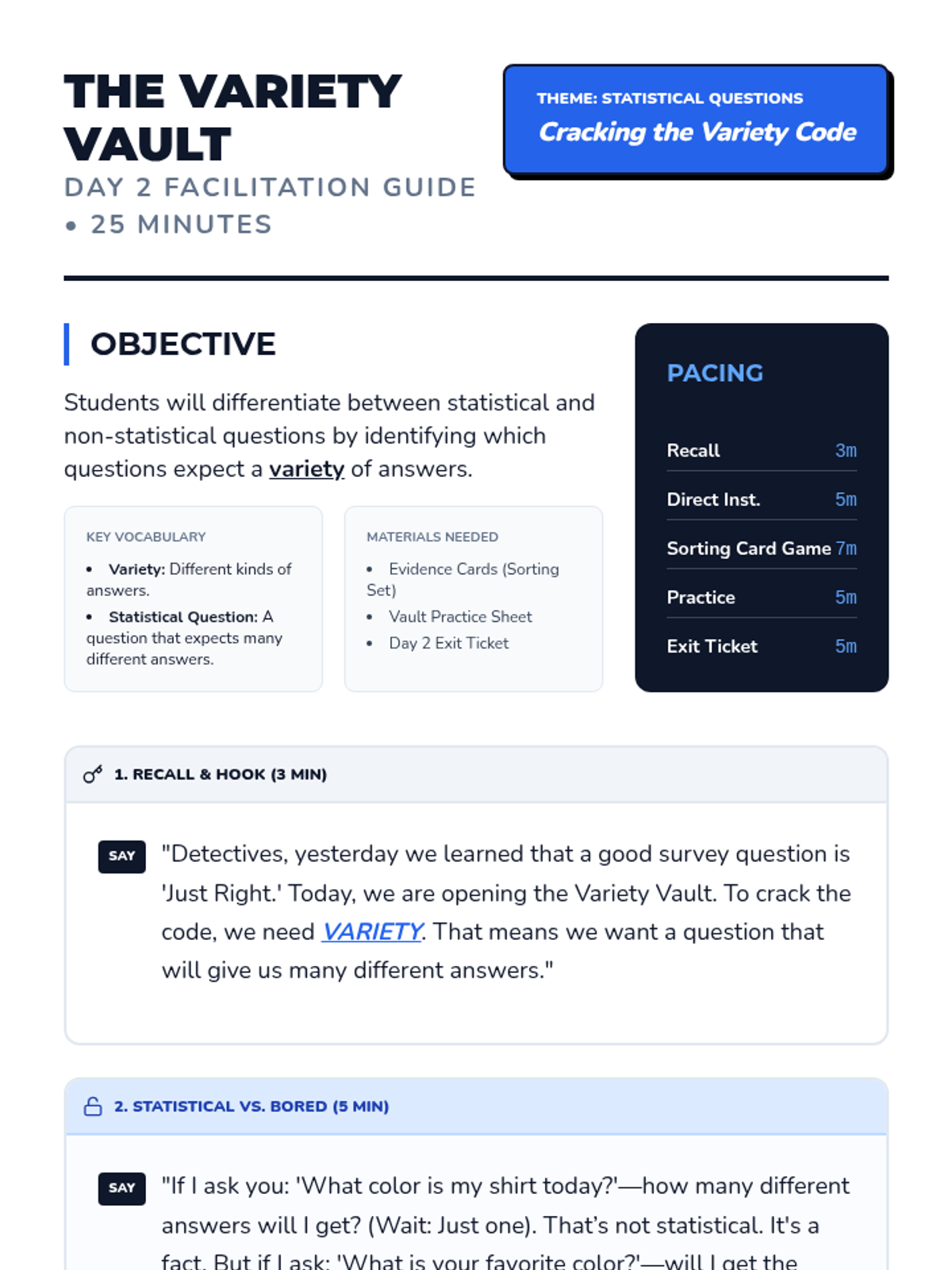
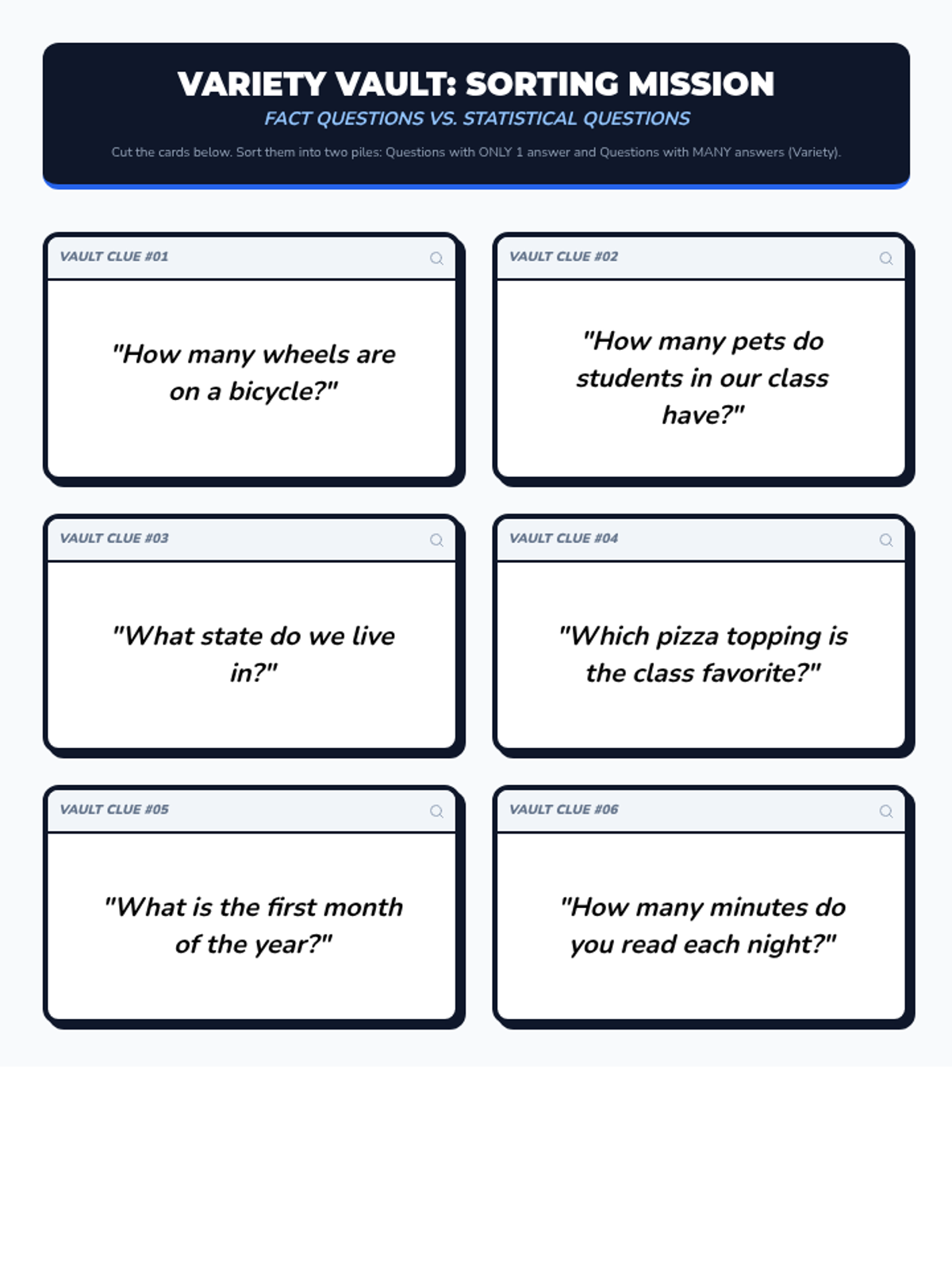
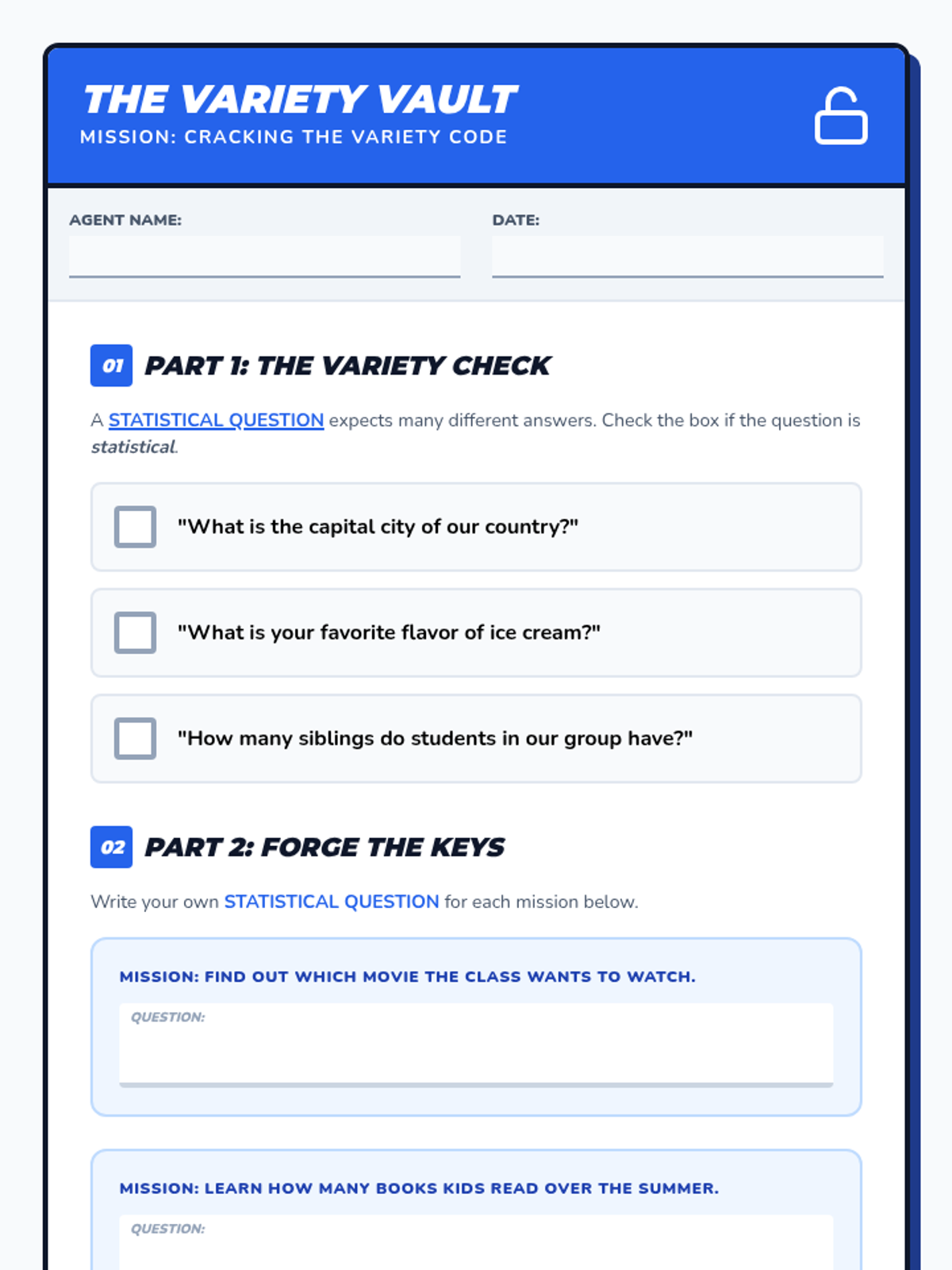
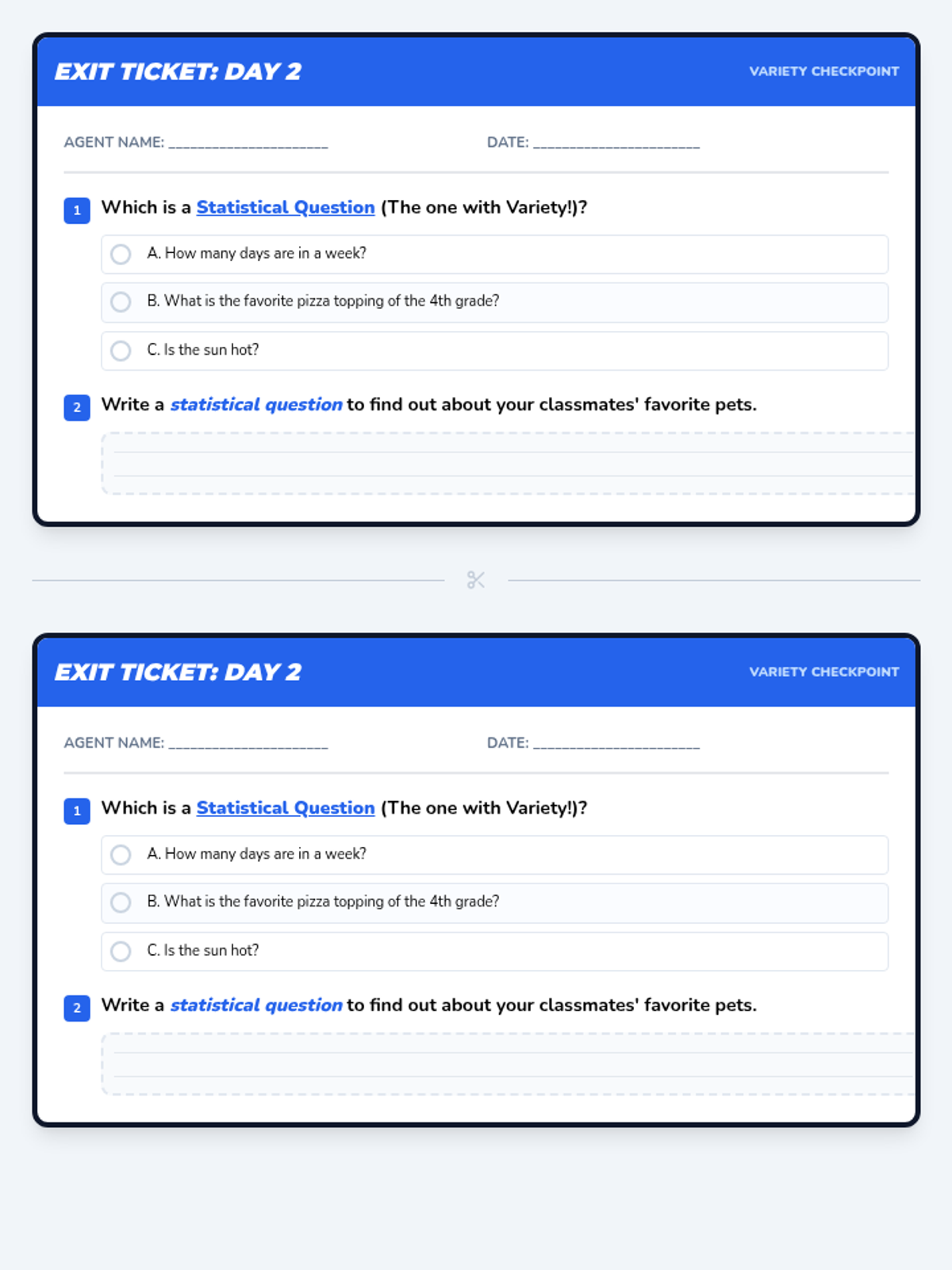
Focuses on differentiating between statistical and non-statistical questions. Students learn that a good survey question must expect a variety of answers to be useful for data collection.