Develops proficiency in estimating and measuring length, area, volume, and mass using standard units and unit conversions. Integrates time, money, angle measurement, and data classification through counting and arithmetic applications.
A high-energy math vocabulary review game designed for third graders. This lesson covers multiplication, division, measurement, fractions, and geometry through a Jeopardy-style competitive format.
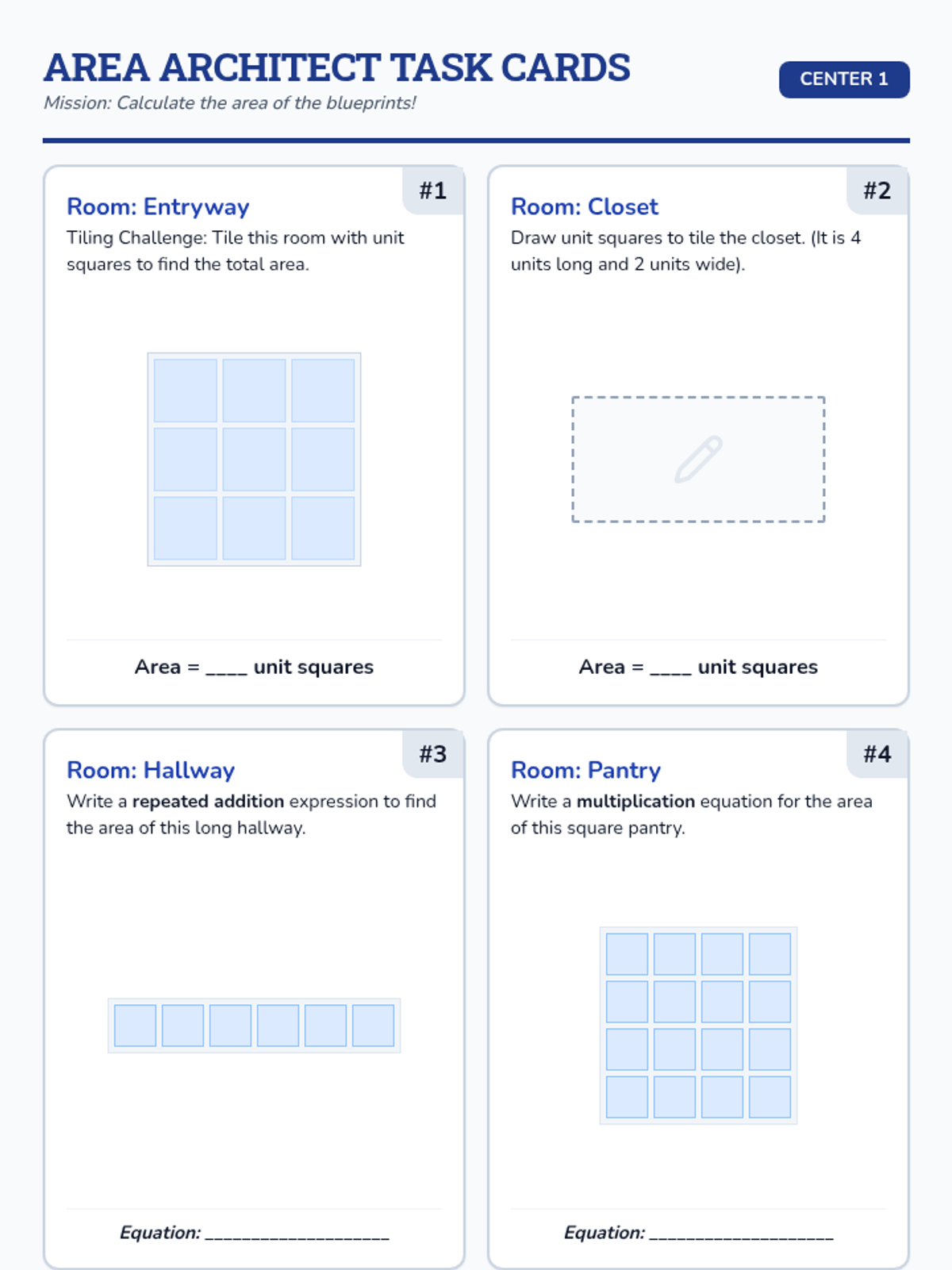
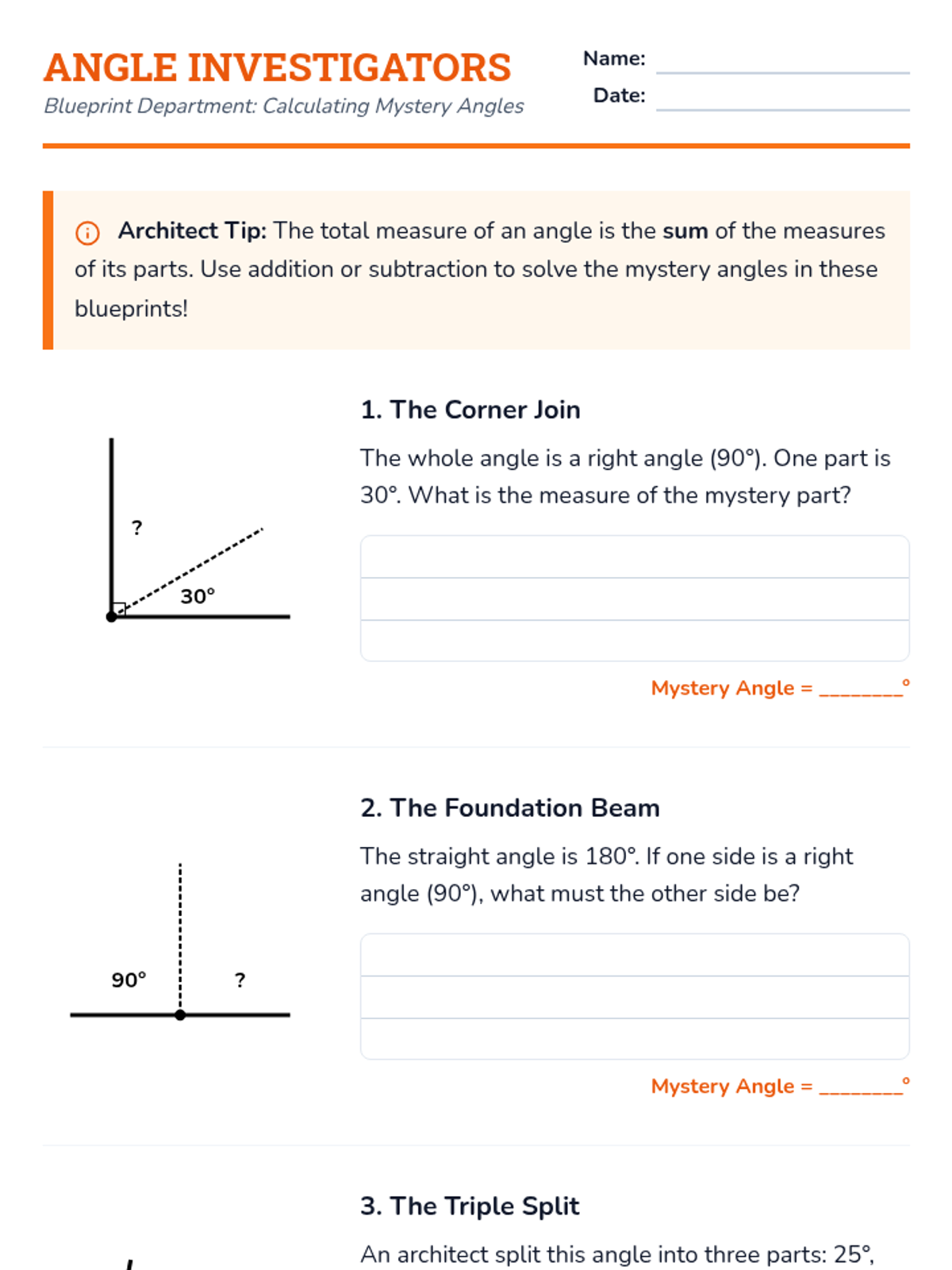
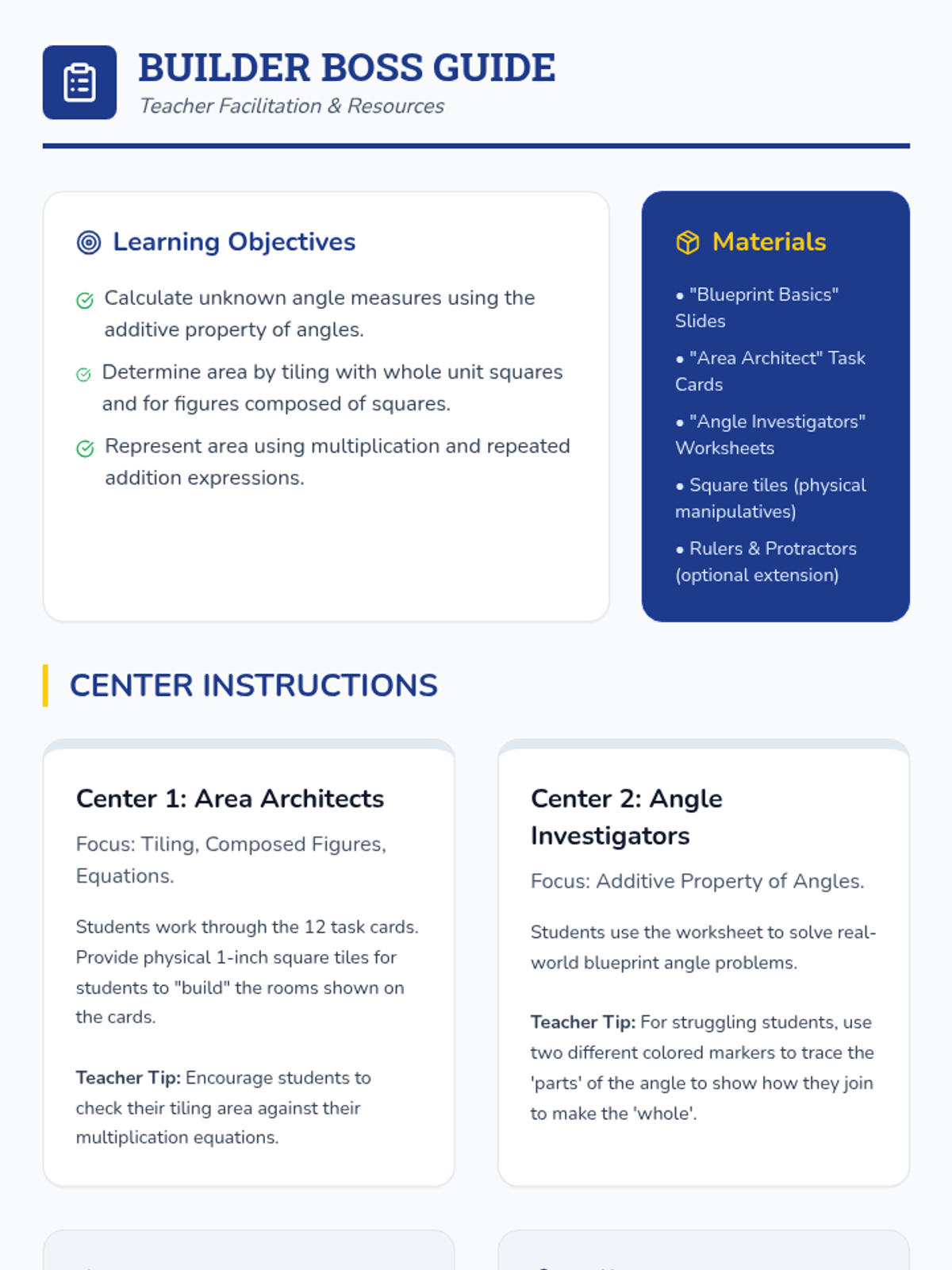
A comprehensive set of small group activities where students calculate unknown angles and determine the area of various figures using tiling and equations. The lesson uses a 'Blueprint Builders' theme to engage students in real-world mathematical applications.
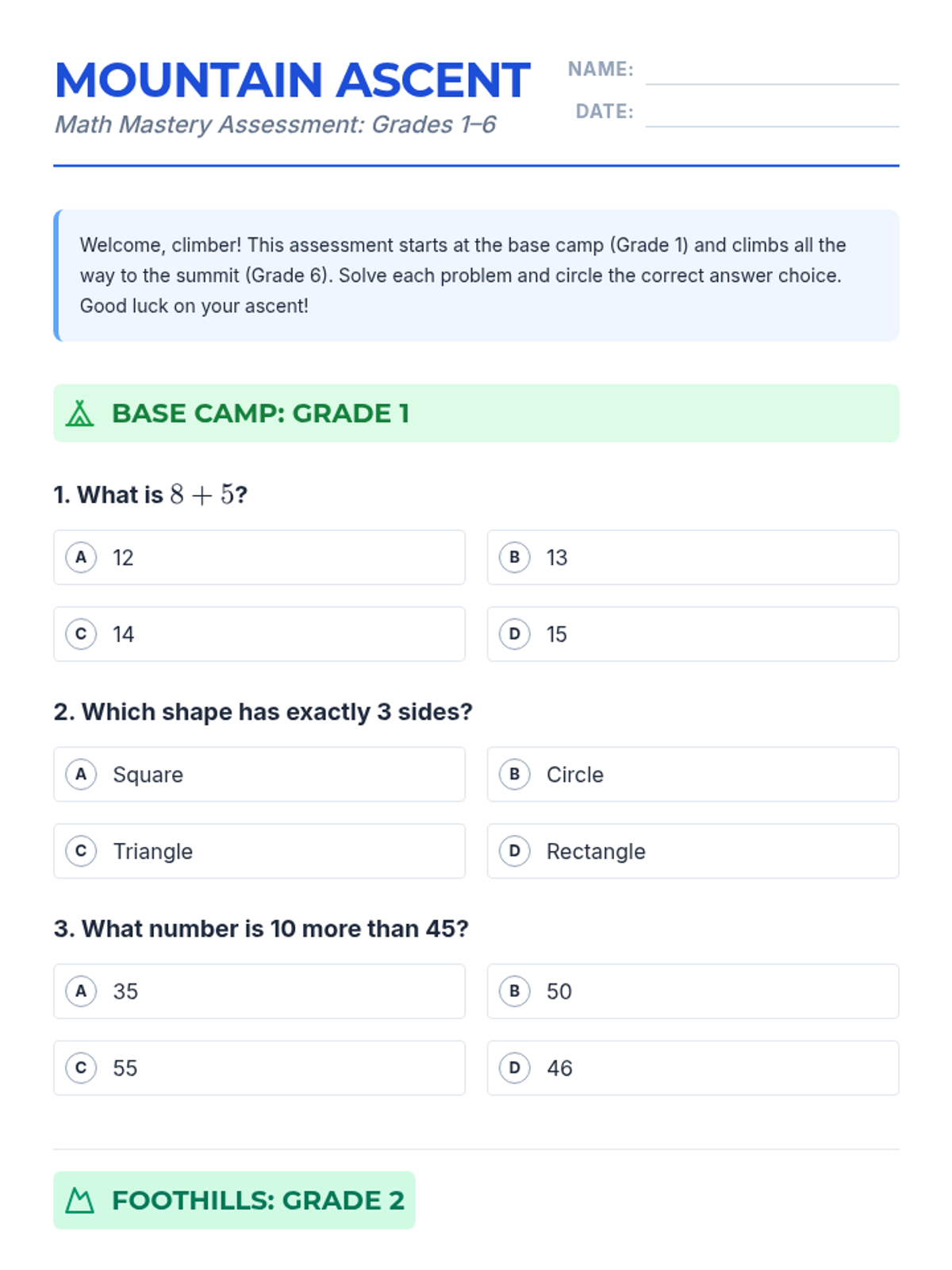
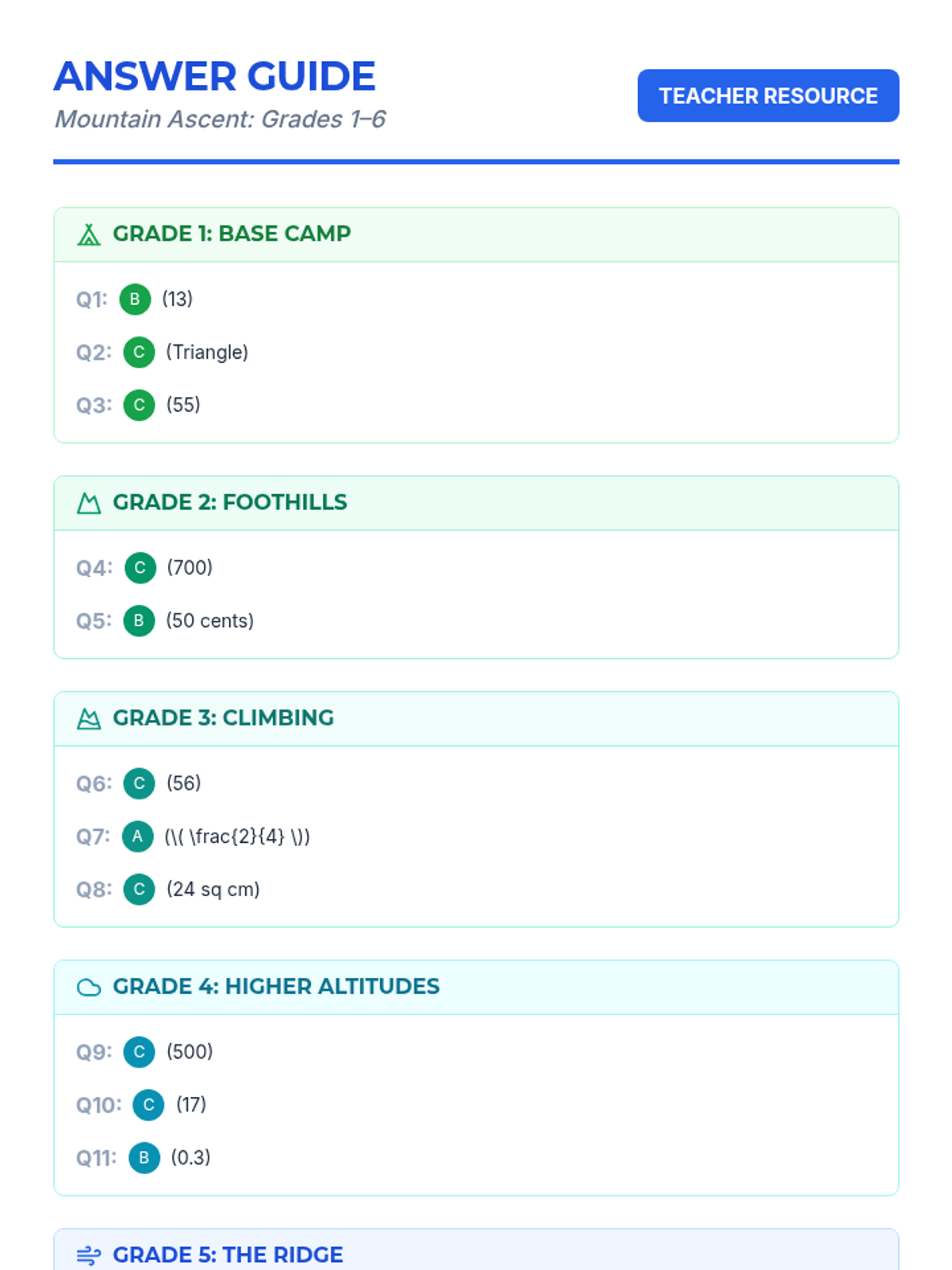
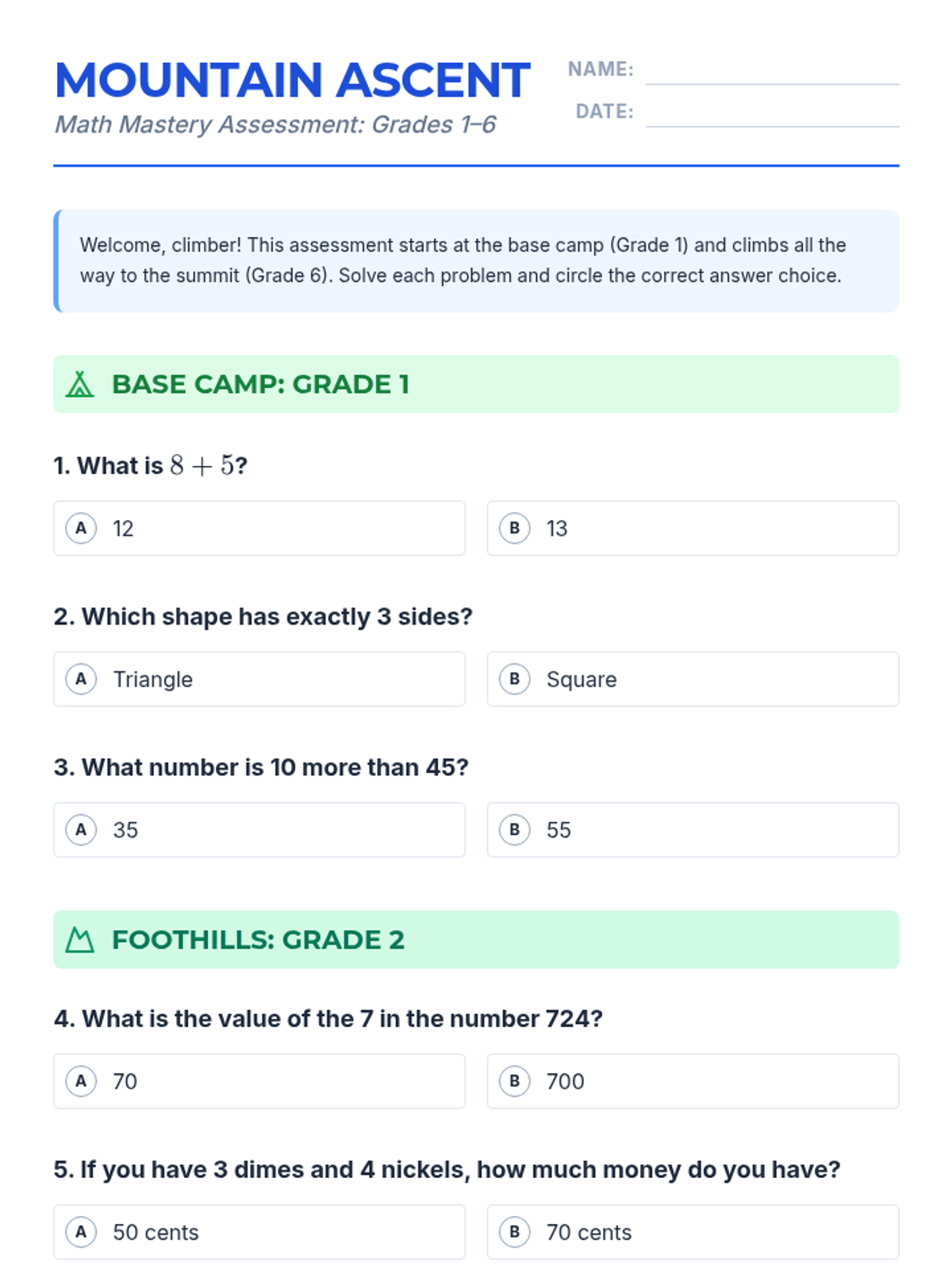
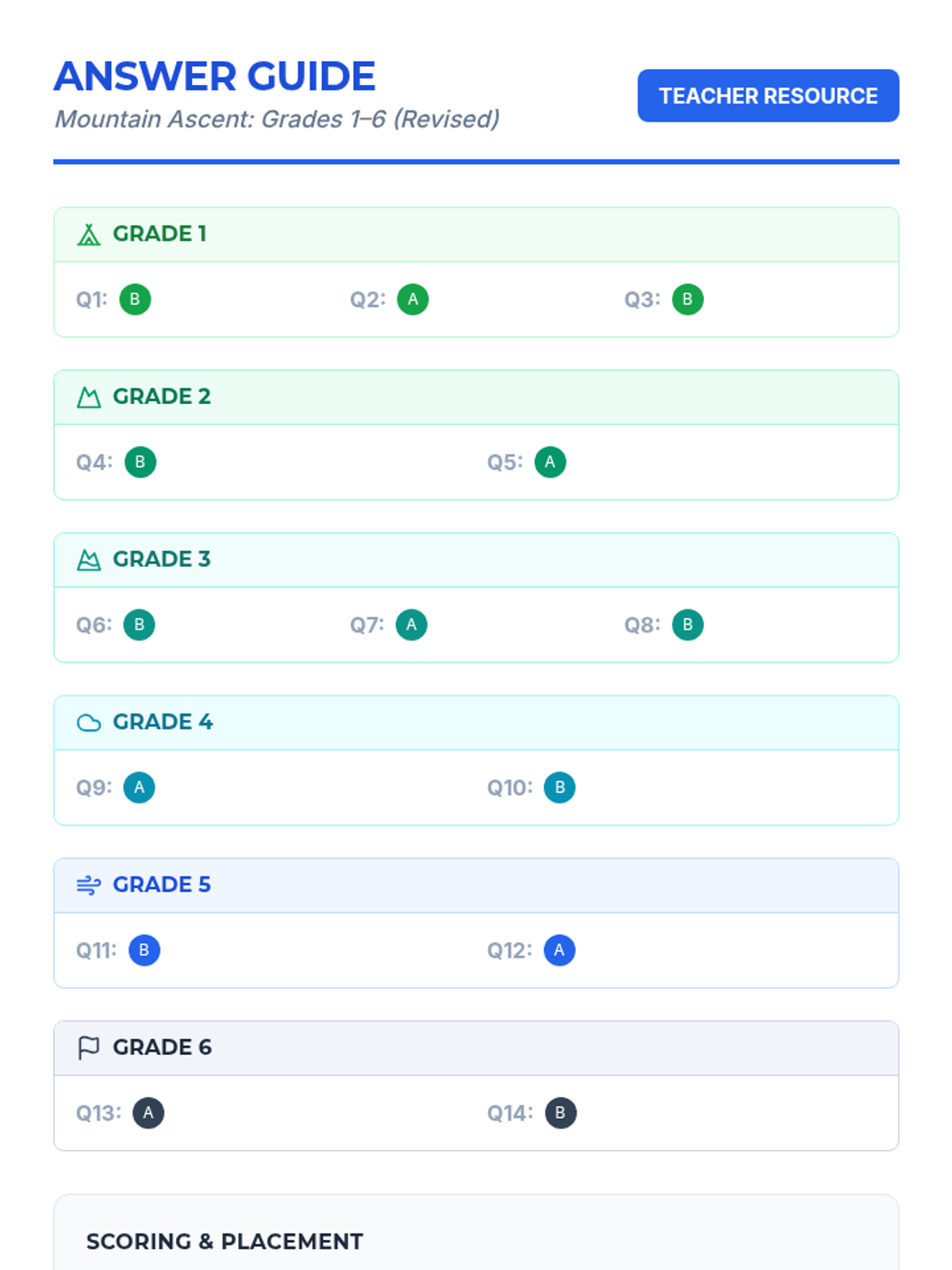
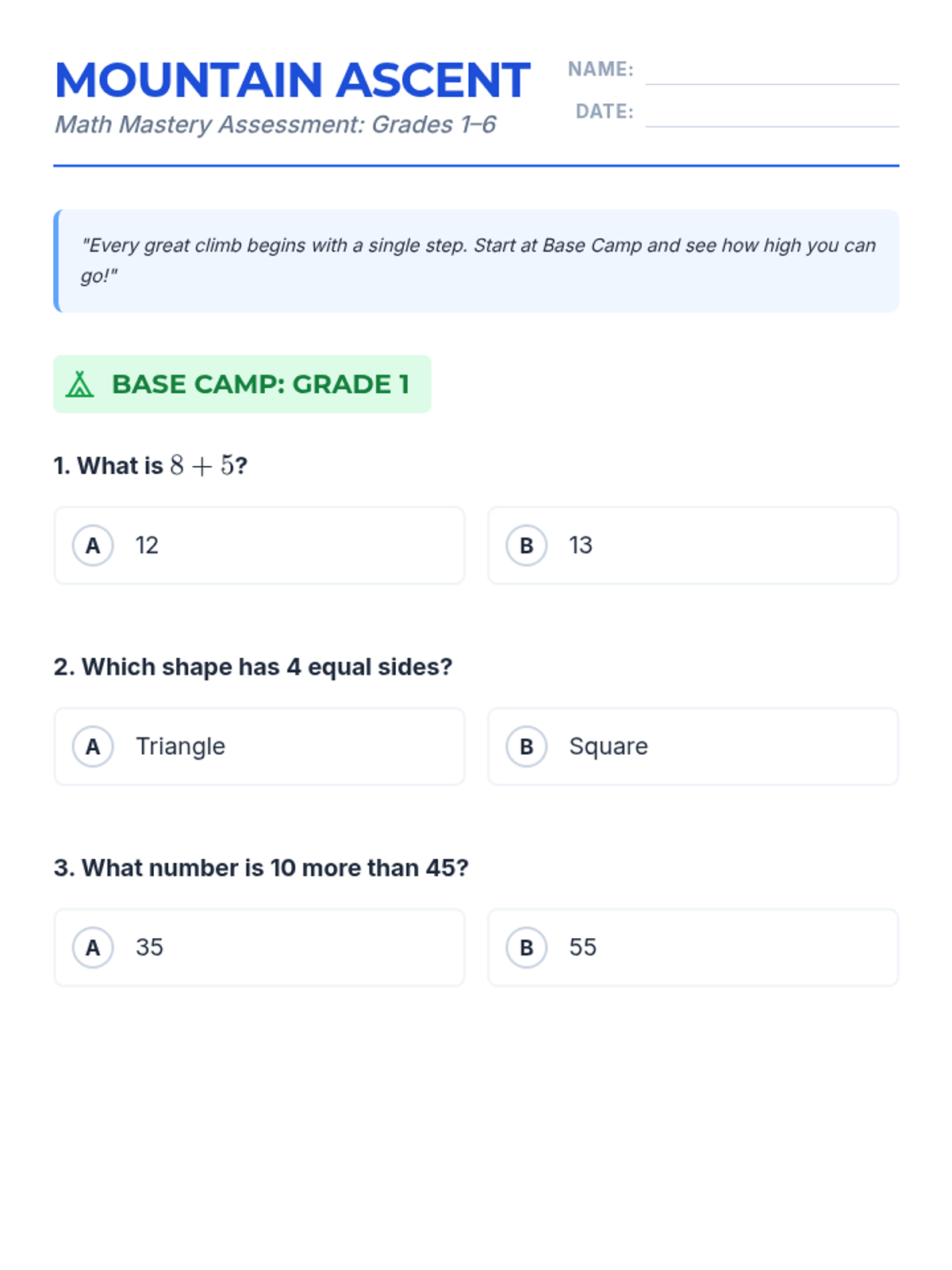
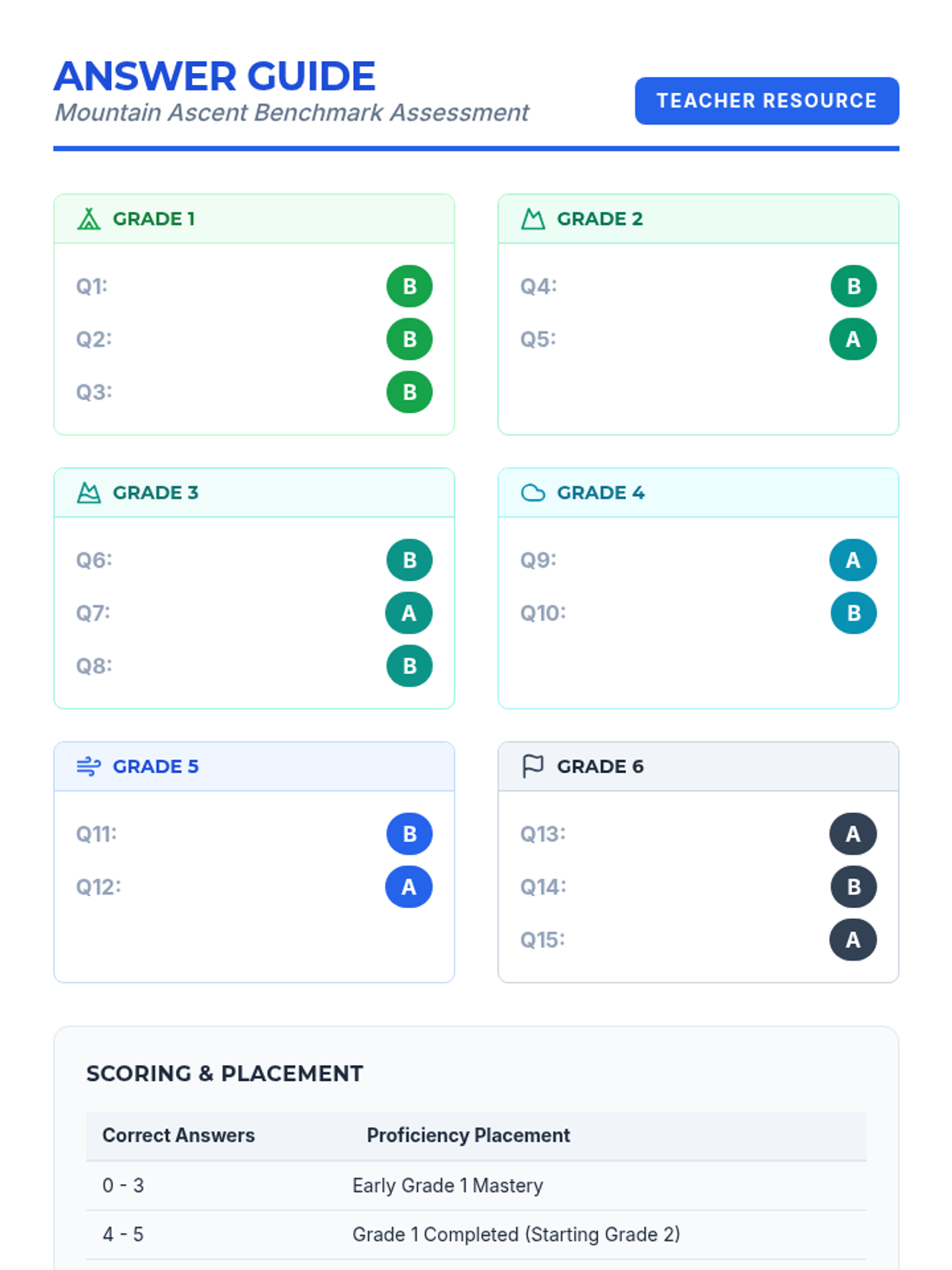
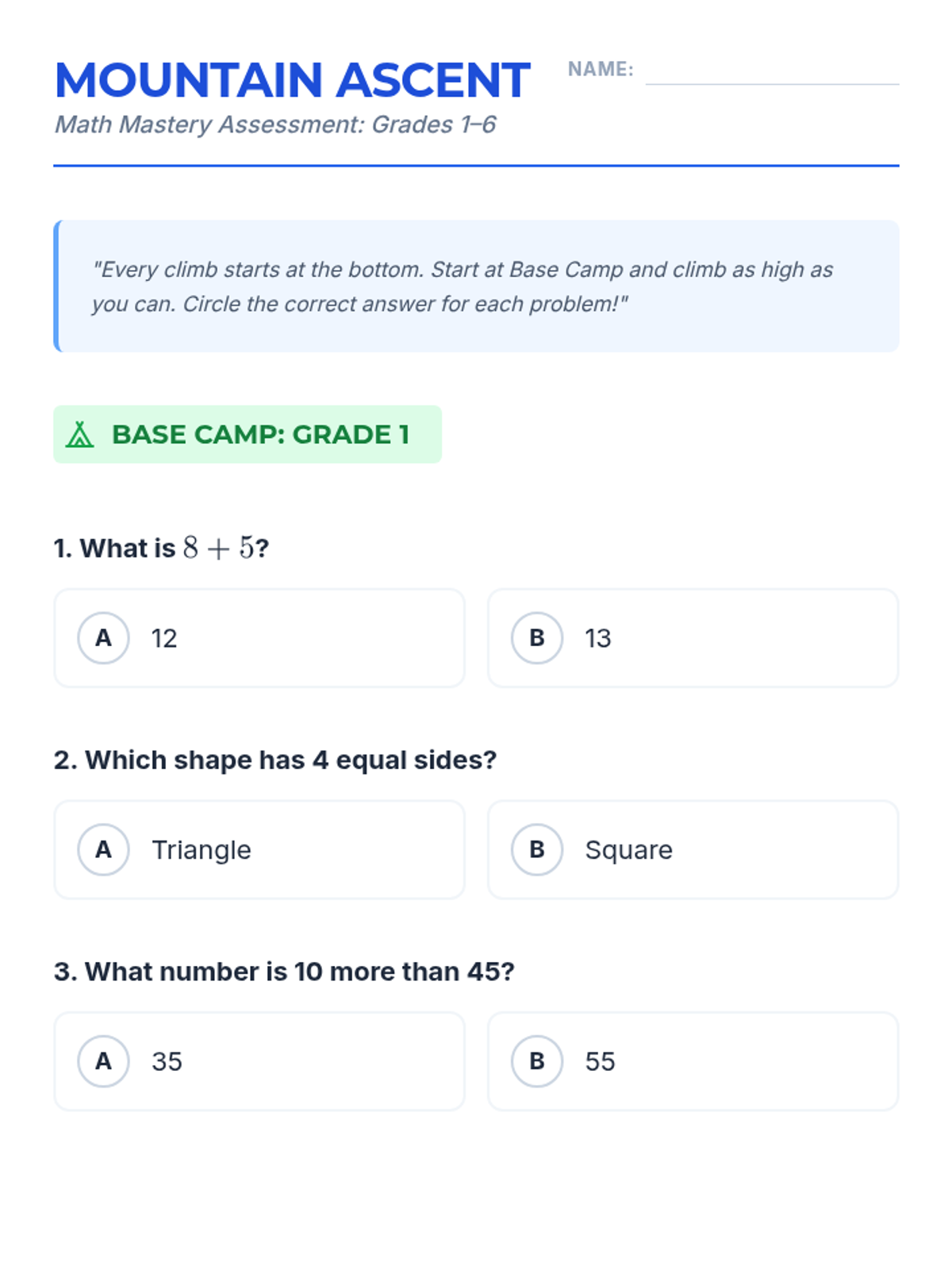
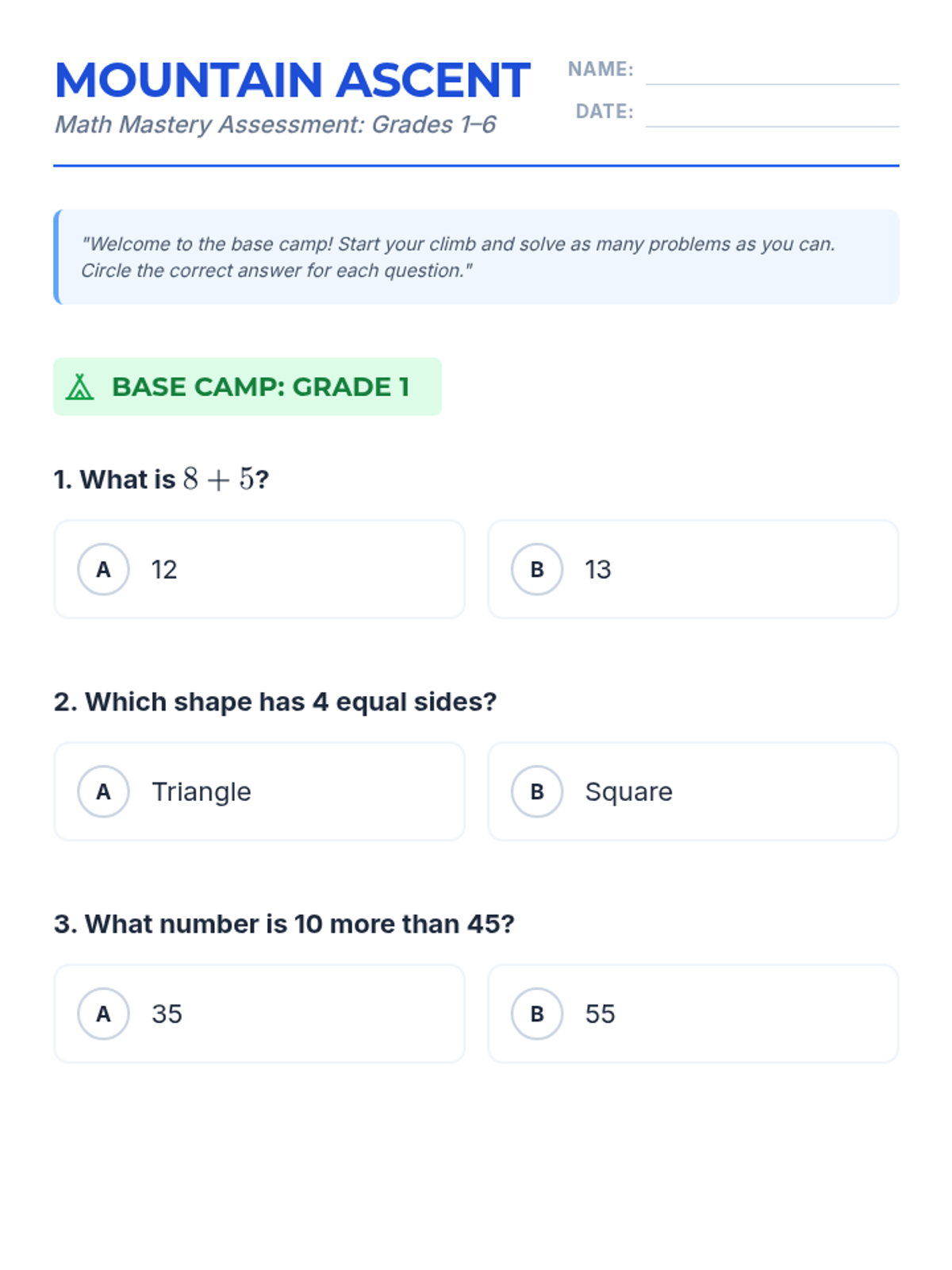
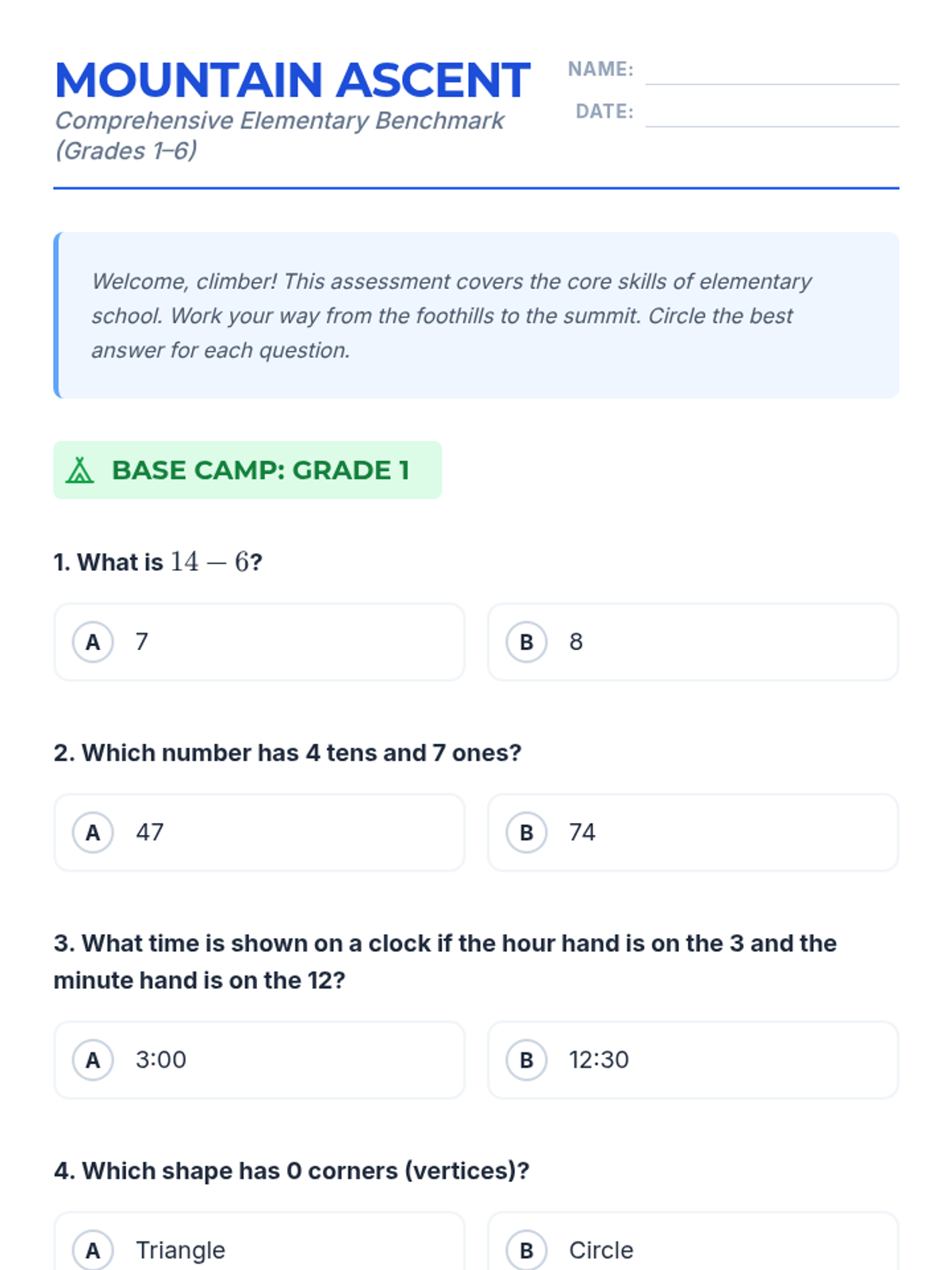
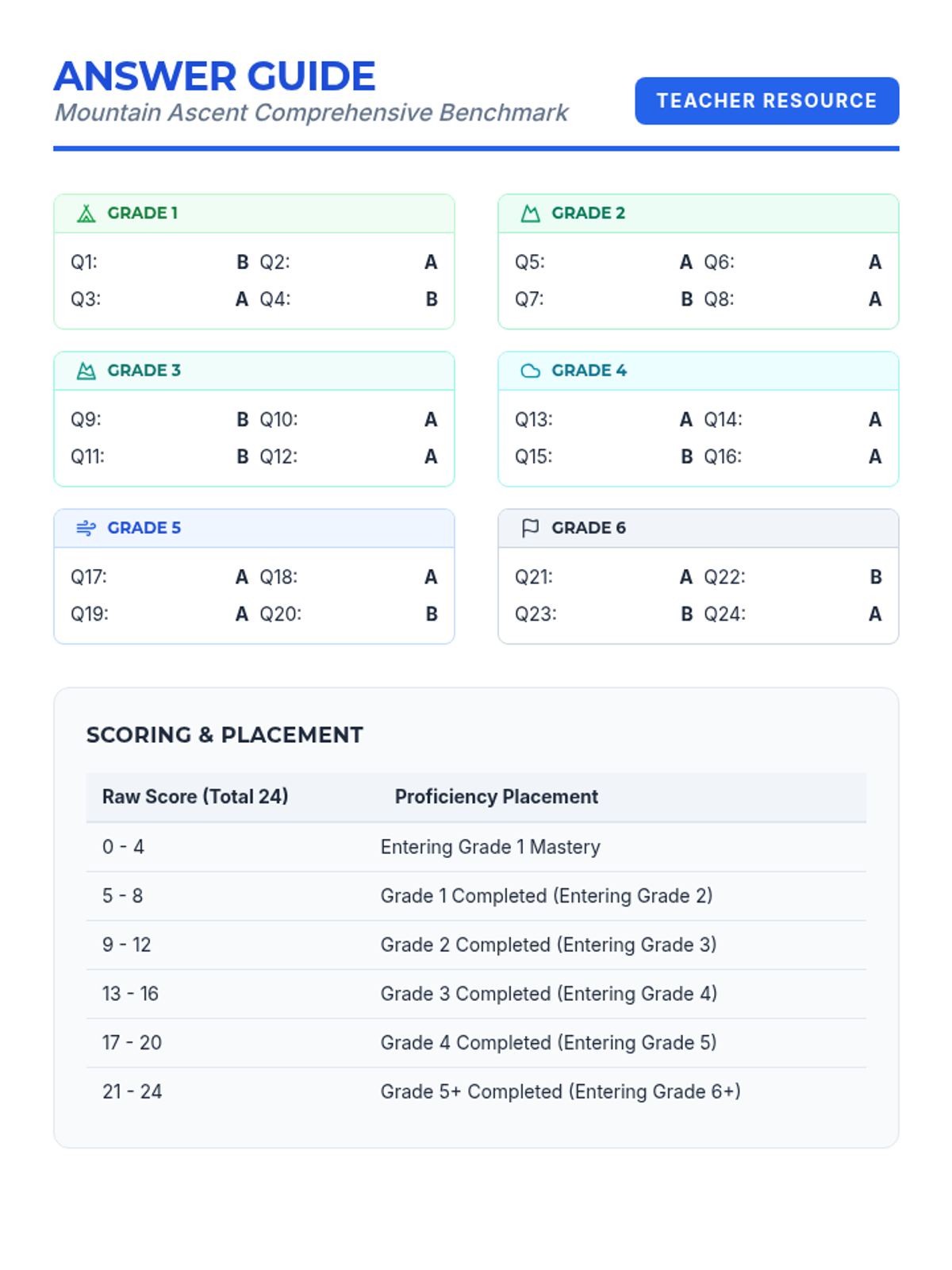
A comprehensive math benchmark assessment covering key standards from Grade 1 through Grade 6, designed to track student progress and identify skill gaps.
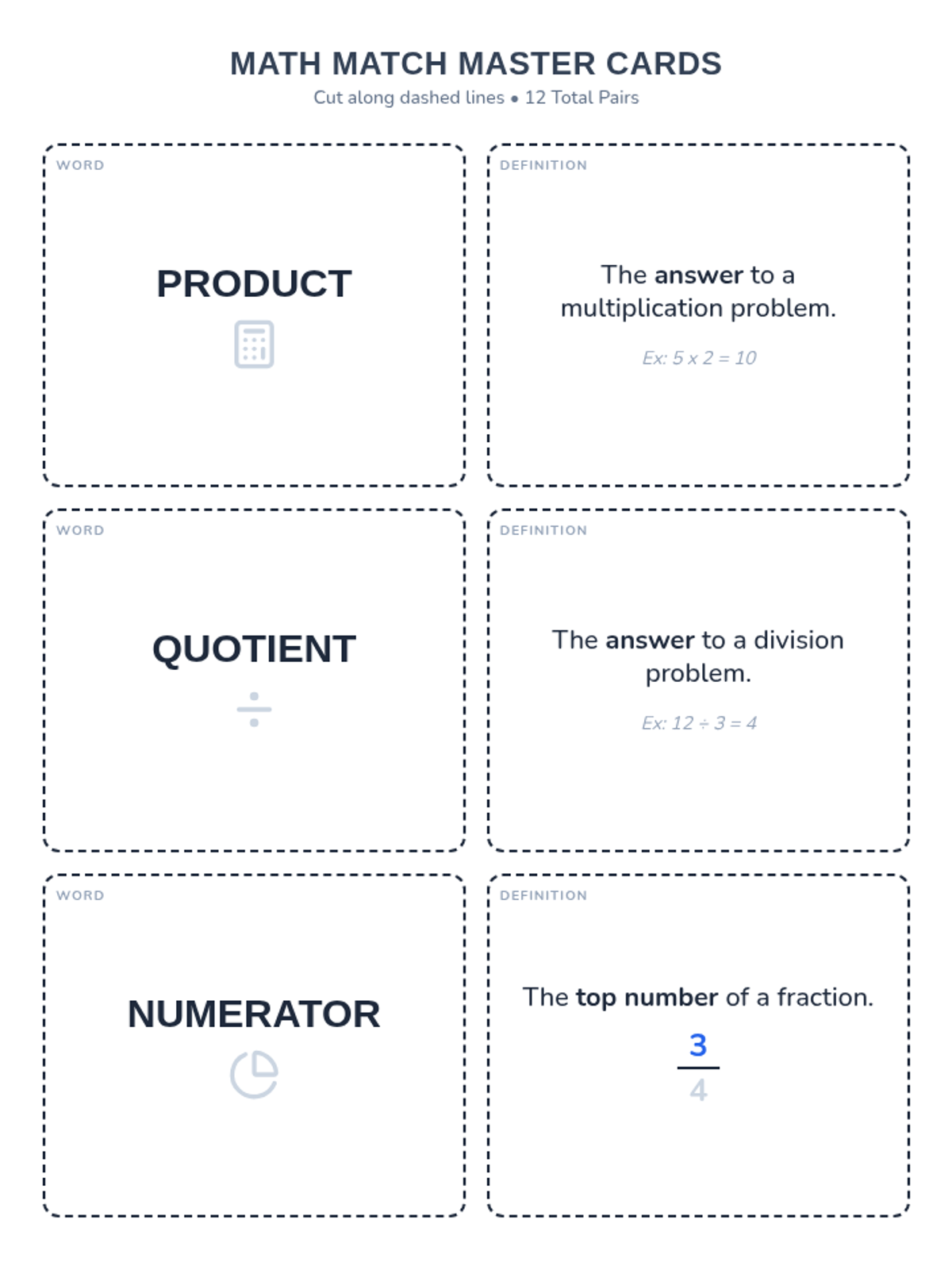
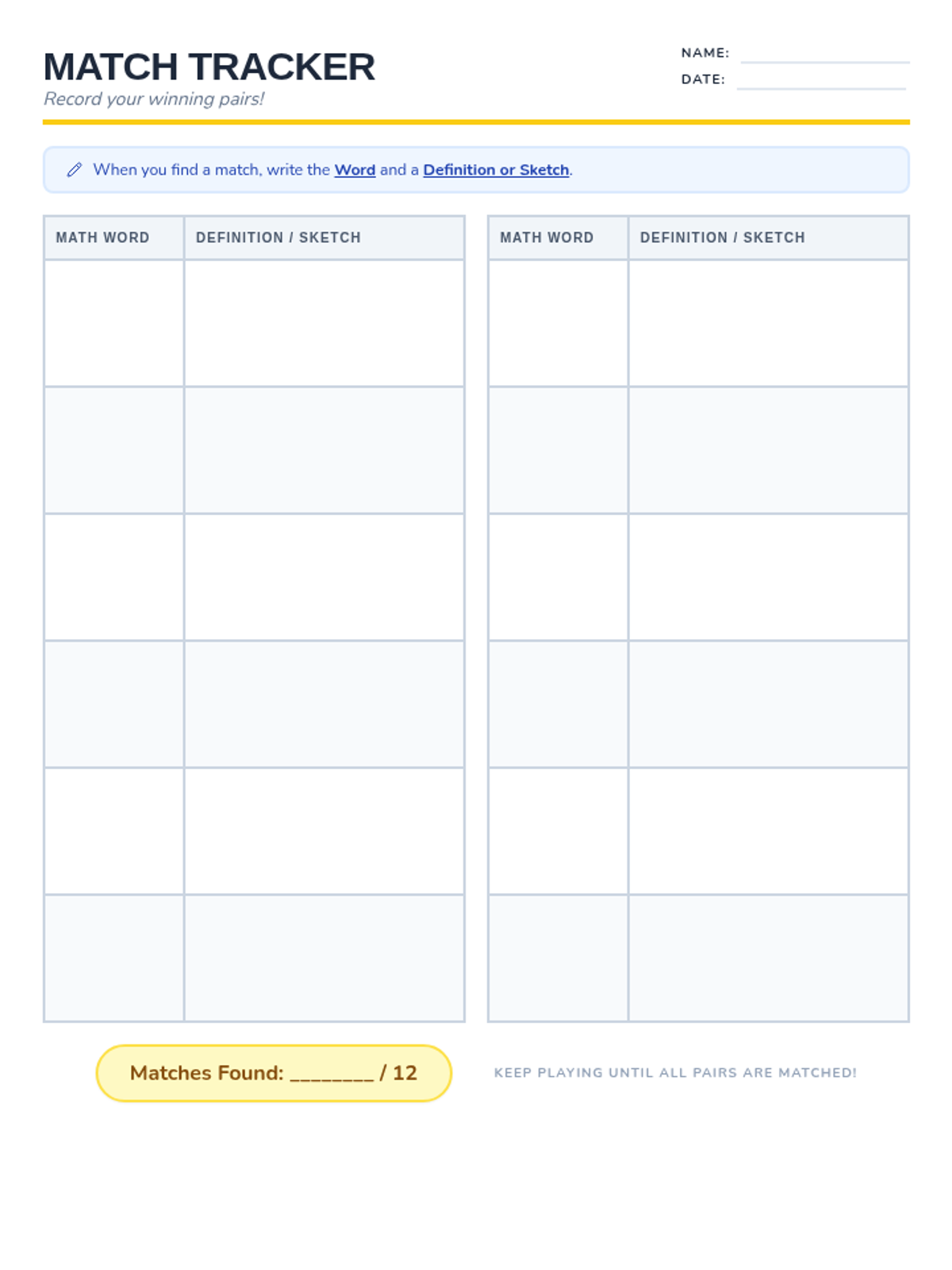
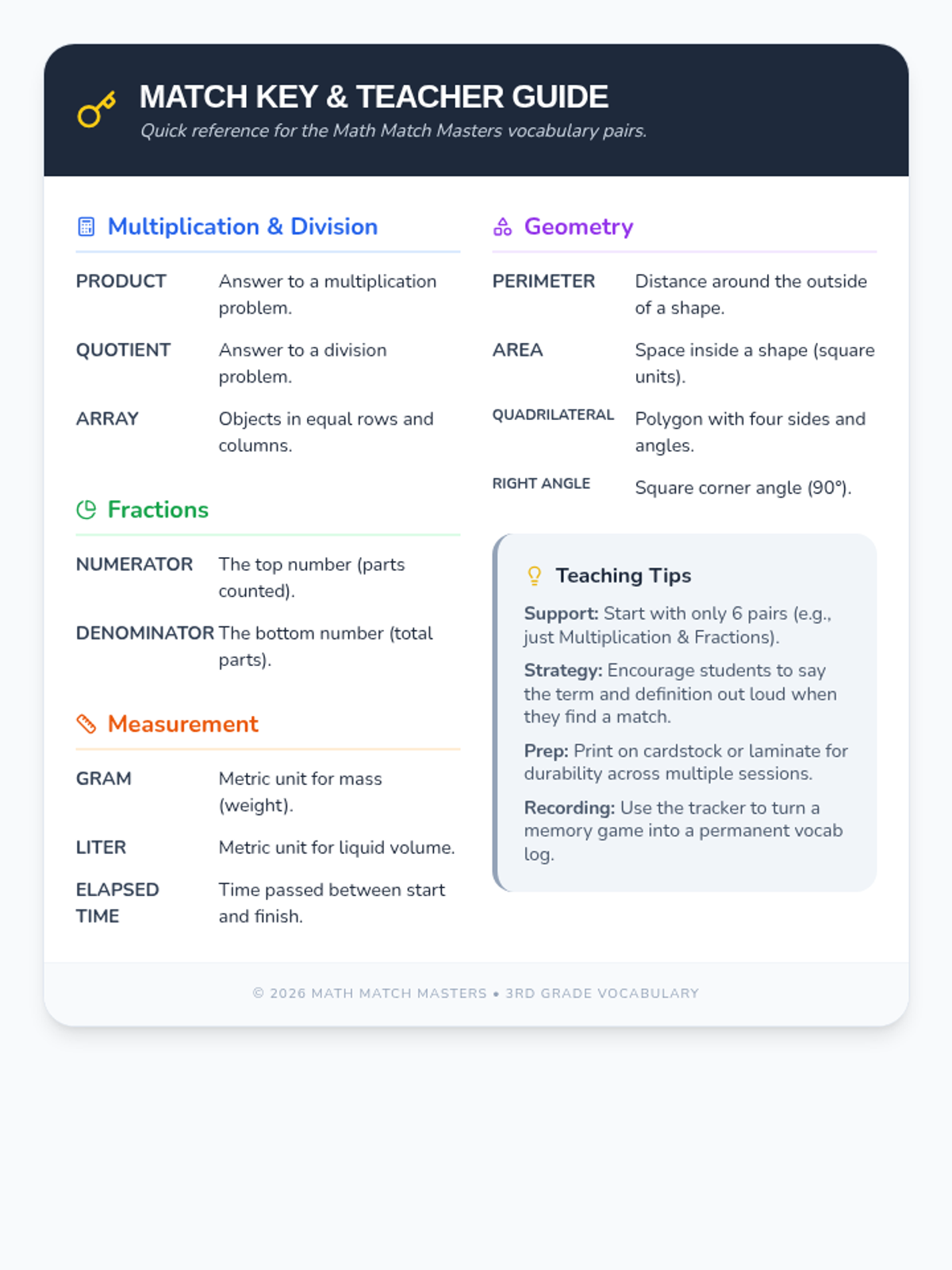
A high-energy math vocabulary game focused on key 3rd-grade concepts across multiplication, fractions, geometry, and measurement. Students practice identifying terms and definitions through a tactile memory match activity.
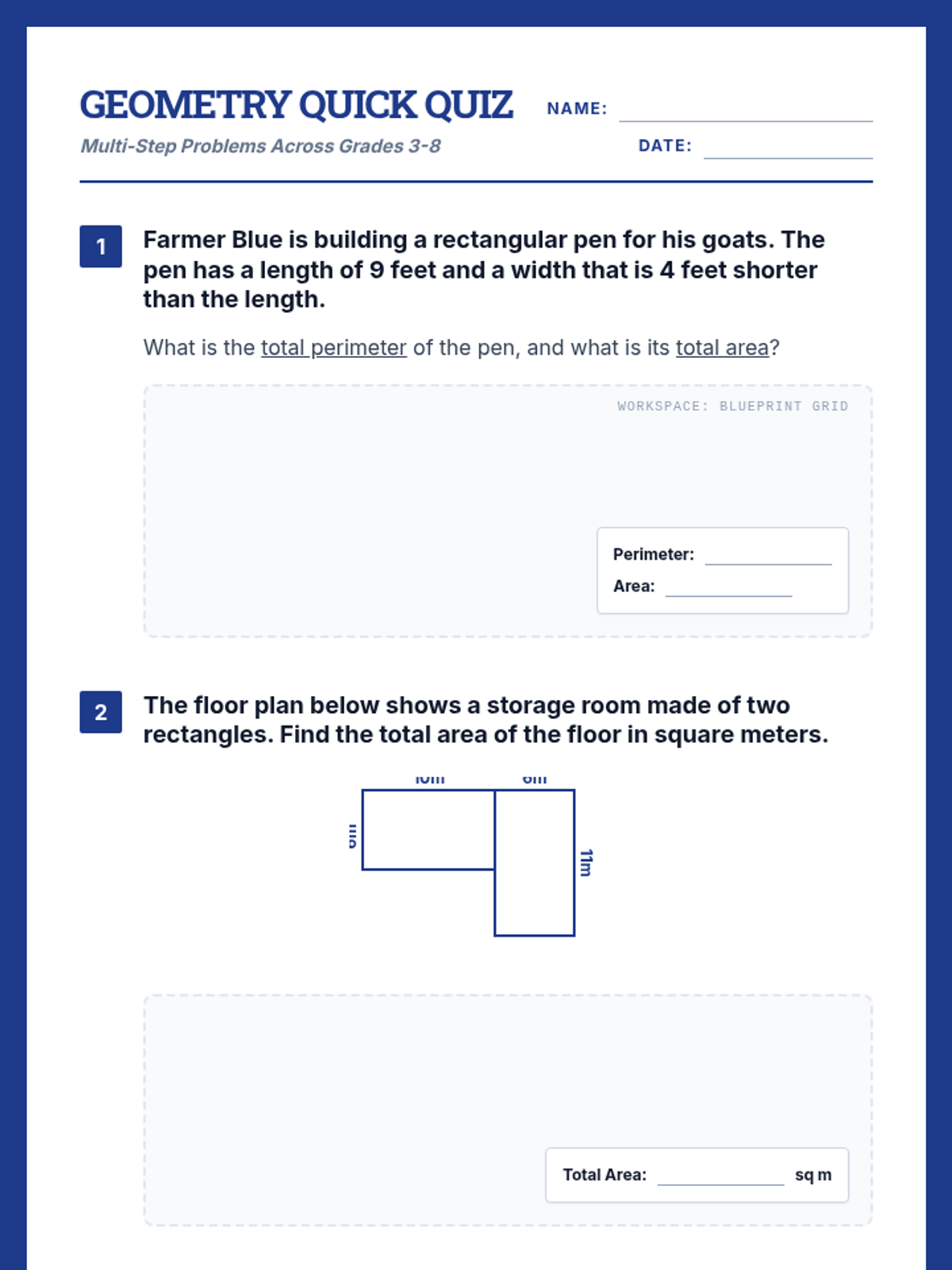
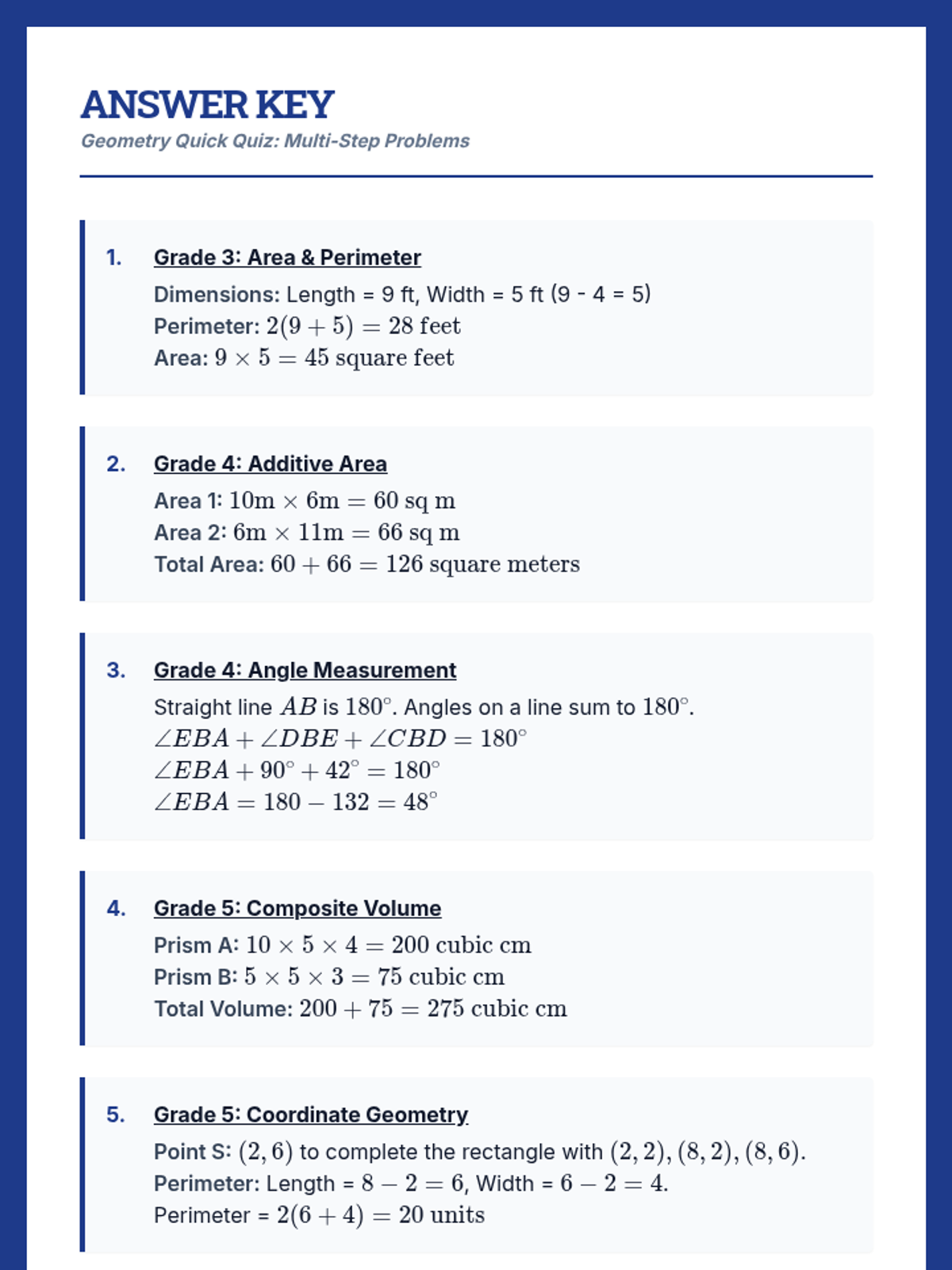
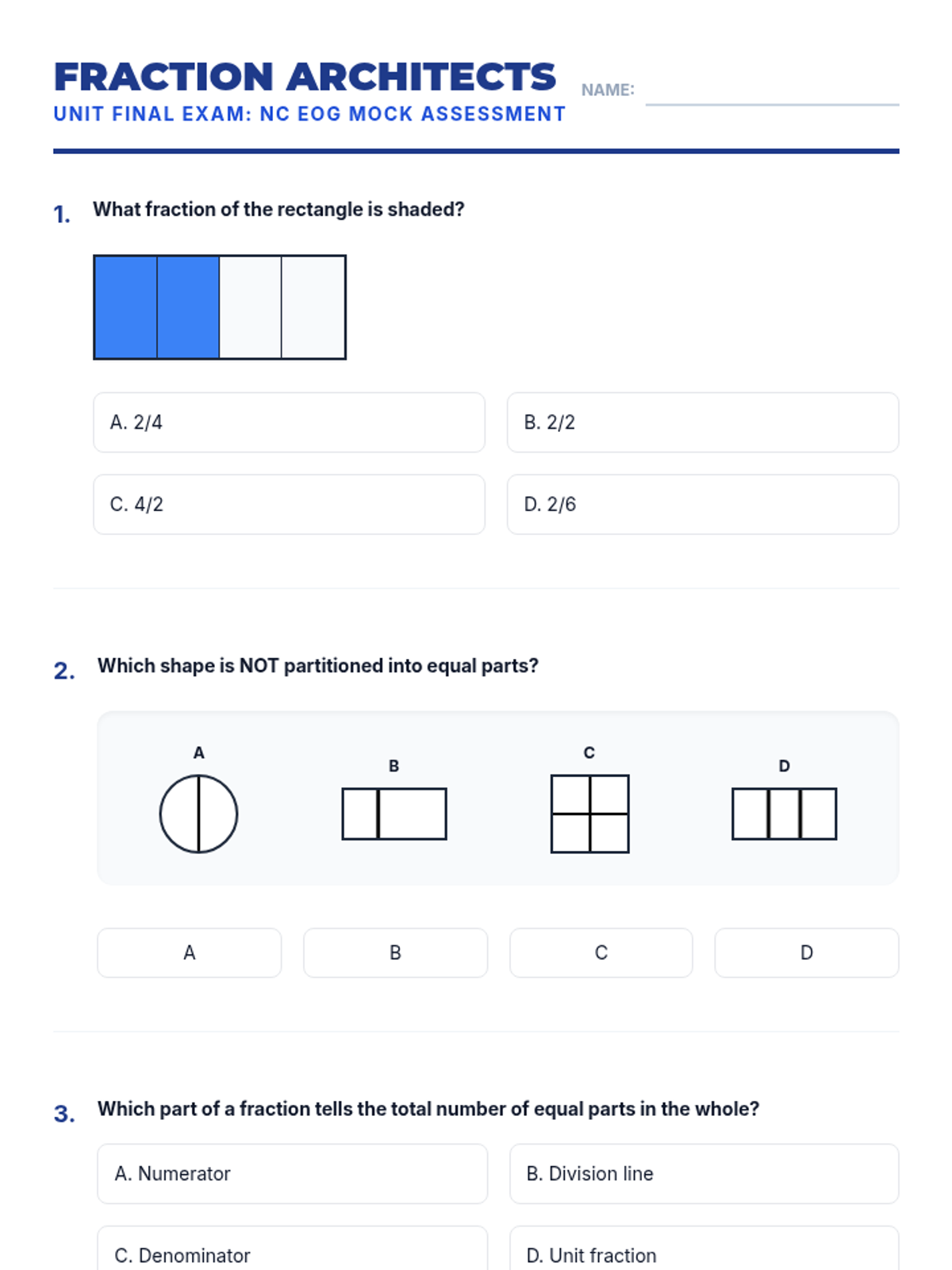
A comprehensive geometry and measurement assessment featuring multi-step problems aligned with North Carolina EOG standards for grades 3 through 8.
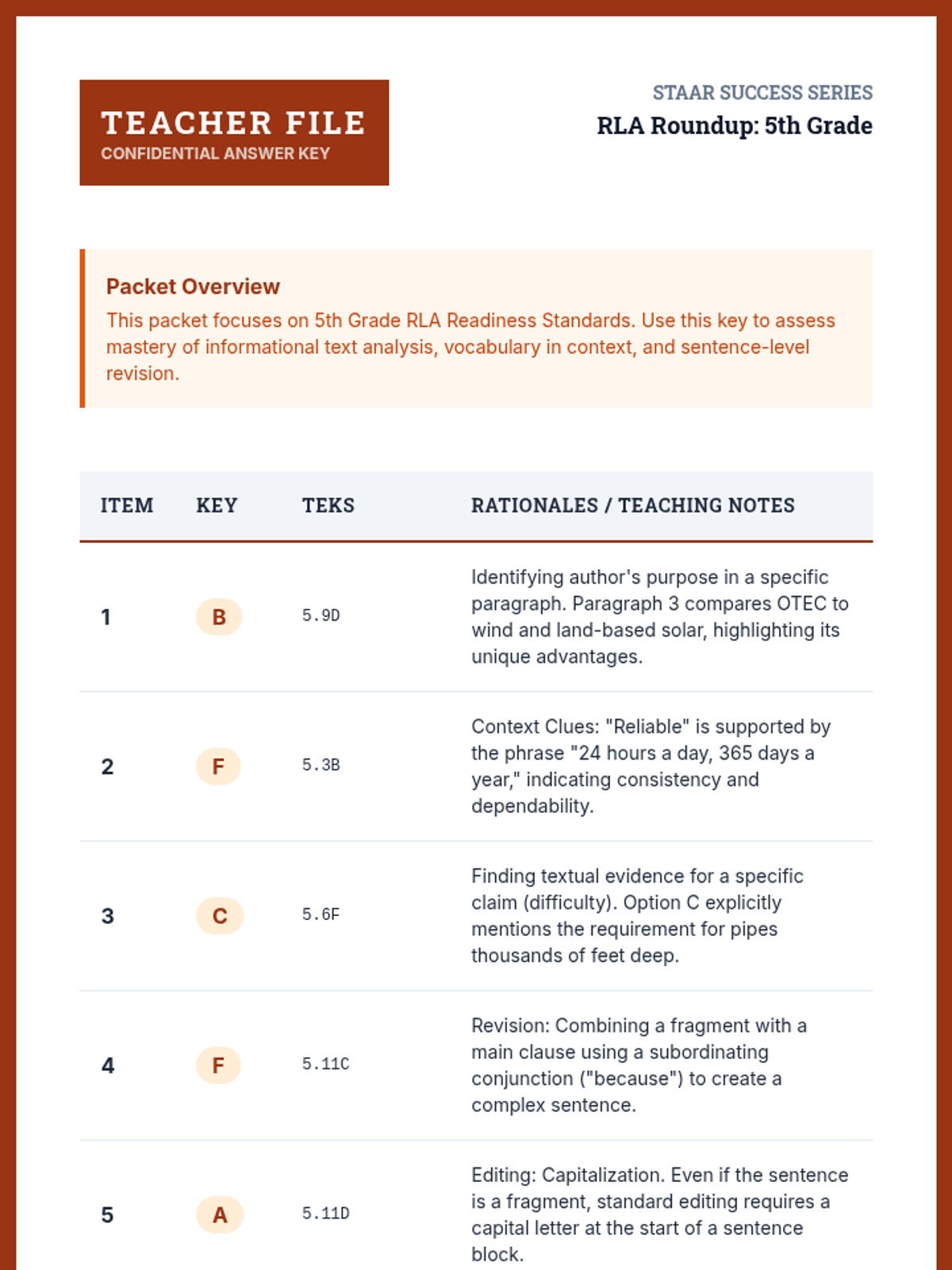
5th grade RLA review emphasizing theme, author's purpose, synthesis of information, and polished expository writing.
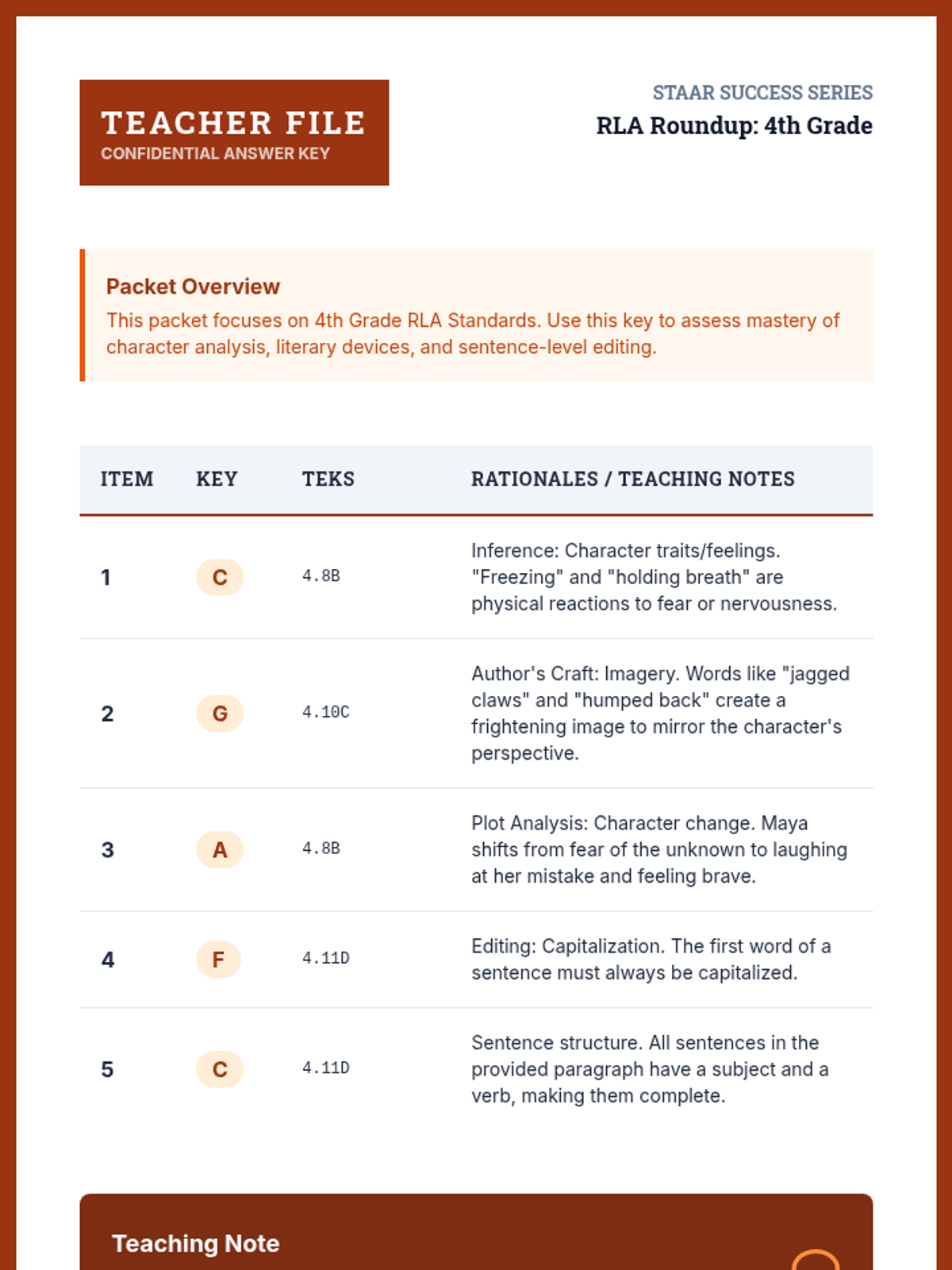
4th grade RLA mastery practice including complex text analysis, context clues, and multi-paragraph writing prompts.
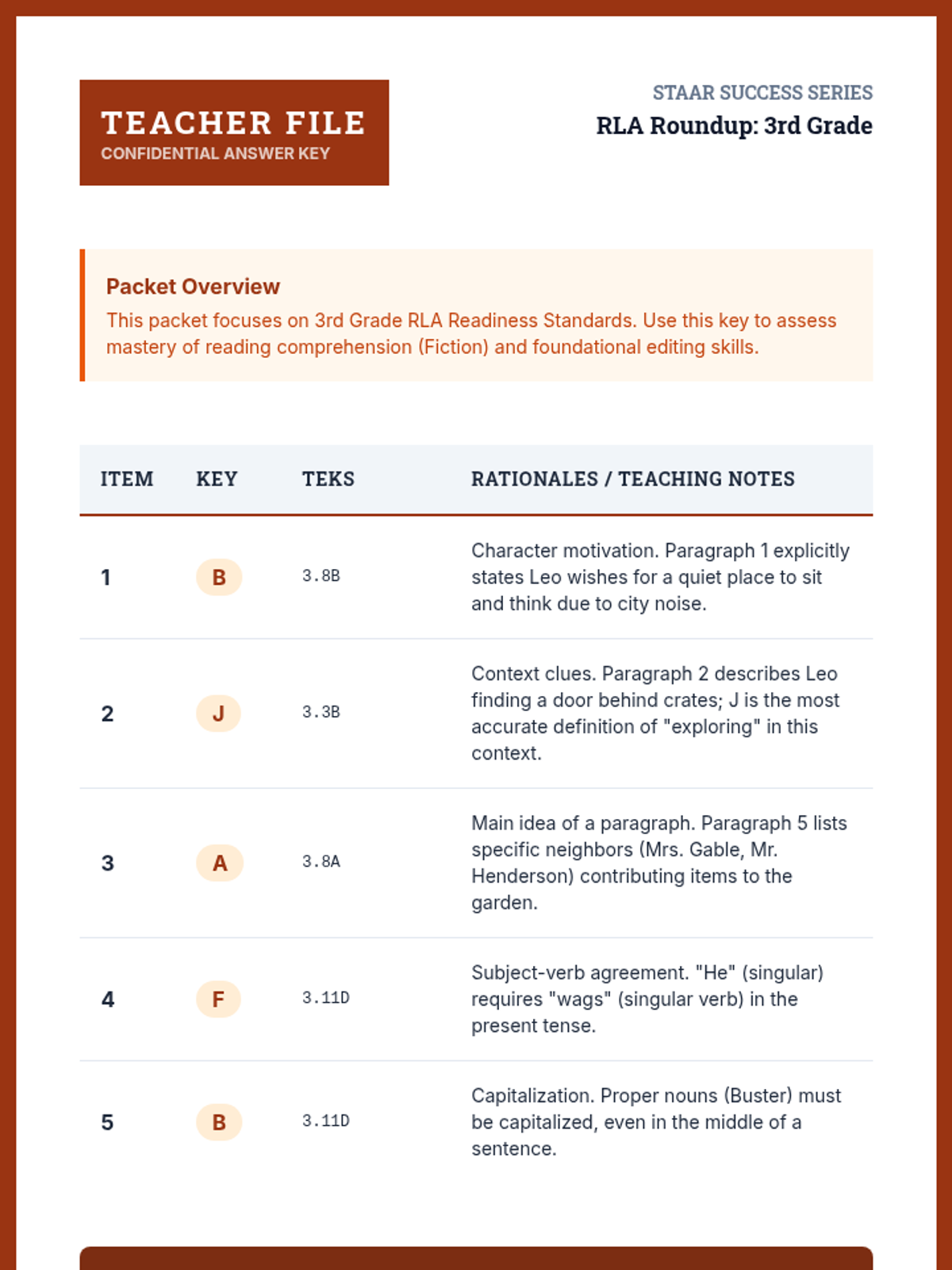
3rd grade RLA practice focusing on reading comprehension of fiction and non-fiction, as well as basic editing and revising skills.
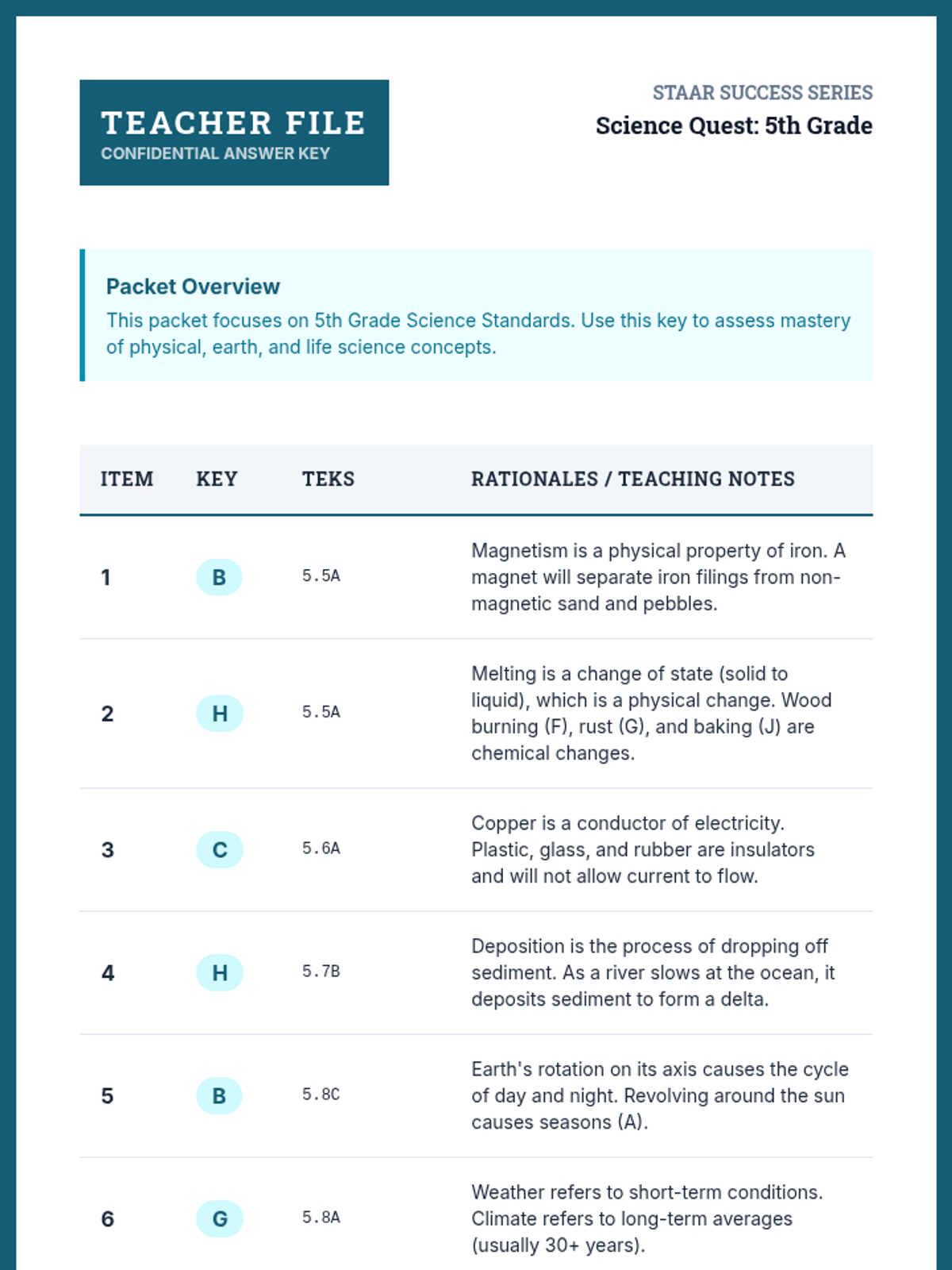
Comprehensive 5th grade science review of life, earth, and physical science topics from the TEKS curriculum.
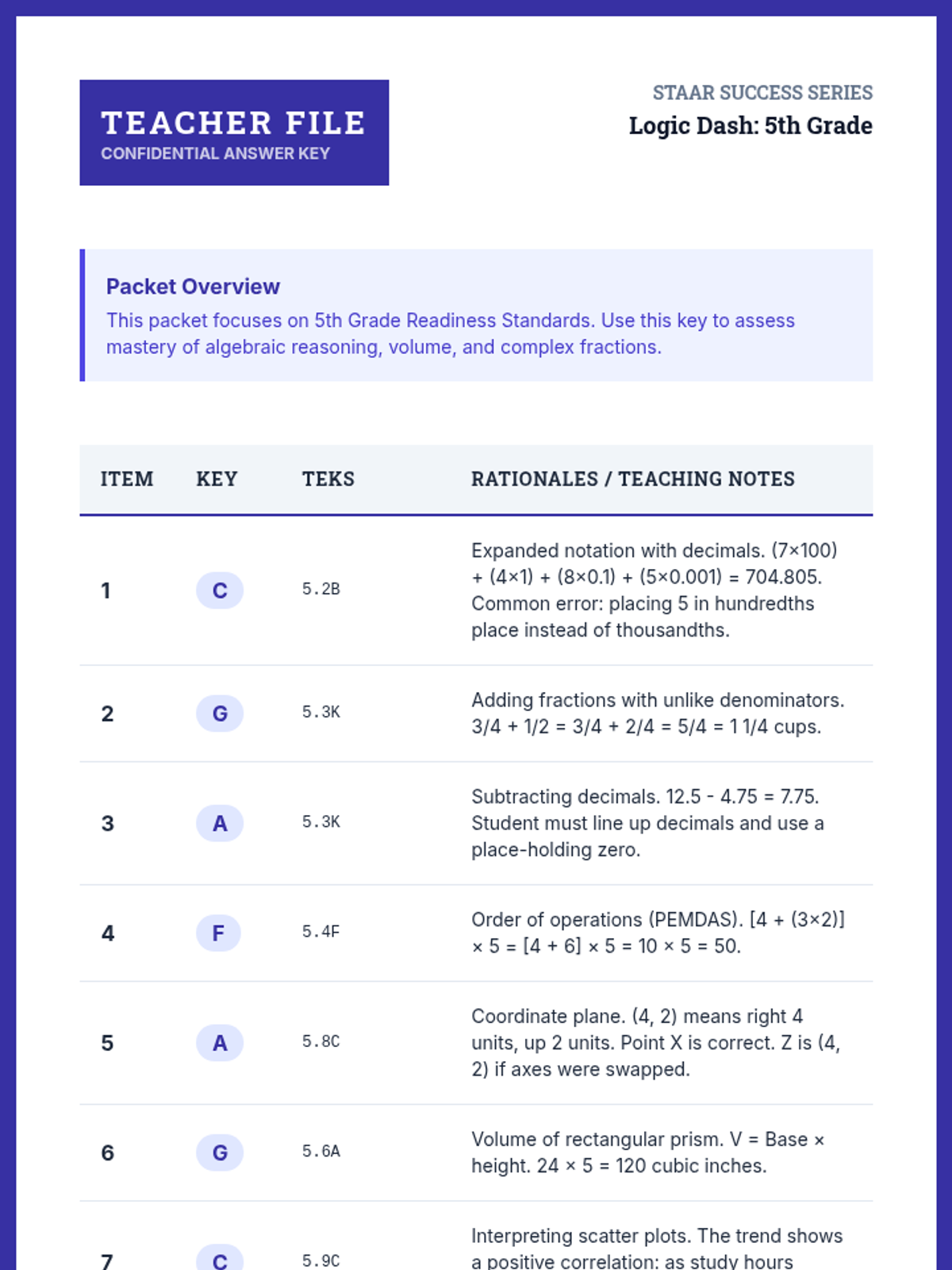
Rigorous 5th grade math review including coordinate planes, volume, order of operations, and adding/subtracting fractions.
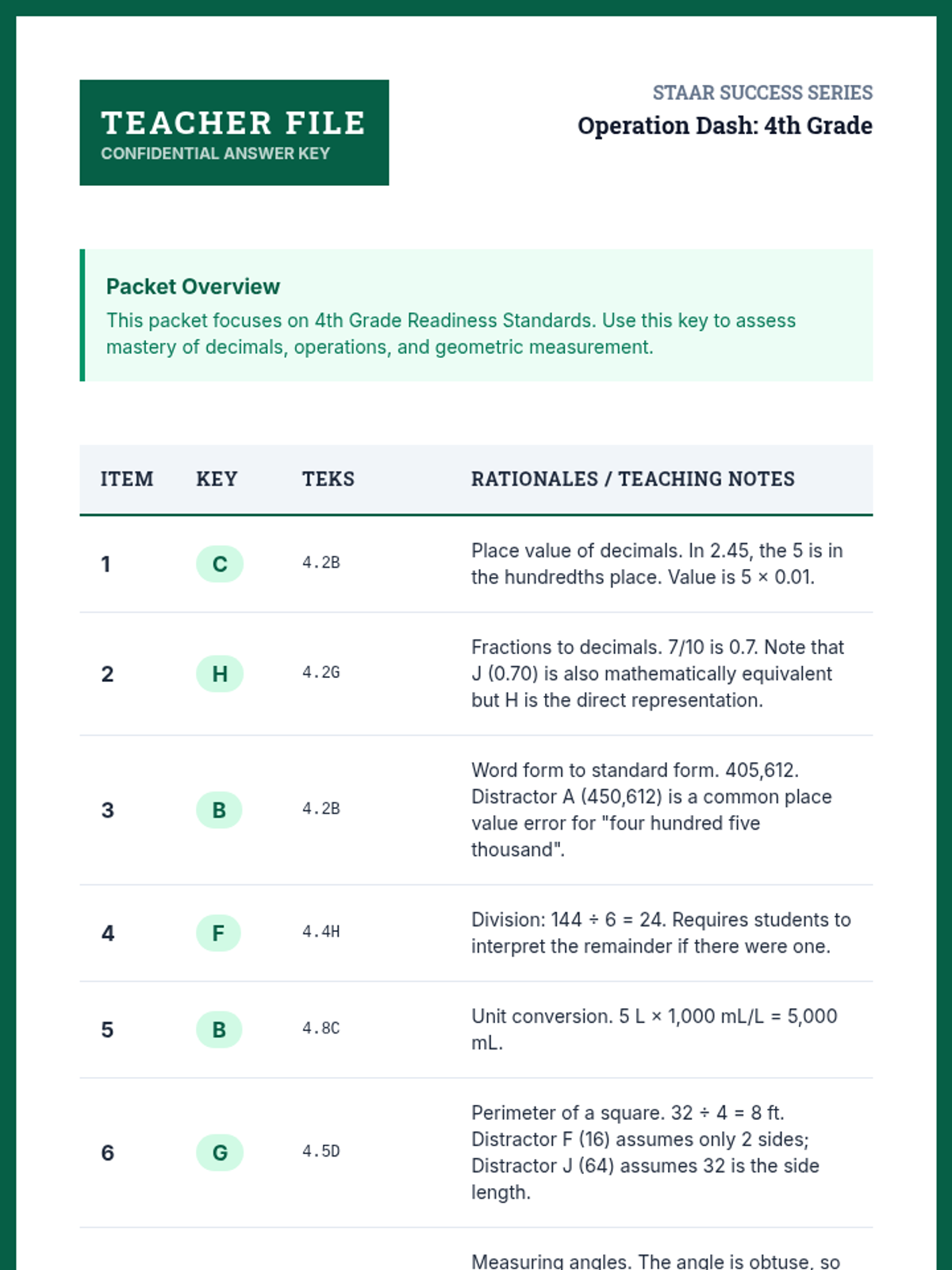
Advanced 4th grade math practice covering decimal operations, long division, measurement conversions, and angle measurement.
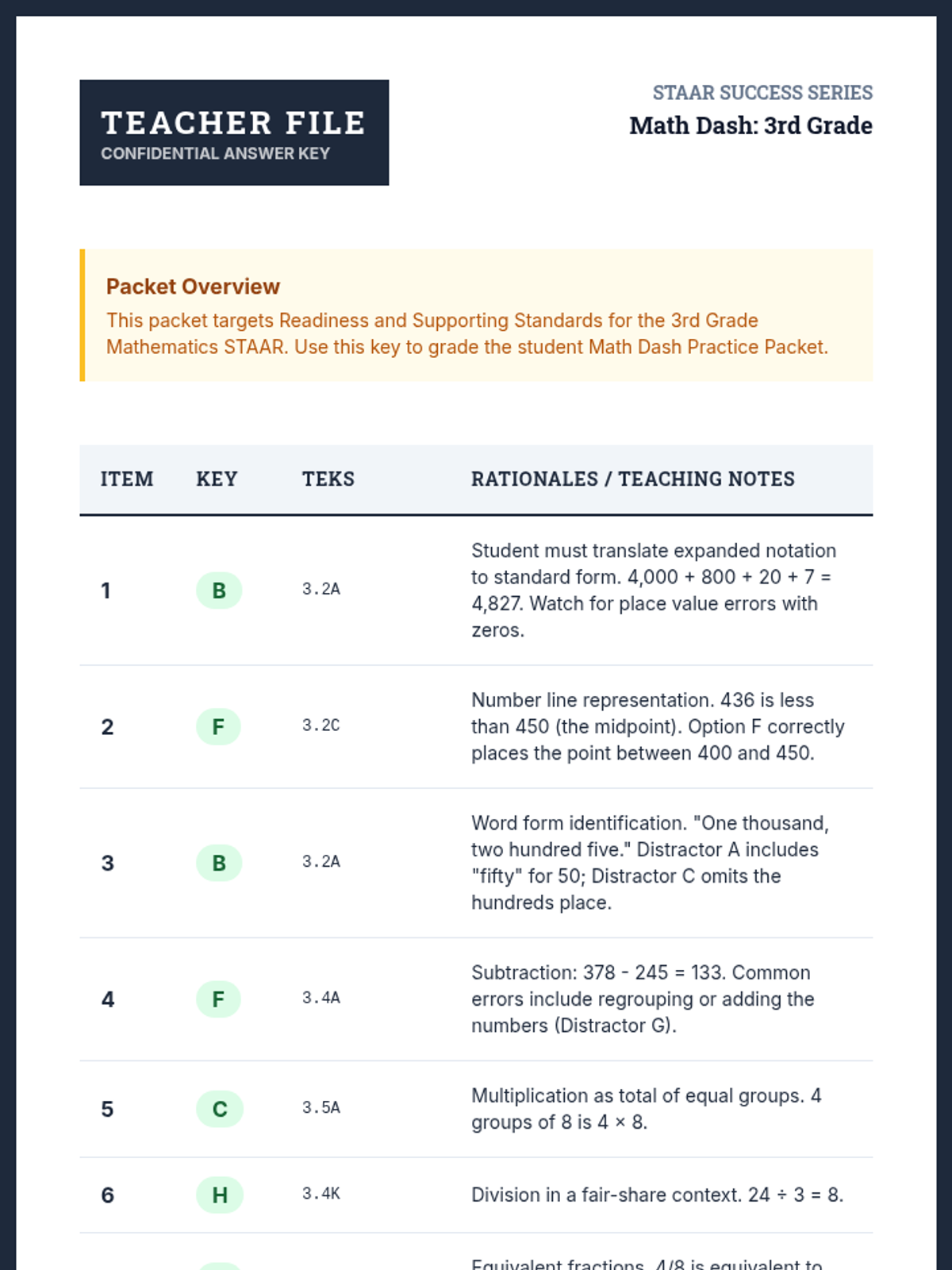
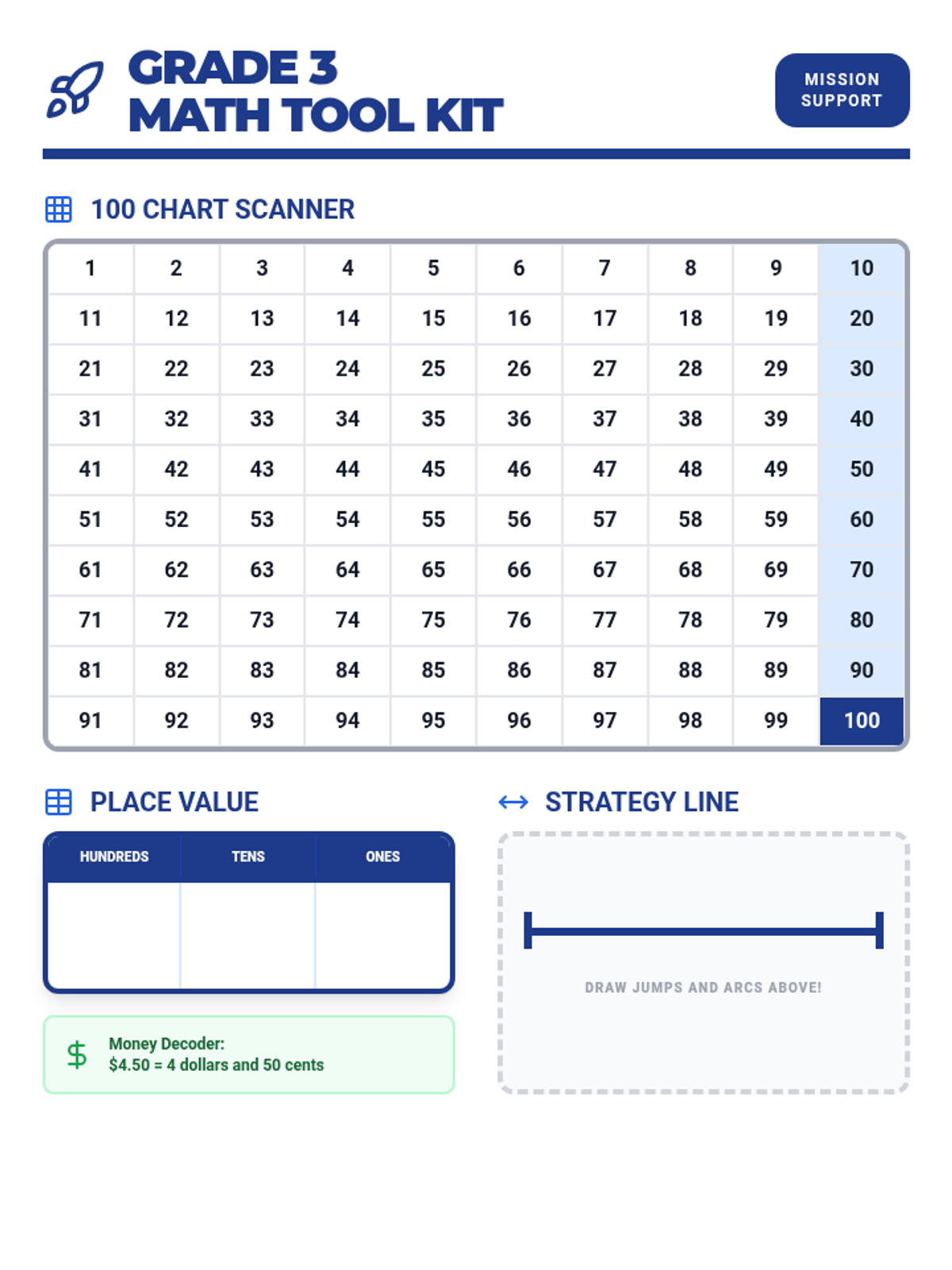
Focused practice for 3rd grade math standards including multi-digit operations, fraction understanding, and perimeter/area concepts.
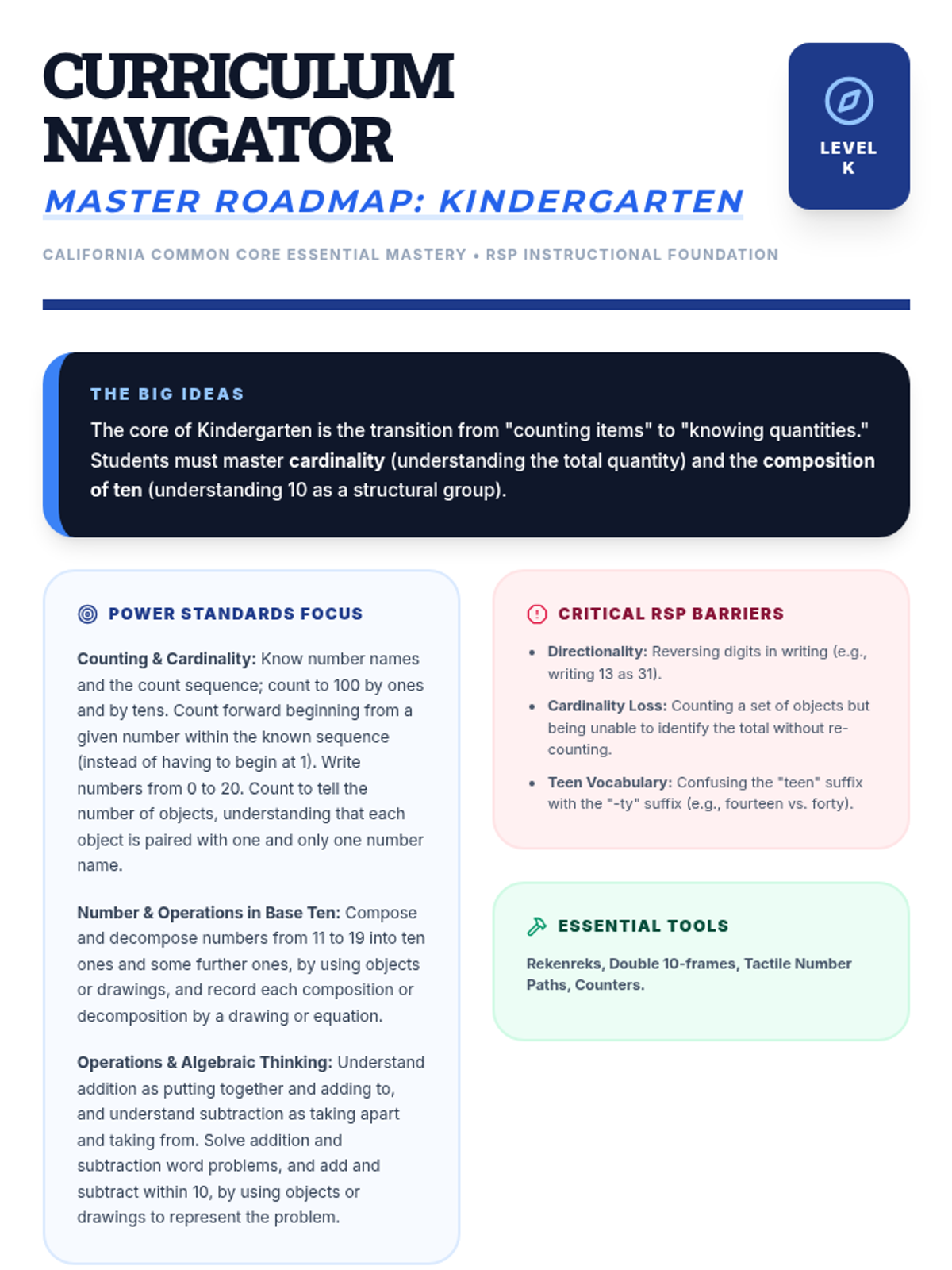
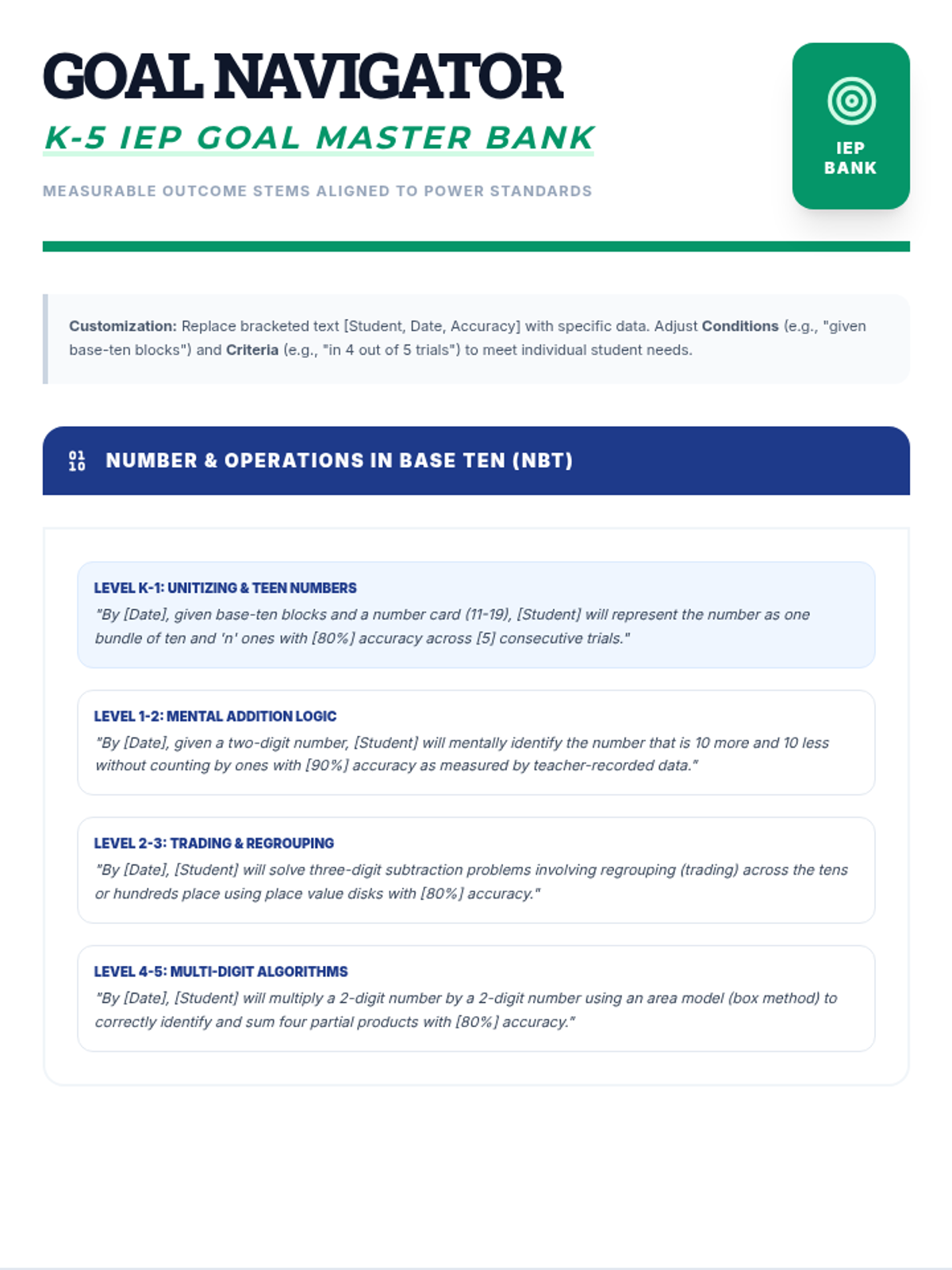
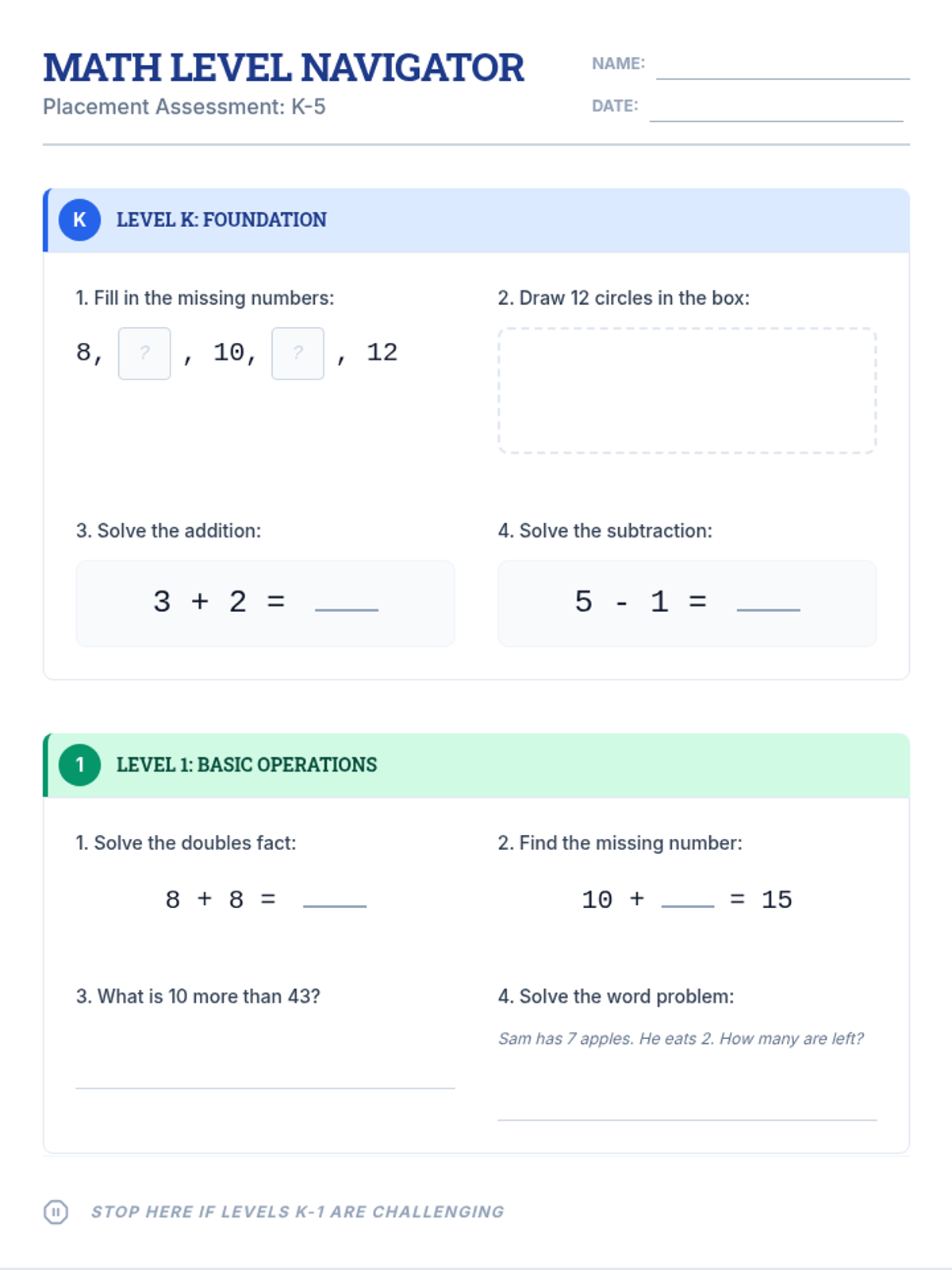
Foundational tools for assessing student levels and planning instruction based on California Power Standards across grades K-5.
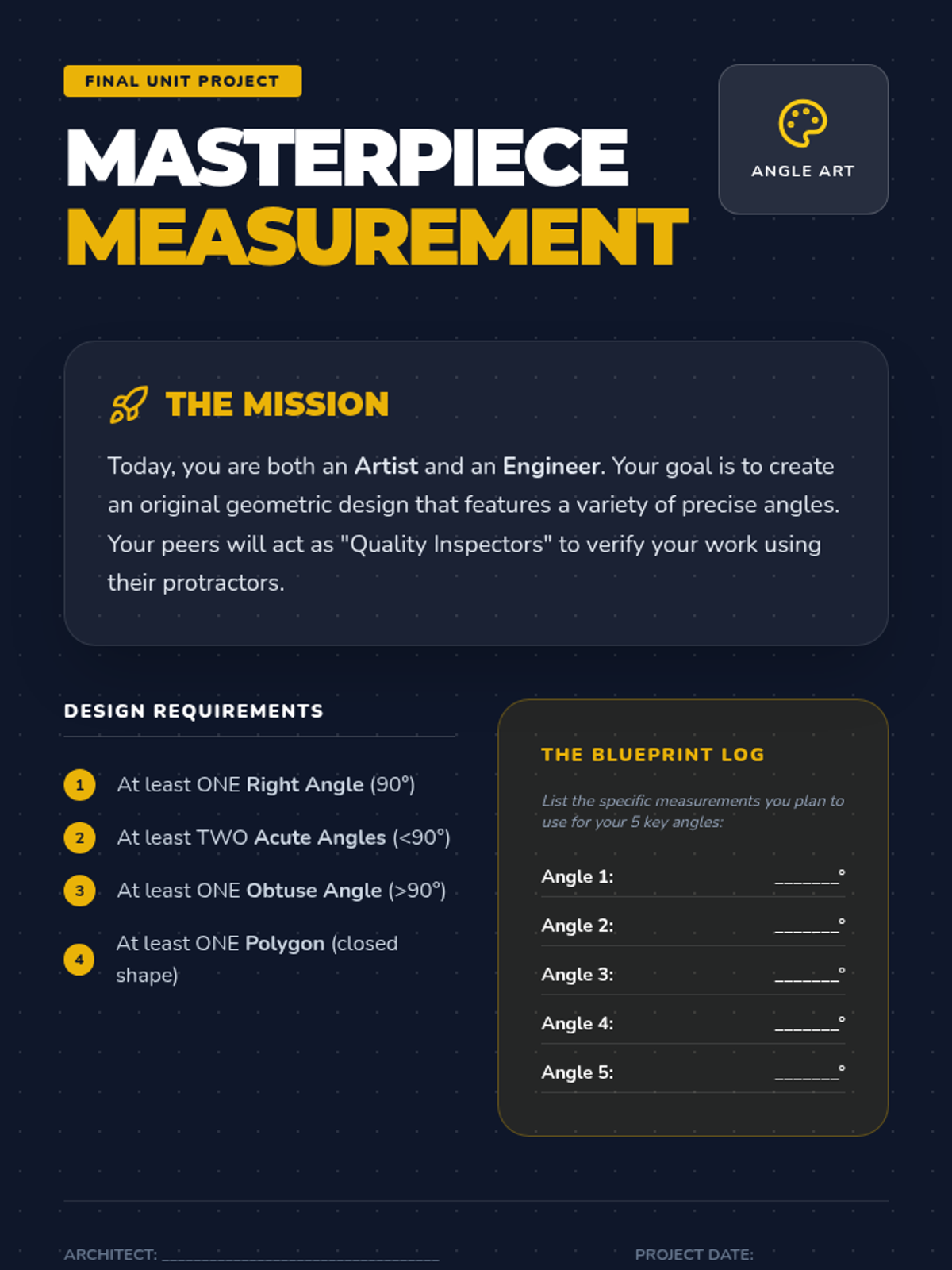
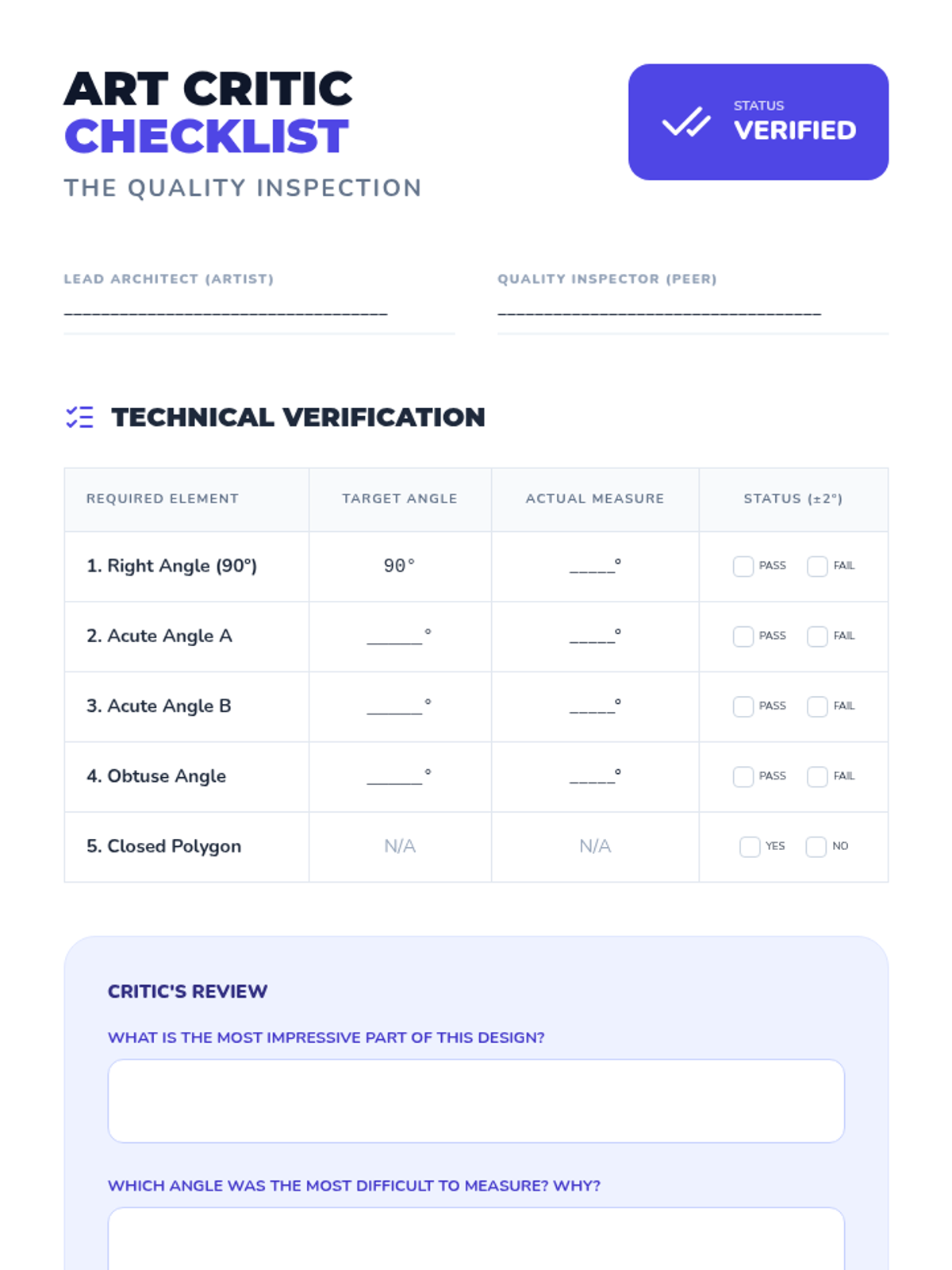
The final project where students design a piece of abstract art or a blueprint, labeling specific angles and having them verified by peers.
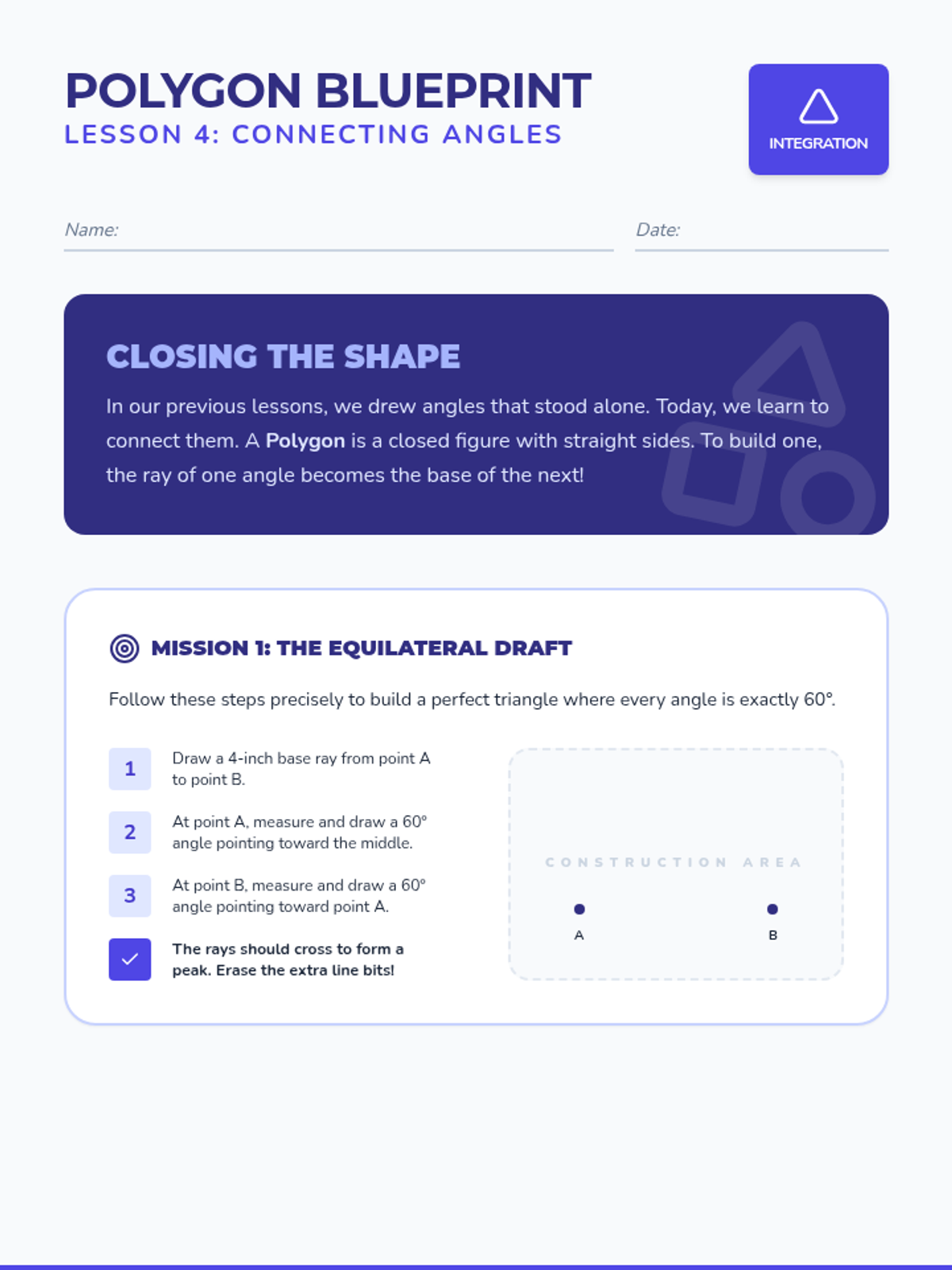
Students apply their angle construction skills to build multi-sided polygons, exploring how angles combine to create closed shapes.
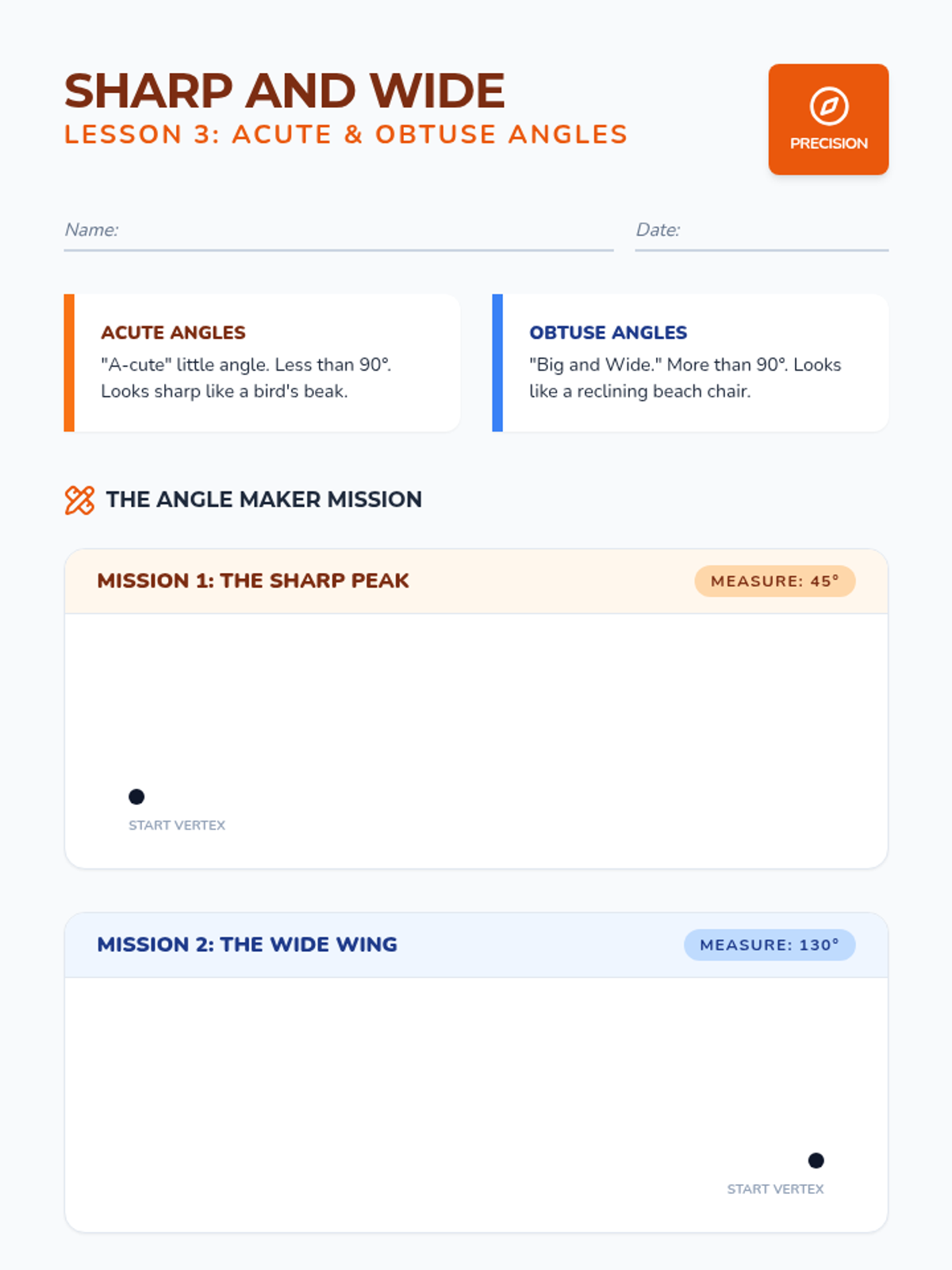
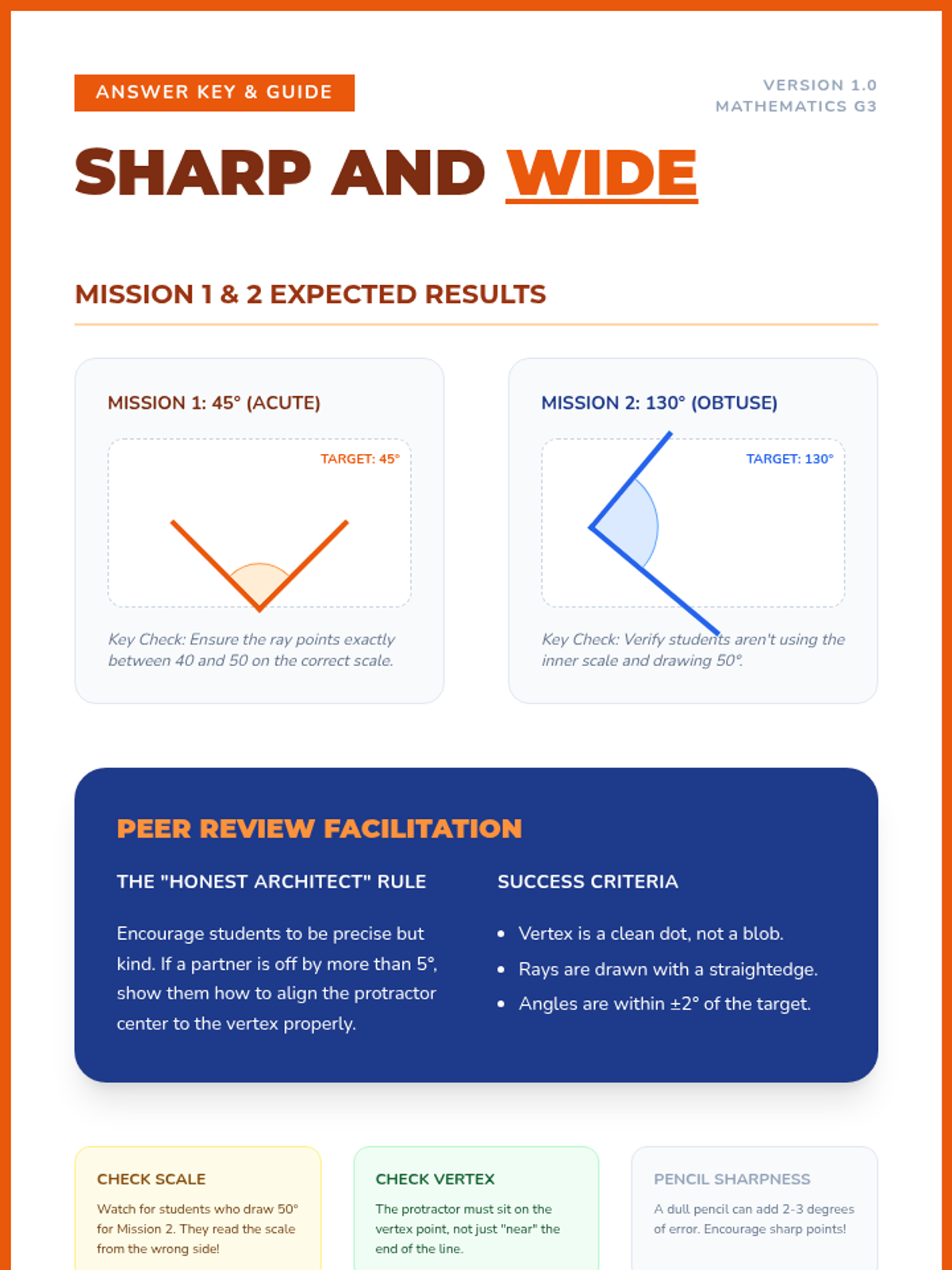
Learners use protractors to construct acute and obtuse angles of specific measurements, focusing on precision and angle classification.
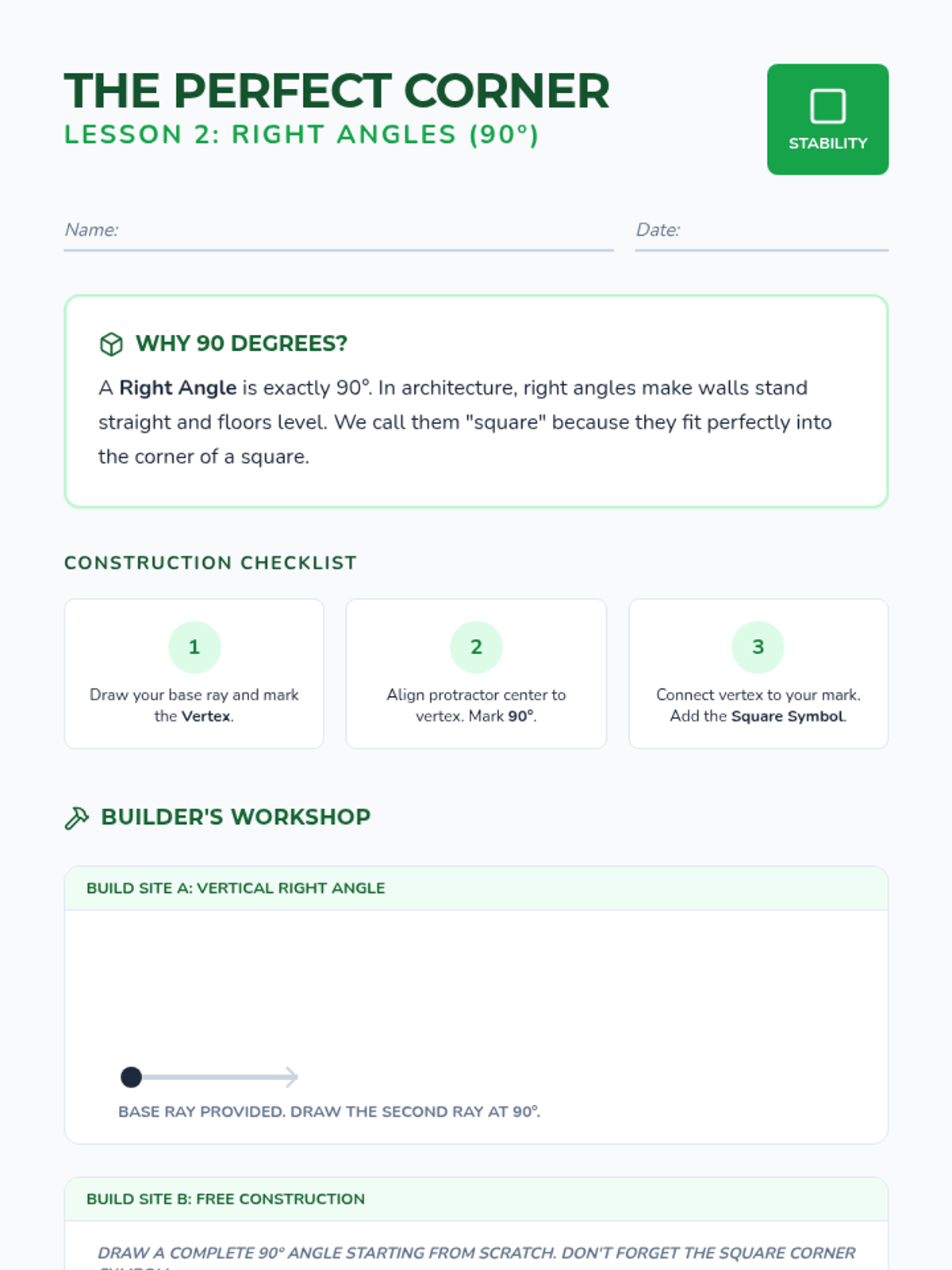
Students master the construction of 90-degree angles, verifying their work with corner tools to understand perpendicularity in architecture.
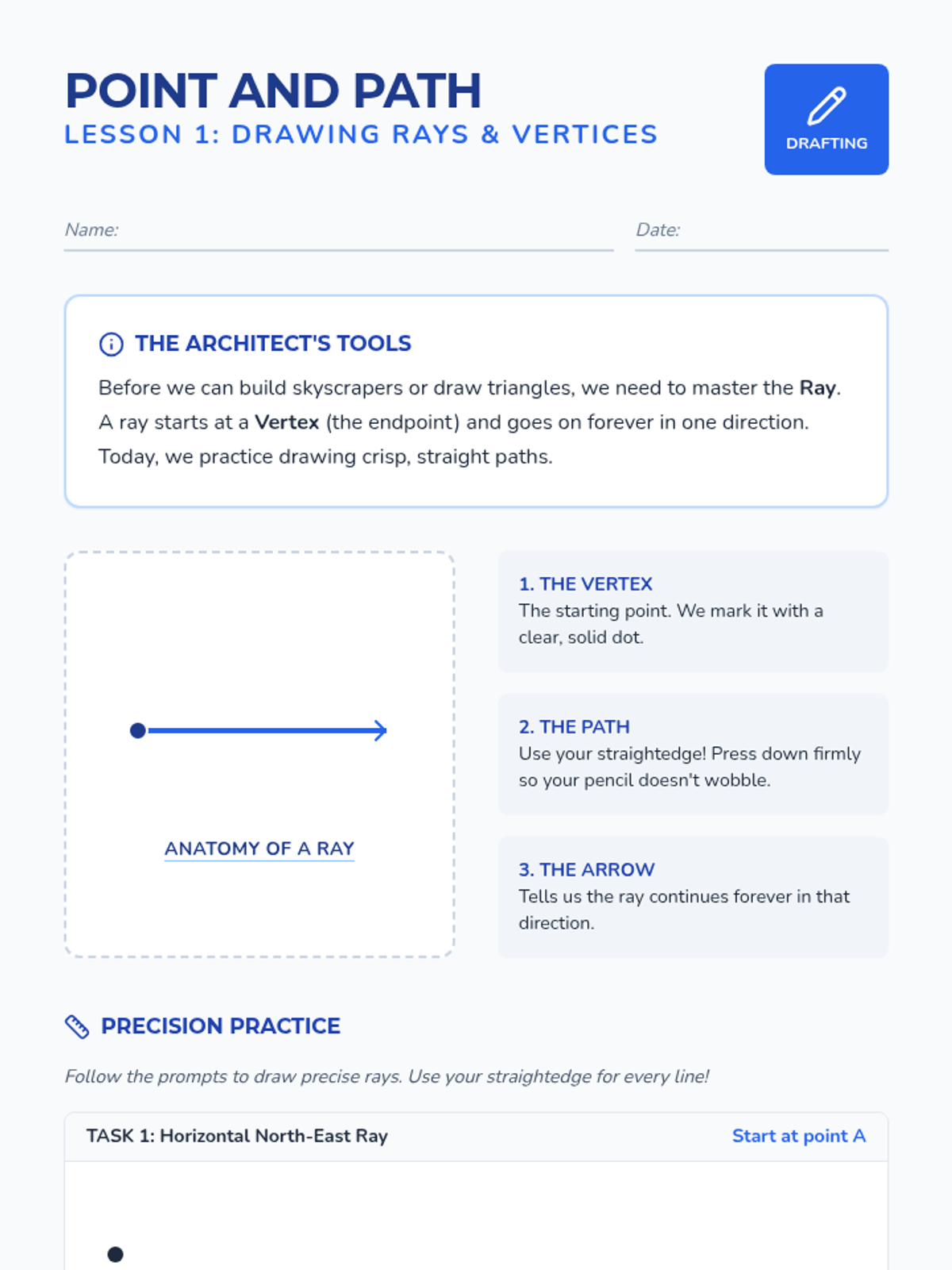
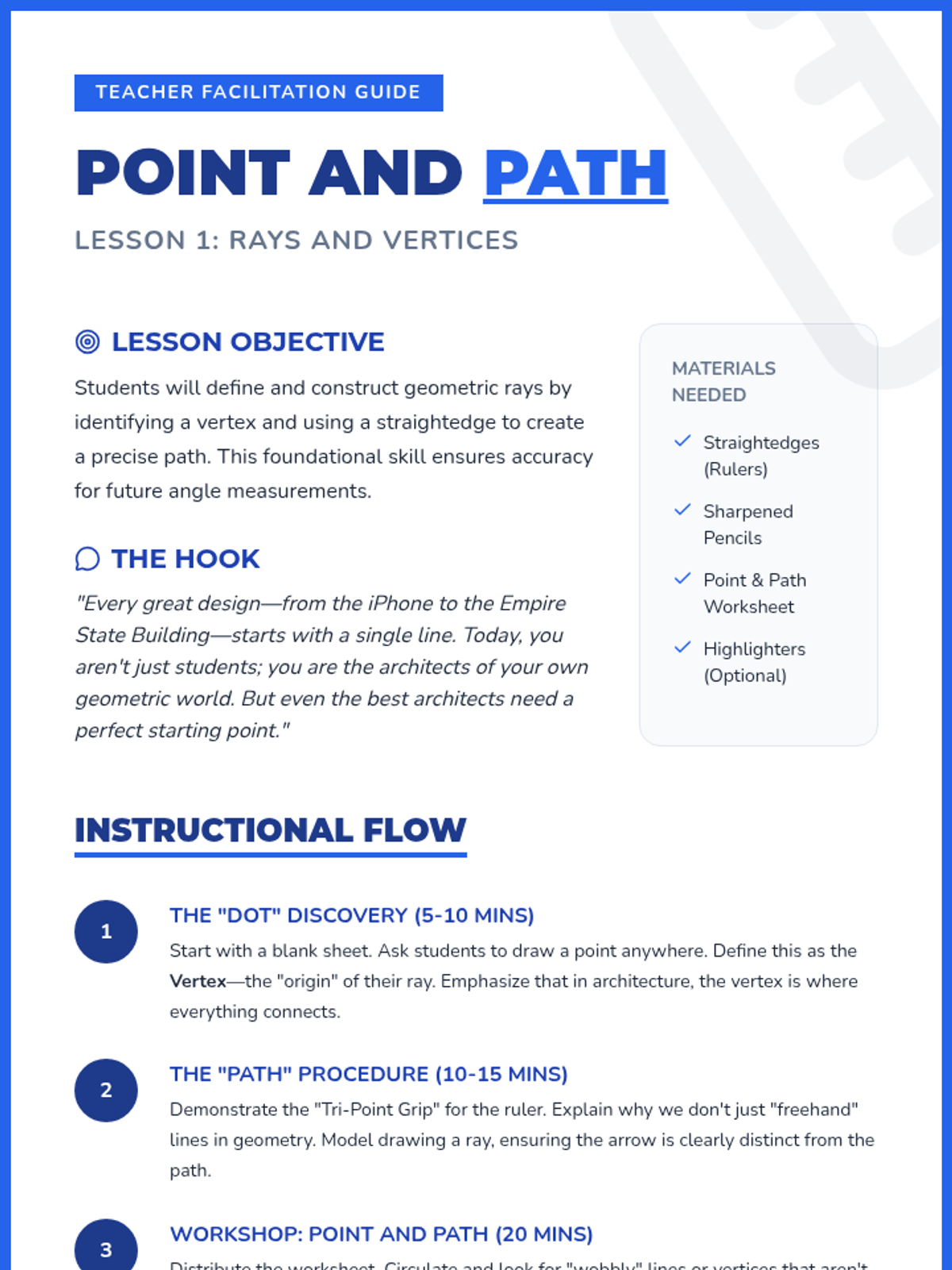
Students learn the foundational components of an angle by practicing how to draw precise rays and identify vertices using a straightedge.
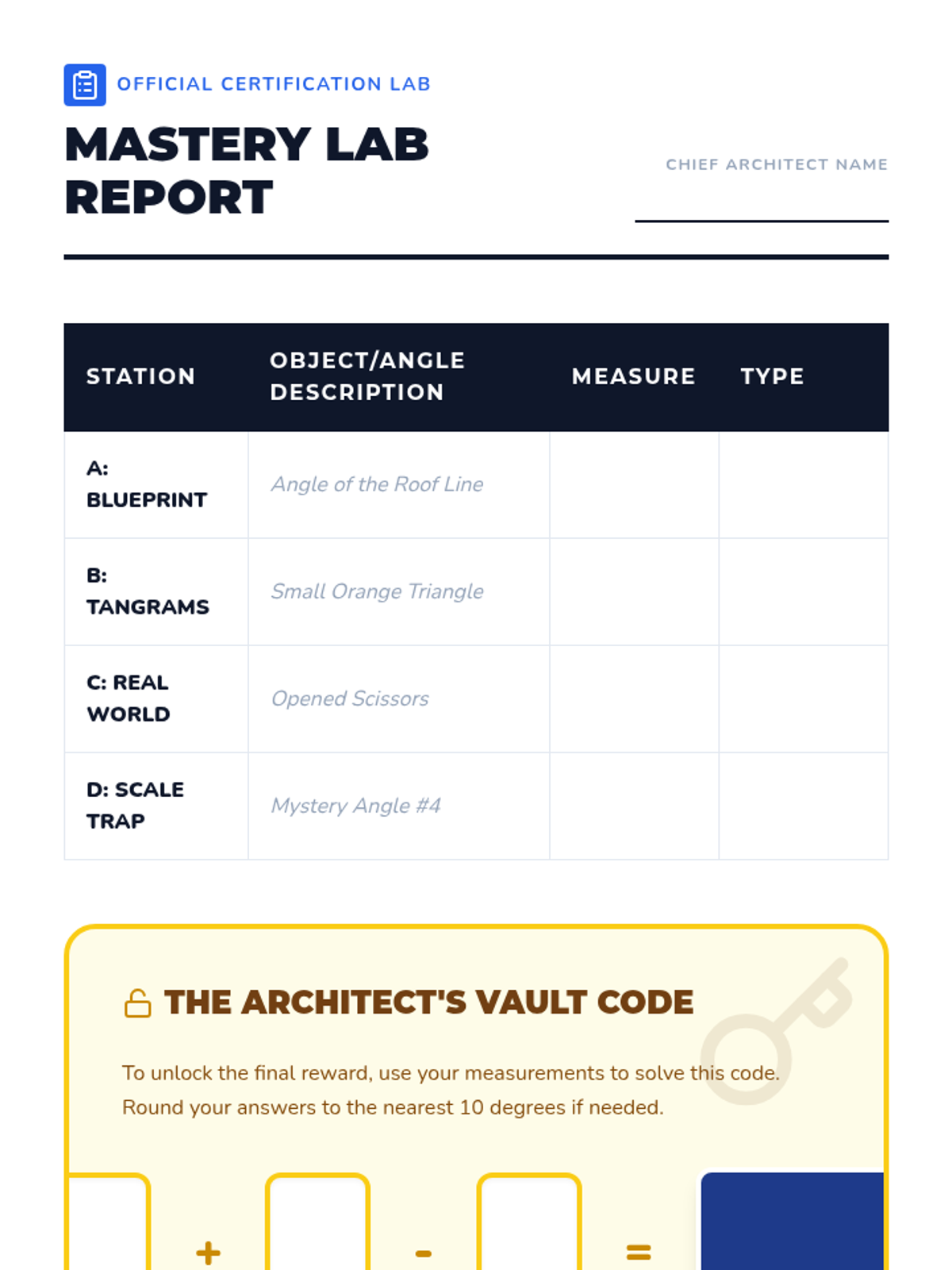
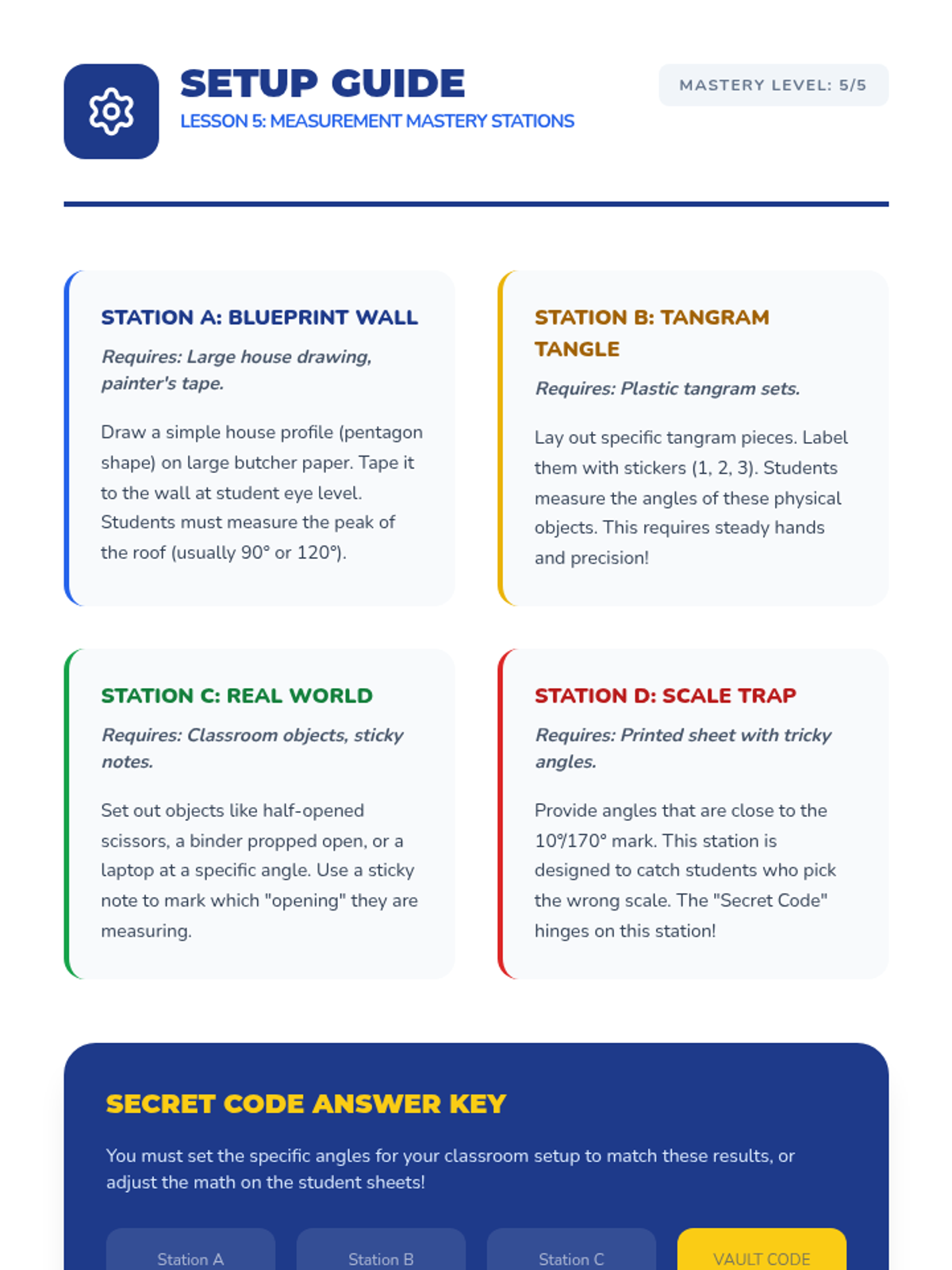
A cumulative lab experience where students rotate through measurement stations. They measure angles on worksheets, physical tangram shapes, and real-world blueprint diagrams to decode a 'Secret Architect Code'.
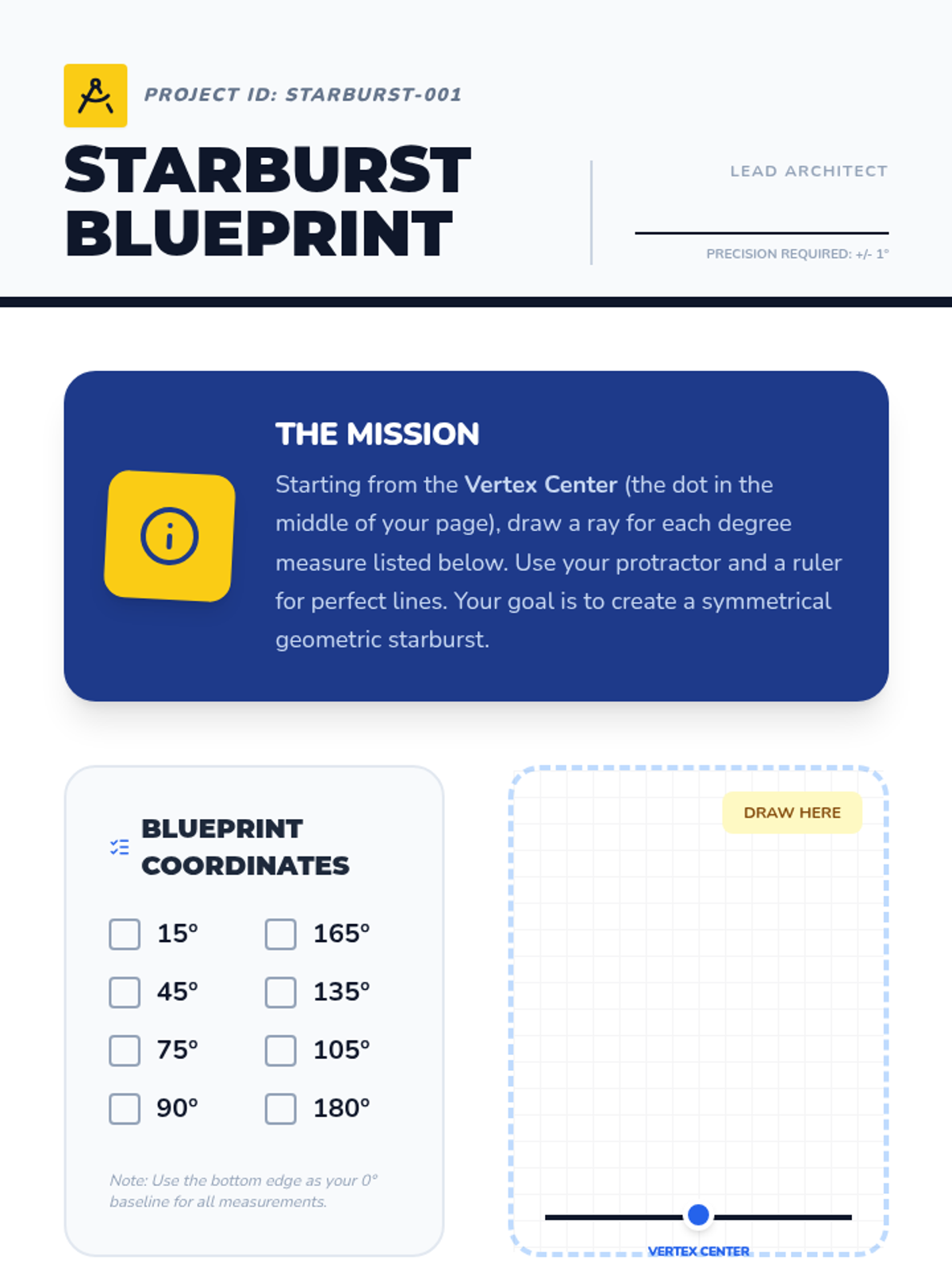
Students reverse the process by constructing angles of specific measures. They learn the 3-step drawing process: Base Ray -> Scale Dot -> Connect. The lesson culminates in the 'Blueprint Starburst' project.
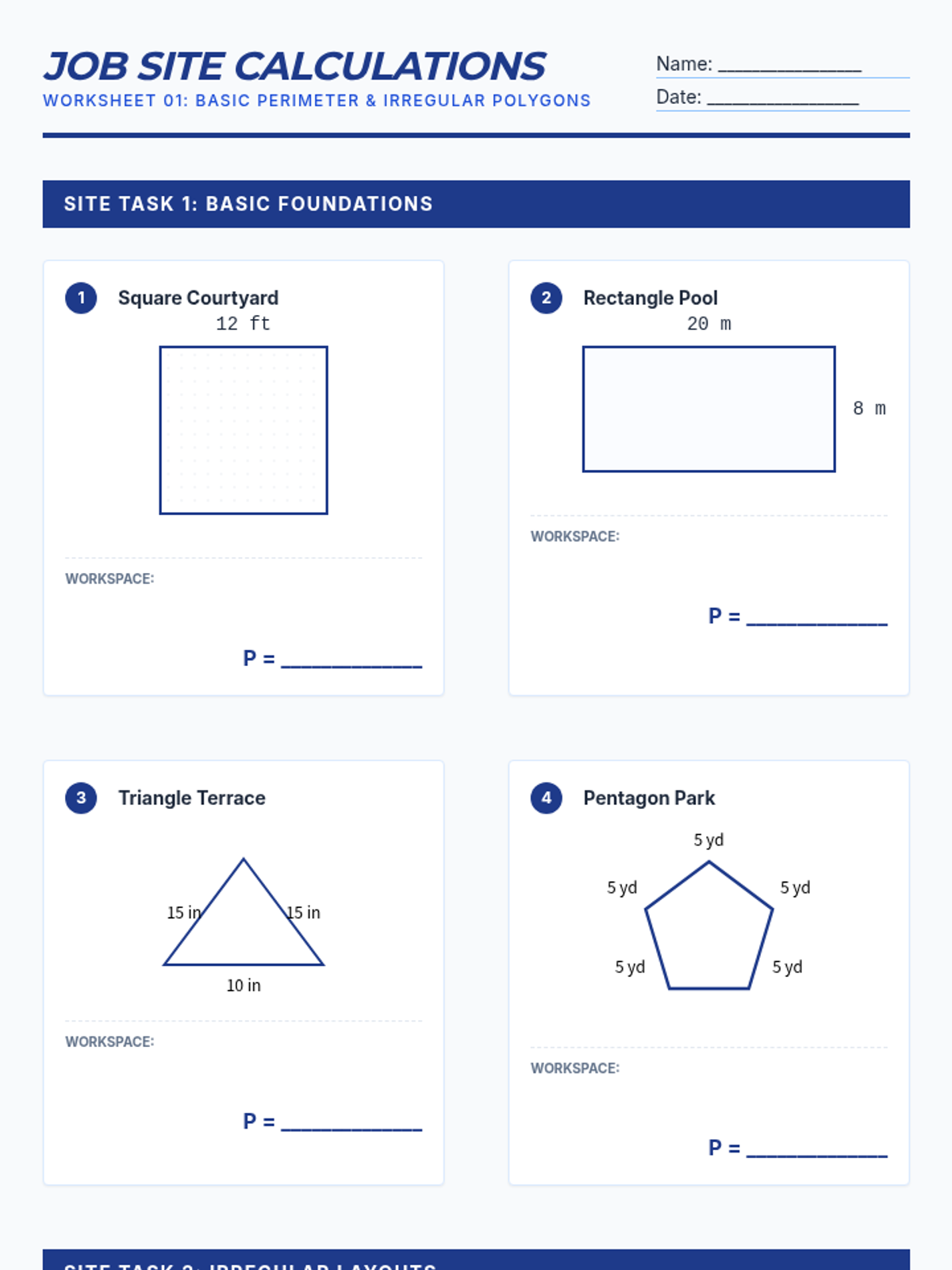
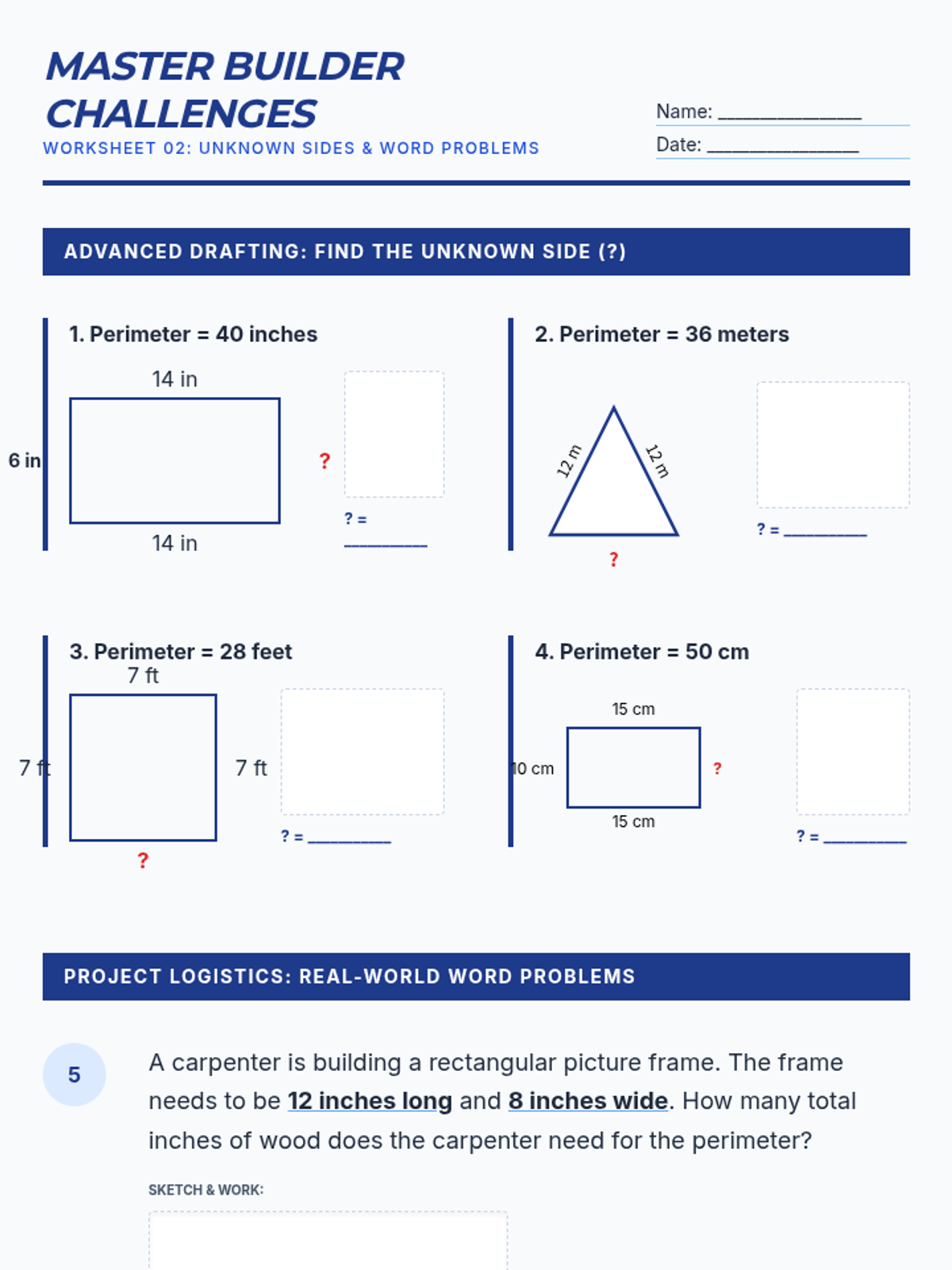
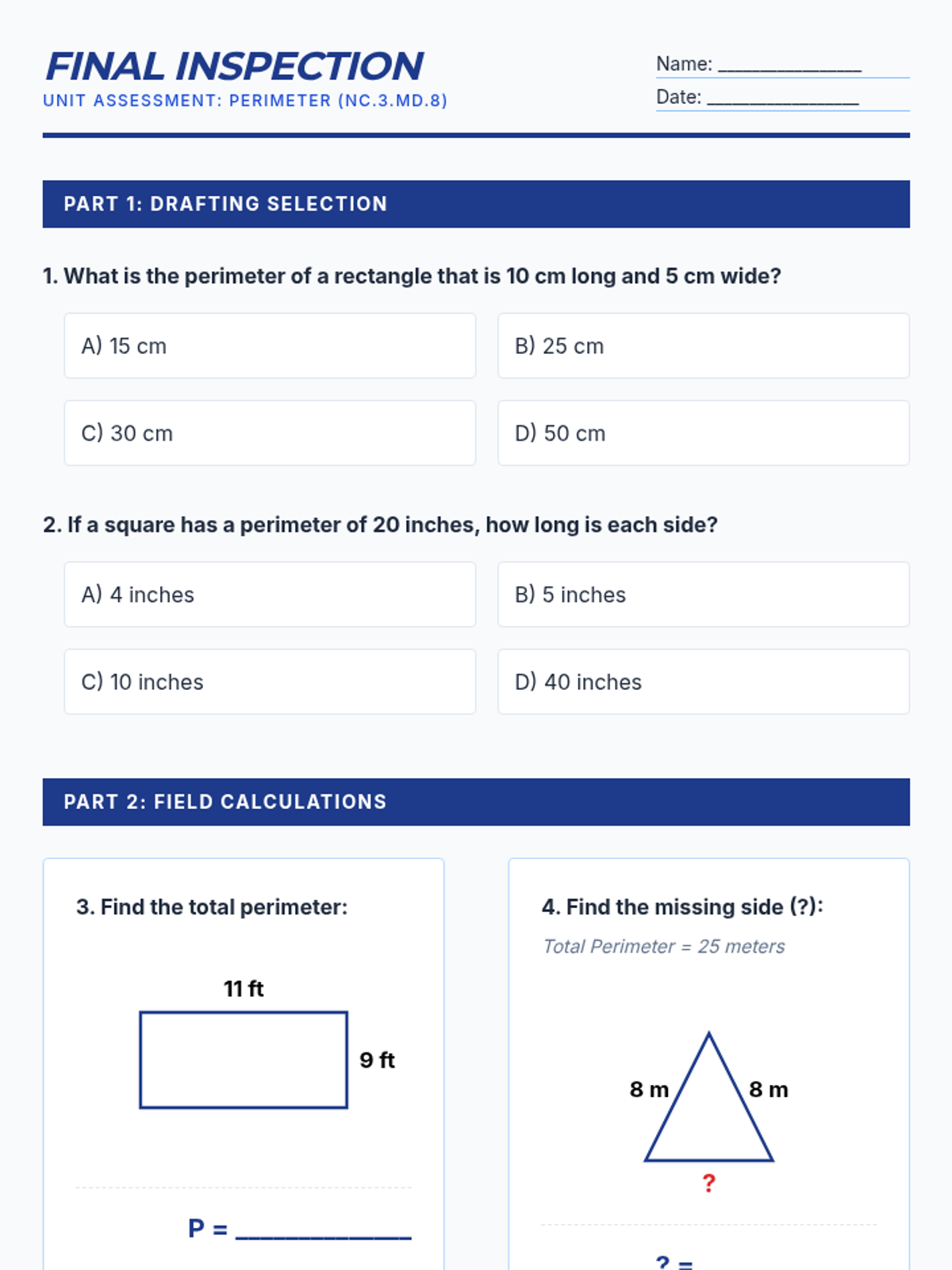
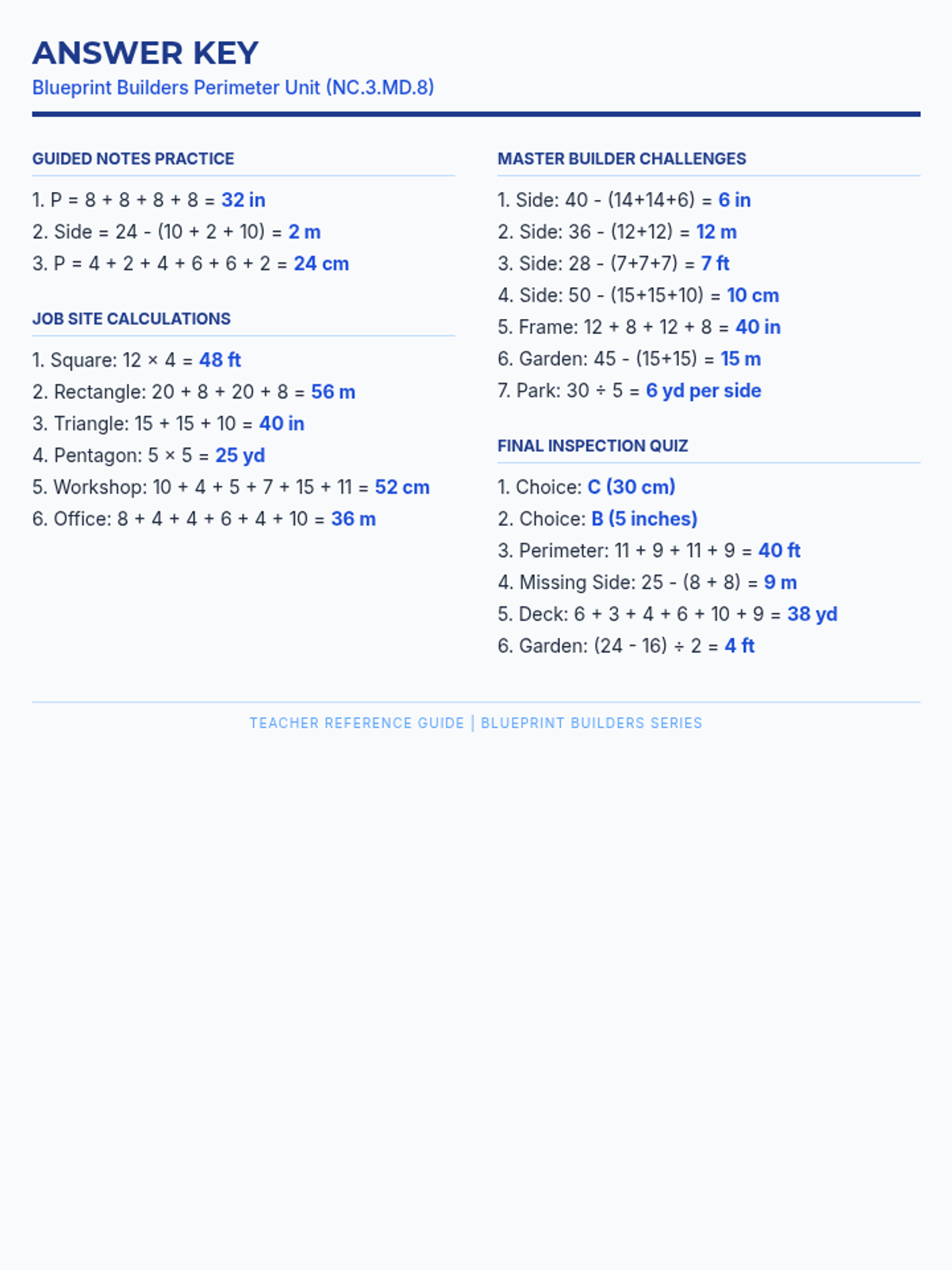
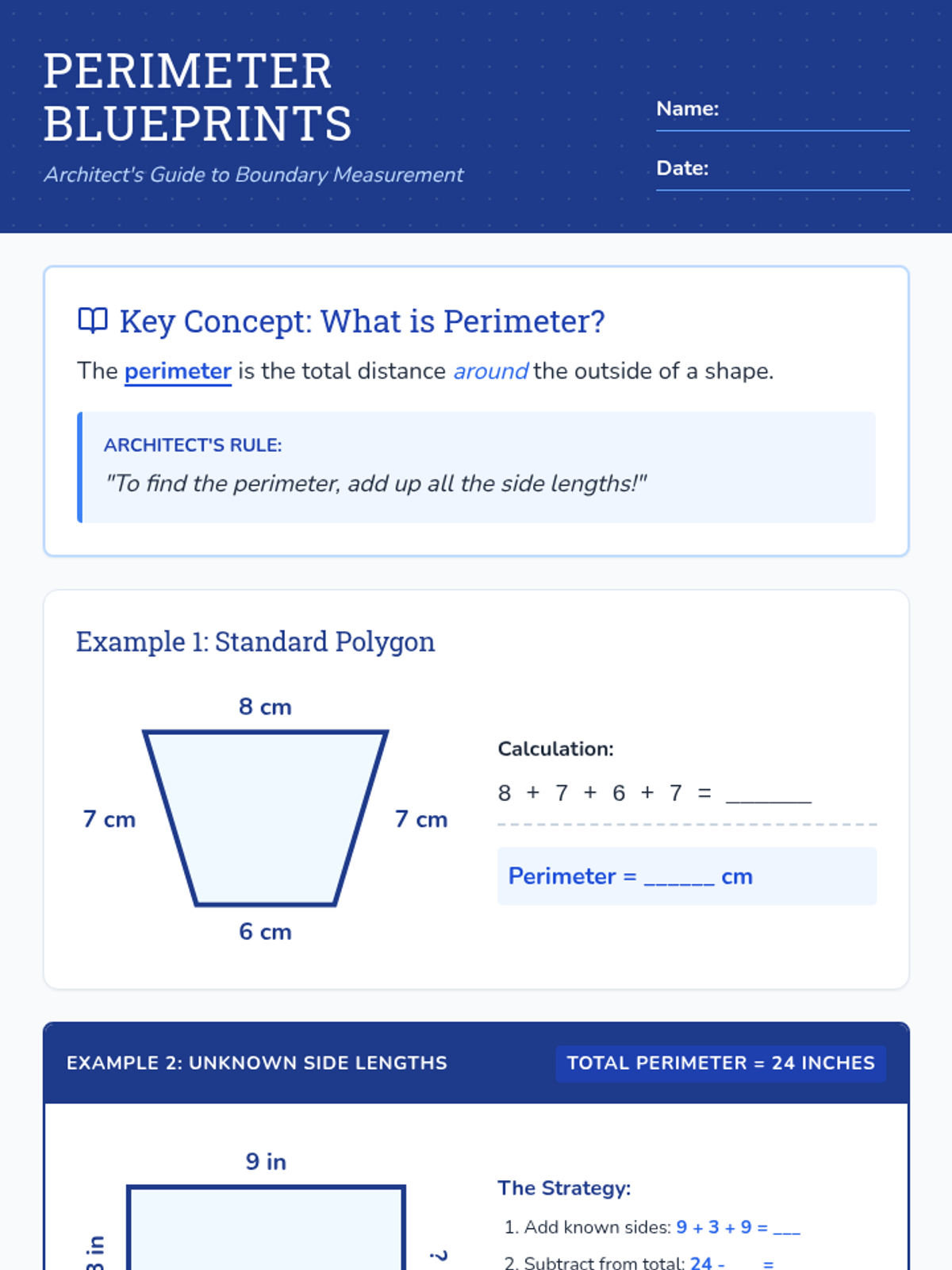
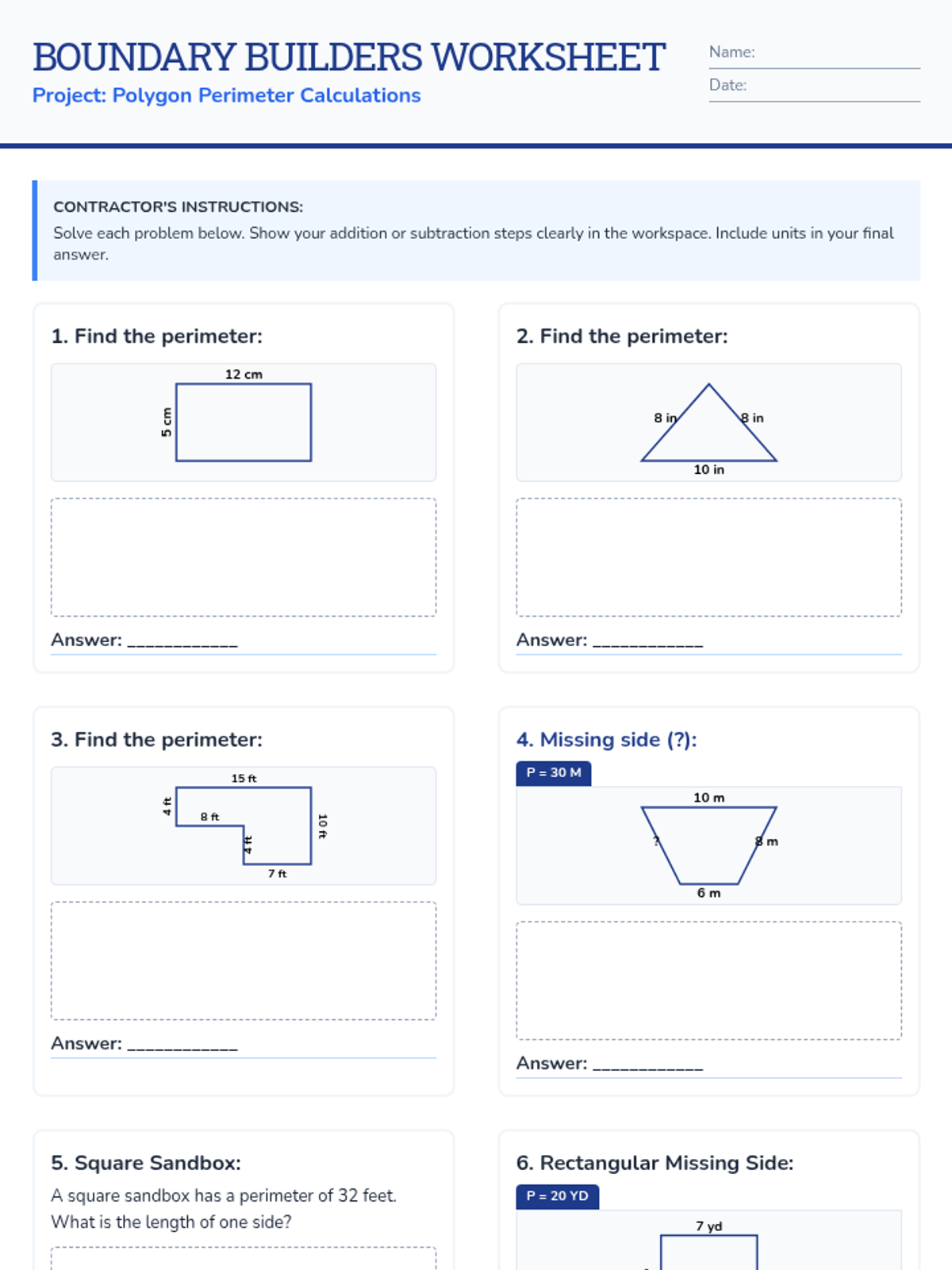
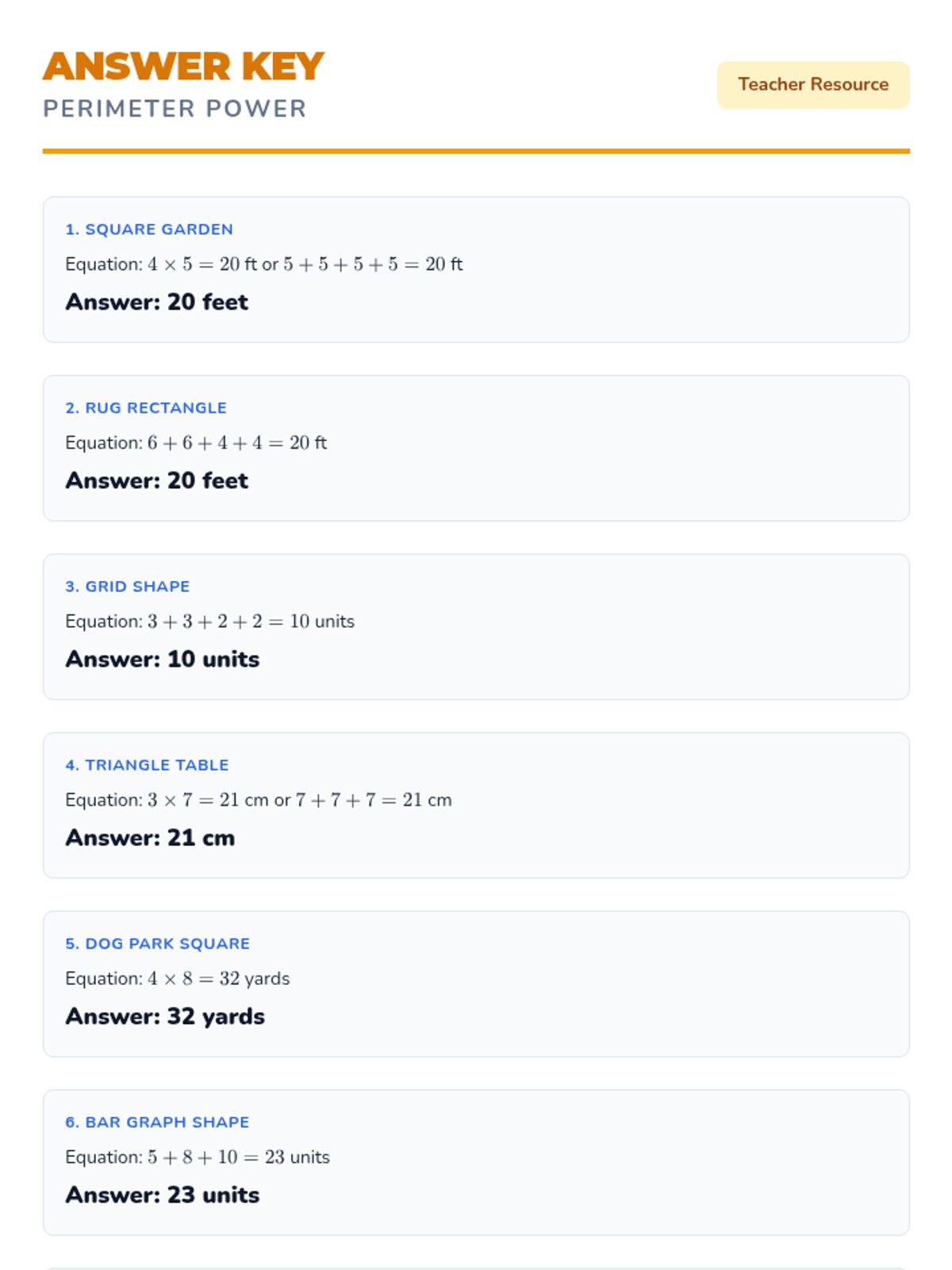
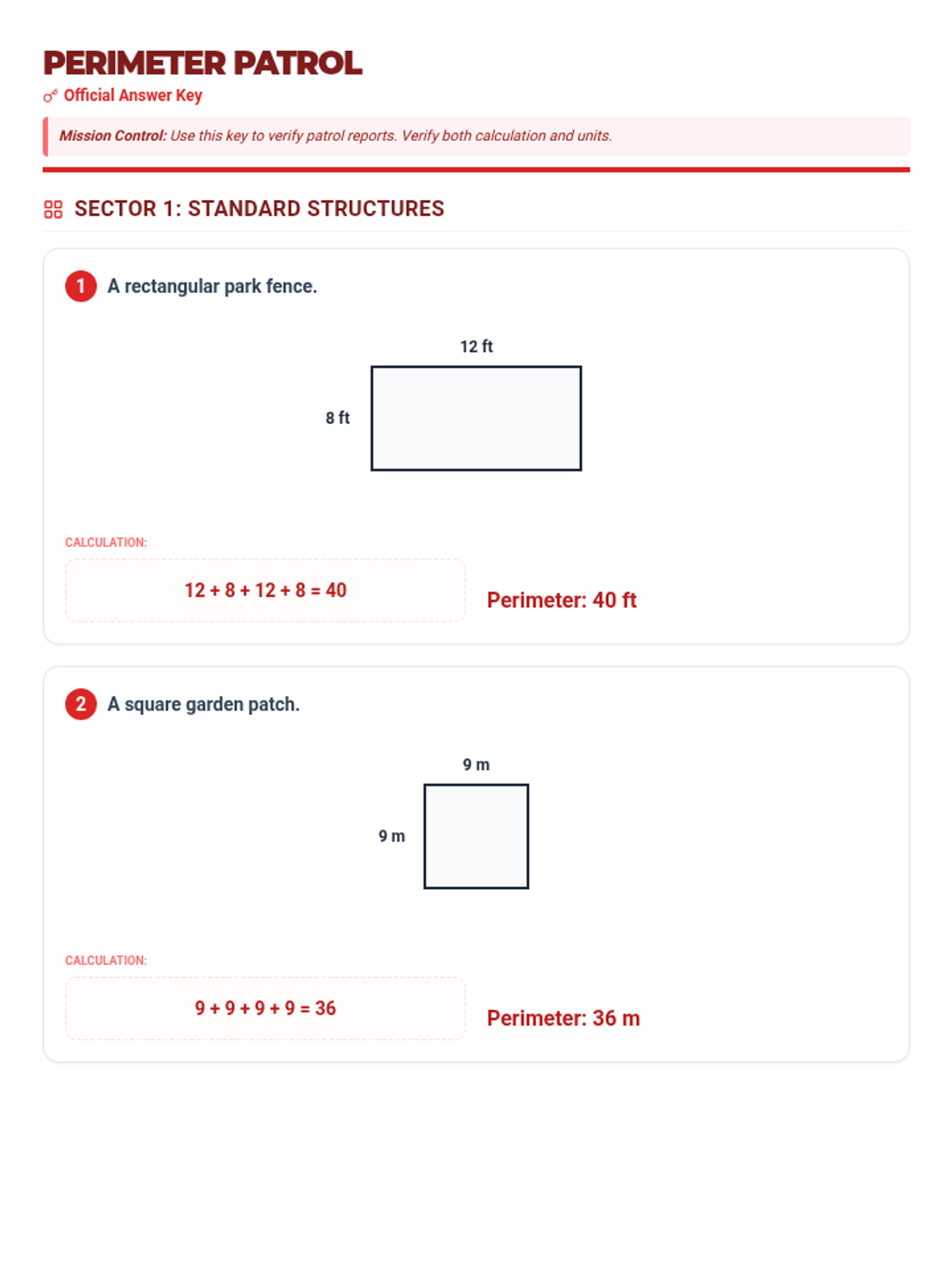
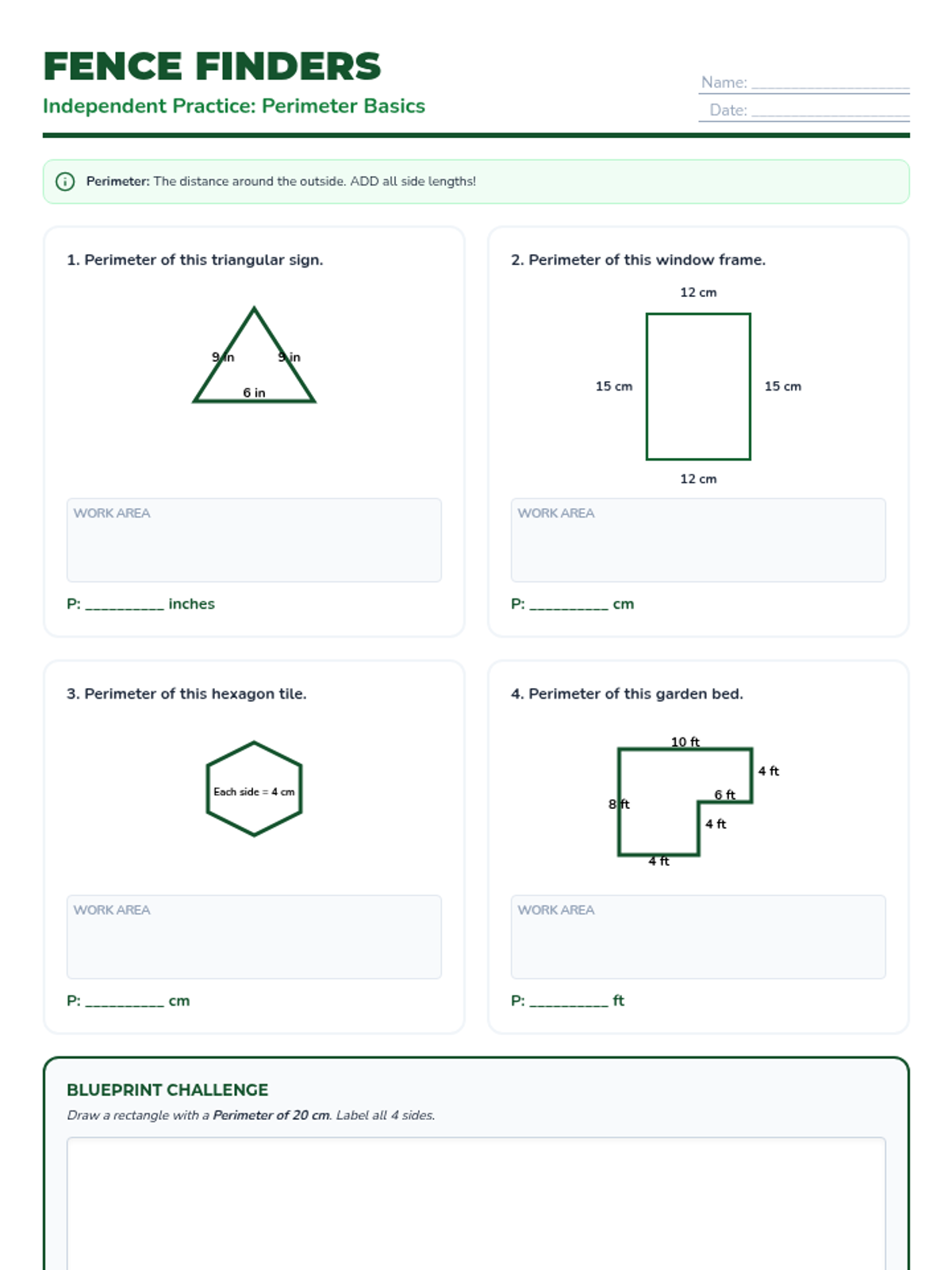
A comprehensive unit on finding the perimeter of various polygons, including unknown side lengths and real-world word problems, themed around architectural blueprints.
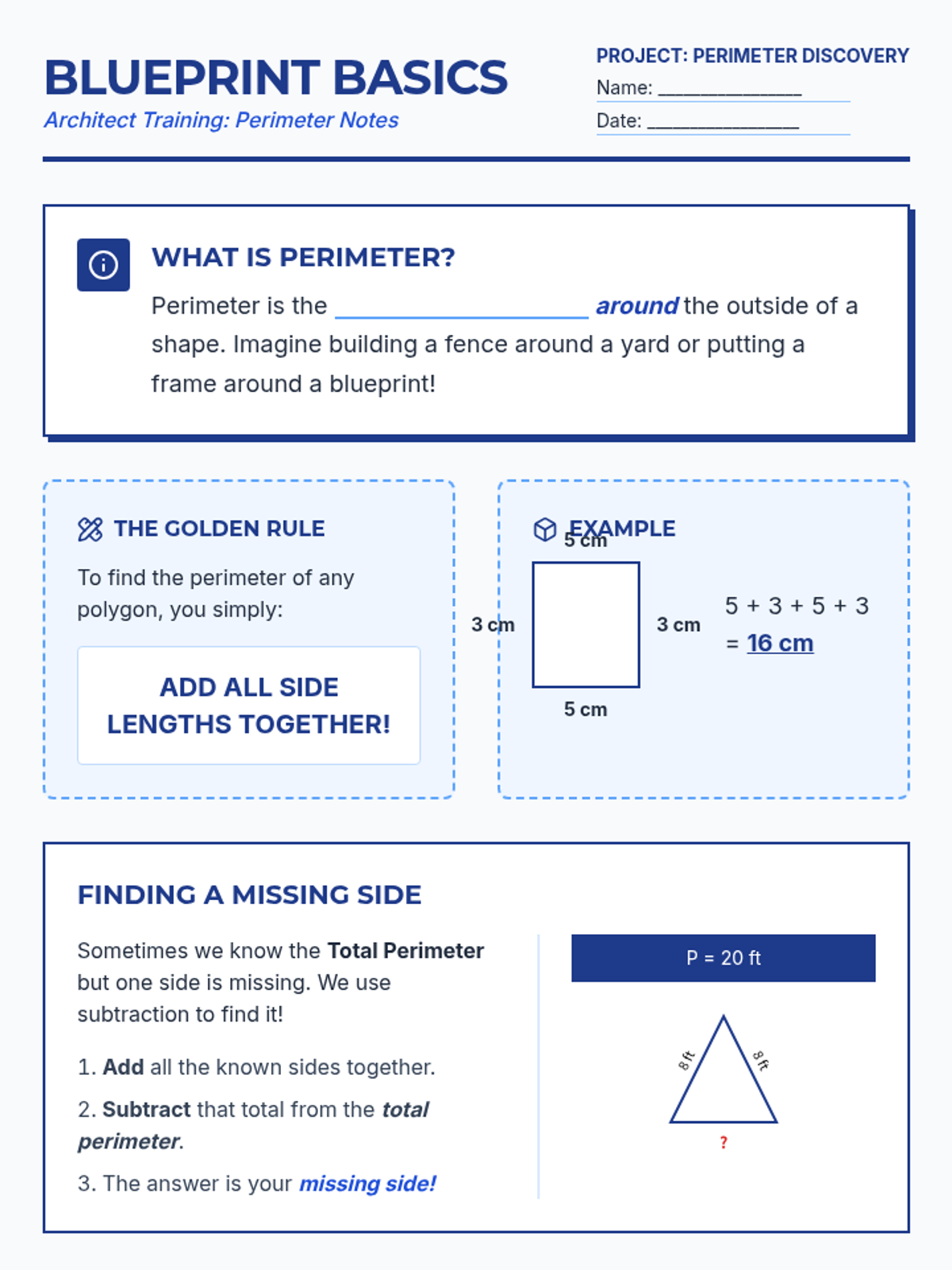
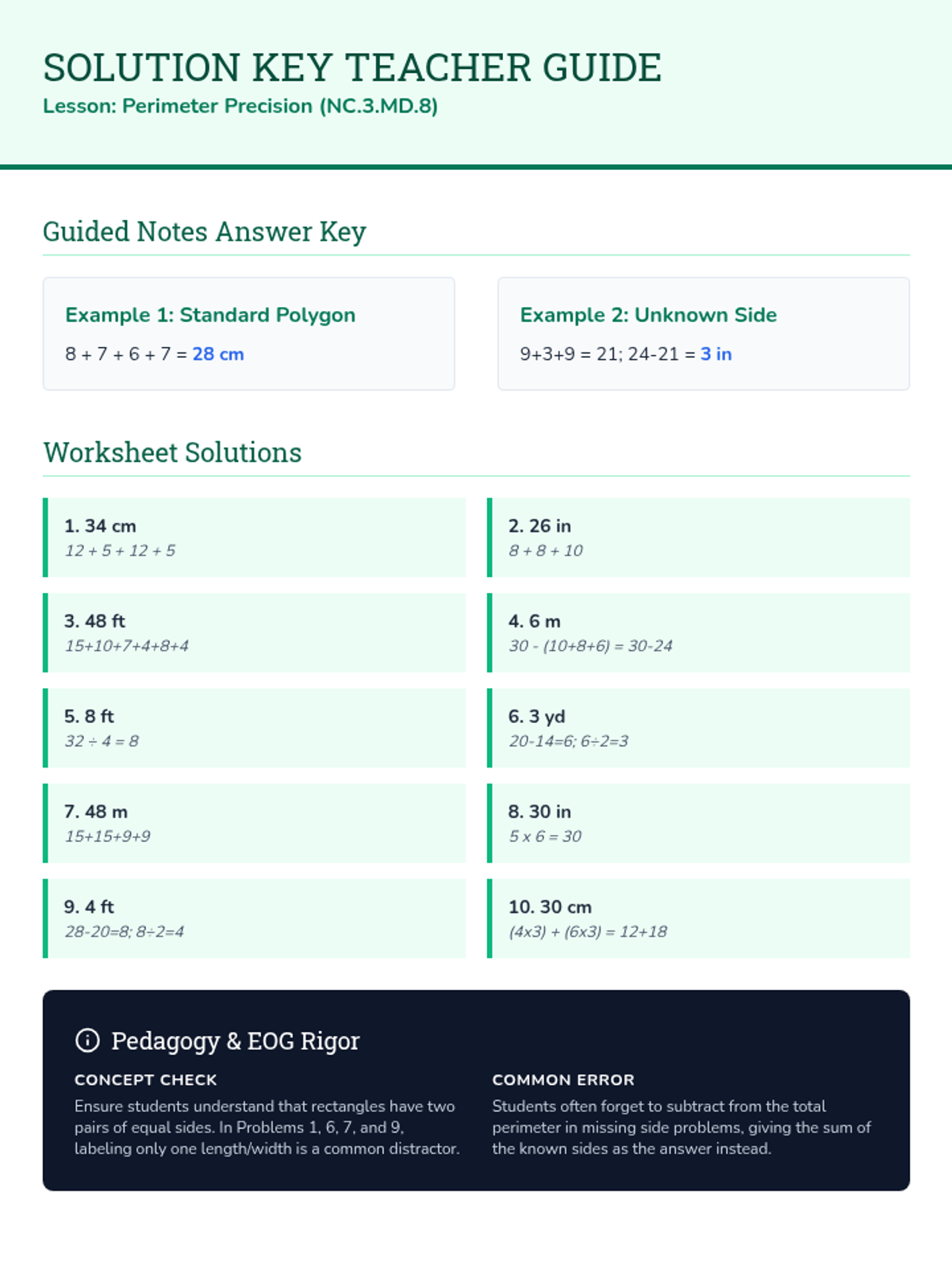
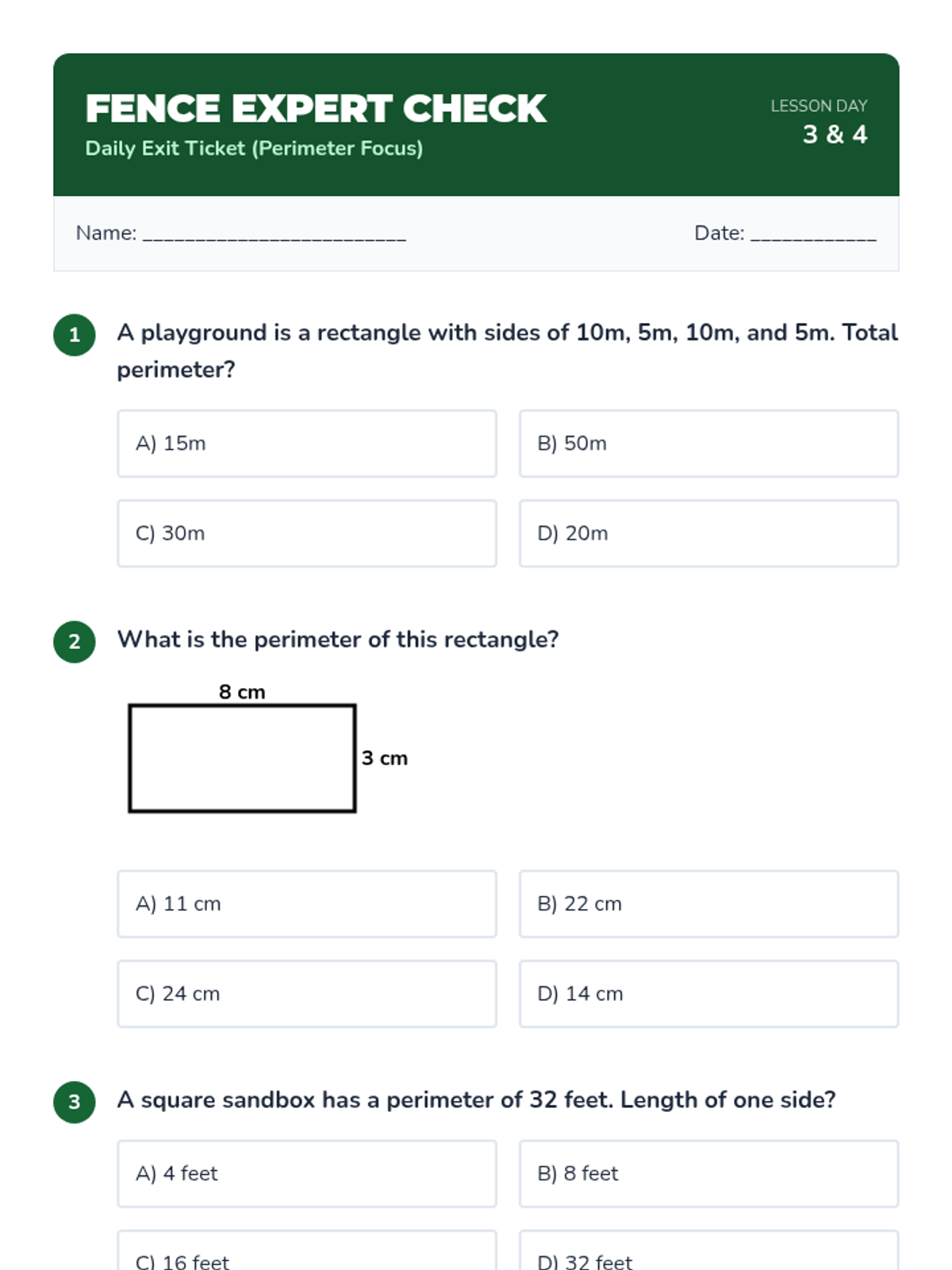
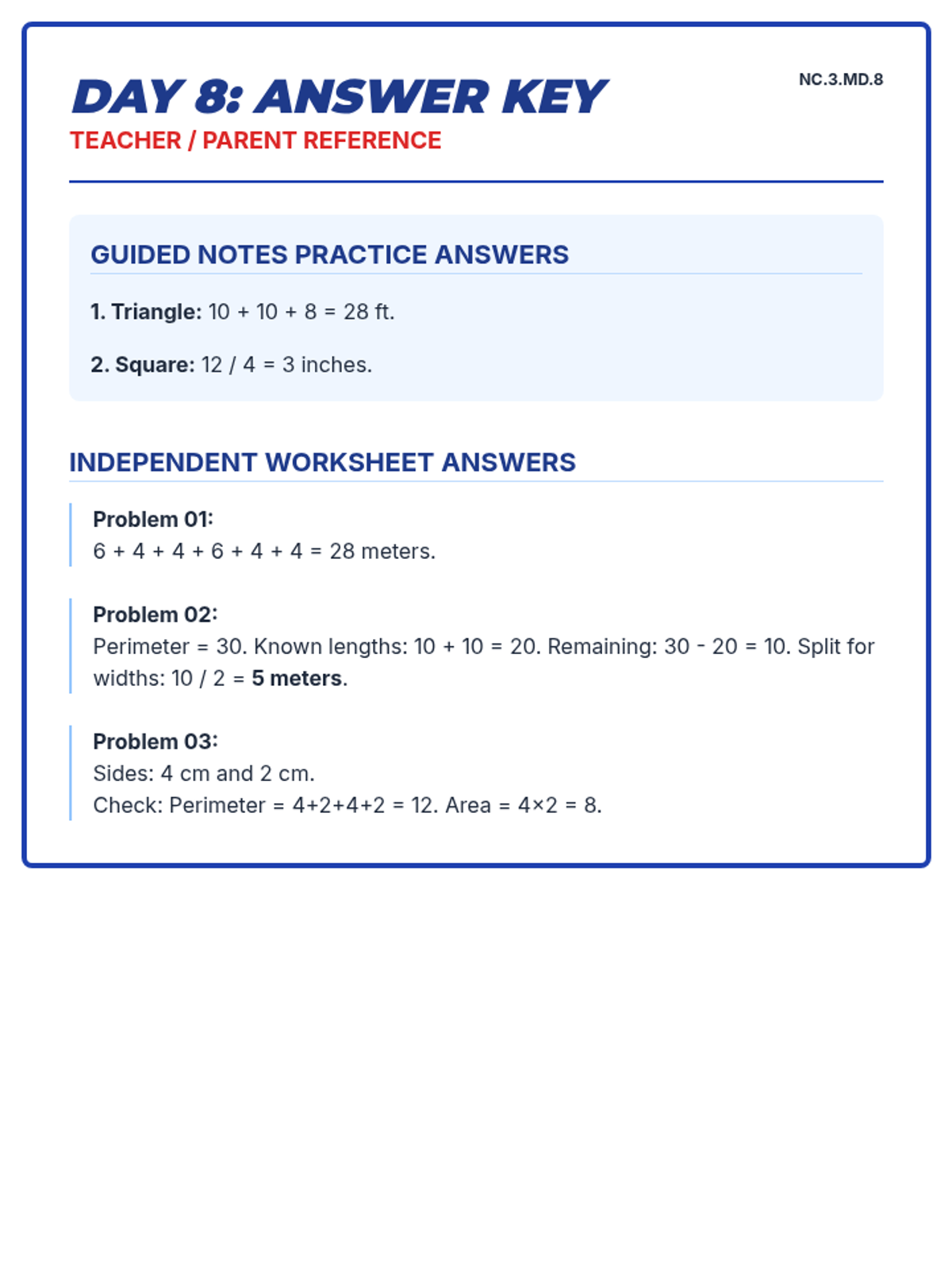
A comprehensive lesson on finding the perimeter of polygons and determining unknown side lengths when given the total perimeter, modeled after NC.3.MD.8 standards.
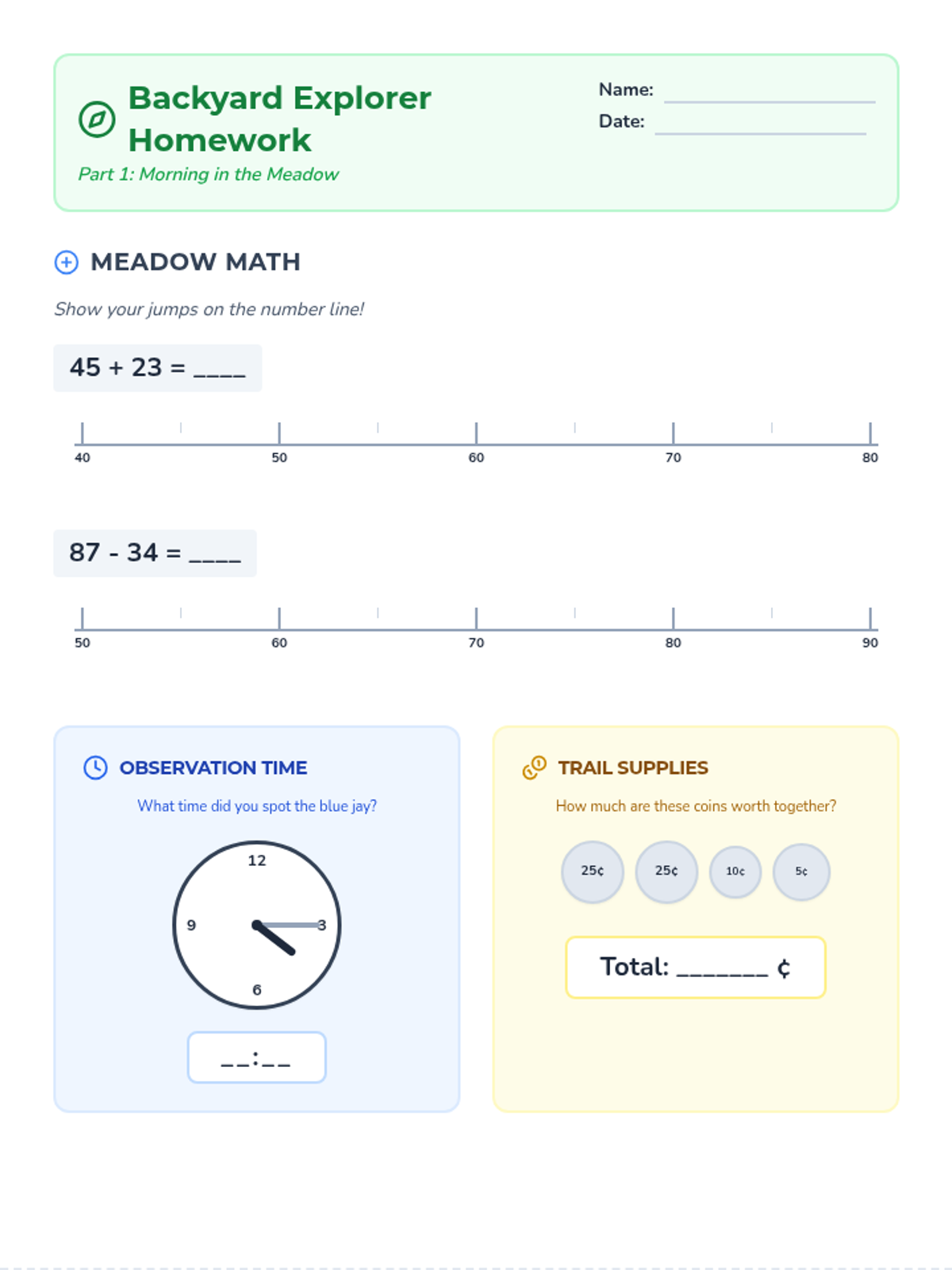
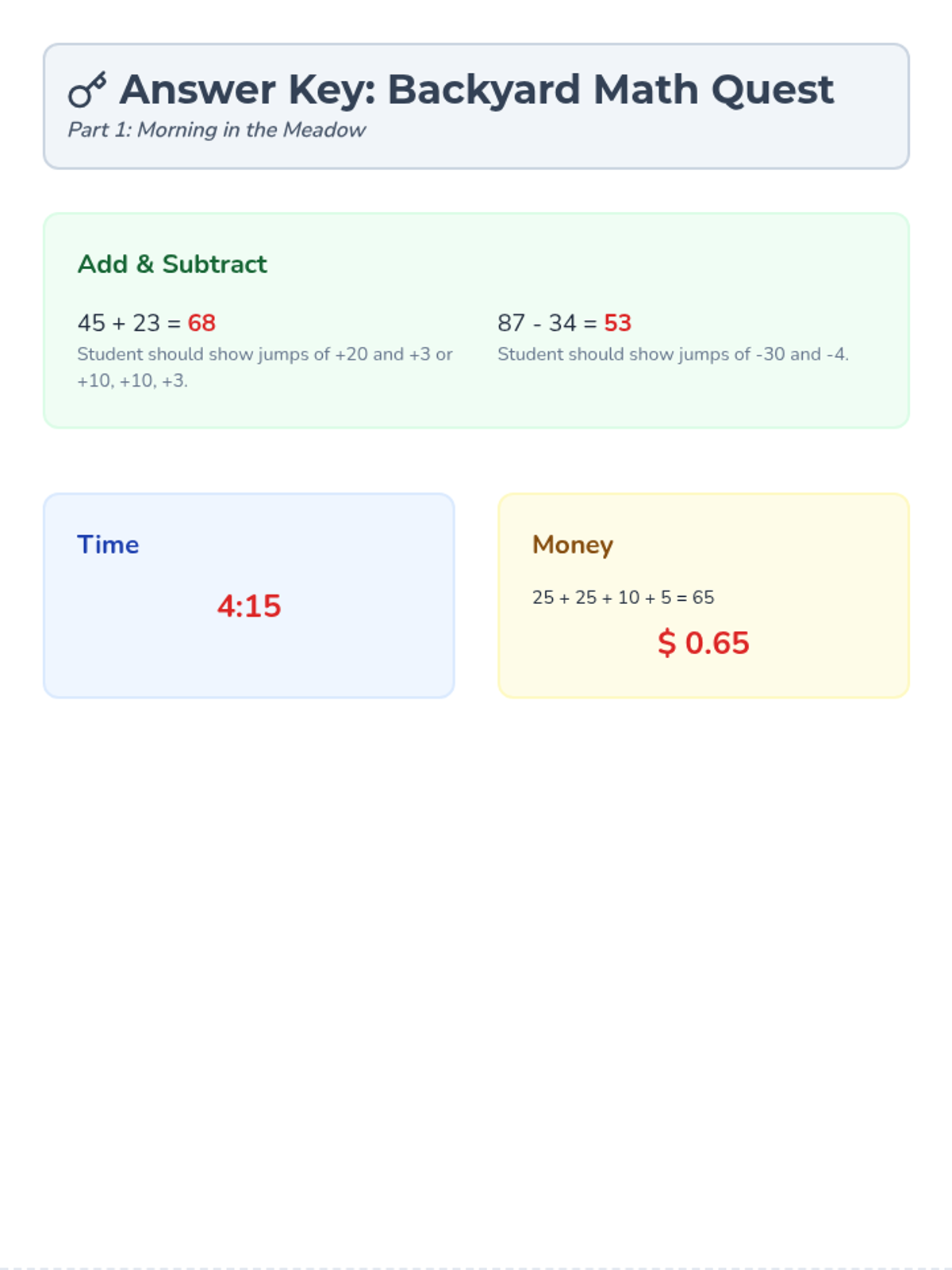
A comprehensive mixed review of 3rd-grade math concepts including arithmetic, time, money, fractions, and multiplication, all themed around a backyard exploration.
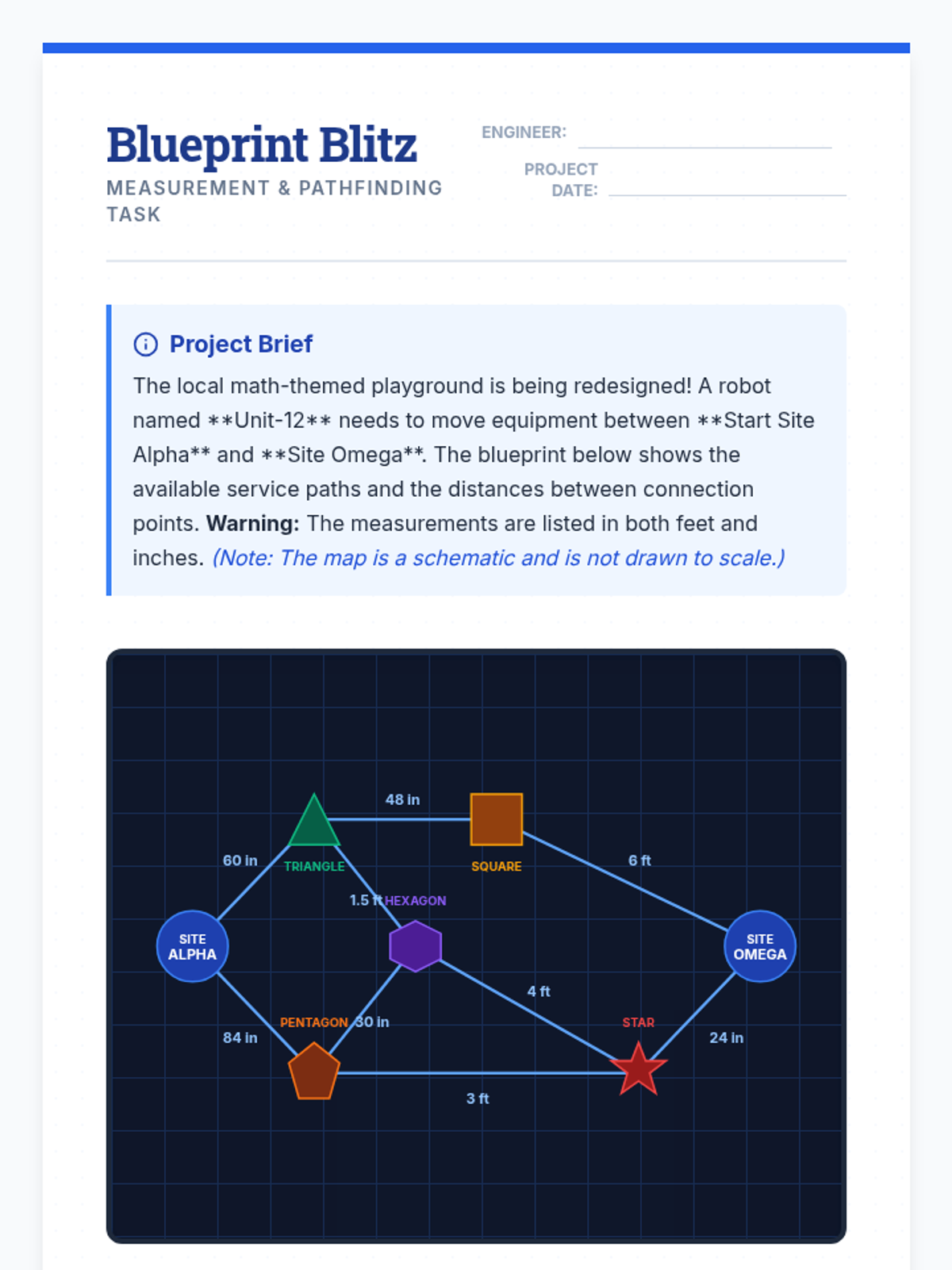
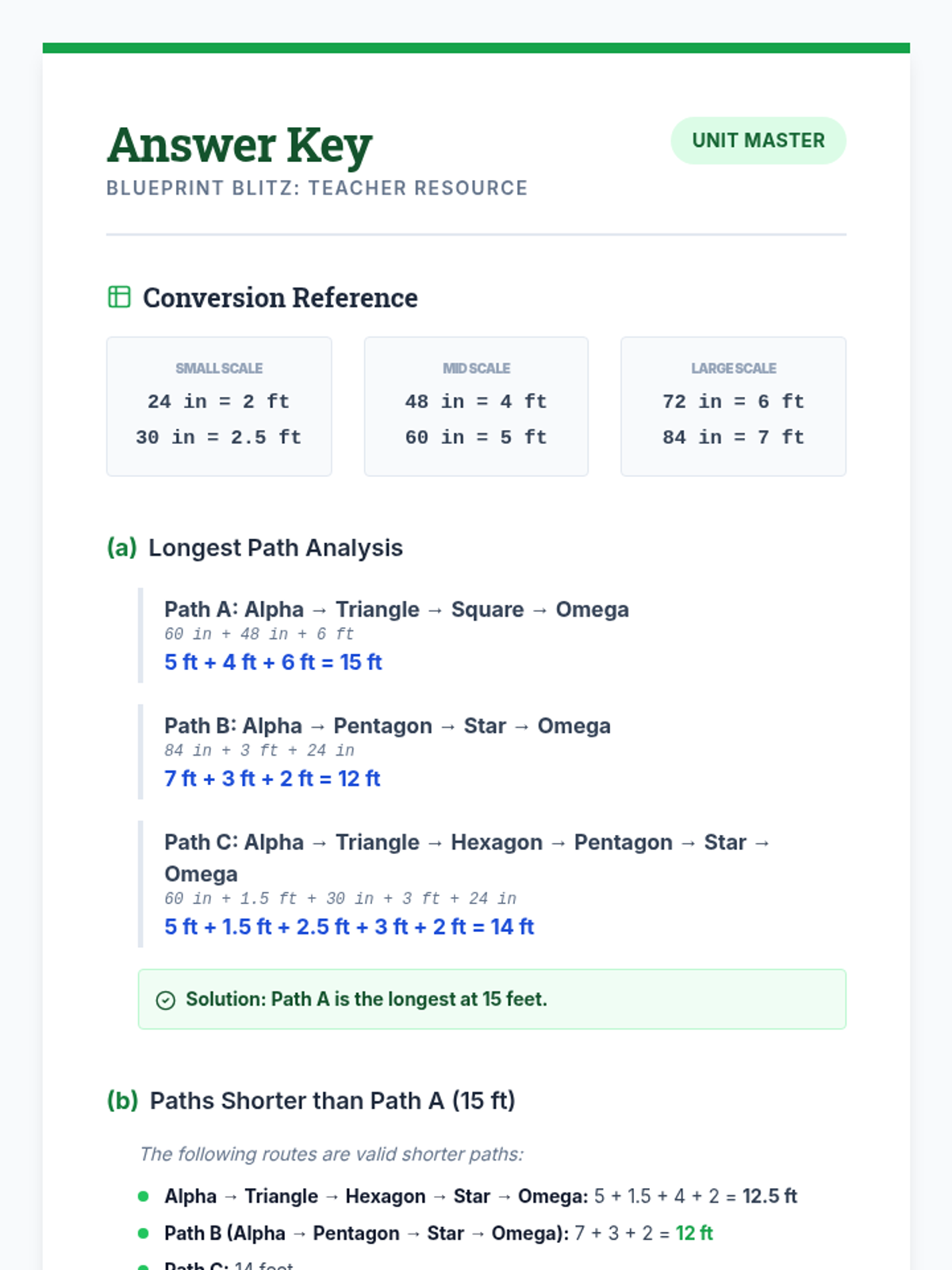
A lesson focused on unit conversion (feet and inches) through the lens of navigating a complex blueprint map. Students will calculate total distances of various paths and find the most efficient route.
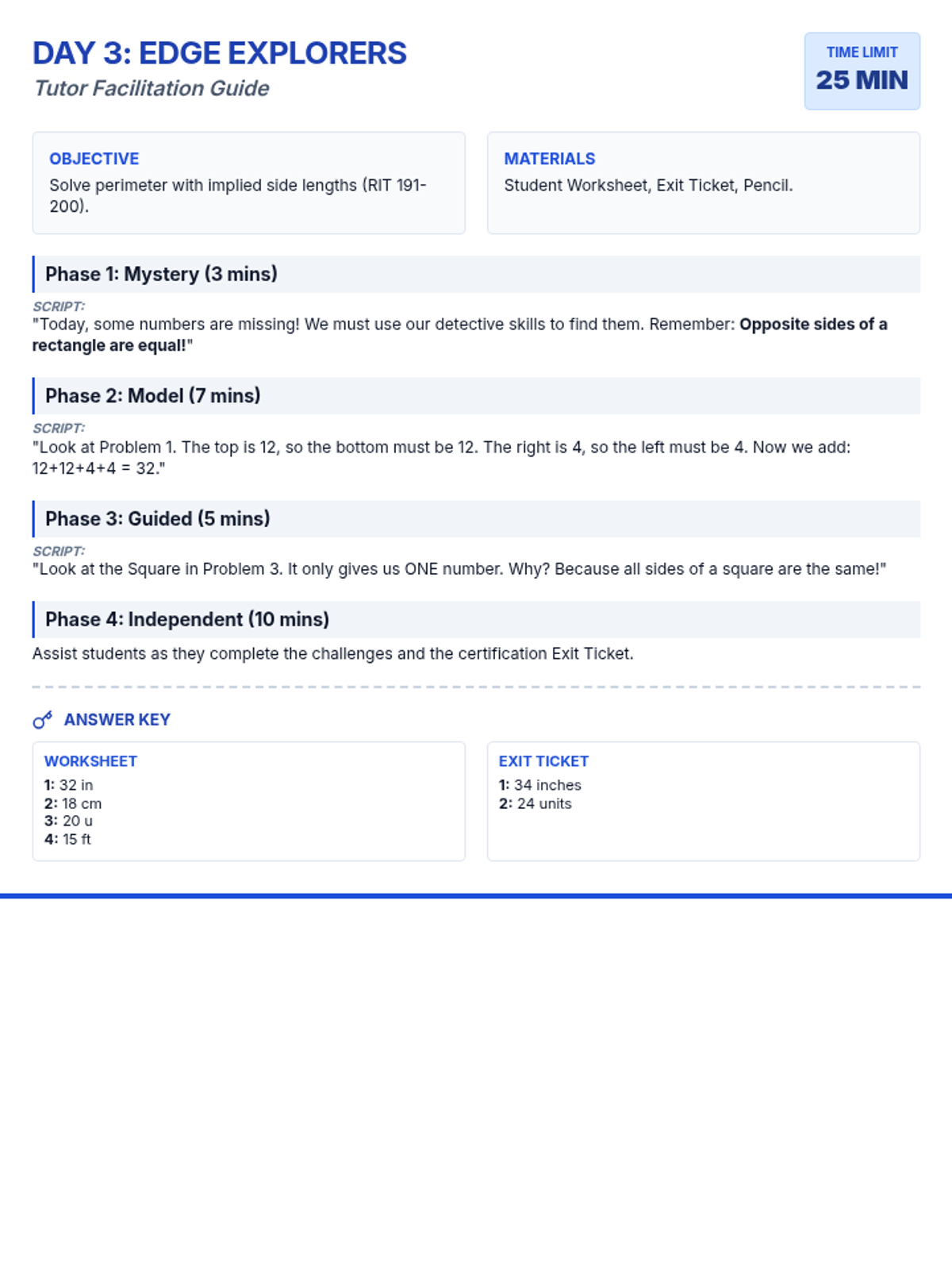
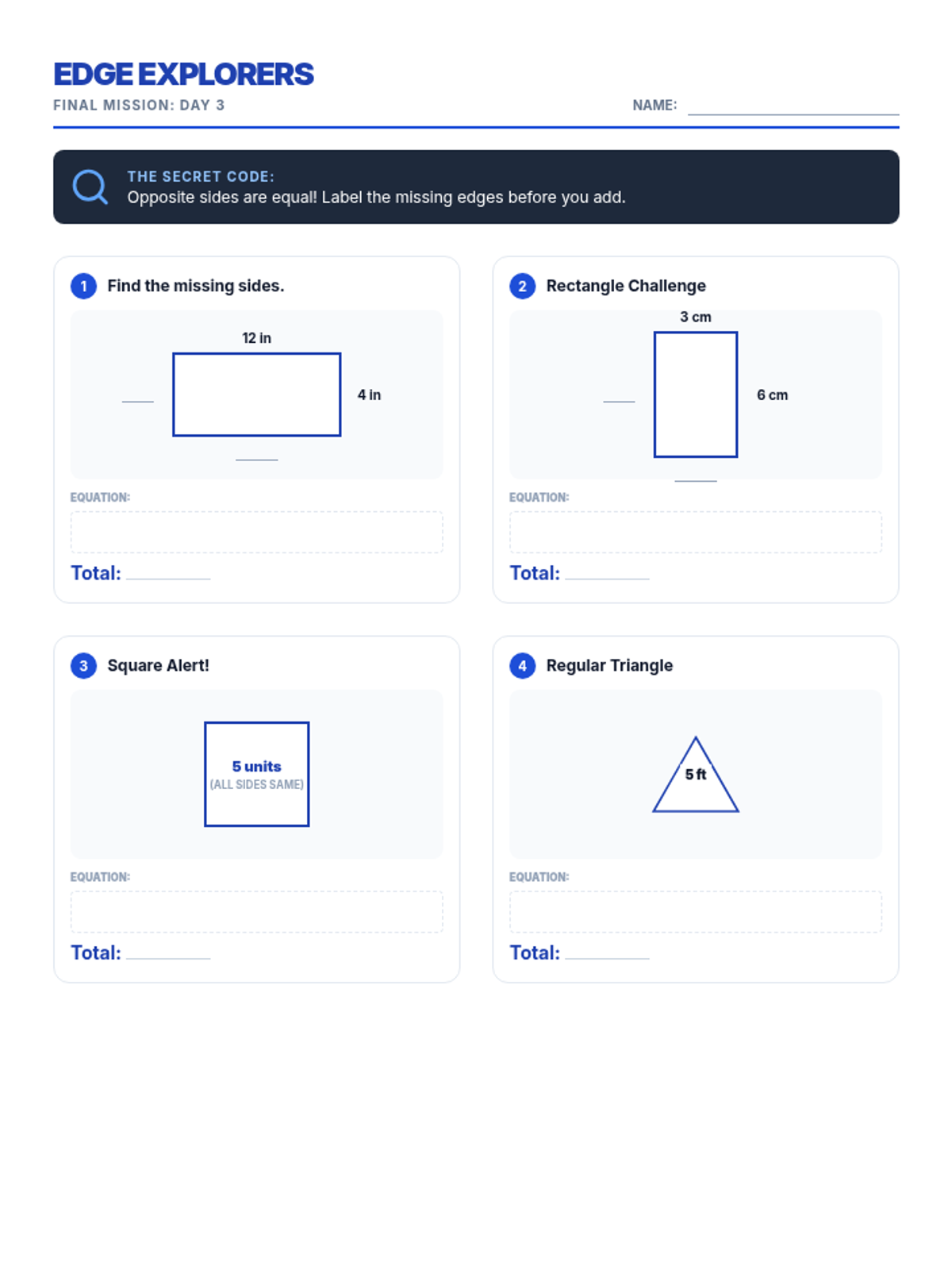
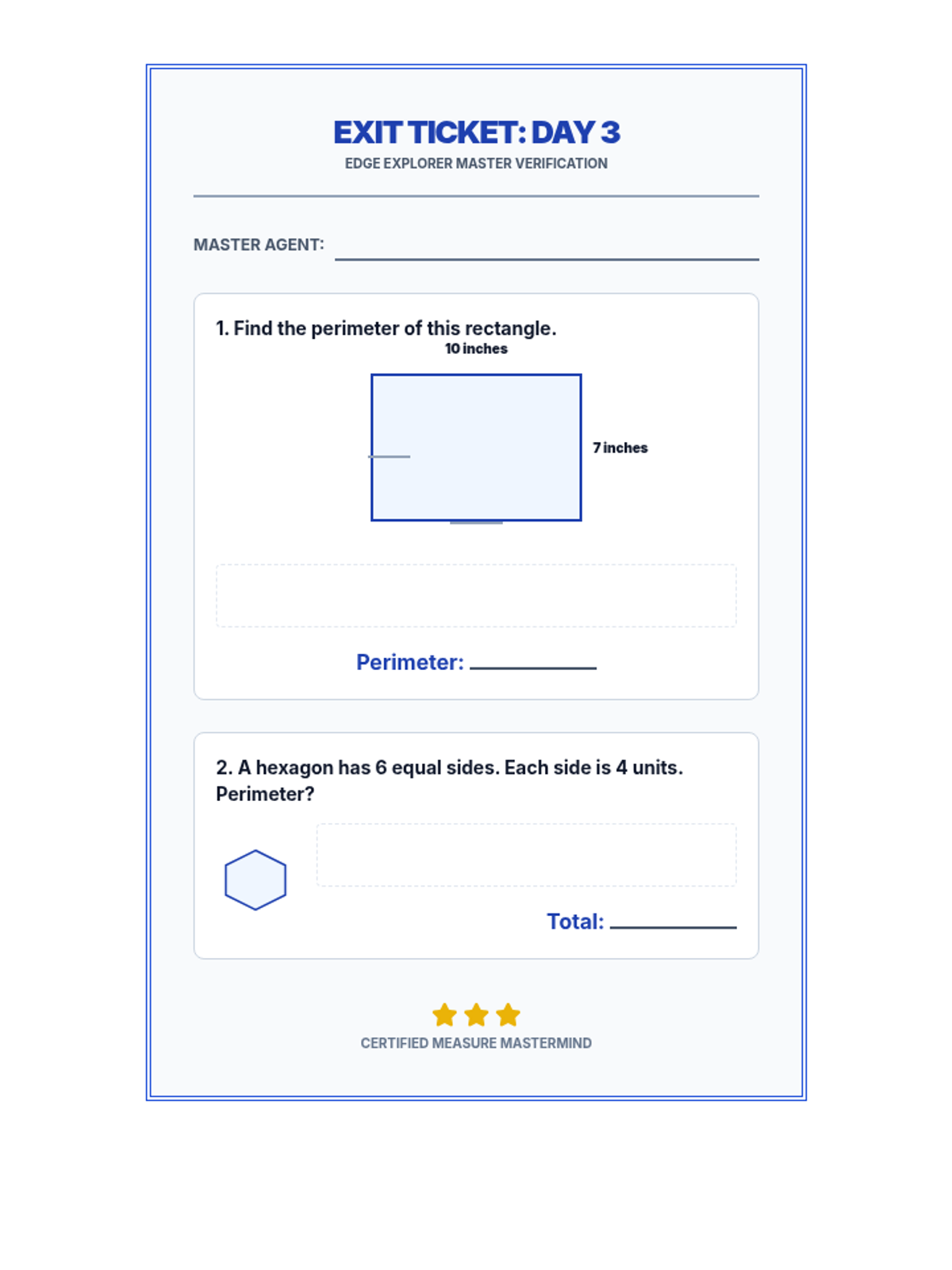
Students solve perimeter problems where some side lengths are implied or shapes are complex (191-200 focus).
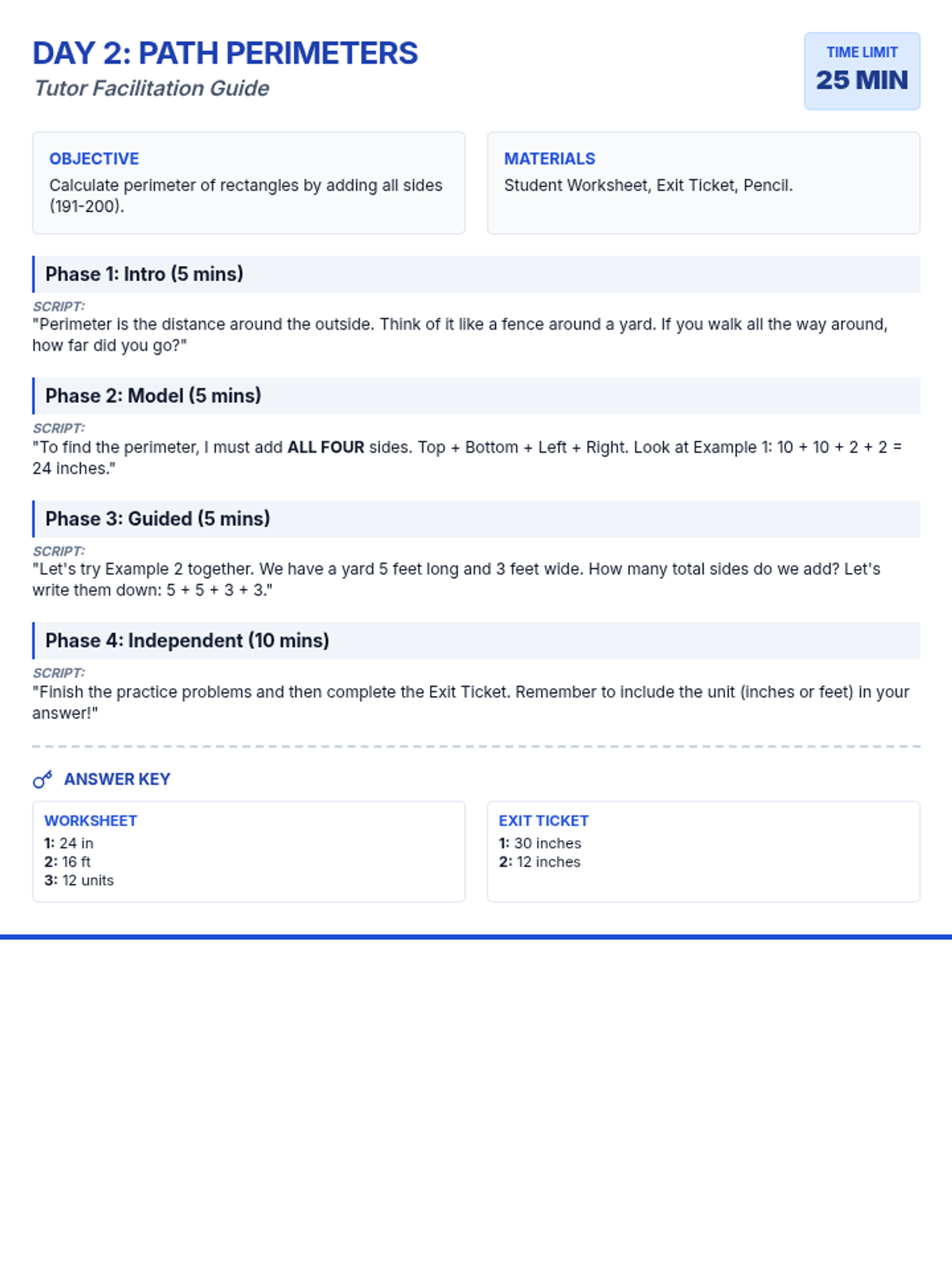
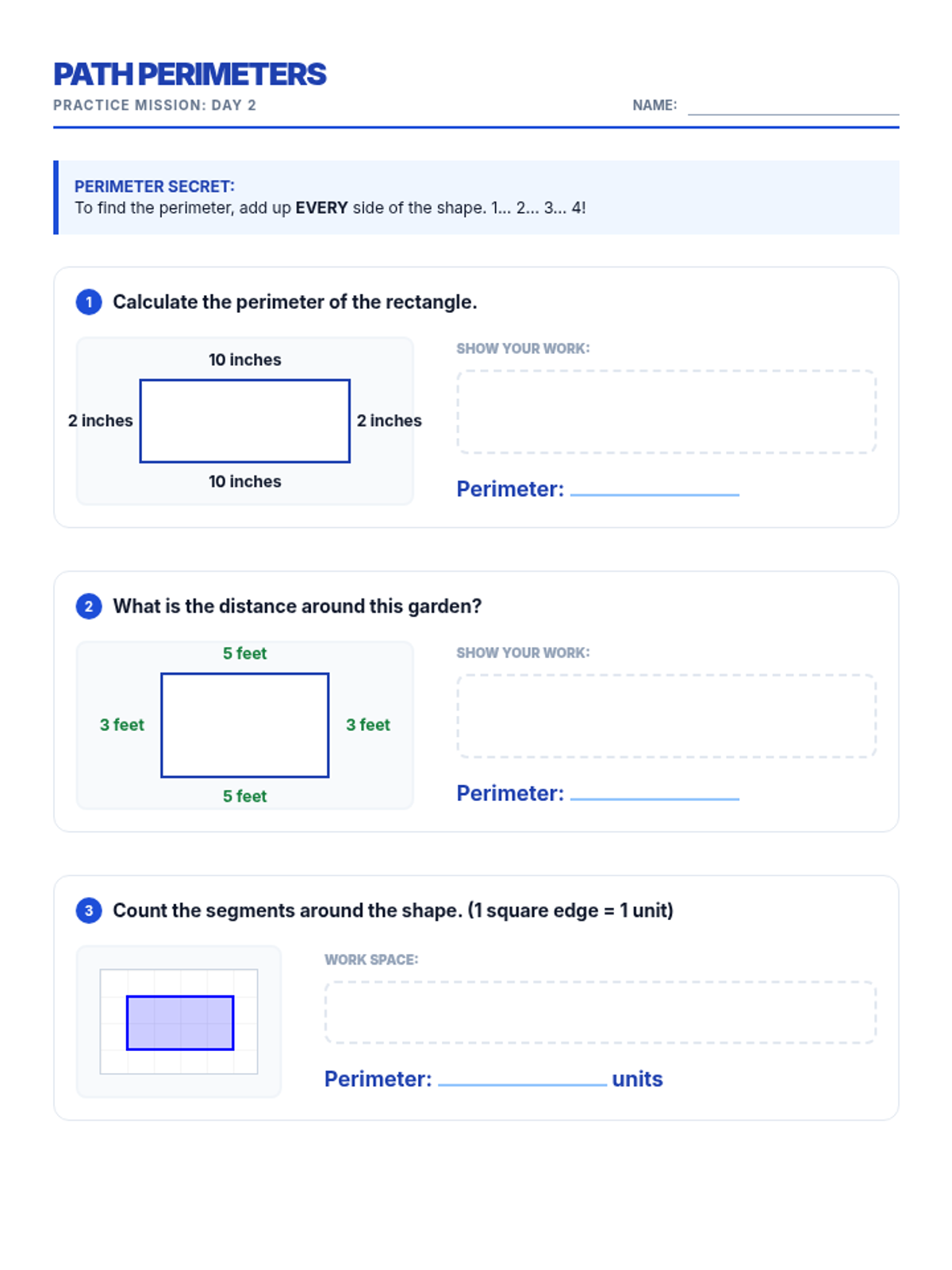
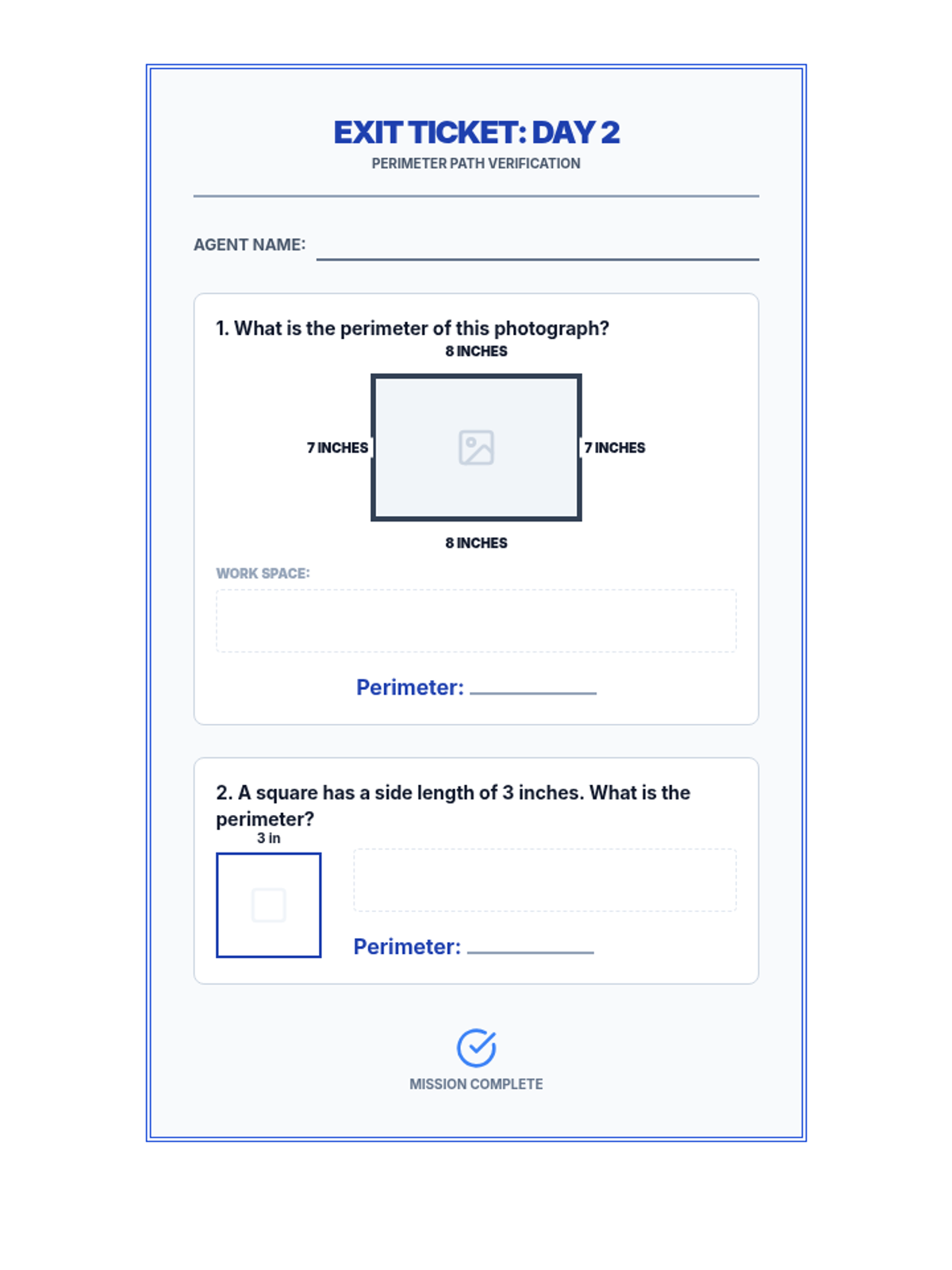
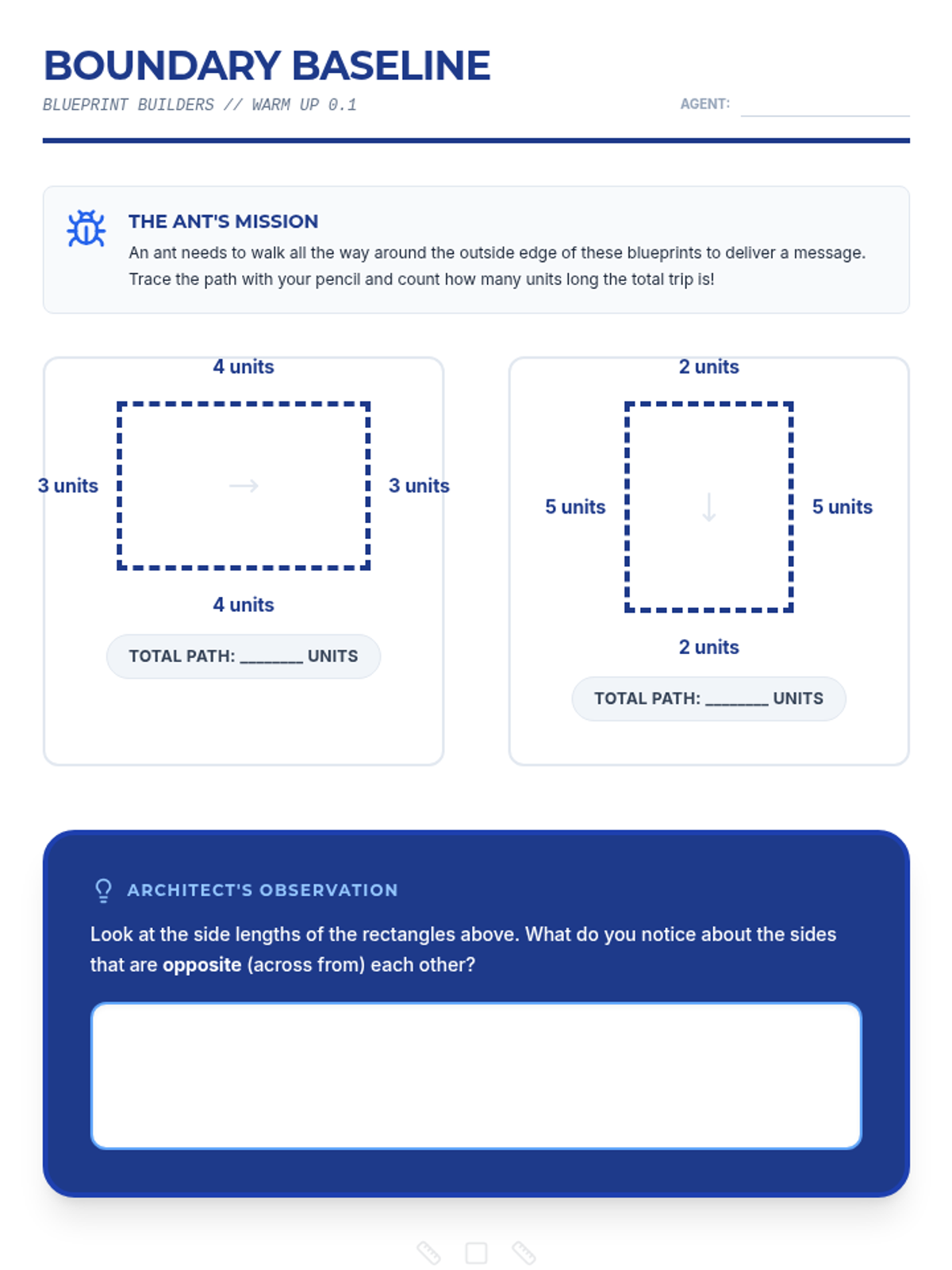
Students transition from basic counting and addition to calculating the perimeter of rectangles (191-200).
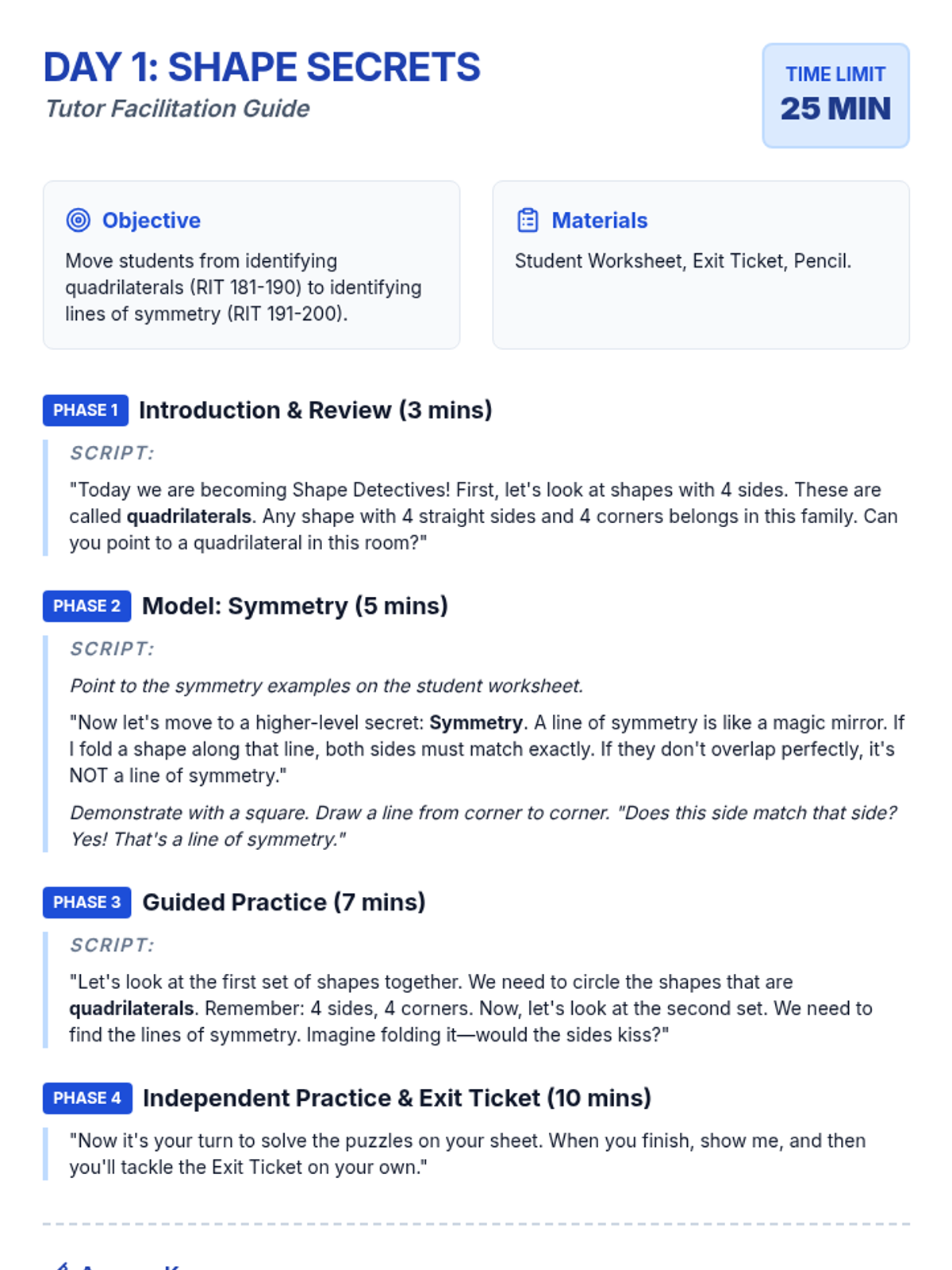
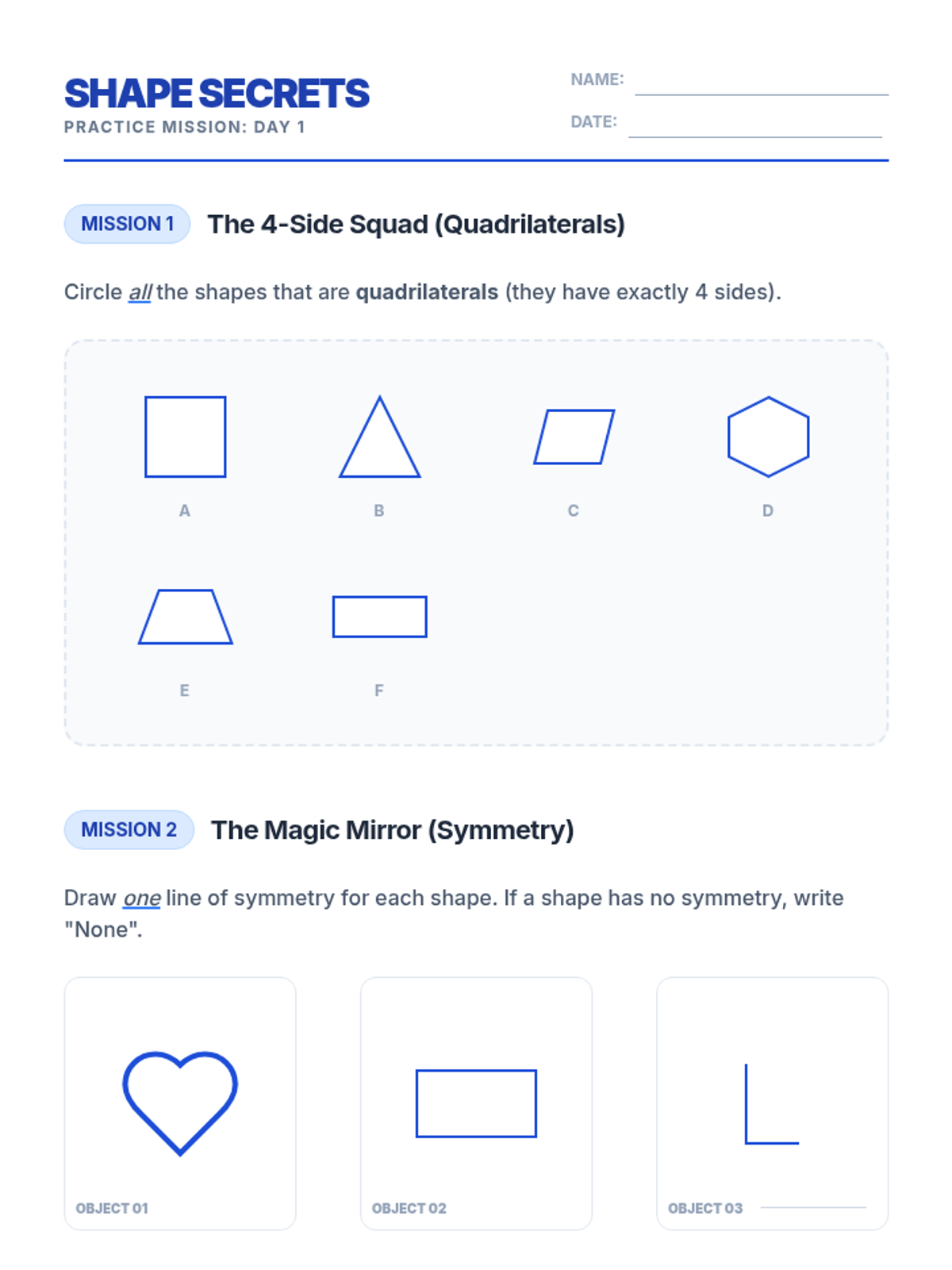
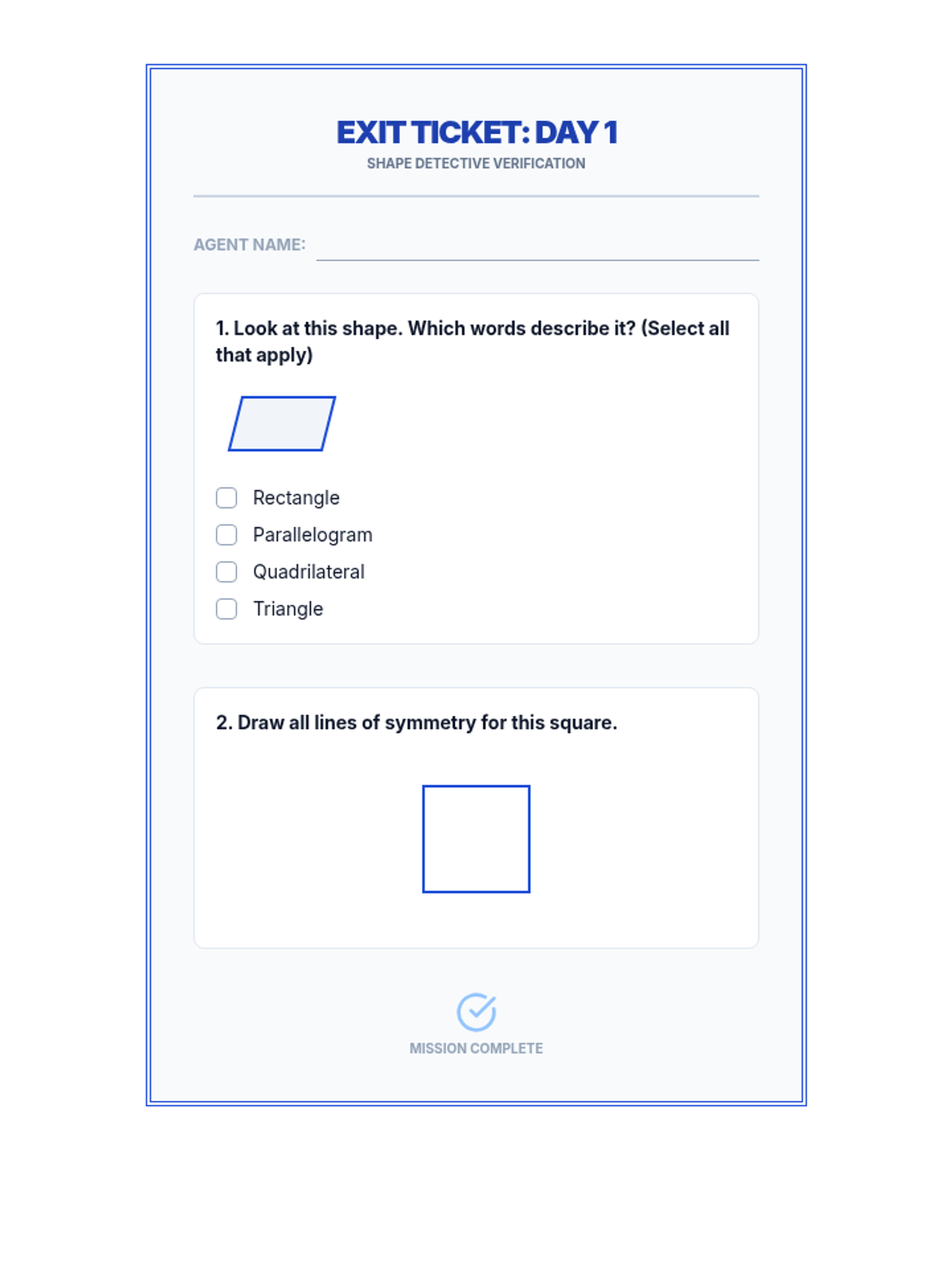
Students identify attributes of quadrilaterals (181-190) and explore lines of symmetry in 2D shapes (191-200).
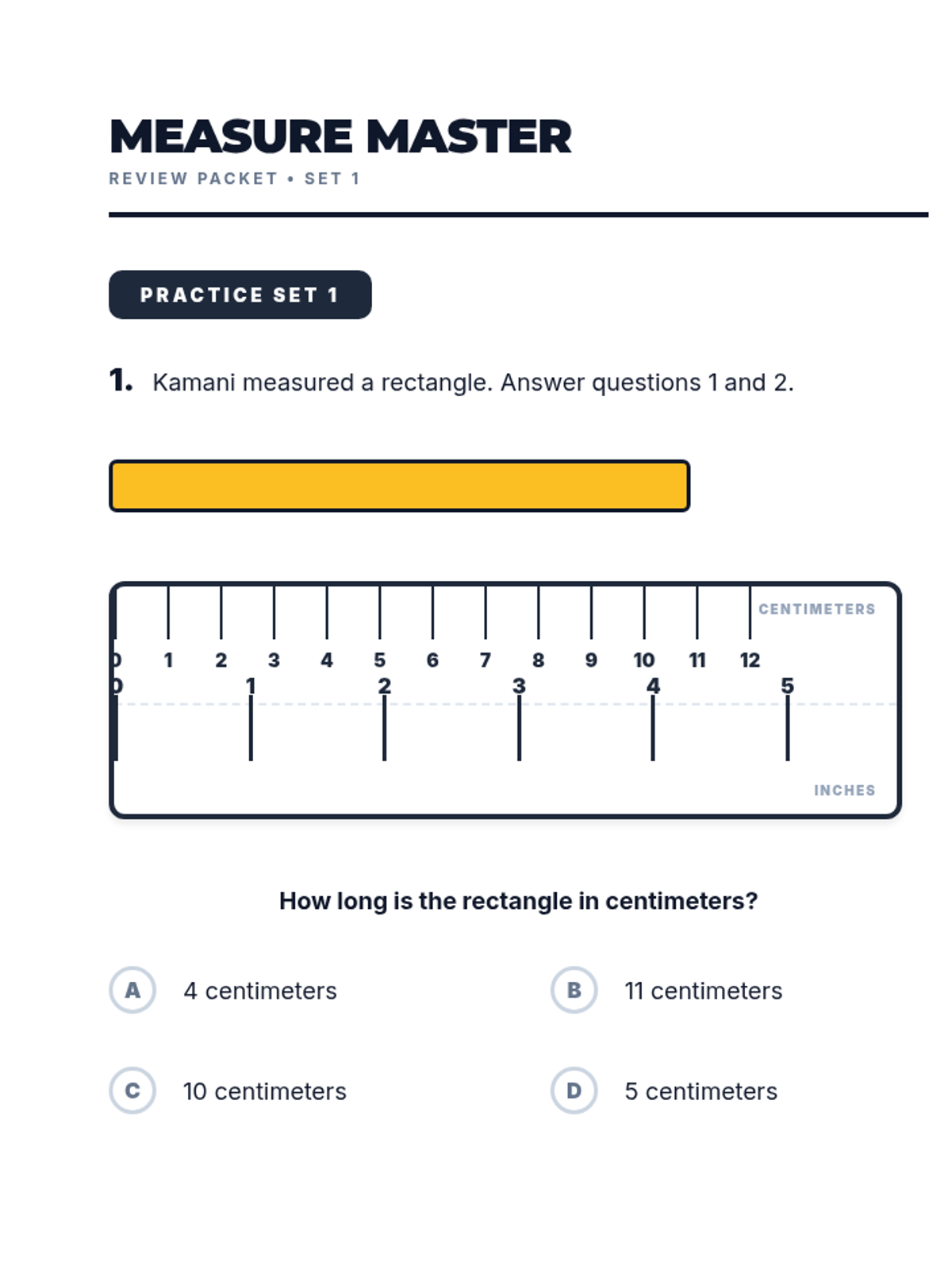
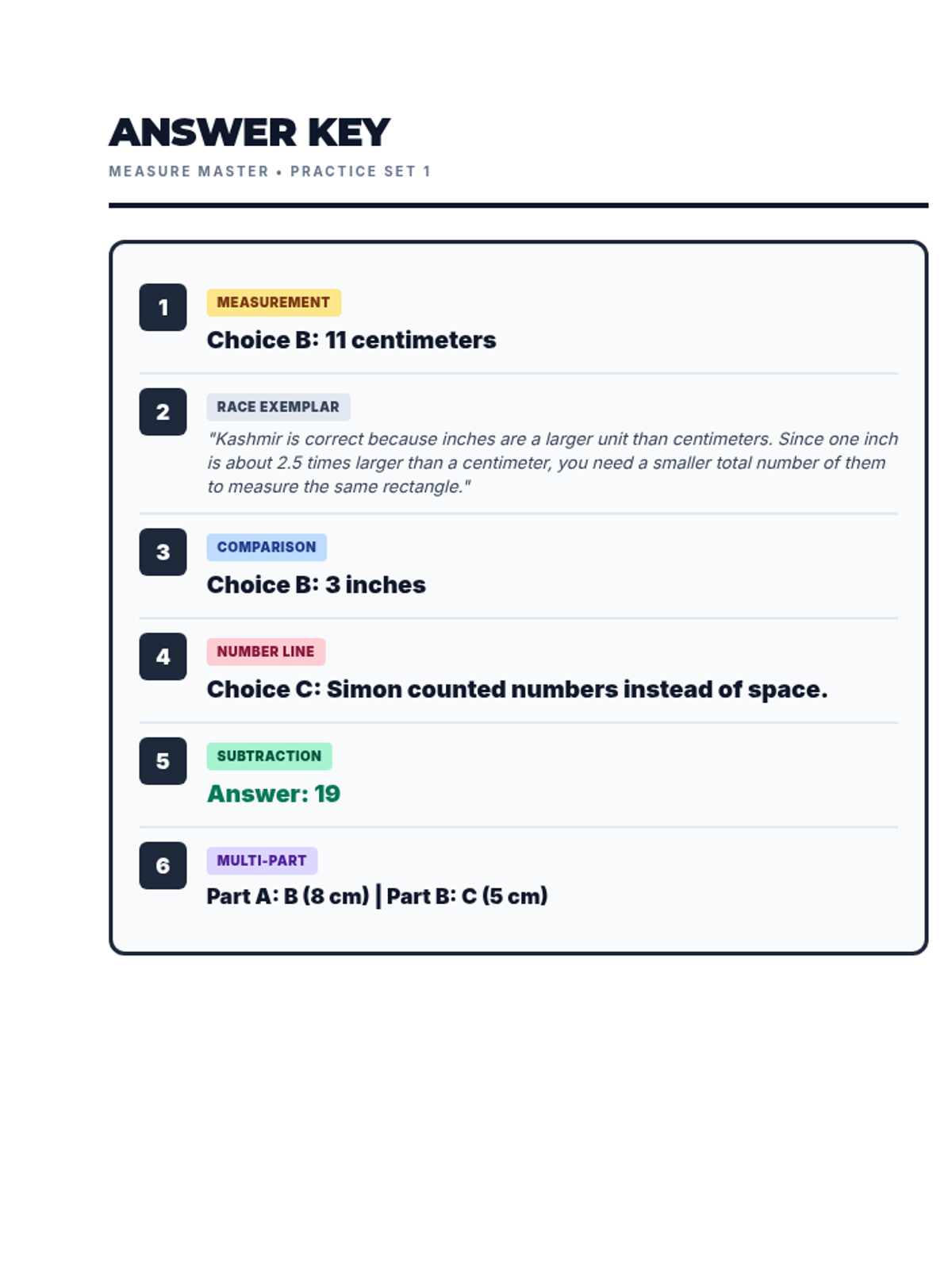
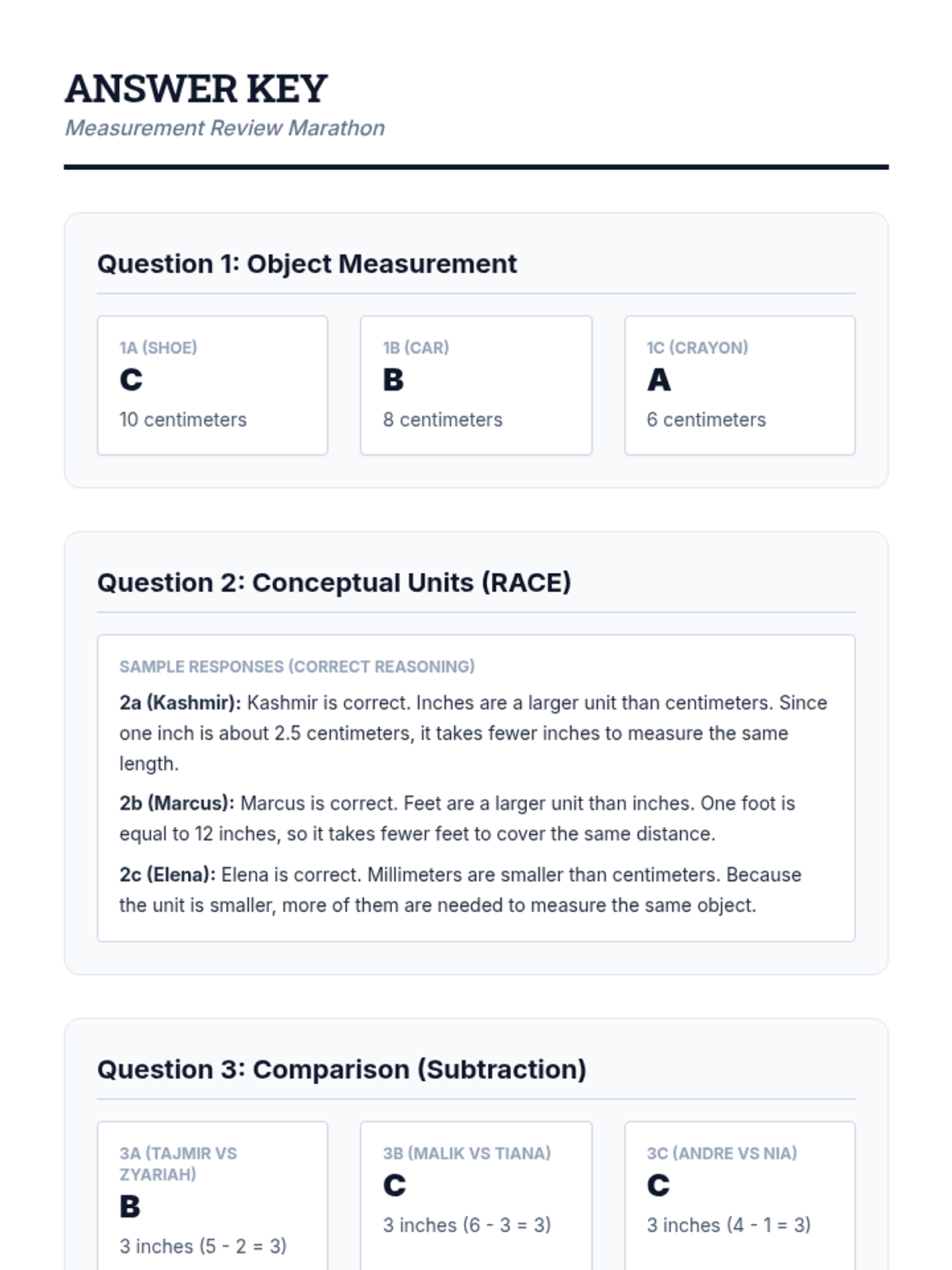
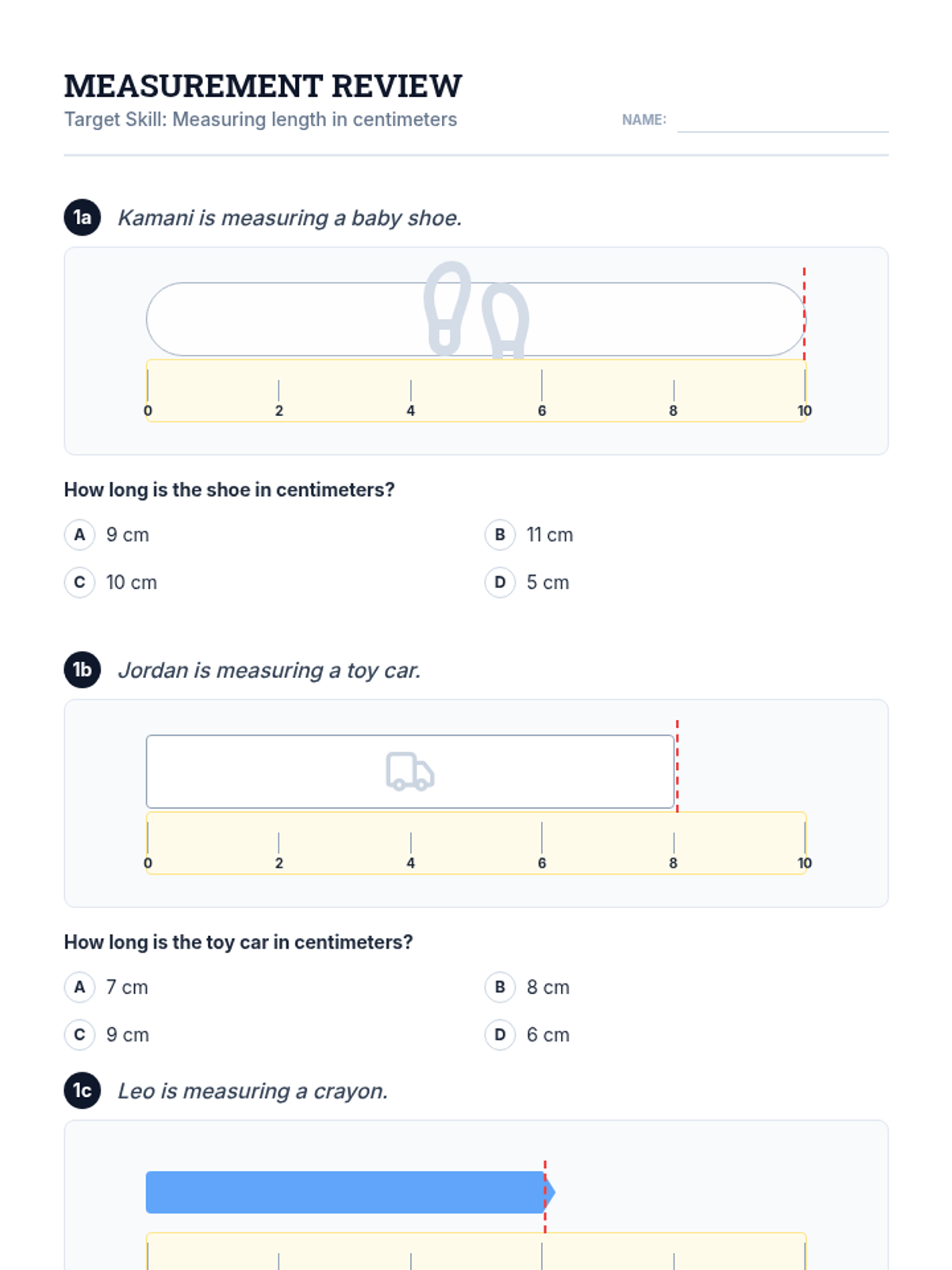
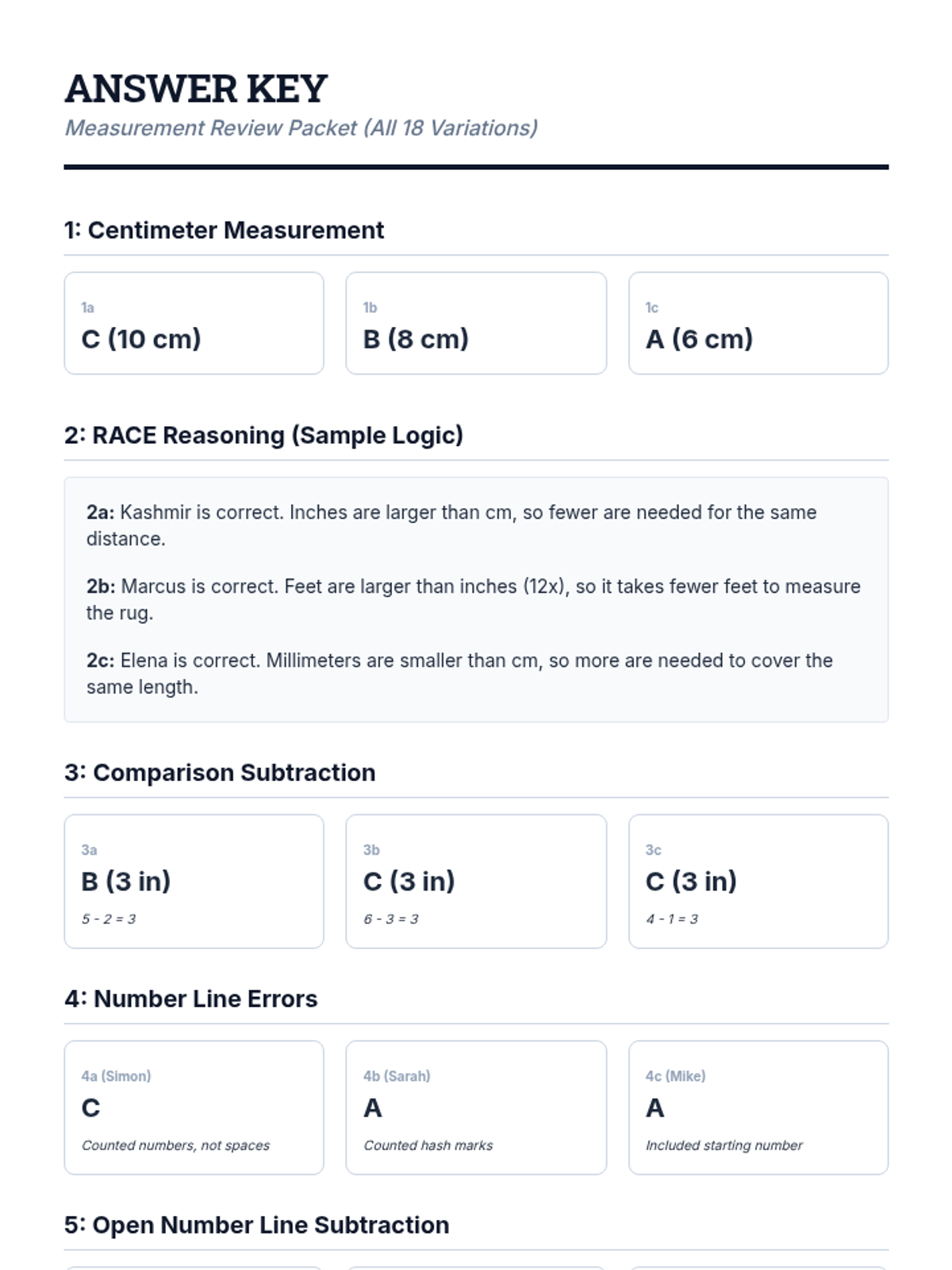
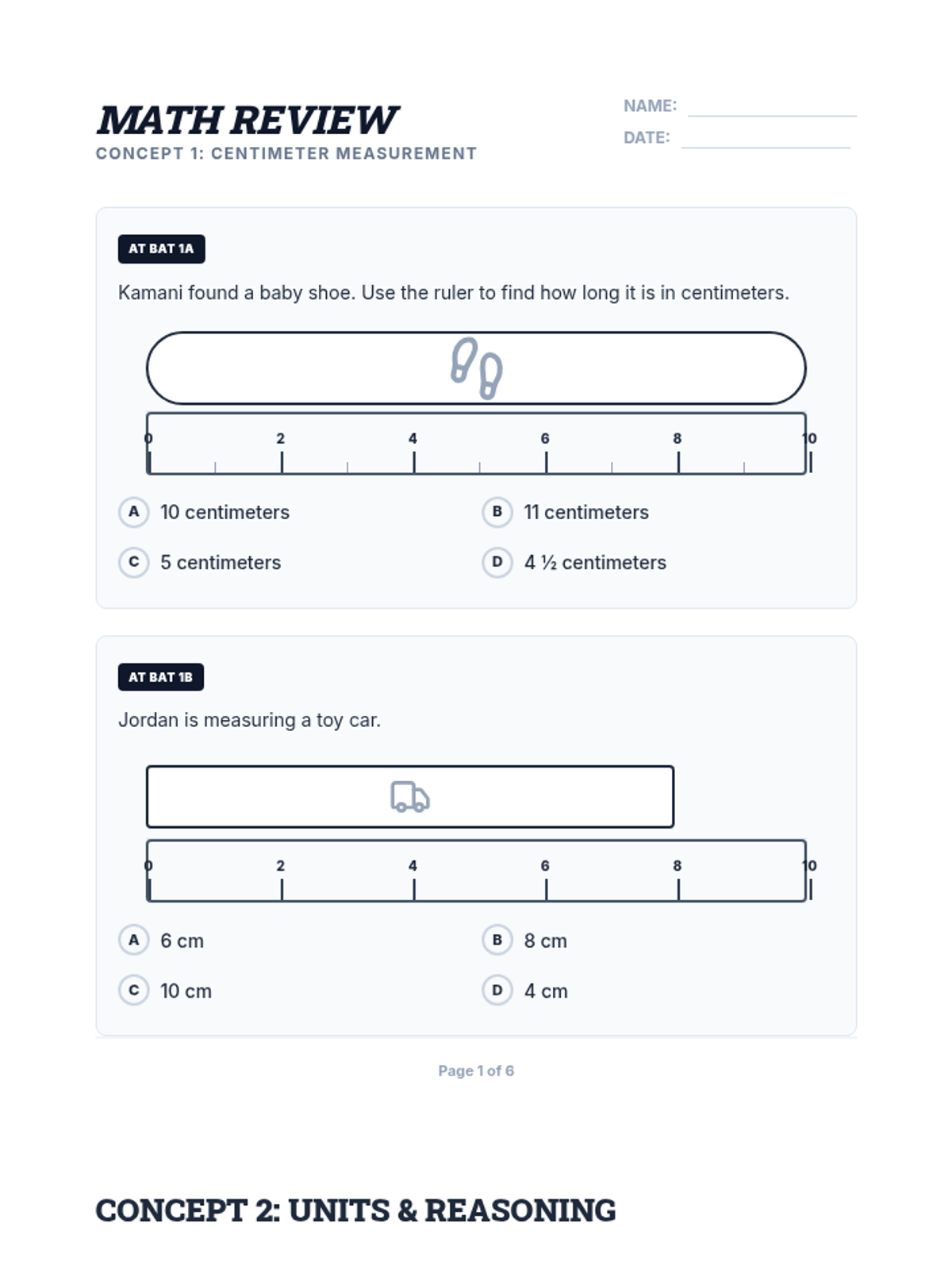
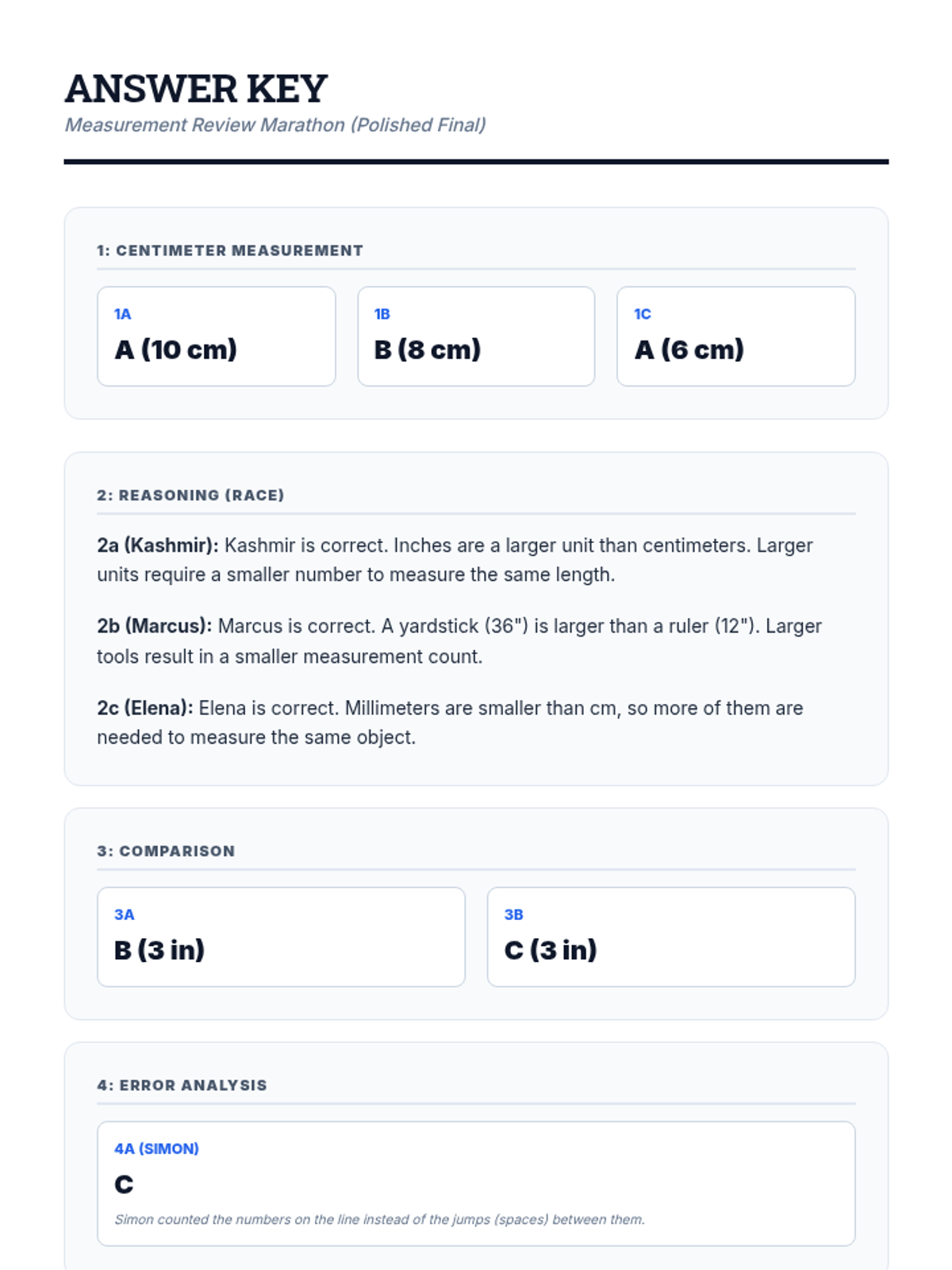
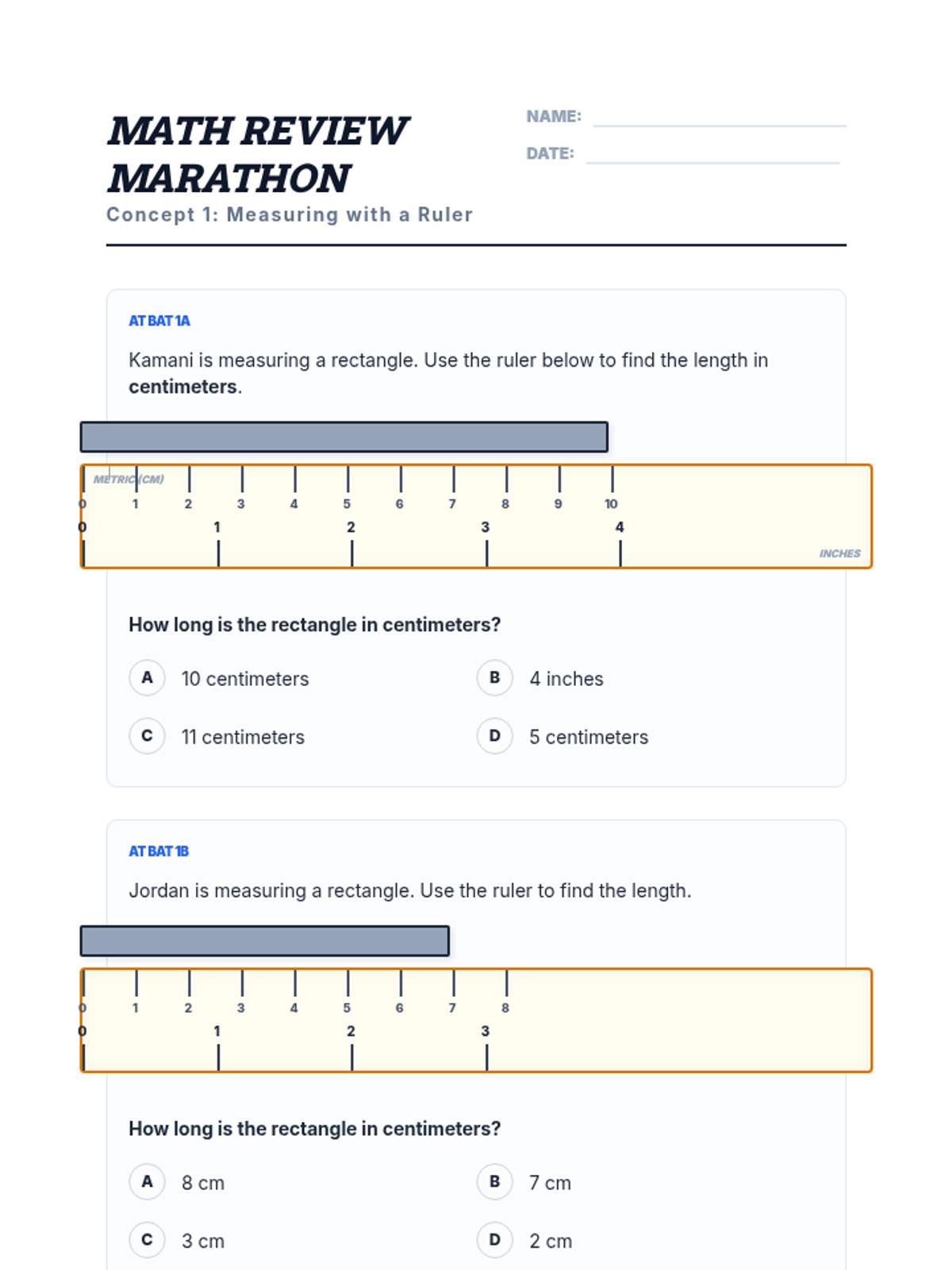
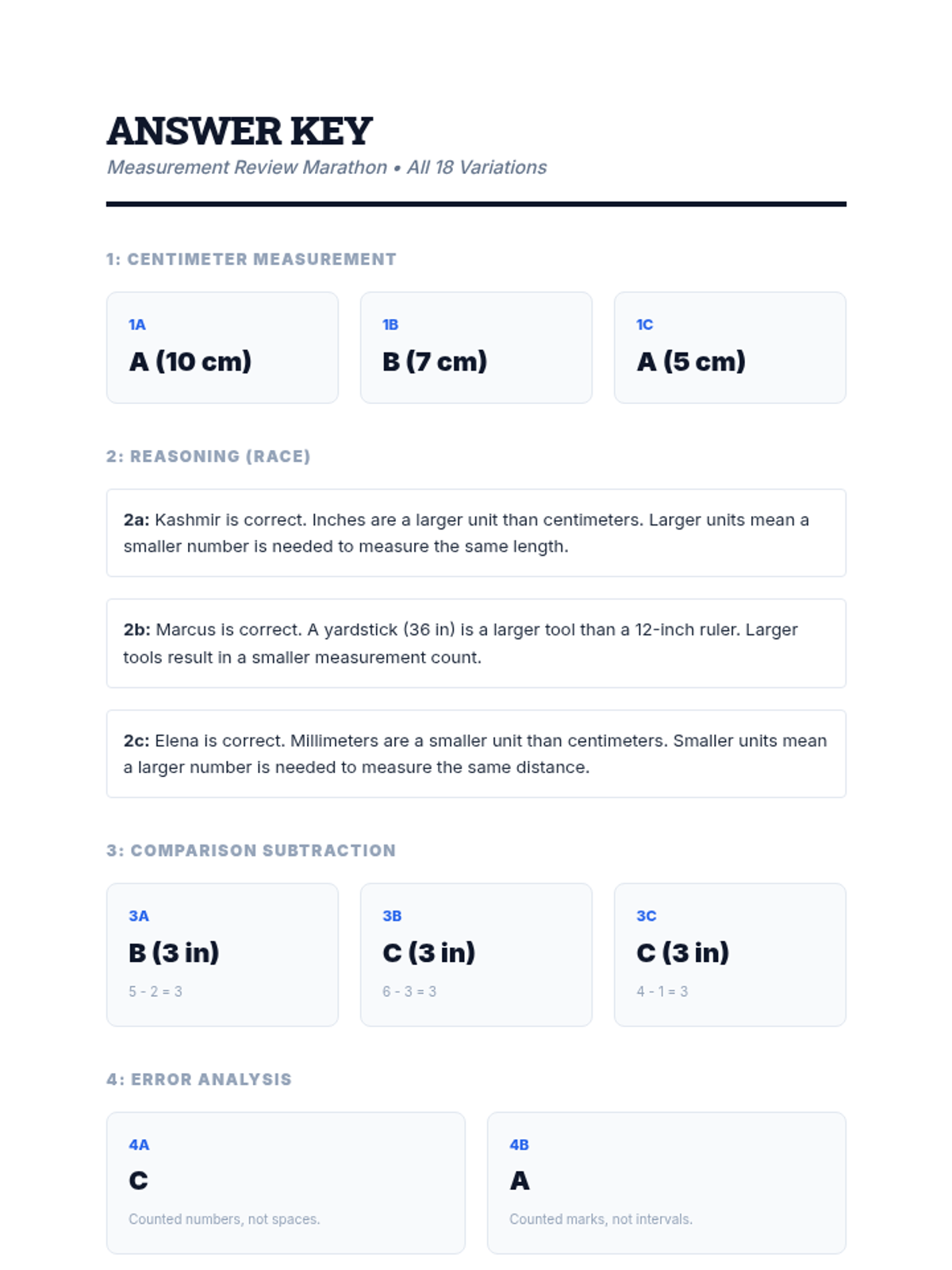
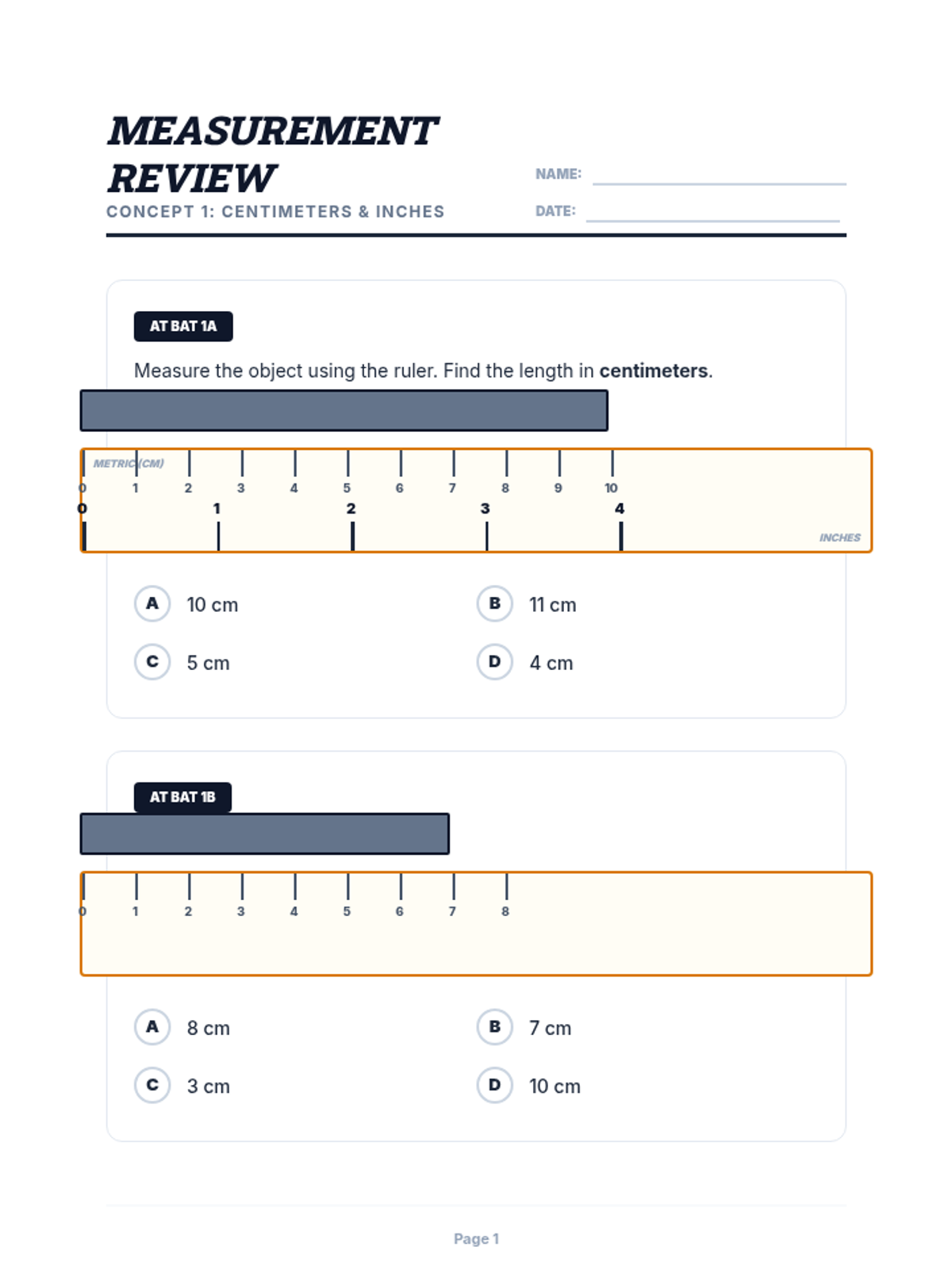
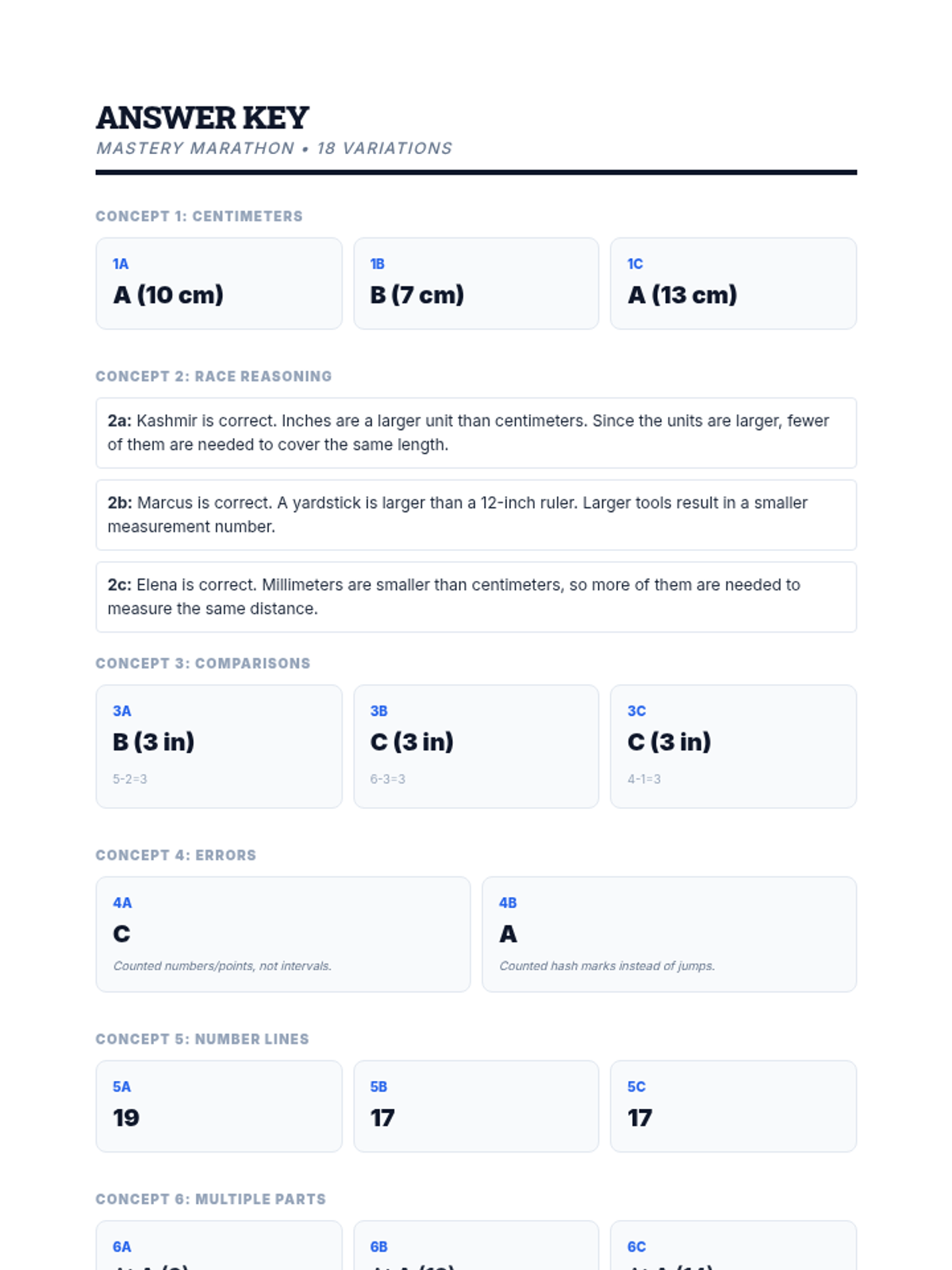
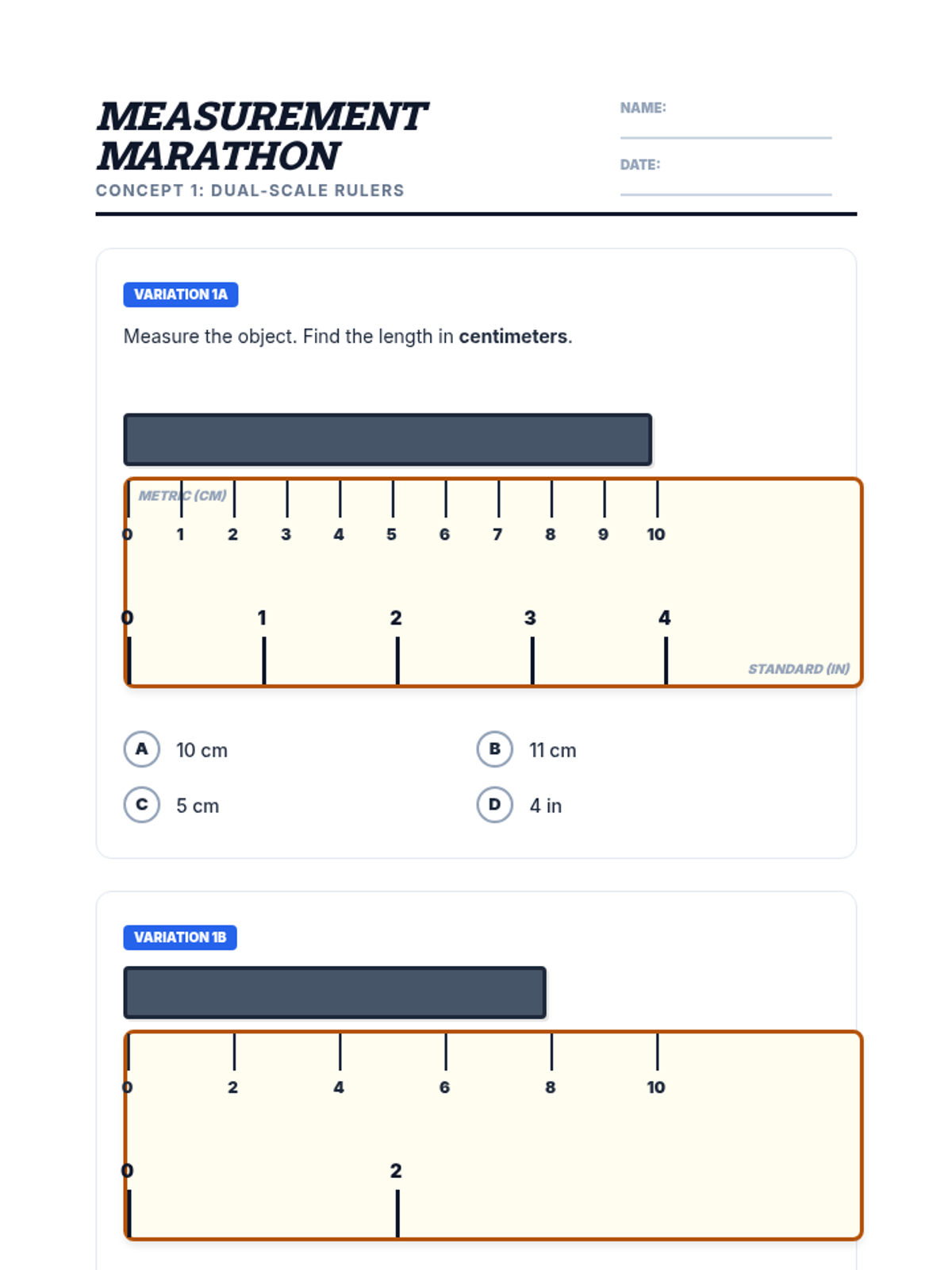
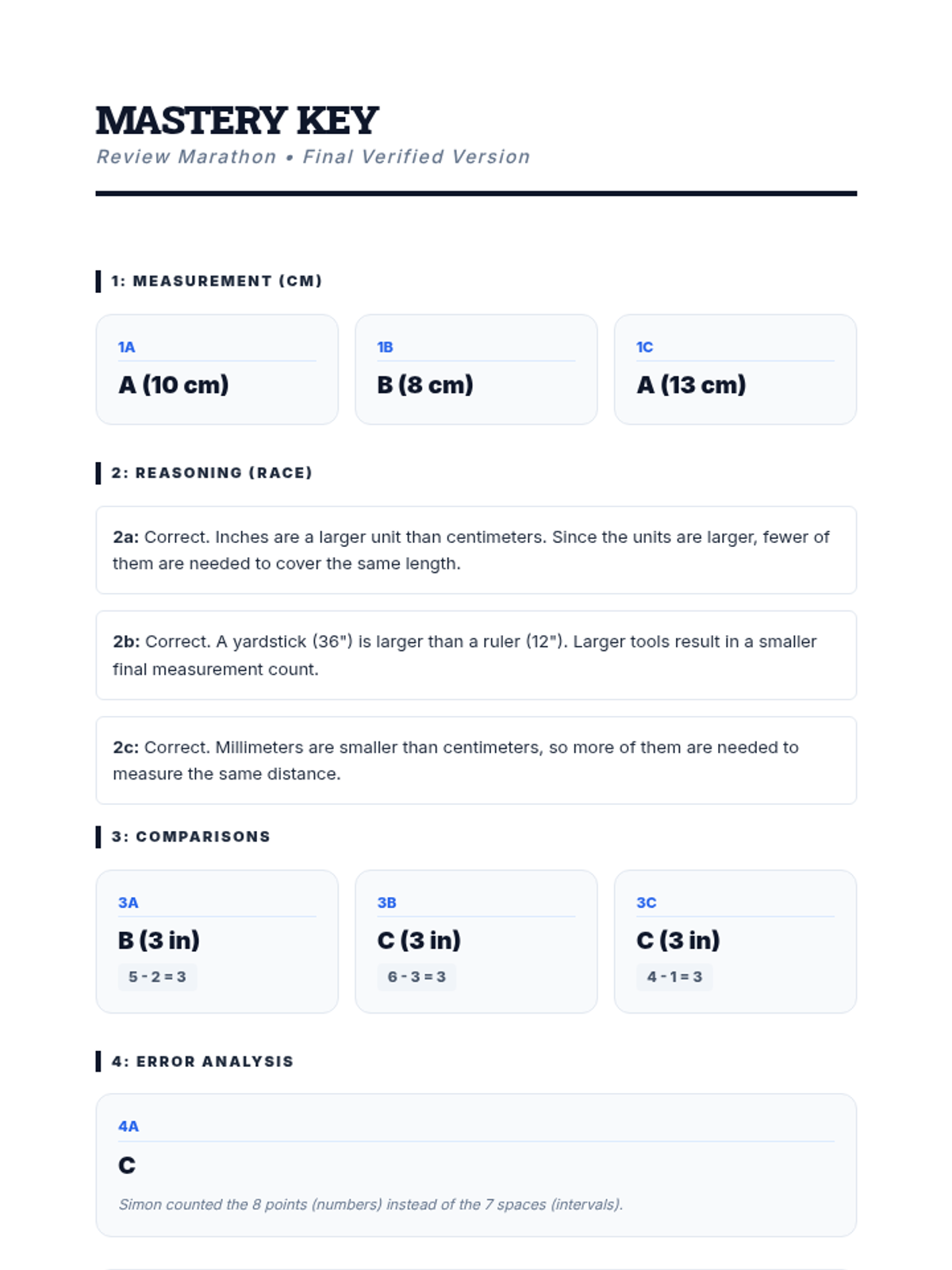
A comprehensive math review focused on measurement and number line concepts, including length comparison, units of measure, and subtraction on a number line.
A comprehensive math review packet focusing on measurement, number line operations, and conceptual understanding of units, featuring multiple practice opportunities for each skill.
A hands-on lesson combining perimeter, multiplication, and data interpretation through tables and graphs for 3rd-grade students.
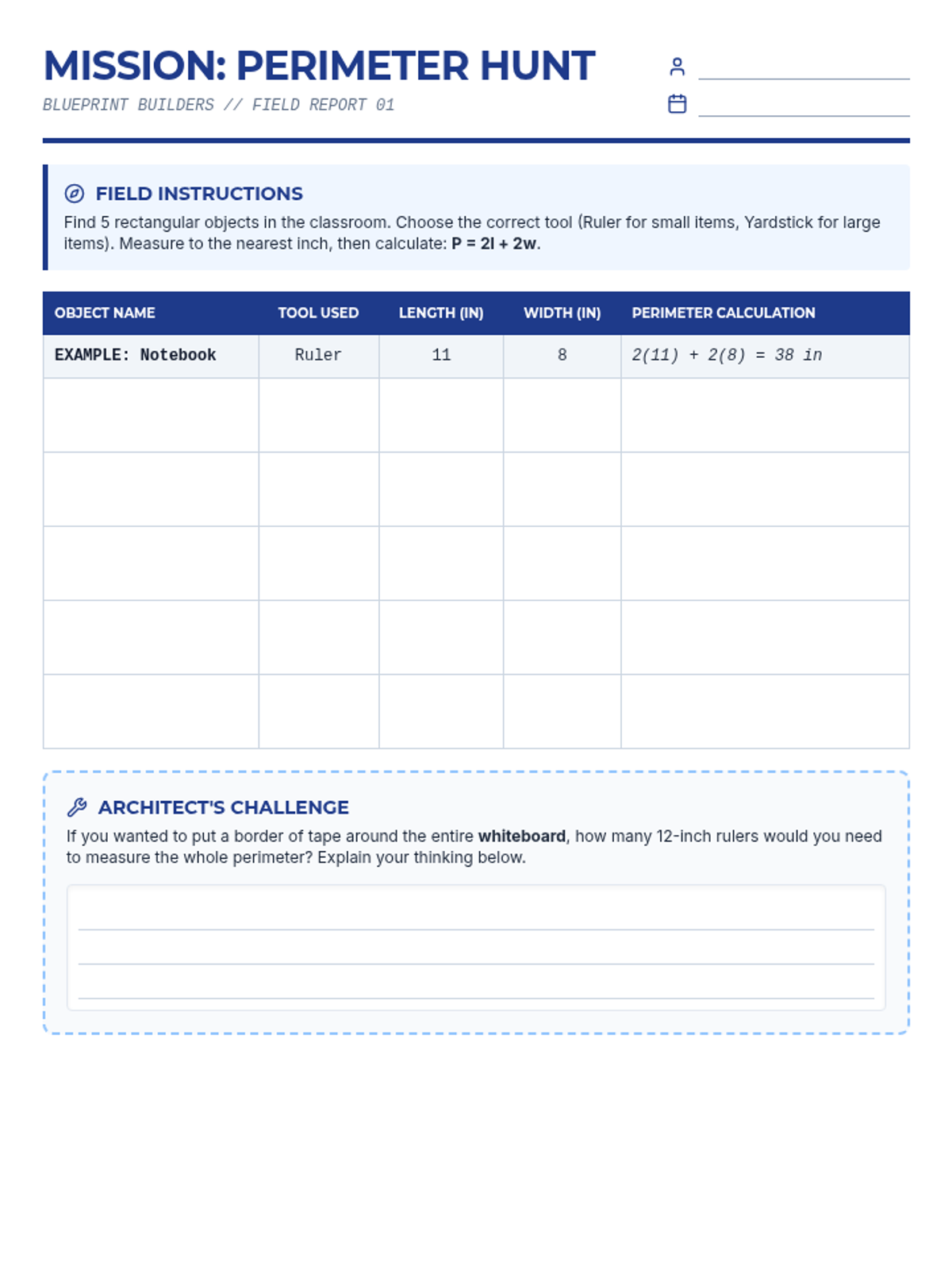
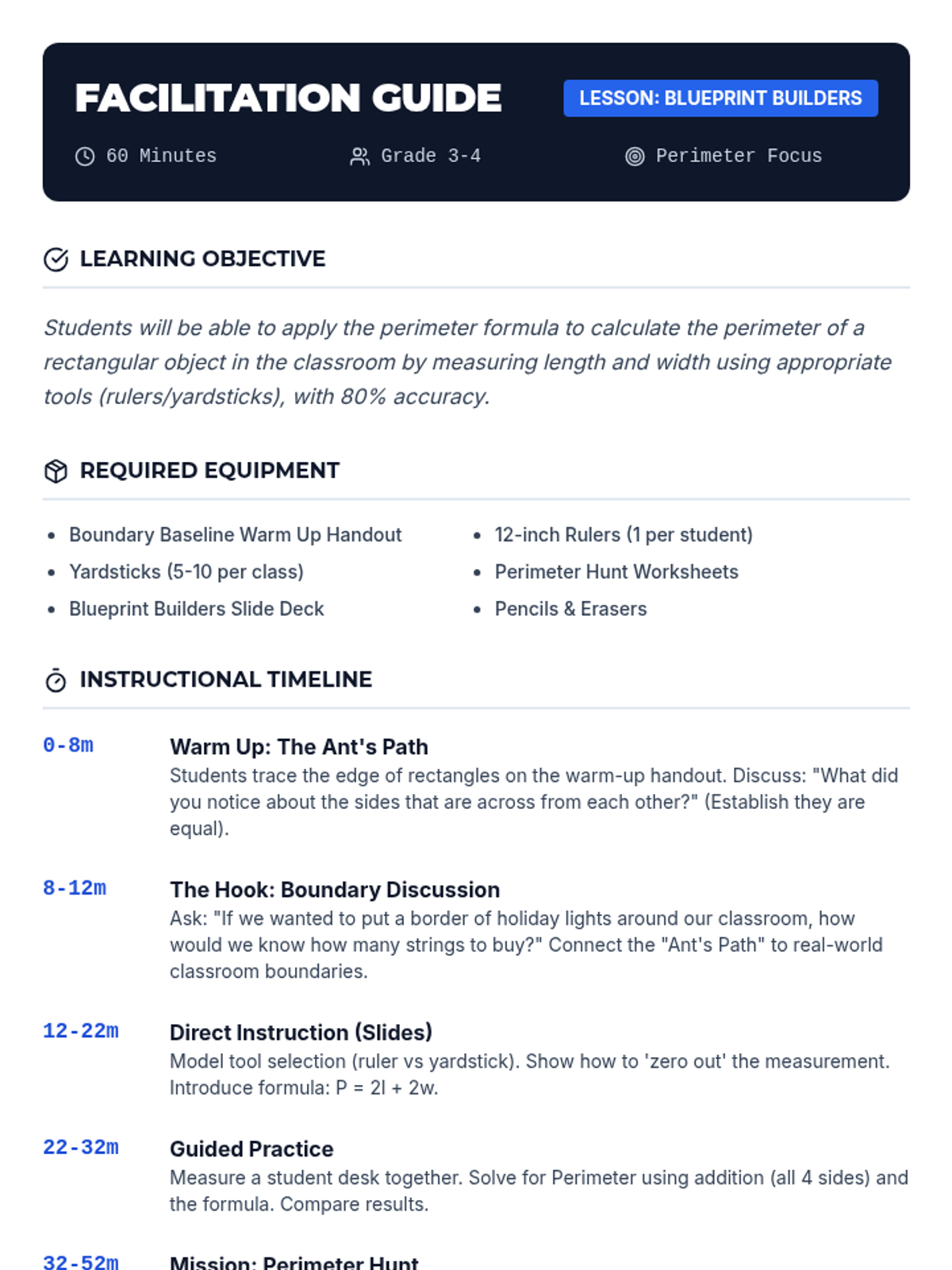
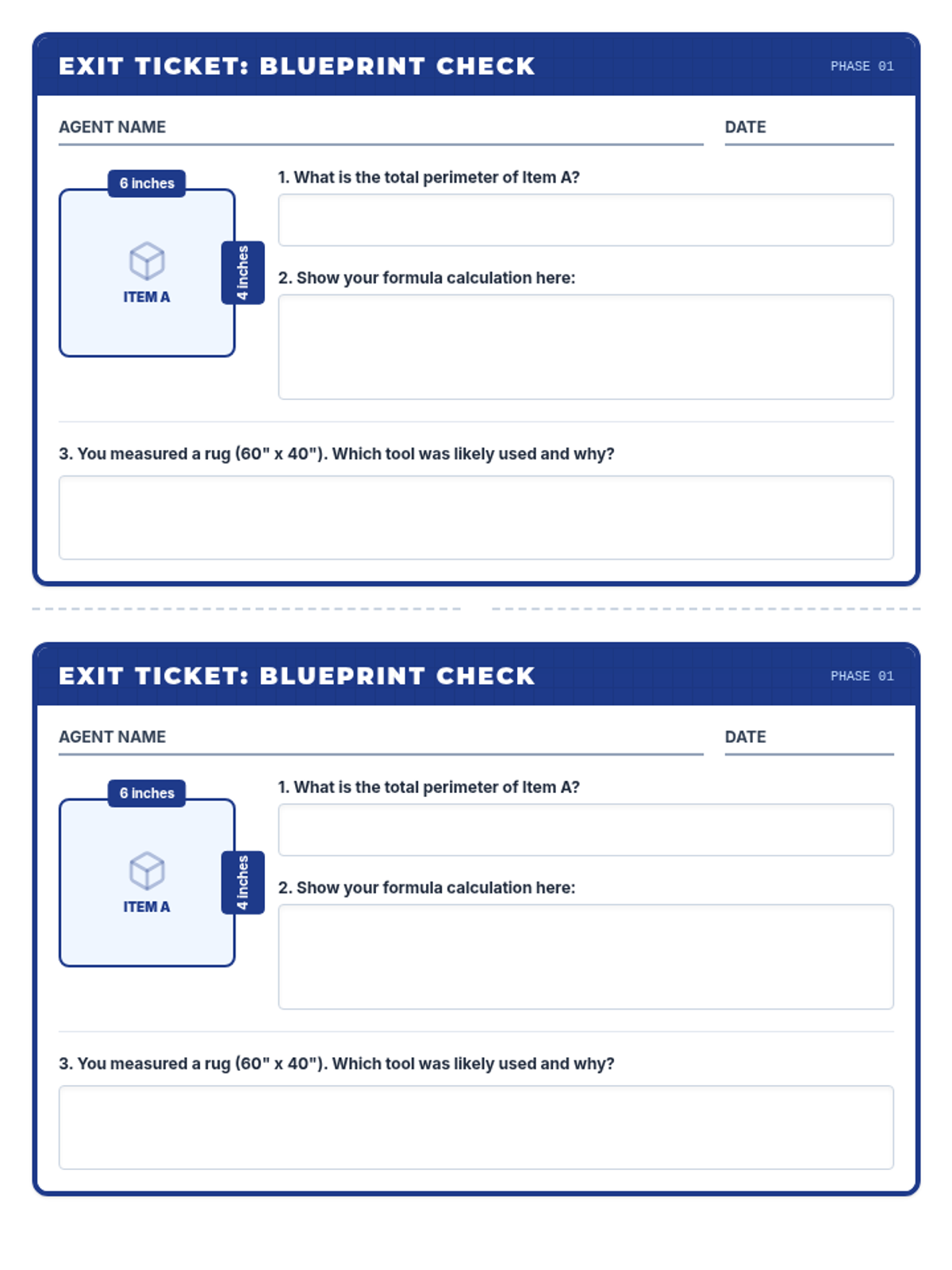
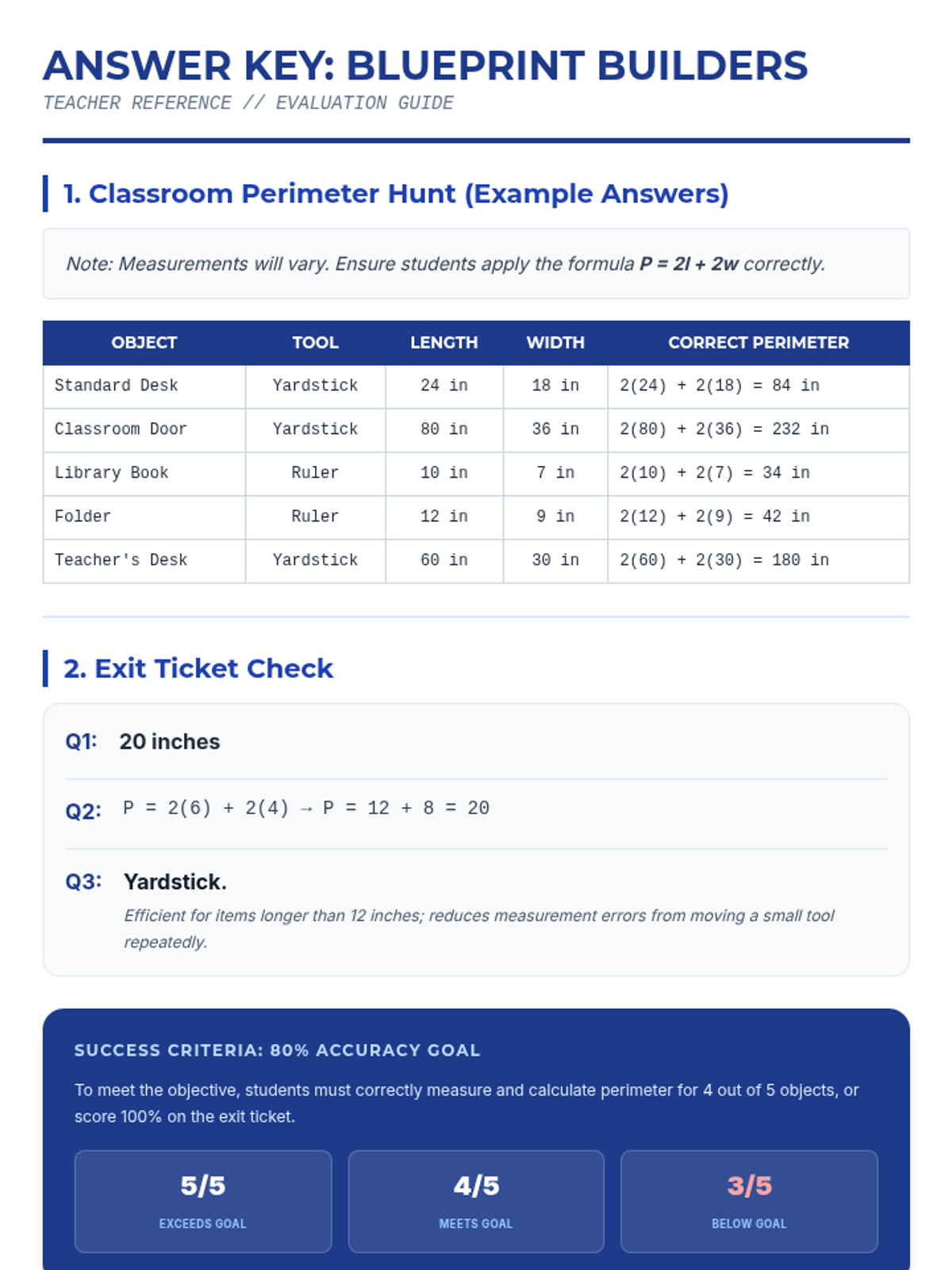
A hands-on geometry lesson where students measure classroom objects and apply the perimeter formula as architect-apprentices.
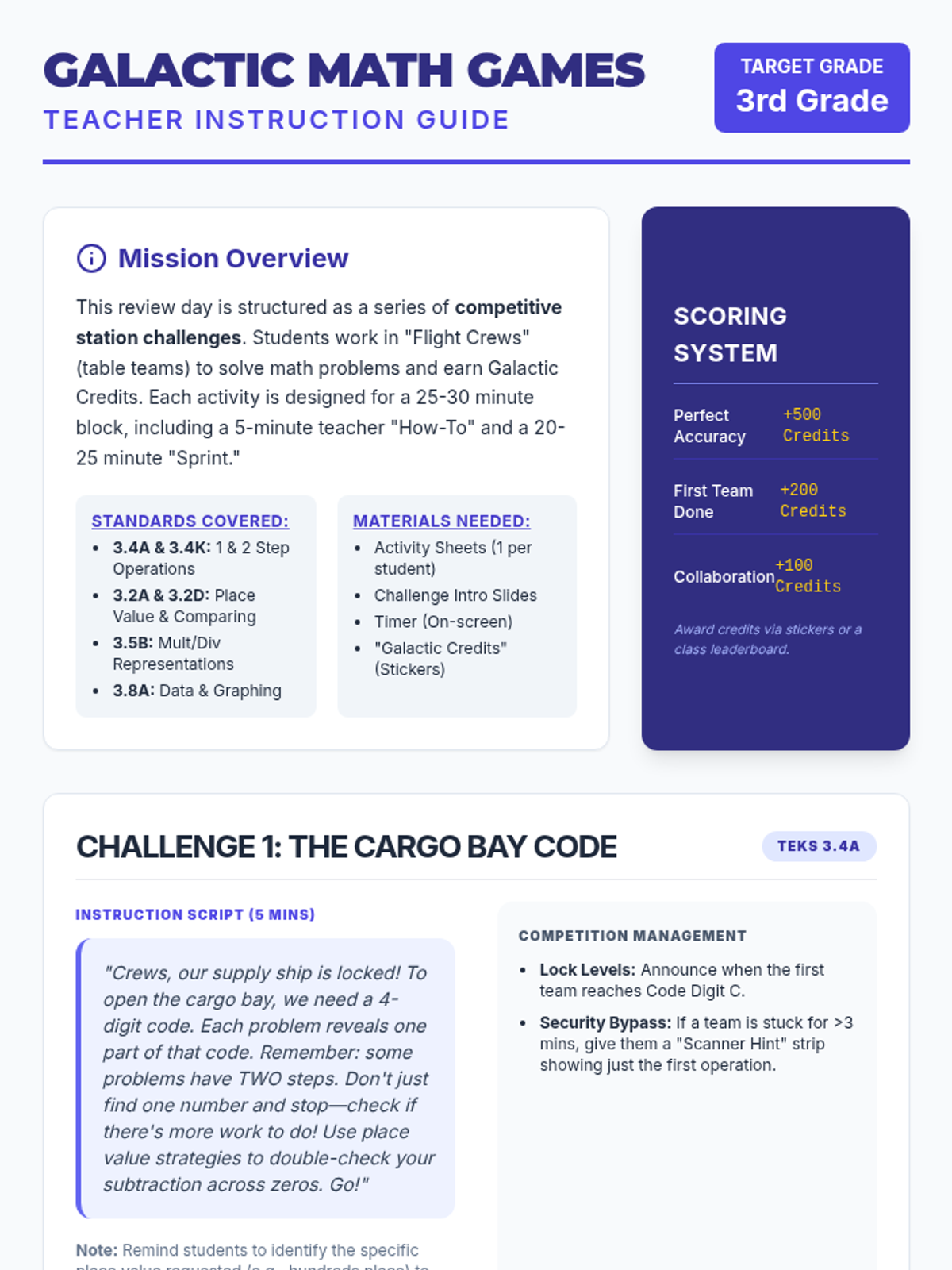
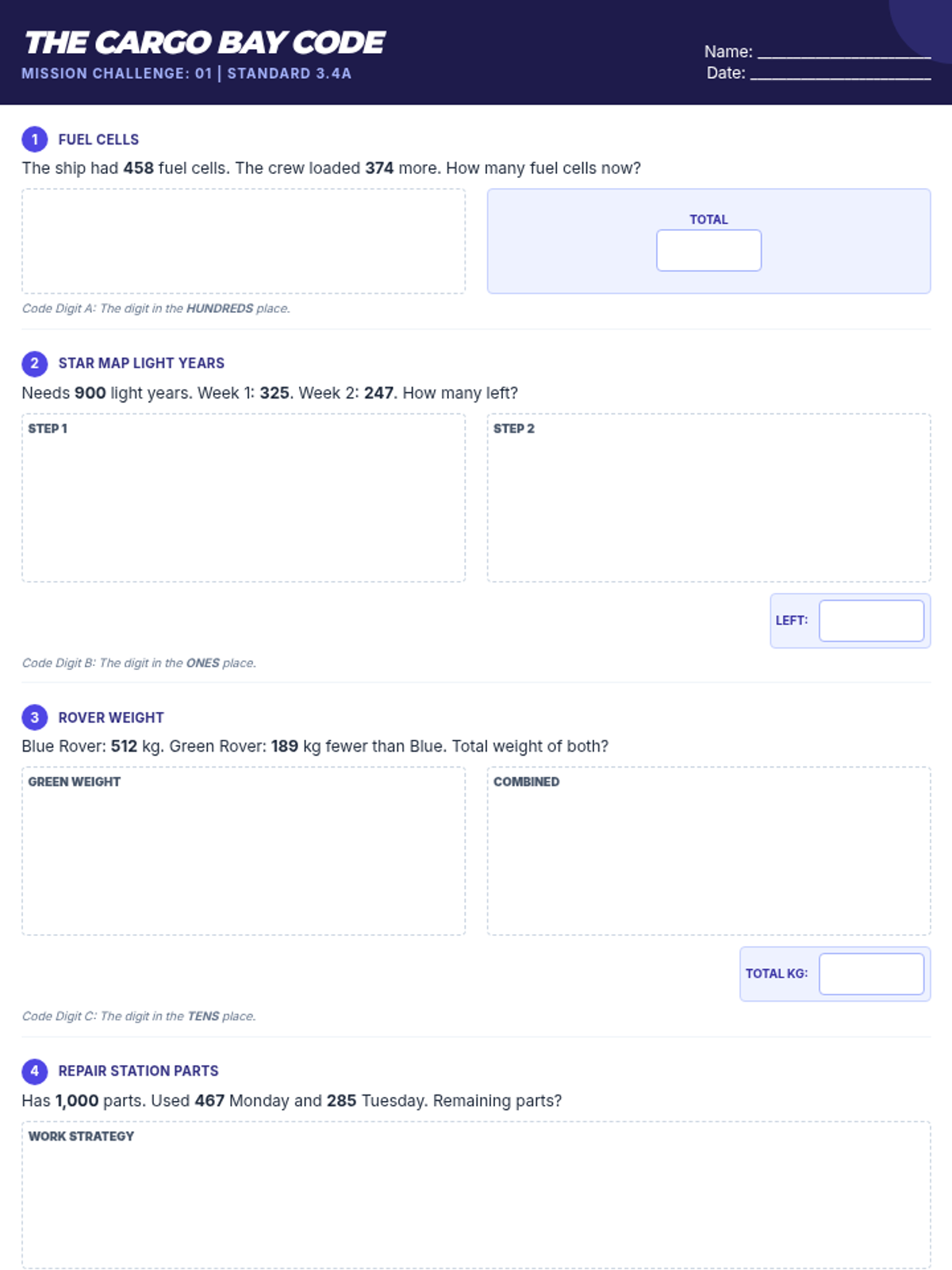
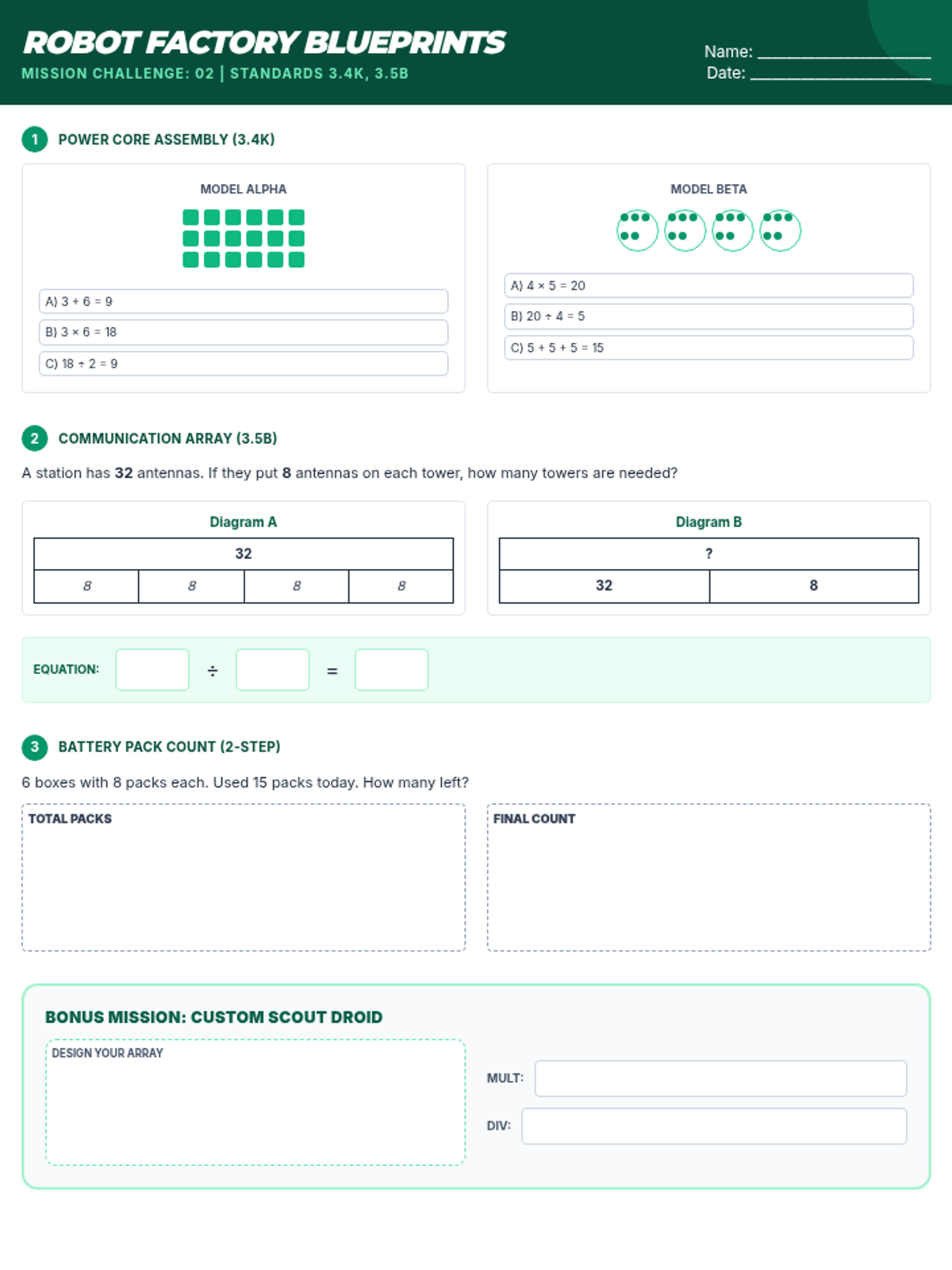
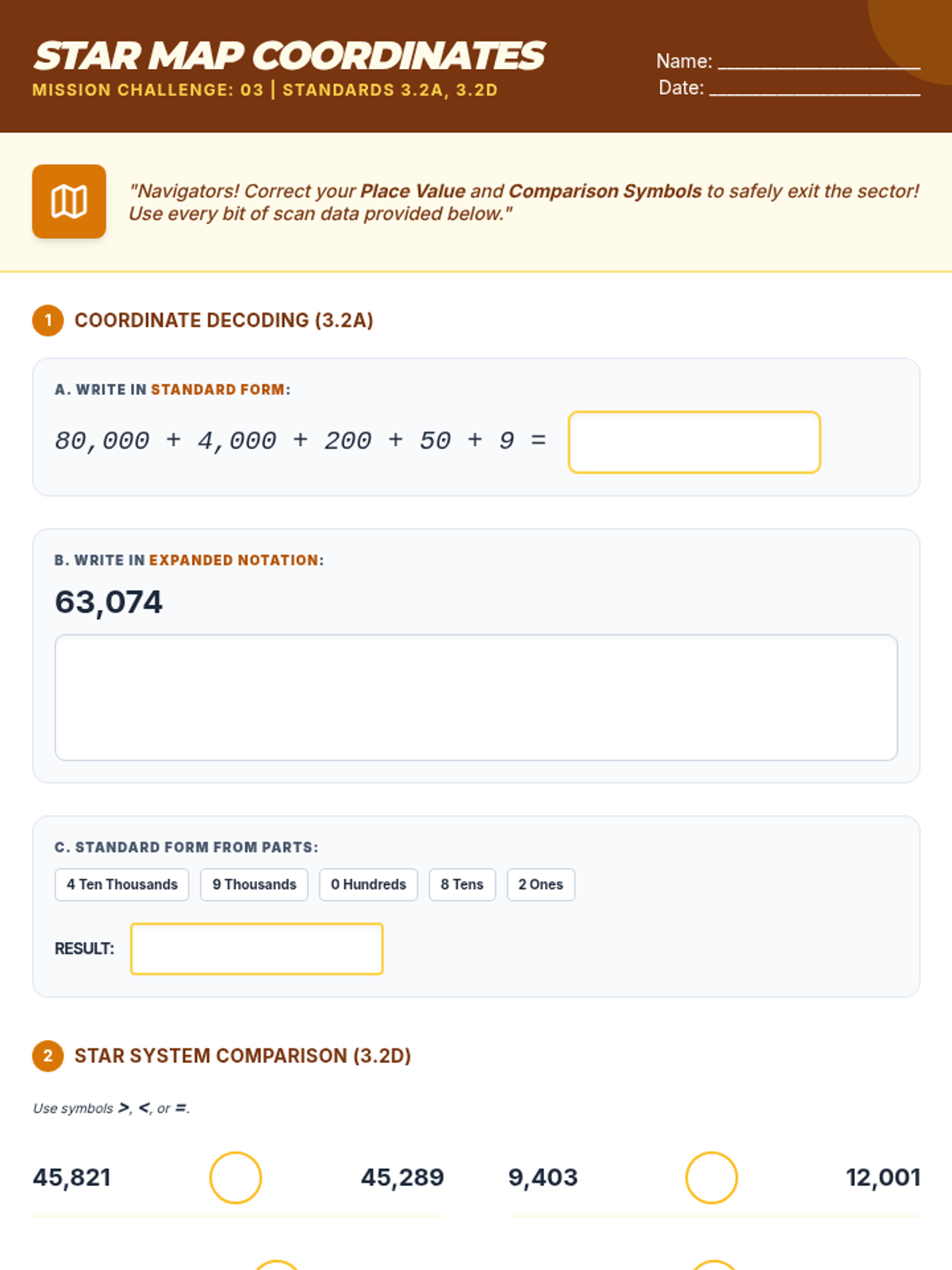
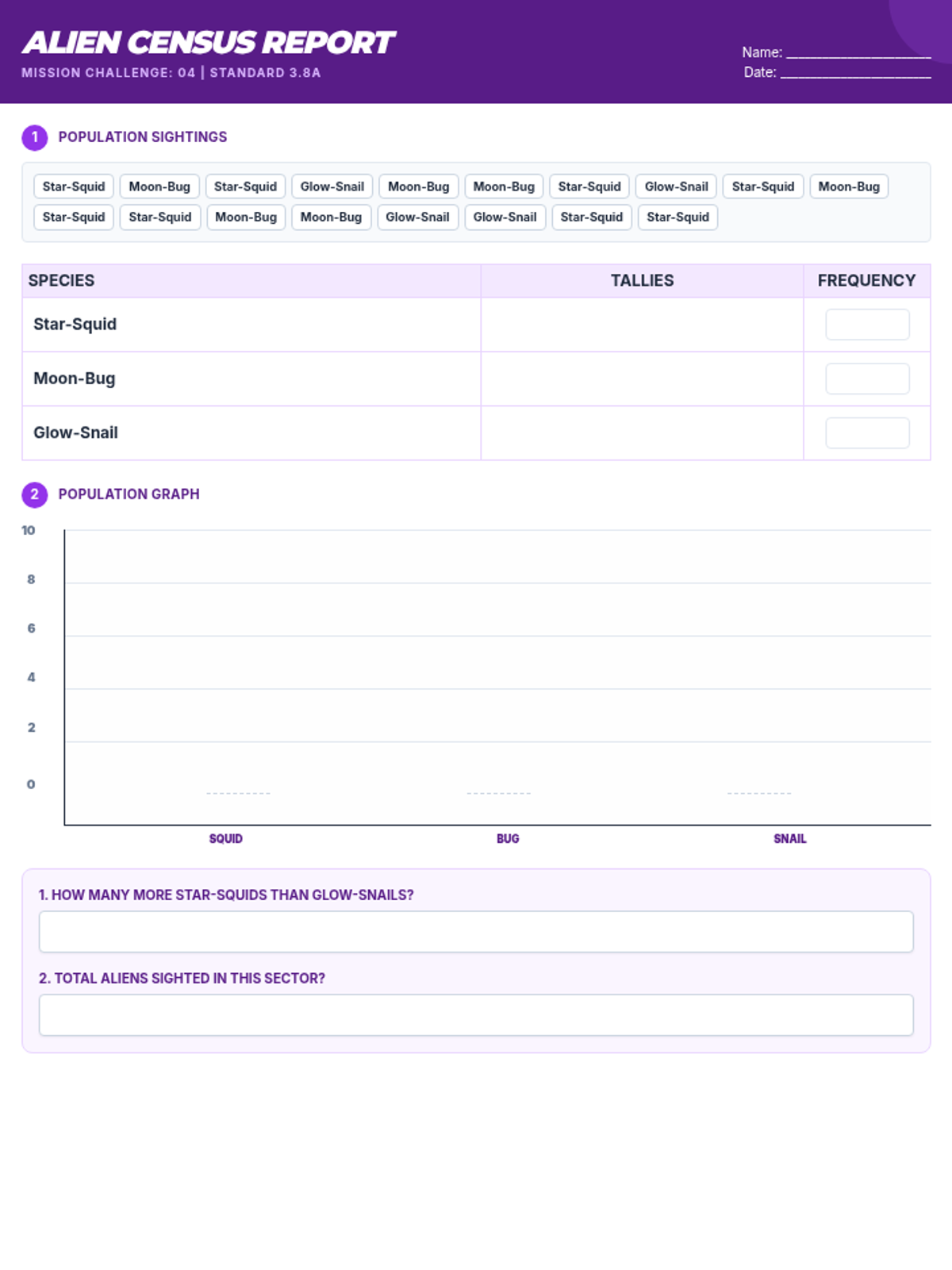
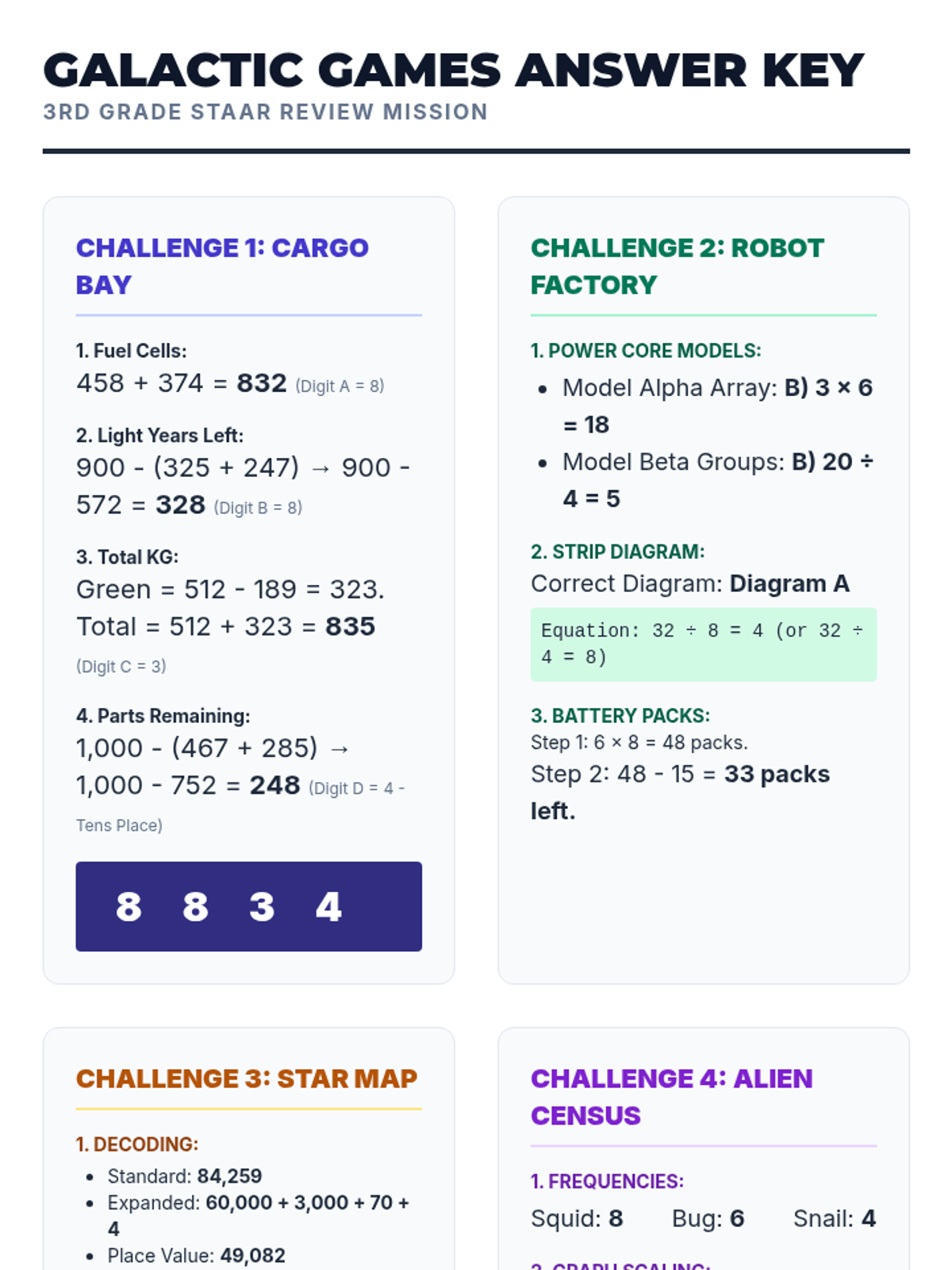
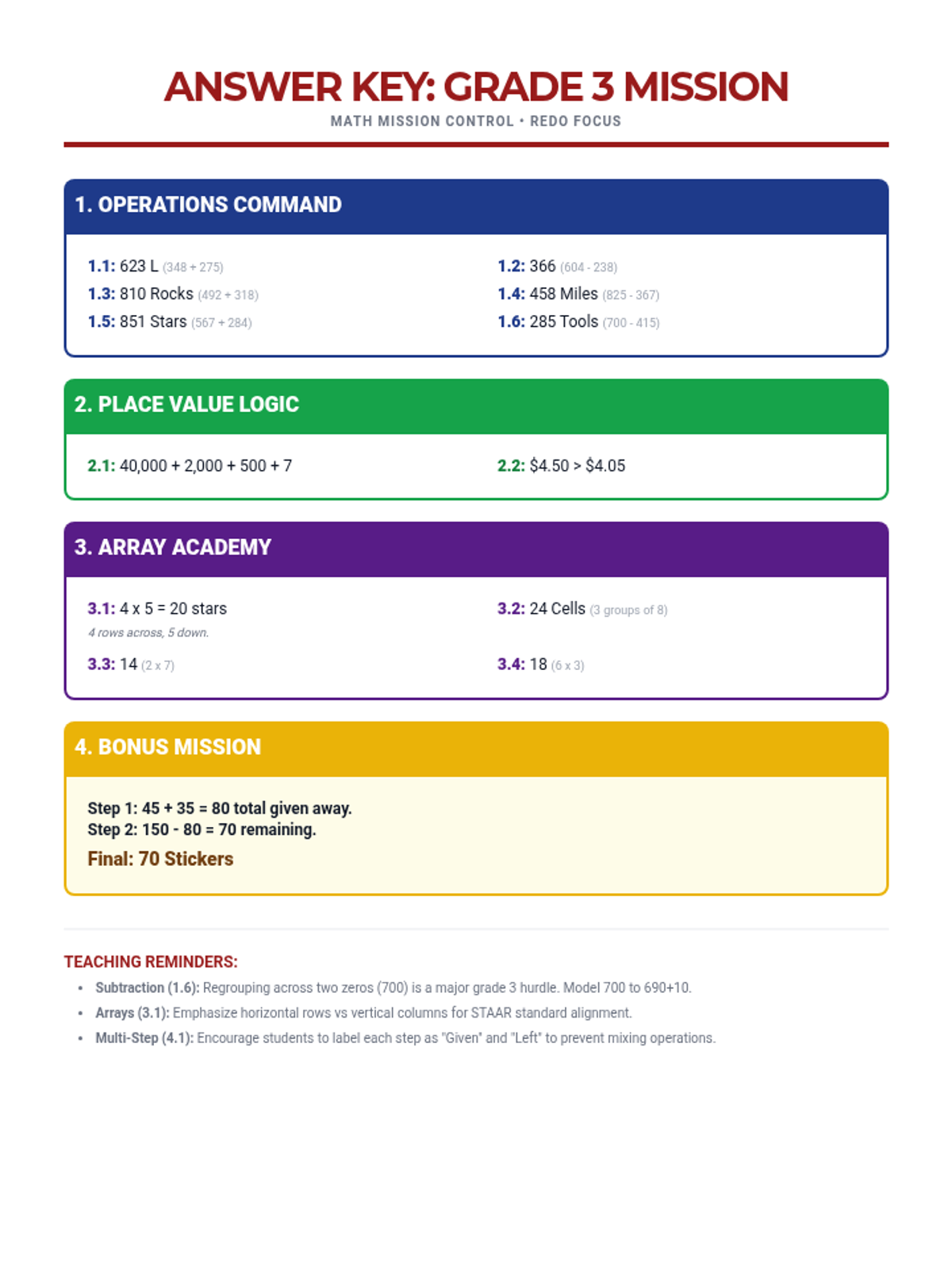
A high-energy, space-themed math review day focusing on key 3rd Grade STAAR standards. Students work in table teams to complete galactic challenges involving multi-step operations, place value, and data analysis.
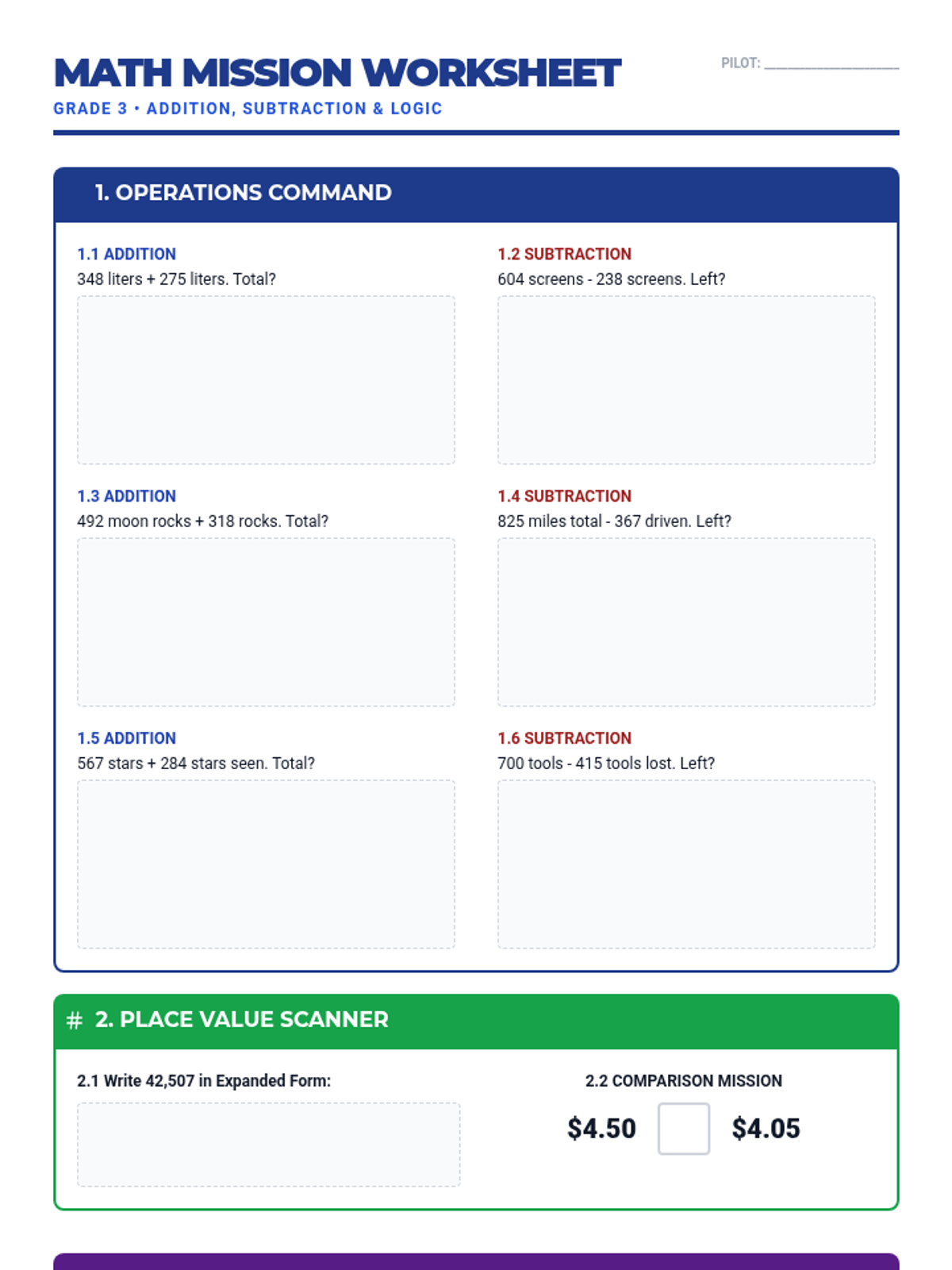
A targeted review lesson covering the core domains of the math STAAR assessment: addition/subtraction, geometry, decimals, and multiplication models.
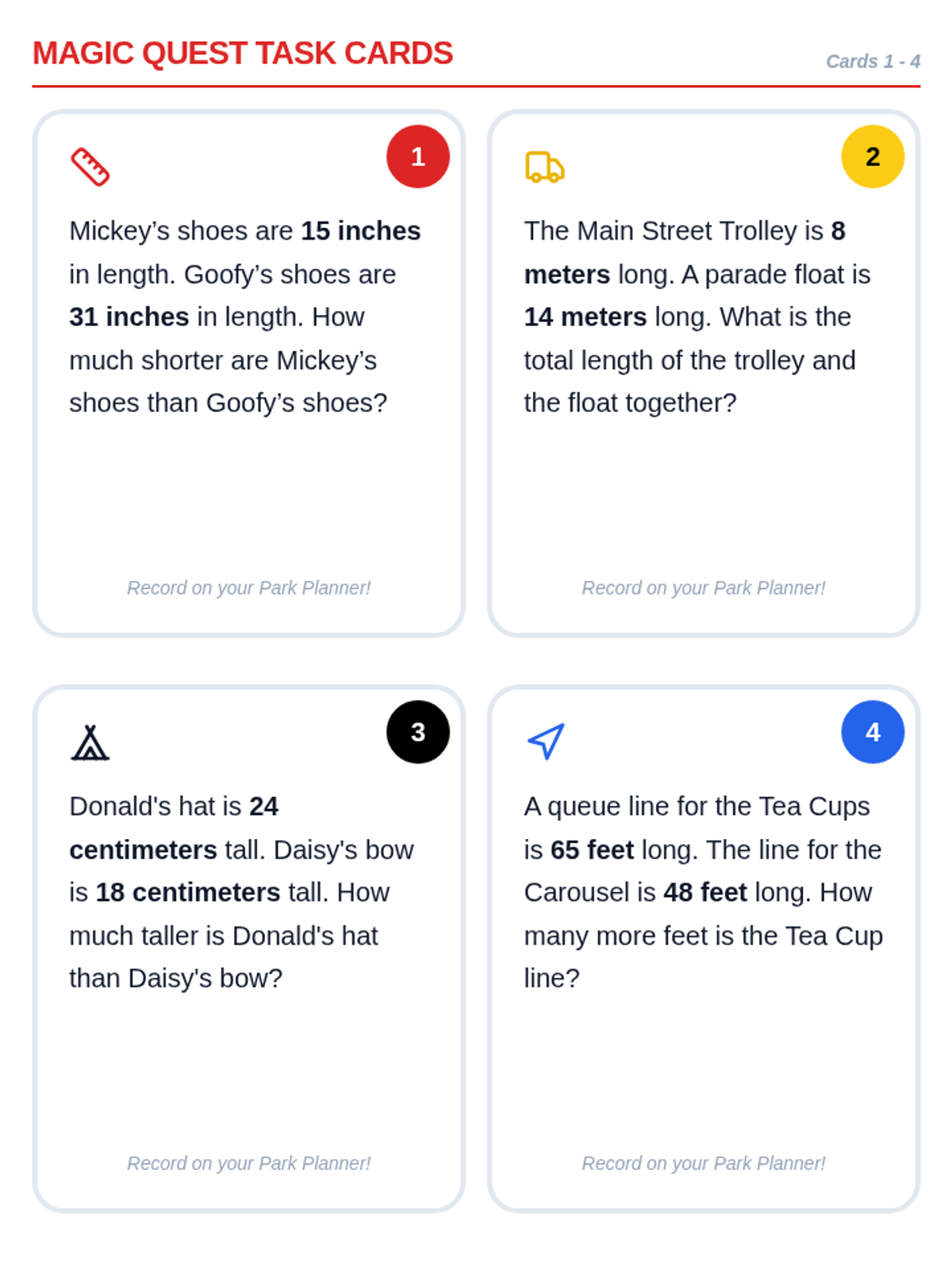
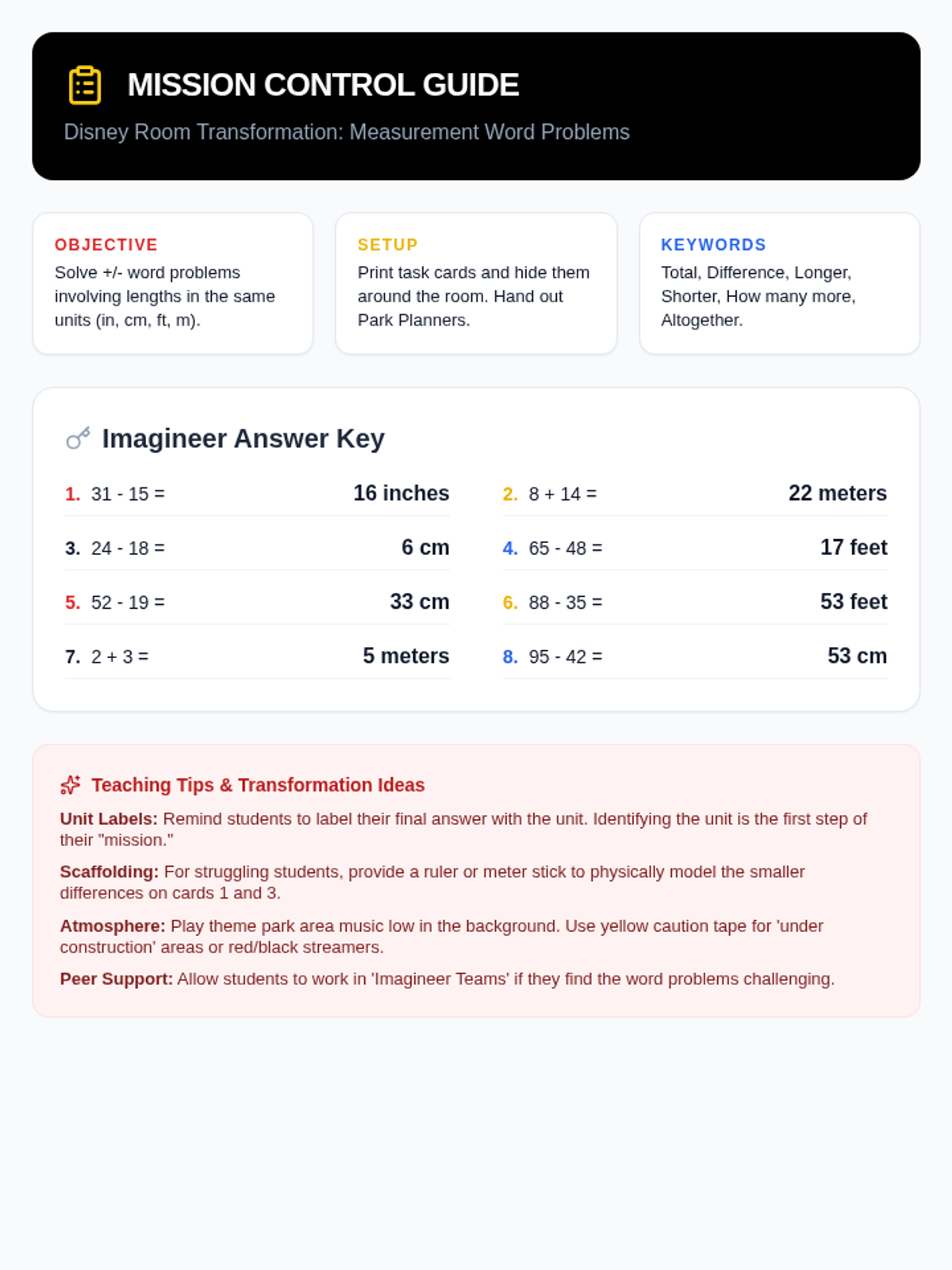
A high-energy measurement word problem lesson set in a magical theme park, designed for a room transformation experience. Students solve length comparison and addition problems using inches, centimeters, feet, and meters.
An introductory lesson on perimeter for 3rd grade, covering what perimeter is, how to calculate it for various polygons, and real-world applications.
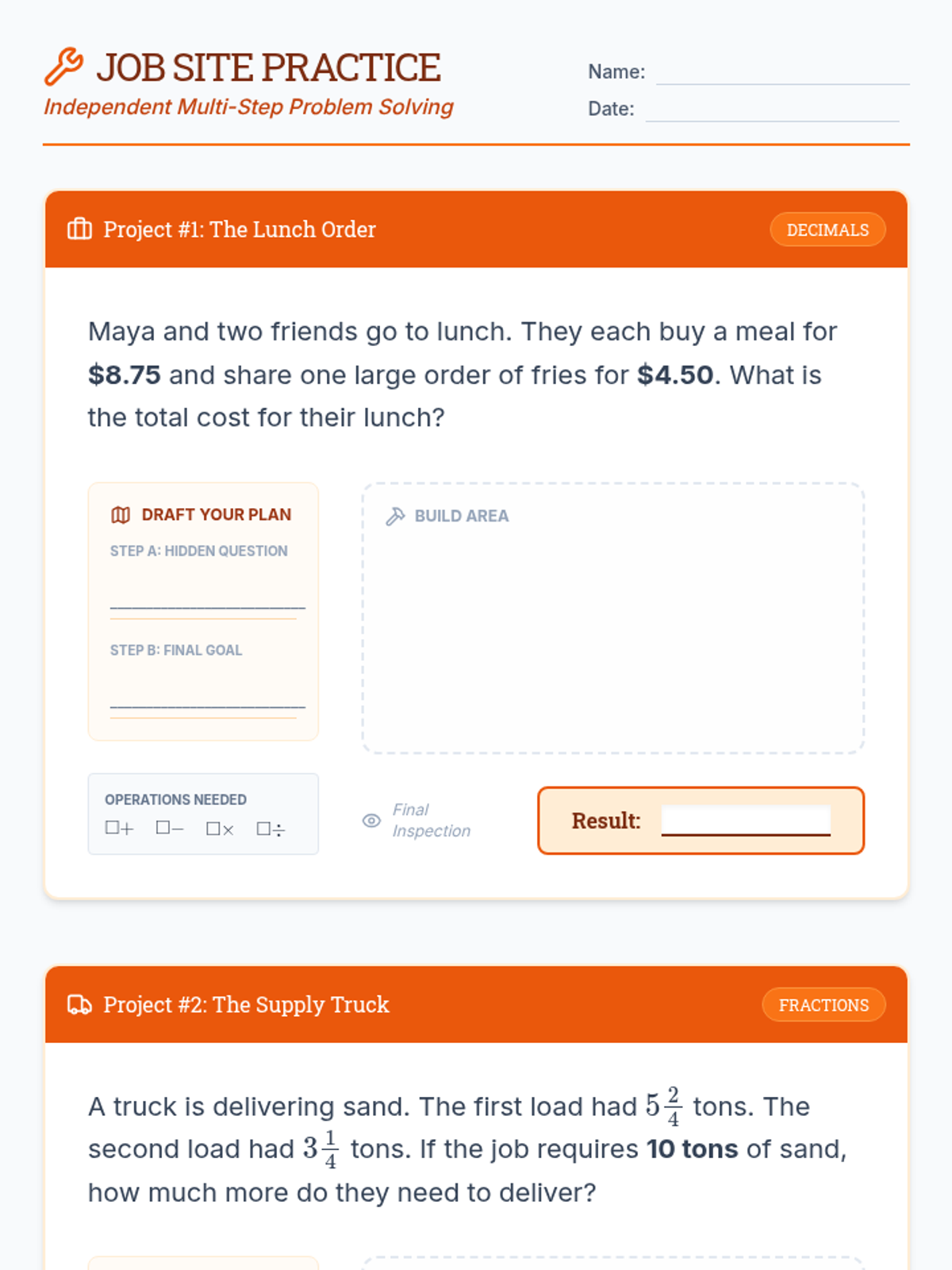
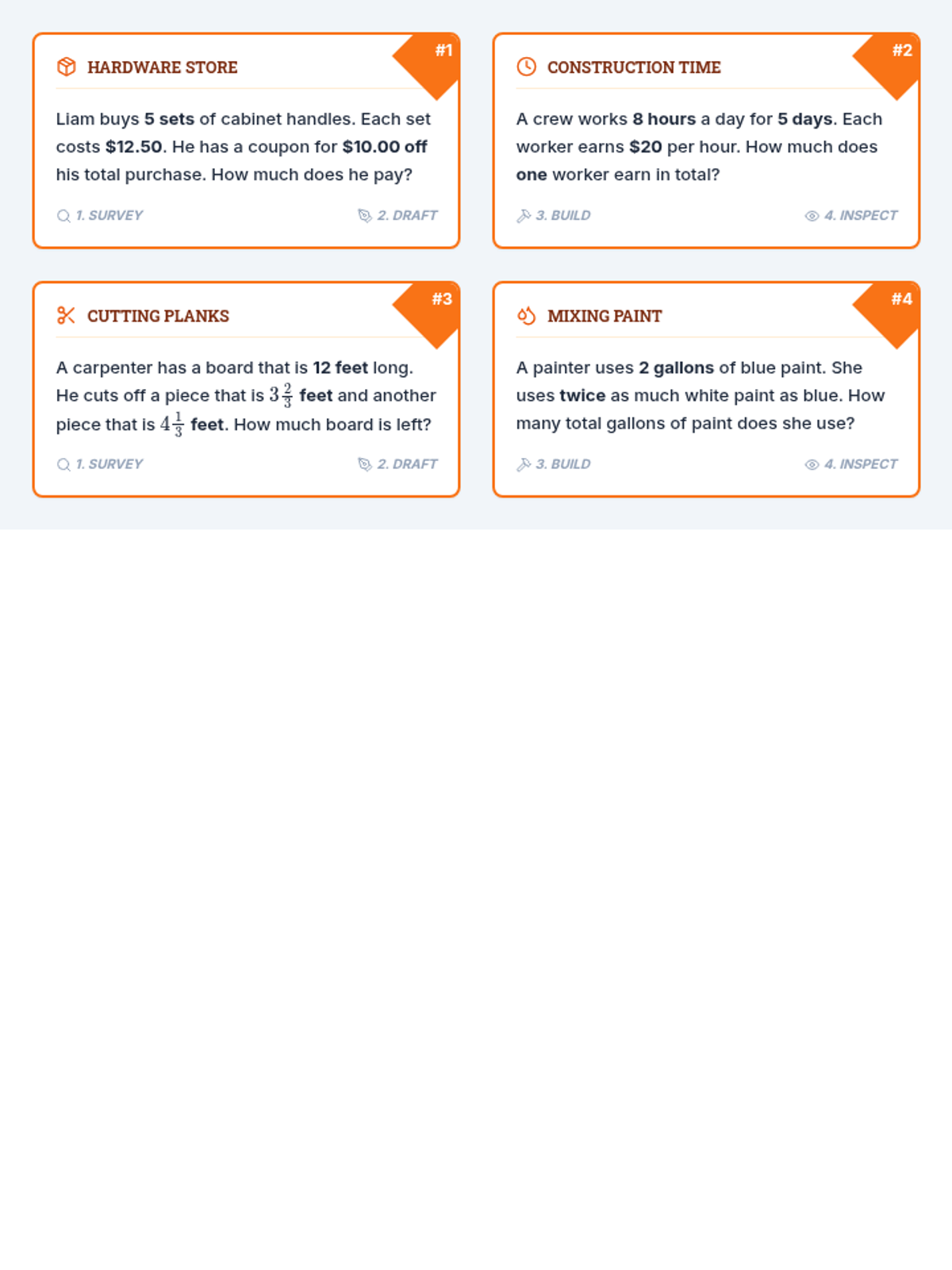
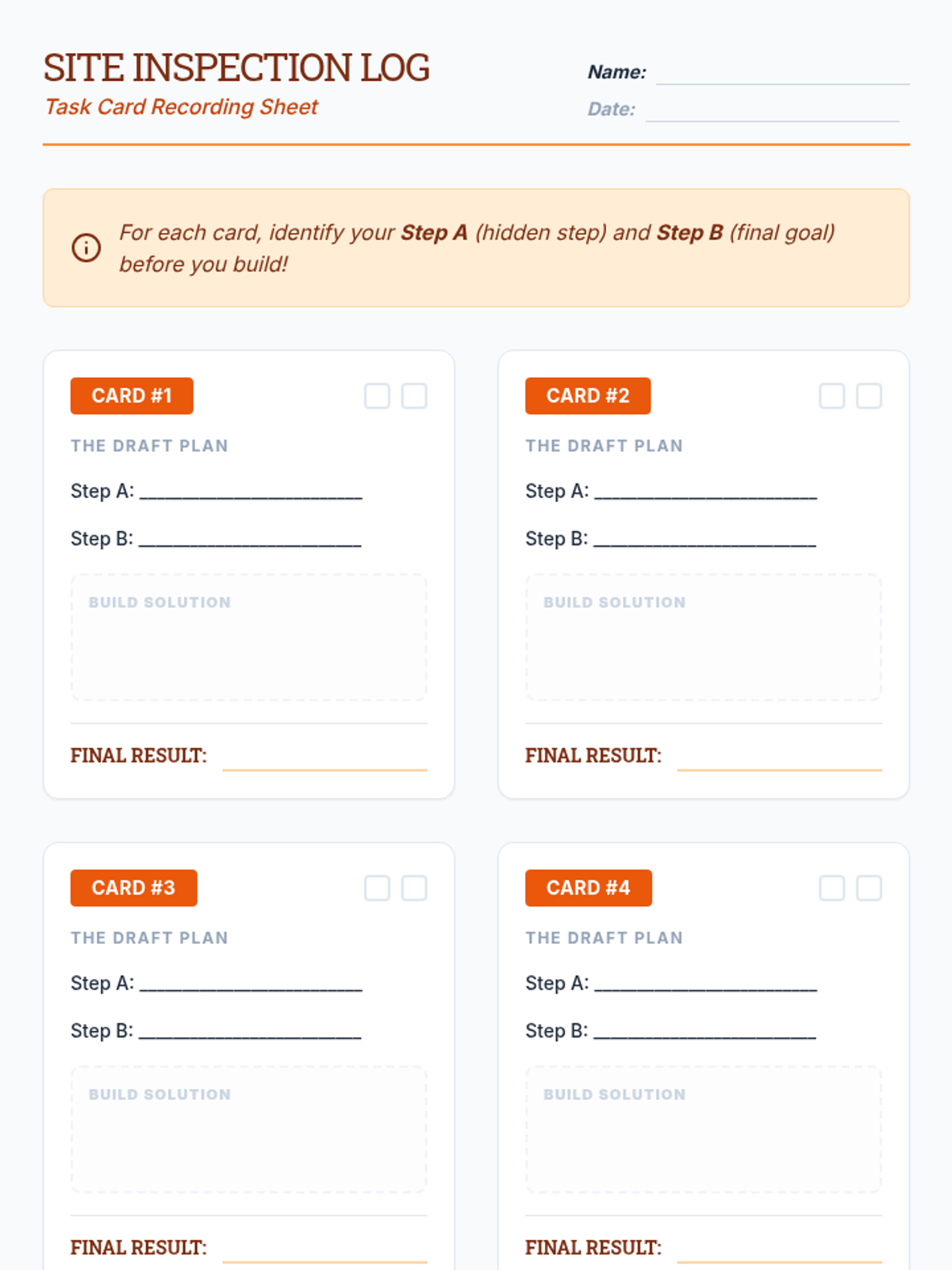
Students transition to independent practice, solving multi-step word problems with reduced scaffolding. This lesson focuses on accurately identifying the 'hidden step' across varied contexts including money, time, and measurement.
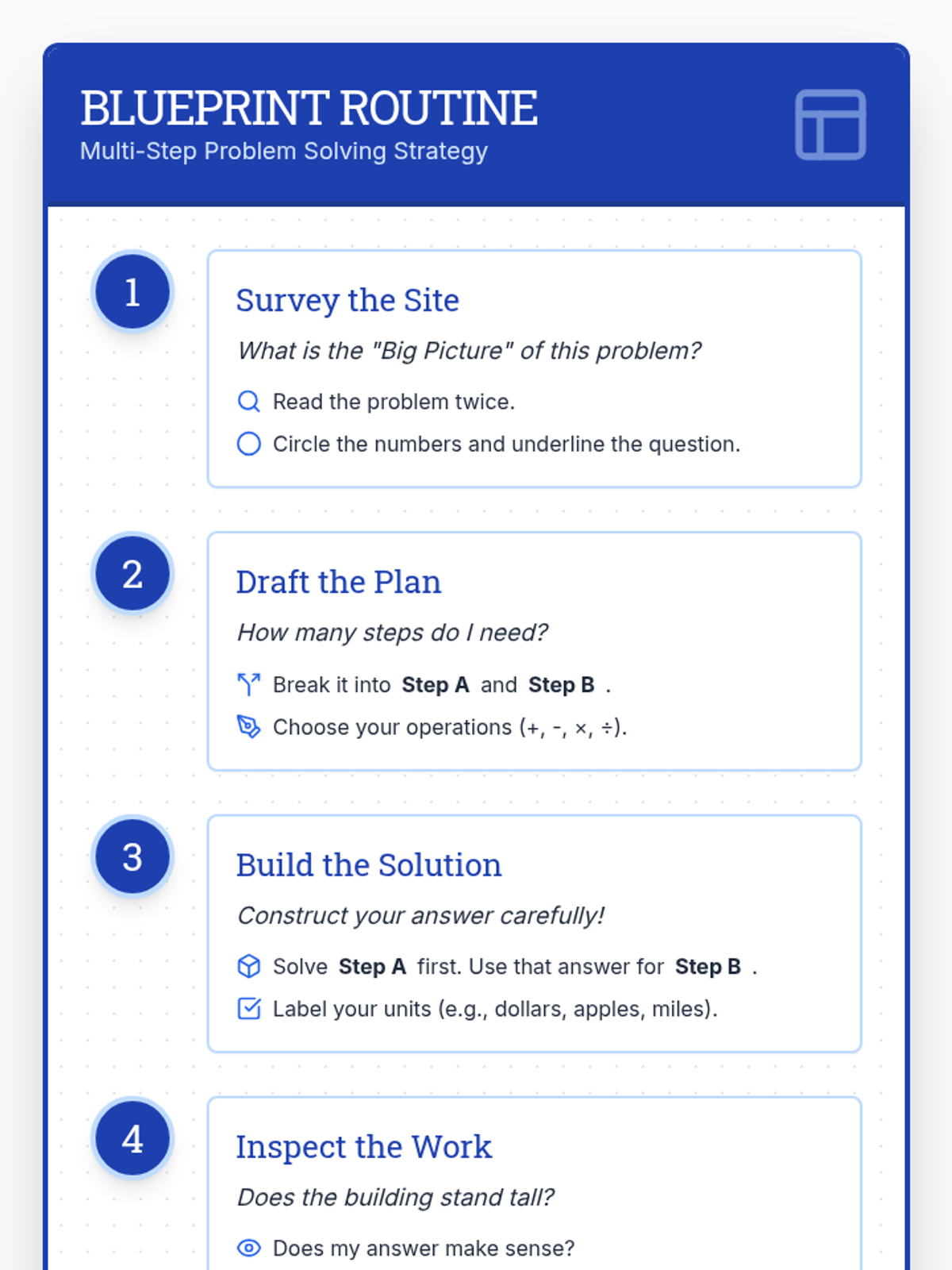
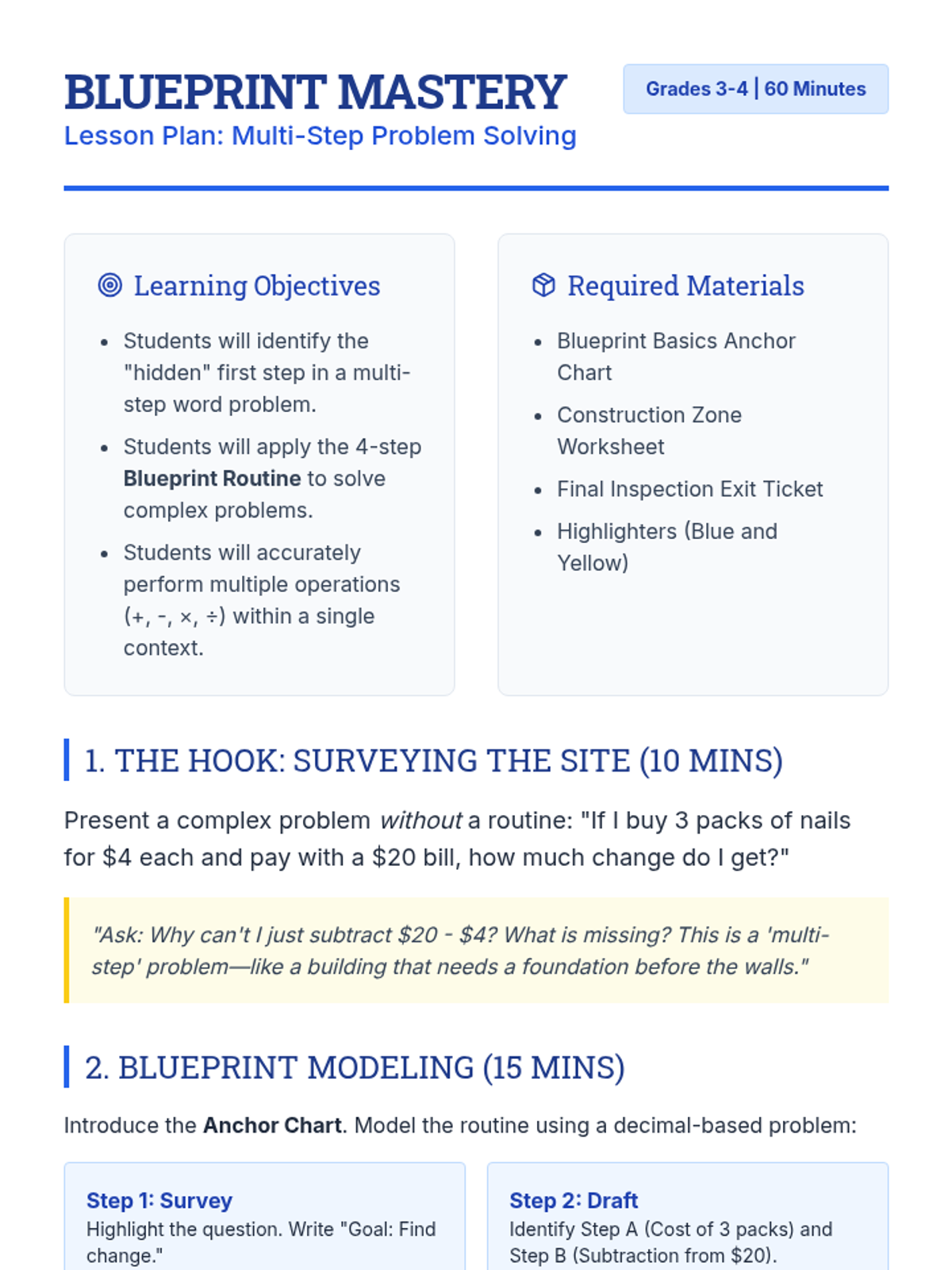
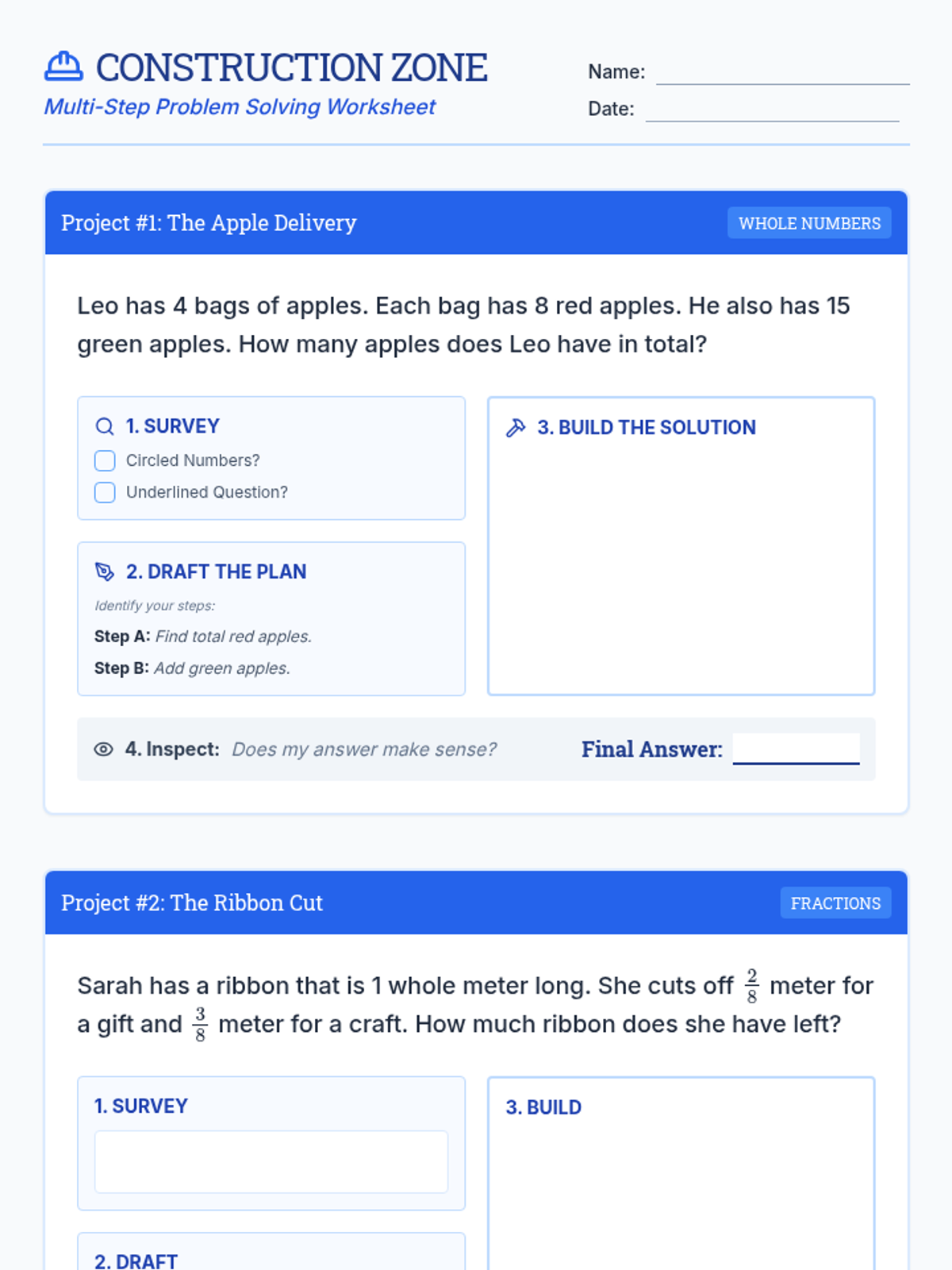
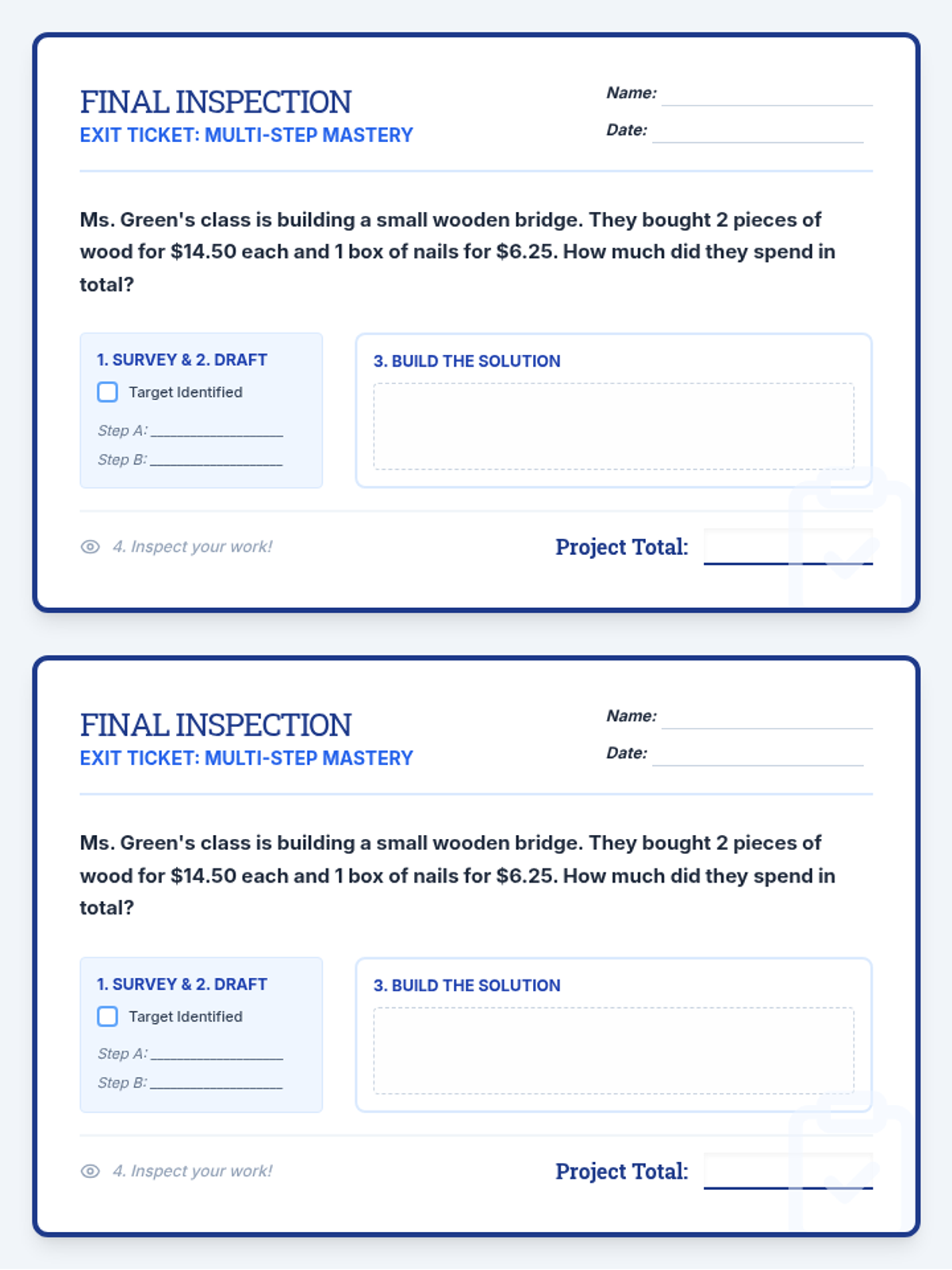
Students learn and apply a four-step 'Blueprint Routine' to solve multi-step math problems. The lesson provides heavy scaffolding that fades as students gain confidence in handling multiple operations.
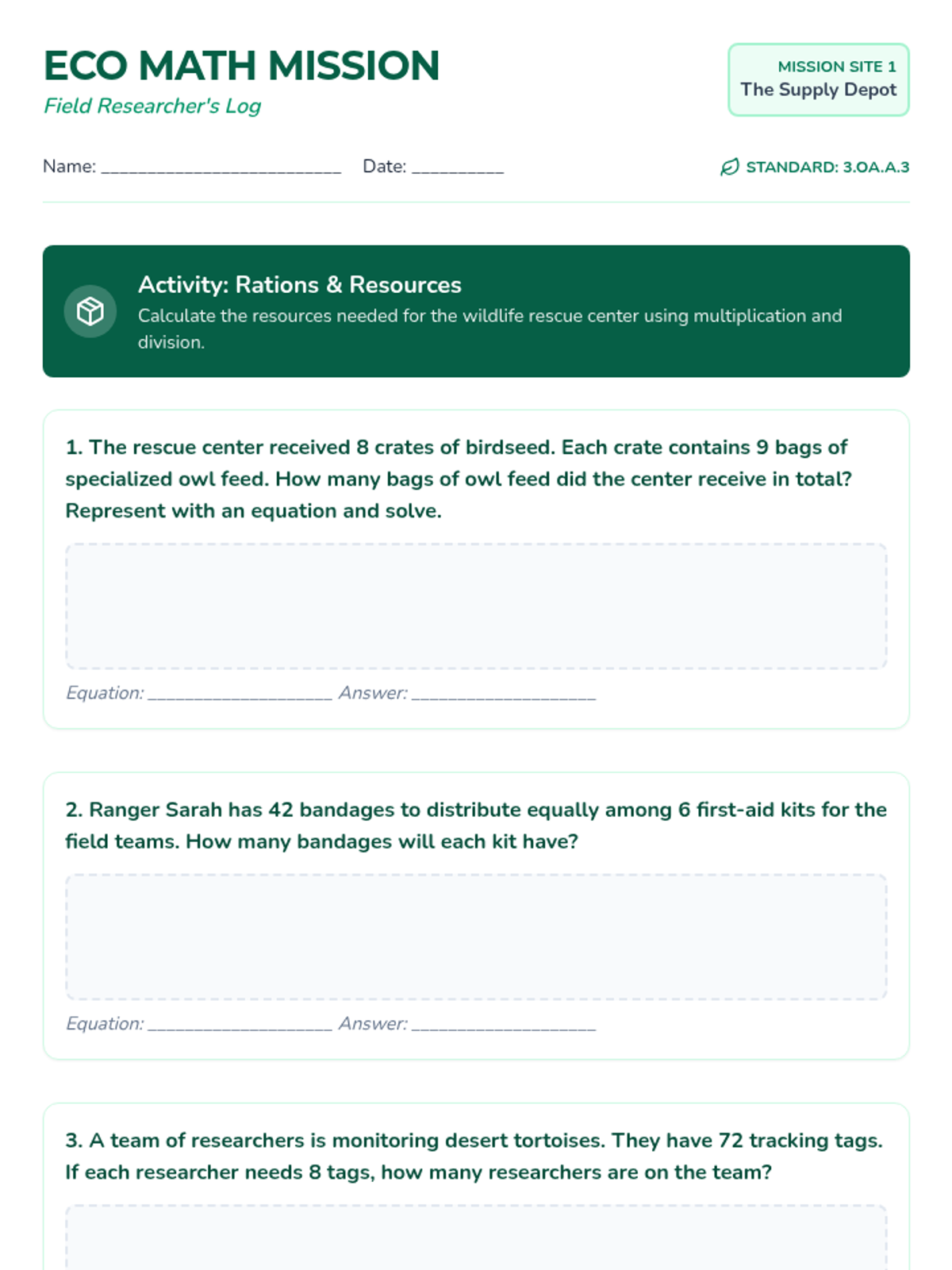
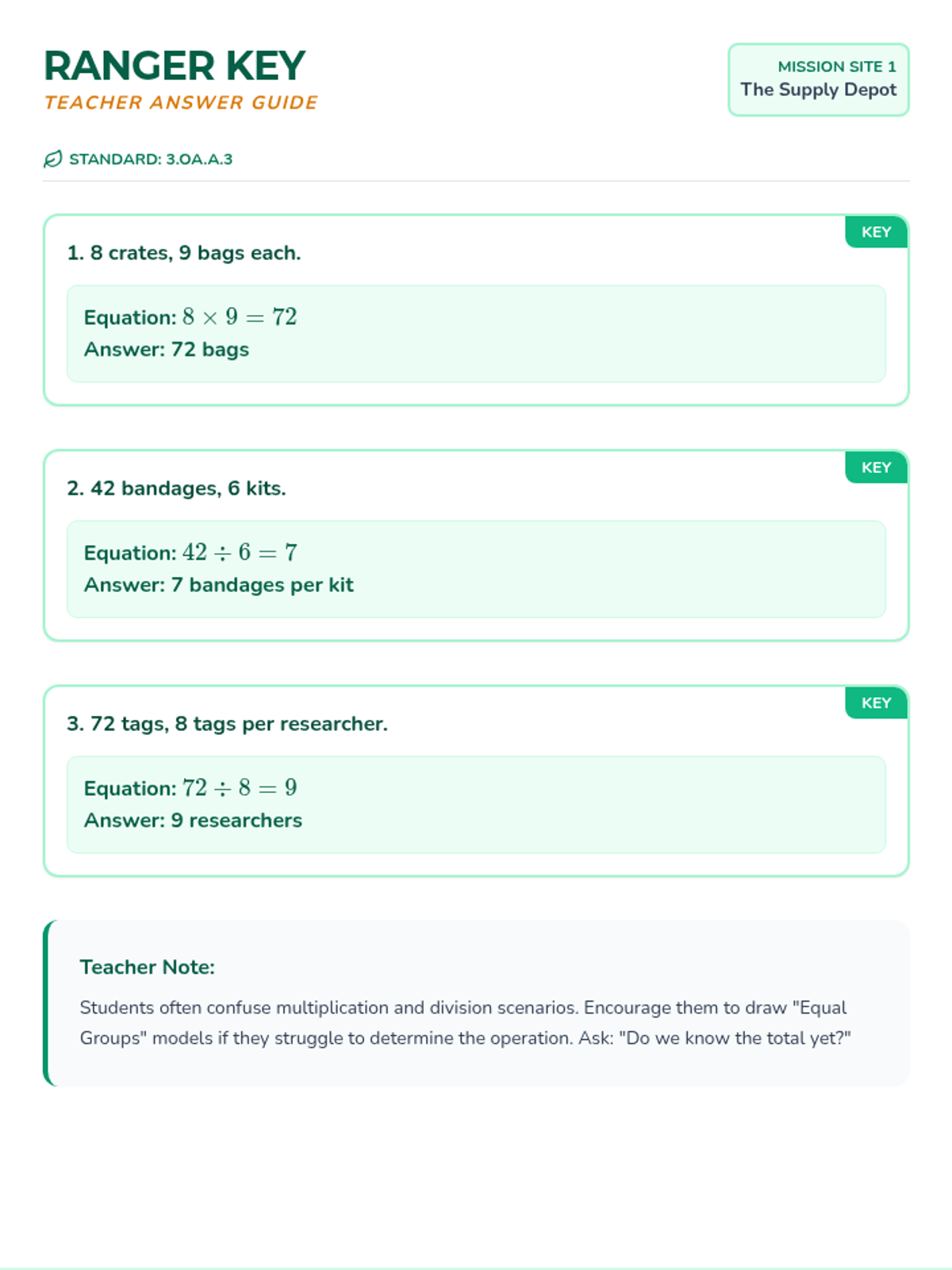
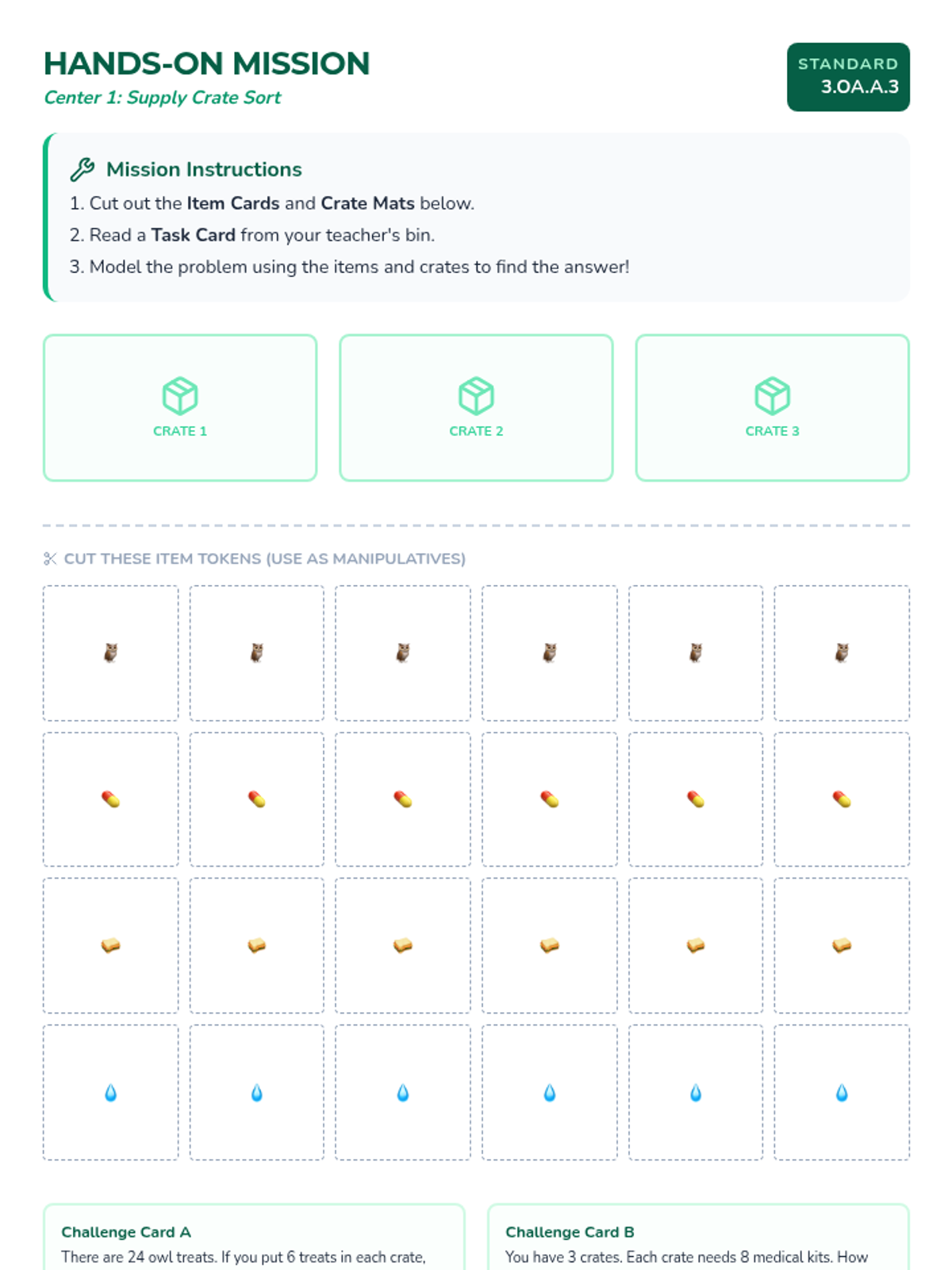
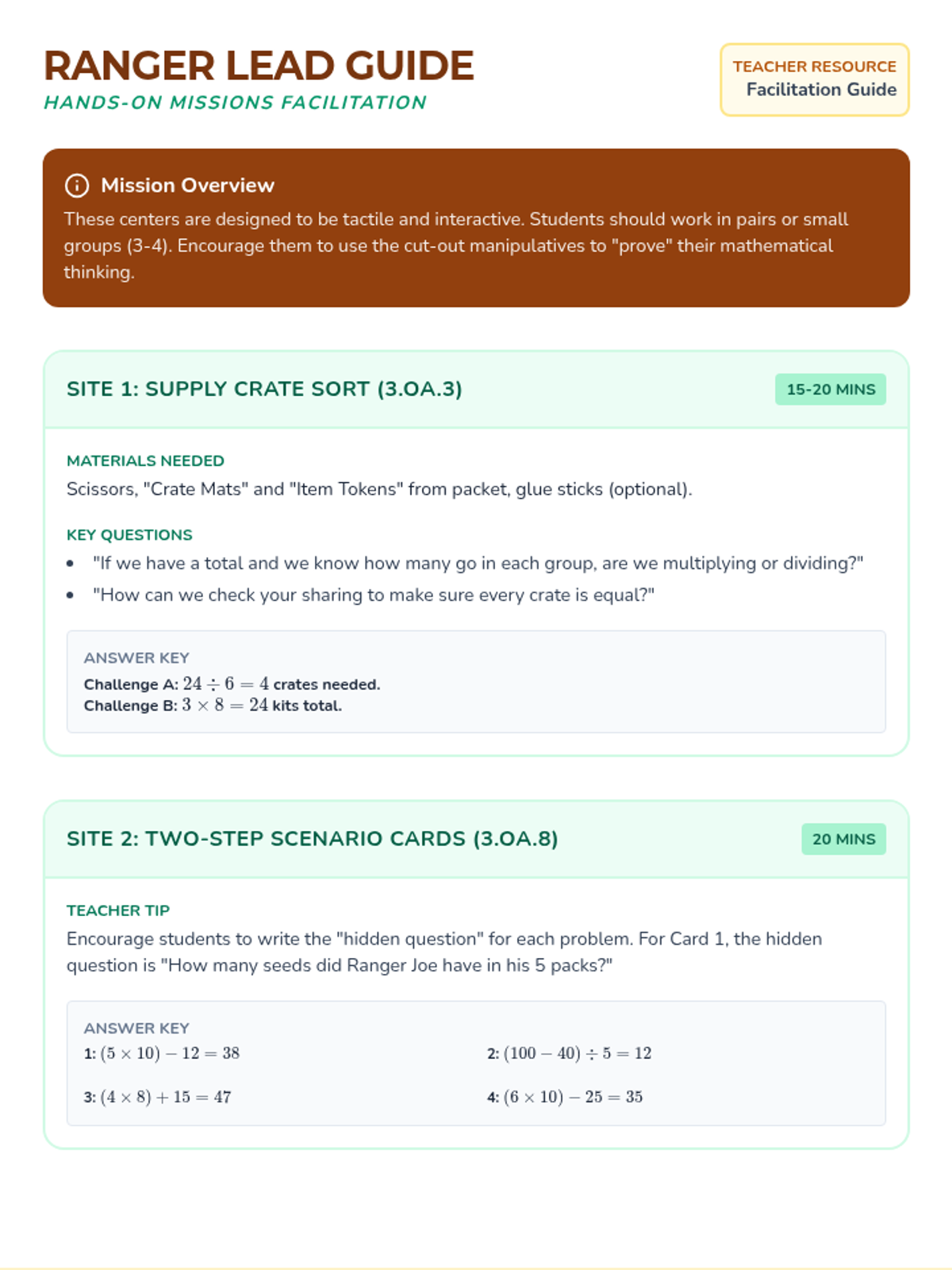
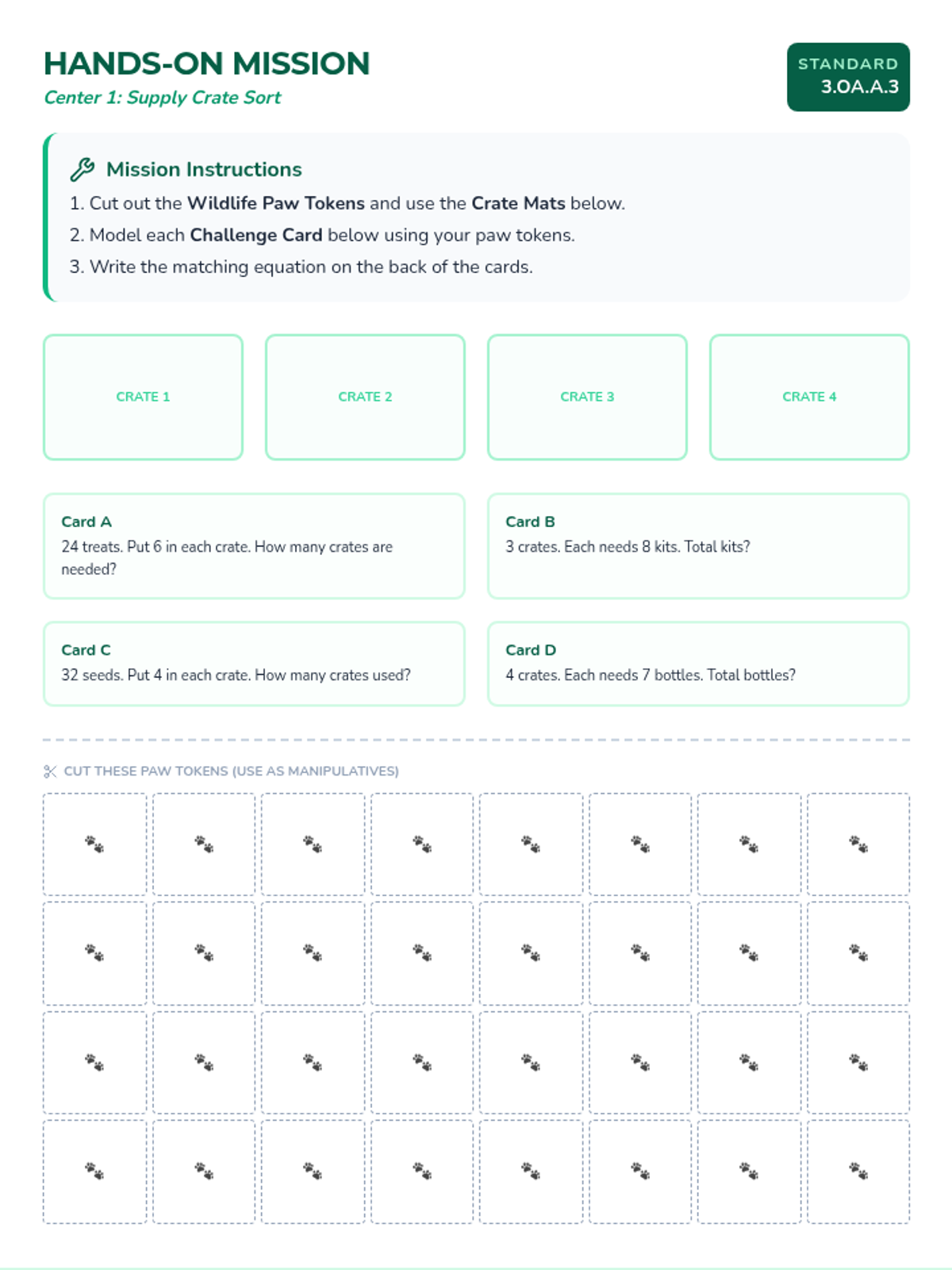
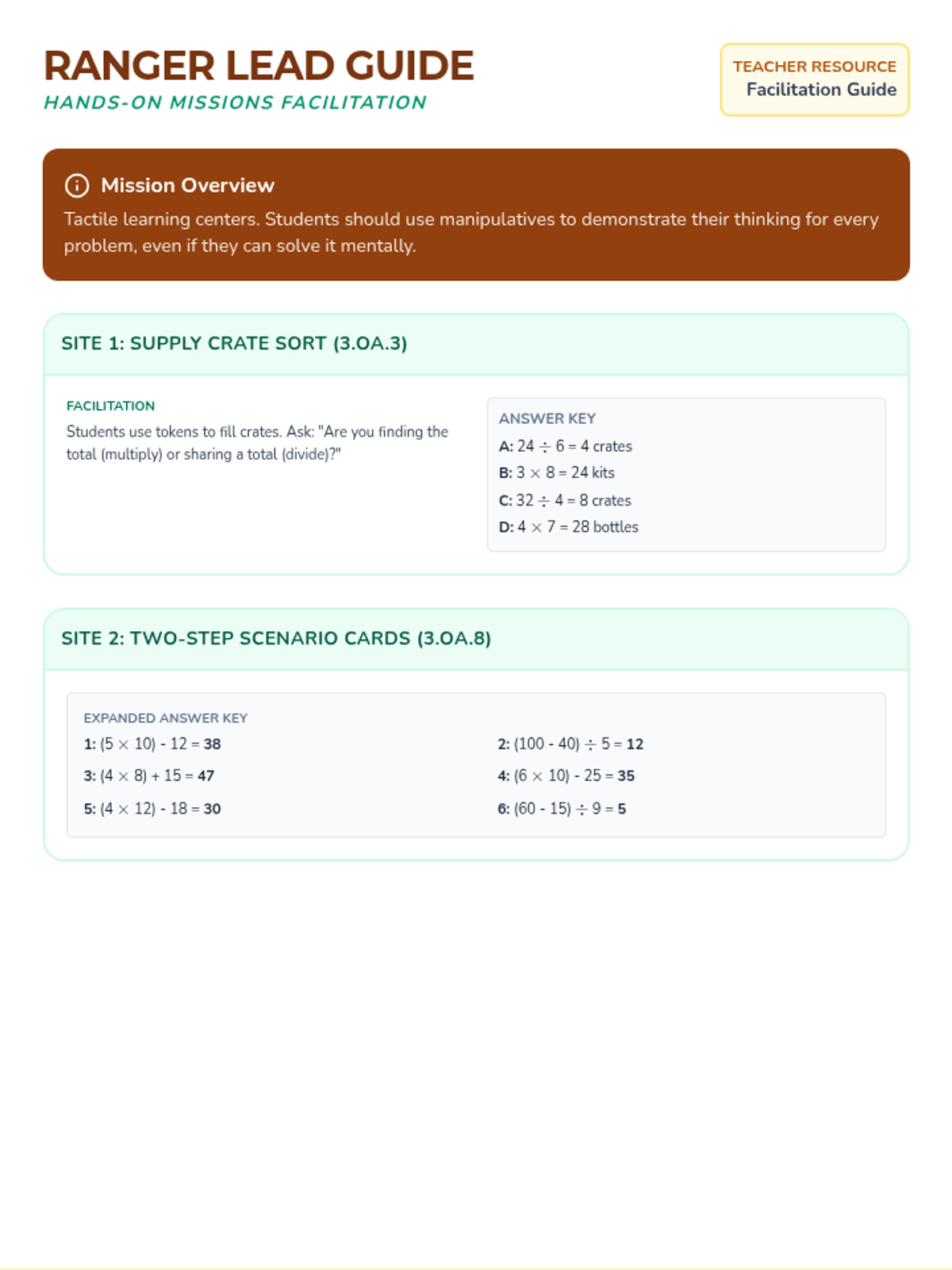
A series of six high-rigor math centers focused on Arizona 3rd grade standards, themed around wildlife conservation and nature rescue missions. Students practice multiplication, division, multi-step problems, area, and fractions while acting as junior conservationists.
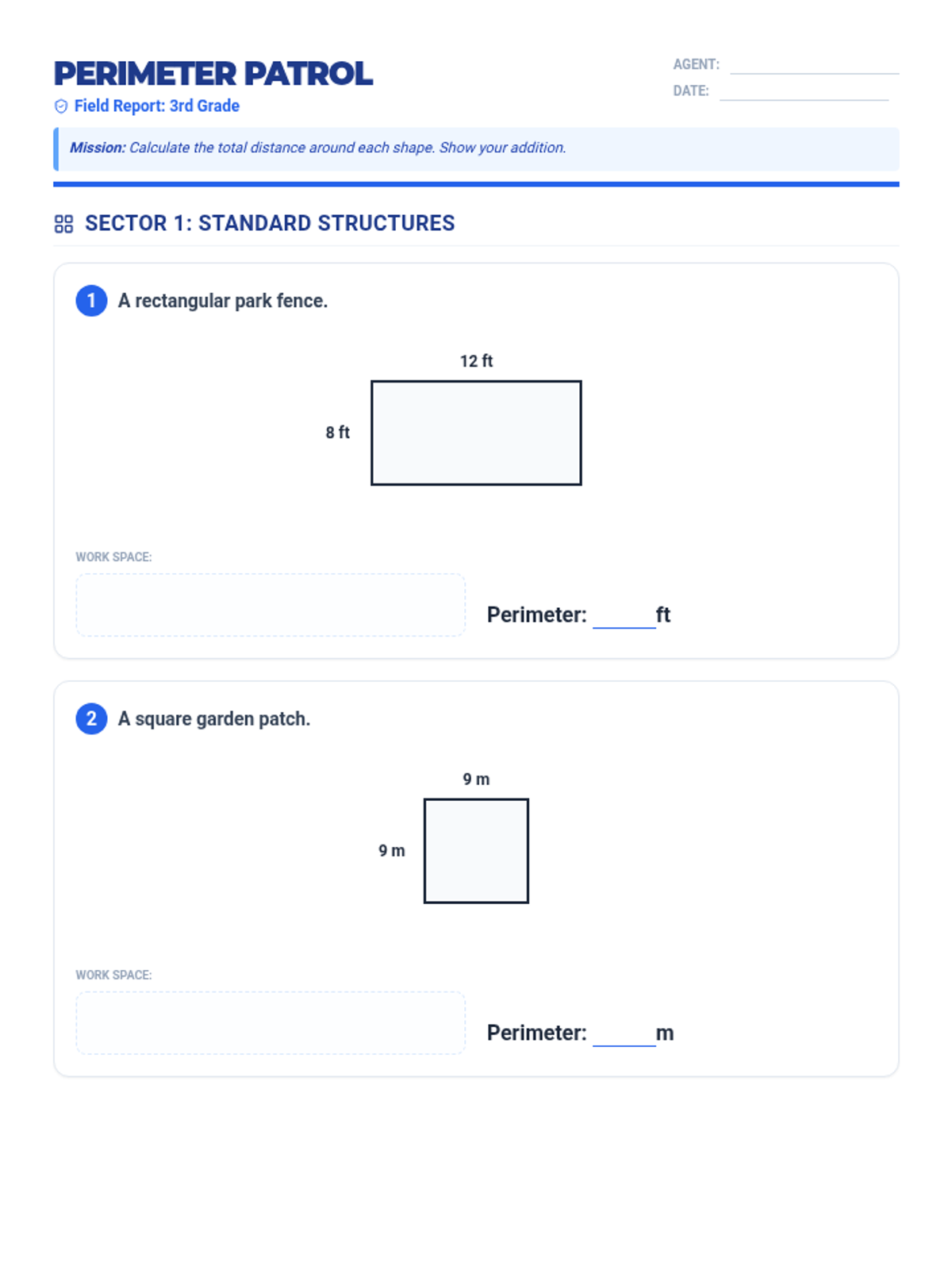
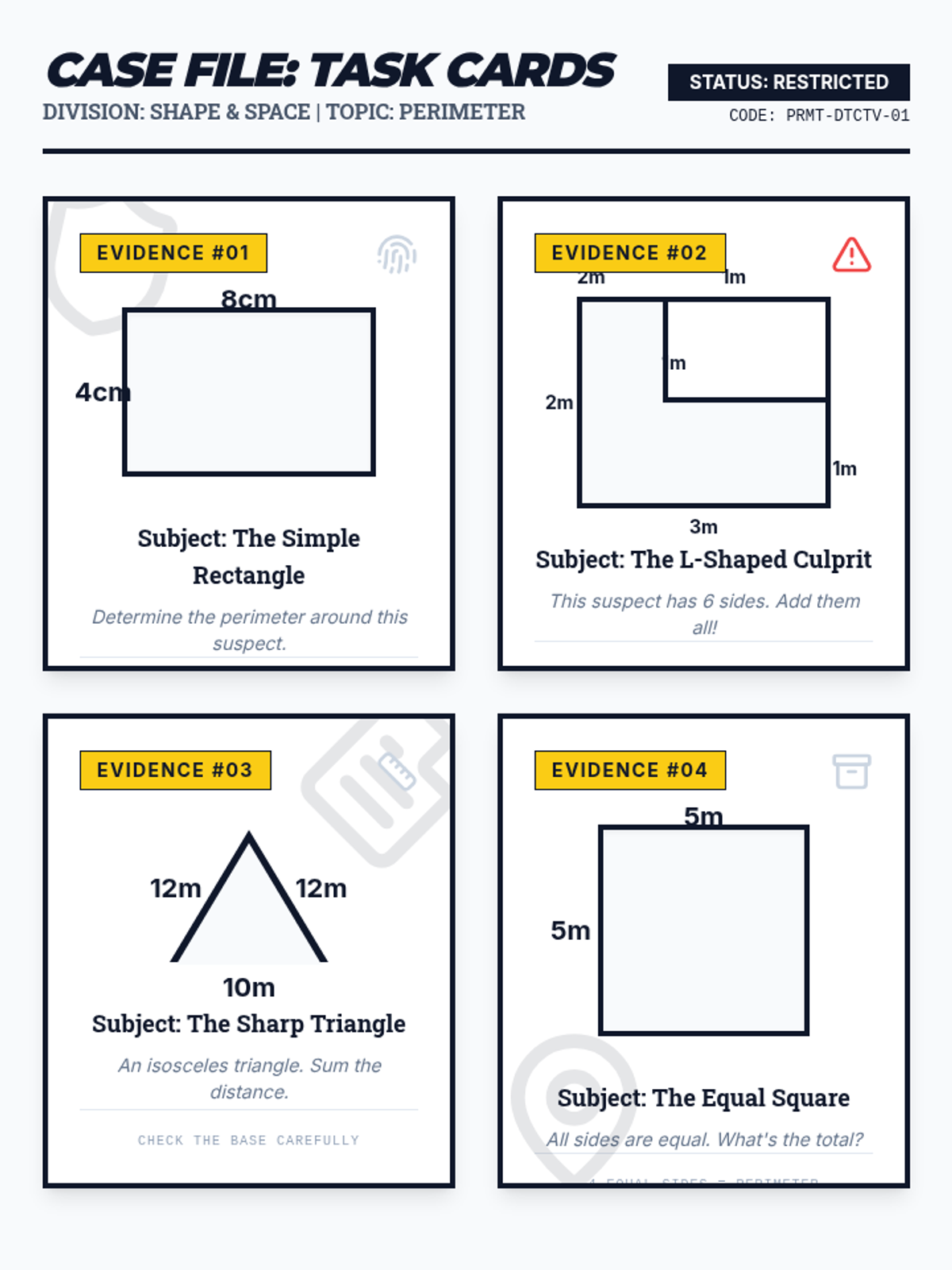
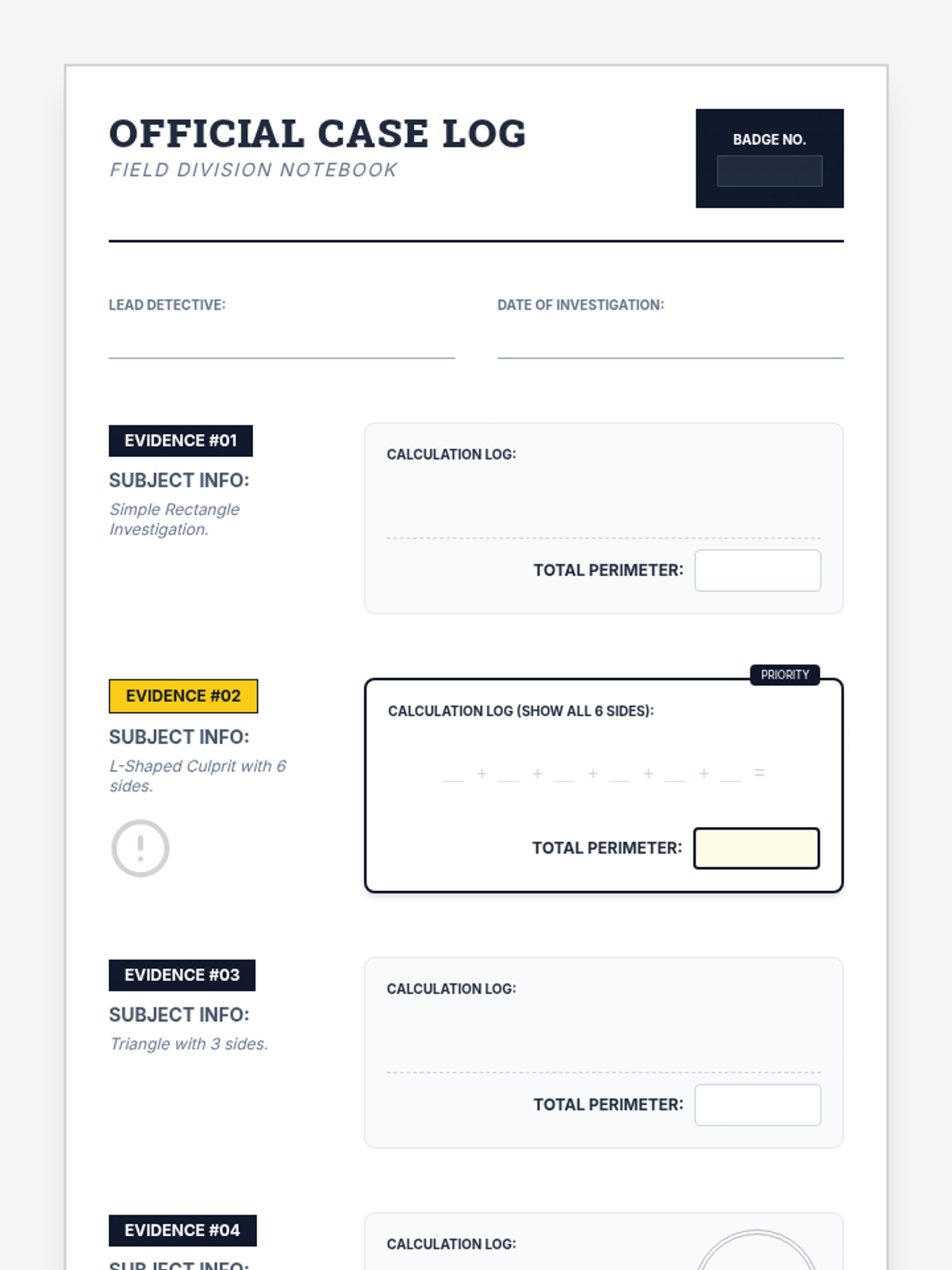
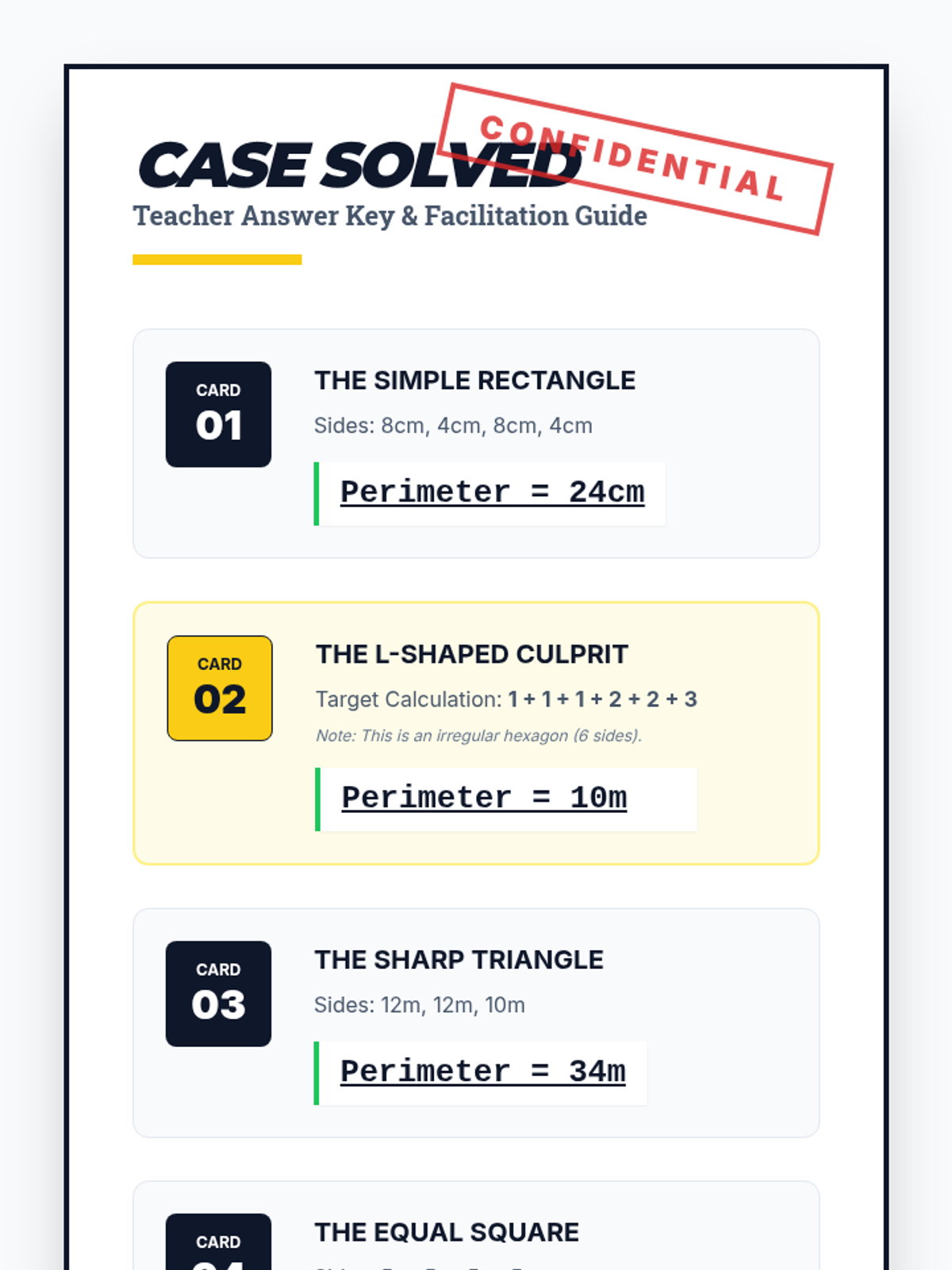
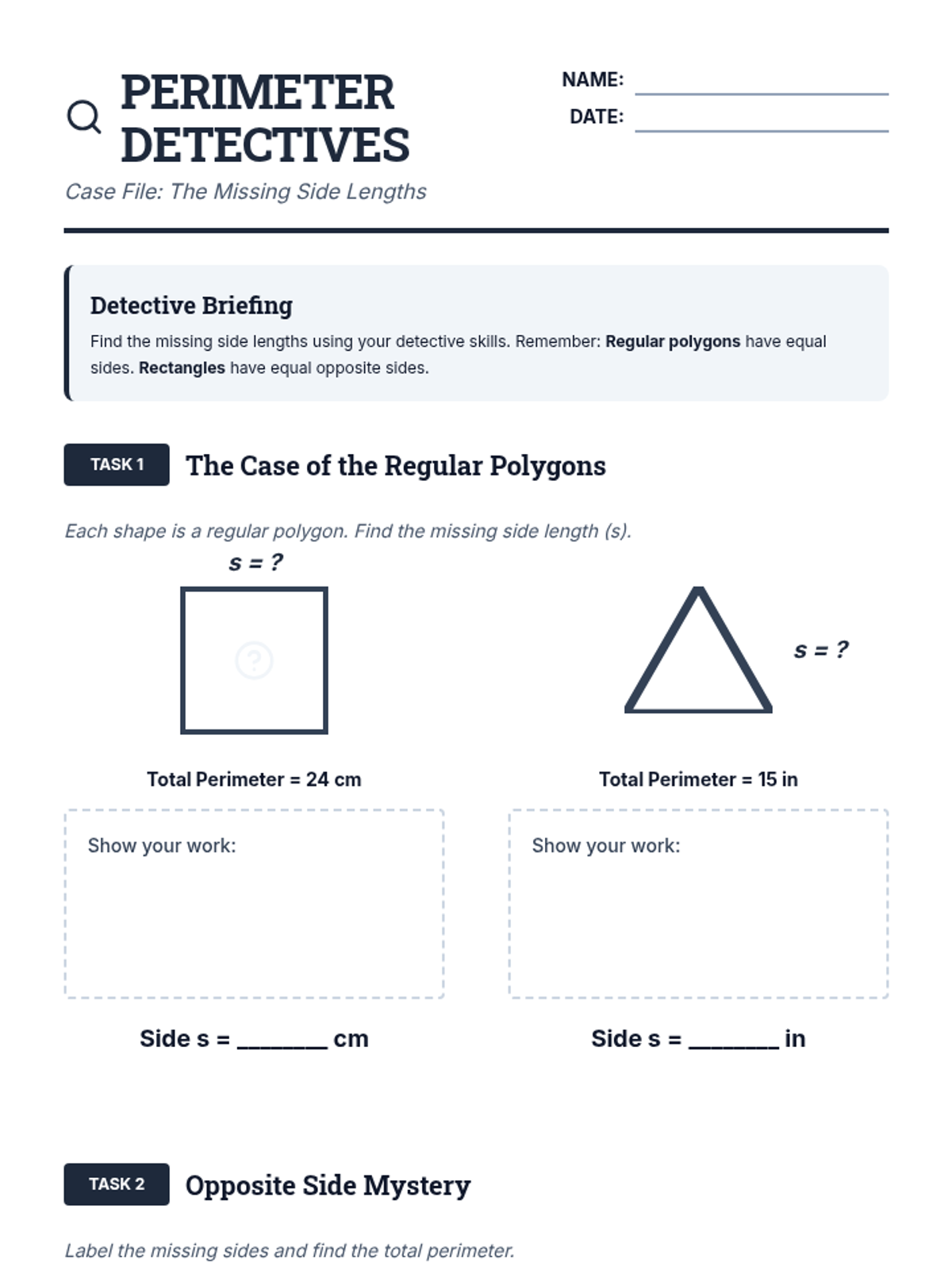
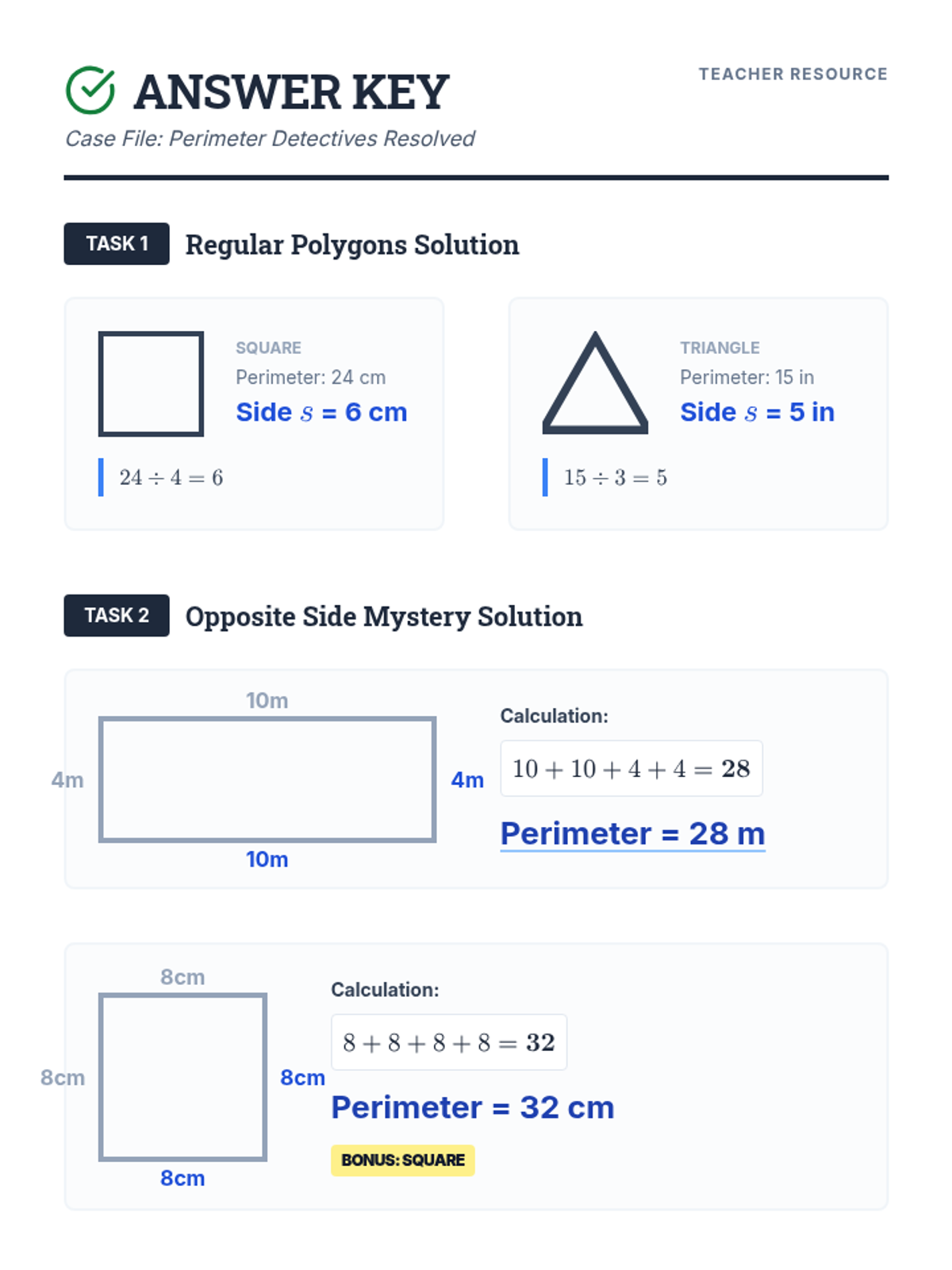
A perimeter-focused lesson where students take on the role of detectives to calculate the boundaries of various shapes. Features mystery-themed visuals and step-by-step problem-solving.
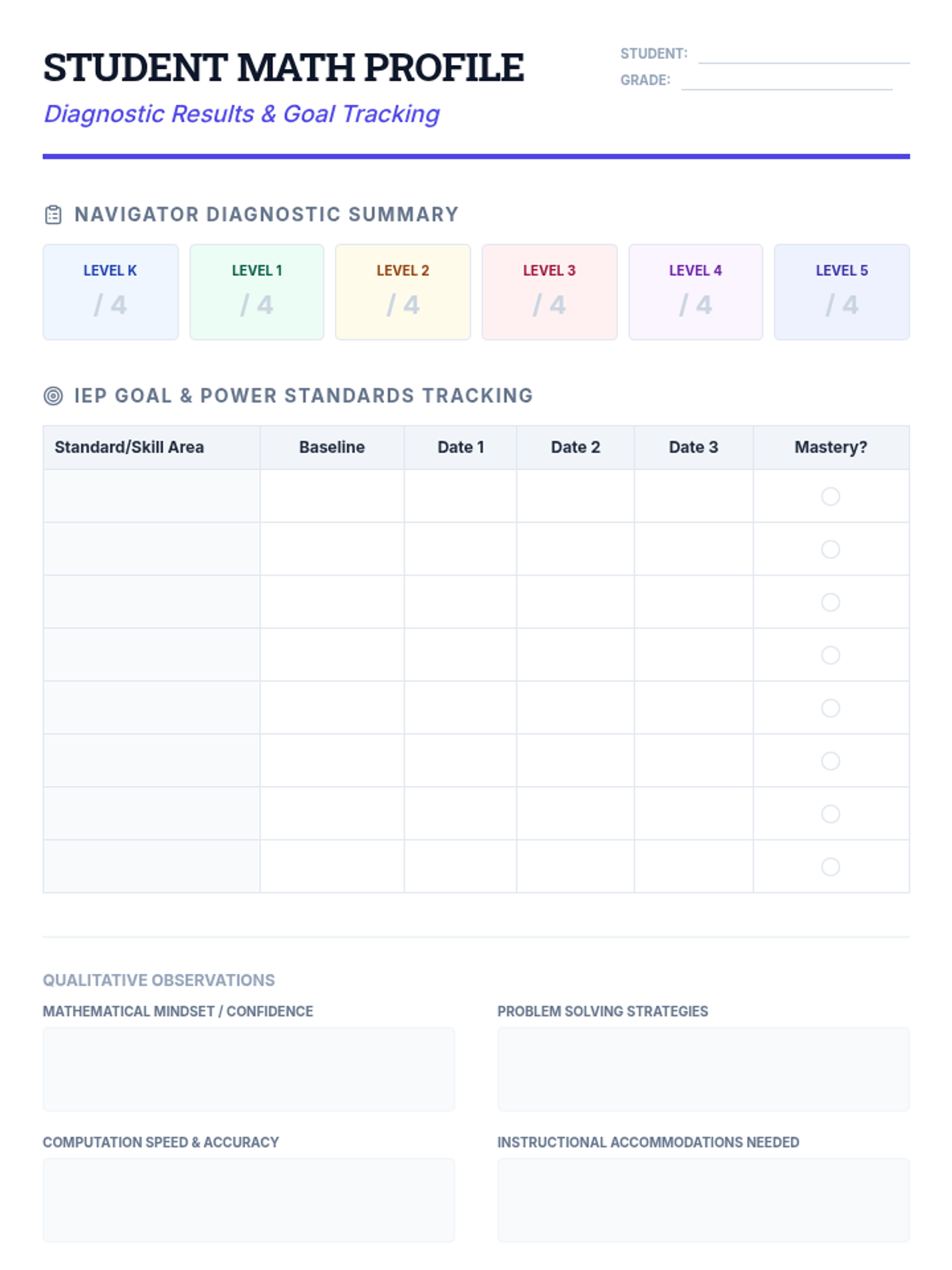
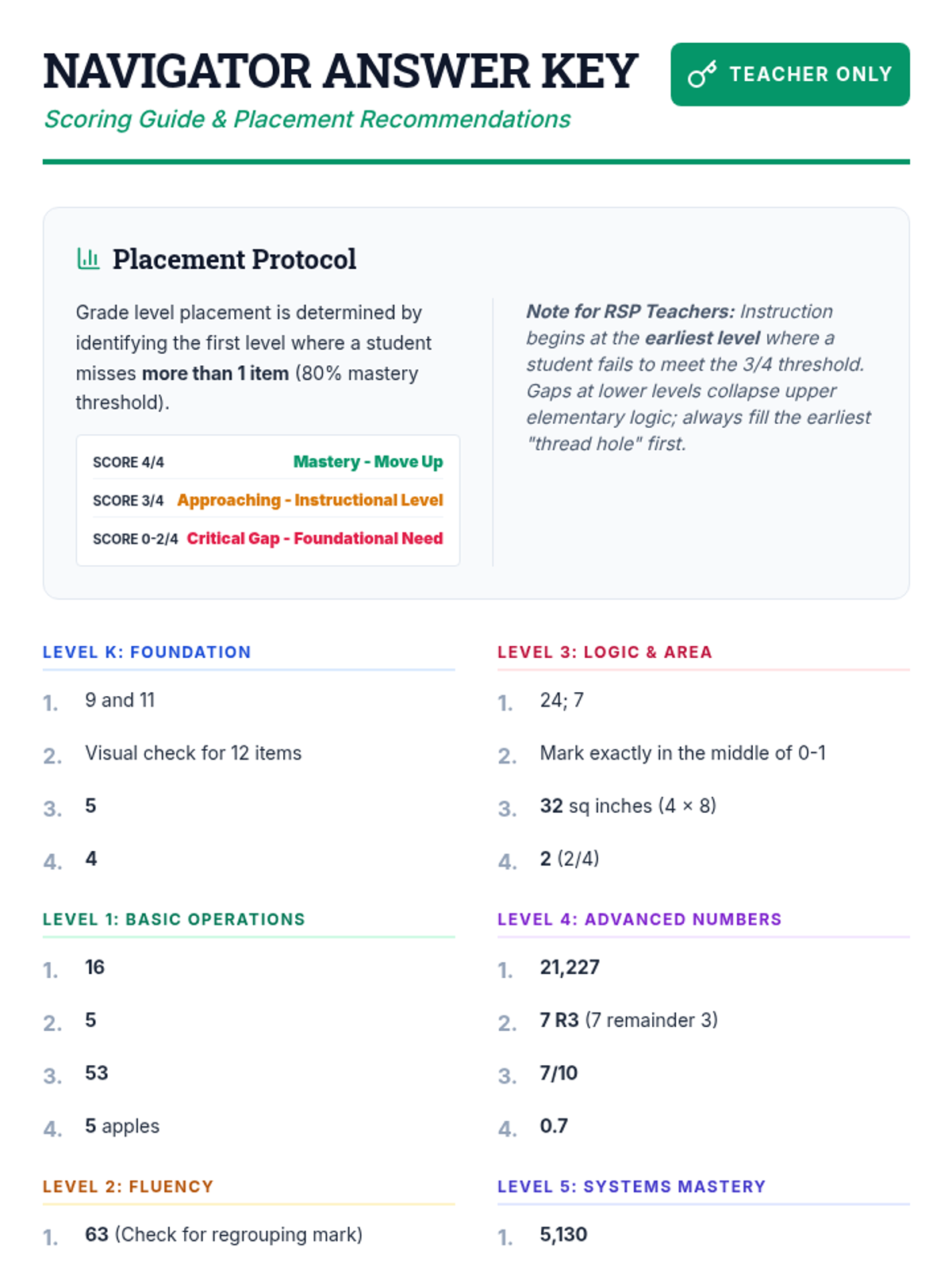
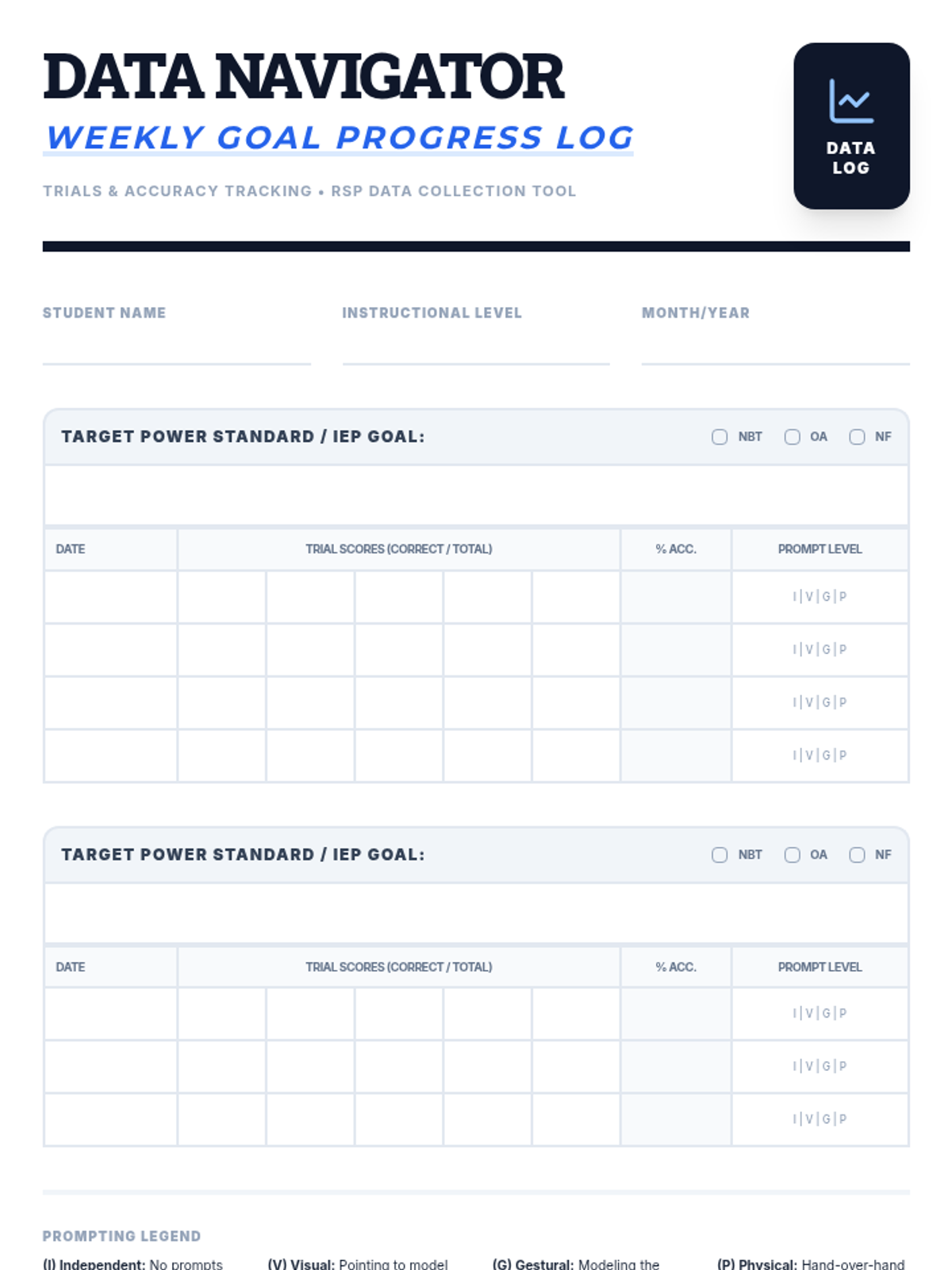
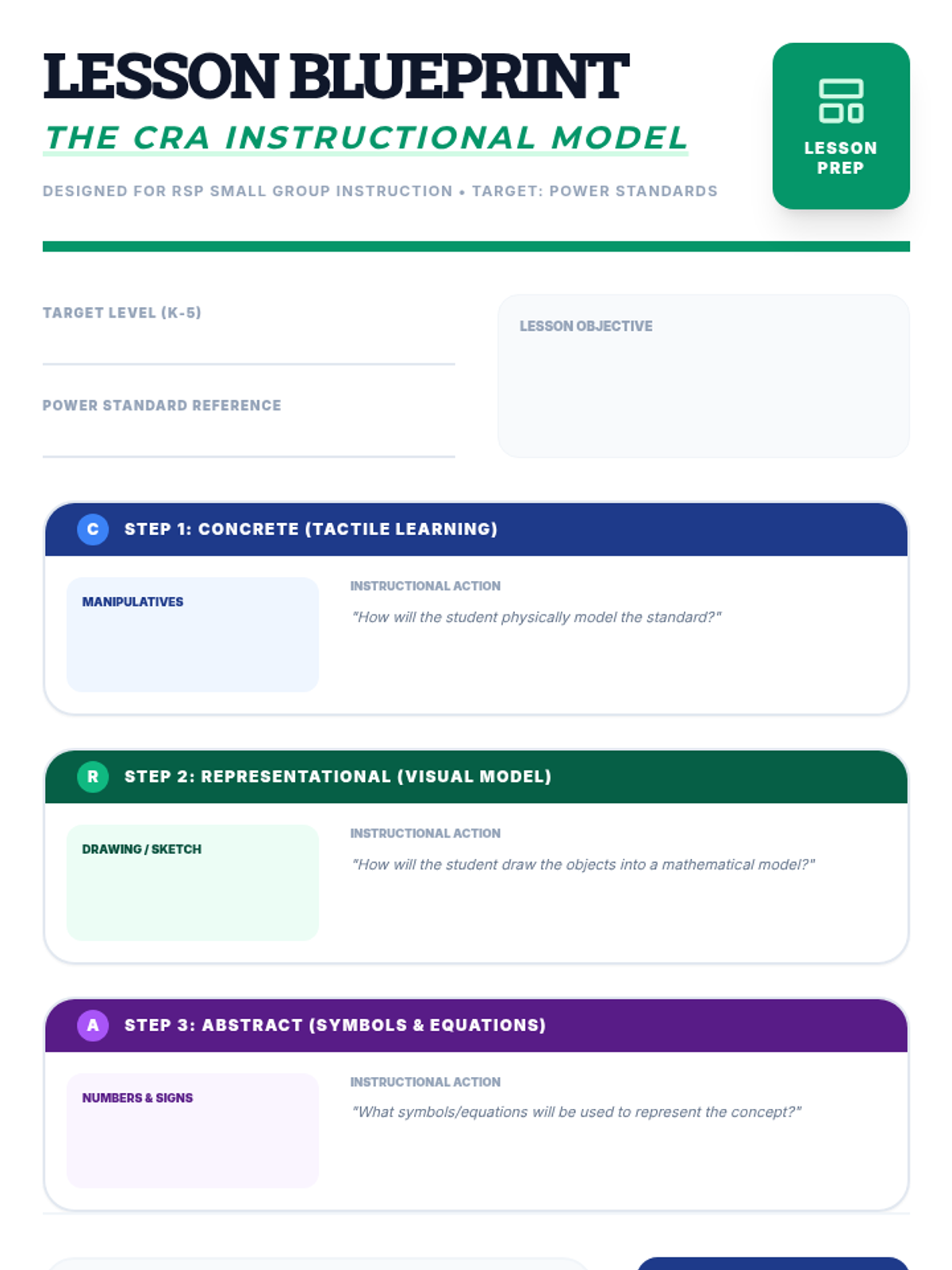
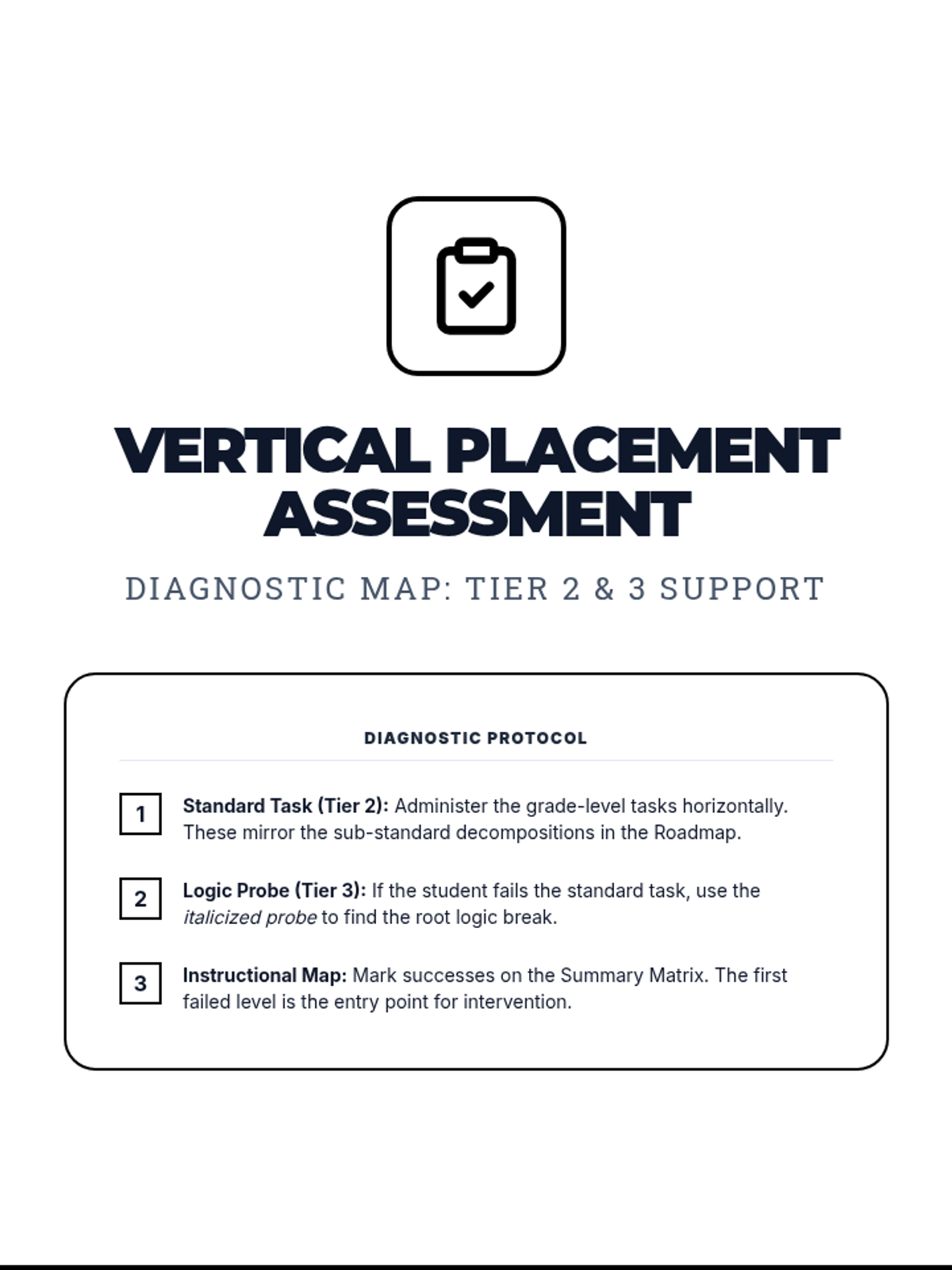
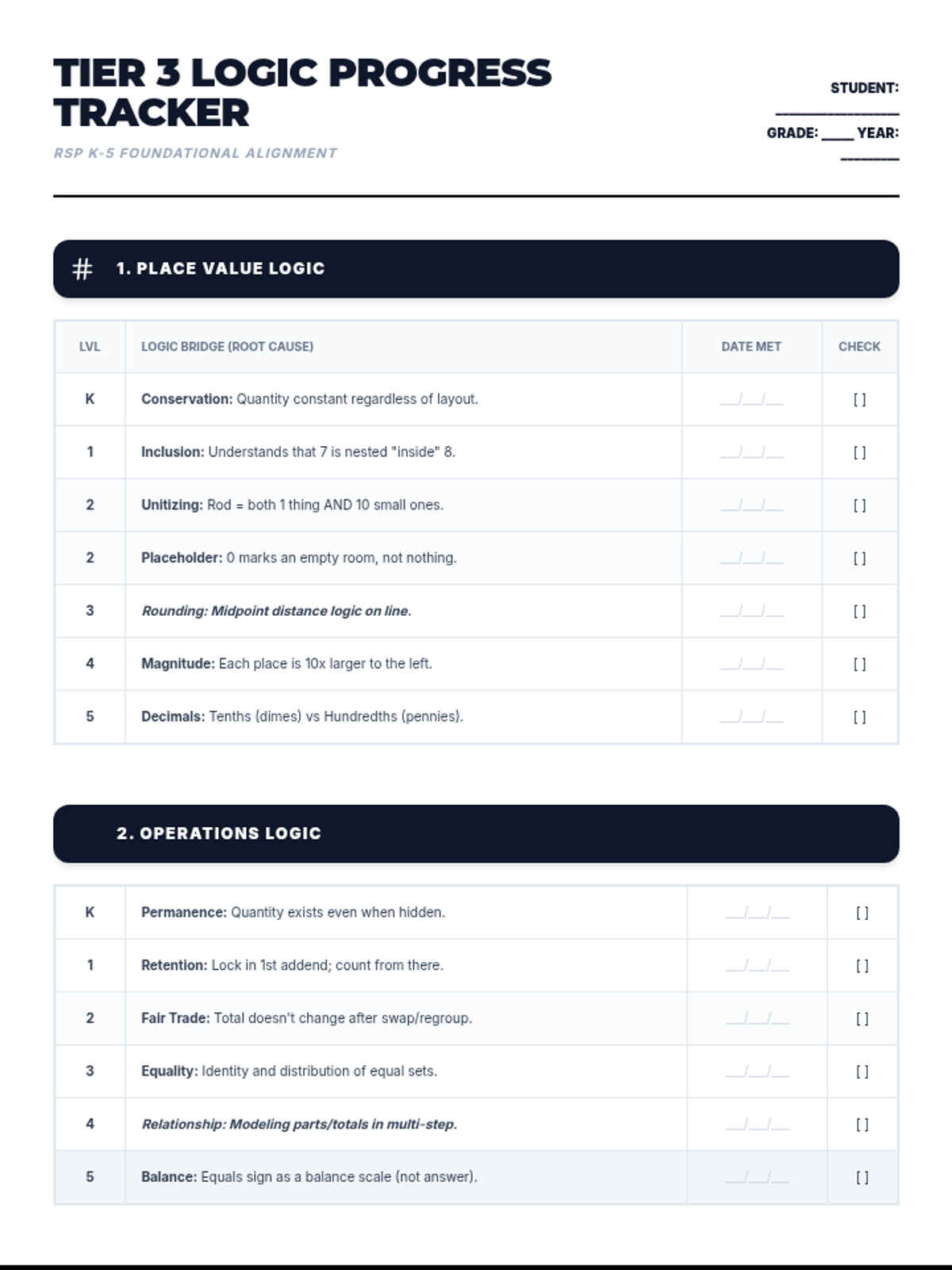
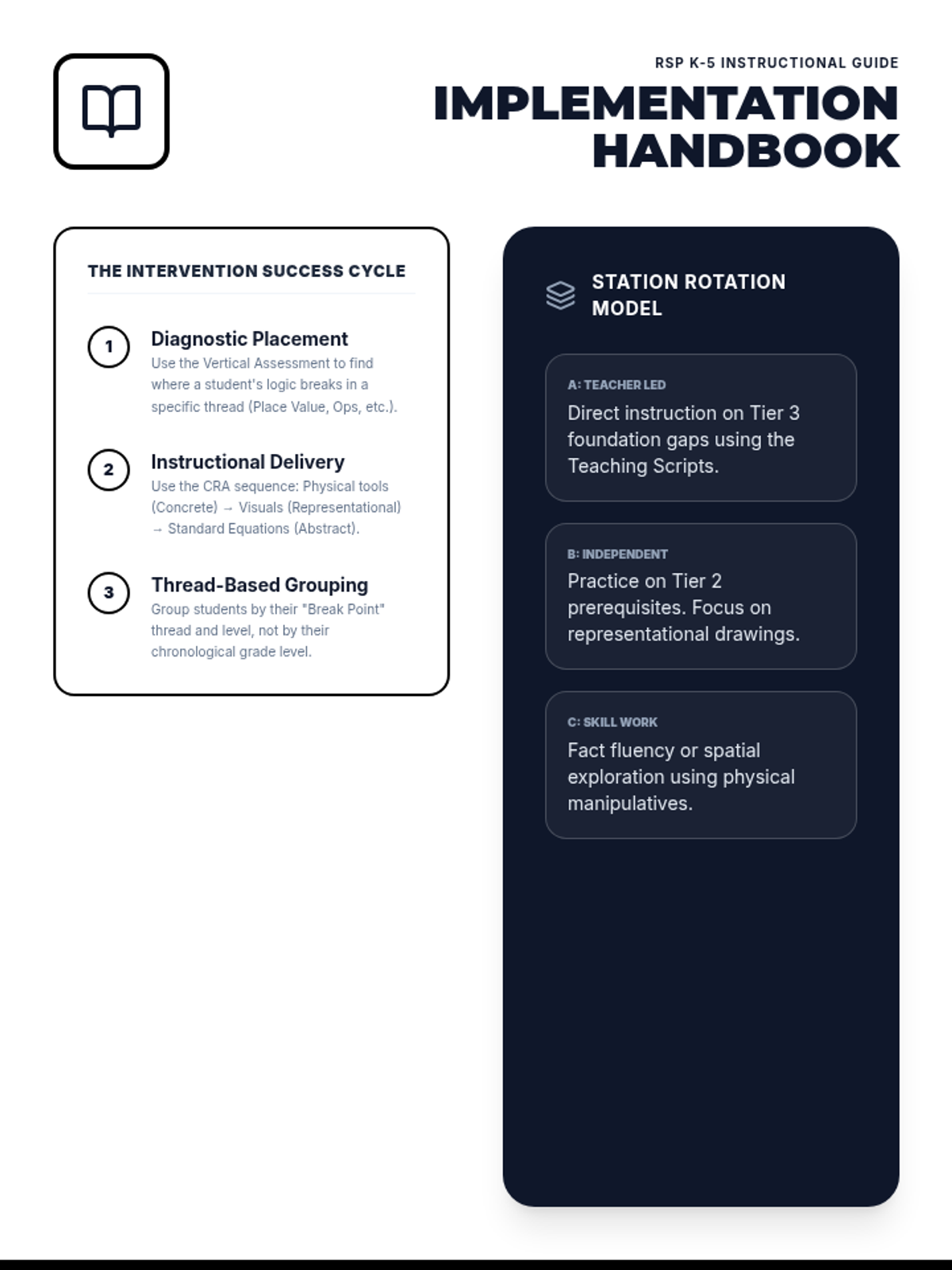
A toolkit for RSP teachers to transform a scope and sequence into a functional daily curriculum. Includes instructional frameworks, diagnostic tools, and planning templates specifically designed for multi-grade math intervention.
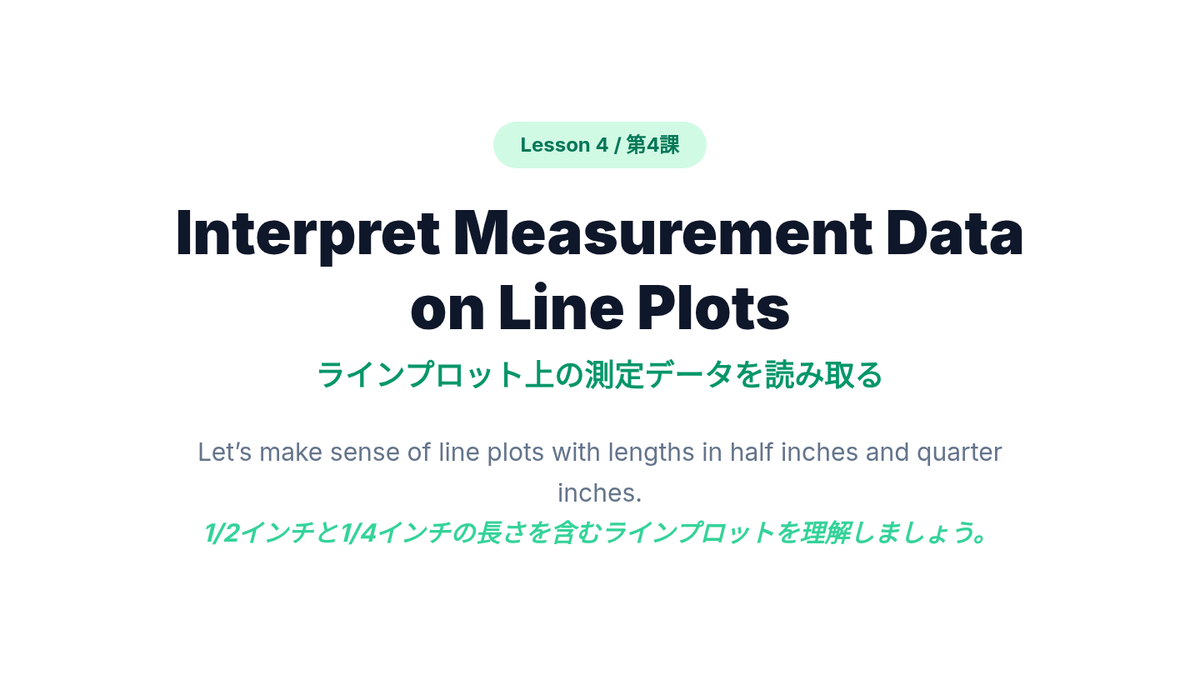
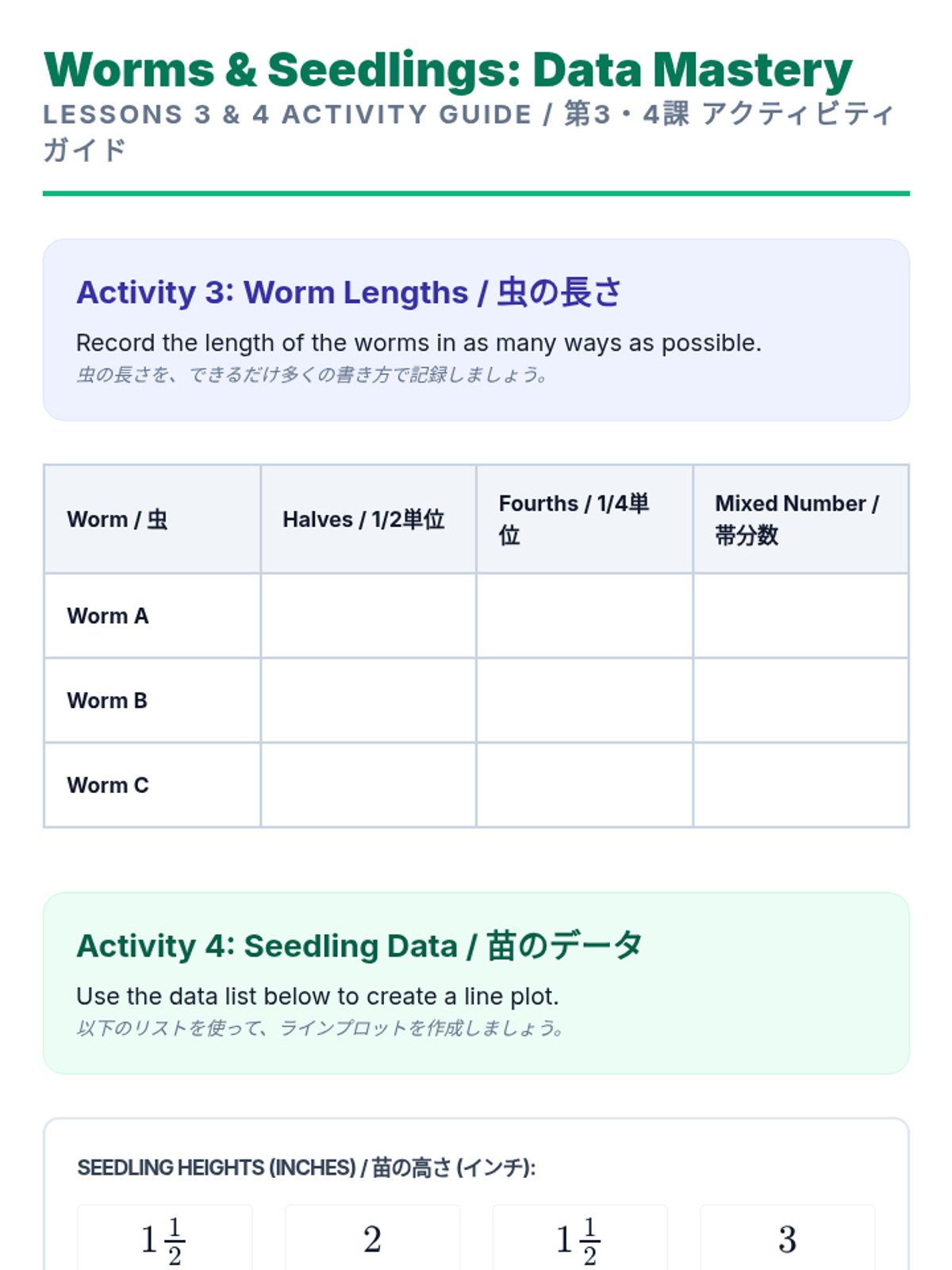
Students interpret and create line plots using measurement data involving fractions.
Students learn to measure objects to the nearest fourth of an inch and explore partition logic.
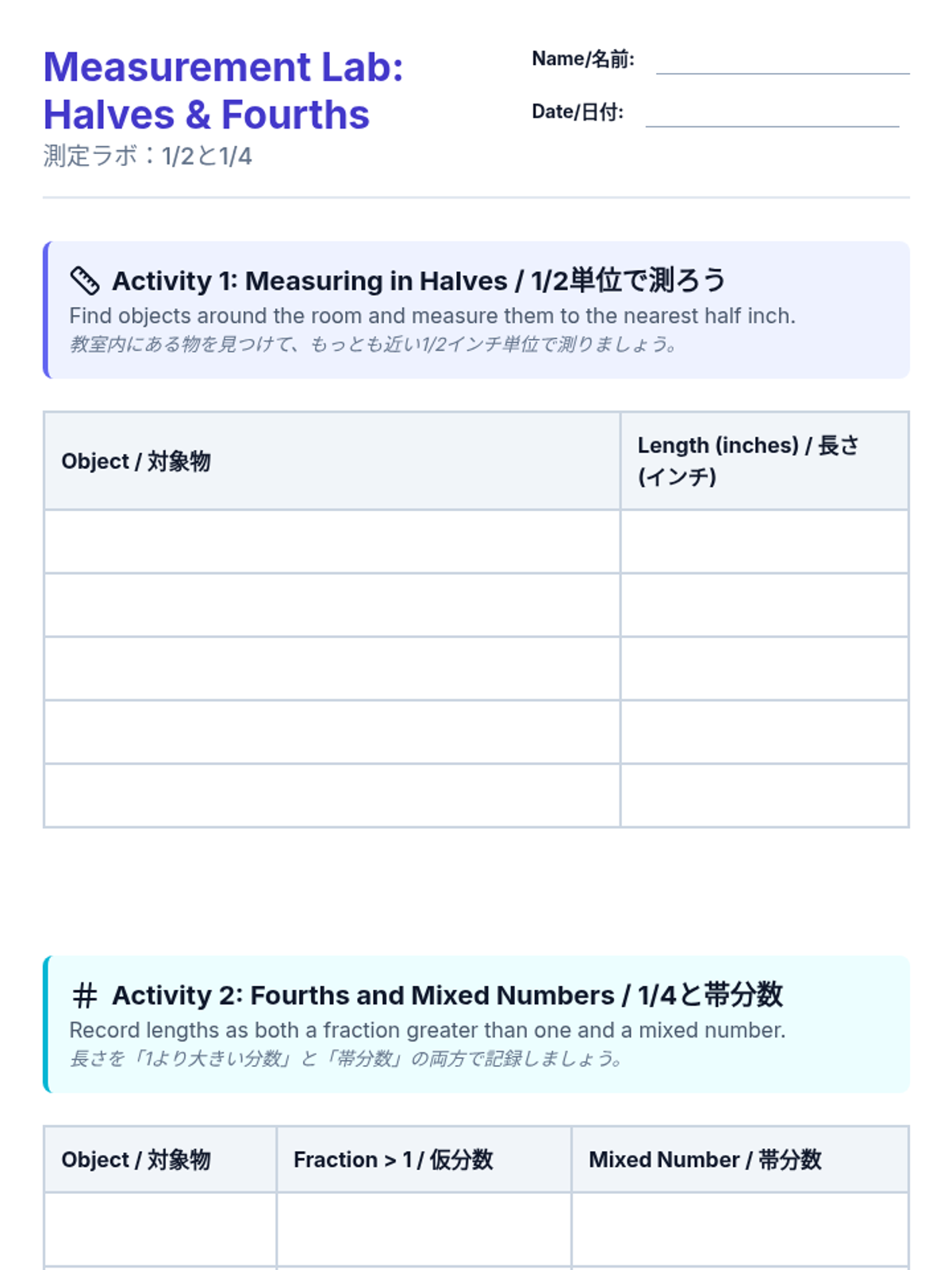
Students learn to measure objects to the nearest half-inch and are introduced to mixed numbers.
Analyzing and creating line plots to represent measurement data.
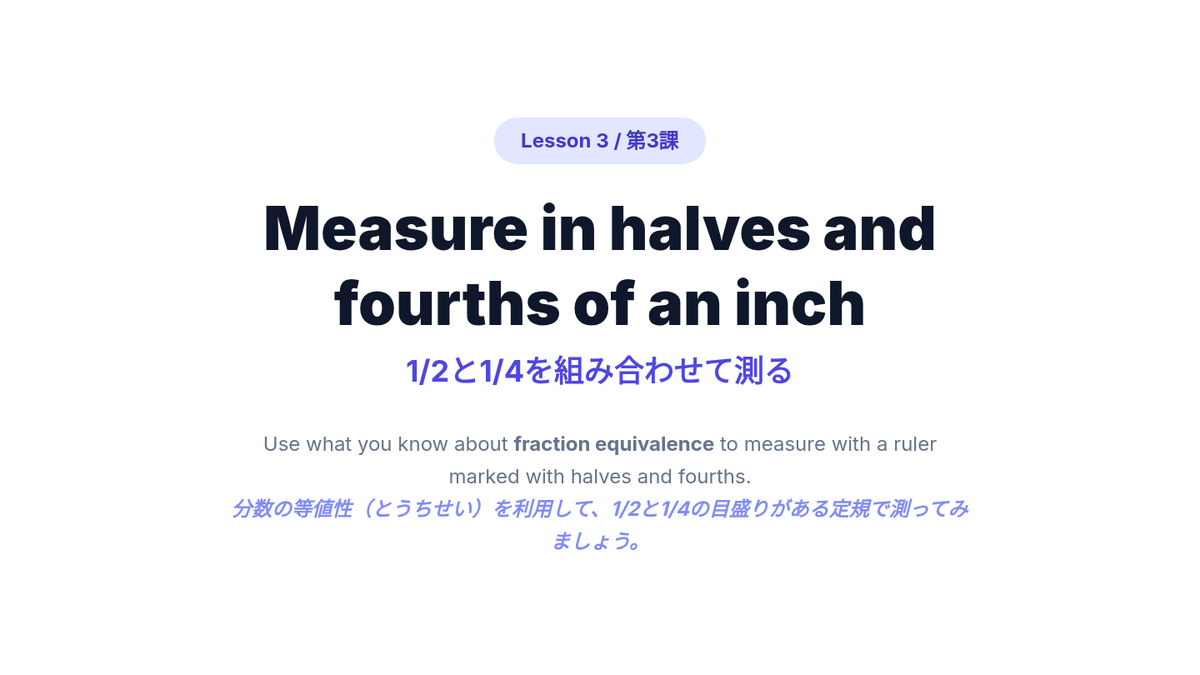
Using fraction equivalence to measure and record lengths accurately.
Expanding measurement skills to fourths of an inch and practicing with mixed numbers.
Introduction to measuring length in halves of an inch and understanding mixed numbers.
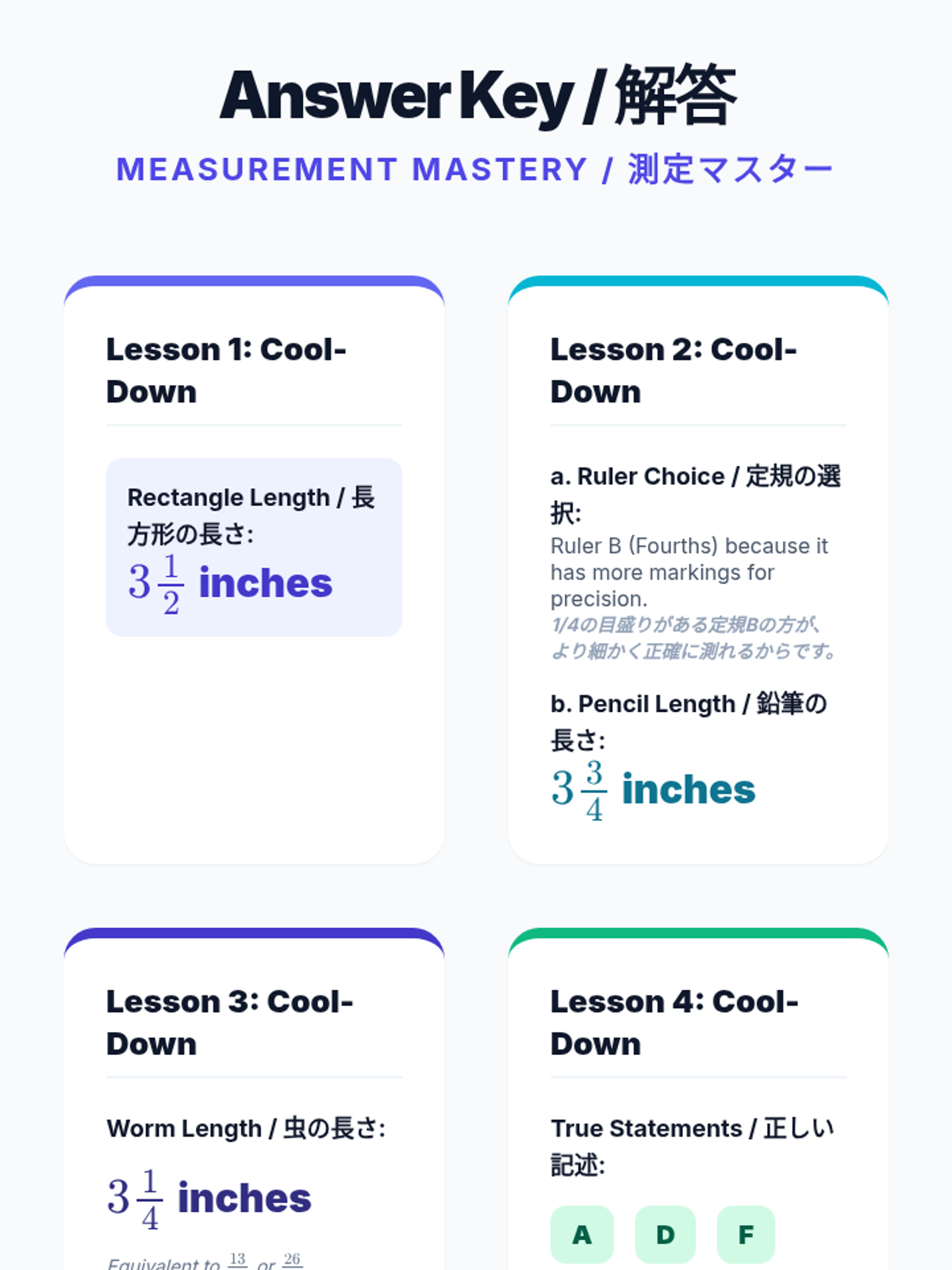
A comprehensive slide deck covering measurement in inches (halves and fourths) and interpreting data on line plots, provided in both English and Japanese.
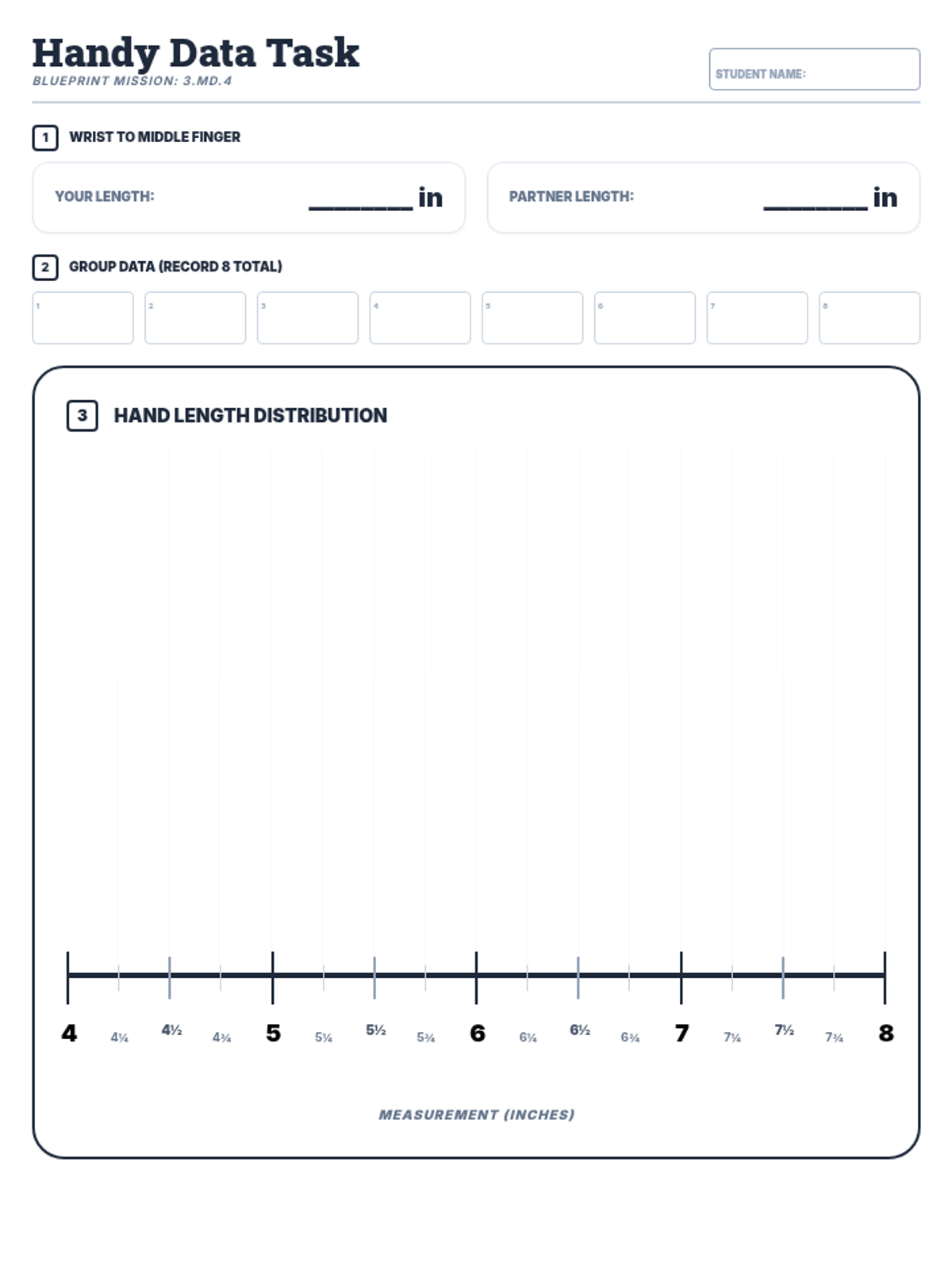
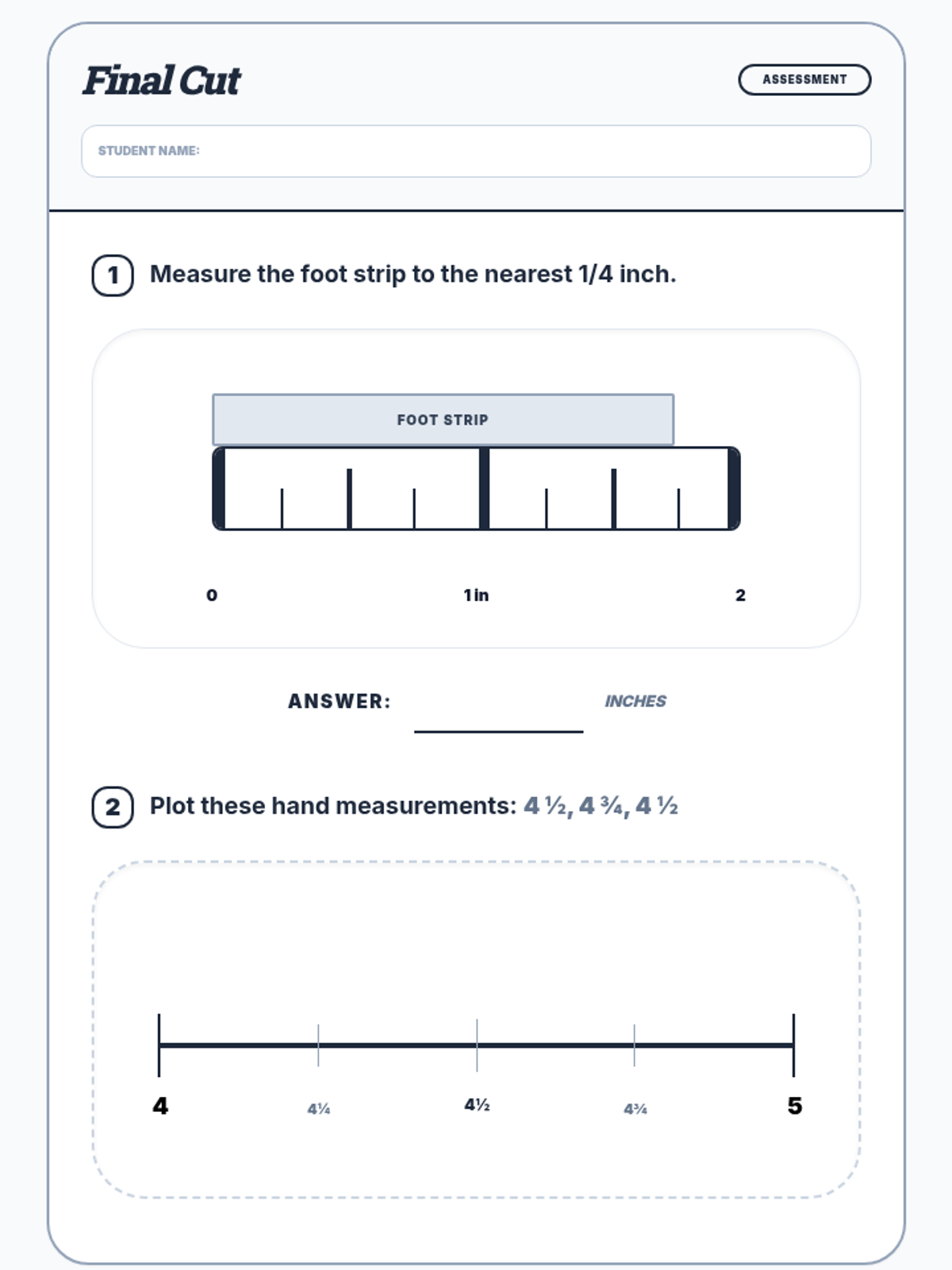
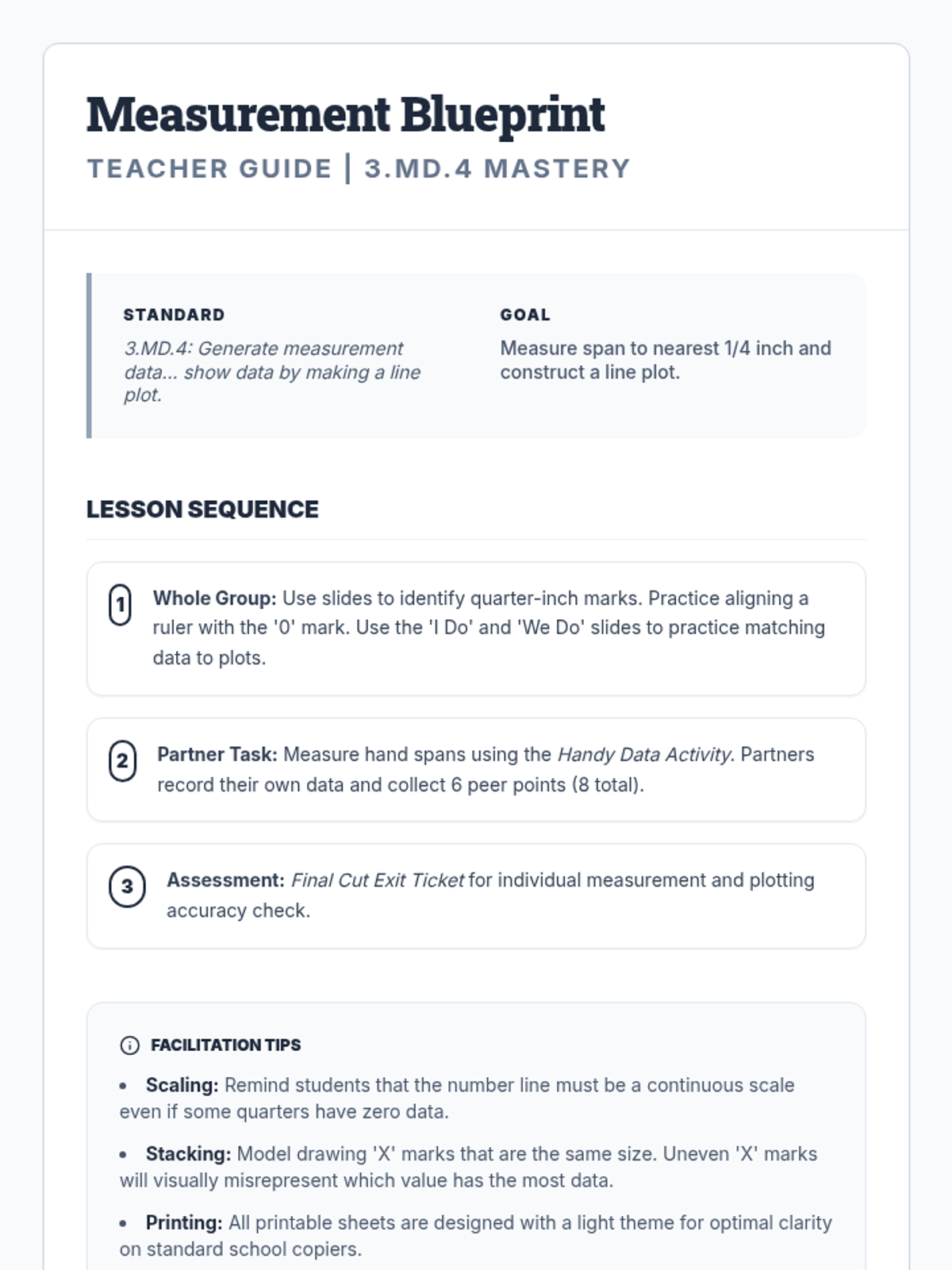
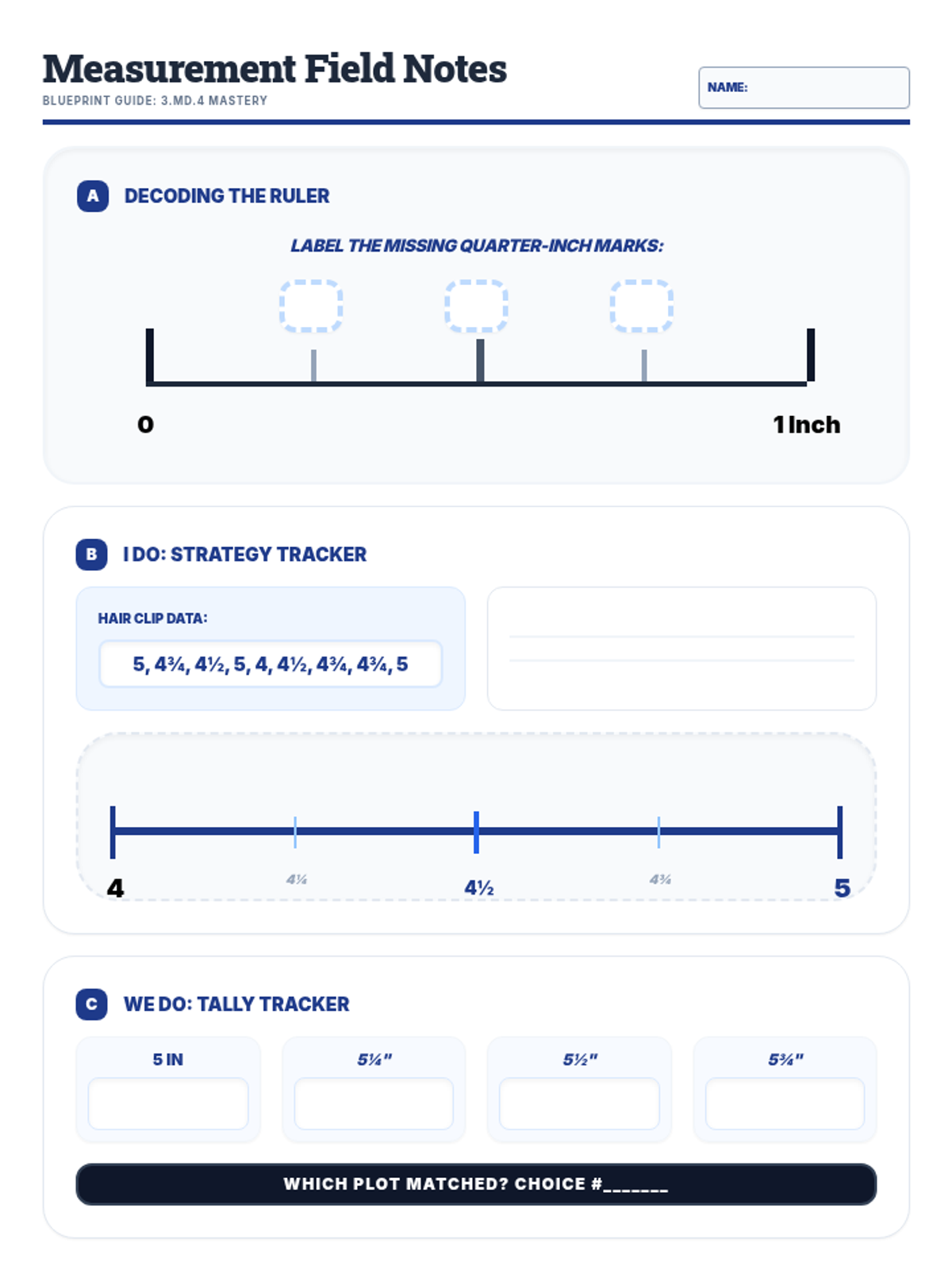
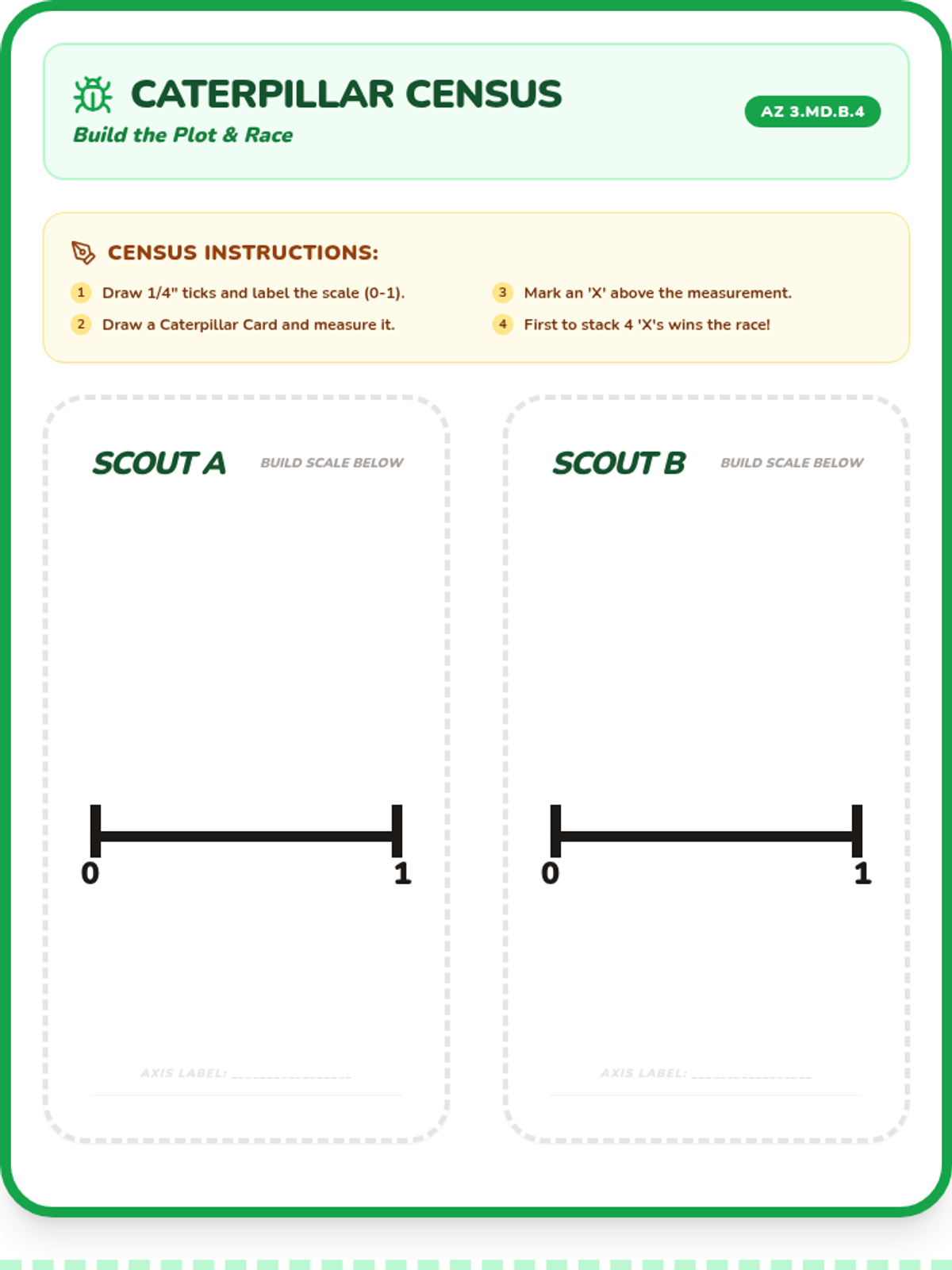
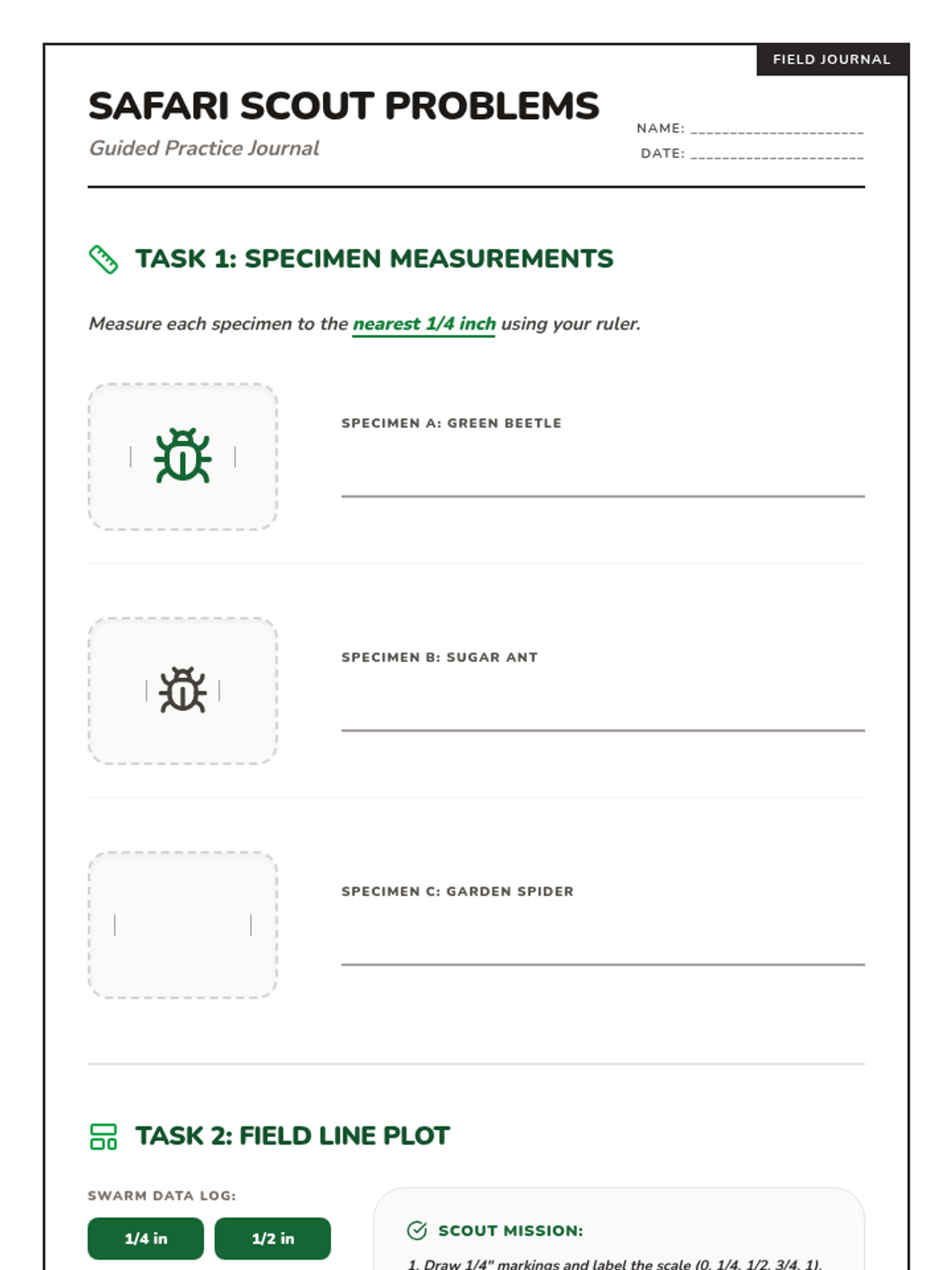
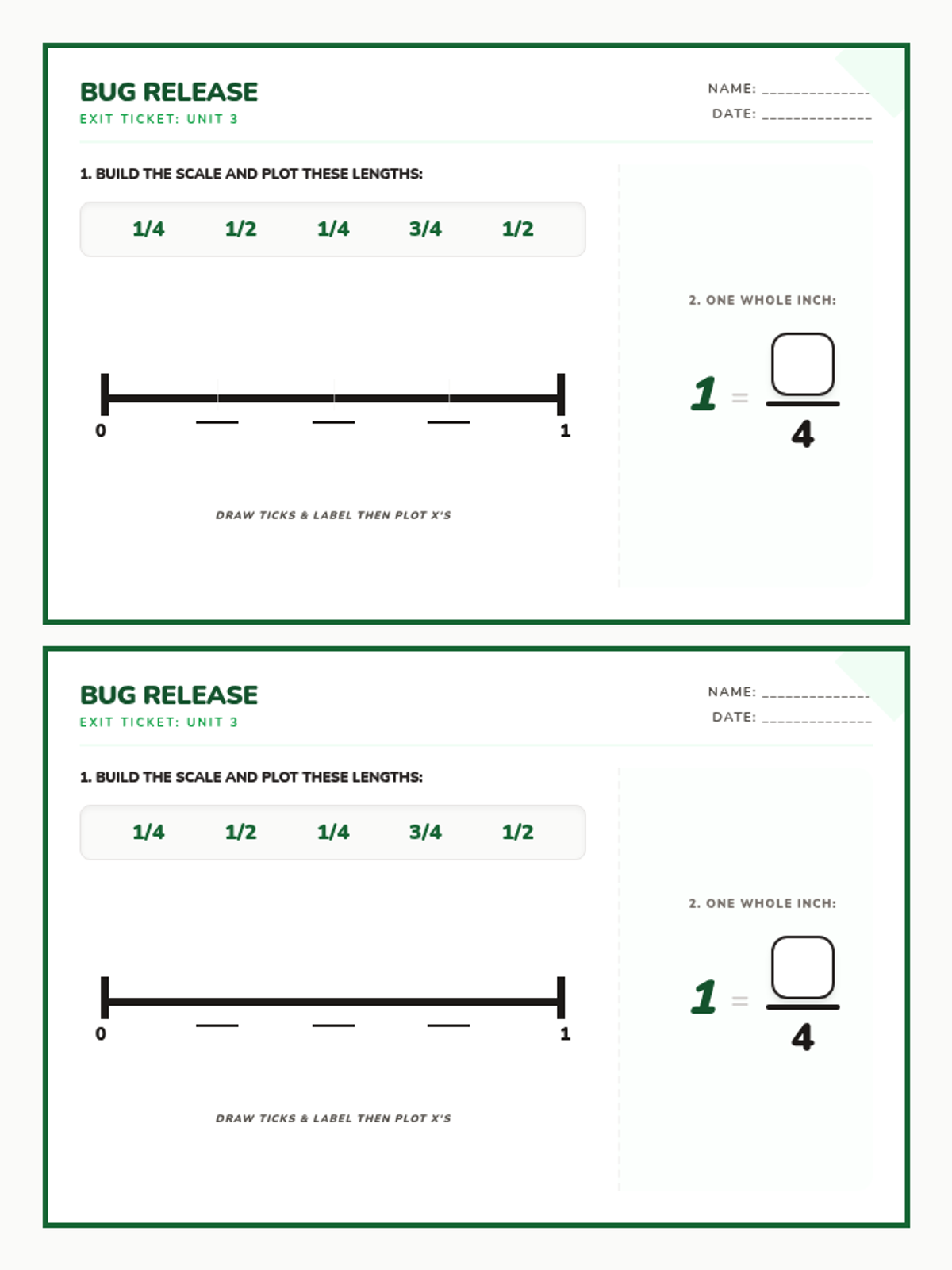
A comprehensive lesson on 3.MD.4 focusing on measuring to the nearest quarter inch and displaying that data on a line plot. Students measure their hand lengths to generate authentic data for analysis.
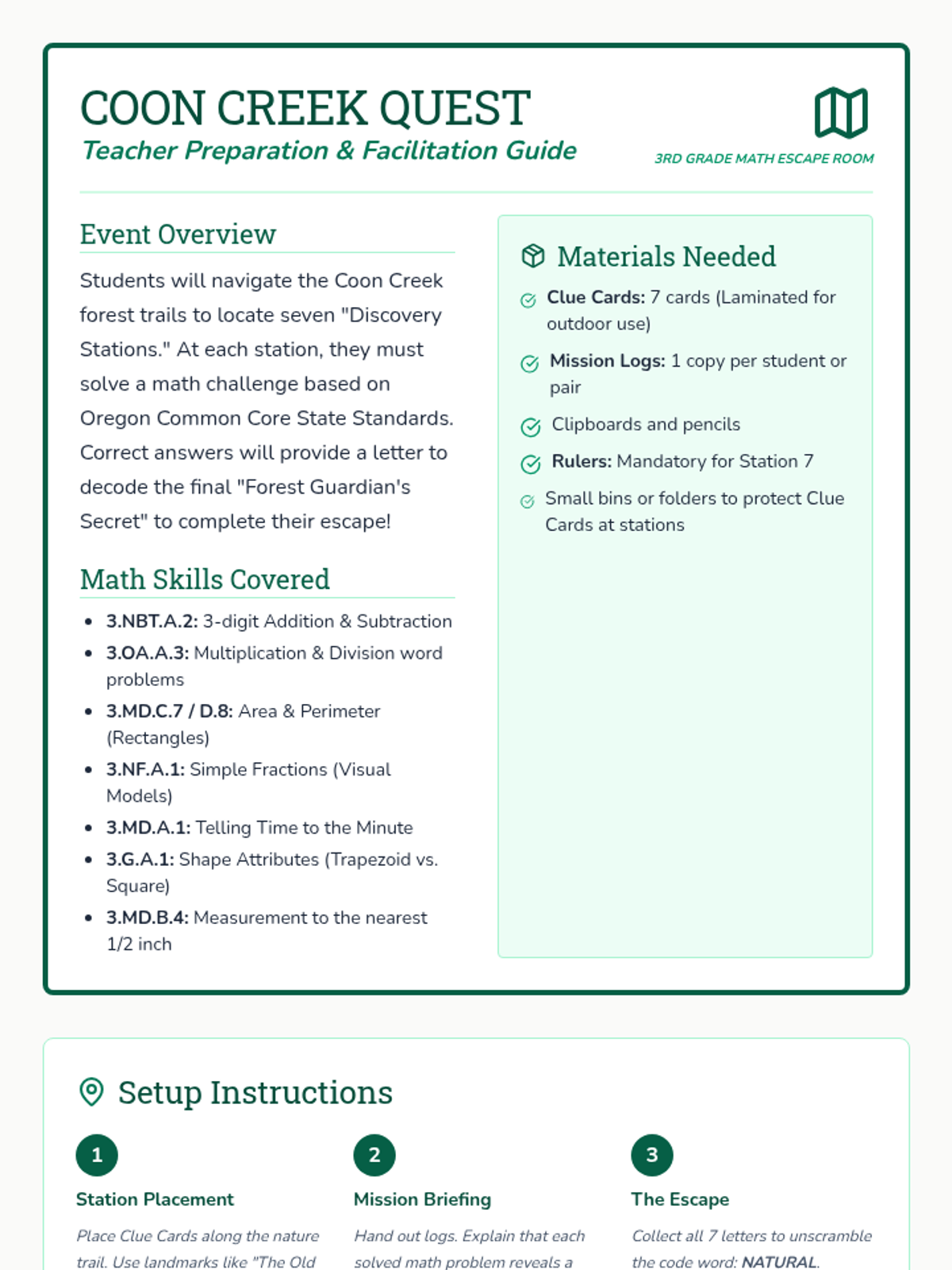
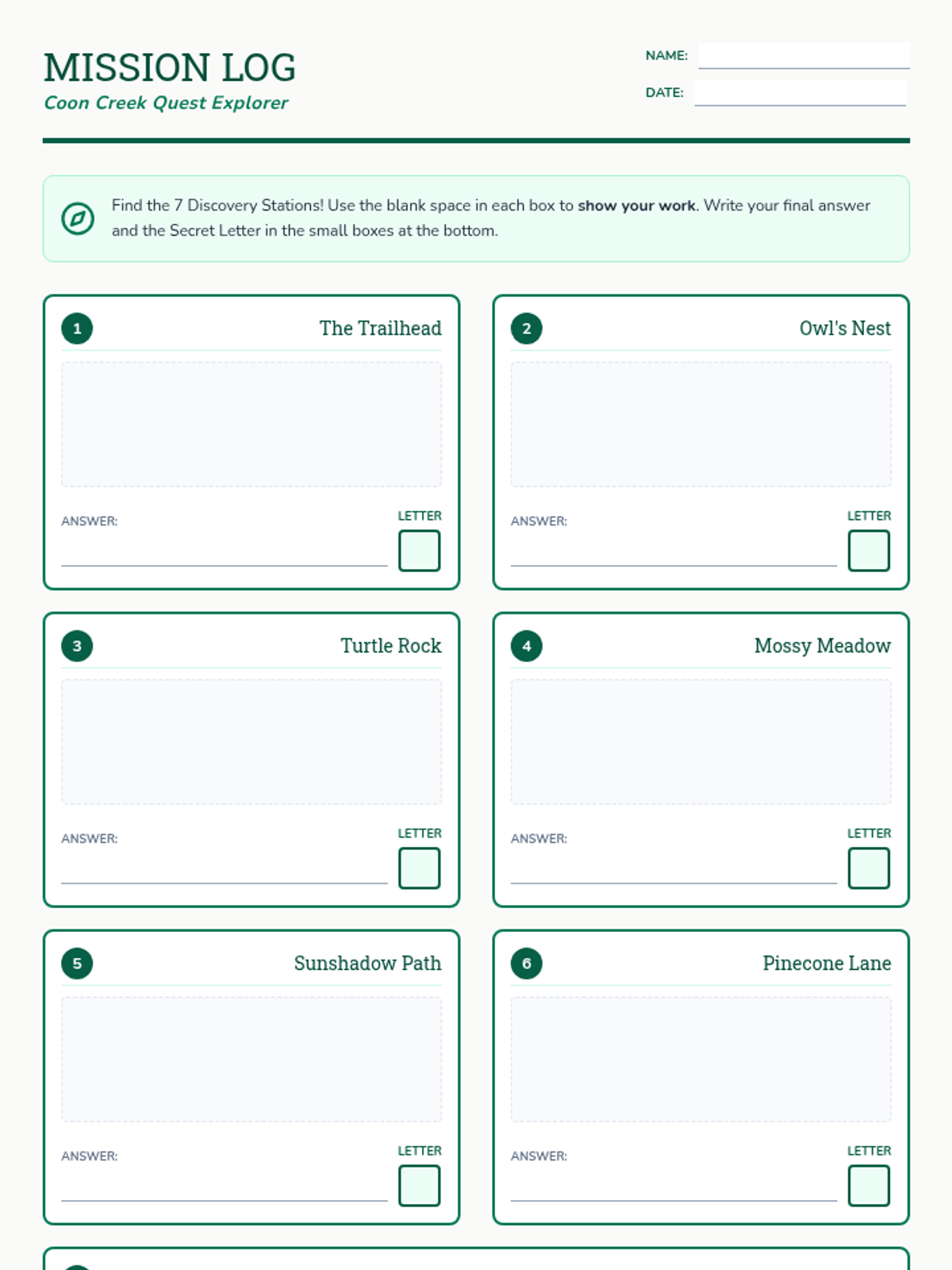
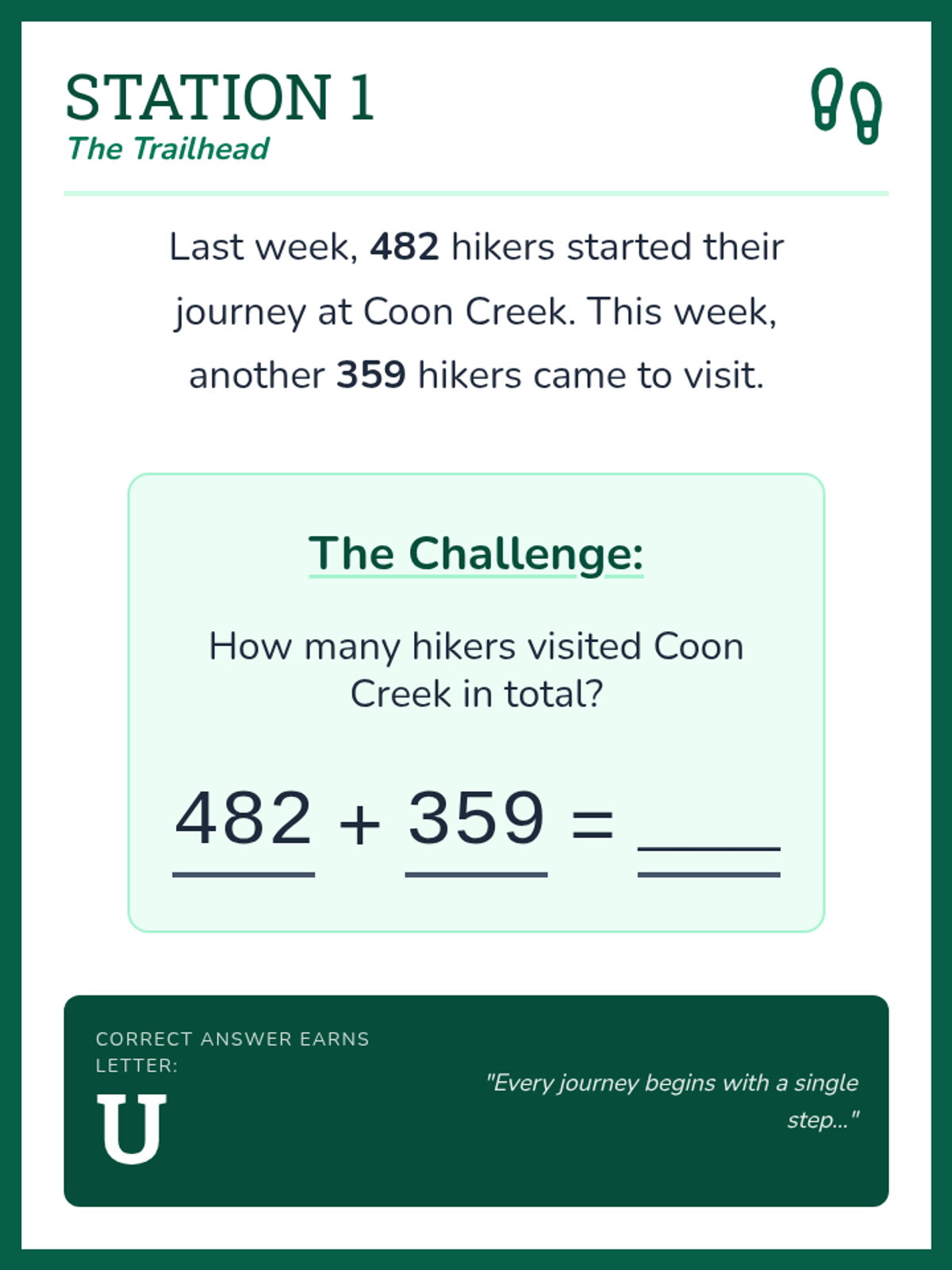
An outdoor math escape room set in the Coon Creek forest, reviewing 3rd-grade math standards including addition/subtraction, multiplication/division, area/perimeter, fractions, time, shapes, and measurement.
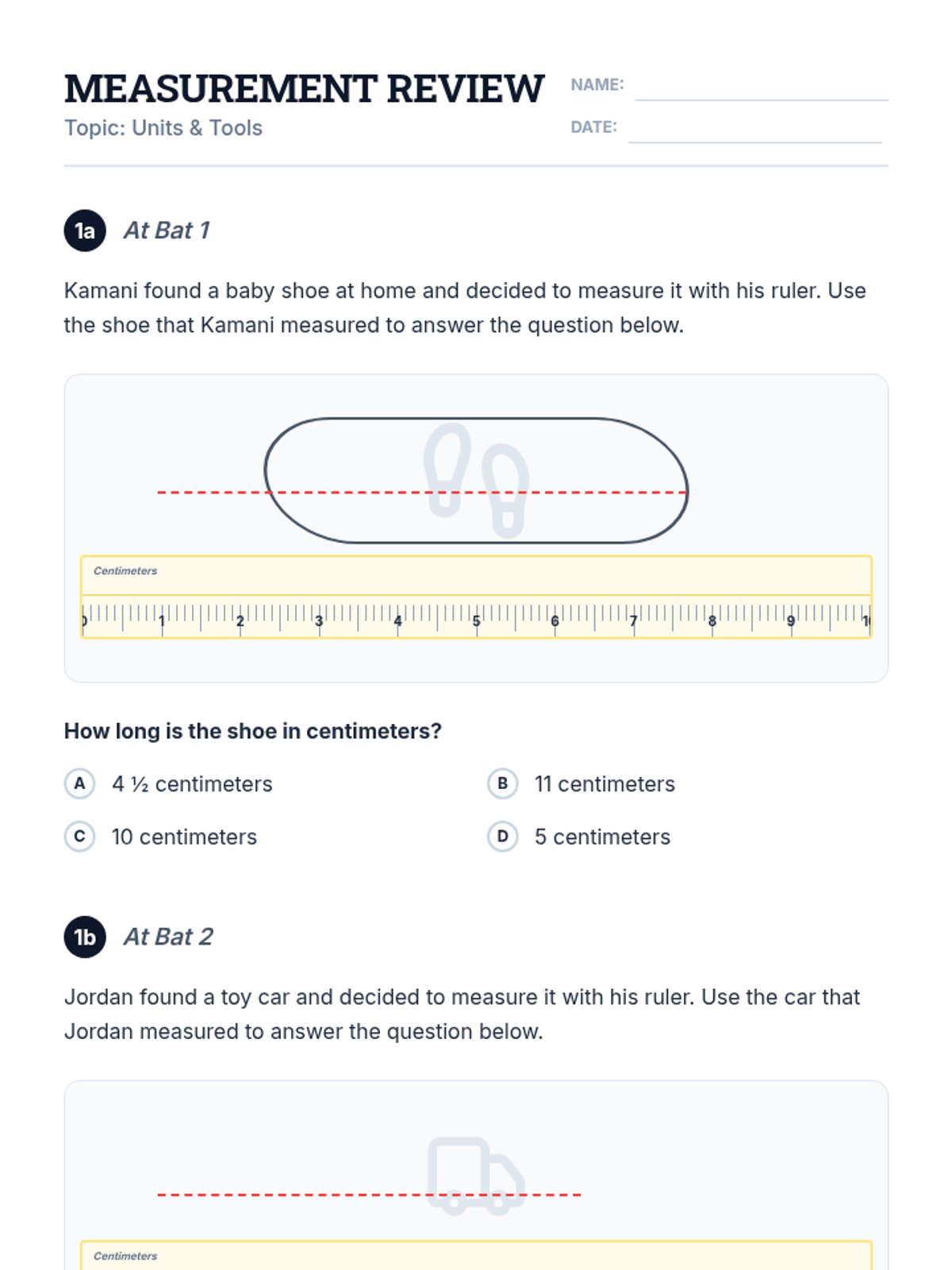
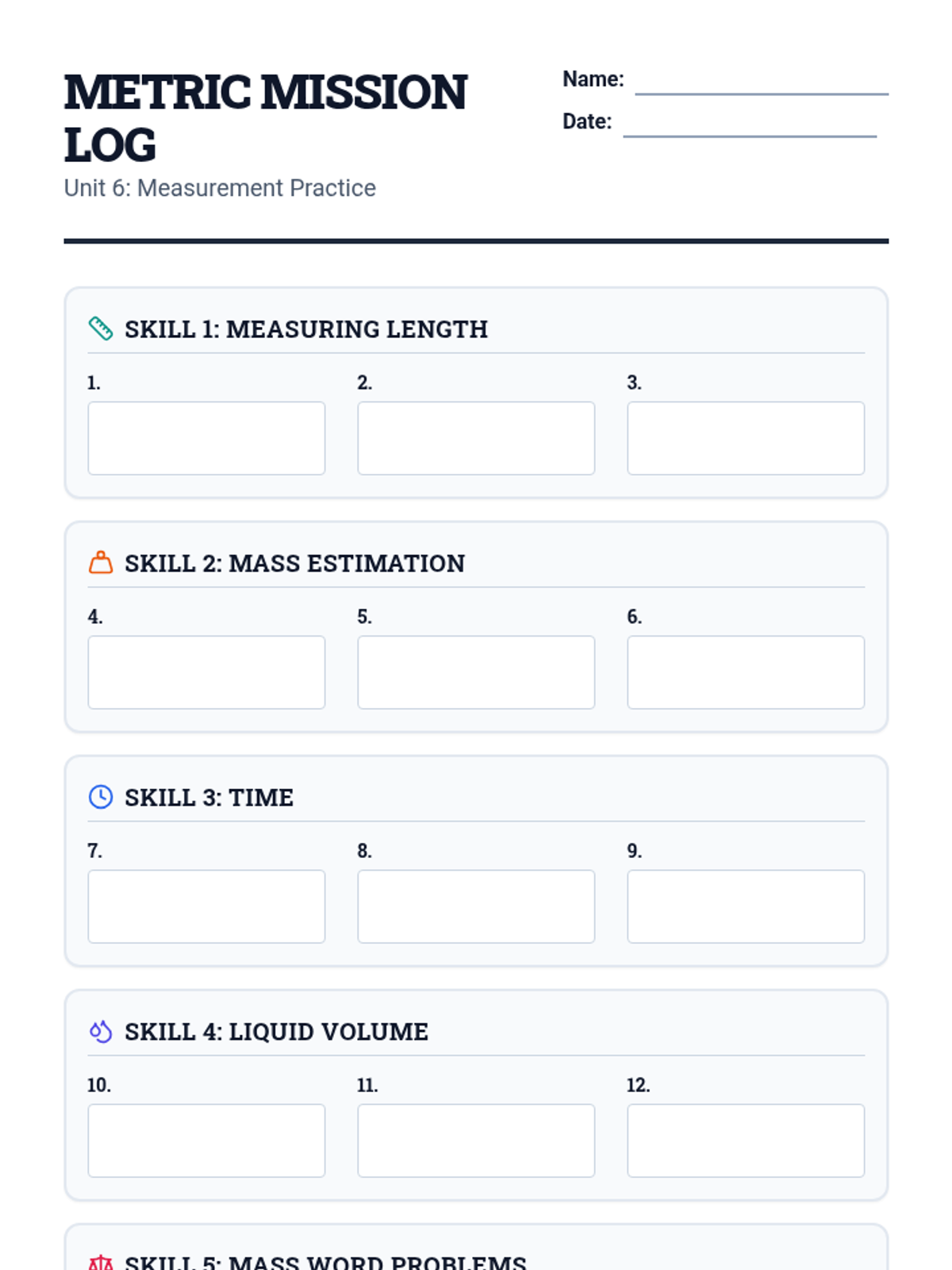
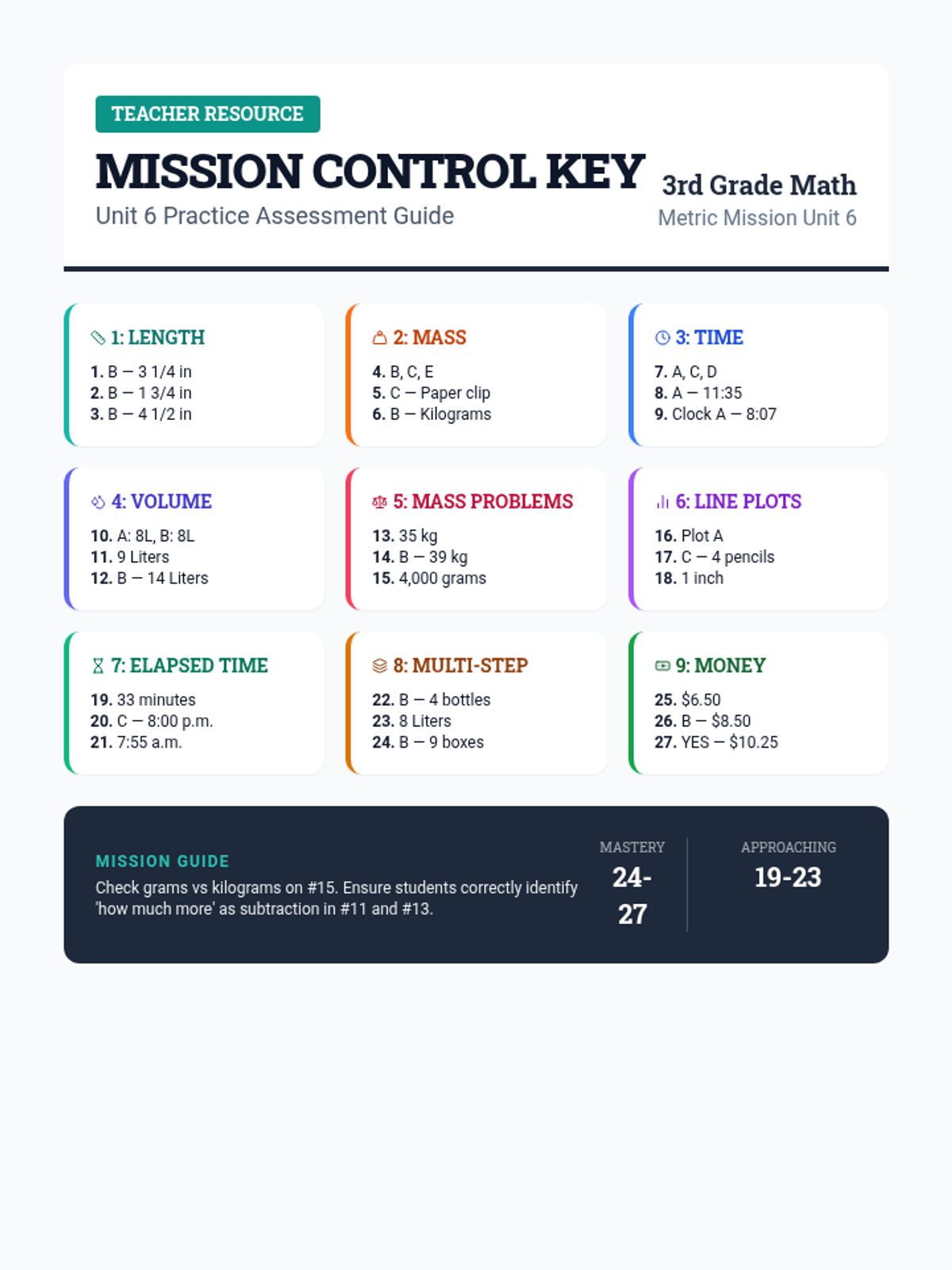
A comprehensive practice lesson covering 3rd-grade measurement standards including length to the quarter-inch, mass estimation, liquid volume, time, and multi-step word problems. Students engage with a variety of practice problems designed to mirror unit assessment items.
A foundational lesson on measurement, specifically focusing on inches and half-inches, translated into Japanese. Students learn to partition rulers and record data.
A comprehensive introduction to measurement, focusing on length, using inches and halves of an inch. Students learn to use rulers, collect data, and represent it on line plots while developing precision in their measurements.
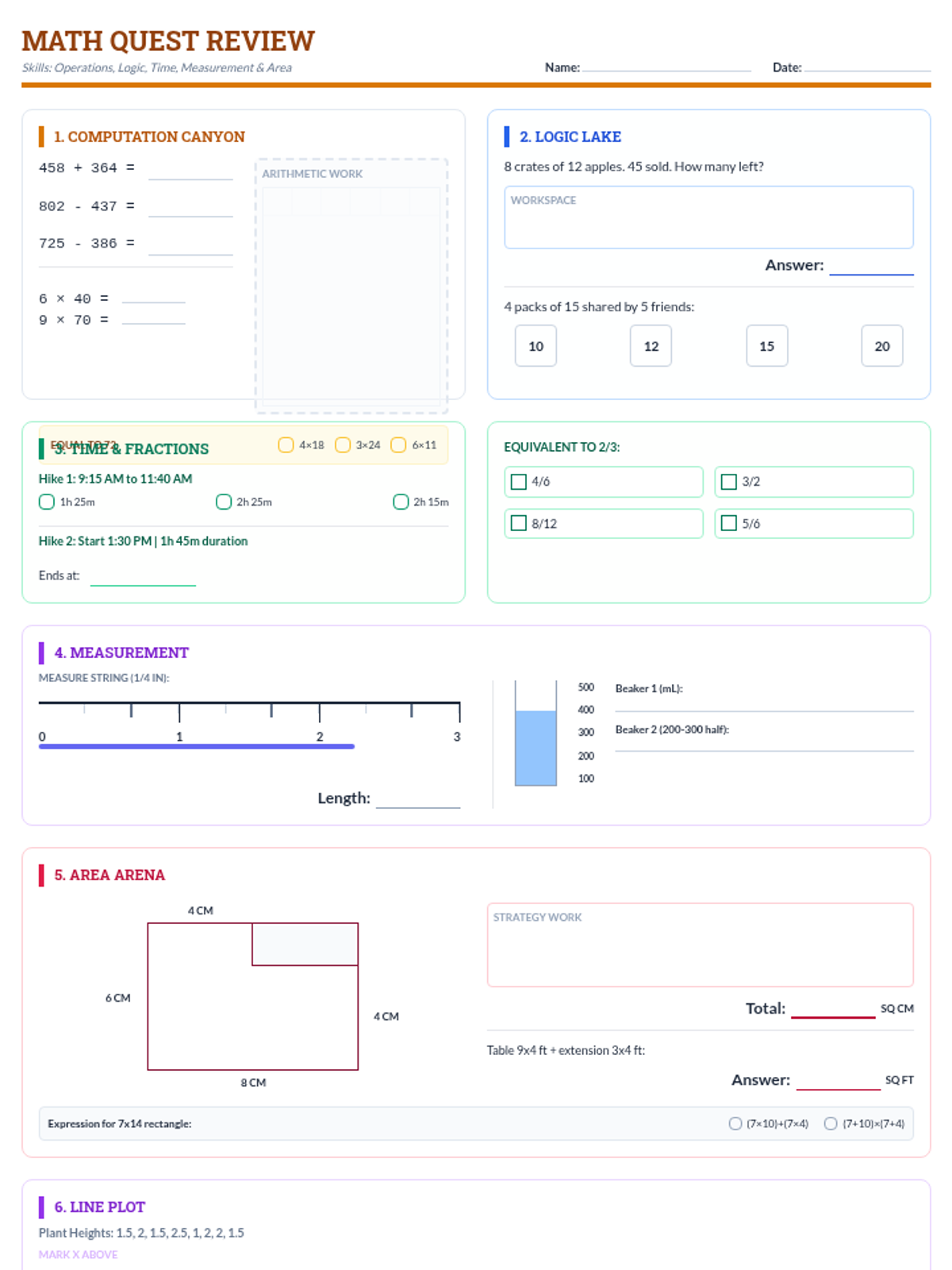
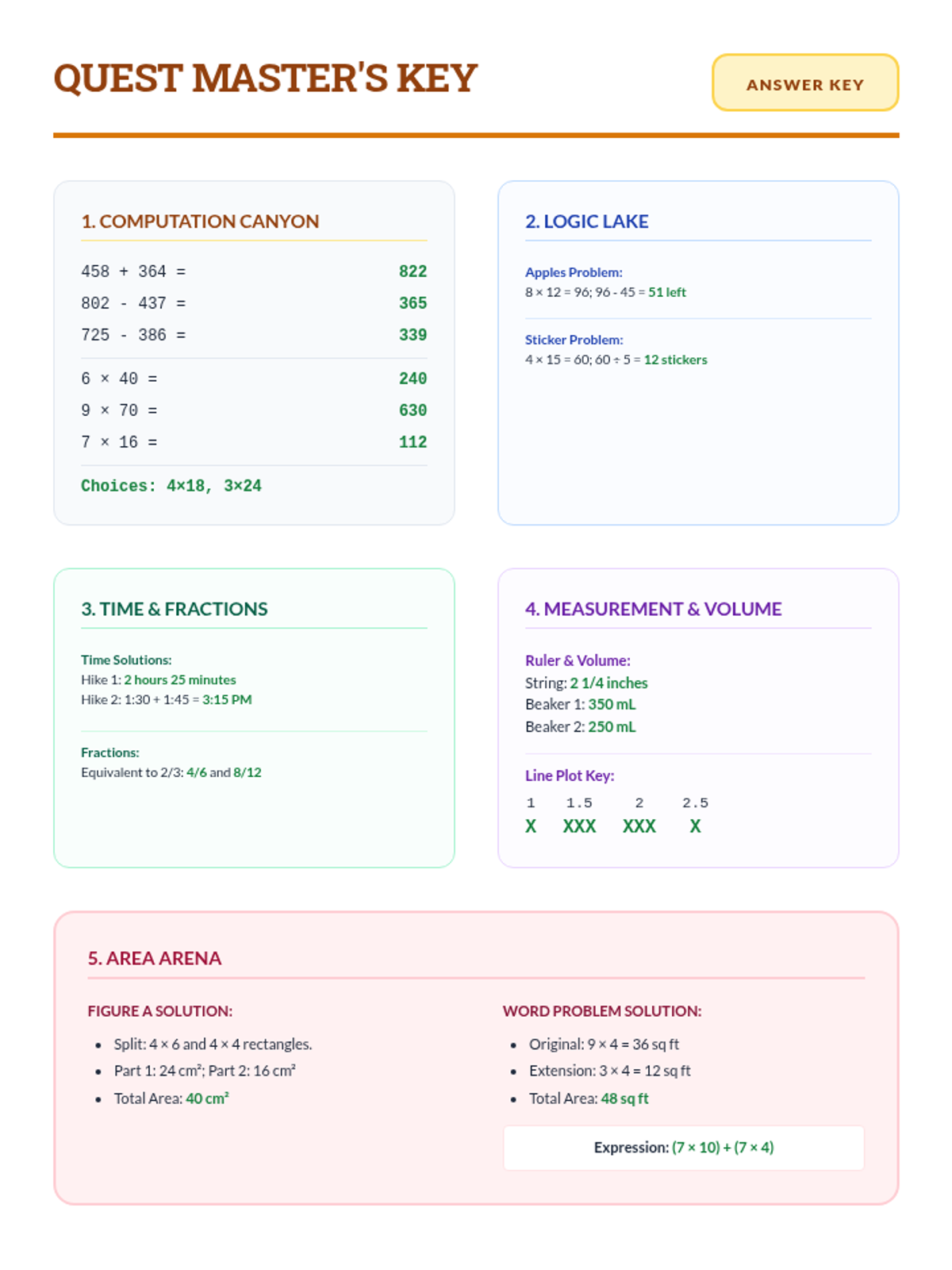
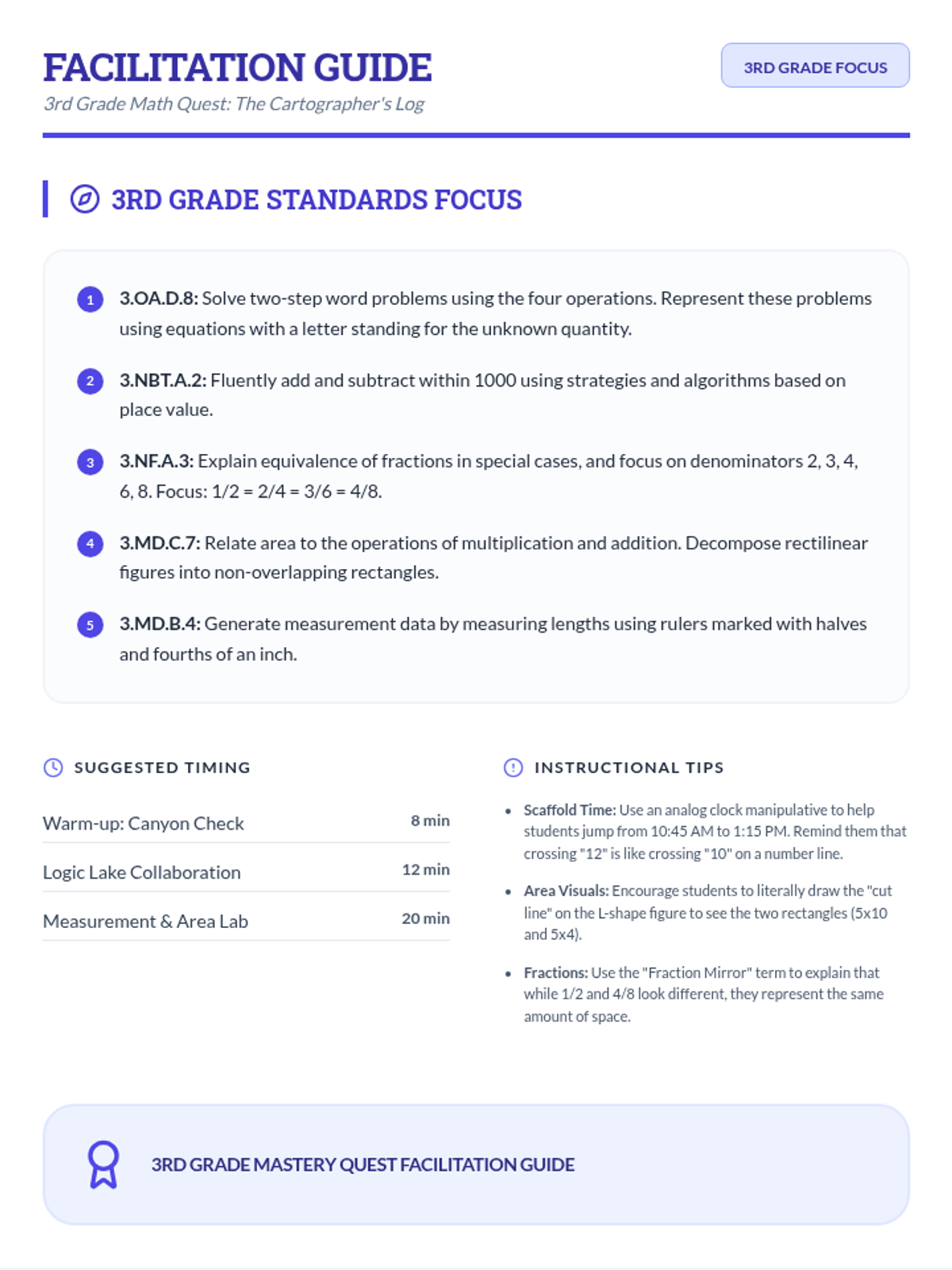
A comprehensive math review for 3rd grade students. Objectives: (1) Solve two-step word problems using four operations; (2) Perform 3-digit arithmetic and 1x2 multiplication; (3) Measure length to 1/4 inch and volume in mL; (4) Create line plots using fractional data (halves, fourths); (5) Identify equivalent fractions; (6) Calculate area of complex rectilinear figures by decomposition; (7) Calculate elapsed time.
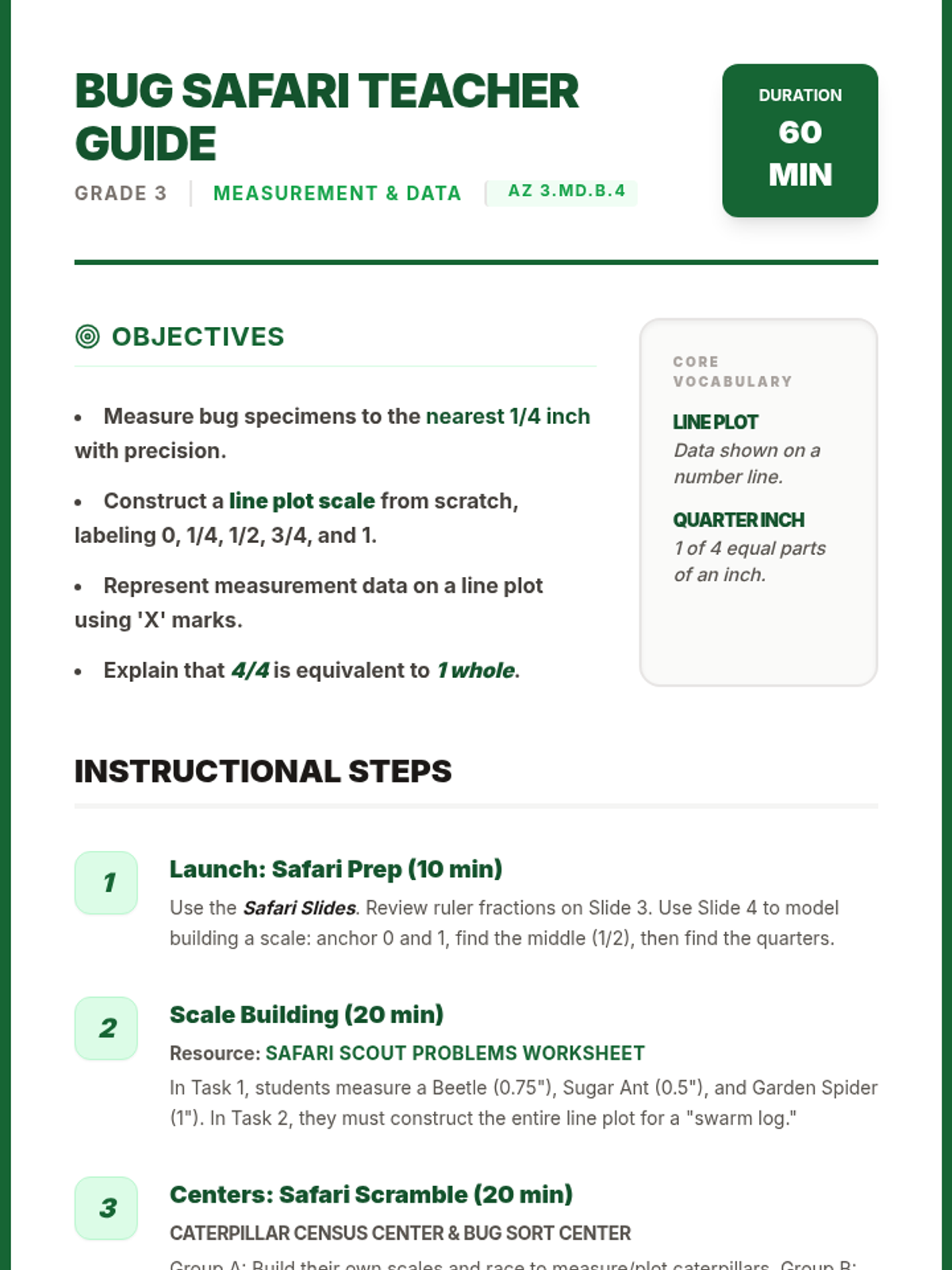
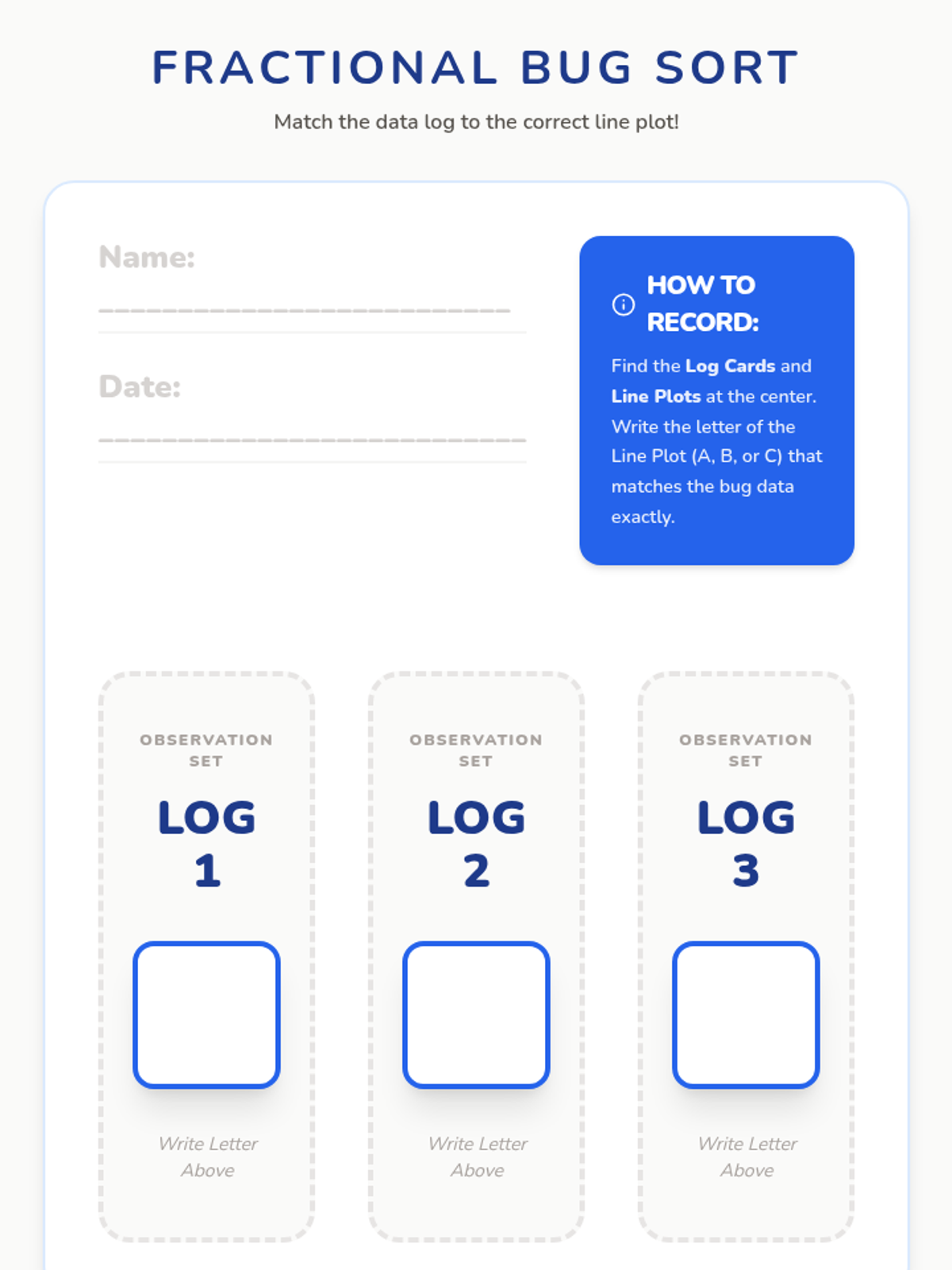
A comprehensive lesson on measuring to the nearest quarter inch and creating line plots, themed around a backyard bug safari. Students practice measurement accuracy, fractional number lines, and data representation.
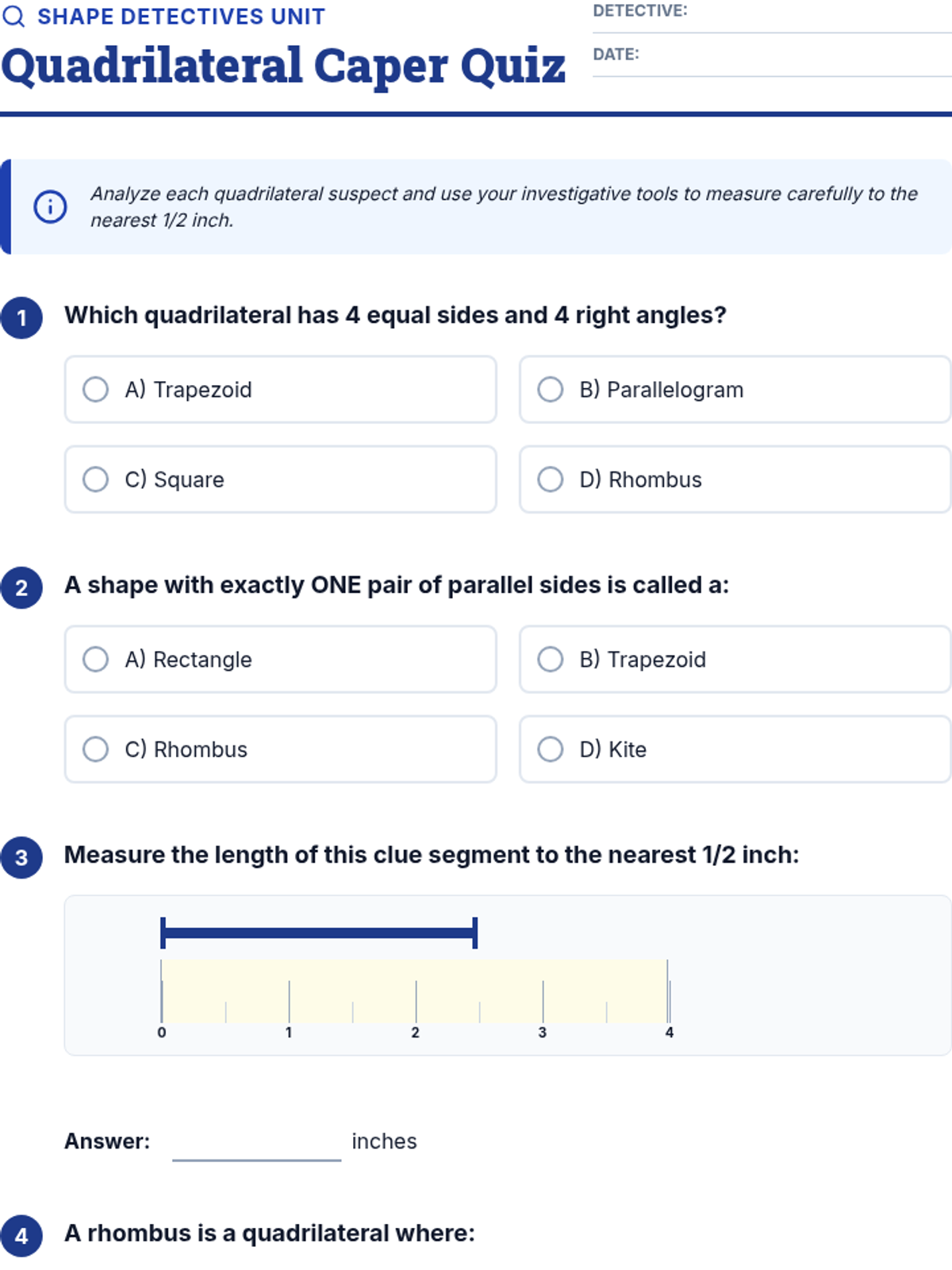
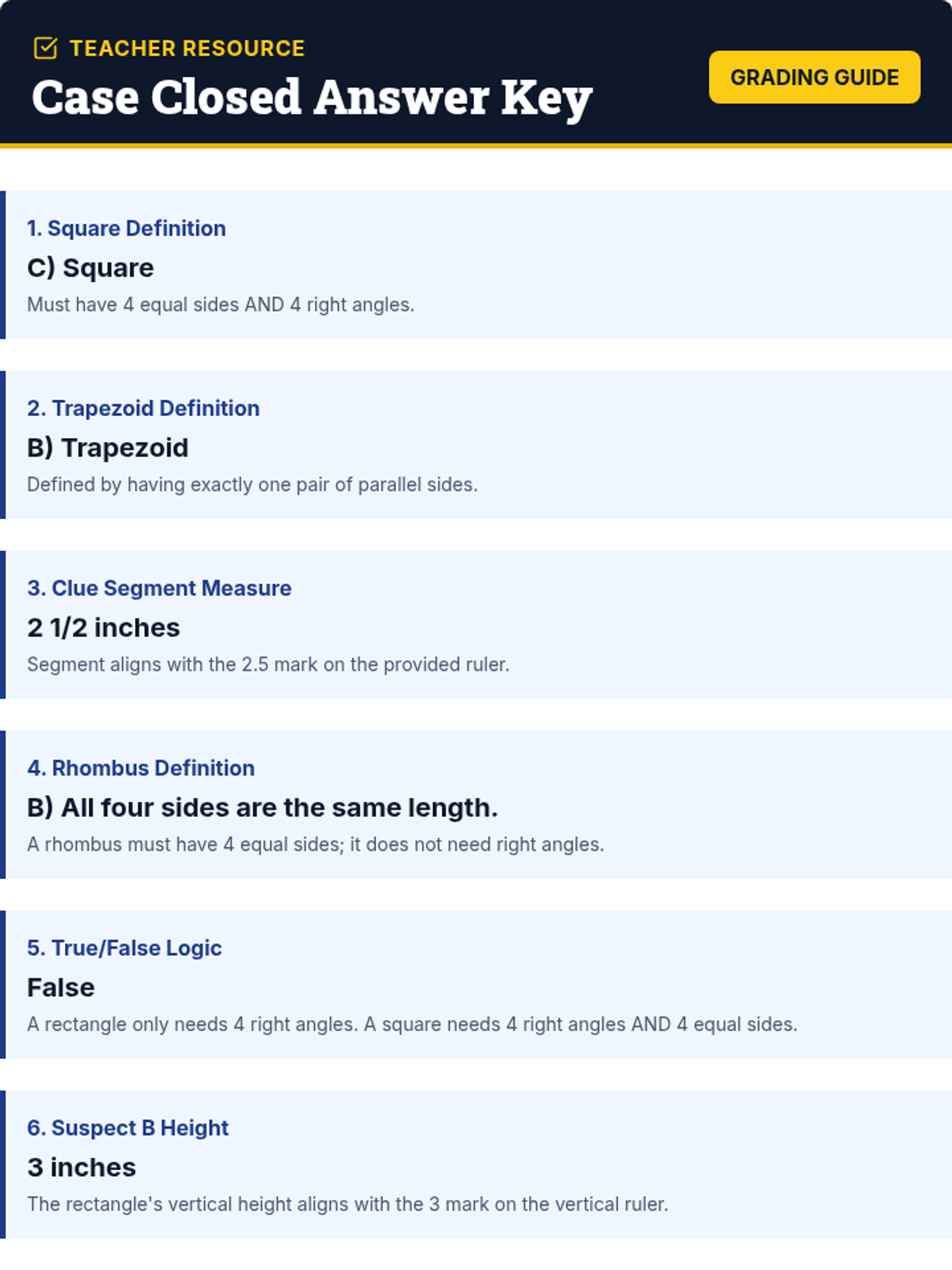
Students will identify various quadrilaterals by their attributes and practice measuring lengths to the nearest half-inch in this detective-themed lesson.
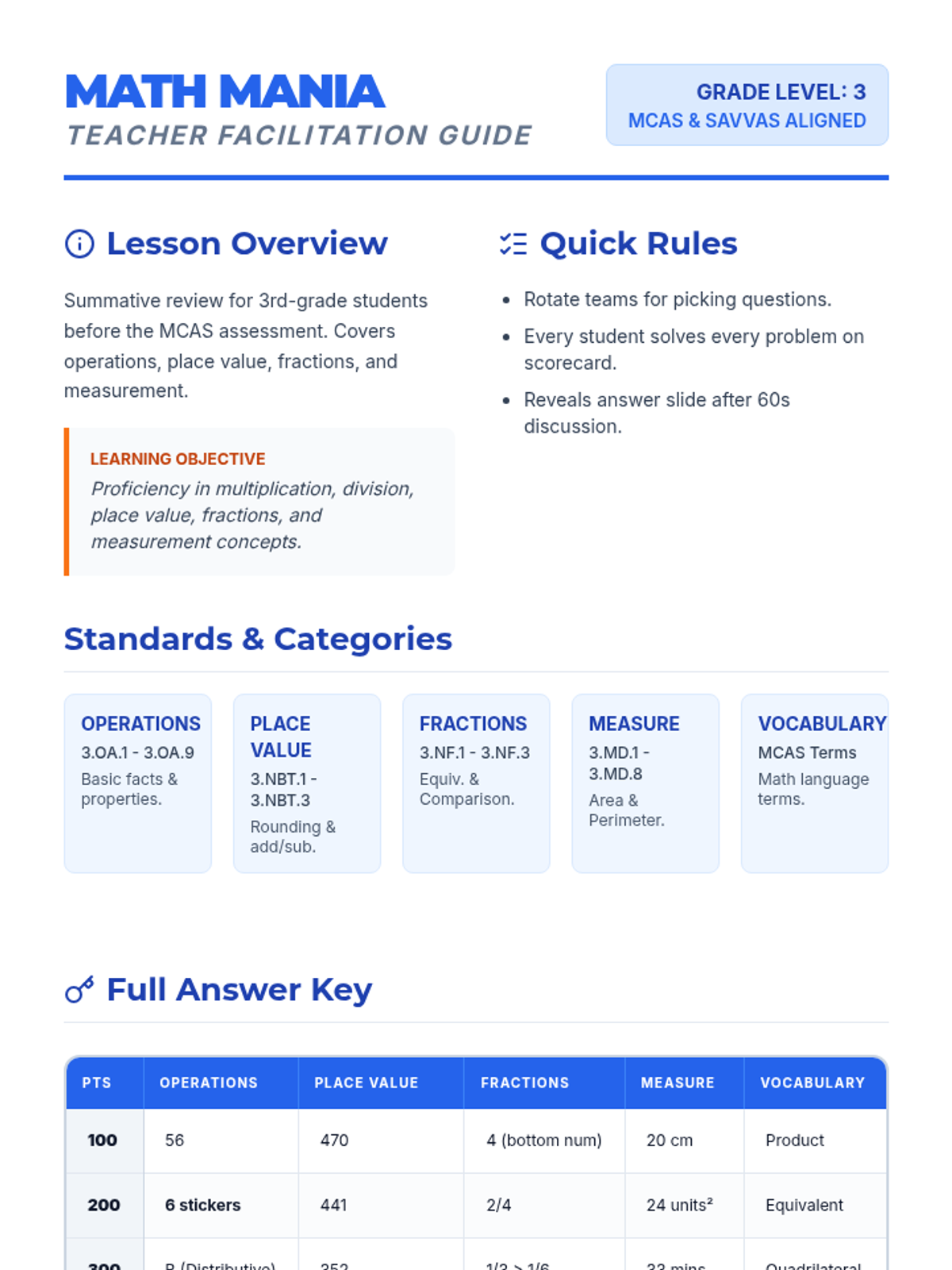
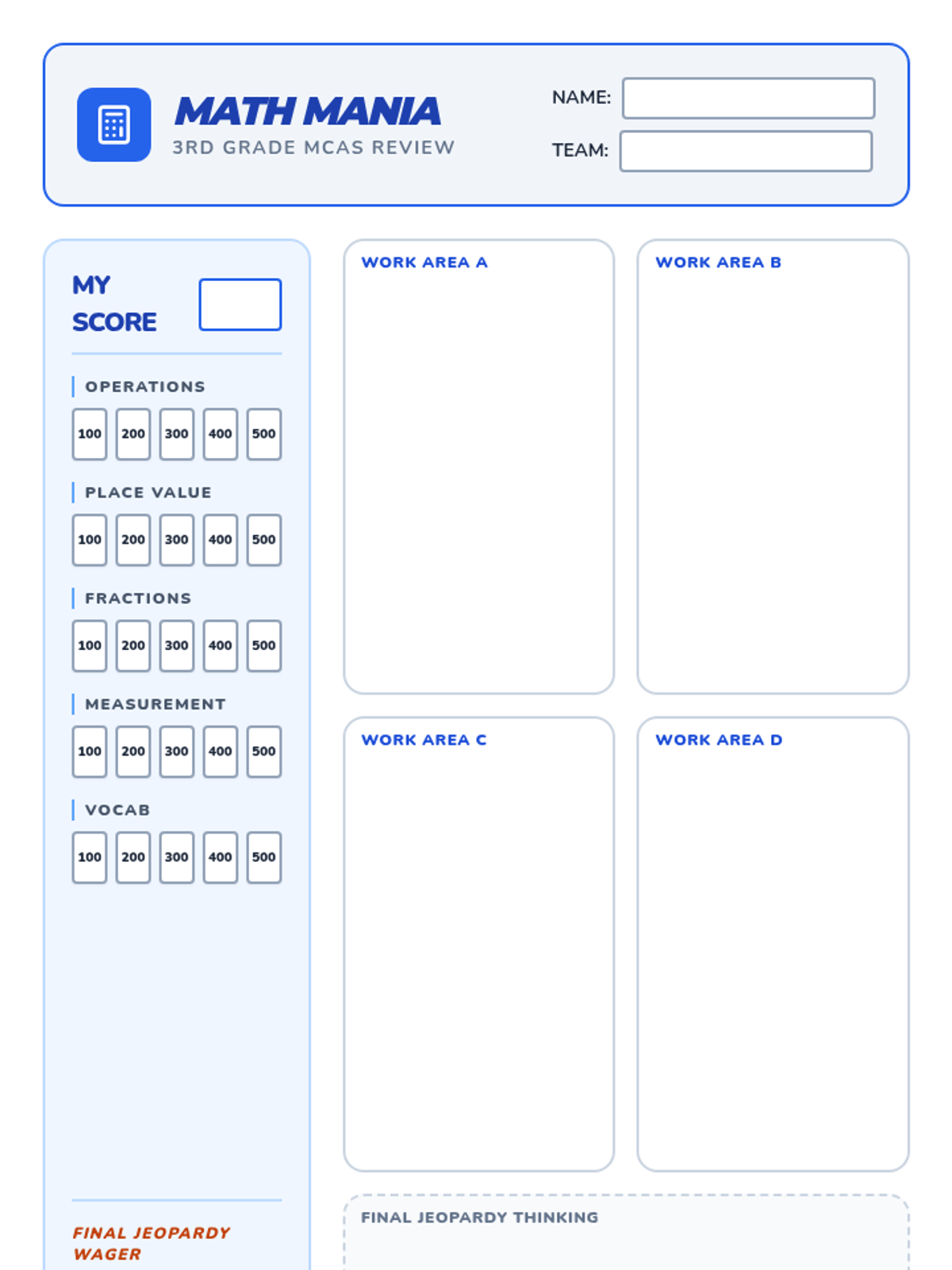
A comprehensive 3rd-grade math review game based on MCAS standards and Savvas curriculum, covering operations, place value, fractions, measurement, and vocabulary.
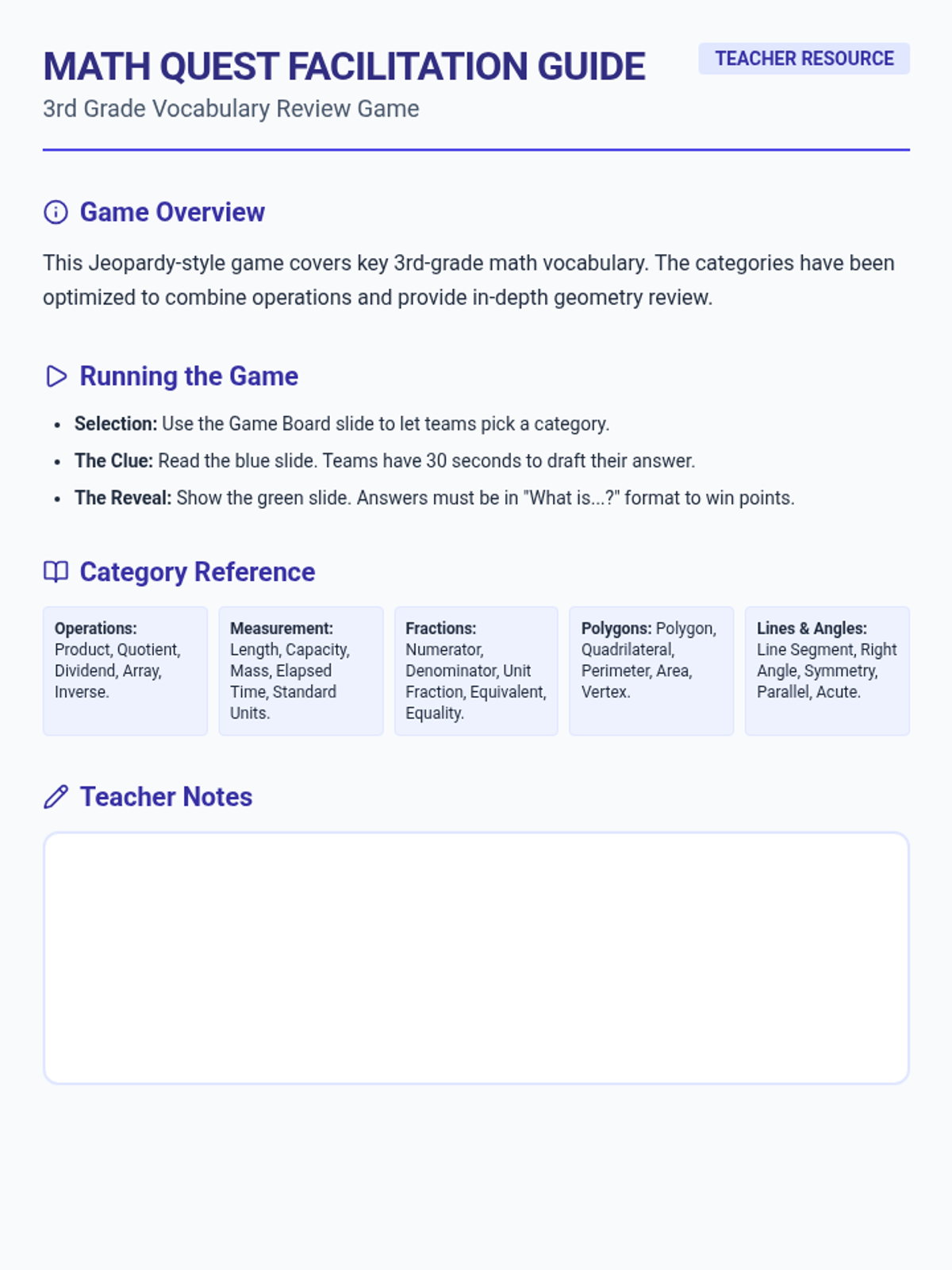
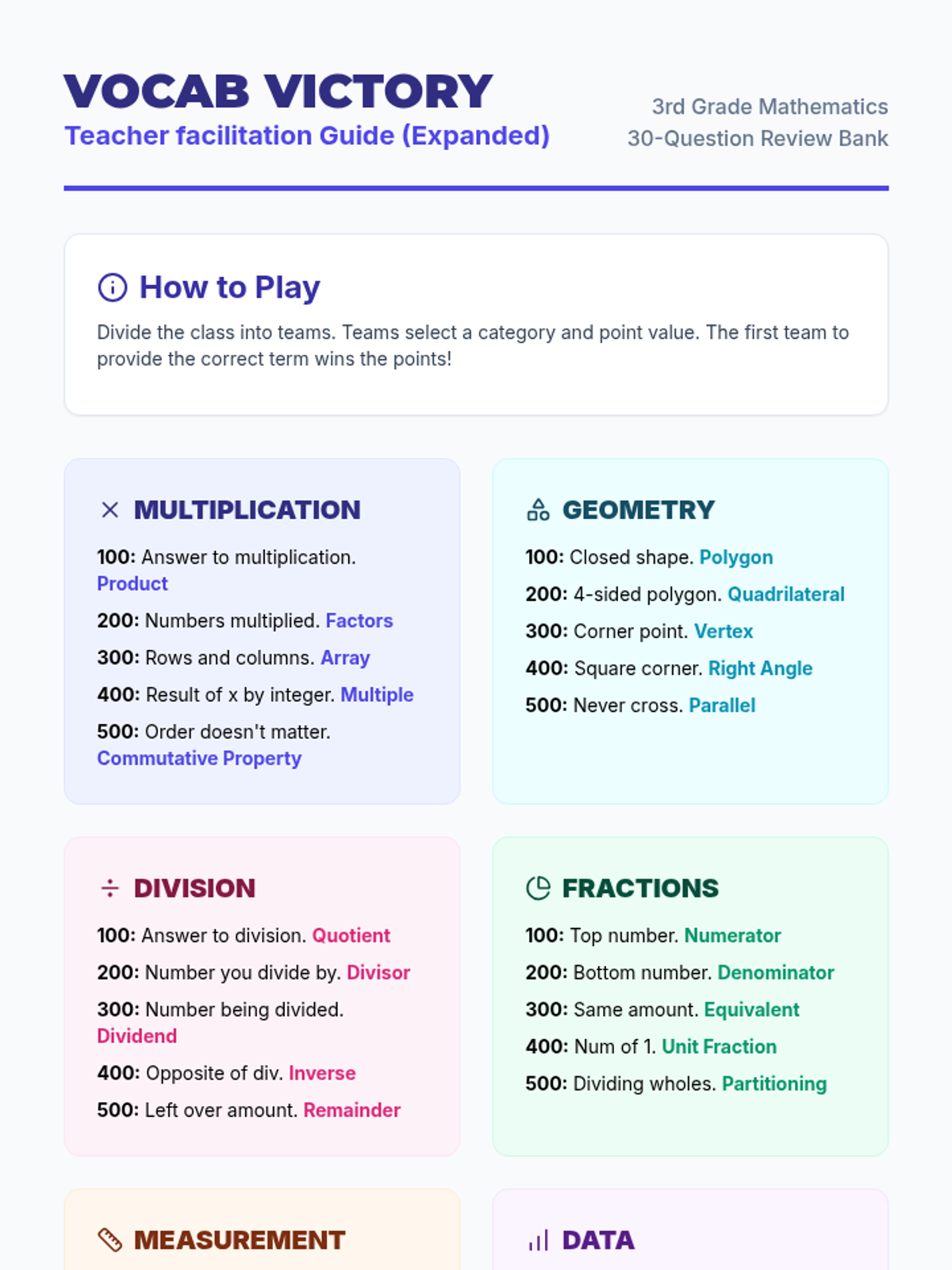
A high-energy Jeopardy-style review game focusing on essential third-grade mathematics vocabulary across six core domains, designed to reinforce terminology before assessments.
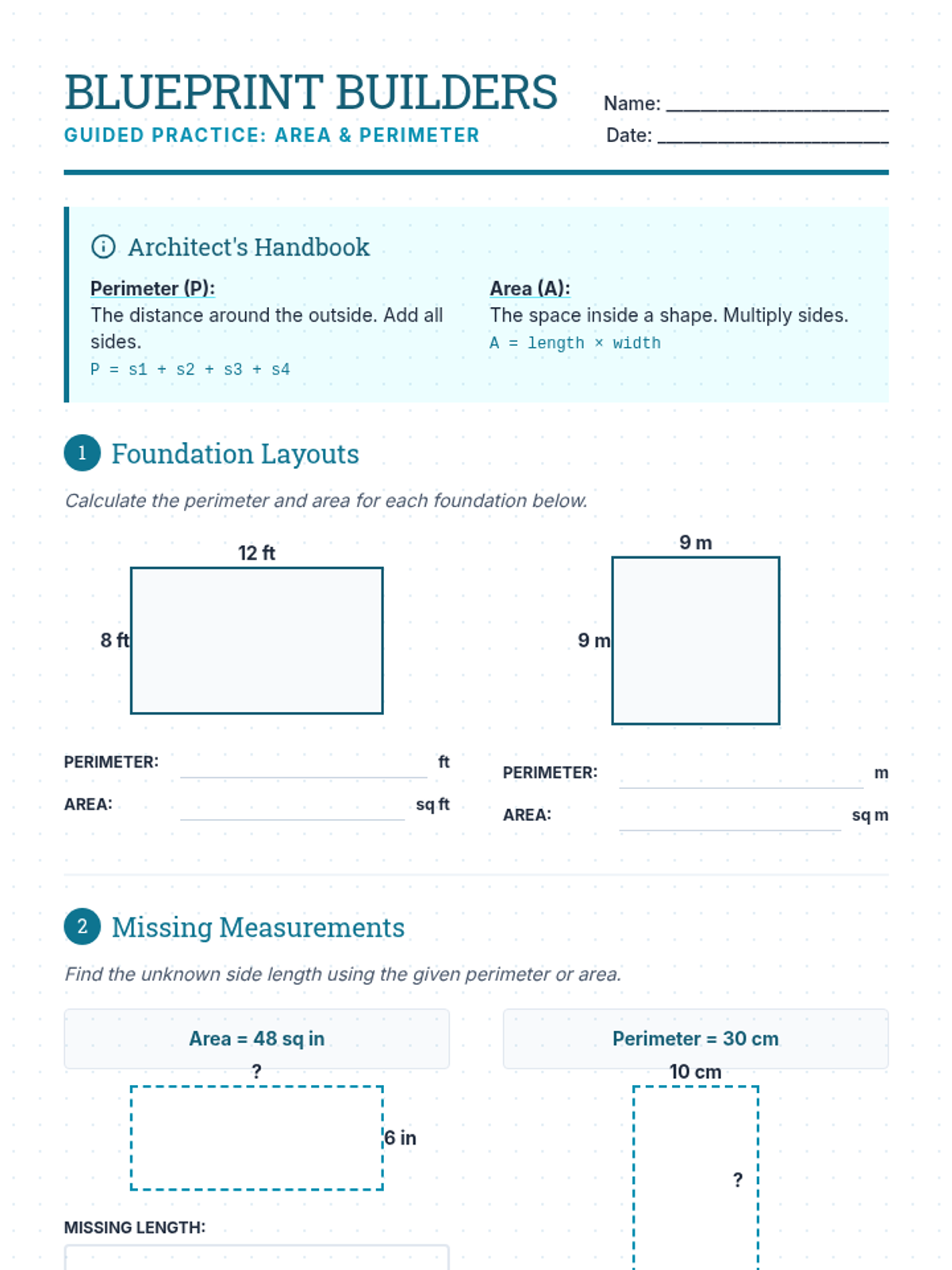
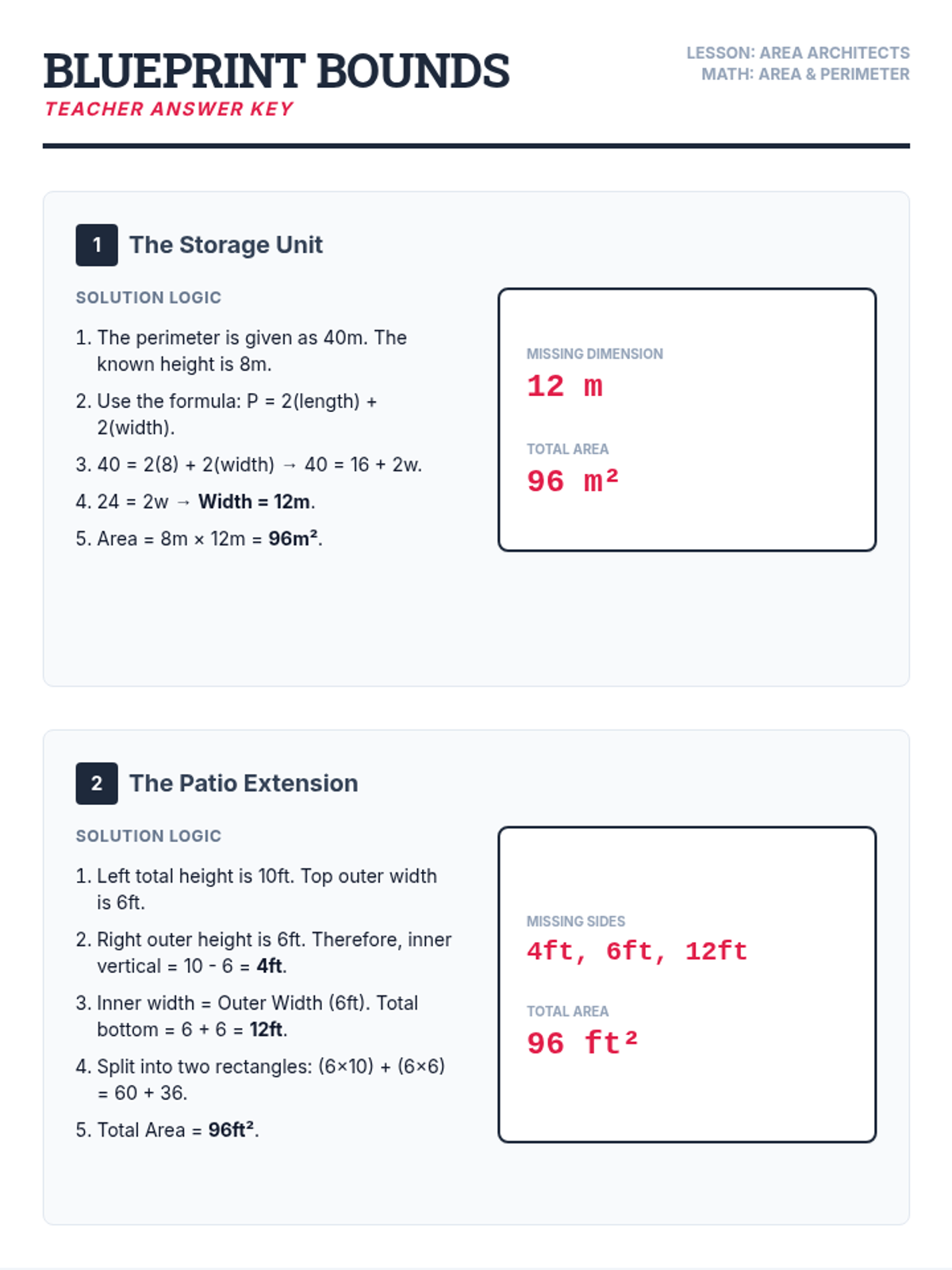
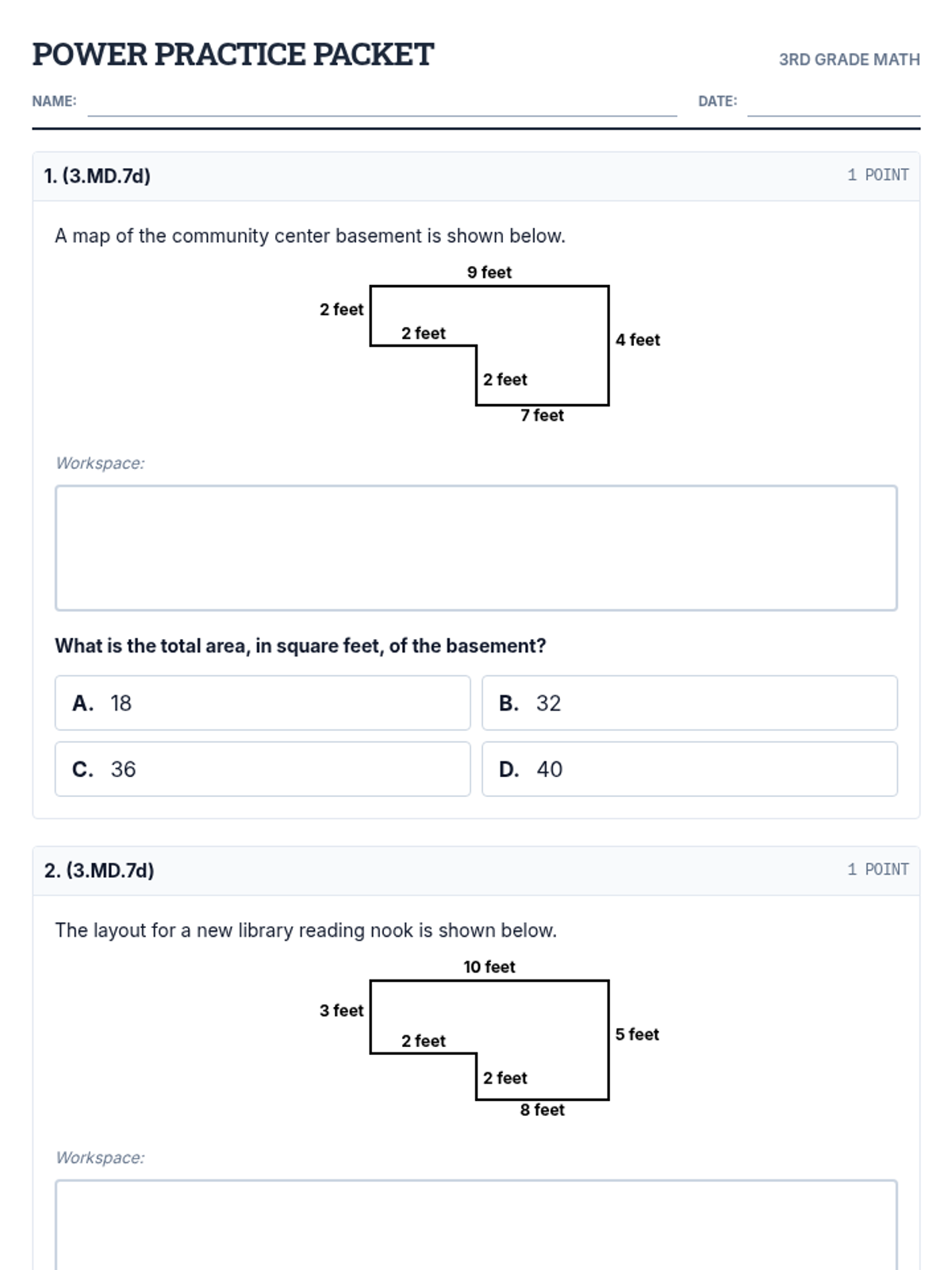
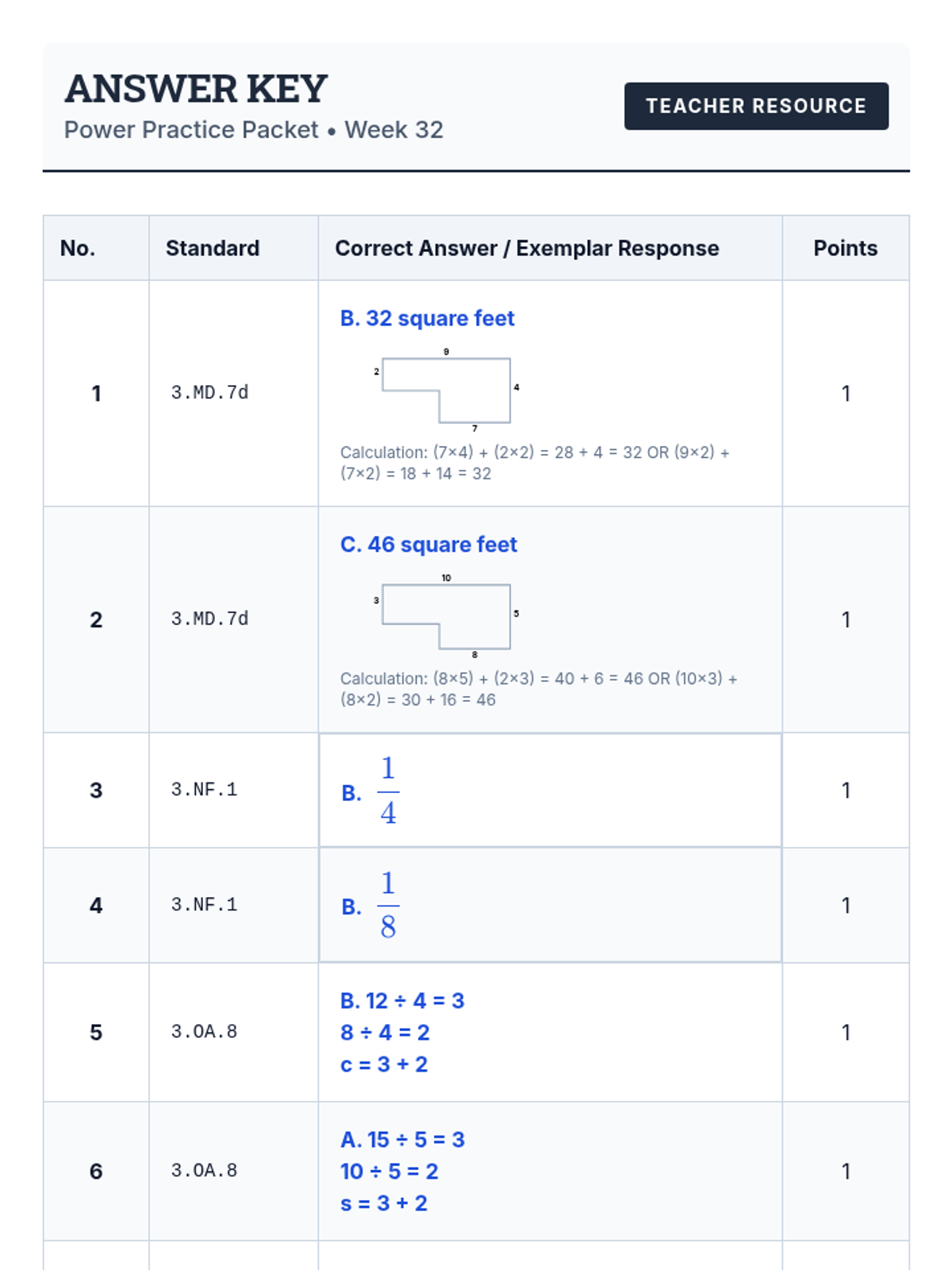
A lesson focused on solving real-world area and perimeter problems, including finding unknown side lengths and comparing rectangles with different dimensions but shared properties. Students act as junior architects to design and analyze blueprints.
In this lesson, students become 'Perimeter Detectives' to solve for missing side lengths in regular polygons and rectangles. They use their knowledge of polygon properties and addition/subtraction to calculate perimeters and individual side measurements.
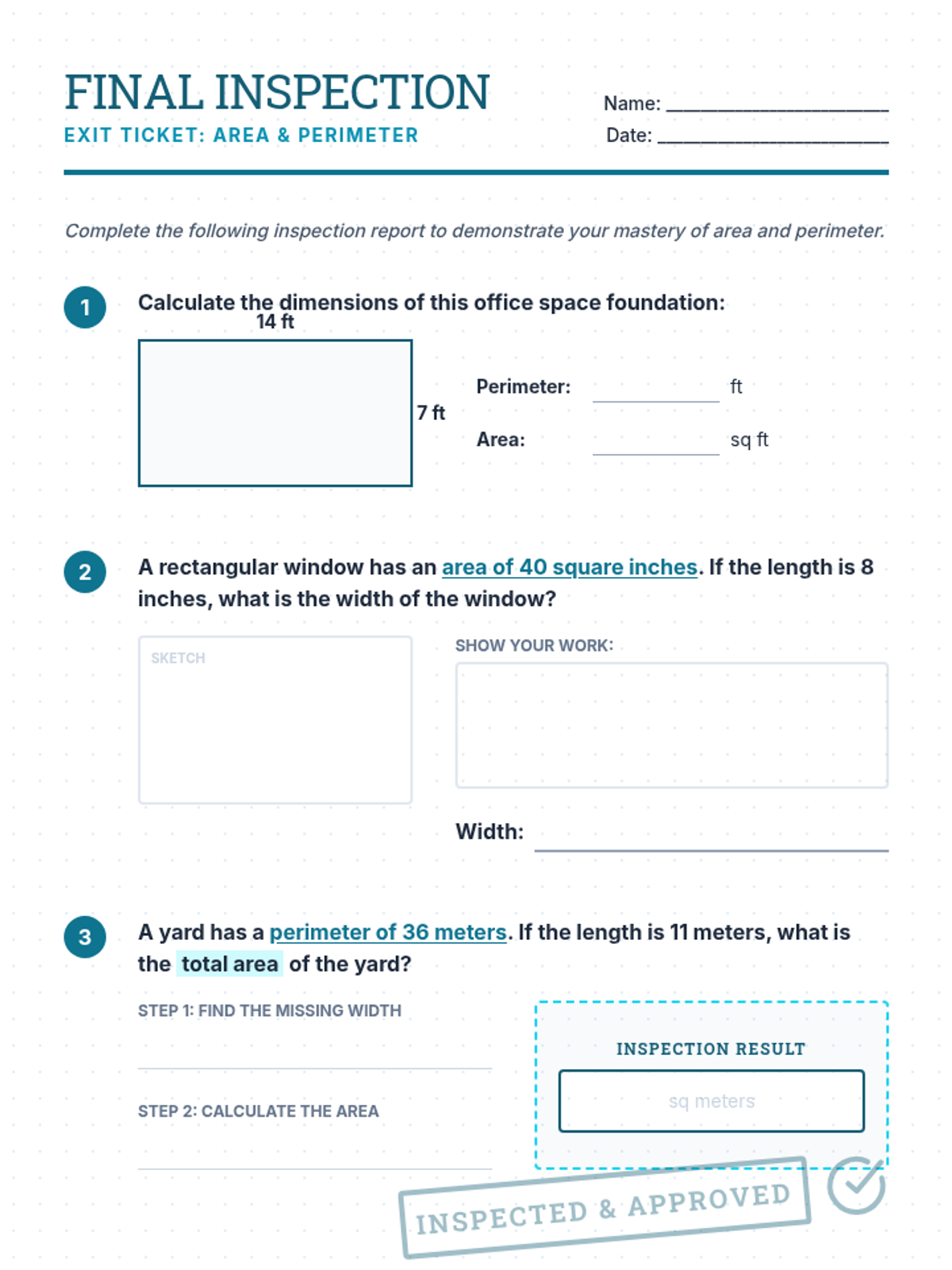
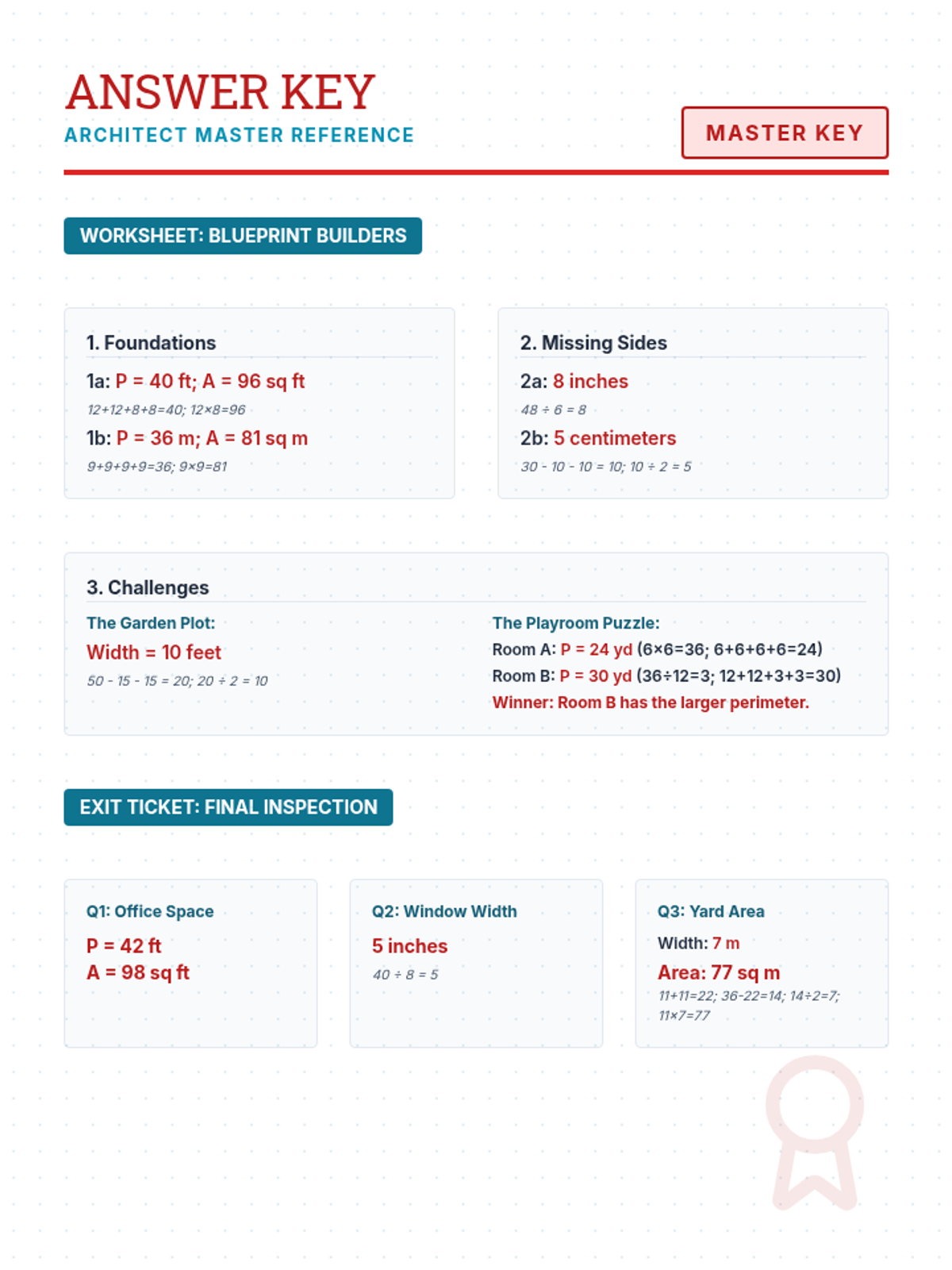
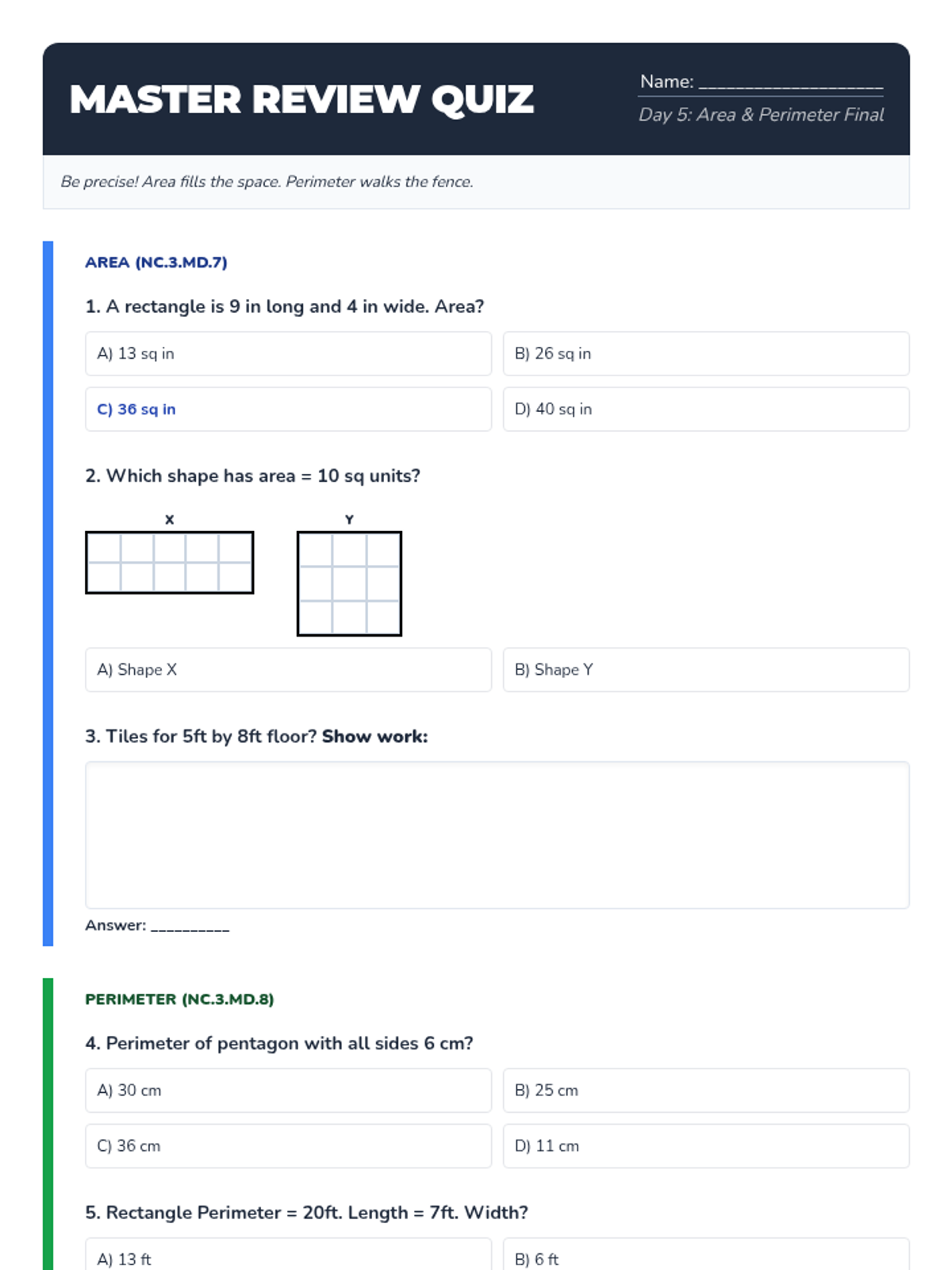
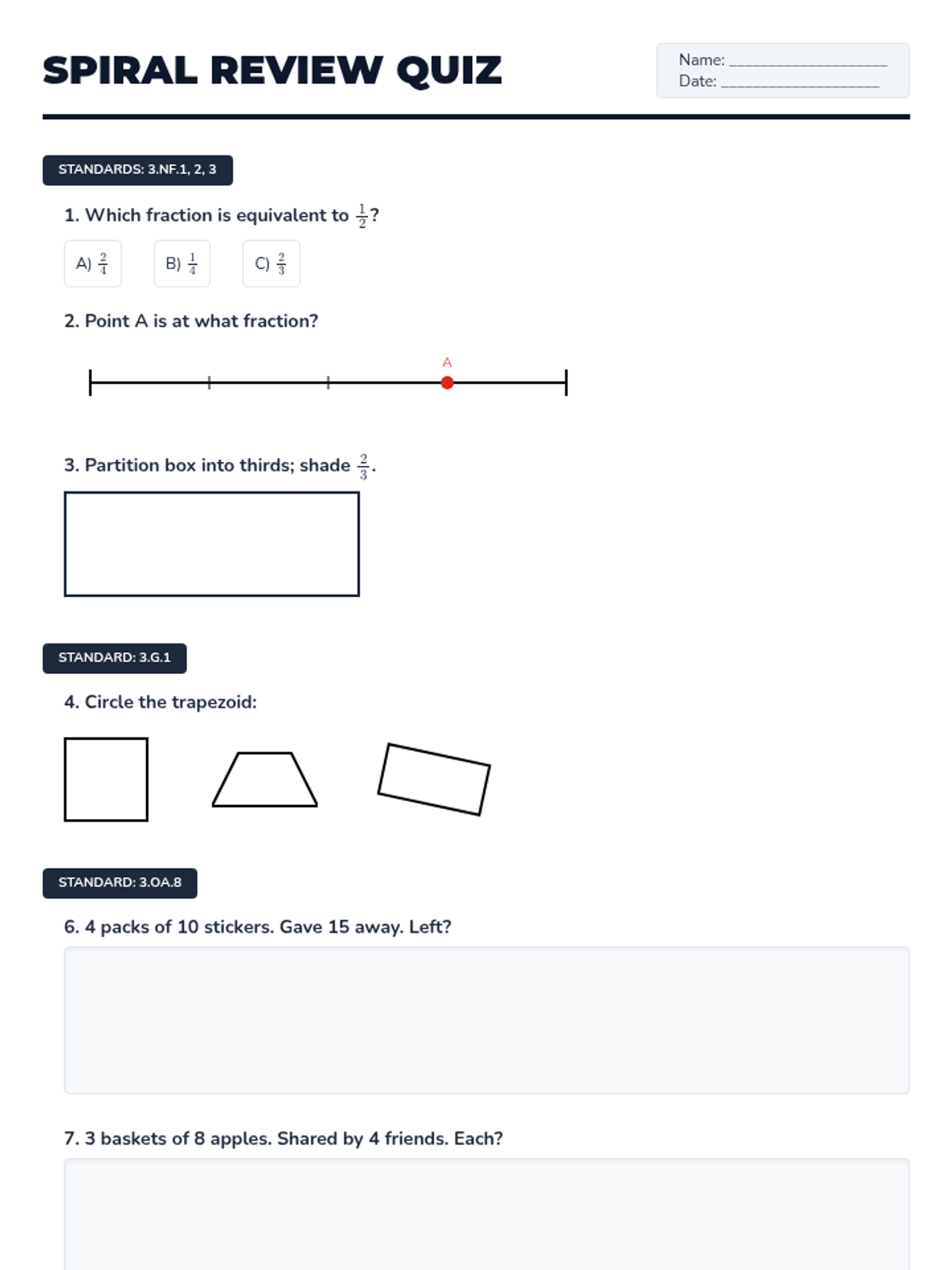
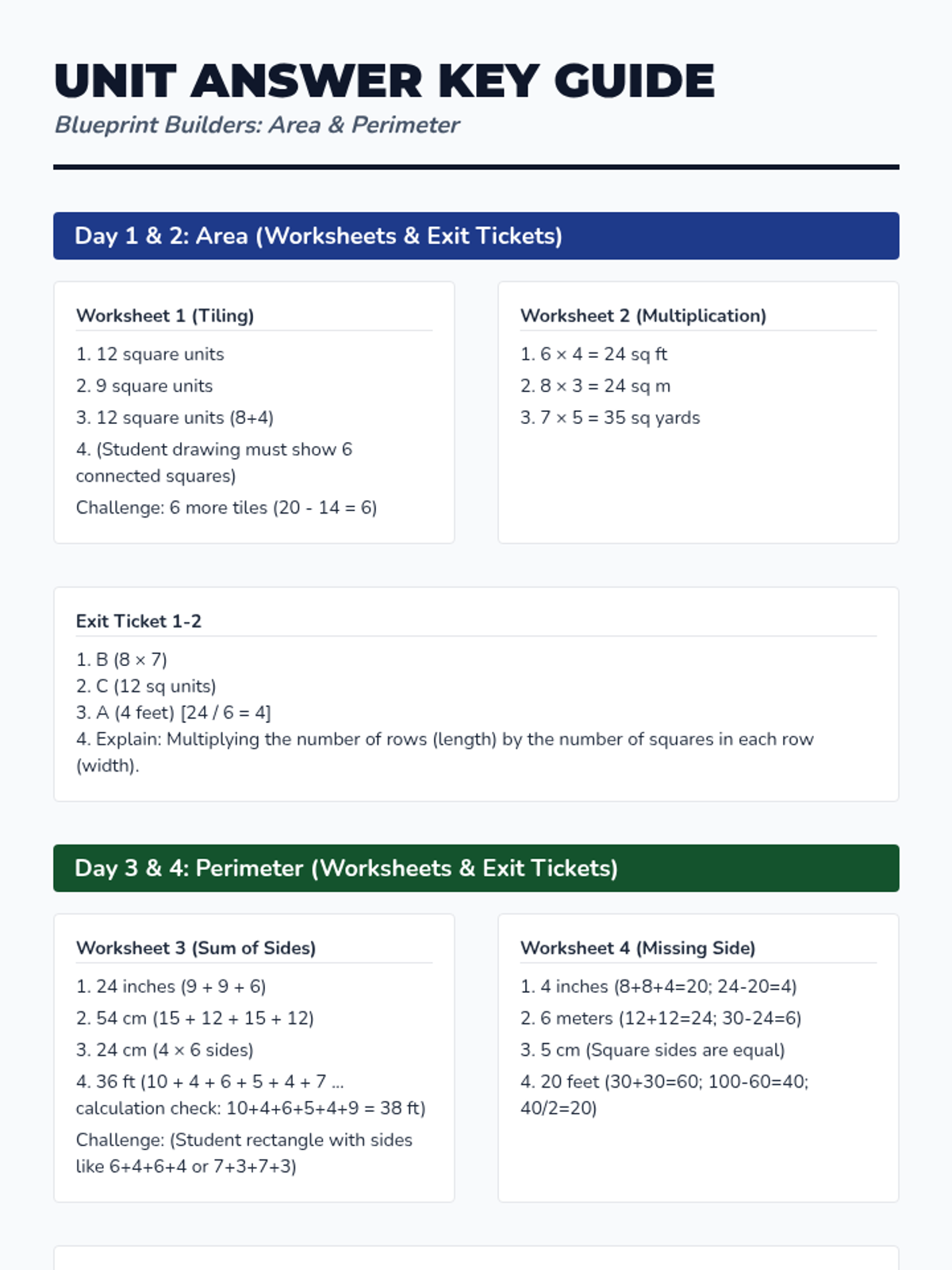
A comprehensive review of area and perimeter concepts including a spiral review assessment.
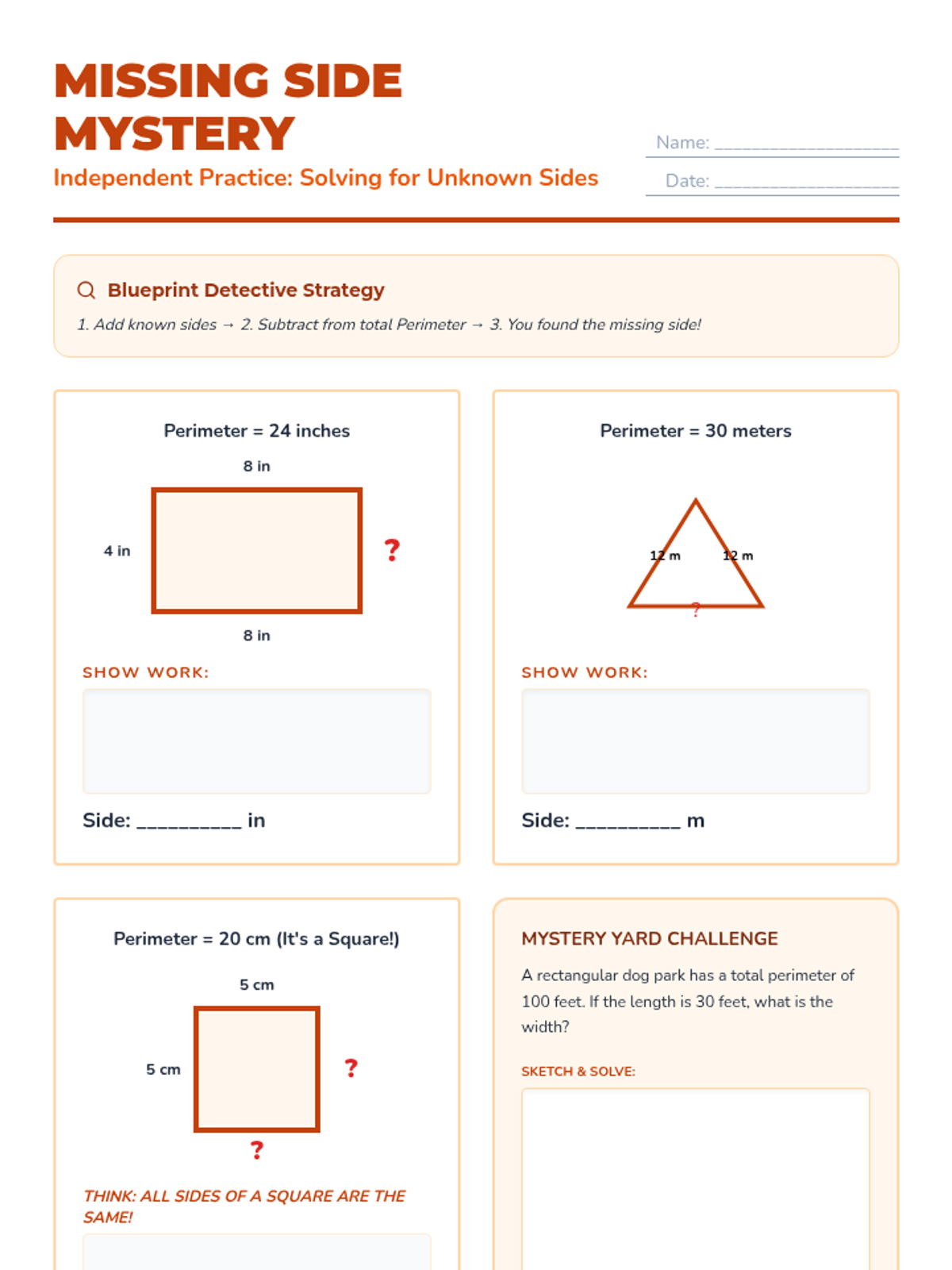
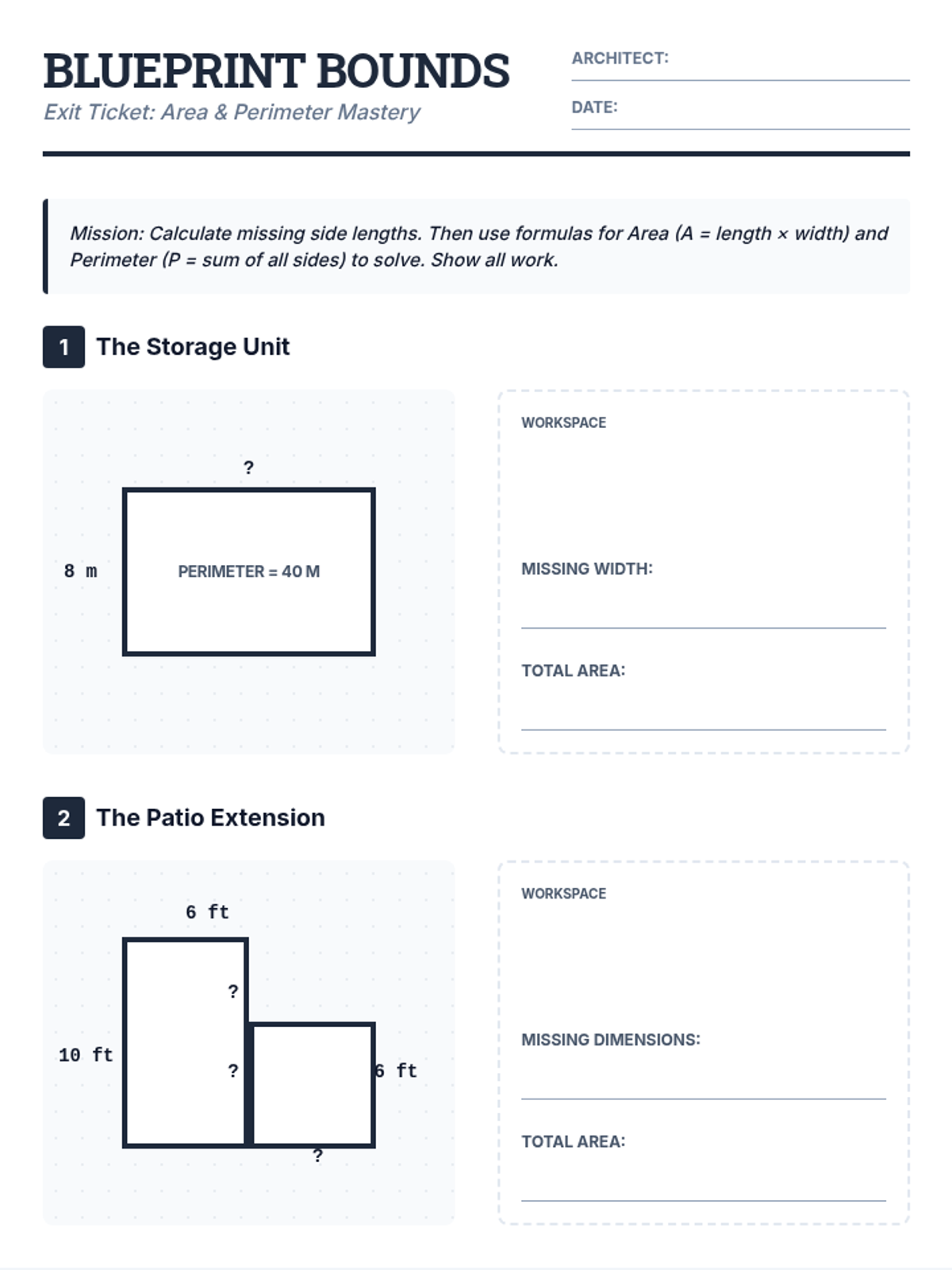
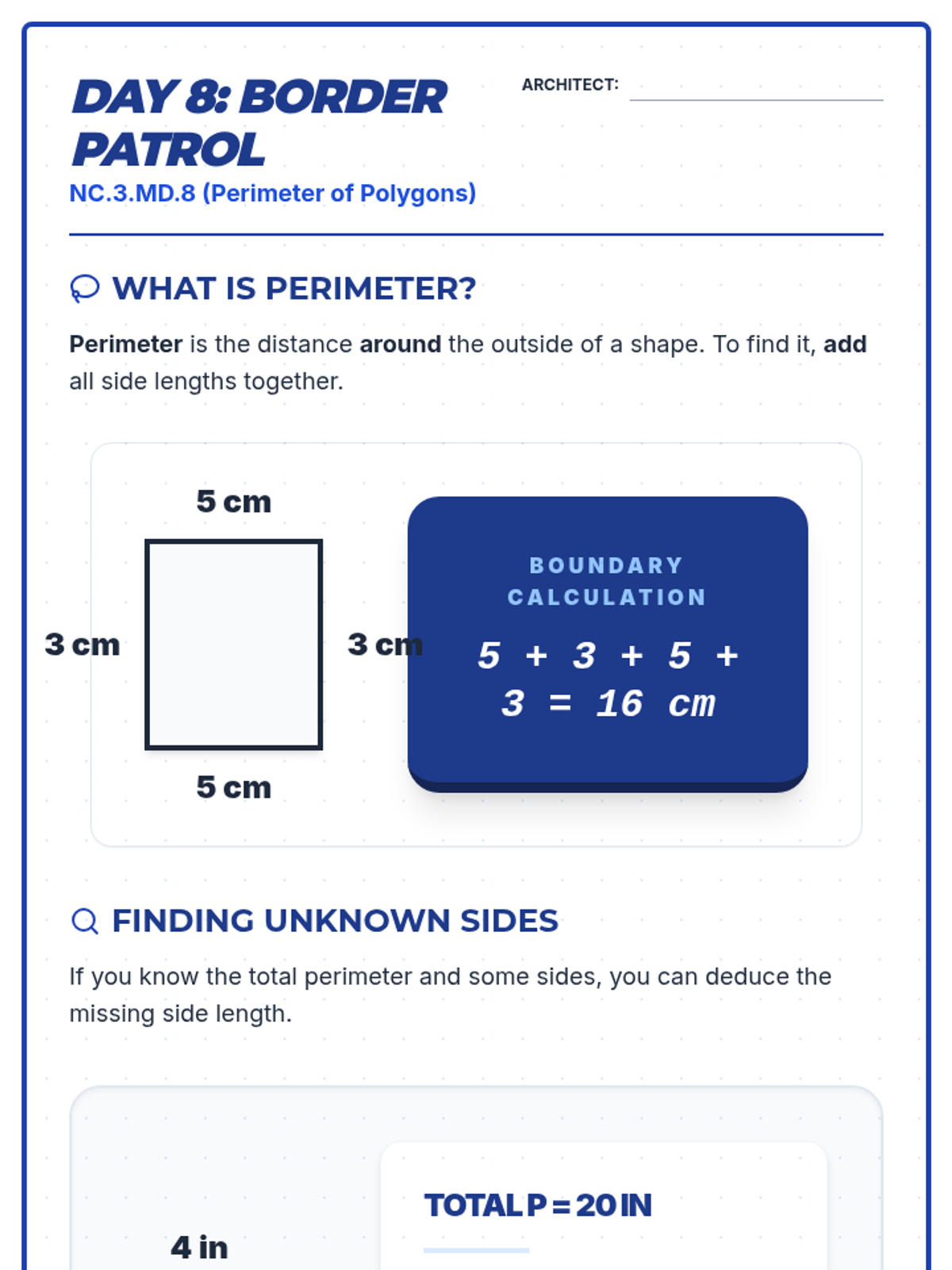
Challenges students to find missing side lengths when the total perimeter is known.
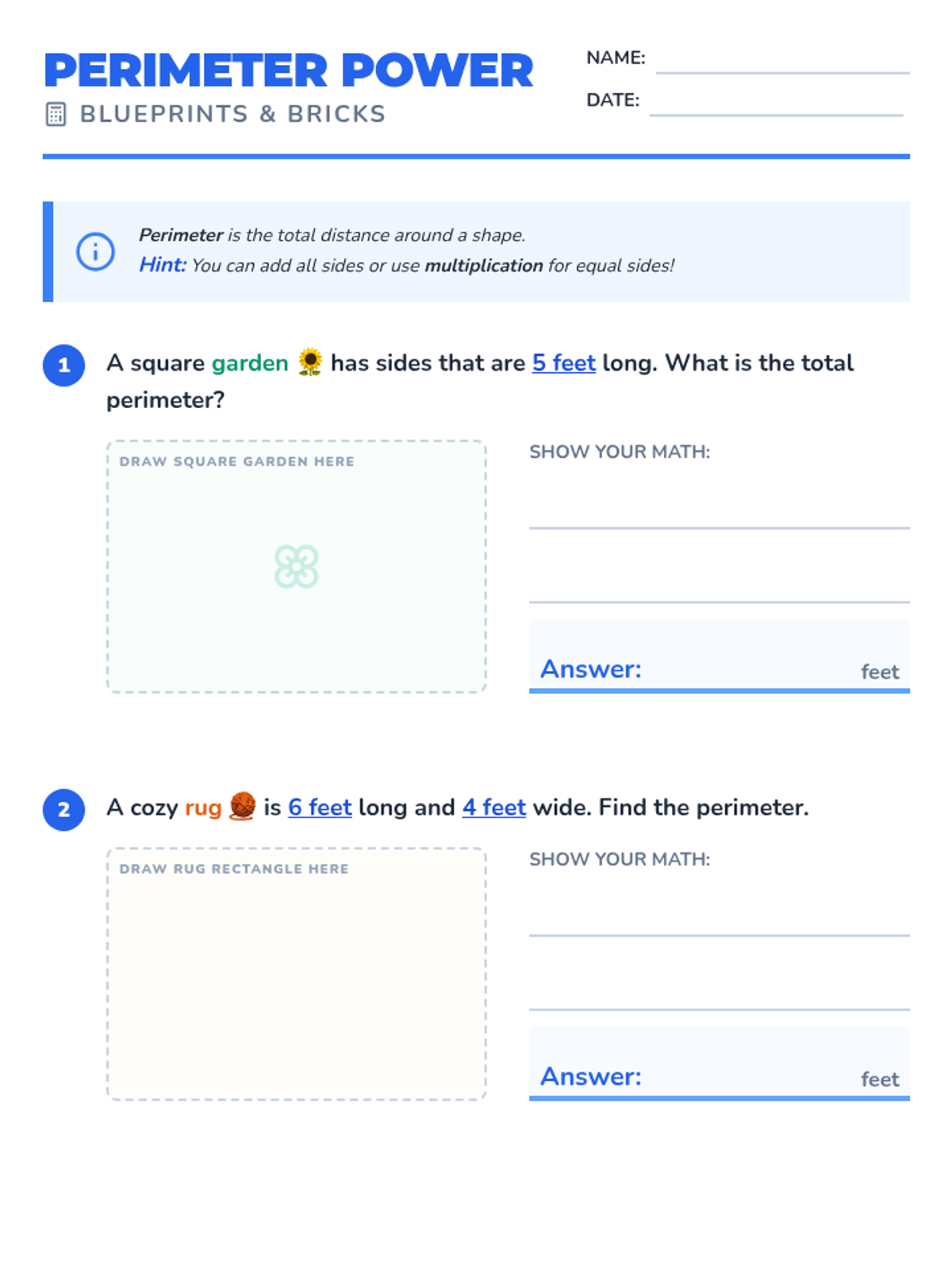
Introduces perimeter as the distance around a shape and calculates it by adding all side lengths.
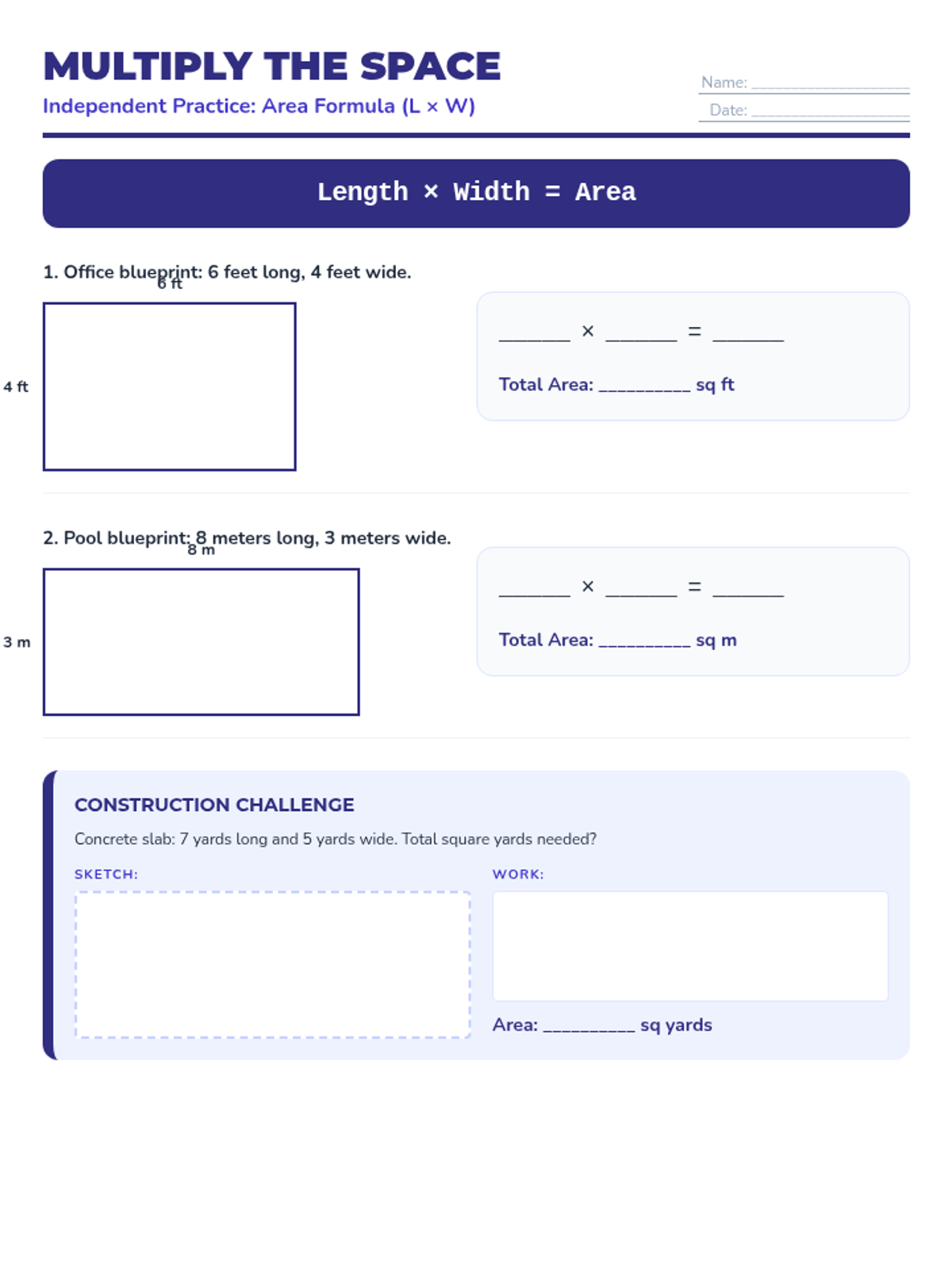
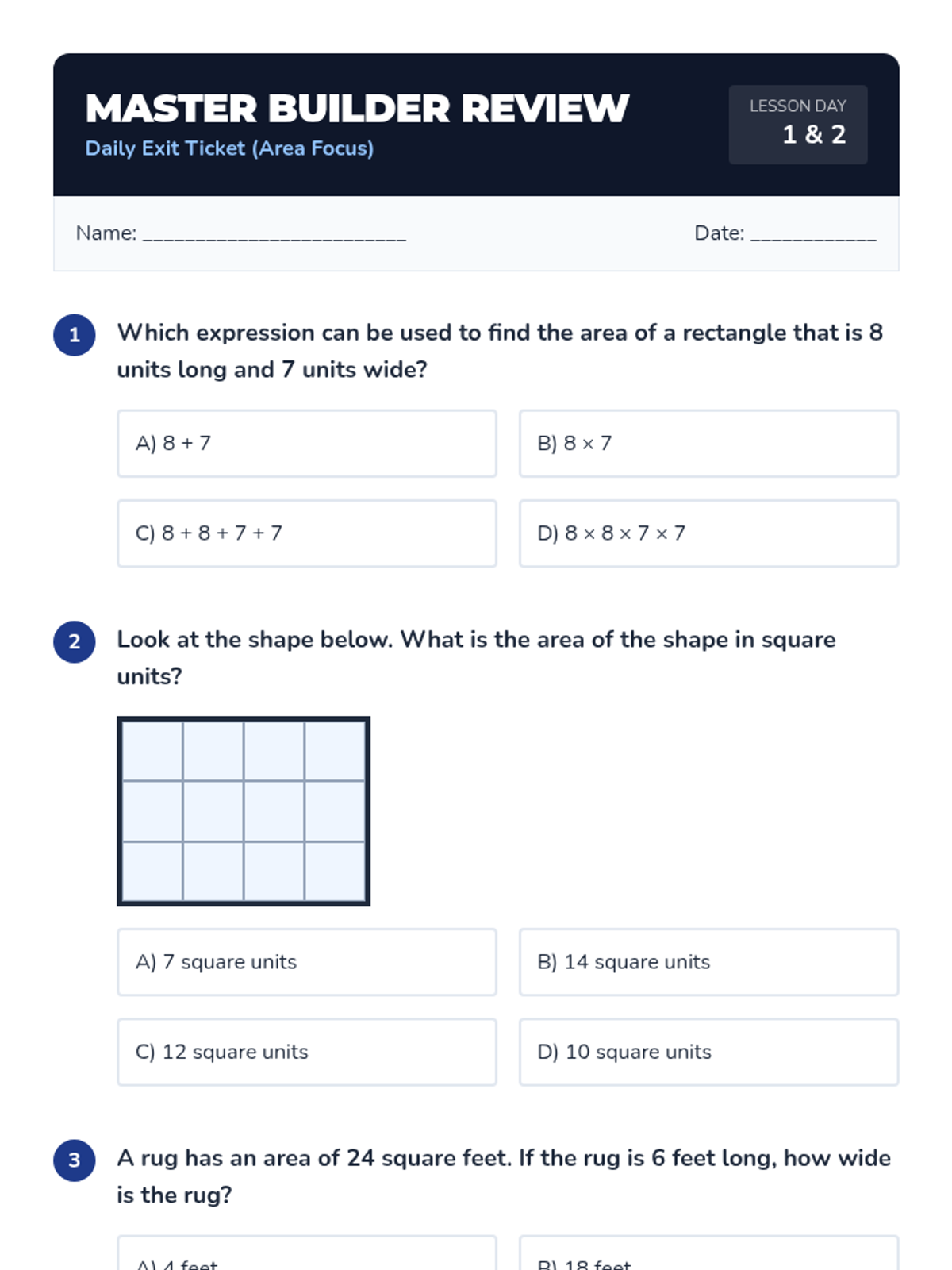
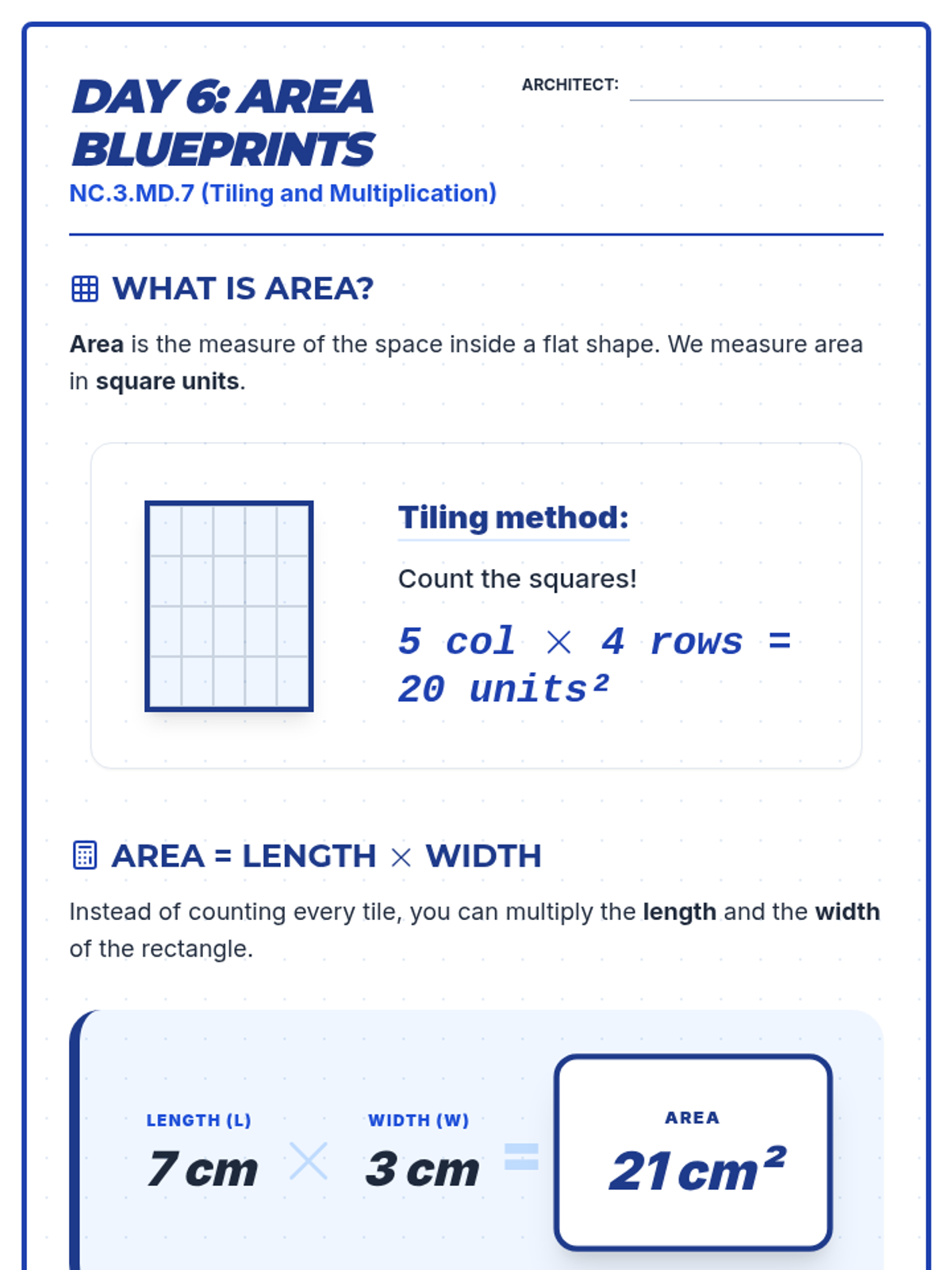
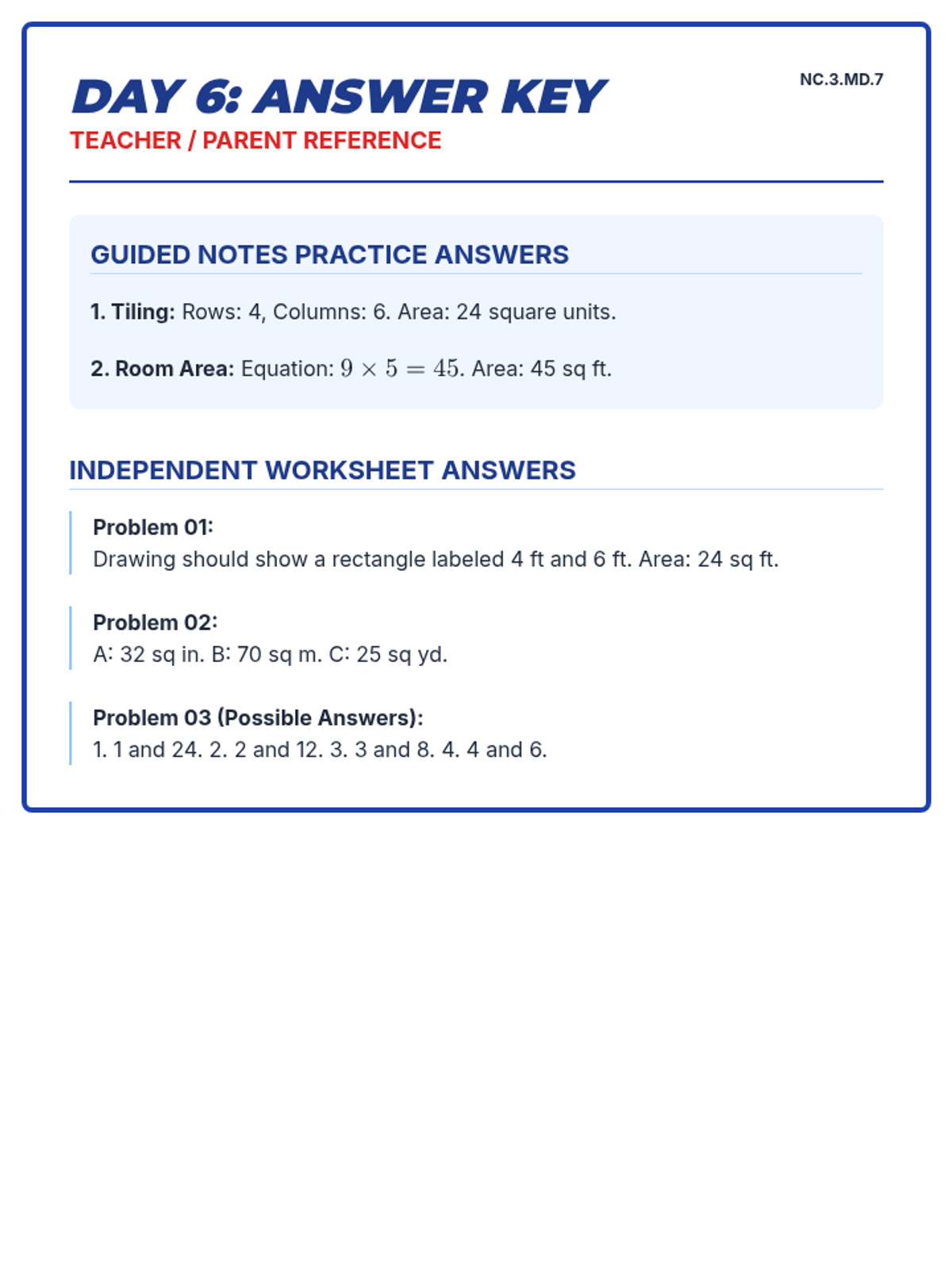
Connects area to multiplication by partitioning rectangles and using the Length x Width formula.
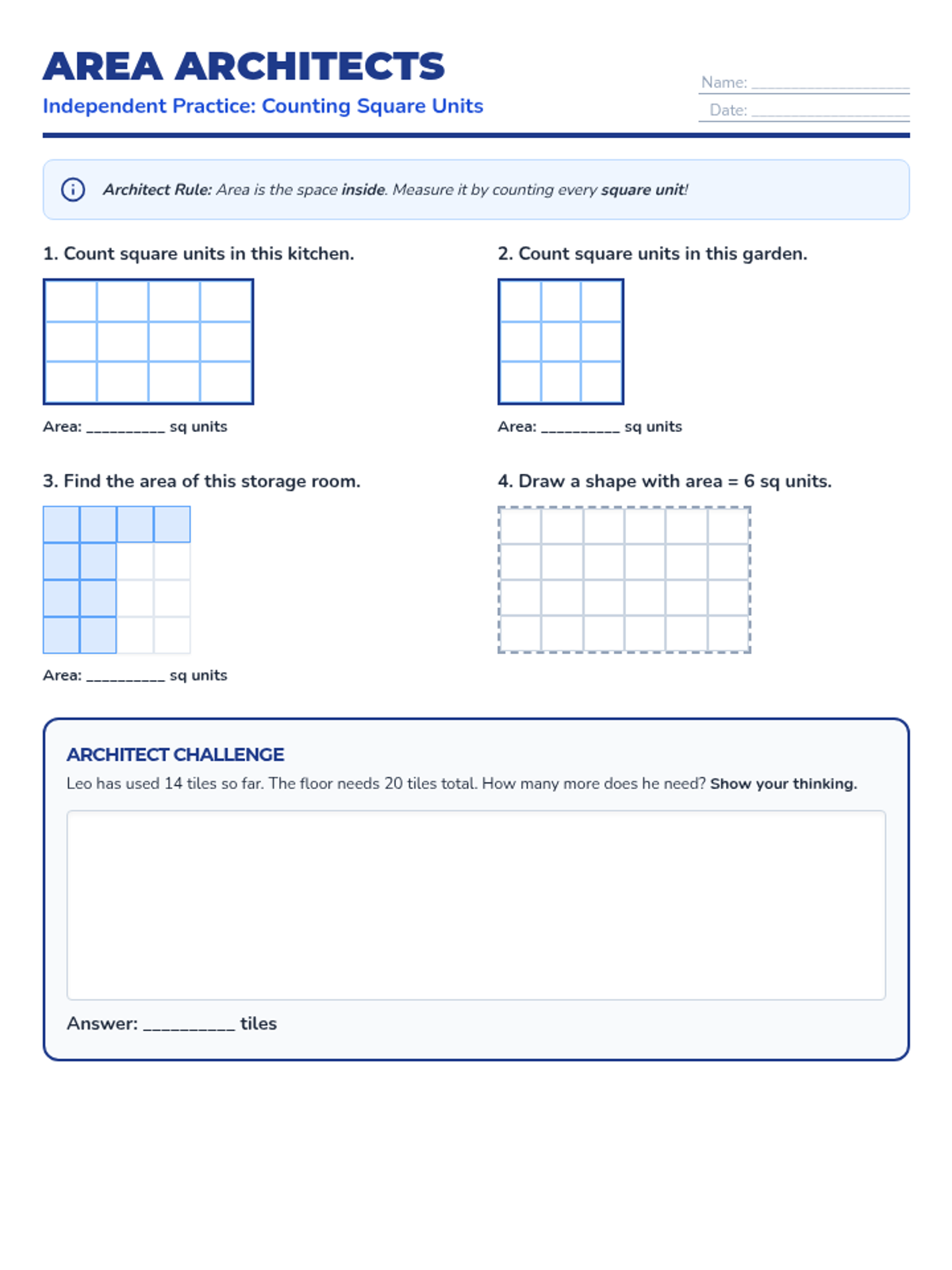
Focuses on relating area to tiling and counting square units to understand the concept of space inside a 2D figure.
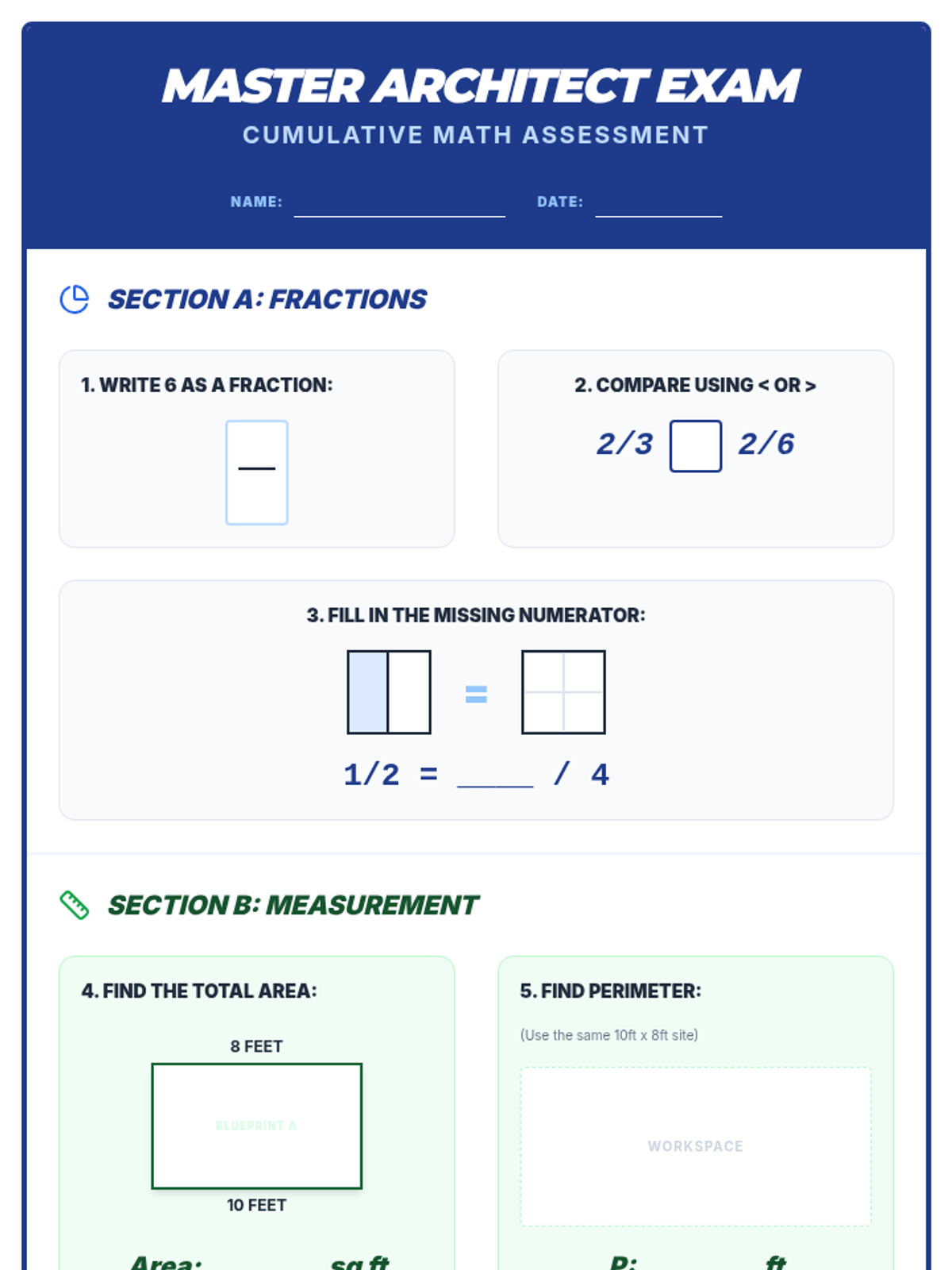
A focused lesson on calculating area and perimeter of complex rectilinear shapes by determining missing side lengths and applying geometric formulas.
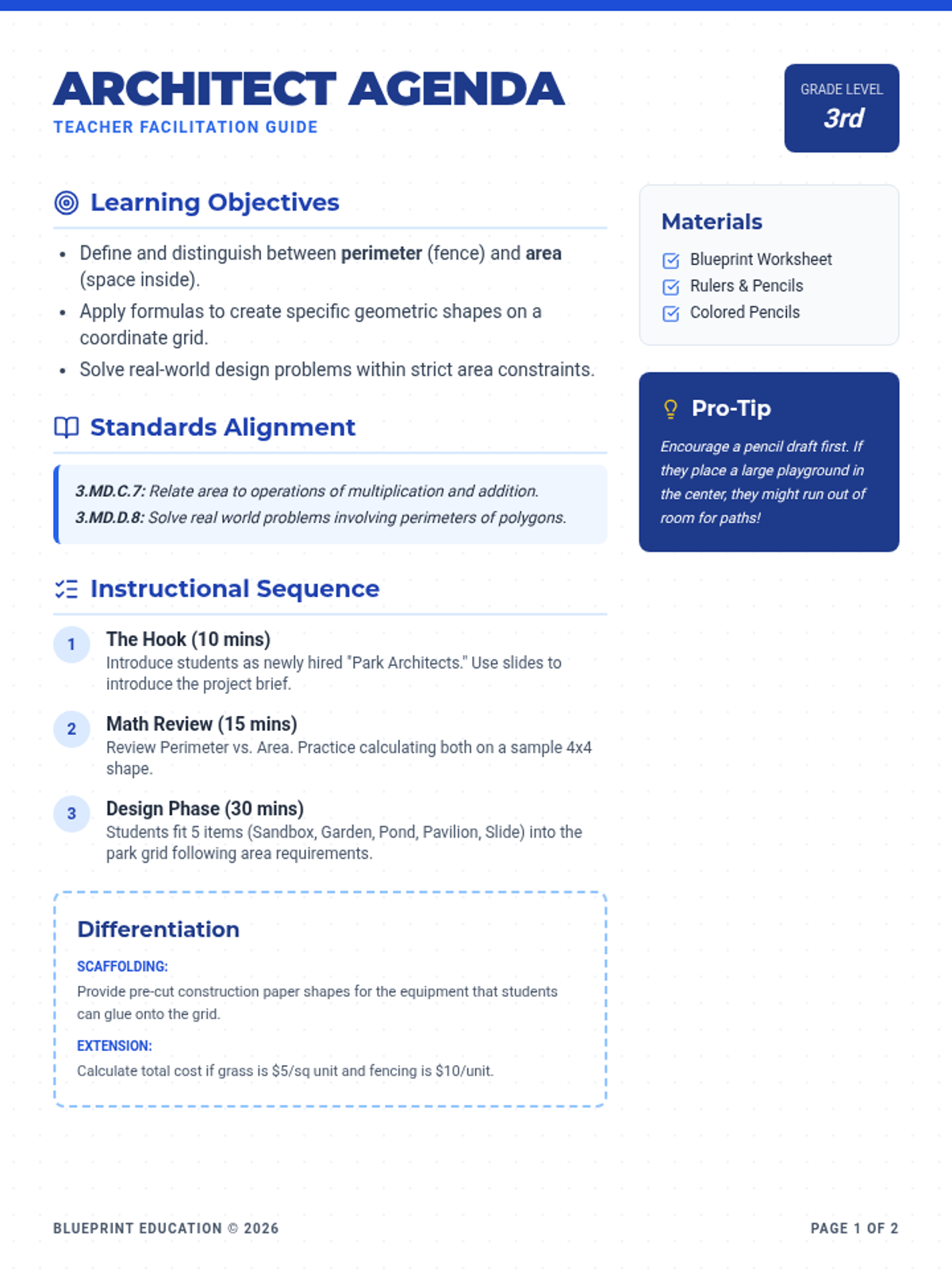
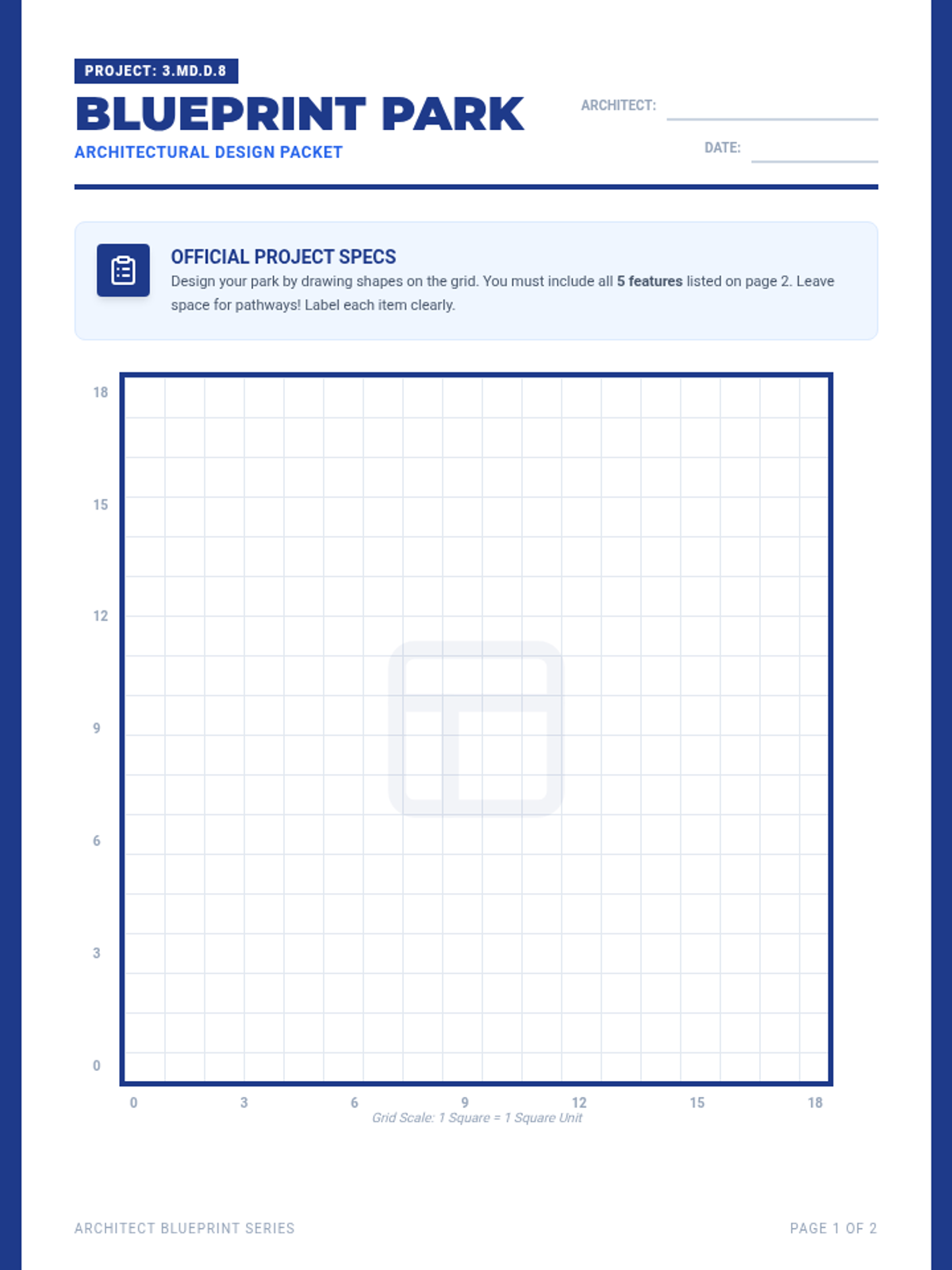
A hands-on geometry lesson where students act as urban planners to design a community park using area and perimeter calculations.
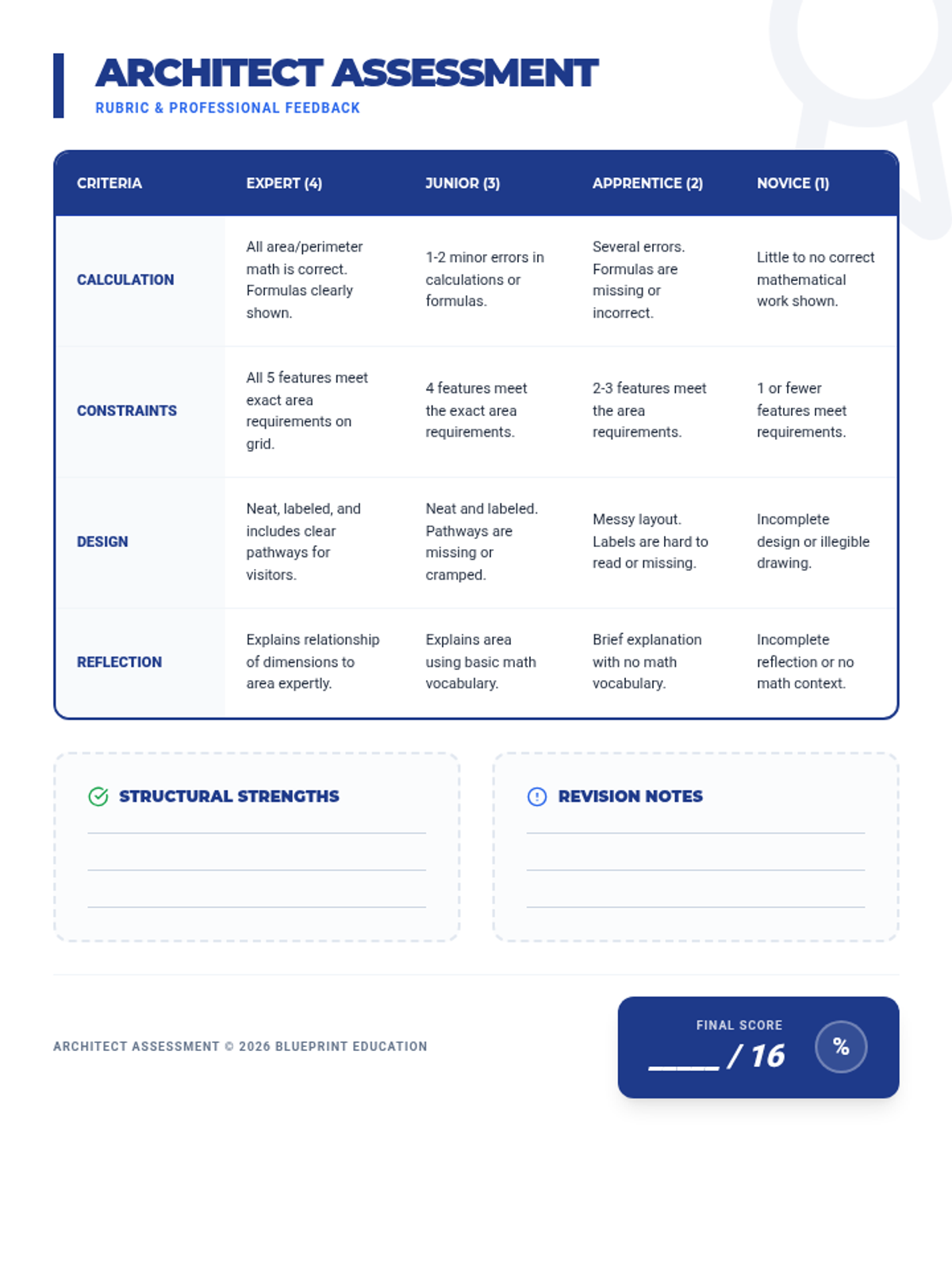
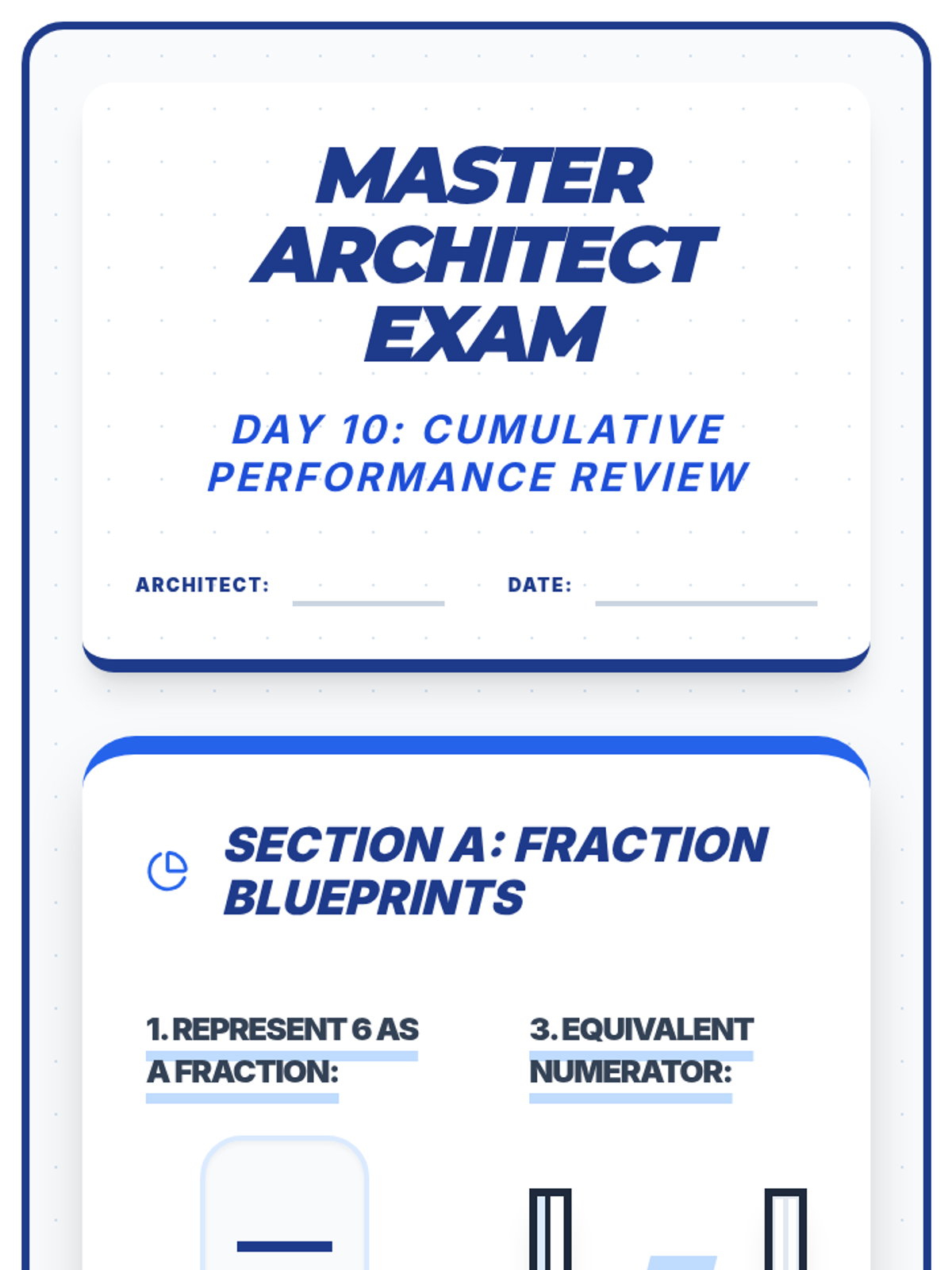
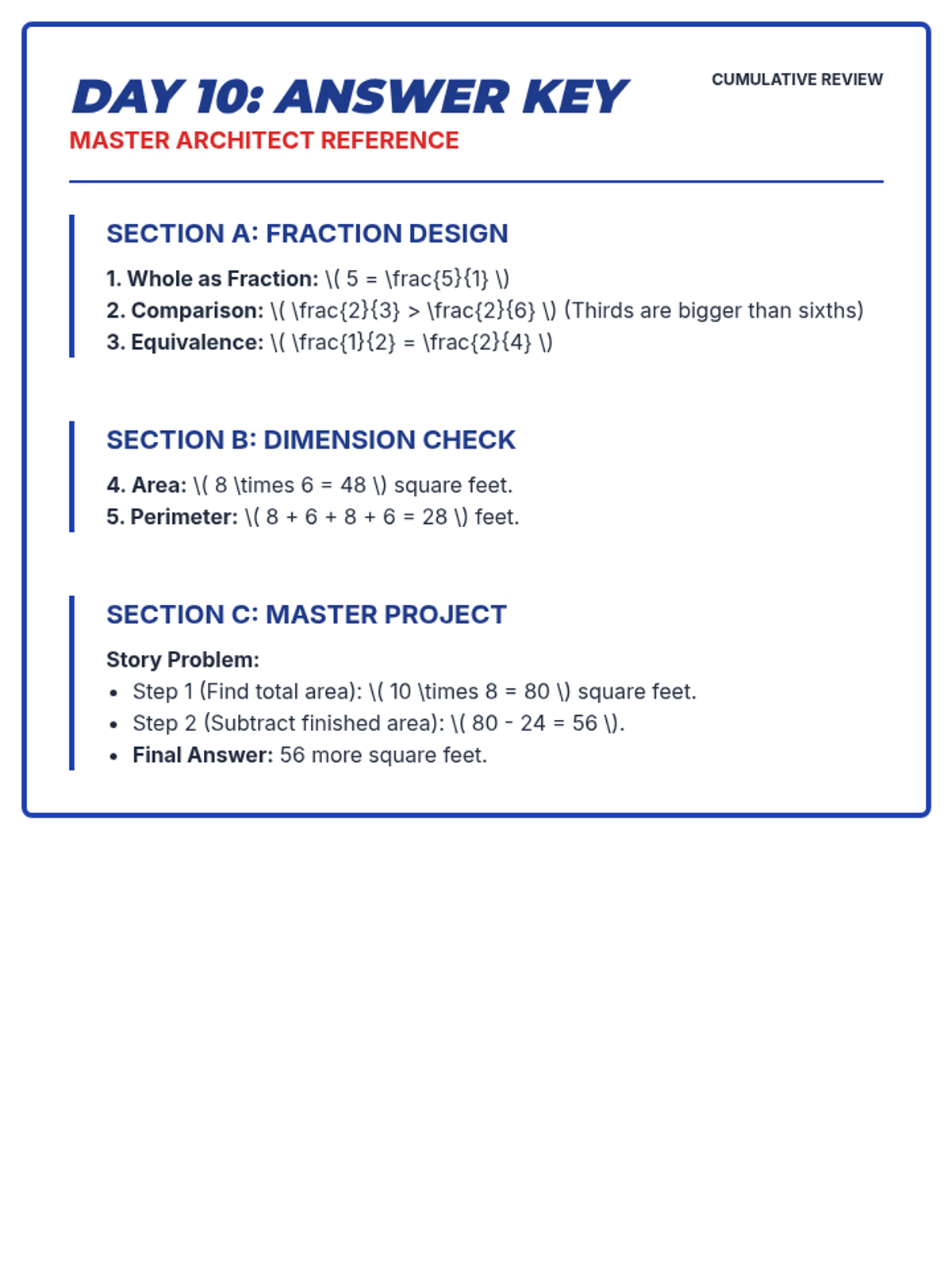
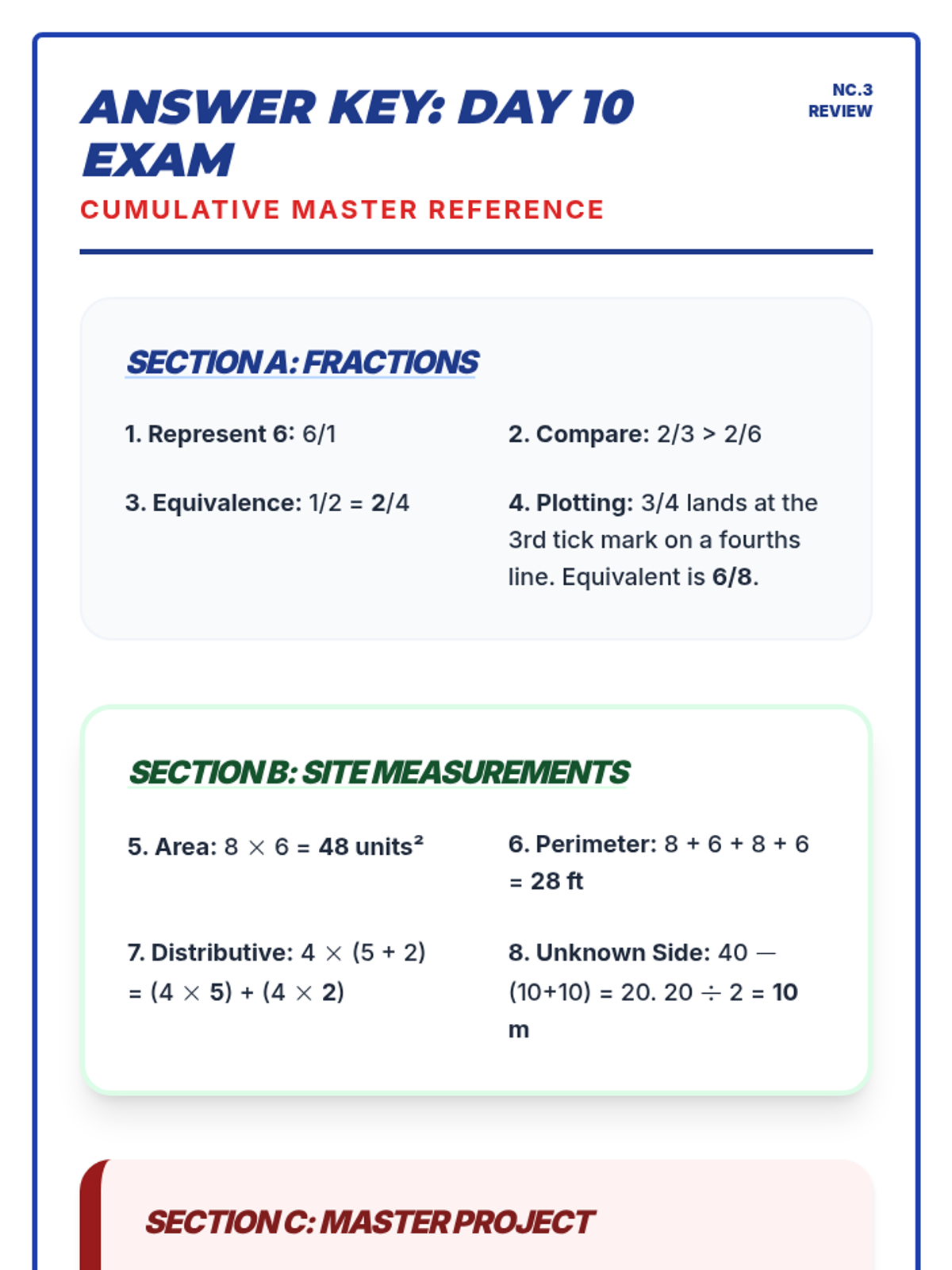
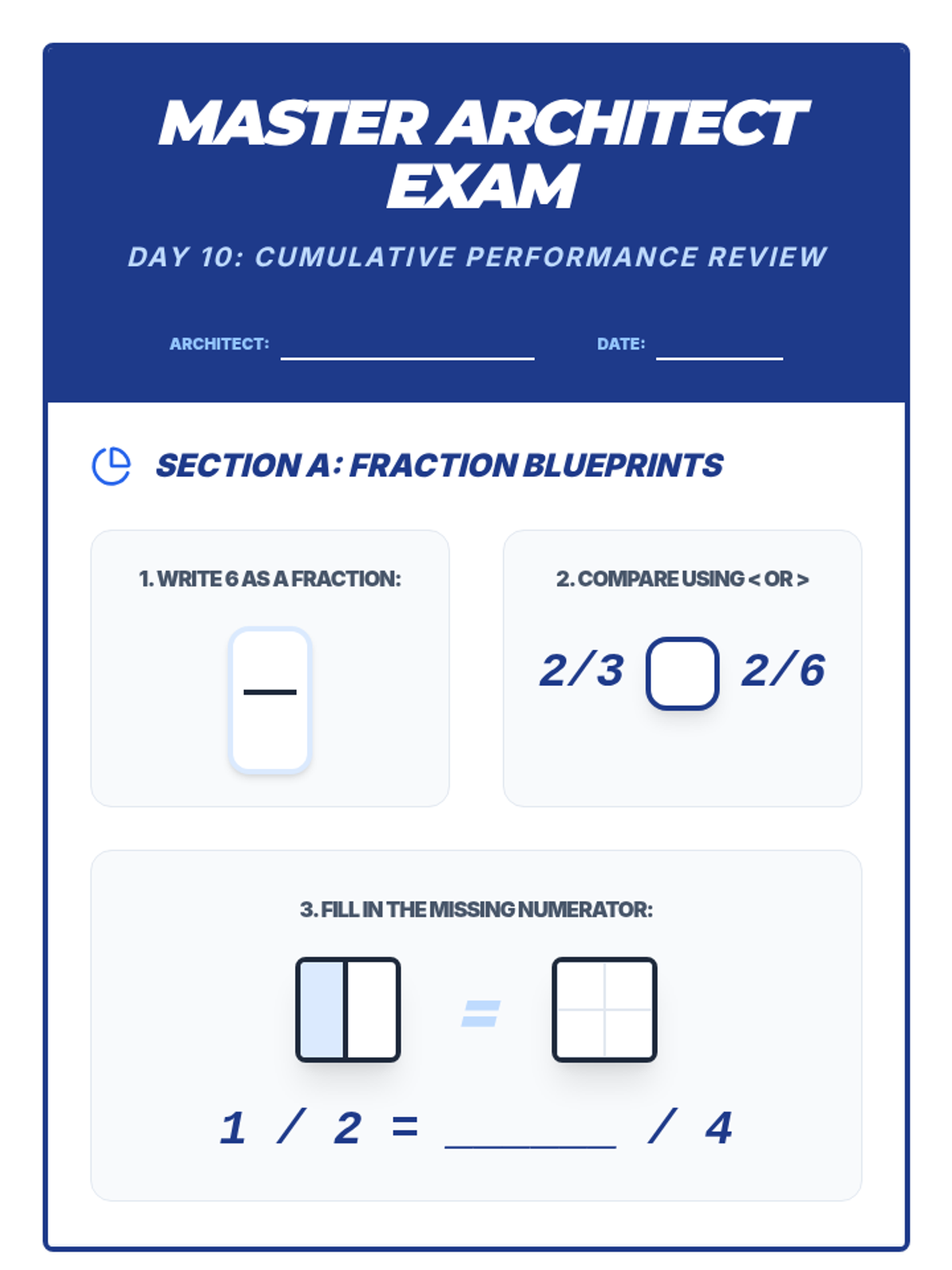
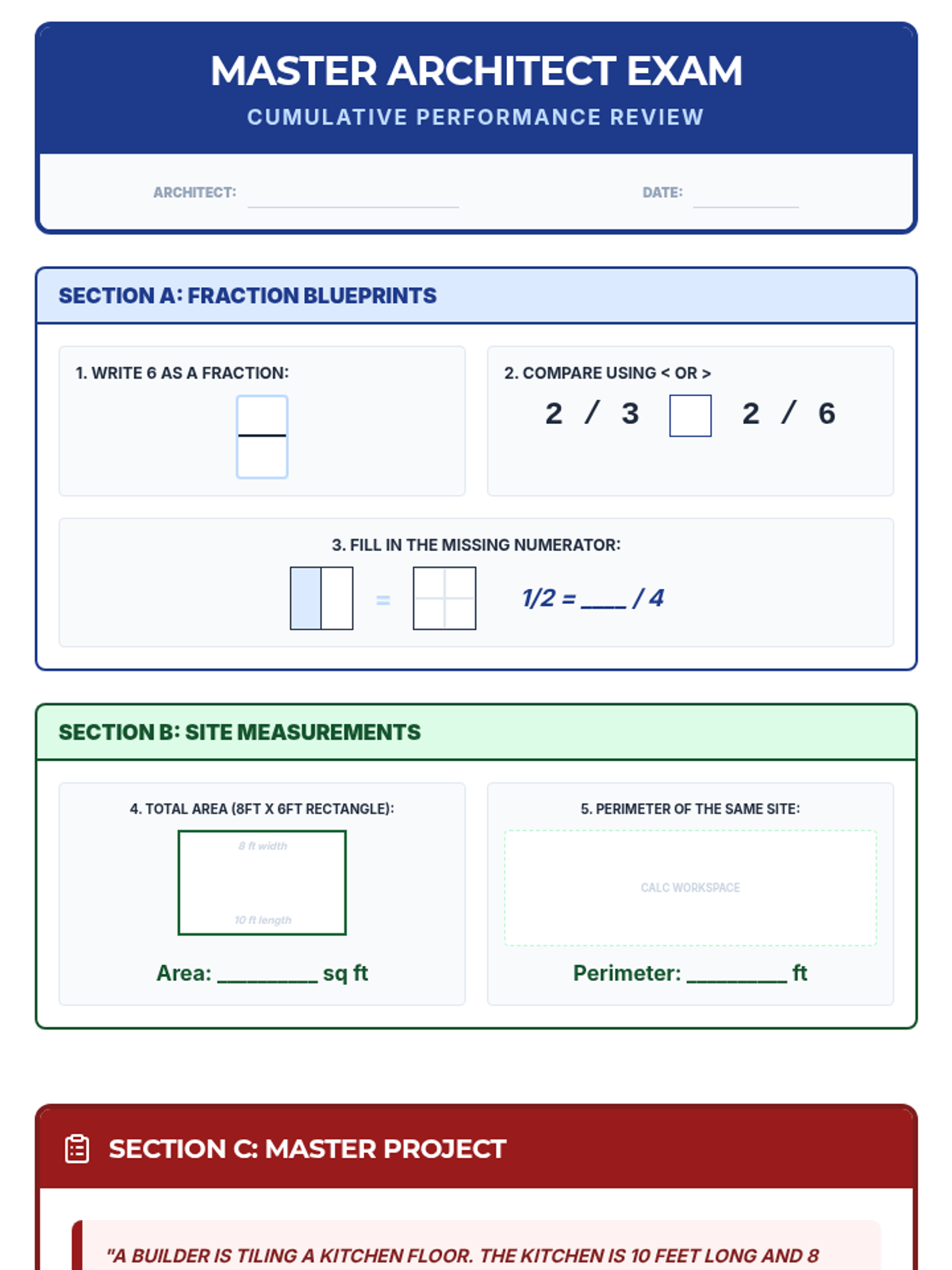
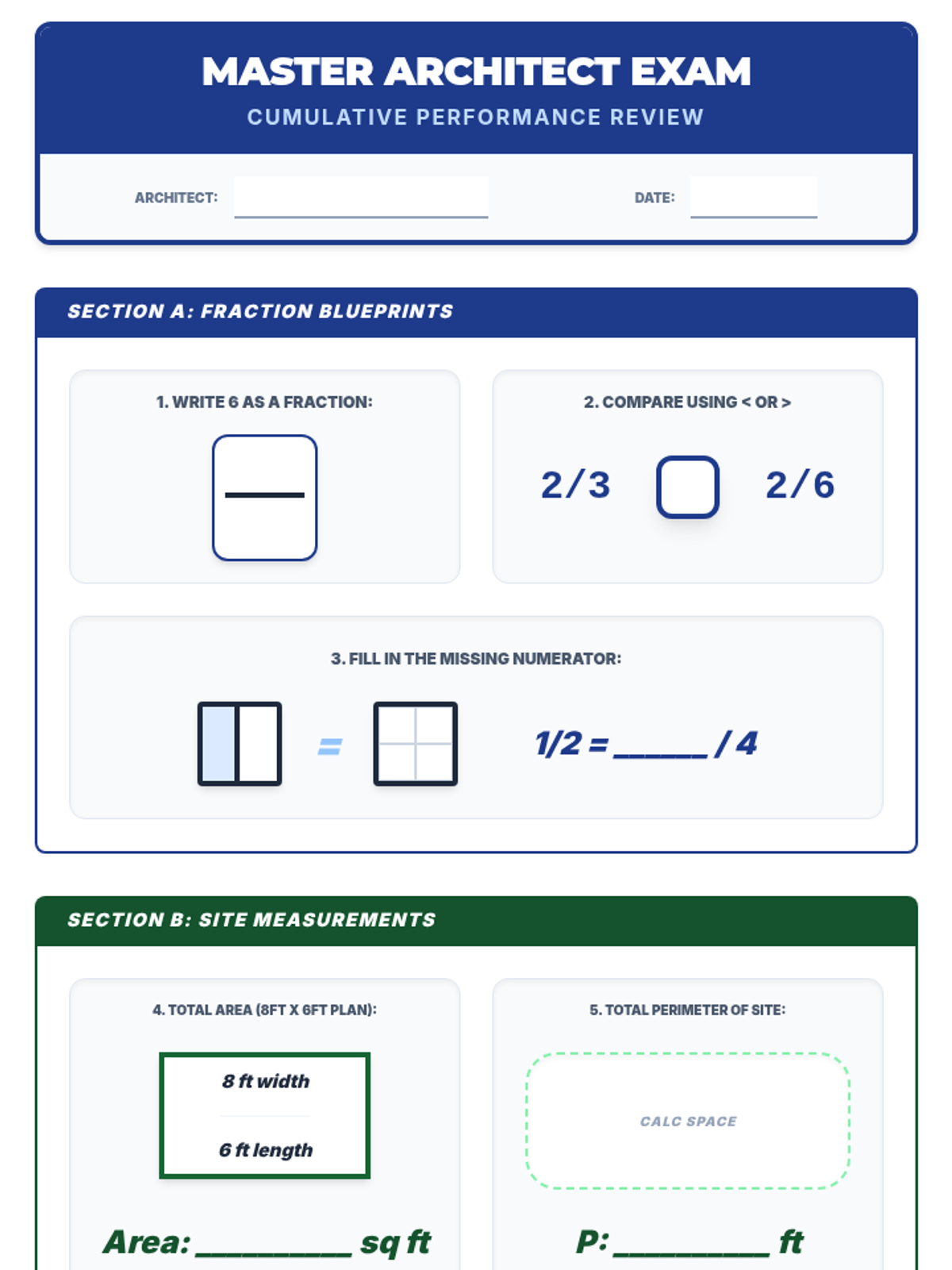
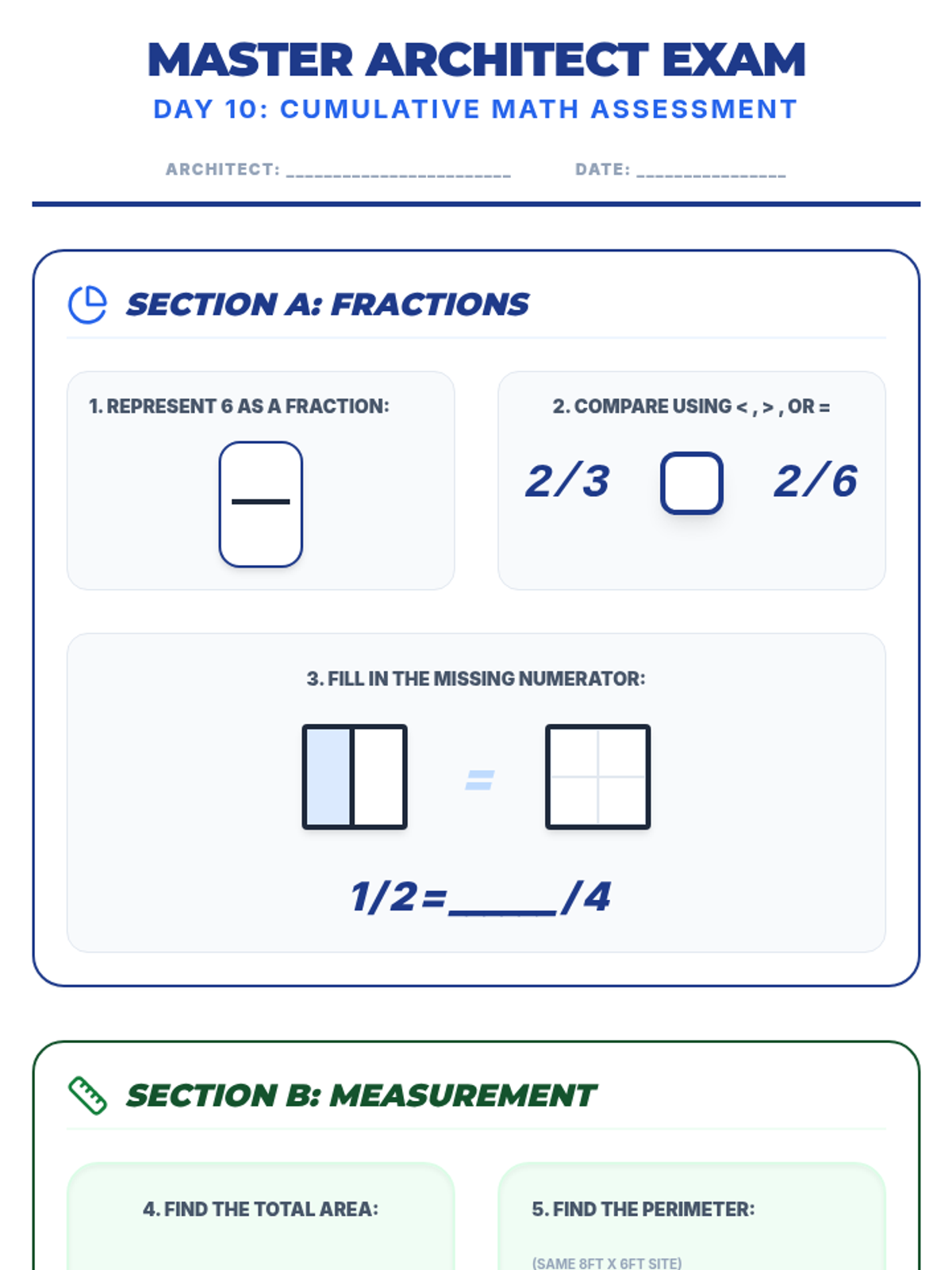
A cumulative review of all standards covered in the 10-day intensive program.
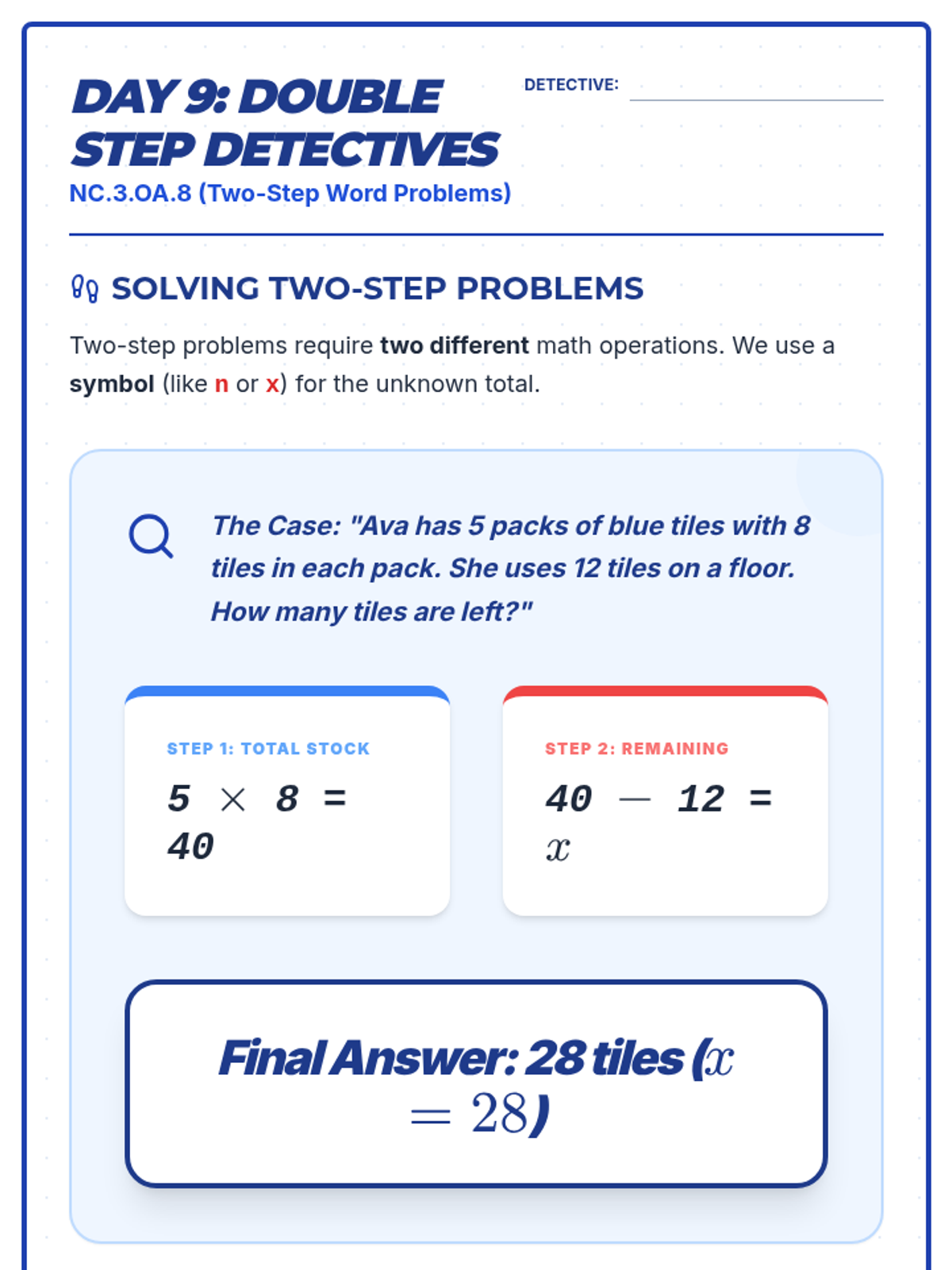
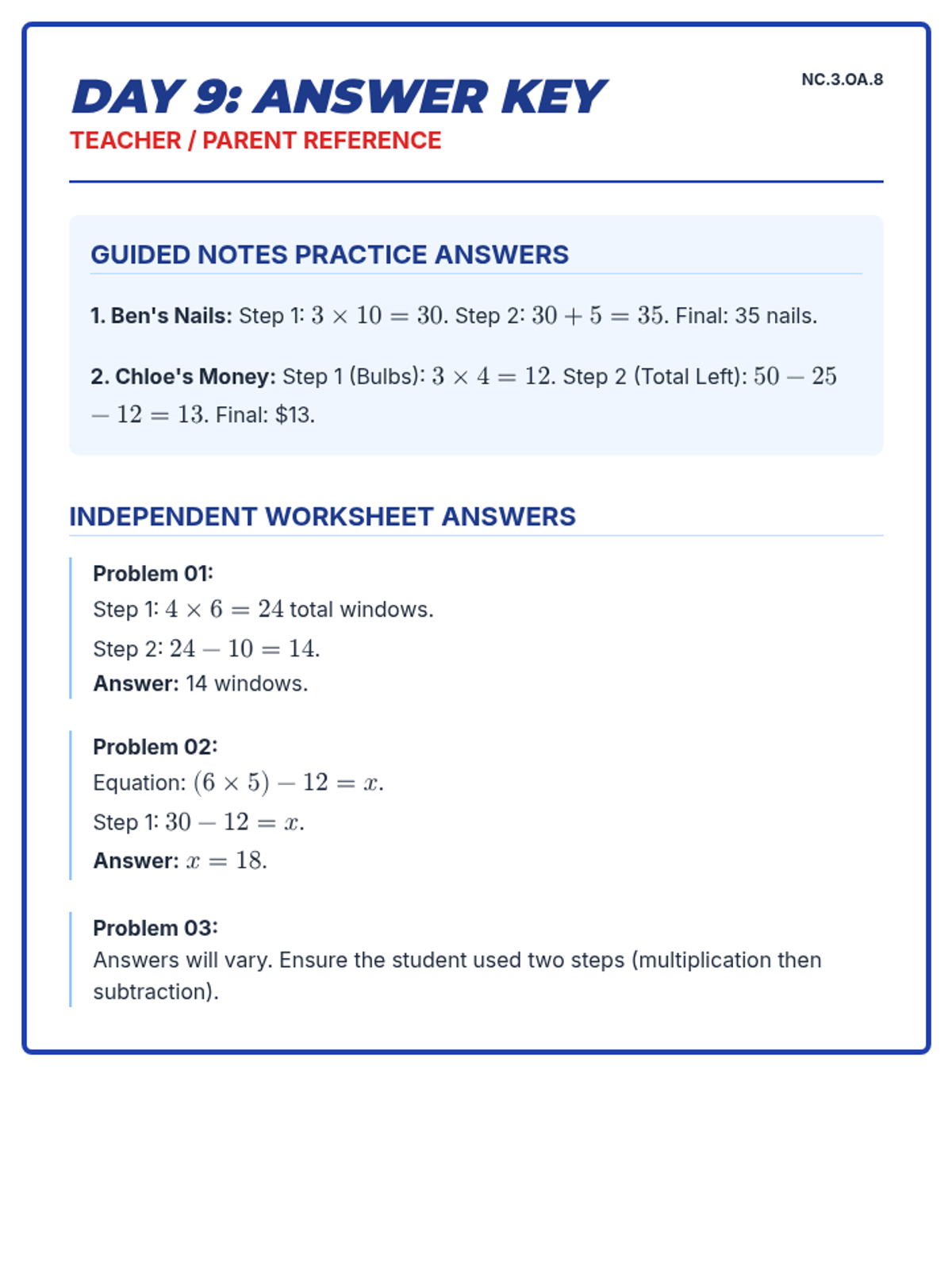
Strategies for solving two-step word problems involving addition, subtraction, and multiplication with unknowns.
Covers finding the perimeter of polygons, including finding unknown side lengths.
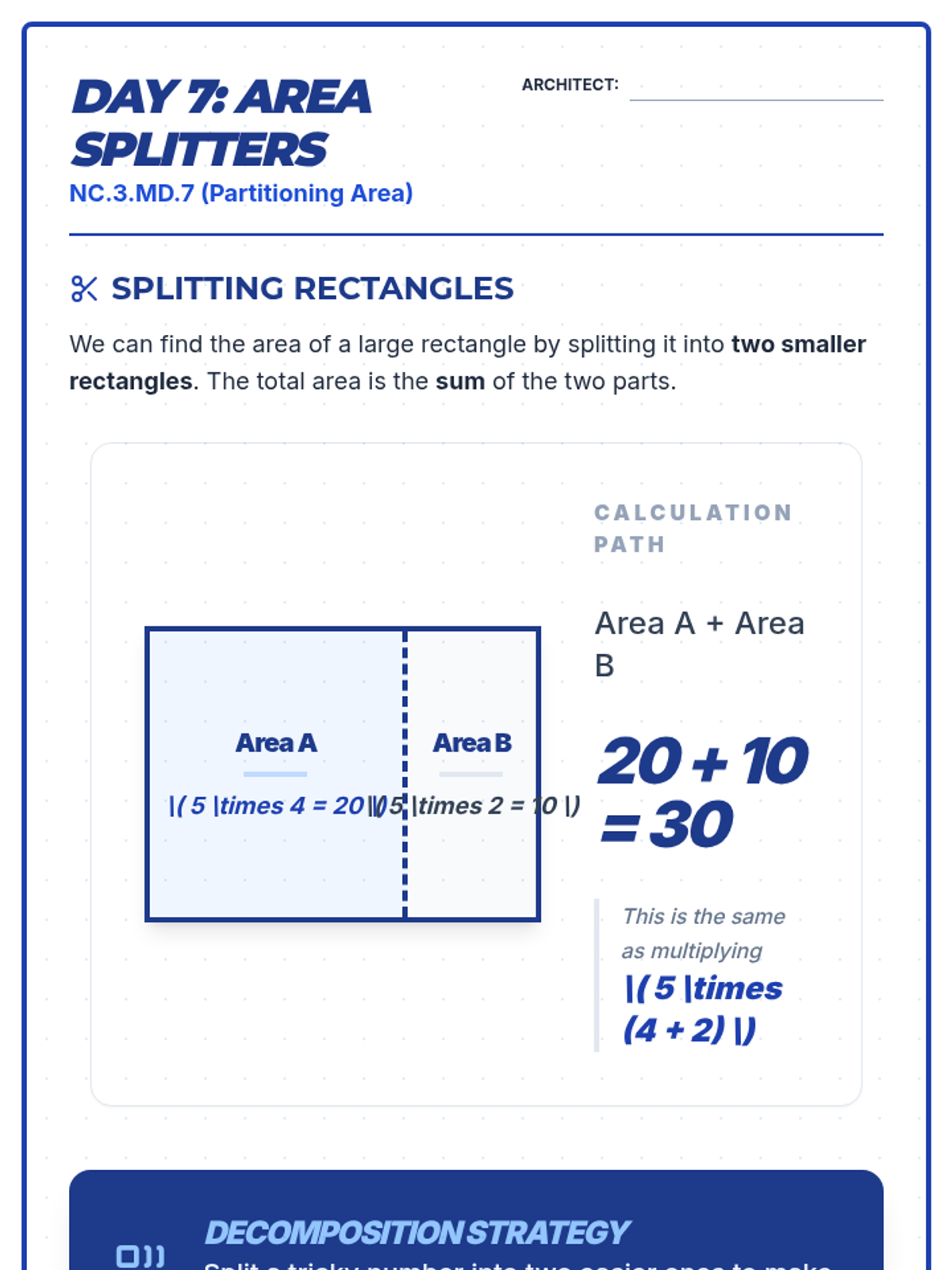
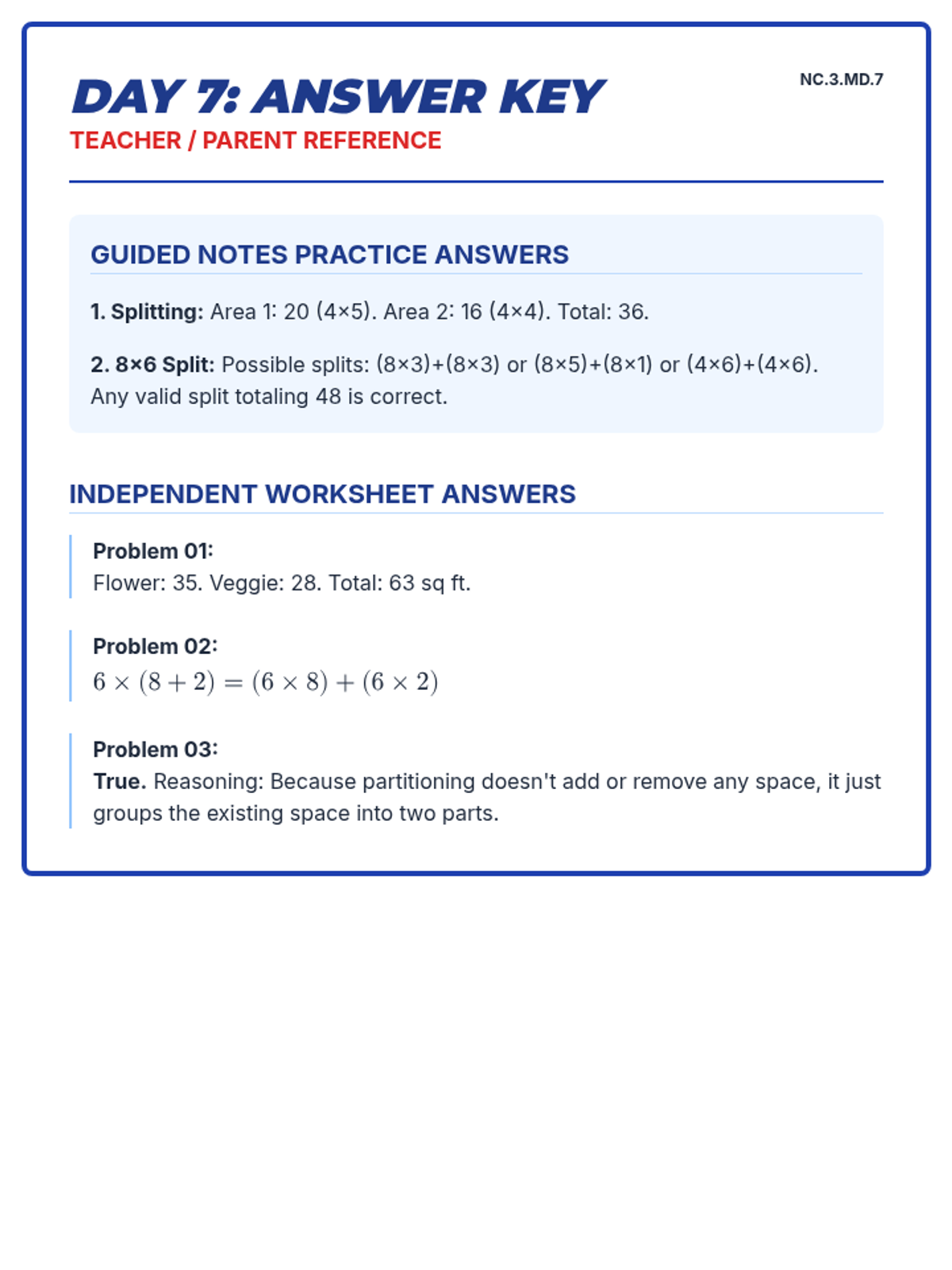
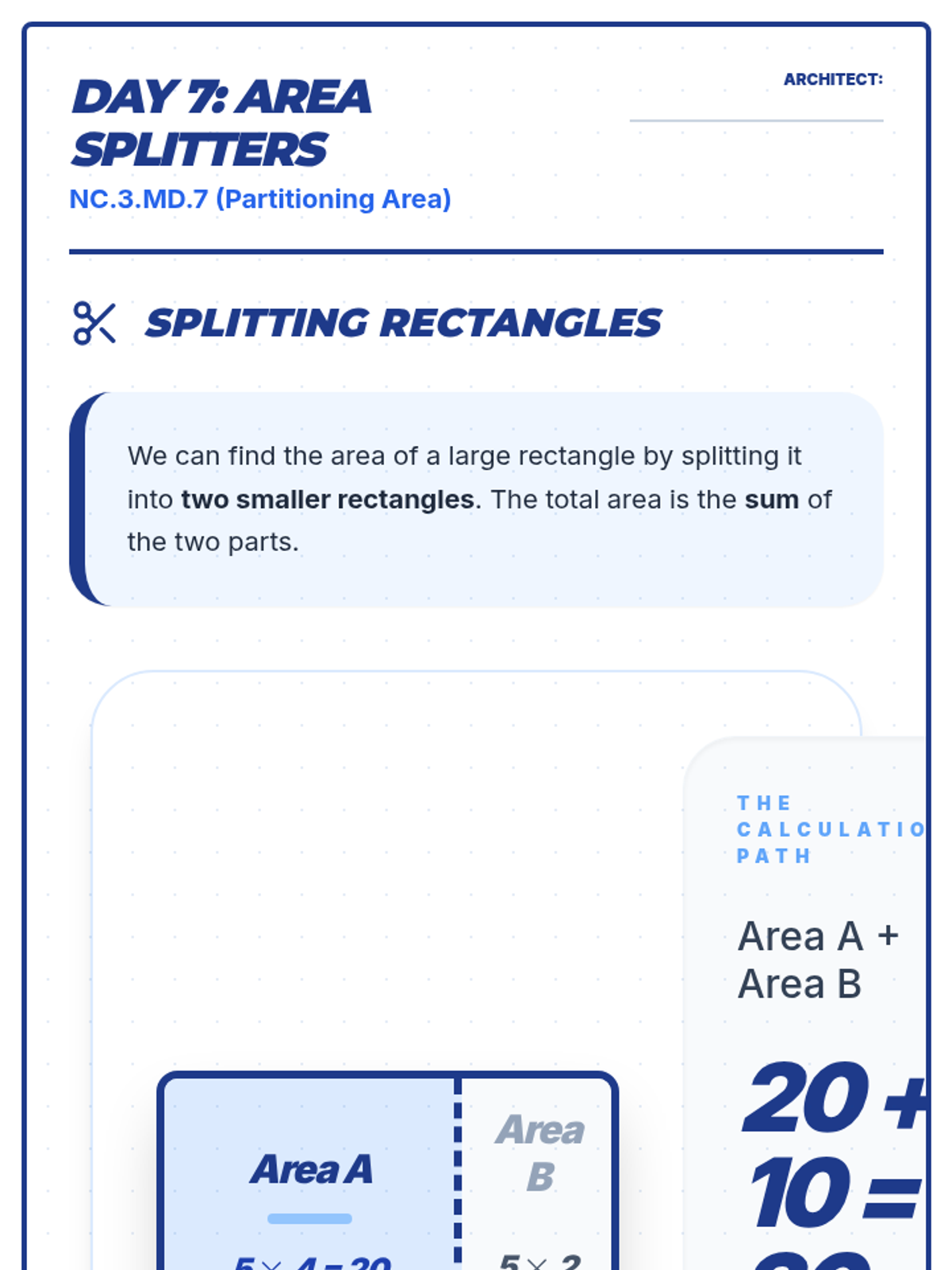
Uses partitioning of rectangles to illustrate the distributive property and additive nature of area.
Introduces area through tiling and relates it to multiplication of side lengths.
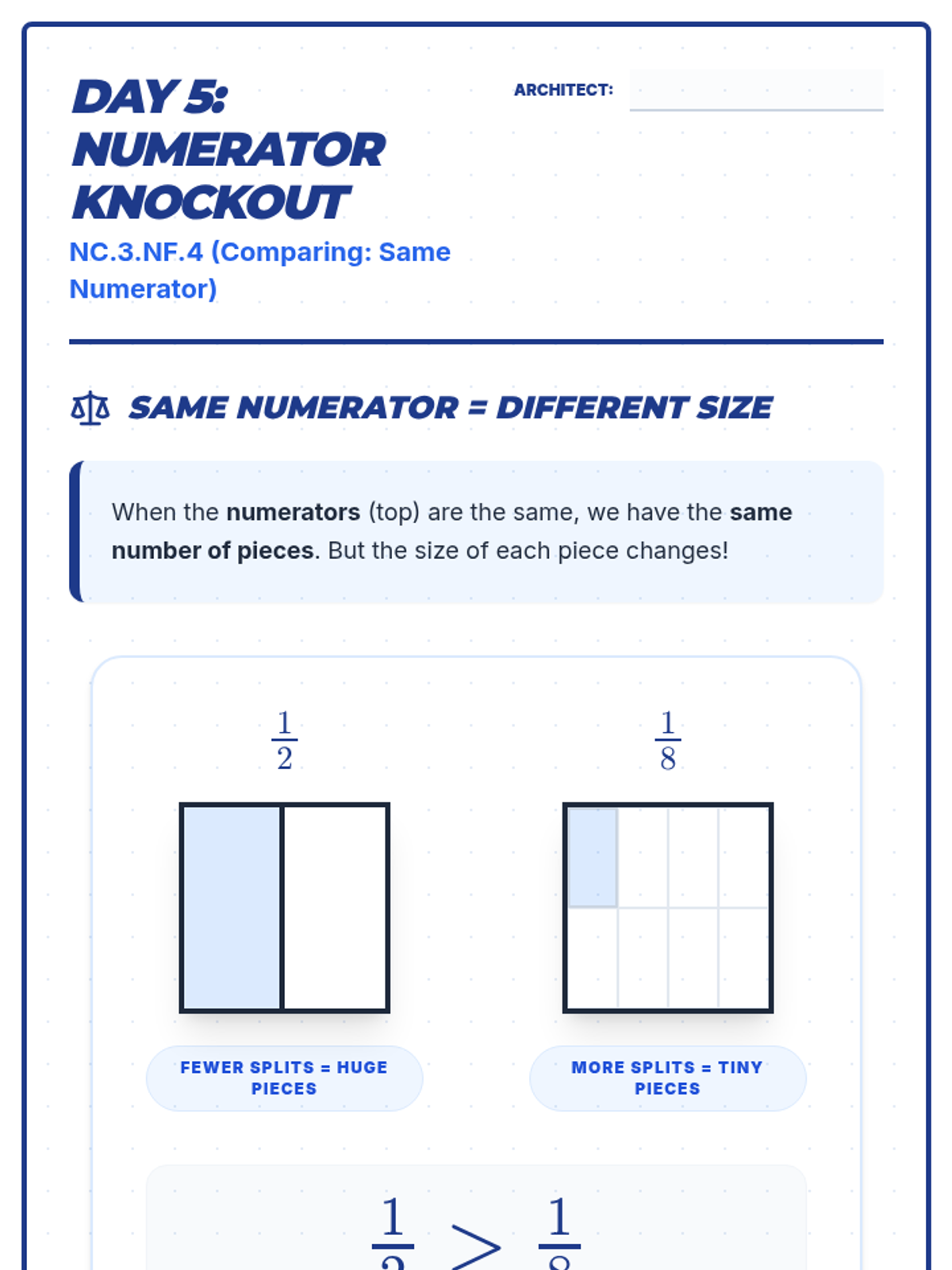
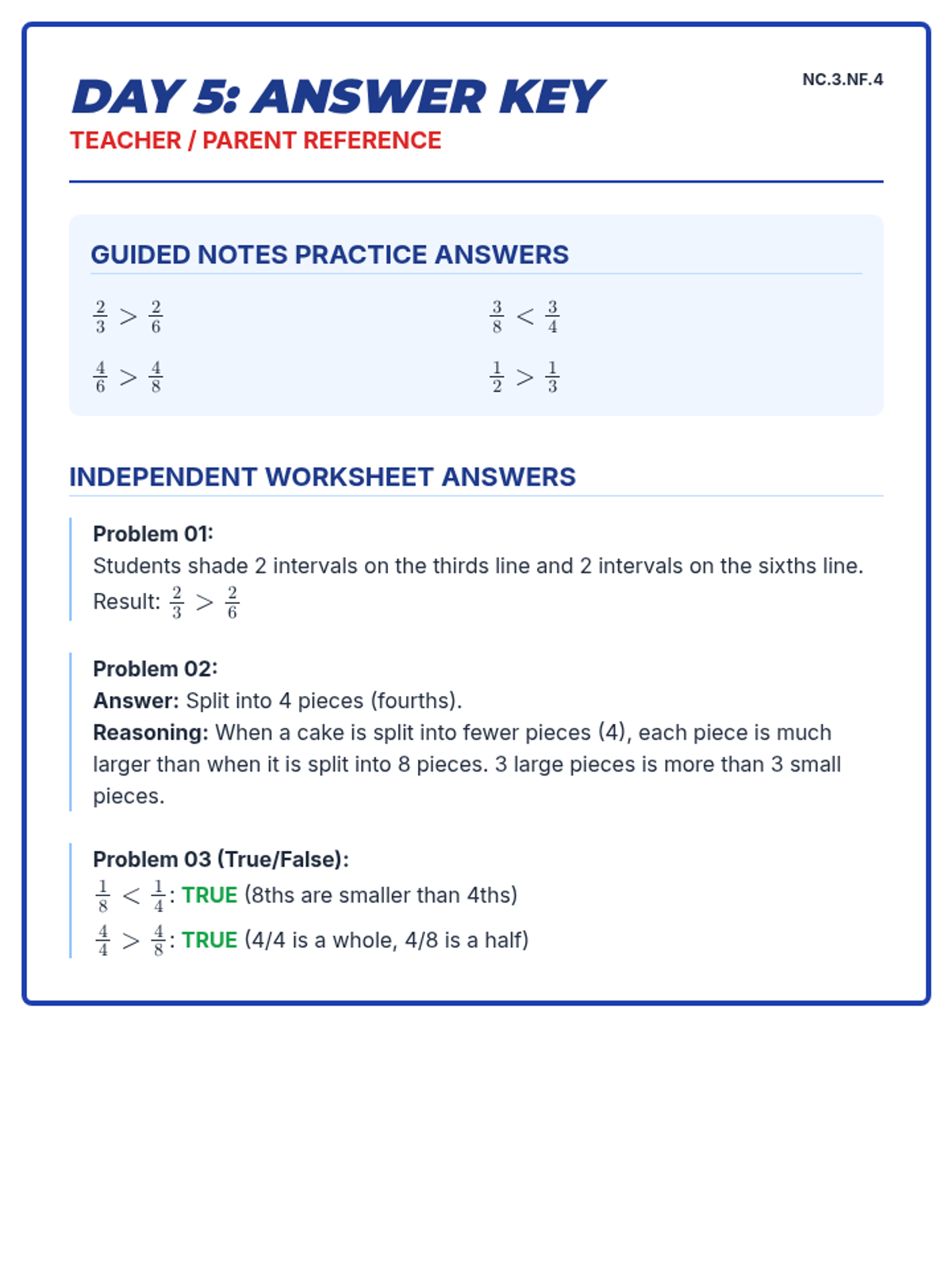
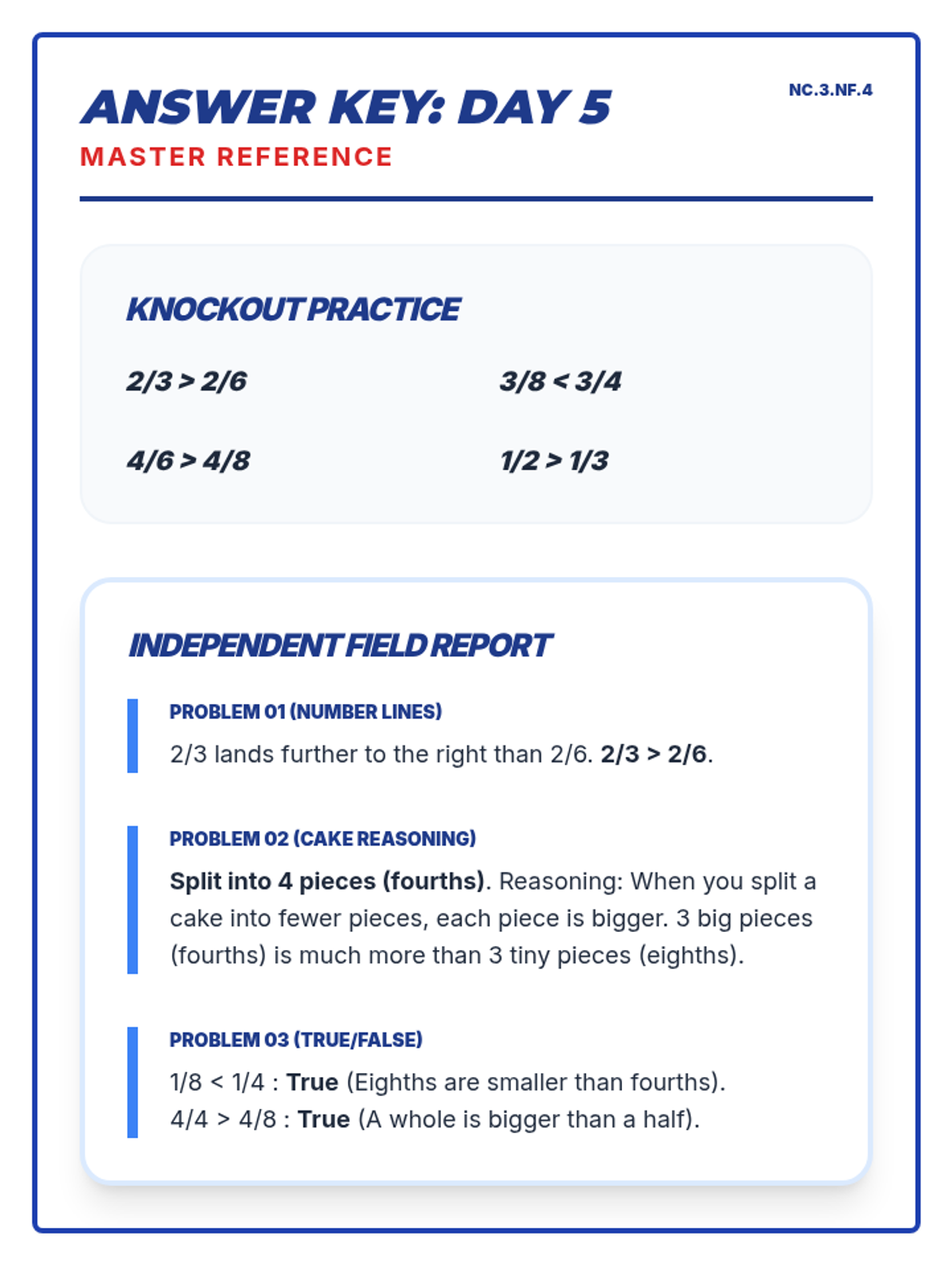
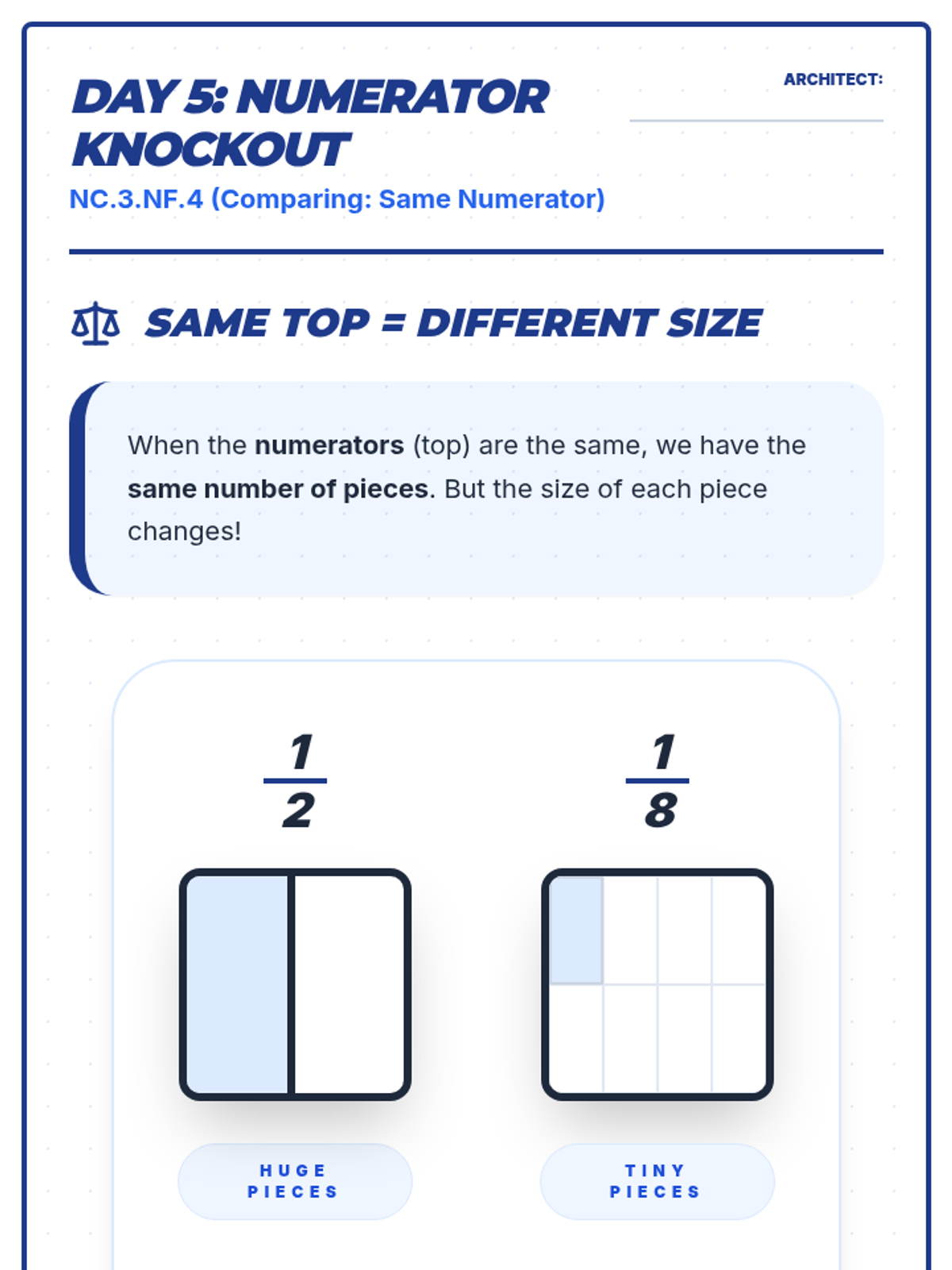
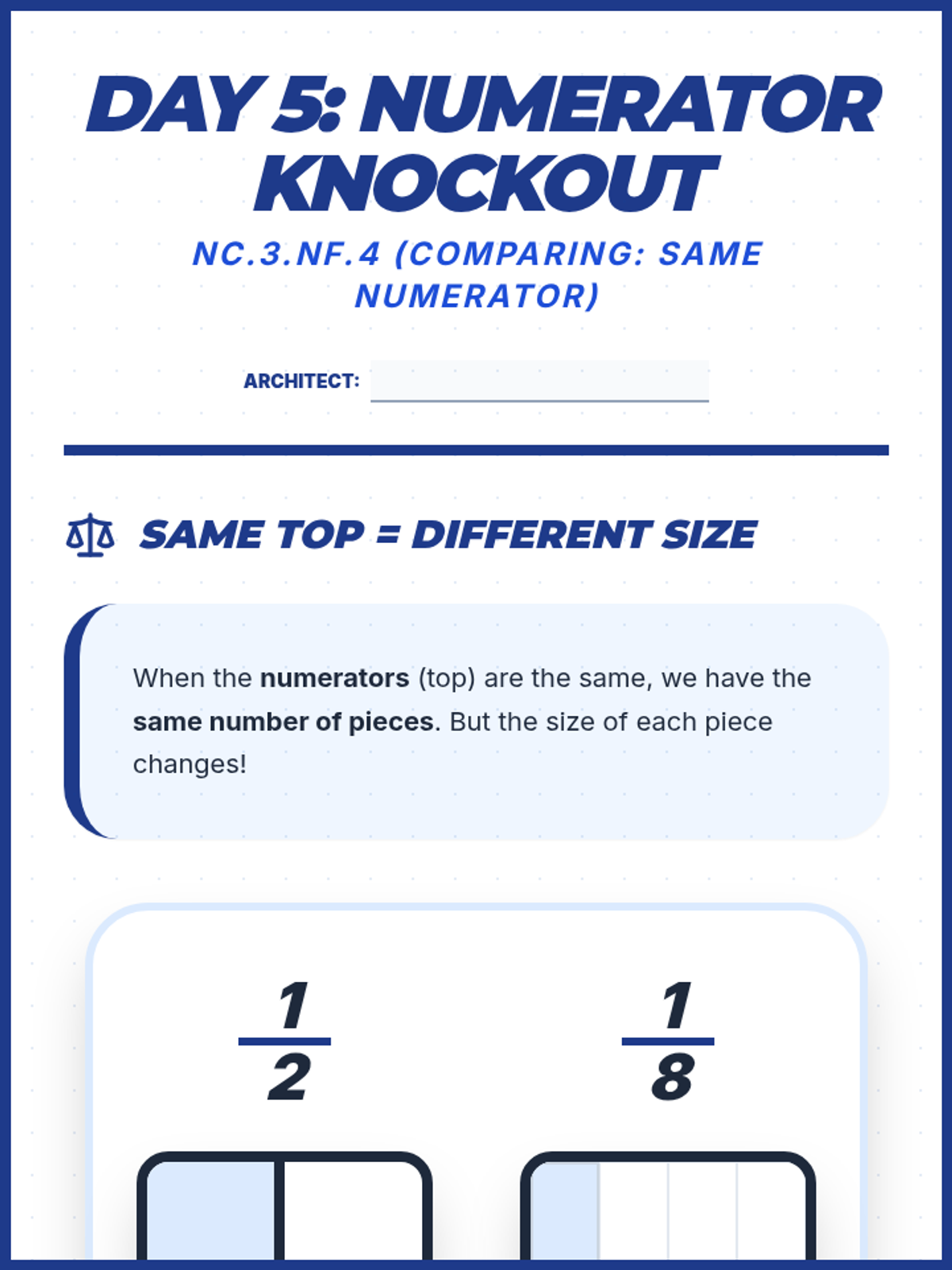
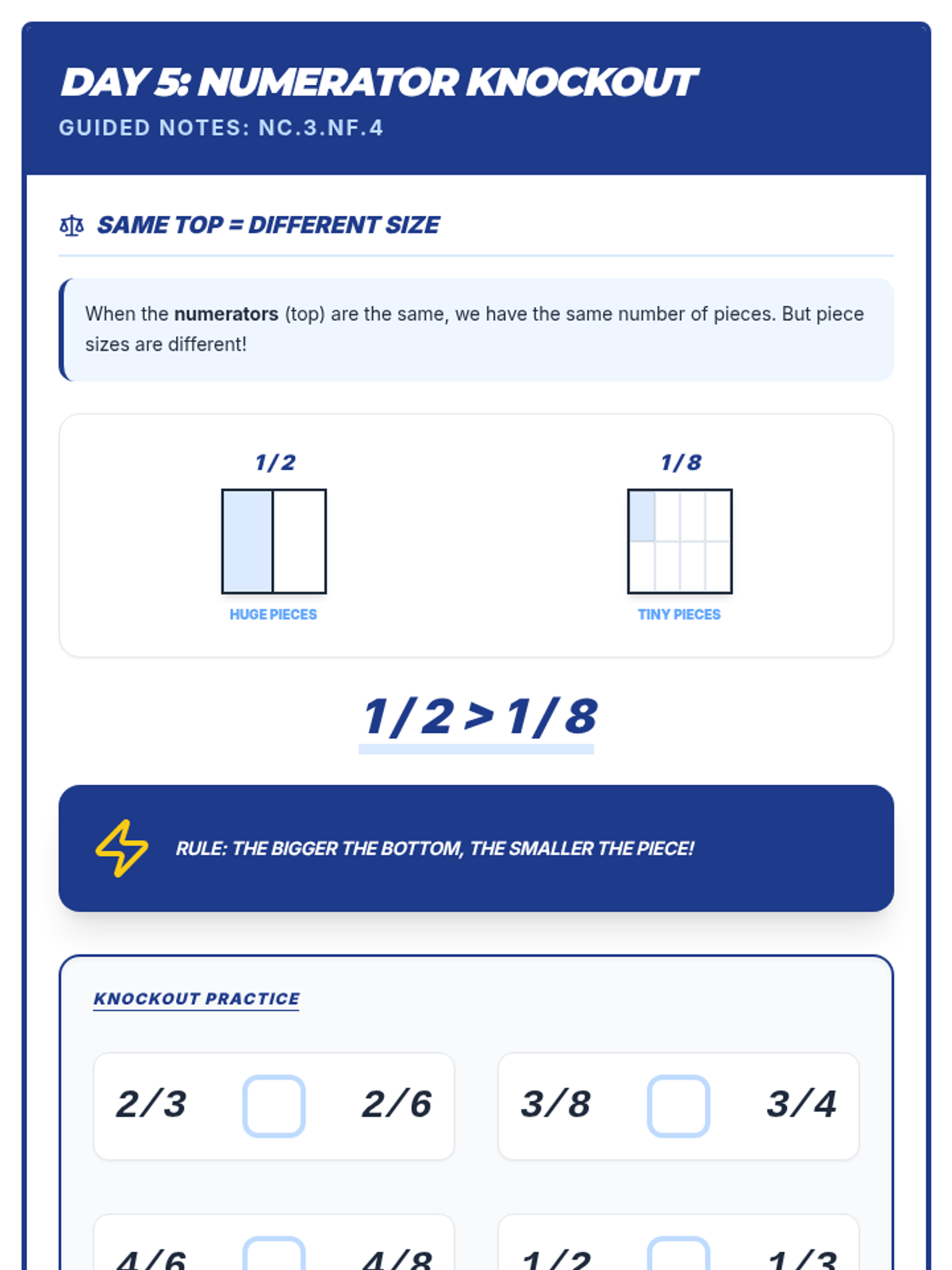
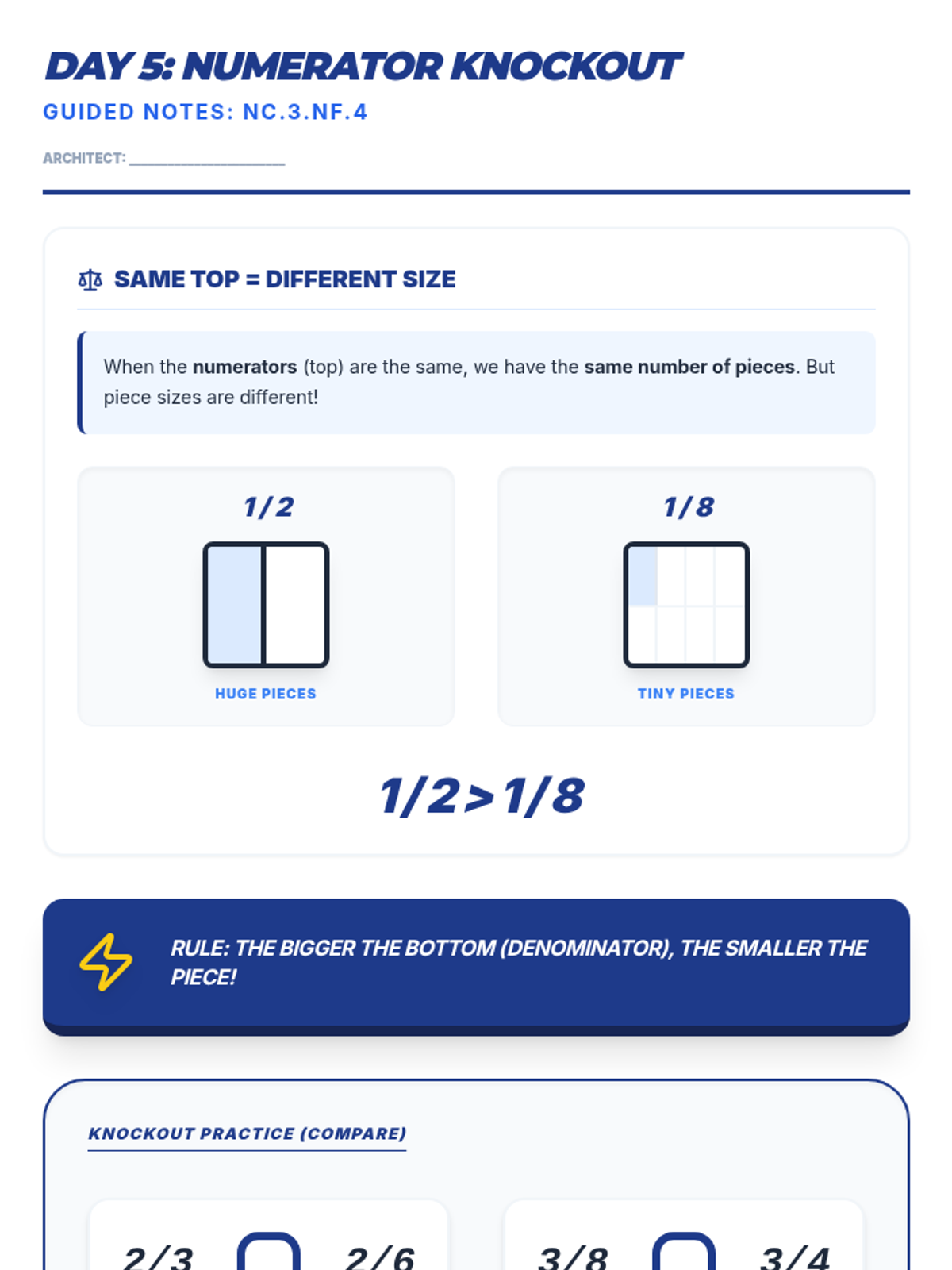
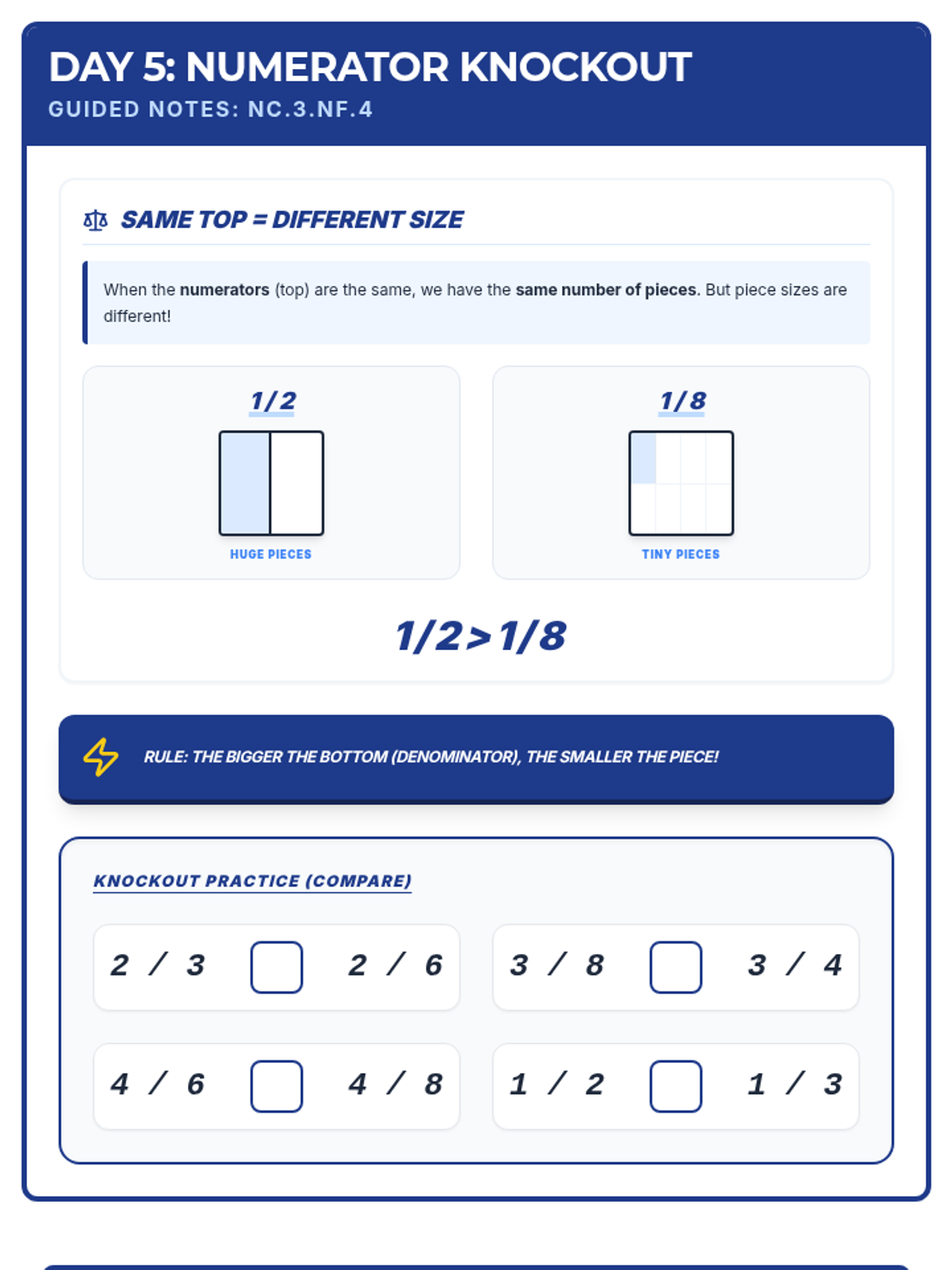
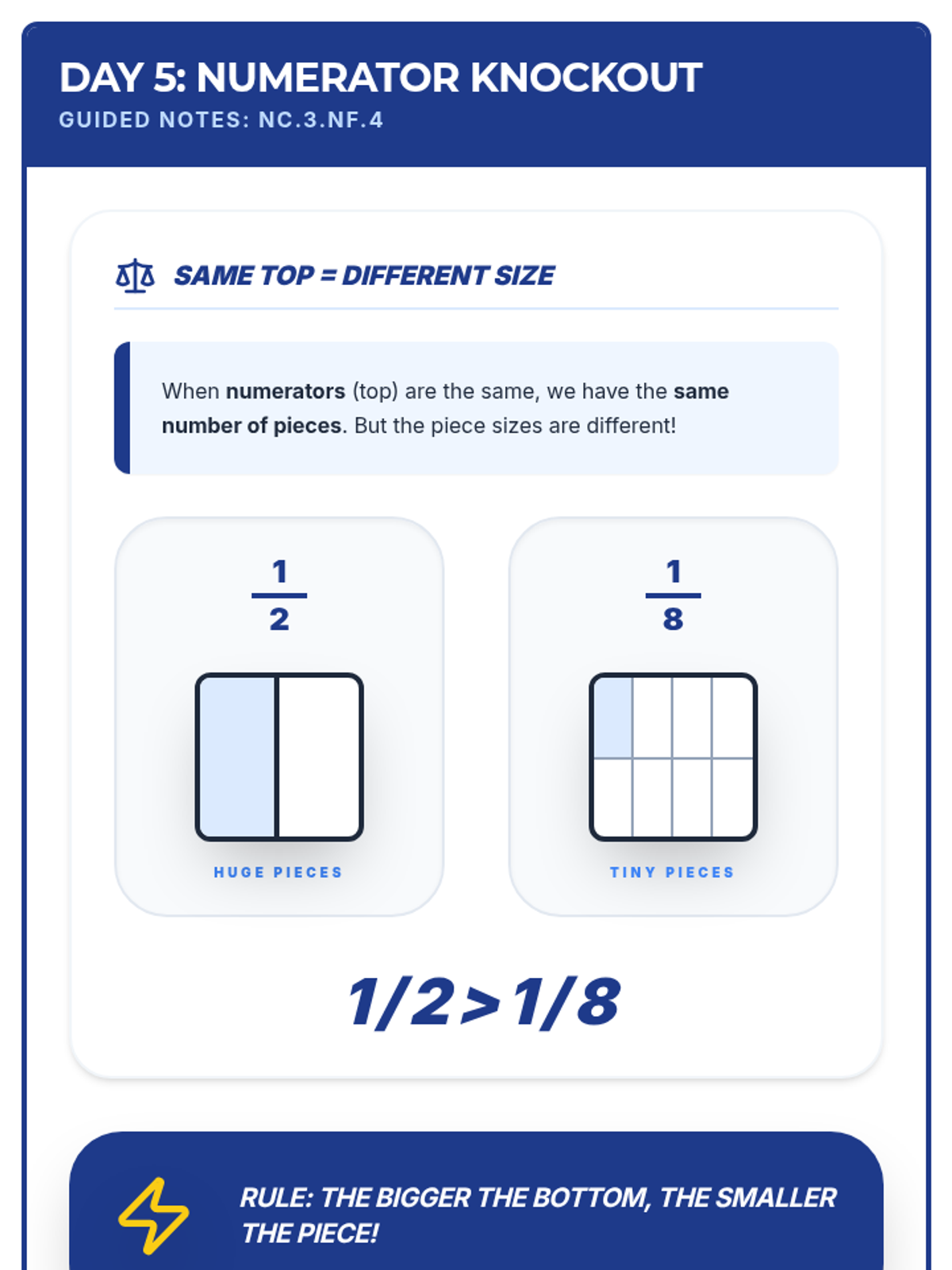
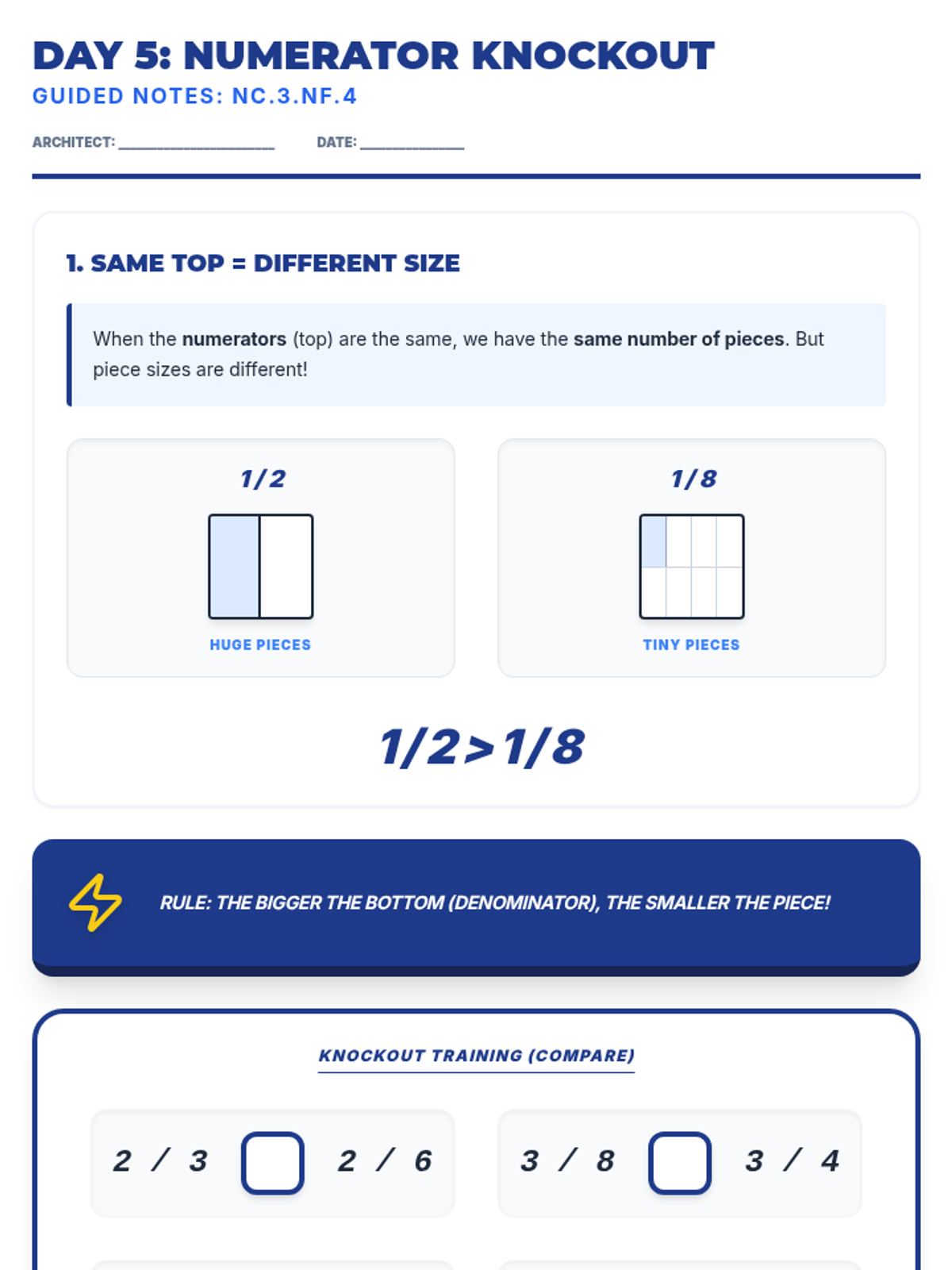
Focuses on comparing fractions with the same numerator by reasoning about the size of the denominator.
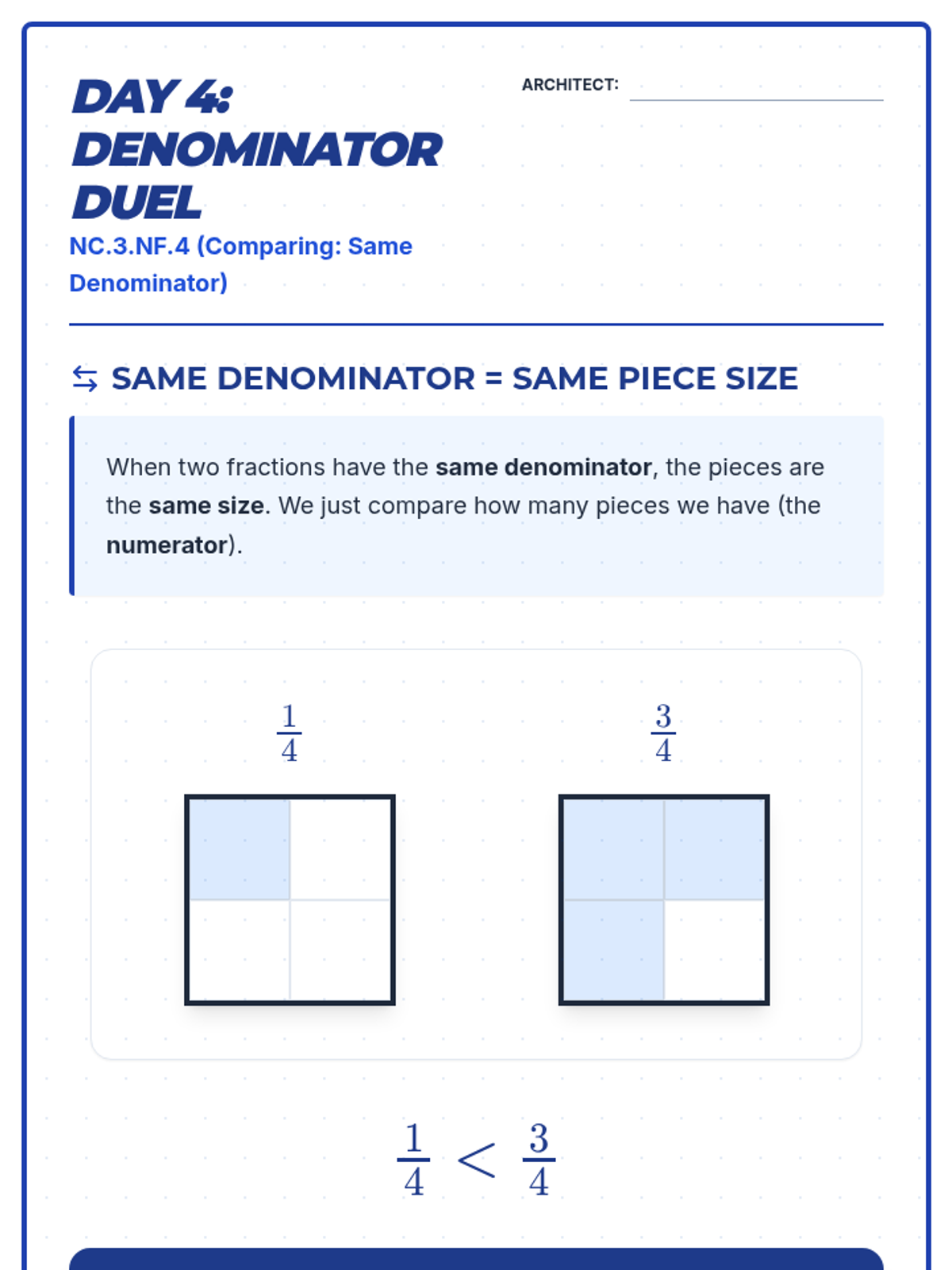
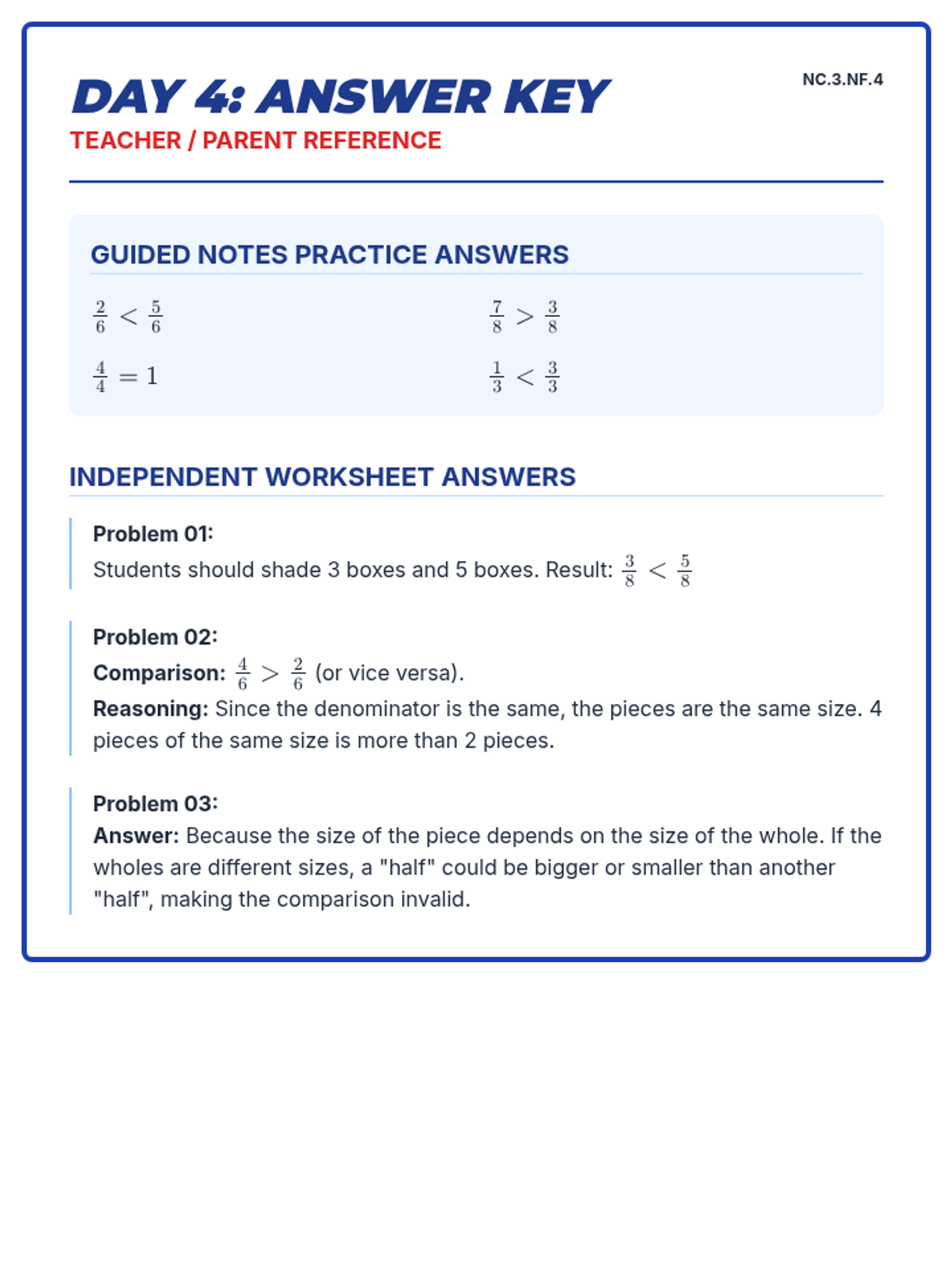
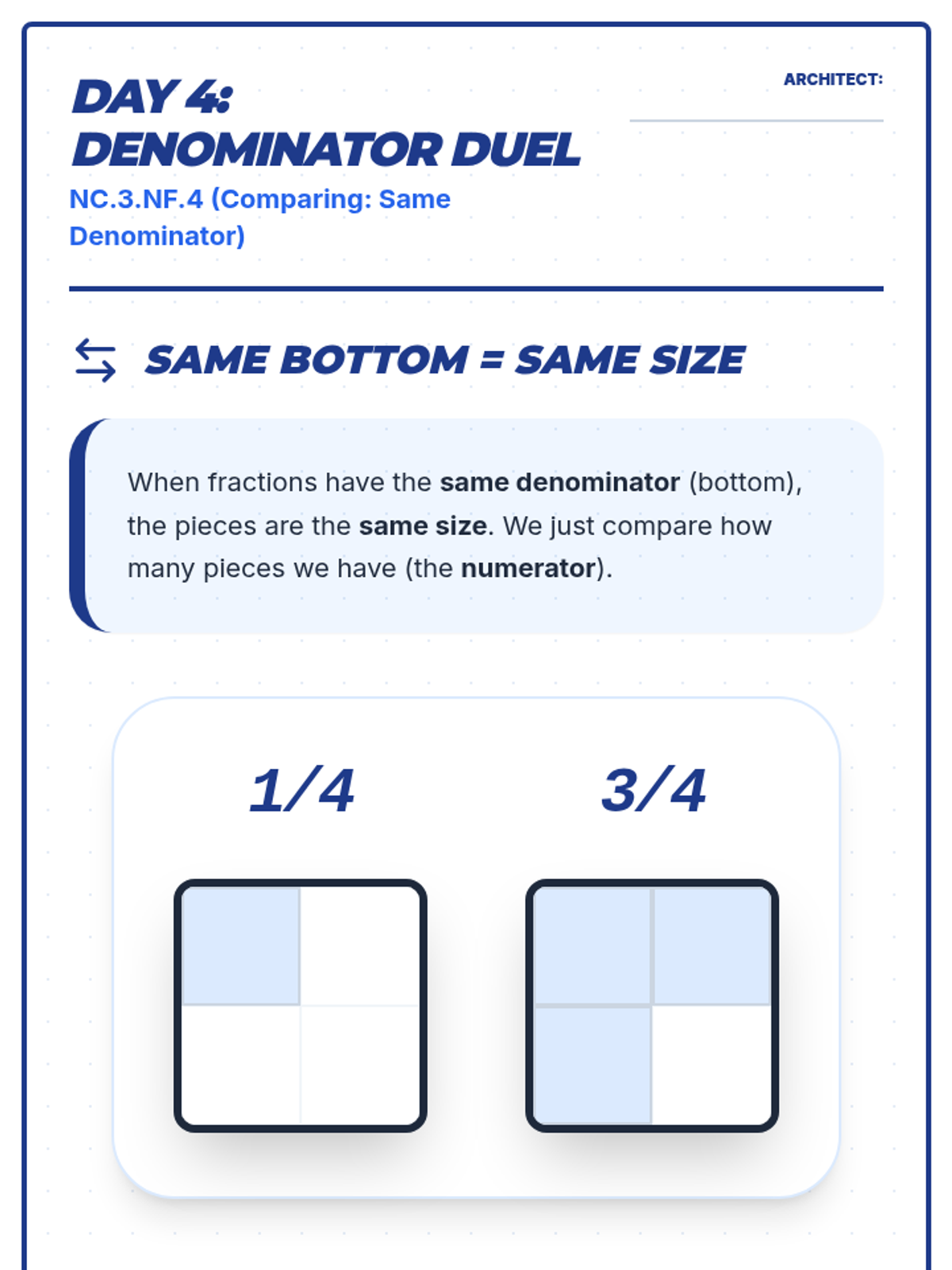
Teaches comparing fractions with the same denominator using area and length models.
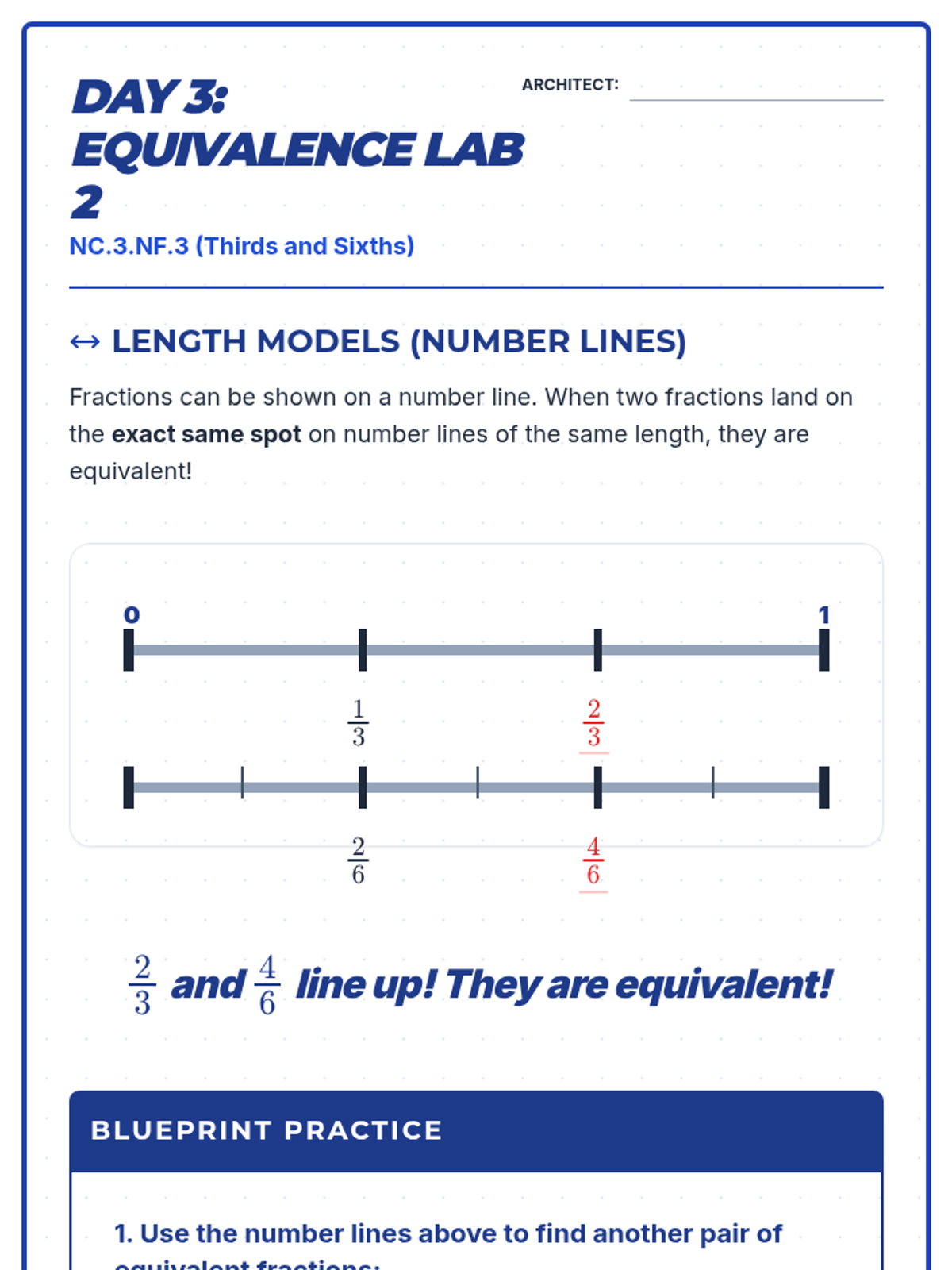
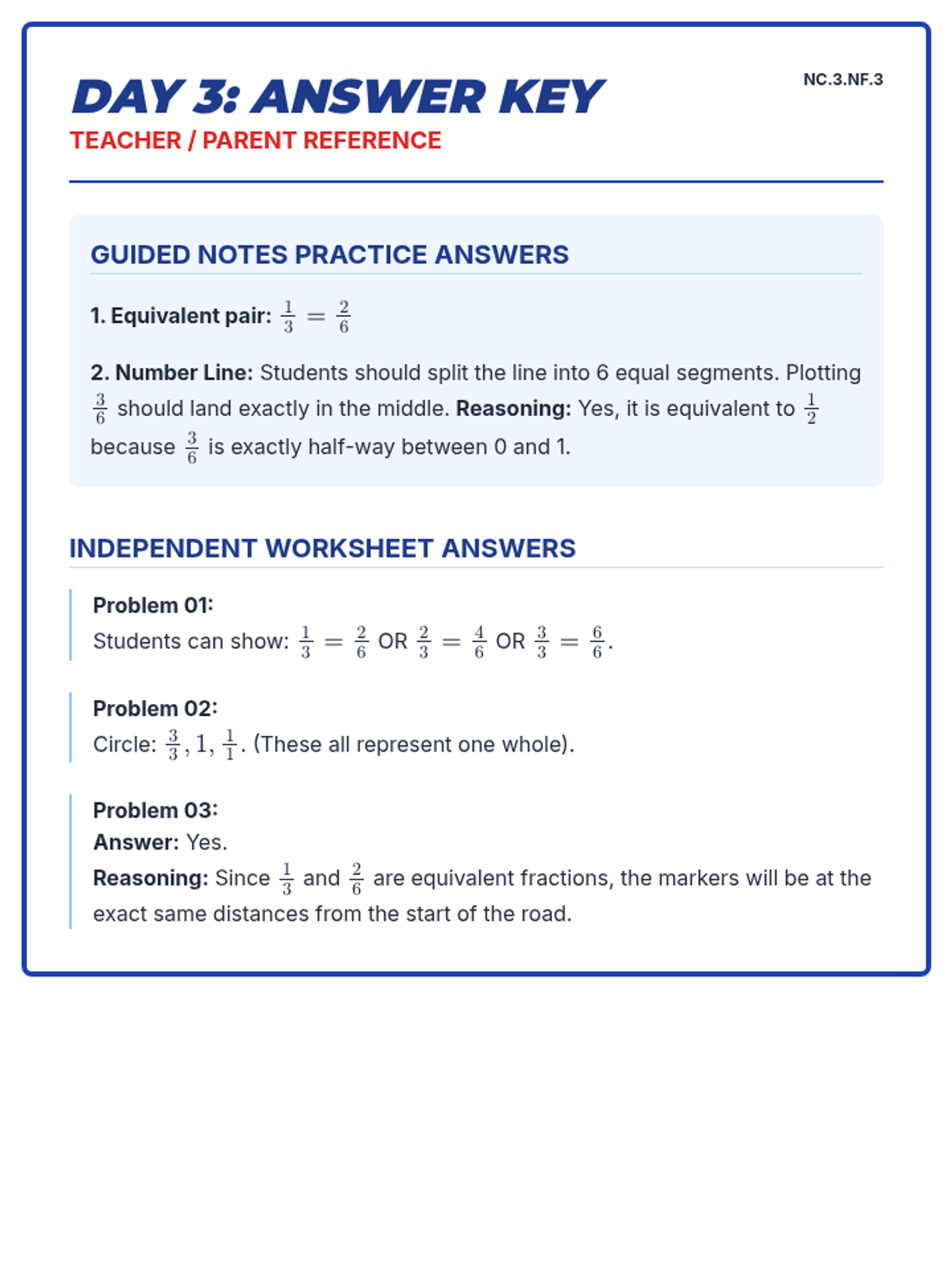
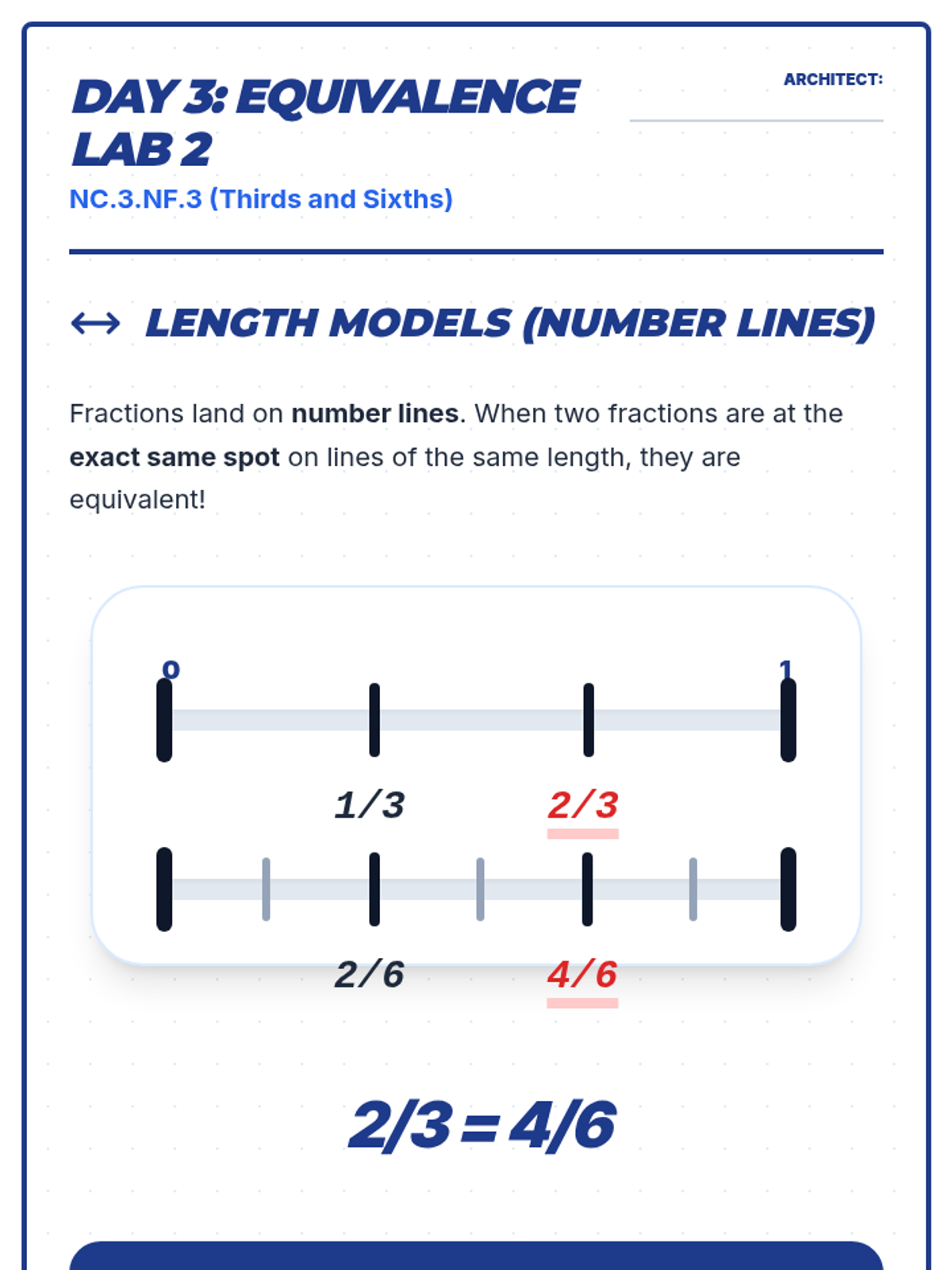
Focuses on thirds and sixths using length models (number lines) to find equivalent fractions.
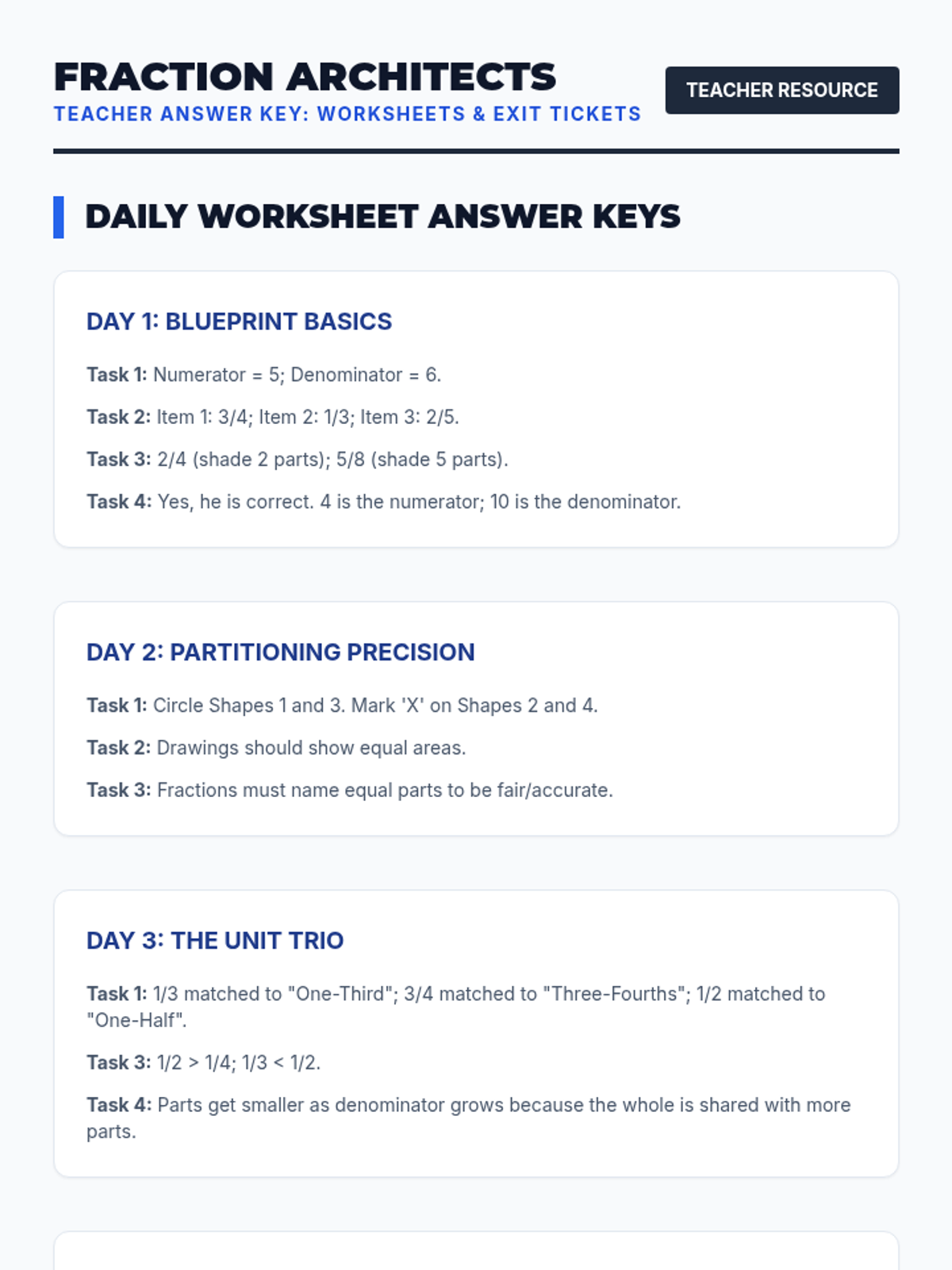
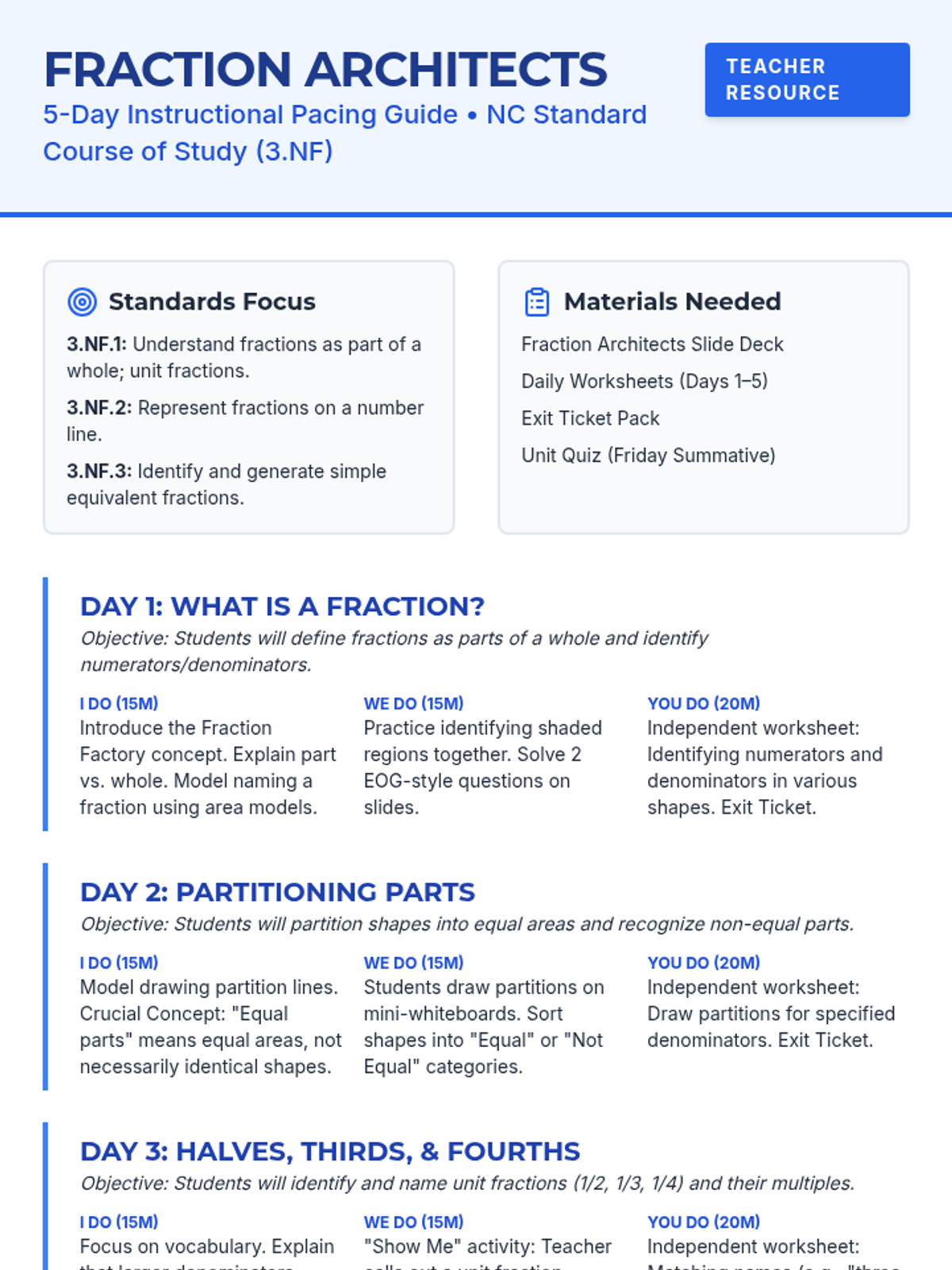
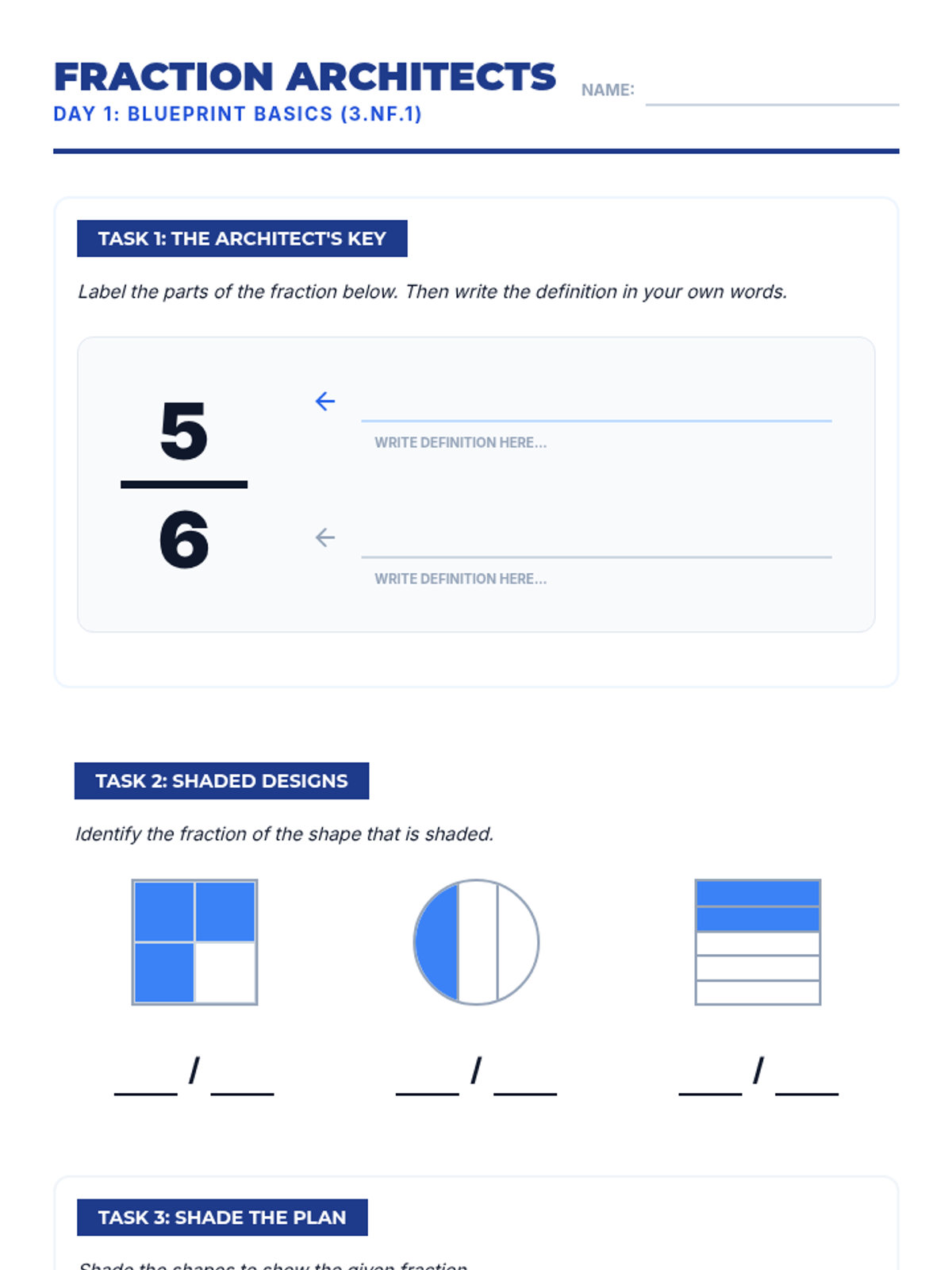
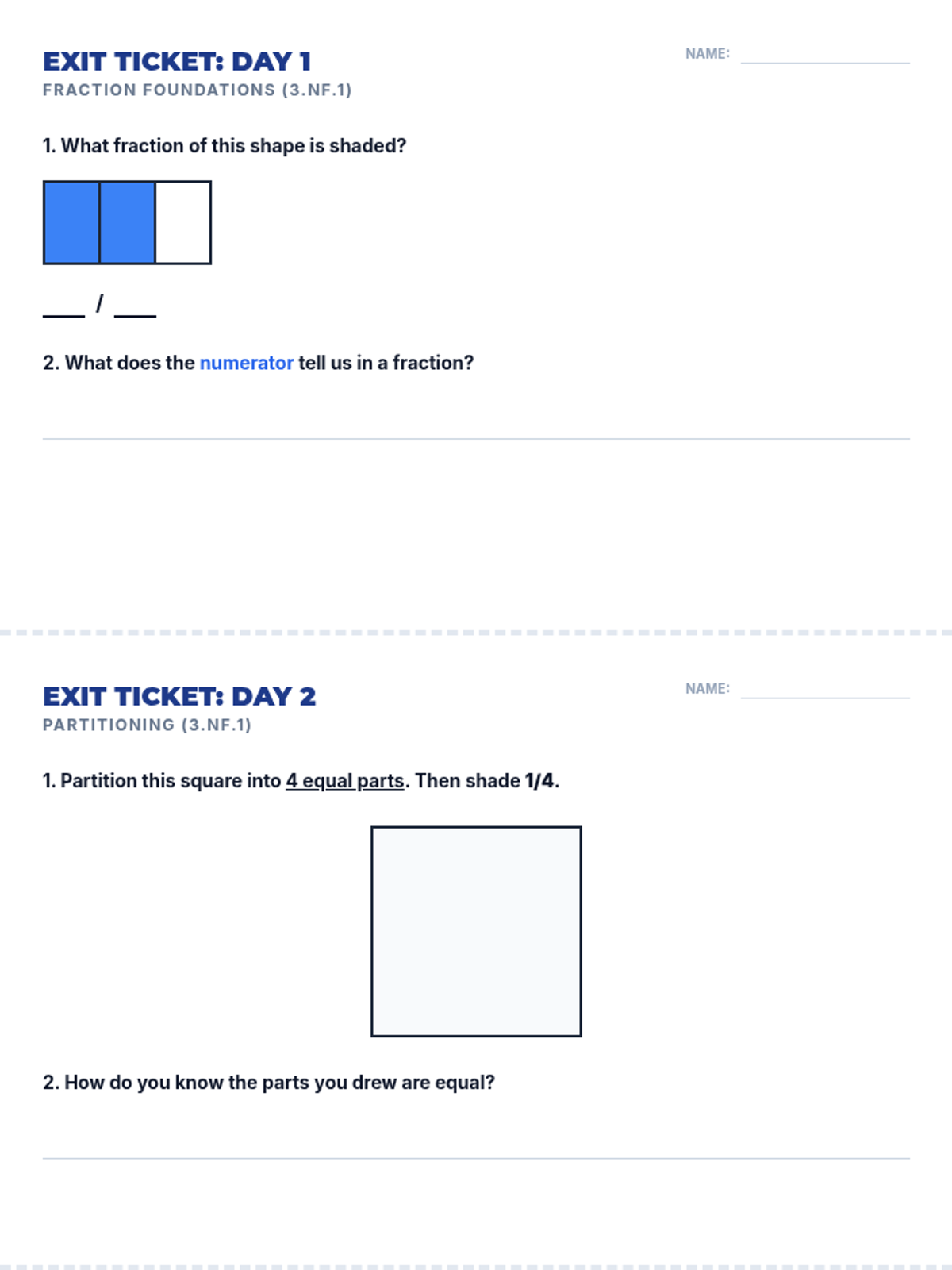
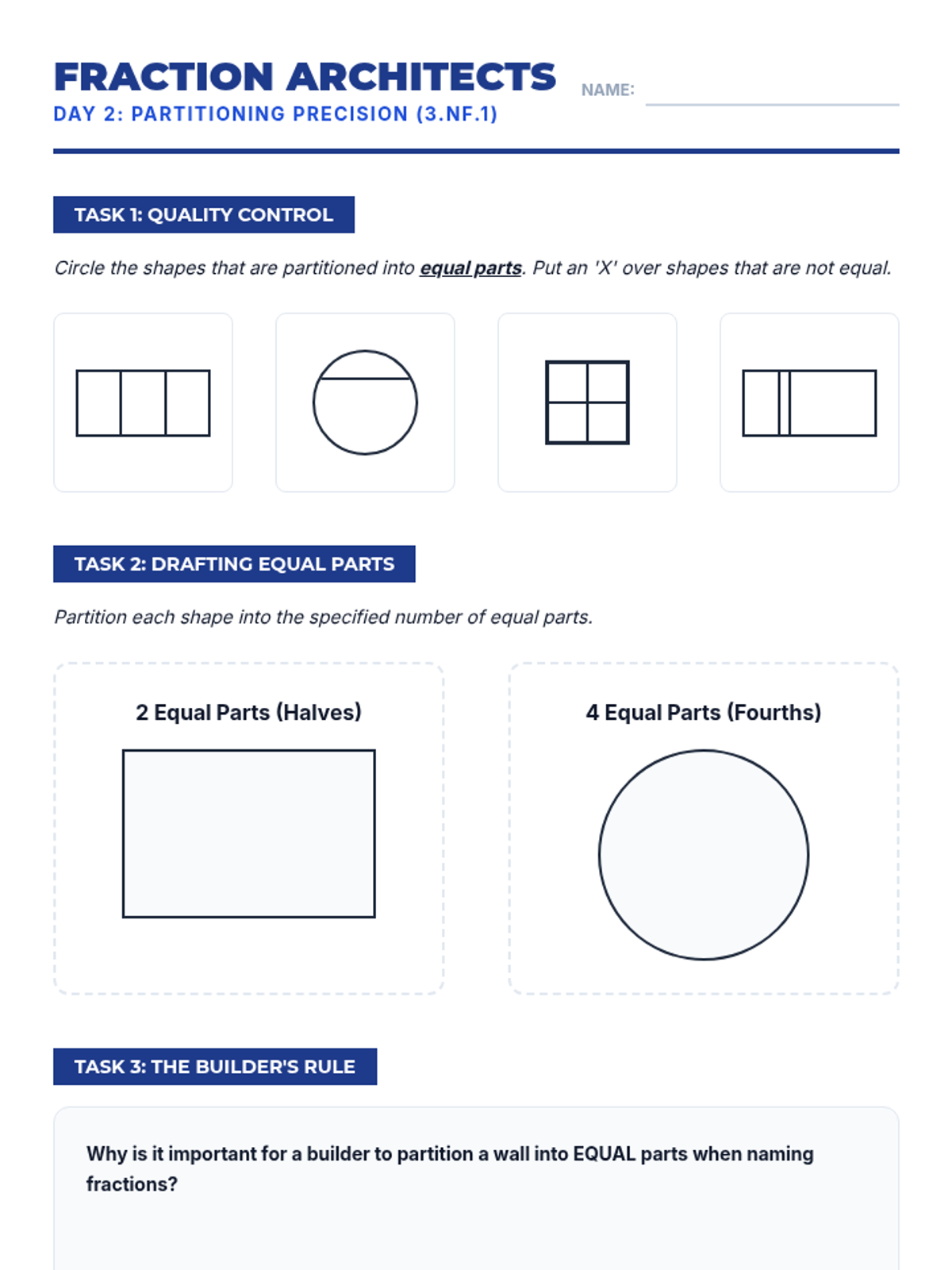
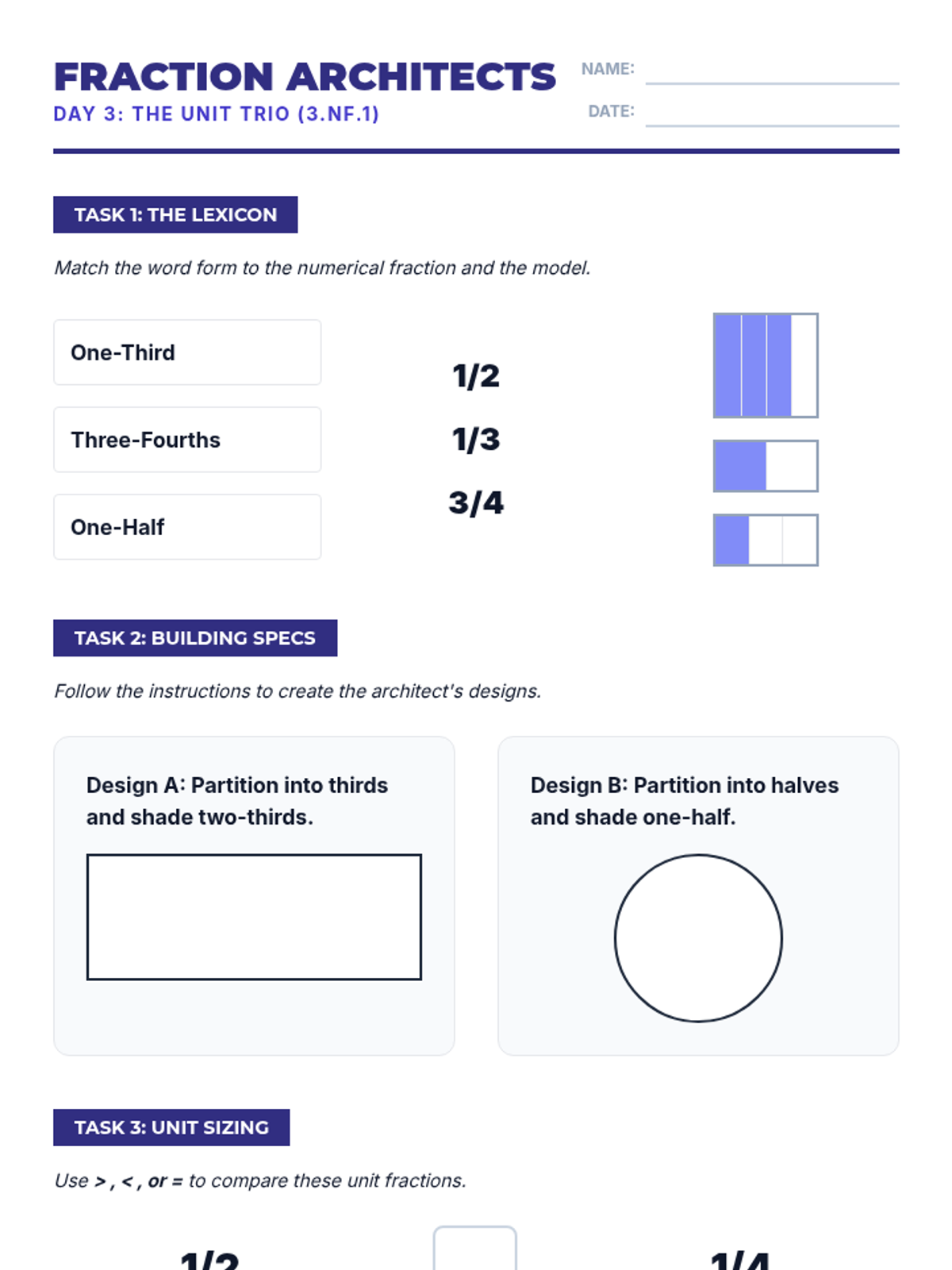
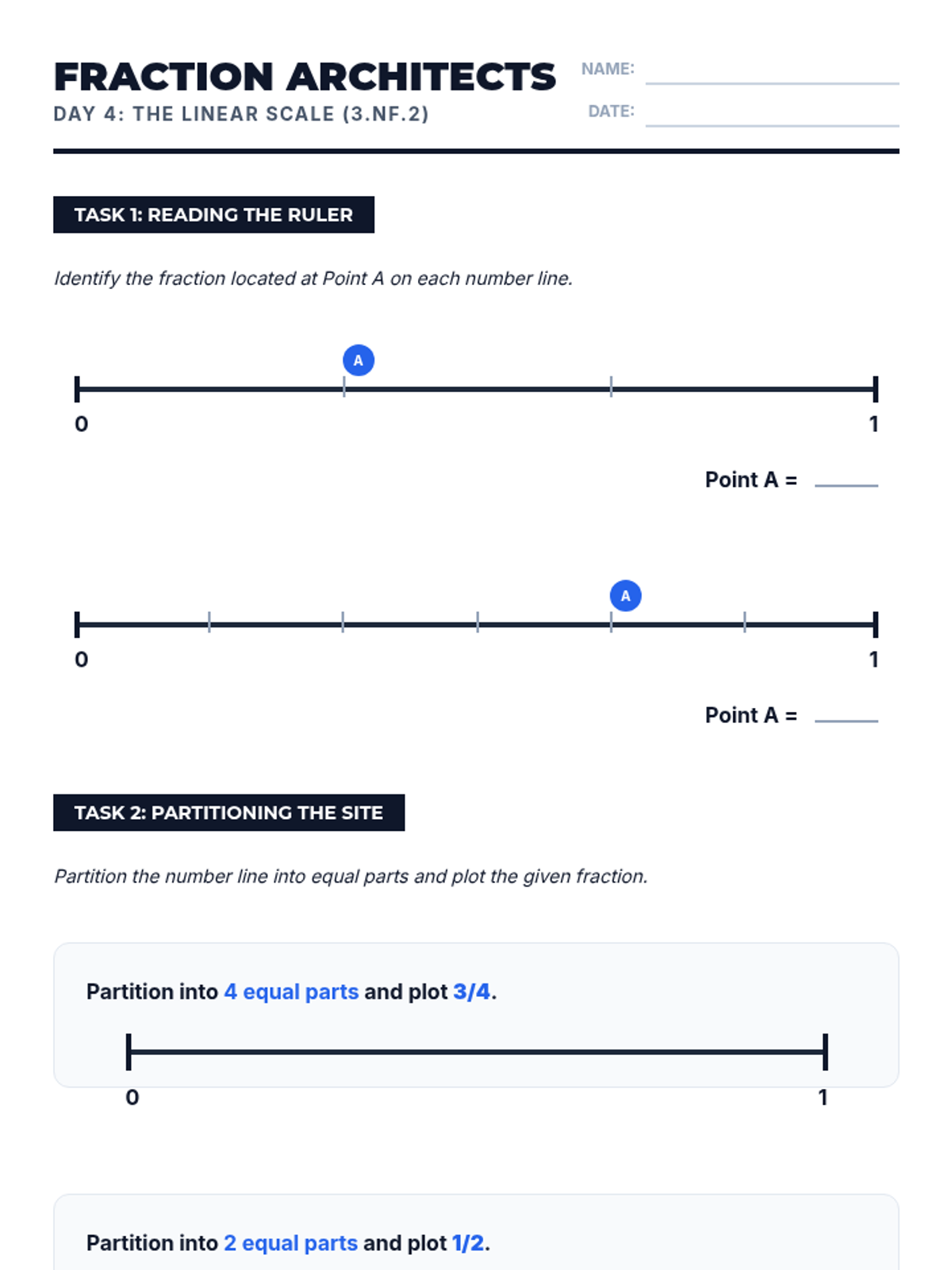
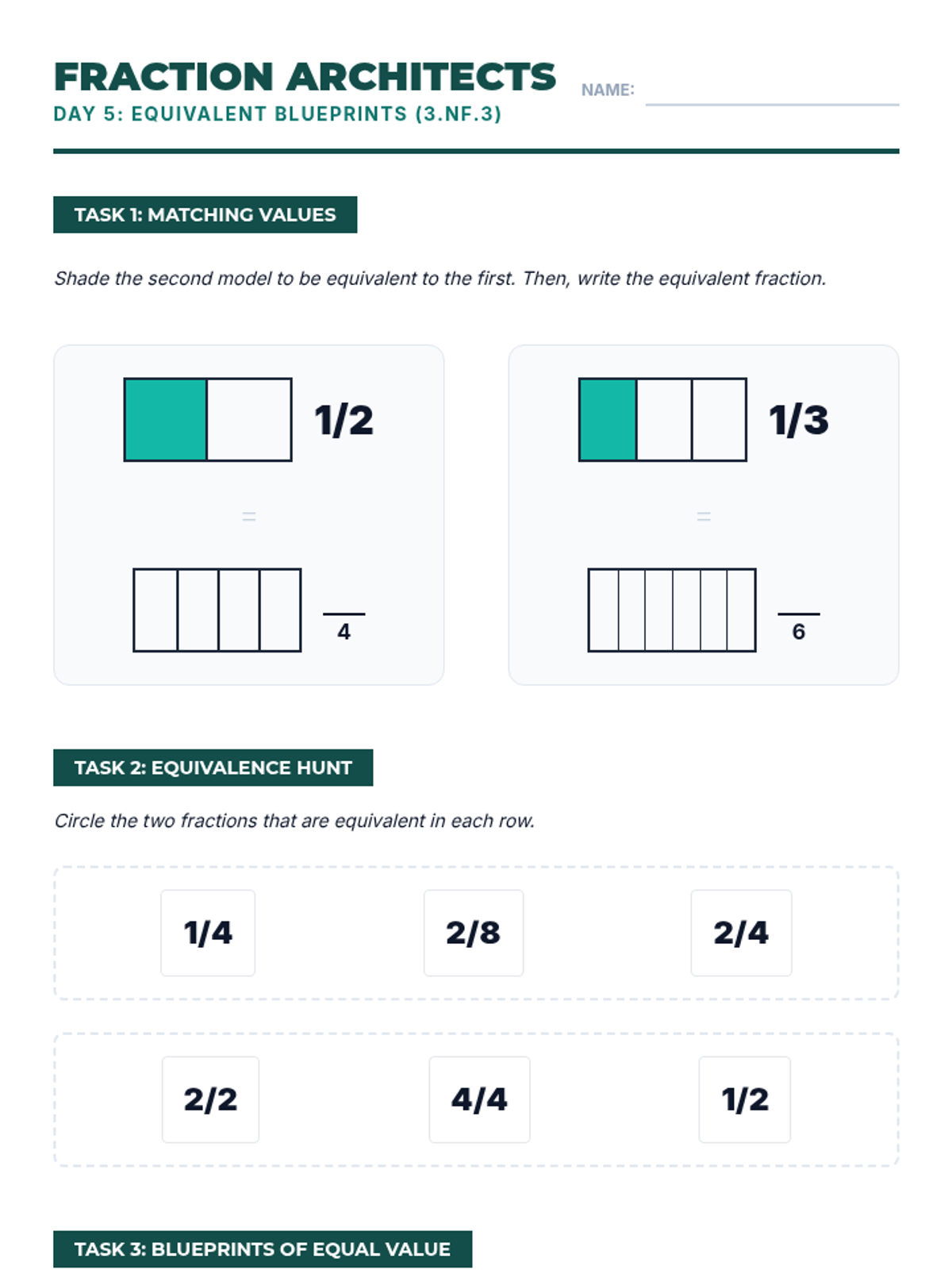
A comprehensive 5-day lesson covering the basics of fractions, partitioning shapes, unit fractions, number lines, and equivalent fractions using the I Do, We Do, You Do model.
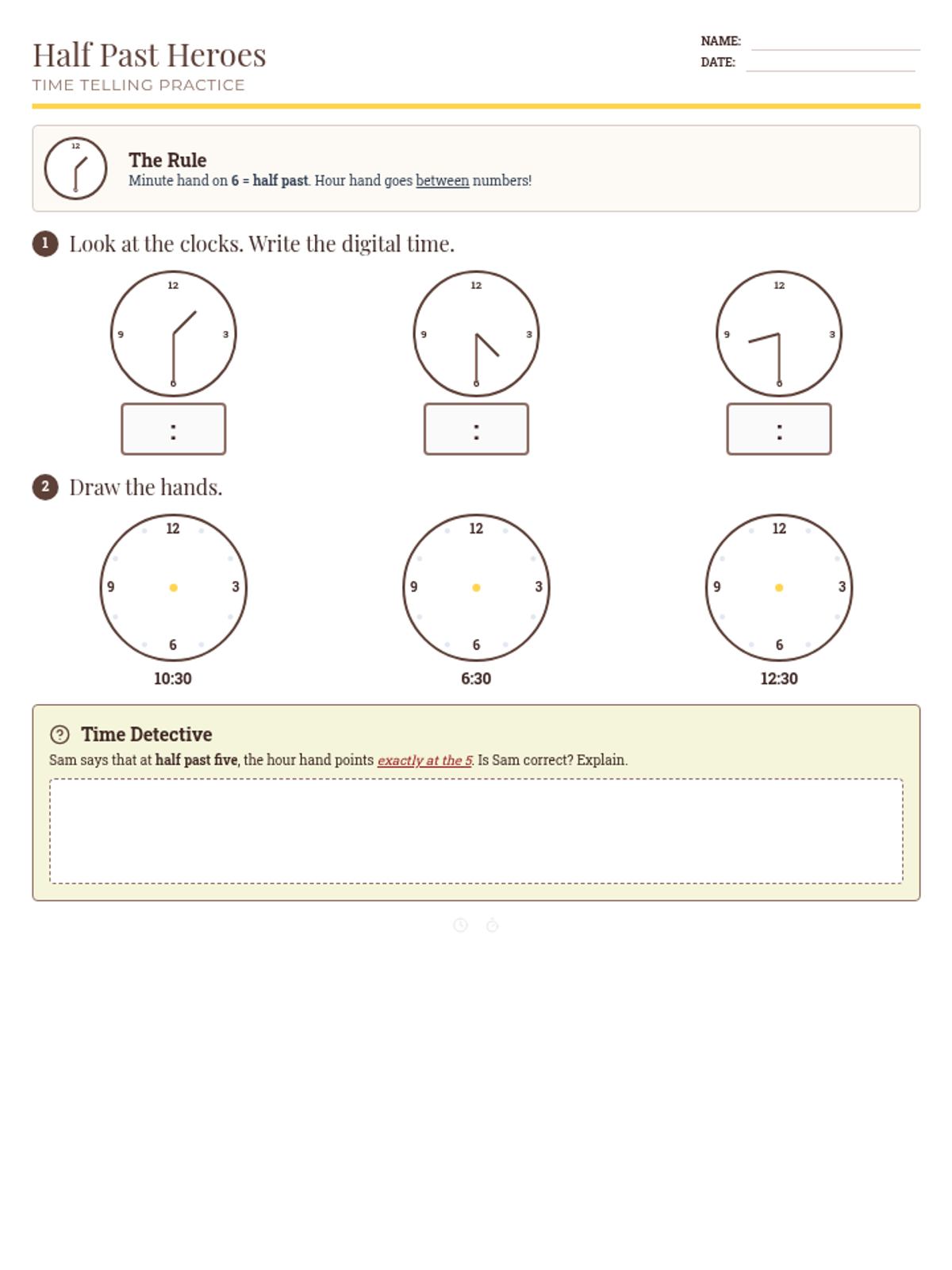
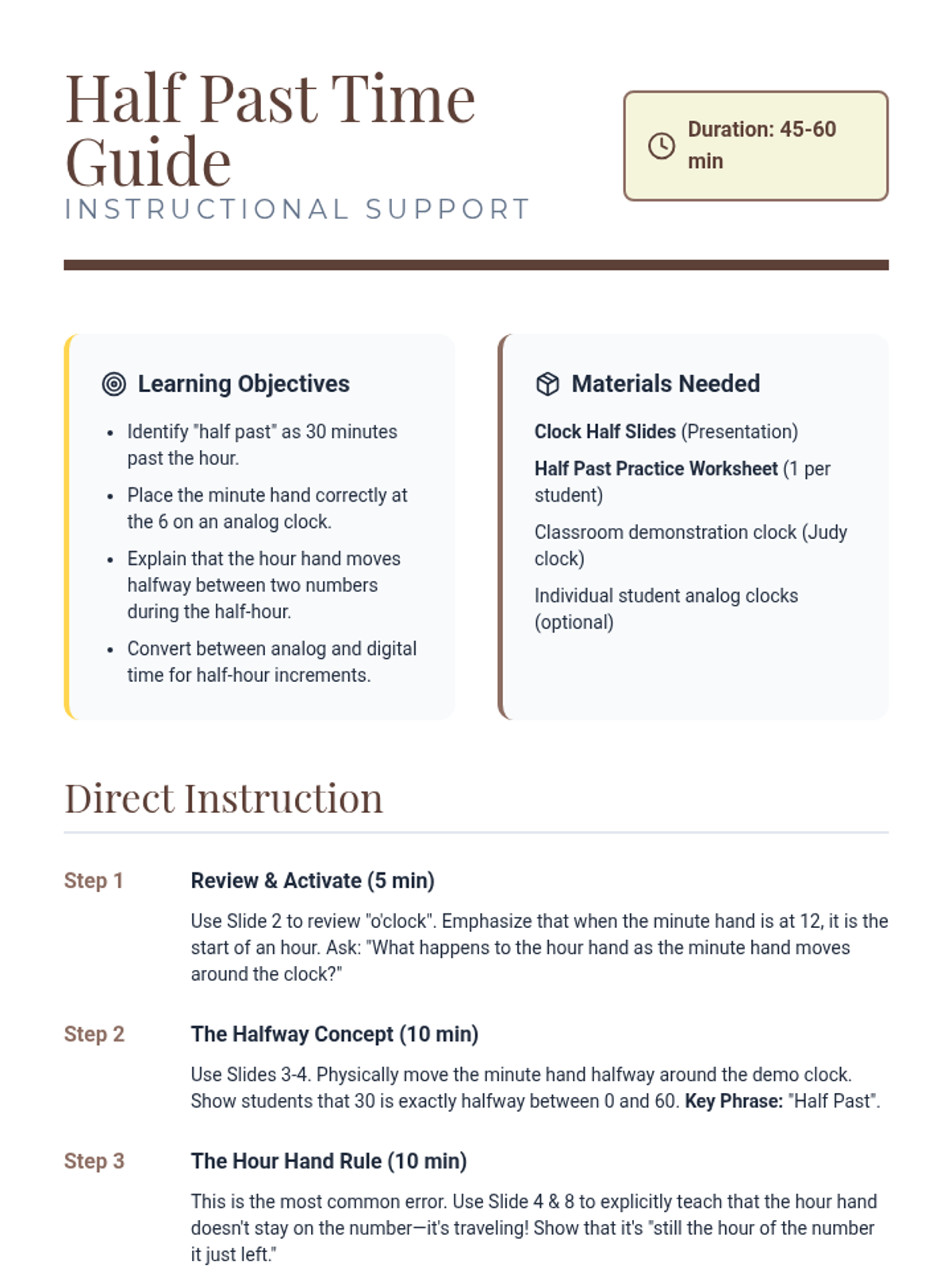
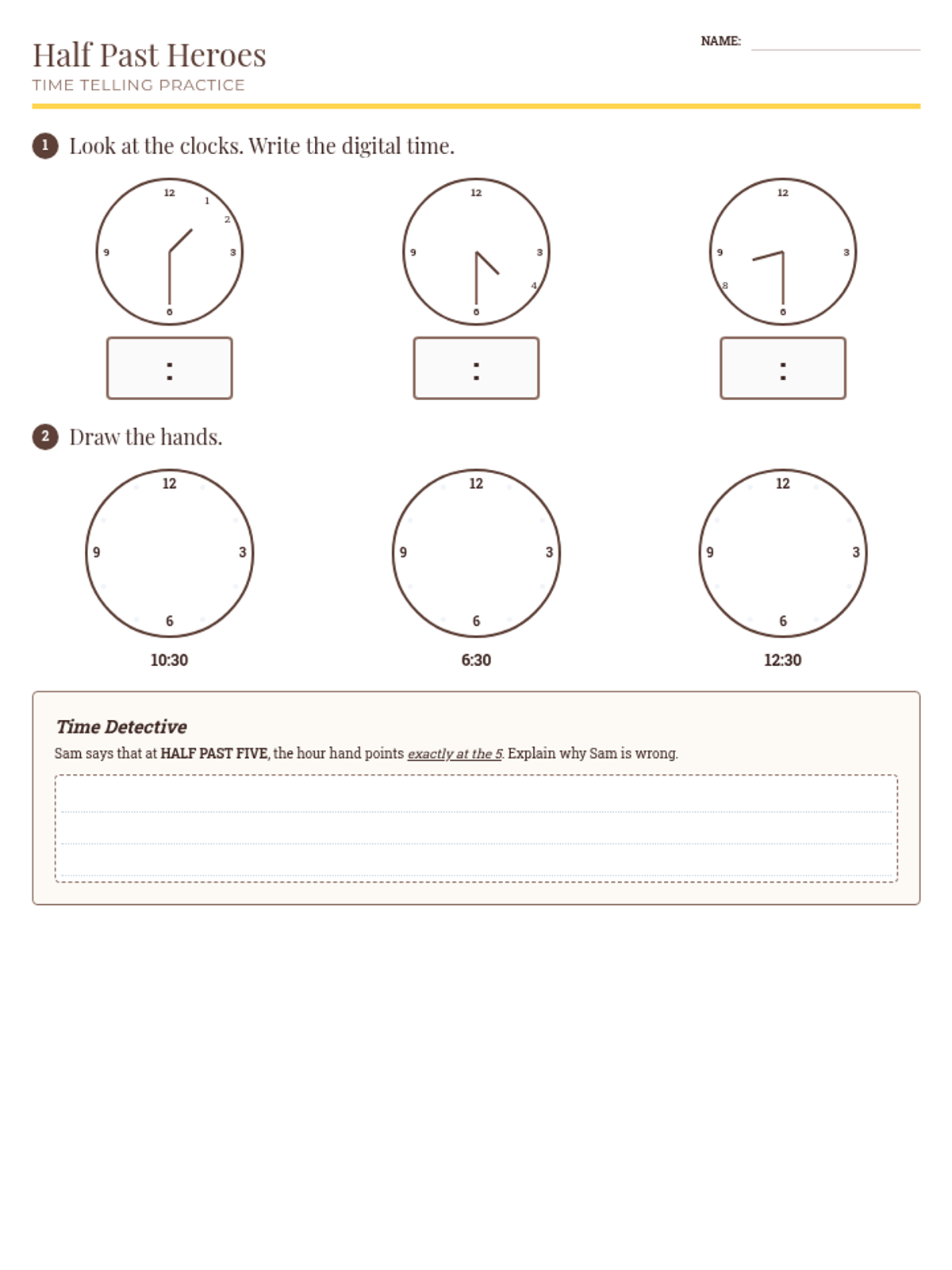
A lesson focused on introducing and practicing telling time to the half-hour, connecting analog and digital representations.
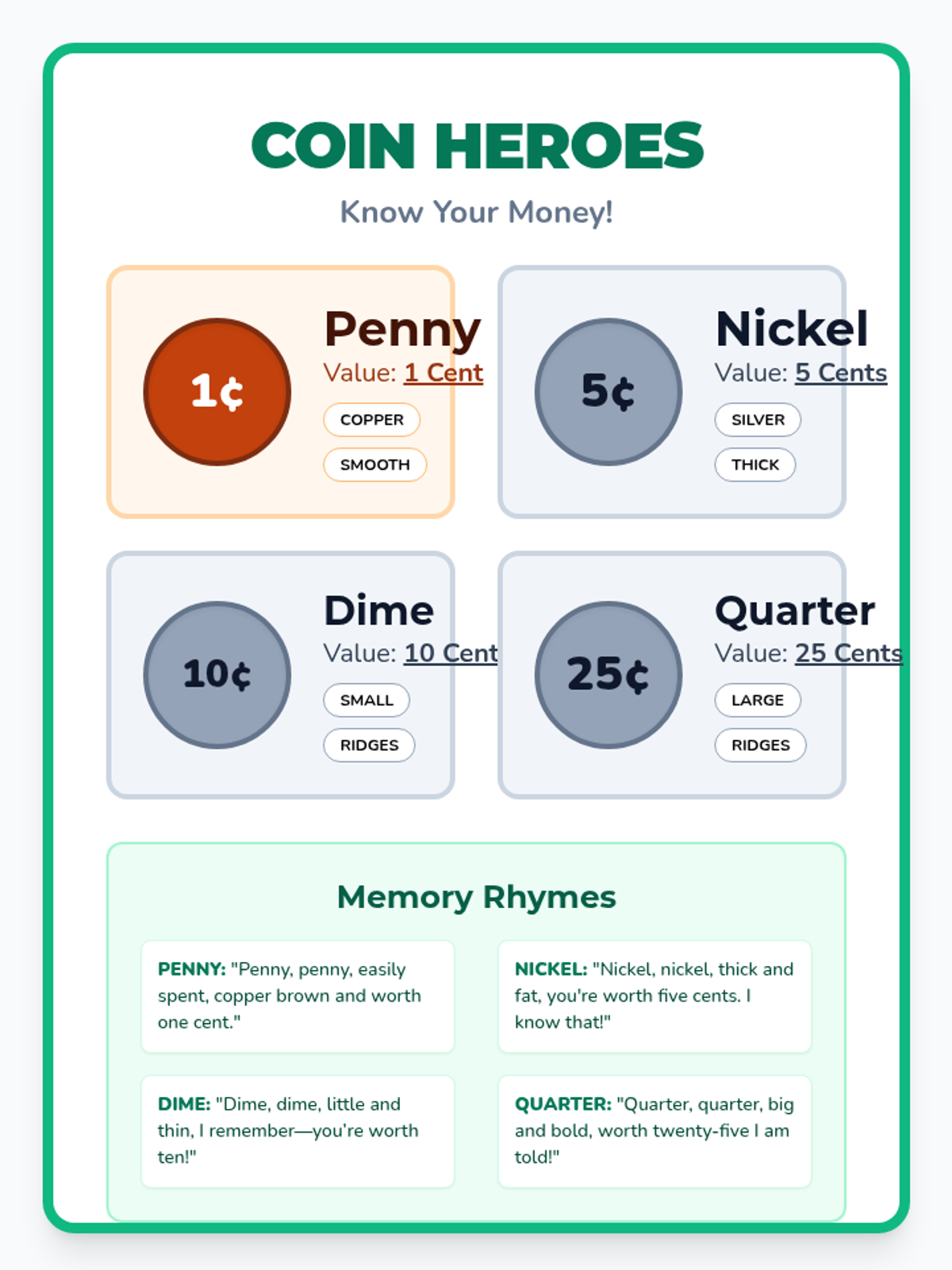
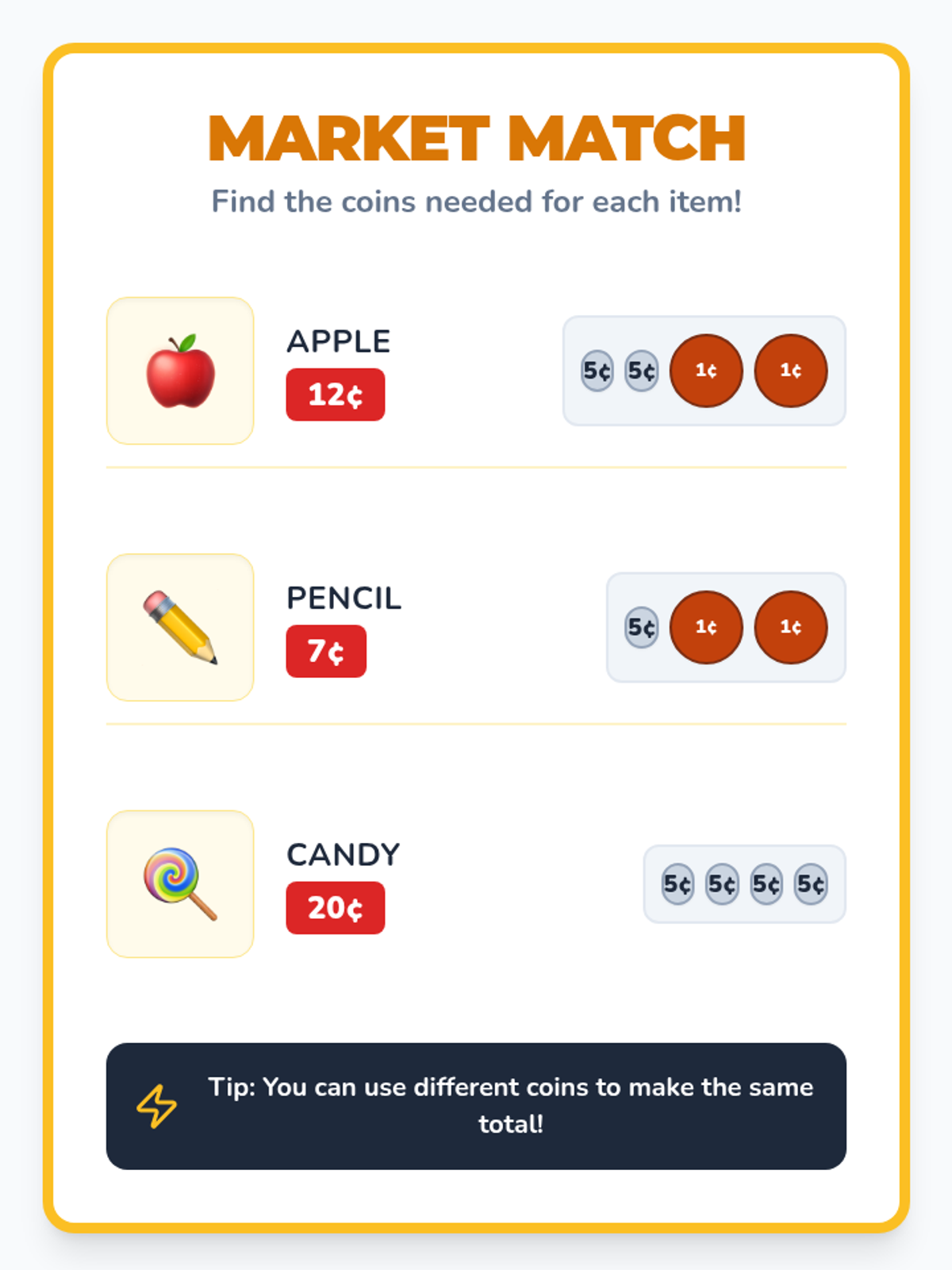
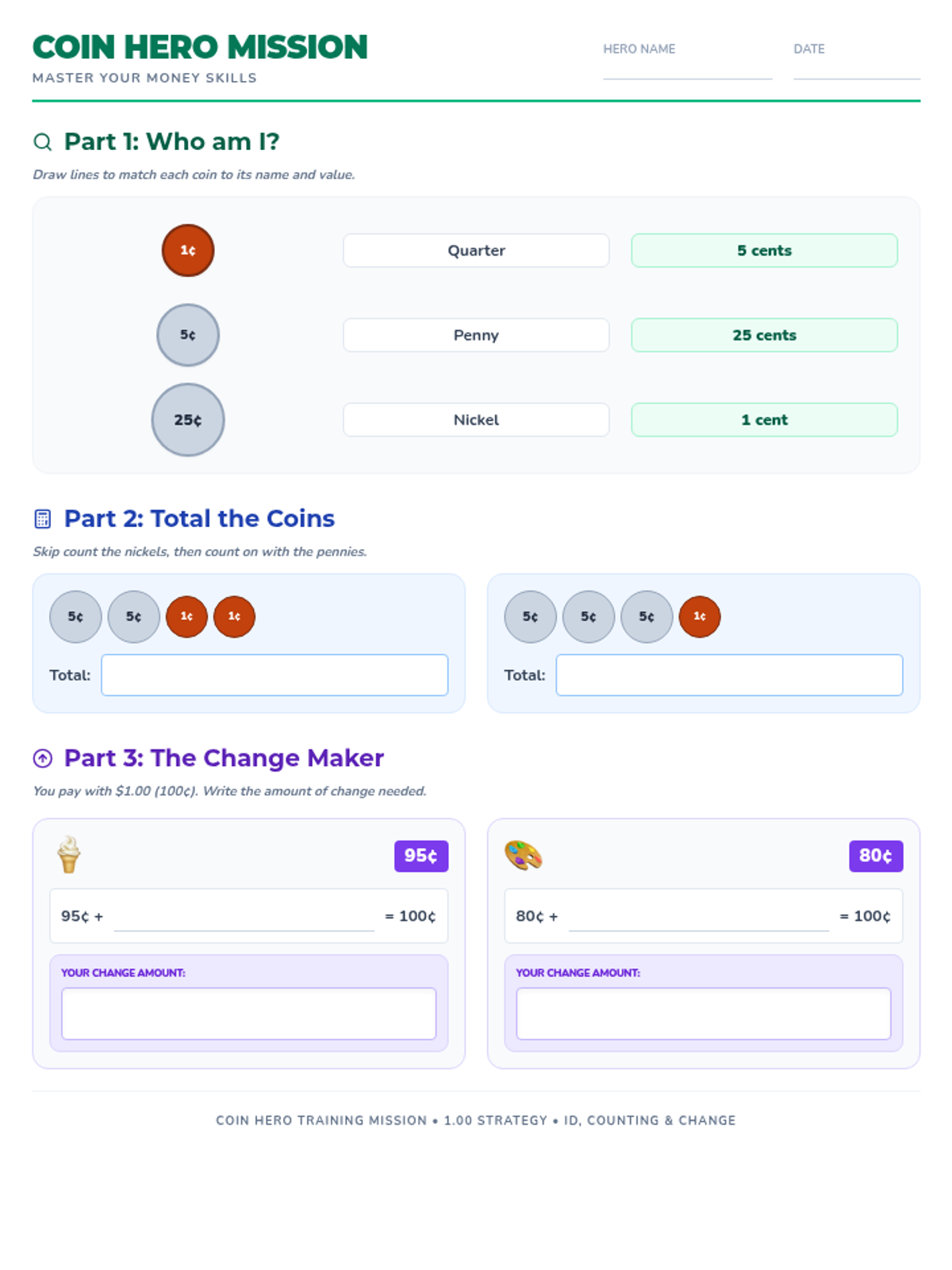
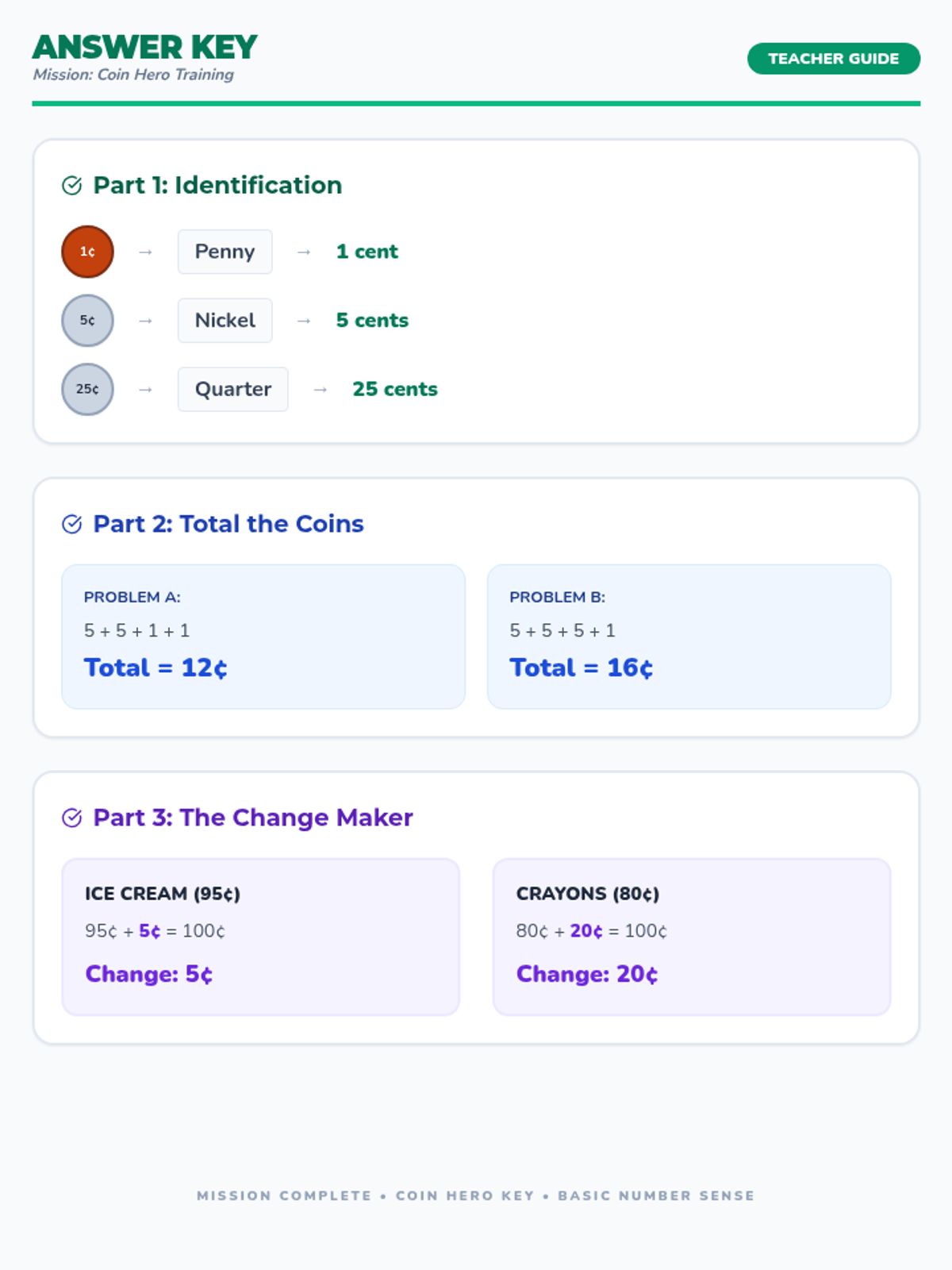
A collection of visual anchor charts and posters designed to teach basic coin identification, counting, and making change from a dollar. These materials use large visuals and clear strategies for early elementary students.
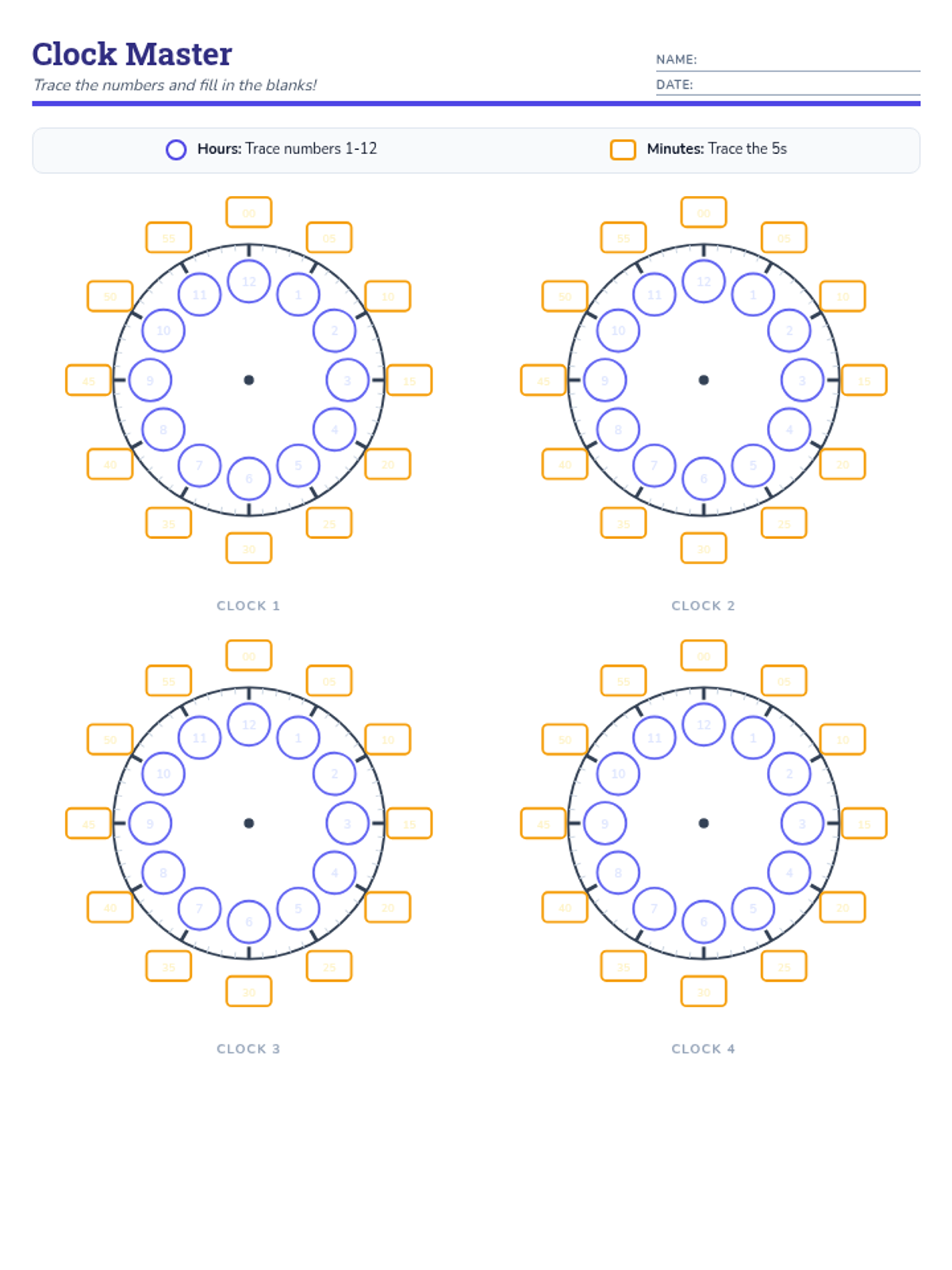
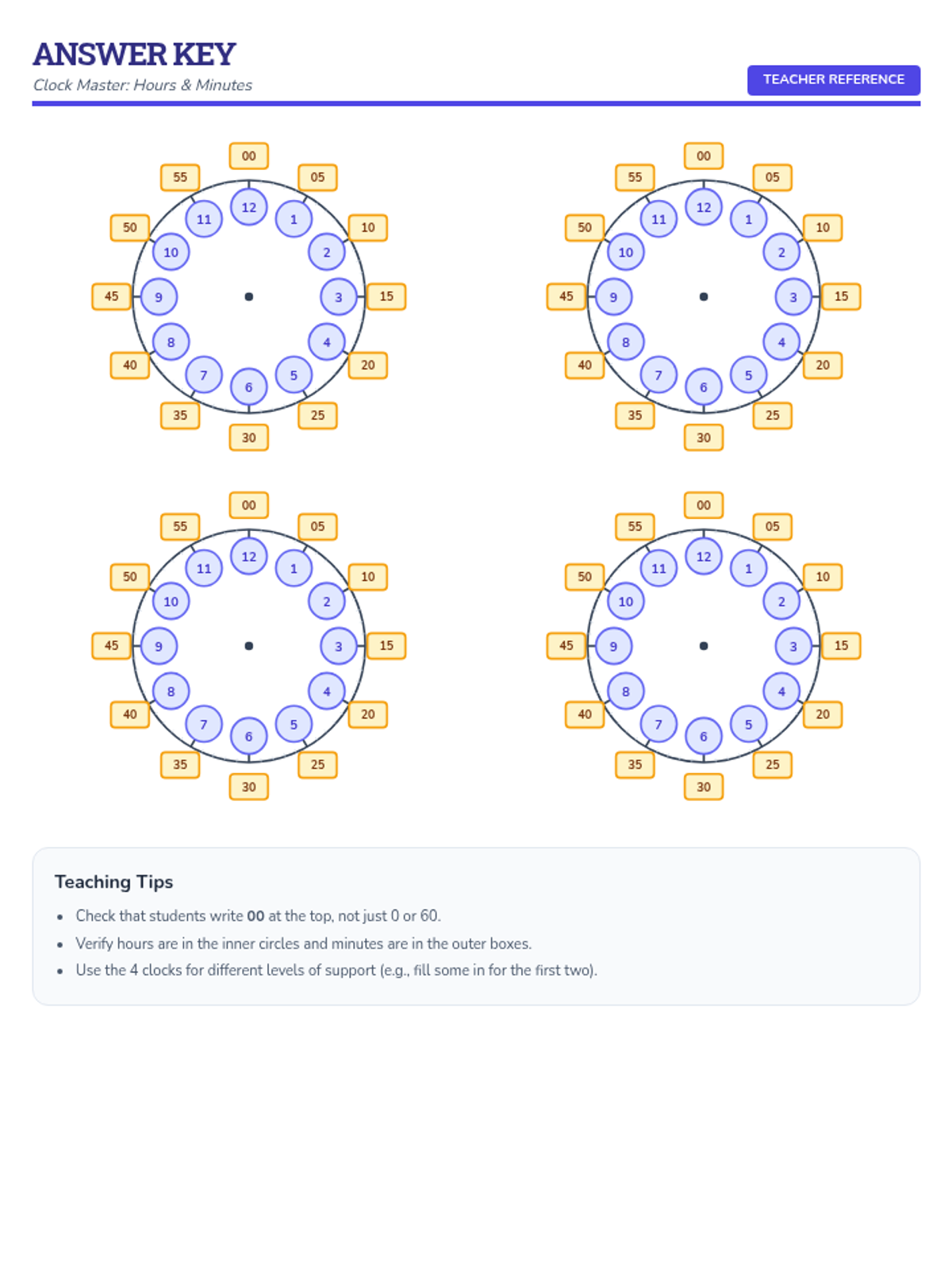
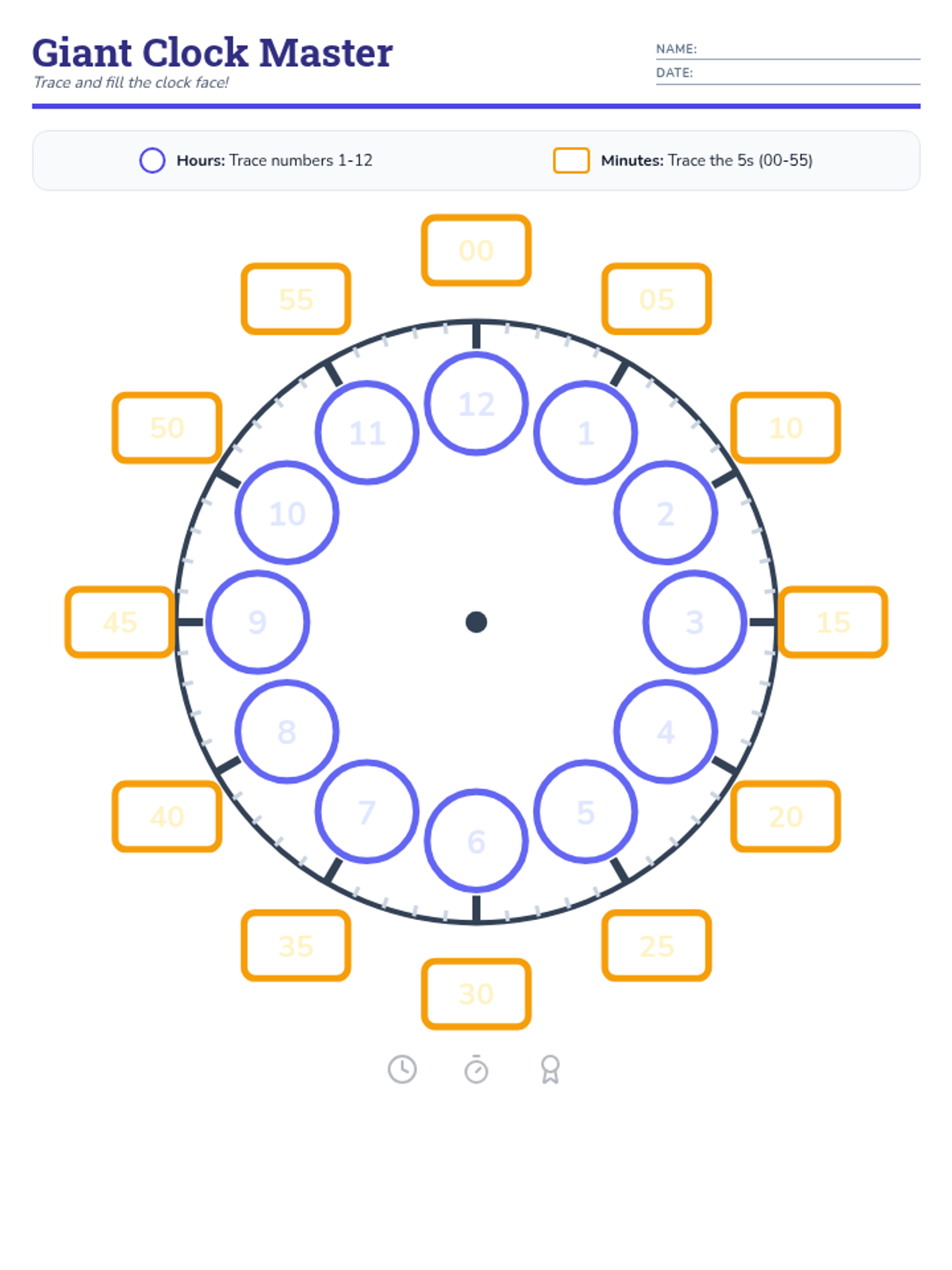
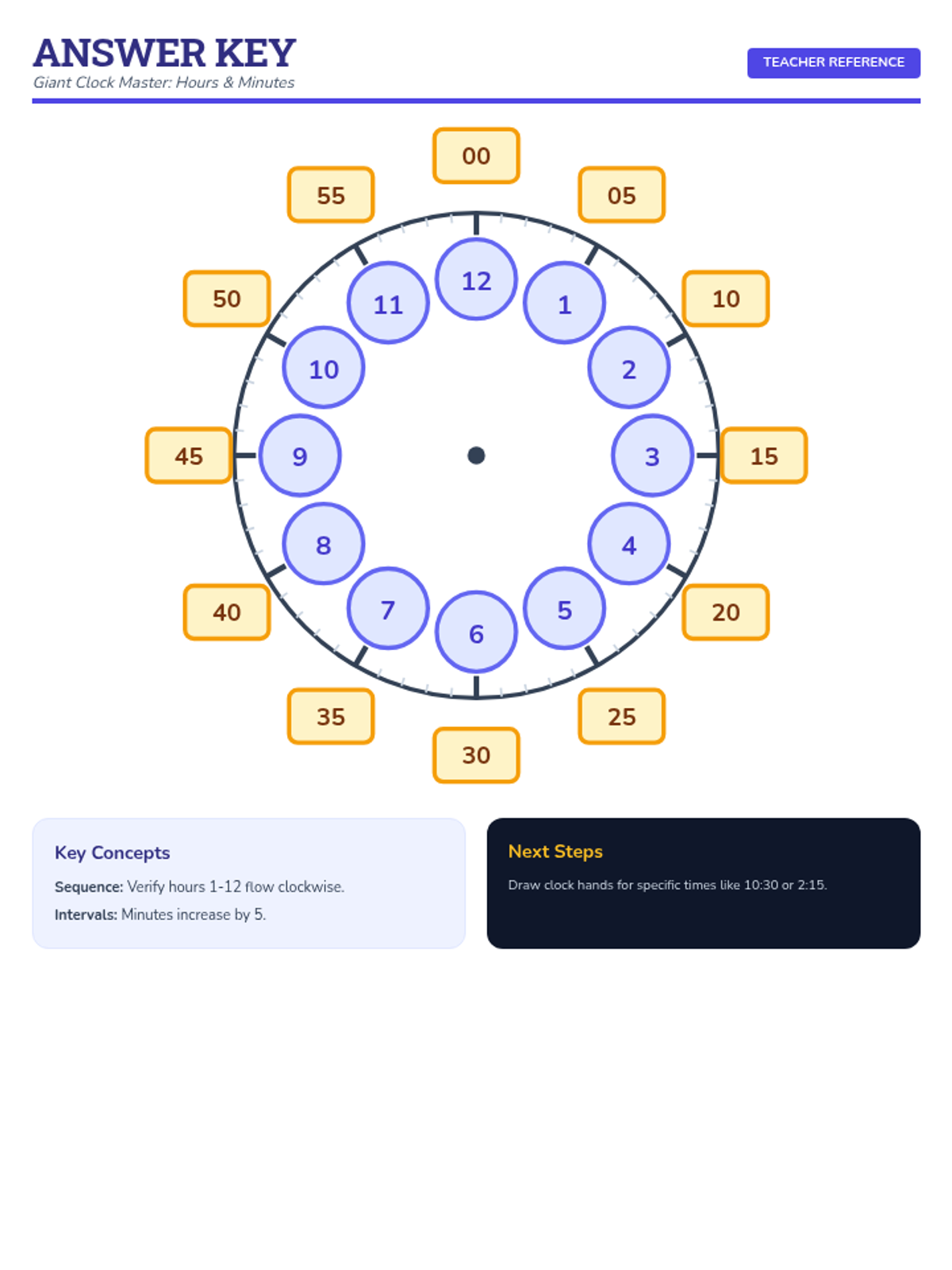
A foundational lesson on clock anatomy, focusing on identifying hour numbers and five-minute increments. Students practice spatial reasoning and number sequencing within a circular layout.
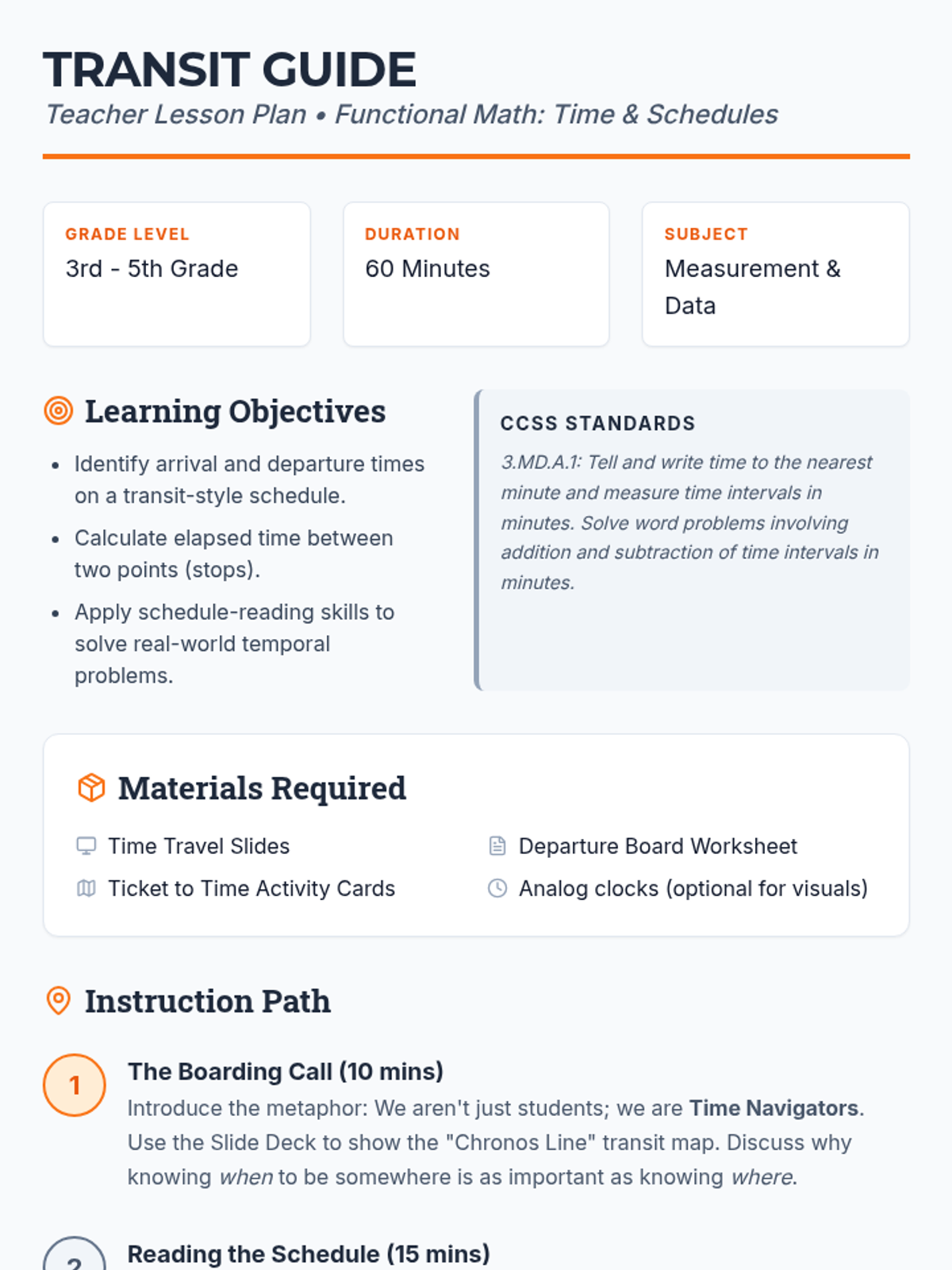
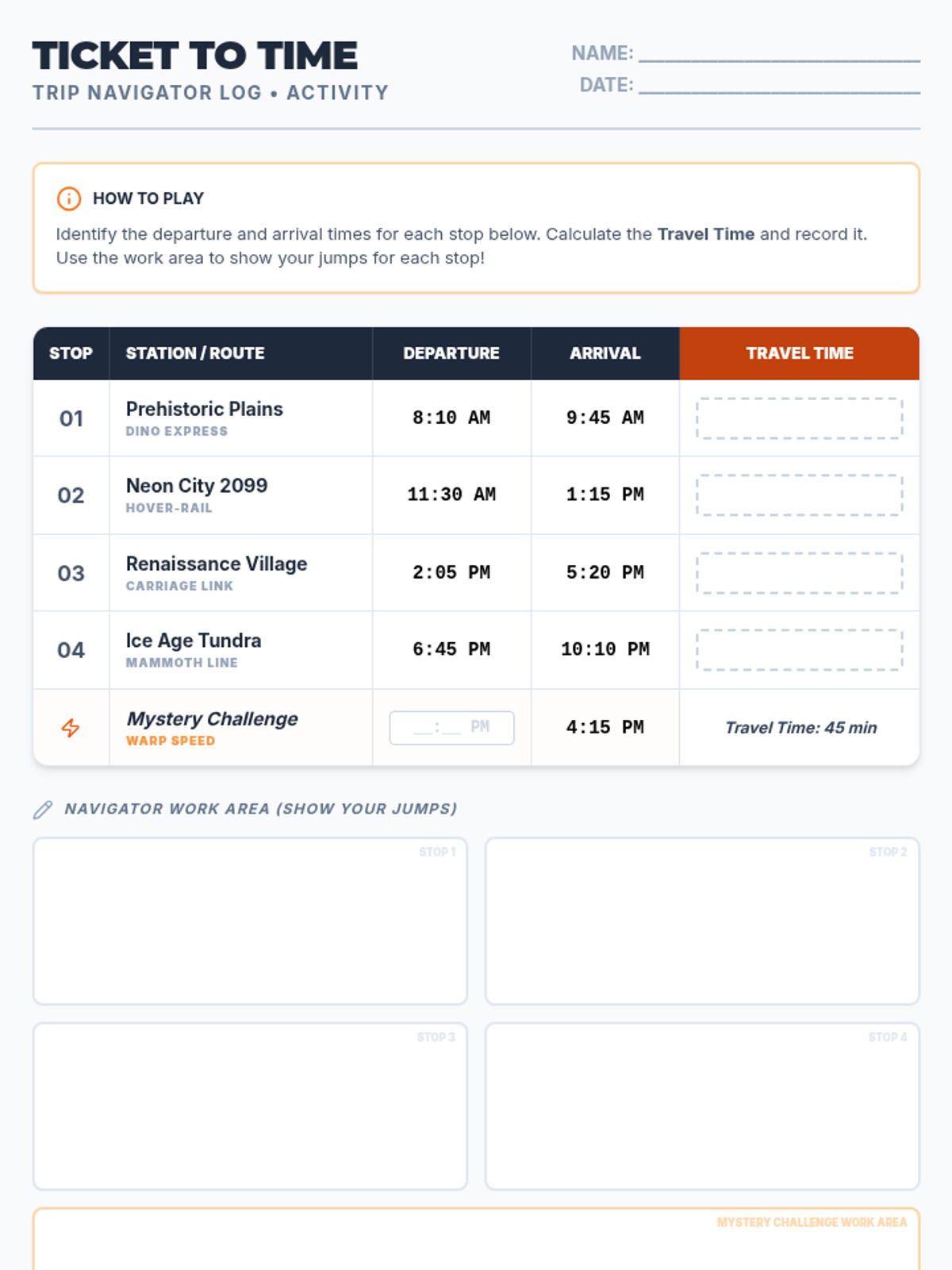
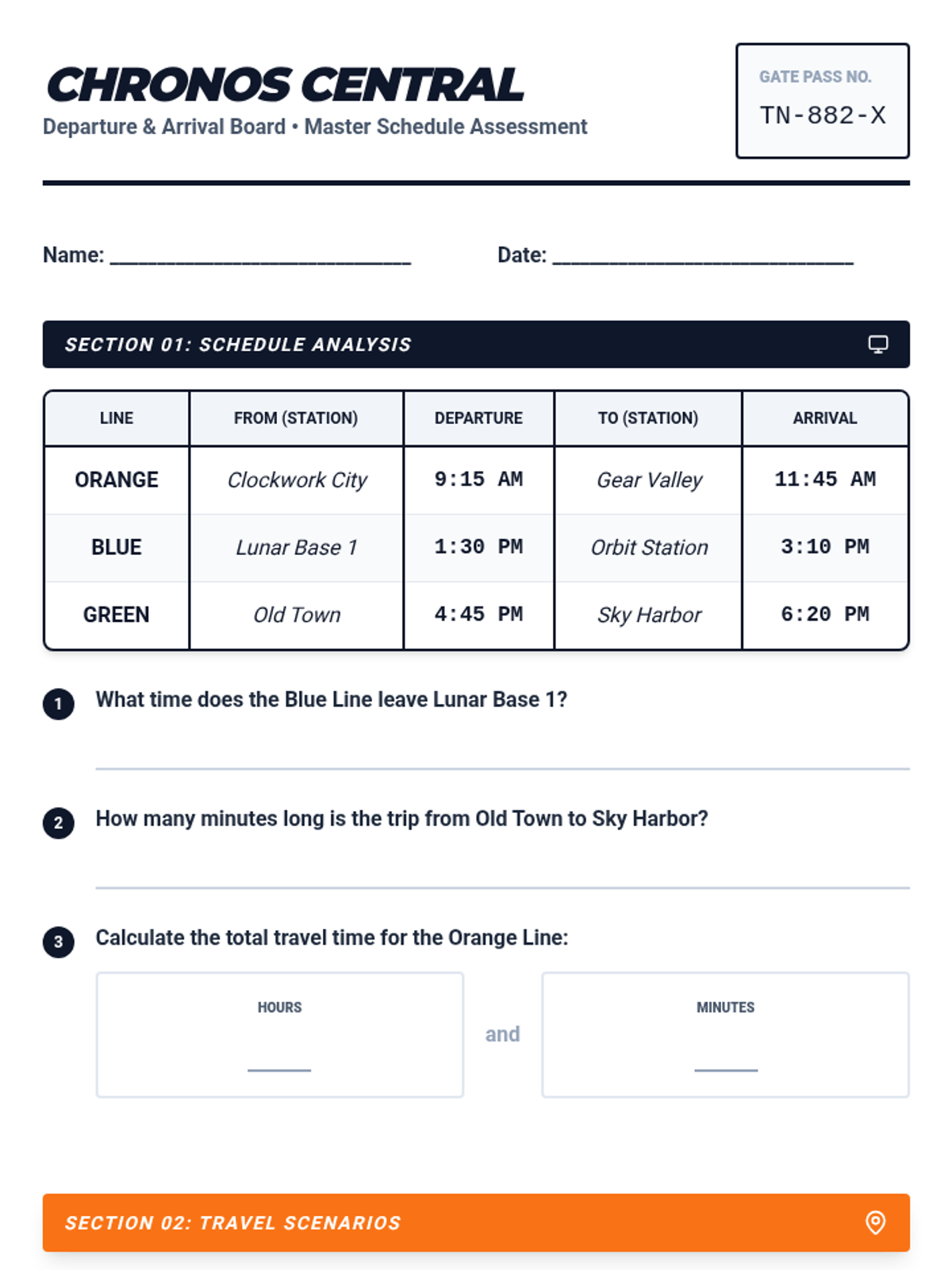
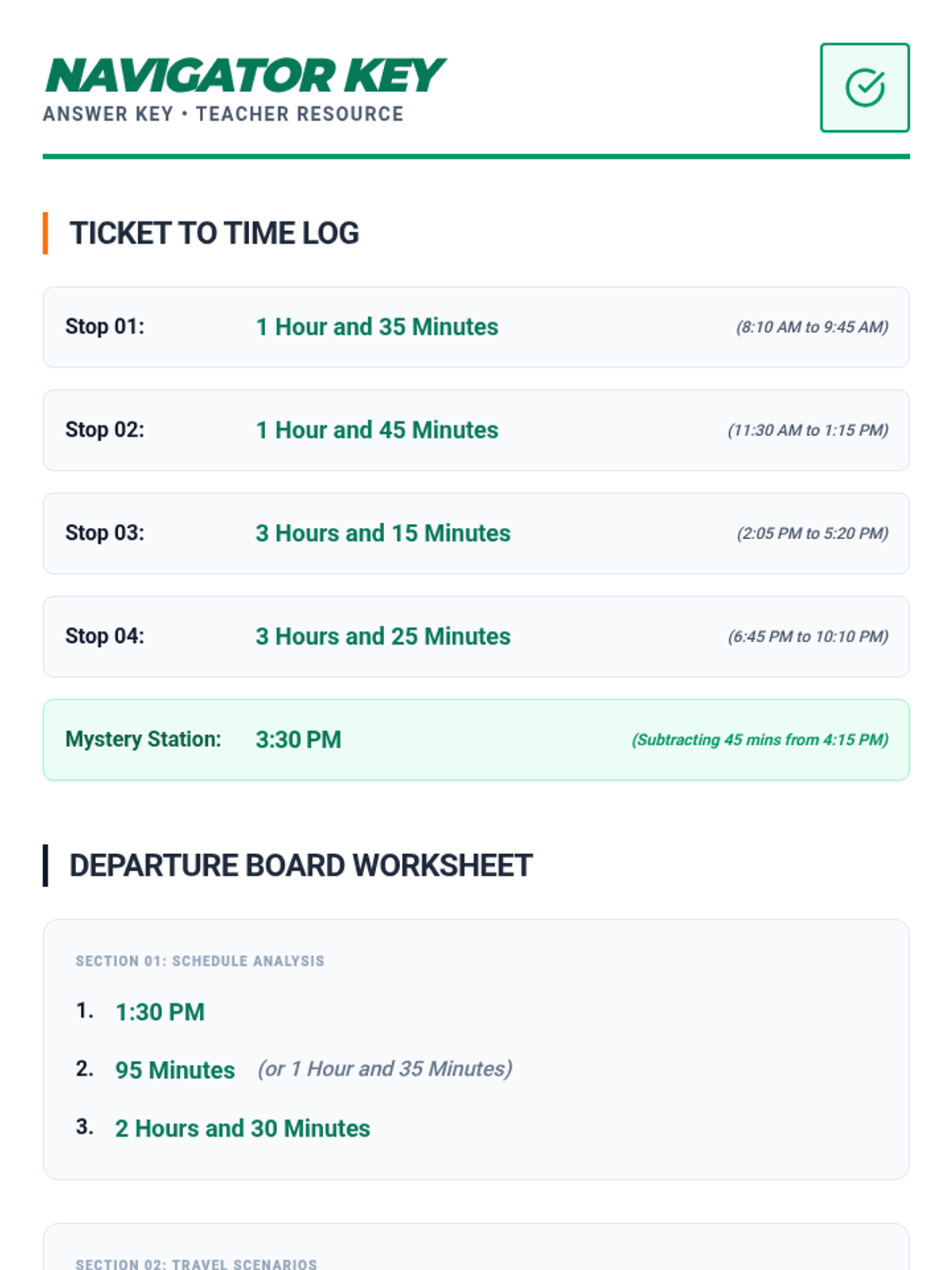
A functional math lesson using a transit map metaphor to teach students how to read schedules and calculate elapsed time, designed for grades 3-5.
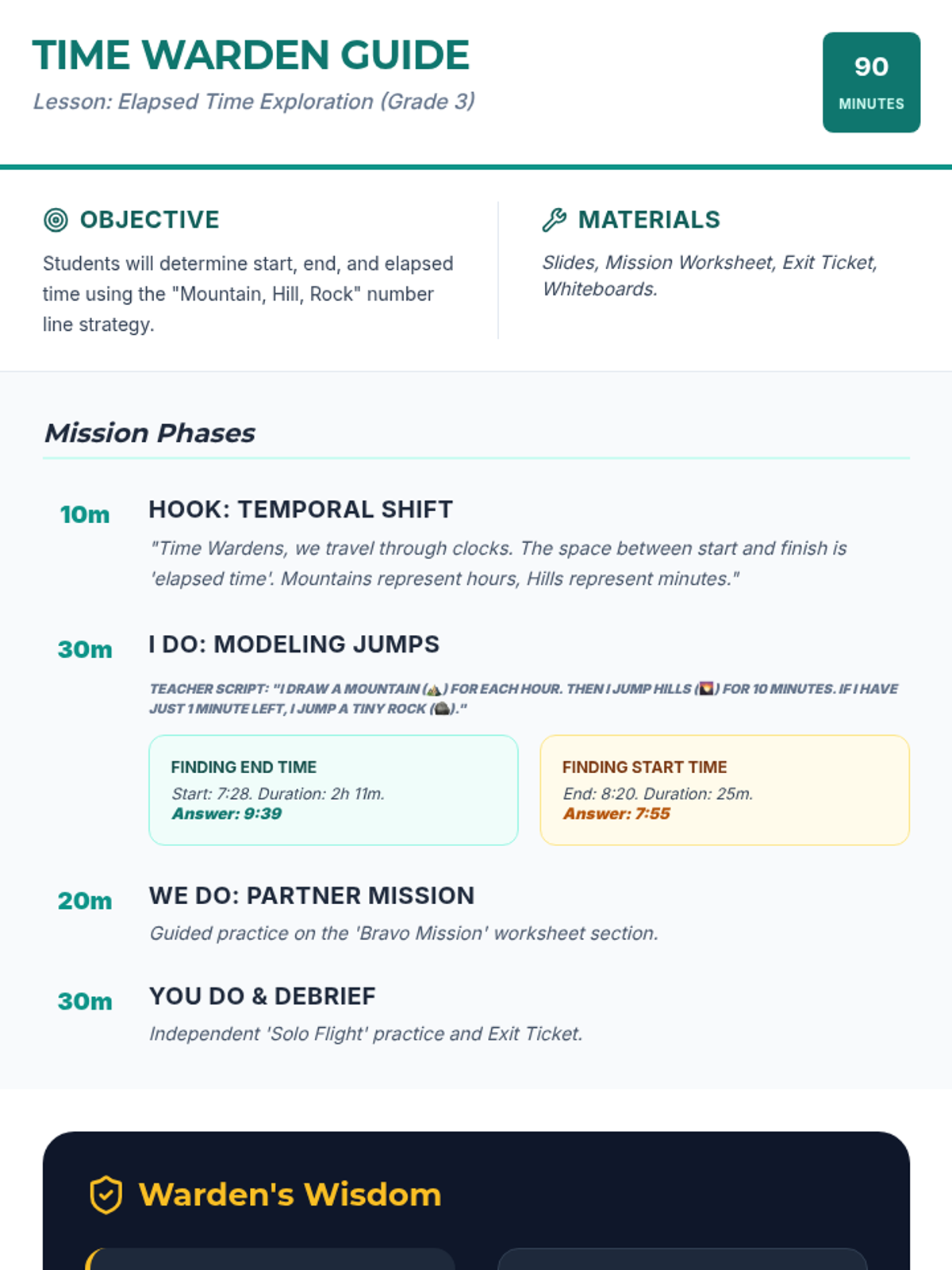
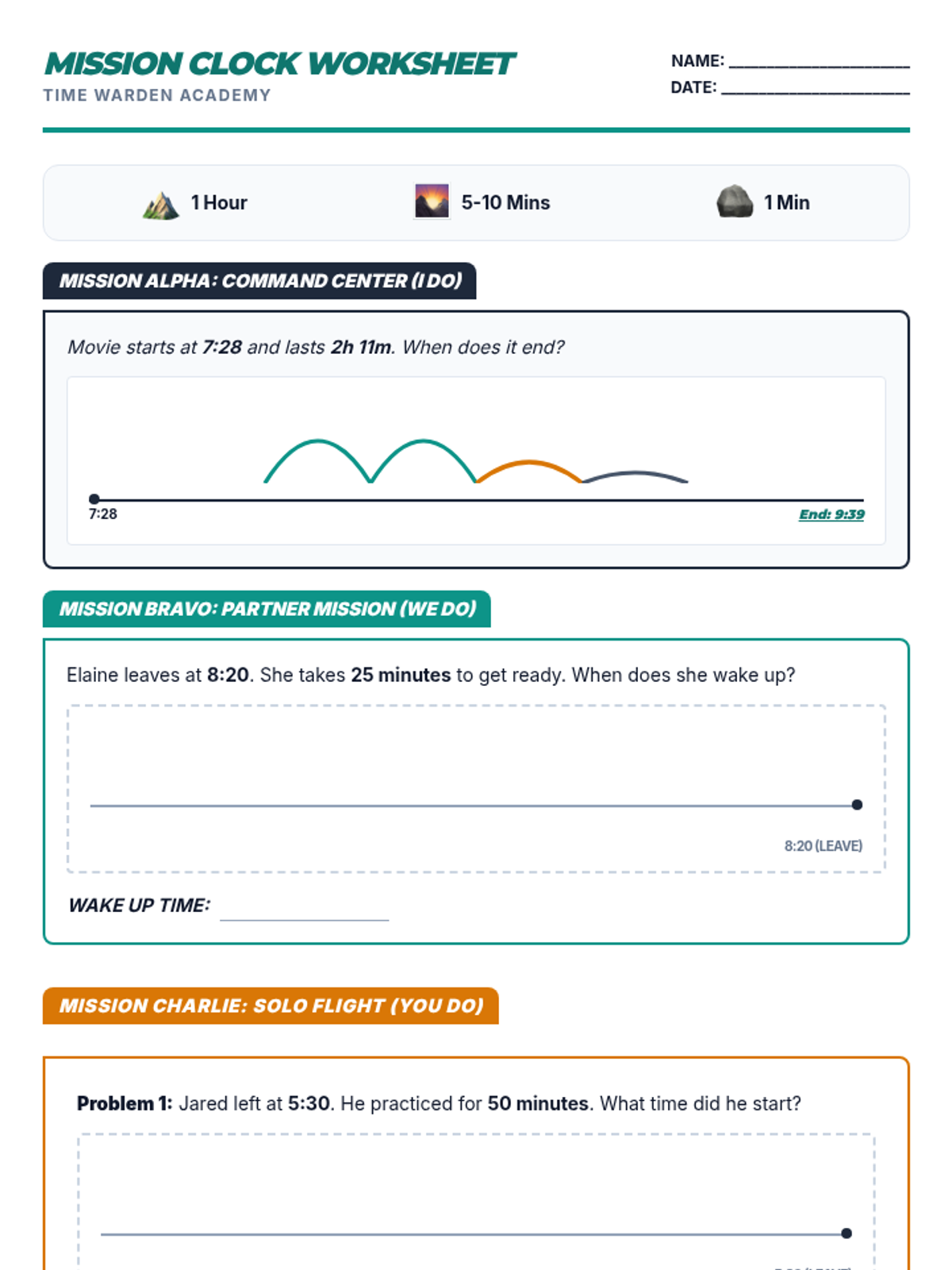
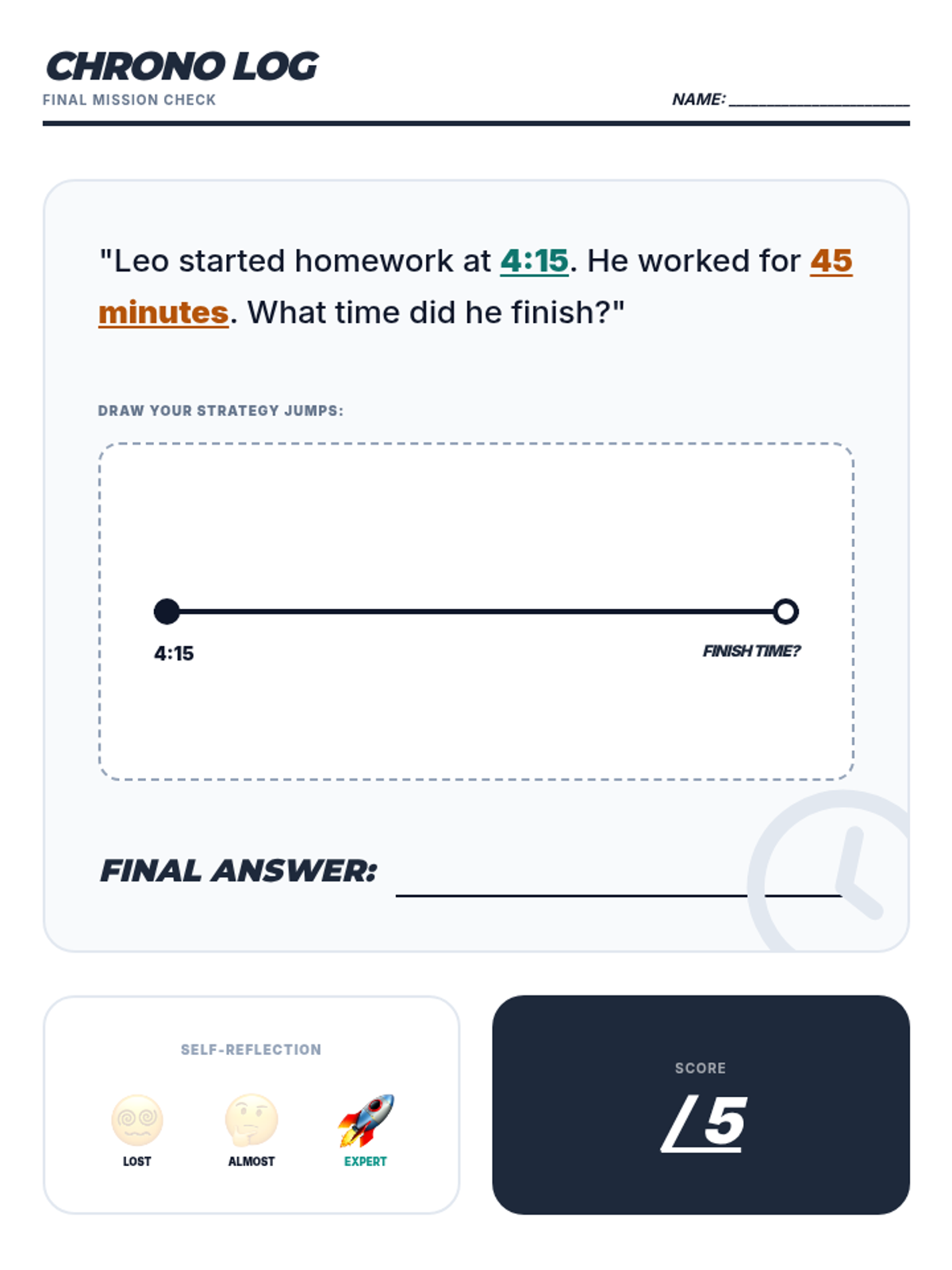
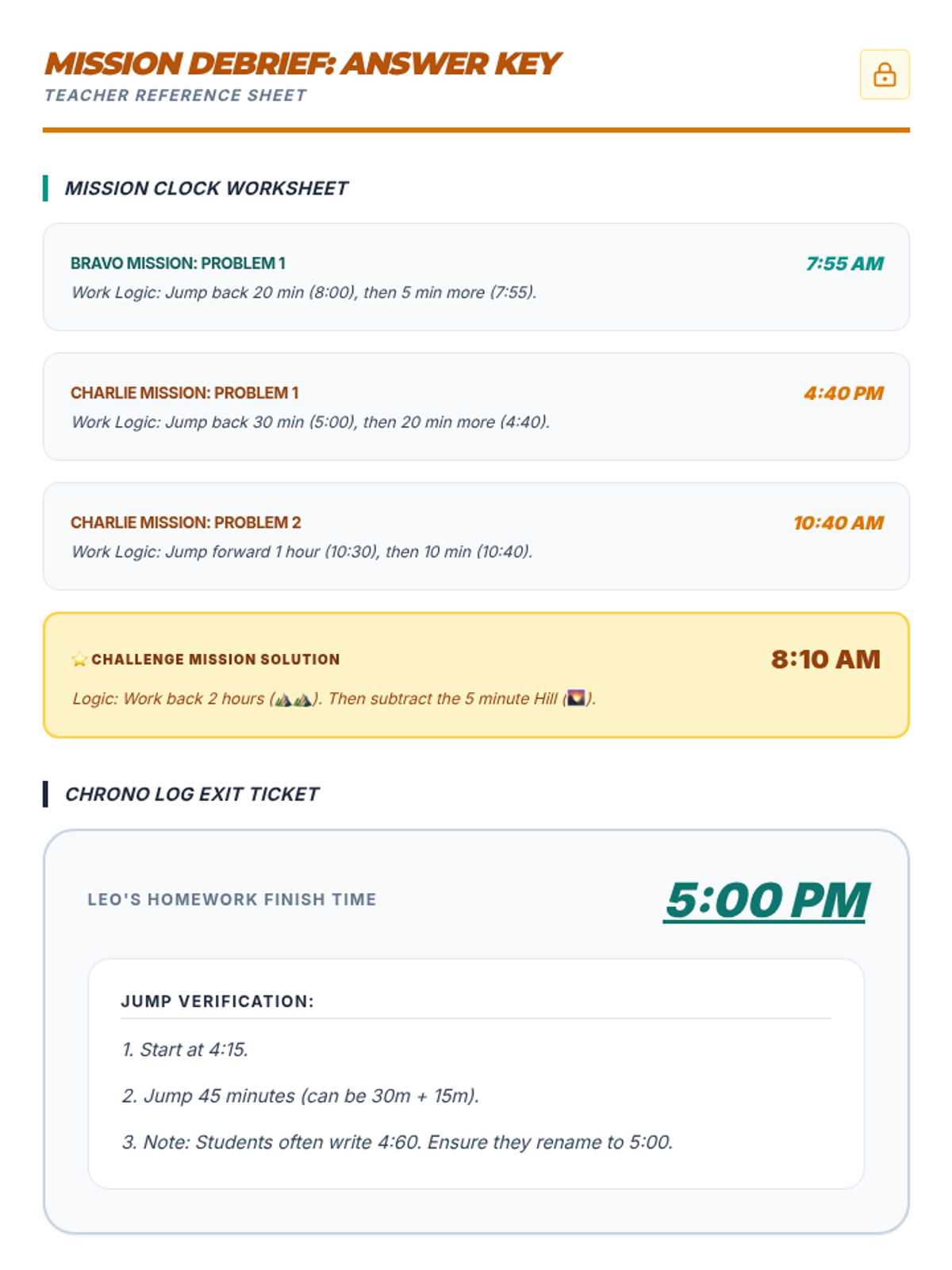
An explicit instruction lesson on elapsed time for 3rd graders, focusing on finding start and end times using the 'Mountain, Hill, Rock' number line strategy. Students will practice jumping through hours and minutes to solve real-world problems.
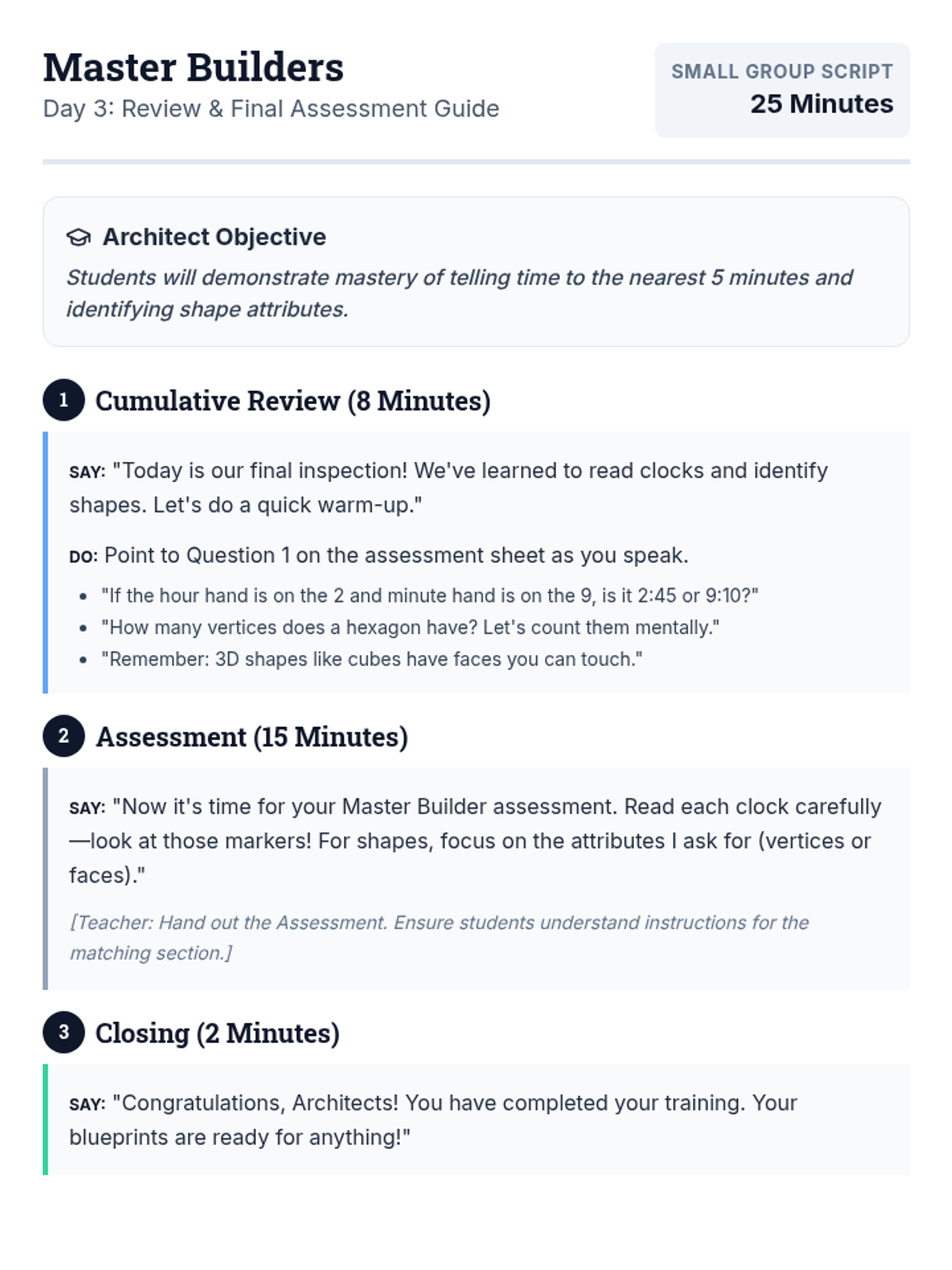
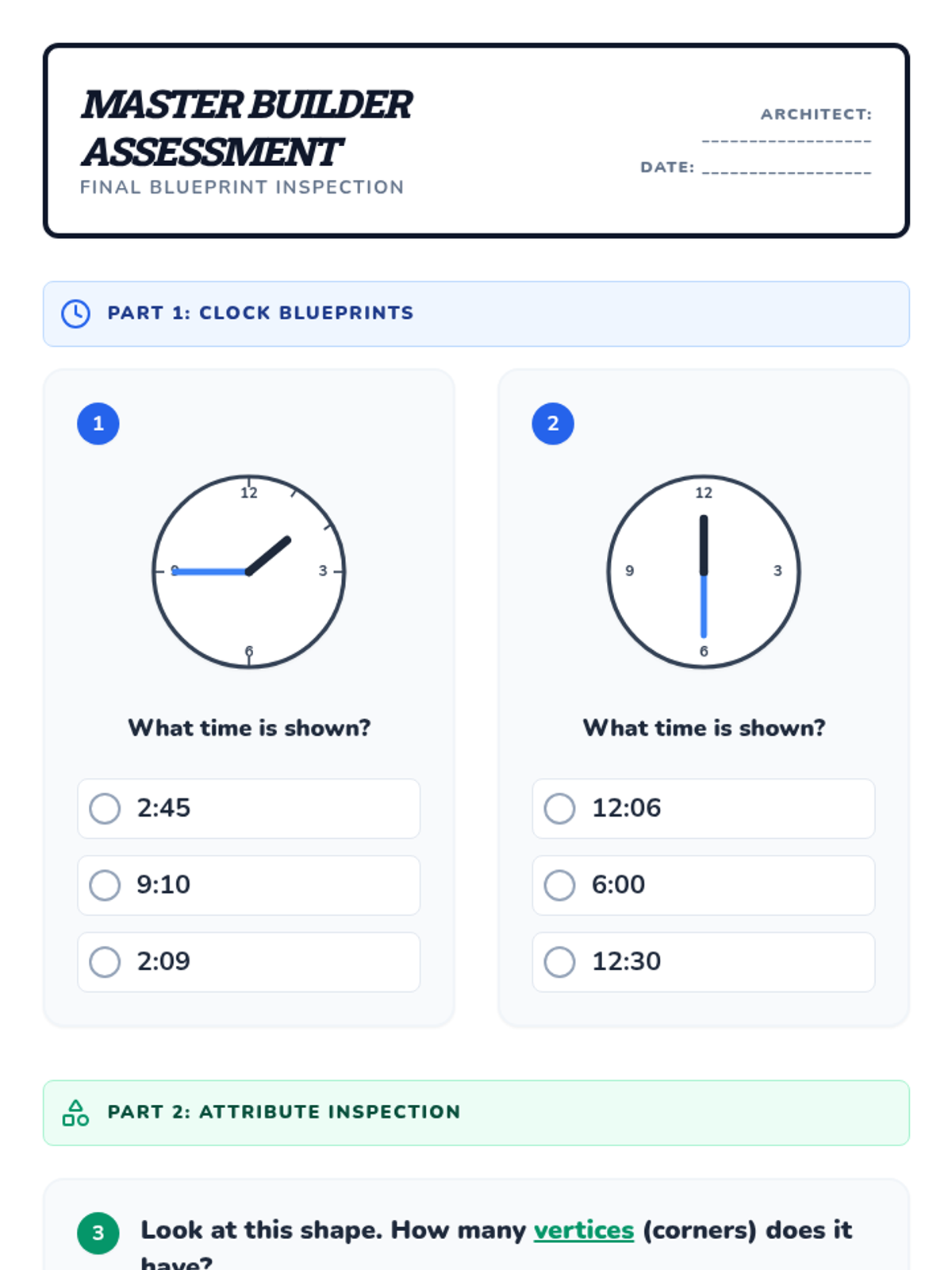
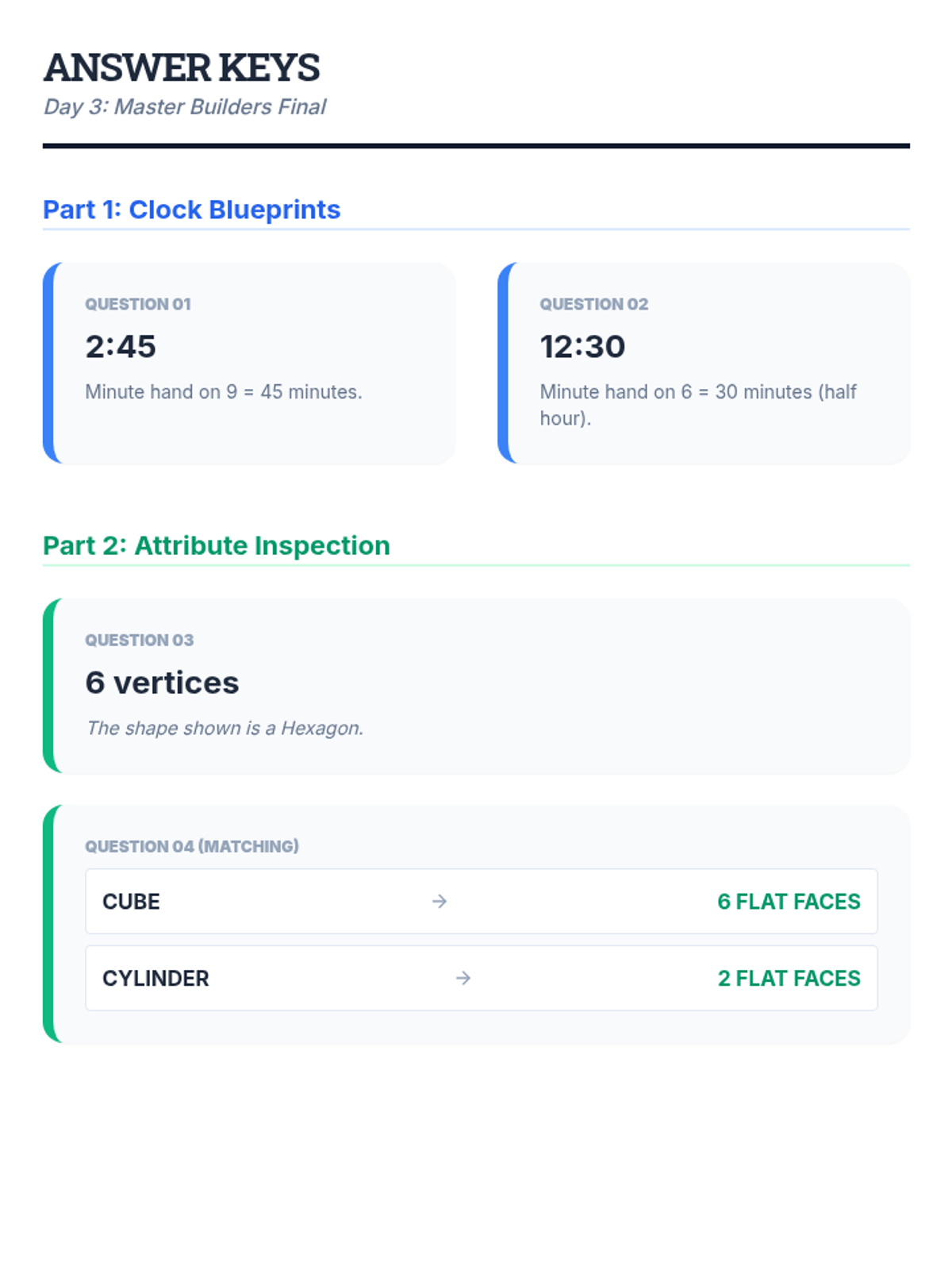
A cumulative review of time and shape attributes followed by a formal assessment to track student growth toward RIT 180 goals.
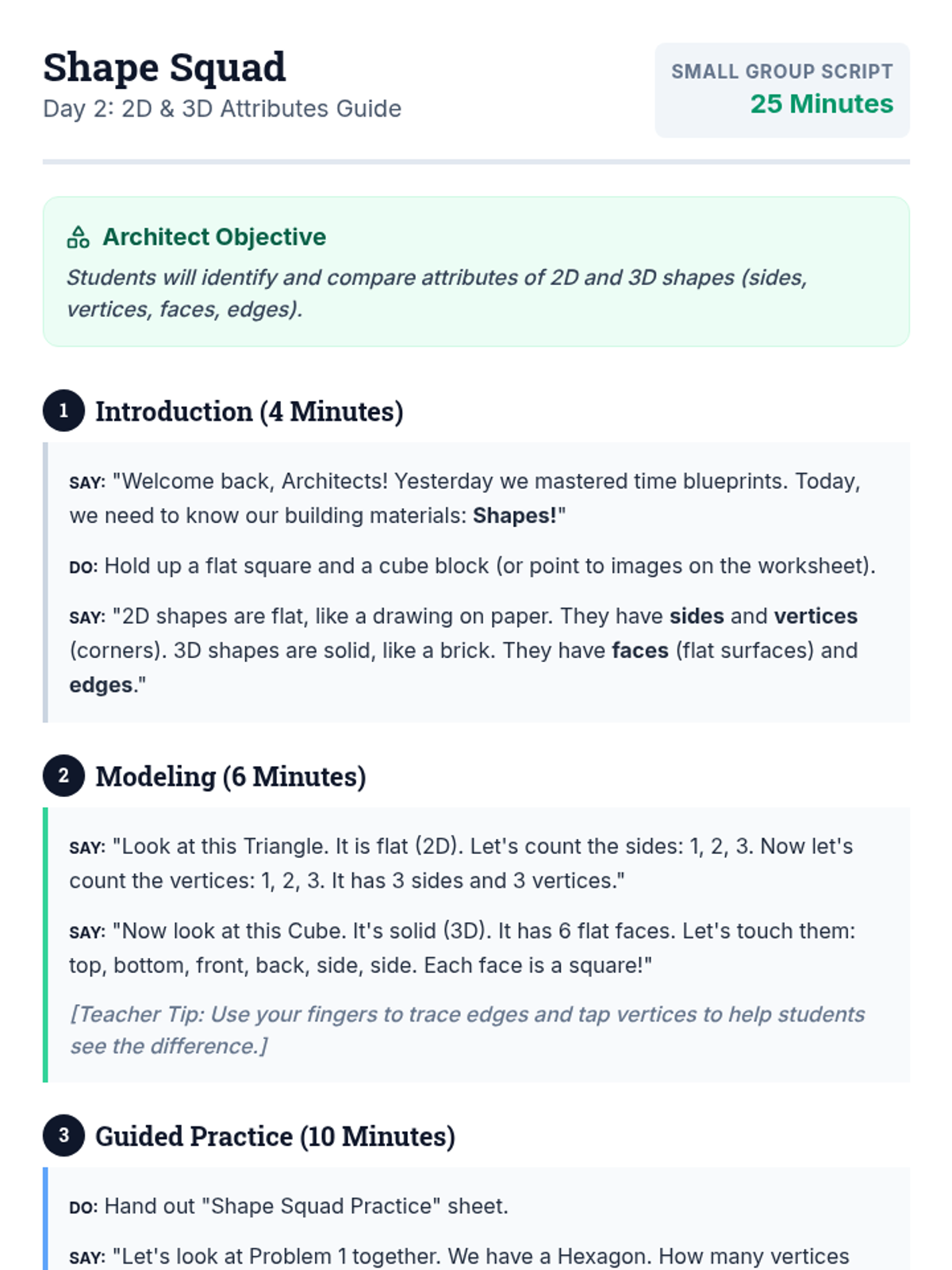
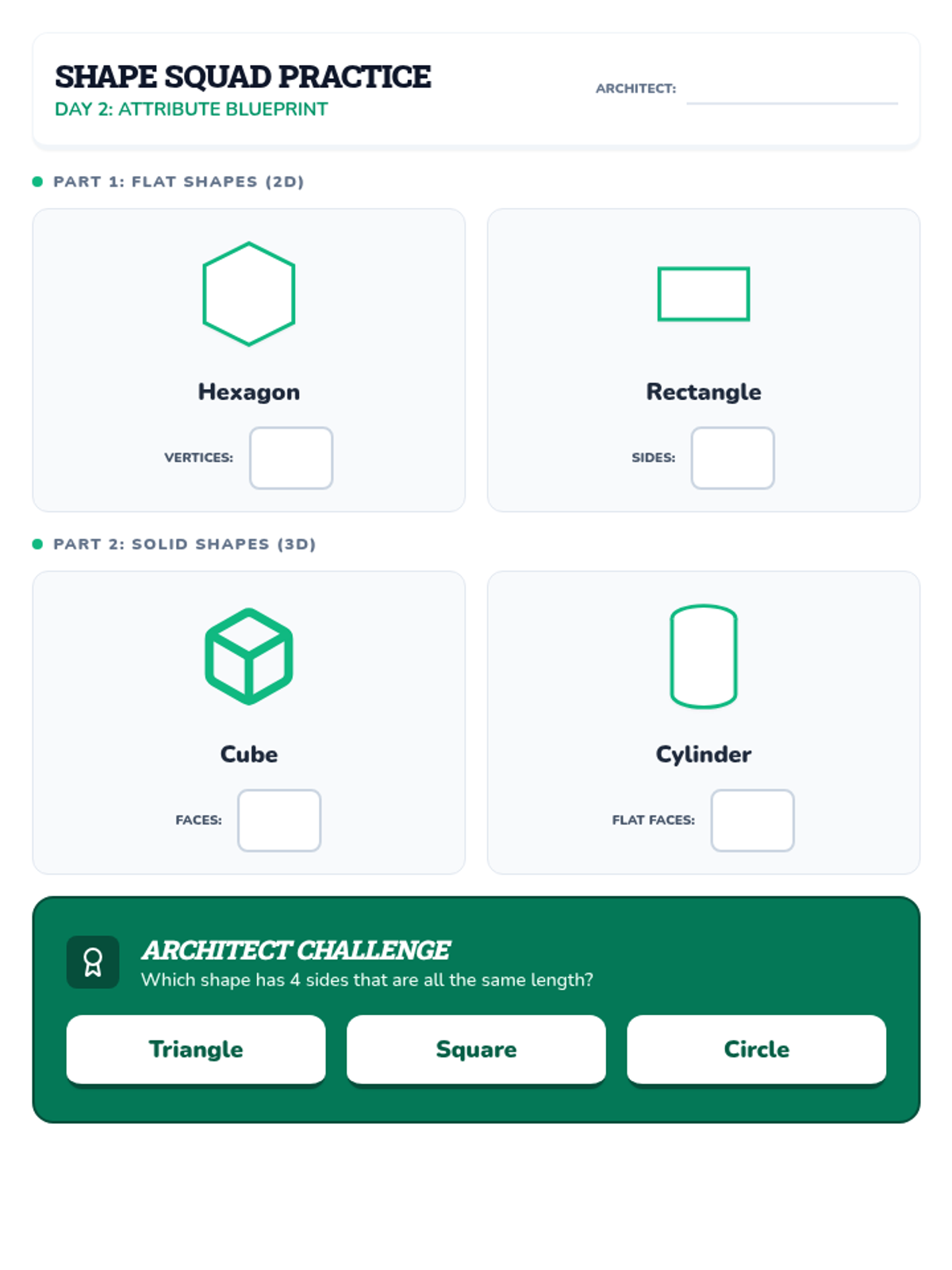
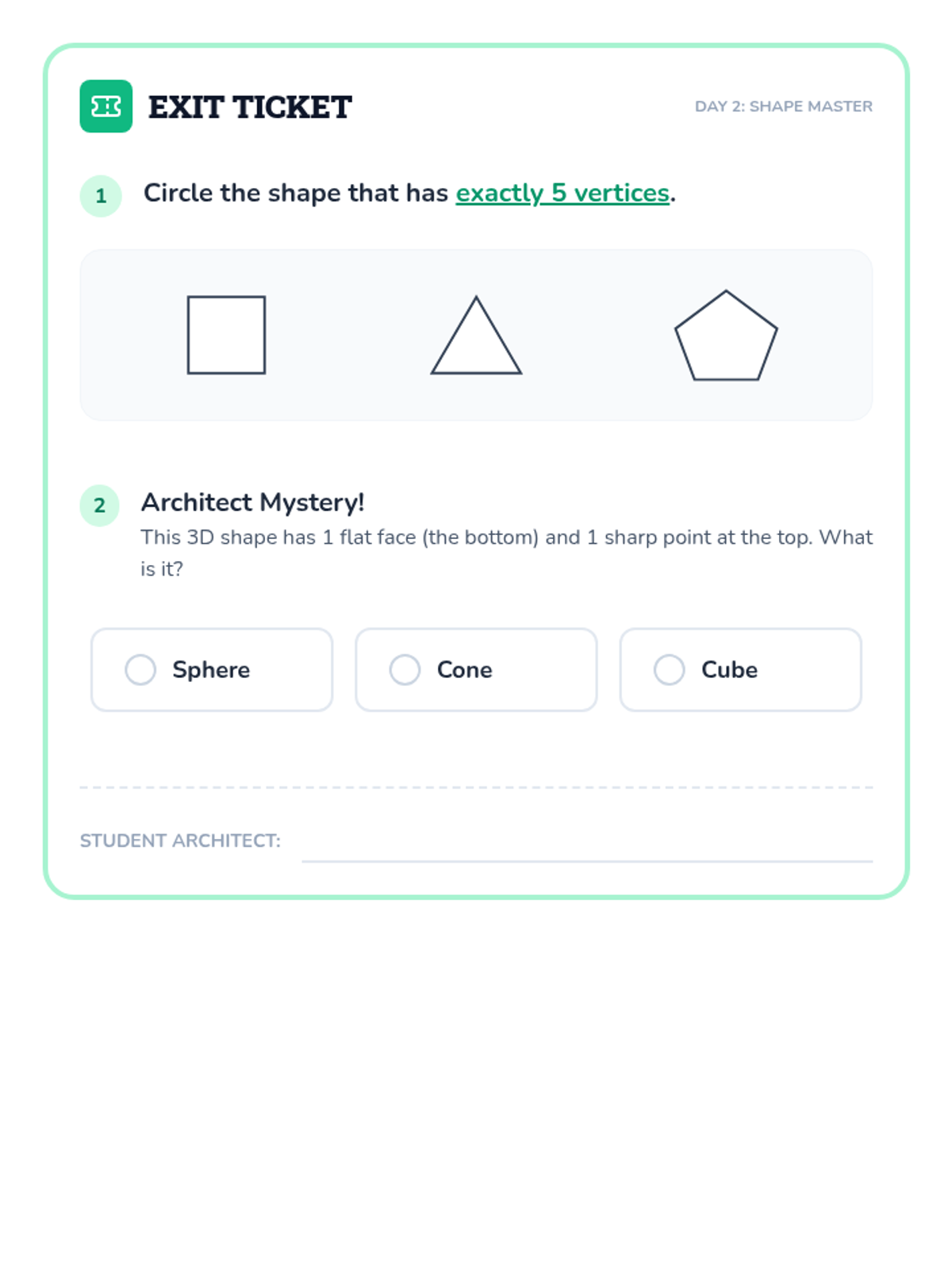
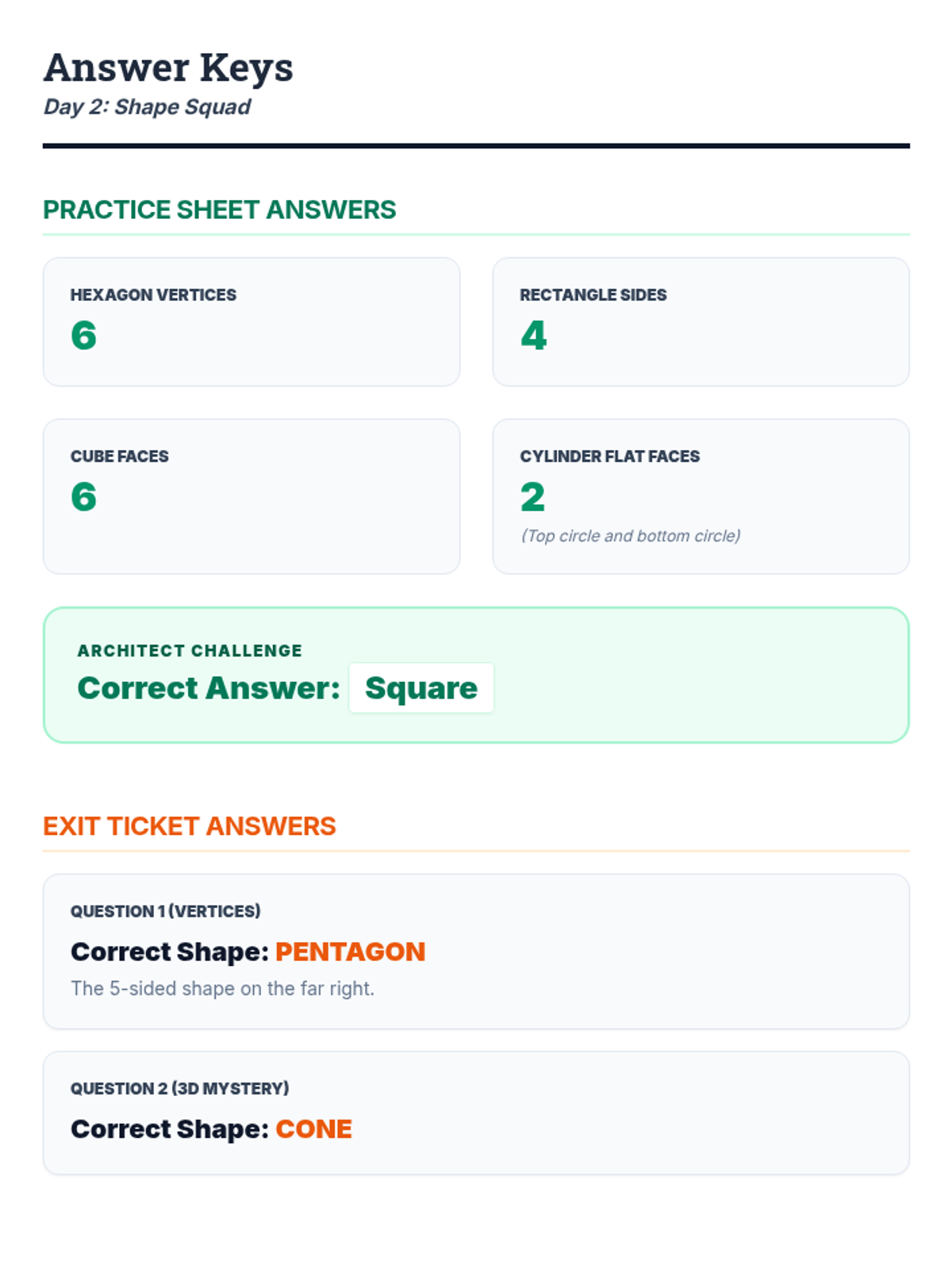
Identifying and describing defining attributes of 2D and 3D shapes, including sides, vertices, faces, and edges.
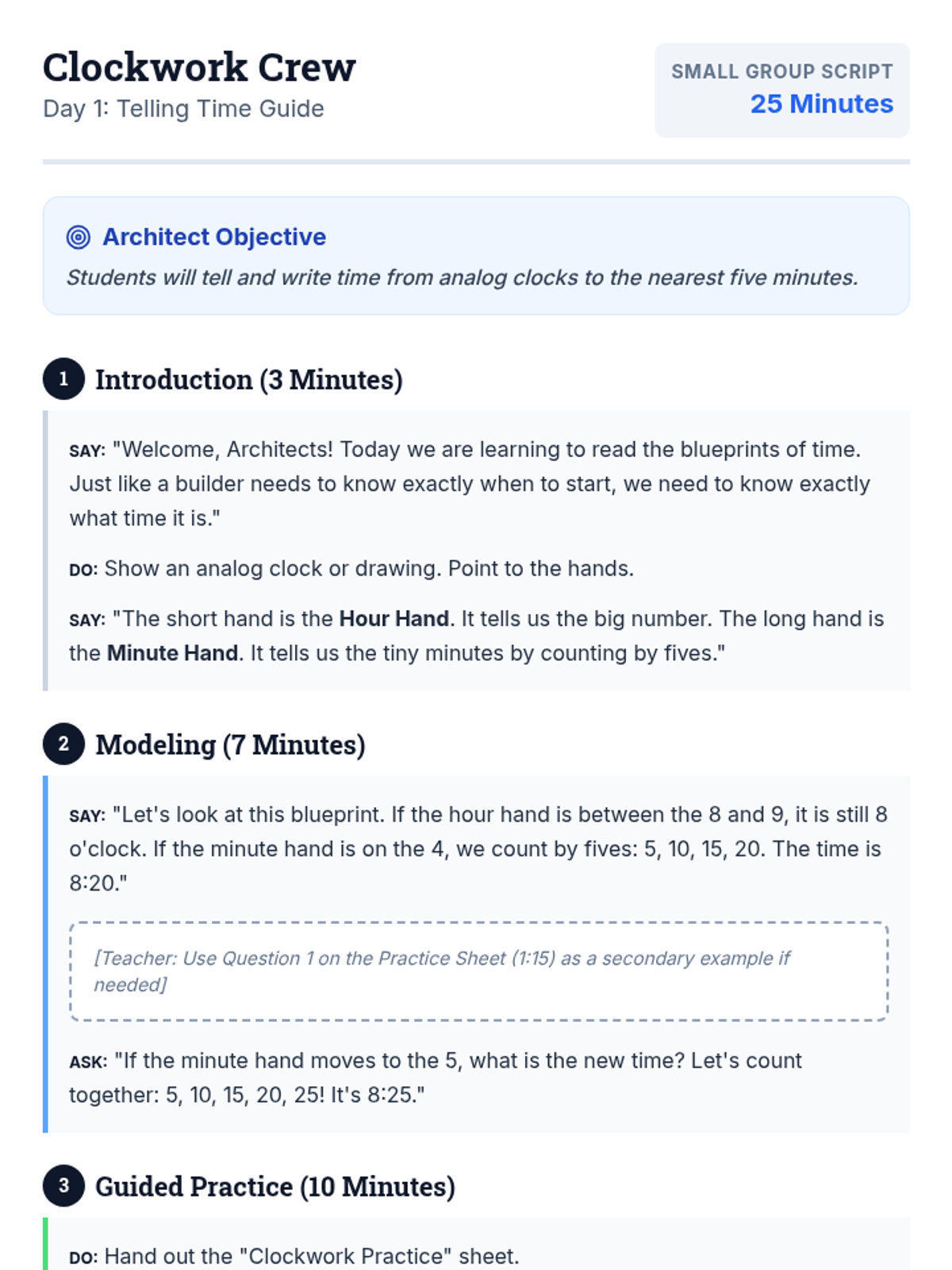
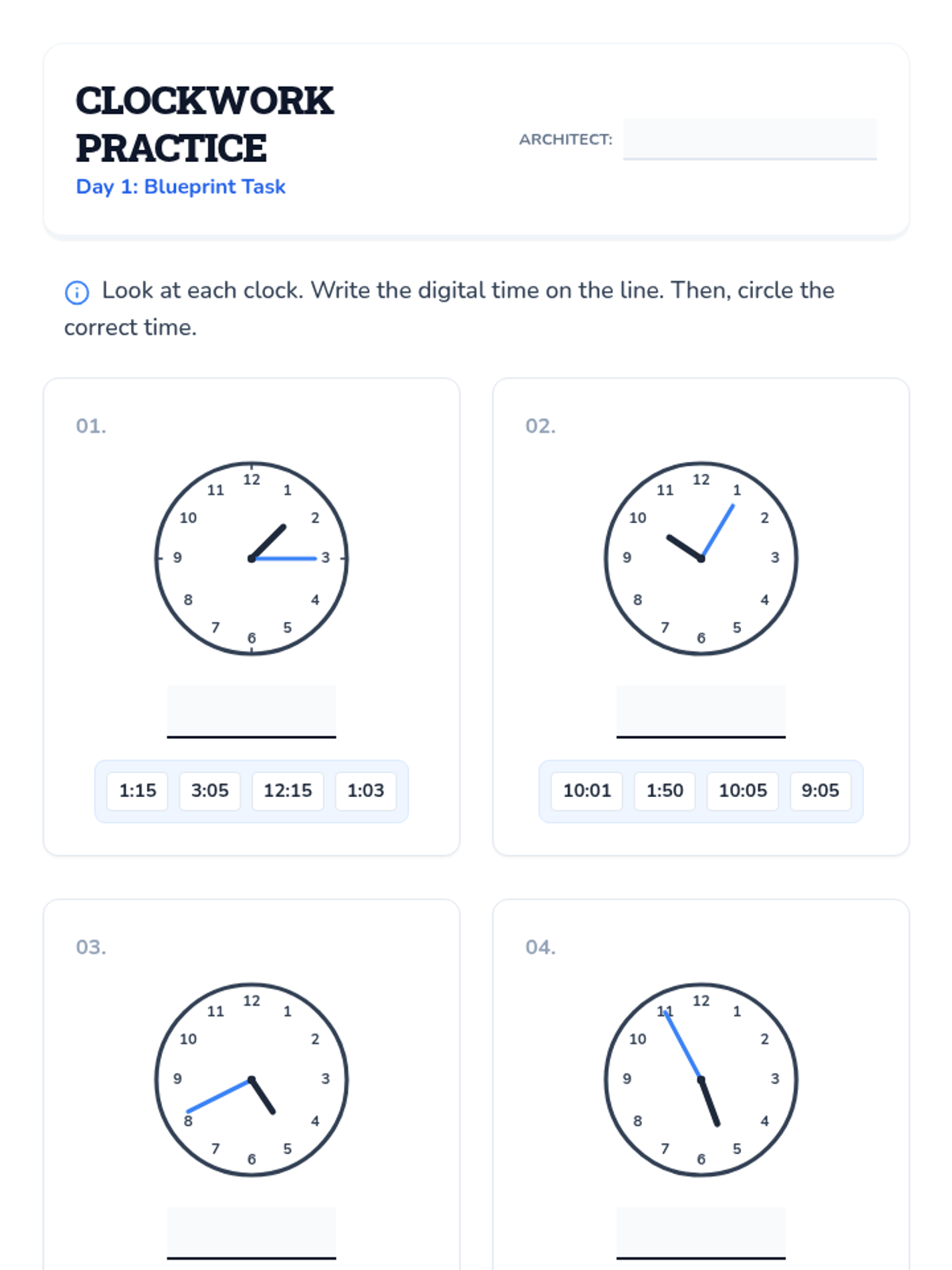
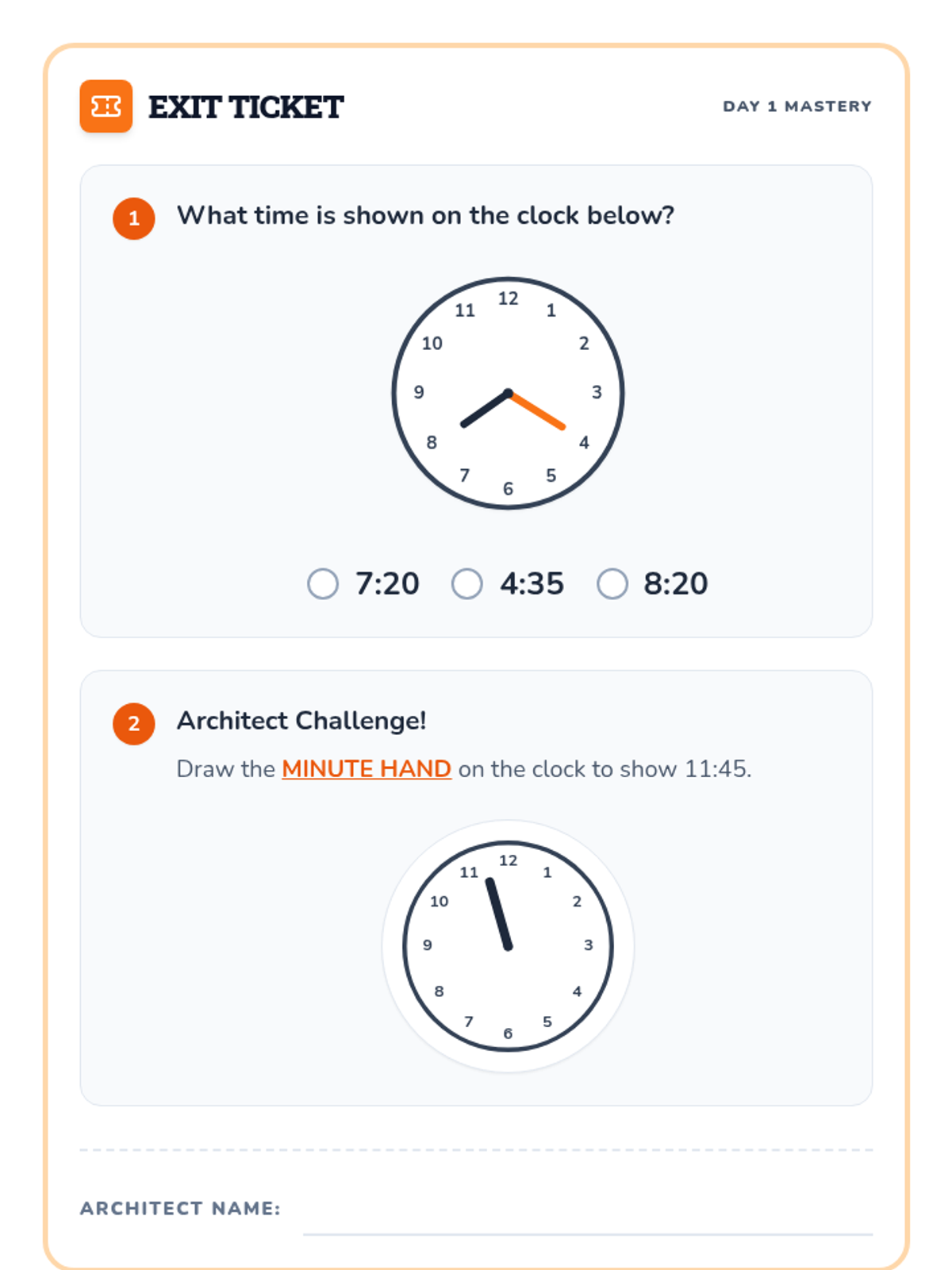
Mastering telling time to the nearest 5 minutes on an analog clock through guided practice and independent application.
A focused practice session where students work through two variations of five core mathematical problems to solidify their understanding of measurement, data, and number operations.
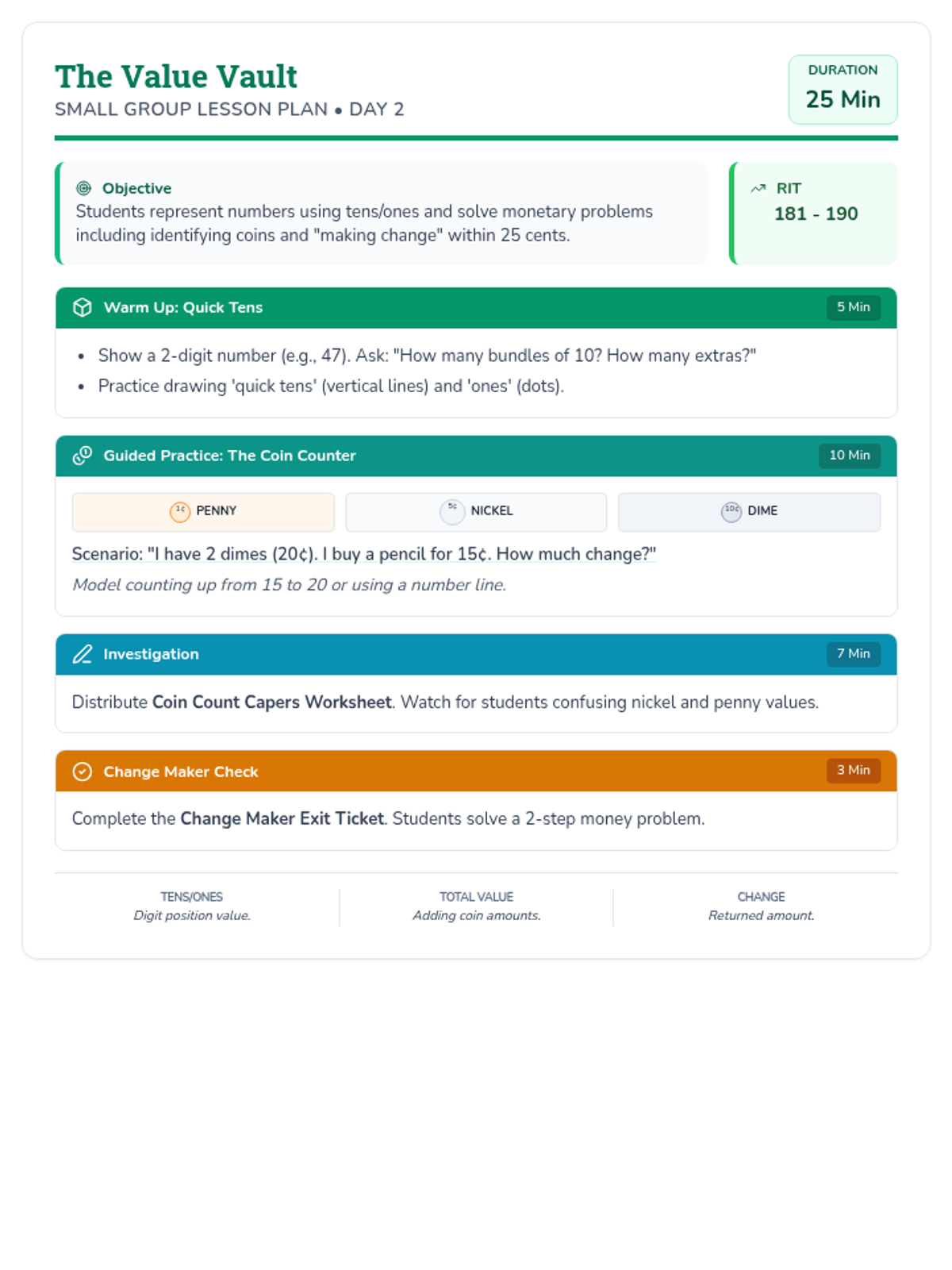
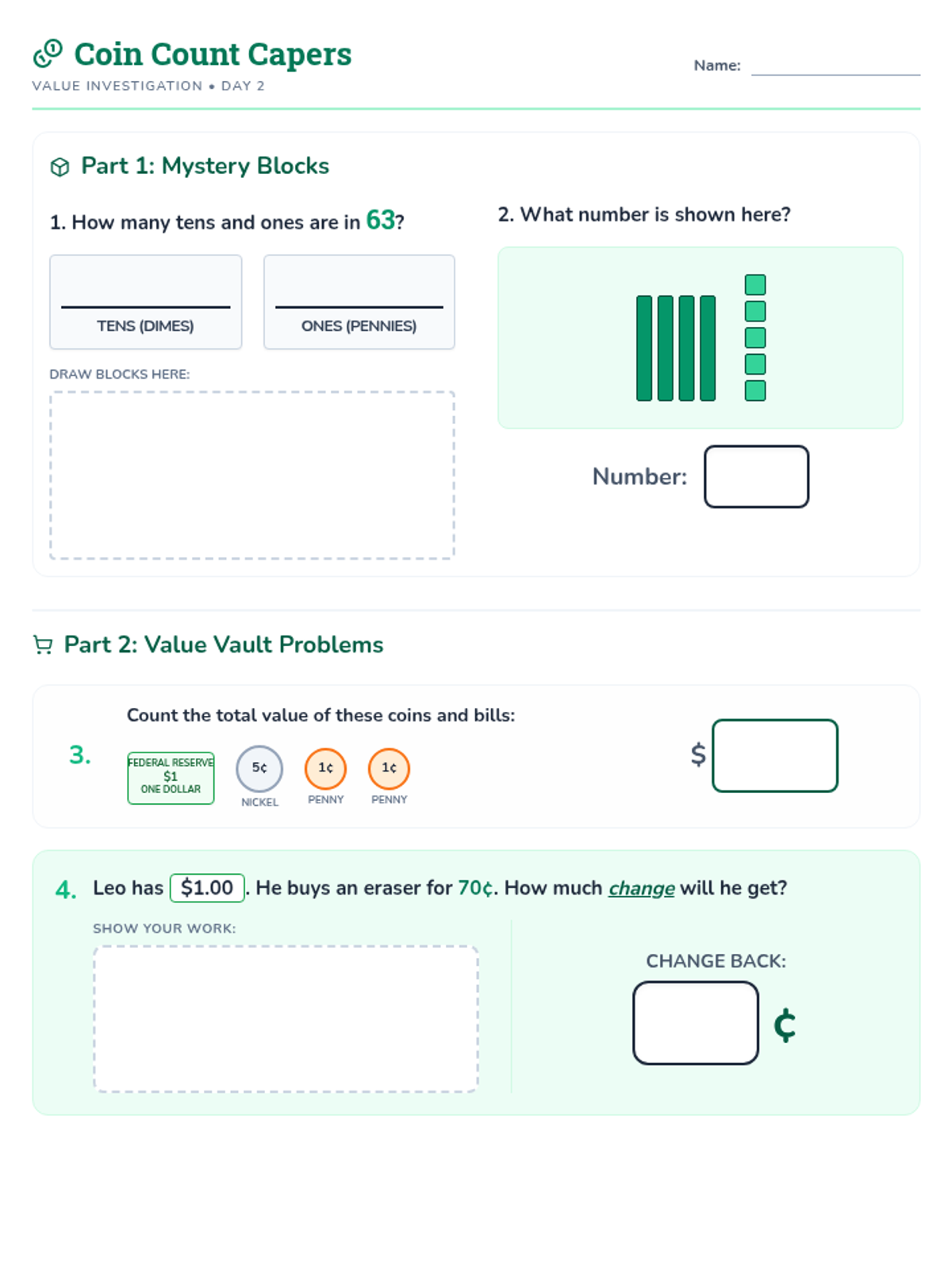
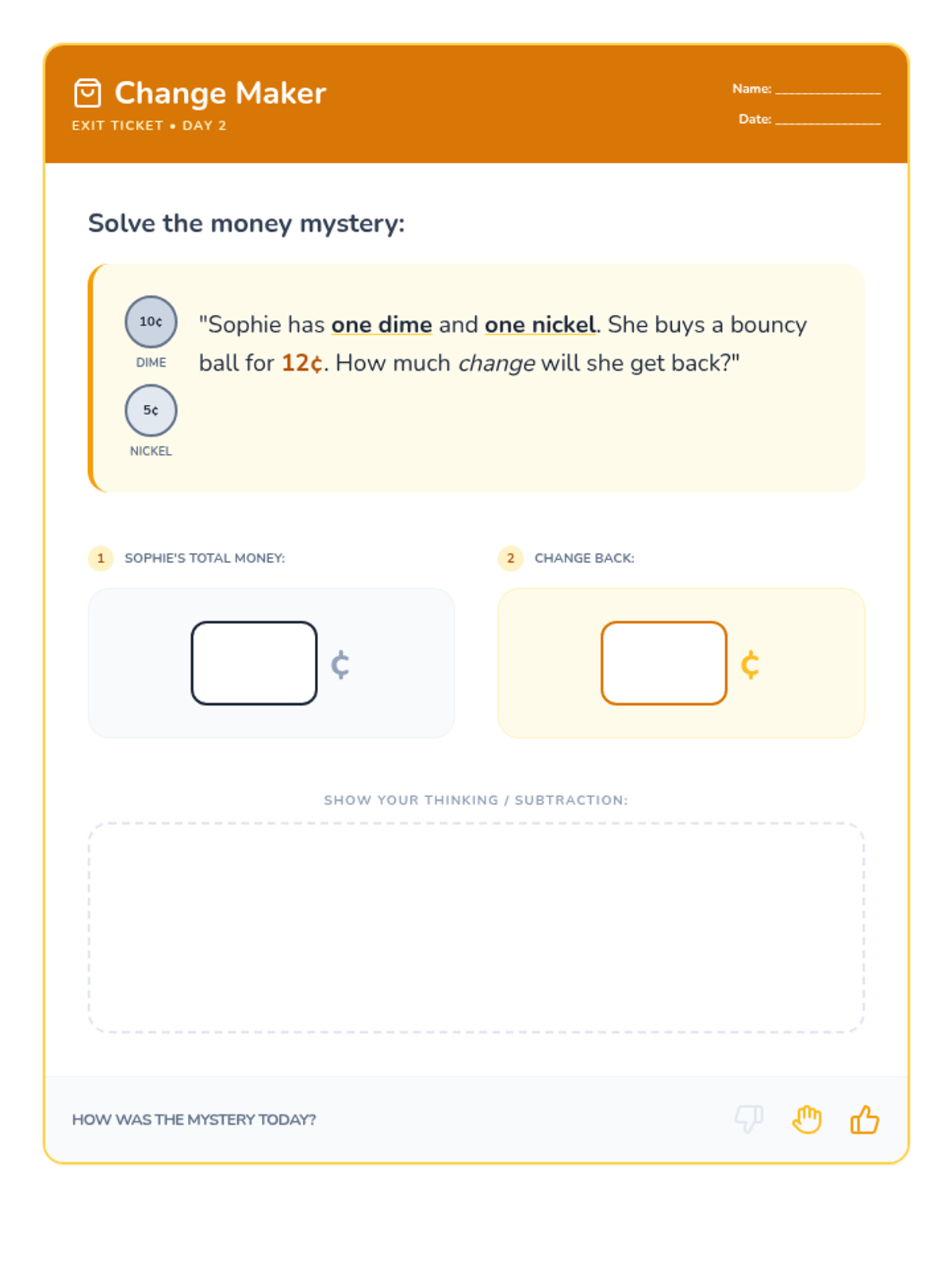
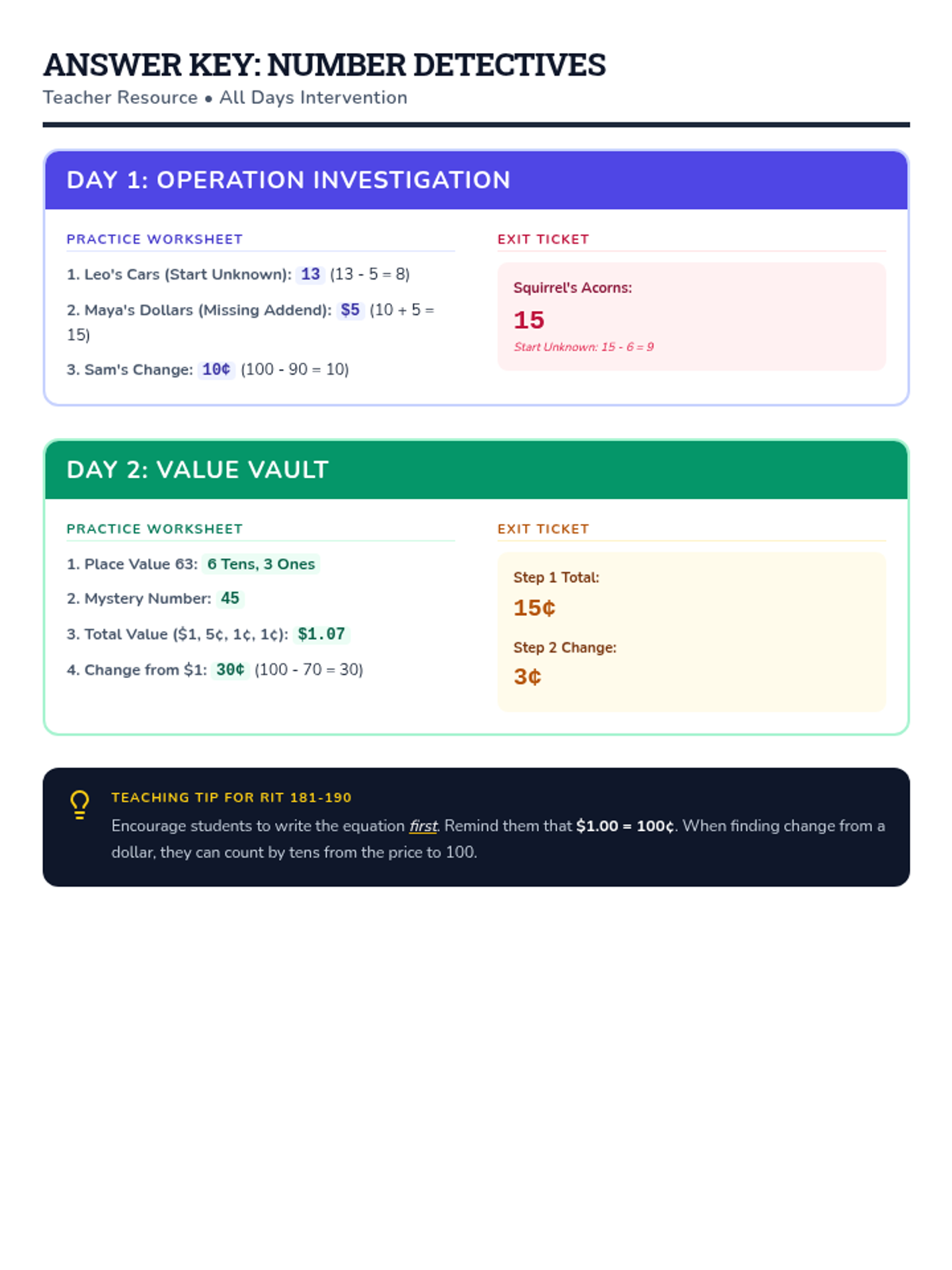
Focuses on place value (tens and ones) and monetary problems including identifying coins and making change.
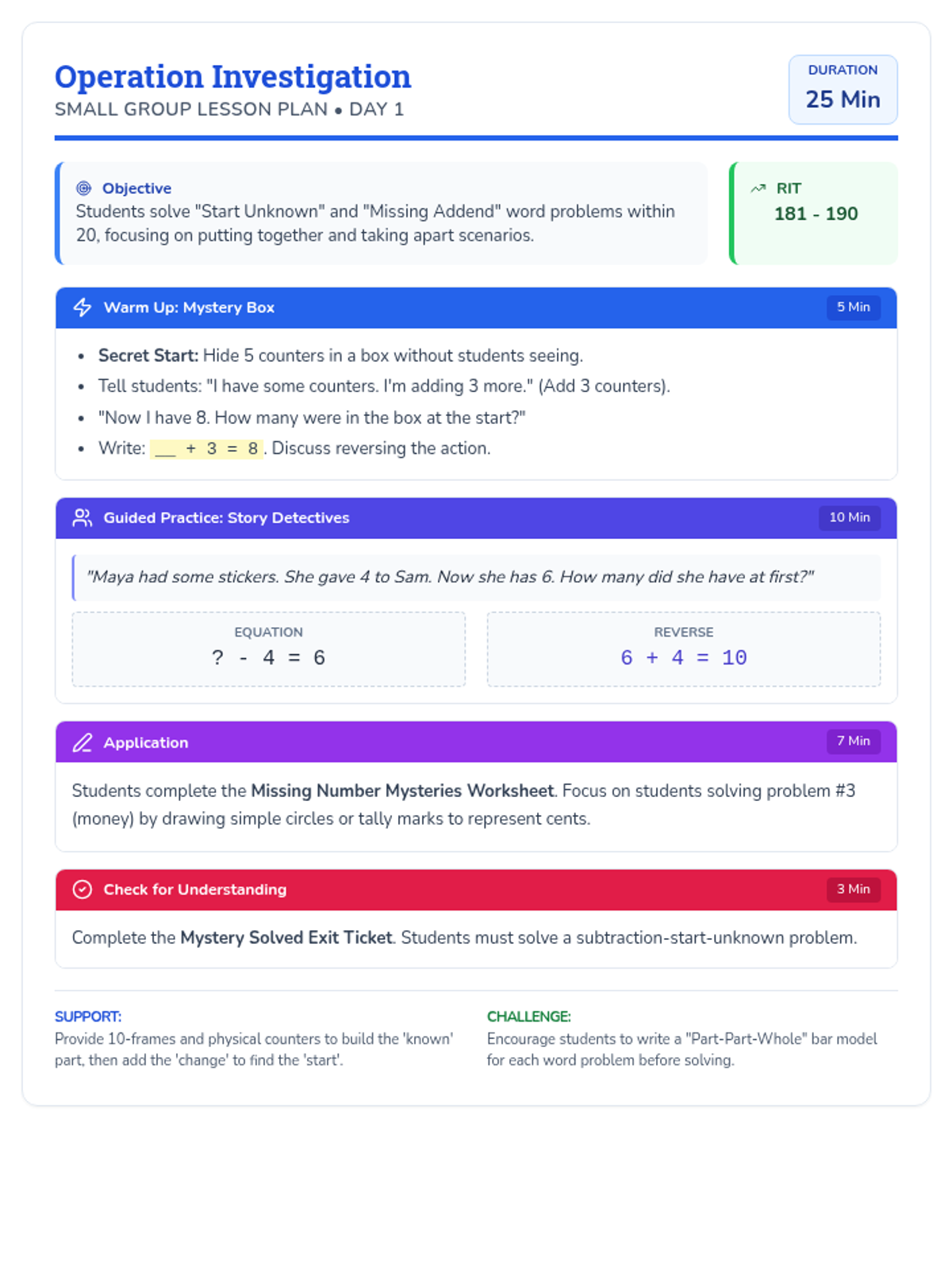
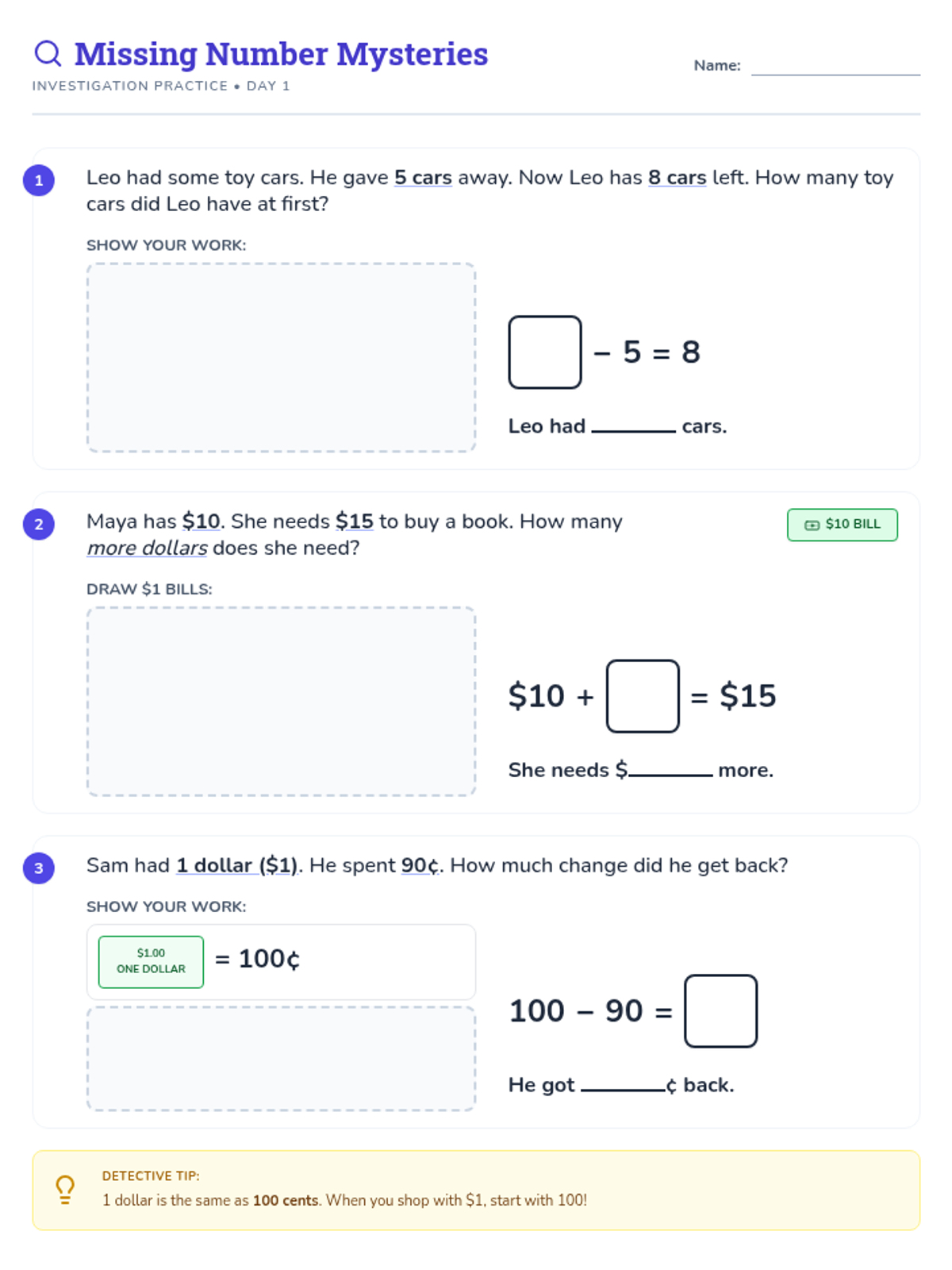
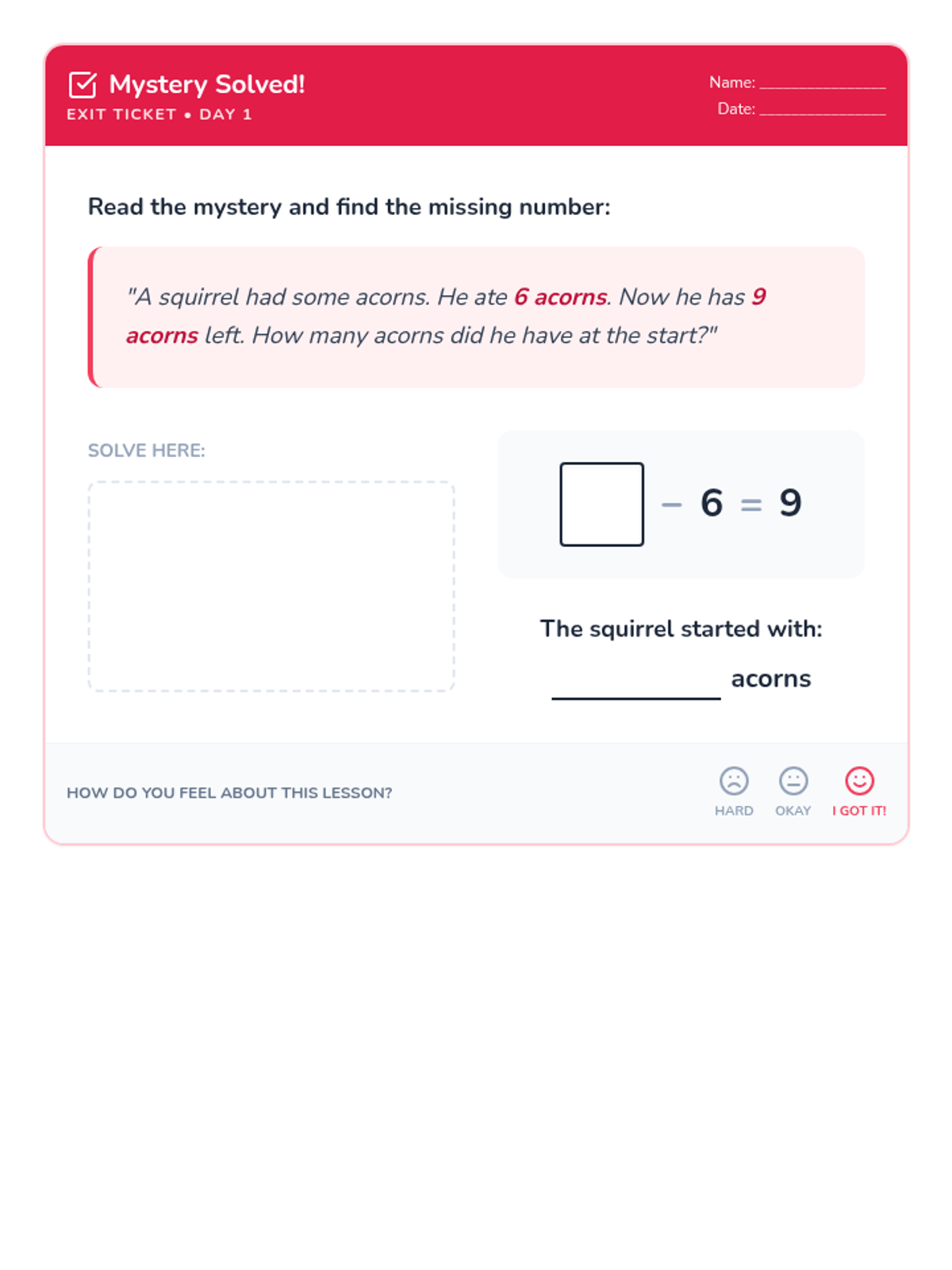
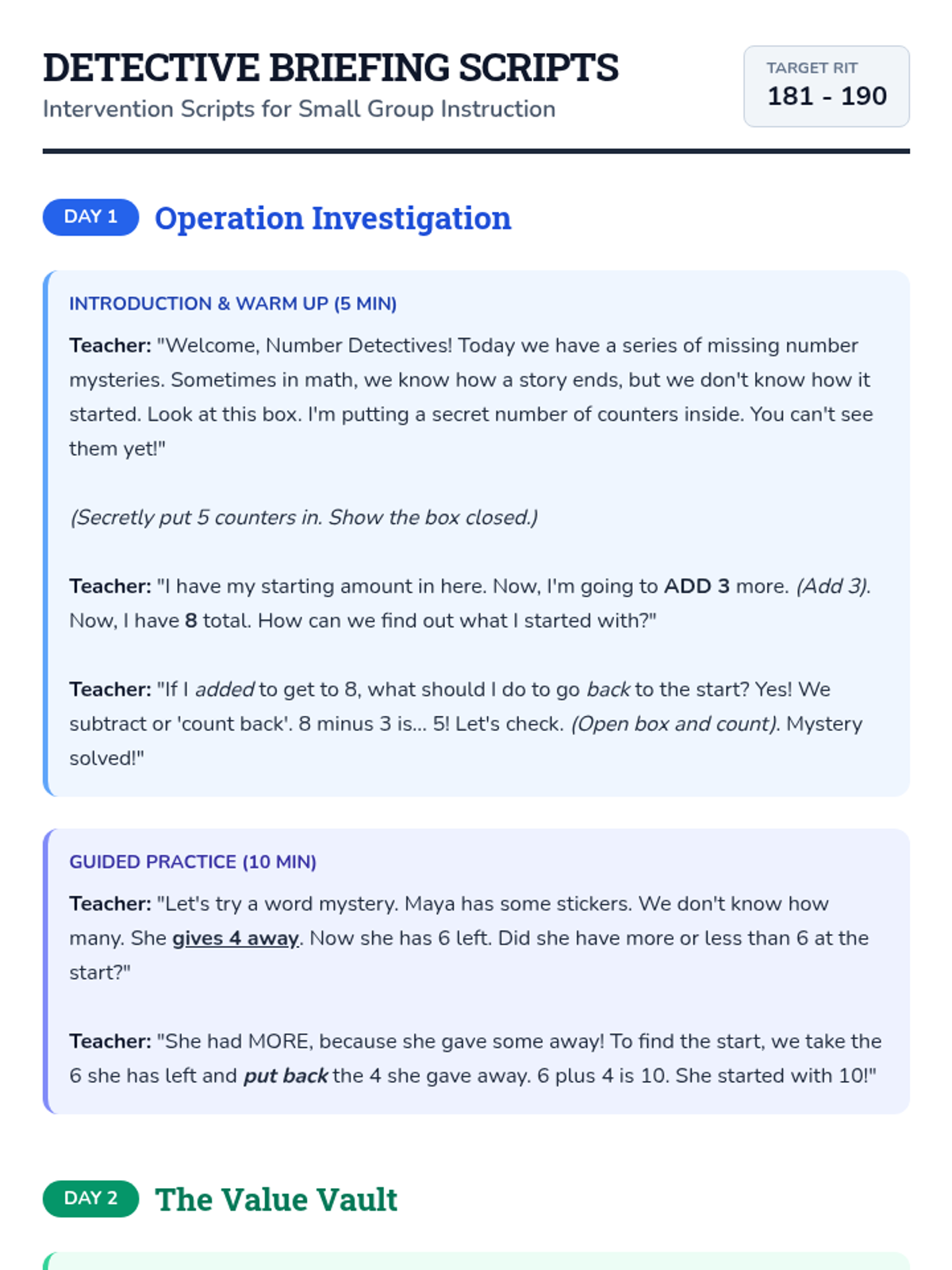
Focused on solving Start Unknown and Missing Addend word problems involving putting together and taking apart scenarios.
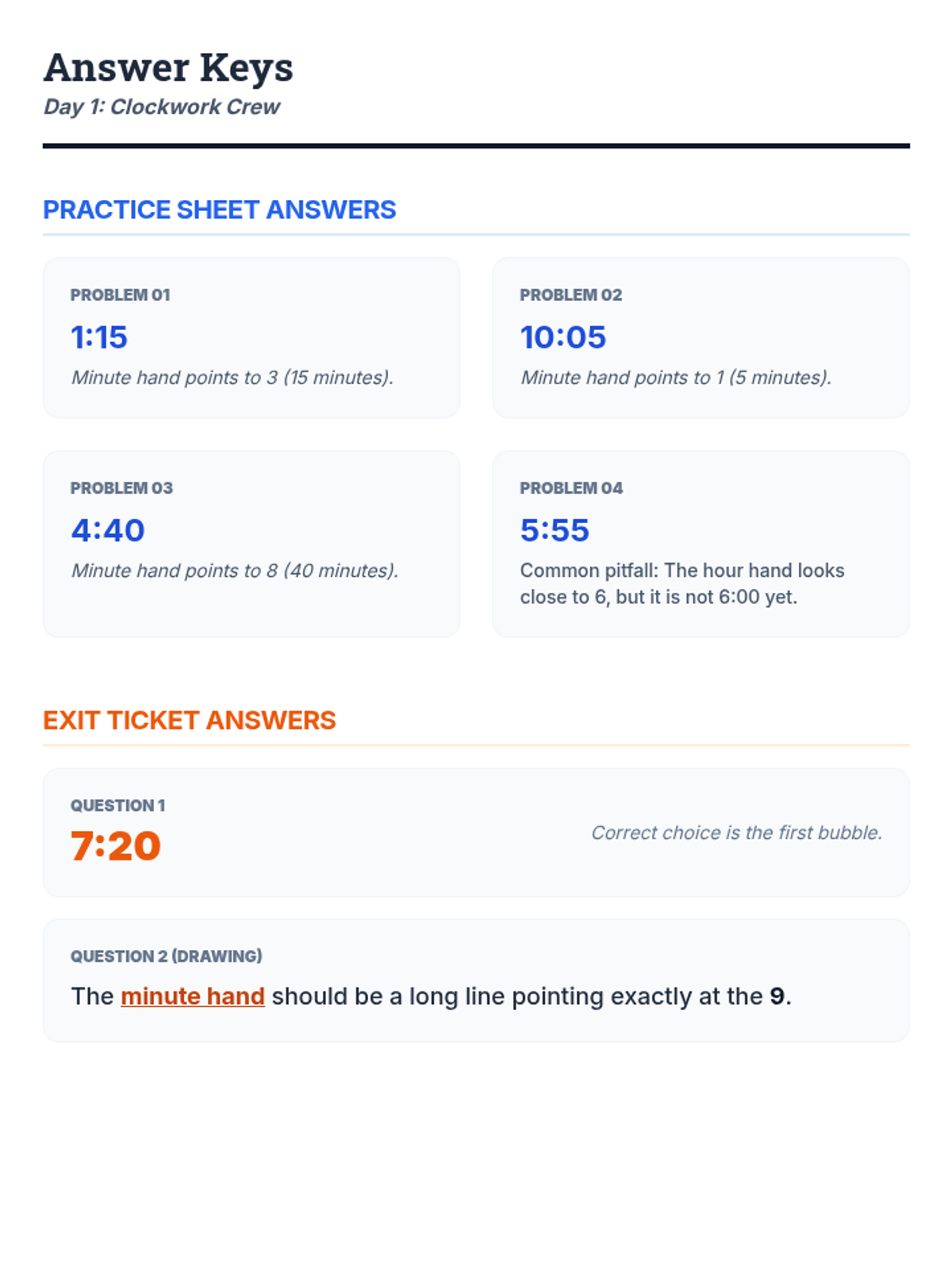
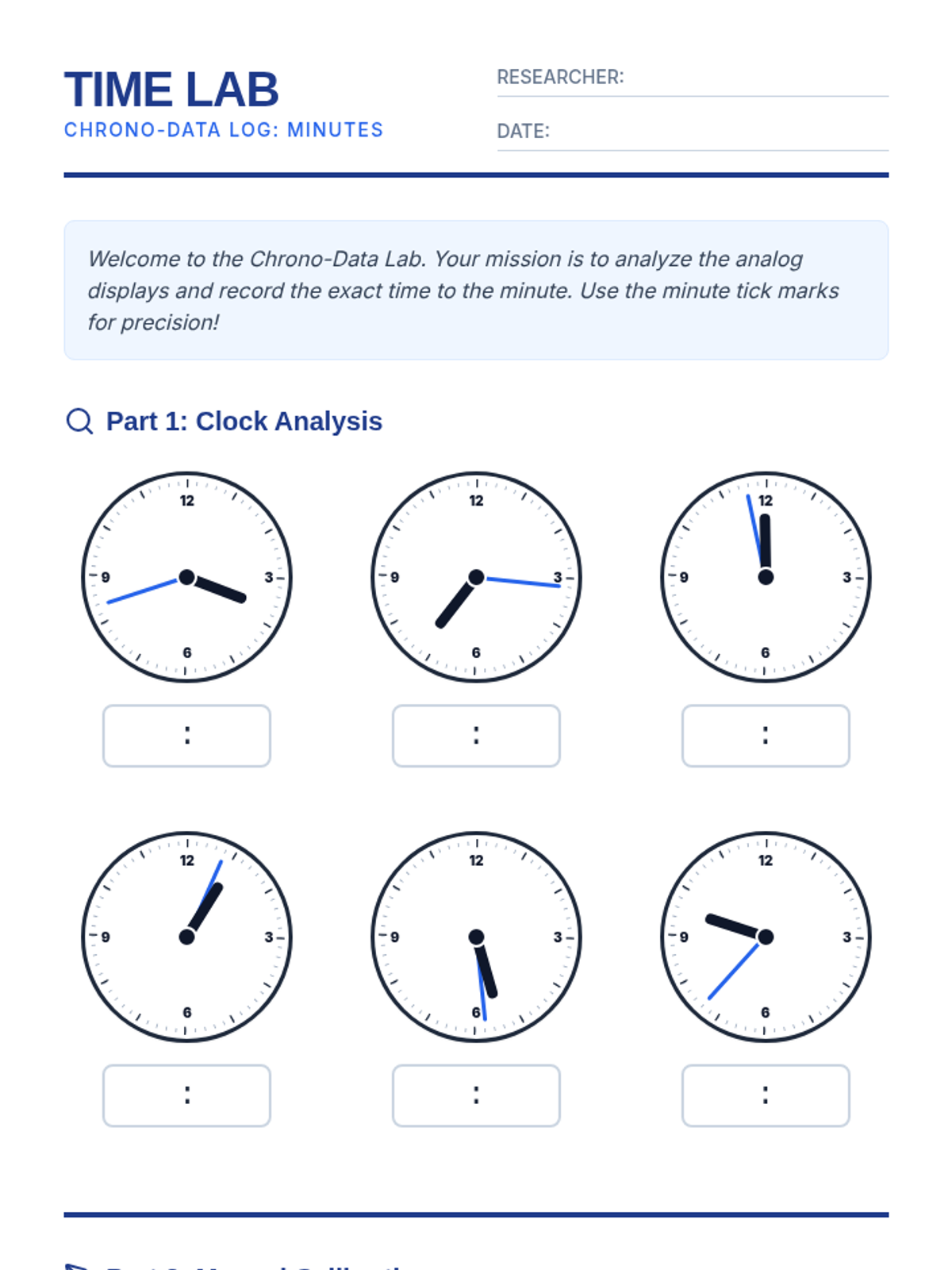
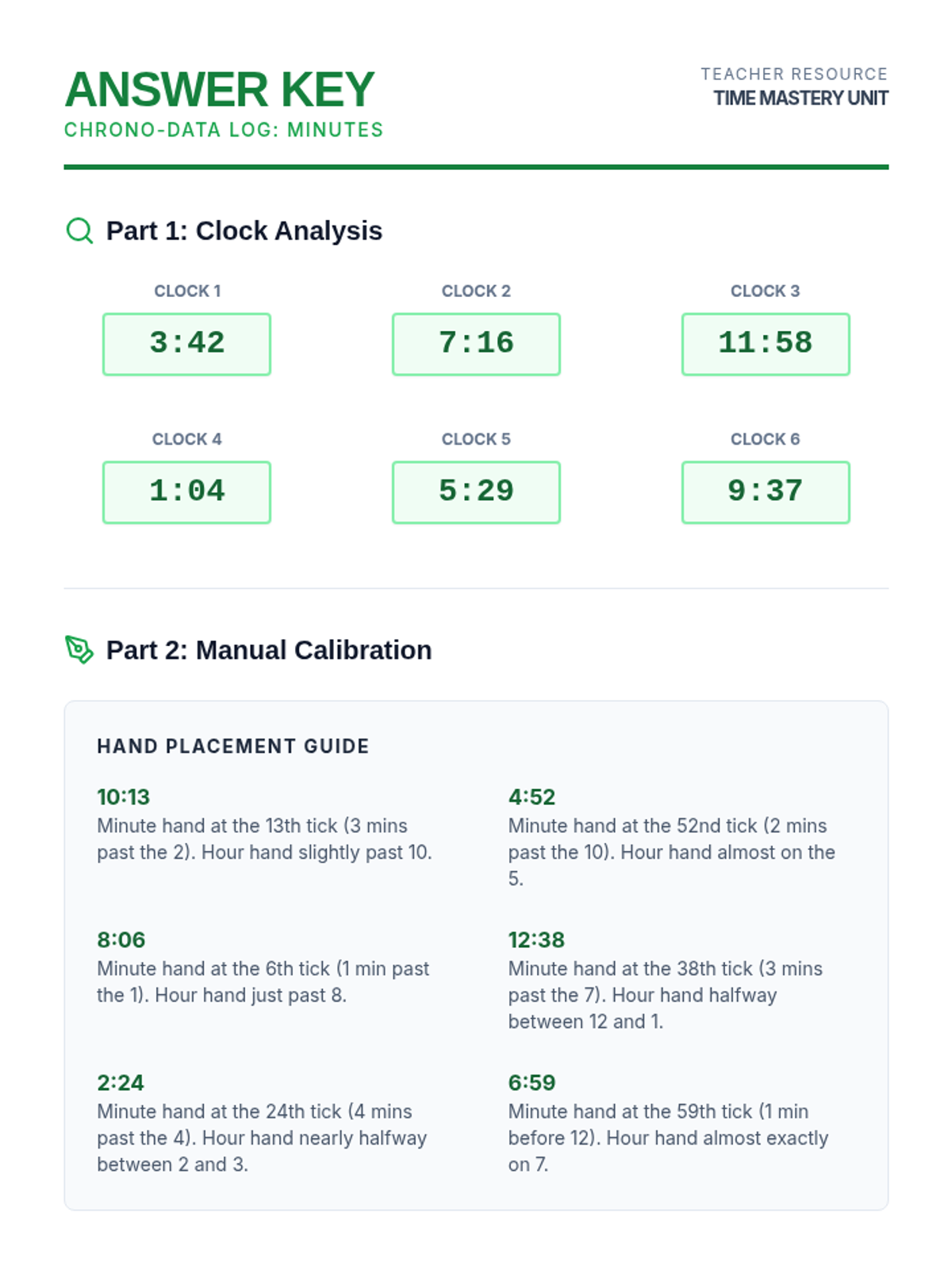
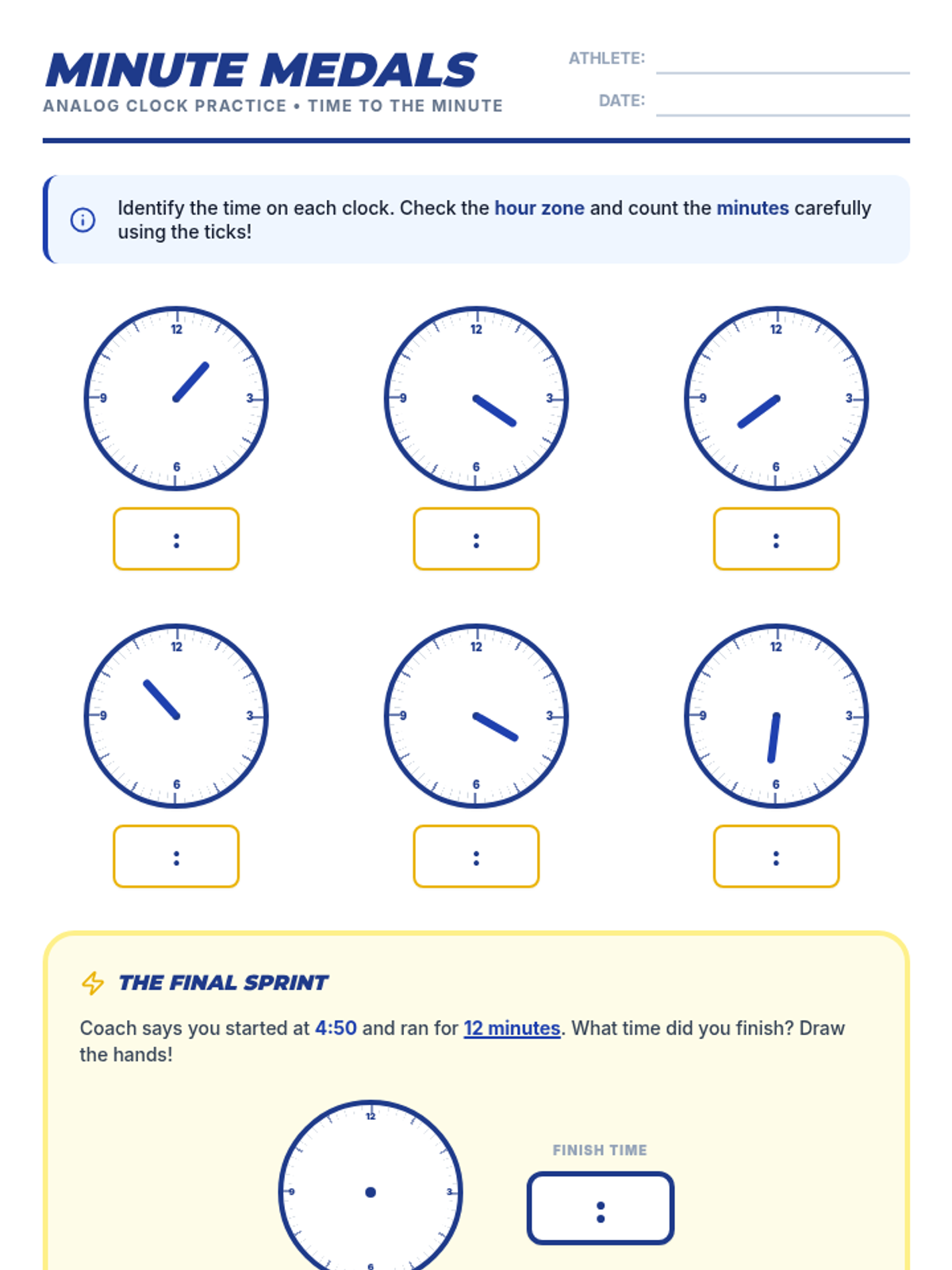
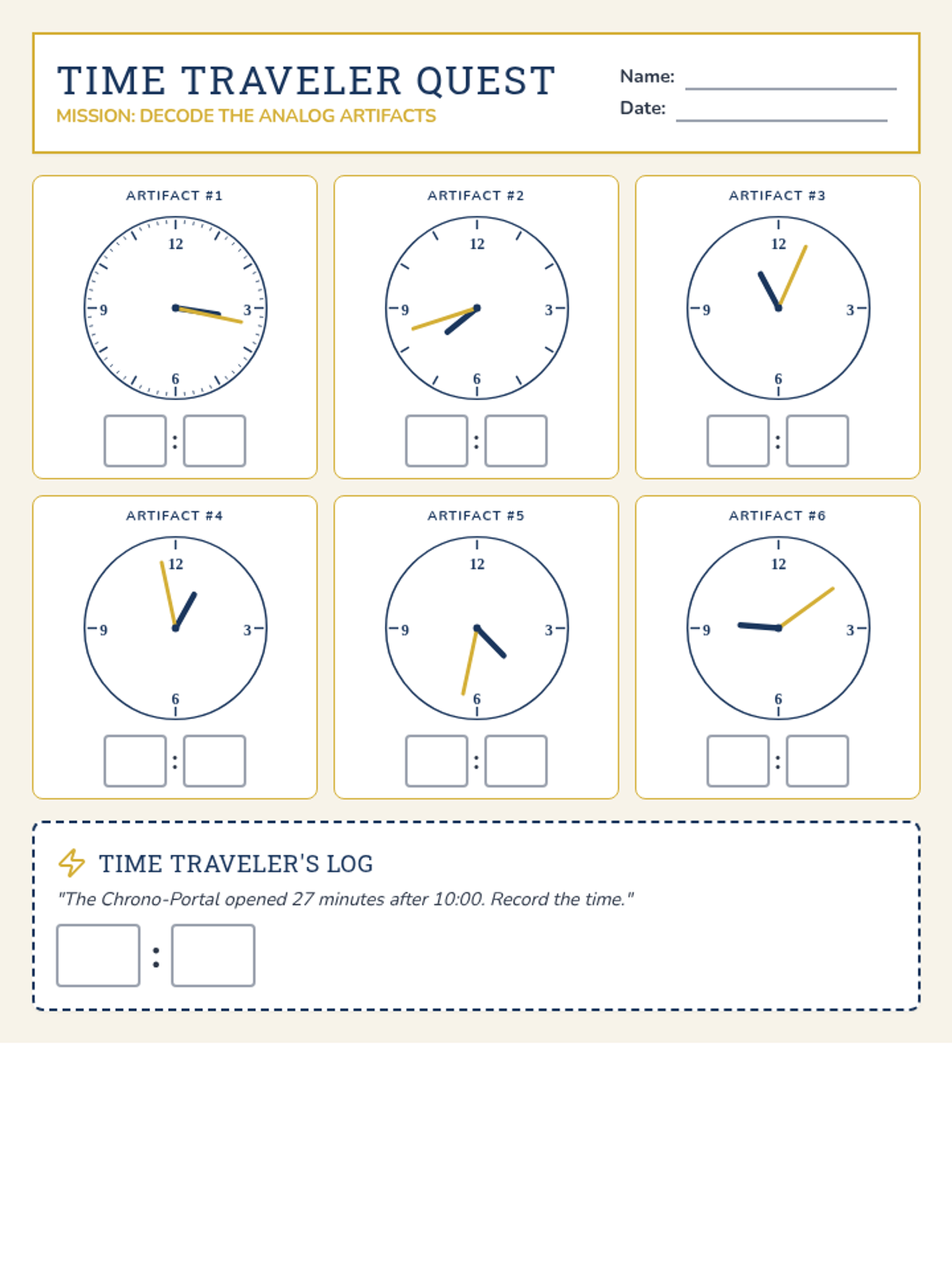
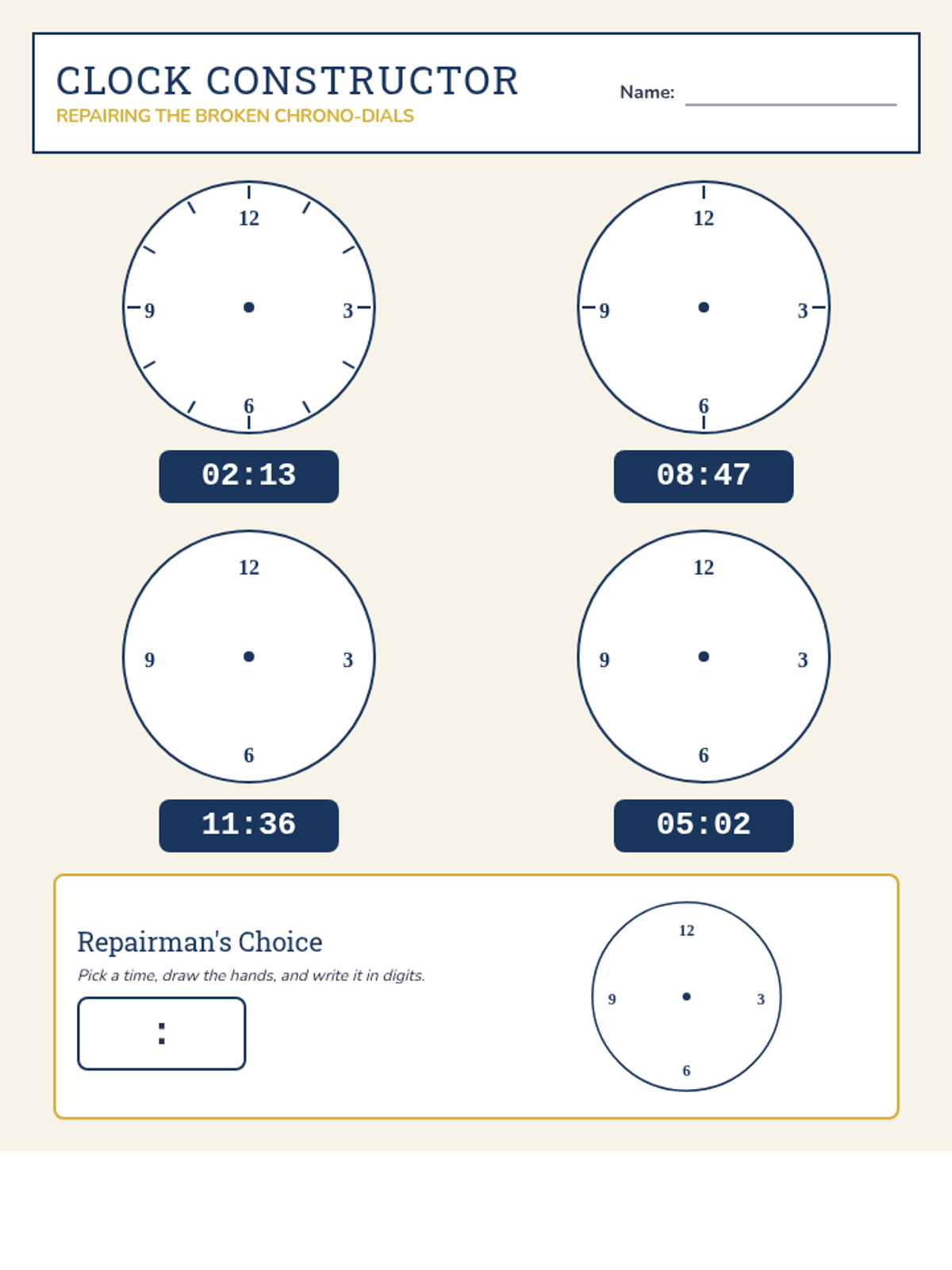
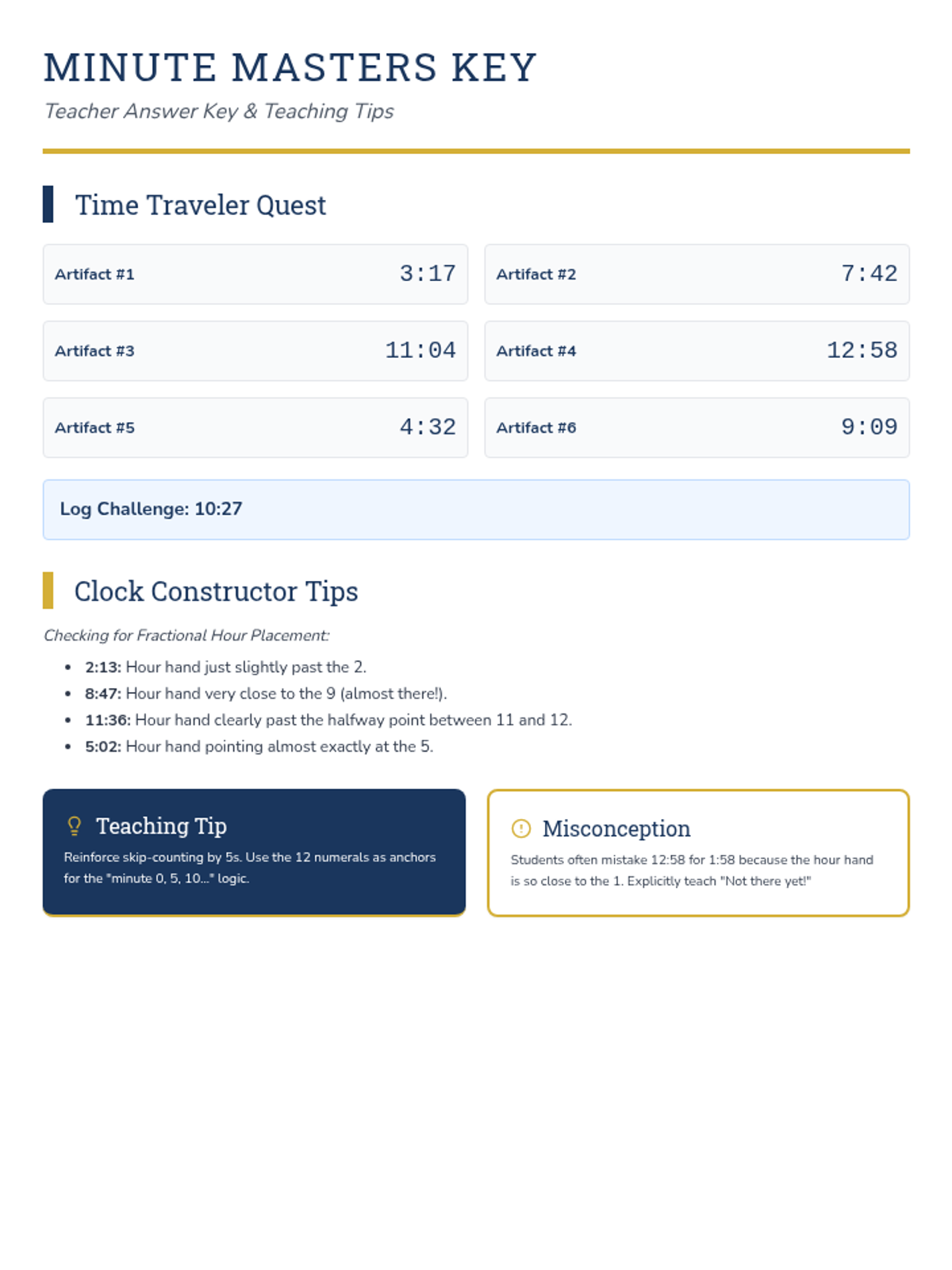
Students will master reading and drawing time on analog clocks to the exact minute through visual analysis and manual practice.
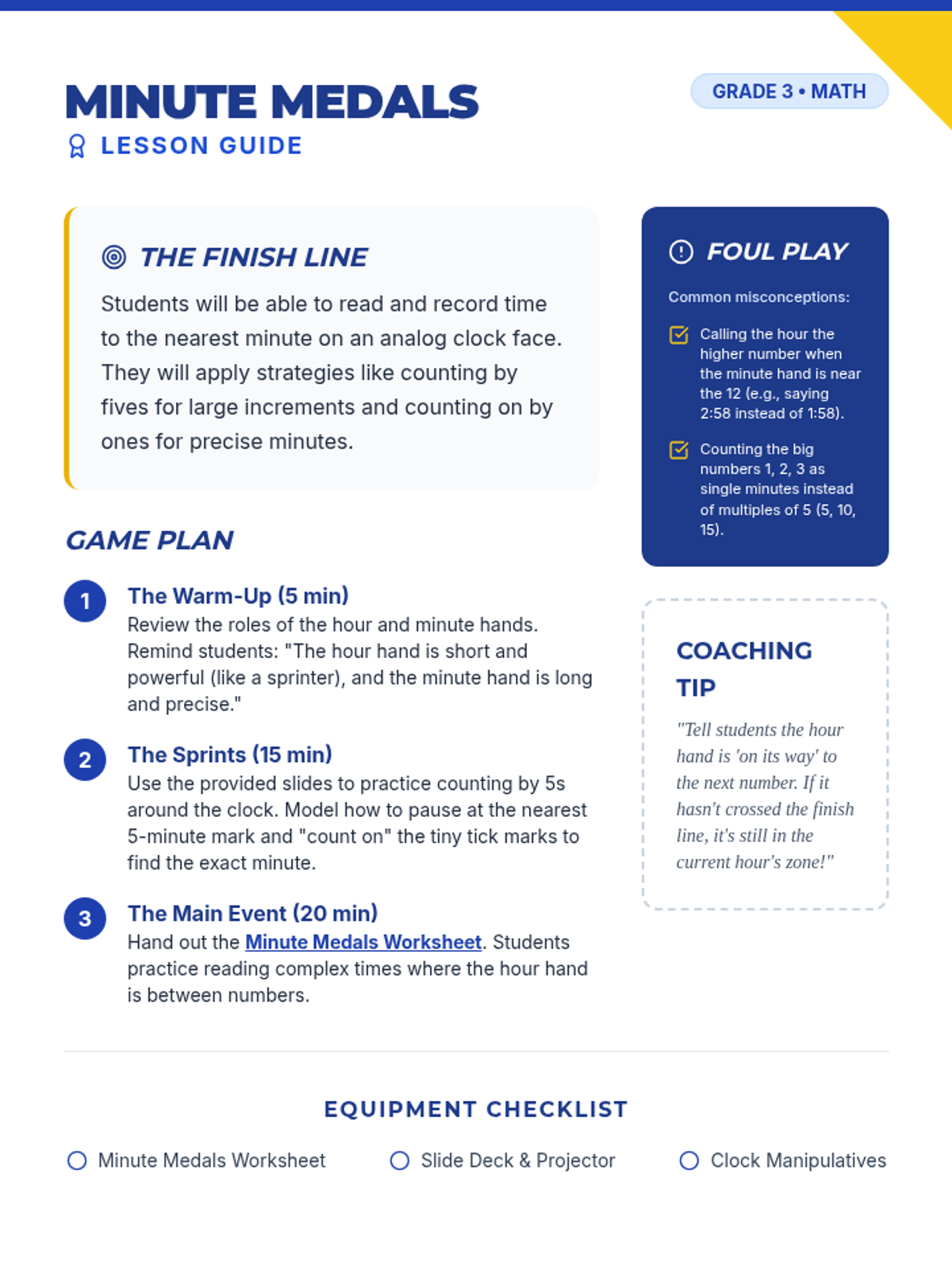
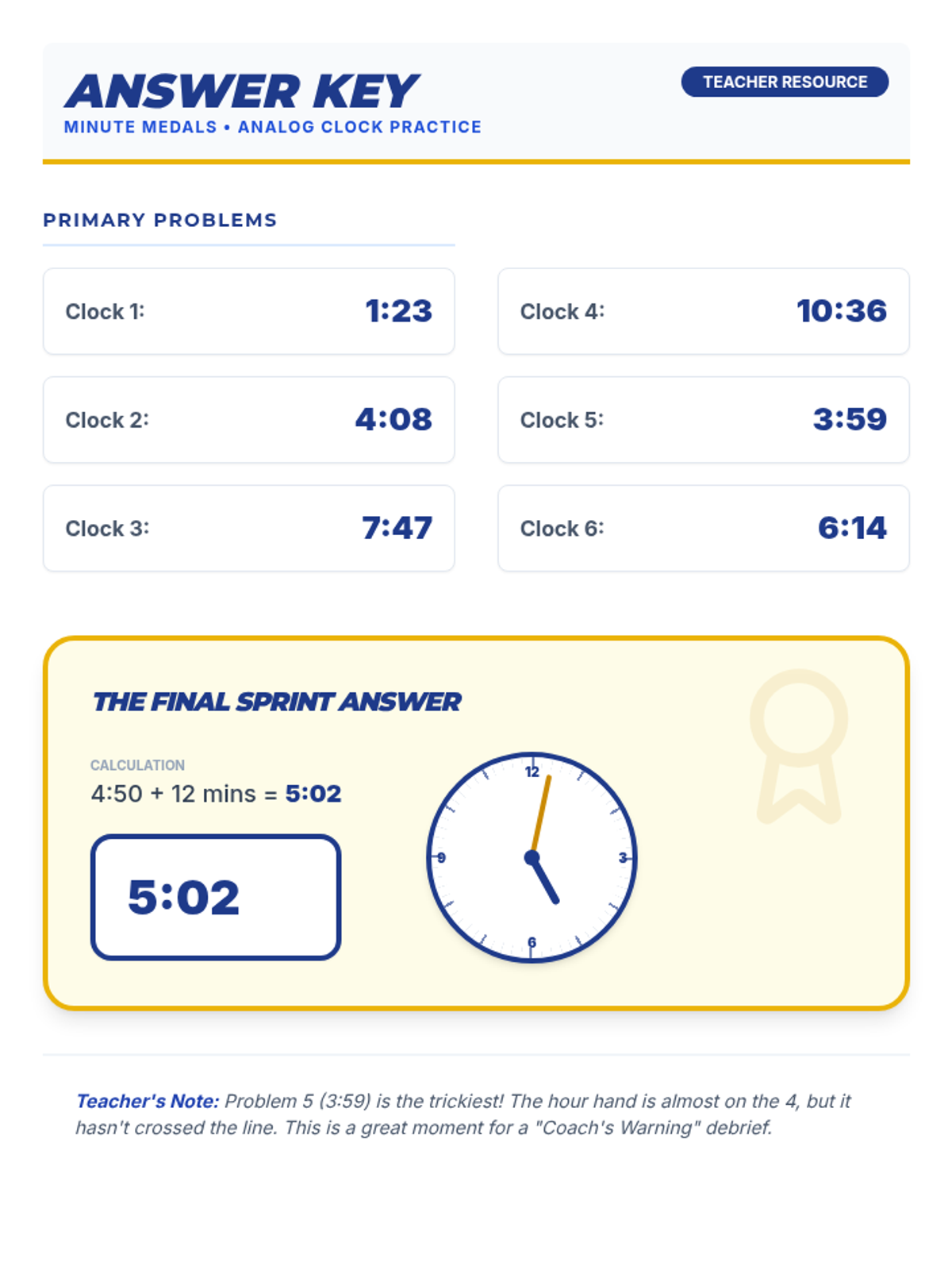
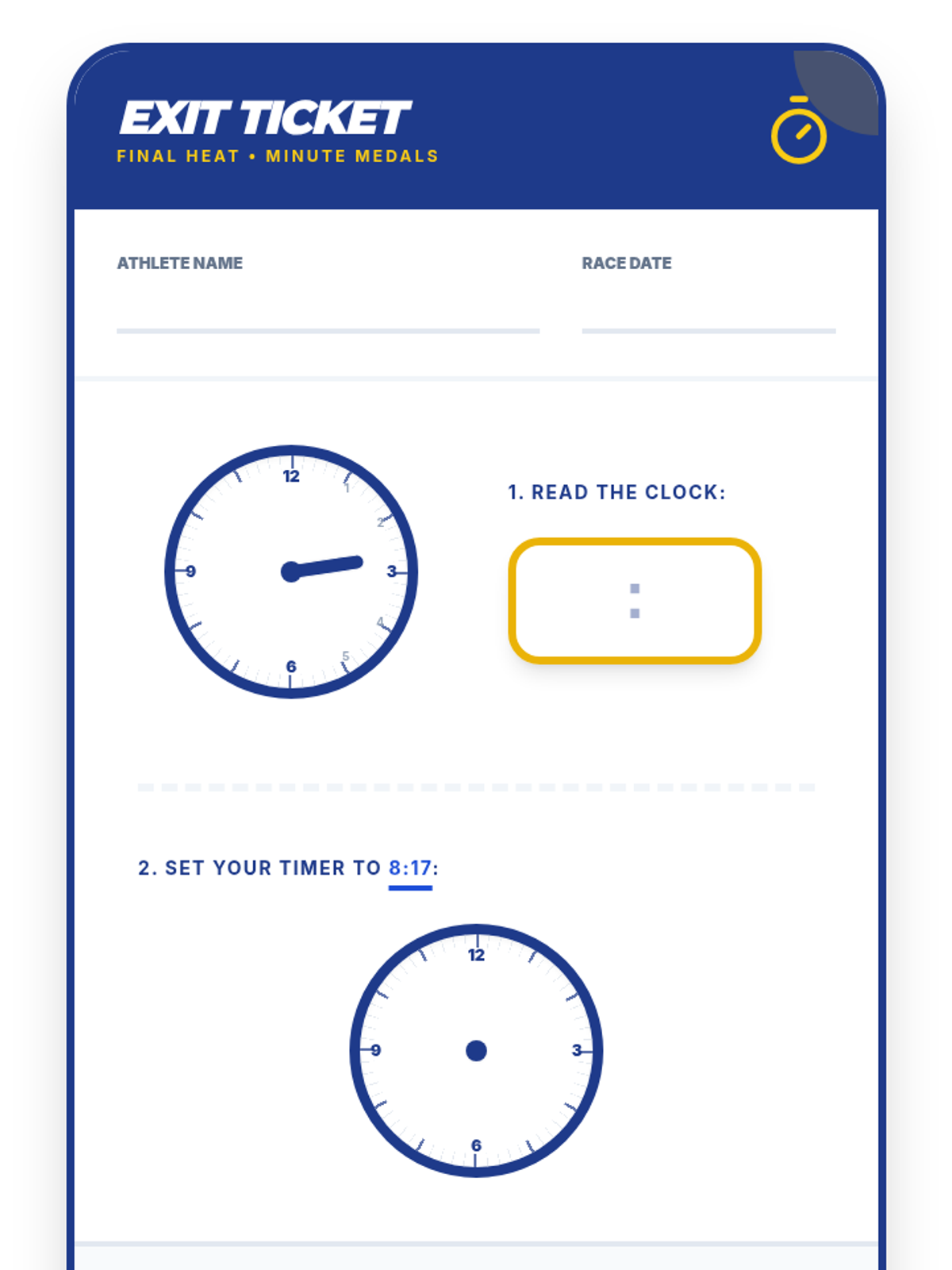
A high-energy, sports-themed lesson focused on mastering the skill of reading analog clocks to the exact minute. Students learn to navigate the clock face like a track, using landmarks and counting on to reach the finish line.
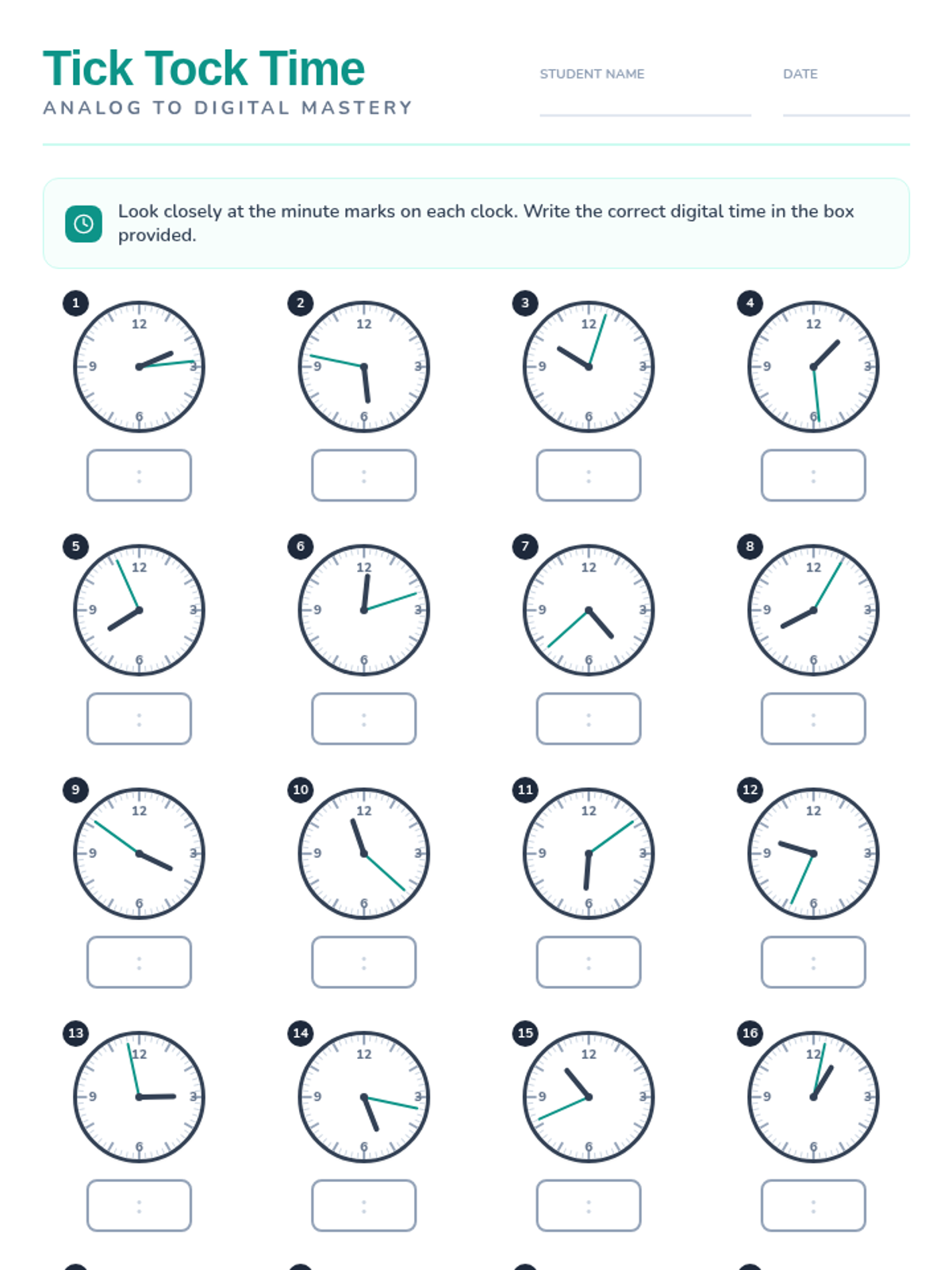
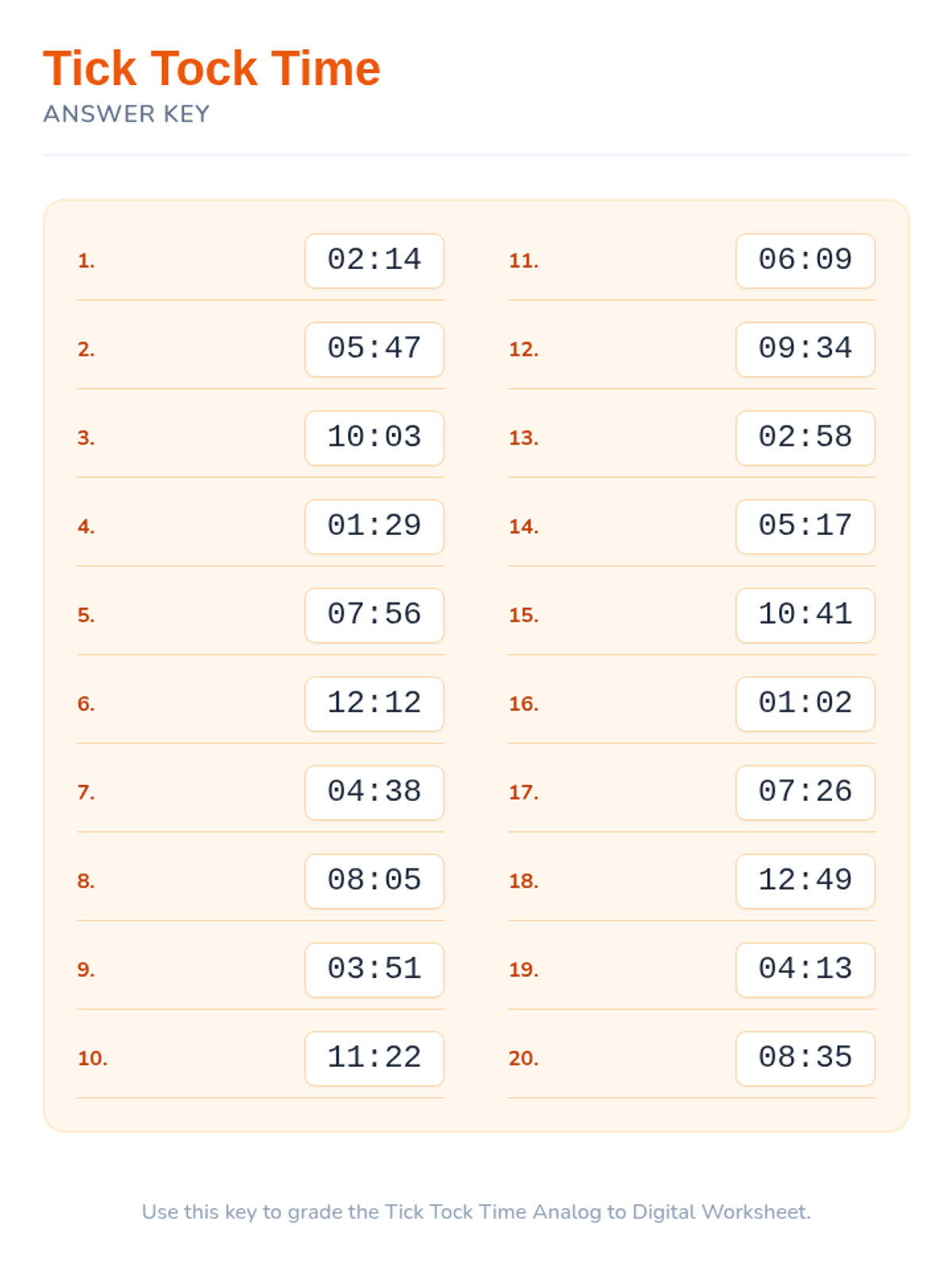
A focused lesson on reading analog clocks to the precise minute and converting them to digital format.
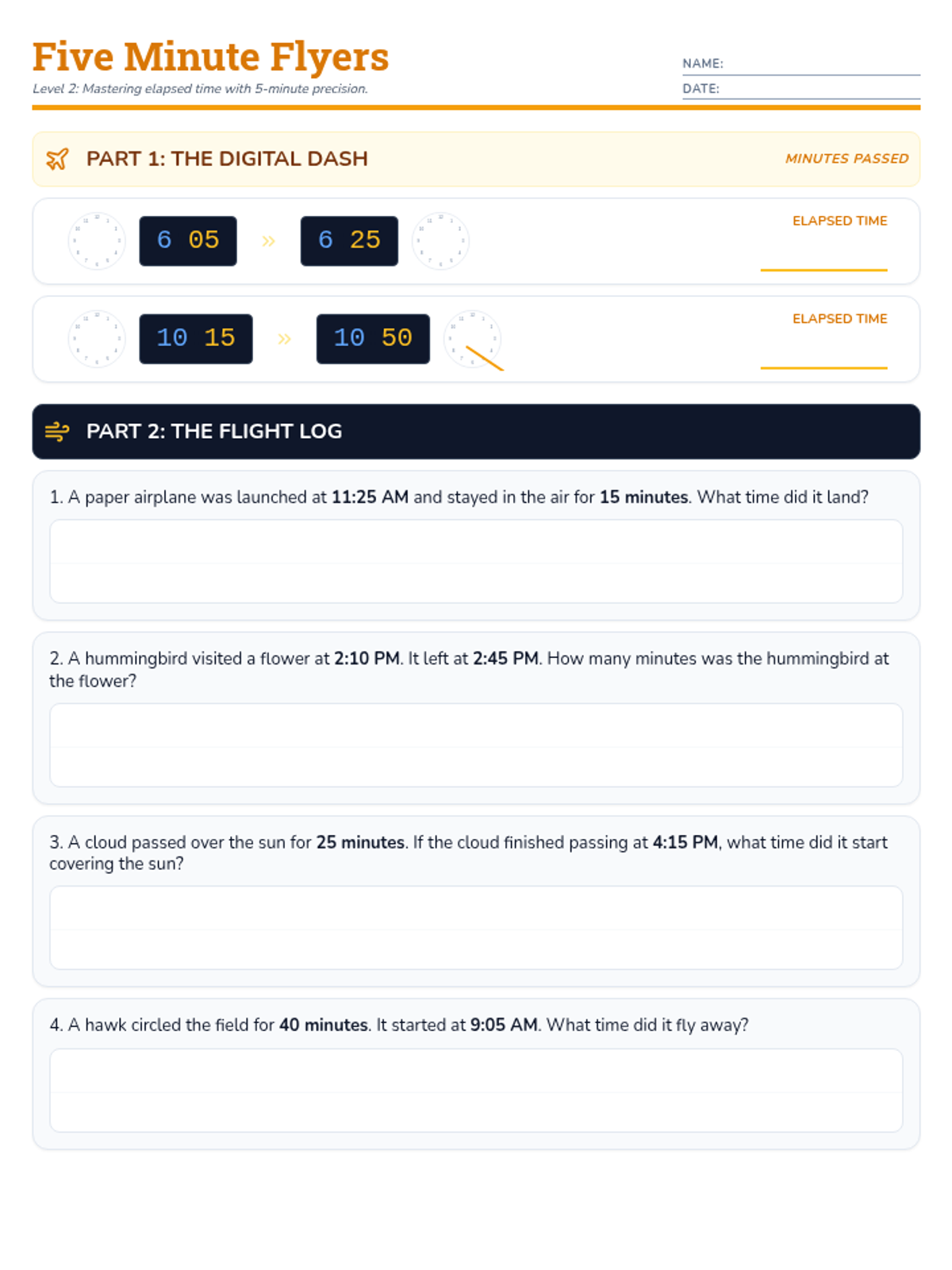
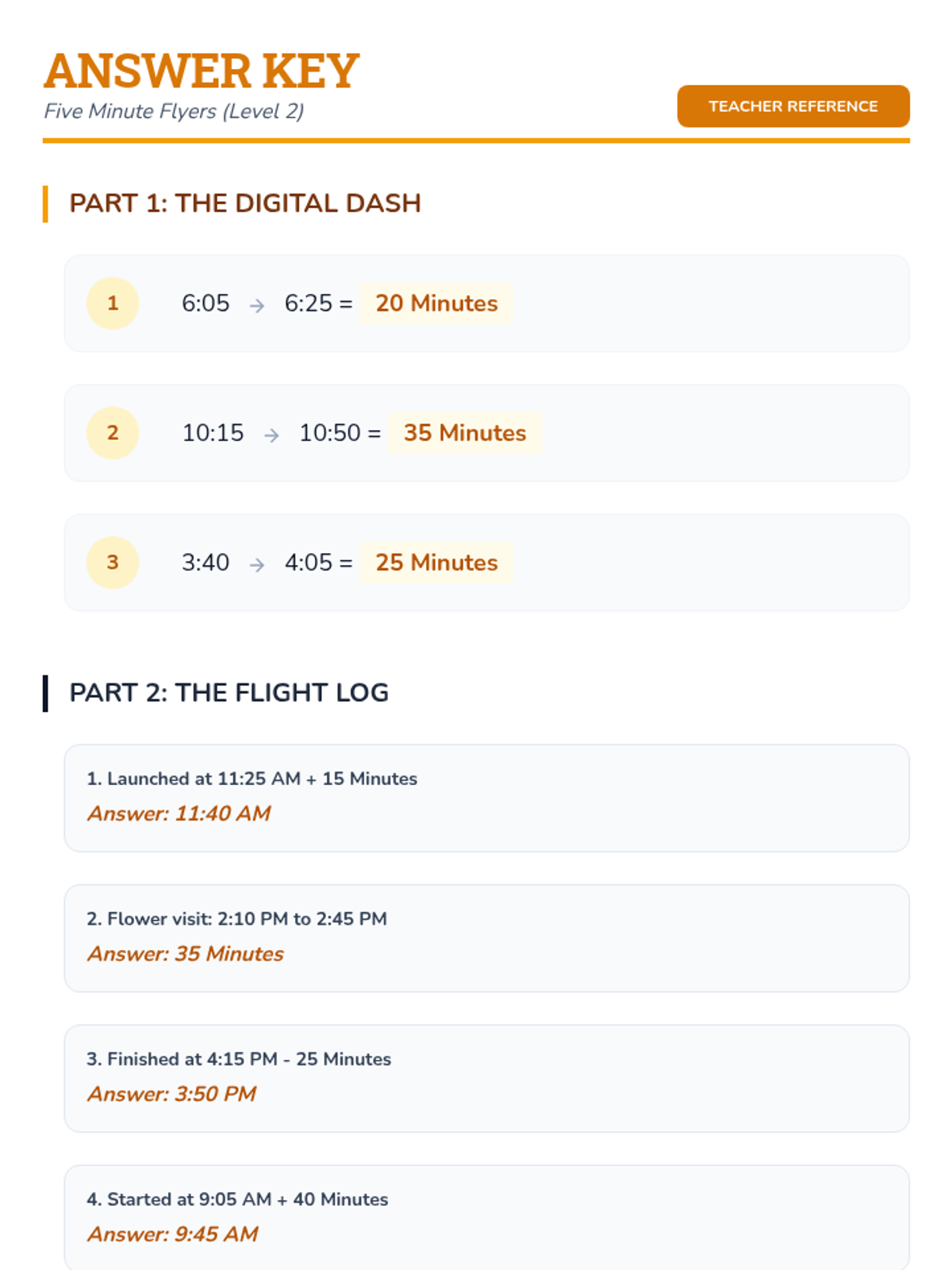
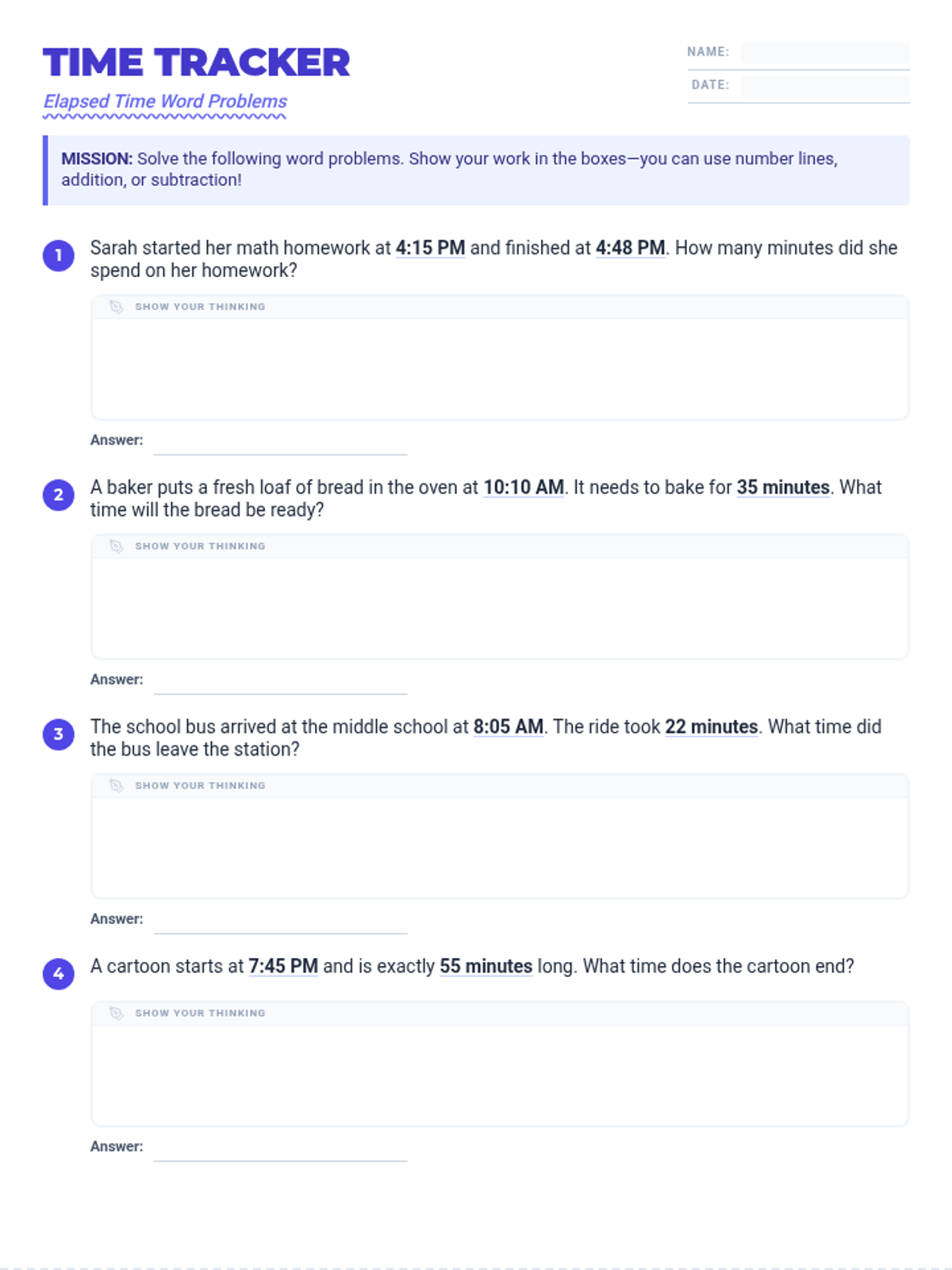
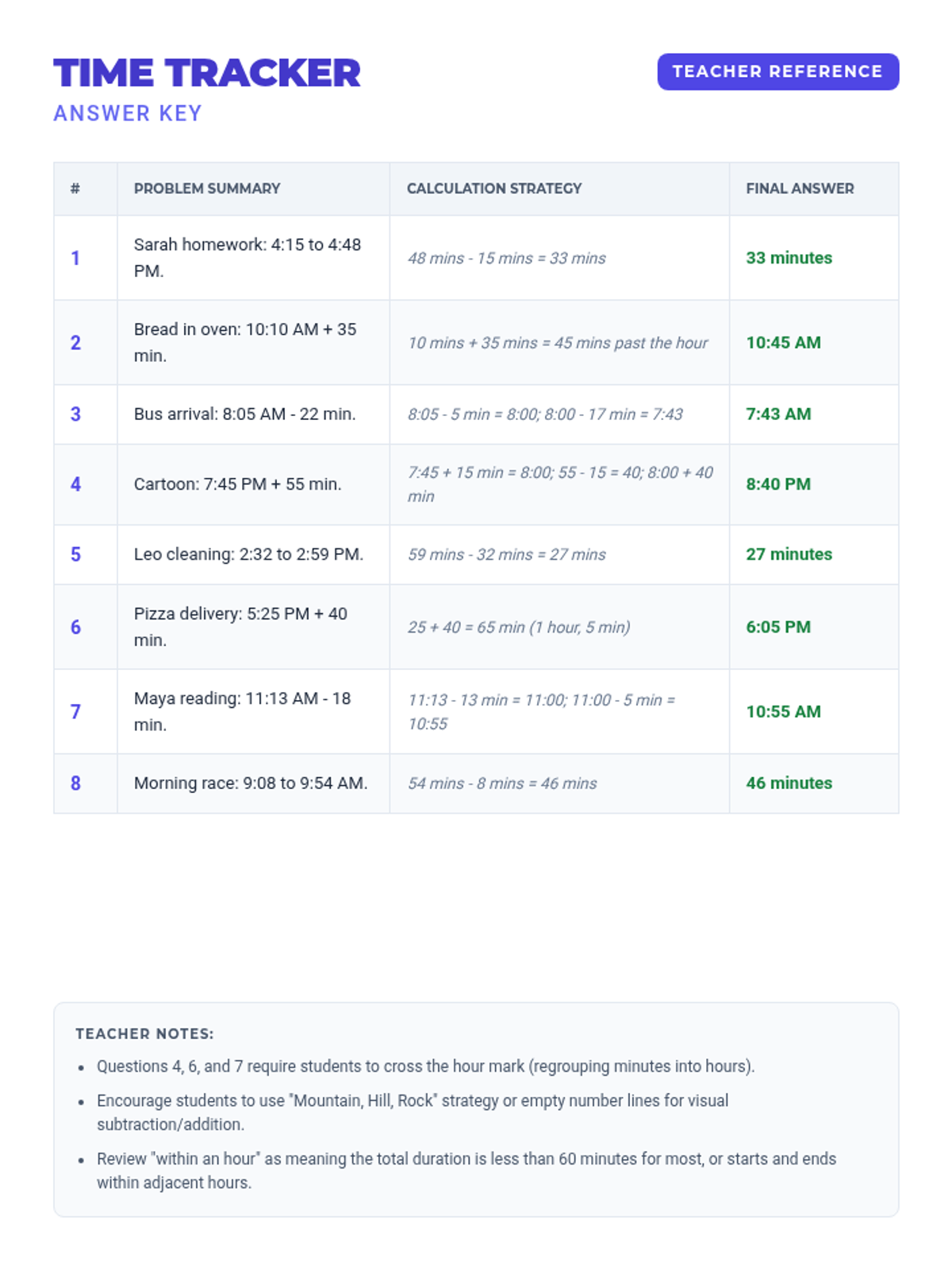
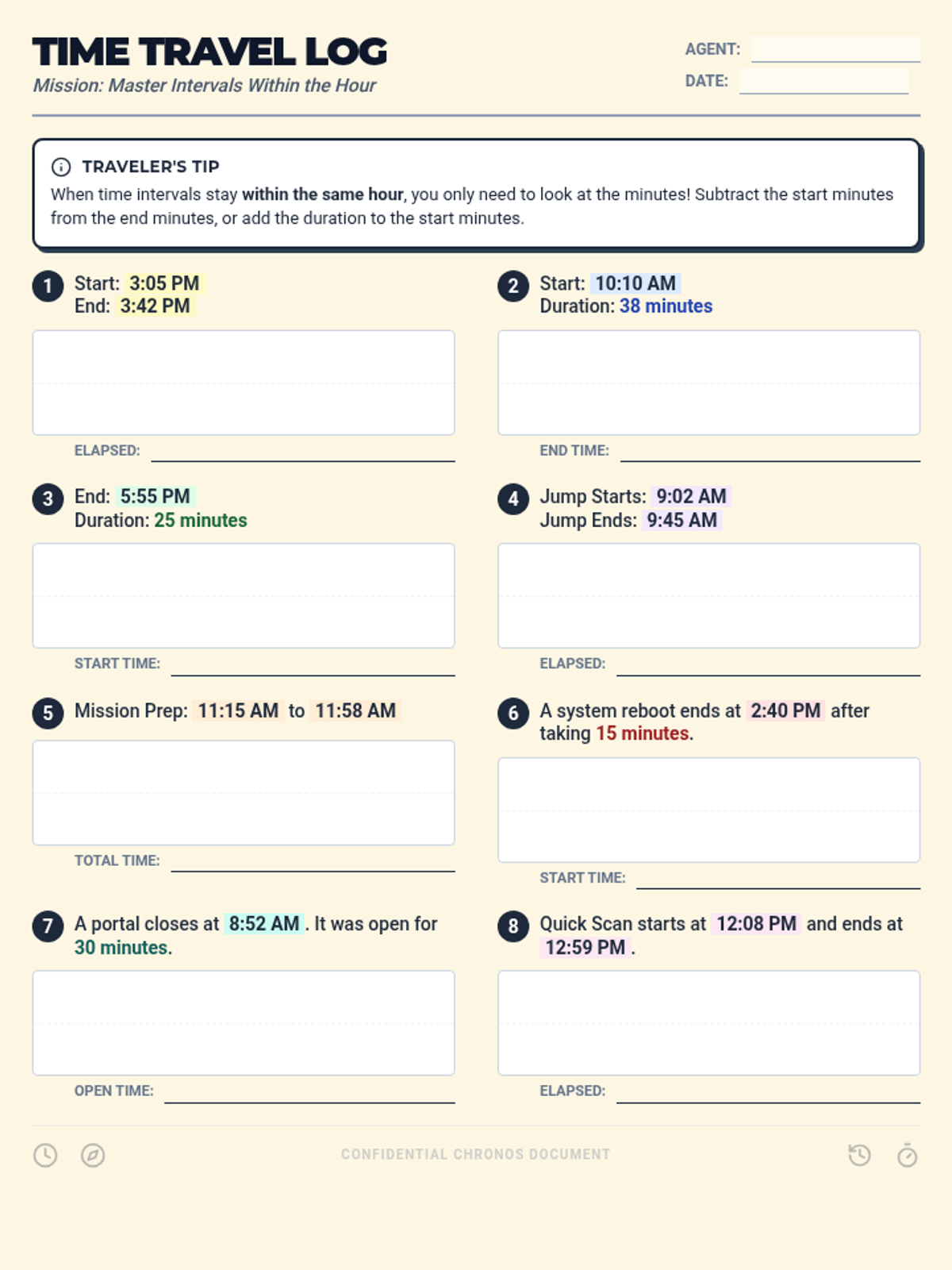
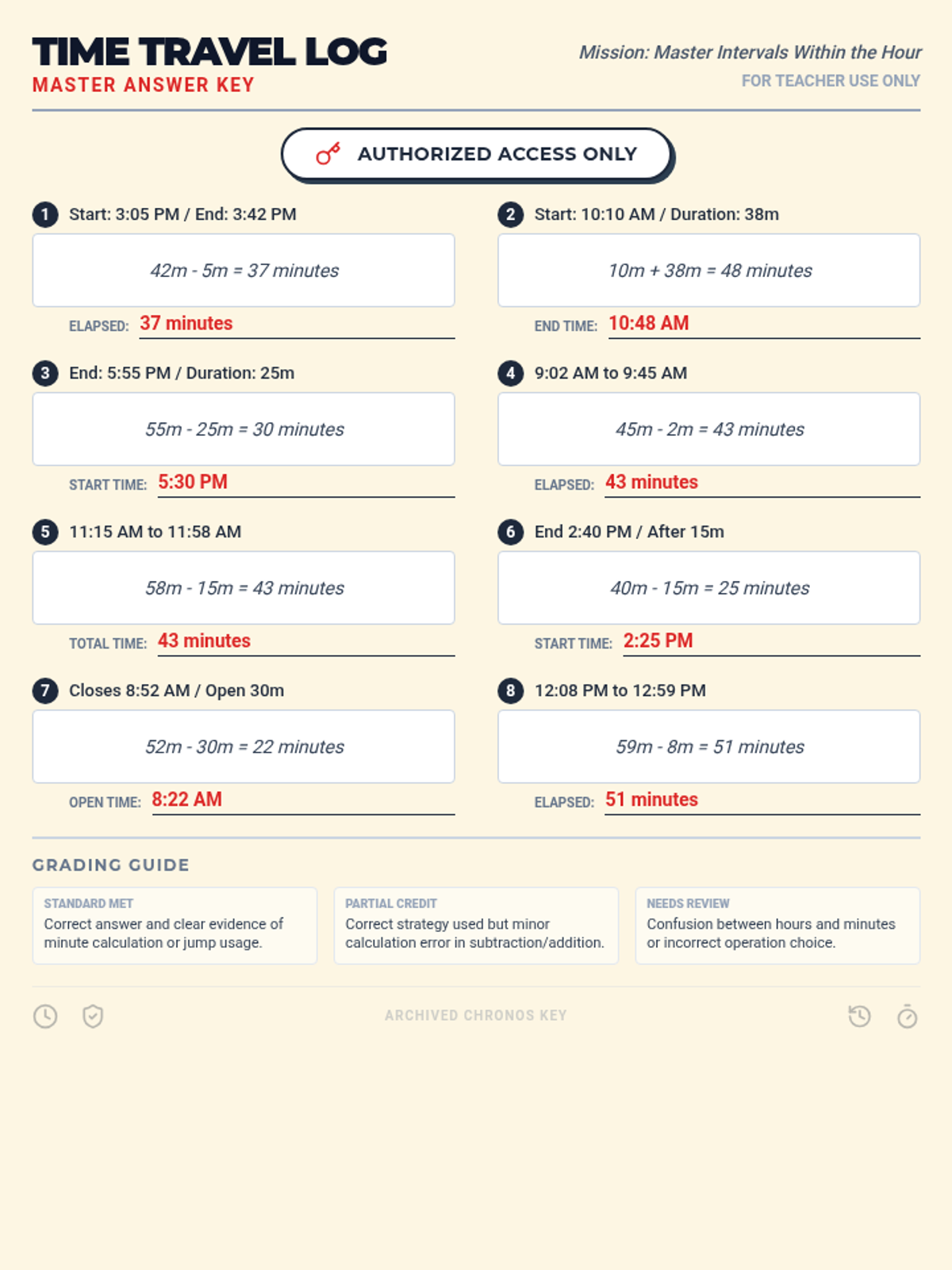
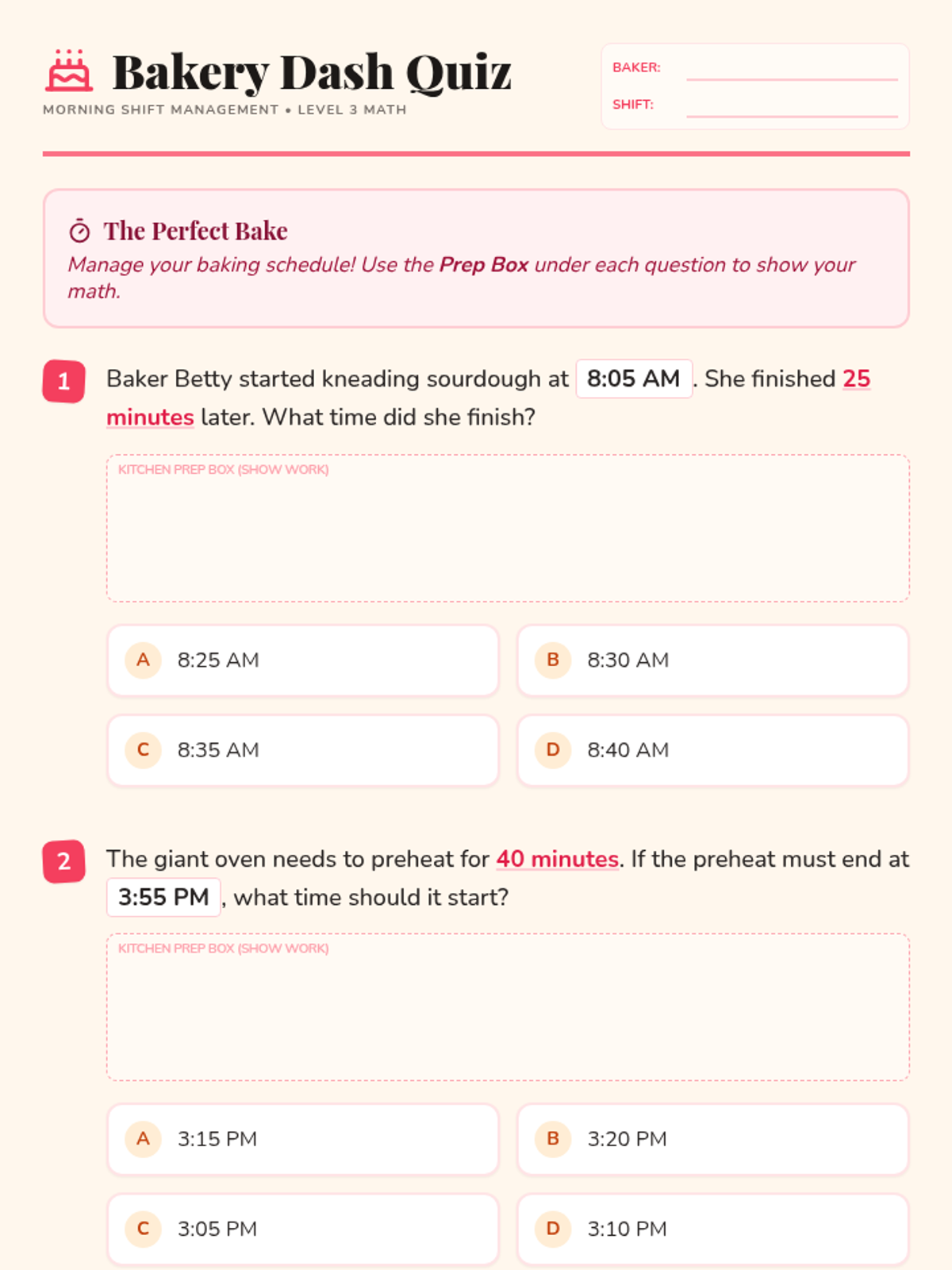
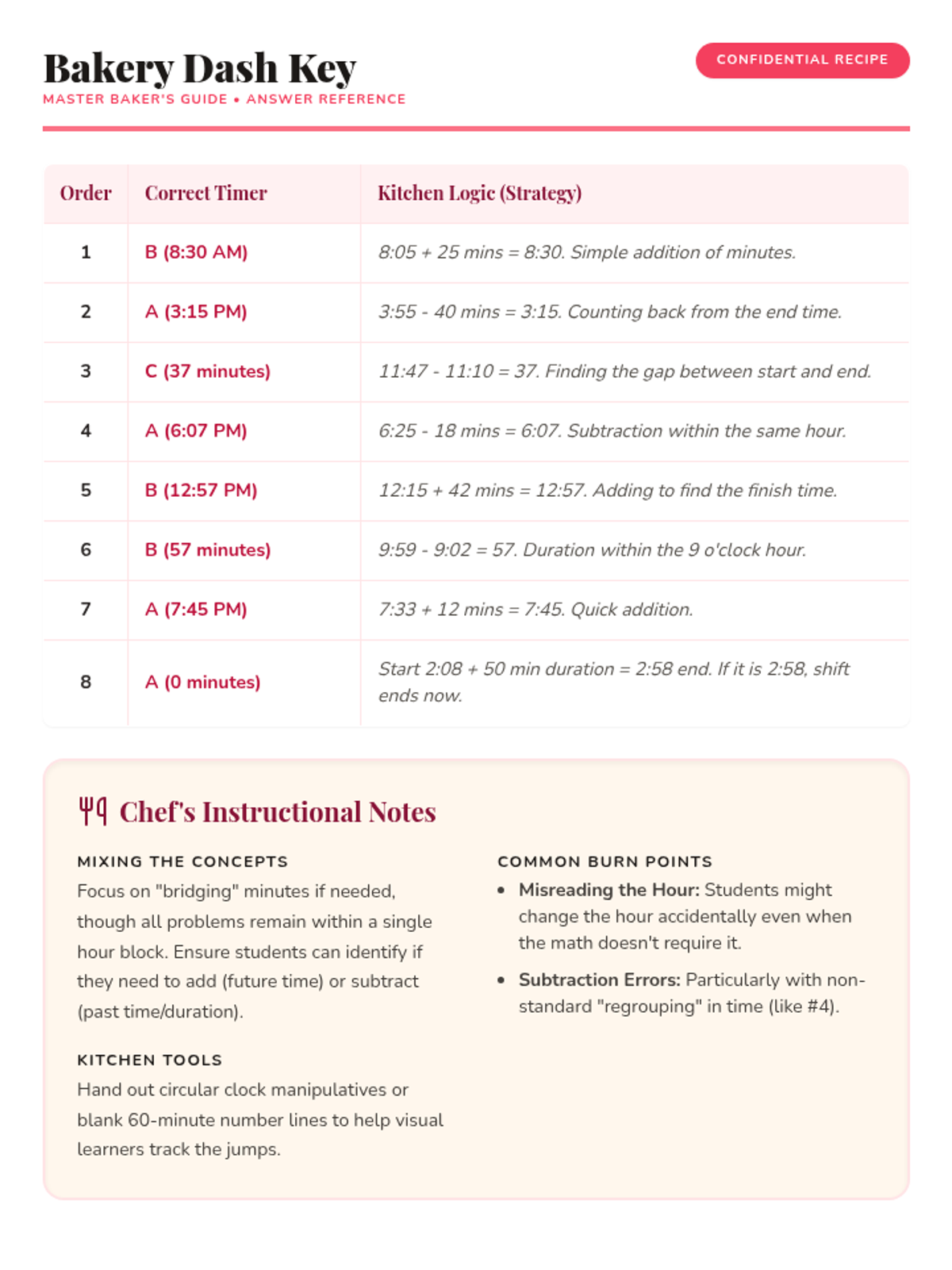
A practice-focused lesson on calculating elapsed time within a single hour, including word problems that cover finding start times, end times, and durations.
A comprehensive lesson on telling time to the minute, focusing on reading analog clocks and representing time accurately. Students will practice reading intricate clock faces and drawing hands to represent specific times.
Introduction to weight, standard units (grams and kilograms), and estimation techniques using real-world objects and pets.
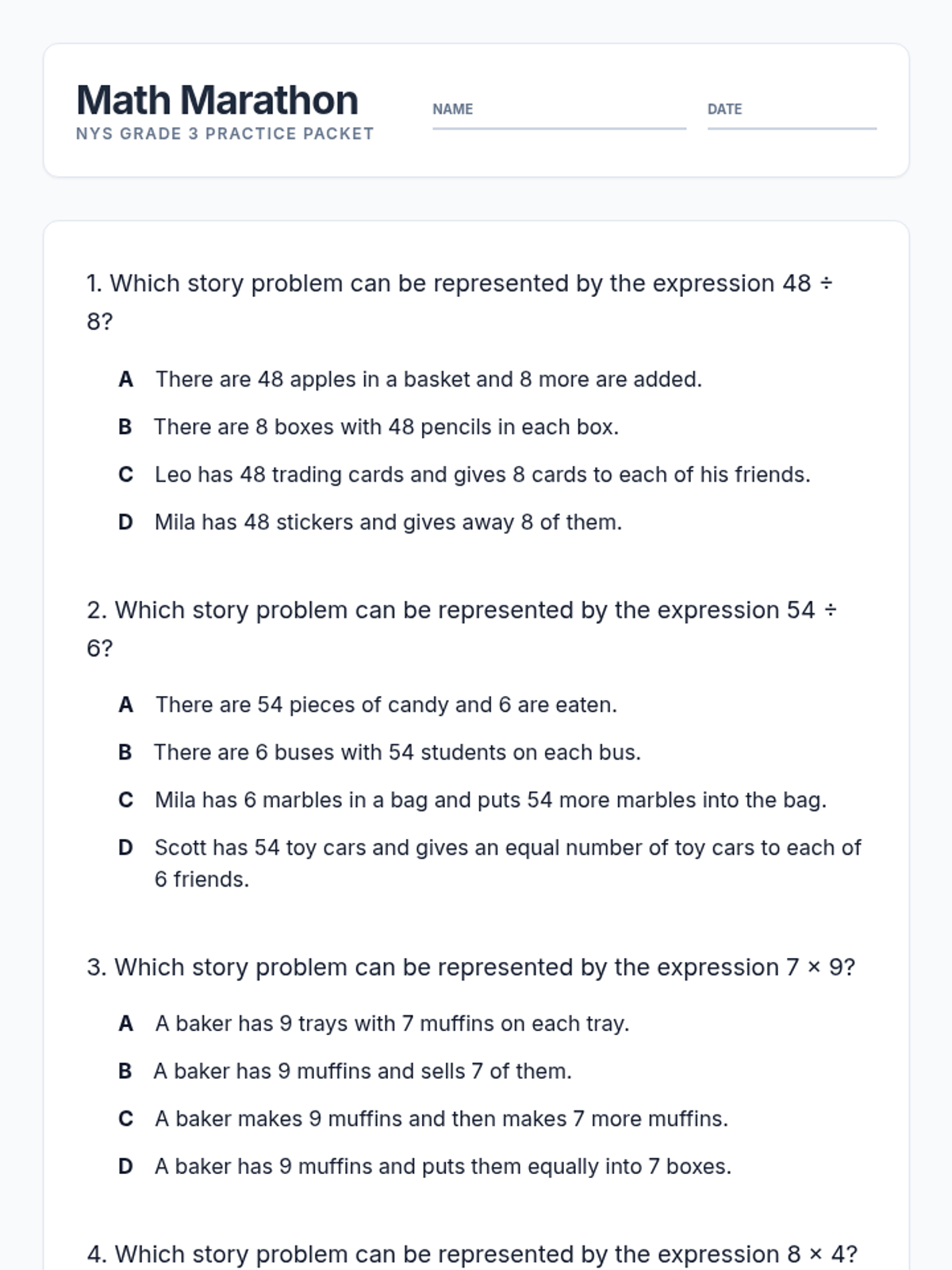
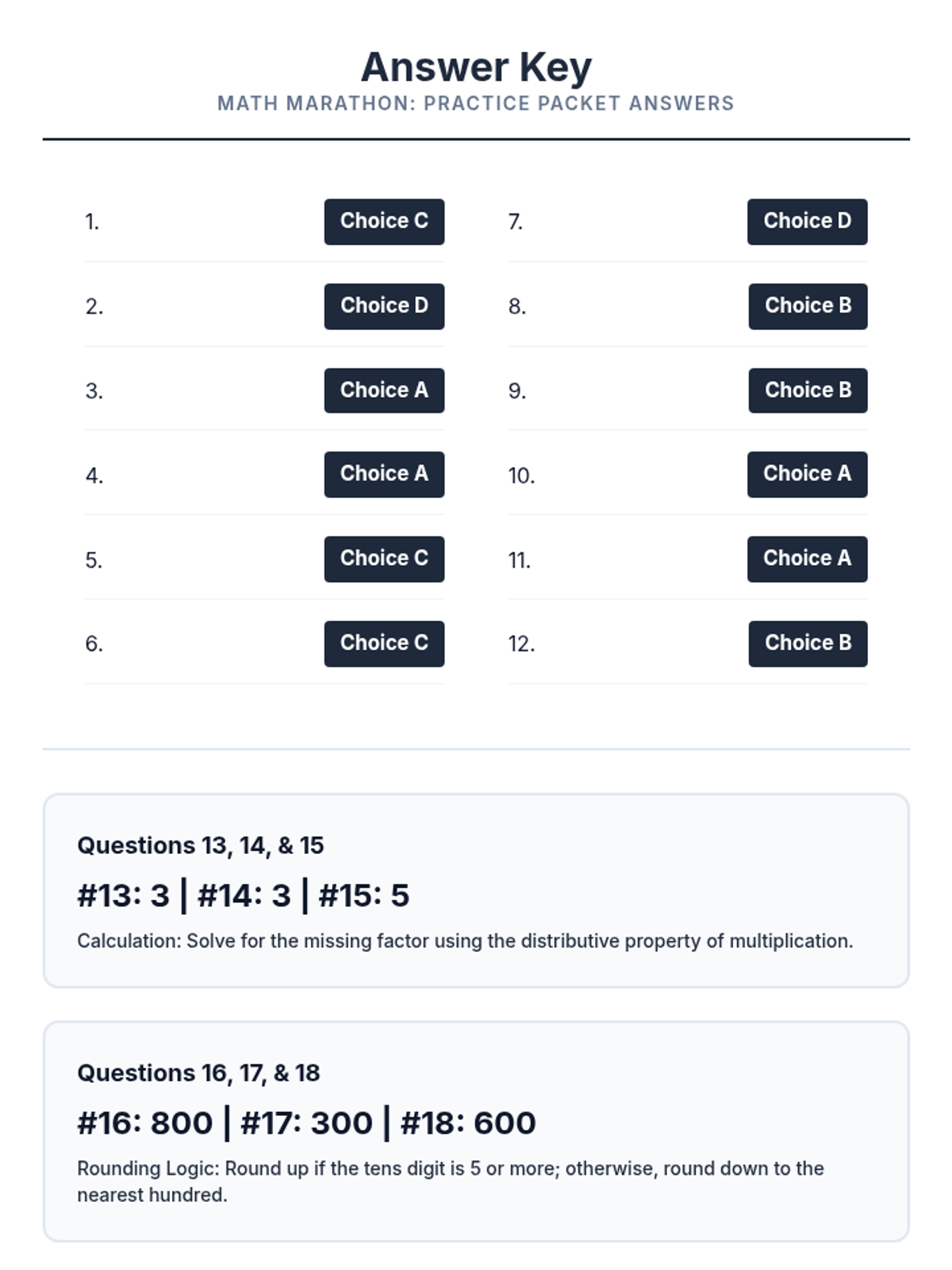
A comprehensive math review packet based on the 3rd Grade NYS Released Items, featuring multiple-choice and constructed-response questions across all key domains with a focus on multiplication and division.
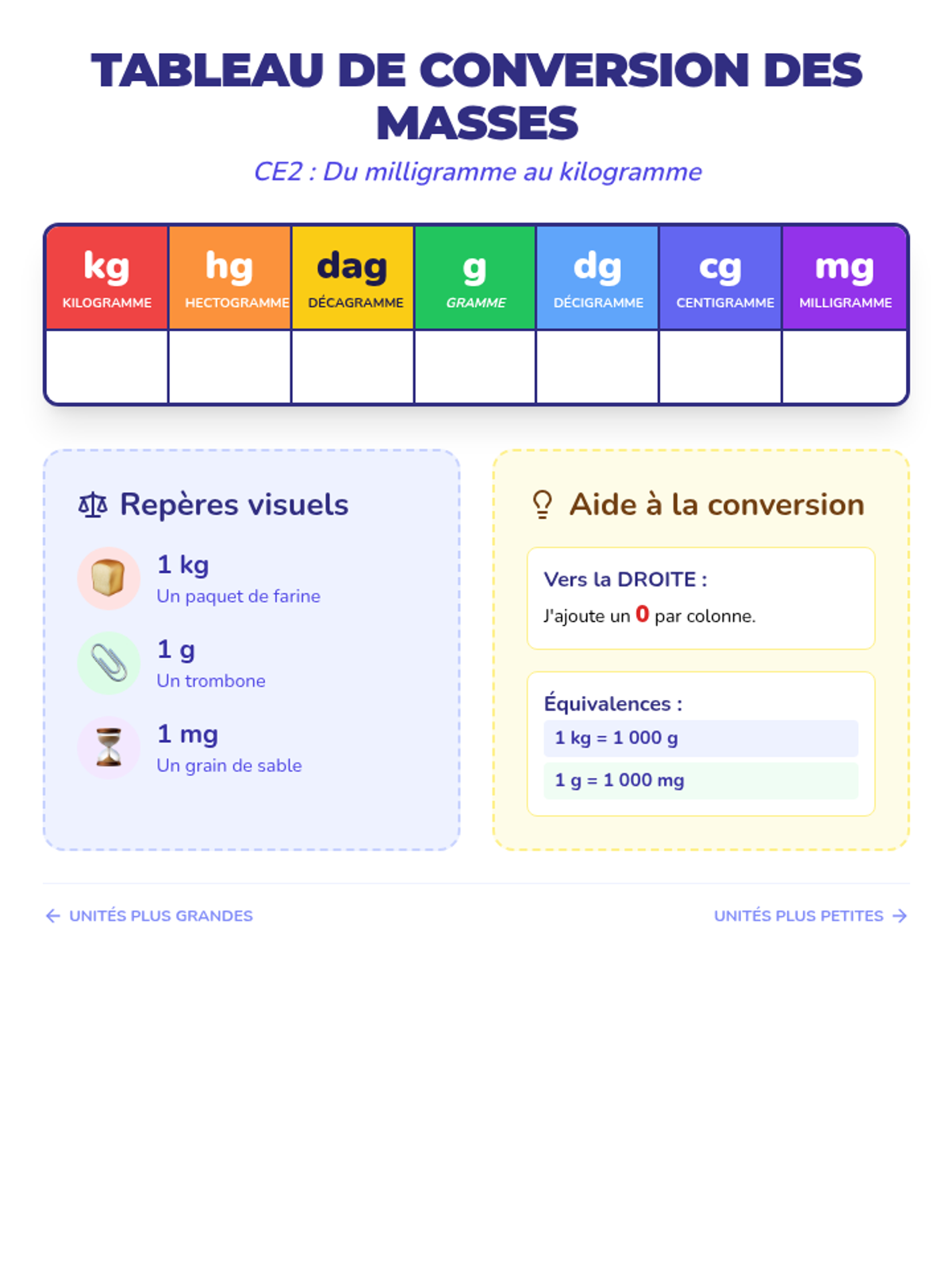
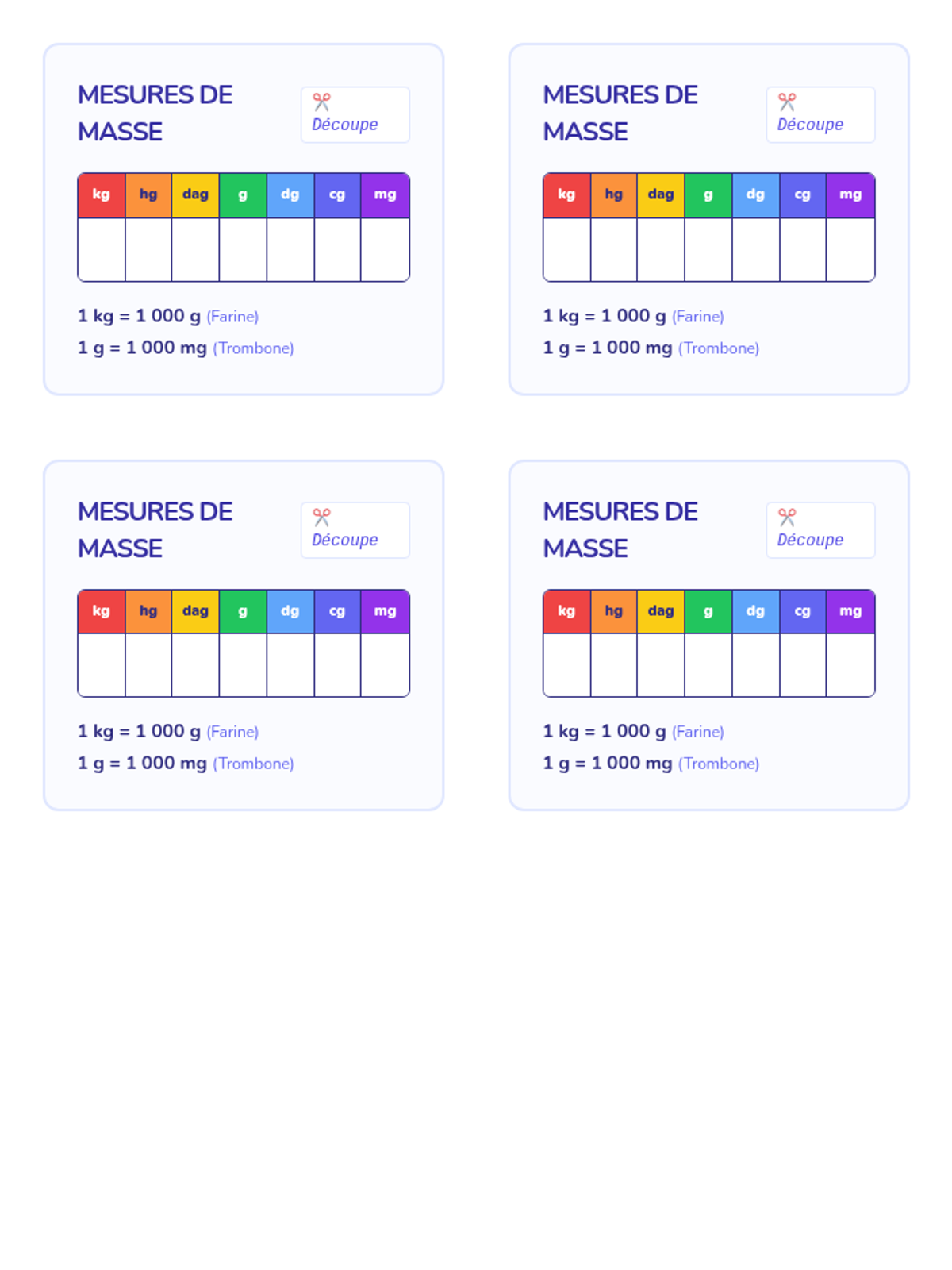
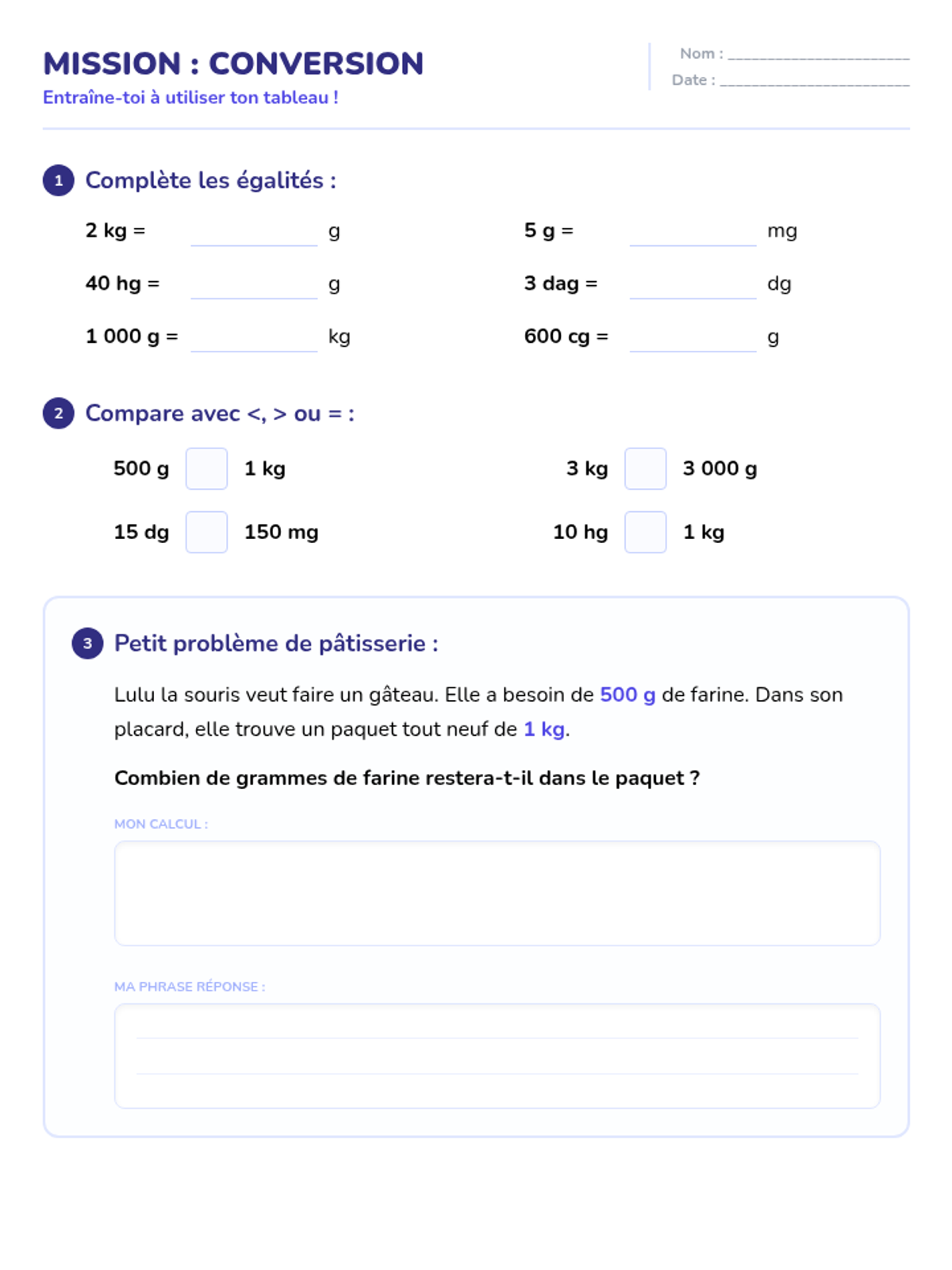
Une leçon pour apprendre à convertir les masses avec un tableau de conversion coloré et des exemples concrets pour les élèves de CE2.
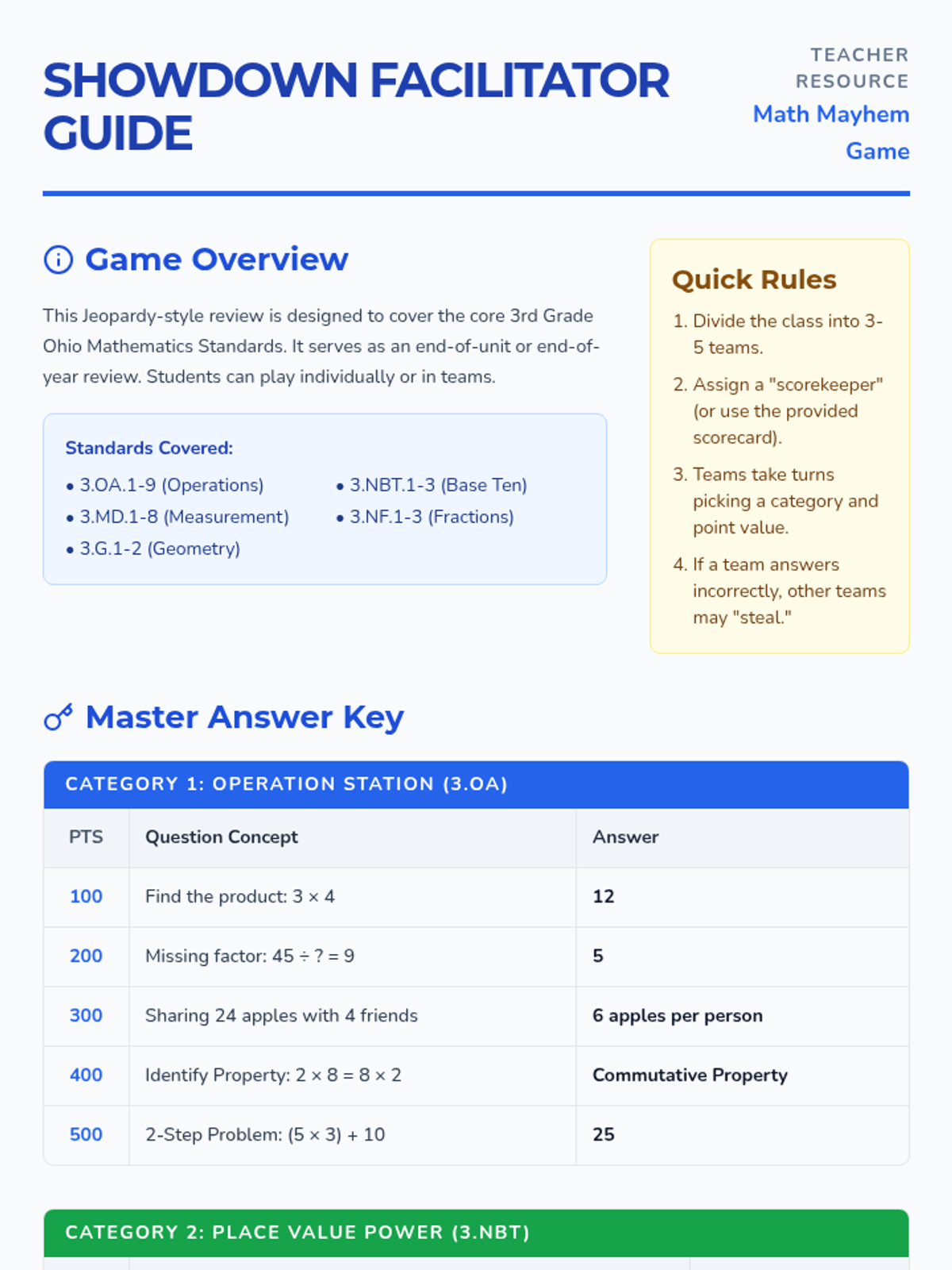
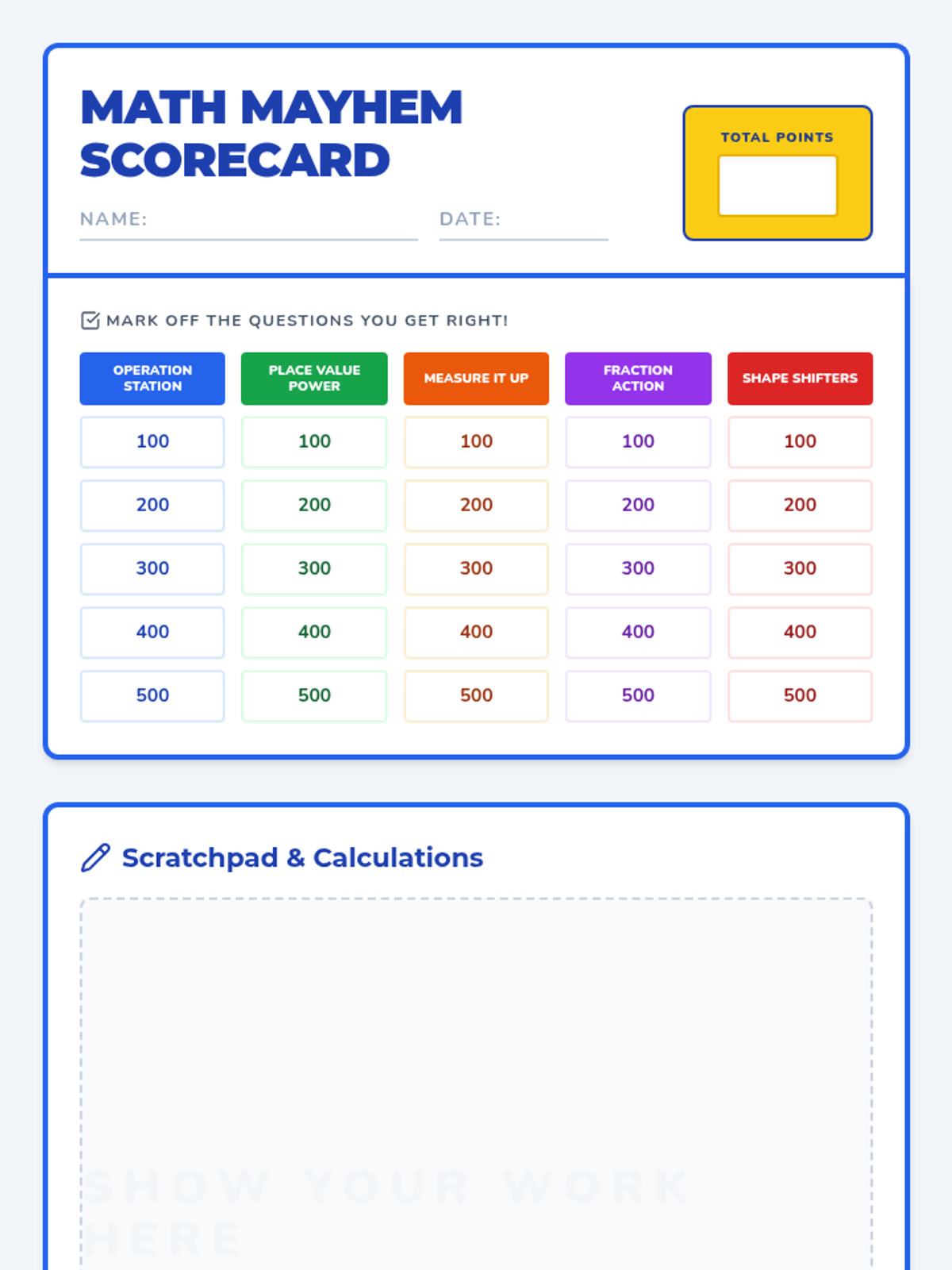
A comprehensive 3rd-grade math review game covering Ohio standards for OA, NBT, MD, G, and NF. Students compete in a Jeopardy-style showdown to test their knowledge across all domains.
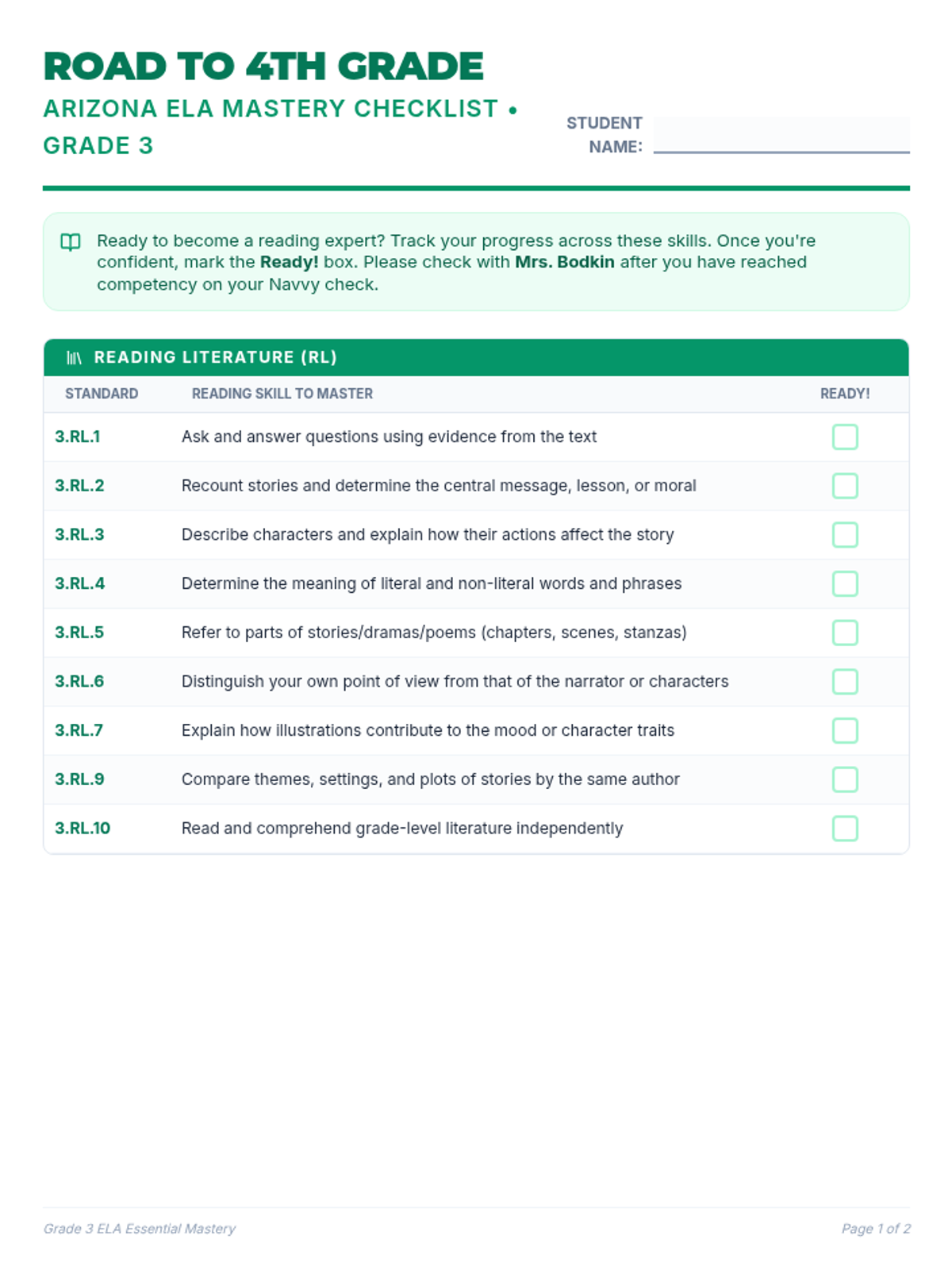
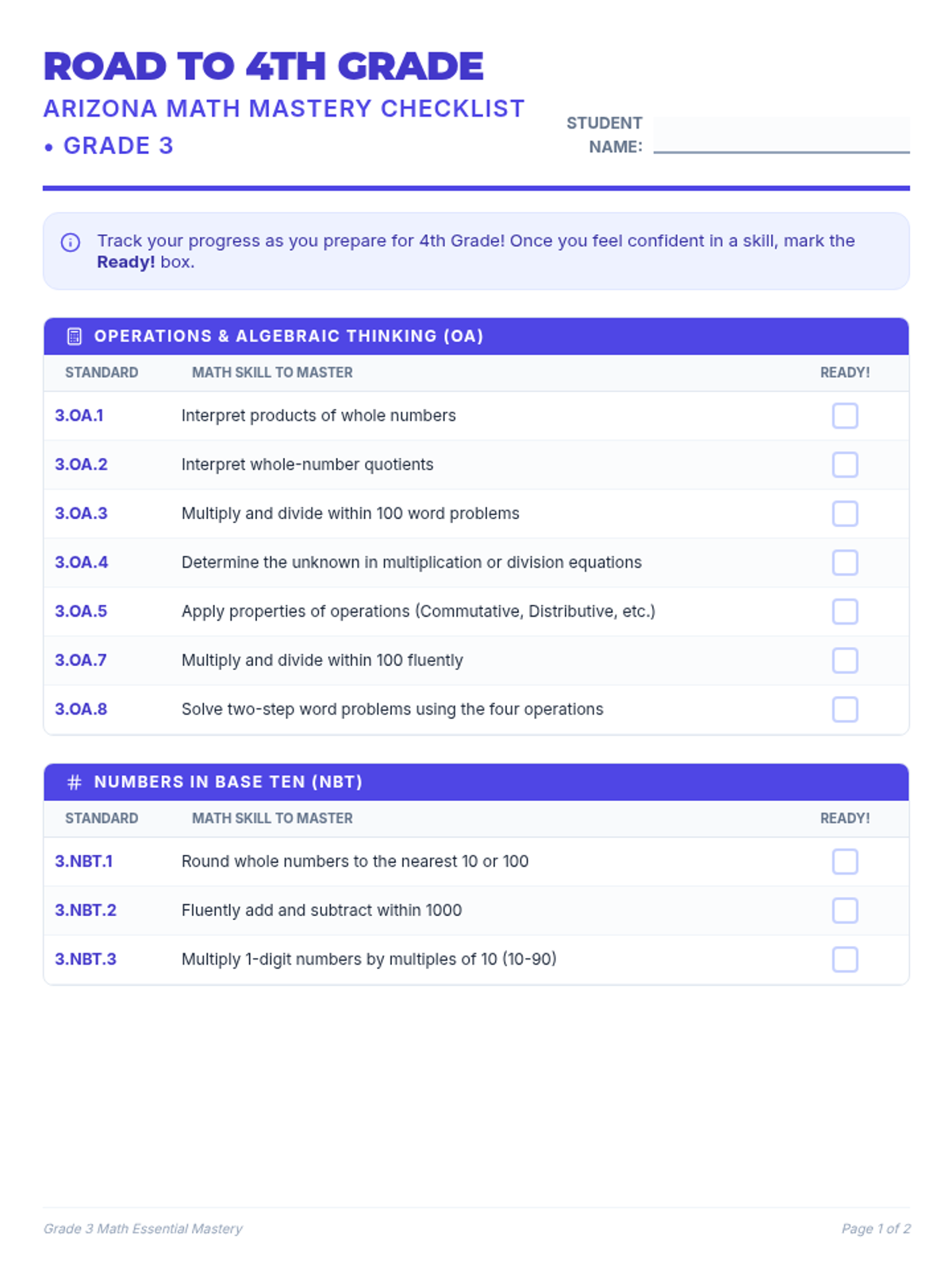
A collection of standards mastery tracking cards for Grade 3 Arizona students, covering Math and ELA with a consistent multi-attempt tracking system.
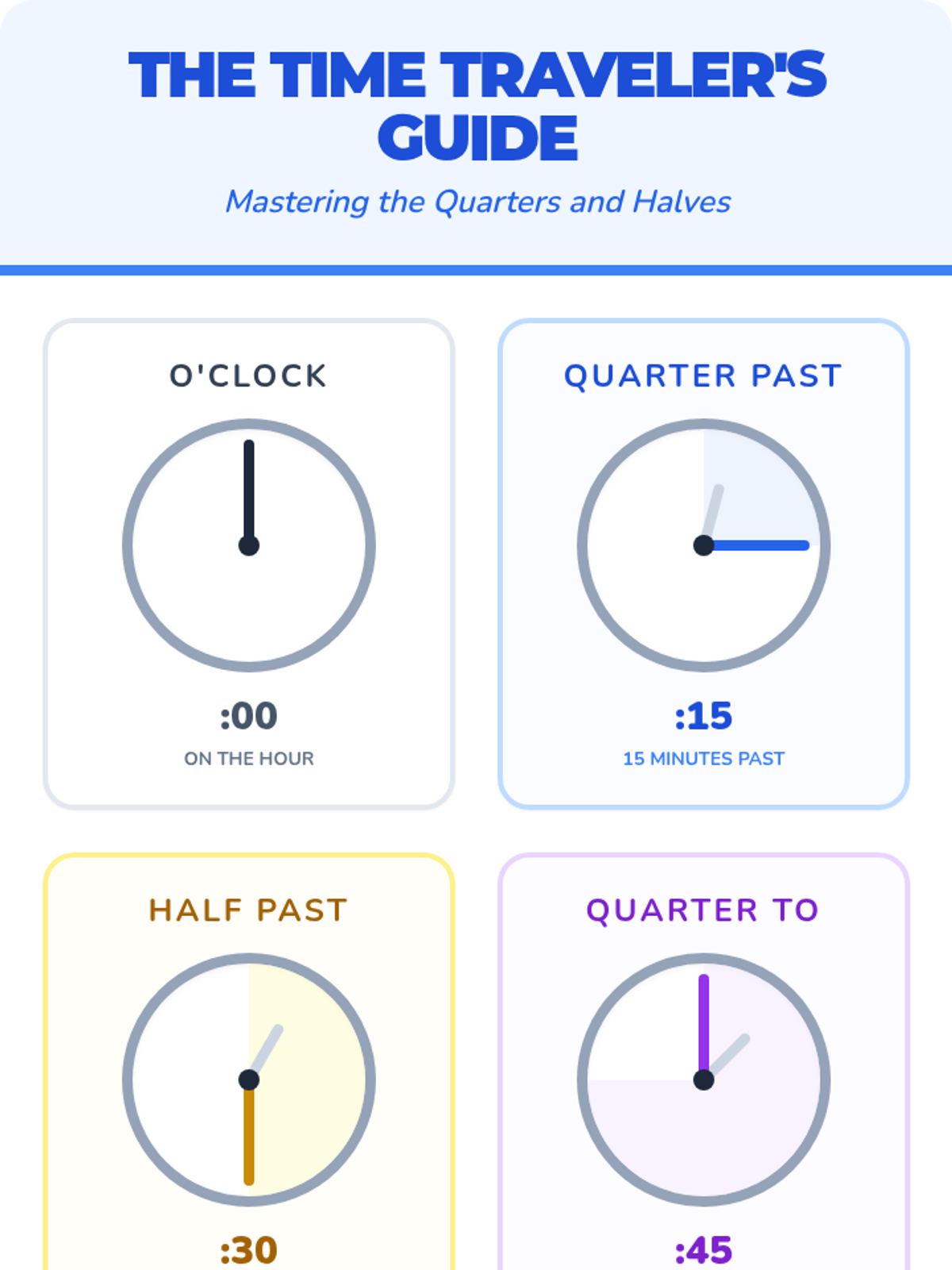
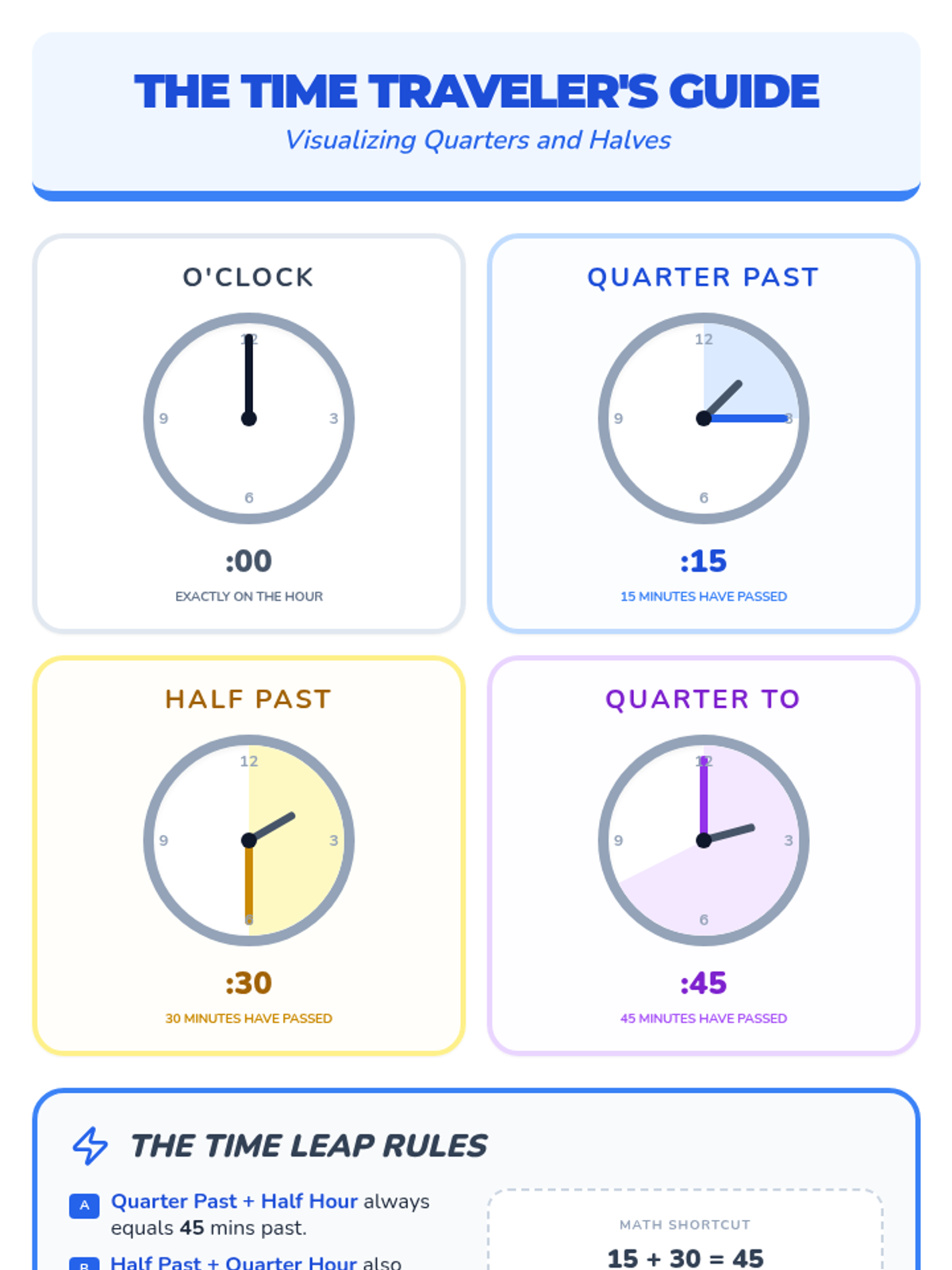
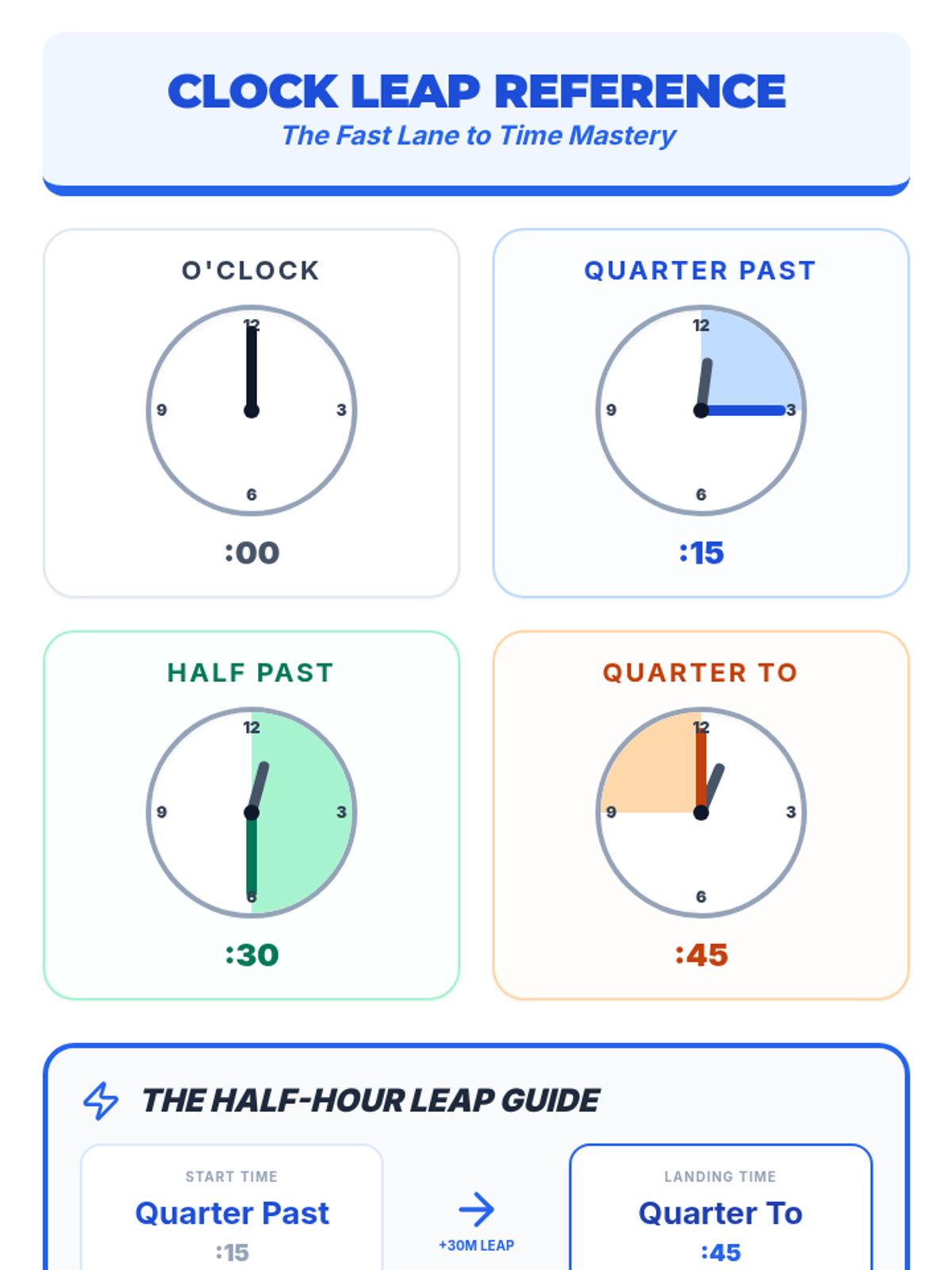
A lesson focused on solving word problems involving addition and subtraction of time intervals within the same hour, using a time-travel theme.
A lesson focused on solving word problems involving addition and subtraction of time intervals within the same hour, aligned with NC.3.MD.1.
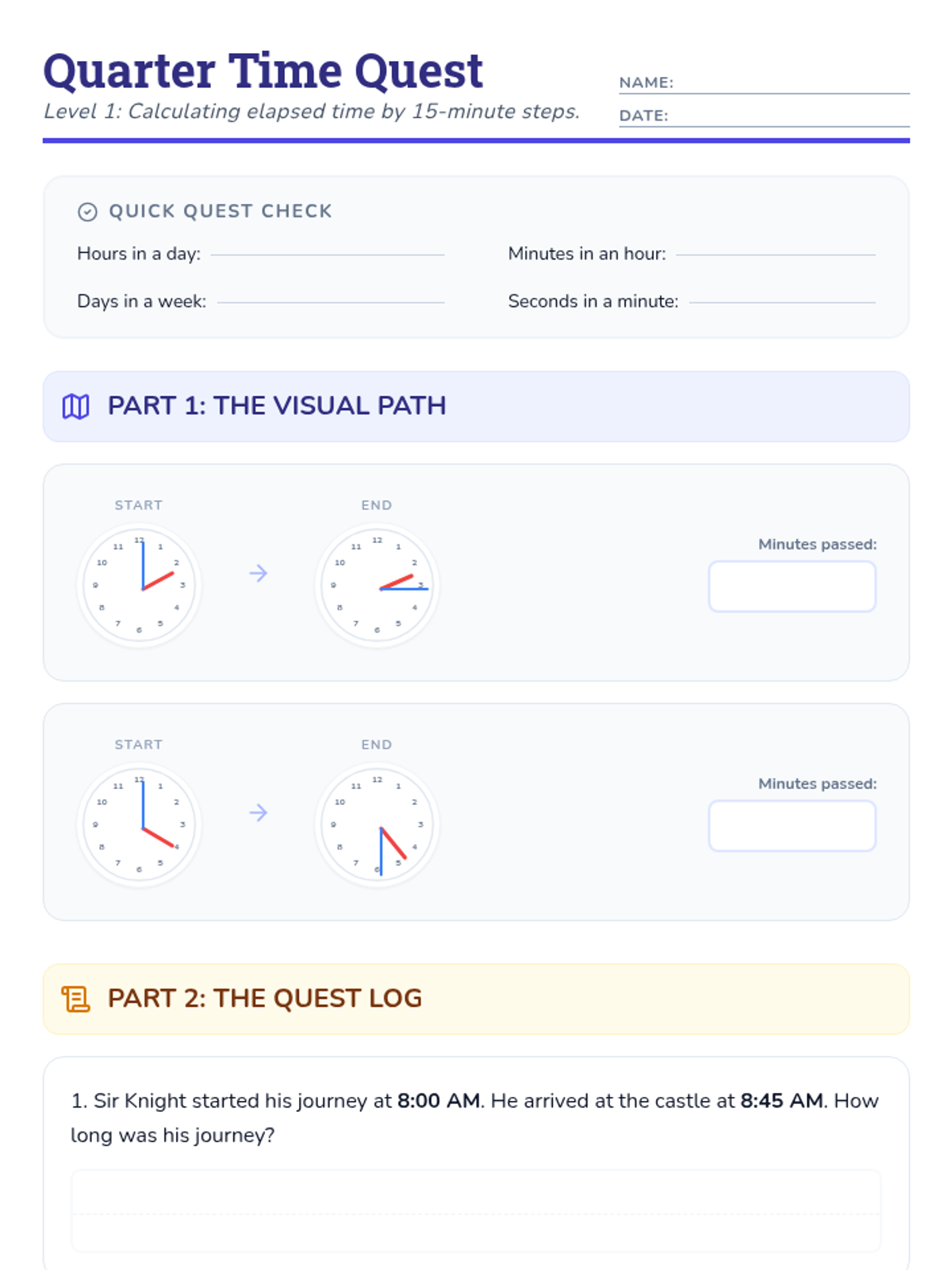
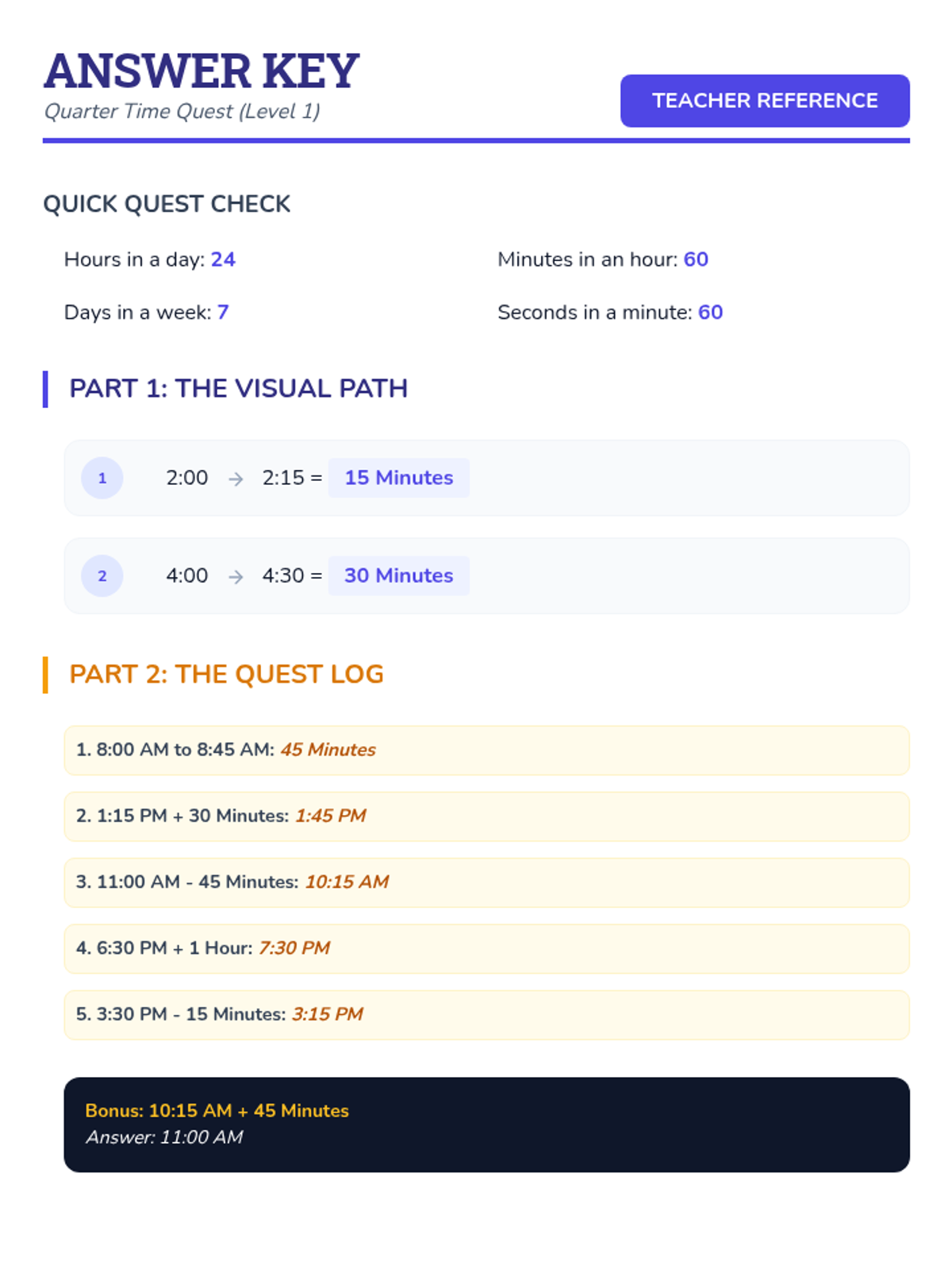
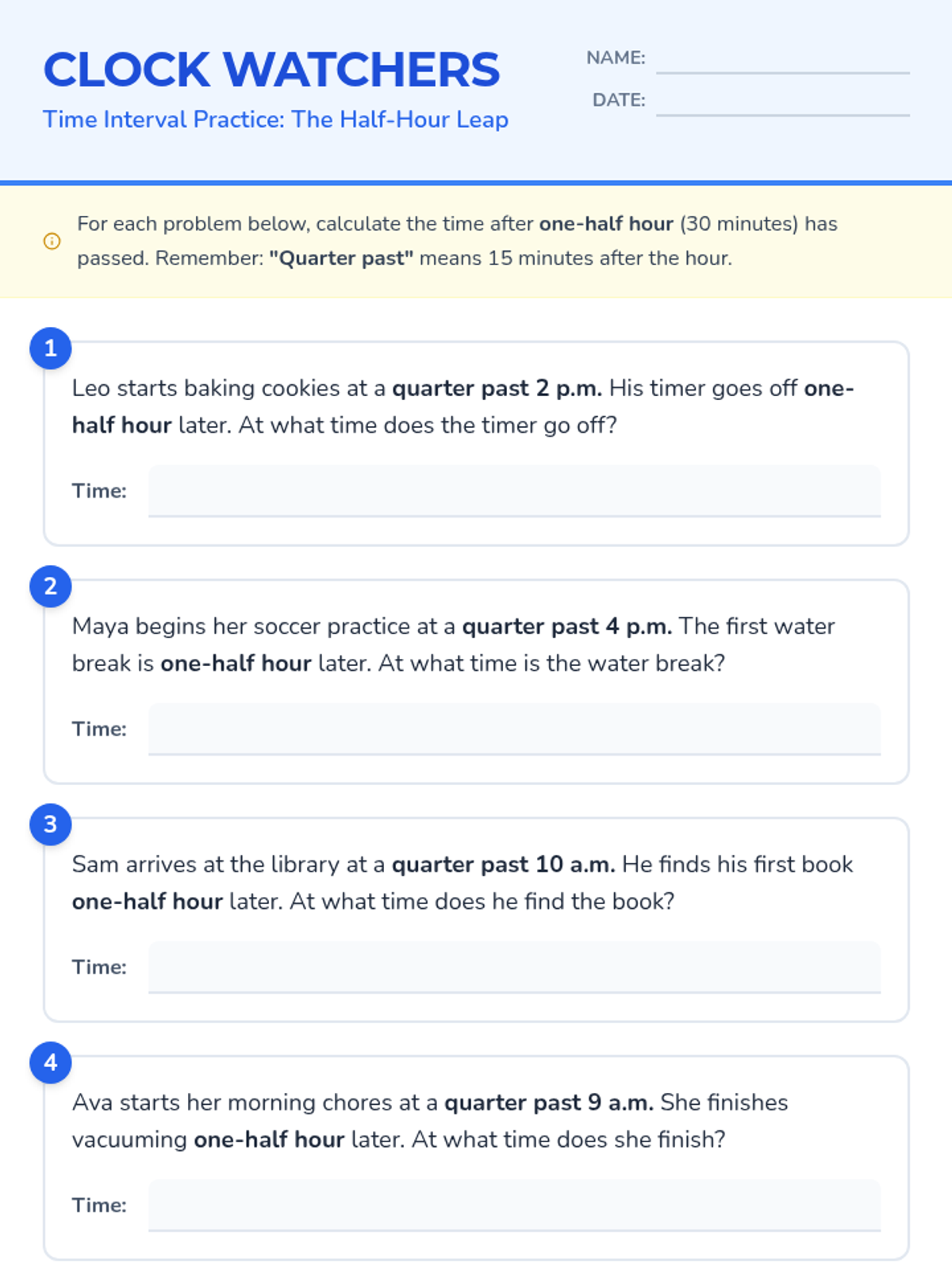
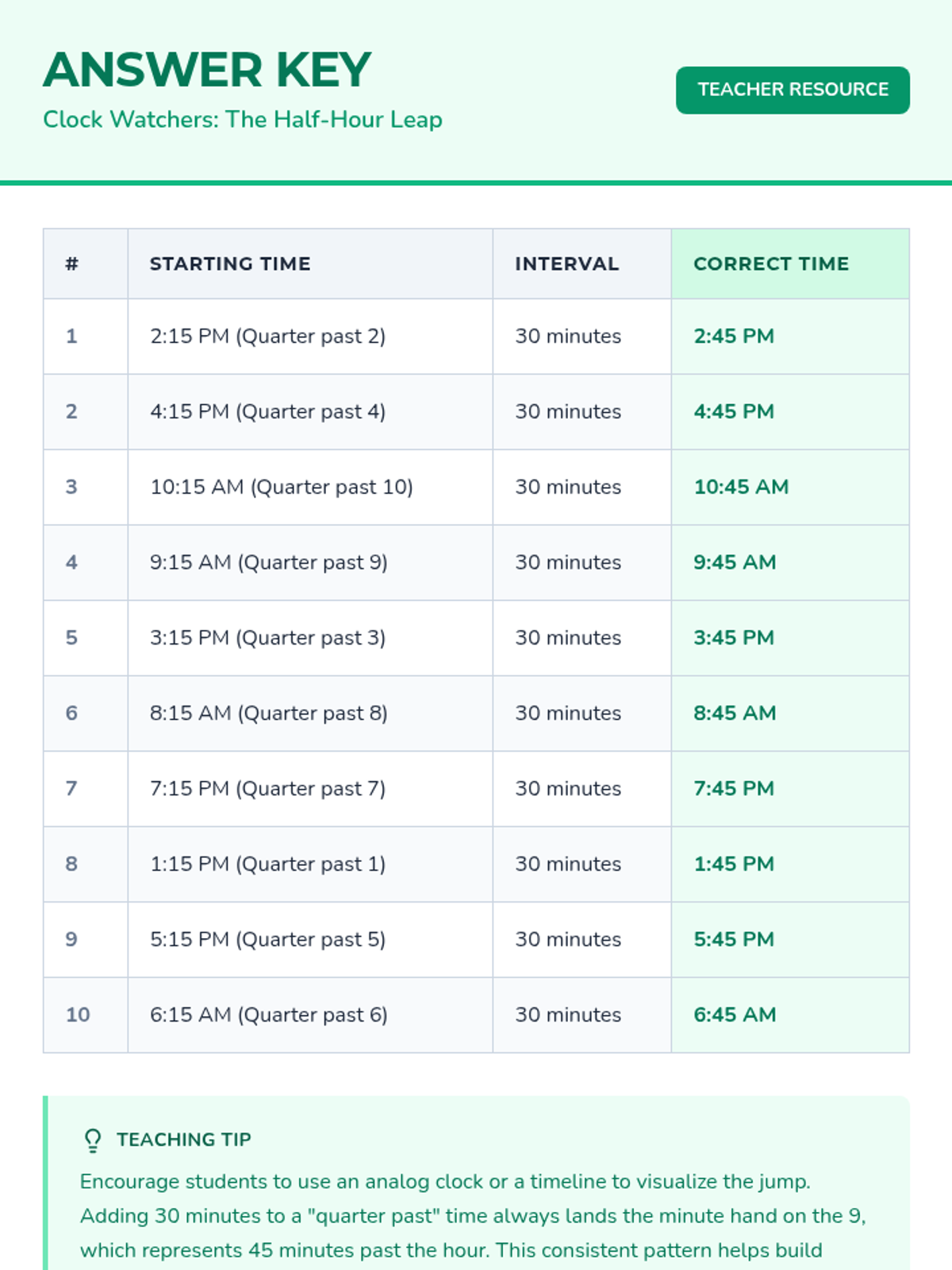
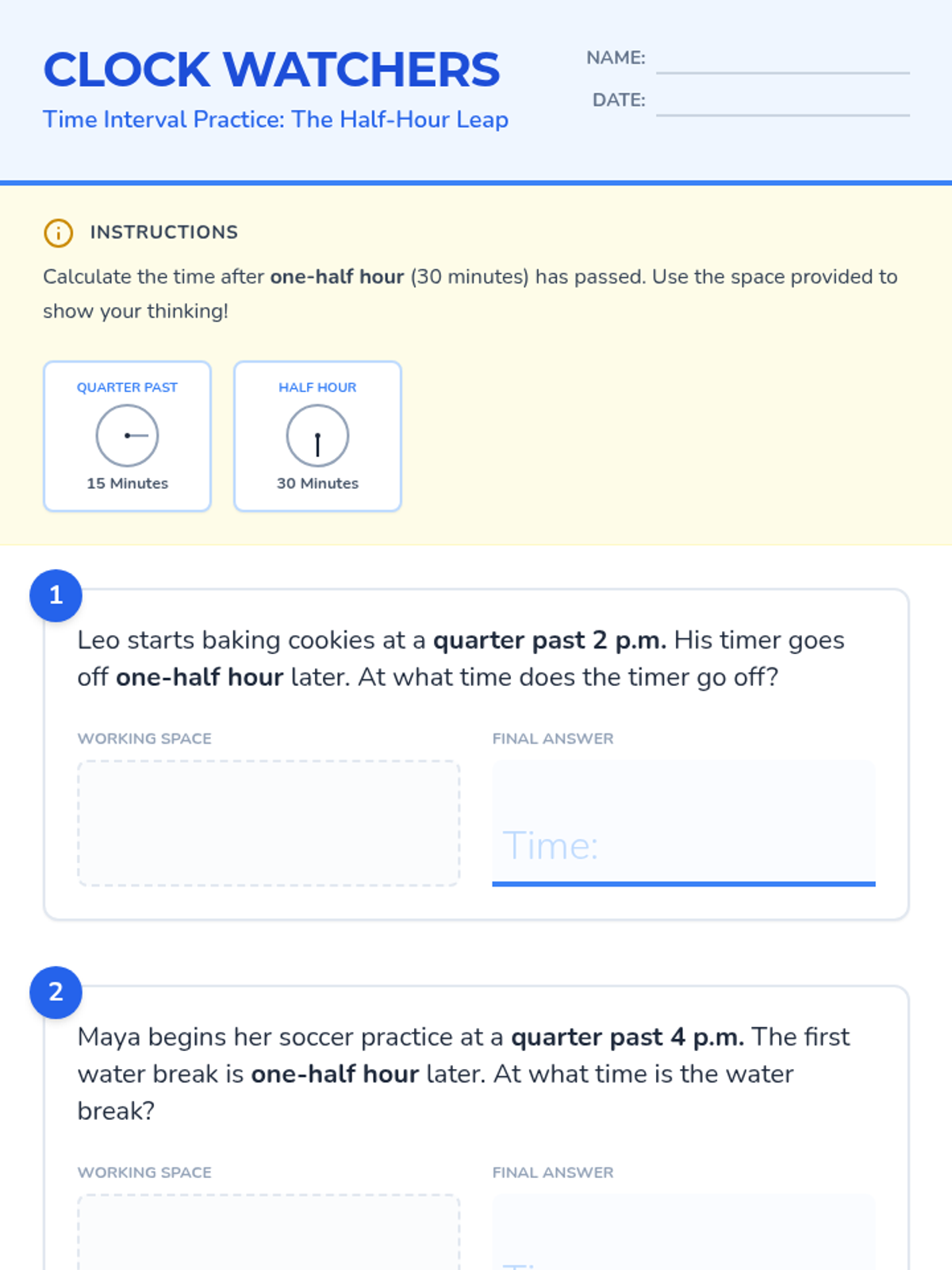
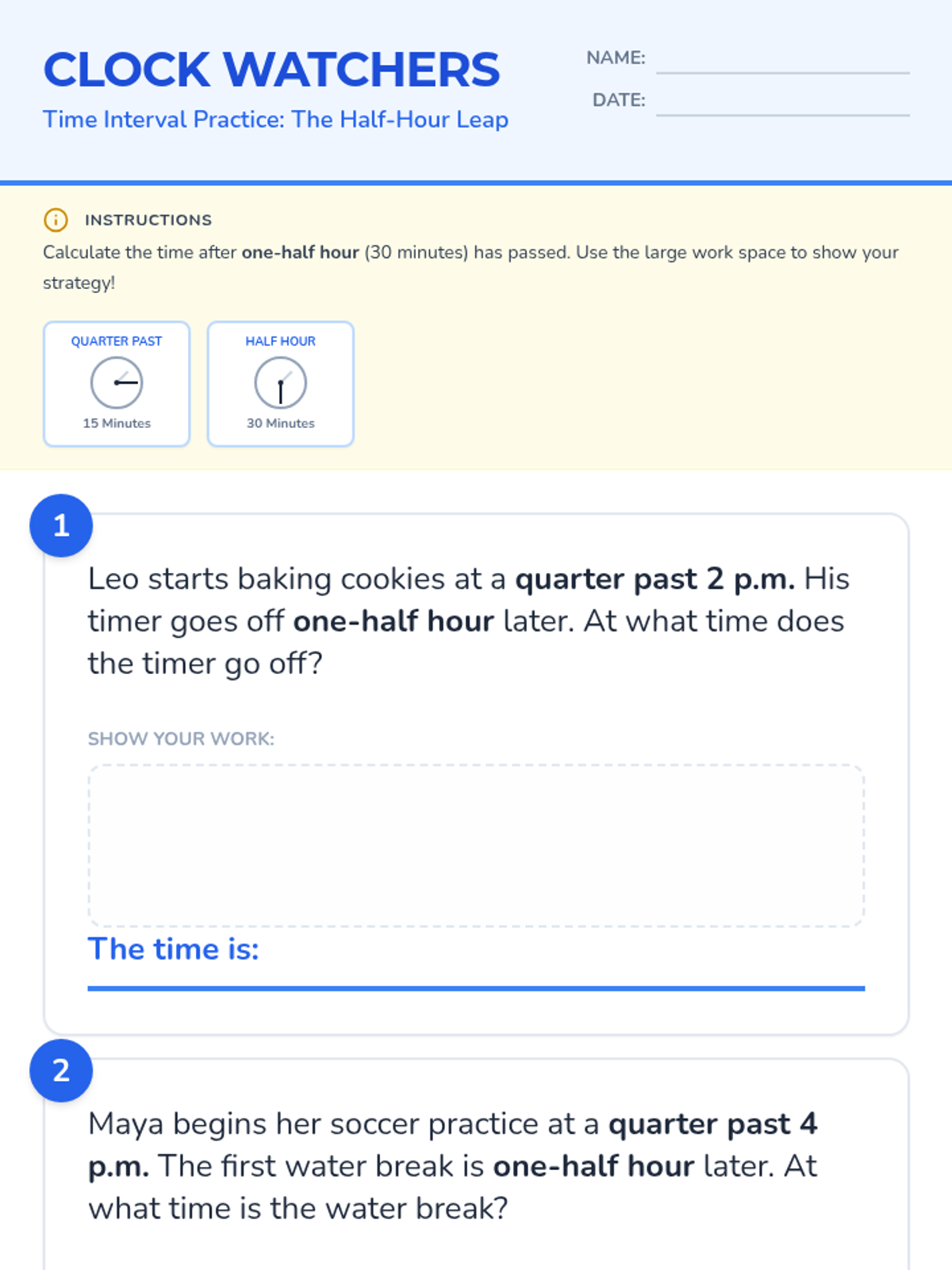
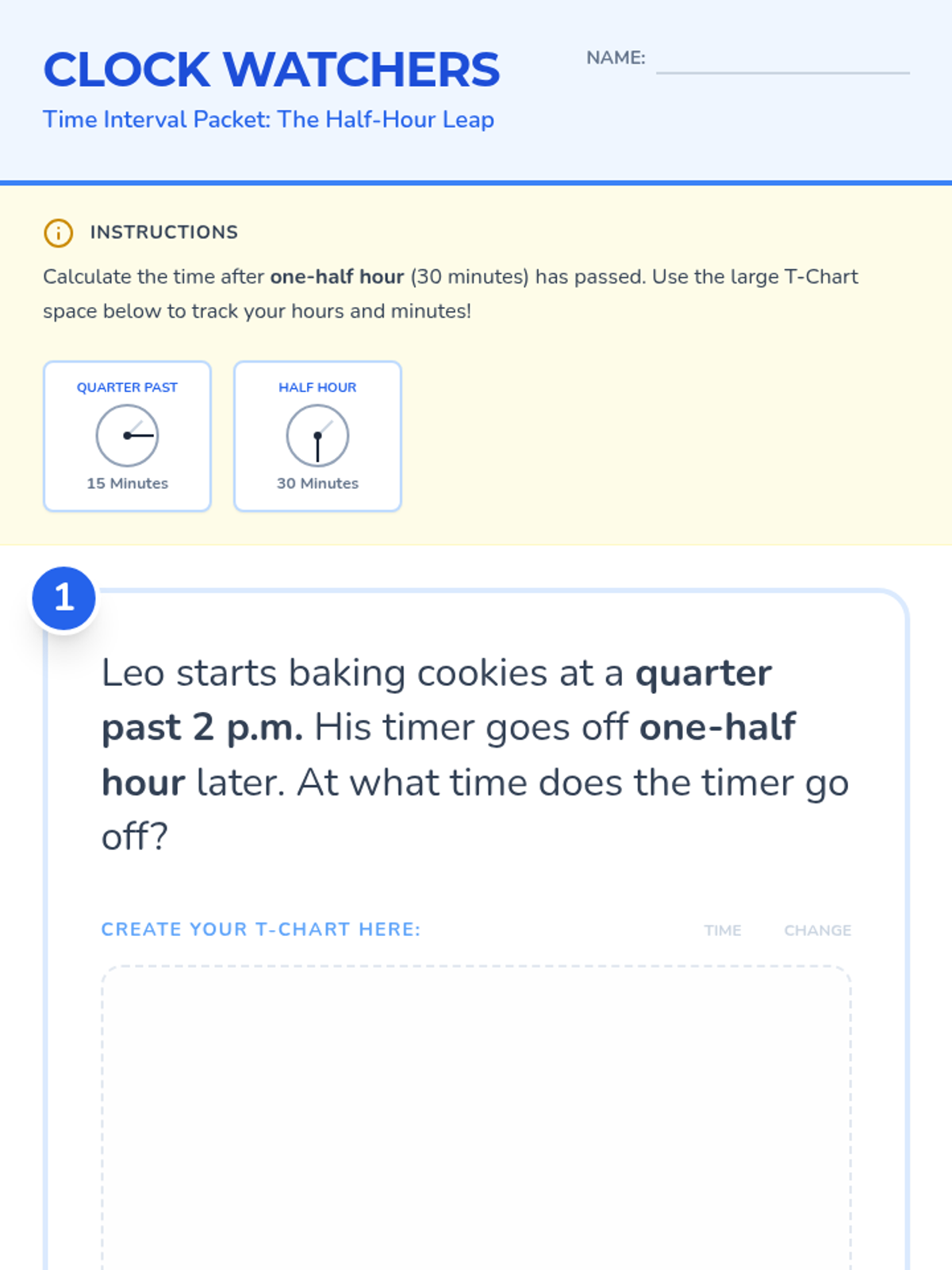
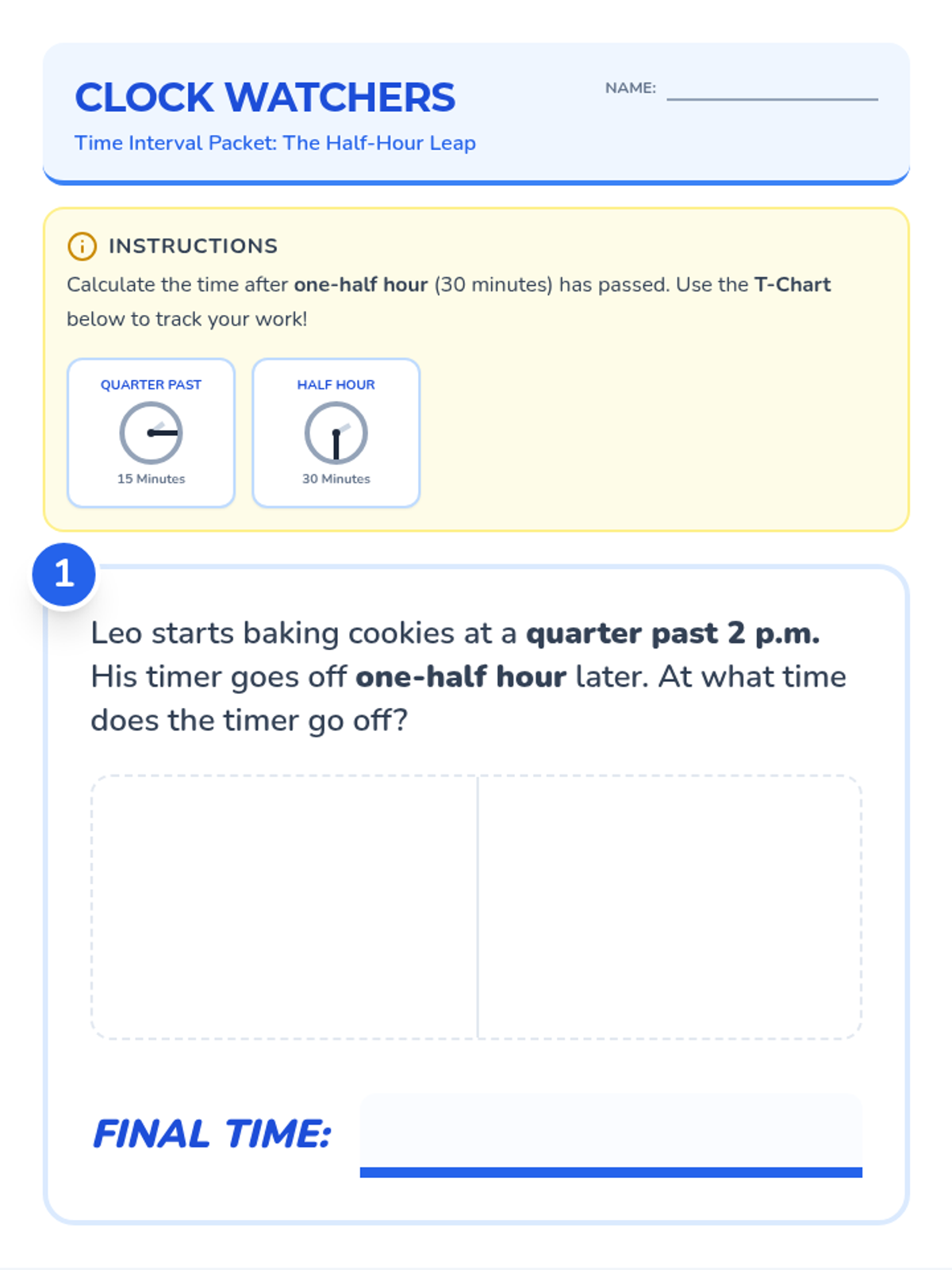
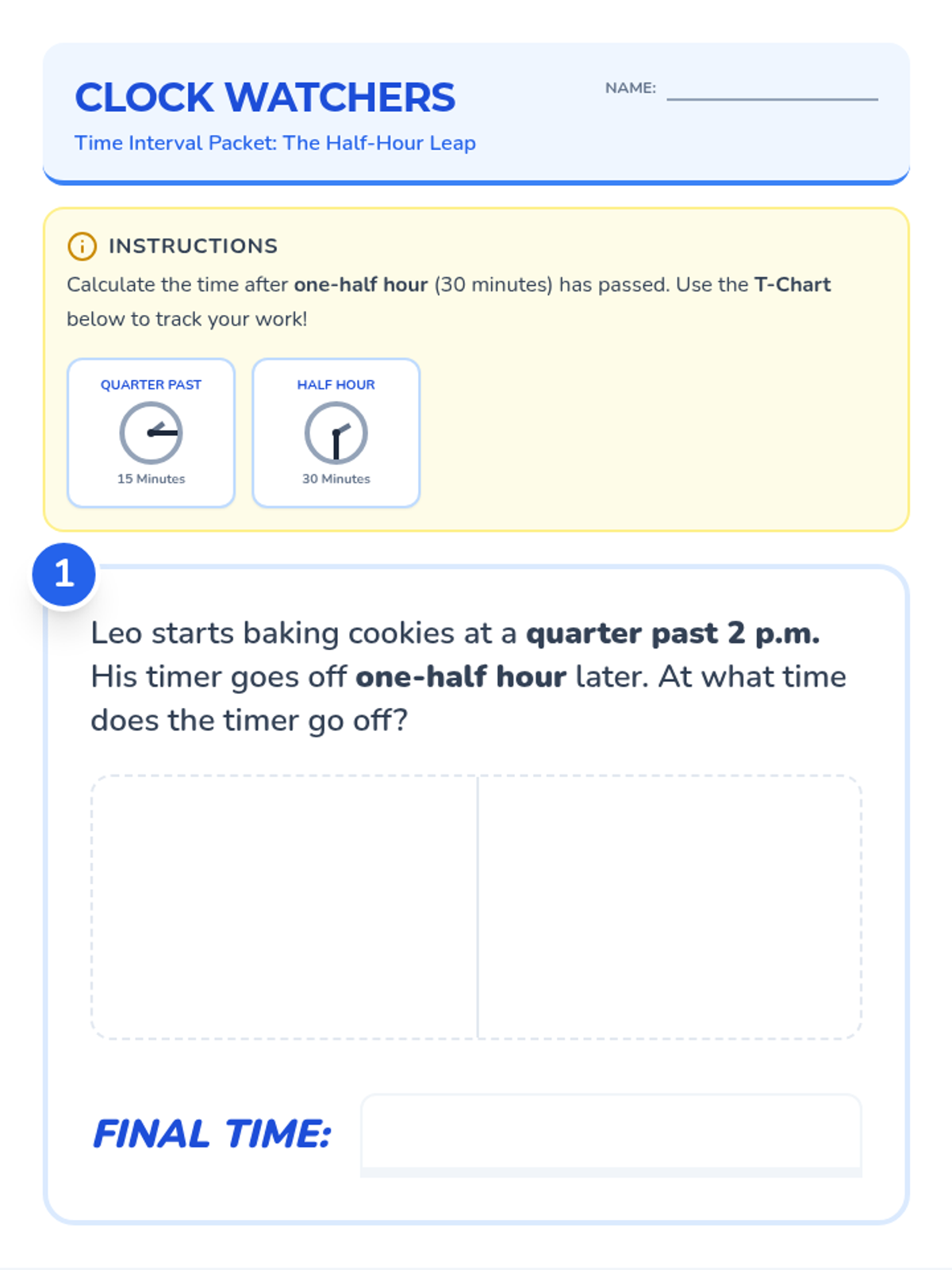
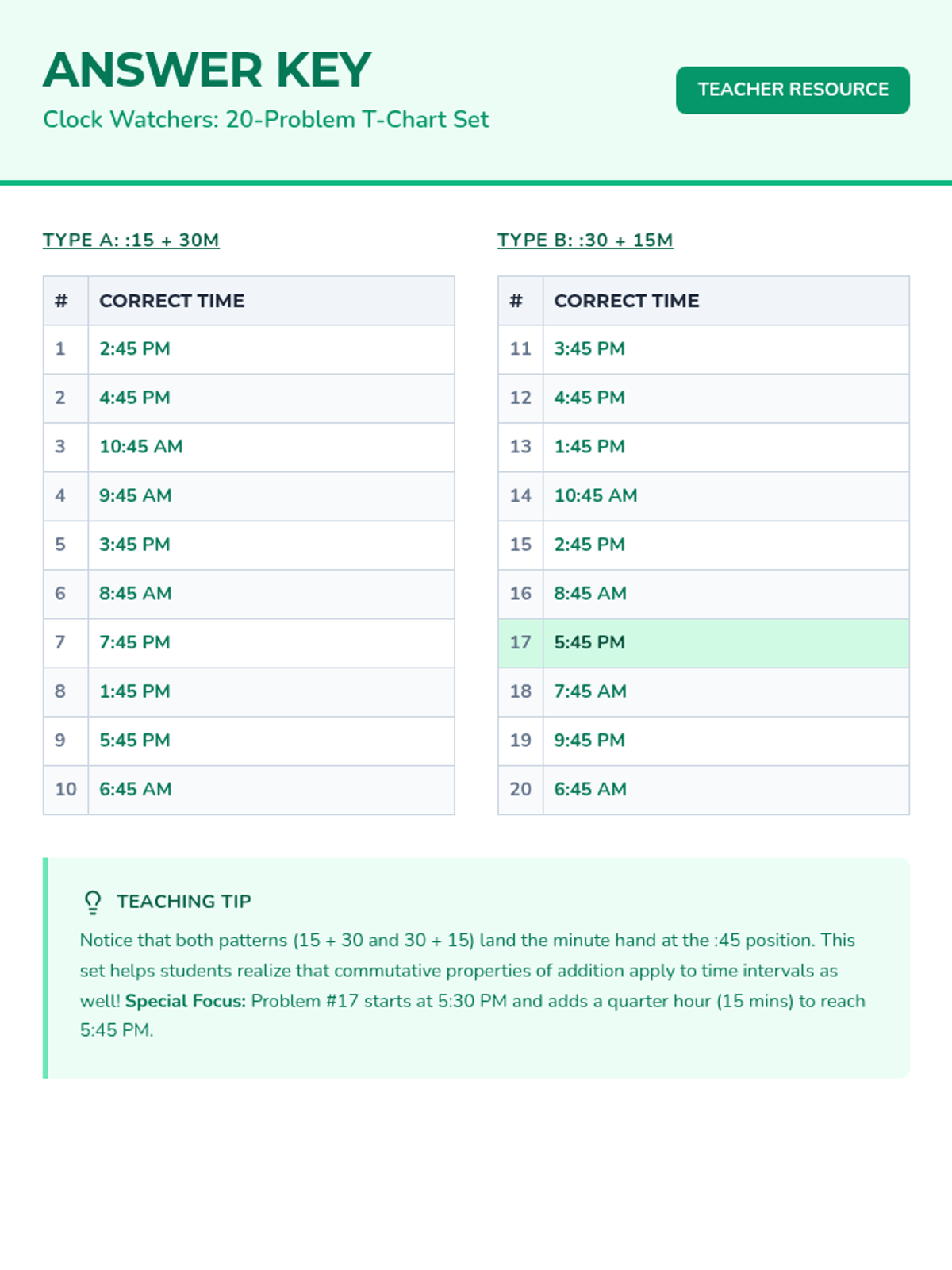
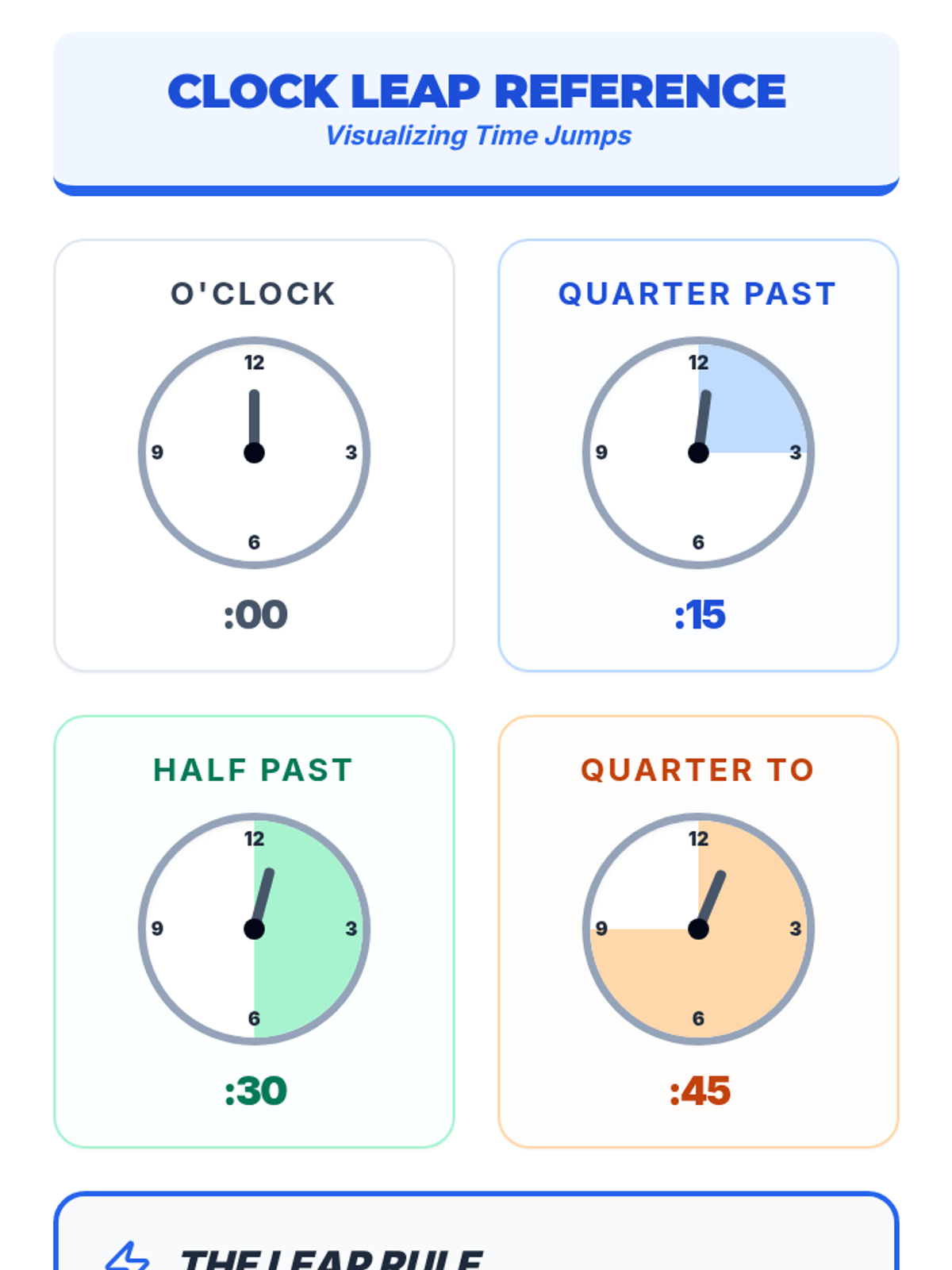
A practice set focused on calculating time intervals of thirty minutes starting from fifteen minutes past the hour. Students will apply their understanding of 'quarter past' and 'half hour' to solve real-world word problems.
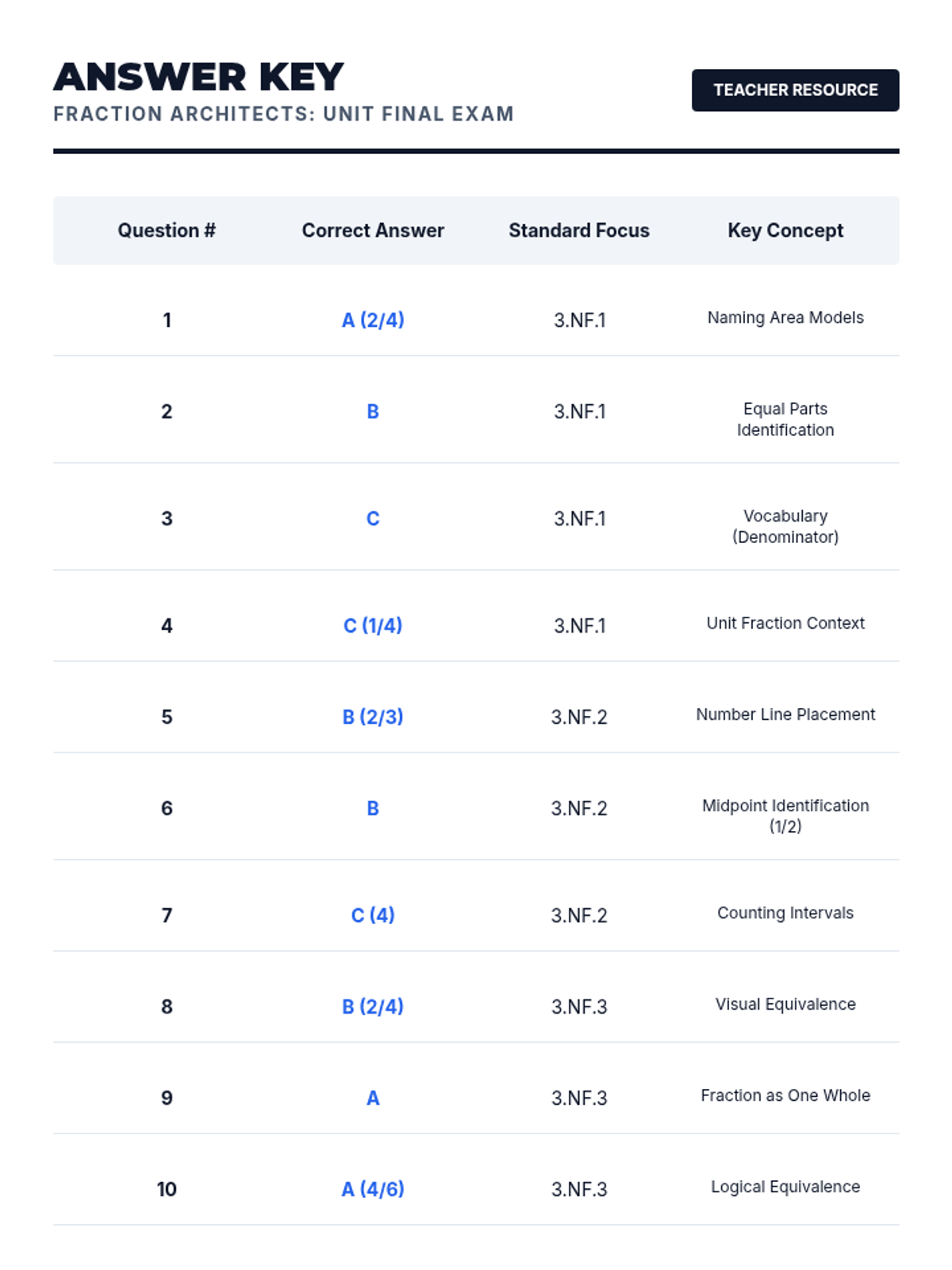
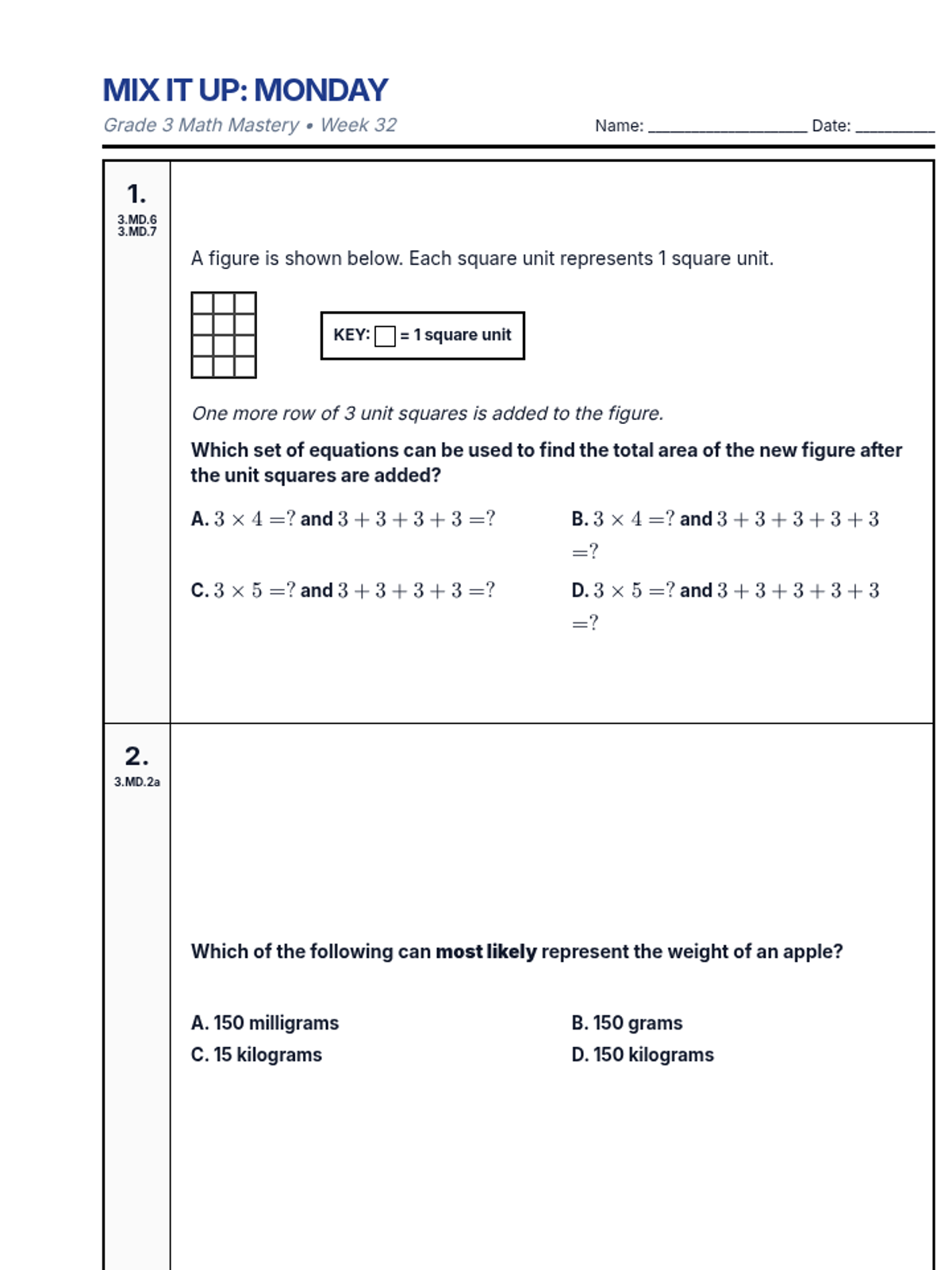
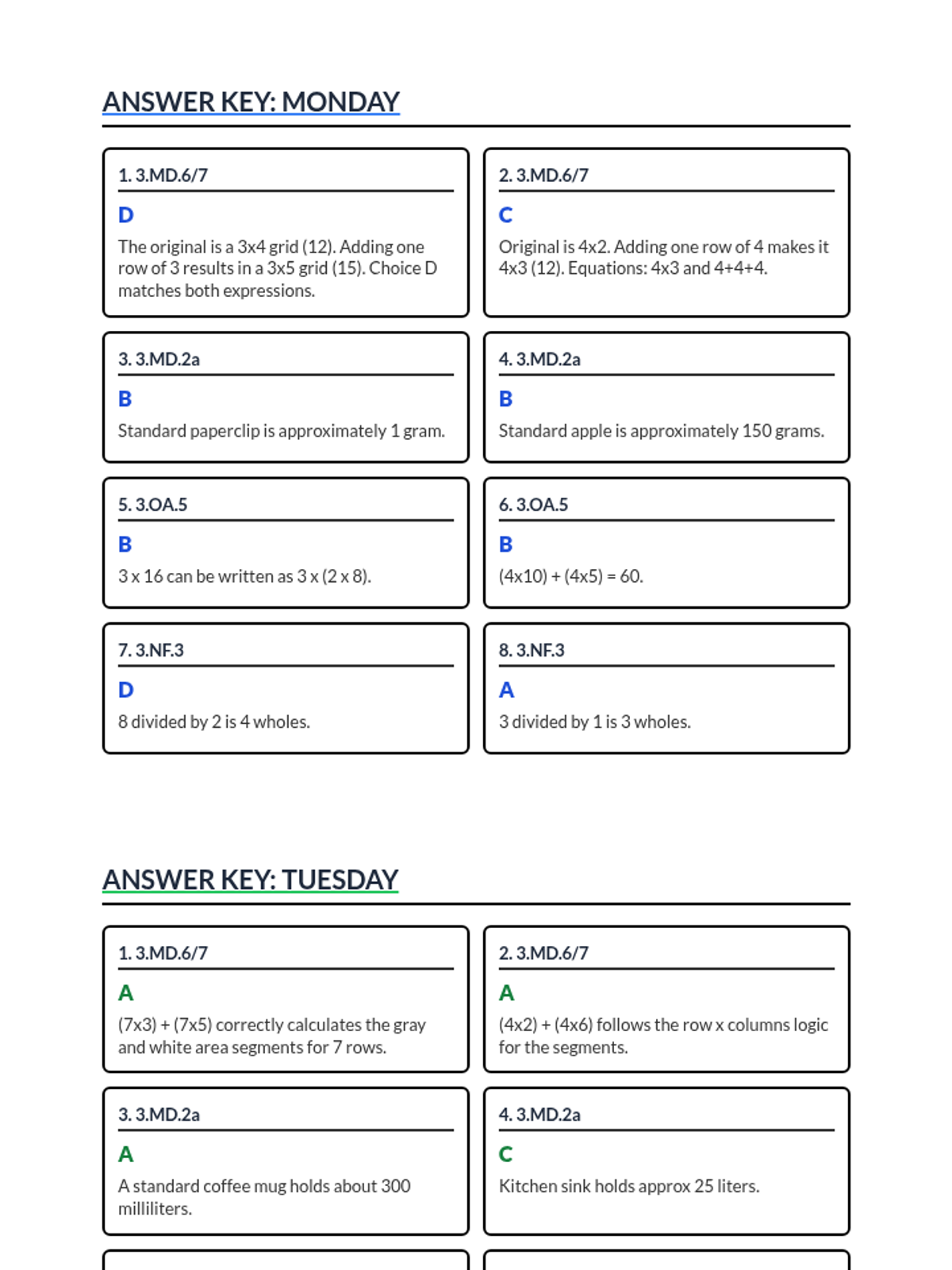
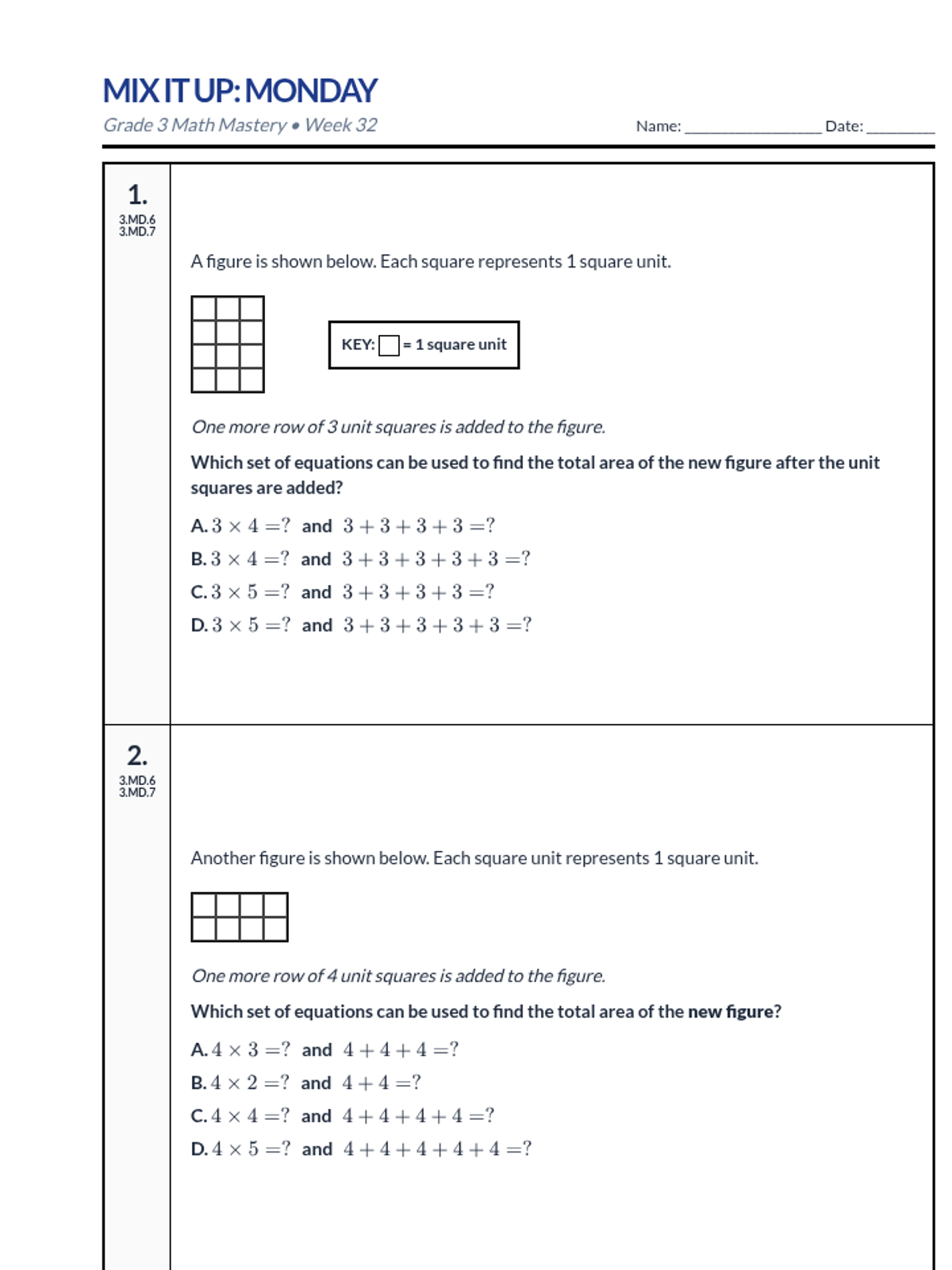
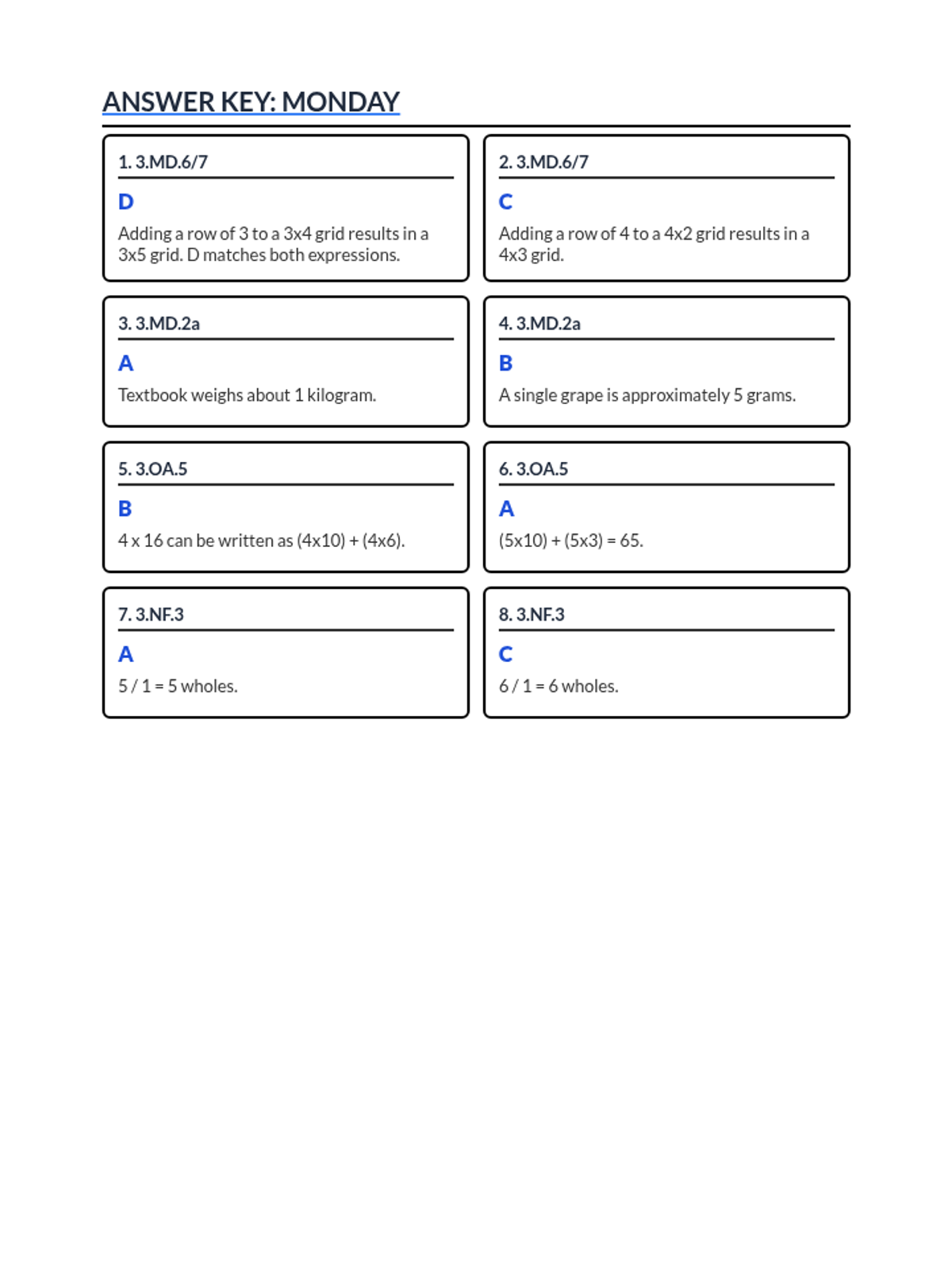
A comprehensive 4-day 3rd-grade math review packet covering area, measurement estimation, multiplication properties, and fraction equivalence. This packet follows a 'Mix It Up' format to build fluency and mastery across key standards.
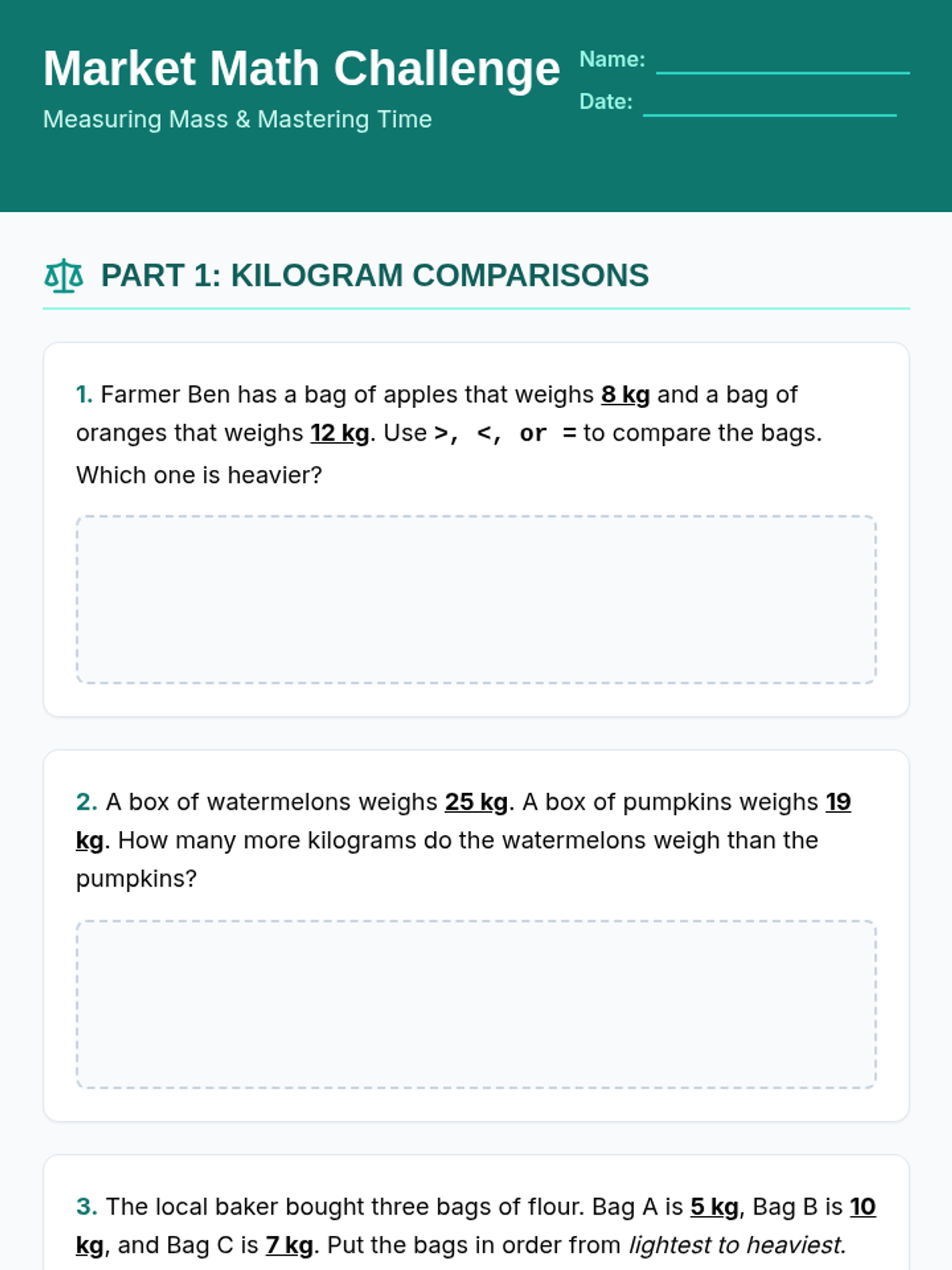
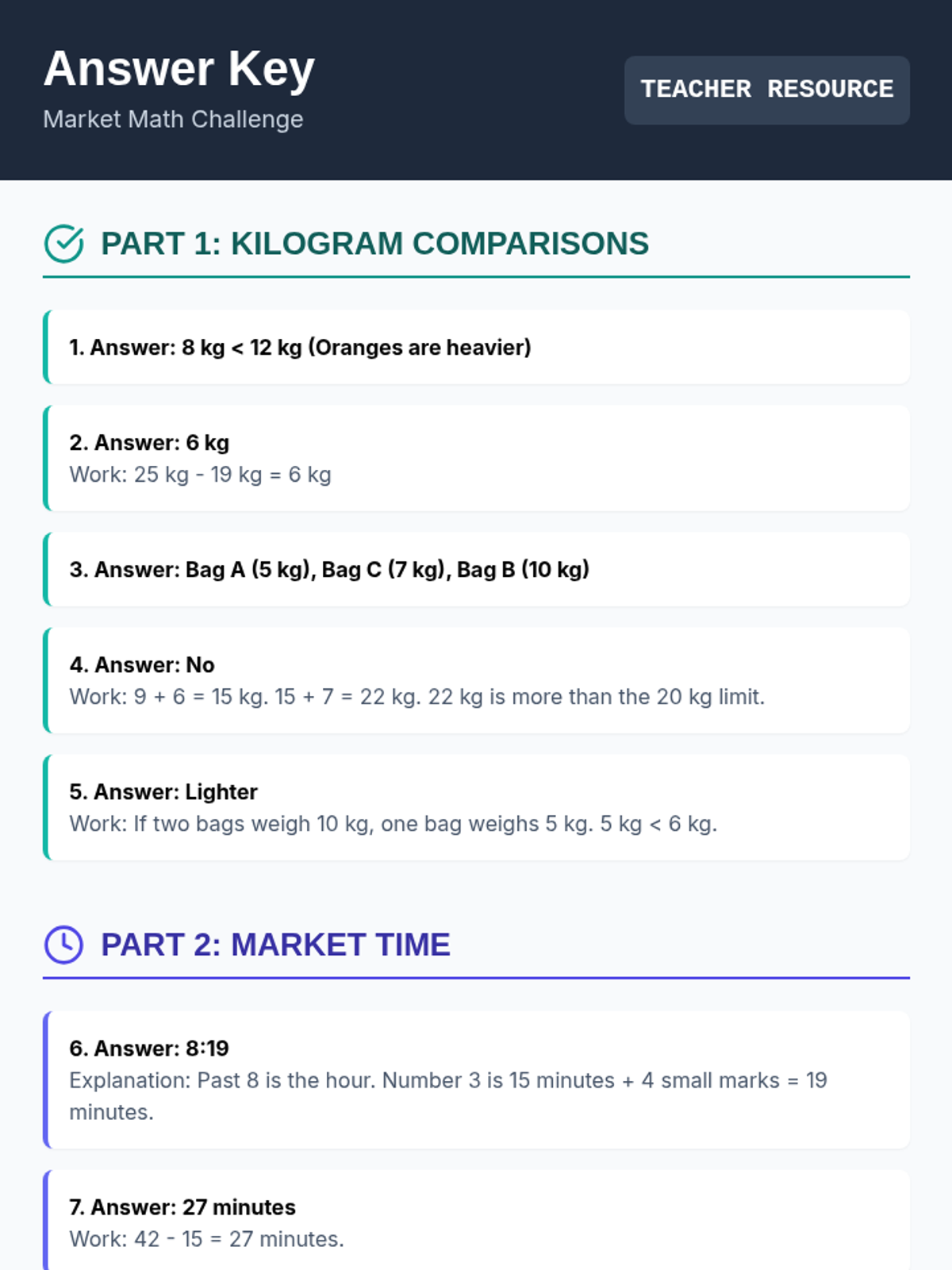
A market-themed lesson where 3rd-grade students practice comparing mass in kilograms and telling time to the exact minute.