Functional behavior assessment, data tracking, and de-escalation strategies for managing classroom conduct. Addresses positive reinforcement, token economies, and individualized behavior contracts to support student self-regulation.
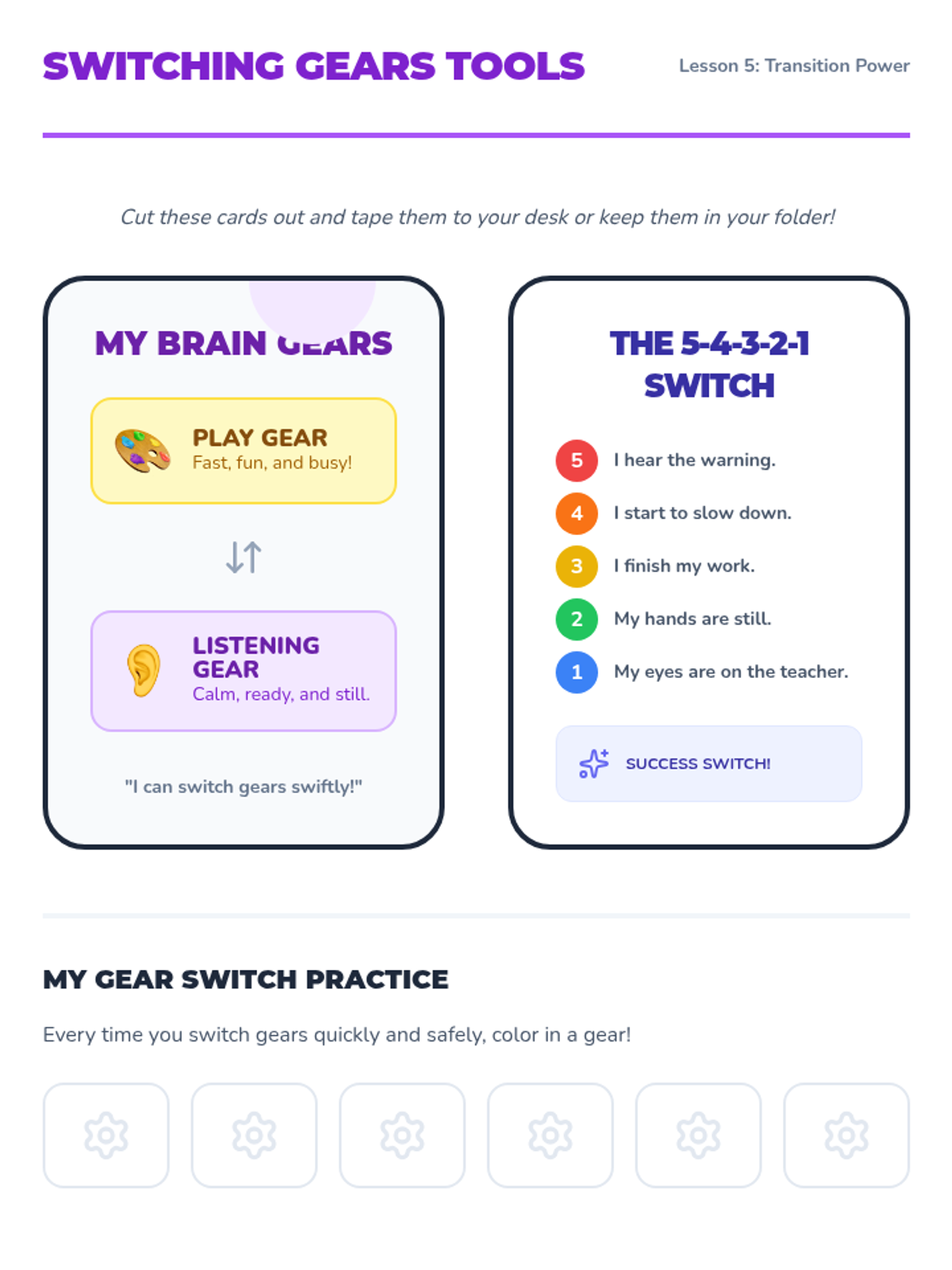
Students learn 'switching gears' strategies like countdowns to help them stop fun activities and start new tasks without frustration.
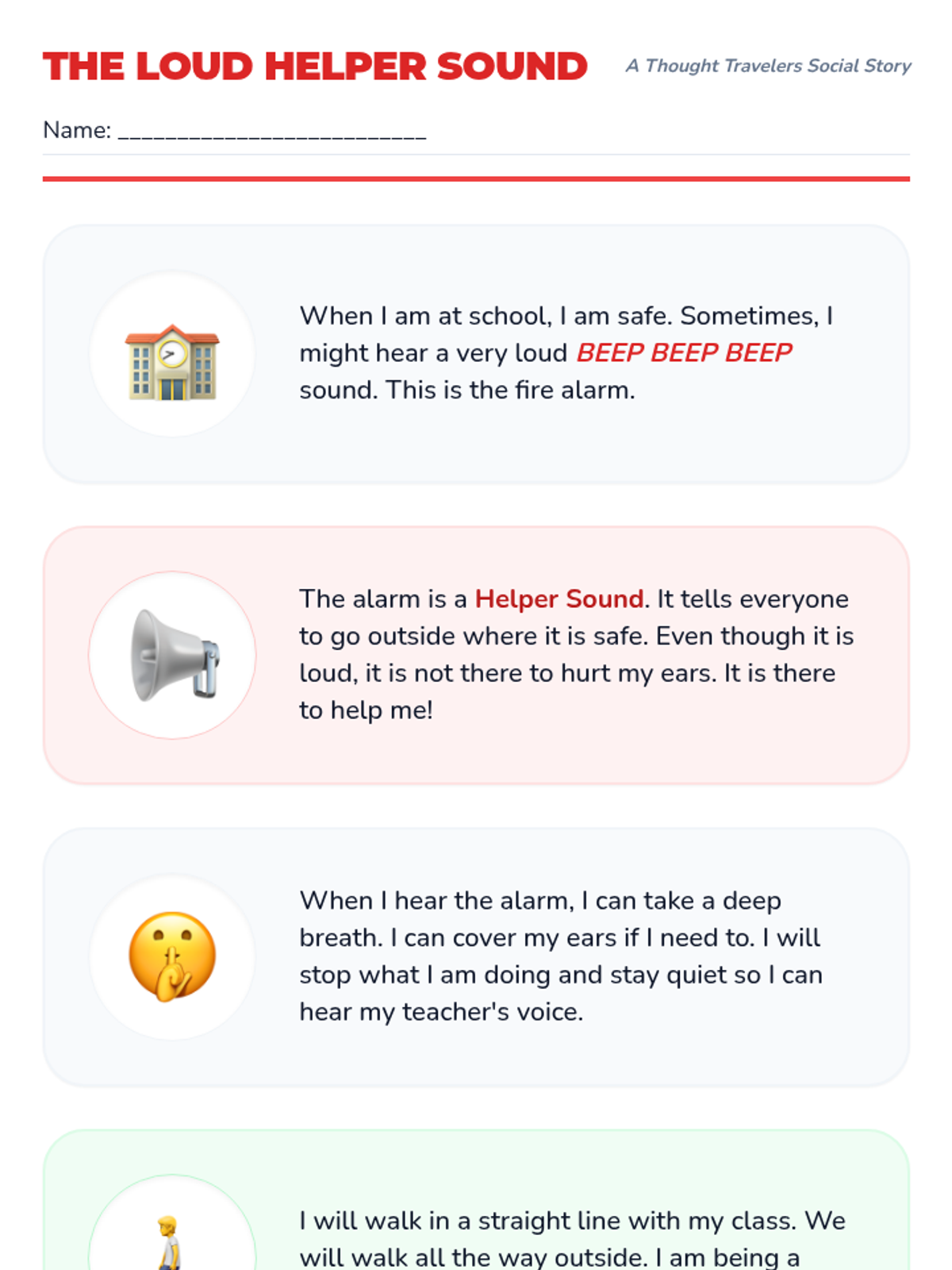
Students engage with a social story about fire drills and alarms, practicing the routine to manage anxiety around loud noises.
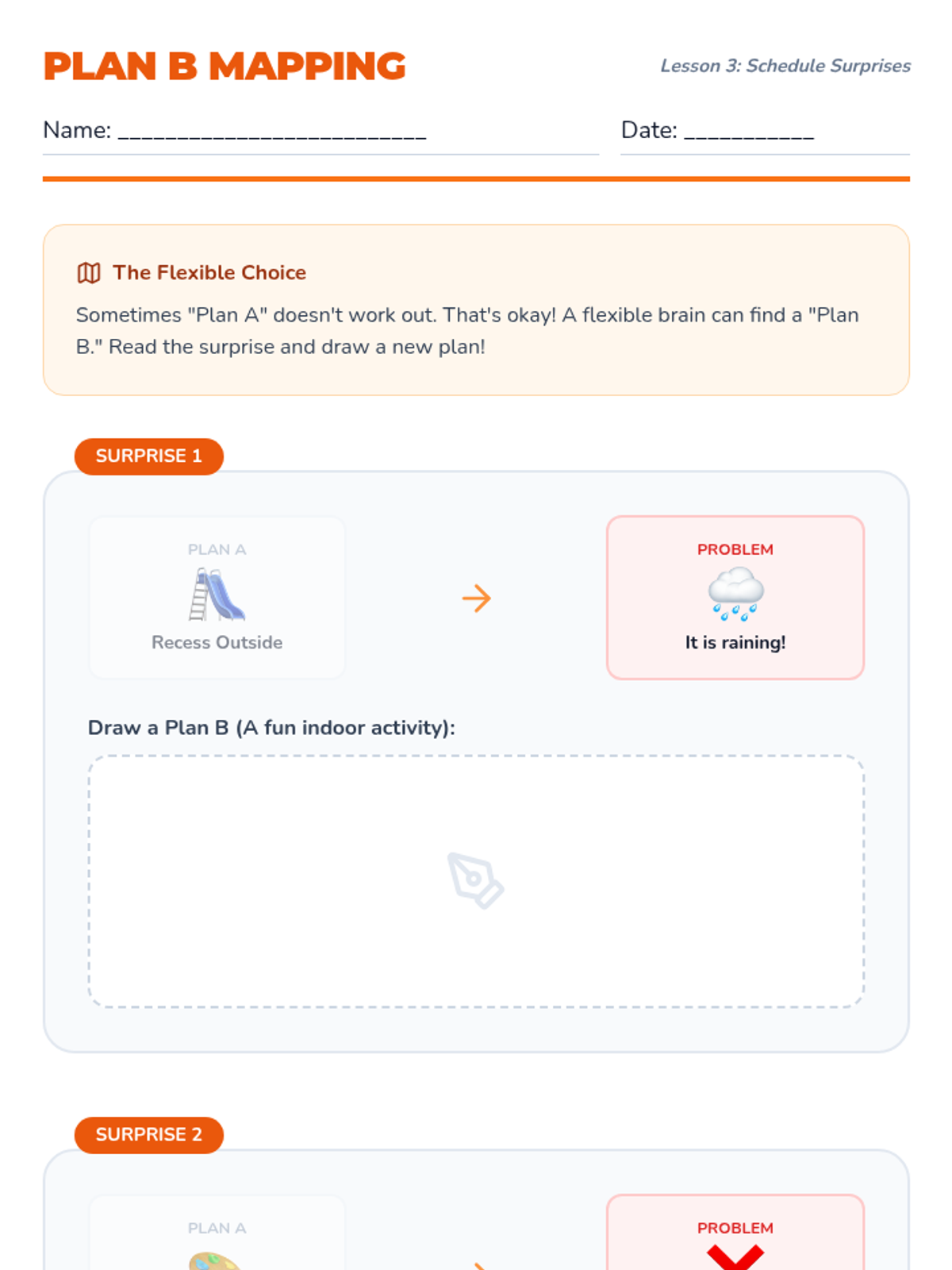
Students practice managing disappointment when schedules shift, using role-play and visual aids to accept alternative activities calmly.
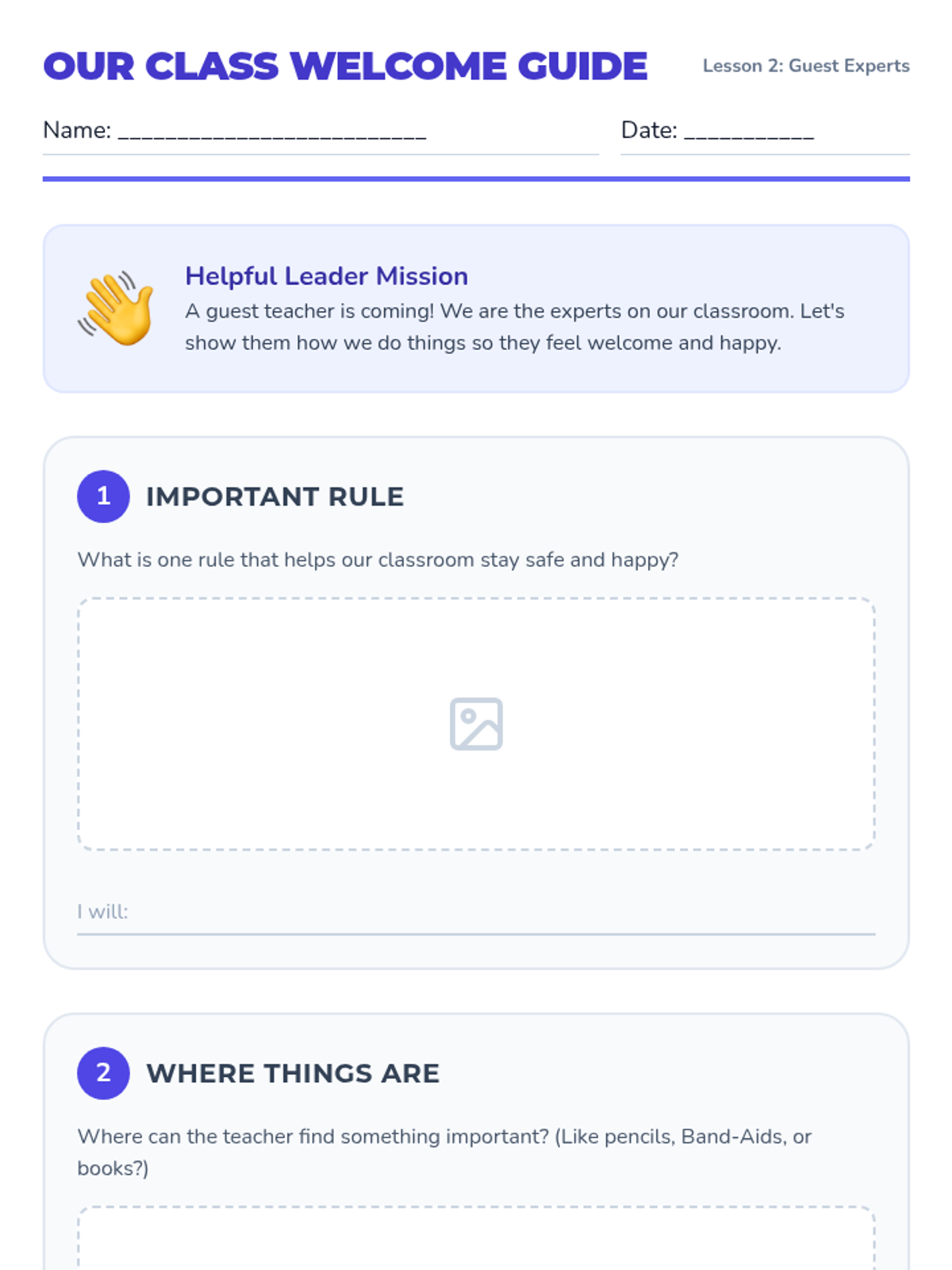
Students prepare for guest teachers by creating a 'Welcome Guide', empowering them to be helpful leaders when their regular routine changes.
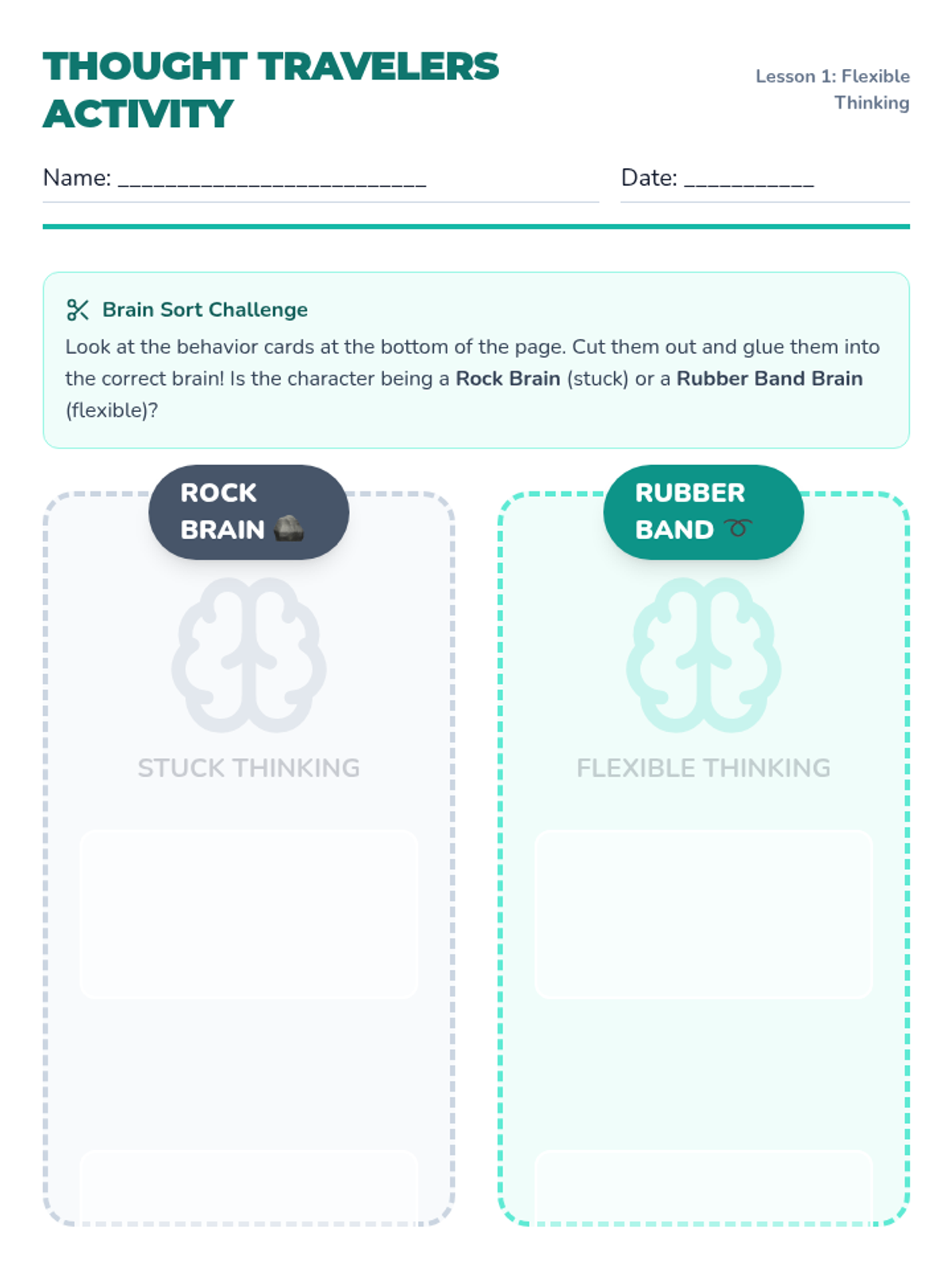
Students compare 'rock brain' (stuck) vs. 'rubber band brain' (flexible) using physical objects and a story to understand how to adapt to changes.
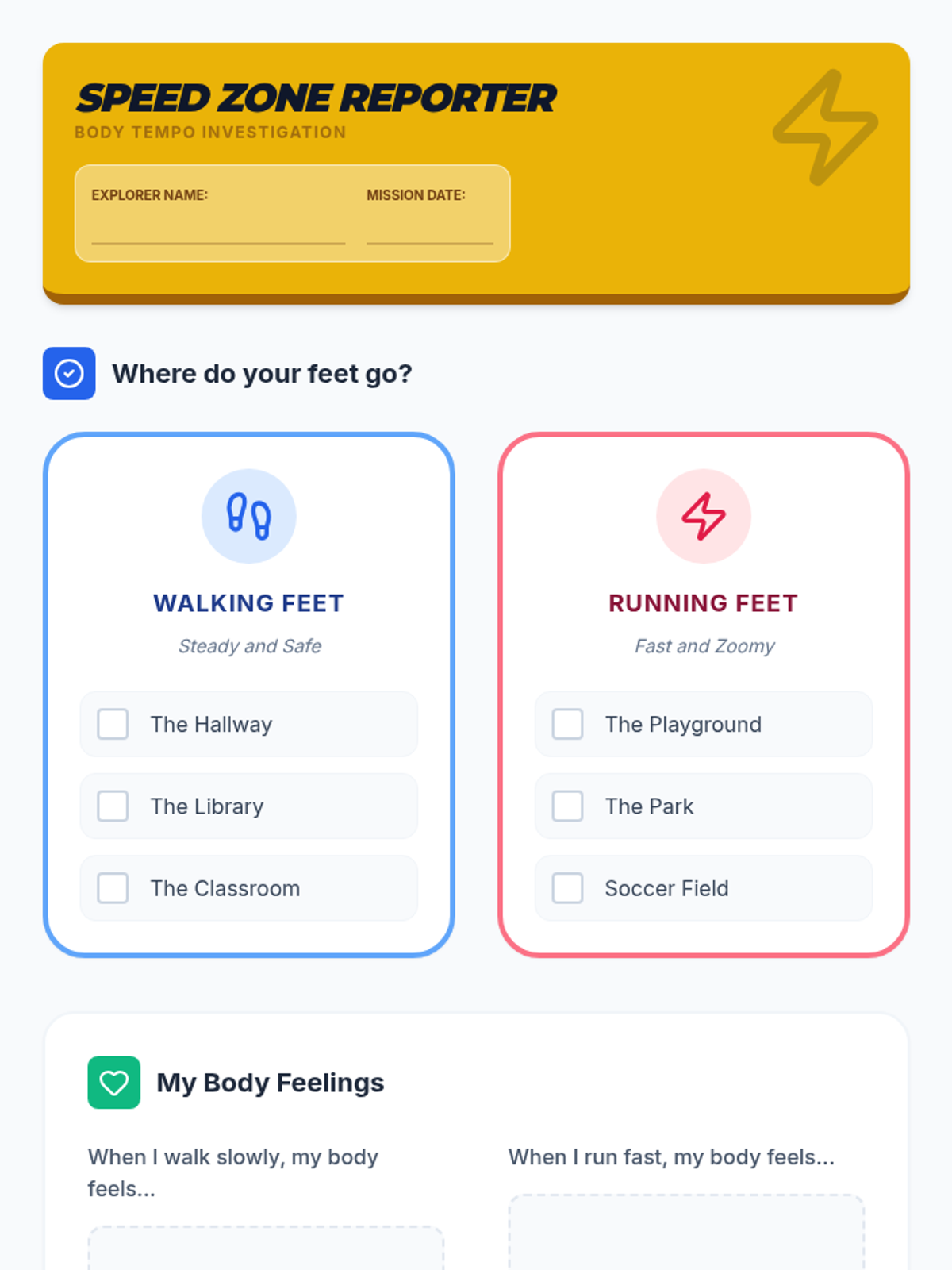
Students learn to regulate their body speed, distinguishing between walking and running feet based on context.
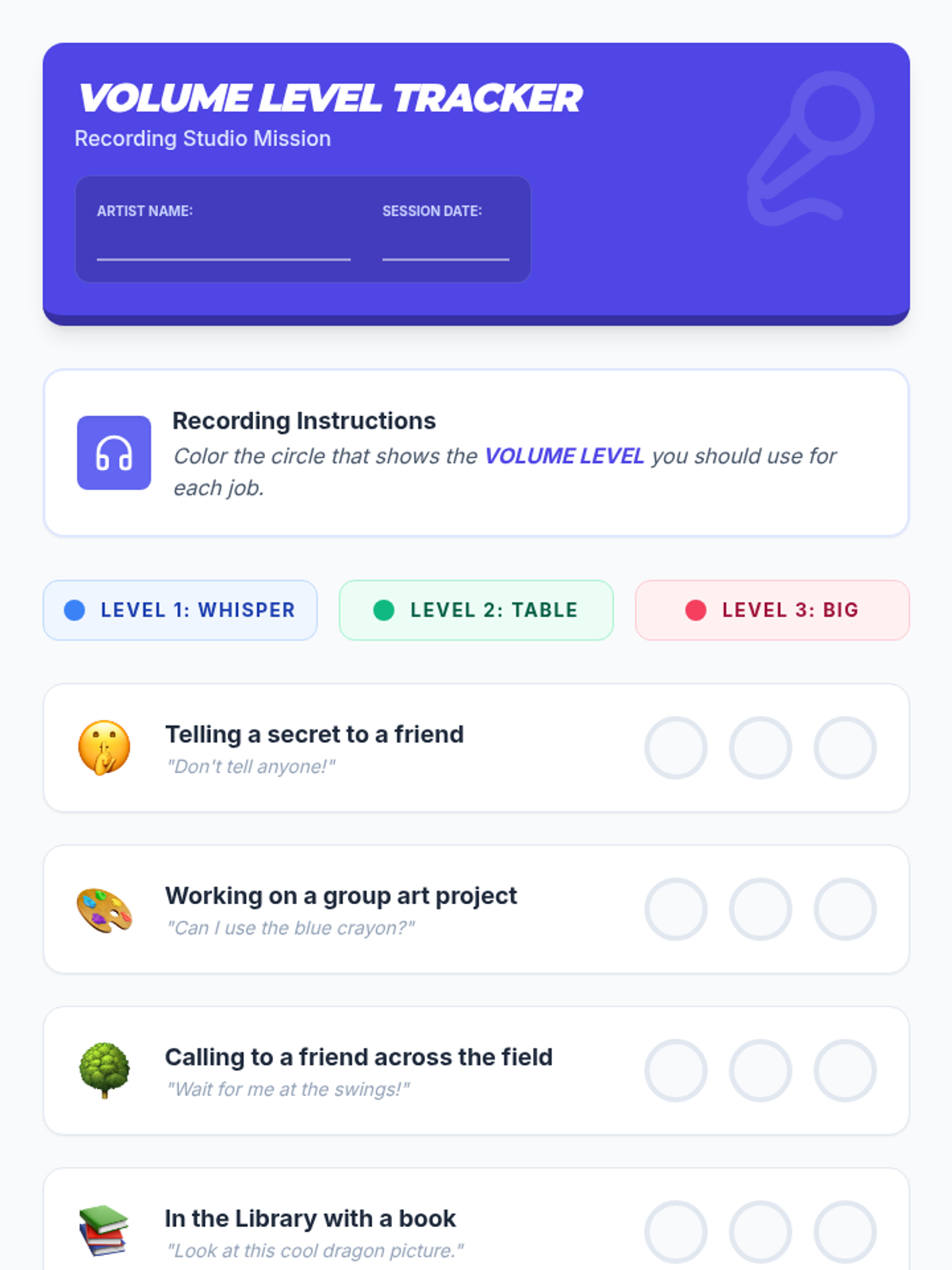
Students practice using a volume knob to regulate their voices and match volume levels to specific settings.
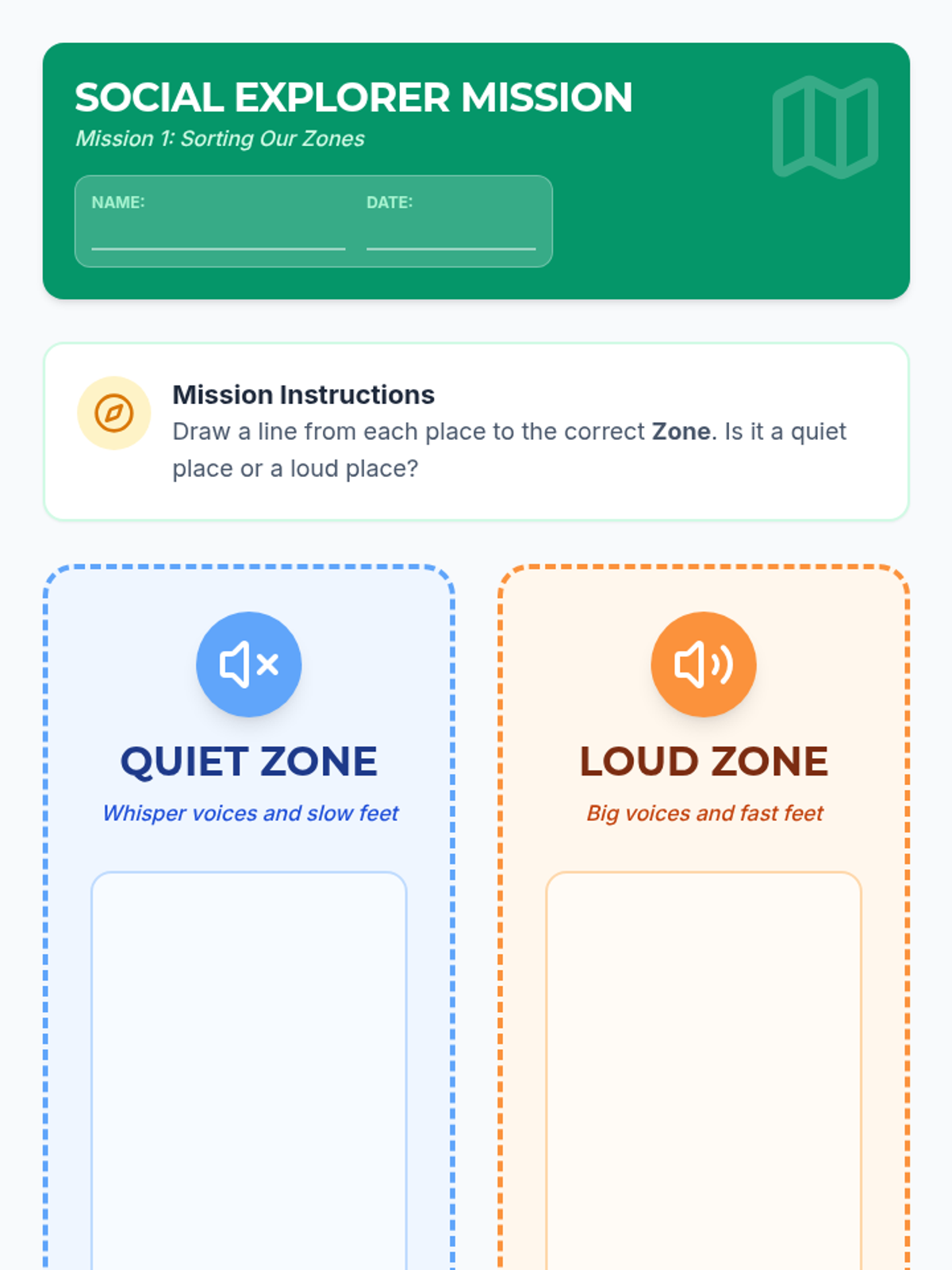
Students identify and categorize places as 'Quiet' or 'Loud' based on the activities that happen there.
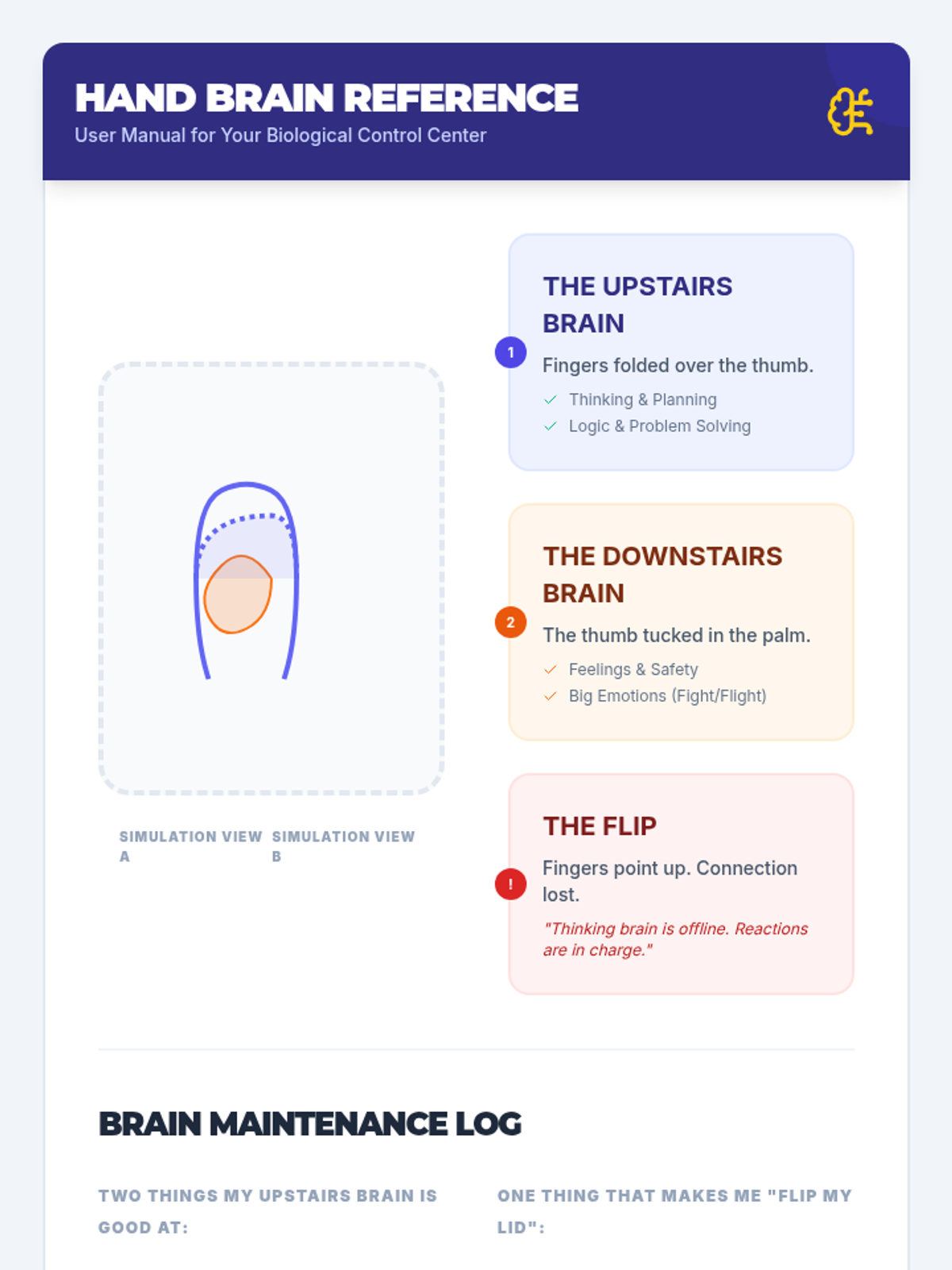
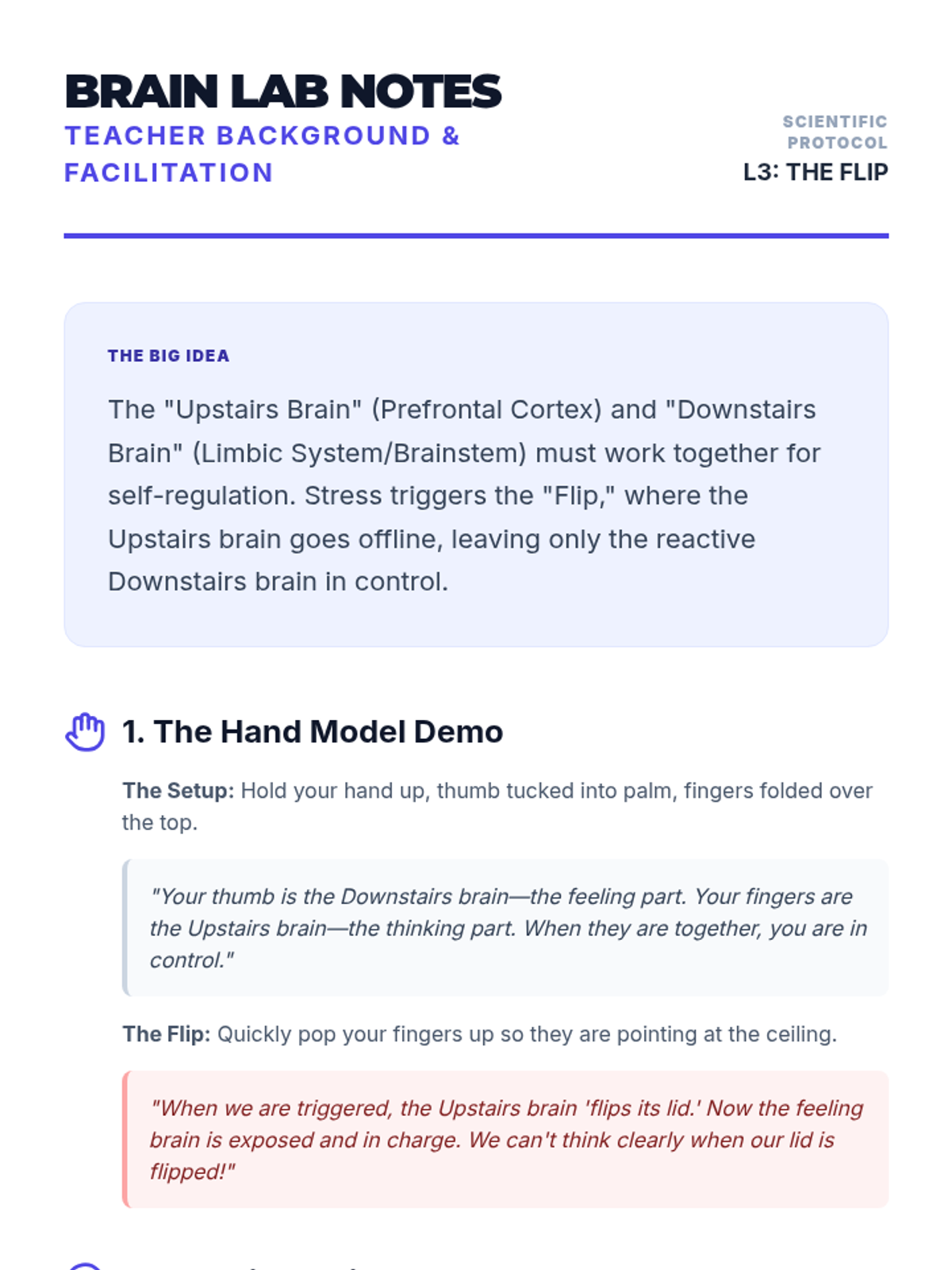
Students learn about the 'upstairs' and 'downstairs' brain to understand the biological basis of emotional dysregulation and the importance of early recognition.
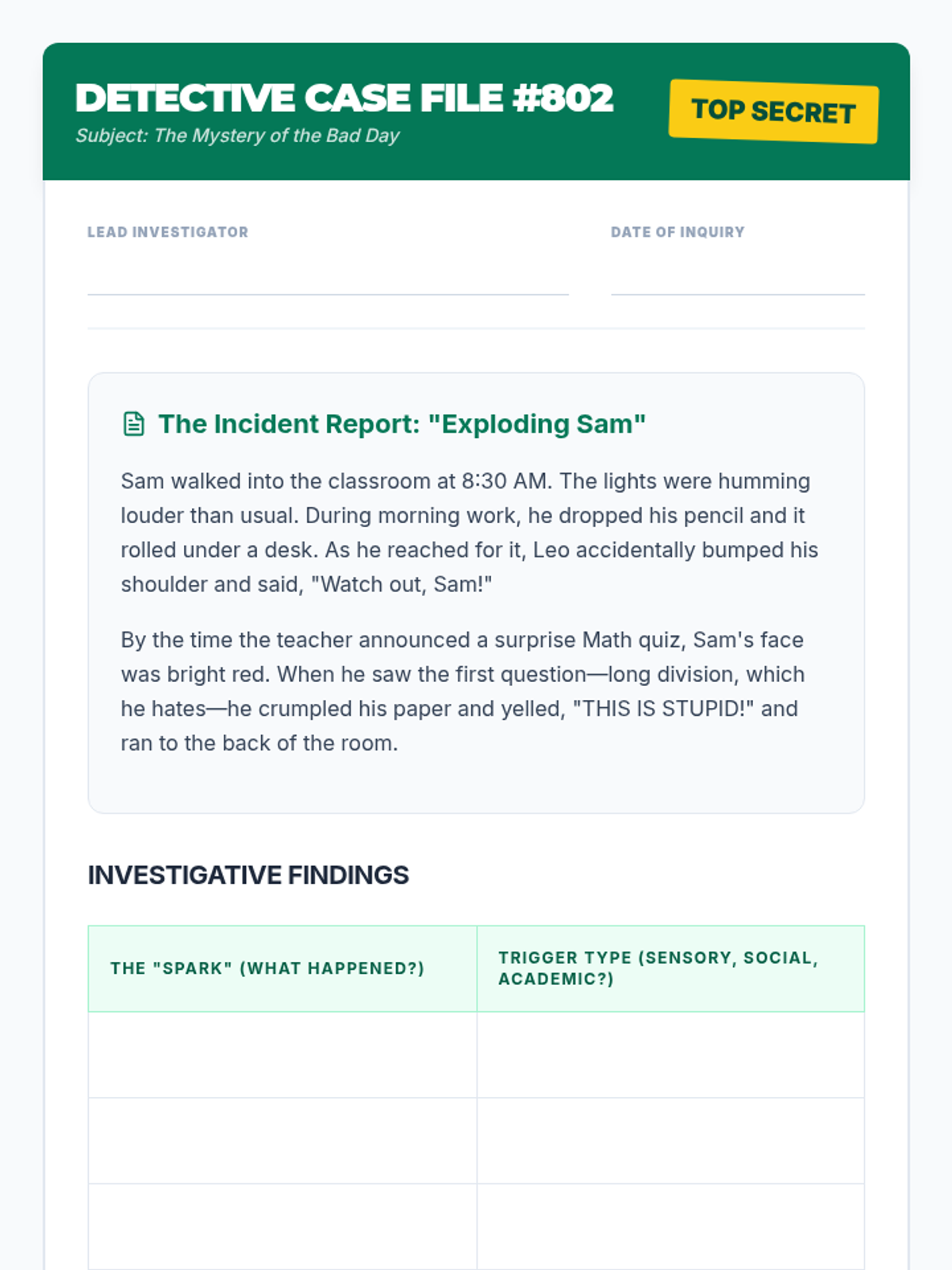
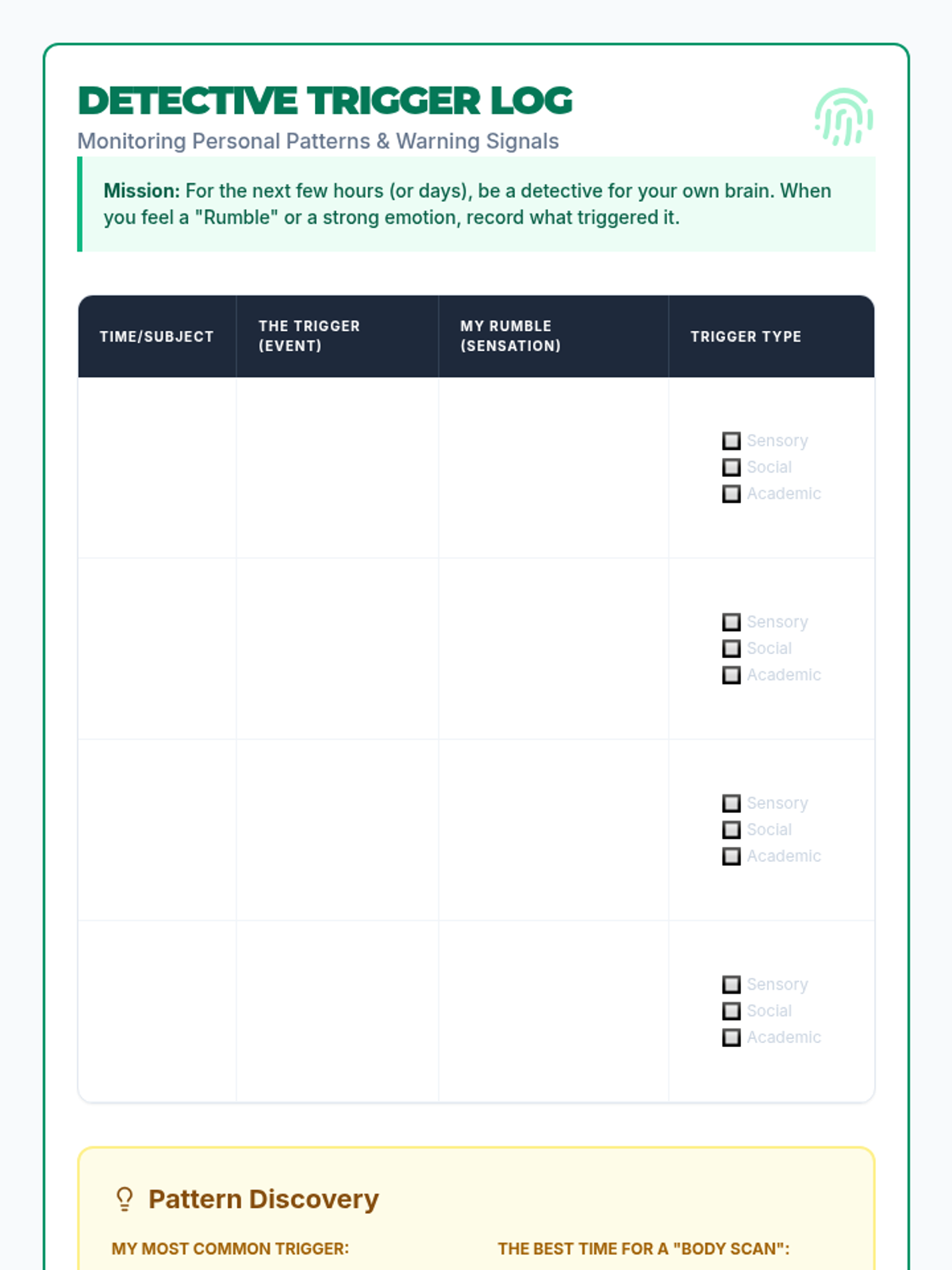
Students investigate external factors that cause stress, categorizing them into sensory, social, or academic triggers while analyzing patterns.
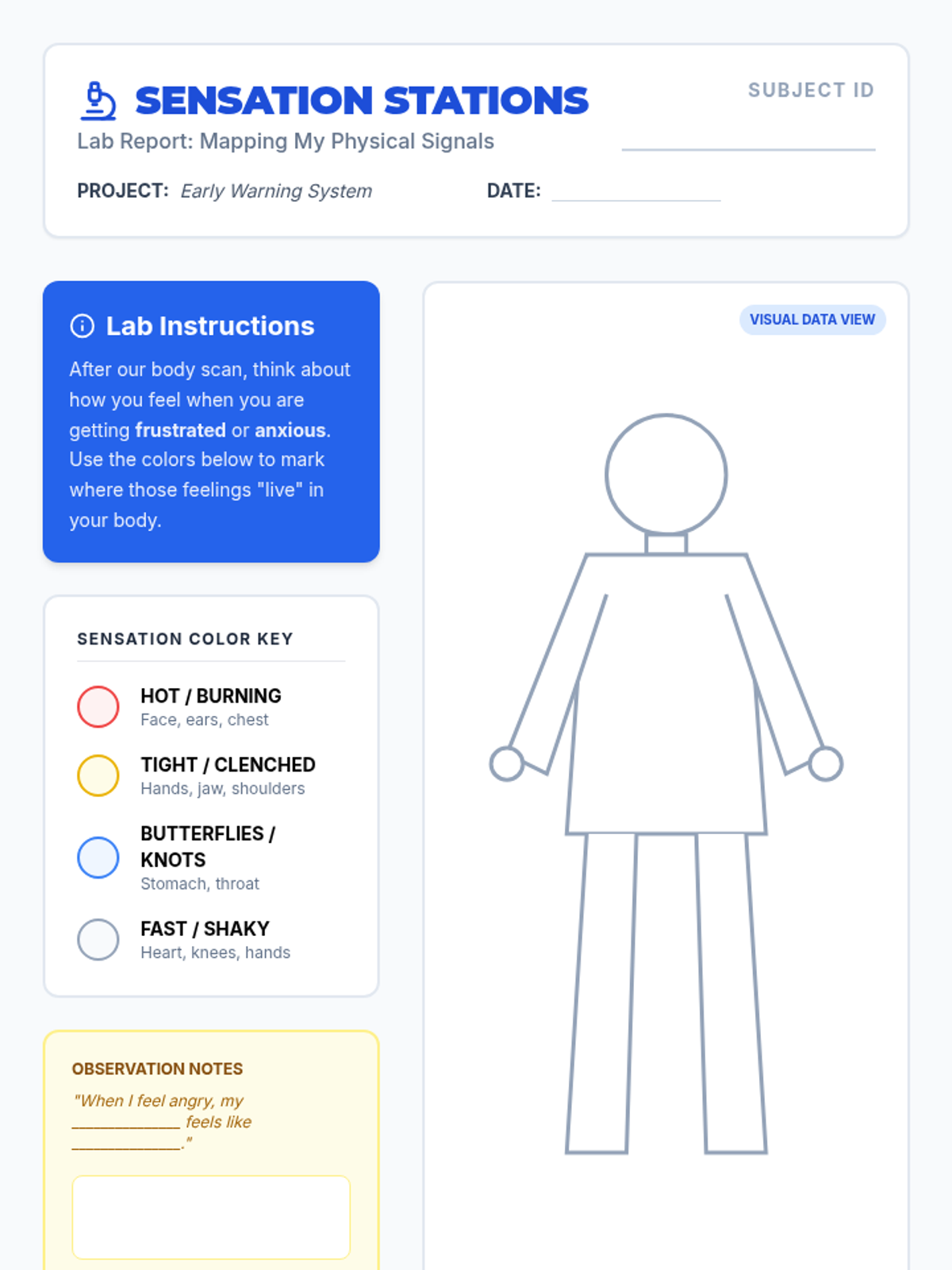
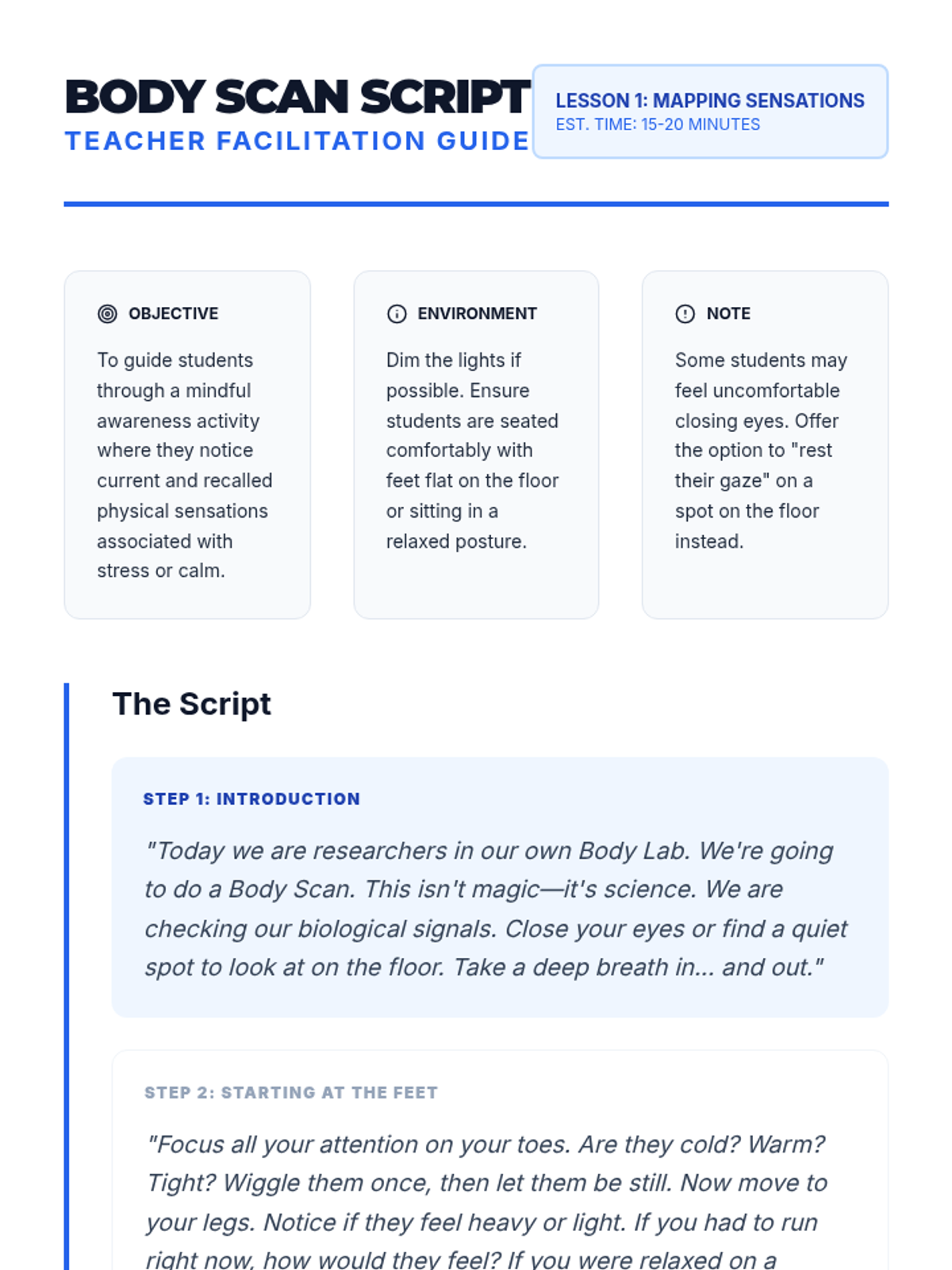
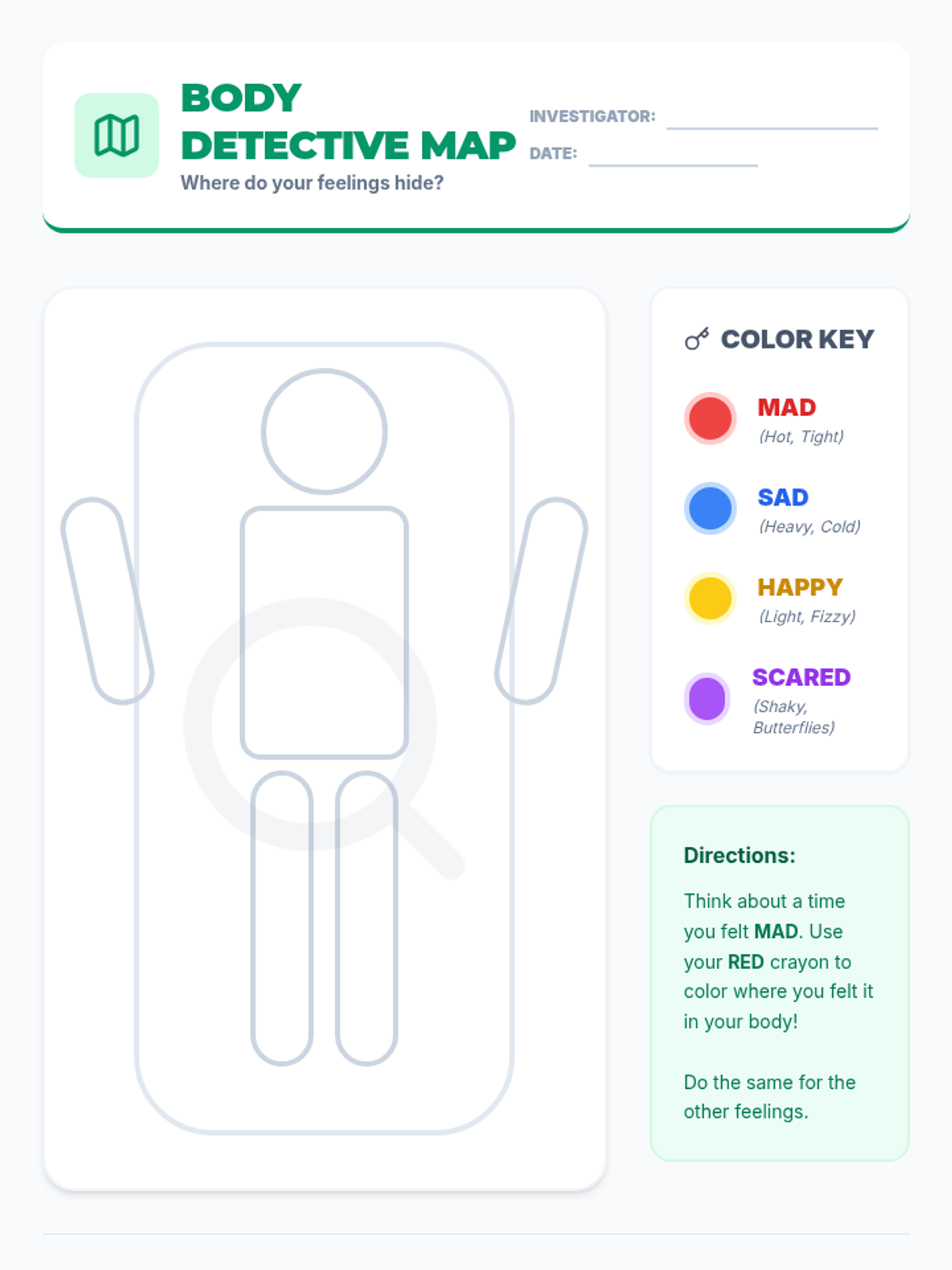
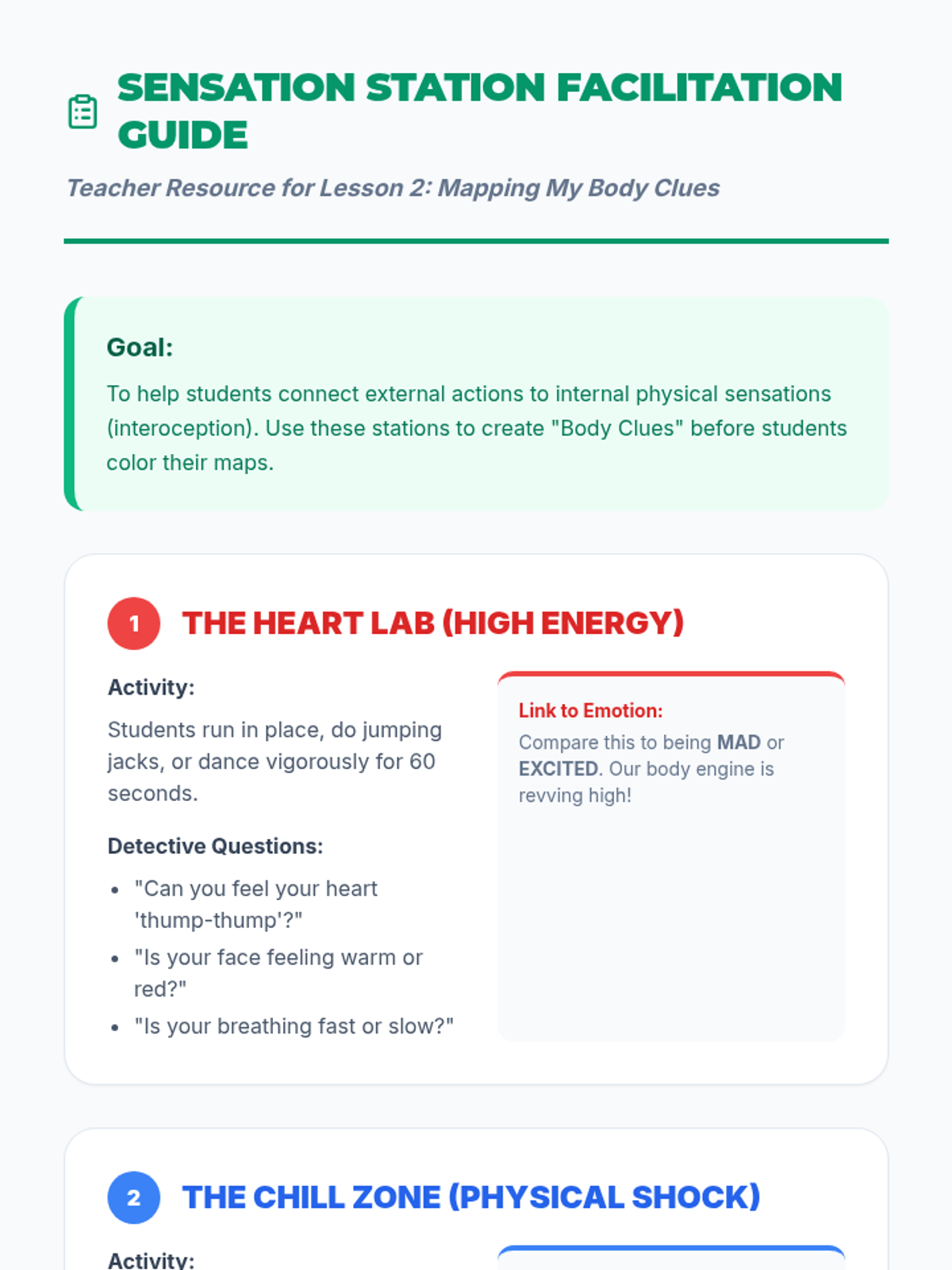
Students participate in a body-scanning activity to identify physical signs of stress and create a visual body map connecting sensations to emotions.
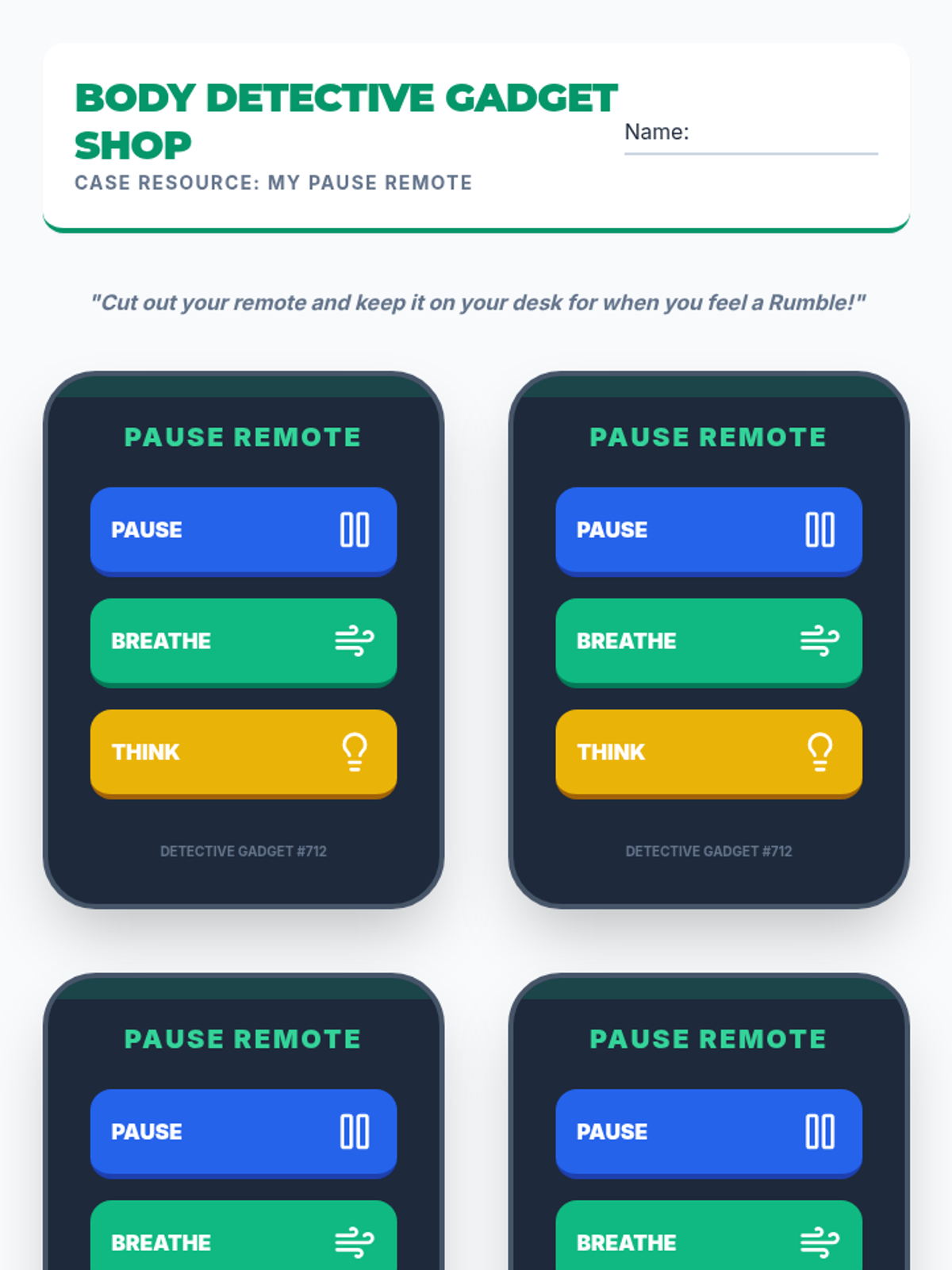
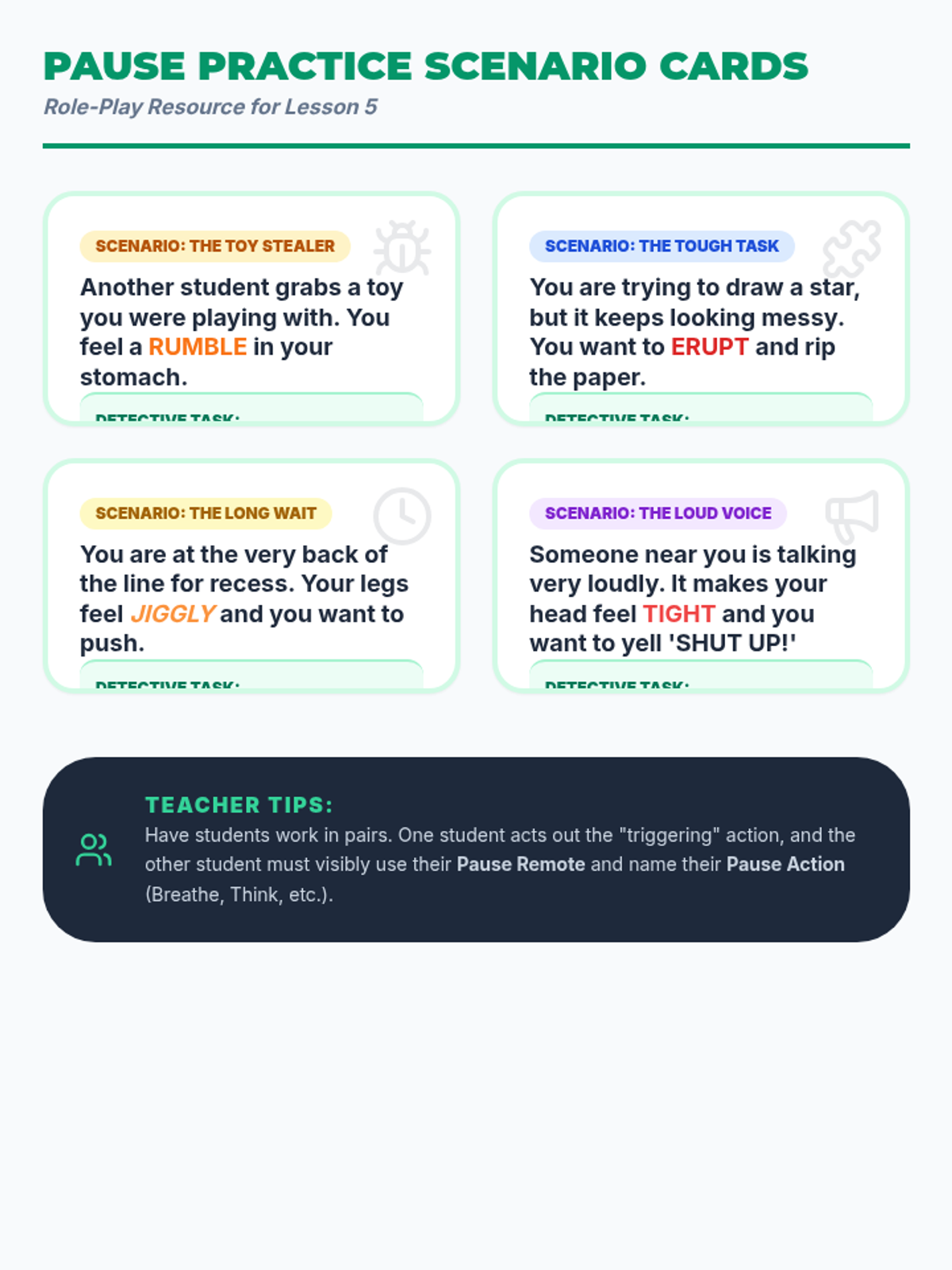
Students learn the specific physical action of 'freezing' or 'pausing' when they feel body cues or triggers. Through role-play scenarios, they practice stopping their body movements immediately upon hearing a cue word.
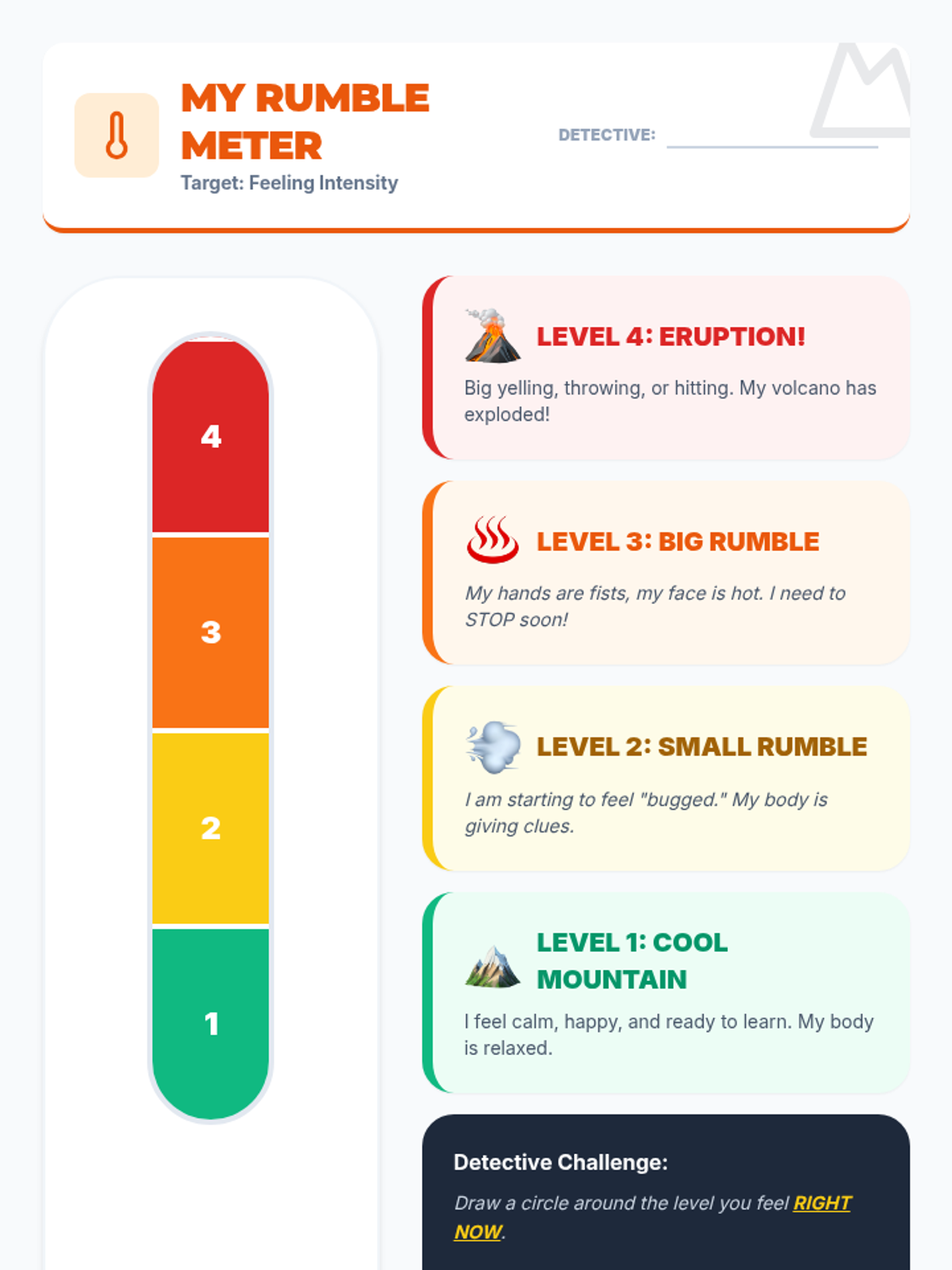
Students explore the concept of escalation using a volcano model, distinguishing between 'rumbling' (feeling upset) and 'erupting' (yelling or hitting). They practice identifying the 'rumble' stage as the critical moment to make a choice.
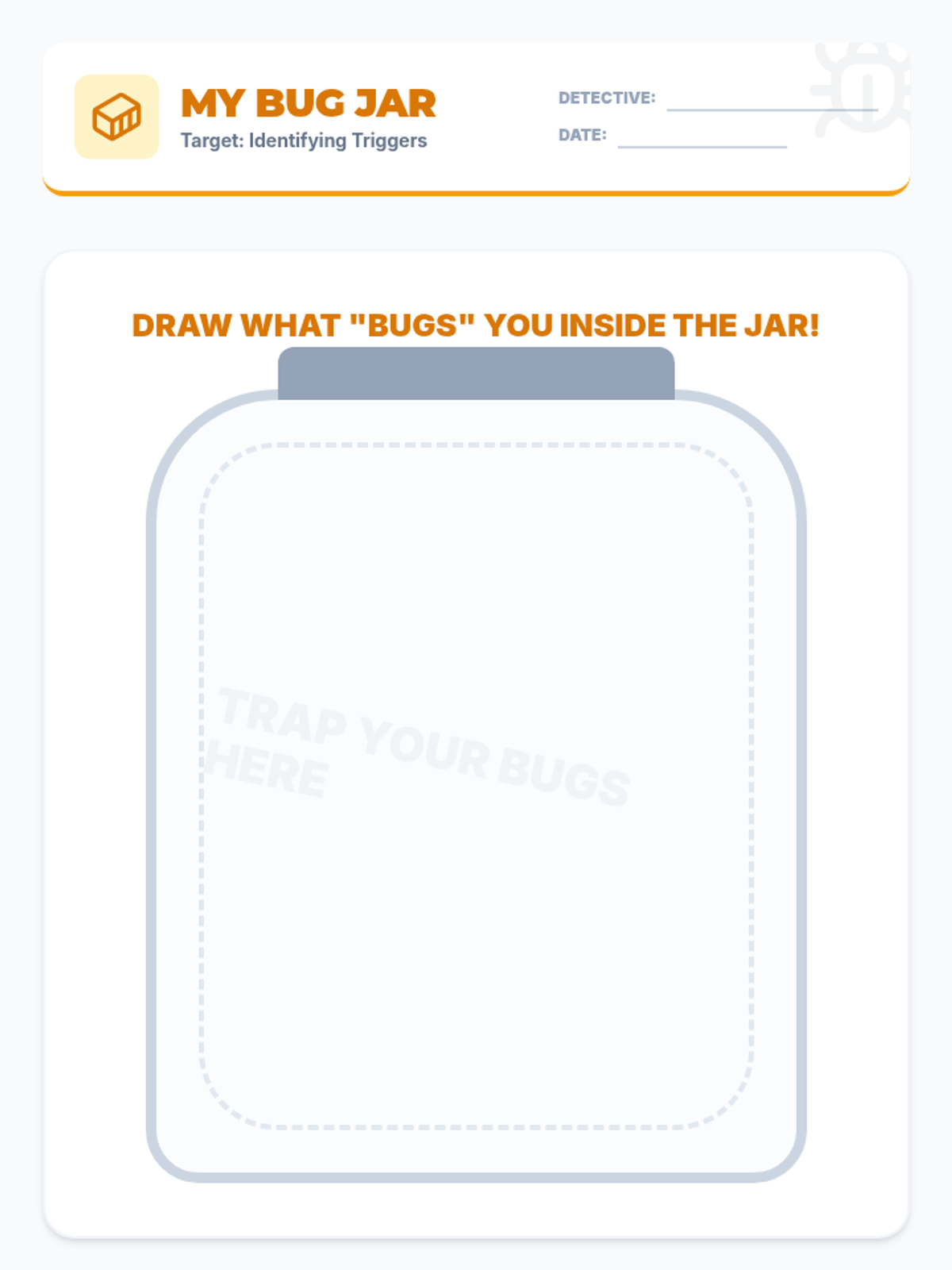
Using a 'bug jar' metaphor, students identify things that 'bug' them or act as triggers for negative behavior. The class sorts these triggers into categories to understand common stressors and validates that everyone has different triggers.
Students use outline drawings of the human body to color where they feel specific emotions (e.g., red in the hands for anger, blue in the tummy for sadness). This visual activity helps connect abstract feelings to concrete physical sensations.
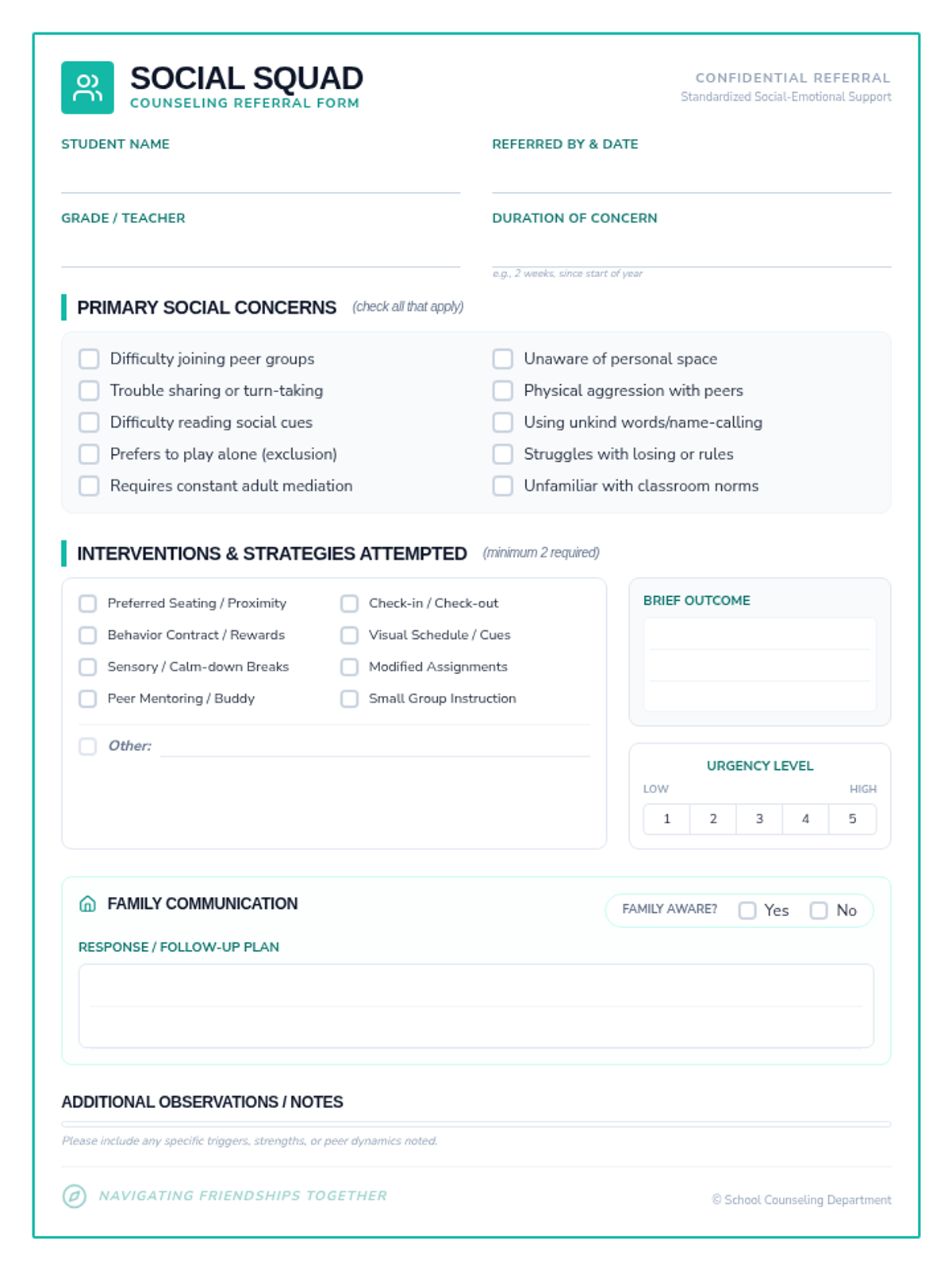
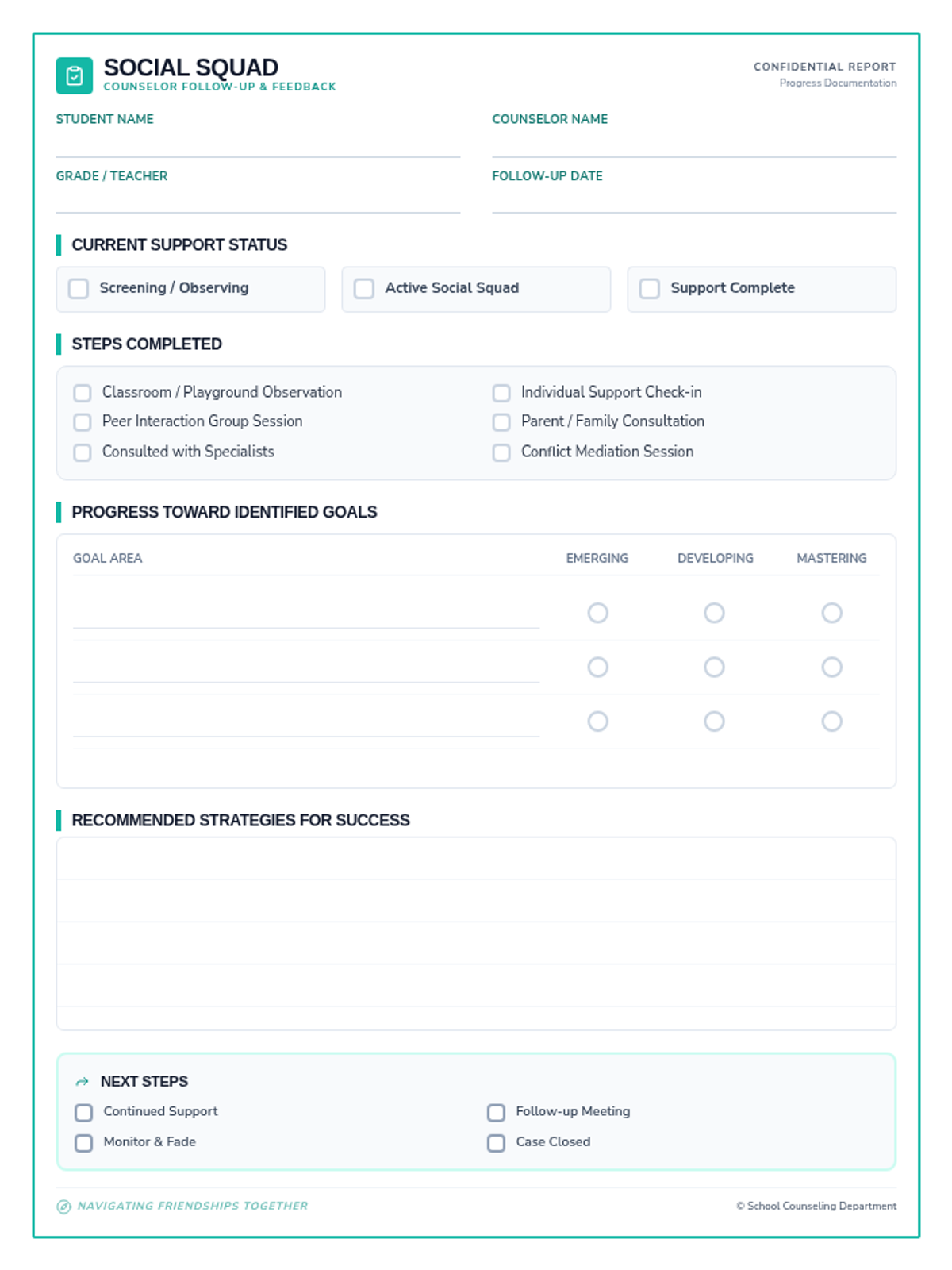
A suite of professional school counseling forms for managing student referrals, tracking progress, and providing feedback to teachers and families.
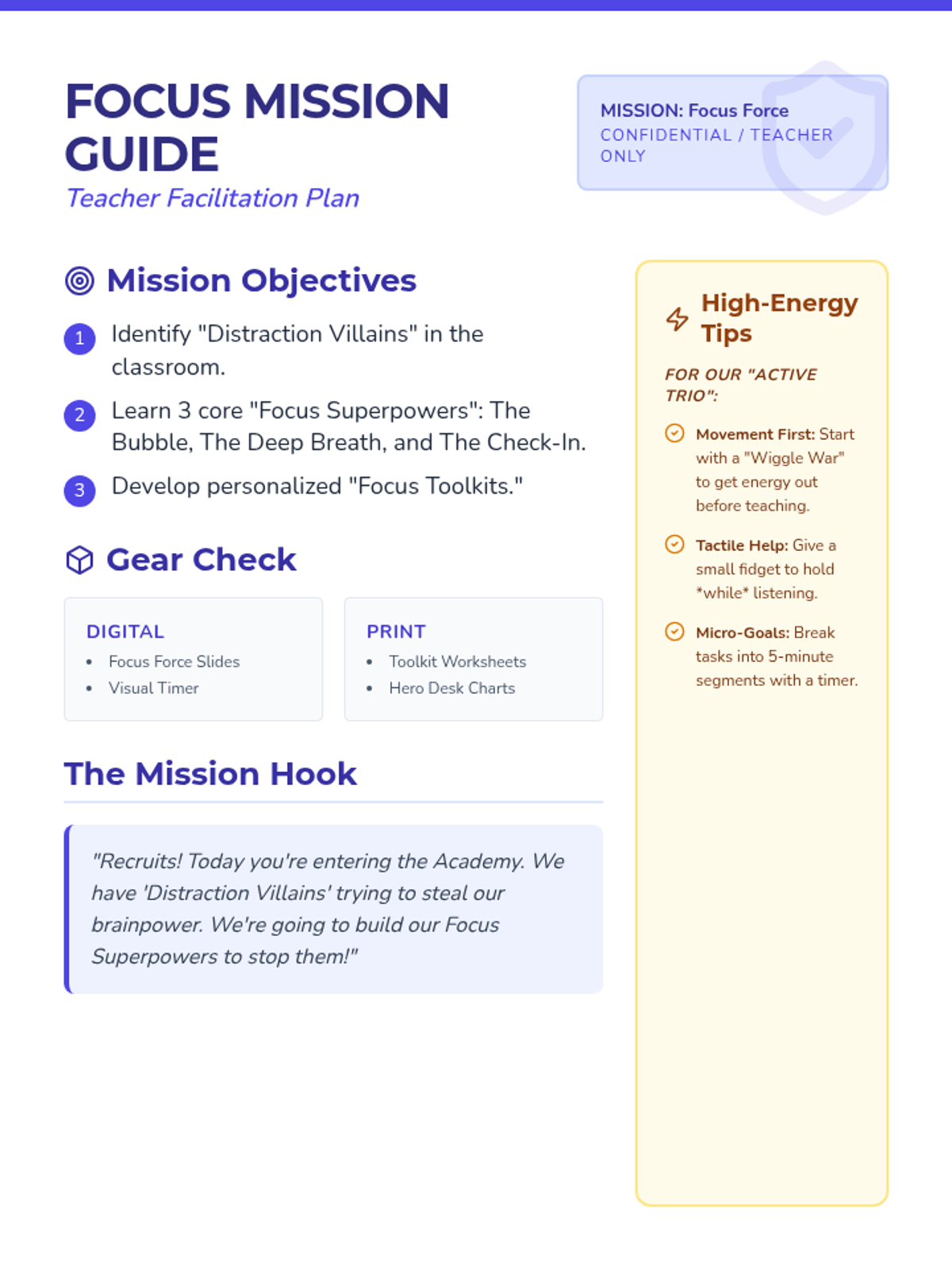
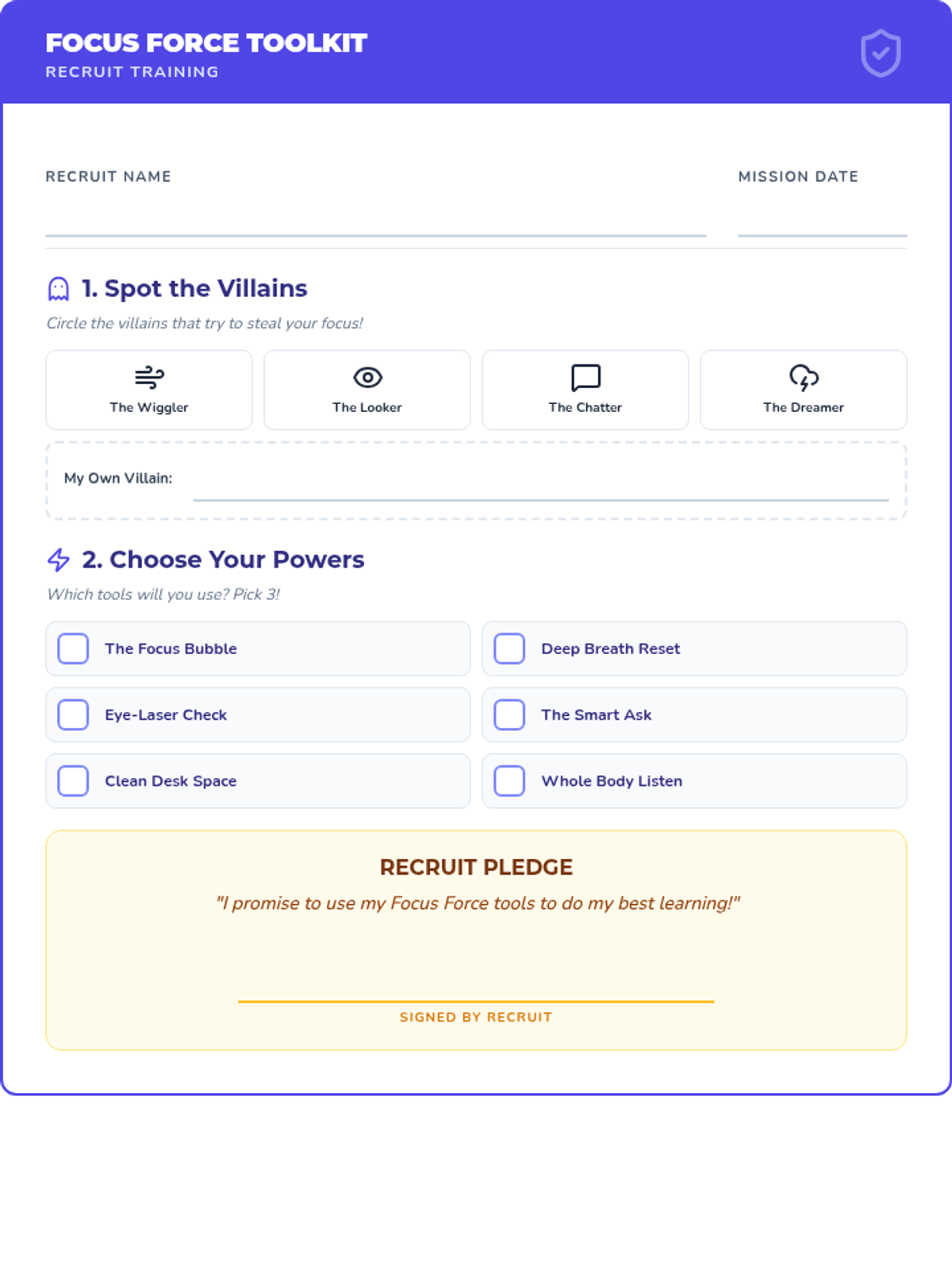
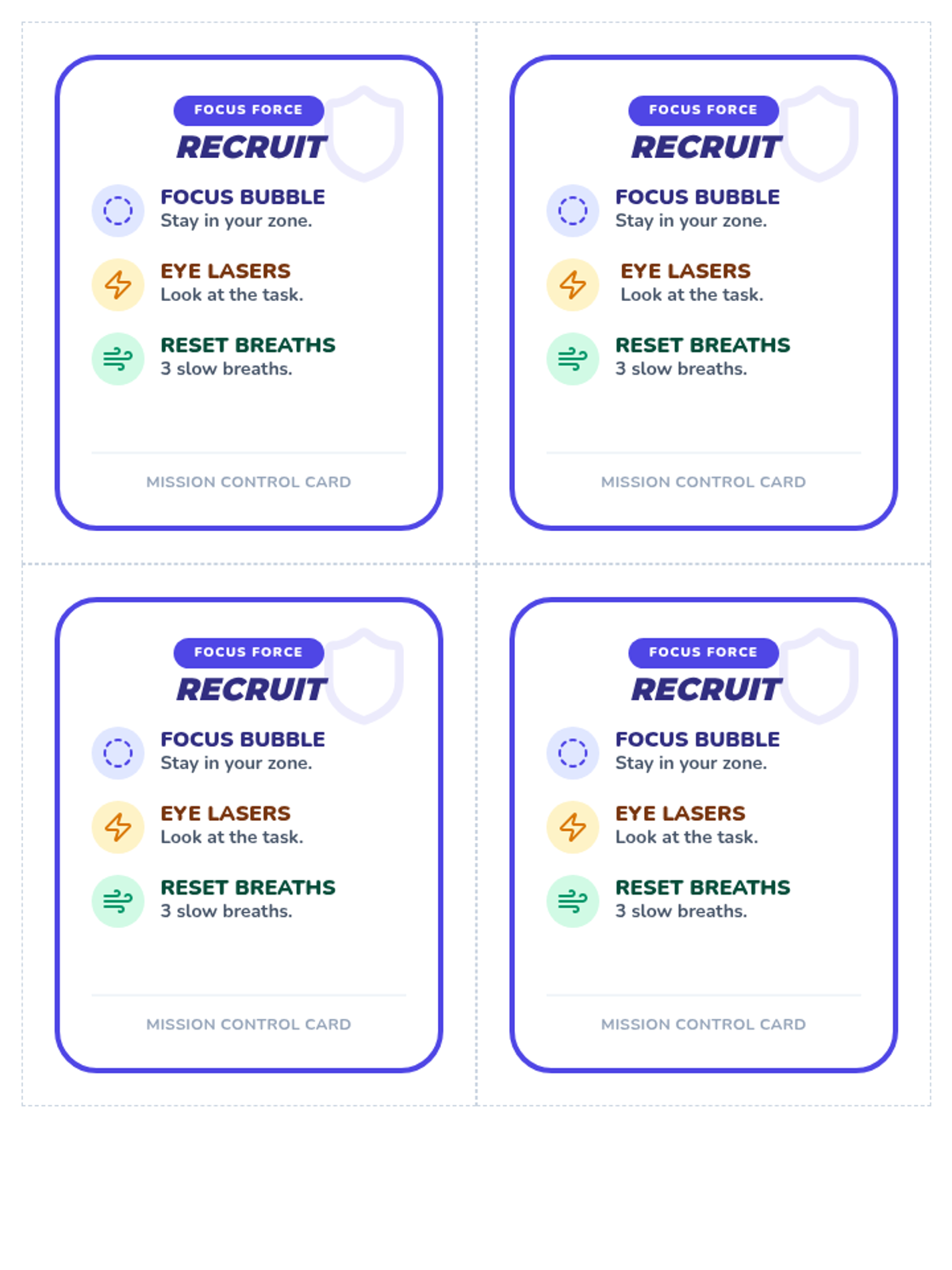
A high-energy, superhero-themed lesson designed to teach 1st graders practical strategies for staying focused and managing distractions in the classroom.
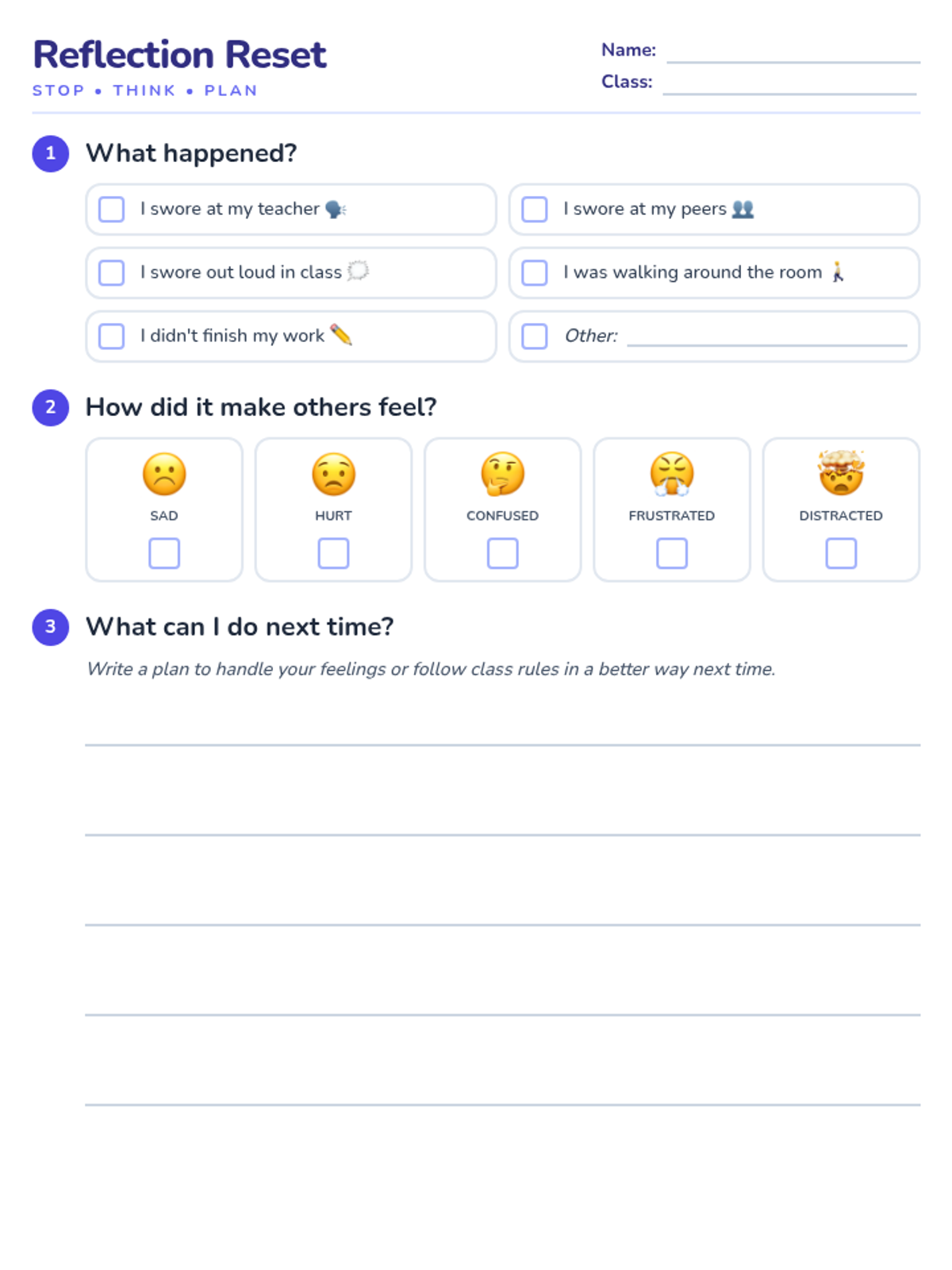
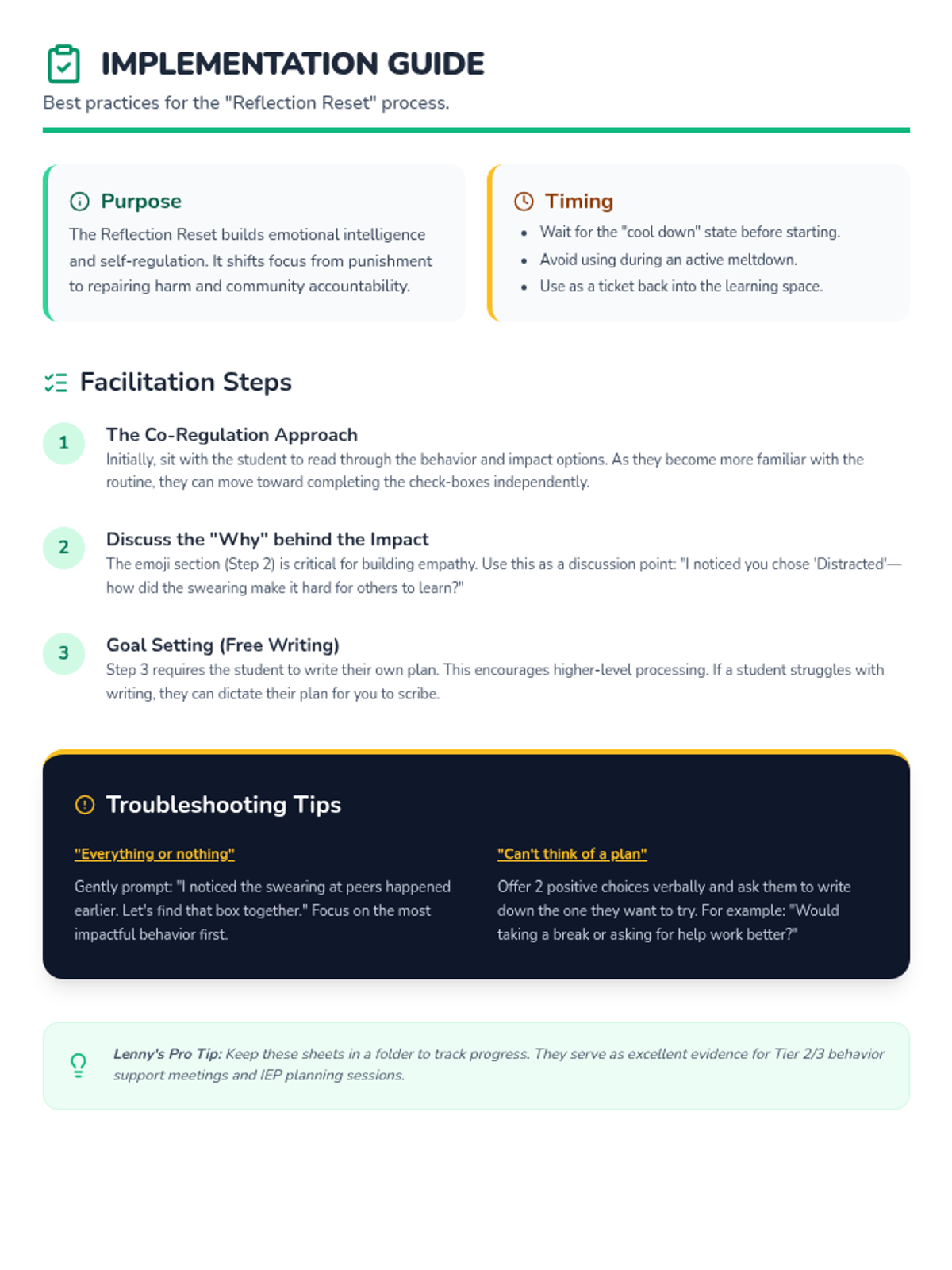
A set of resources designed to help students process behavioral incidents through reflection, identifying impact, and planning better choices.
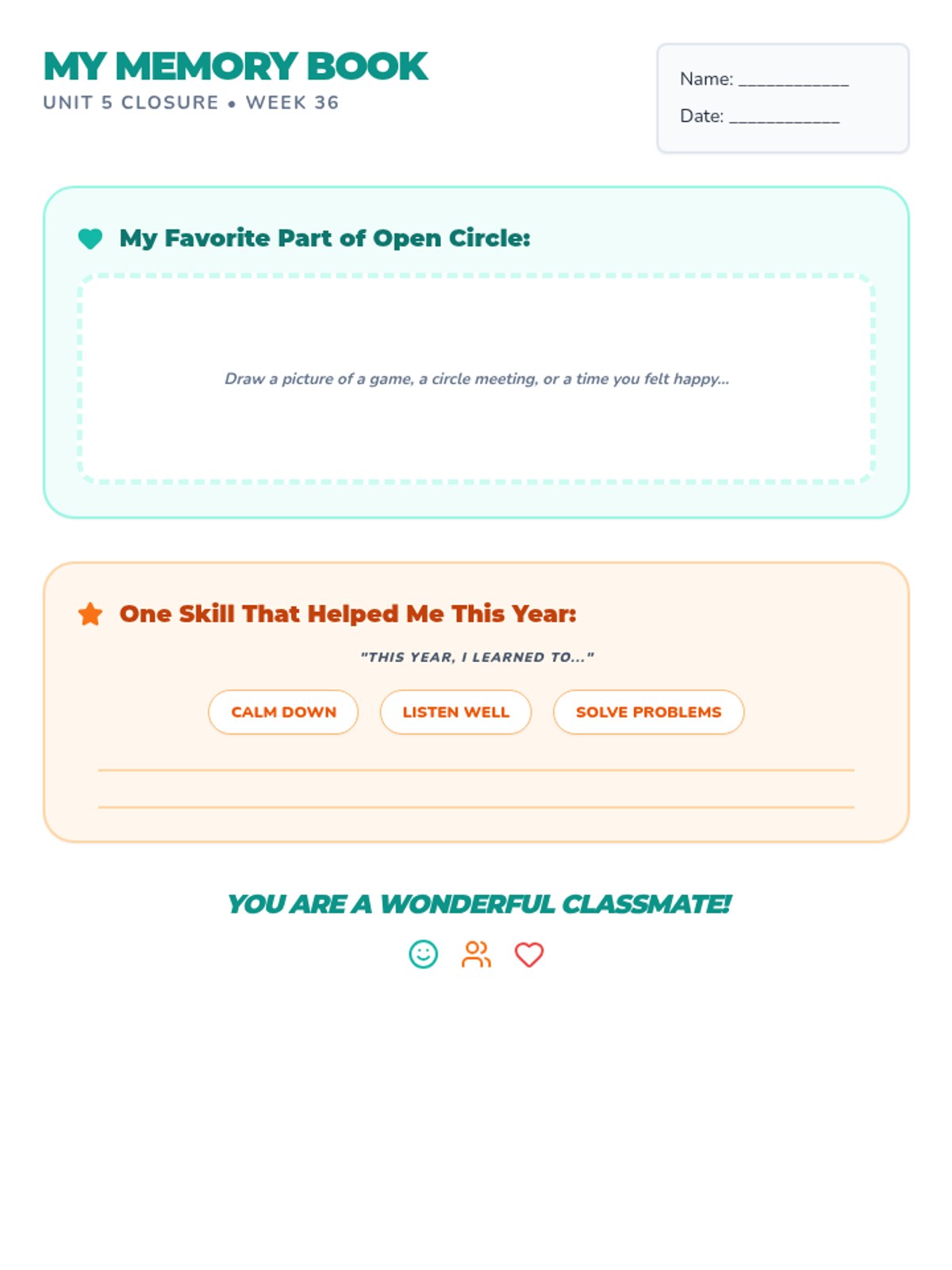
Final reflections on the school year and the growth made in Open Circle.
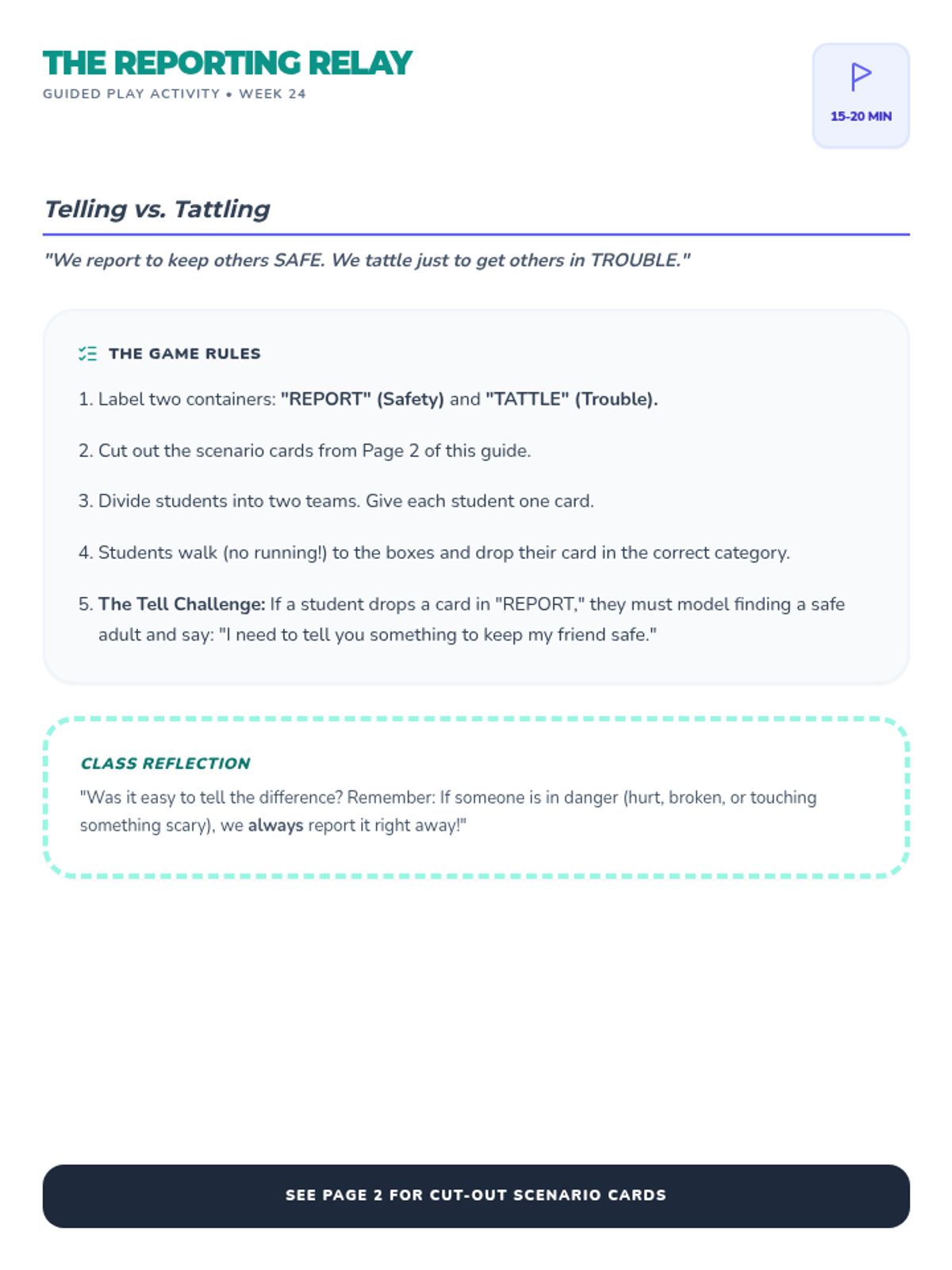
A supplementary lesson clarifying the difference between getting others in trouble versus keeping them safe.
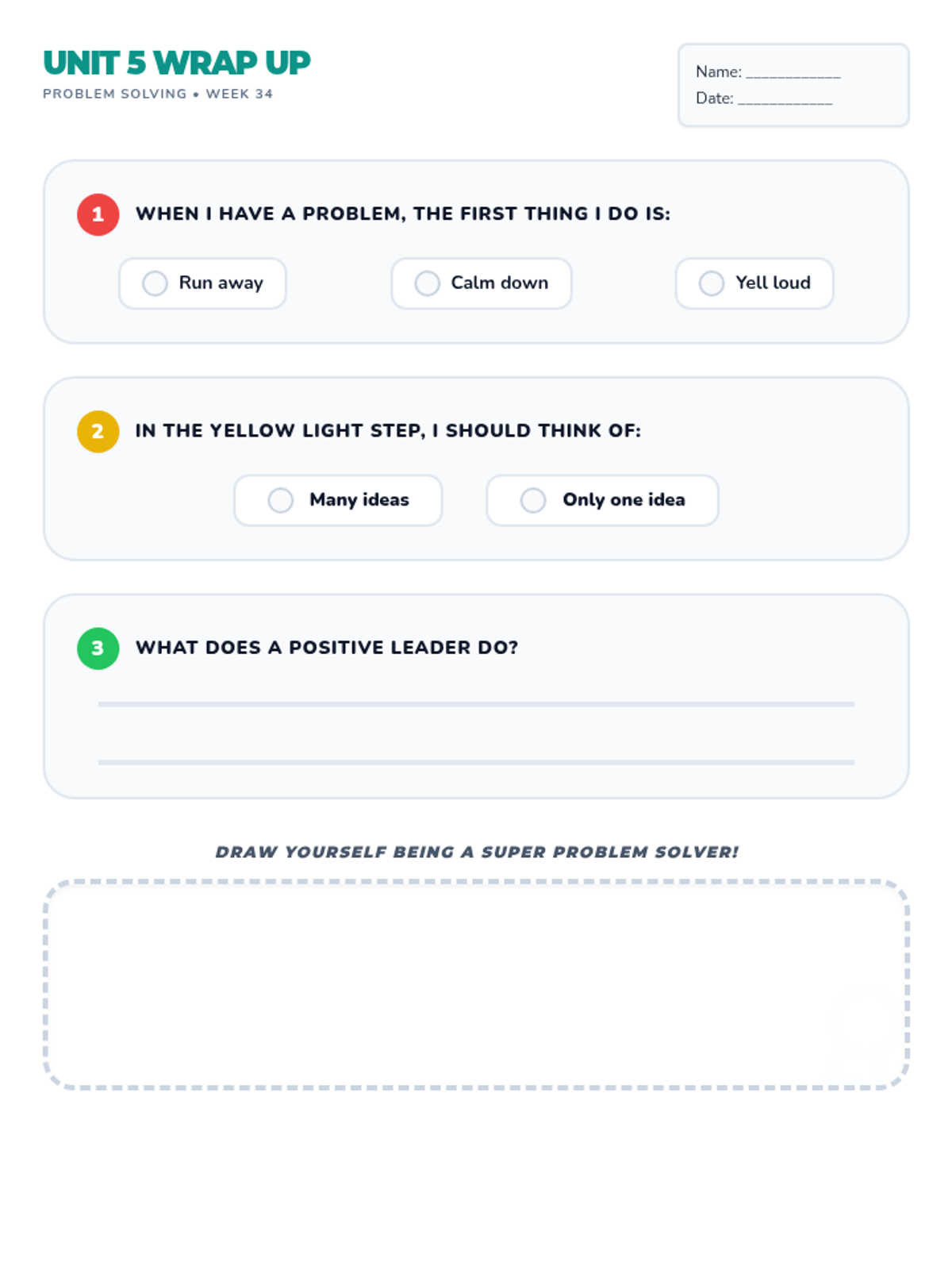
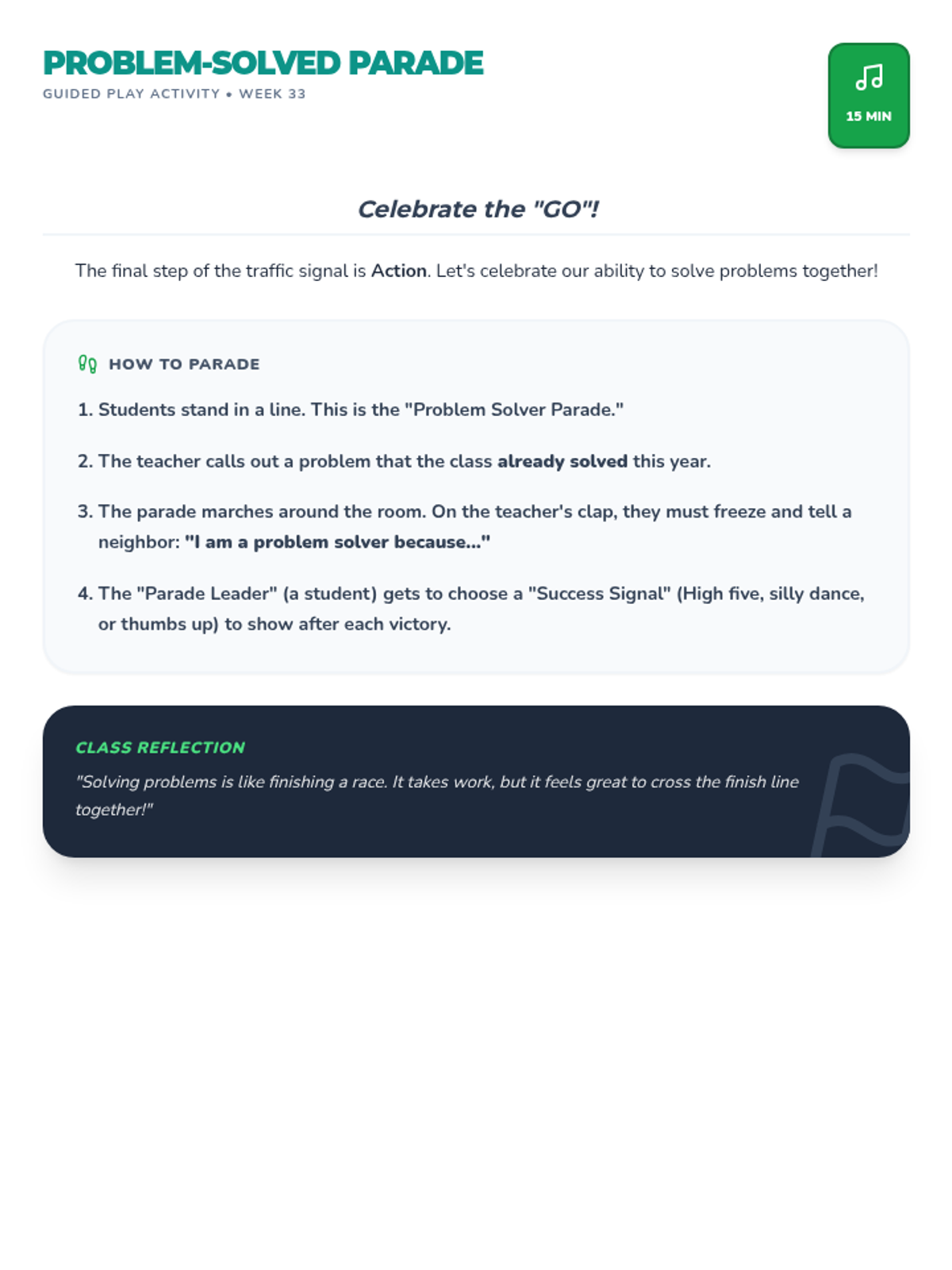
A full practice session using the complete problem-solving process on real scenarios.
Defining positive leadership and how to use SEL skills to help the group.
Practicing how to try a plan and what to do if it doesn't work as expected.
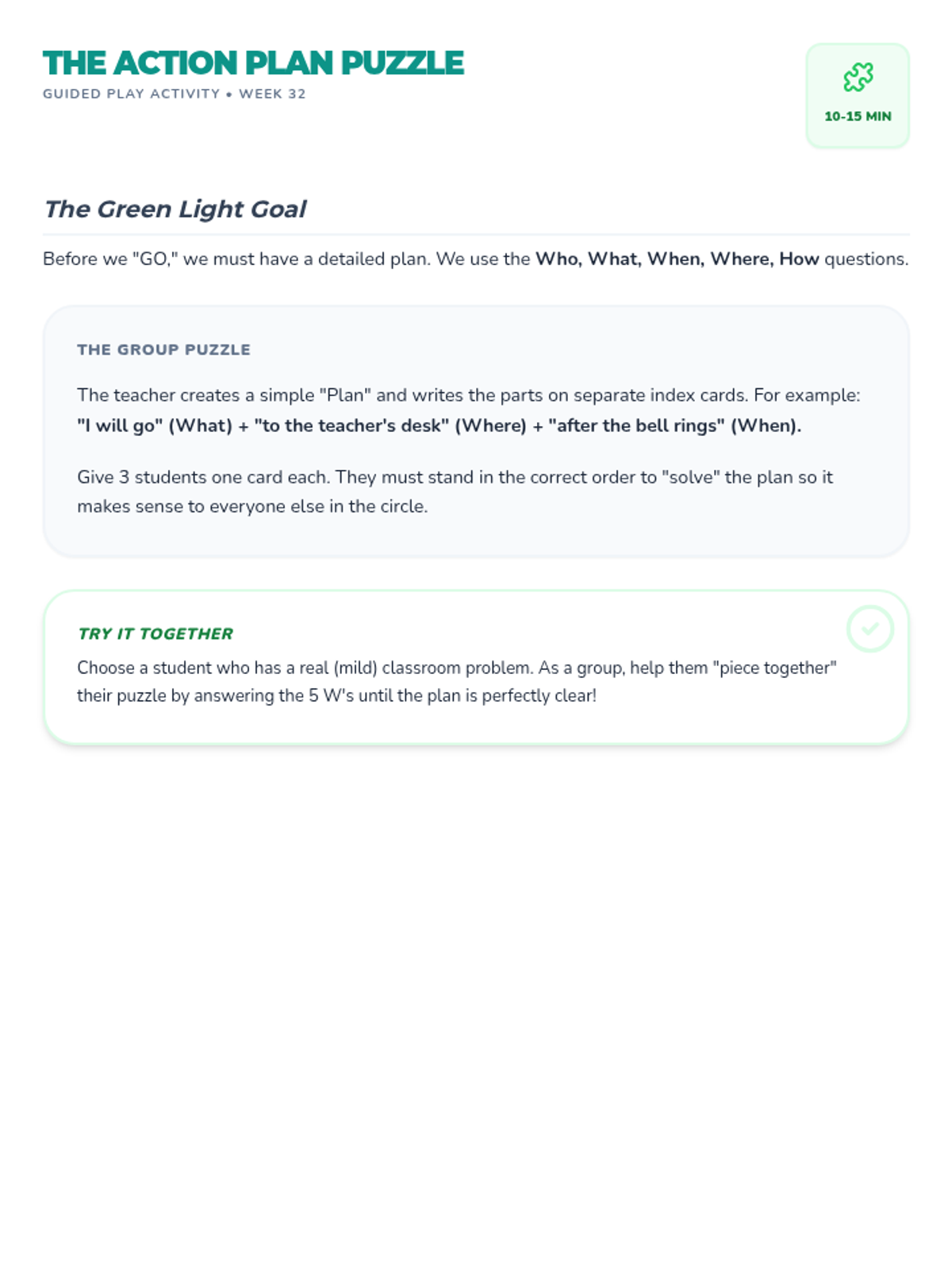
Choosing the best idea and making a detailed plan for how to carry it out.
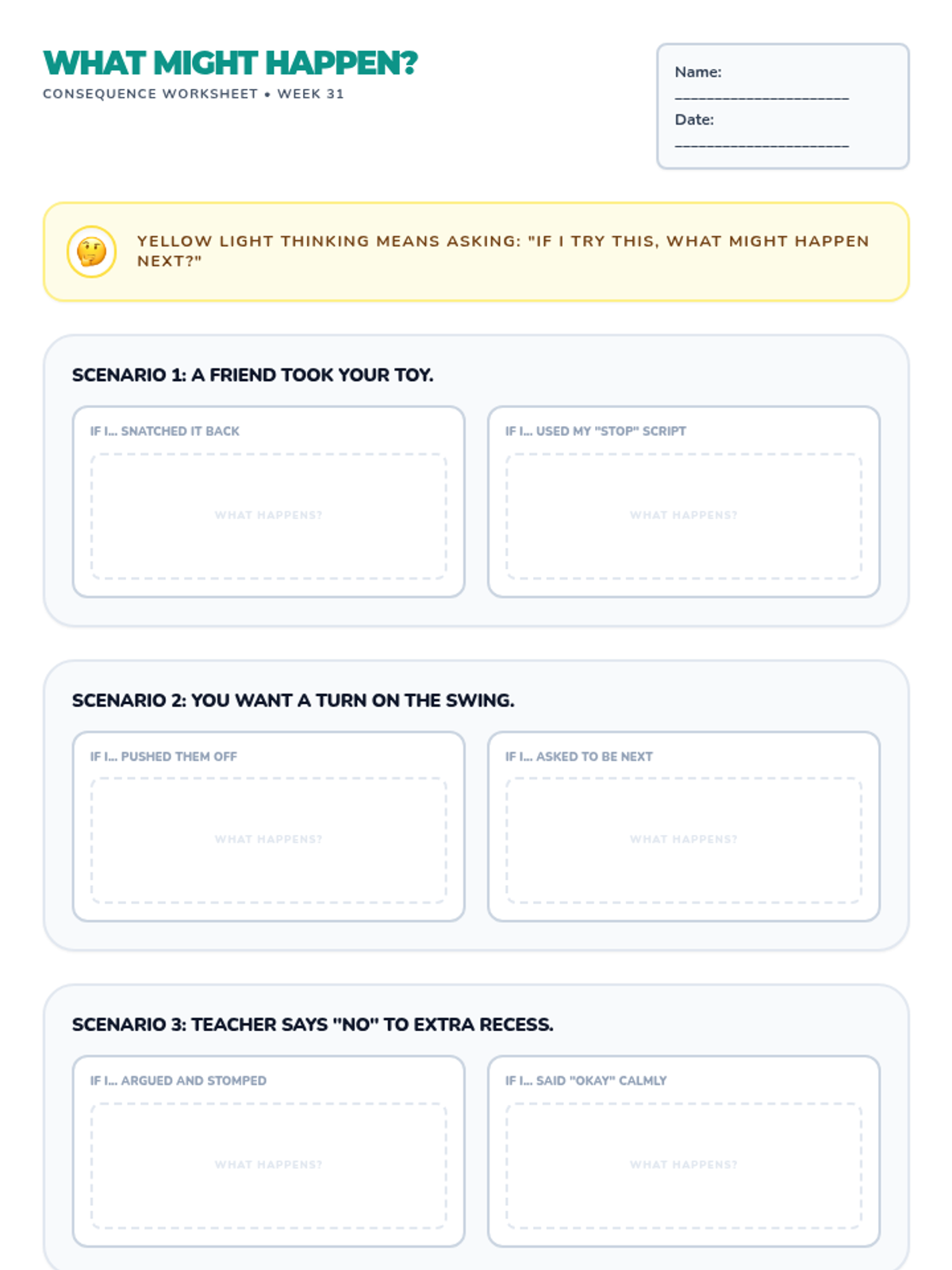
Evaluating brainstormed ideas by asking 'What might happen if I try this?'
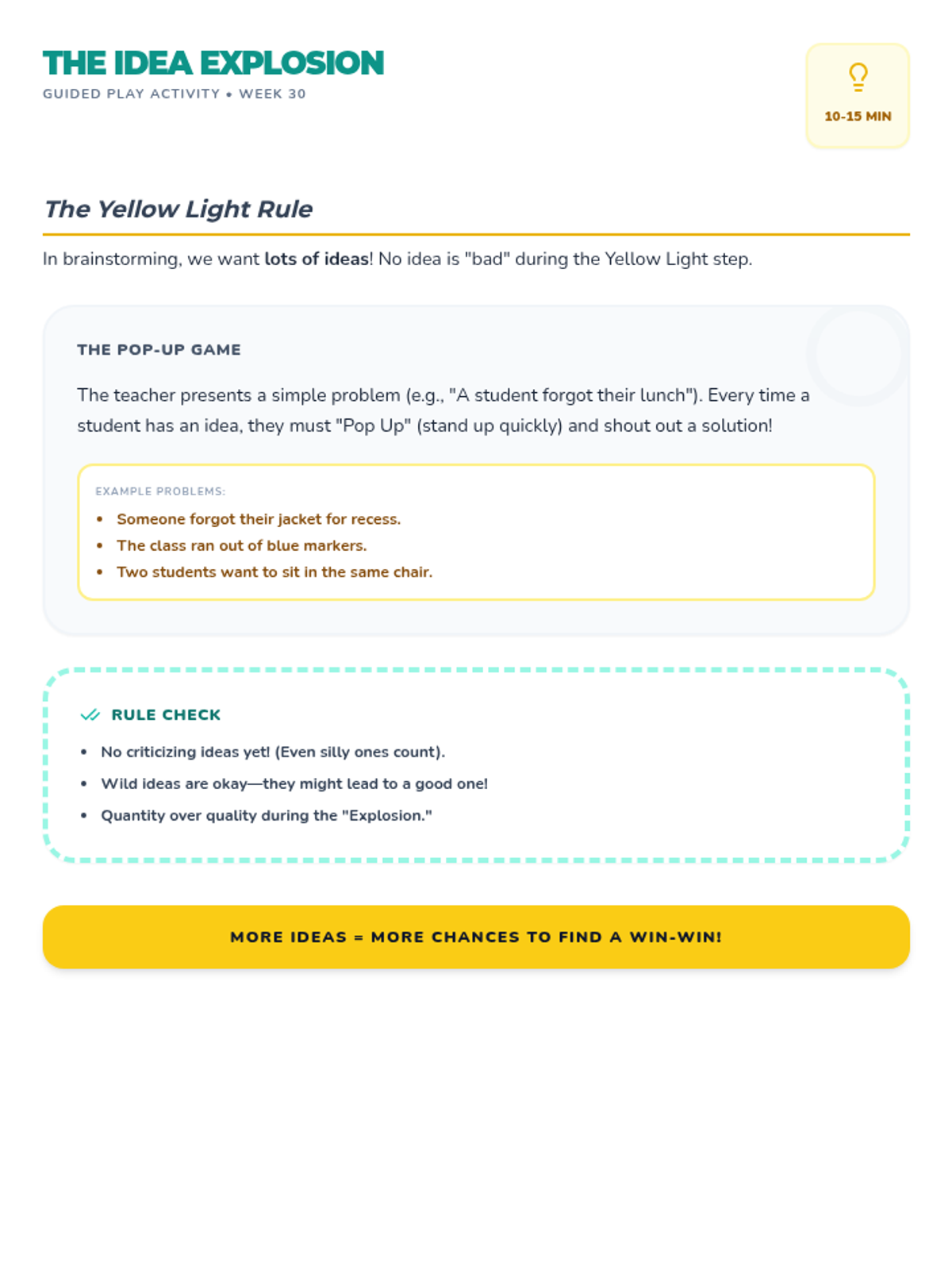
Learning the rules of brainstorming to generate many possible solutions to a problem.
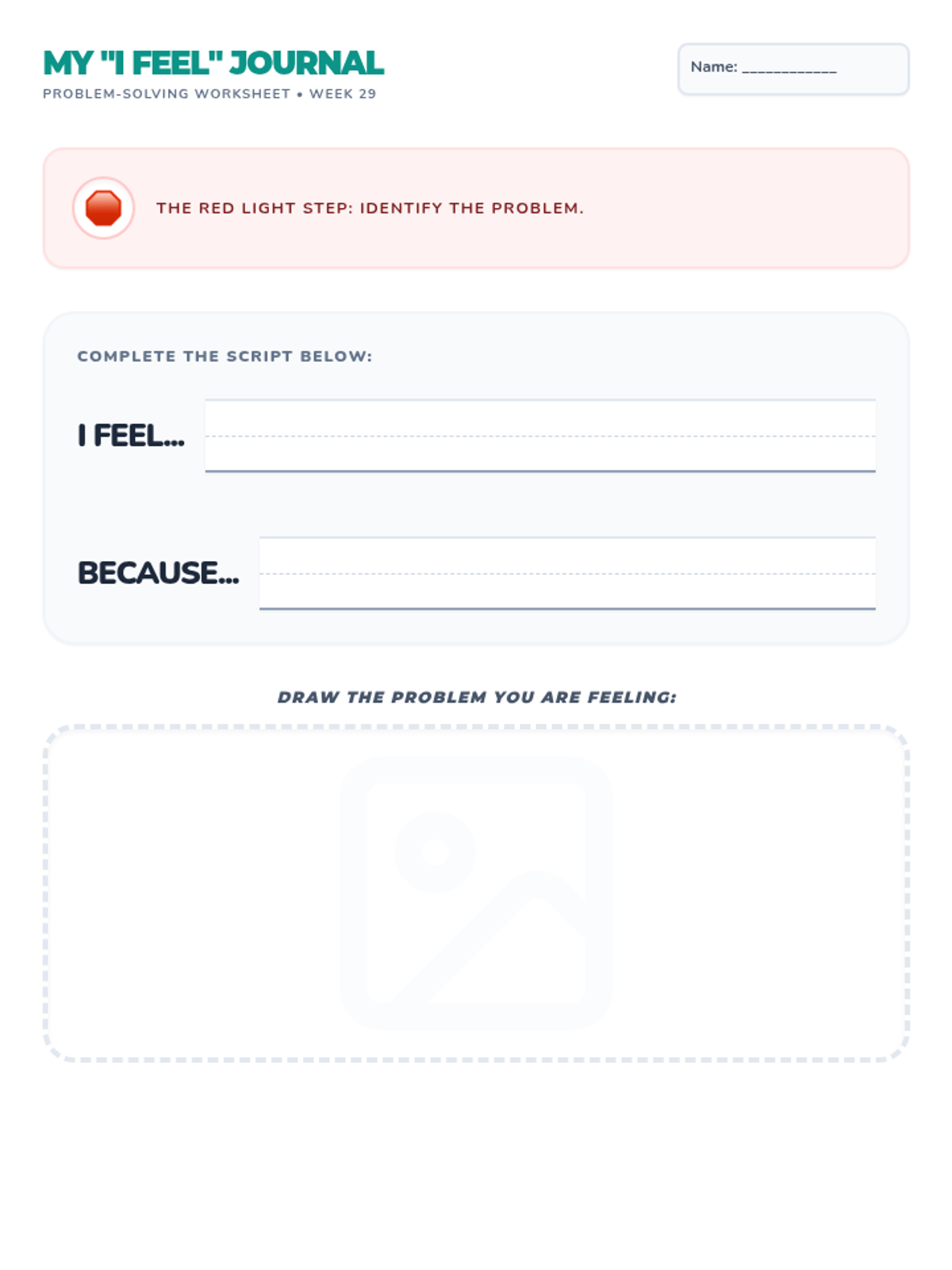
Practice using 'I feel... because...' to identify the specific problem.
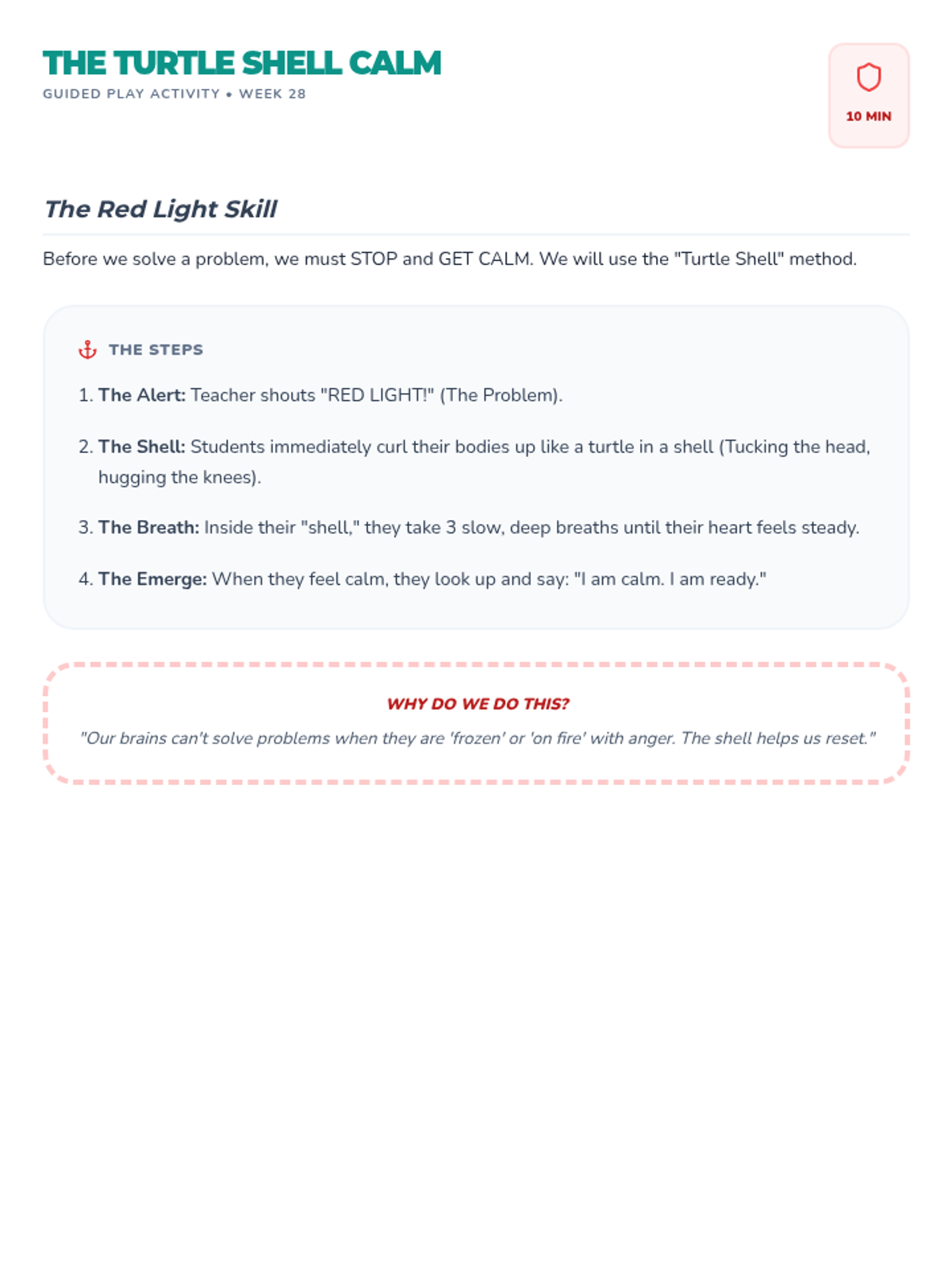
Focusing on the first step of the traffic signal: stopping to calm down.
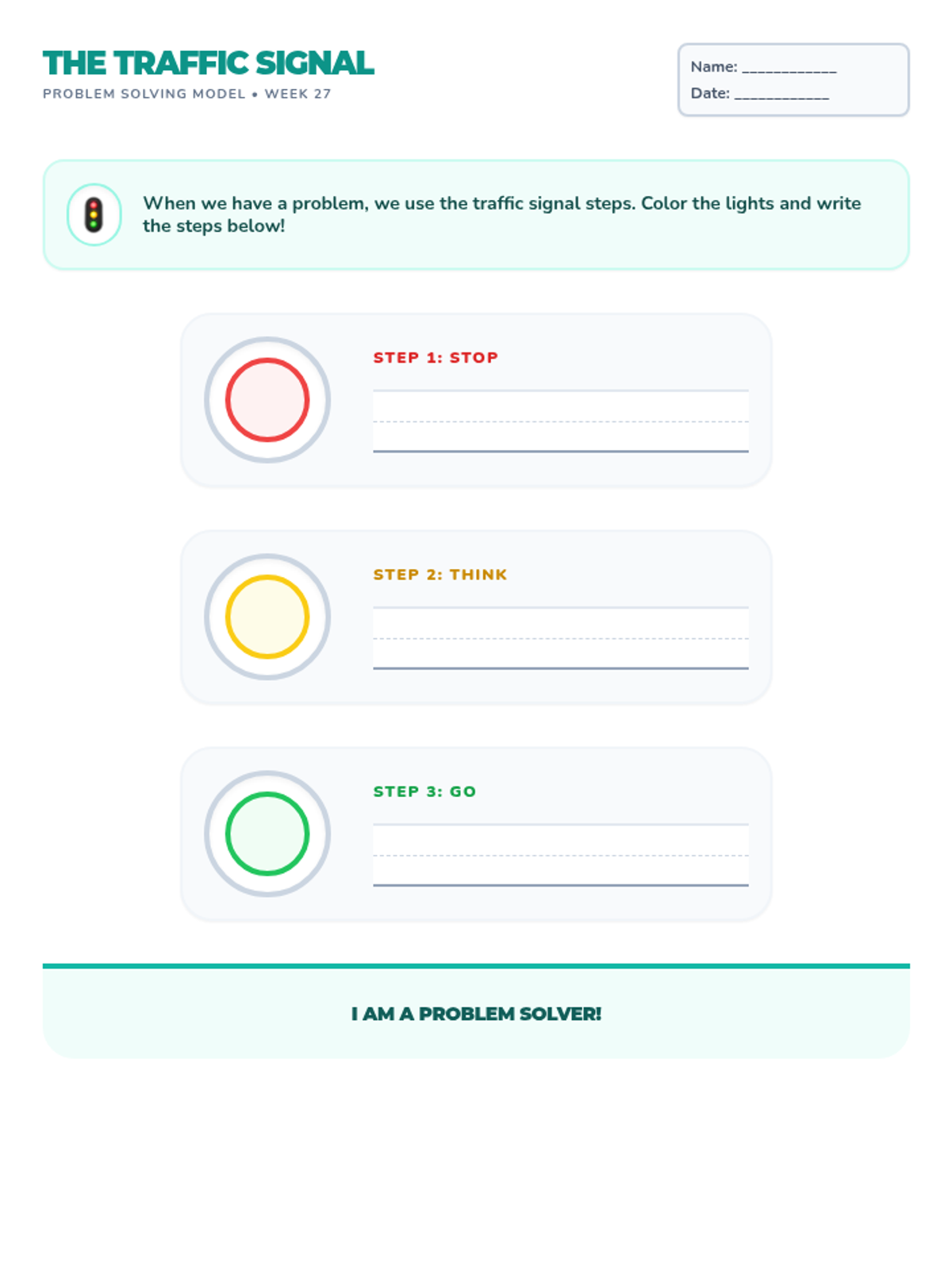
Introduction to the Stop, Think, Go traffic signal model for solving problems.
Defining what a problem is and identifying common problems that occur in first grade.
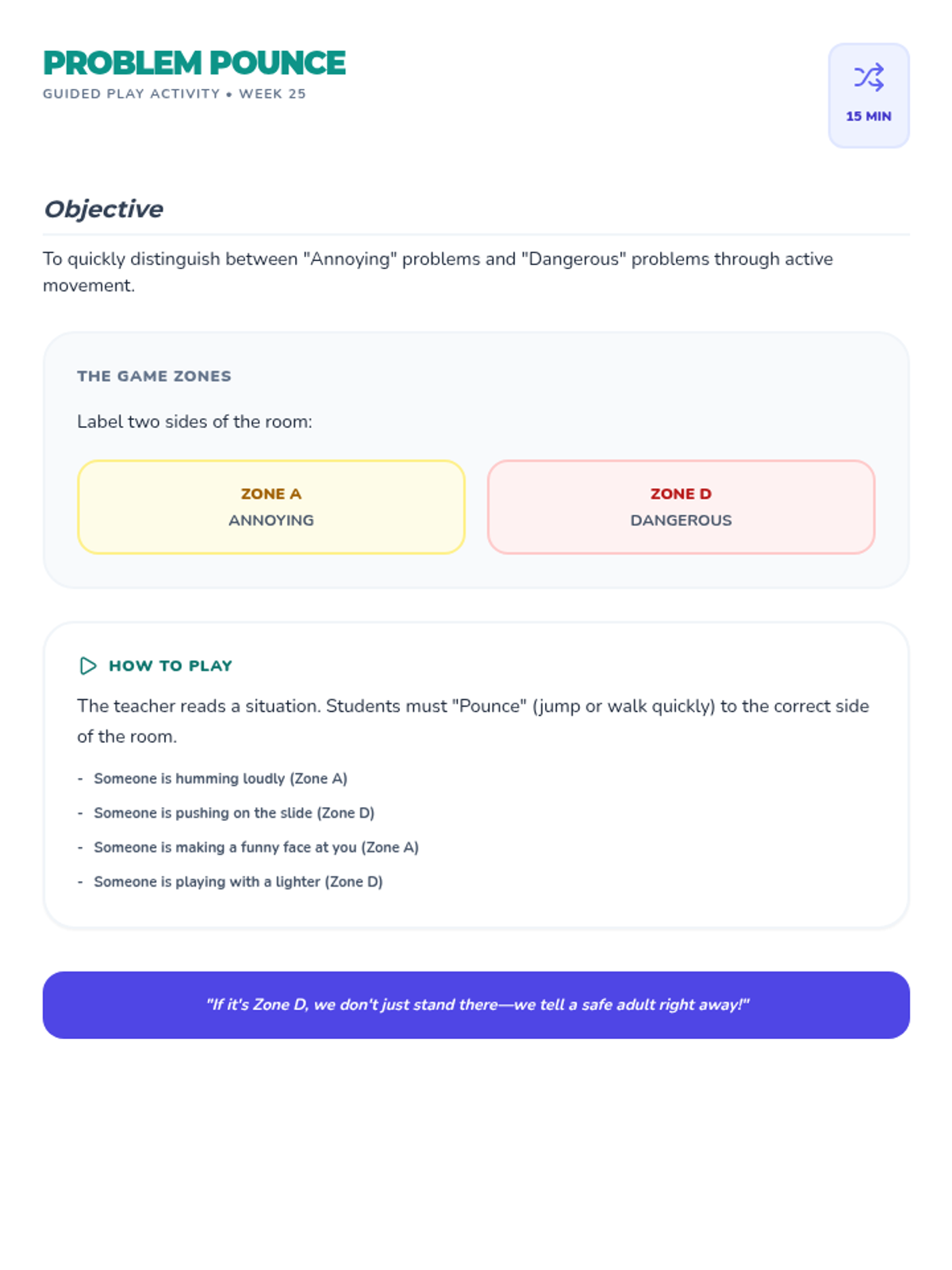
Reviewing the categories of problems and how to tell the difference between them.
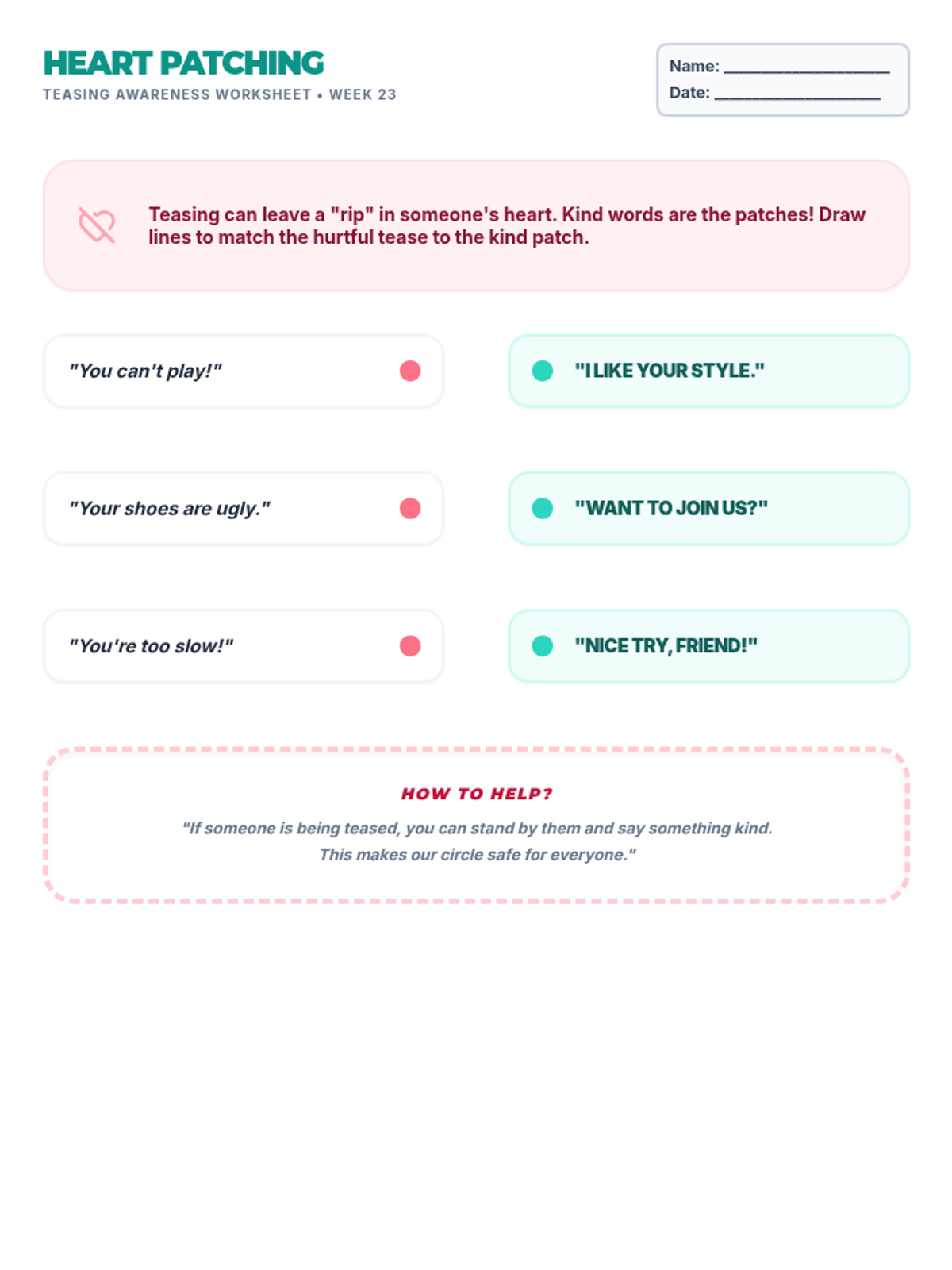
Discussing how teasing feels and practicing strategies to respond when being teased.
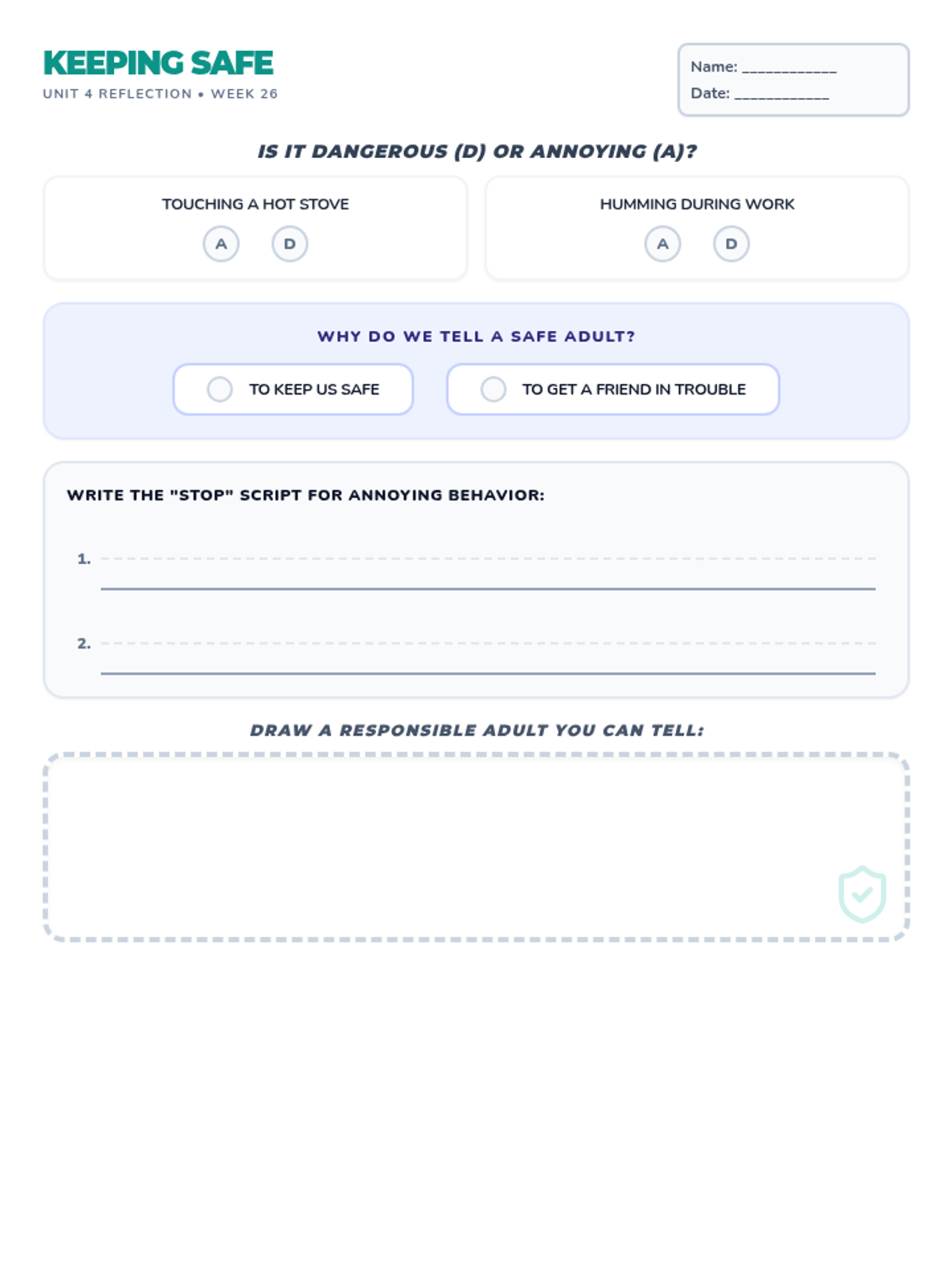
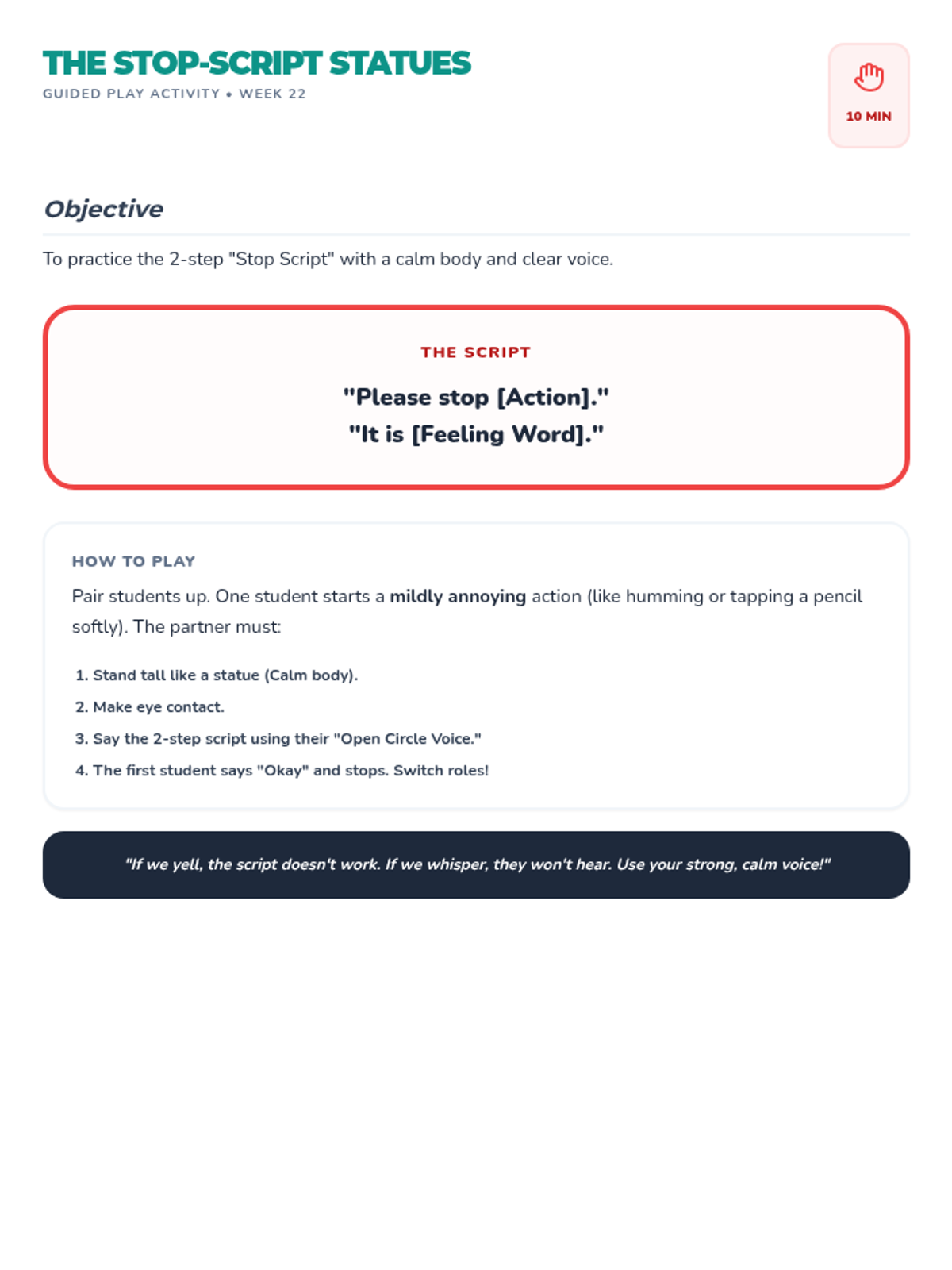
Students learn a two-step script for addressing annoying but not dangerous behavior.
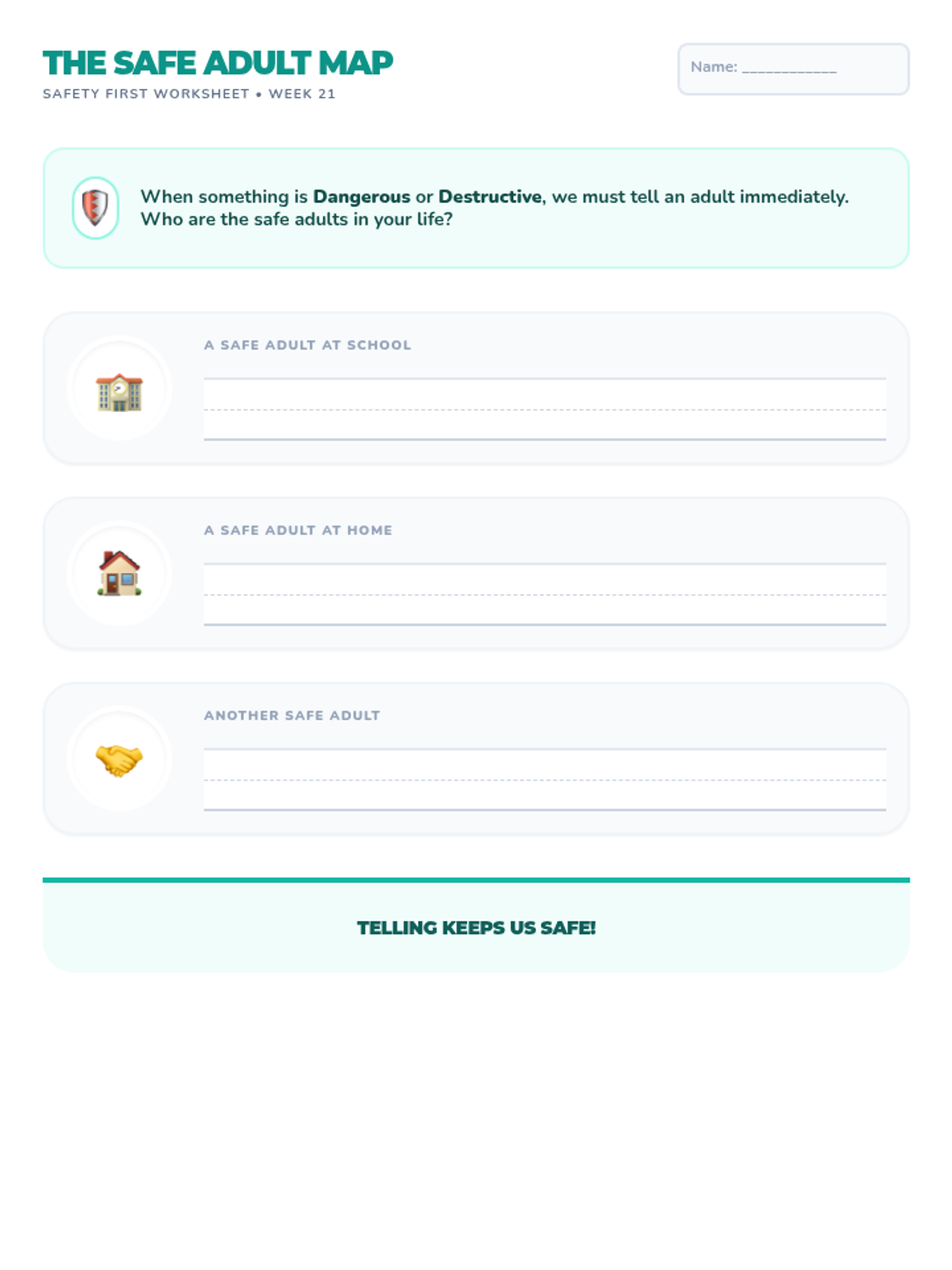
Defining dangerous and destructive behaviors and knowing when to tell a responsible adult immediately.
Identifying healthy ways to express anger through words rather than hurtful actions.
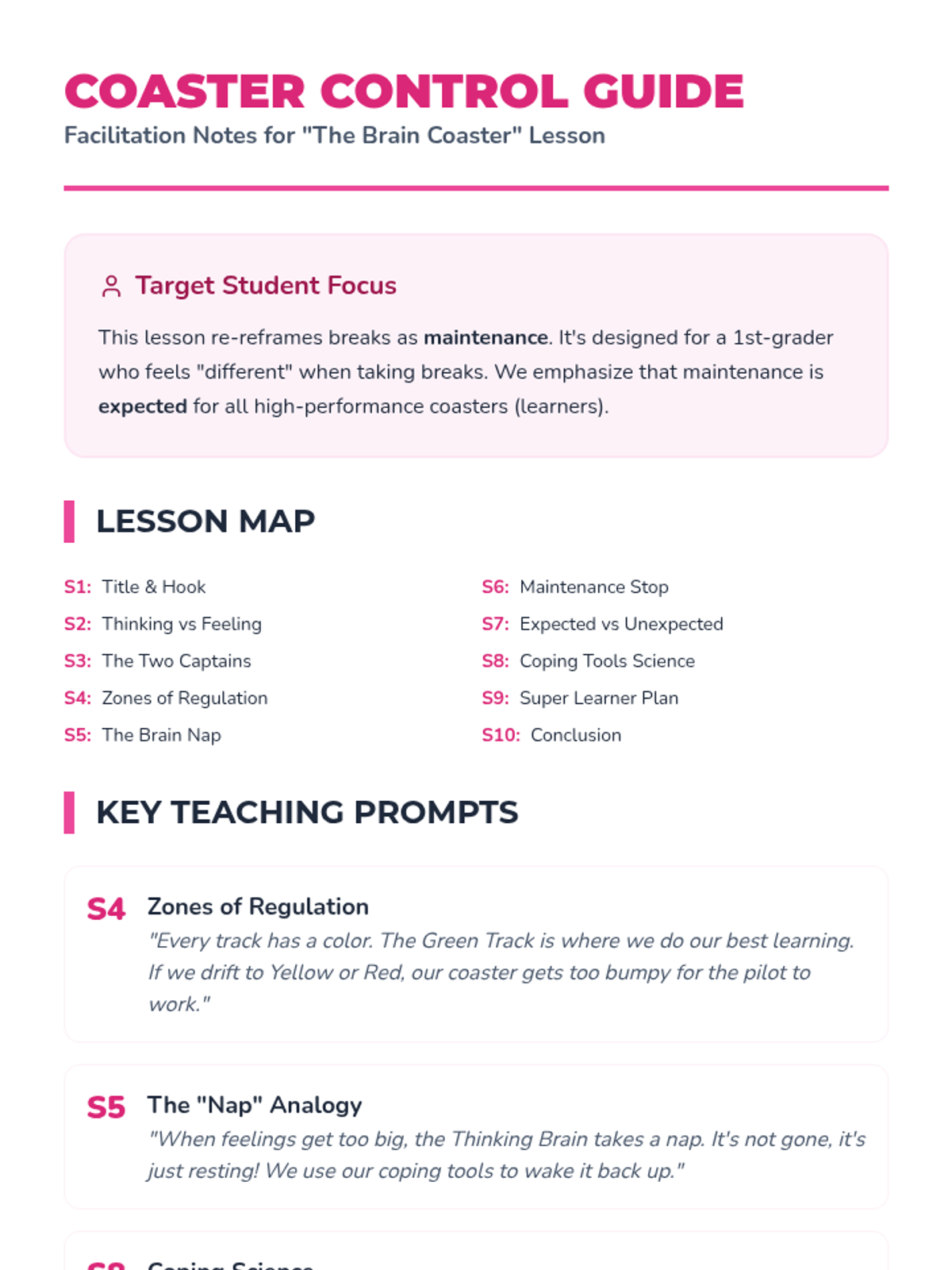
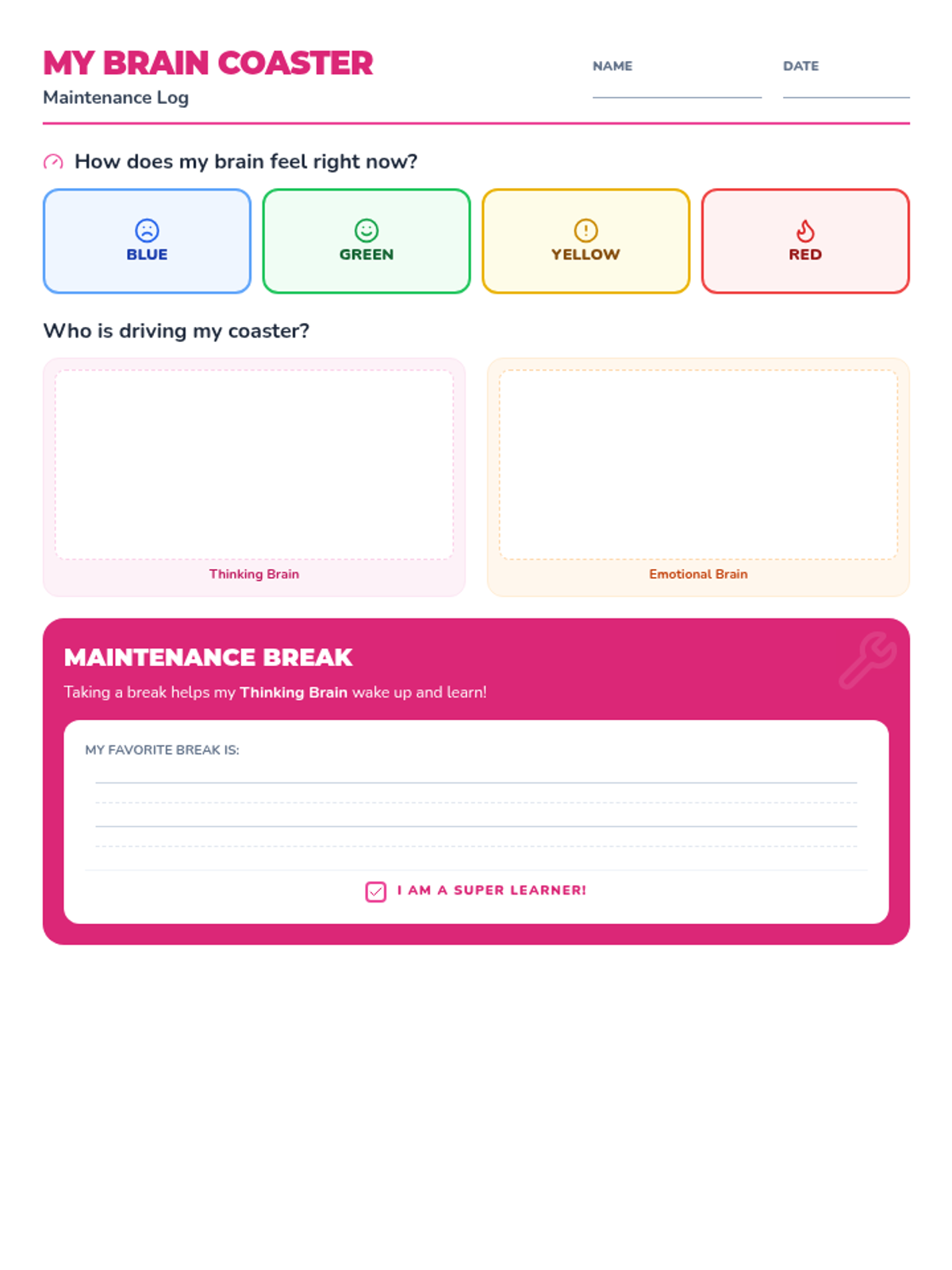
A social-emotional learning lesson designed for a 1st-grade student with autism, using a rollercoaster theme and Social Thinking language to explain the science of brain regulation and the value of breaks.
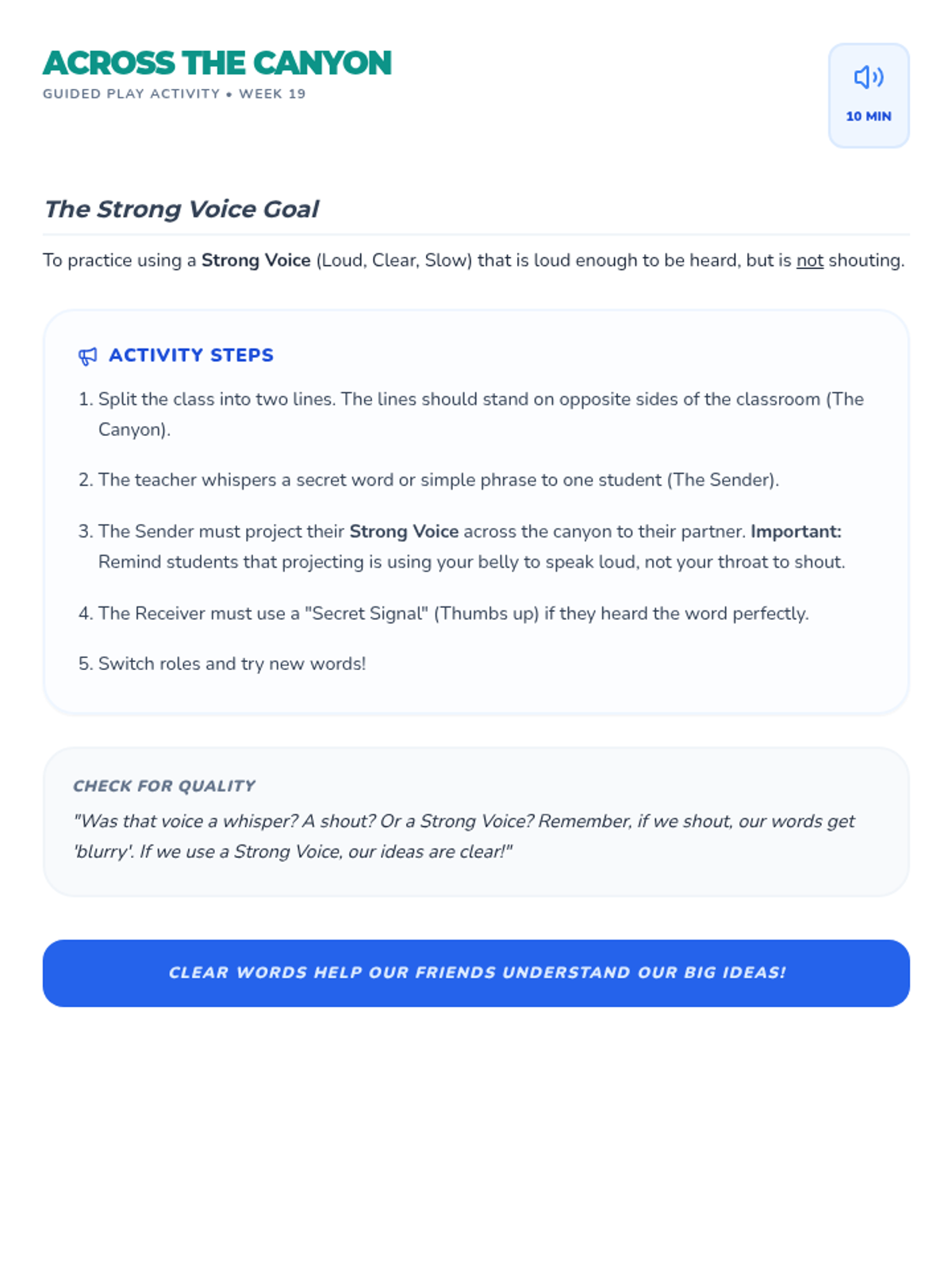
Learning to speak clearly, slowly, and loudly enough so others can hear important ideas.
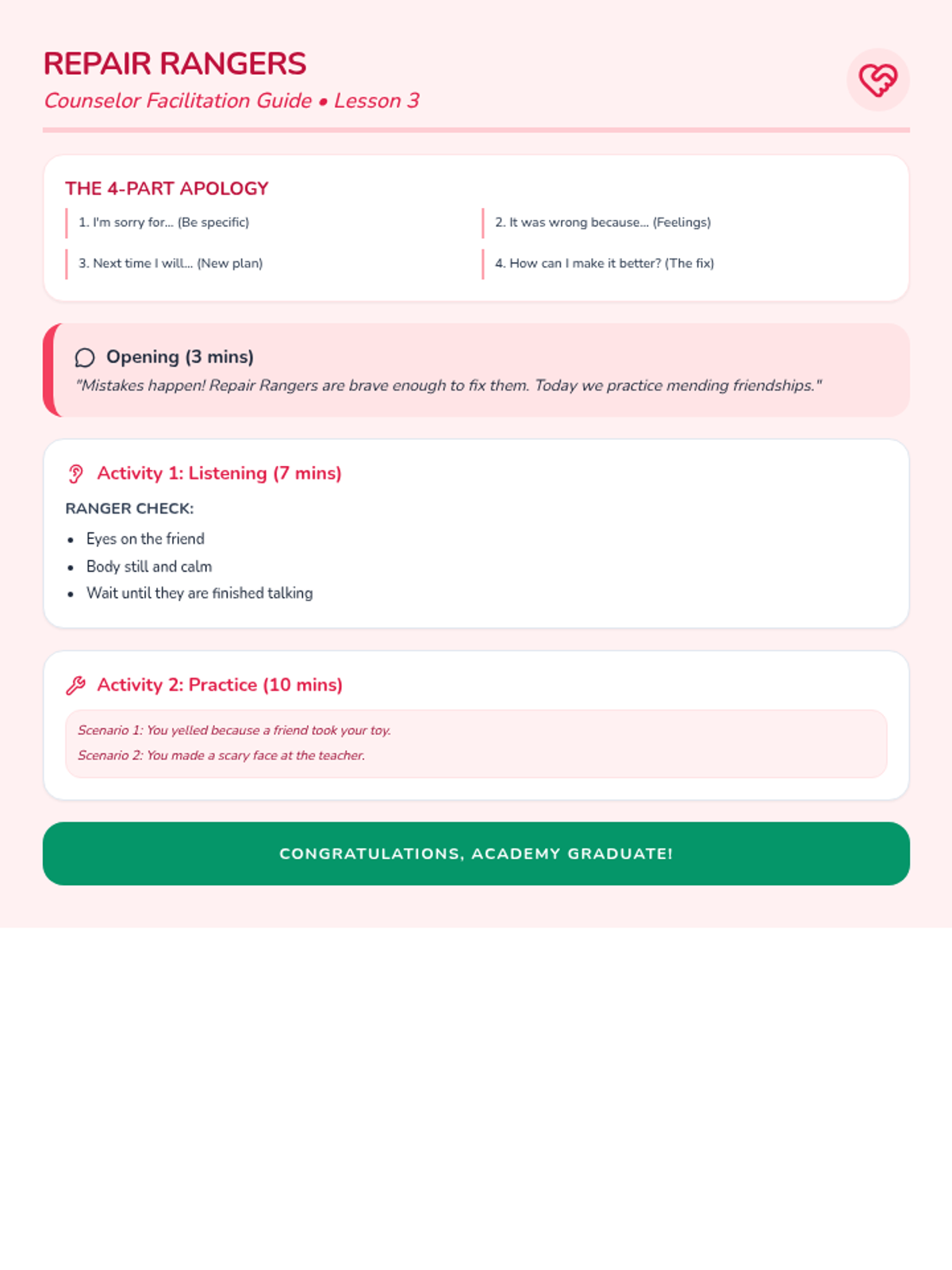
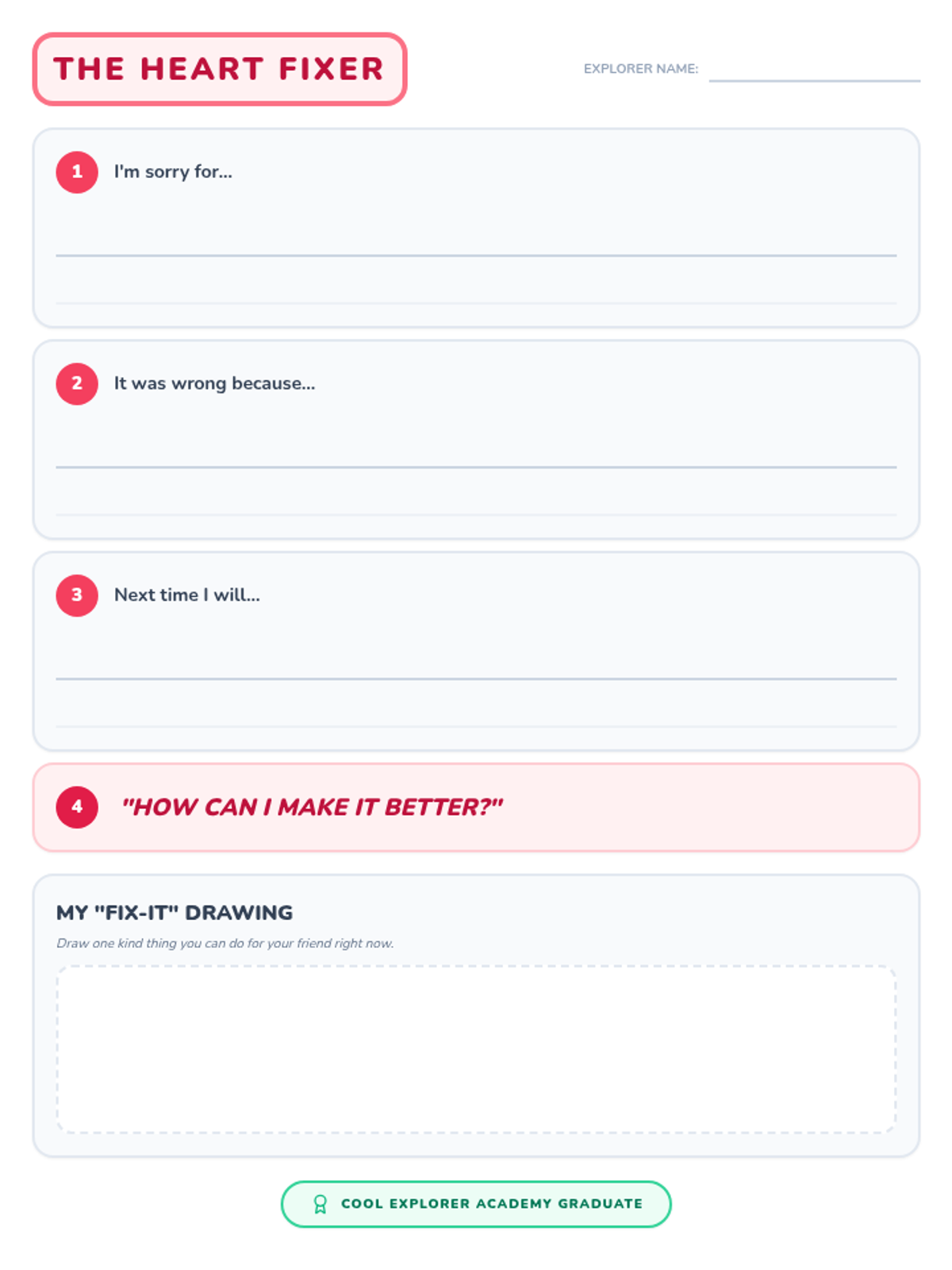
Teaches active listening and the steps of a meaningful apology to repair relationships with peers.
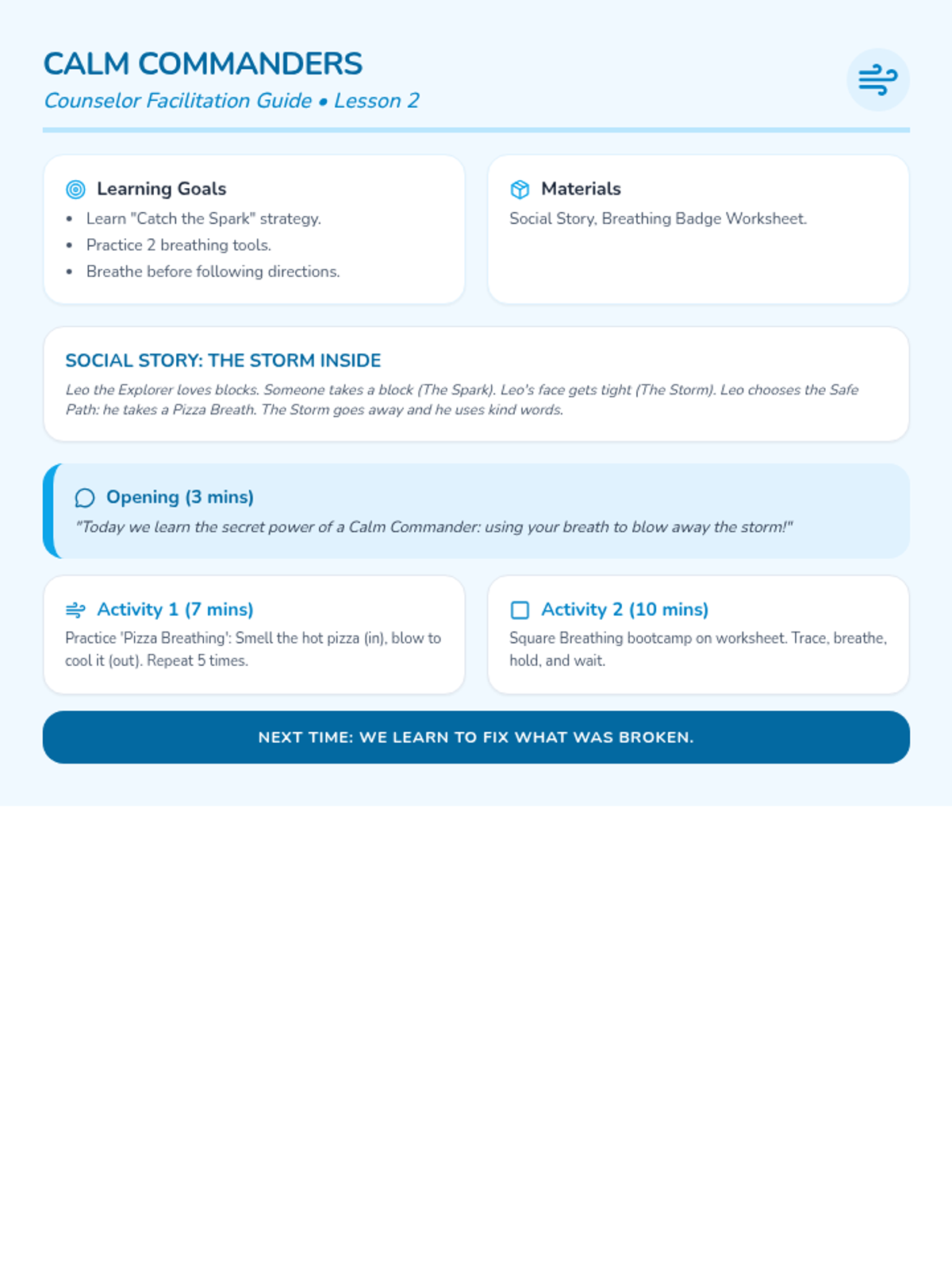
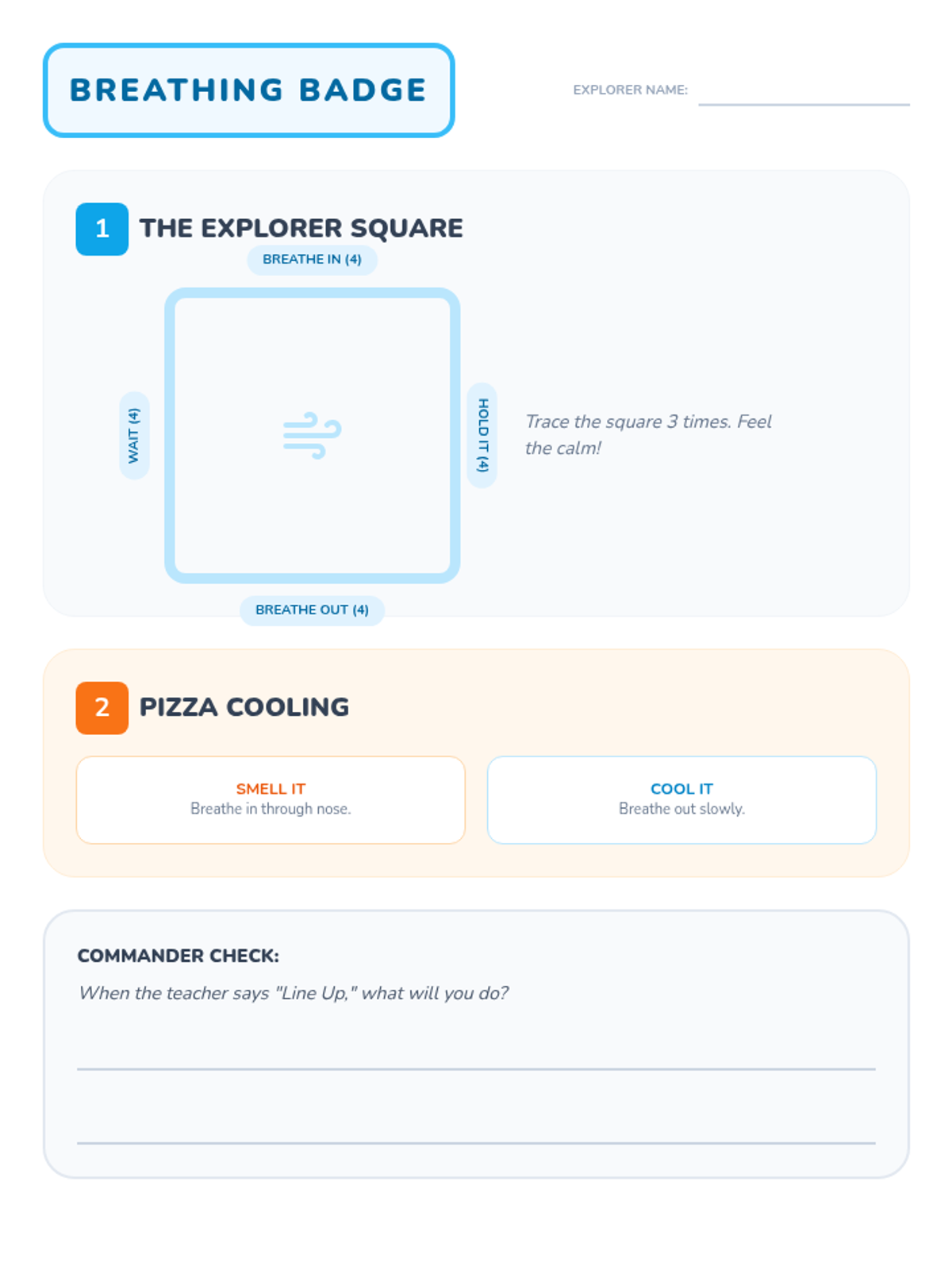
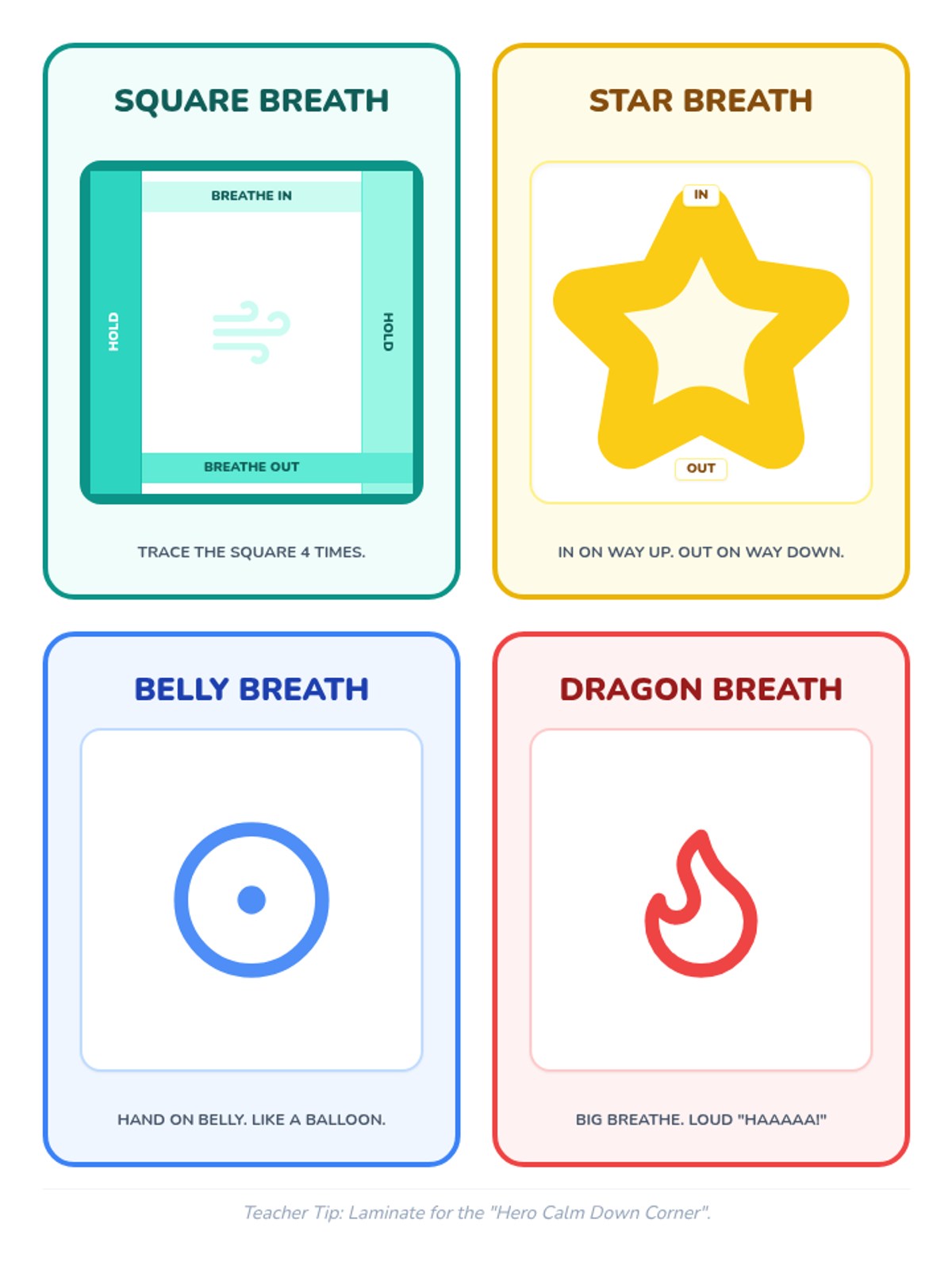
Teaches practical calm-down breathing techniques and tools through a social story and visual guide.
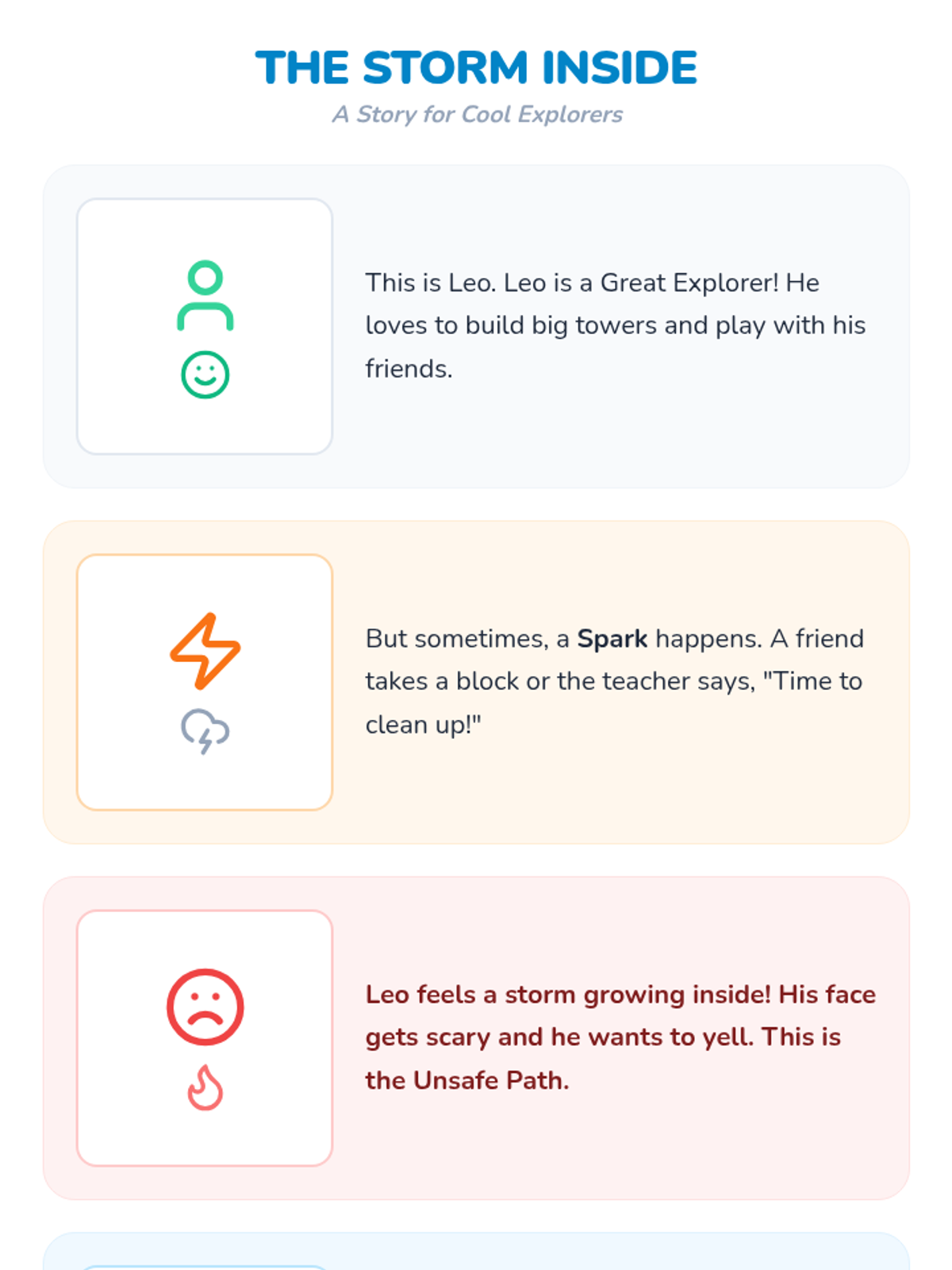
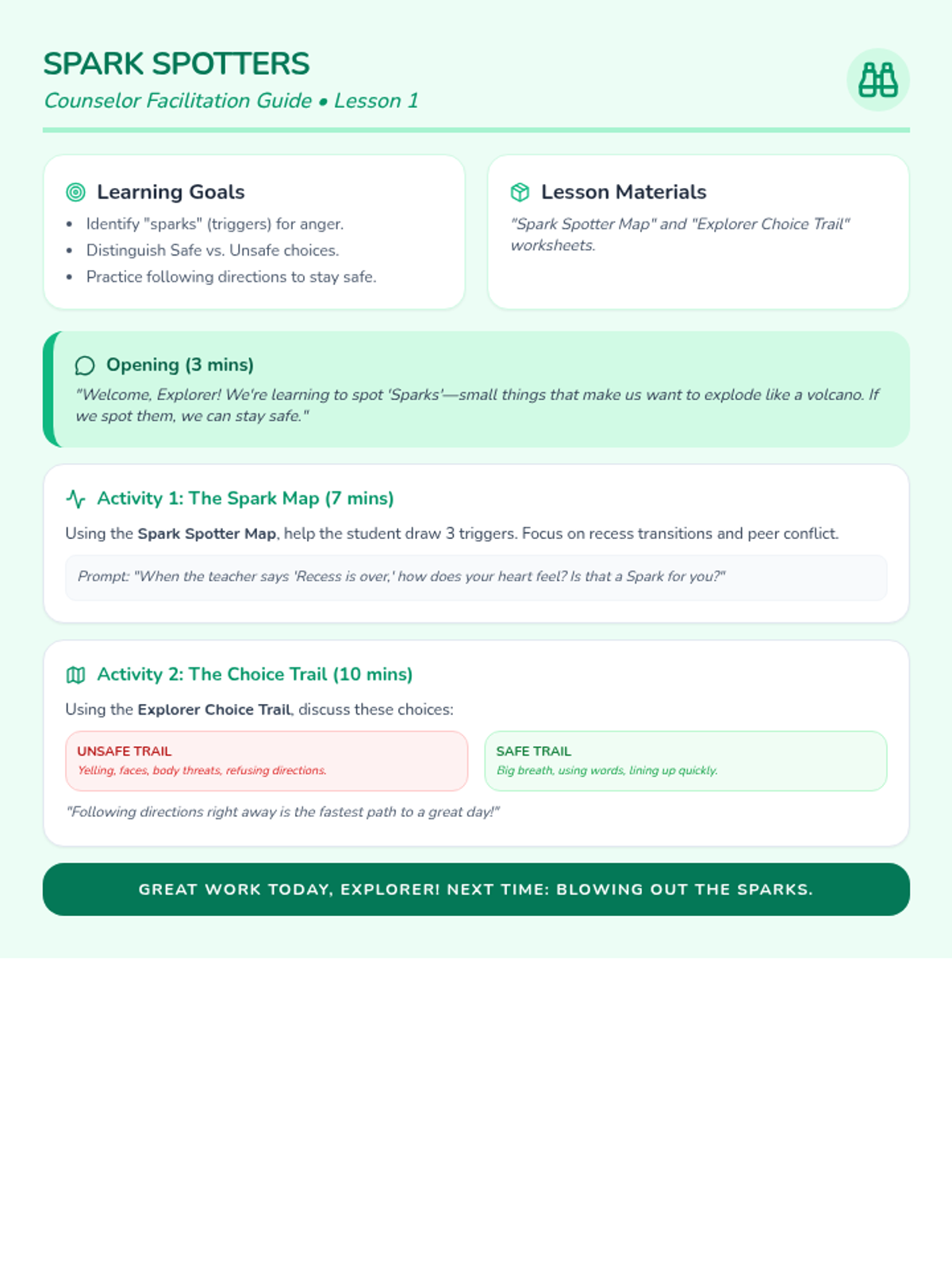
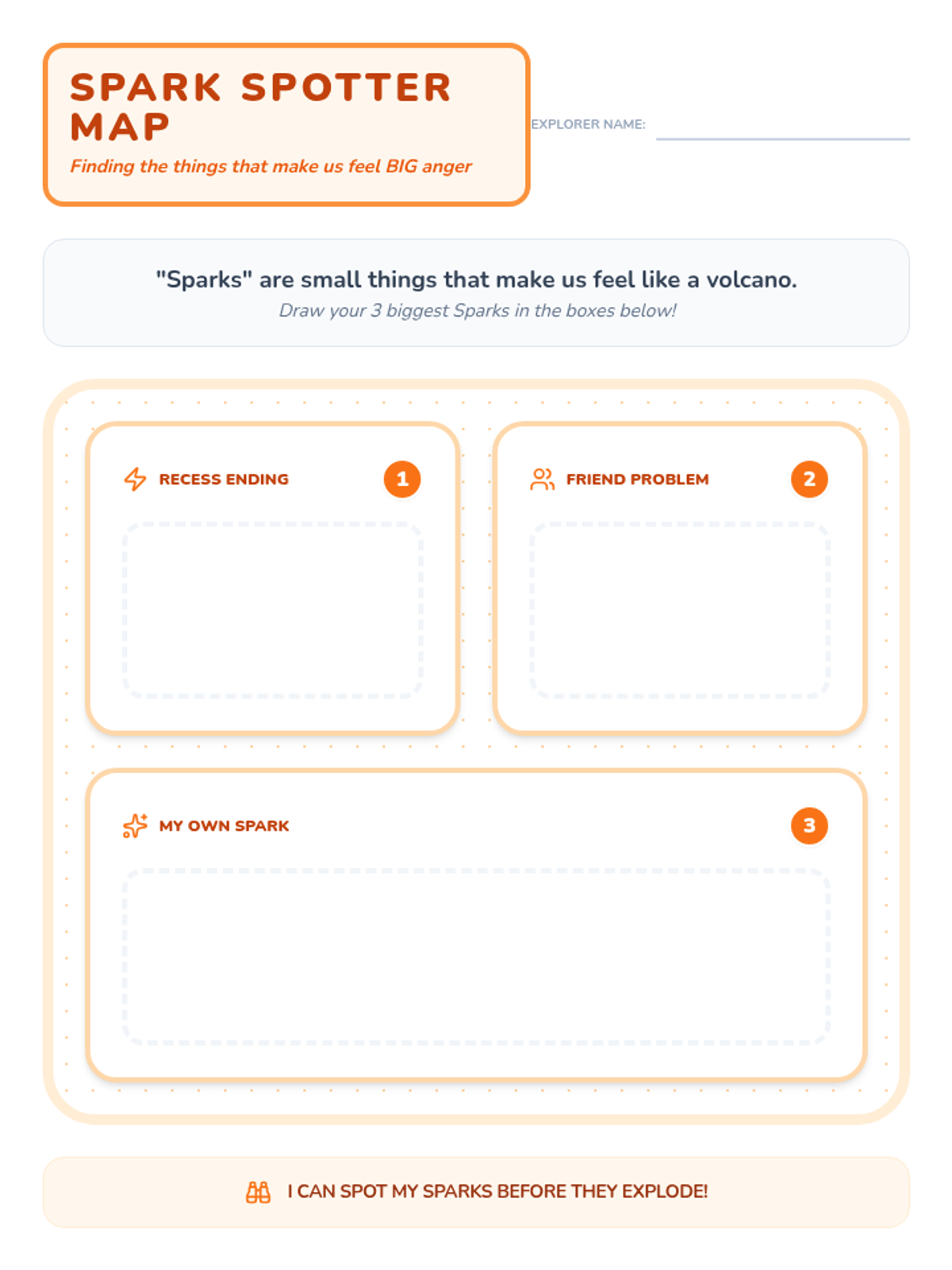
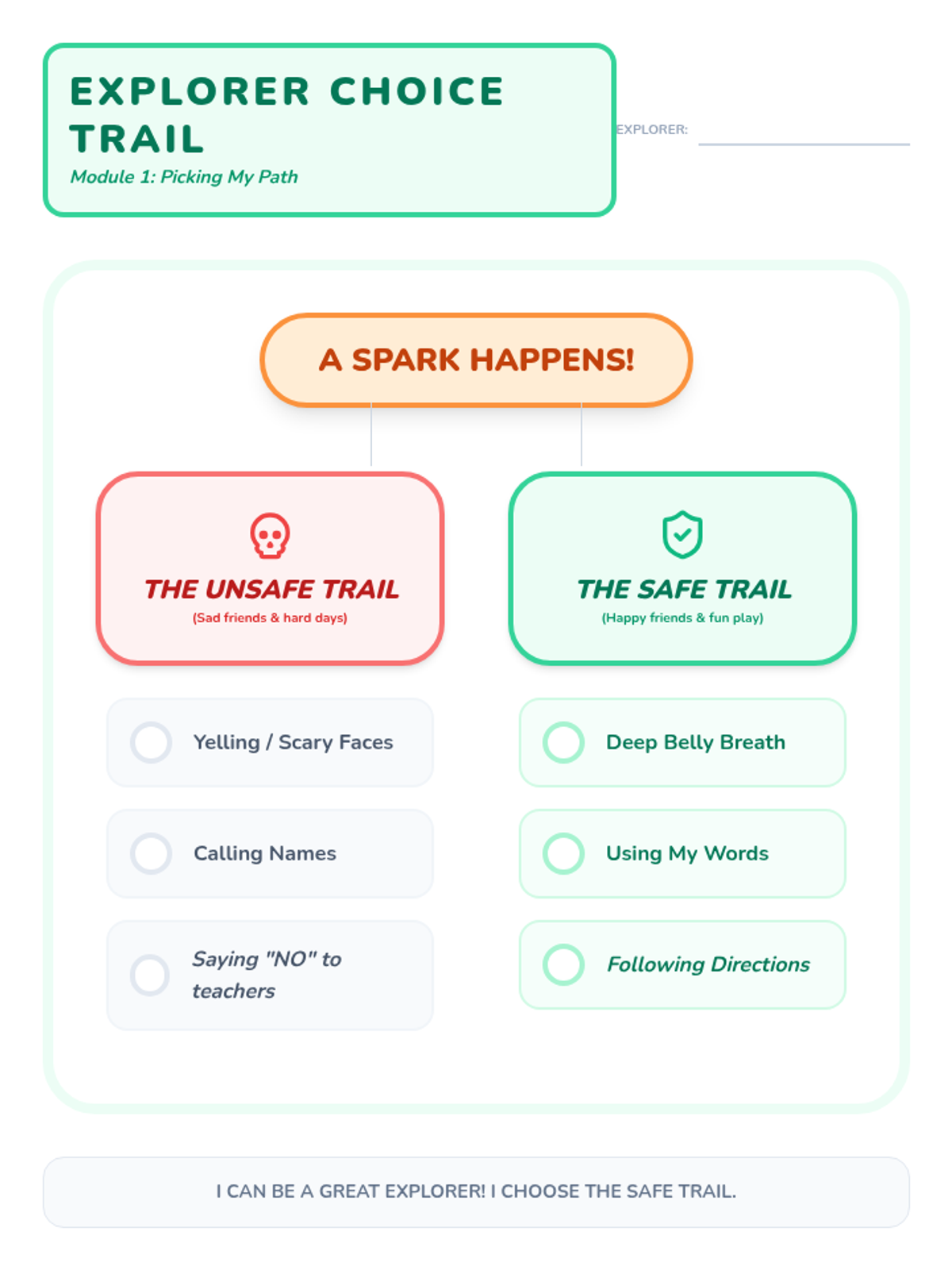
Focuses on identifying personal anger triggers and distinguishing between safe and unsafe choices when big feelings arise.
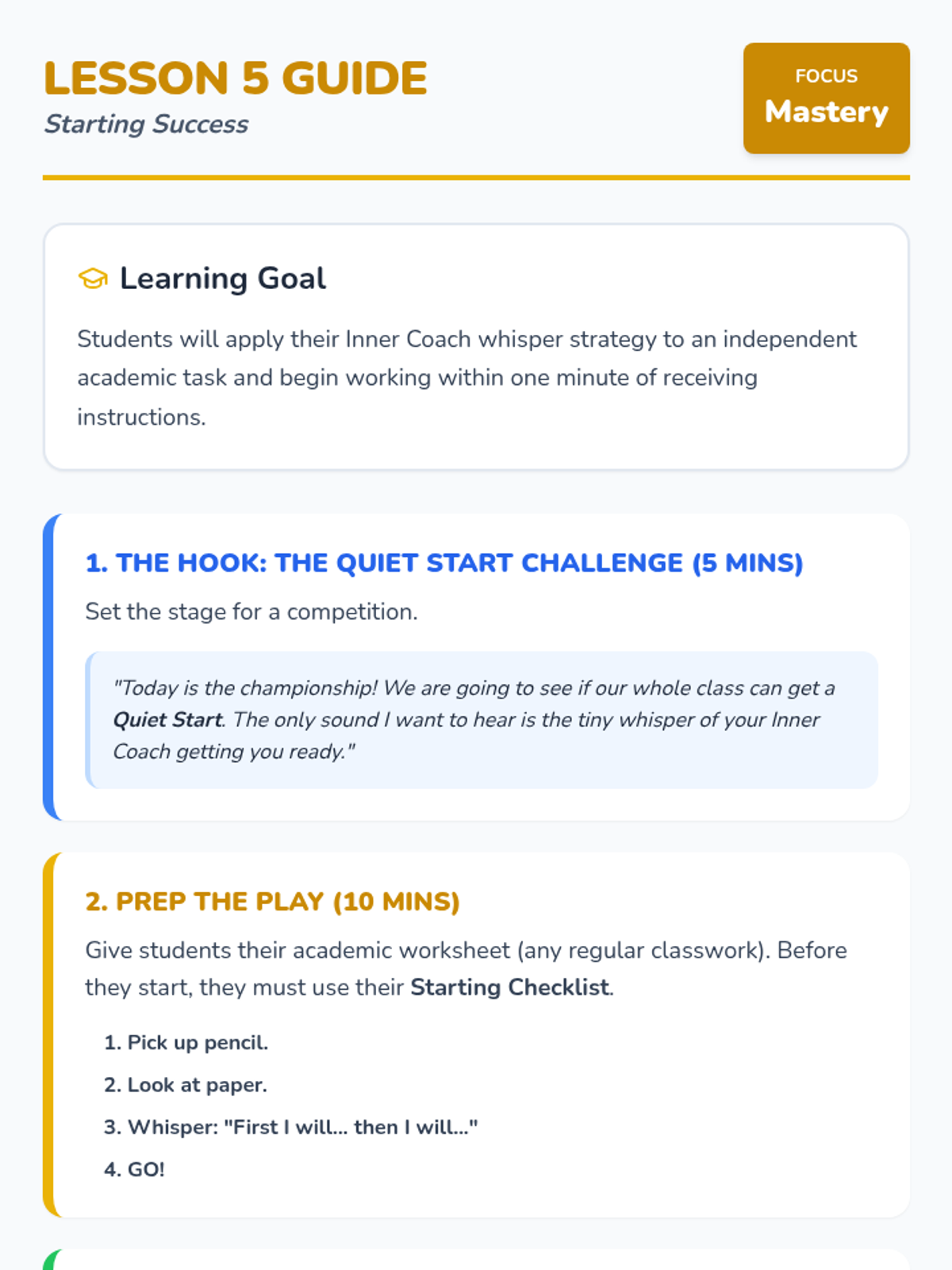
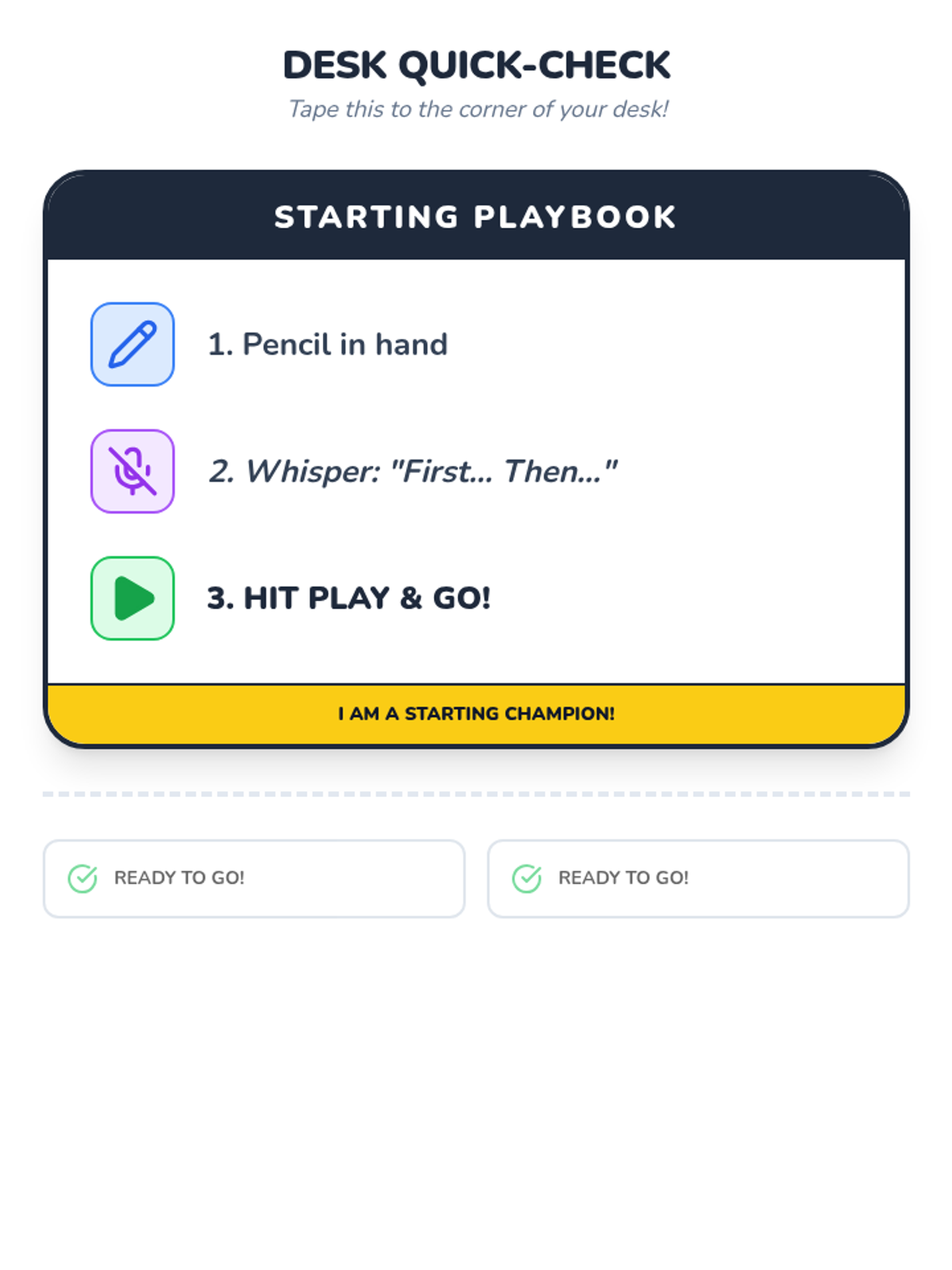
Students apply their self-talk strategy to academic work, participating in a 'Quiet Start' challenge to demonstrate mastery of task initiation.
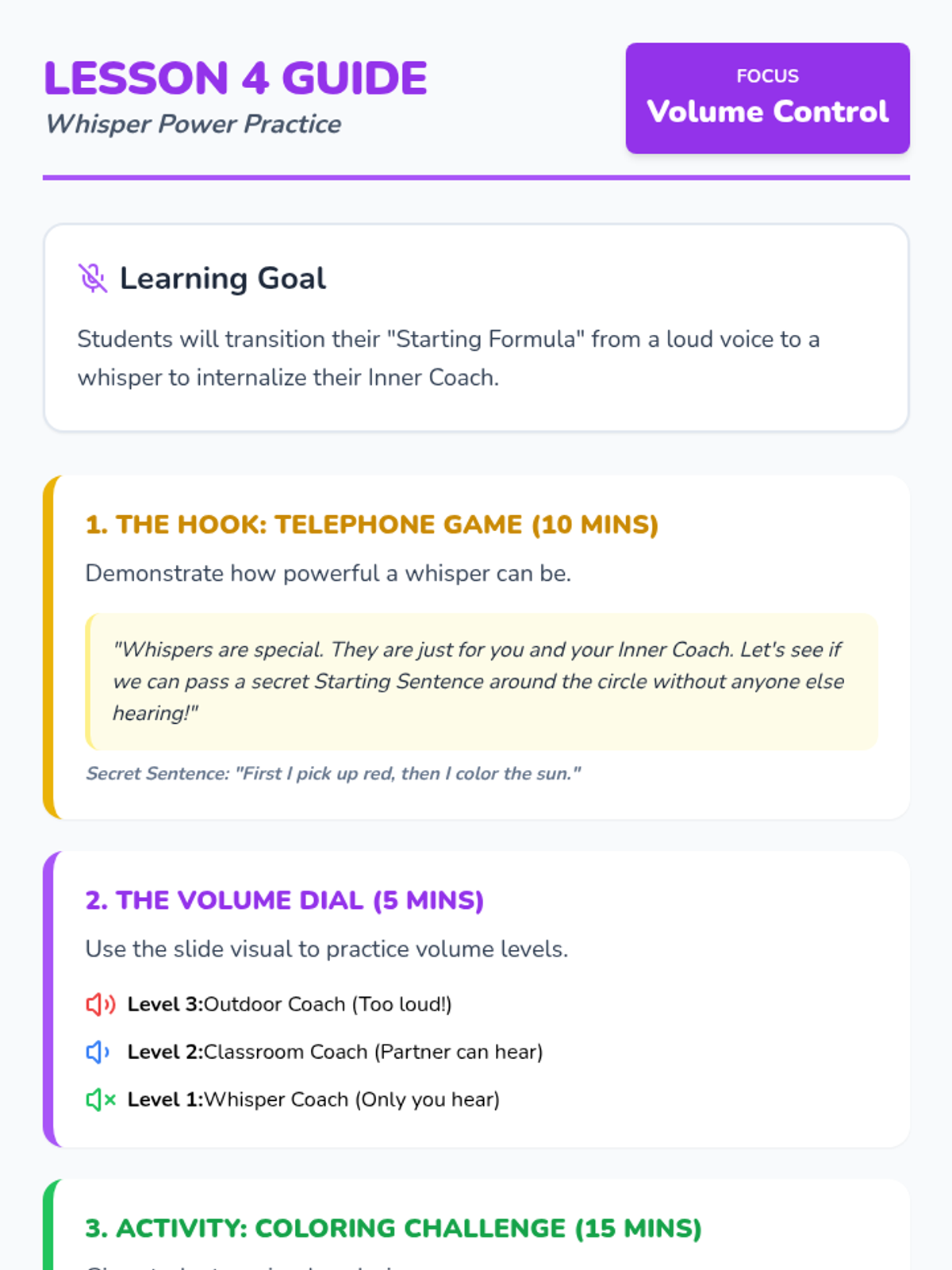
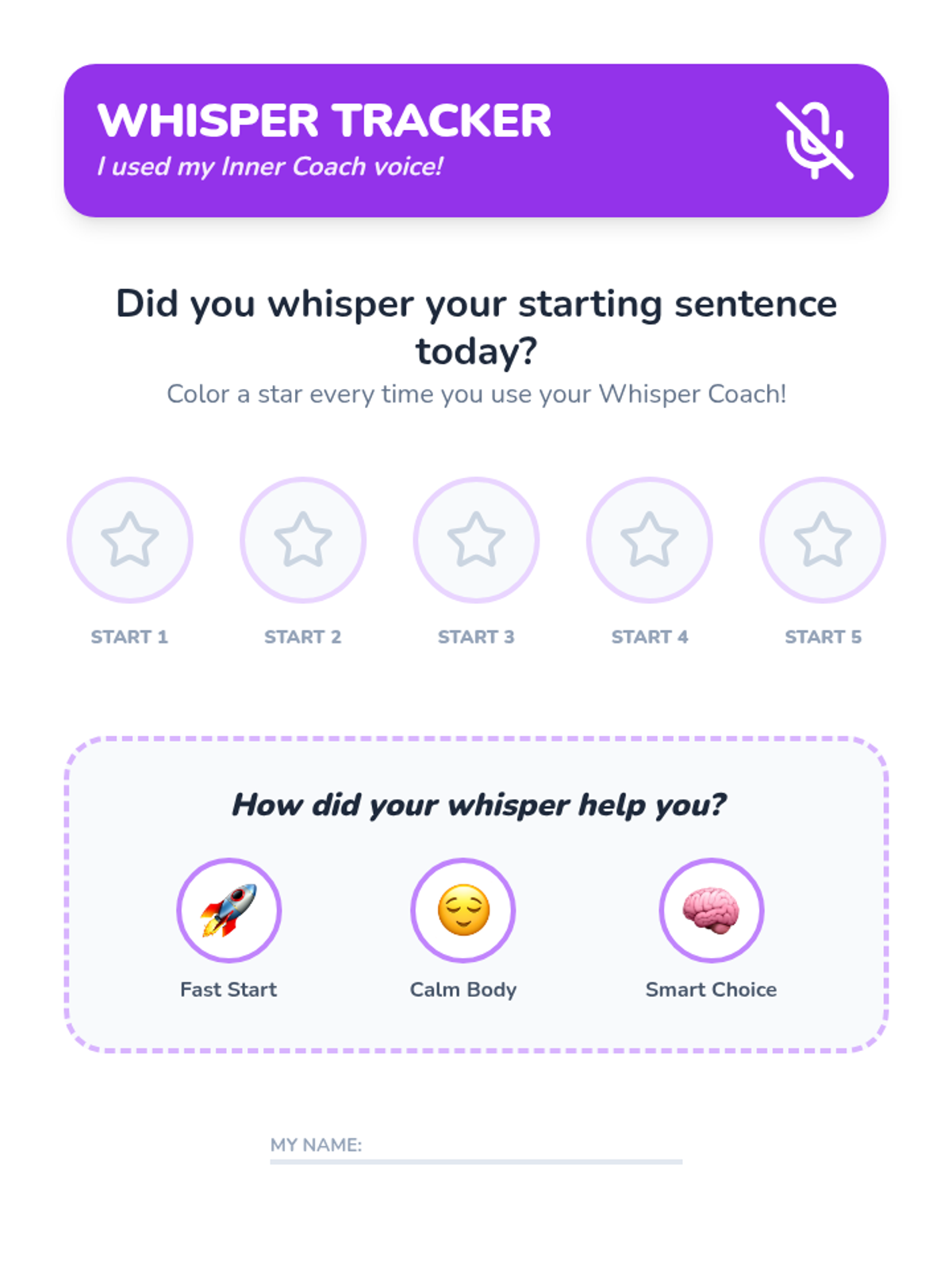
Focuses on transitioning verbal scripts to a whisper to internalize the strategy. Students practice 'whisper coaching' during a coloring task.
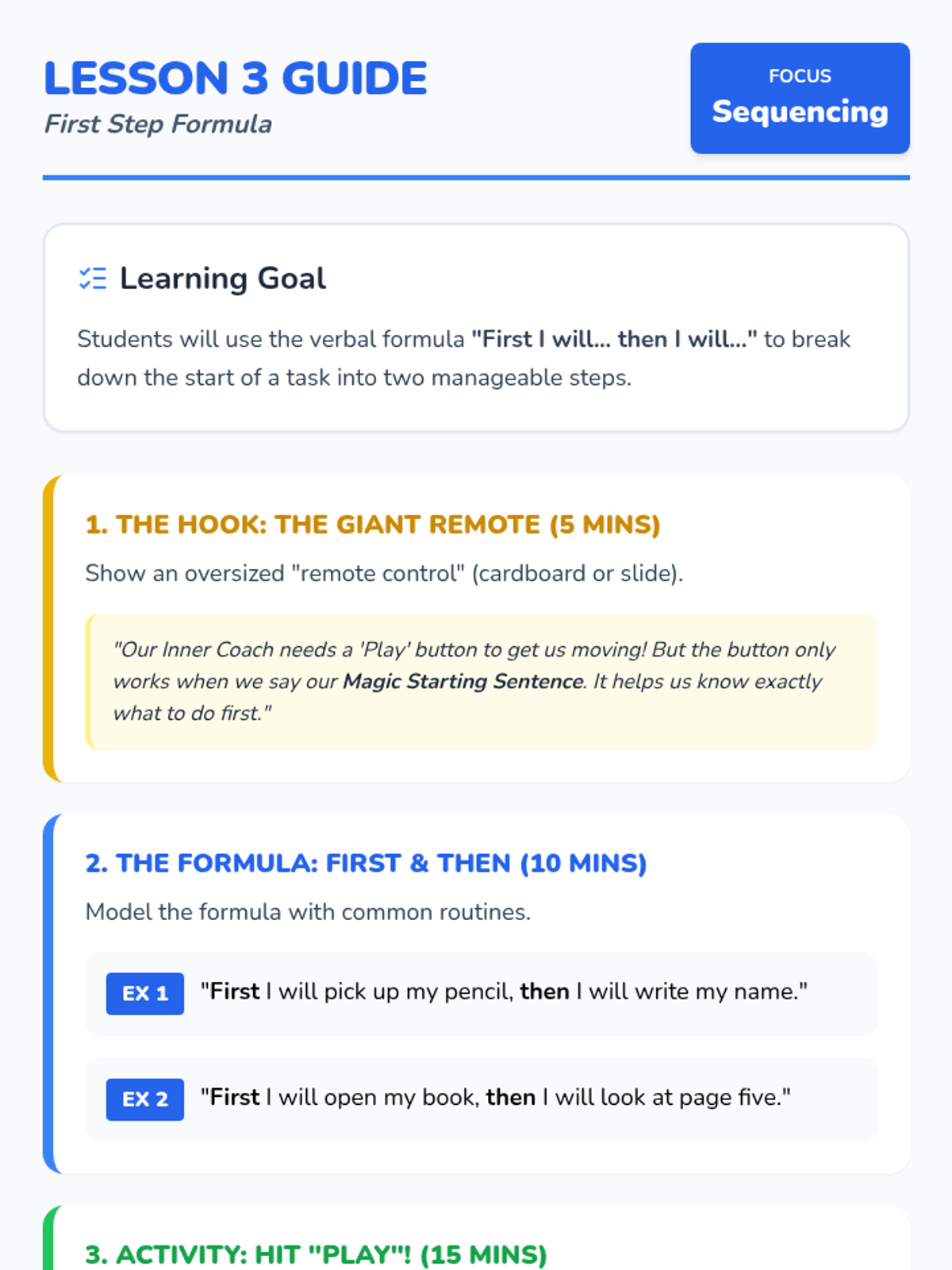
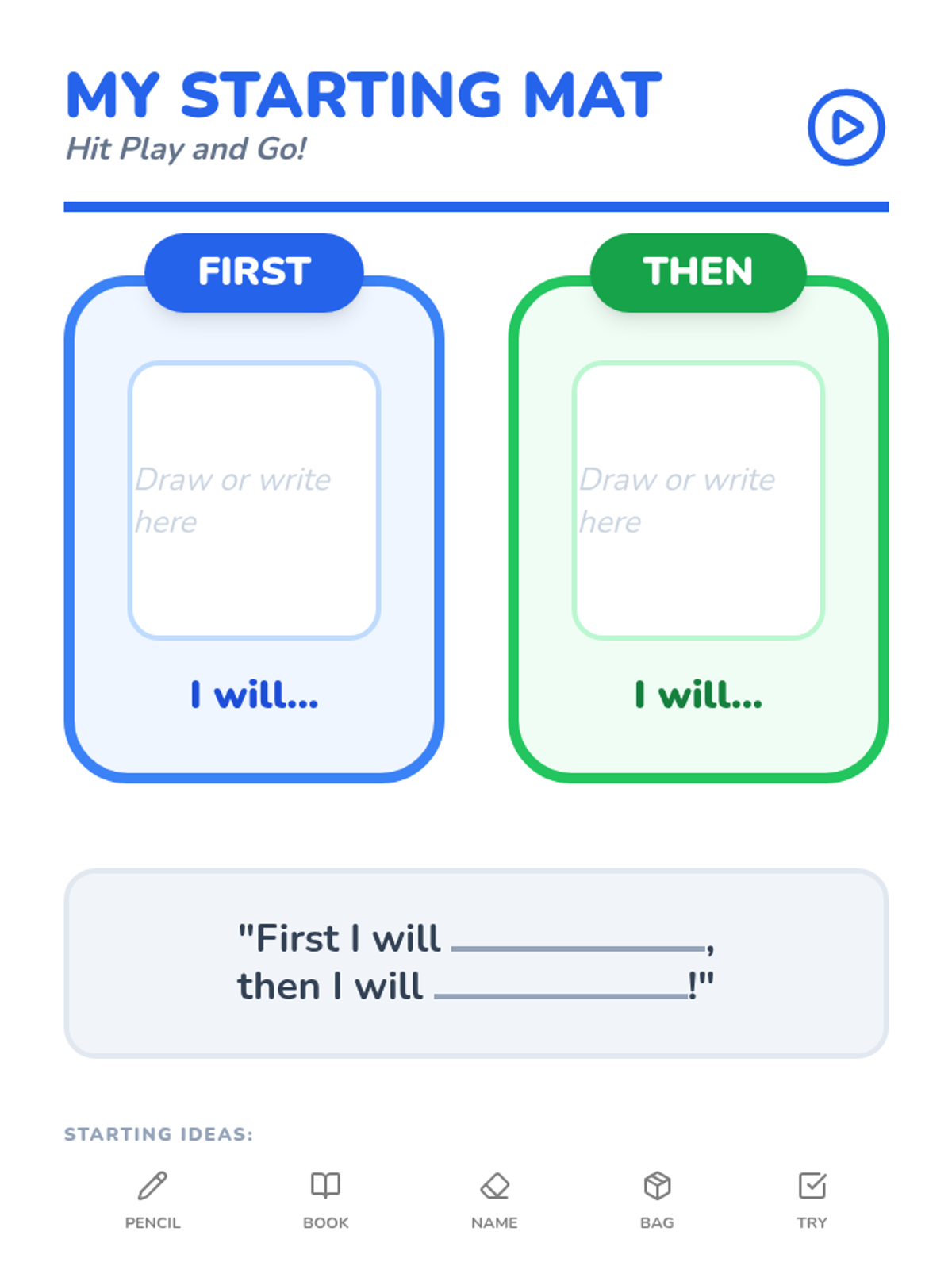
Students learn and practice the 'First I will... then I will...' verbal formula for classroom routines and simple tasks.
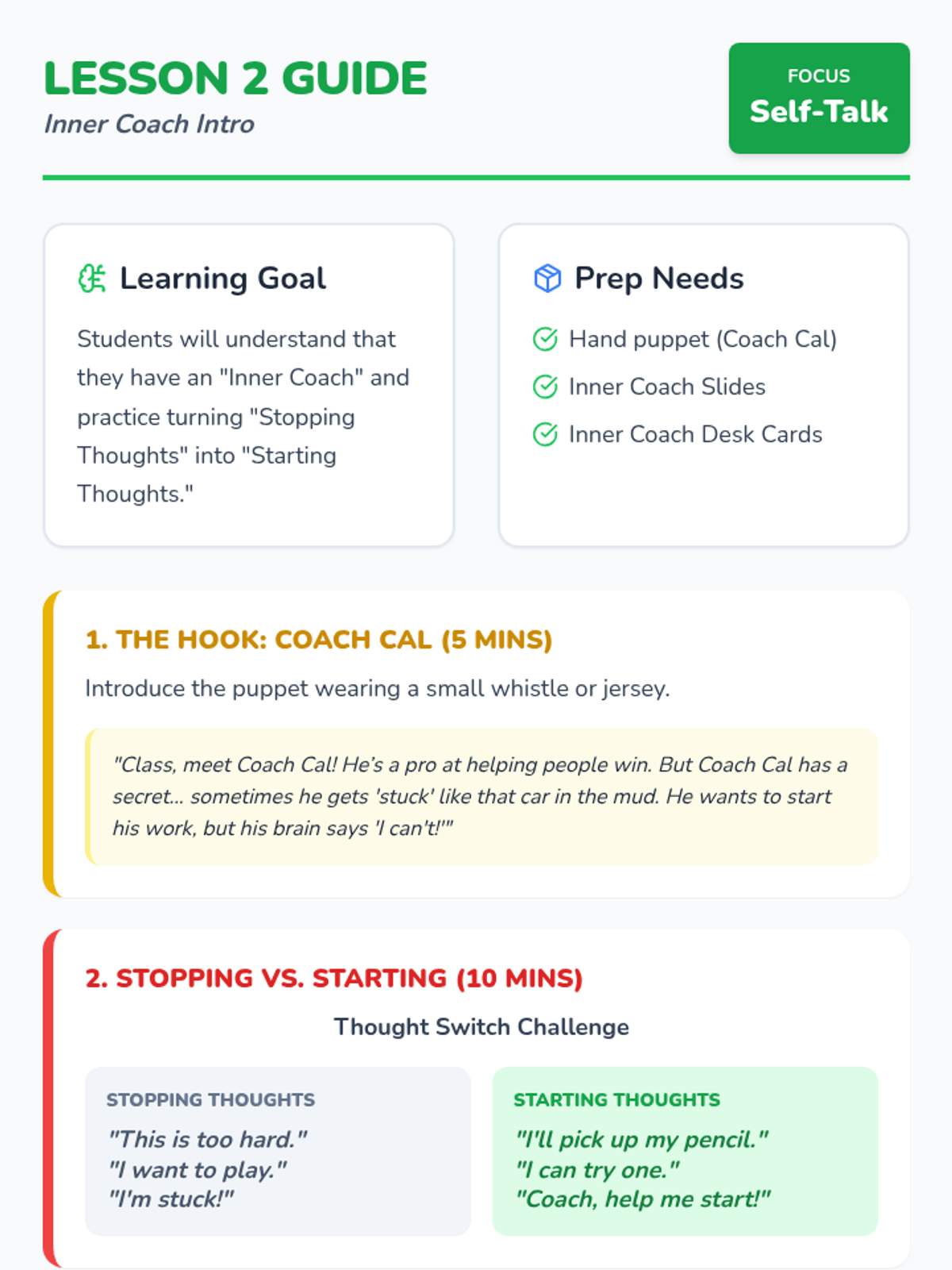
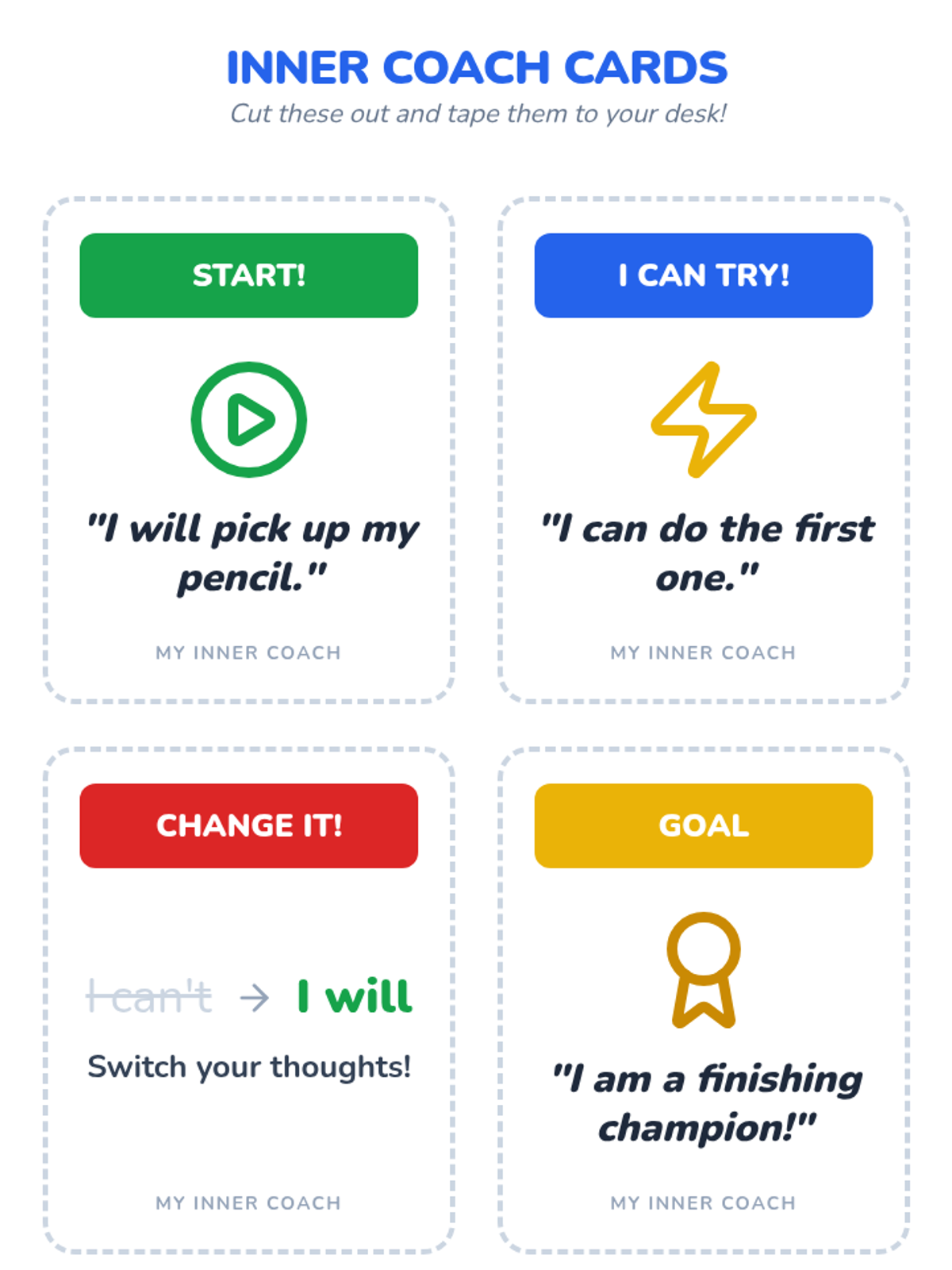
Introduces the 'Inner Coach' concept using a puppet named Coach Cal. Students practice replacing 'Stopping Thoughts' with 'Starting Thoughts' to prepare for action.
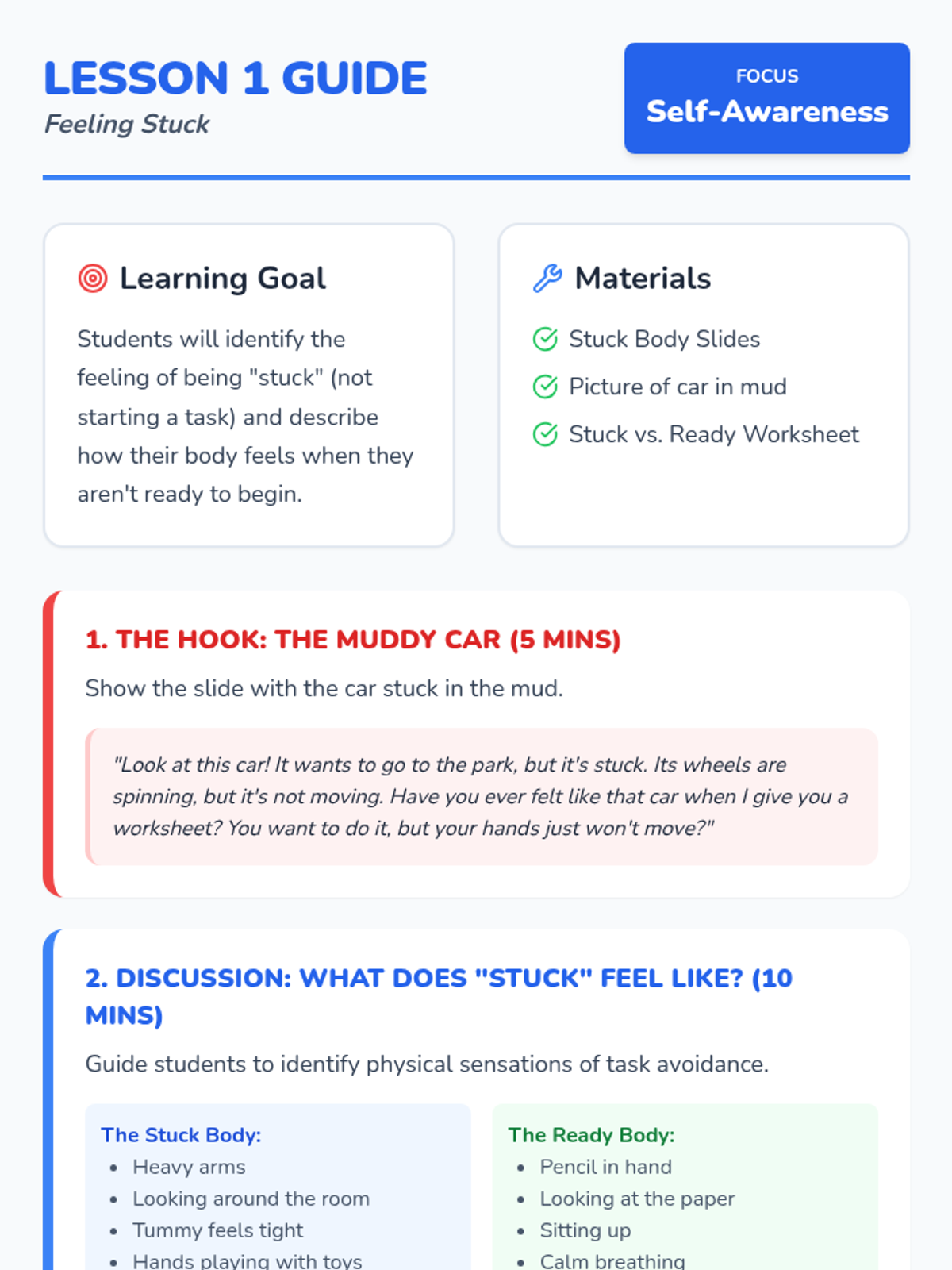
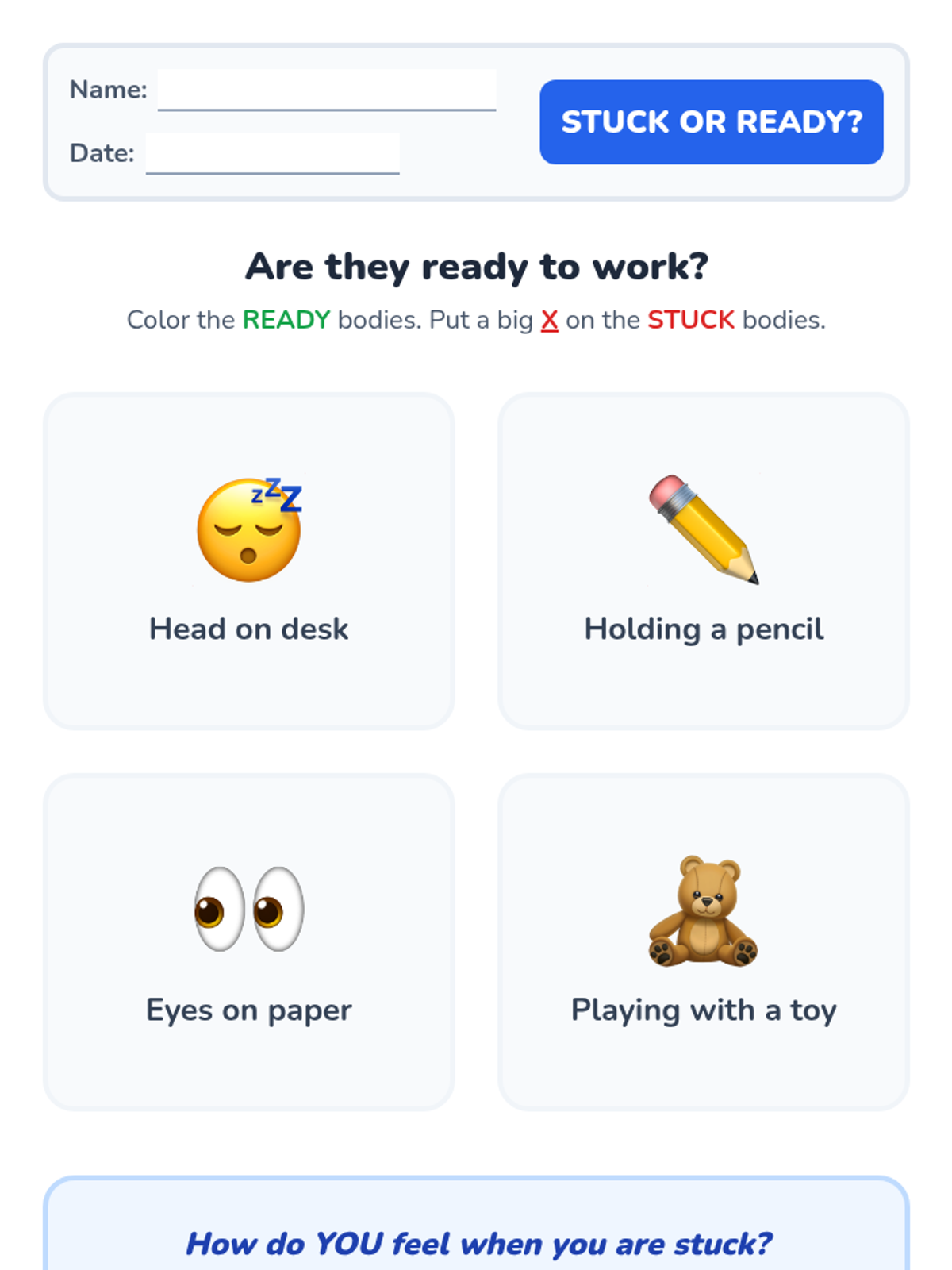
Students explore the physical and emotional sensations of not knowing how to start a task. They learn to distinguish between 'ready bodies' and 'stuck bodies' through visual aids and discussion.
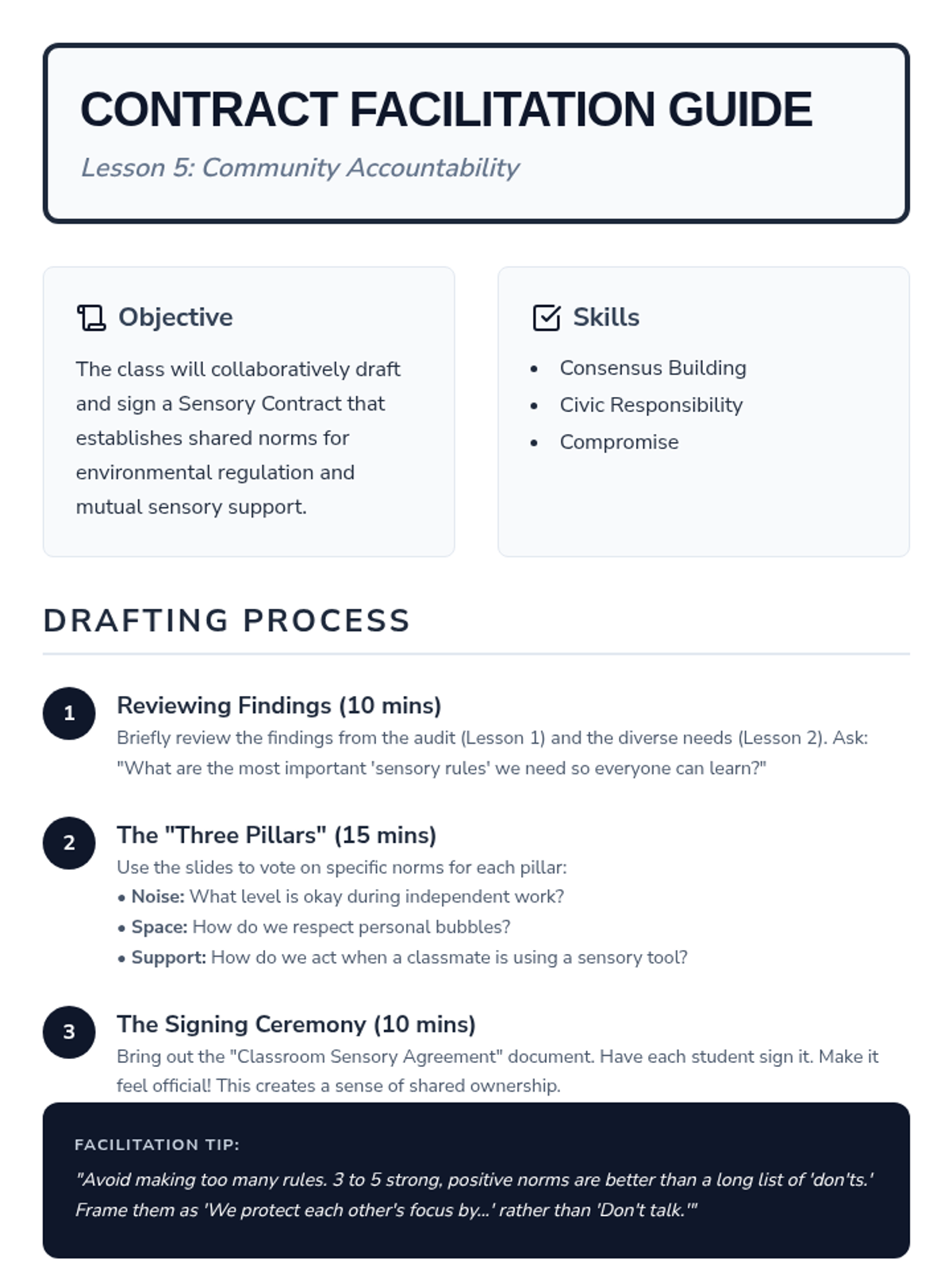
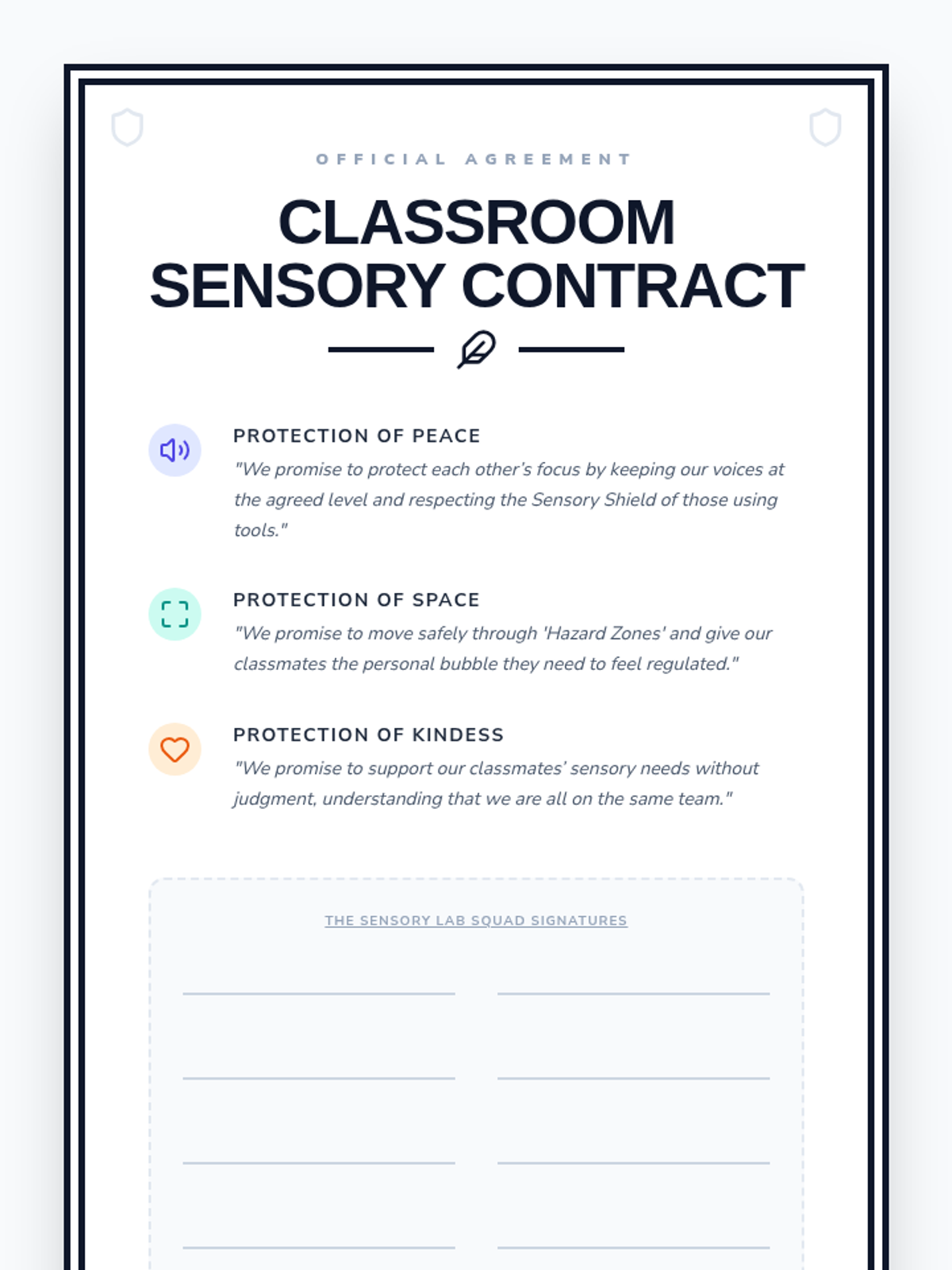
The sequence culminates in the creation of a shared classroom agreement that establishes norms for noise, space, and sensory support.
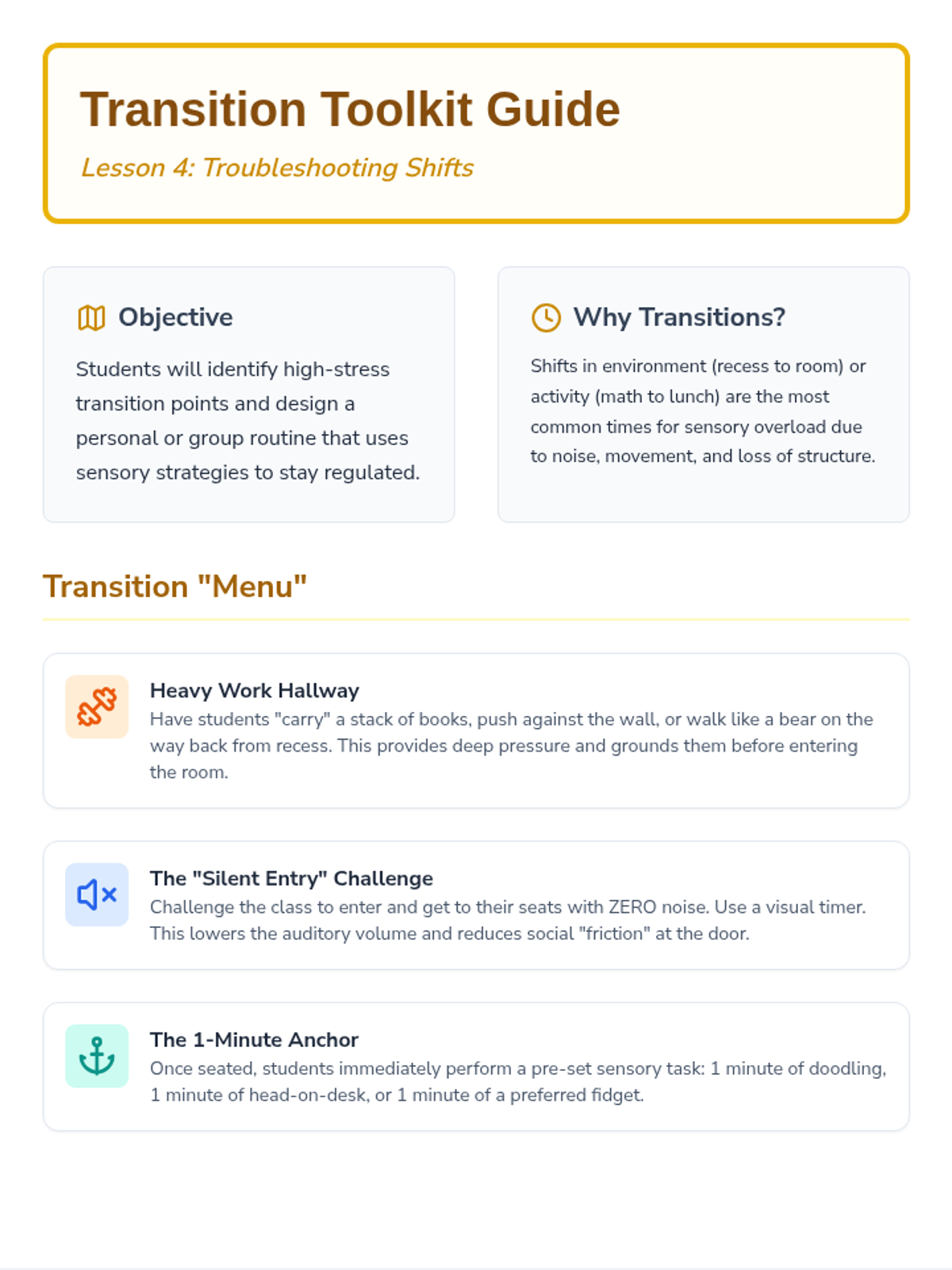
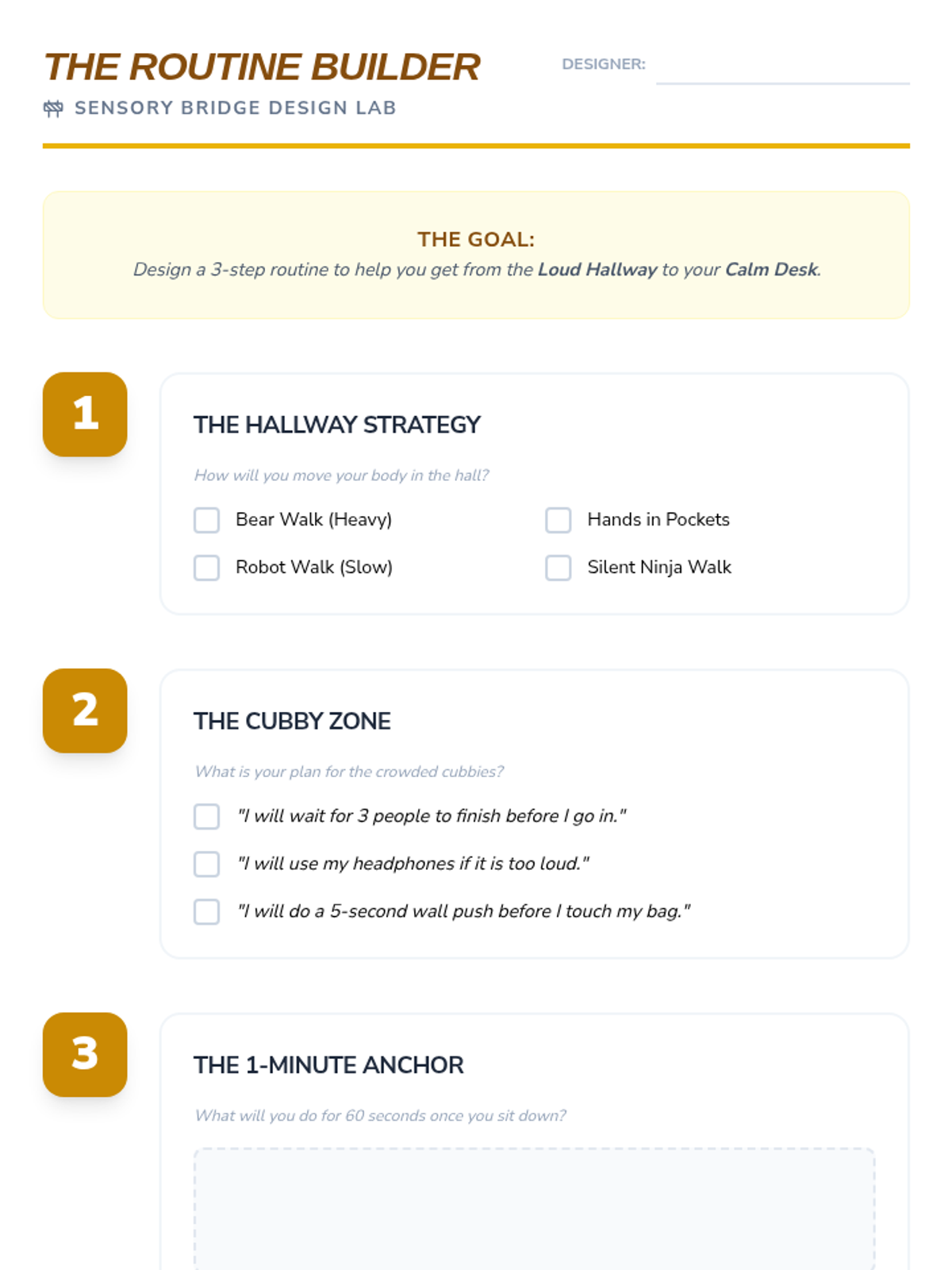
Students identify high-stress transition times and brainstorm proactive routines to maintain sensory regulation when moving between activities.
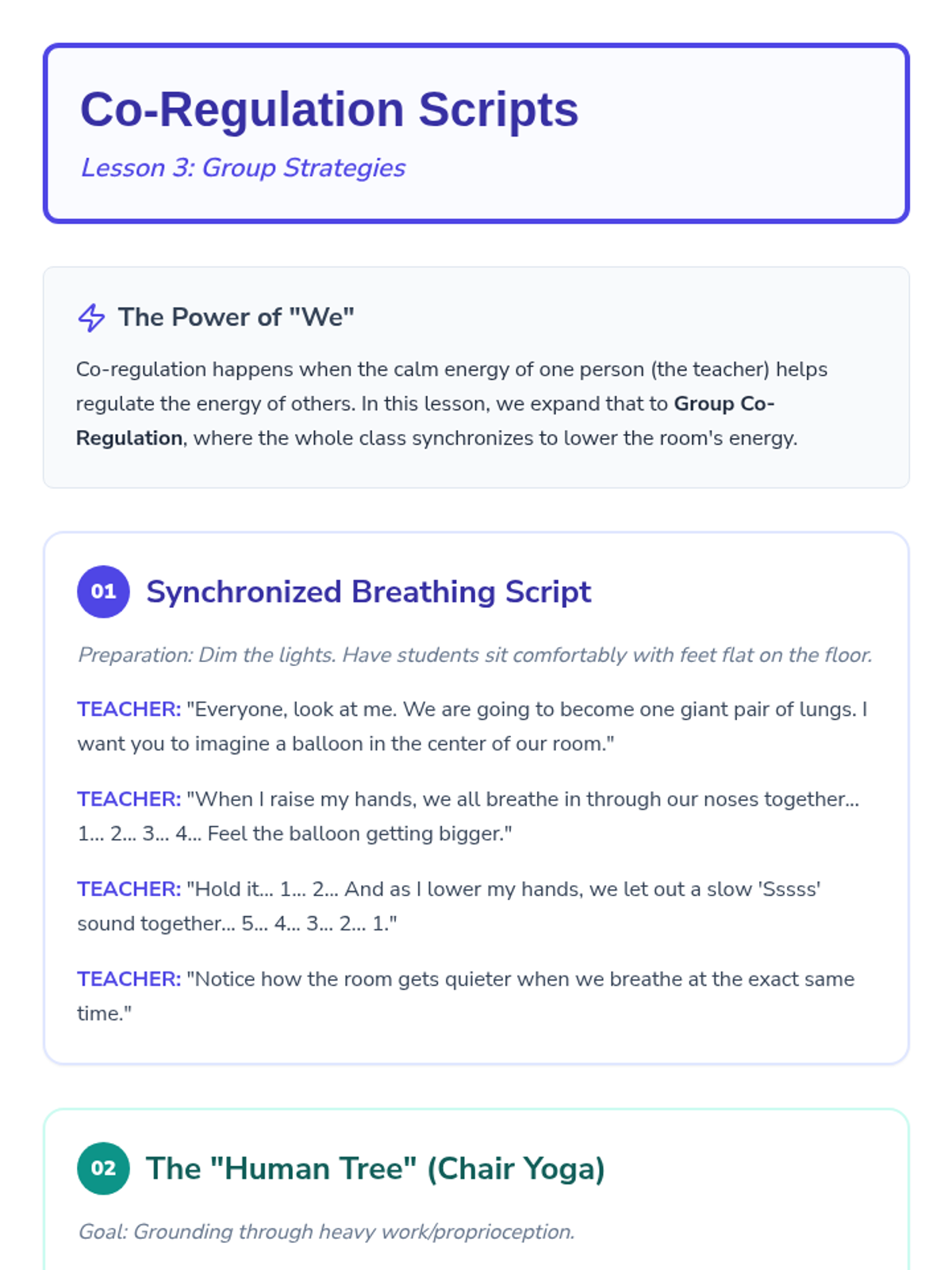
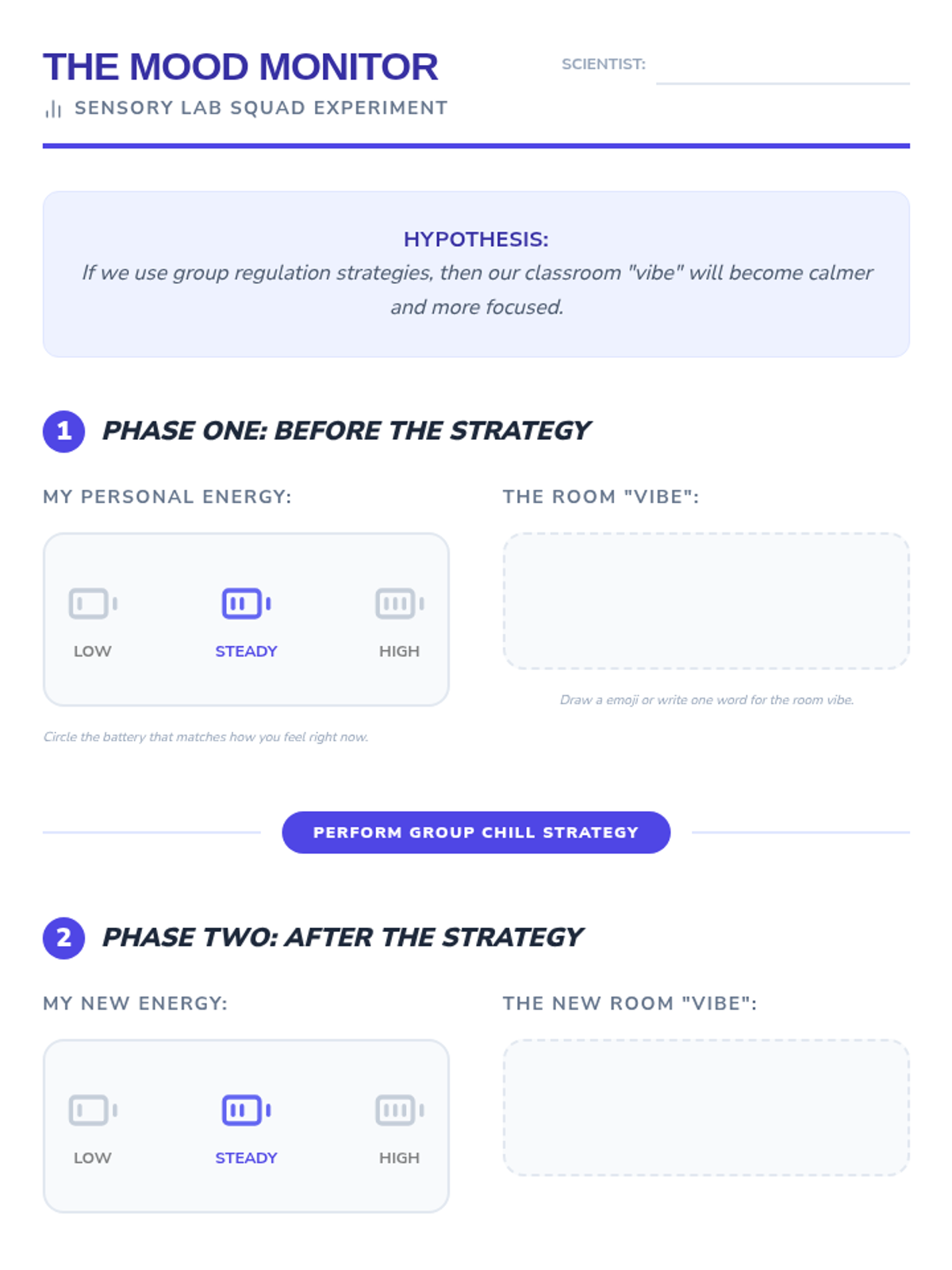
The class practices whole-group regulation techniques like synchronized breathing and chair yoga to understand how collective action affects the energy of the room.
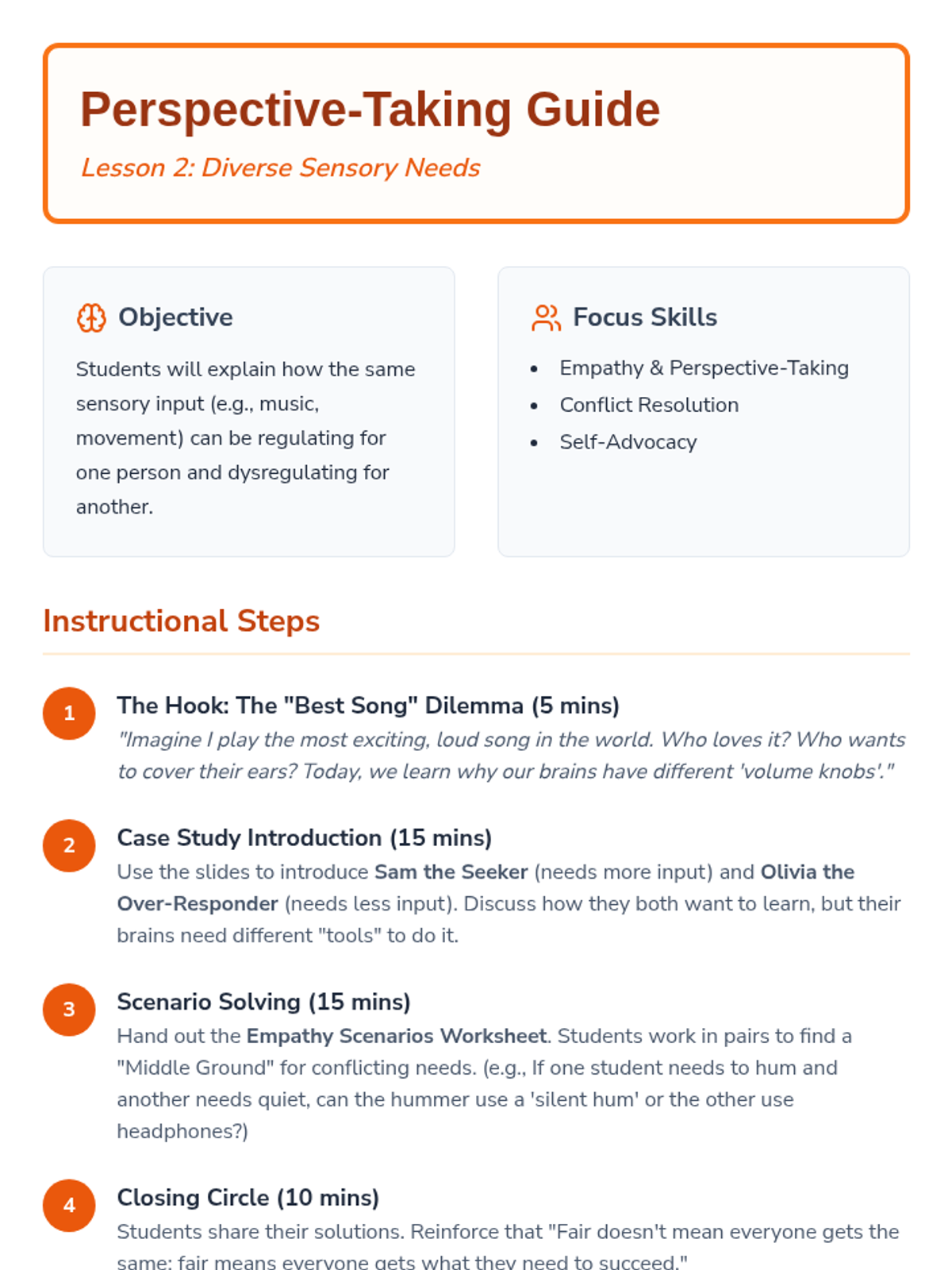
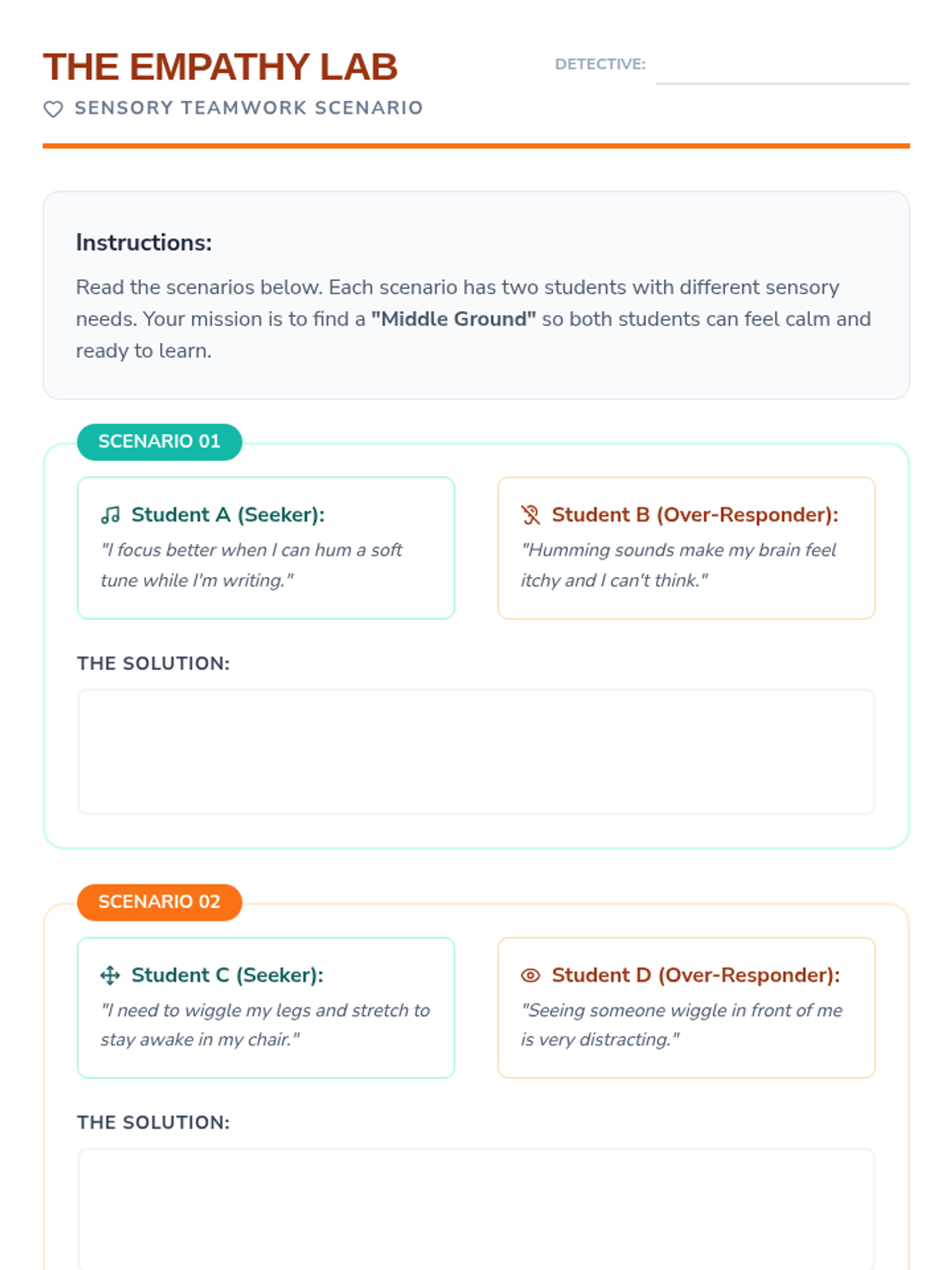
Students explore how sensory preferences vary between individuals and practice perspective-taking to understand and respect classmates' different needs.
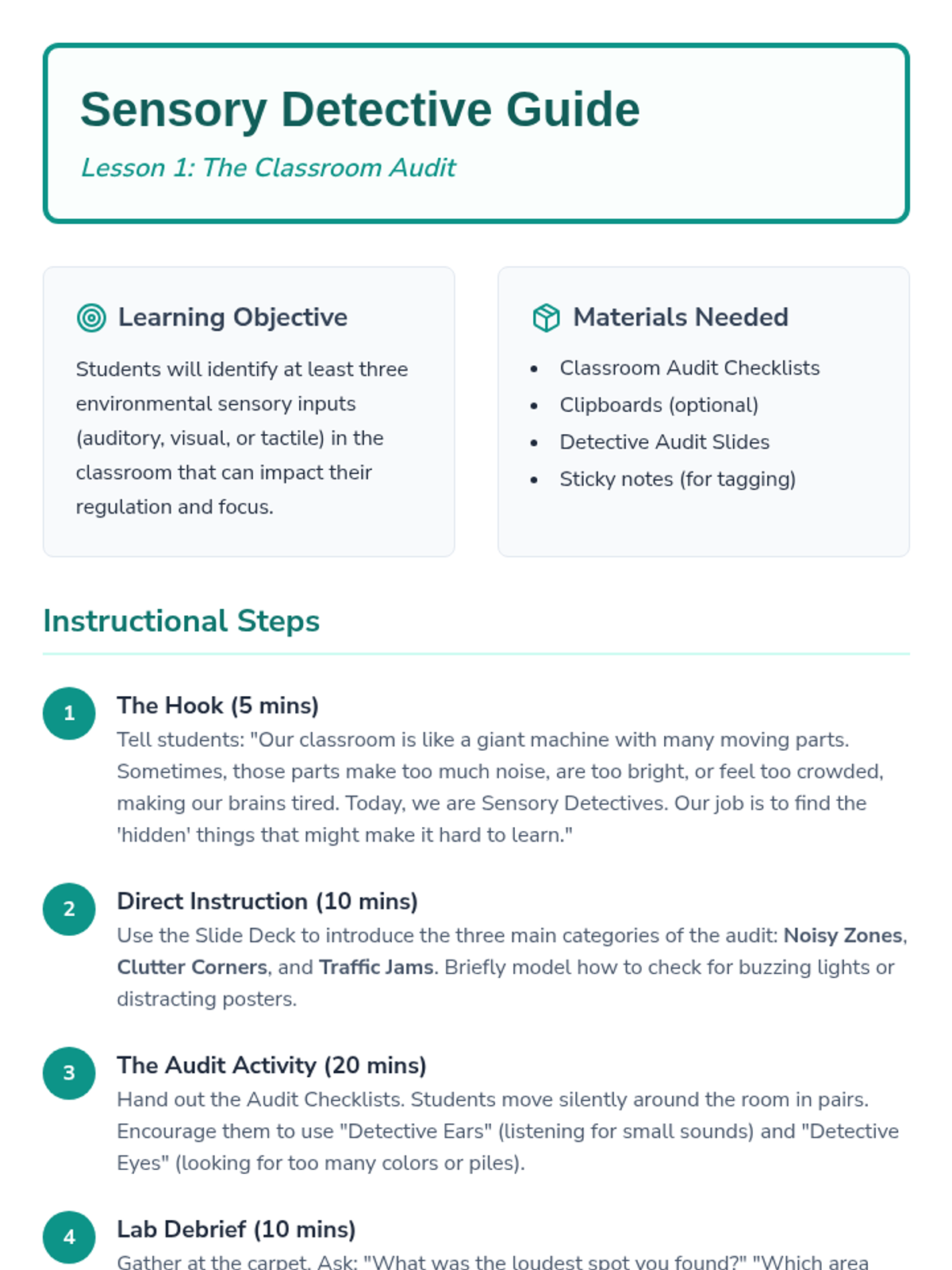
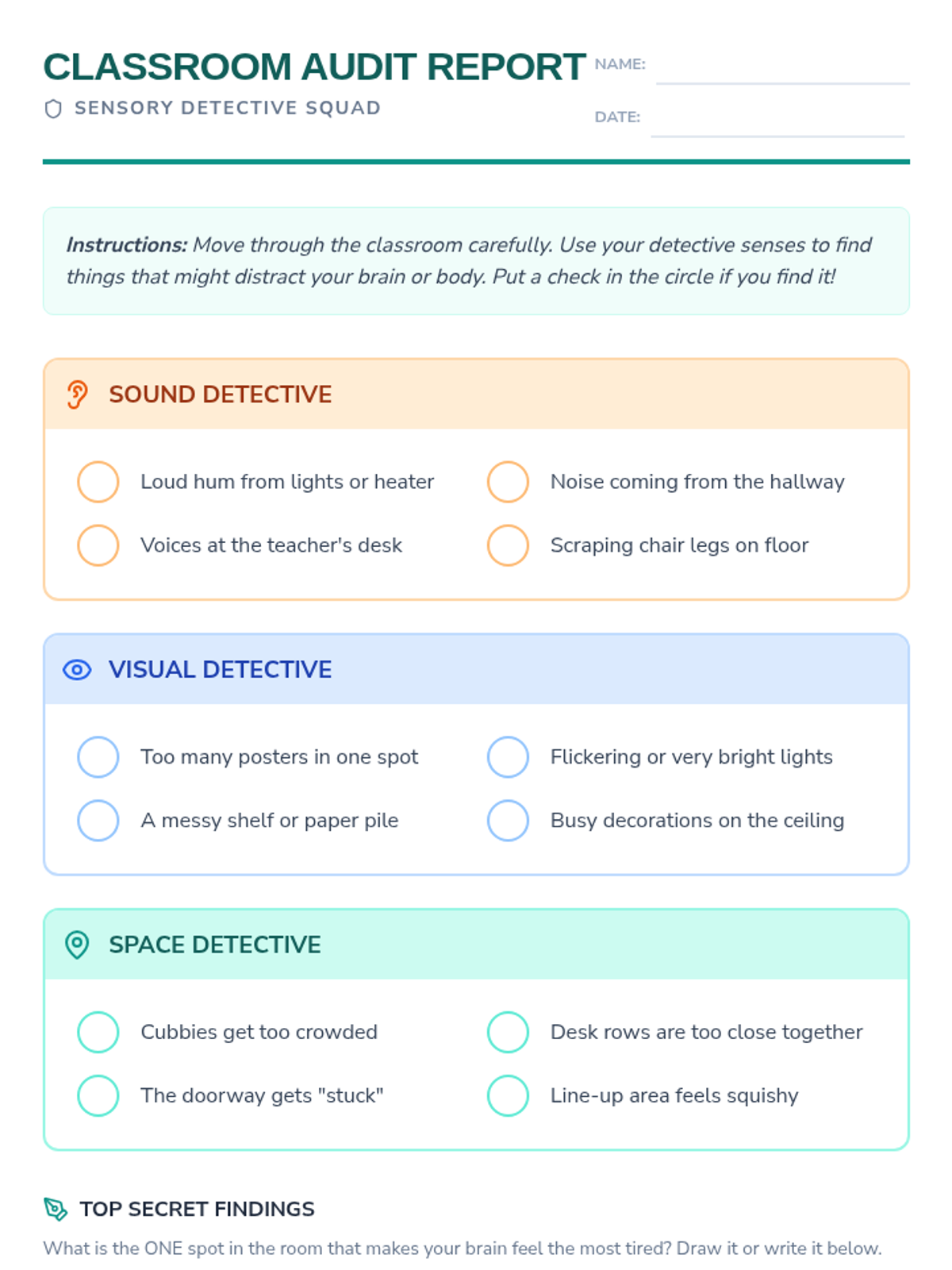
Students conduct a hands-on audit of their classroom to identify environmental sensory triggers and discuss how these factors impact their ability to focus and stay calm.
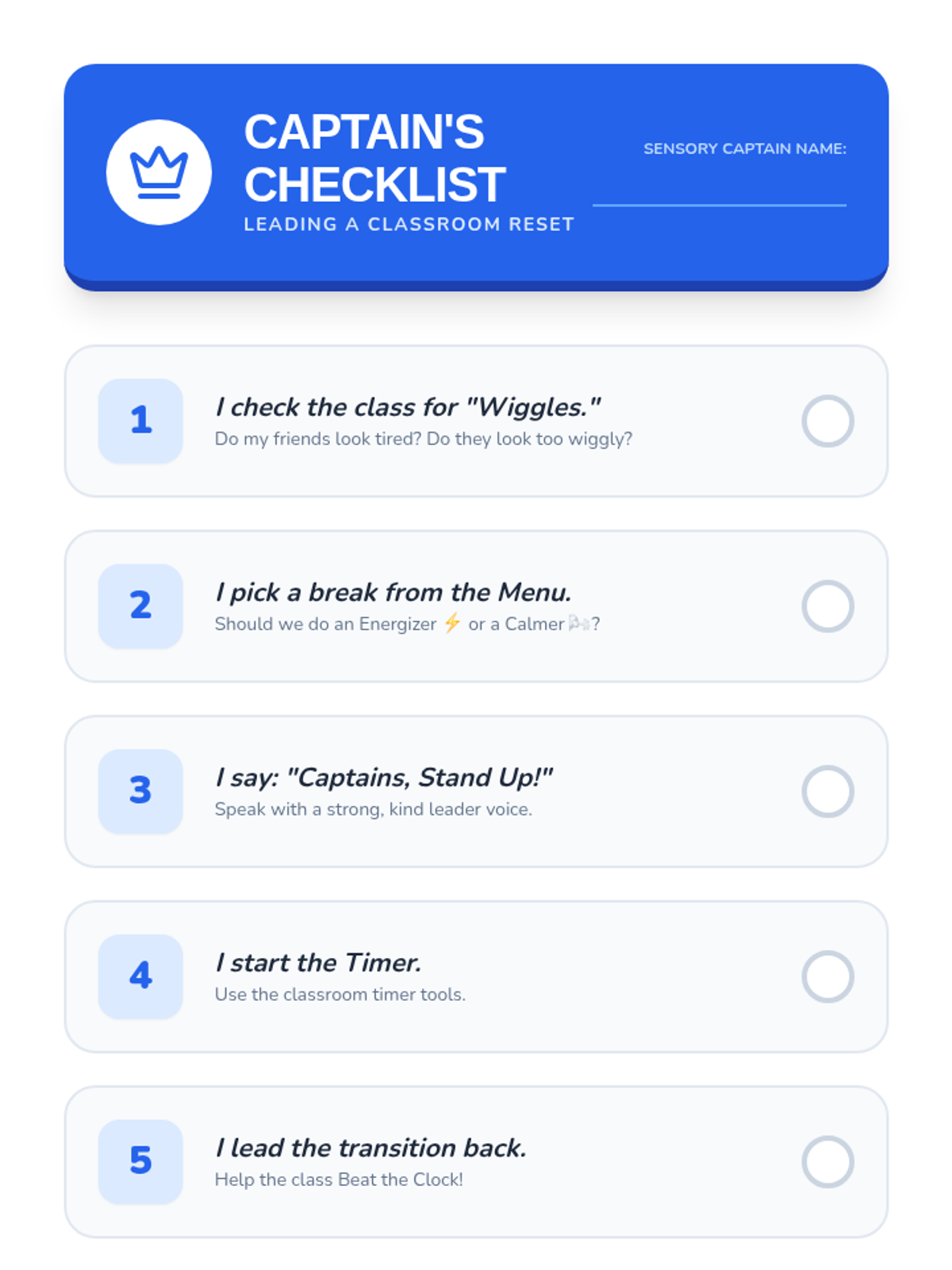
Students take on leadership roles as 'Sensory Captains,' choosing and leading the class through scheduled sensory breaks. This lesson celebrates mastery of the routines and promotes student agency.
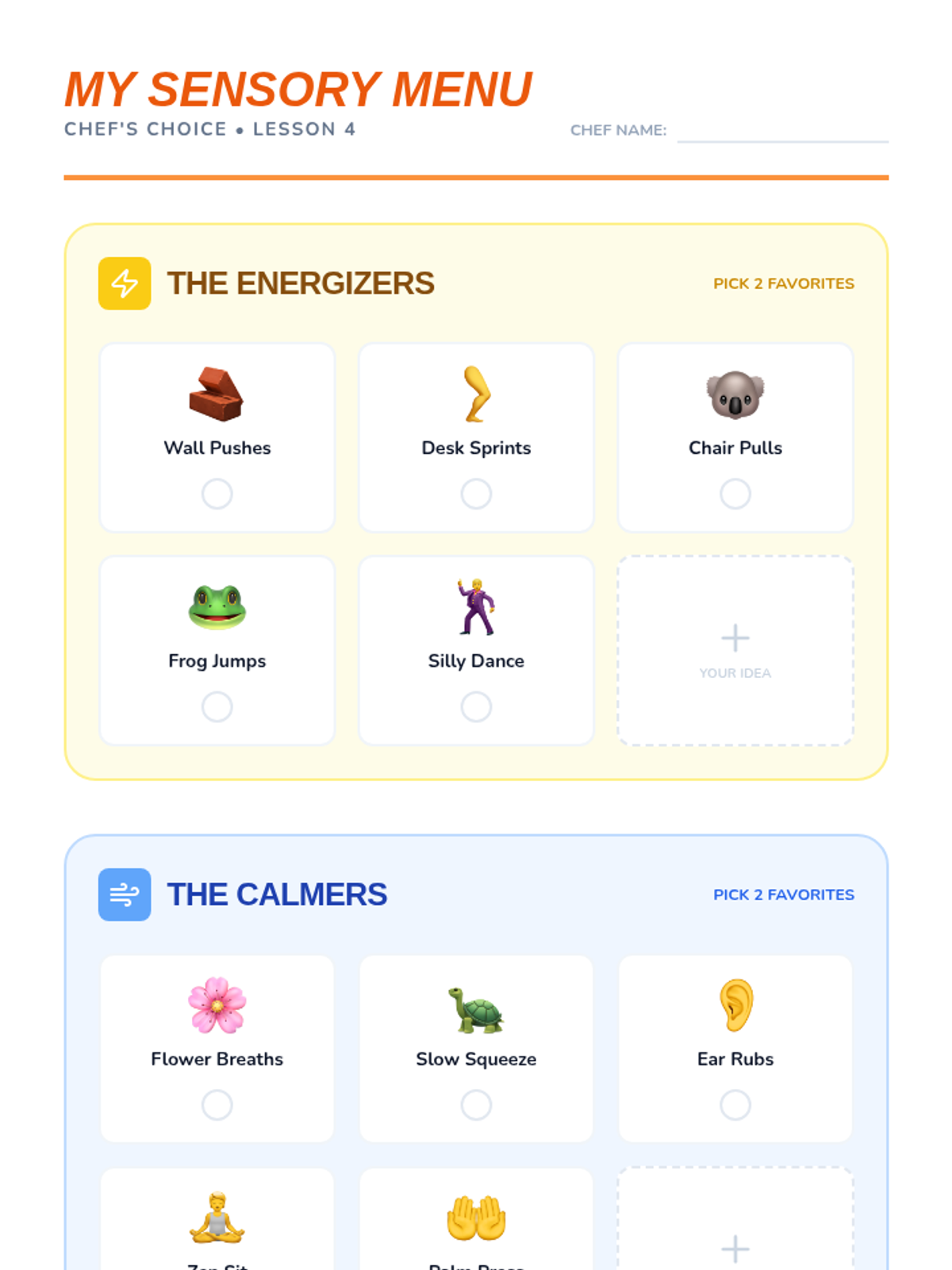
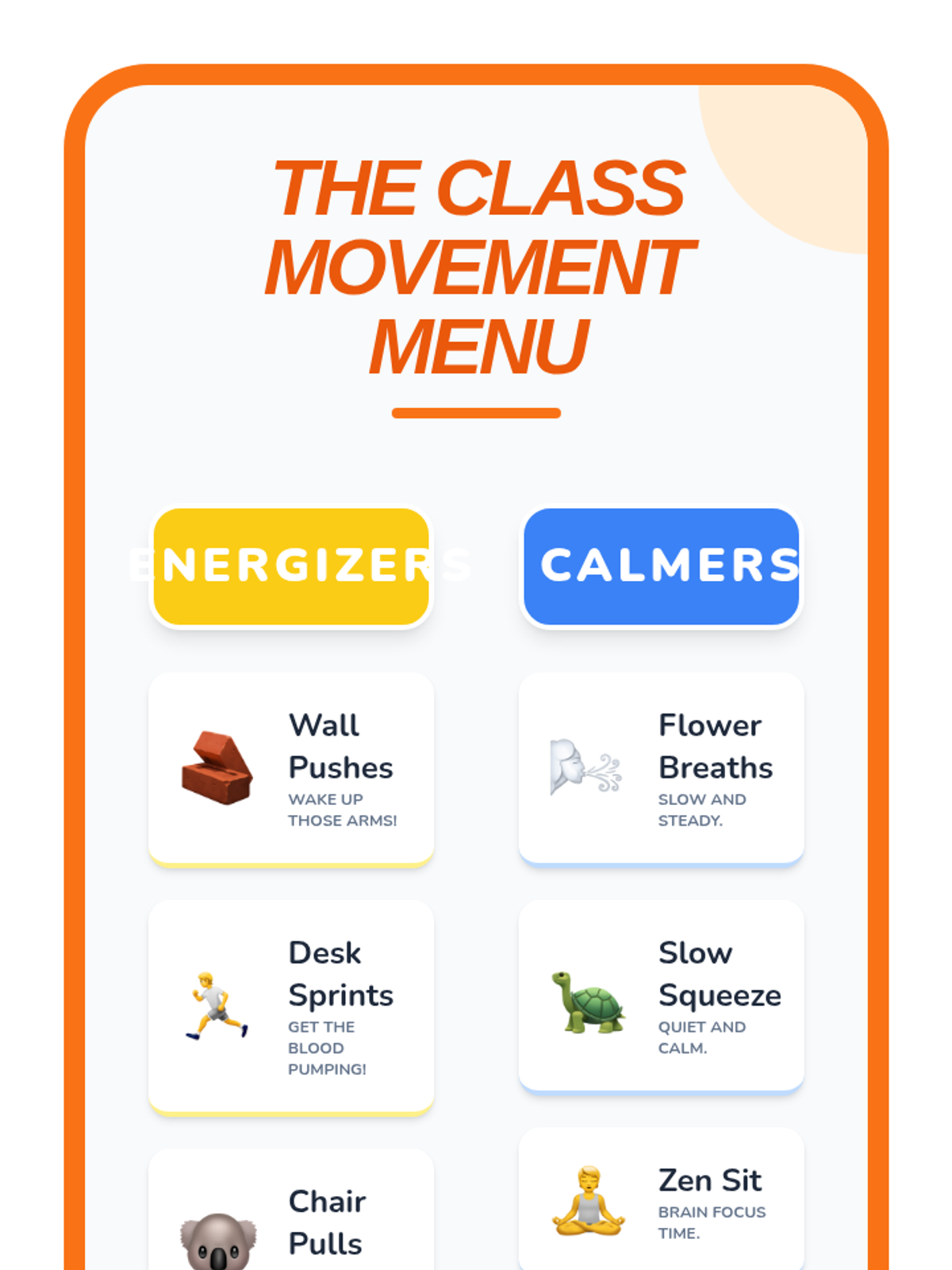
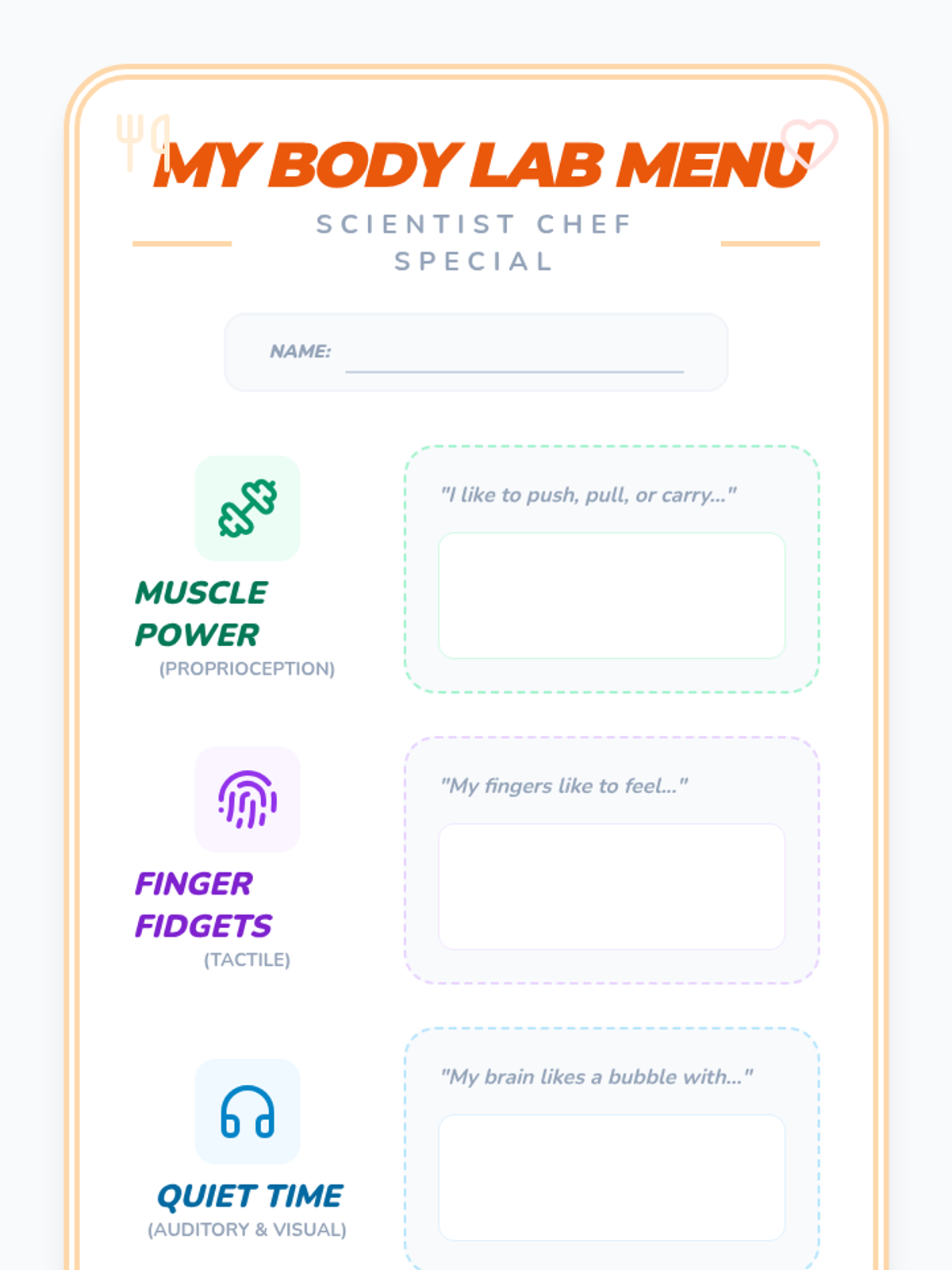
Students categorize sensory activities into 'Energizers' and 'Calmers' and create a visual menu of options. They practice making quick decisions from the menu to maximize break effectiveness.
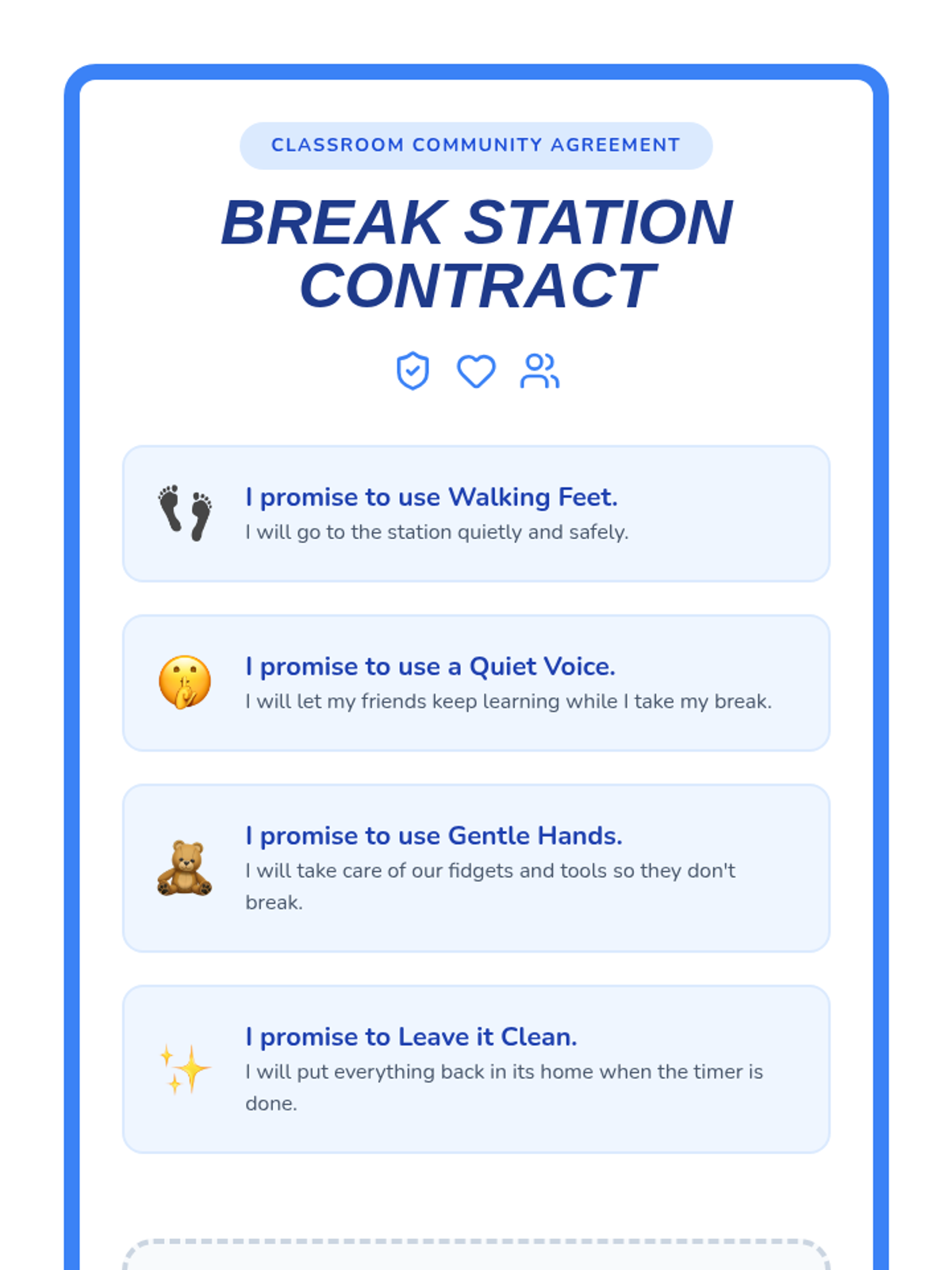
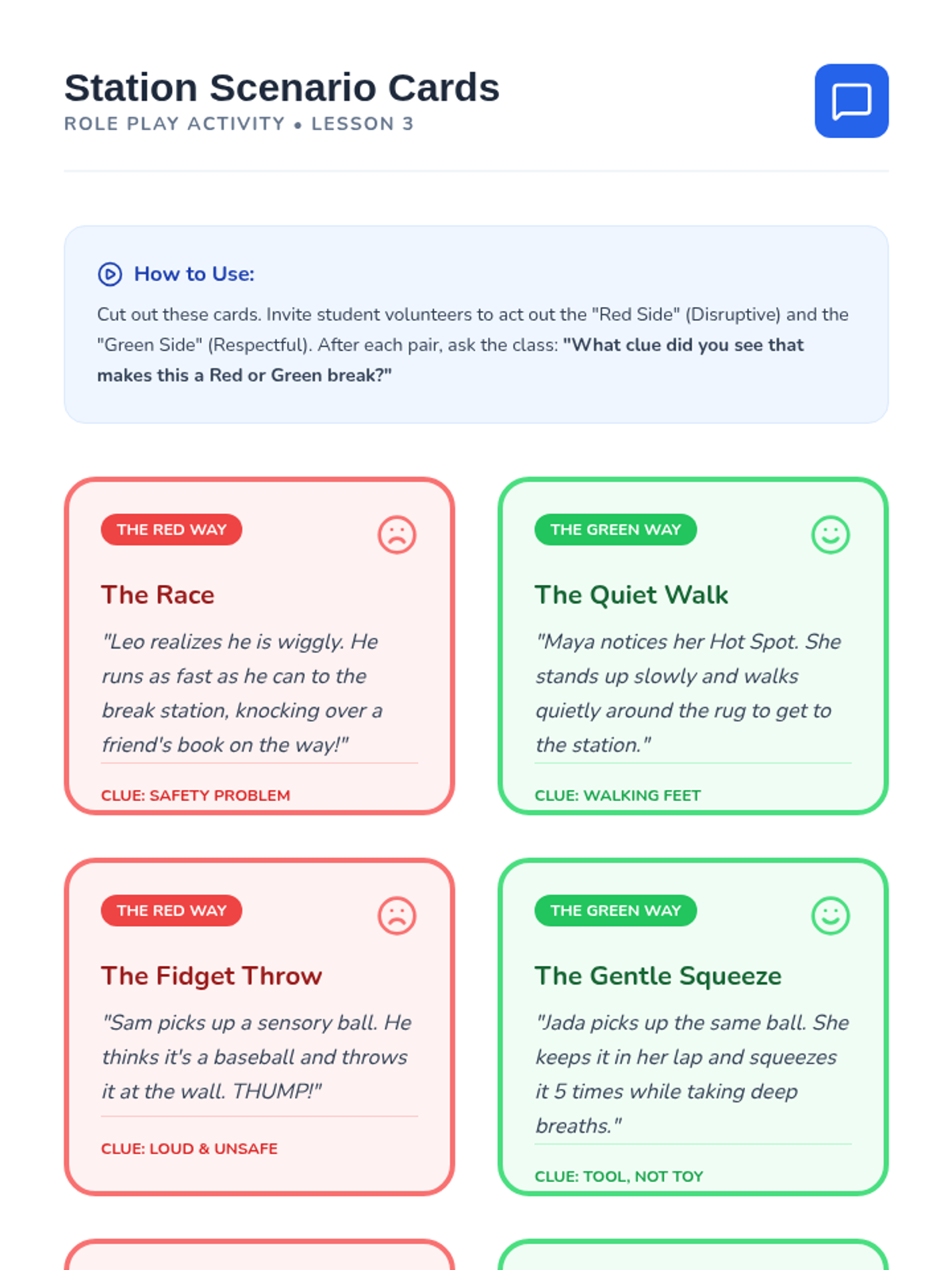
The class co-creates expectations for a dedicated sensory corner, focusing on respectful material use and quiet re-entry into the group. Students analyze role-plays to identify successful station behaviors.
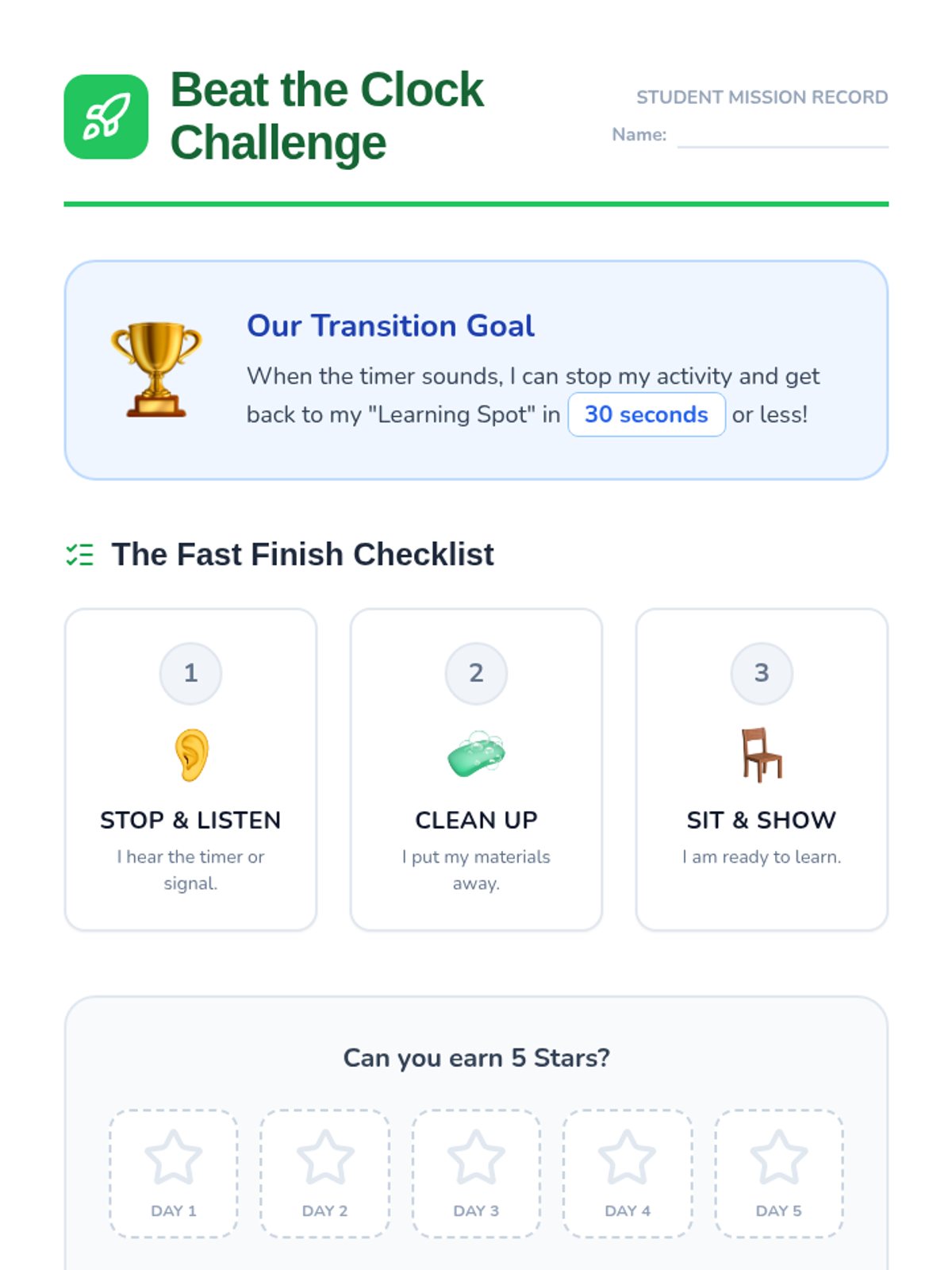
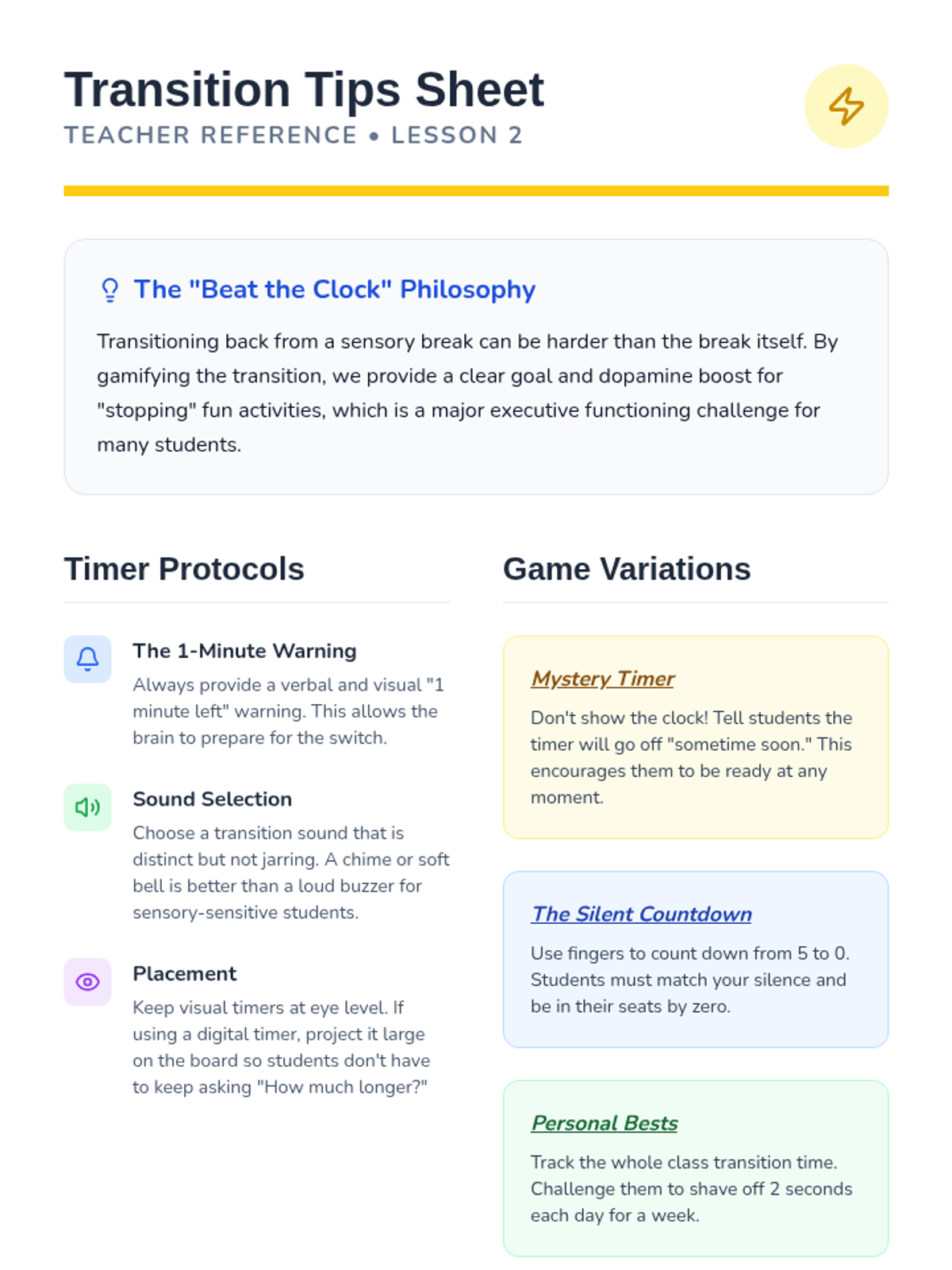
Students practice using visual timers and following specific protocols for starting and ending breaks. They engage in a 'Beat the Clock' game to master efficient transitions back to learning.
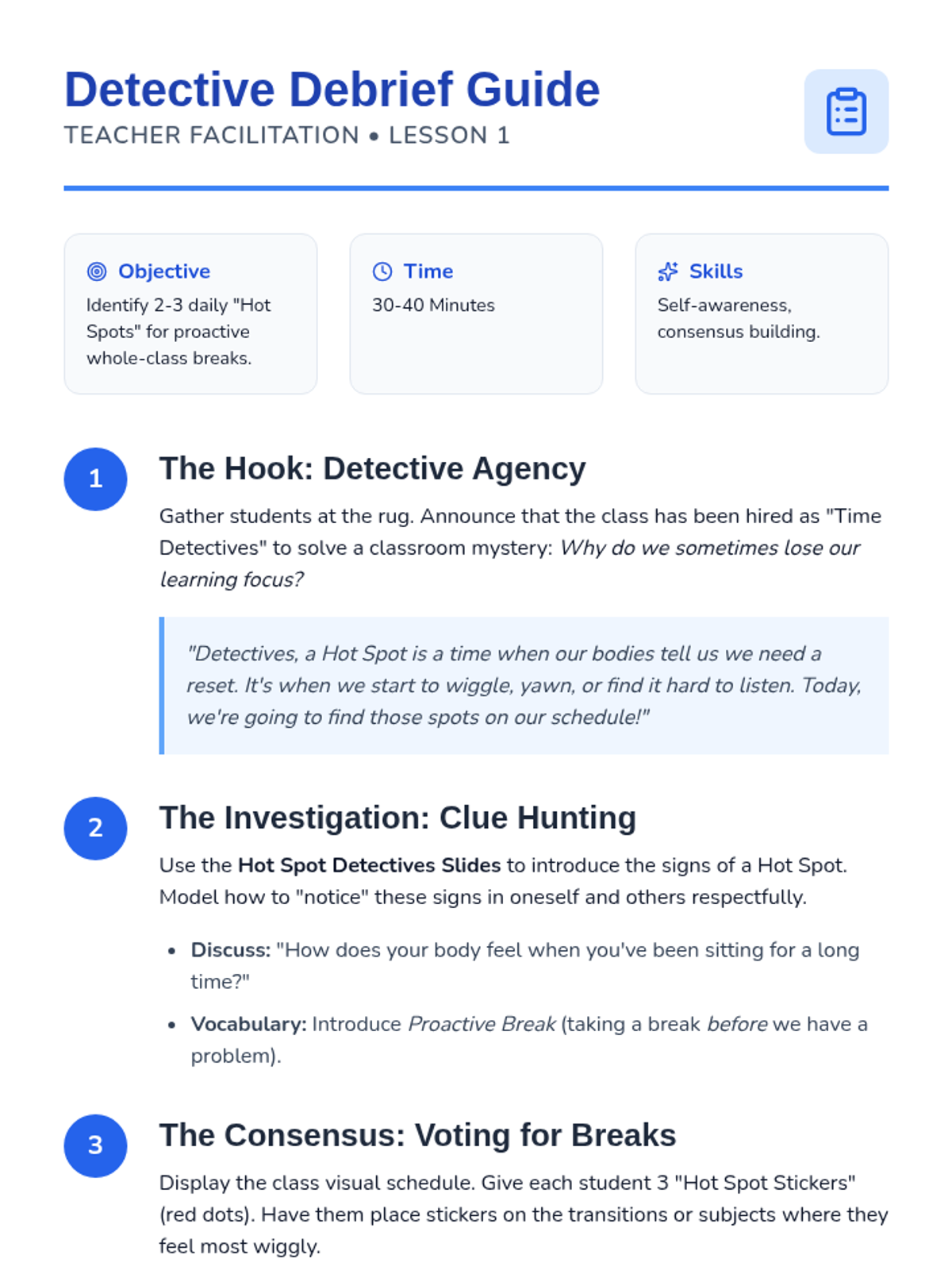
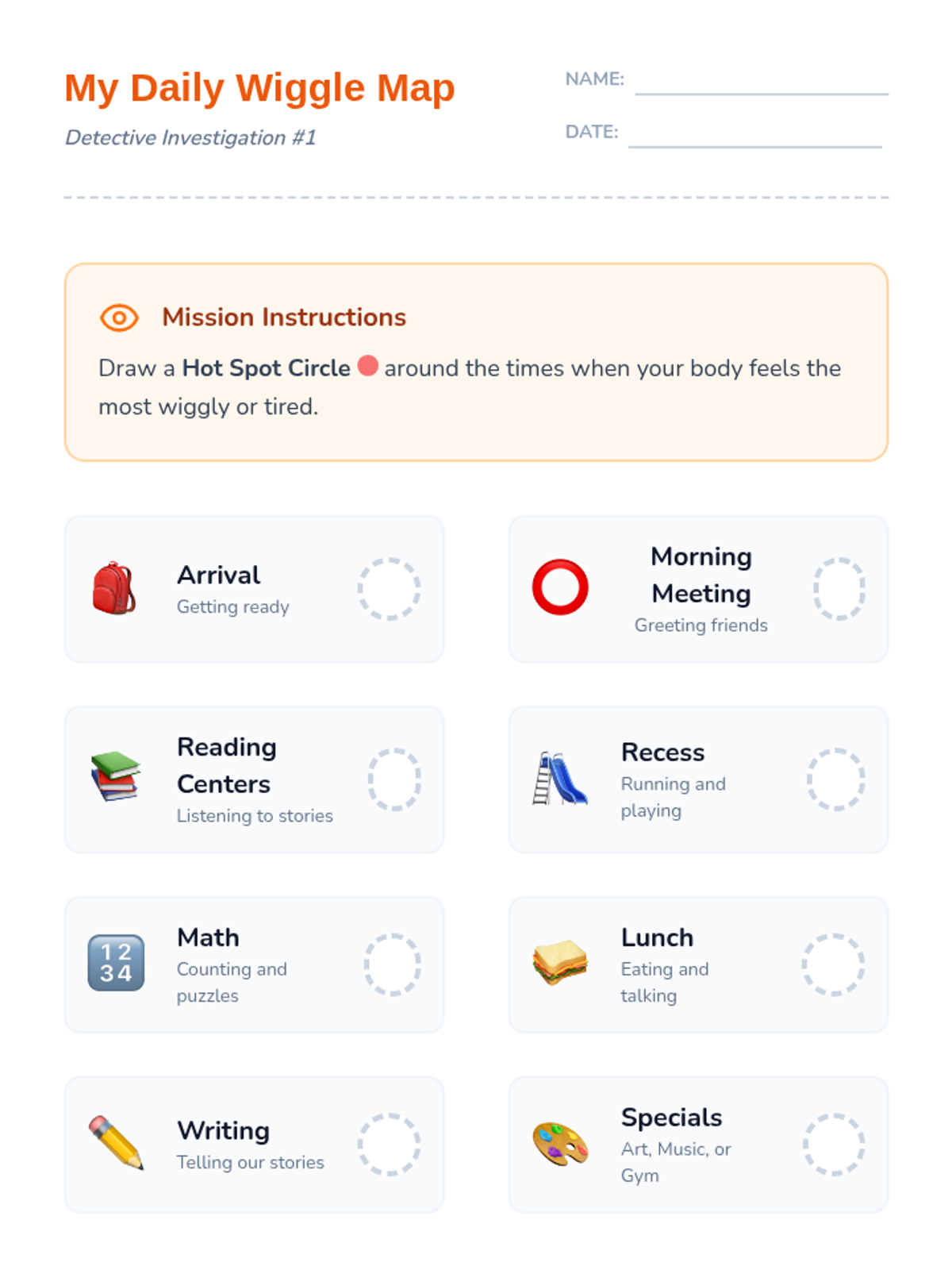
Students become 'Time Detectives' to investigate their daily schedule and identify moments when they feel most 'wiggly' or 'tired.' They use consensus-building to decide when whole-class sensory breaks should occur.
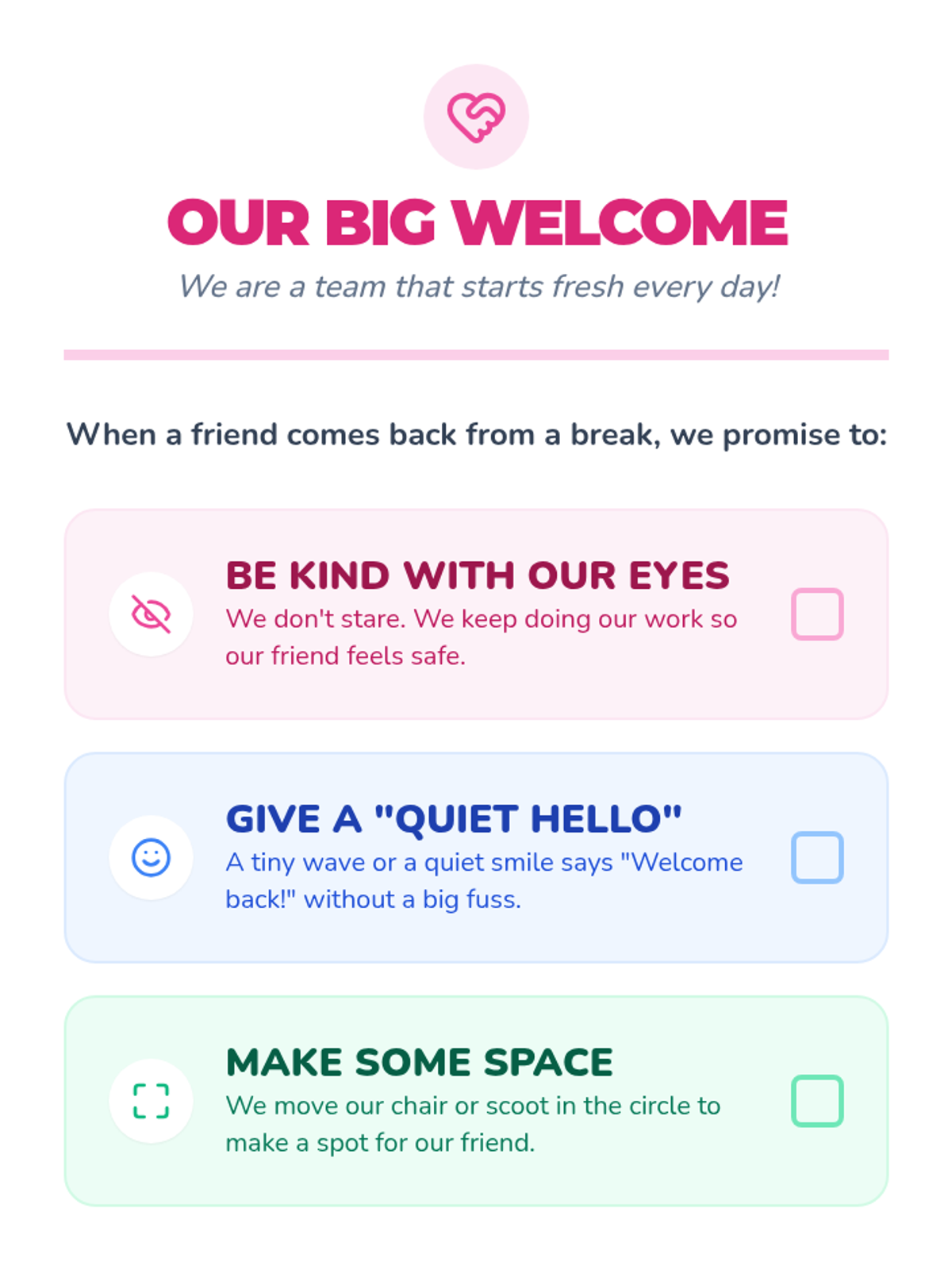
The class collectively establishes a routine for welcoming a peer back without making a big deal of it, building a supportive classroom culture.
Students review their experiments from the week and create a visual menu of their top 3 most effective regulation tools for personalized use.
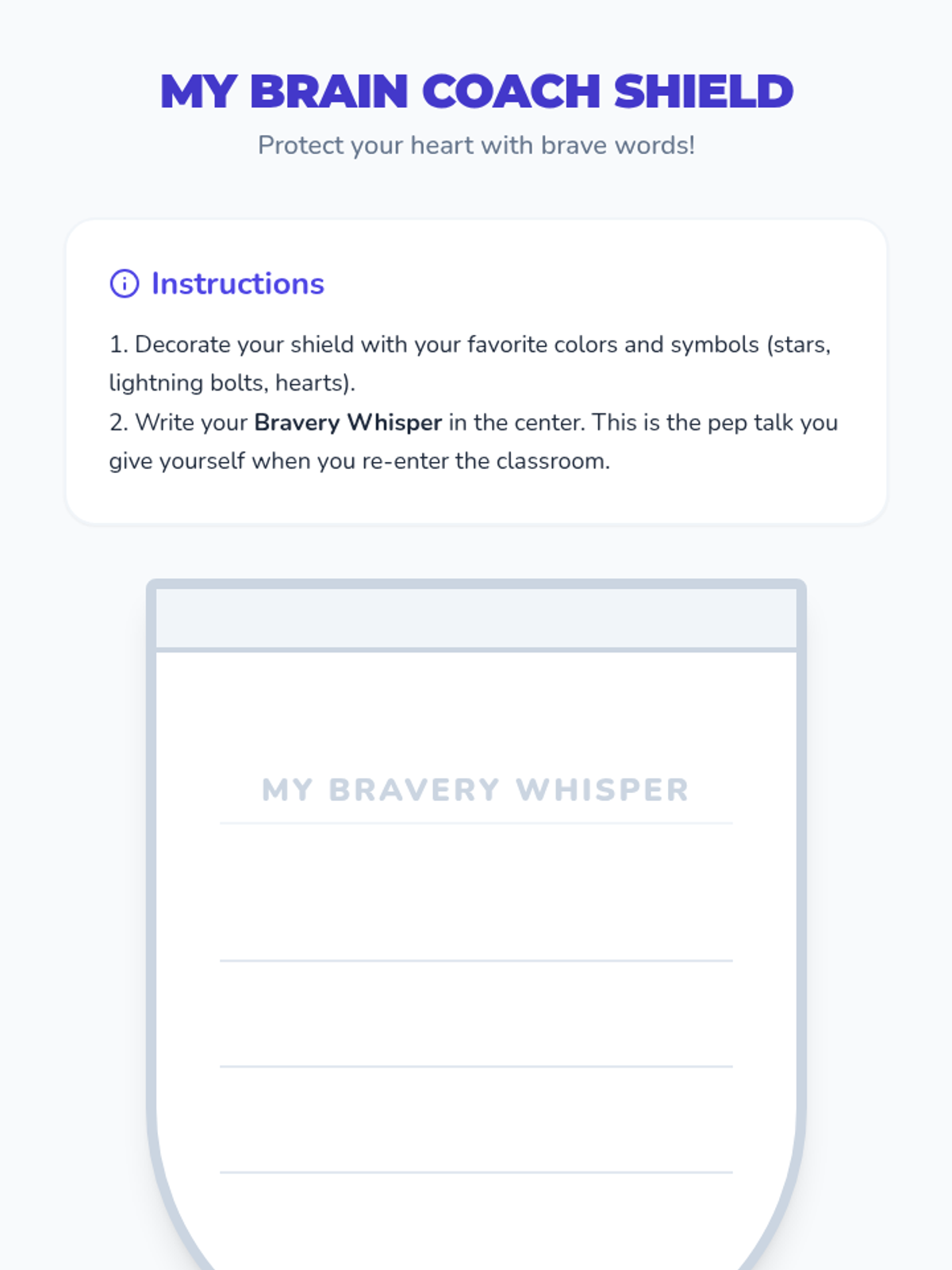
Students identify negative thoughts they might have after a meltdown and replace them with resilient self-talk and create re-entry affirmations.
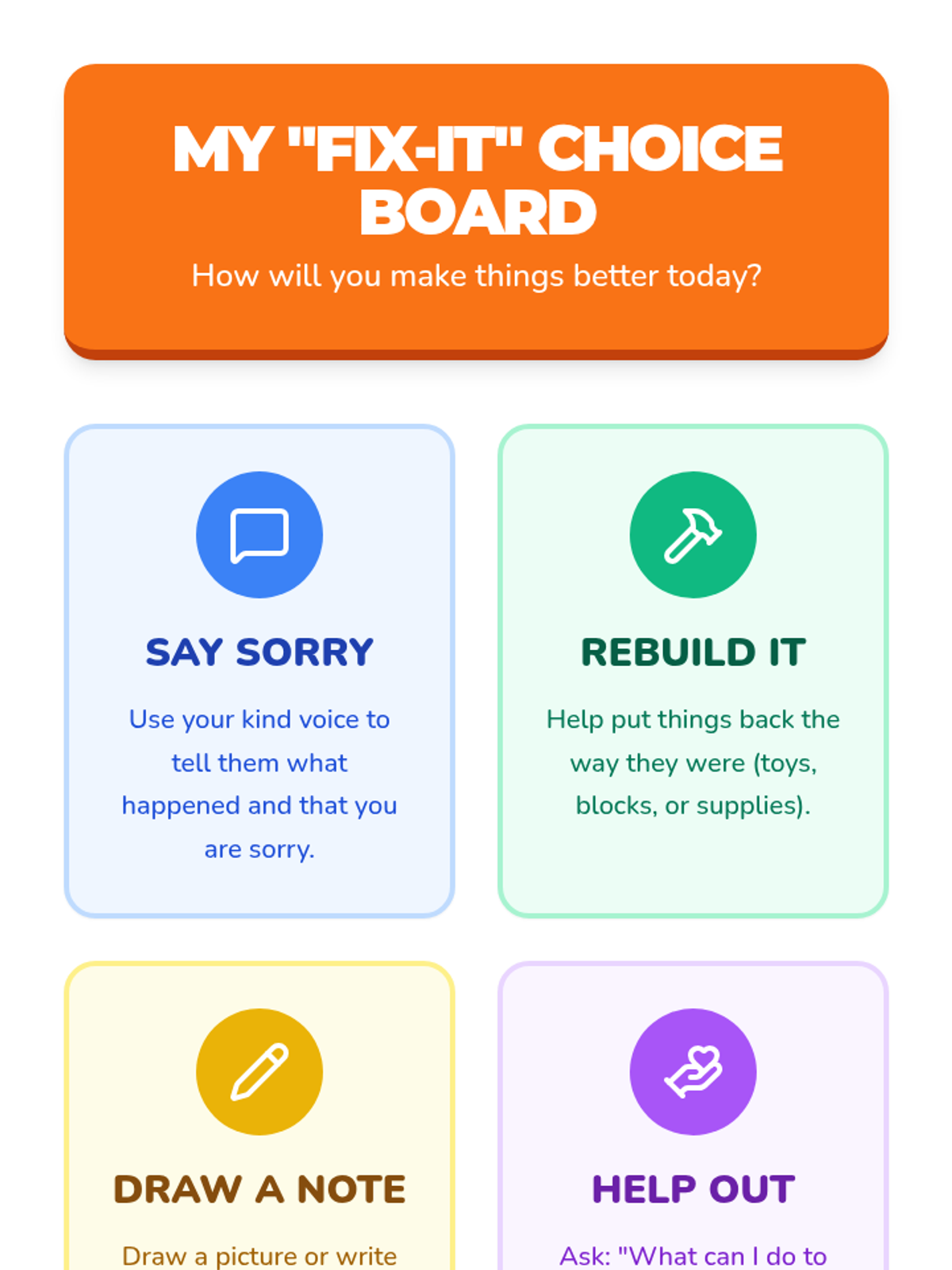
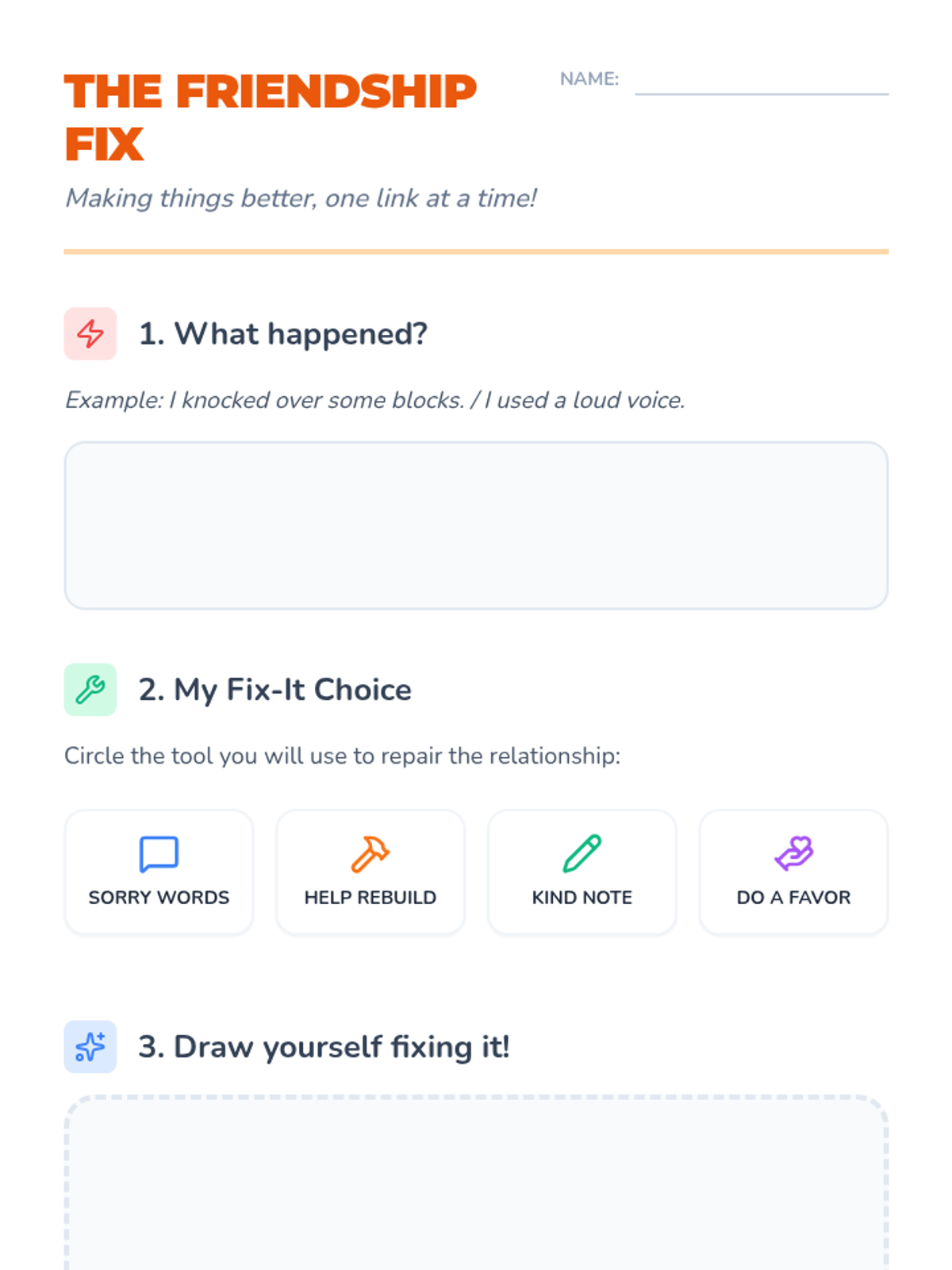
Students learn simple, age-appropriate ways to make amends if their dysregulation impacted others. They practice the 'fix it' framework.
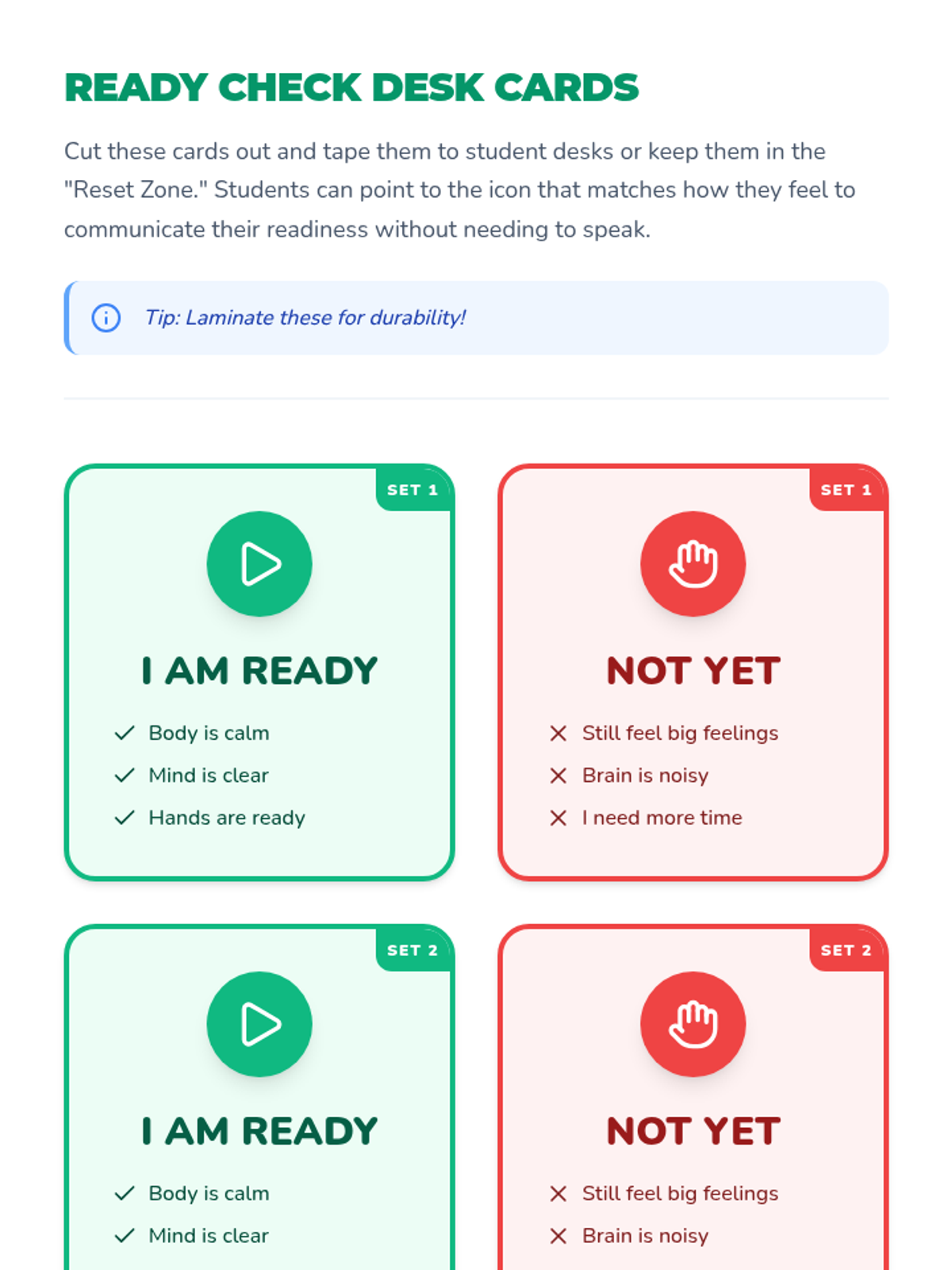
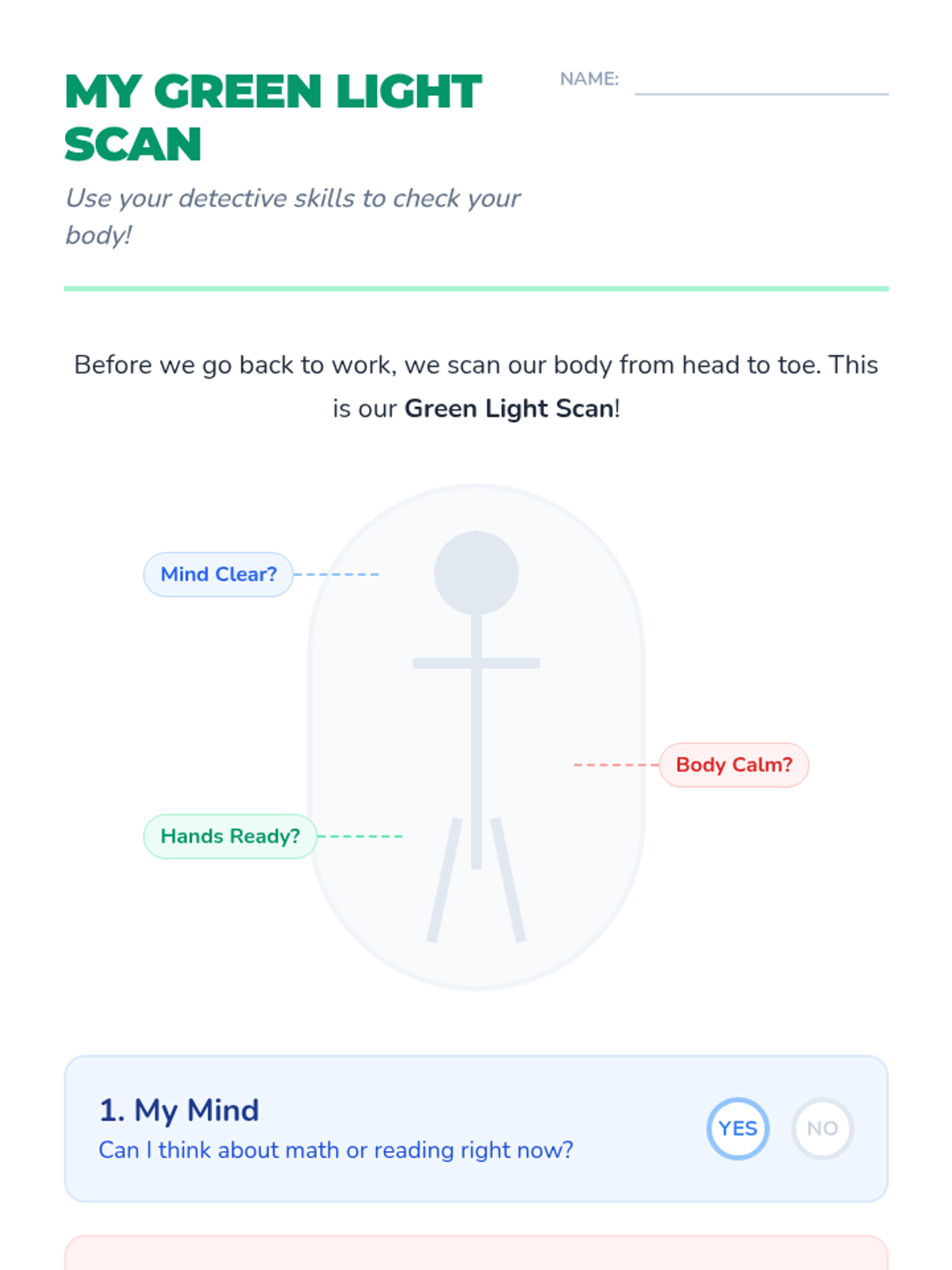
Students learn a self-assessment checklist (Body calm? Mind clear? Hands ready?) to determine if they are actually ready to return to work.
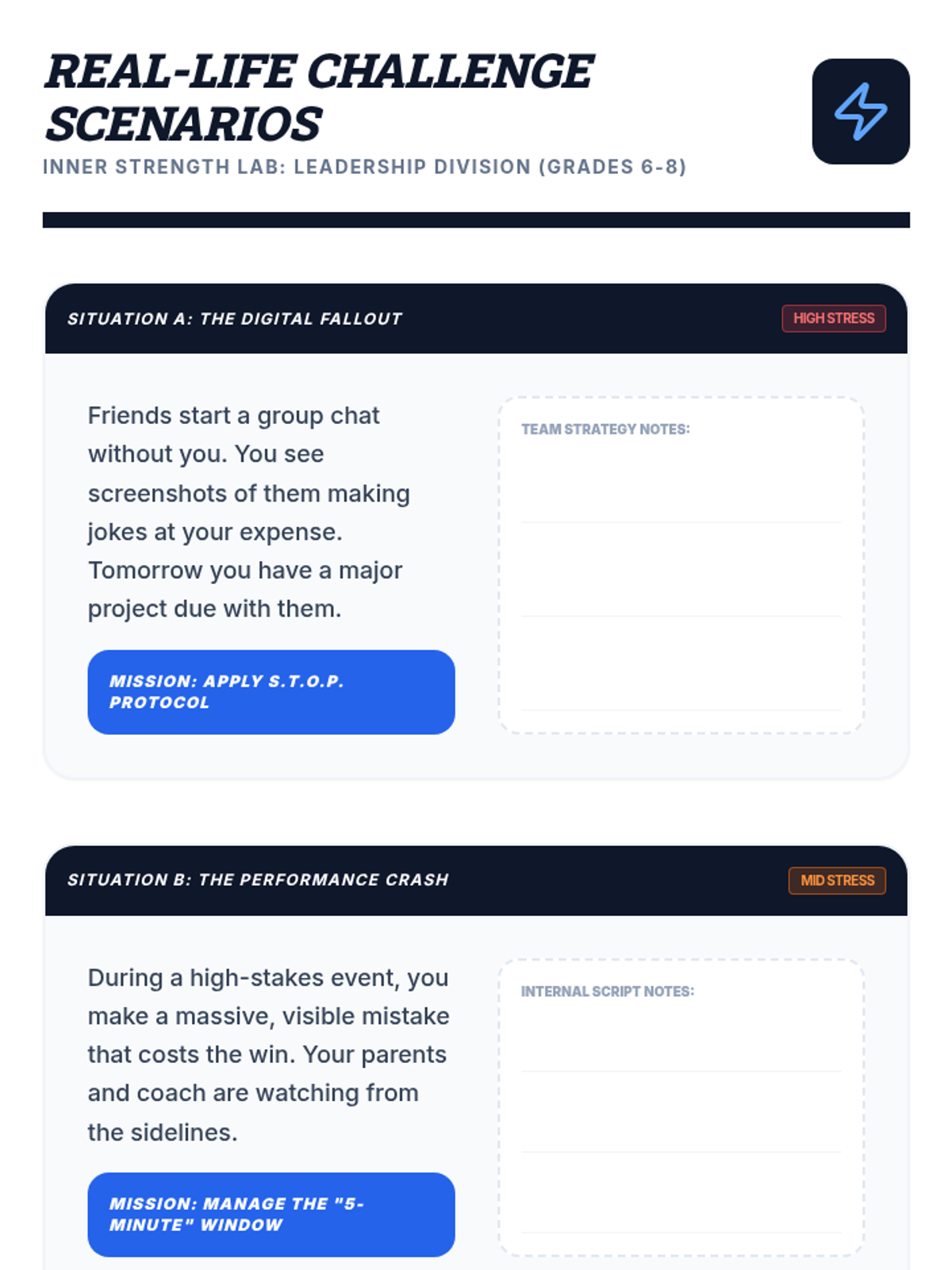
Equips middle schoolers (6th-8th) with strategies to handle complex social dynamics and personal setbacks using realistic role-play scenarios.
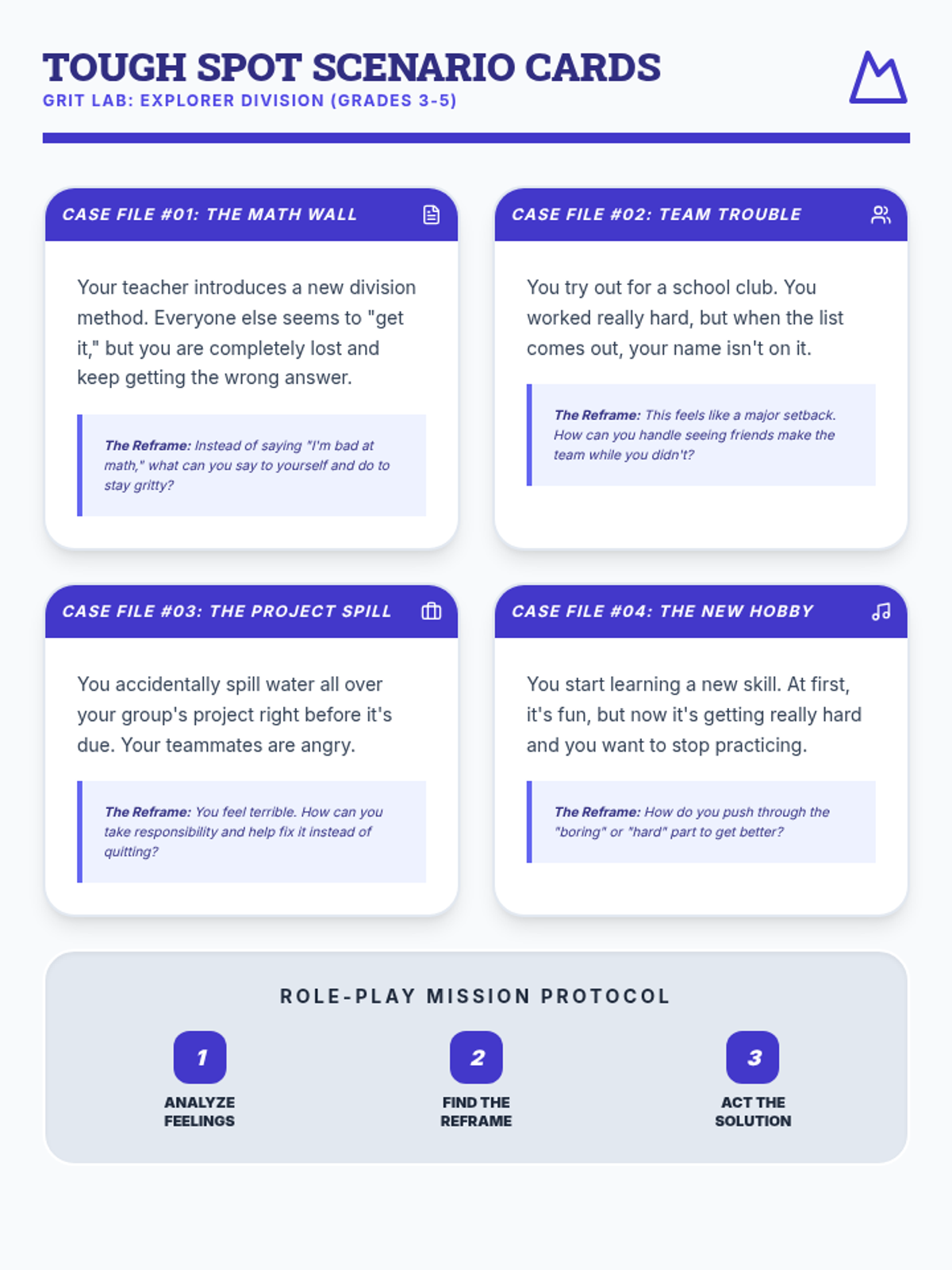
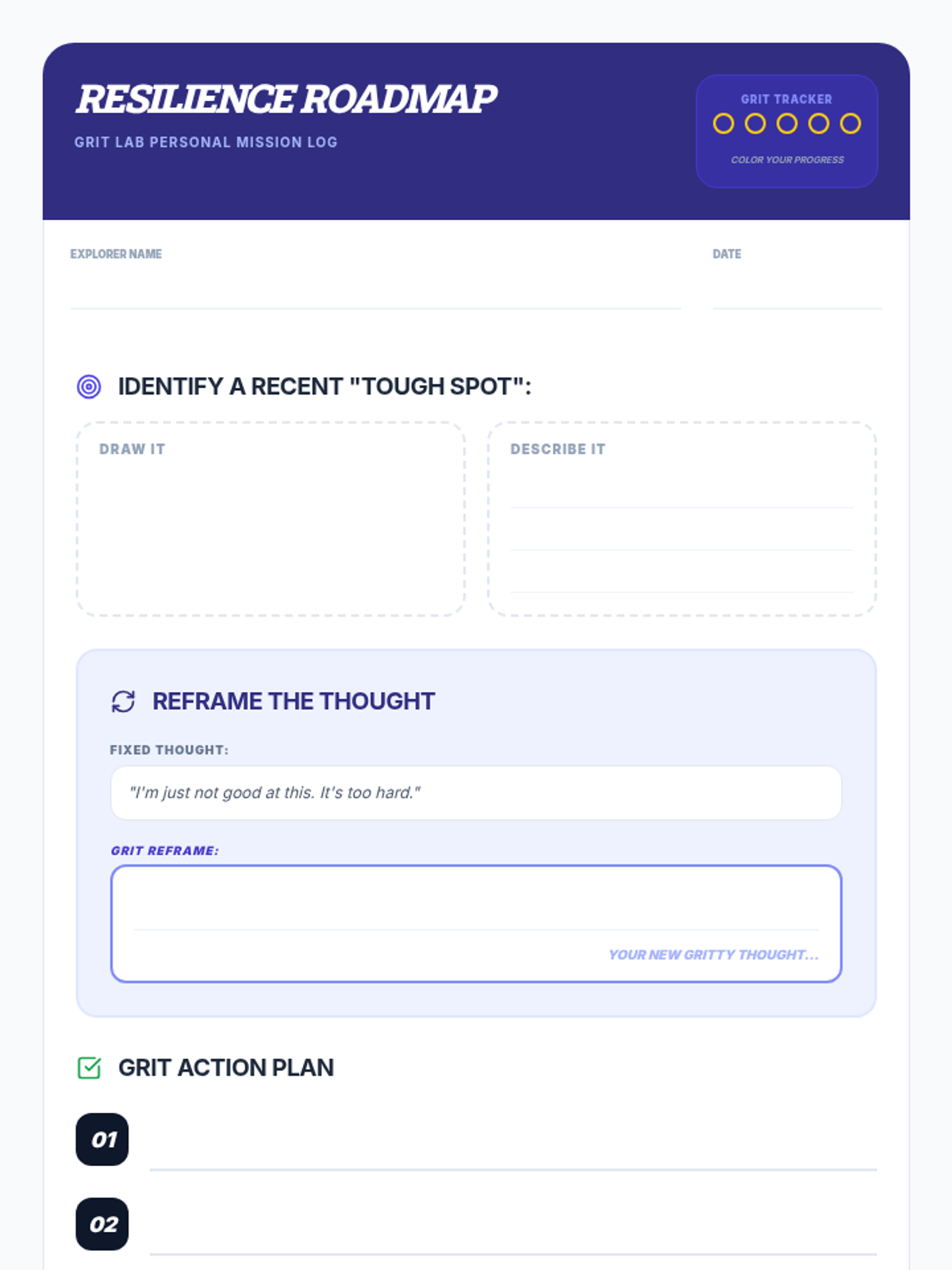
Helps 3rd to 5th graders develop grit and perspective when facing academic and social challenges through collaborative role-play.
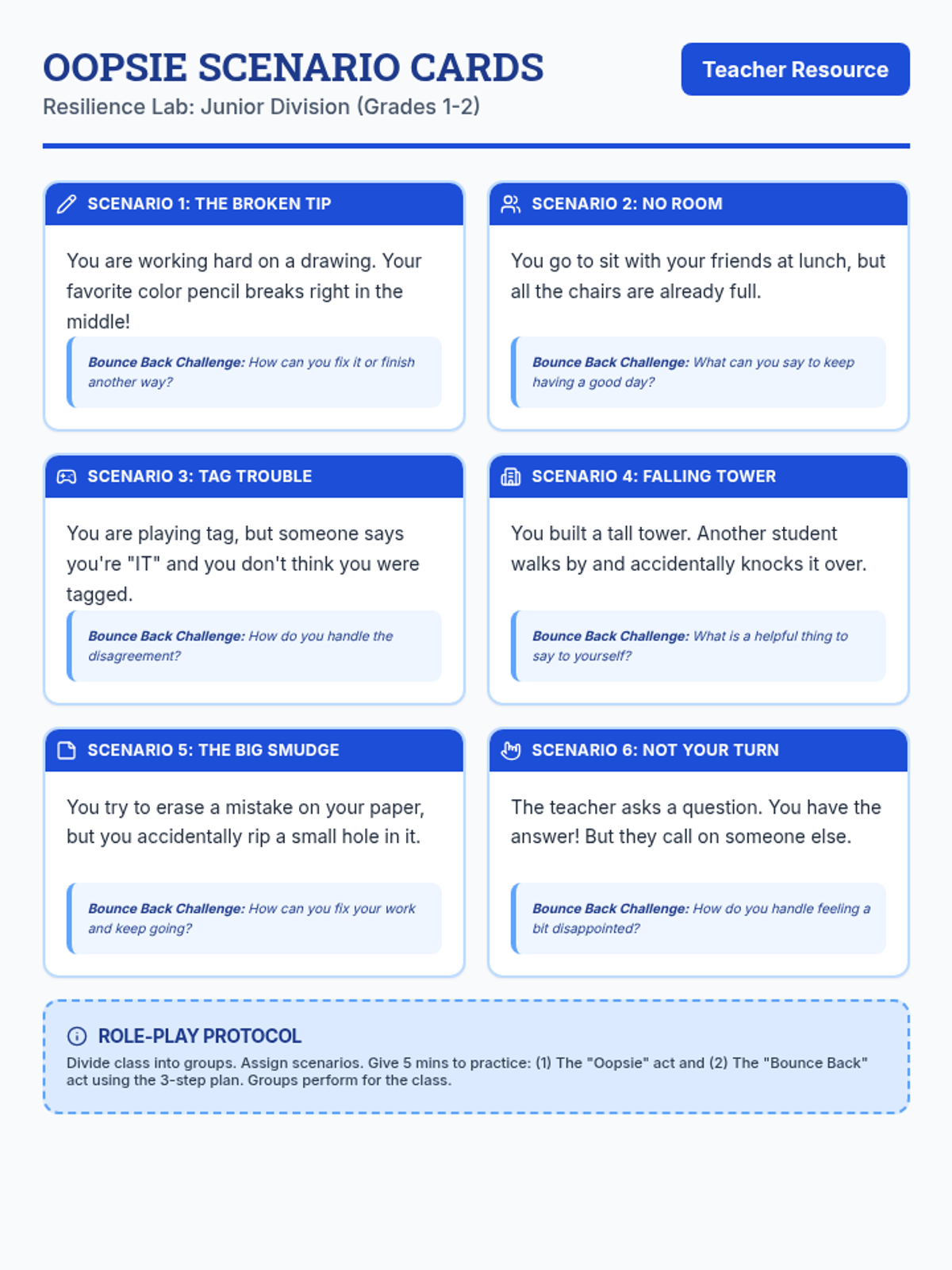
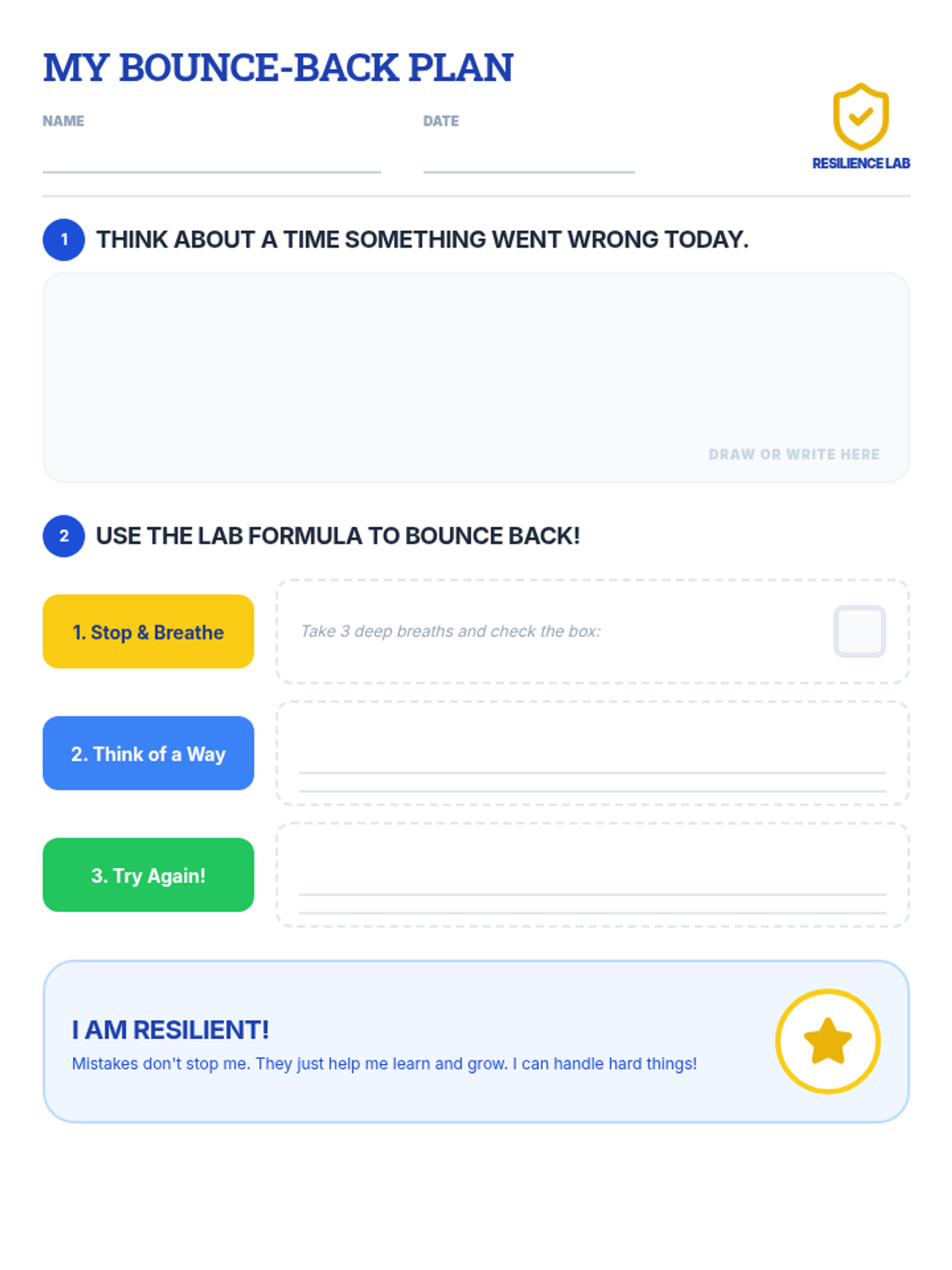
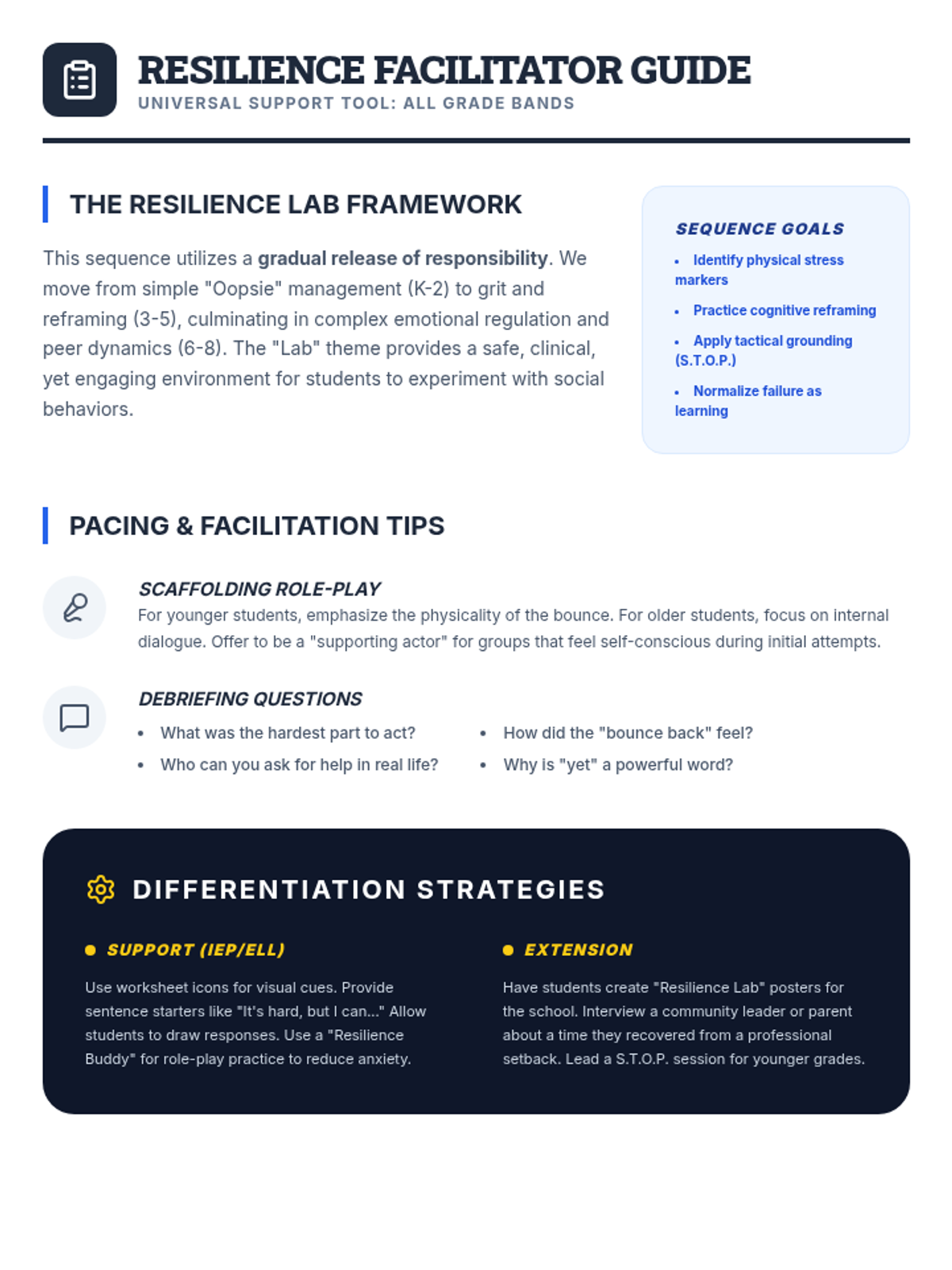
Introduces 1st and 2nd graders to the concept of 'bouncing back' from small mistakes and managing big feelings using role-play scenarios.
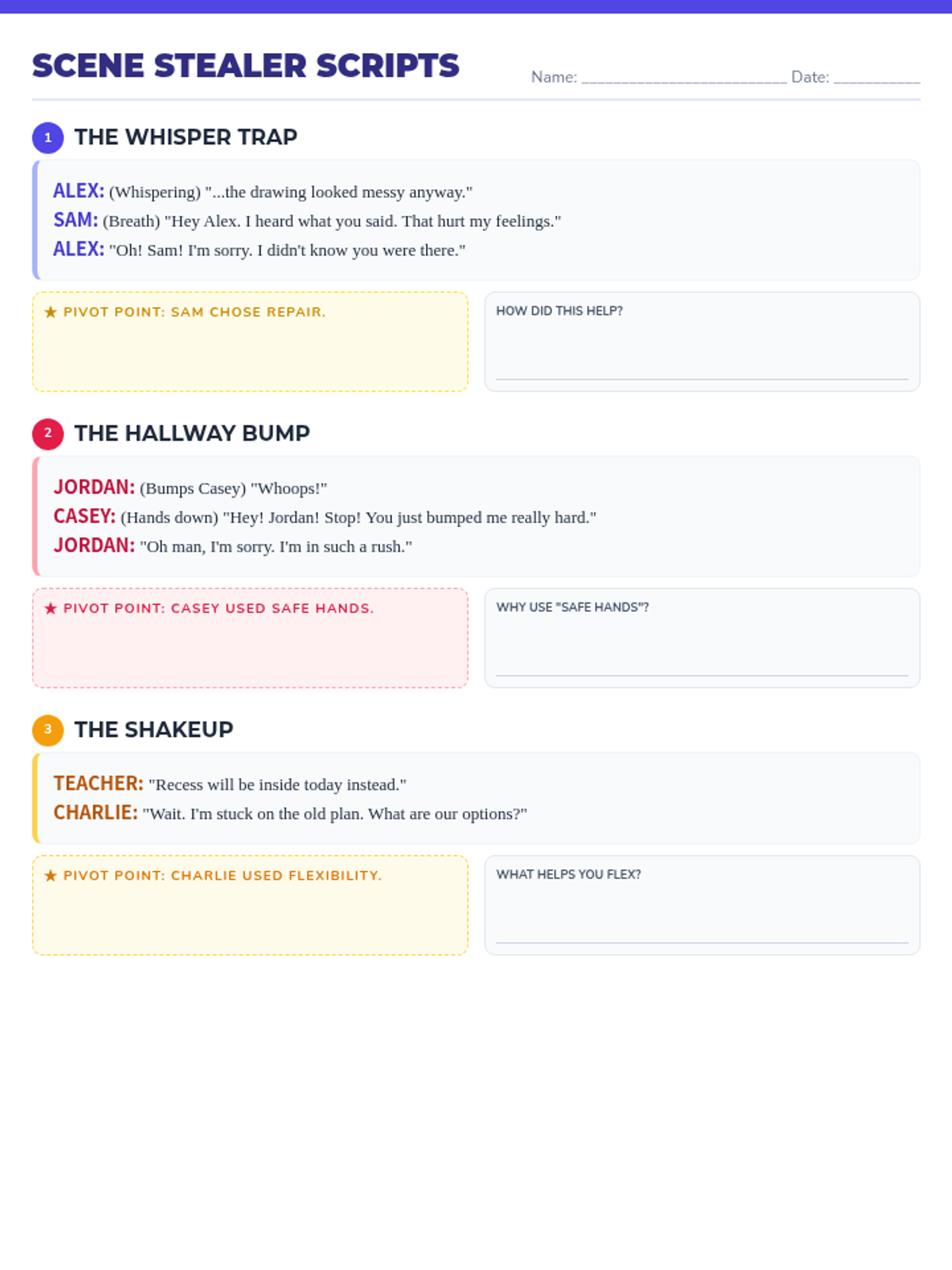
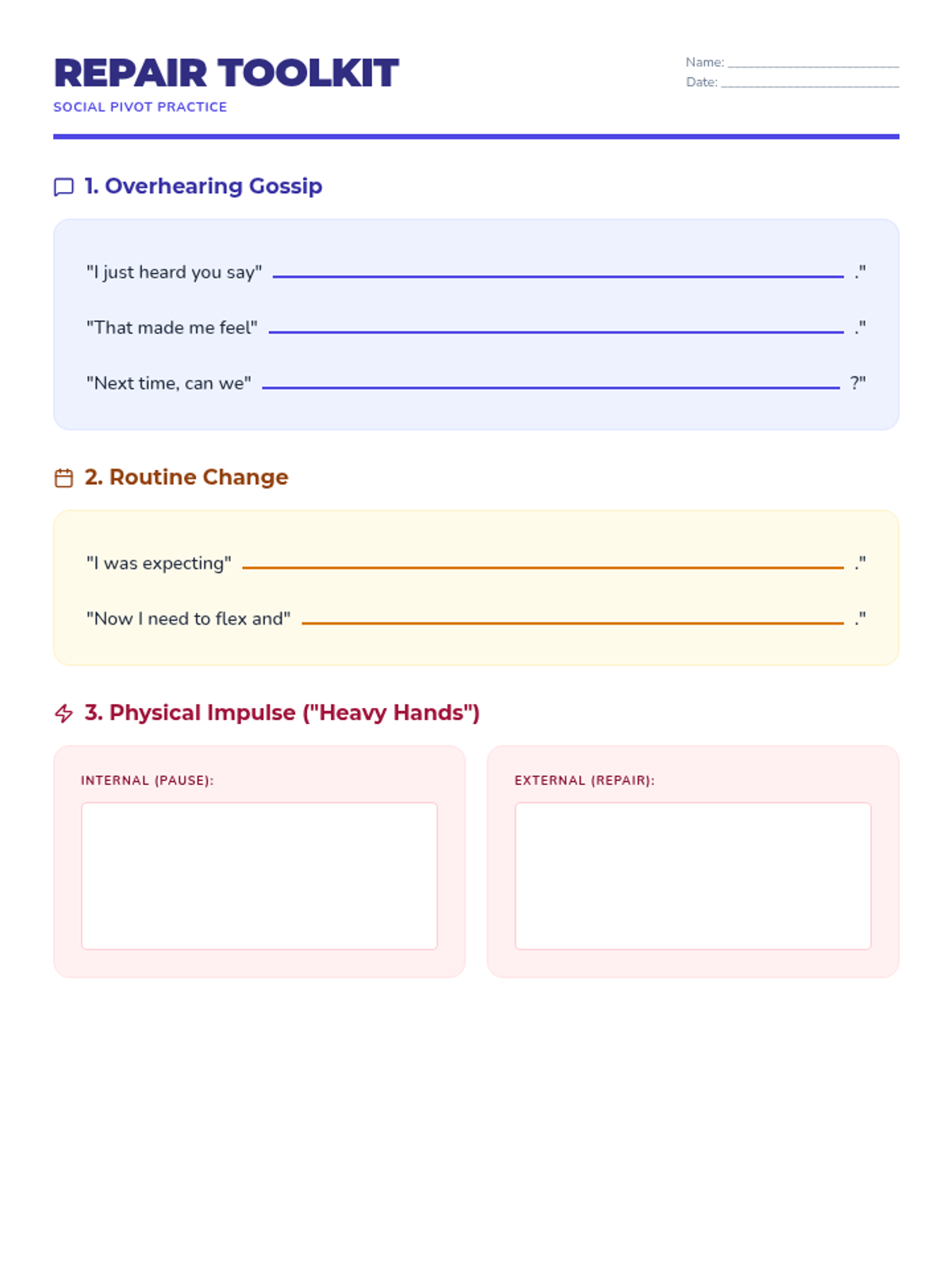
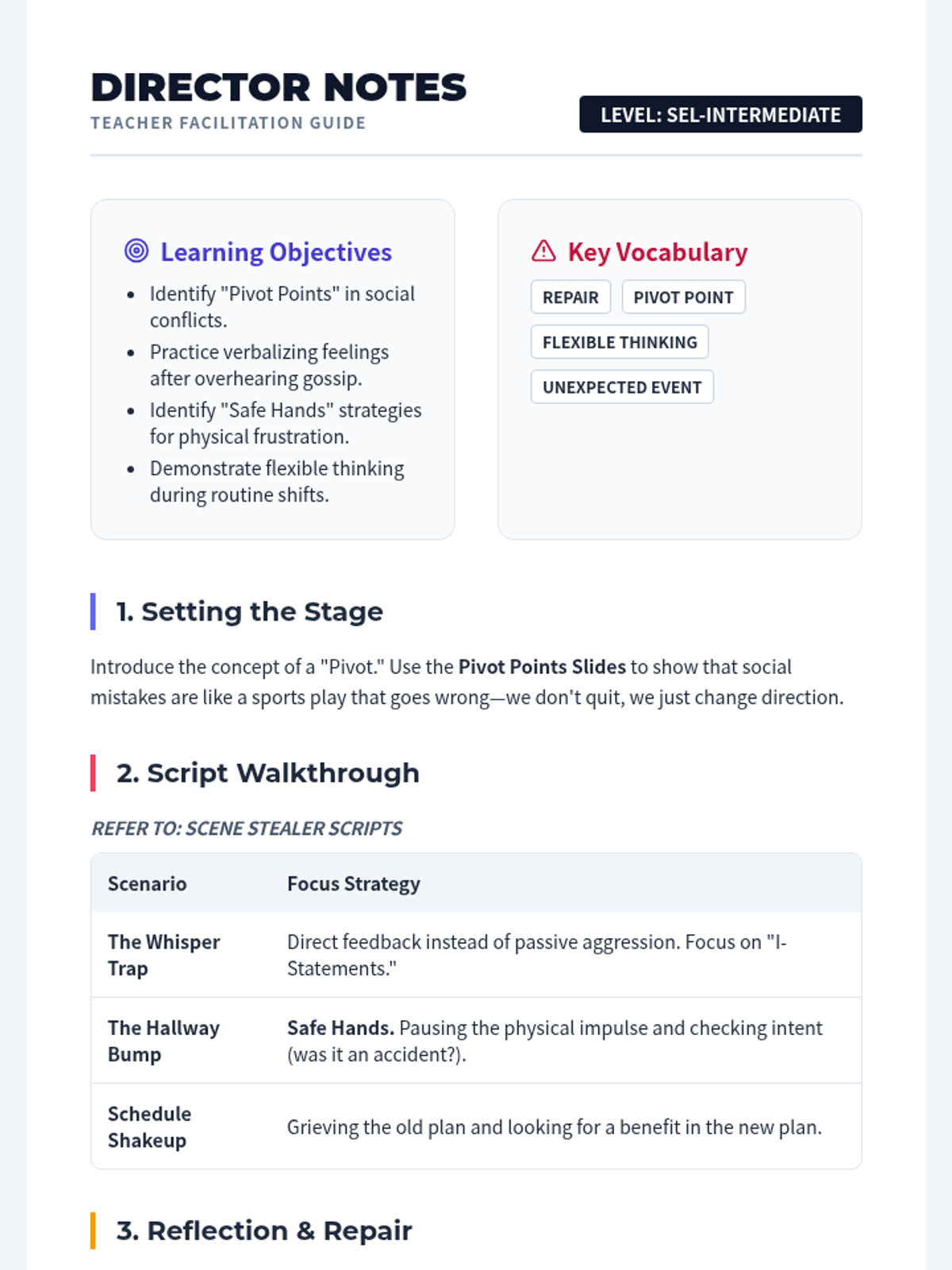
A social-emotional learning lesson focused on navigating difficult social moments like overhearing gossip, managing physical impulses, and adapting to routine changes through roleplay and scripts.
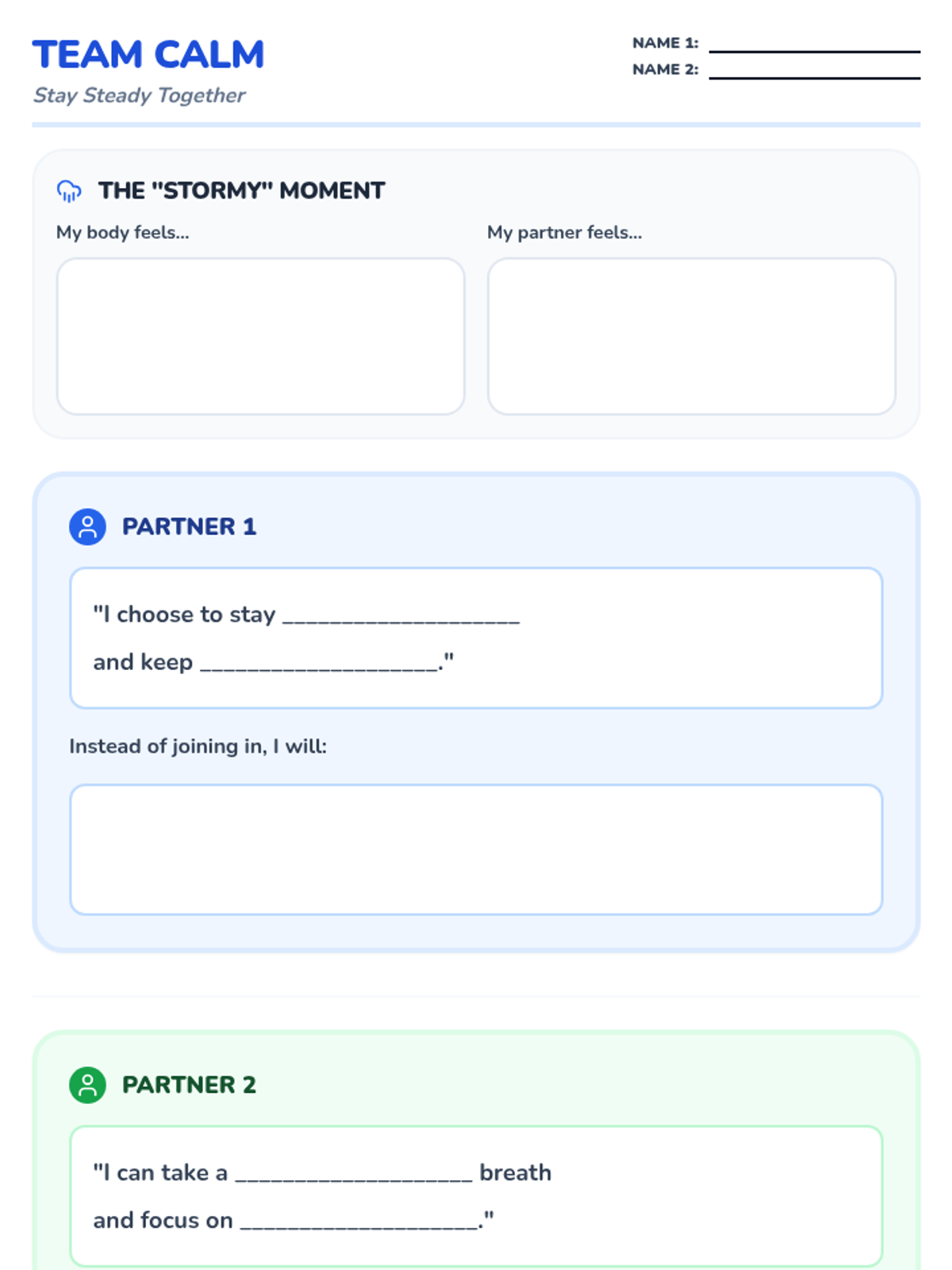
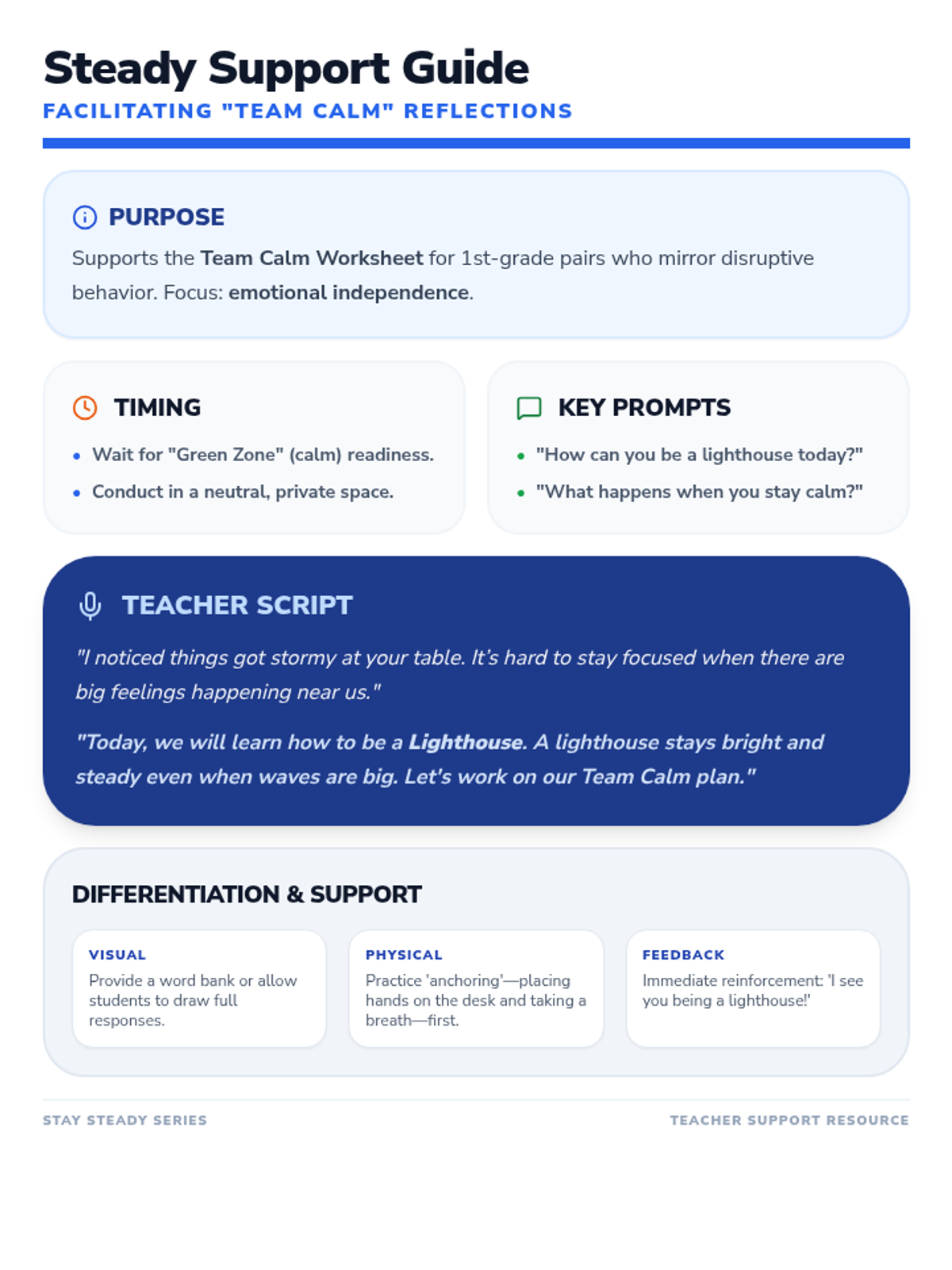
This lesson helps young students learn how to maintain their own emotional regulation and make positive choices even when their peers are experiencing emotional outbursts or disruptive behavior. It focuses on the 'lighthouse' metaphor—being a steady light during someone else's storm.
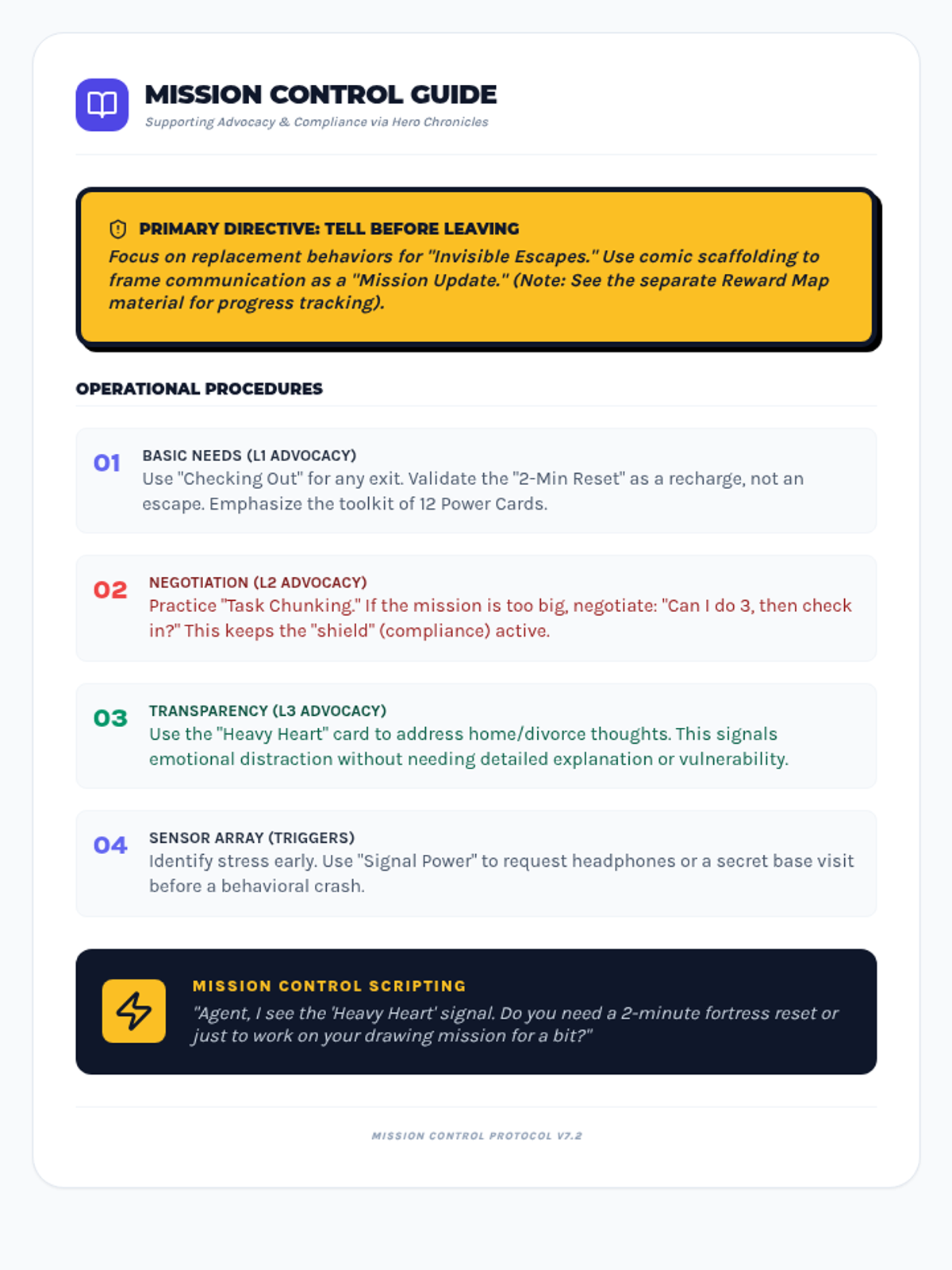
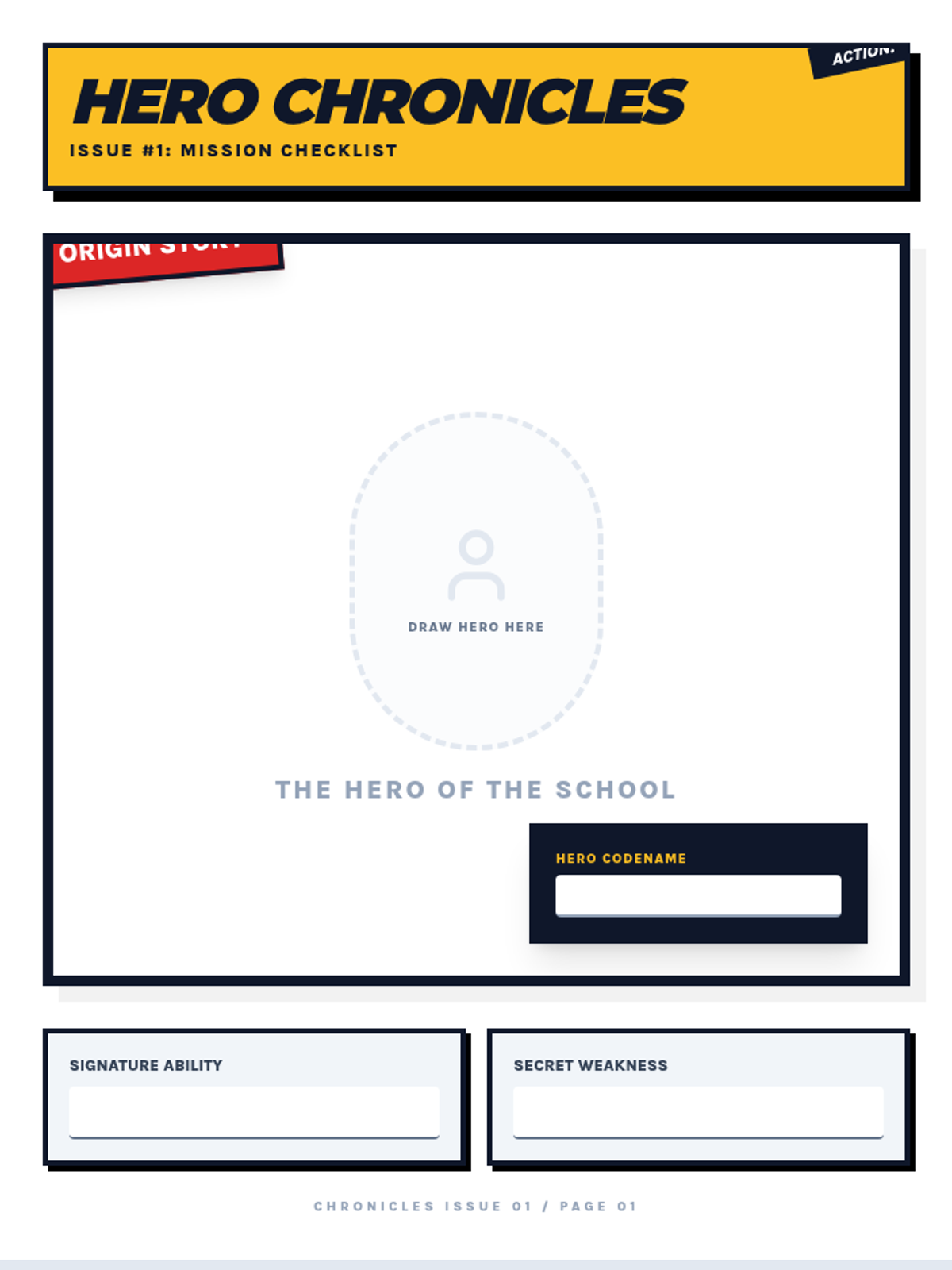
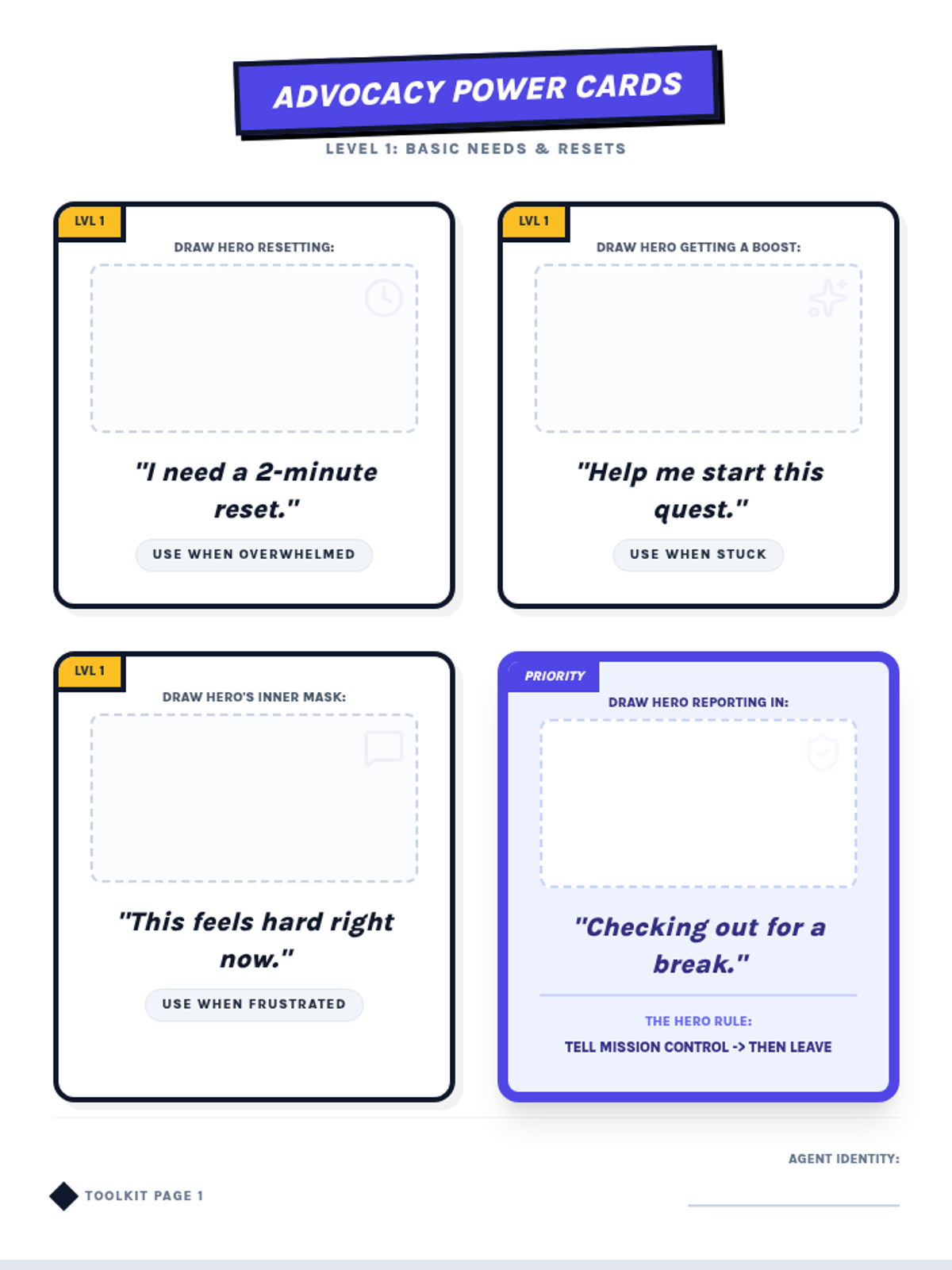
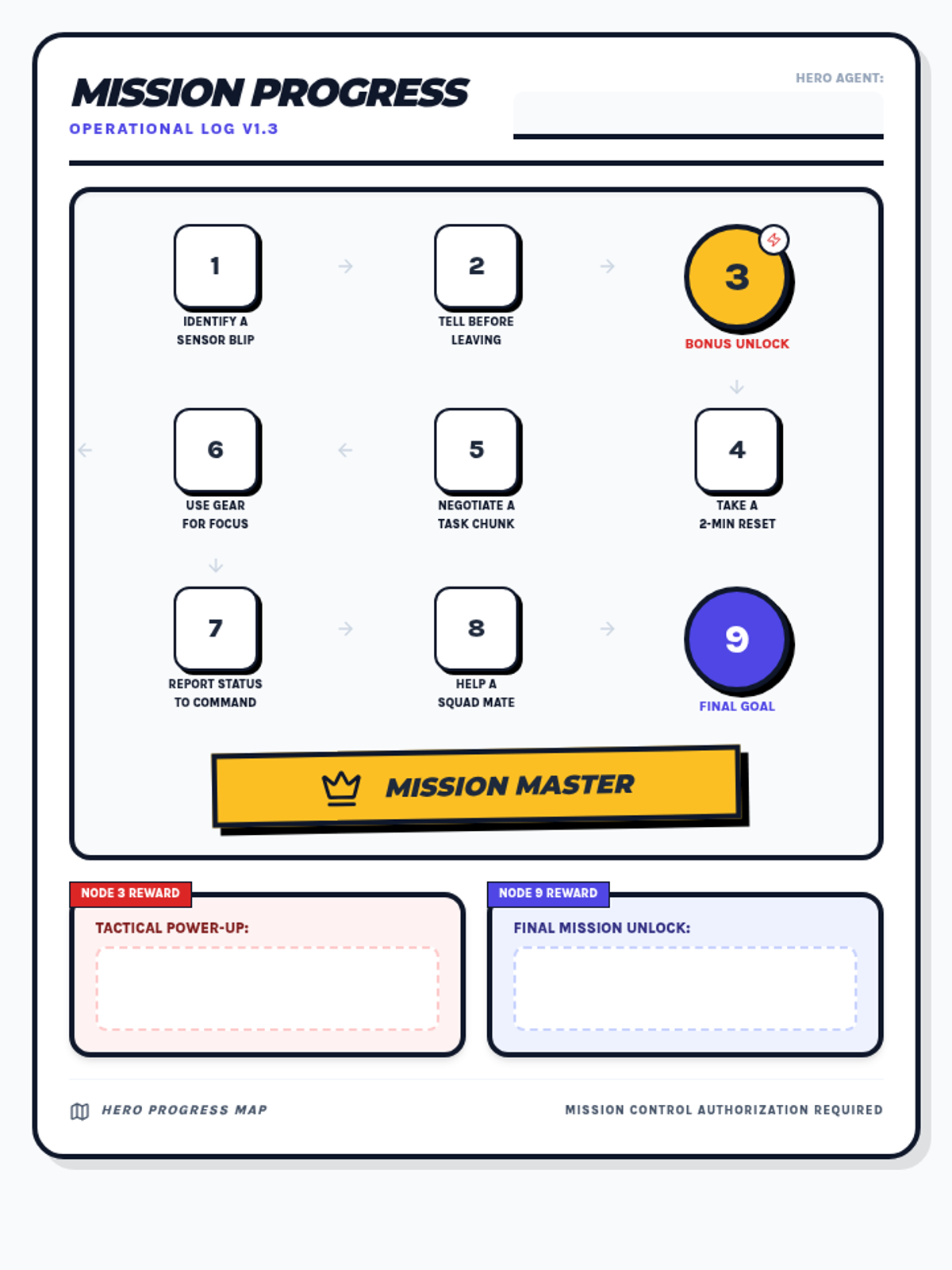
A creative character-design approach to building self-advocacy, task completion, and emotional expression for students who struggle with compliance or sharing feelings.
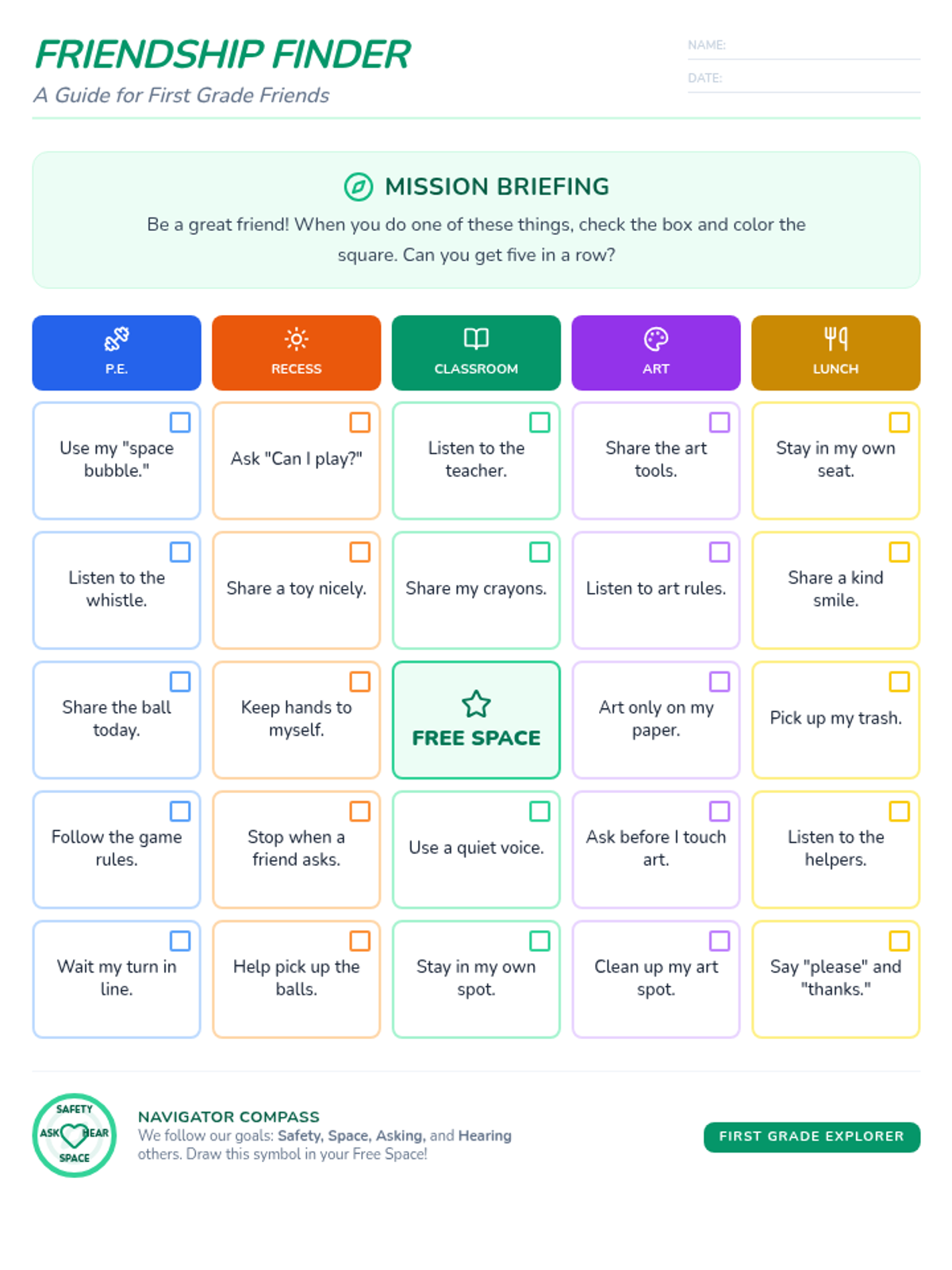
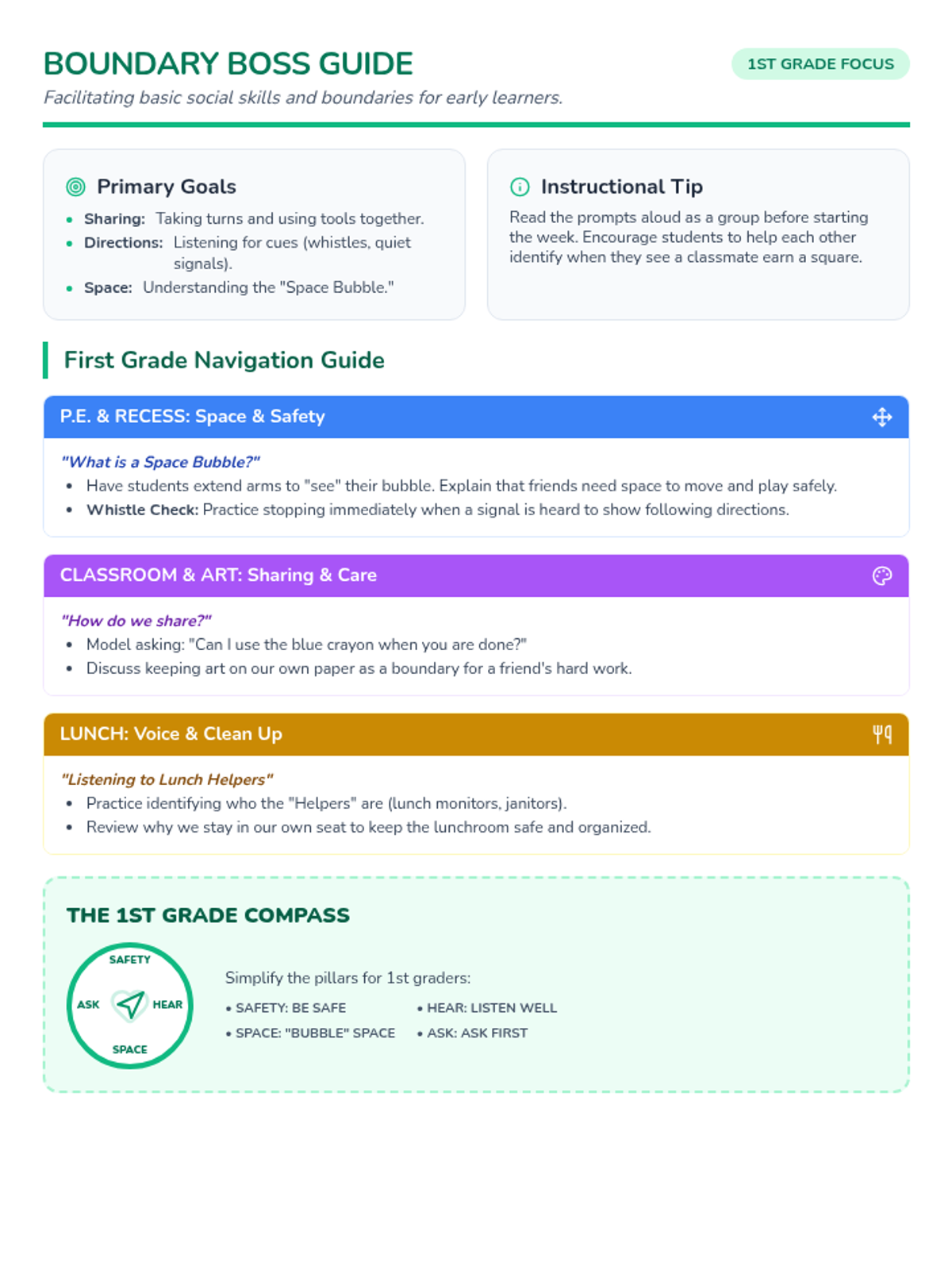
A lesson focused on identifying and practicing healthy friendship behaviors and personal boundaries across different school environments. Students use a bingo-style tracker to recognize positive social interactions.
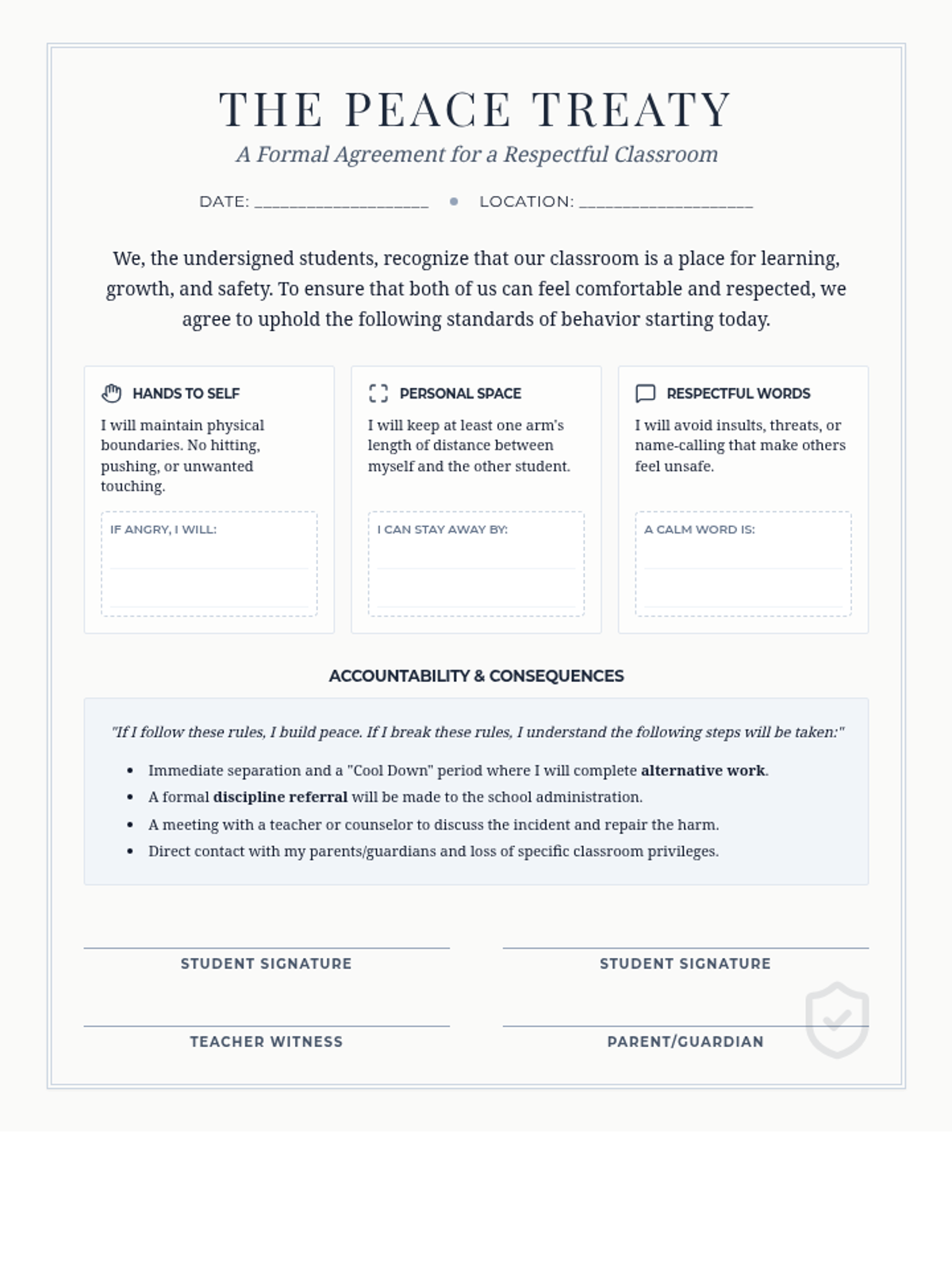
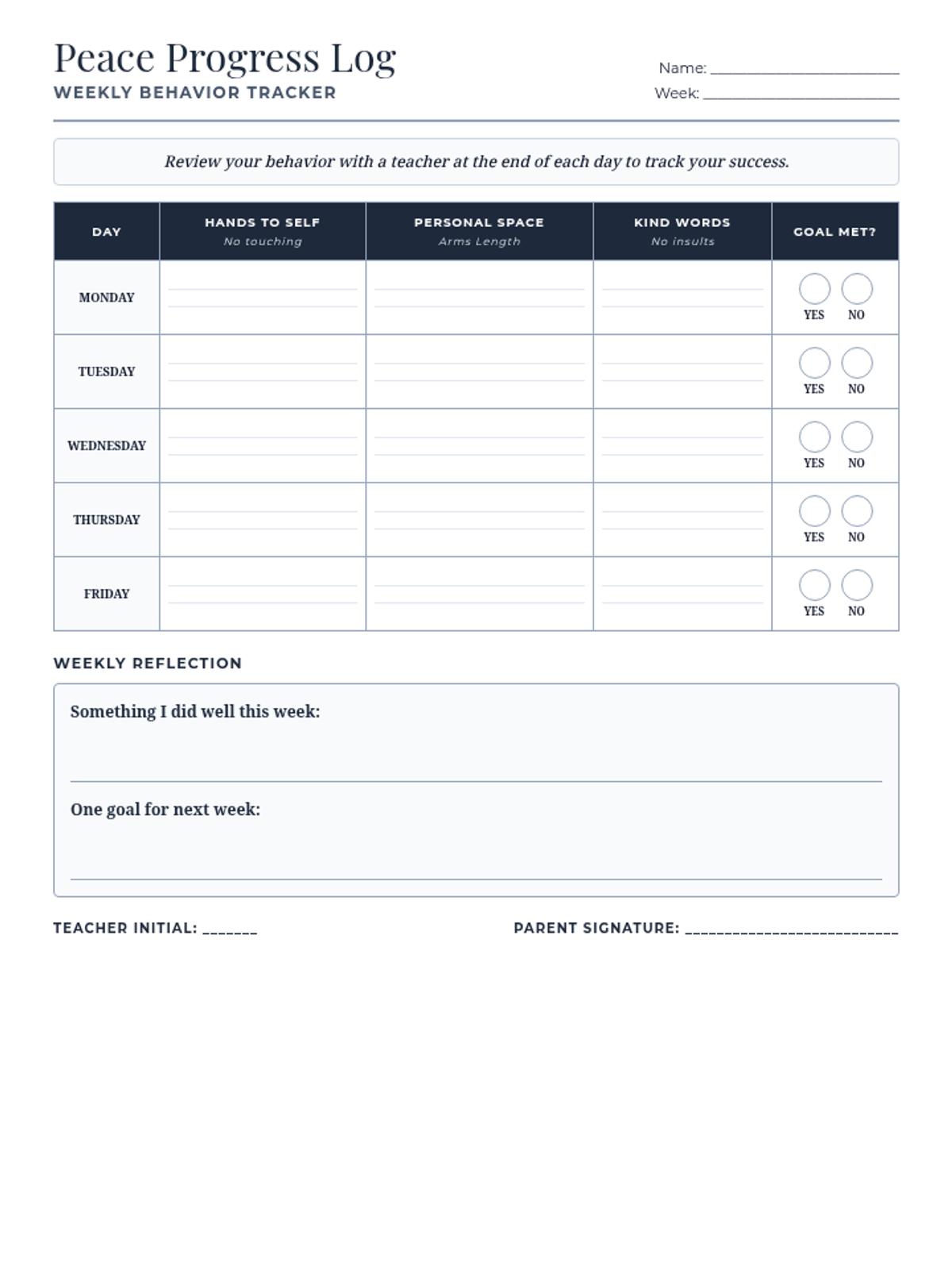
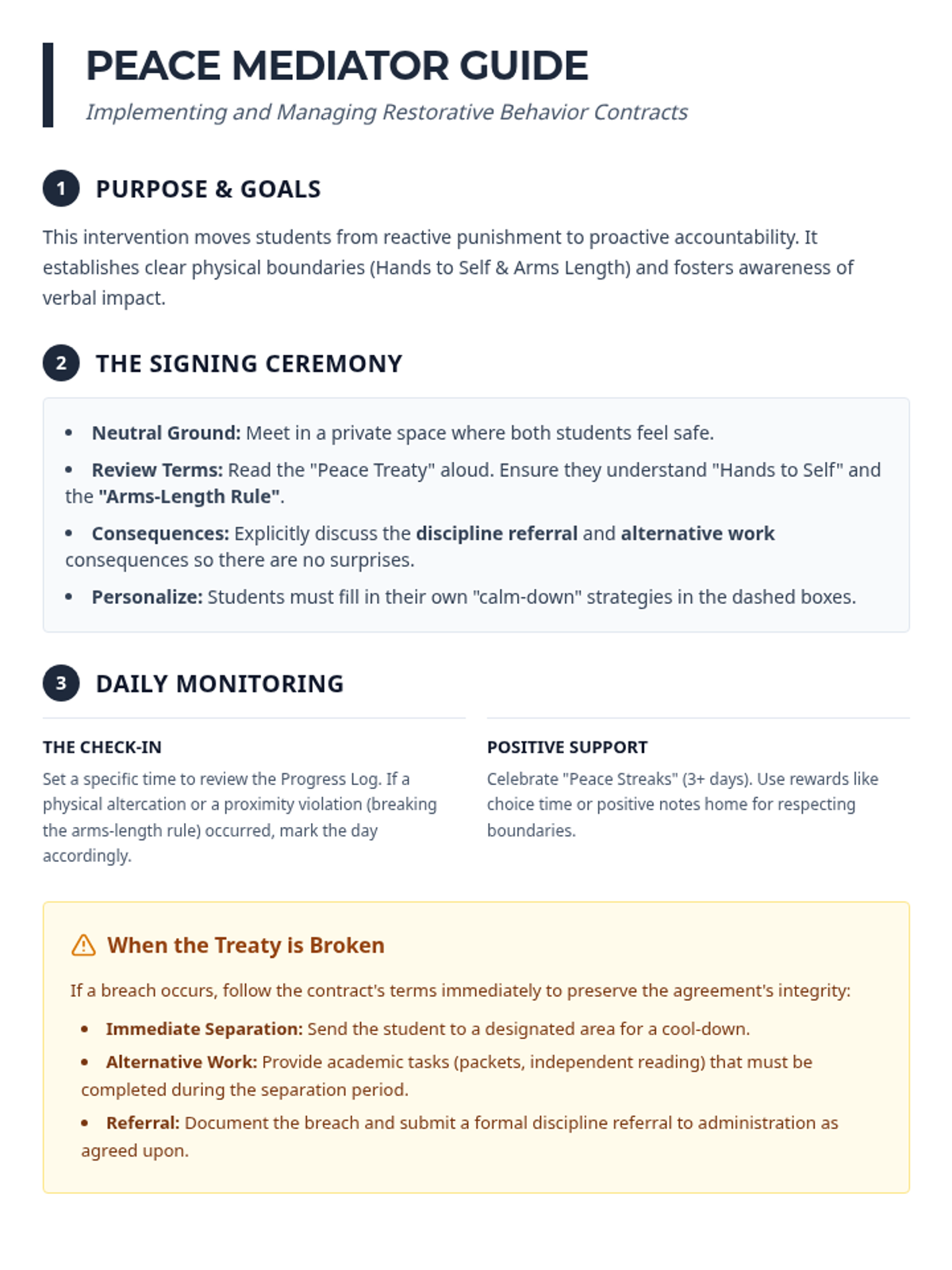
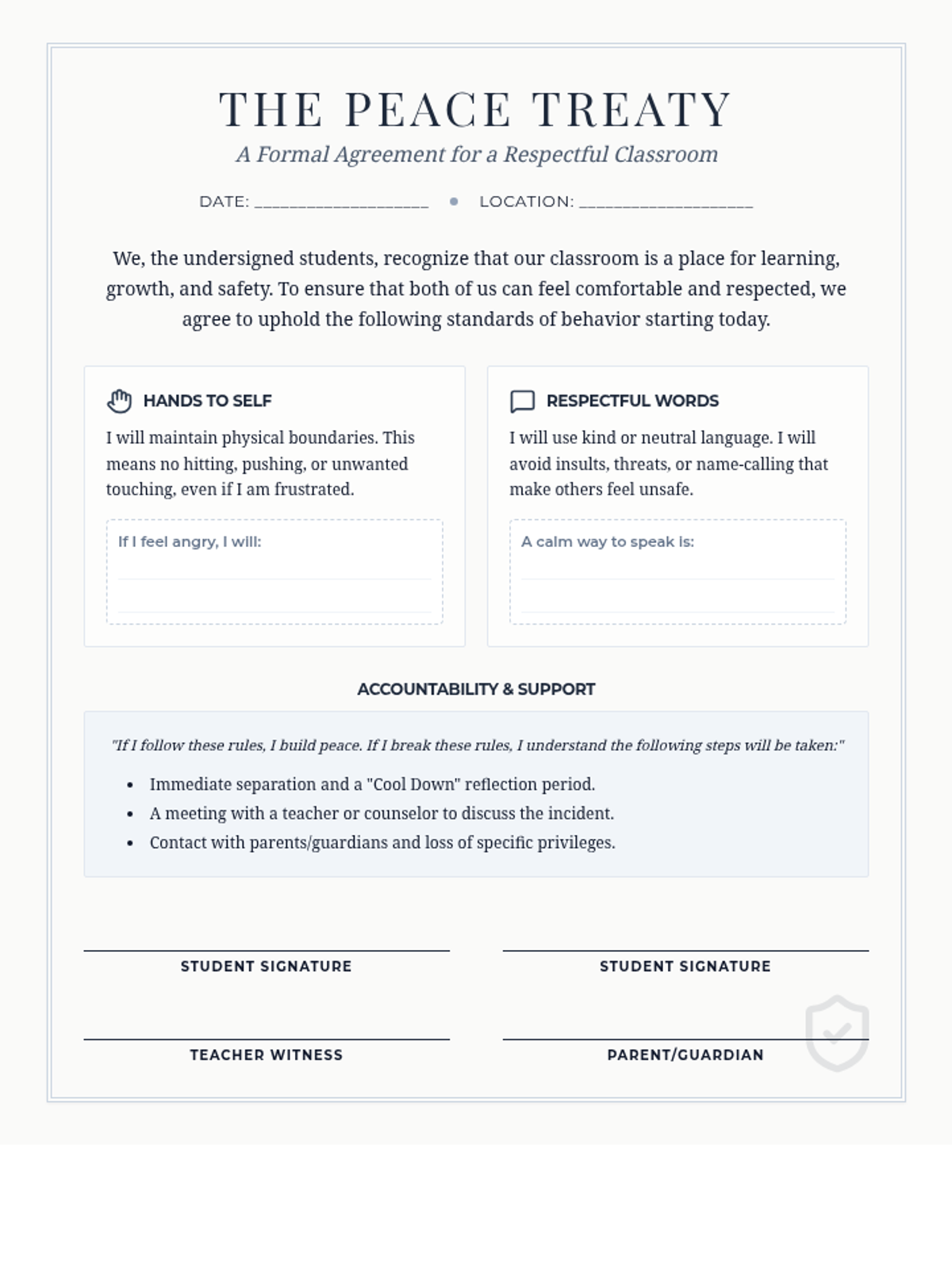
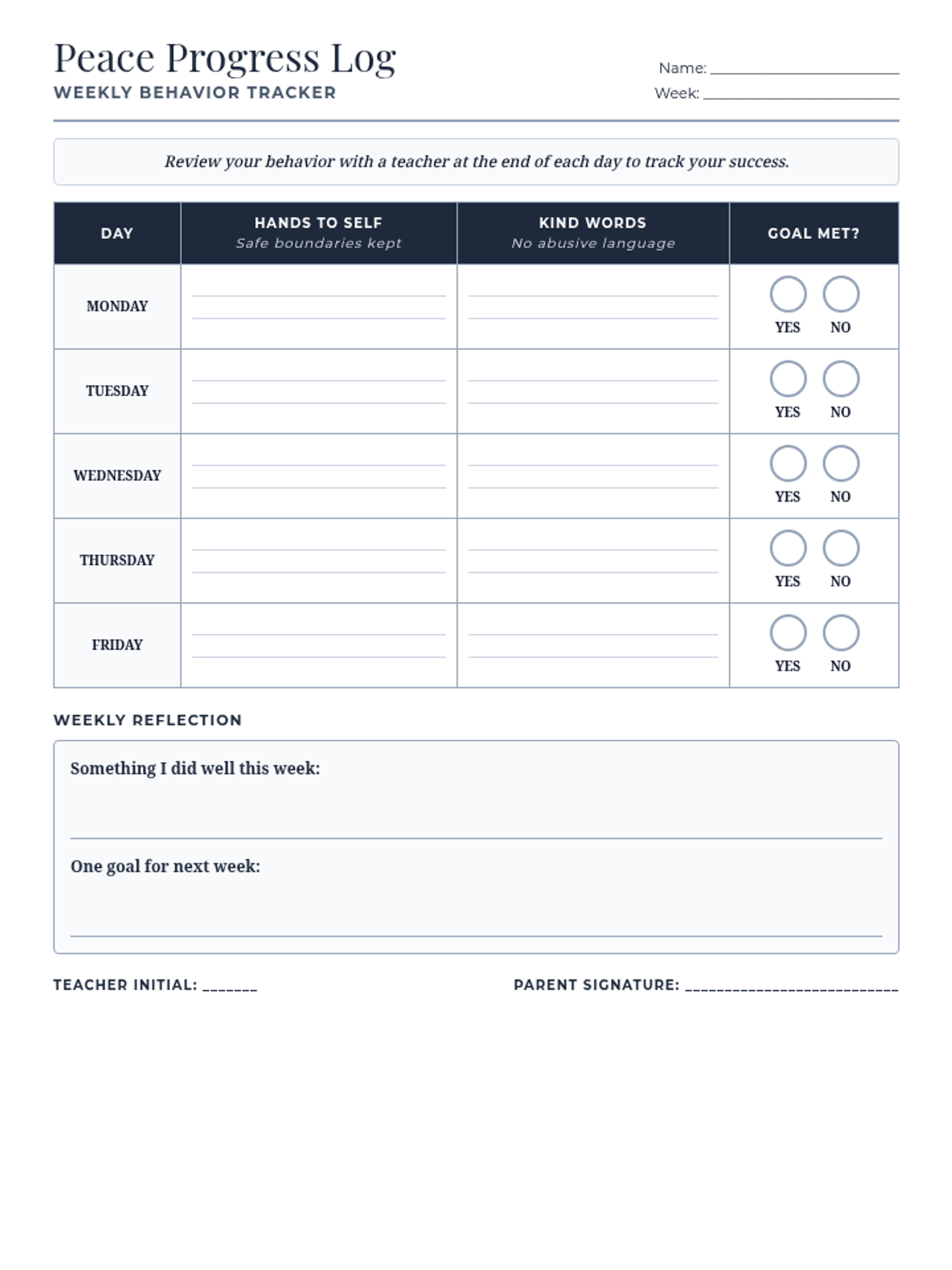
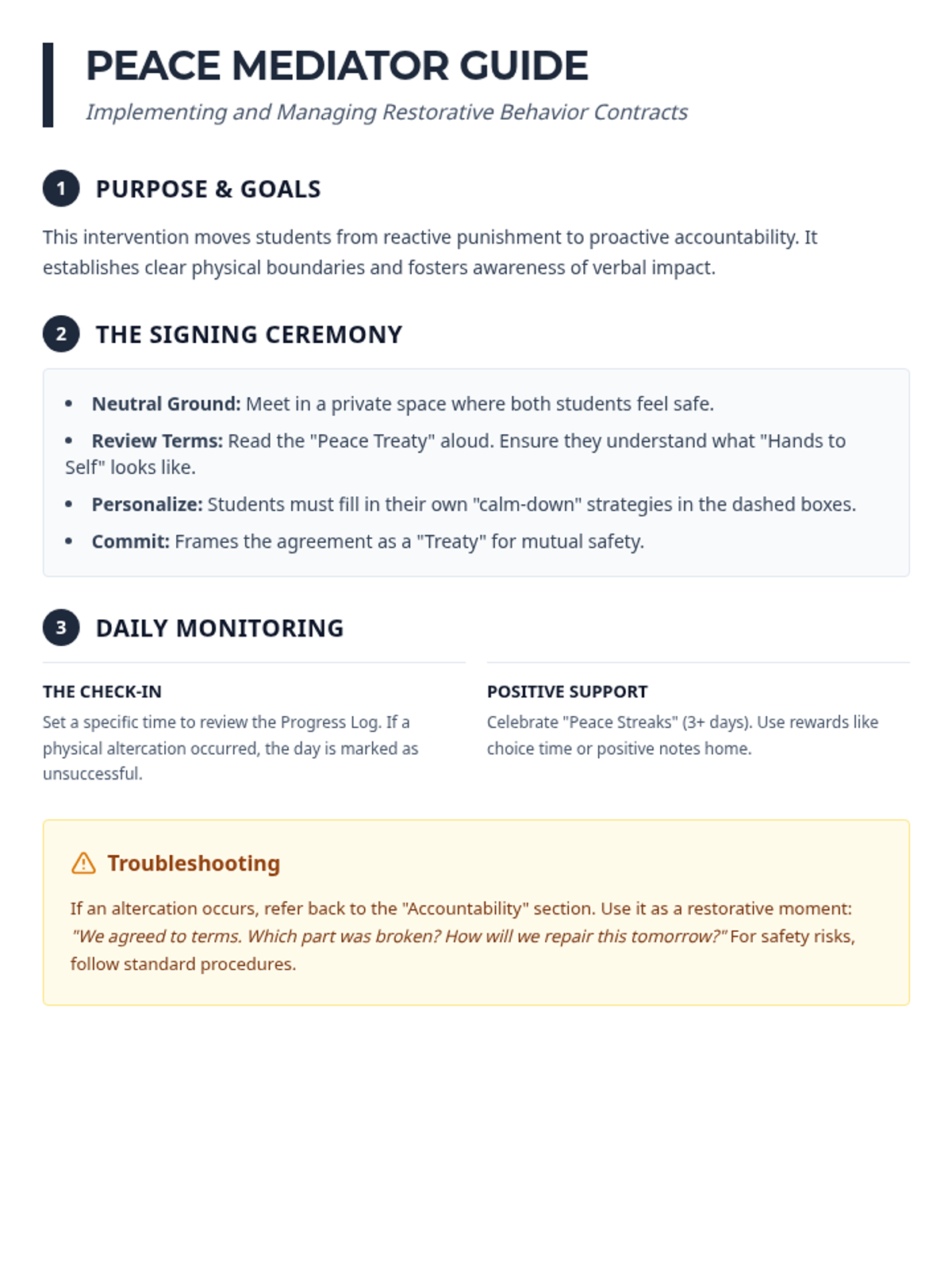
A restorative behavioral intervention focused on resolving physical conflict and verbal aggression through a formal behavior contract and daily progress tracking.
A restorative behavioral intervention focused on resolving physical conflict and verbal aggression between two students through a formal agreement and daily tracking.
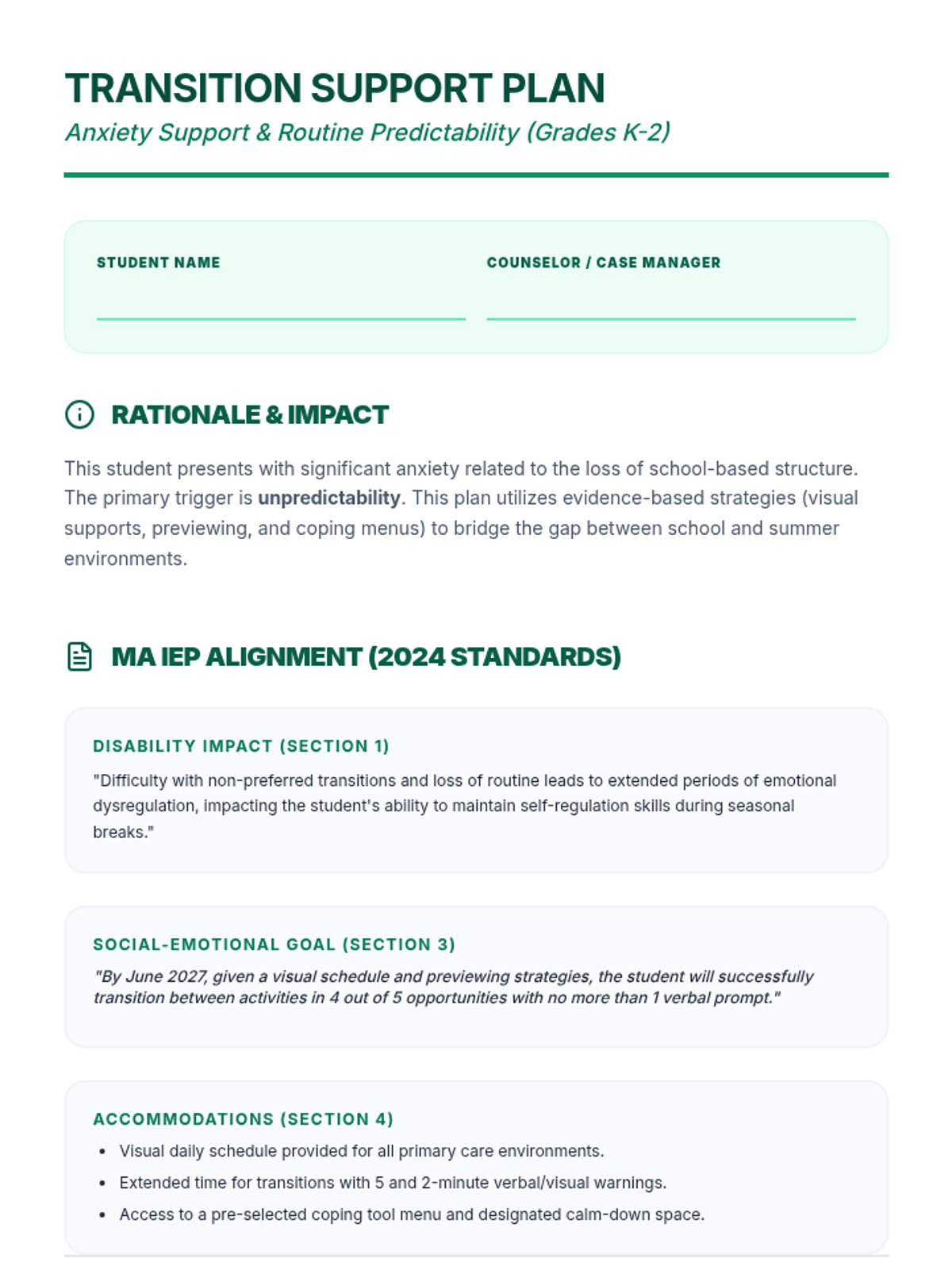
A comprehensive support package designed to help K-2 students with anxiety navigate the transition from school to summer by creating predictable routines and providing caregivers with evidence-based coaching strategies.
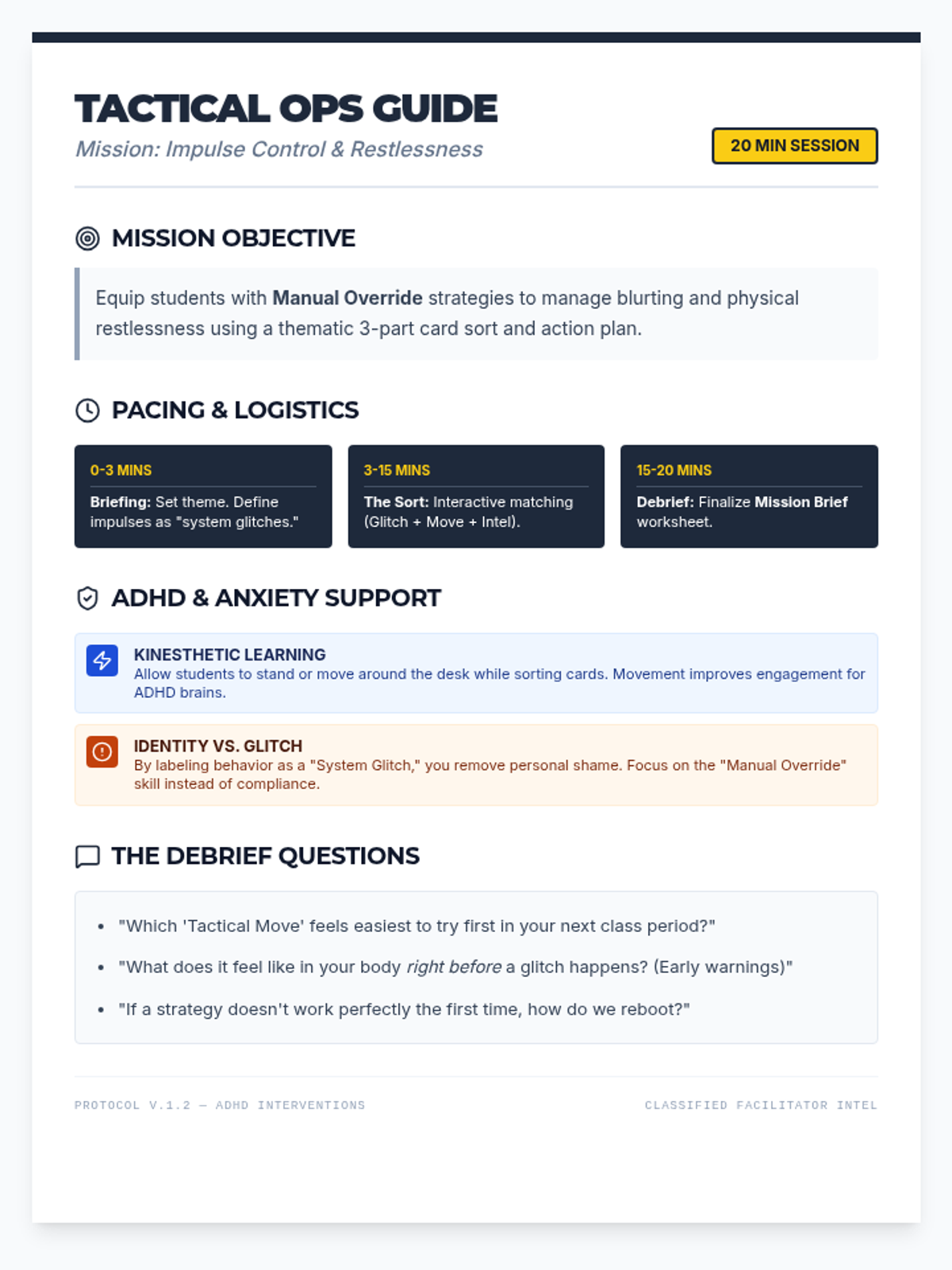
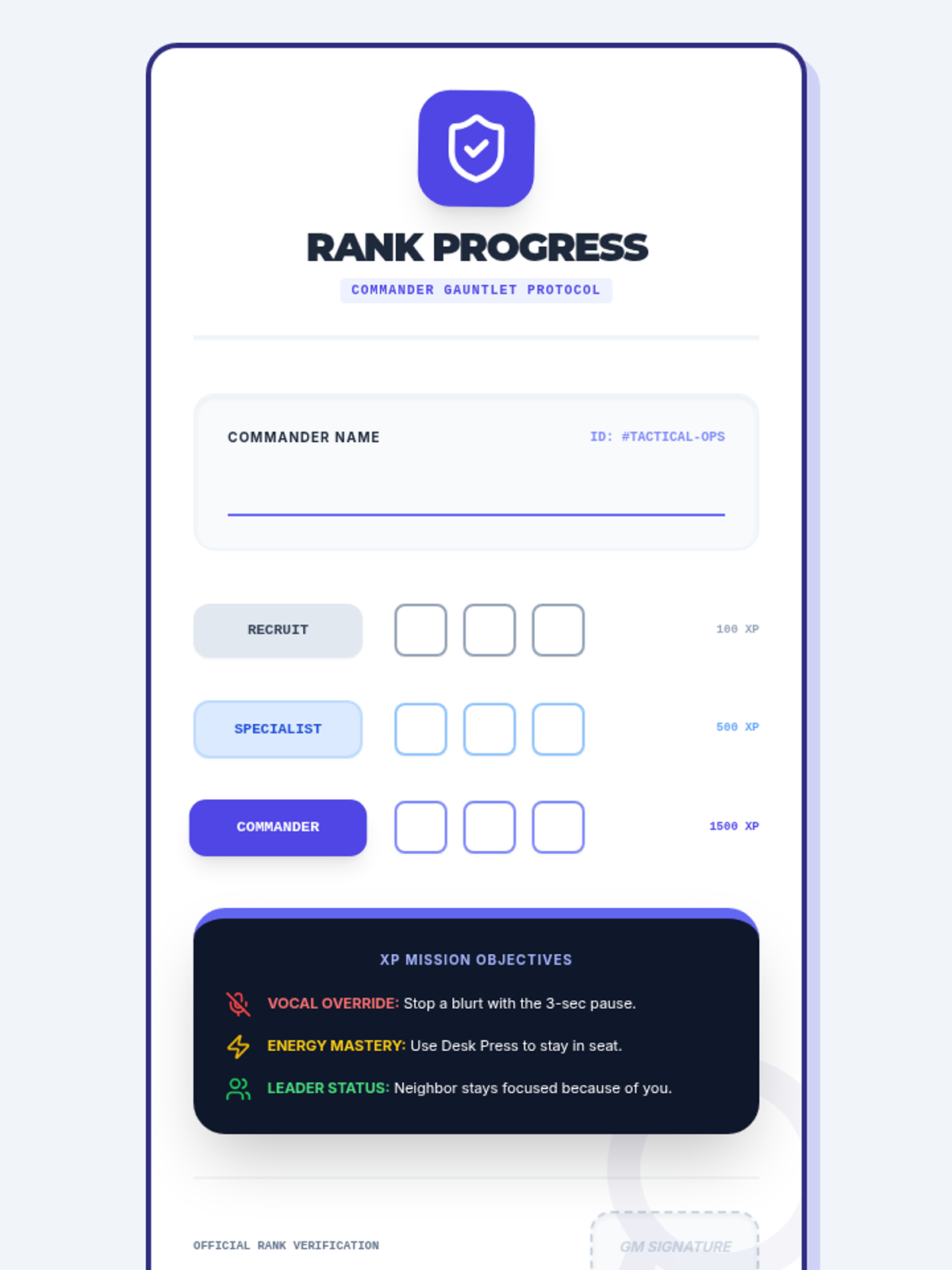
A high-energy, hockey-themed 20-minute intervention for impulse control. This lesson frames self-regulation as elite athletic discipline, transforming disruptive behaviors into 'penalties' and self-management strategies into 'pro moves' used by team captains.
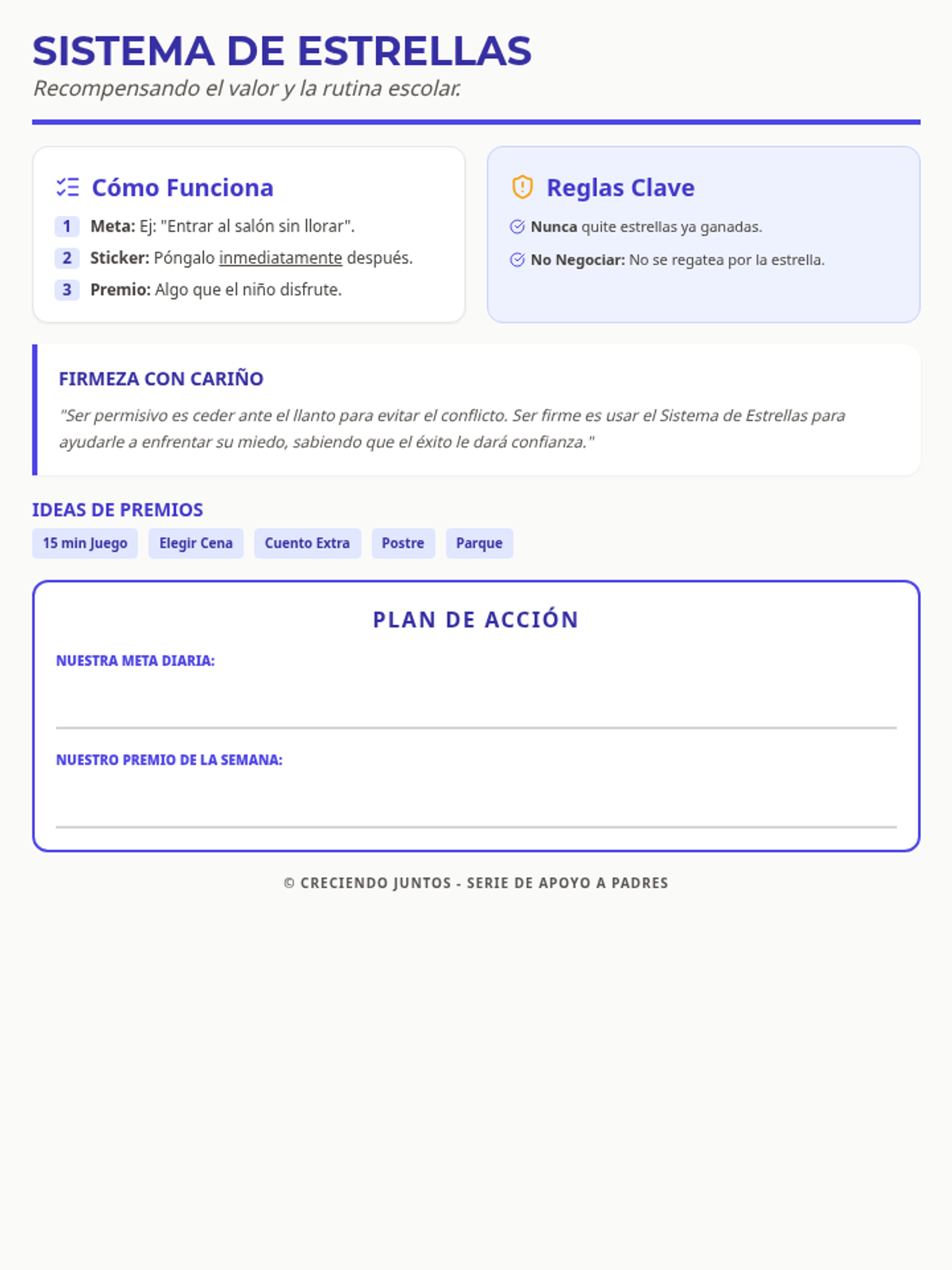
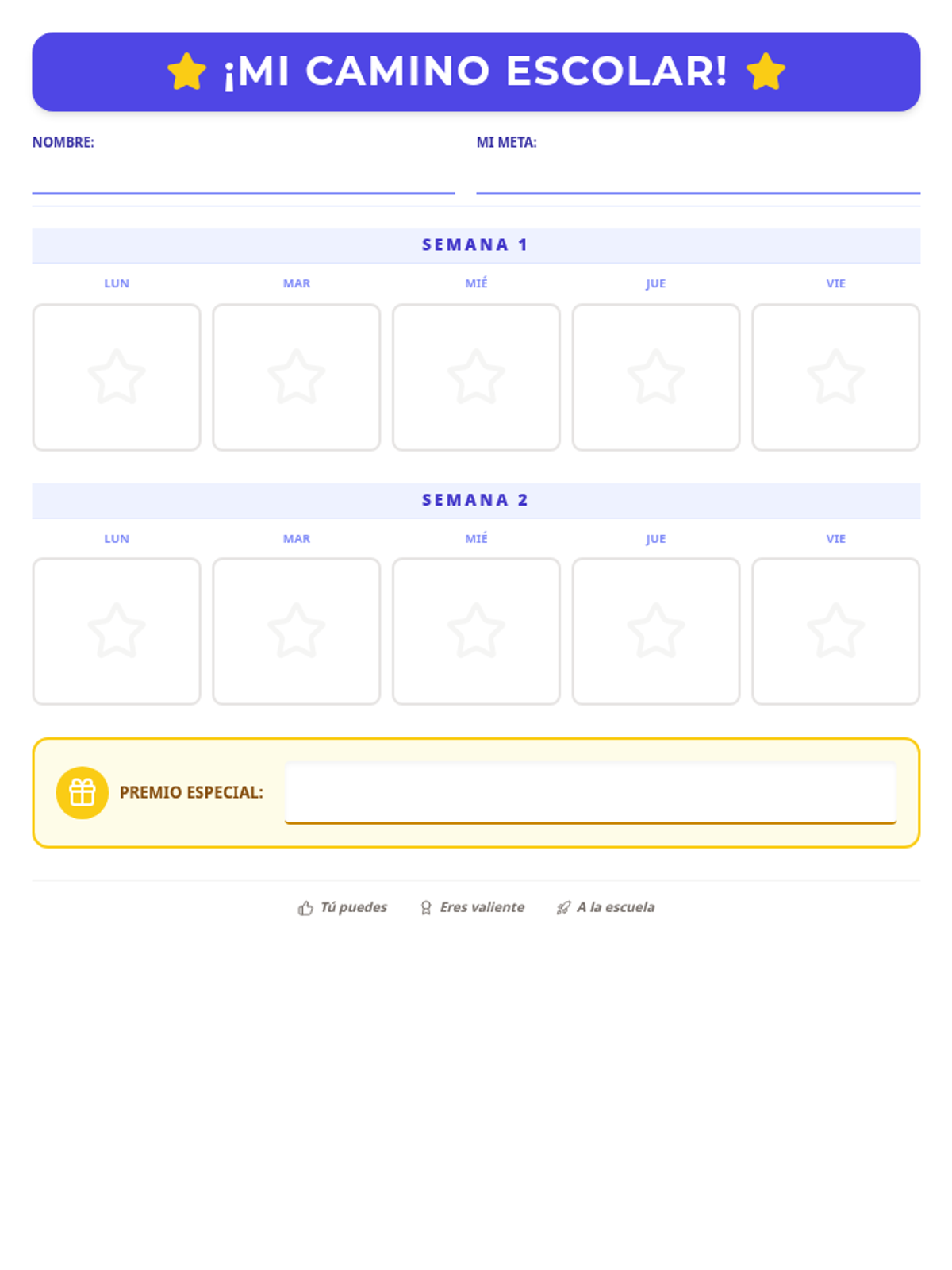
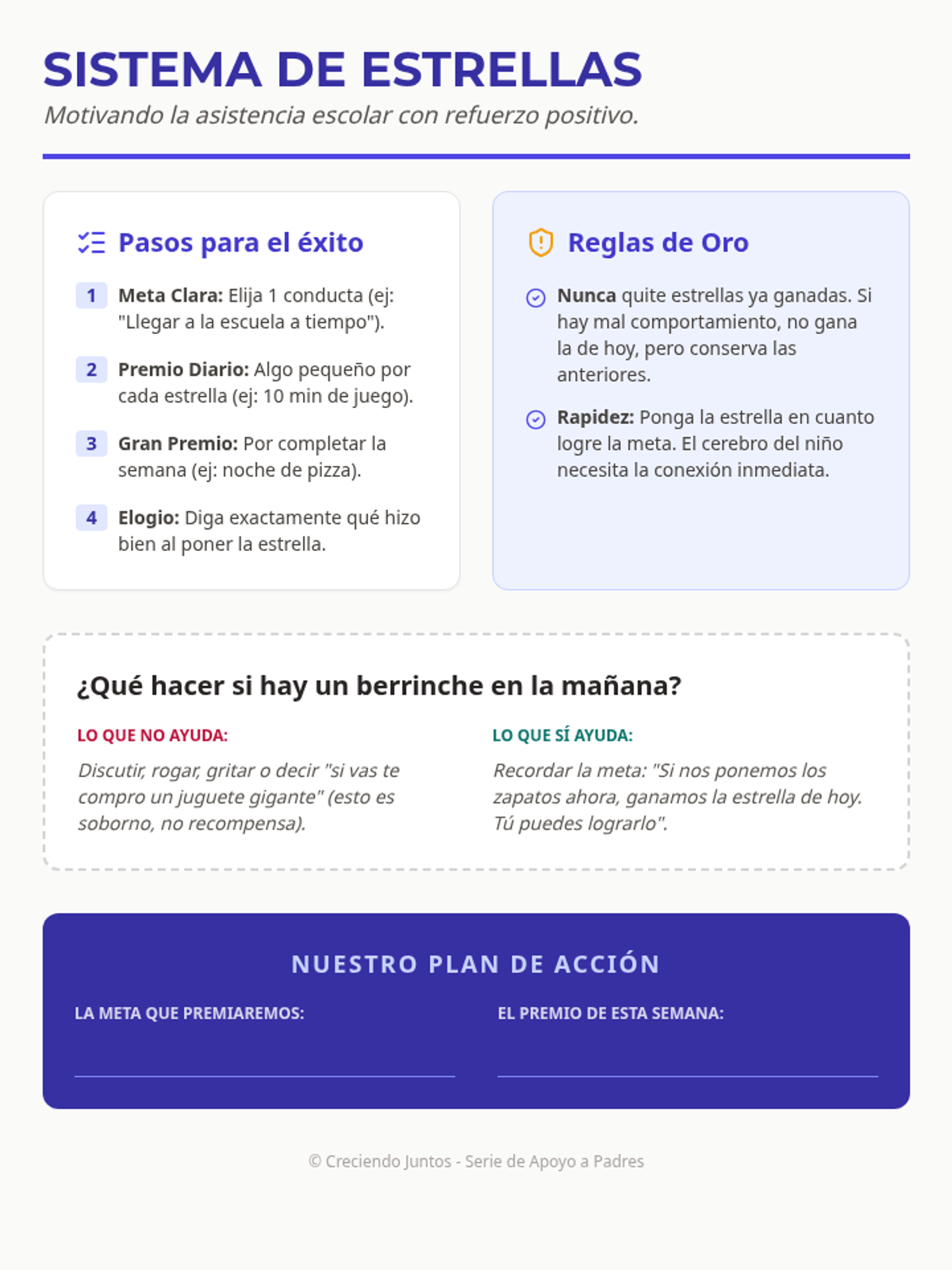
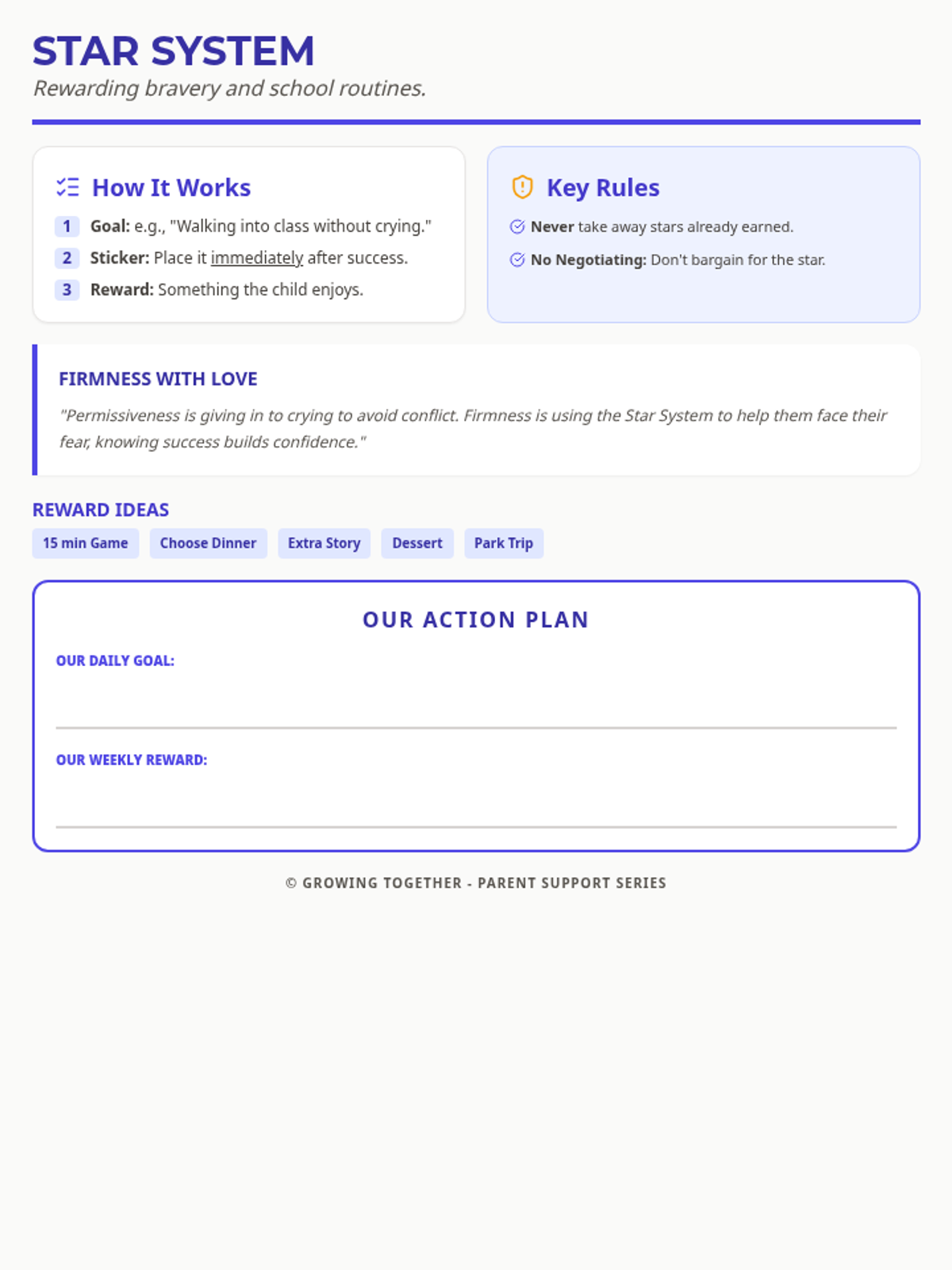
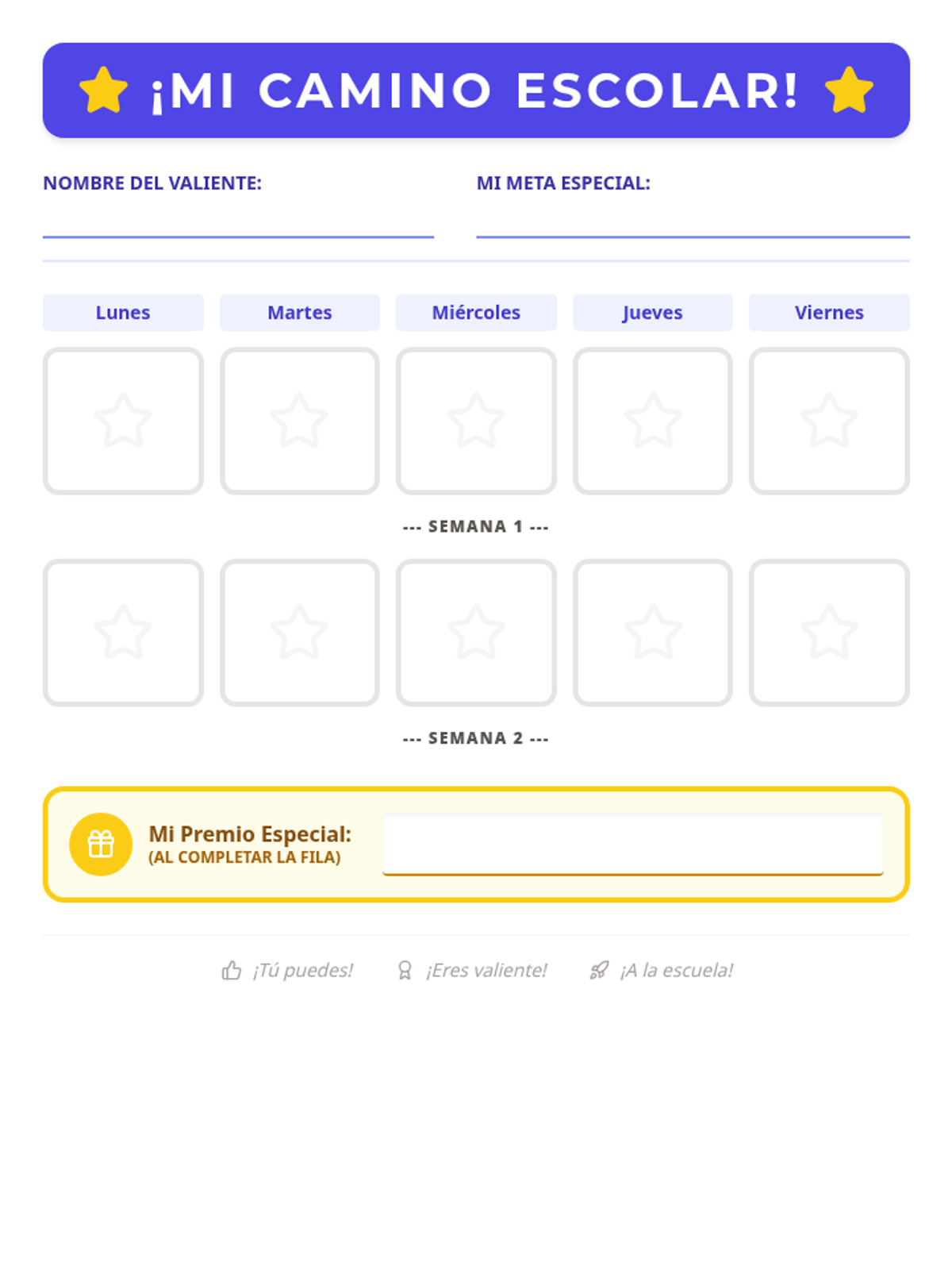
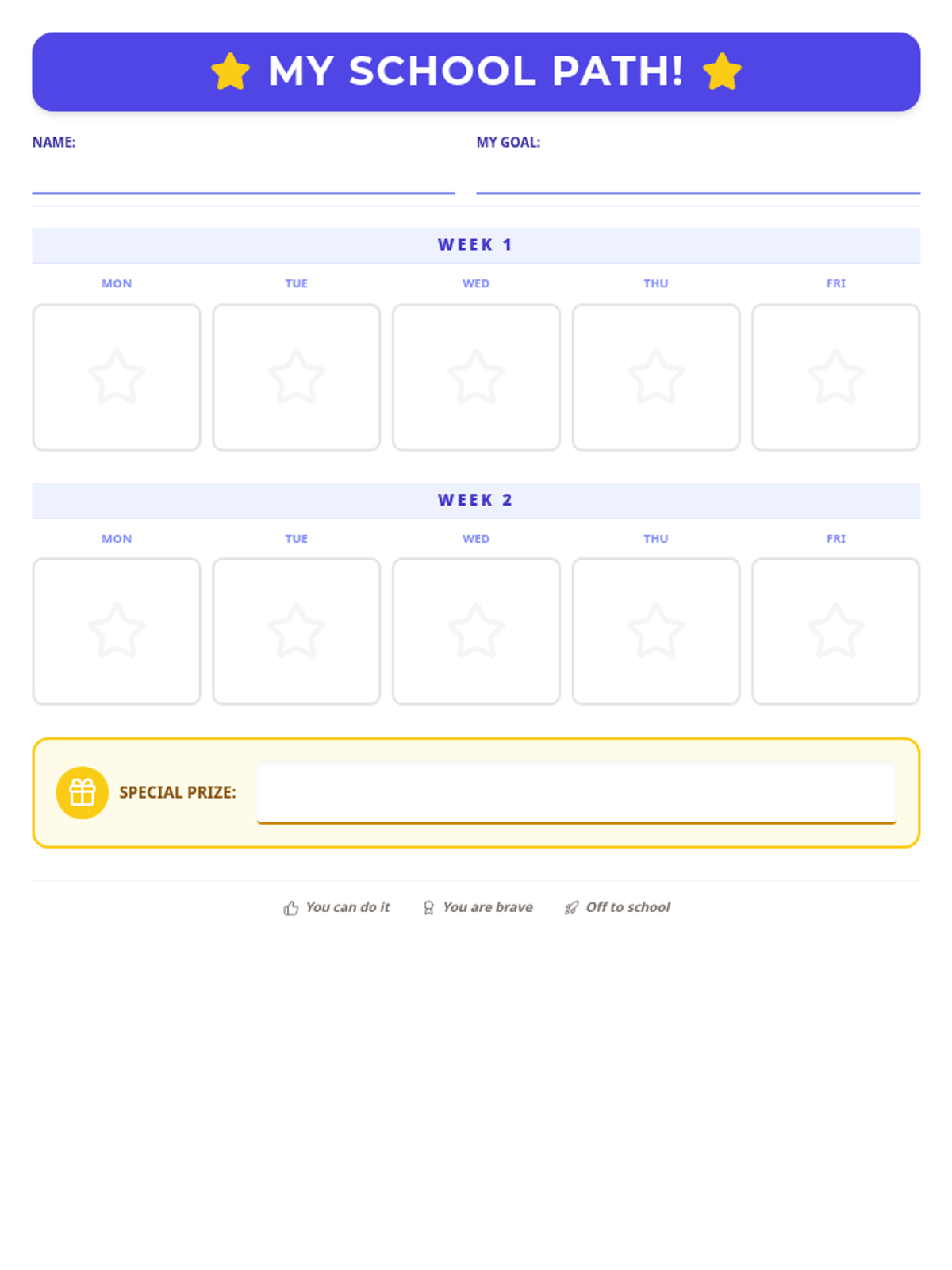
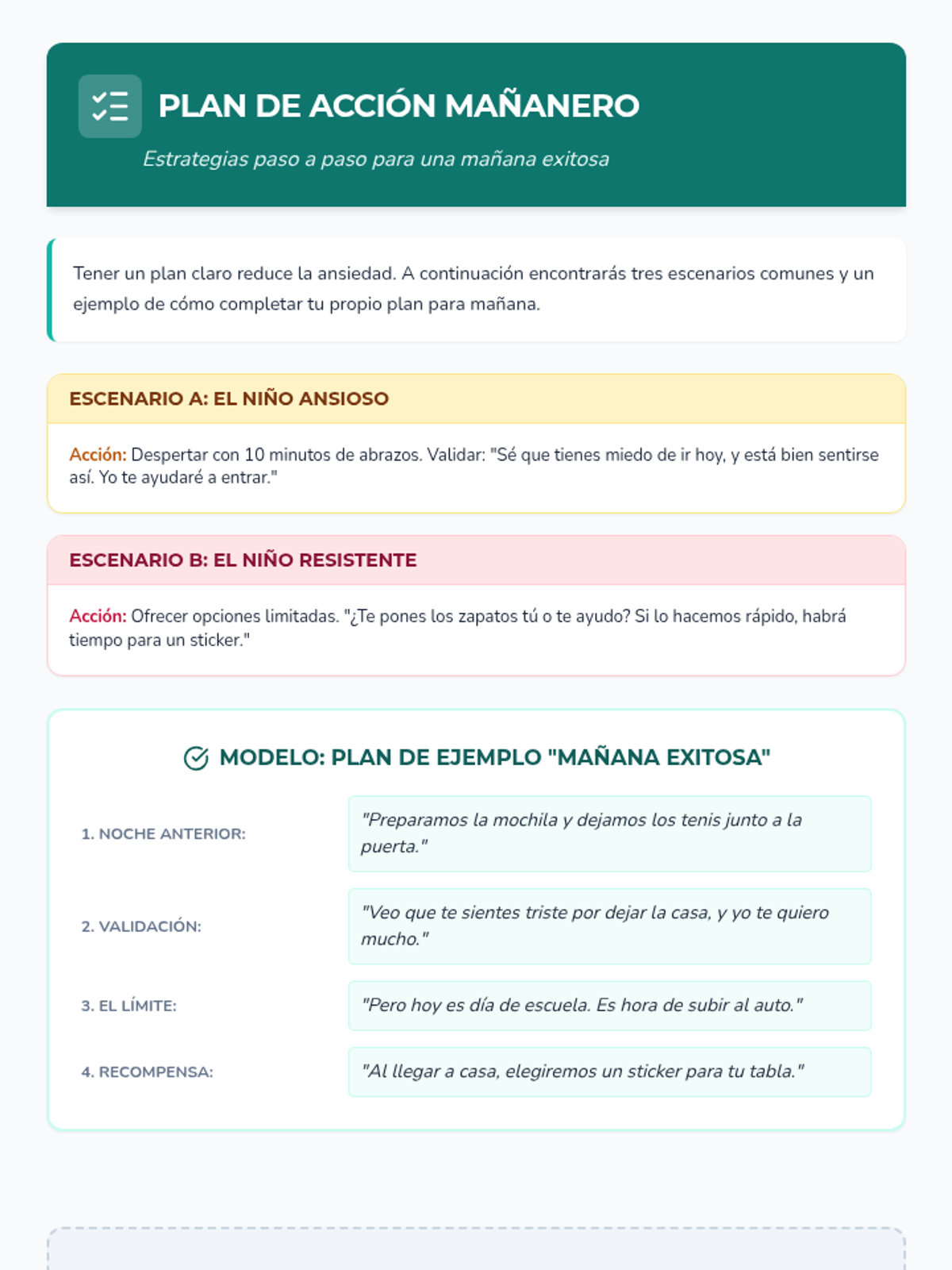
Practical steps for setting up a sticker chart system to reward school attendance and morning routines.
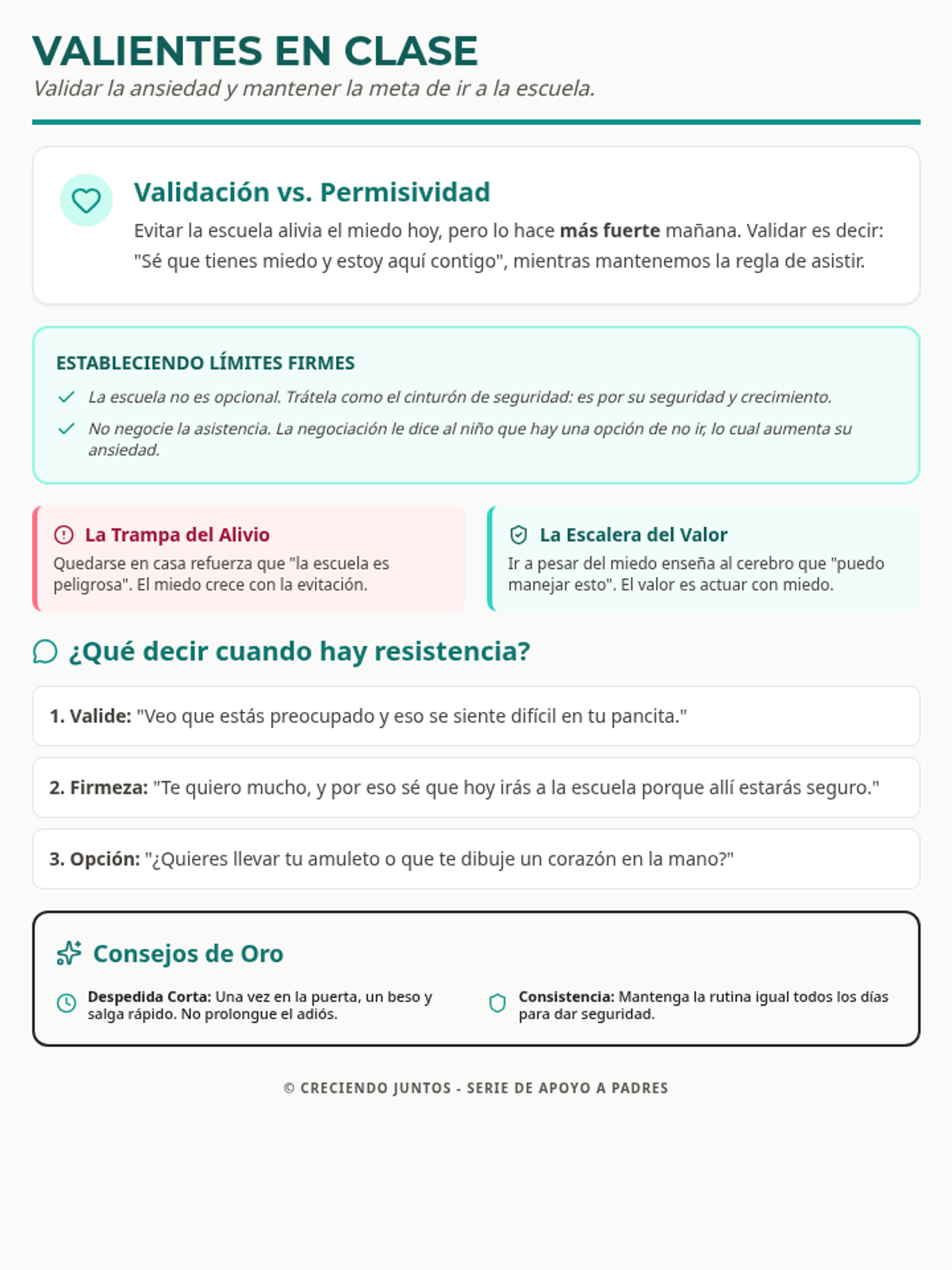
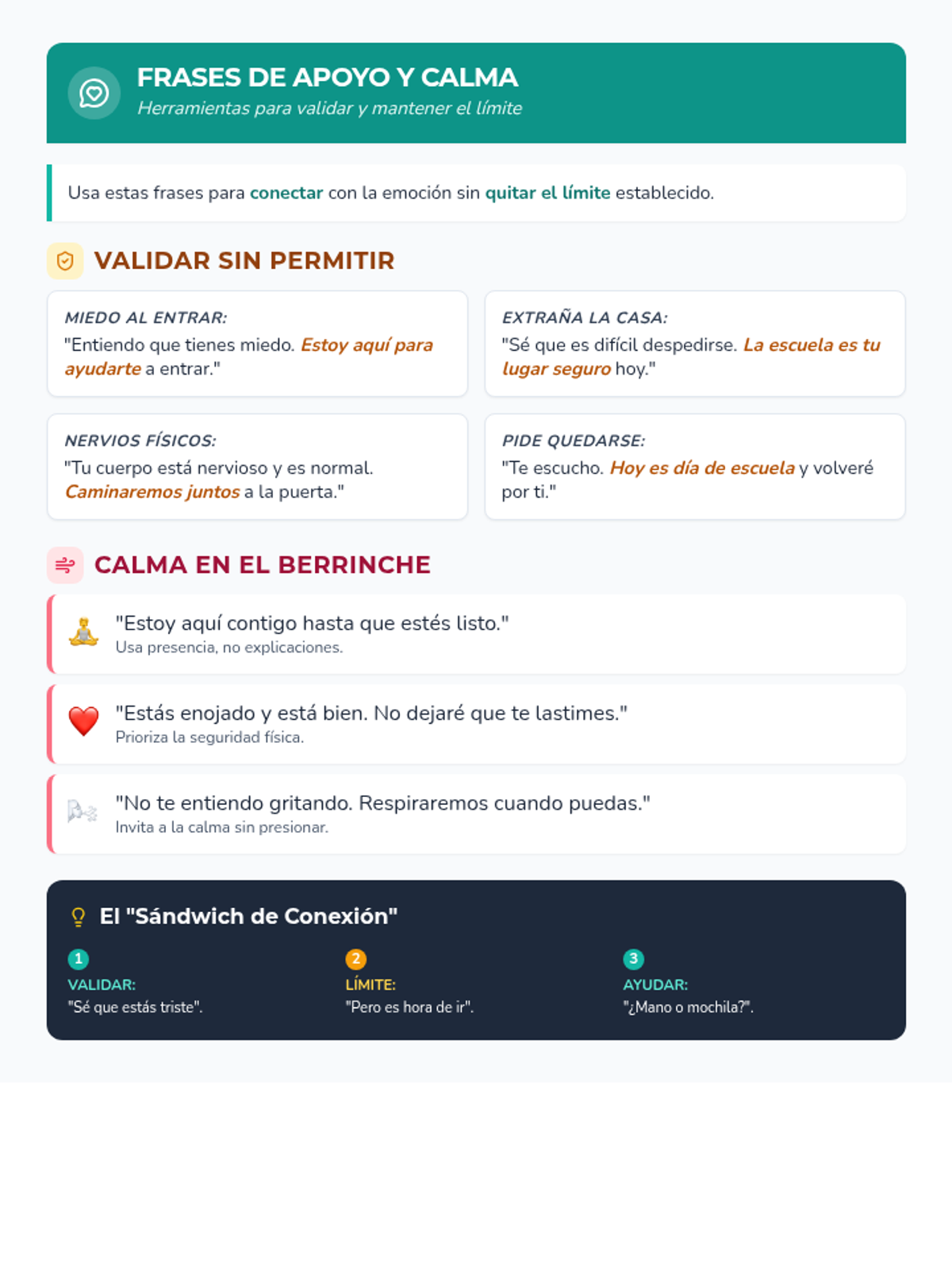
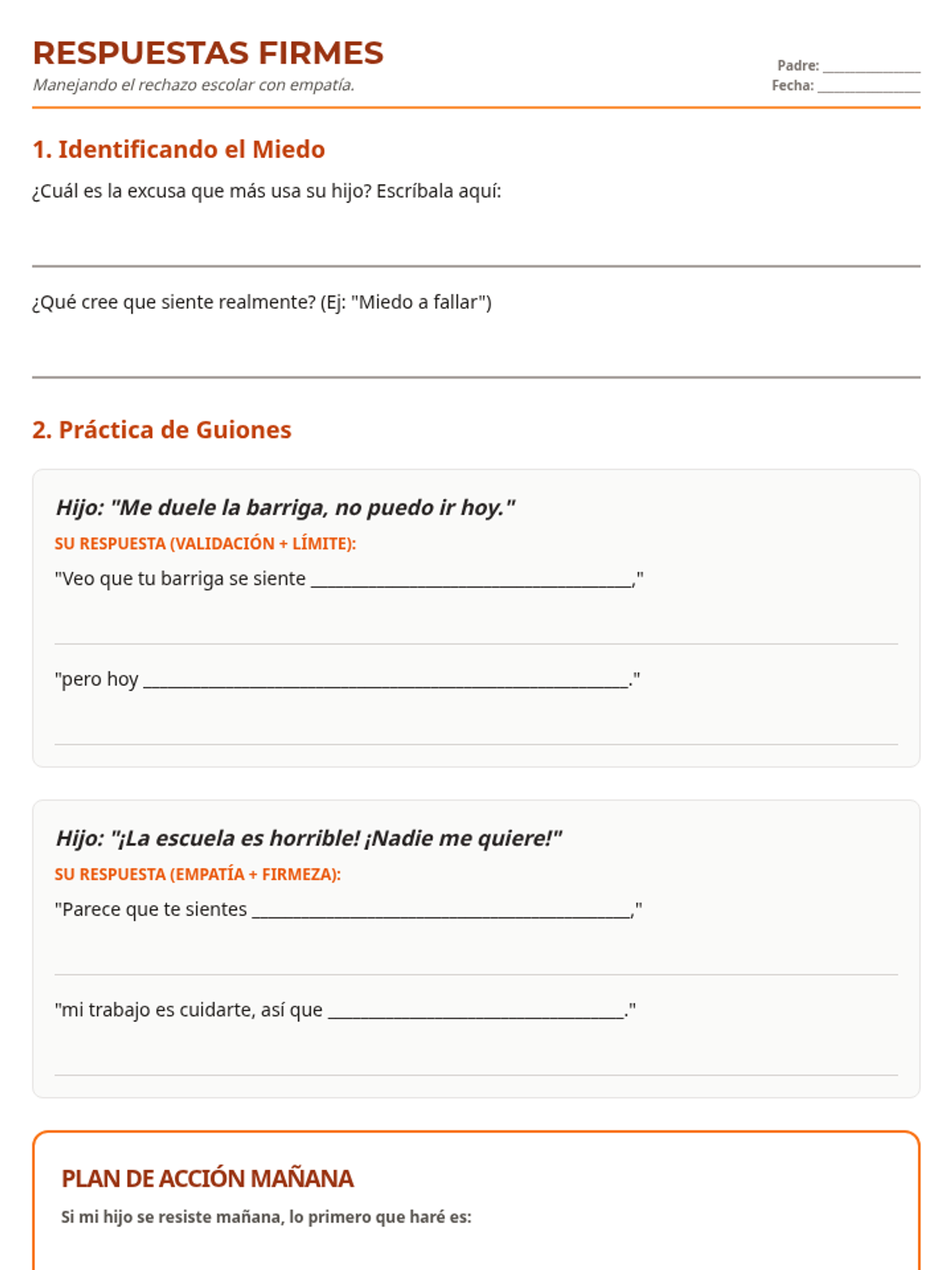
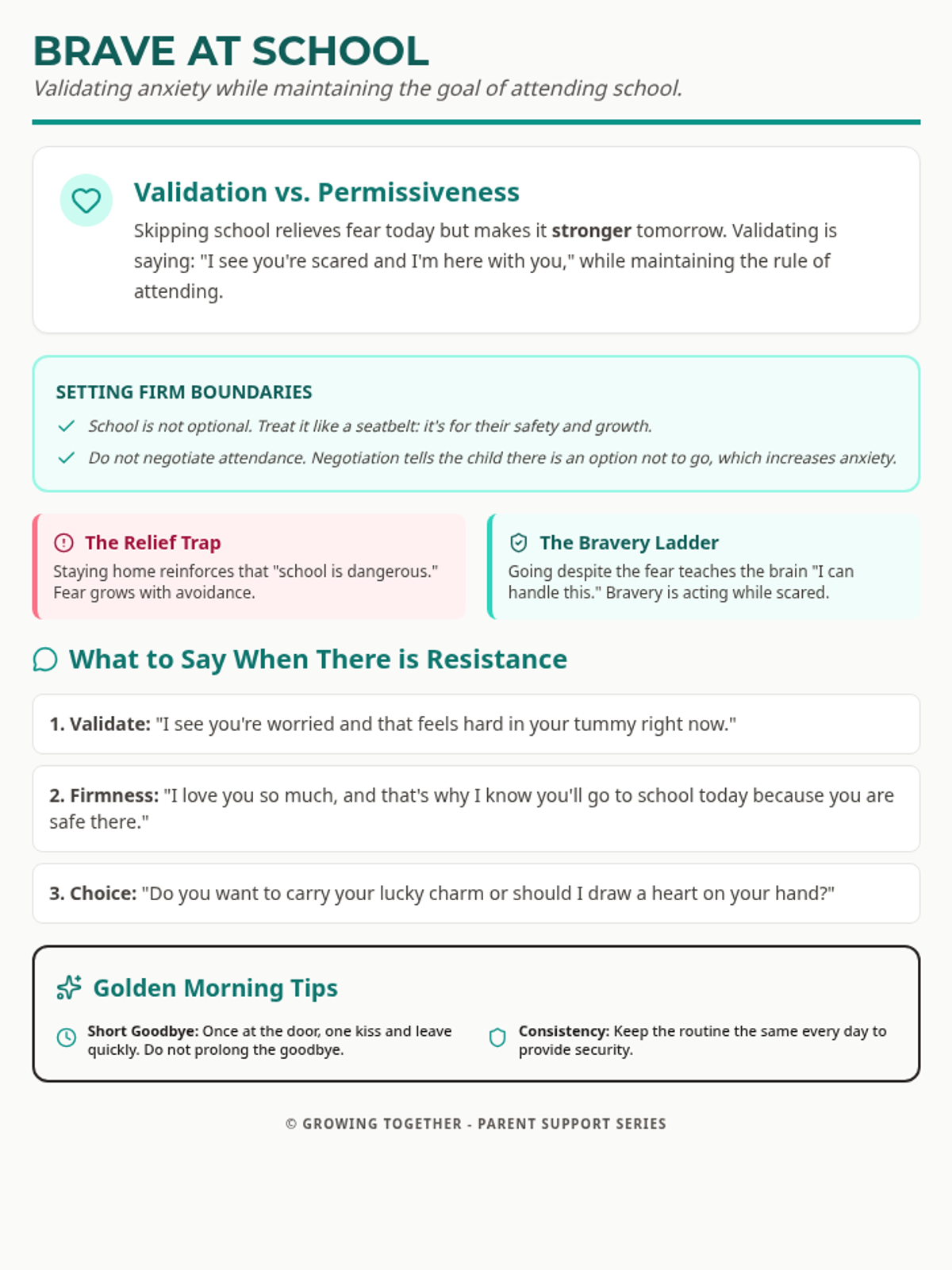
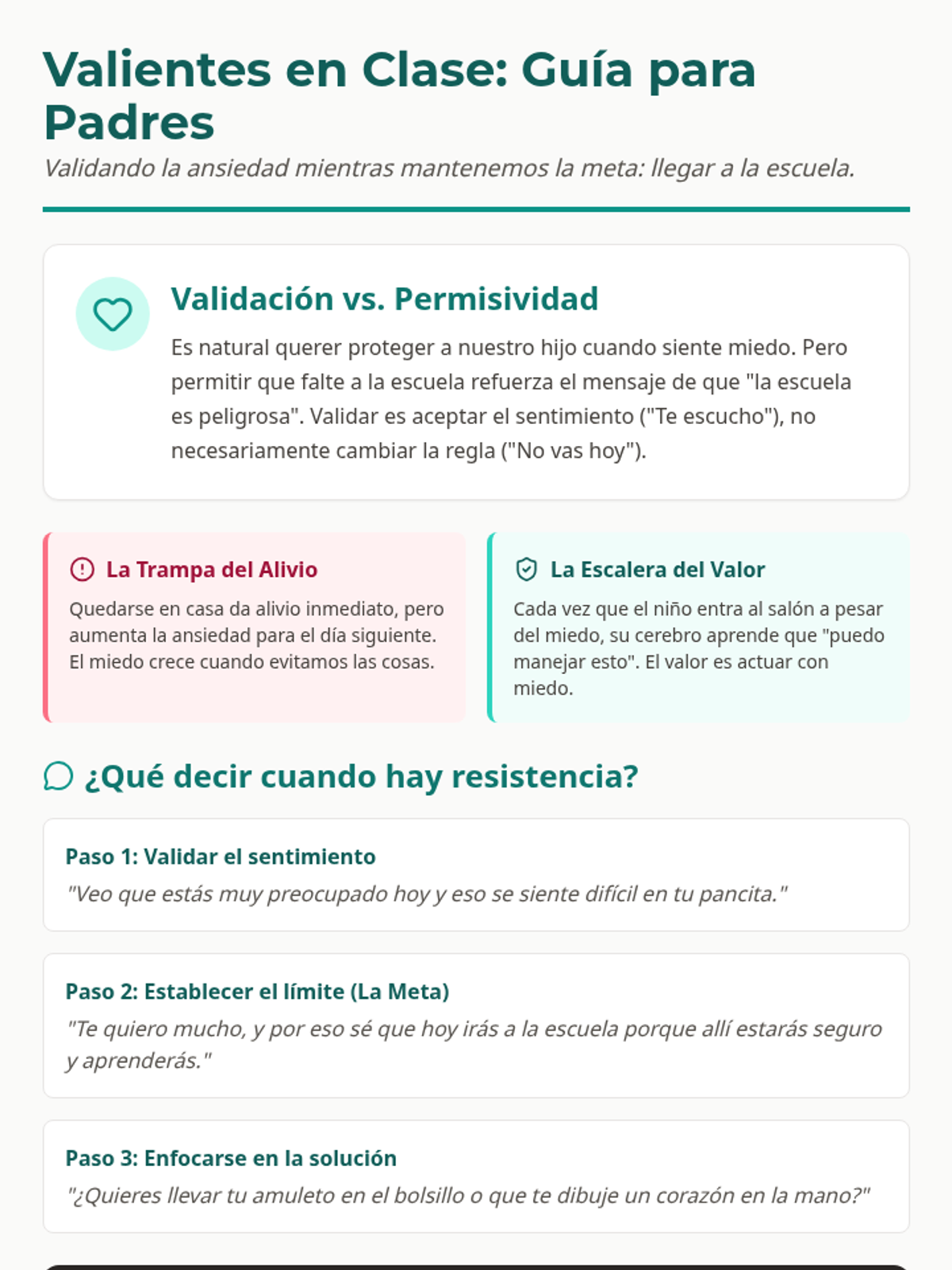
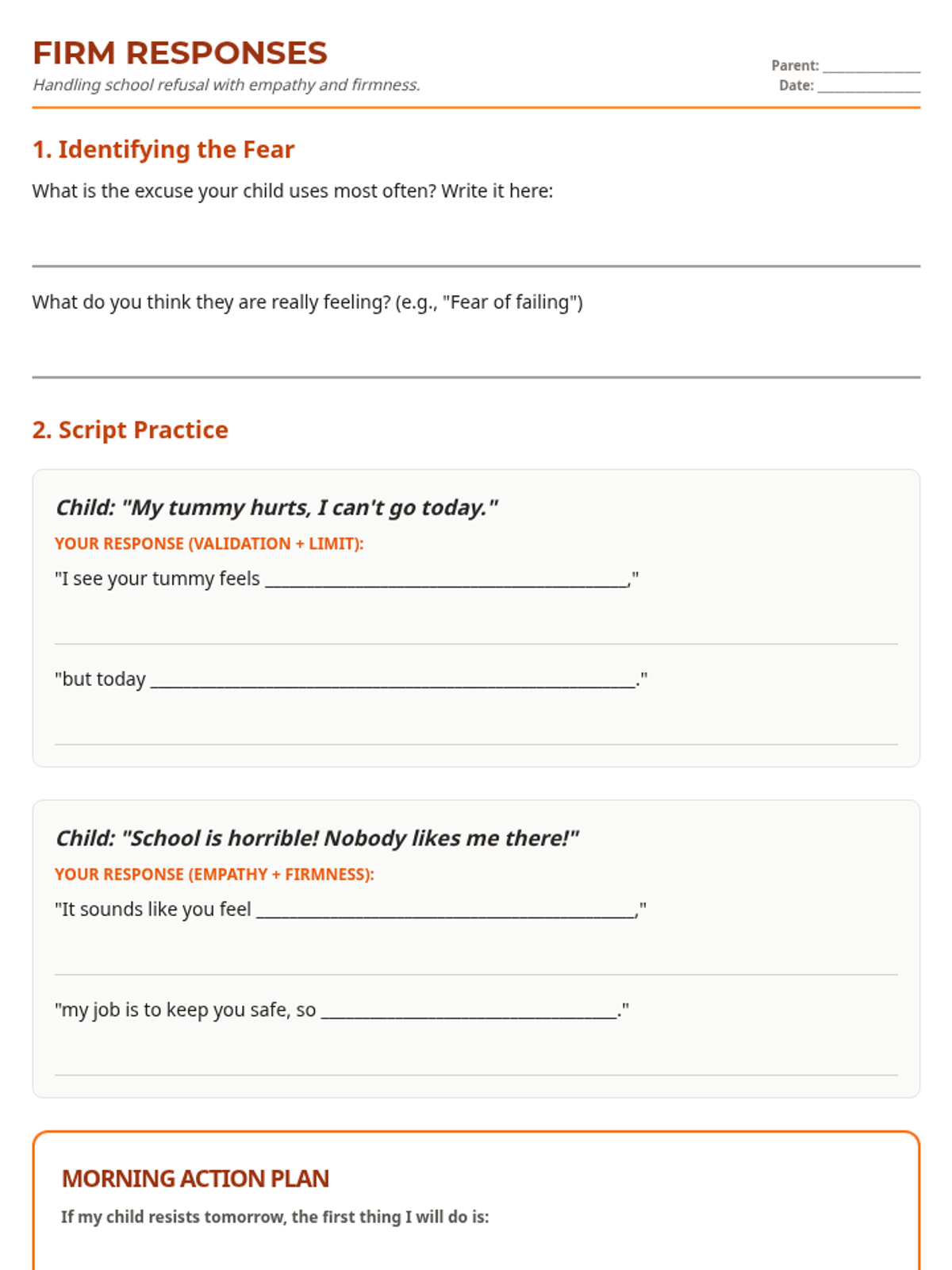
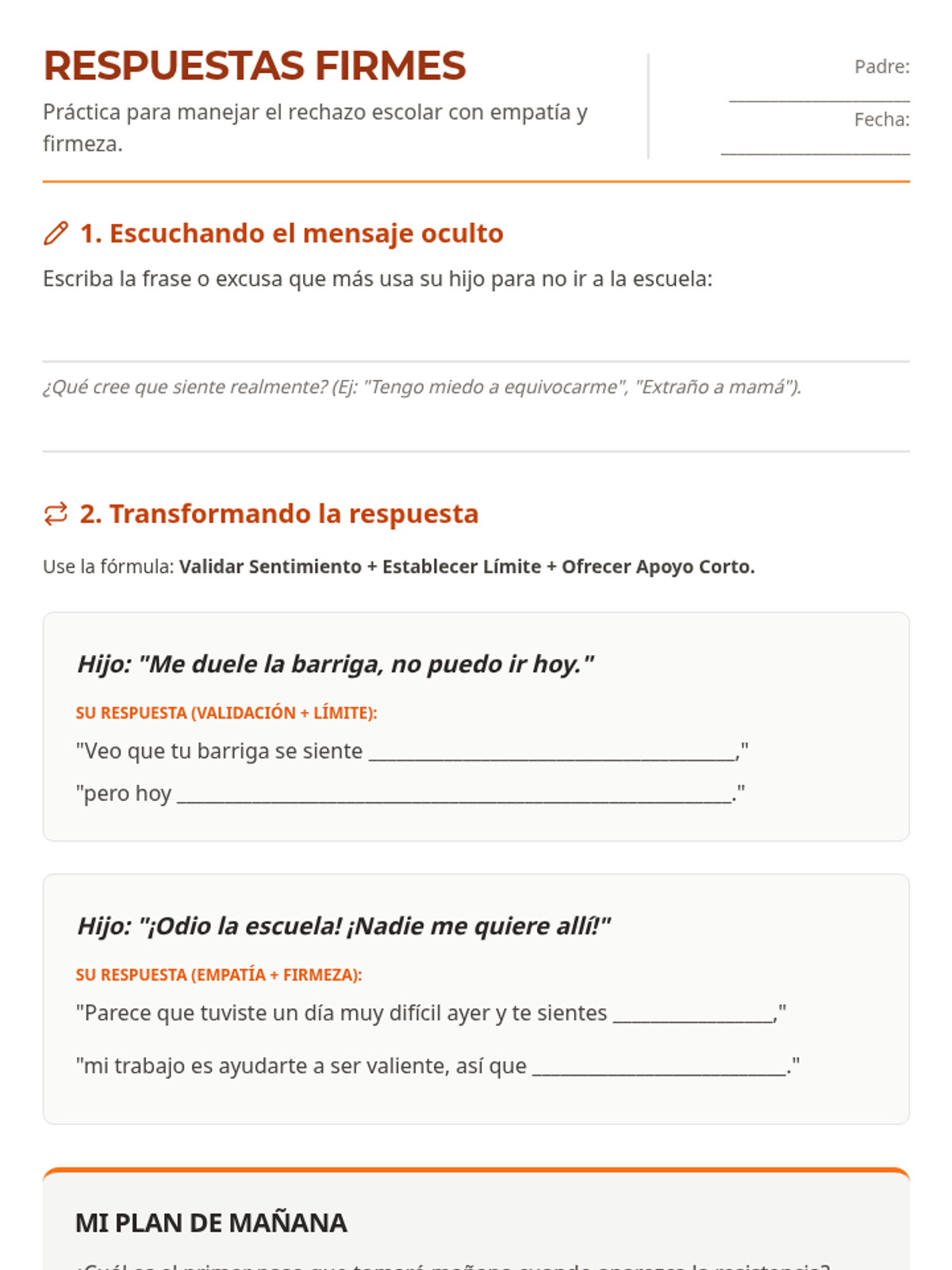
Strategies for parents to validate their child's school anxiety while maintaining firm boundaries regarding attendance.
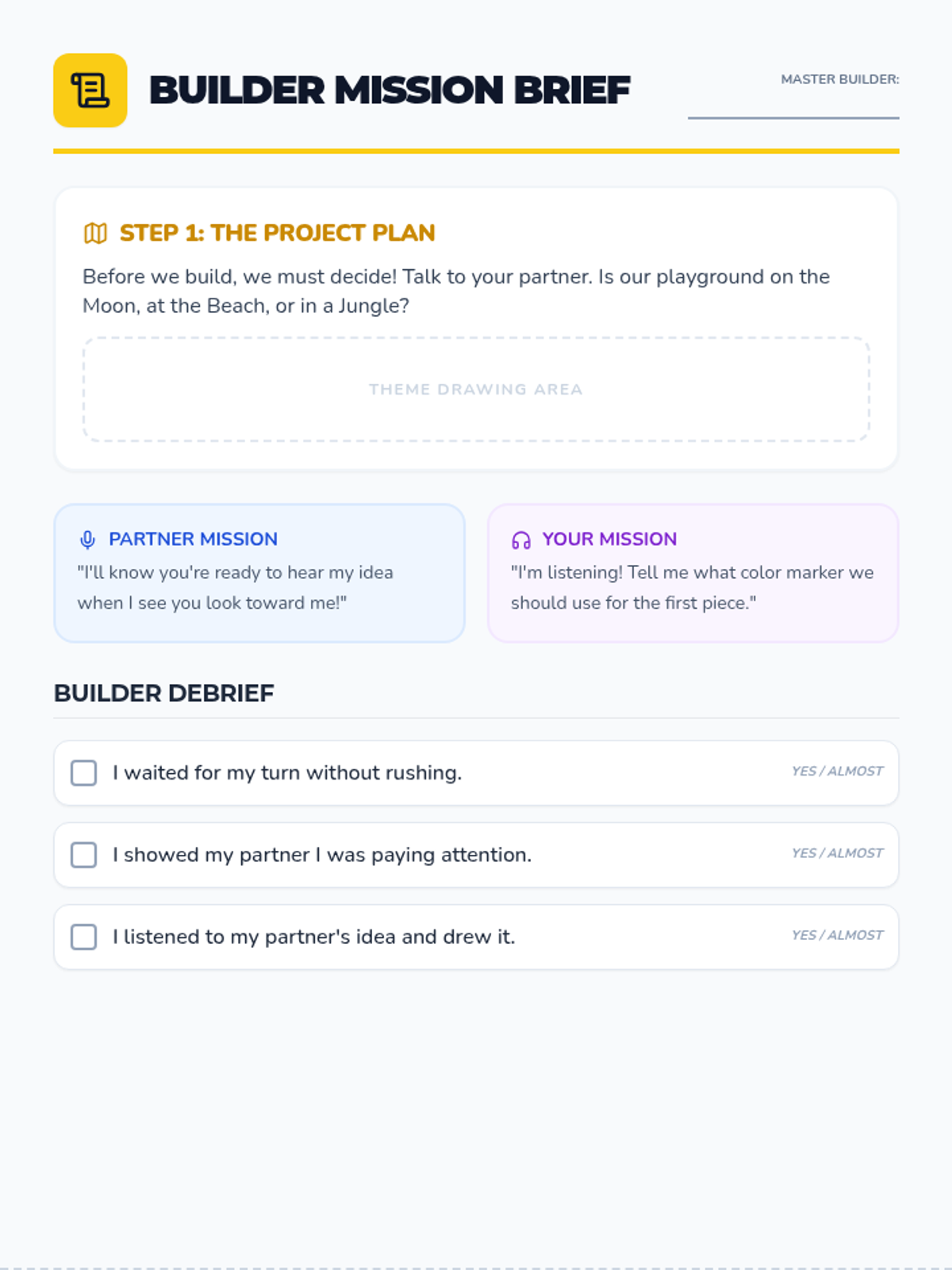
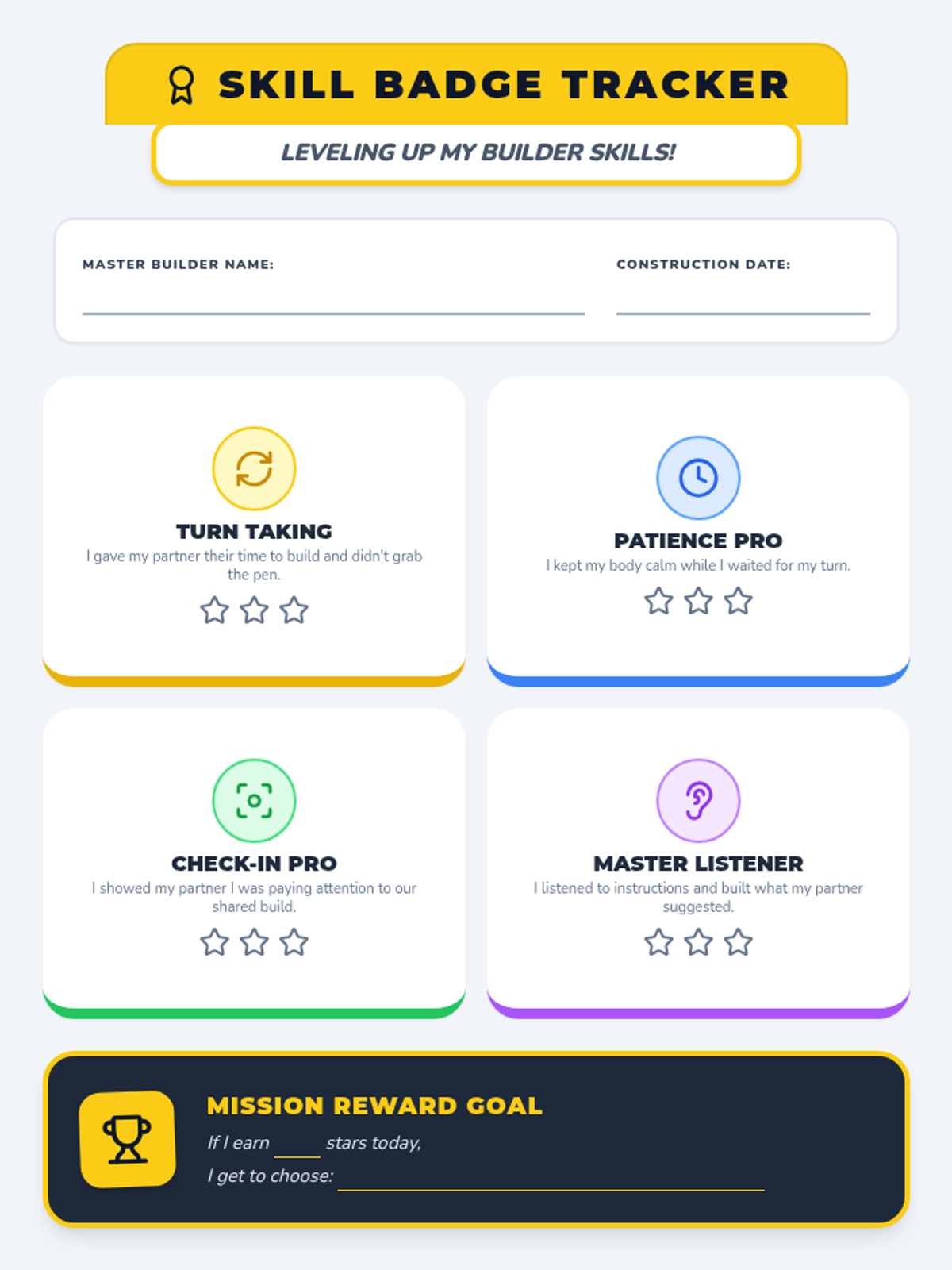
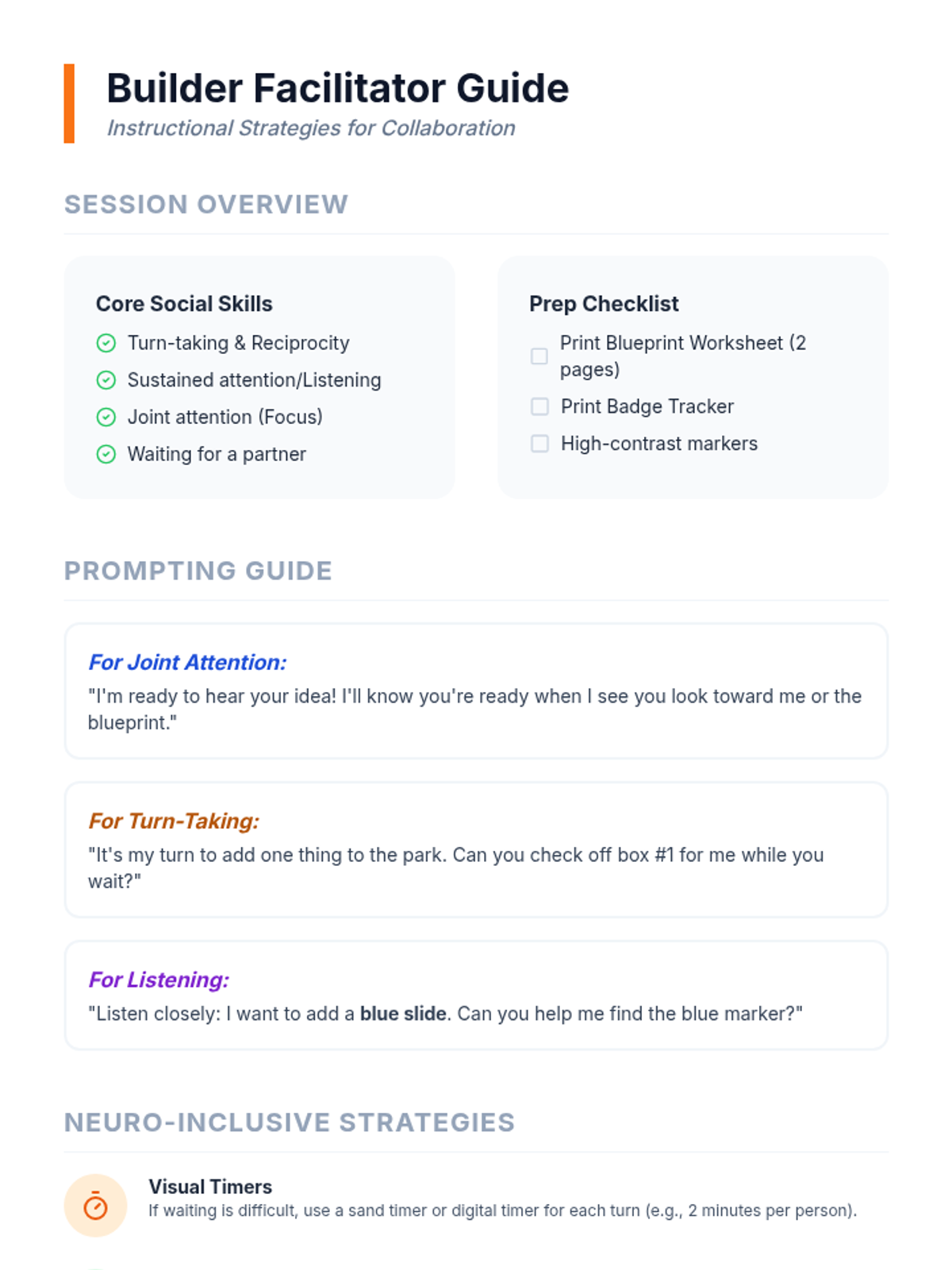
A collaborative design-based lesson for young learners to practice turn-taking, waiting, listening, and eye contact through a shared 'Master Builder' project.
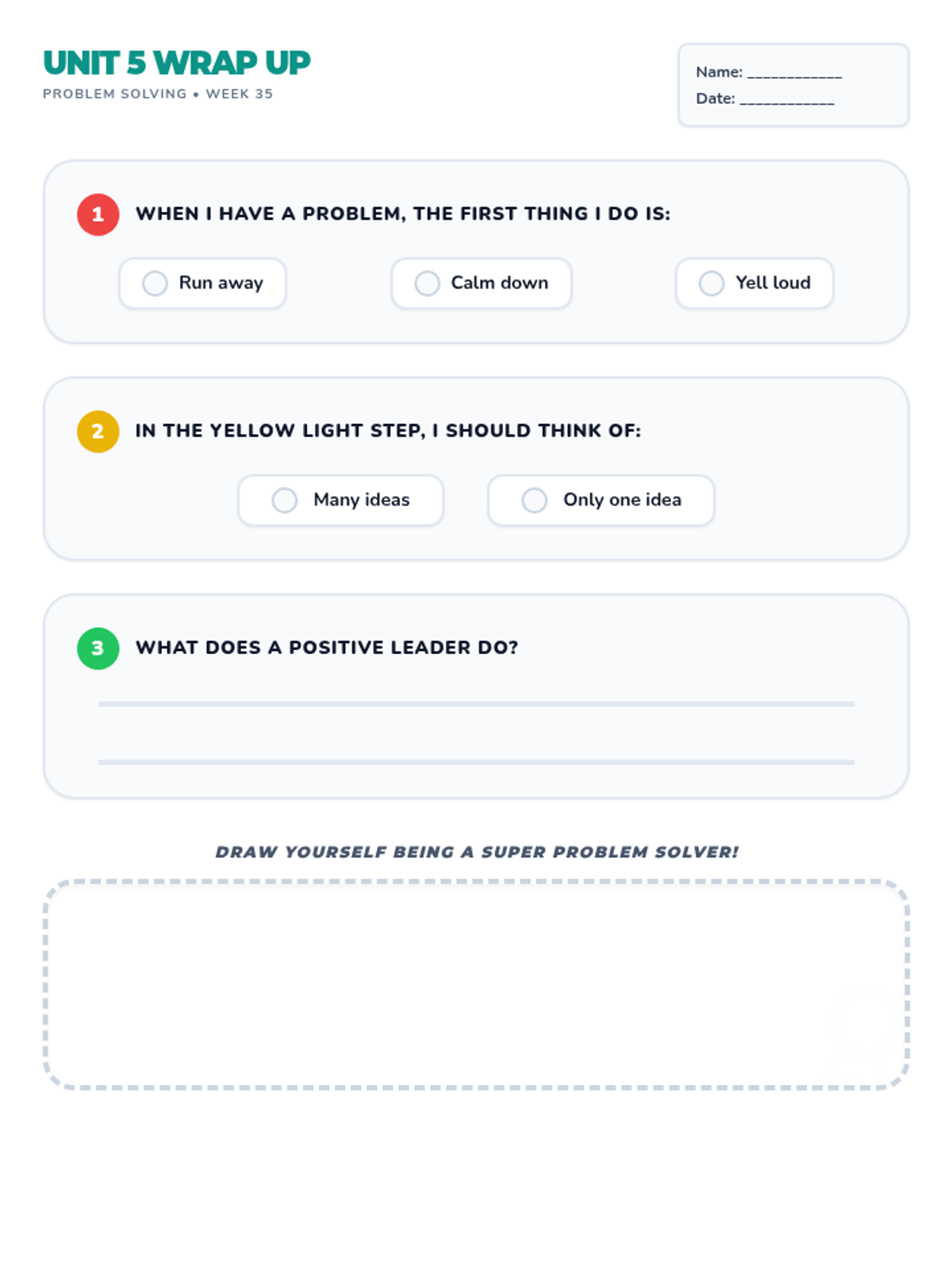
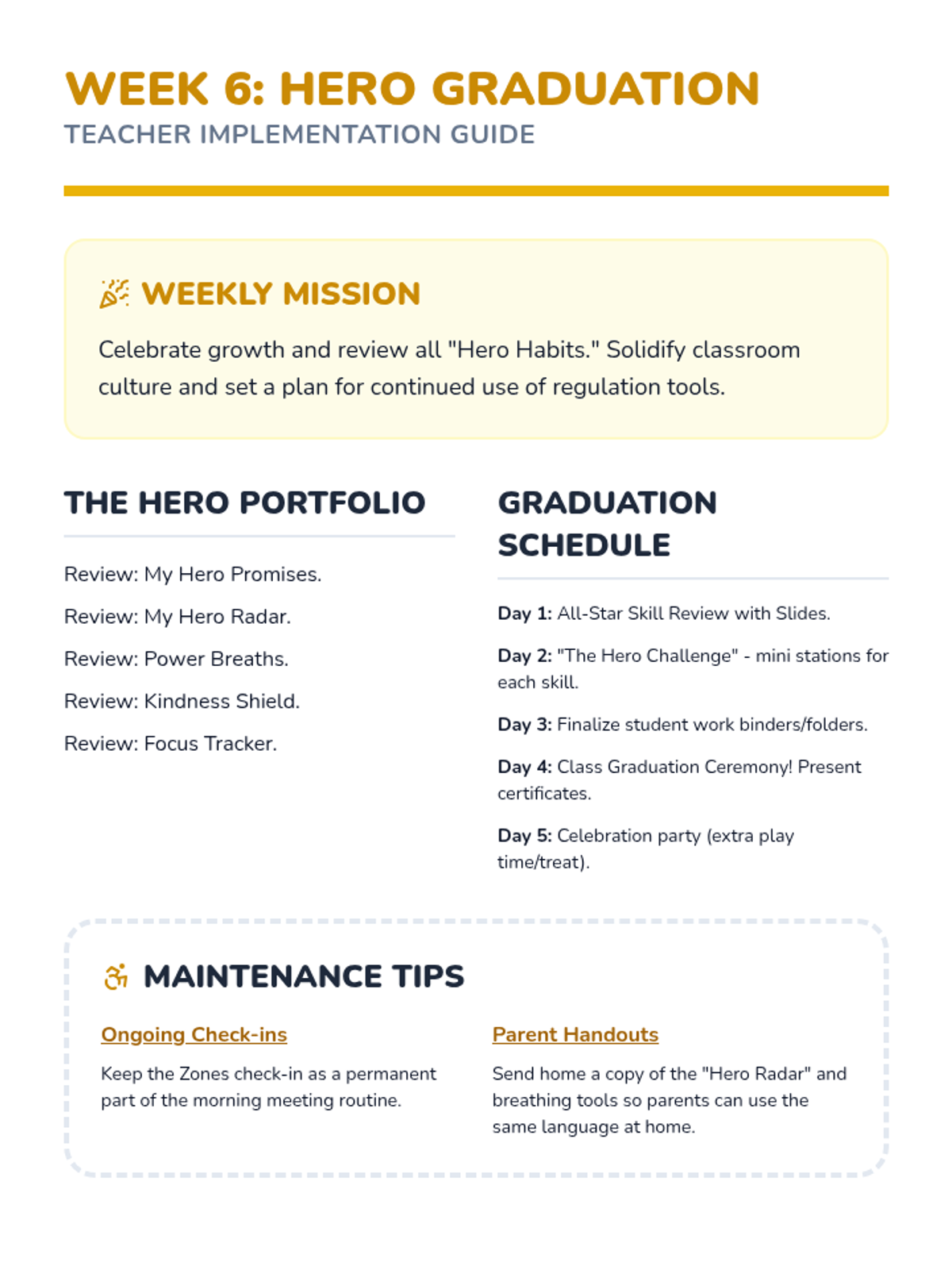
A cumulative review and celebration of the skills learned over the past five weeks.
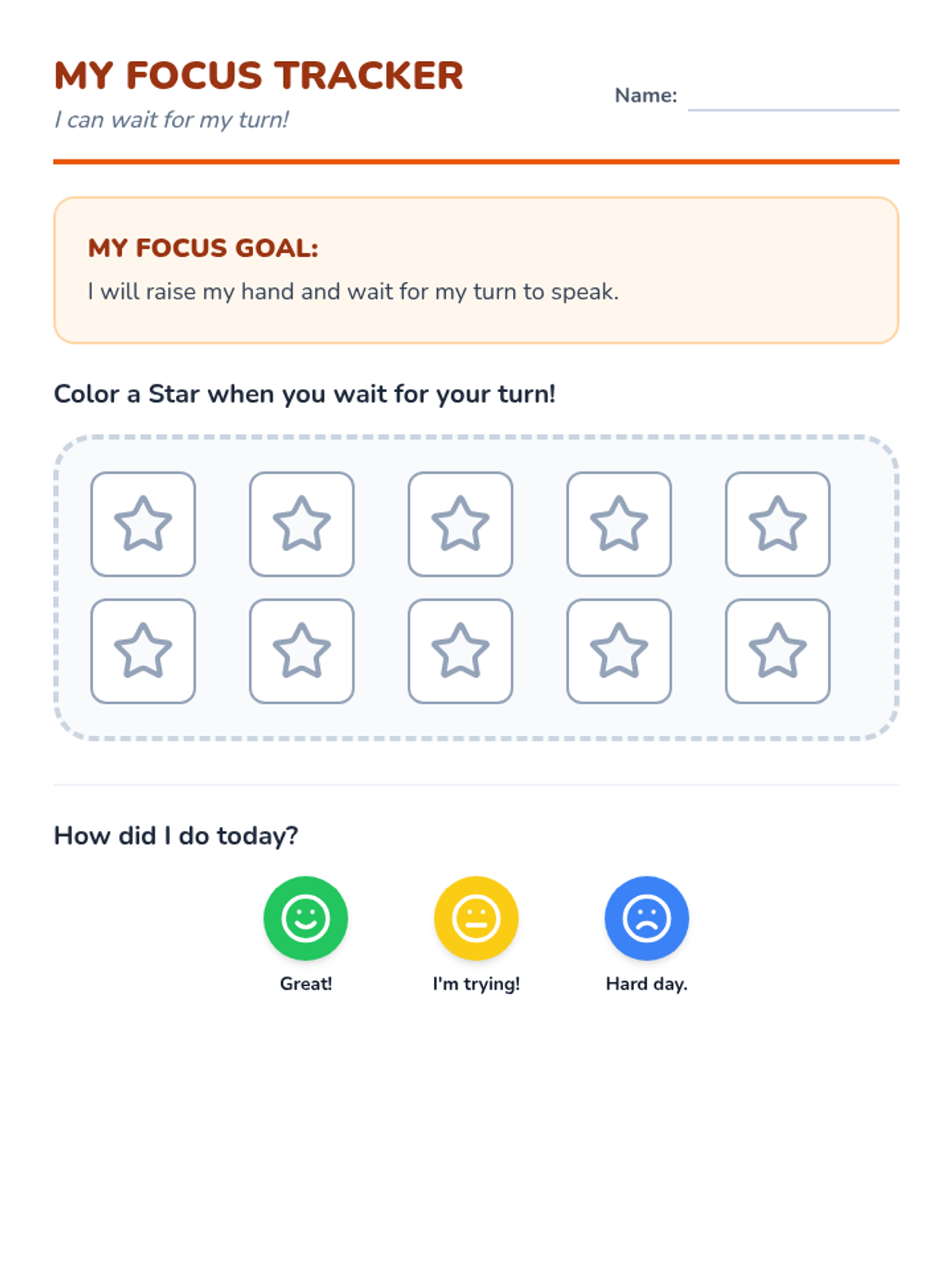
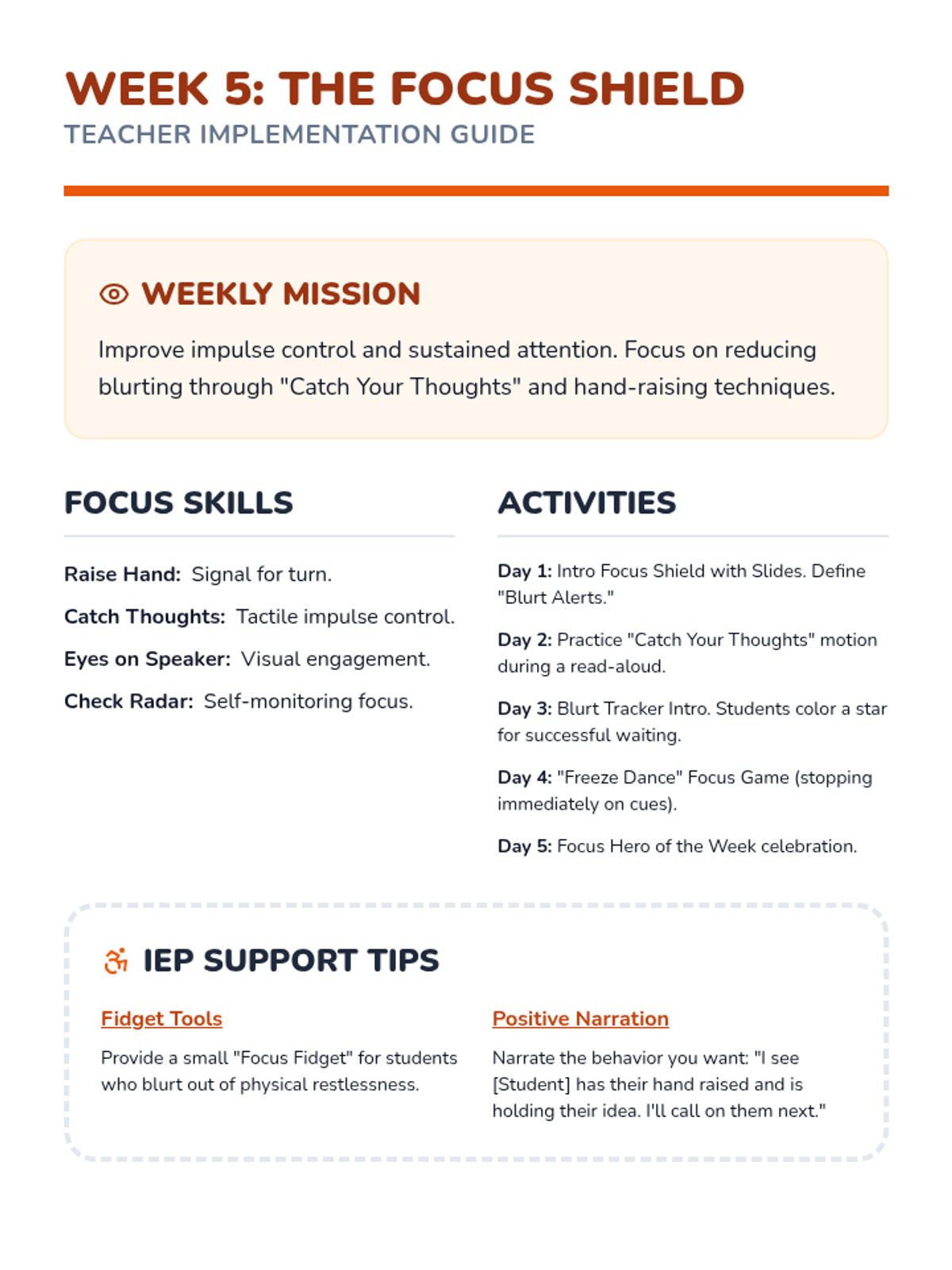
Strategies for staying focused and managing the impulse to blurt out during instruction.
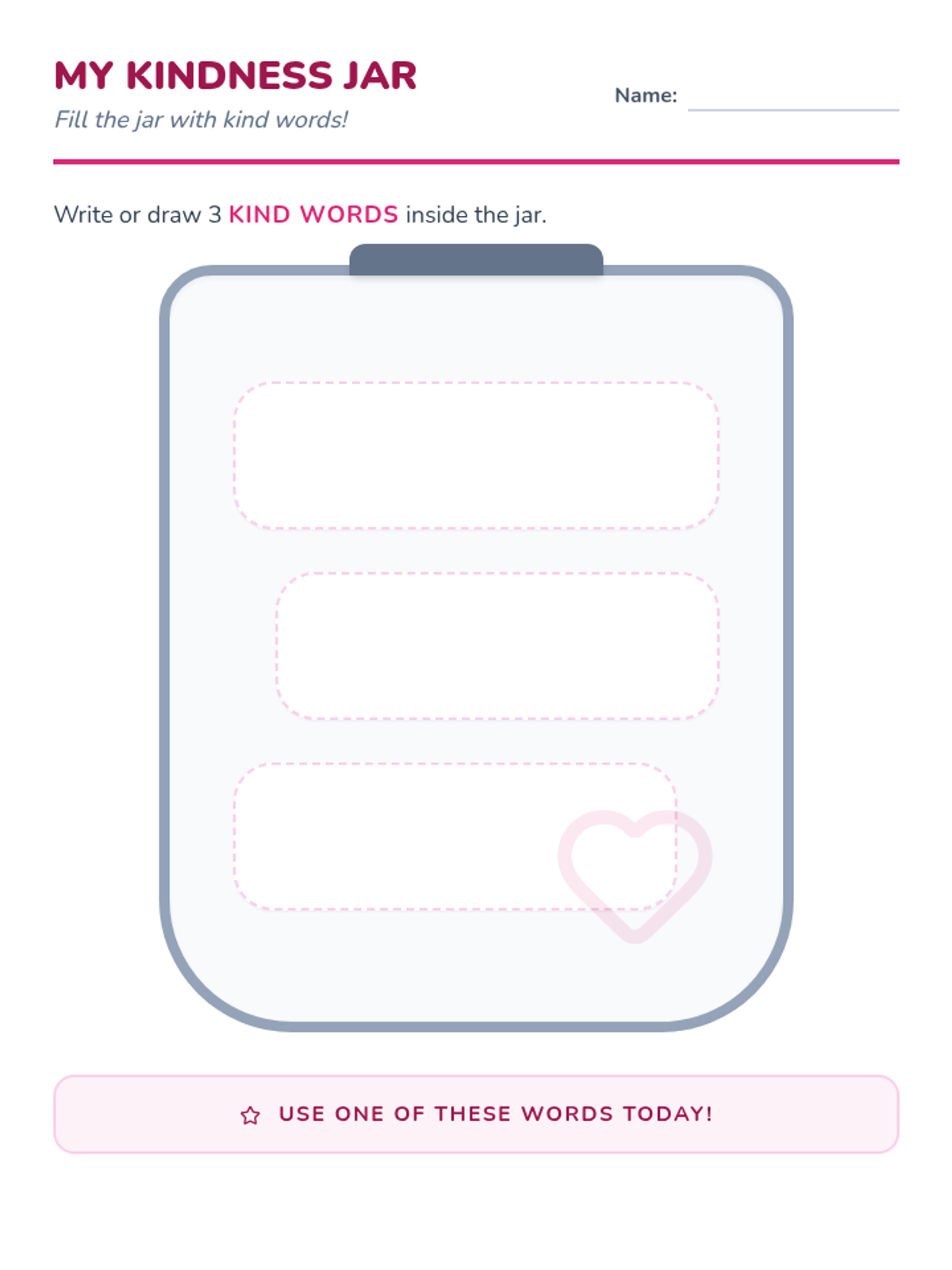
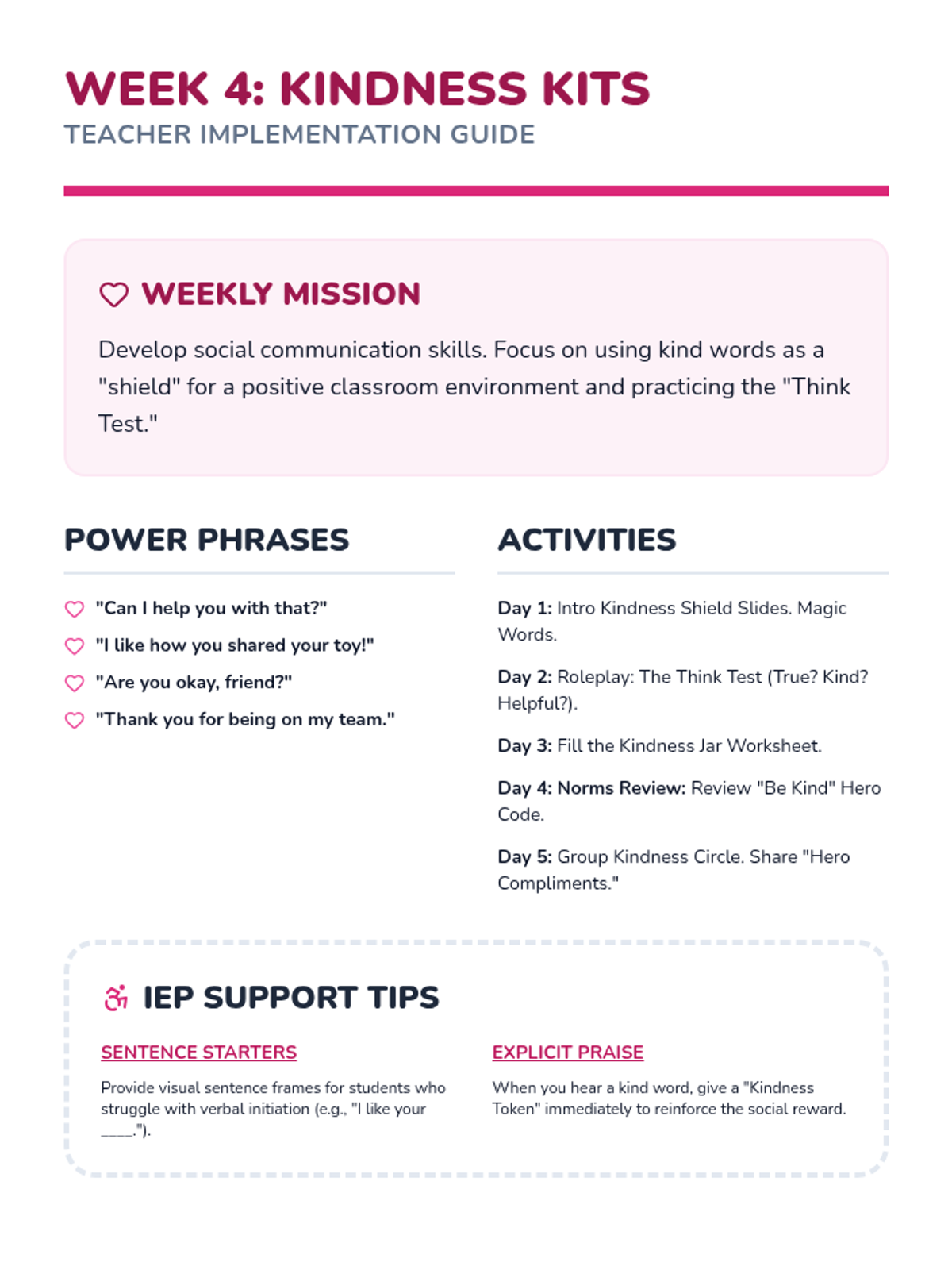
Developing social skills focused on using kind words and being a supportive teammate in the classroom.
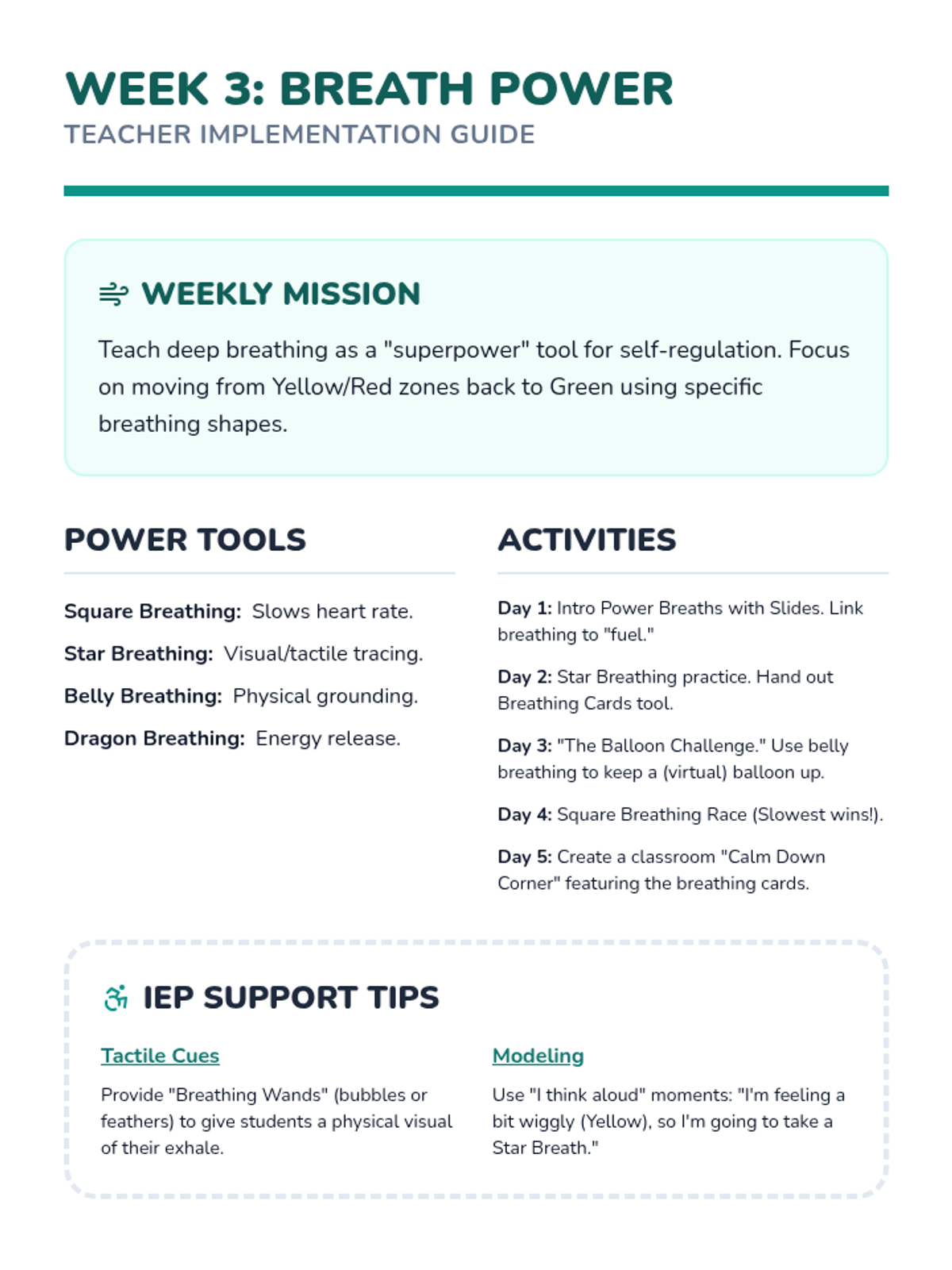
Teaching deep breathing techniques as 'Power Breaths' to help students return to the Green Zone.
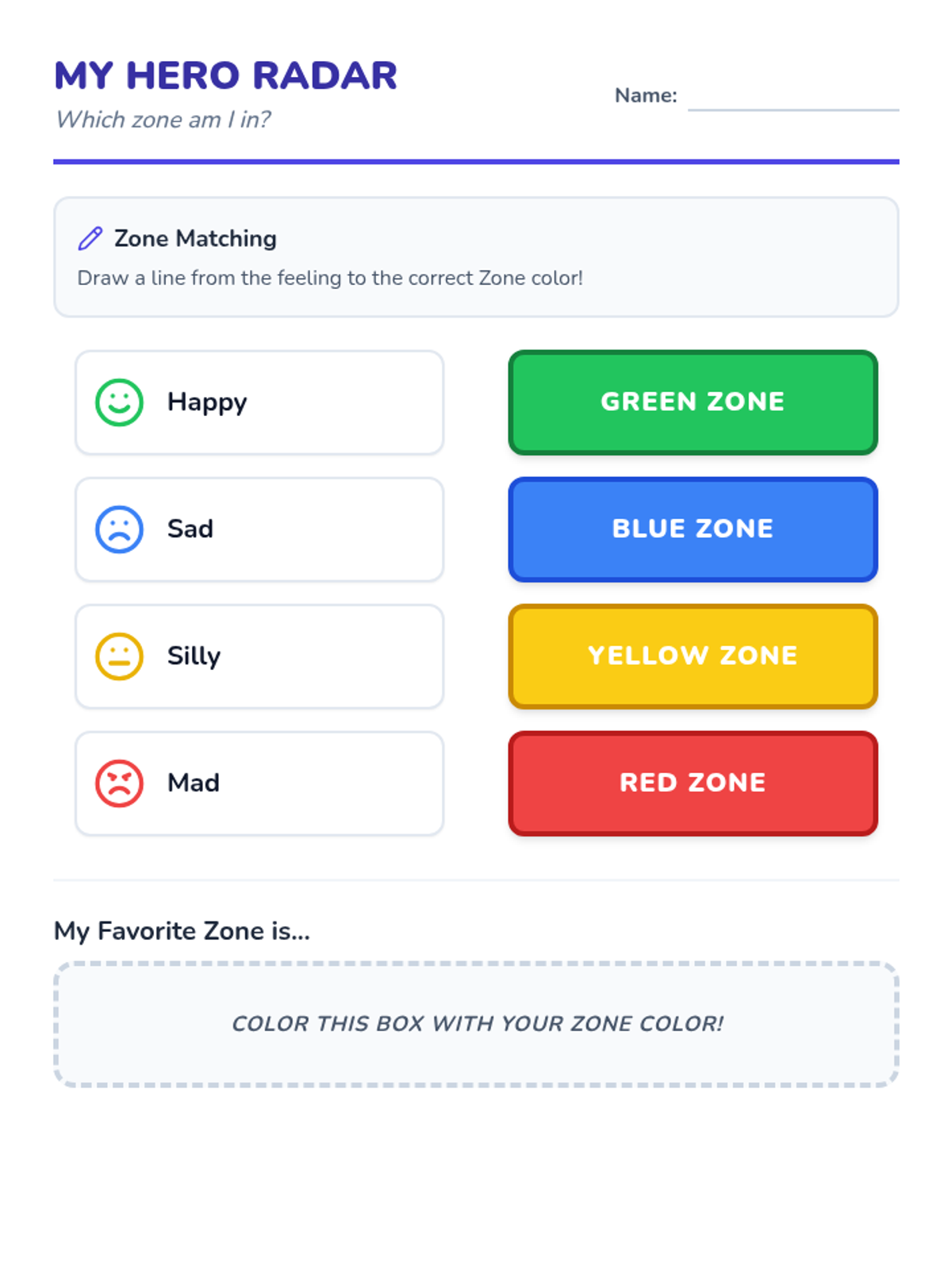
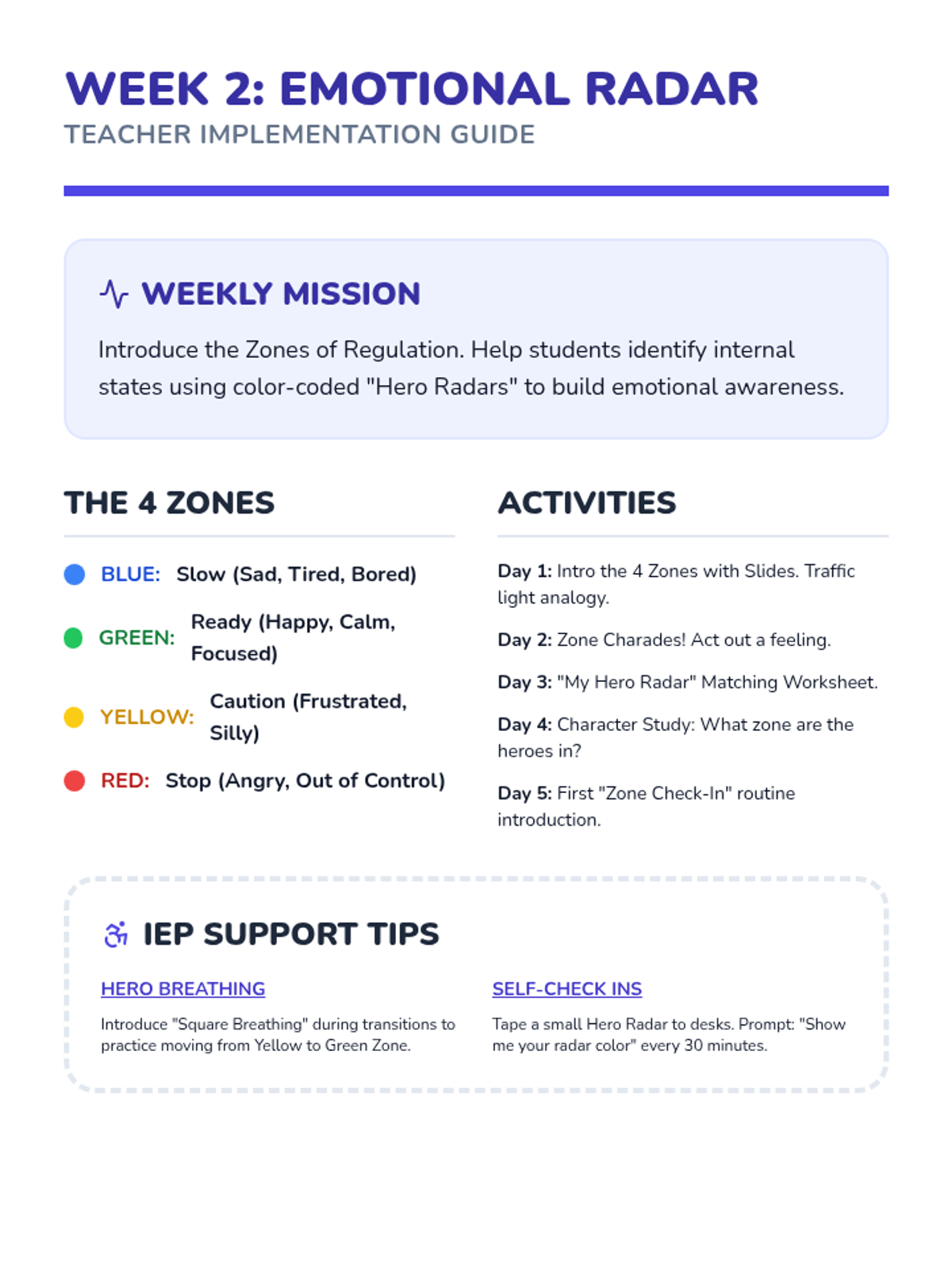
Introduction to the Zones of Regulation, helping students identify their emotional states using color-coded 'Hero Radars'.
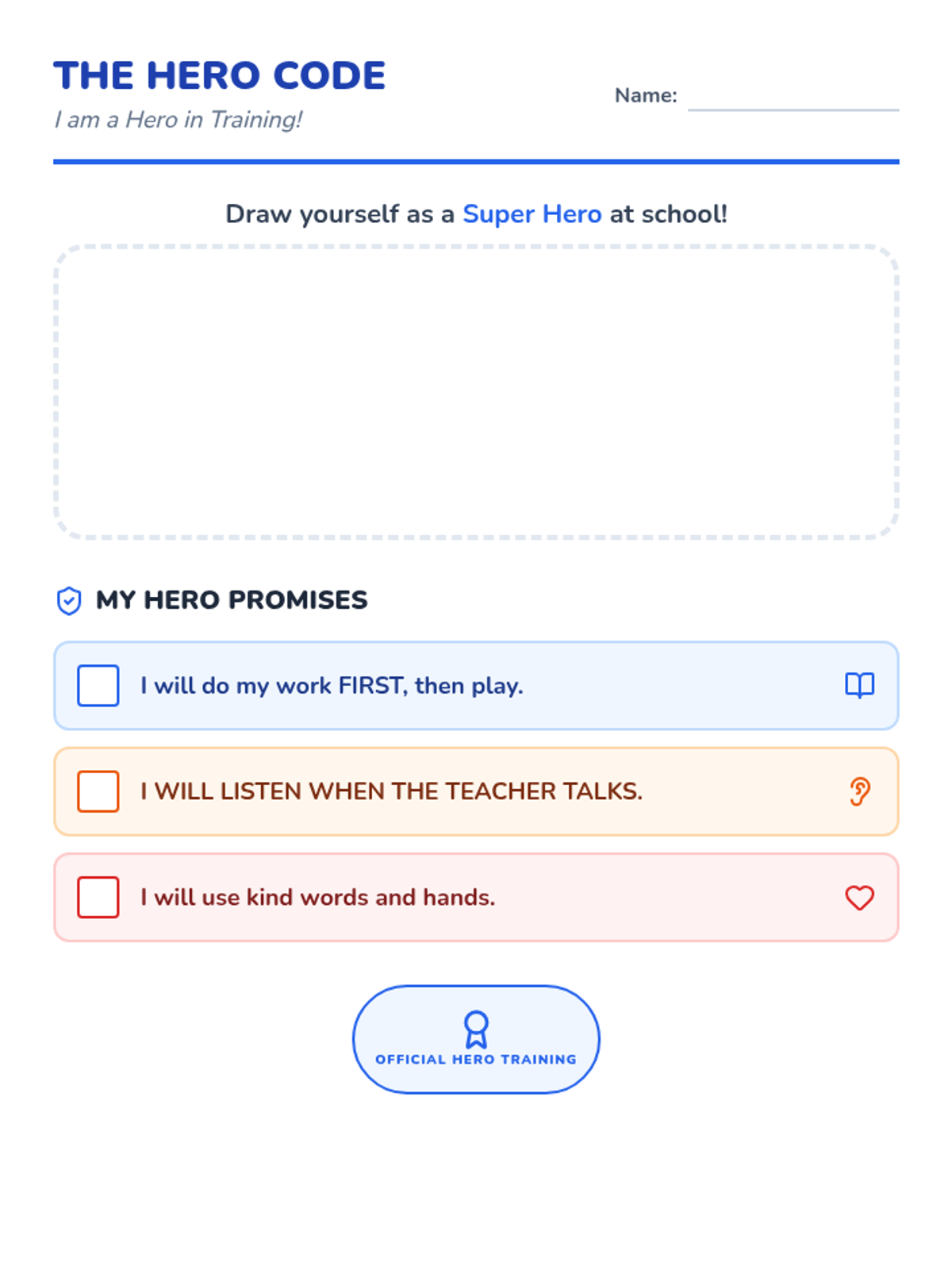
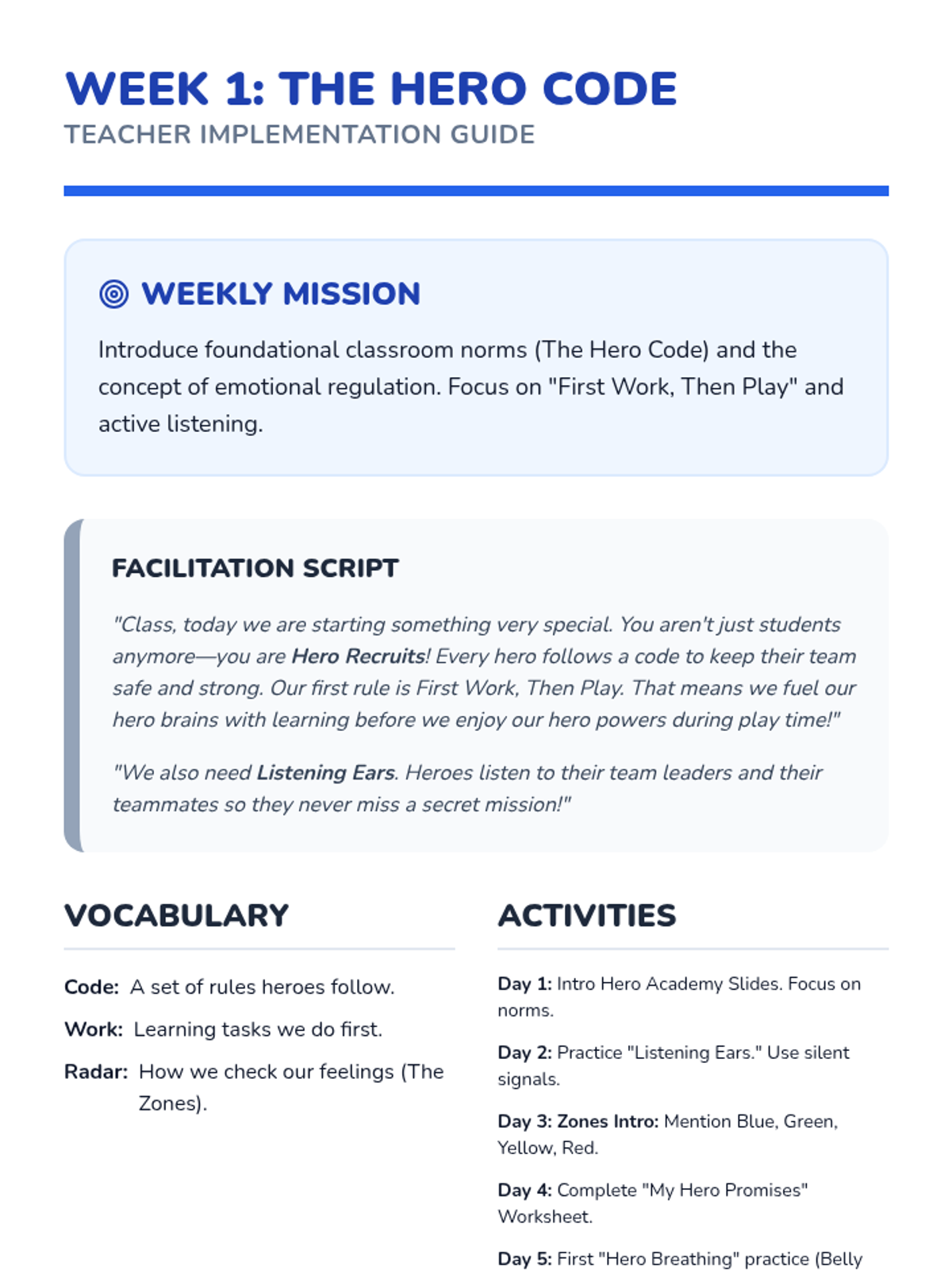
Introduction to classroom expectations and group norms using the 'Hero Code' theme, focusing on work-then-play and listening.
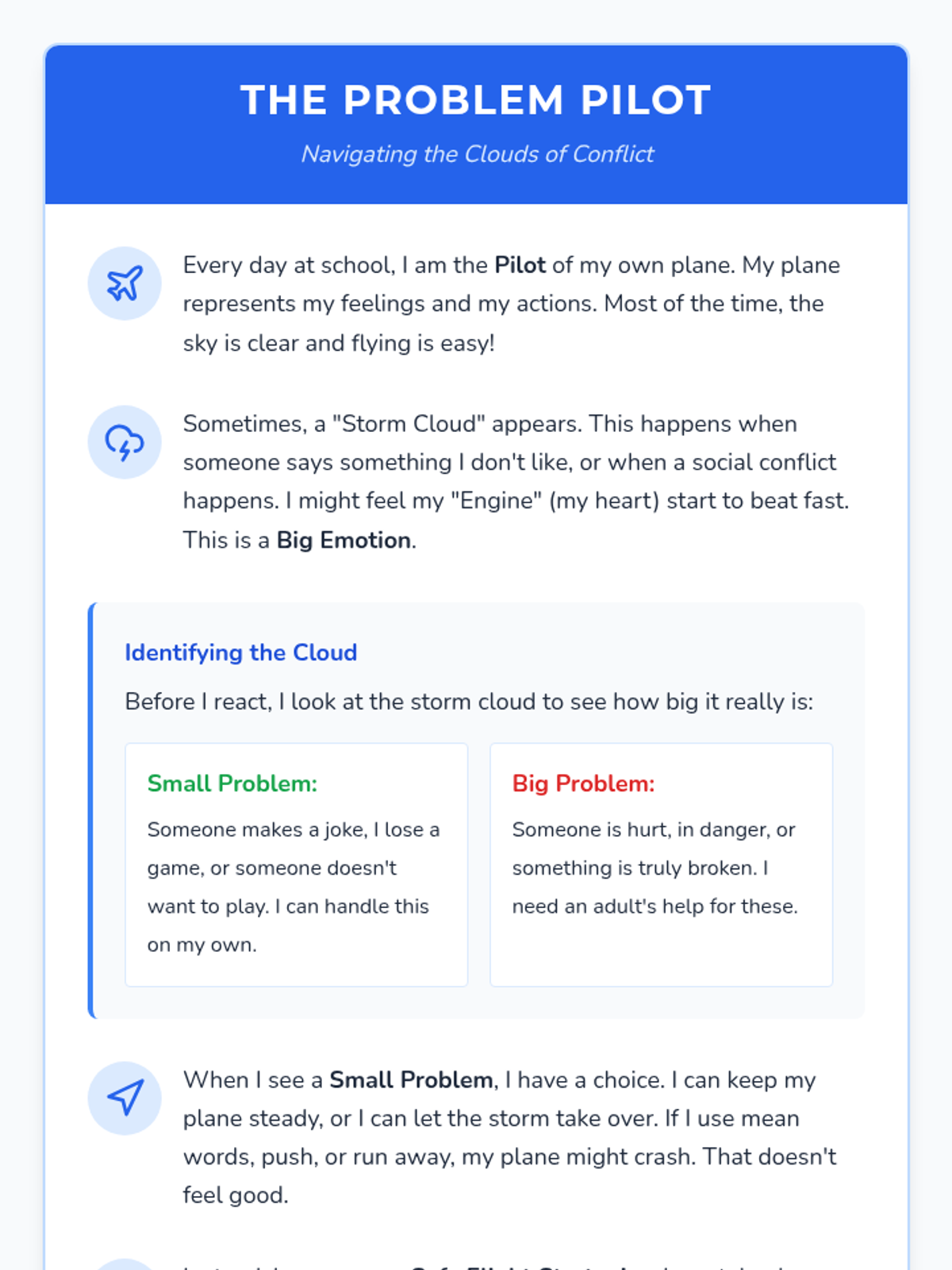
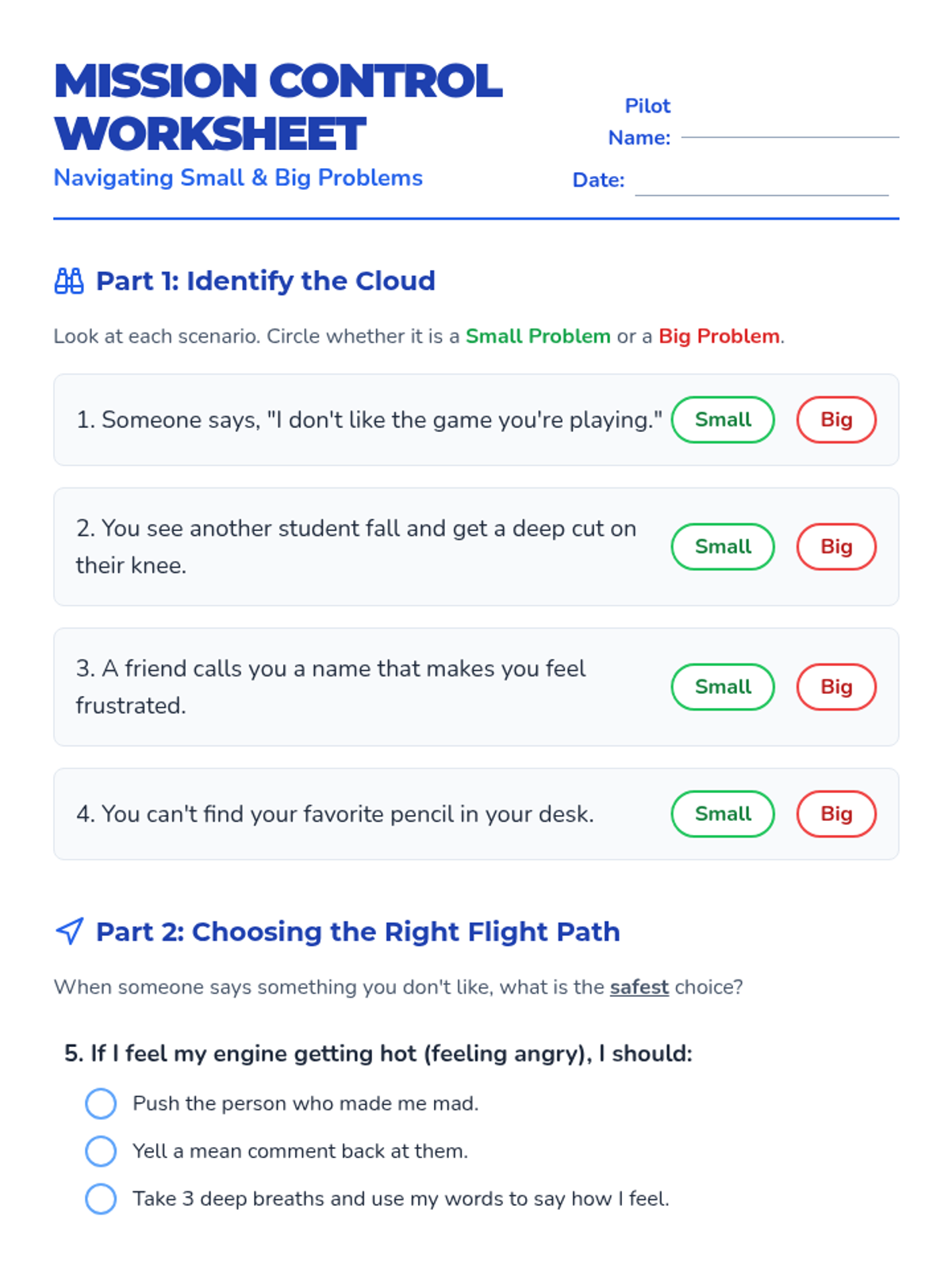
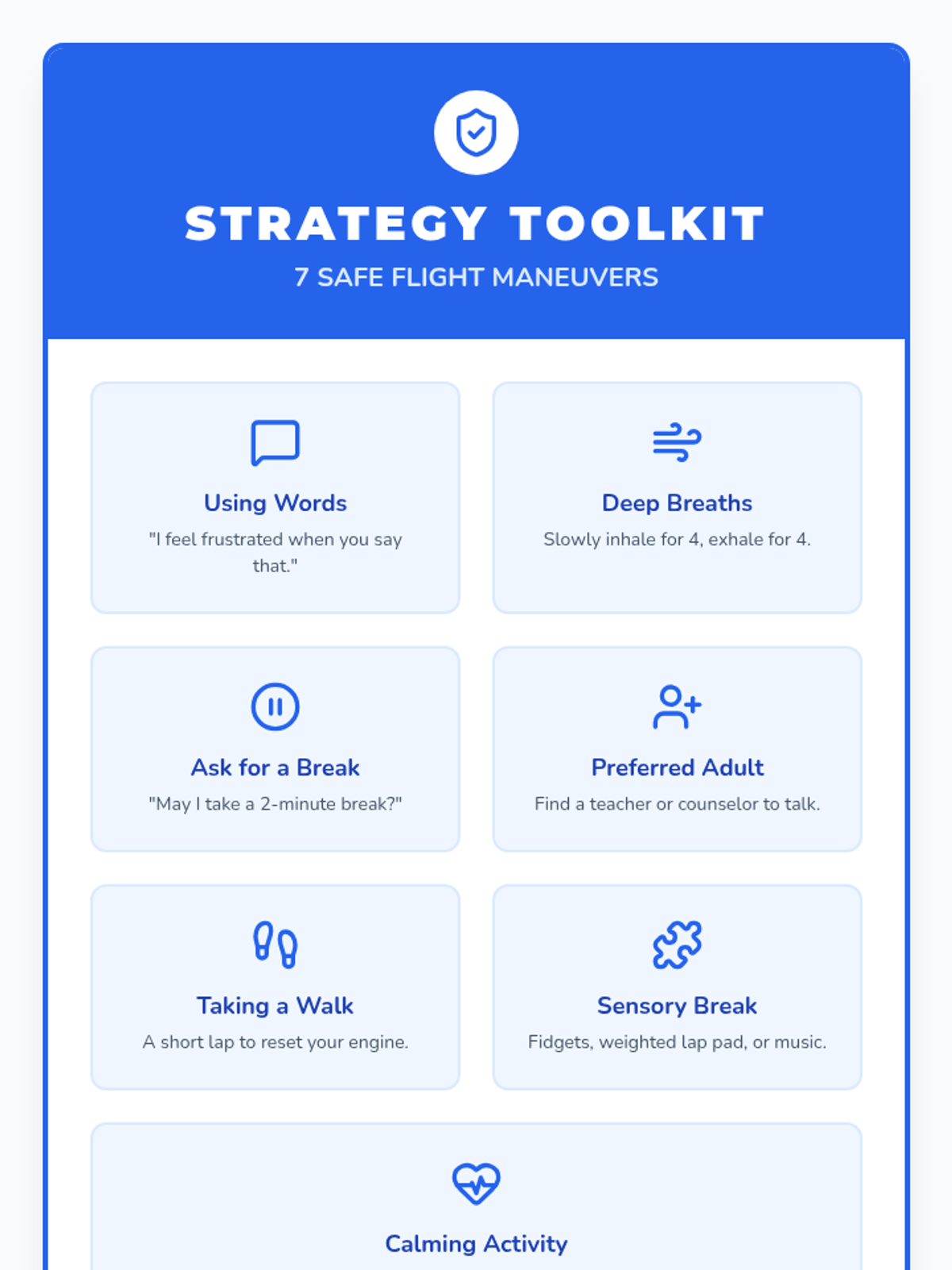
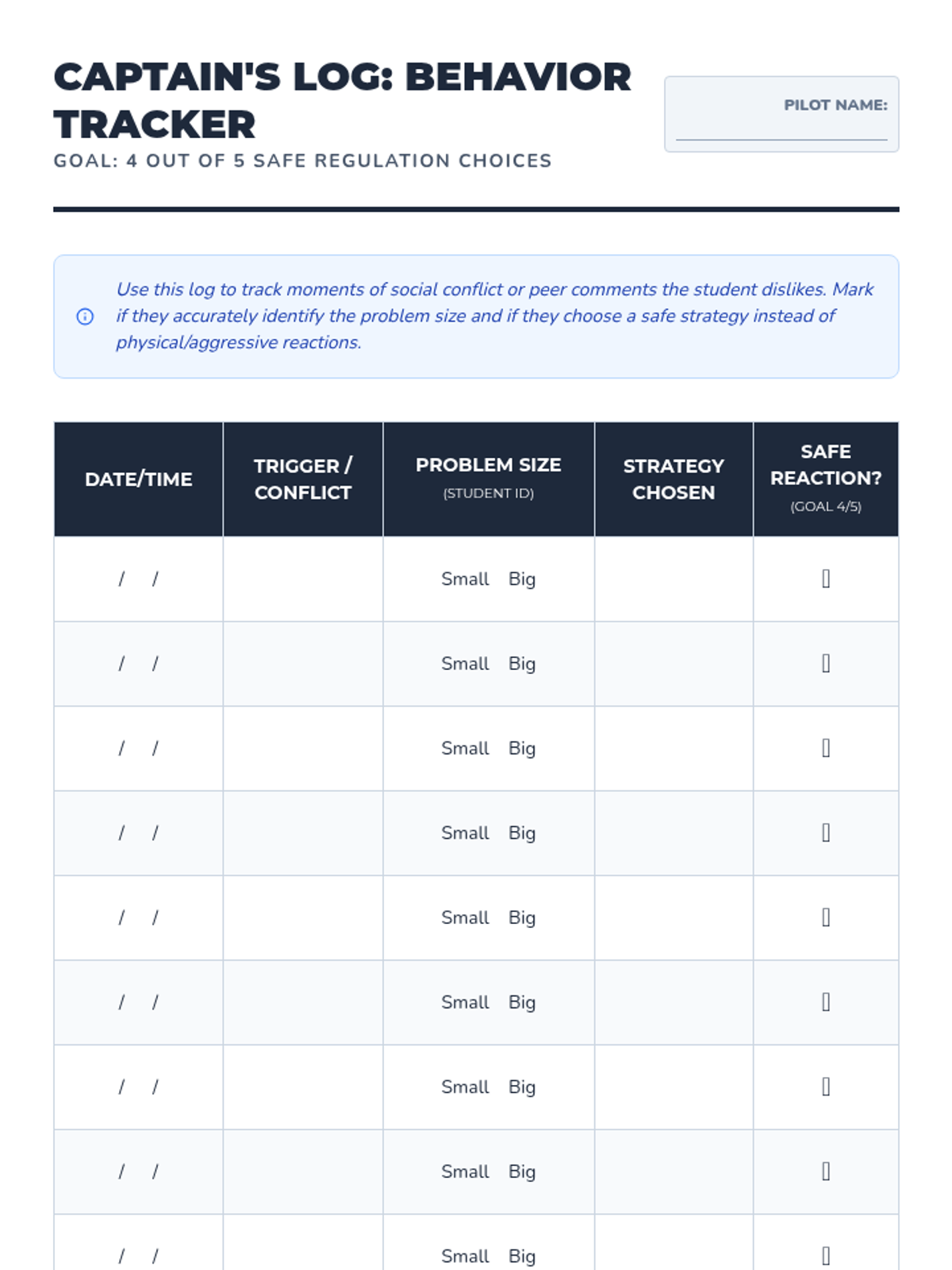
A lesson designed to help students distinguish between Small and Big Problems and choose safe regulation strategies instead of physical reactions. It includes a social story, practice worksheet, and strategy reference guide.
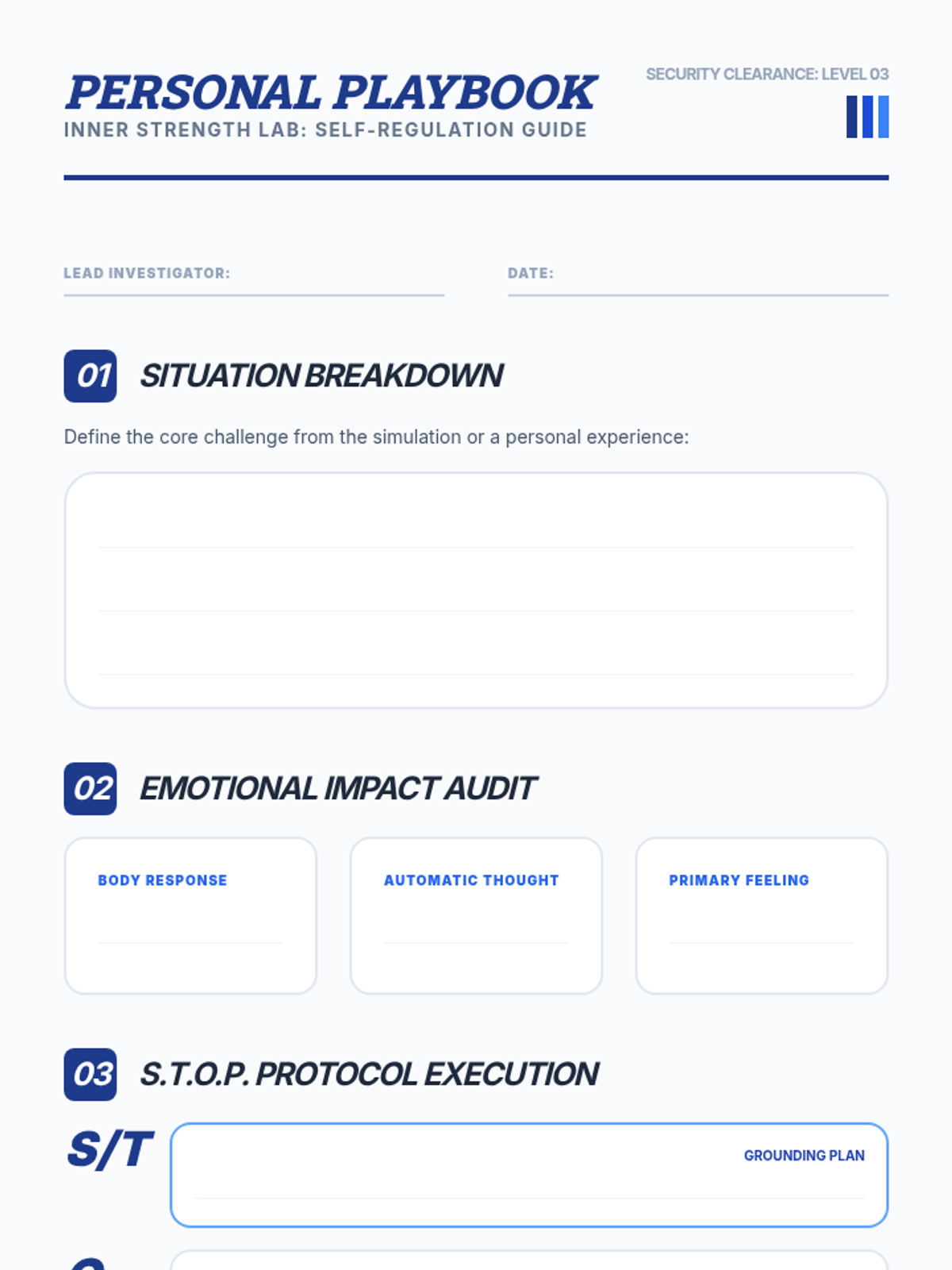
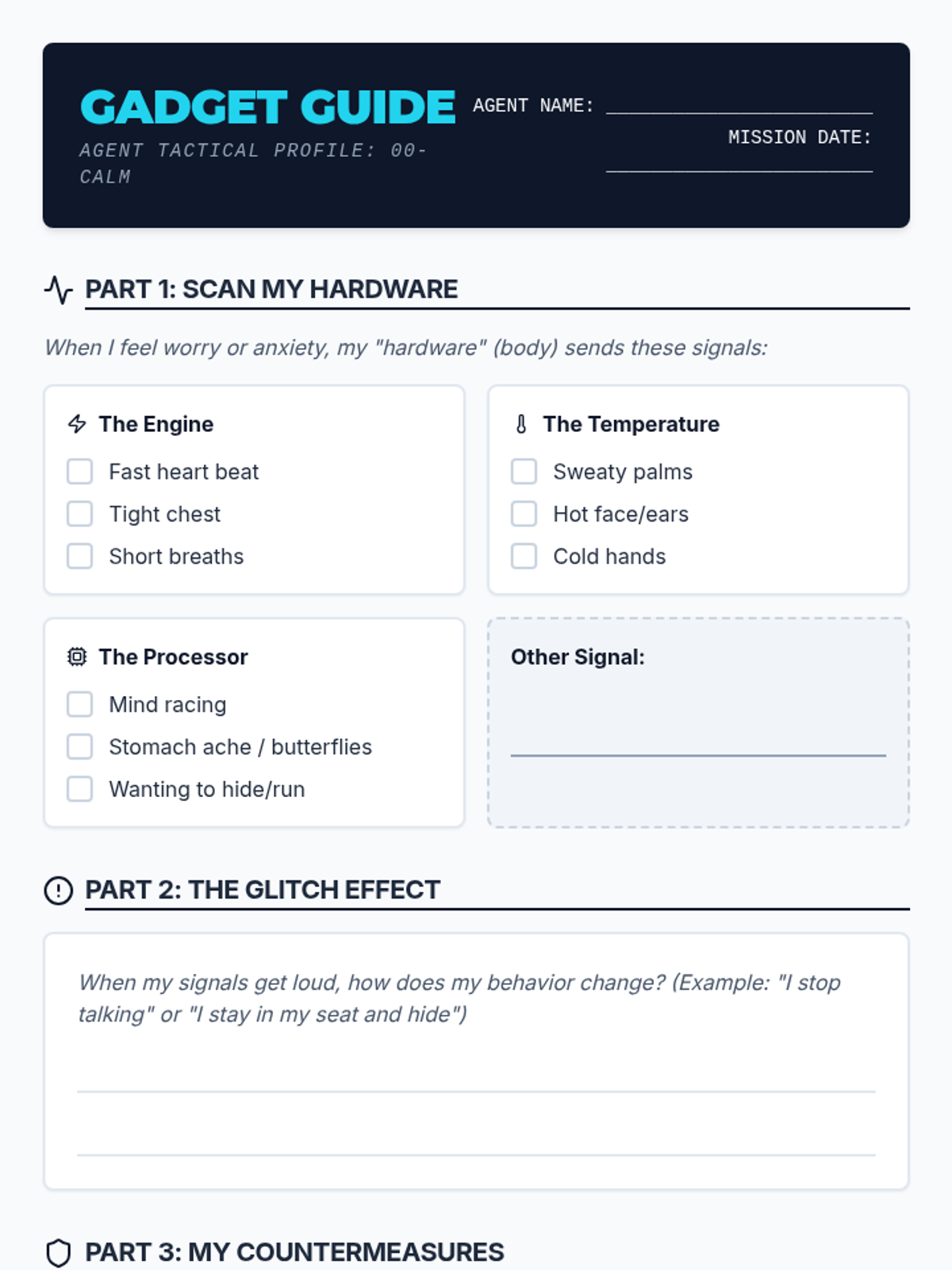
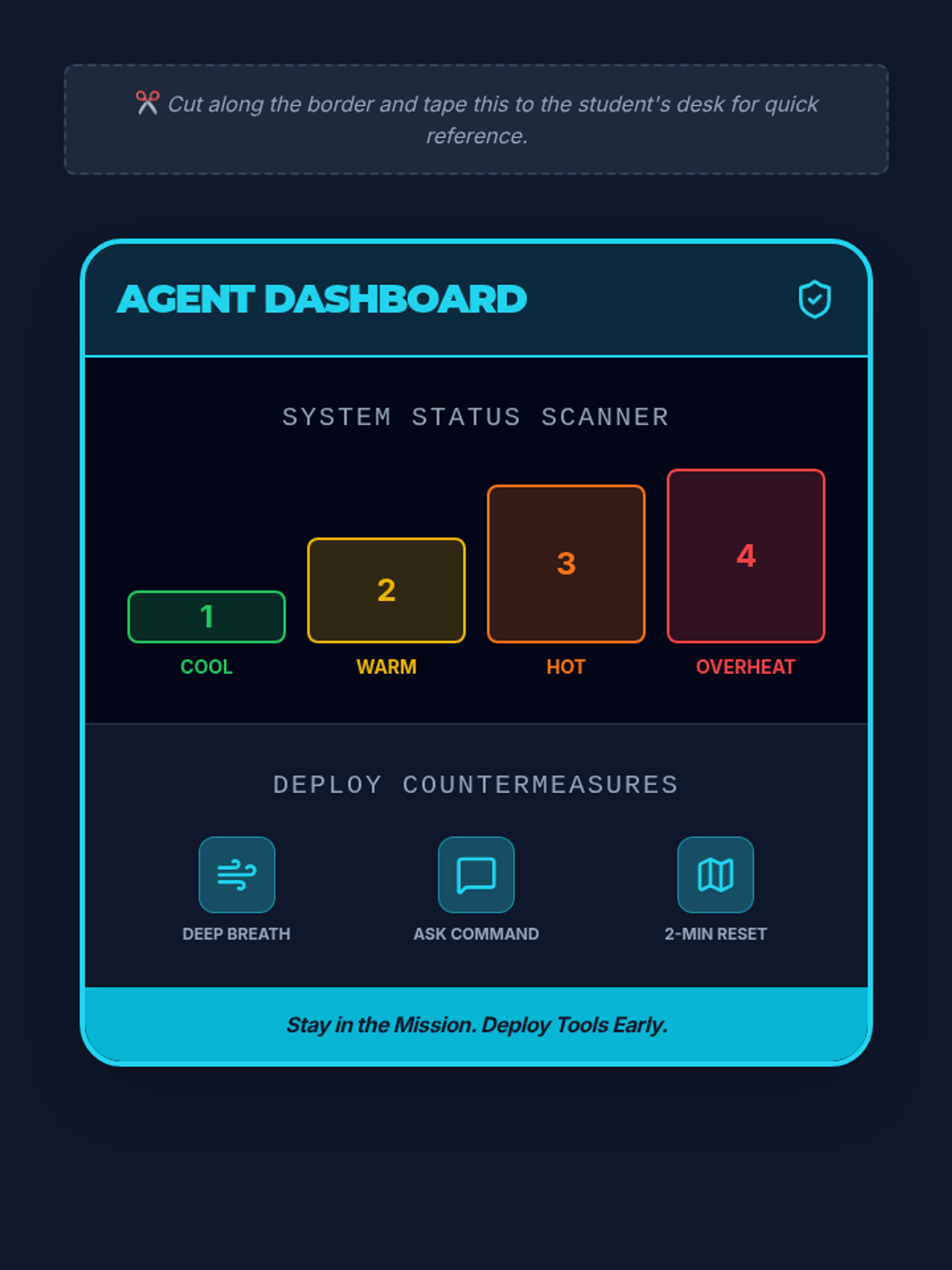
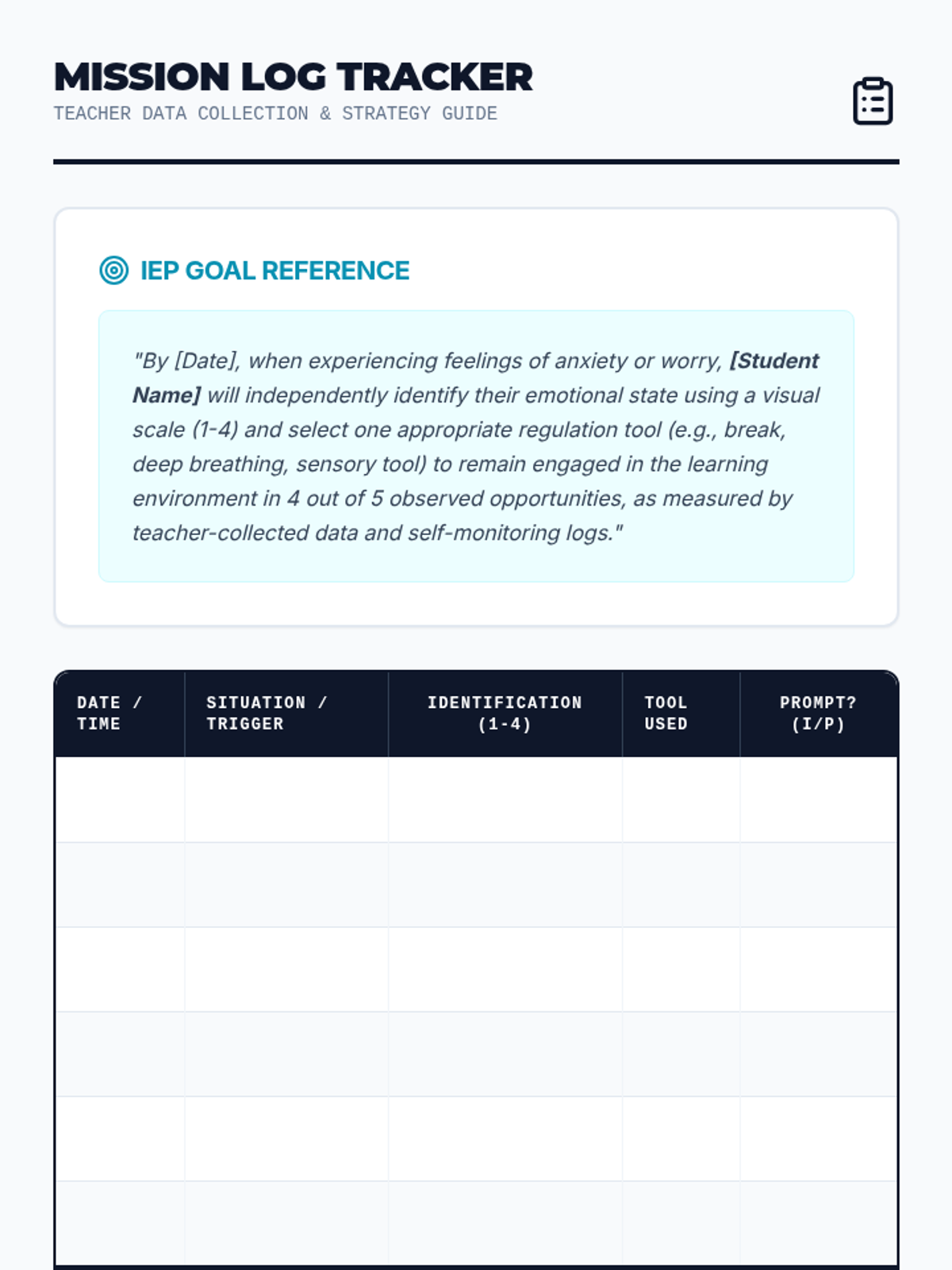
A social-emotional lesson focused on identifying internal signals of anxiety and selecting appropriate self-regulation tools. Students will learn to recognize 'glitches' in their system and deploy 'countermeasures' to stay on track.
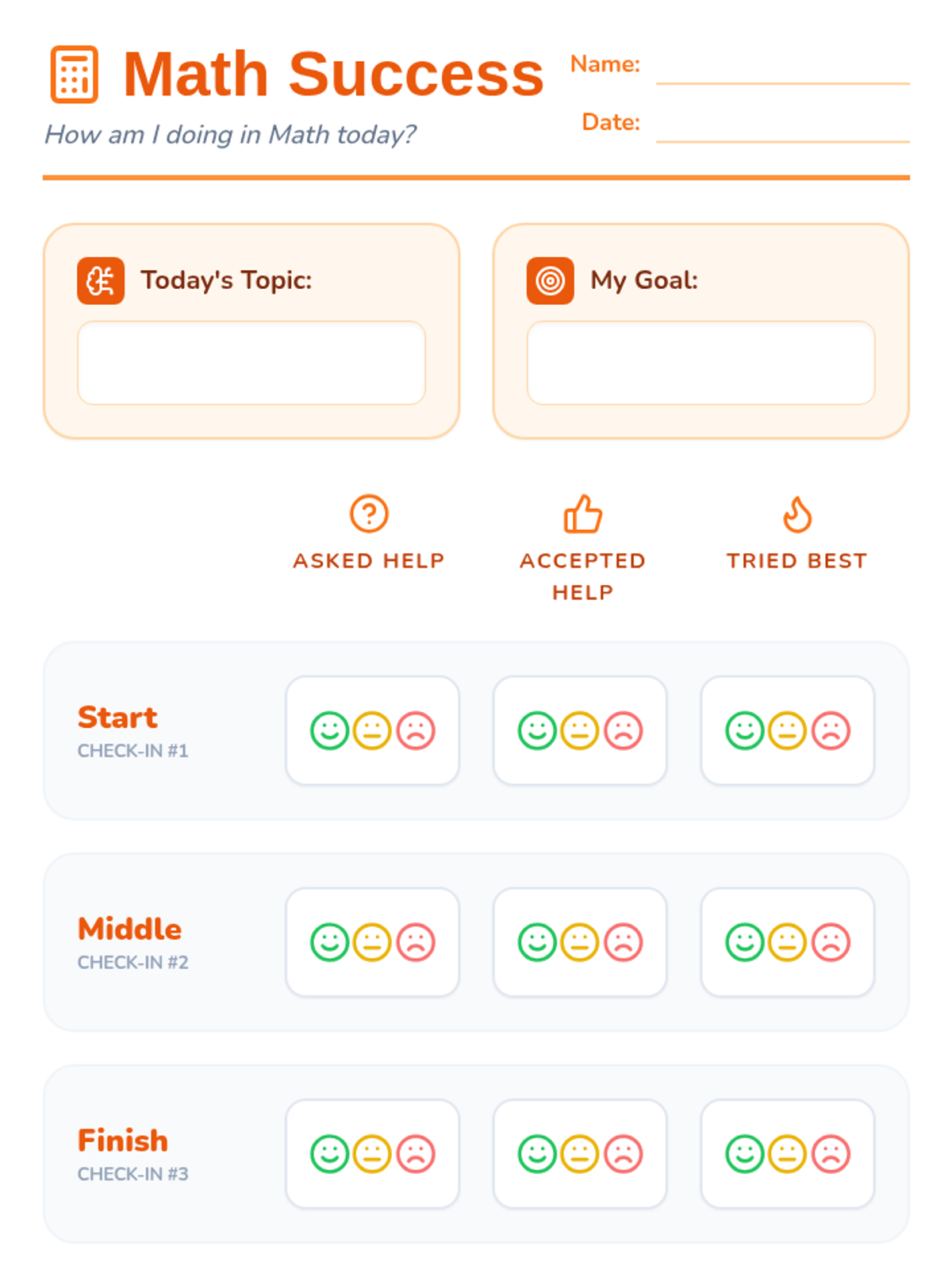
A resource to help students self-monitor their behavior and effort during a single learning session.