Identifies mental health crises and suicide warning signs while developing personal safety plans and grounding techniques. Equips users with peer gatekeeper skills and direct pathways to professional crisis resources and hotlines.
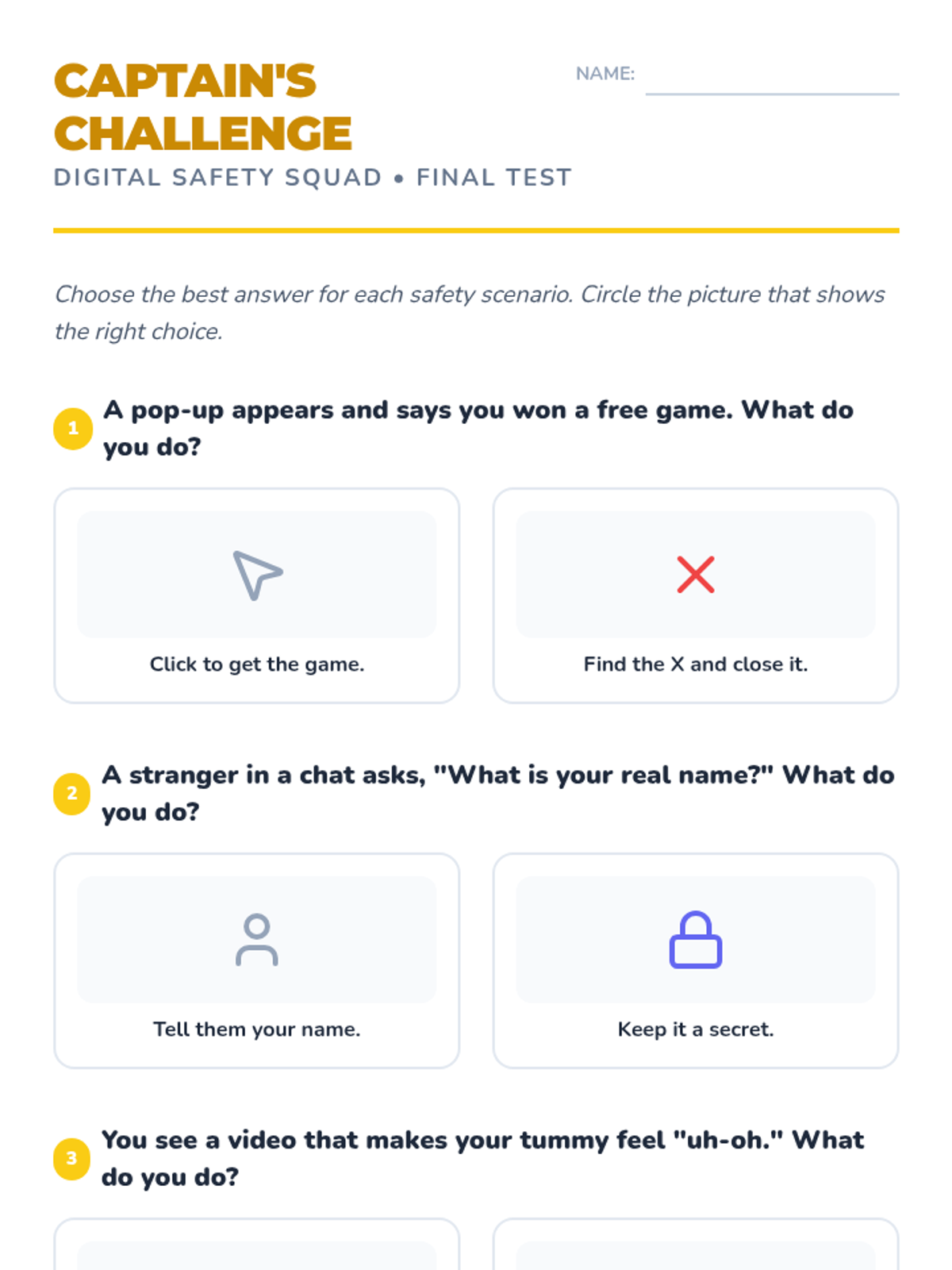
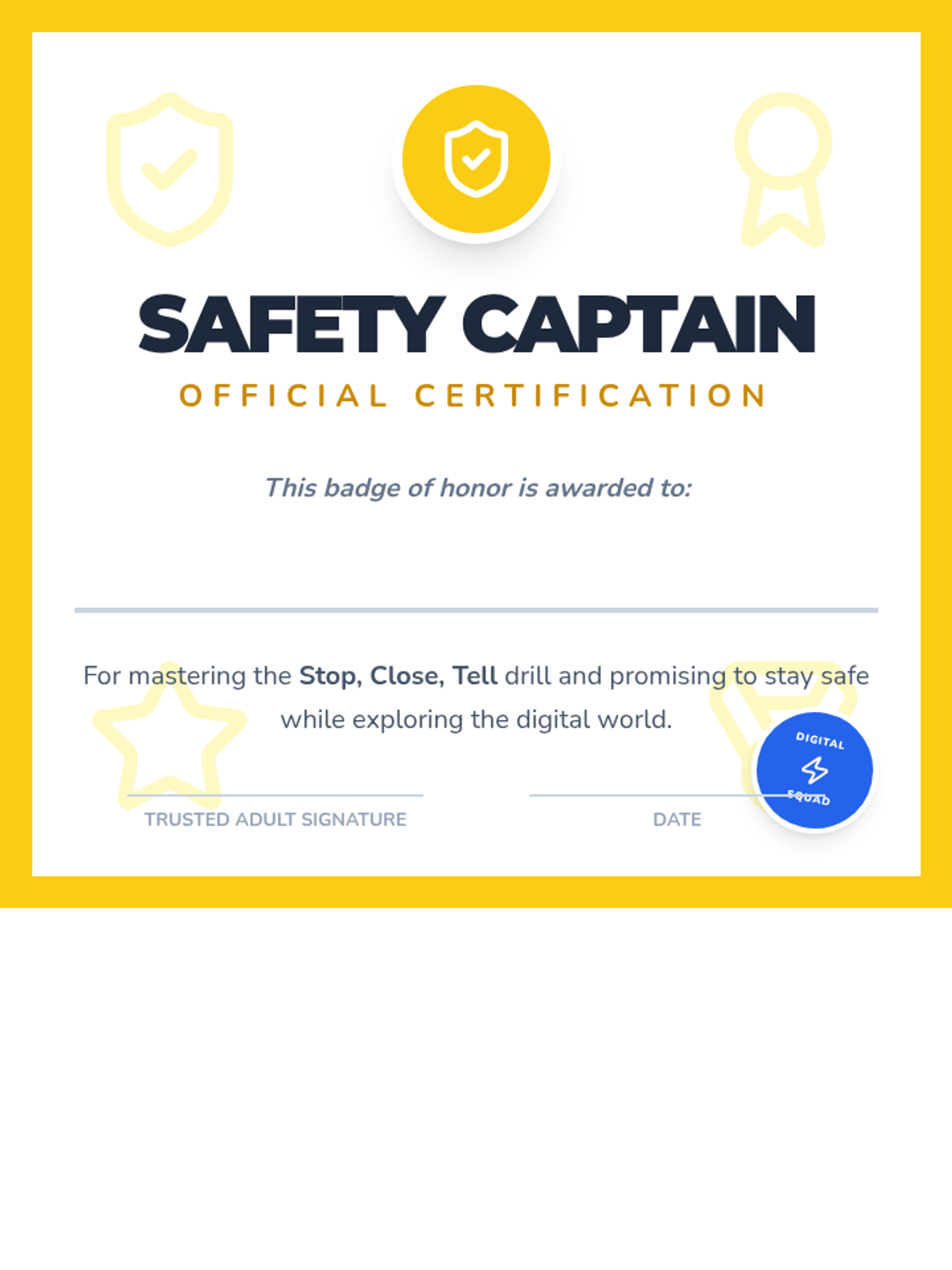
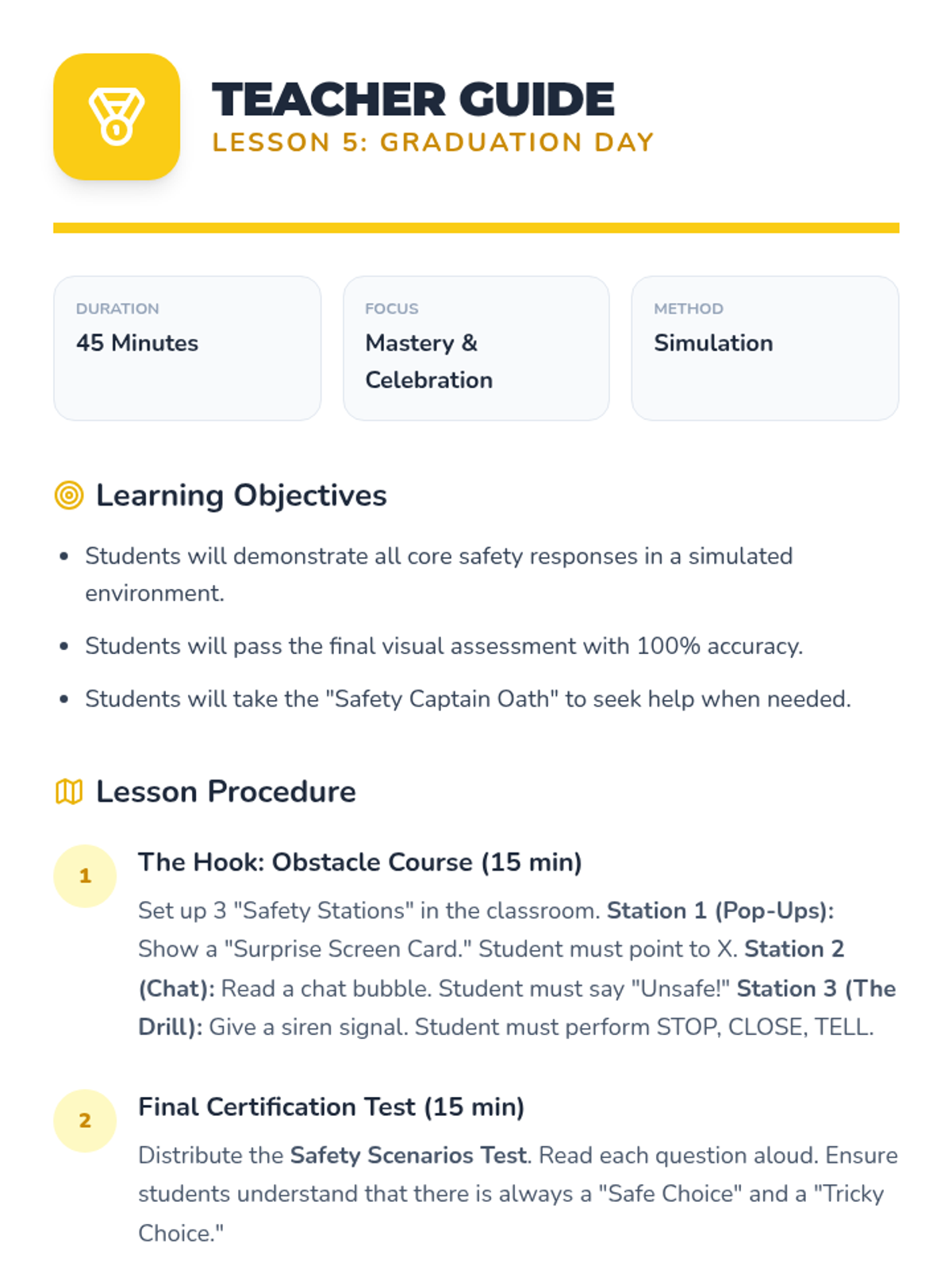
Students demonstrate their mastery of digital safety skills to earn their Safety Captain certification.
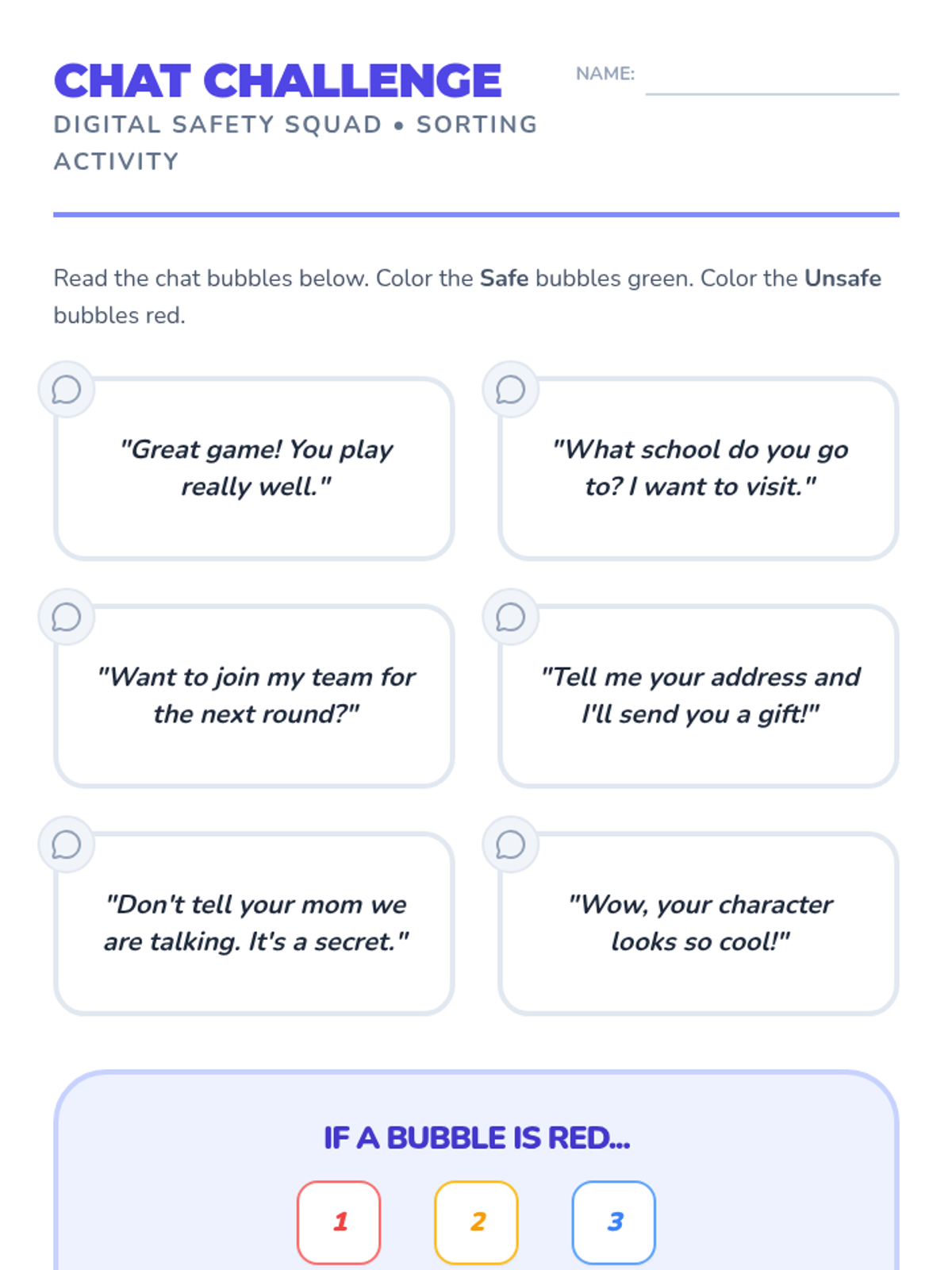
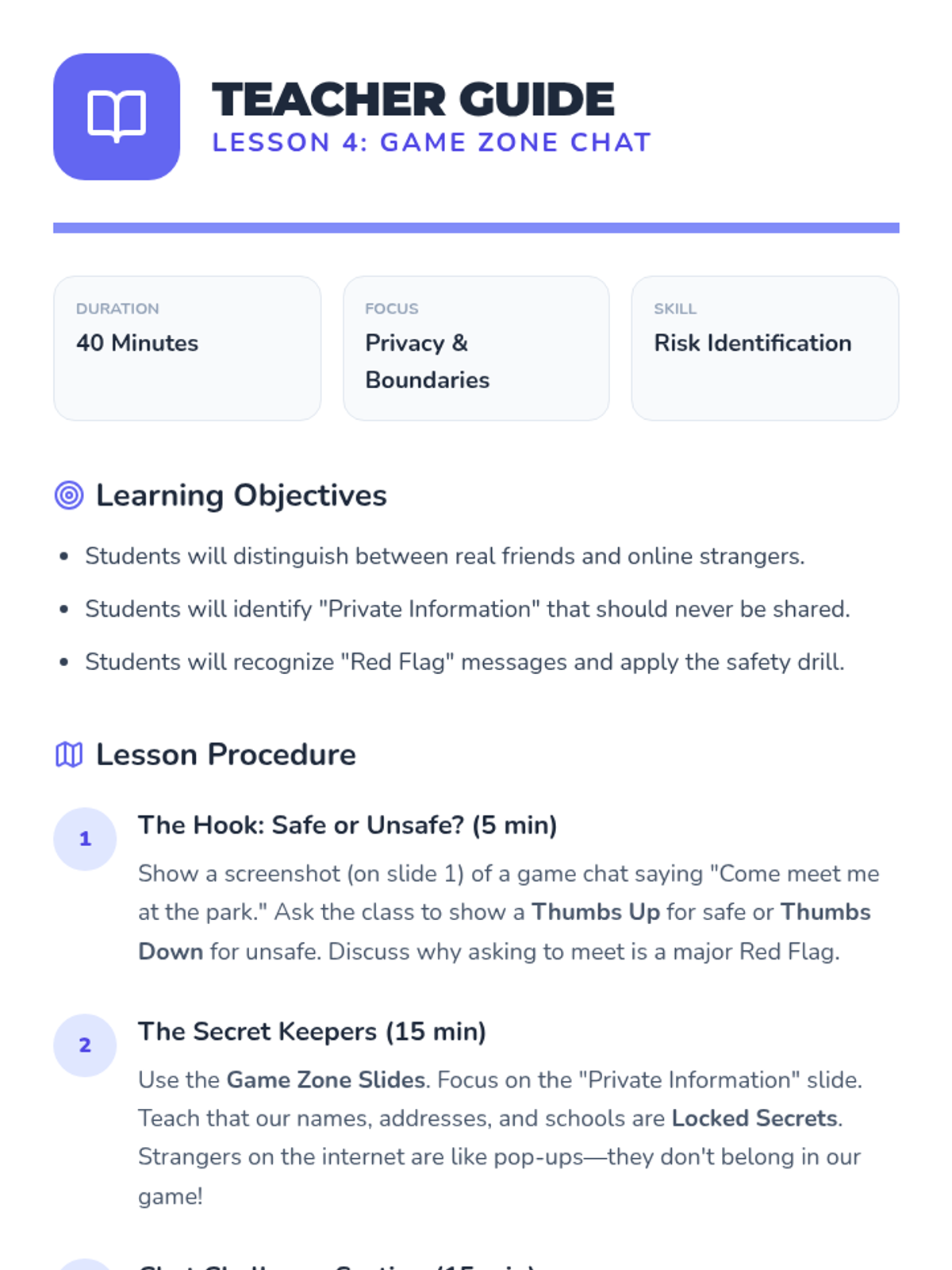
Students identify unsafe interactions in online games and practice ignoring chat requests from strangers.
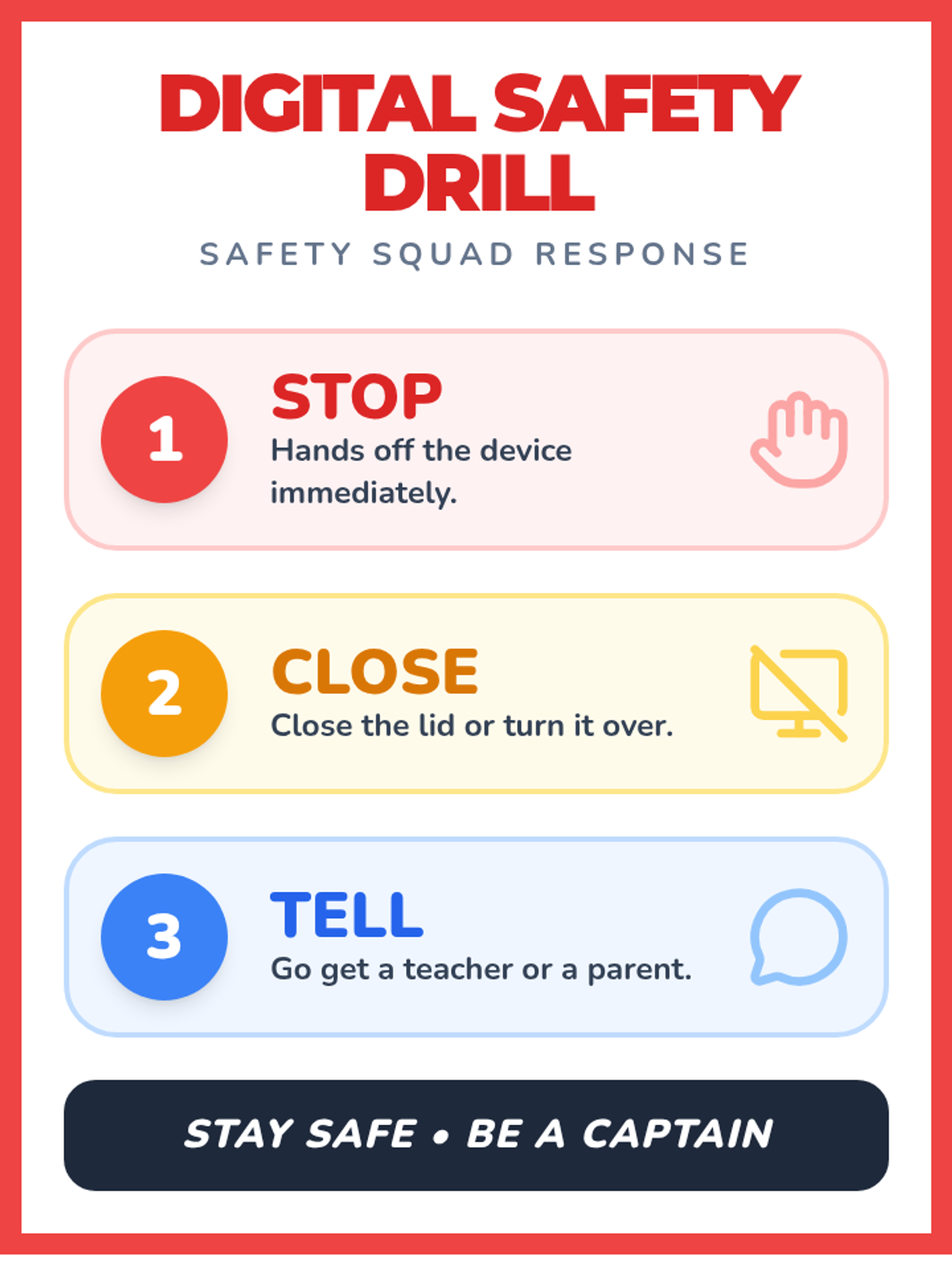
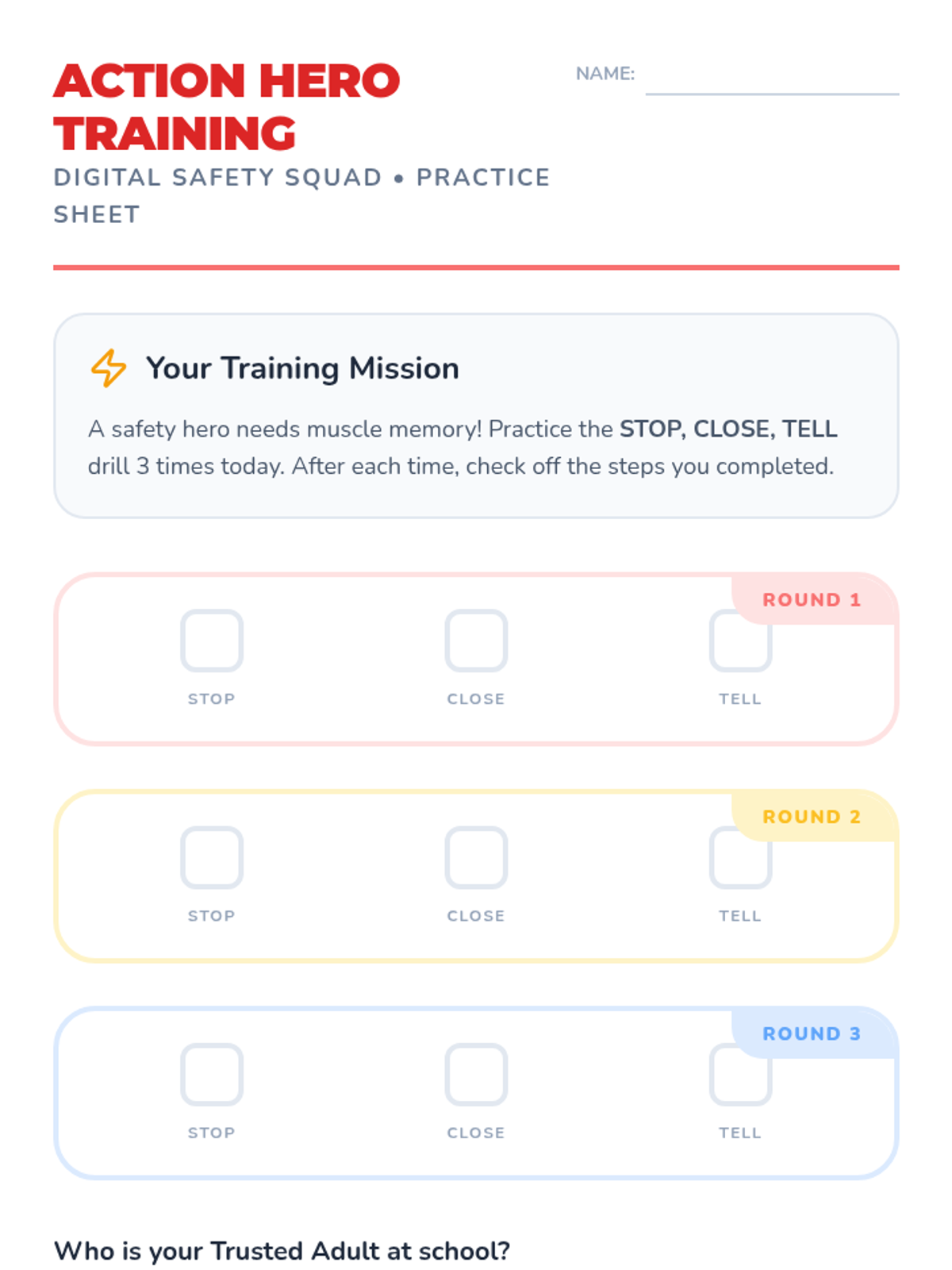
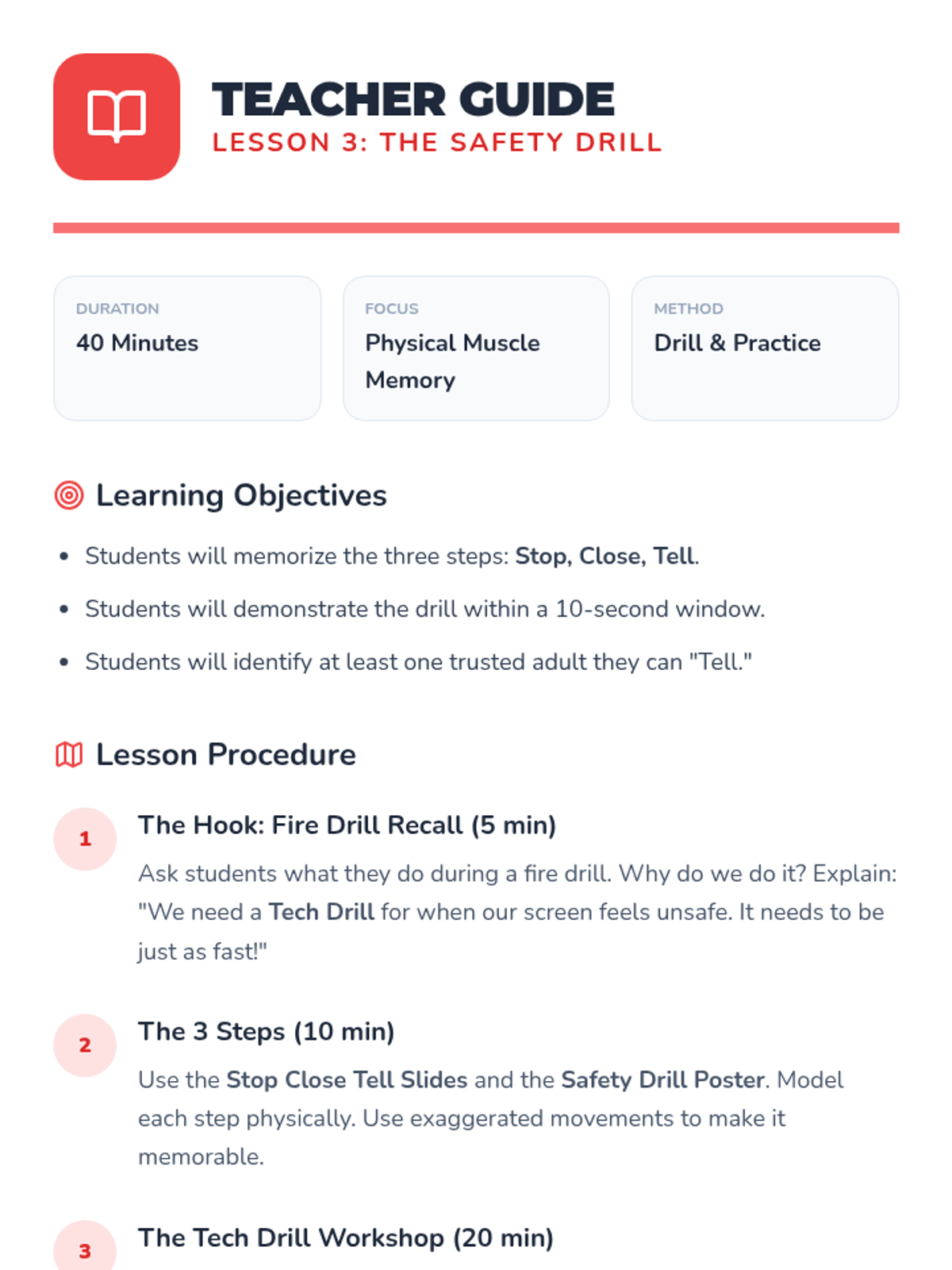
Students practice the physical drill of putting a device down, closing it, and immediately telling a trusted adult.
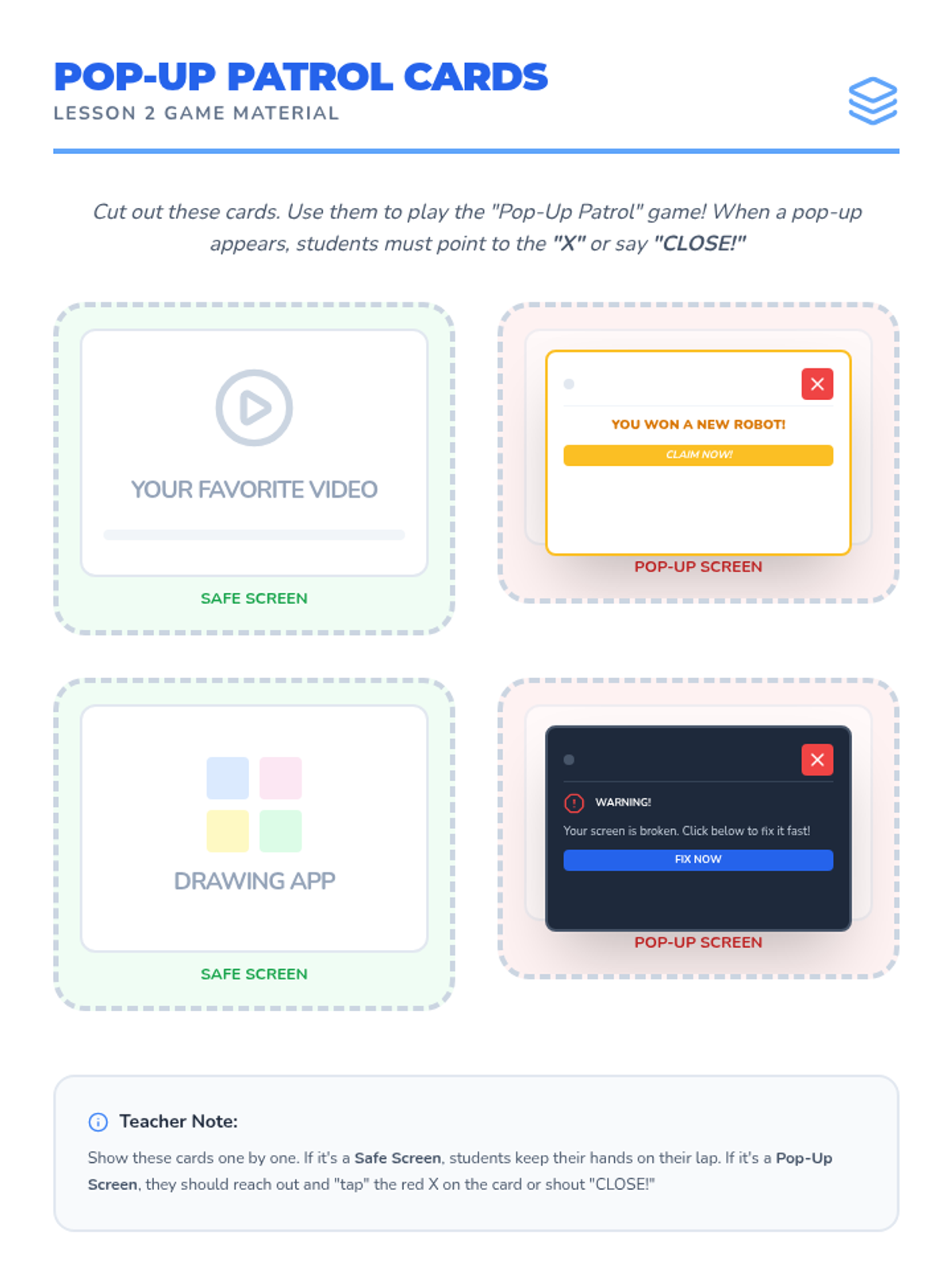
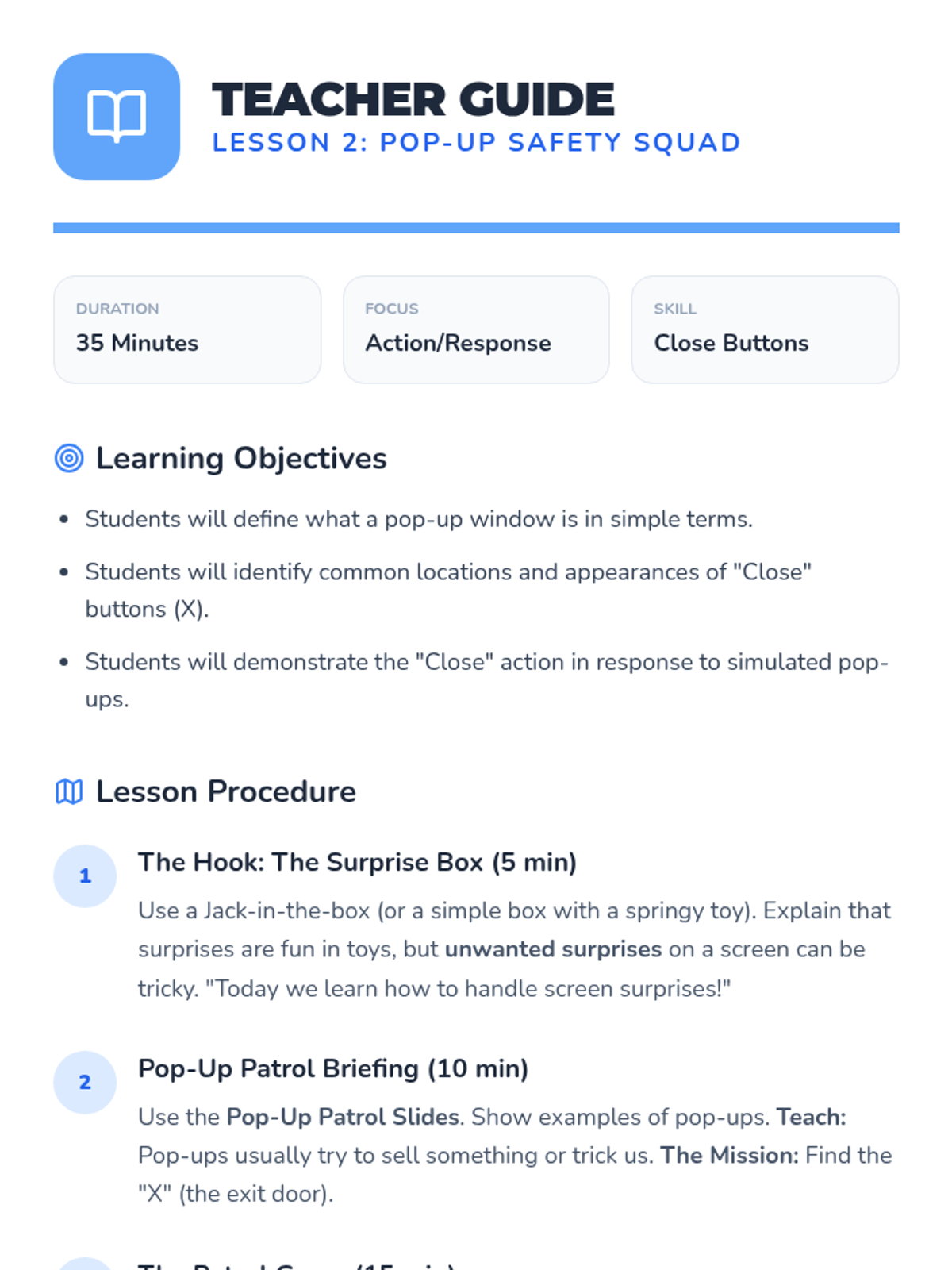
Students learn to identify and handle pop-ups and unexpected windows by practicing the 'Close' action.
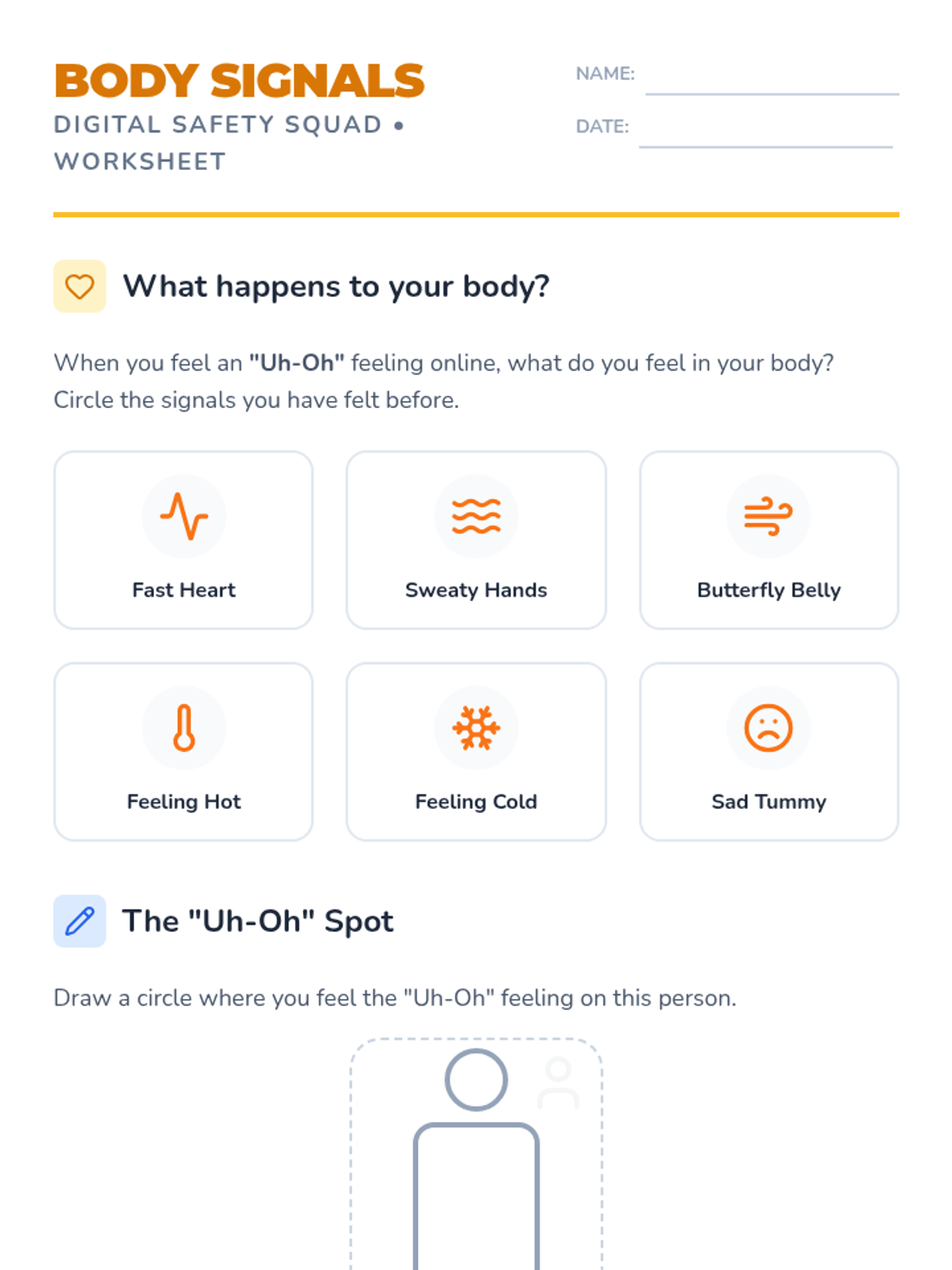
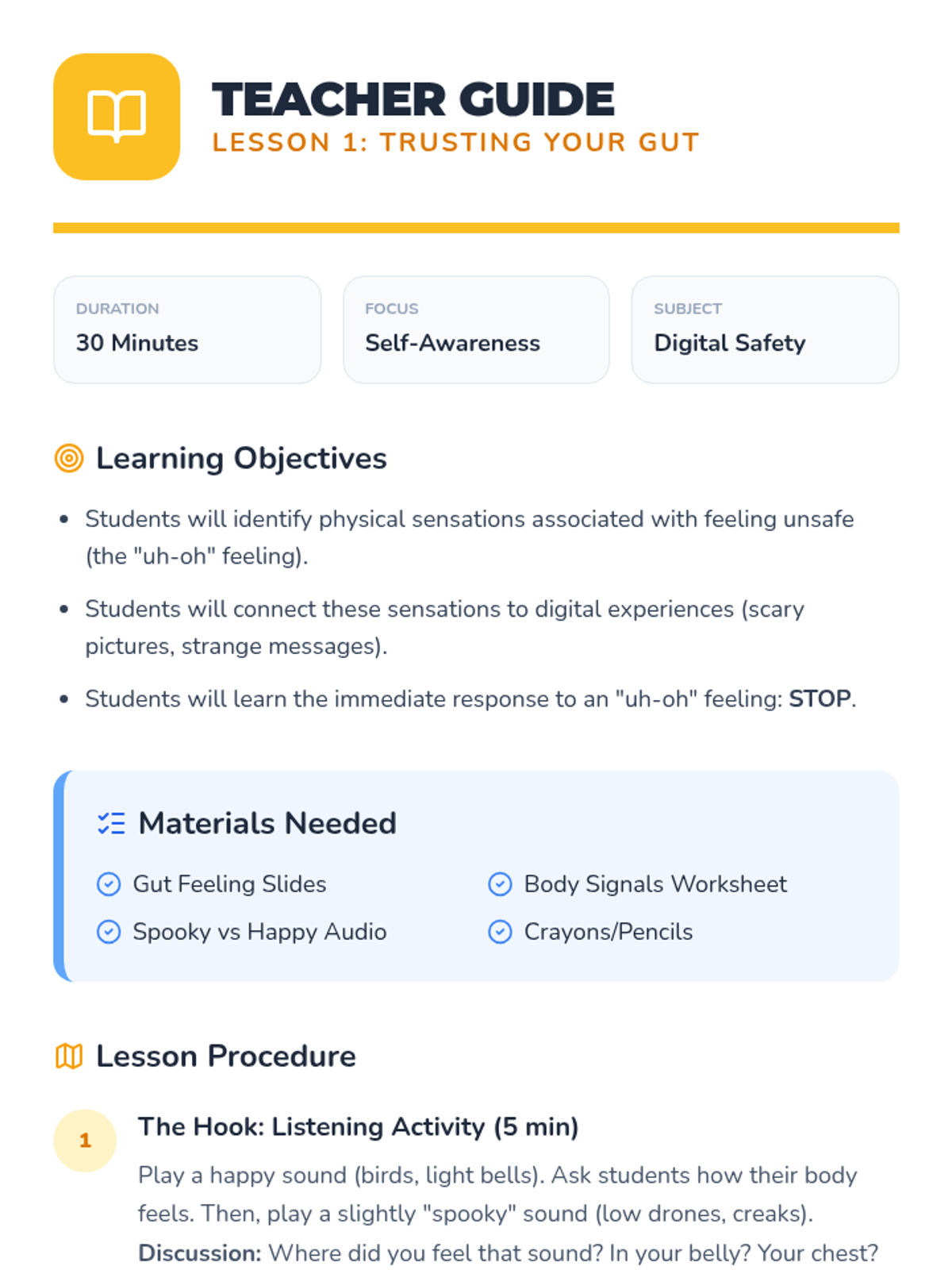
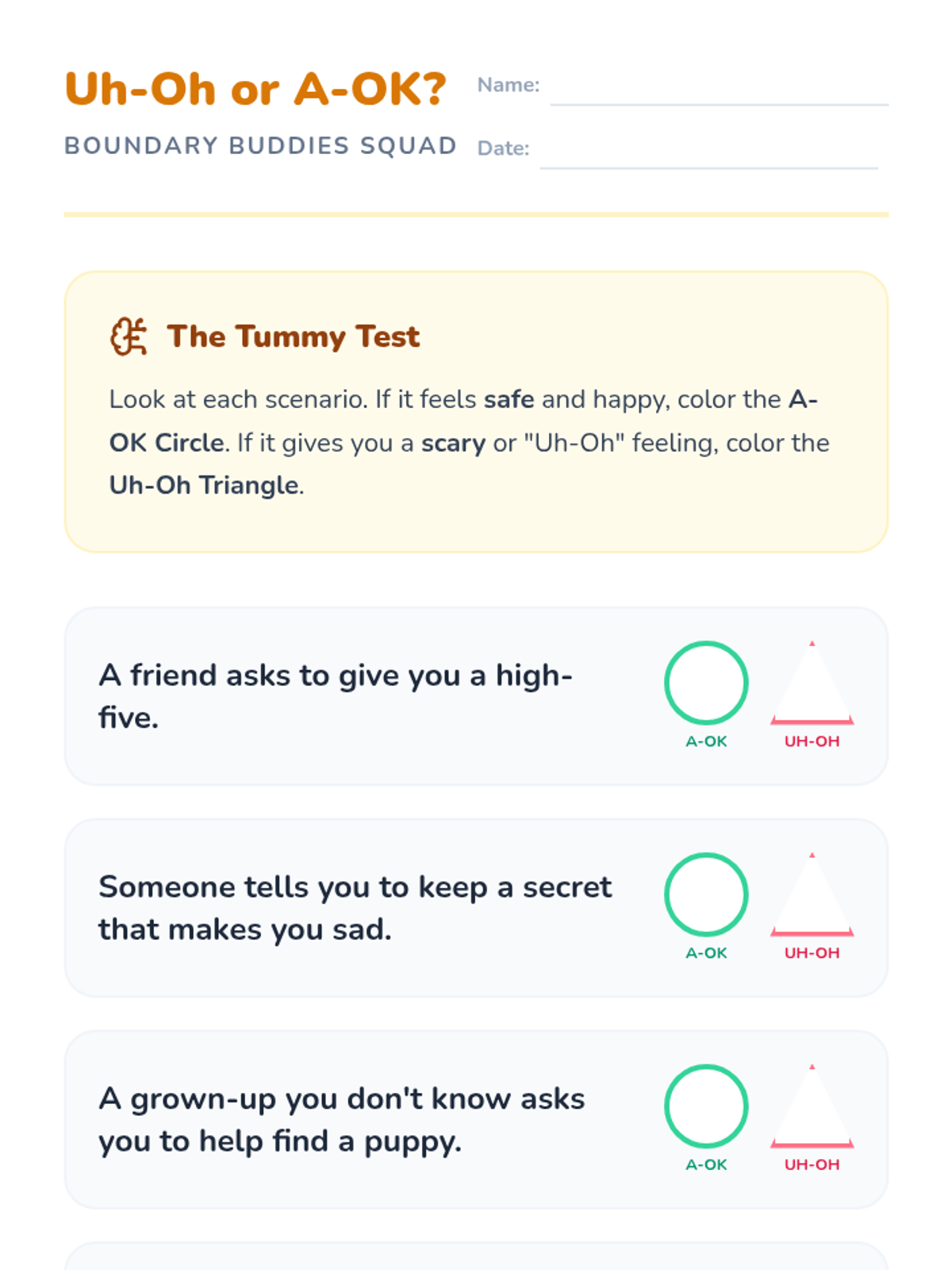
Students discuss the physical sensations of feeling unsafe and learn to recognize these 'uh-oh' feelings as signals to stop and seek help.
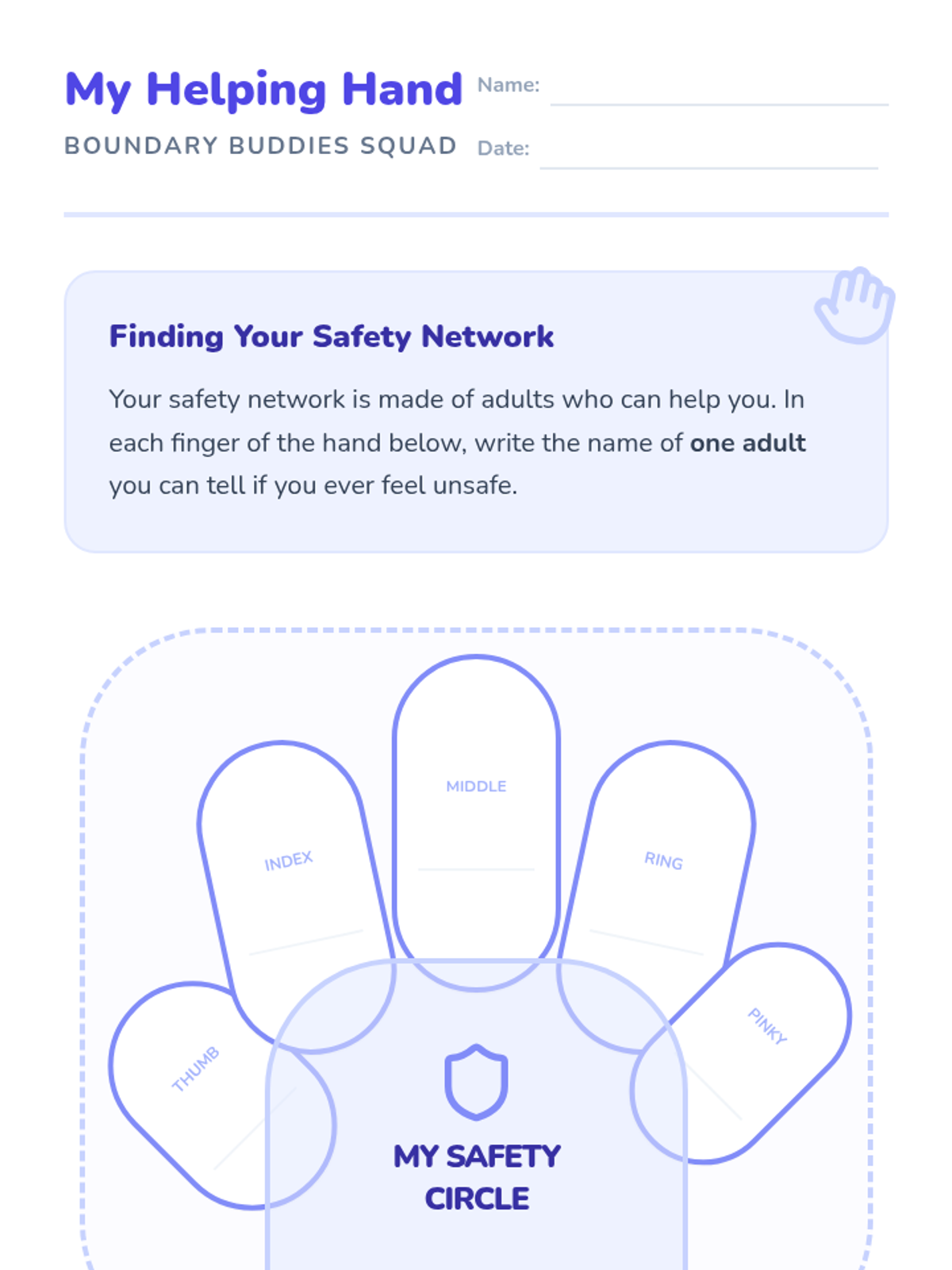
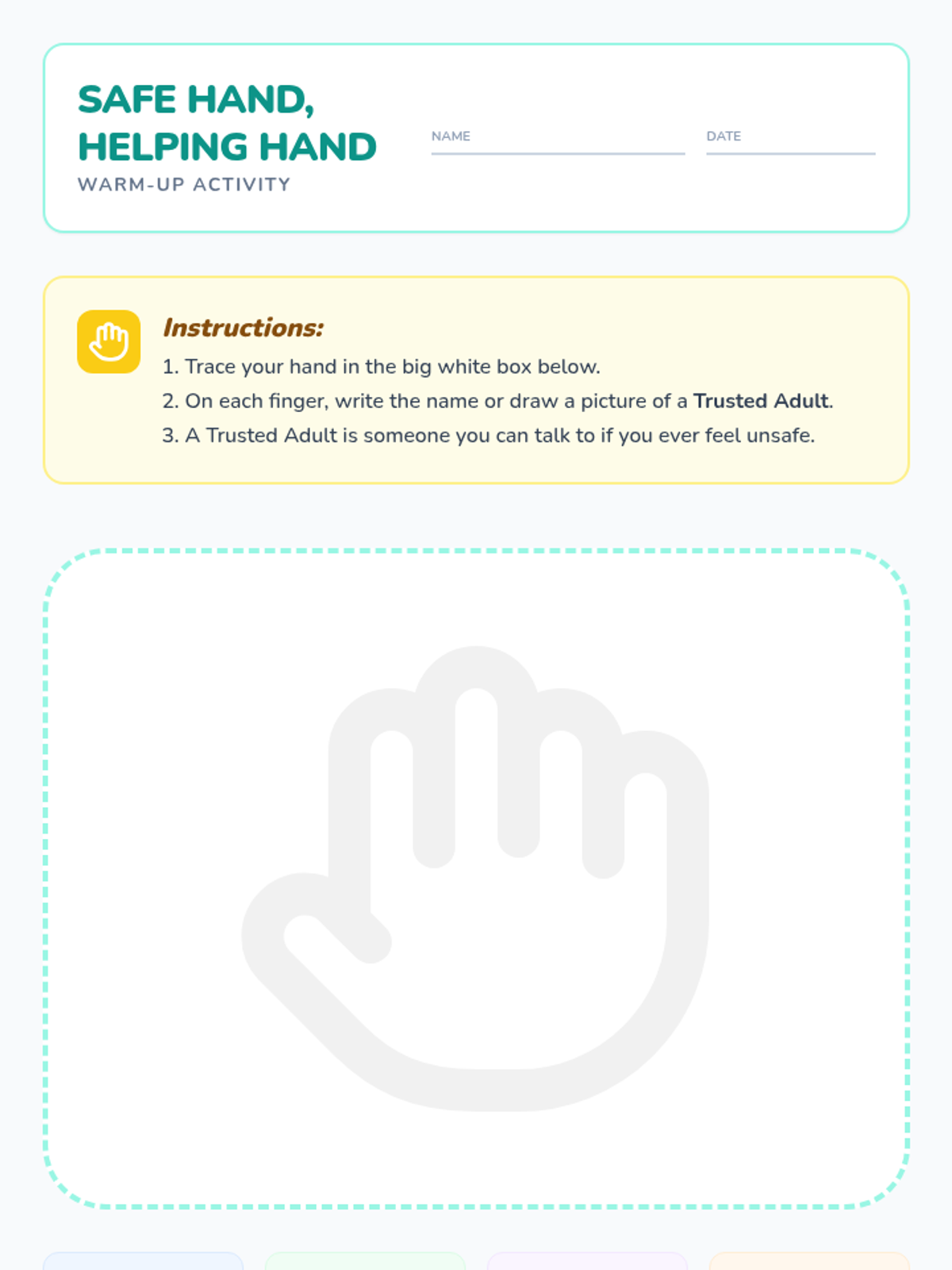
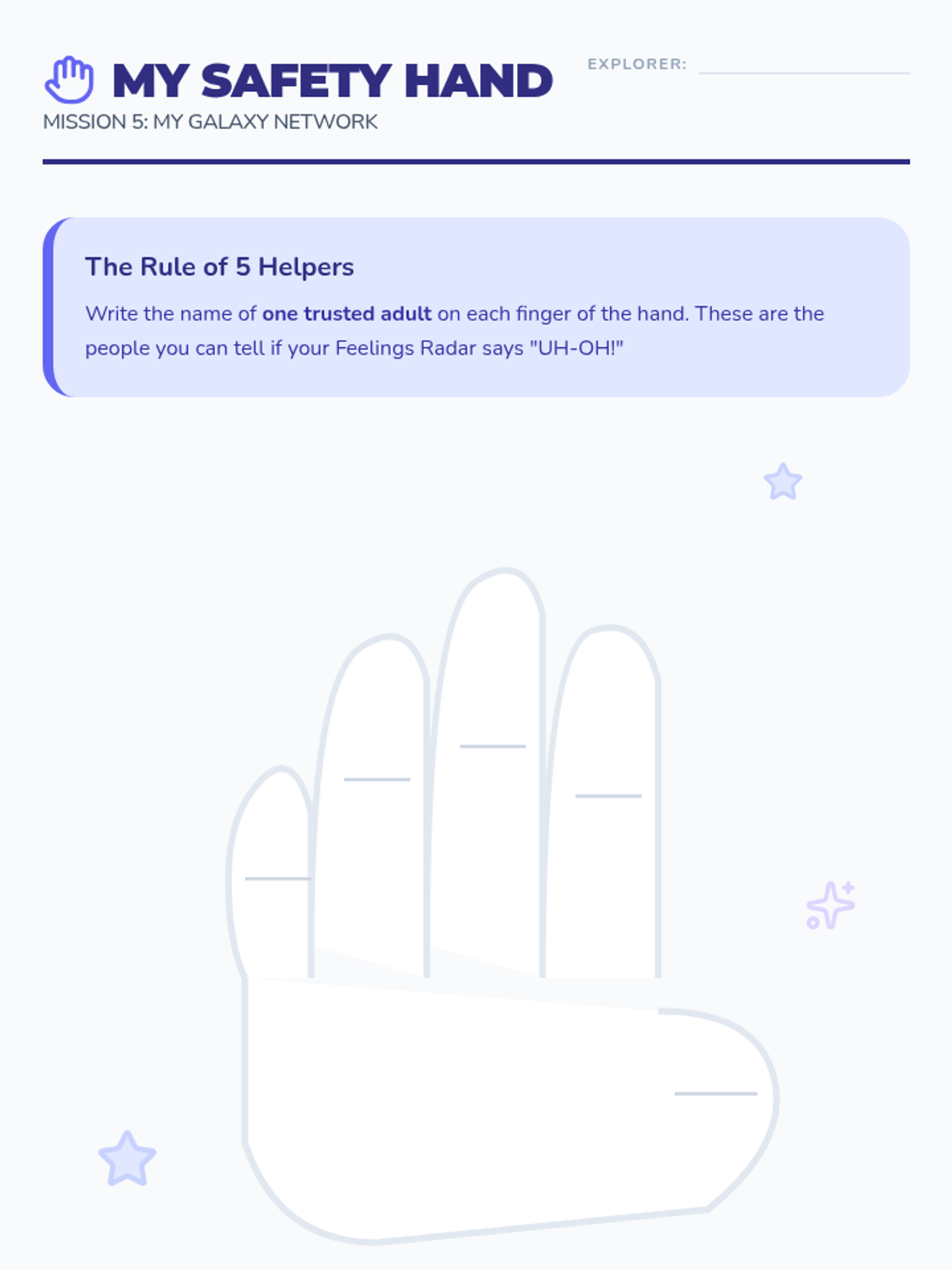
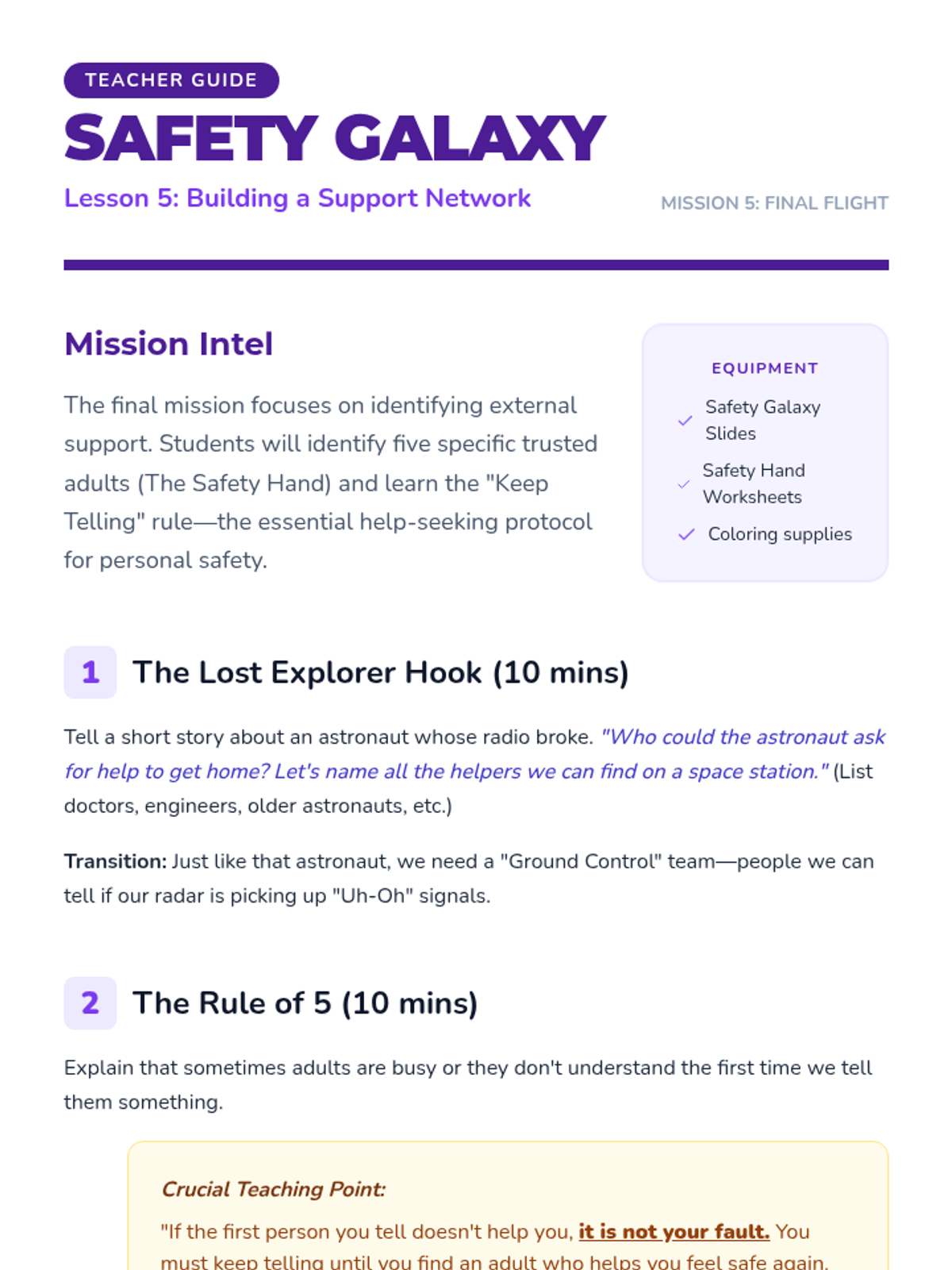
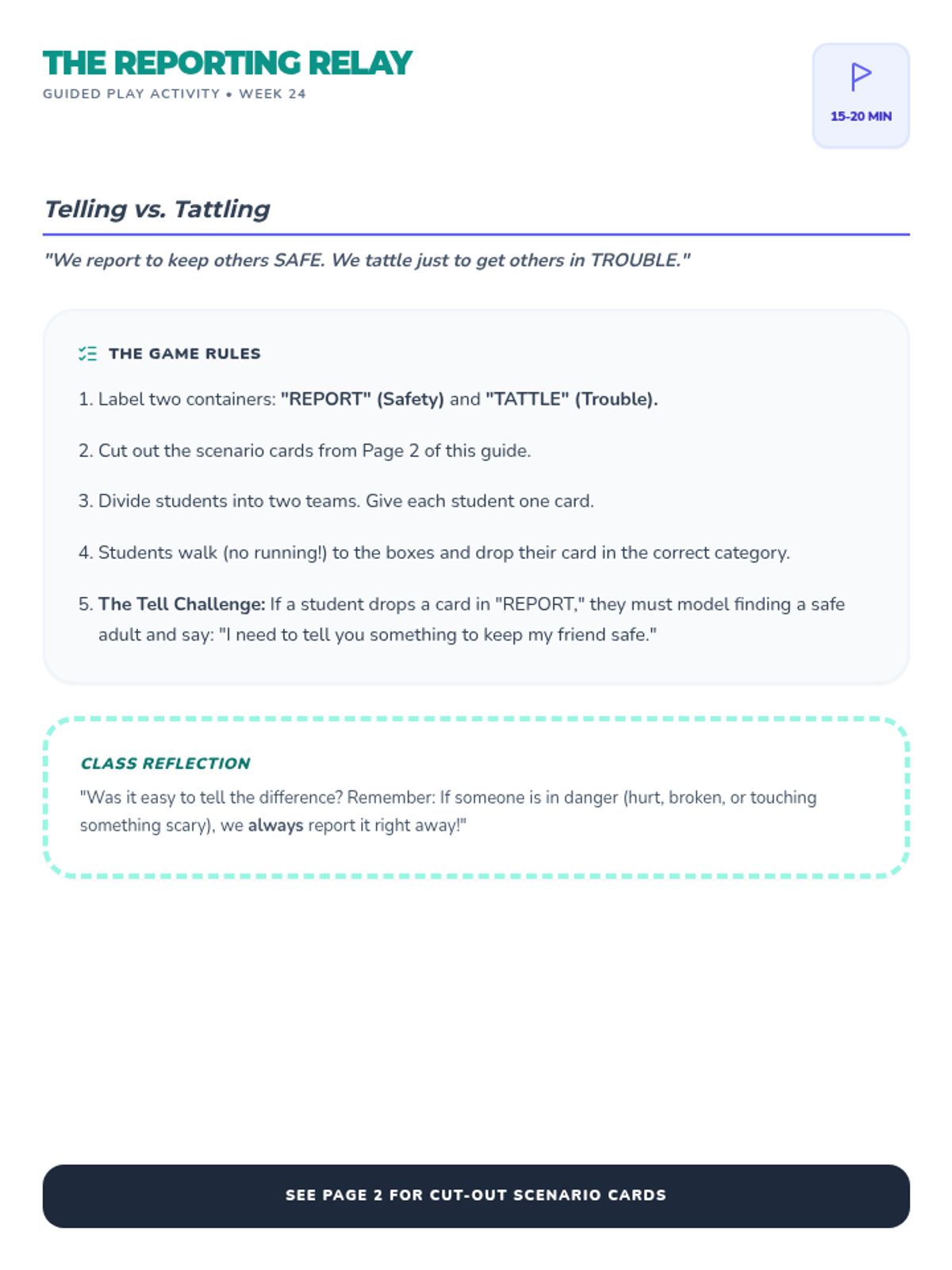
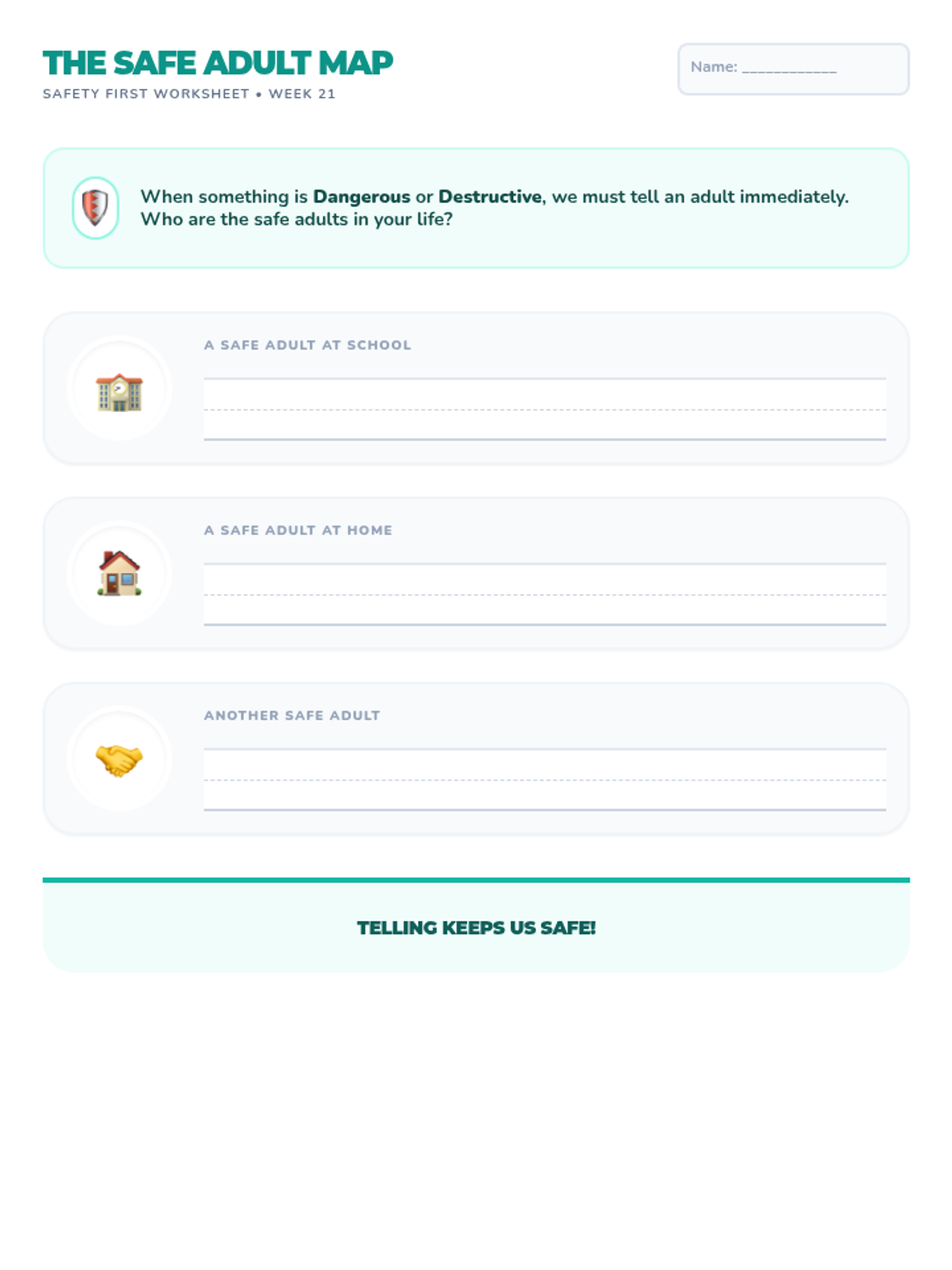
Students identify their network of trusted adults and learn the difference between telling for safety and tattling.
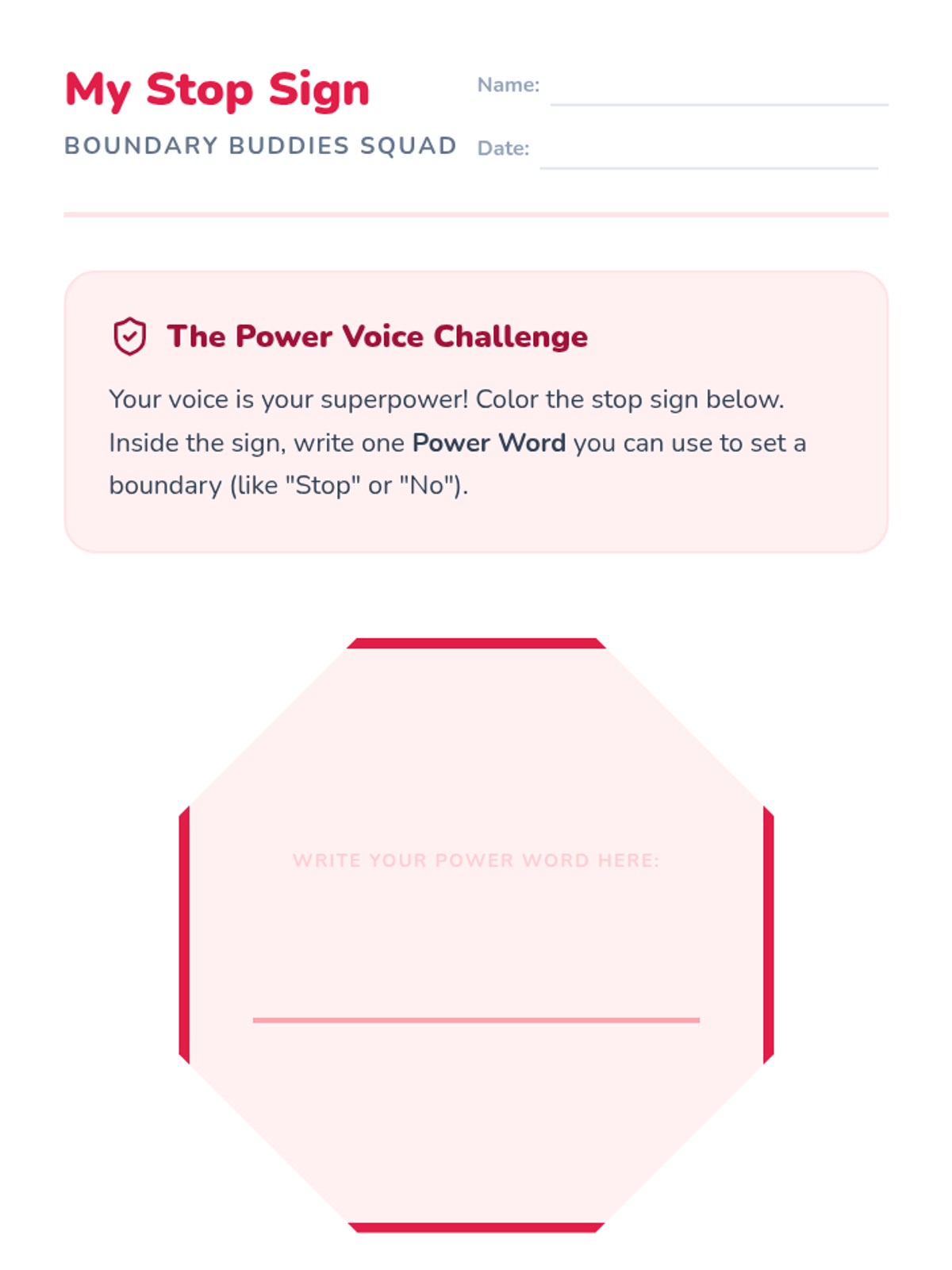
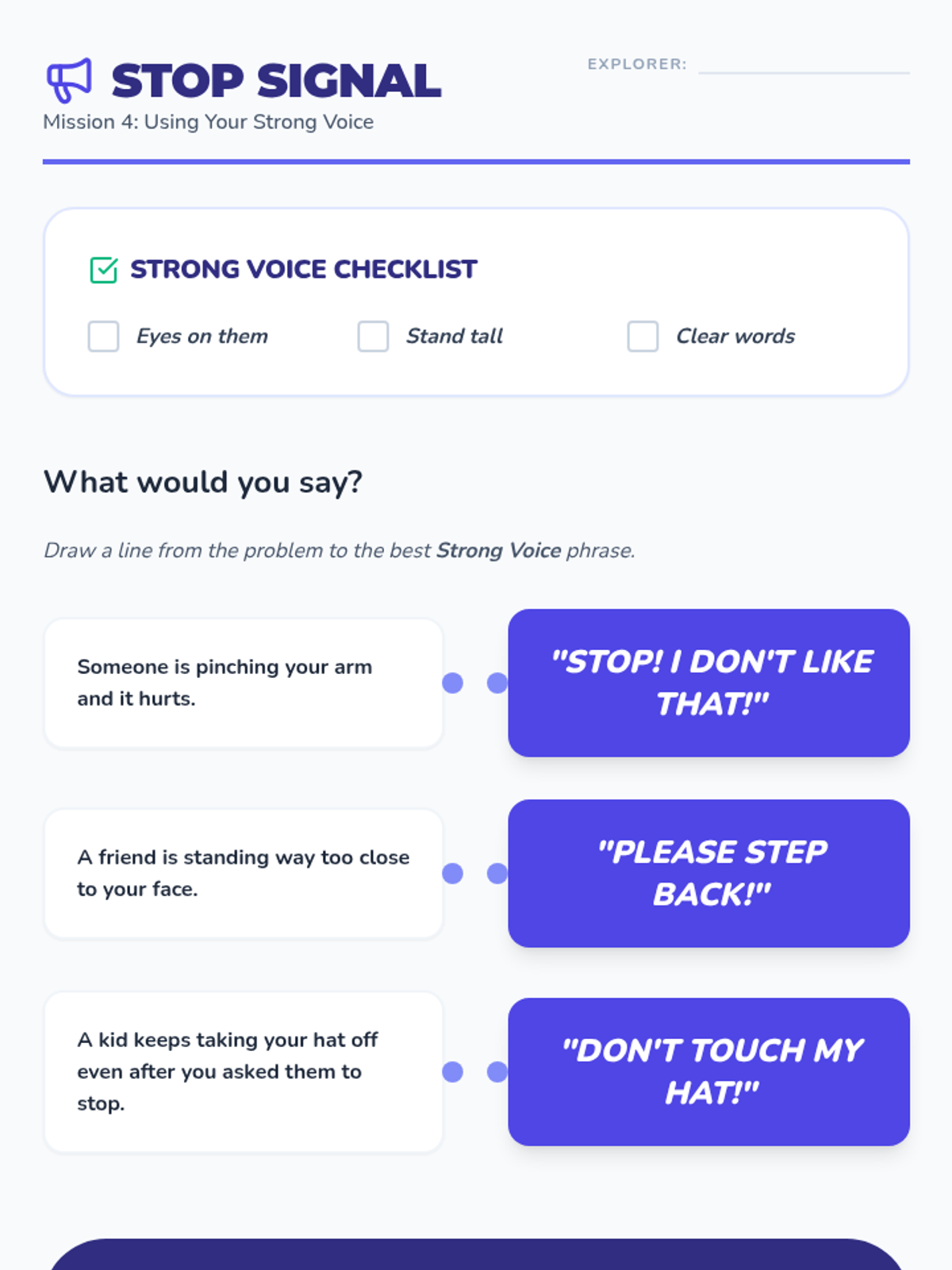
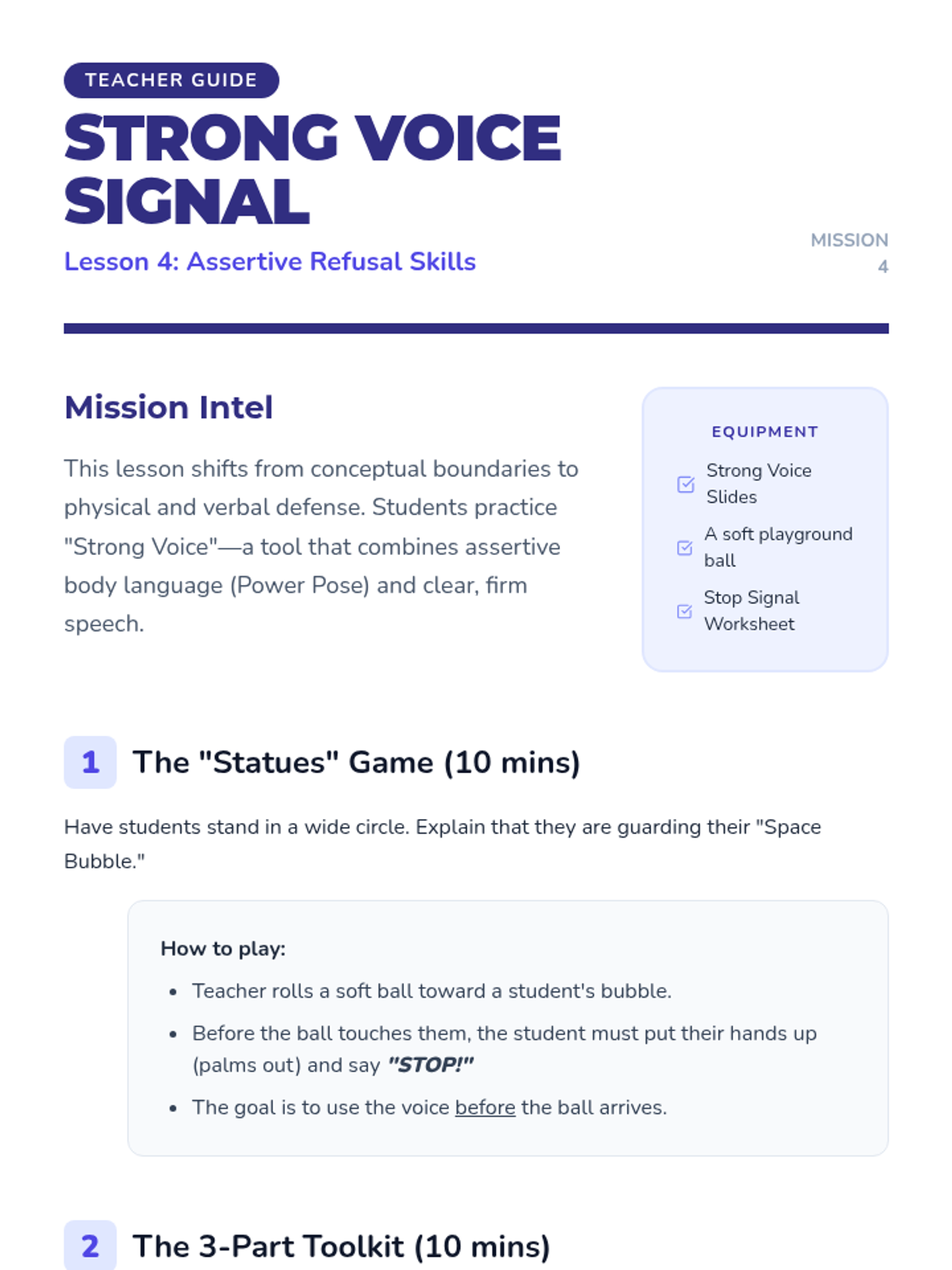
Empowers students to use a strong voice and clear body language to set boundaries and say no to unwanted contact.
Helps students identify physical 'uh-oh' feelings and distinguish between safe surprises and unsafe secrets.
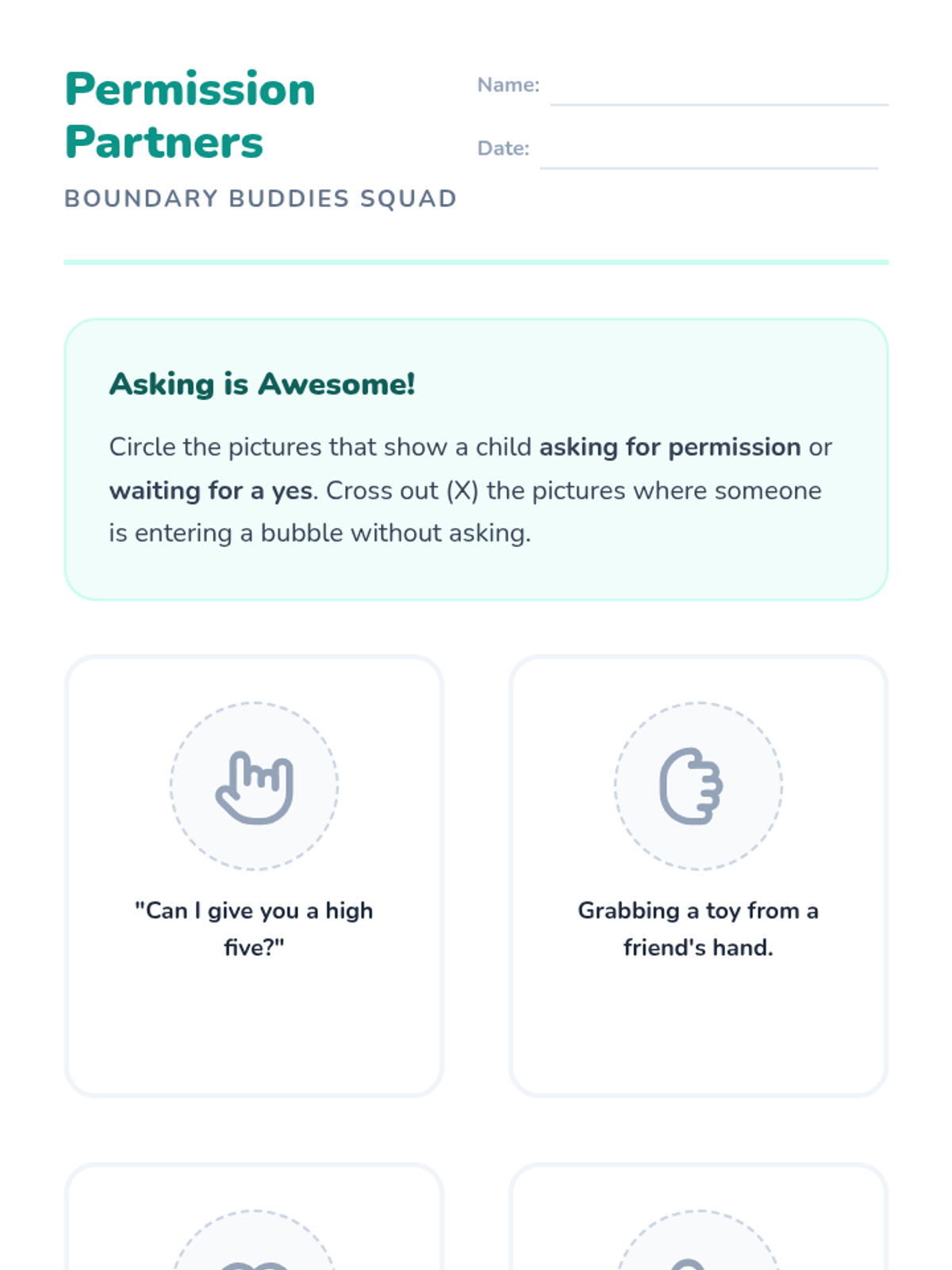
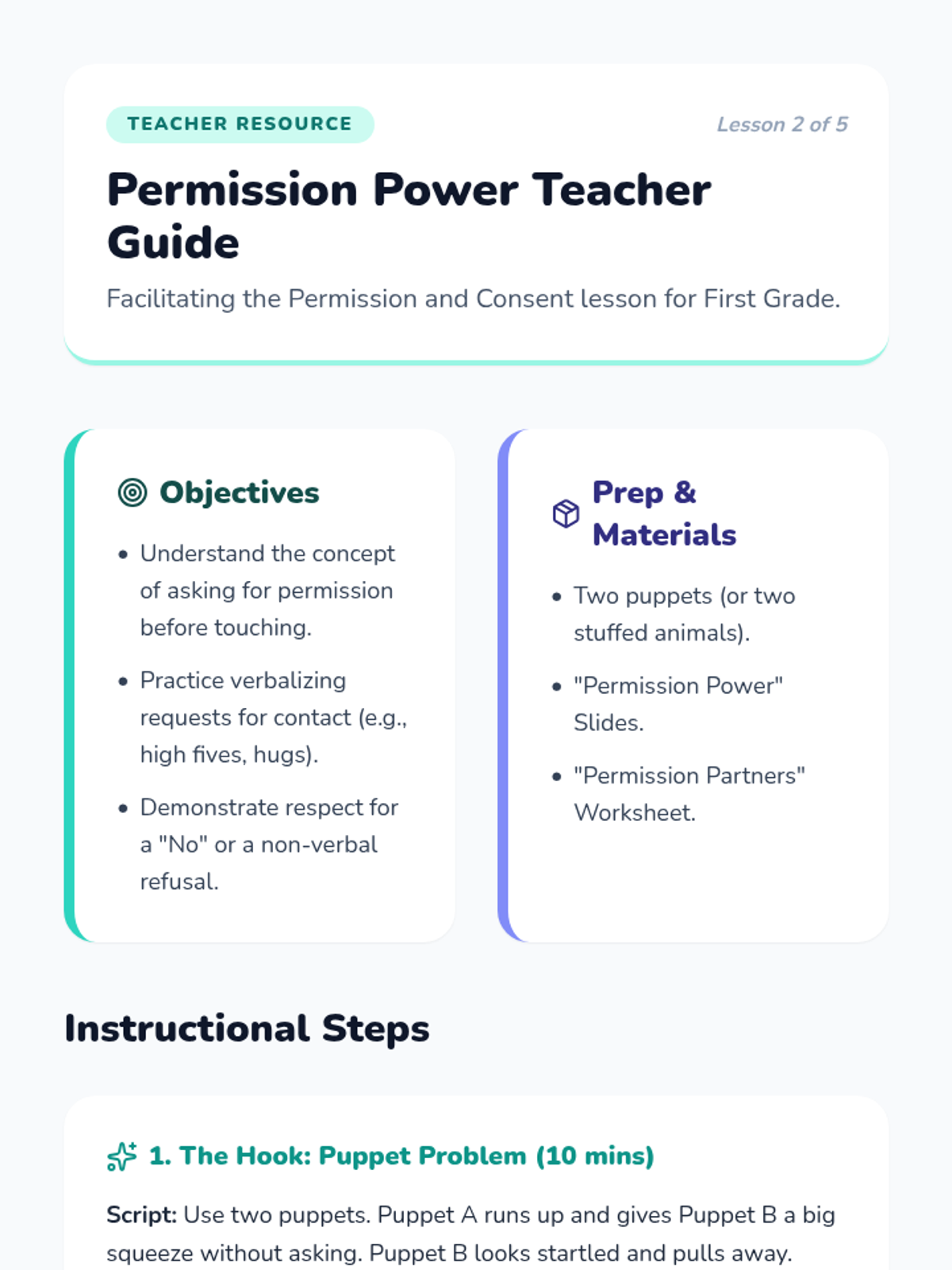
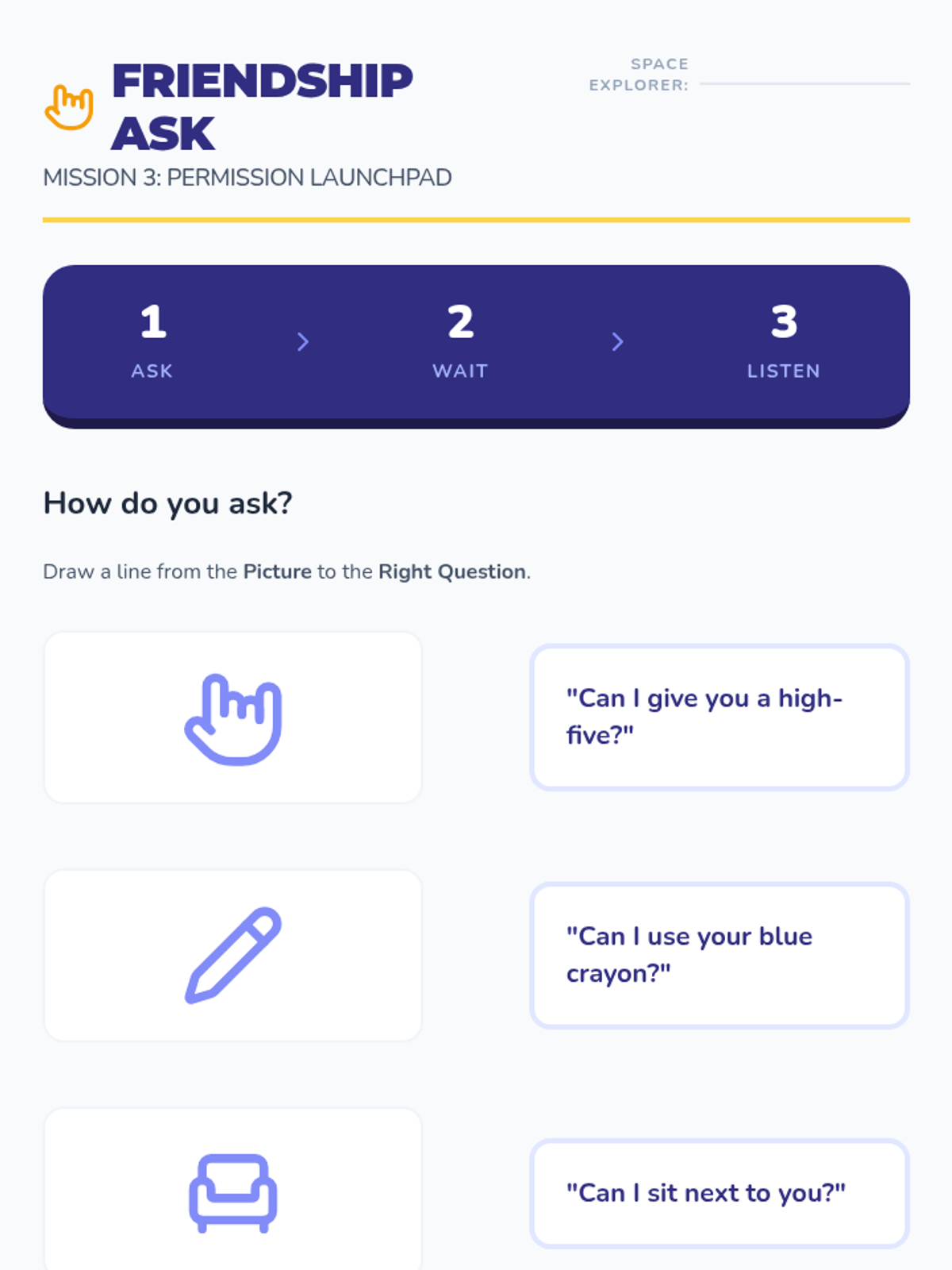
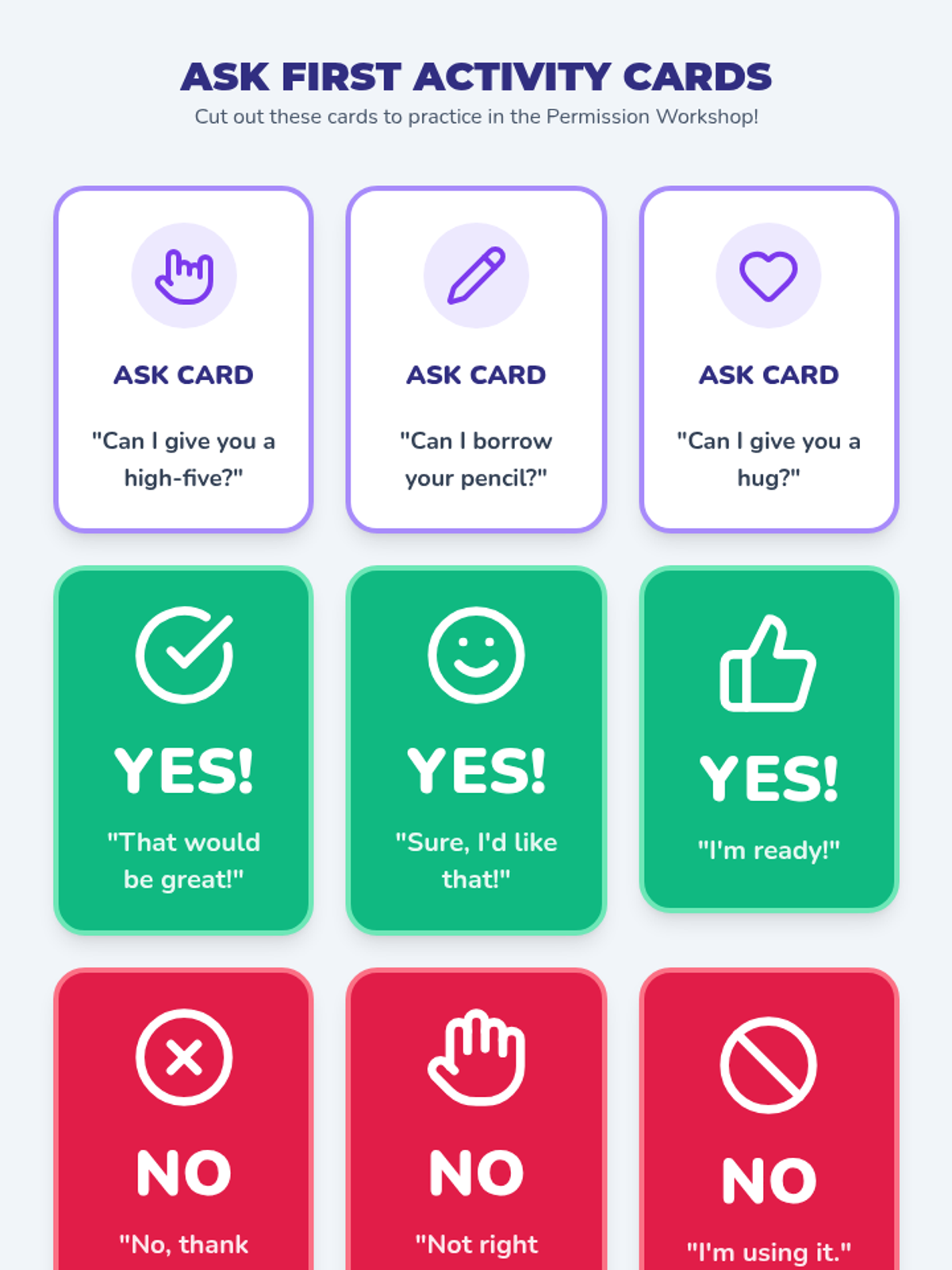
Focuses on the importance of asking for permission and respecting choices to build safe and respectful friendships.
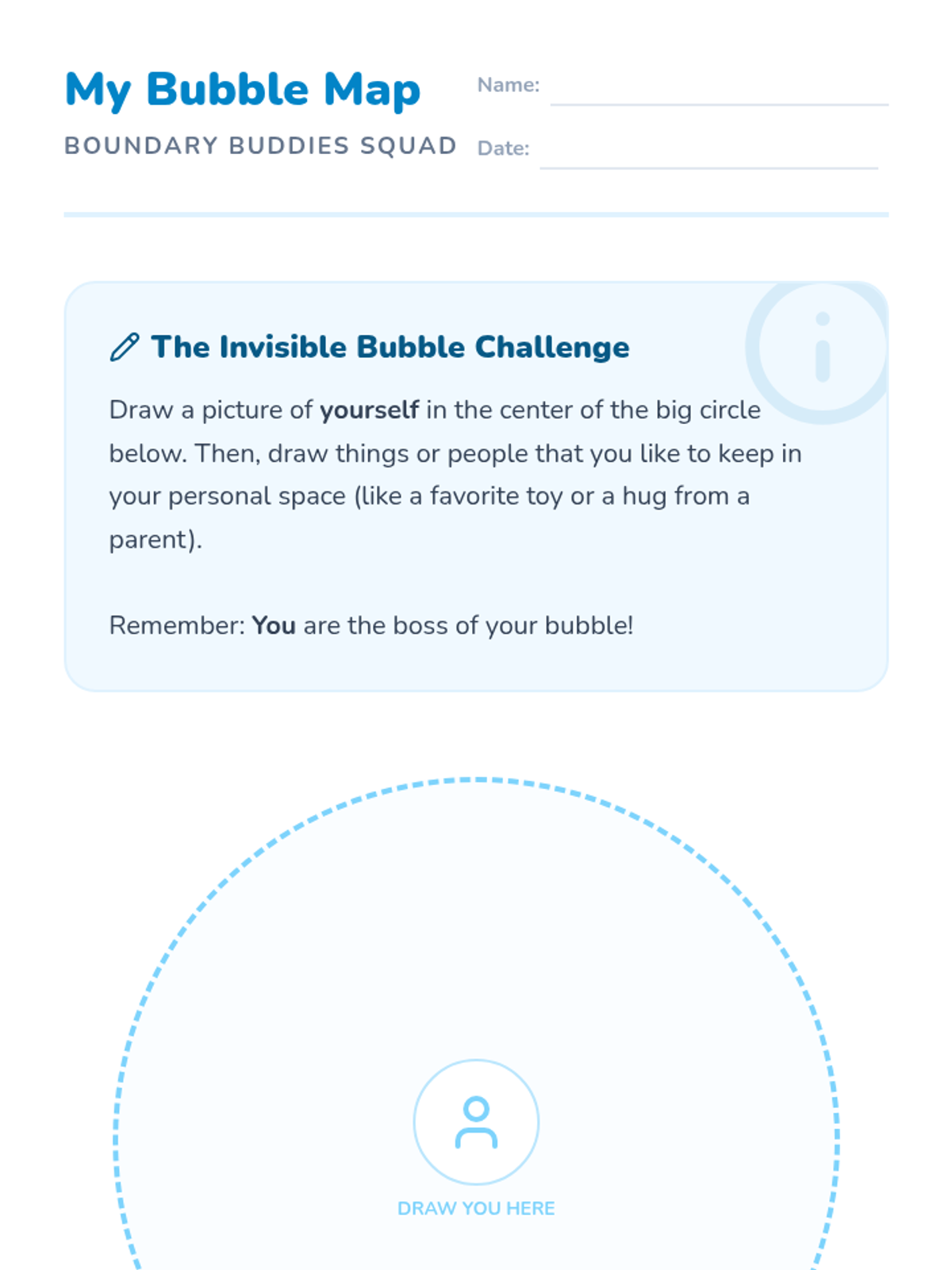
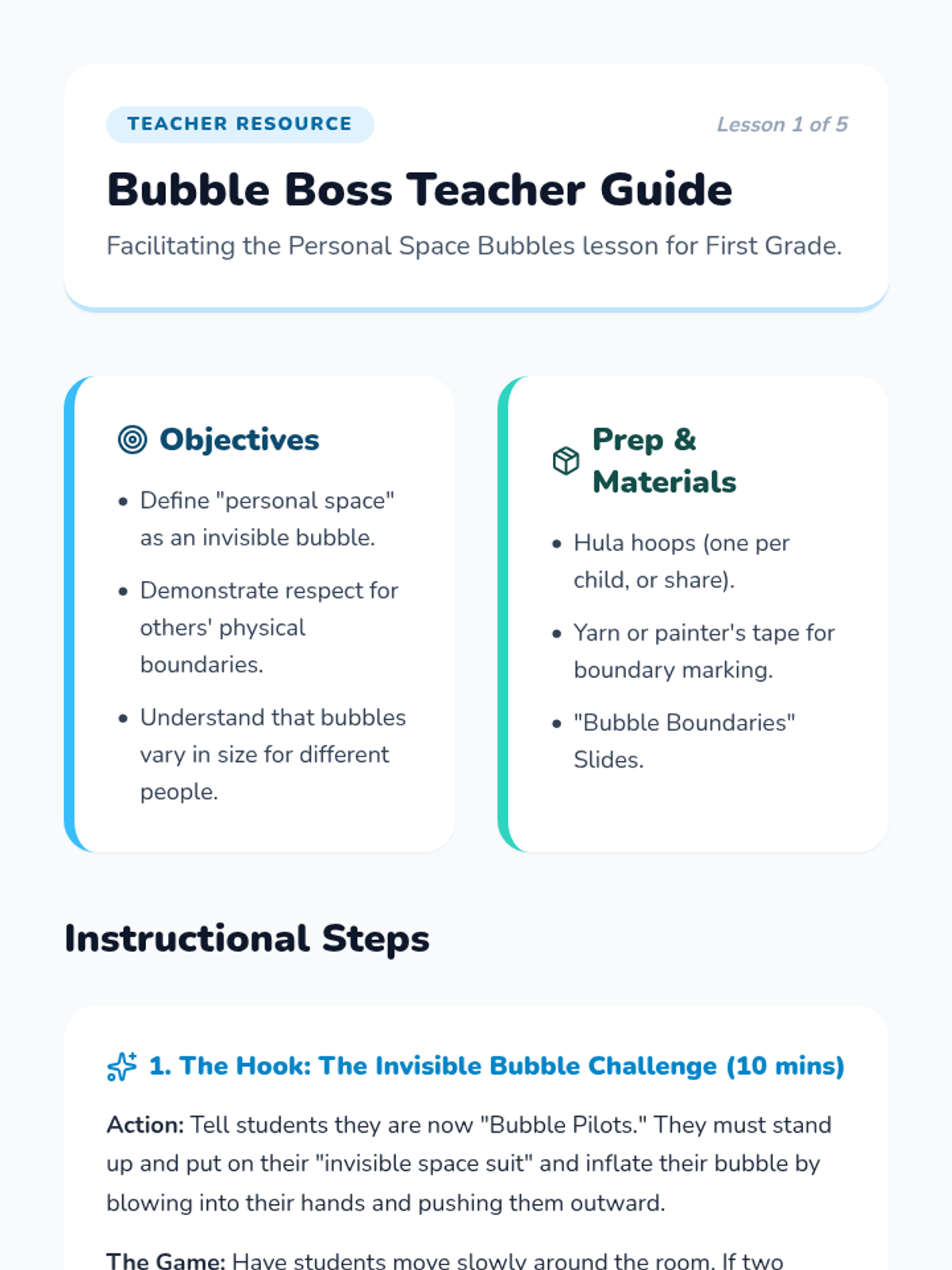
Students explore the concept of a 'personal space bubble' to understand physical boundaries and respect for others' space.
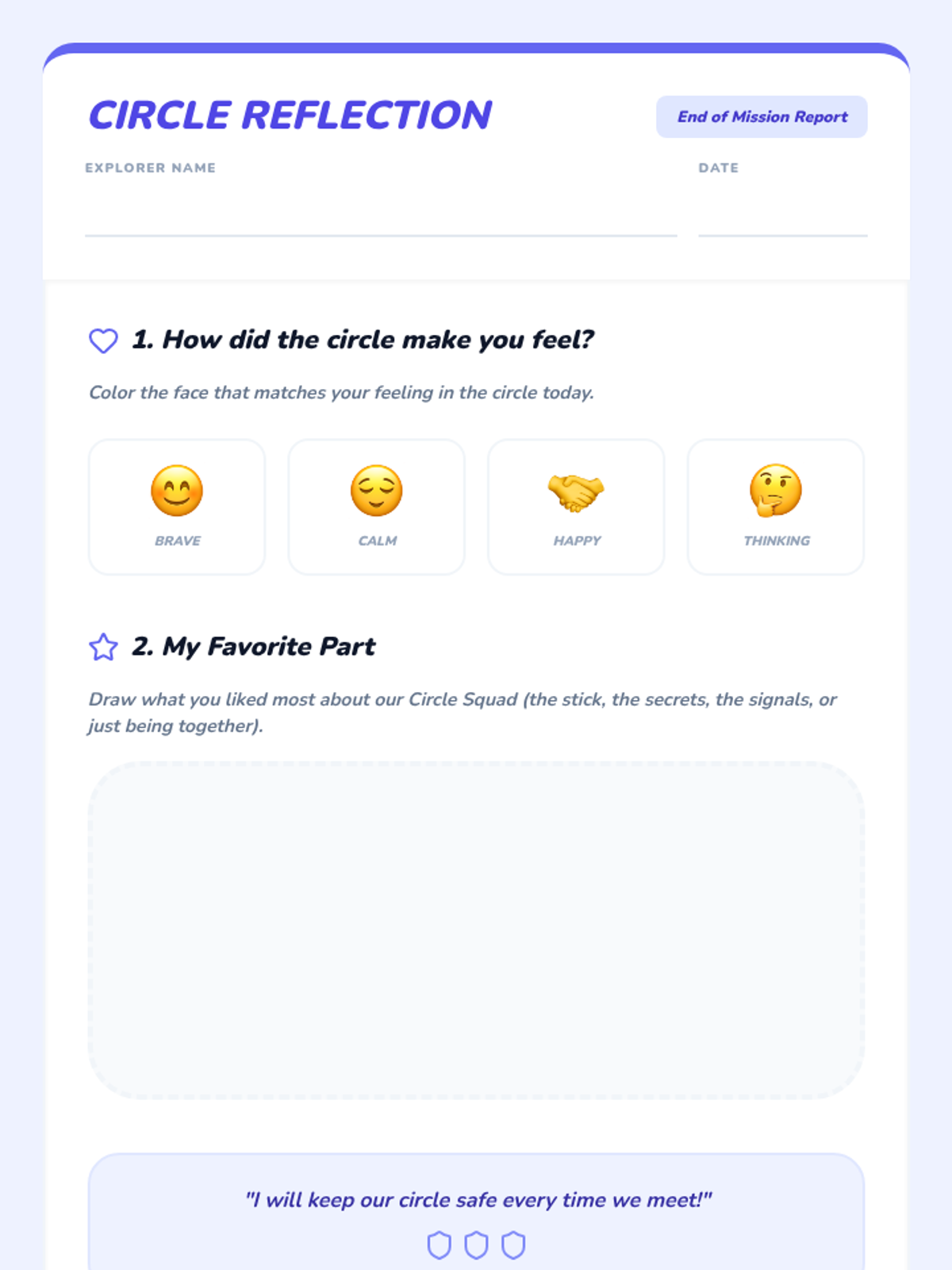
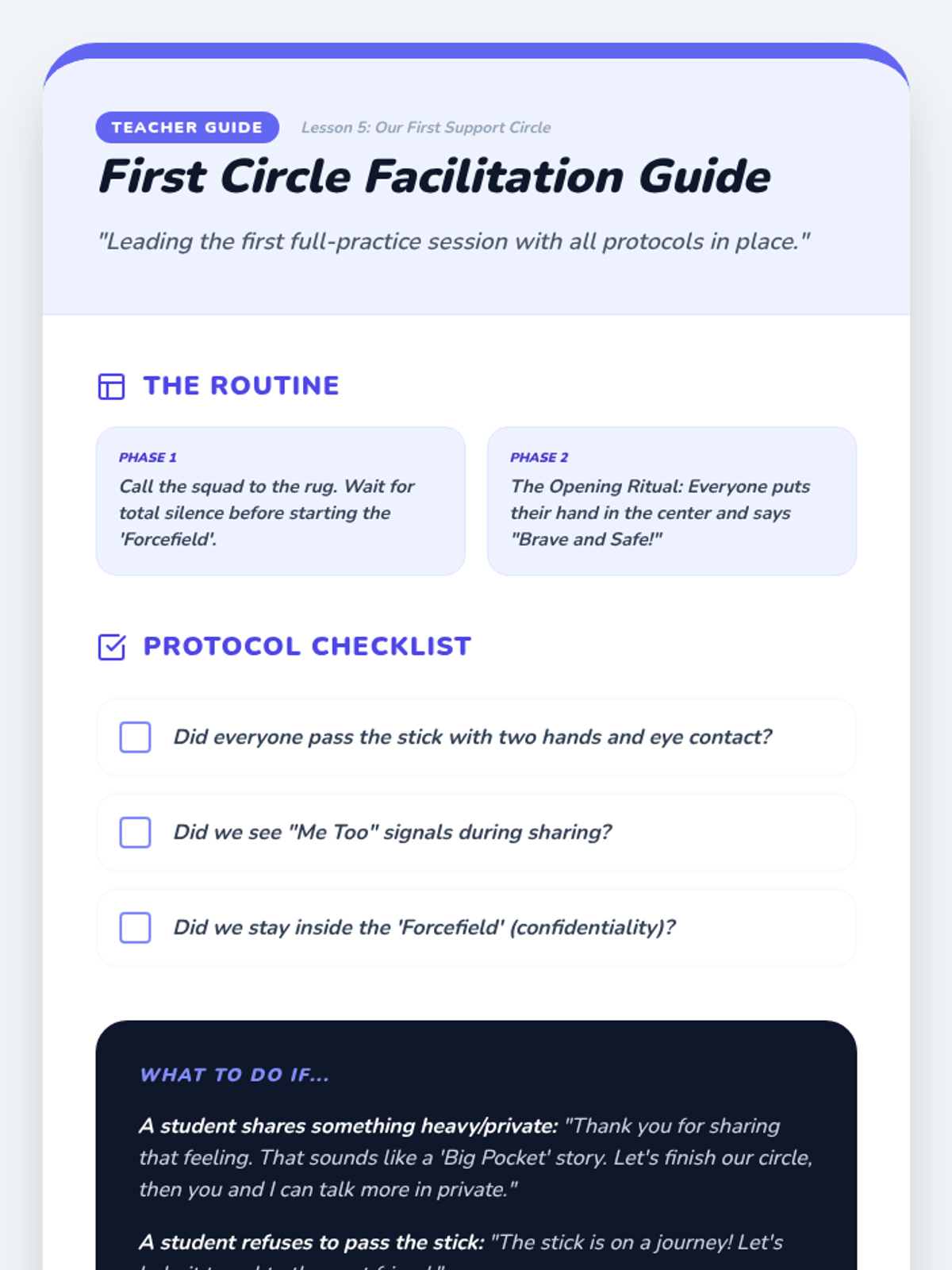
A culminating session where students apply all protocols in a structured sharing circle and reflect on the experience.
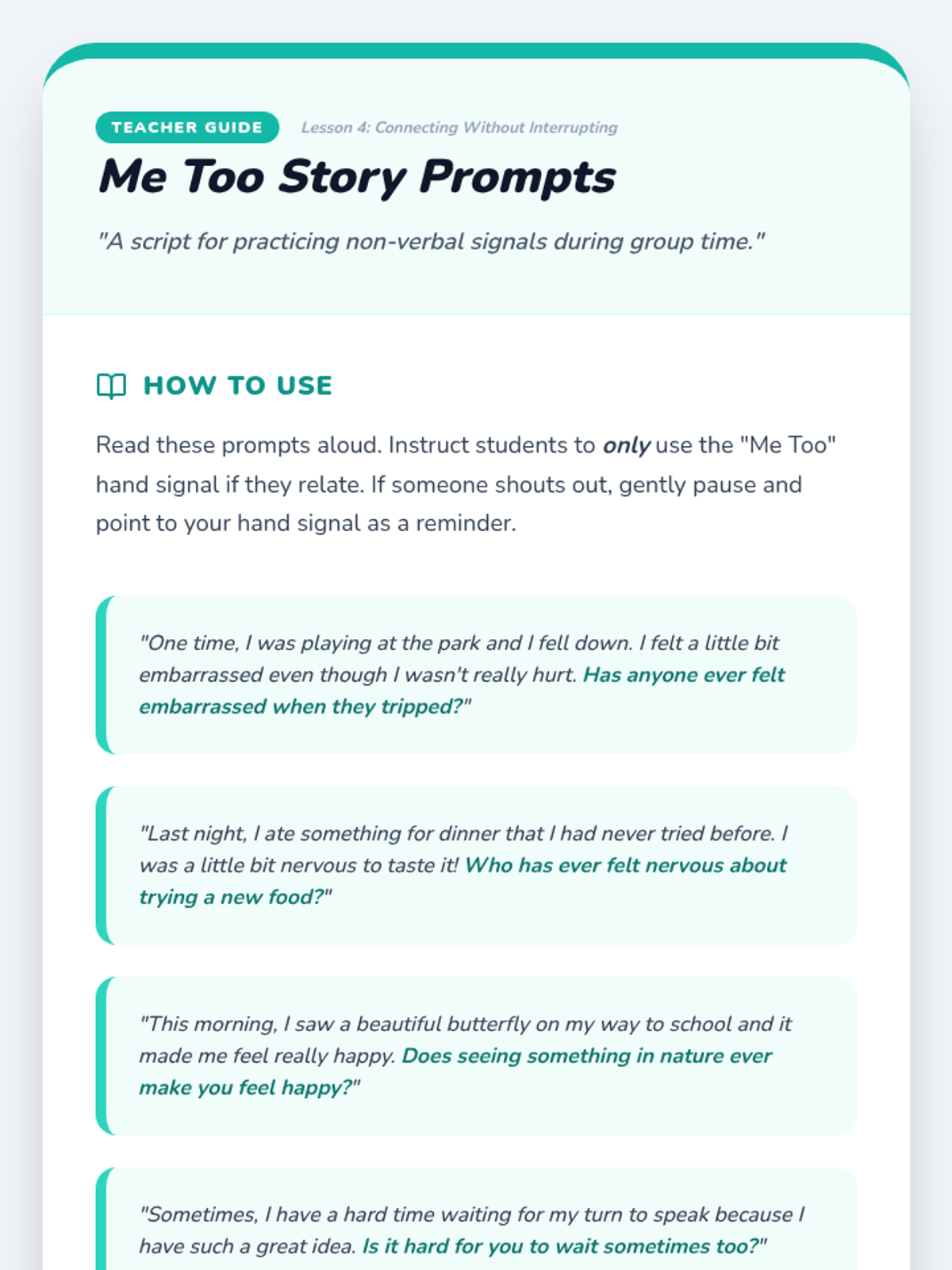
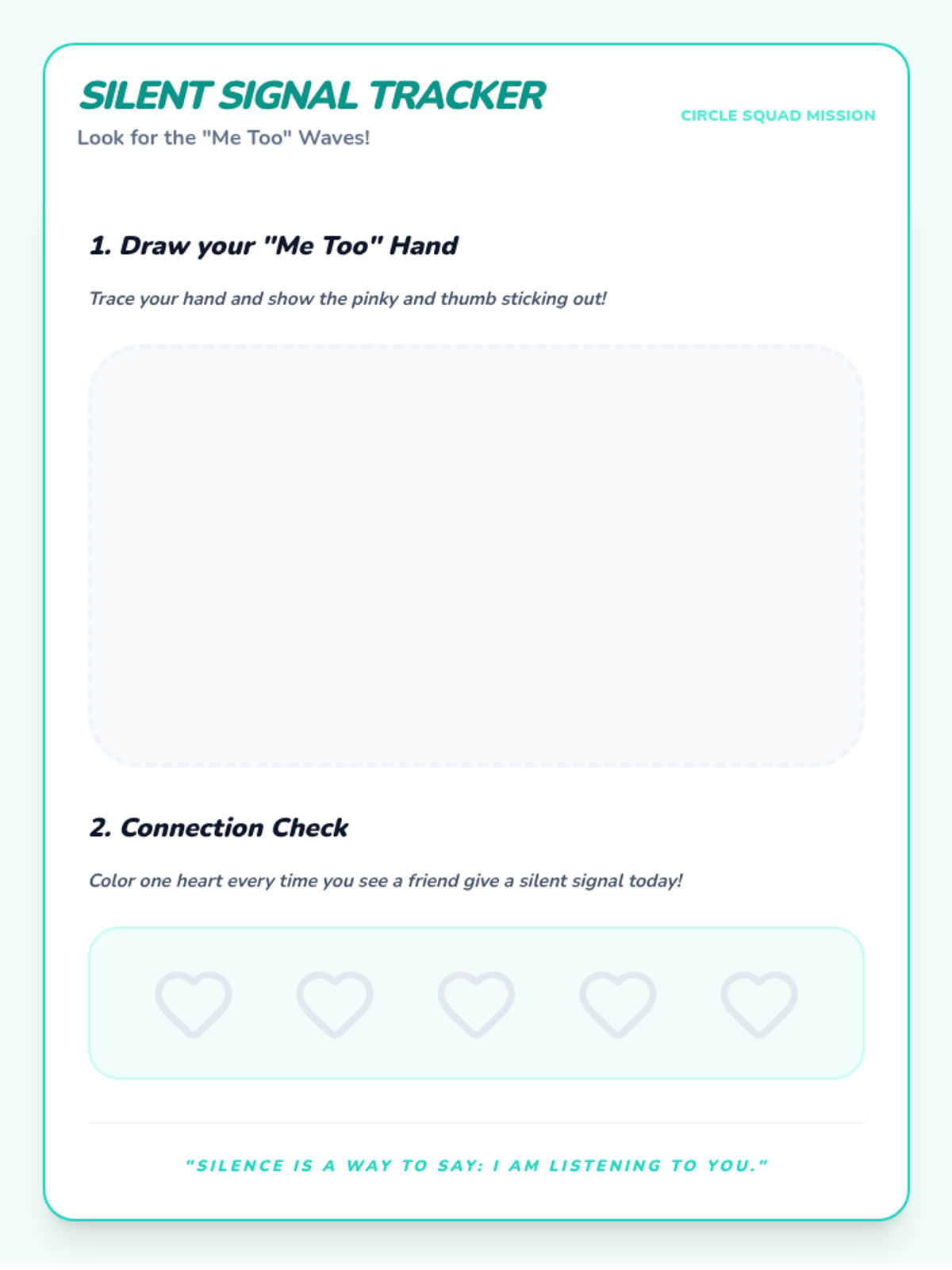
Students learn non-verbal signals like the 'Me Too' hand sign to connect with peers' stories without interrupting the speaker.
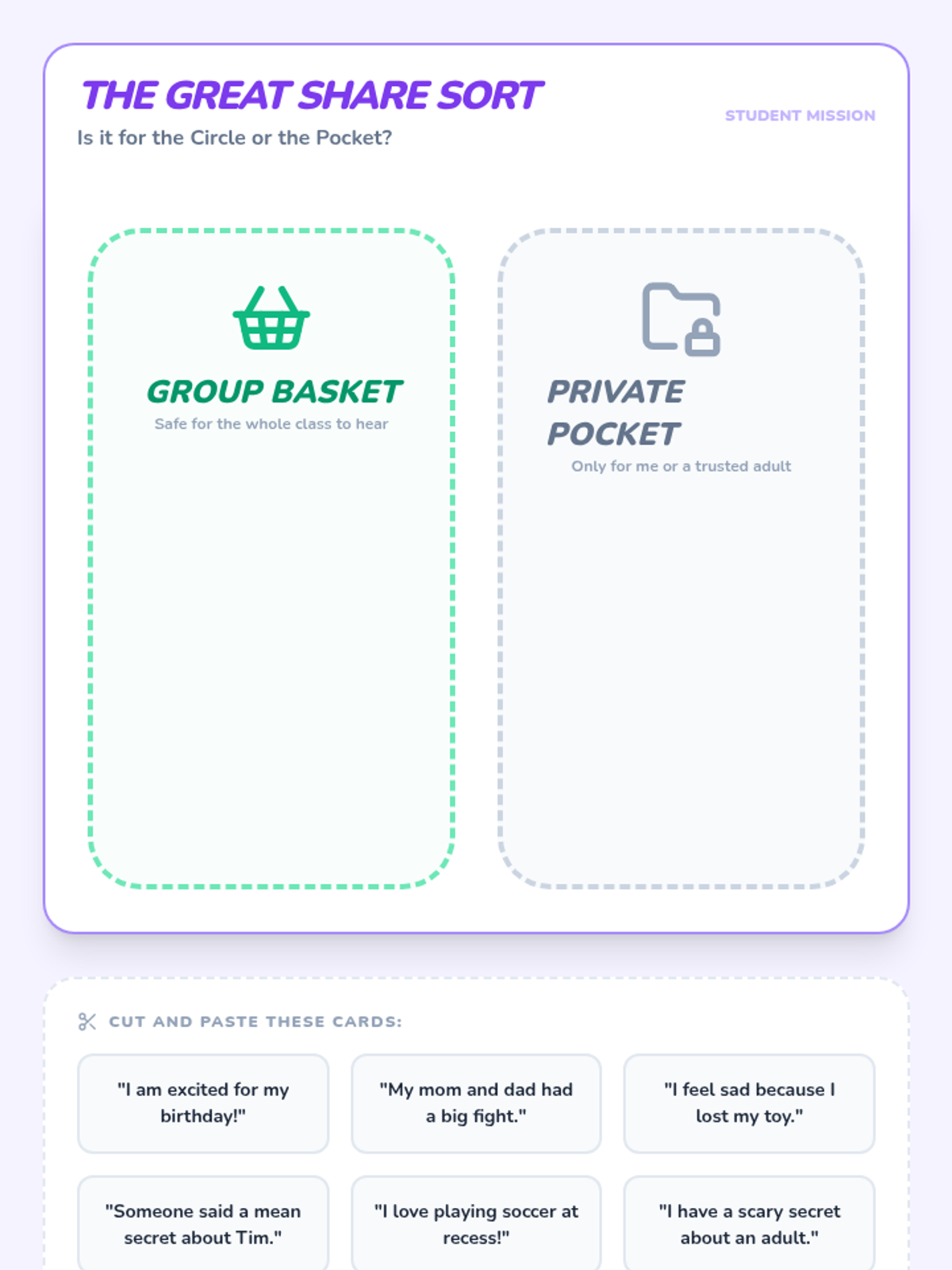
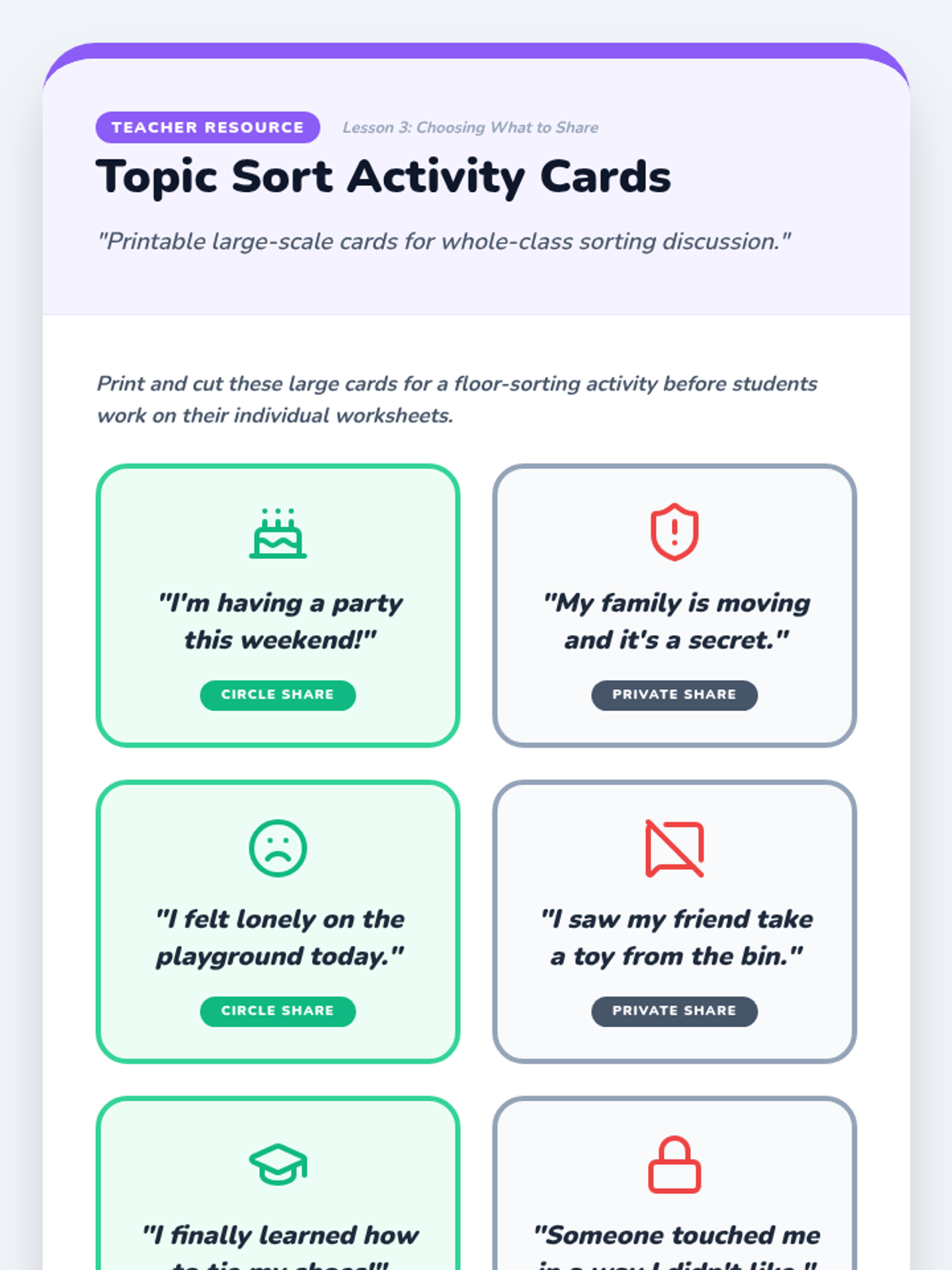
Students distinguish between topics appropriate for group sharing and those that should be kept private or shared with a trusted adult.
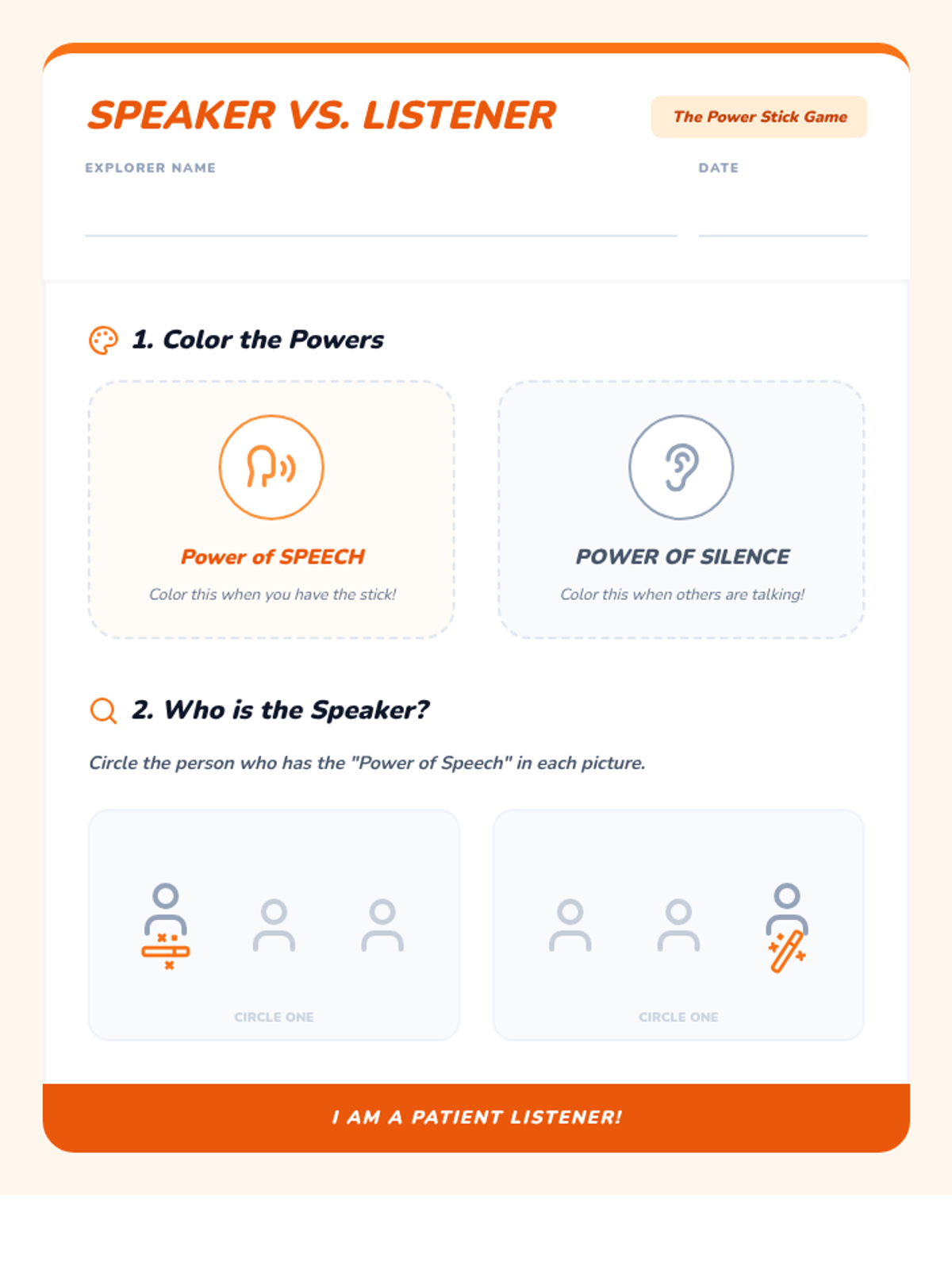
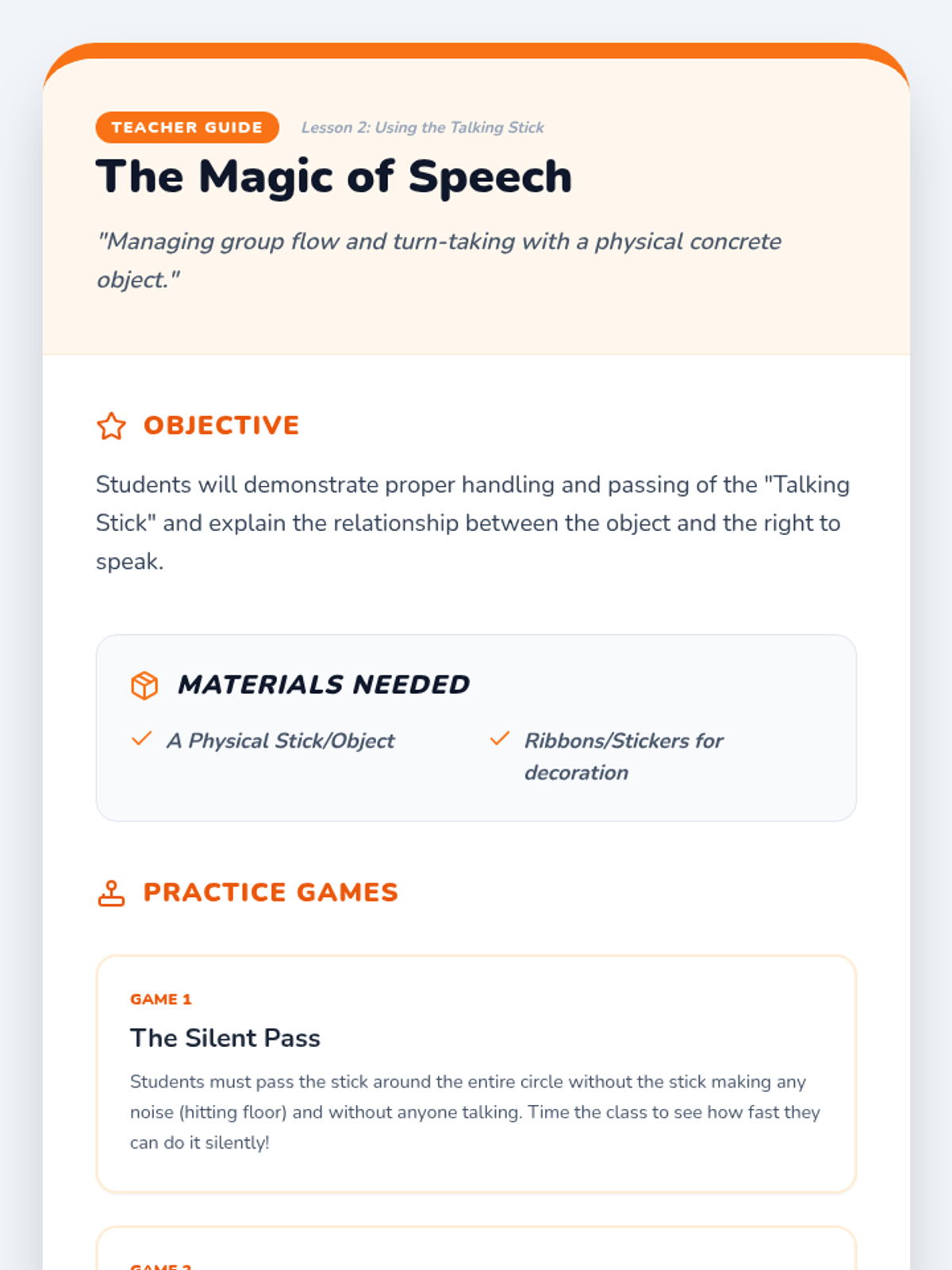
Students learn to use a talking stick as a physical tool to manage speech and silence, practicing the discipline of waiting for their turn.
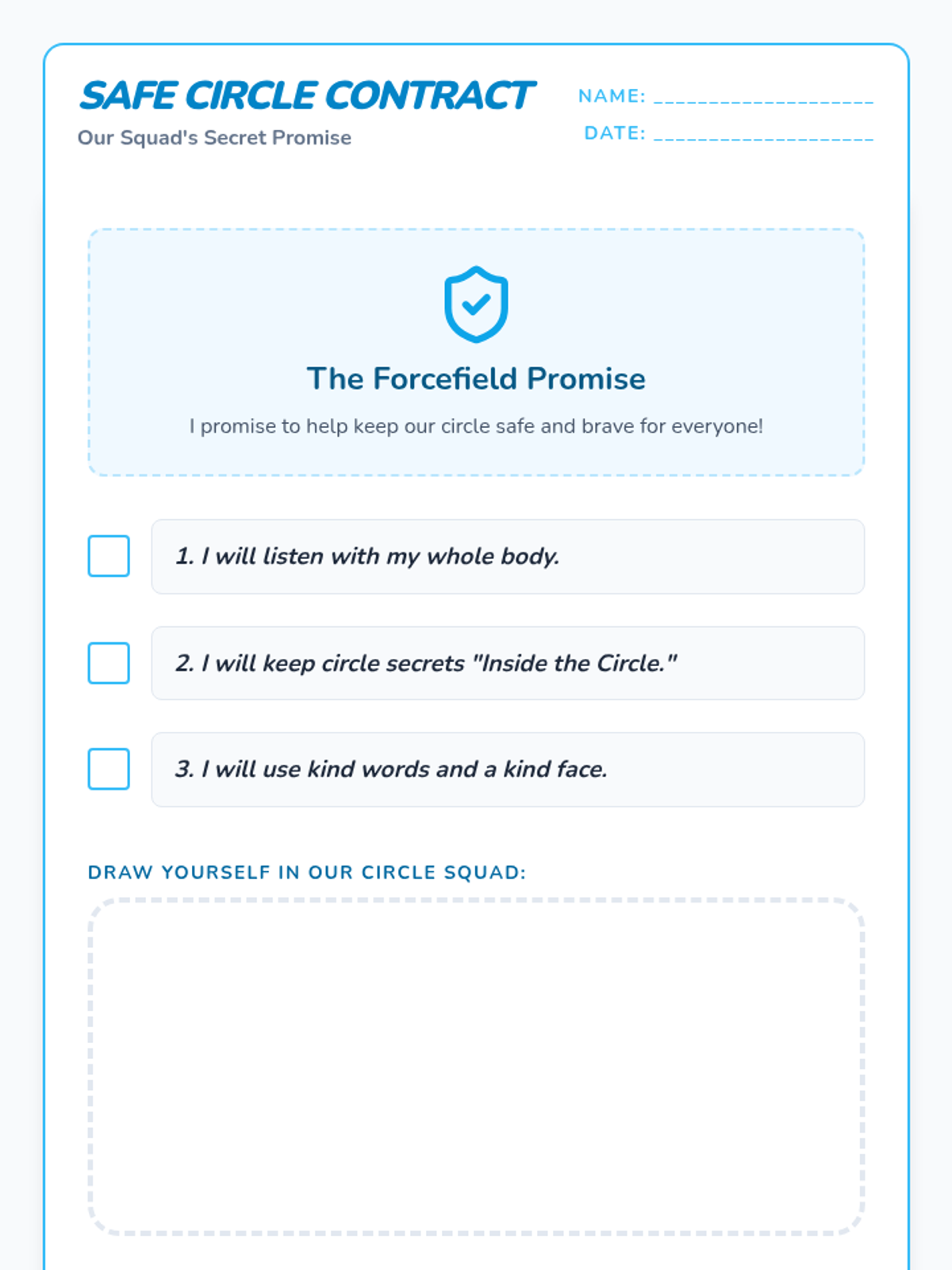
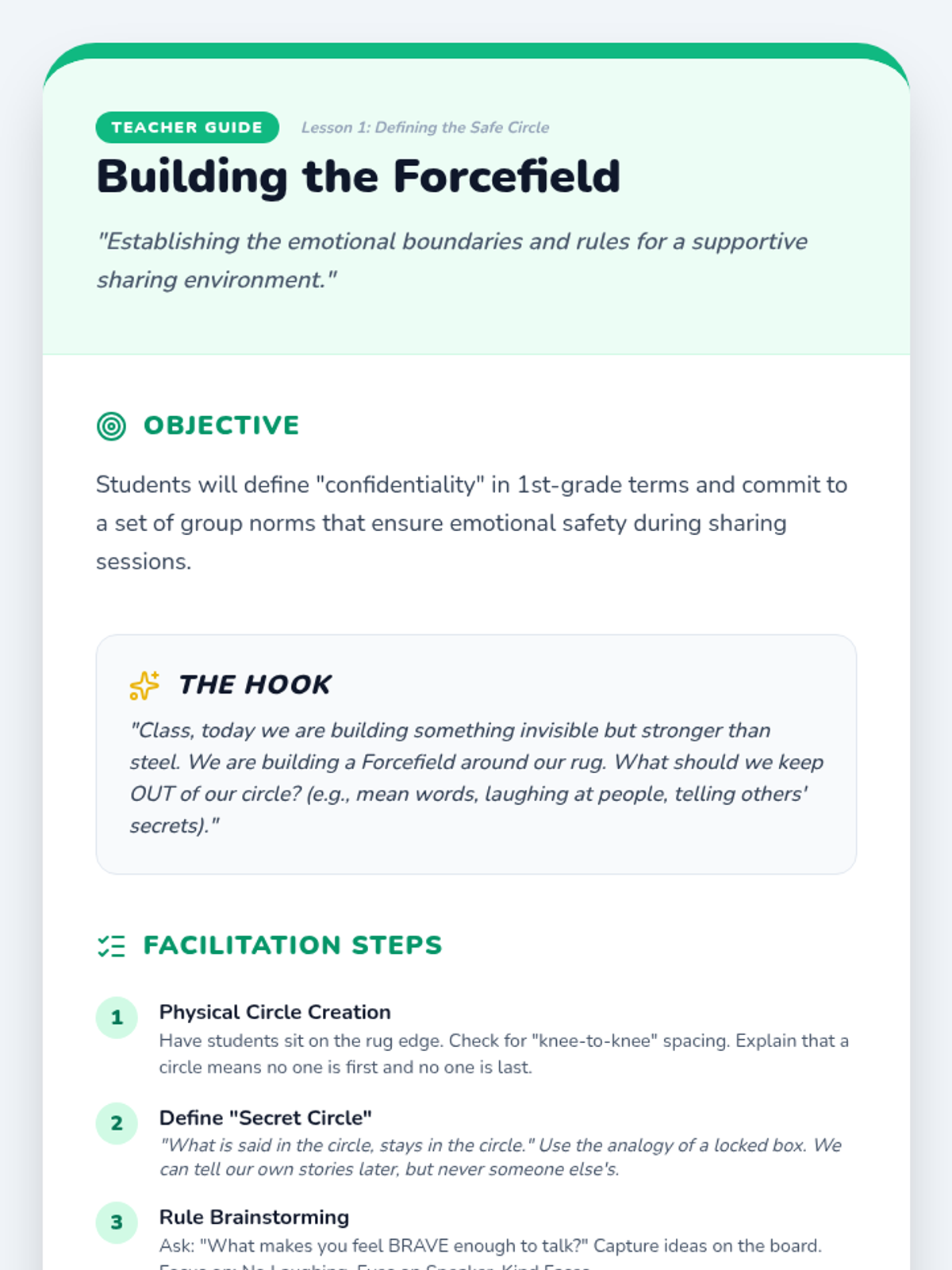
Students define what makes a circle feel safe, establishing confidentiality and kindness rules through the metaphor of a 'safety forcefield'.
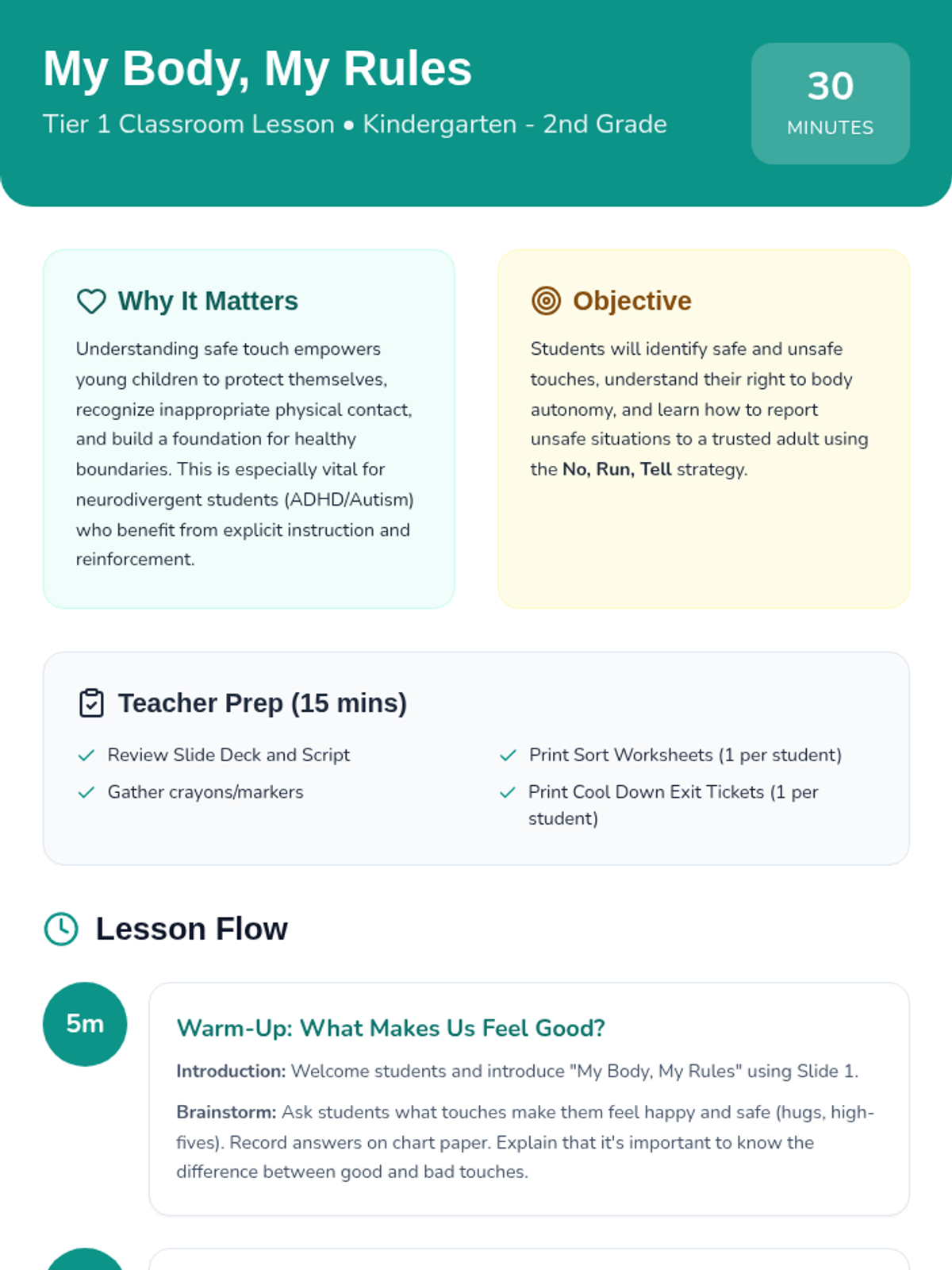
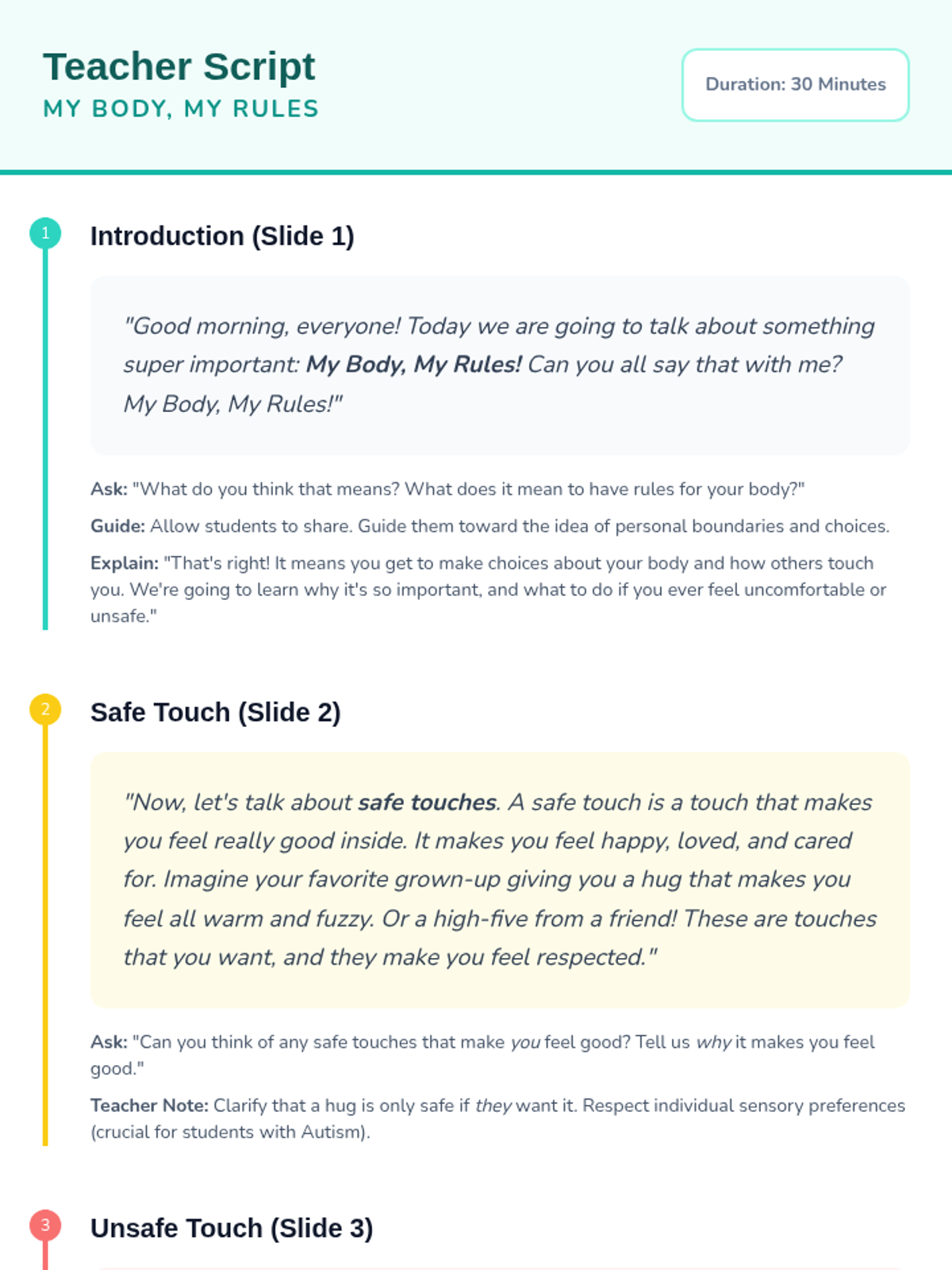
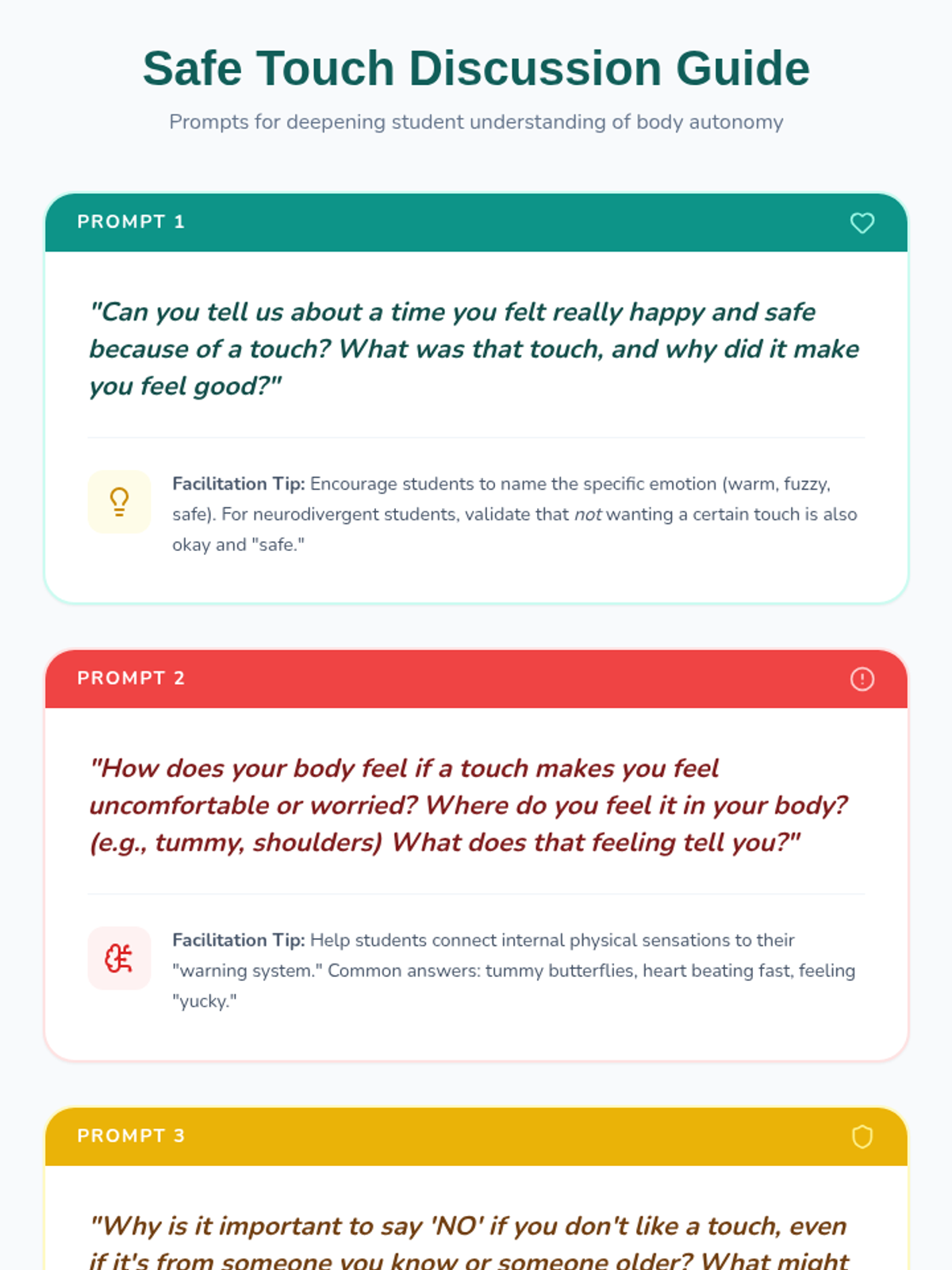
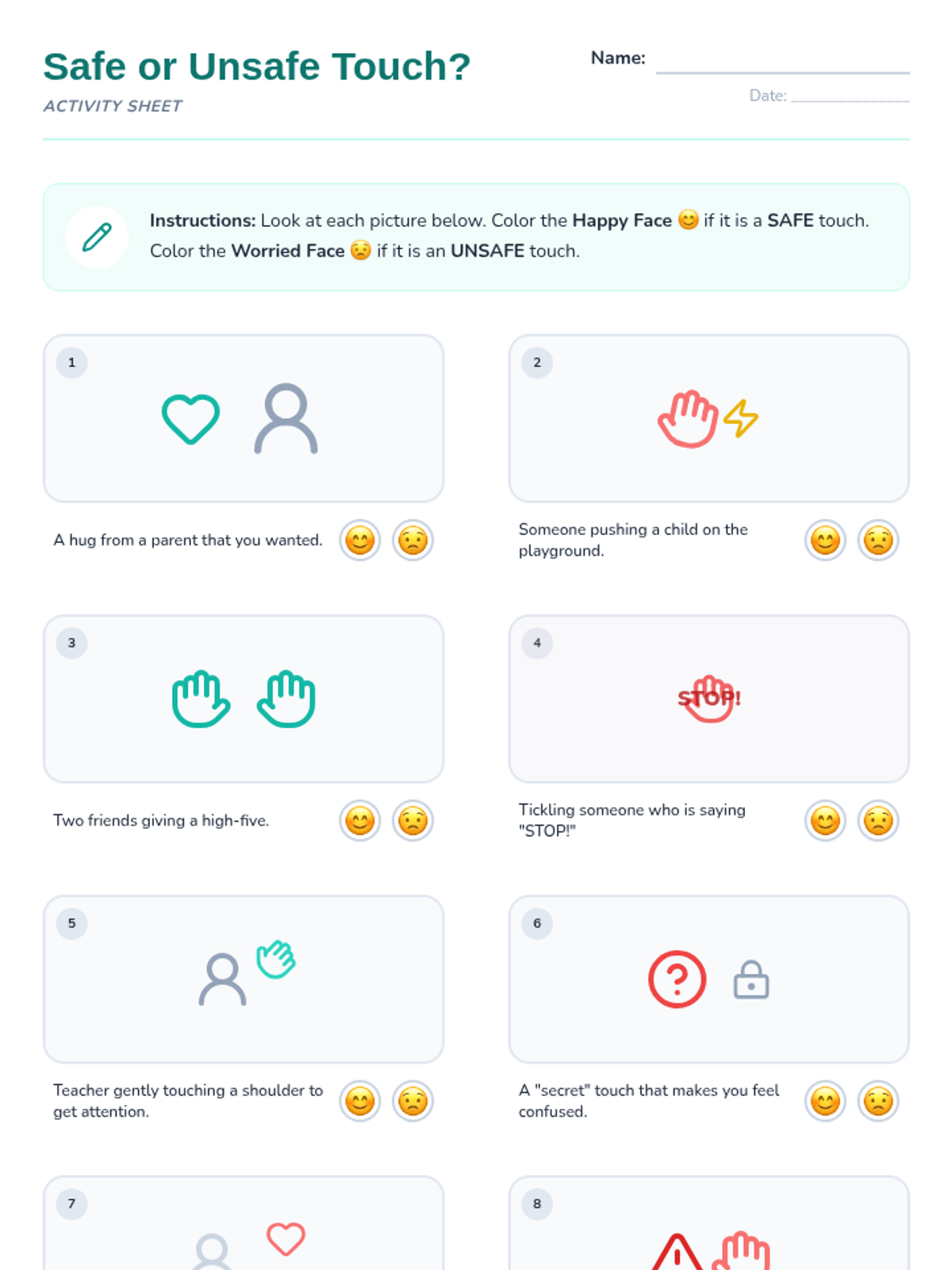
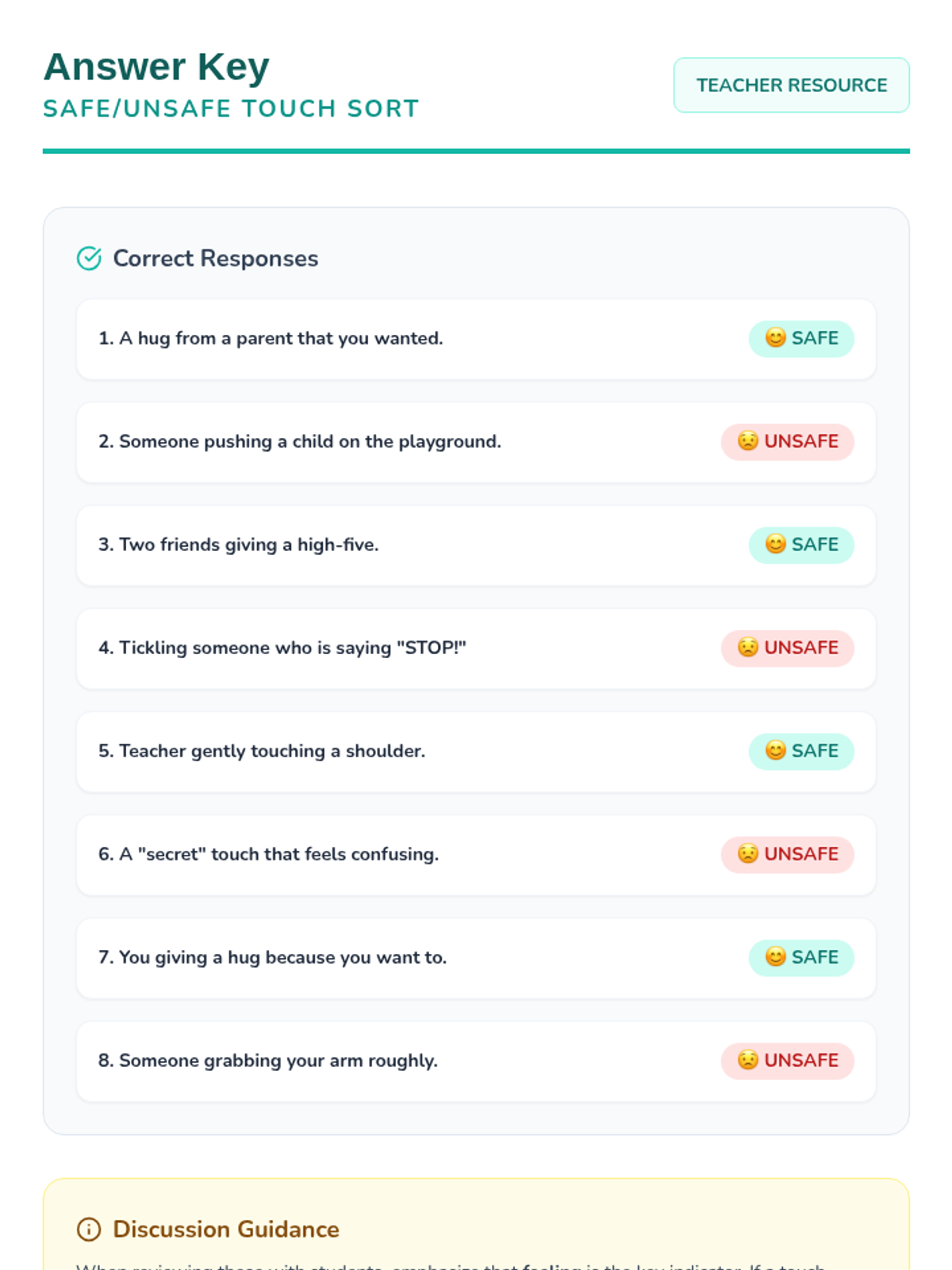
This lesson introduces Kindergarten students to the concept of safe and unsafe touch, emphasizing body autonomy and the importance of speaking up to a trusted adult. Students will learn to identify boundaries and the 'No, Run, Tell' strategy to ensure their safety and well-being.
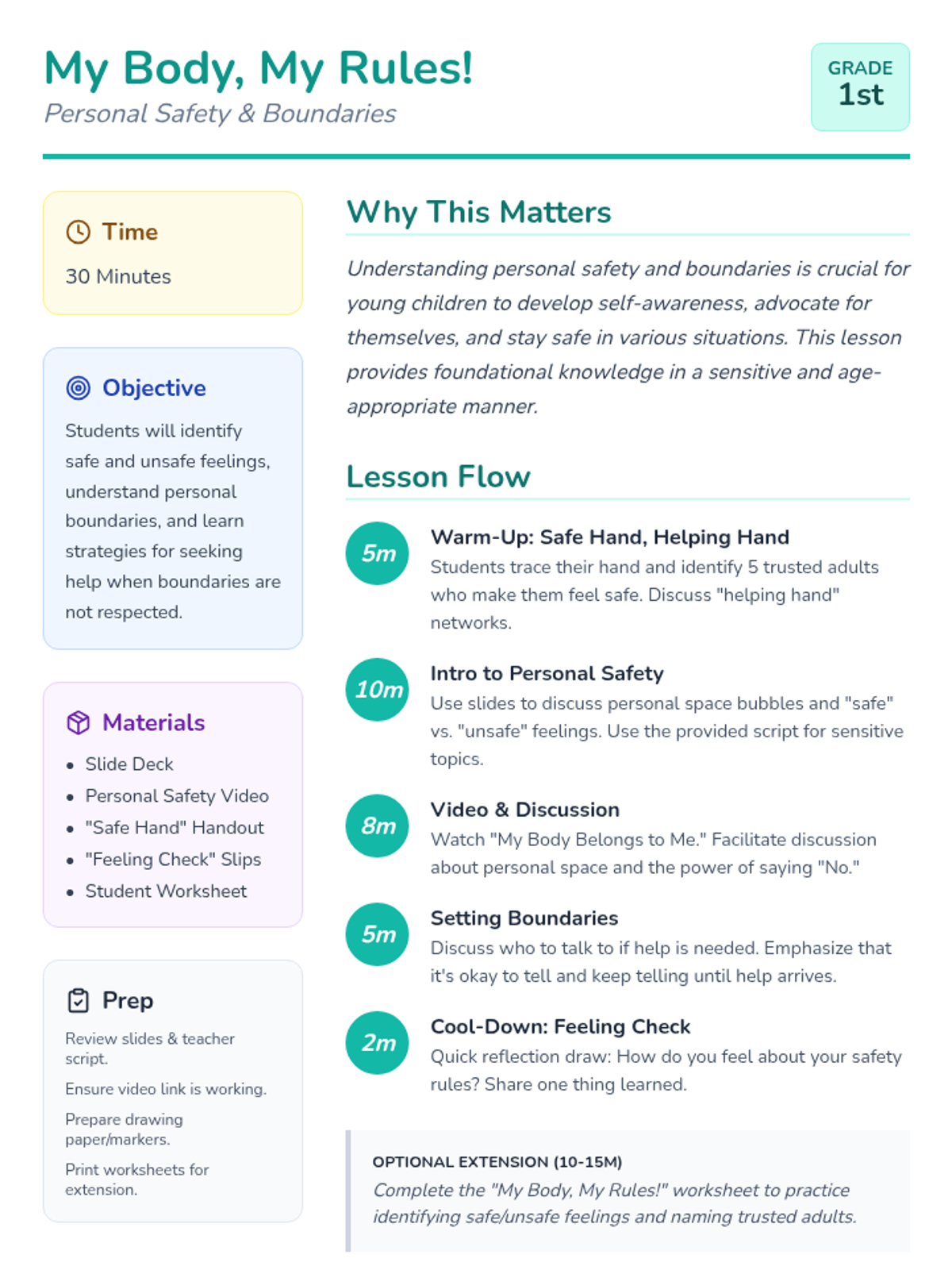
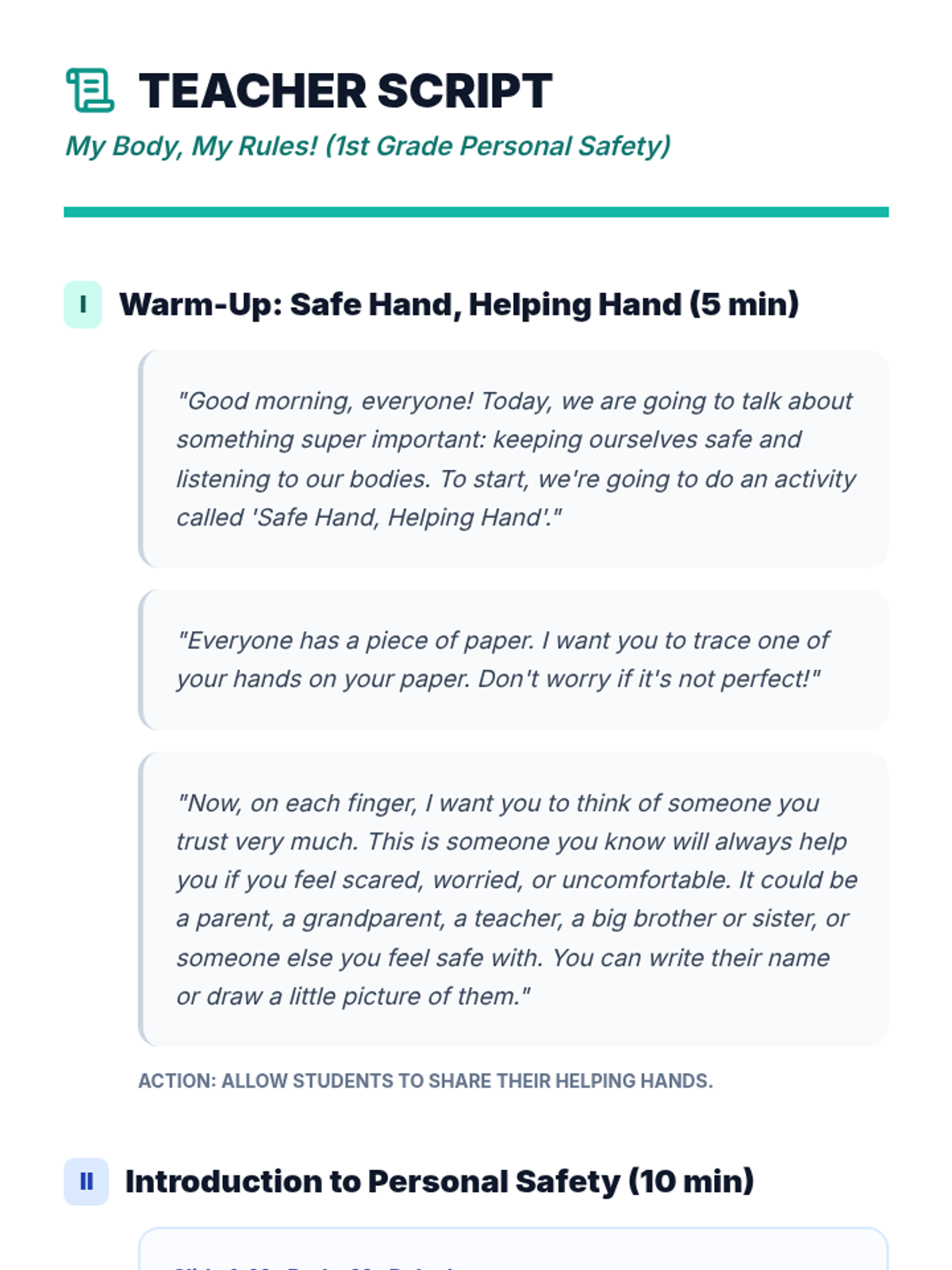
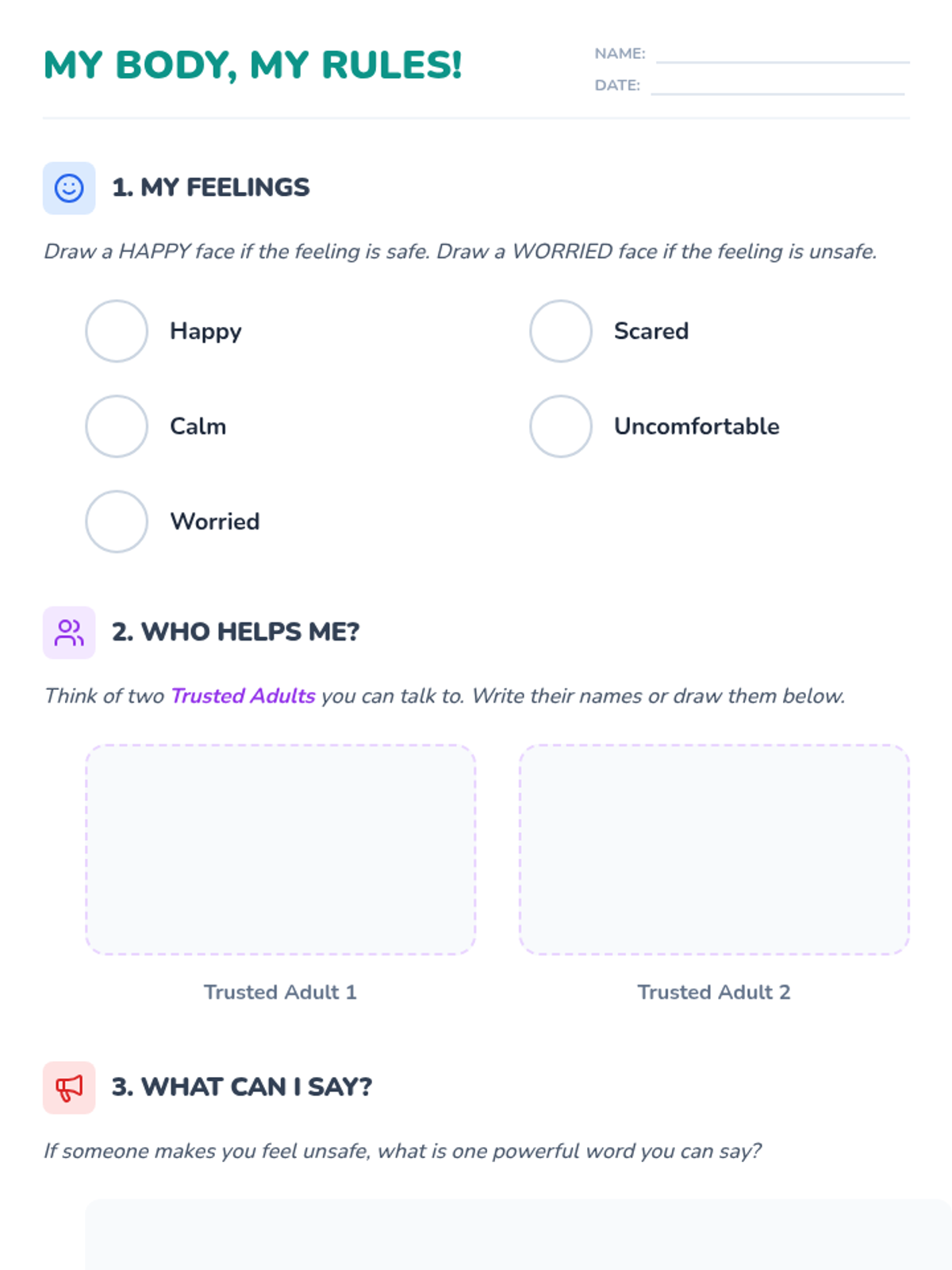
A foundational 30-minute lesson for 1st-grade students on personal safety, boundaries, and the 'My Body, My Rules' concept. Students learn to identify safe/unsafe feelings and how to seek help from trusted adults.
Students identify a network of trusted adults and create a personalized help-seeking plan.
Students build assertive communication skills to set boundaries using a 'strong voice' and clear body language.
A workshop-style lesson where students practice asking for permission and accepting 'no' gracefully.
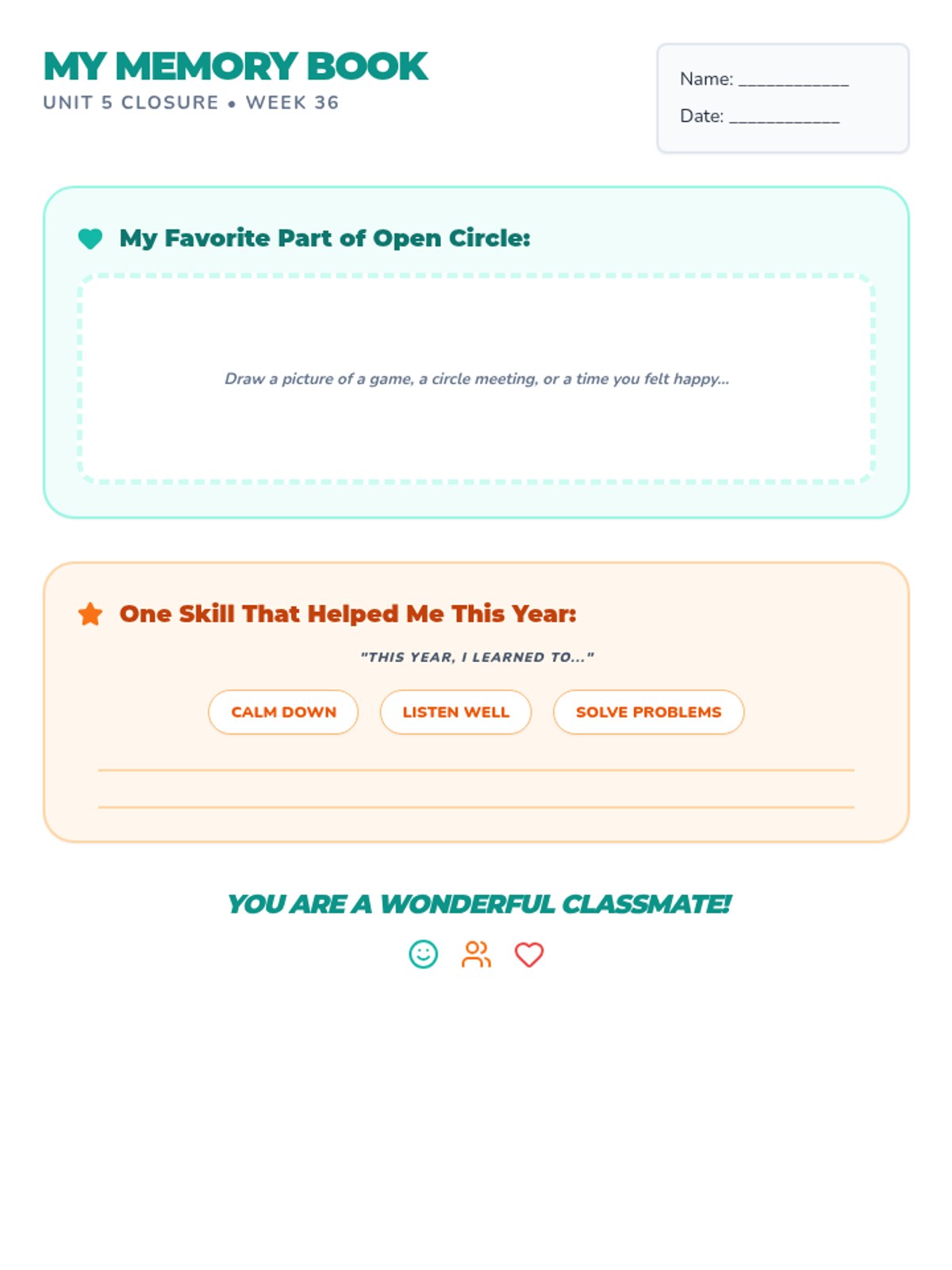
Final reflections on the school year and the growth made in Open Circle.
A supplementary lesson clarifying the difference between getting others in trouble versus keeping them safe.
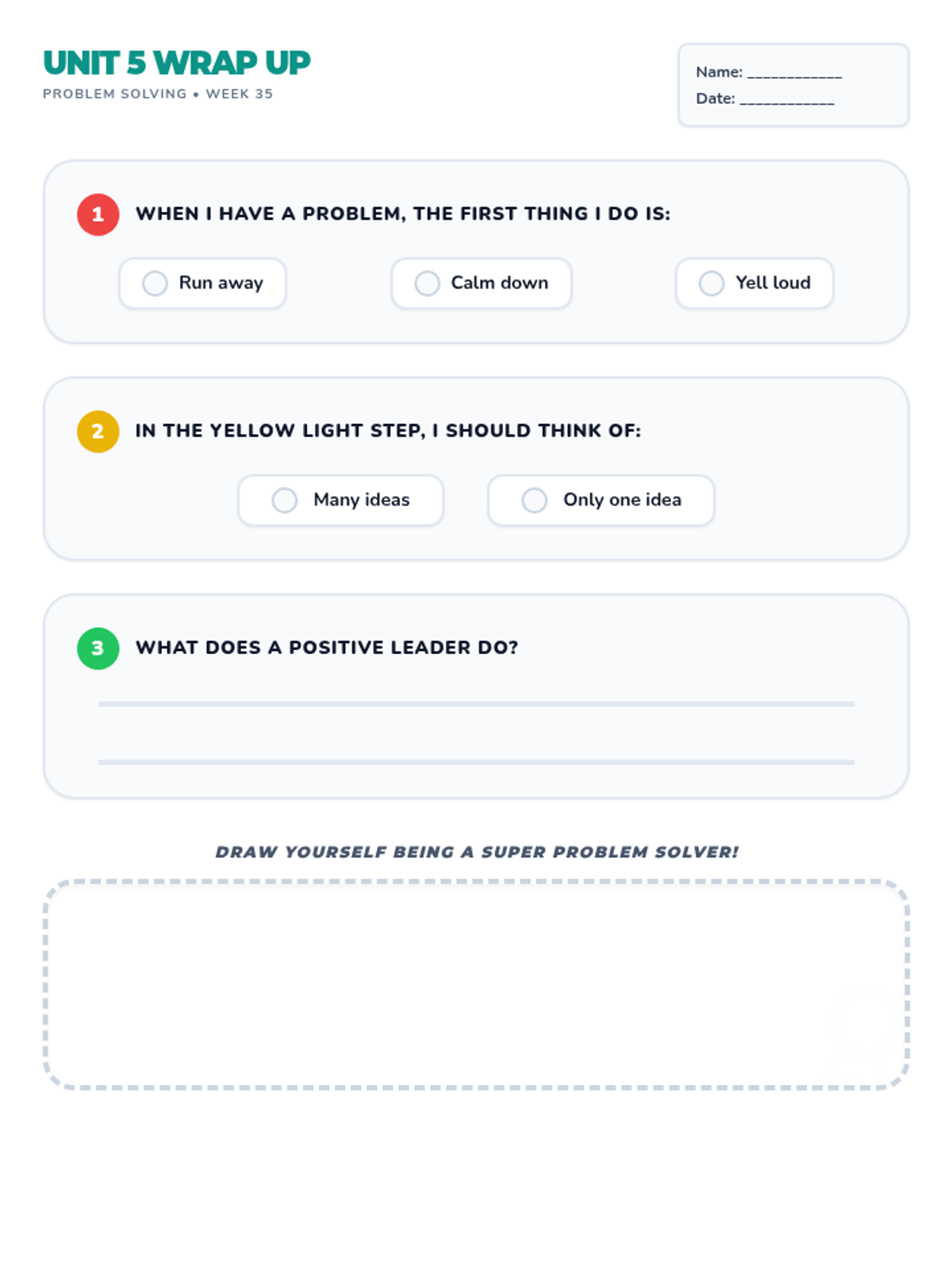
A full practice session using the complete problem-solving process on real scenarios.
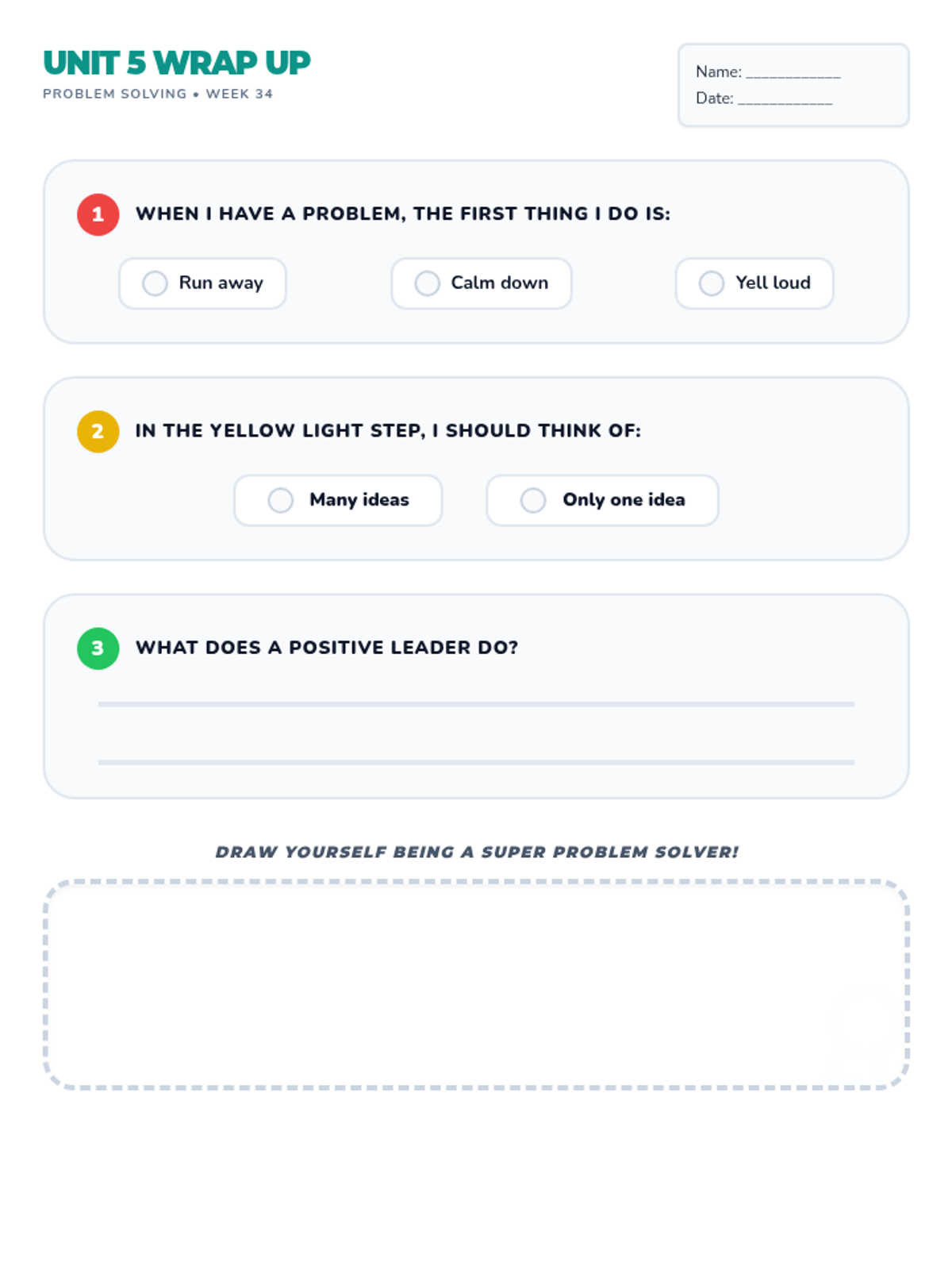
Defining positive leadership and how to use SEL skills to help the group.
Practicing how to try a plan and what to do if it doesn't work as expected.
Choosing the best idea and making a detailed plan for how to carry it out.
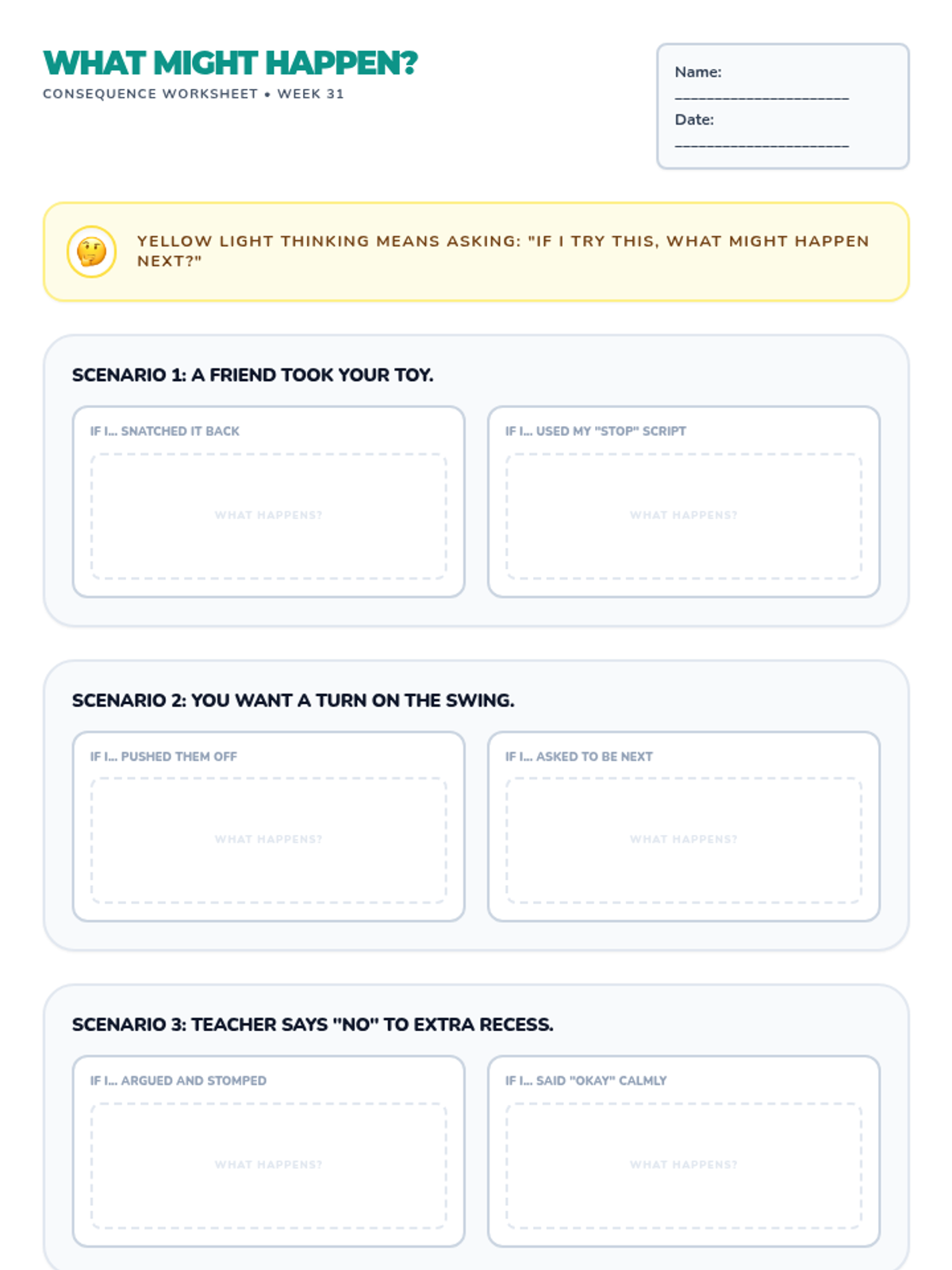
Evaluating brainstormed ideas by asking 'What might happen if I try this?'
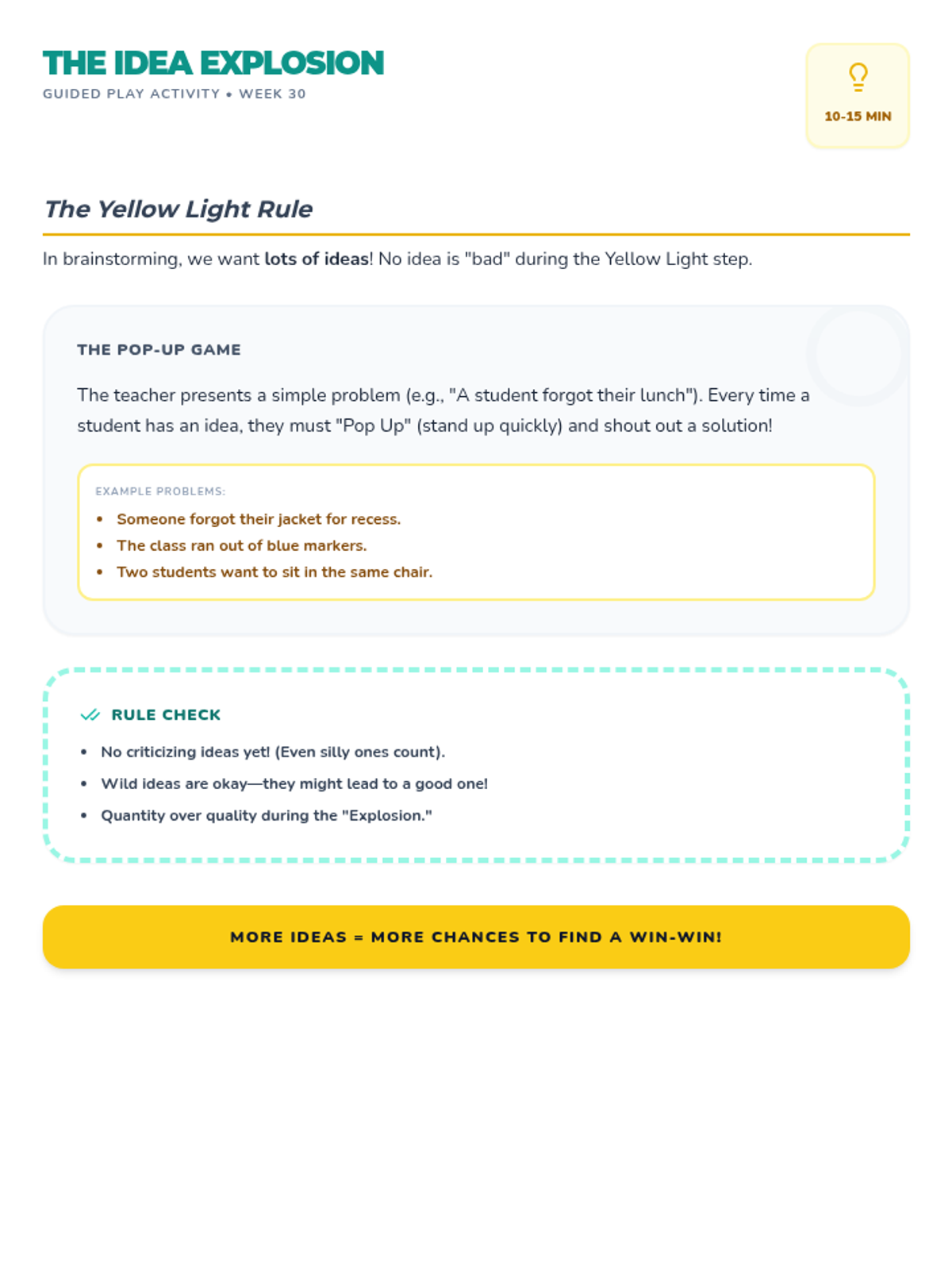
Learning the rules of brainstorming to generate many possible solutions to a problem.
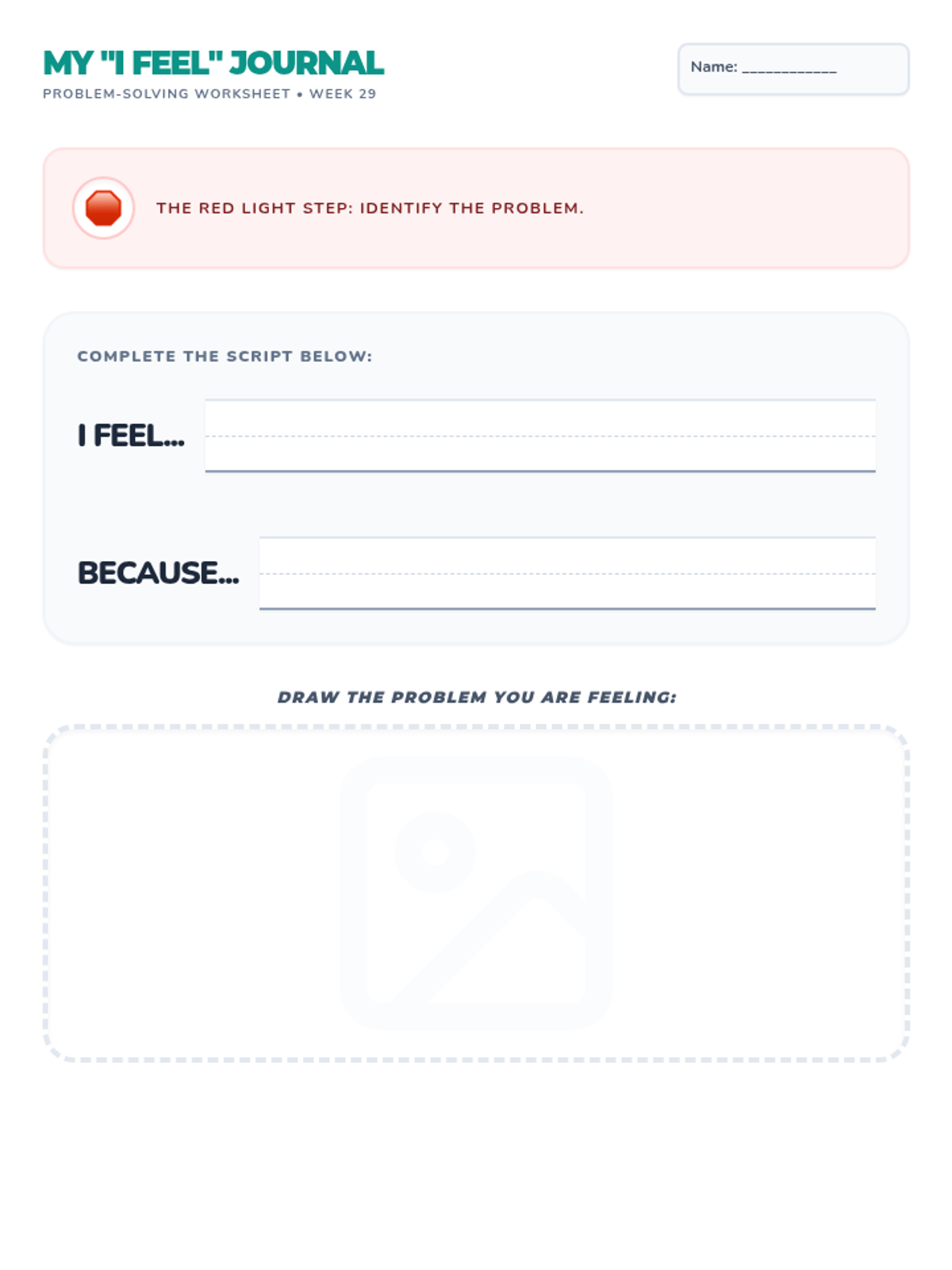
Practice using 'I feel... because...' to identify the specific problem.
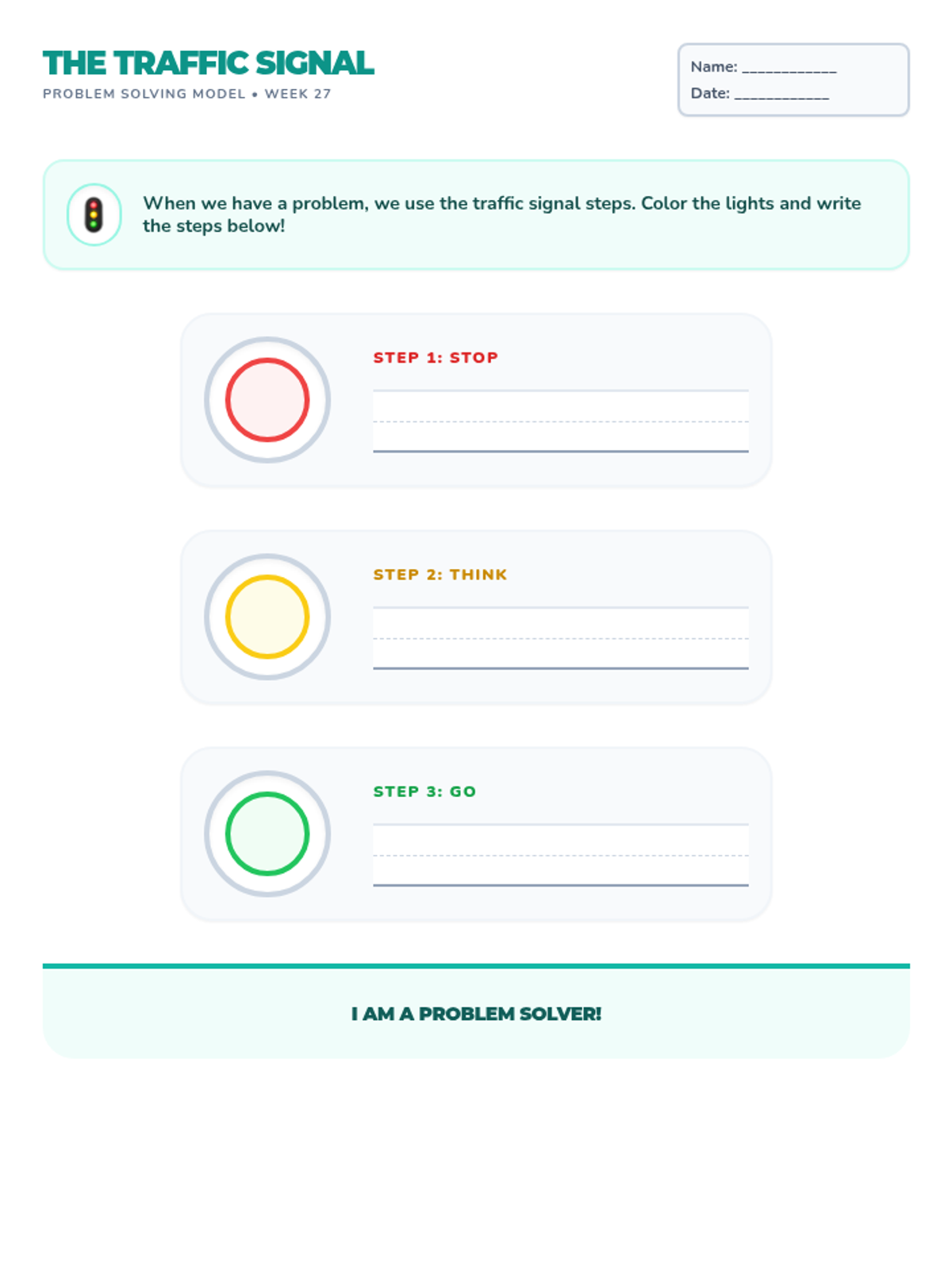
Focusing on the first step of the traffic signal: stopping to calm down.
Introduction to the Stop, Think, Go traffic signal model for solving problems.
Defining what a problem is and identifying common problems that occur in first grade.
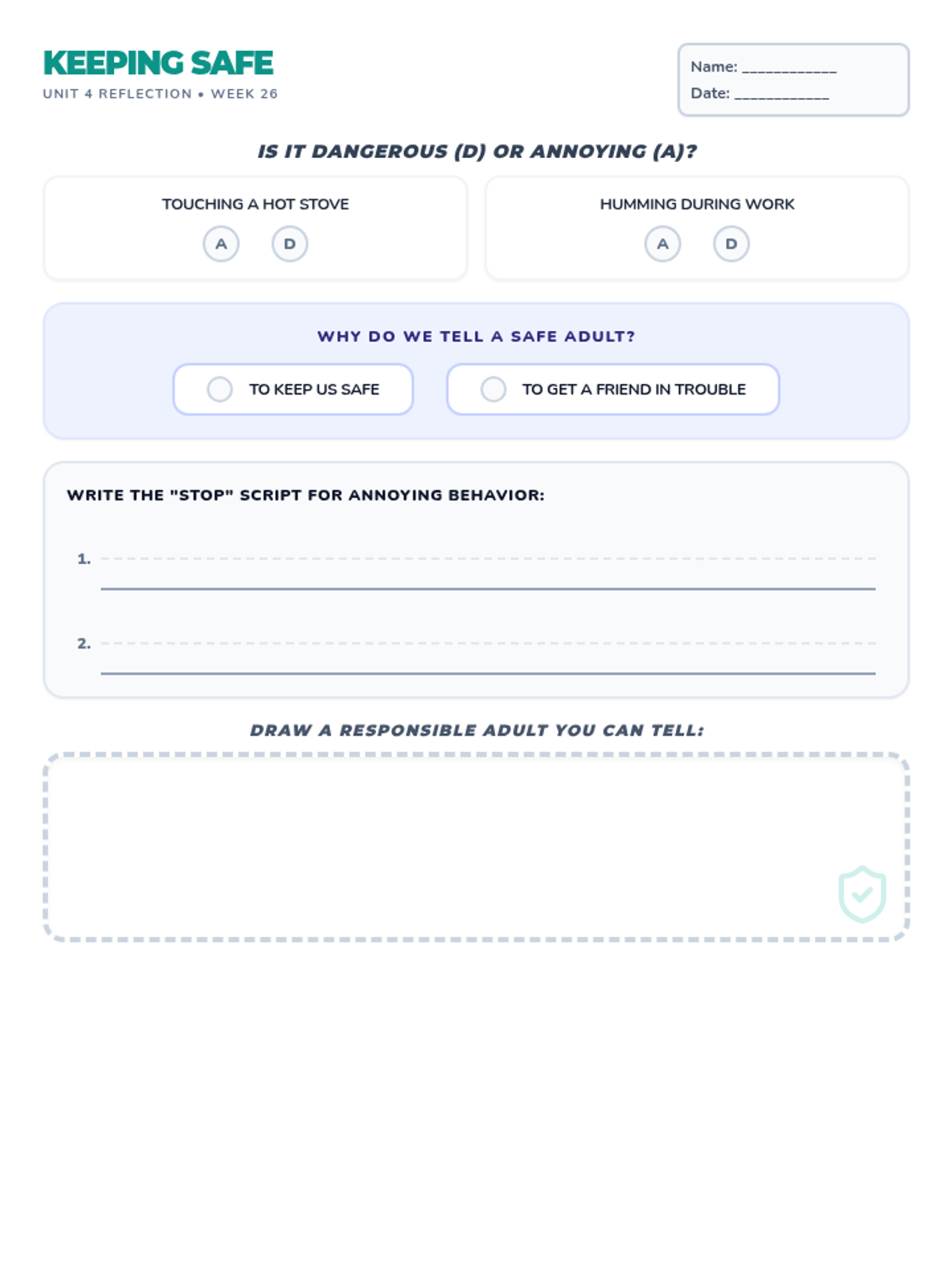
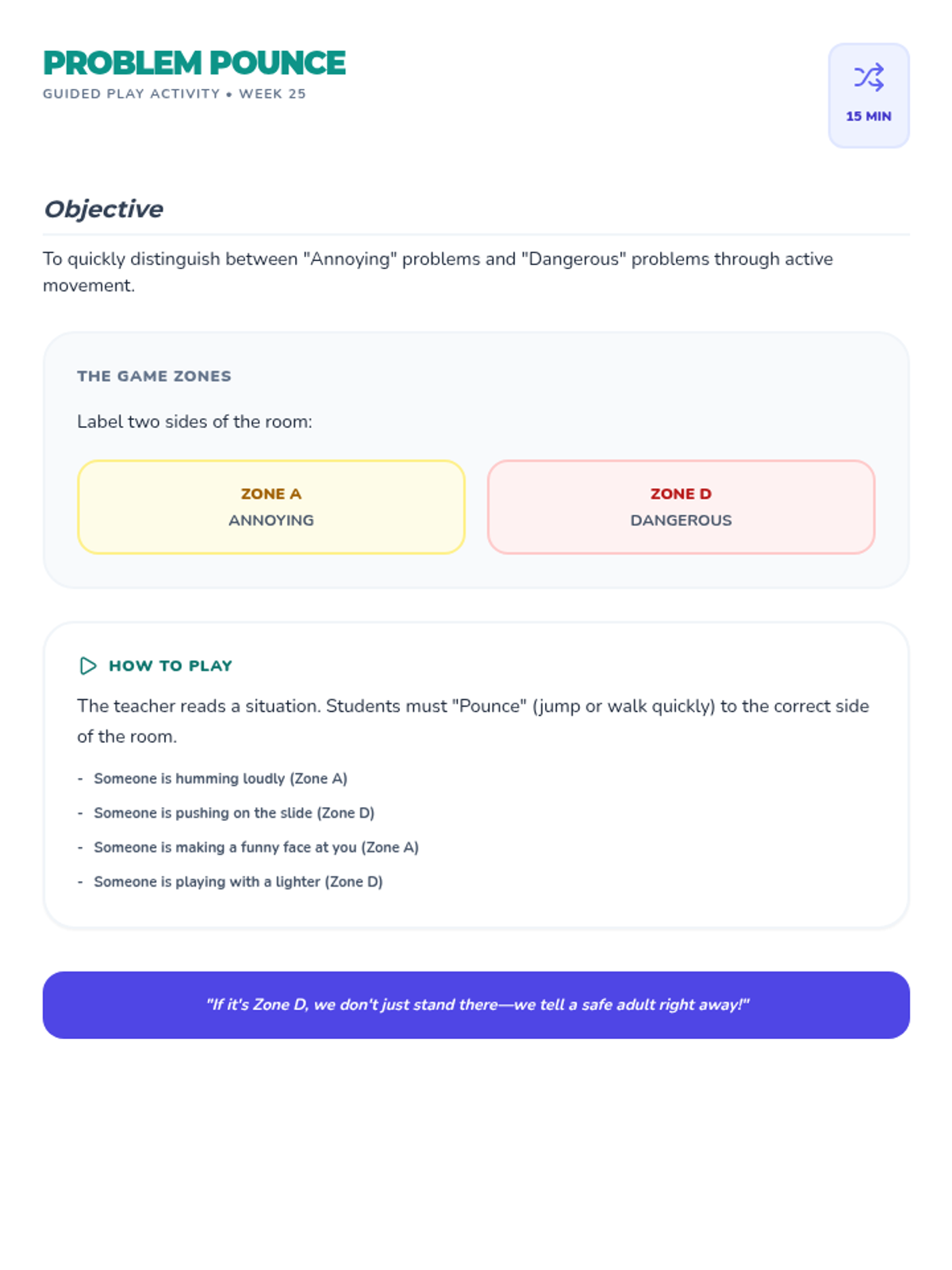
Reviewing the categories of problems and how to tell the difference between them.
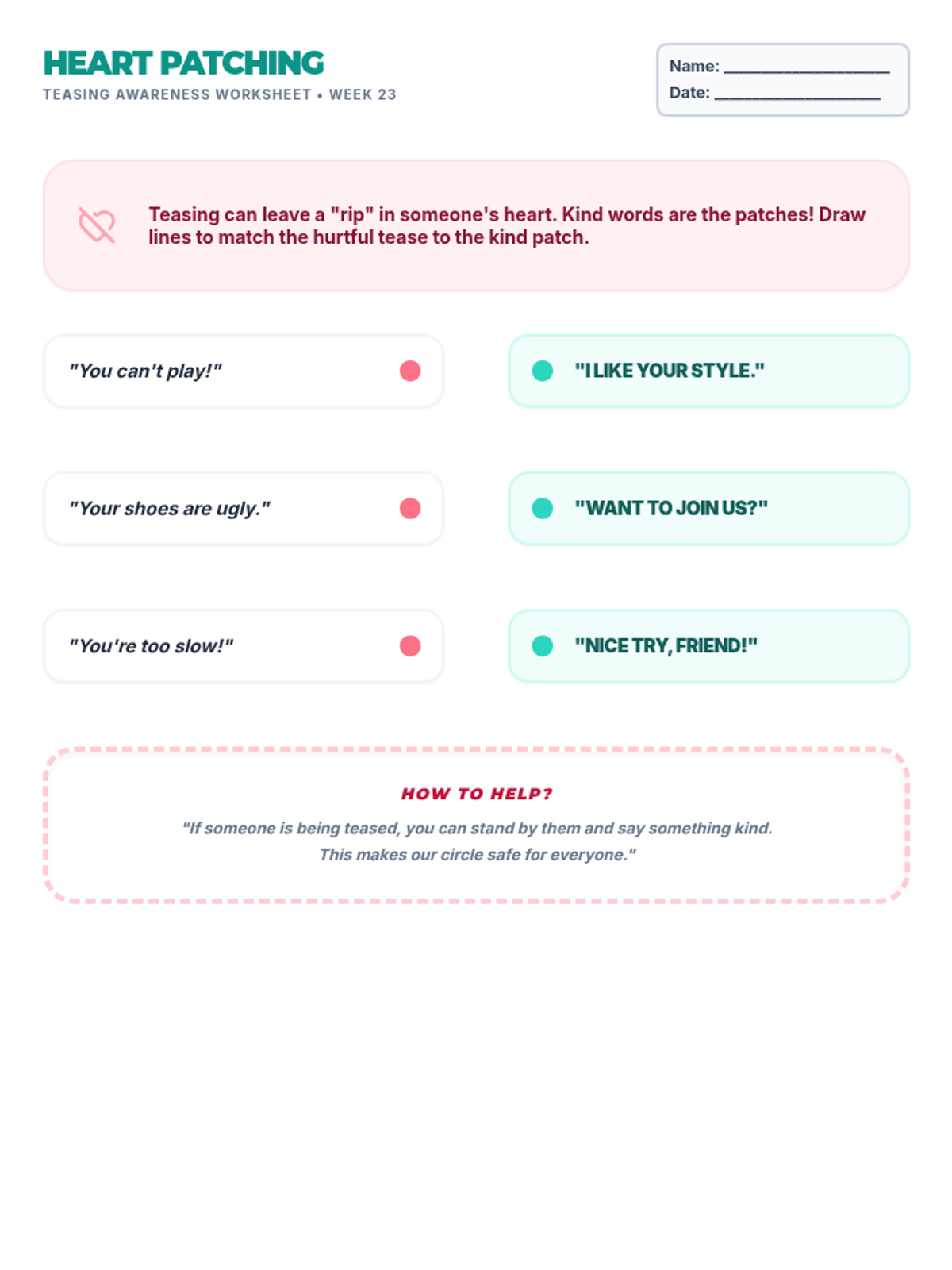
Discussing how teasing feels and practicing strategies to respond when being teased.
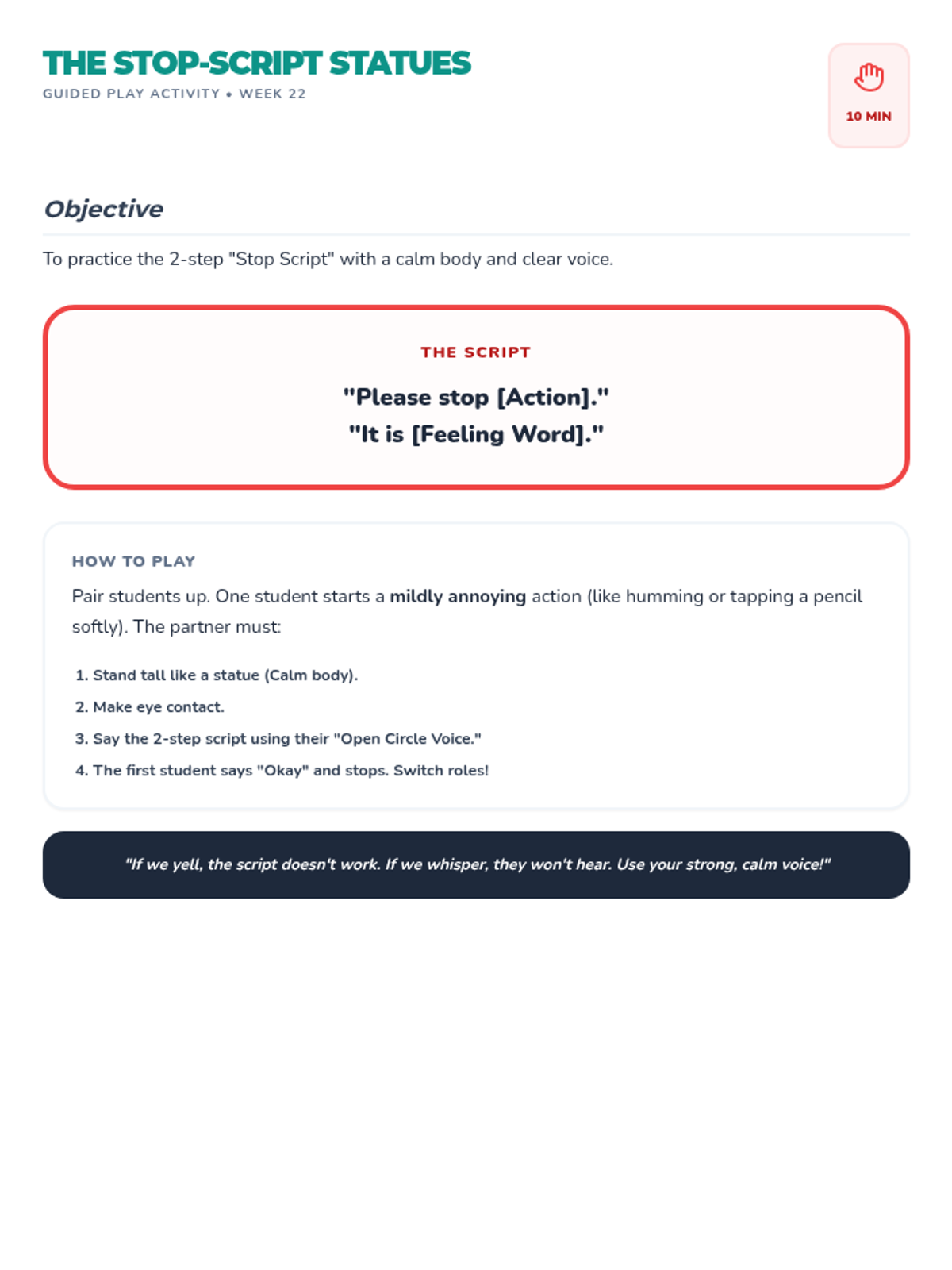
Students learn a two-step script for addressing annoying but not dangerous behavior.
Defining dangerous and destructive behaviors and knowing when to tell a responsible adult immediately.
Identifying healthy ways to express anger through words rather than hurtful actions.
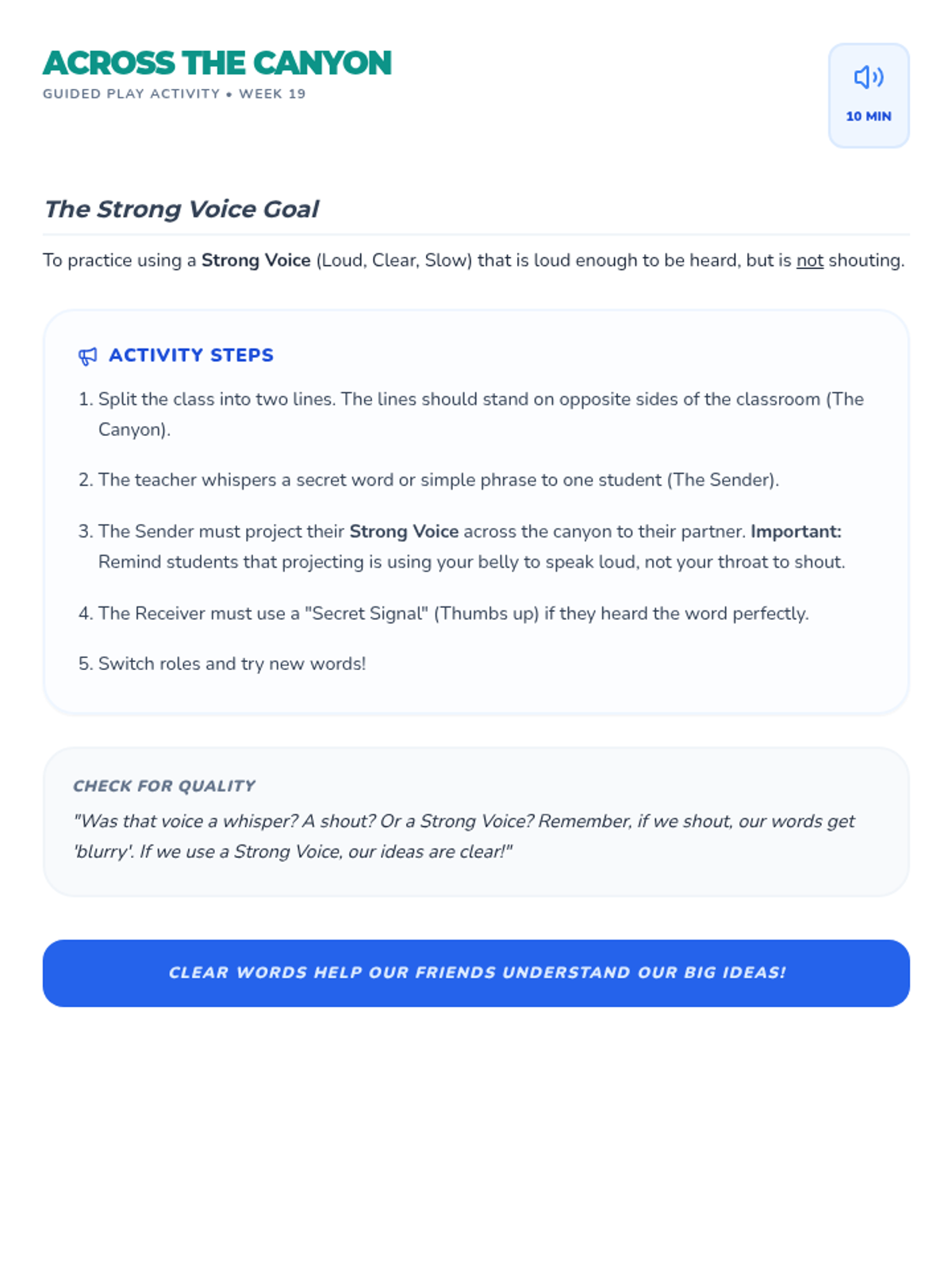
Learning to speak clearly, slowly, and loudly enough so others can hear important ideas.
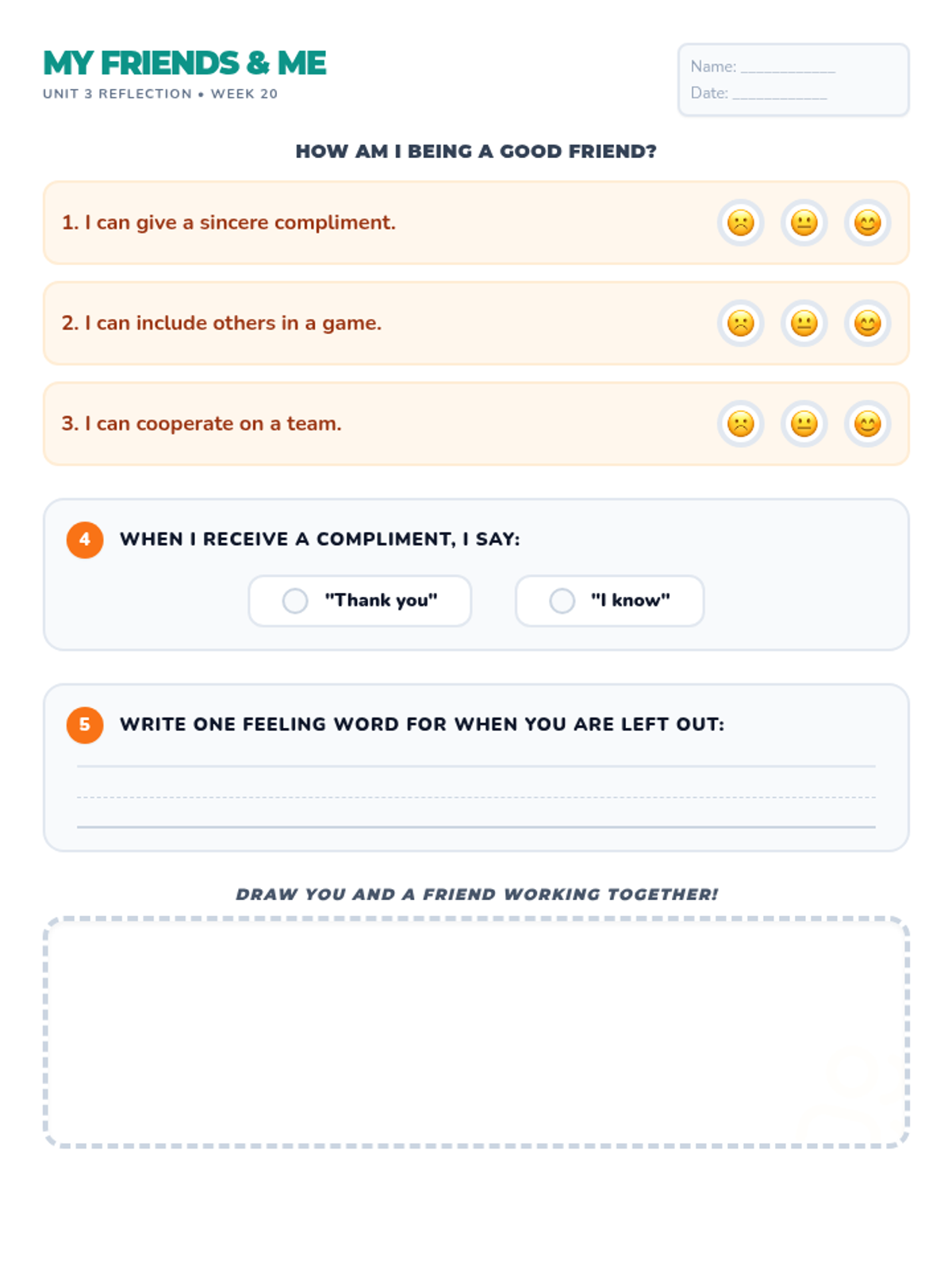
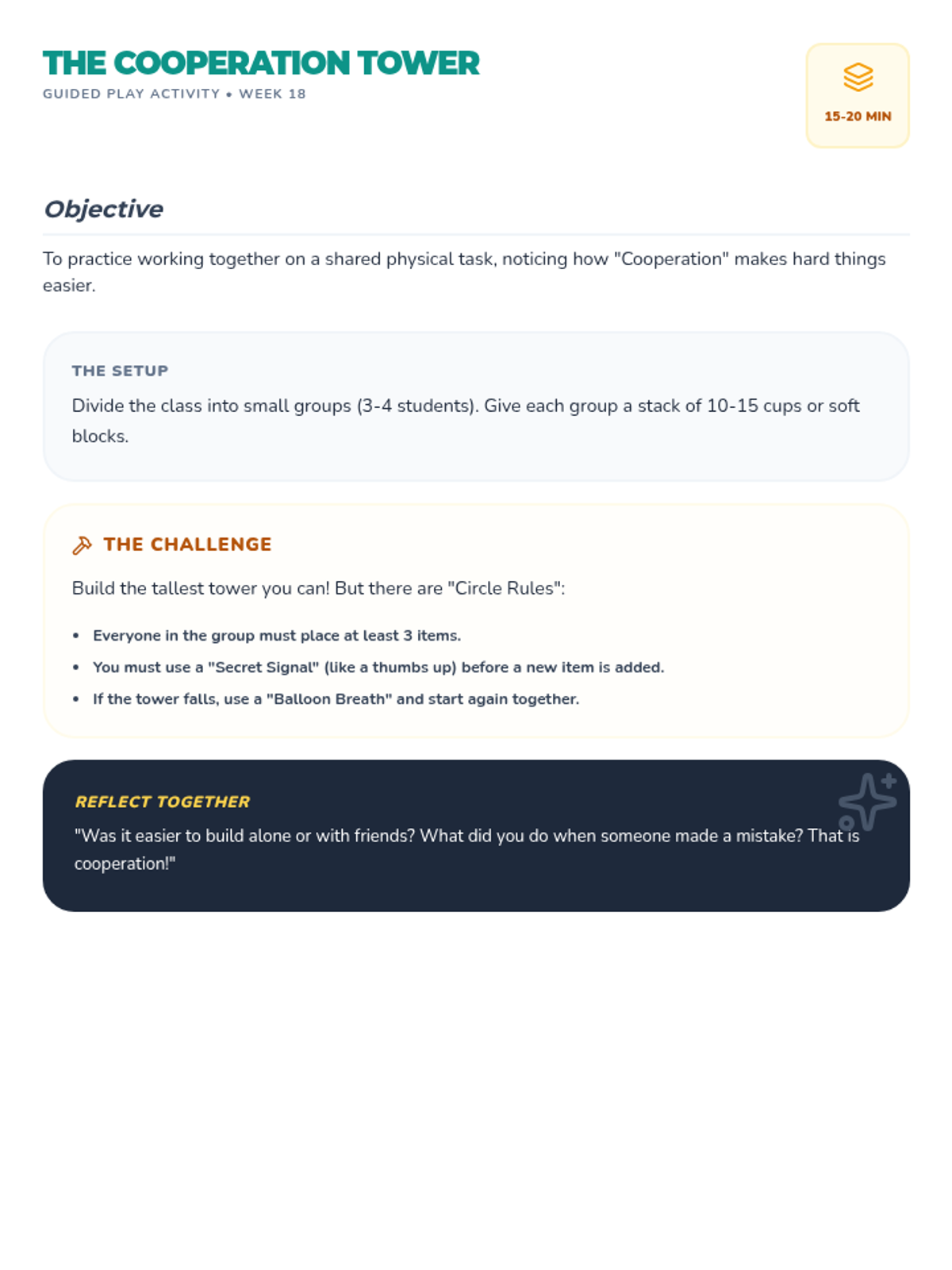
Students practice working together on a shared task to understand the value of cooperation.
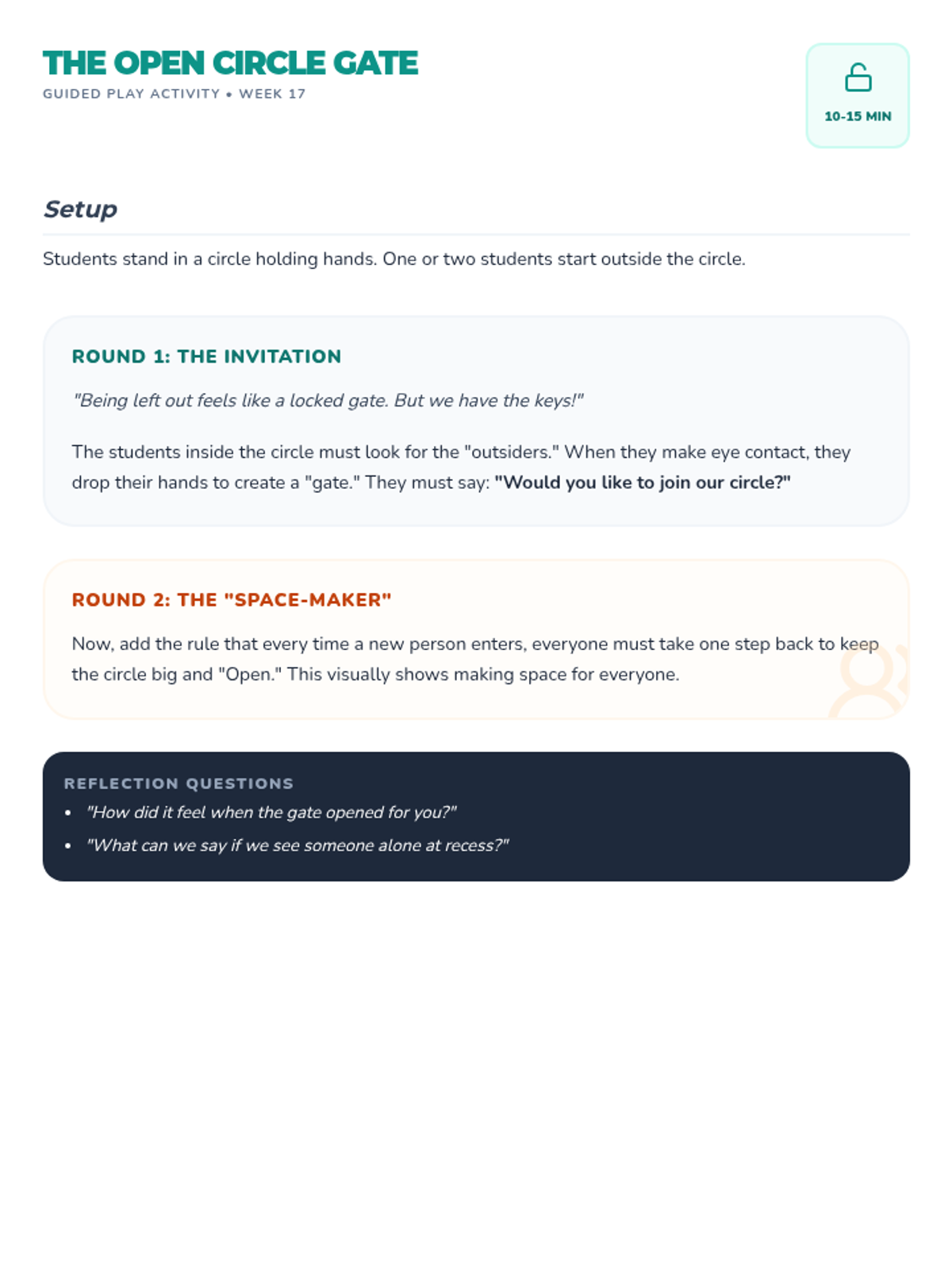
Discussing the feeling of being left out and brainstorm ways to invite others to join activities.
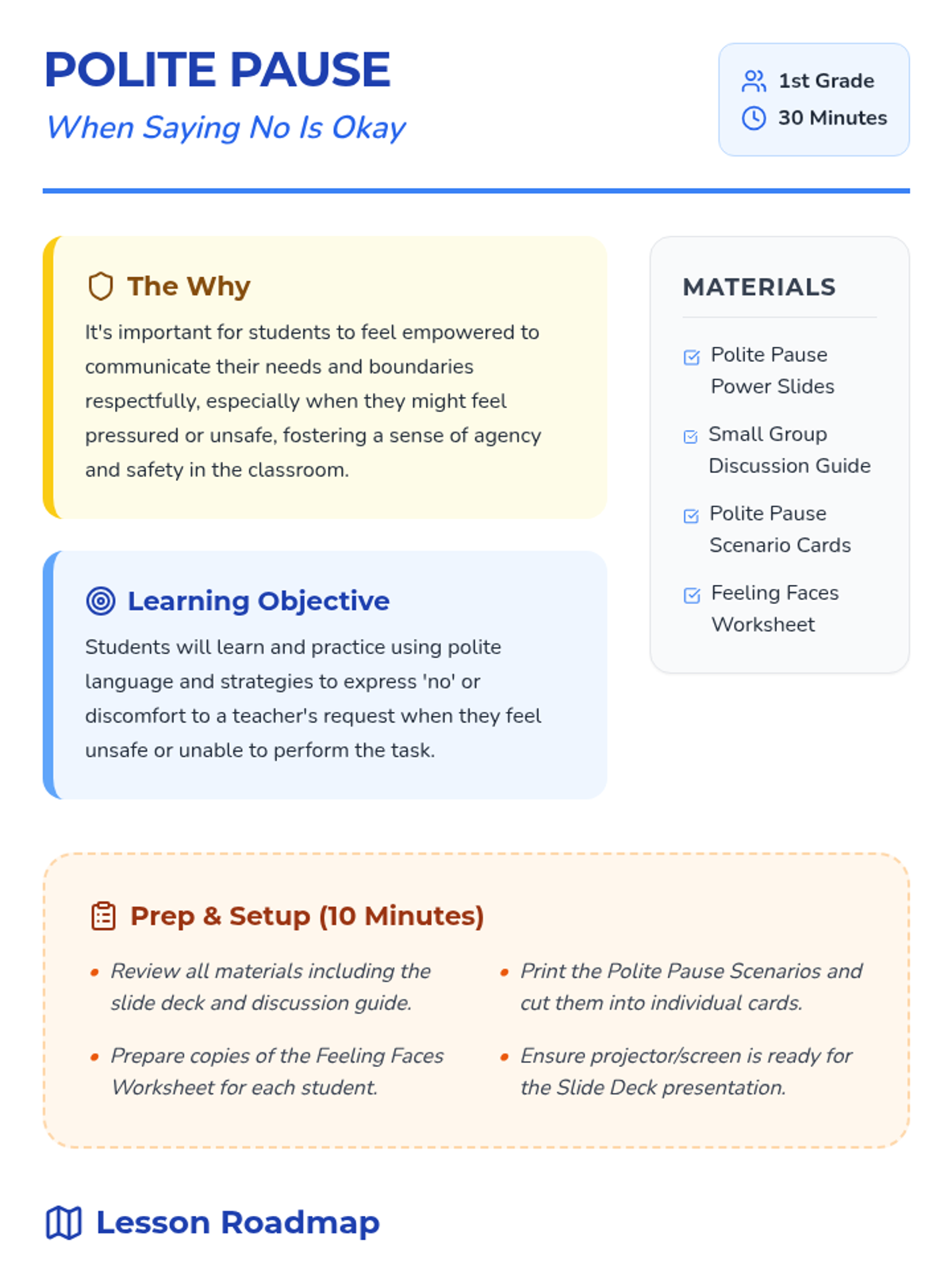
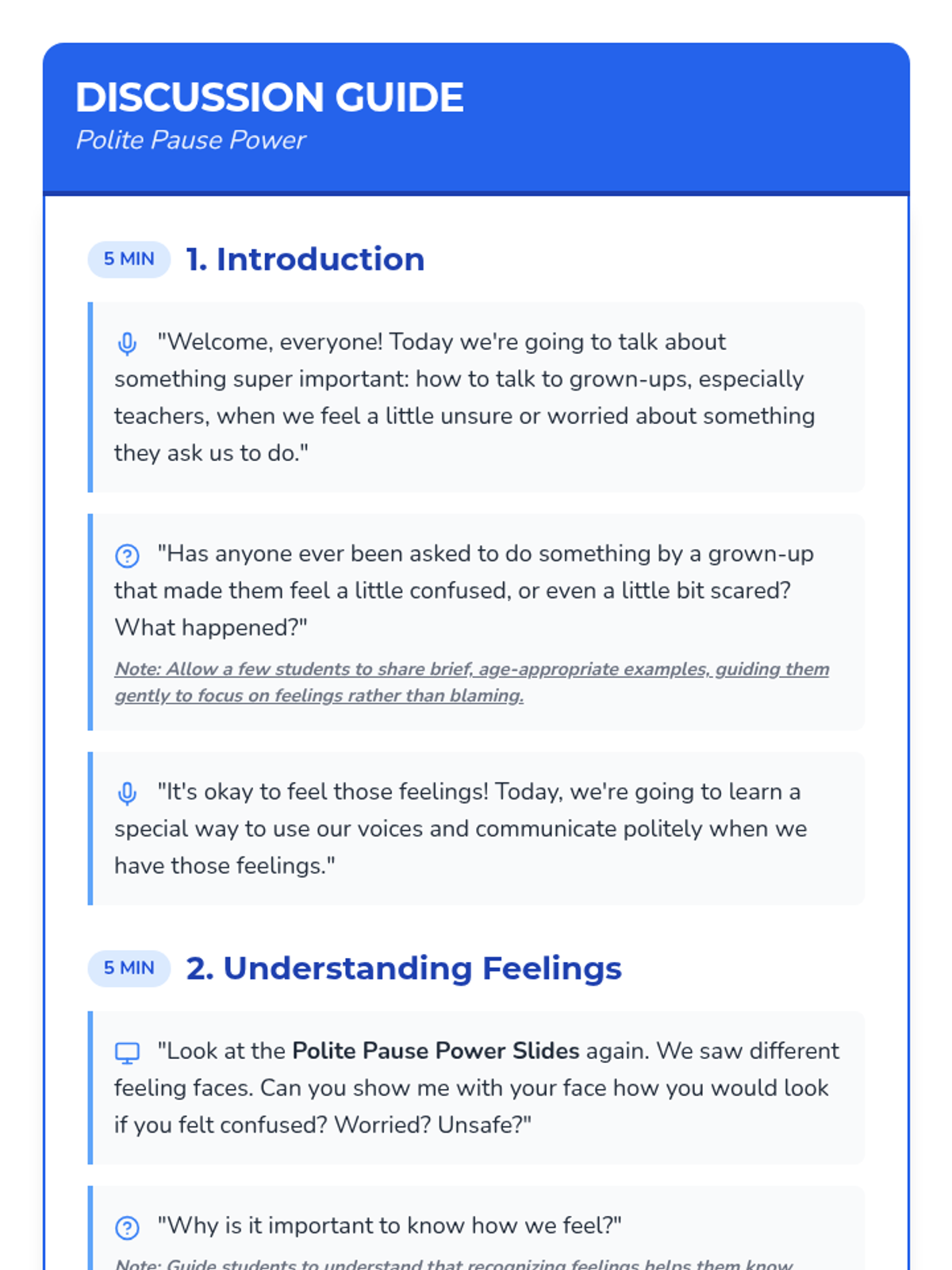
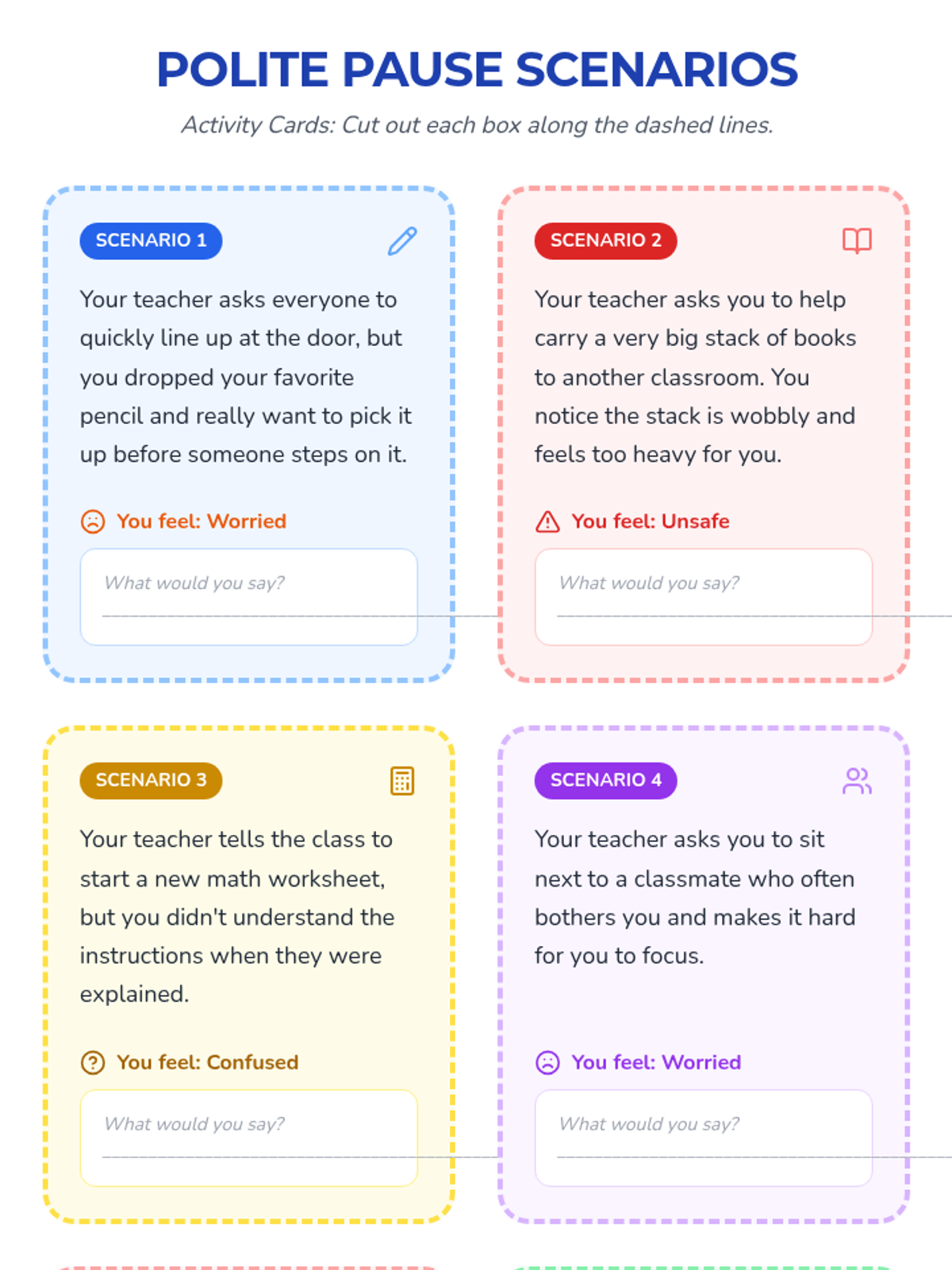
This lesson teaches 1st-grade students how to respectfully communicate 'no' or express discomfort when a teacher's request makes them feel unsafe or unable to comply, focusing on appropriate language and alternative actions.