Stop-and-think strategies, impulse management, and SMART goal setting for personal growth. Develops internal motivation, stress reduction techniques, and resilience through proactive planning and monitoring.
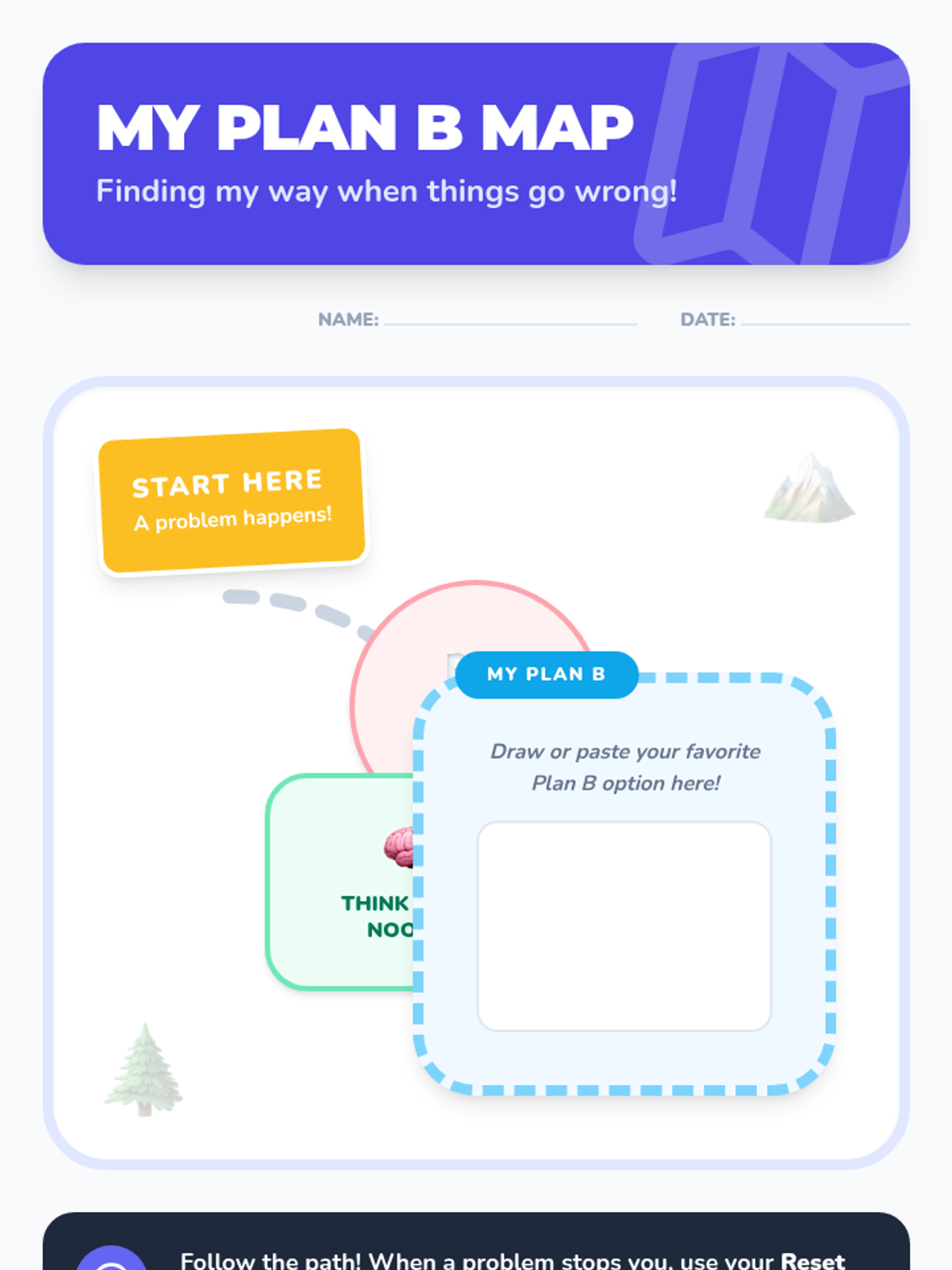
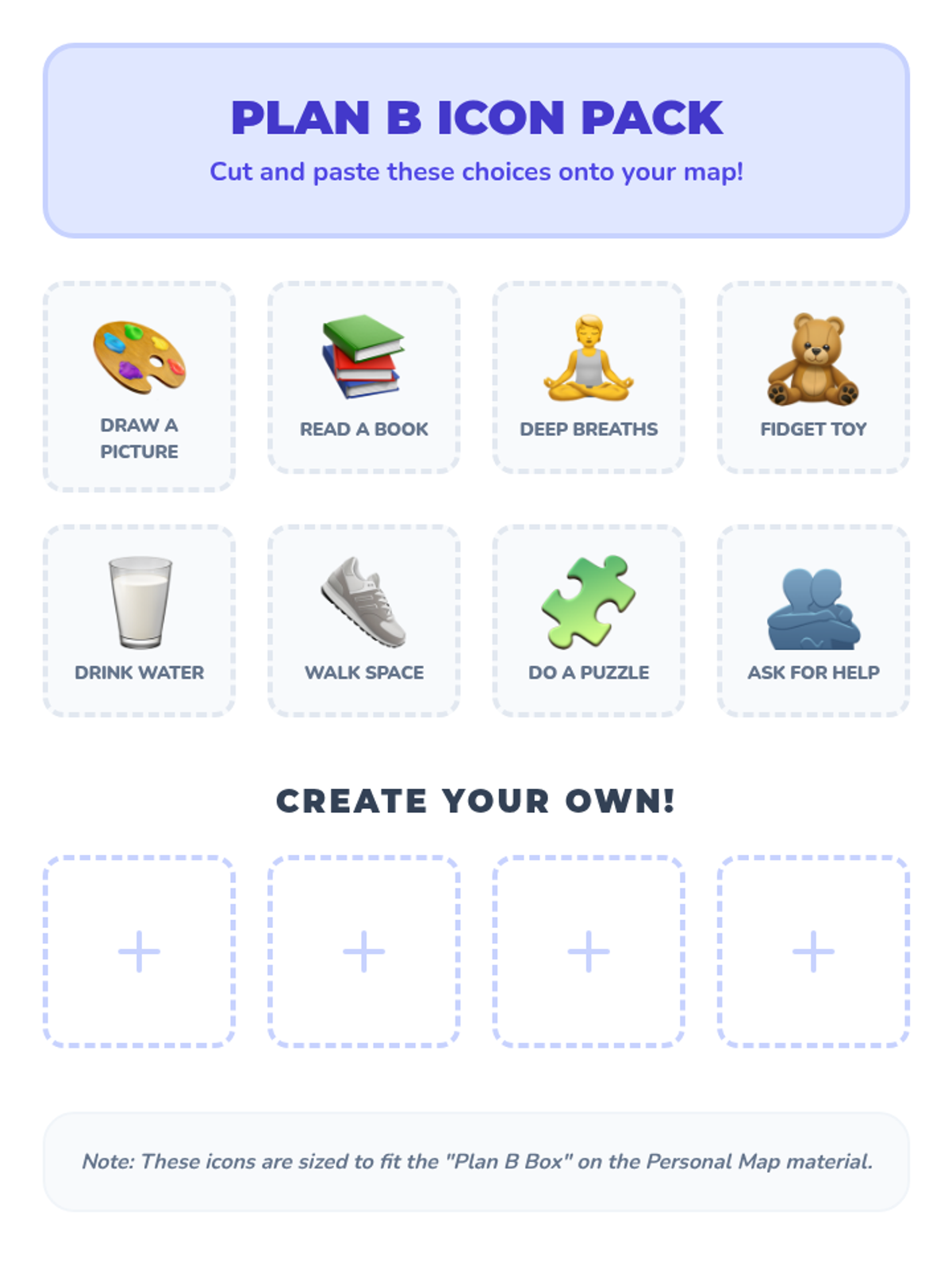
Students synthesize their learning by creating a personalized visual map of 'Plan B' options for common classroom obstacles.
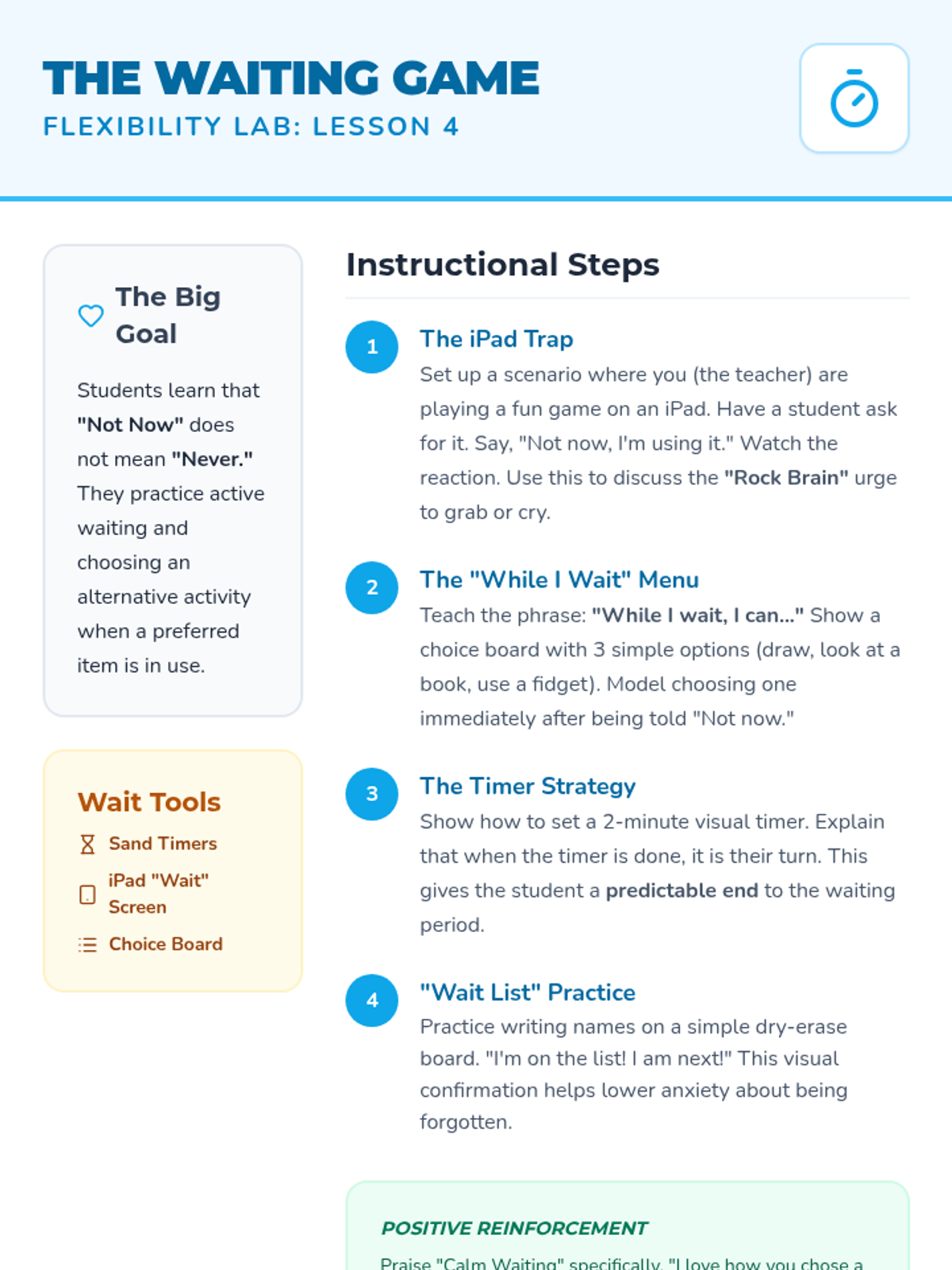
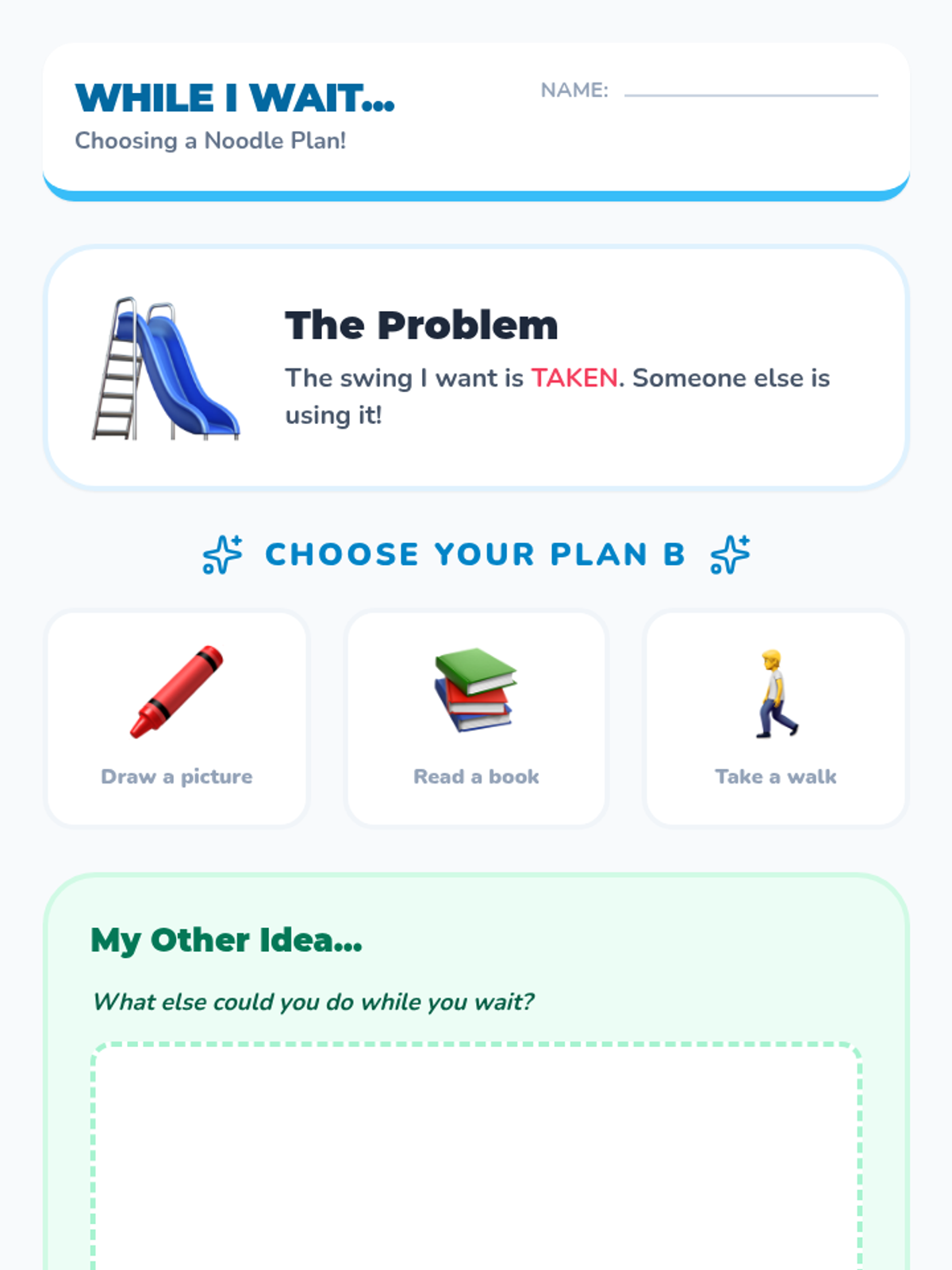
Focuses on the skill of 'waiting' and choosing alternatives when preferred items are unavailable.
Students practice managing anxiety during schedule shifts by using visual aids and moving to a 'Plan B' activity.
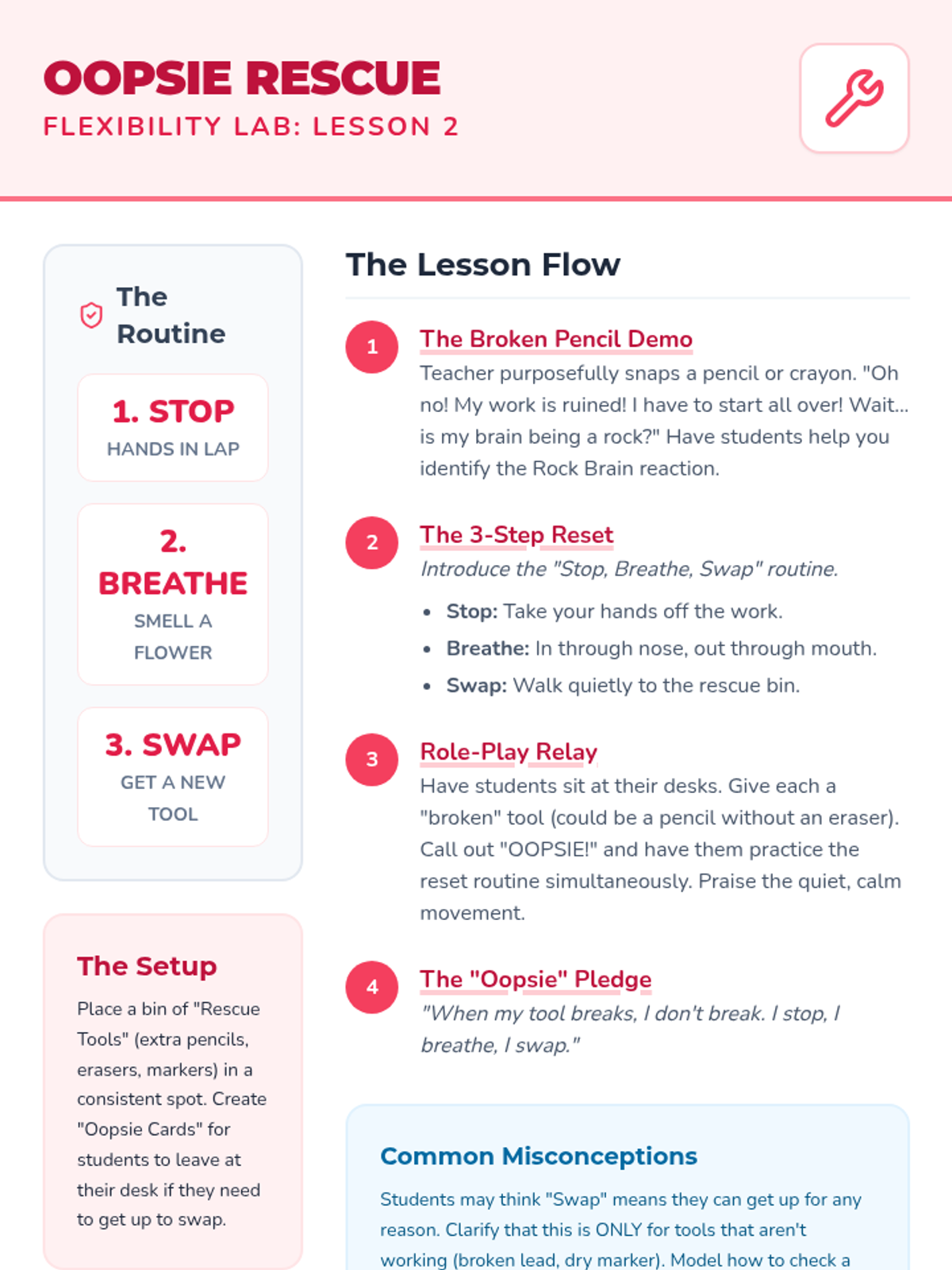
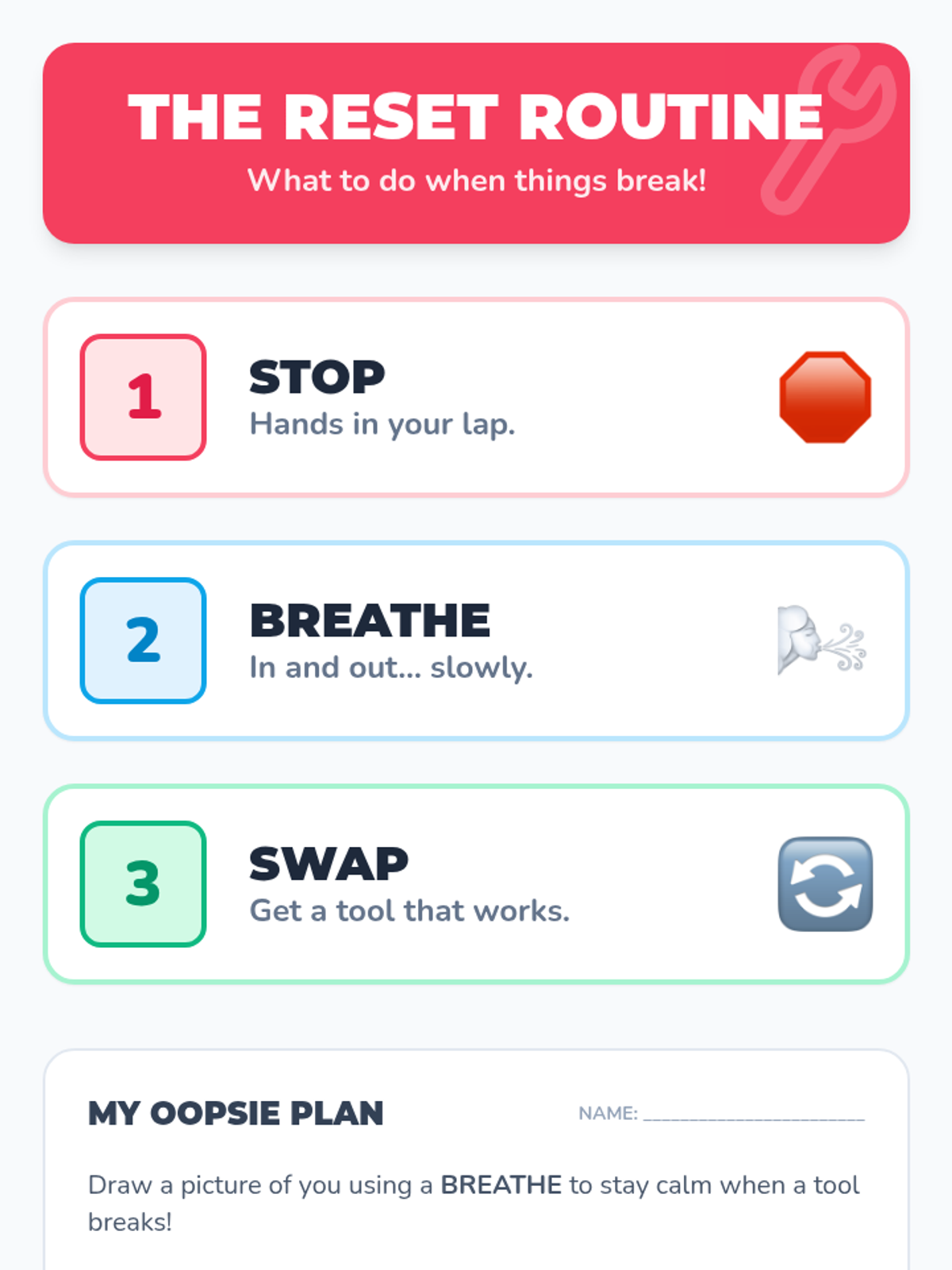
Students role-play tool breakage and practice a three-step reset routine: Stop, Breathe, Swap to maintain emotional regulation.
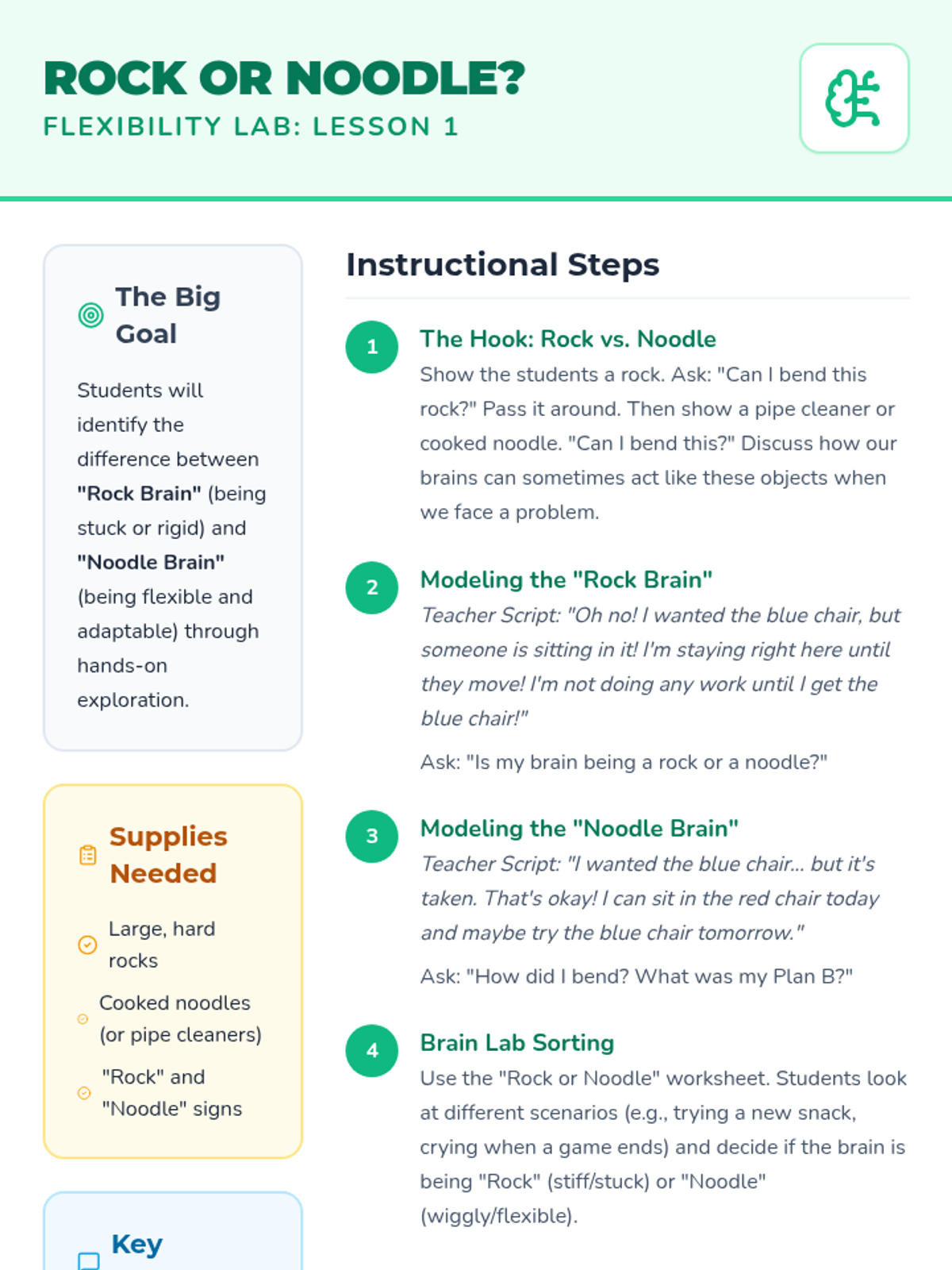
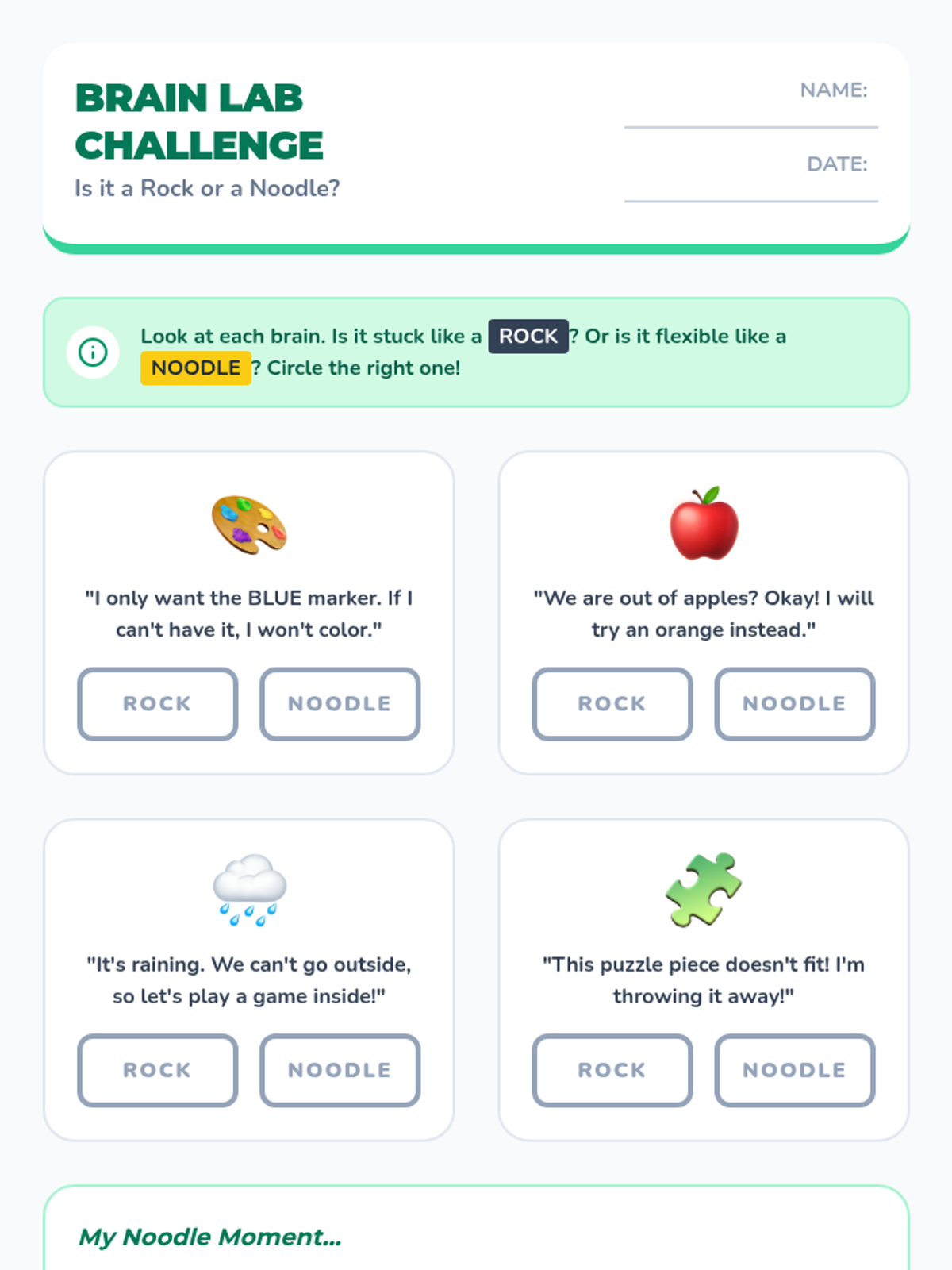
Students explore the difference between 'rock brain' (stuck) and 'noodle brain' (flexible) using physical objects and metaphors. They establish the core vocabulary for the unit.
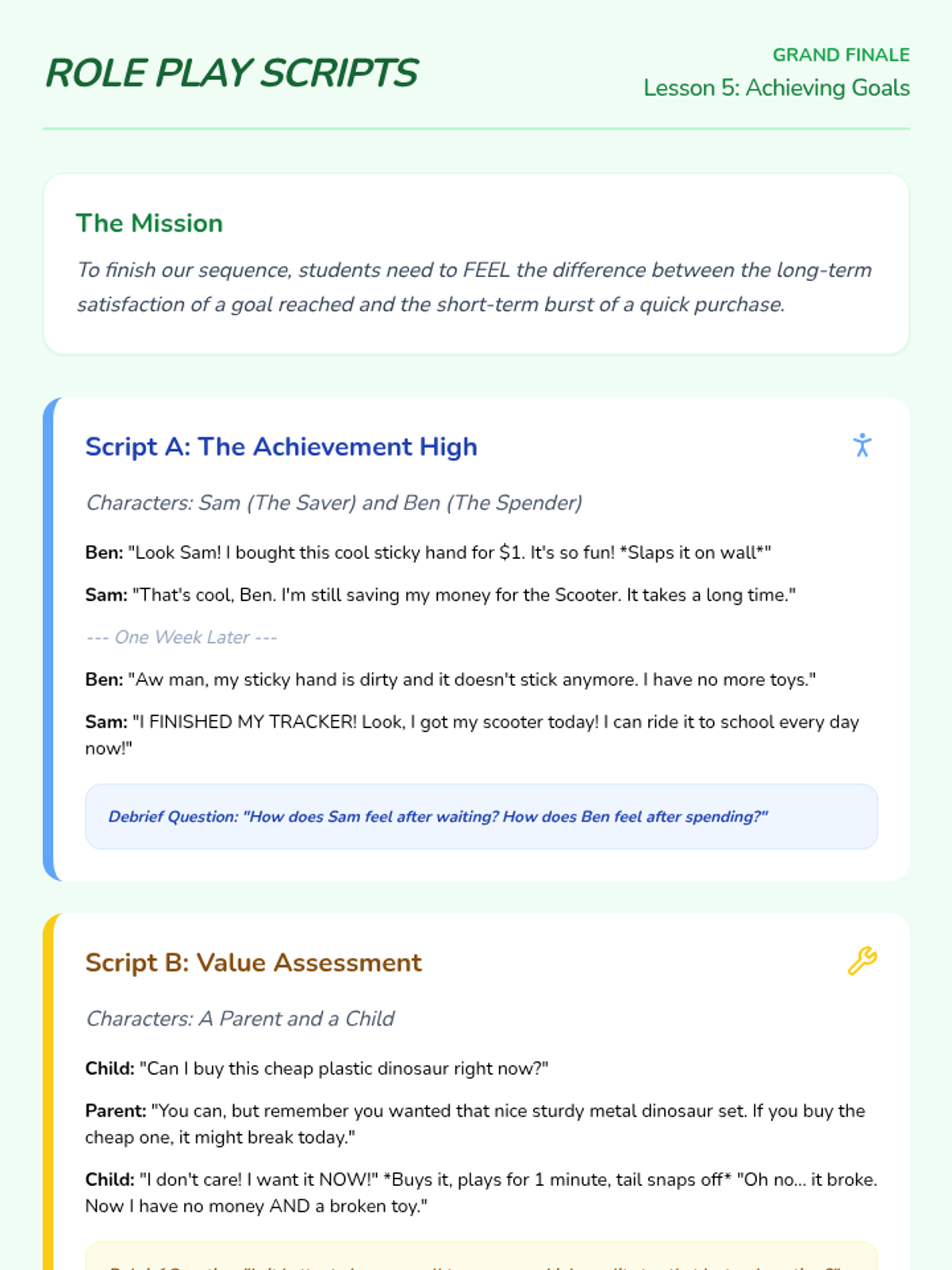
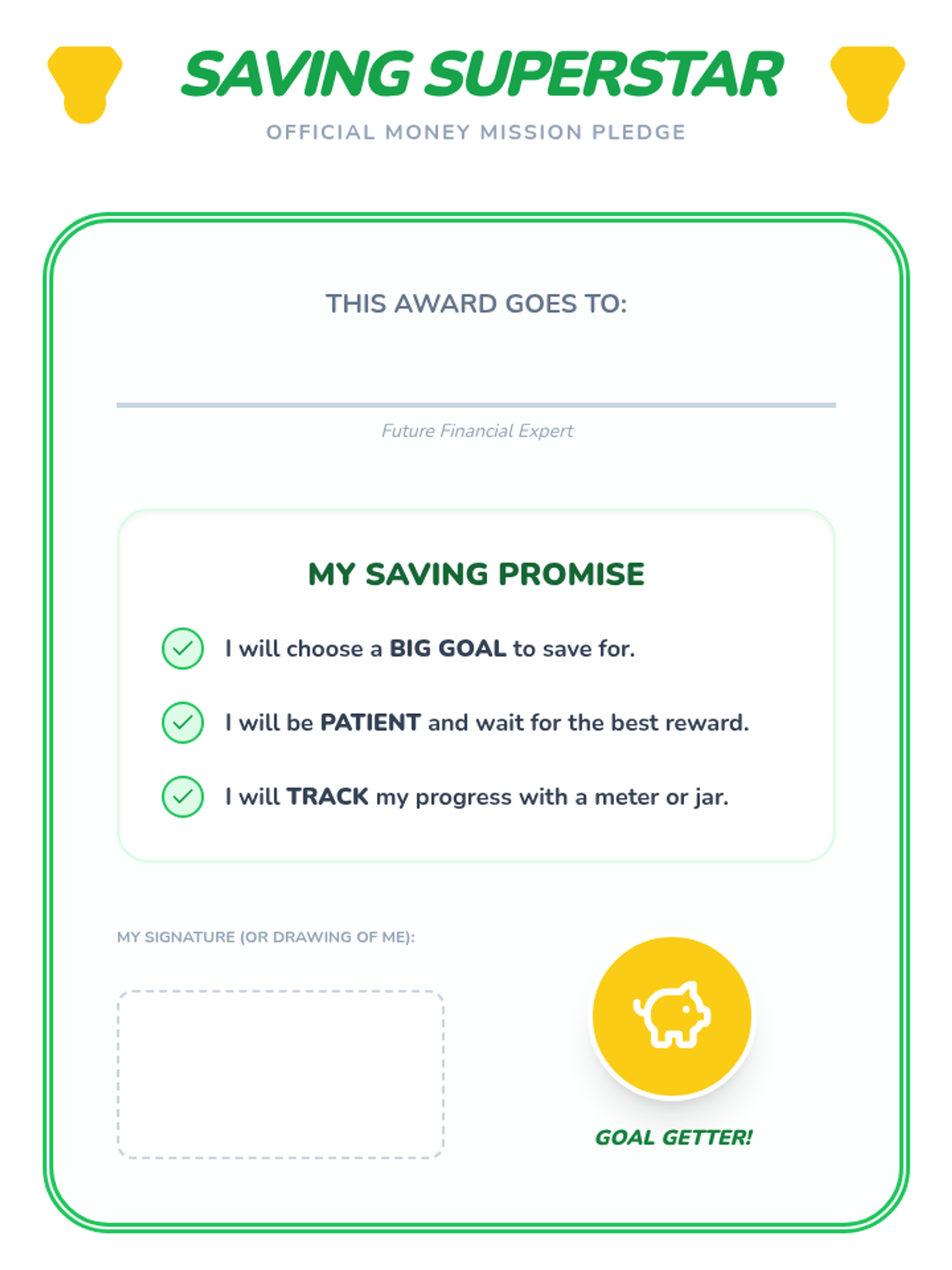
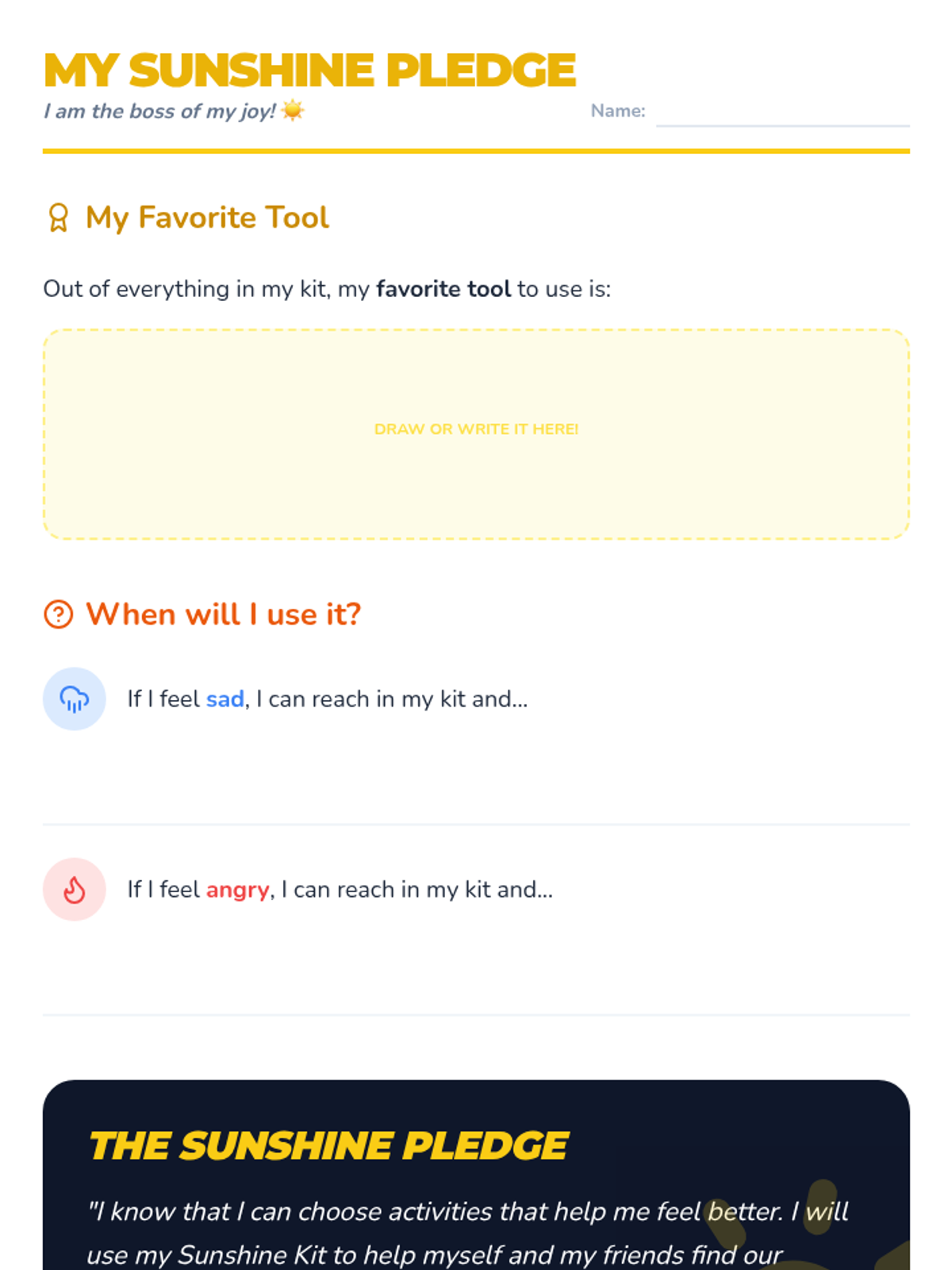
Students reflect on the satisfaction of reaching a goal and make a personal pledge to practice good saving habits.
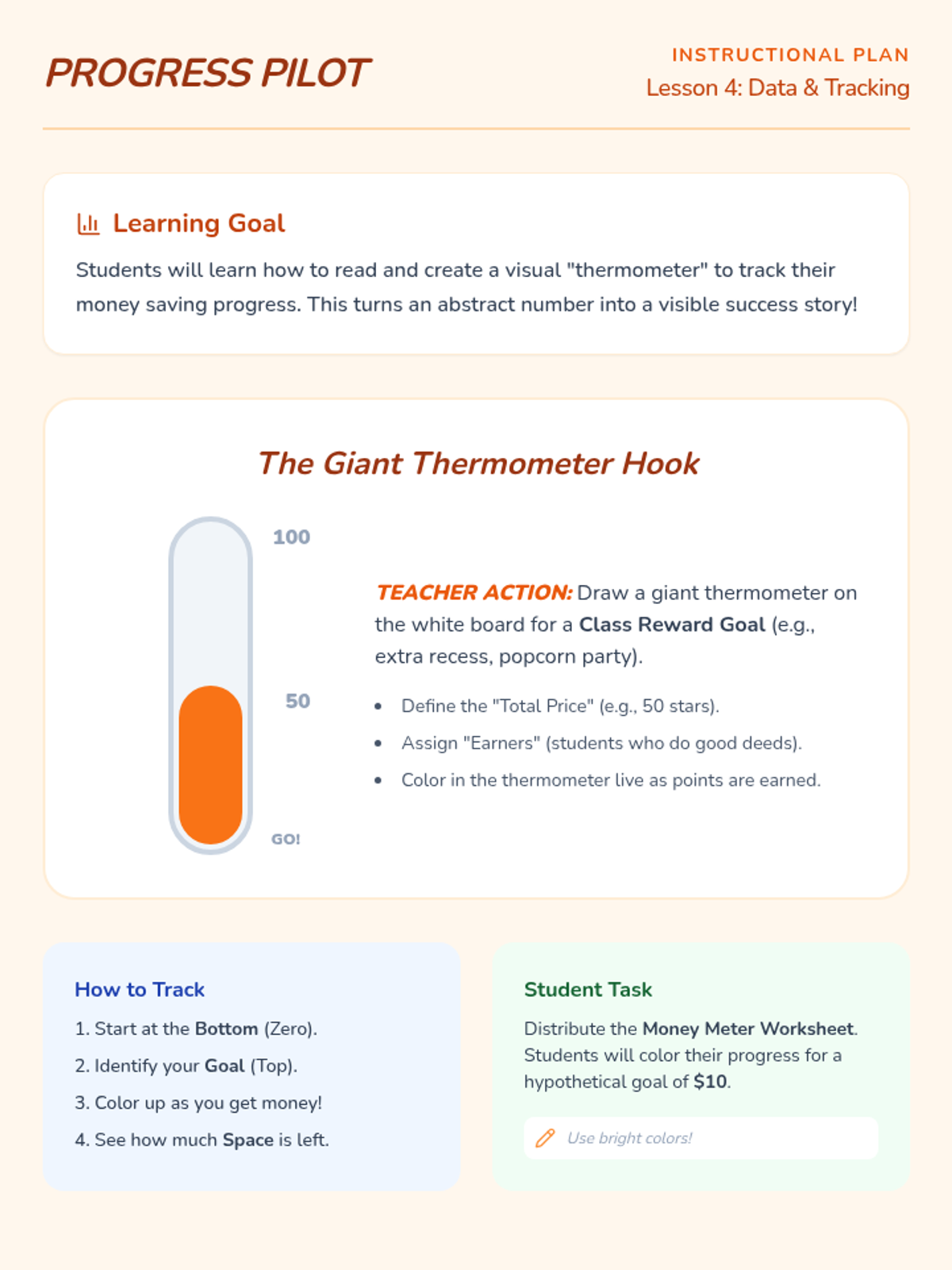
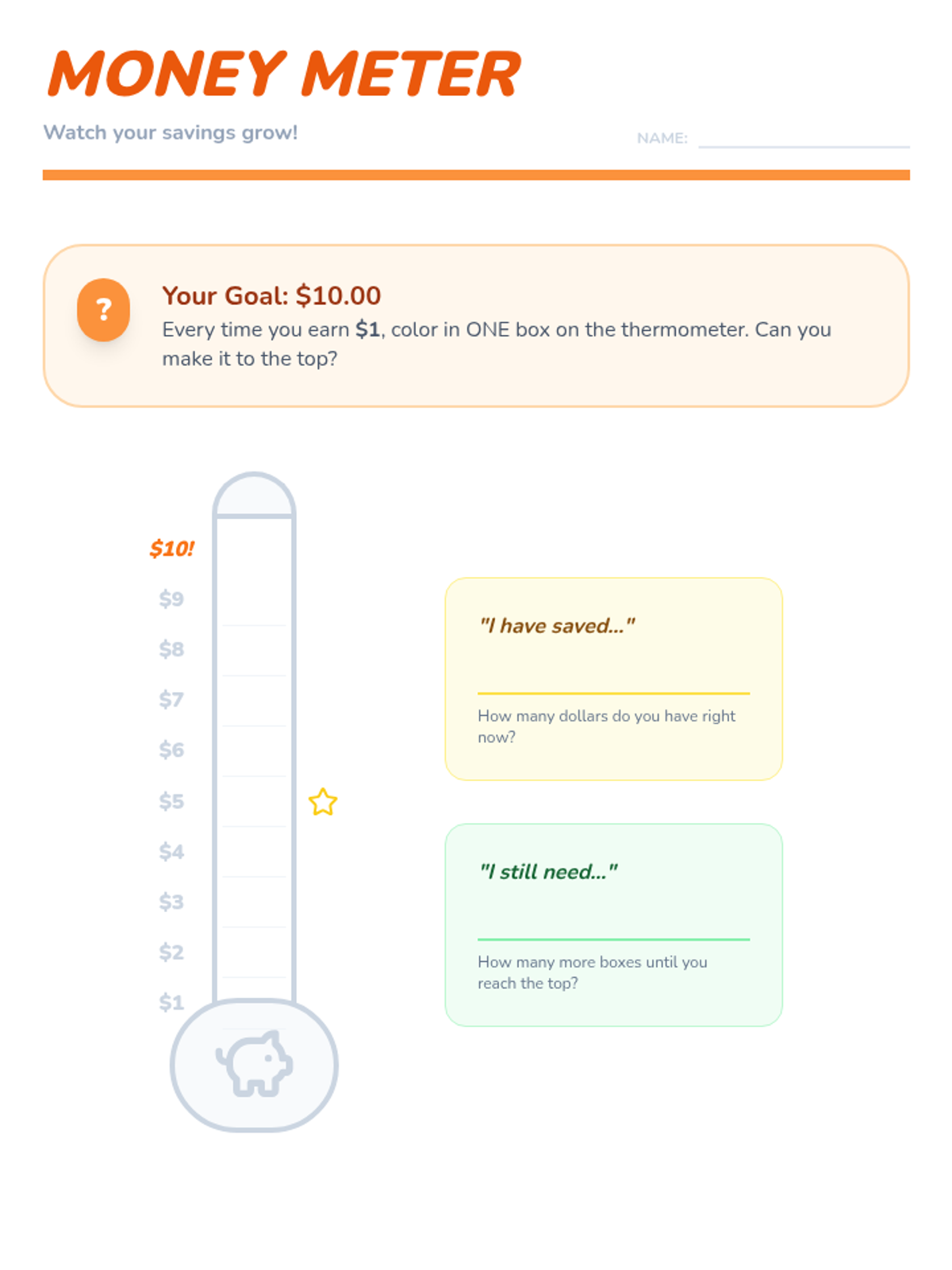
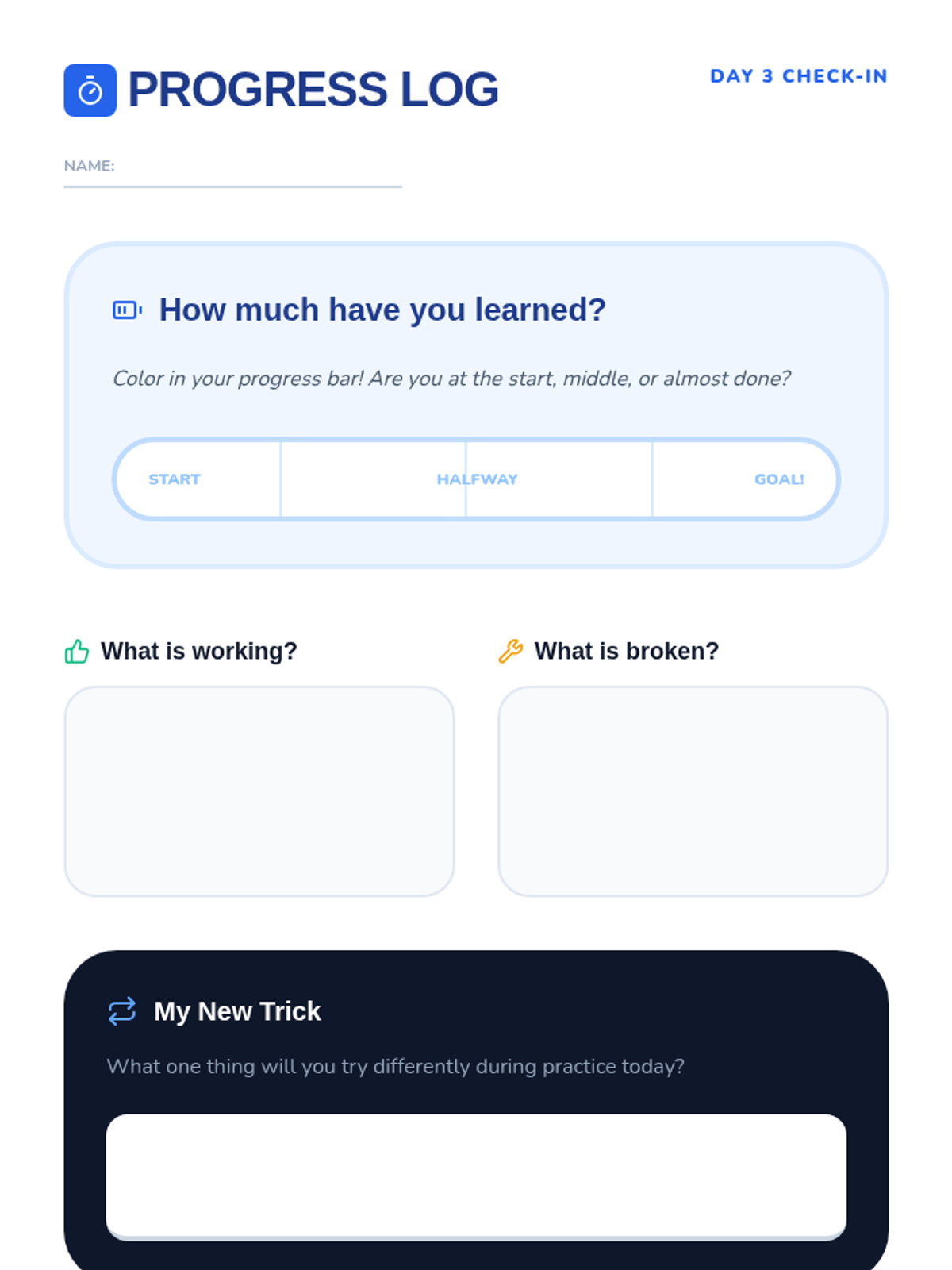
Students learn to track their financial progress using visual charts and thermometers to stay motivated toward their goals.
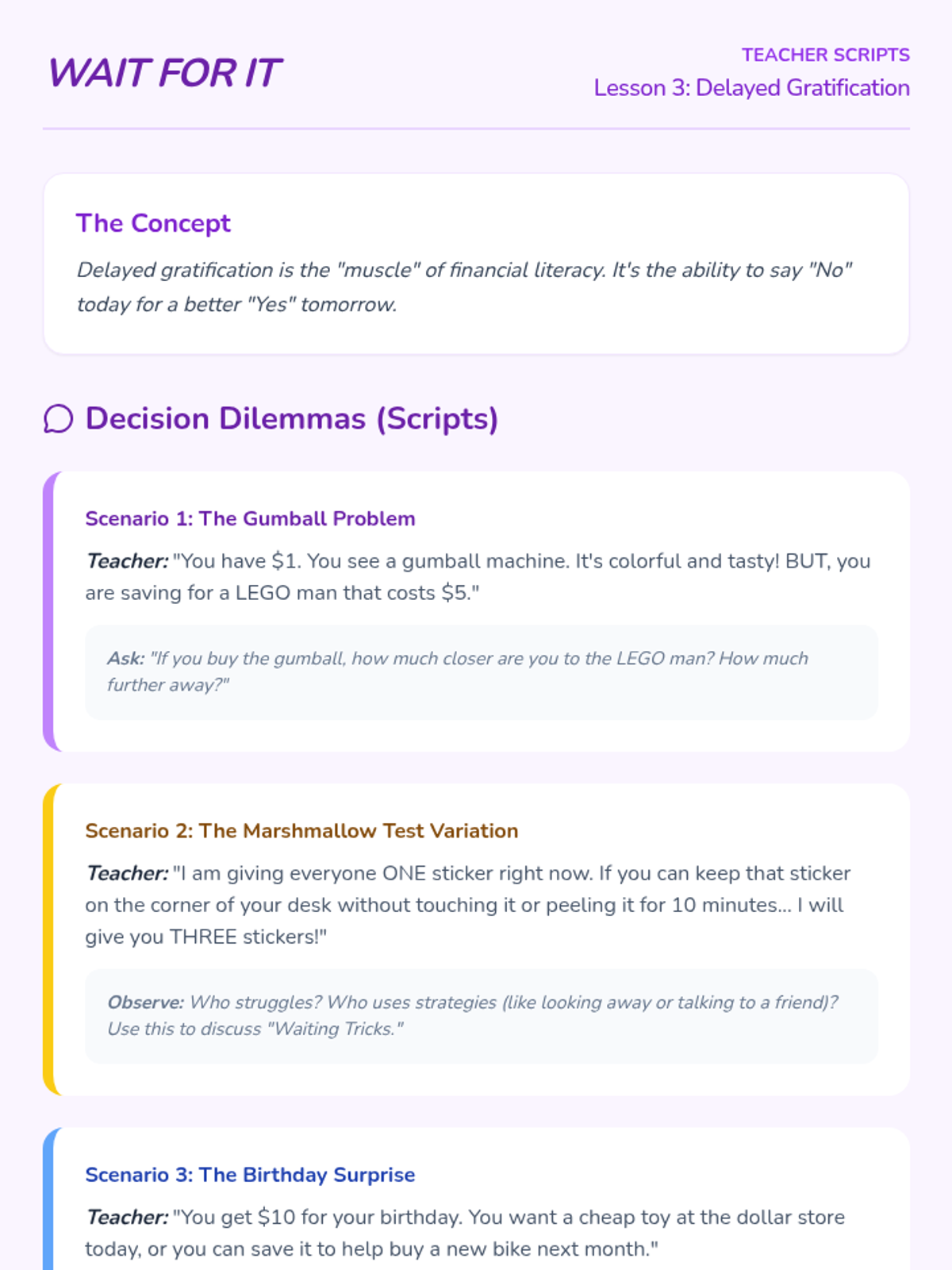
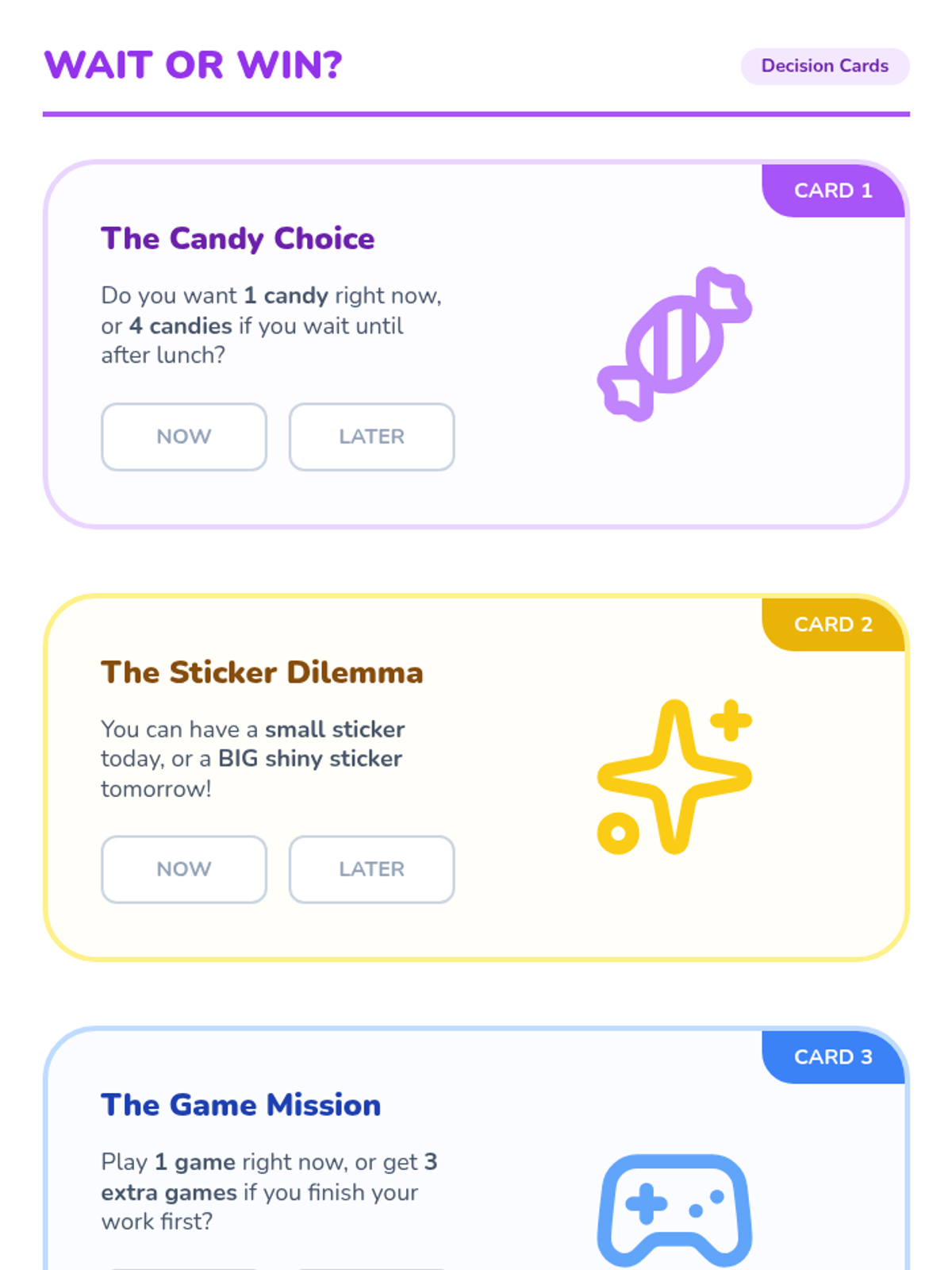
Students practice choosing between a small reward now and a larger reward later, building emotional regulation and understanding delayed gratification.
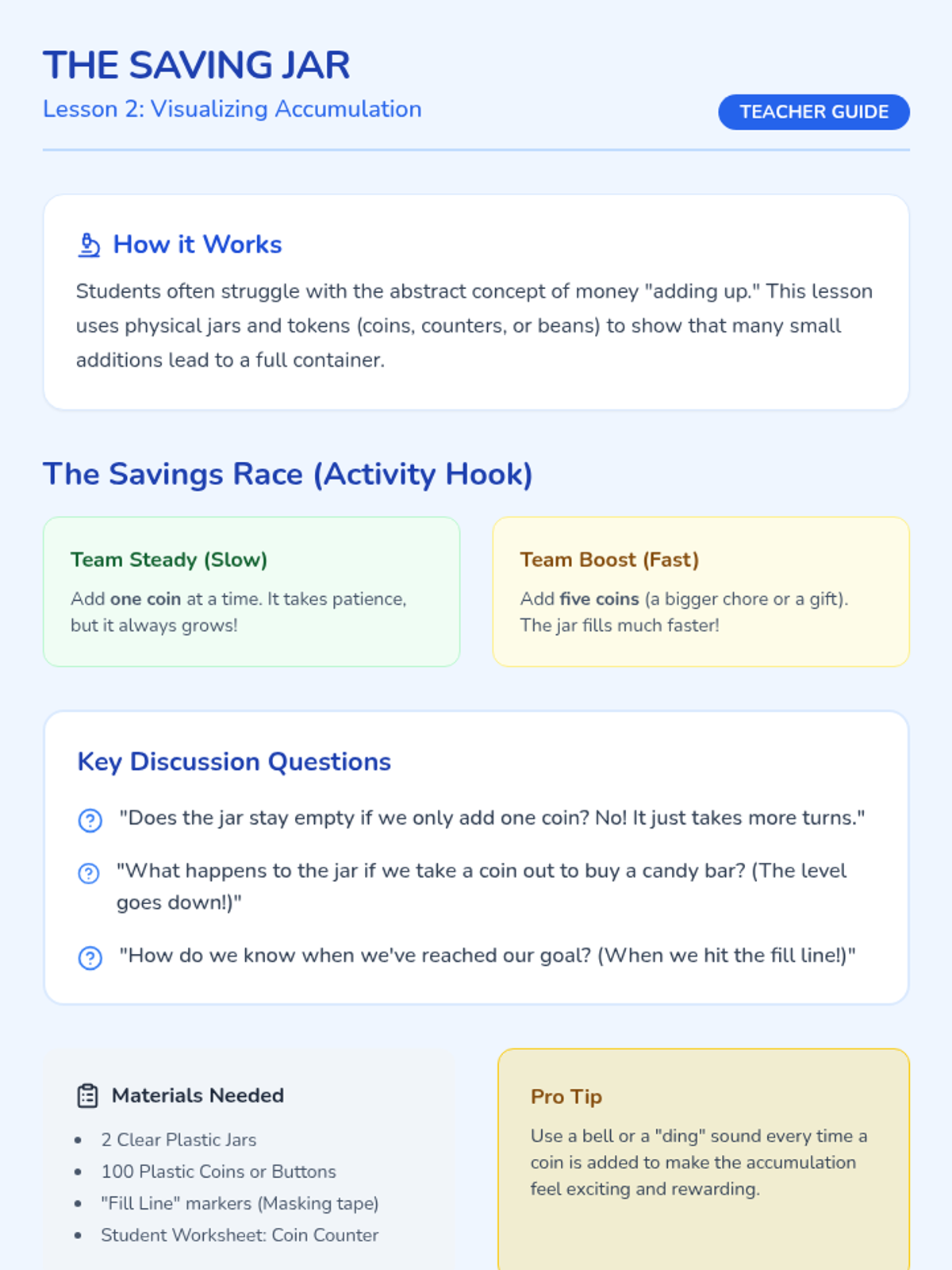
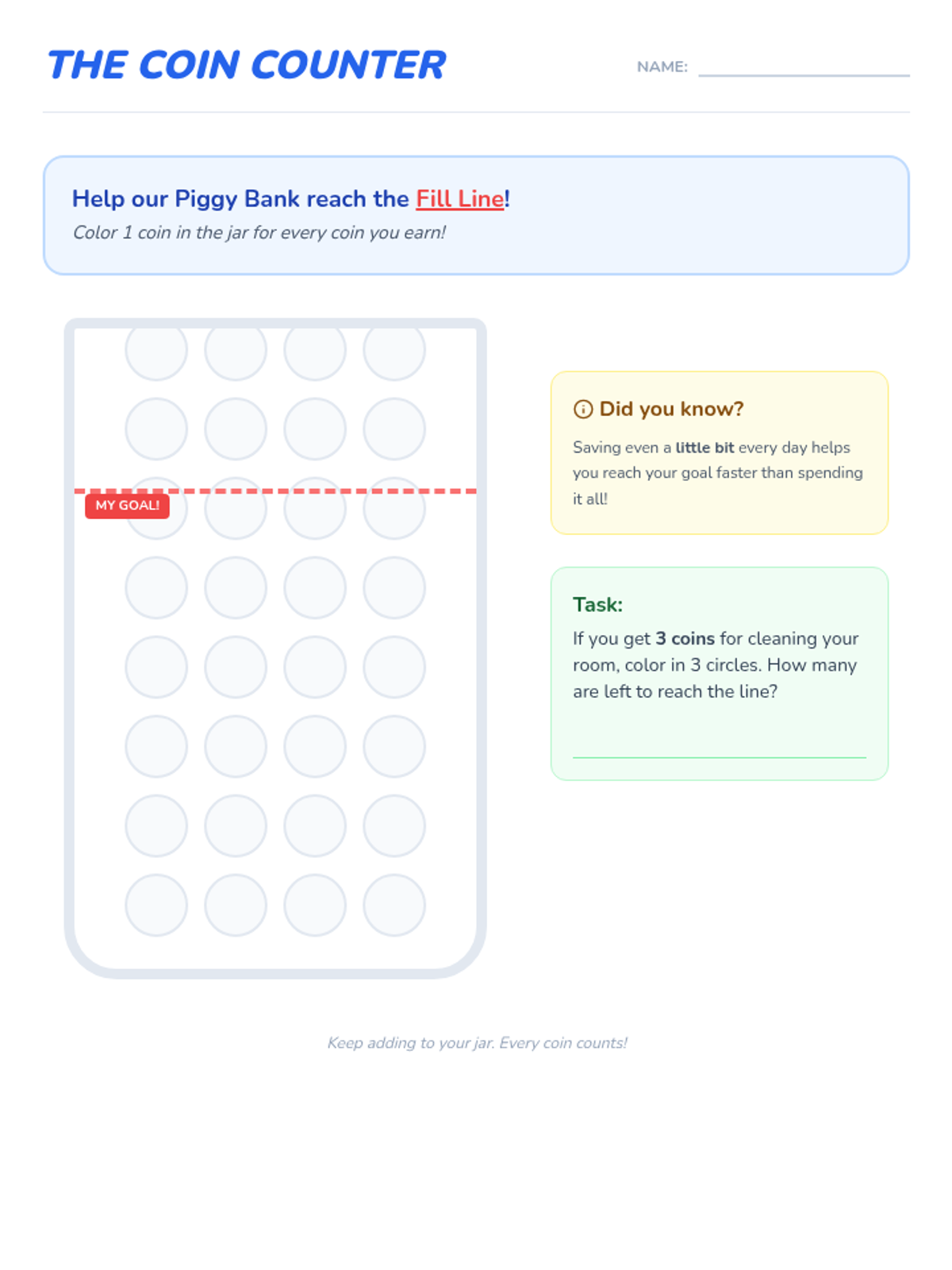
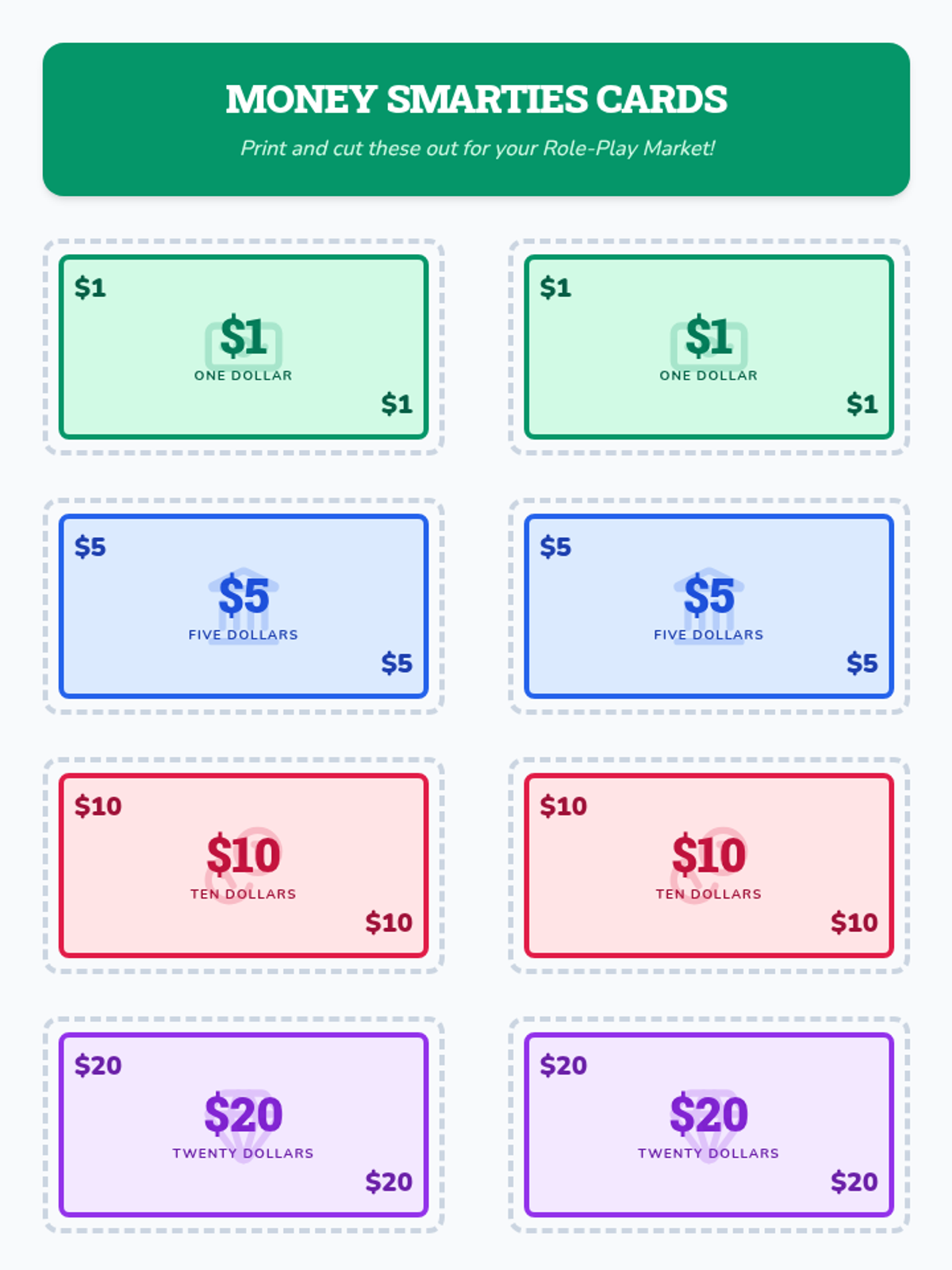
Students explore how small amounts of money add up over time to reach a larger goal using visual accumulation models.
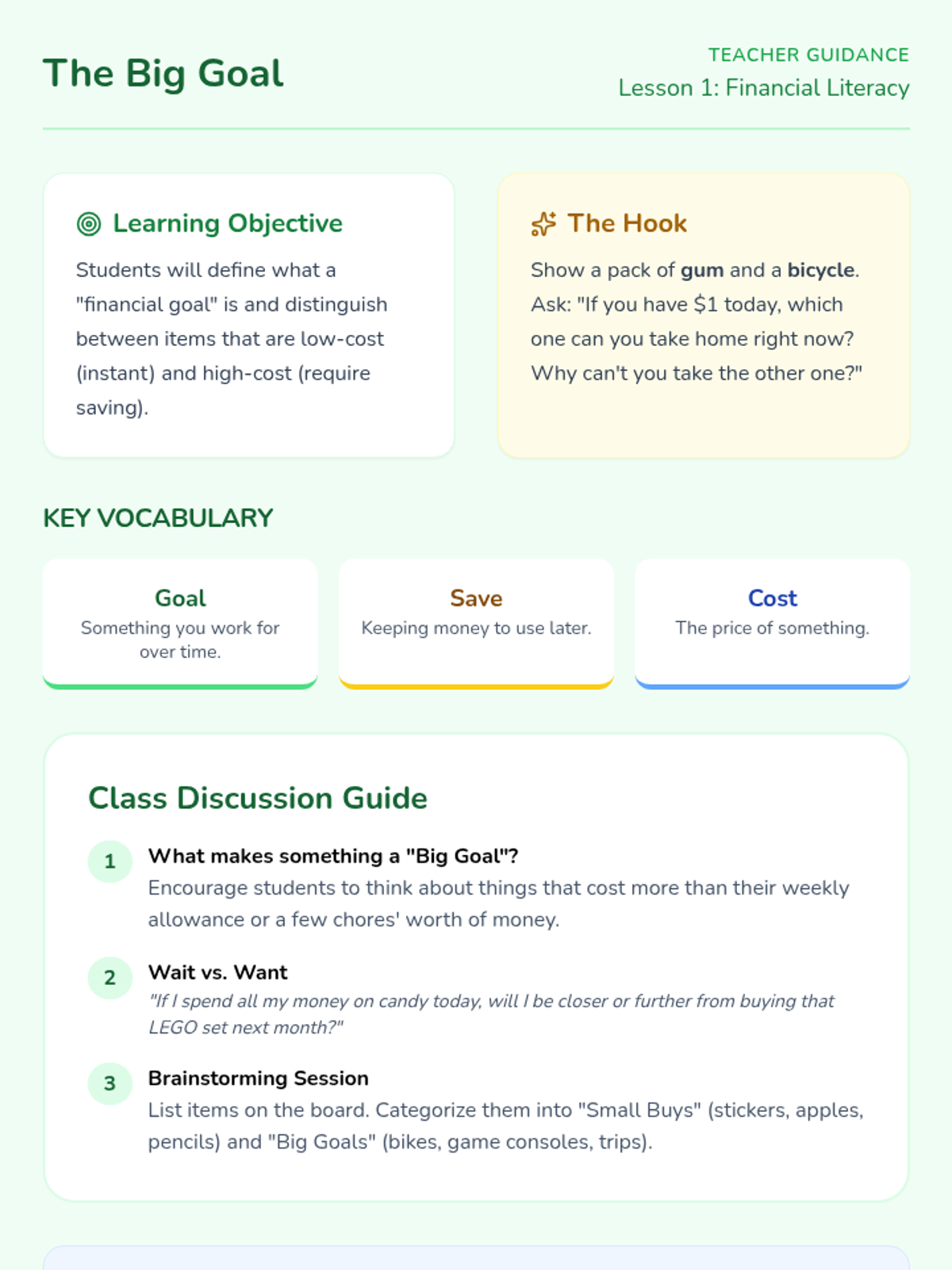
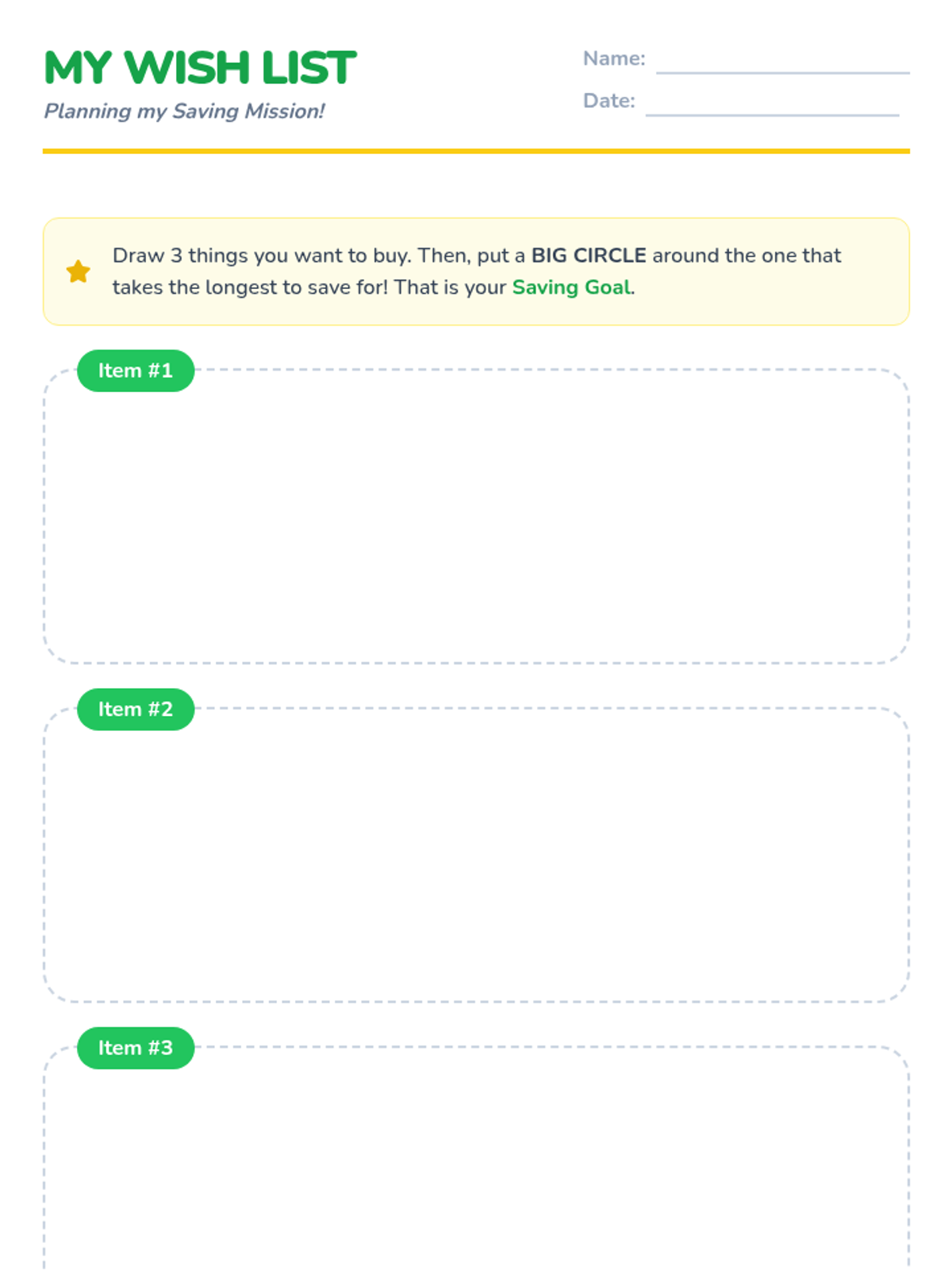
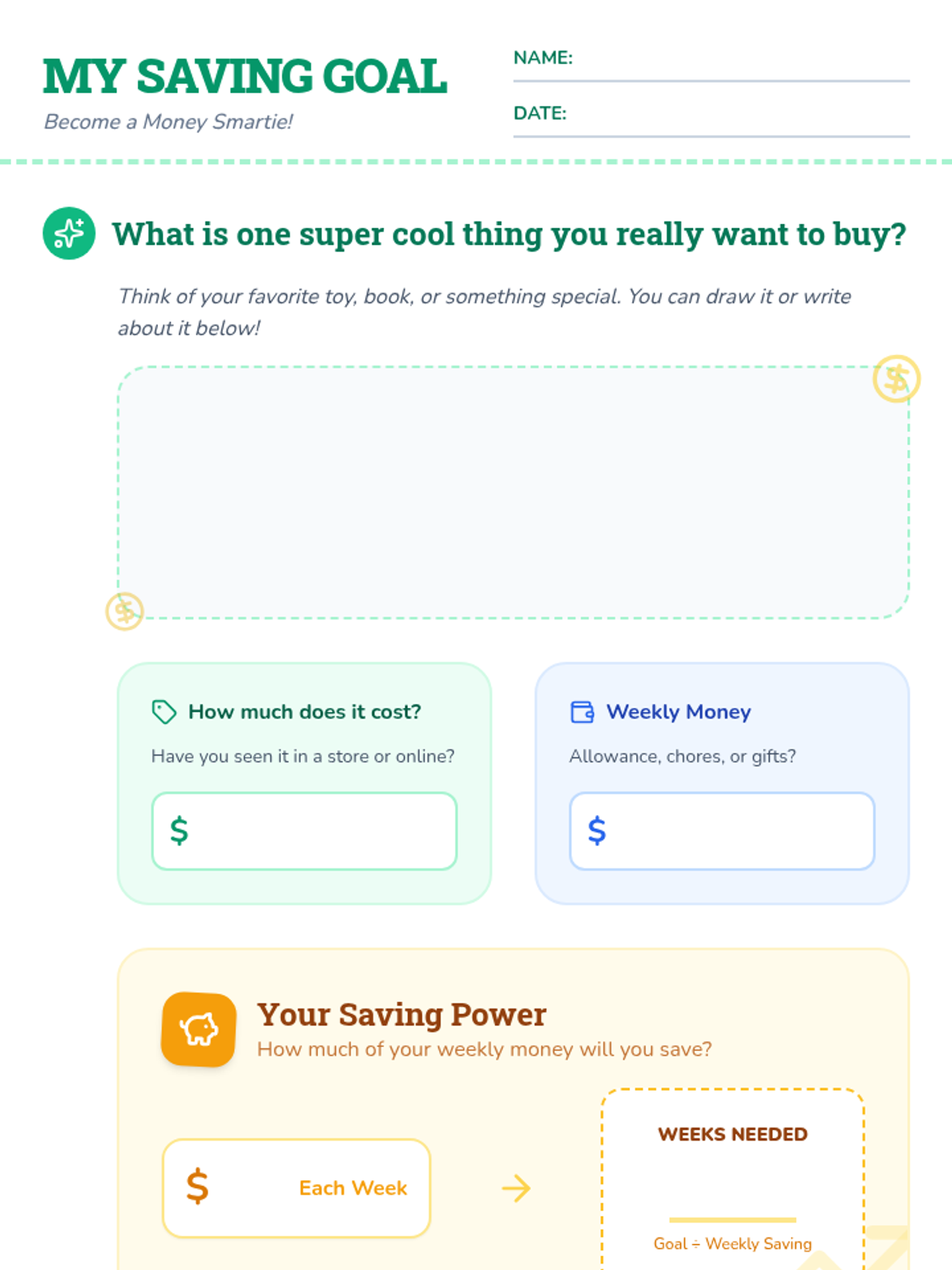
Students define financial goals and differentiate between items that can be bought immediately and those that require saving. They identify a personal saving goal.
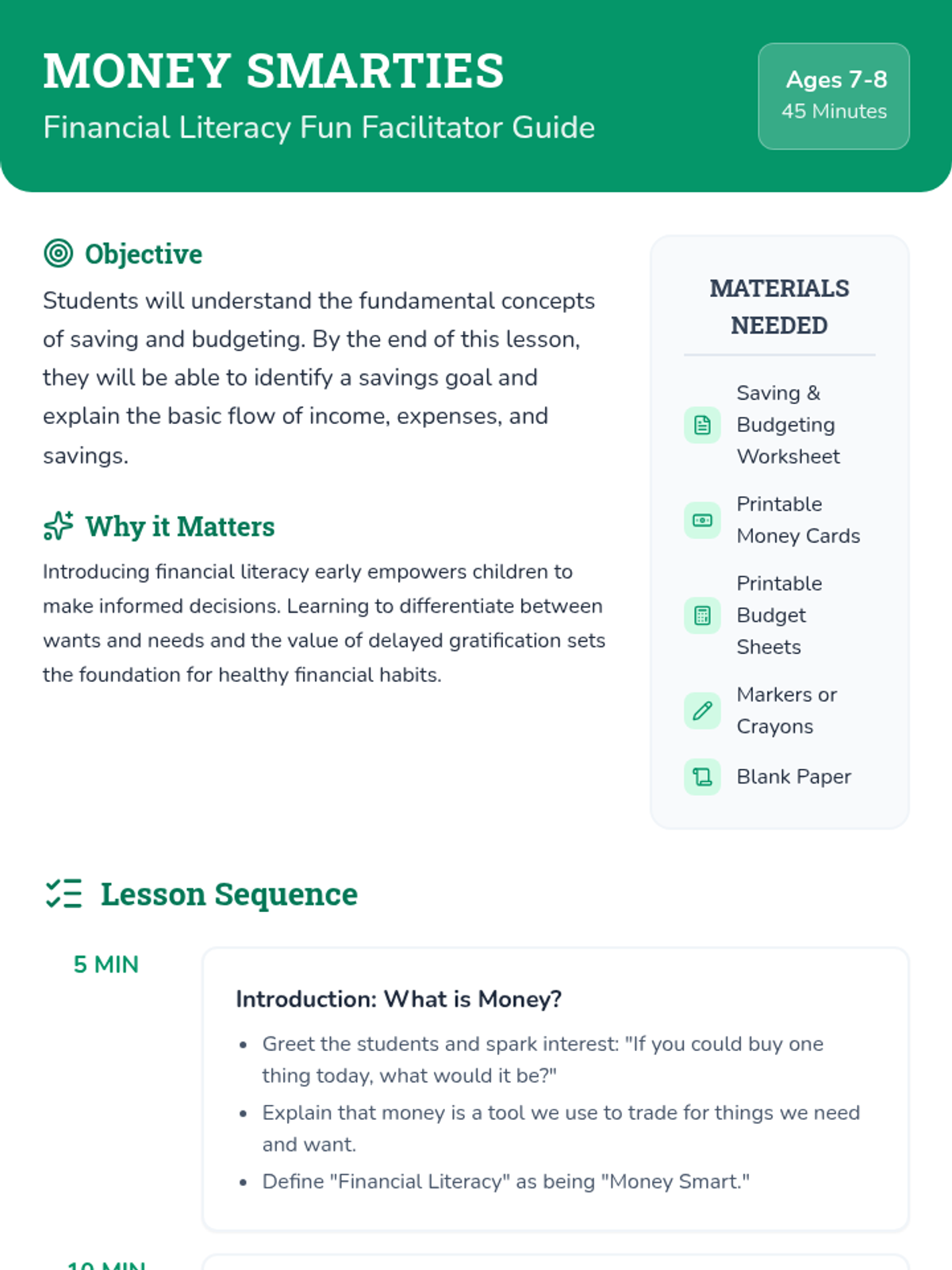
This lesson introduces young students to the basics of financial literacy, focusing on saving, budgeting, and the value of money through interactive activities.
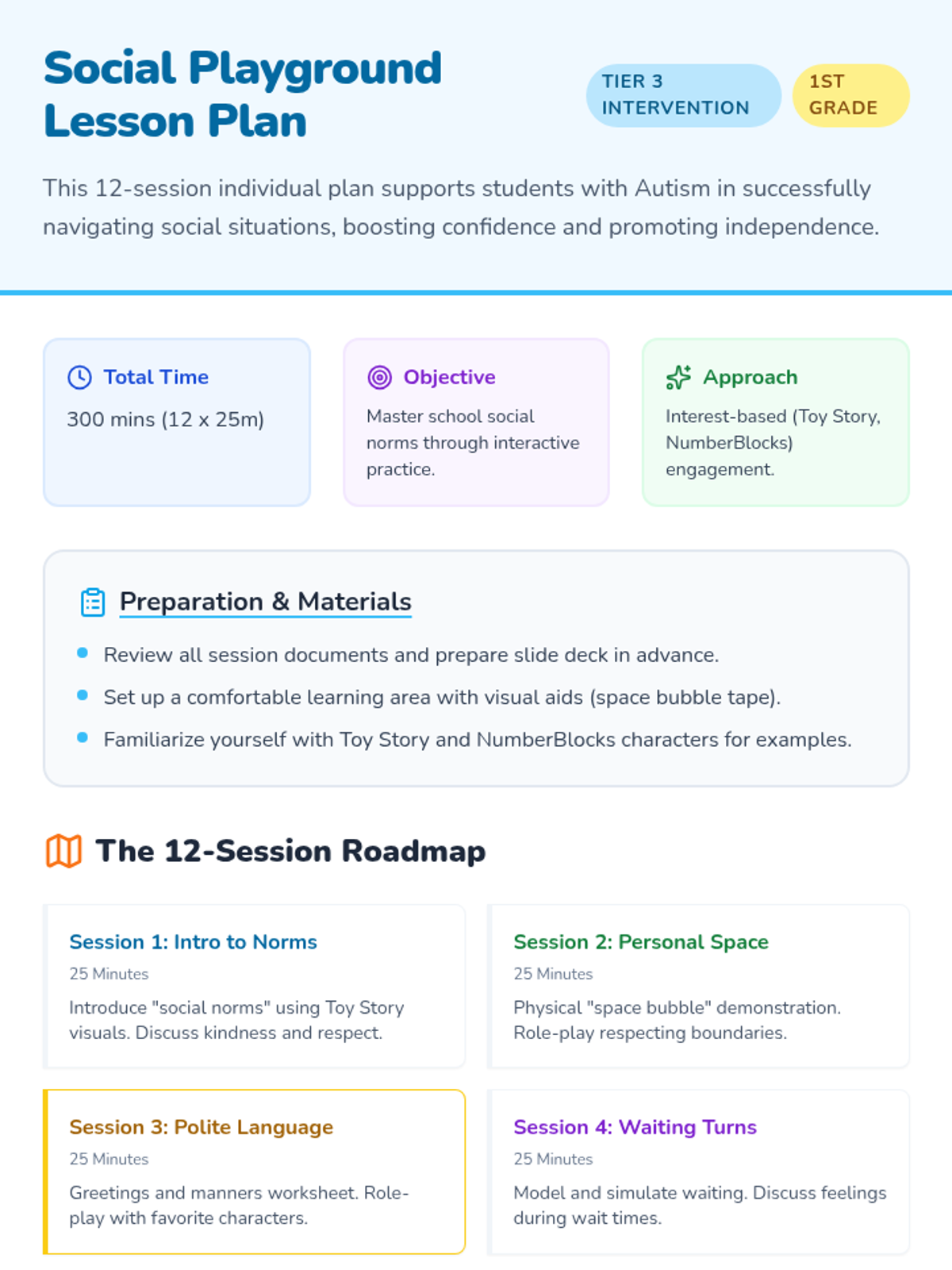
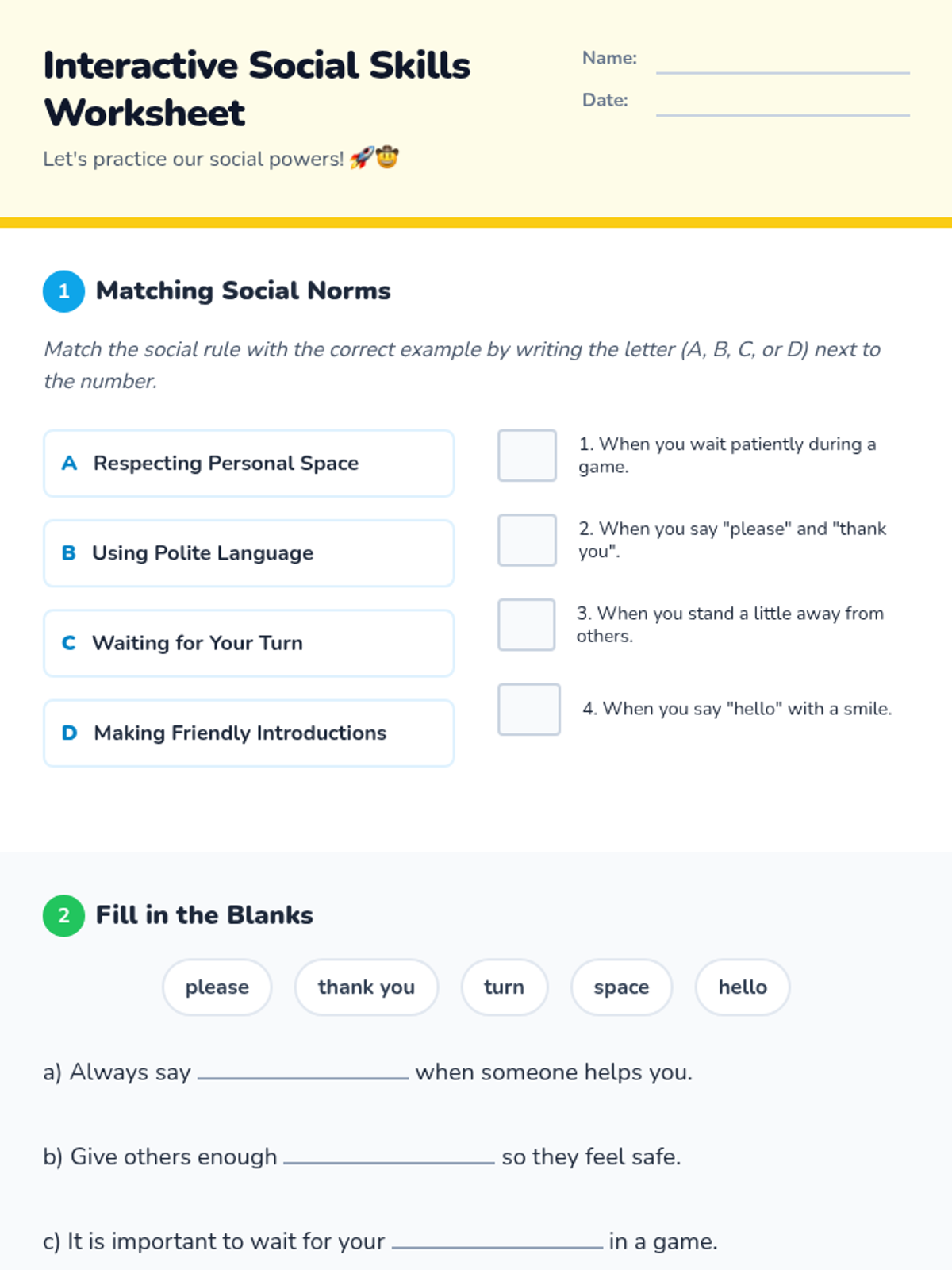
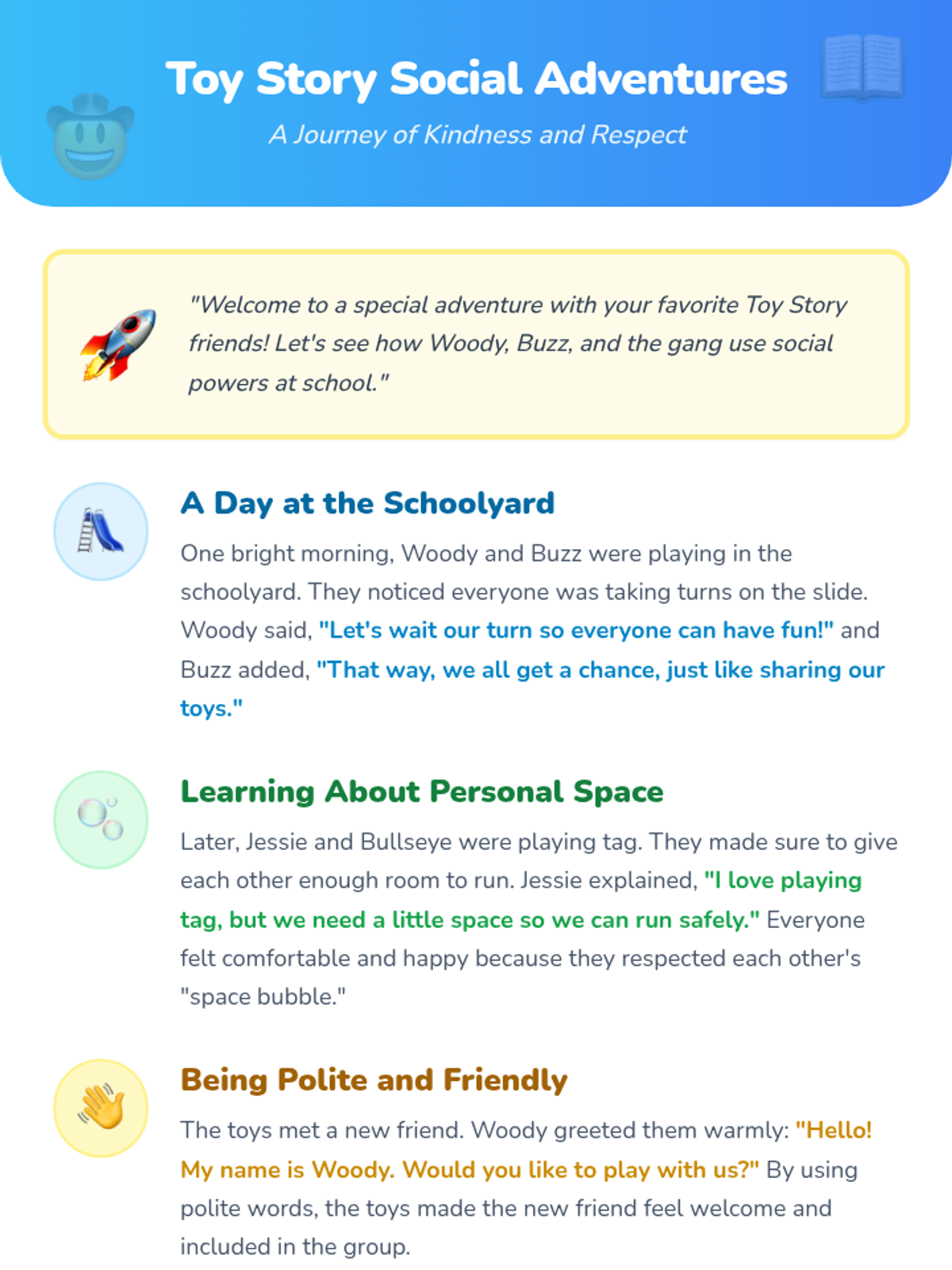
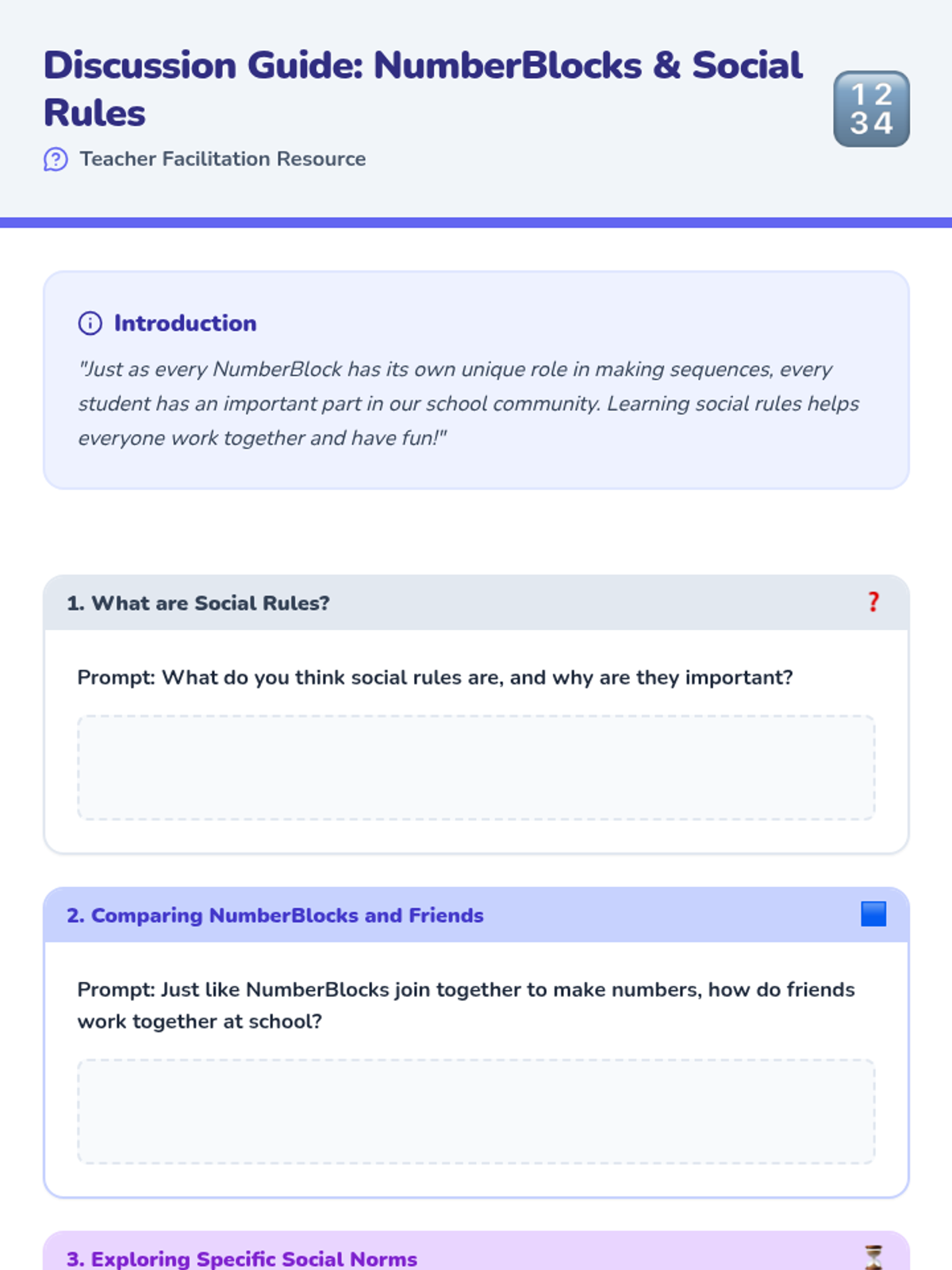
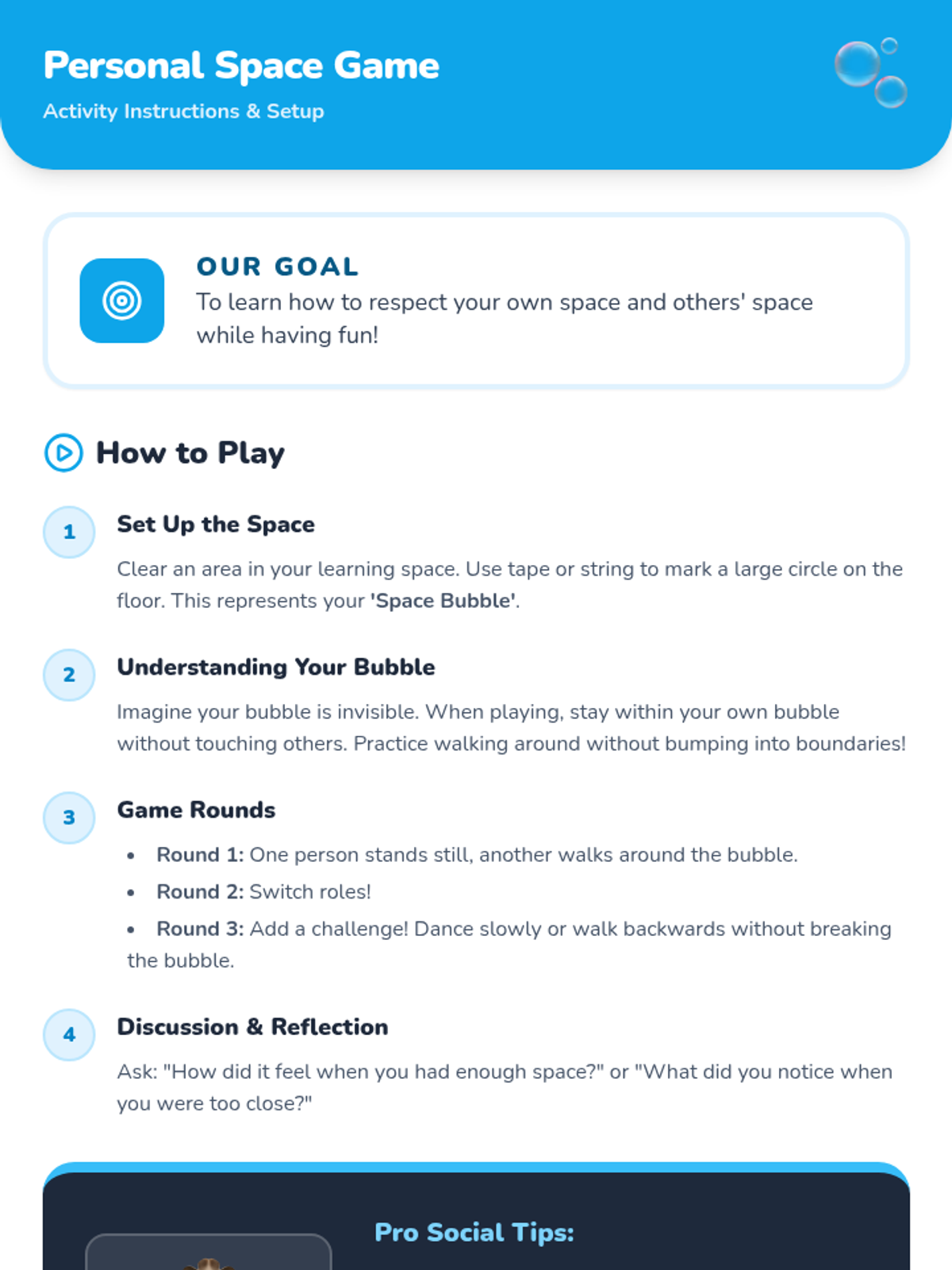
This lesson covers 12 sessions of social skills training, helping students master school expectations through interactive games, role-play, and engaging character-based stories.
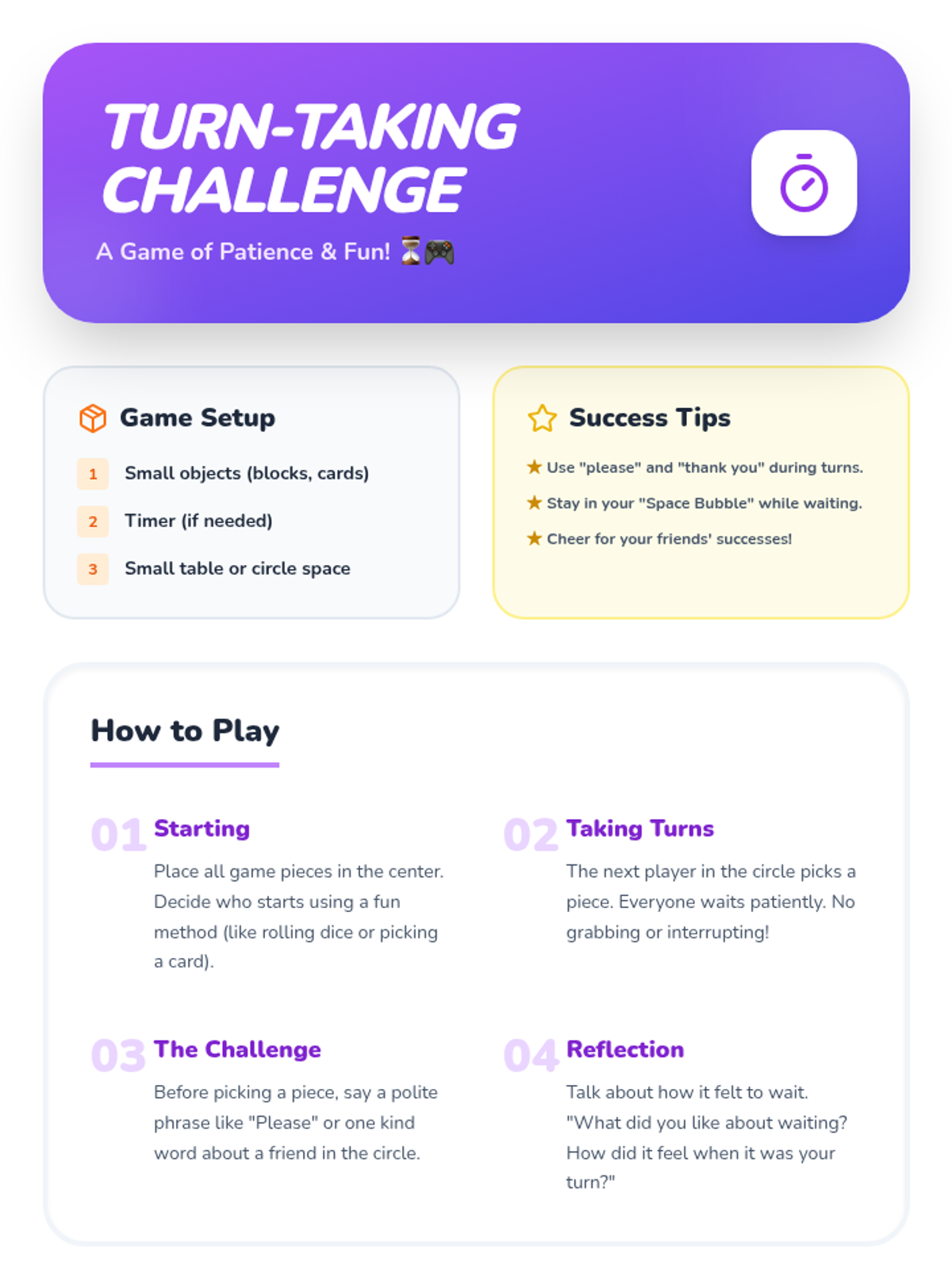
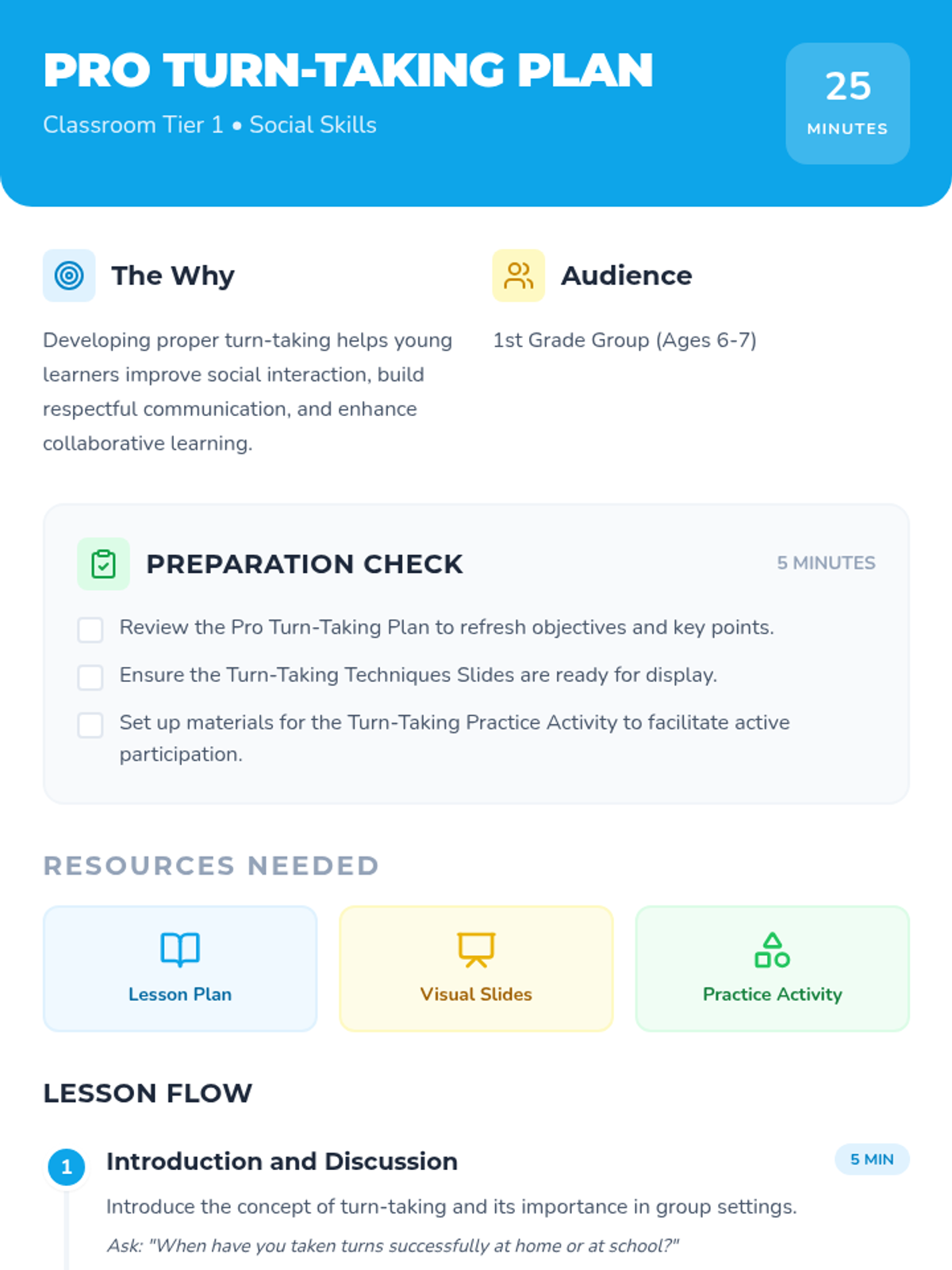
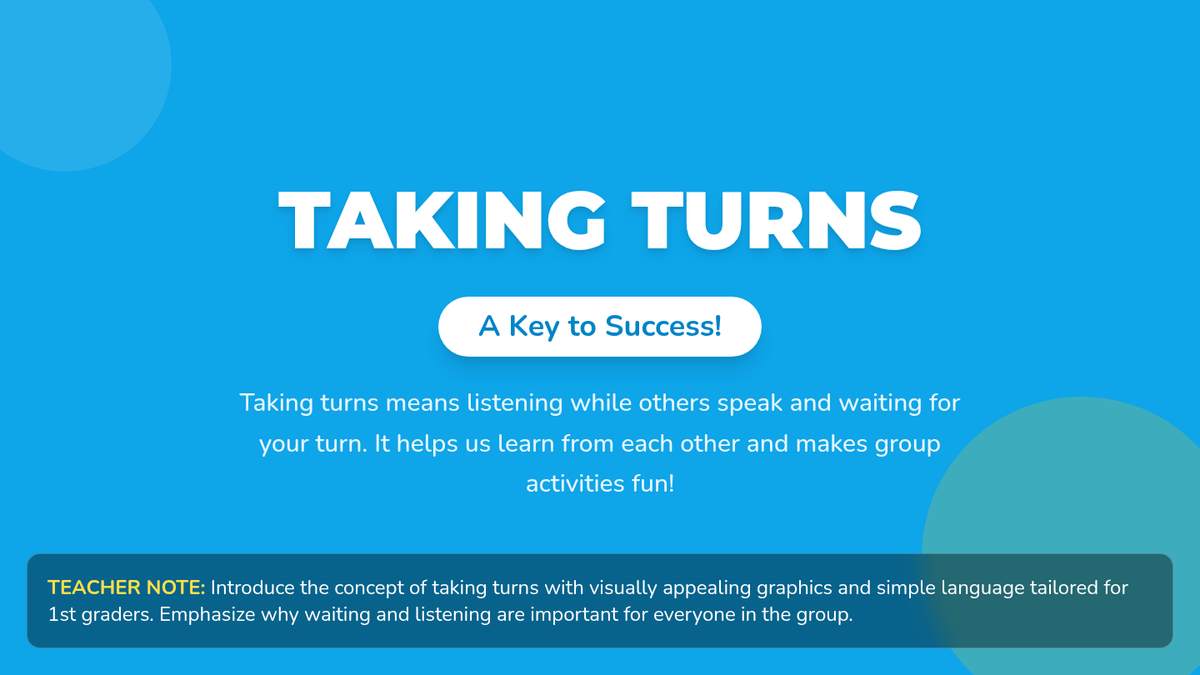
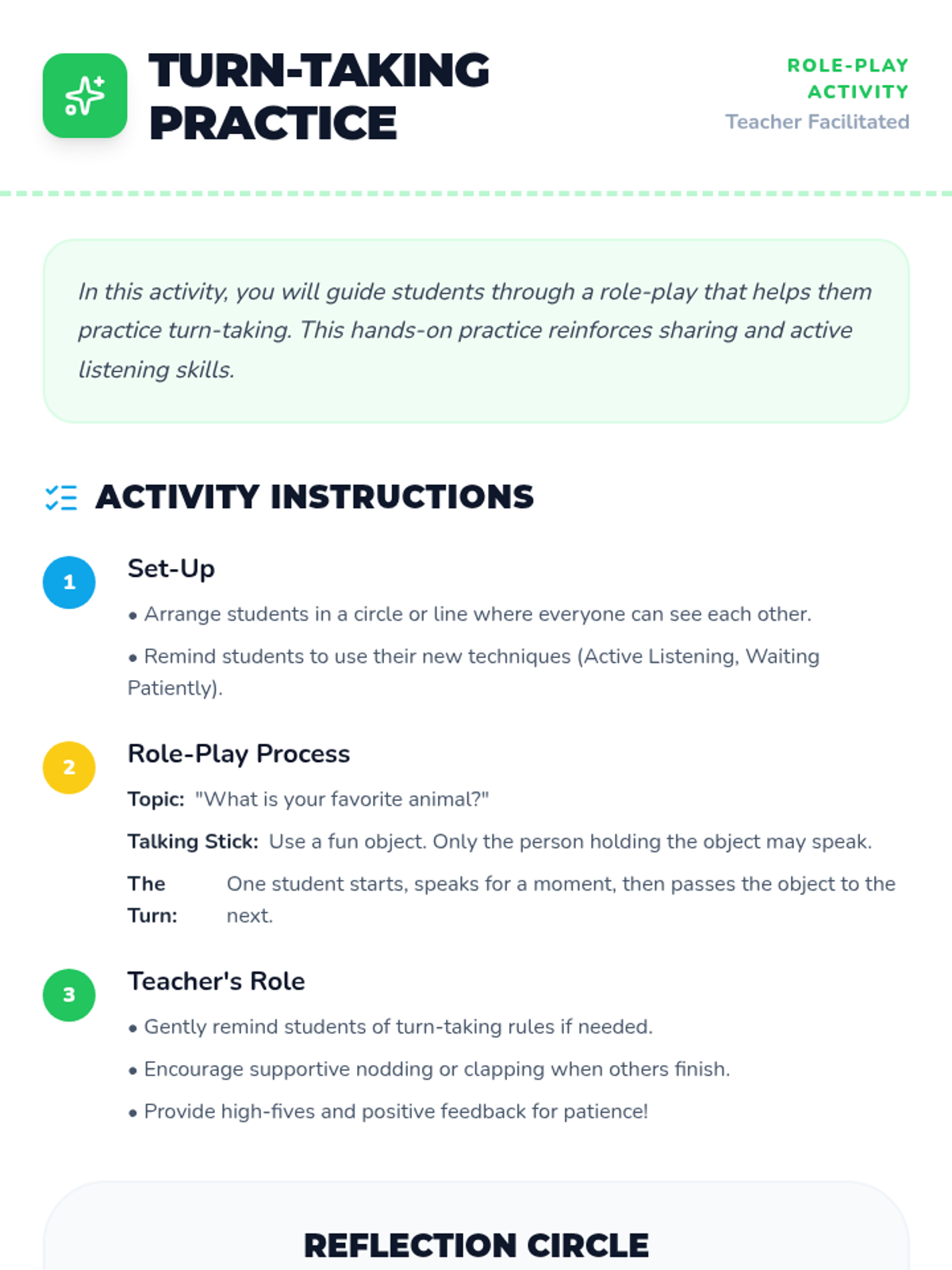
A 25-minute lesson for 1st graders focusing on effective turn-taking, active listening, and patience during group activities. Students will engage with visual slides and a hands-on role-play activity to master these social skills.
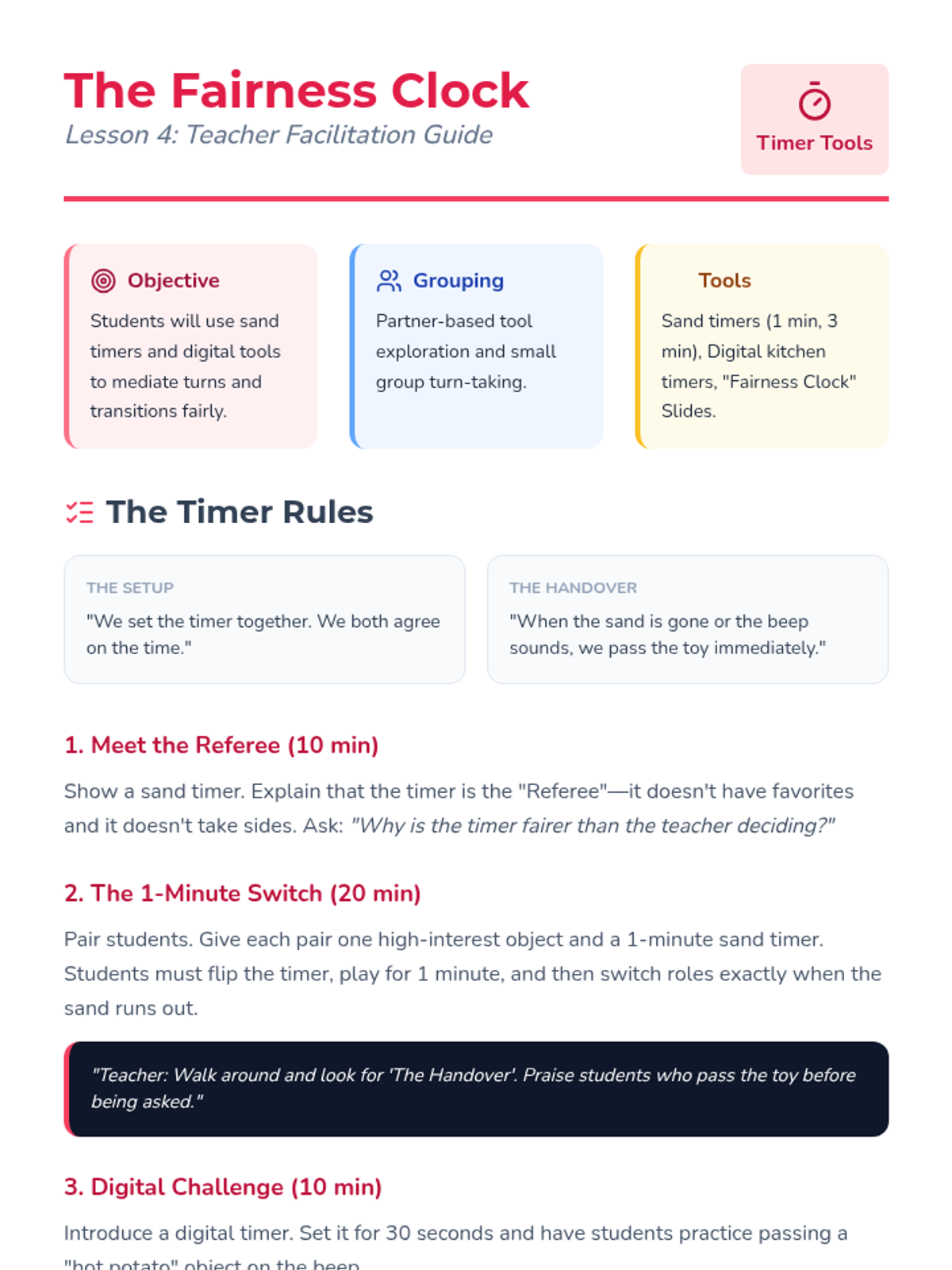
Introduces sand timers and digital tools as objective ways to ensure fairness and manage transitions between turns.
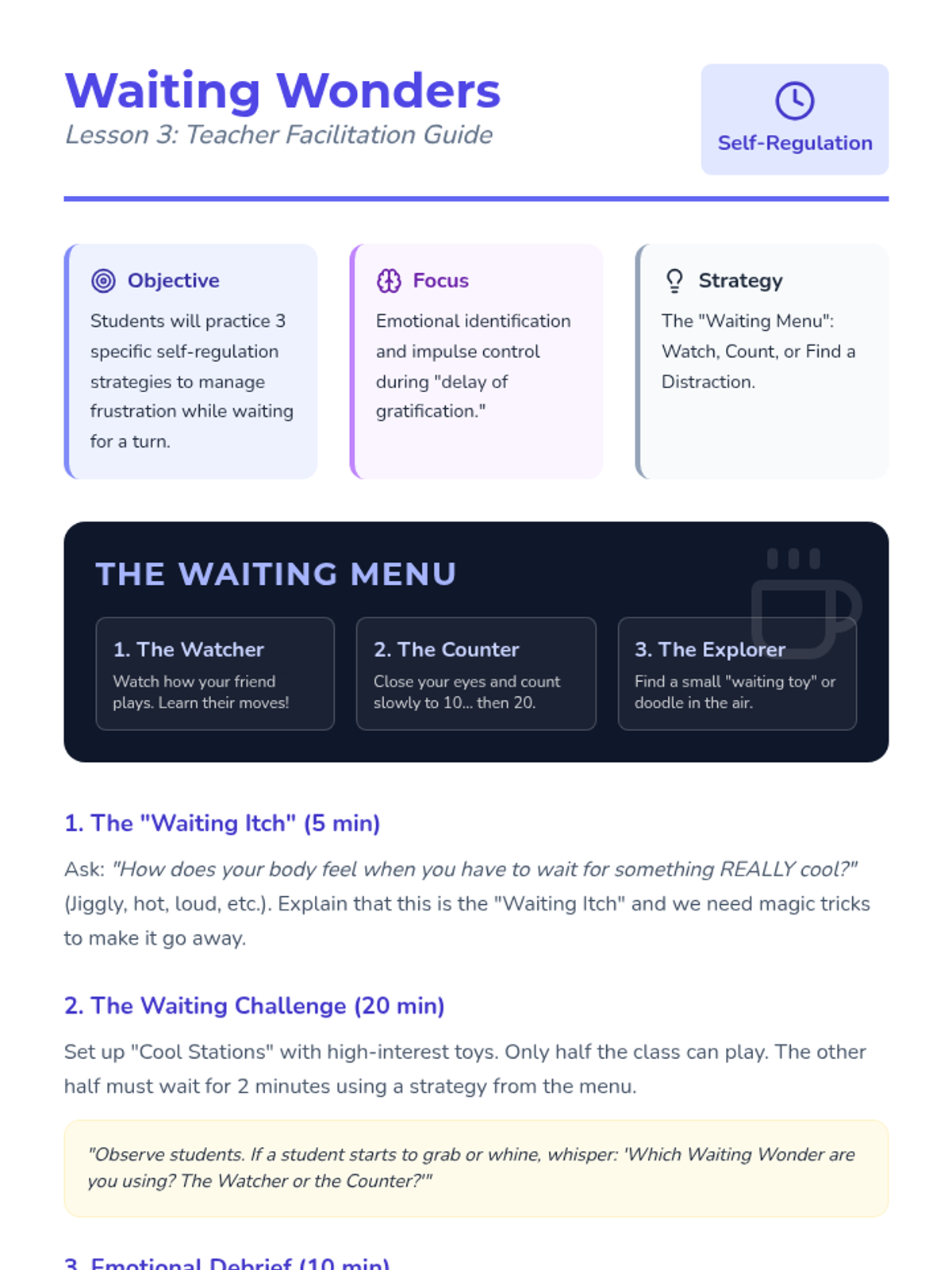
Focuses on self-regulation strategies for the 'waiting period' between turns, helping students manage frustration and stay engaged.
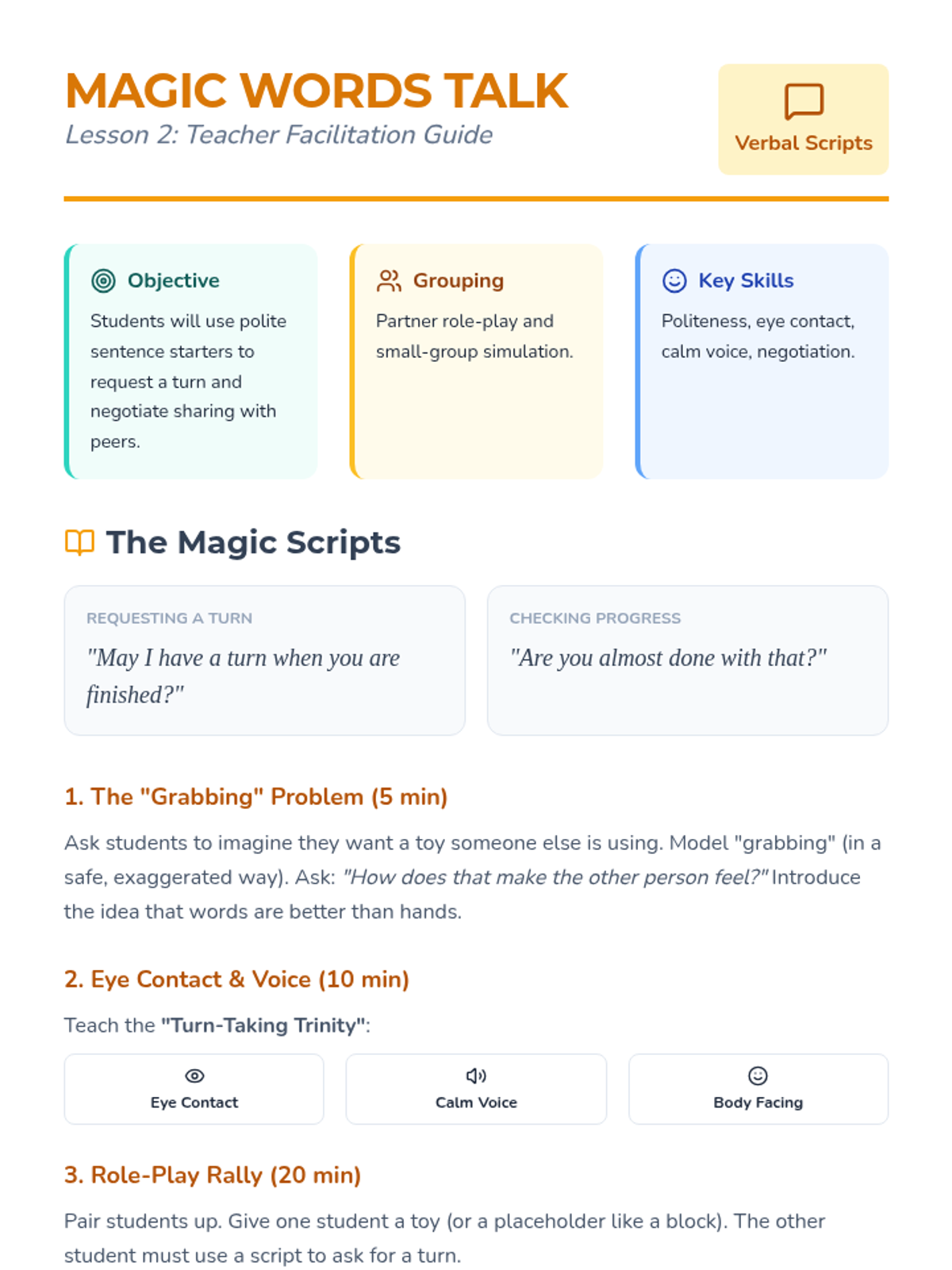
Students learn and practice specific verbal scripts for requesting items politely and negotiating turns with peers.
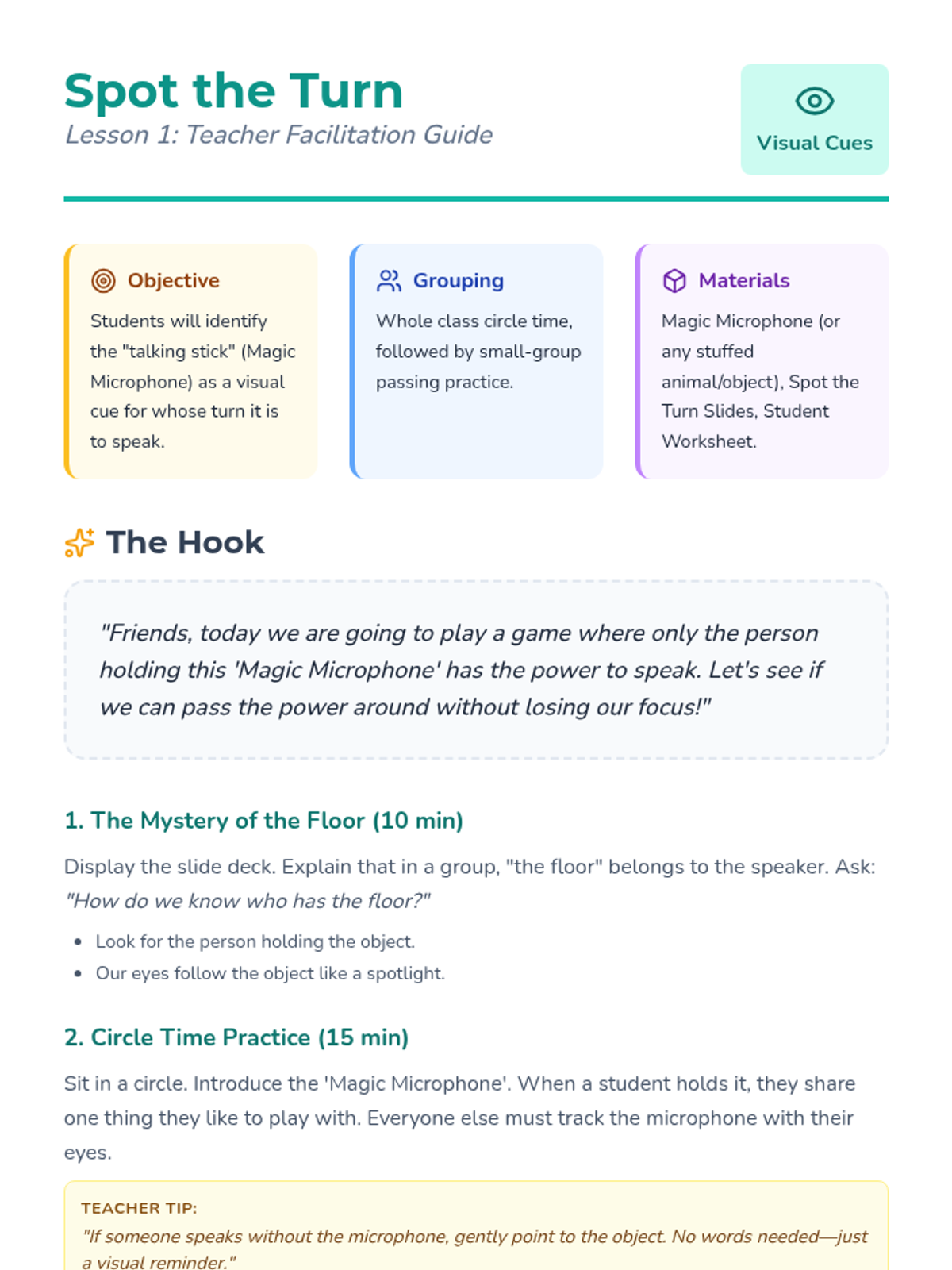
Students learn to identify physical objects that signal whose turn it is to speak or play, practicing visual tracking and impulse control.
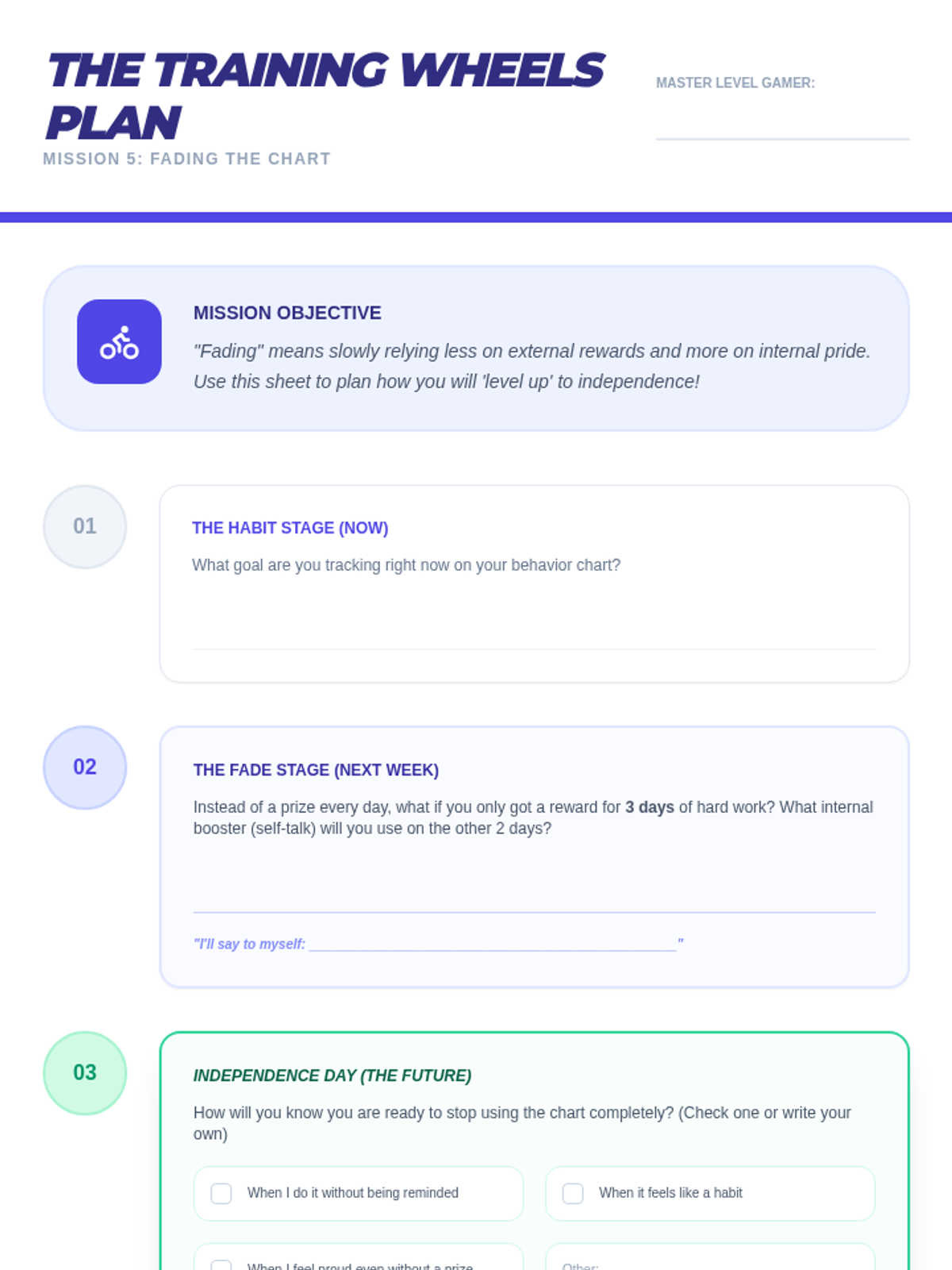
Students discuss fading external rewards and moving toward independence and mastery-based behavior.
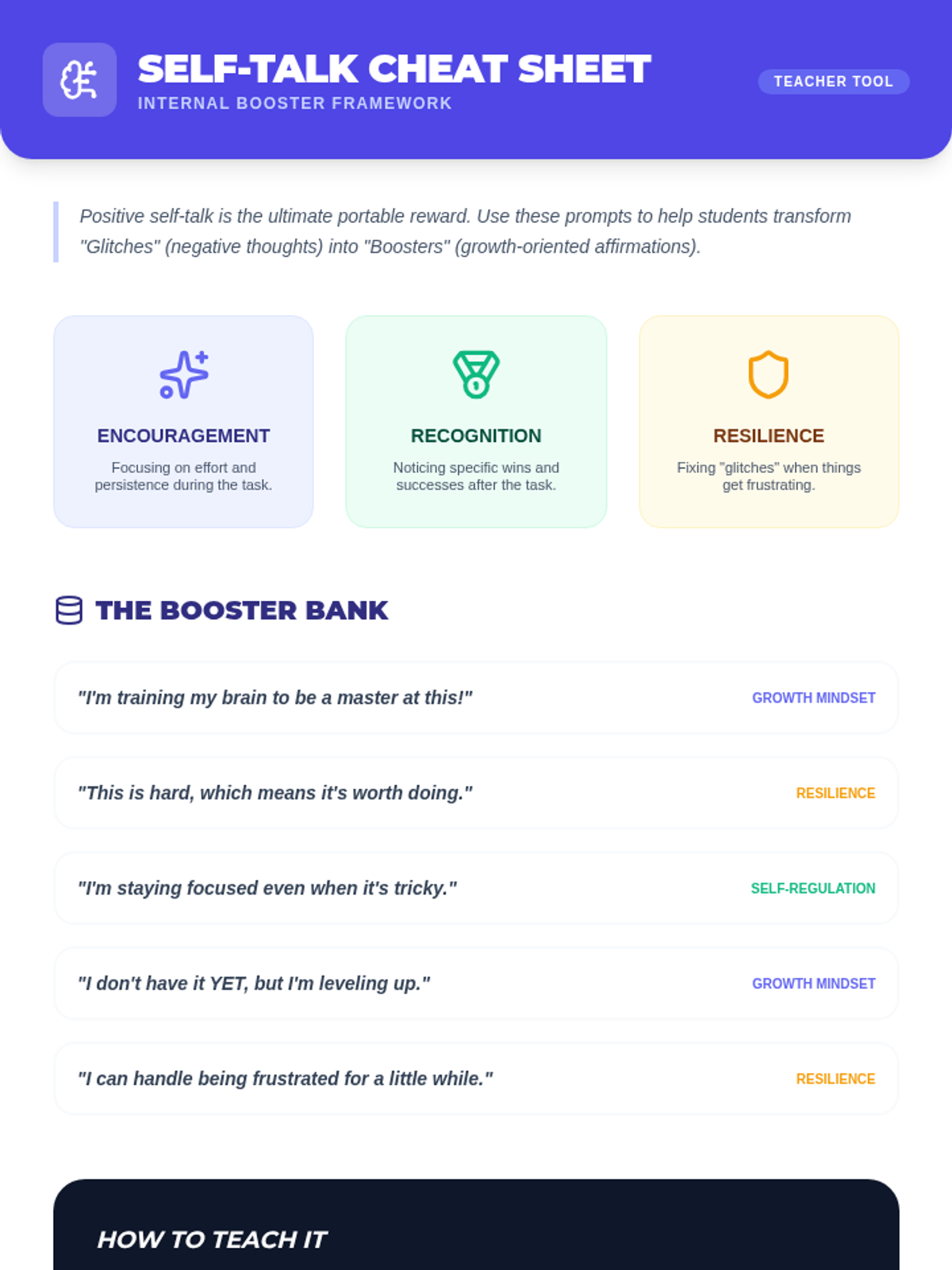
Students practice positive self-talk as a form of immediate internal reward to sustain motivation.
A final reflection and celebration session where students share their progress, discuss the impact of their new habits, and receive recognition for their efforts.
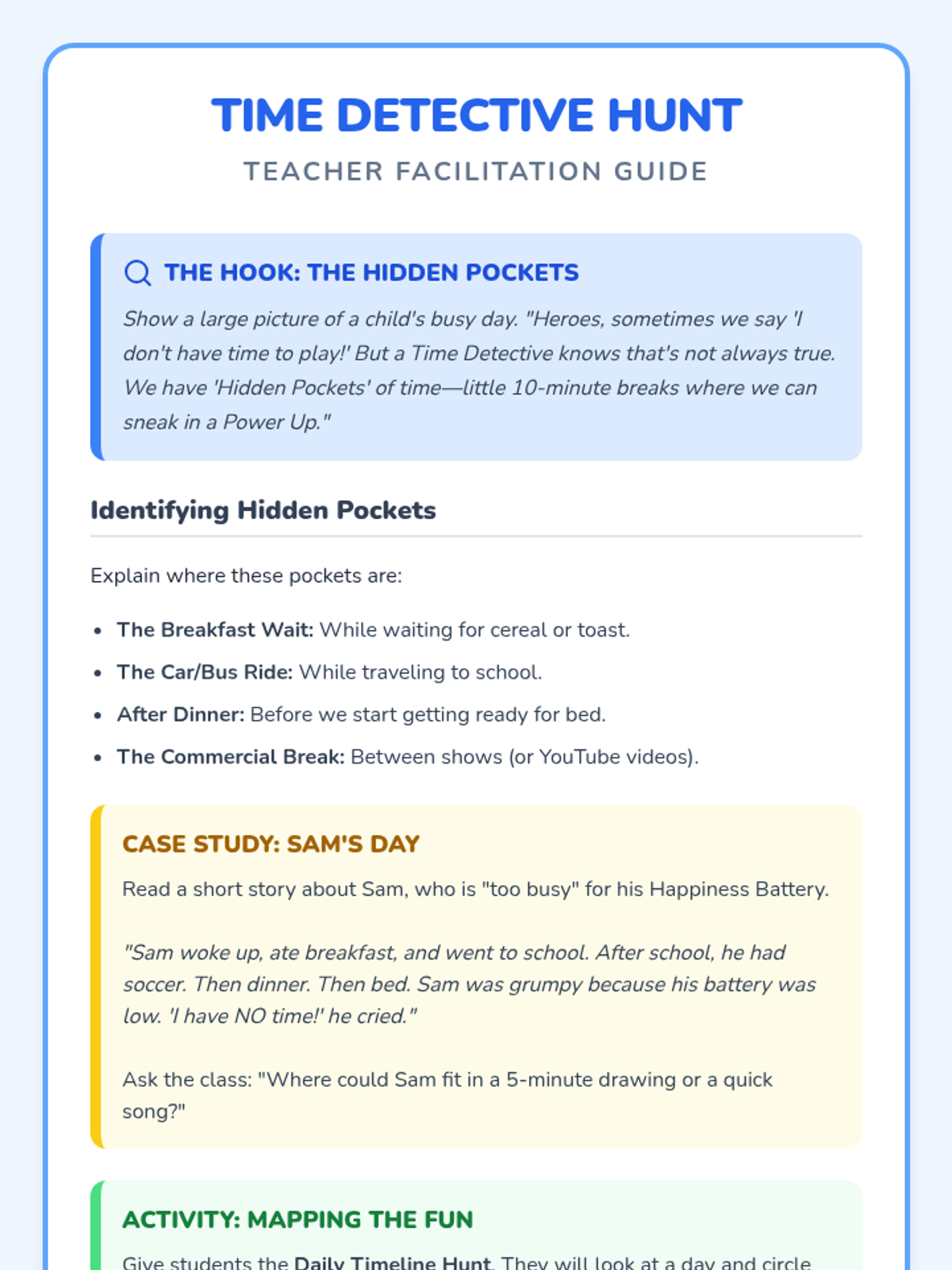
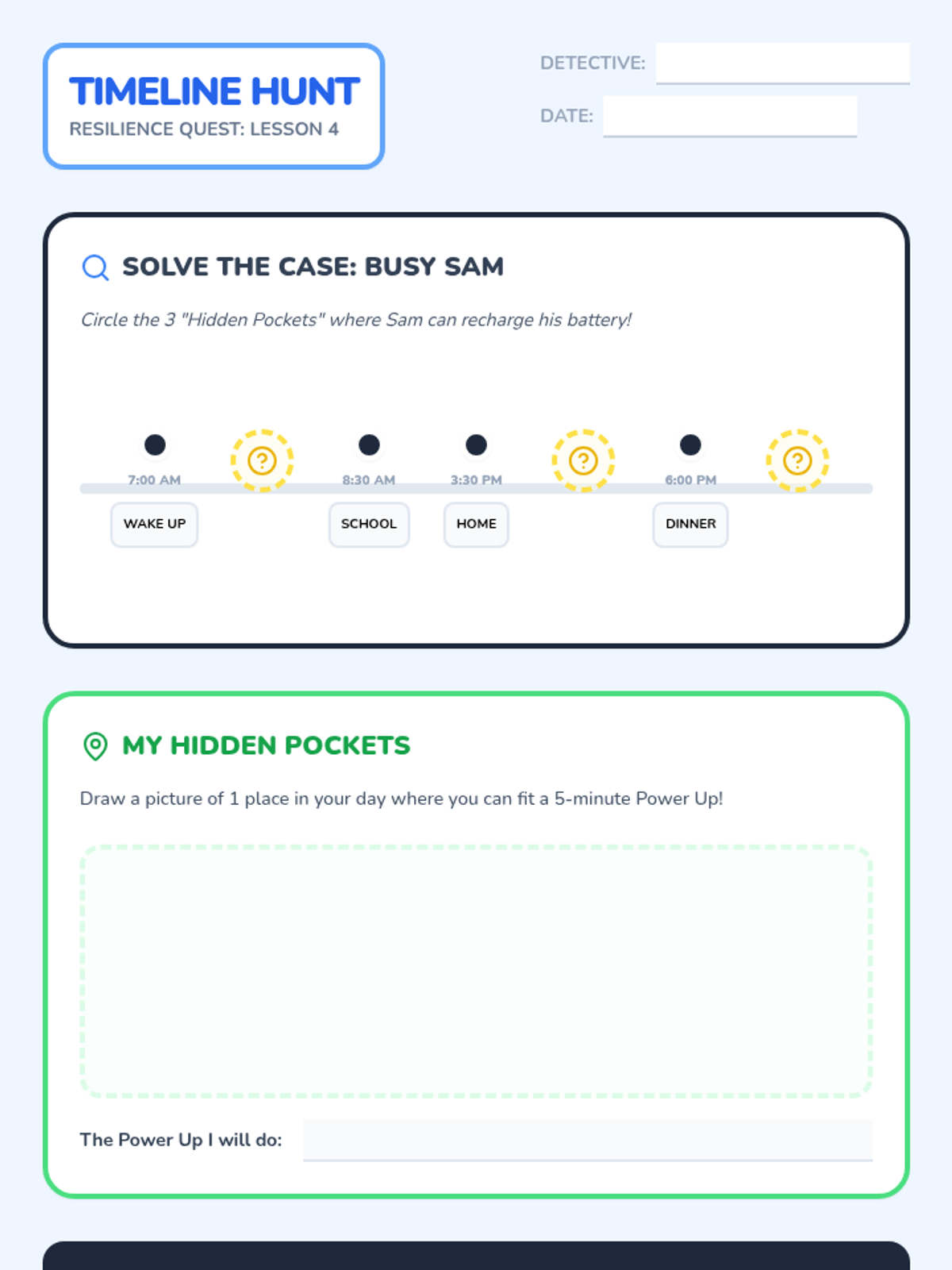
Students become 'Time Detectives' to identify opportunities in their daily lives to fit in short, high-impact positive activities.
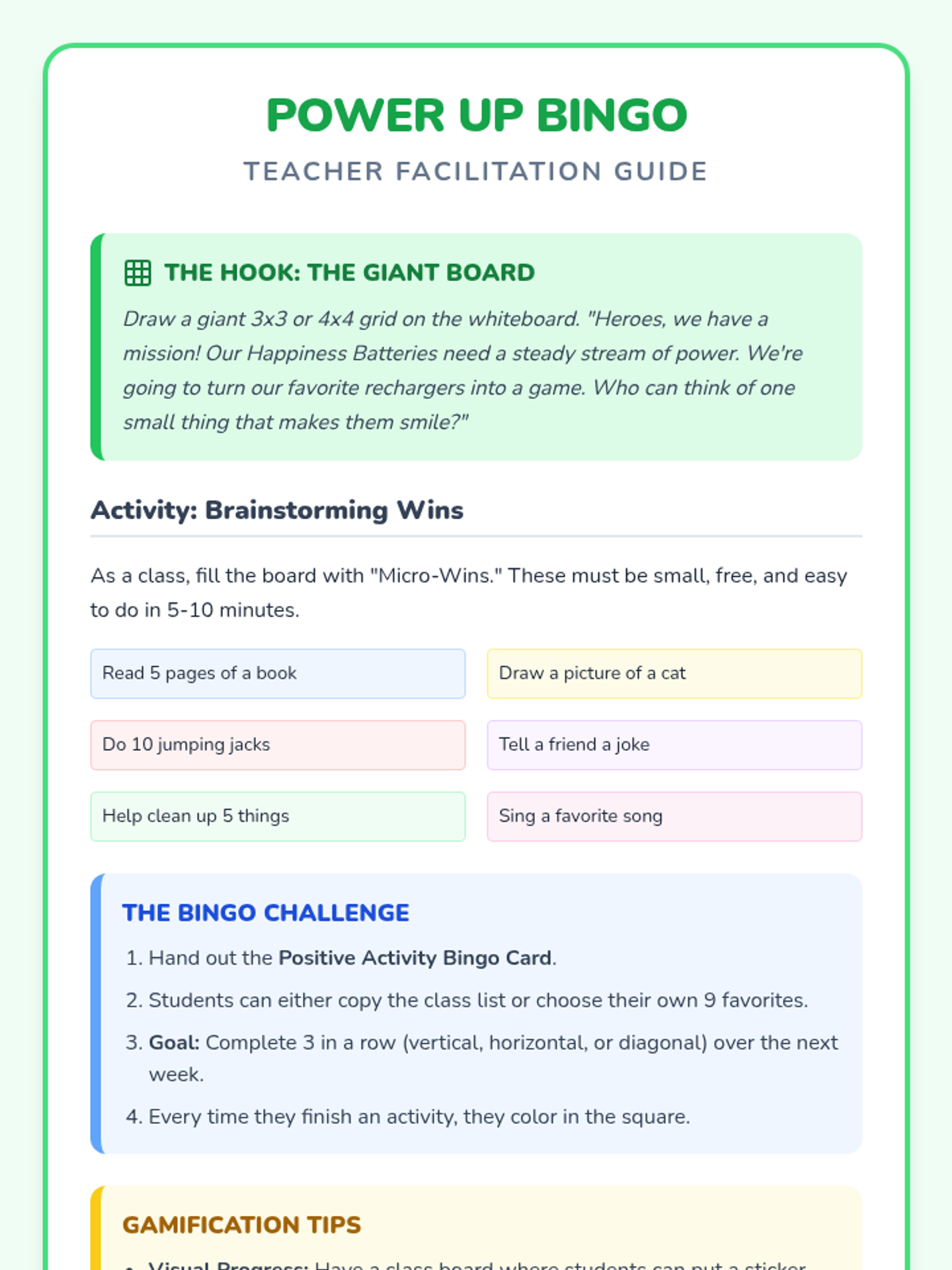
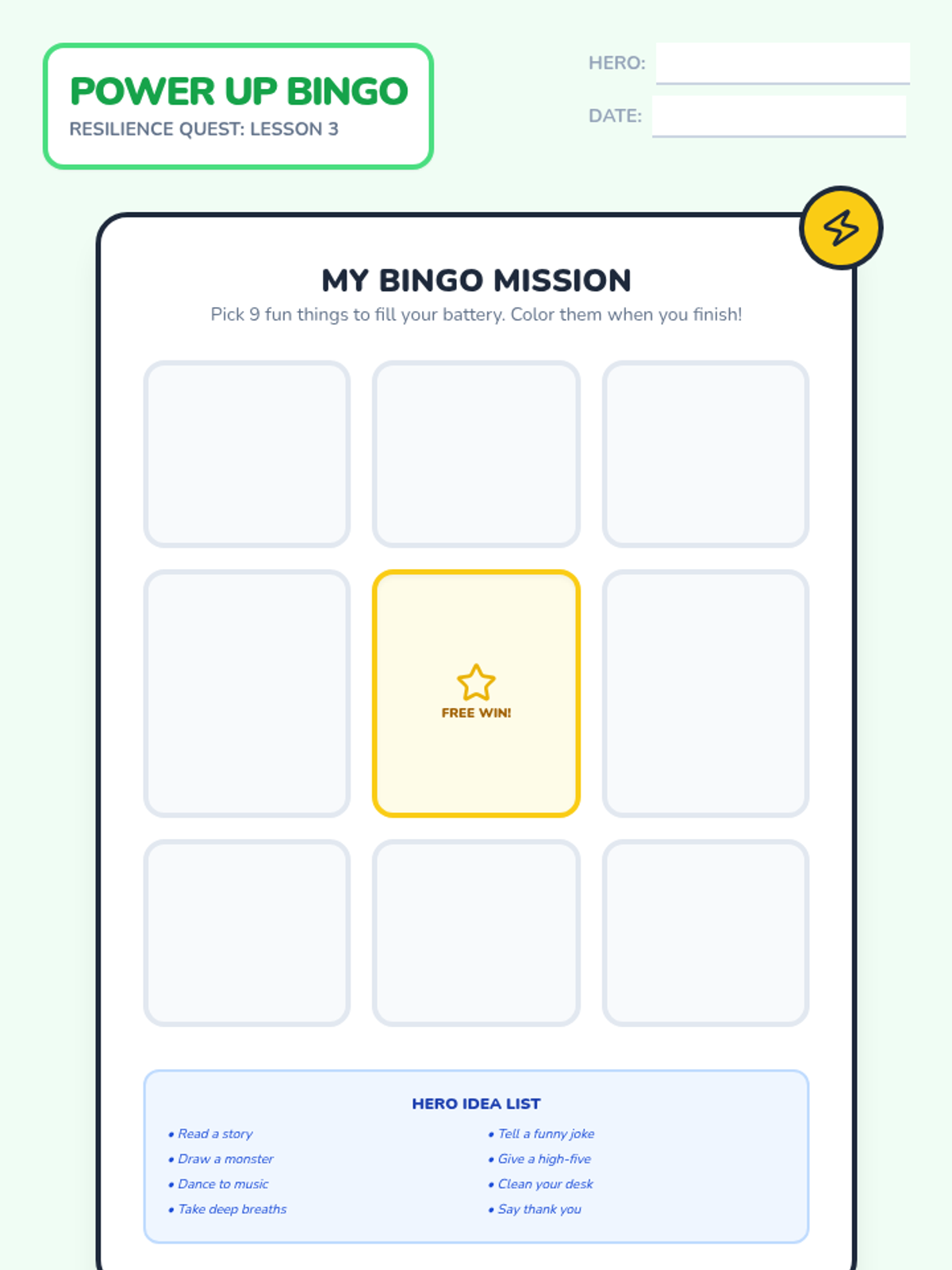
Students gamify their positive habits by creating and participating in a class-wide bingo challenge focused on daily small wins.
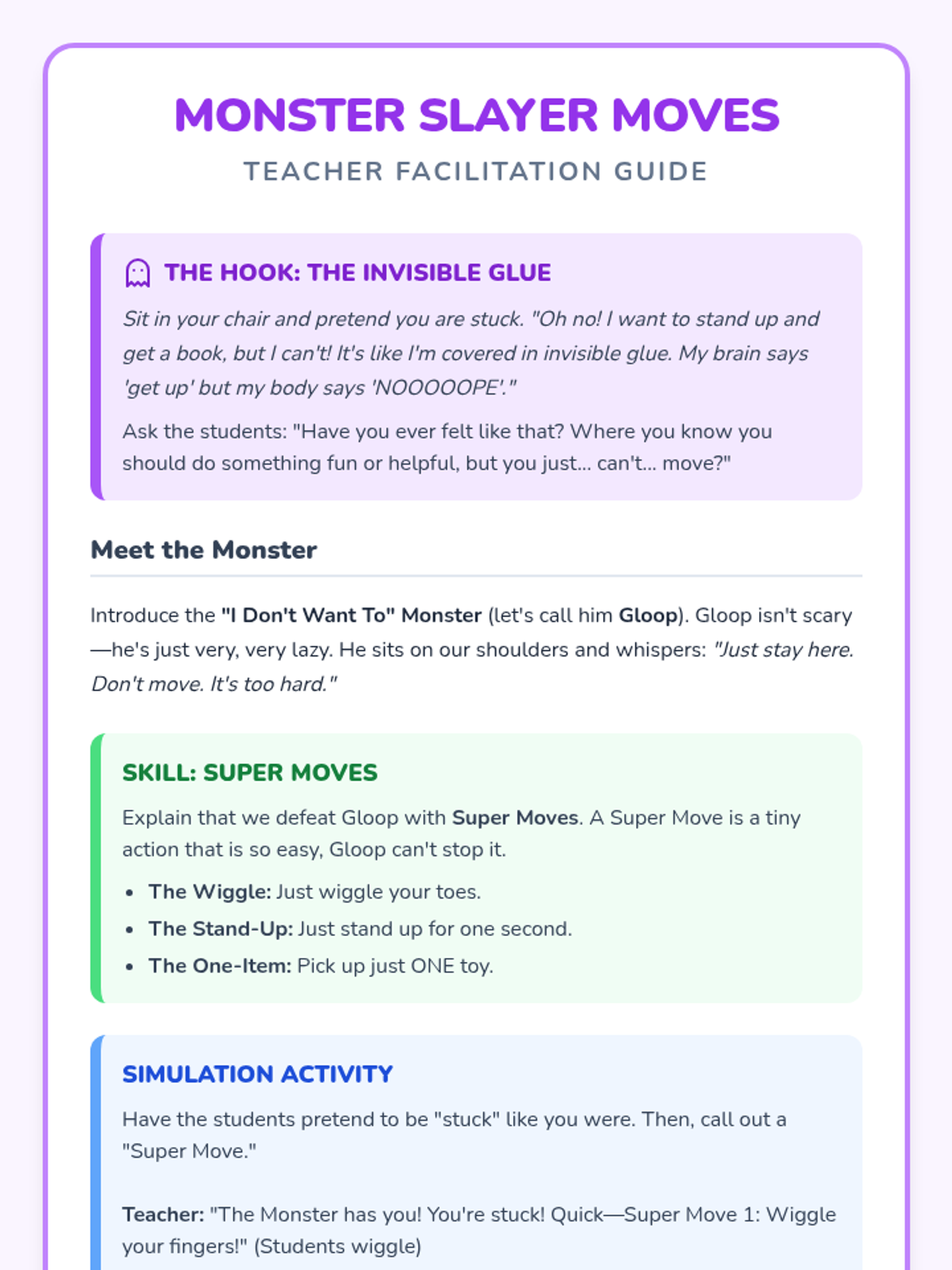
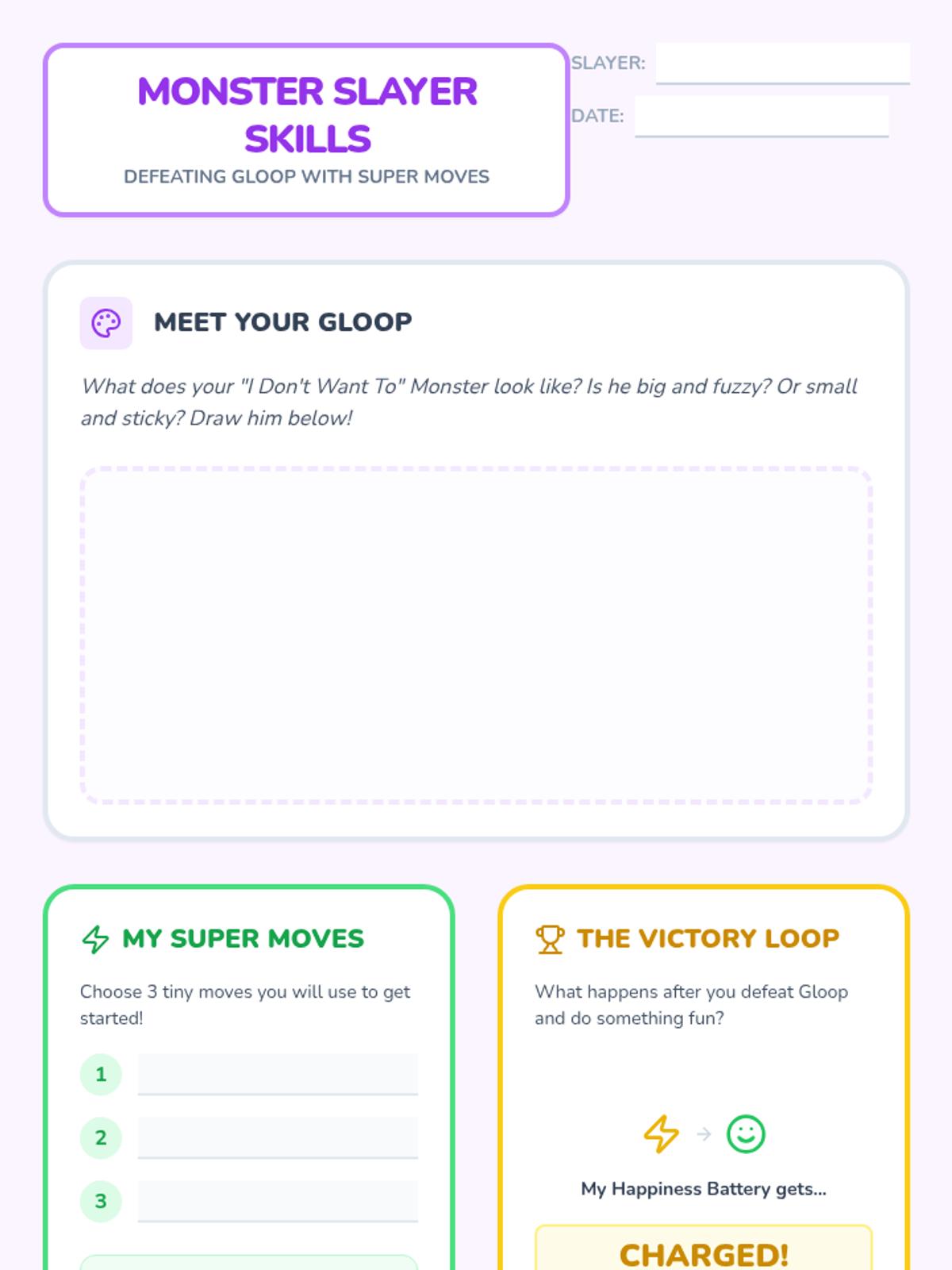
Teaches students how to overcome inertia and task initiation hurdles by personifying the 'I Don't Want To' feeling and using 'Super Moves' to get started.
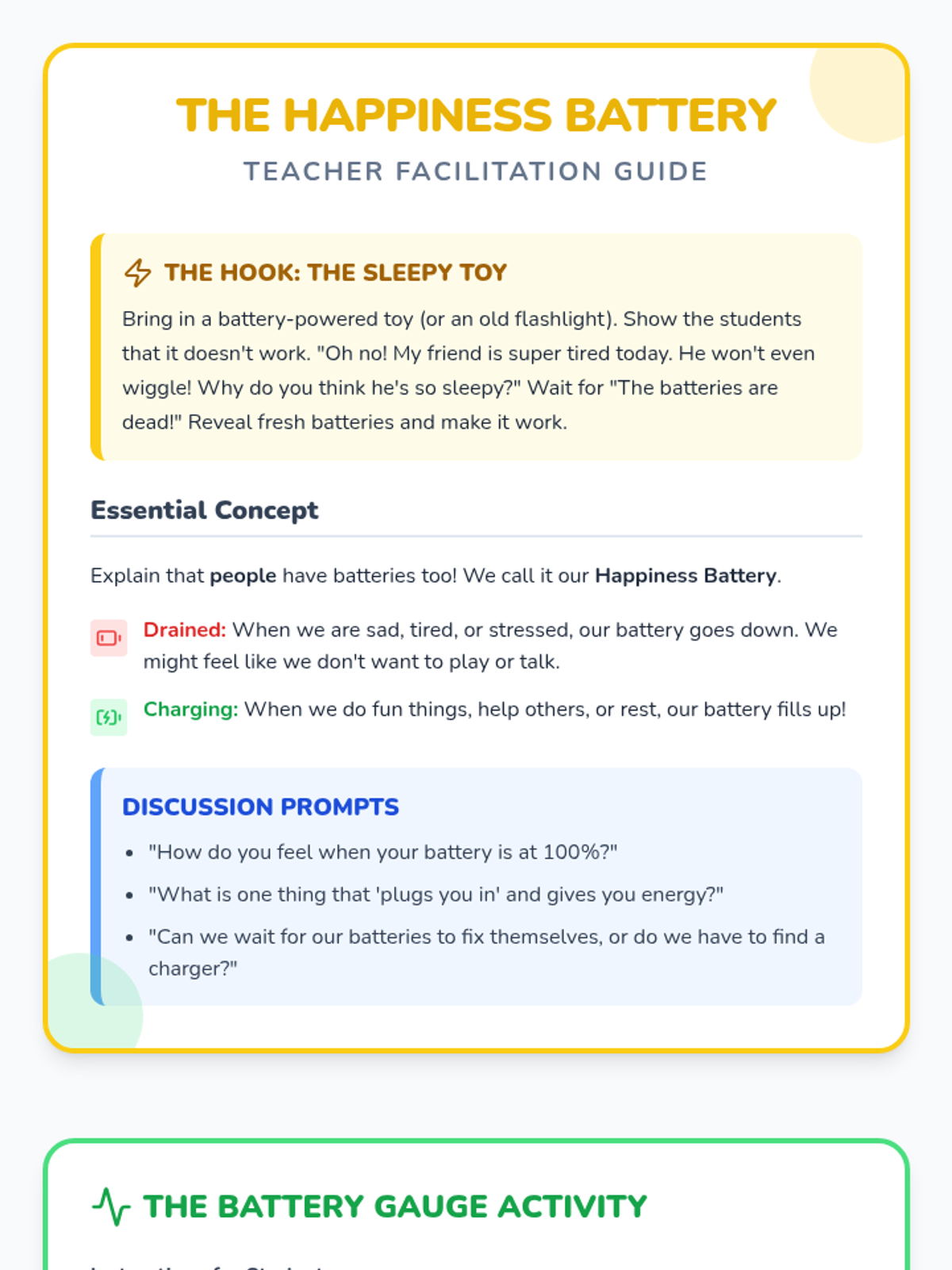
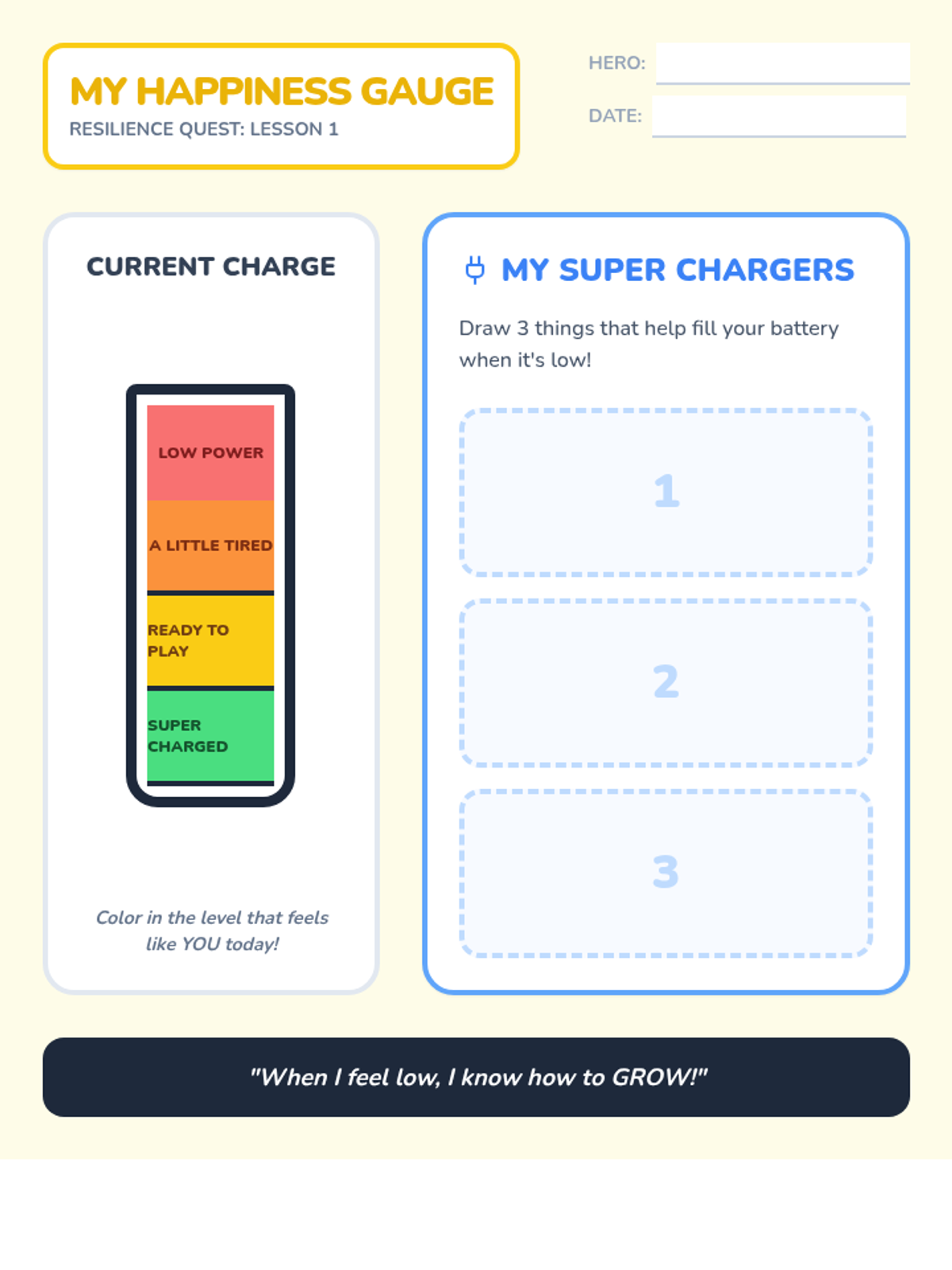
Introduces the battery metaphor for emotional energy, teaching students to monitor their own 'charge' and understand the need for recharging through positive activities.
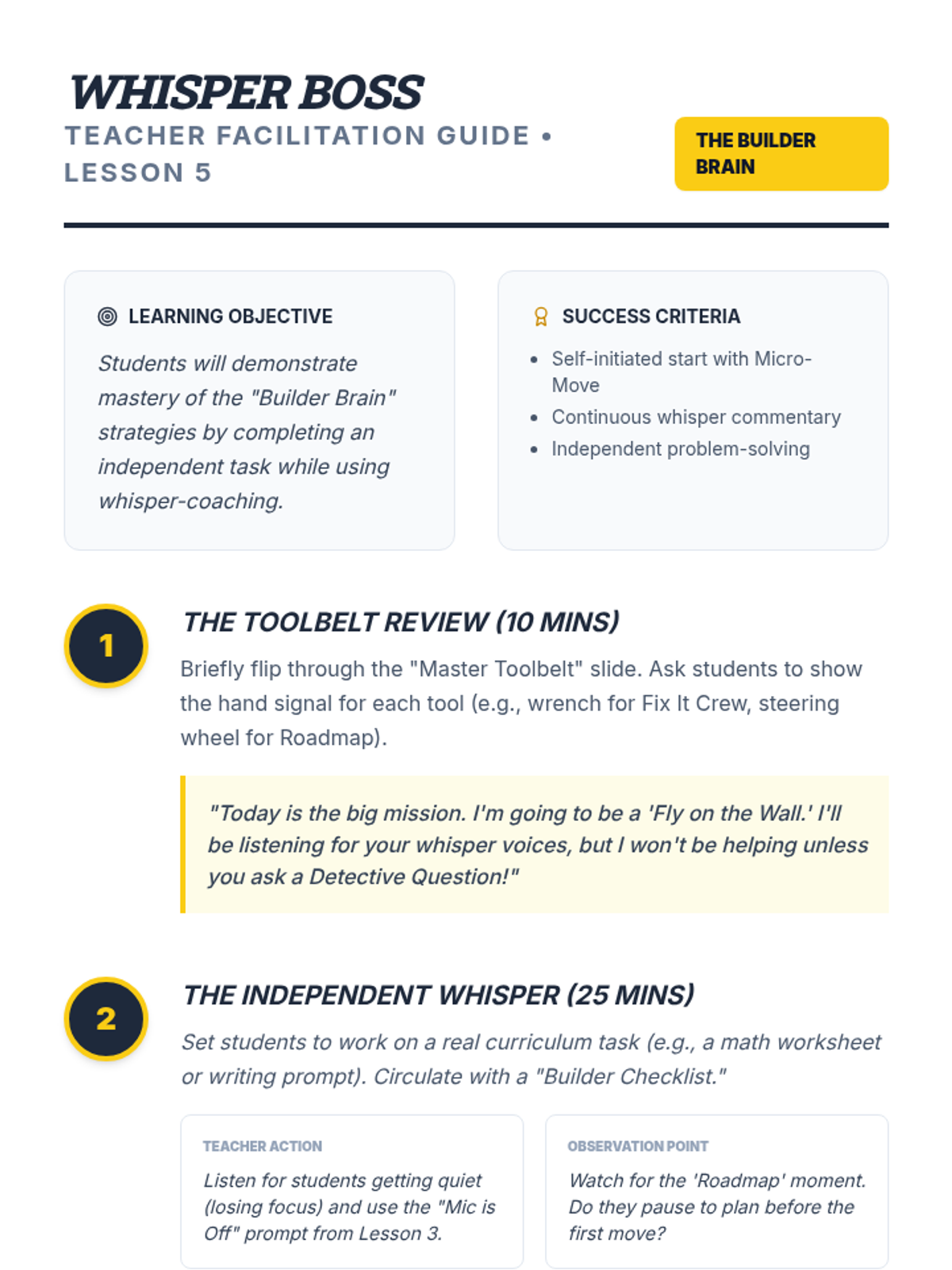
Students apply the breakdown and narration techniques to a real independent work session. The teacher circulates to listen for 'whisper coaching' as students initiate and sustain their work.
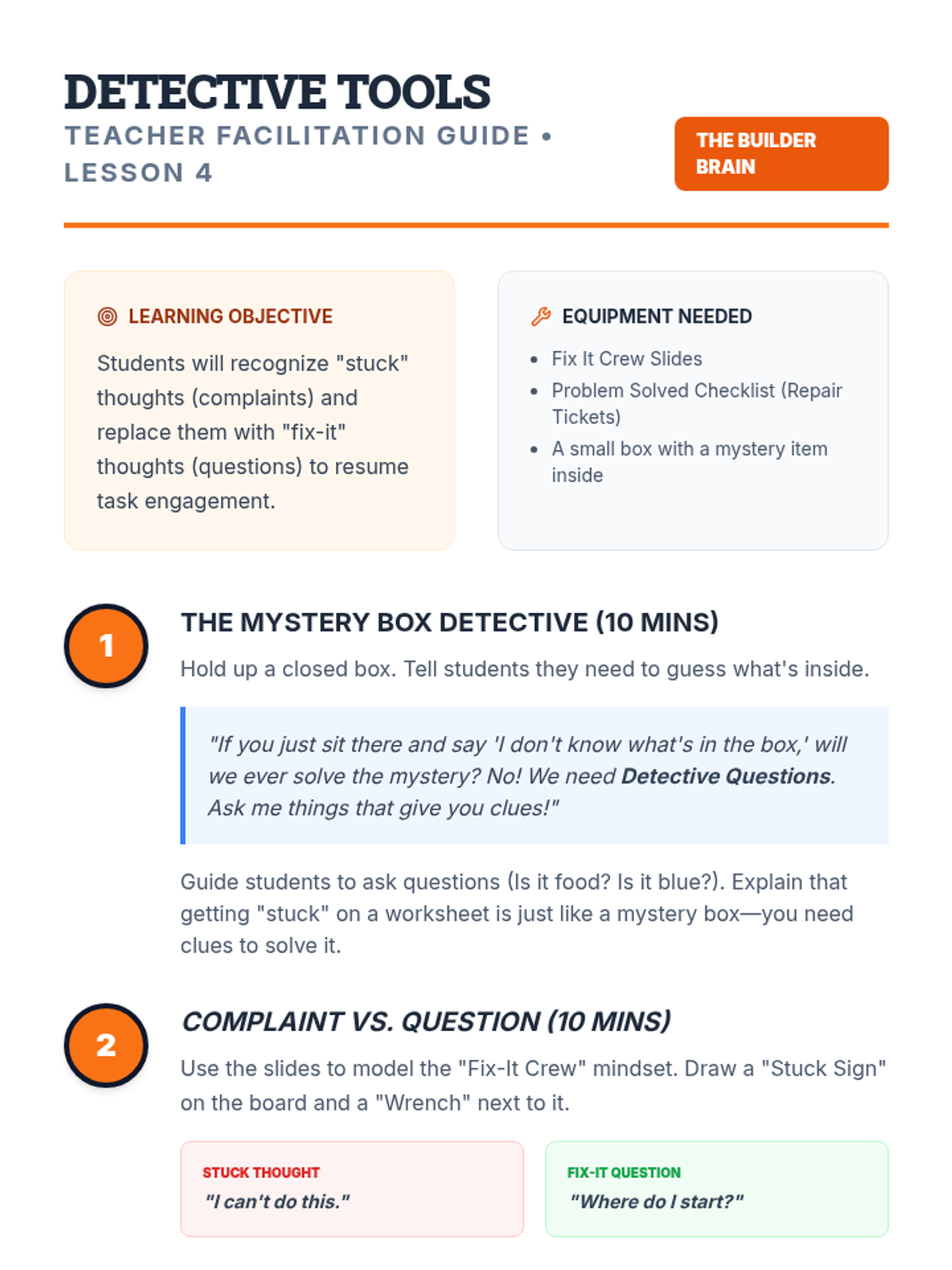
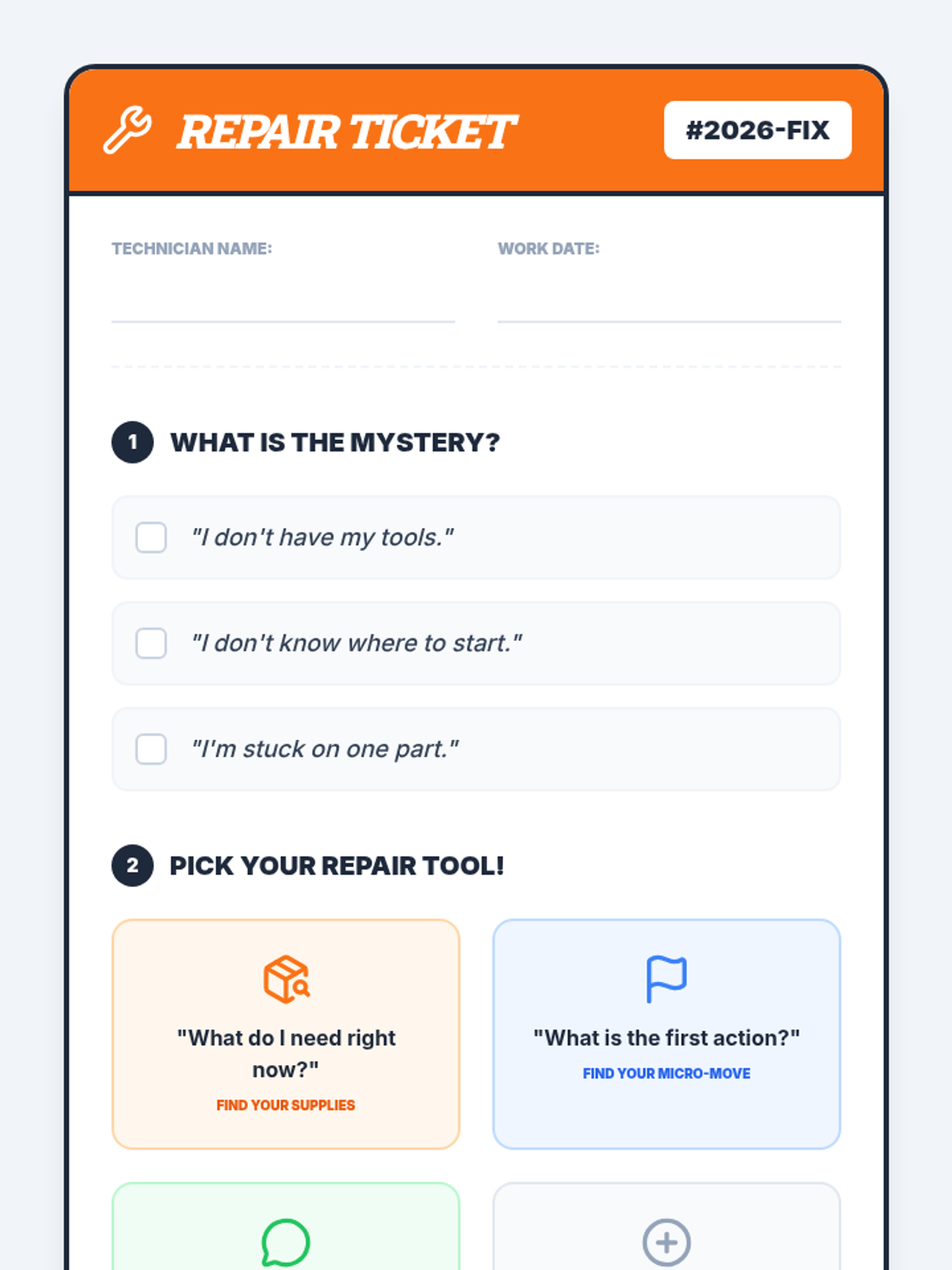
Students learn to ask themselves specific questions when they get stuck. This shifts the internal monologue from complaint to inquiry and problem-solving.
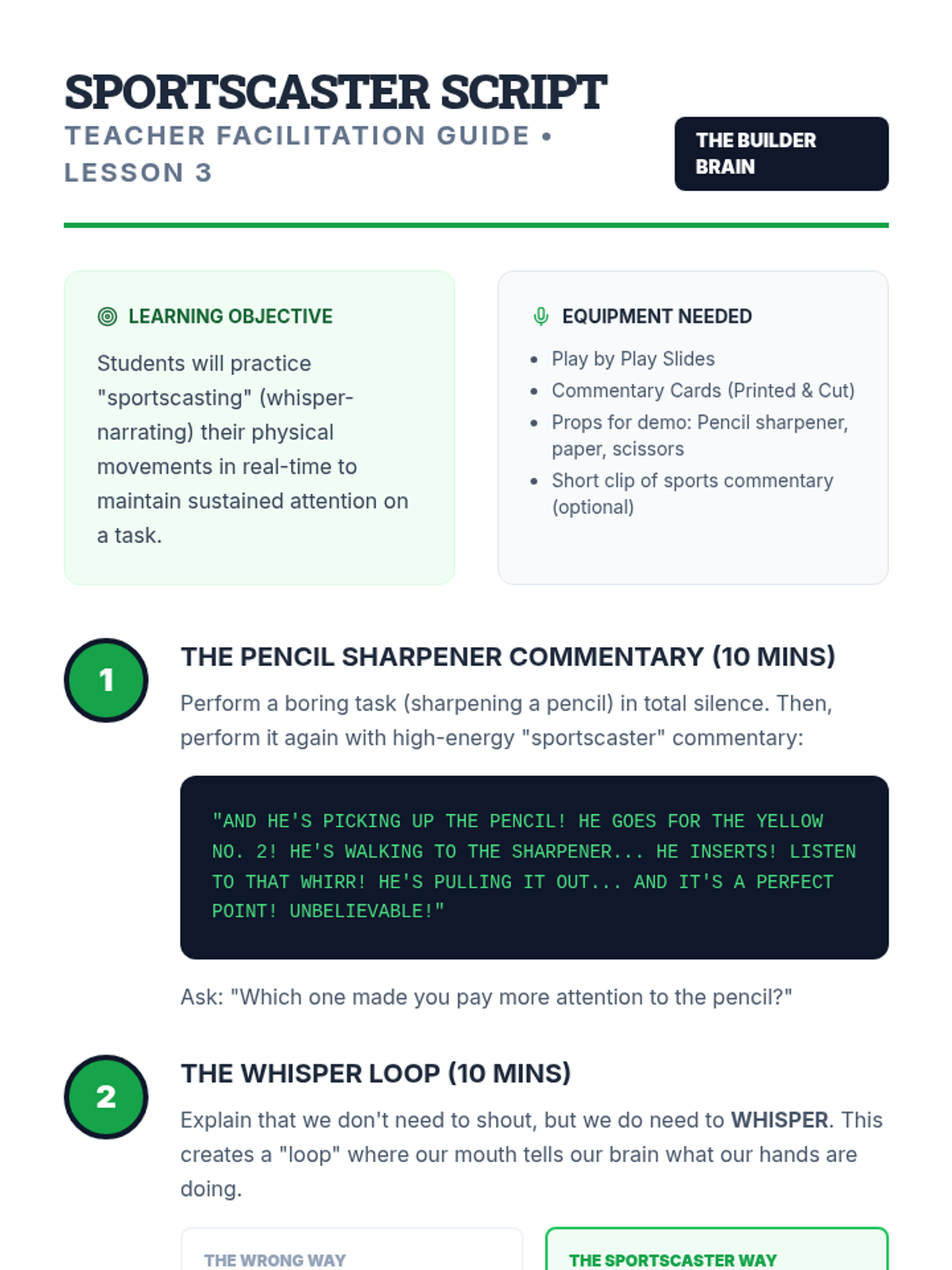
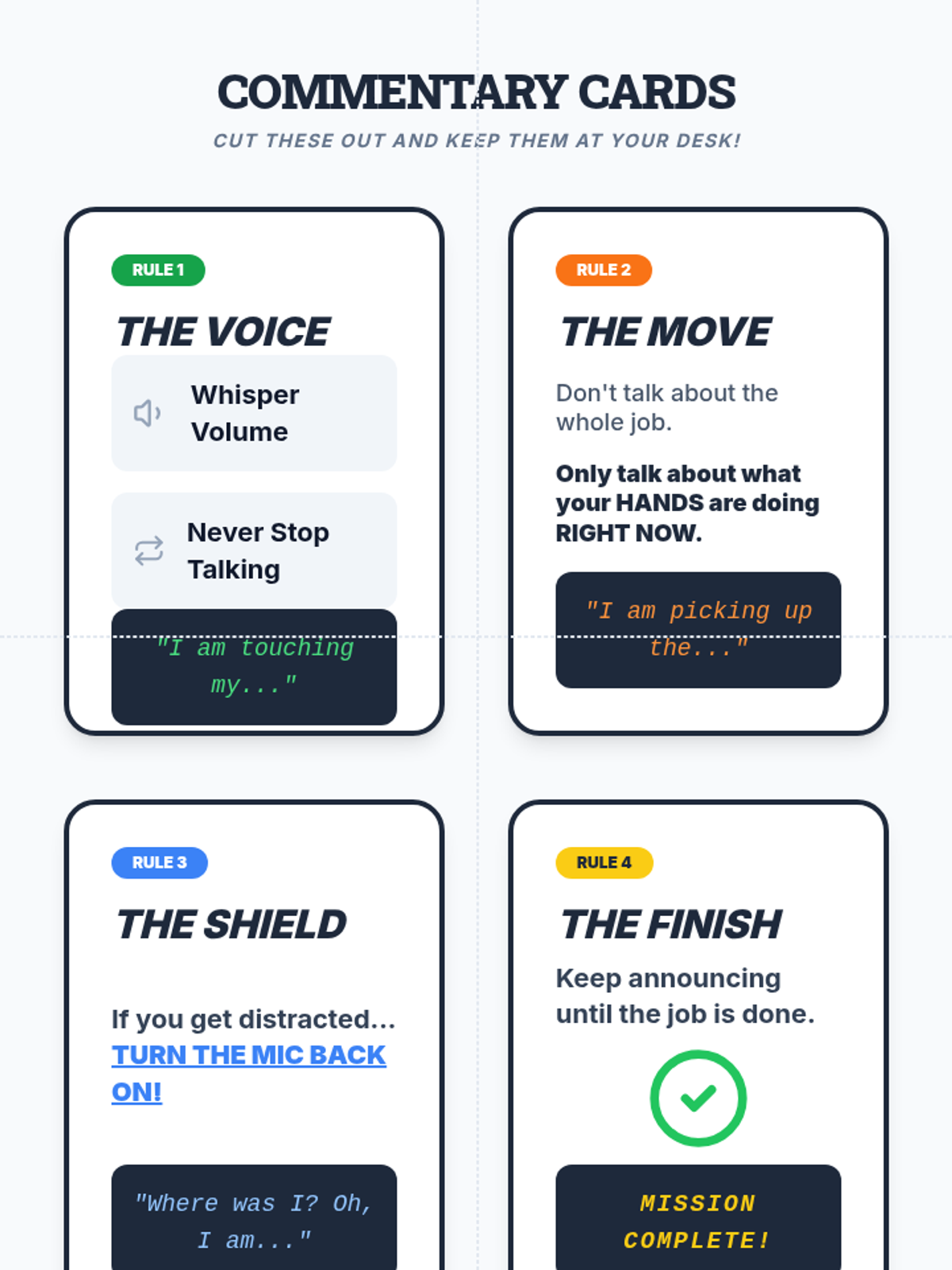
Students practice whispering their actions as they do them, similar to a sportscaster announcing a game. This continuous verbal loop helps prevent distraction and keeps the student engaged.
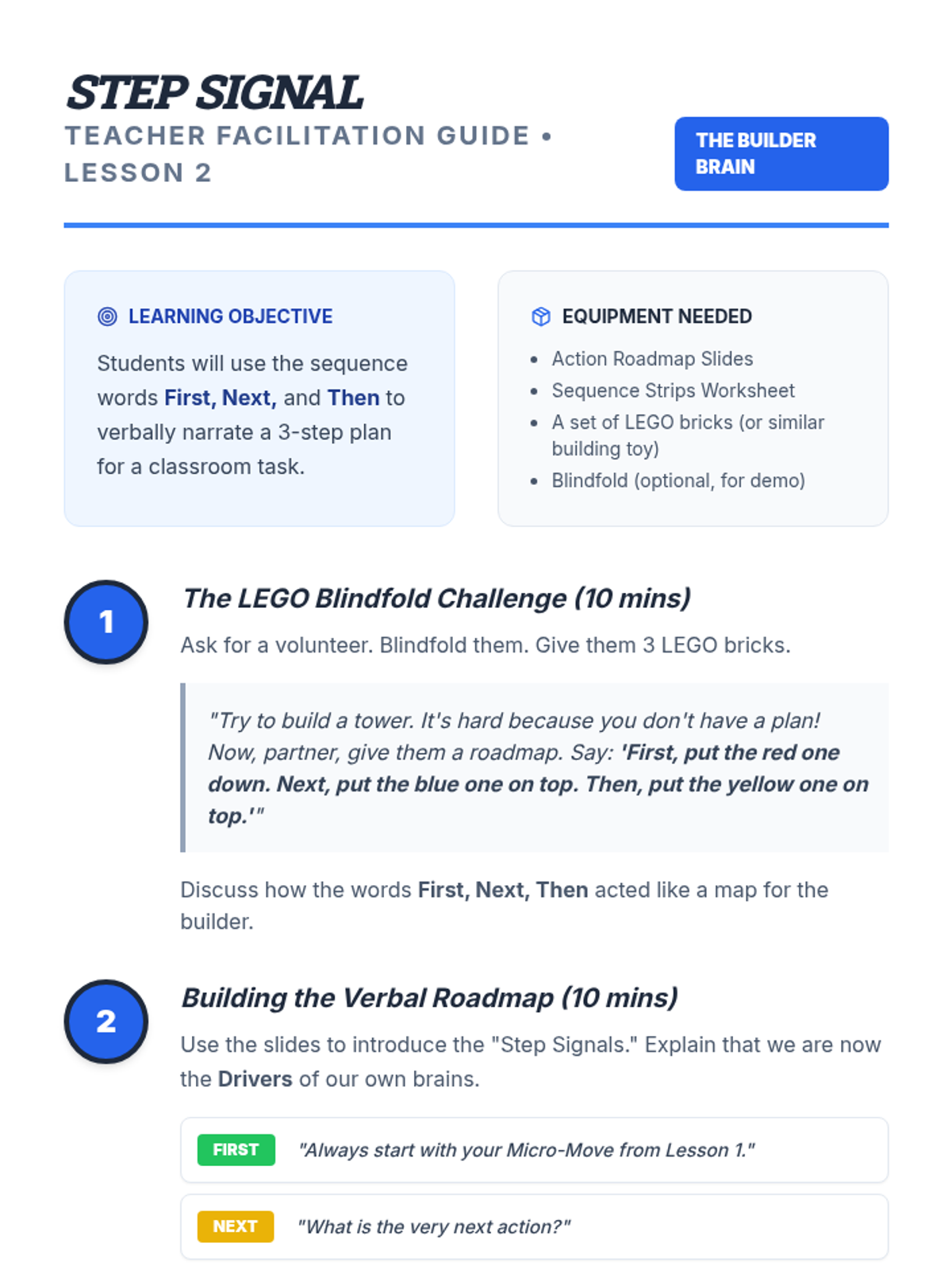
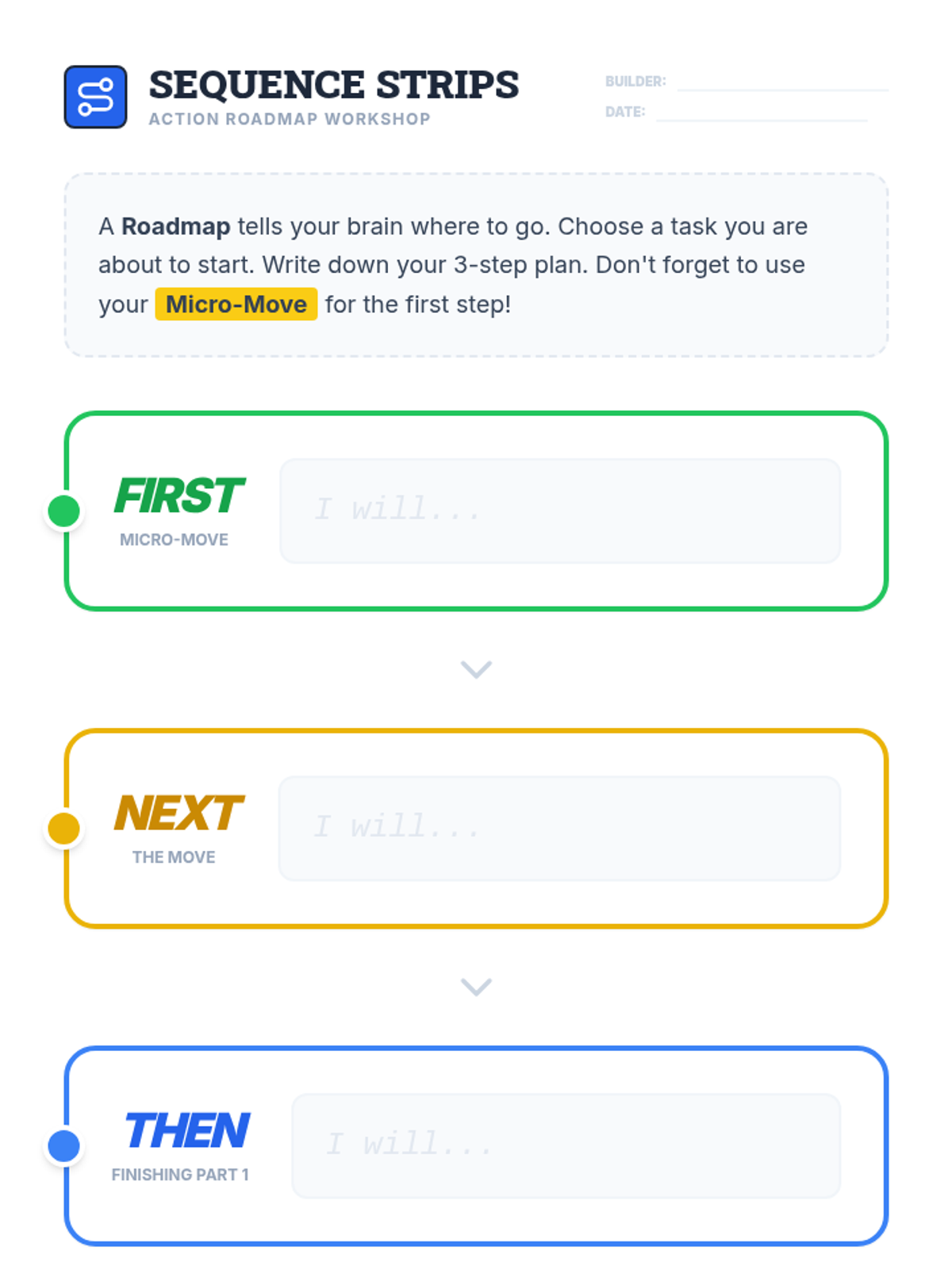
Students practice using the words 'First,' 'Next,' and 'Then' to create a verbal roadmap. They verbally plan a simple classroom routine, ensuring they can narrate the order of operations before beginning.
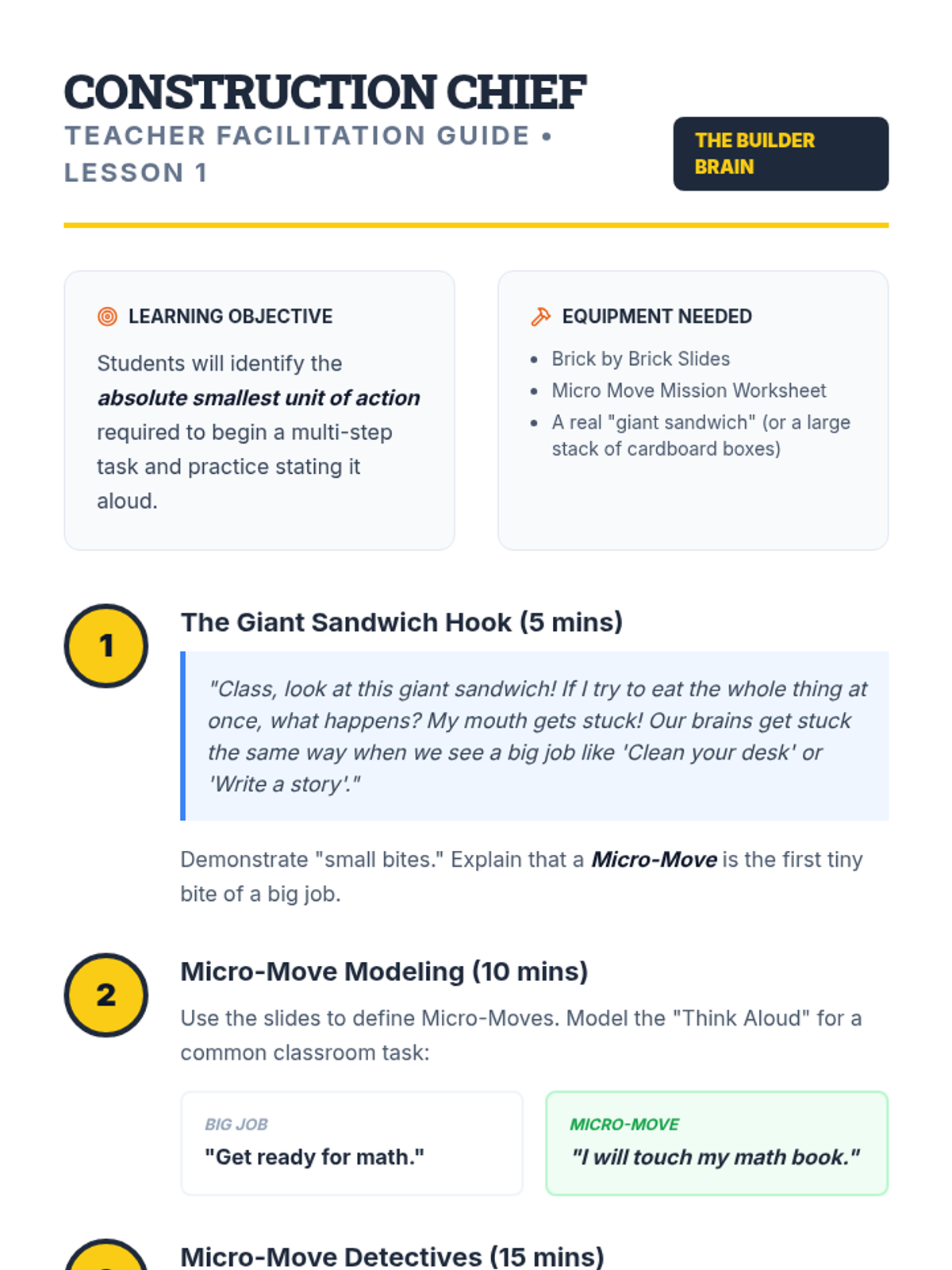
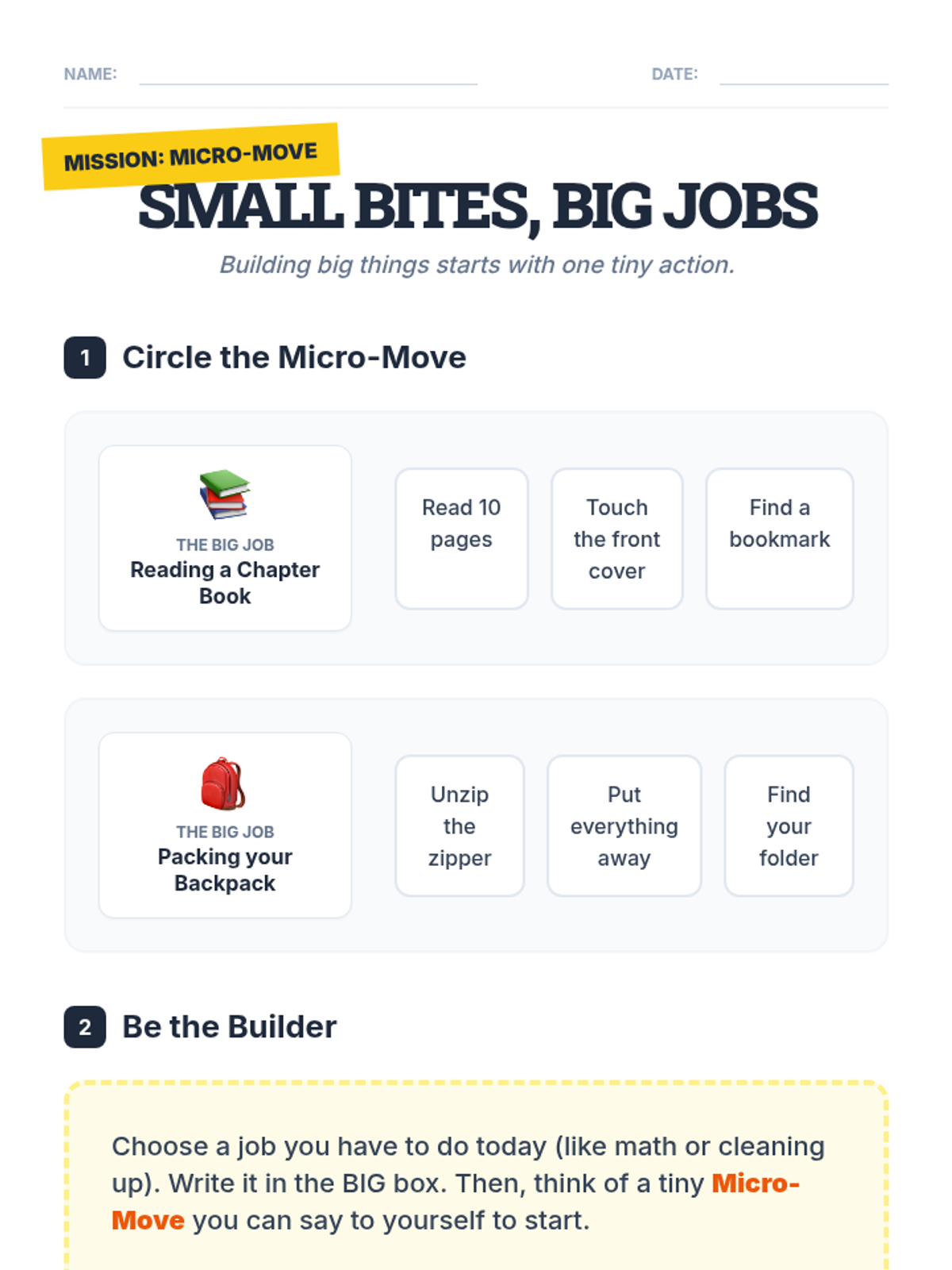
Students learn to identify the absolute smallest unit of action required to begin a task. They practice ignoring the whole assignment to focus solely on the physical action needed to start.
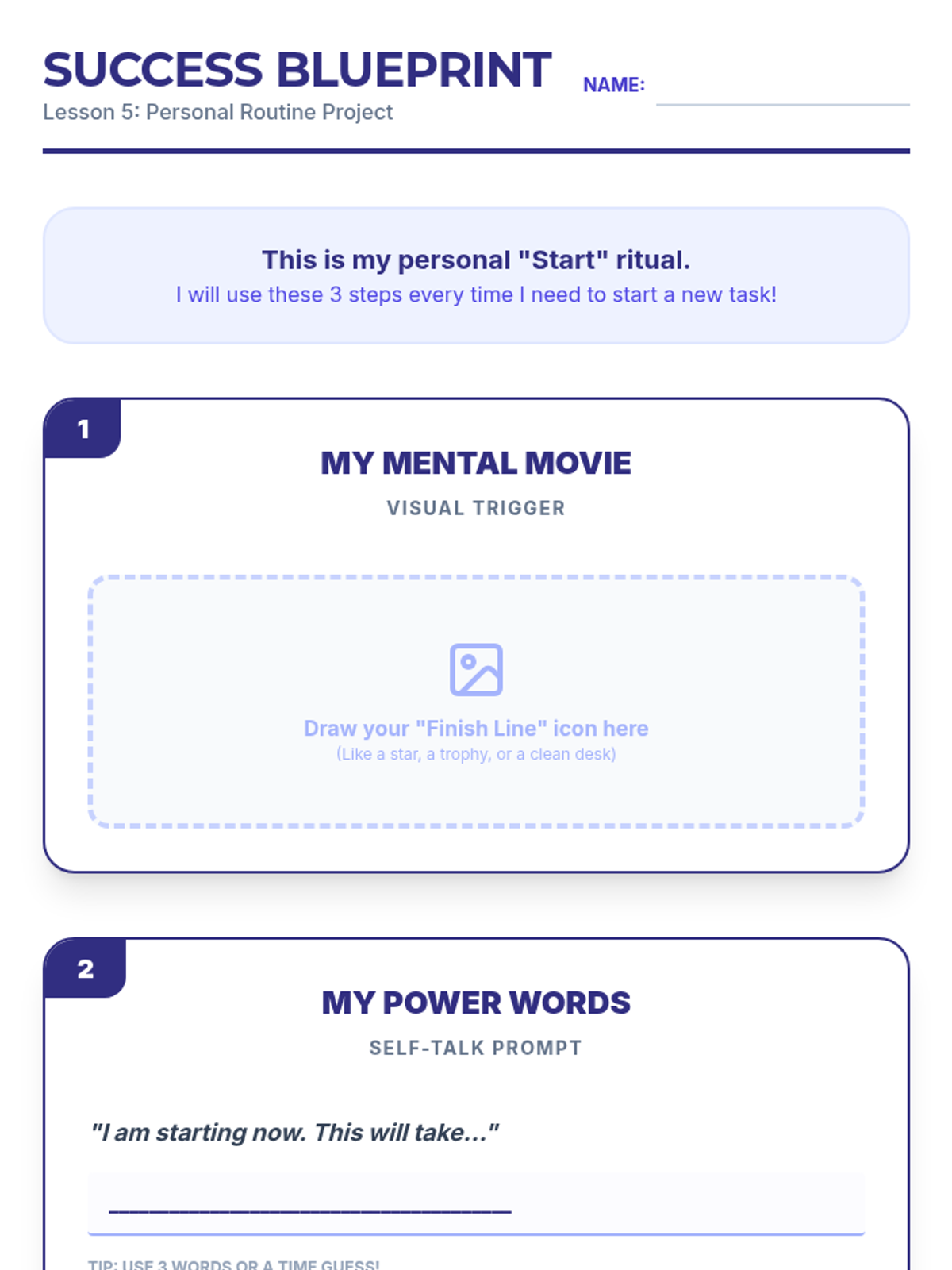
Students create a personal storyboard or checklist that combines a visual icon with a verbal prompt for task initiation.
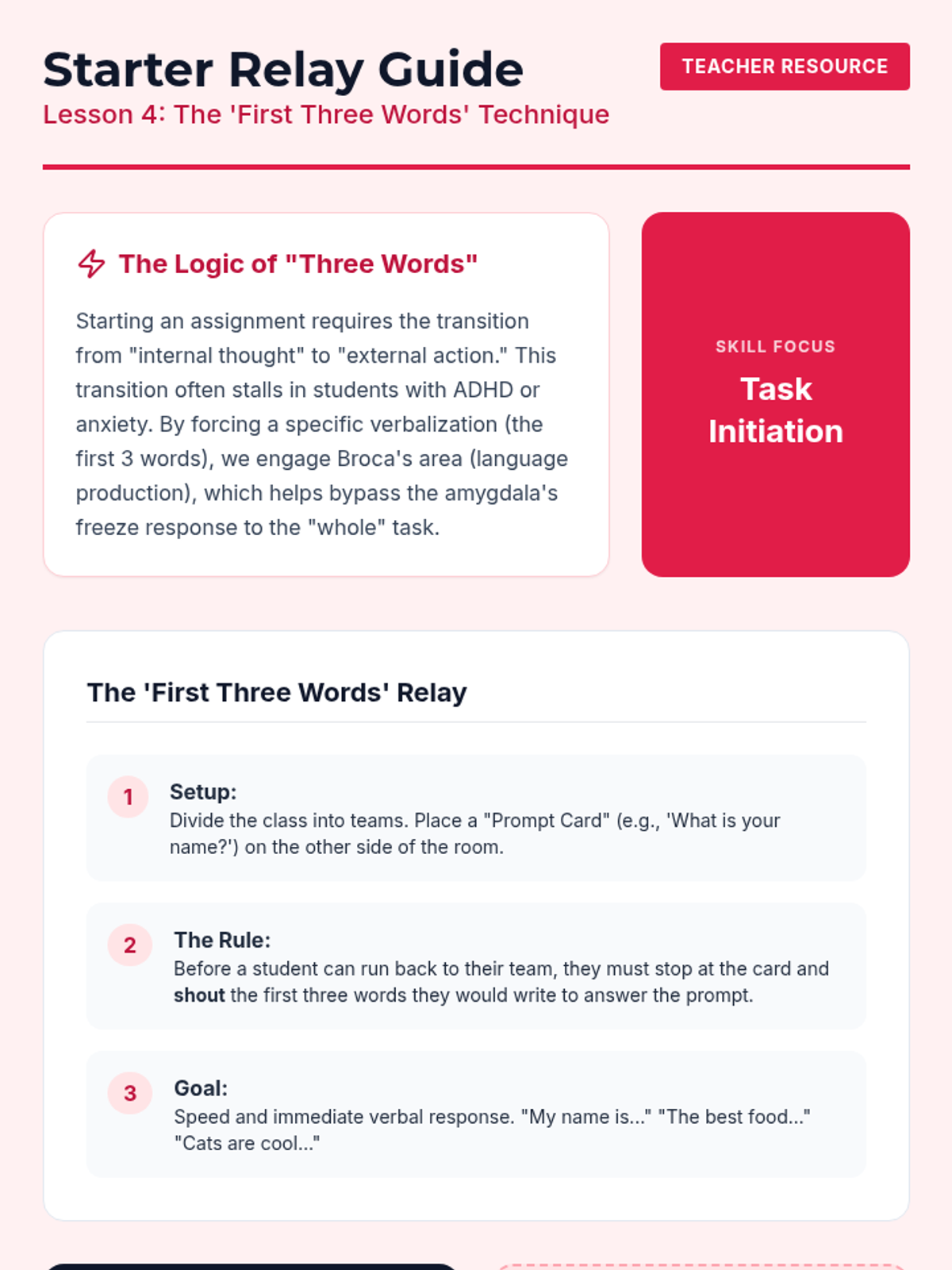
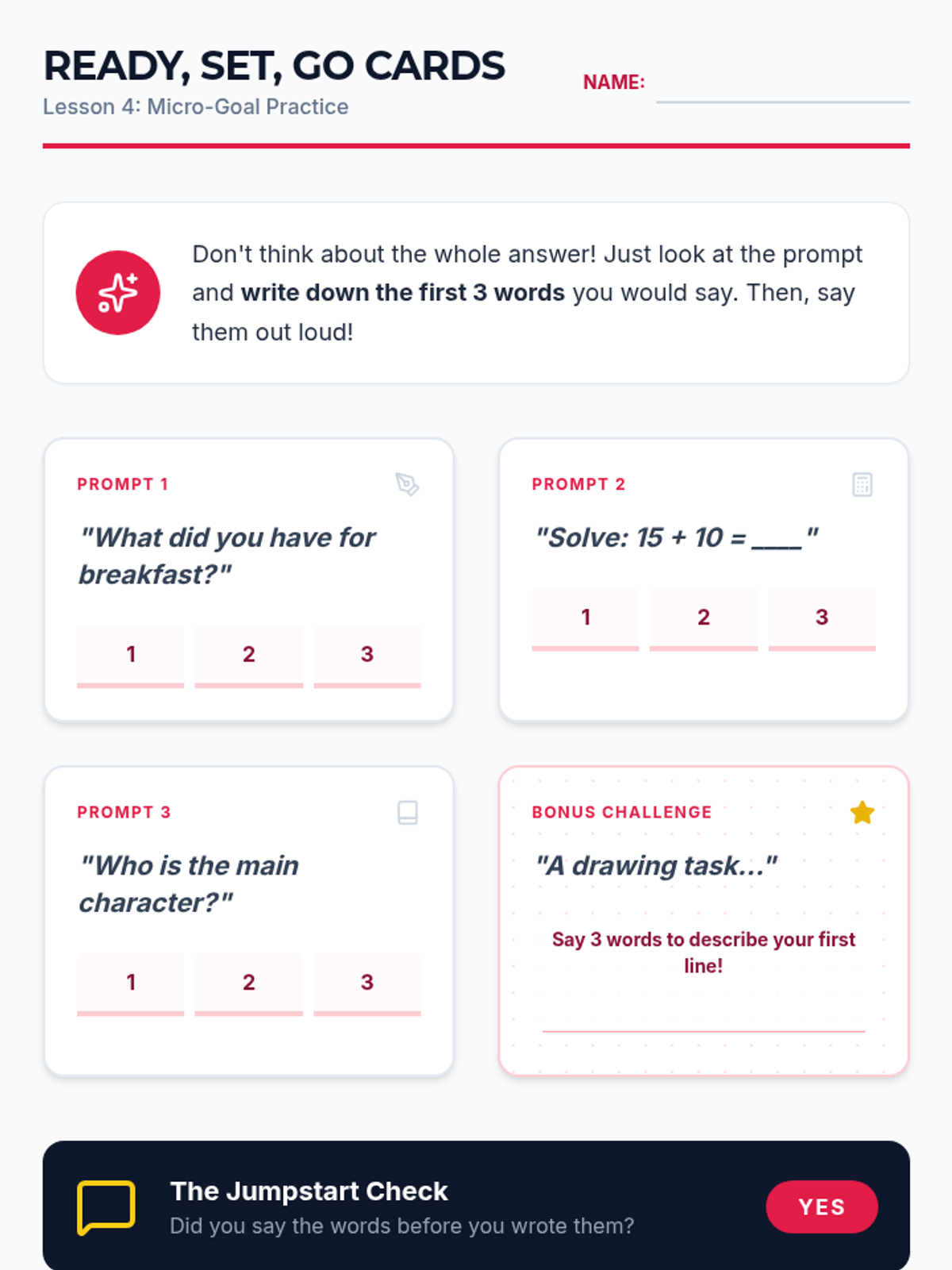
Students learn to identify the first three words of a task to lower the barrier to entry and engage the brain's language center.
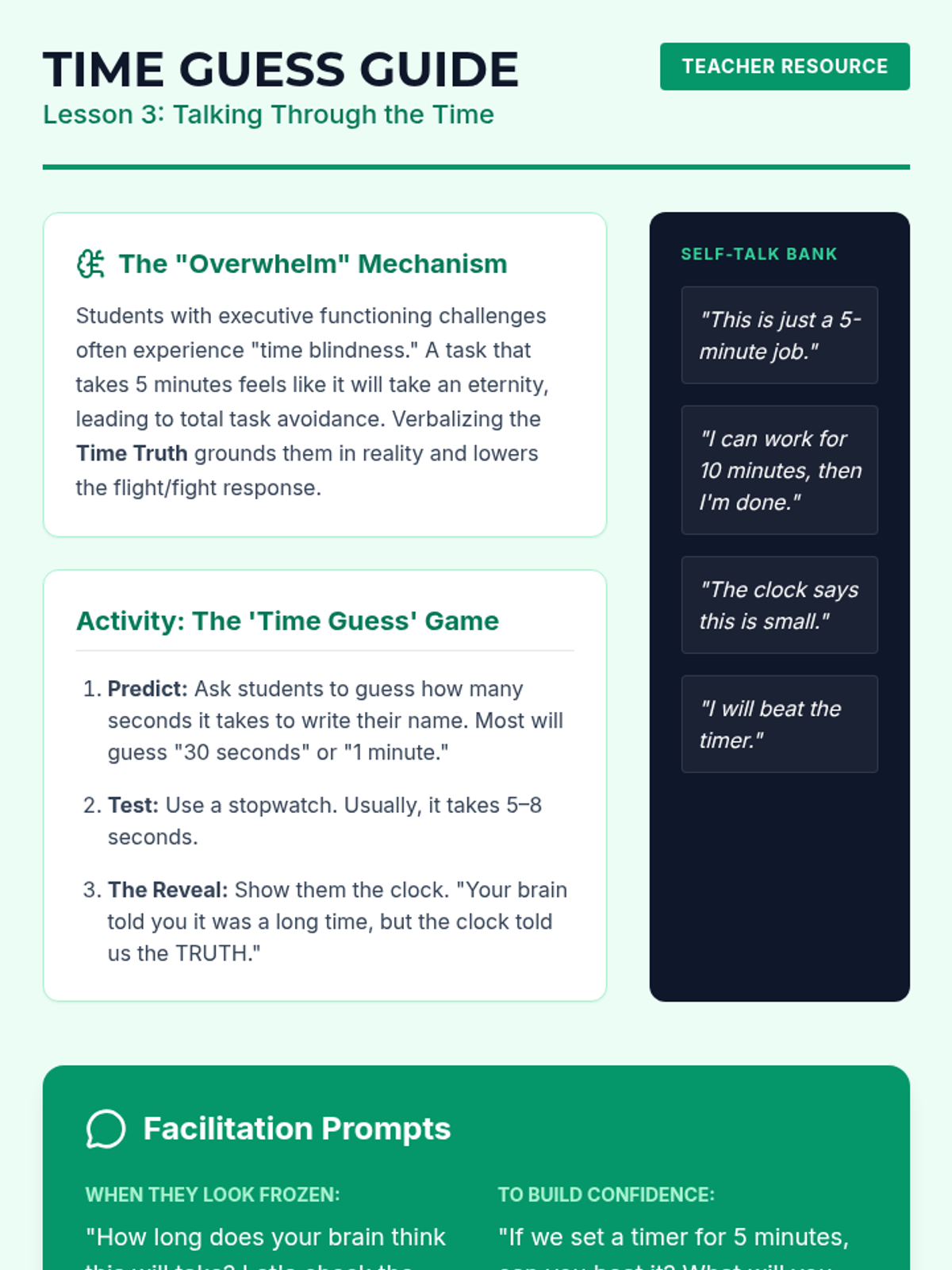
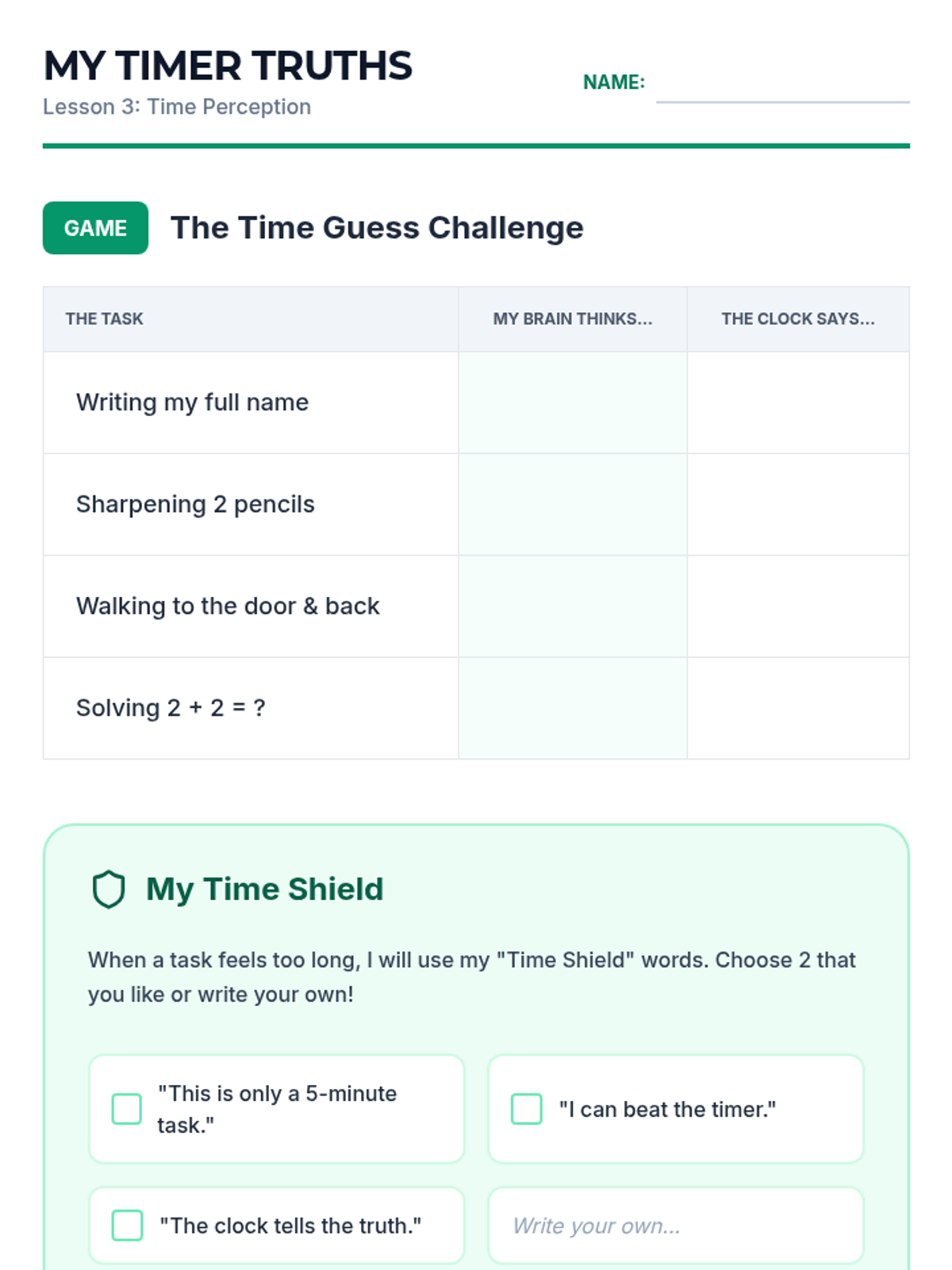
Students learn to estimate time and use verbal reassurance to reduce overwhelm.
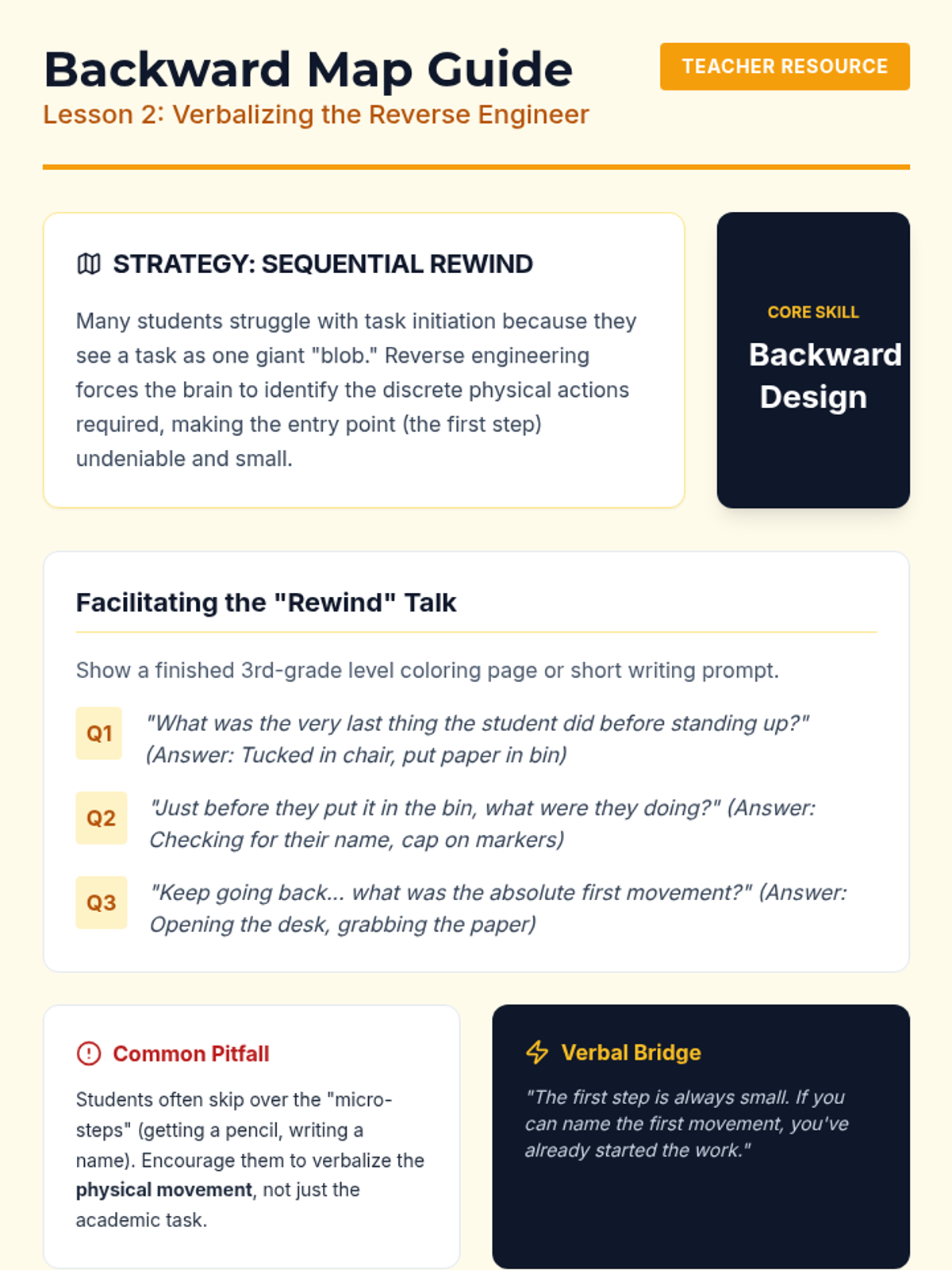
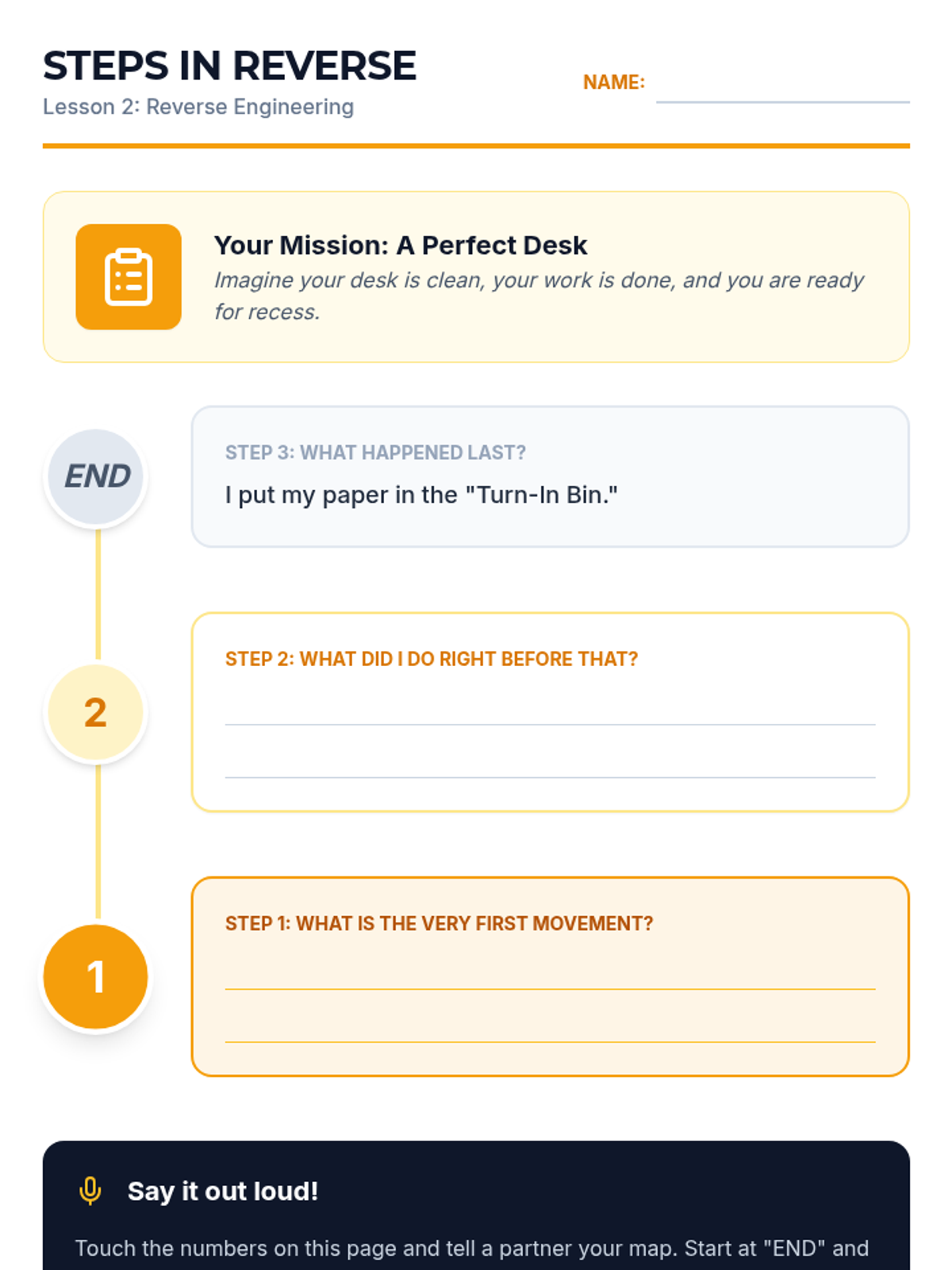
Students talk backward through the steps of a completed sample to make the first step obvious and approachable.
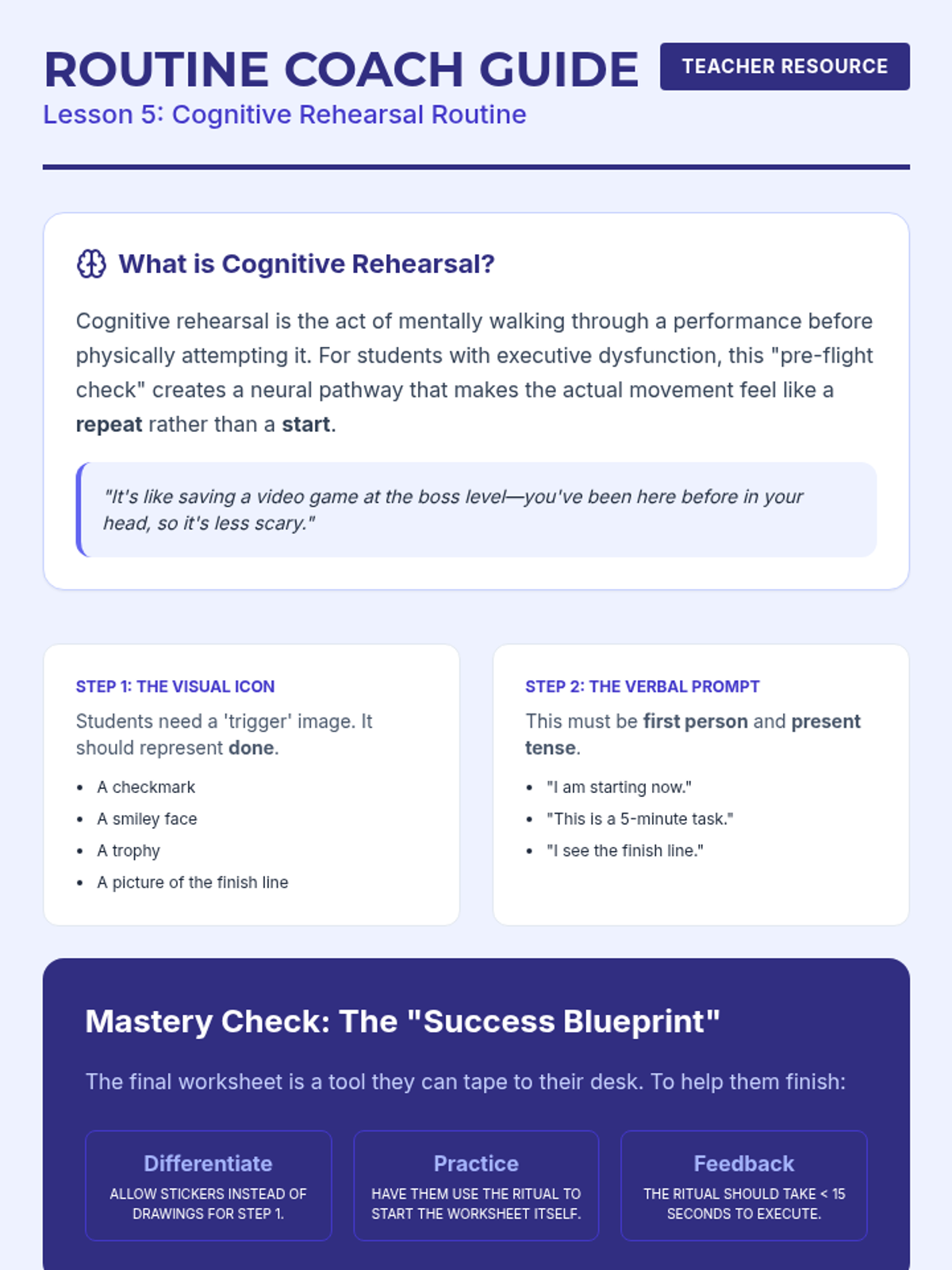
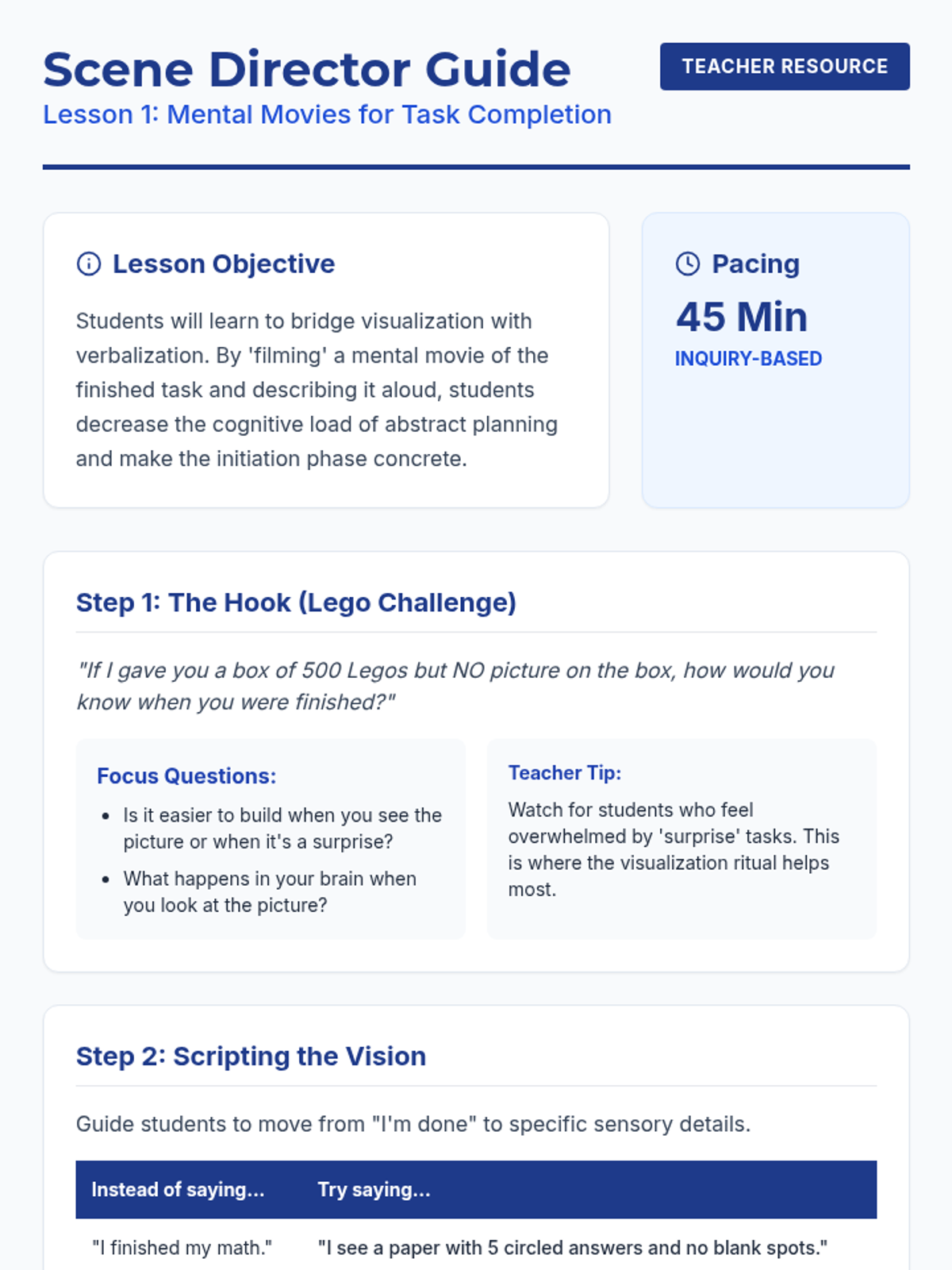
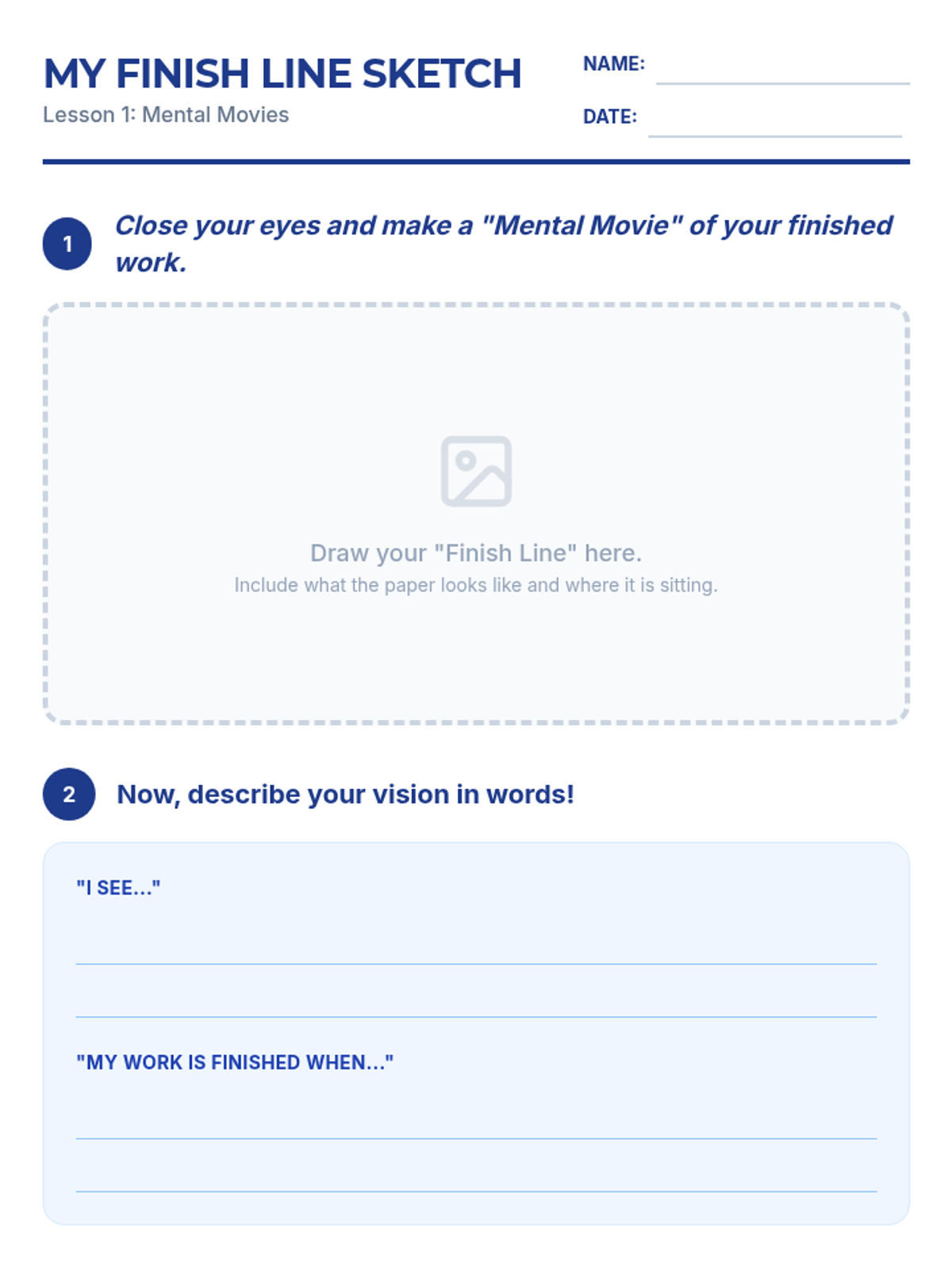
Students practice closing their eyes and creating a detailed mental image of what 'finished' looks like before describing it aloud.
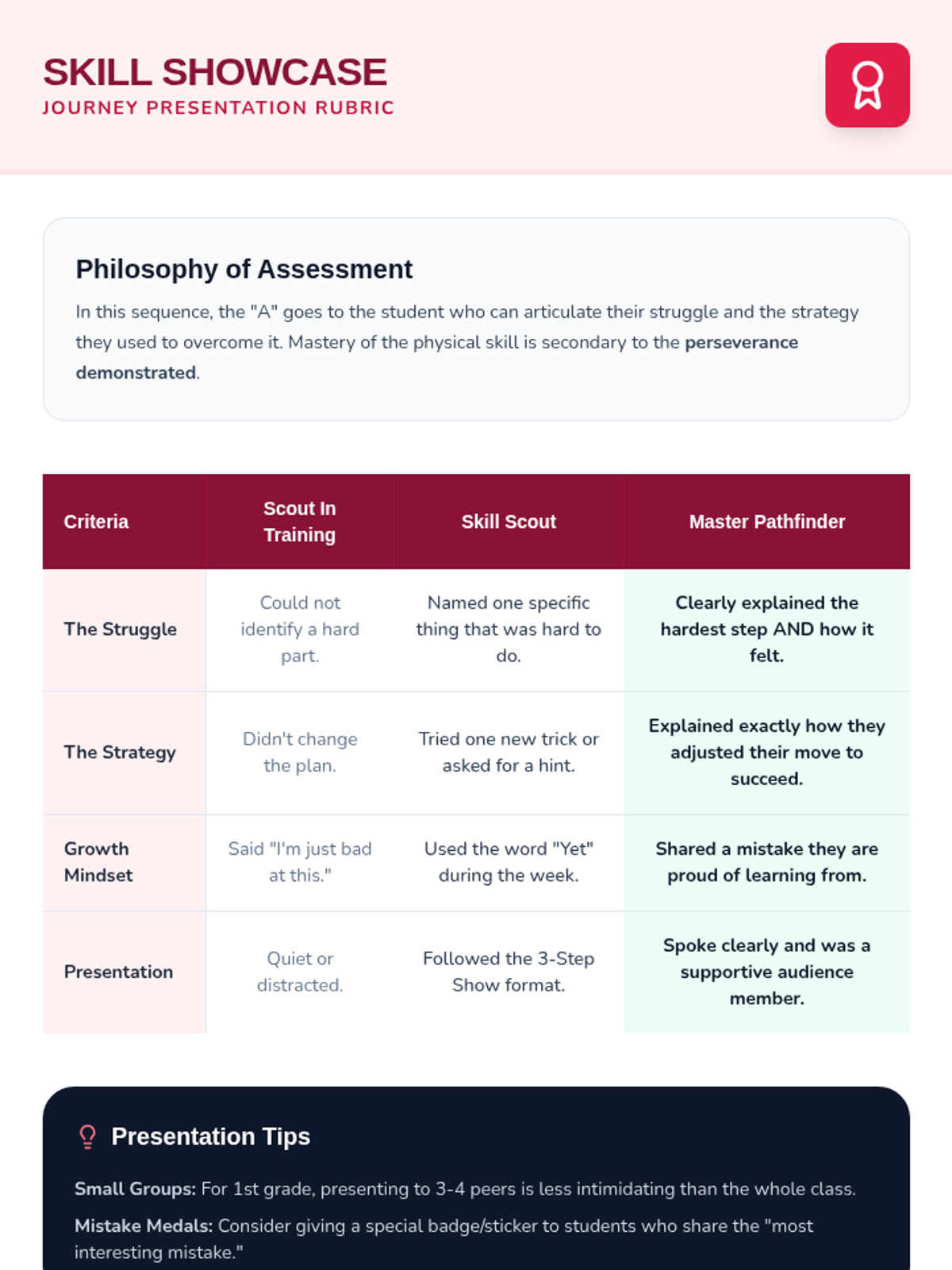
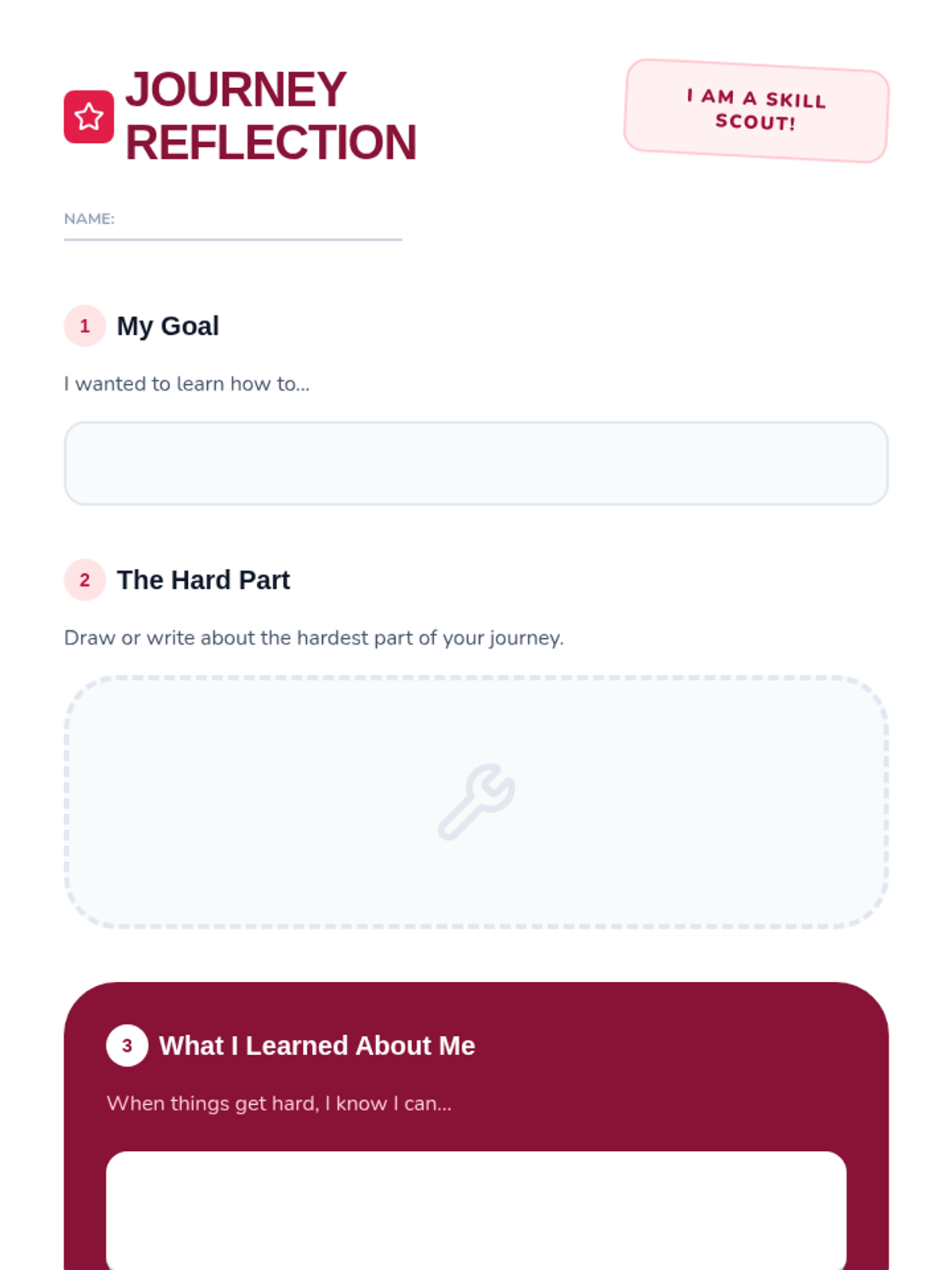
Students present their learning journey and demonstrate their skill, focusing on the perseverance it took to get there.
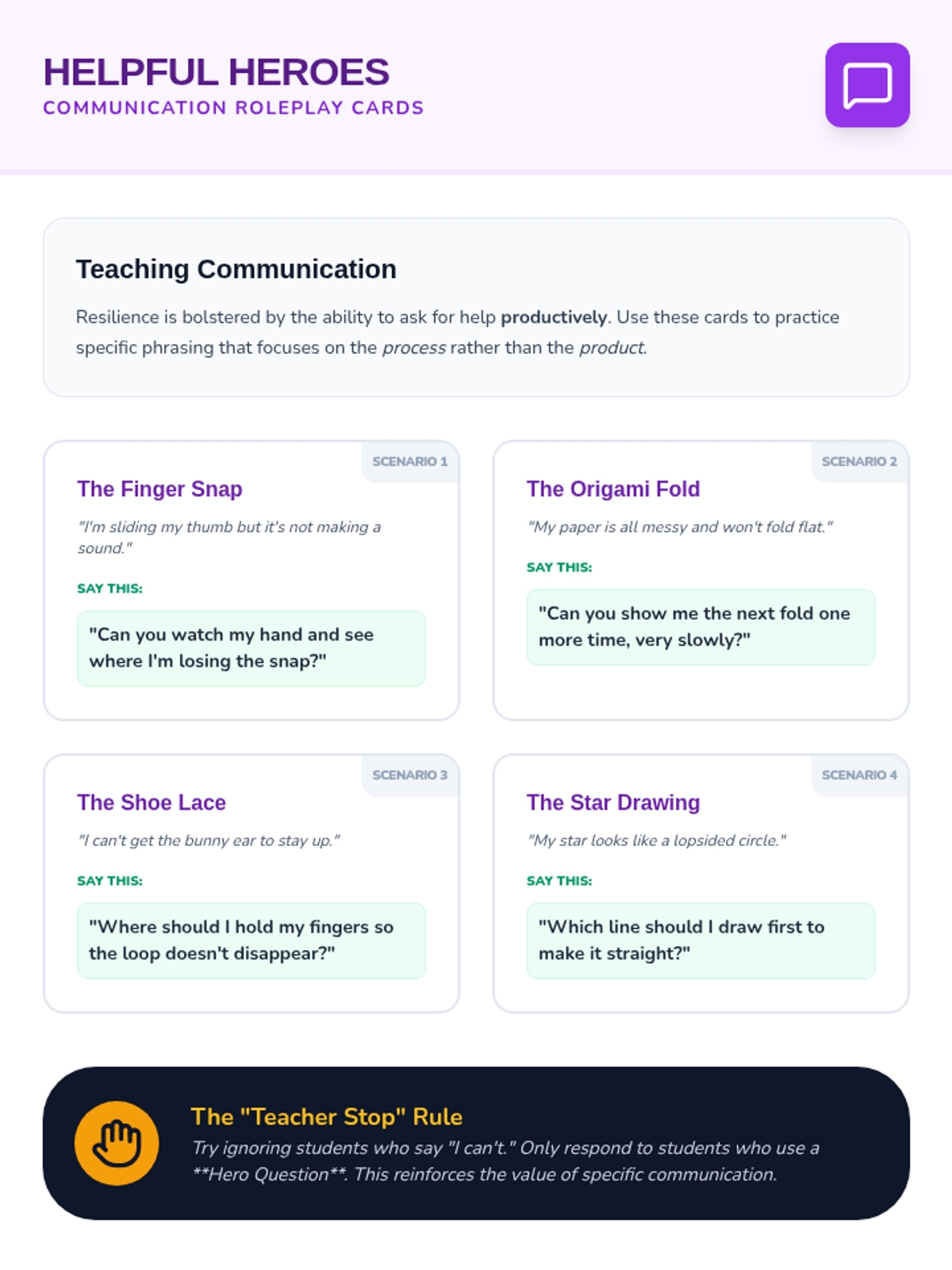
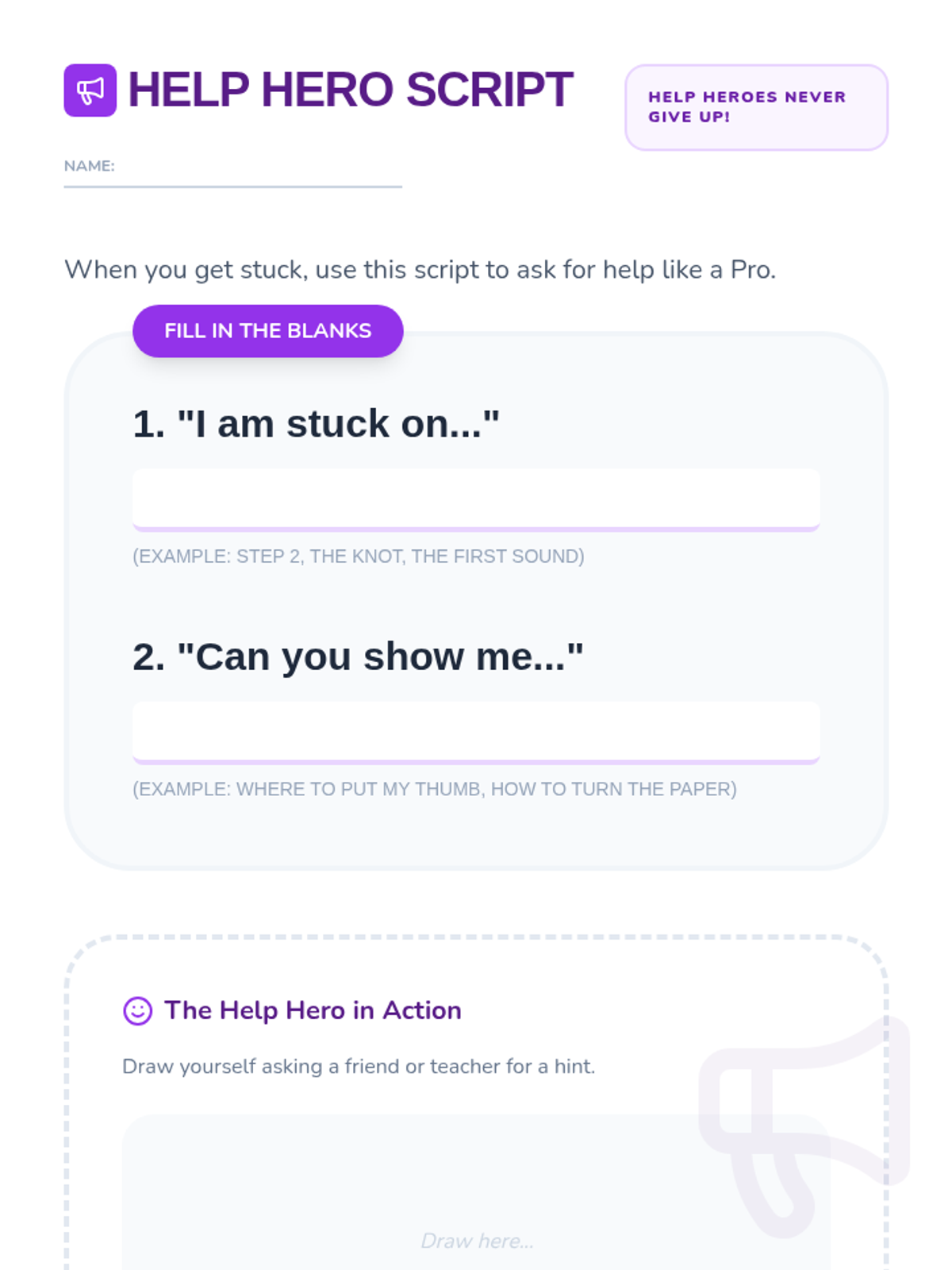
Students learn and practice specific ways to ask for help that promote learning rather than just finishing.
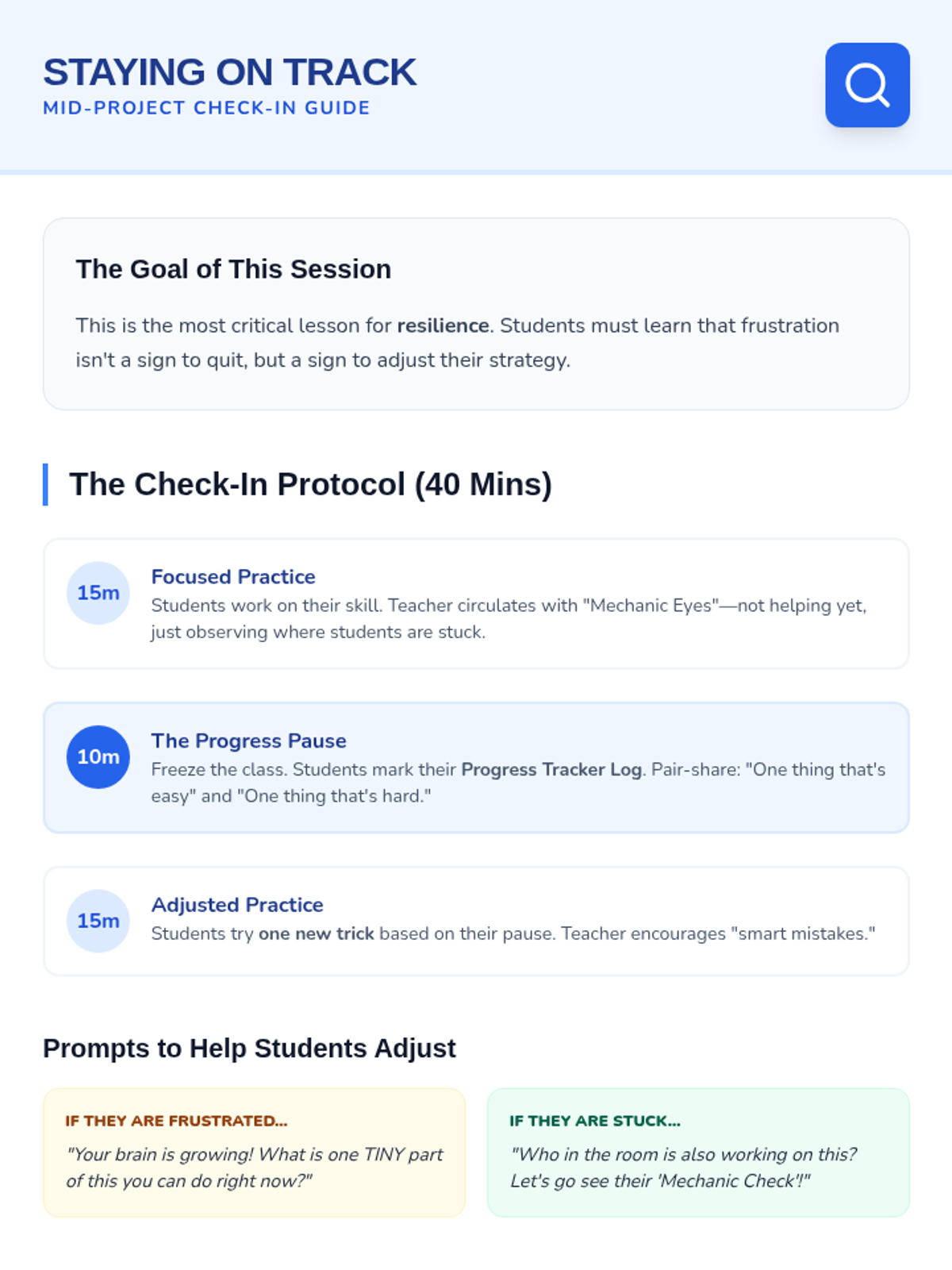
Students practice their skill, track their progress, and learn to adjust their strategies when they face obstacles.
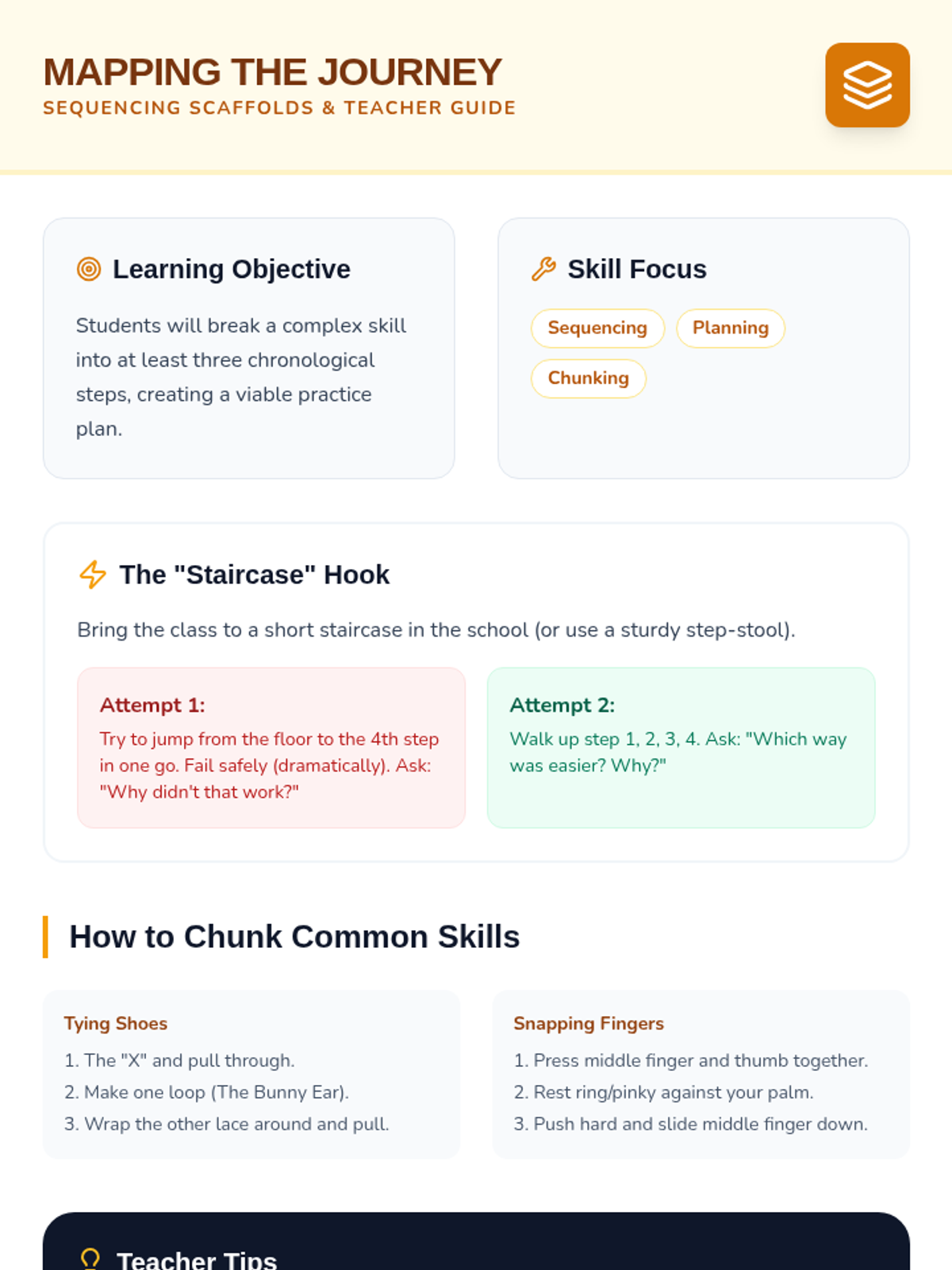
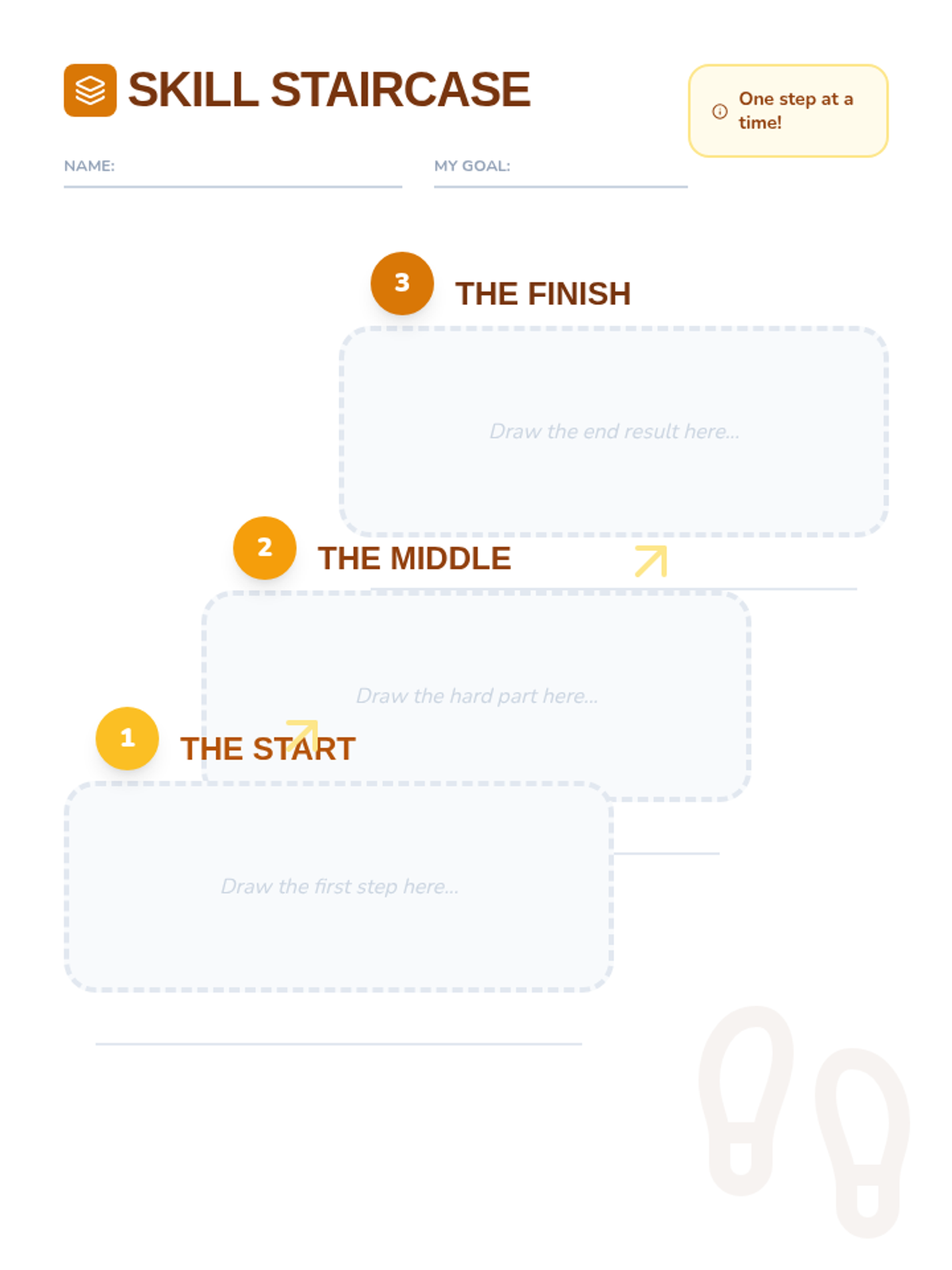
Students break their chosen skill into three manageable steps to create a roadmap for success.
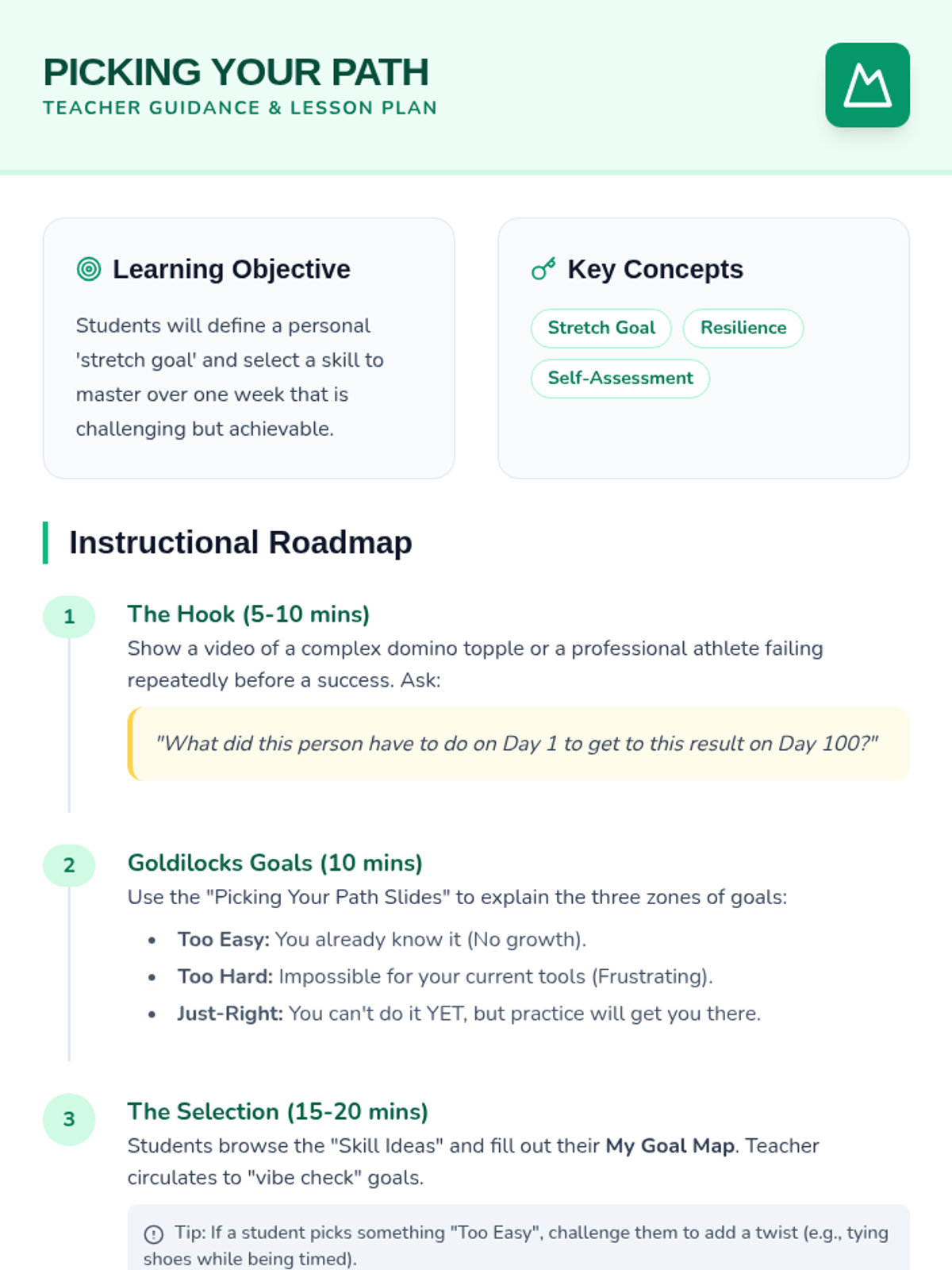
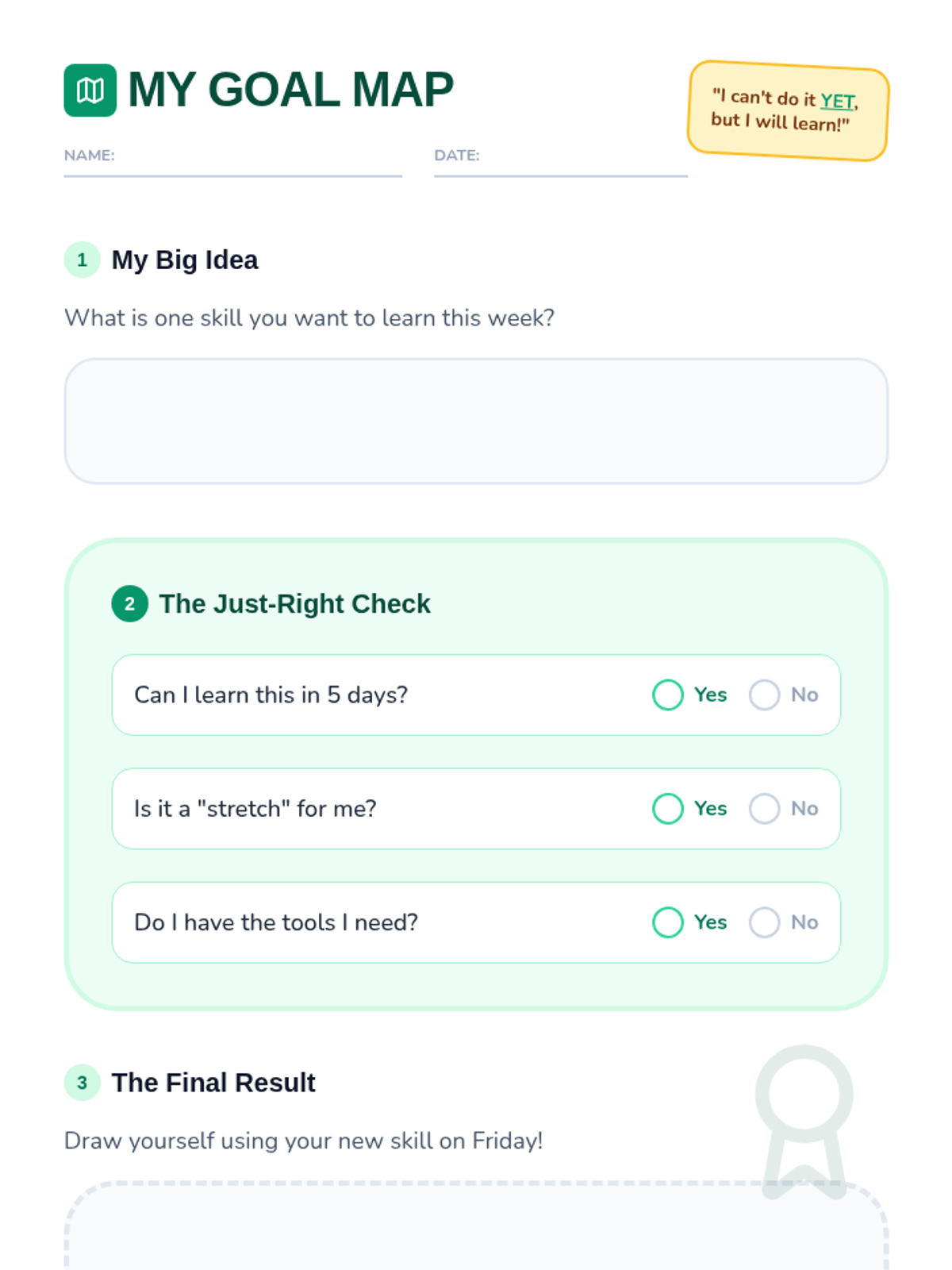
Students explore potential skills and select a 'just-right' goal that is challenging but achievable.
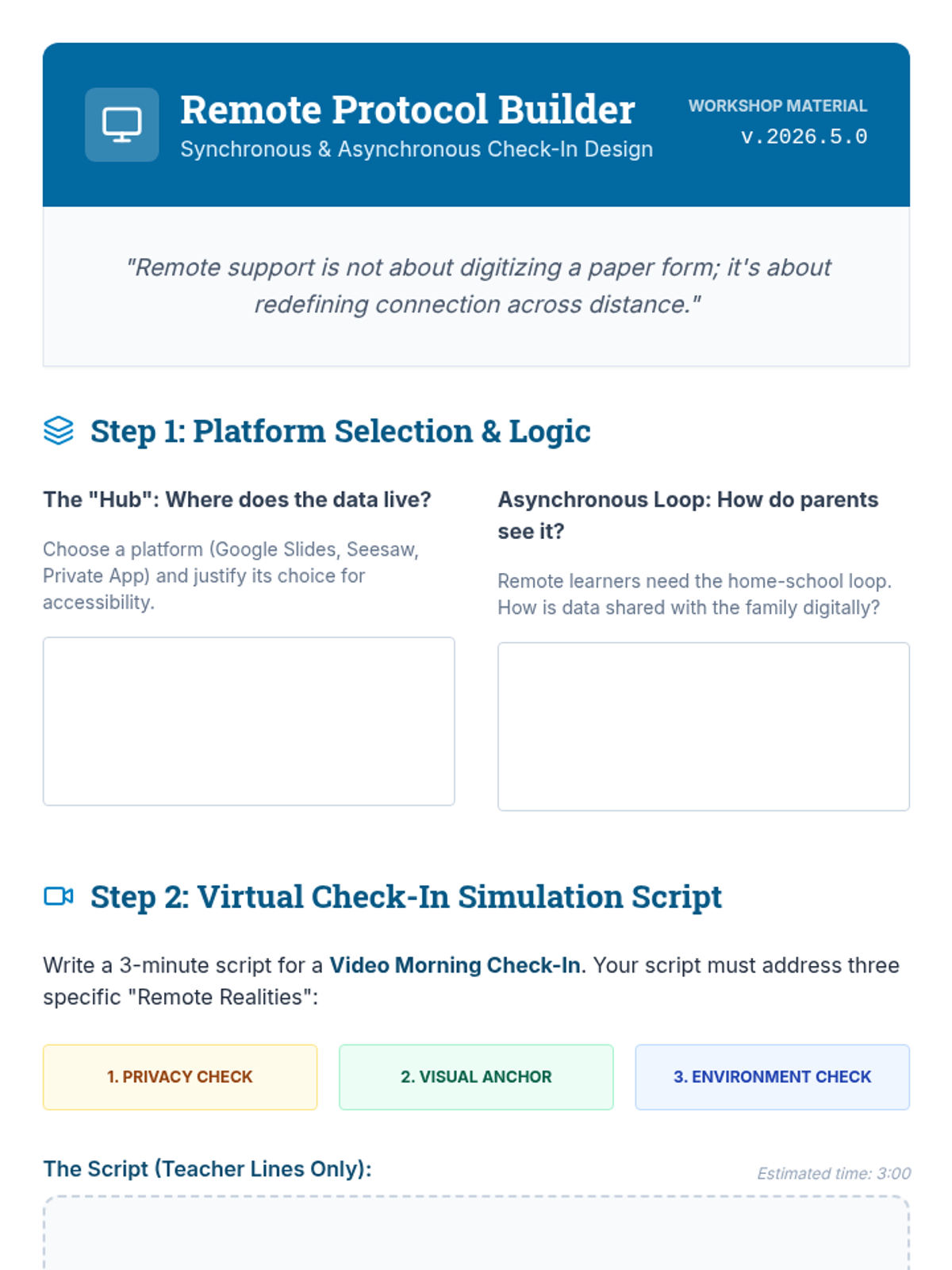
Preparing for remote and hybrid environments, students learn to maintain connection and consistency through digital check-in platforms and video protocols.
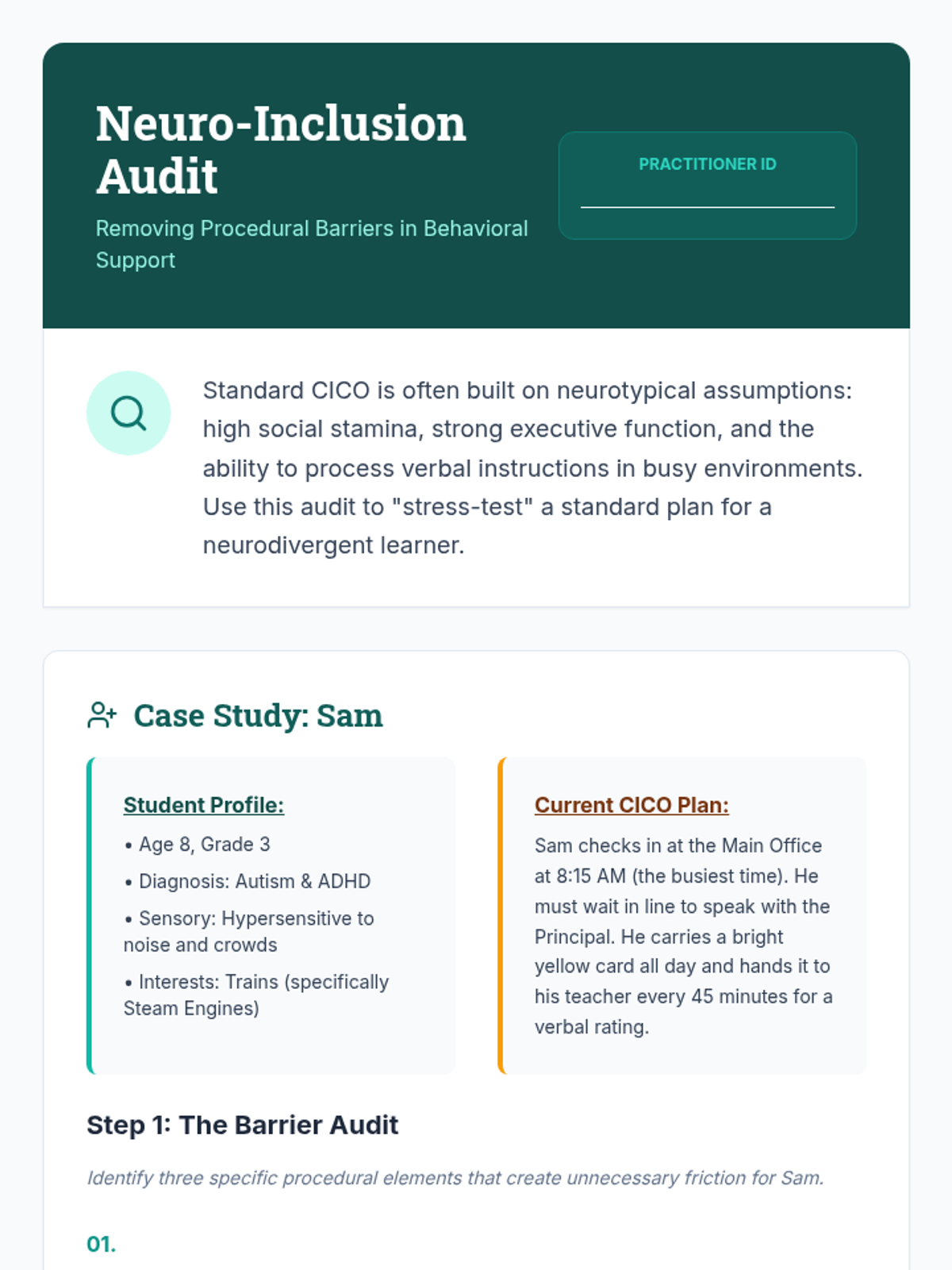
Students explore strategies for adapting behavioral supports for neurodivergent learners, including sensory adjustments and the use of special interests as reinforcers.
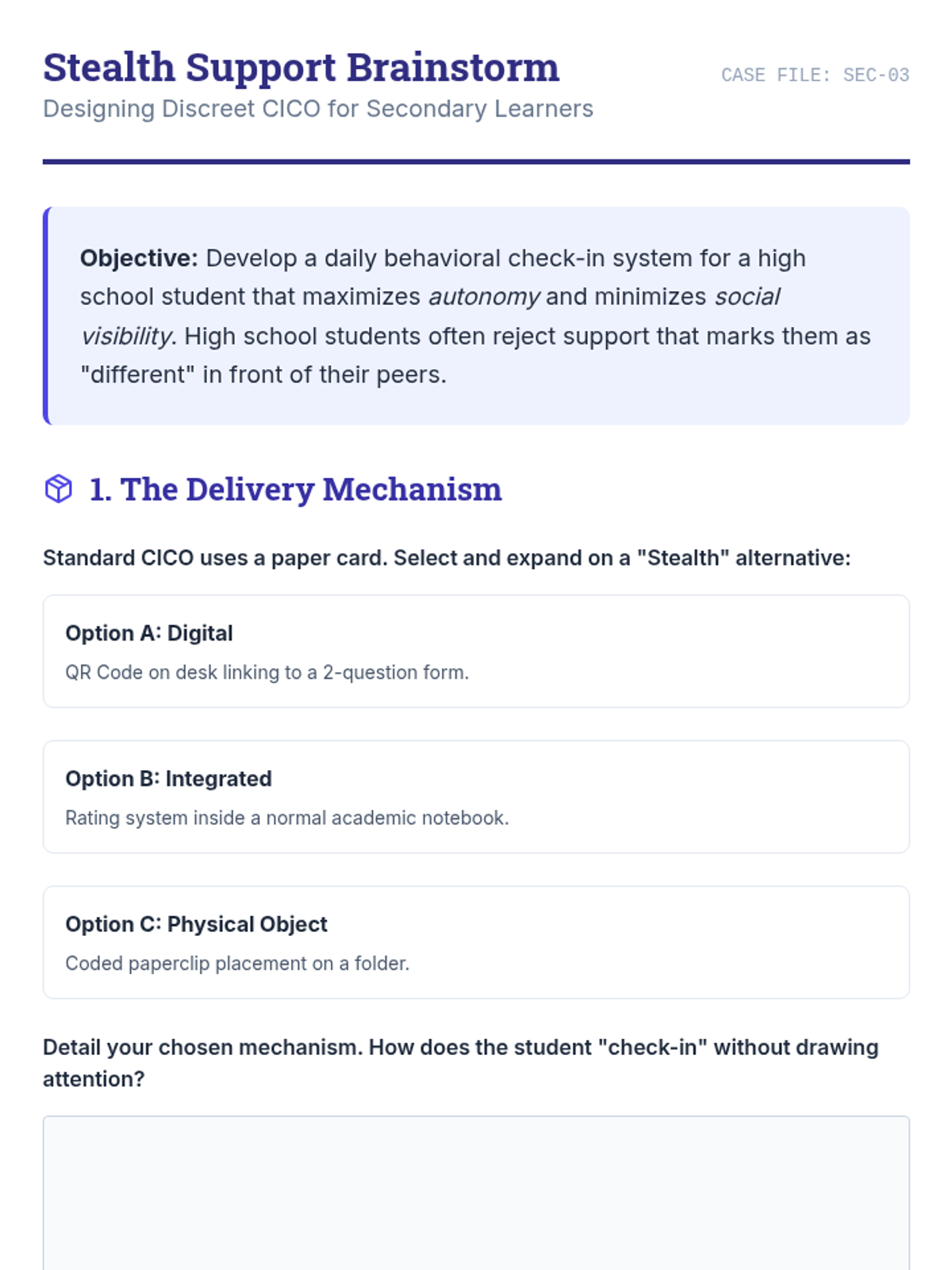
This lesson addresses the autonomy needs and social sensitivities of adolescents by focusing on self-monitoring, discreet feedback, and student-led goal setting.
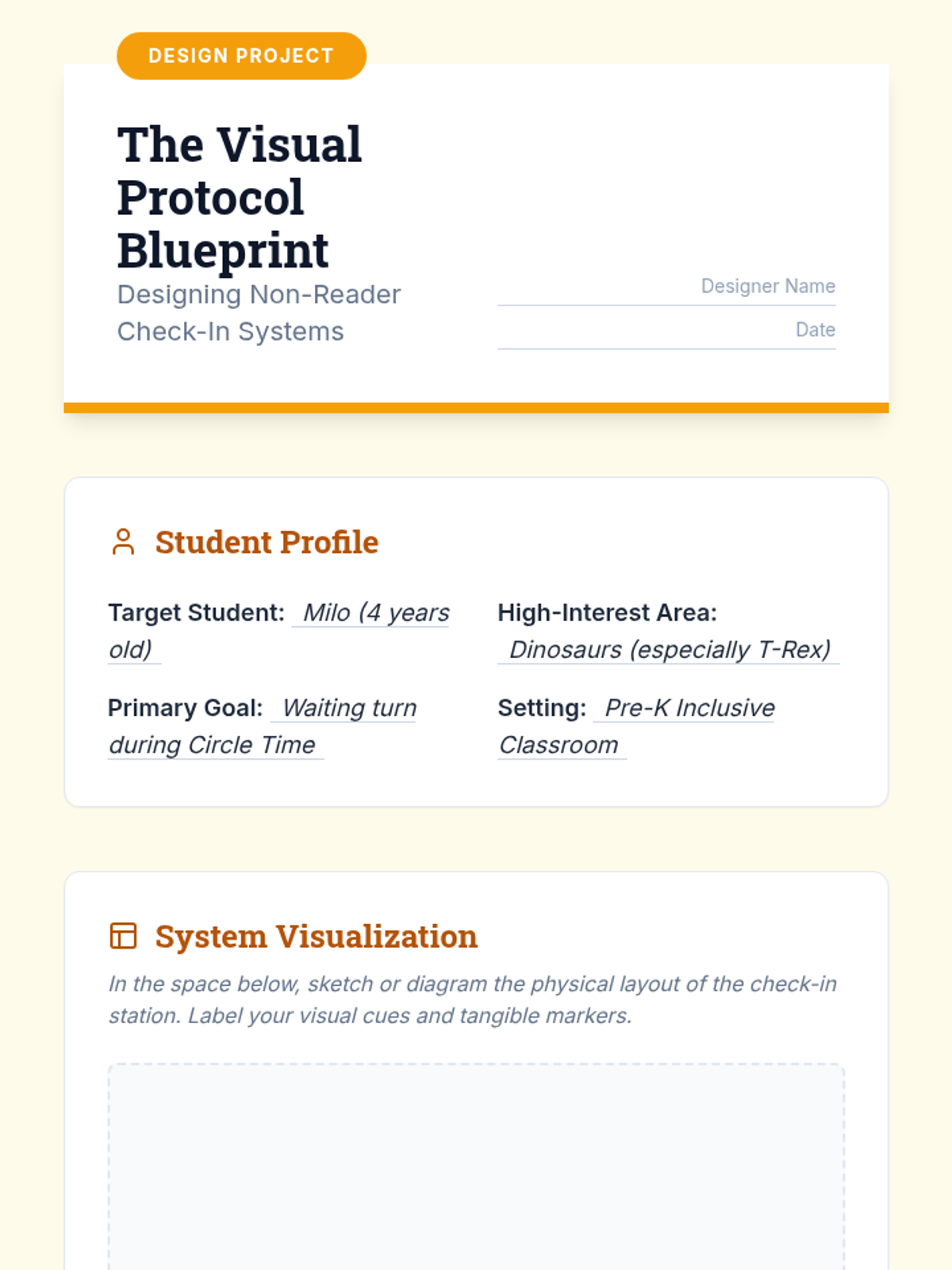
Focusing on Pre-K through 2nd grade, this lesson adapts check-in procedures to be more visual and tangible for learners who are still developing literacy and abstract reasoning skills.
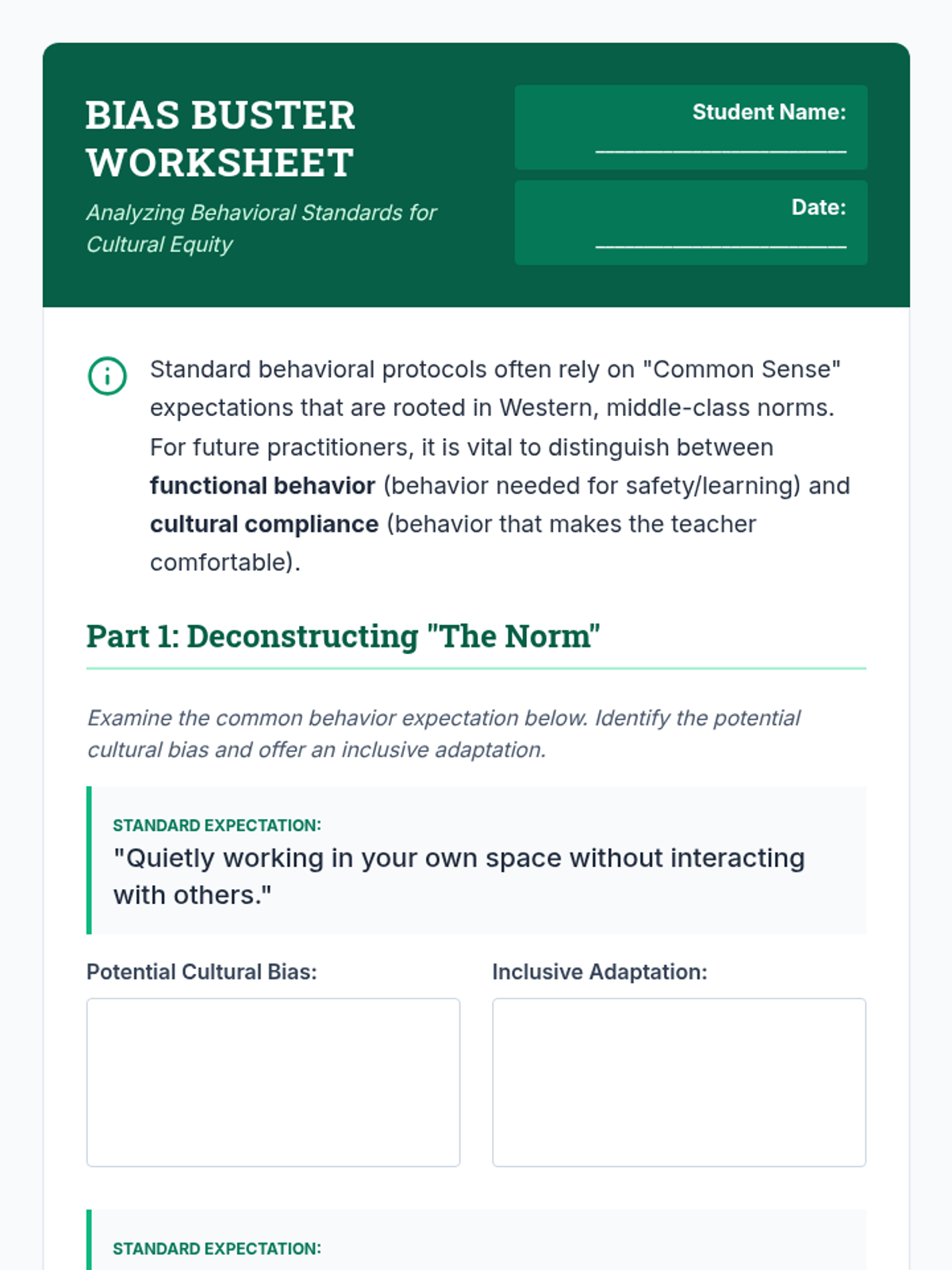
Students critique standard behavioral expectations for cultural bias and learn to adapt check-in conversations to honor diverse cultural backgrounds and communication styles.
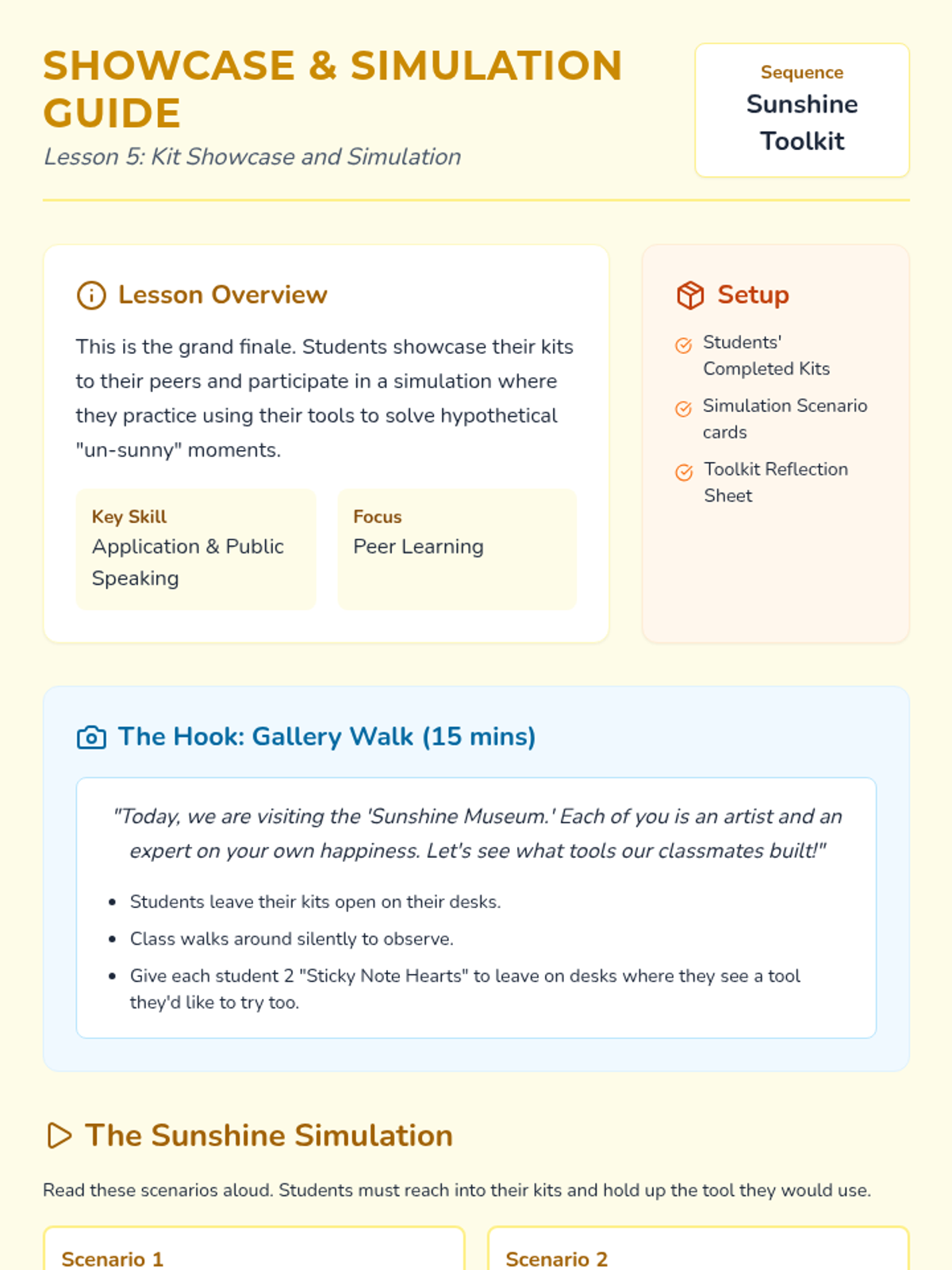
The culminating lesson where students present their kits and practice using them through real-world simulations. A Gallery Walk allows students to learn from their peers' creative tool choices.
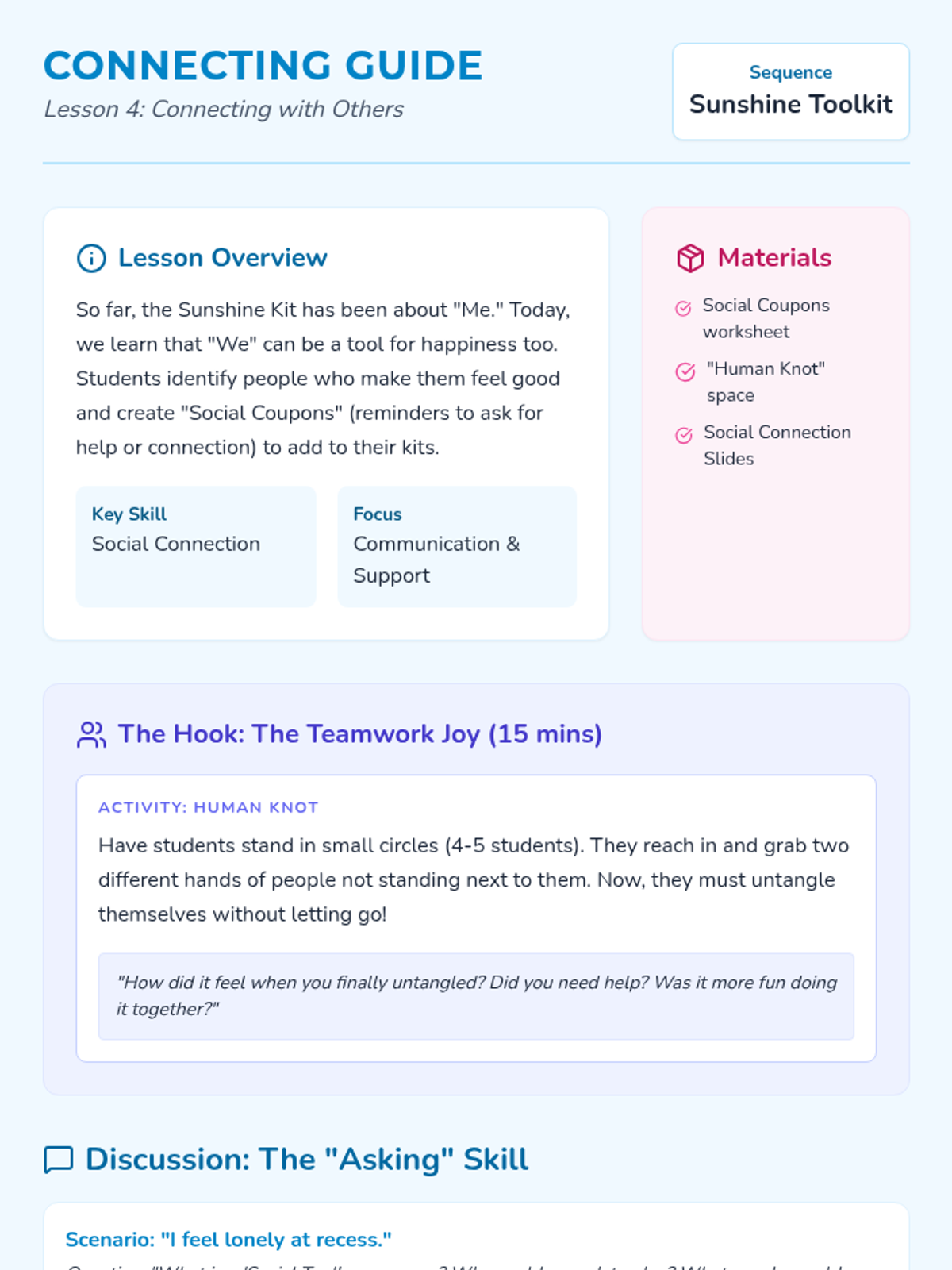
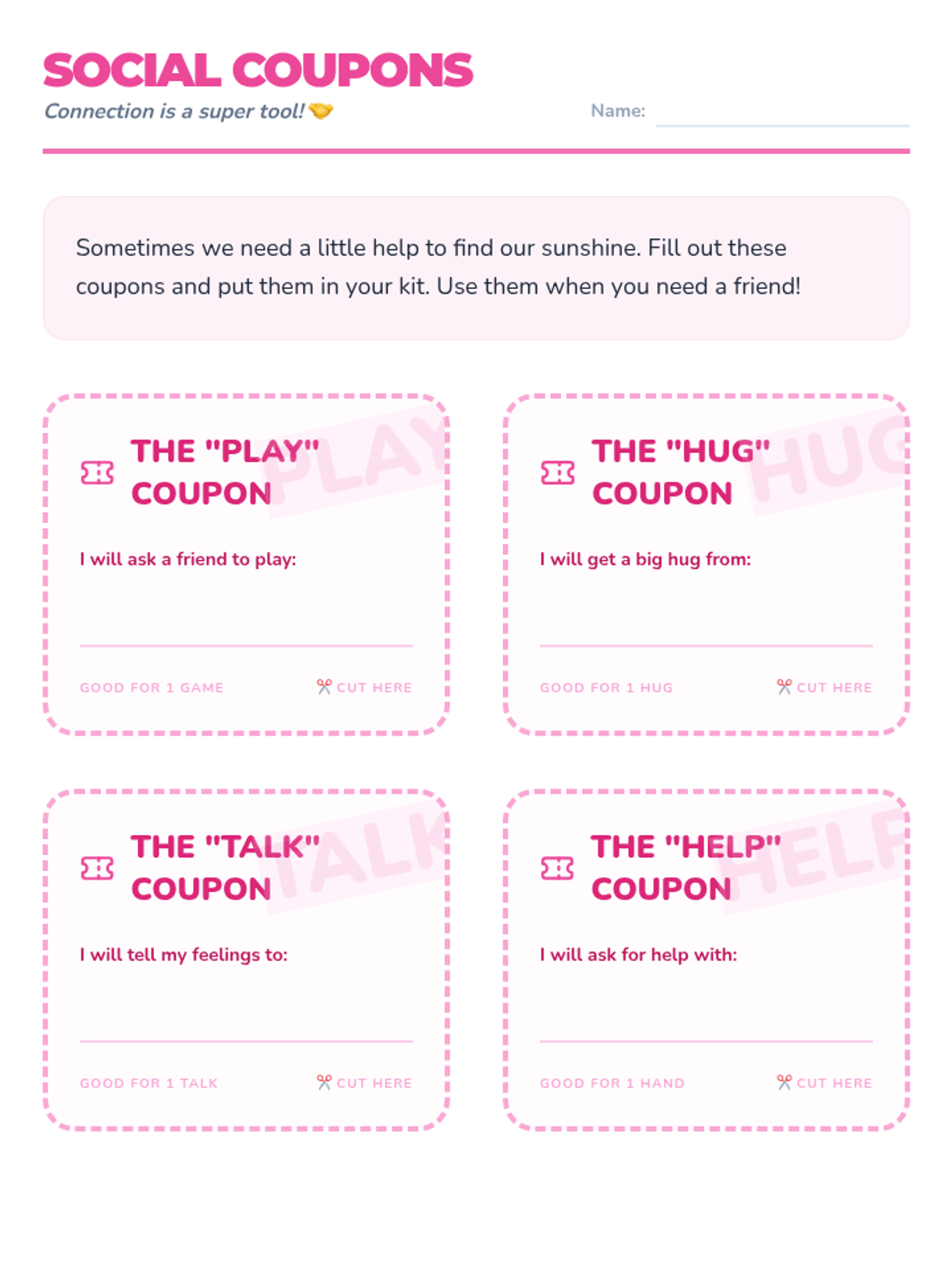
Students learn the value of social connections as a source of positive experiences. They identify people they can reach out to and create 'Social Coupons' to add to their kits for moments when they need a friend or family member.
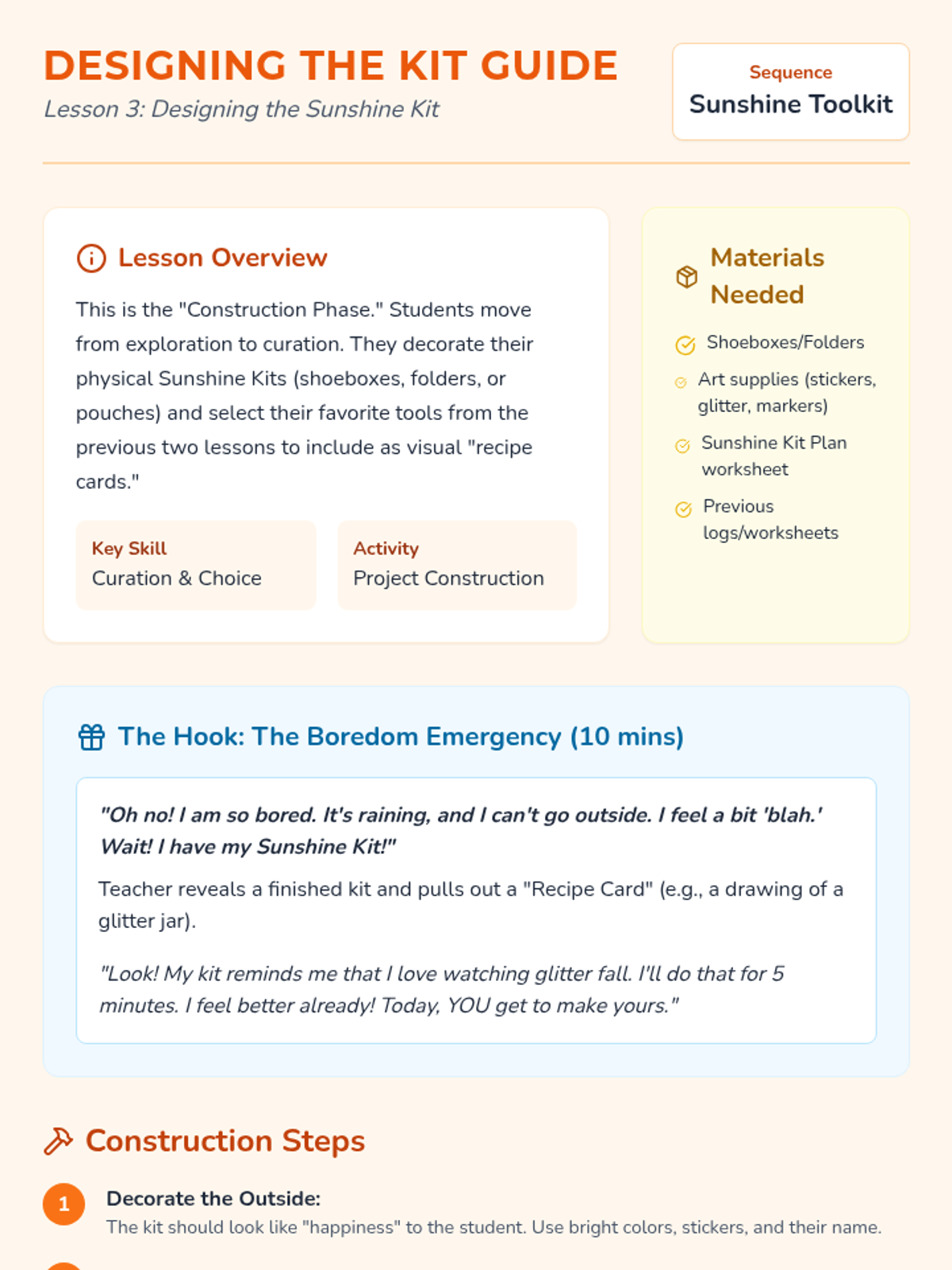
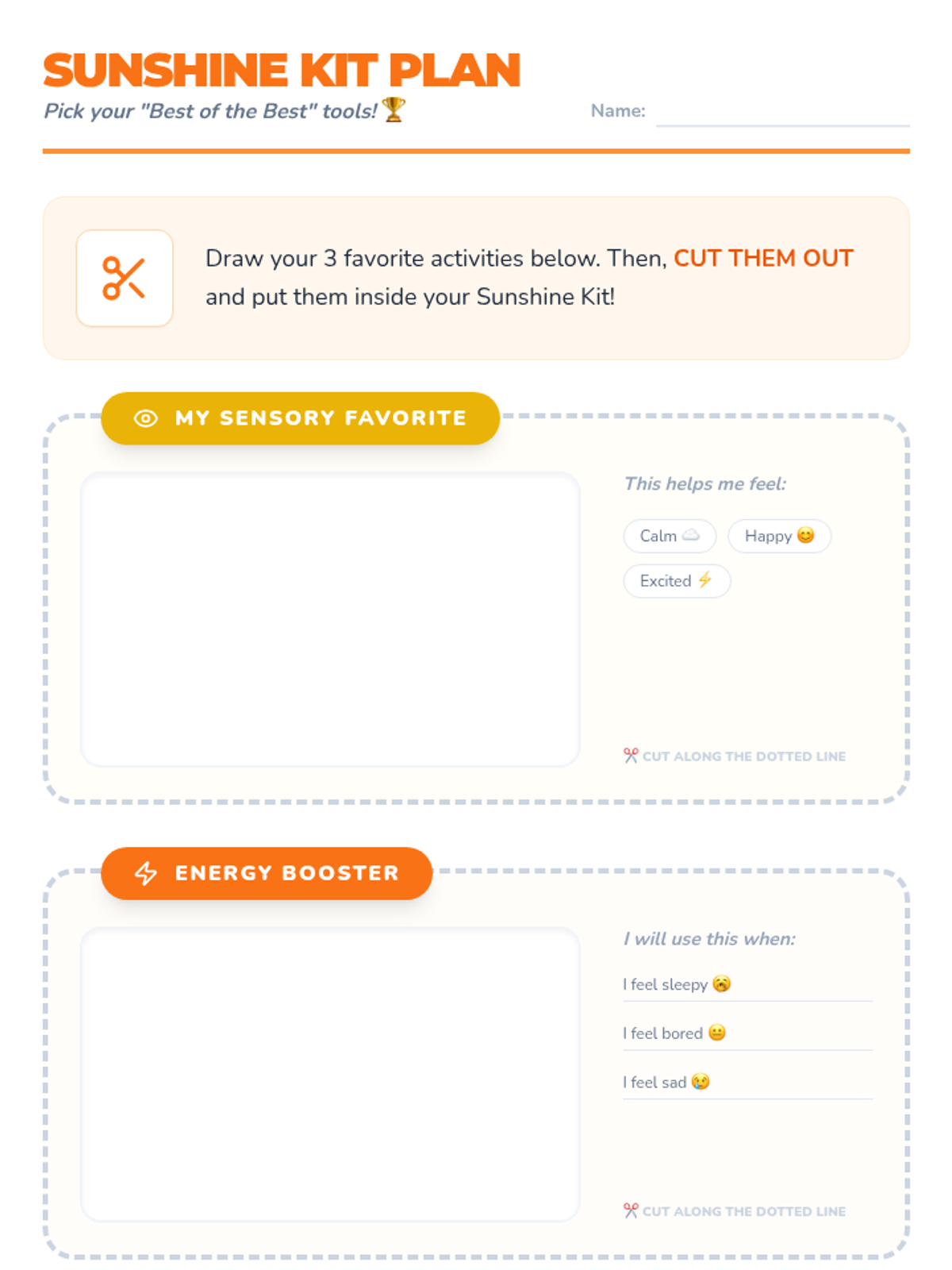
Students begin the physical construction of their Sunshine Kits, decorating their containers and selecting specific sensory and movement tools to include based on their previous discoveries.
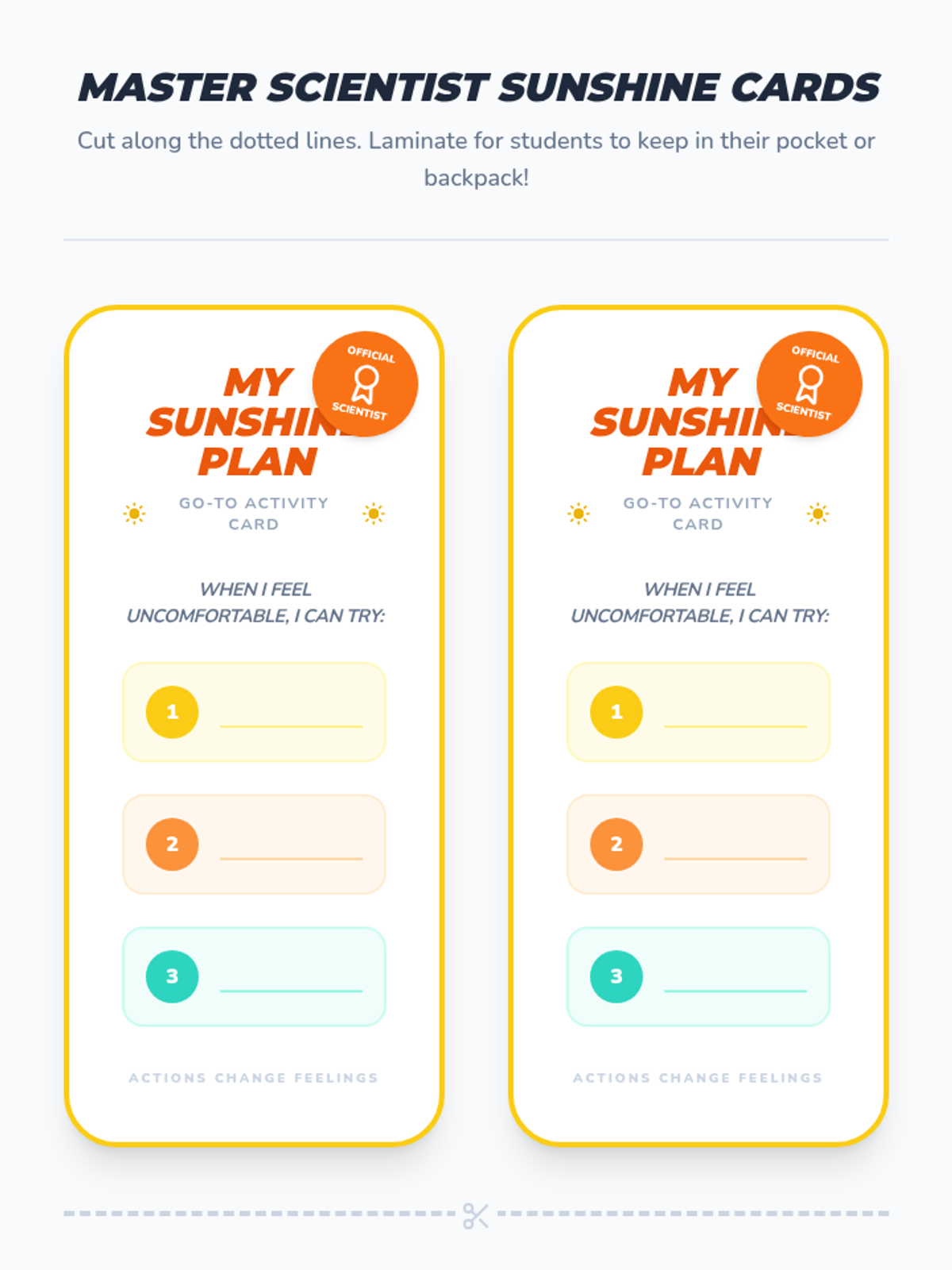
Students create a 'Go-To' card listing three simple actions they can take when they feel down and share their strategies with a partner.
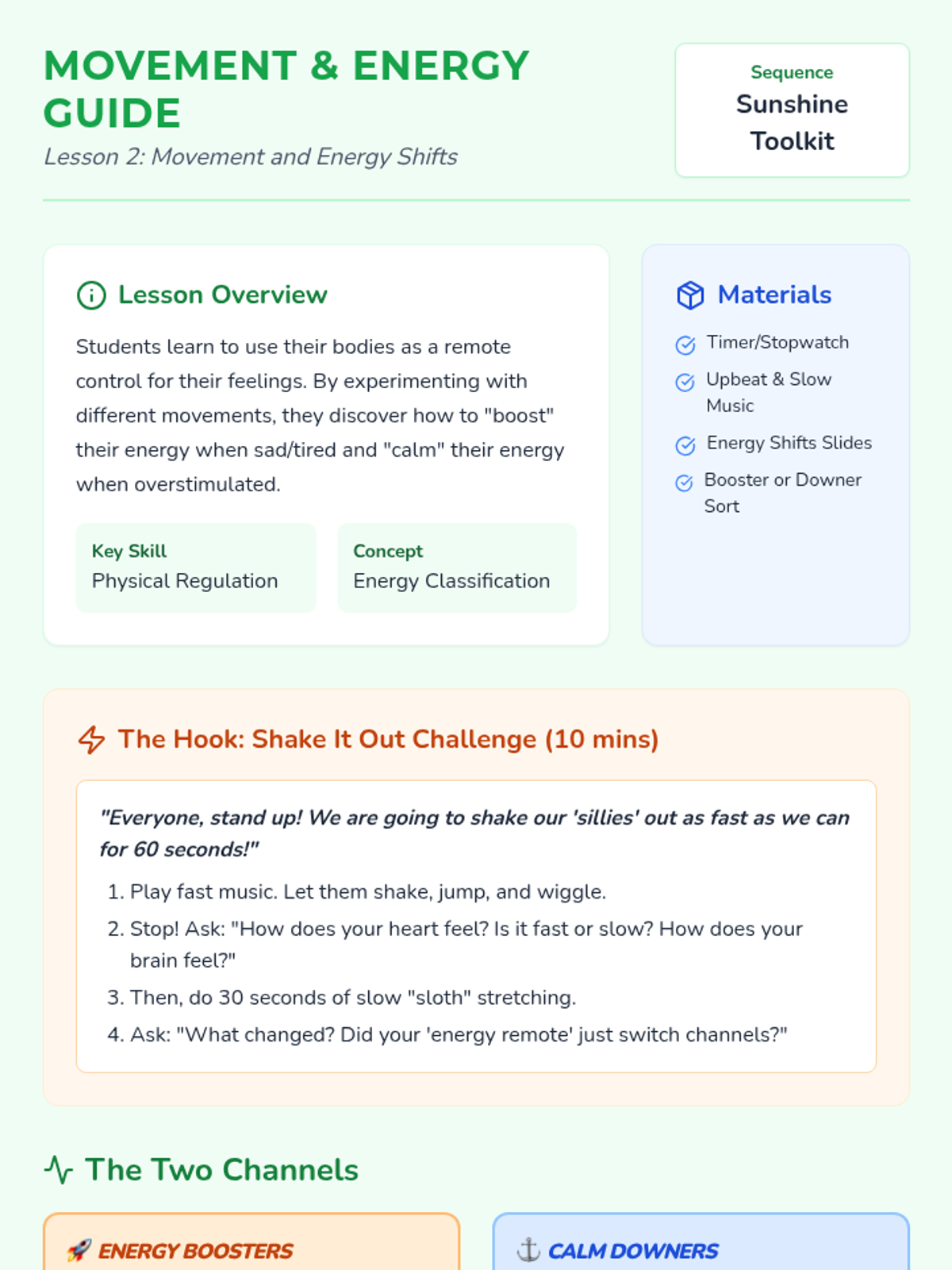
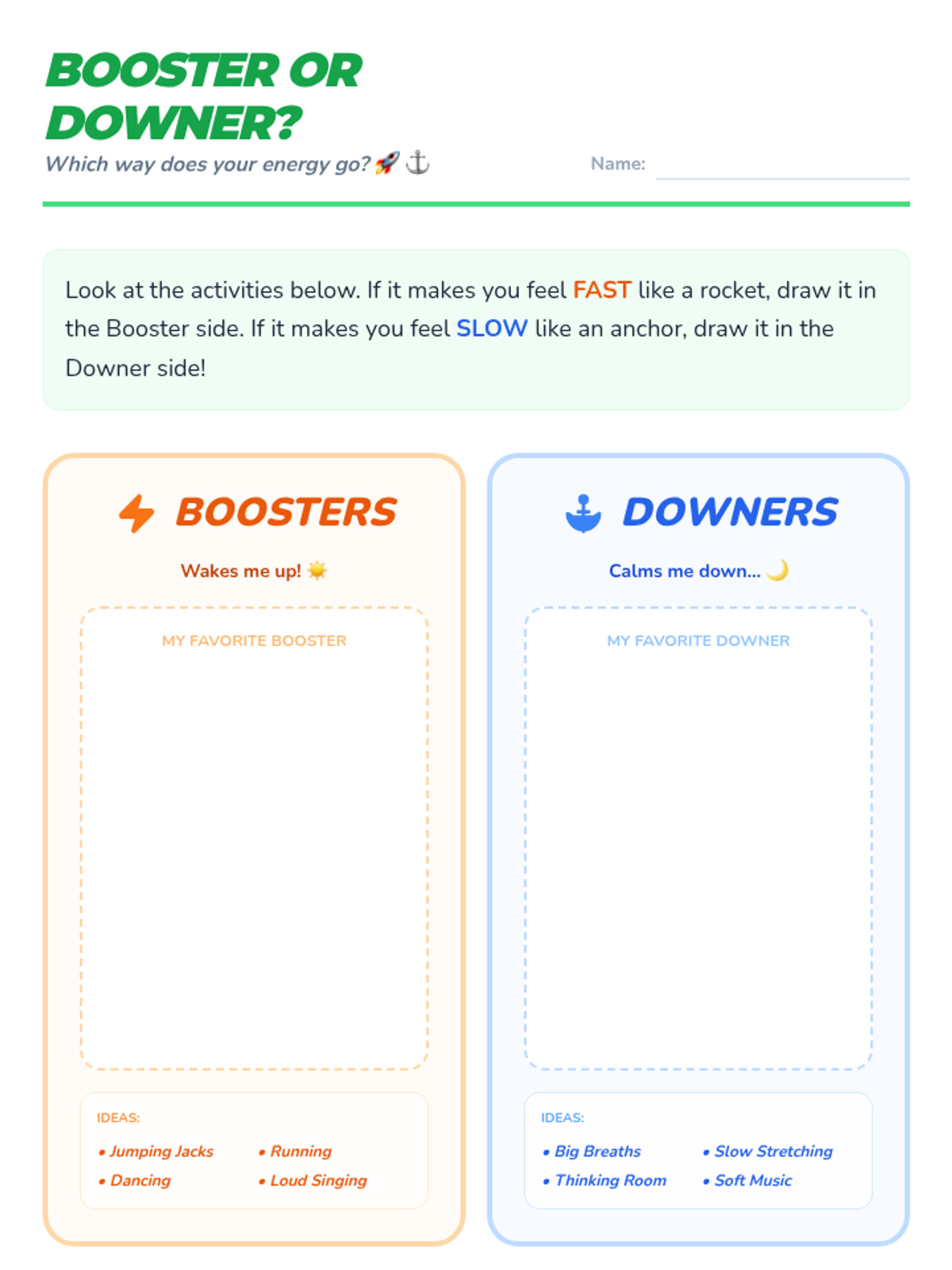
Students investigate how physical movement can shift their energy and mood. They learn to categorize activities as 'Energy Boosters' for low energy and 'Calm Downers' for high anxiety or overstimulation.
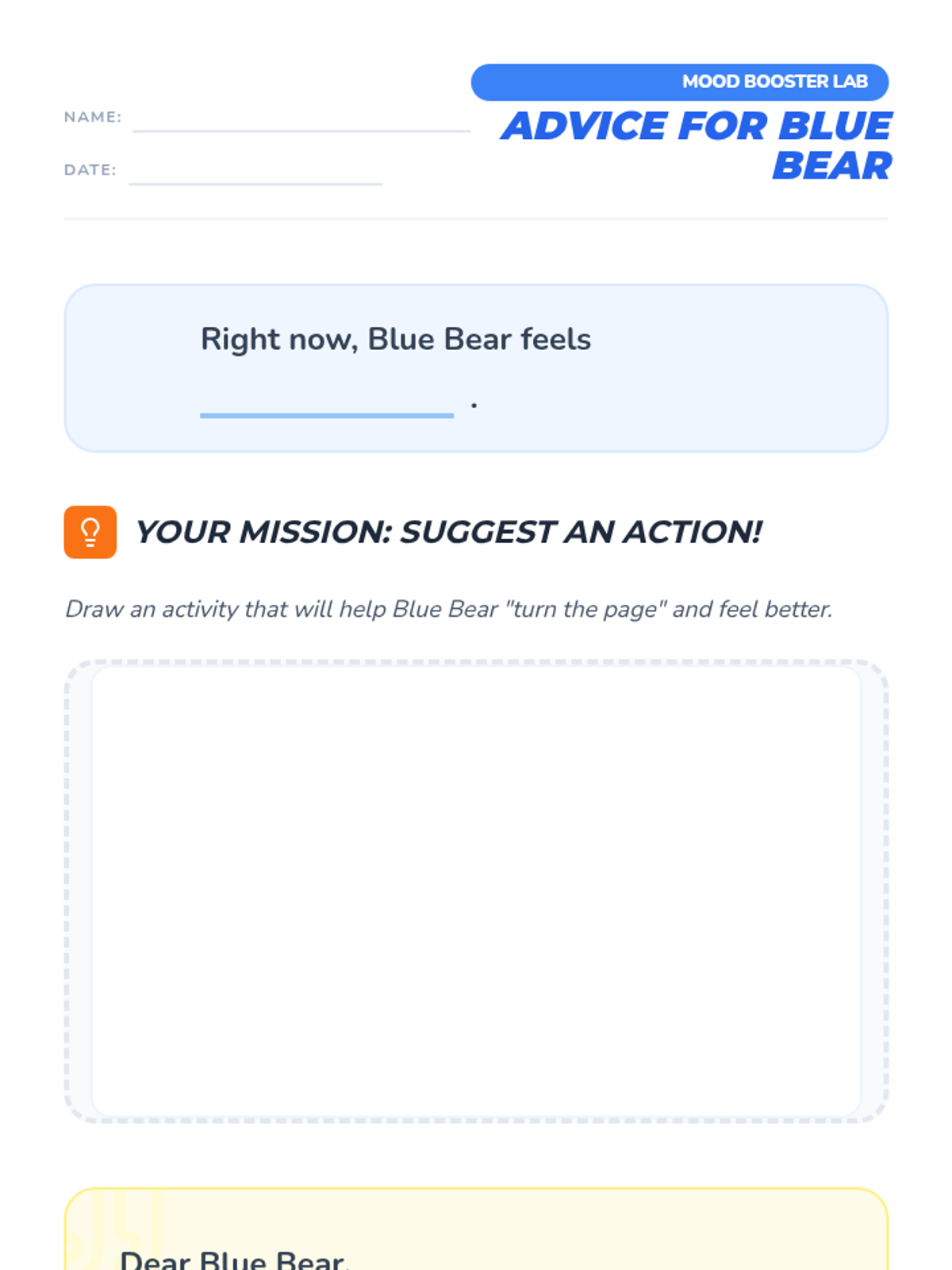
Using a story about a character having a bad day, students role-play giving advice and suggest specific actions to help the character feel better.
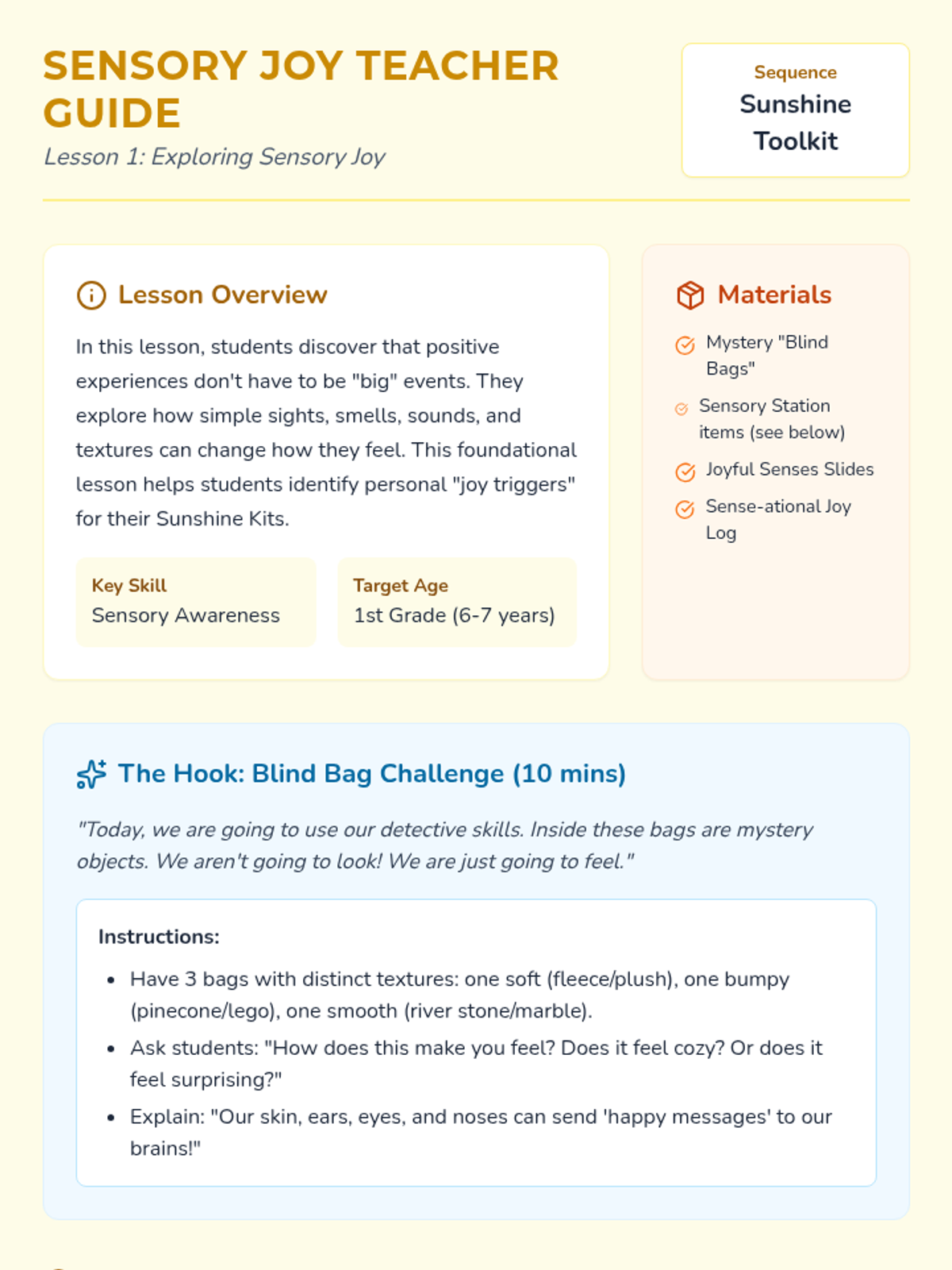
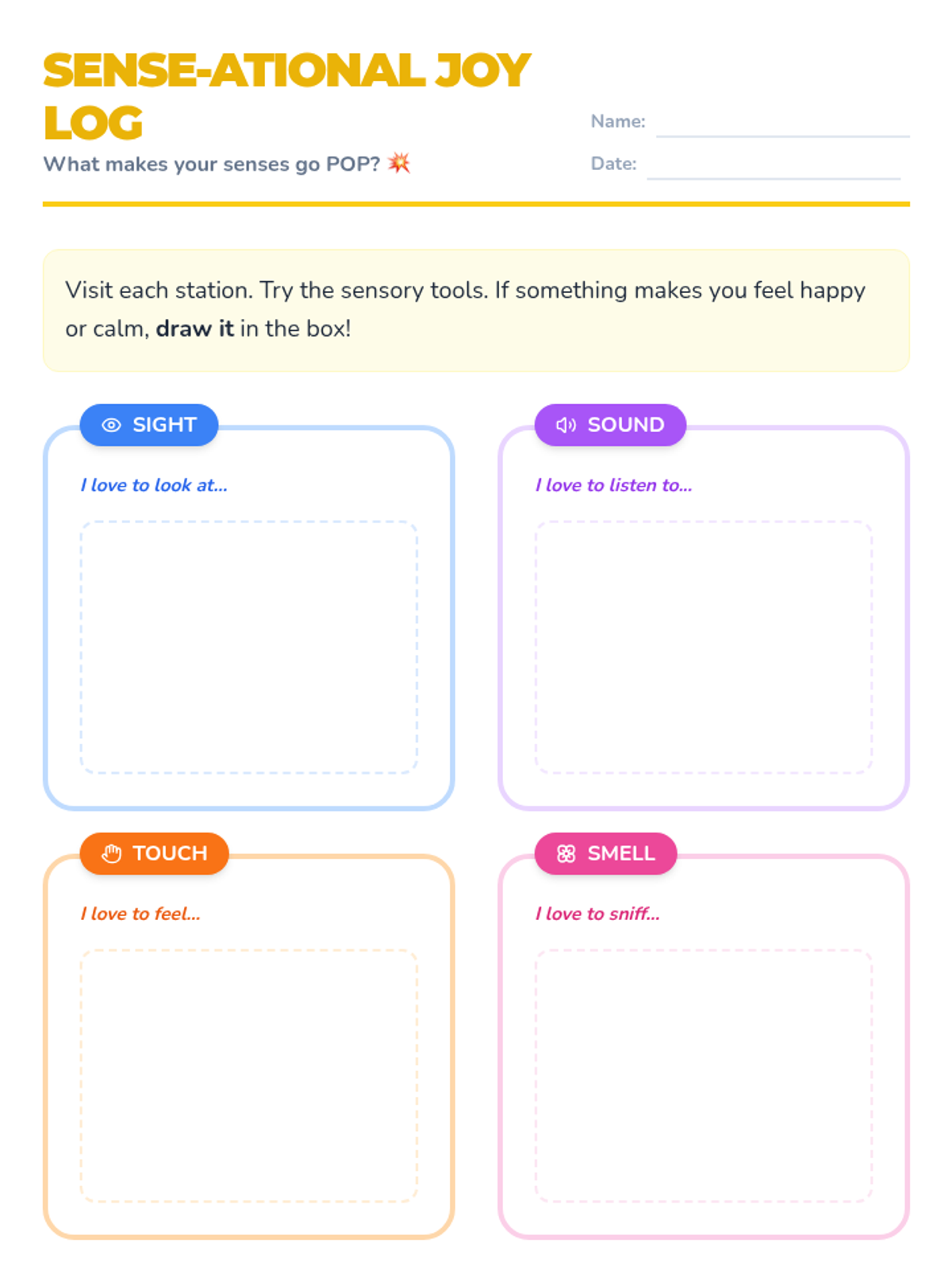
Students explore how their five senses can create simple positive experiences and help them feel happy or calm. They rotate through stations to identify personal sensory preferences for their Sunshine Kits.
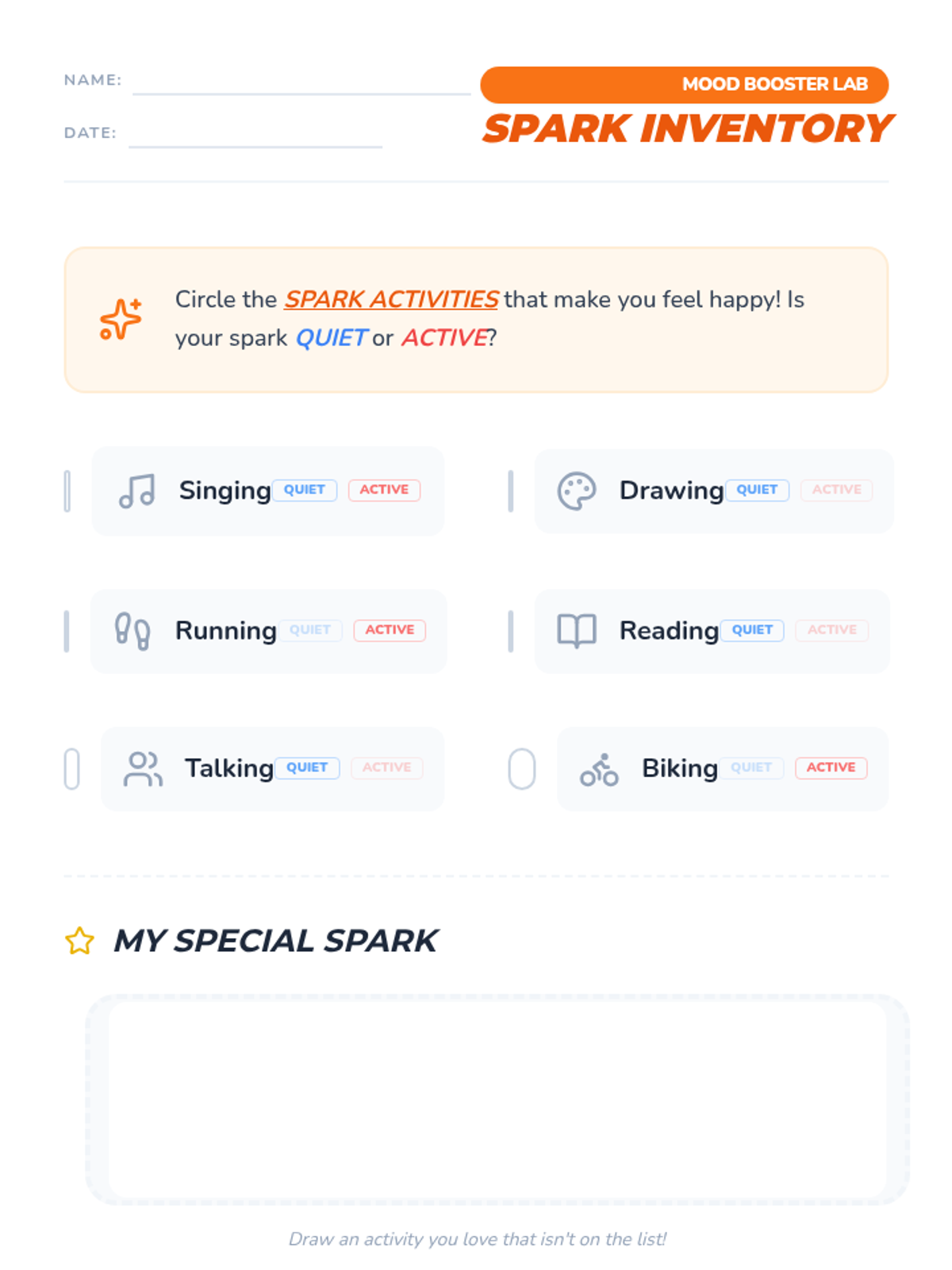
Students identify their personal 'Spark Activities'—things that light them up inside—and distinguish between active play and quiet relaxation.
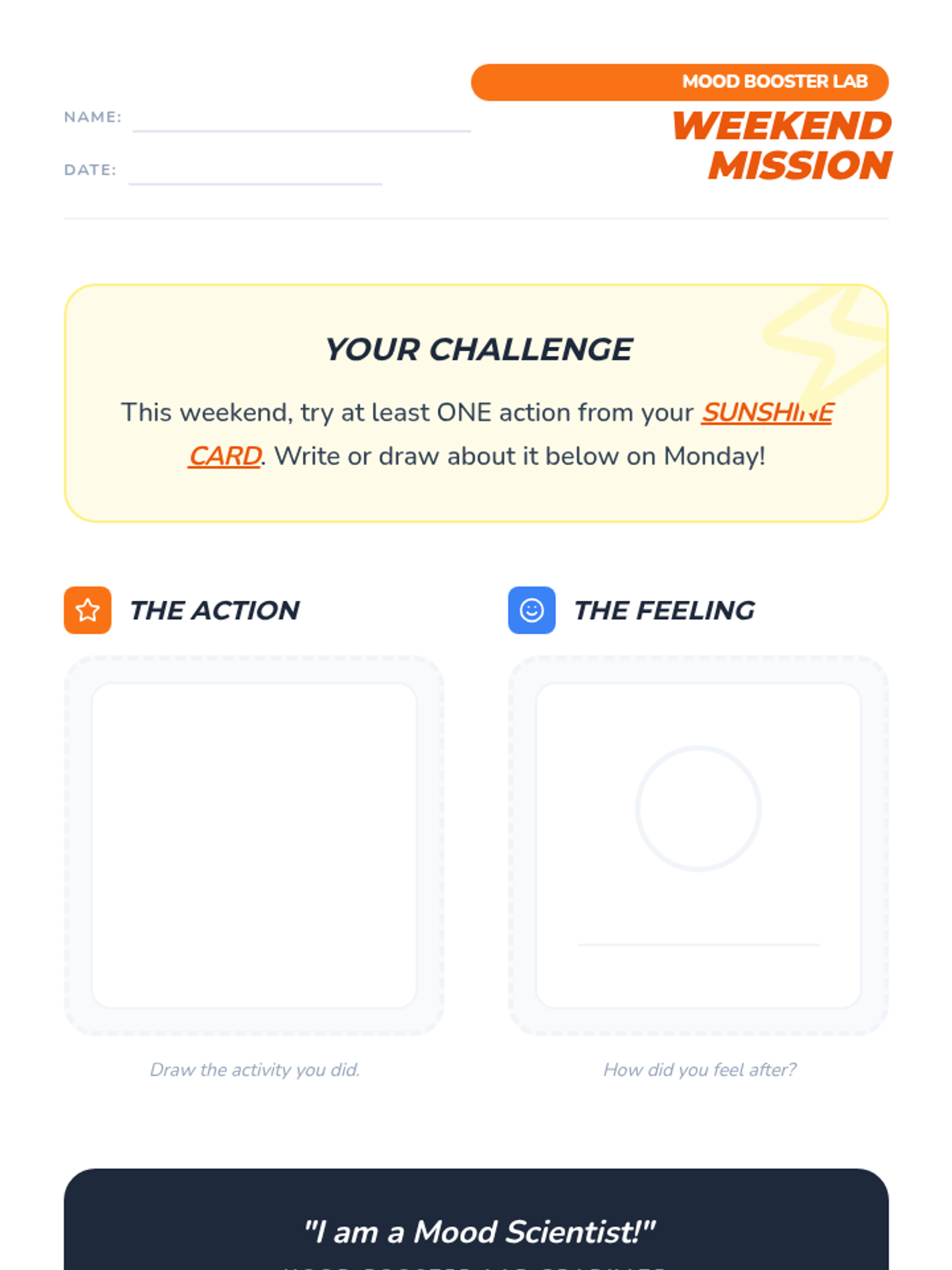
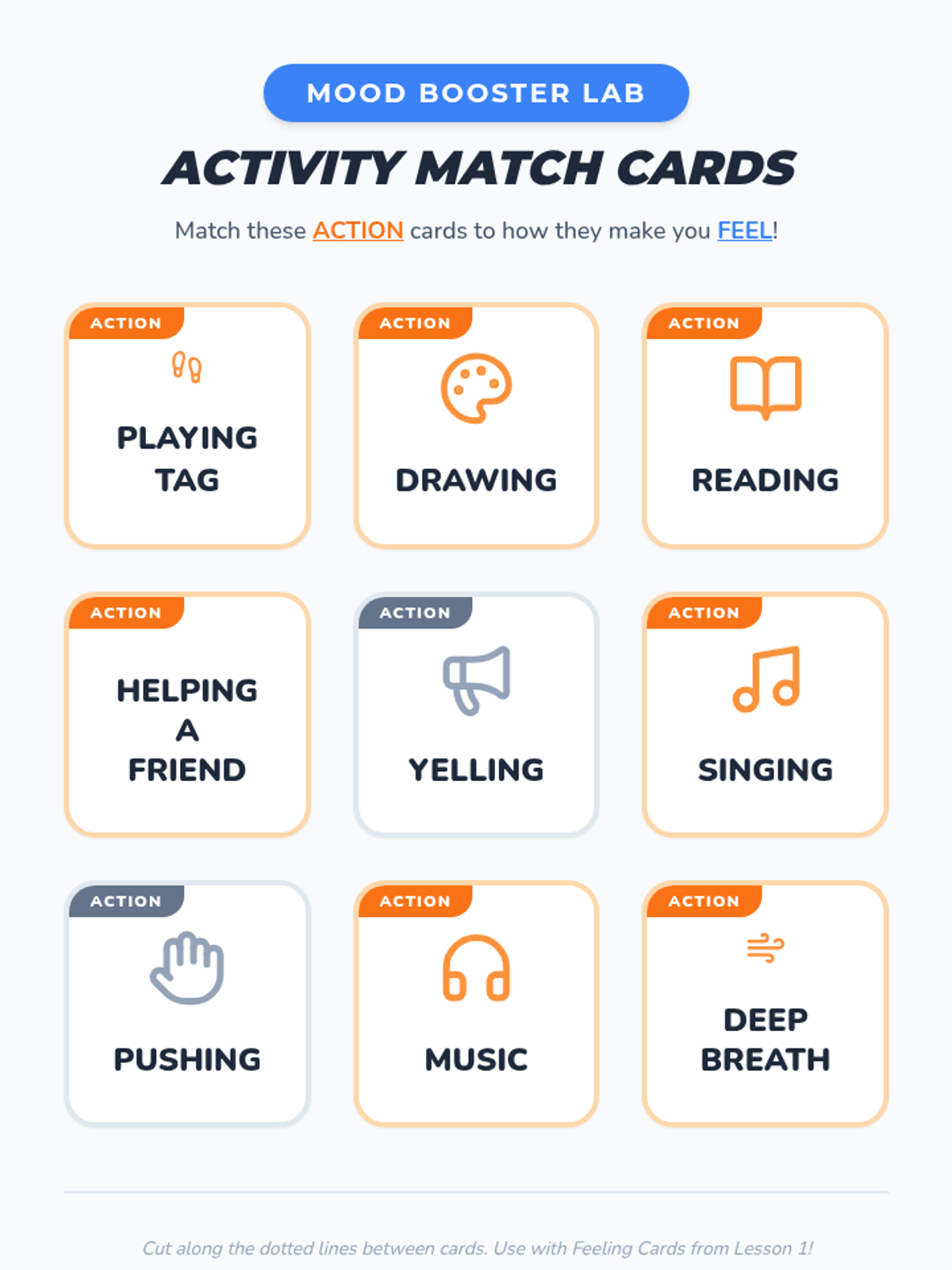
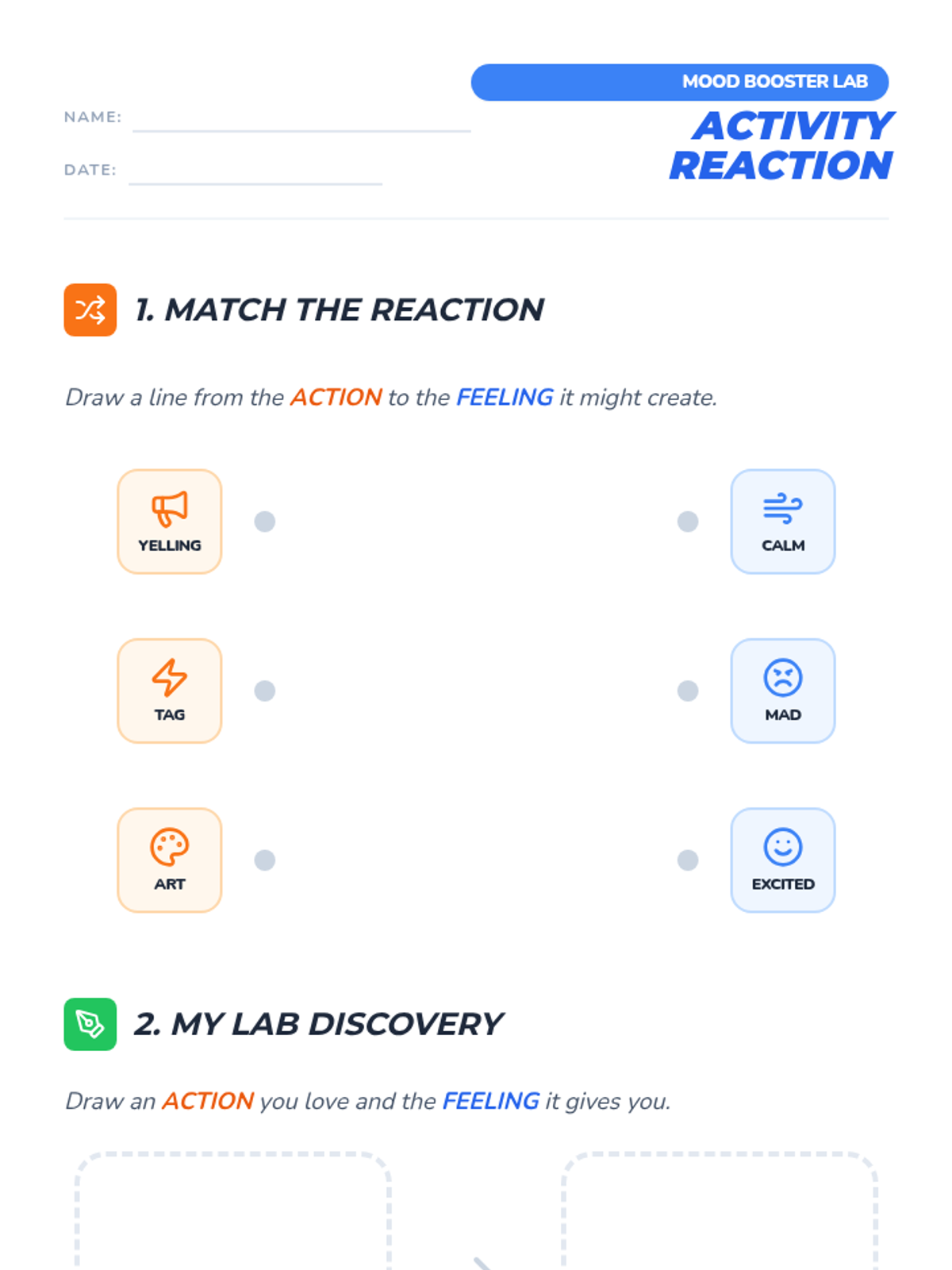
Students analyze how different activities lead to specific feelings, mapping 'action' cards to 'feeling' cards to see cause-and-effect.
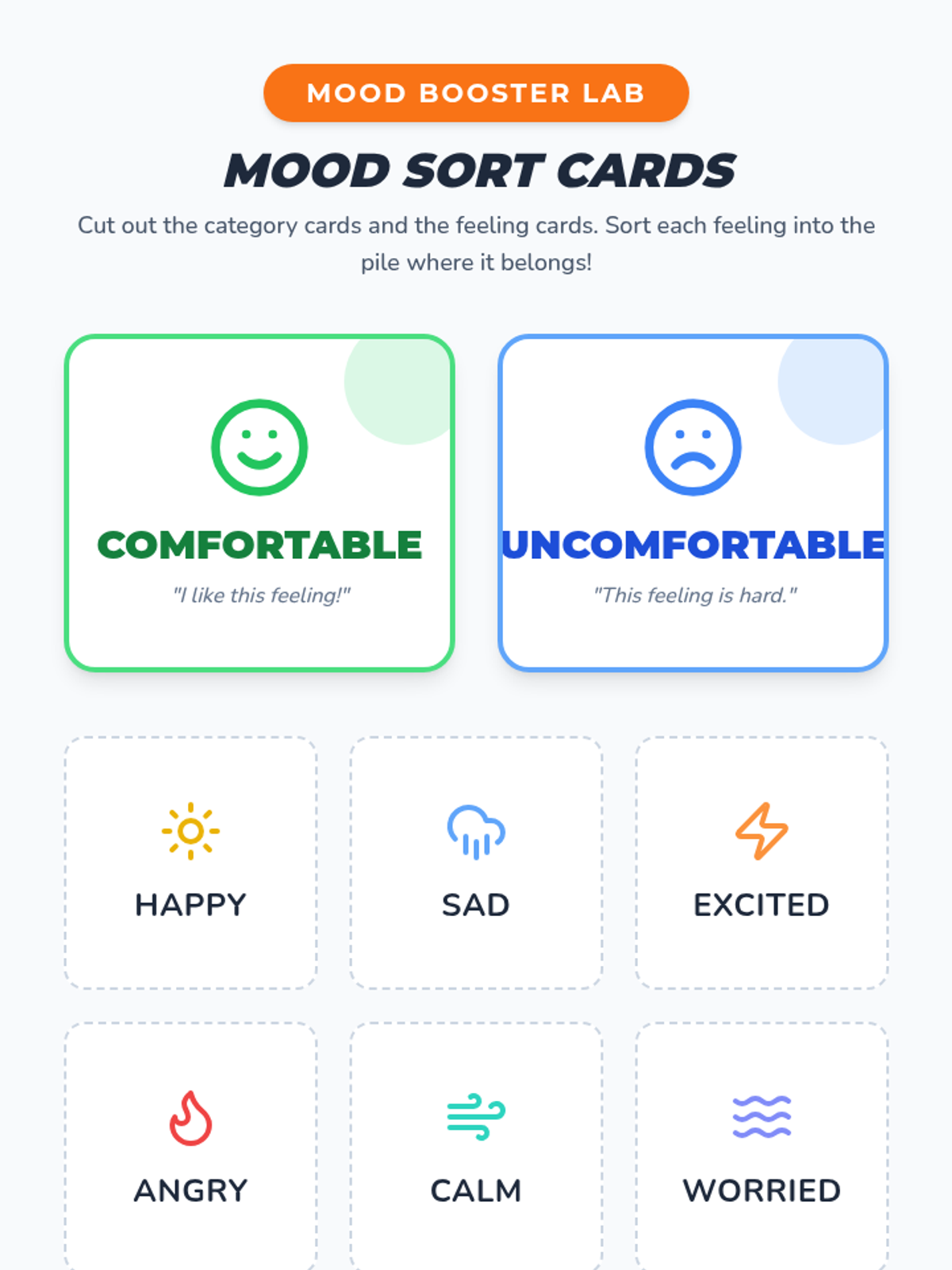
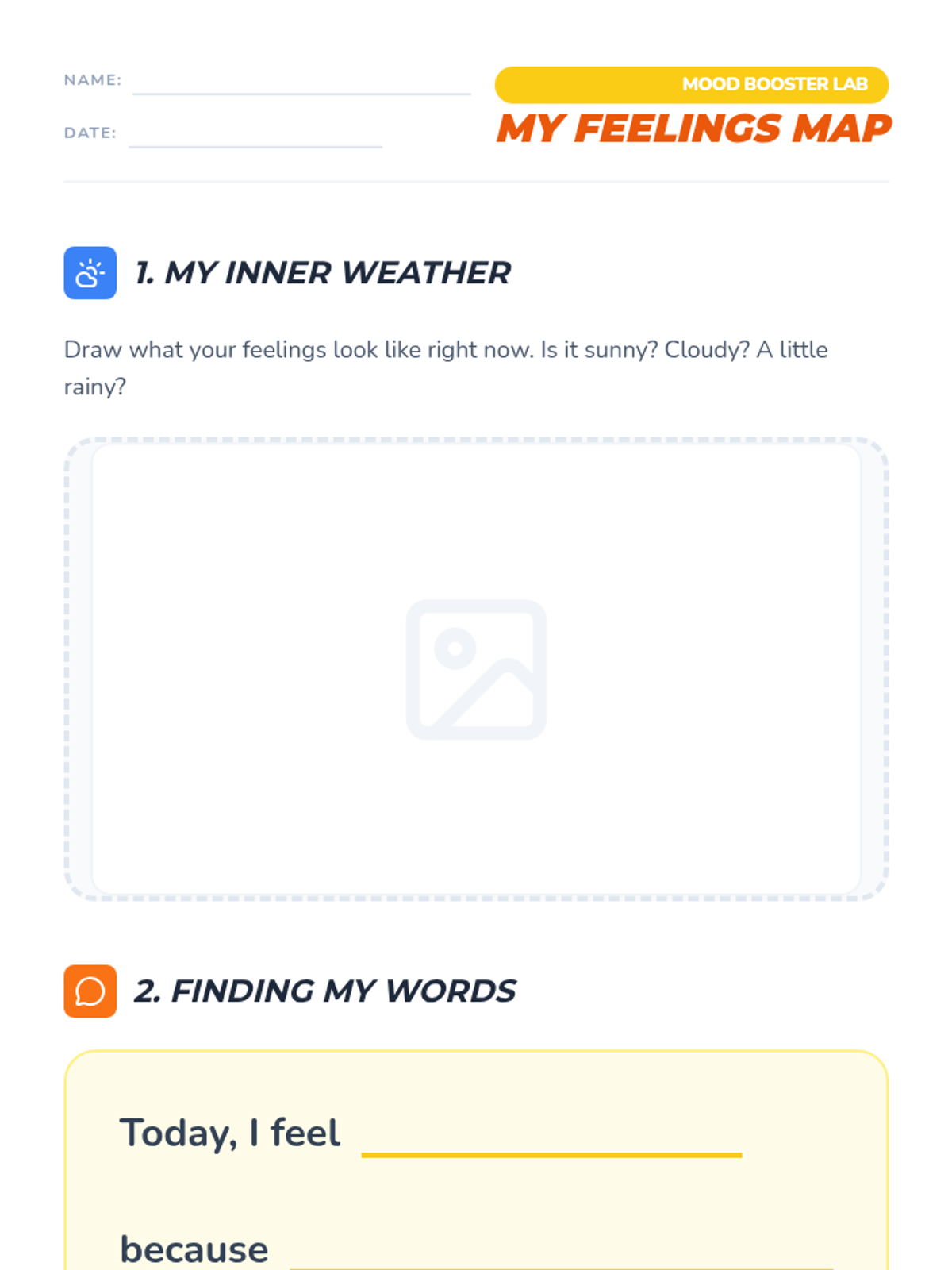
Students engage in a card sorting activity to distinguish between comfortable and uncomfortable feelings and practice using 'I feel' statements using a feelings chart.
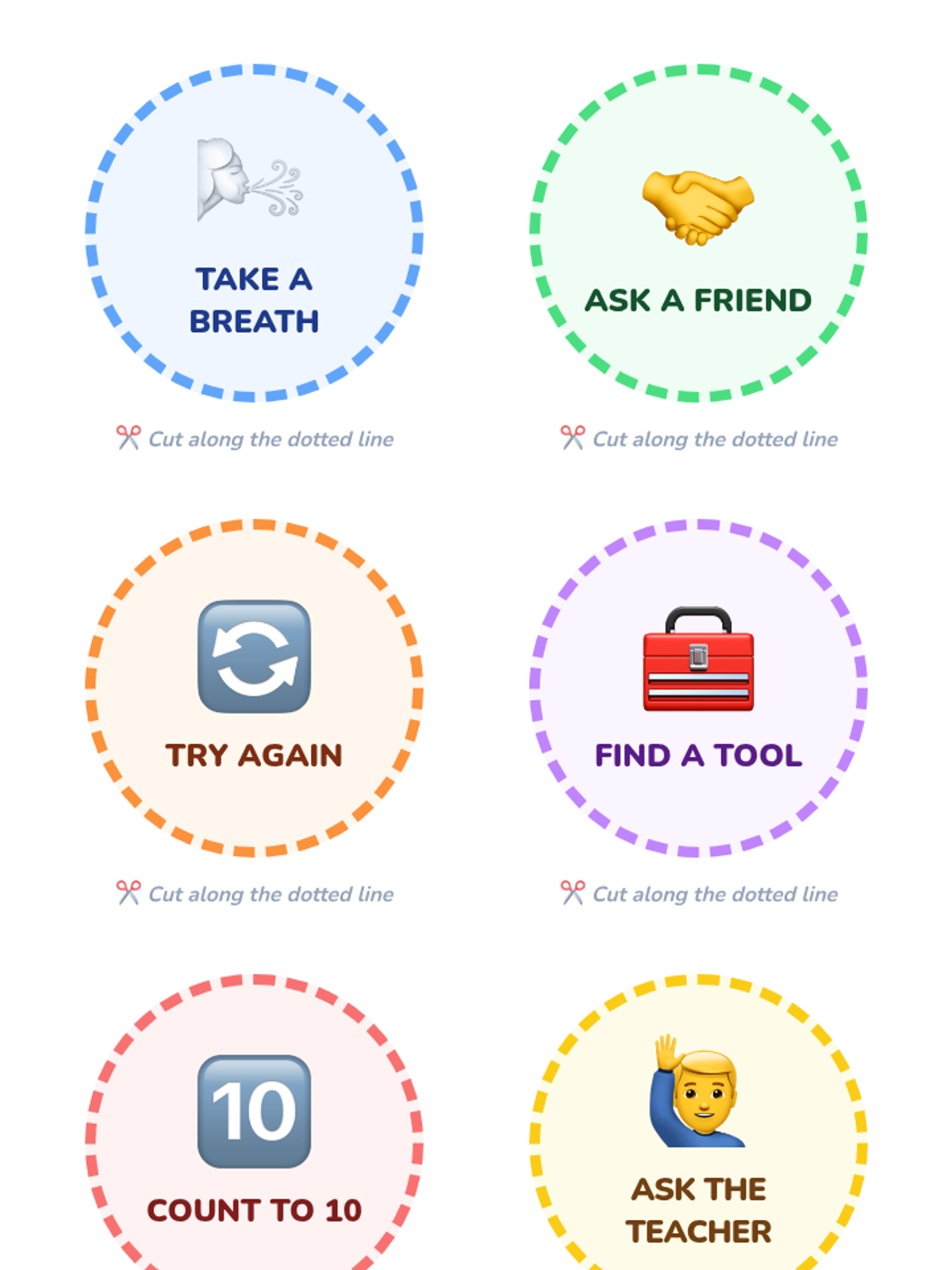
Students create a collective 'Fix-It Kit' of visual strategies to use independently in the classroom throughout the year.
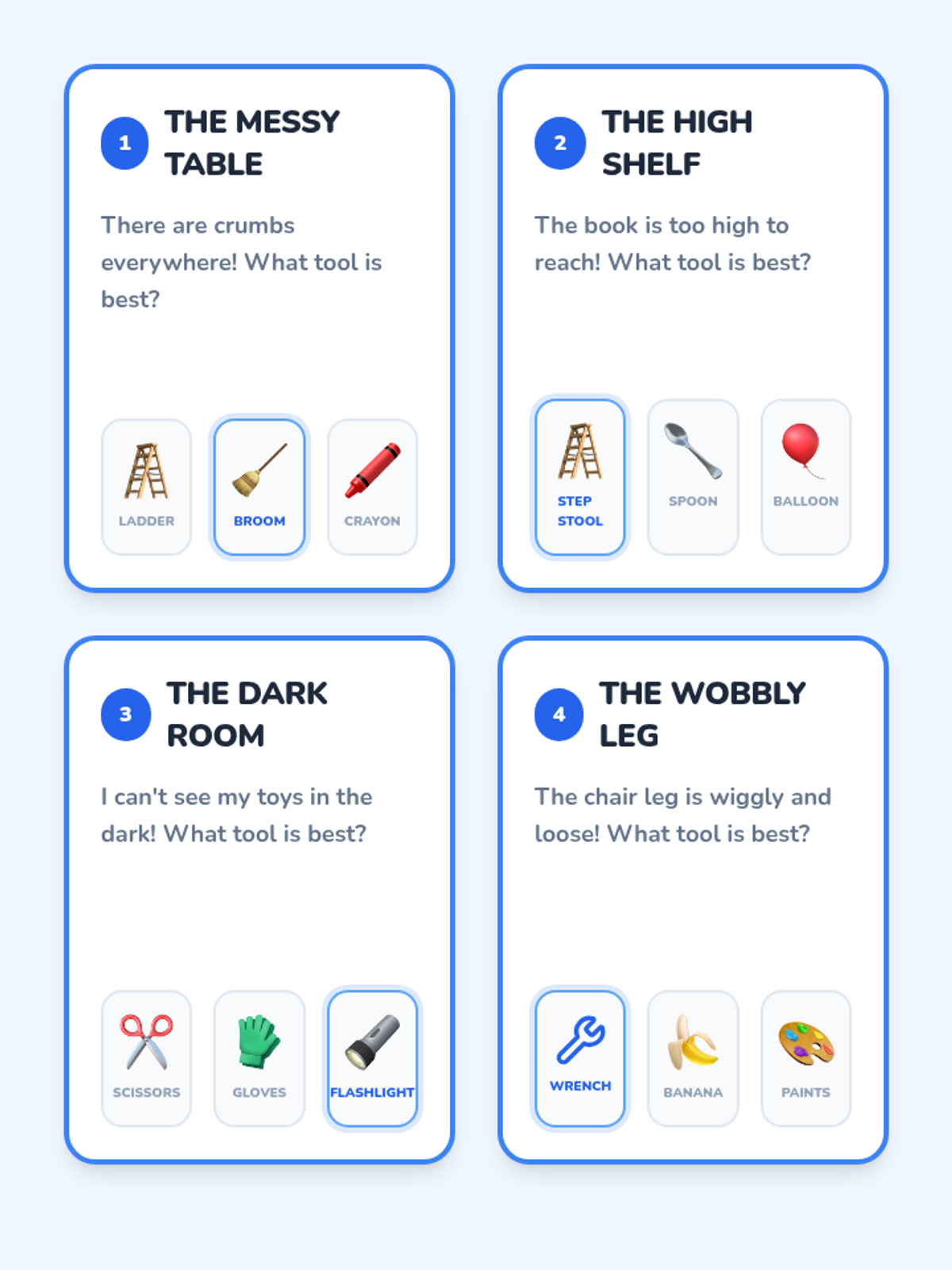
Students evaluate different tools and strategies to find the best fit for specific problems, strengthening the 'Think' phase of their routine.
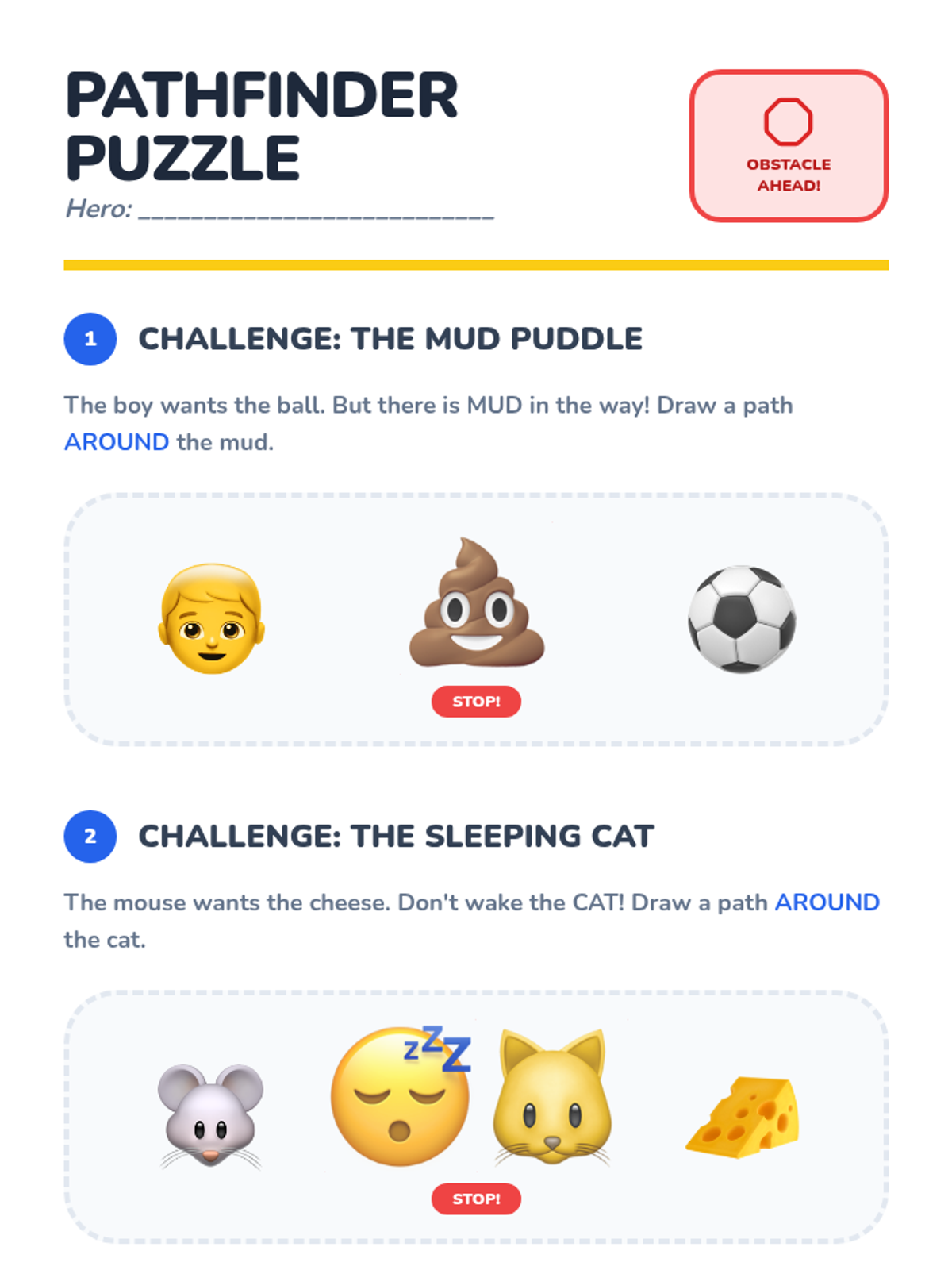
Students navigate mazes and physical obstacles by planning alternative routes when the direct path is blocked.
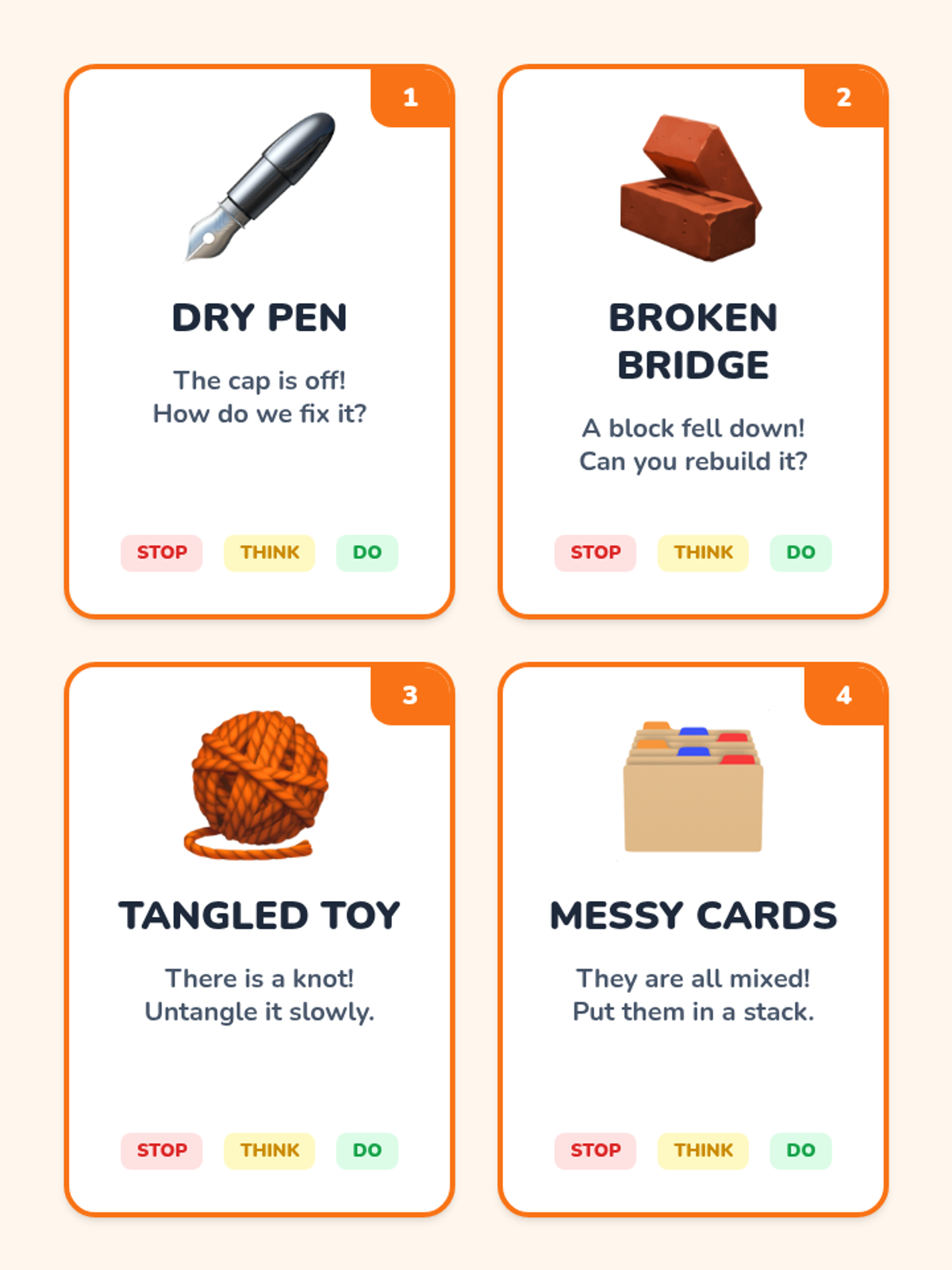
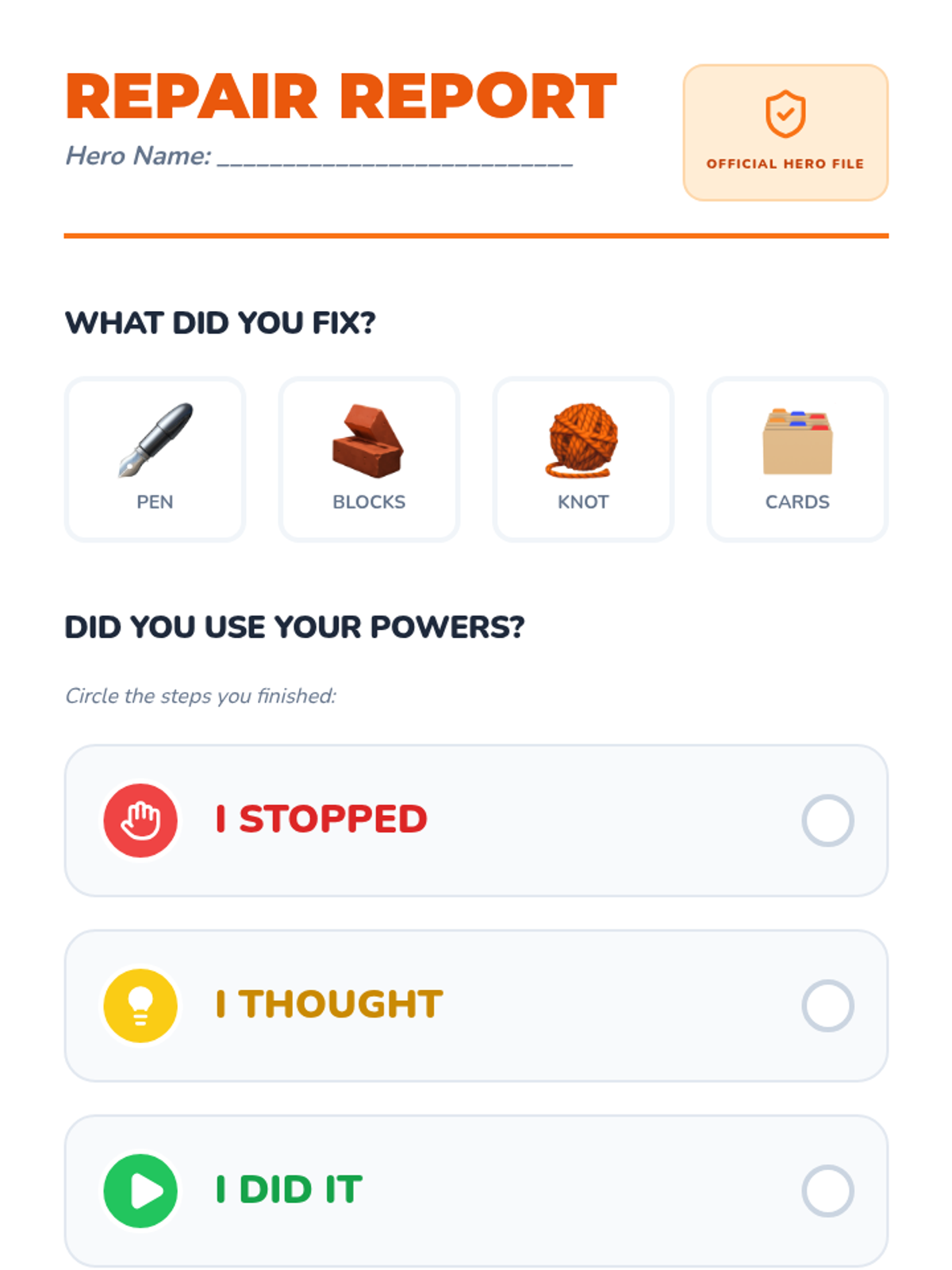
Students act as 'Toy Doctors' to fix simple broken objects, applying the problem-solving routine to concrete physical tasks.
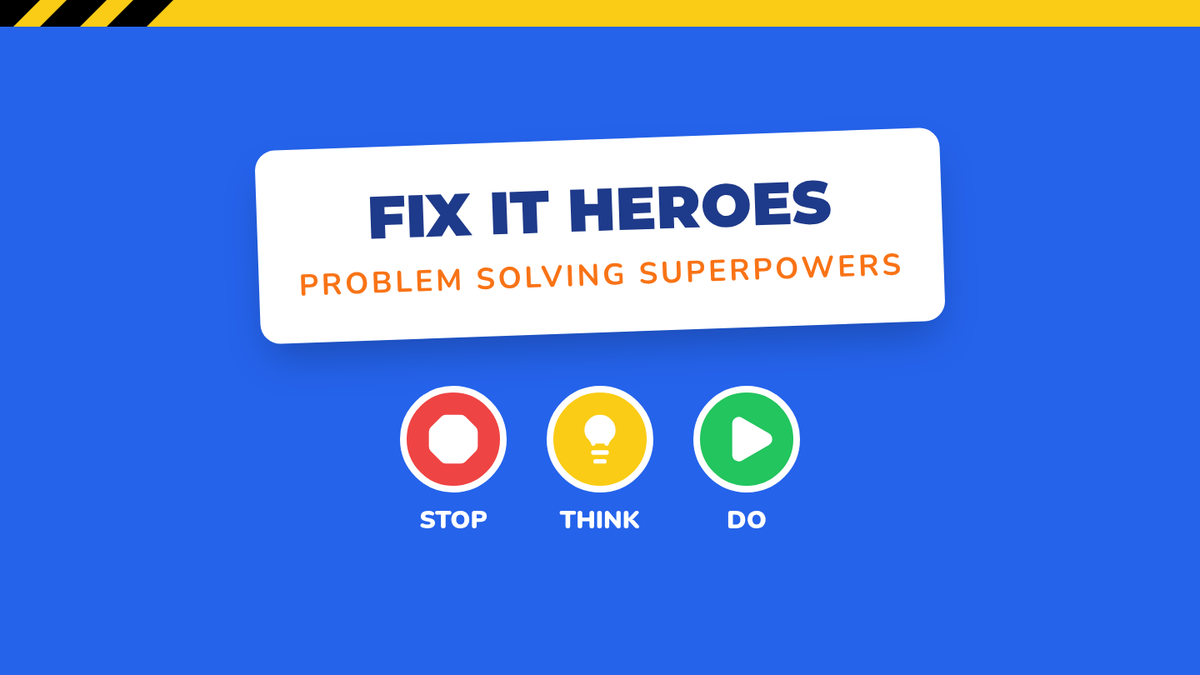
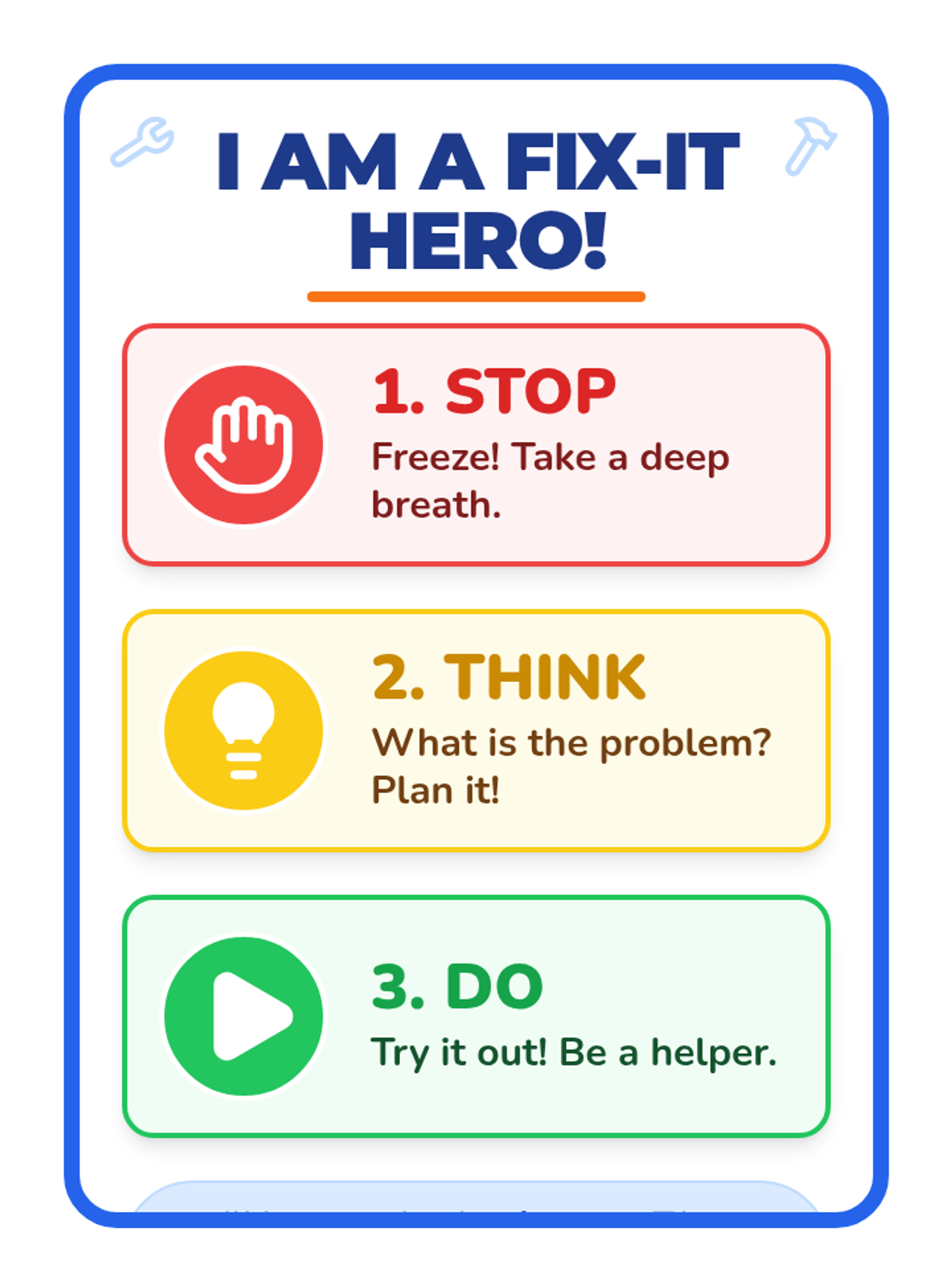
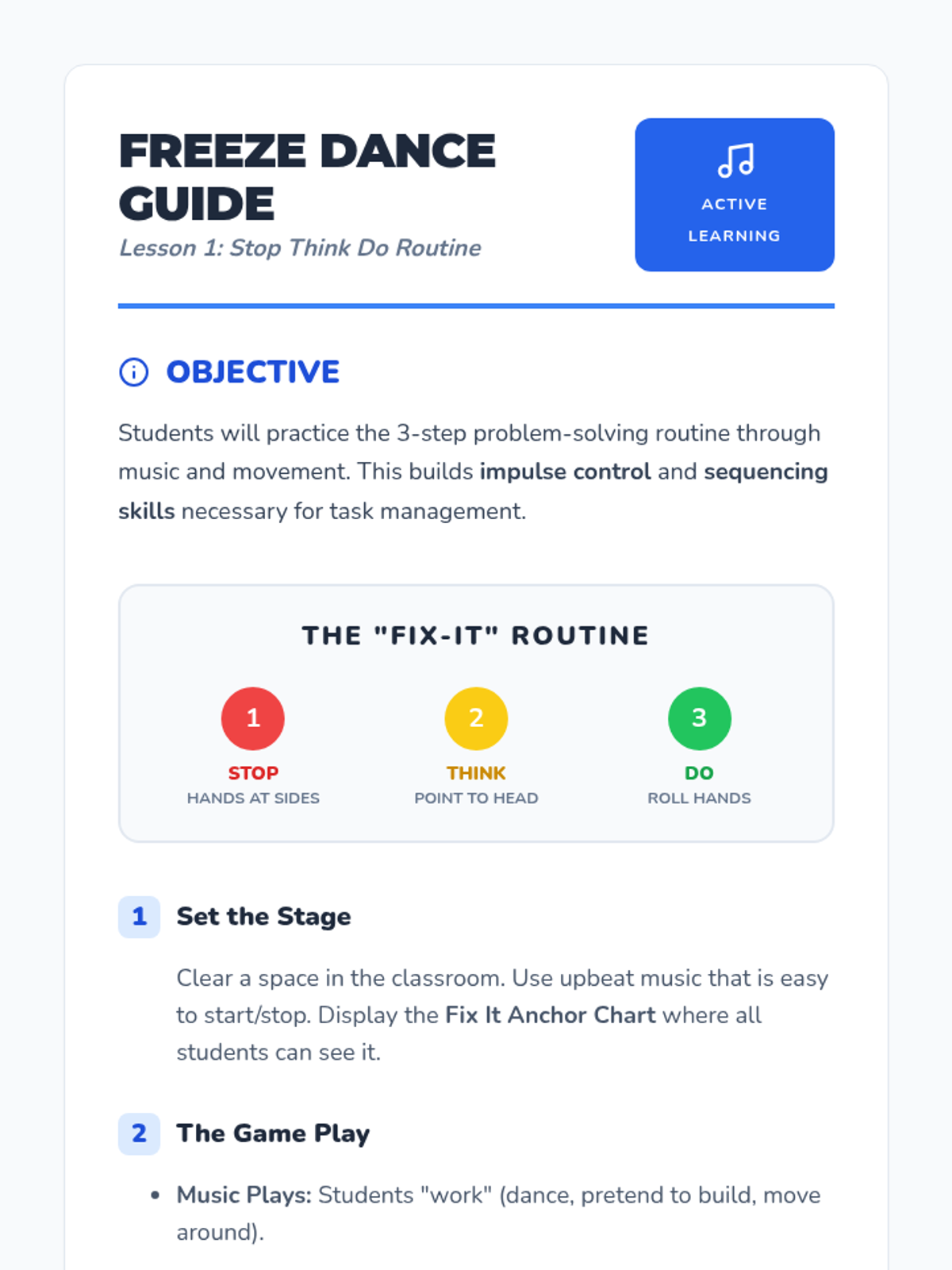
Students learn the 'Stop, Think, Do' movement routine and practice it through a freeze dance game to build inhibition and sequencing skills.
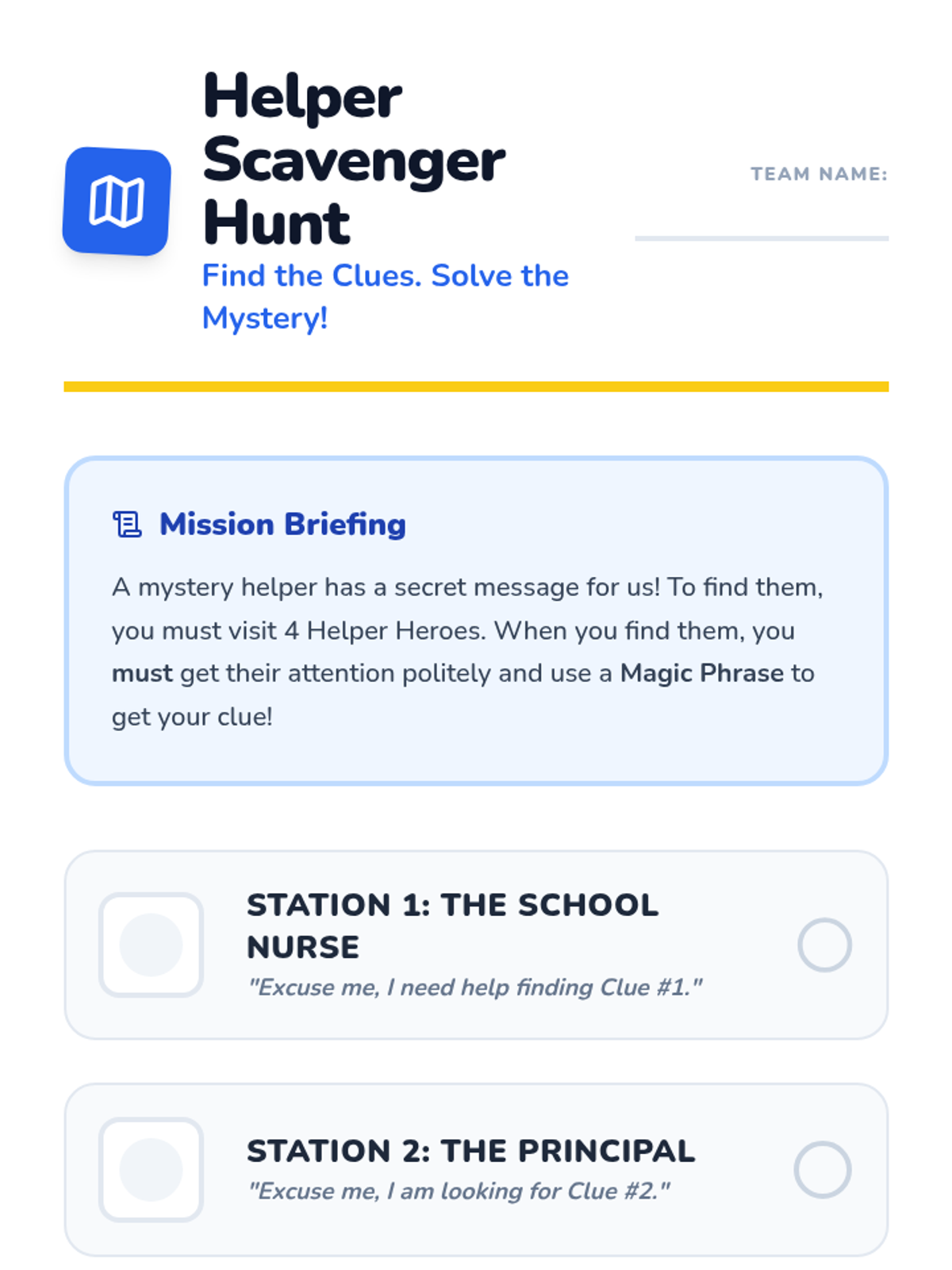
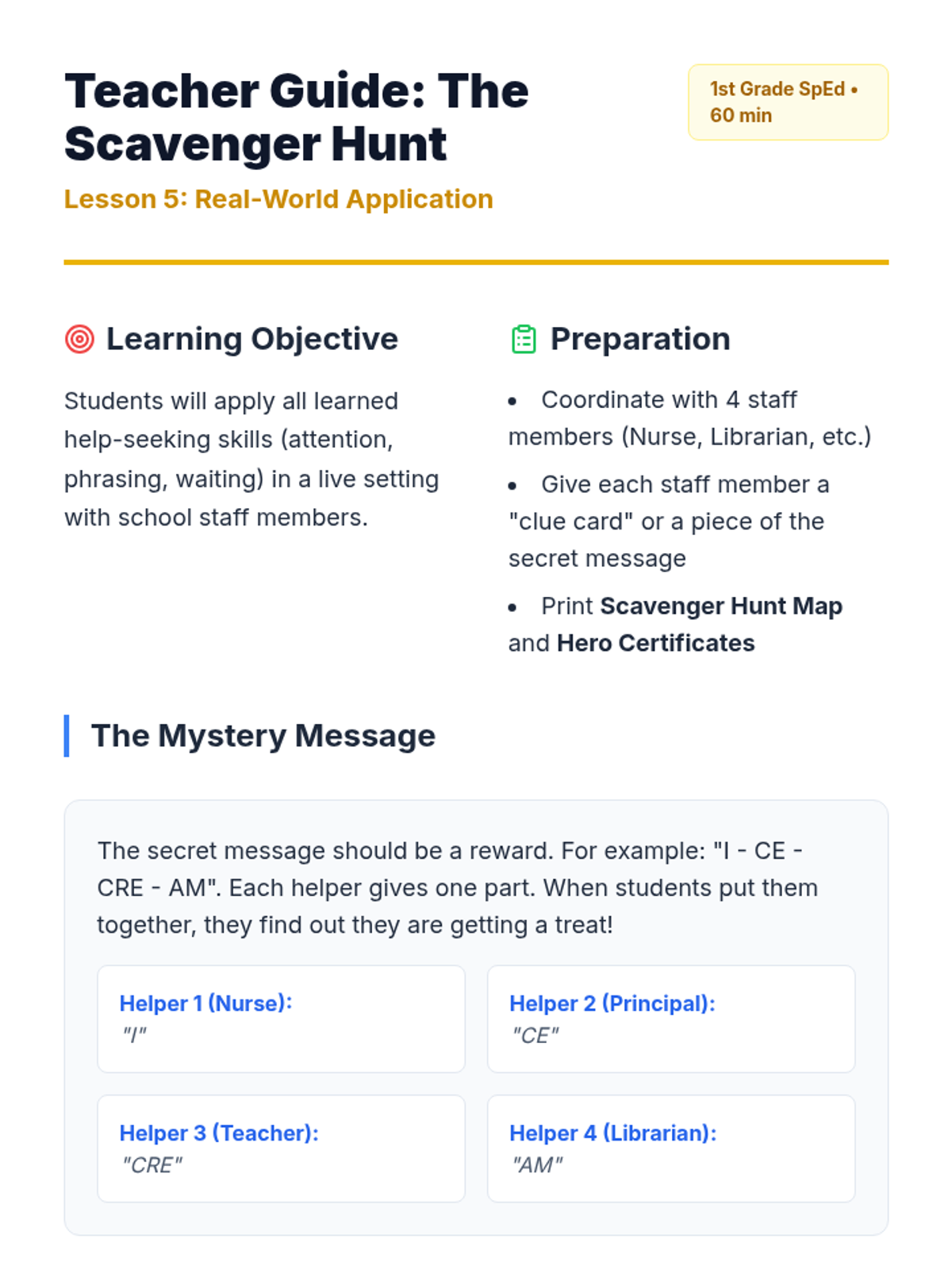
A culminating classroom scavenger hunt where students apply all their help-seeking skills in a real-world mystery activity.
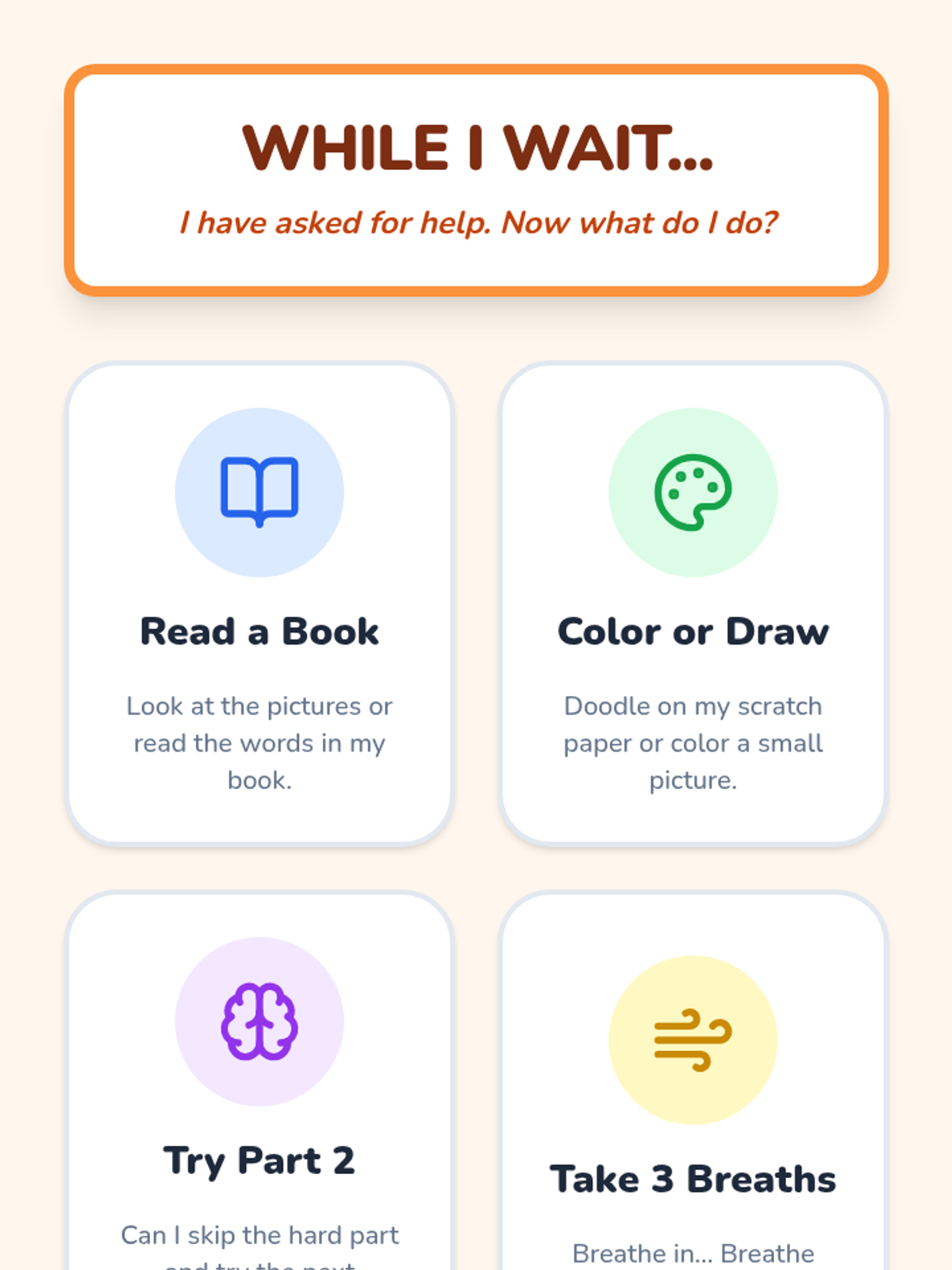
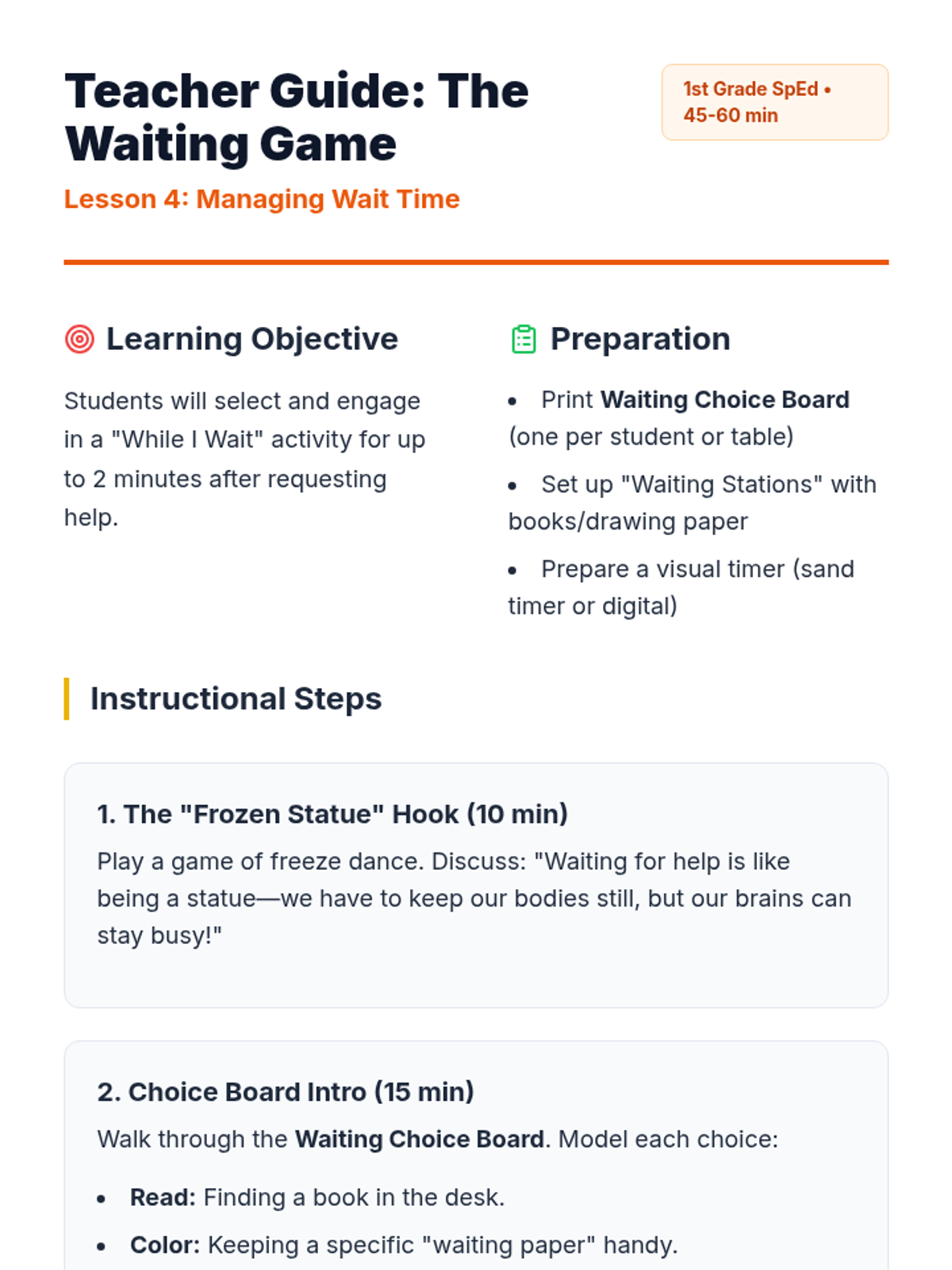
Develops self-regulation skills for the period between asking for help and receiving it, using 'While I Wait' choice boards.
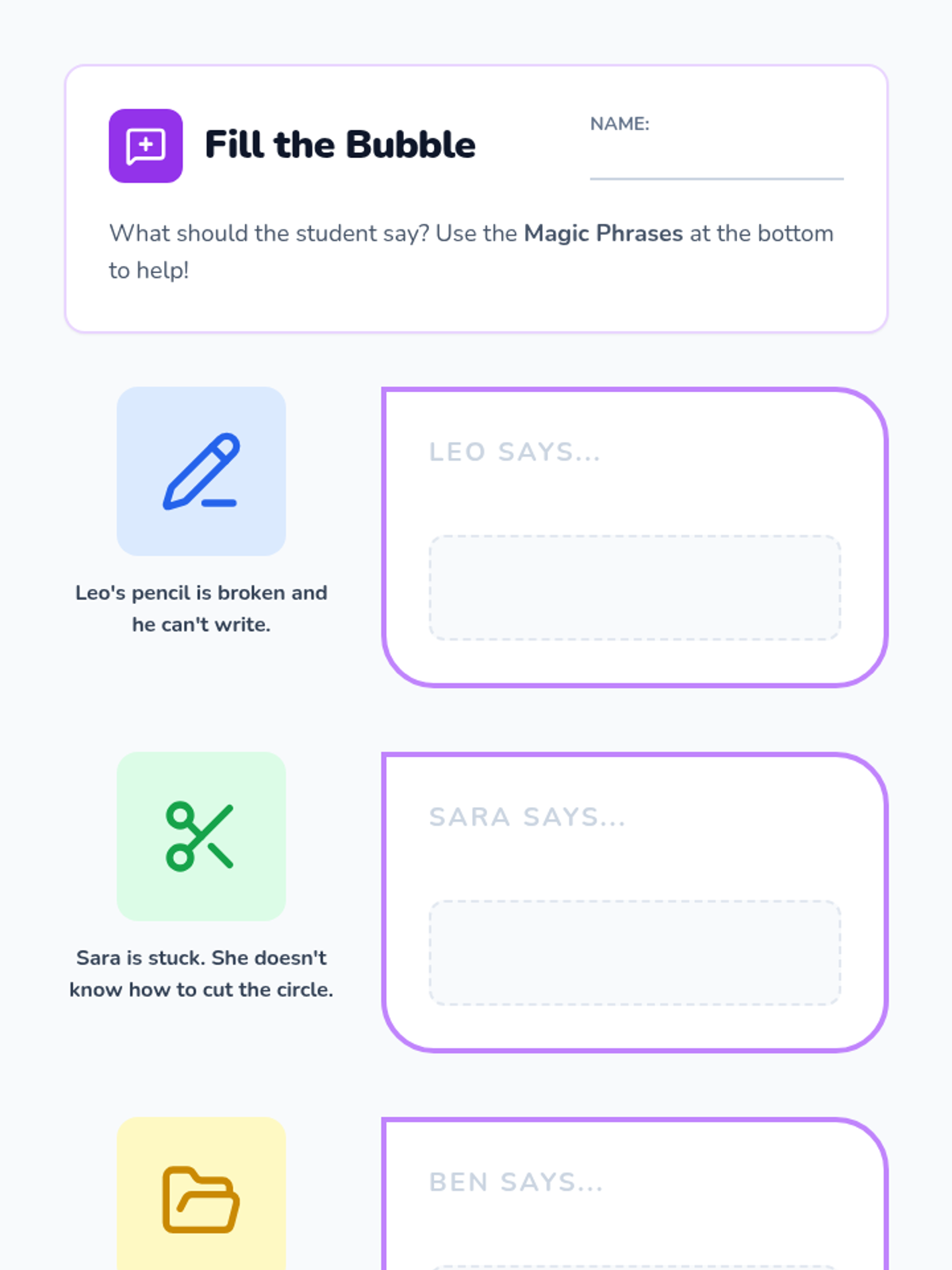
Teaches students specific language and sentence stems to communicate their specific needs clearly and politely.
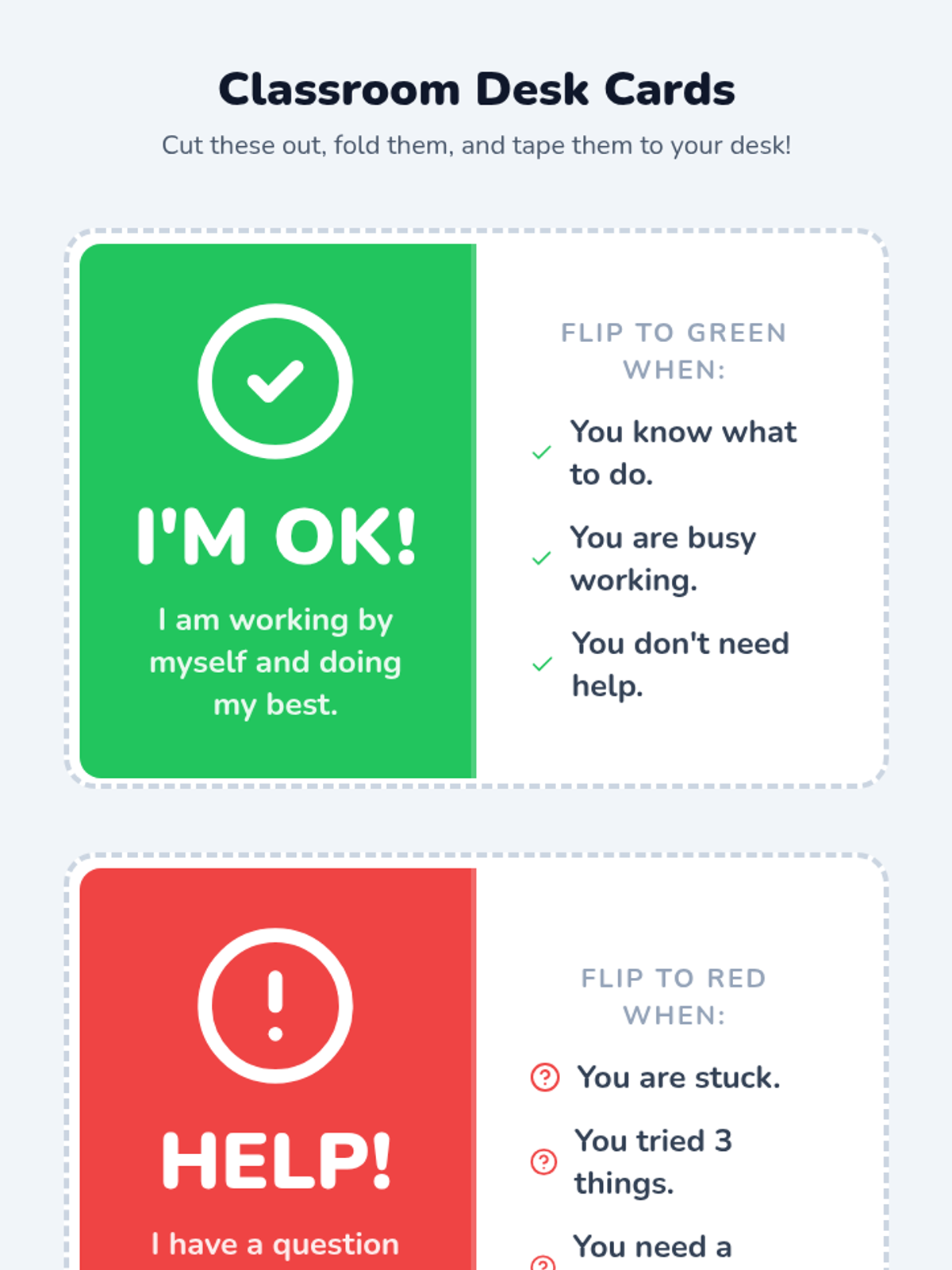
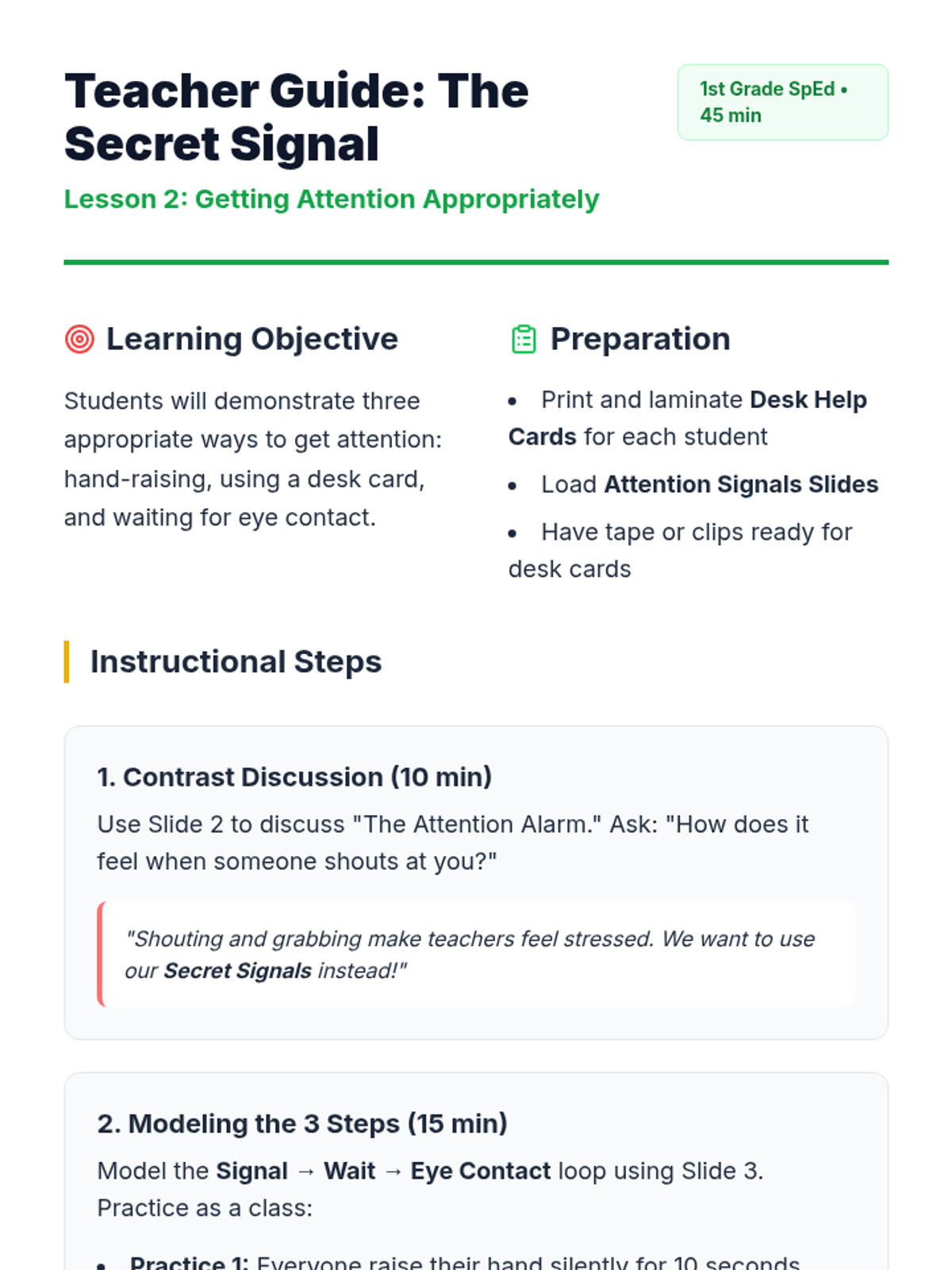
Focuses on the physical actions of getting attention politely, including hand-raising and non-verbal signals.
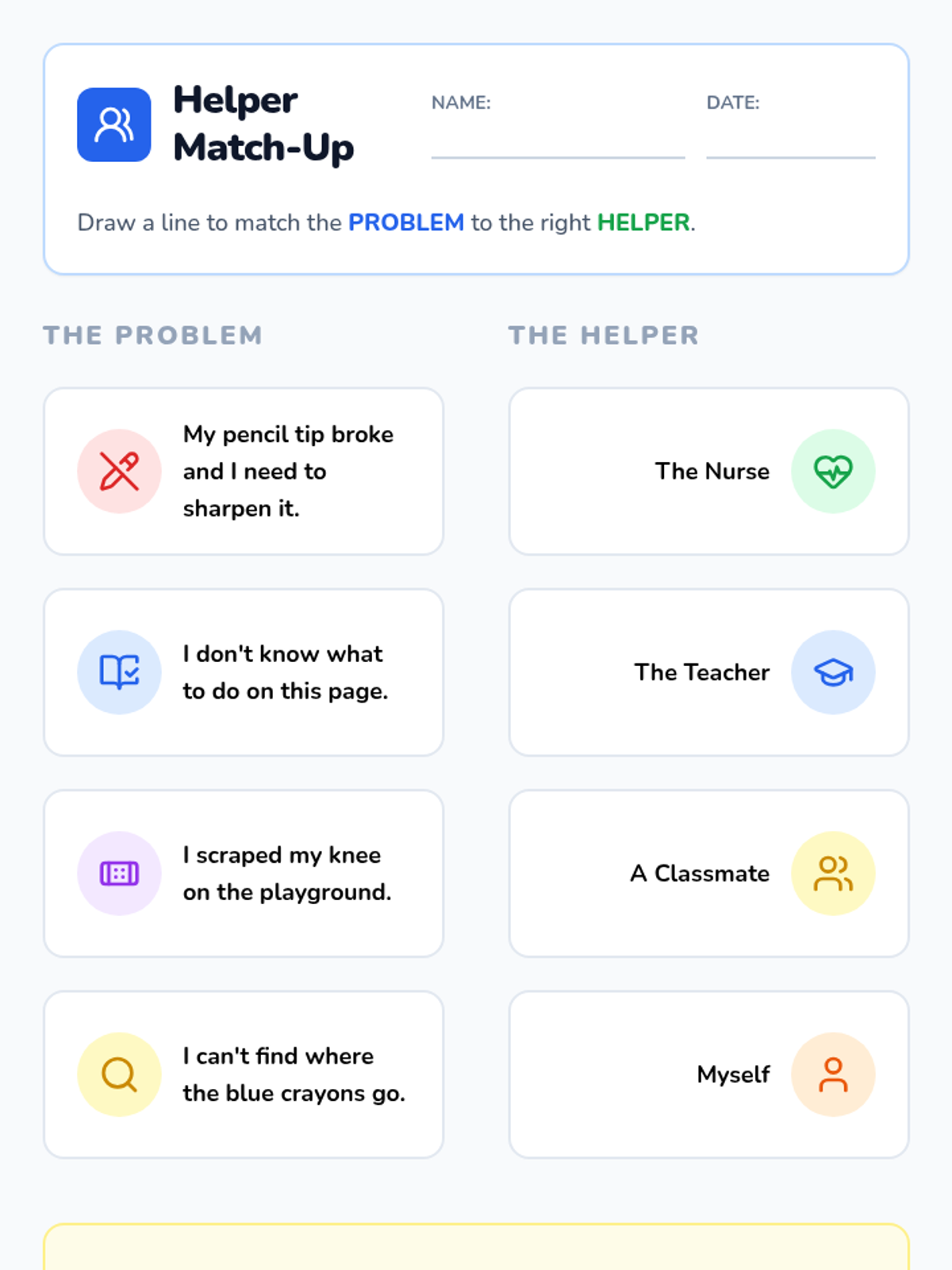
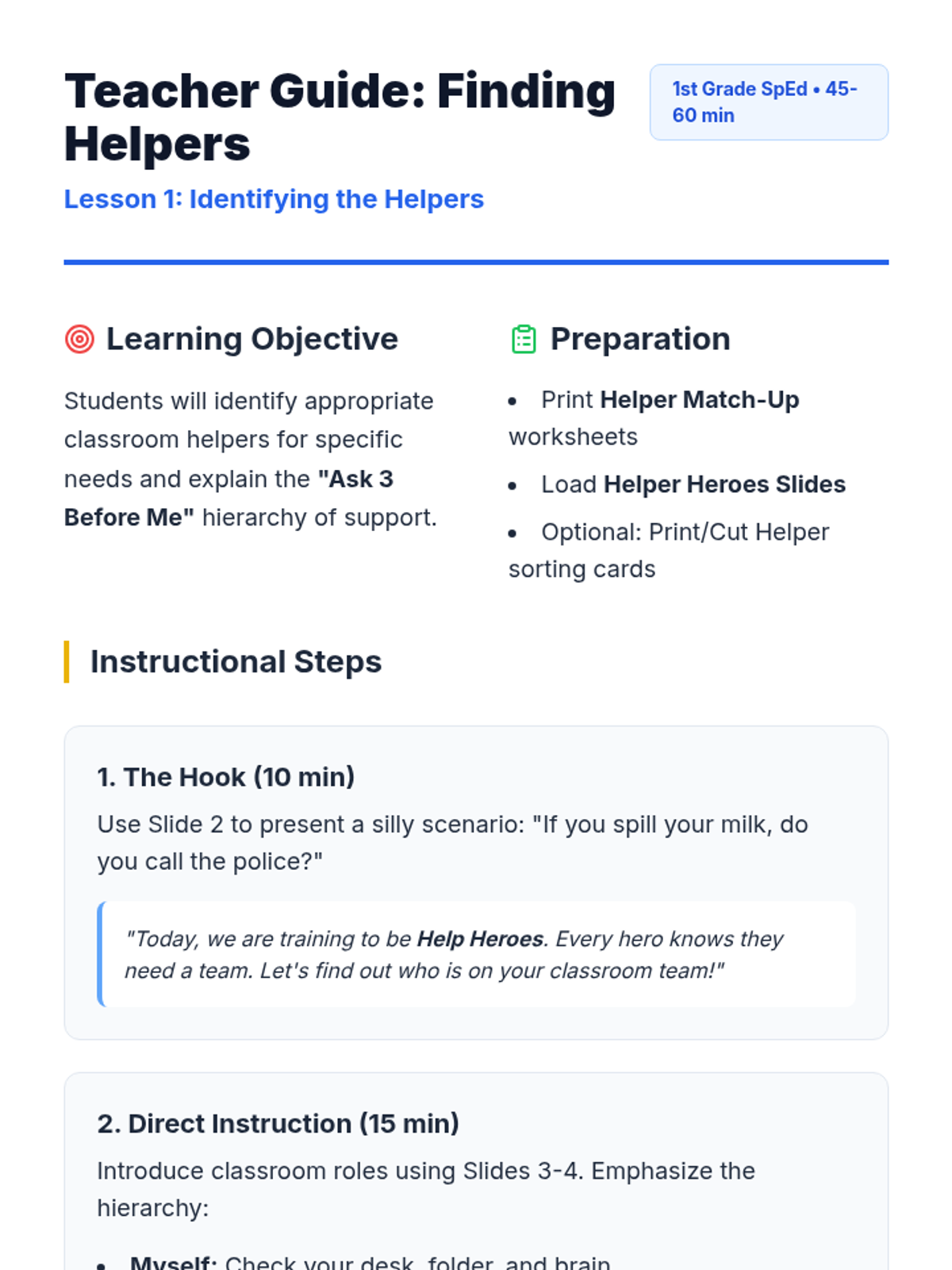
Students learn to distinguish between different types of helpers and classroom roles, establishing the 'Ask 3 Before Me' rule for seeking support.
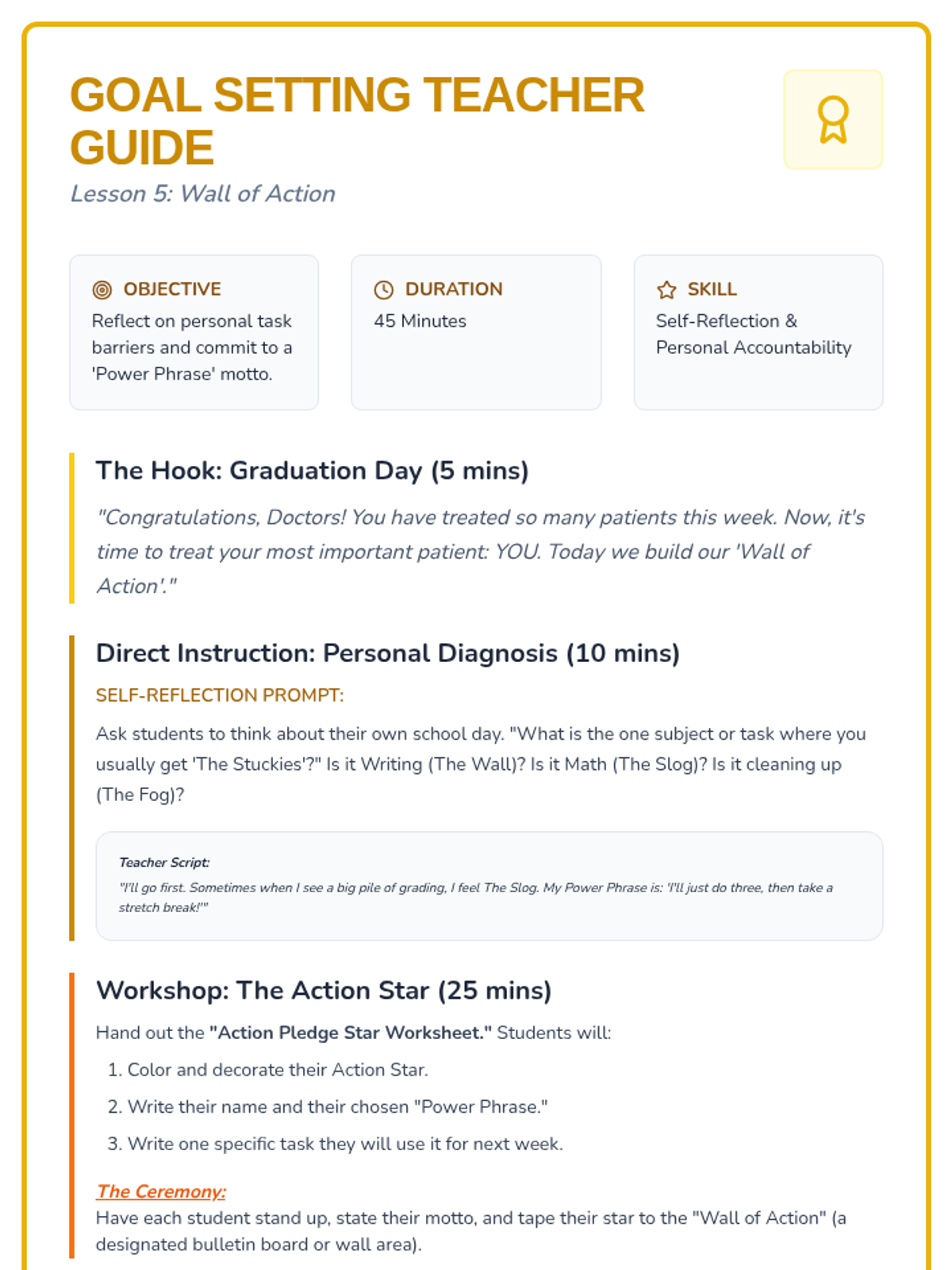
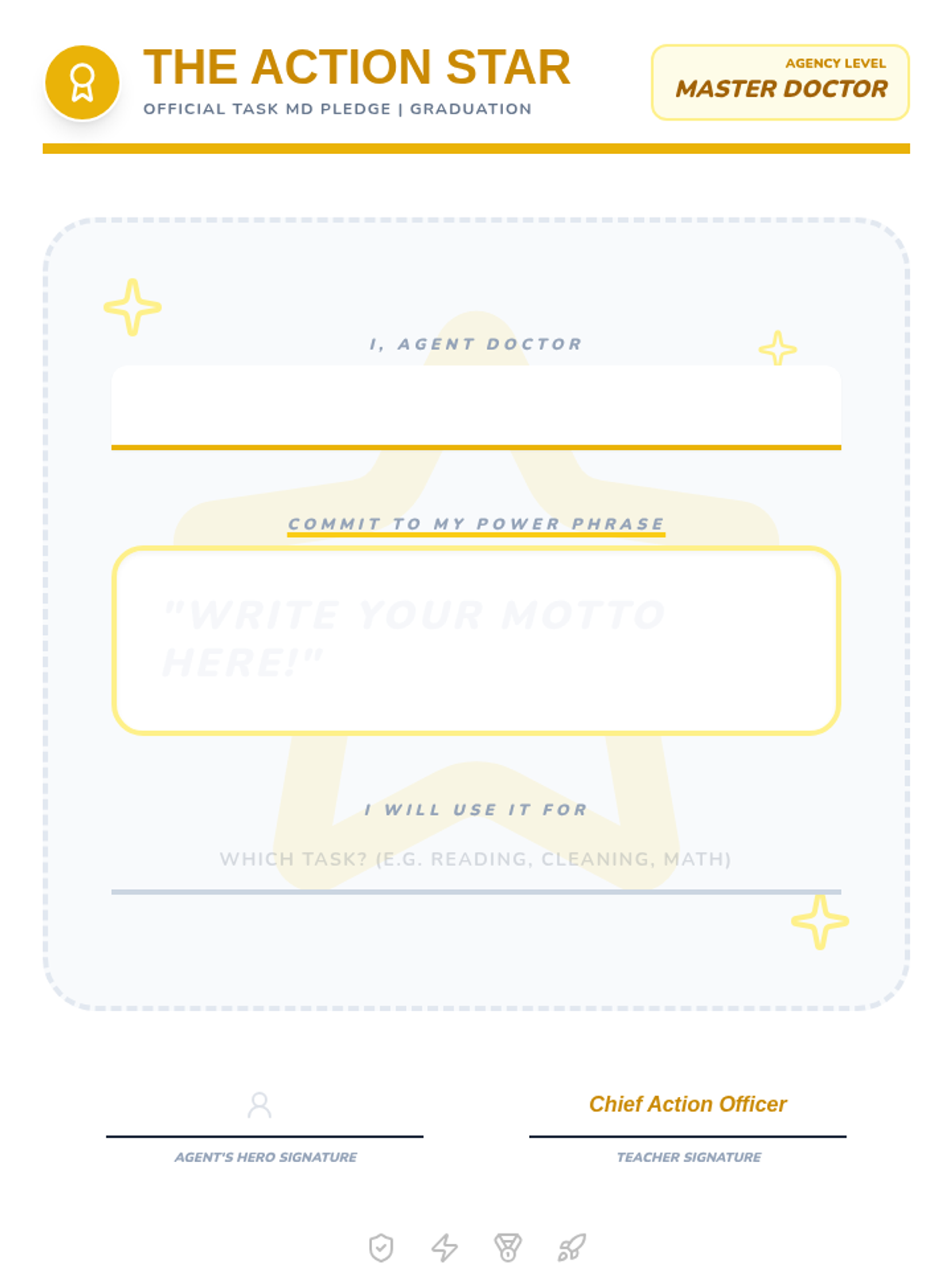
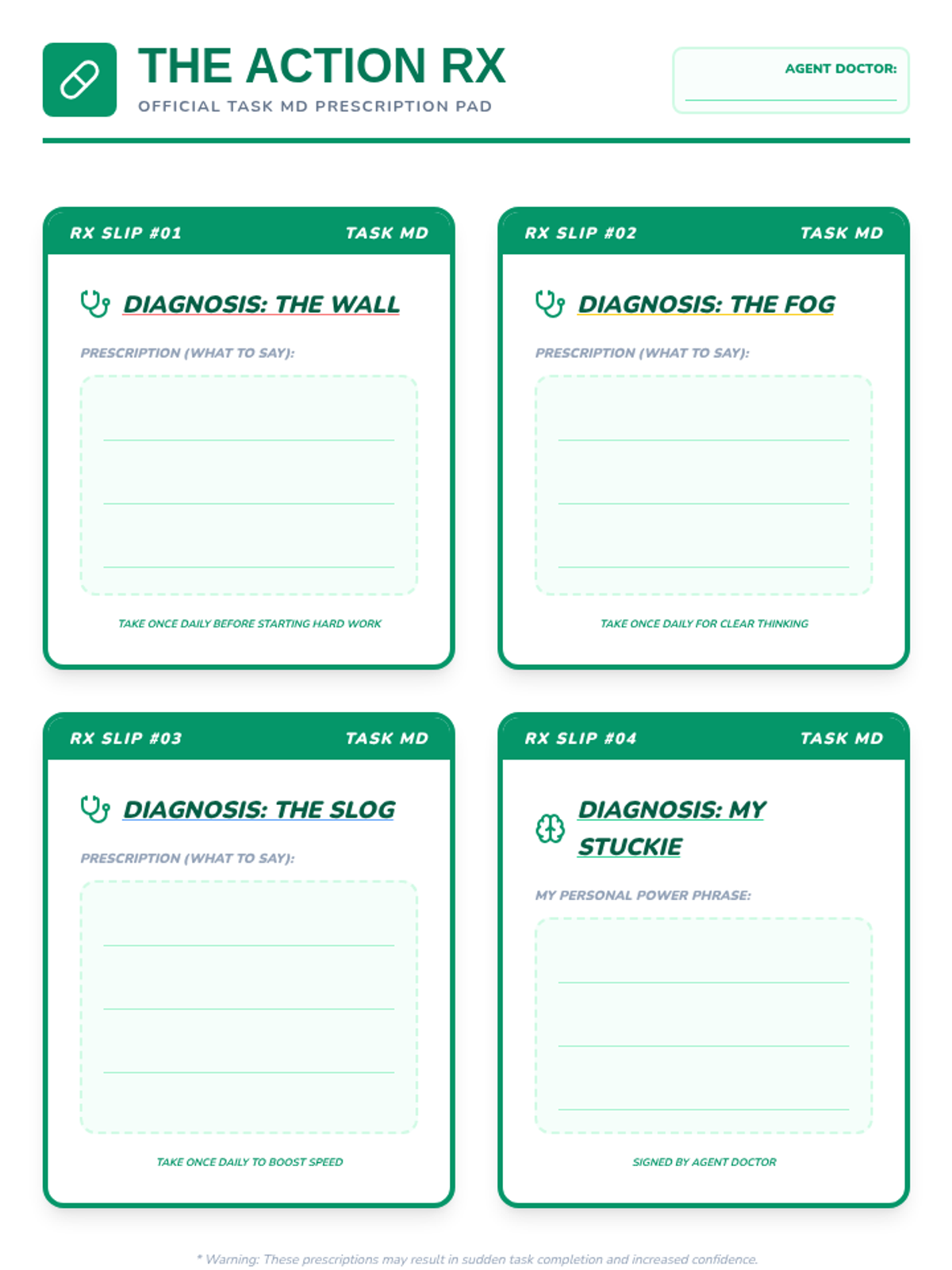
Students identify their own barriers to starting work and select a personal 'Power Phrase' motto for future tasks.
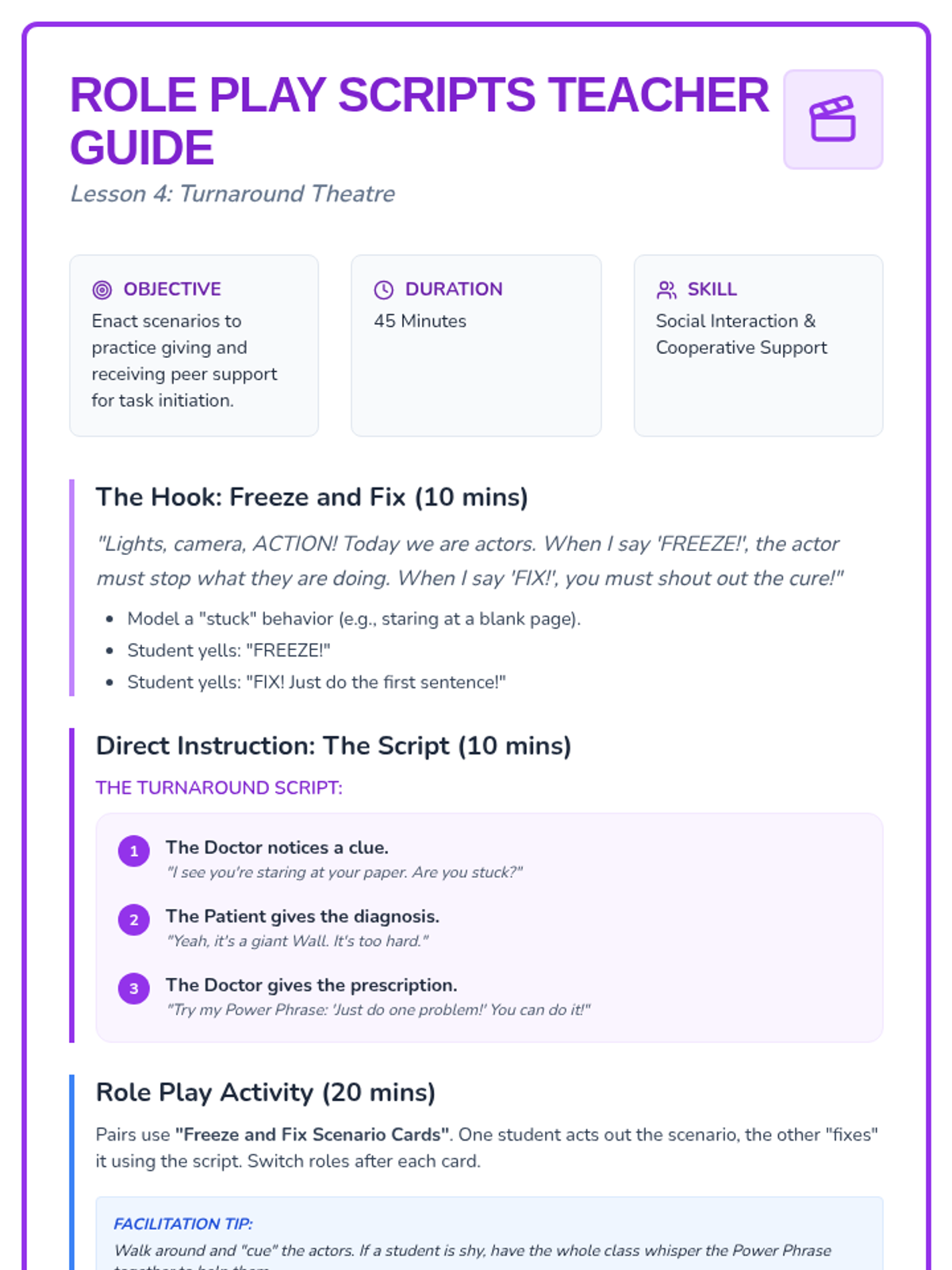
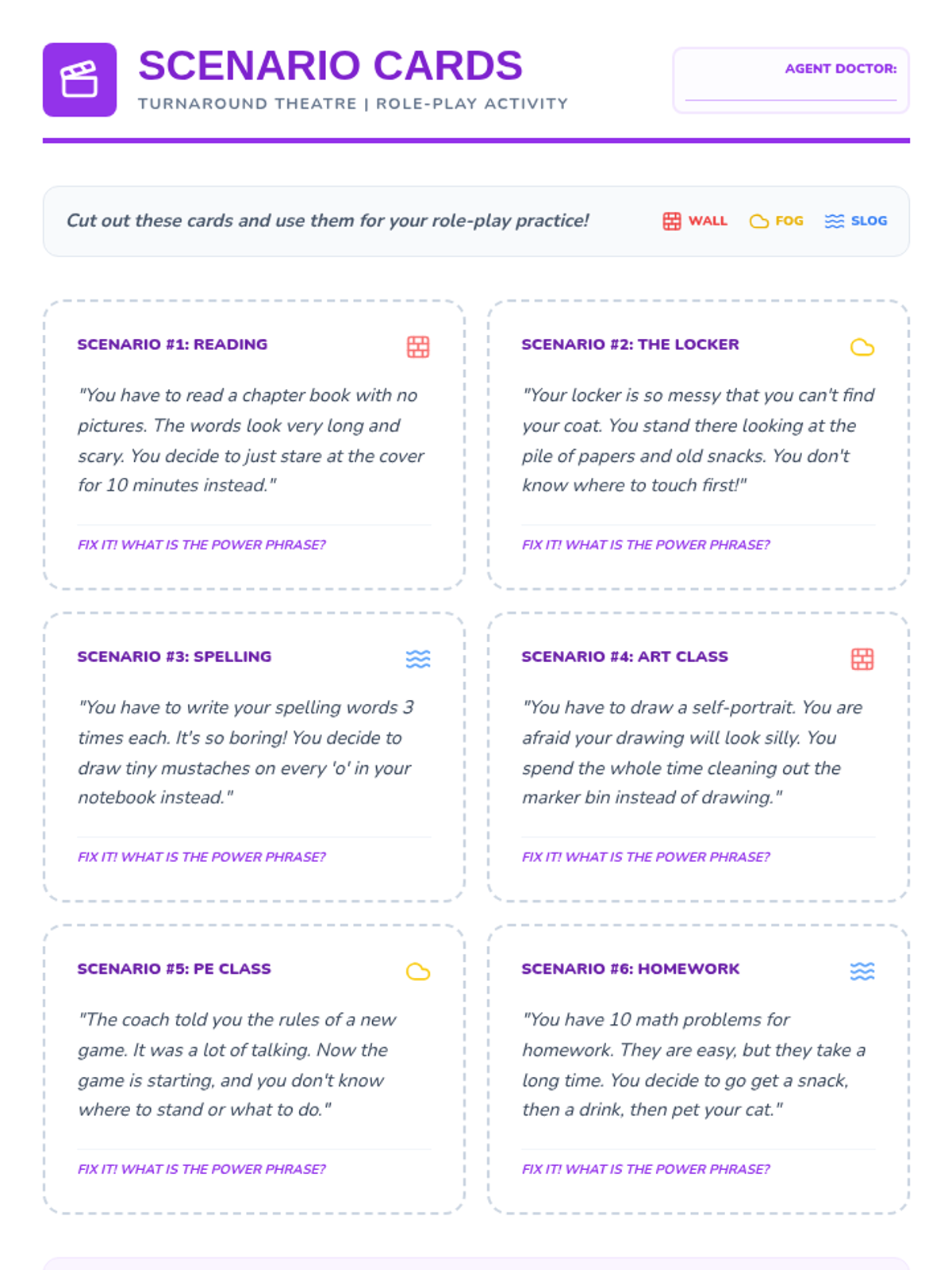
Students role-play scenarios where they help a peer get 'unstuck' using their self-talk prescriptions.
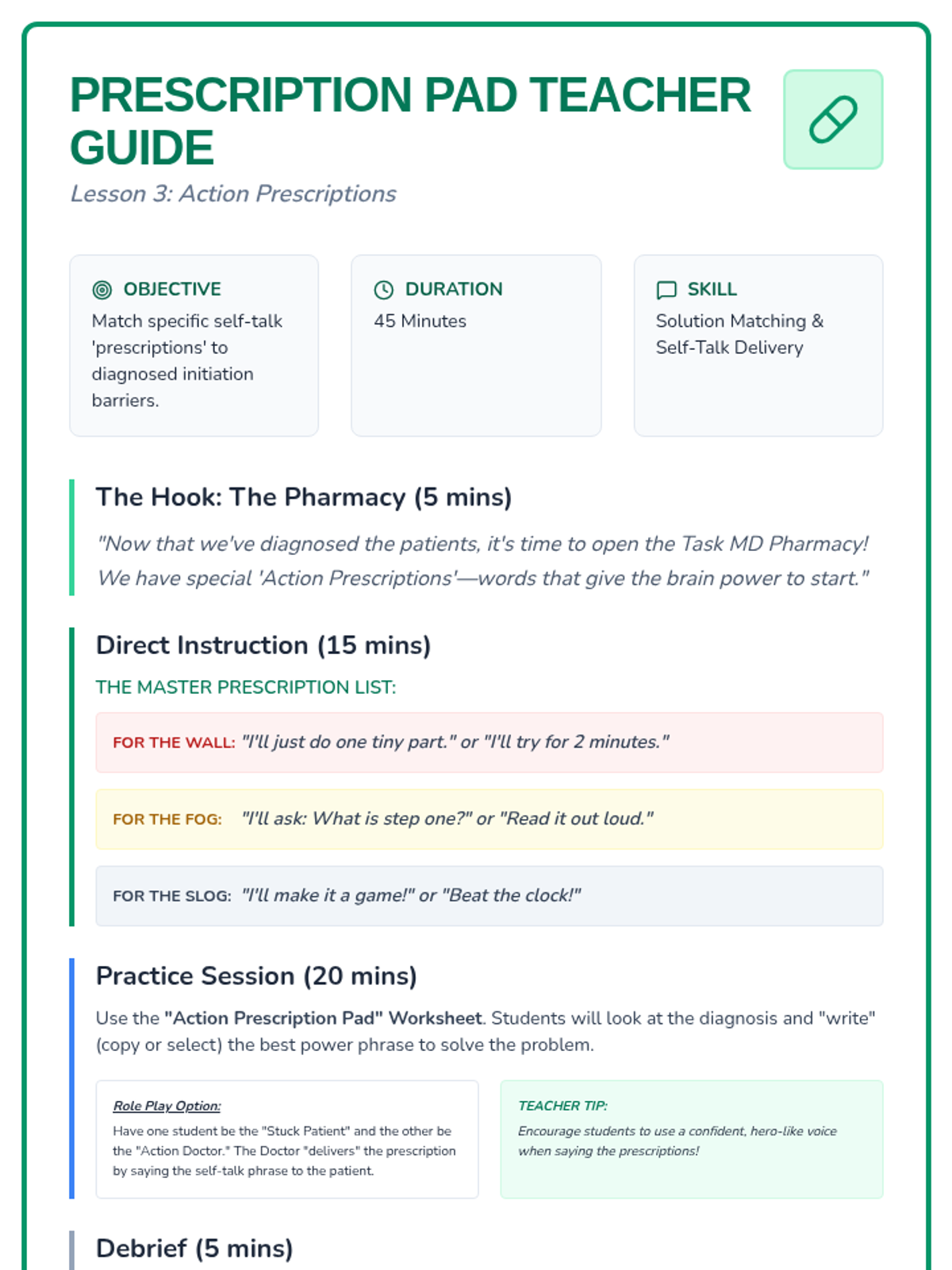
Students match specific self-talk 'prescriptions' to diagnosed problems and practice delivering these lines to characters.
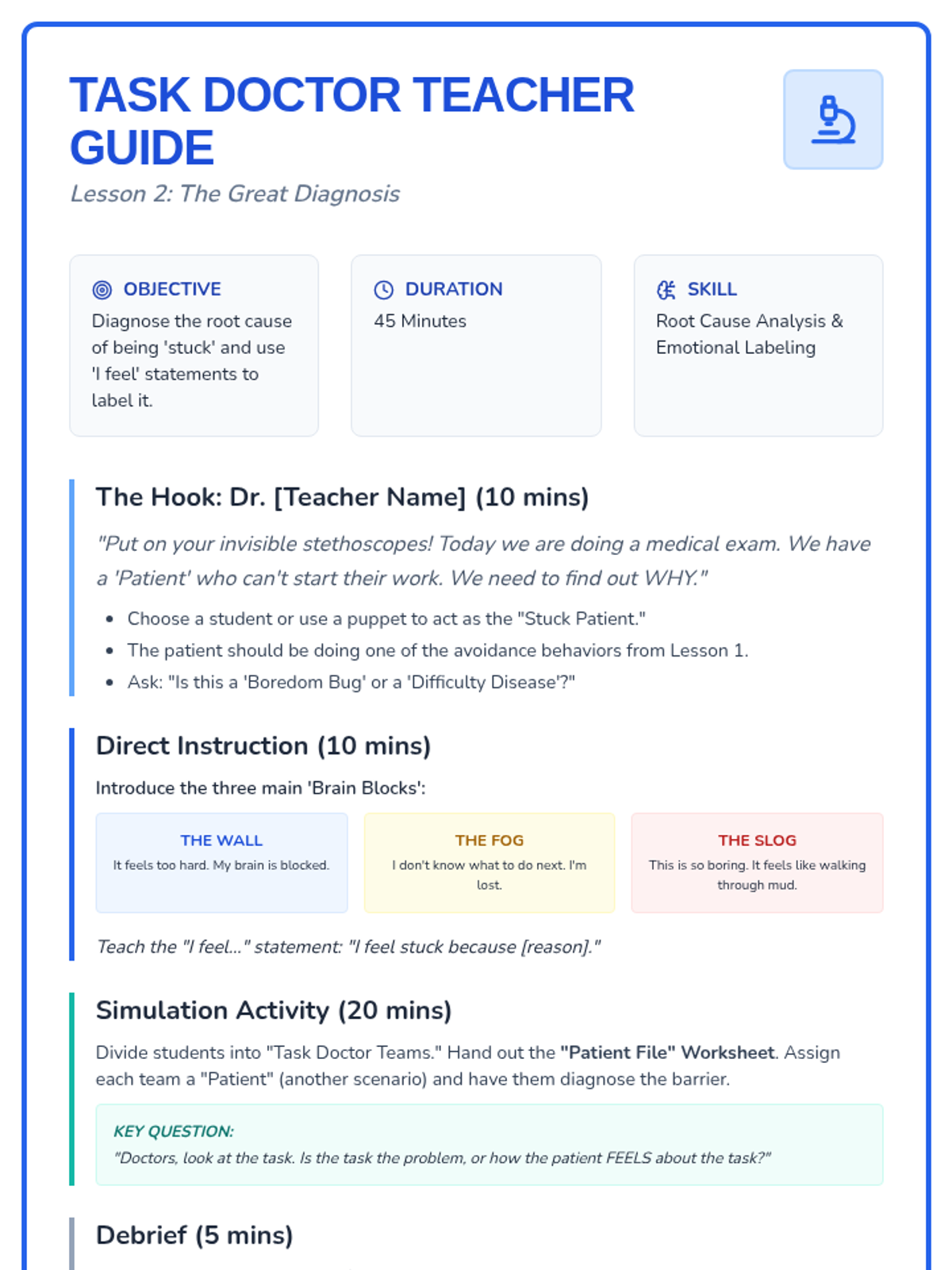
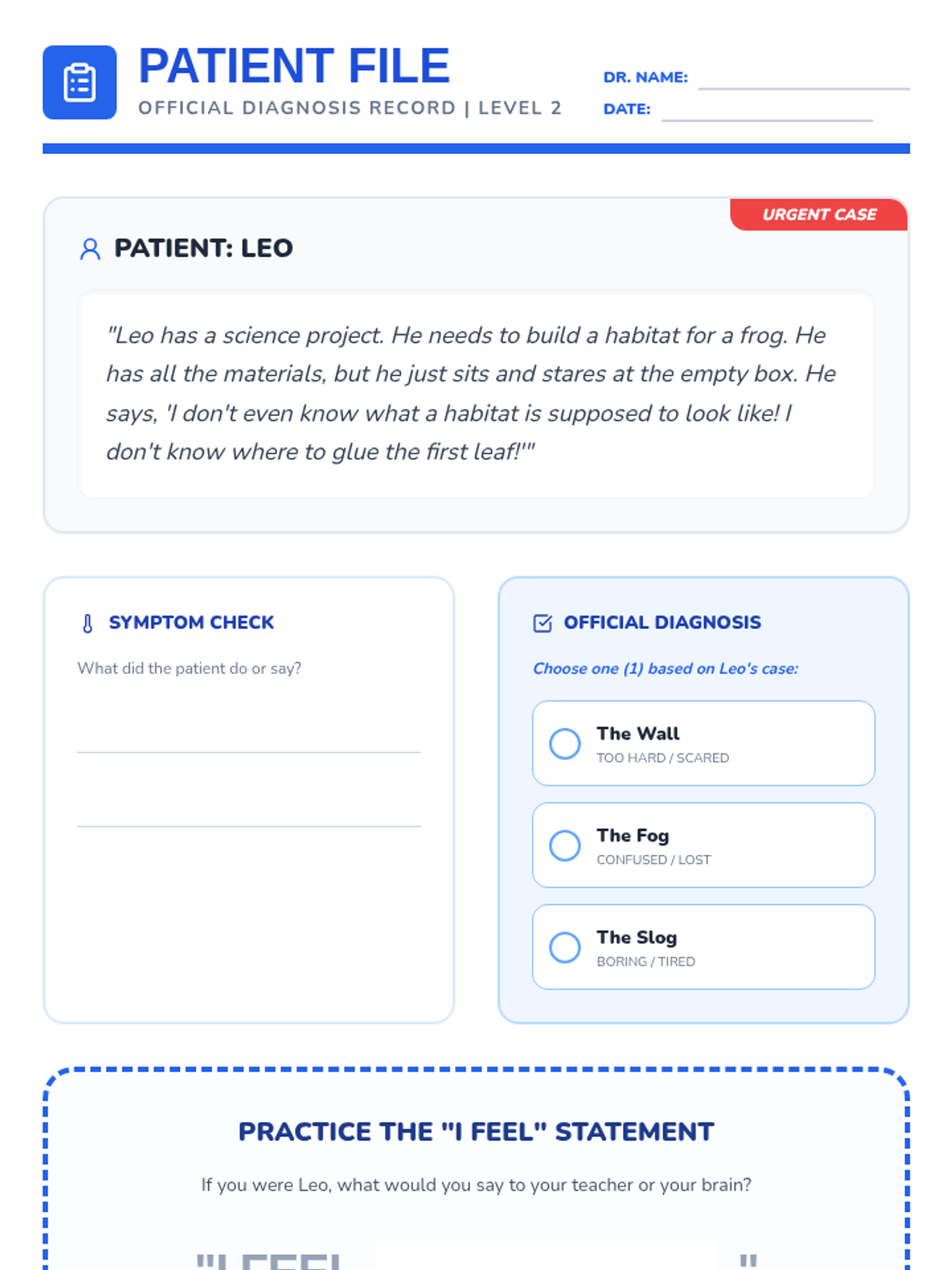
Students act as 'Task Doctors' to determine why a character is stuck (boredom, difficulty, fatigue) and practice labeling these emotions.
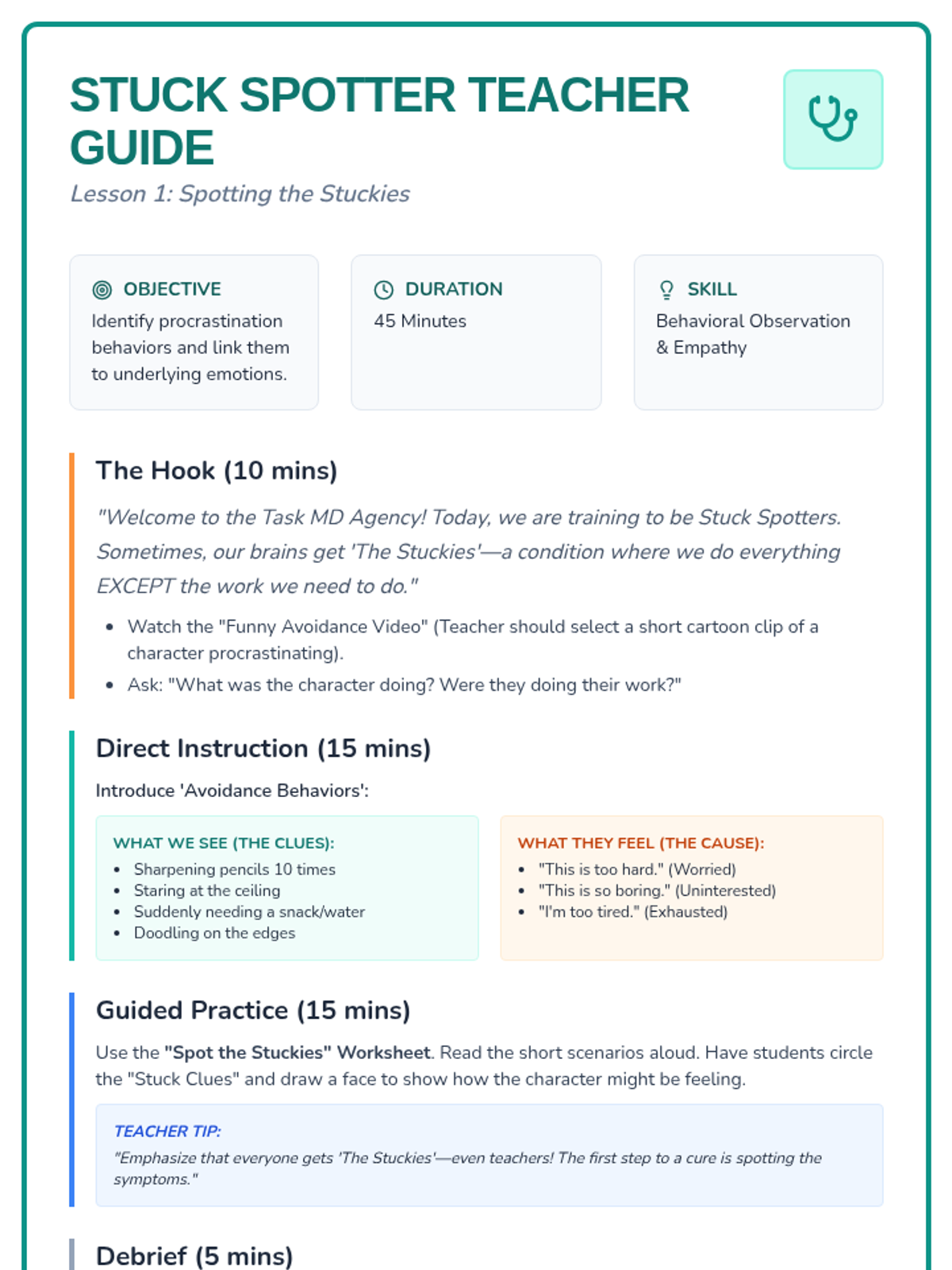
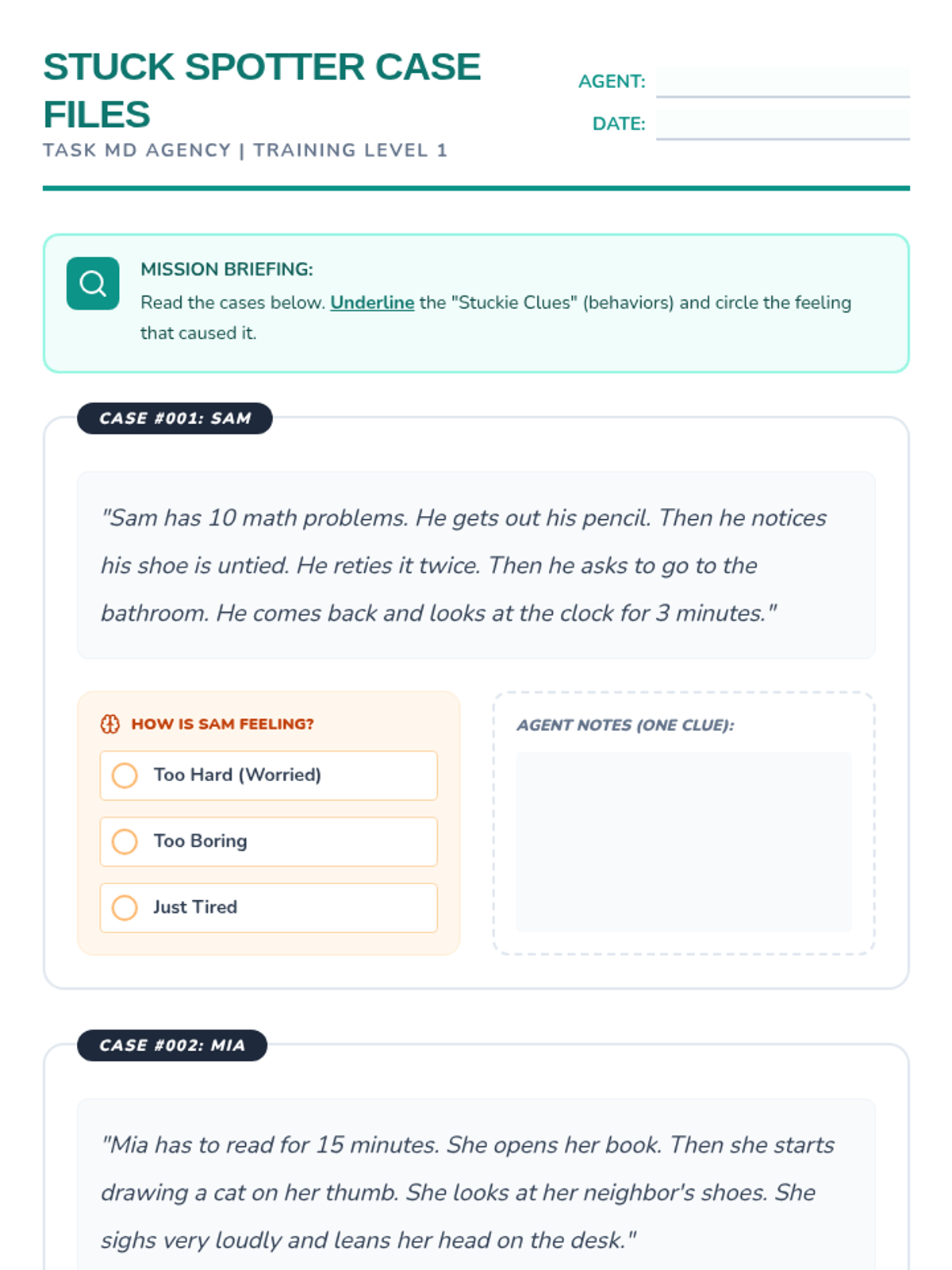
Students identify behaviors that show someone is avoiding work and brainstorm what emotions might be driving those behaviors through case studies.