Stop-and-think strategies, impulse management, and SMART goal setting for personal growth. Develops internal motivation, stress reduction techniques, and resilience through proactive planning and monitoring.
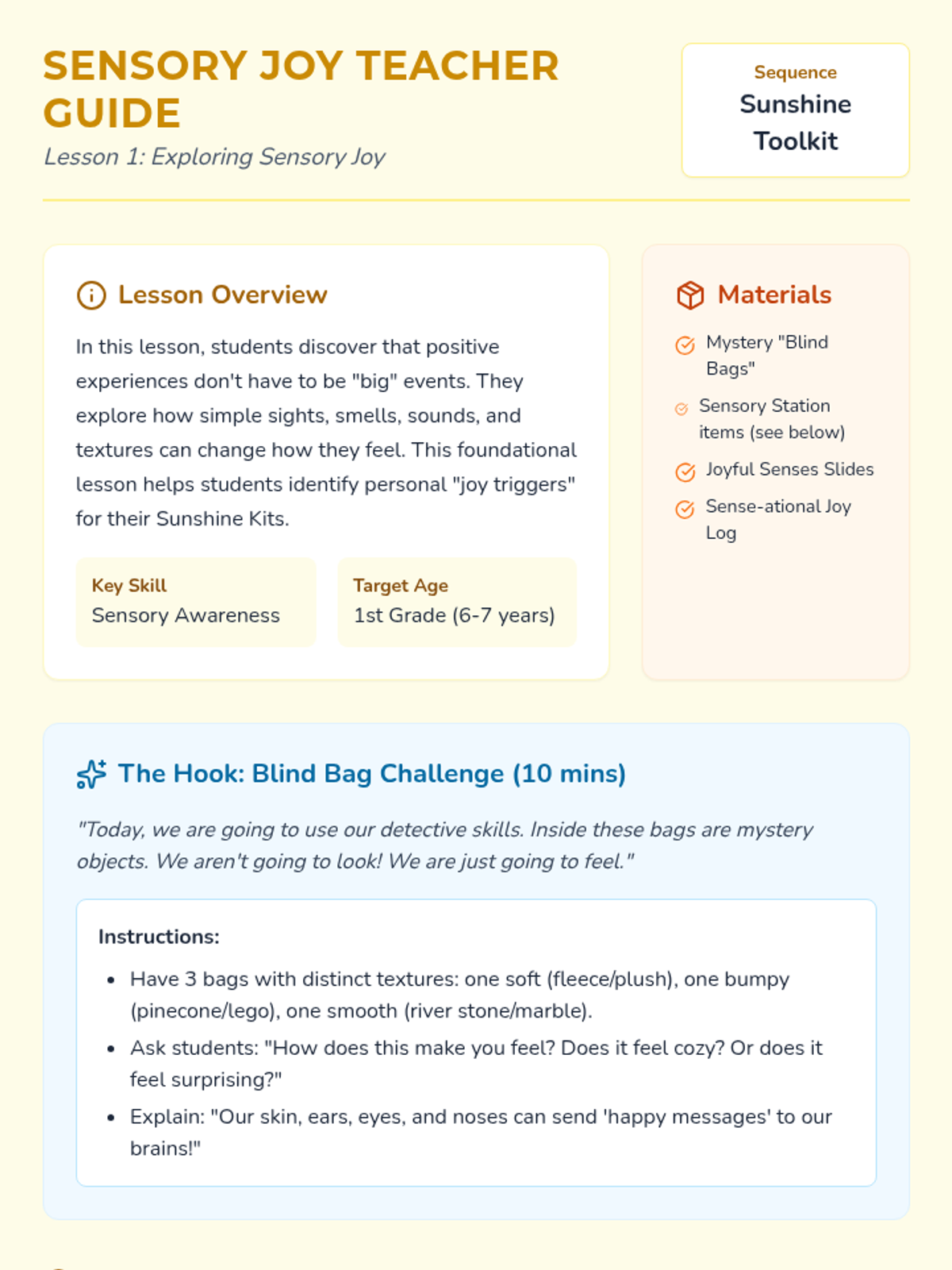
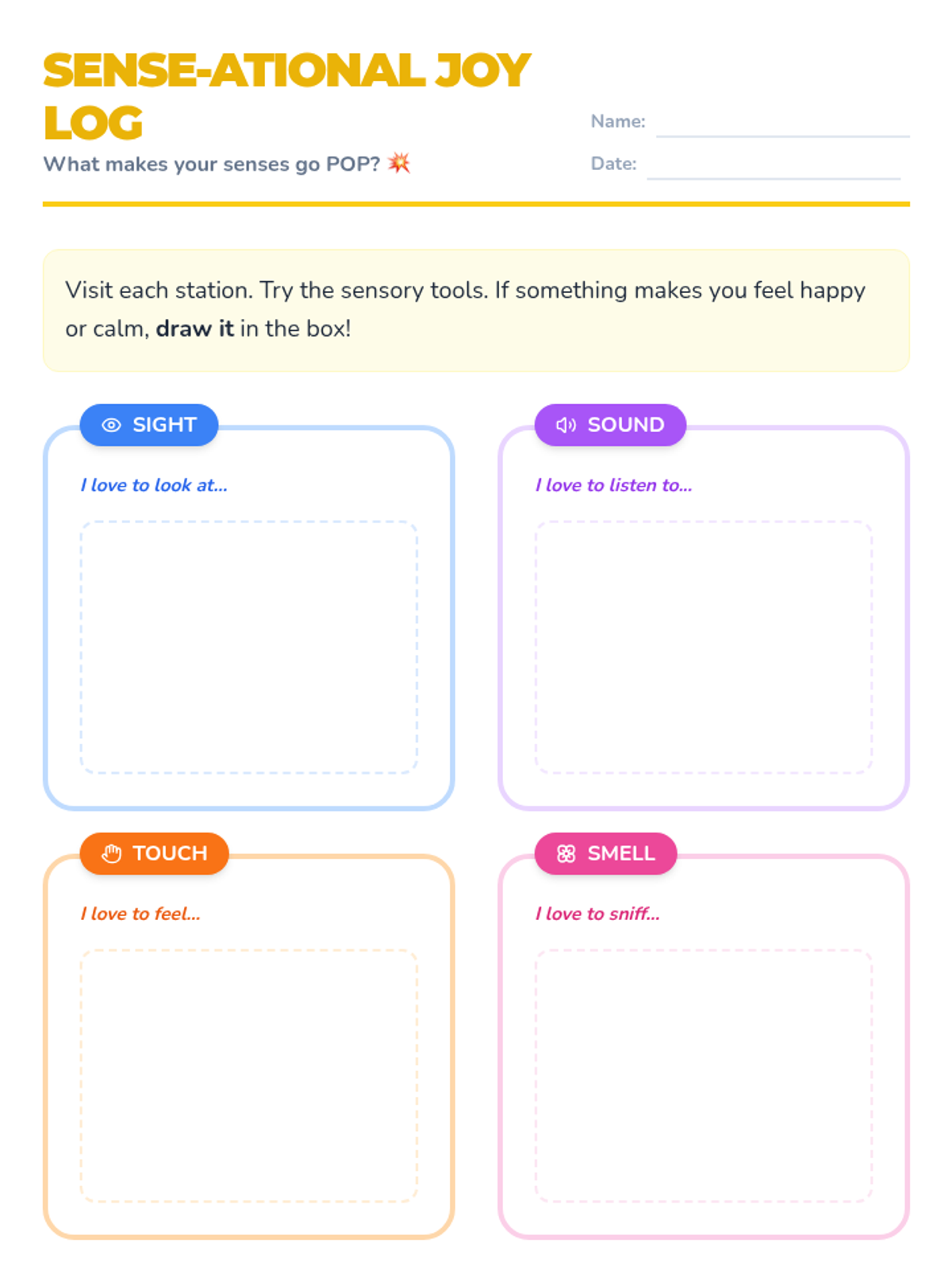
A project-based sequence for 1st graders focused on emotional regulation through the creation of a 'Sunshine Kit'. Students explore sensory, physical, and social activities to build a personalized toolkit of positive experiences for use during challenging moments.
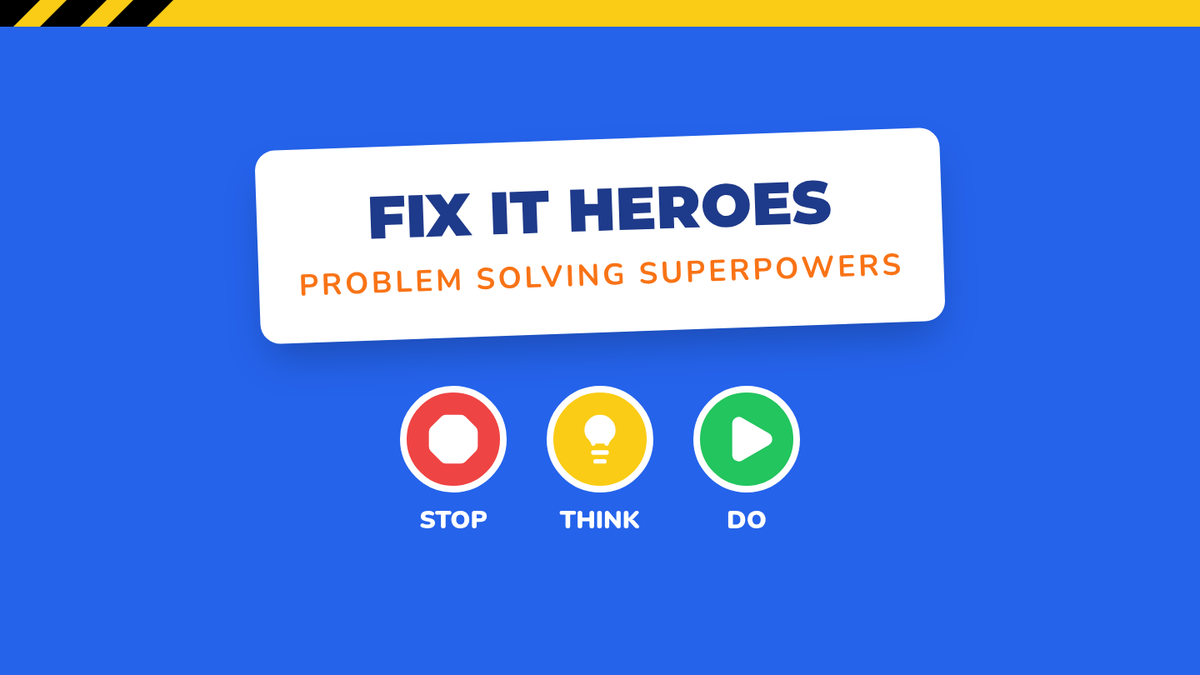
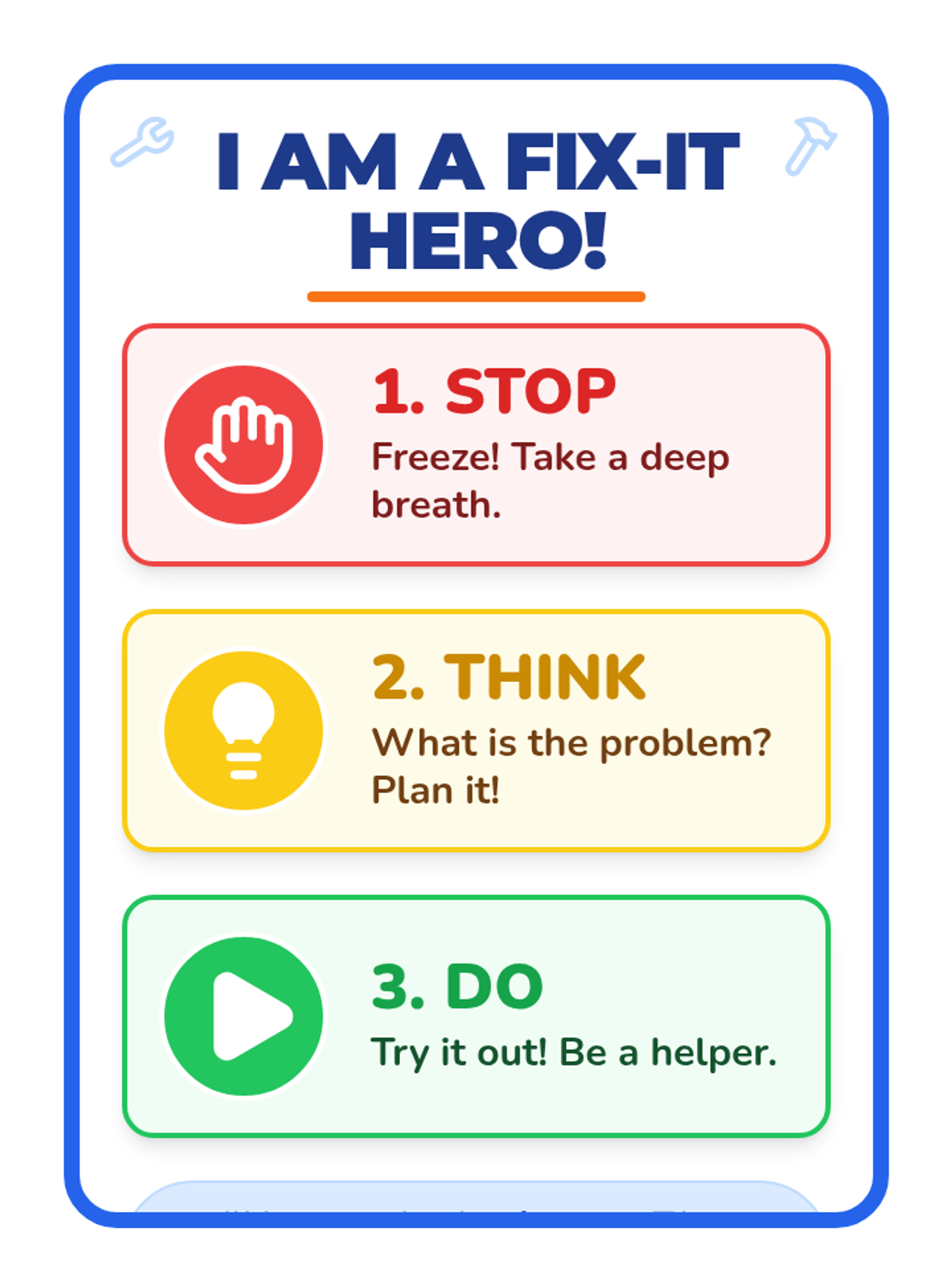
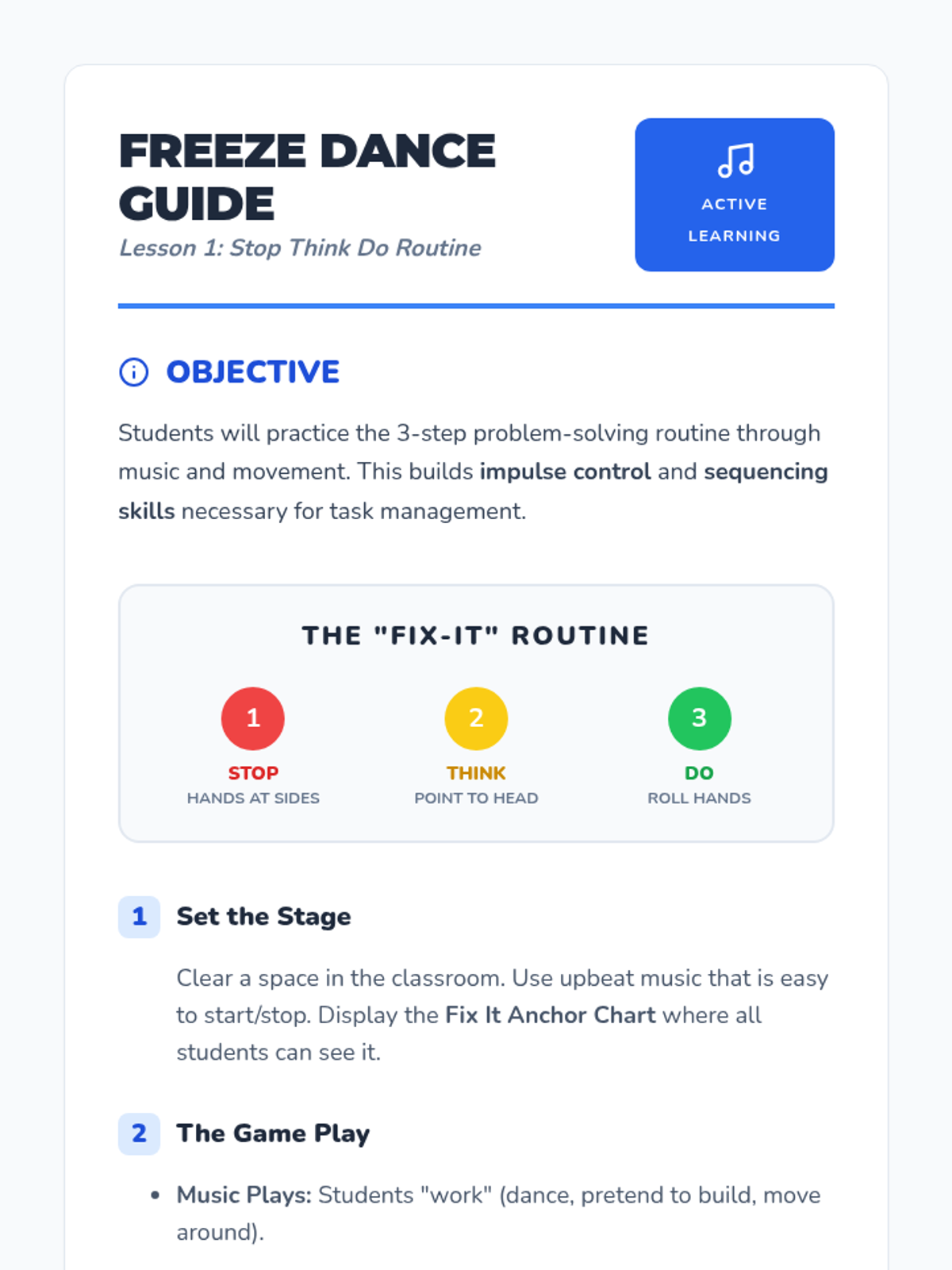
A simplified algorithmic approach to problem-solving for 1st Grade students, focusing on the 'Stop, Think, Do' framework to overcome obstacles and build independence.
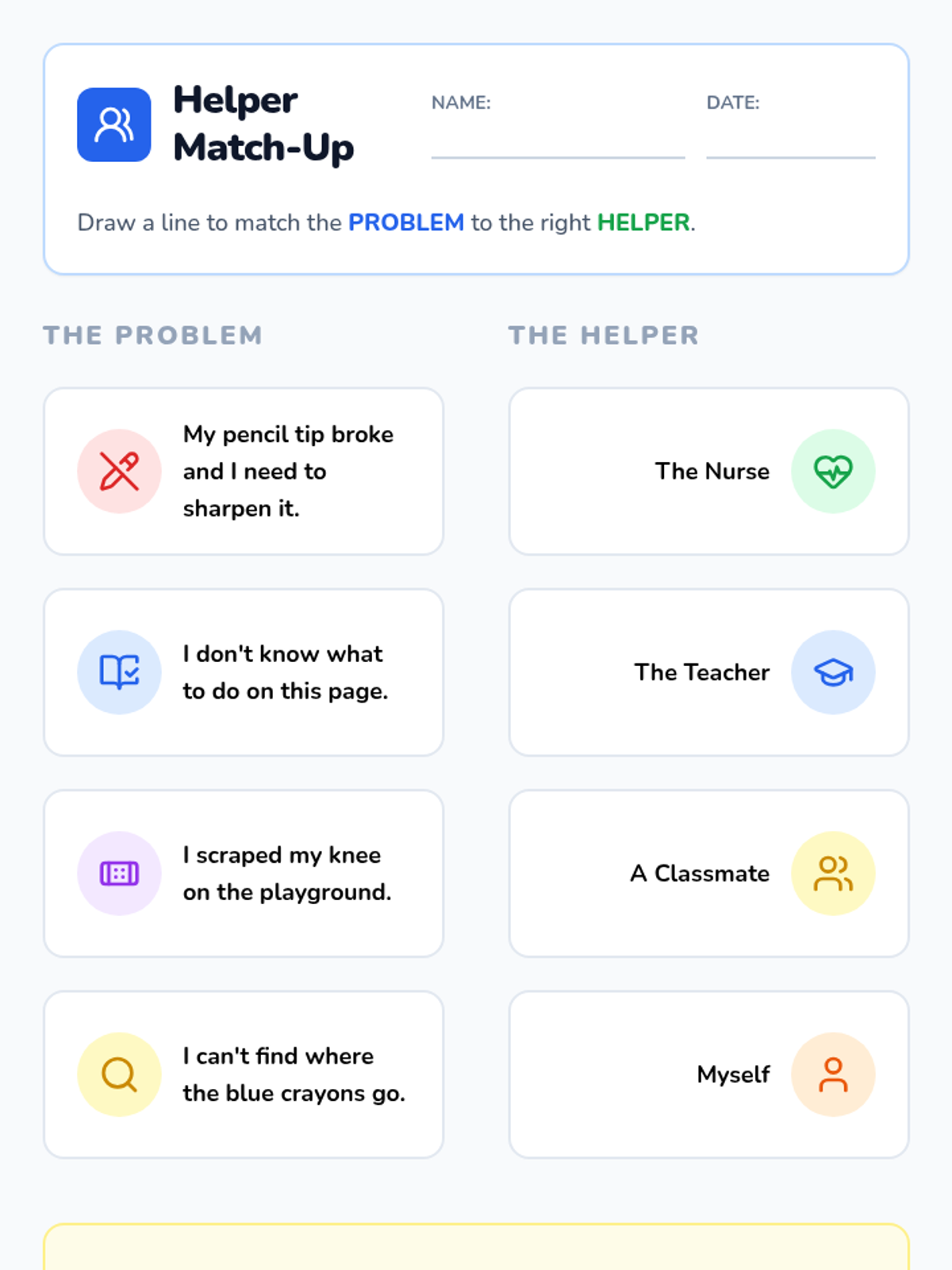
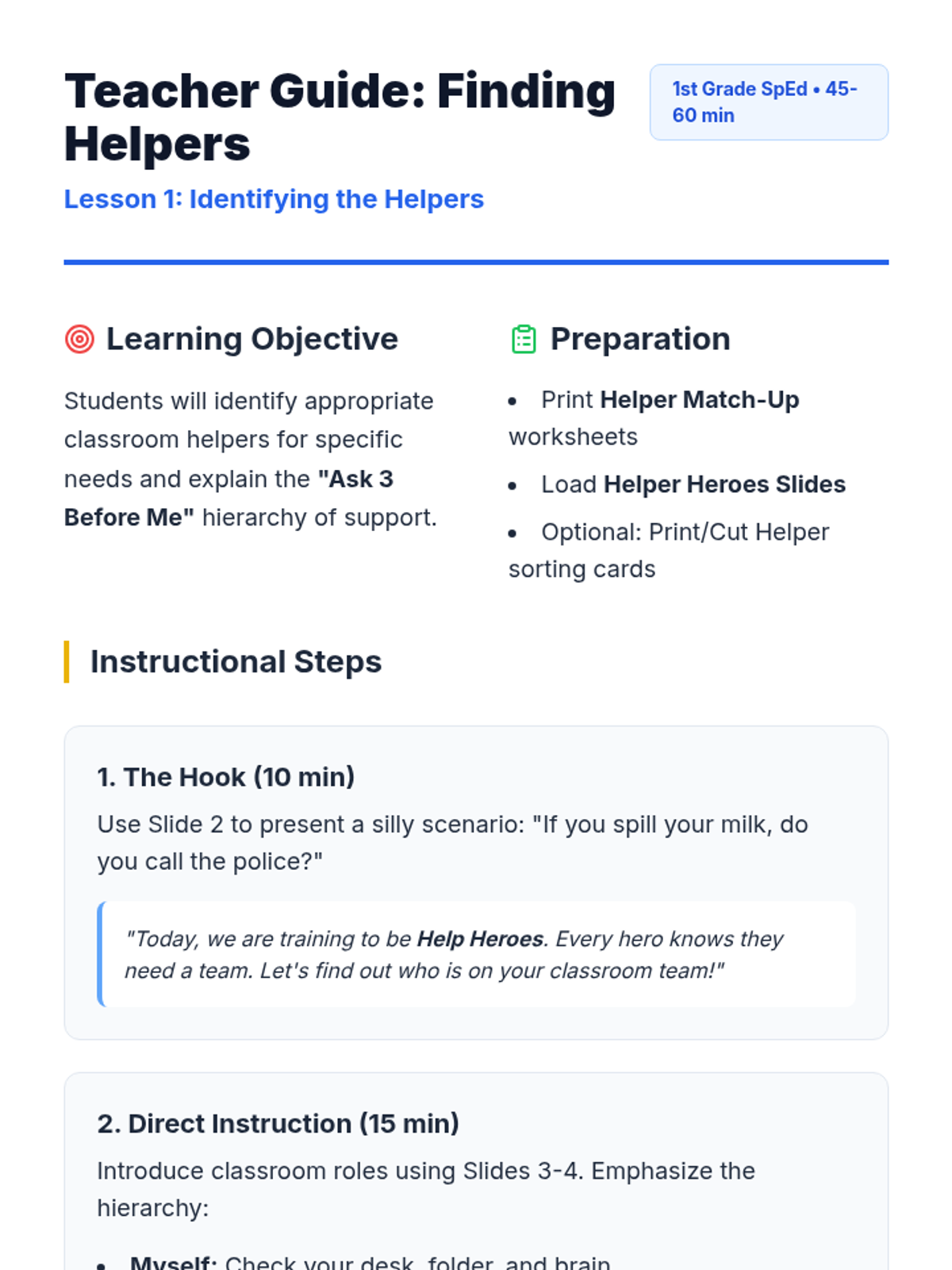
A 5-lesson sequence for 1st Grade students on identifying classroom helpers, getting attention appropriately, phrasing requests, and managing wait time. This program empowers students to advocate for their needs independently and politely.
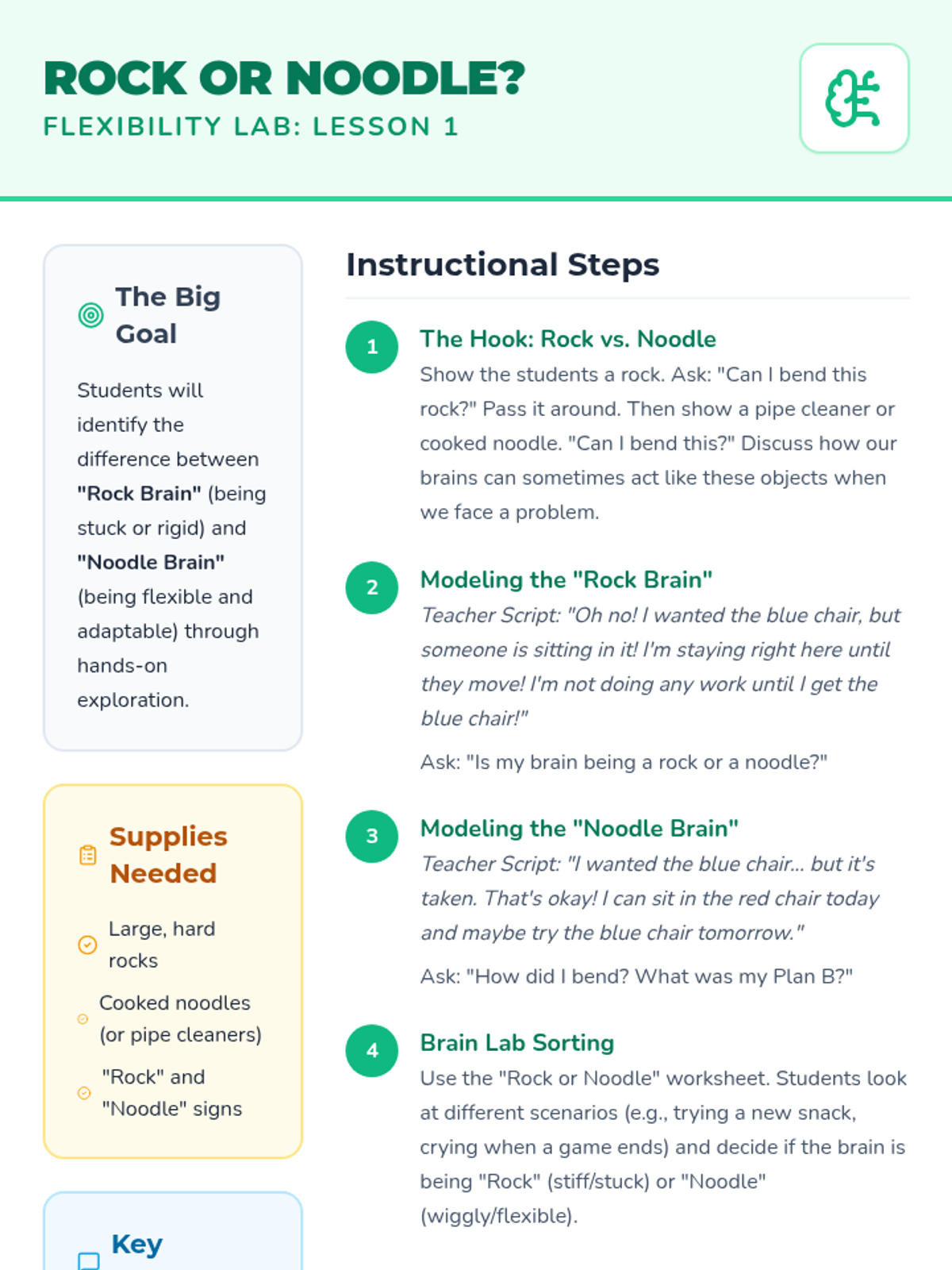
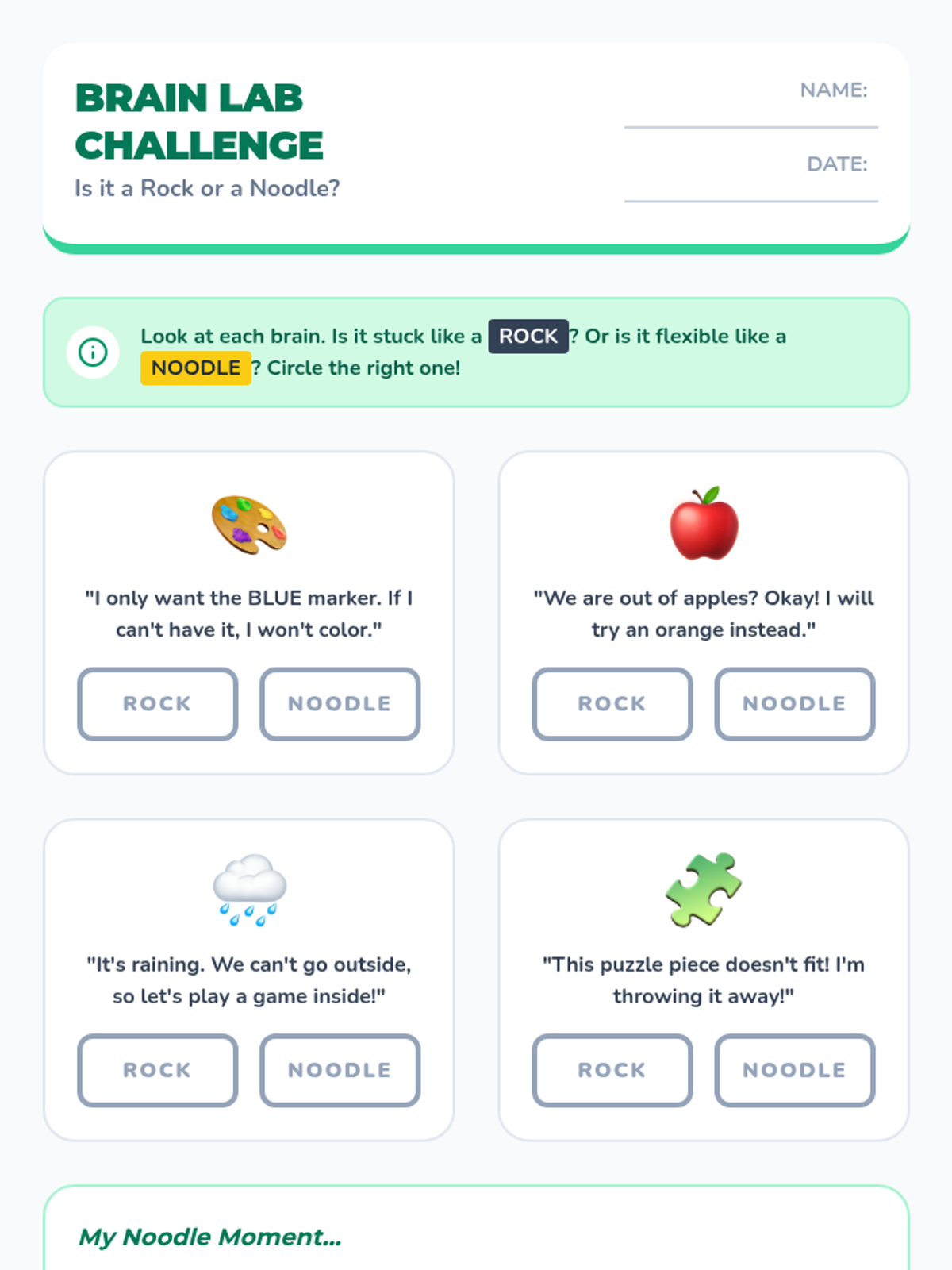
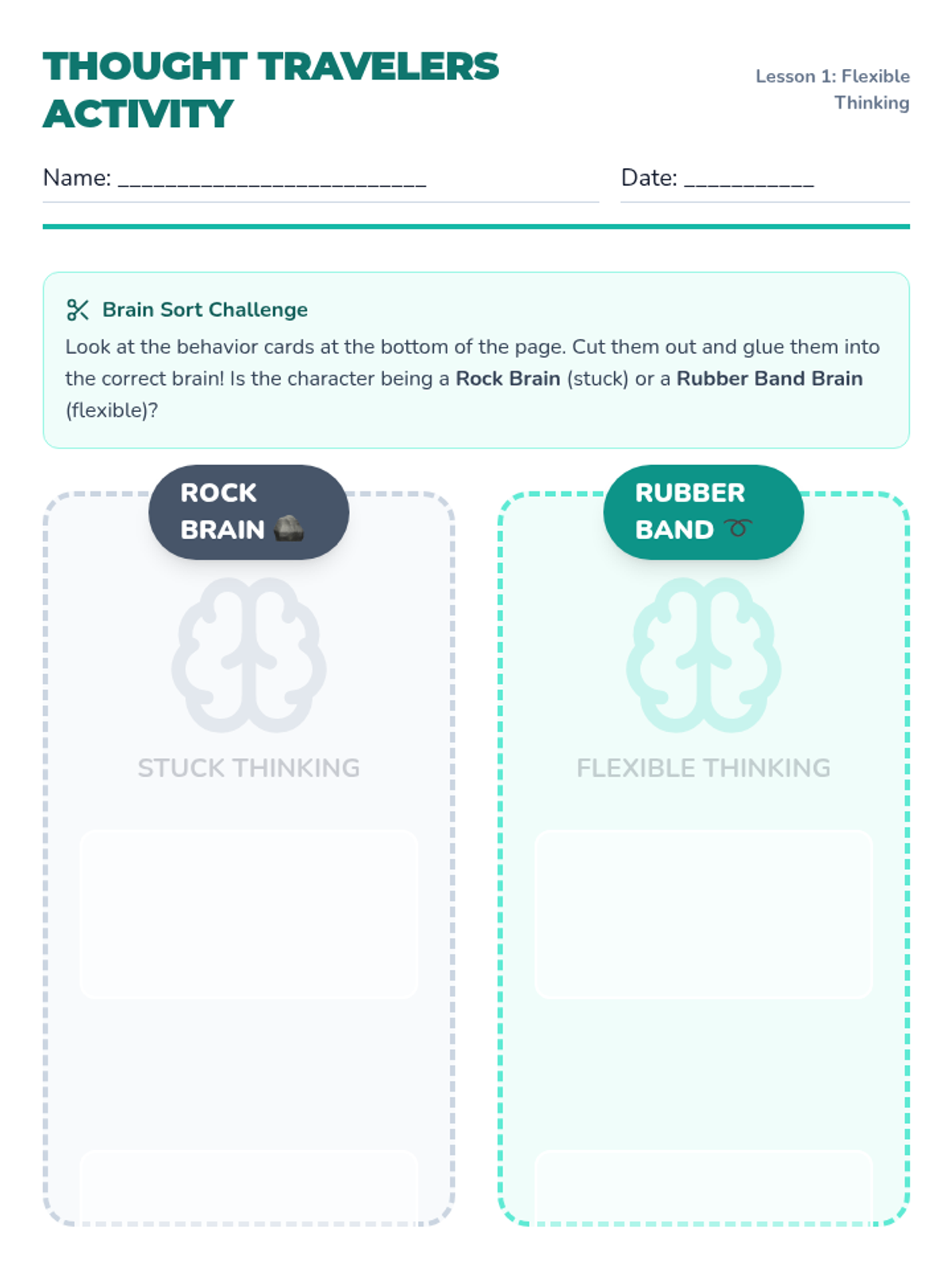
A 5-lesson unit for 1st-grade students focusing on cognitive flexibility. Students learn to navigate obstacles, tool breakage, schedule changes, and unavailability using the 'Rock Brain' vs. 'Noodle Brain' metaphor and the 'Plan B' framework.
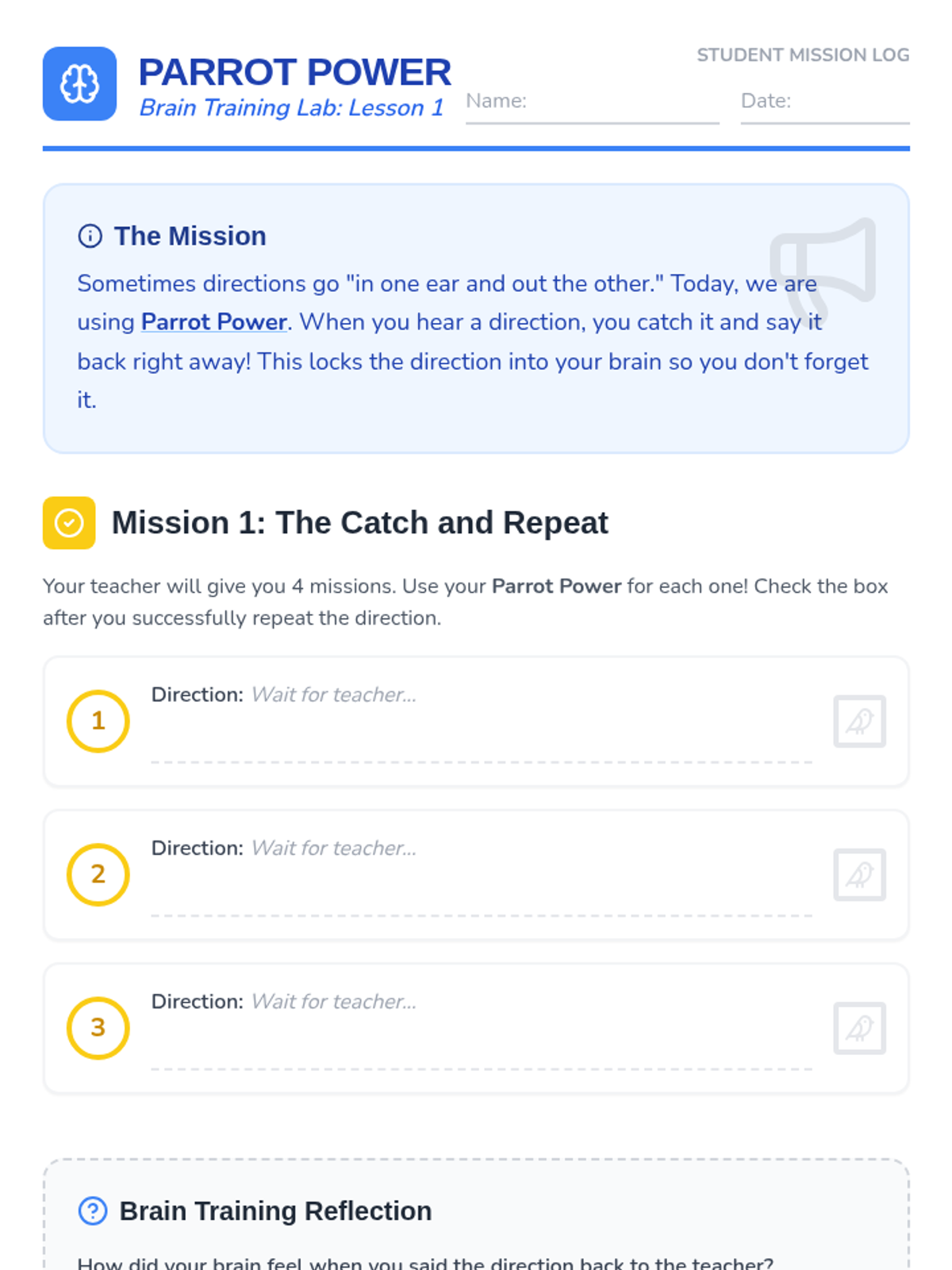
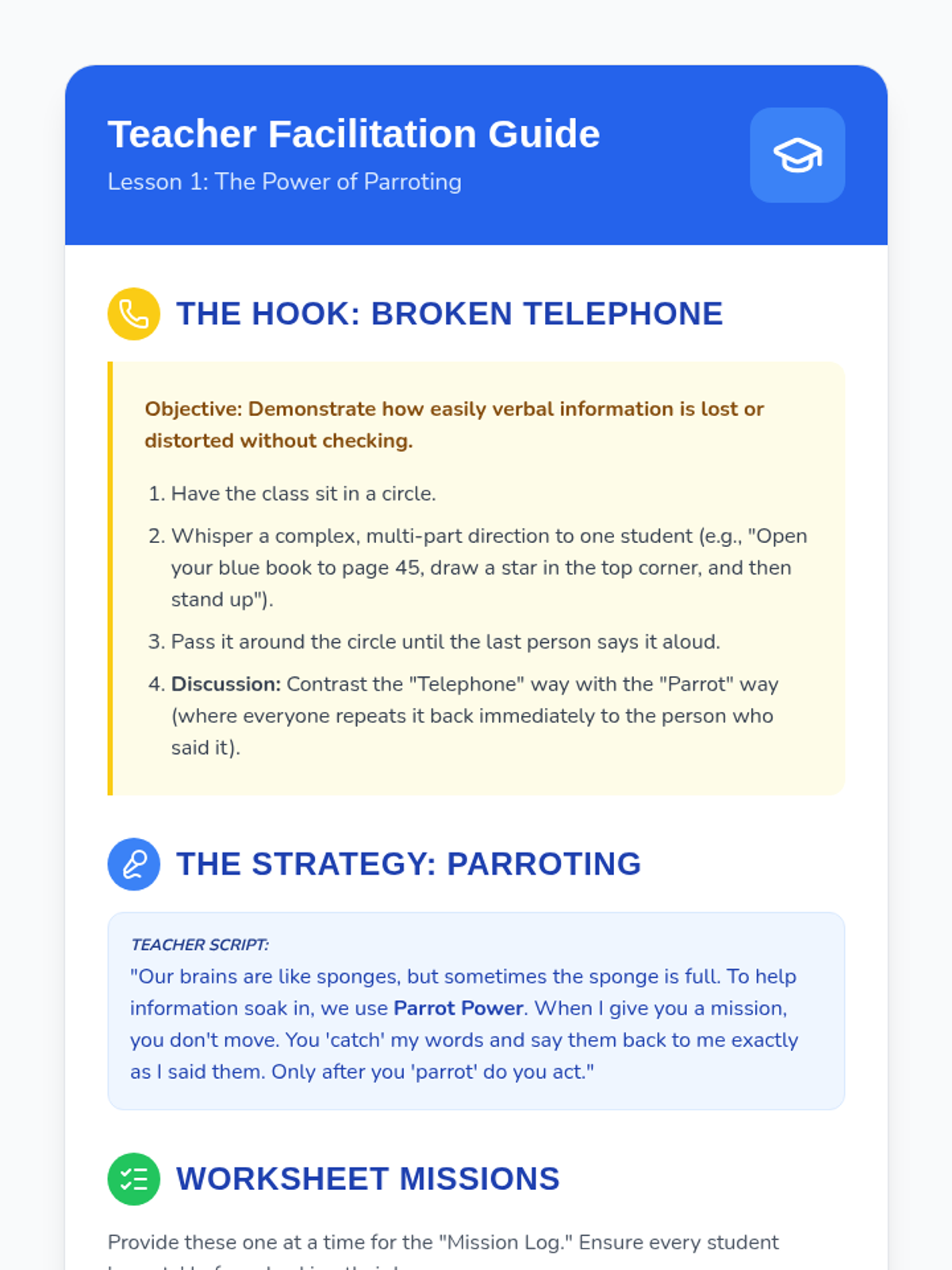
This sequence focuses on auditory processing and the cognitive strategy of verbal rehearsal (self-talk) to hold information in working memory. Students learn to 'catch' a verbal instruction, repeat it to themselves or a peer, and then execute it.
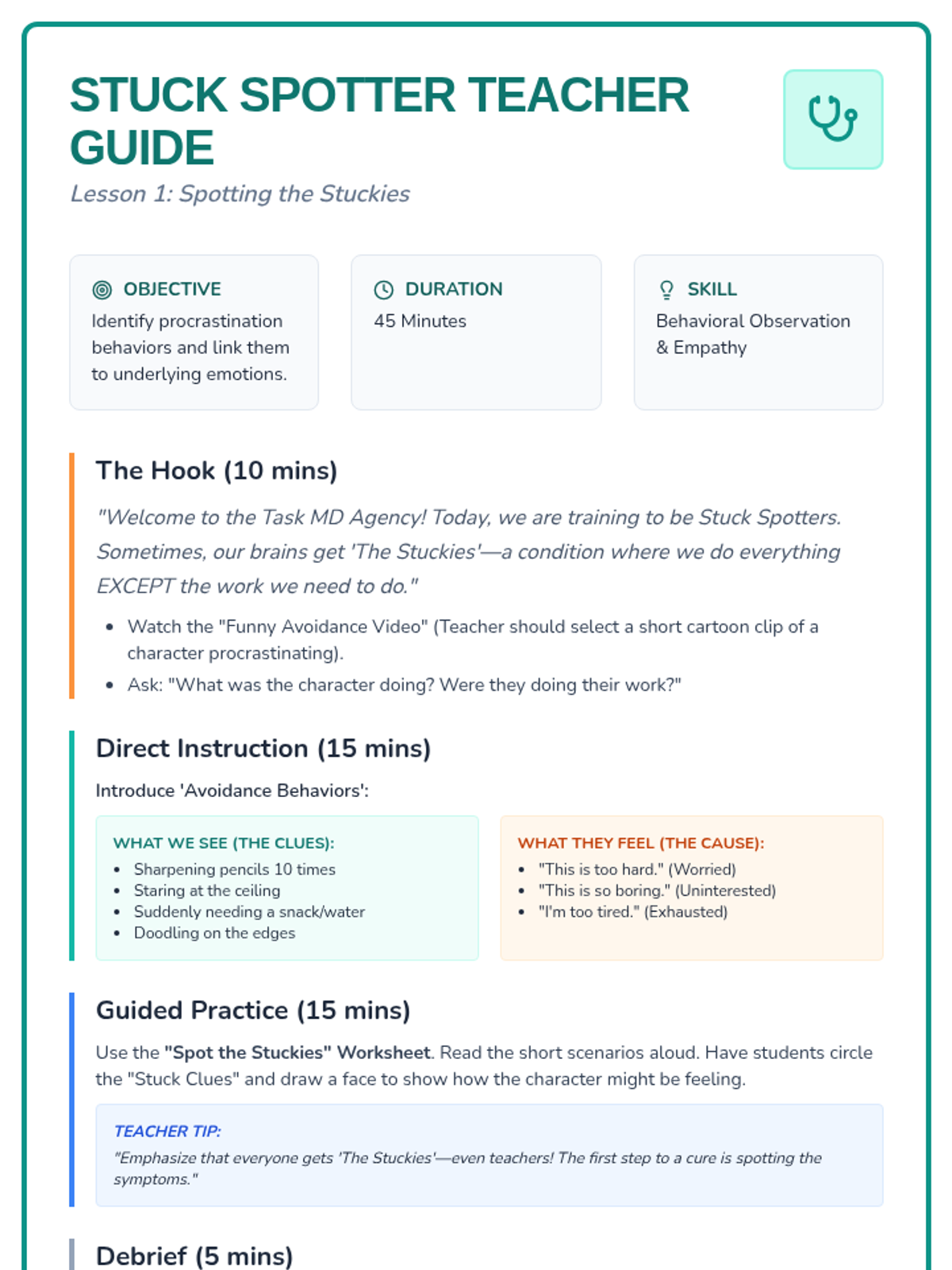
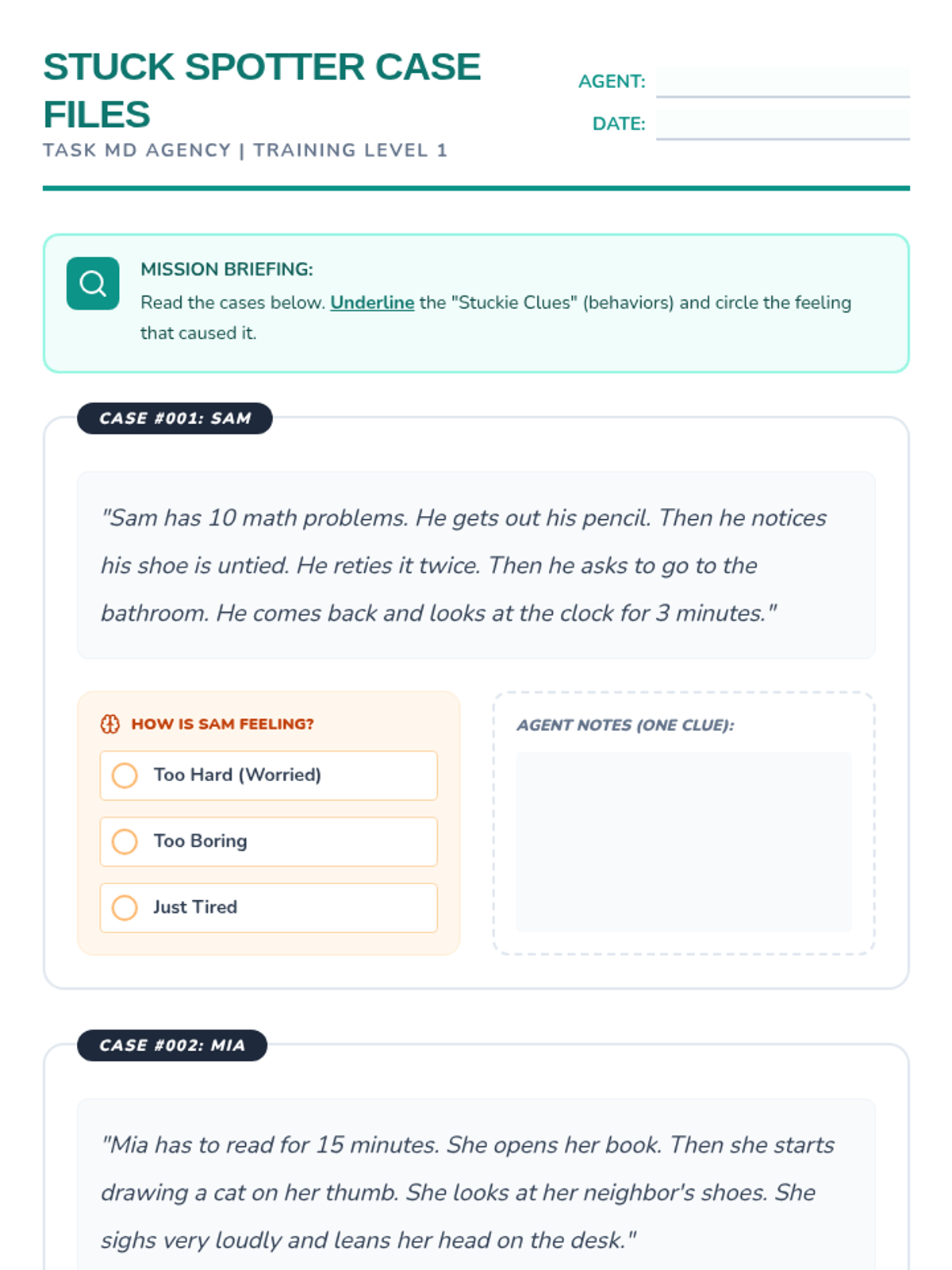
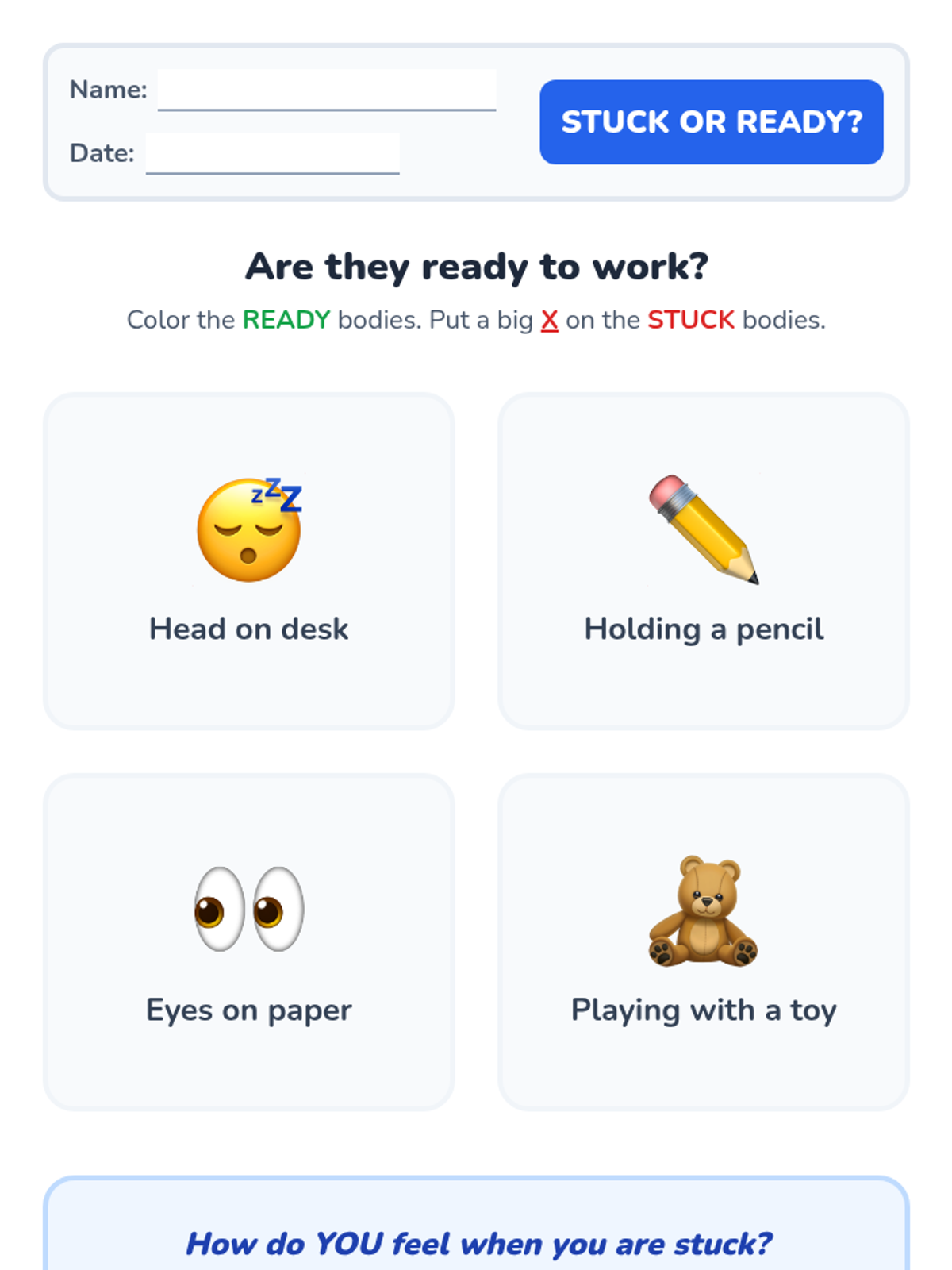
A sequence focused on helping students overcome emotional barriers to task initiation using a 'Task Doctor' theme. Students learn to identify avoidance behaviors, diagnose the root cause of being 'stuck', and prescribe effective self-talk solutions through role-play and reflection.
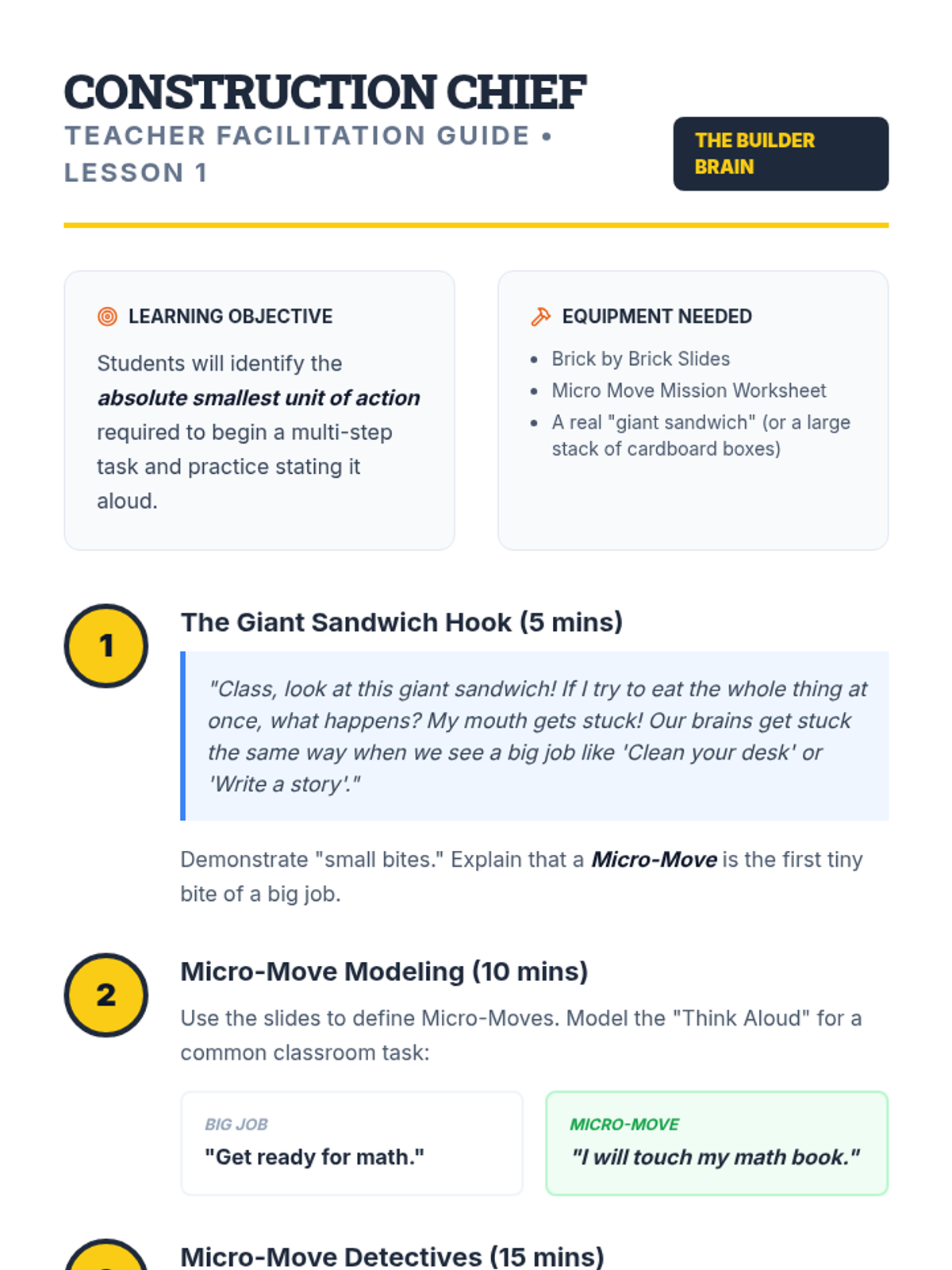
Students learn to use verbal prompts to break complex tasks down into manageable actions. The sequence moves from identifying the immediate first step to narrating a sequence of actions and troubleshooting challenges.
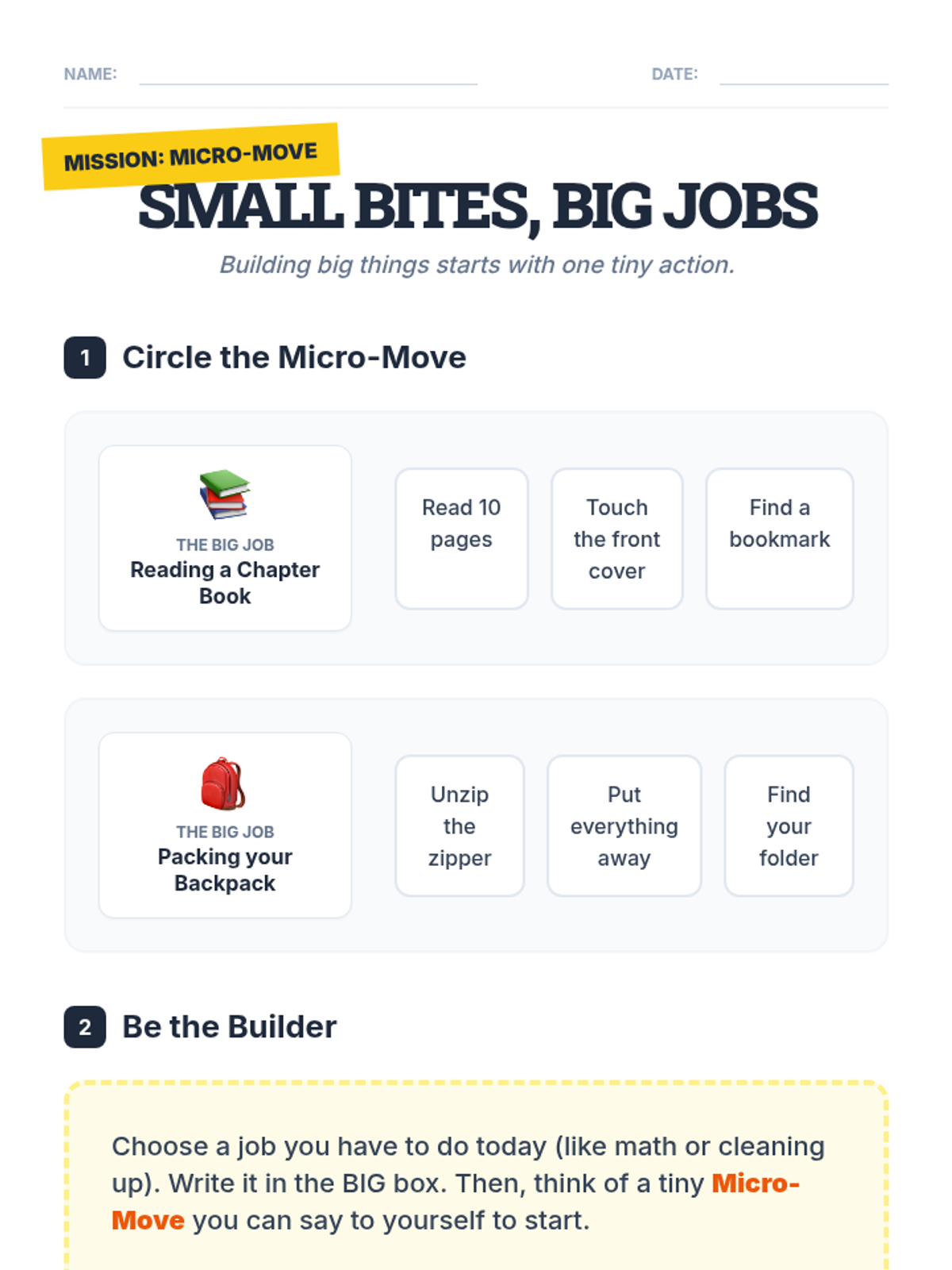
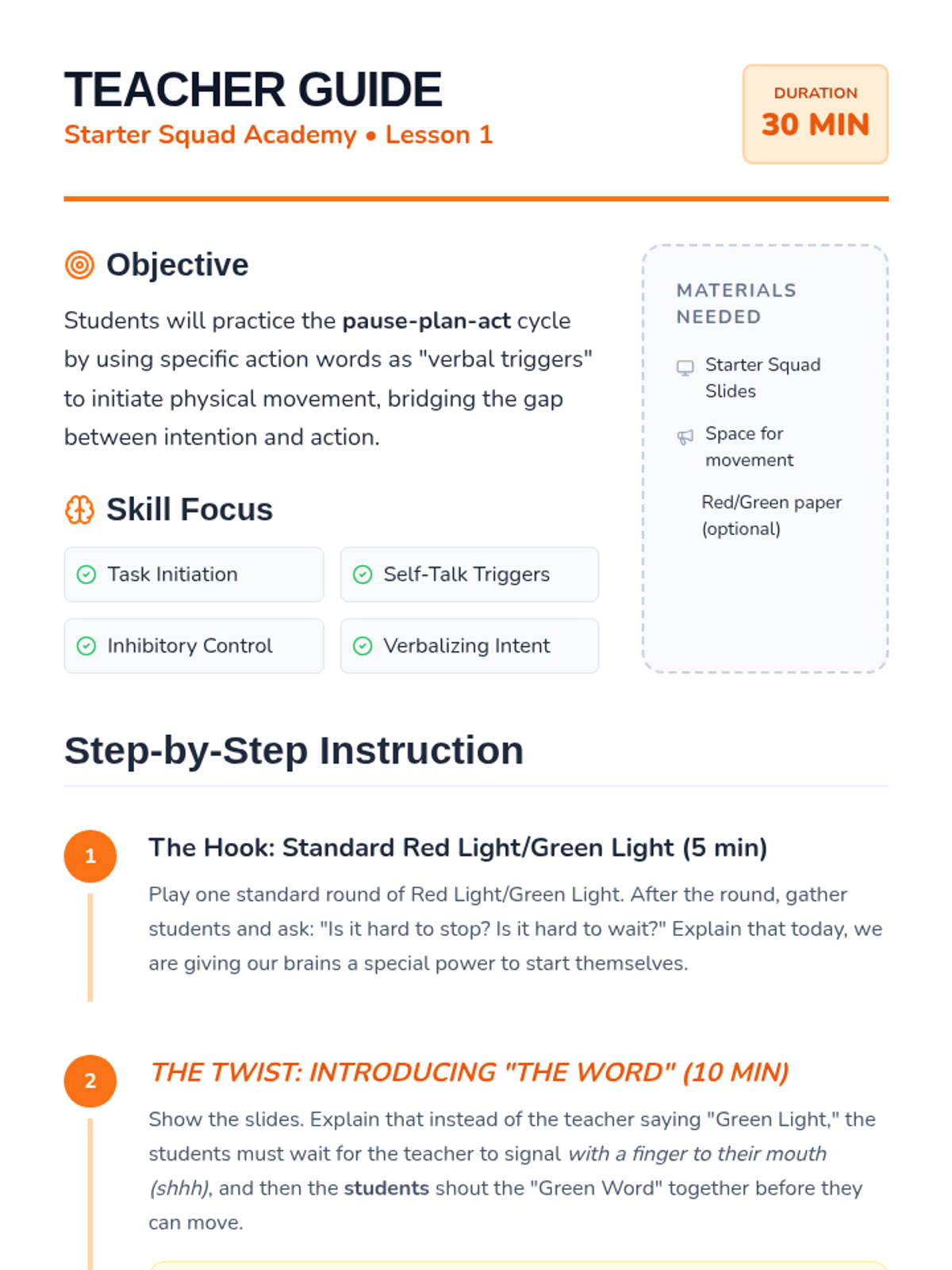
A gamified sequence for 1st graders to master task initiation through verbal self-talk triggers, using physical games and simulations to make executive functioning concrete.
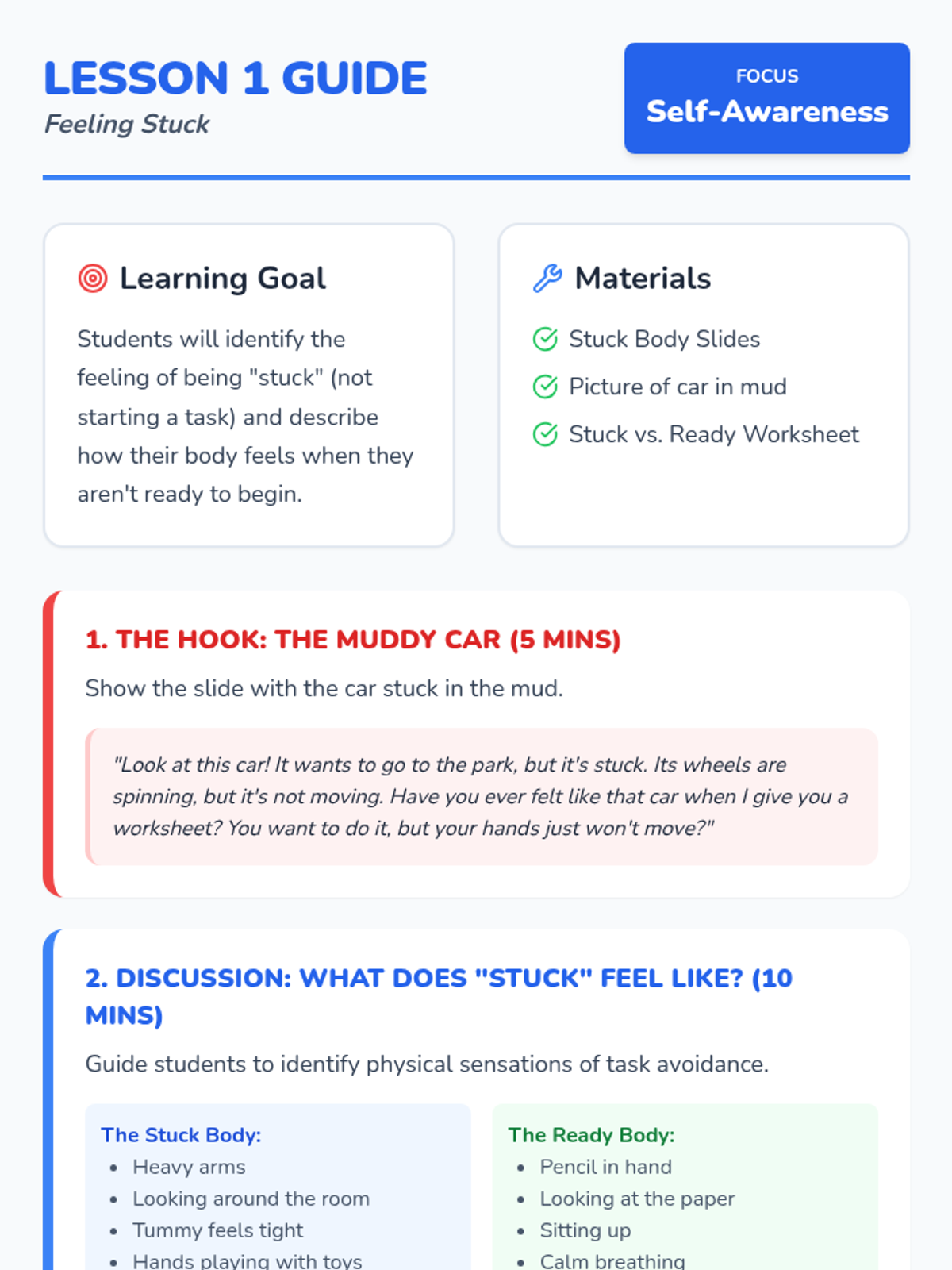
A 5-lesson sequence designed for 1st-grade students, particularly those in special education, to develop internal scripts for overcoming task initiation hurdles. Students learn to identify 'stuck' feelings, introduce an 'inner coach,' and master a simple 'First I will... then I will...' formula to get started on tasks independently.
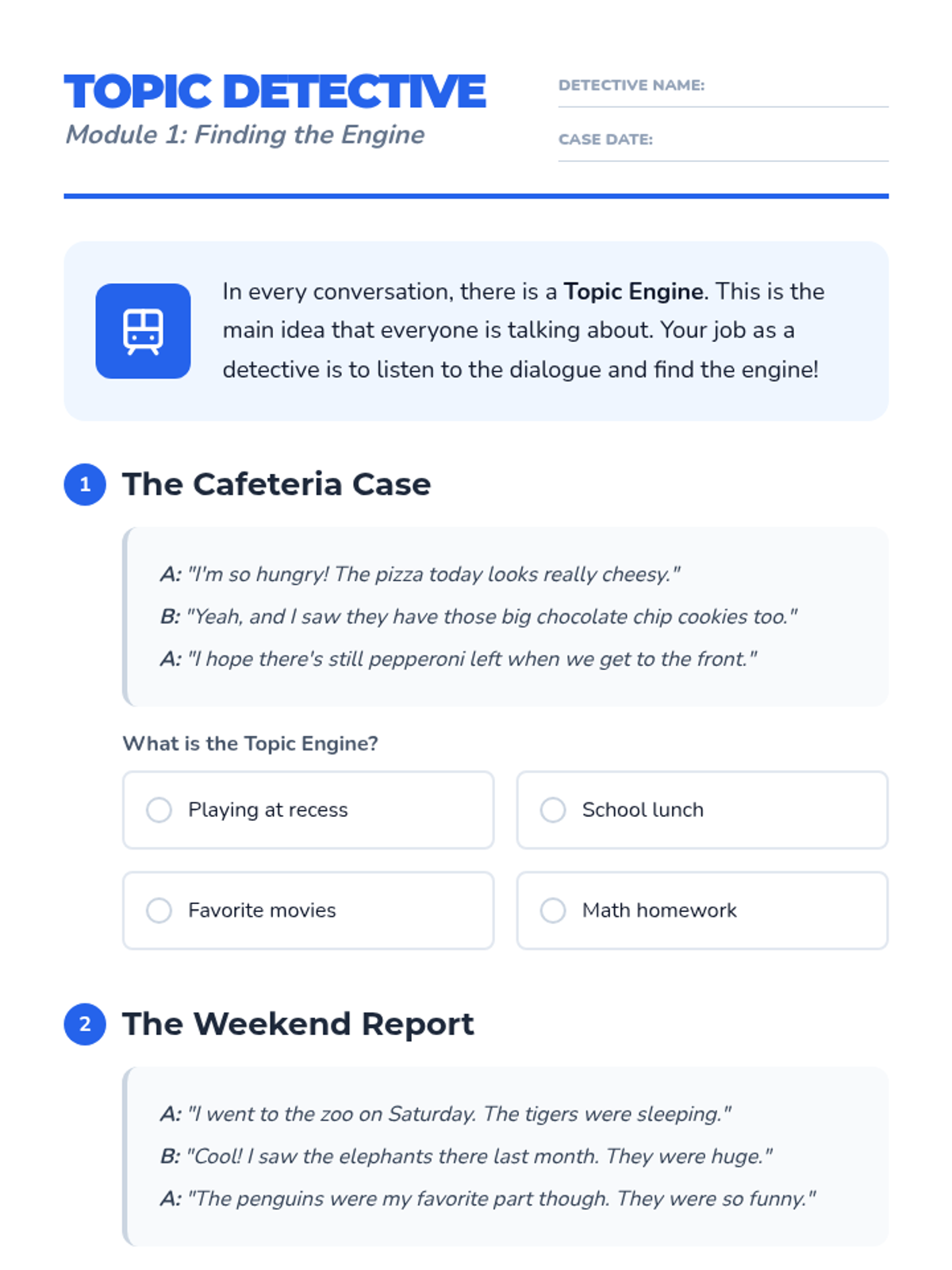
A game-based sequence focused on topic maintenance, using the 'Conversation Train' metaphor to help students visualize linear coherence, filter relevance, and utilize smooth transitions in discussion.
A 1st-grade organizational sequence focused on executive functioning skills related to paper management, folder routines, and backpack maintenance to support home-school communication and classroom flow.
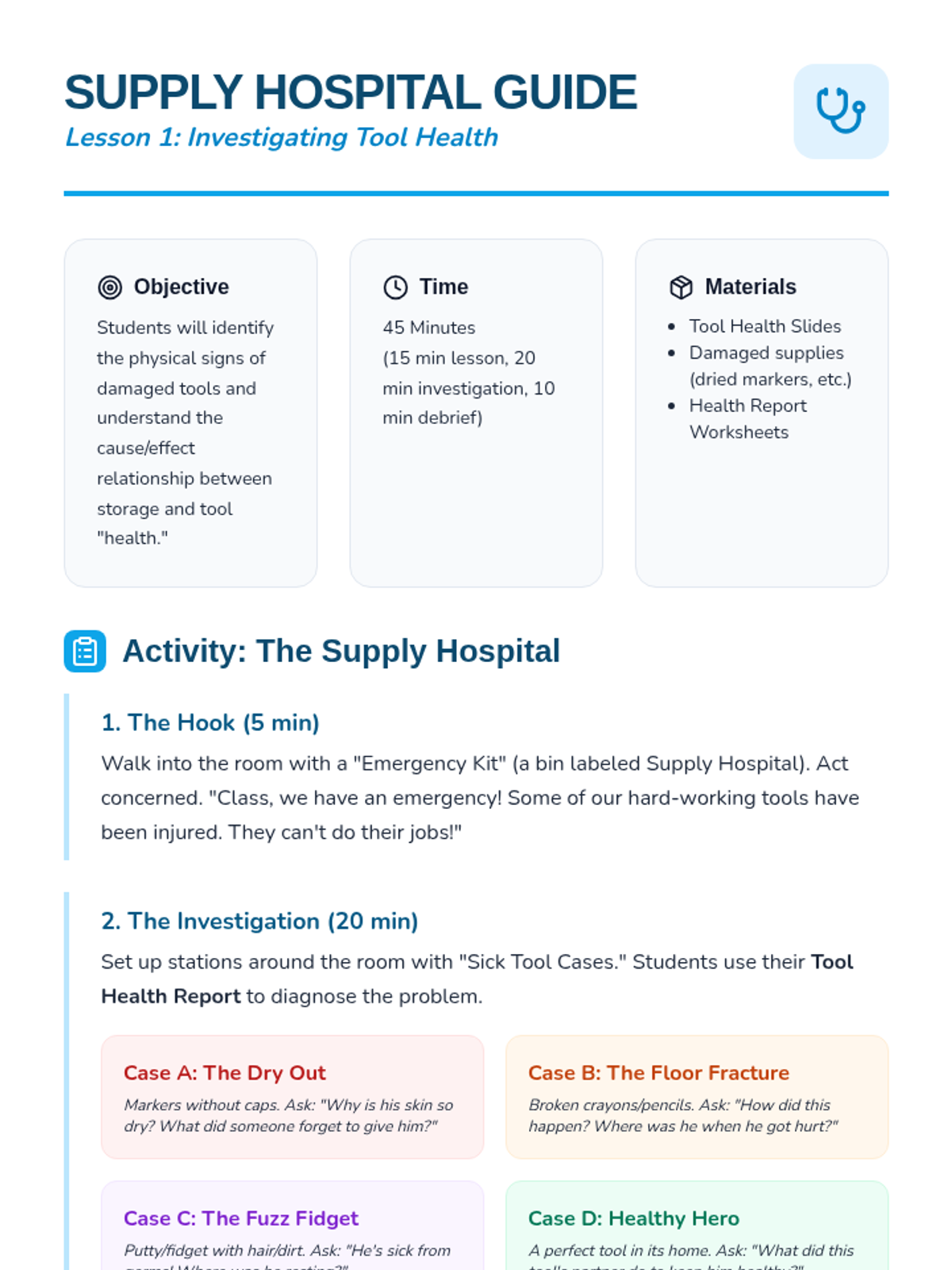
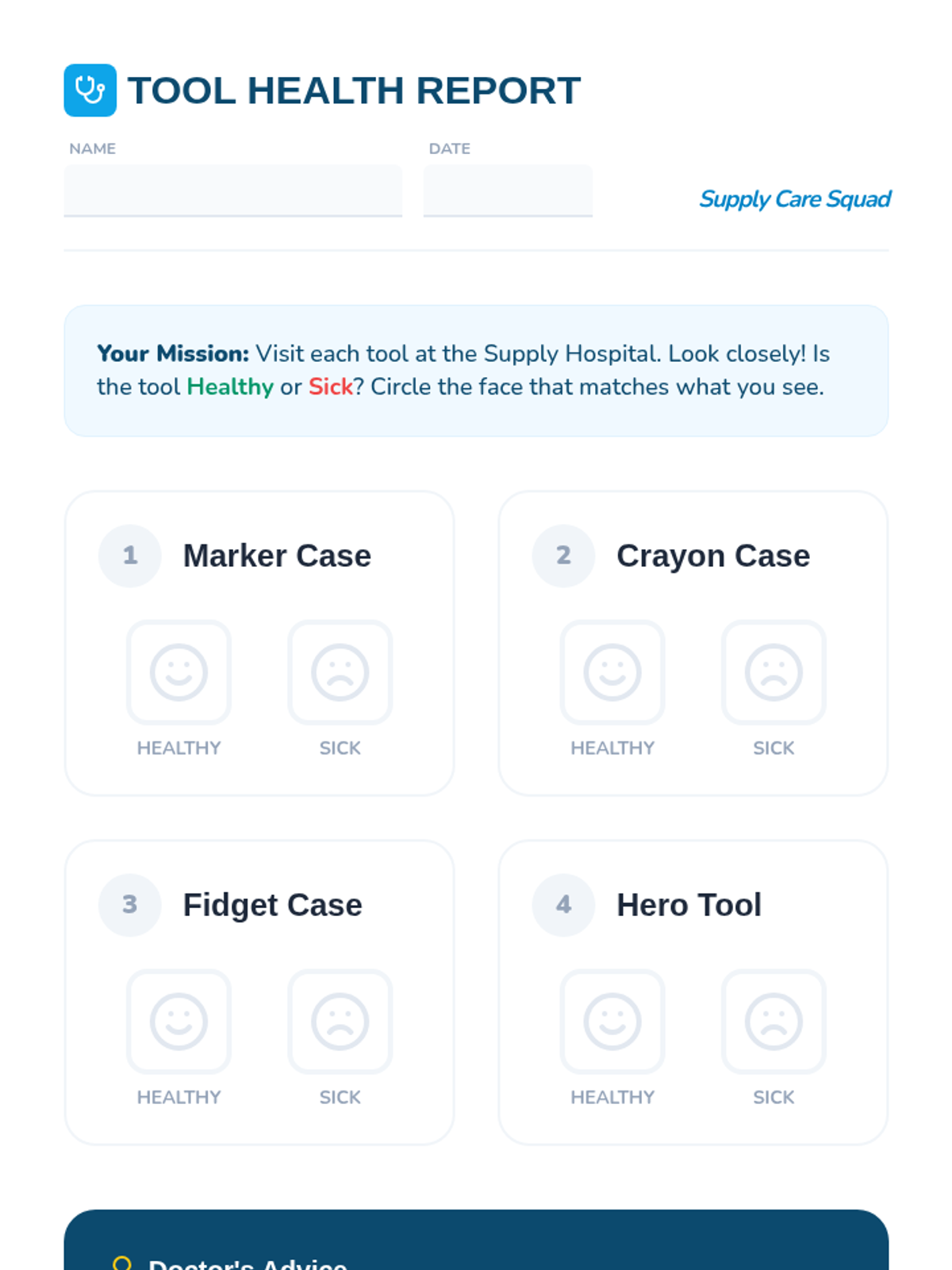
This sequence teaches 1st Grade students how to manage and care for sensory tools and community supplies through a theme of material 'health' and responsibility. Students learn to distinguish between well-cared-for and damaged tools, understand specialized storage for sensory items, practice check-out systems, and collaborate on shared supply organization.
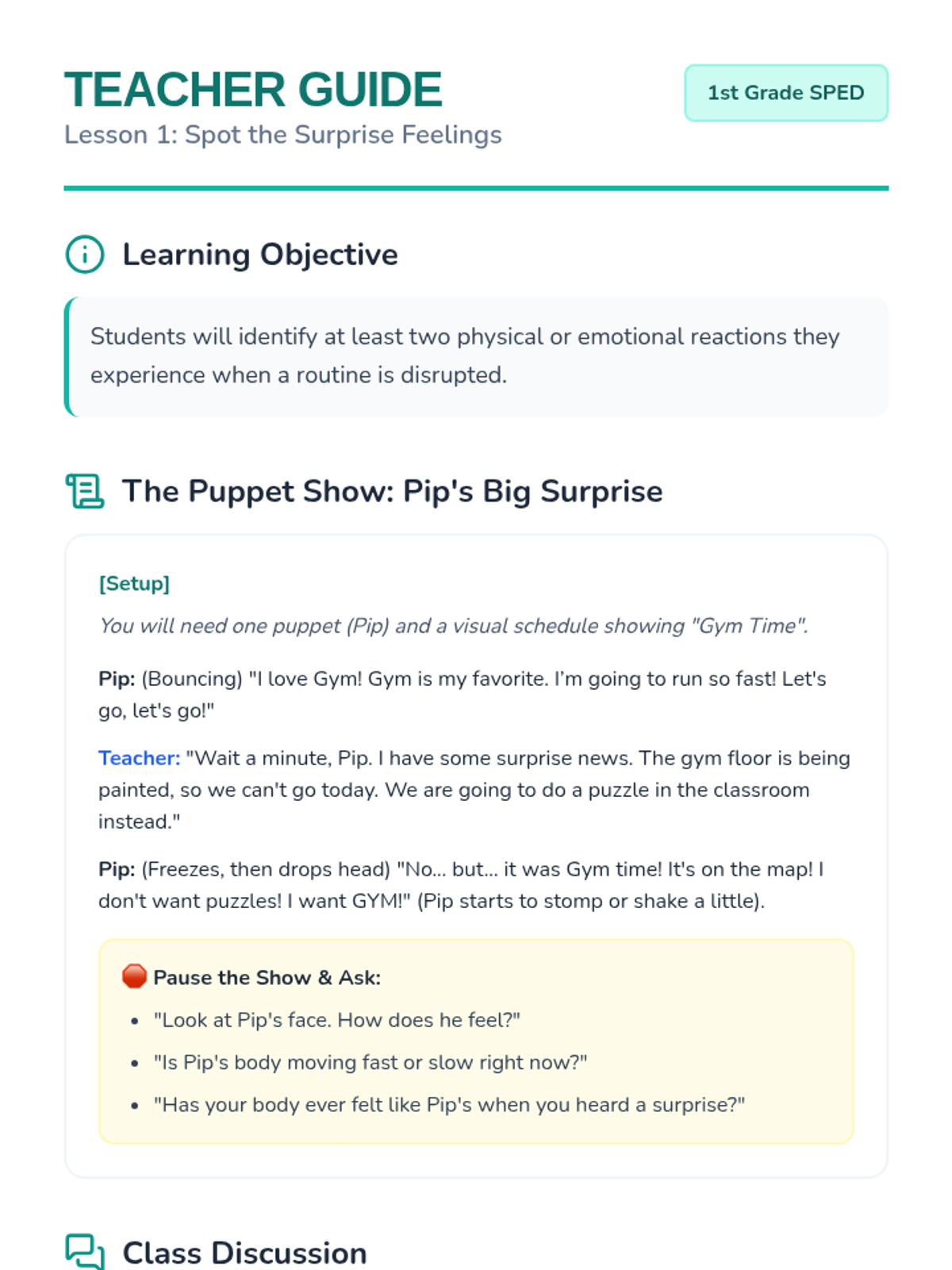
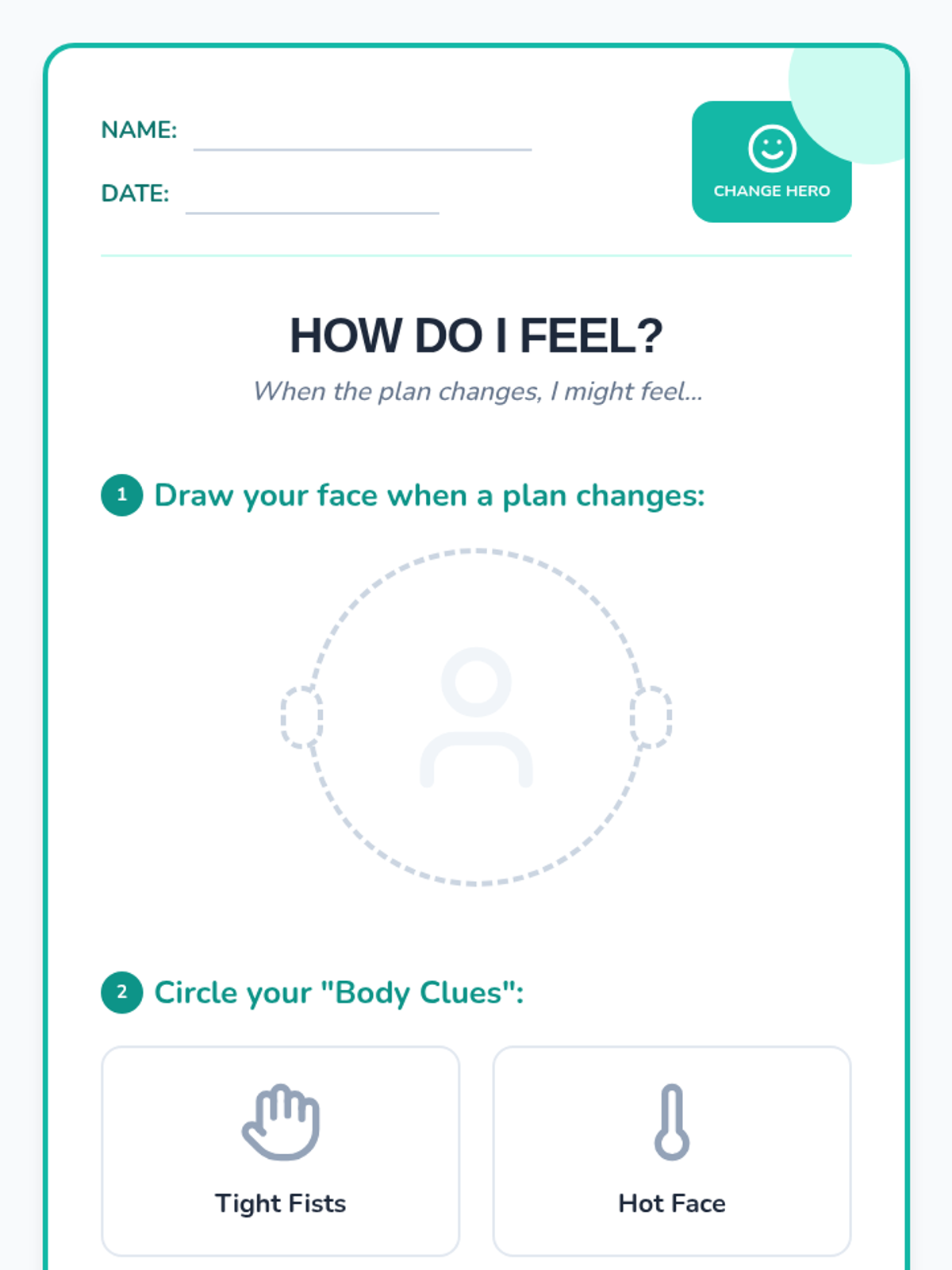
A 5-lesson sequence for 1st Grade students focusing on emotional regulation when plans change. Students learn to identify feelings of disappointment, use a 'Pause Button' technique, practice breathing, use positive self-talk, and apply these skills in real-time simulations.
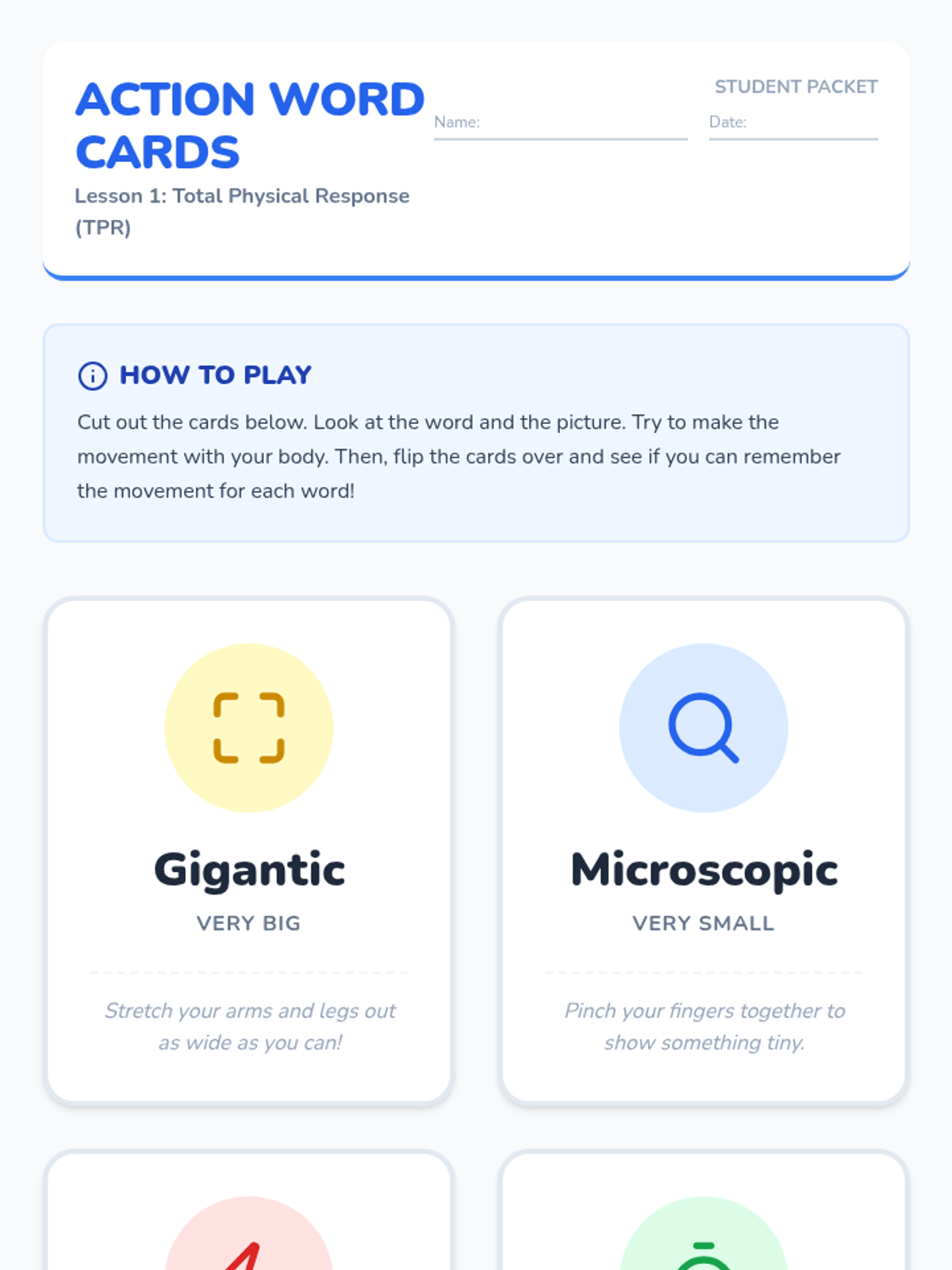
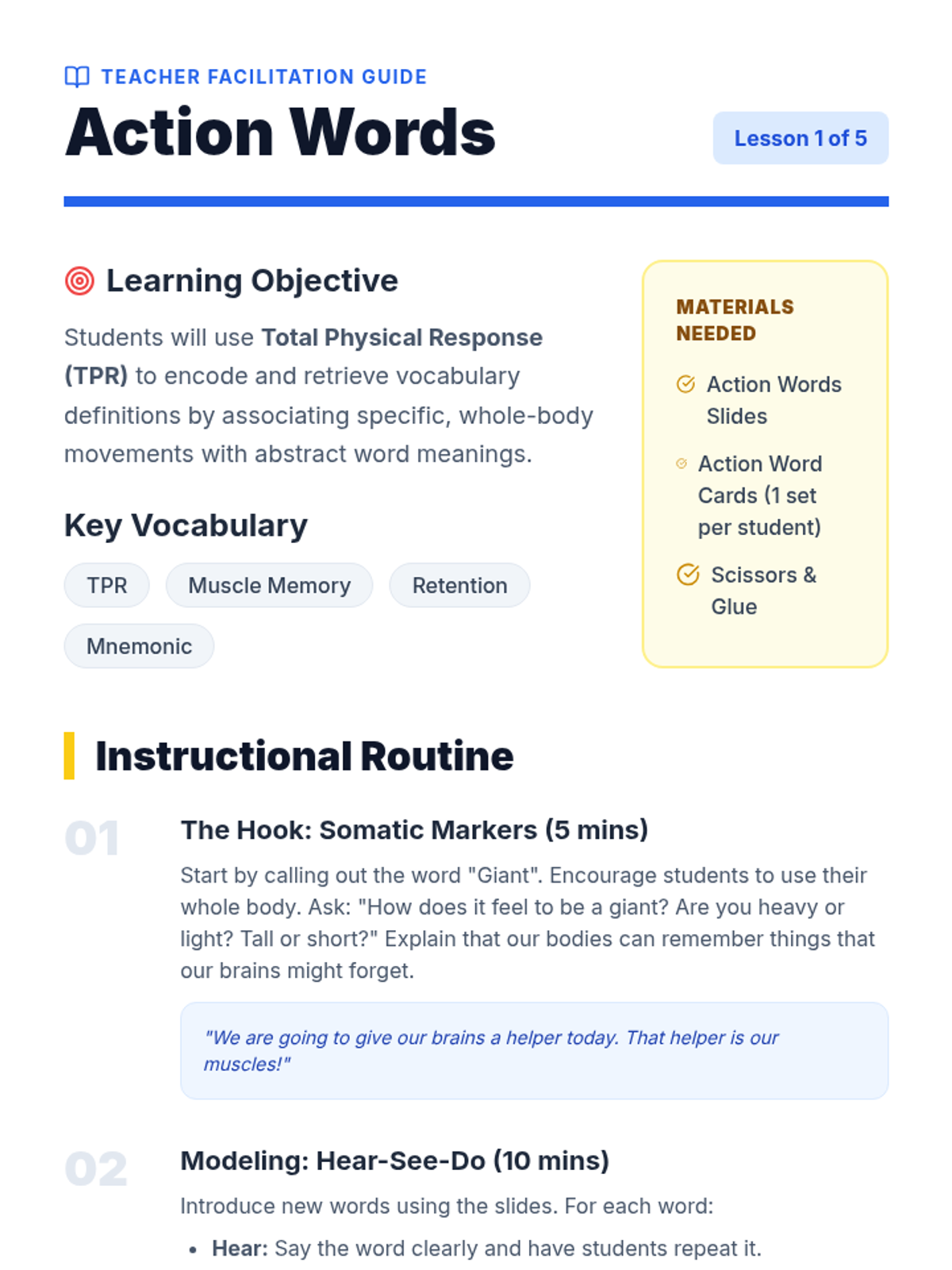
A 1st-grade sequence focused on using kinesthetic strategies like TPR, body-mapping, and movement sequences to improve working memory and information retention. Students learn to use their bodies as a tool for encoding and retrieving data.
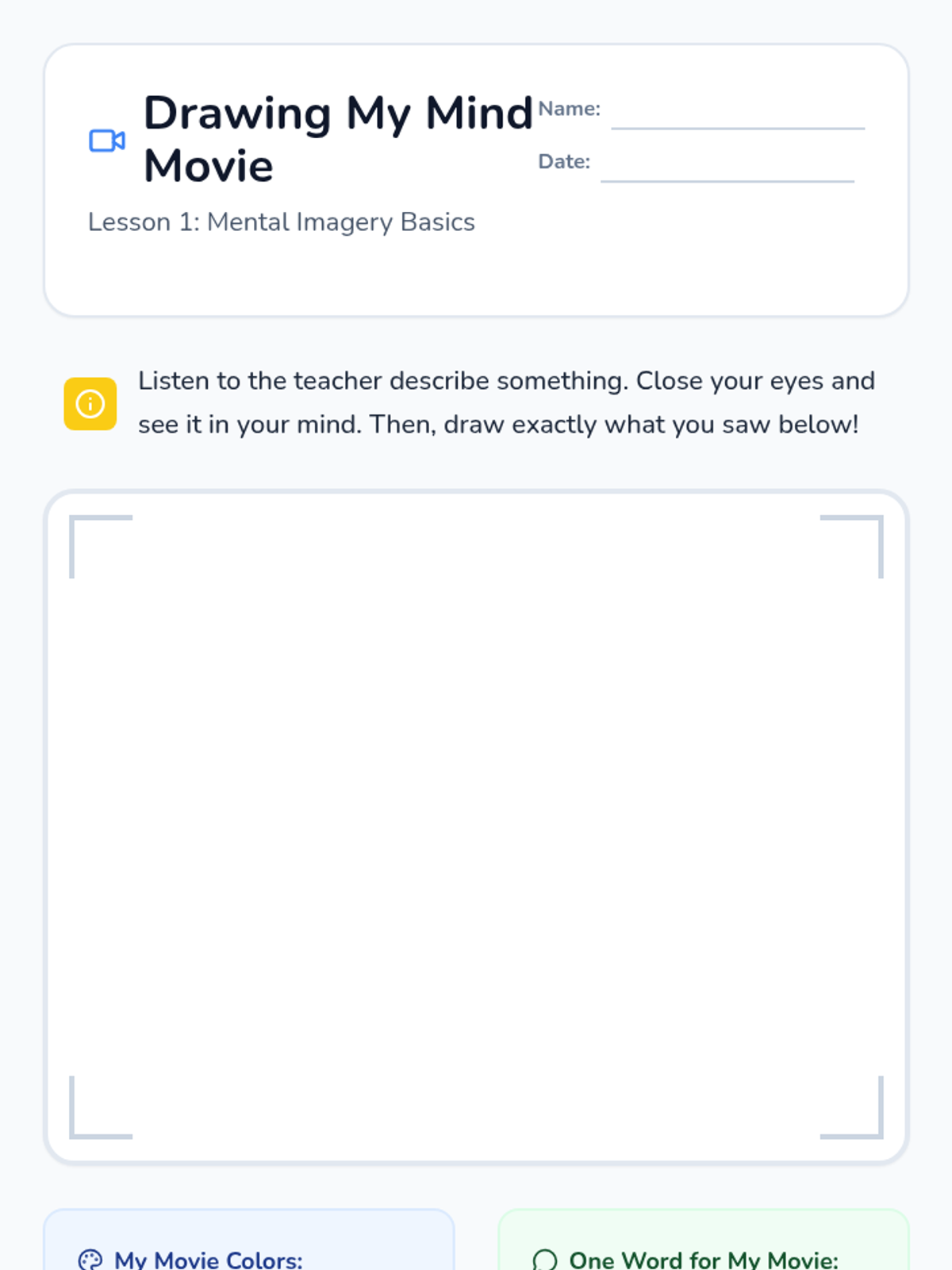
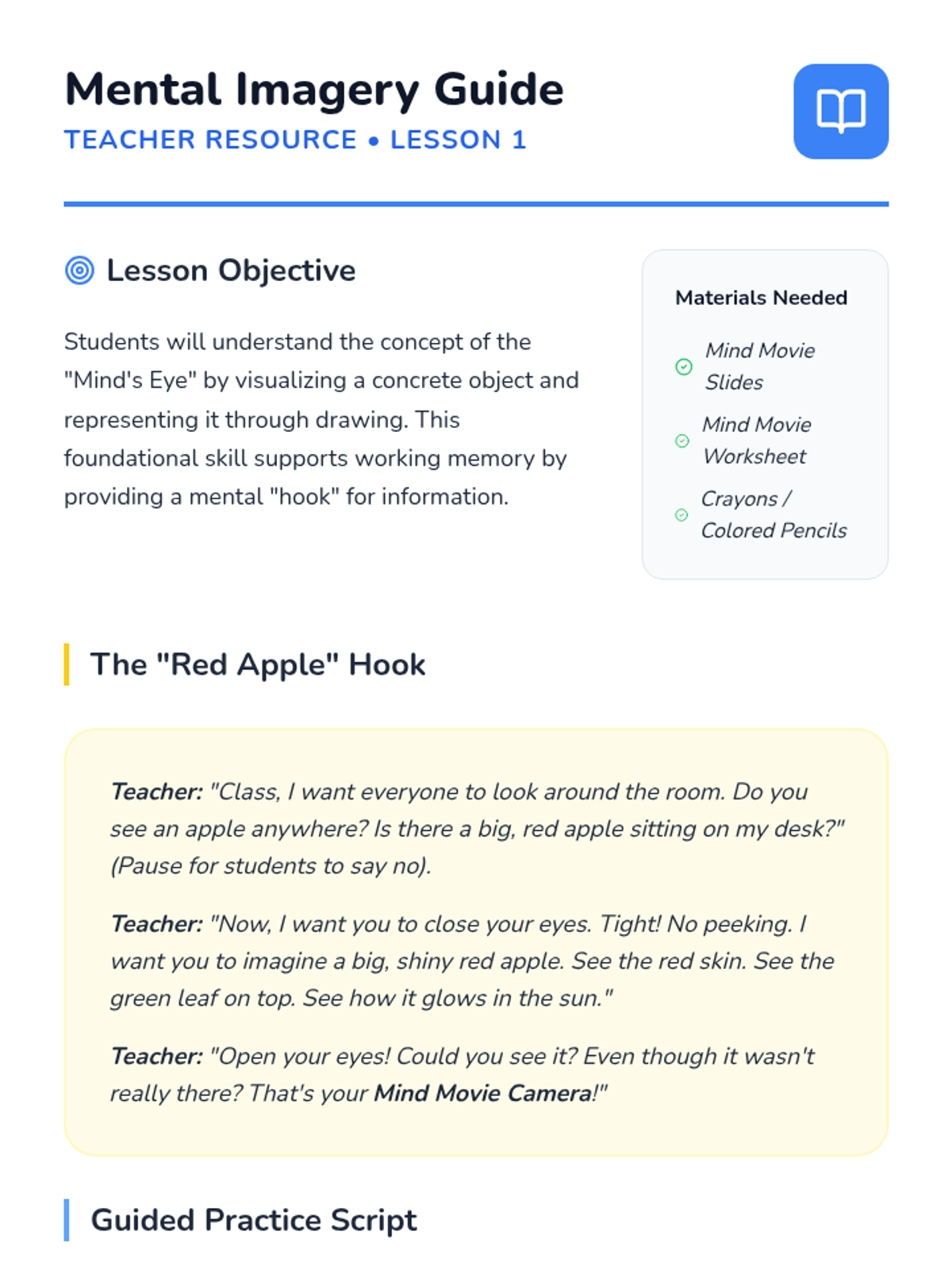
This sequence introduces first-grade students to visualization as a primary tool for holding information in their working memory. Students learn to create 'mental movies' to support listening comprehension and recall of multi-step instructions.
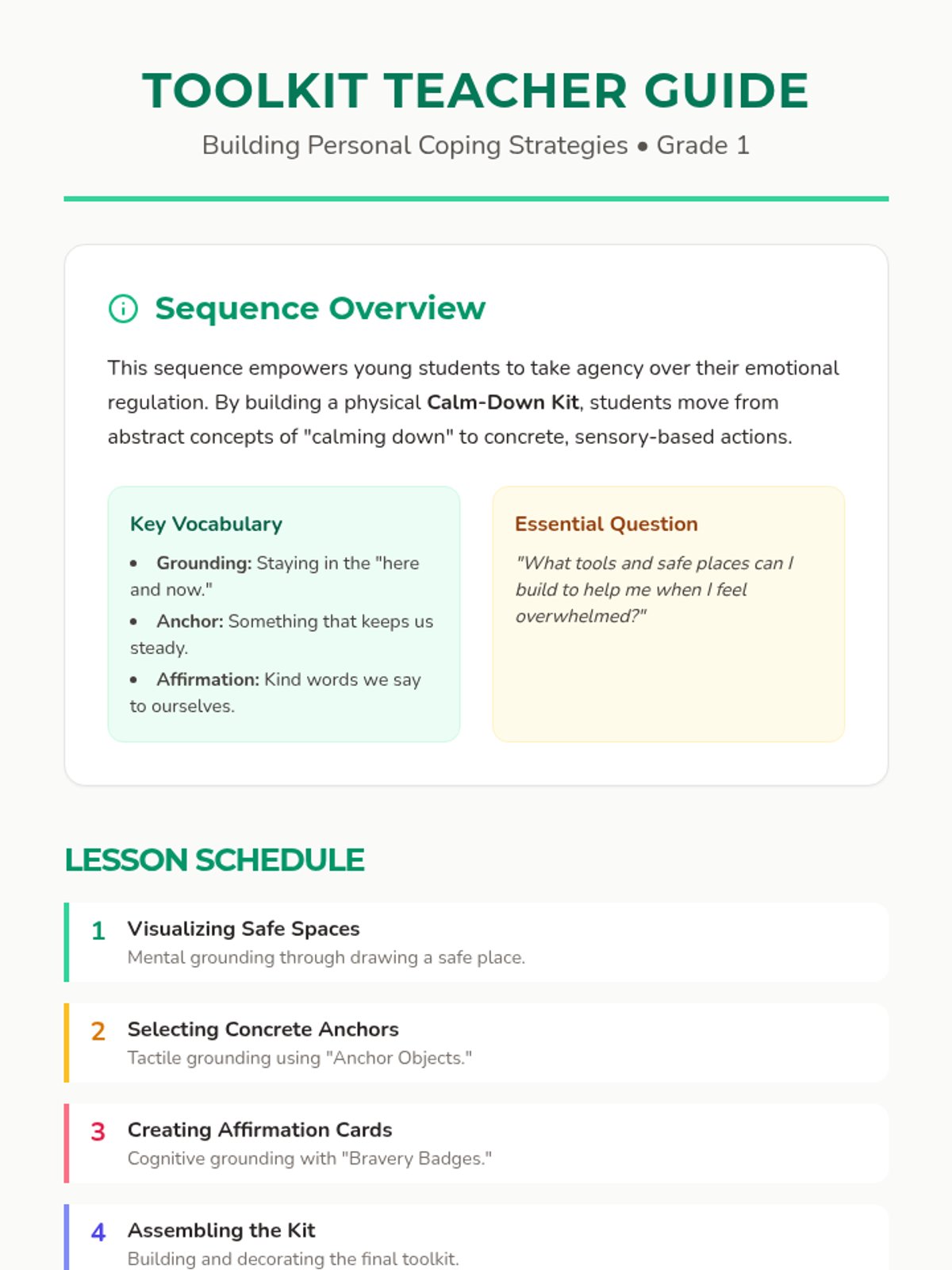
A project-based sequence for 1st graders to build physical and mental 'Calm-Down Kits'. Students identify safe spaces, tactile anchors, and positive affirmations to manage overwhelming feelings.
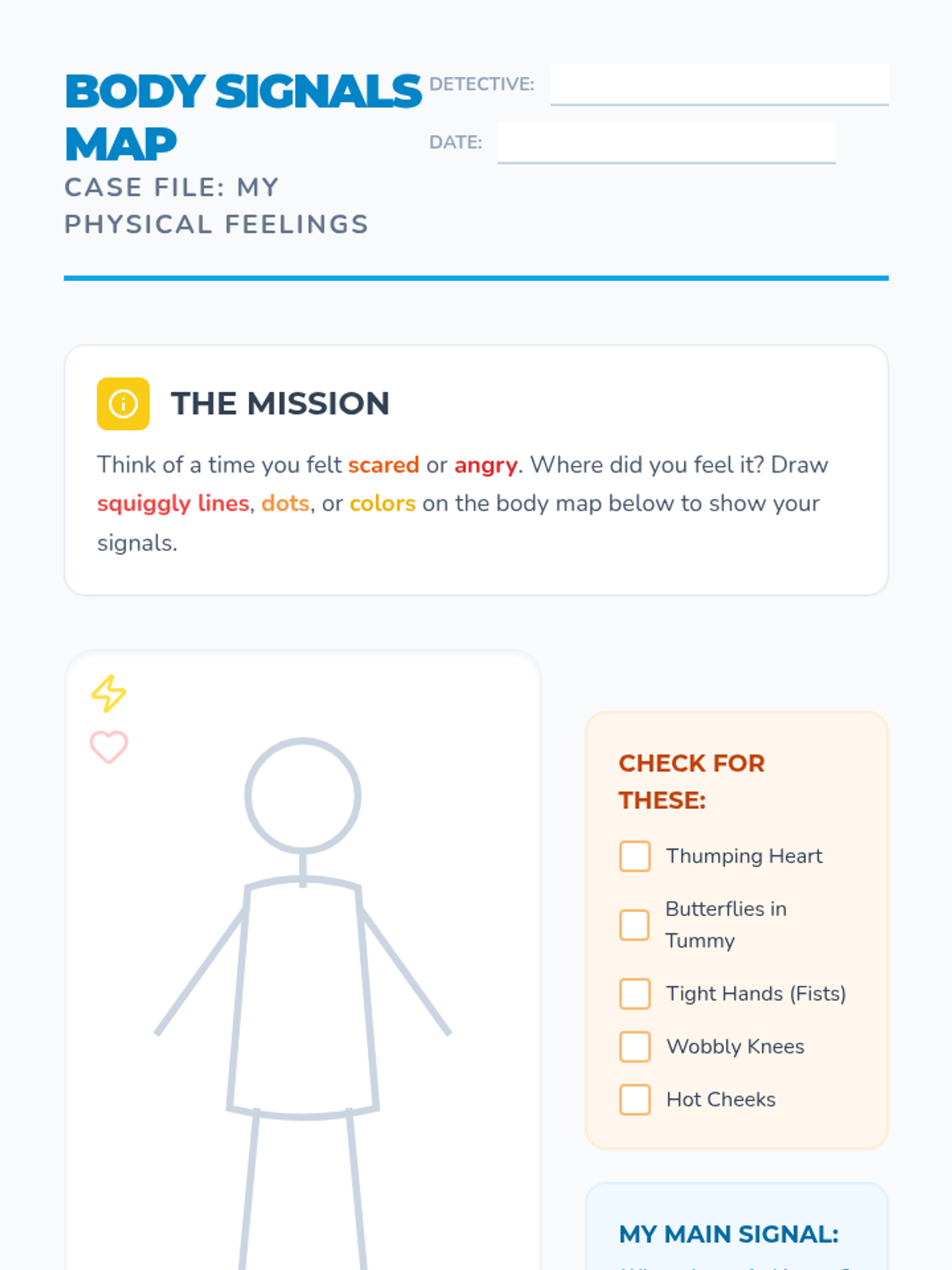
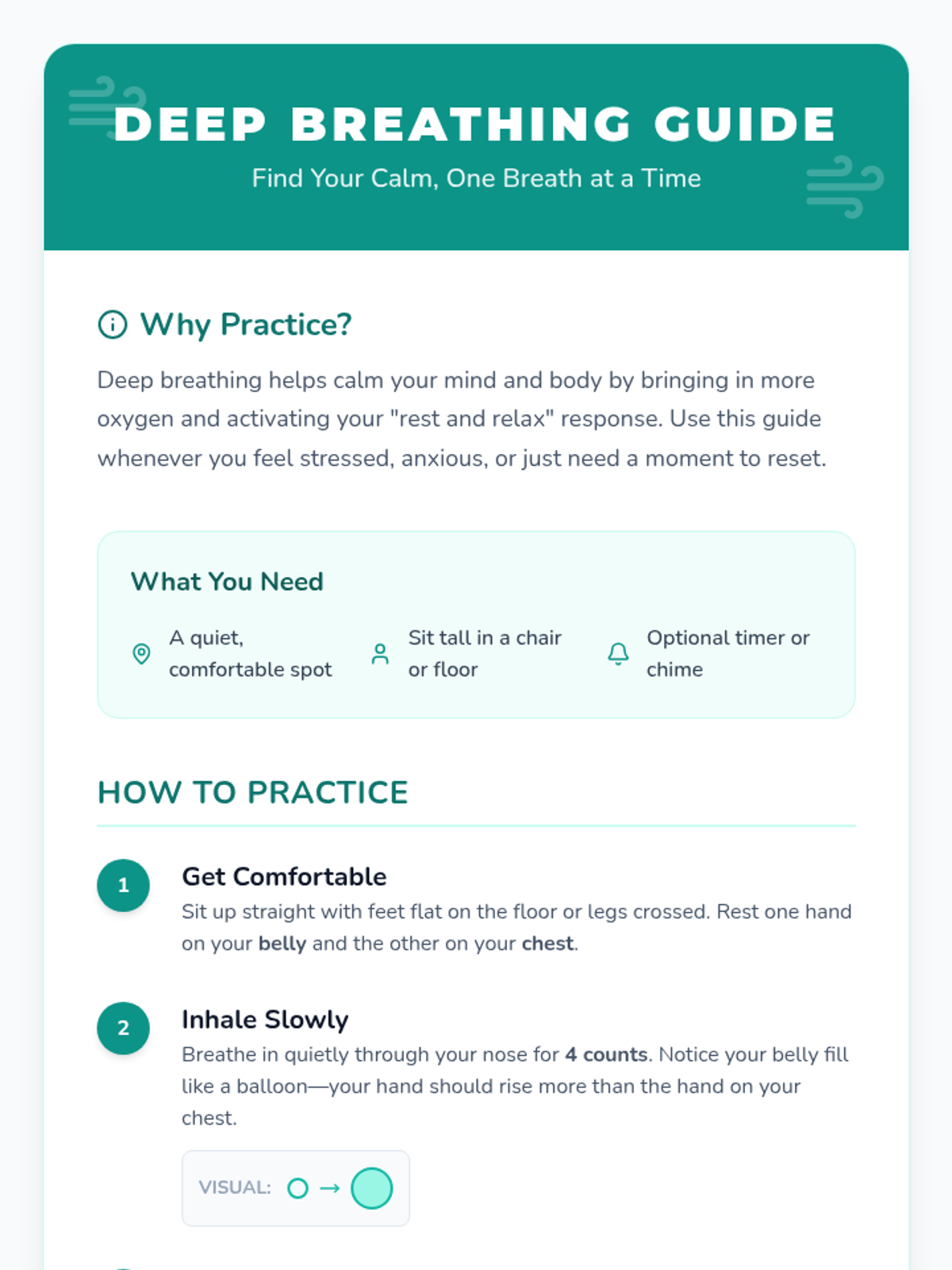
A 5-lesson series for 1st graders focusing on somatic grounding techniques, teaching students to recognize body signals, master belly breathing, release muscle tension, and build physical stability to manage distress.
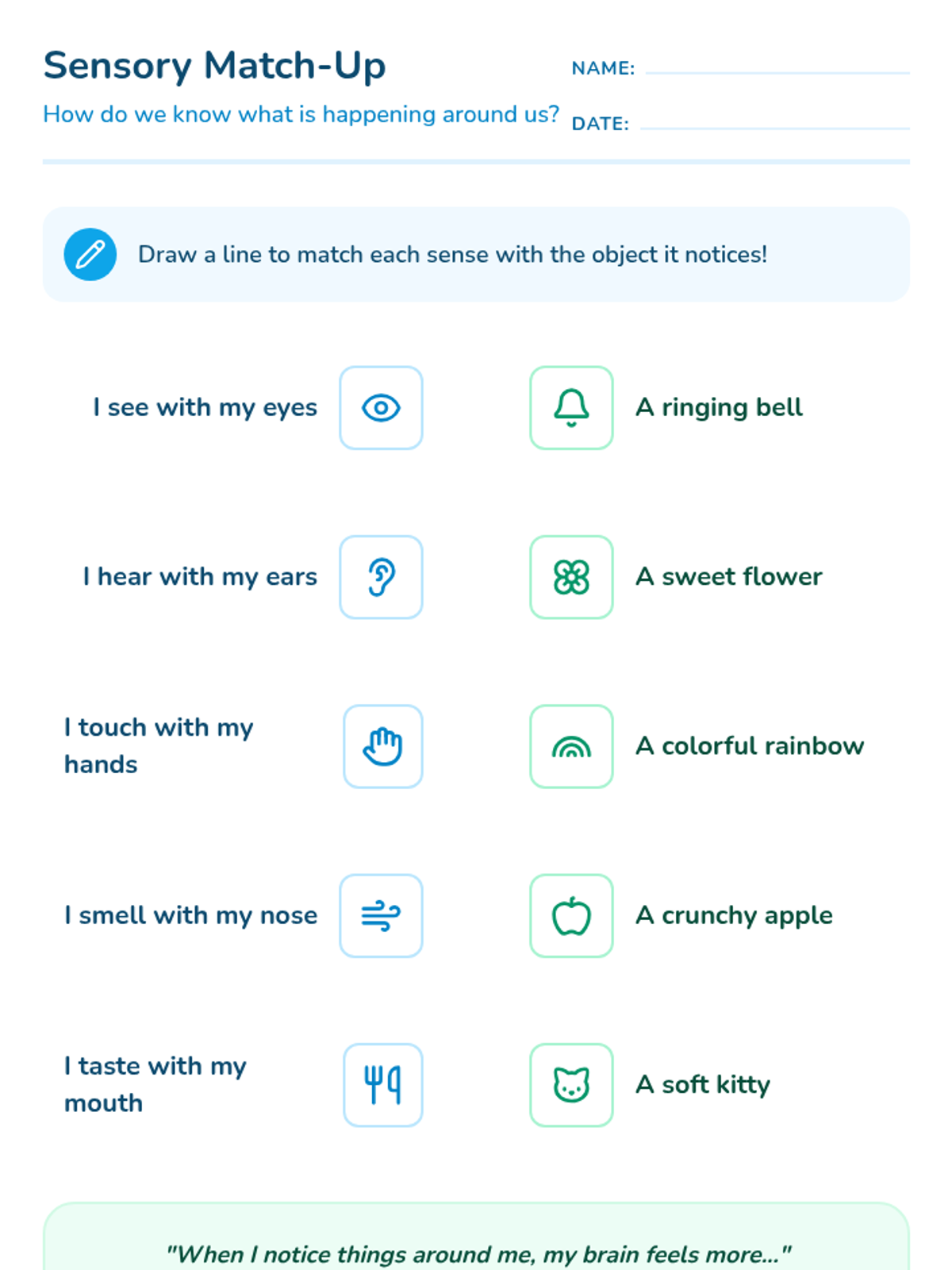
This sequence introduces 1st-grade students to sensory grounding techniques to manage overwhelming emotions. Students learn to use their five senses to reconnect with their environment and stay calm during stressful moments.
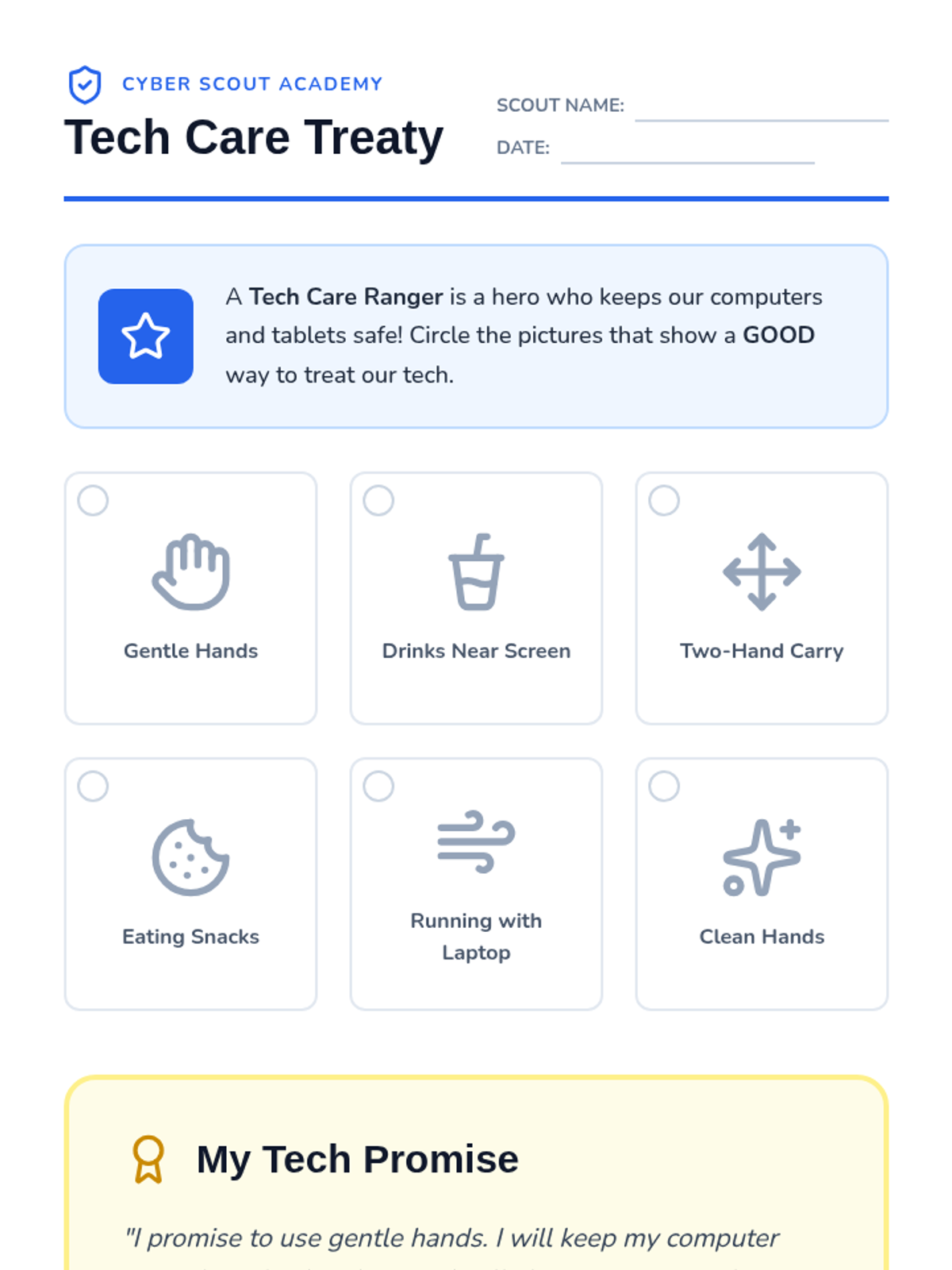
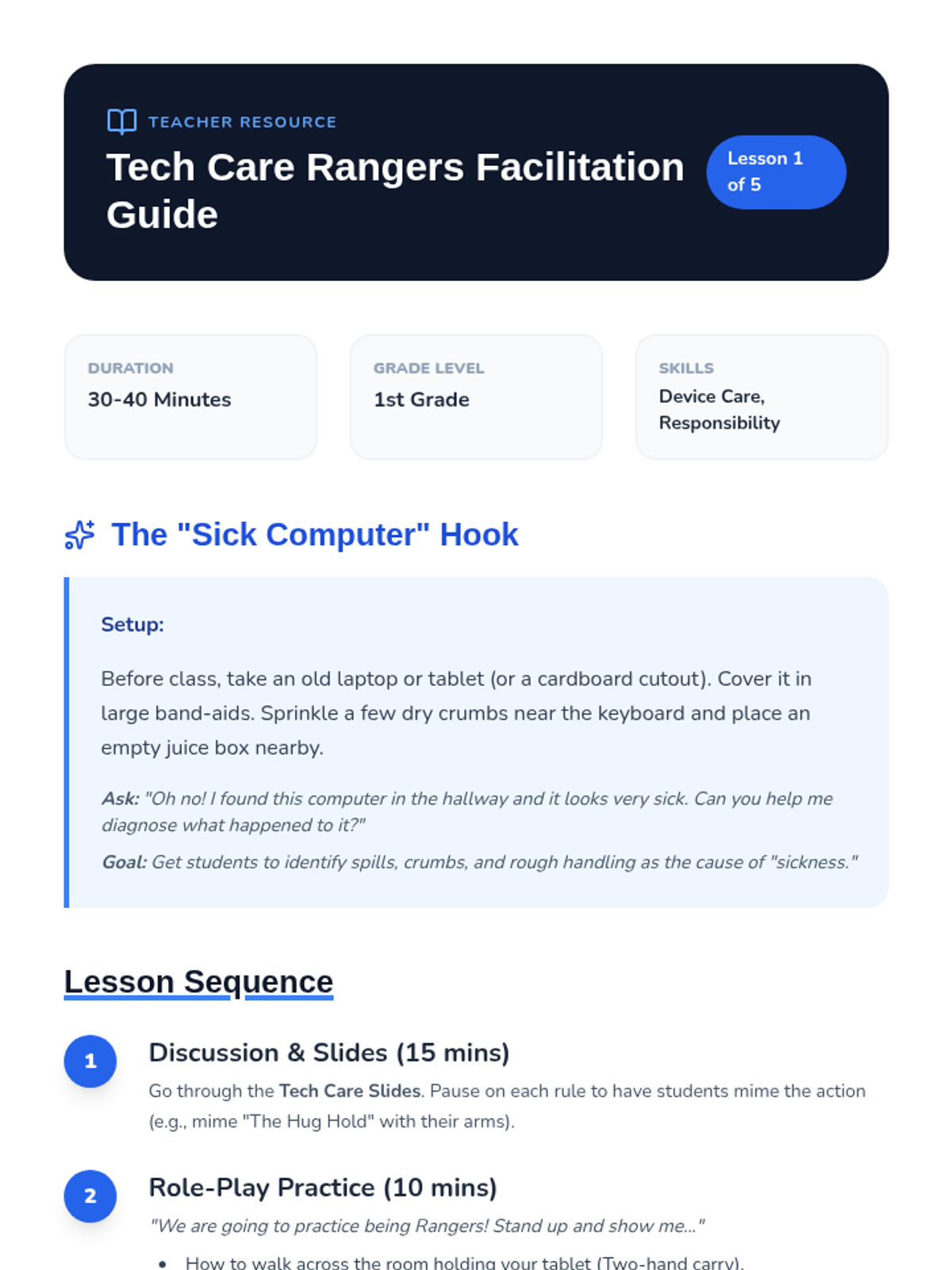
A comprehensive sequence for 1st Grade students focusing on device care, digital safety, privacy, basic troubleshooting, and online kindness. Students earn 'Cyber Scout' badges as they progress through these foundational digital literacy skills.
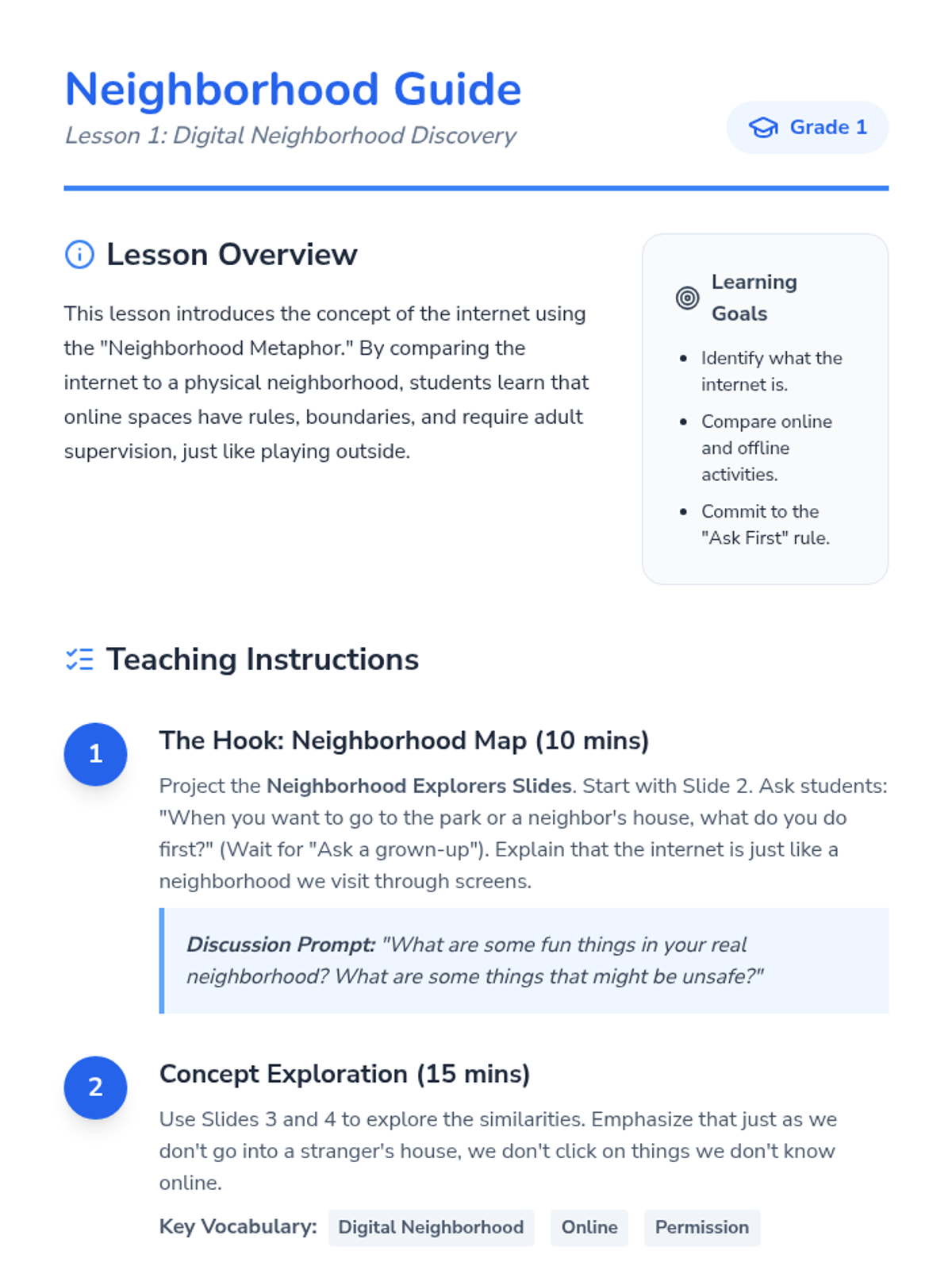
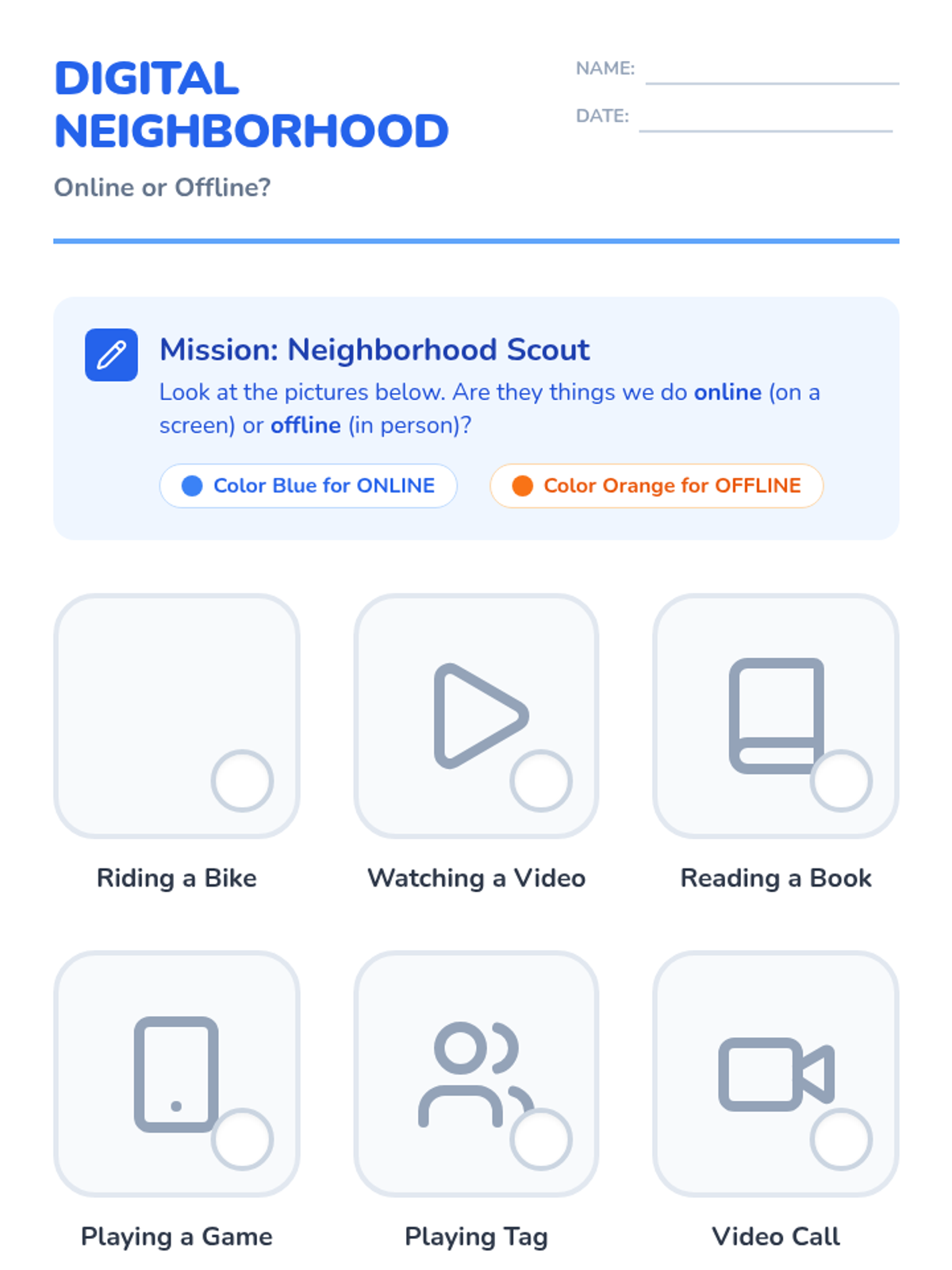
A comprehensive 5-lesson sequence for 1st graders to understand internet safety as a 'Digital Neighborhood'. Students learn to ask for permission, use the 'Pause and Think' strategy, balance screen time, and create a family safety agreement.
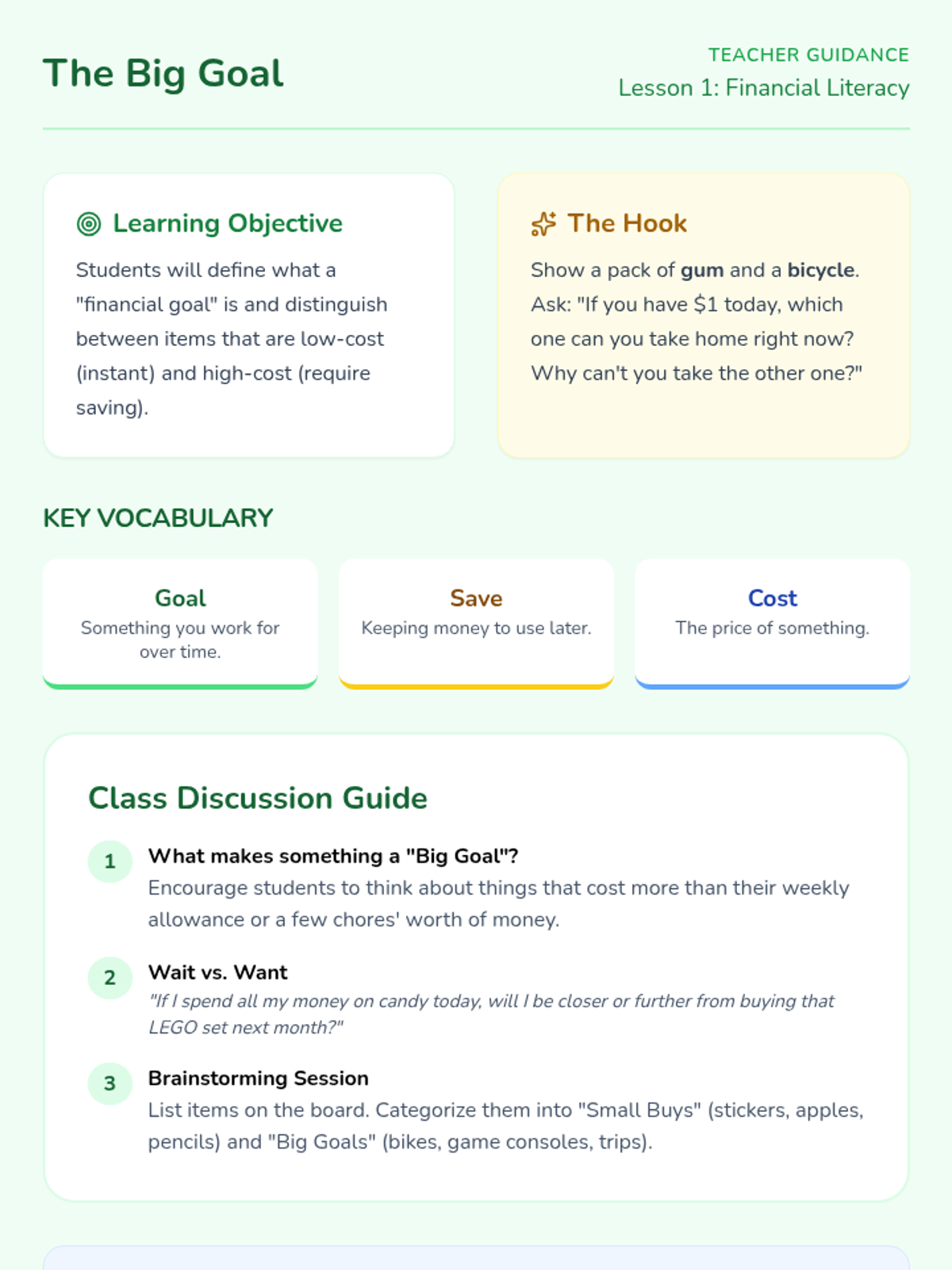
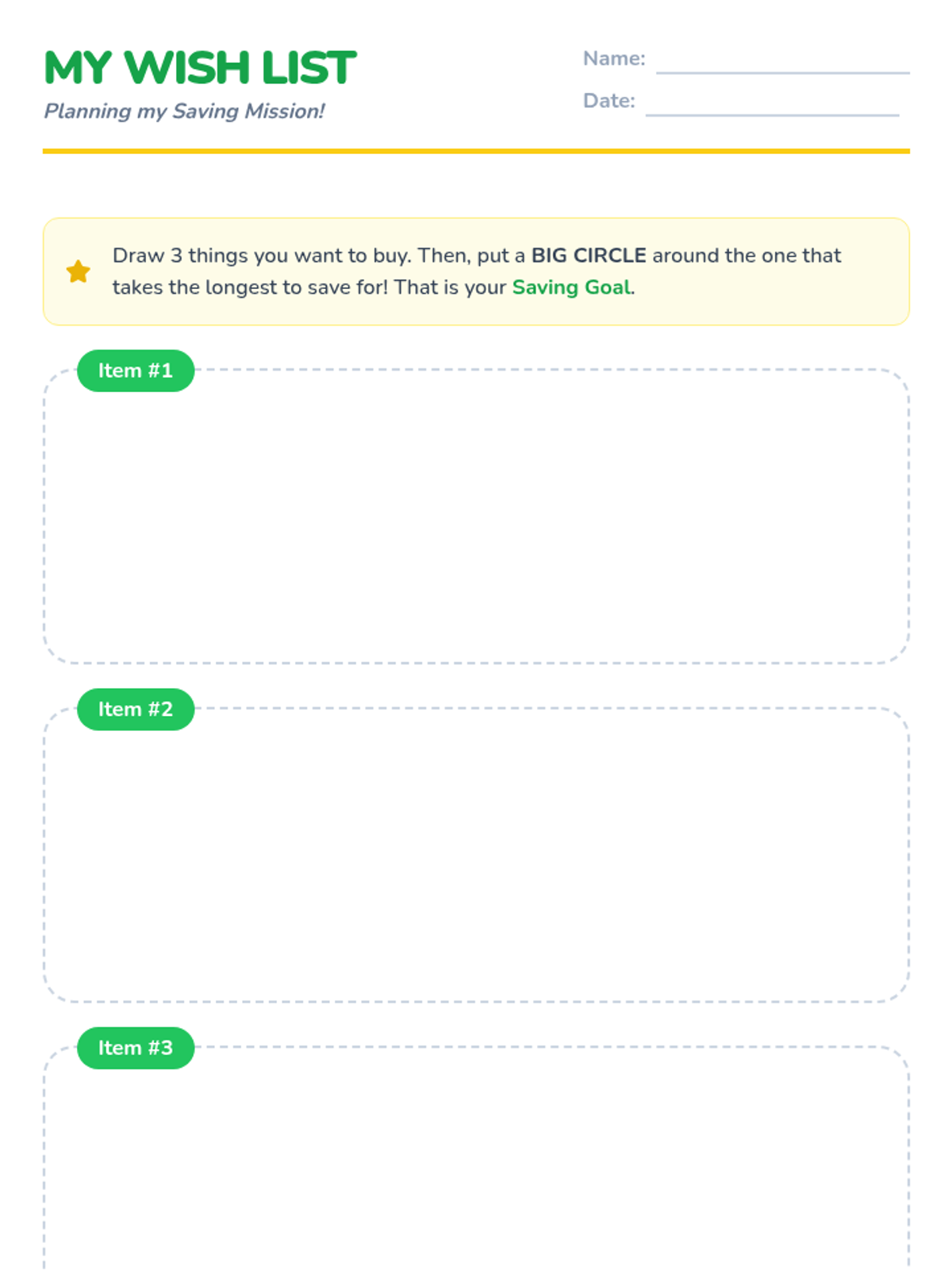
This sequence teaches 1st Grade students the fundamentals of financial goal setting, delayed gratification, and tracking savings. Students learn that patience and planning lead to greater rewards through hands-on activities, visual tracking, and reflective role-play.
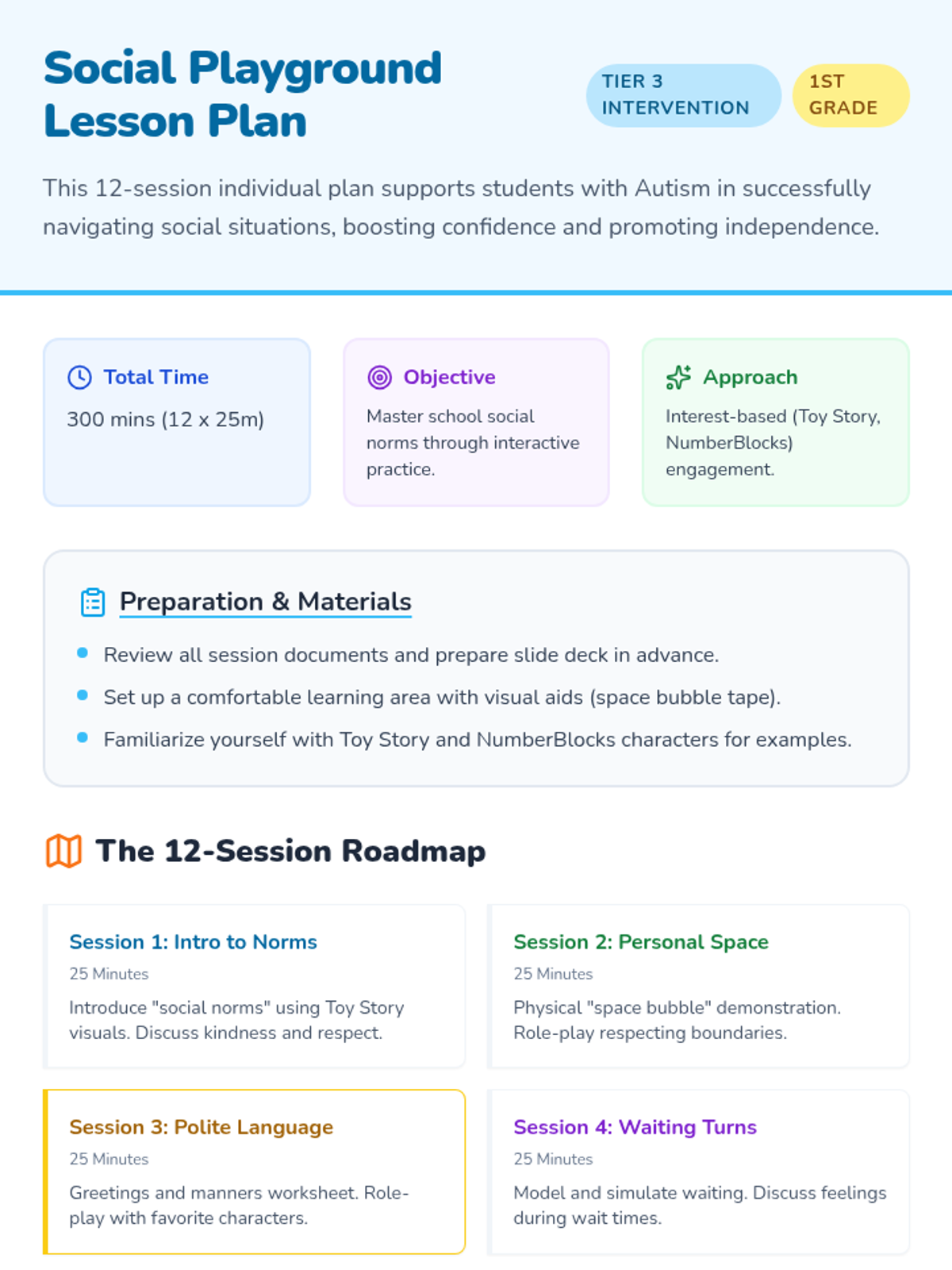
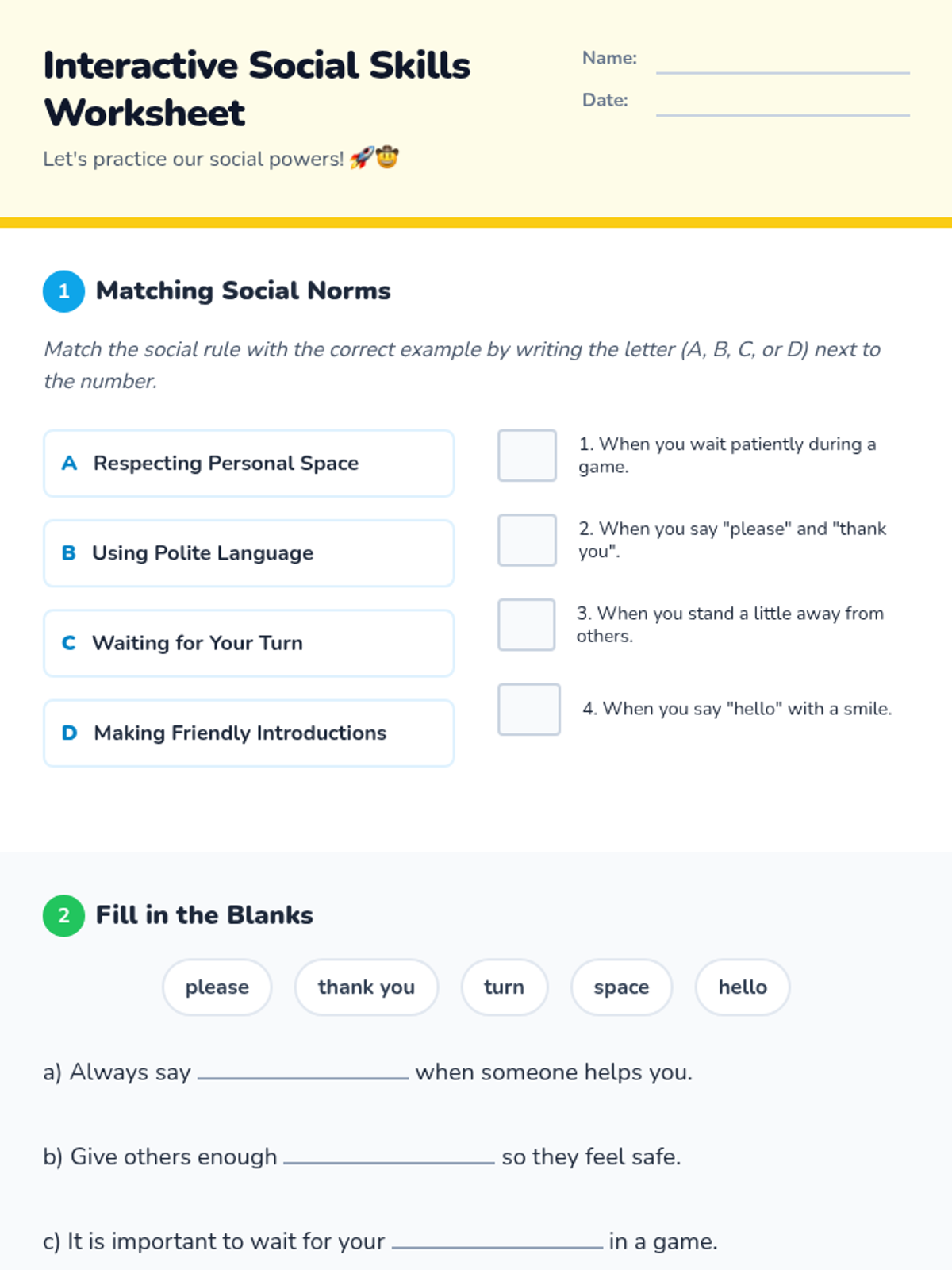
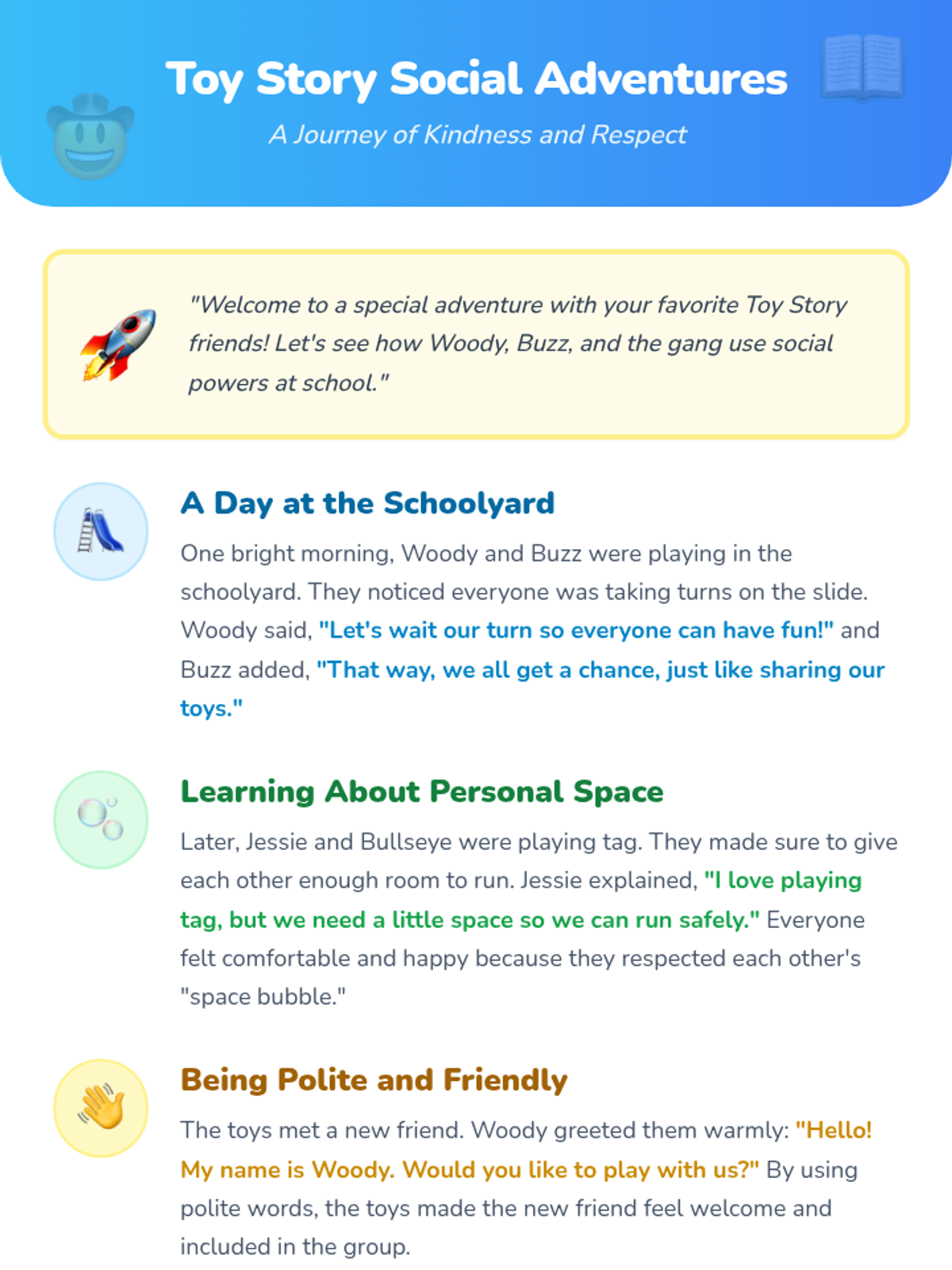
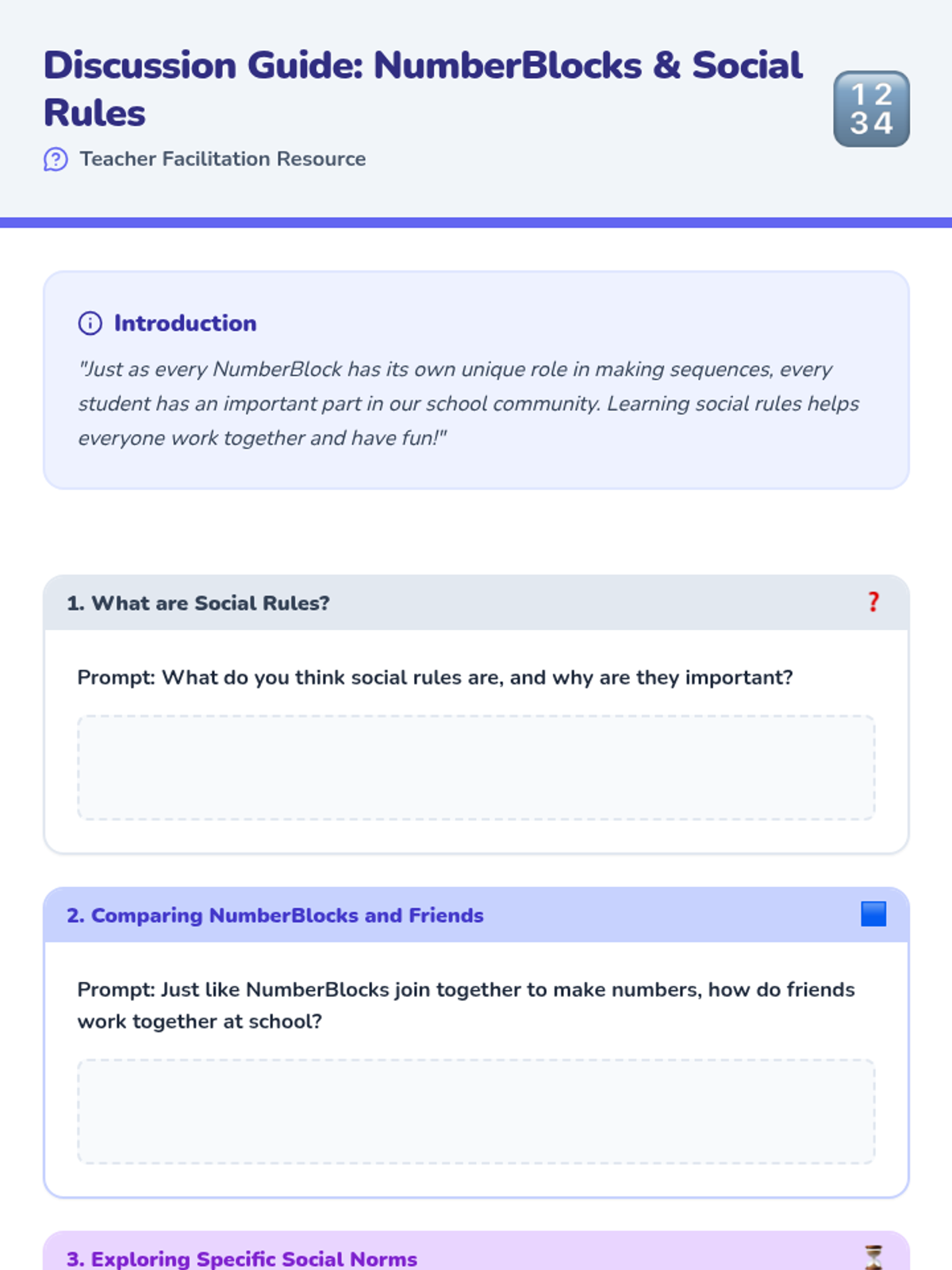
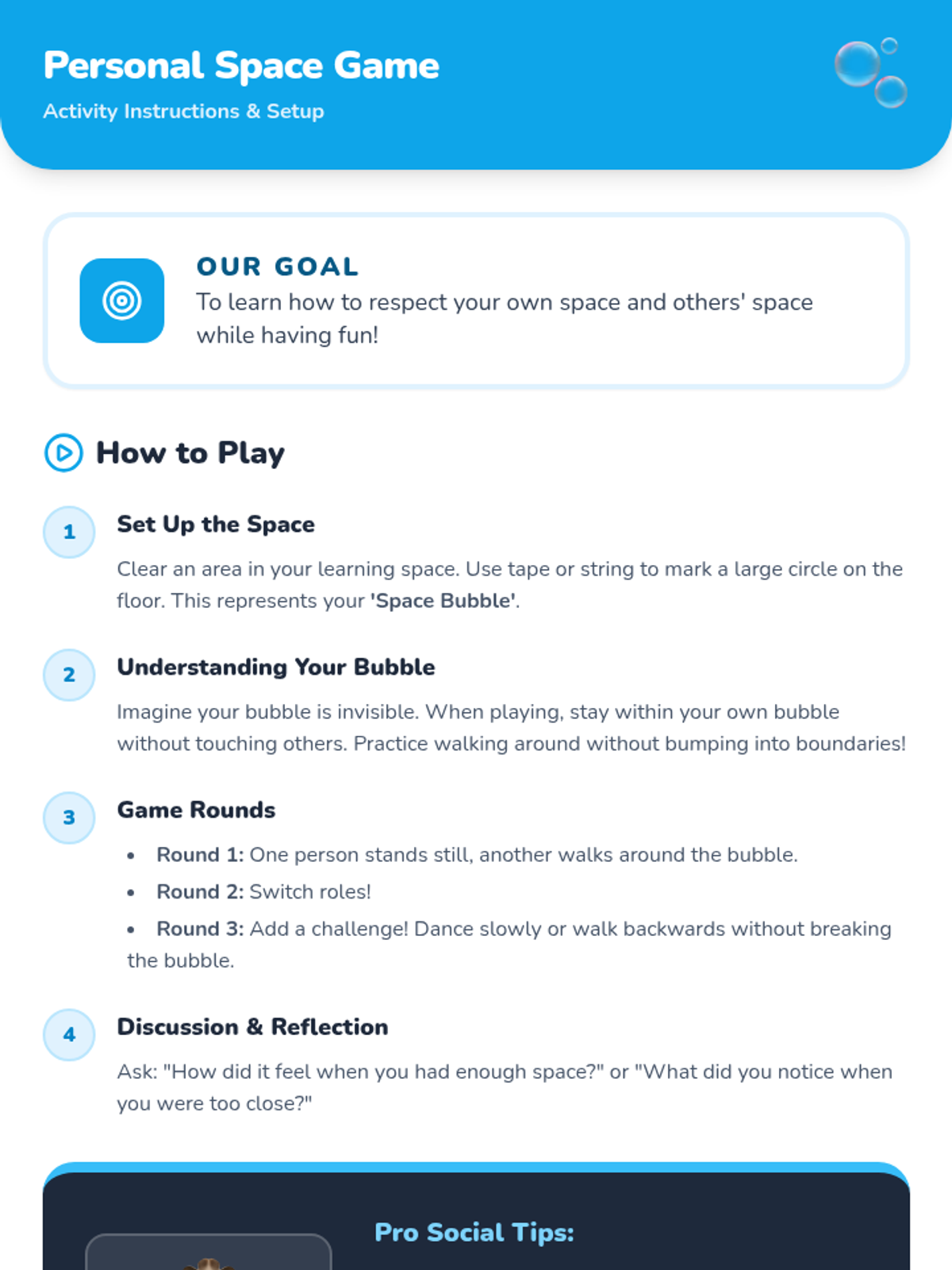
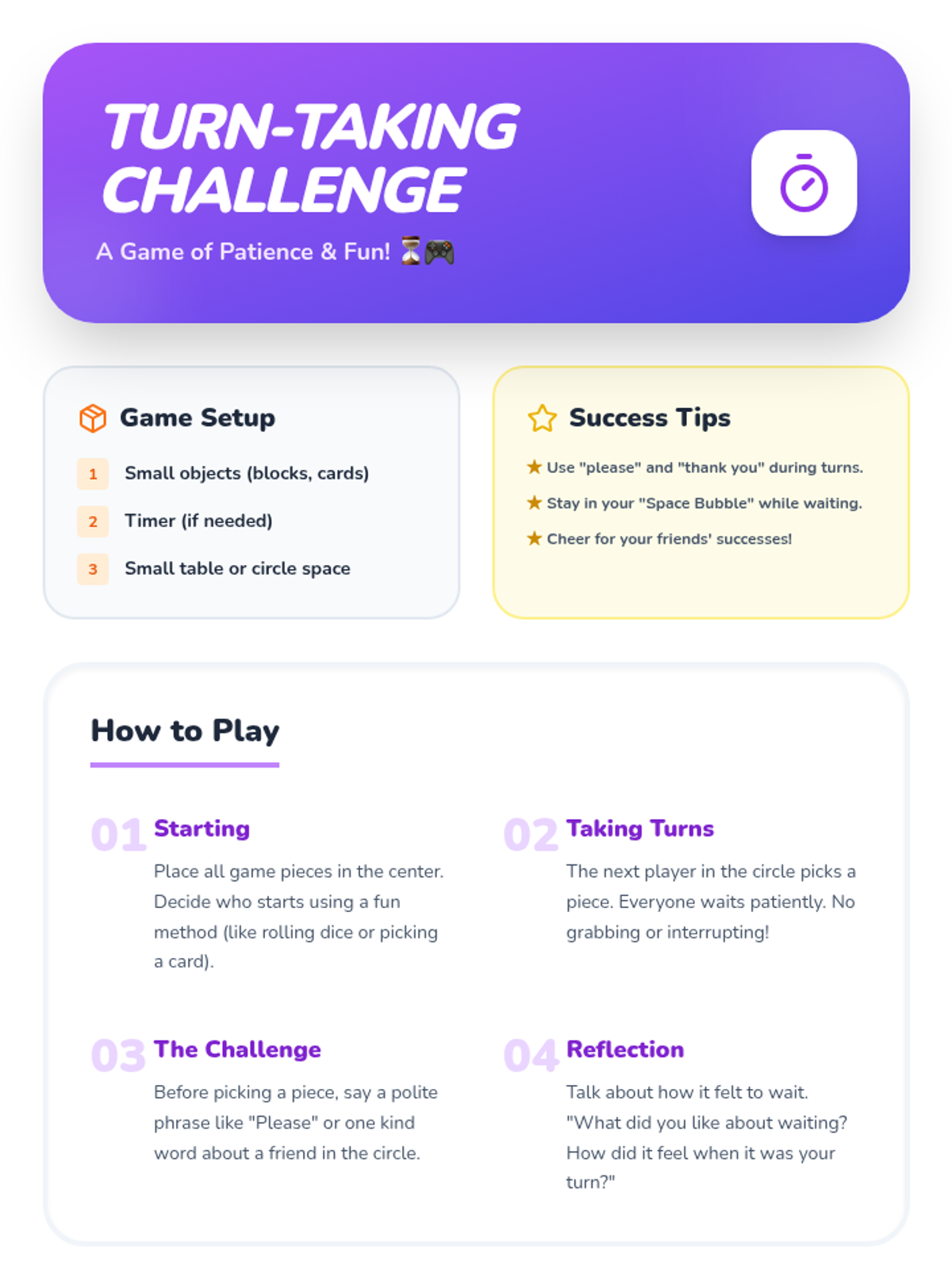
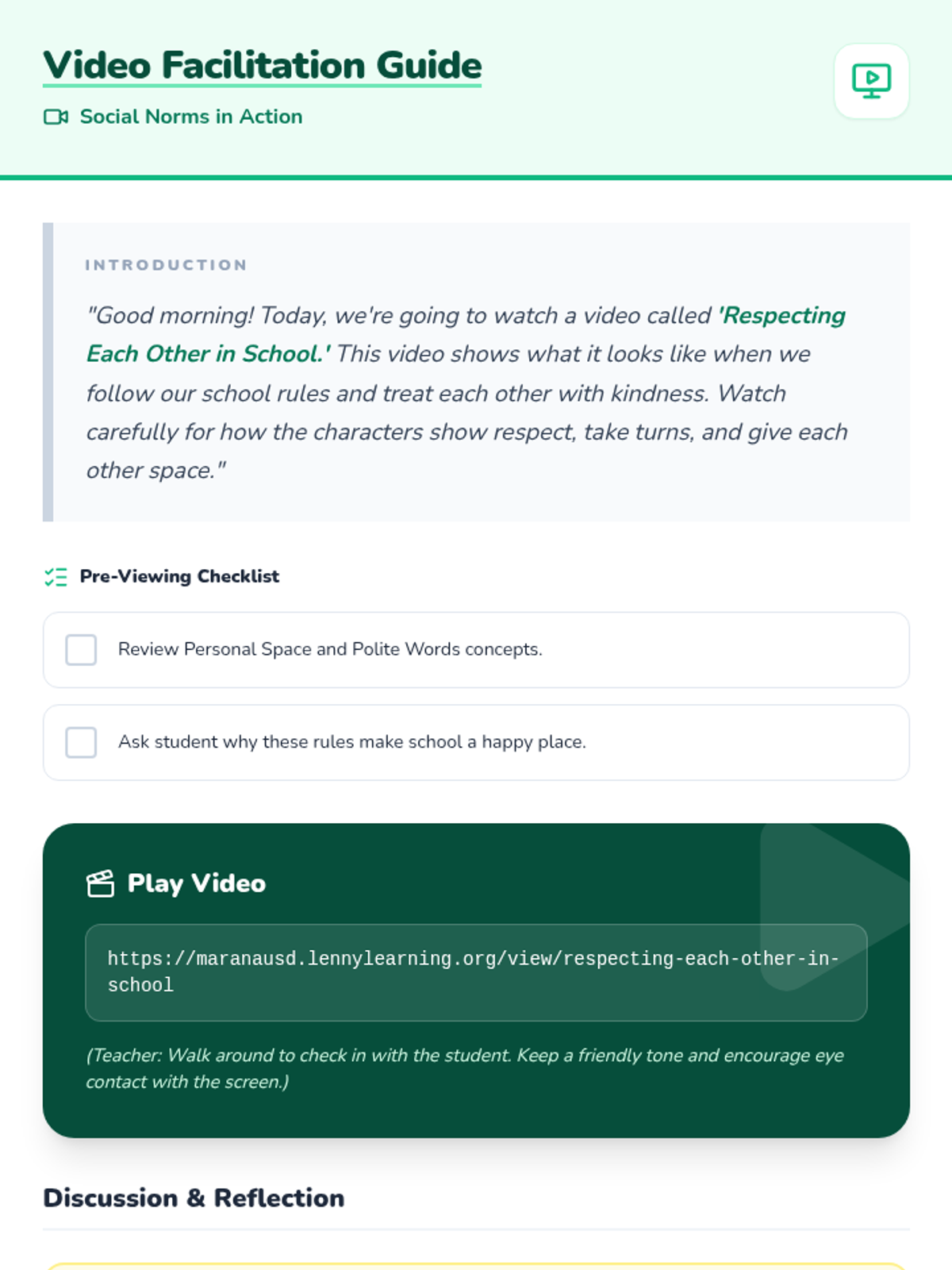
A 12-session individual social skills sequence for 1st-grade students, focusing on school social norms like personal space, polite language, and turn-taking through the lens of Toy Story and NumberBlocks.
A 1st-grade sequence focused on developing the social-emotional and mechanical skills for sharing and turn-taking. Students move from recognizing visual cues to using verbal scripts, self-regulation strategies, and external tools like timers to manage cooperative play.
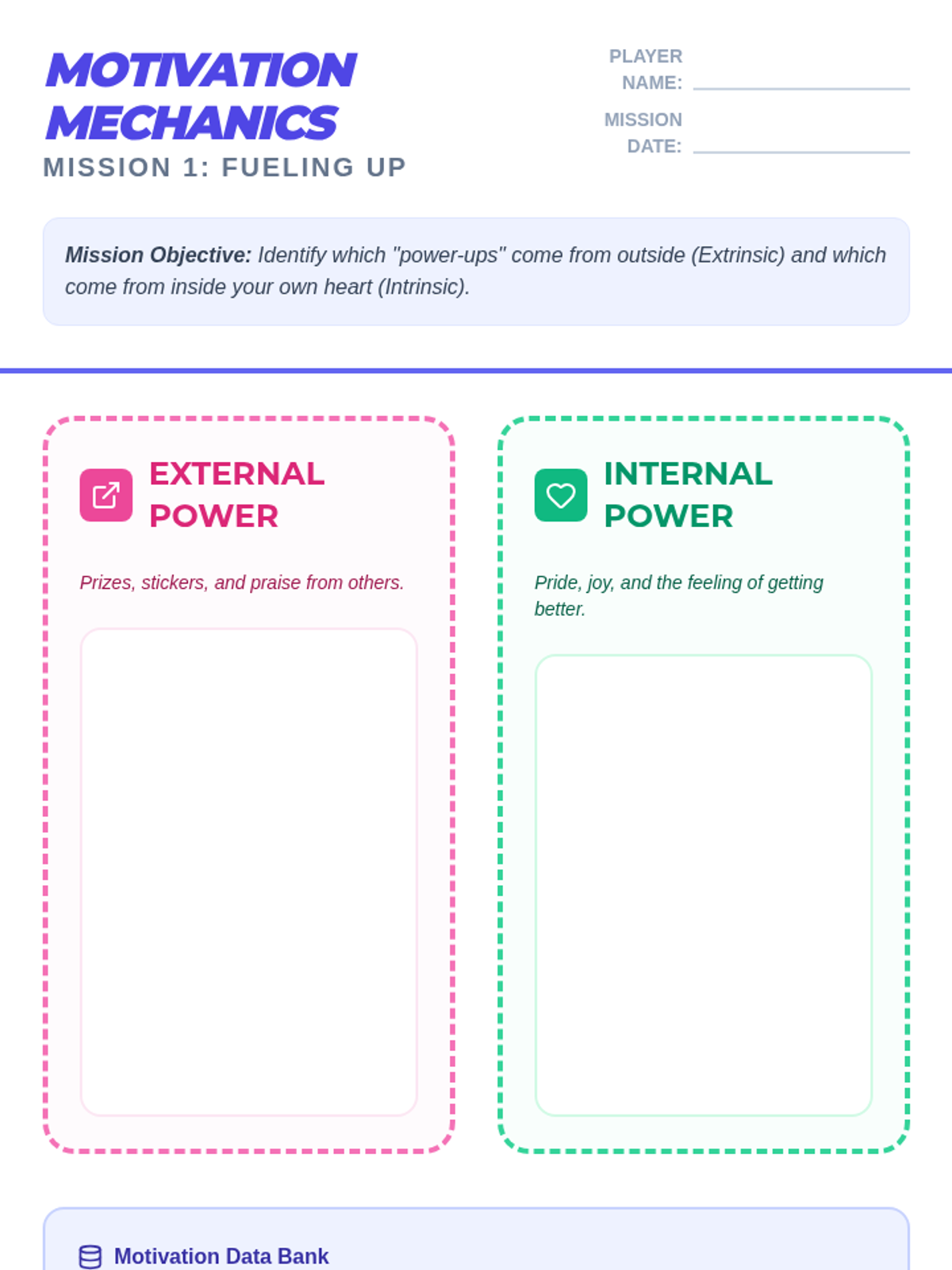
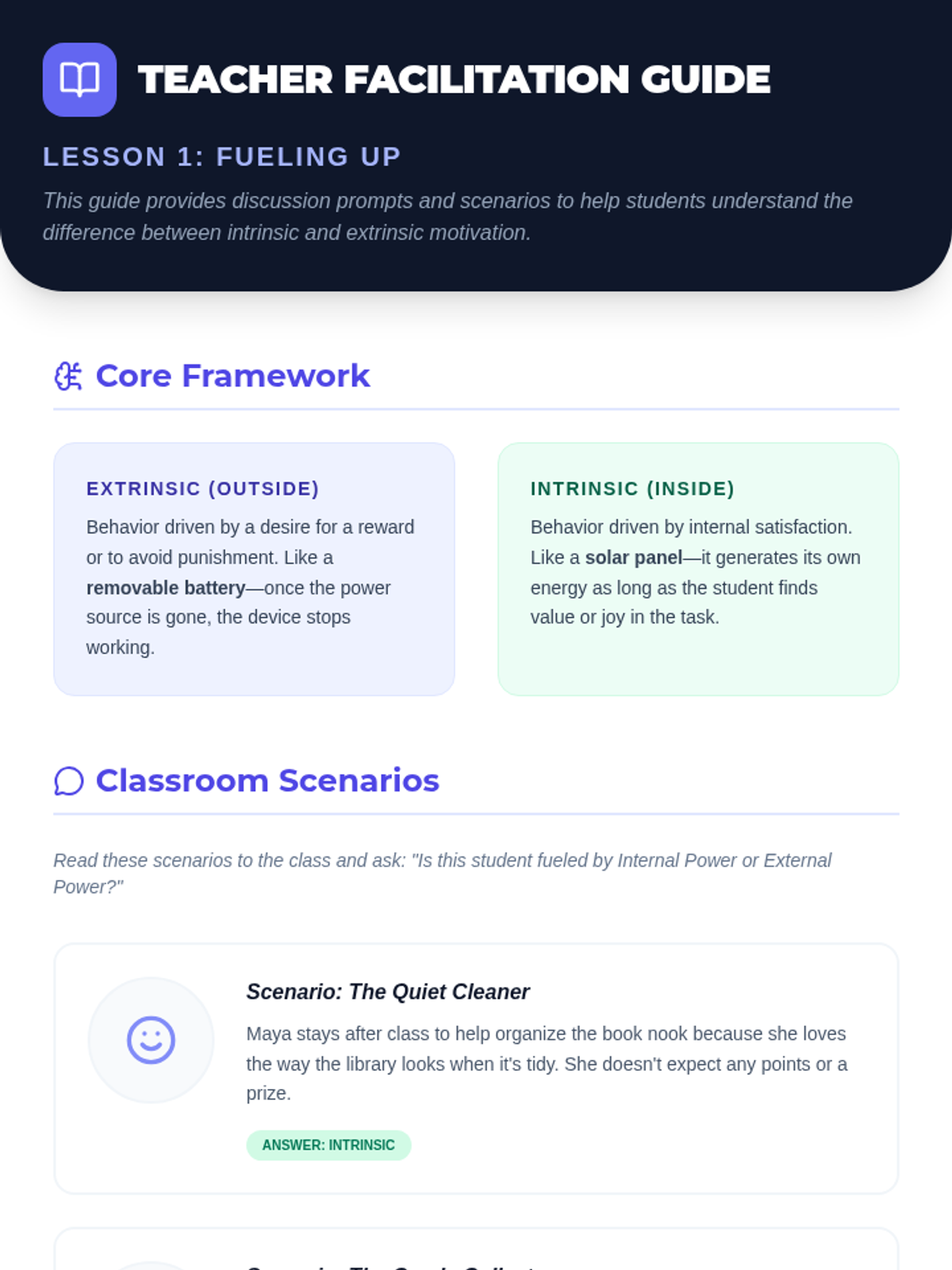
This sequence explores the psychology of motivation and reward systems. Students learn to distinguish between internal and external rewards, design meaningful reinforcement menus, and plan for long-term growth and independence.
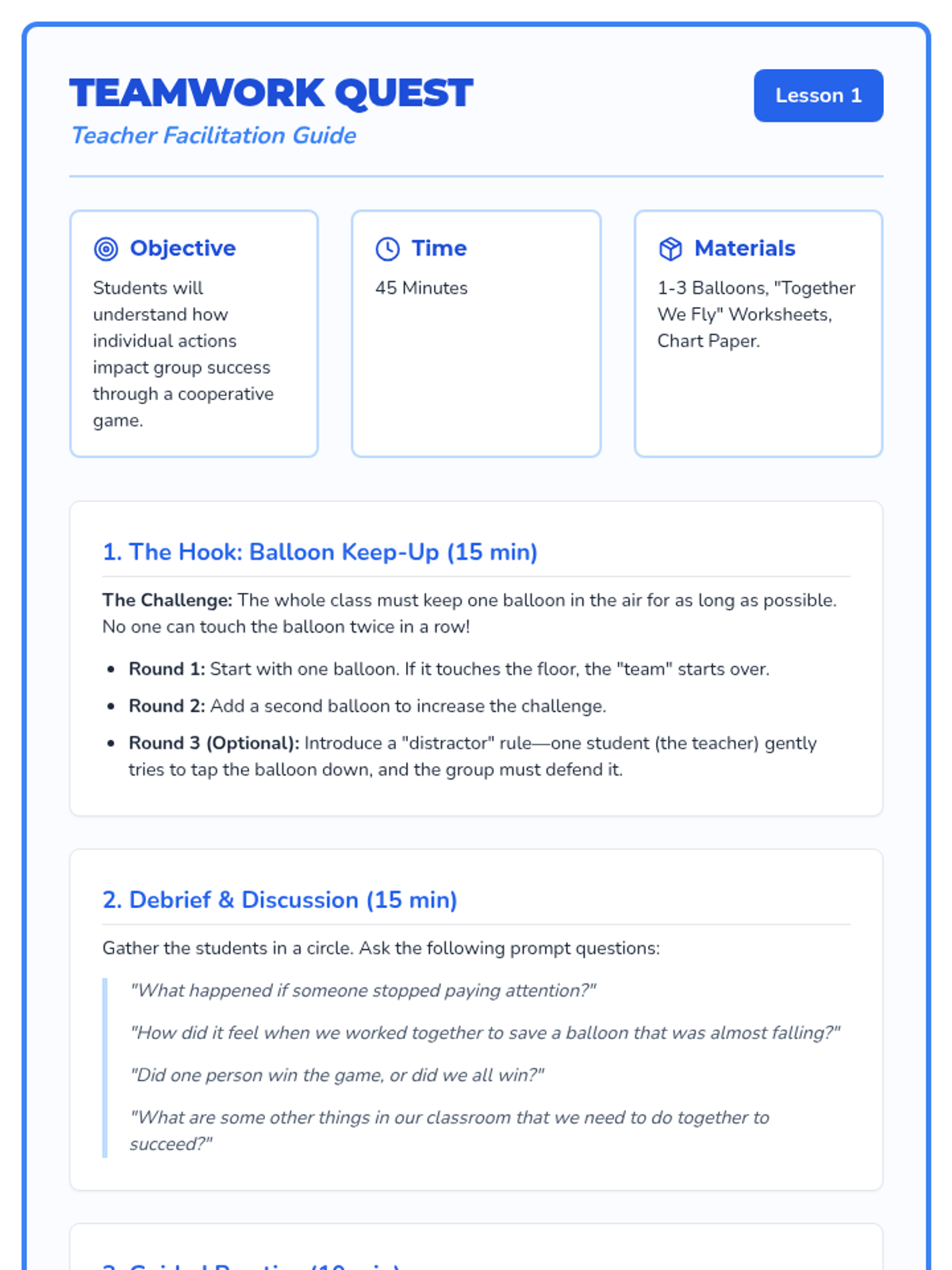
This sequence teaches 1st-grade students about collective accountability and community norms through the use of a class-wide behavior tracking system. Students learn how their individual choices impact the group's progress and celebrate their shared successes.
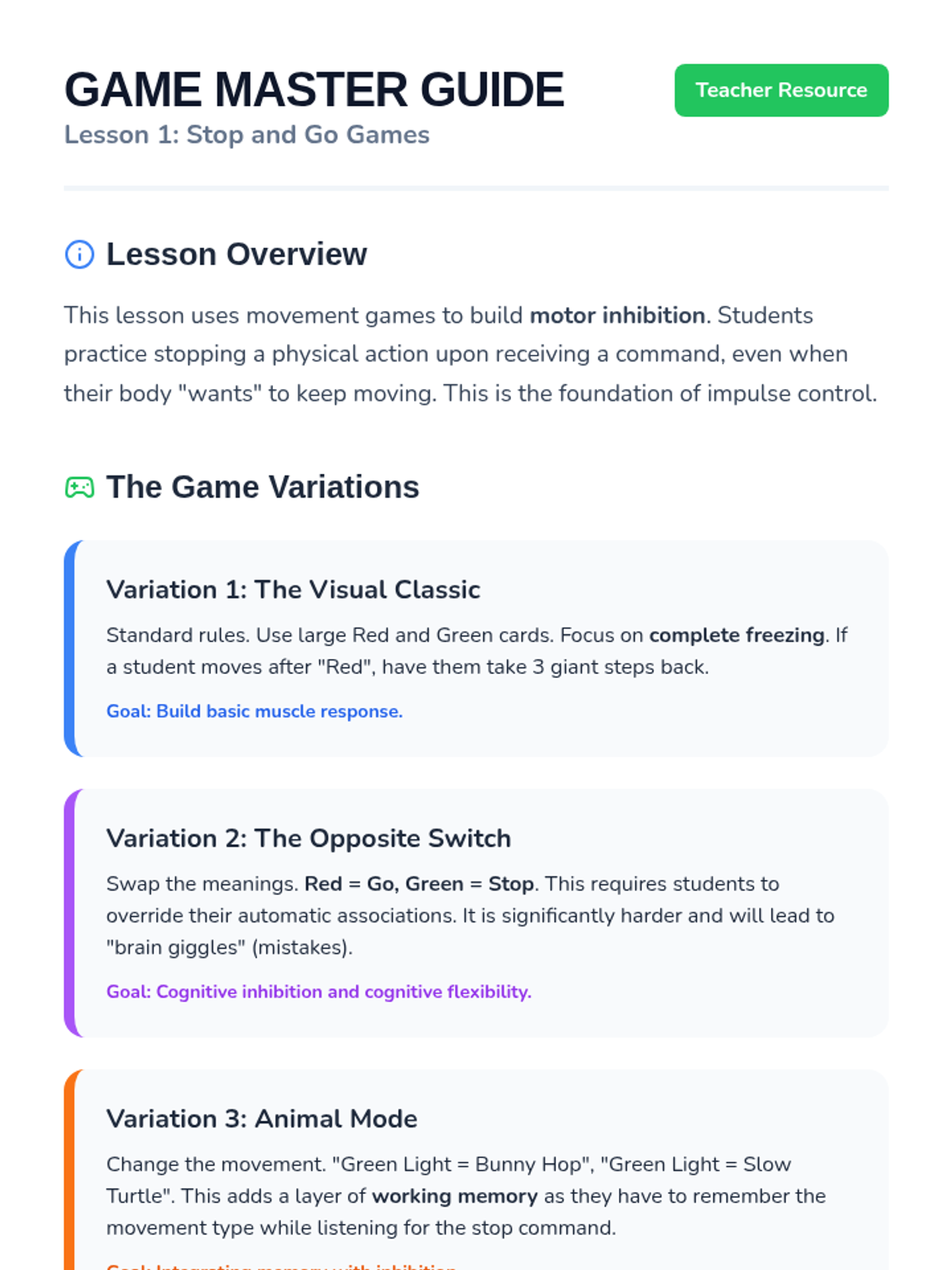
A 5-lesson unit for 1st-grade students focused on building impulse control and executive function through active games and cognitive strategies. Students progress from physical motor inhibition to more complex decision-making models using the 'Stop, Think, Go' framework.
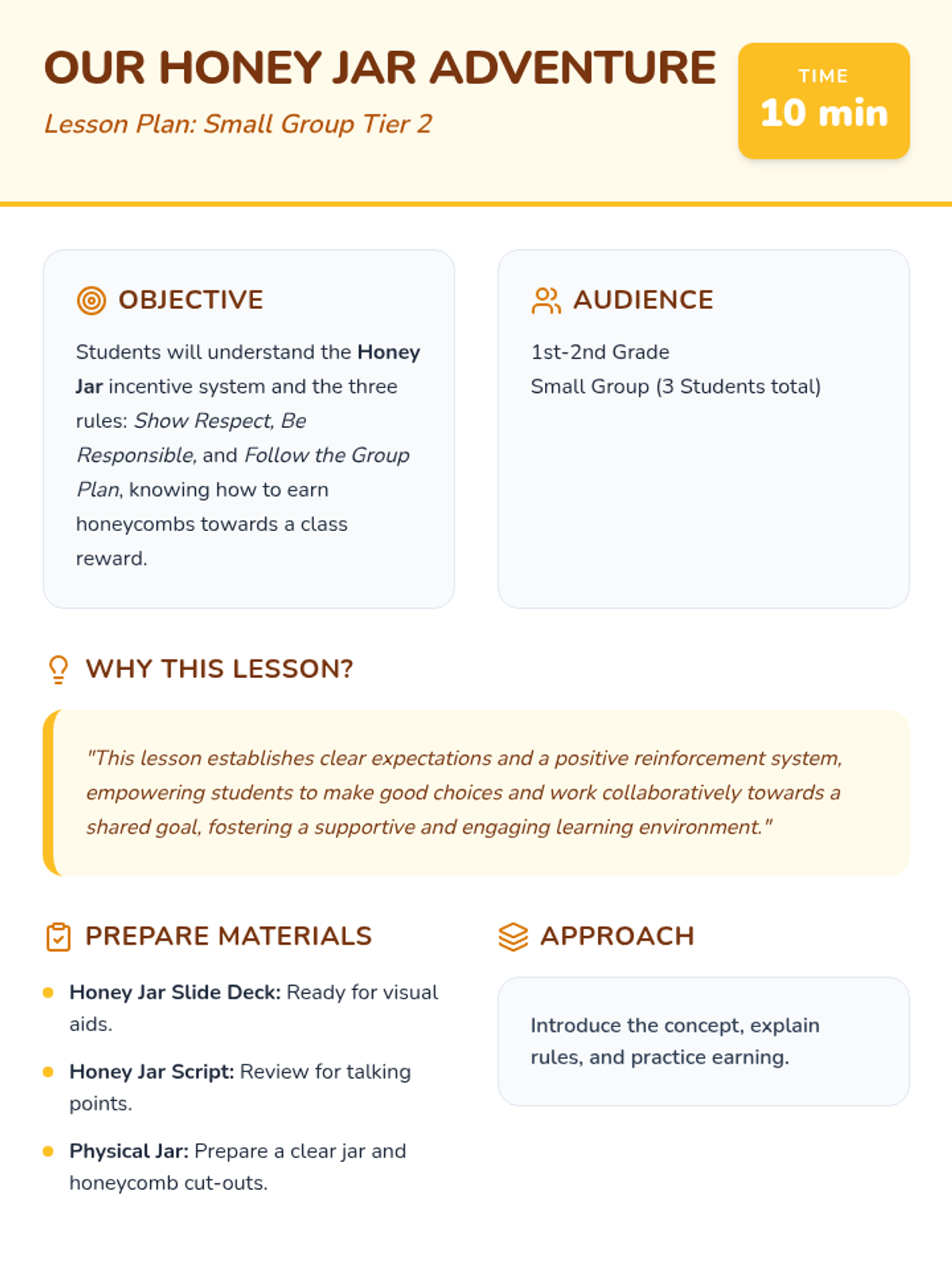
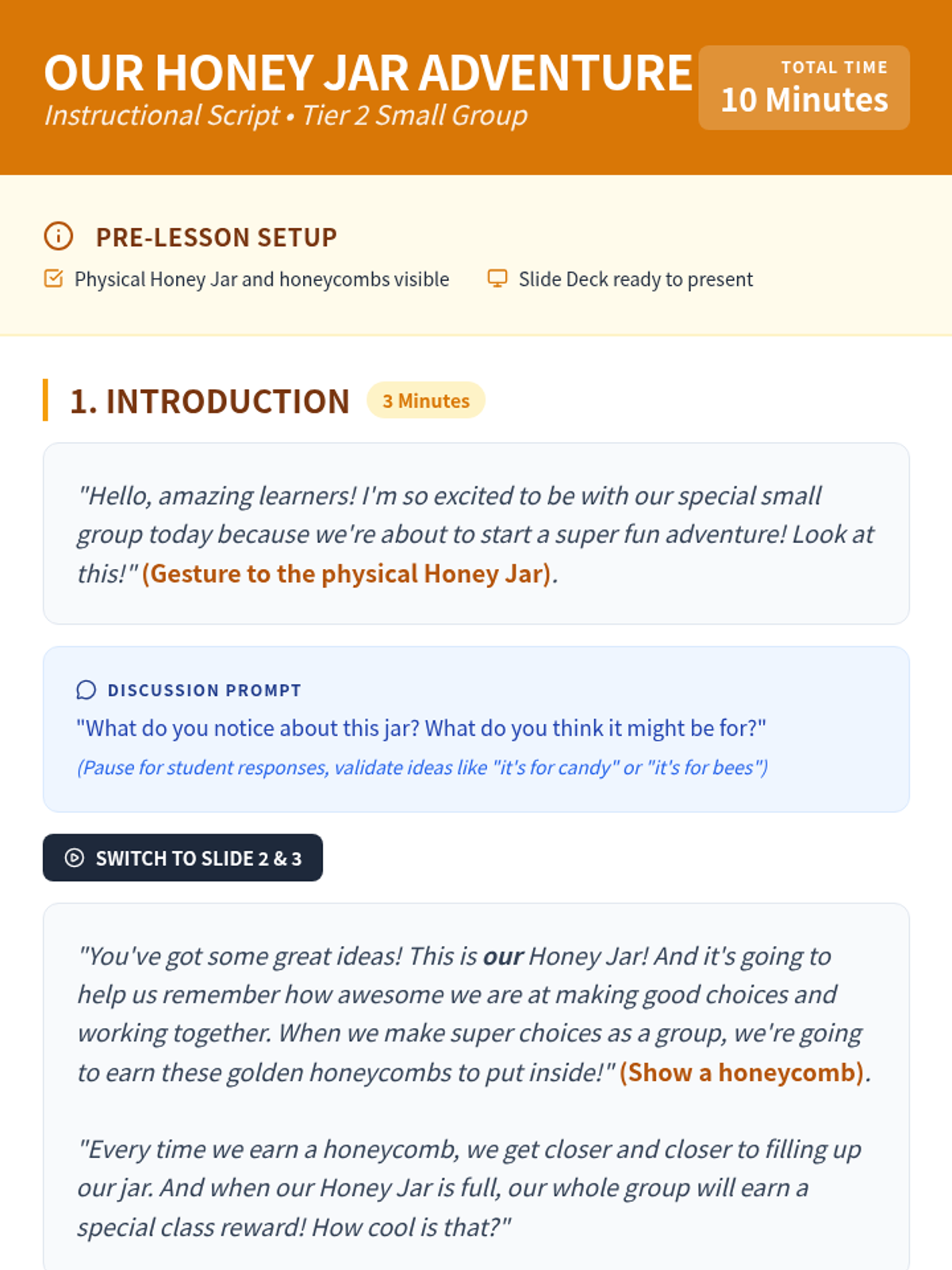
A short, engaging lesson to introduce the Honey Jar incentive system to small groups of 1st-2nd grade students, focusing on teamwork and positive behavior.
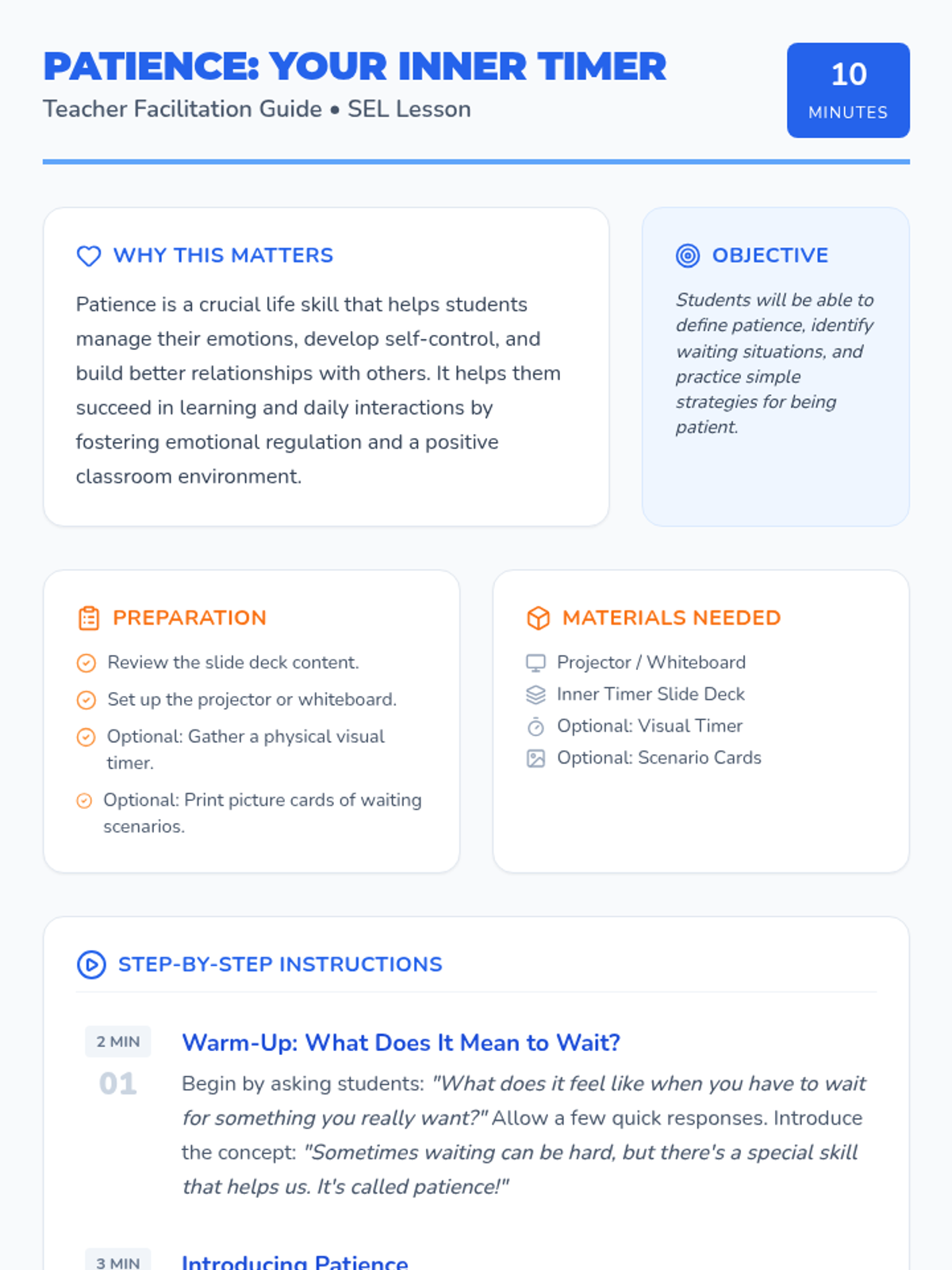
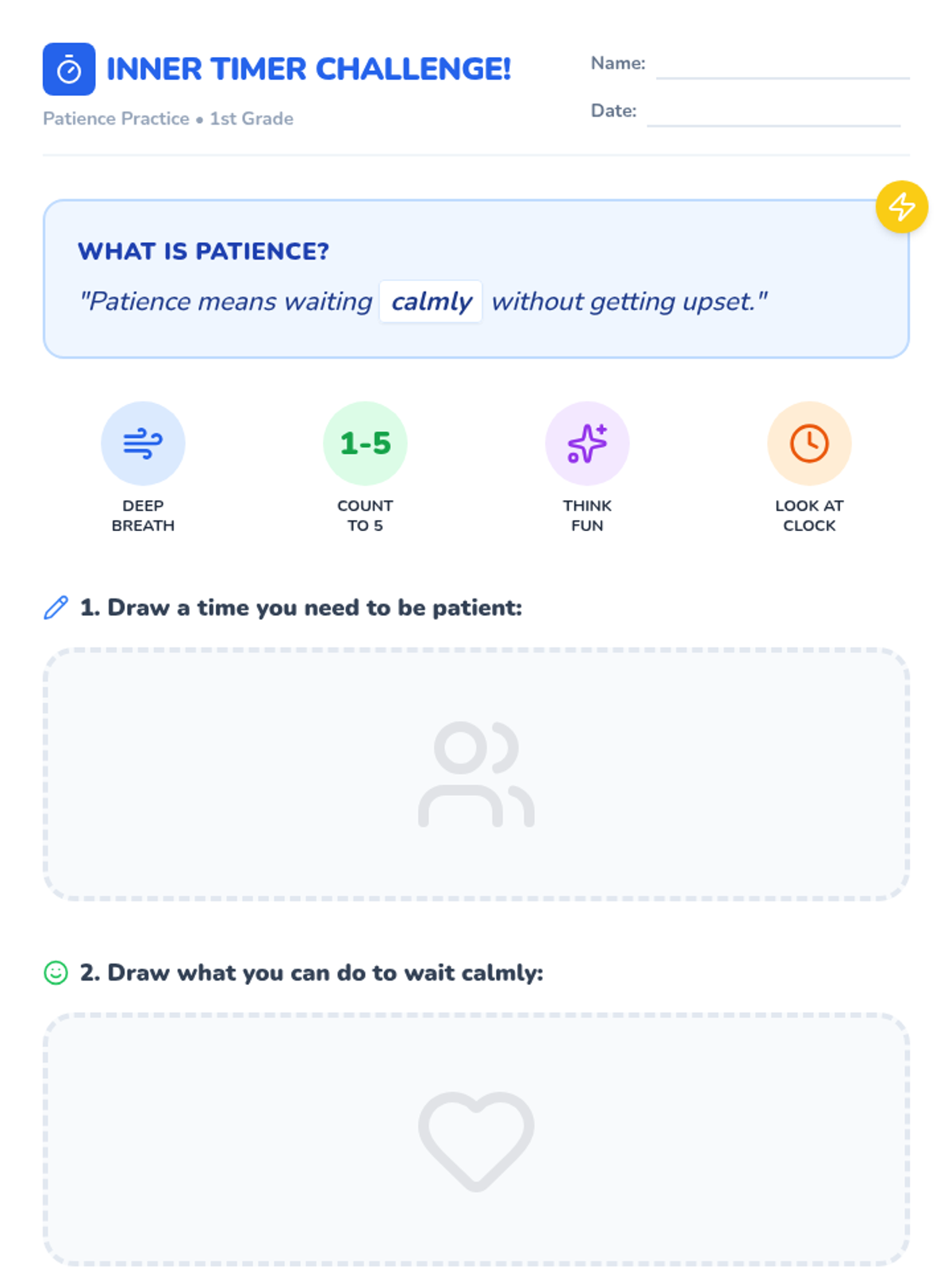
This sequence introduces 1st-grade students to the concept of patience through the metaphor of an 'inner timer.' Students learn what patience feels like and practical strategies for waiting calmly in everyday situations.
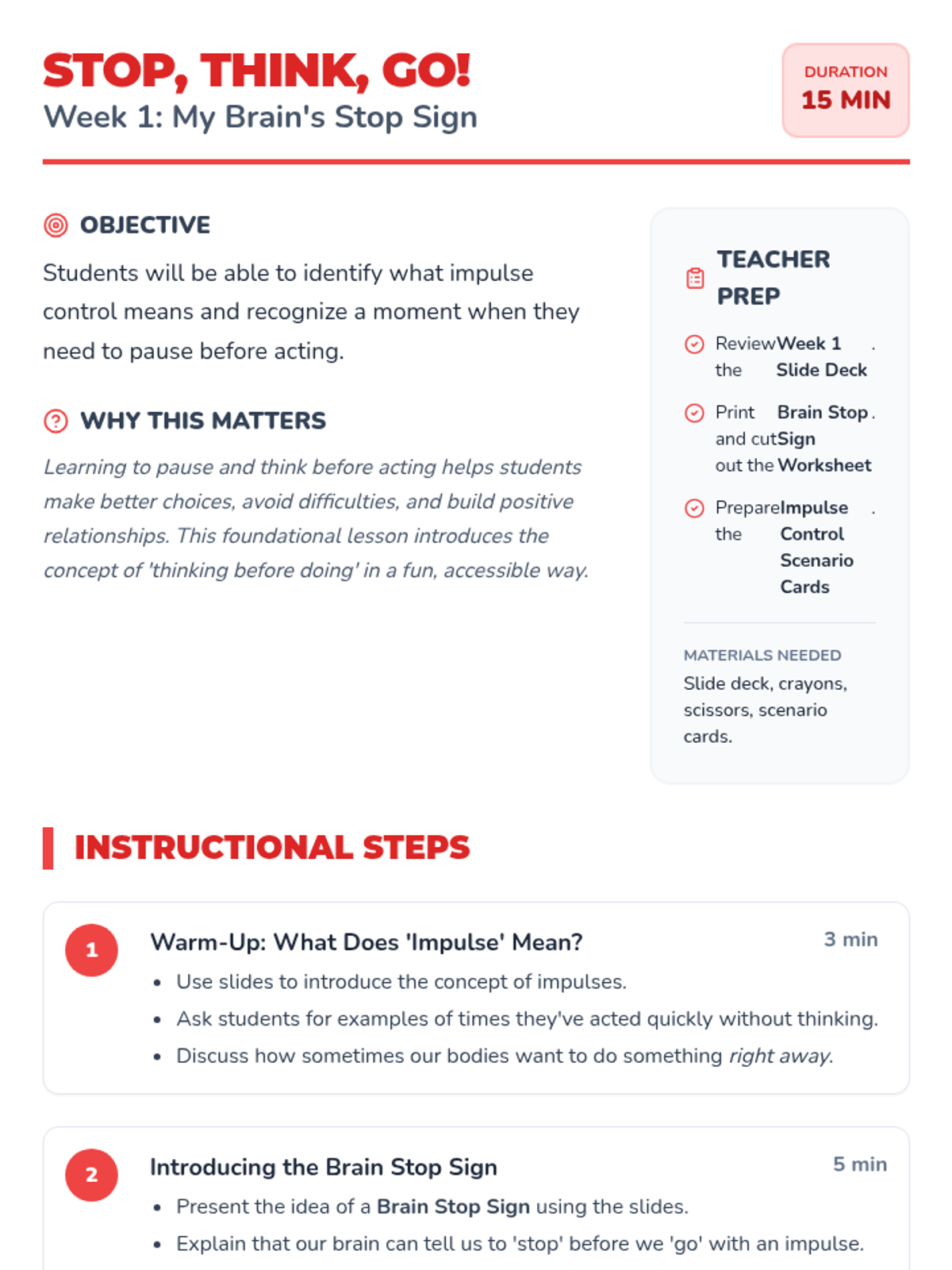
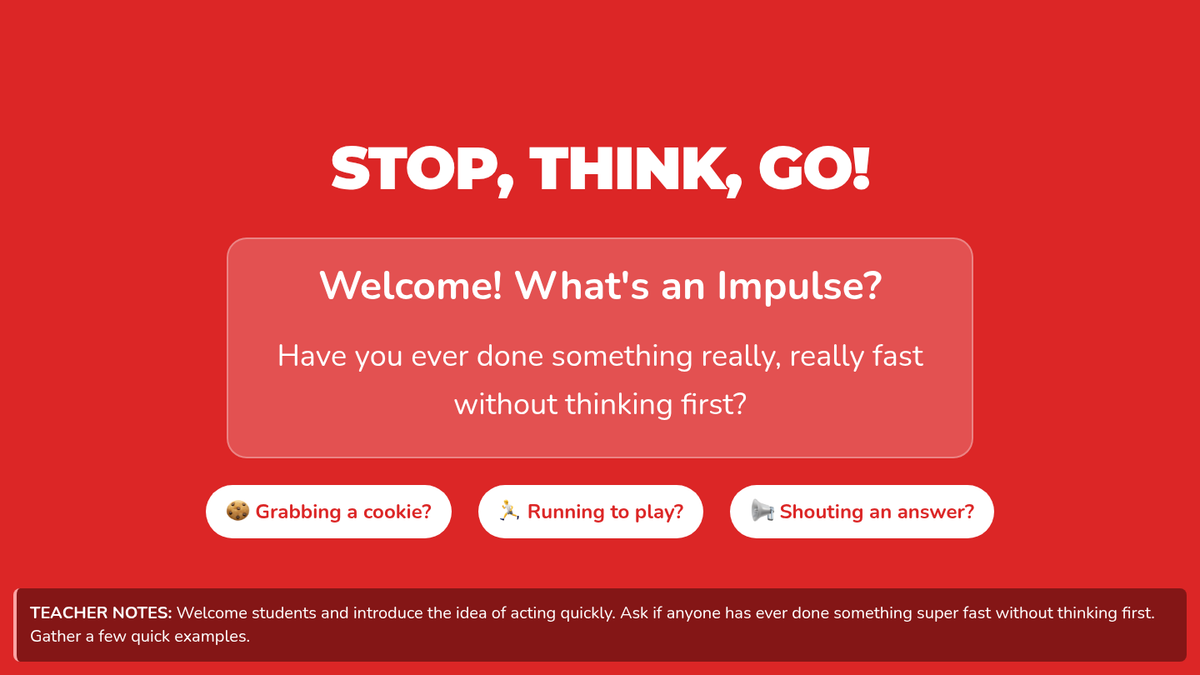
A six-week Tier 2 intervention for 1st-grade students focusing on impulse control through the 'Stop, Think, Go!' framework. Students learn to pause, evaluate choices, and use calming strategies to manage immediate reactions.
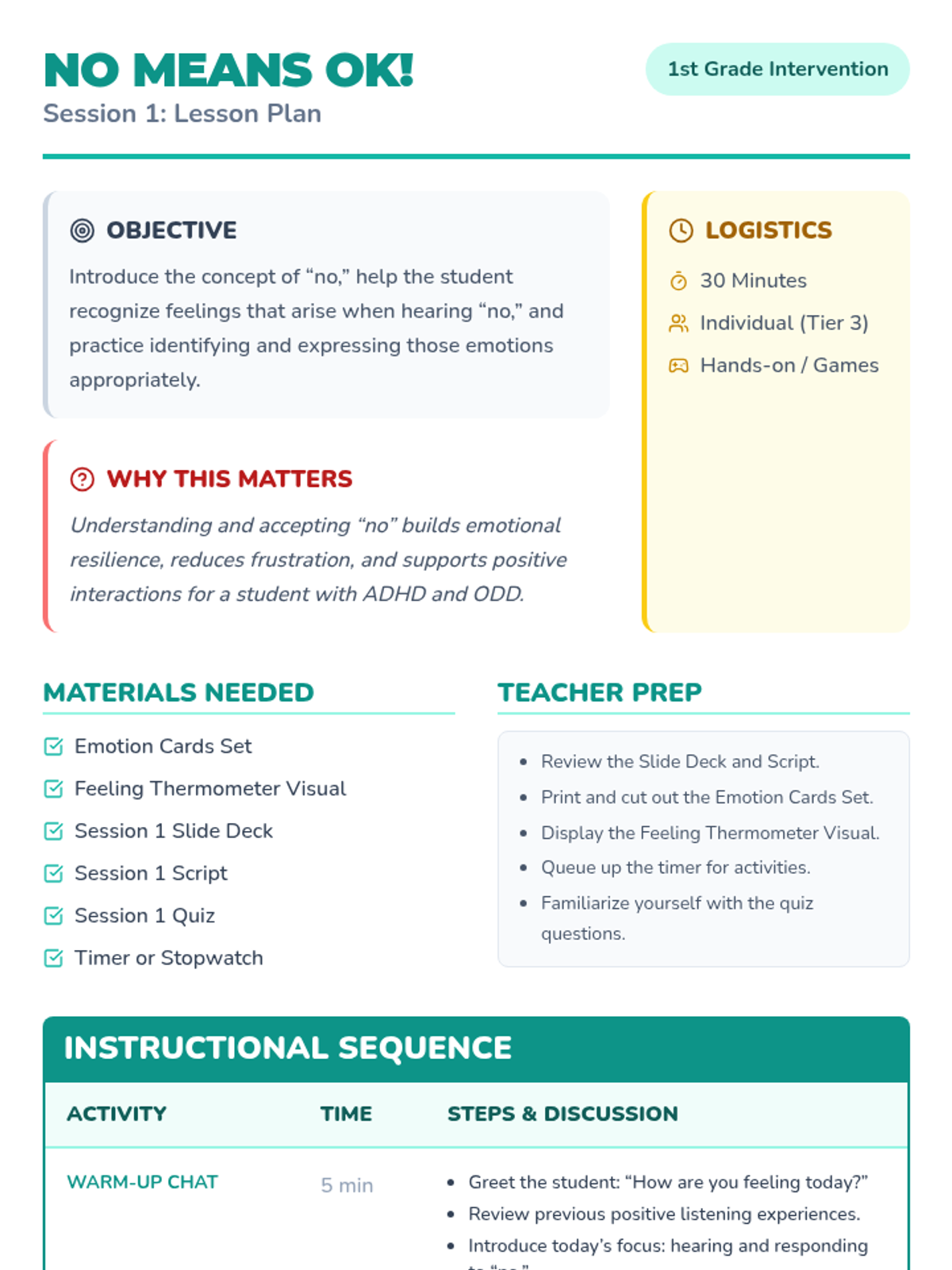
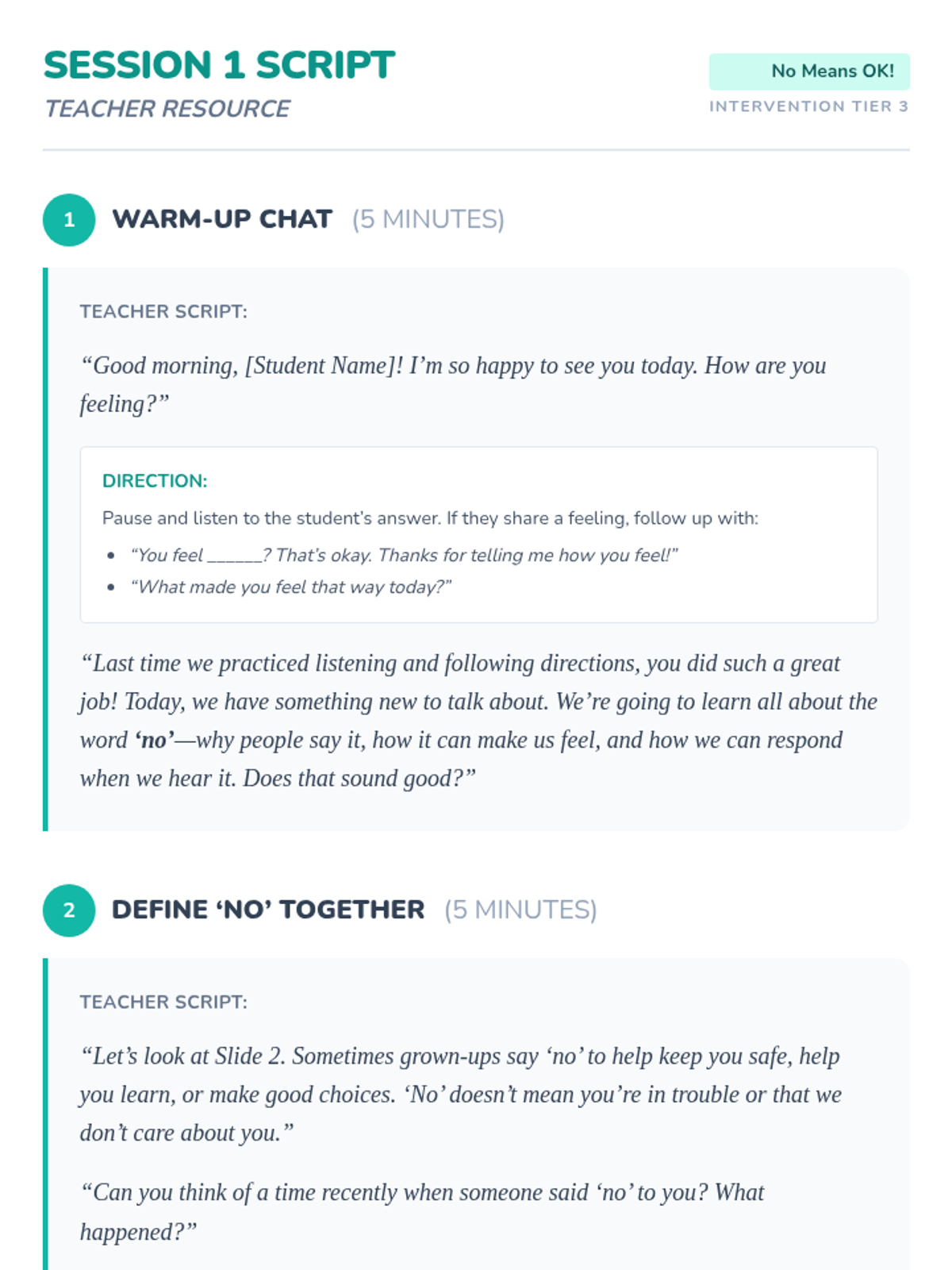
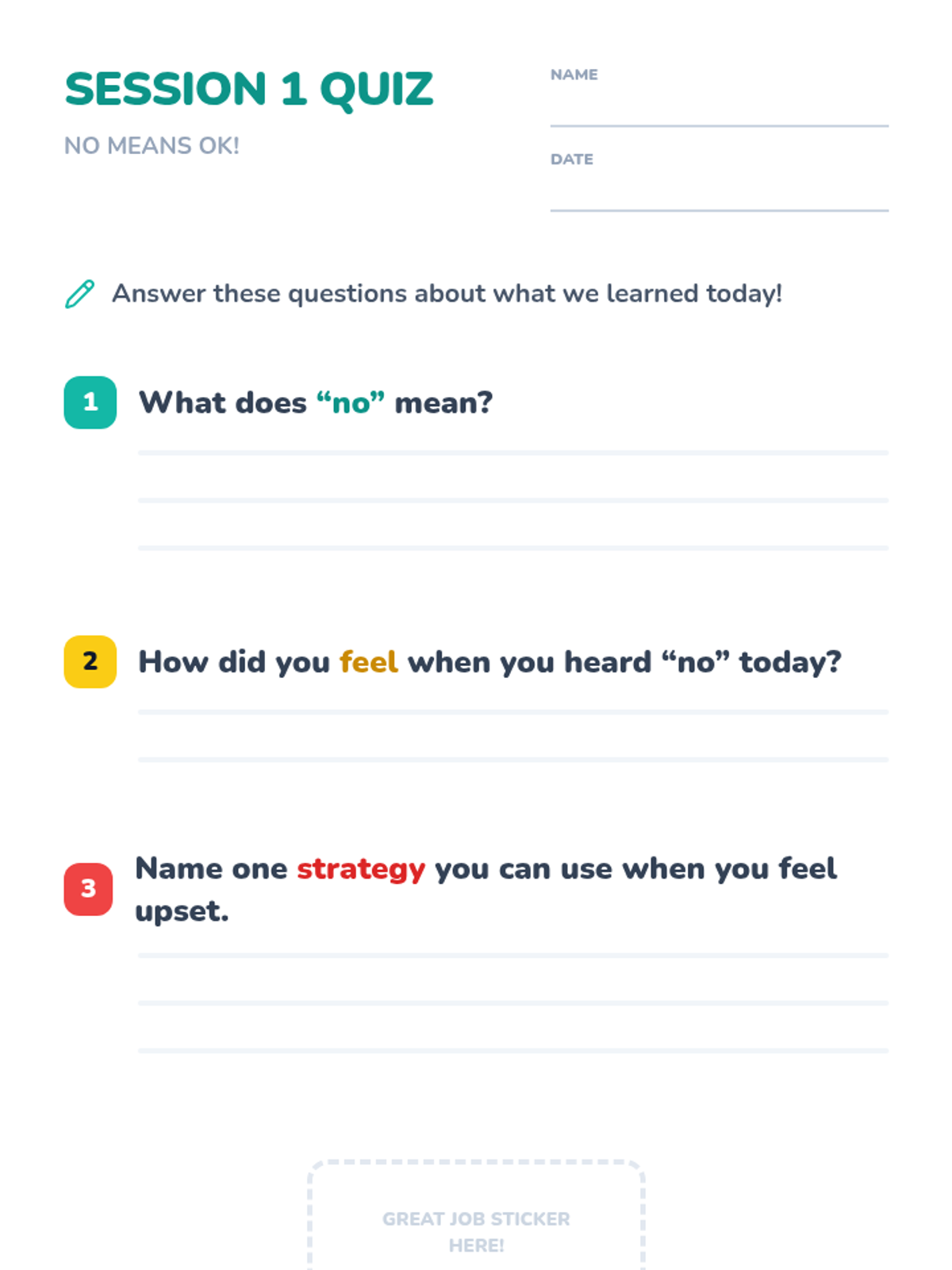
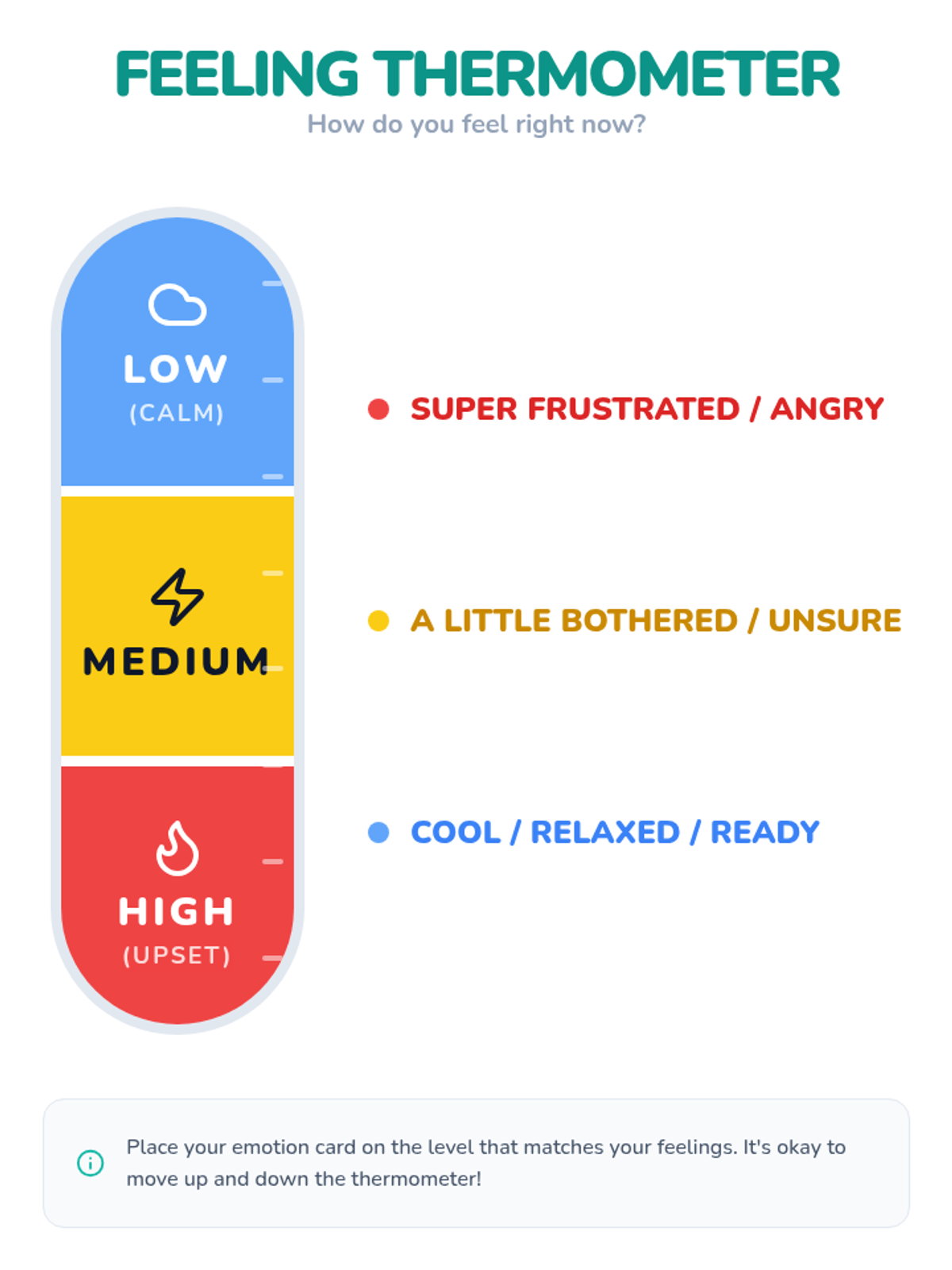
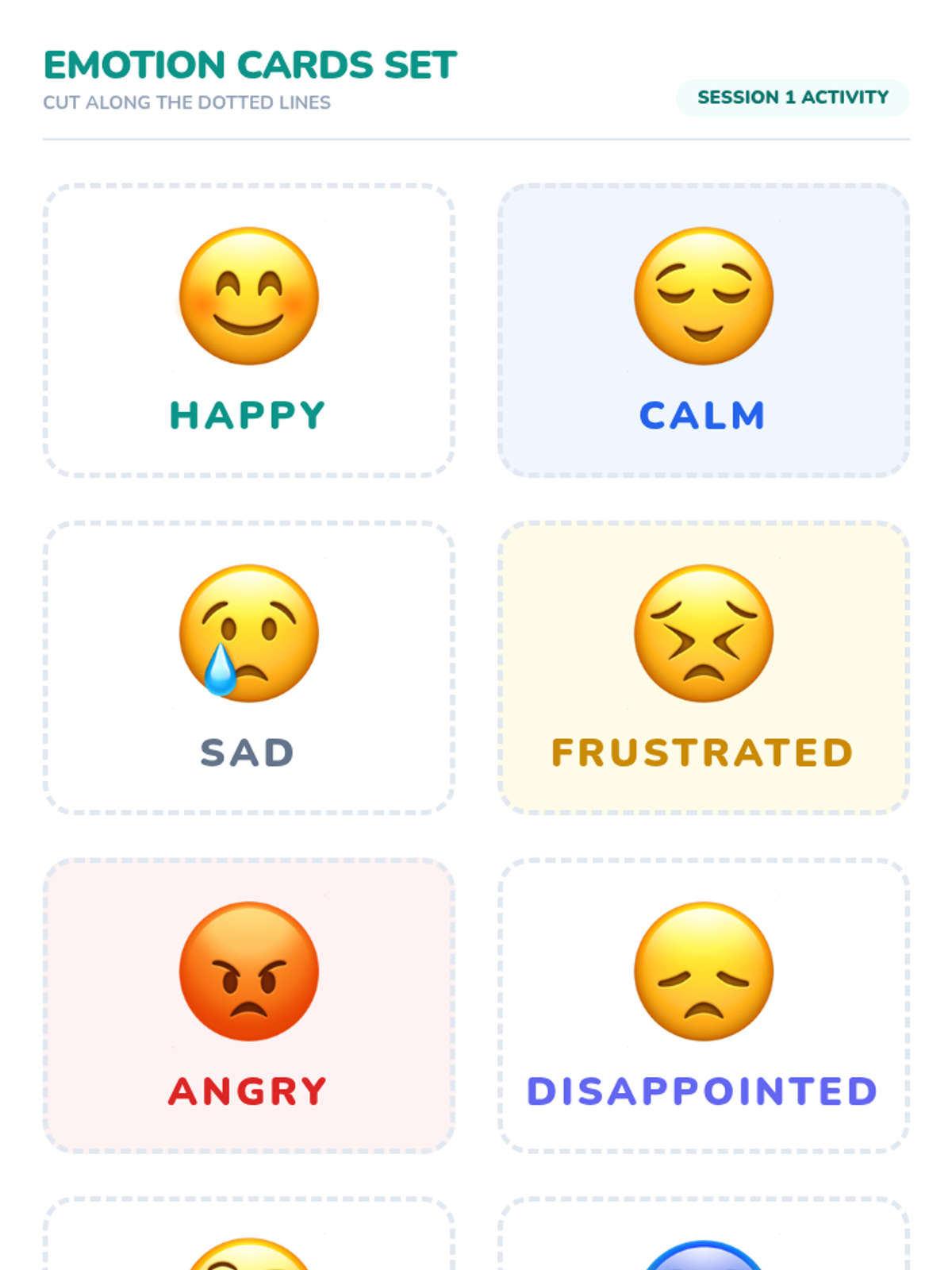
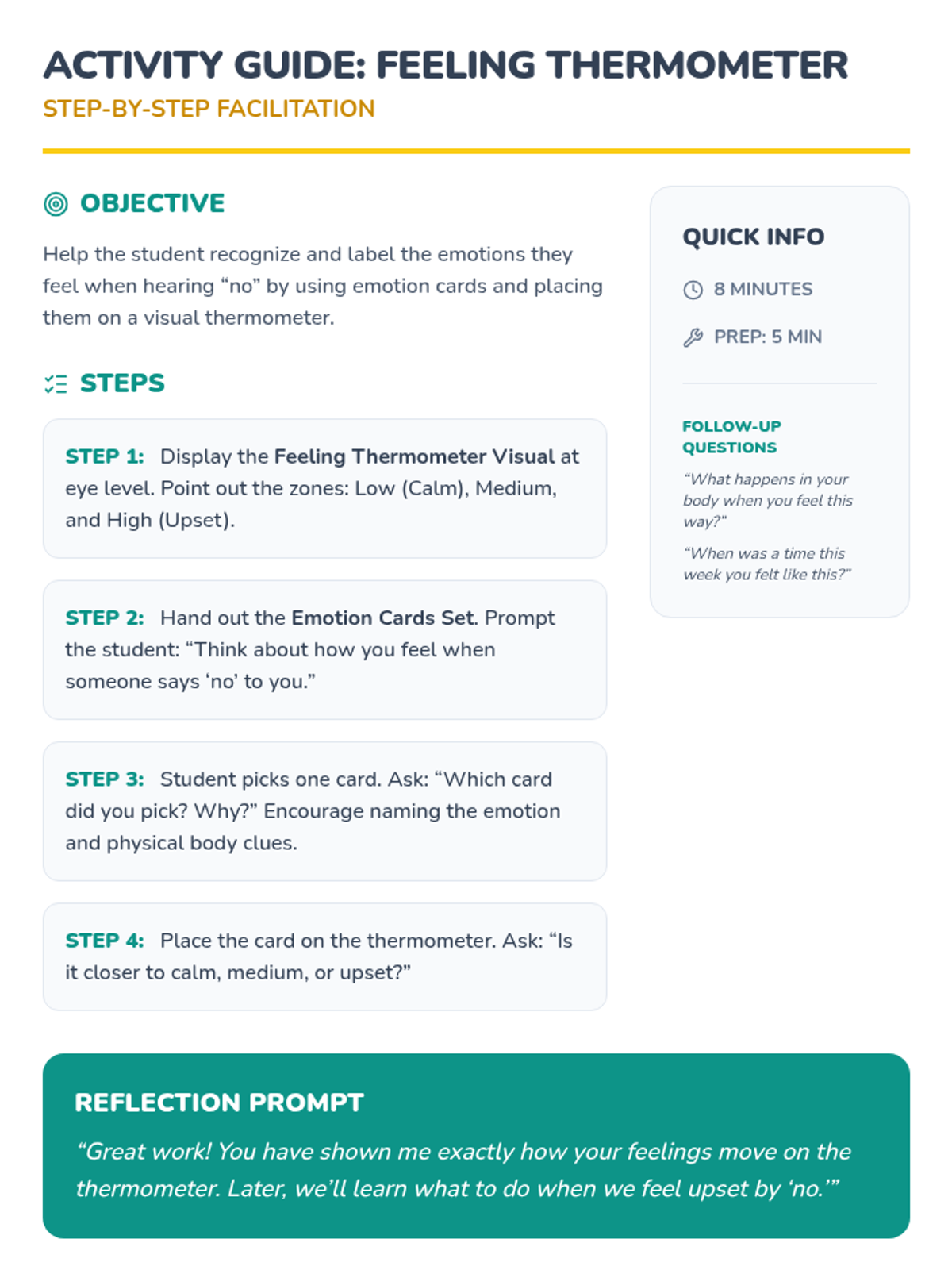
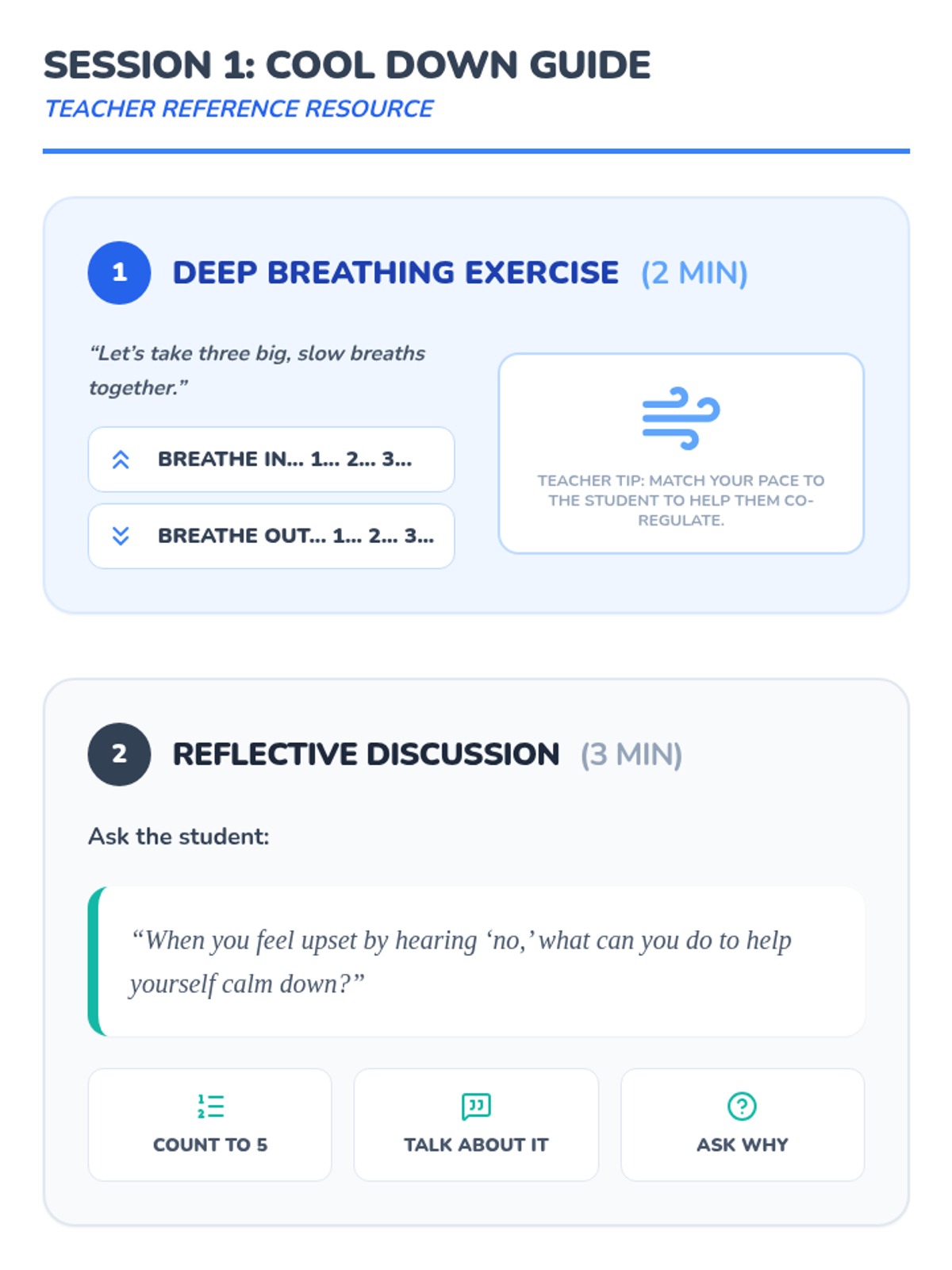
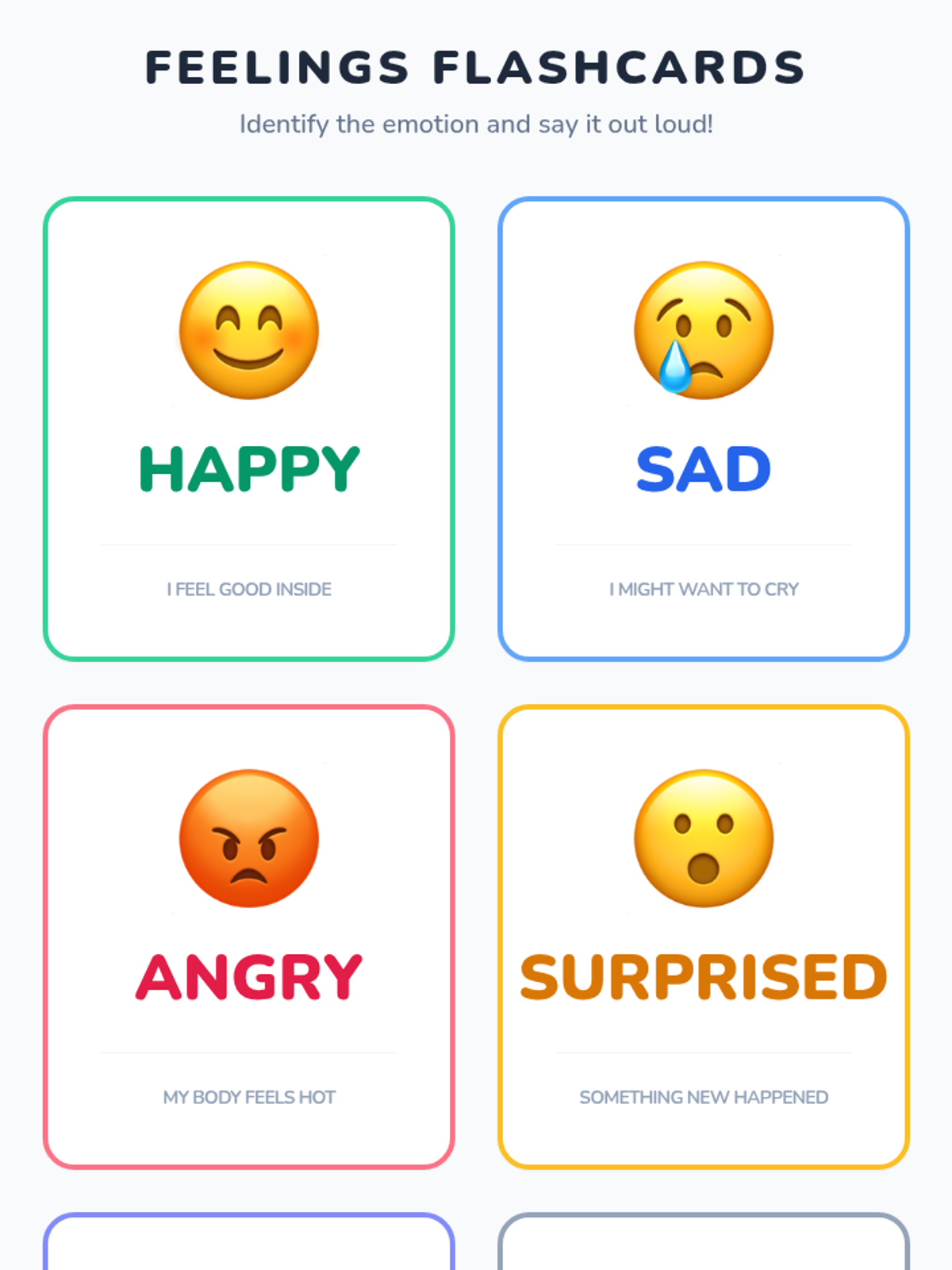
A 10-session Tier 3 intervention designed for first-grade students with ADHD and ODD to build emotional resilience and positive communication strategies when hearing the word 'no'. The sequence progresses from basic emotion identification to complex social-emotional problem-solving and self-regulation techniques.
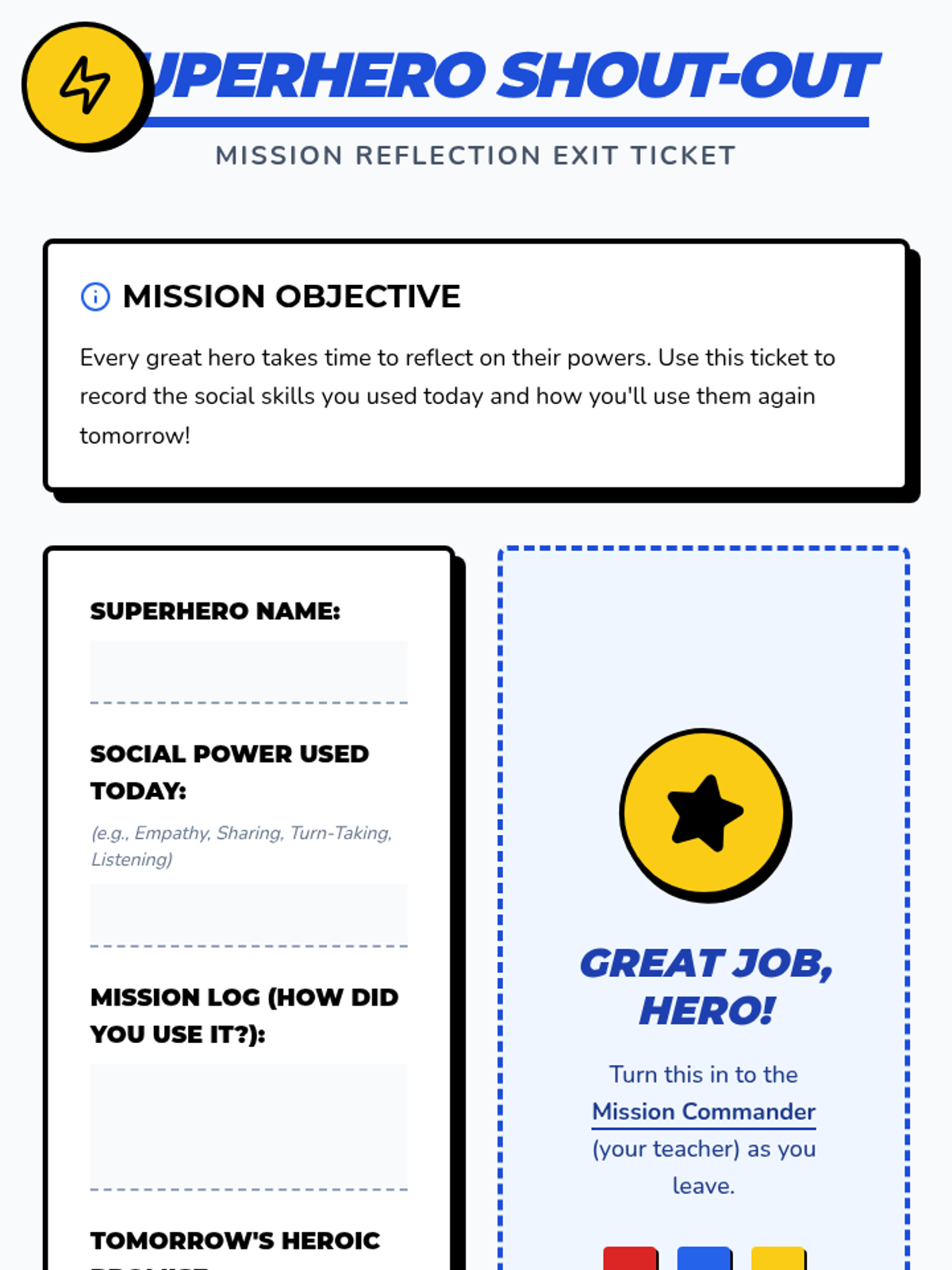
An 11-session Tier 2 social skills intervention for elementary students, focusing on friendship, empathy, patience, and conflict resolution through a superhero-themed creative curriculum.
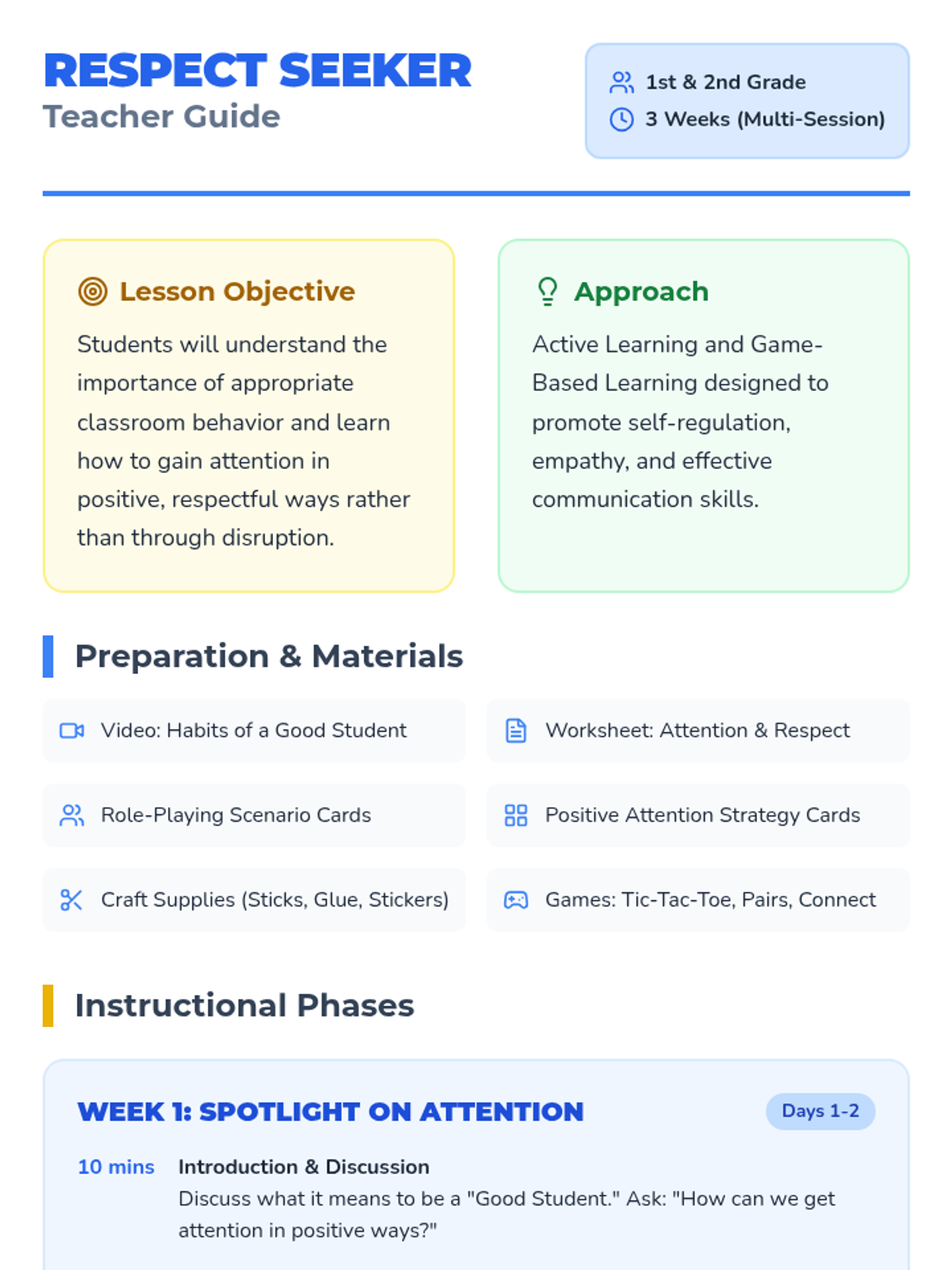
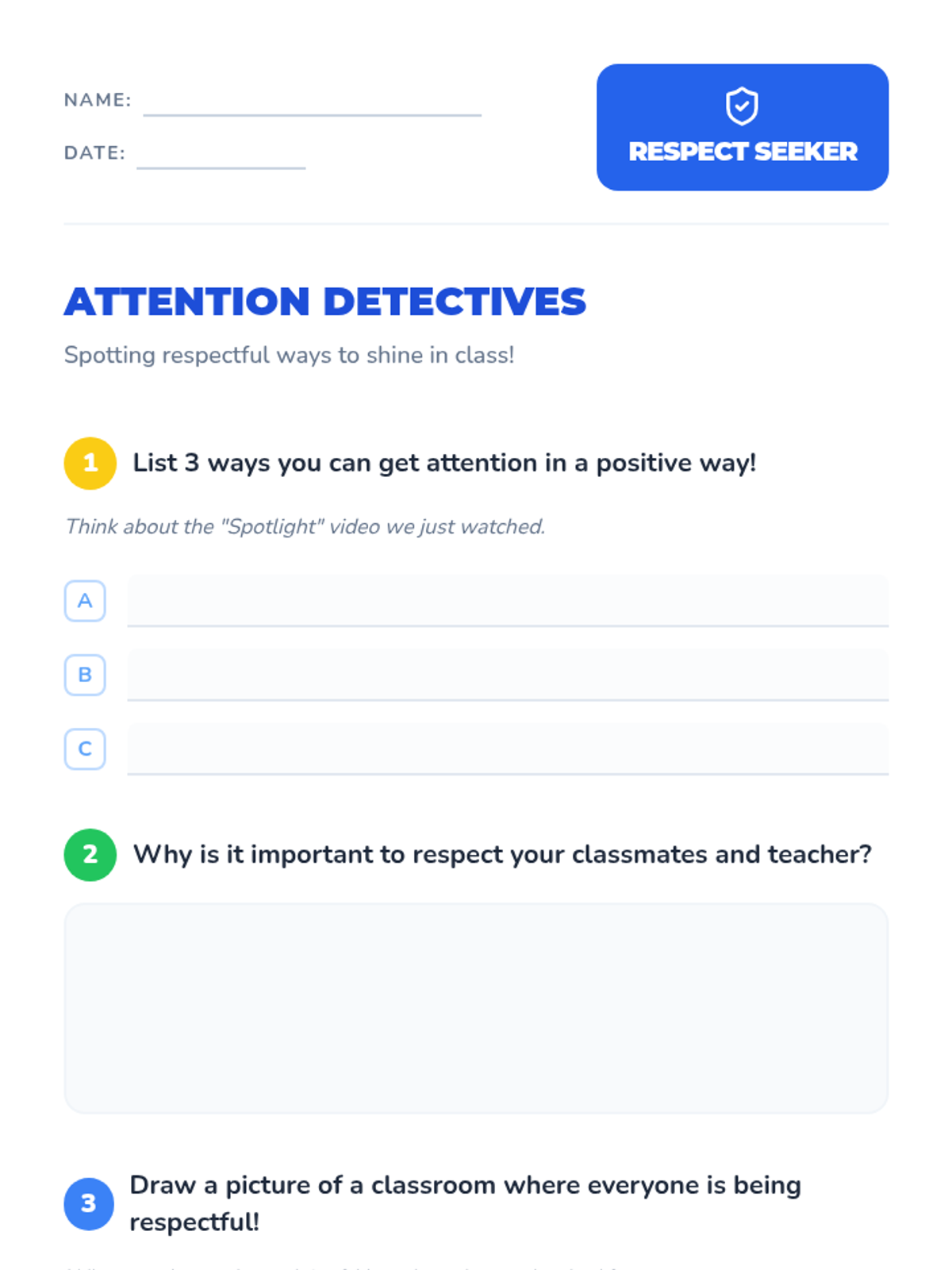
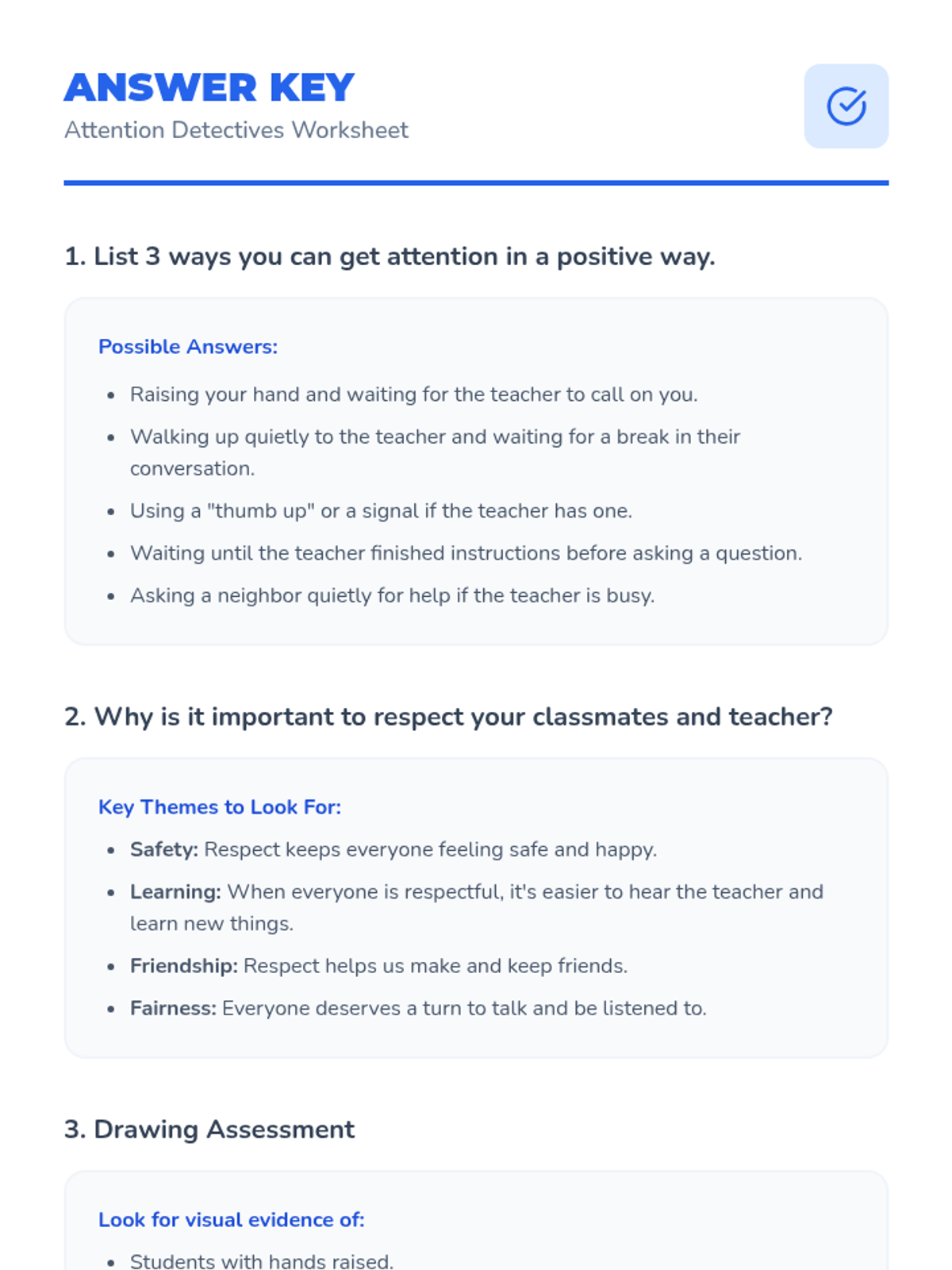
A three-week sequence for 1st and 2nd graders to learn appropriate classroom behavior, focusing on positive attention-seeking strategies, self-regulation, and respectful communication through games and role-play.
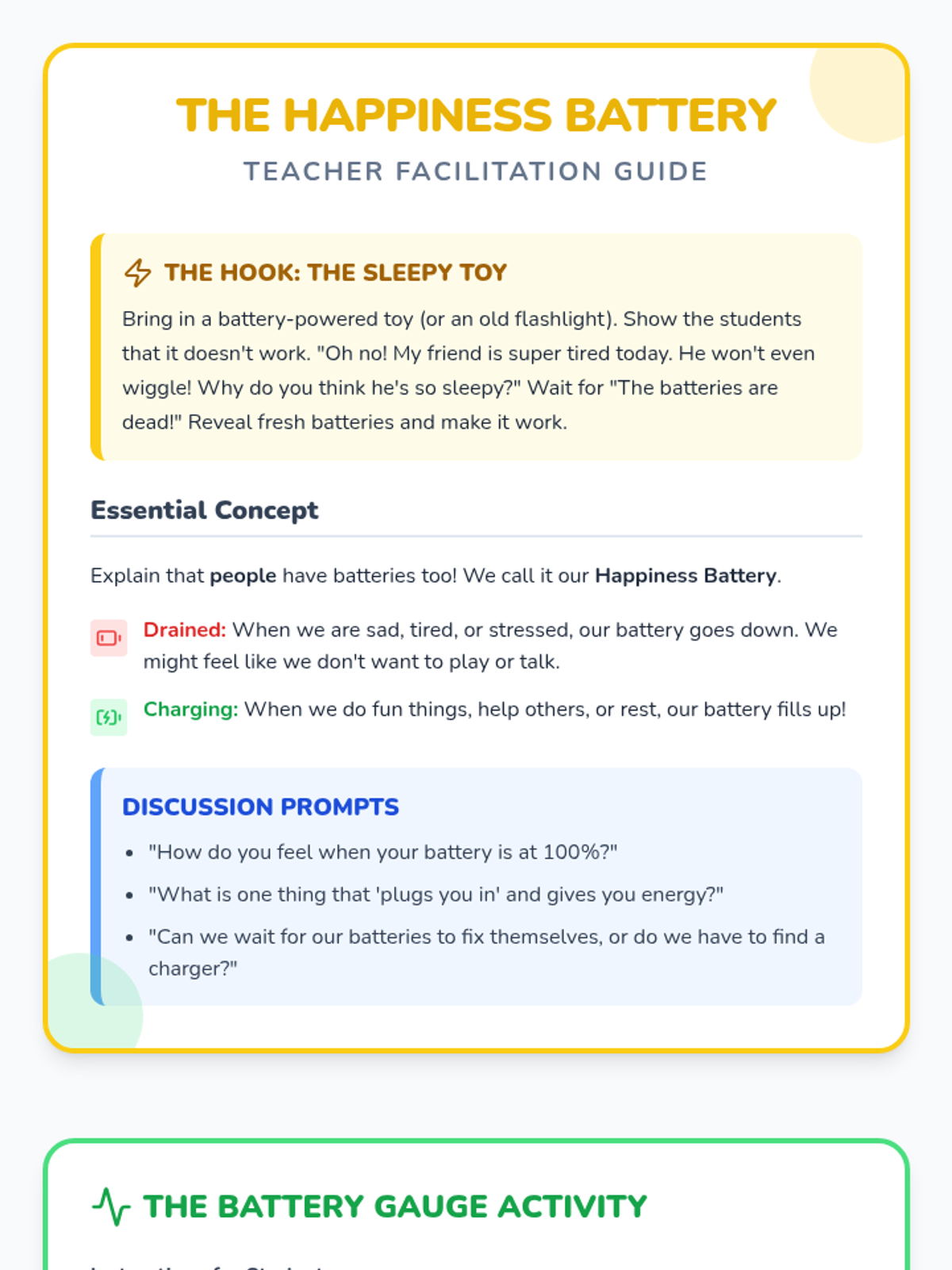
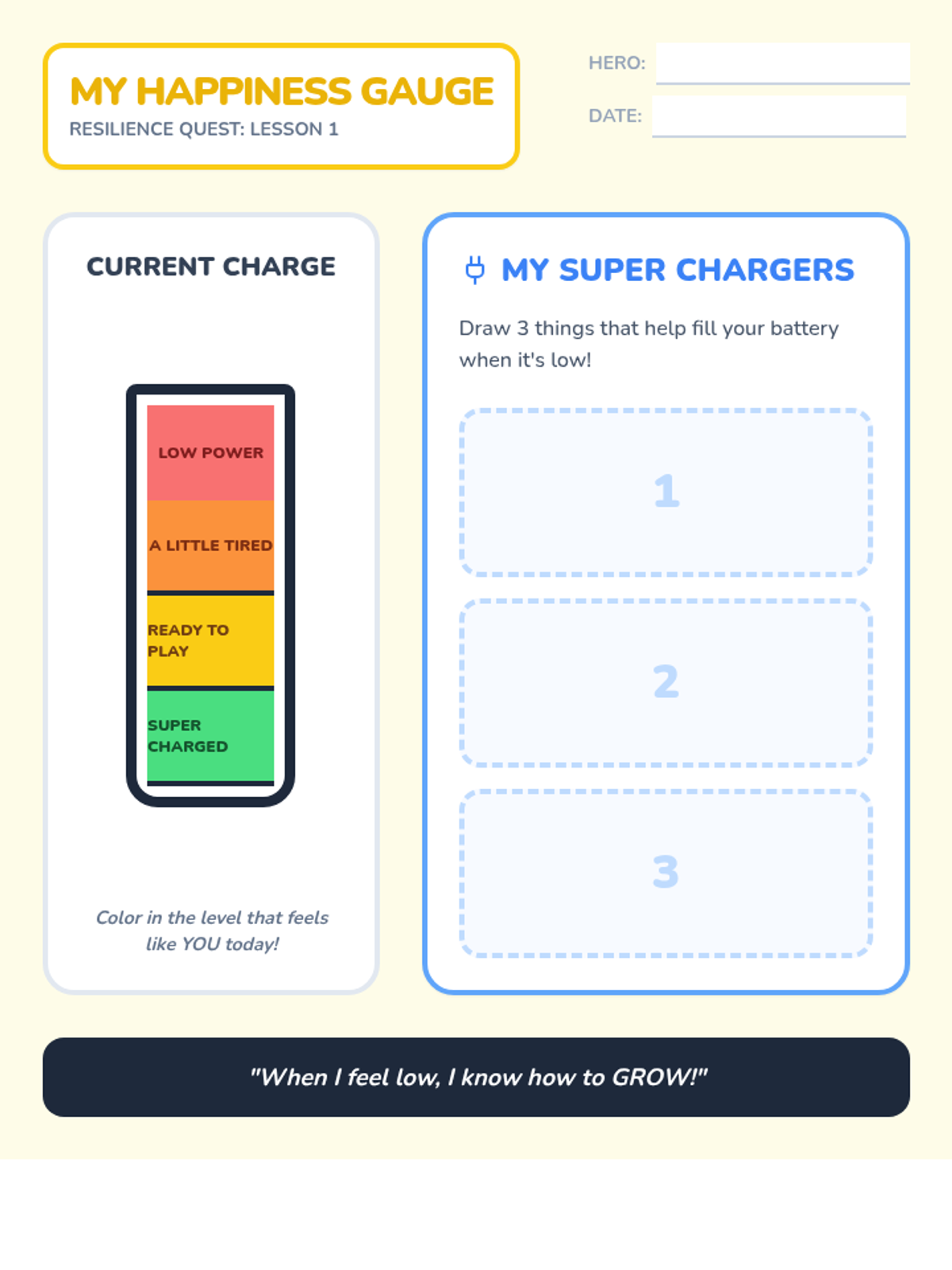
A 1st-grade counseling sequence that uses game-based mechanics and metaphors to teach behavioral activation, emotional resilience, and the importance of daily positive routines.
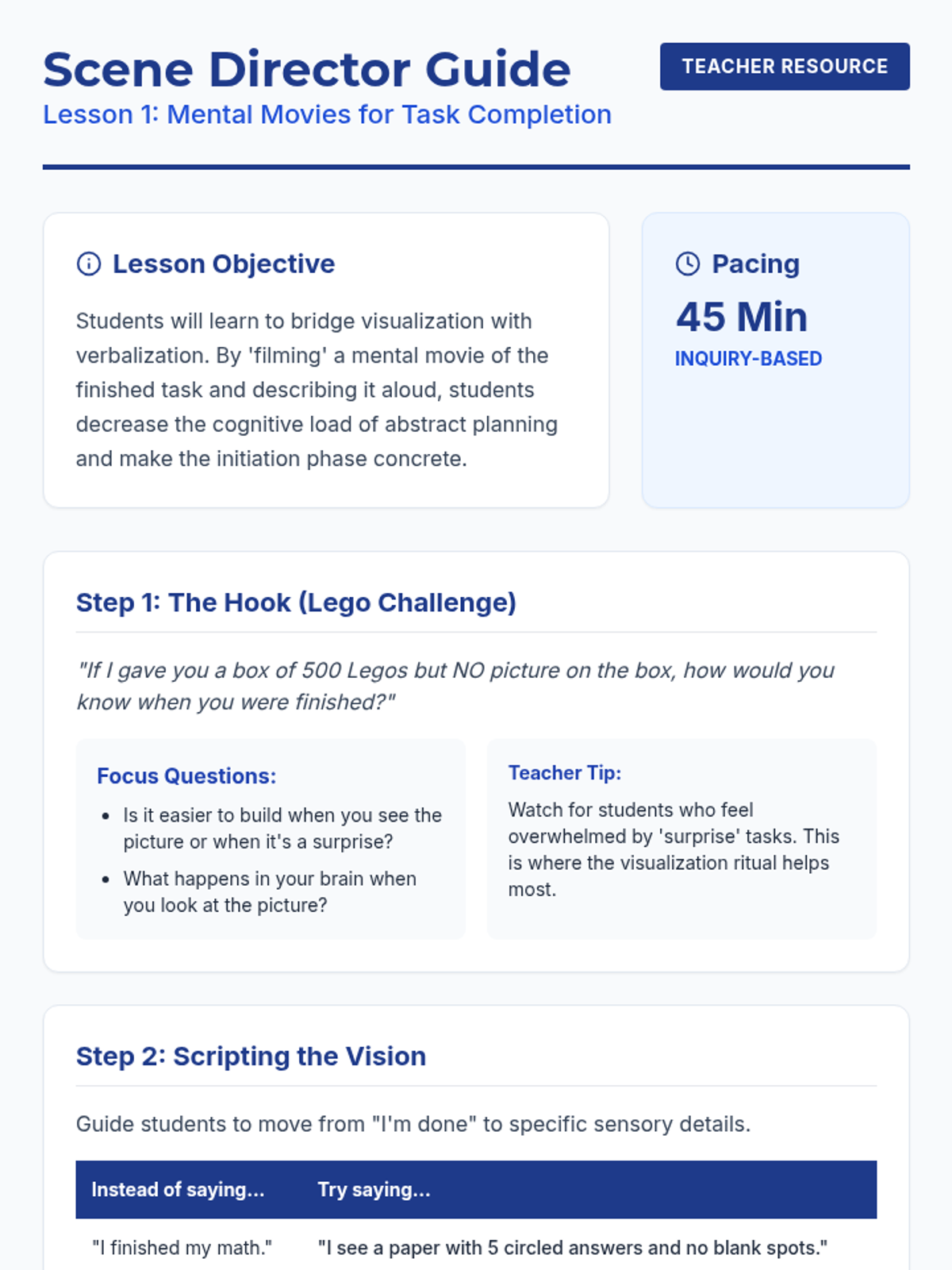
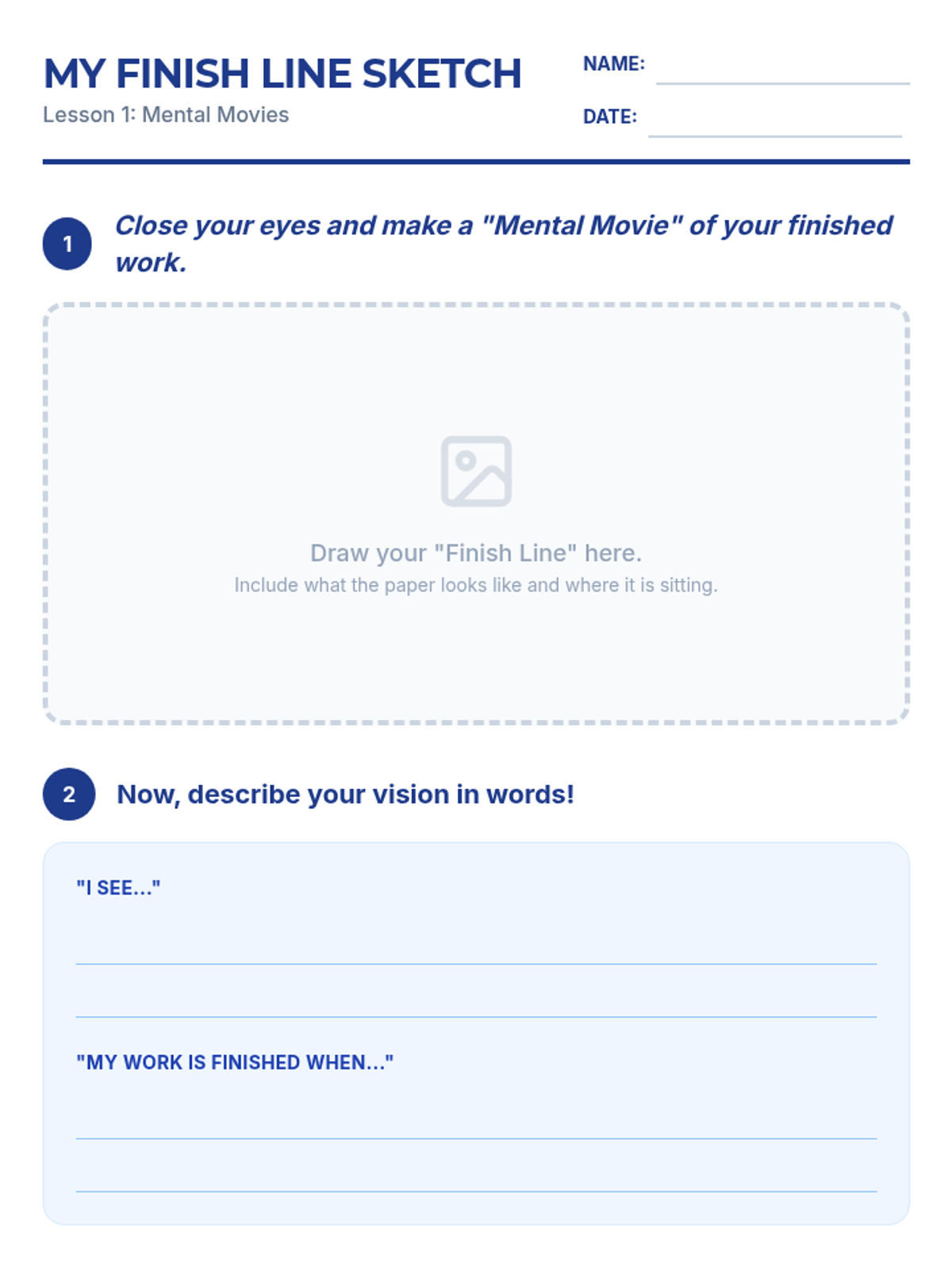
This sequence helps students overcome task initiation hurdles by combining visualization and verbal self-talk. Students learn to 'see' the finished product, reverse engineer the steps, estimate time accurately, and use micro-goals to take the first step.
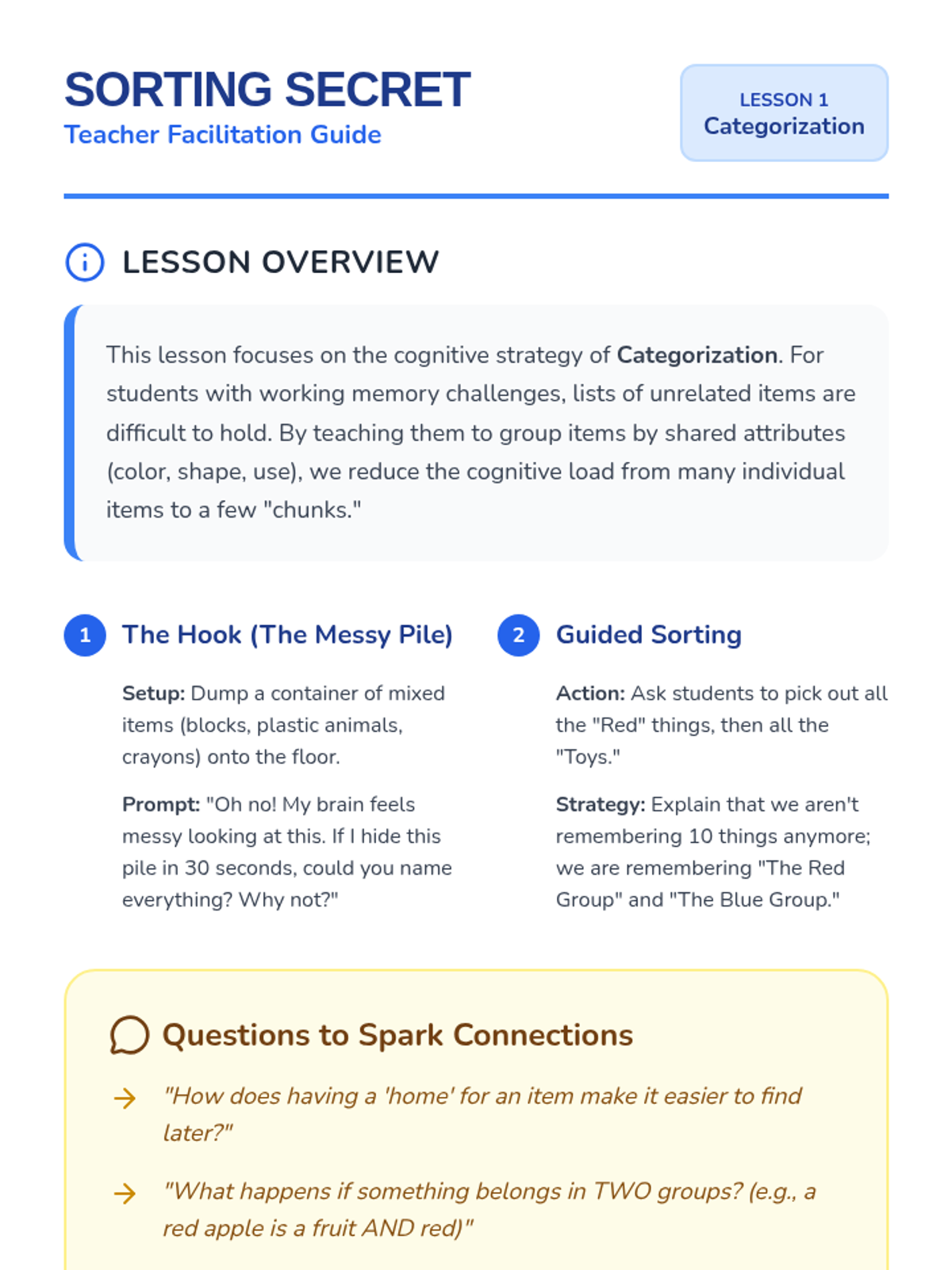
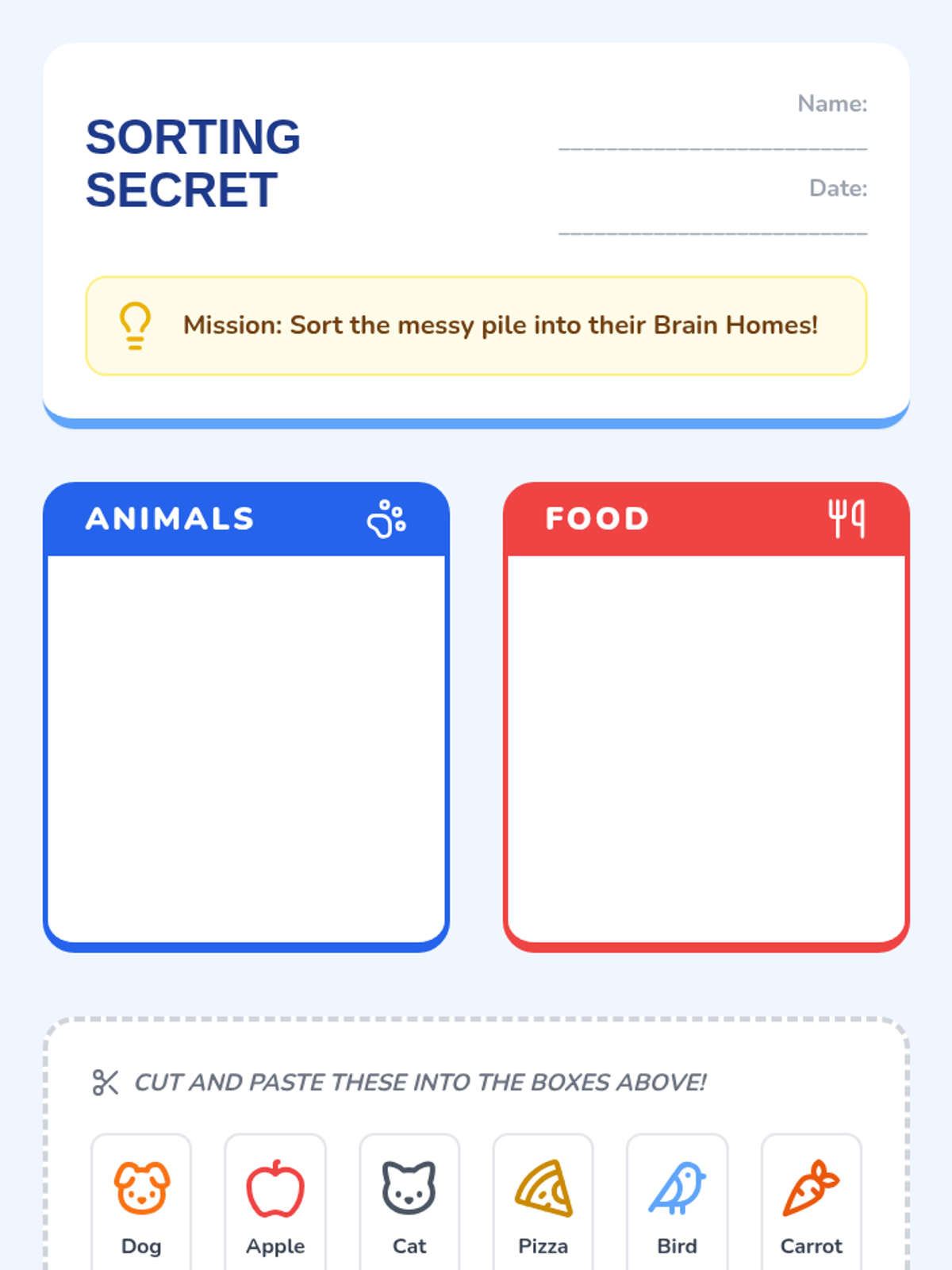
A foundational sequence for 1st-grade students to develop working memory strategies using association and grouping. Students progress from basic sorting to advanced mnemonic techniques like story chaining and initial letter cues to enhance information retention.
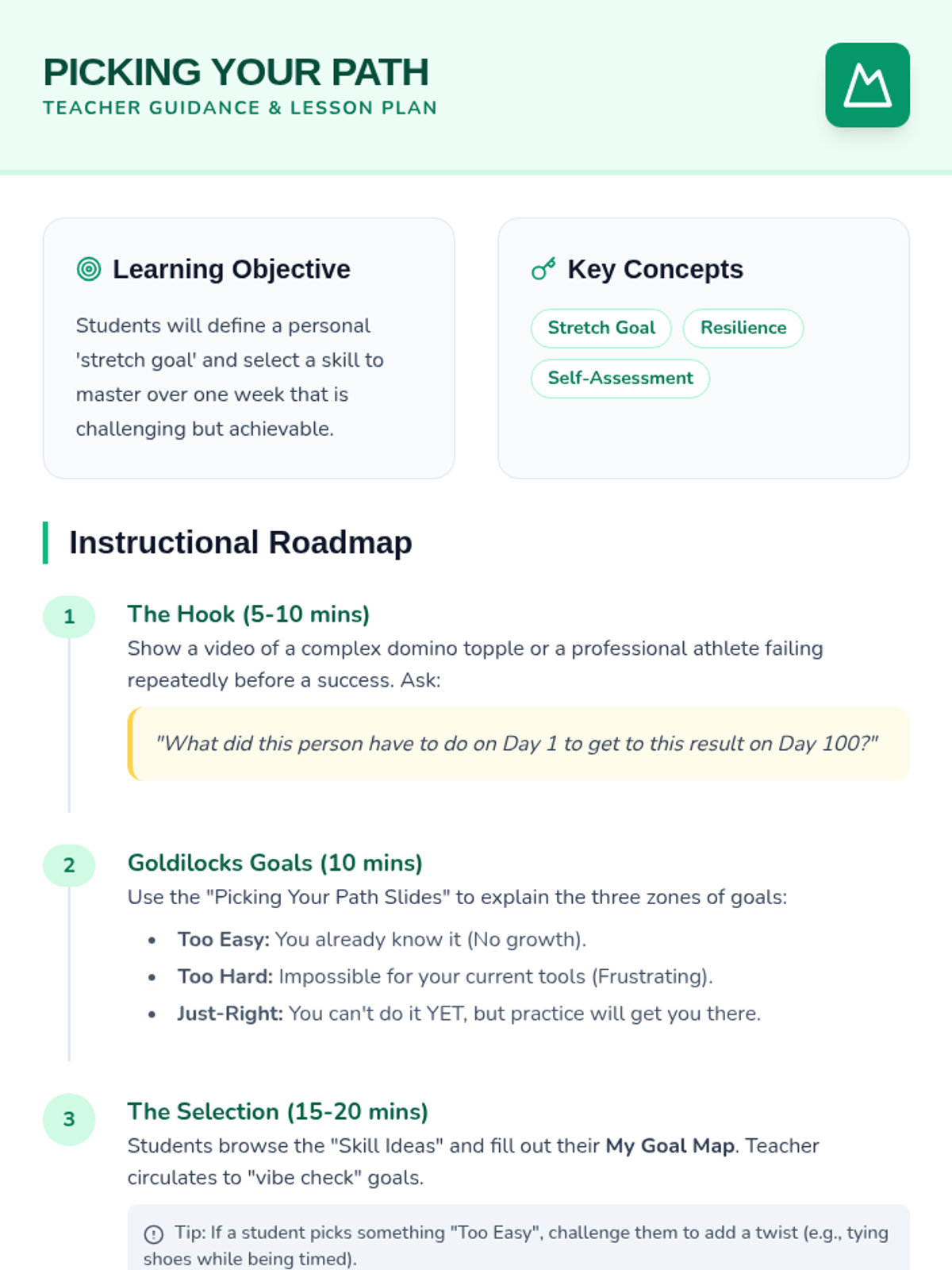
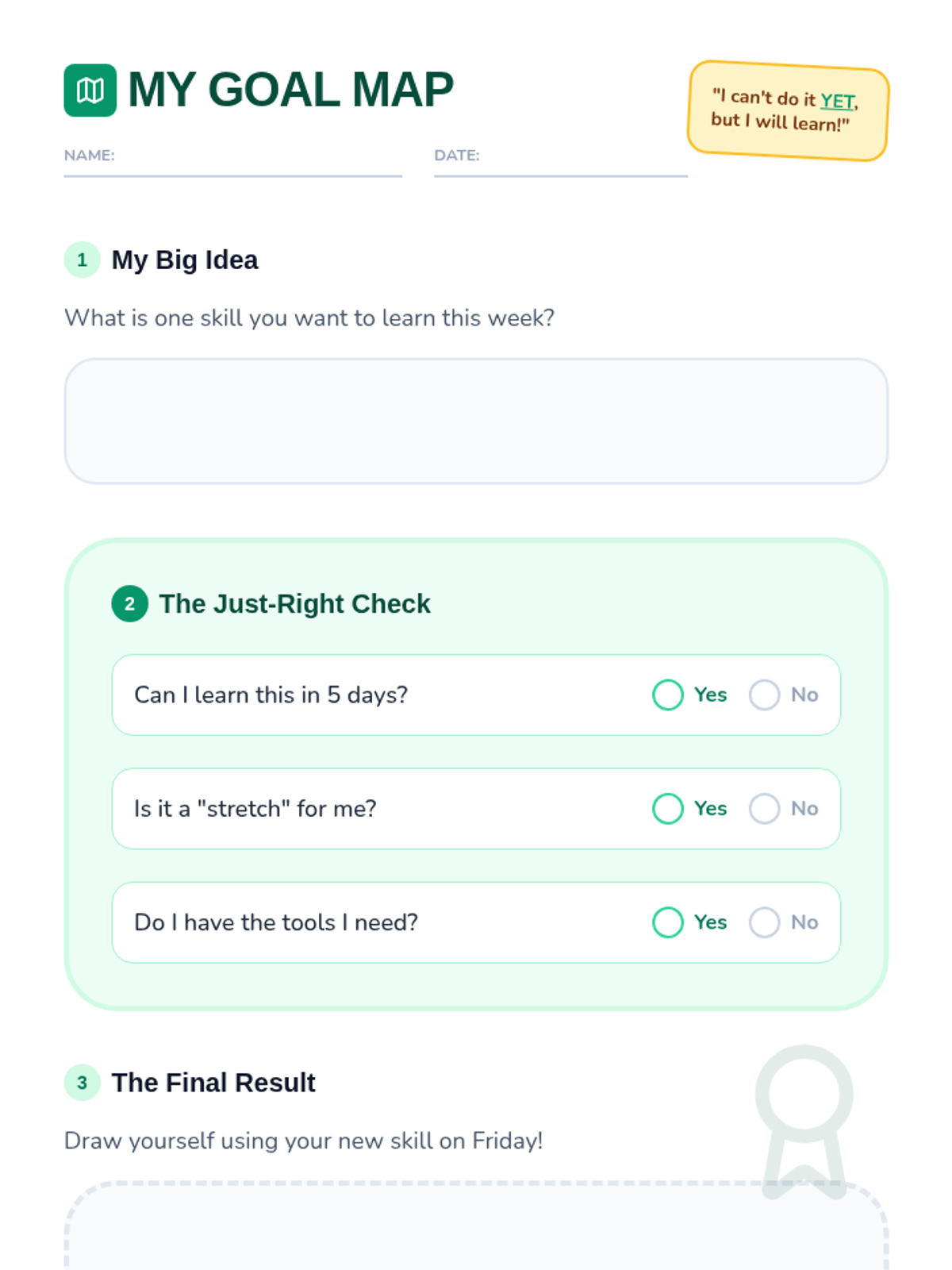
A 1st-grade project-based unit where students select, plan, and practice a new skill, focusing on the resilience needed to overcome challenges. Students learn to set achievable goals, break tasks into steps, monitor progress, and ask for help effectively.
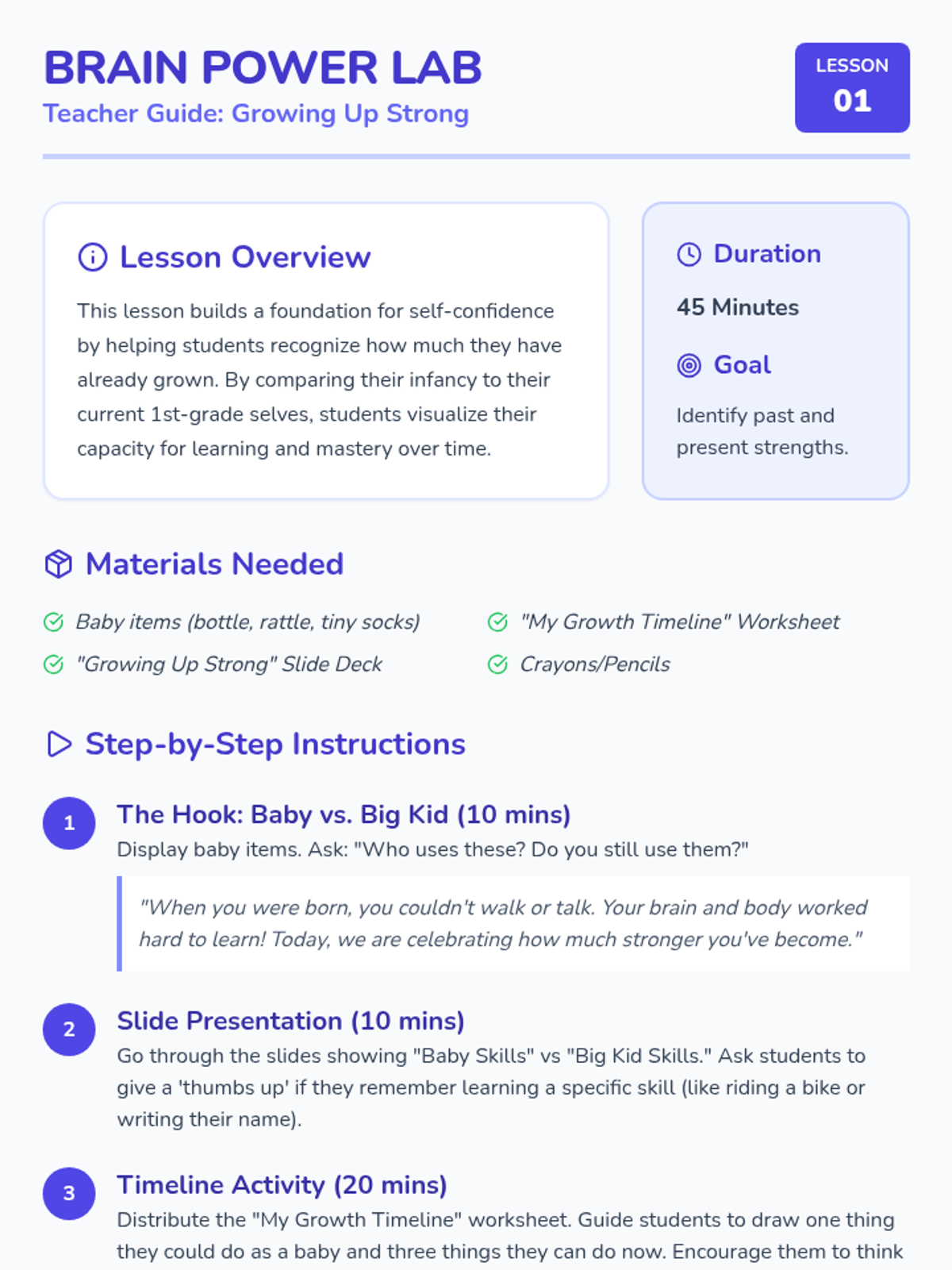
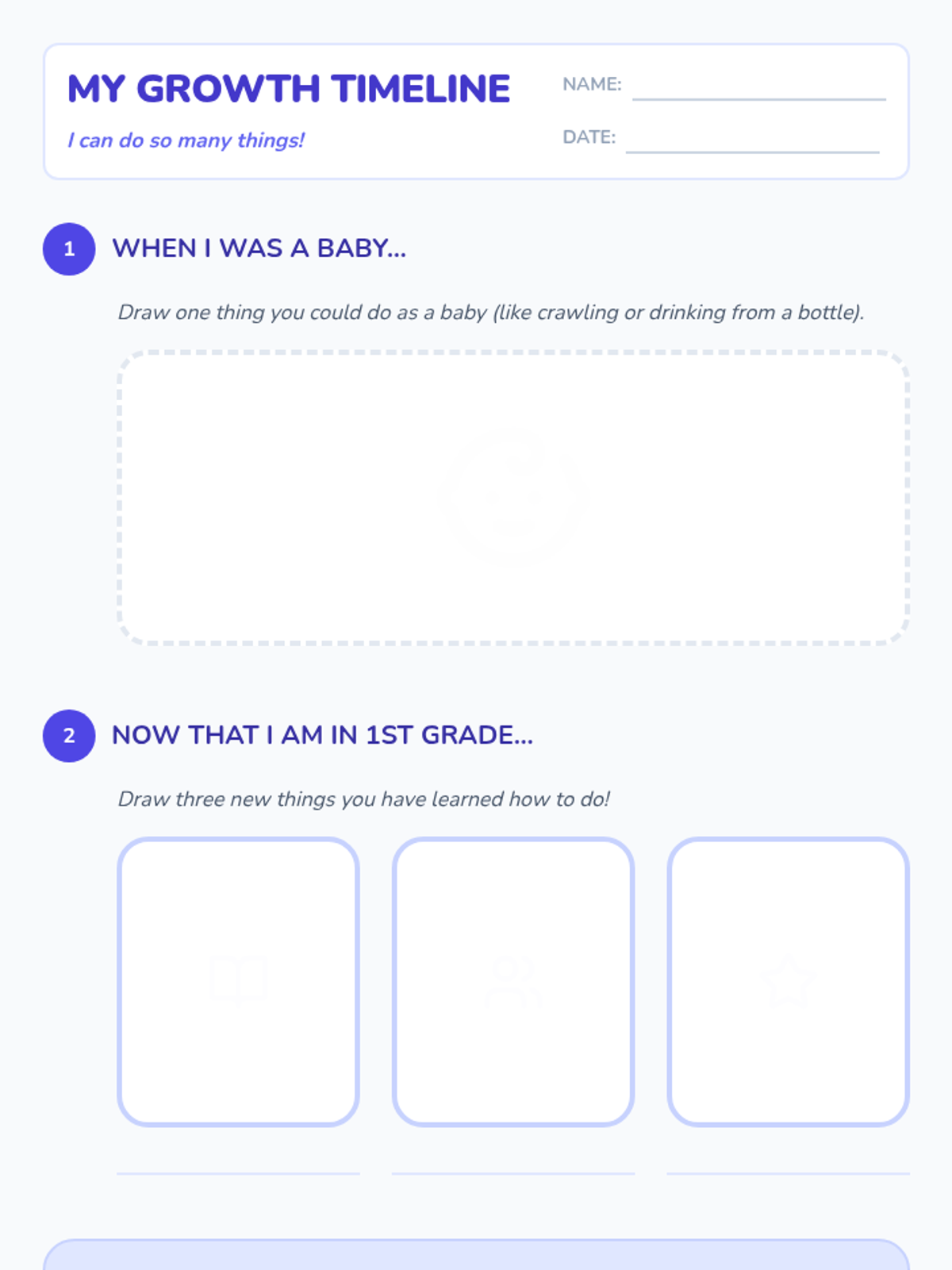
A 1st-grade sequence focused on developing self-efficacy and a growth mindset. Students learn to recognize their own growth, understand neuroplasticity through the 'Power of Yet,' practice positive self-talk, and set personal goals for the future.
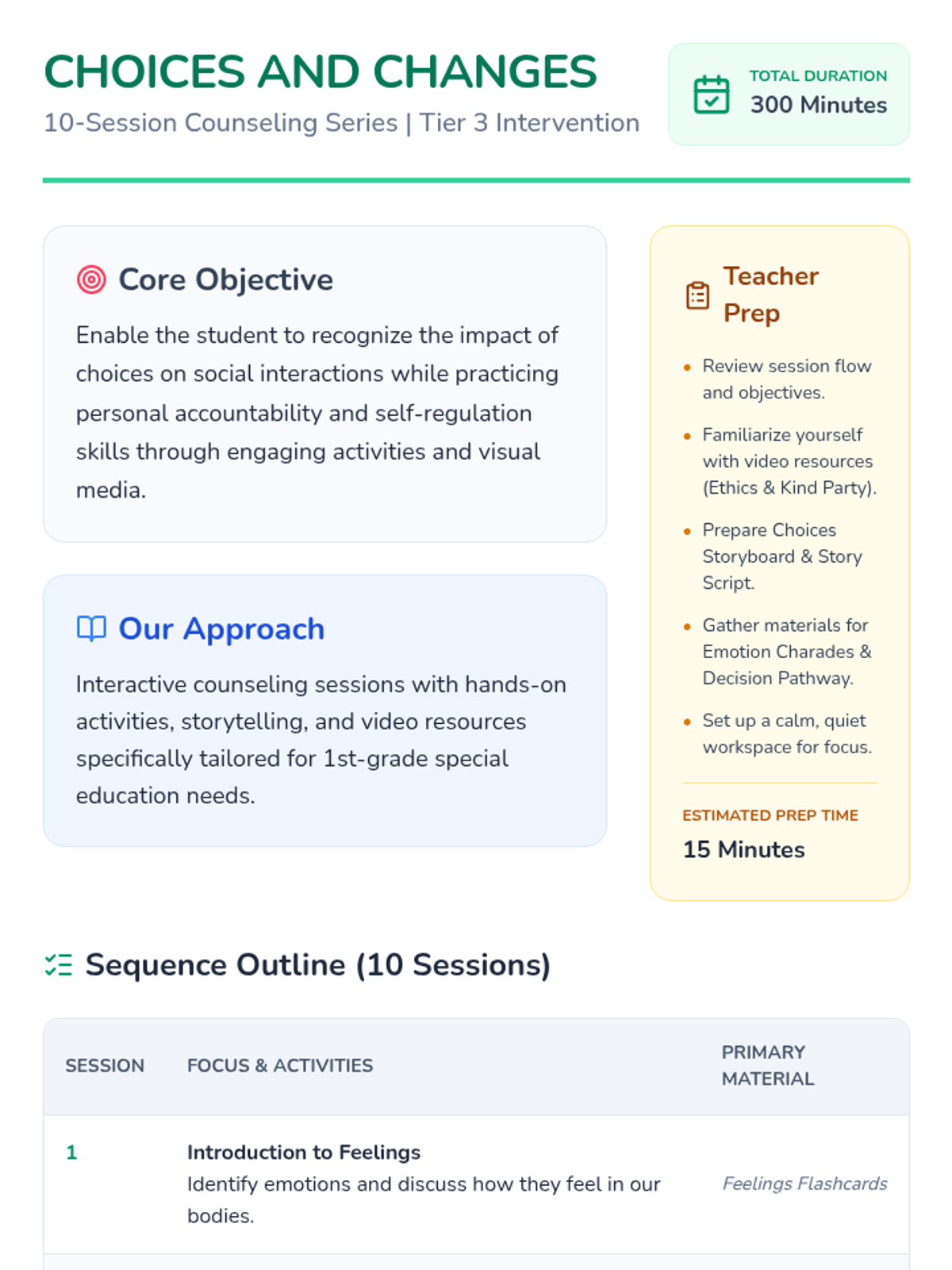
A 10-session counseling sequence for a 1st grade special education student focusing on personal accountability, self-regulation, and the social impact of choices.
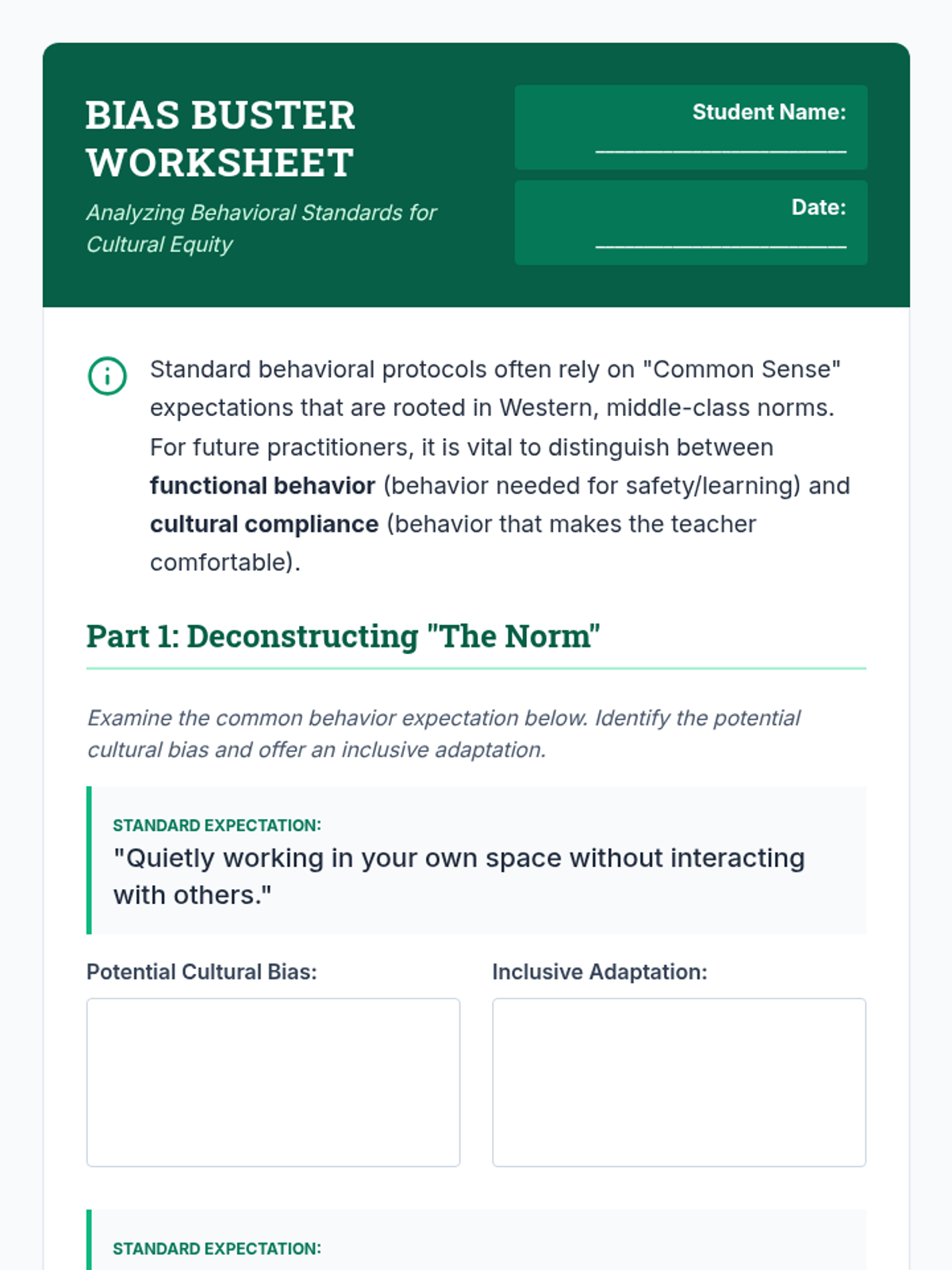
This sequence prepares undergraduate students in counseling and education to adapt standard behavioral check-in procedures (like Check-In/Check-Out) for diverse populations. It emphasizes cultural responsiveness, developmental appropriateness, neurodiversity, and modern remote contexts to ensure equity and accessibility in behavioral support.
This mastery-based sequence teaches students to view check-ins not just as a morning event, but as a continuous cycle of self-monitoring and reflection. Students learn to track their emotional patterns over time, identifying triggers and successful interventions to develop long-term metacognitive habits.
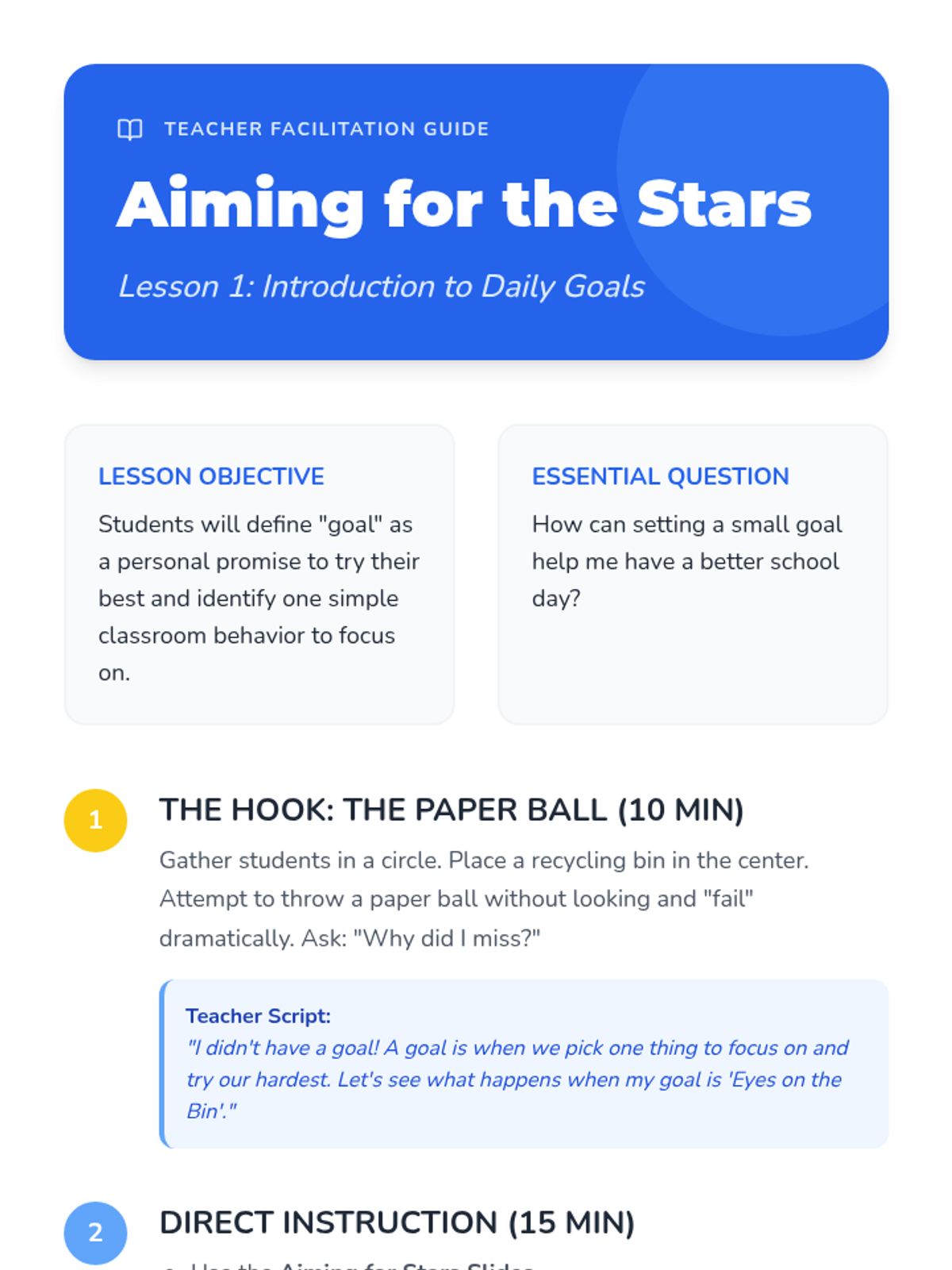
This sequence teaches 1st-grade students how to set, monitor, and reflect on daily behavioral goals as part of their morning and afternoon check-in routines. Students develop executive function and a growth mindset by focusing on specific 'Star Behaviors' like safe hands, listening ears, and kind words.
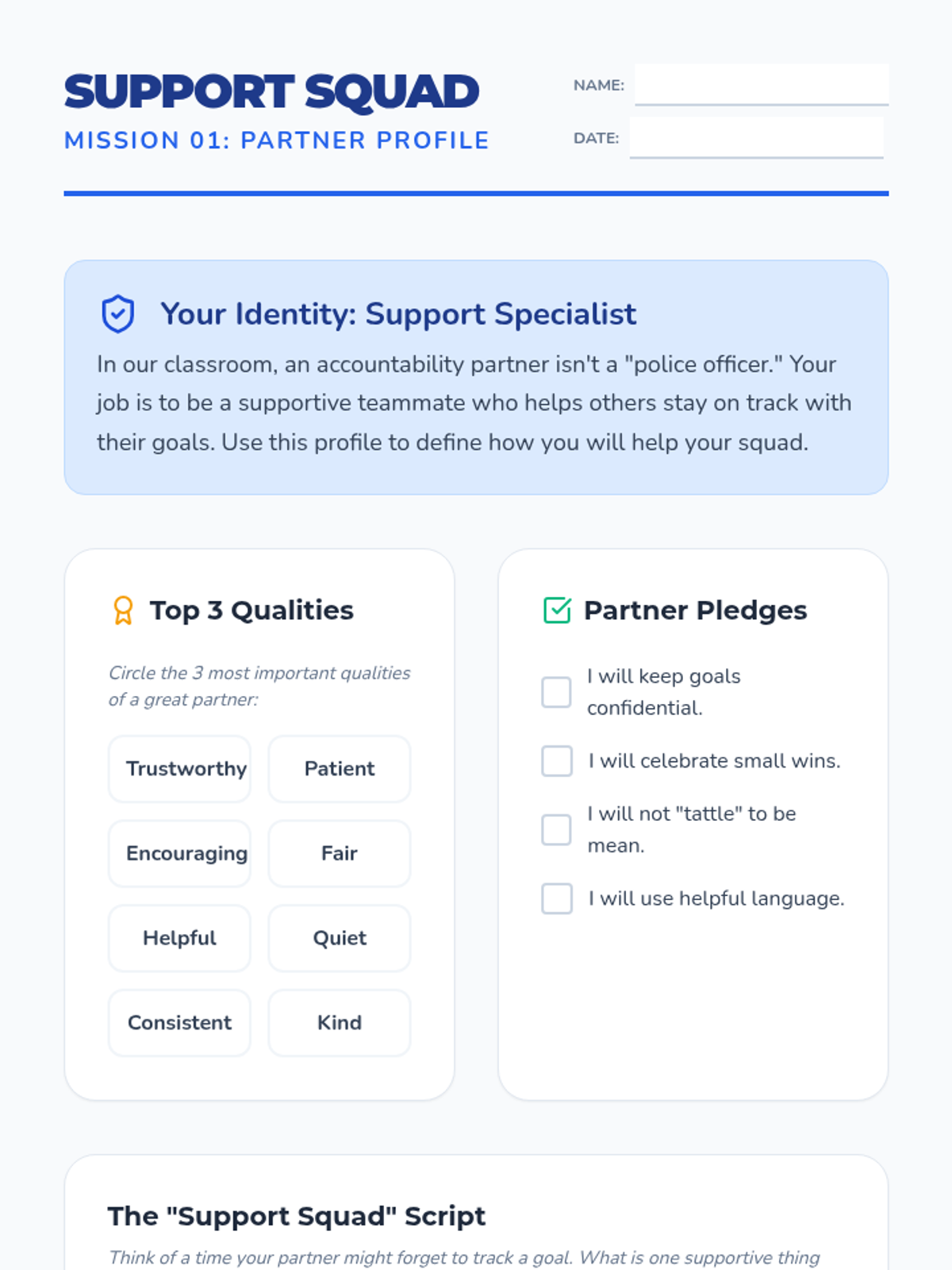
Focusing on the social aspect of behavioral growth, this sequence introduces peer accountability and collaborative goal setting. Students participate in simulations to learn how to be supportive accountability partners without being critical. The sequence builds social-emotional skills by teaching students that individual tracking contributes to the community environment.
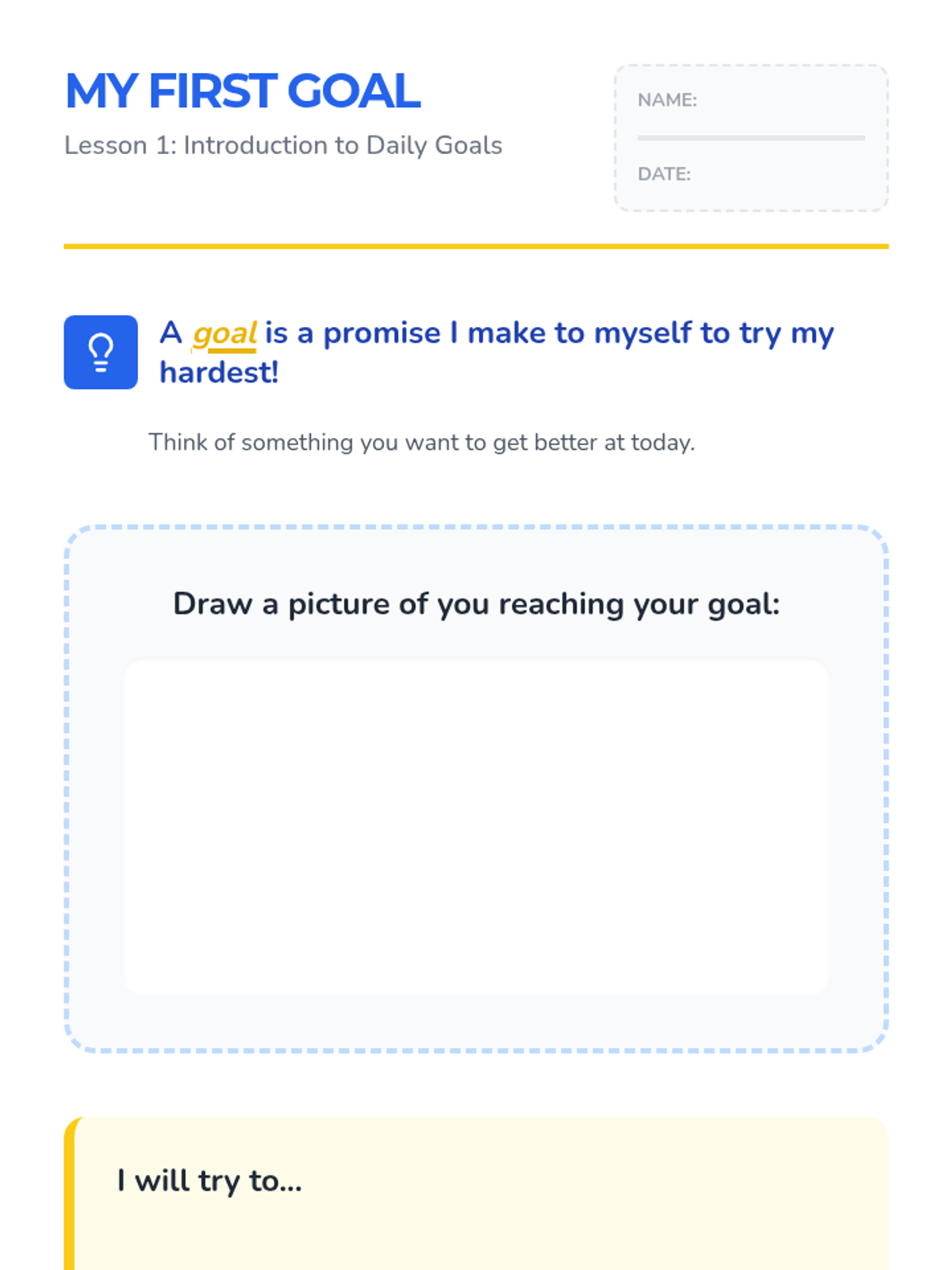
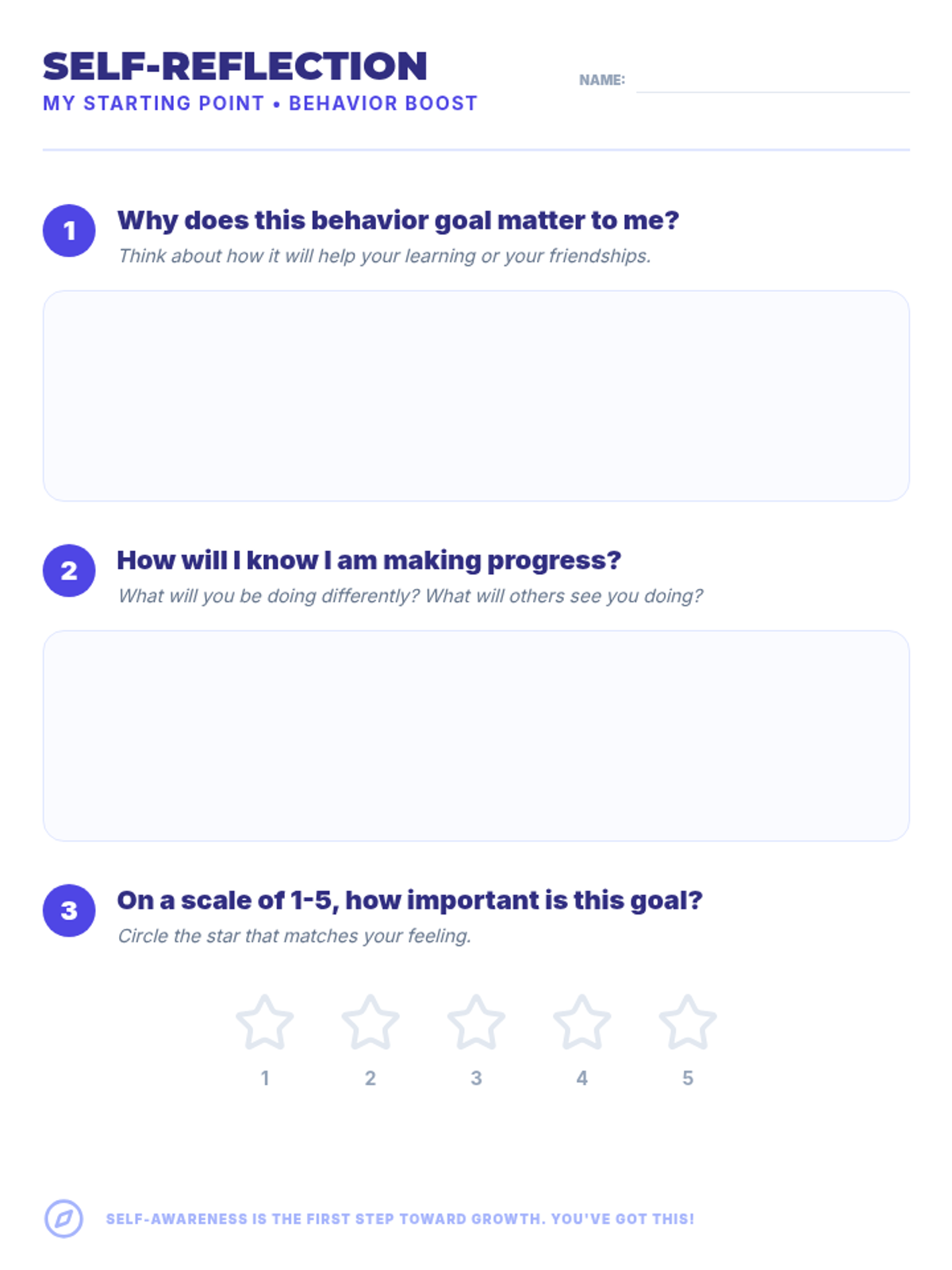
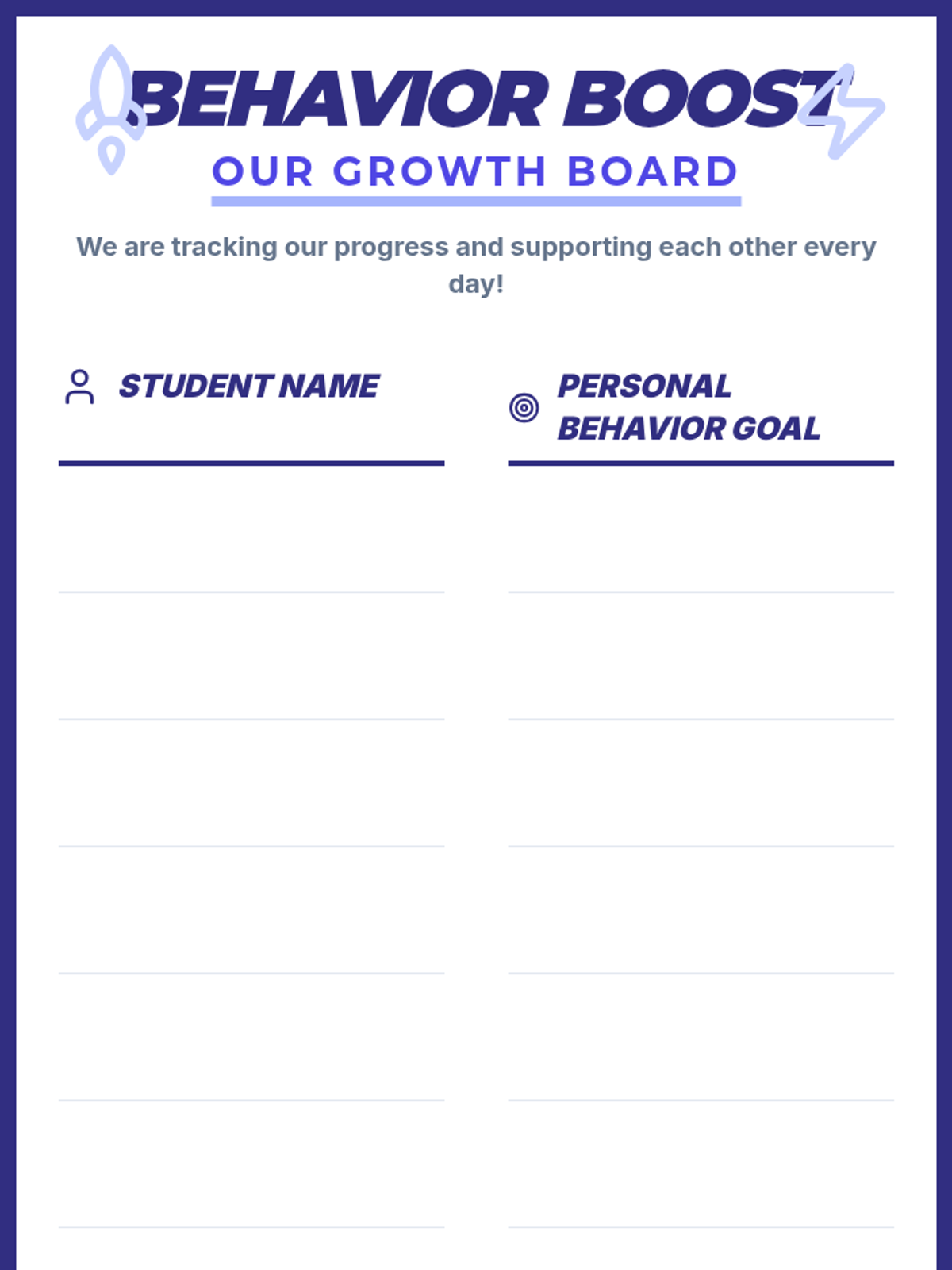
A sequence for 1st graders focused on goal-setting and self-tracking. Students learn to choose a behavior goal, design a visual progress tracker, and develop resilience when facing setbacks.
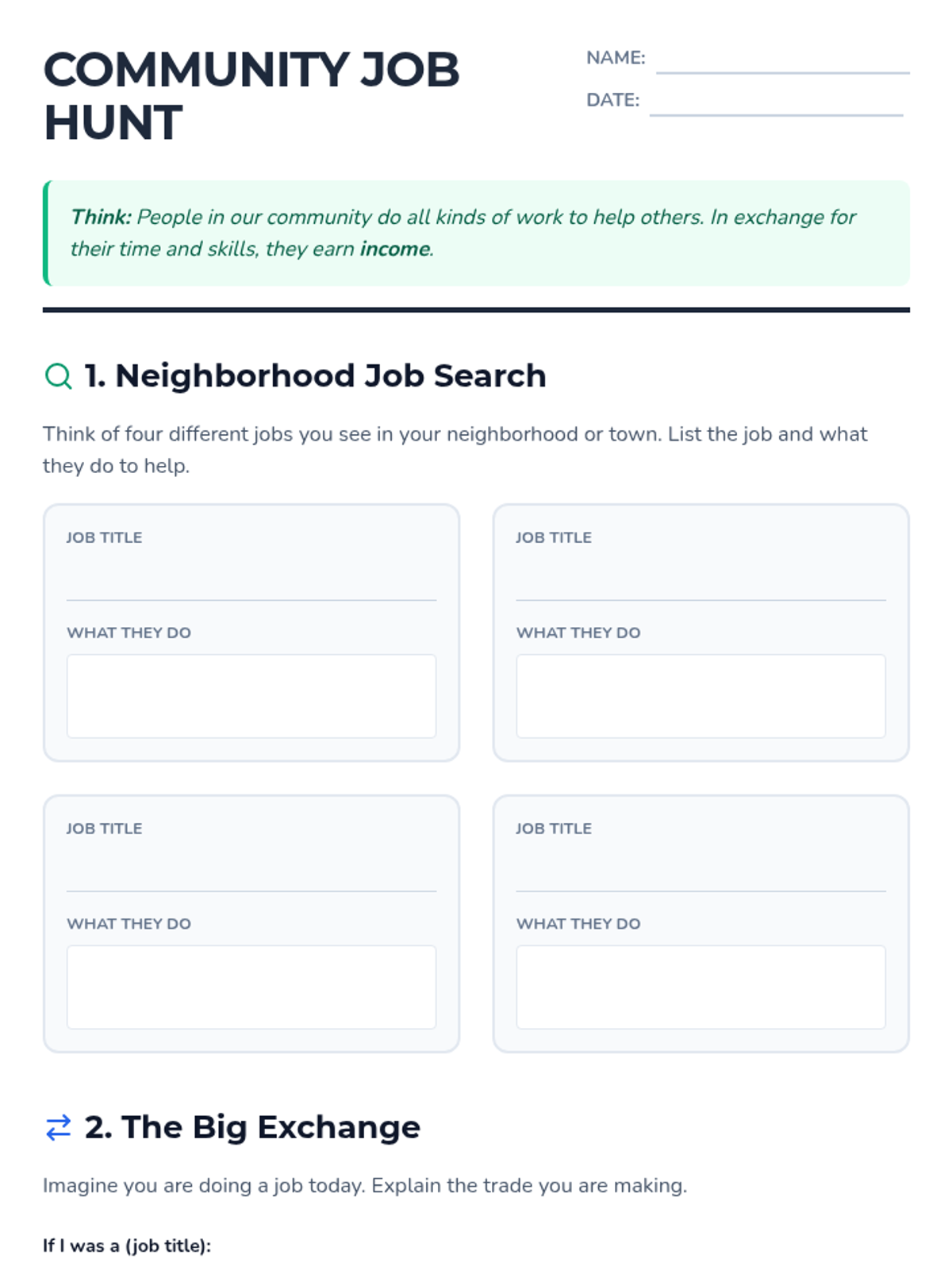
This sequence explores the relationship between education, jobs, and income. Students learn about budgeting, the impact of unexpected expenses, and the intrinsic value of all community work, addressing economic inequality through practical simulations and reflection.
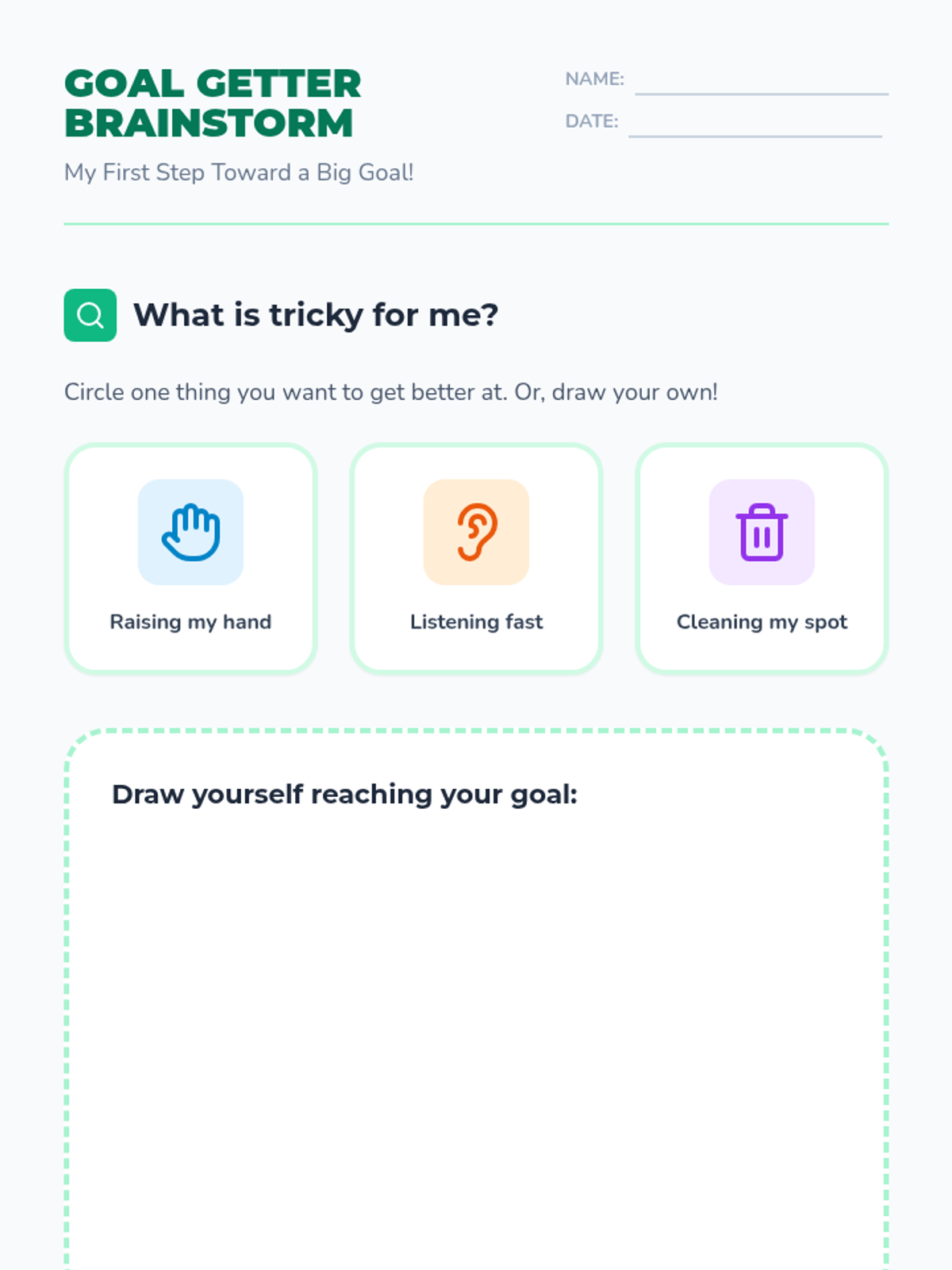
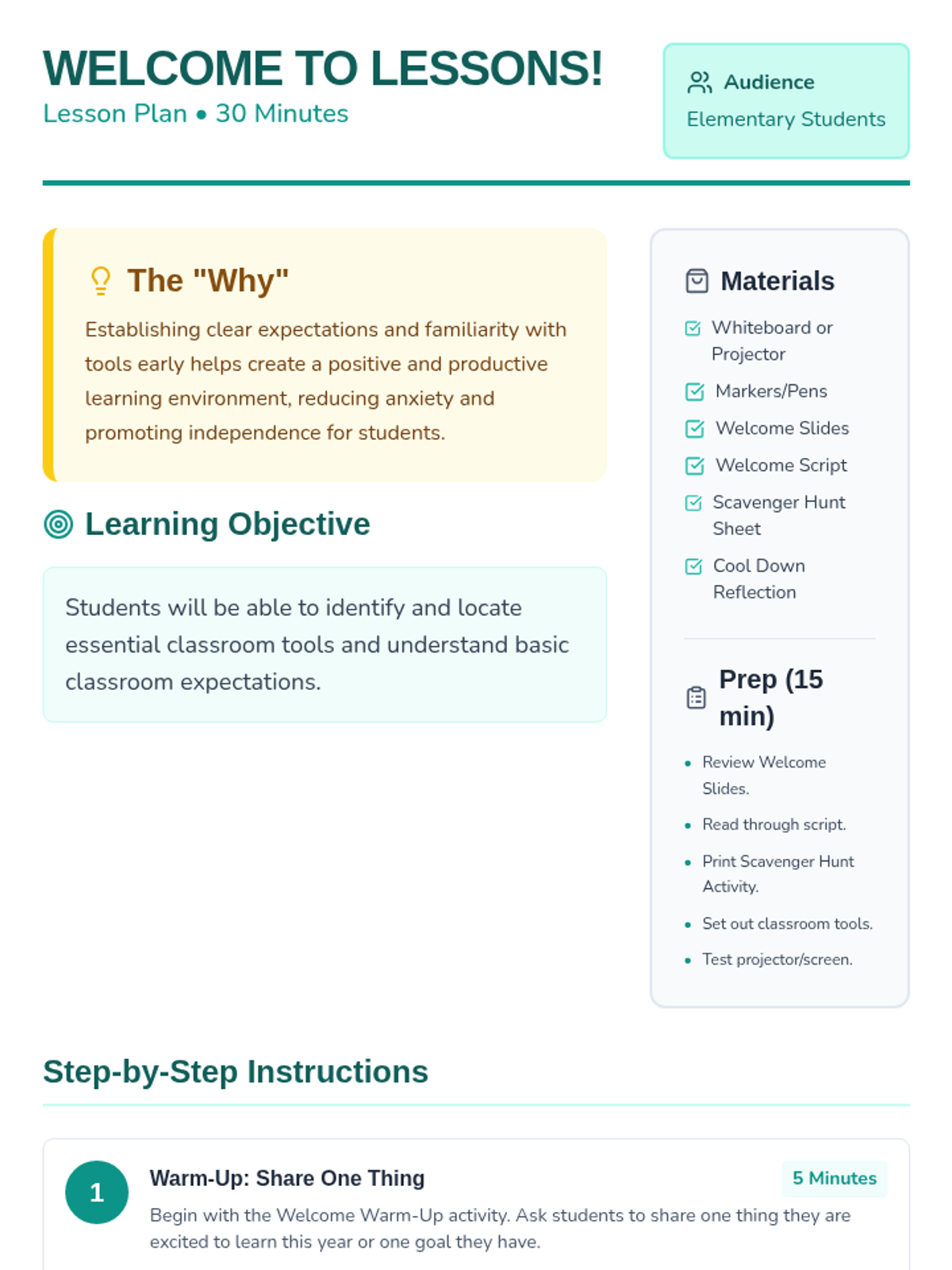
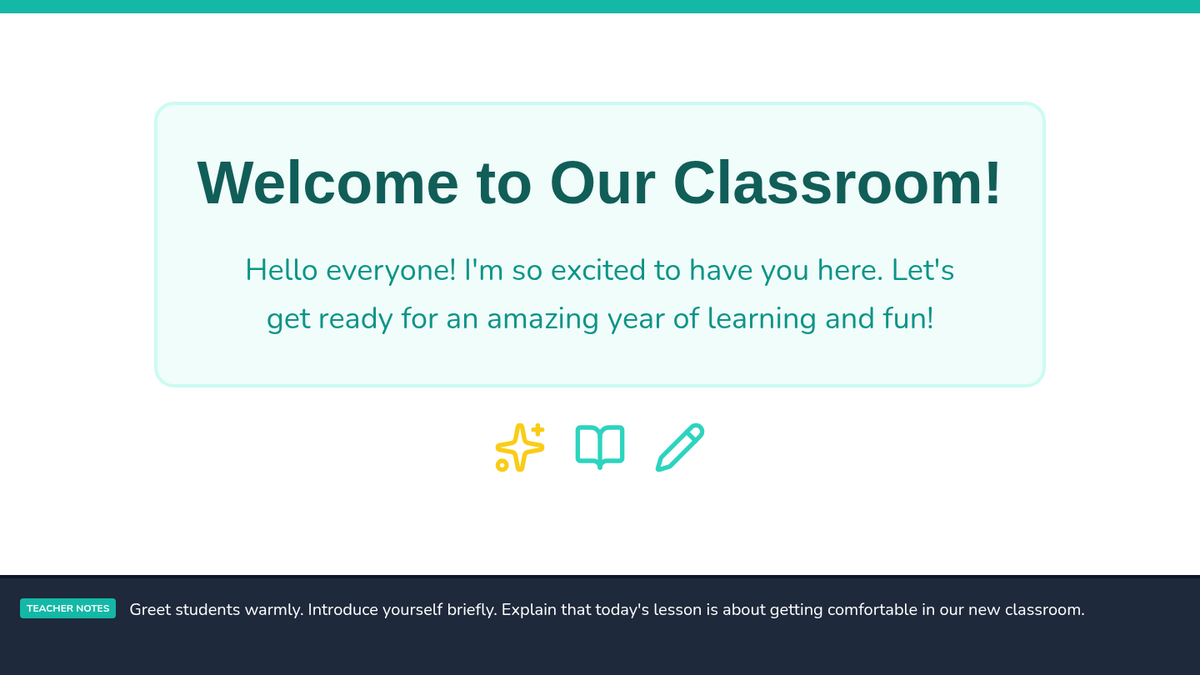
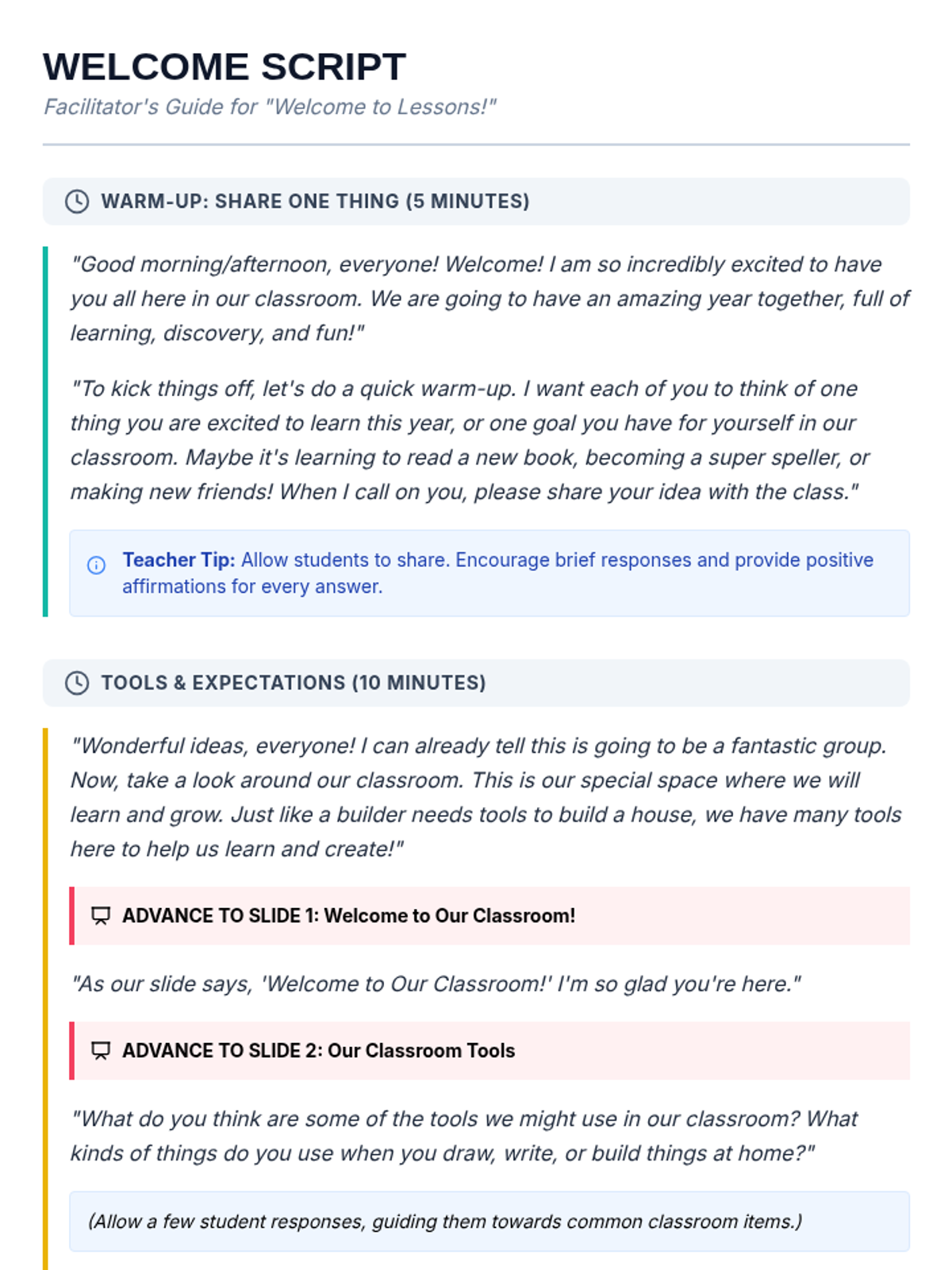
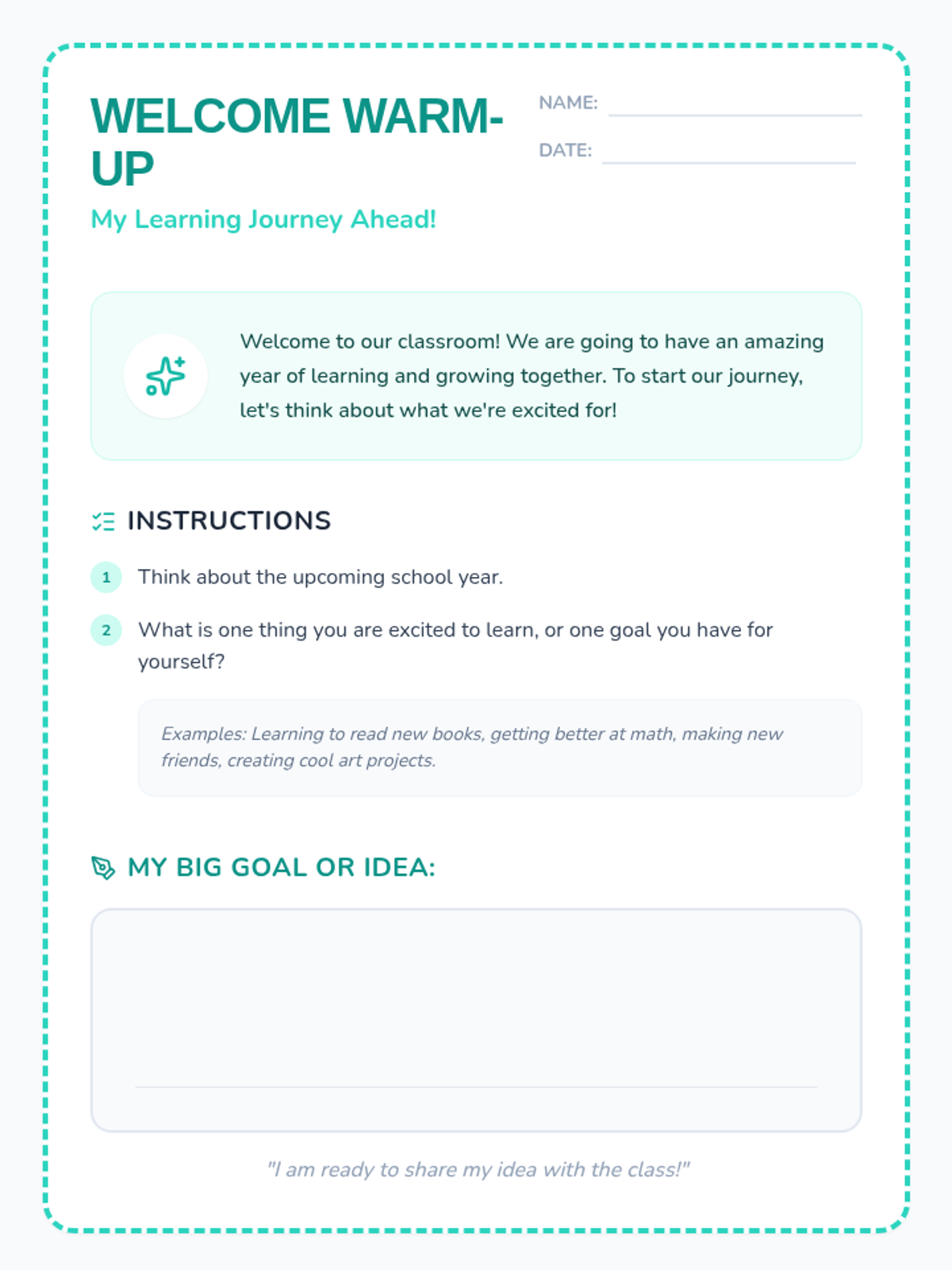
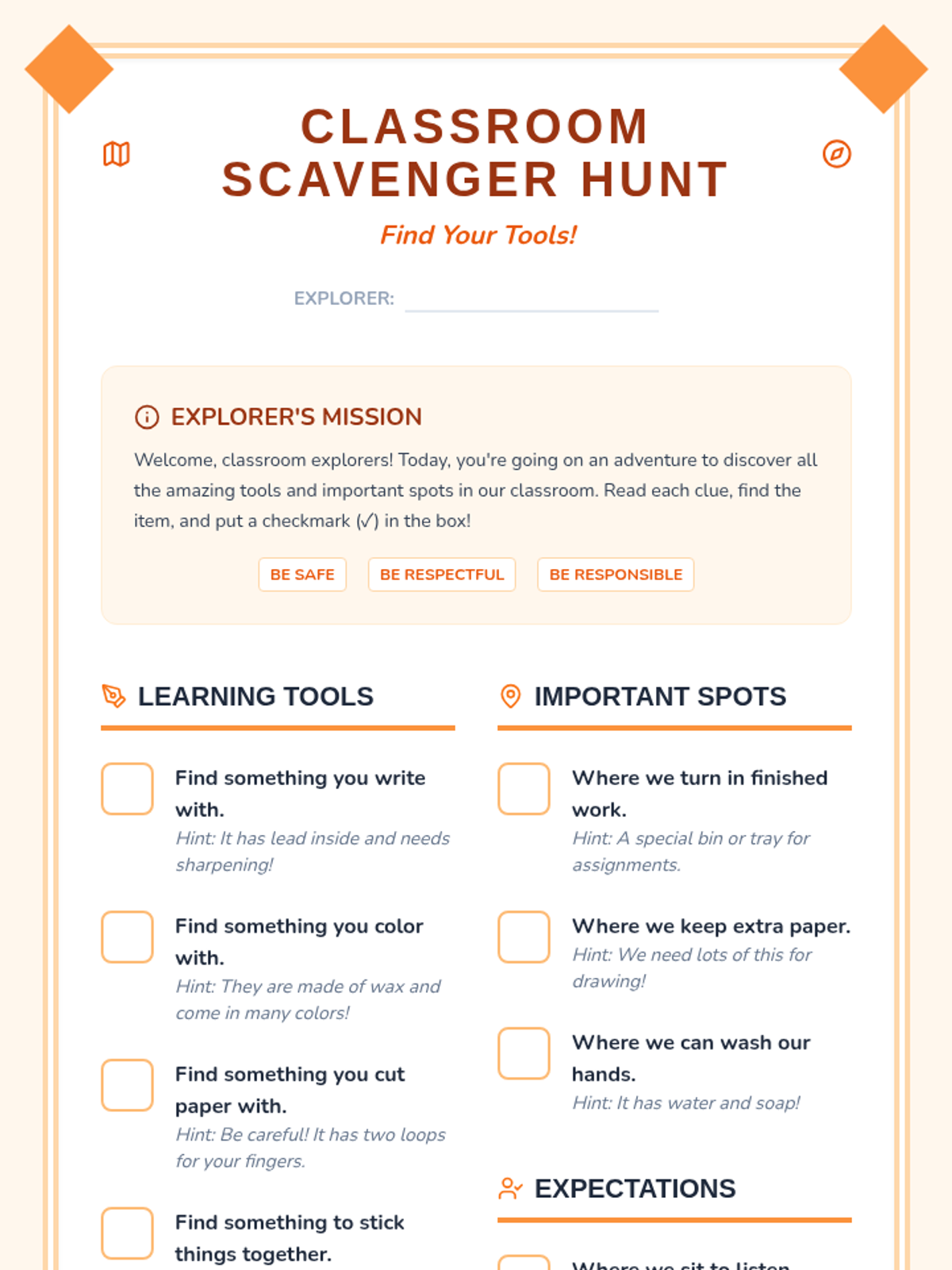
An introductory sequence designed for elementary students to build classroom familiarity and self-awareness. It covers classroom tools and expectations as well as personal strengths and challenges.
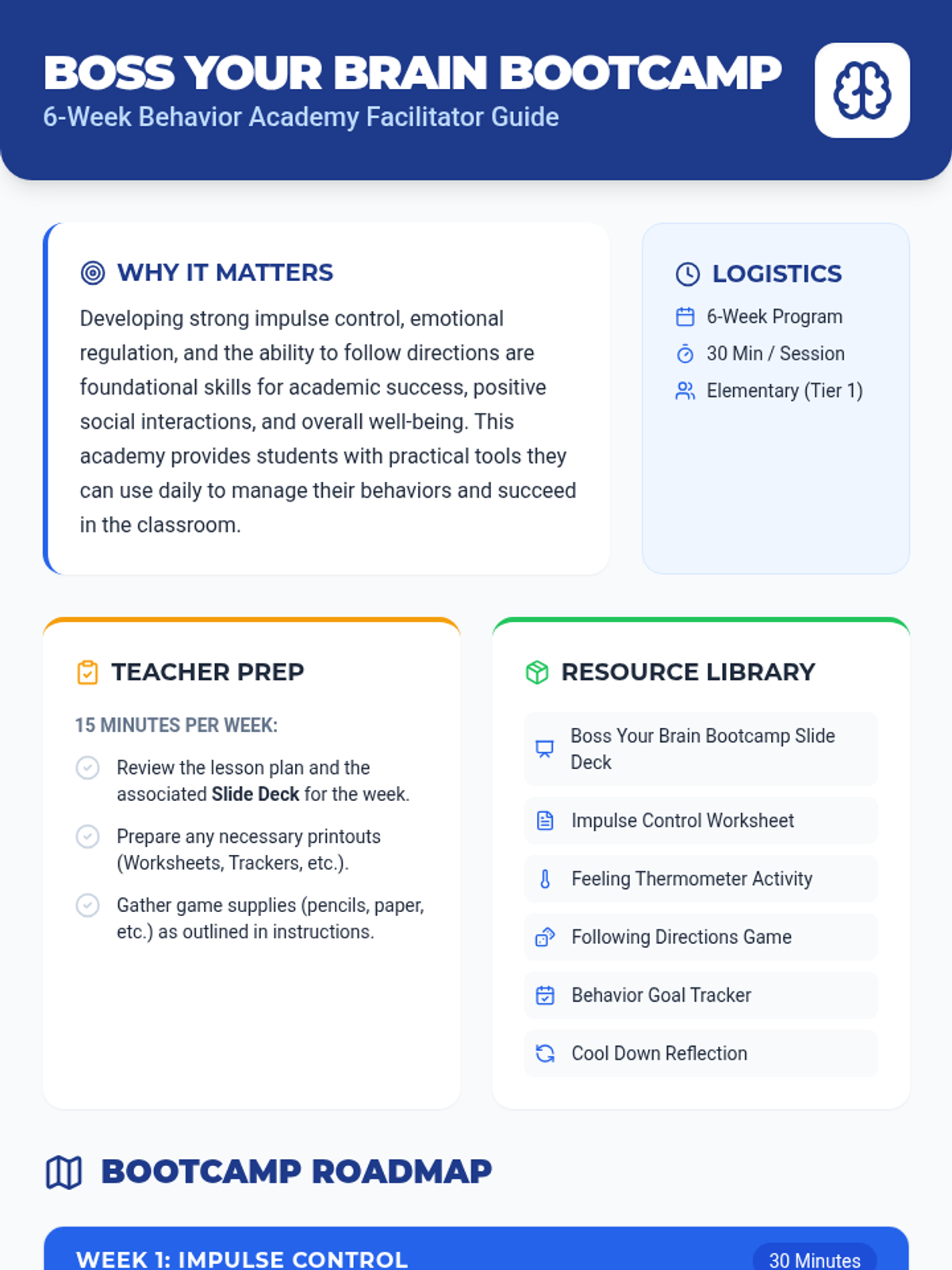
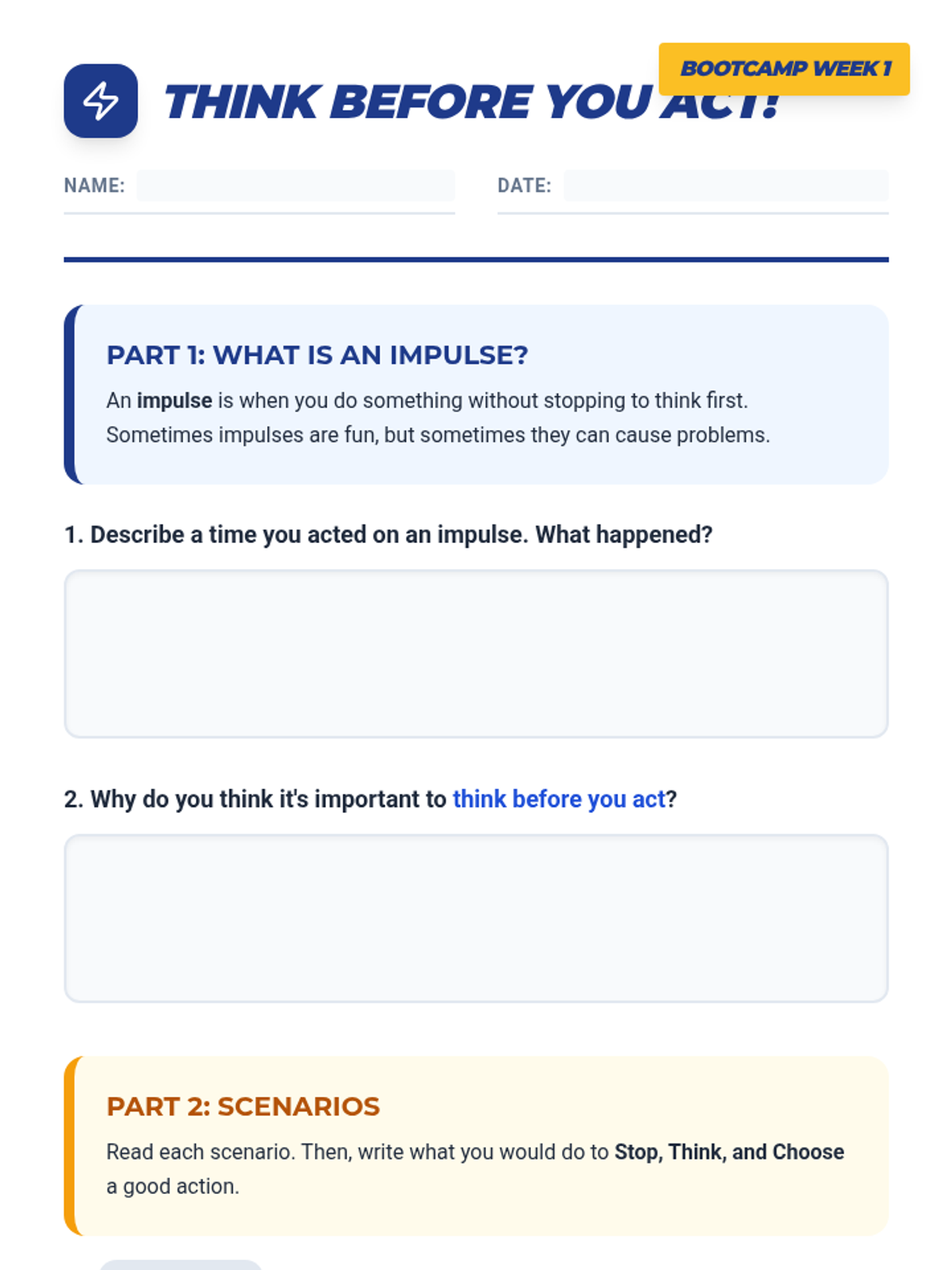
A 6-week behavior academy sequence designed for Tier 1 classroom instruction, focusing on impulse control, emotional regulation, and following directions to foster a positive learning environment.
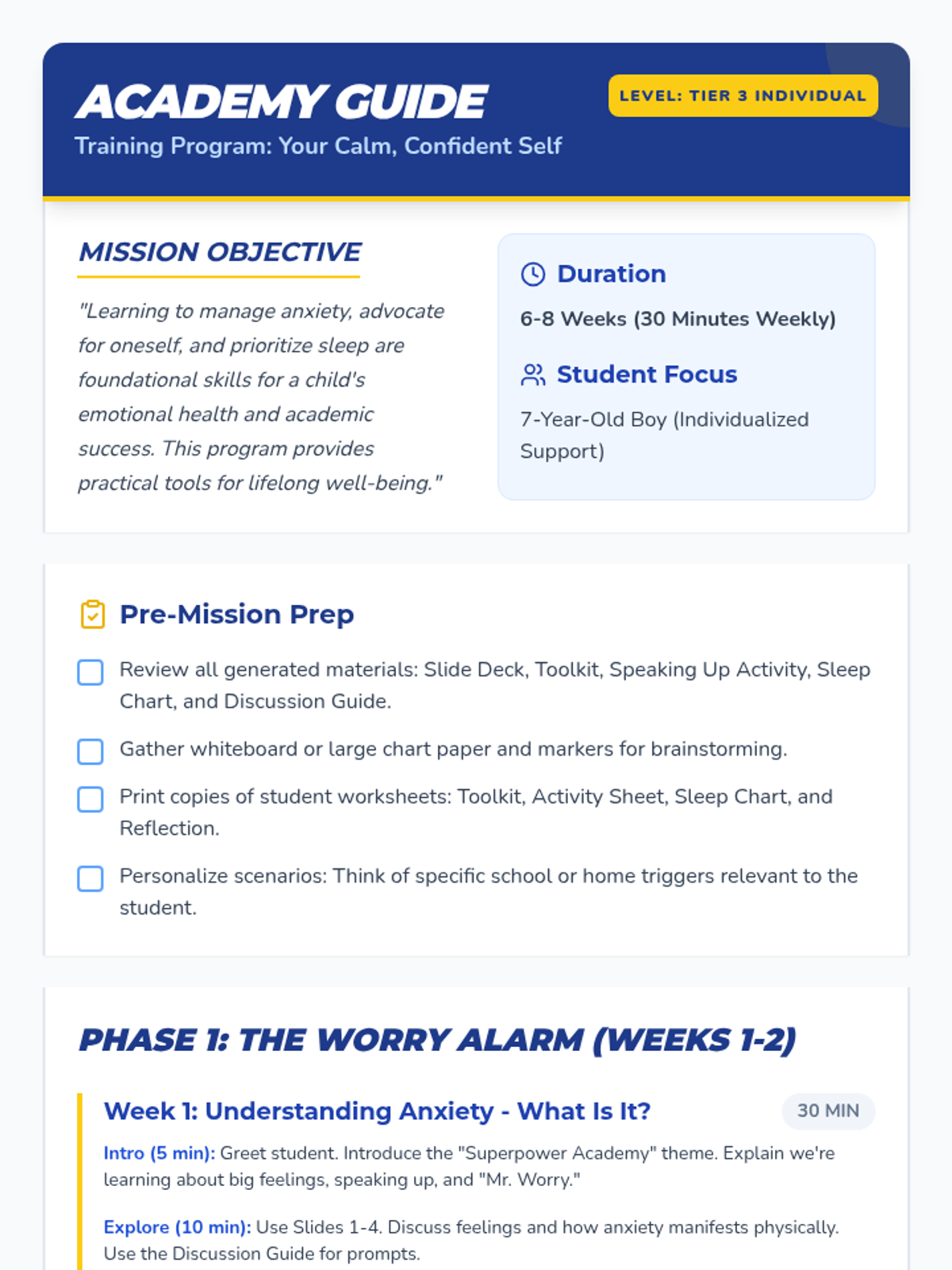
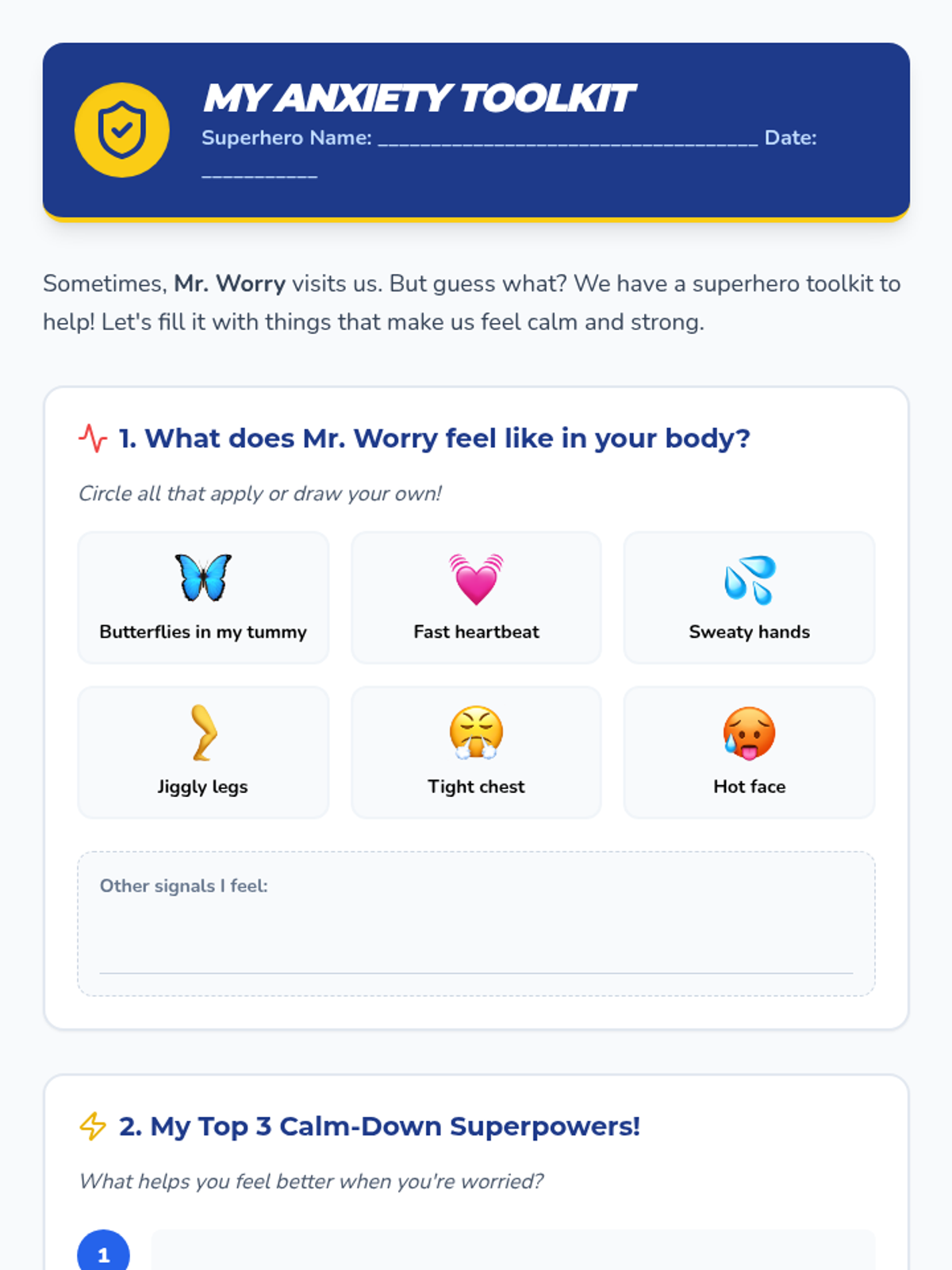
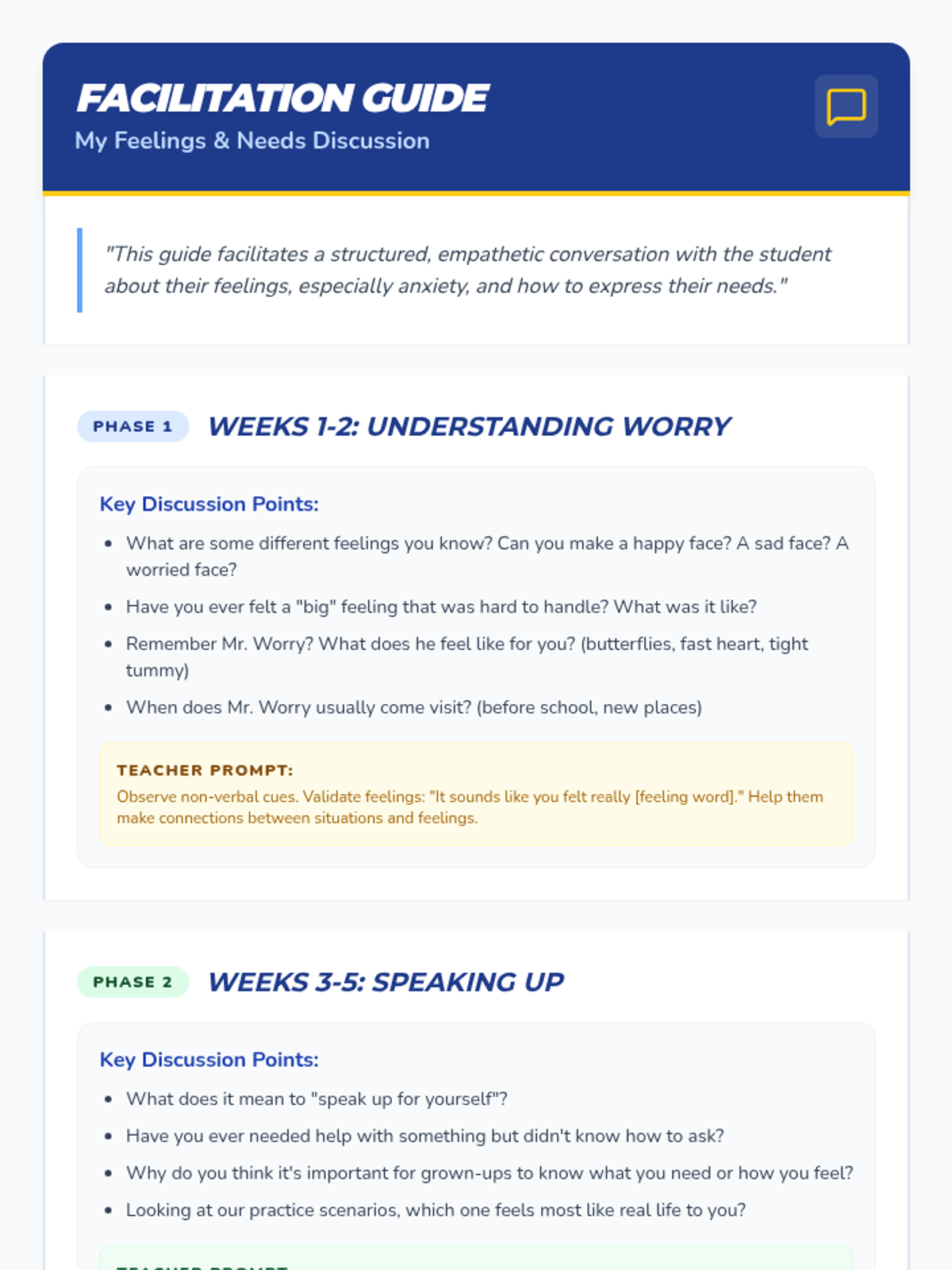
A 6-8 week individualized program for young students to master emotional regulation, self-advocacy, and healthy sleep habits through a fun 'Superpower Academy' theme.
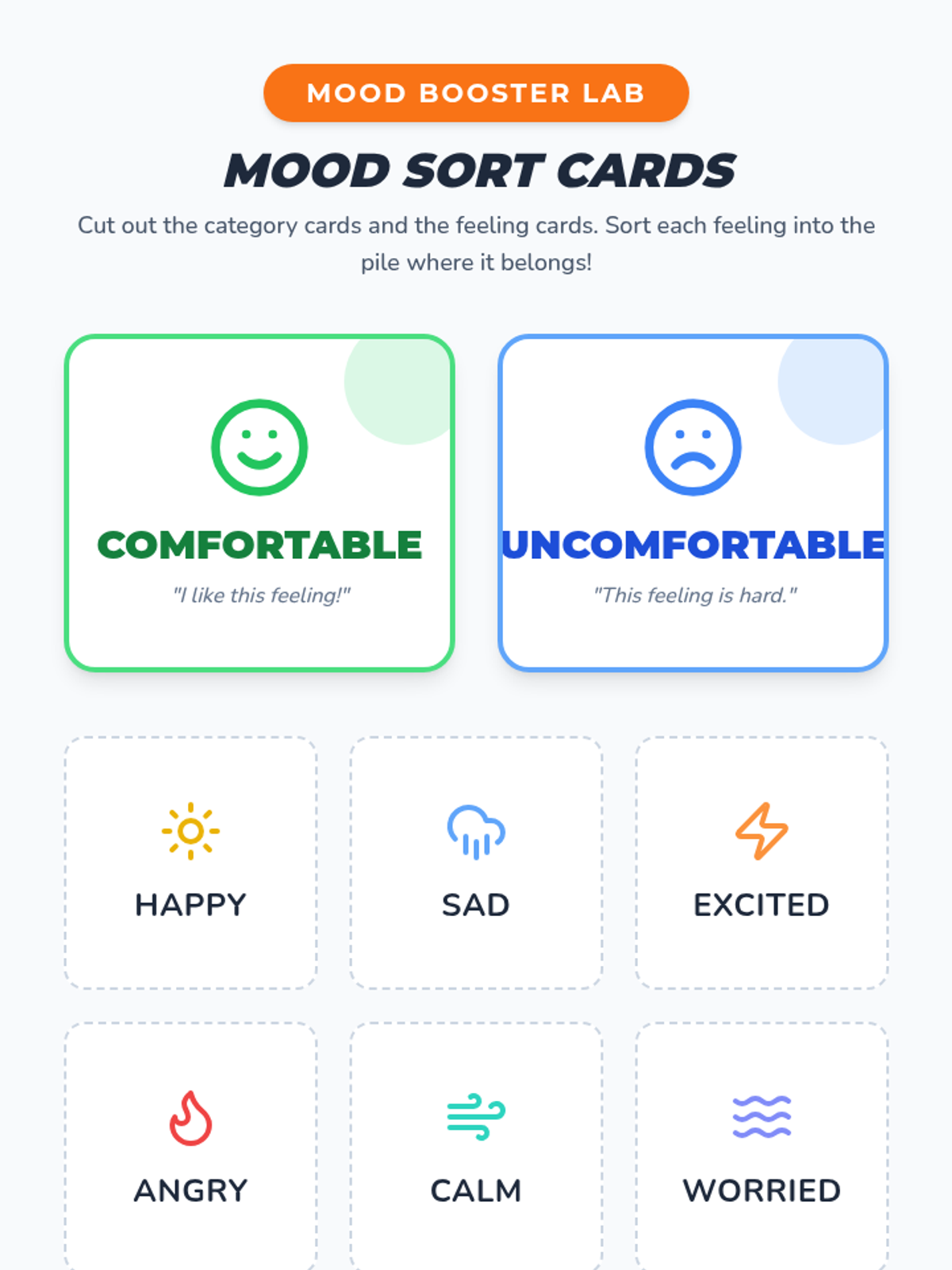
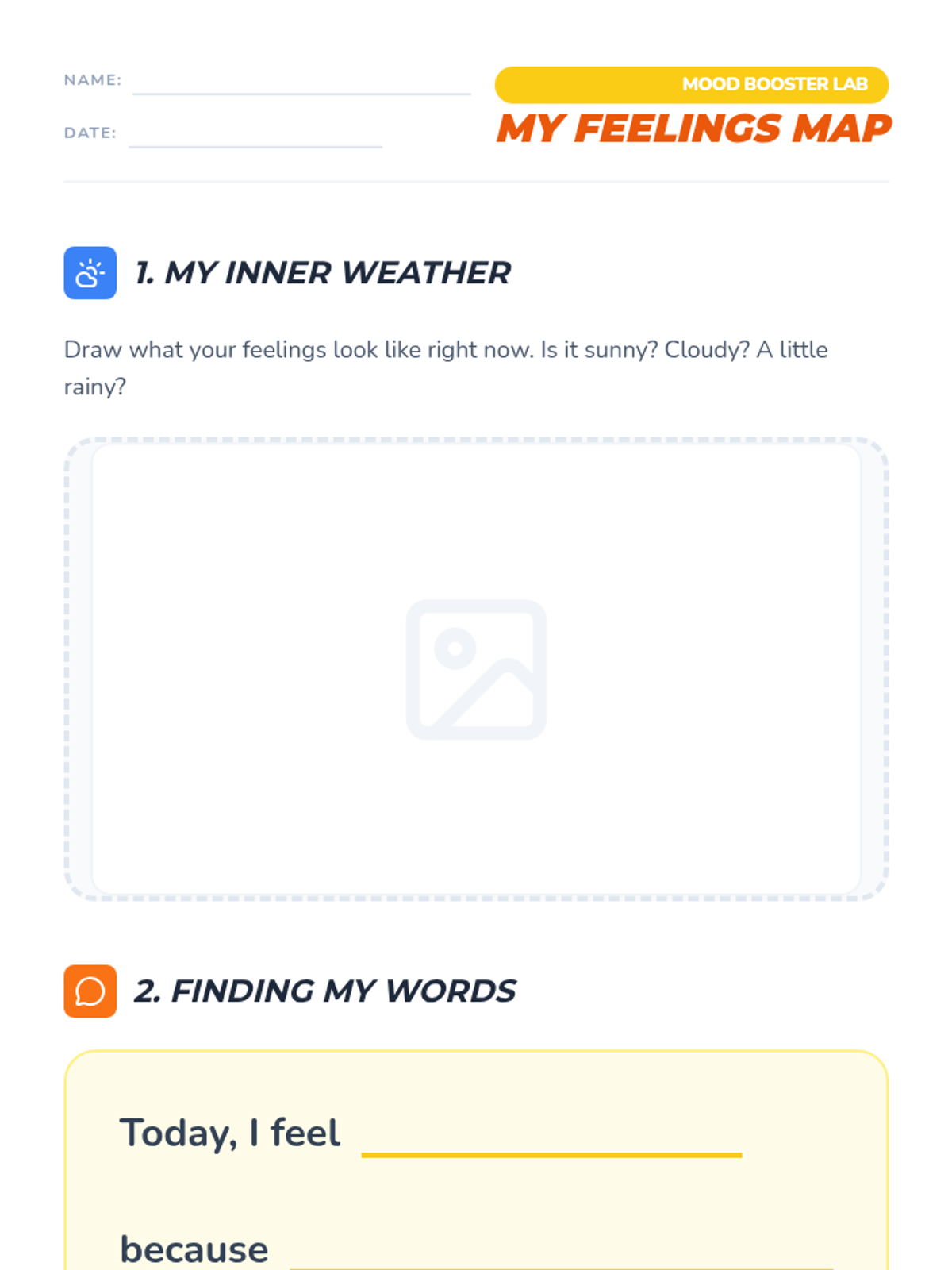
This sequence introduces first-grade students to the fundamental connection between their actions and their emotions, serving as a foundational introduction to behavioral activation. Students explore how specific activities can shift their mood and create a personalized action plan for emotional regulation.
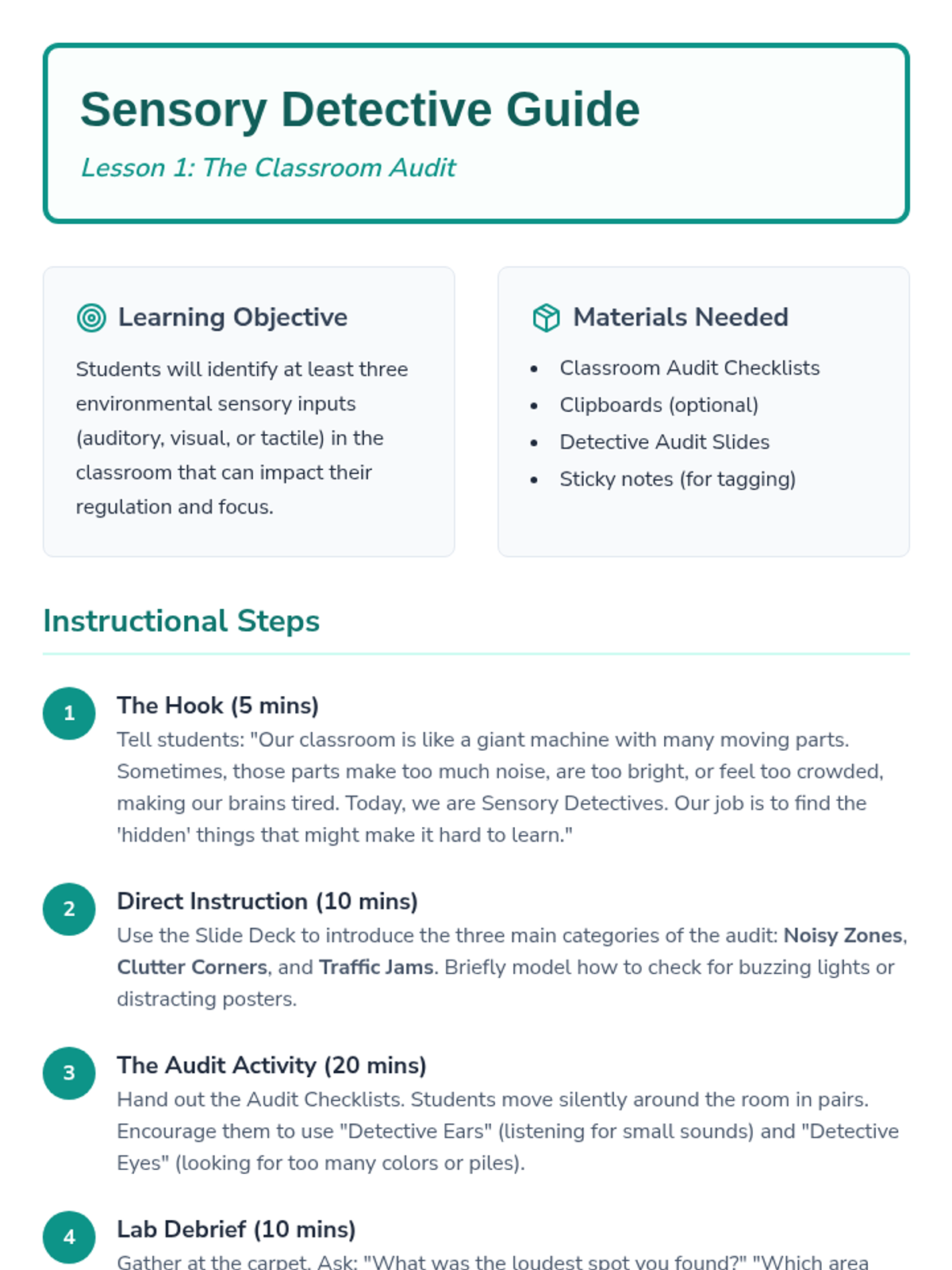
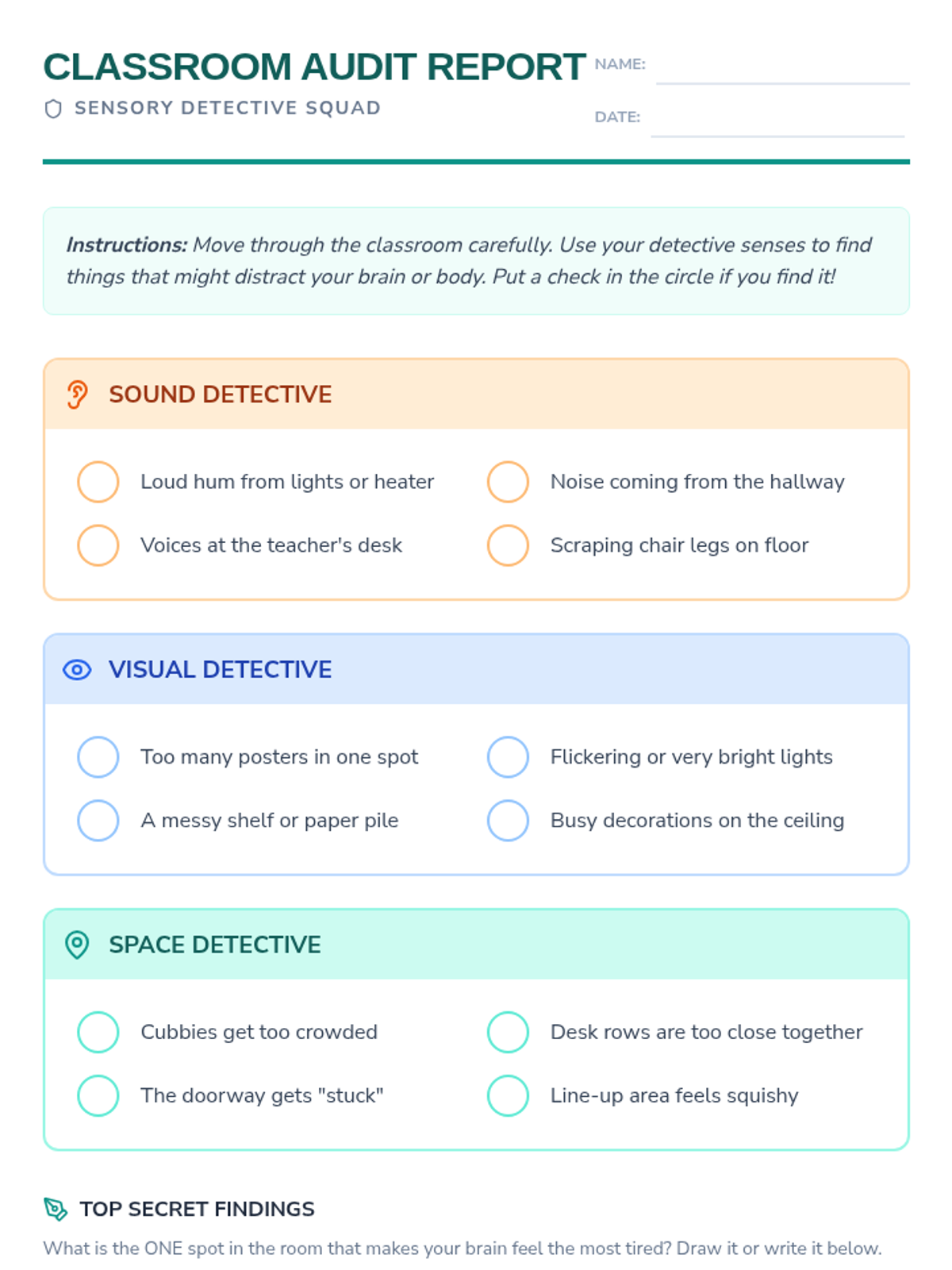
This sequence explores how environmental factors and community interactions impact sensory regulation. Students learn to audit their surroundings, respect diverse sensory needs, practice co-regulation, troubleshoot transitions, and collaboratively create a classroom sensory contract.
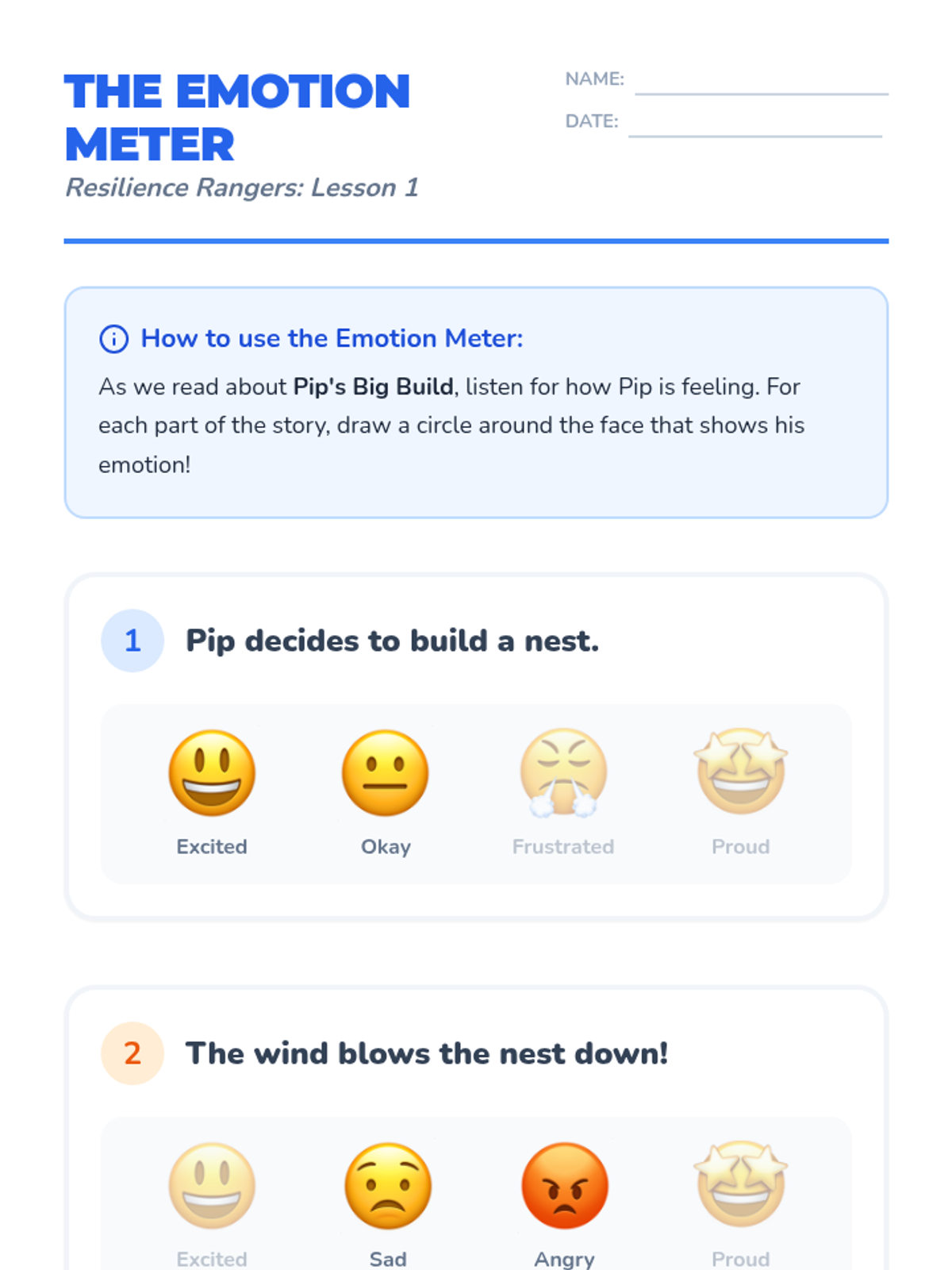
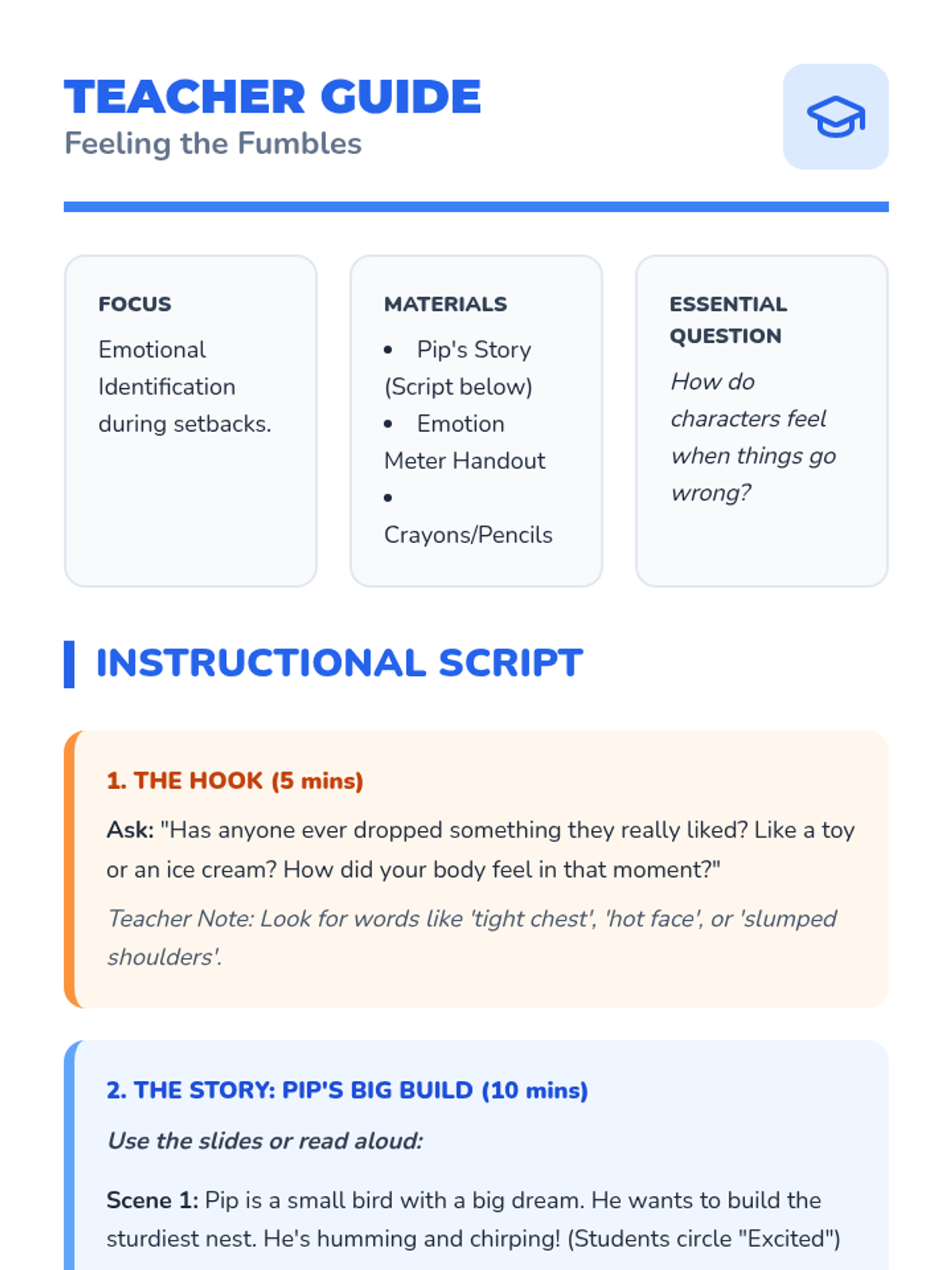
A 1st Grade sequence exploring resilience through literature, role-play, and creative projects. Students learn to identify emotions during setbacks, map out problem-solving steps, and apply these strategies to their own lives.
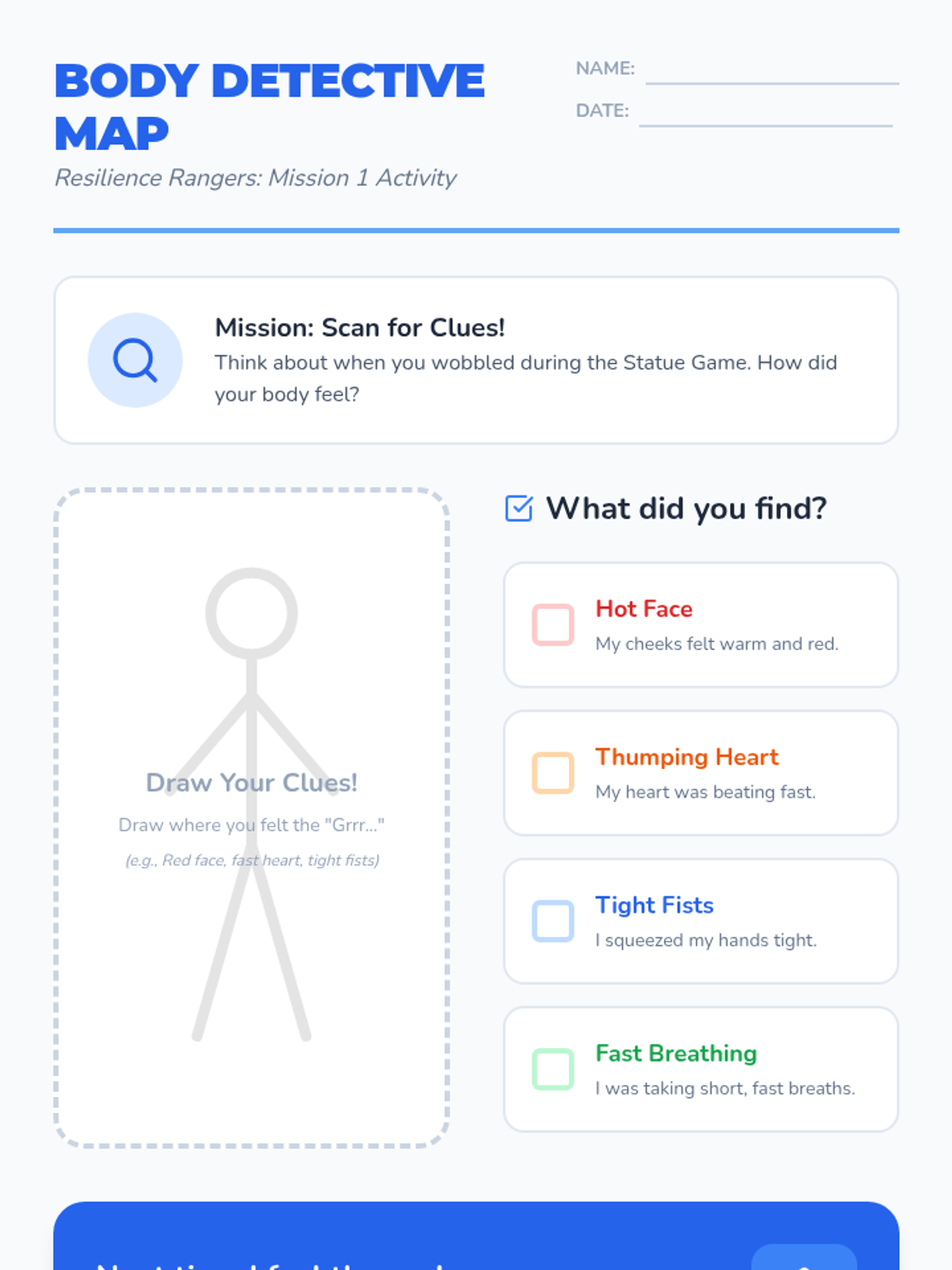
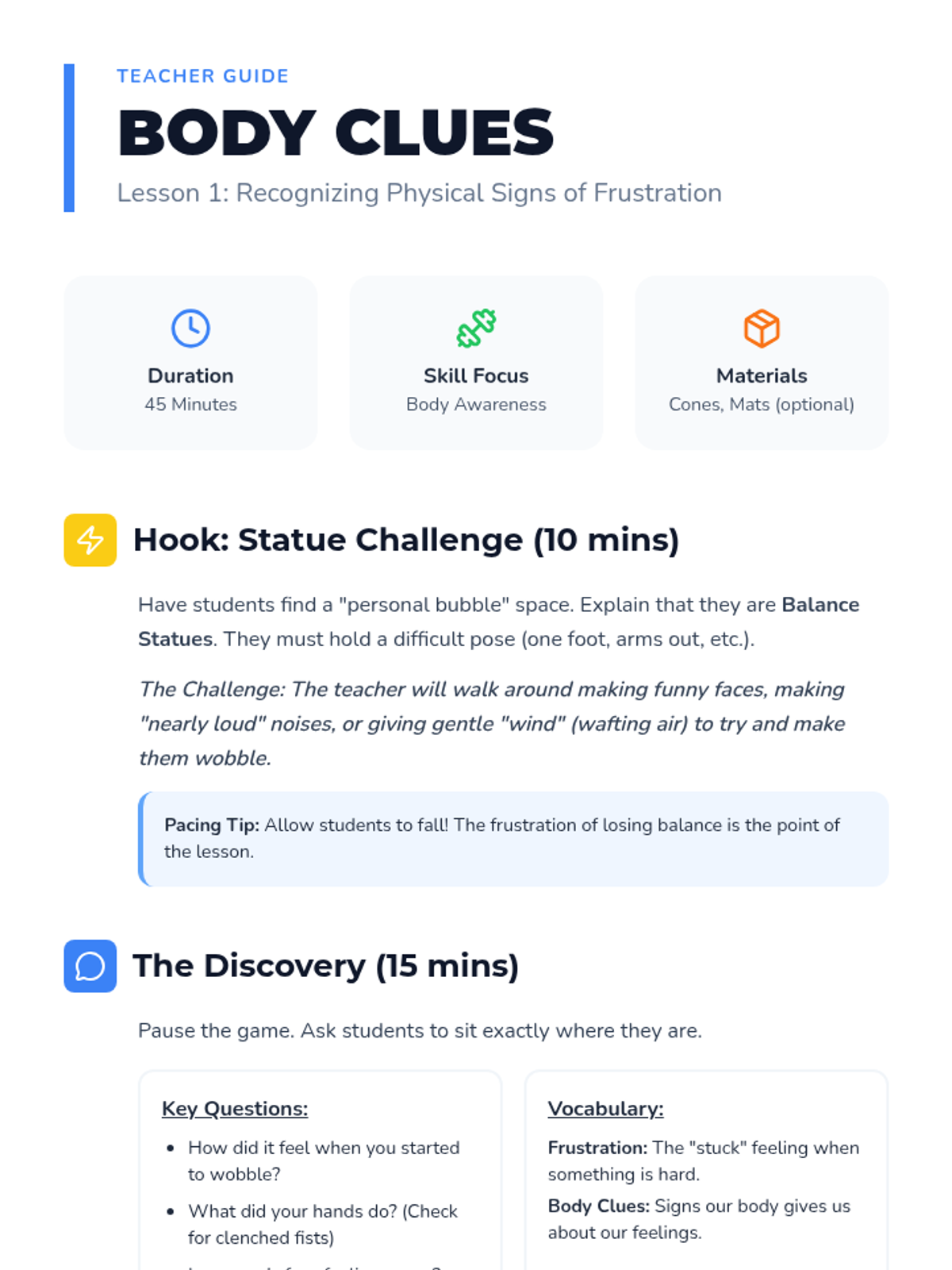
A physical-activity-based sequence helping 1st graders recognize physical signs of frustration and practice emotional regulation strategies like breathing and persistence through games.
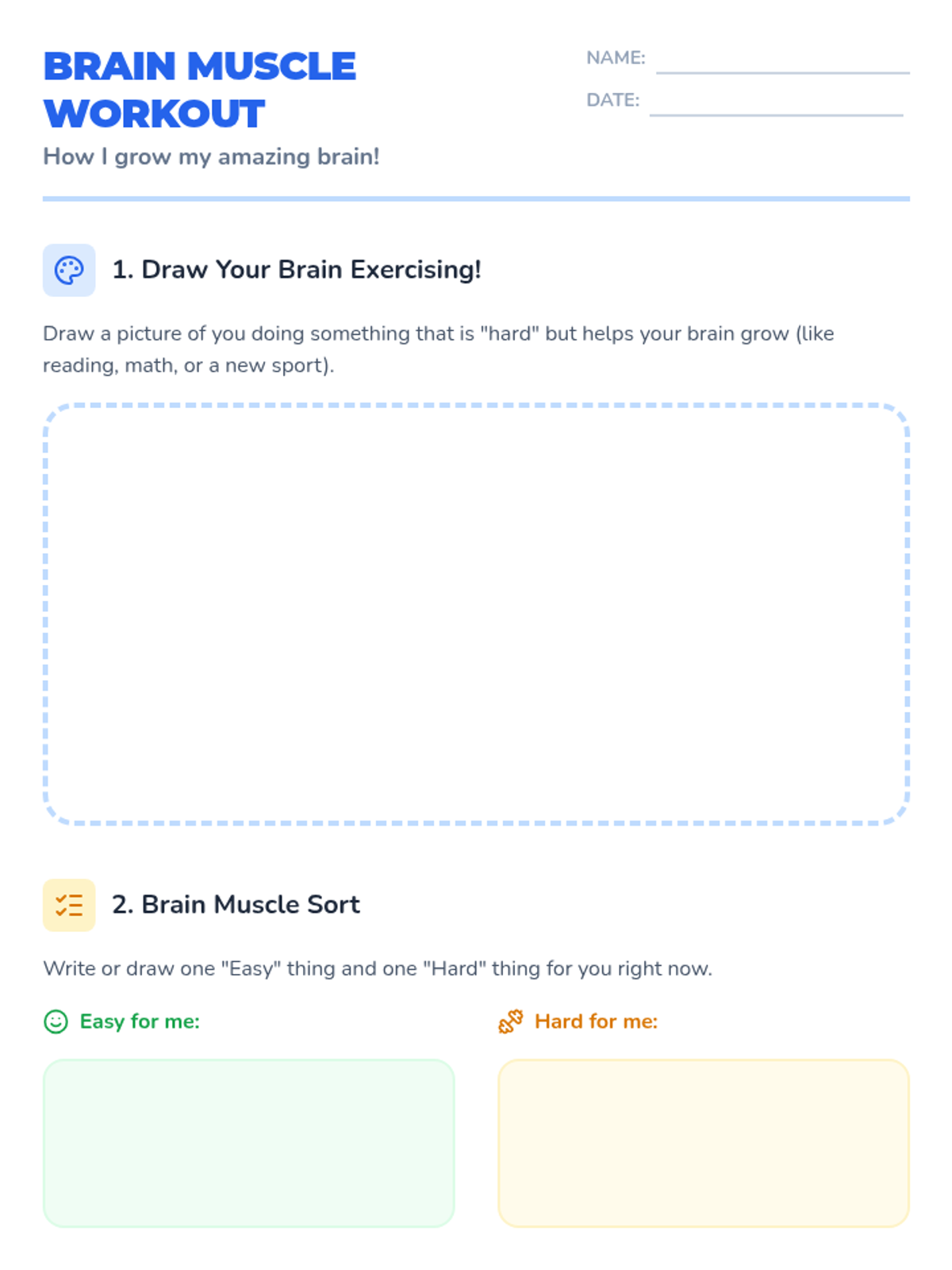
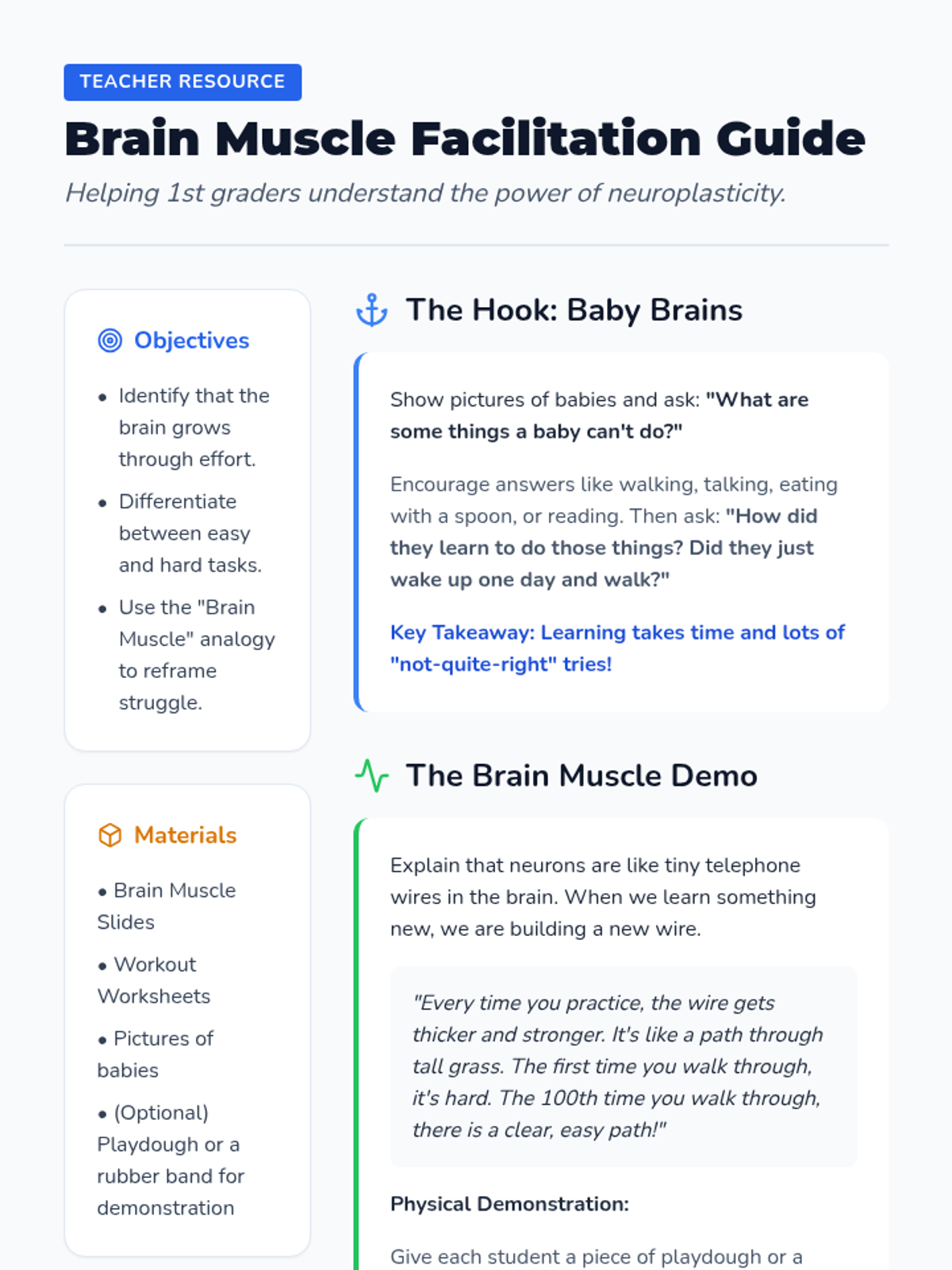
This first-grade sequence introduces growth mindset through the 'Brain Muscle' concept, the 'Power of Yet', and positive self-talk. Students move from understanding neuroplasticity to creating a personal roadmap for overcoming challenges.
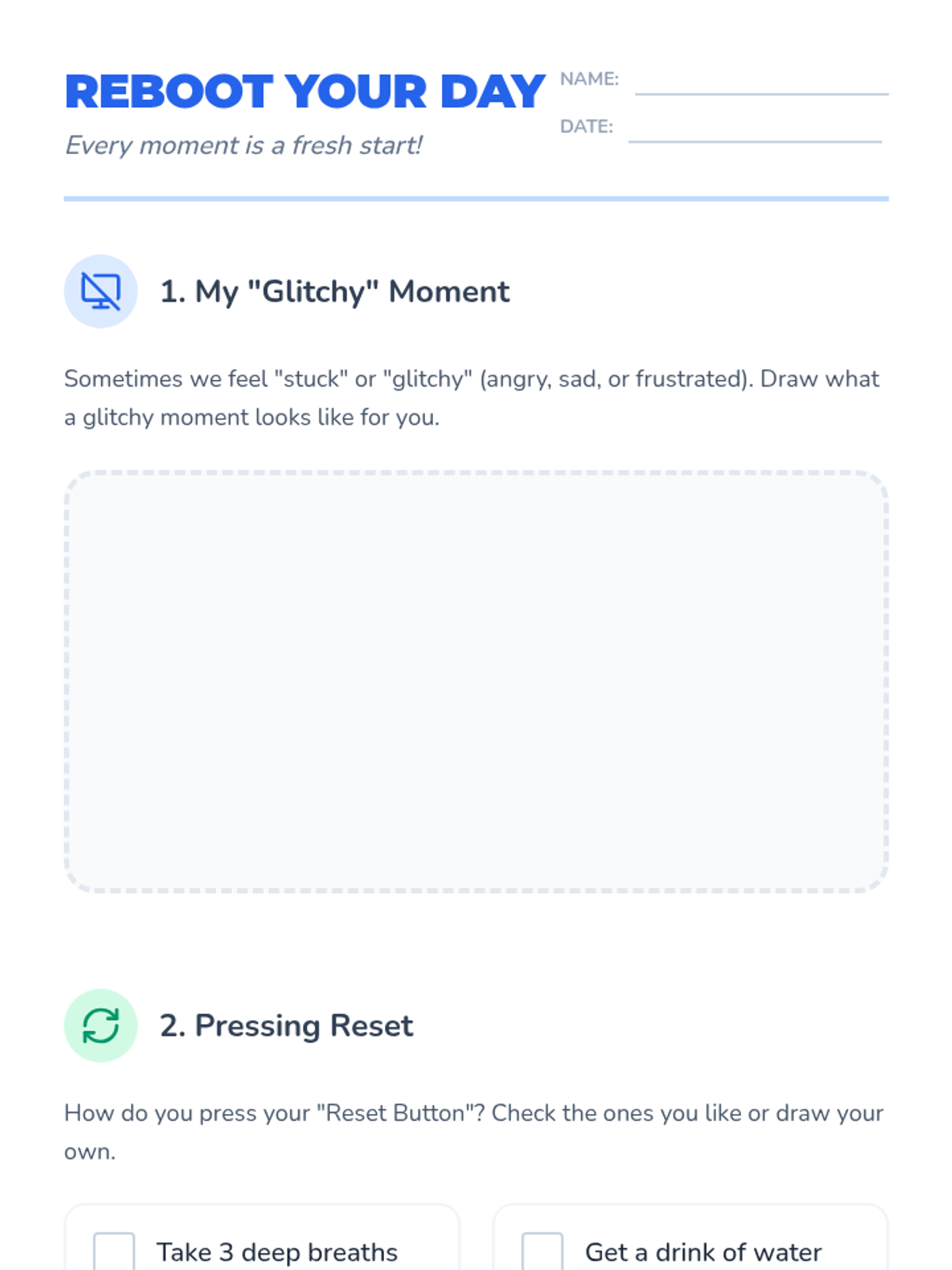
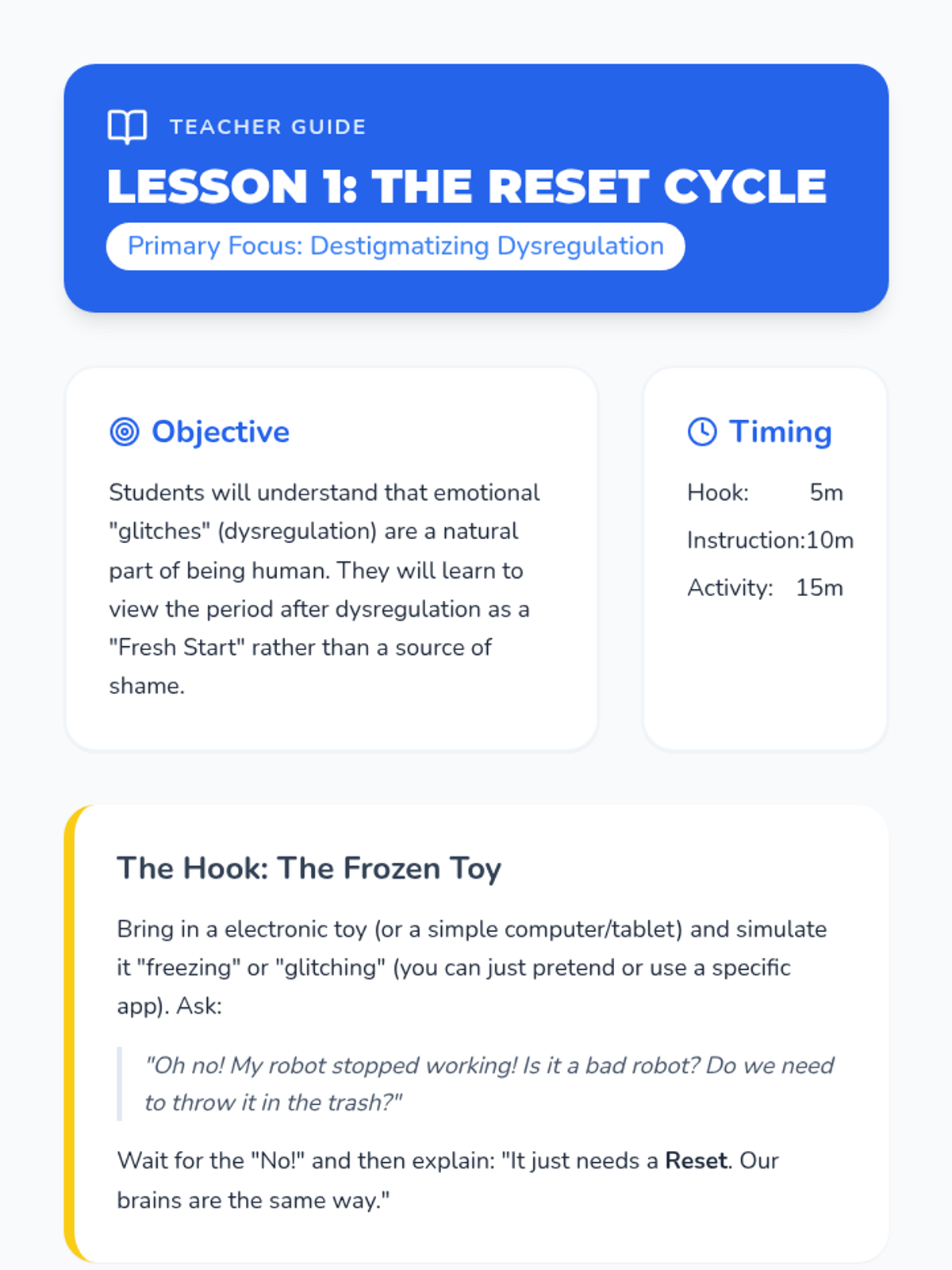
A 5-lesson sequence for 1st Grade students focusing on the recovery phase after dysregulation. It teaches students how to 'reset' their day, check for emotional readiness, repair relationships, use positive self-talk, and build a supportive classroom culture for re-entry.
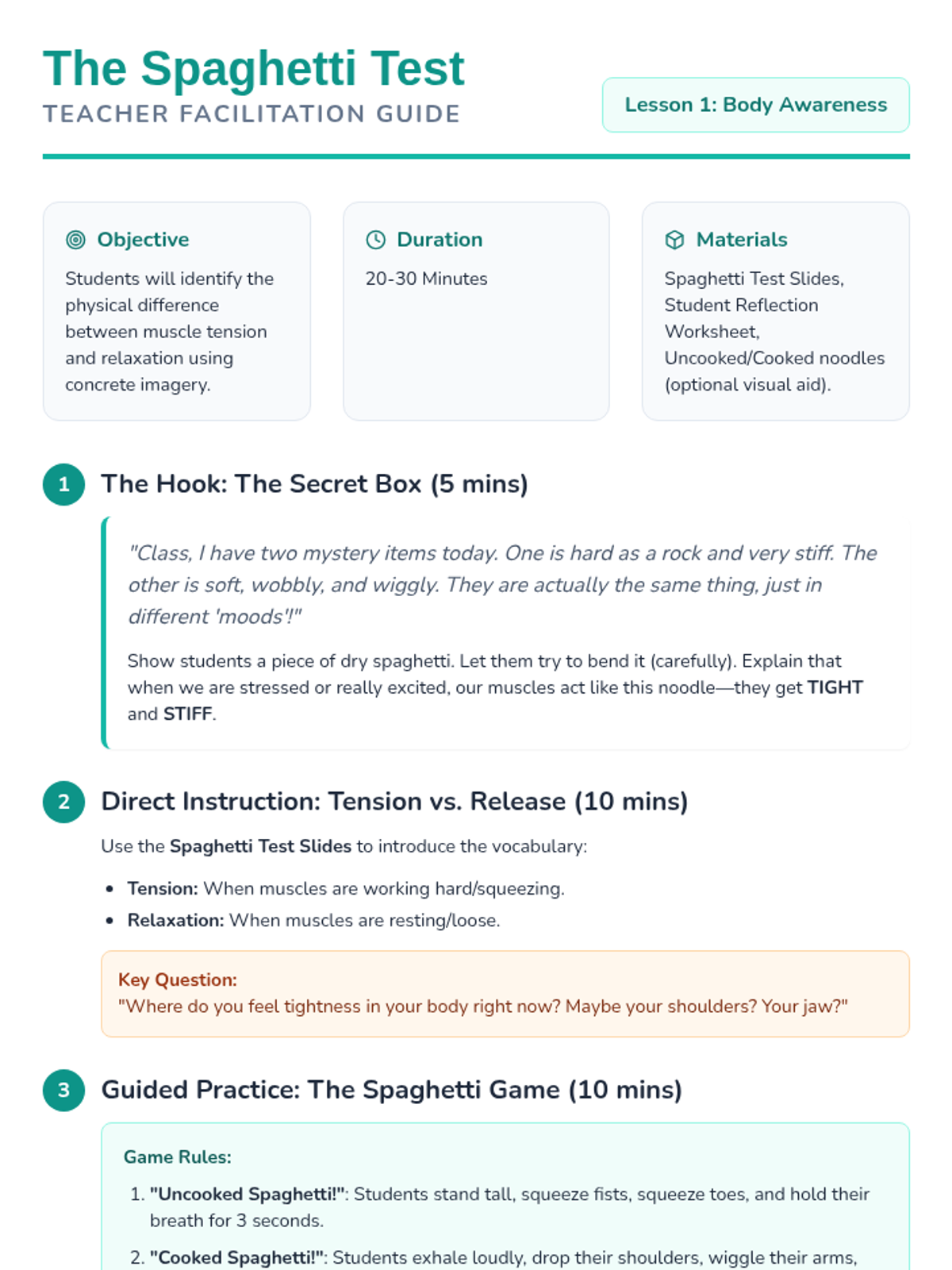
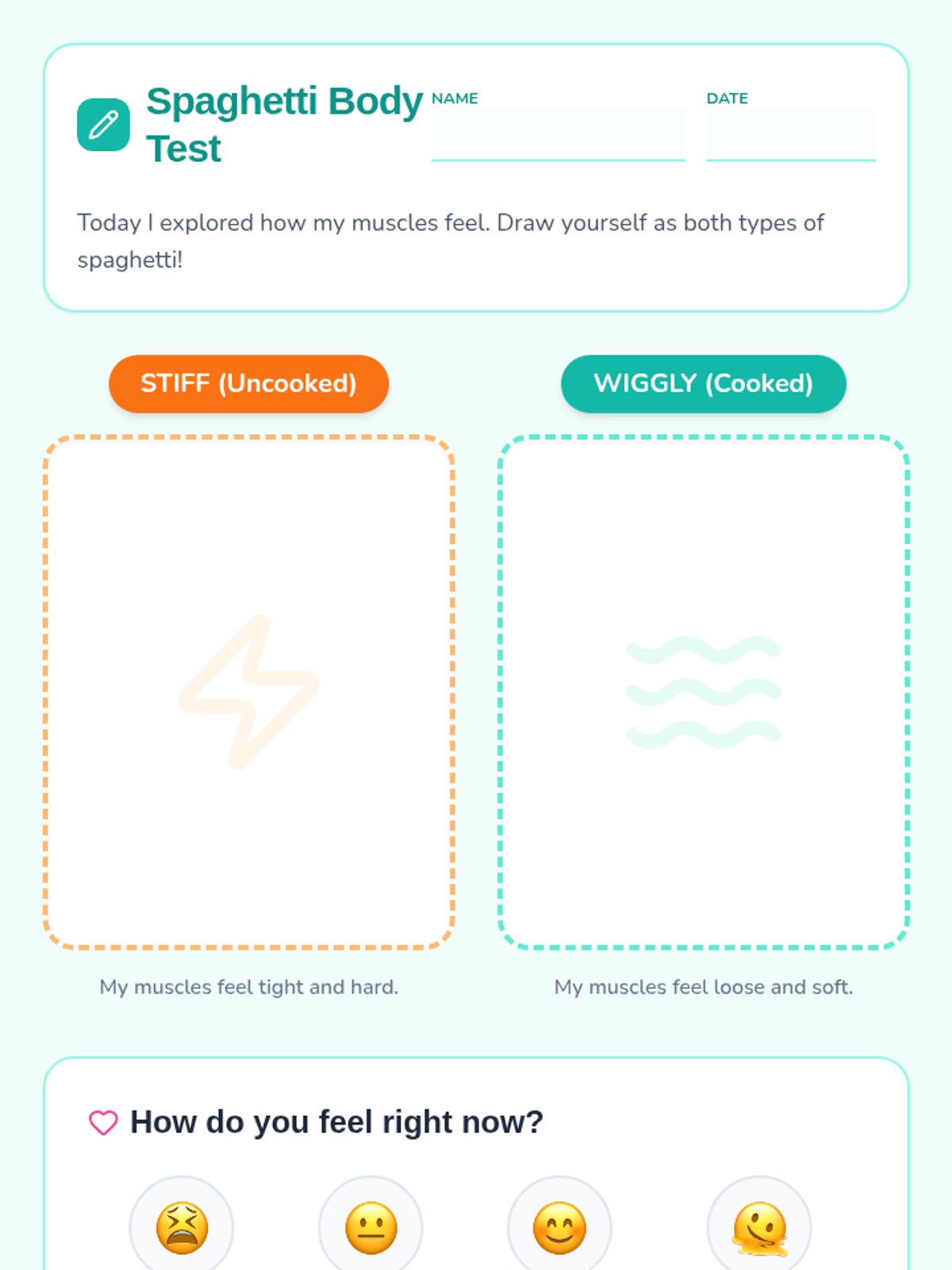
This 1st Grade sequence teaches somatic awareness and muscle relaxation. Students learn to distinguish between tension and relaxation through playful imagery like spaghetti, lemons, and melting ice, culminating in a stillness challenge to build stamina for meditation.
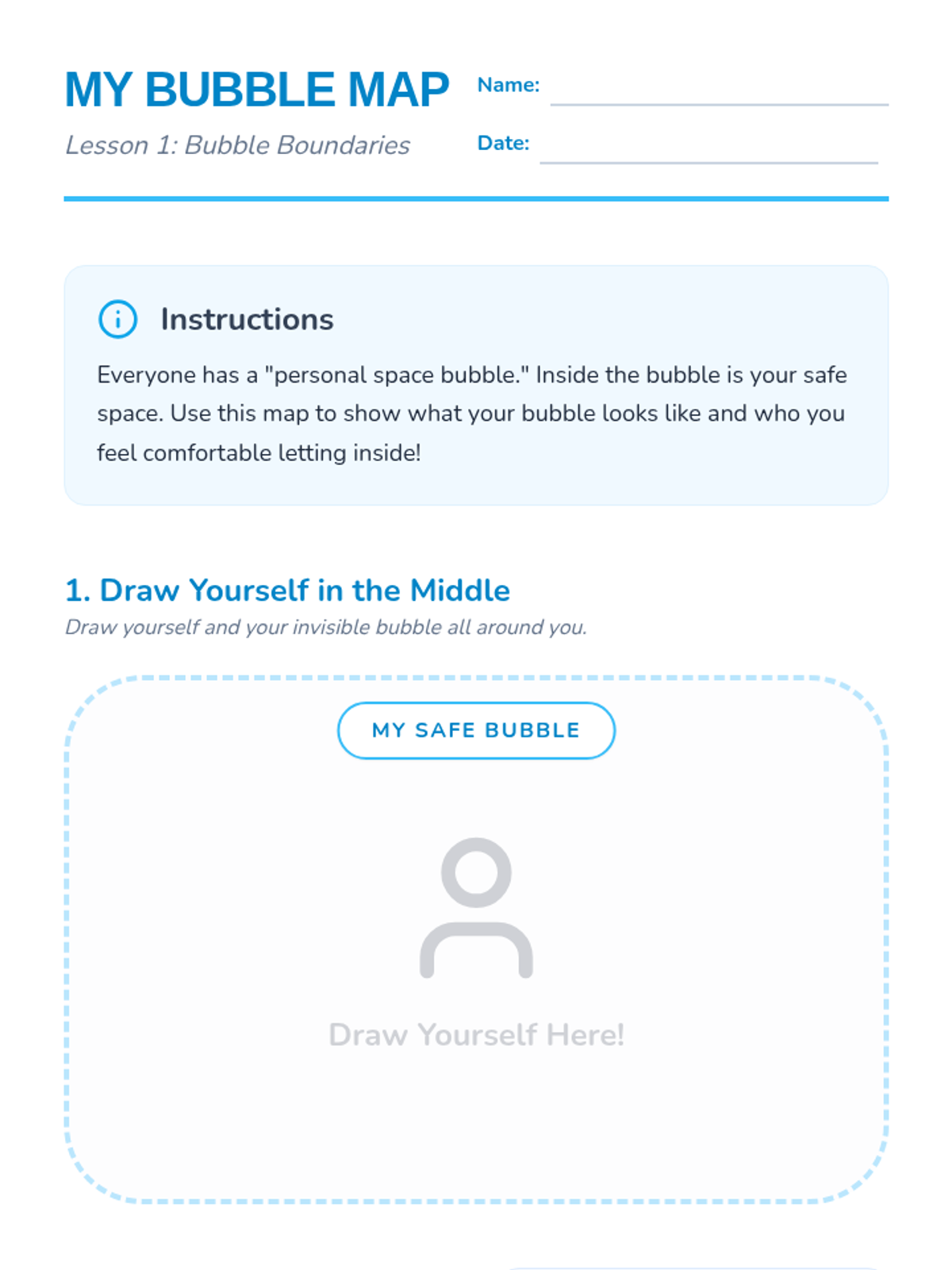
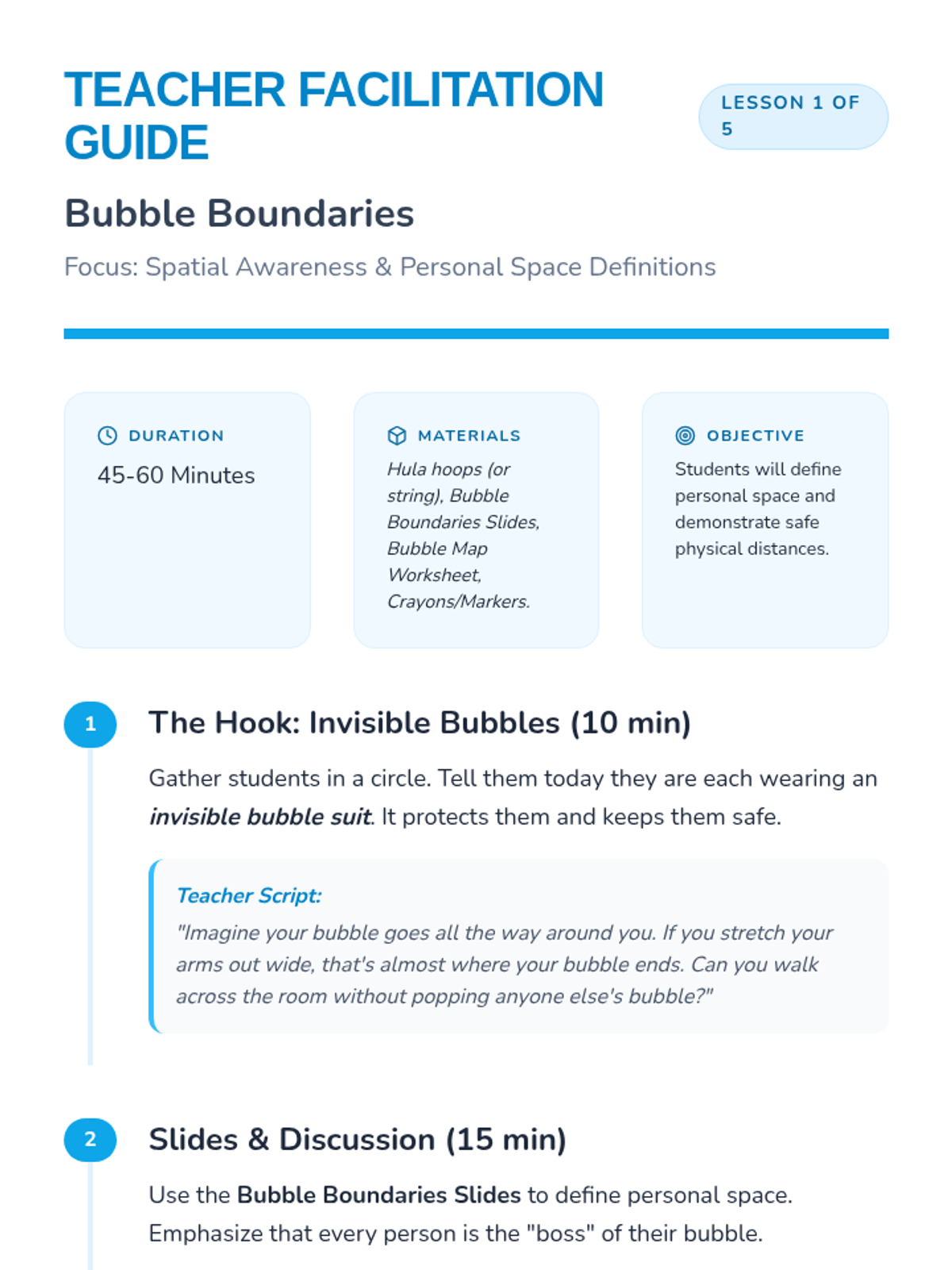
This sequence introduces students to the fundamental concepts of personal space and physical boundaries through interactive movement and role-playing activities. Students learn to define their personal space, practice asking for consent, and develop assertive communication skills to maintain their safety and respect the boundaries of others.
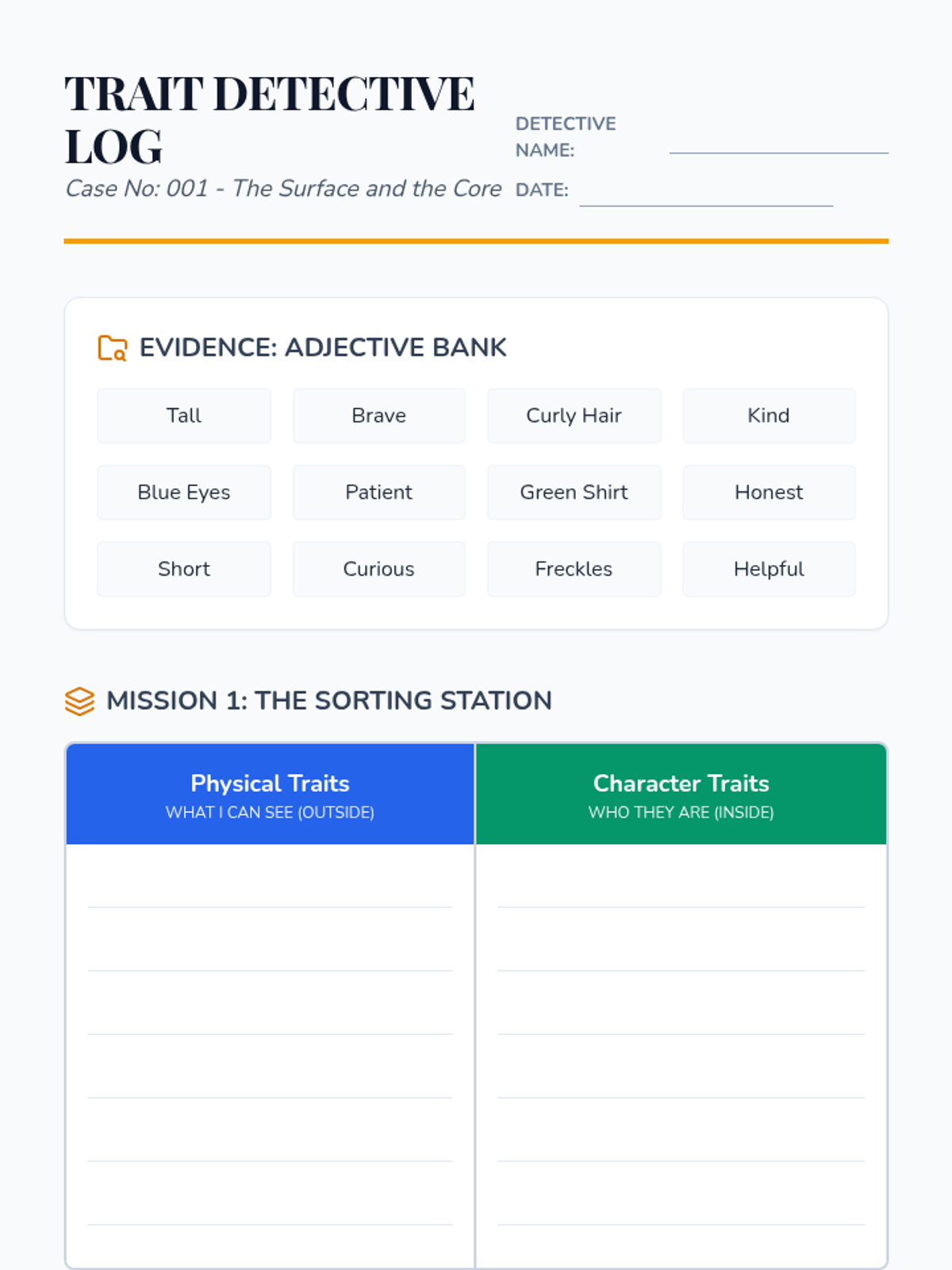
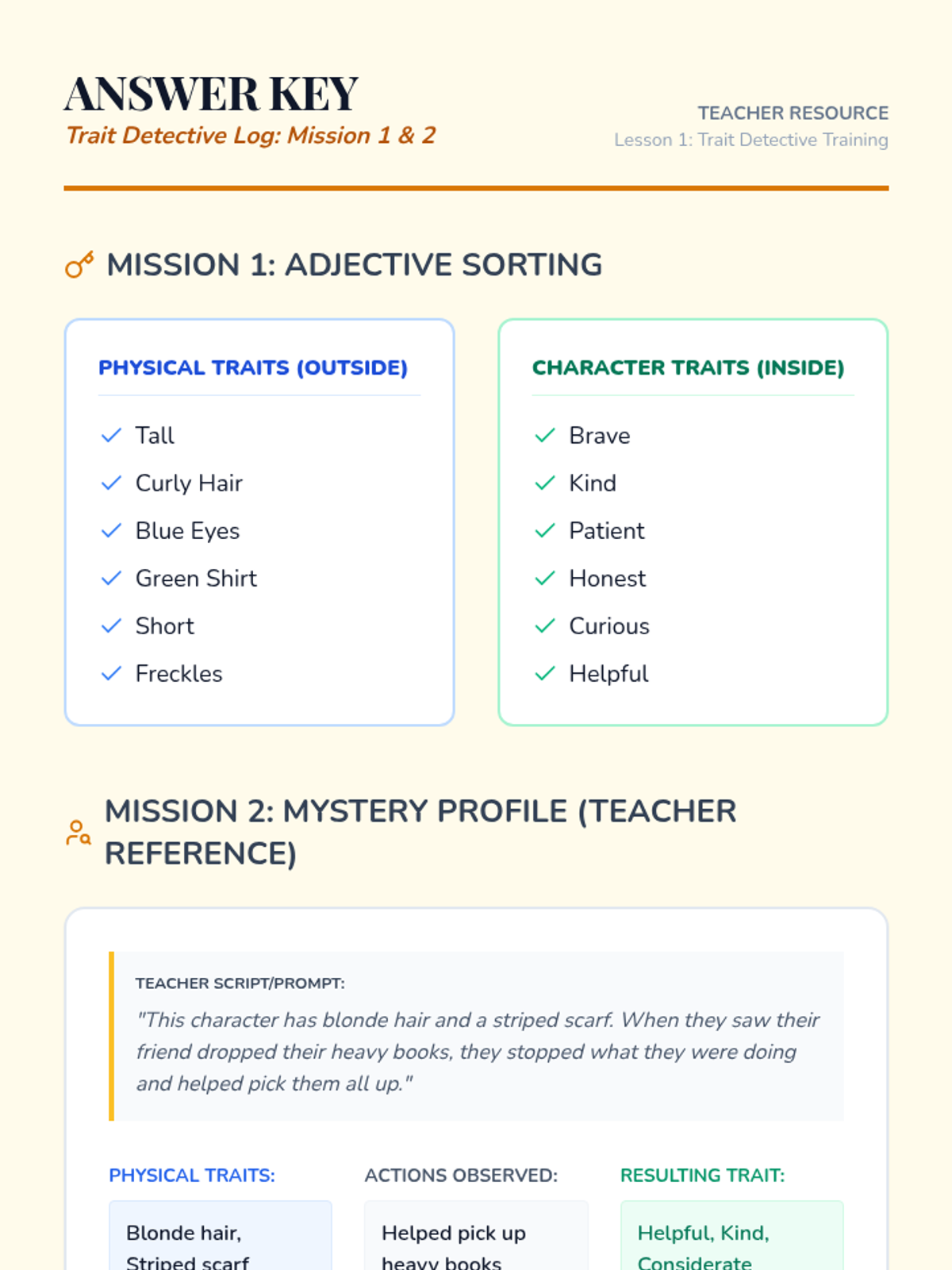
This sequence introduces students to the concept of personal identity by distinguishing between physical attributes and internal character traits. Students explore their own strengths, recognize how actions reflect identity, and learn to view growth areas through a growth mindset, culminating in a symbolic self-portrait.
A 4-week Tier 3 intervention program for first-grade students focused on emotional identification, self-regulation, and self-advocacy through calming strategies and verbal expression.
A 5-lesson sequence for 1st grade students focused on positive behavior support. Students learn to navigate transitions, unplanned changes, and safety drills using social stories and the concept of 'flexible thinking'.
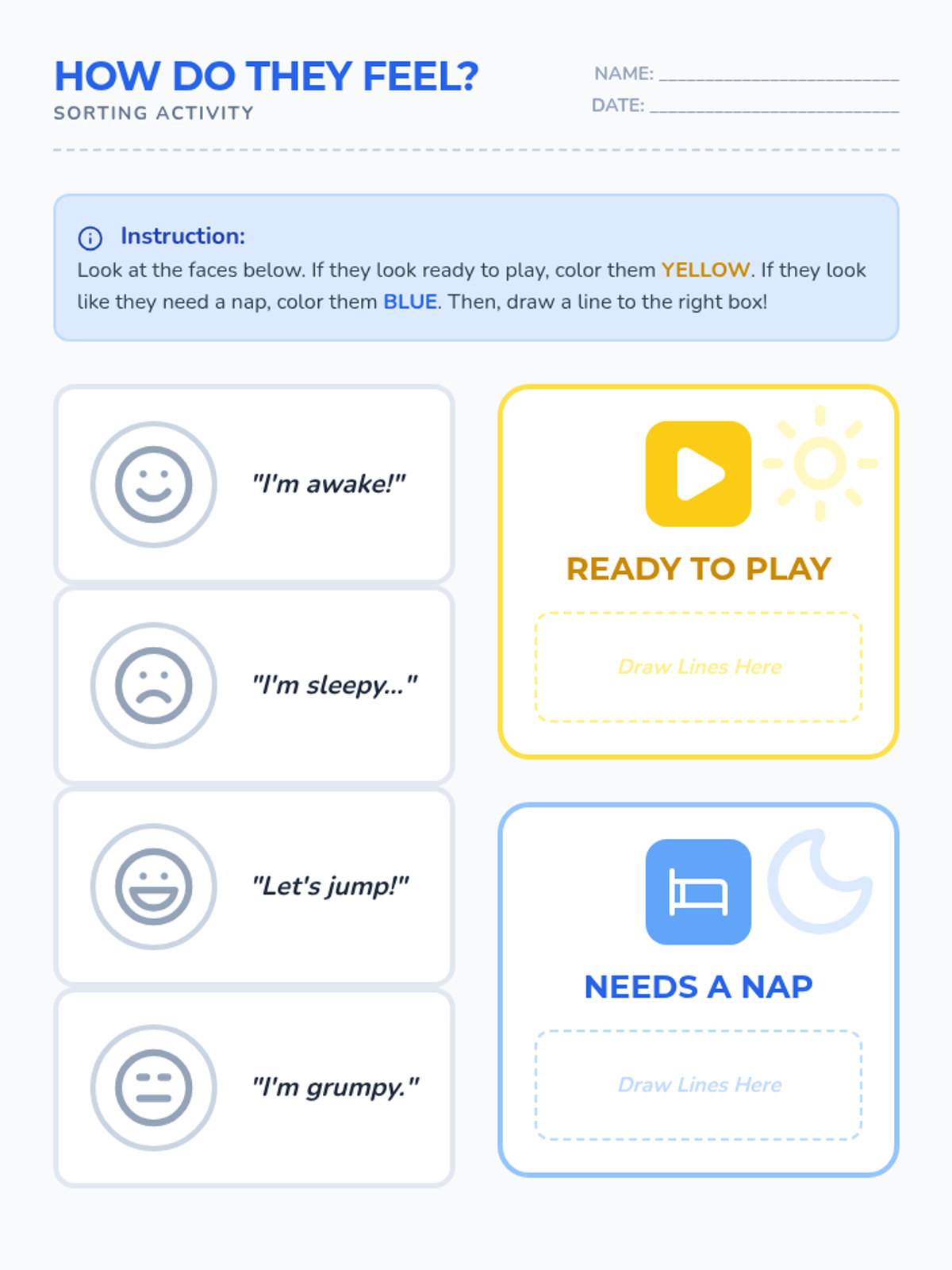
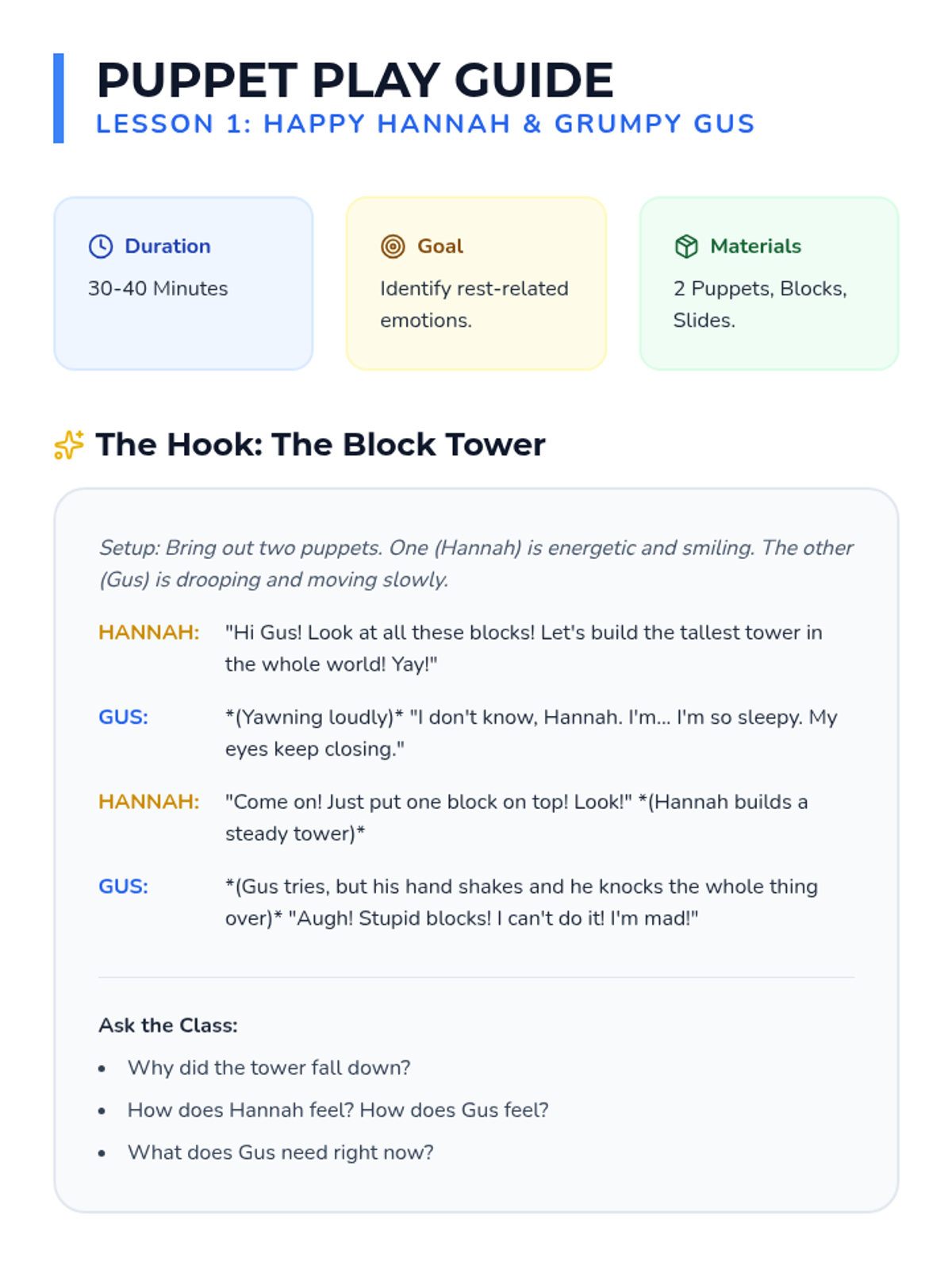
This sequence connects sleep directly to emotional regulation and mood through storytelling and case studies suitable for young children. Students identify emotions associated with sleep, analyze character choices, practice empathy in social play, and learn self-regulation strategies for rest.
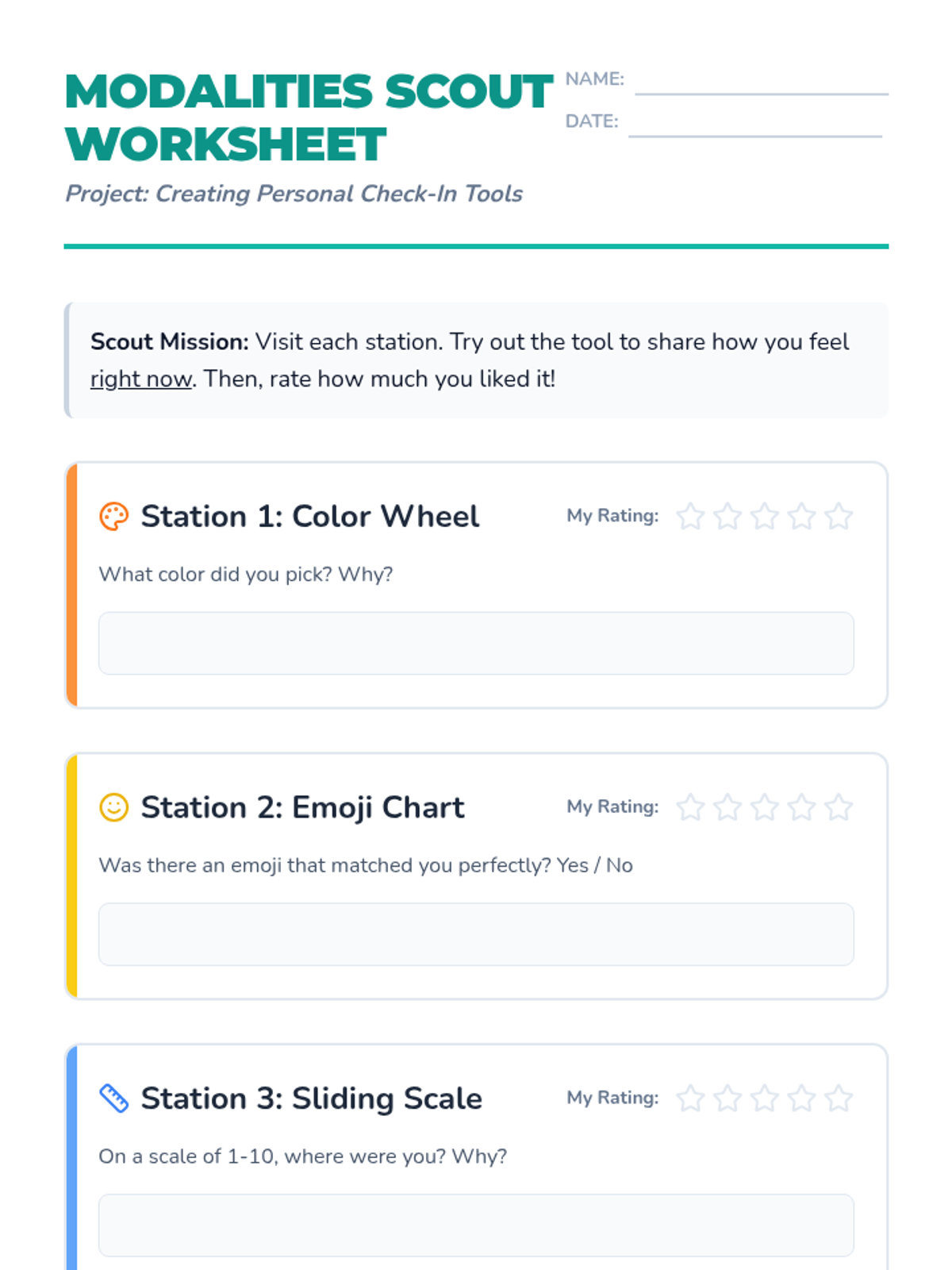
Students design and create their own personalized check-in tools to foster ownership over the behavioral check-in process. The sequence moves from exploration of different modalities to the design, construction, and implementation of a personal 'Check-In Toolkit'.
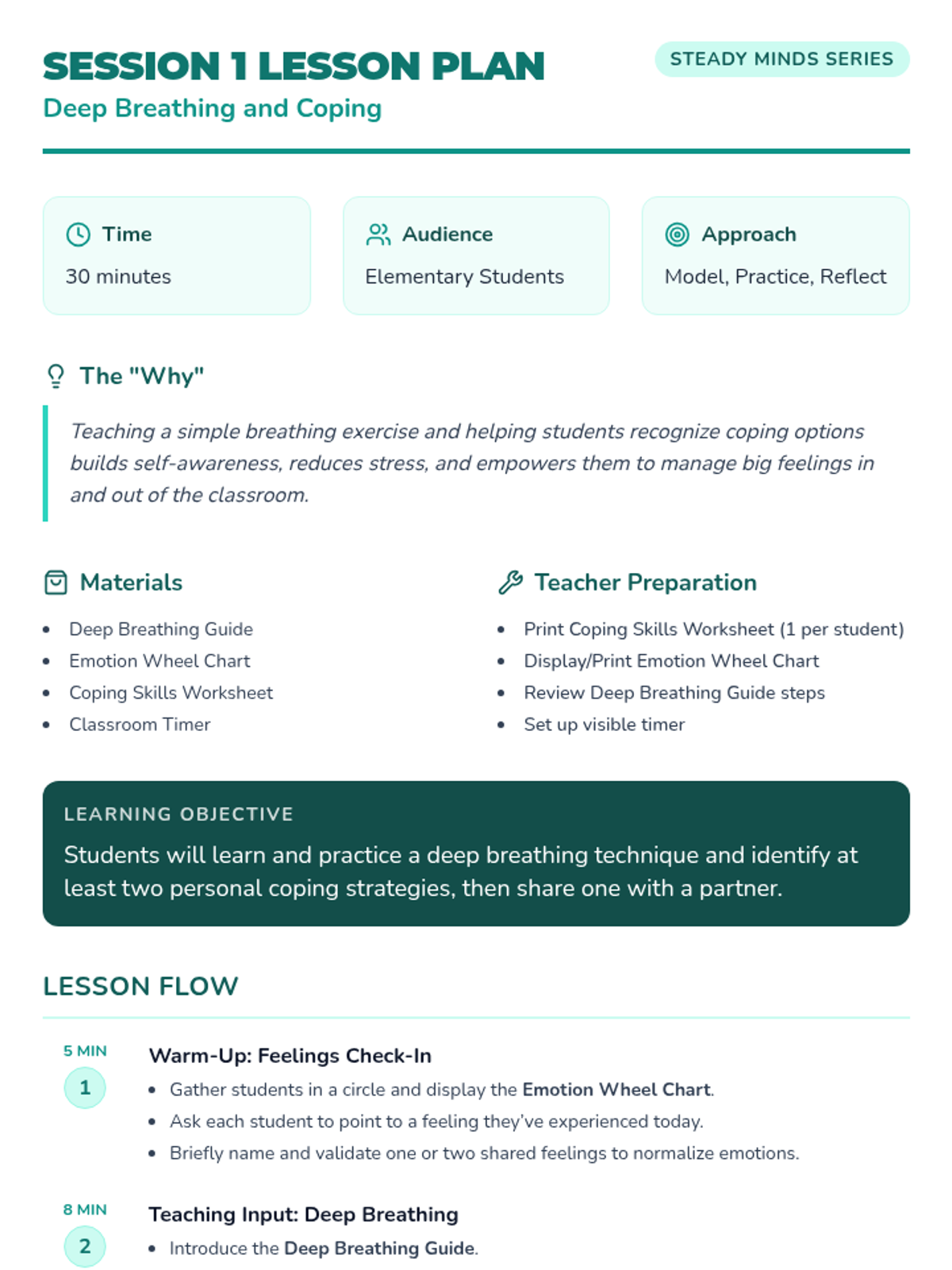
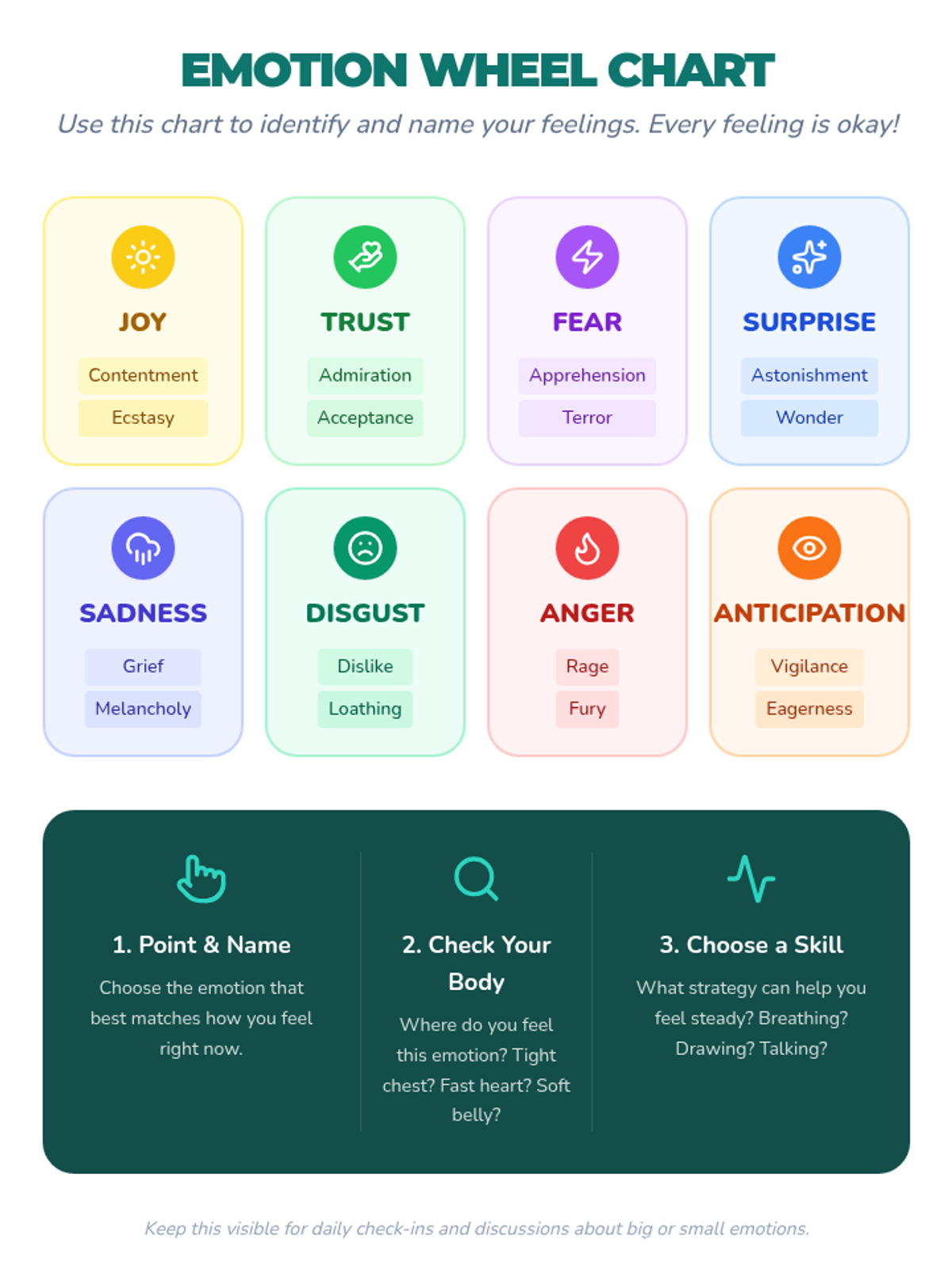
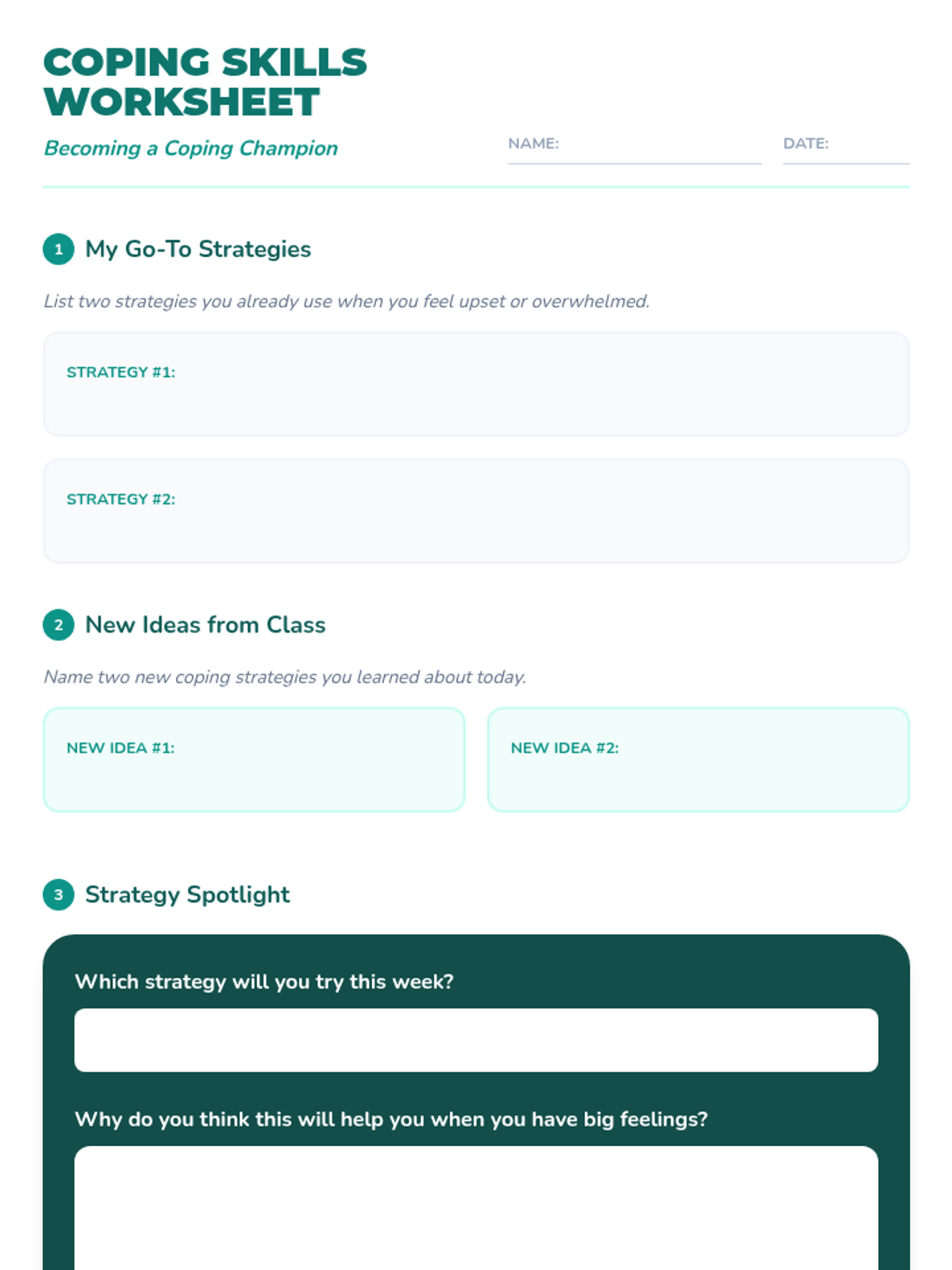
An 8-session Tier 1 classroom series on emotion regulation to help students develop and practice coping skills in 30-minute lessons. Includes mindfulness, self-reflection, and practical strategies.
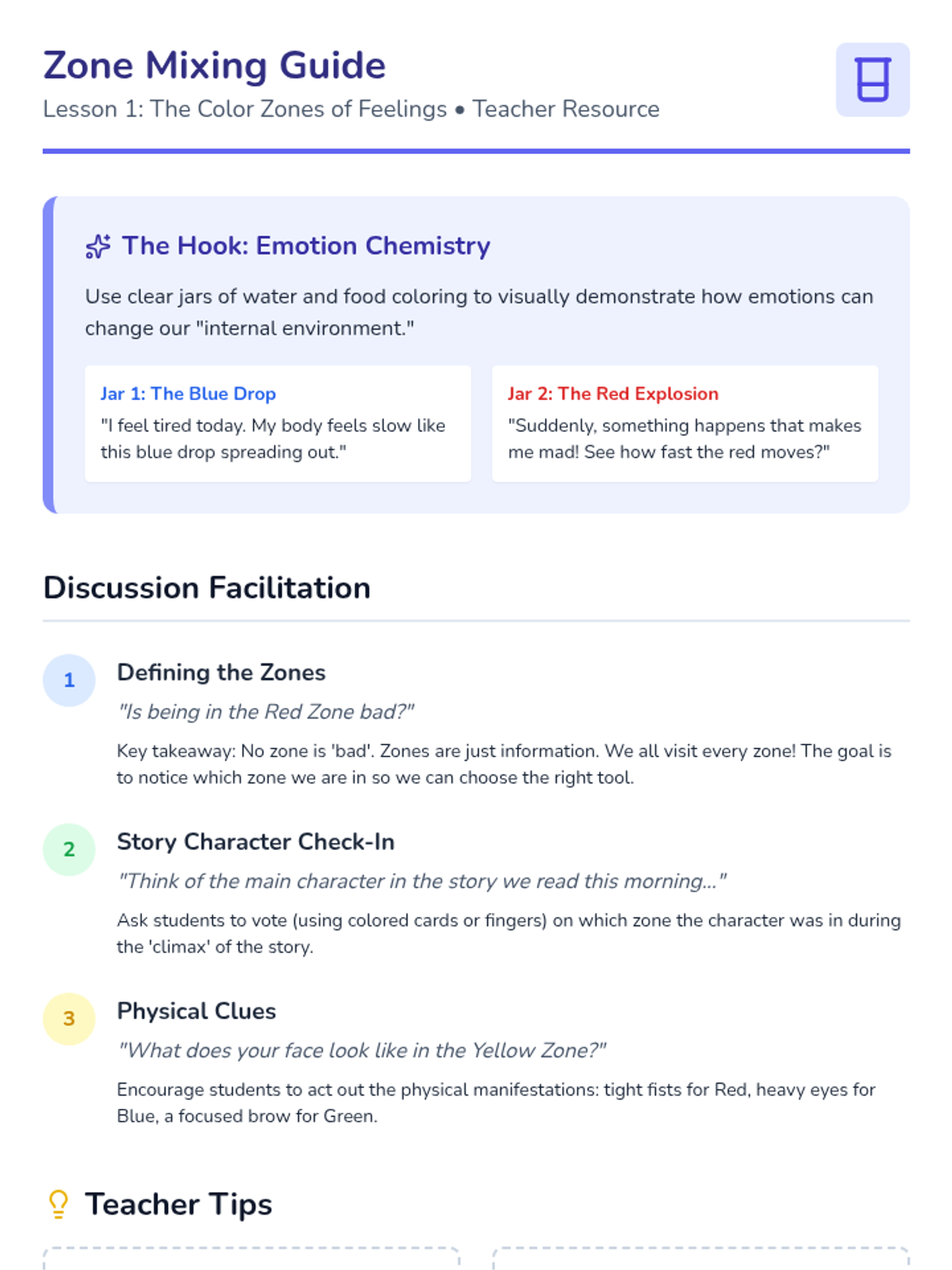
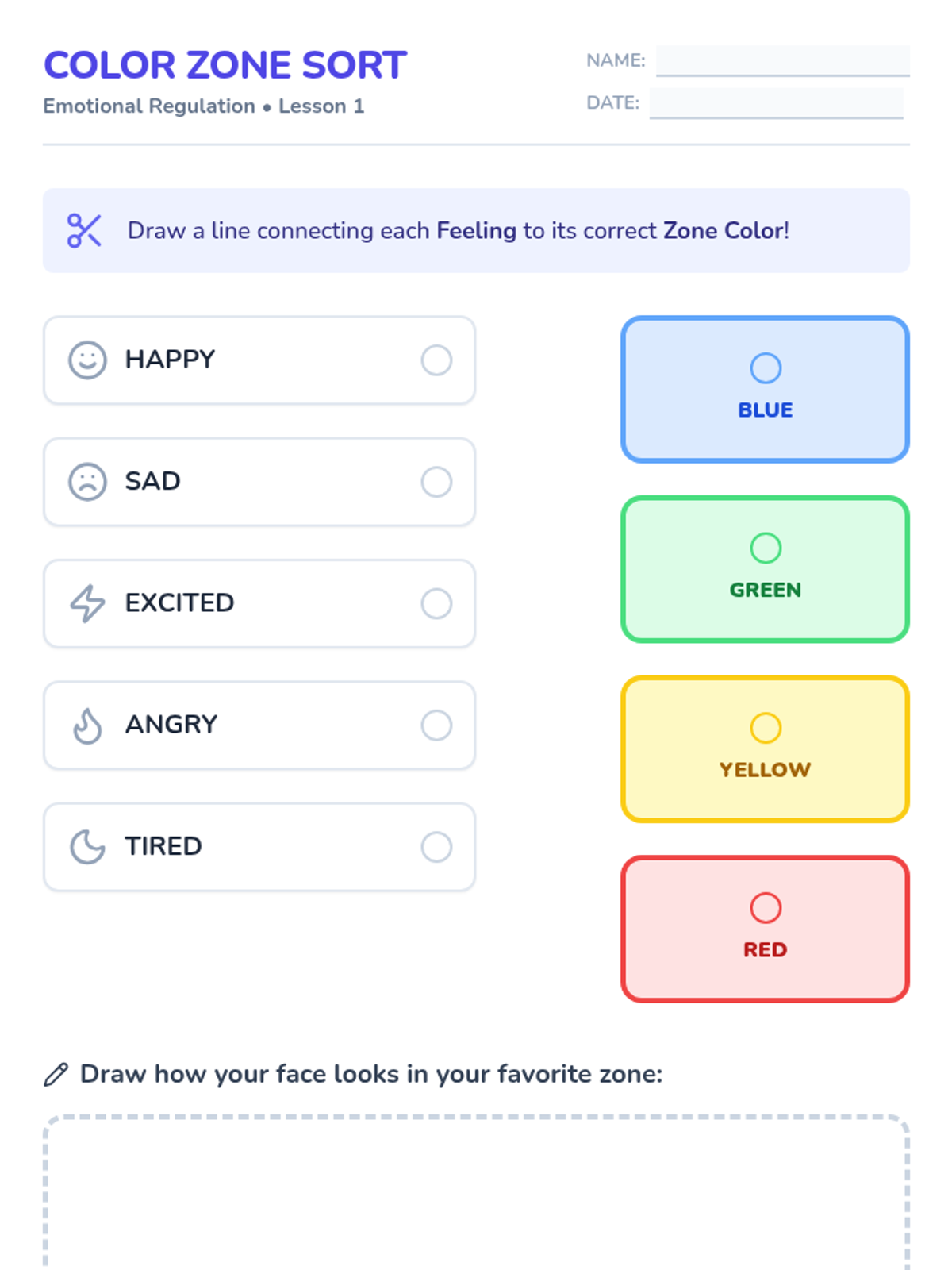
A 1st Grade sequence connecting behavioral tracking to emotional literacy. Students explore color-coded regulation zones, create personal tracking tools, and learn to select coping strategies based on their internal 'data'.
This sequence introduces first-grade students to the fundamental concepts of self-monitoring and personal responsibility through simple visual trackers. The learning arc begins with identifying positive versus negative choices and progresses to students actively recording their own behavior intervals throughout the day. By the end of the sequence, students will be able to use a basic checklist or smiley-face chart to reflect on their actions, fostering early independence and accountability.
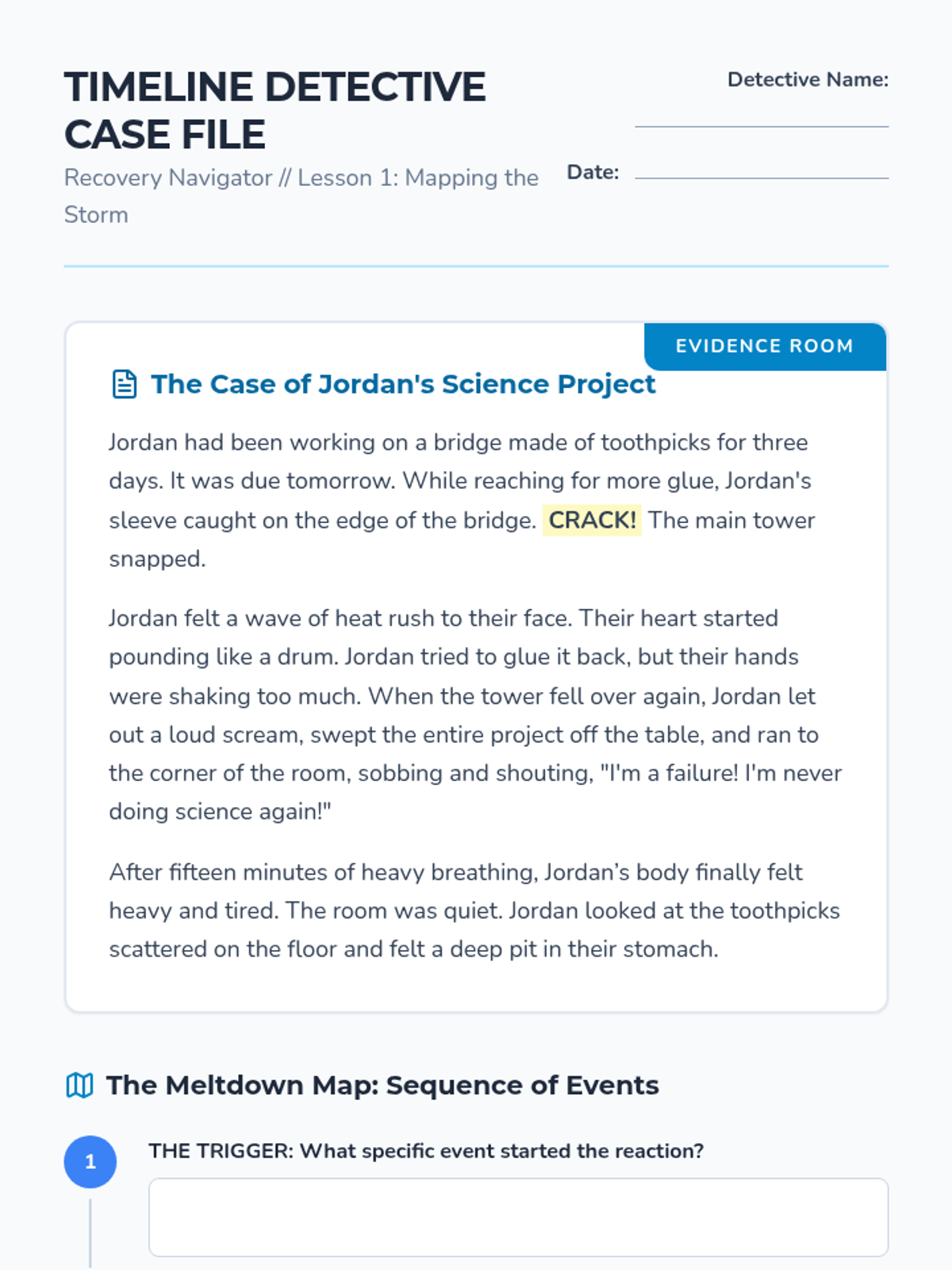
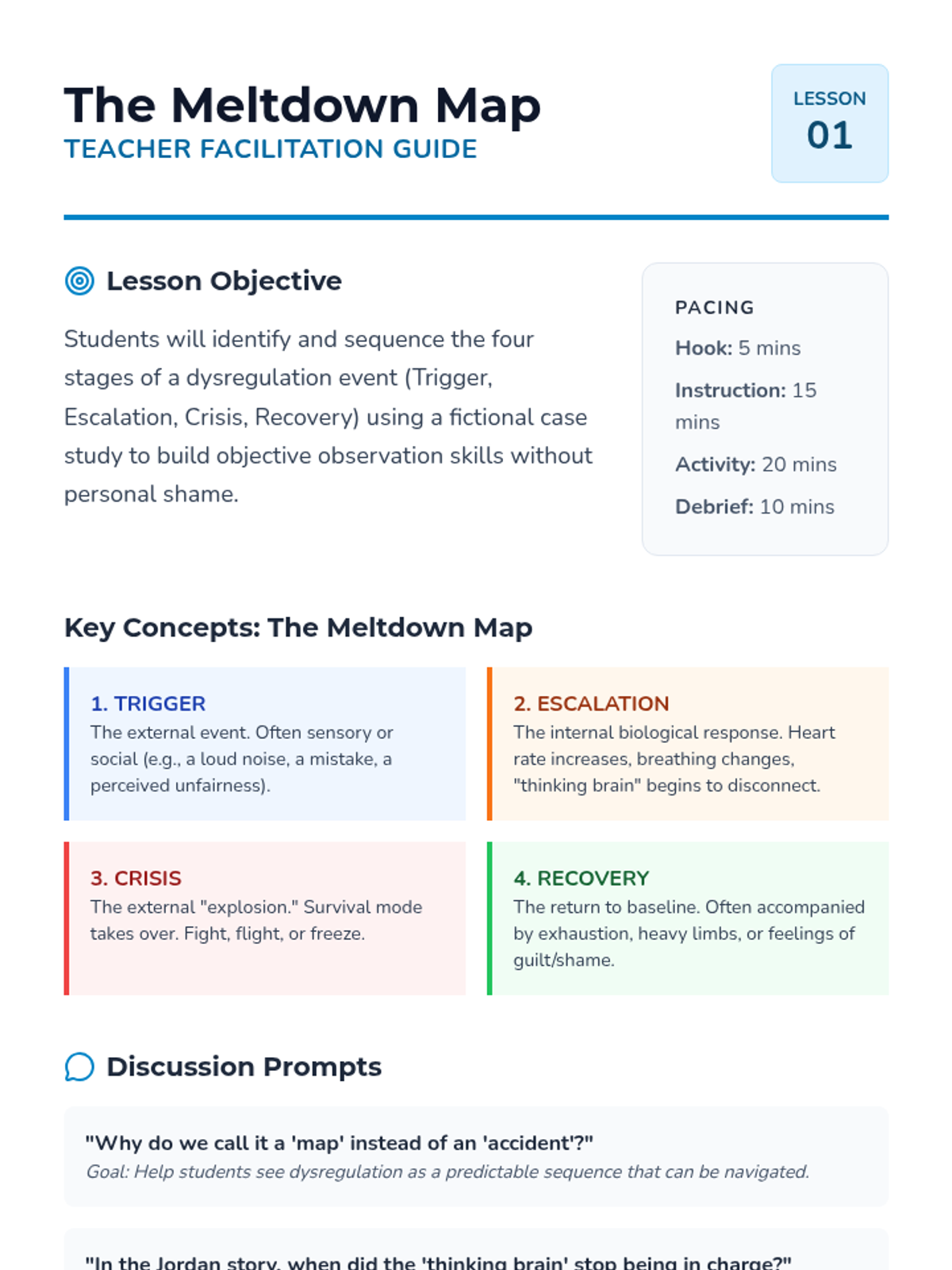
This sequence explores dysregulation recovery through a restorative lens. Students use case studies and fictional scenarios to analyze meltdowns, separate behavior from identity to reduce shame, and master the art of repair conversations. The unit culminates in creating personal debriefing habits and future planning for emotional resilience.
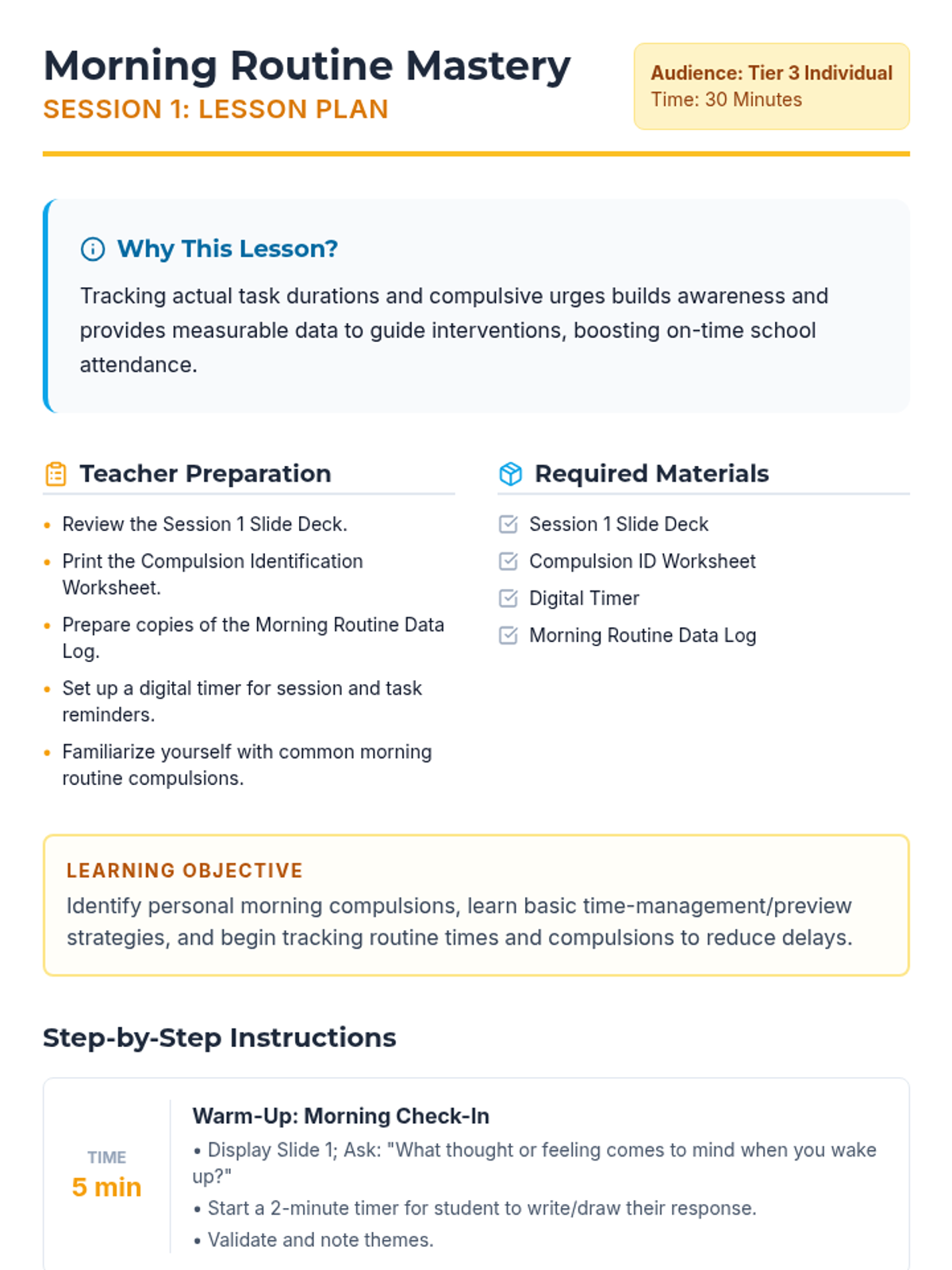
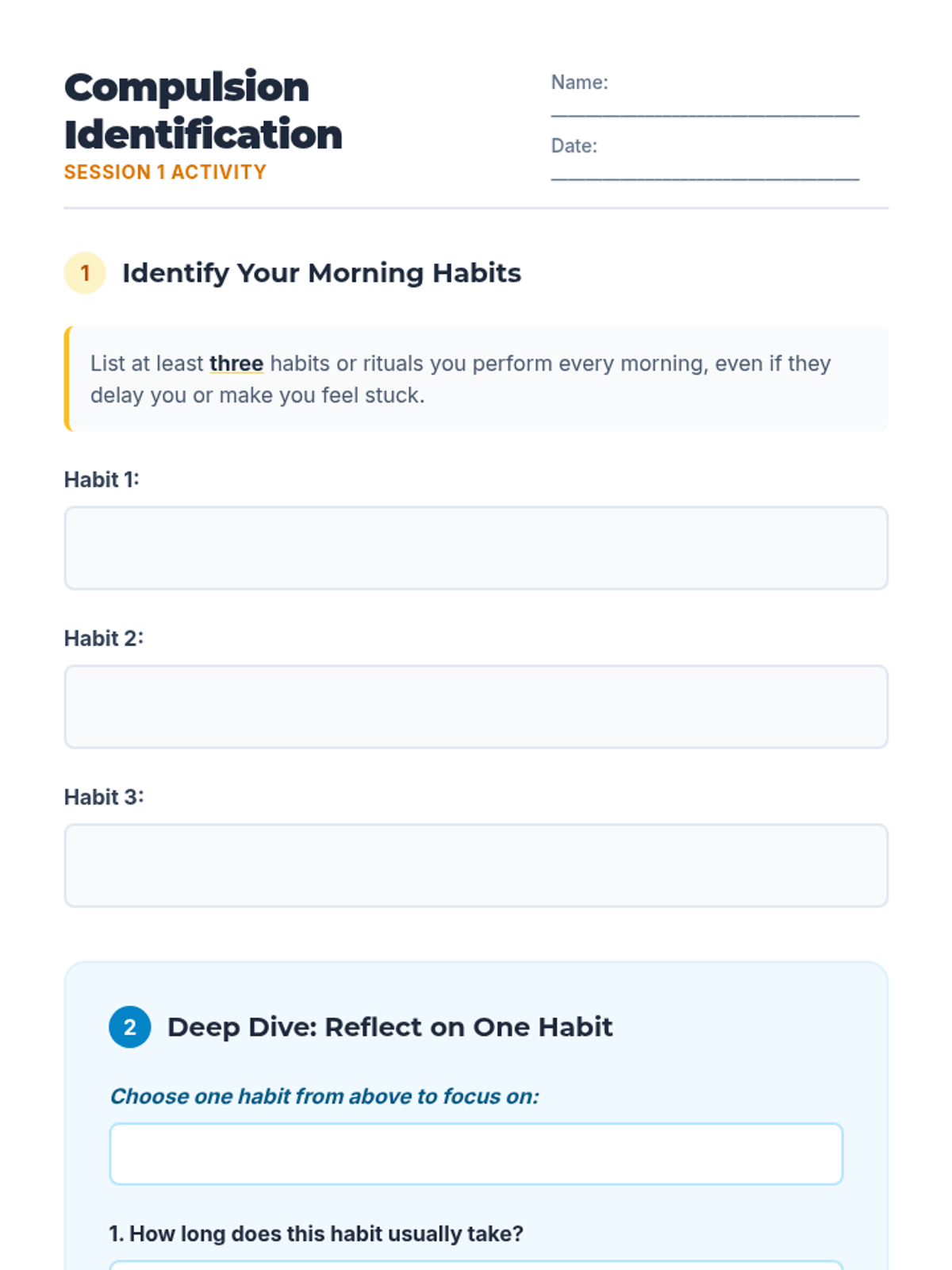
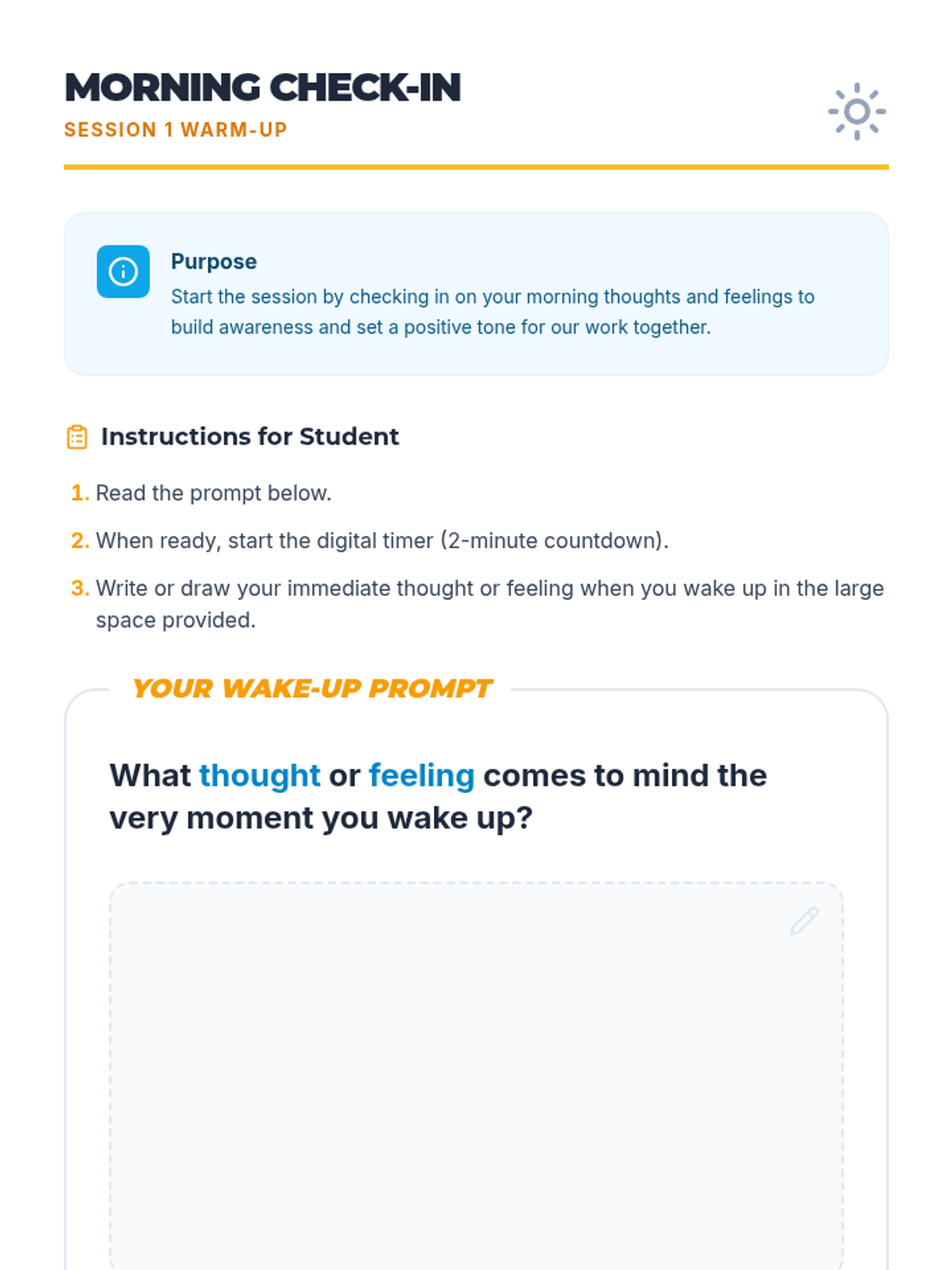
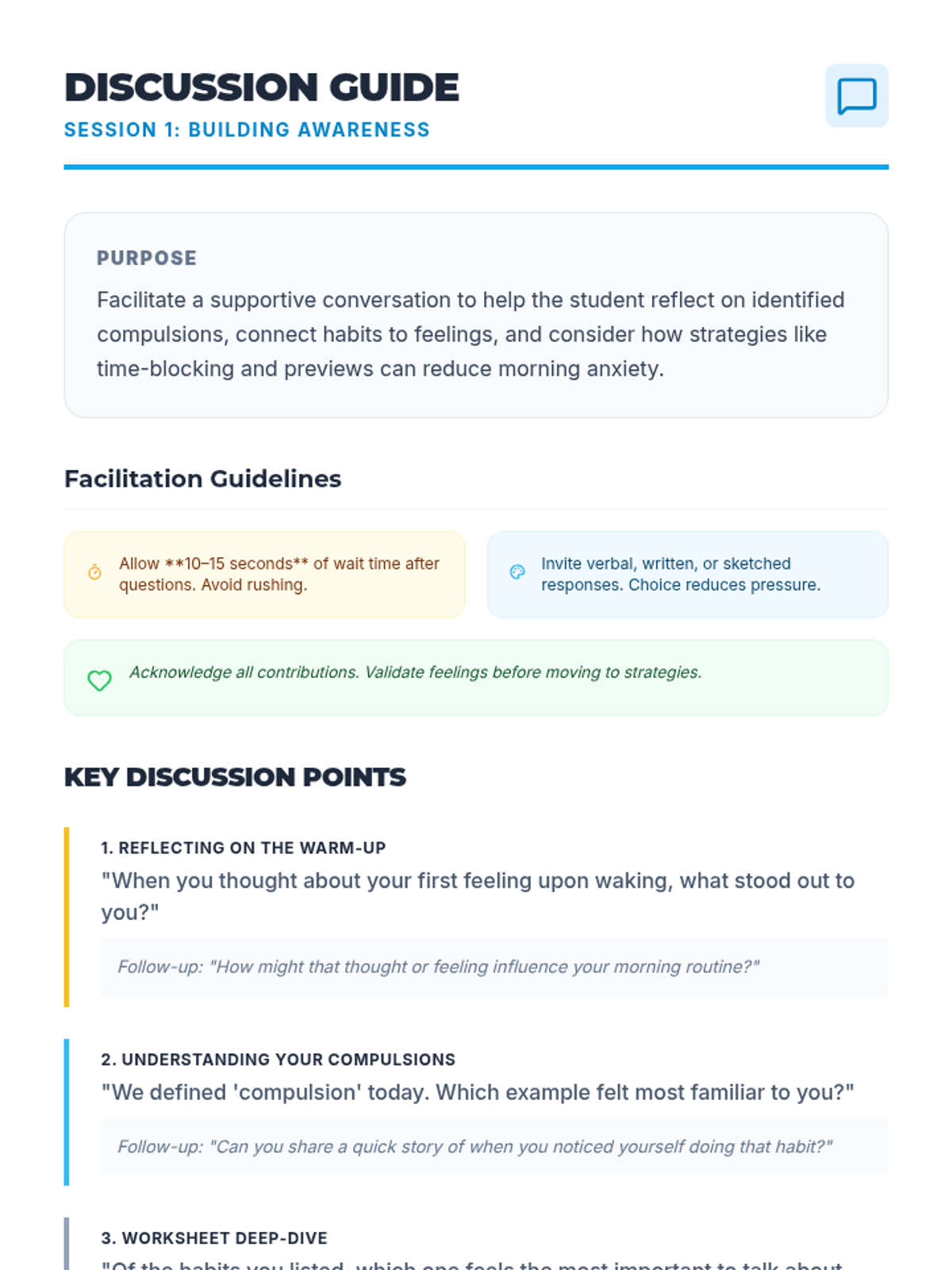
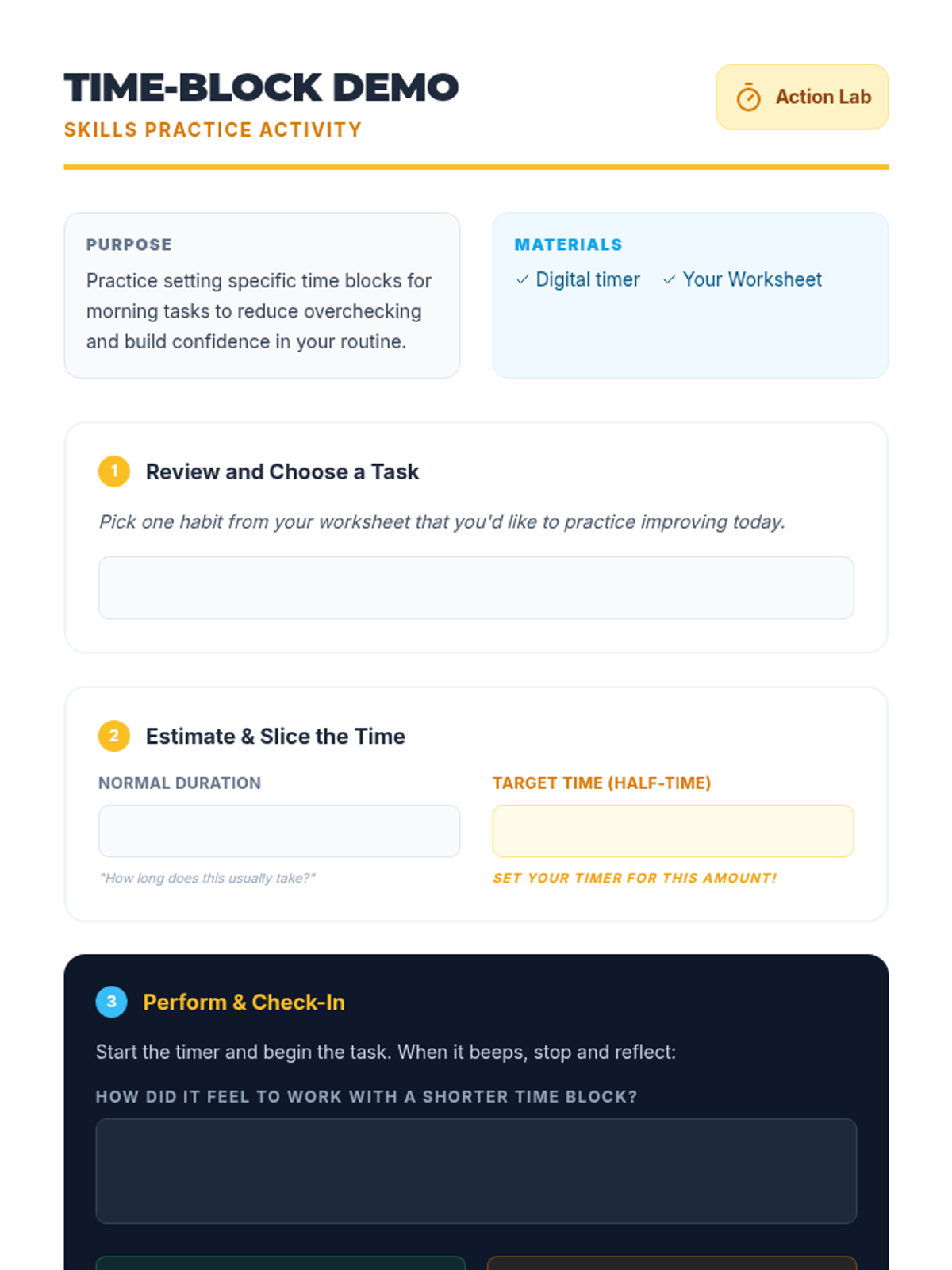
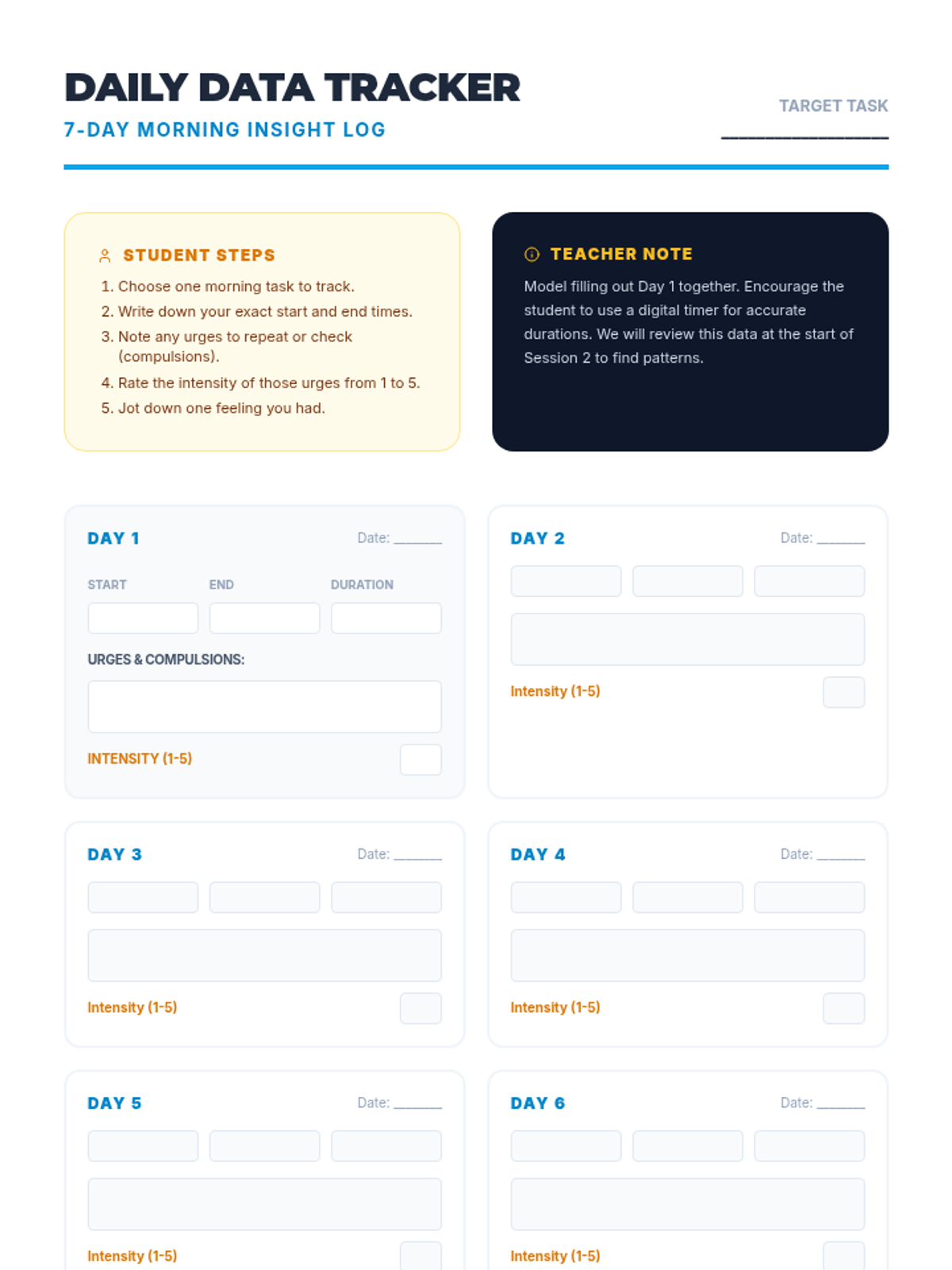
A comprehensive 3-session intervention designed for Tier 3 support, focusing on reducing morning compulsions and improving school attendance for students with anxiety, depression, OCD, and ADHD through data-driven strategies and time management.
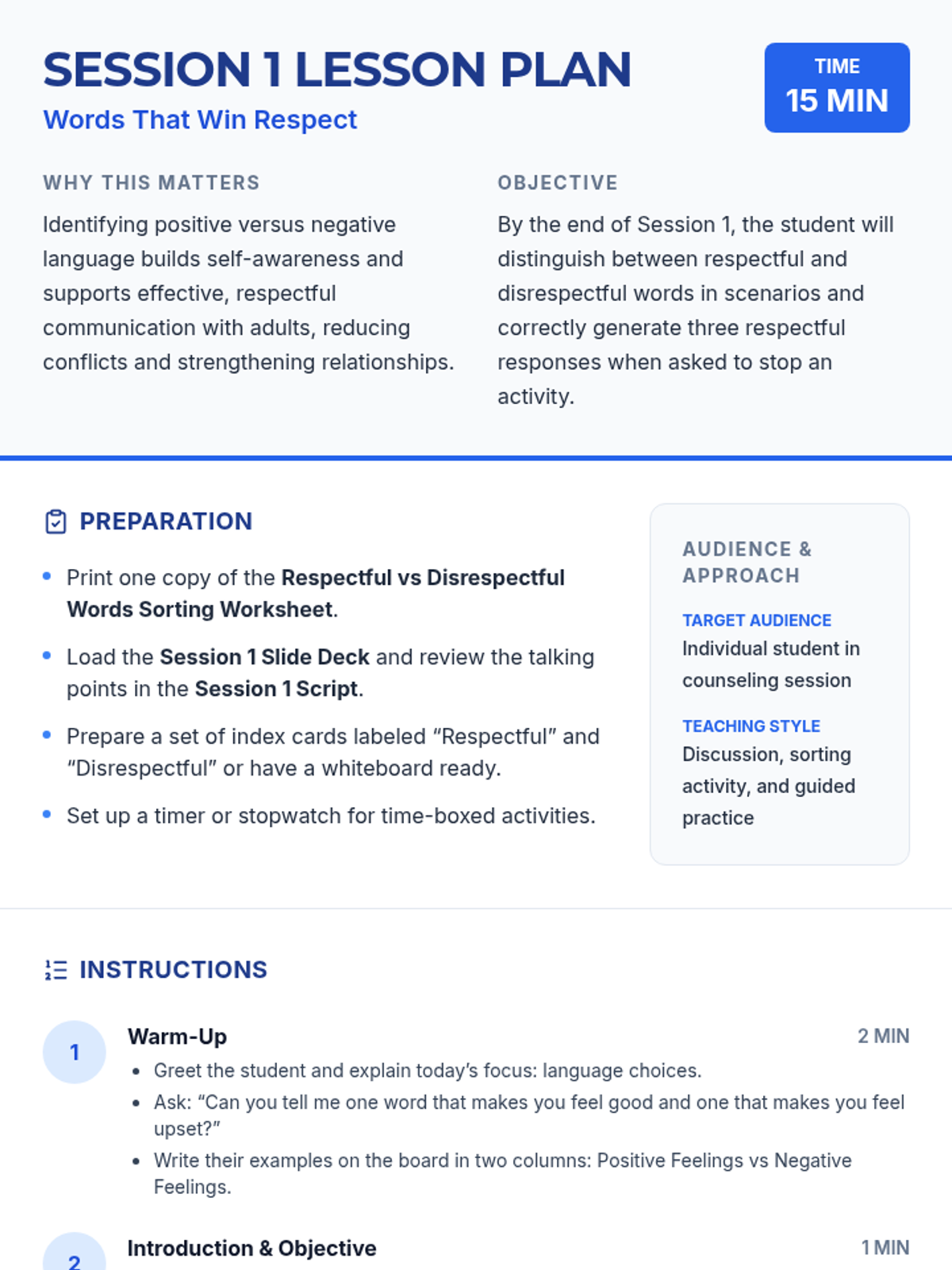
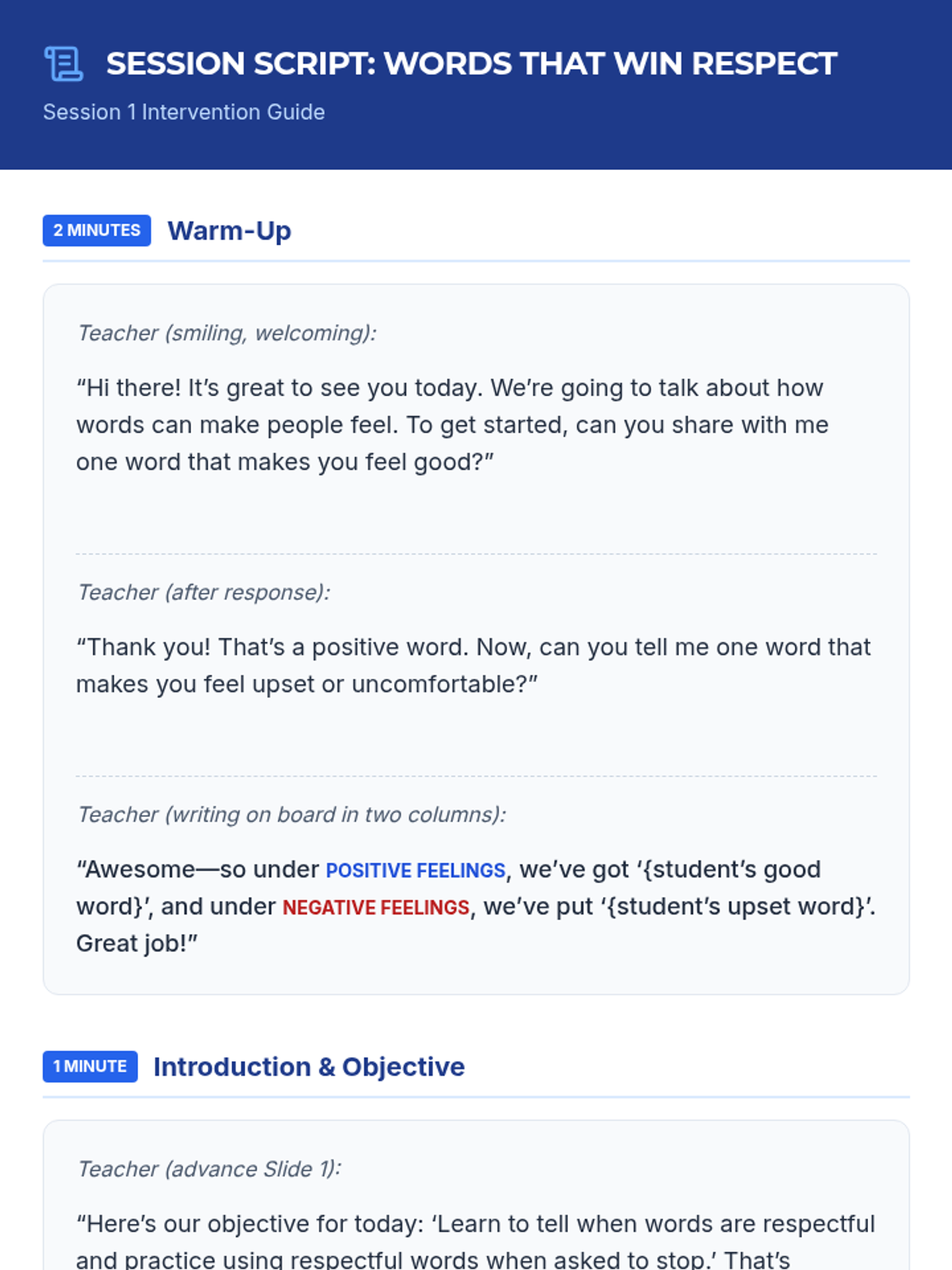
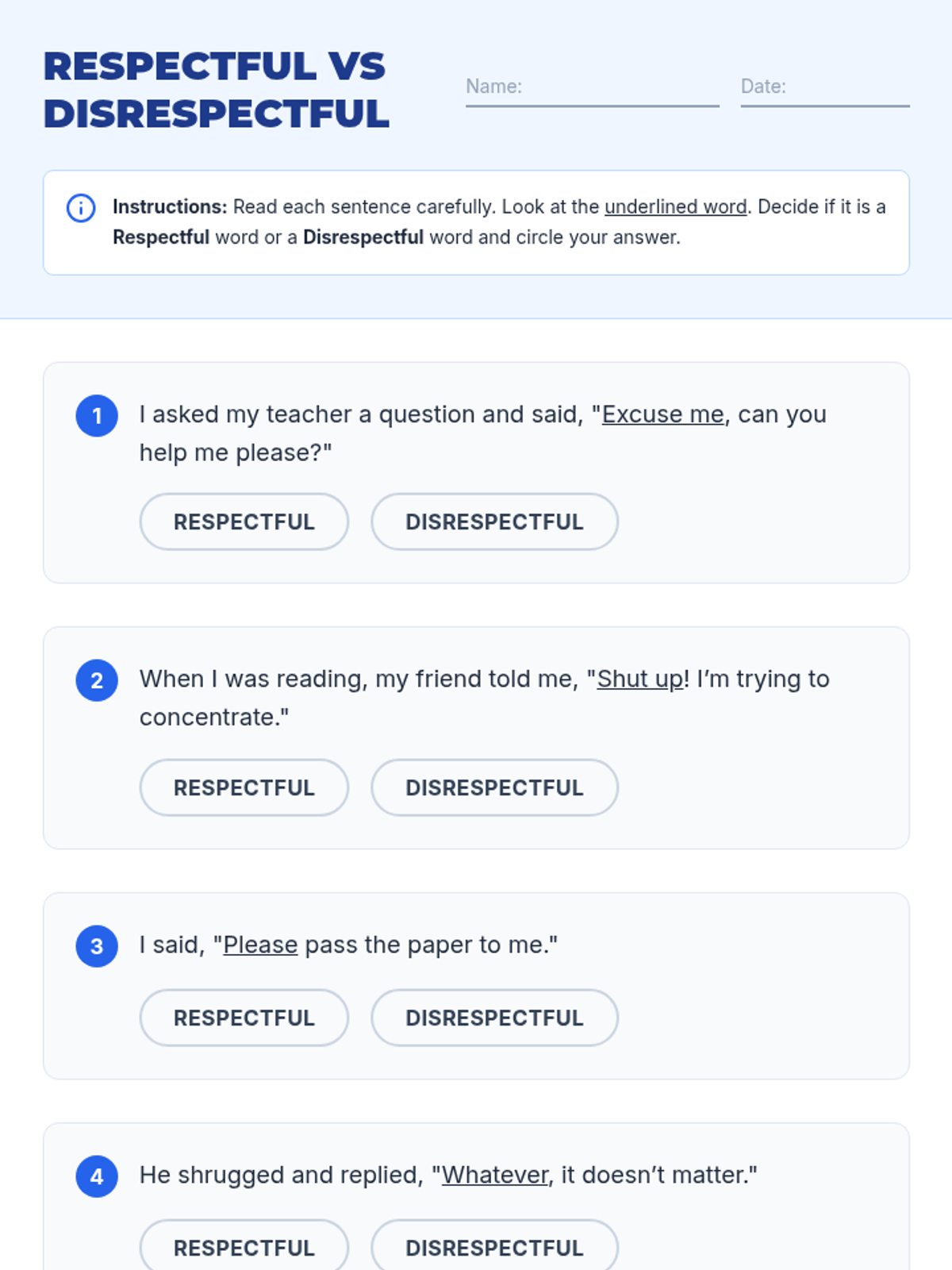
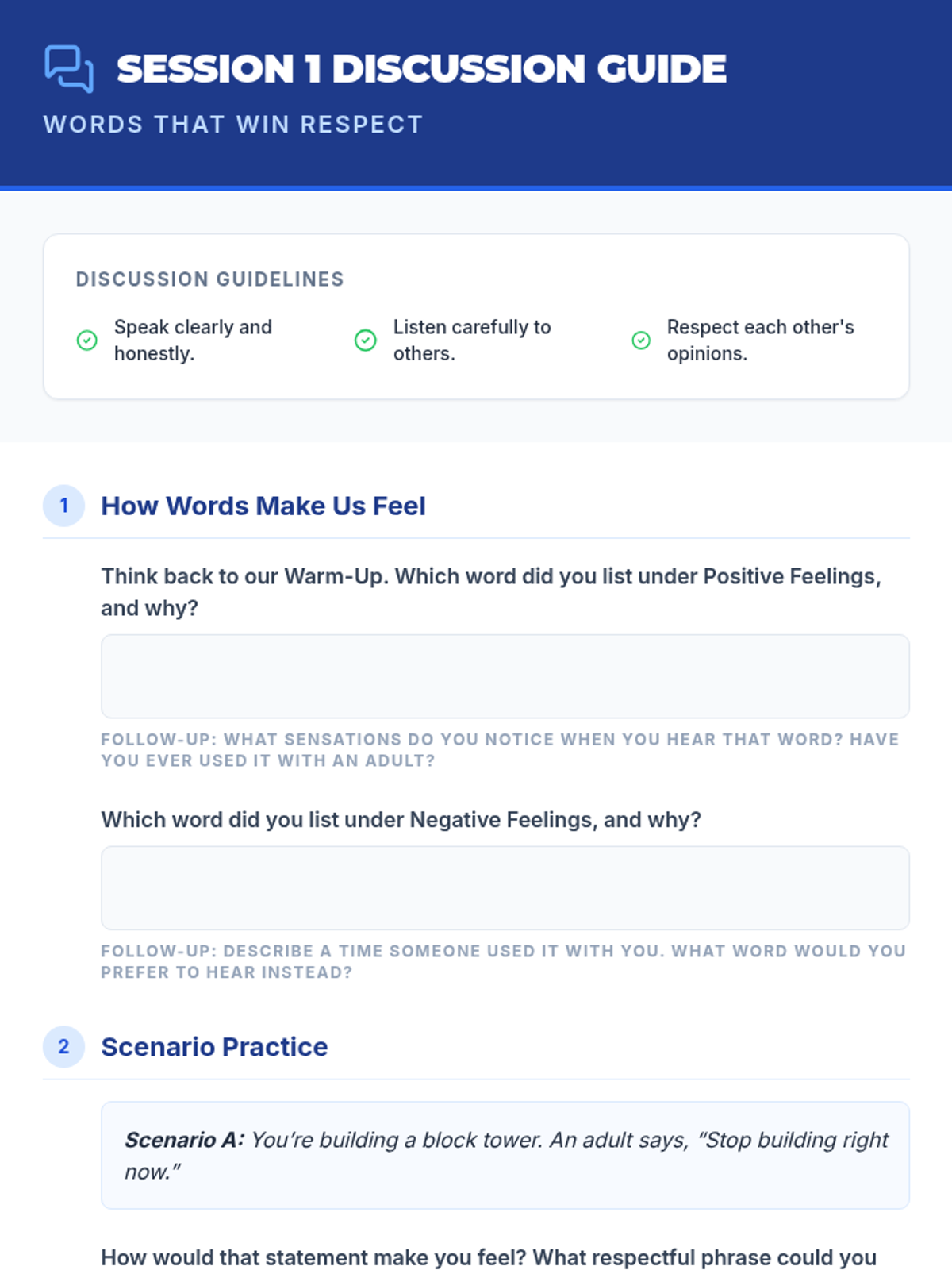
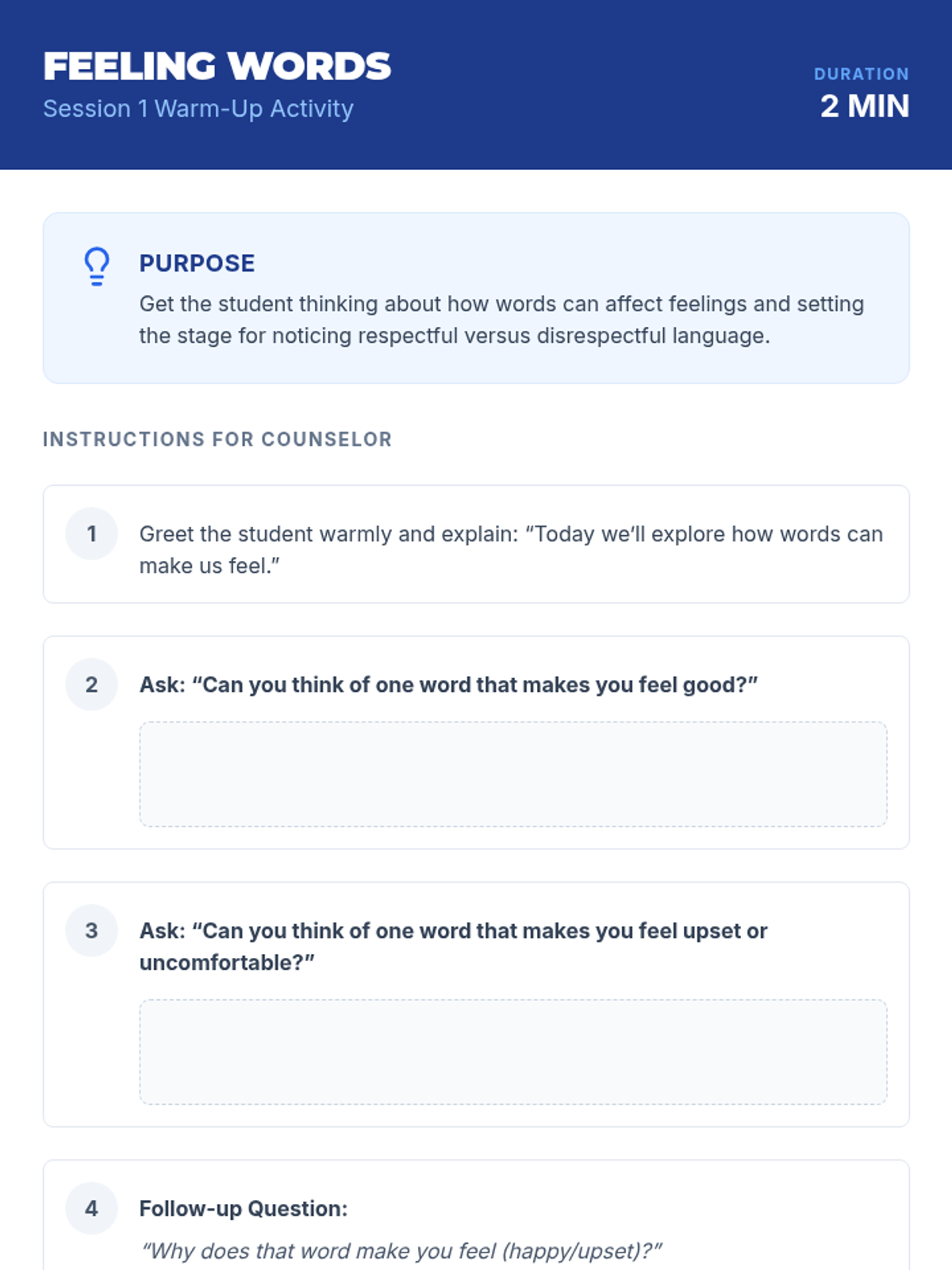
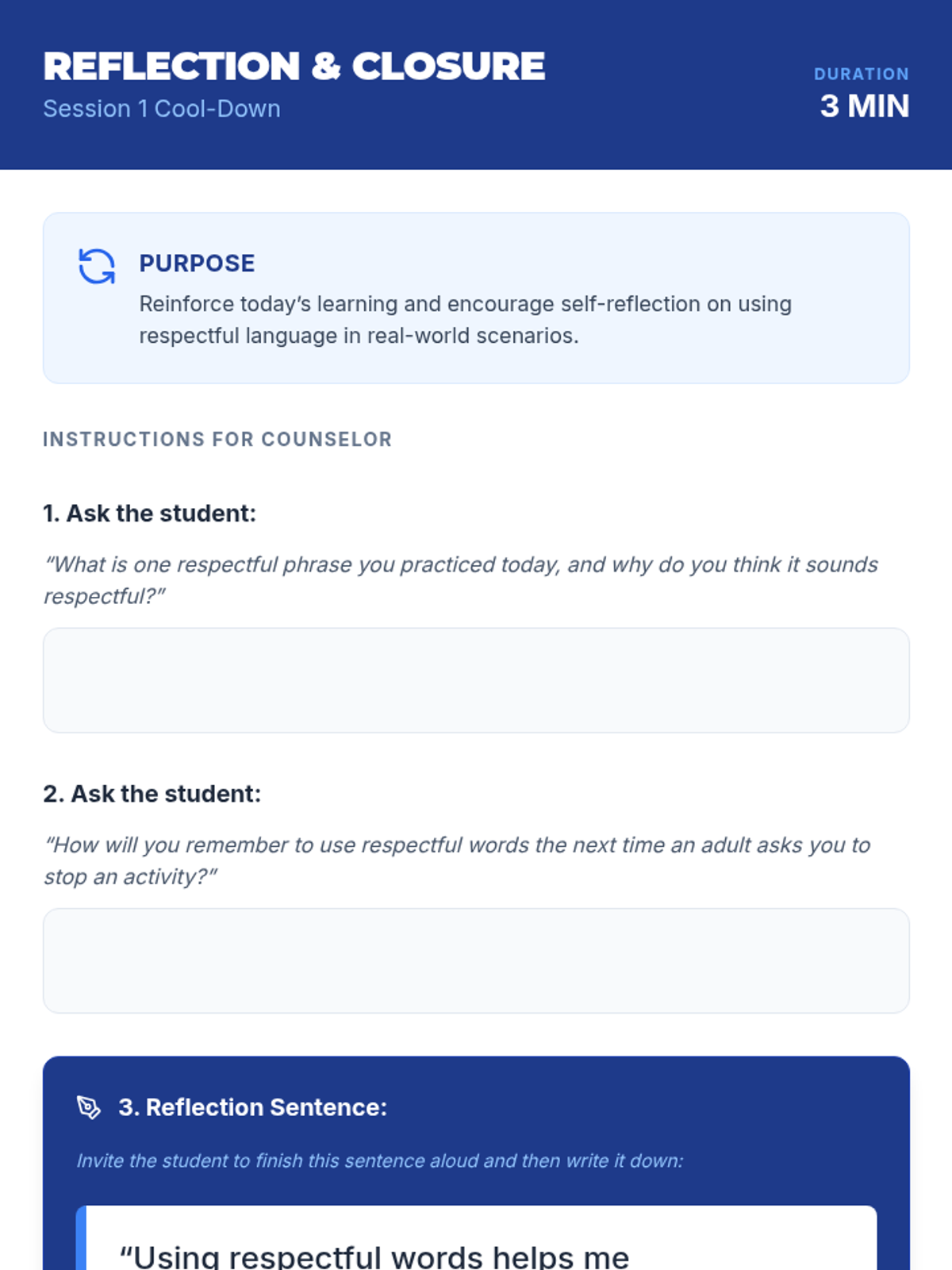
A 4-session Tier 3 intervention mini-course designed for individual counseling to help students learn and practice respectful language when asked to stop an activity. The course moves from identifying respectful words to mastering the use of respectful phrases in real-world scenarios.
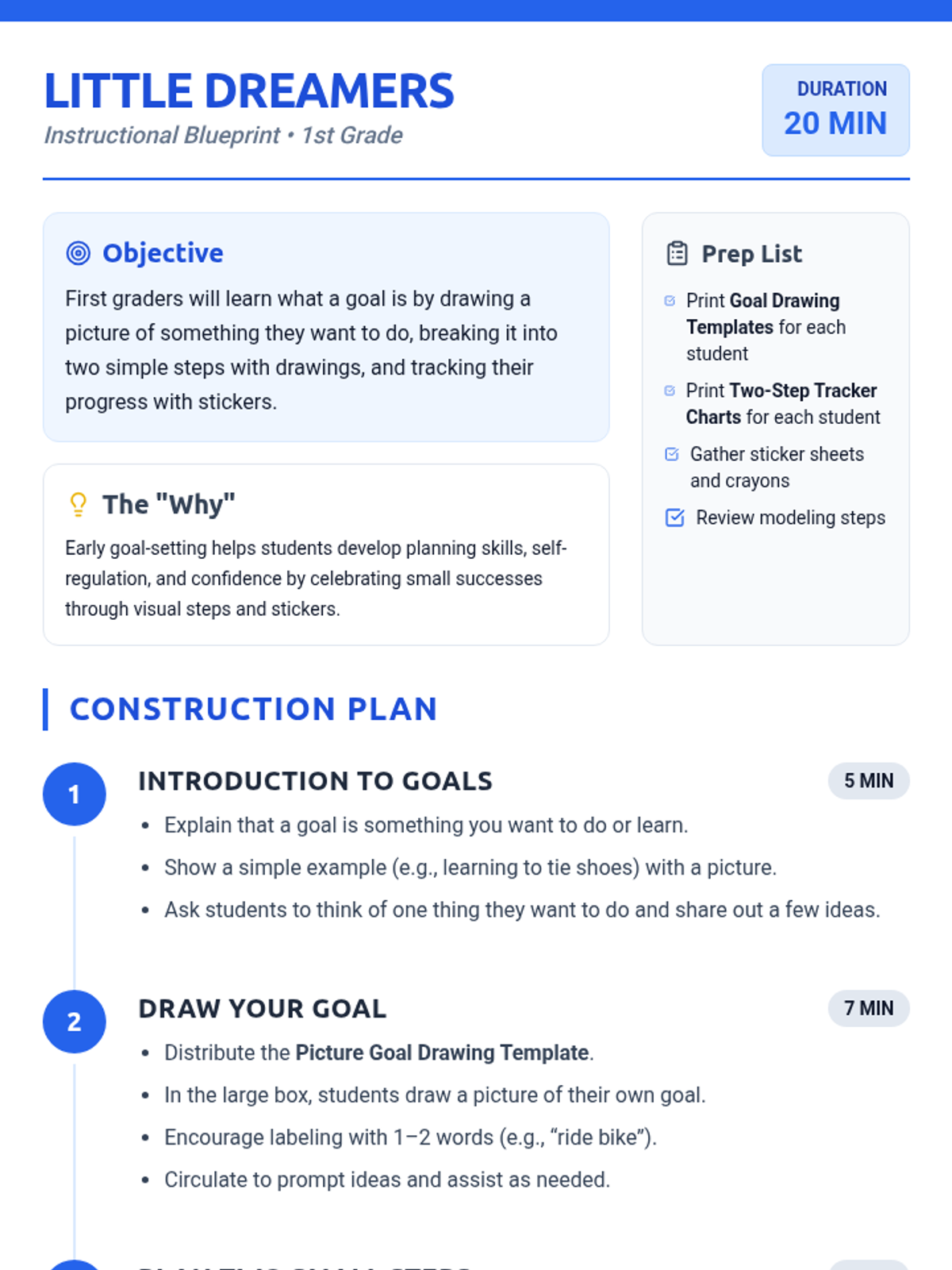
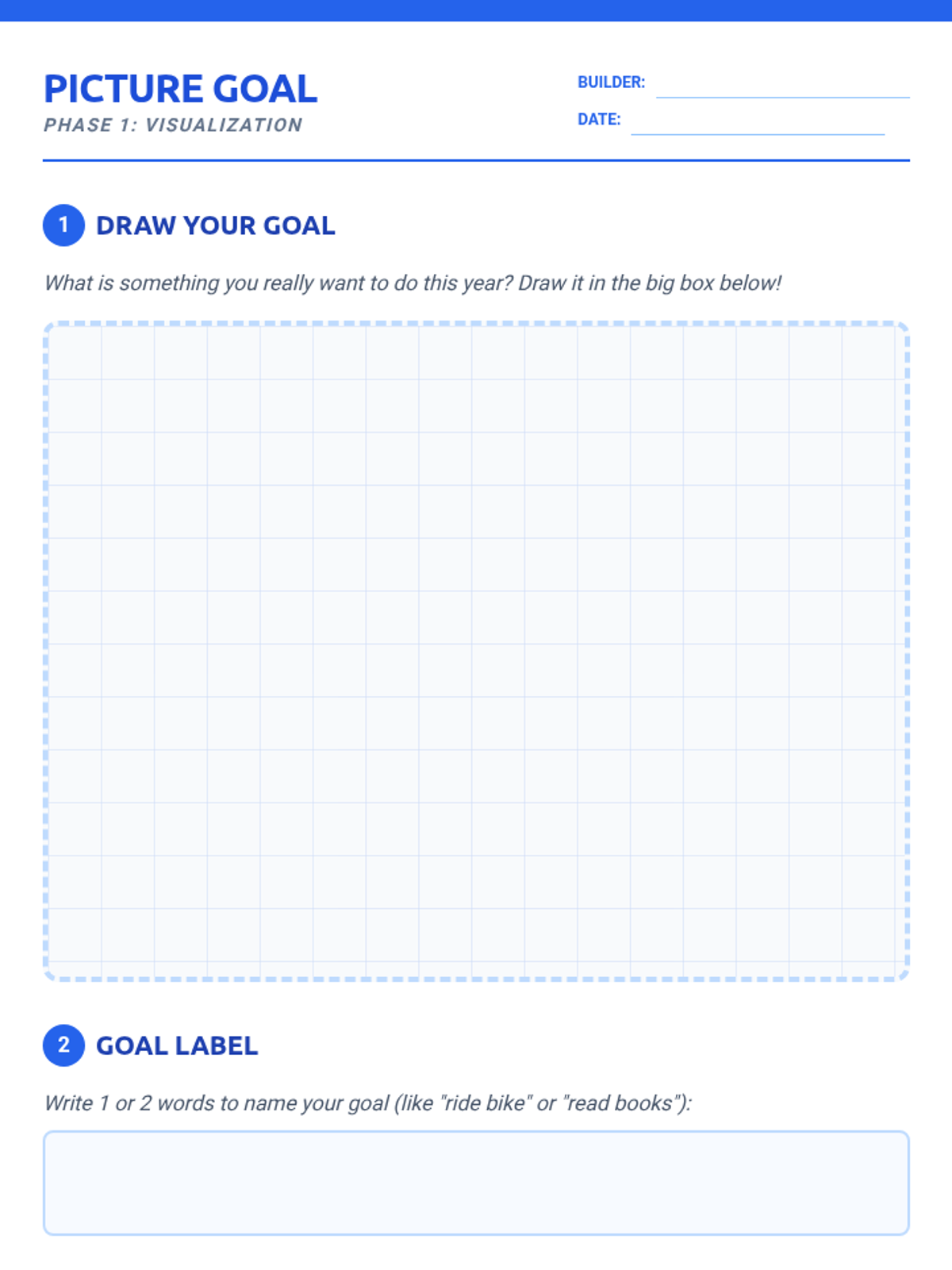
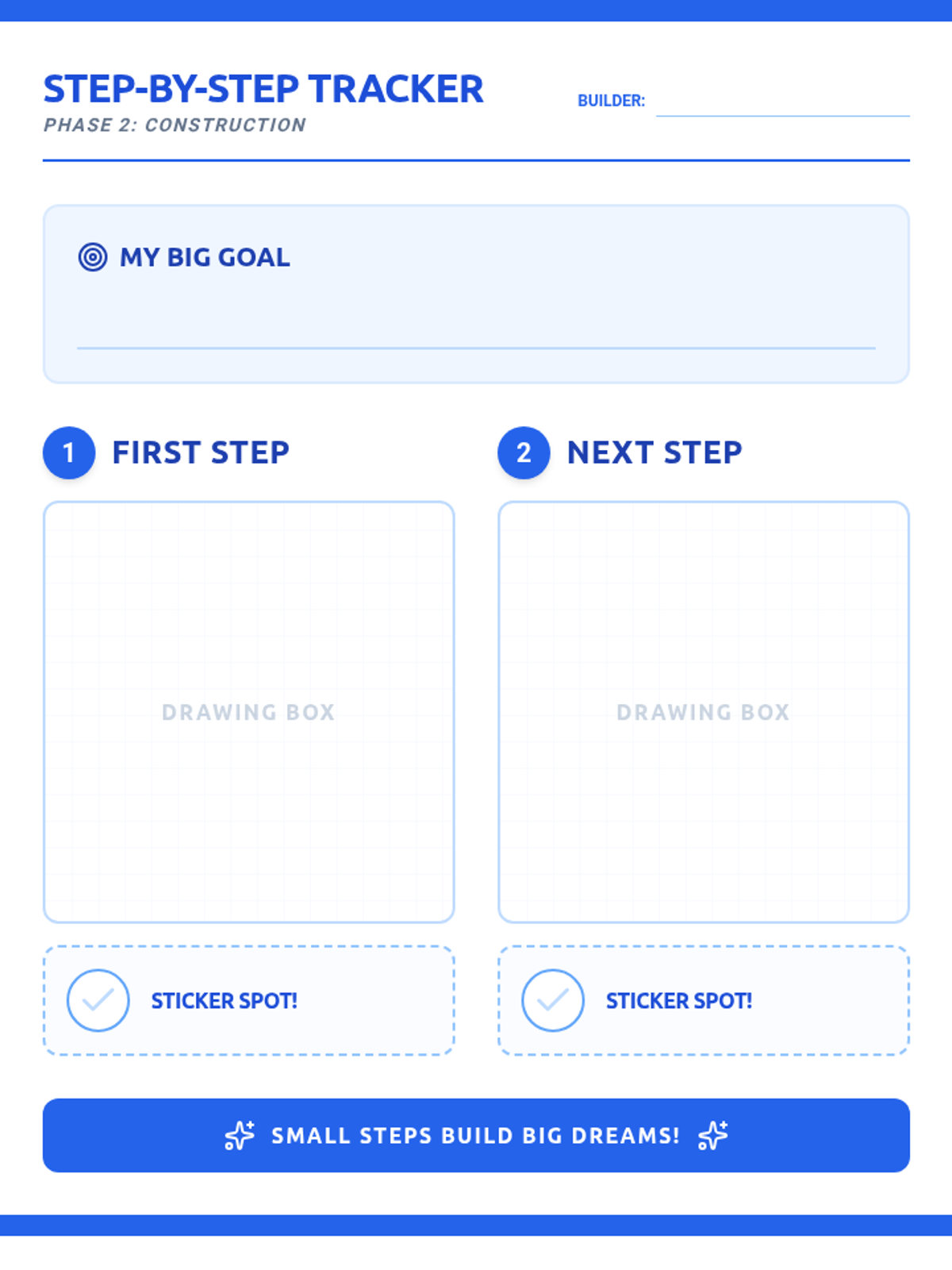
A comprehensive goal-setting curriculum that scales from simple picture-based planning for early learners to structured SMART goal frameworks for older students. Students learn to visualize their dreams, break them into manageable steps, and track their progress using a blueprint-inspired design.
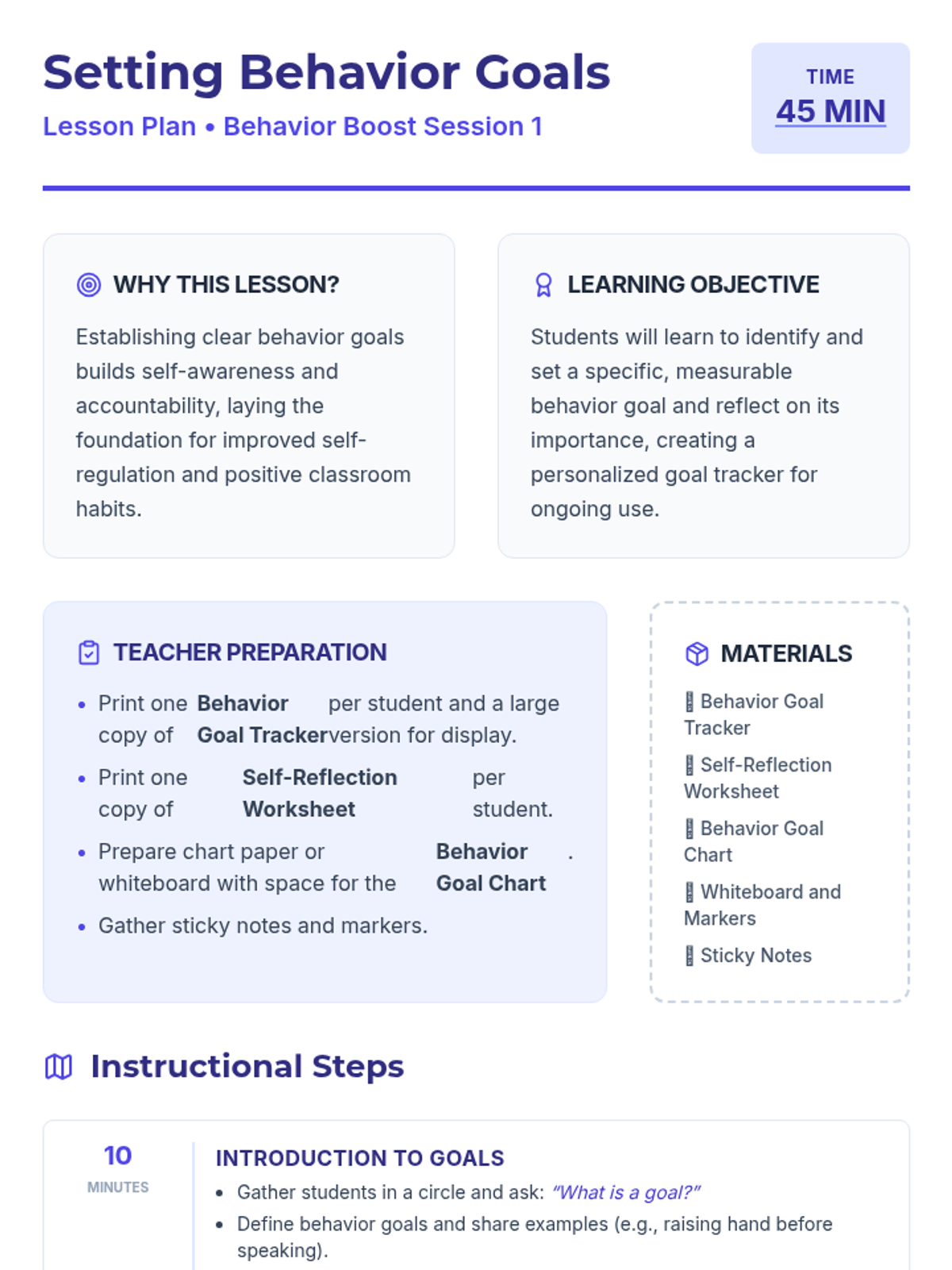
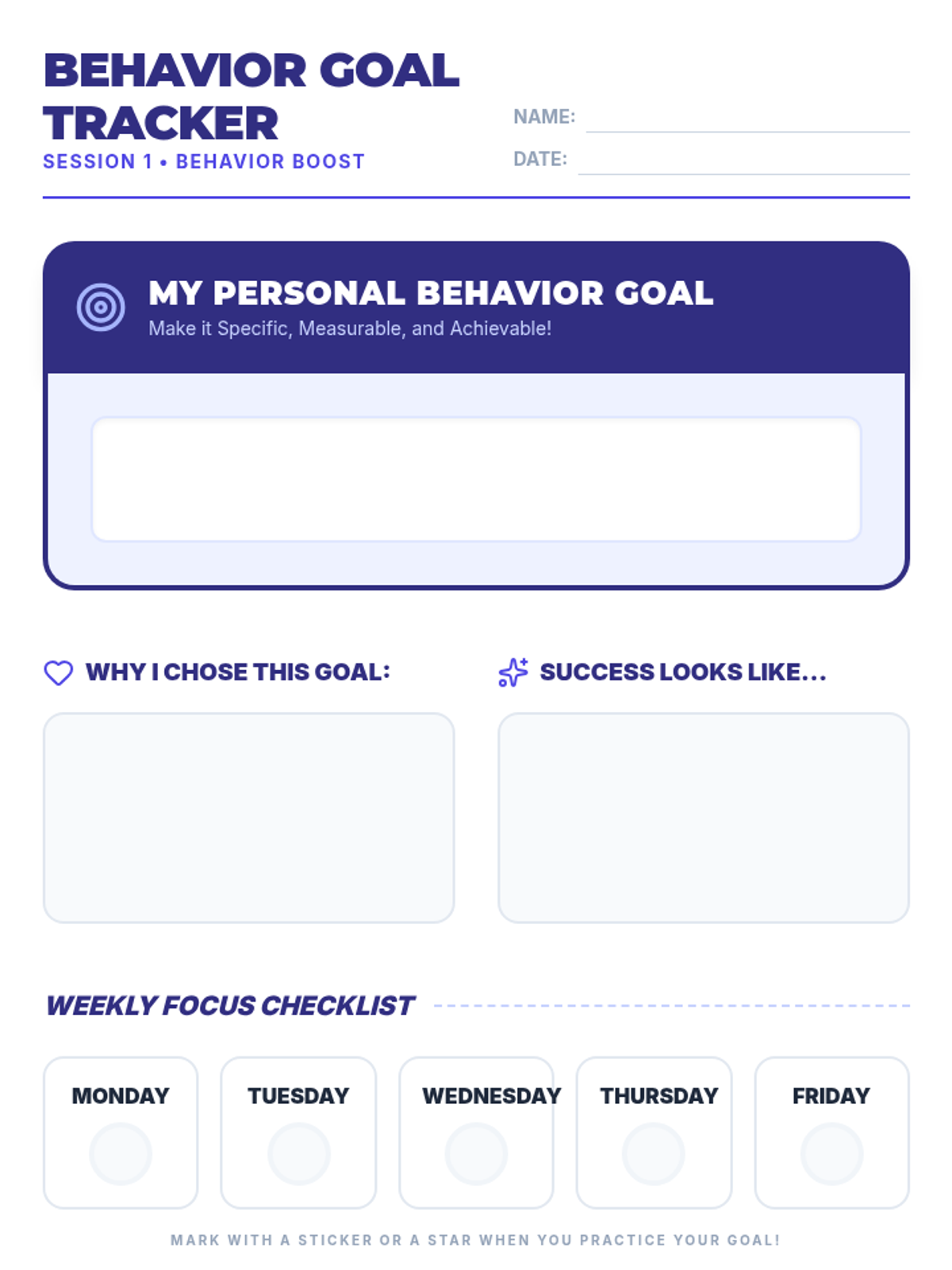
A four-session series designed for Tier 1 instruction, helping students build self-regulation through goal setting, tracking, and reflection. students develop personal accountability and positive classroom habits using interactive tools and peer support.
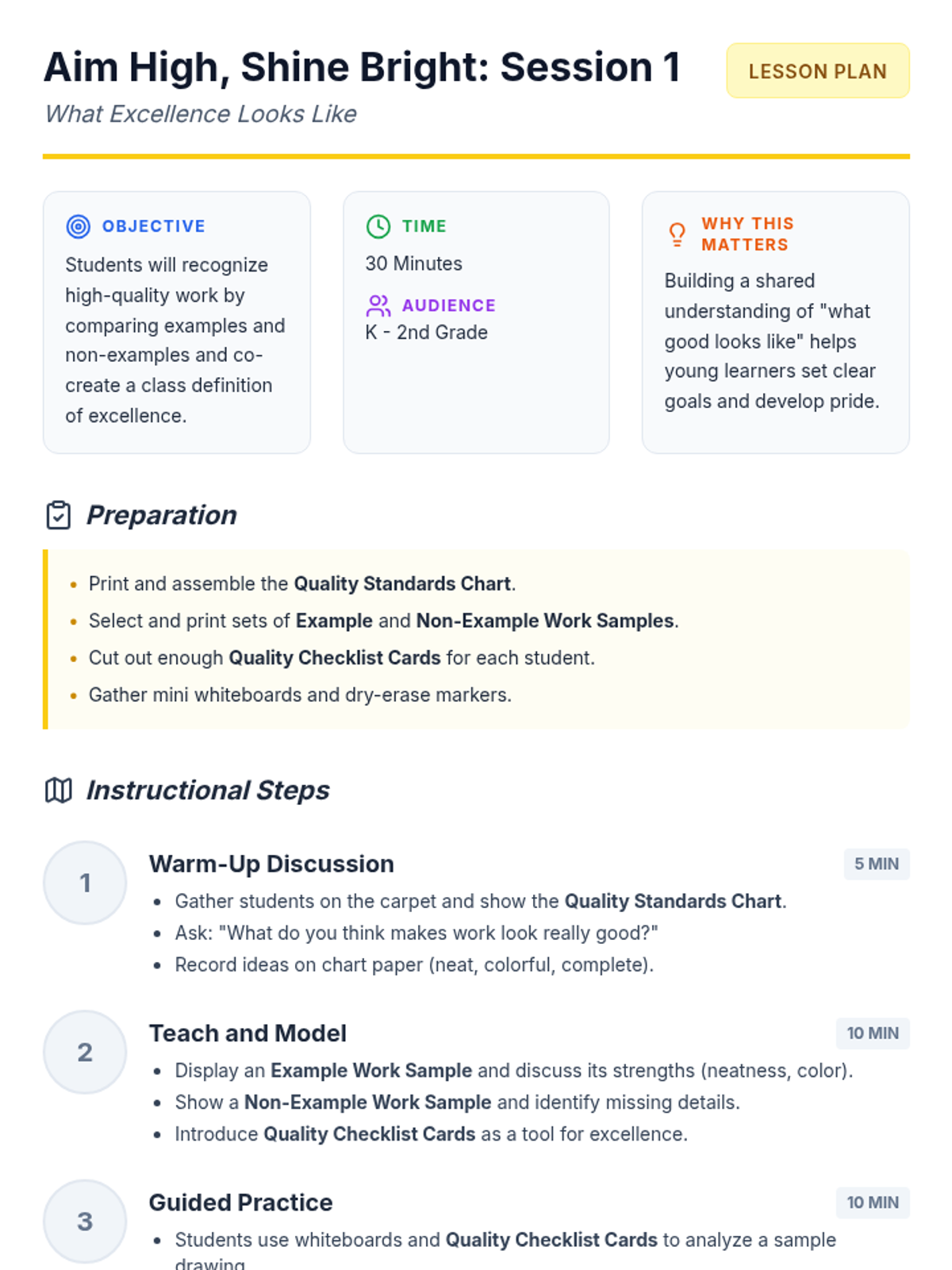
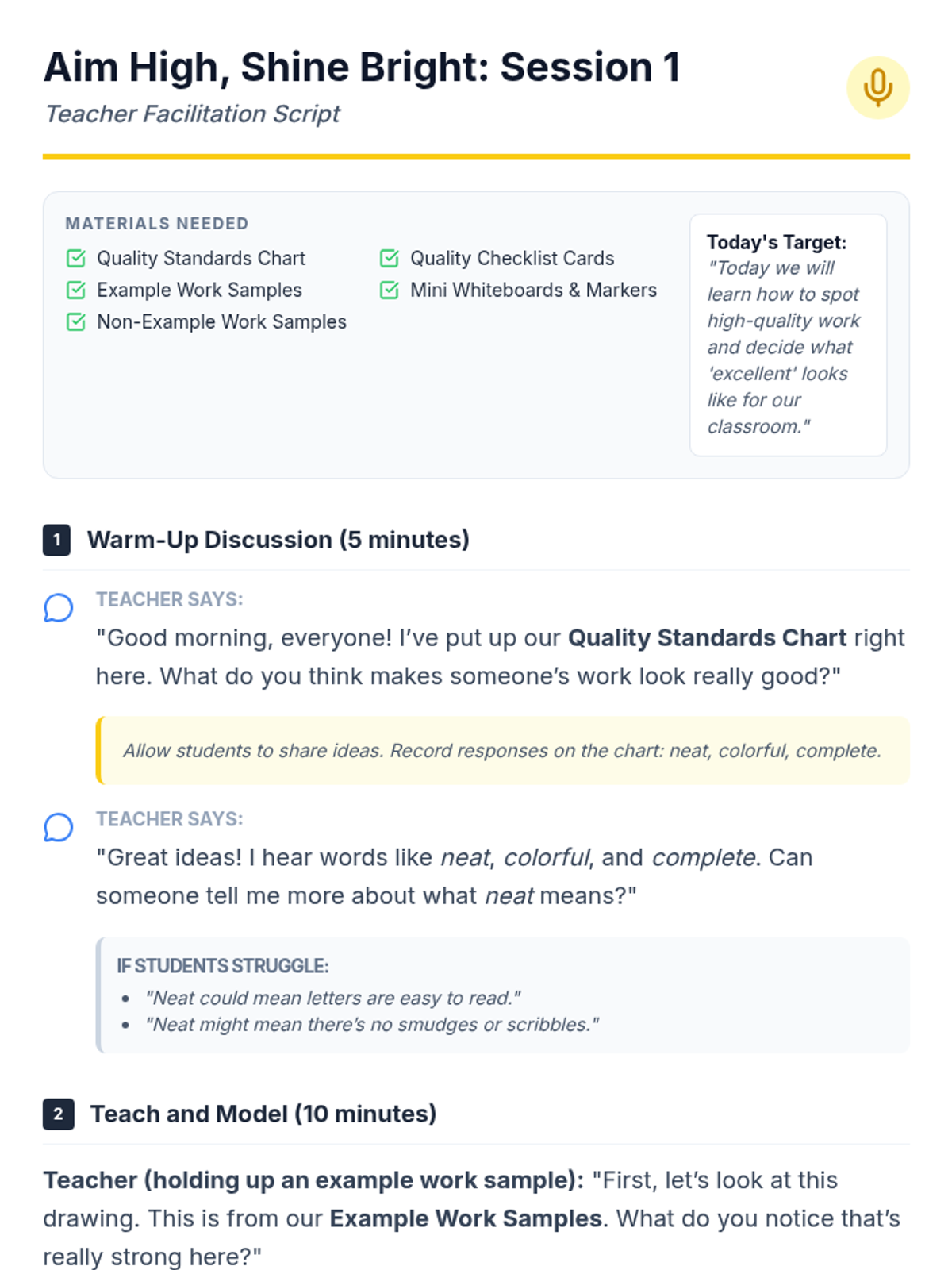
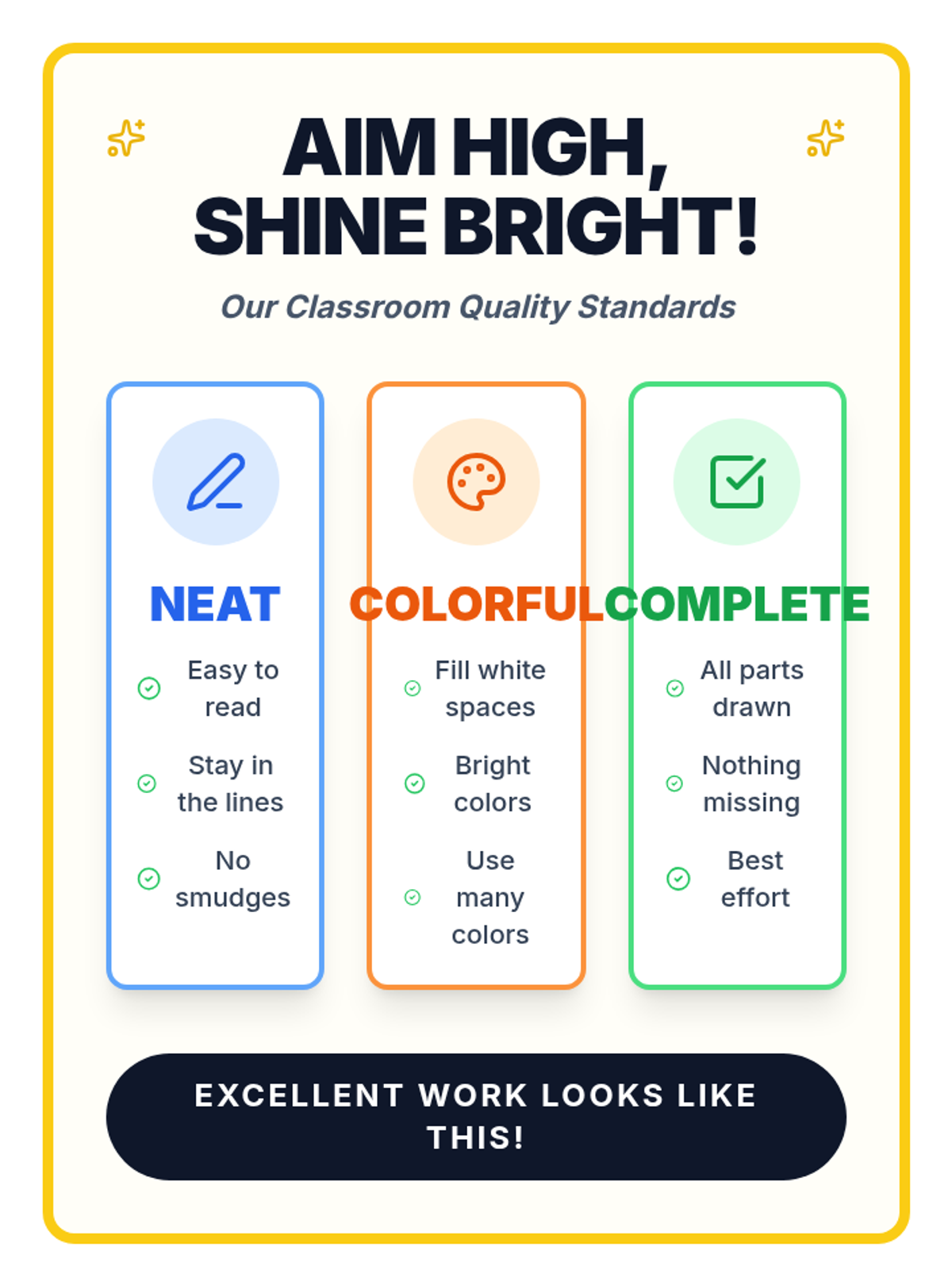
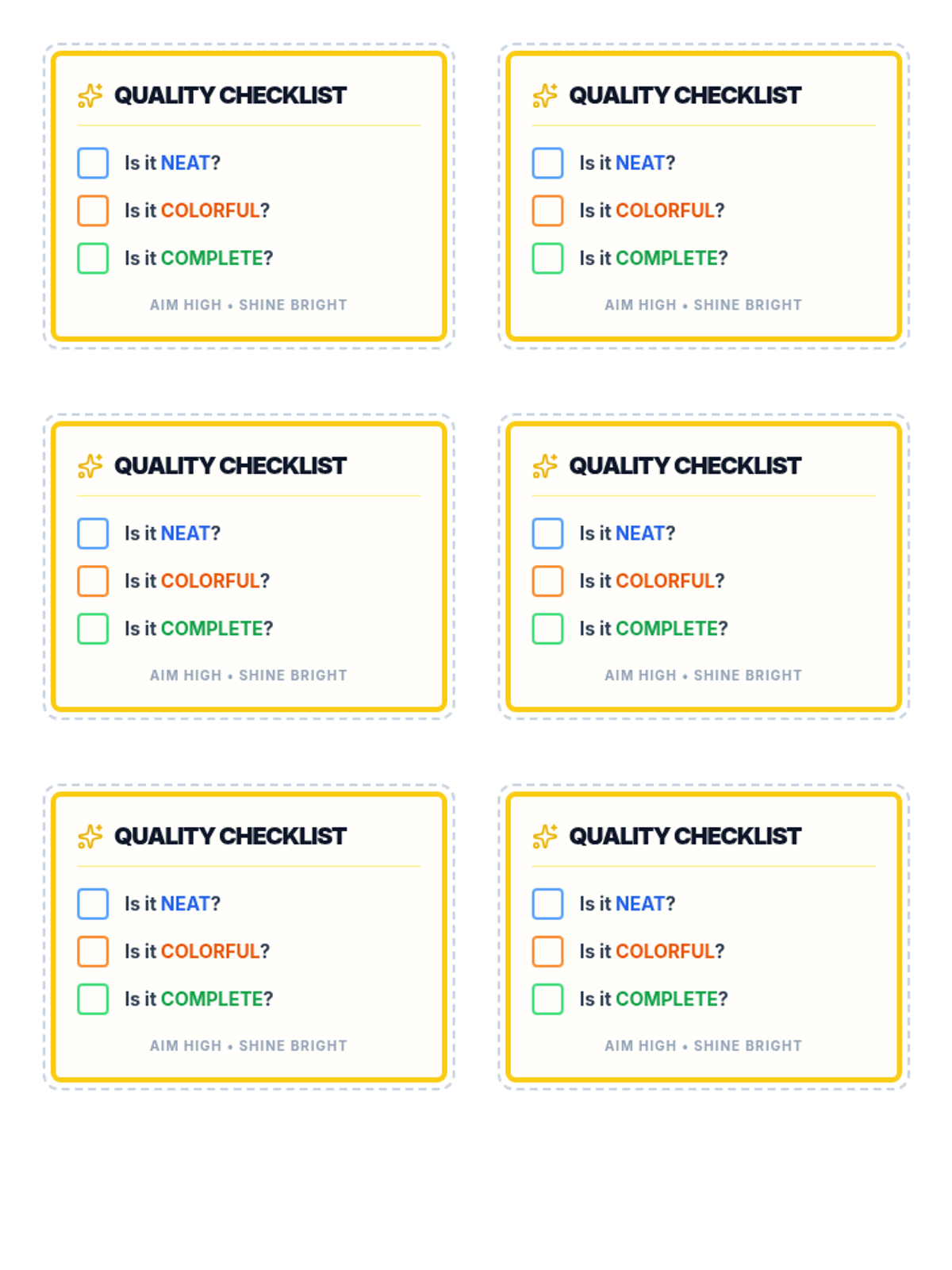
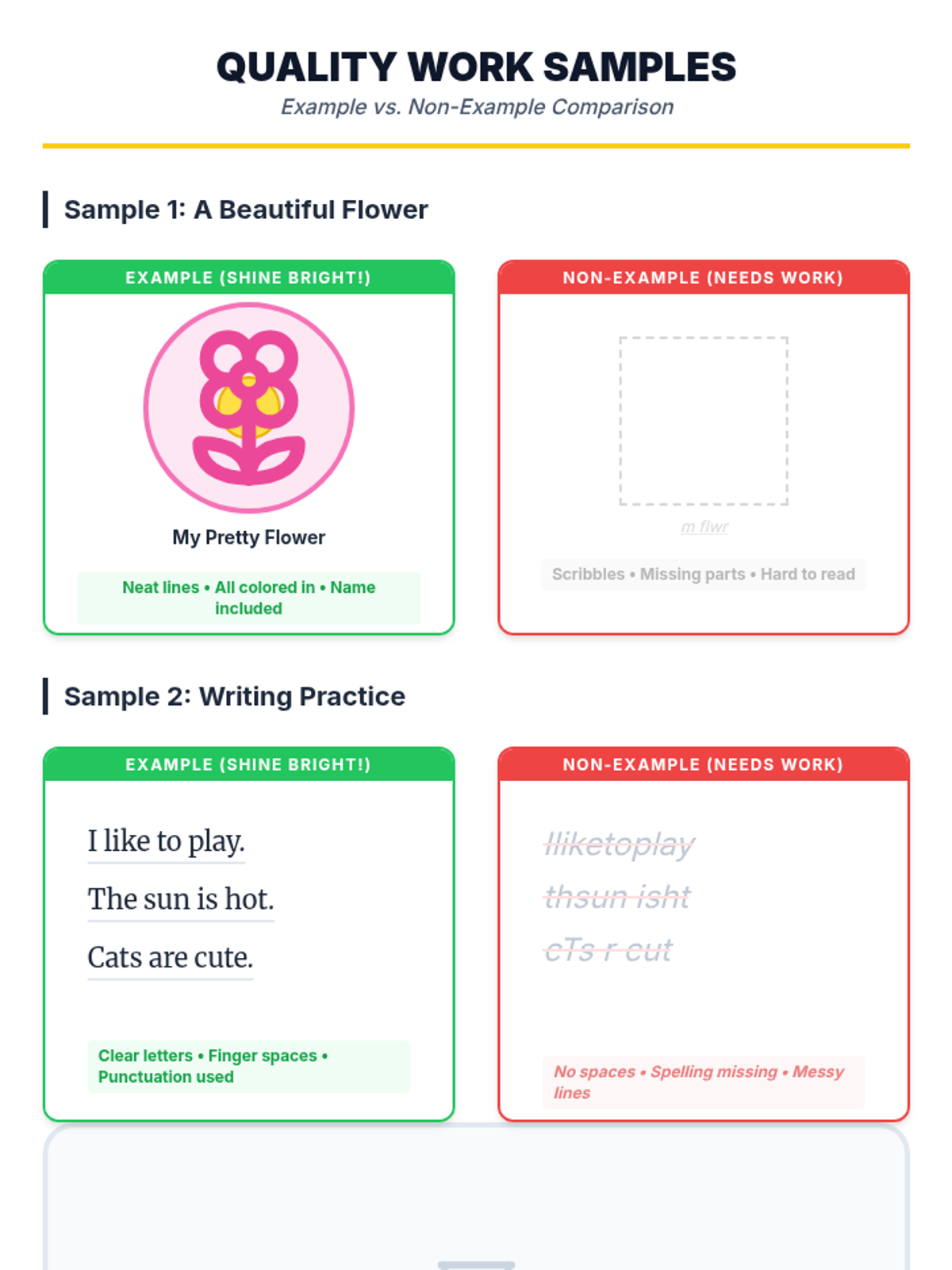
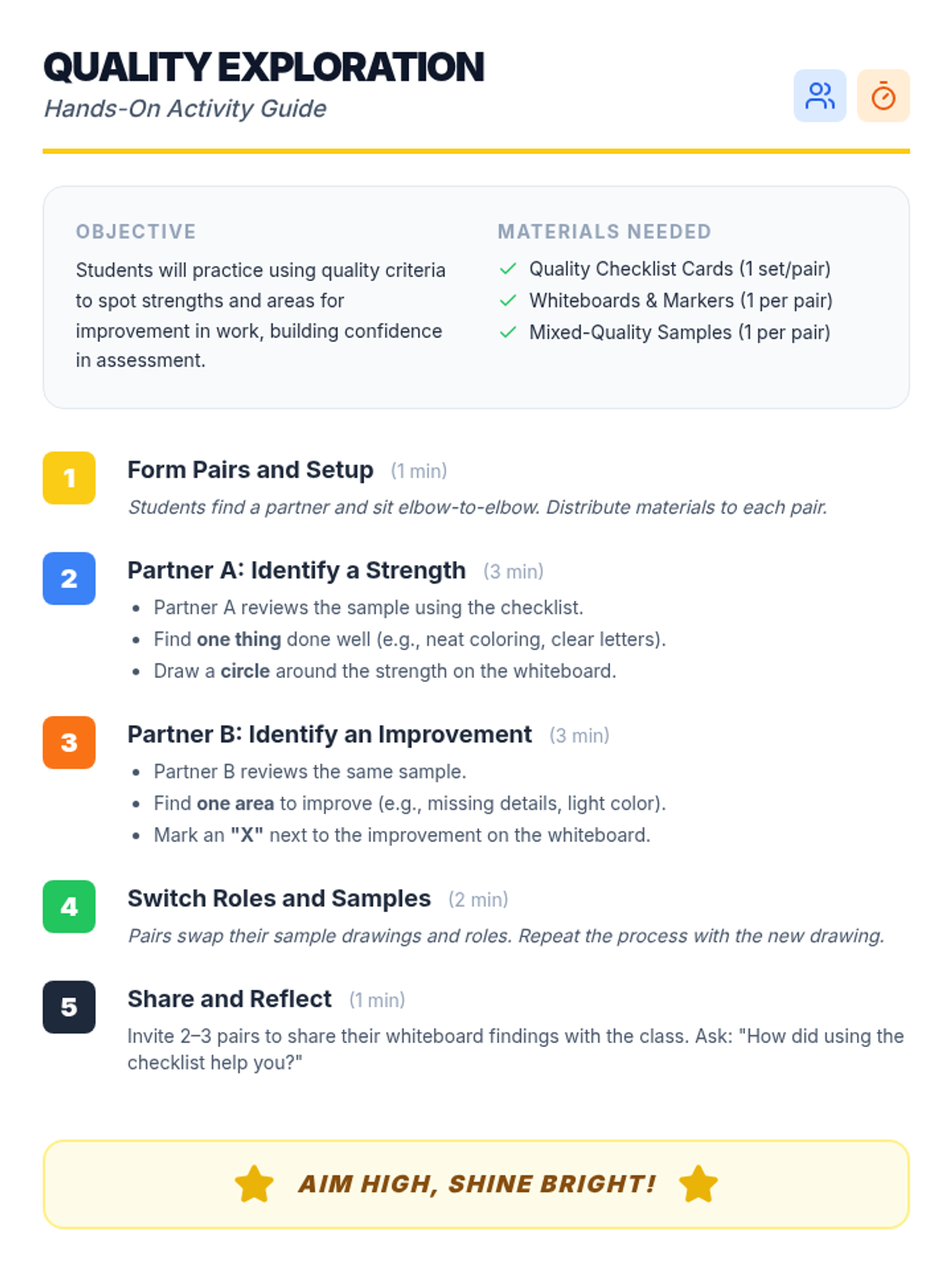
A three-part series for K-2 students focused on setting quality standards, understanding excellence, and practicing revision to build pride and self-esteem in their work.
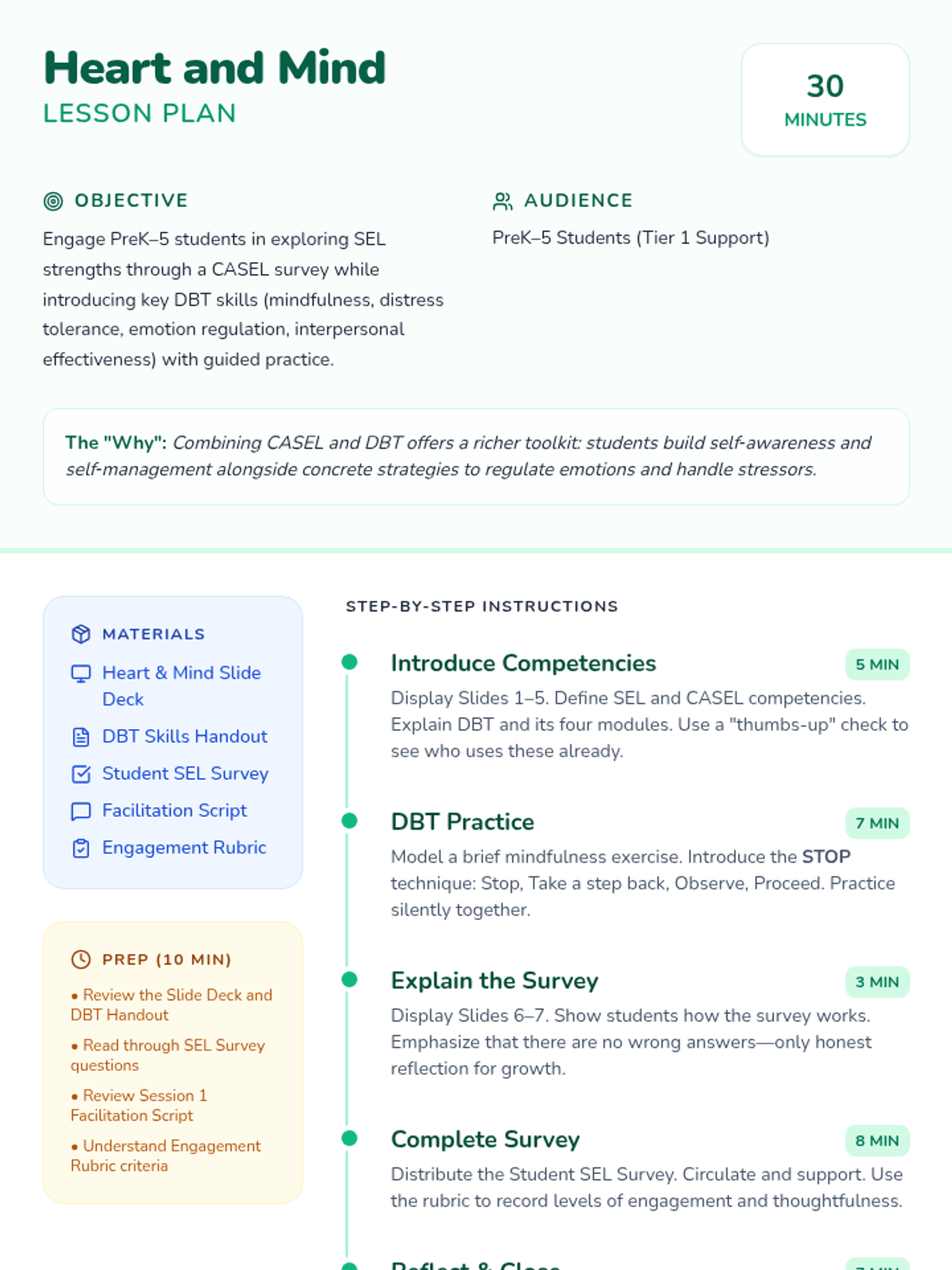
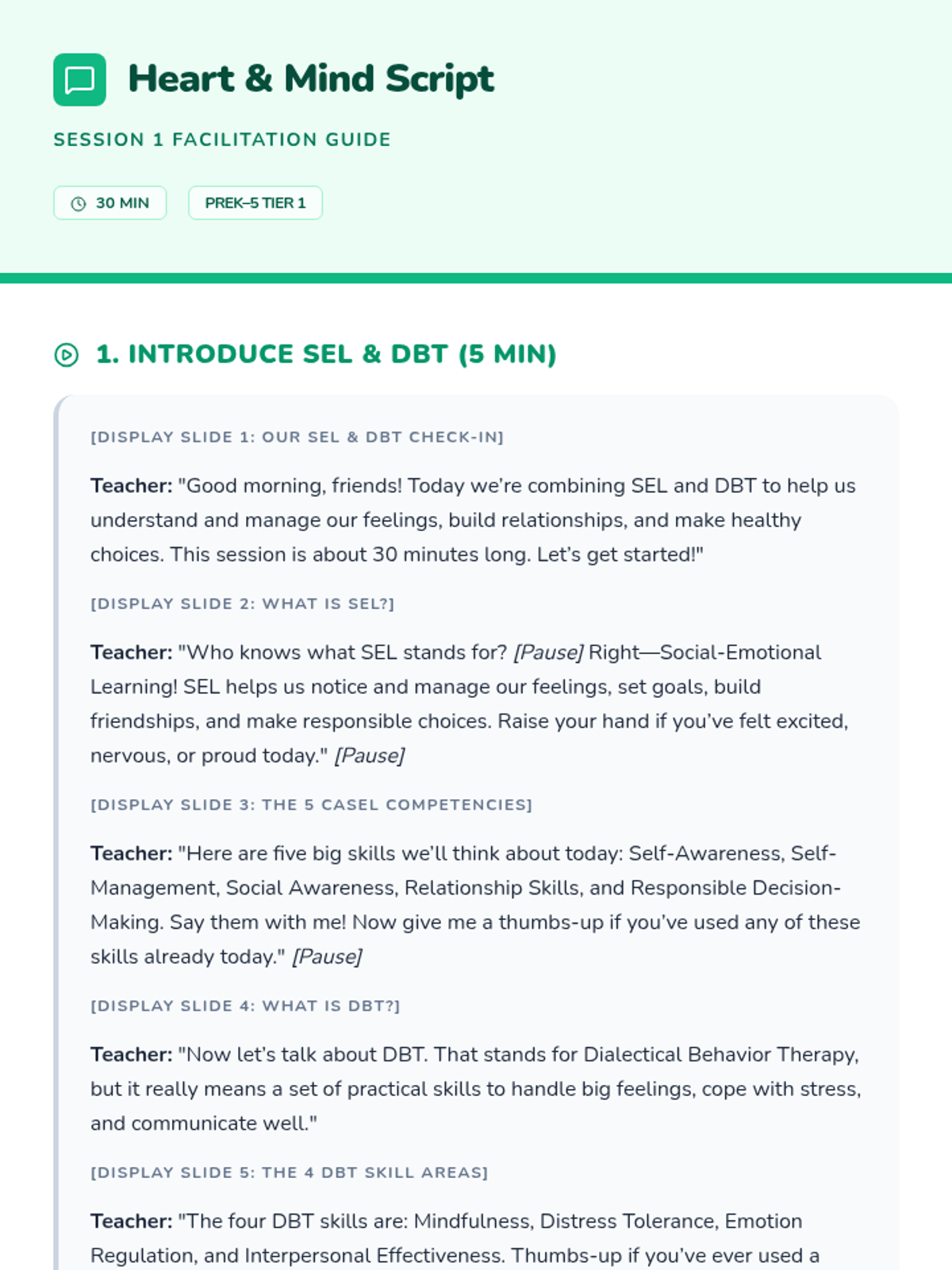
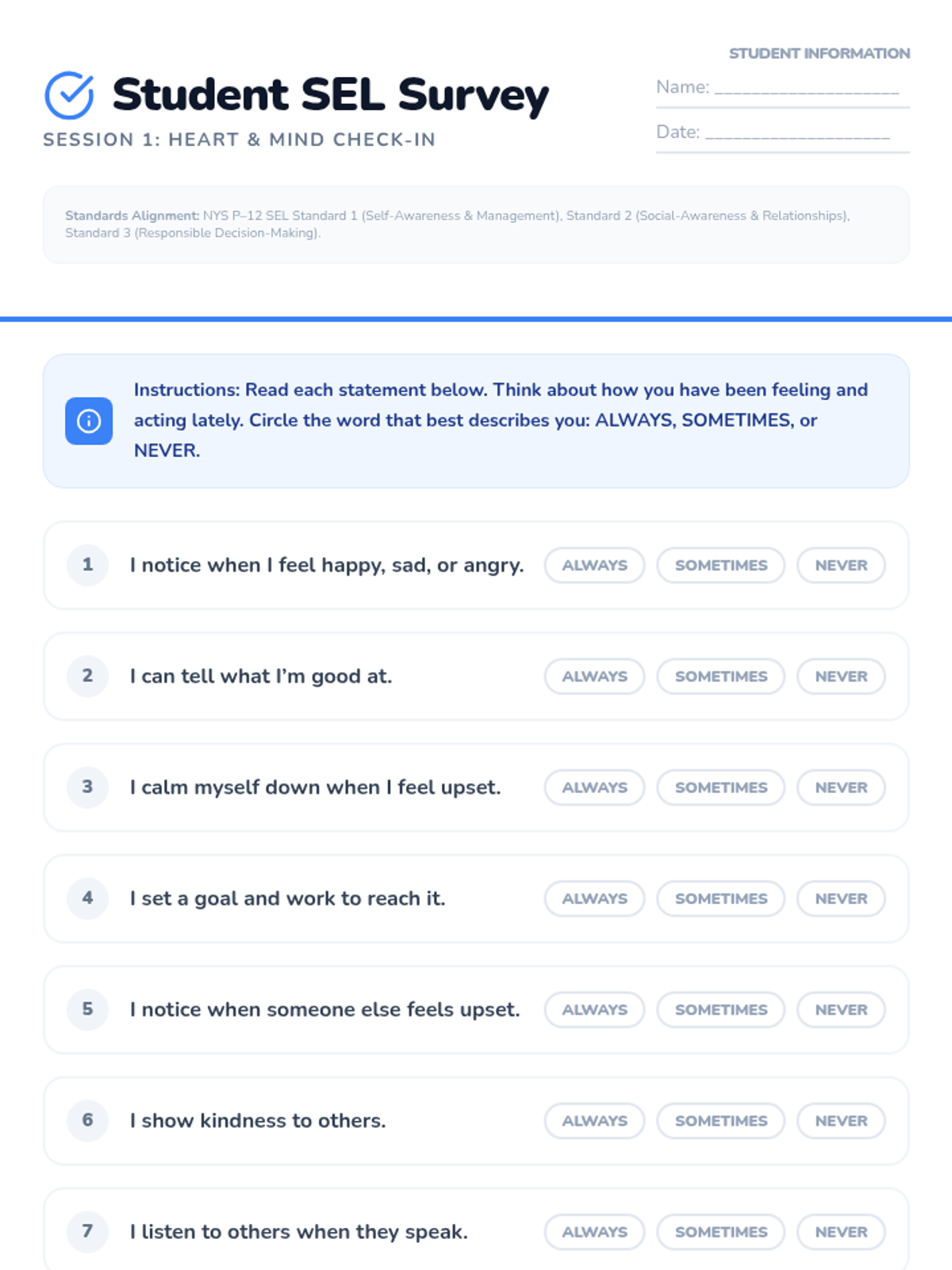
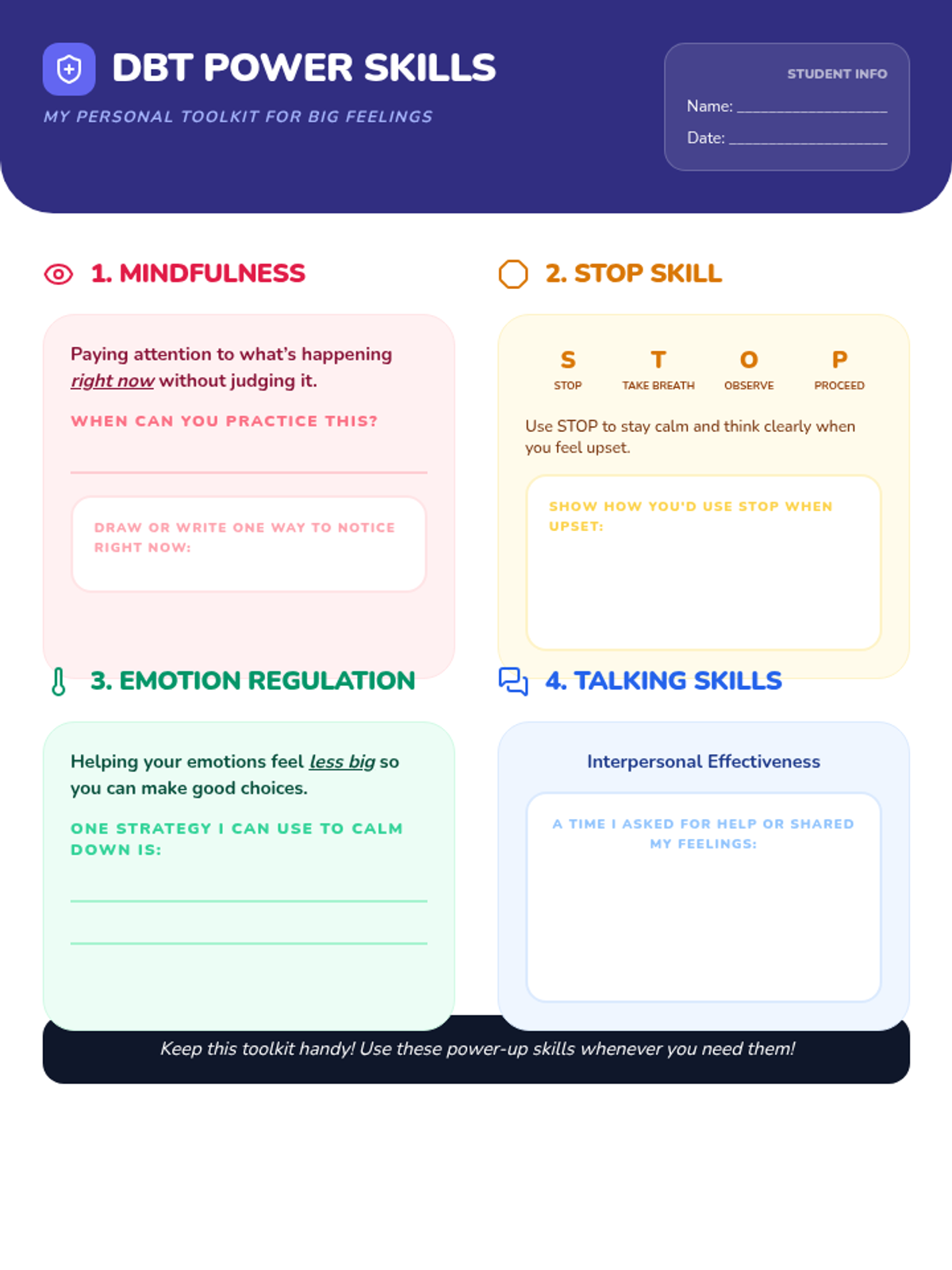
A two-session social-emotional learning sequence for PreK-5 students that integrates CASEL competencies with foundational DBT skills to build self-awareness, emotional regulation, and responsible decision-making.
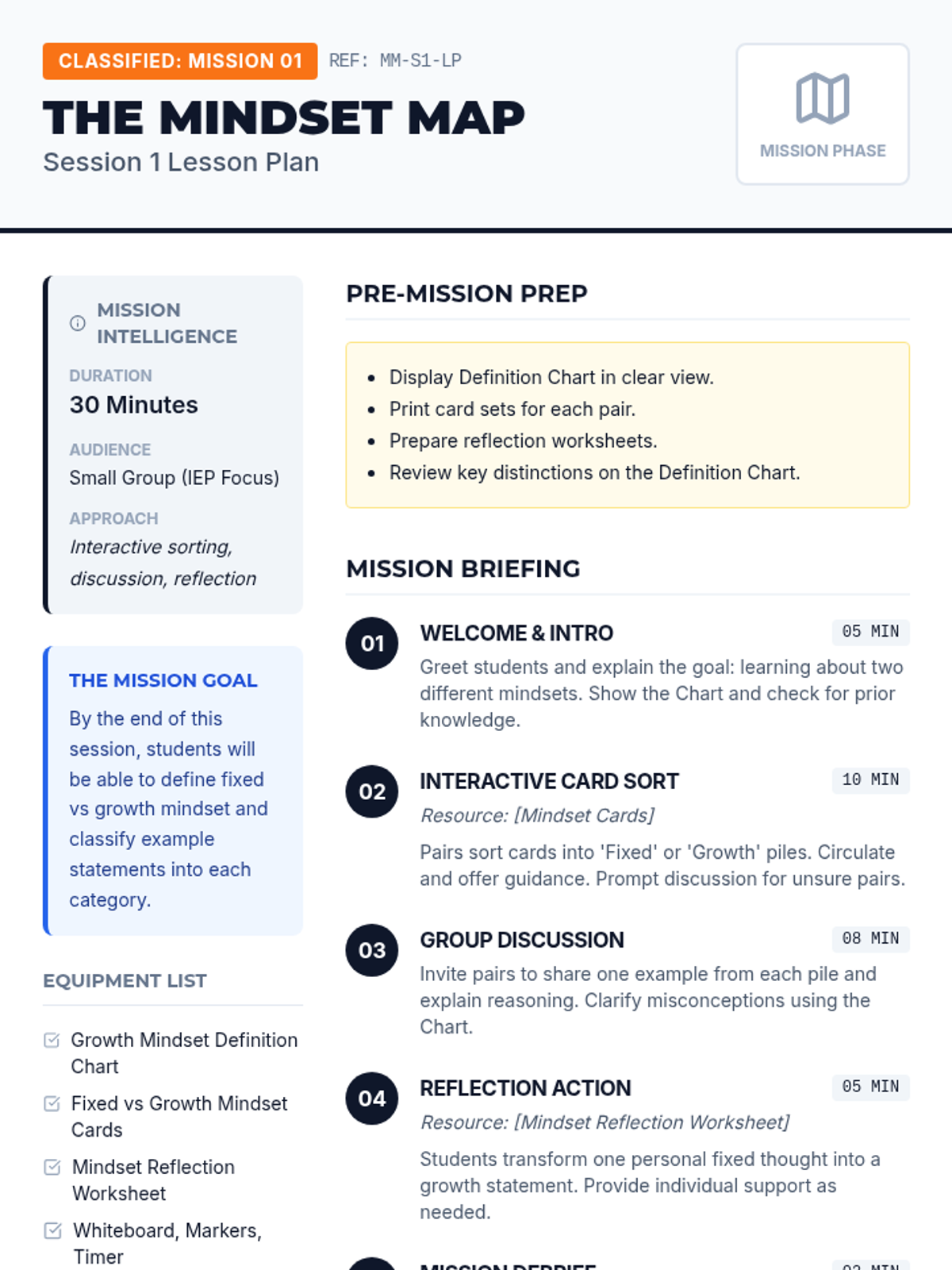
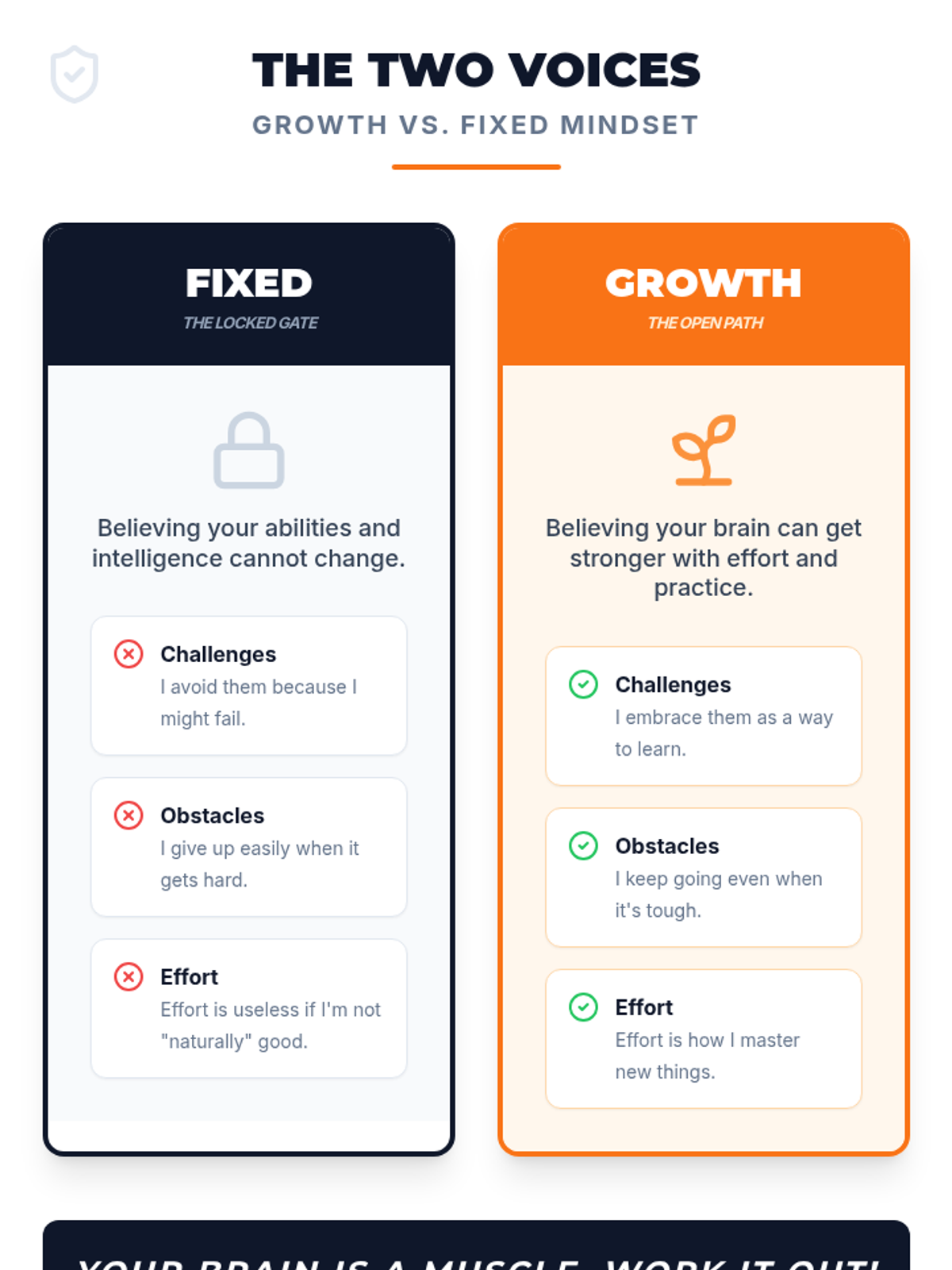
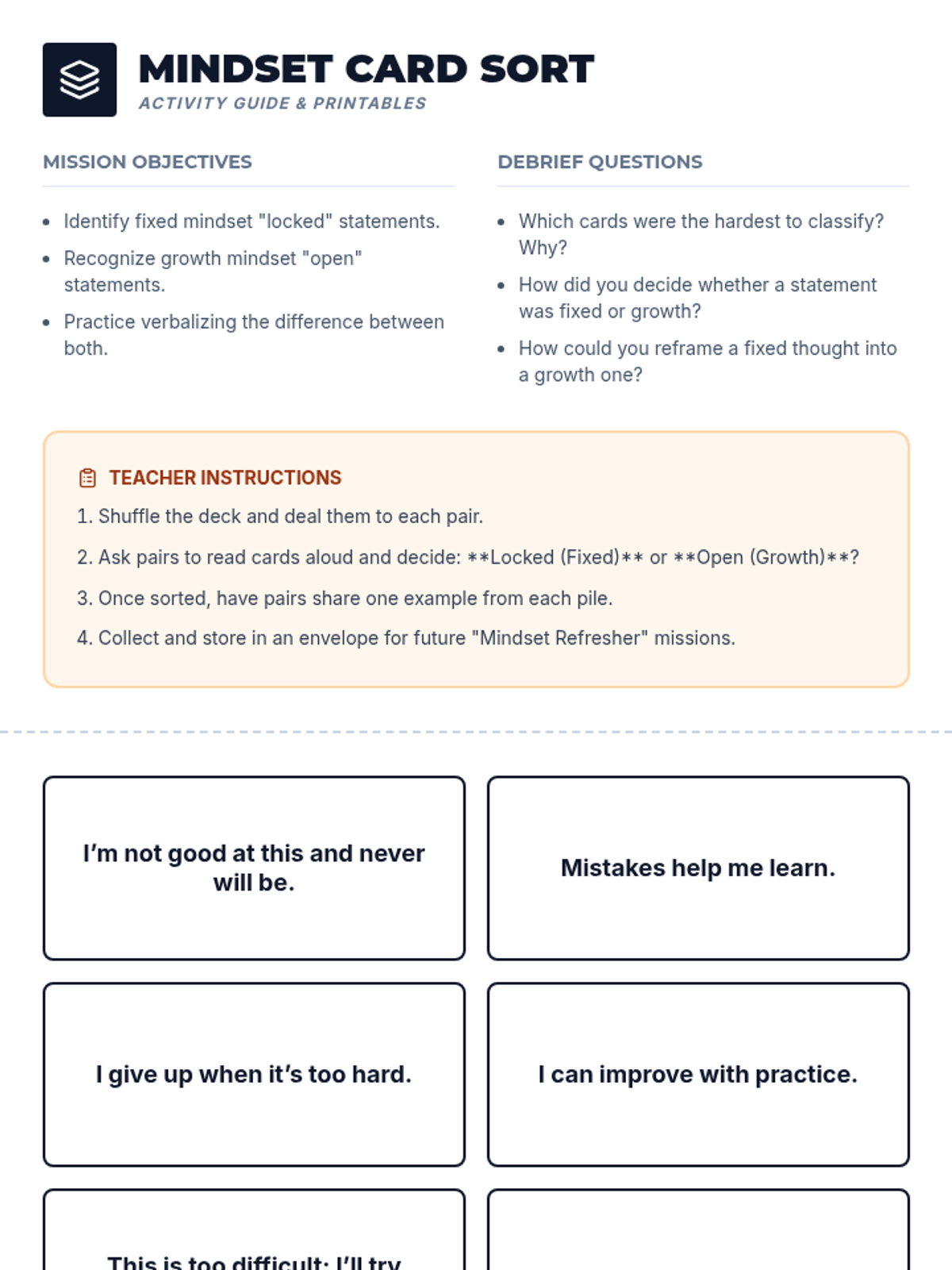
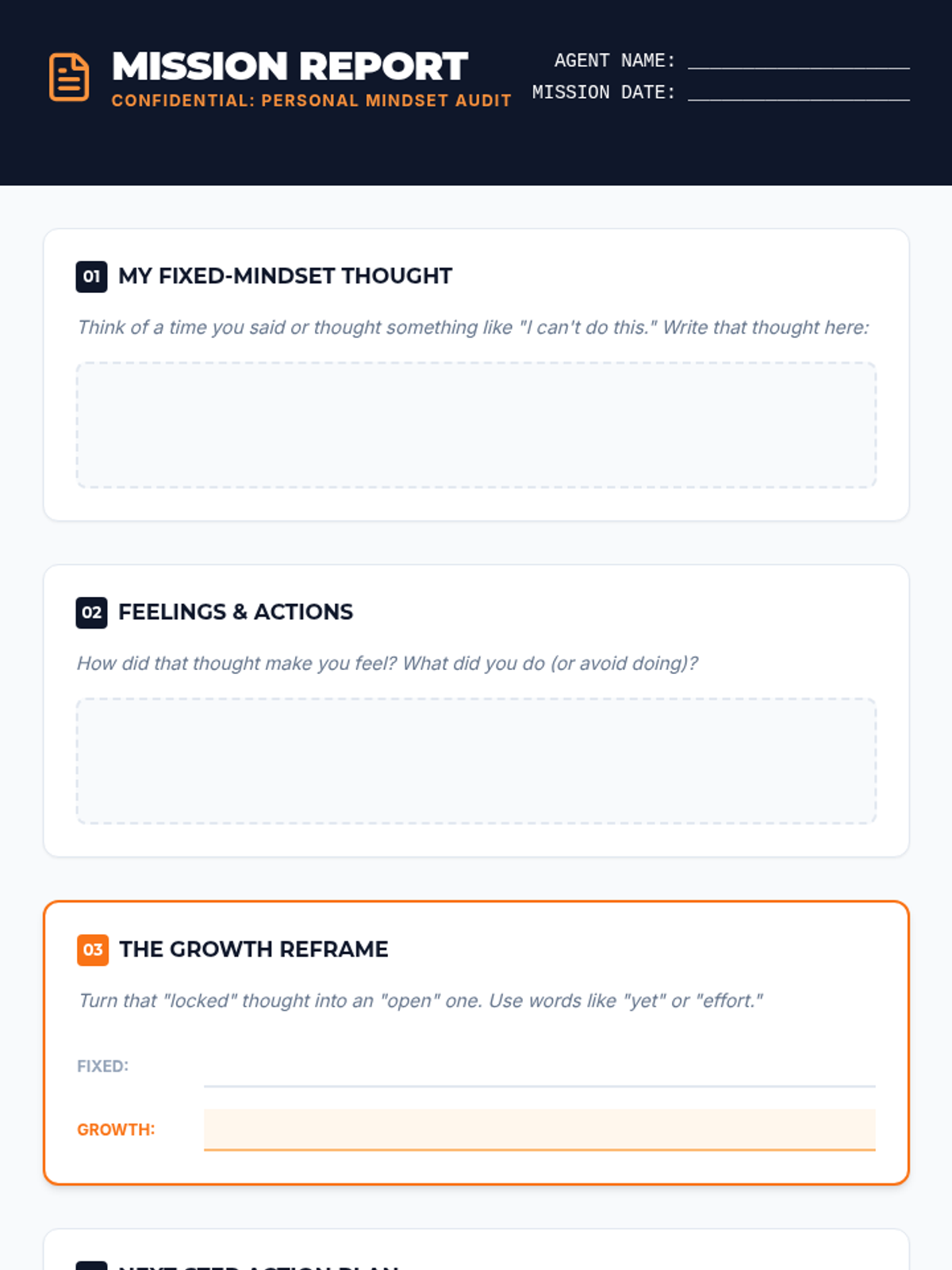
A 5-session small-group journey teaching students with IEPs how to shift from a fixed to growth mindset through interactive missions. Sessions focus on mindset types, challenges, mistakes, persistence, and goal setting.