Stop-and-think strategies, impulse management, and SMART goal setting for personal growth. Develops internal motivation, stress reduction techniques, and resilience through proactive planning and monitoring.
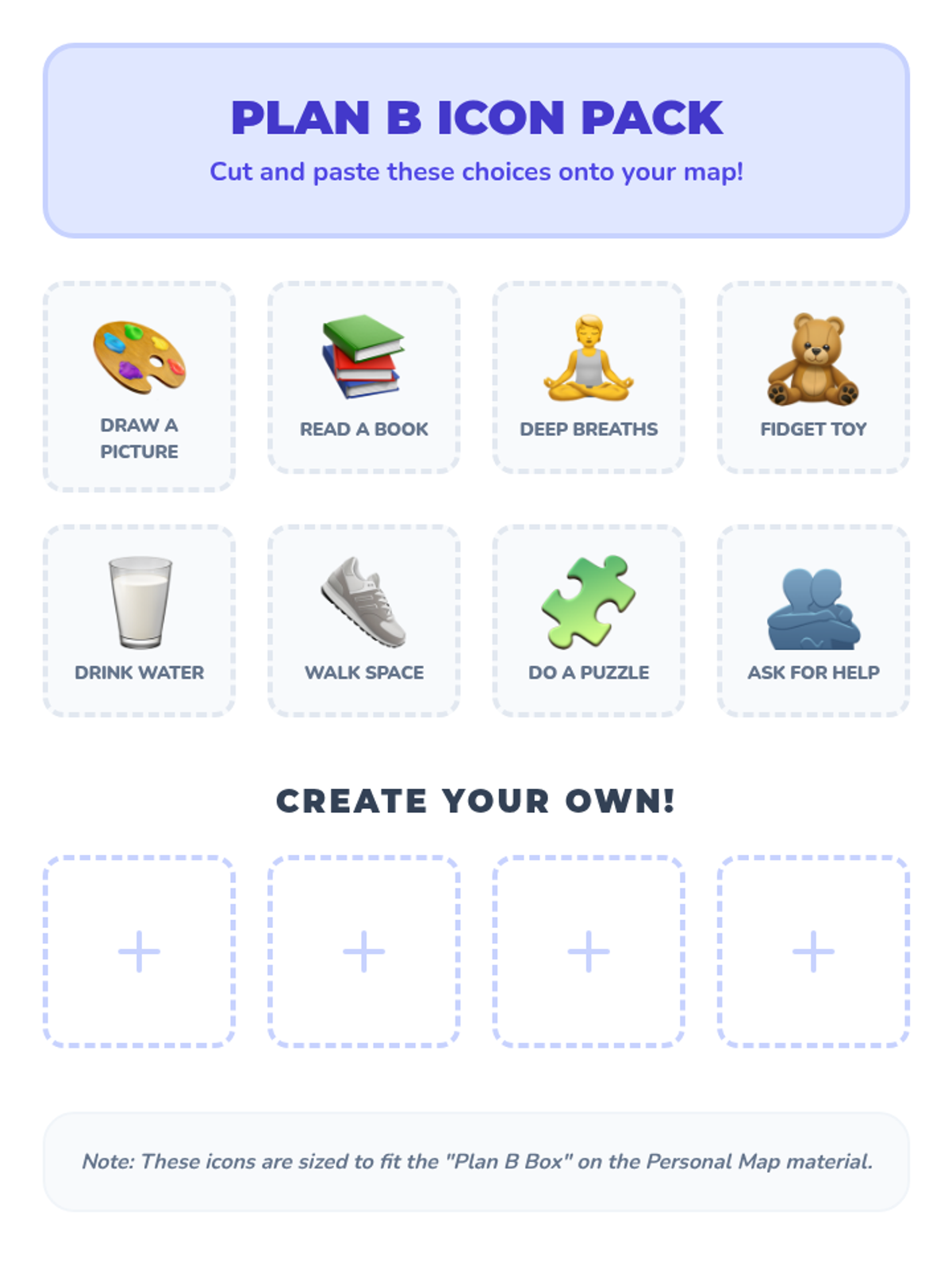
Teacher resource containing cut-out icons of Plan B strategies for students to use when creating their personalized flexibility maps.
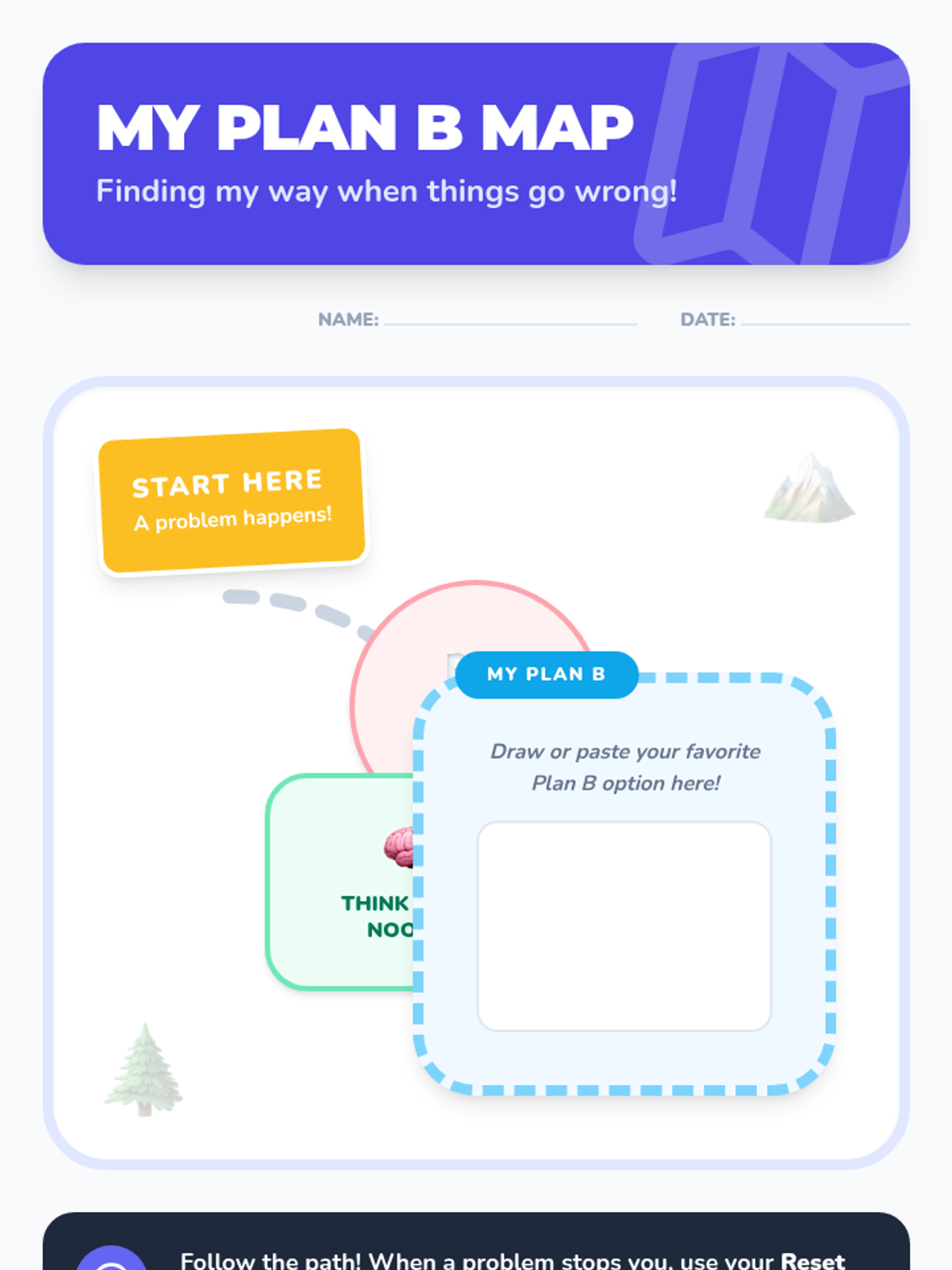
Final project template for Lesson 5, where students create a visual 'map' showing their personal strategy for navigating obstacles using learned techniques.
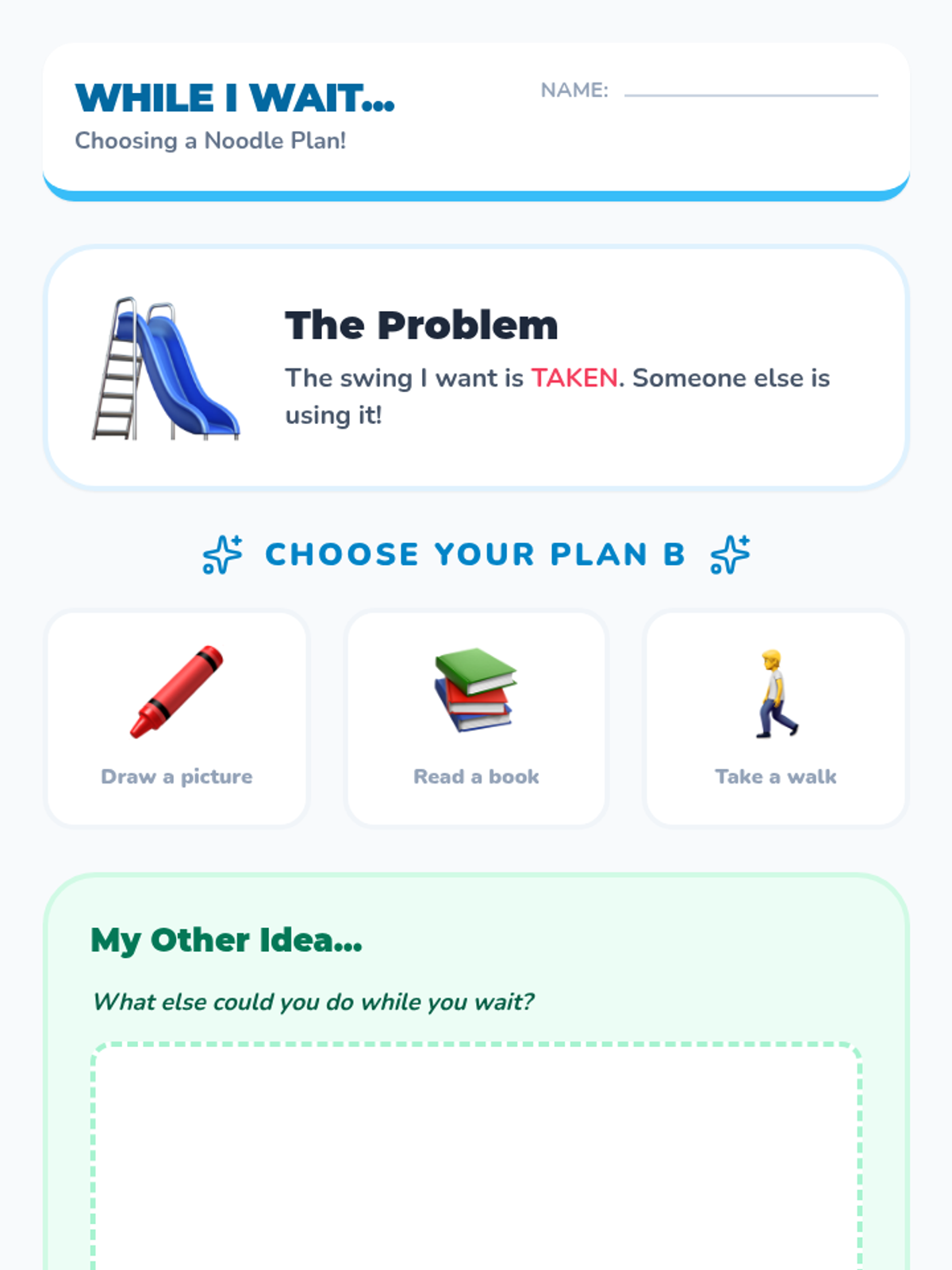
Student activity sheet for Lesson 4, allowing students to choose a 'Plan B' activity when a preferred item is unavailable.
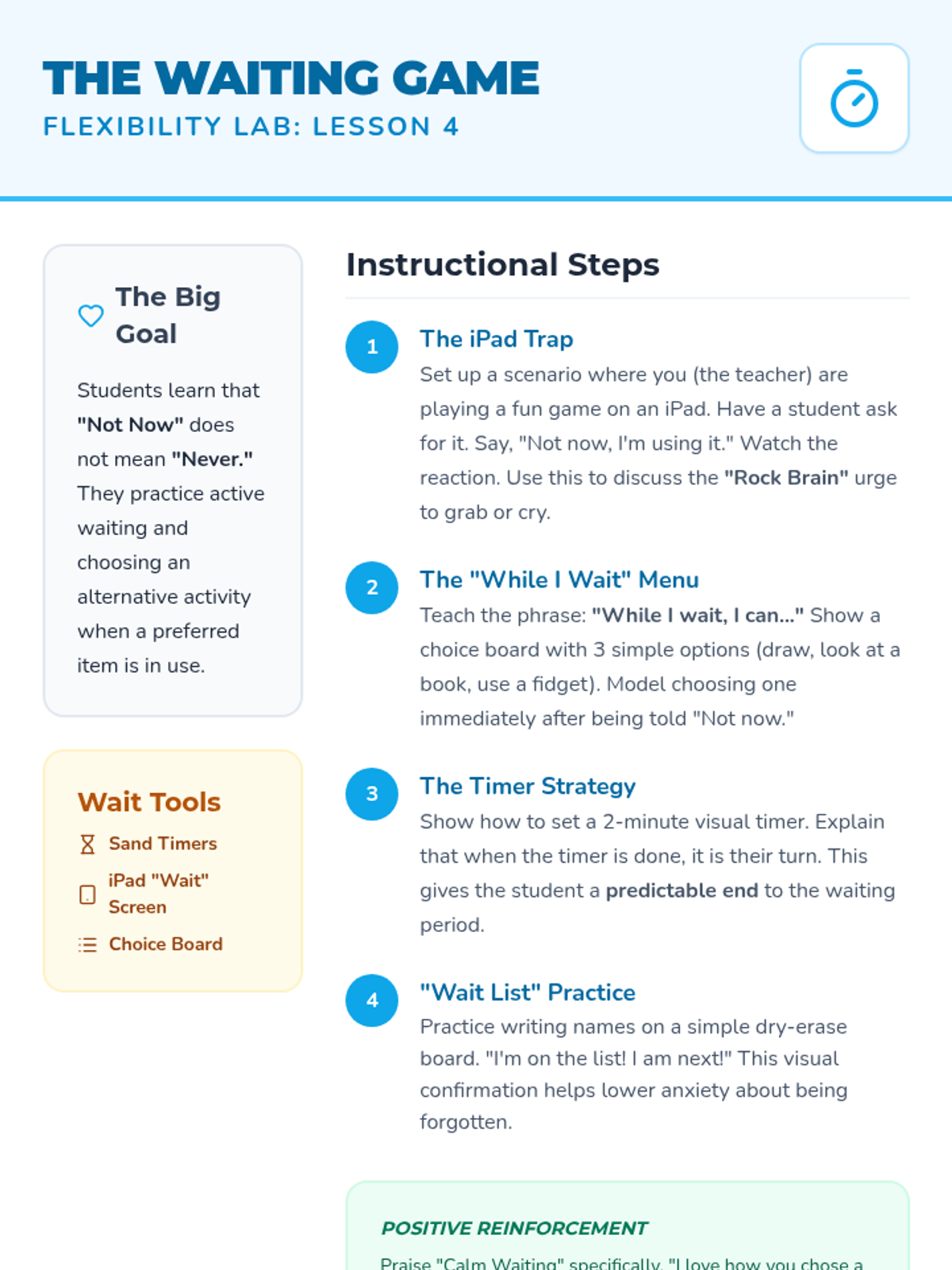
Teacher instructional guide for Lesson 4, teaching students strategies for 'active waiting' and using choice boards when items are unavailable.
Engaging slide presentation for Lesson 3 on schedule changes, introducing 'Plan A' vs. 'Plan B' and the ritual of moving visual schedule cards.
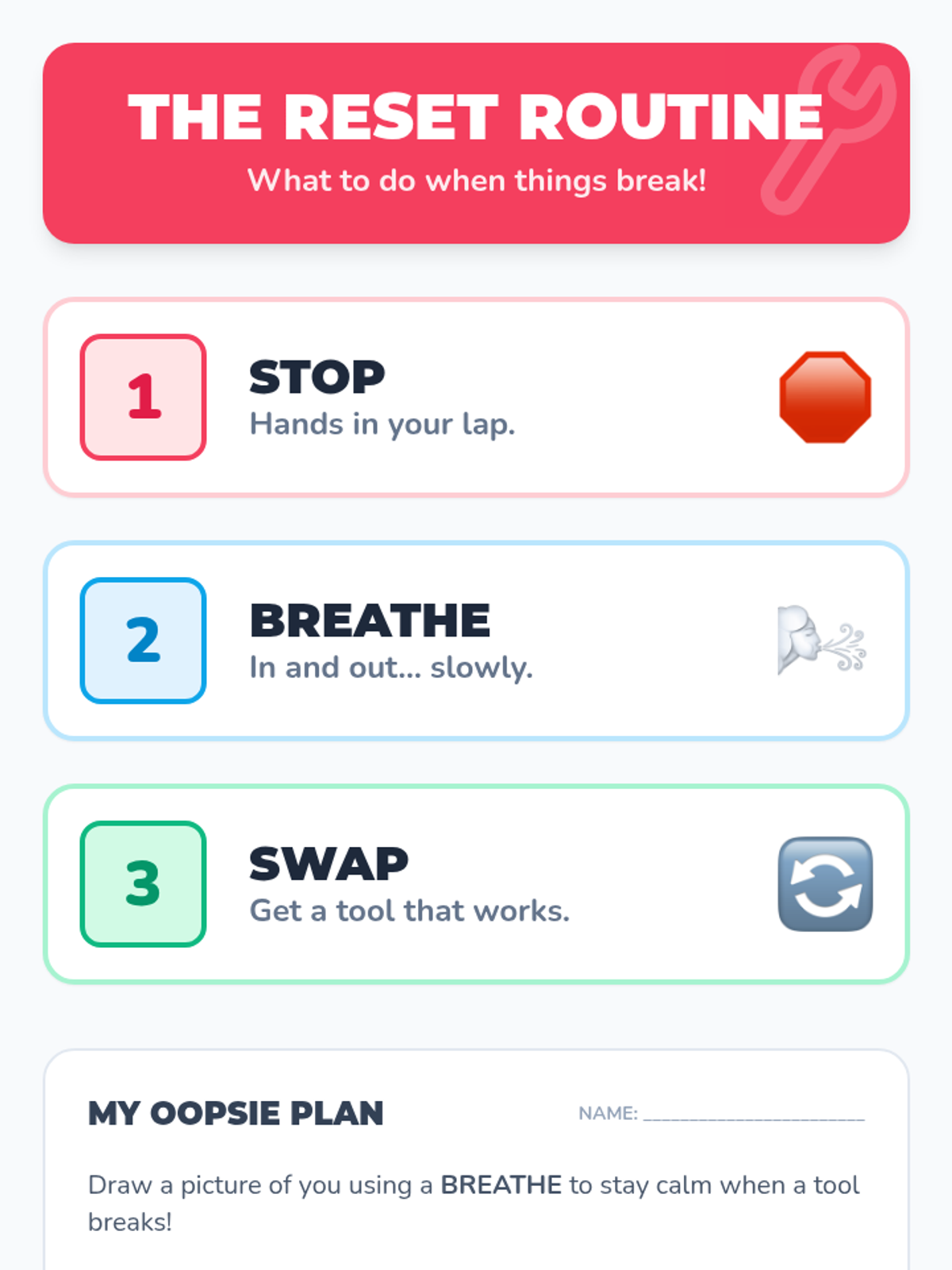
Visual anchor chart and worksheet for the 'Reset Routine' (Stop-Breathe-Swap), designed for students to visualize the steps of emotional regulation when tools break.
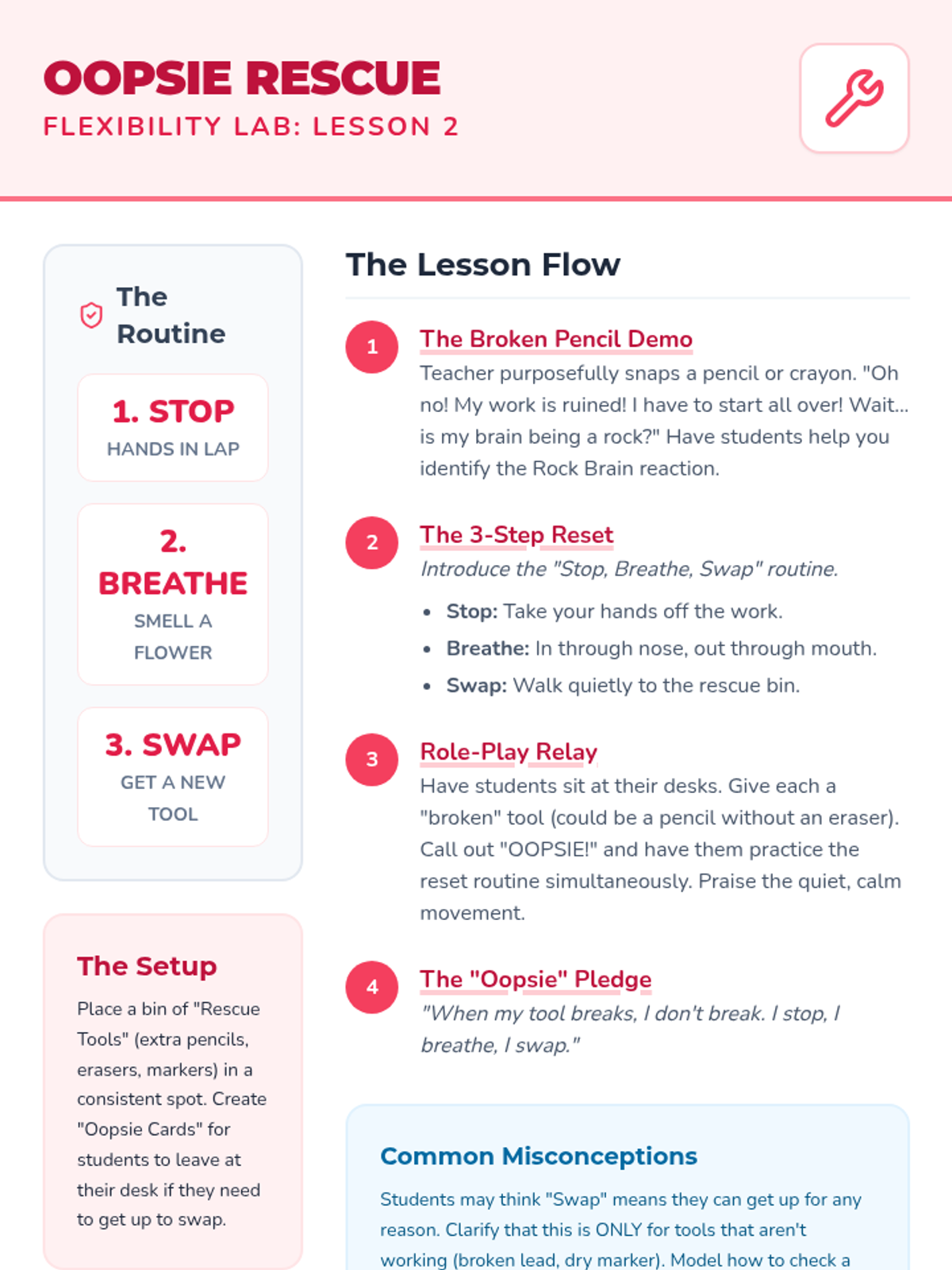
Teacher instructional guide for Lesson 2, focusing on the Stop-Breathe-Swap routine for handling broken classroom tools.
Visual slide deck for Lesson 1 introducing the Rock vs. Noodle brain concepts with engaging visuals and practice scenarios.
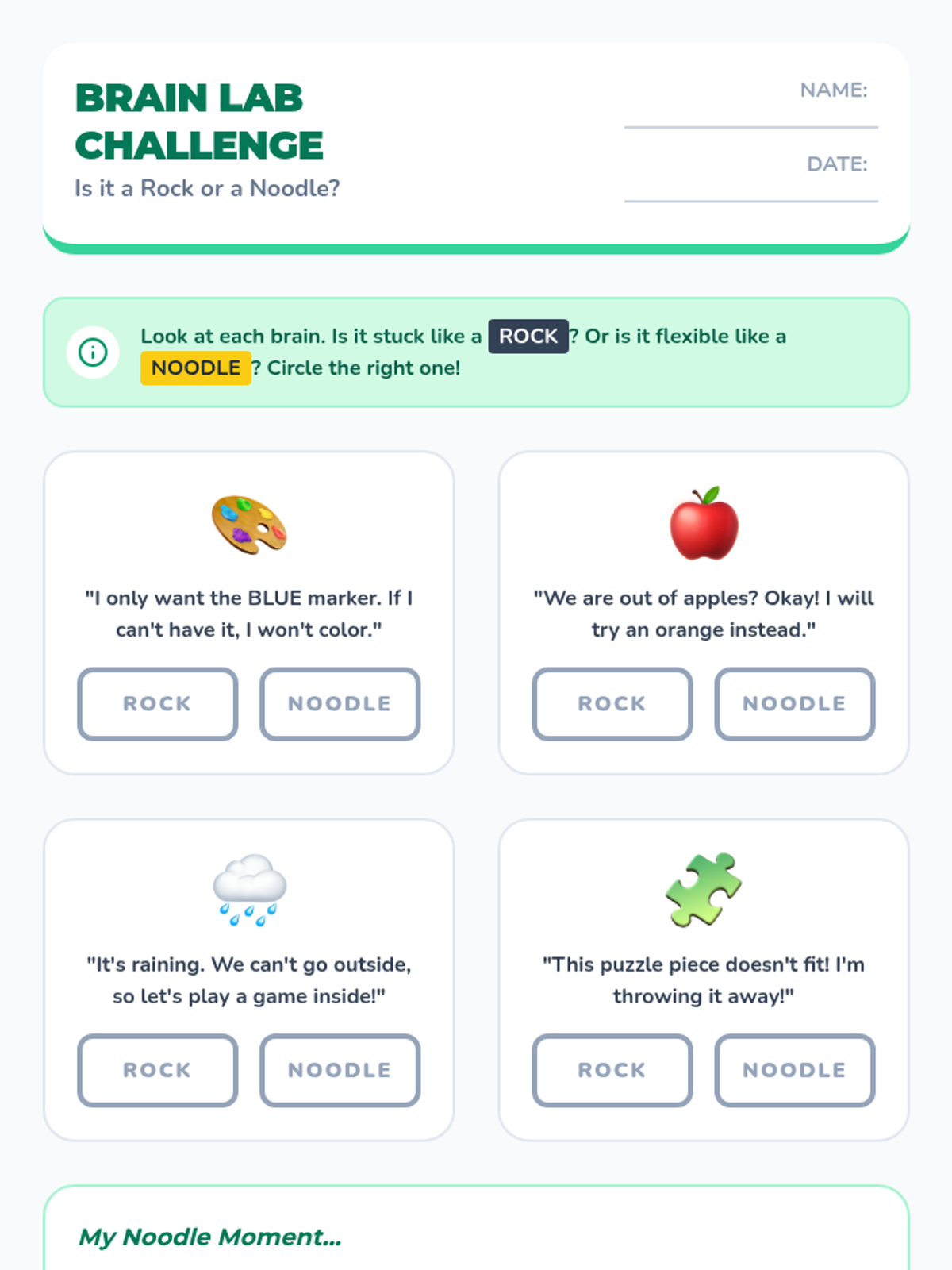
Student worksheet for identifying 'Rock' vs. 'Noodle' thinking scenarios with a drawing space for personal reflection.
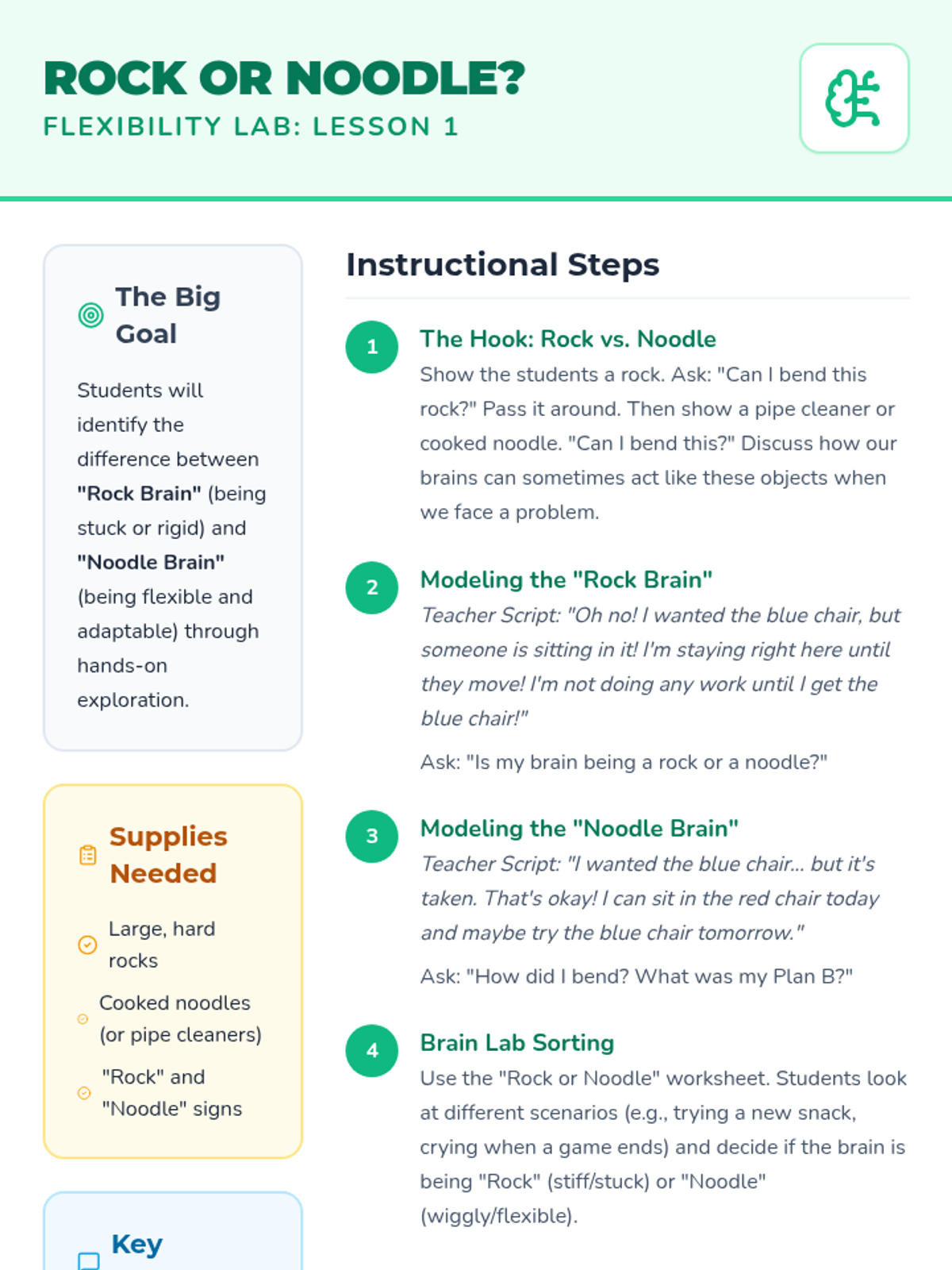
Teacher guide for the first lesson on cognitive flexibility, introducing the 'Rock Brain' and 'Noodle Brain' metaphors with scripts and activities.
A celebratory final slide deck for 1st graders to reflect on the sequence and recite a savings oath.
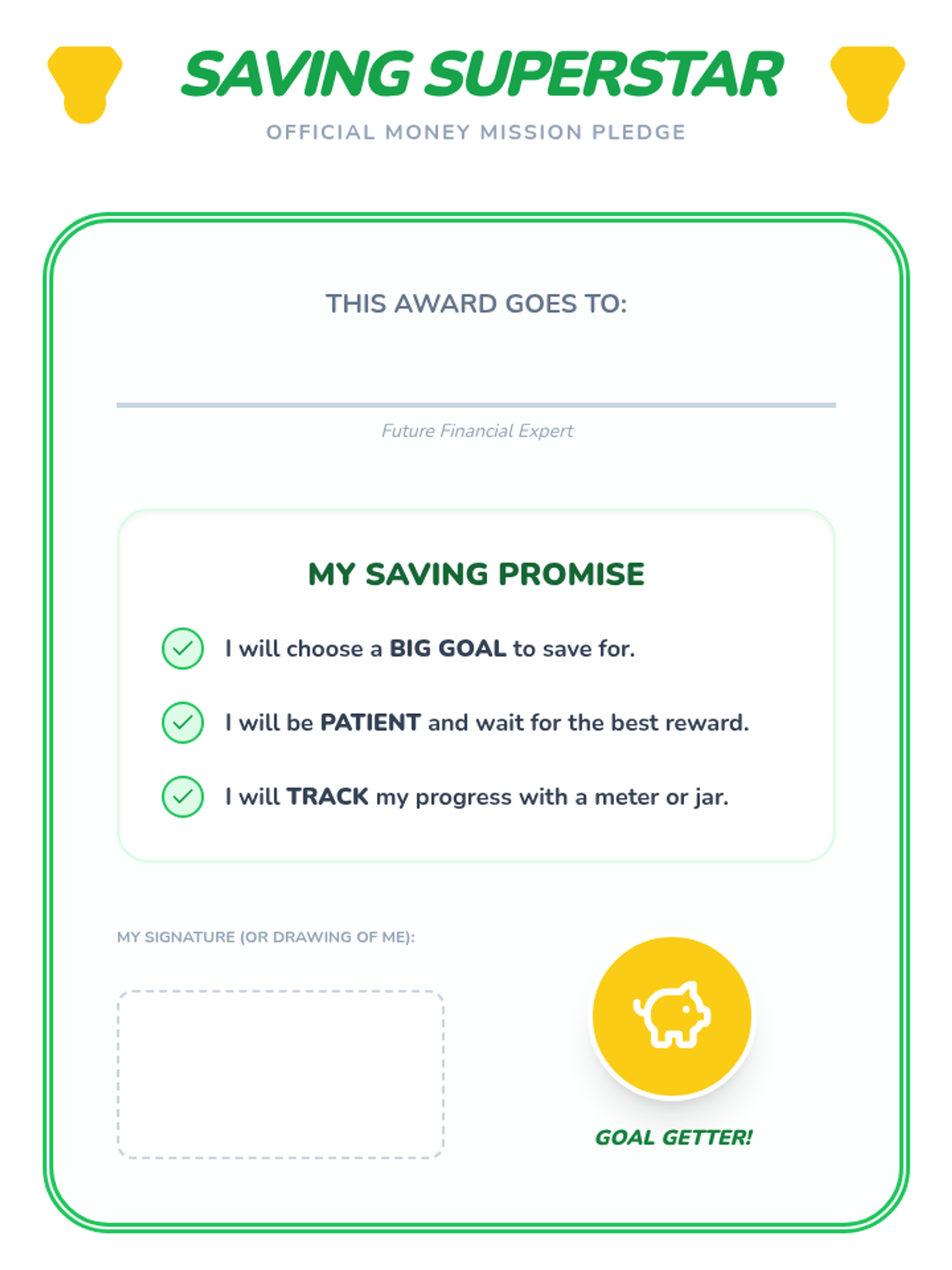
A commemorative "Saving Superstar" pledge and certificate for students to complete at the end of the financial literacy sequence.
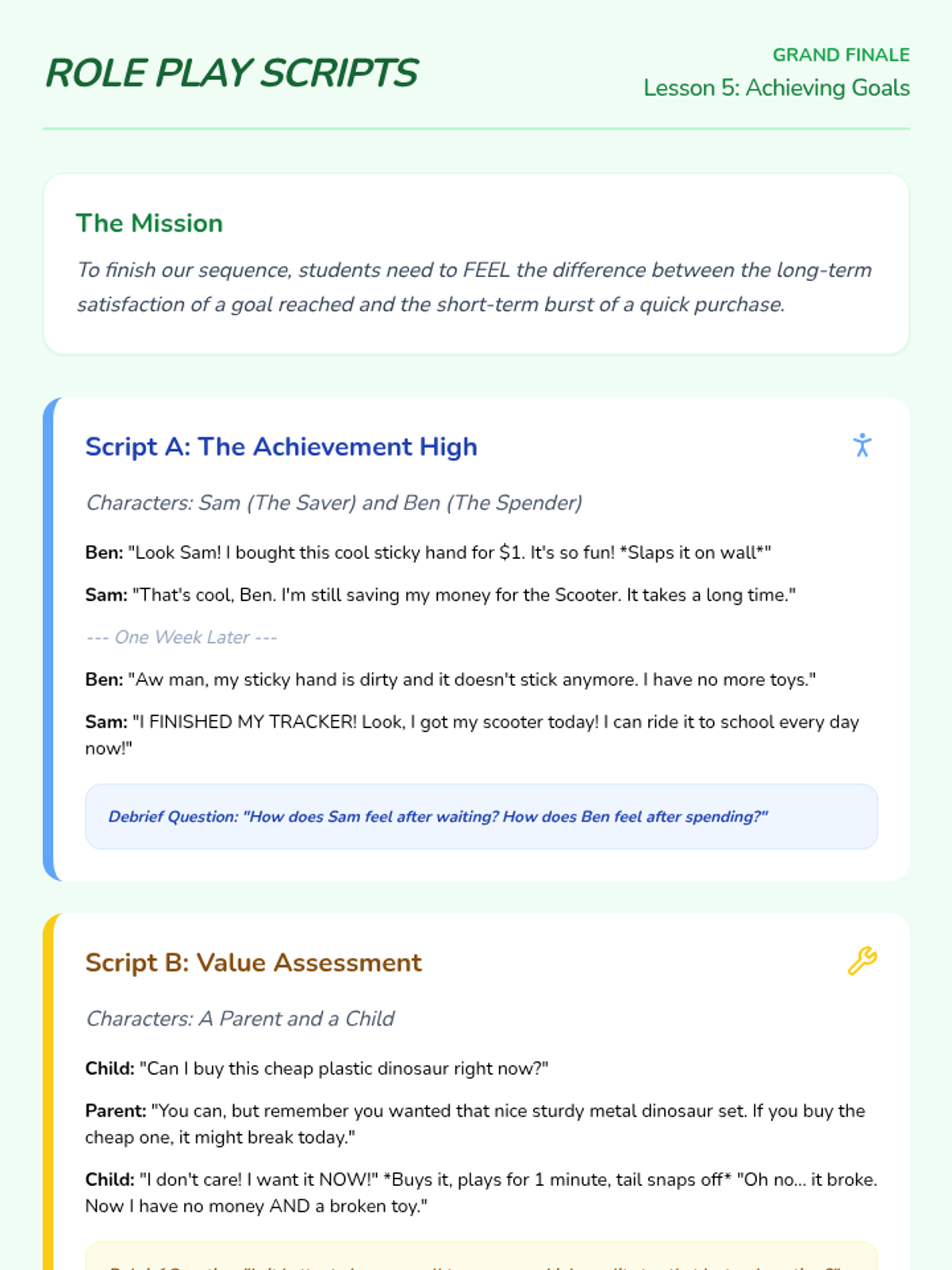
Final lesson role-play scripts for 1st graders to explore the emotional outcomes of saving vs. immediate spending.
A slide deck for 1st graders explaining the purpose of savings trackers and providing a simple mental math example for updating a tracker.
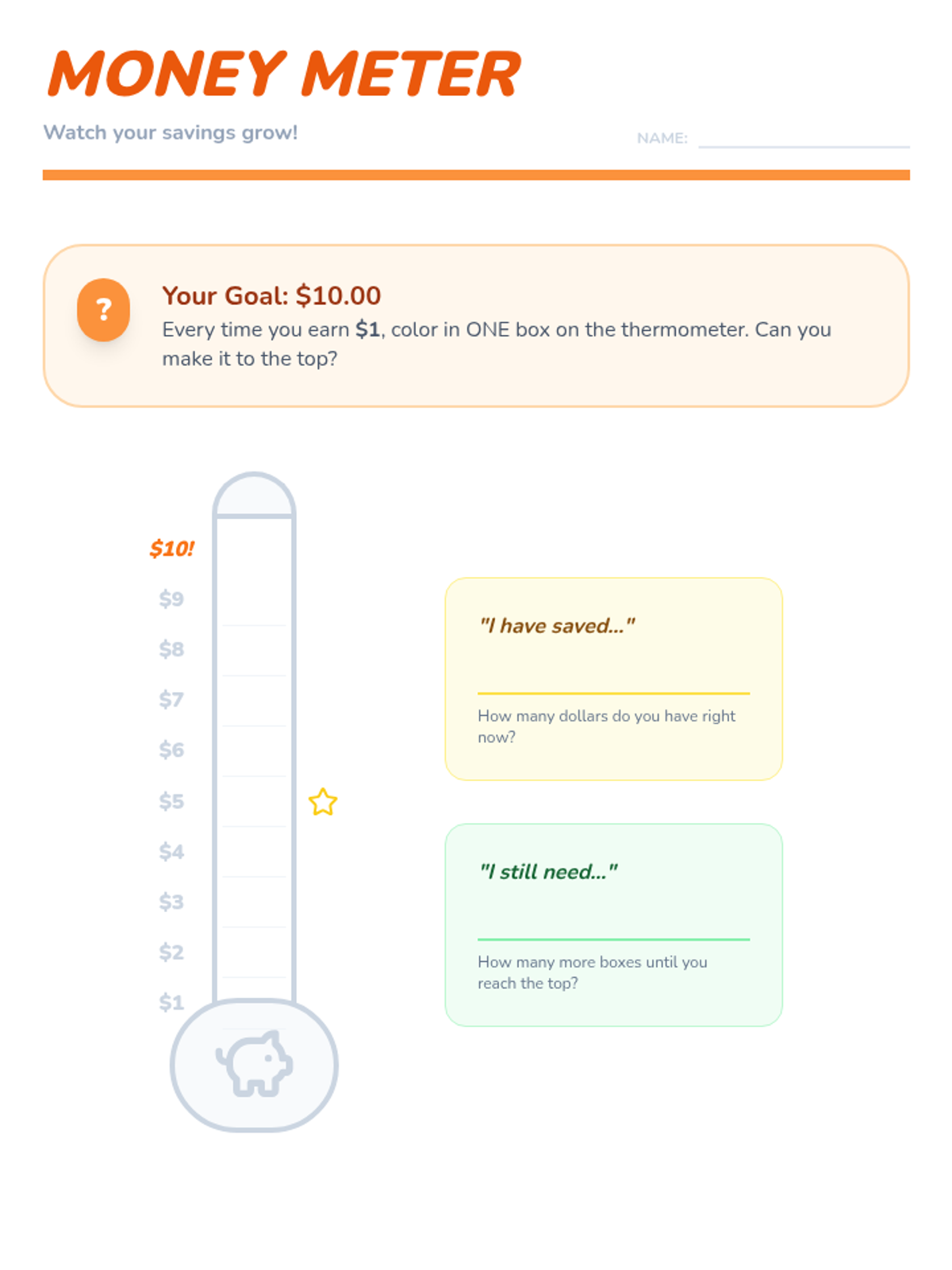
A thermometer-style savings tracker worksheet for 1st grade students to visualize and track progress toward a $10 goal.
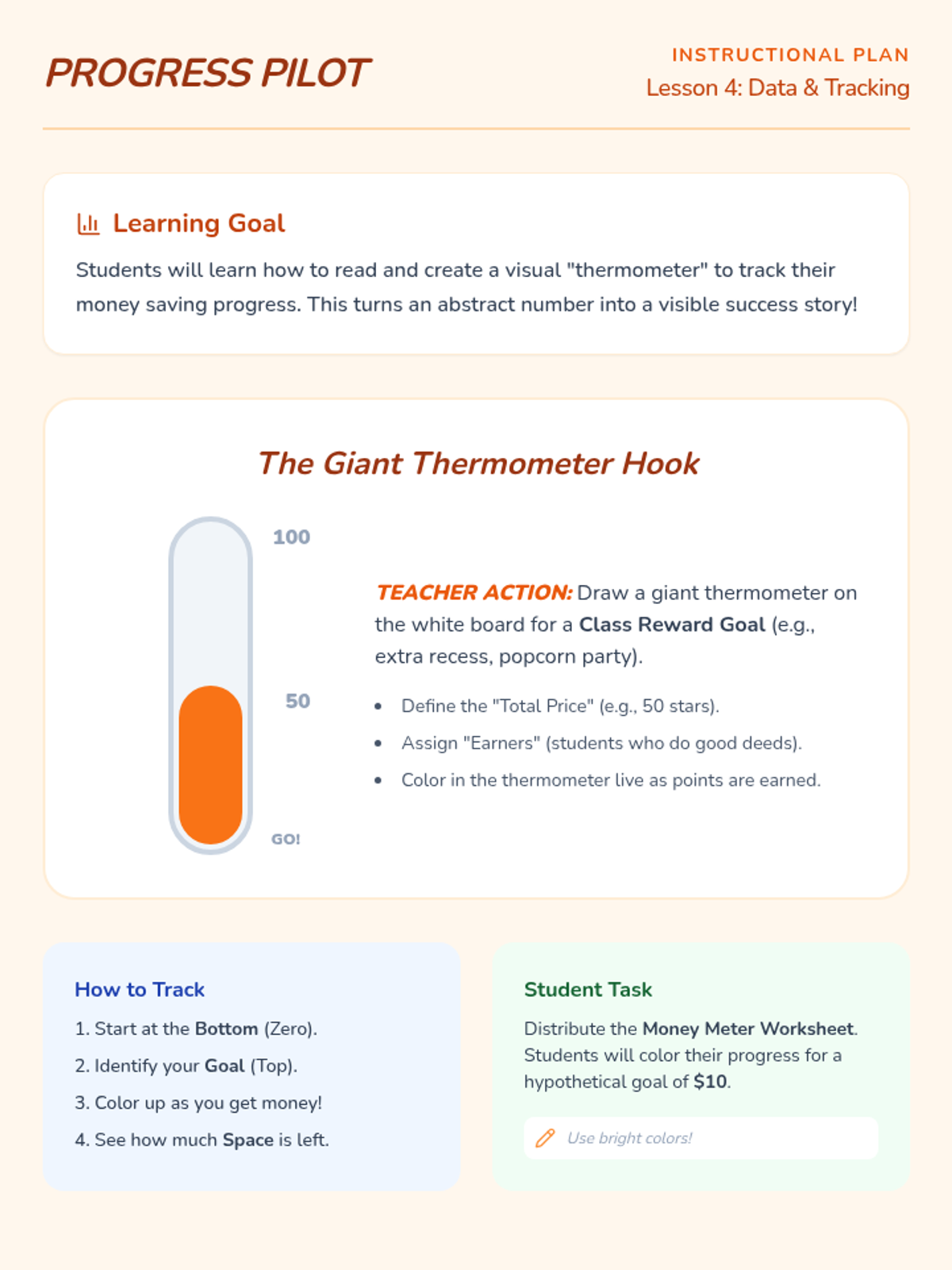
A lesson plan for teaching 1st graders how to use visual trackers like thermometers to monitor their savings progress.
A slide deck for 1st graders explaining delayed gratification and practical "patience tricks" for saving money.
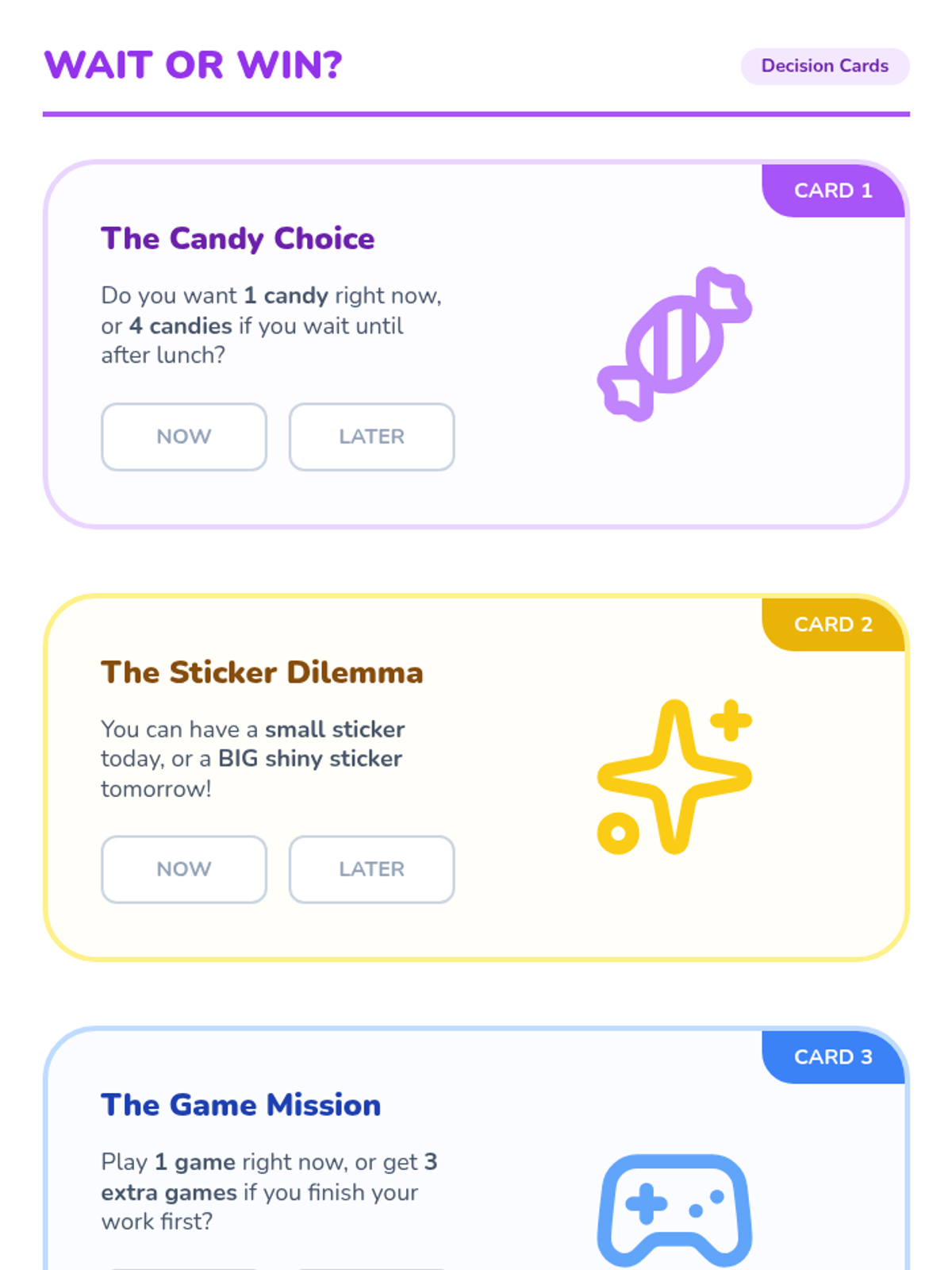
Decision cards for 1st graders to practice choosing between immediate small rewards and larger delayed rewards.
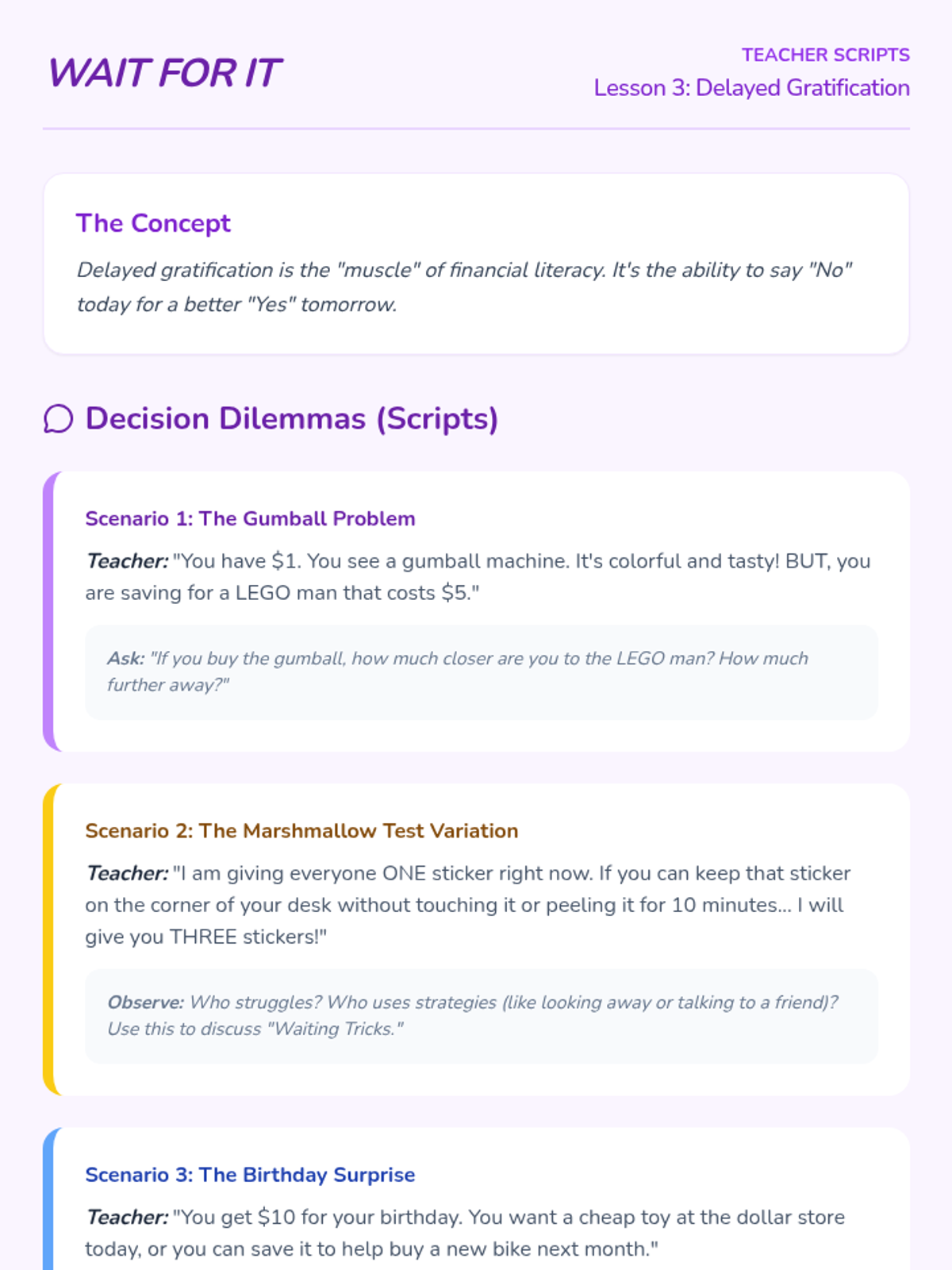
Teacher guidance and scripts for role-playing scenarios about delayed gratification and financial choices for 1st graders.
A slide deck for 1st graders visualizing the concept of money accumulation, comparing slow and fast saving methods.
A celebratory certificate for students to receive at the end of the Resilience Quest sequence.
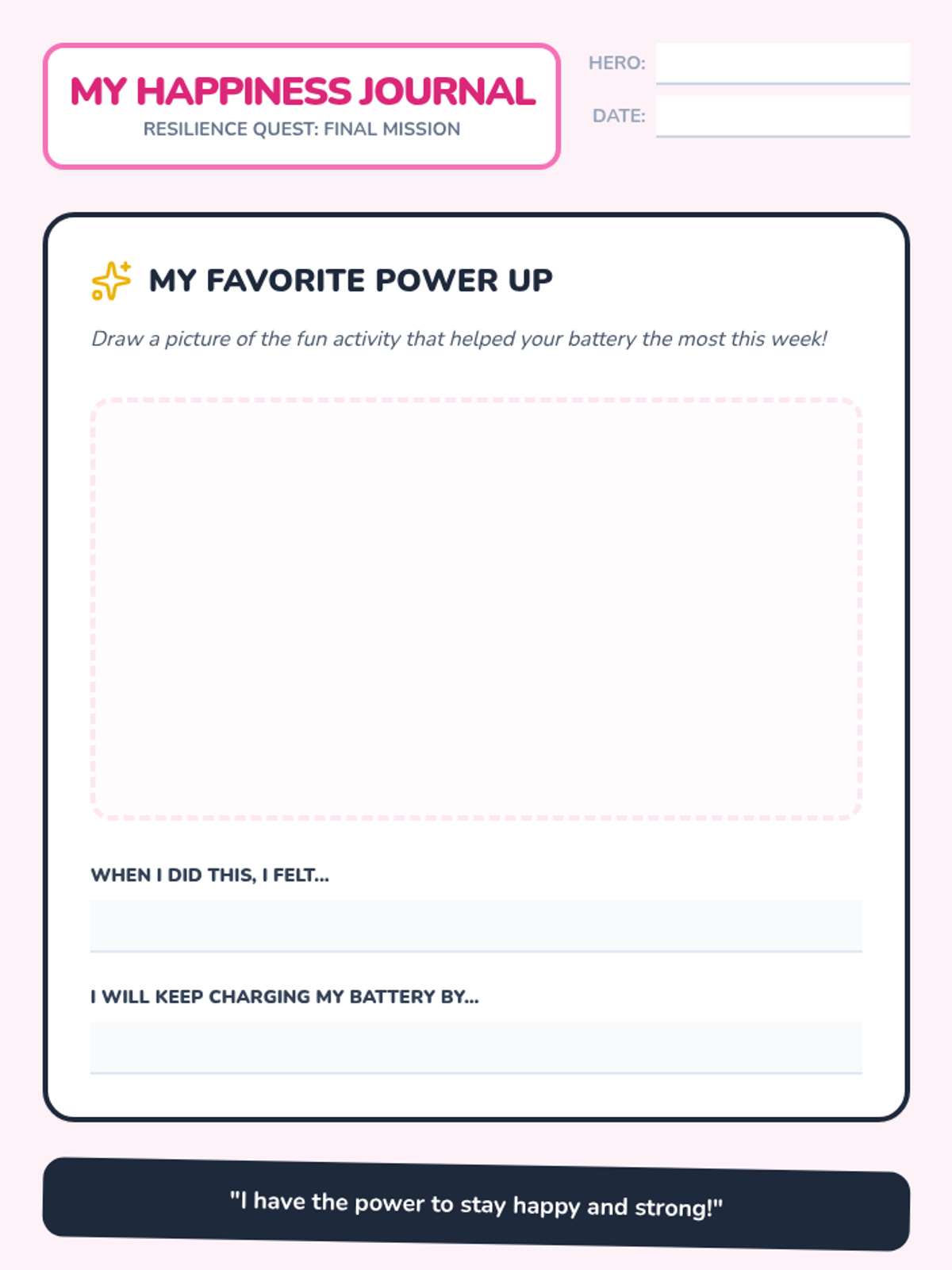
A student reflection worksheet for the final lesson, where they draw their favorite activity and reflect on their progress.
A final reflection presentation for the Celebration Circle, reinforcing the behavioral activation loop and celebrating student progress.
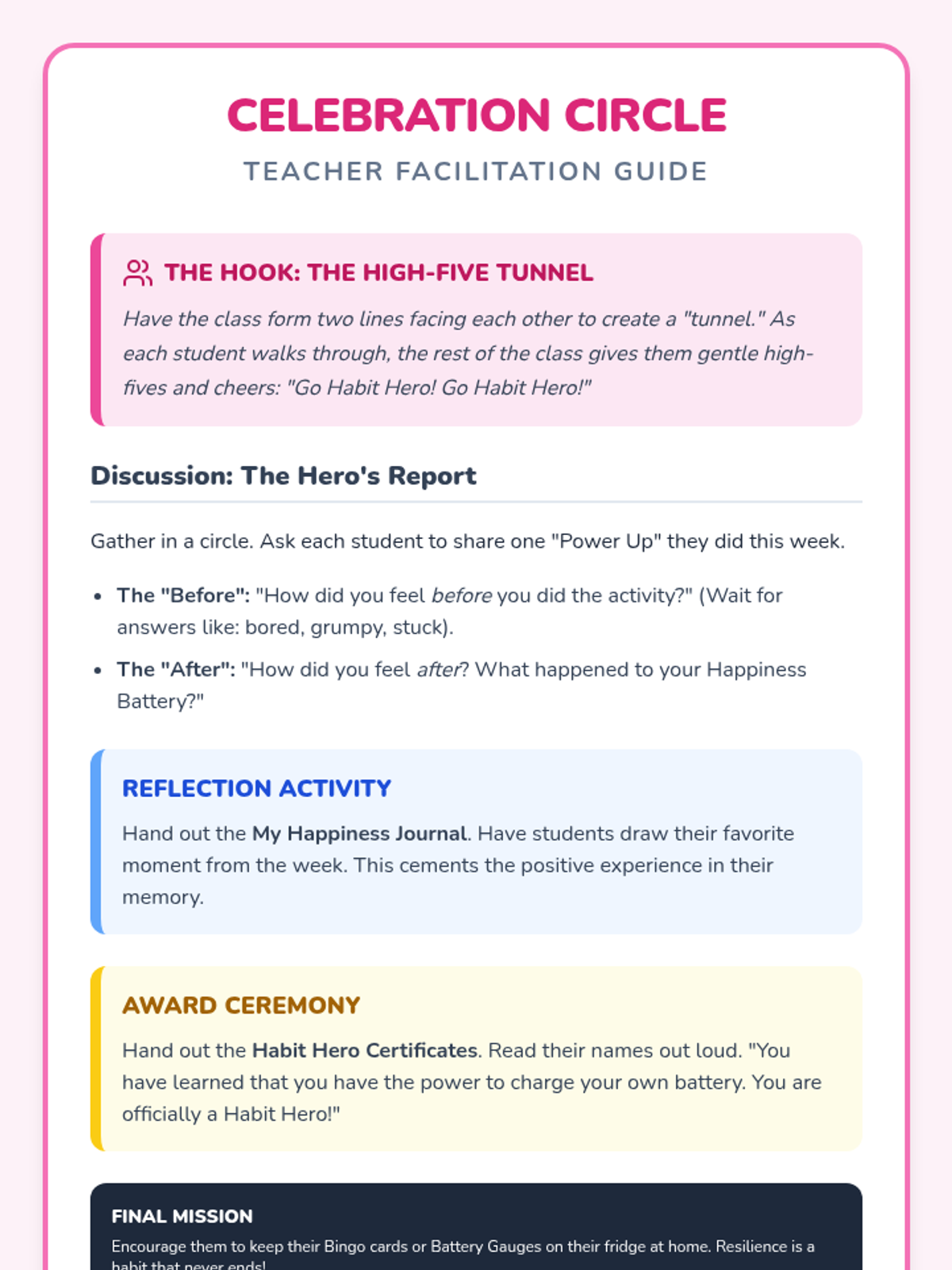
A teacher facilitation guide for the Celebration Circle lesson, including high-five tunnel instructions and reflection prompts.
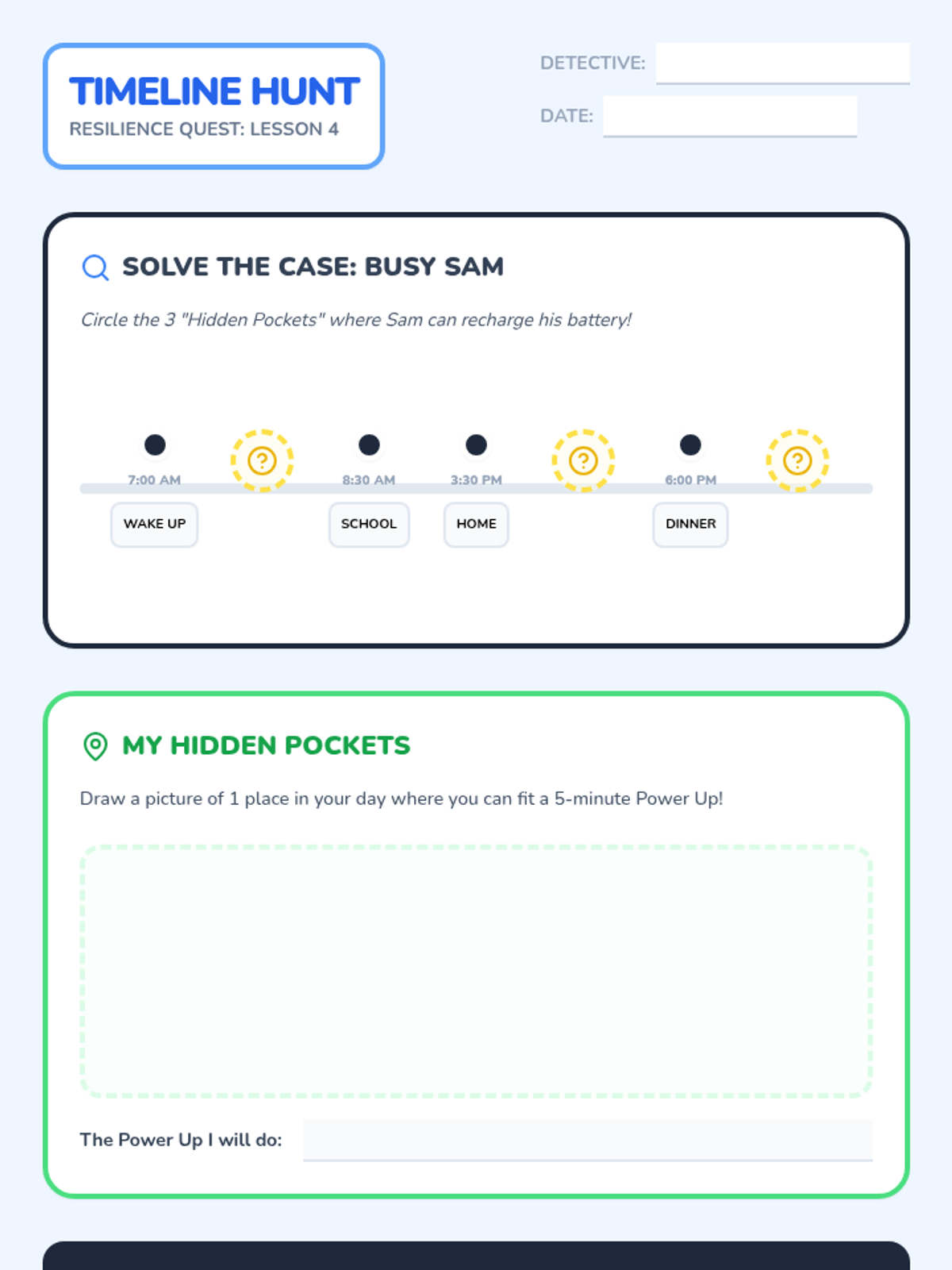
A student worksheet for identifying "hidden pockets" of time in a schedule and planning a personal daily recharge.
Slides introducing the 'Time Detectives' concept, helping students find small moments for positive activities.
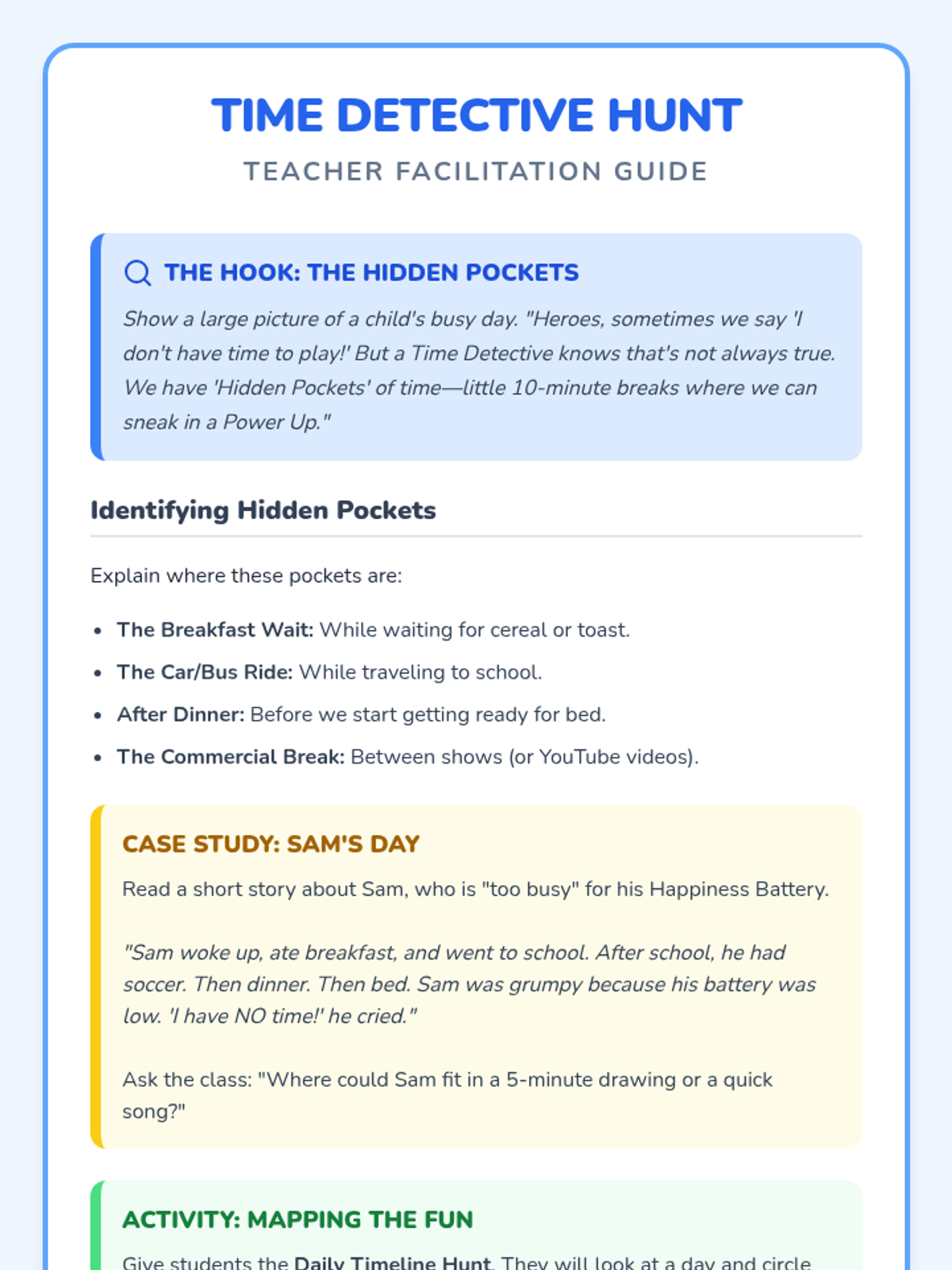
A teacher facilitation guide for the Time Detective Hunt lesson, focusing on finding small pockets of time for positive activities.
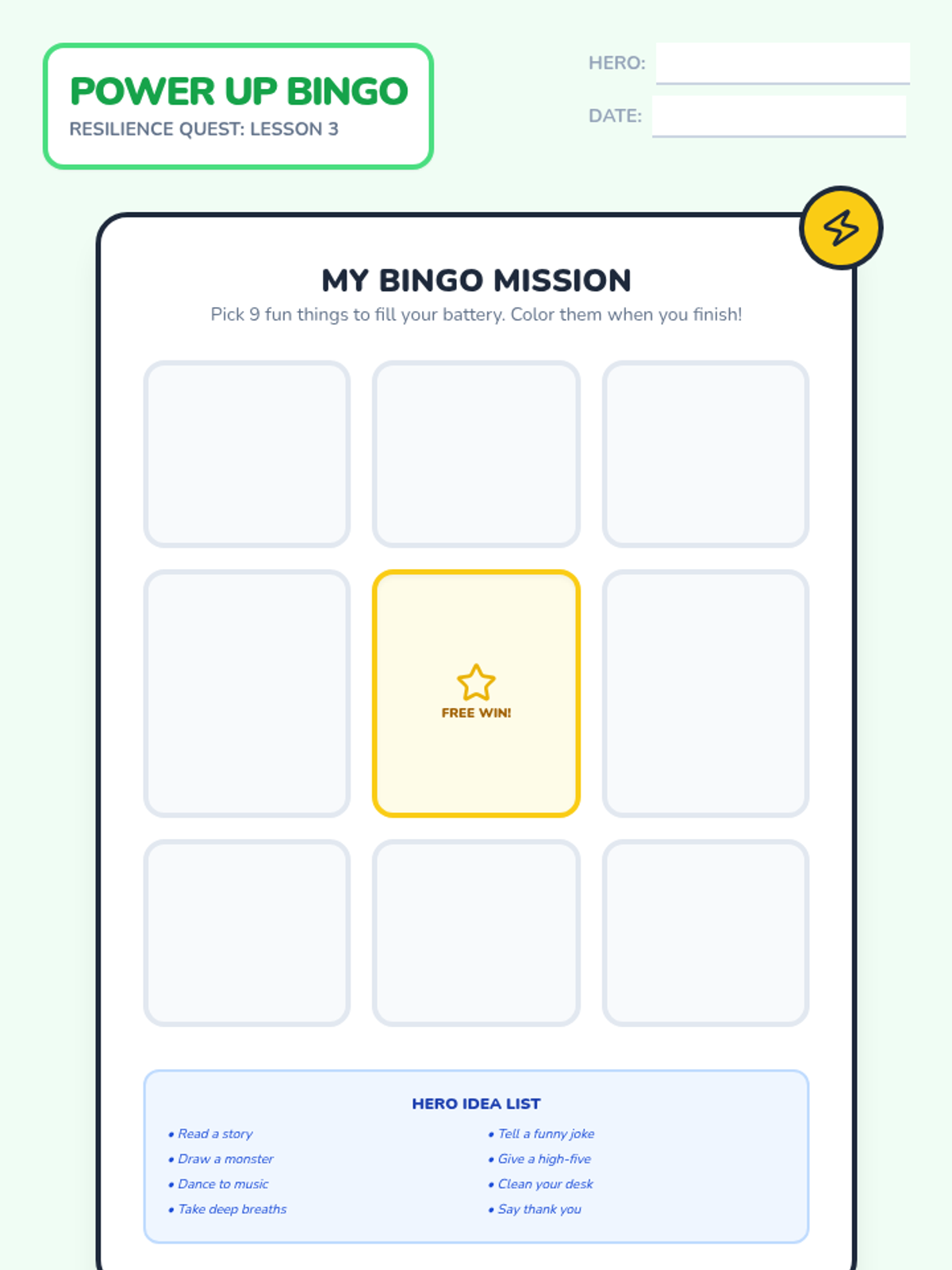
A student bingo card where they select and track 9 positive activities to gamify their daily routine.
Slides explaining the 'Power Up Bingo' game, micro-wins, and challenge rules.
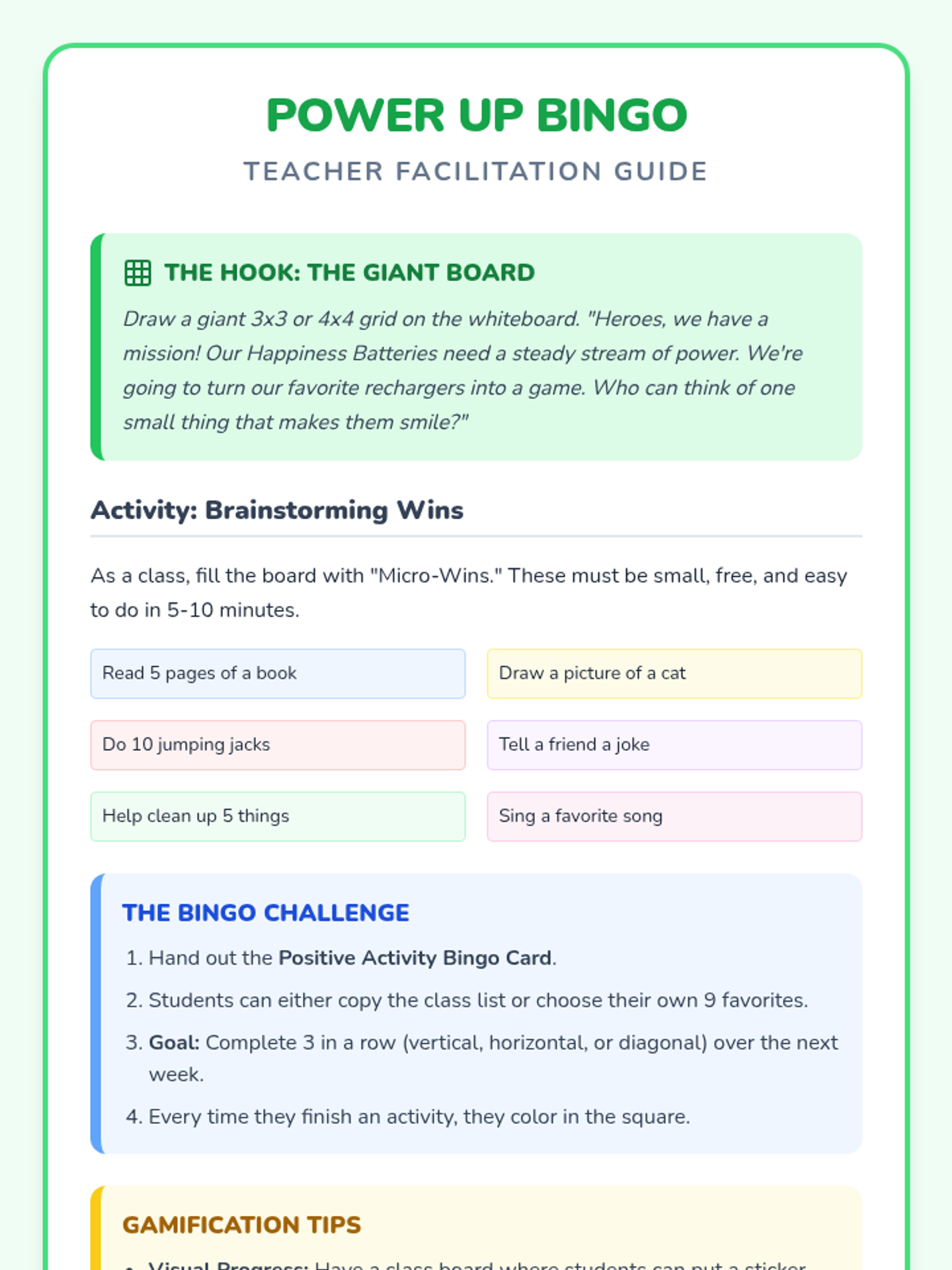
A teacher facilitation guide for the Power Up Bingo lesson, focusing on gamifying daily habits and brainstorming positive activities.
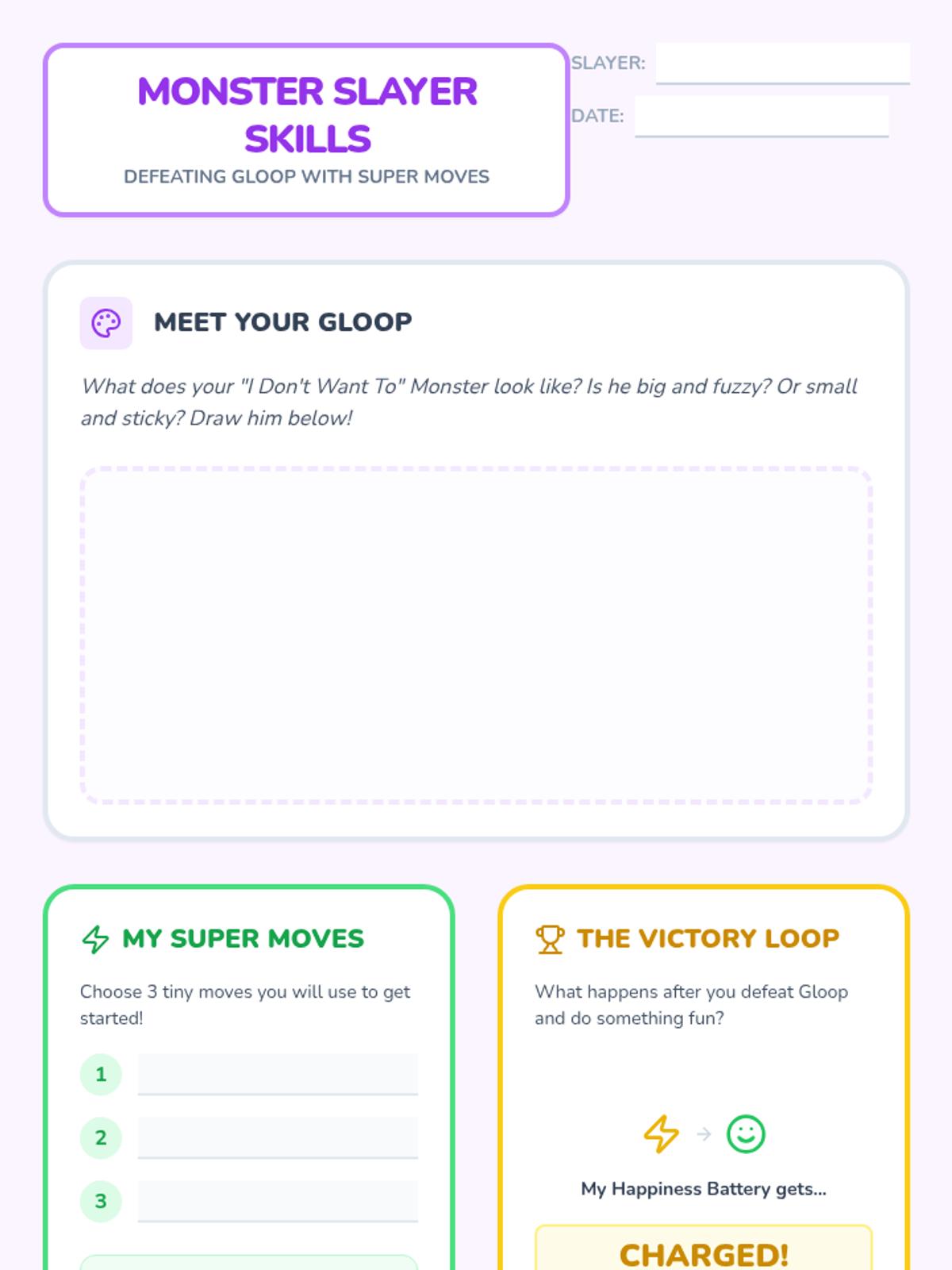
A worksheet for students to personify their 'inertia monster' and identify personal 'Super Moves' for task initiation.
Slides introducing the 'I Don't Want To' monster and the 'Super Moves' strategy for overcoming inertia.
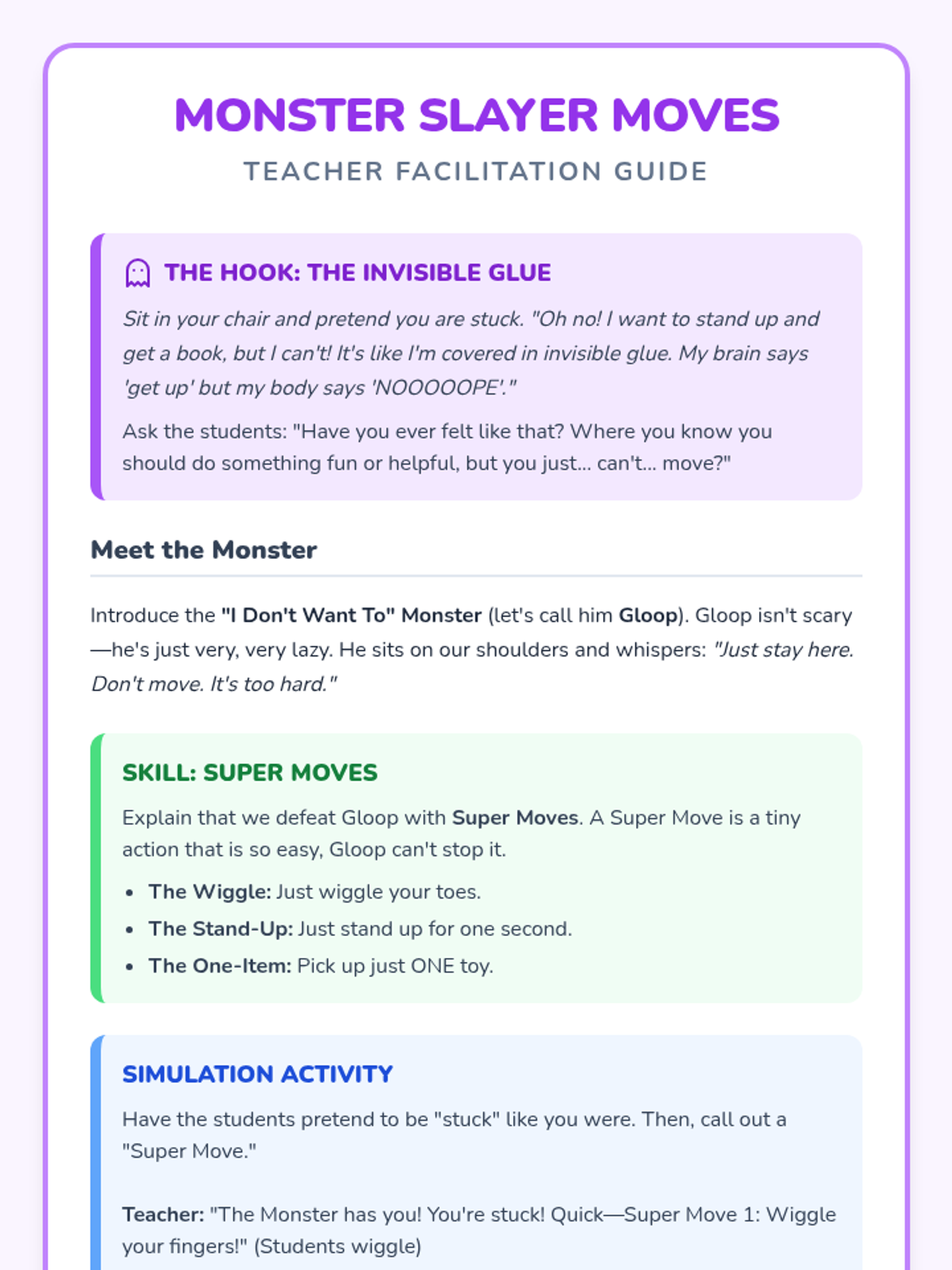
A teacher guide for the 'I Don't Want To' Monster lesson, featuring simulation activities and strategies for task initiation.
A visual presentation introducing the 'Happiness Battery' concept with engaging icons, metaphors, and mission-based language.
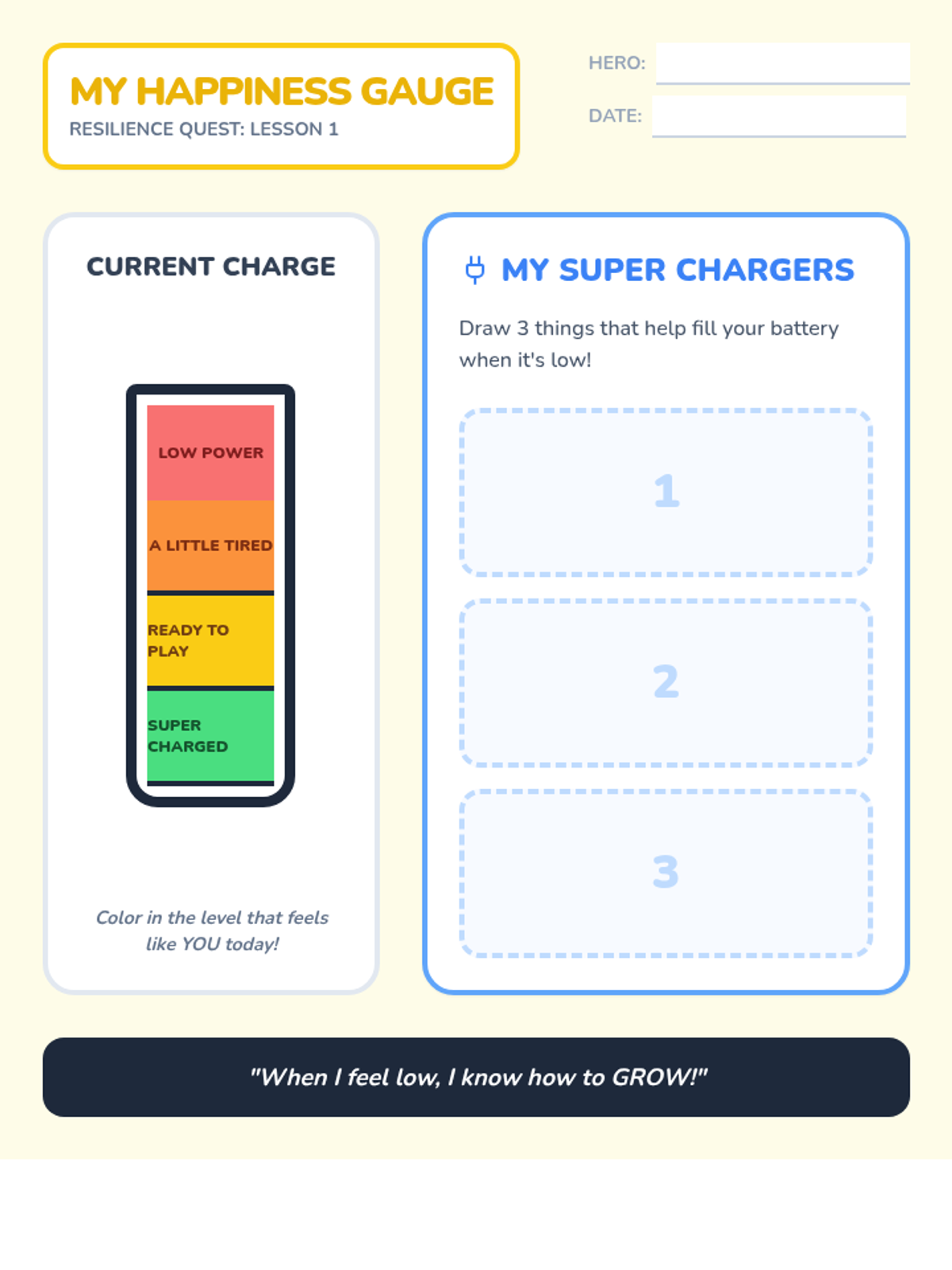
A student worksheet where they color their energy level on a 'battery gauge' and draw three activities that help them recharge.
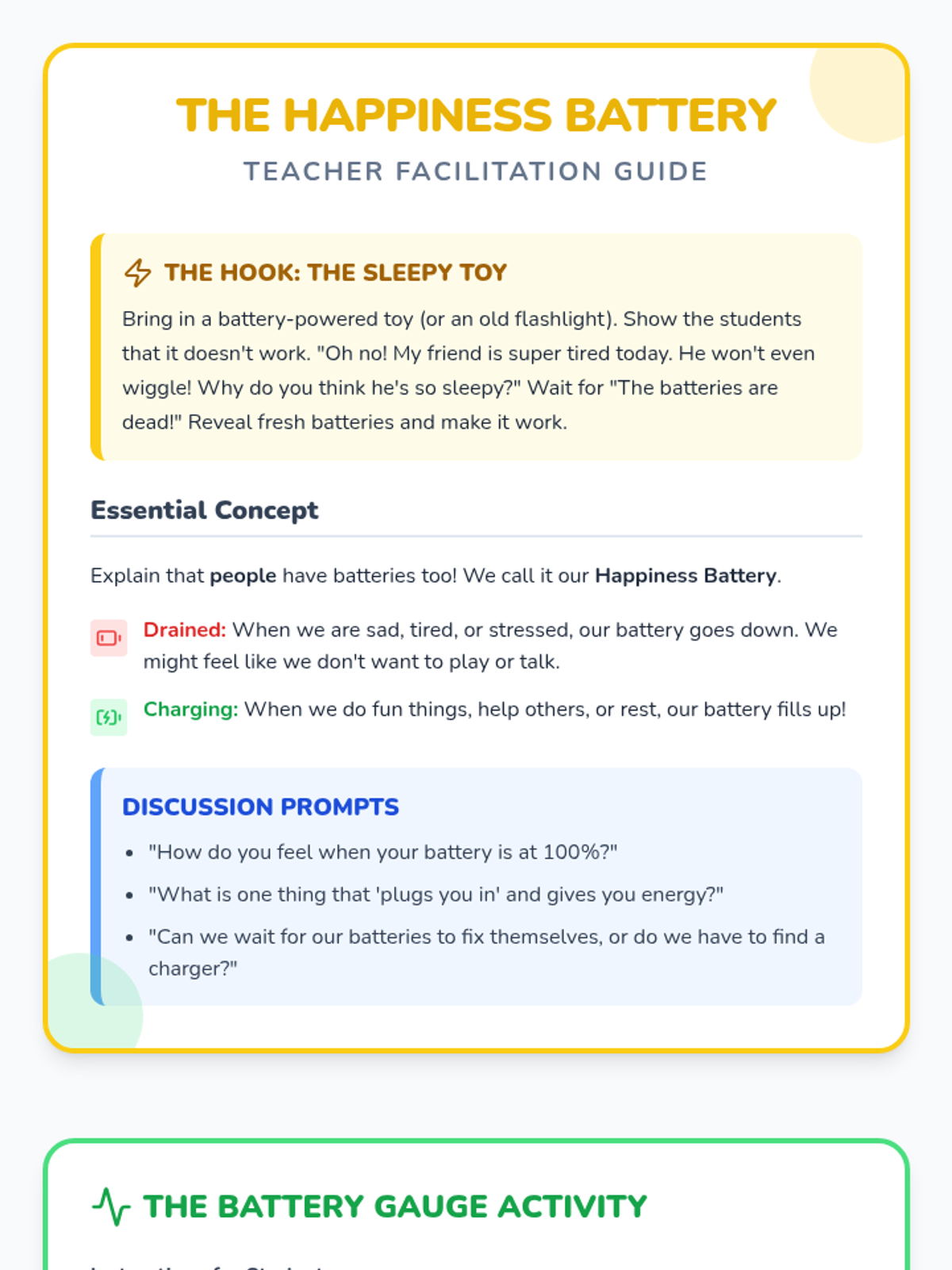
A teacher facilitation guide for the 'Happiness Battery' concept, including hook ideas, discussion prompts, and lesson summaries.
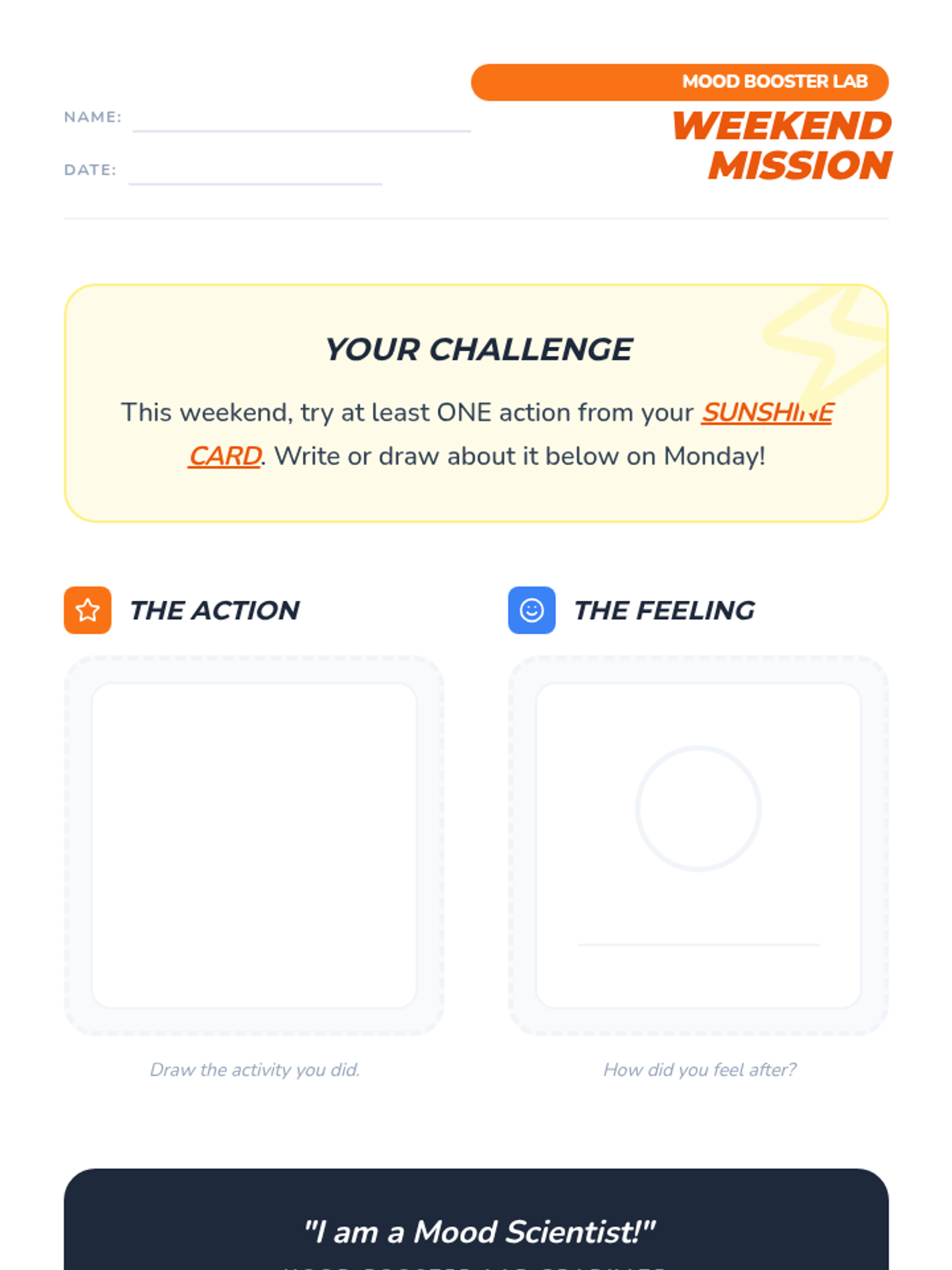
A weekend homework log for students to track their mood-boosting activity and reflect on their emotional state.
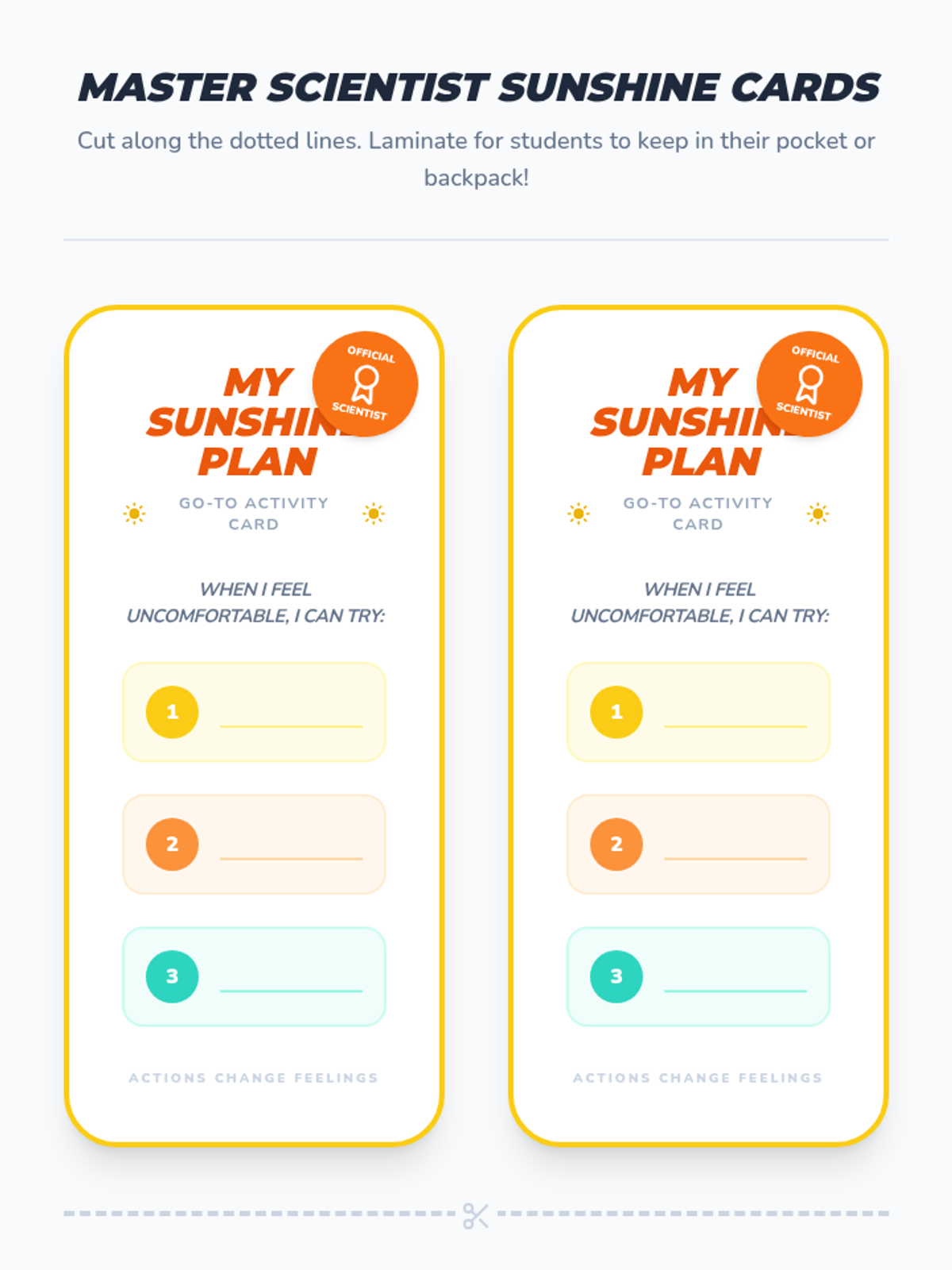
Printable 'Go-To' cards for students to list three simple actions they can take to boost their mood. Designed for cutting and laminating.
Introductory presentation for Lesson 5, focusing on creating a personal 'Sunshine Plan' and sharing mood-boosting strategies with peers.
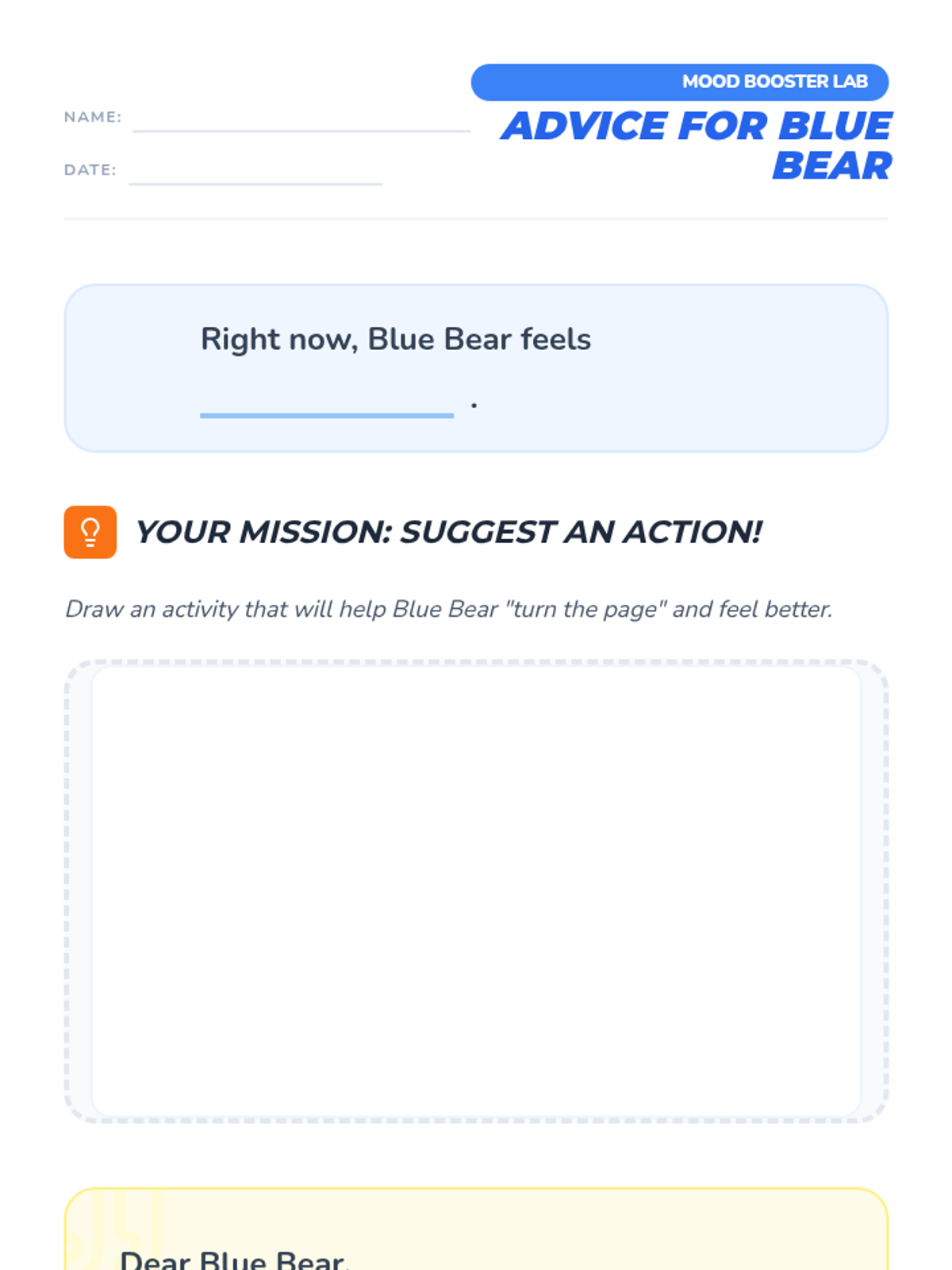
Student worksheet for suggesting mood-boosting activities to the character Blue Bear through drawing and message writing.
Introductory presentation for Lesson 4, using a story about Blue Bear to practice suggesting mood-boosting activities for others.
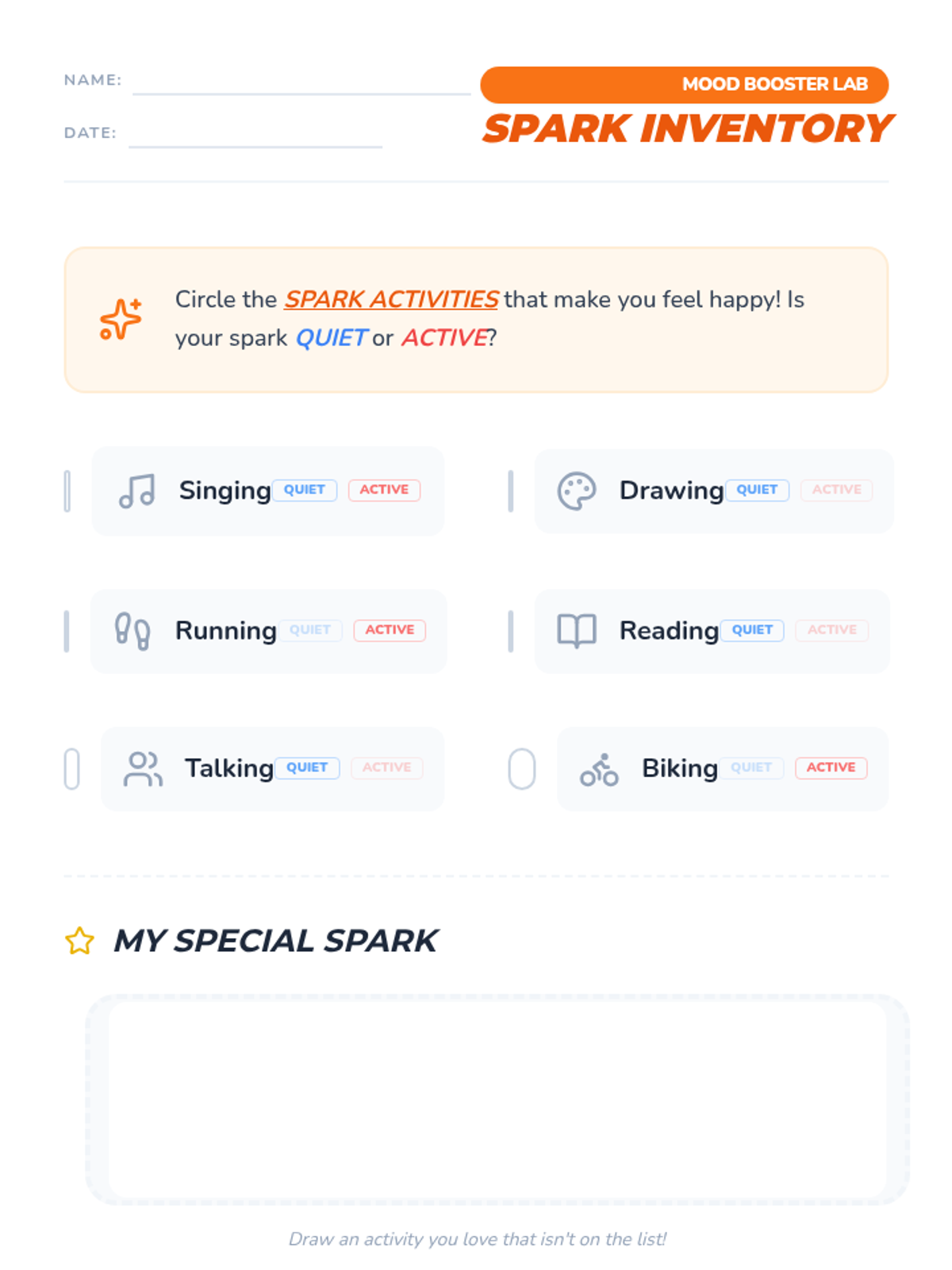
Brainstorming worksheet for students to identify their personal 'Spark Activities' and categorize them as active or quiet.
Introductory presentation for Lesson 3, identifying personal 'Spark Activities' and distinguishing between active and quiet joy.
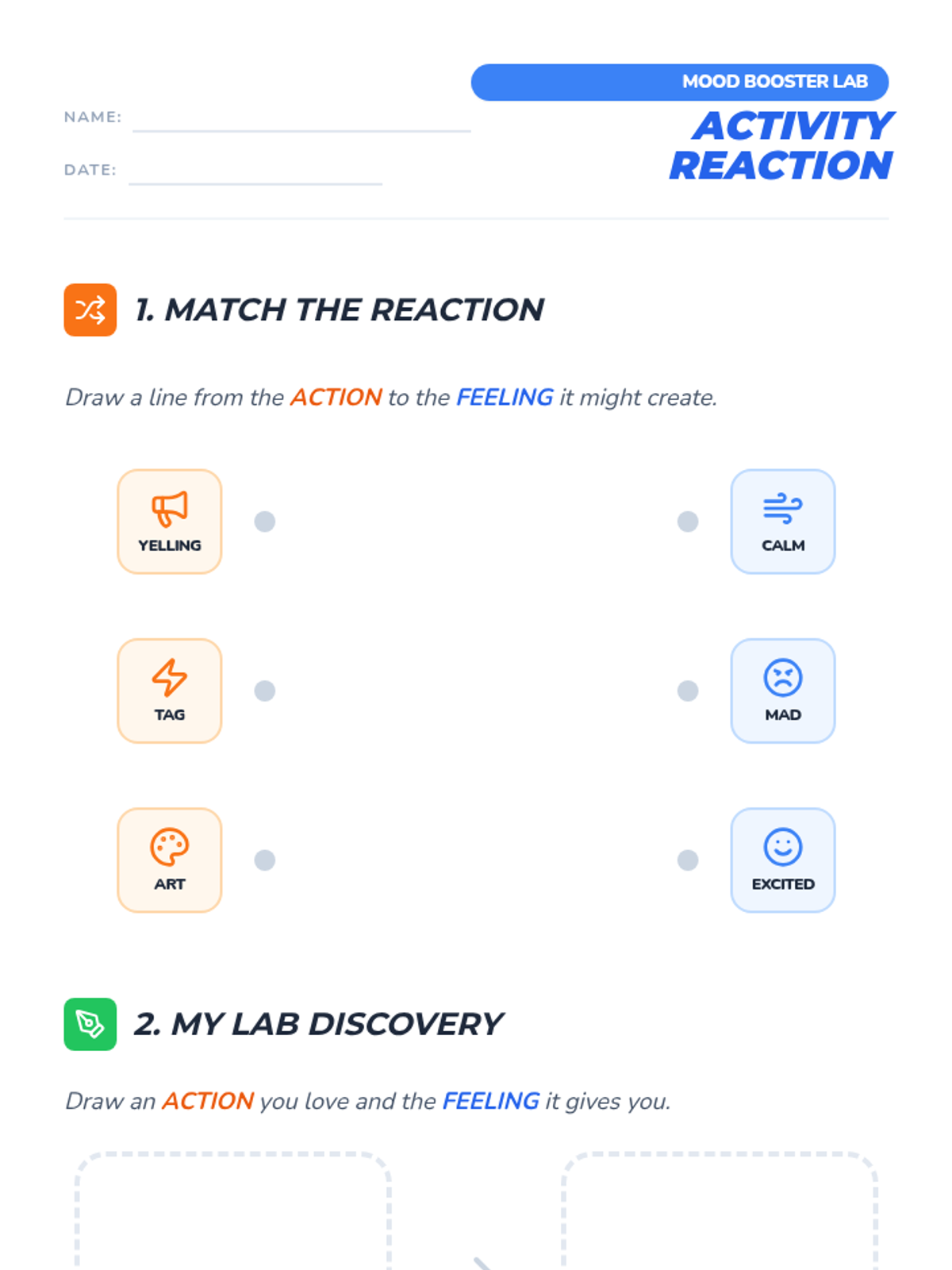
Student worksheet for matching activities with emotional outcomes and drawing a personal activity-feeling pair.
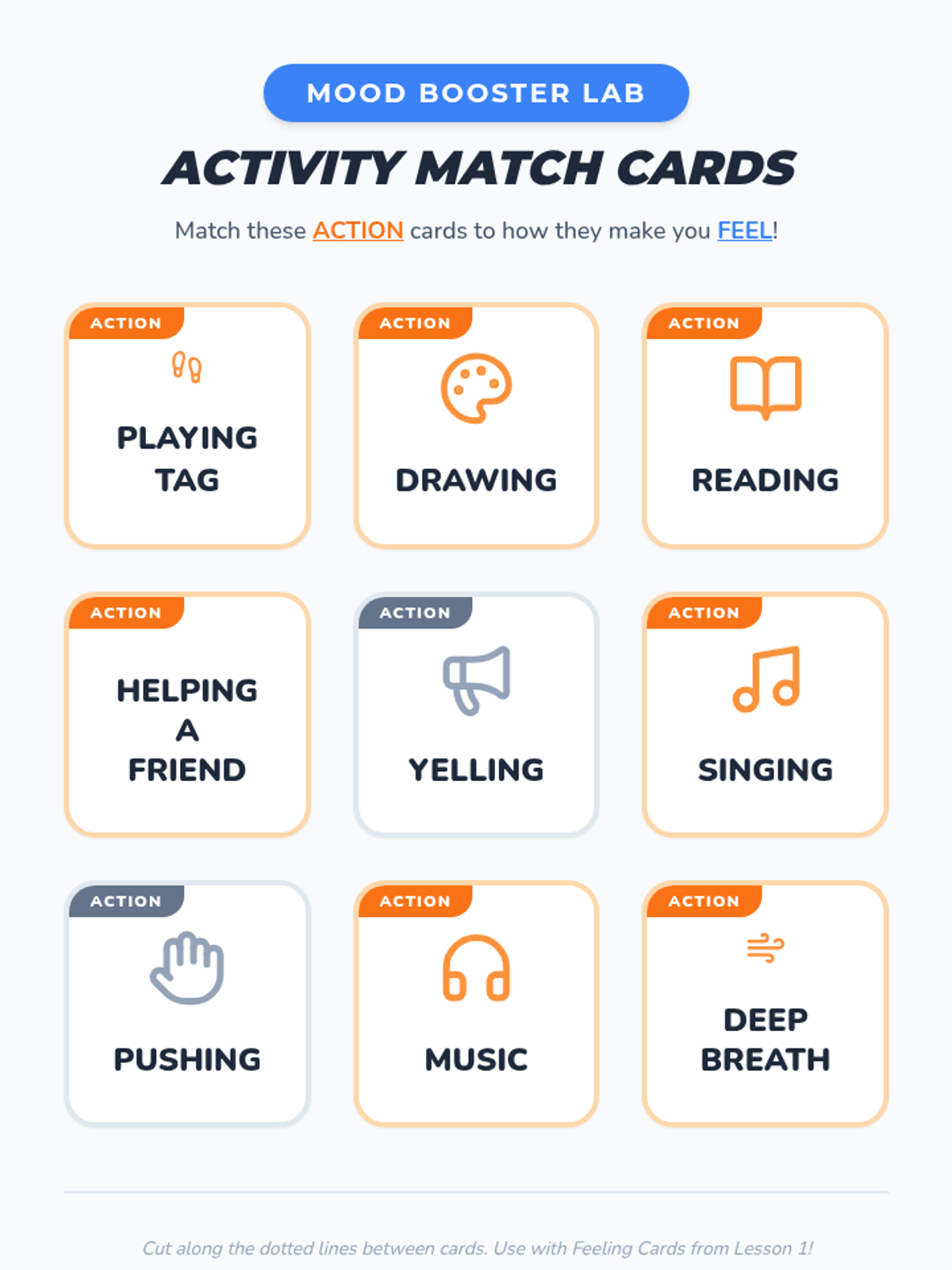
Printable activity cards depicting various behaviors (e.g., drawing, yelling, helping) for students to match with corresponding emotional reactions.
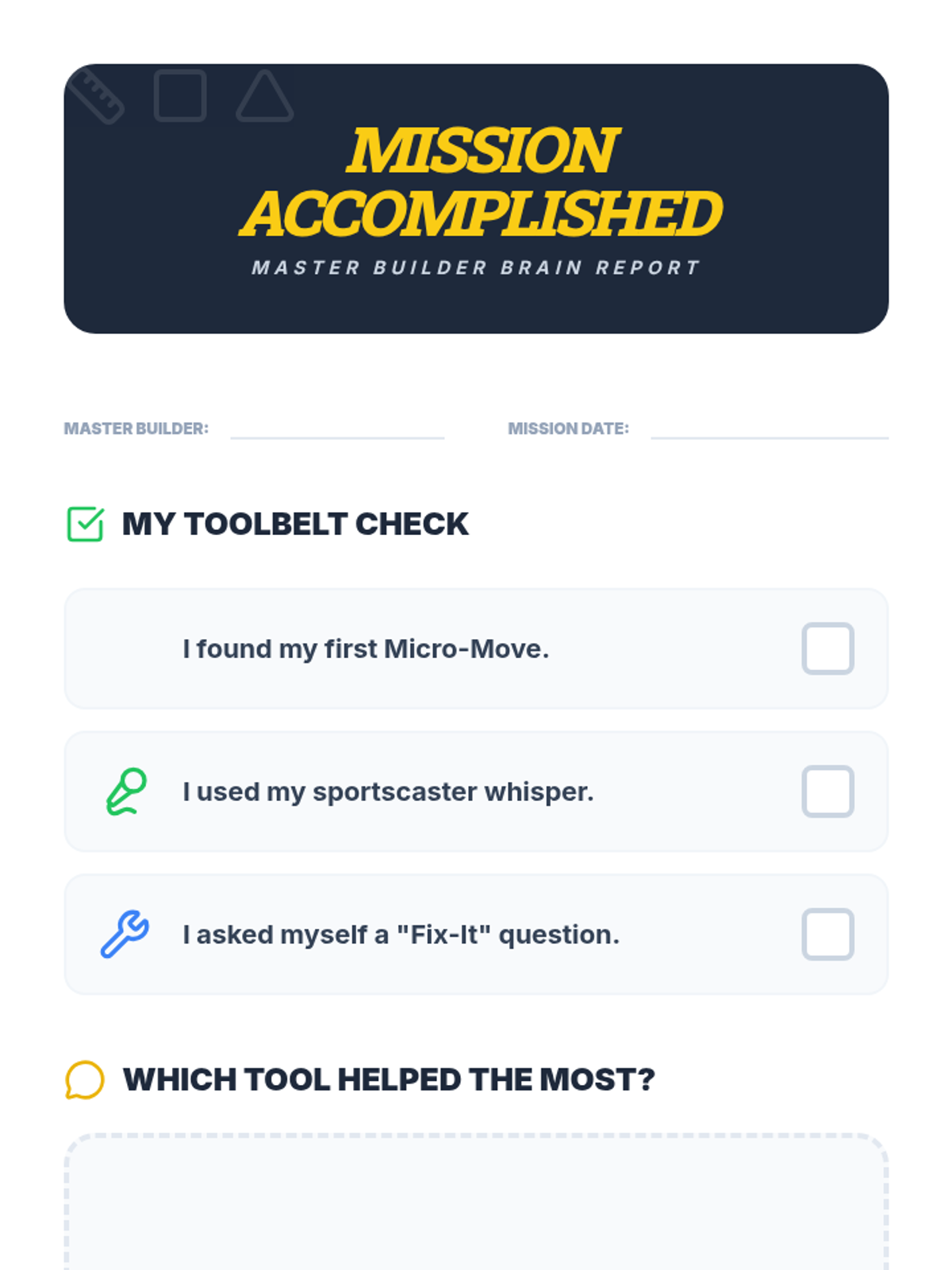
Student self-assessment and reflection worksheet for the final mission of the Builder Brain sequence.
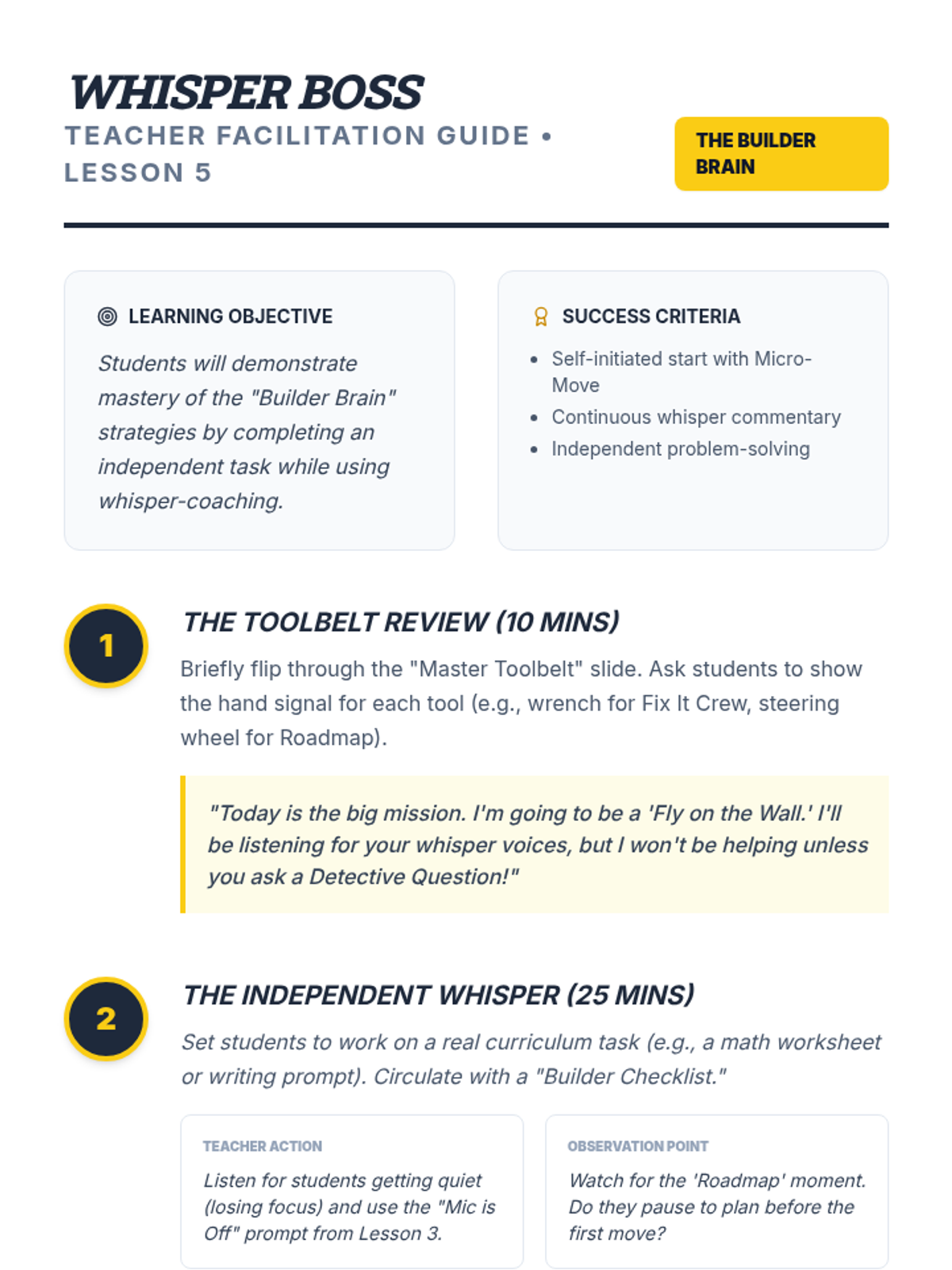
Teacher guide for Lesson 5: Master Builder, focusing on the culminating 'Whisper Challenge' and assessment of all self-talk strategies.
Visual presentation for Lesson 5: Master Builder, teaching students to apply all self-talk strategies to independent work.
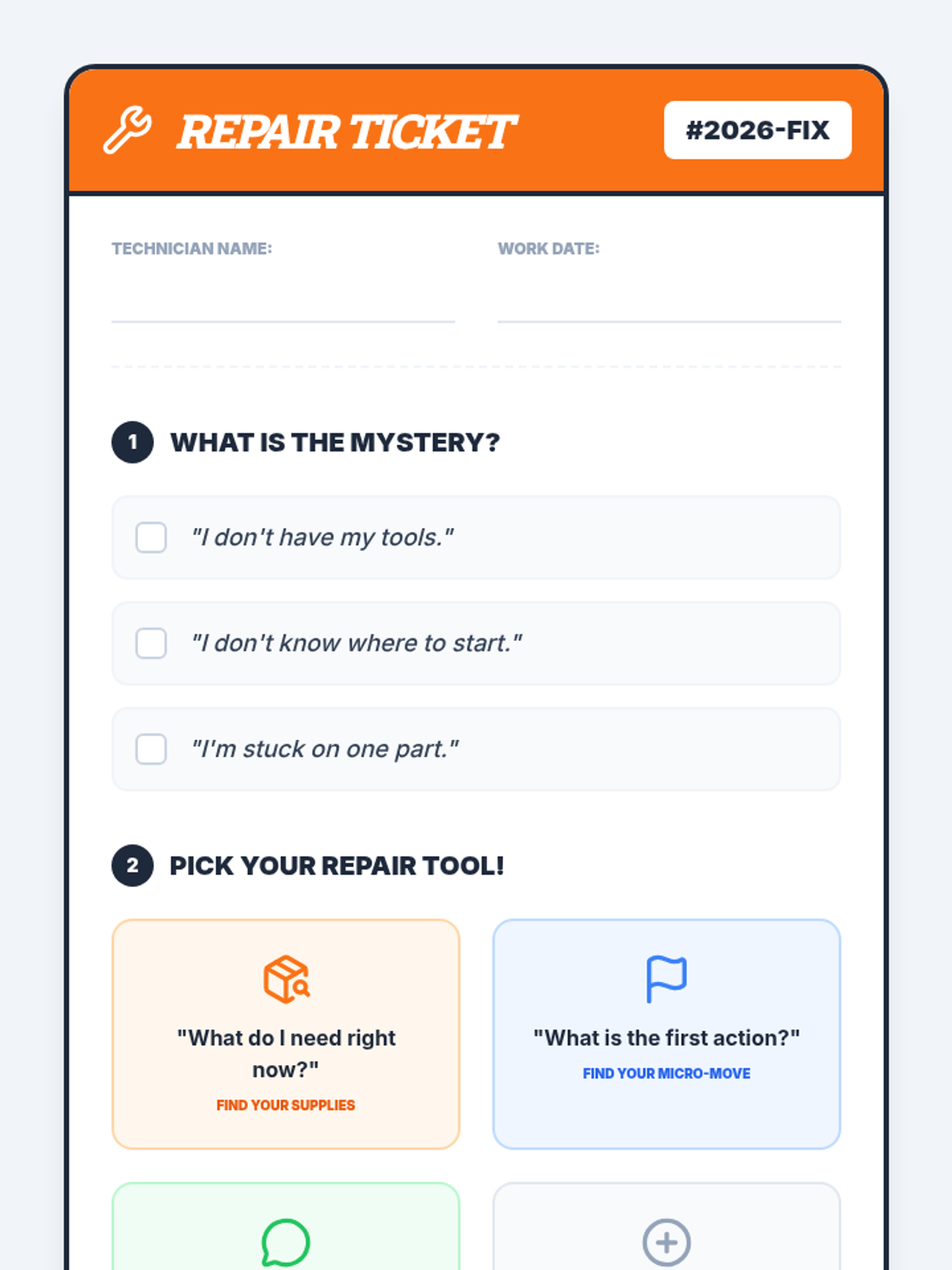
Student worksheet designed as a 'repair ticket' for choosing problem-solving questions when stuck on a task.
Instructional slides for Lesson 3: Designing the Sunshine Kit, guiding students through the decoration and curation process.
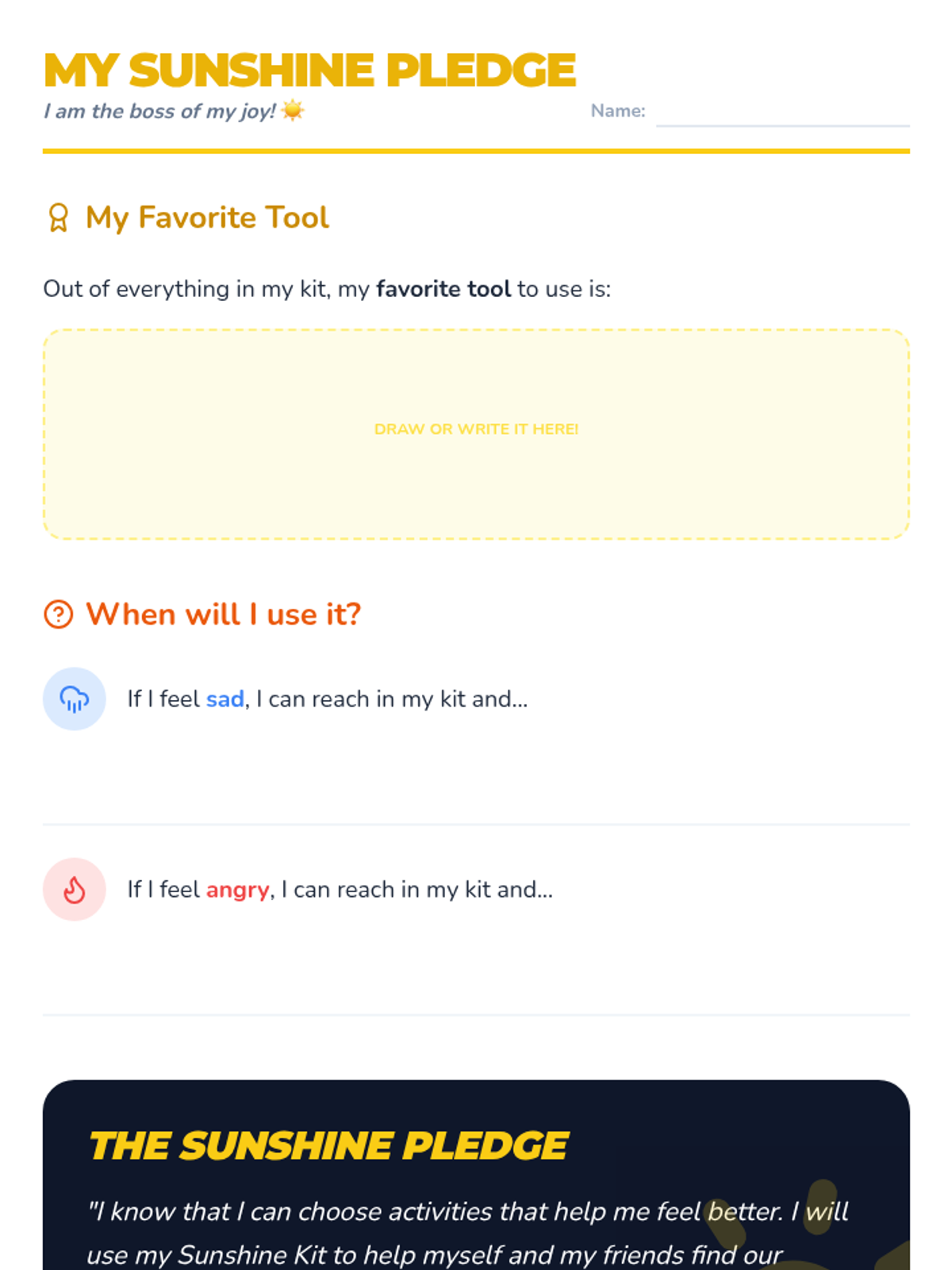
Student reflection sheet for the end of the project. Includes a personal favorite tool drawing area, application scenarios, and a 'Sunshine Pledge'.
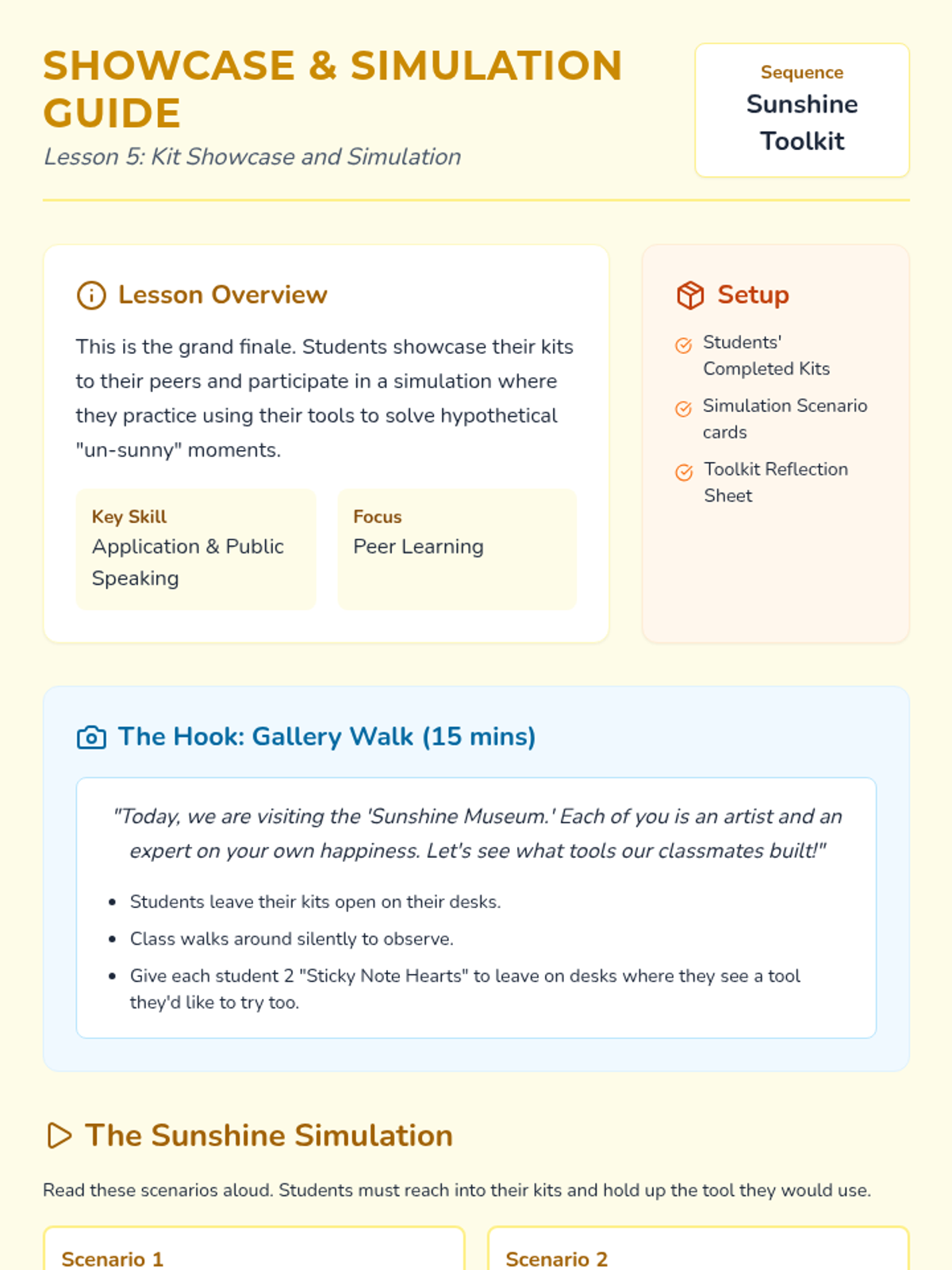
Teacher guide for the culminating Lesson 5: Kit Showcase and Simulation. Includes Gallery Walk instructions and simulation scenarios for practicing kit use.
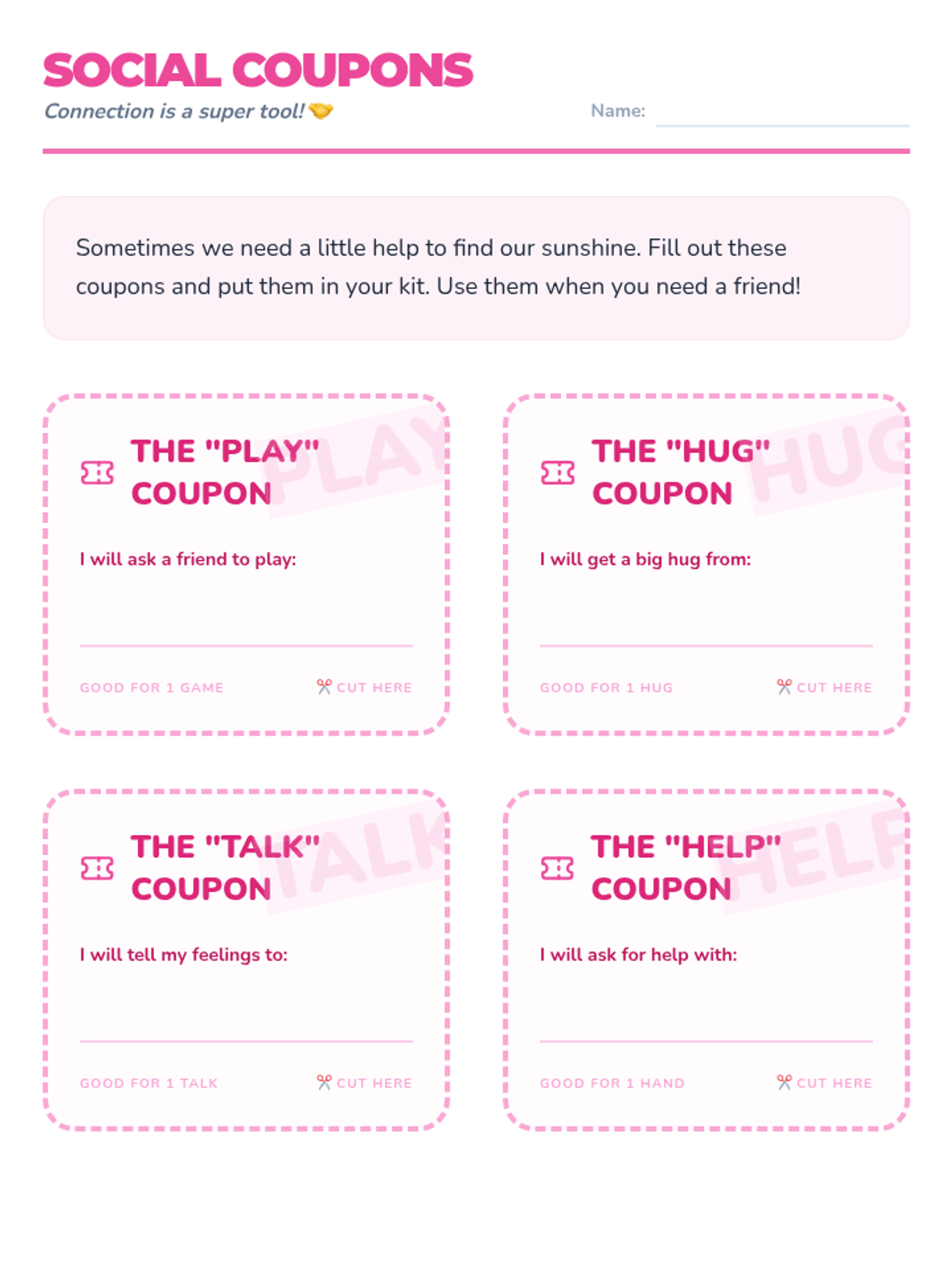
Student worksheet featuring customizable social coupons (play, hug, talk, help) to be cut out and added to their Sunshine Kits.
Instructional slides for Lesson 4: Connecting with Others, highlighting the role of social interaction in emotional well-being.
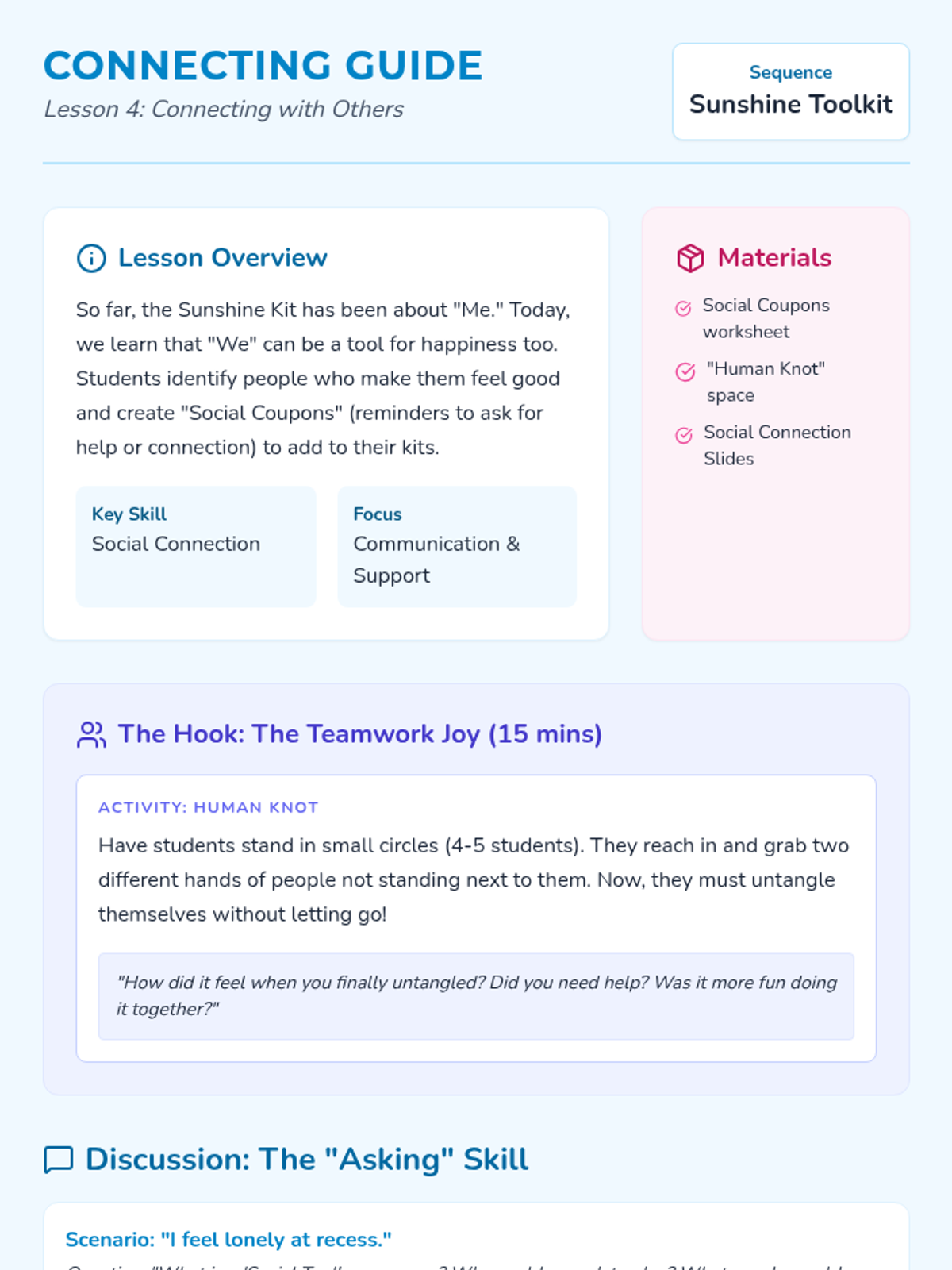
Teacher guide for Lesson 4: Connecting with Others. Includes the 'Human Knot' hook, discussion scenarios for asking for help, and instructions for Social Coupons.
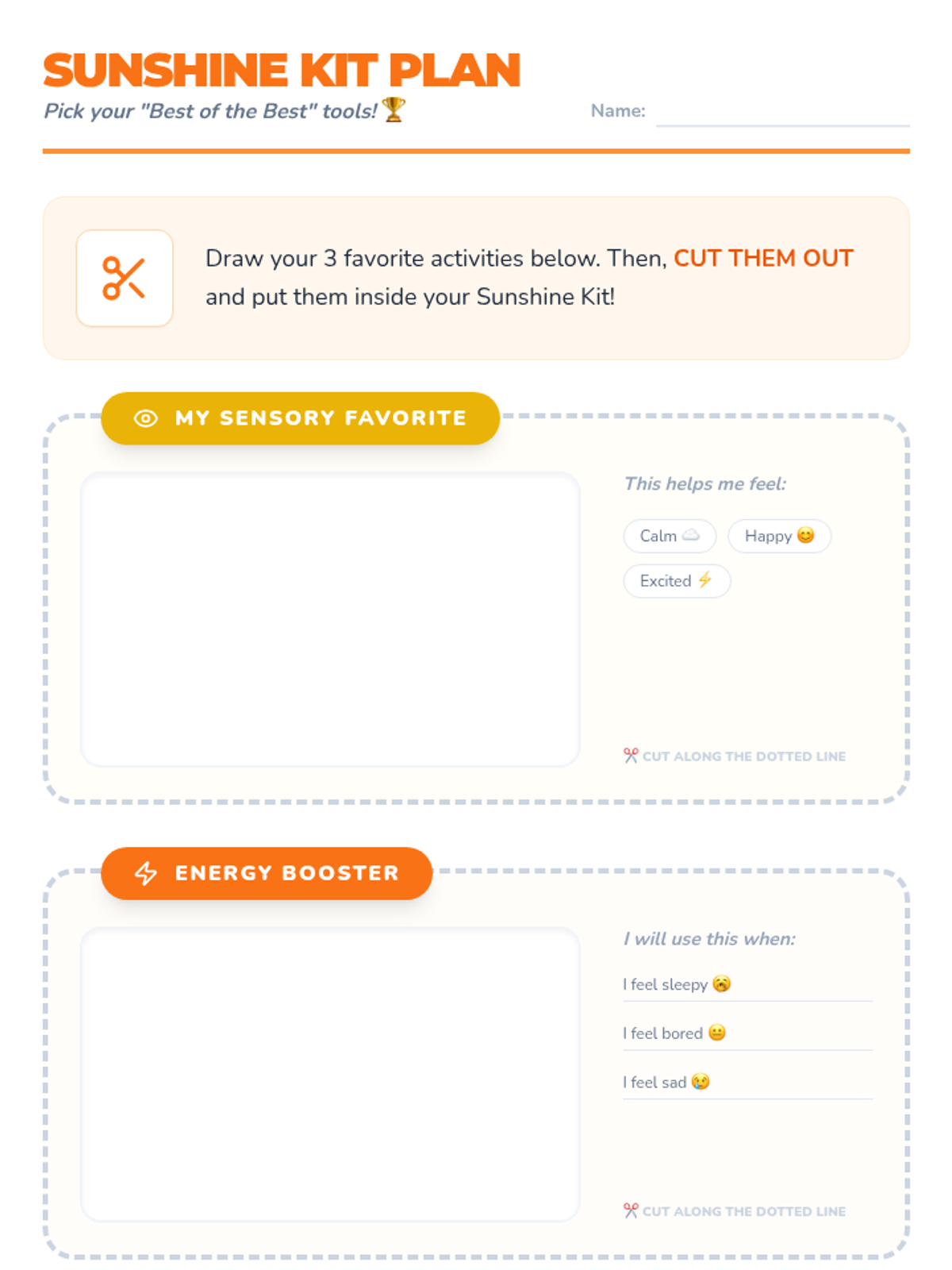
Student planning and creation worksheet for selecting favorite sensory and movement activities to include in their physical Sunshine Kit. Cards are designed to be cut out.
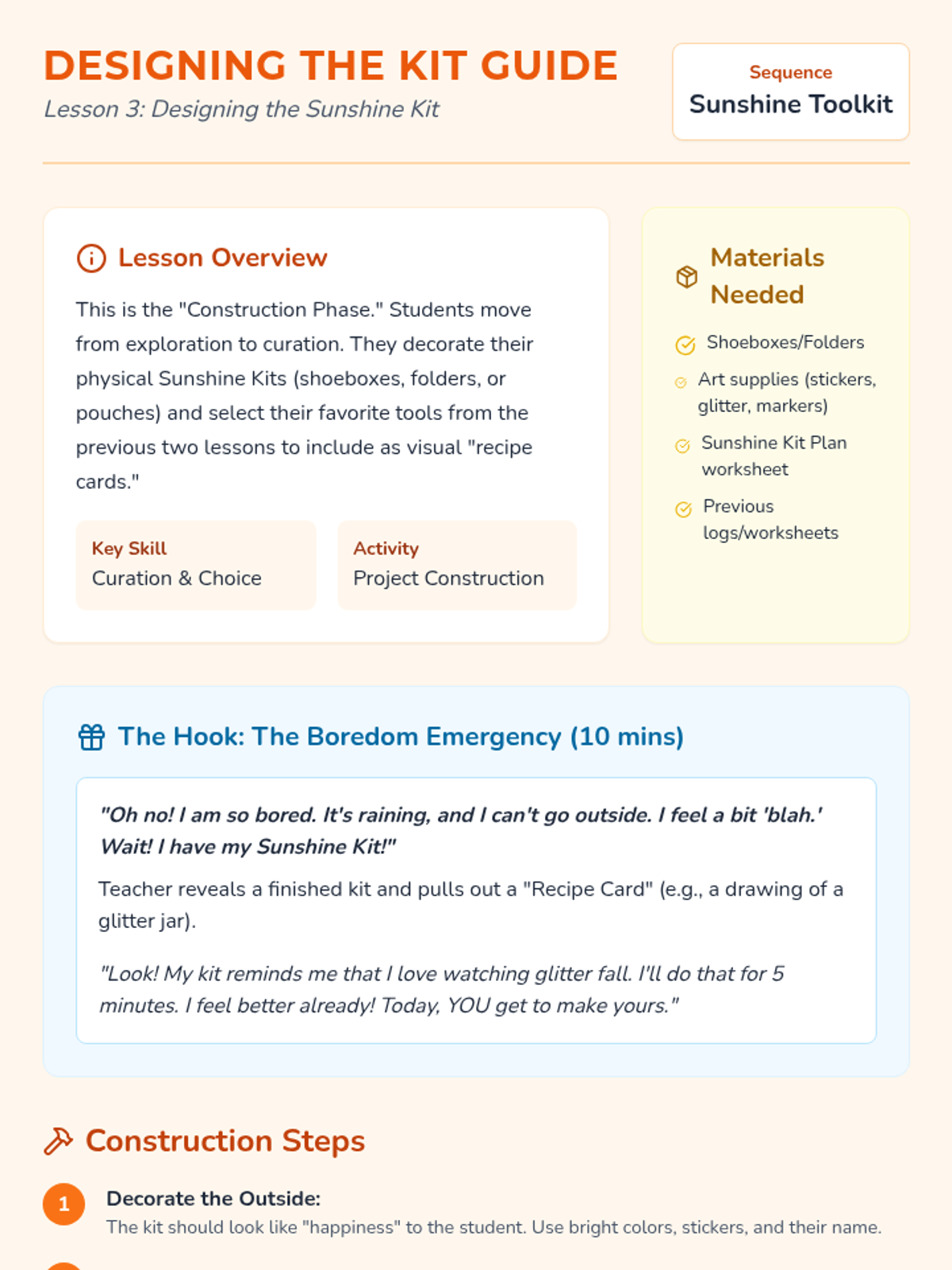
Teacher guide for Lesson 3: Designing the Sunshine Kit. Includes the 'Boredom Emergency' hook and step-by-step instructions for kit construction.
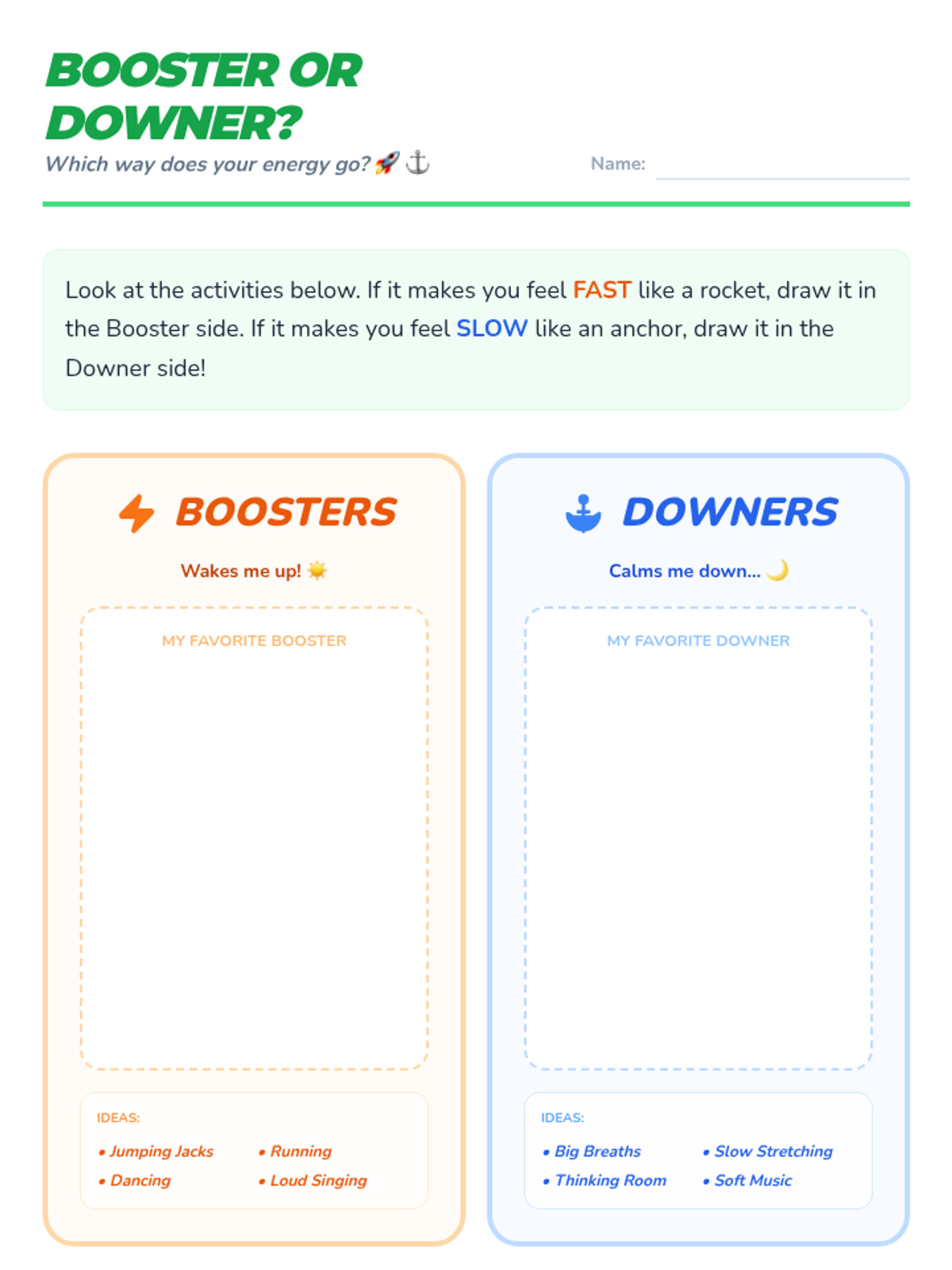
Student worksheet for classifying physical activities as Energy Boosters or Calm Downers. Includes drawing spaces and visual cues for 1st-grade students.
Instructional slides for Lesson 2: Movement and Energy Shifts, teaching students to categorize physical activities as Energy Boosters or Calm Downers.
Introductory presentation for Lesson 2, explaining the cause-and-effect relationship between activities and emotions.
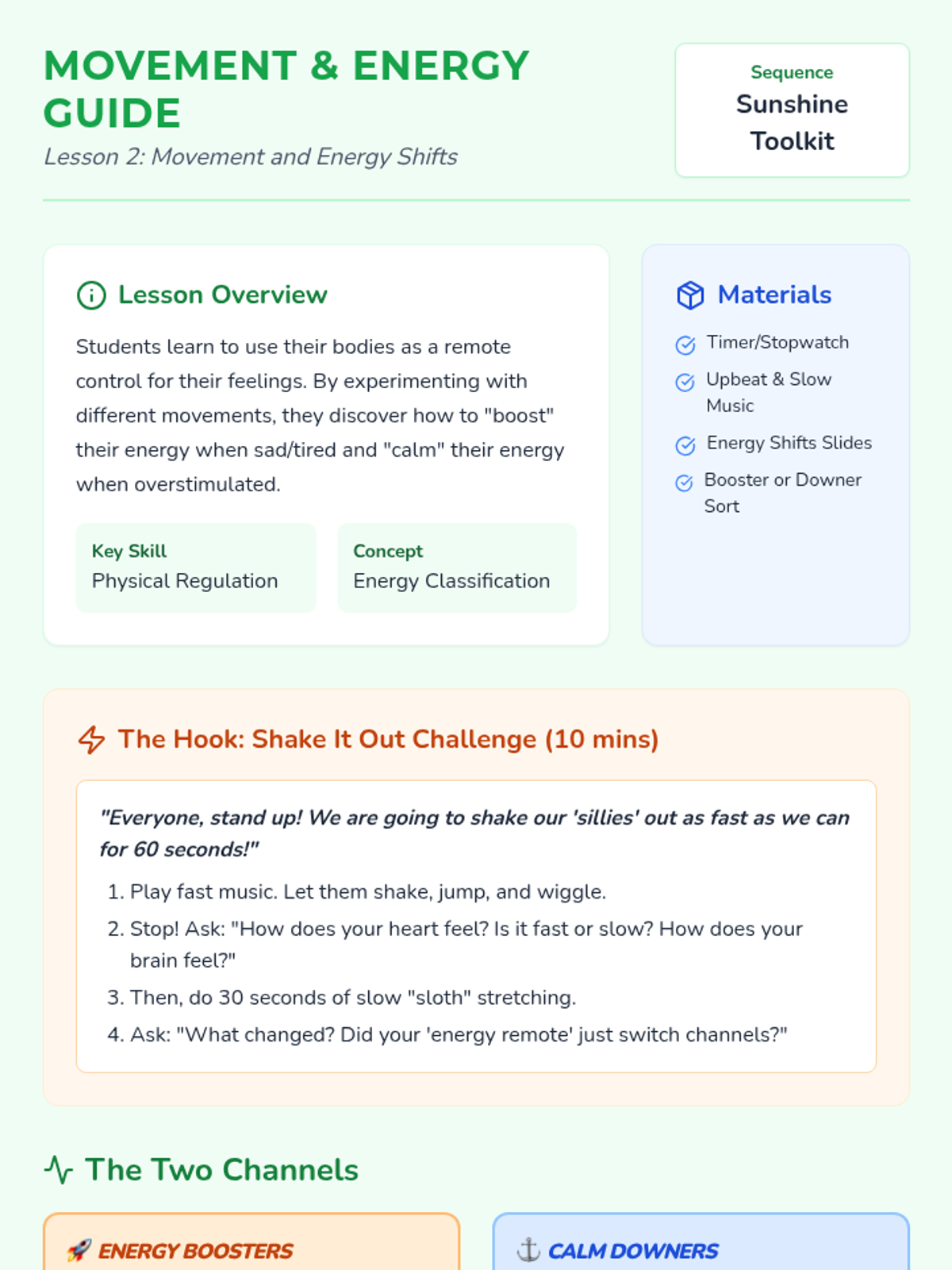
Teacher guide for Lesson 2: Movement and Energy Shifts. Includes instructions for the 'Shake It Out' hook and definitions for Energy Boosters and Calm Downers.
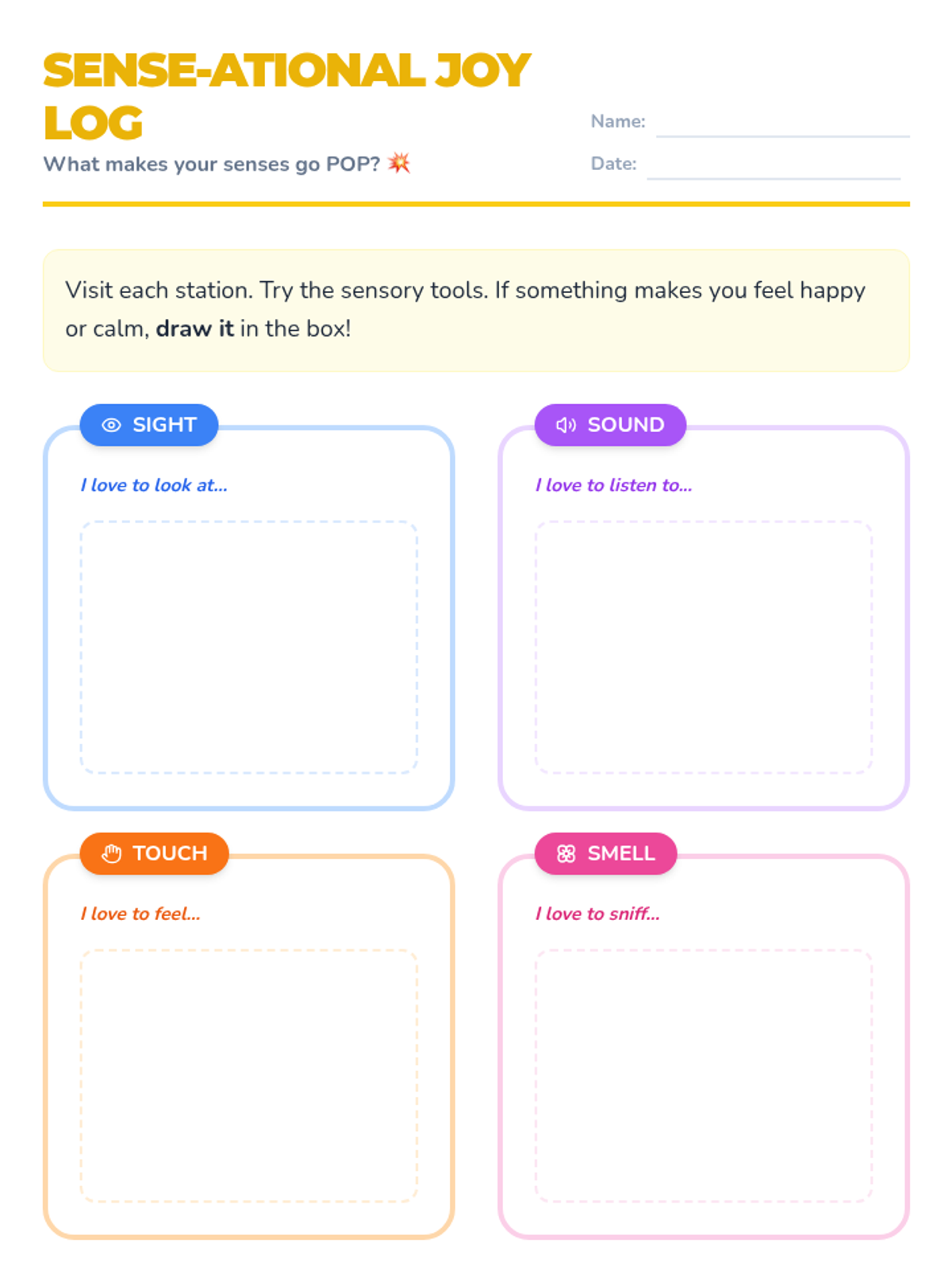
Student station rotation worksheet for recording sensory preferences through drawing. High-contrast labels and clear boundaries for 1st-grade motor skills.
Instructional slides for Lesson 1: Exploring Sensory Joy, introducing the concept of the Sunshine Kit and the five senses as emotional regulation tools.
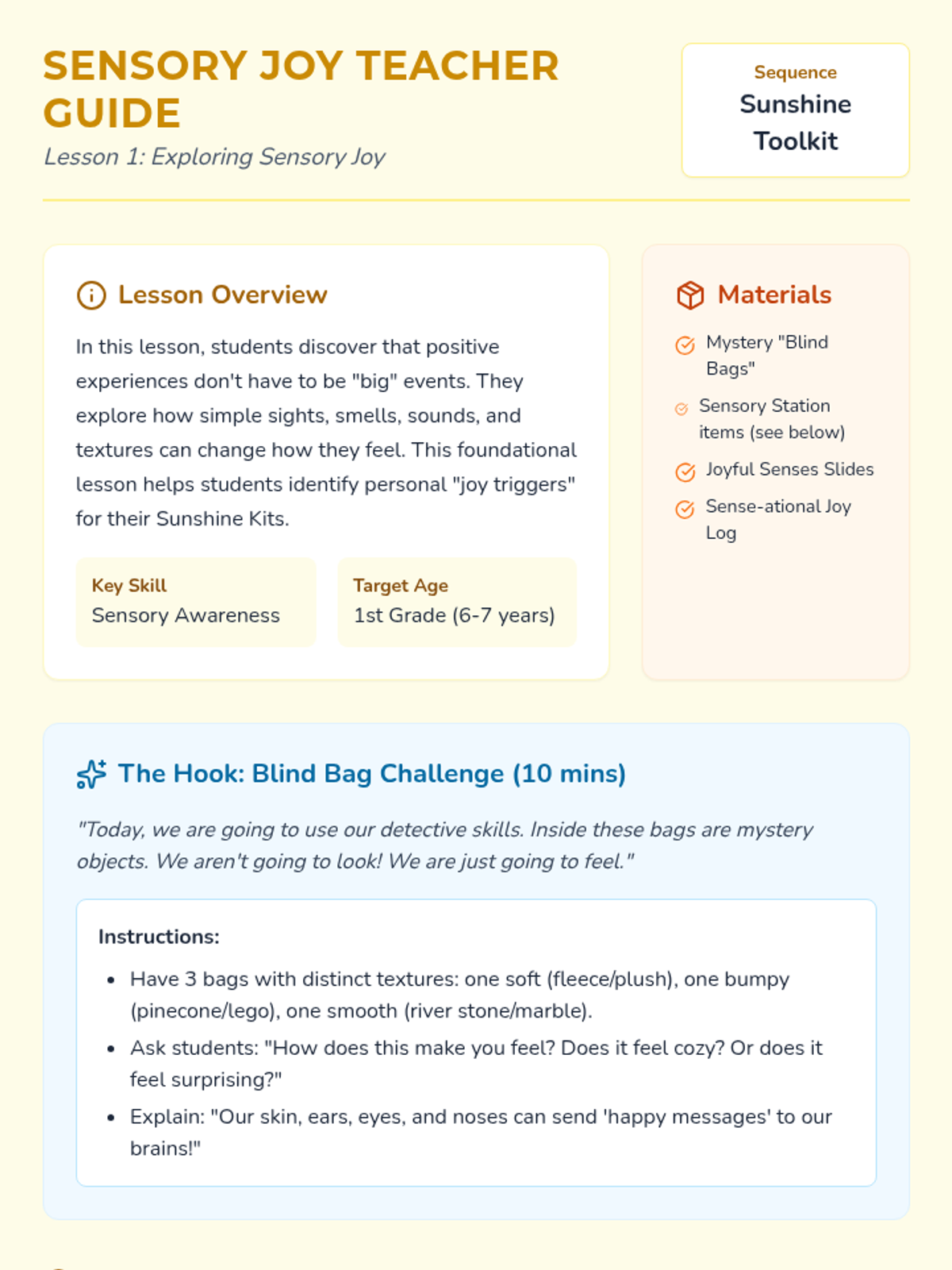
Teacher guide for Lesson 1: Exploring Sensory Joy, including setup for sensory stations, hook instructions, and discussion prompts for 1st-grade students.
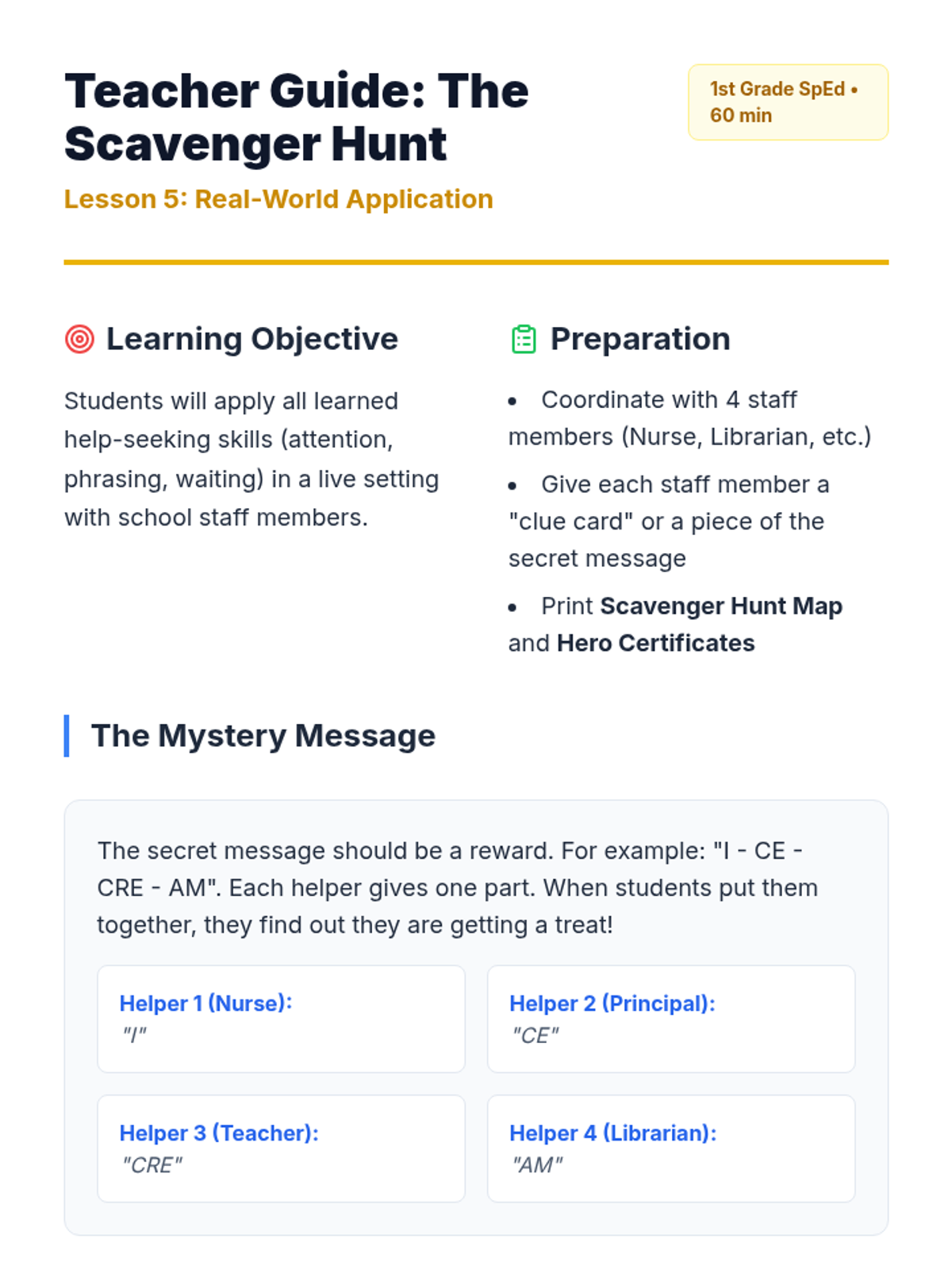
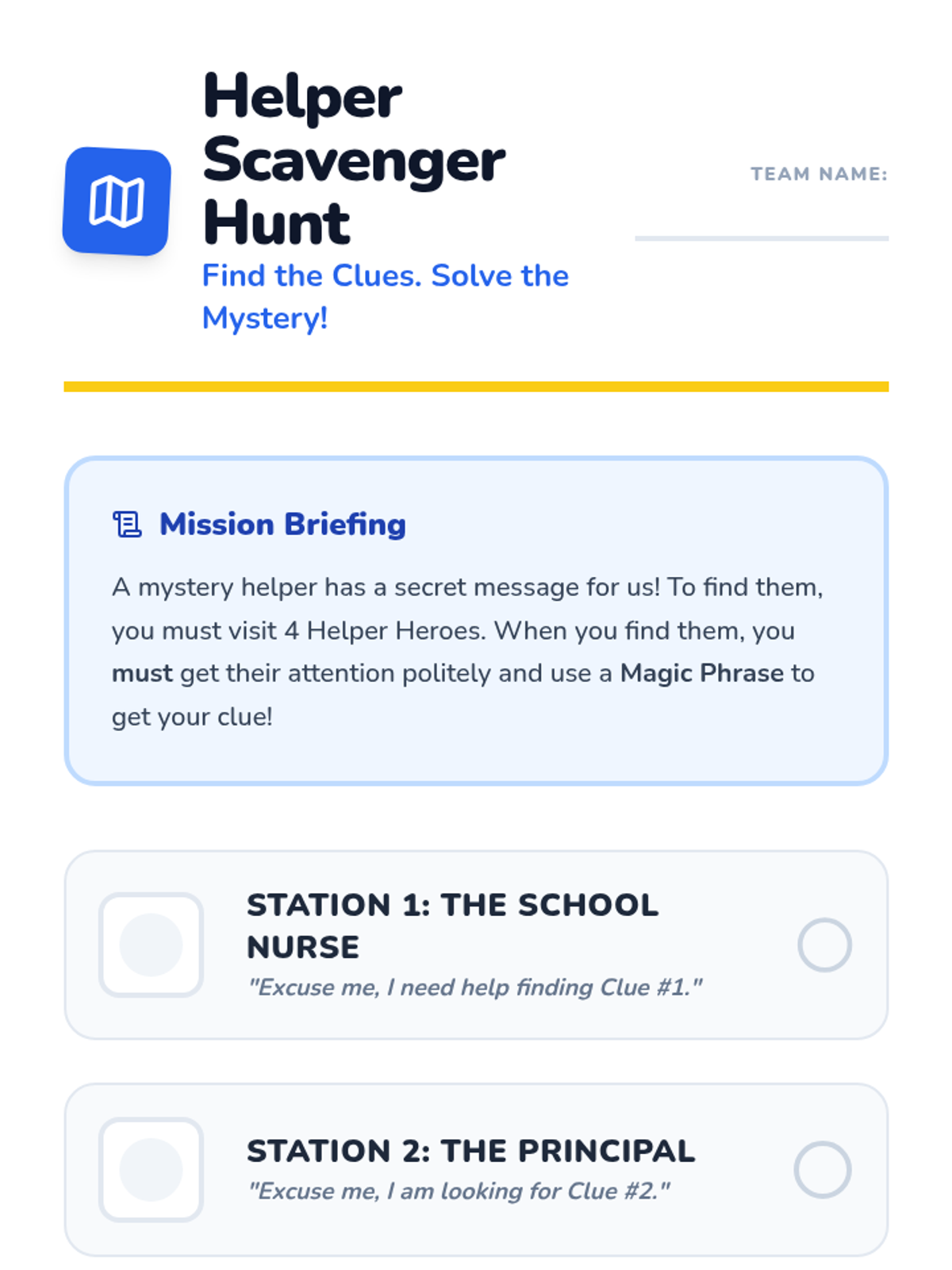
Teacher facilitation guide for Lesson 5, focusing on the setup and execution of the Helper Scavenger Hunt application activity.
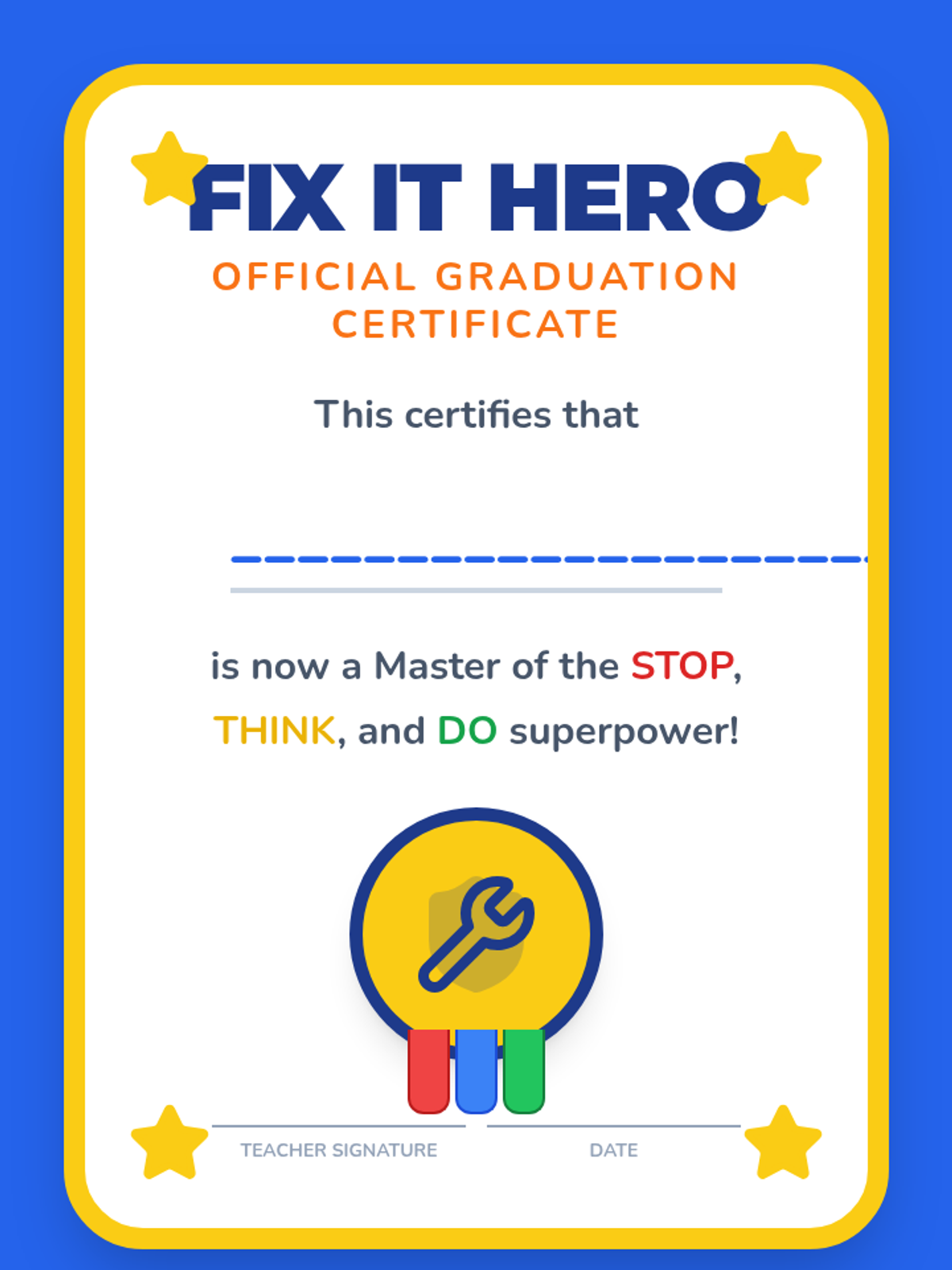
A celebratory graduation certificate for students who have mastered the 'Stop, Think, Do' problem-solving routine.
A formal certificate for students who complete the Help Hero Training sequence, celebrating their self-advocacy skills.
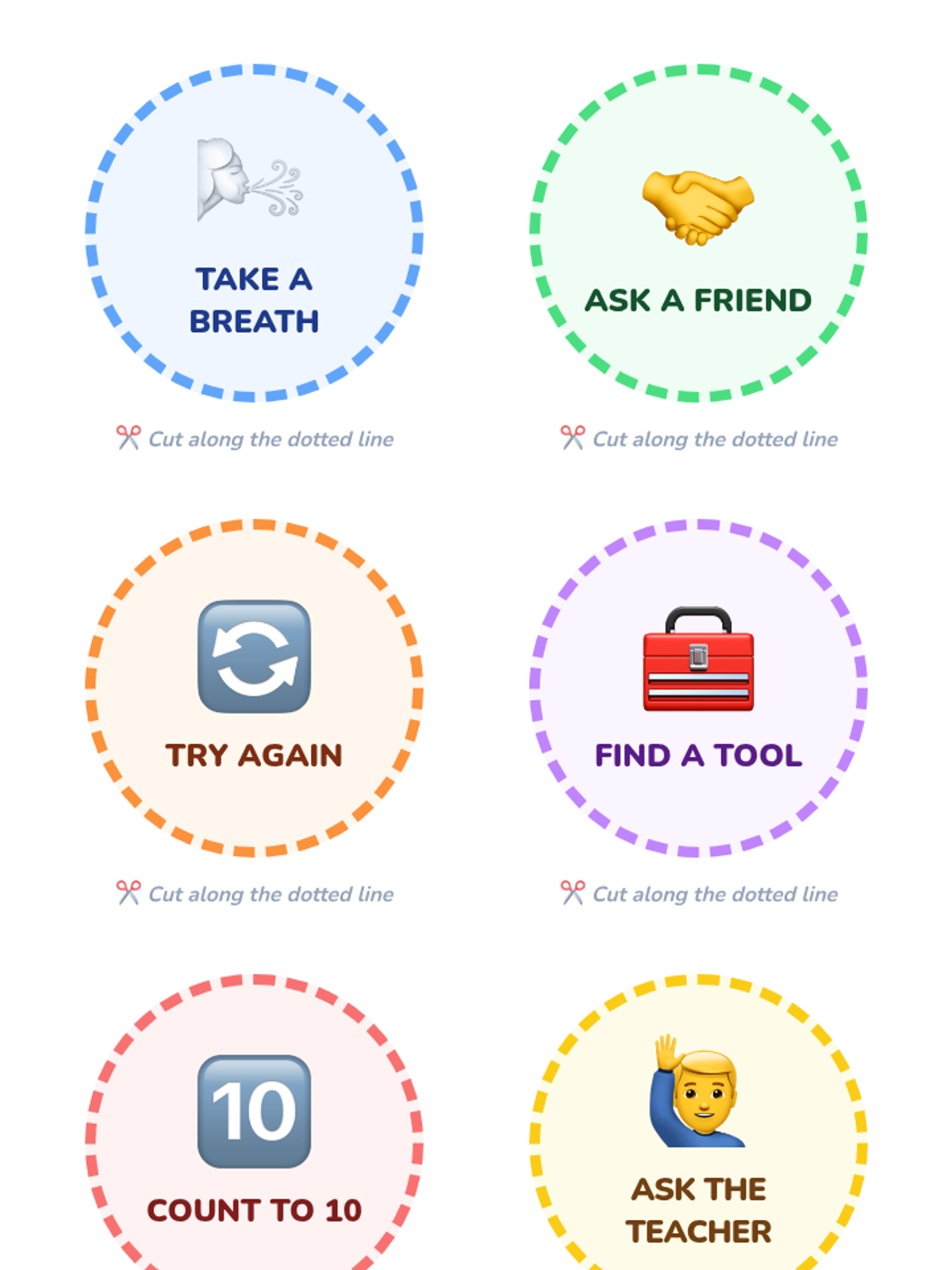
Visual strategy icons for the classroom 'Fix-It Kit', designed to be cut out and placed in a central toolbox or on a poster.
A scavenger hunt checklist for Lesson 5 where students apply help-seeking skills with various staff members to solve a classroom mystery.
Instructional slides for evaluating tools and strategies, focusing on the 'Think' phase of the problem-solving routine.