Root cause analysis and brainstorming techniques for everyday problem-solving. Equips learners with ethical frameworks and risk-benefit evaluation skills to predict consequences and make informed choices.
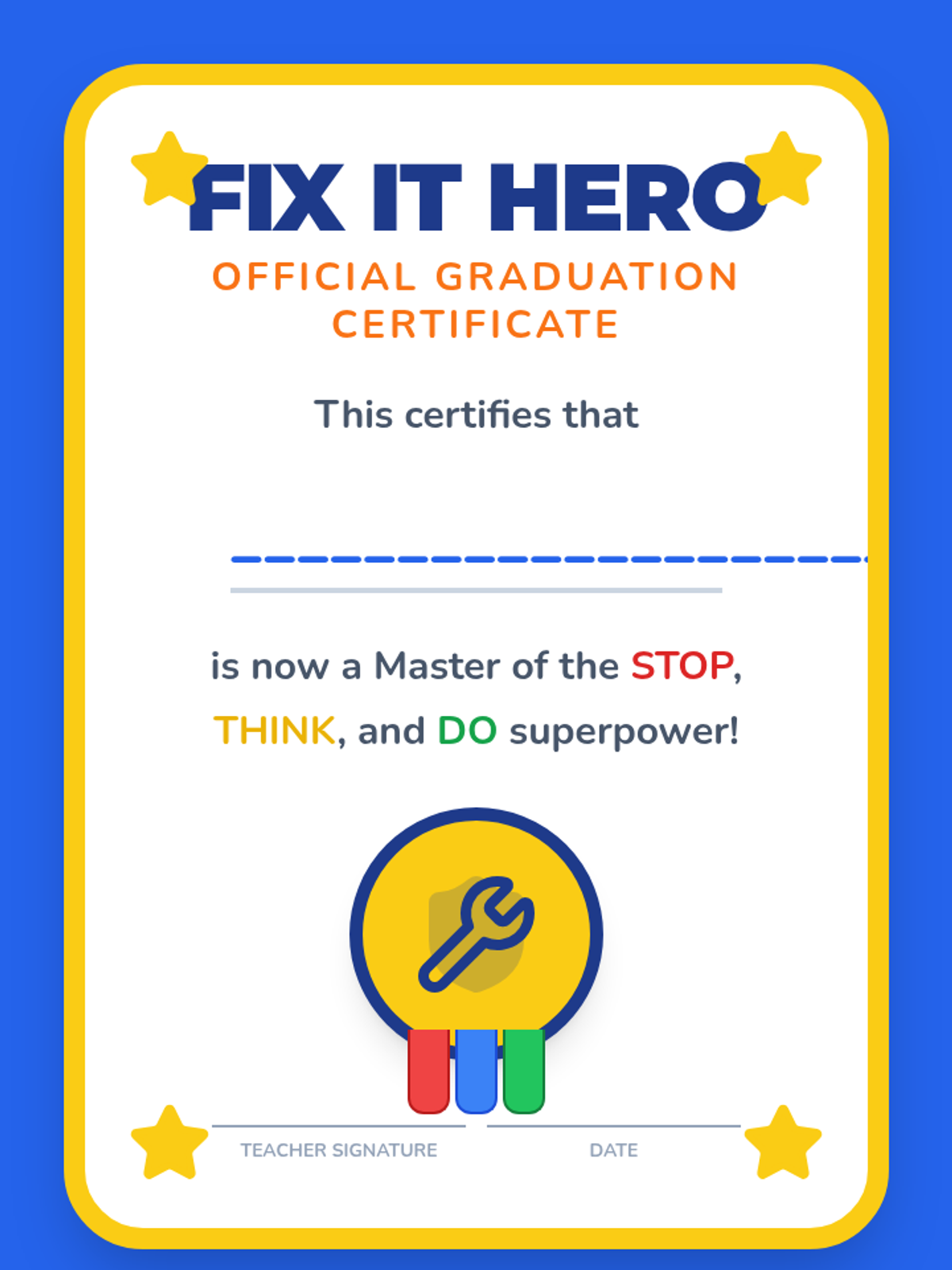
A celebratory graduation certificate for students who have mastered the 'Stop, Think, Do' problem-solving routine.
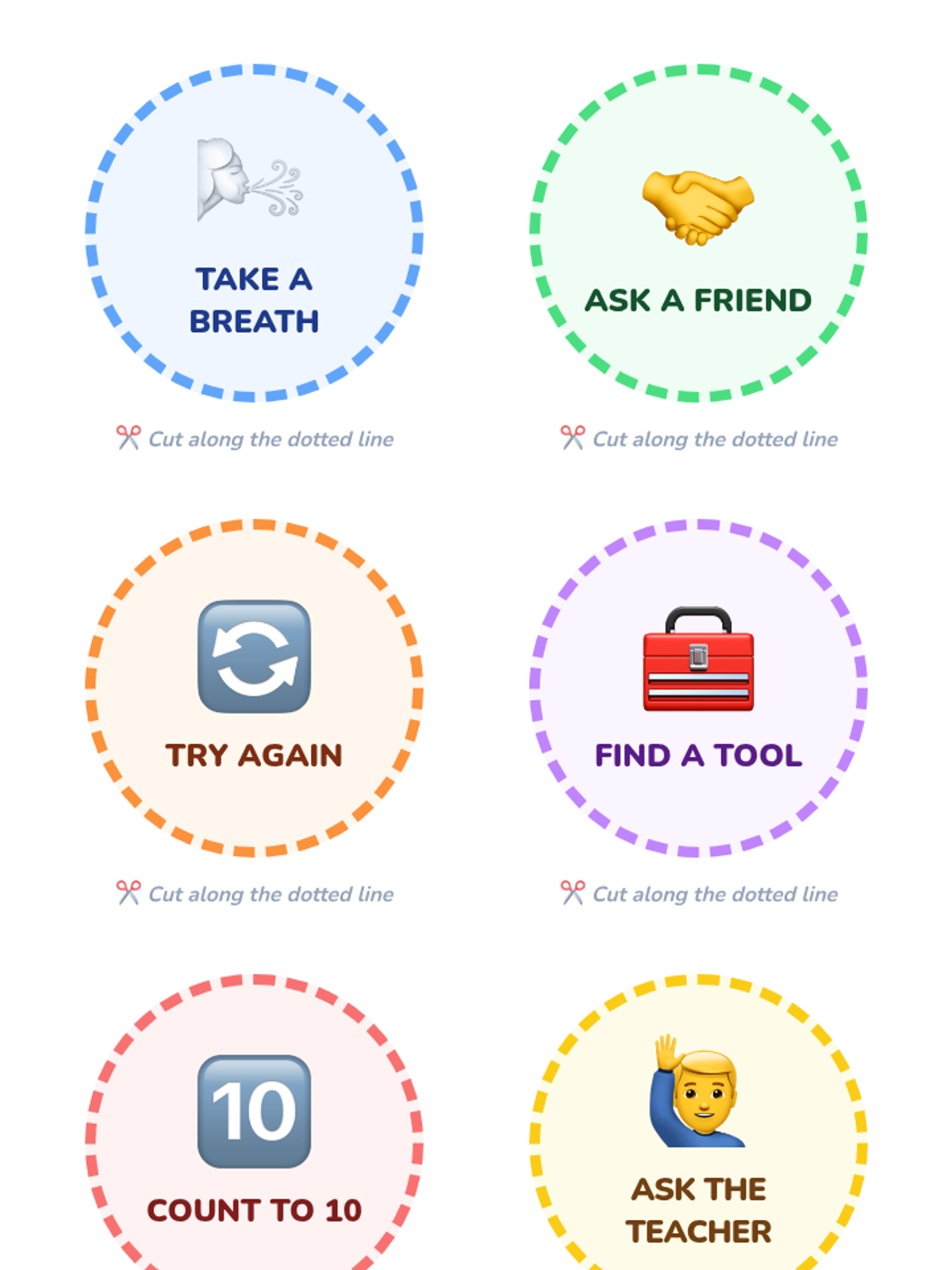
Visual strategy icons for the classroom 'Fix-It Kit', designed to be cut out and placed in a central toolbox or on a poster.
Instructional slides for evaluating tools and strategies, focusing on the 'Think' phase of the problem-solving routine.
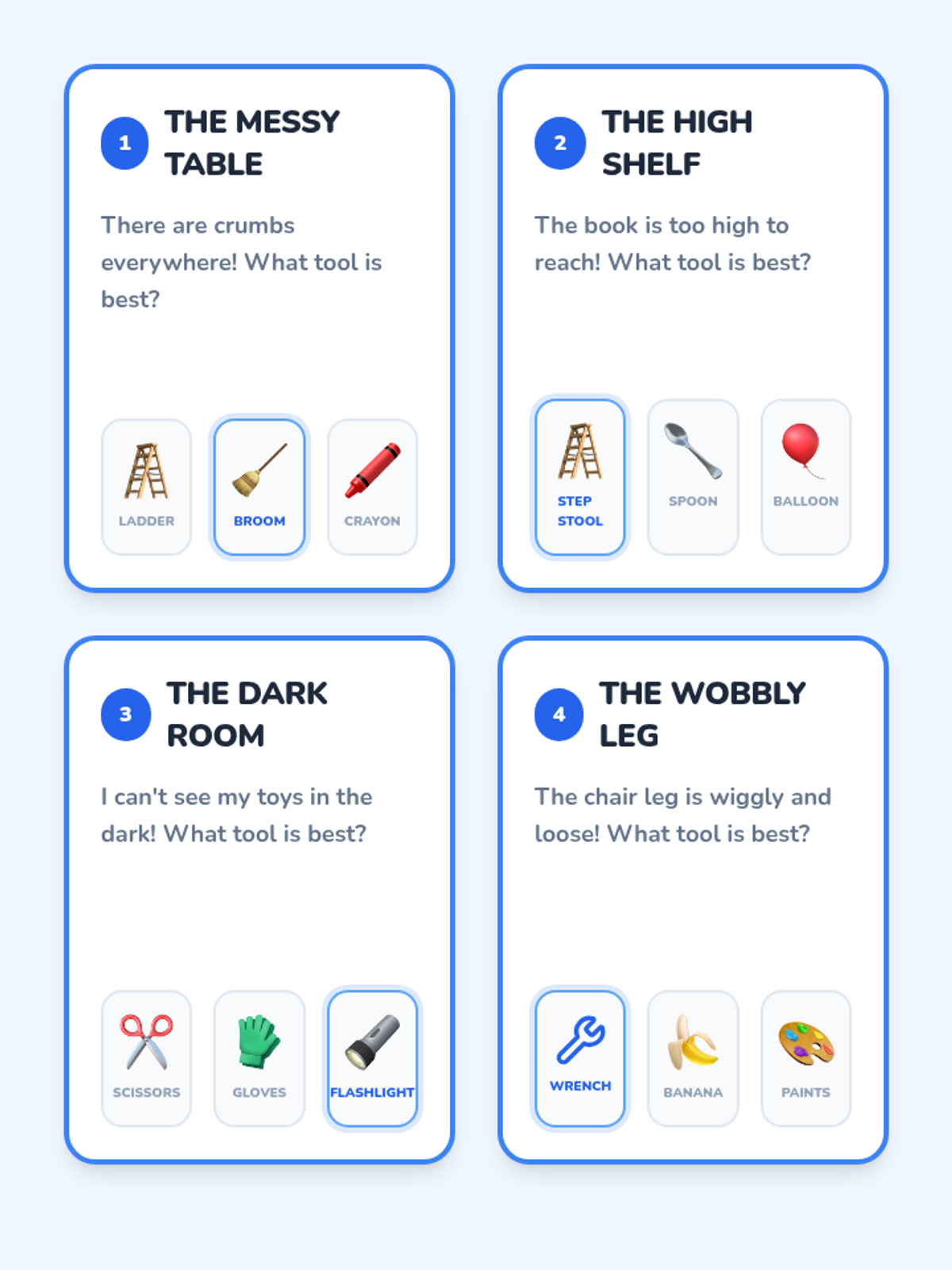
Visual tool selection task cards where students identify the best strategy or tool to solve a specific problem.
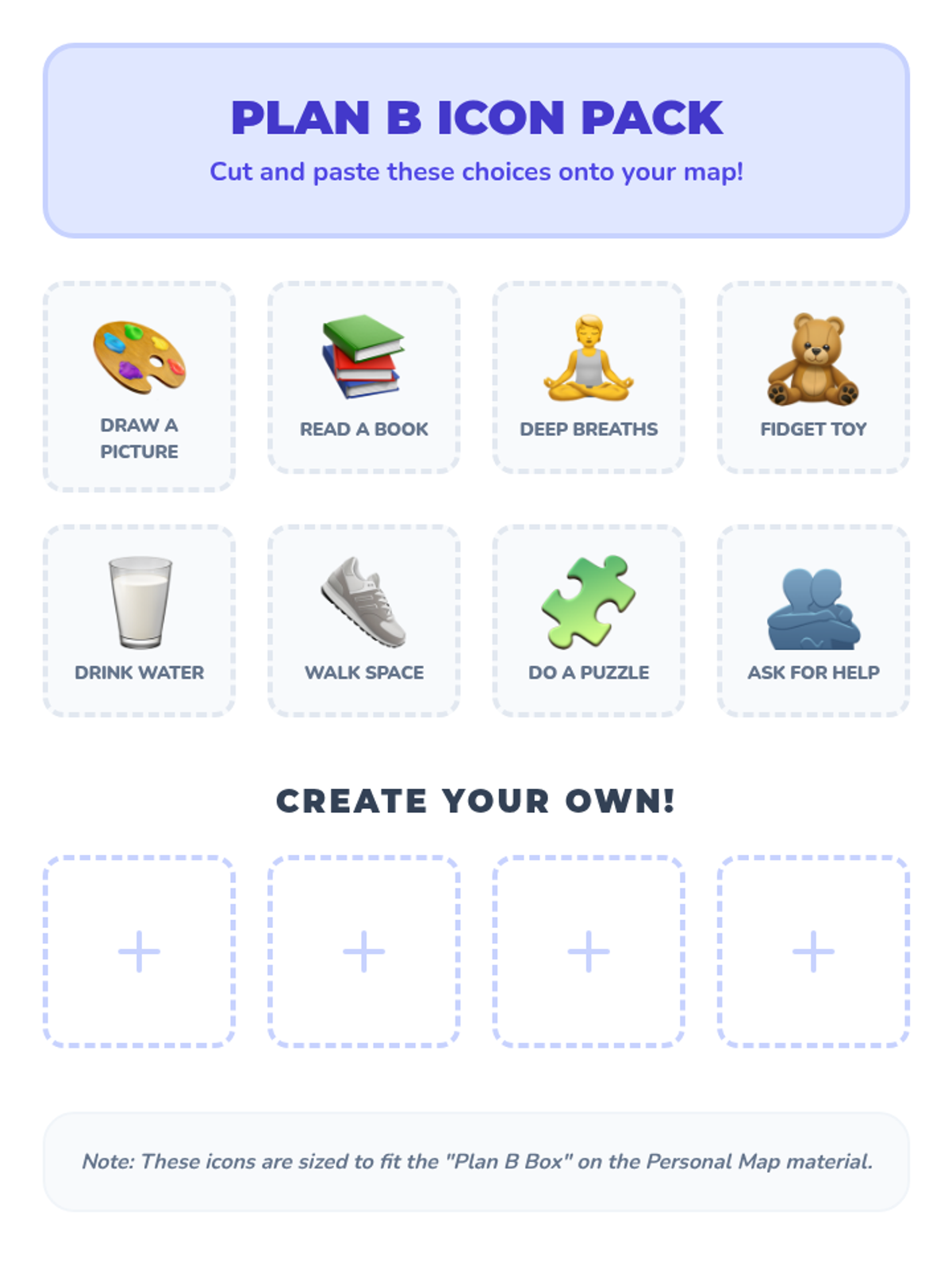
Teacher resource containing cut-out icons of Plan B strategies for students to use when creating their personalized flexibility maps.
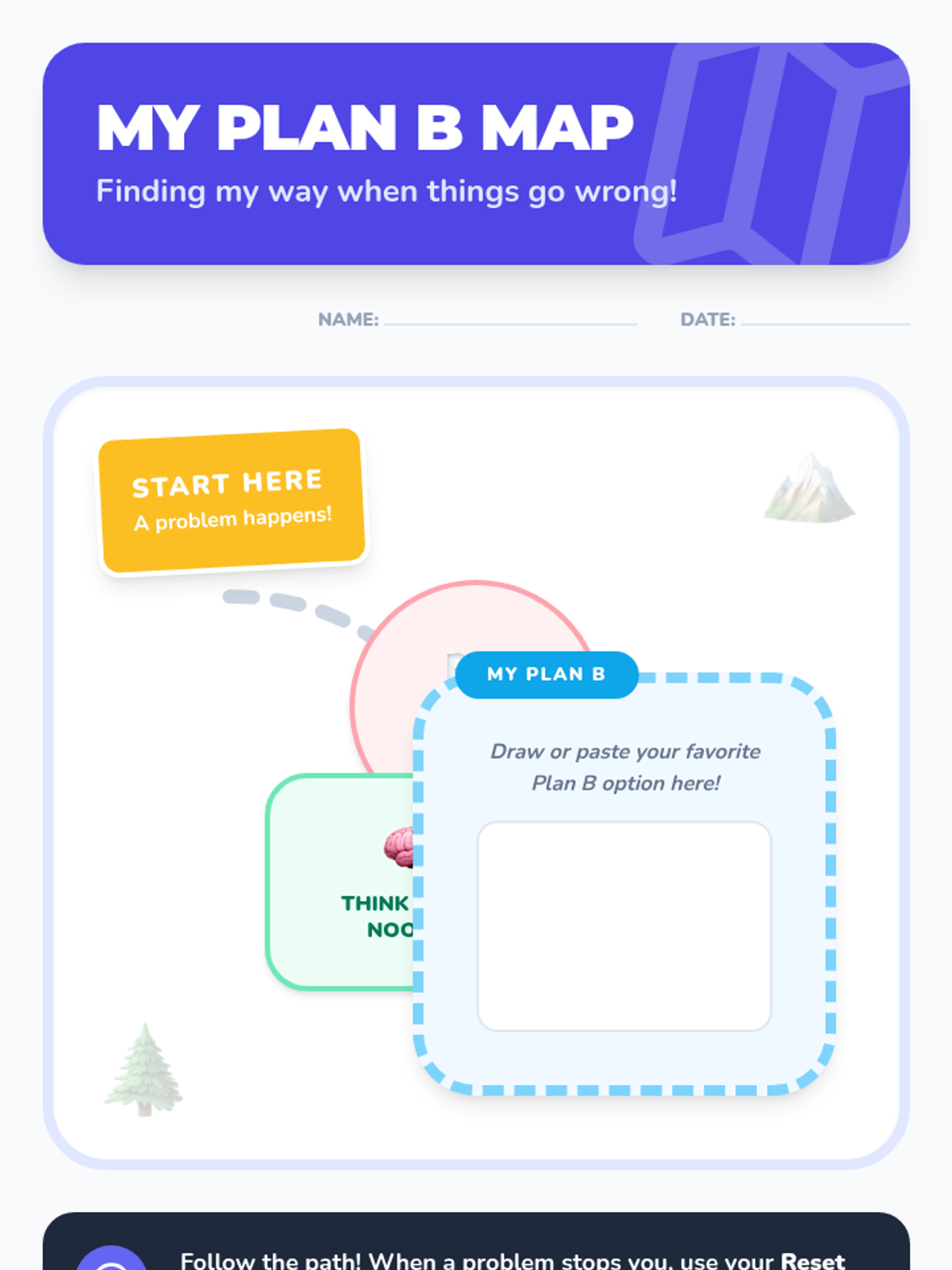
Final project template for Lesson 5, where students create a visual 'map' showing their personal strategy for navigating obstacles using learned techniques.
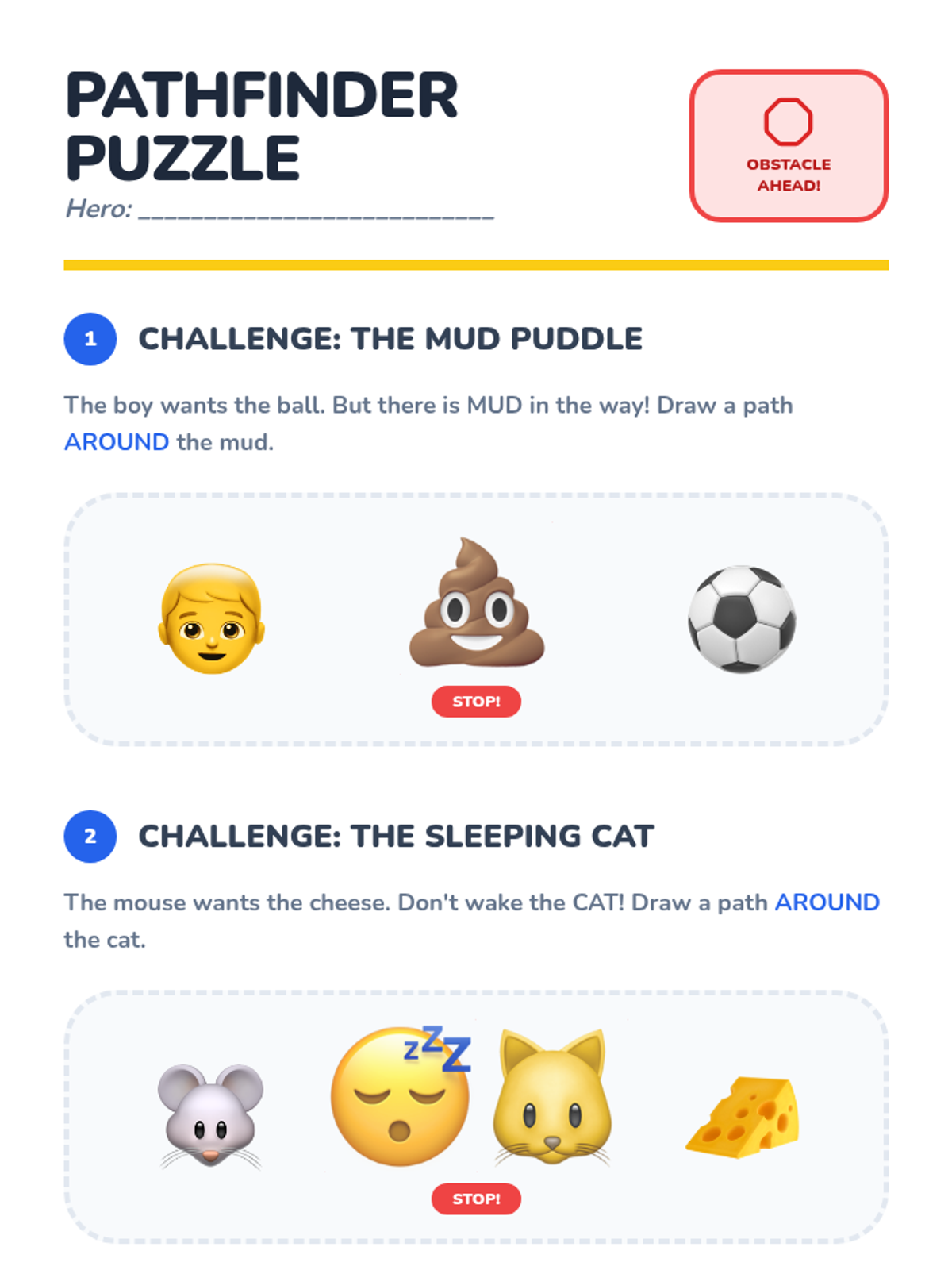
A workaround puzzle worksheet where students draw alternative paths around obstacles to reach a goal, practicing the Stop-Think-Do routine.
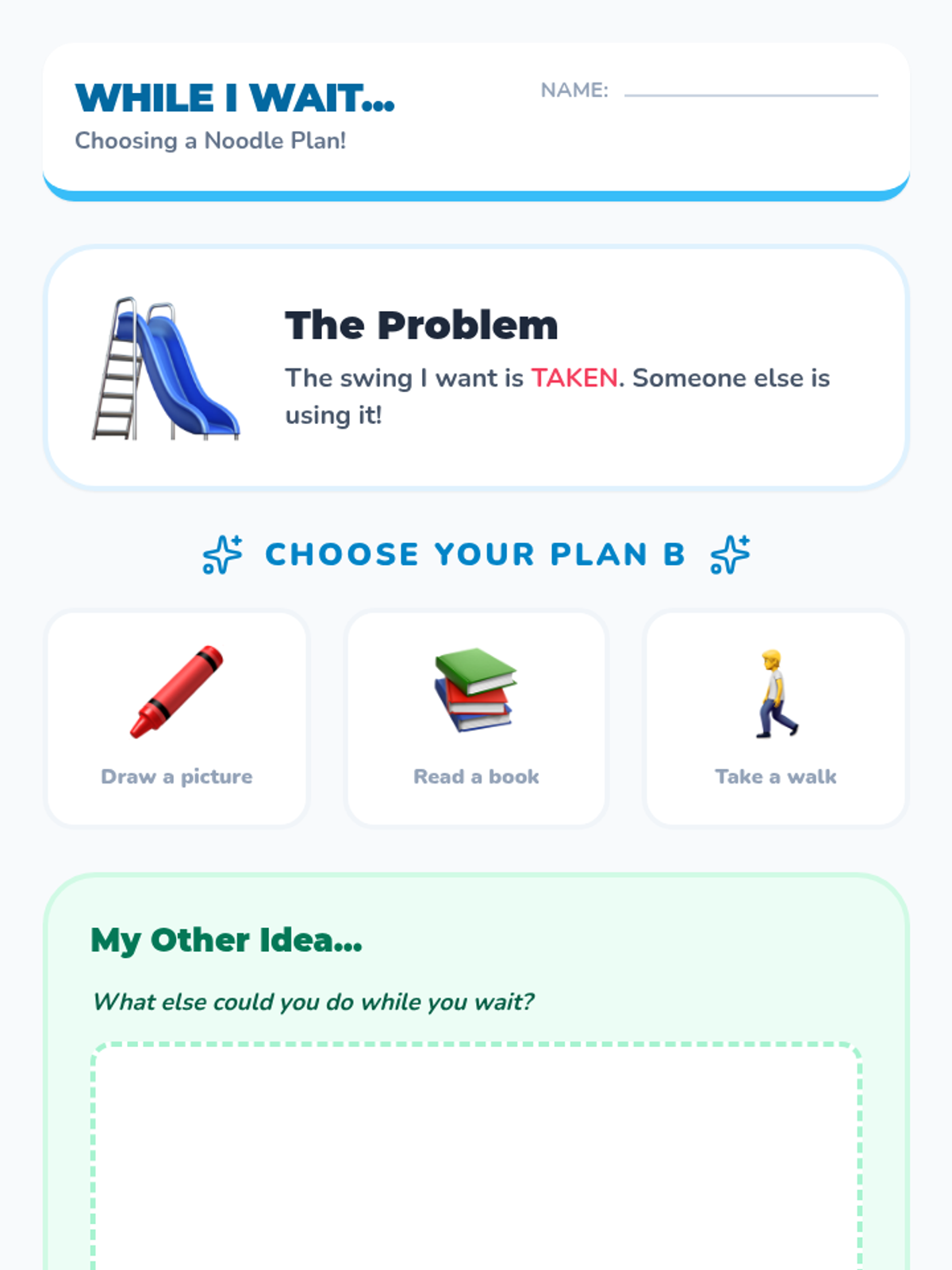
Student activity sheet for Lesson 4, allowing students to choose a 'Plan B' activity when a preferred item is unavailable.
Instructional slides for the 'Bridge Out Challenge', teaching students how to identify obstacles and plan workaround strategies using the Stop-Think-Do framework.
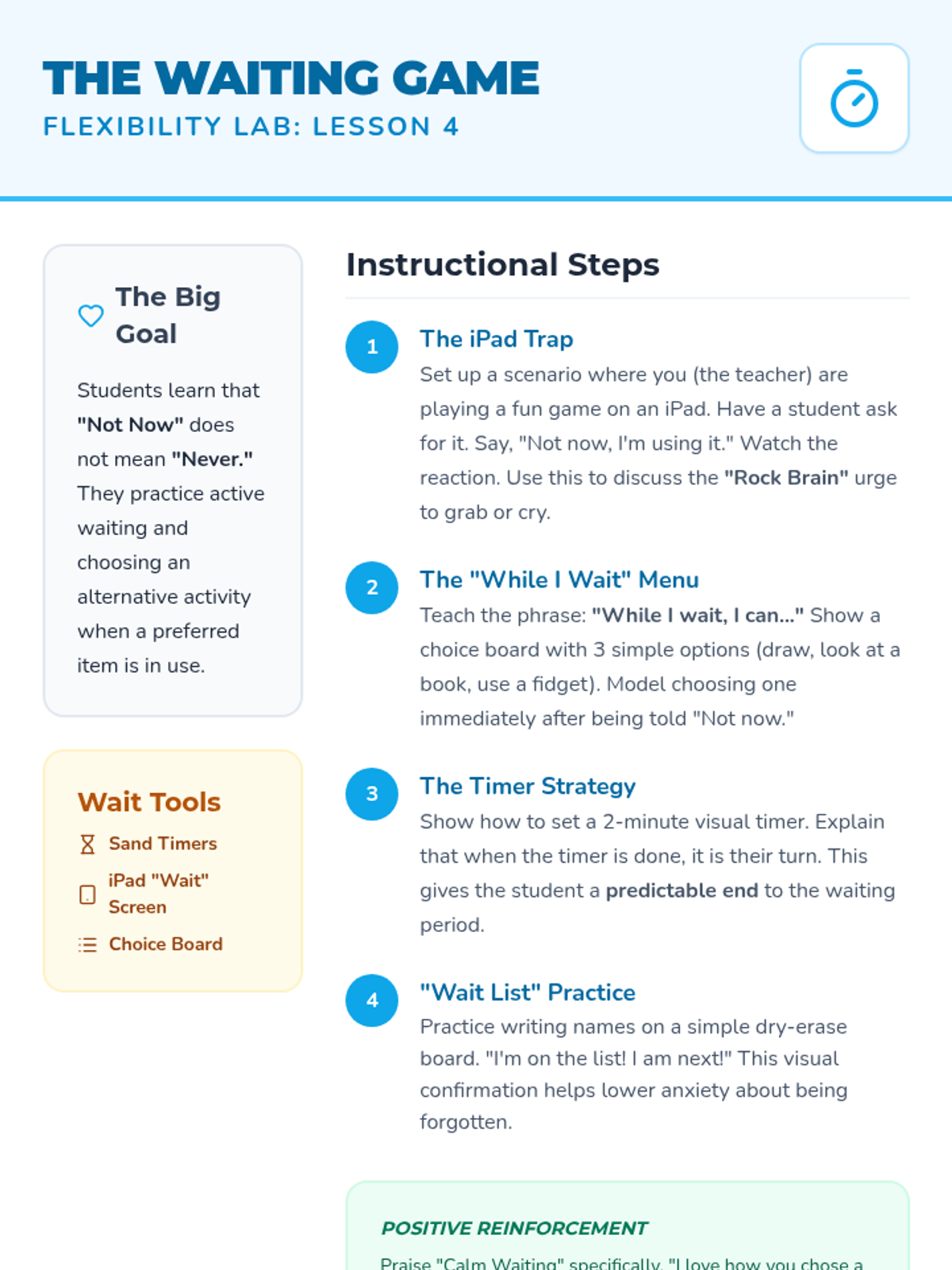
Teacher instructional guide for Lesson 4, teaching students strategies for 'active waiting' and using choice boards when items are unavailable.
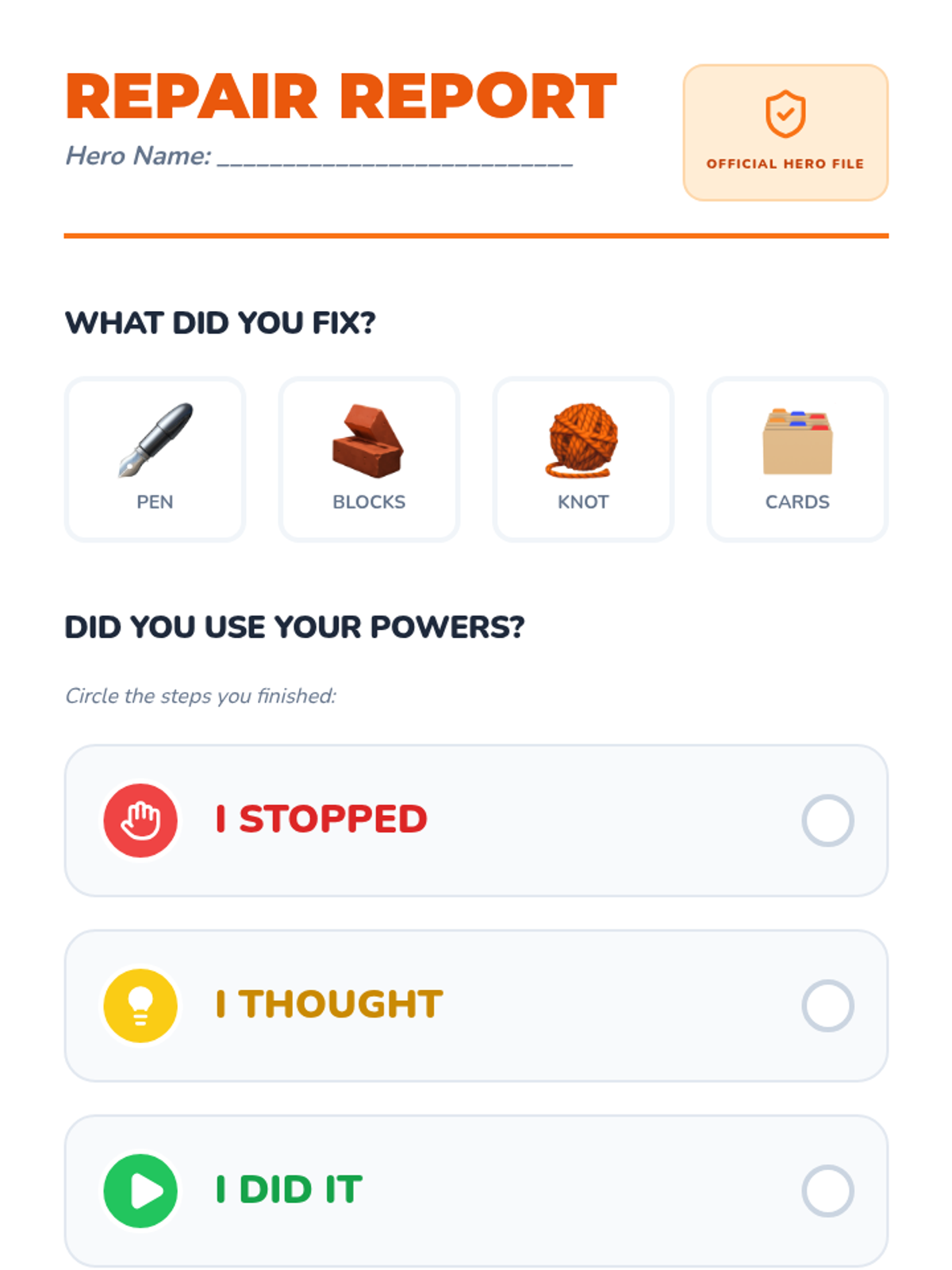
A simple reflection worksheet for students to record their progress through the Stop-Think-Do routine after fixing an object.
Engaging slide presentation for Lesson 3 on schedule changes, introducing 'Plan A' vs. 'Plan B' and the ritual of moving visual schedule cards.
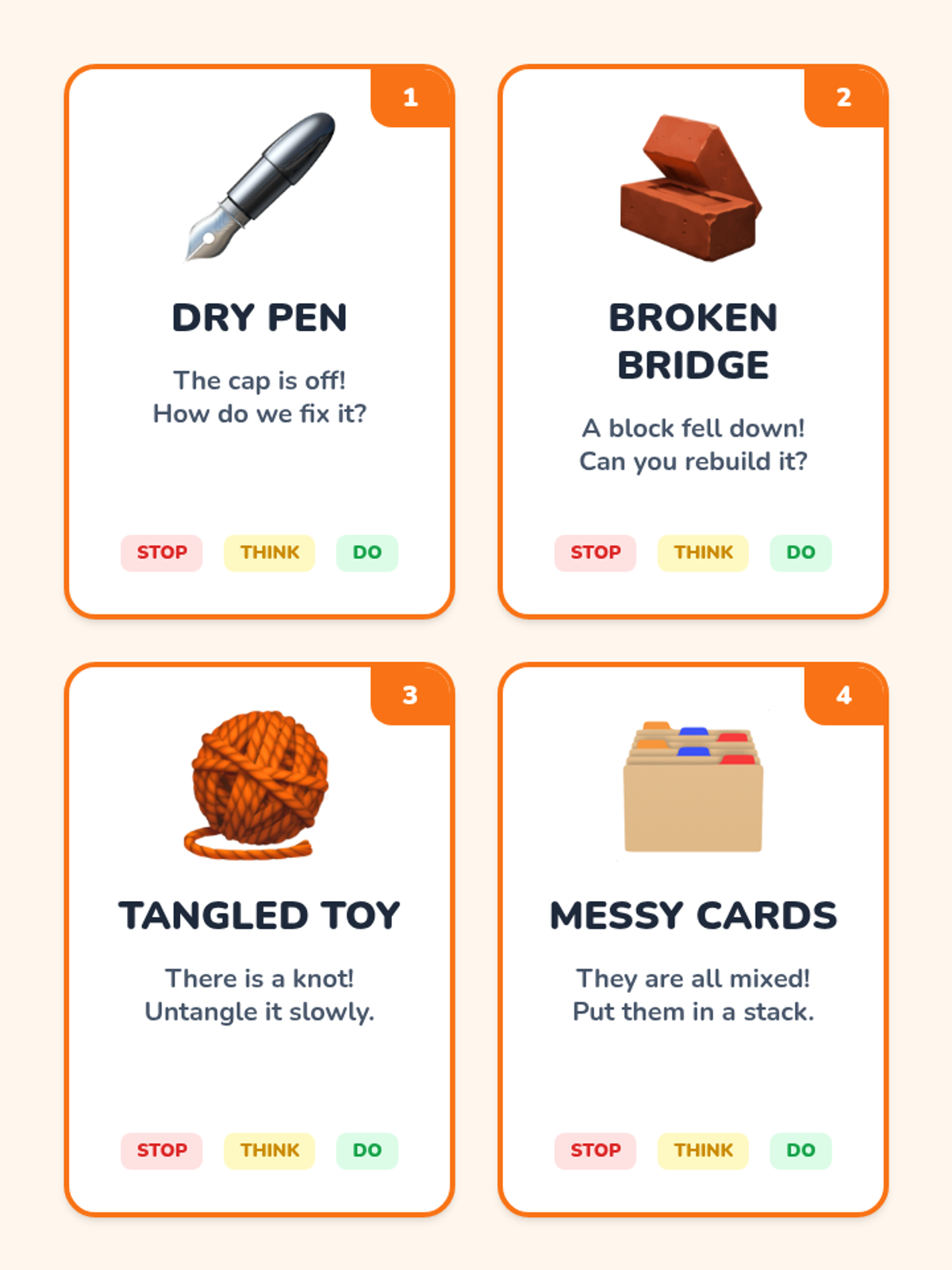
Visual task cards for classroom 'Repair Shop' stations, prompting students to use the Stop-Think-Do method to fix broken items.
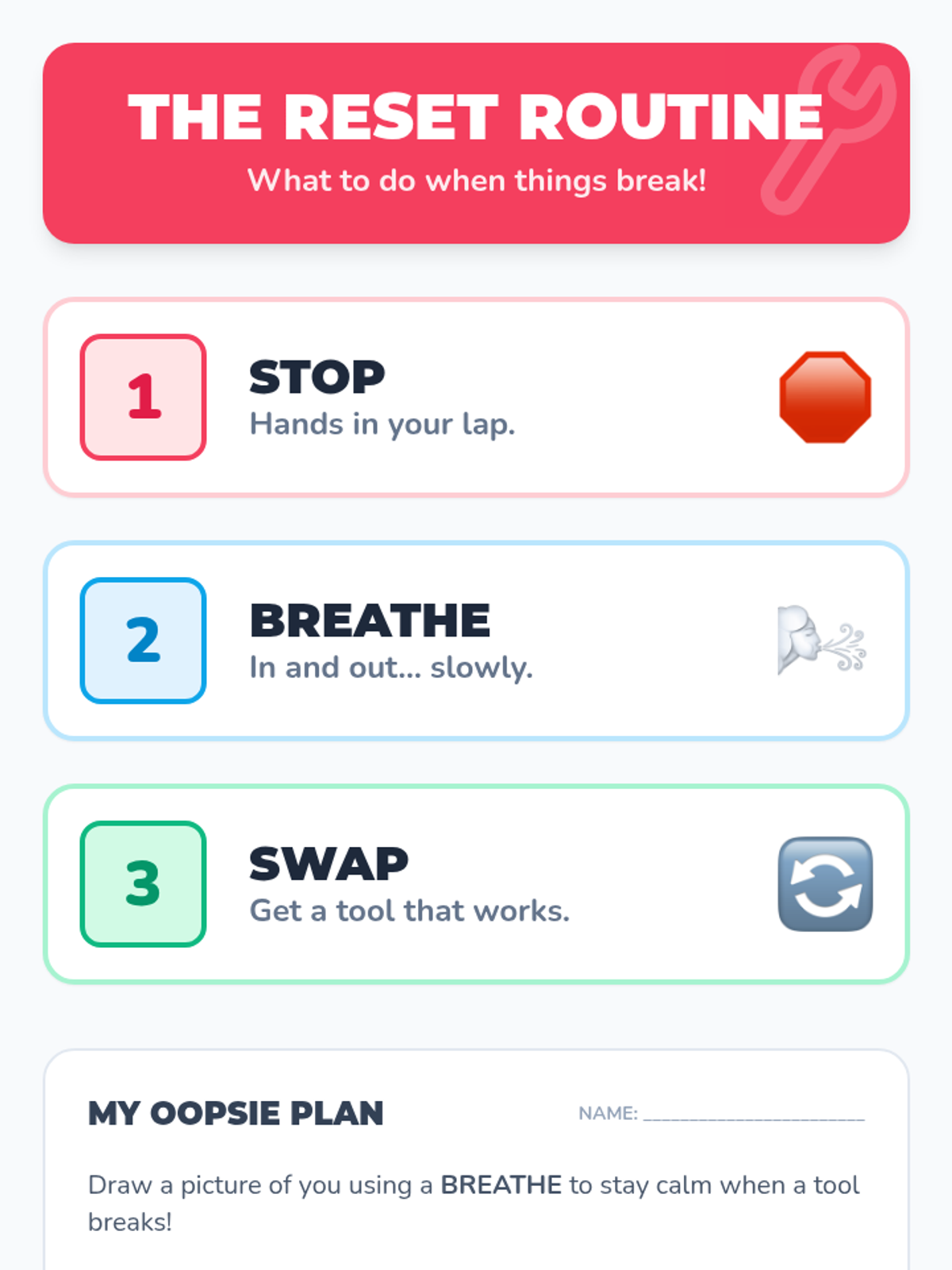
Visual anchor chart and worksheet for the 'Reset Routine' (Stop-Breathe-Swap), designed for students to visualize the steps of emotional regulation when tools break.
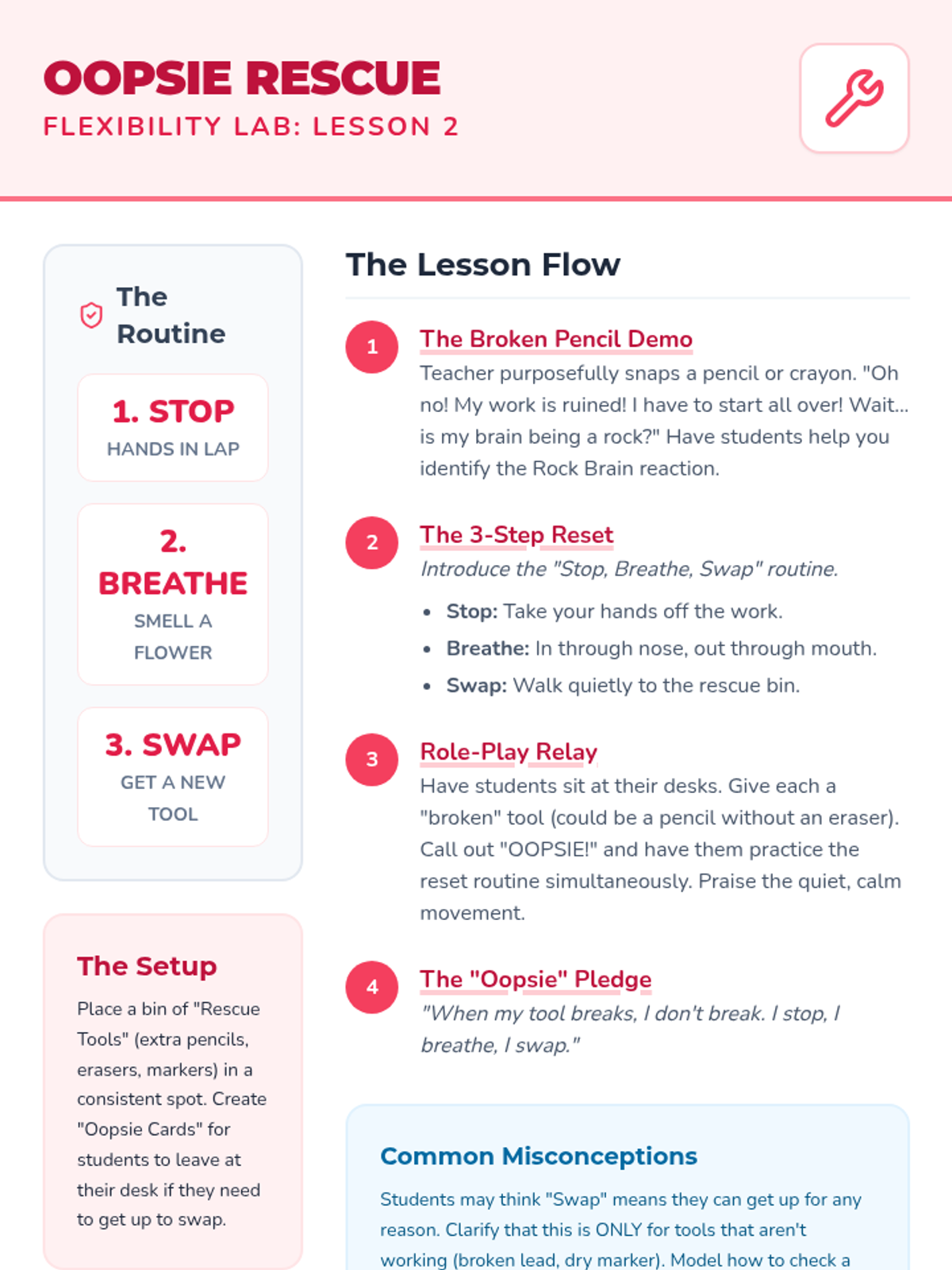
Teacher instructional guide for Lesson 2, focusing on the Stop-Breathe-Swap routine for handling broken classroom tools.
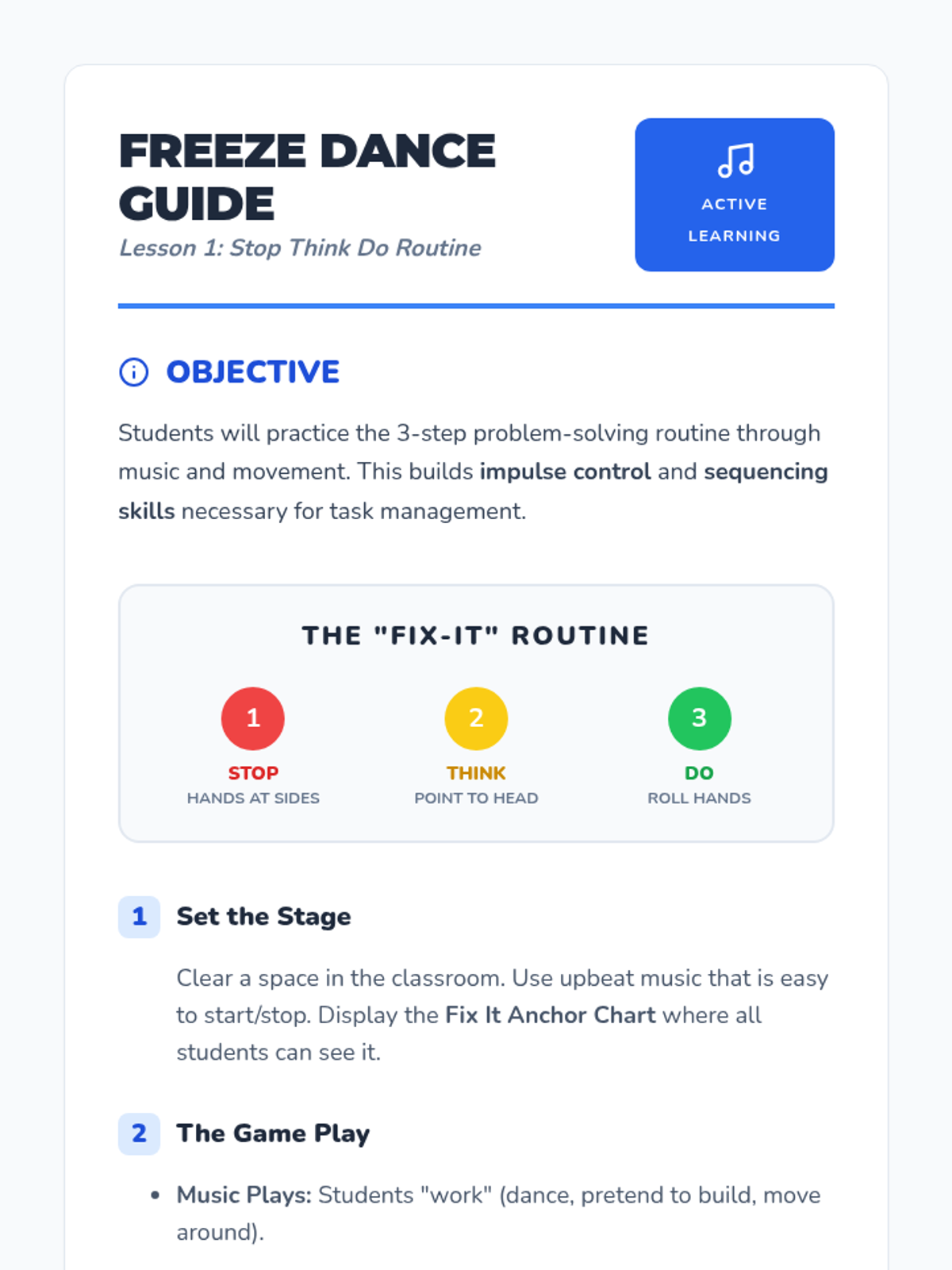
A facilitation guide for teachers to lead the 'Stop, Think, Do' freeze dance game, including differentiation strategies for 1st-grade special education.
Visual slide deck for Lesson 1 introducing the Rock vs. Noodle brain concepts with engaging visuals and practice scenarios.
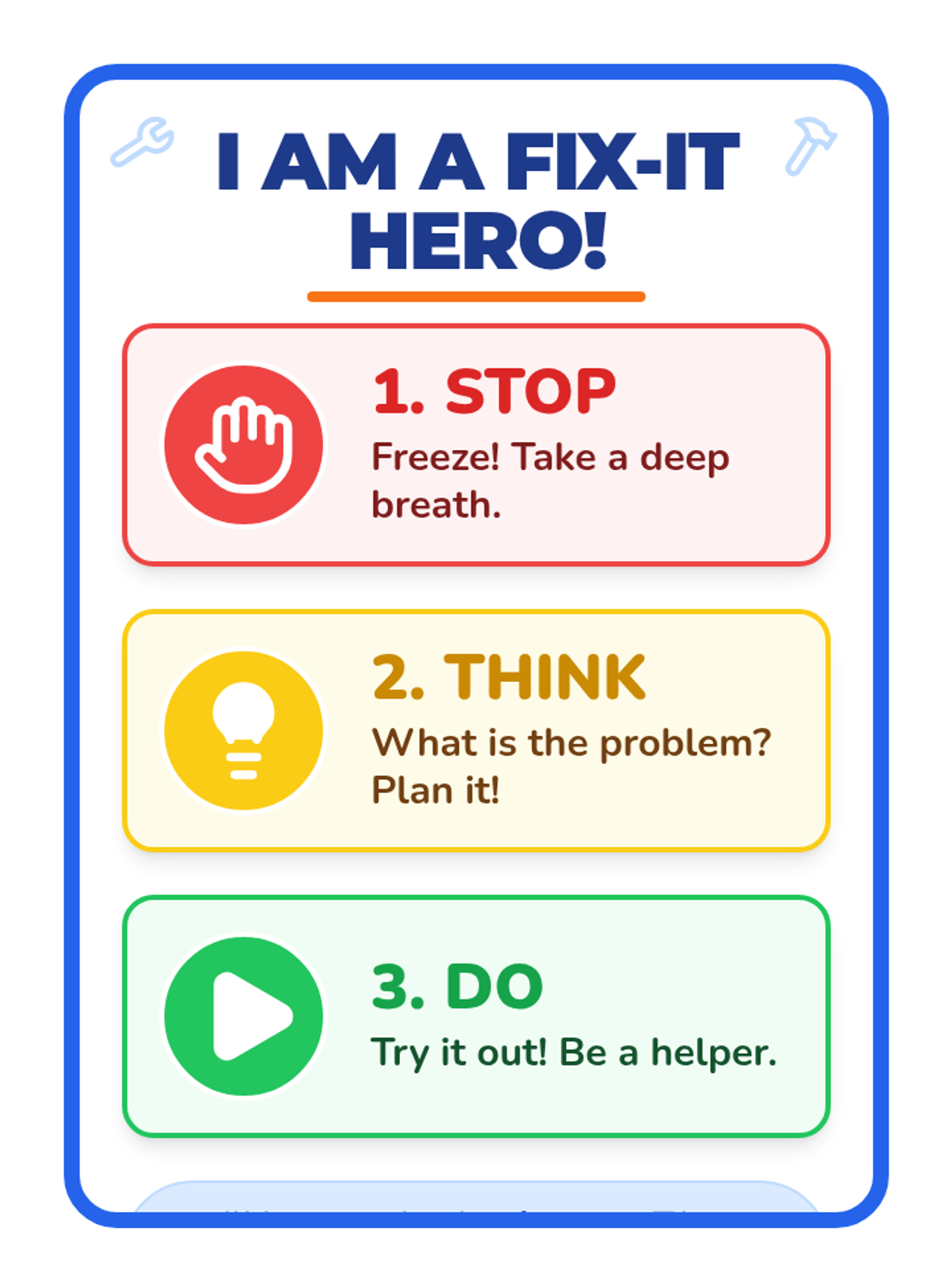
A high-contrast visual anchor chart for the 'Stop, Think, Do' routine, designed for classroom display and student reference.
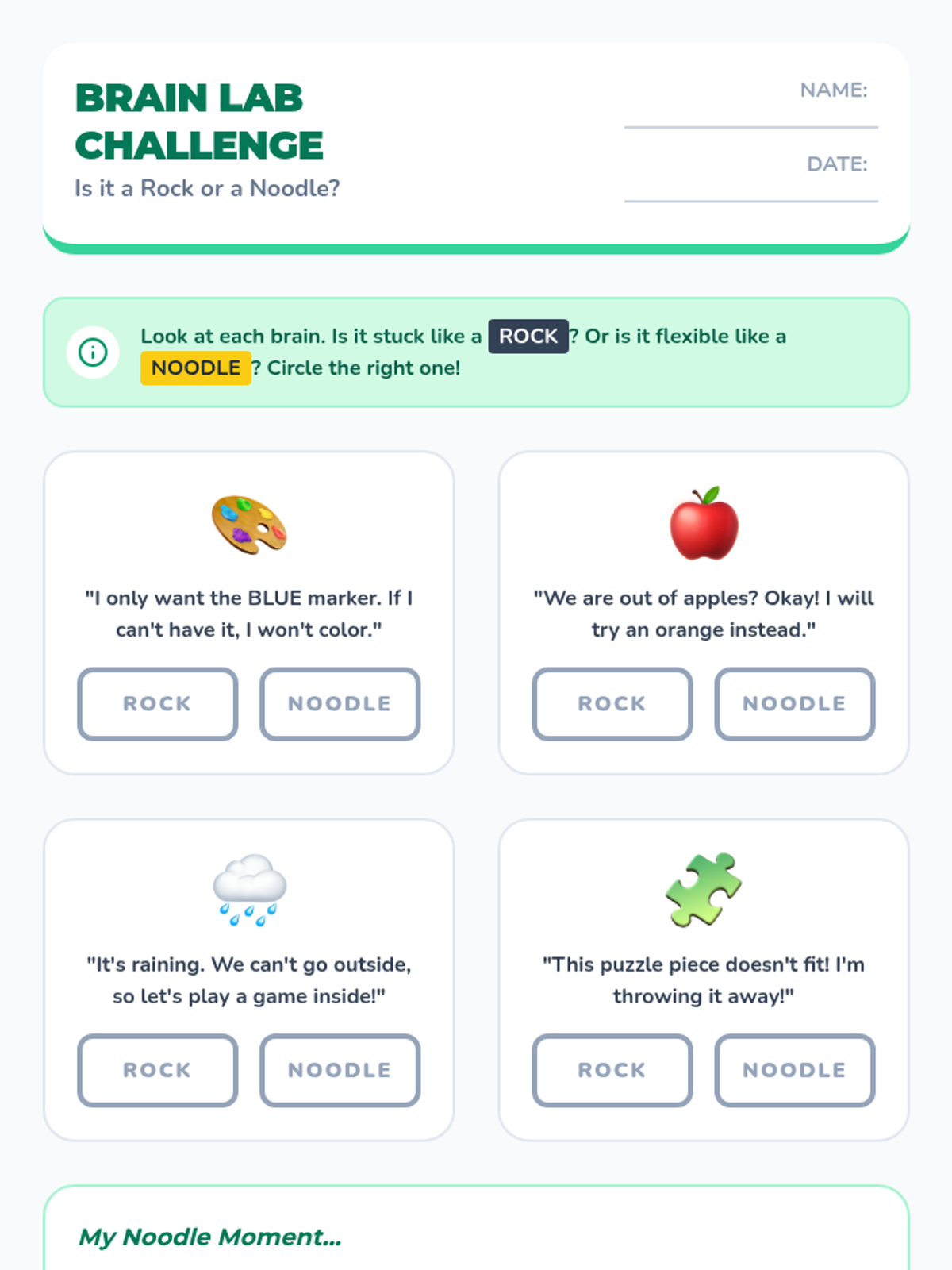
Student worksheet for identifying 'Rock' vs. 'Noodle' thinking scenarios with a drawing space for personal reflection.
Instructional slides for the 'Stop, Think, Do' problem-solving routine, featuring gross-motor movements and visual supports for 1st-grade students.
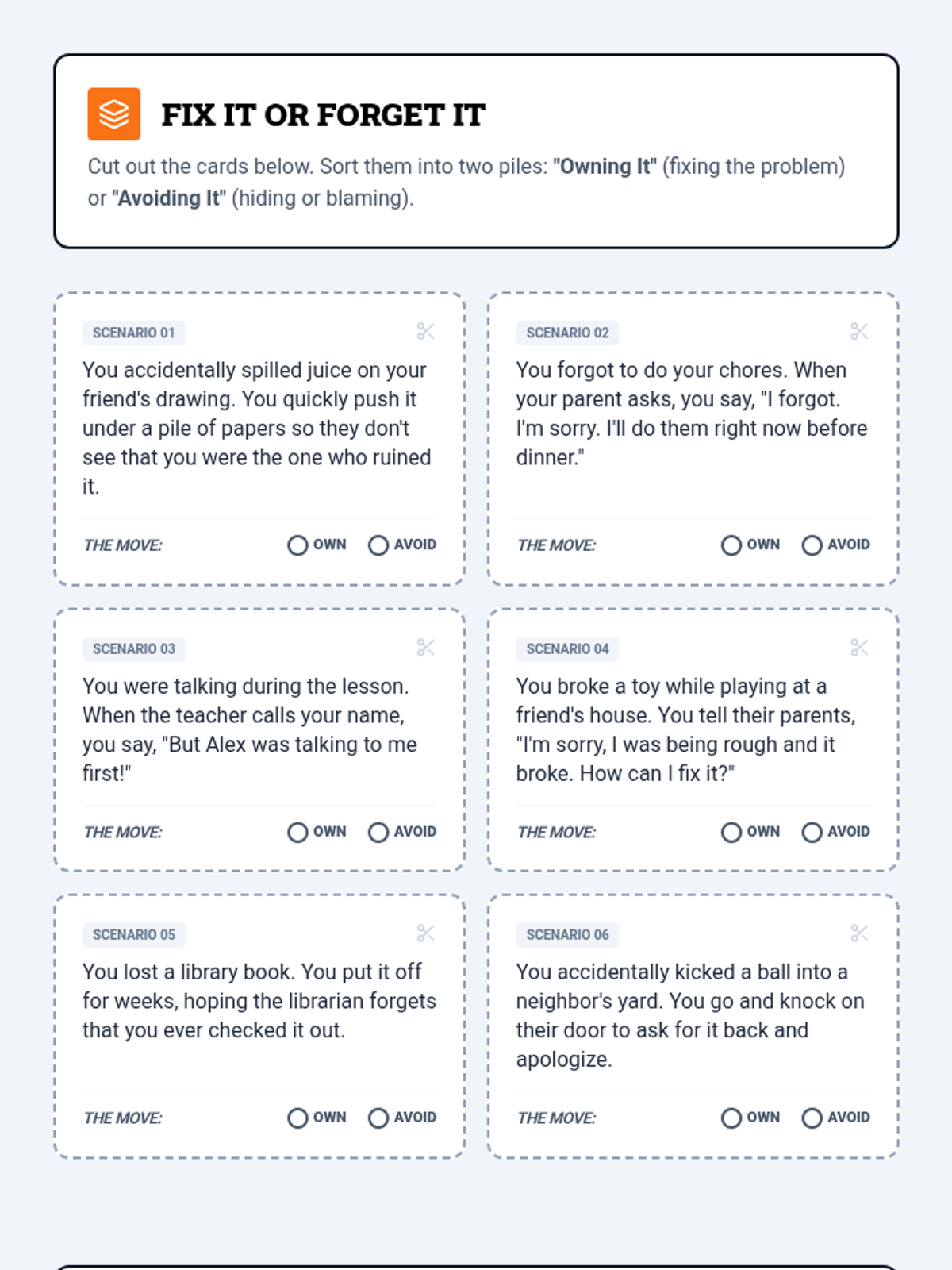
A hands-on sorting activity featuring 6 scenario cards where characters either take ownership or avoid accountability. Includes two large sorting mats ('Owning It' and 'Avoiding It') for group discussion and categorization.
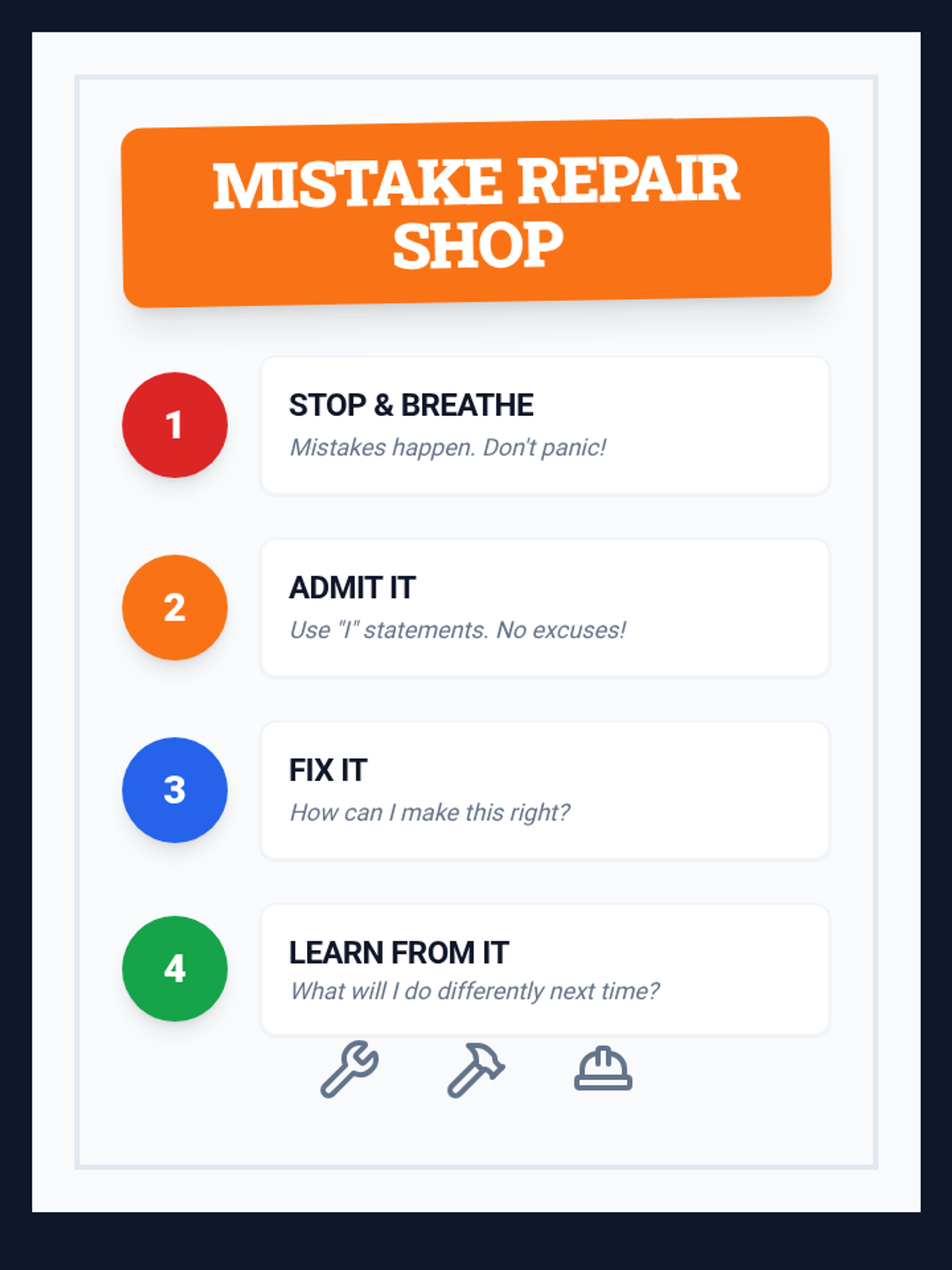
A set of classroom visuals including a large 'Mistake Repair Shop' anchor chart outlining the four-step ownership process, plus two motivational posters focusing on integrity and the growth mindset of 'upgrading' through mistakes.
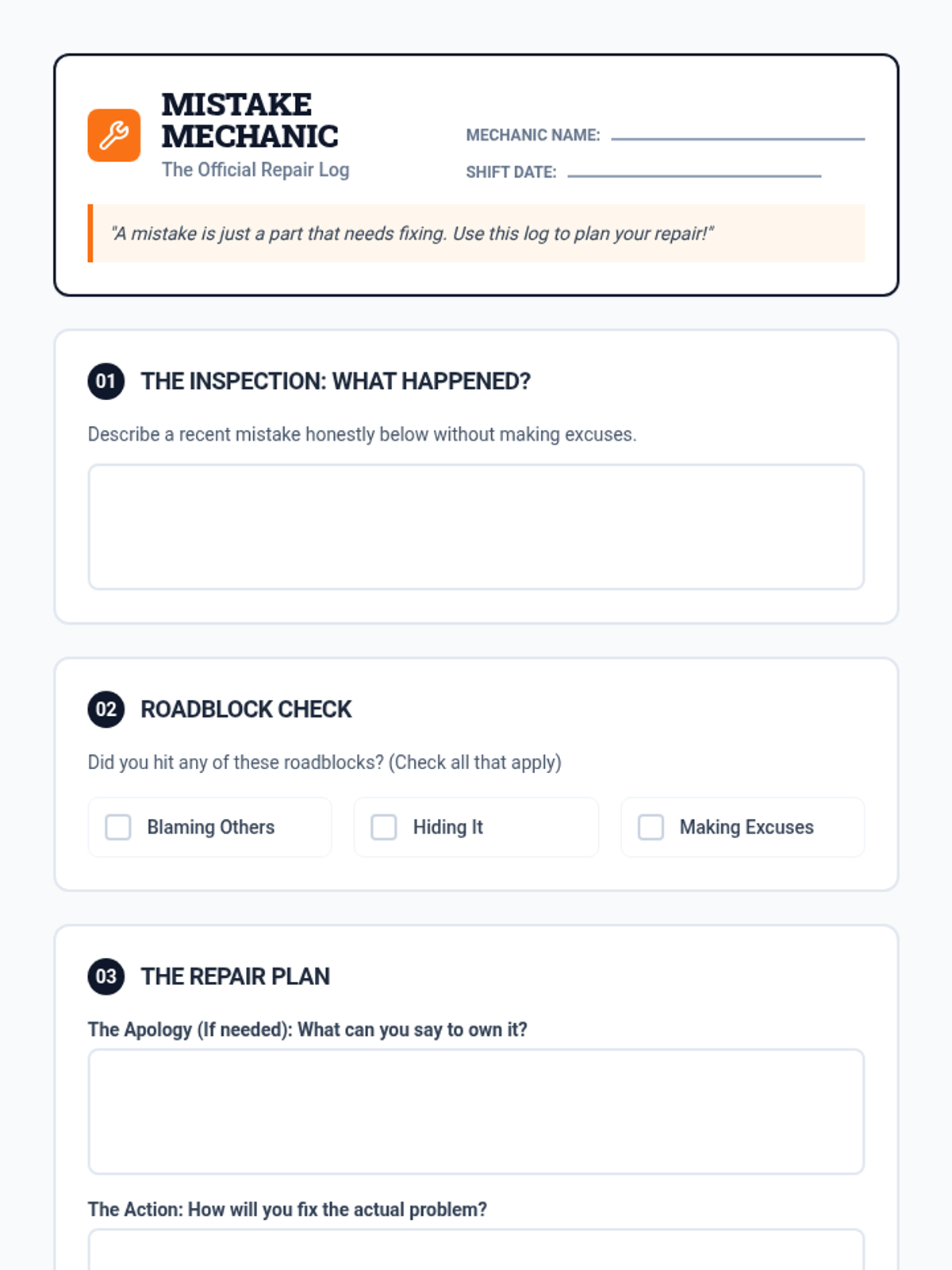
A reflection worksheet that guides students through the 'Mistake Mechanic' process. It includes sections for identifying a mistake, checking for emotional roadblocks (blame, hiding), planning a 'repair' (apology and action), and identifying the lesson learned for future 'system upgrades'.
An interactive slide deck introducing the 'Mistake Repair Shop' metaphor. It defines ownership, identifies common roadblocks like blaming and hiding, and provides a four-step 'Repair Manual' for students to follow when they make mistakes.
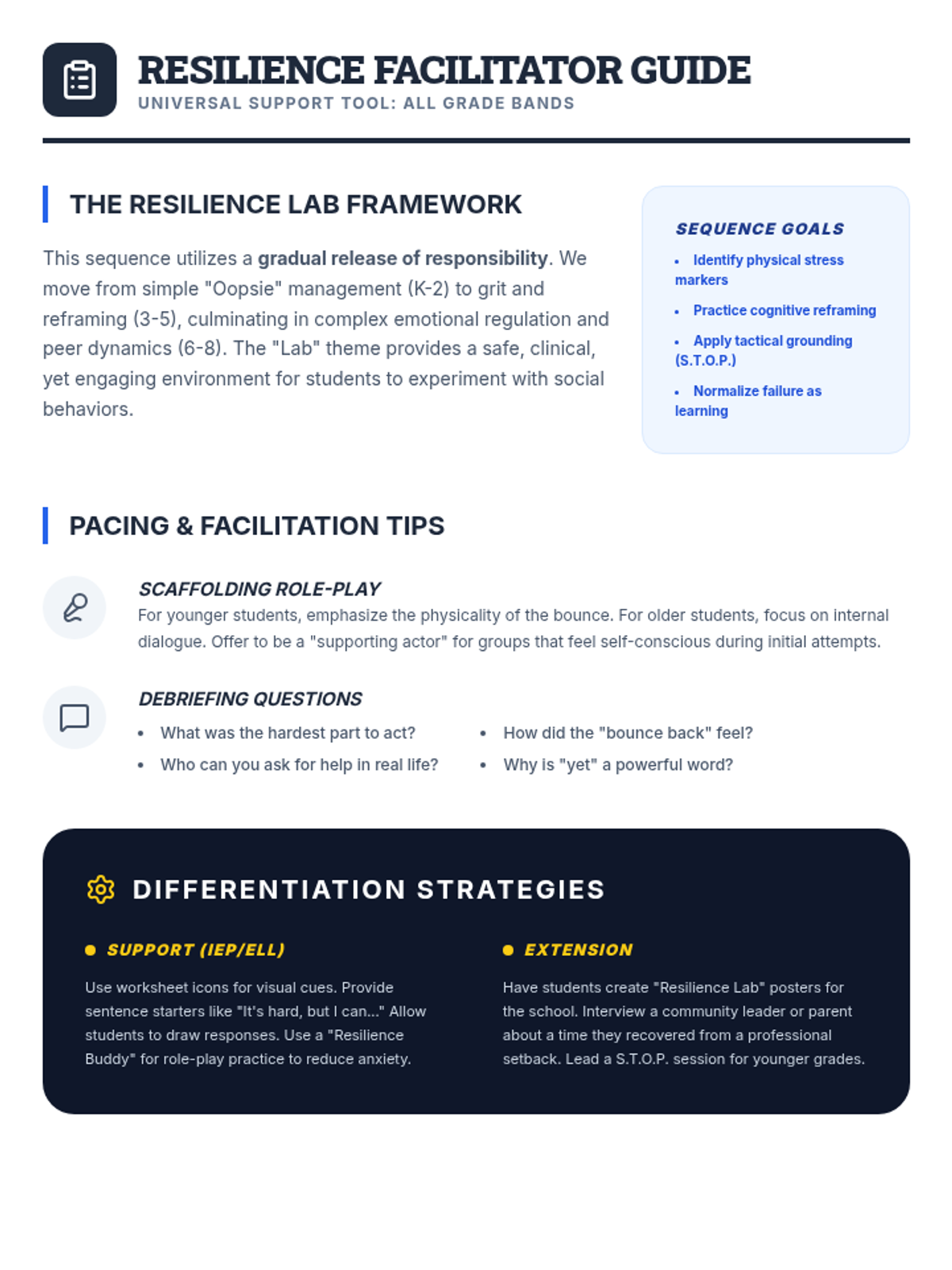
Revised facilitator guide. Fixed page break issues in the differentiation section by using 'break-inside-avoid'. Optimized layout and spacing to ensure all content fits professionally on a single page.
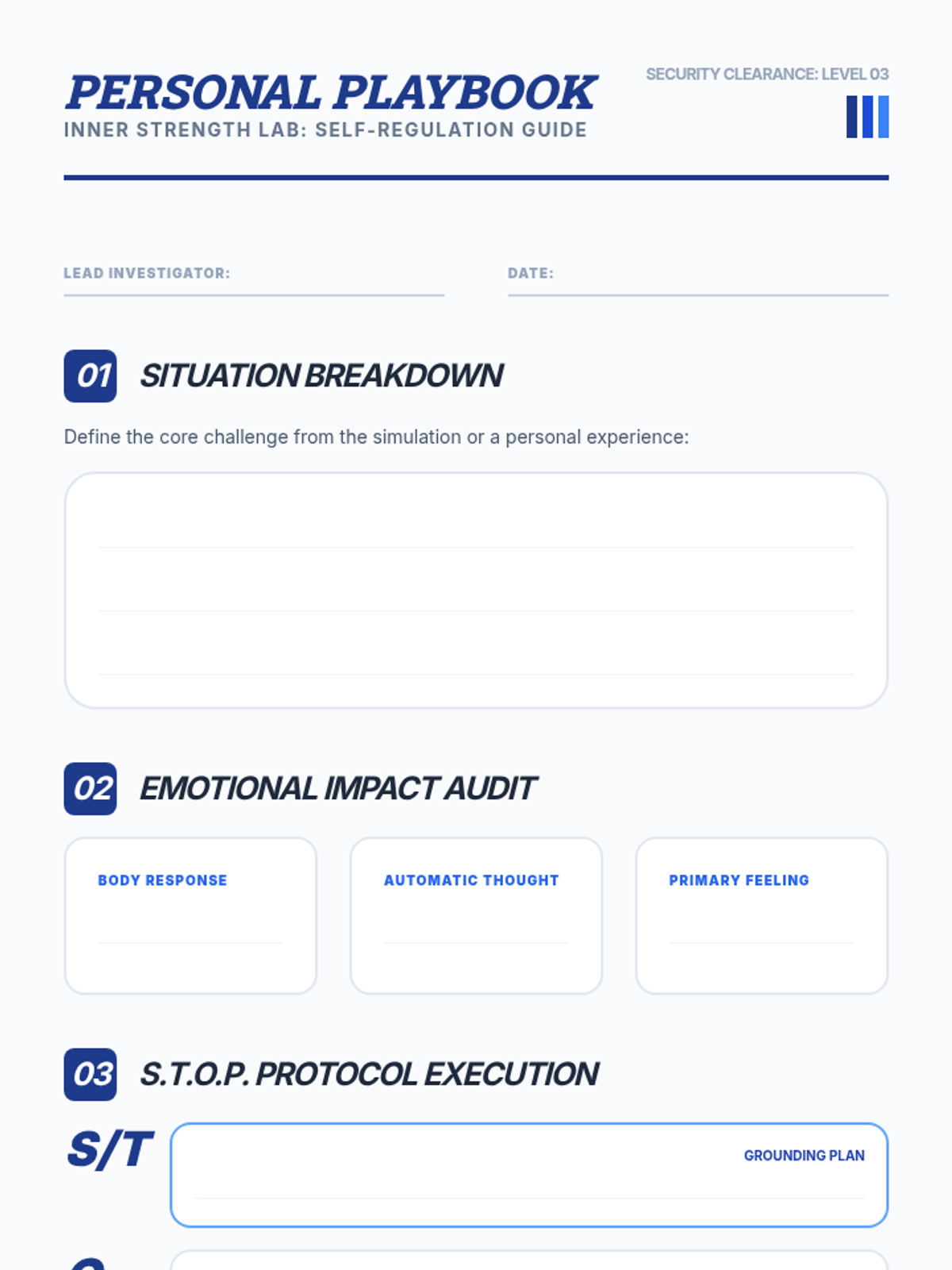
Revised worksheet for 6th-8th graders. Fixed page break issues for Section 3, increased height for emotional audit boxes (min-h-120px), and added input lines for S.T.O.P. execution steps. Improved overall tracking and legibility.
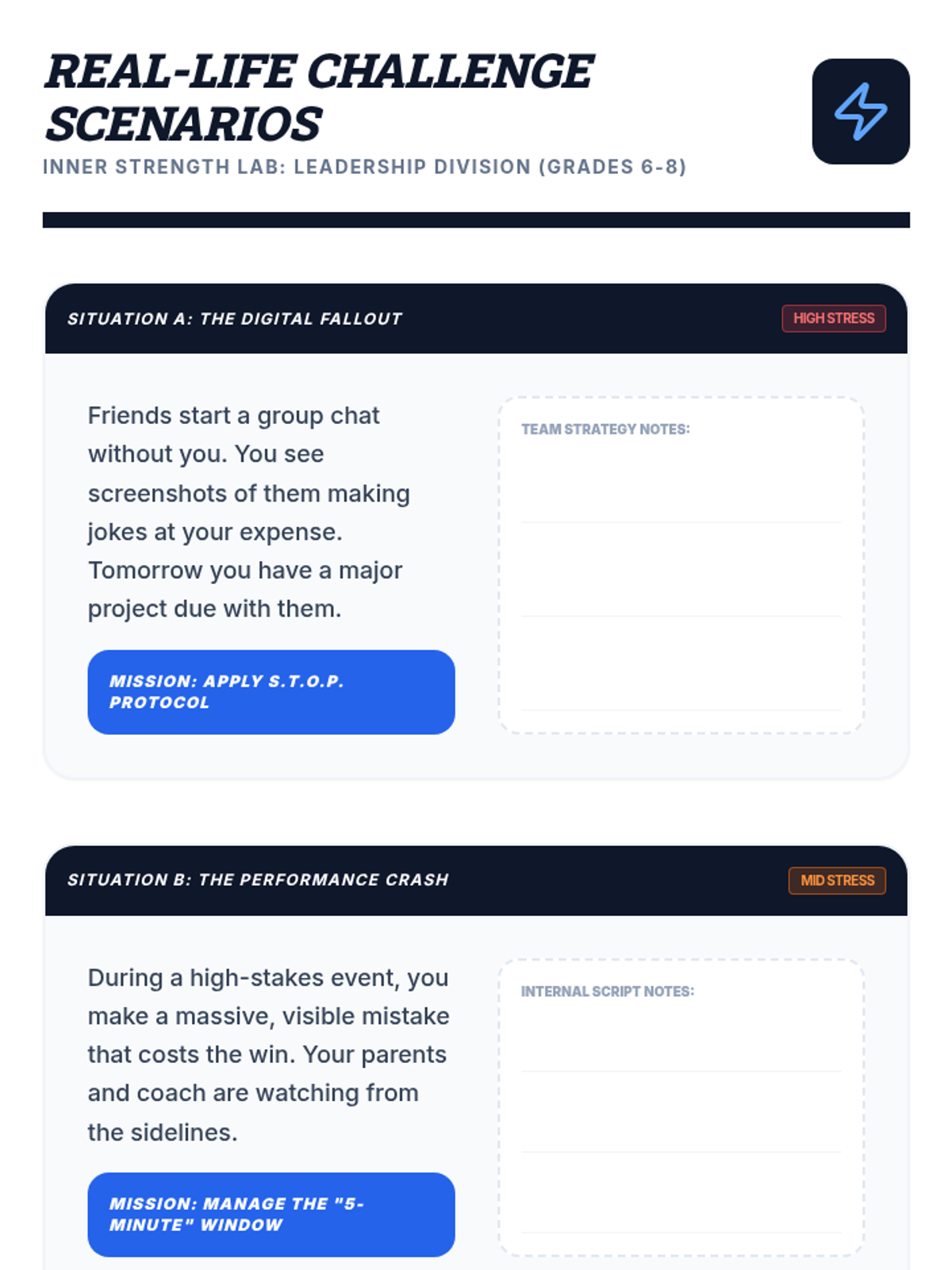
Revised scenario handout for 6th-8th graders. Added dedicated student response areas for each situation, fixed page break issues with 'break-inside-avoid', and included a S.T.O.P. protocol reference for self-contained usability.
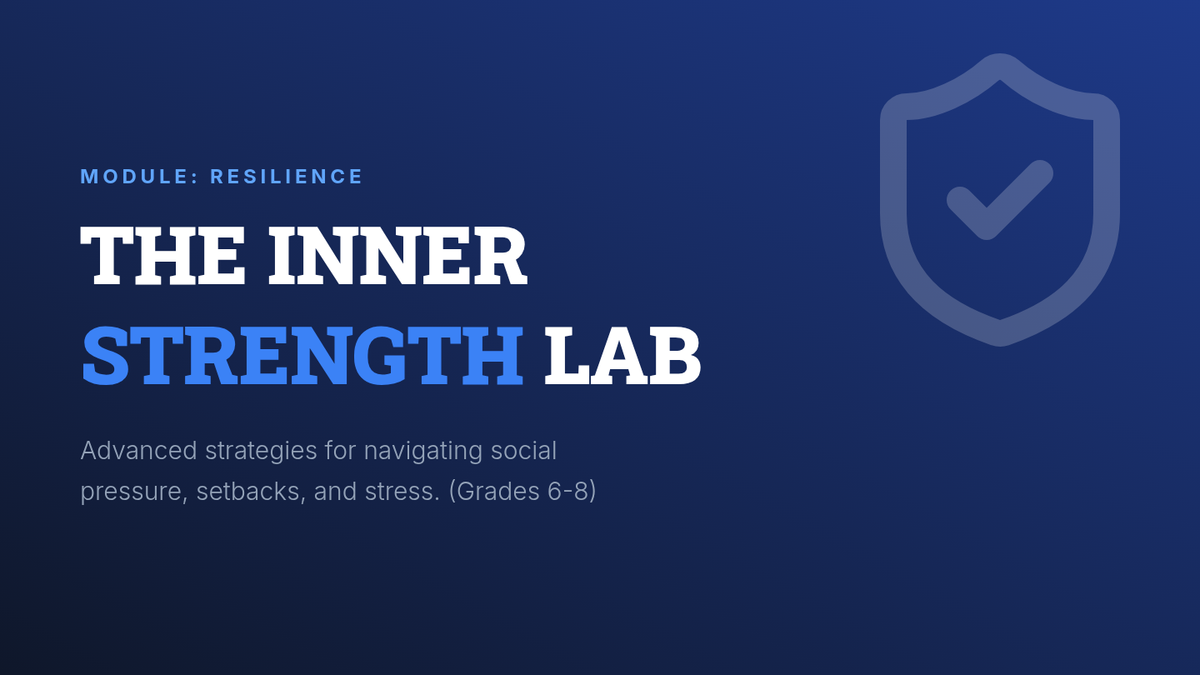
Revised slides for 6th-8th graders. Fixed tracking in headers for clarity and added specific, high-stress social scenarios for the simulation activity on Slide 4. Improved overall visual impact and layout consistency. Final revision to fix collided words and opacity.
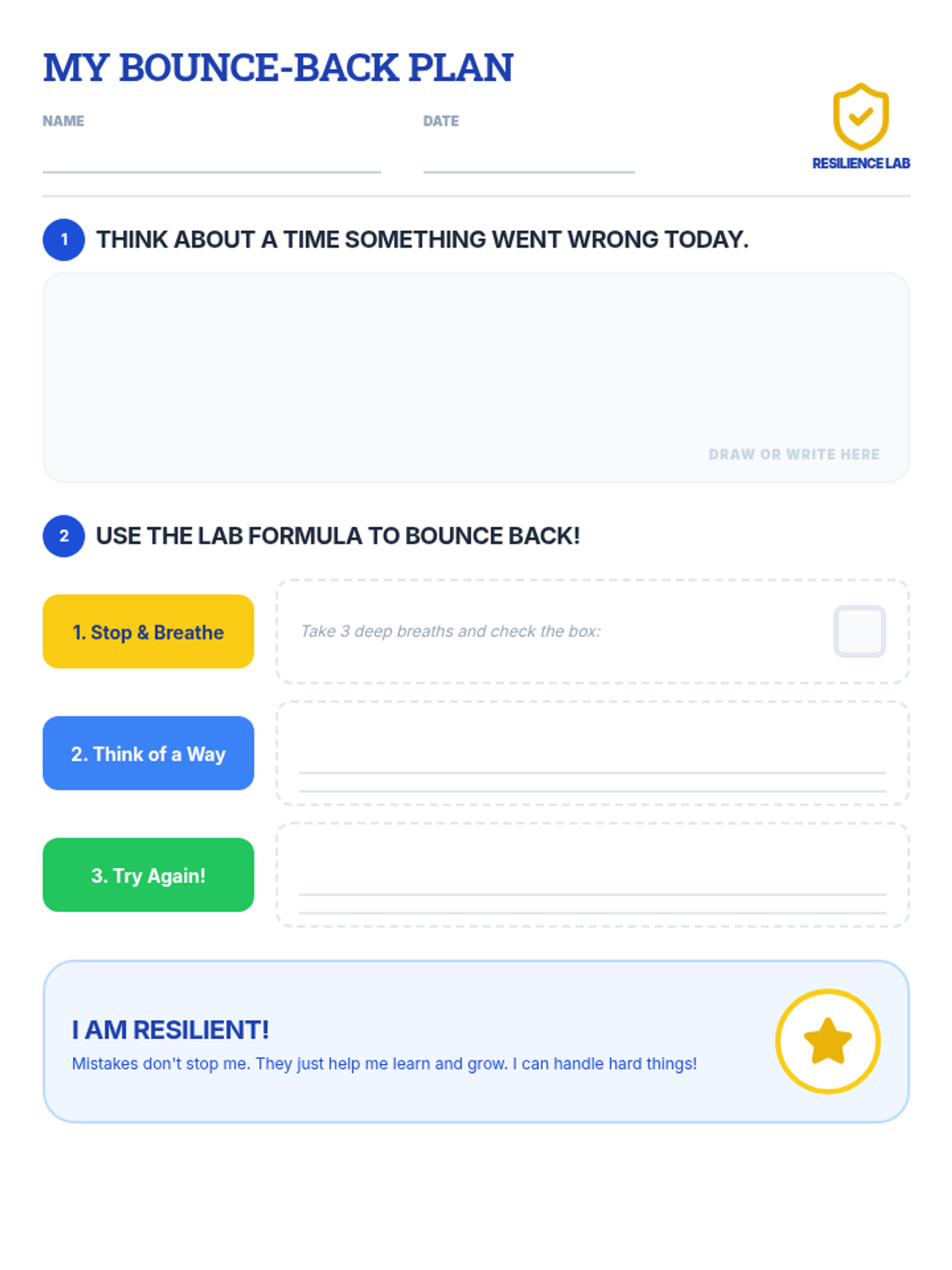
Revised worksheet for 3rd-5th graders with expanded student work areas (min-h-160px/100px) and improved visual instructions. Final revision to fix page break, icon rendering, and line contrast.
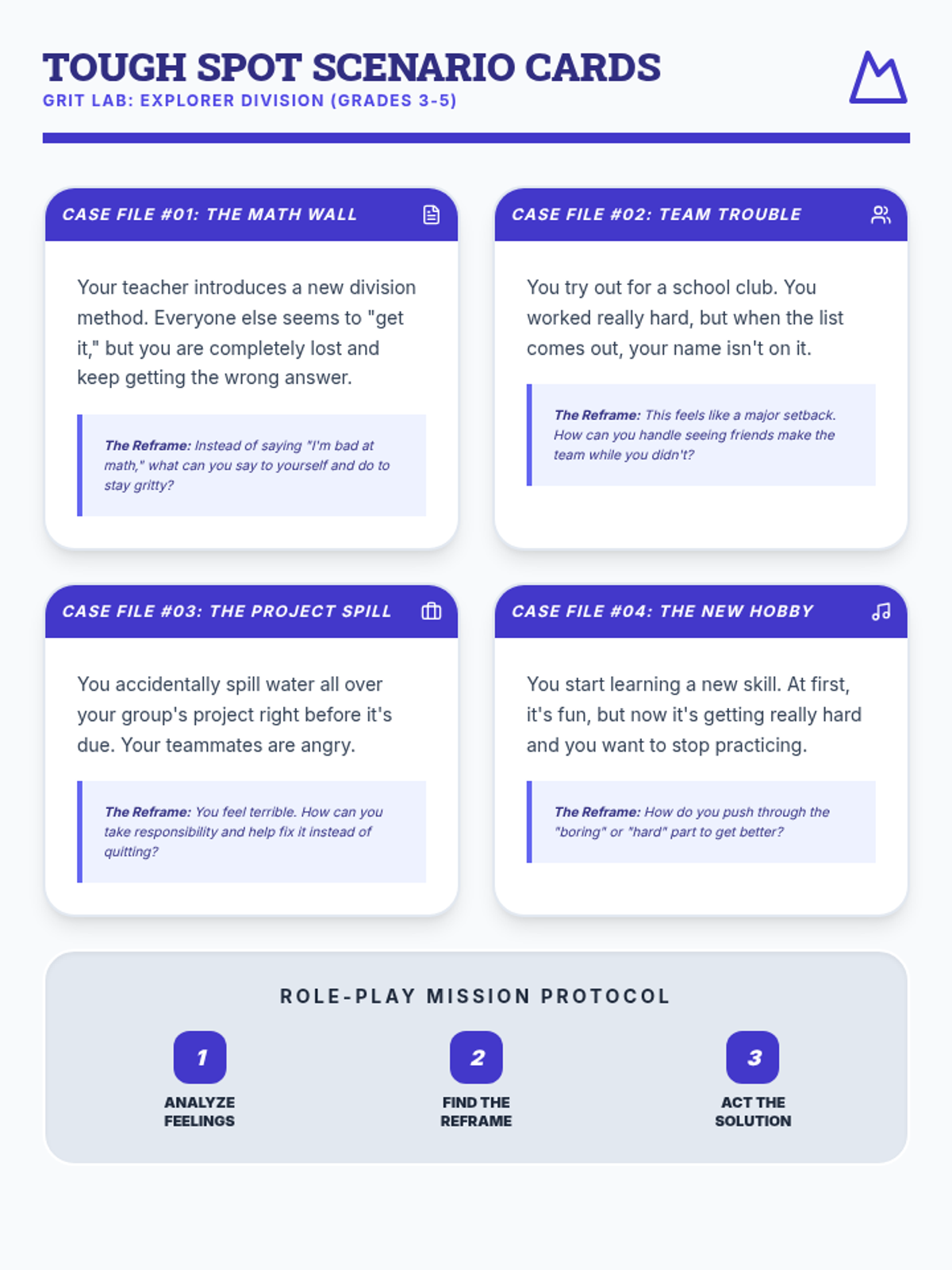
Revised scenario cards for 3rd-5th graders with fluid height containers to ensure no text is truncated. Improved visual design for instructions and consistent card layout. Final revision to fix footer page break and text sizing.
Revised instructional slides for 3rd-5th graders. Added specific role-play scenarios and improved visual balance on Slide 2. Slide 4 now includes actual Lab Challenges for group work.
Revised worksheet for 1st-2nd graders with significantly larger student work areas (h-24), a graphic checkbox, and optimized layout to prevent page breaks. Final revision to fix minor spillover and line contrast.
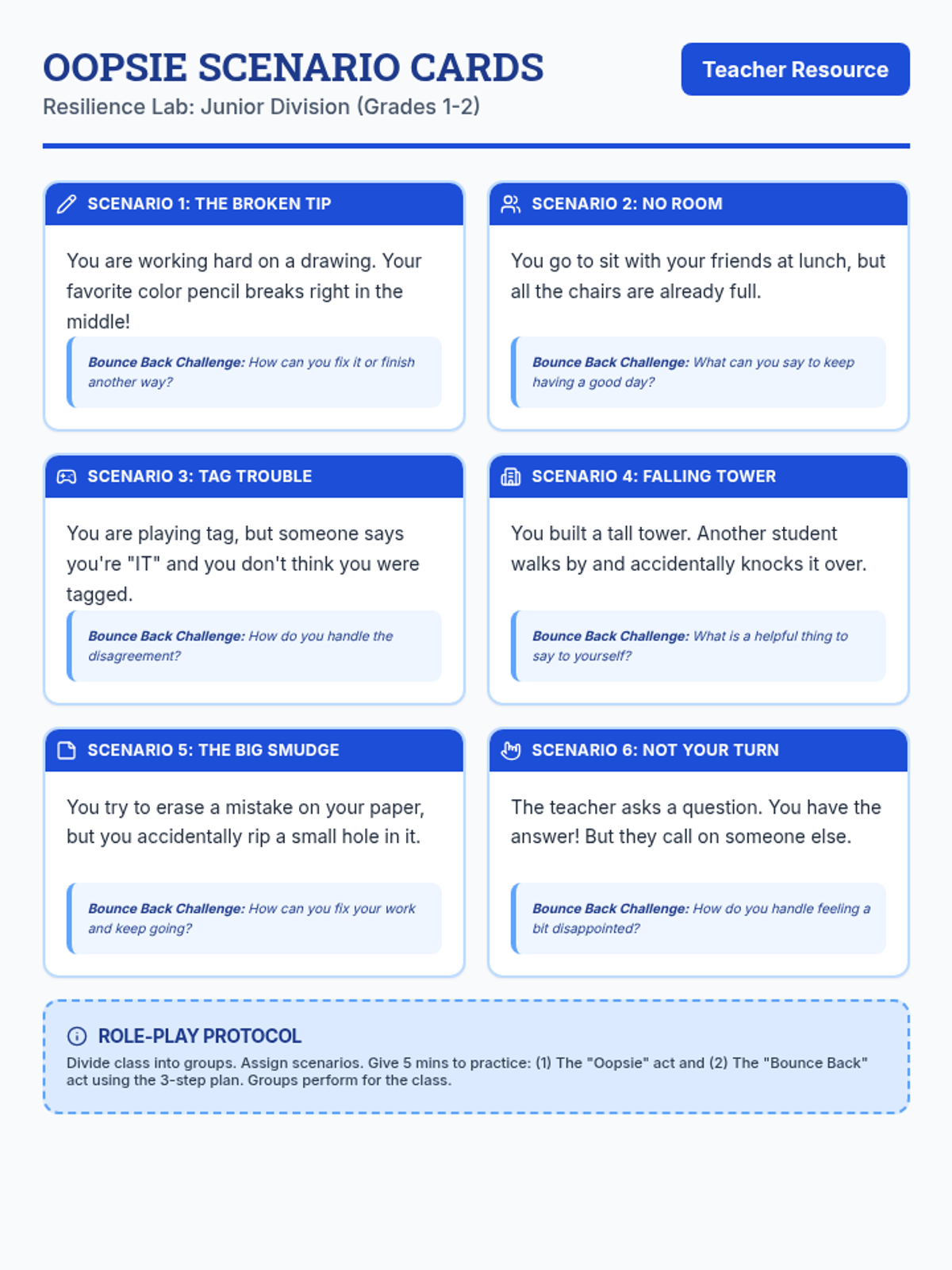
Updated scenario cards for 1st-2nd graders with 6 unique situations and optimized layout to fit on a single page. Fixed truncated text and added variety. Revised to fix footer page break and ensure icon rendering.
Visual presentation for Grades 1-2 introducing resilience through the 'Bounce-Back Plan' with engaging graphics and prompts for group role-play. Revisions include added scenarios and improved contrast.
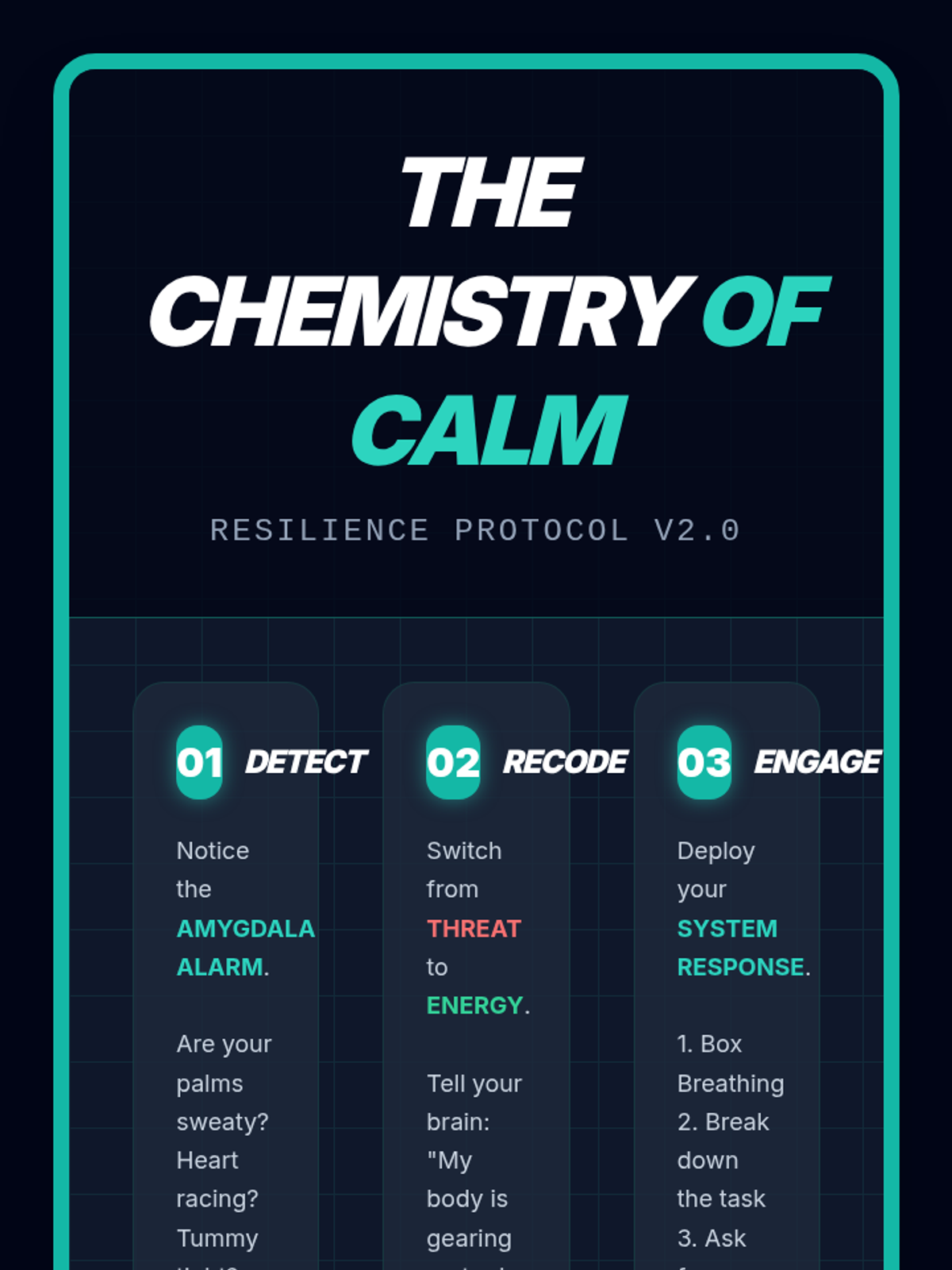
A sleek, high-tech classroom poster for middle school students. Updated to ensure single-page layout, proper word spacing, and high contrast.
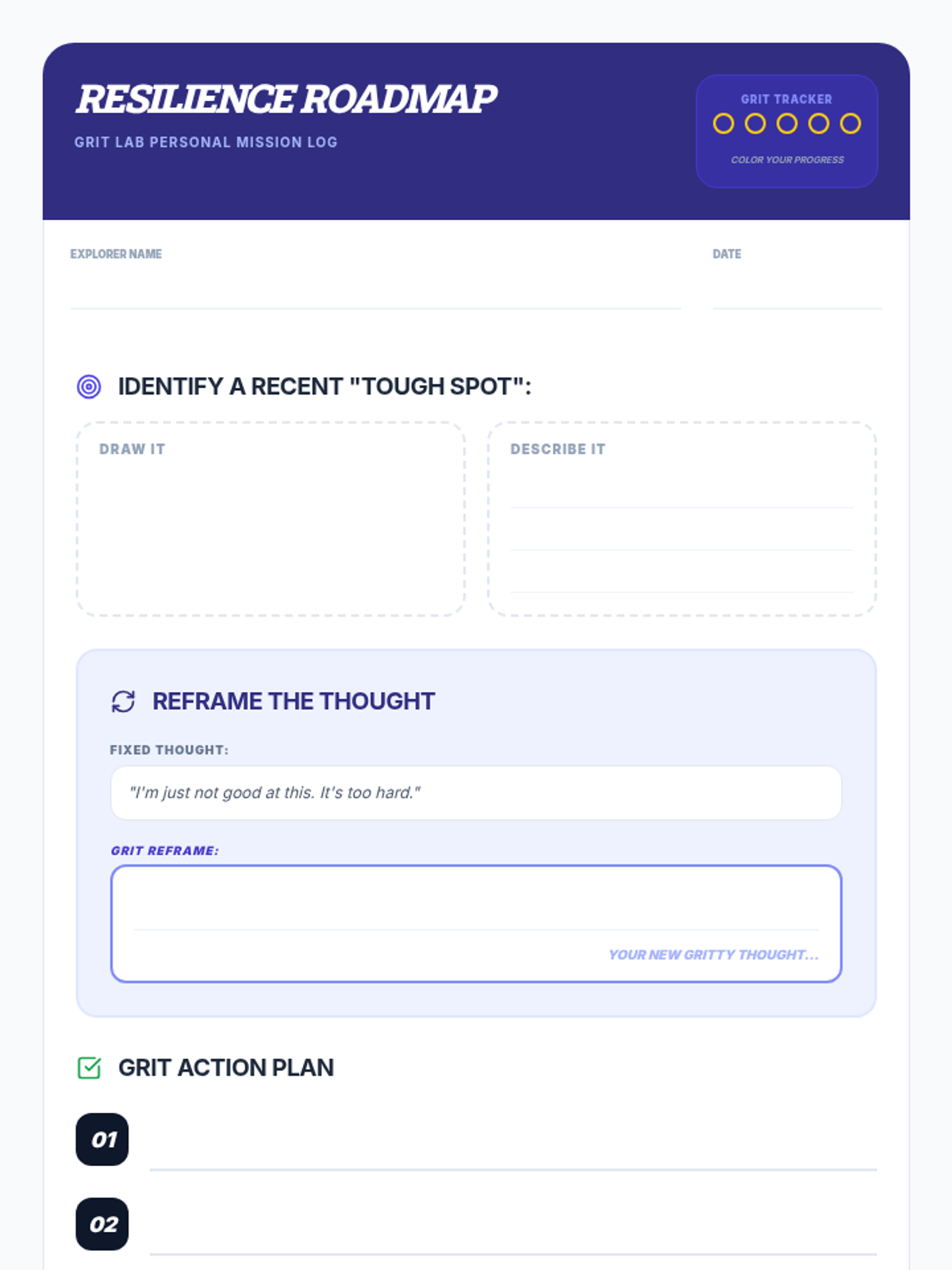
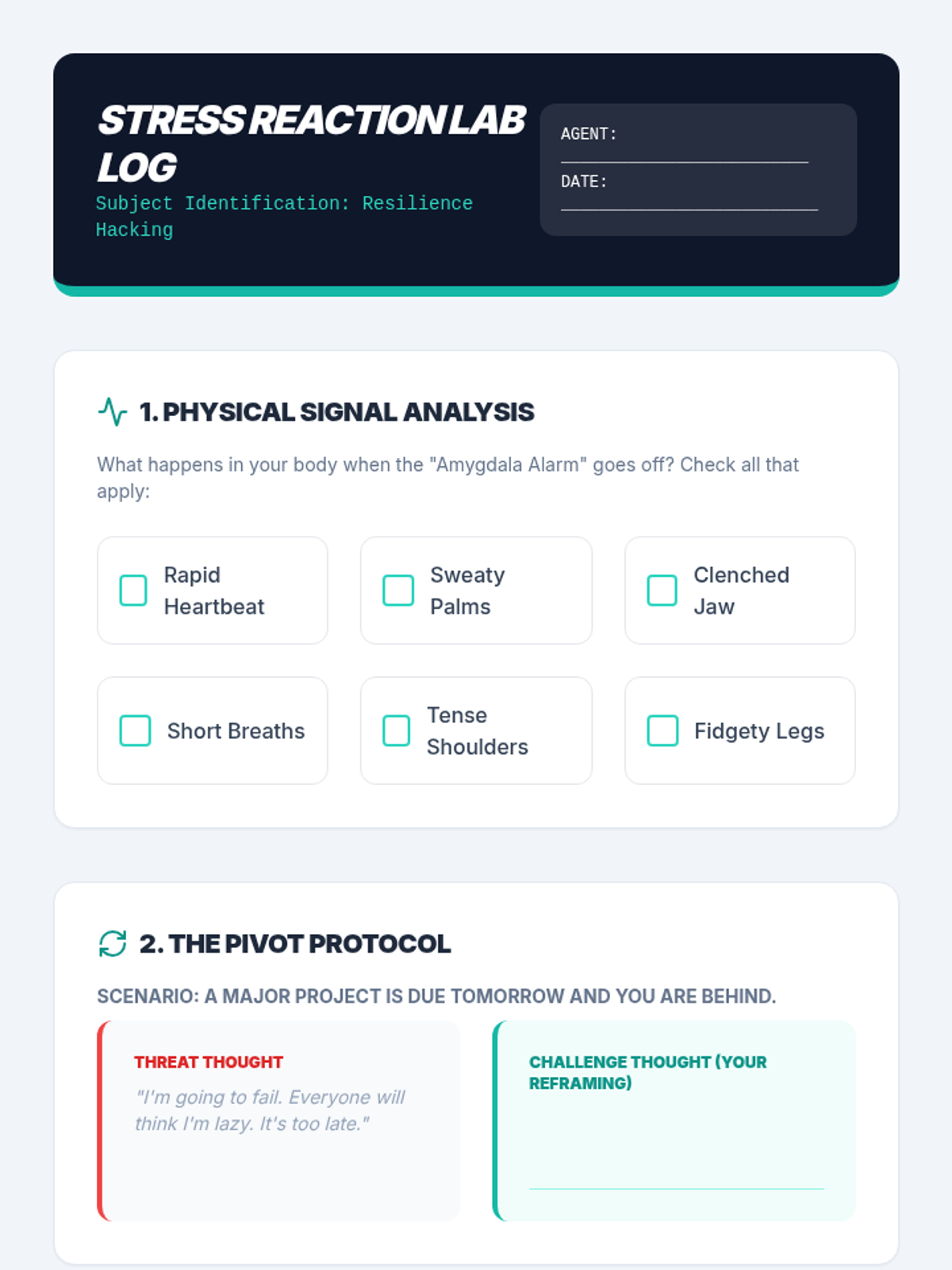
A sophisticated log-style worksheet for middle school students. Updated for single-page layout, better contrast, and larger work areas.
Slides for grades 6-8 exploring the neurobiology of stress. Updated for improved contrast and single-slide layout for the protocol.
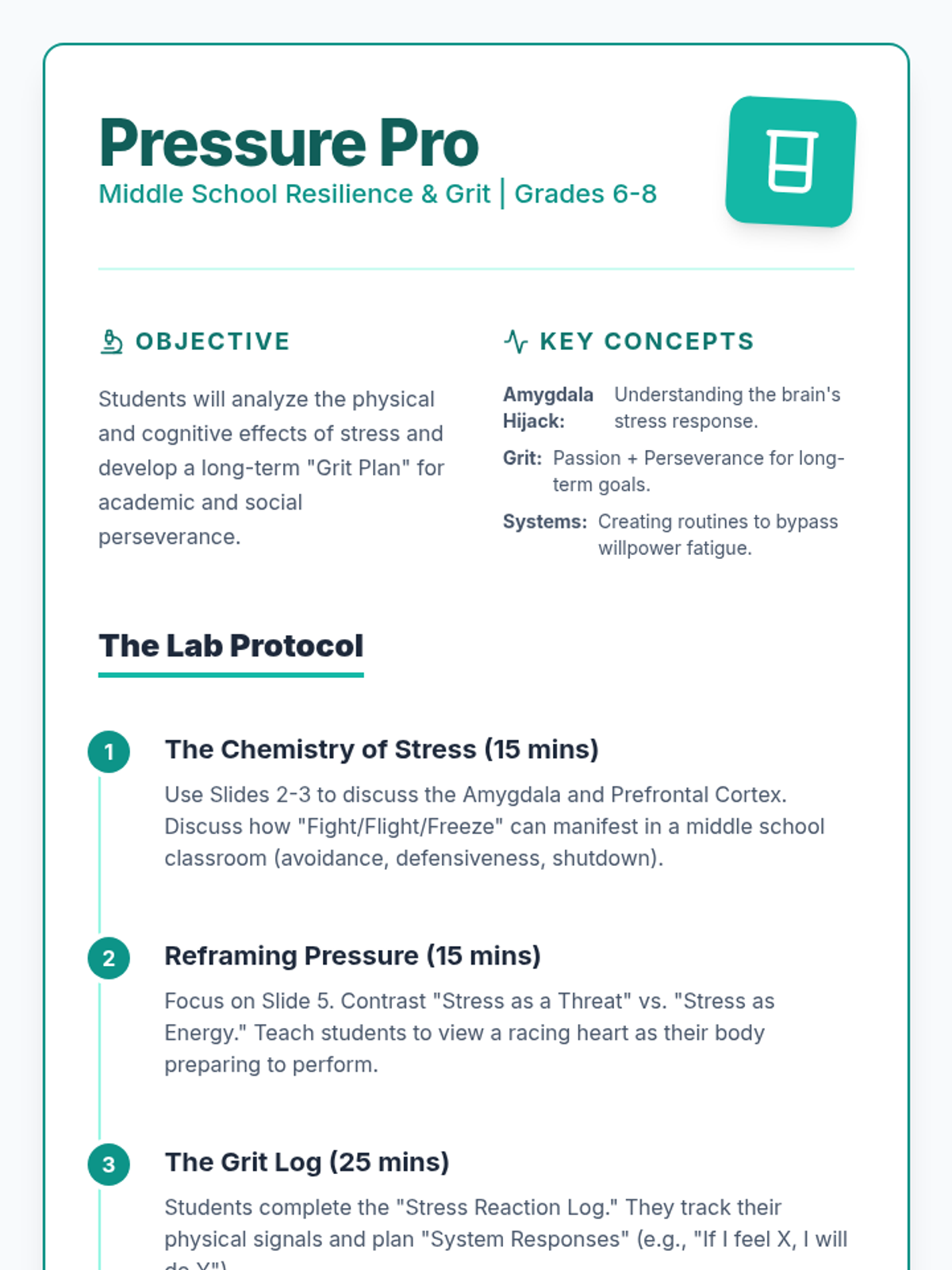
A science-based teacher guide for grades 6-8. Updated for single-page layout and improved content alignment.
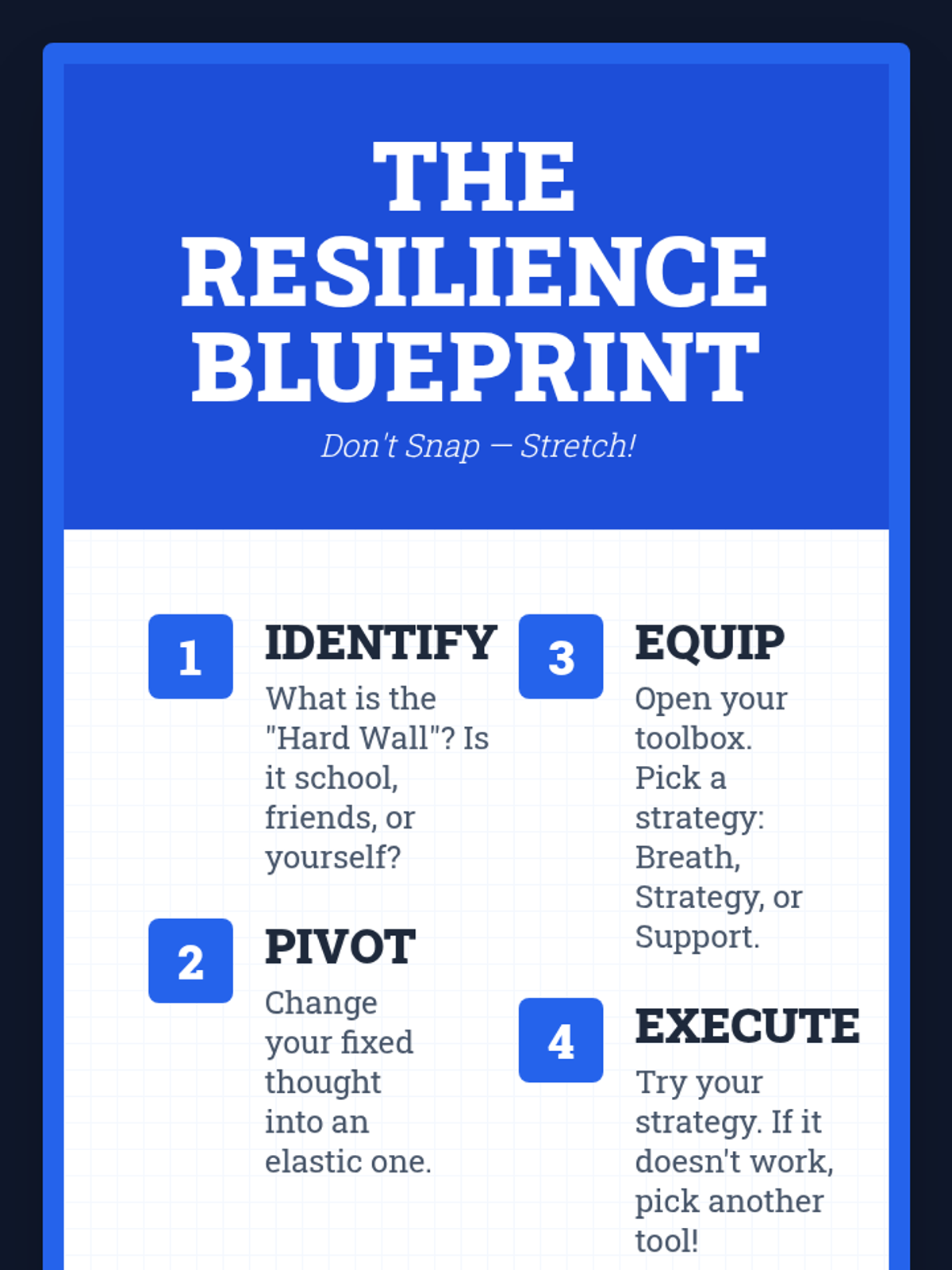
A structured blueprint-style poster for grades 3-5. Updated for single-page layout and improved icon/text scaling.
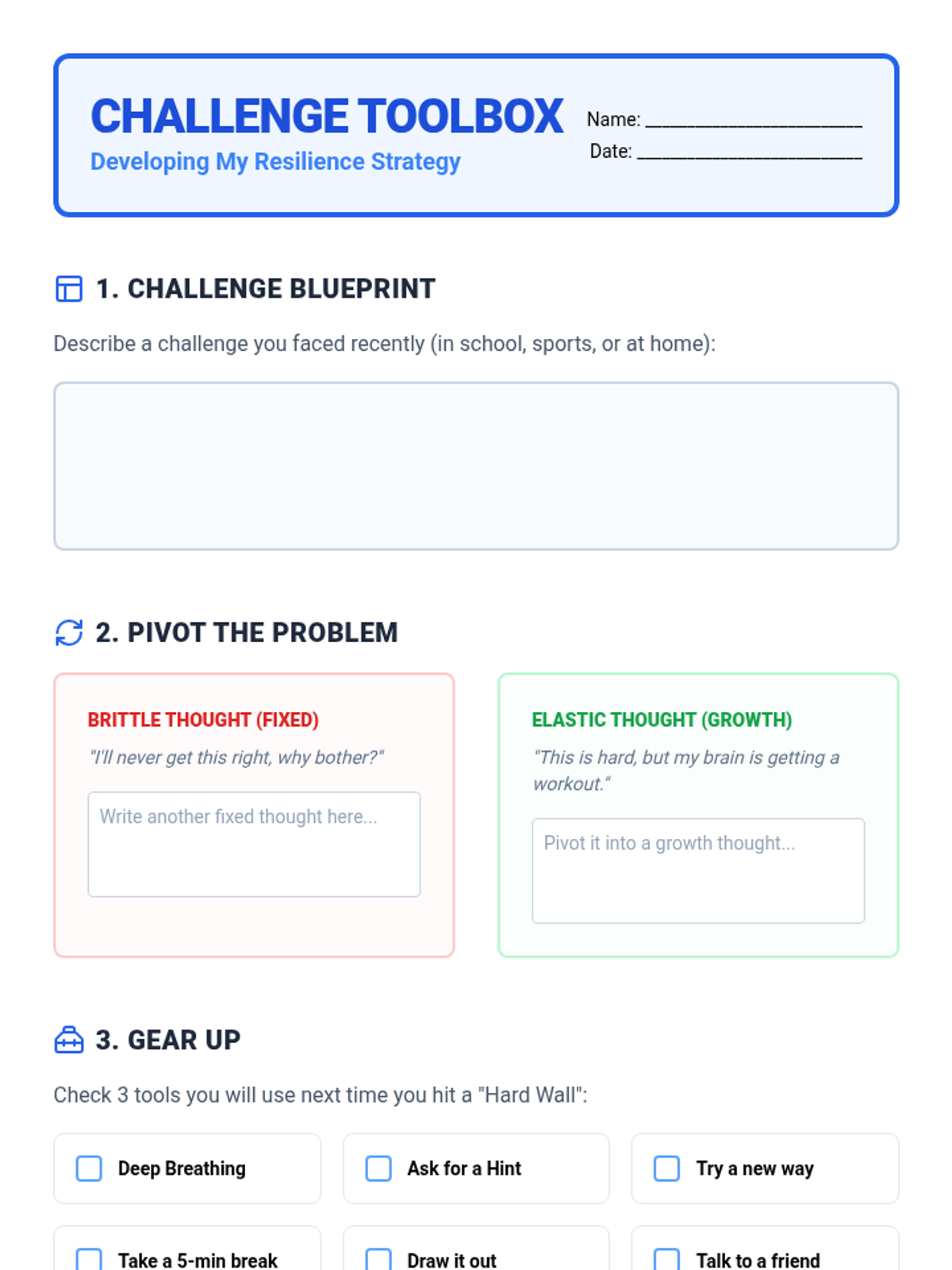
A strategy-focused worksheet for students in grades 3-5. Updated for single-page layout, white work areas, and cleared placeholders.
A vibrant 7-slide visual presentation including new 'We Will' and 'I Will' statements, and a dedicated definition slide for charity.
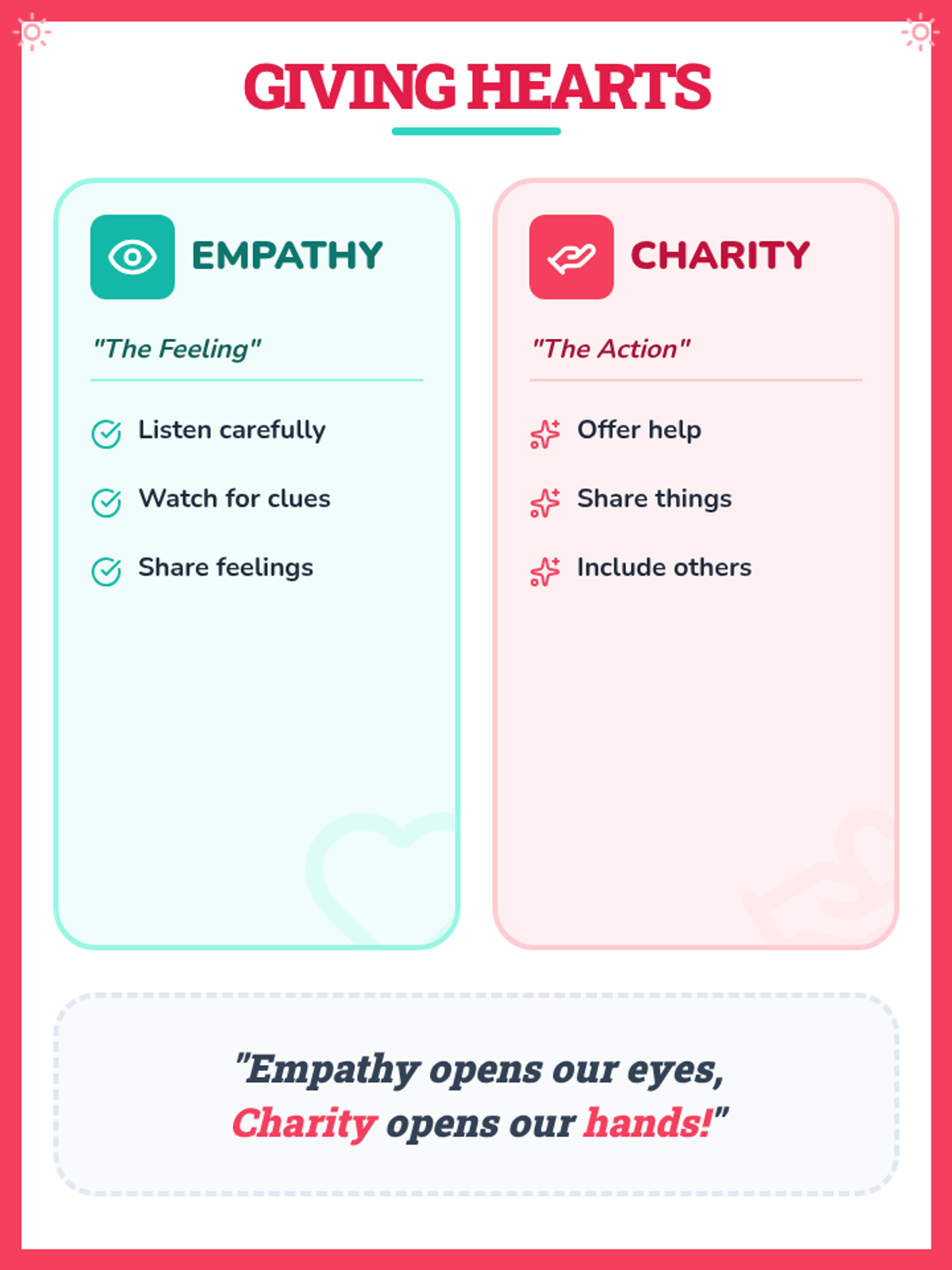
A bold, visual anchor chart for classroom display that reinforces the connection between empathy (the feeling) and charity (the action) with clear examples.
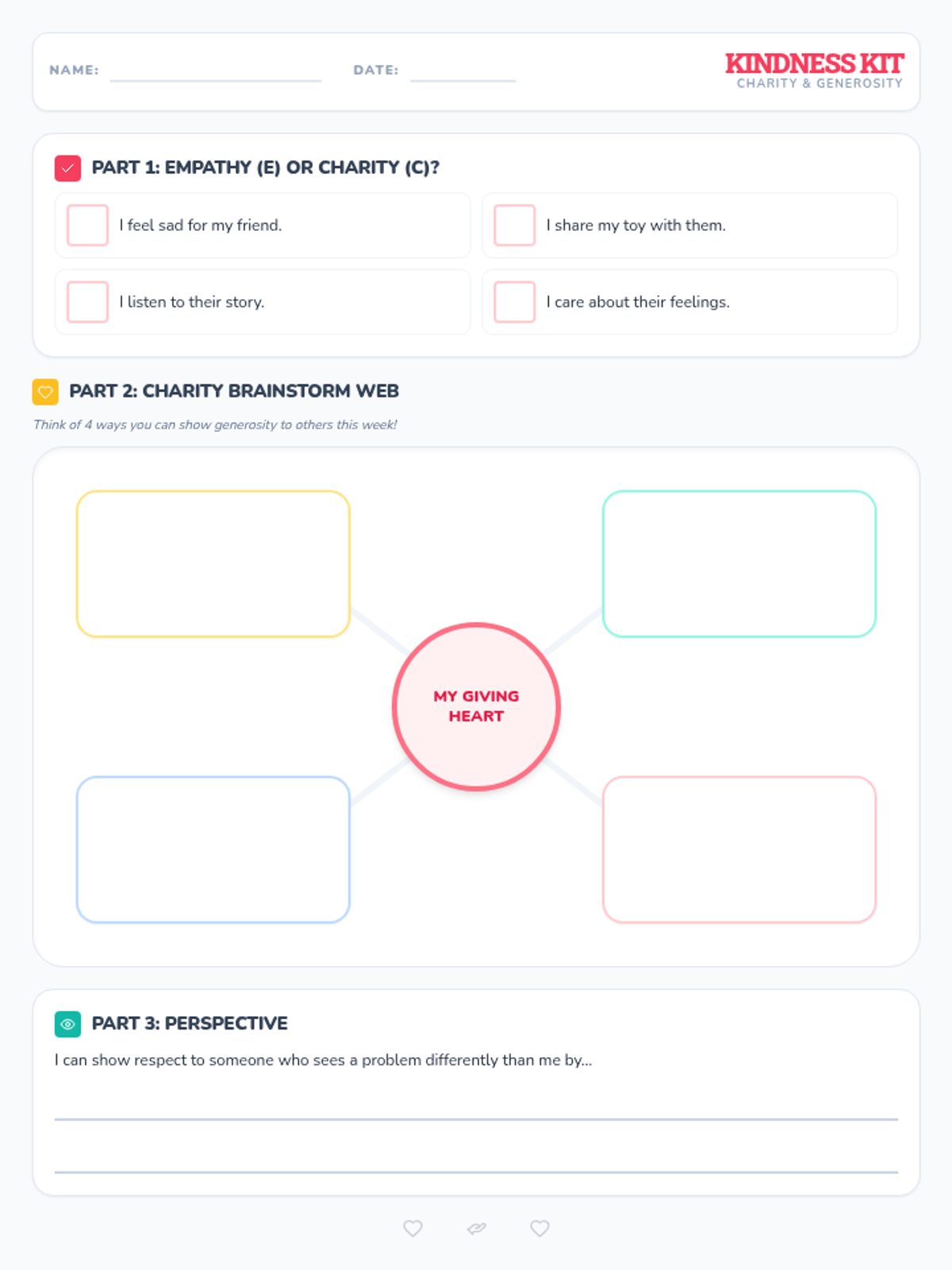
A student-facing worksheet featuring a categorization task to distinguish empathy from charity, a visual brainstorming web for identifying acts of generosity, and a reflection prompt on perspective-taking.
A vibrant 6-slide visual presentation including new 'We Will' and 'I Will' statements to frame the lesson goals and student accountability.
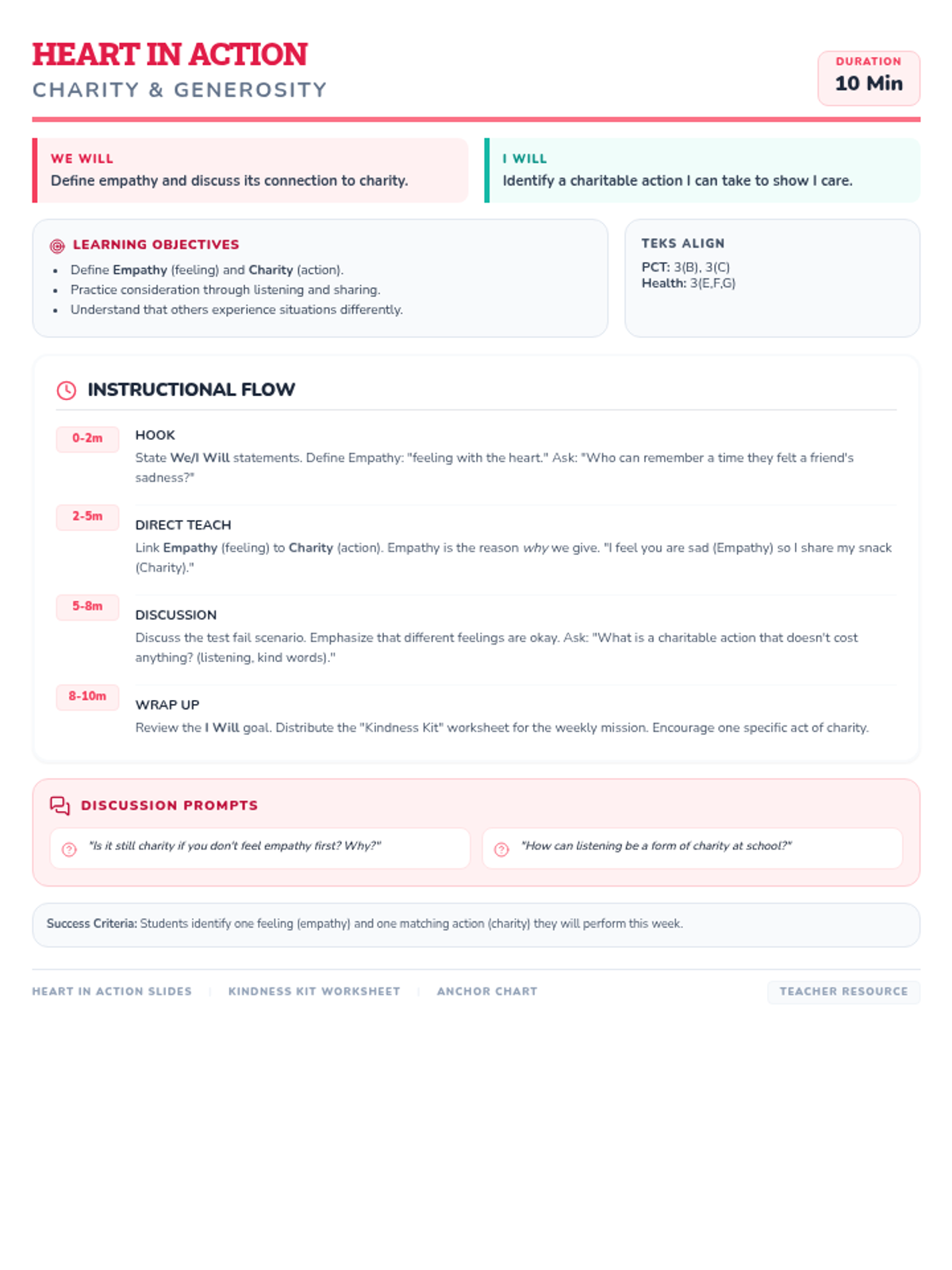
A comprehensive facilitator guide for a 10-minute whole-group lesson on empathy and charity, now featuring explicit 'We Will' and 'I Will' statements for standard-aligned instruction.
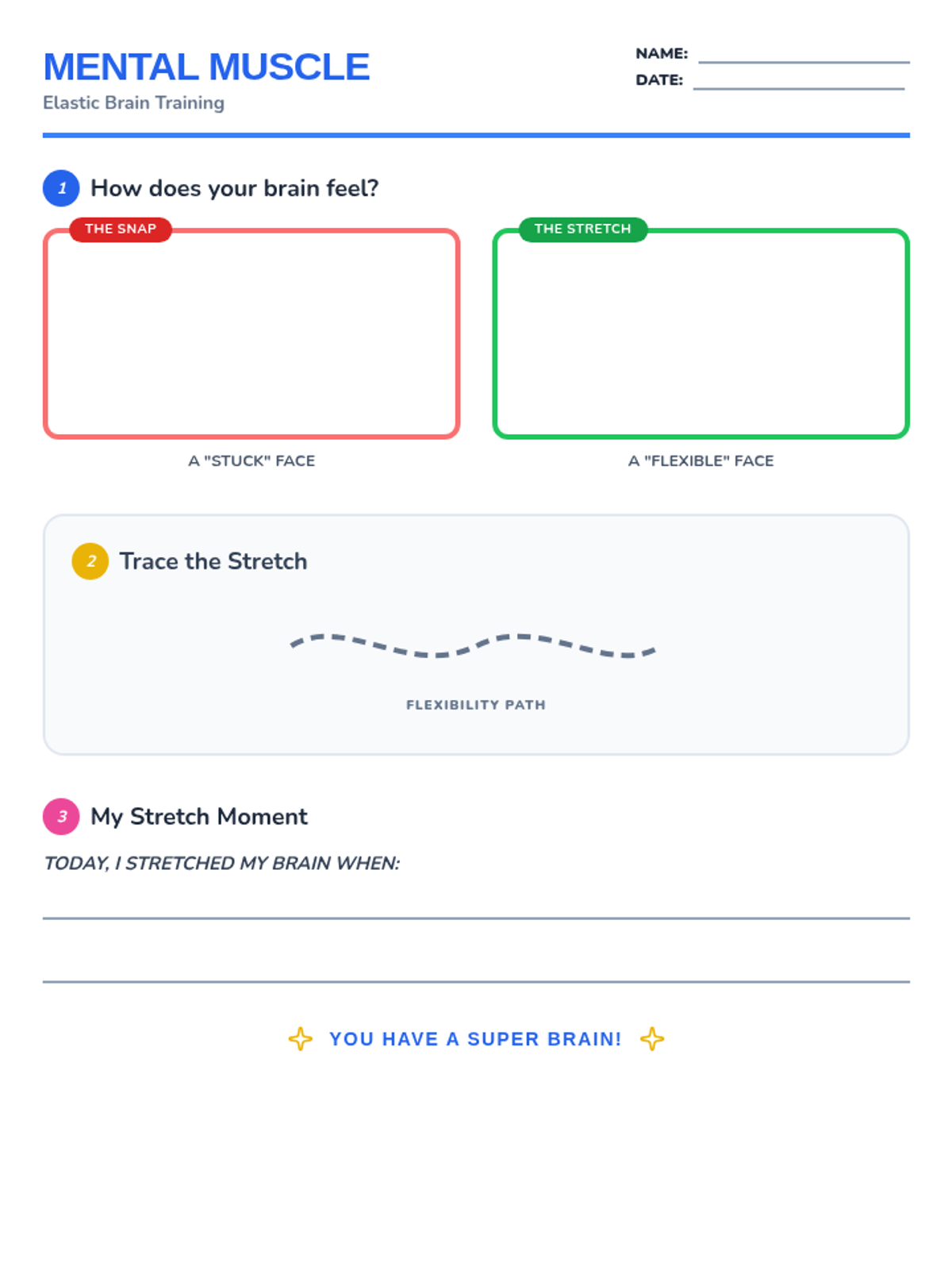
A K-2 student worksheet that uses drawing, tracing, and simple reflection to reinforce the concepts of 'snap' and 'stretch' reactions.
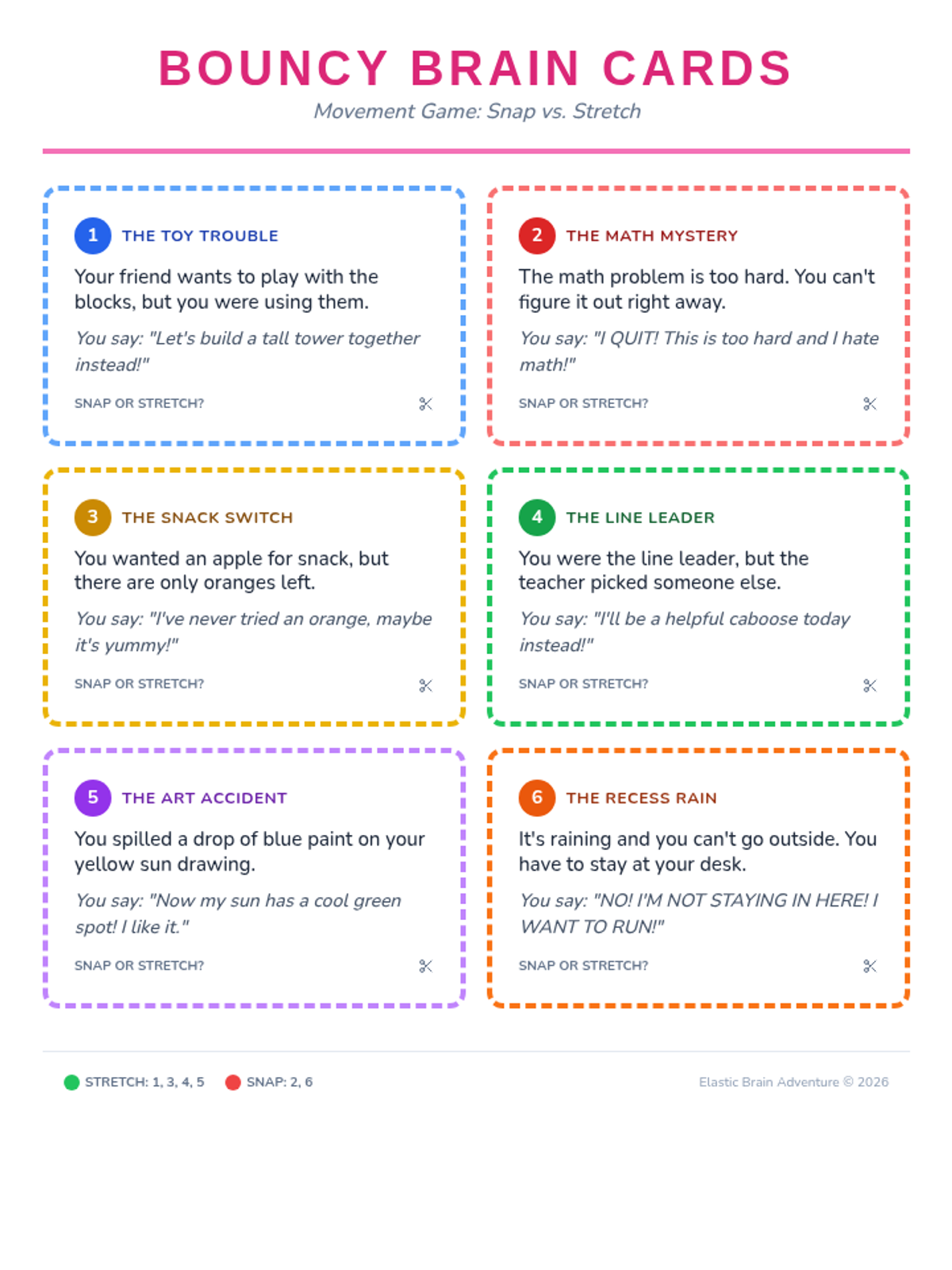
A set of six printable scenario cards for the Bouncy Brain movement activity, helping students distinguish between rigid 'snap' reactions and flexible 'stretch' responses.
A vibrant, high-energy slide deck that introduces the rubber band metaphor for cognitive flexibility through visual storytelling and movement-based prompts.
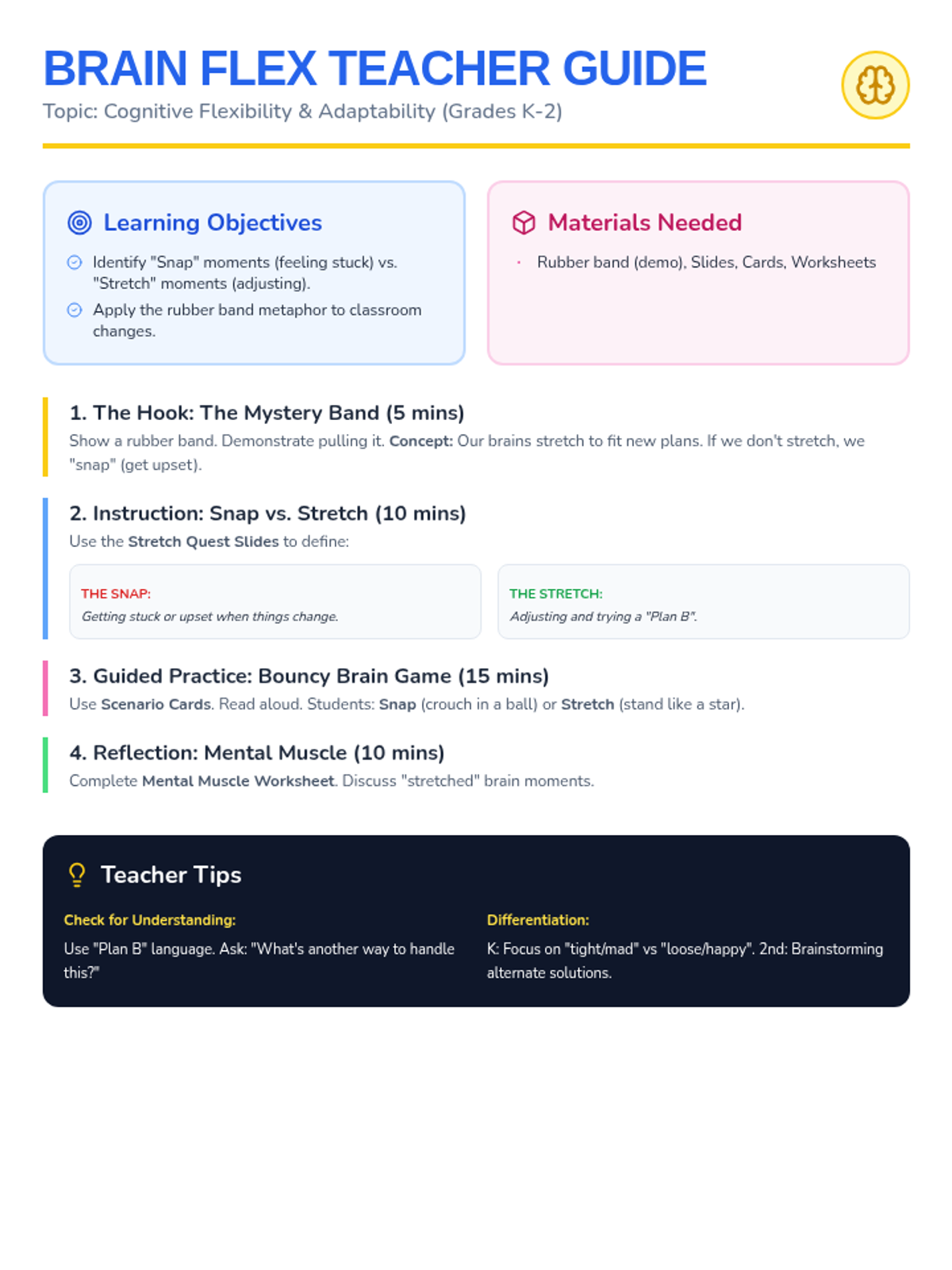
A comprehensive teacher guide for leading the Elastic Brain Adventure lesson, including objectives, step-by-step procedures, and facilitation tips for K-2 educators.