Budgeting, saving, and investment strategies alongside practical skills for managing credit, taxes, and banking. Addresses insurance needs, employment income, and major purchase decisions to support comprehensive long-term financial planning.
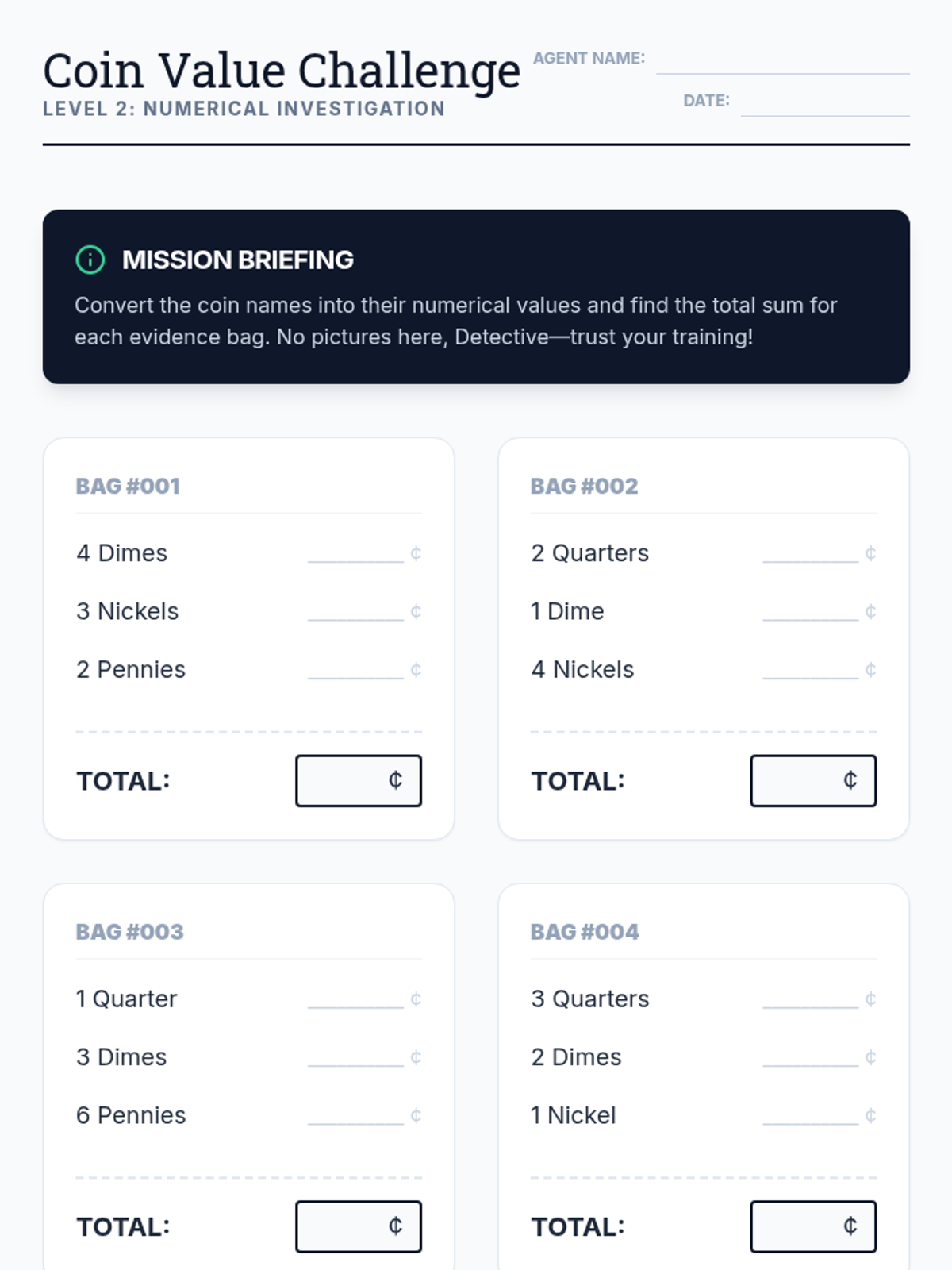
A coin value worksheet without visual supports. Students convert coin names and quantities (e.g., "4 Dimes") into numerical values and calculate the total for each "bag."
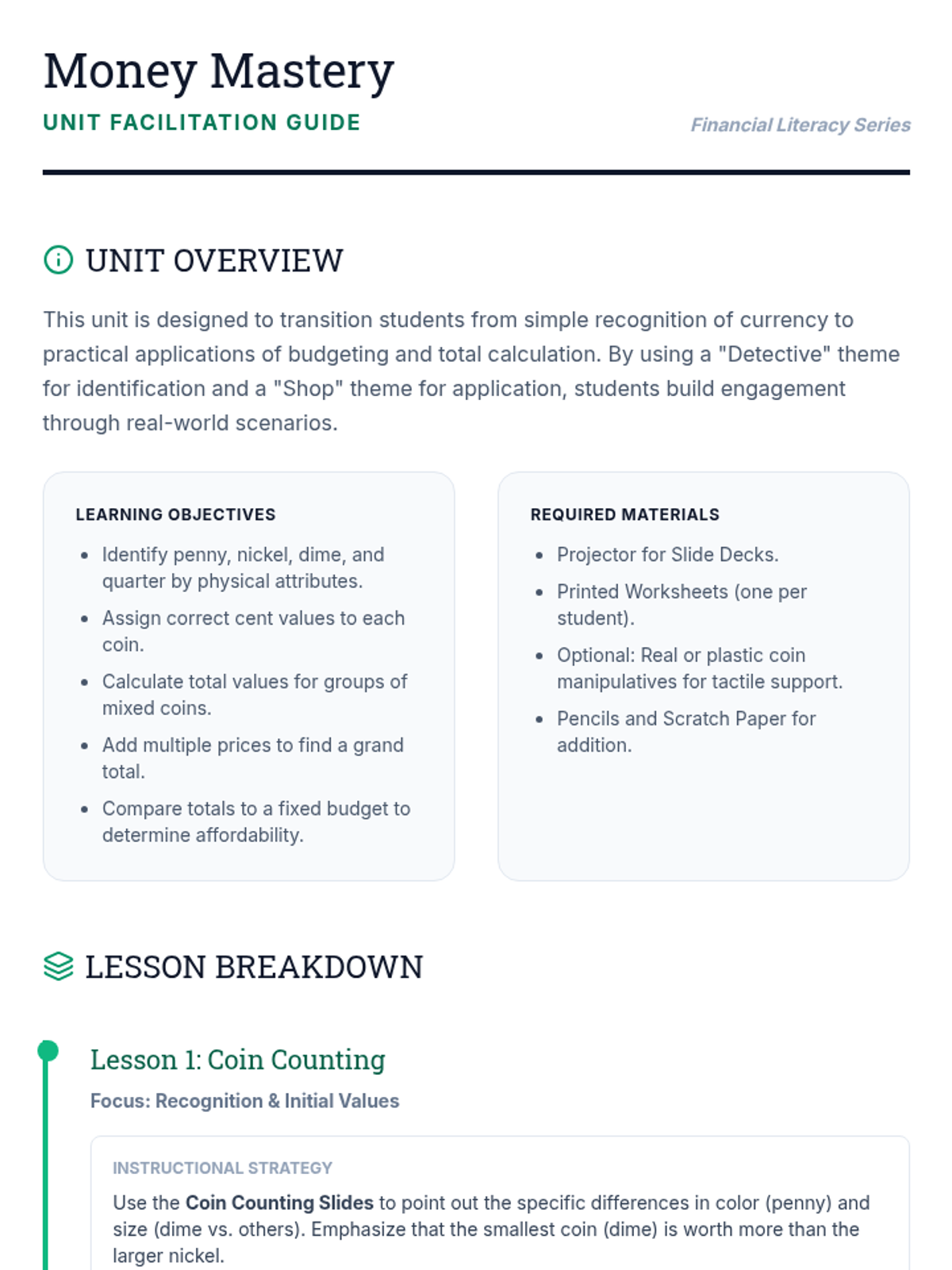
A comprehensive teacher's guide for the Money Mastery unit, including learning objectives, lesson breakdowns, and differentiation strategies for coin counting and budgeting.
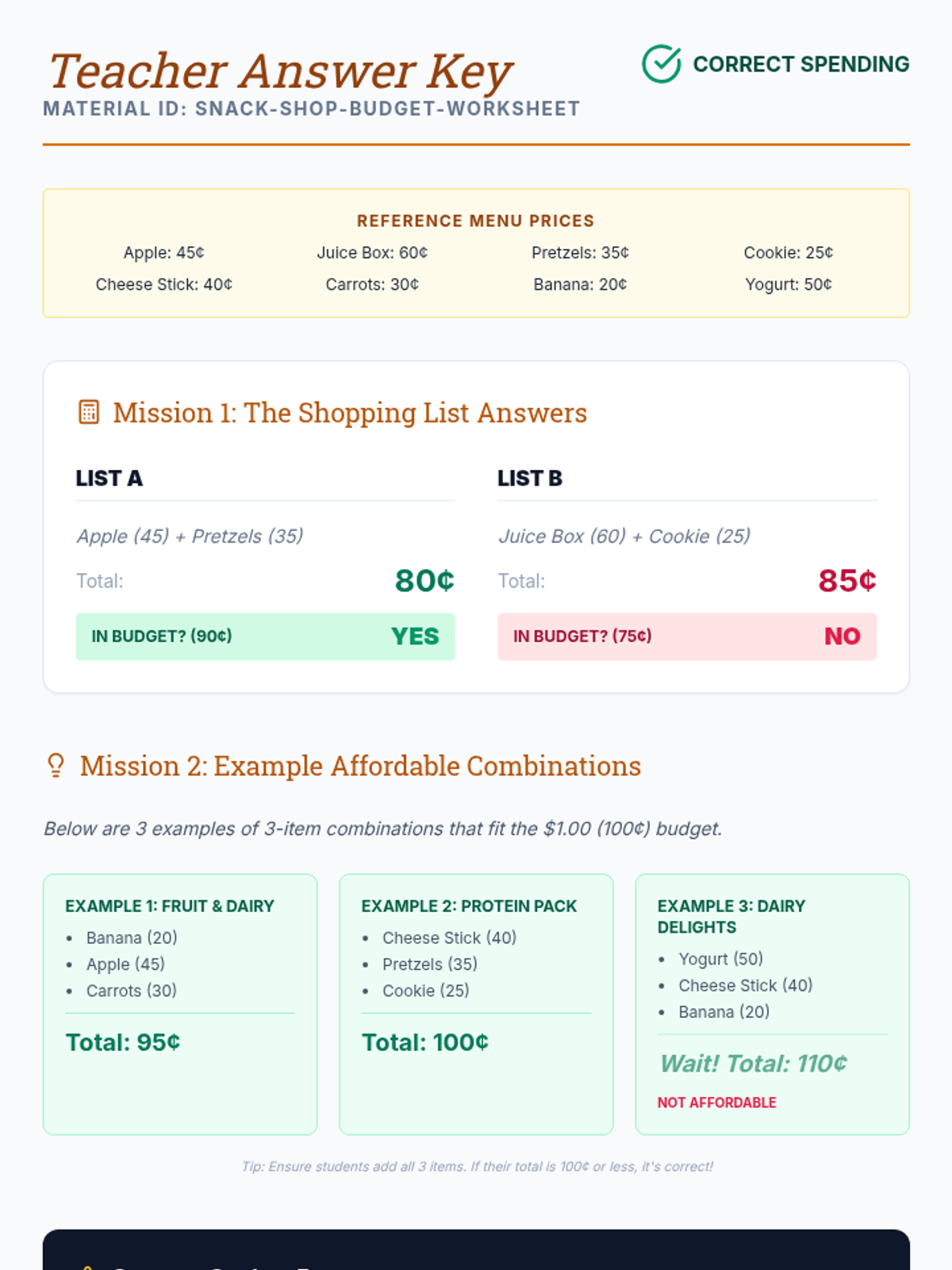
Teacher answer key for the Snack Shop Budget Worksheet, including sample affordable combinations and common student pitfalls.
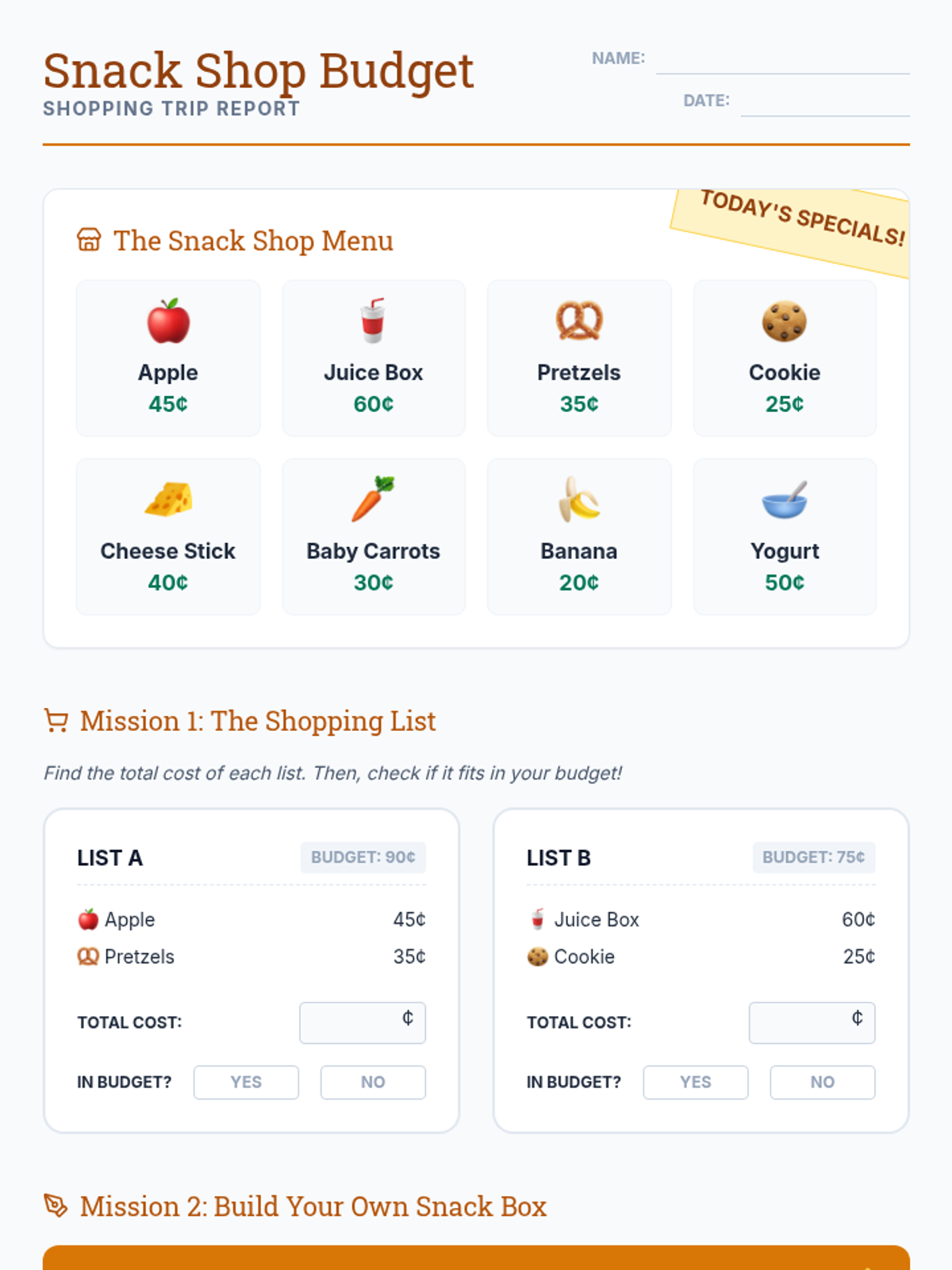
A student worksheet for identifying snack prices, calculating totals for pre-set lists, and making spending choices within a $1.00 budget.
Instructional slides for calculating total costs and making budgeting decisions, featuring "The Golden Rule of Spending" and clear comparison examples.
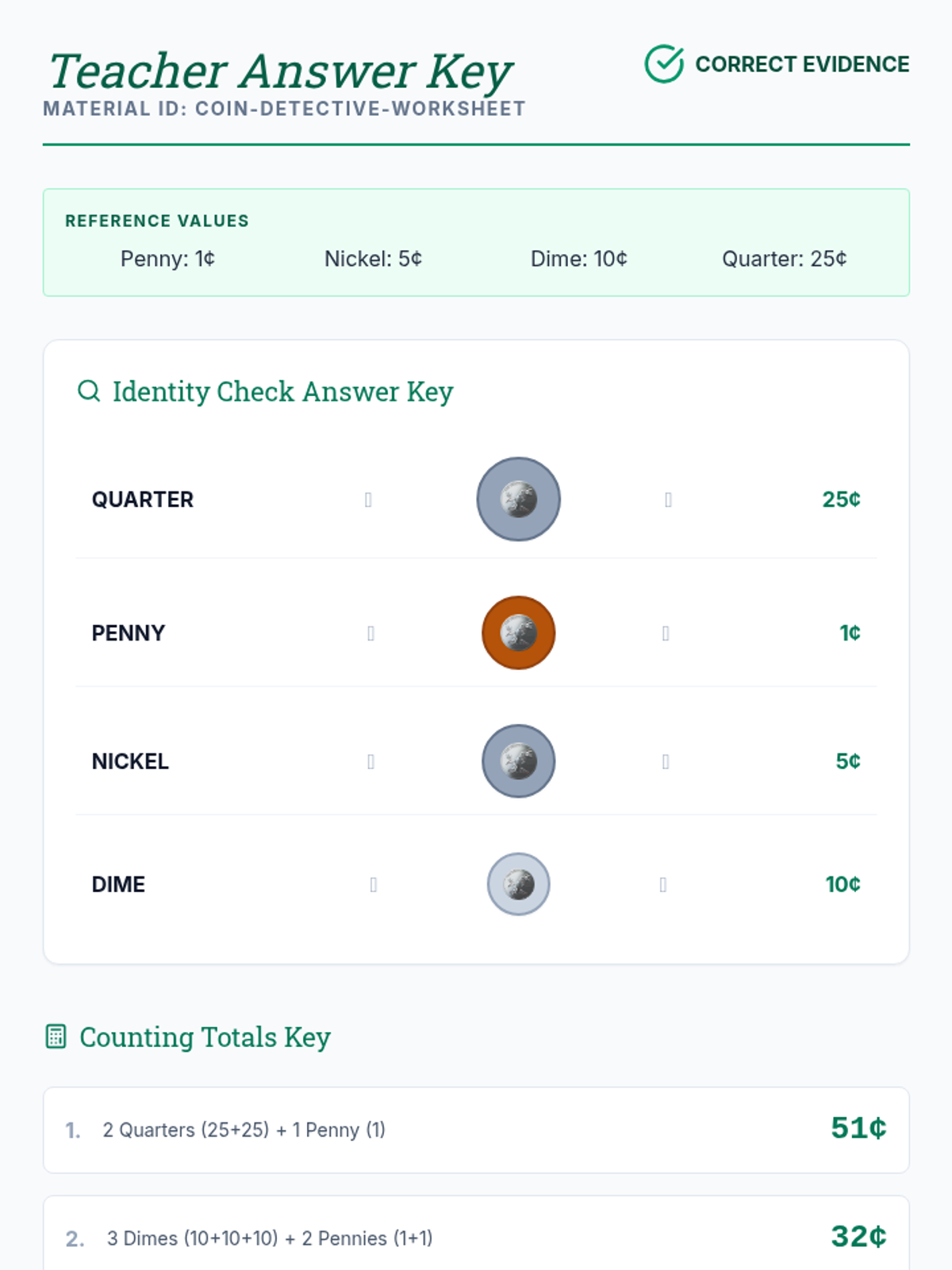
Teacher answer key for the Coin Detective Worksheet, including visual matching solutions and total value calculations.
A visual slide deck introducing the four main US coins (penny, nickel, dime, quarter) with their identification features and values. features a "Coin Detective" theme.
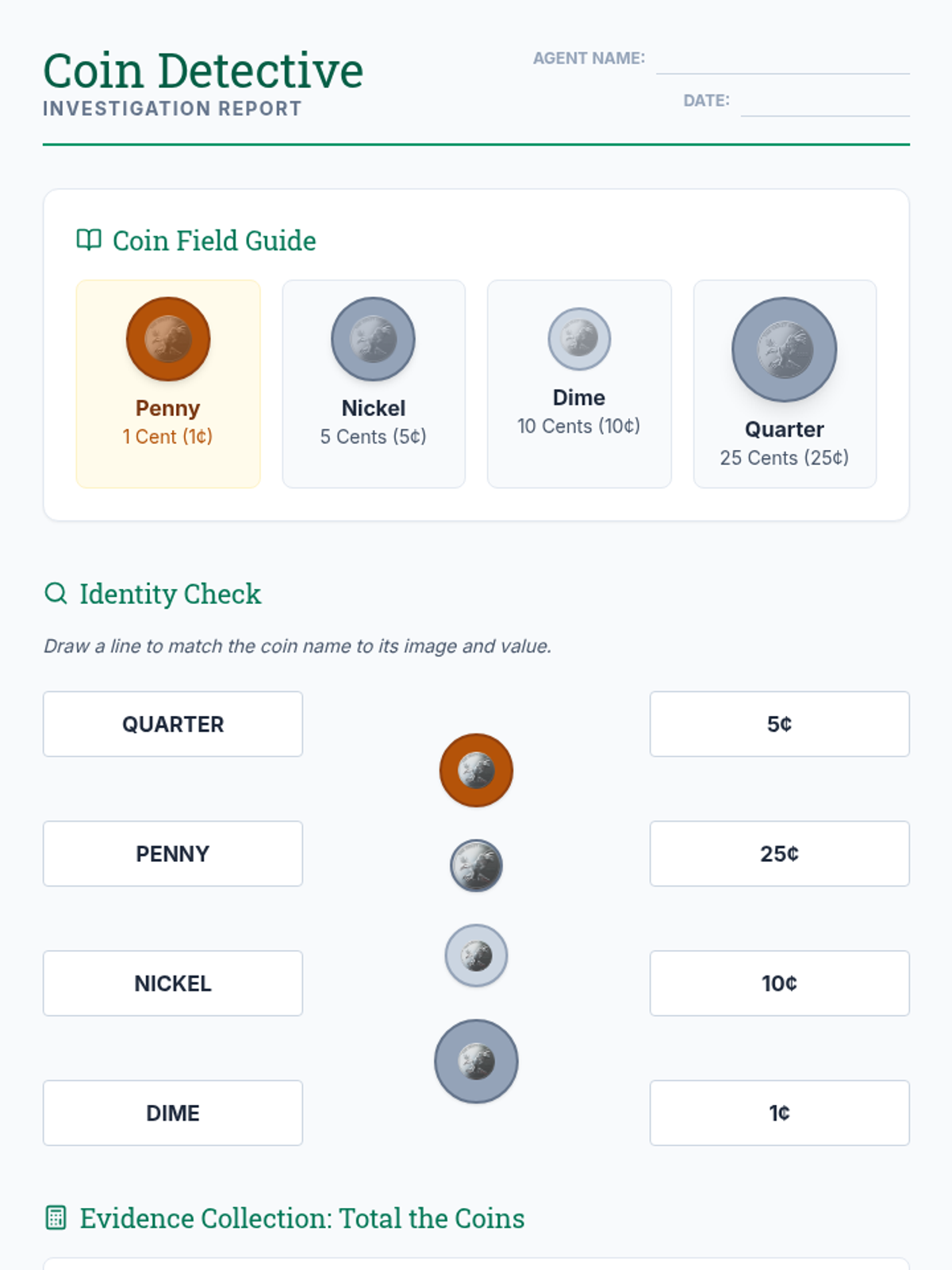
A coin identification and value worksheet using a "Coin Detective" theme. Includes a field guide, matching activity, and basic counting problems.
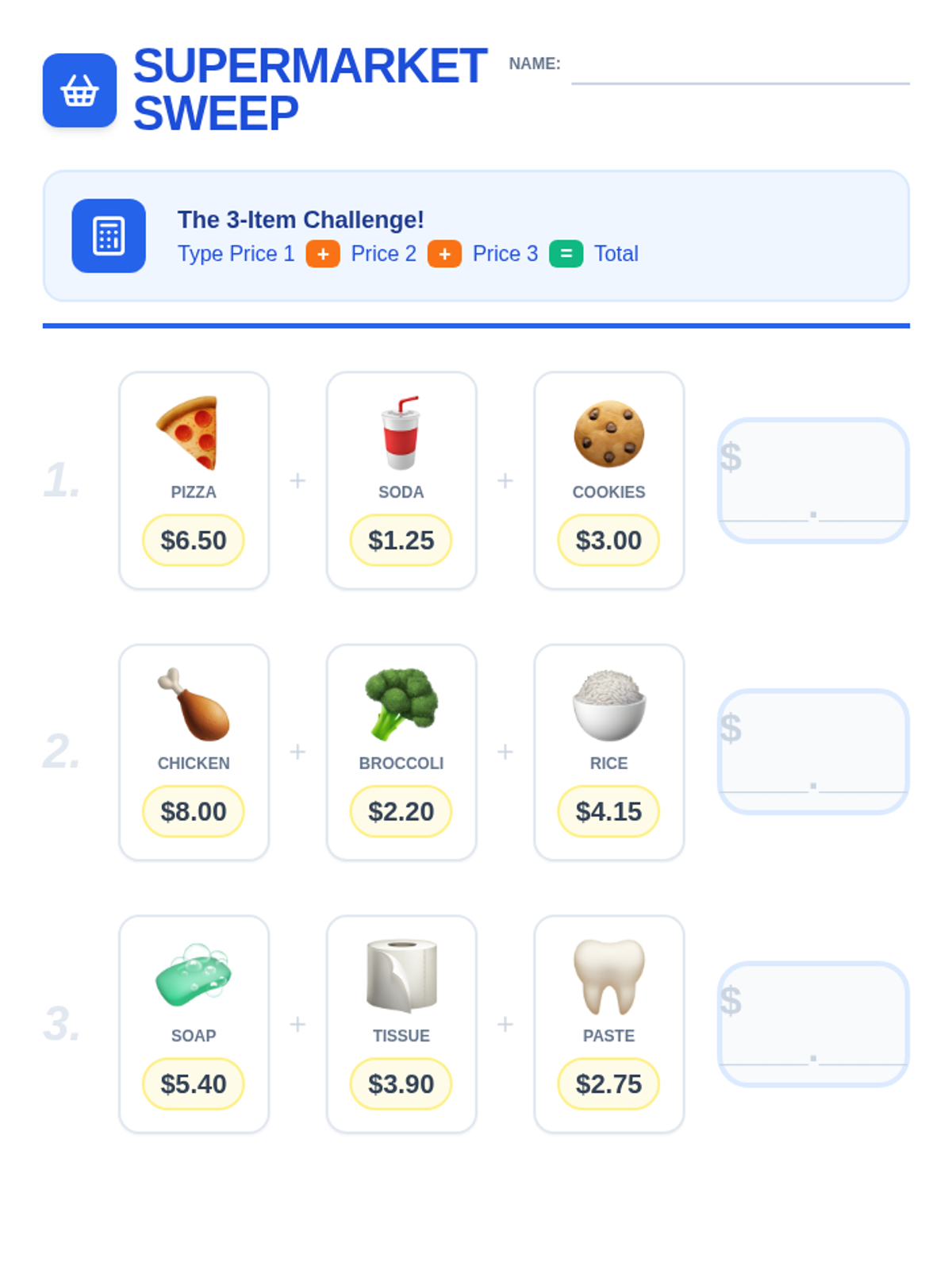
An expanded two-page worksheet featuring 6 problems for adding three grocery prices using a calculator, maintaining clear visual supports.
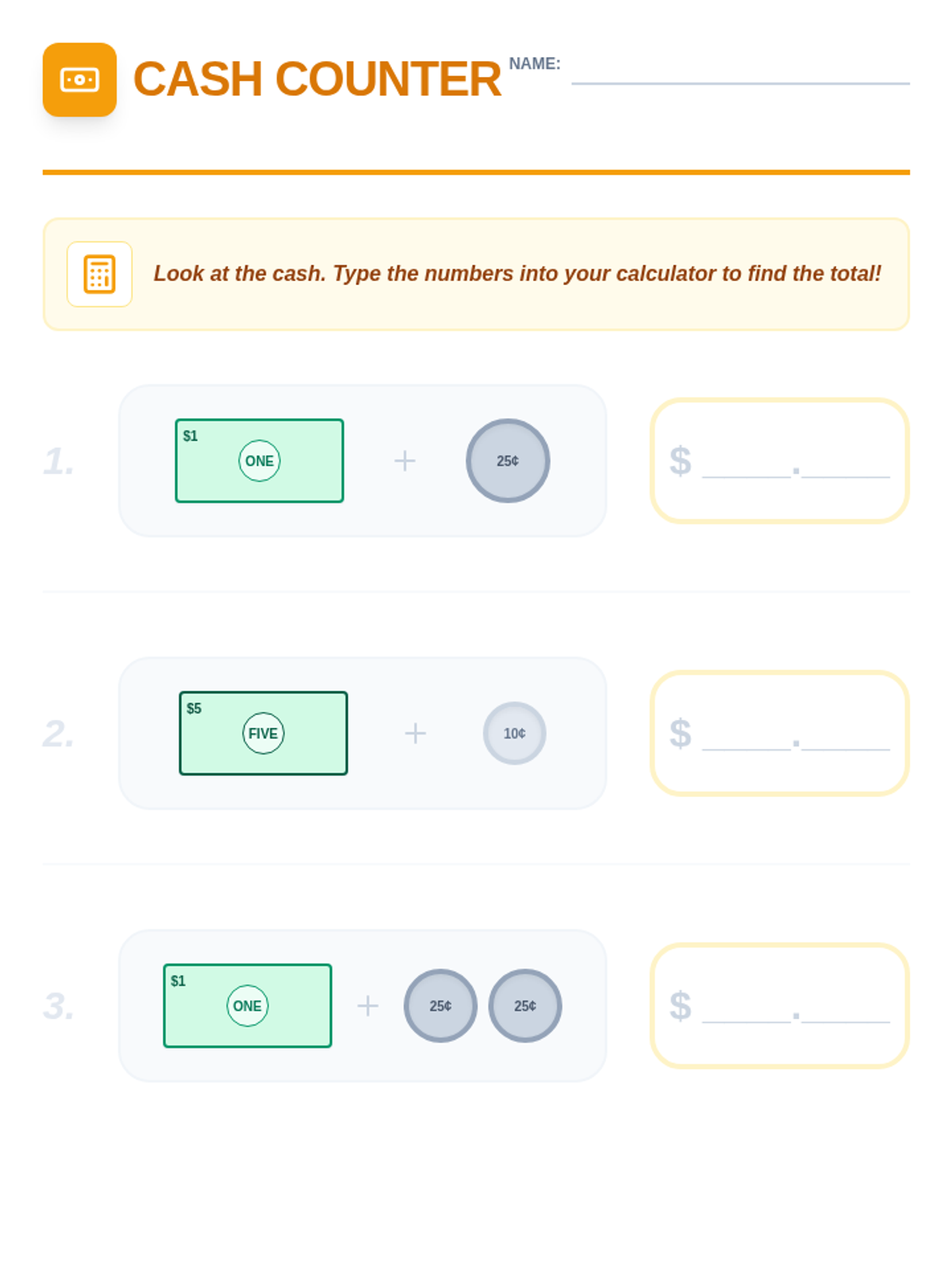
An expanded two-page worksheet featuring realistic CSS-rendered bills and coins for students to identify and add using a calculator.
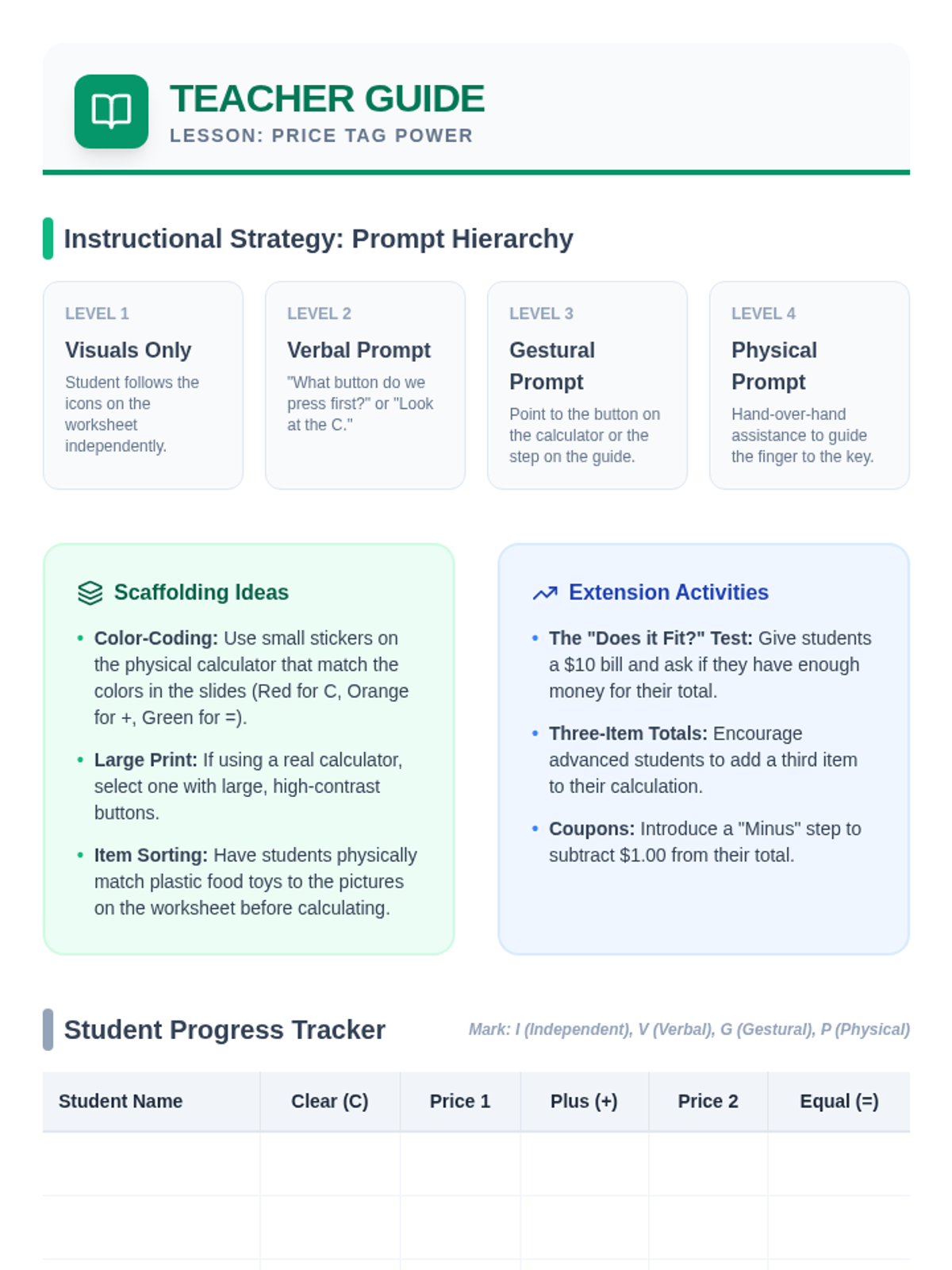
A teacher guide providing strategies for instruction, differentiation tips, and a data-tracking template for the Price Tag Power lesson.
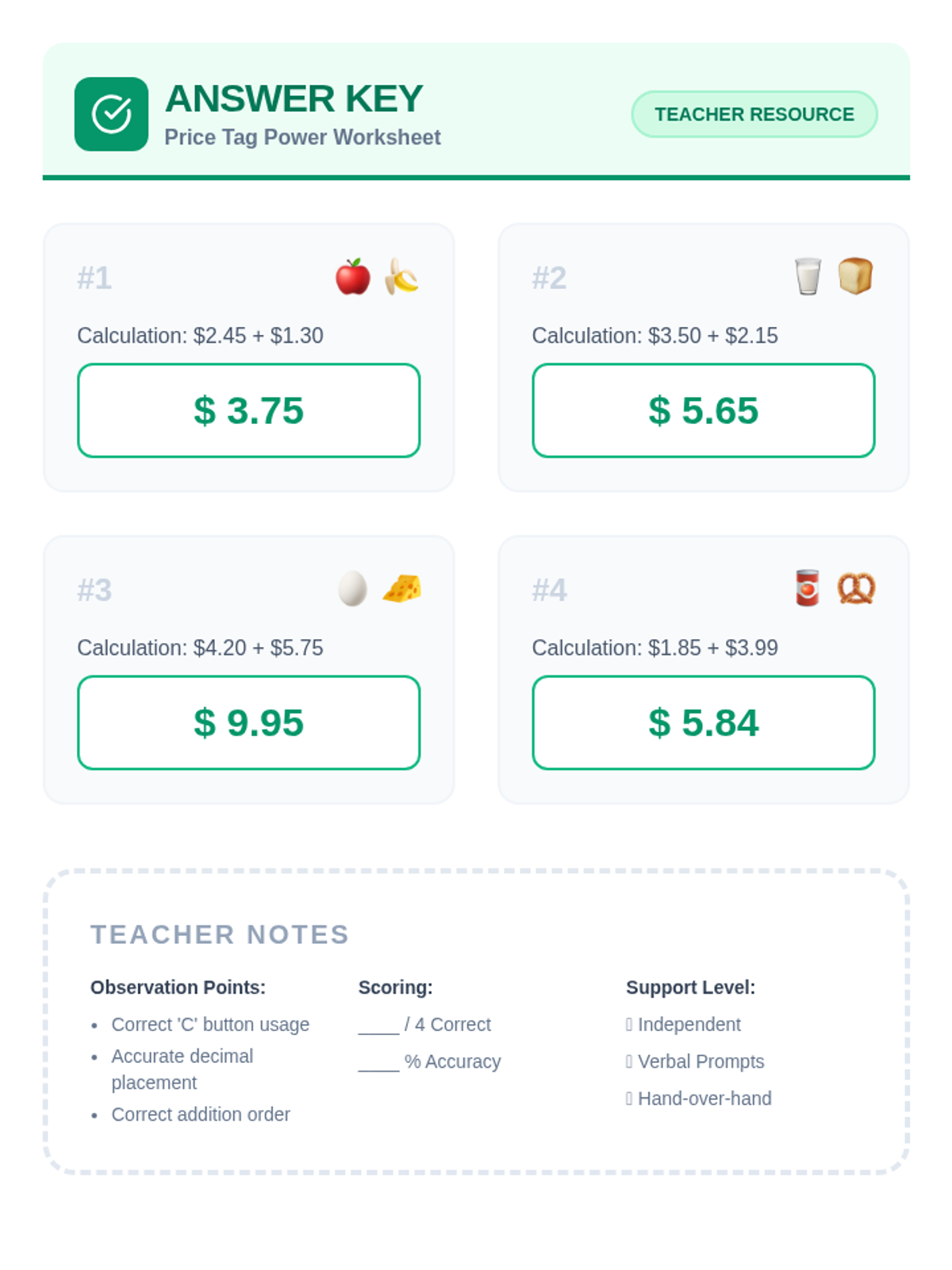
An answer key for the Price Tag Power Worksheet, including calculation breakdowns and a teacher observation checklist.
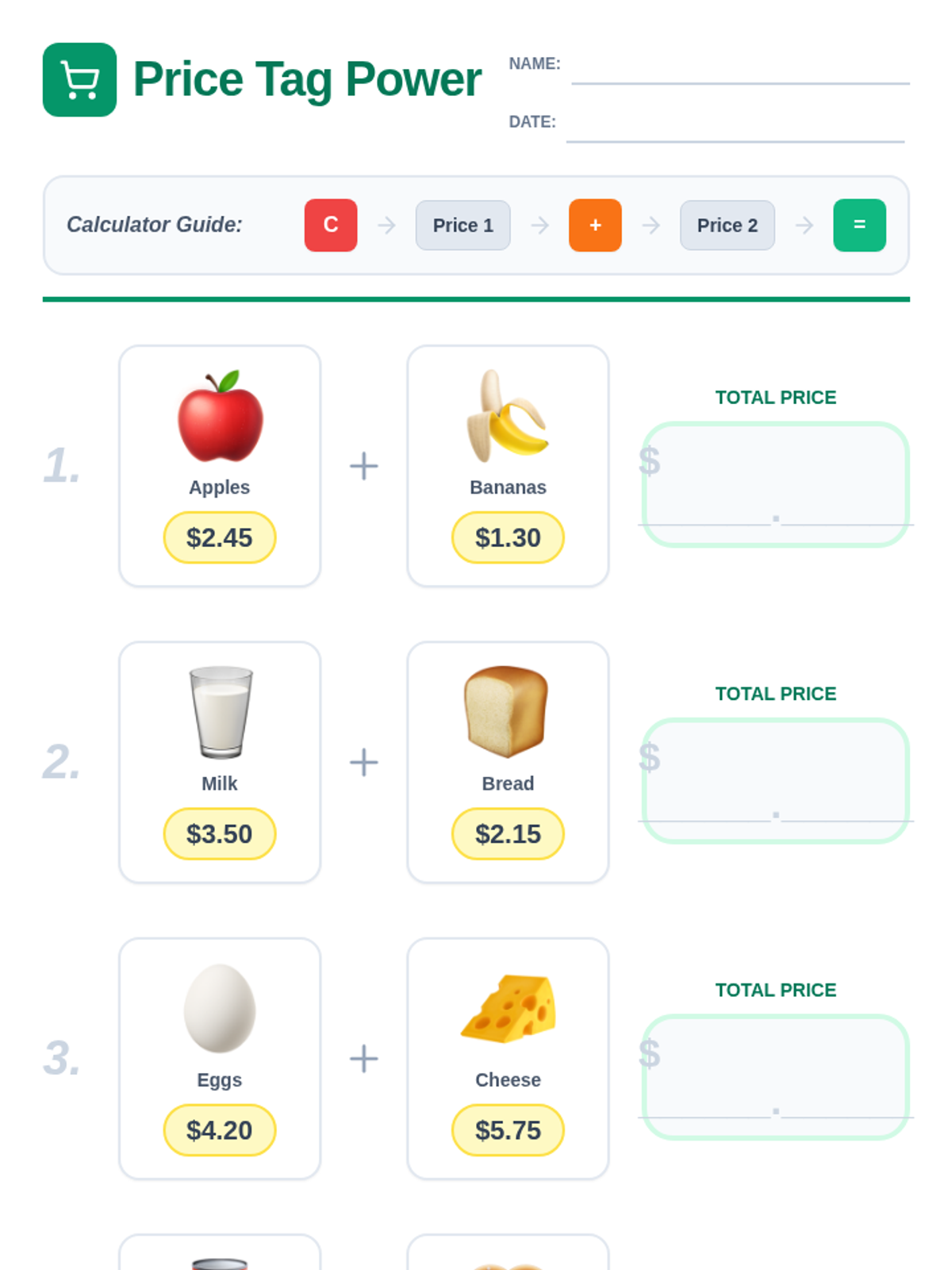
A student worksheet for practicing adding two grocery prices using a calculator, featuring clear price tags and a visual calculator guide.
Interactive slides introducing the step-by-step process of using a calculator to add prices, featuring clear visual cues and color-coded buttons.
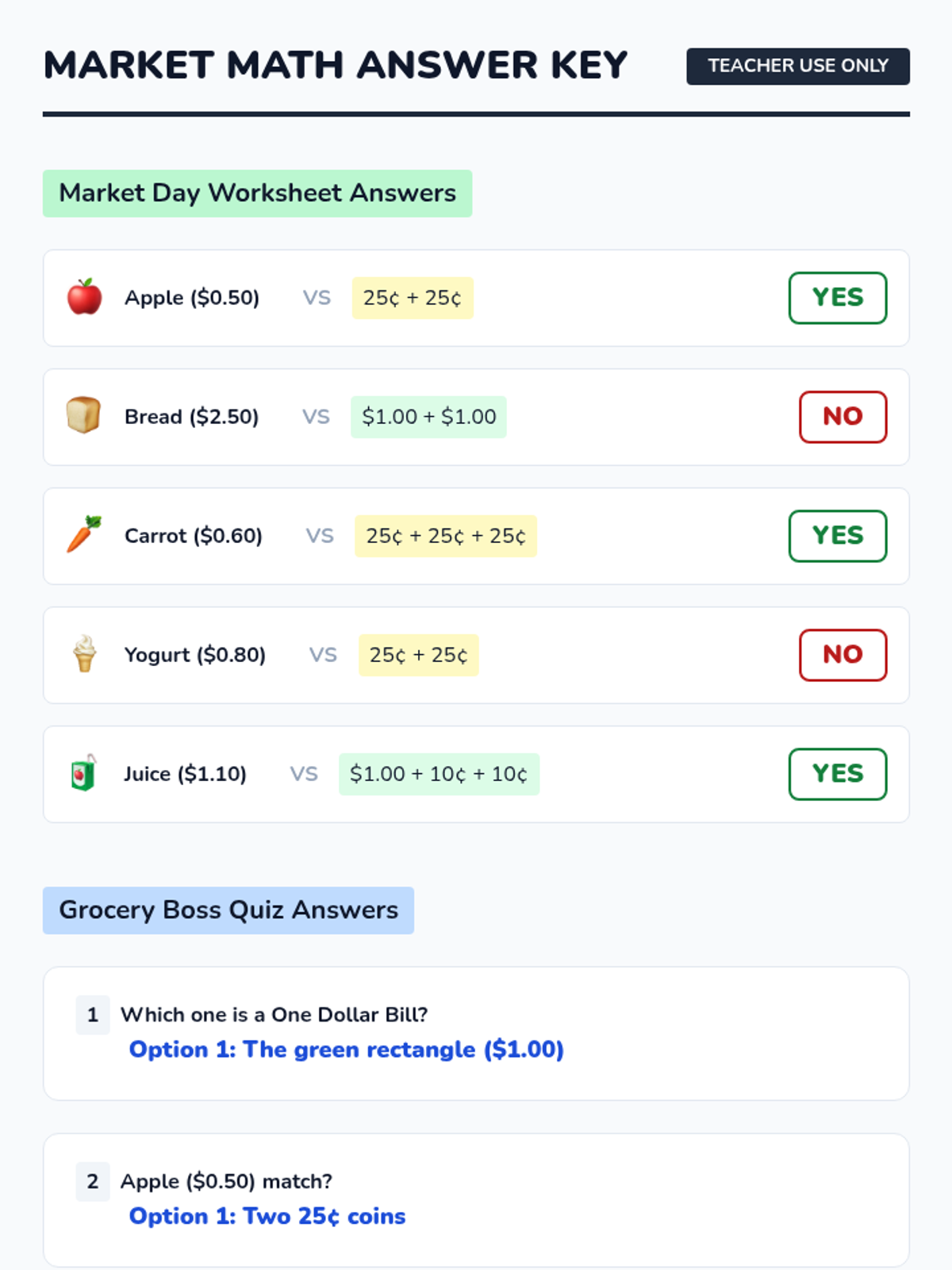
Updated answer key reflecting the addition of new items (carrots, yogurt, juice) to the worksheet while maintaining clear guidance for the quiz.
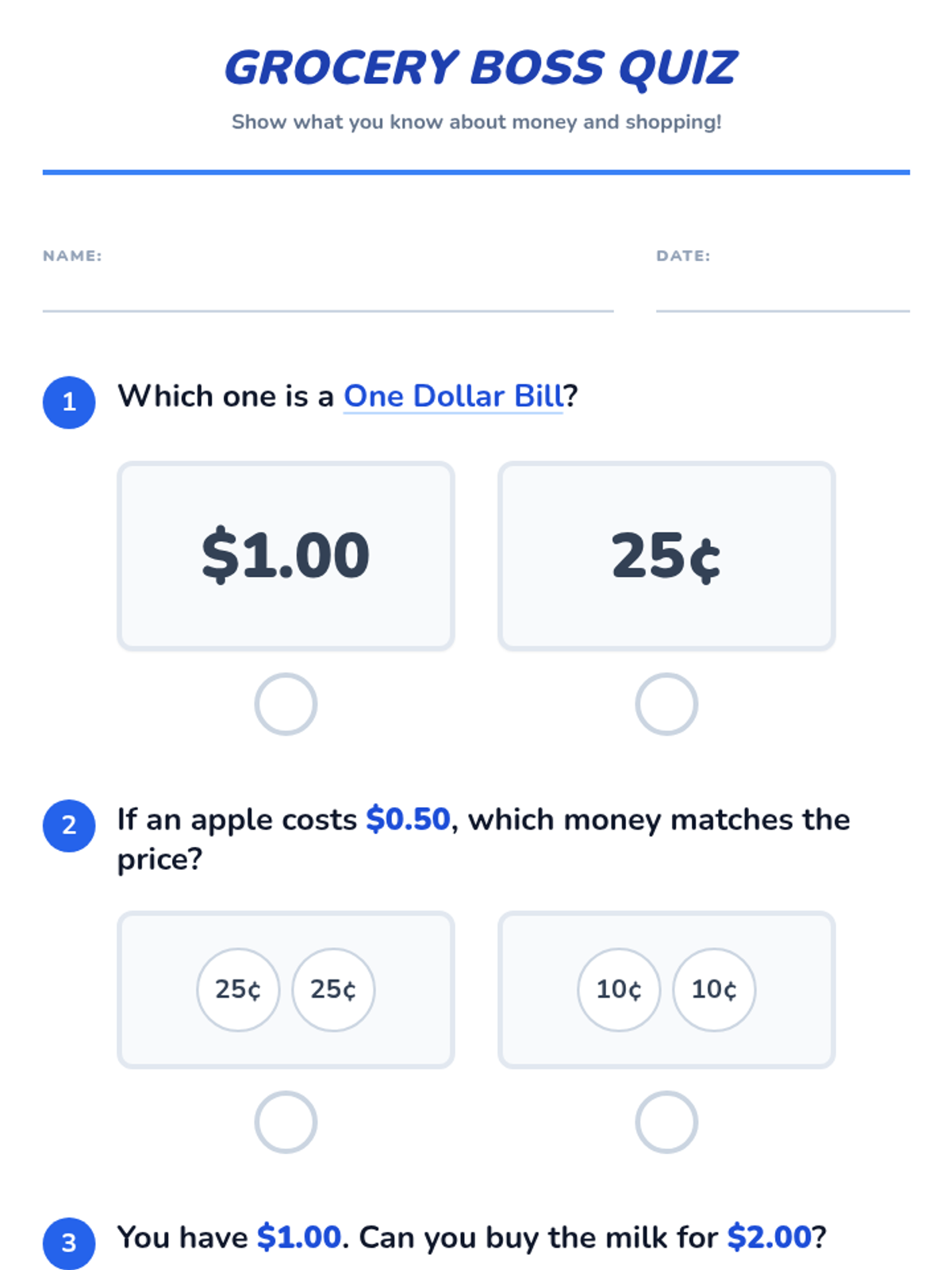
A 3-question visual quiz with 2 multiple-choice options per question. Focuses on identifying a dollar bill, matching change to a price, and basic affordability decisions. All answer options share identical styling to ensure objective testing.
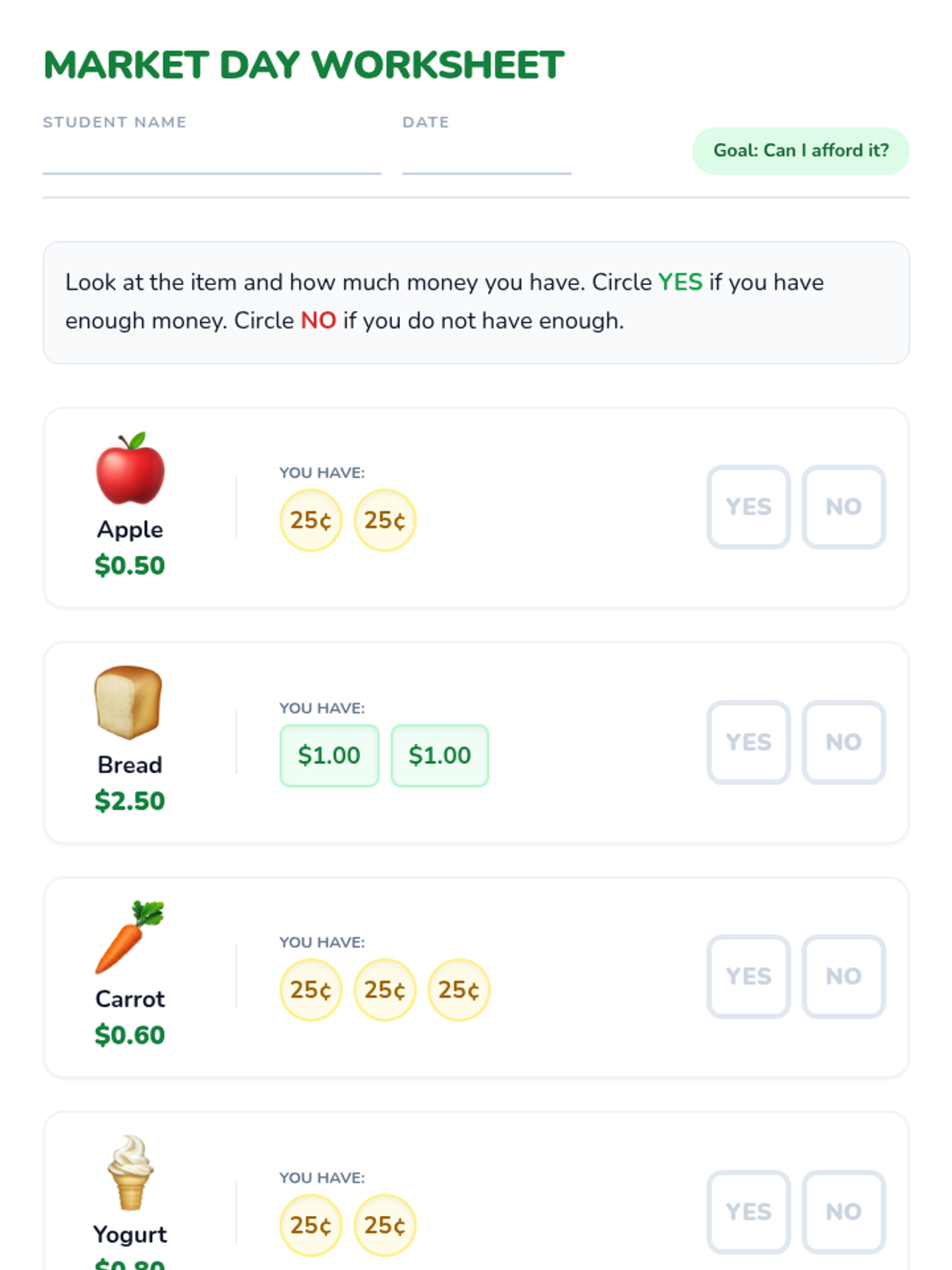
Expanded worksheet with 5 practice items, including new products like carrots, yogurt, and juice to challenge students with different money combinations. Reduced element sizes to fit more content.
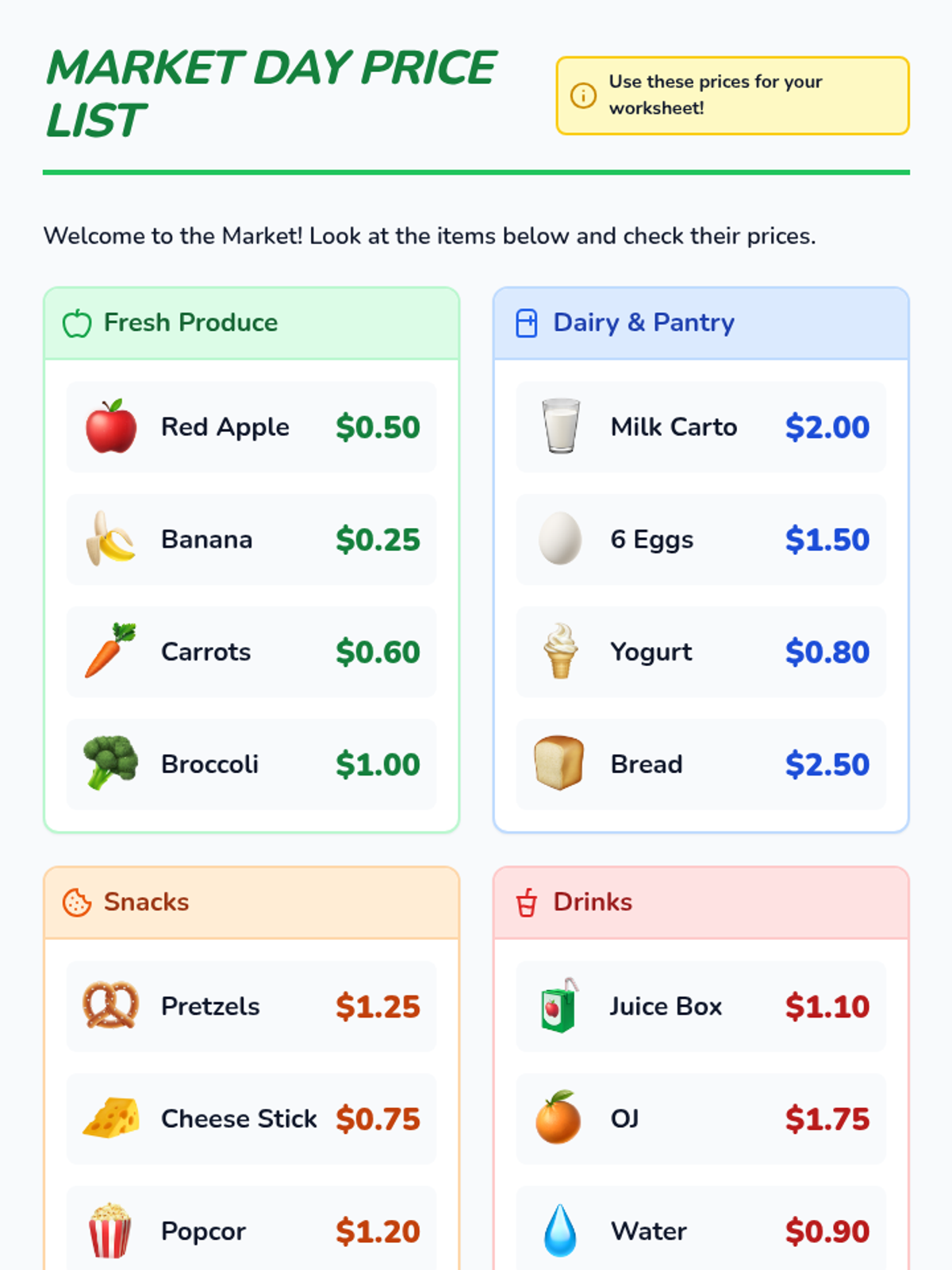
Updated visual price list with additional grocery items including carrots, yogurt, popcorn, and orange juice to provide more practice variety.
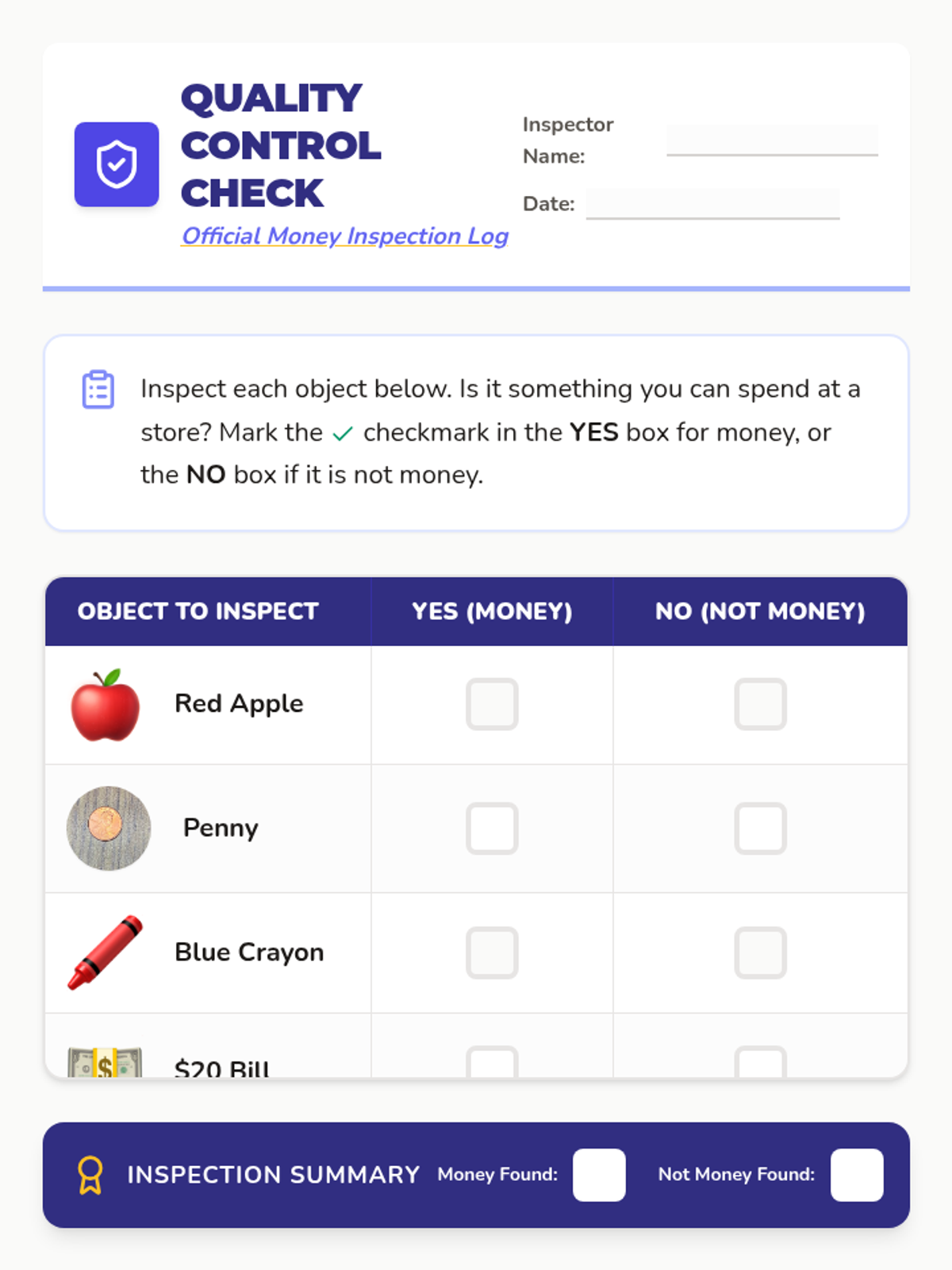
A "Quality Control Check" checklist worksheet where students evaluate various household items and food alongside currency to identify if they are money, using real photos for coins.
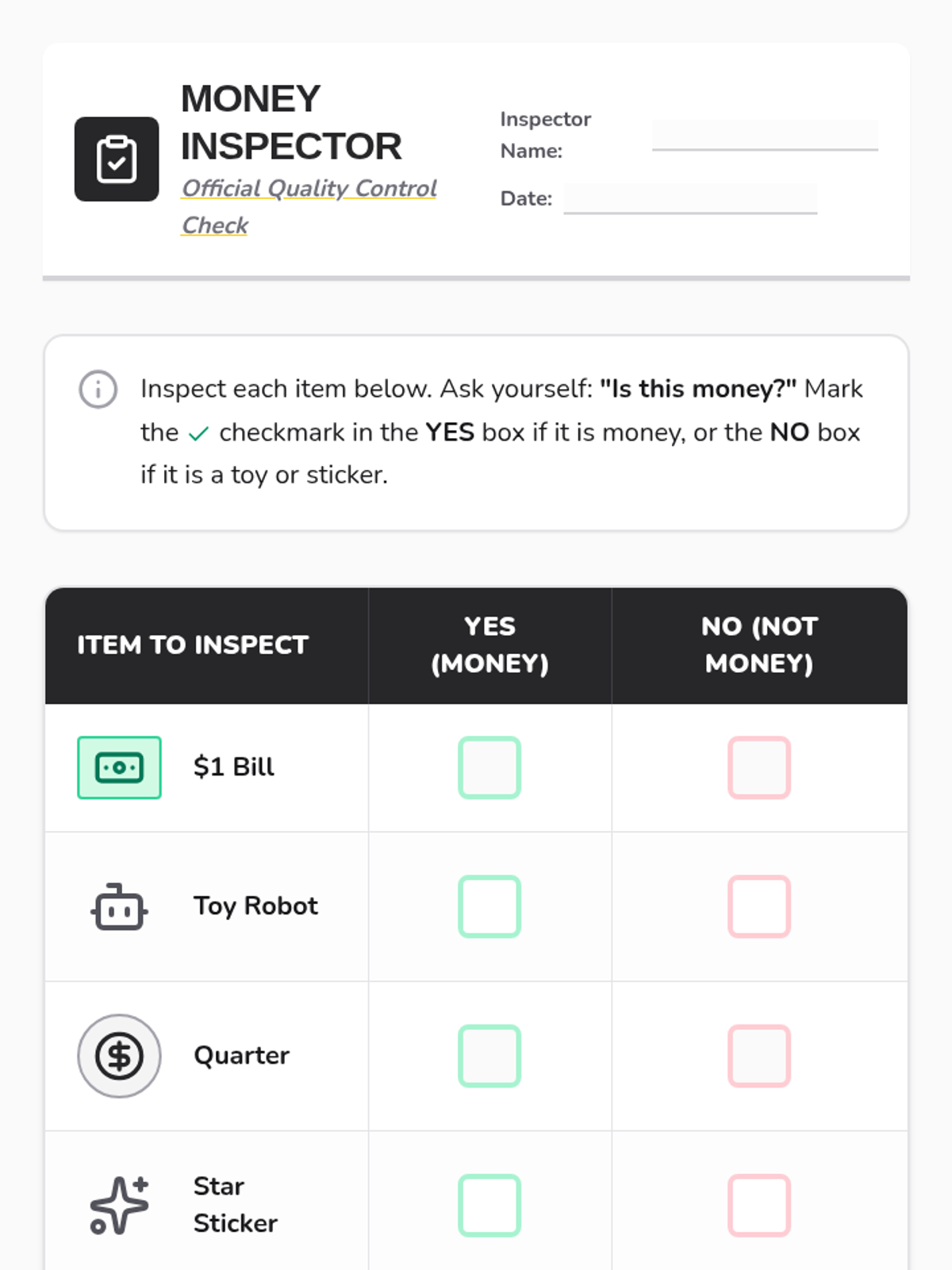
A "Money Inspector" checklist worksheet where students evaluate items and check "Yes" or "No" to identify if they are currency, using real photos for coins and optimized for 8.5x11 fit.
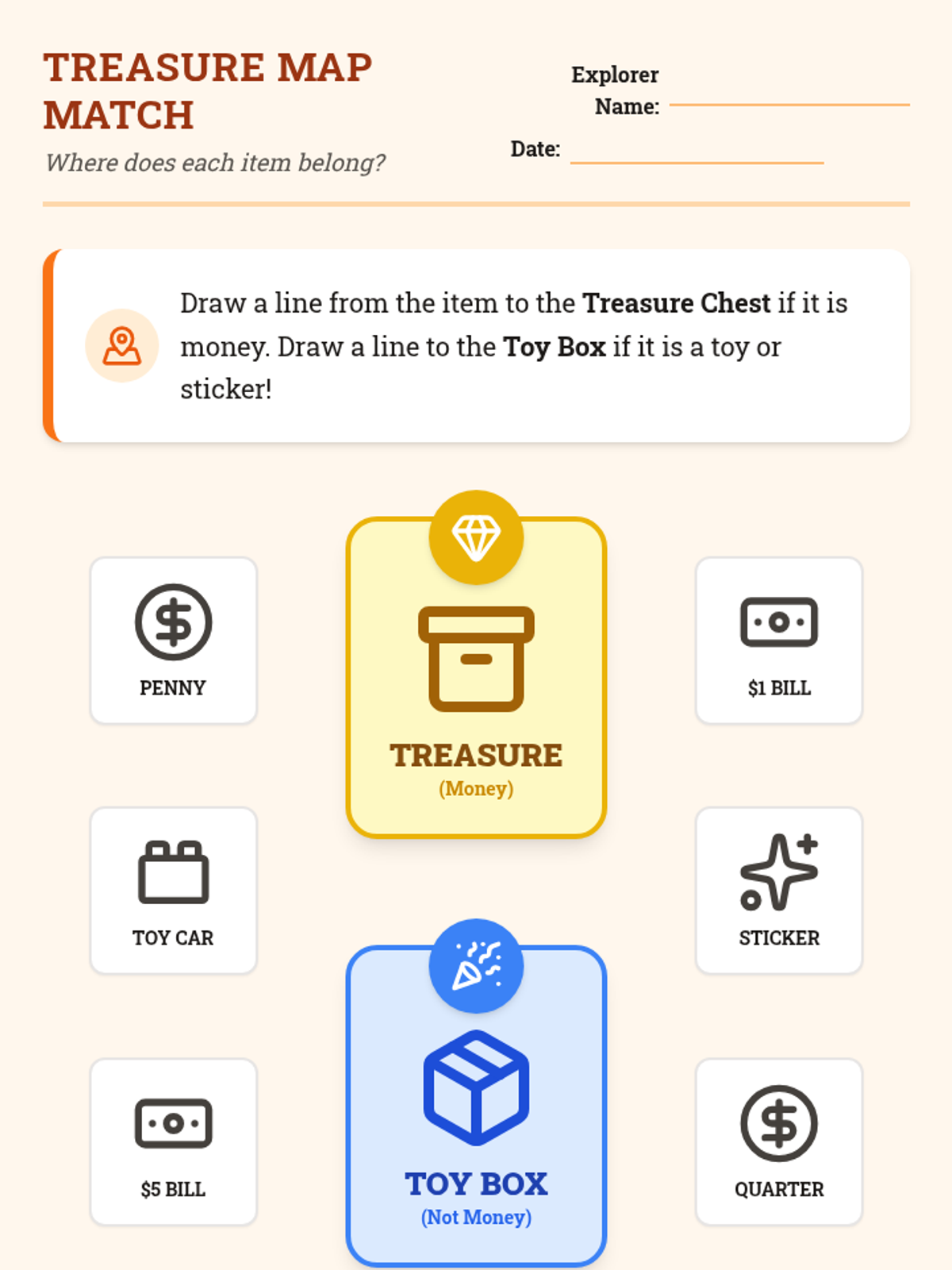
A matching activity where students draw lines to categorize items into a "Treasure Chest" for money or a "Toy Box" for toys and stickers, using real photos for coins.
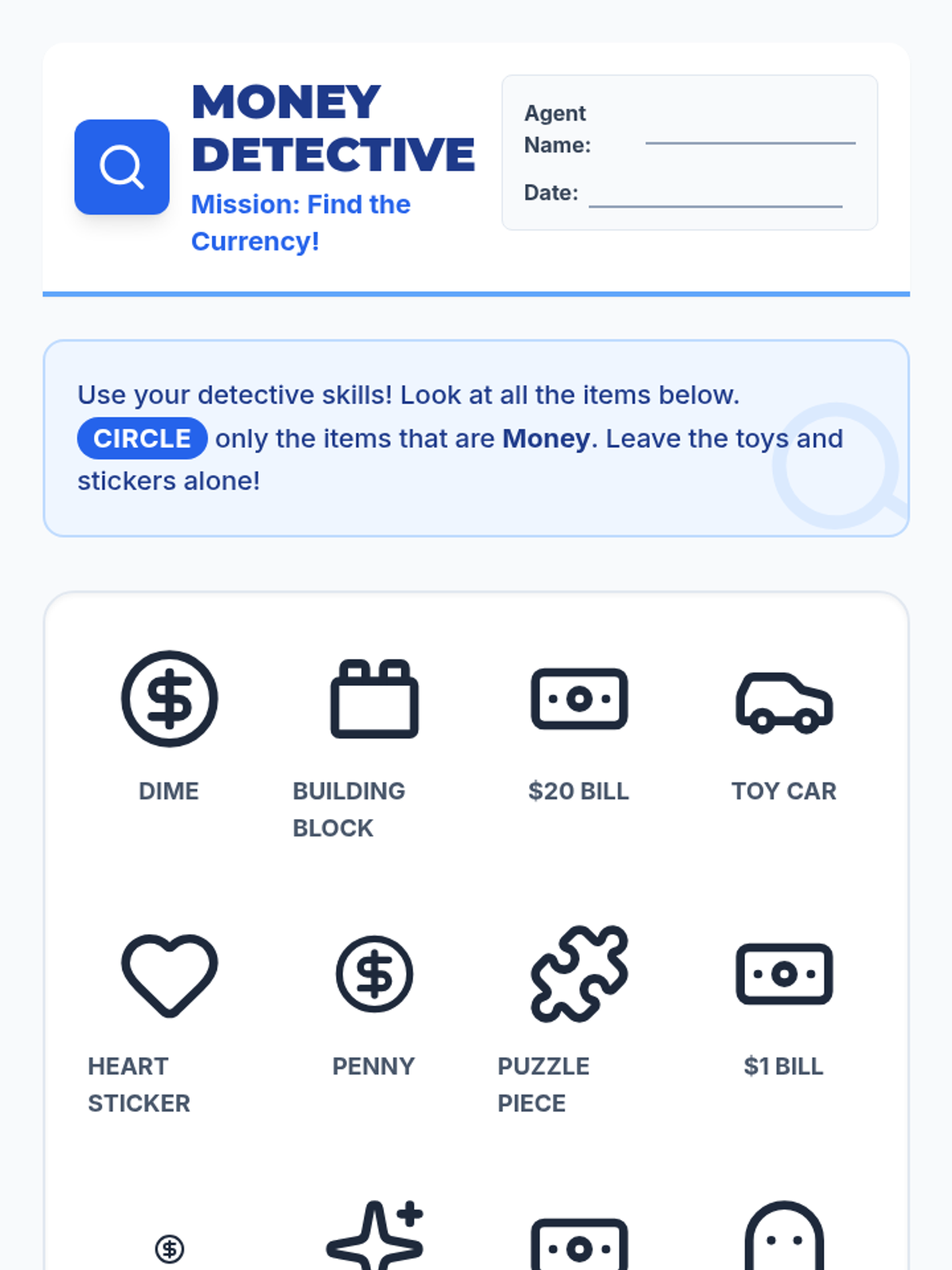
A "Money Detective" search-and-find worksheet where students identify and circle currency items (real coin photos and bills) hidden among toys and stickers. Removed redundant instruction text and optimized for 8.5x11 fit.
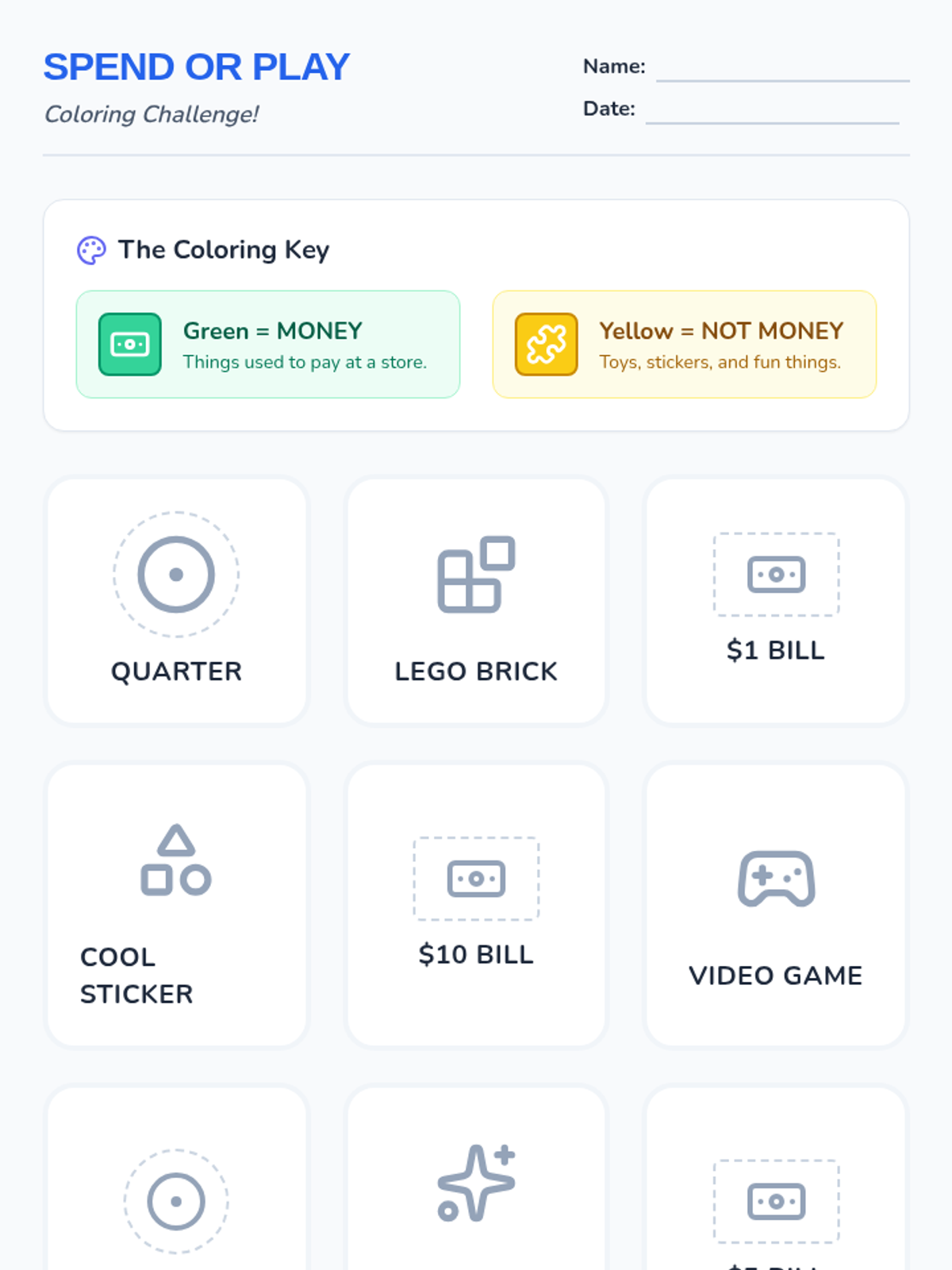
A color-by-category worksheet where students use green for money and yellow for non-monetary items (toys and stickers) to practice visual identification.
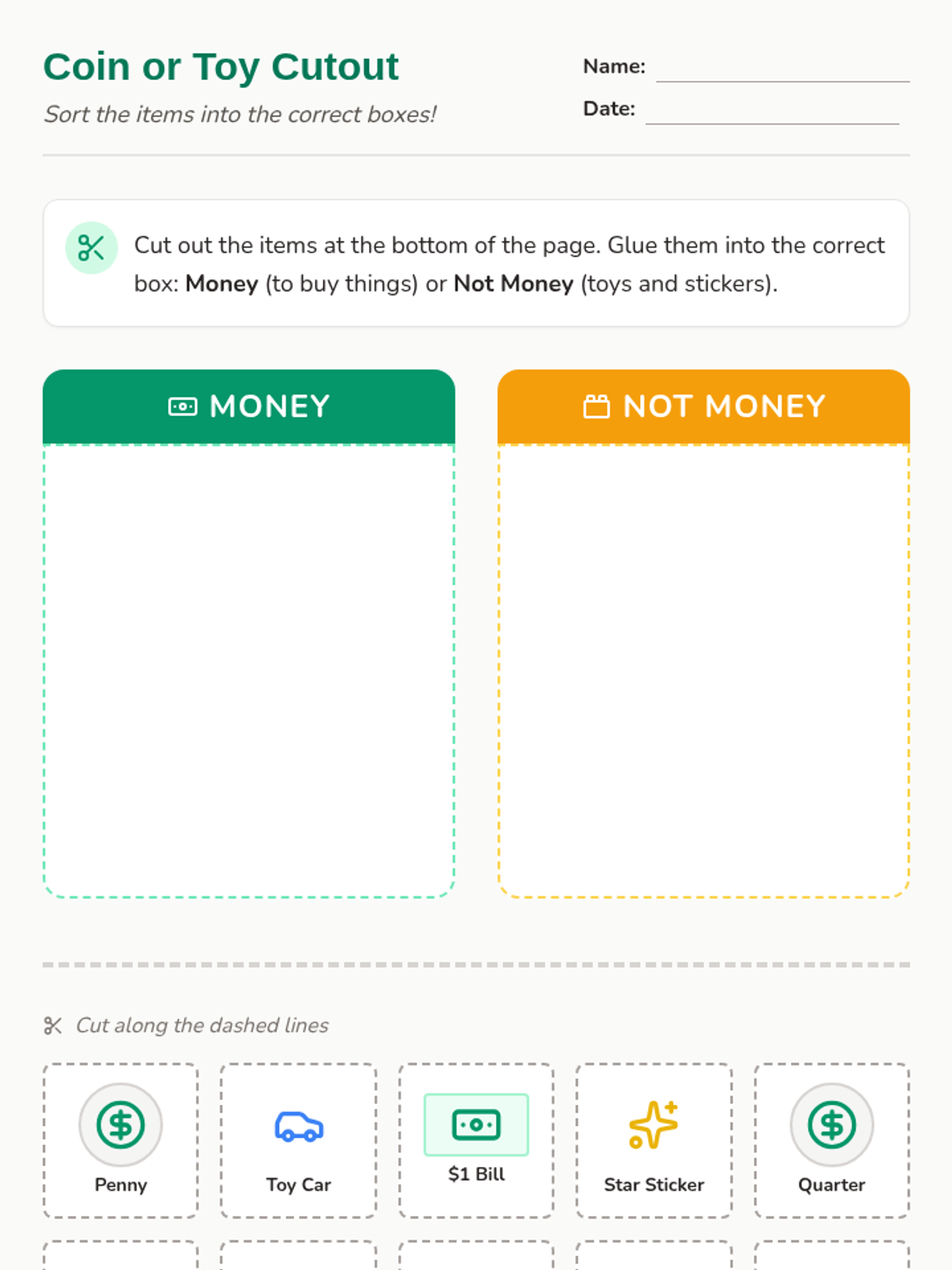
A cut-and-paste sorting activity where students distinguish between various currency items (real photos of coins and bills) and non-monetary items like toys and stickers.
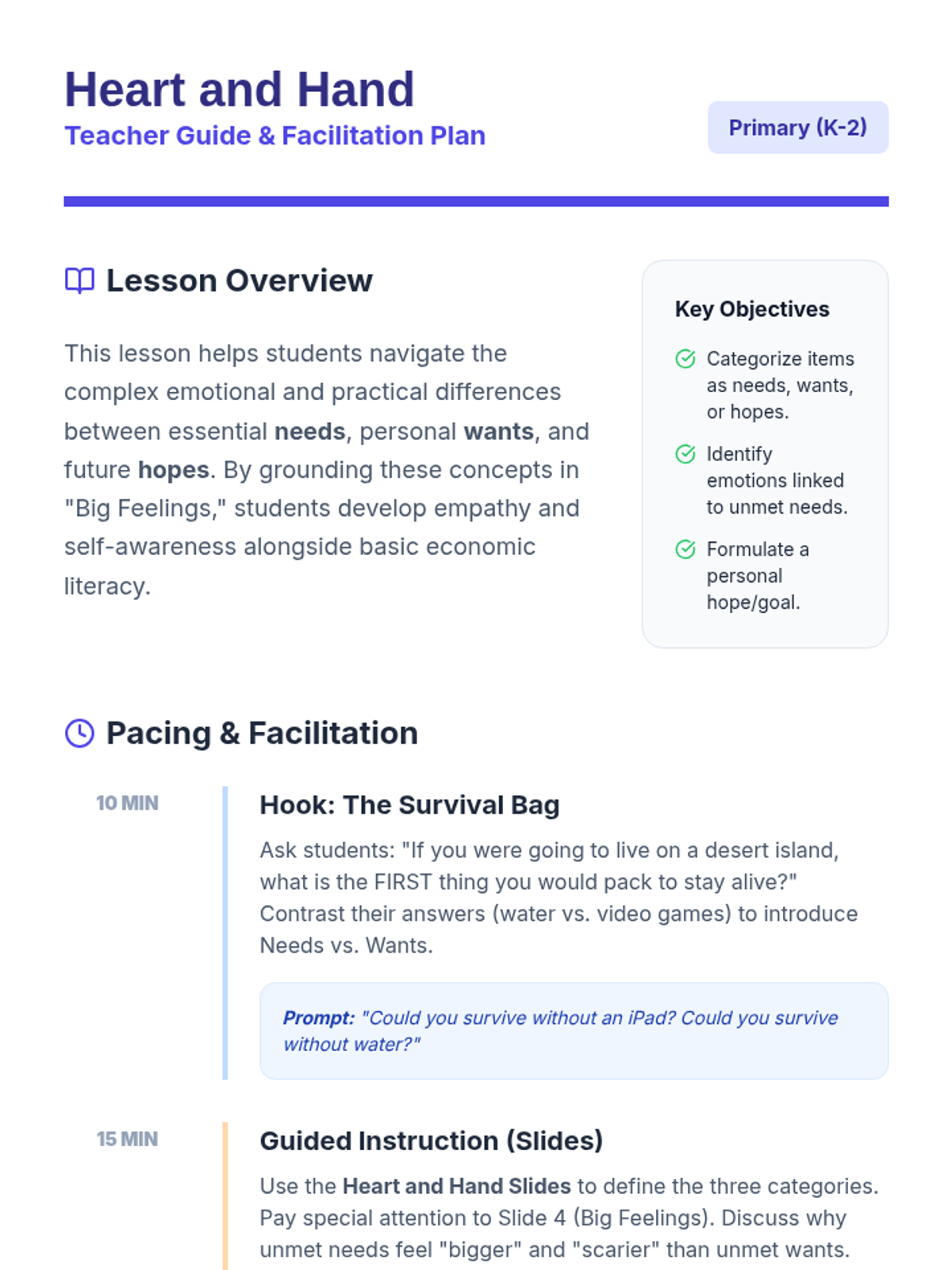
A guide for teachers to facilitate the Heart and Hand lesson, including pacing, discussion prompts, differentiation strategies, and an answer key.
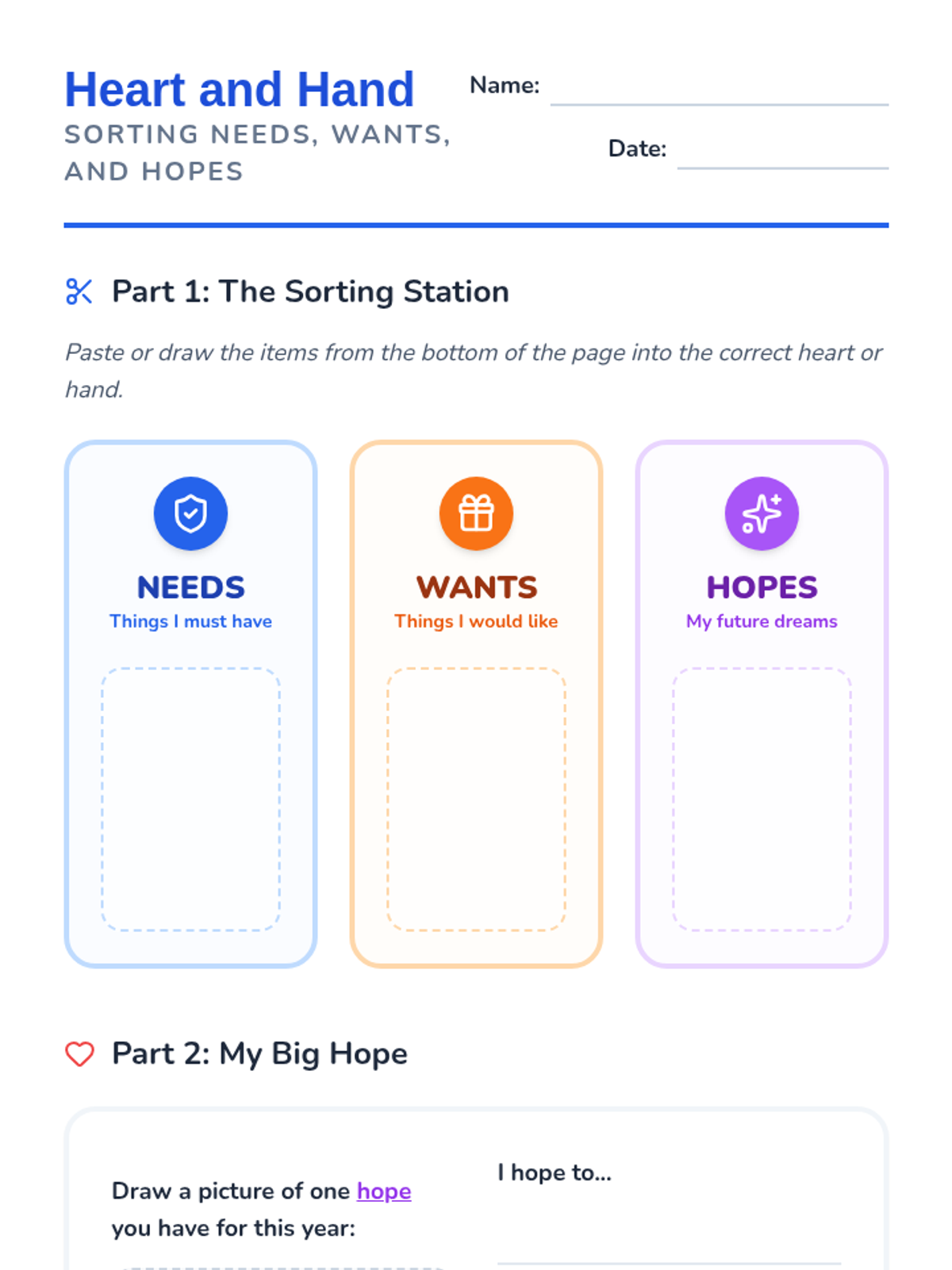
A hands-on activity where primary students sort items into needs, wants, and hopes, plus a personal reflection section to express future goals.
A visual presentation for primary students that explains the differences between needs (essentials), wants (extras), and hopes (dreams), including the feelings associated with unmet needs.