Empathetic skill development through emotion recognition, cultural diversity appreciation, and bias confrontation. Targets multi-perspective analysis to support respectful interactions and complex social responses.
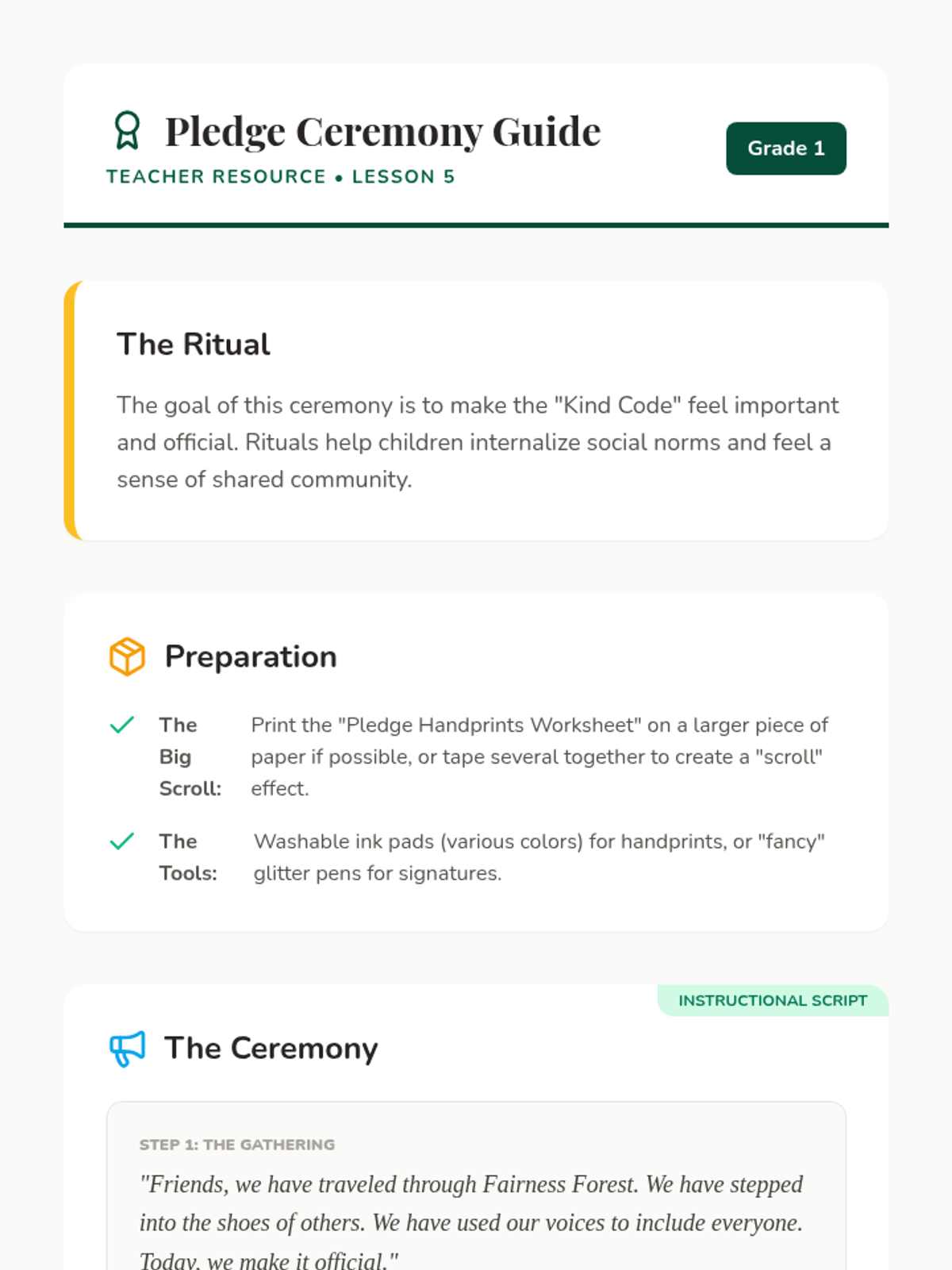
A teacher guide for the classroom inclusion pledge ceremony. Includes preparation tips and a script to make the event feel formal and significant for 1st graders.
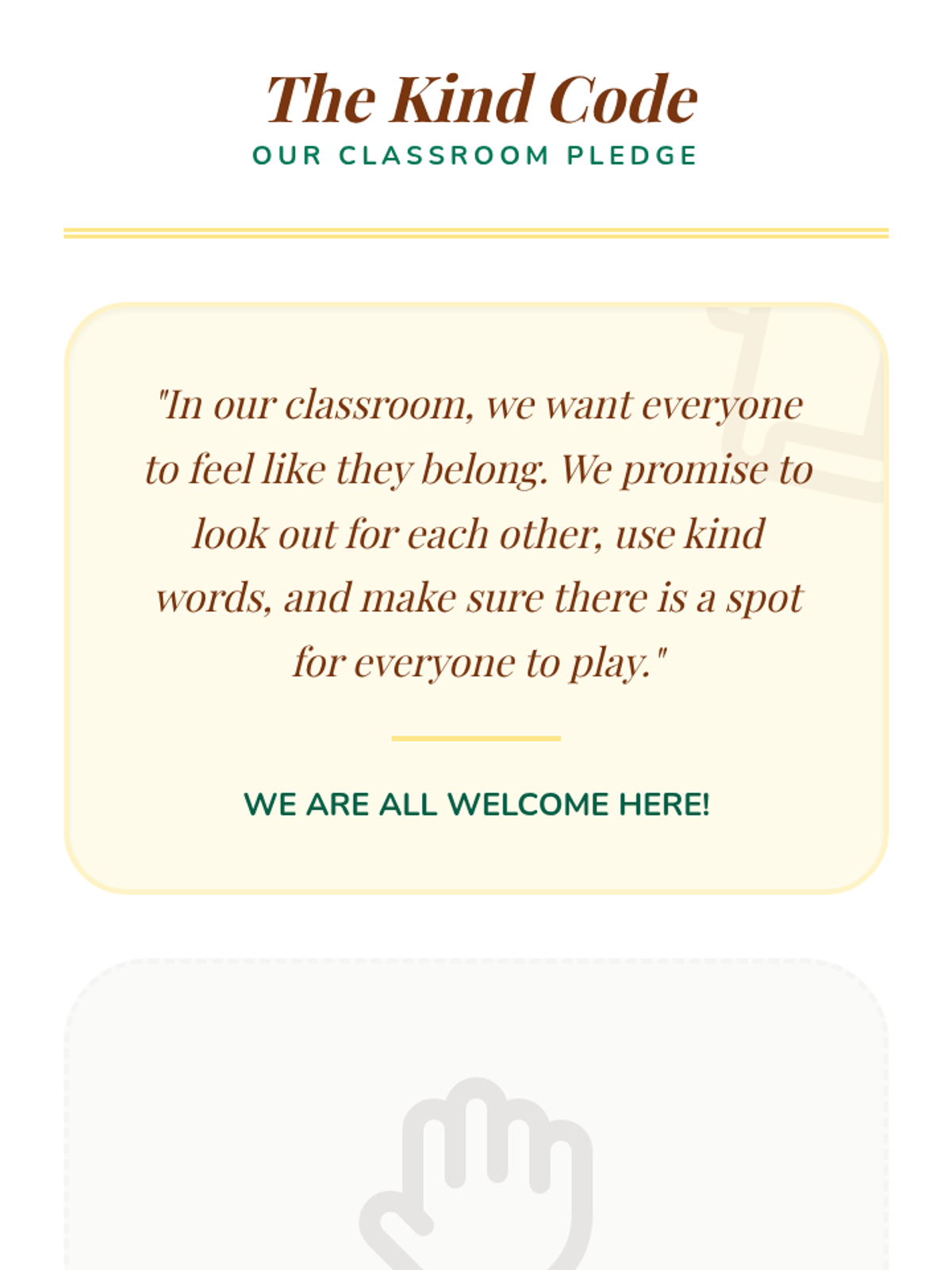
A classroom inclusion pledge for students to 'sign' with a handprint or name. It formalizes their commitment to the inclusive behaviors learned throughout the sequence.
A slide deck for Lesson 5 summarizing the sequence and guiding the co-creation of the classroom inclusion pledge.
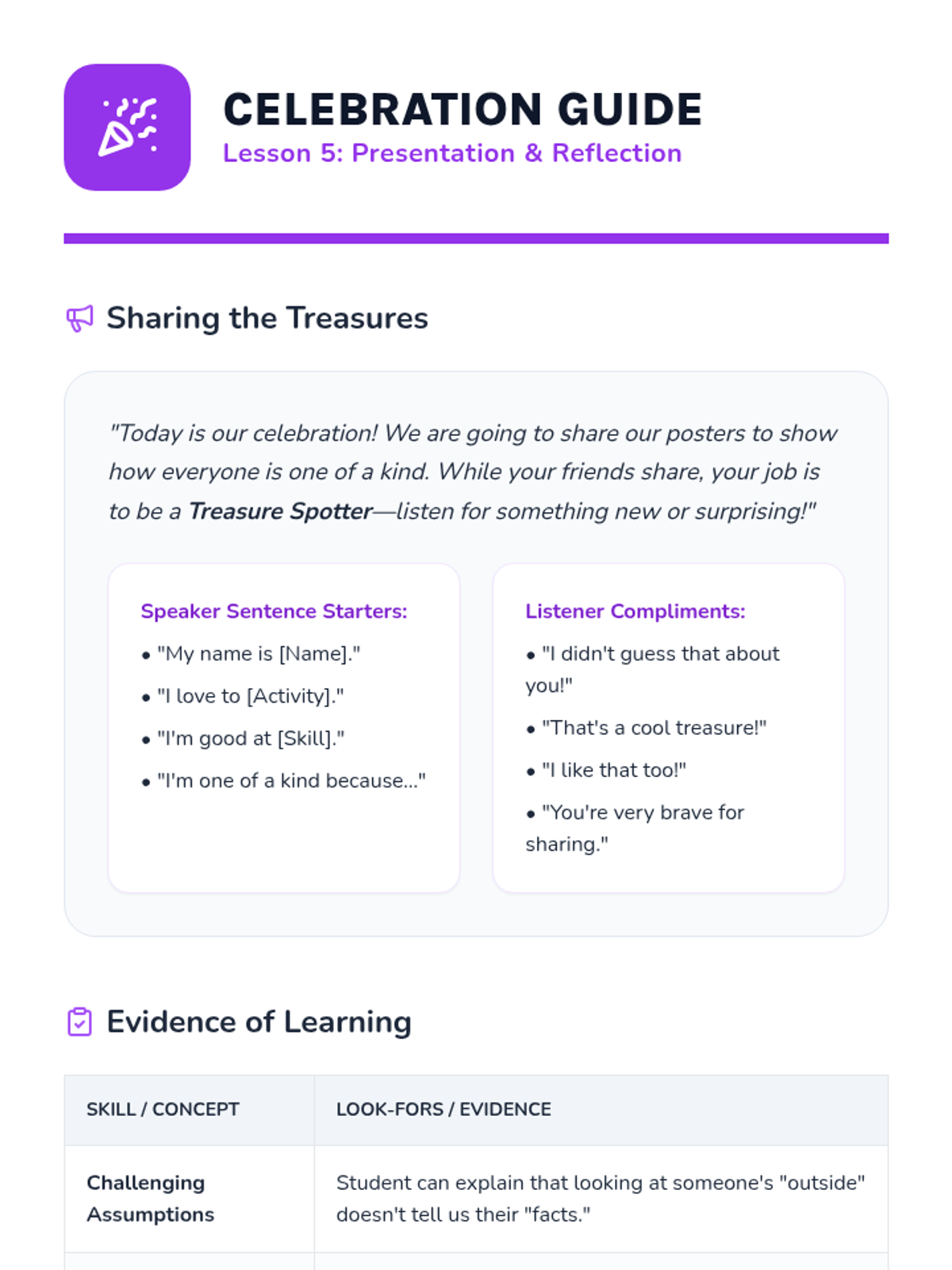
Teacher facilitation guide for the final celebration. Includes presentation sentence starters, a reflection checklist for learning outcomes, and closing discussion prompts.
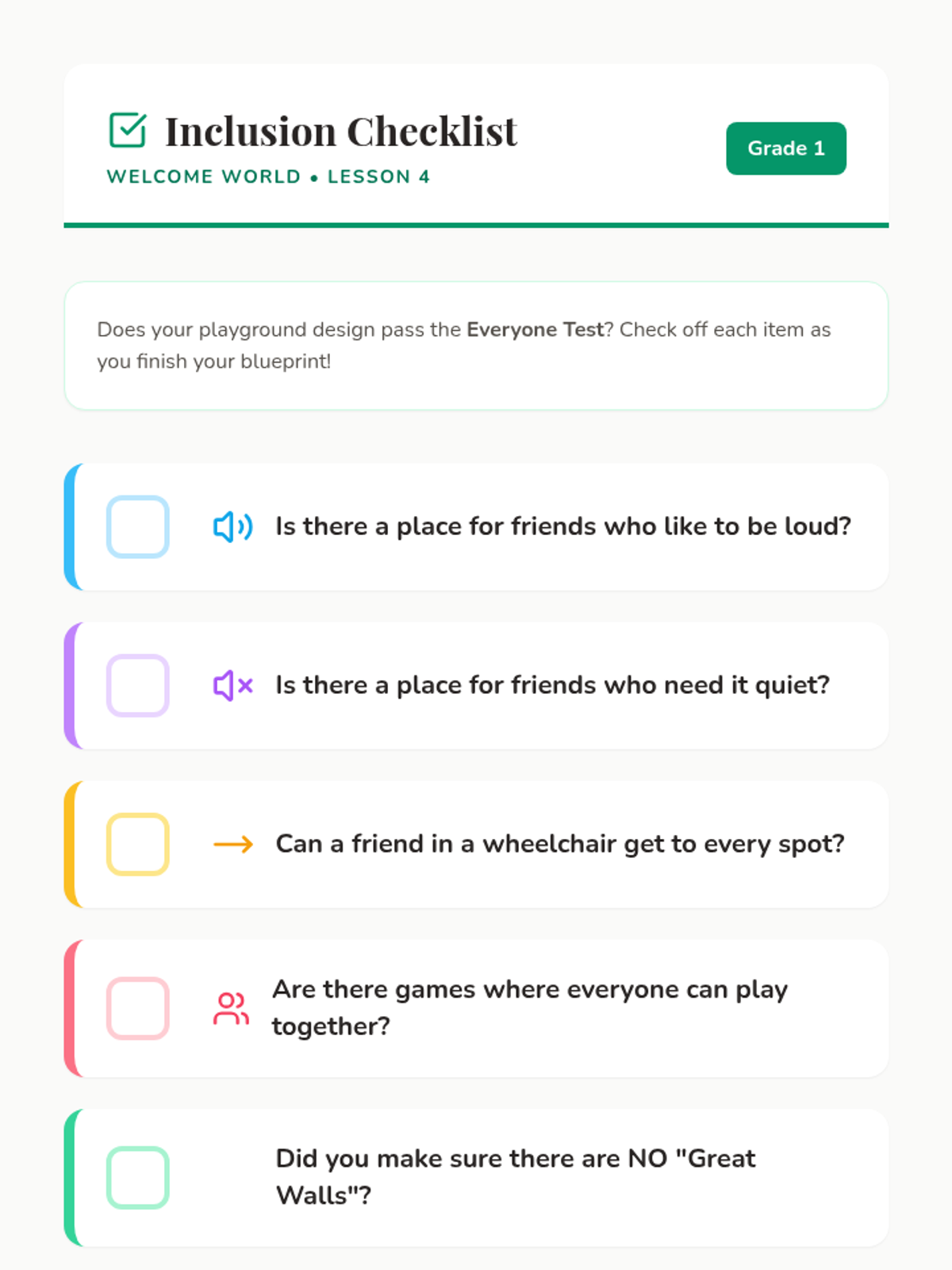
A checklist for students to self-assess their inclusive playground designs, ensuring features for different social and physical needs are included.
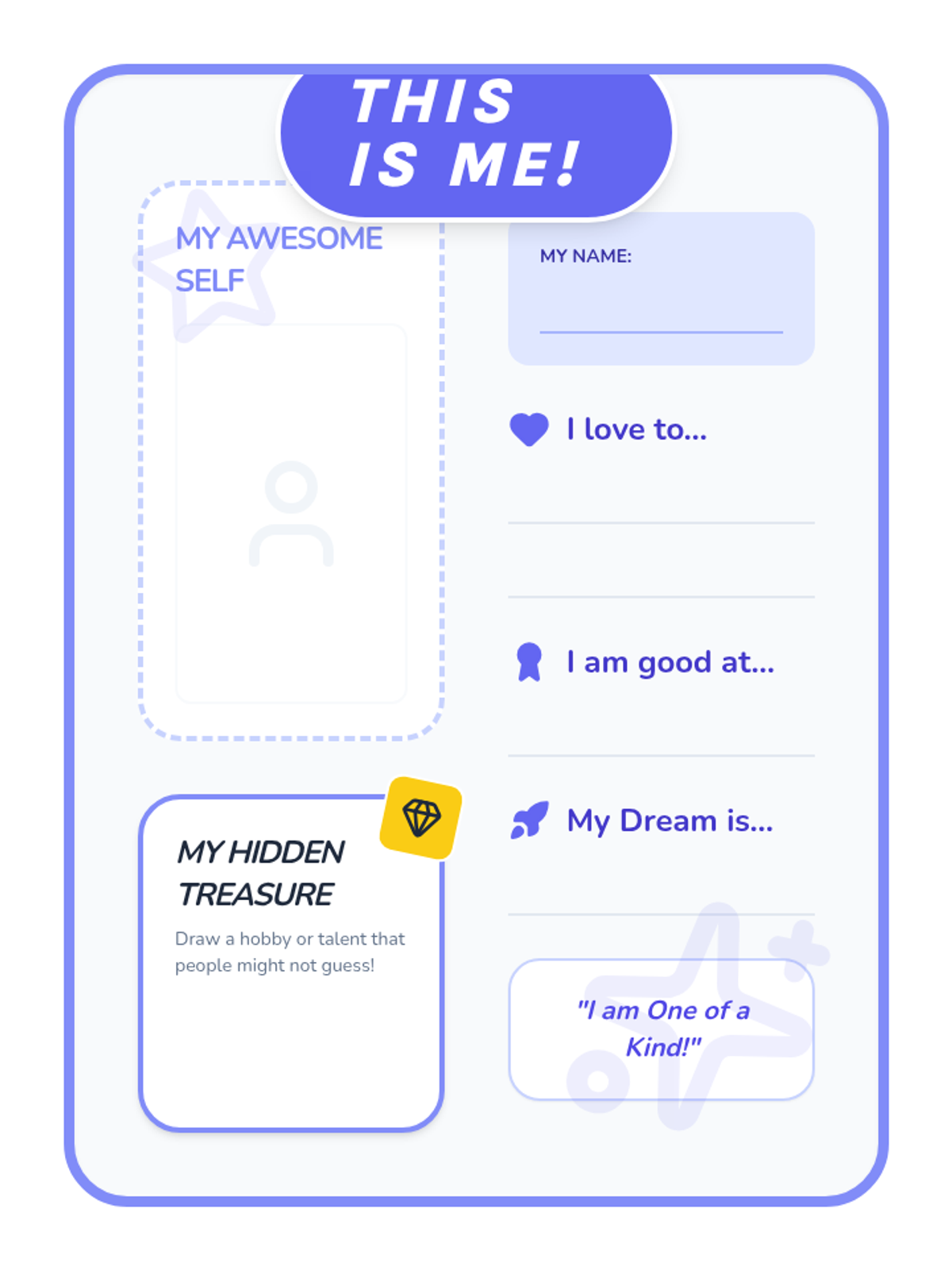
Student worksheet/project template for Lesson 5. Students showcase their personal identity, interests, and talents on a "This is Me" poster.
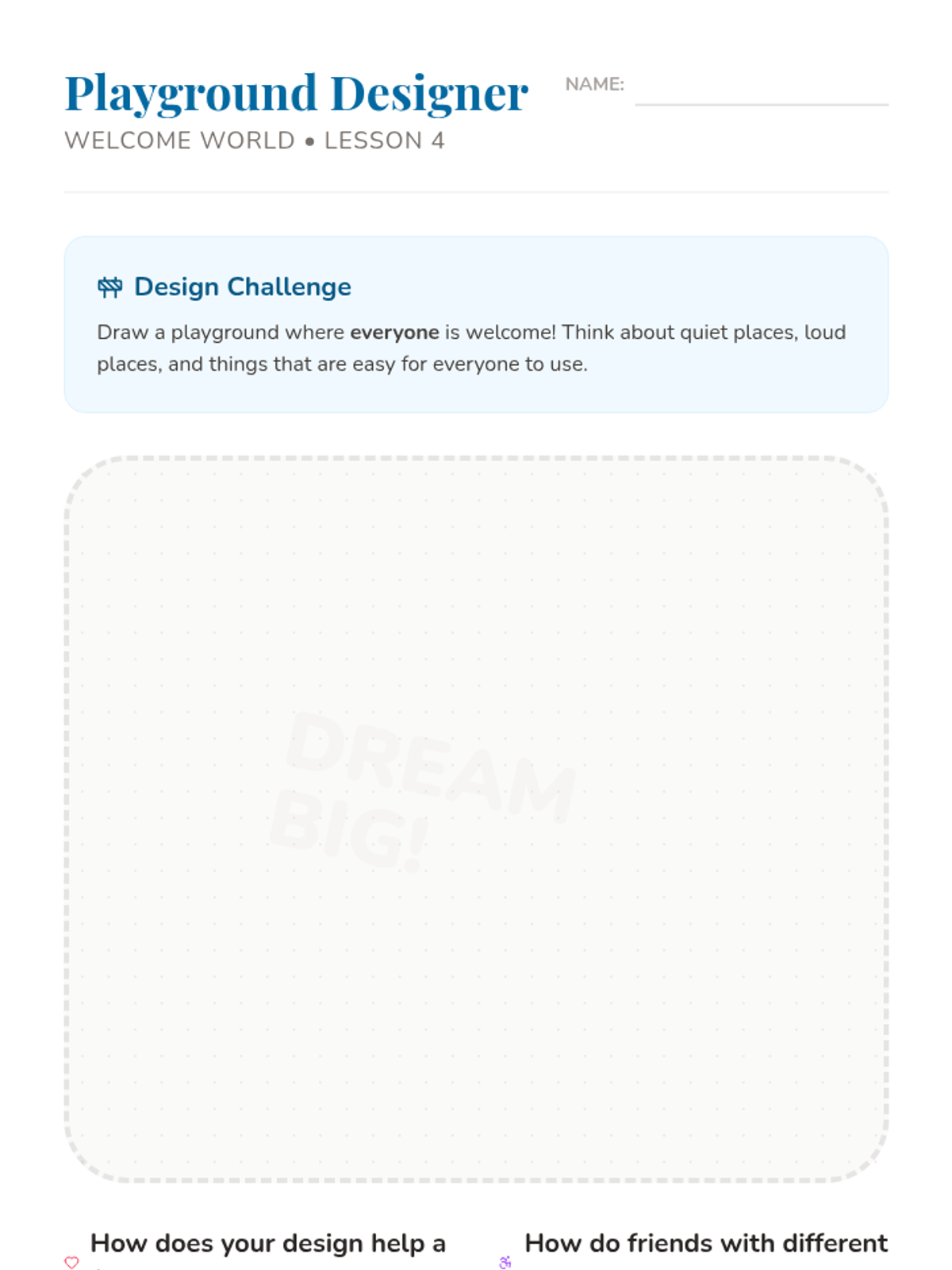
A student design sheet for creating an inclusive playground model. Includes prompts for explaining accessibility and social inclusion features.
Visual presentation for Lesson 5 about celebrating individual uniqueness. Introduces the "This is Me" final project and public speaking tips.
A slide deck for Lesson 4 about designing inclusive playgrounds. It introduces the metaphor of the 'Great Wall' of exclusion and challenges students to build accessible spaces.
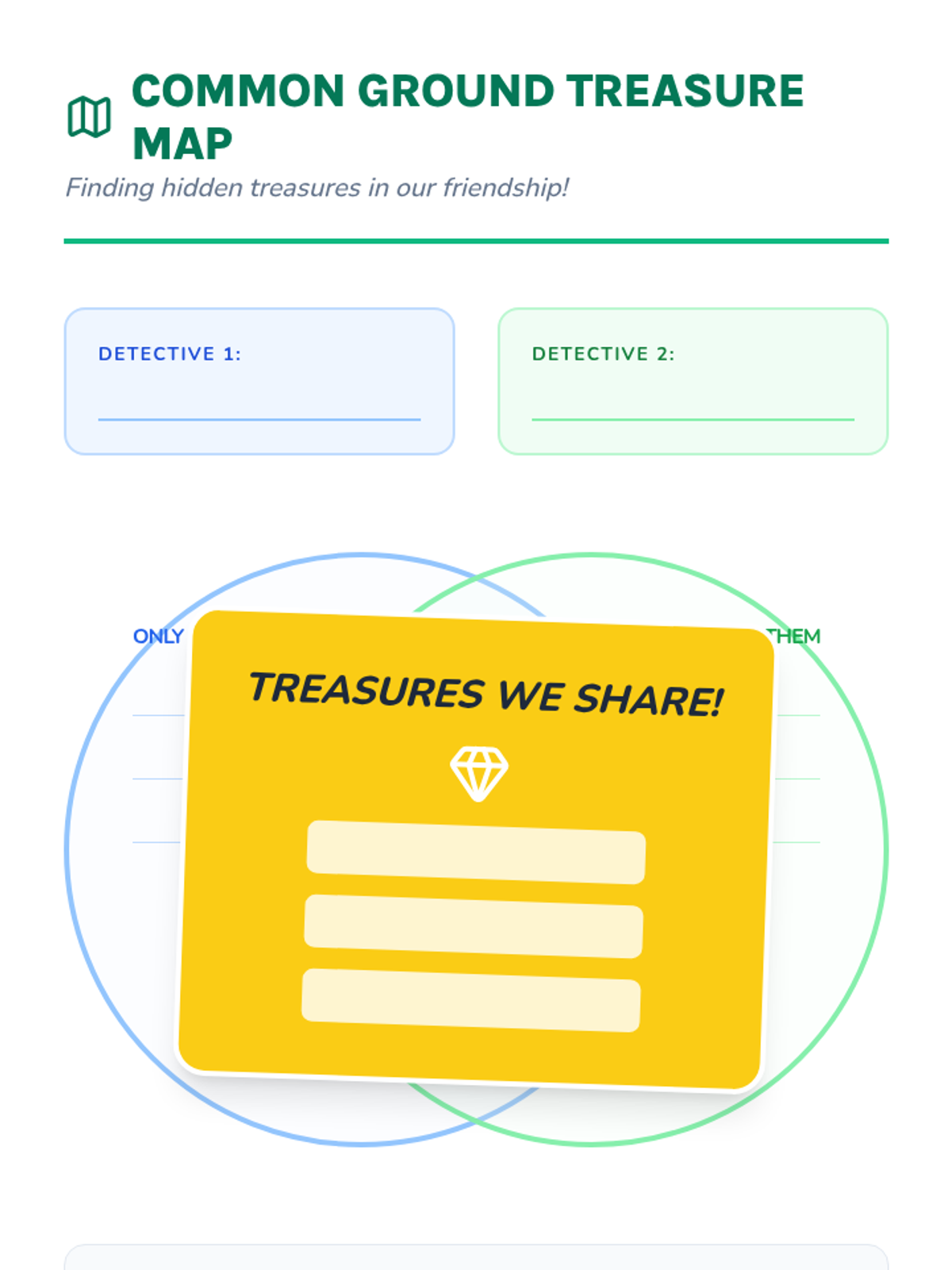
Student worksheet for Lesson 4. Partners find shared interests across outward differences using a simplified Venn diagram approach to build empathy and connection.
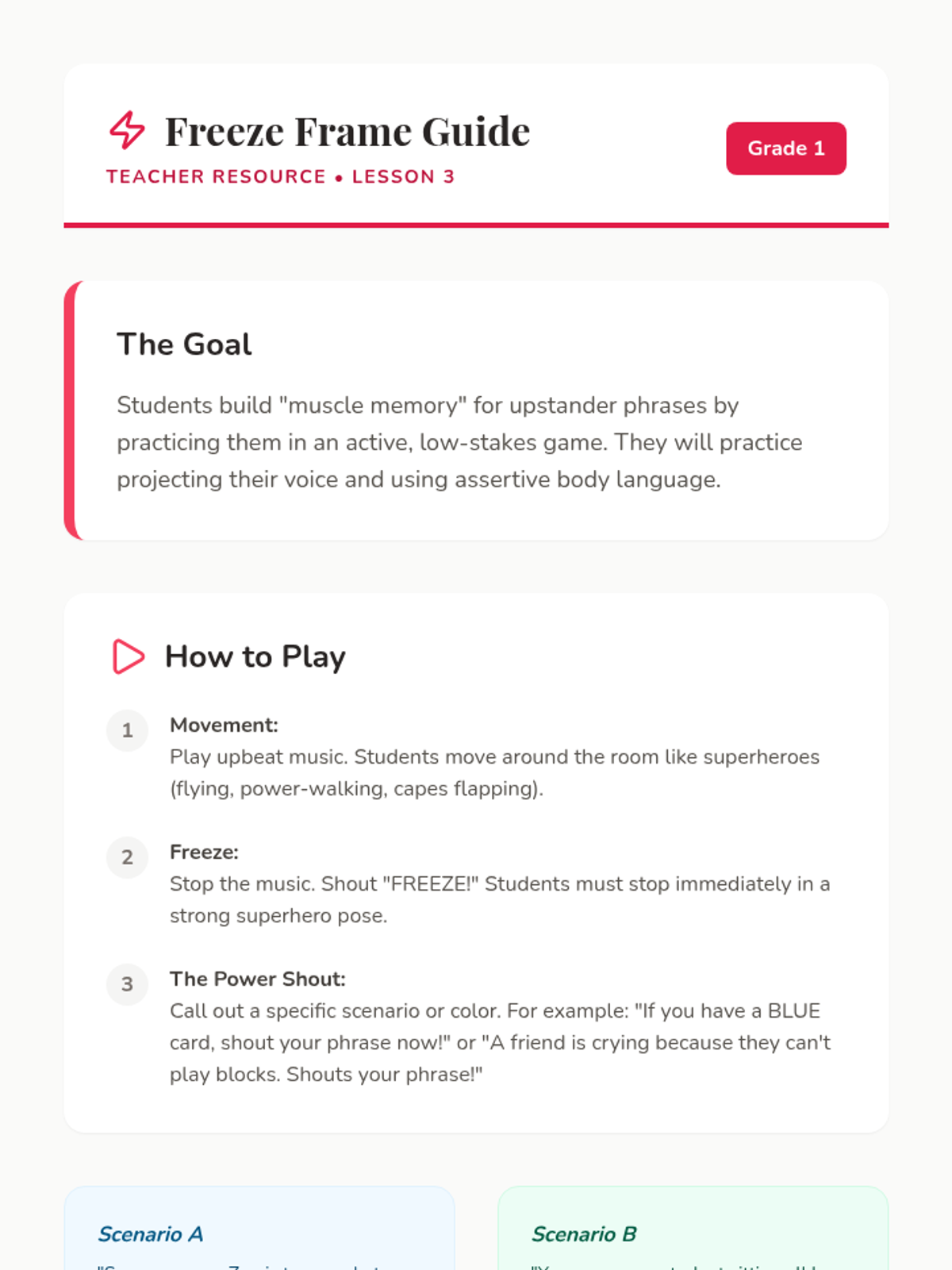
A teacher guide for the 'Freeze Frame' role-play activity, including game rules, scenario prompts, and tips for facilitating assertive communication.
Visual presentation for Lesson 4 about finding common ground. Introduces the simplified Venn diagram (Treasure Map) and active listening skills.
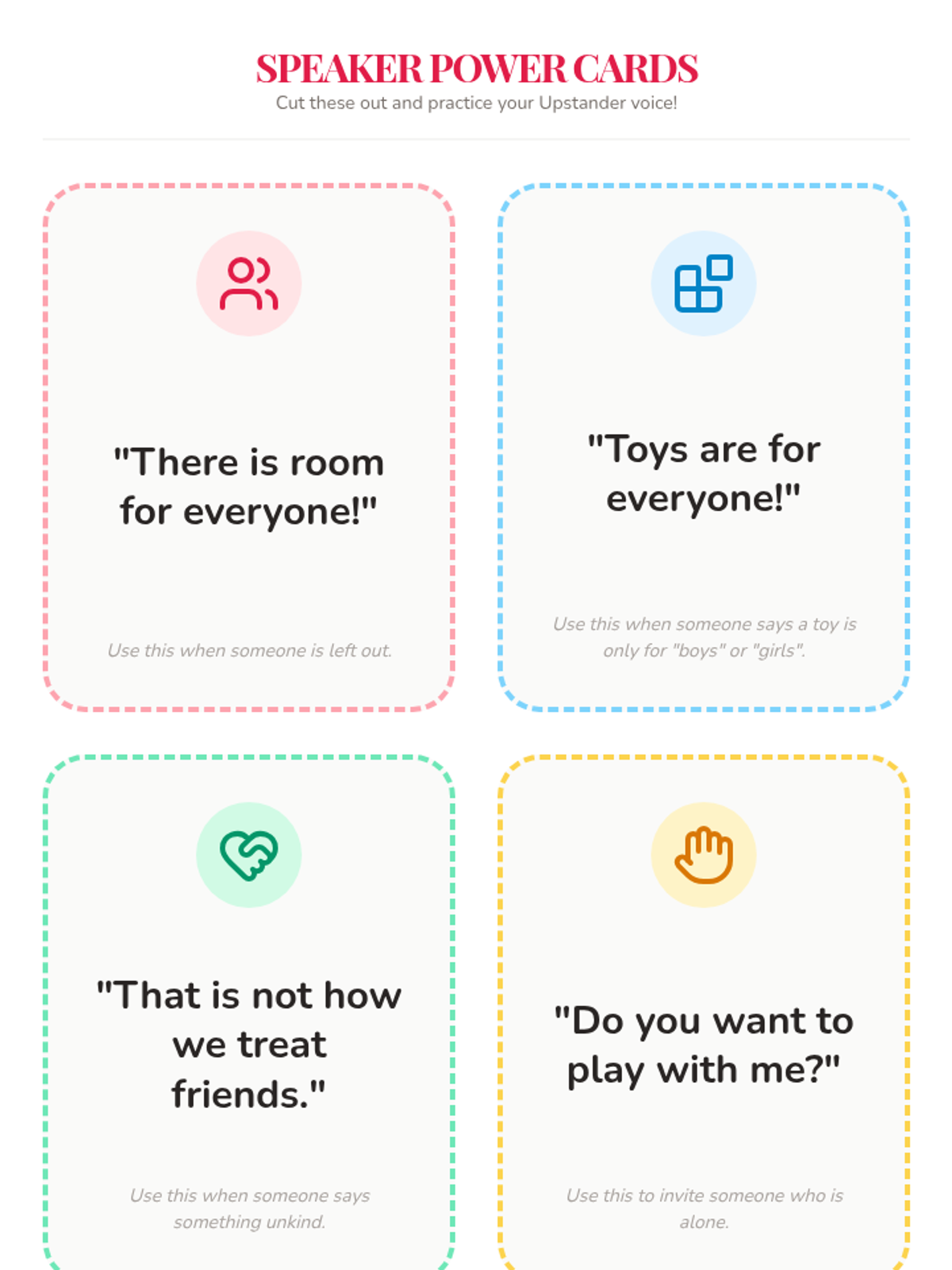
A set of printable 'Upstander Phrase' cards for students to color, cut out, and use during role-play activities to practice assertive communication.
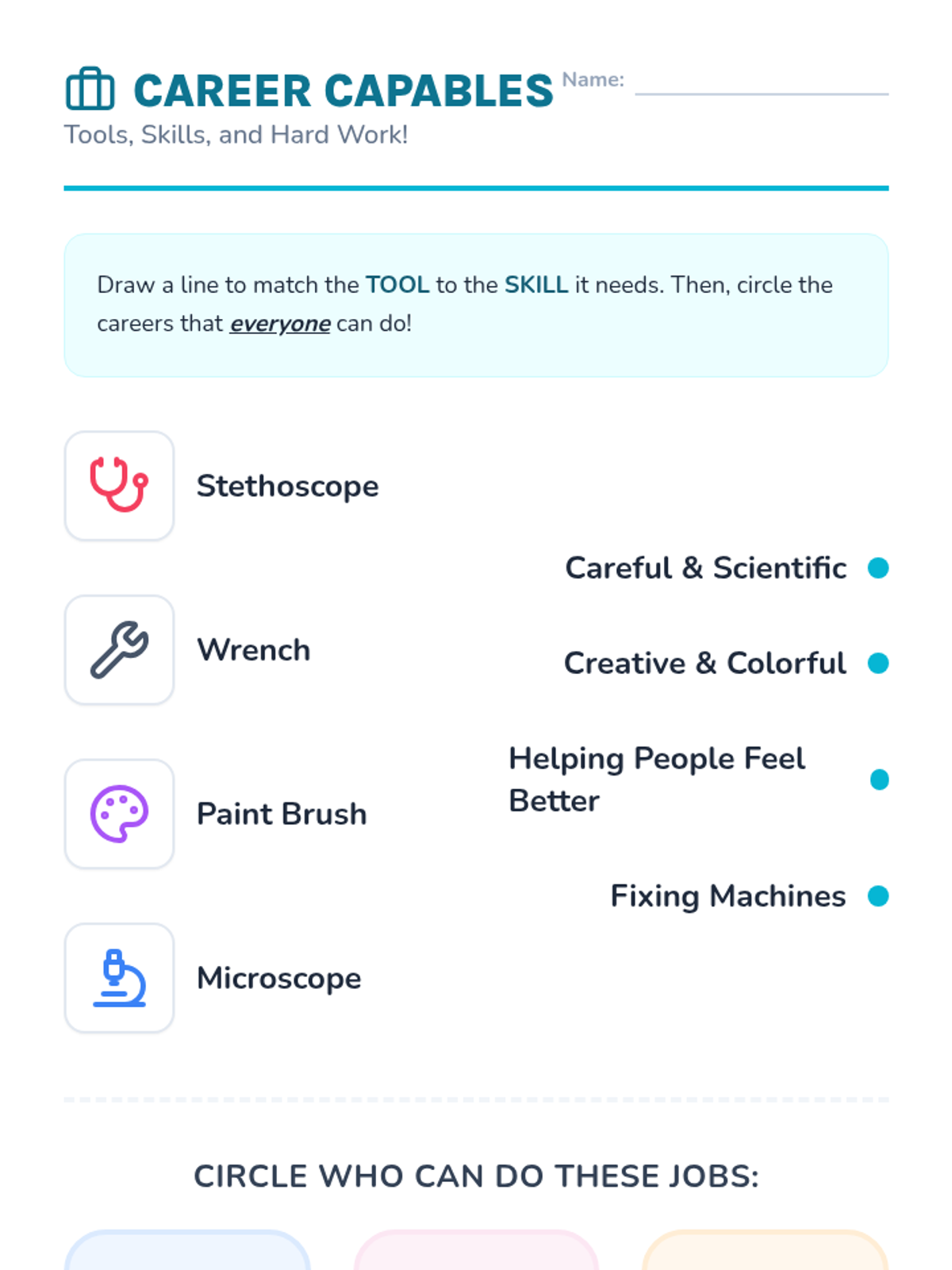
Student worksheet for Lesson 3. Students match tools to required skills and identify that both men and women can perform various community roles, challenging gender-based career stereotypes.
A slide deck for Lesson 3 focusing on 'Upstander Phrases' and assertive communication to challenge stereotypes and exclusion.
Visual presentation for Lesson 3 using riddles to challenge stereotypes about career roles. Emphasizes that skills and hard work determine career suitability.
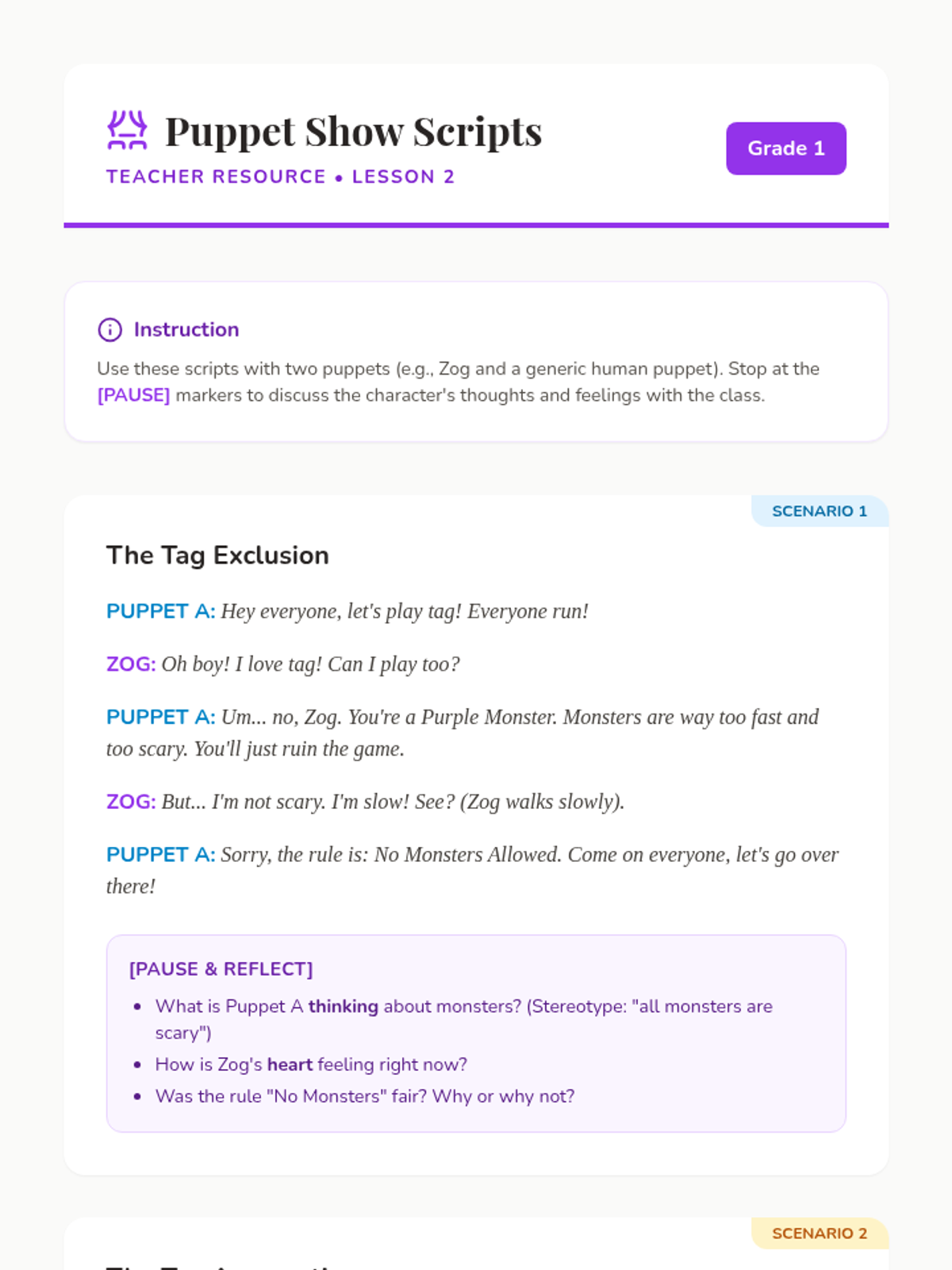
Scripts for classroom puppet shows featuring Zog the Monster. These scripts highlight stereotypes and exclusion, providing structured pauses for perspective-taking discussions.
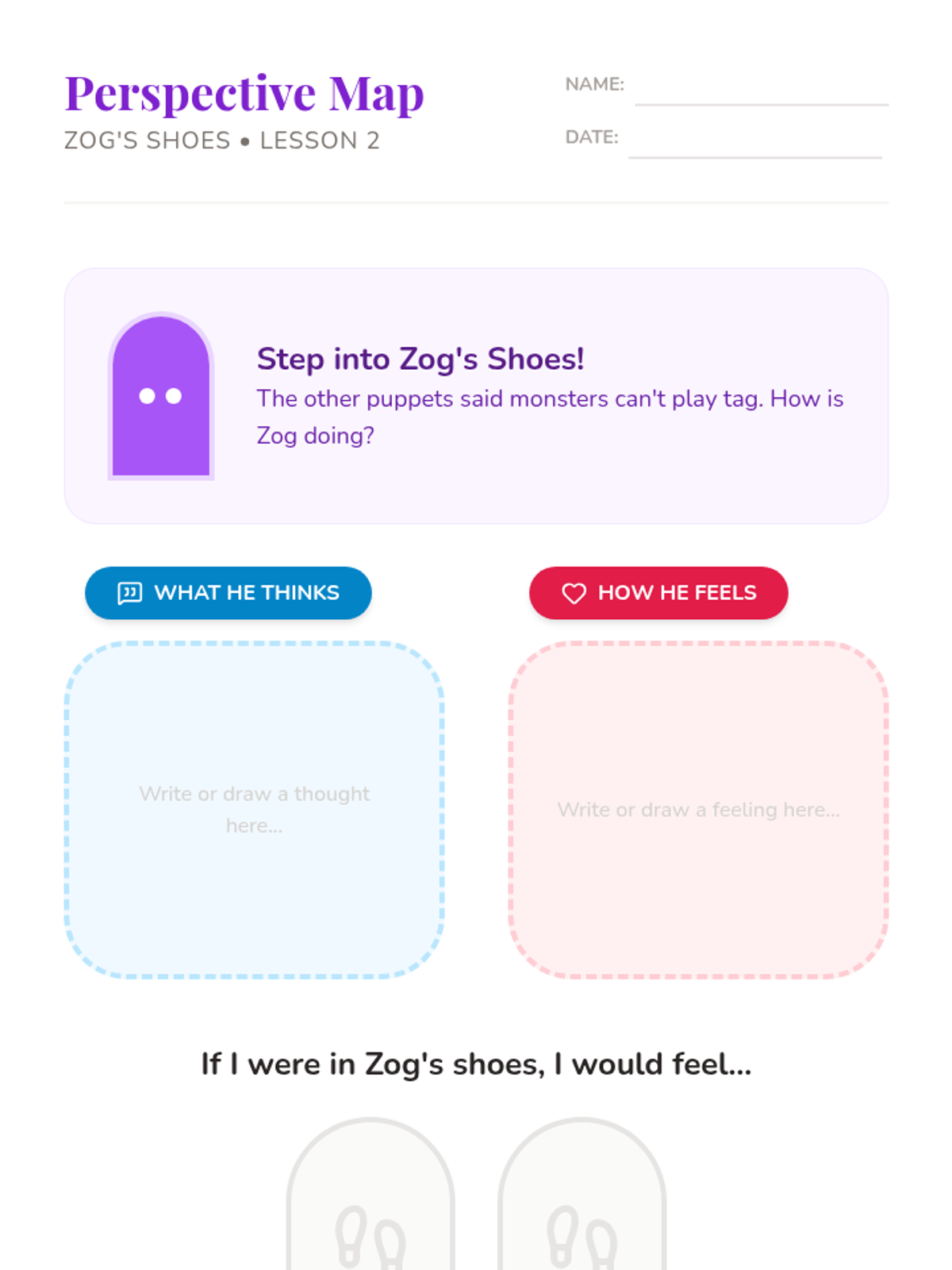
A perspective-taking worksheet where students map out a character's thoughts and feelings to build empathy and understanding of exclusion.
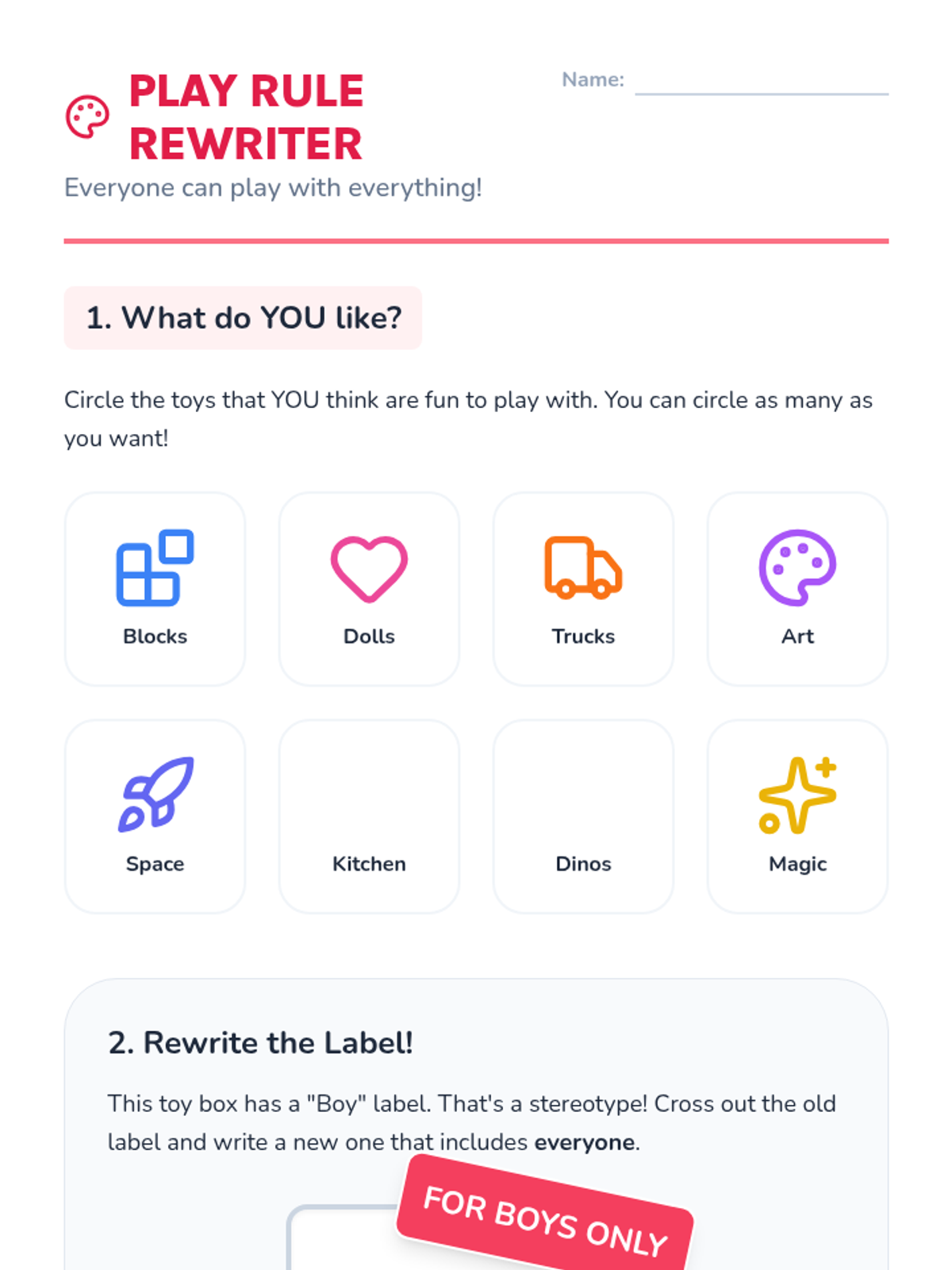
Student worksheet for Lesson 2. Students select toys based on personal interest regardless of gender labels and practice rewriting exclusionary toy marketing labels to be inclusive.
A slide deck for Lesson 2 featuring Zog the Purple Monster. It introduces the concept of perspective-taking by distinguishing between thoughts and feelings.
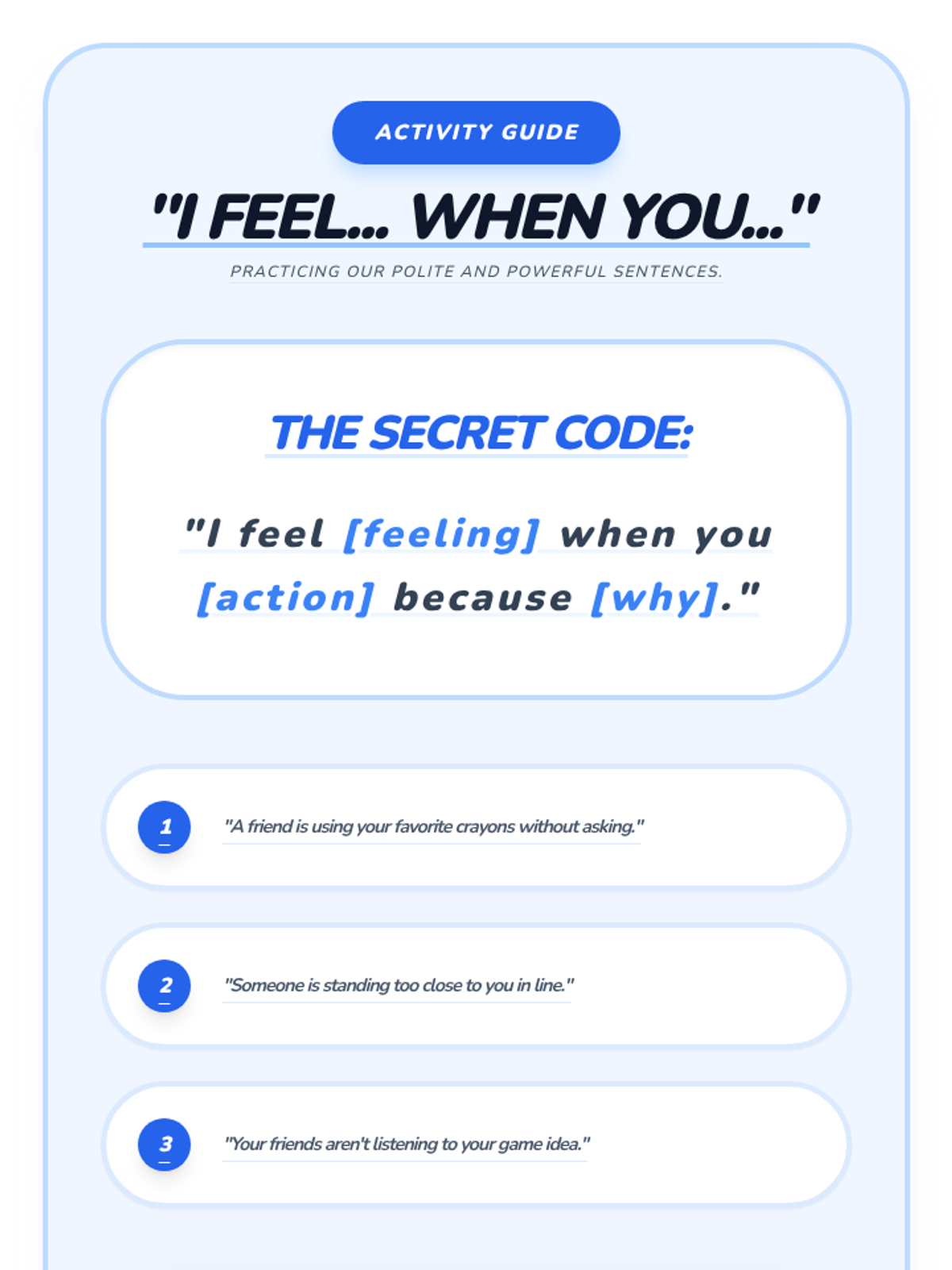
Instructional guide for the "I statements" activity, helping students practice the formula in various scenarios.
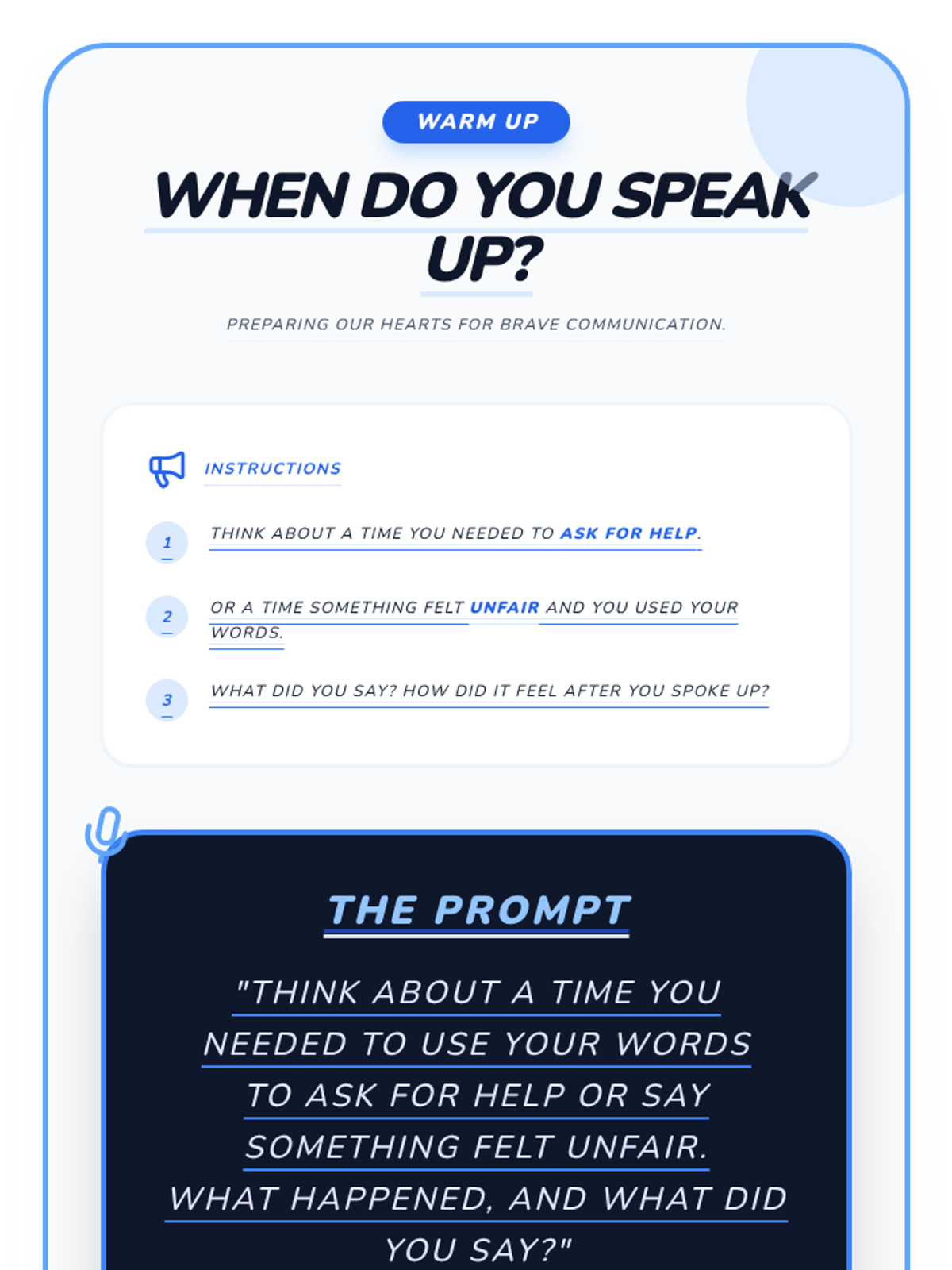
A short warm-up activity guide for Session 8, helping students prepare to discuss assertive communication.
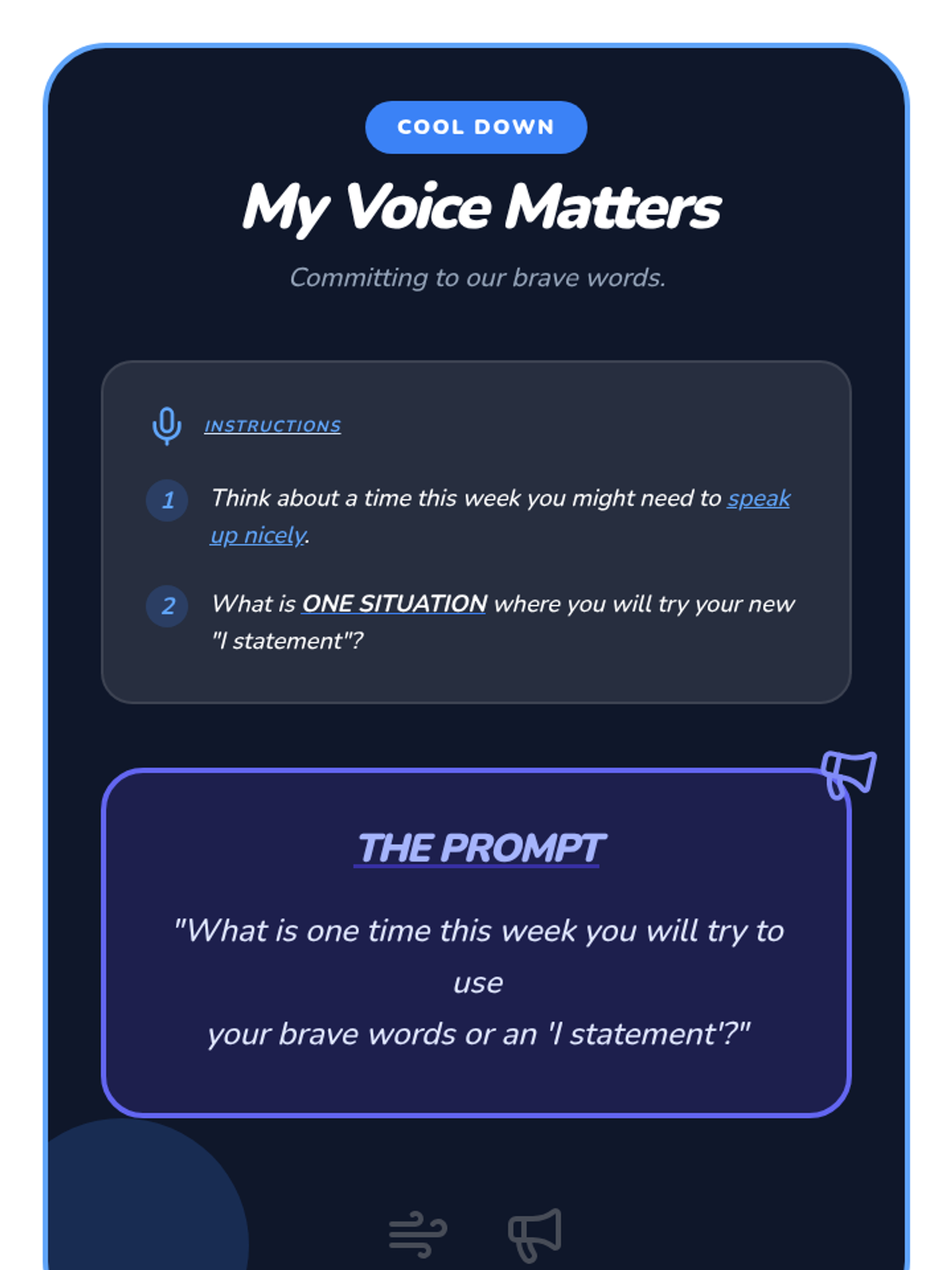
A short cool-down reflection guide for Session 8, helping students recognize the value of their own voice.
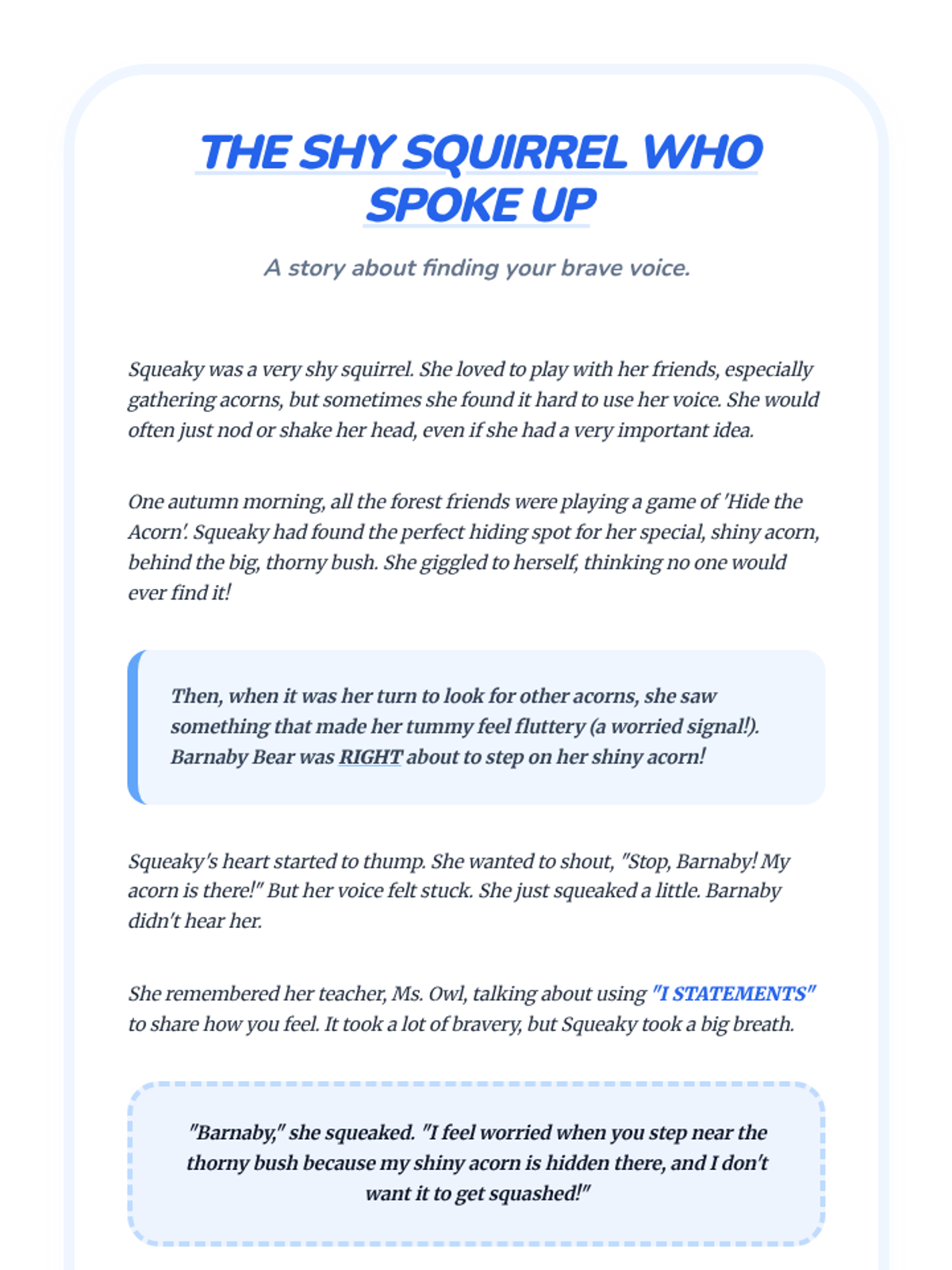
The Shy Squirrel Who Spoke Up reading passage for Session 8, exploring how Squeaky uses an "I statement" to advocate for herself.
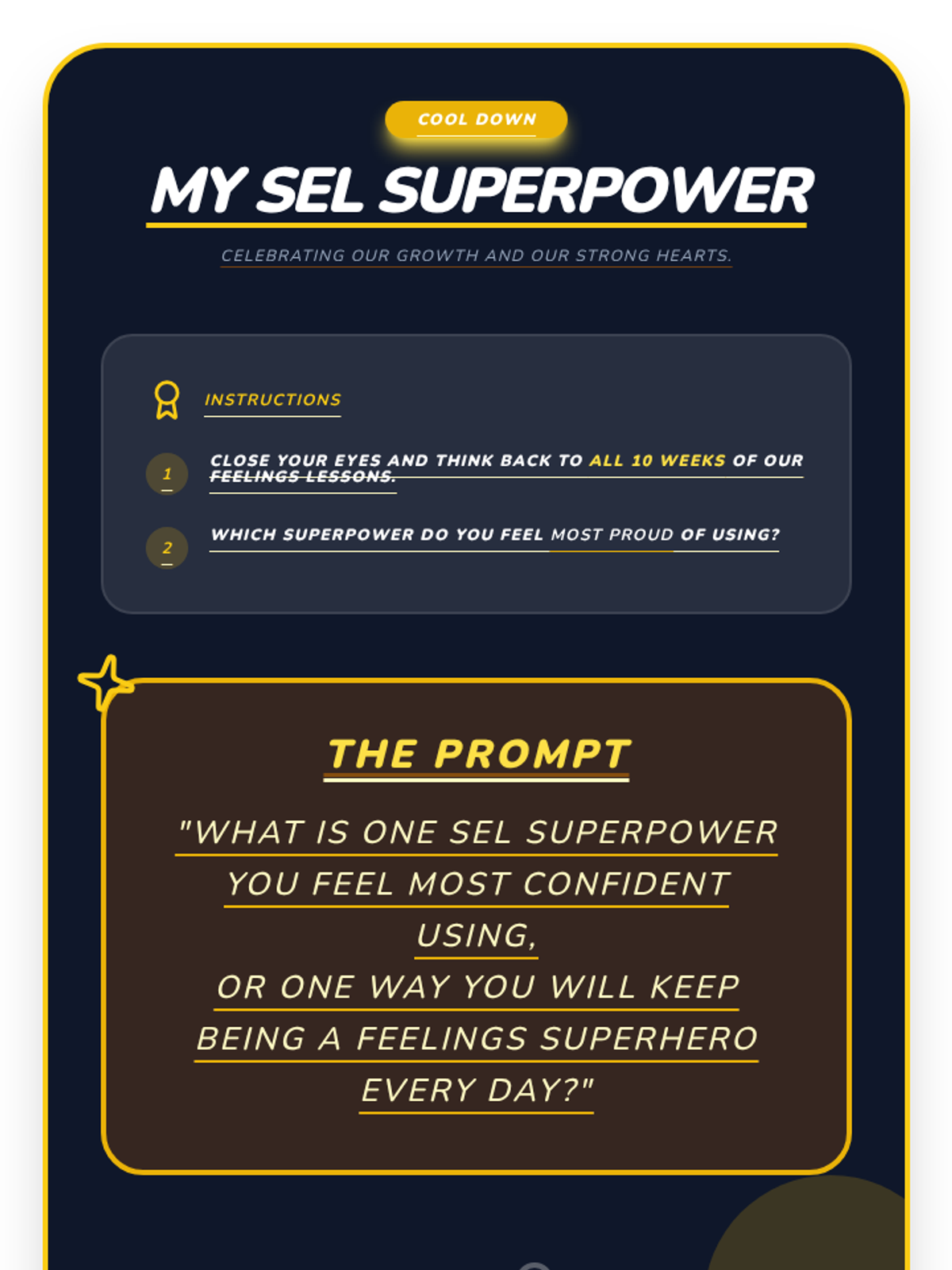
A short cool-down reflection guide for the final session, helping students recognize their personal social-emotional growth over the 10-week series.
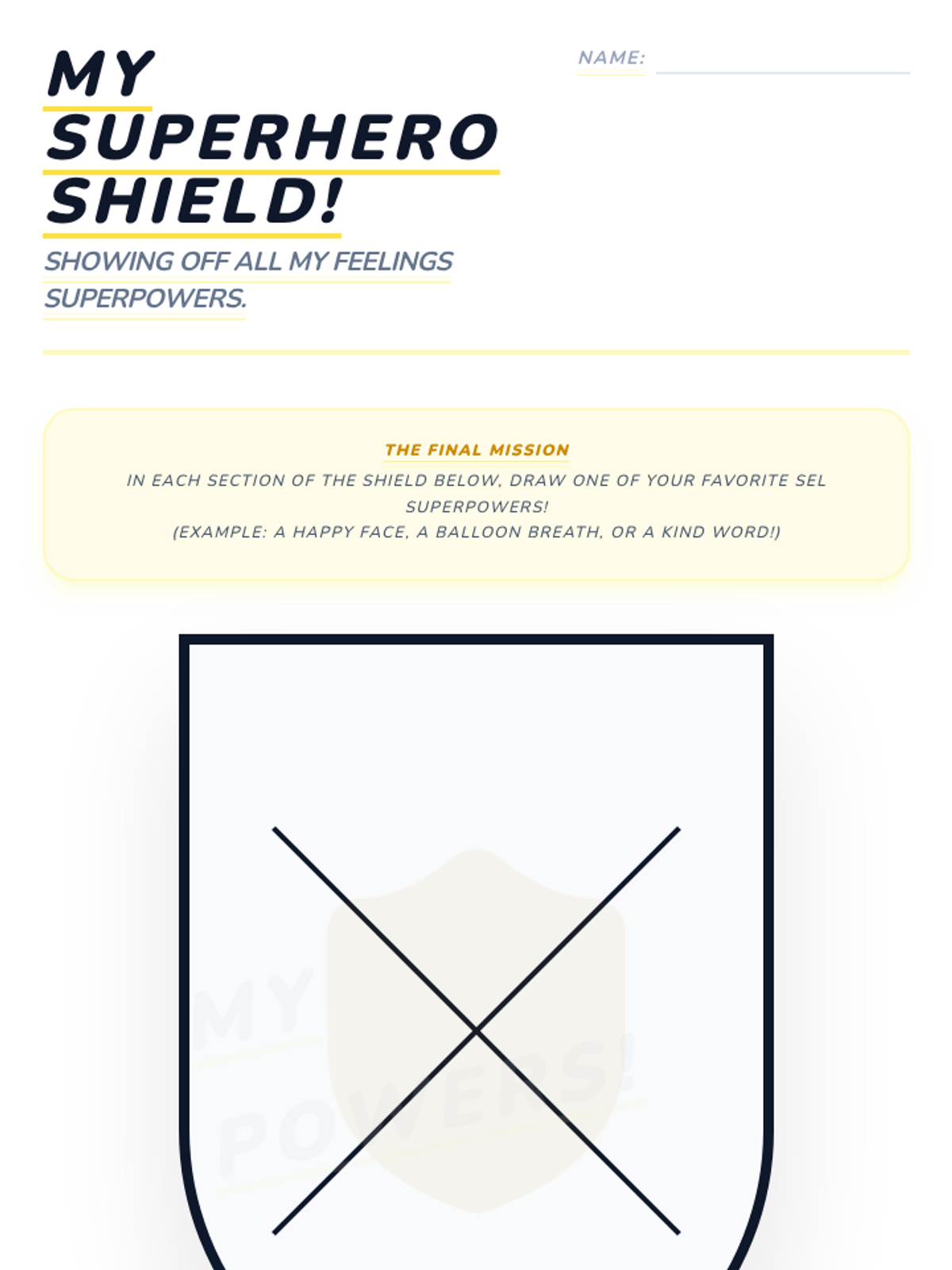
A worksheet for Session 10 where students draw their various social-emotional "superpowers" in a partitioned shield template.
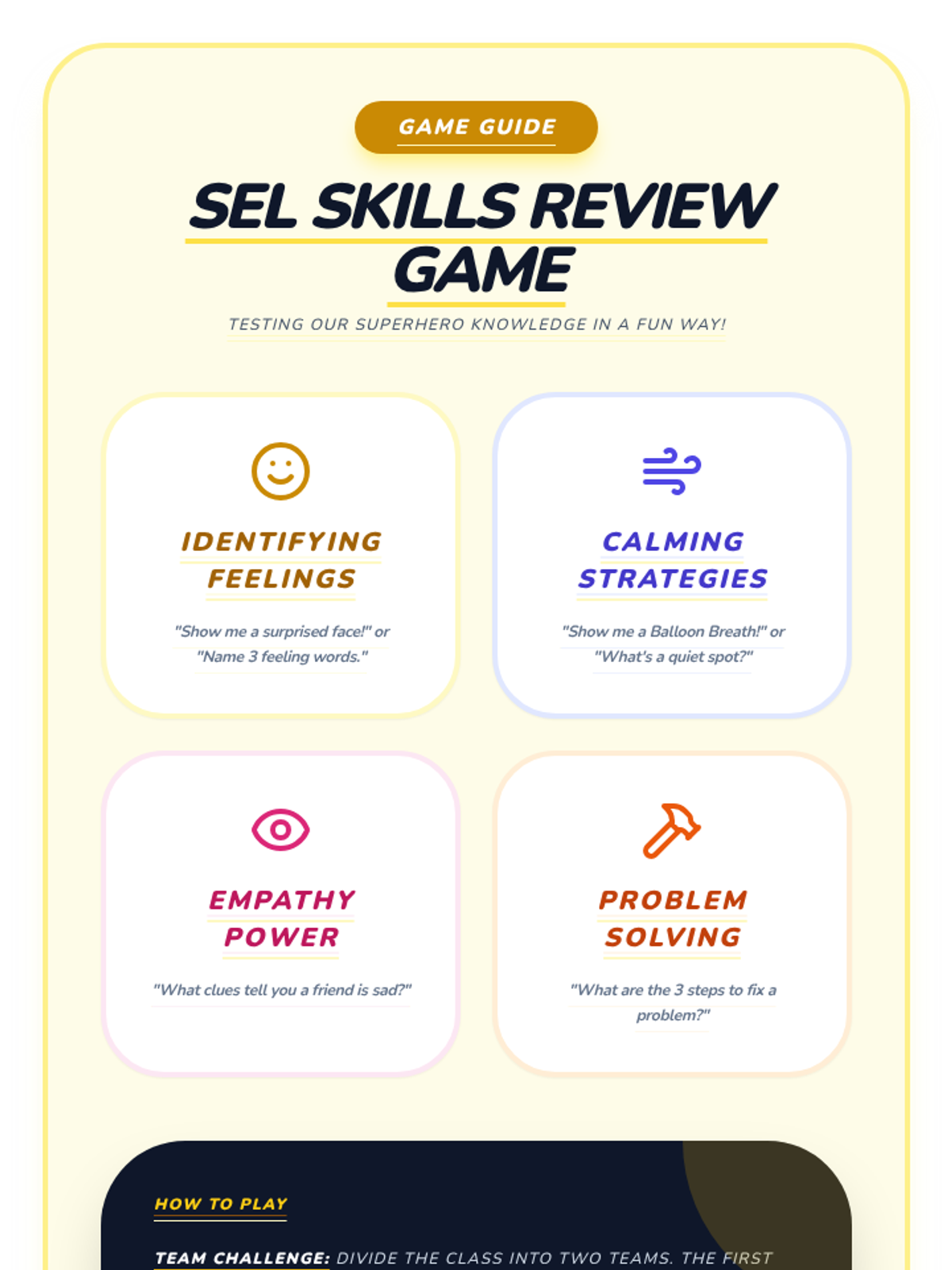
Instructional guide for the SEL Skills Review Game, covering all major topics from the 10-session series in an interactive format.
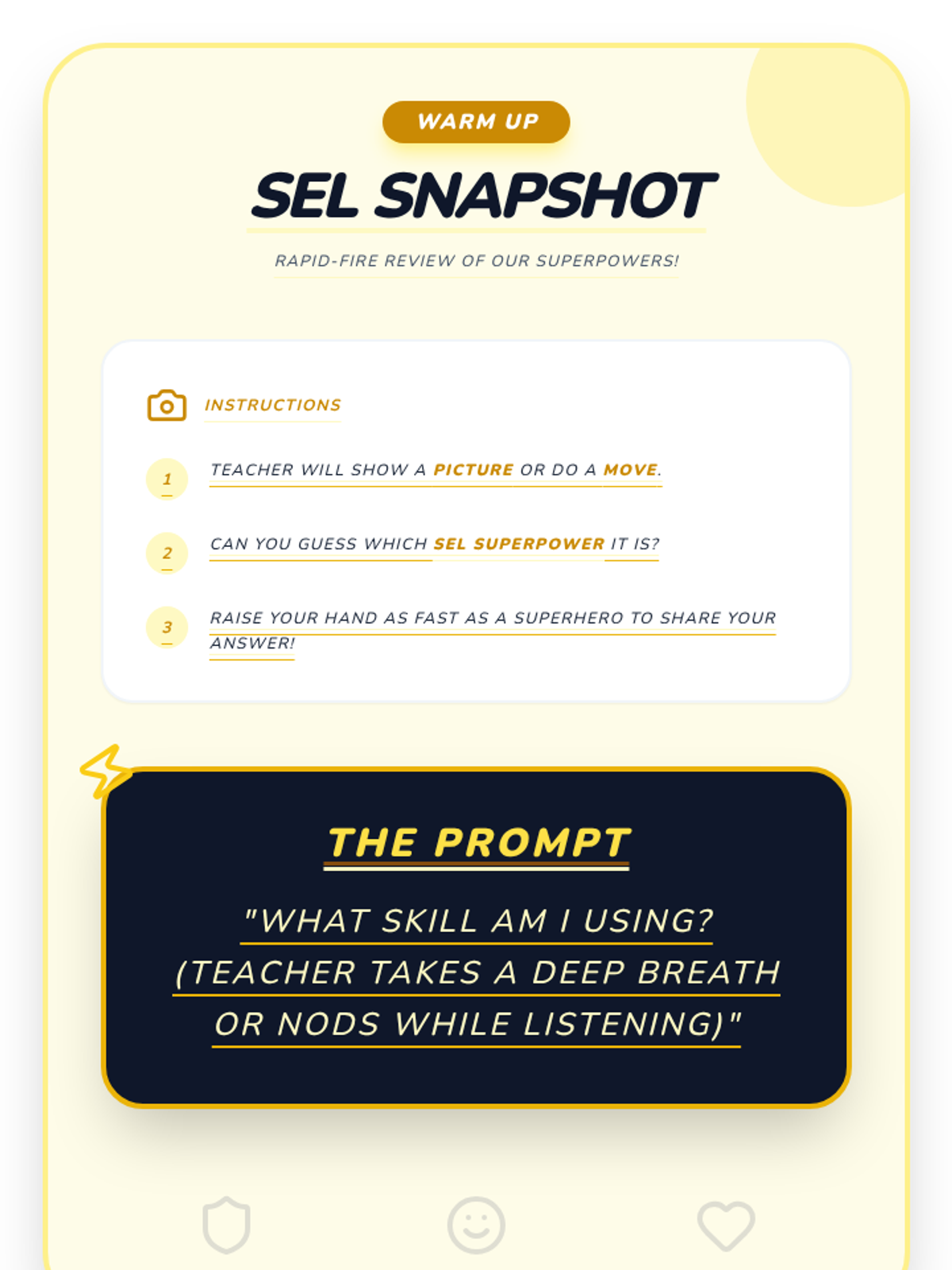
A short warm-up activity guide for Session 10, reviewing key SEL concepts through visual and verbal prompts.
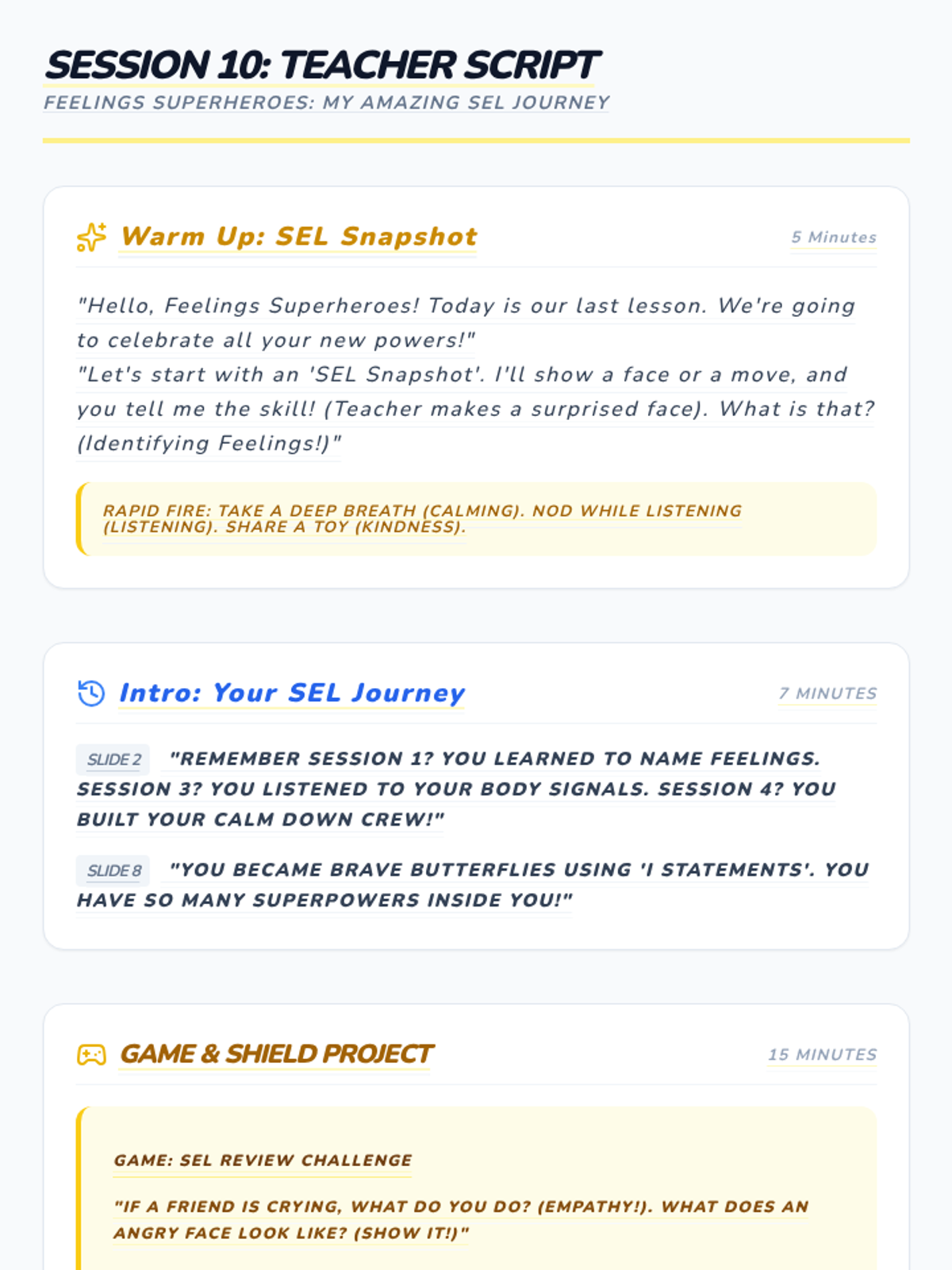
Complete instructional script for Session 10, guiding teachers through the SEL Snapshot warm-up, skills review, and the superhero shield final project.
Engaging slide deck for the final session, reviewing all 10 weeks of social-emotional learning and celebrating students' growth as "Feelings Superheroes."
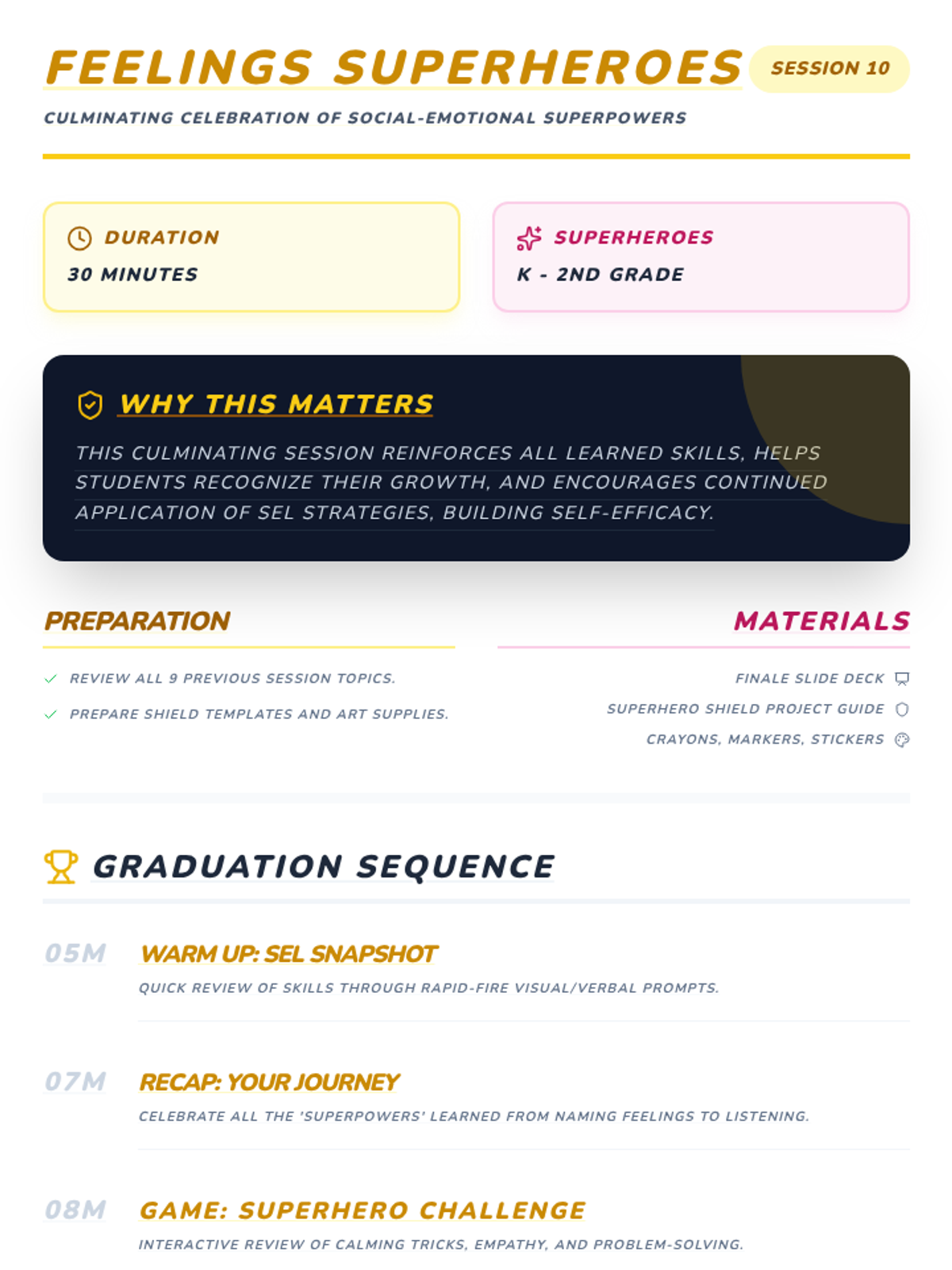
Session 10 lesson plan for teachers, focusing on a comprehensive review and celebration of all SEL skills through a game and shield project.
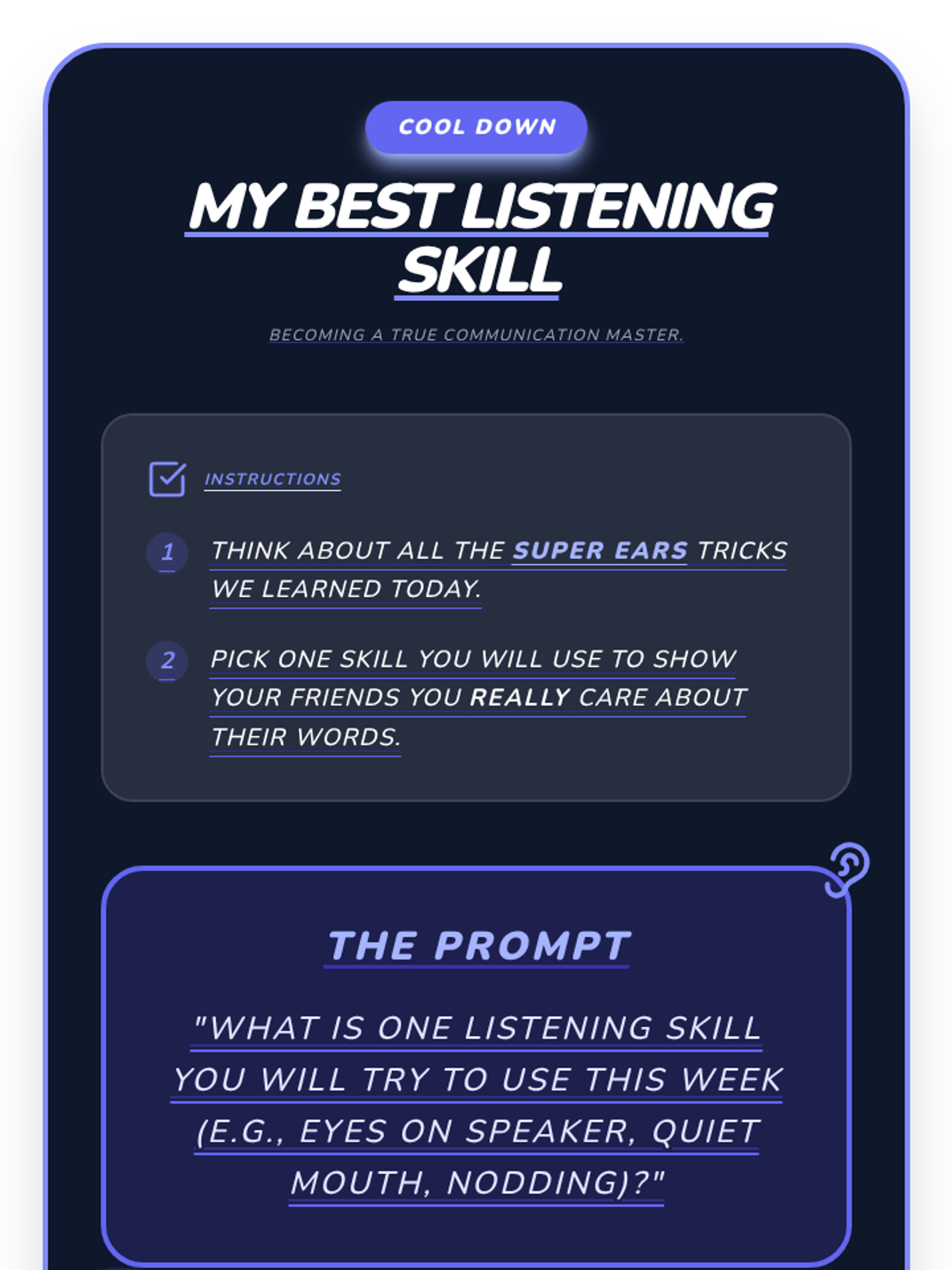
A short cool-down reflection guide for Session 9, helping students commit to one specific active listening behavior.
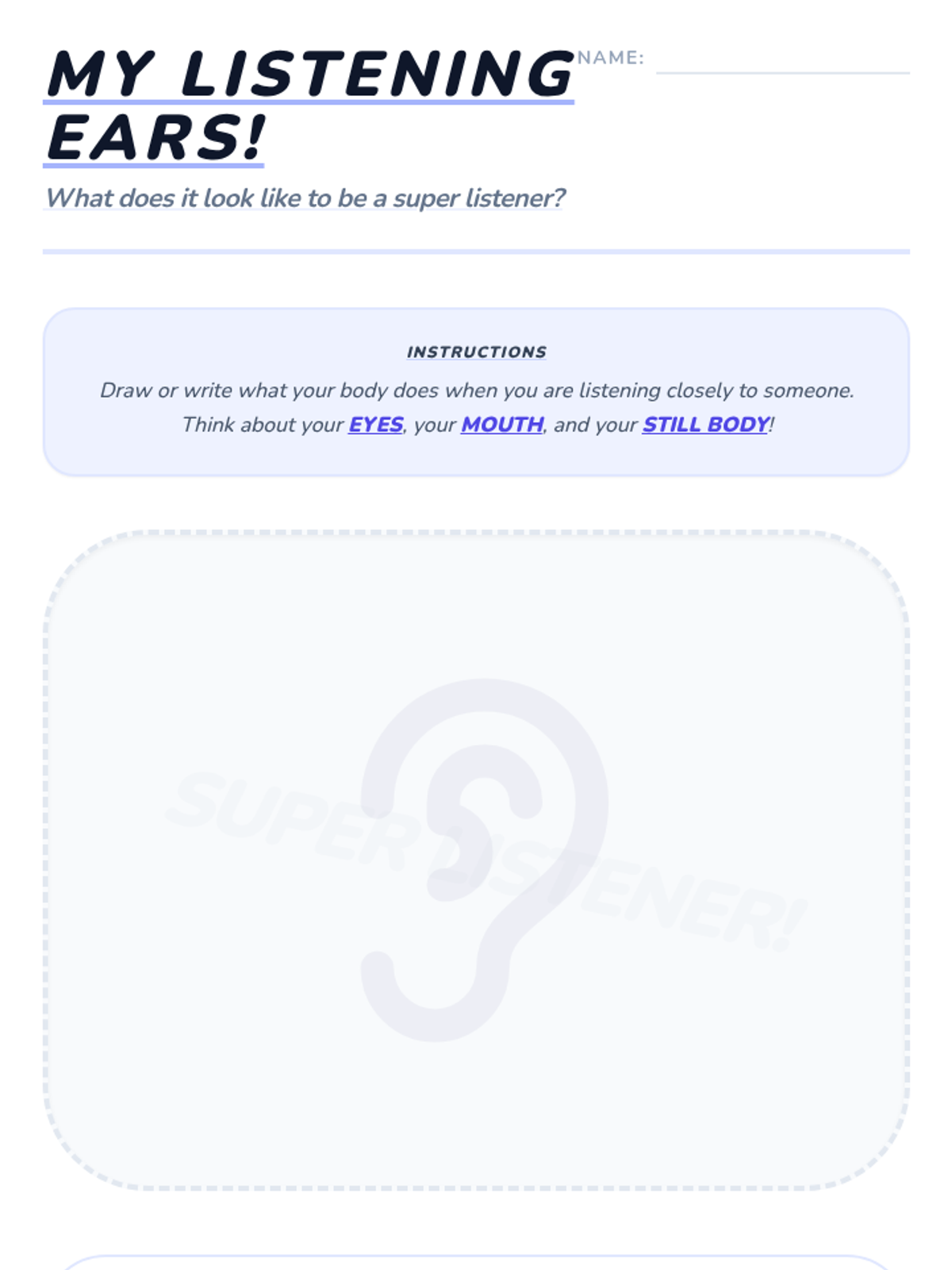
A worksheet for Session 9 where students draw or write about the physical behaviors of a "super listener."
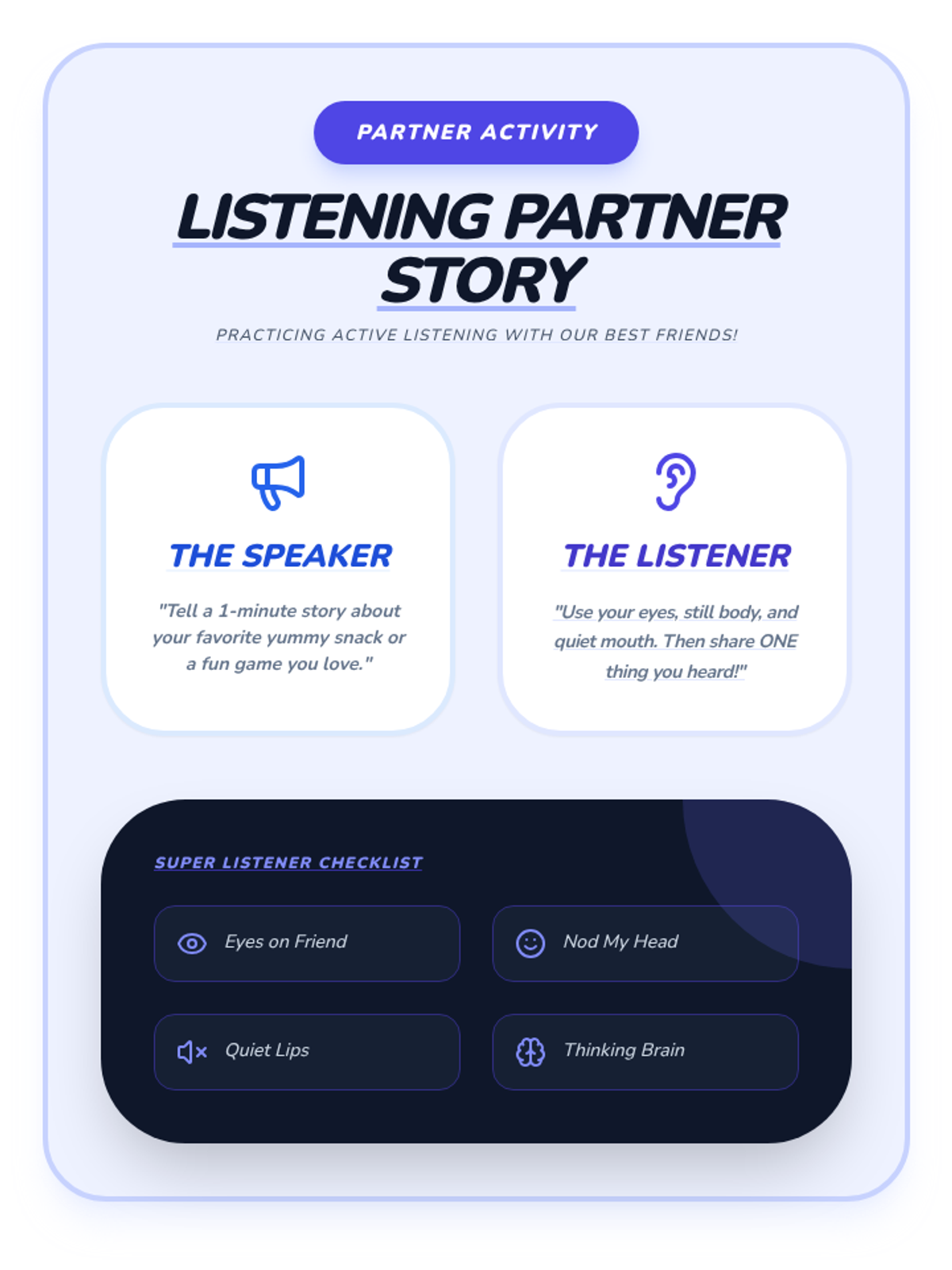
Instructional guide for the Listening Partner Story activity, providing prompts and a checklist for practicing active listening.
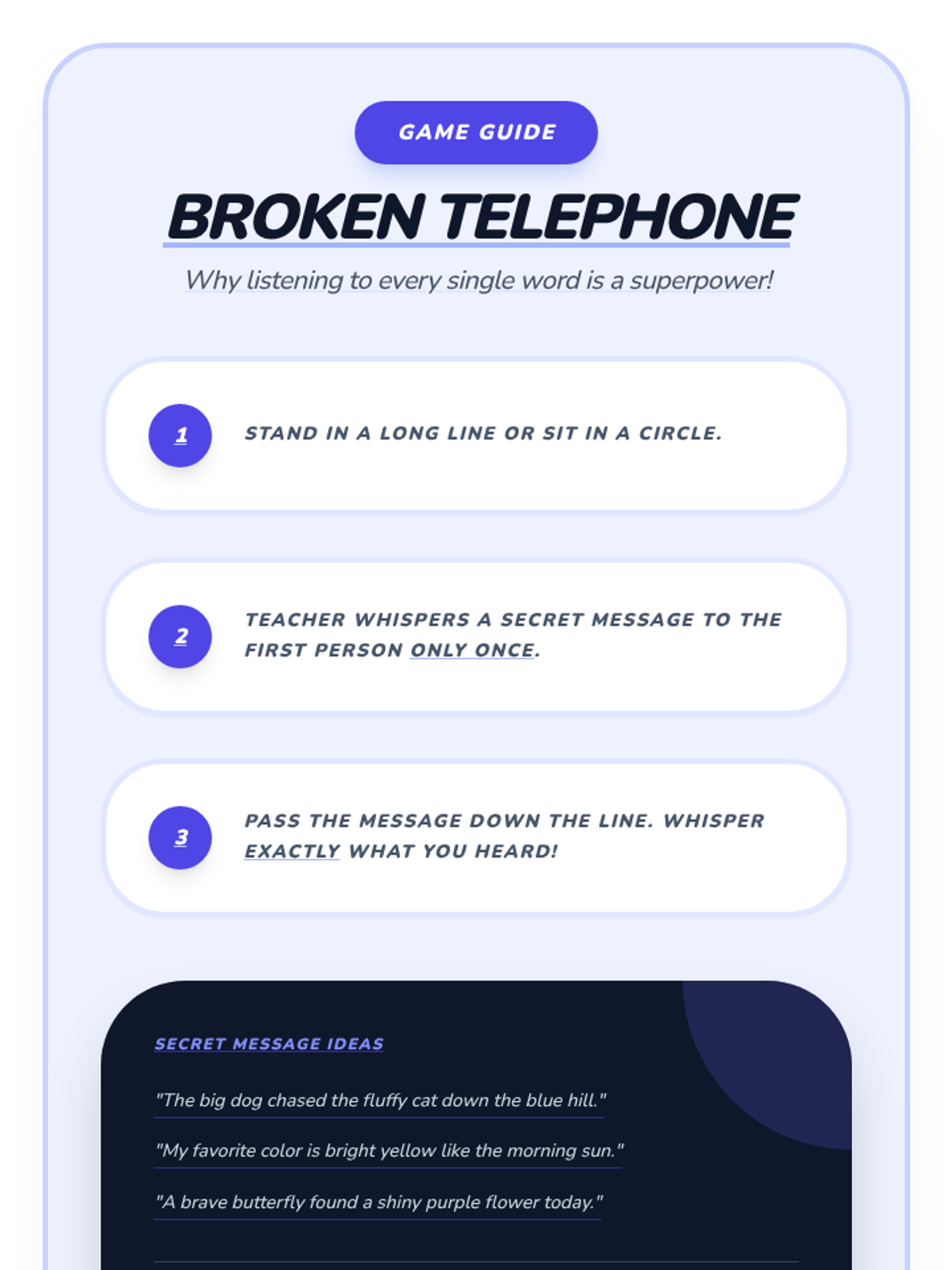
Instructional guide for the Broken Telephone game, emphasizing how easily messages can be distorted if not listened to carefully.
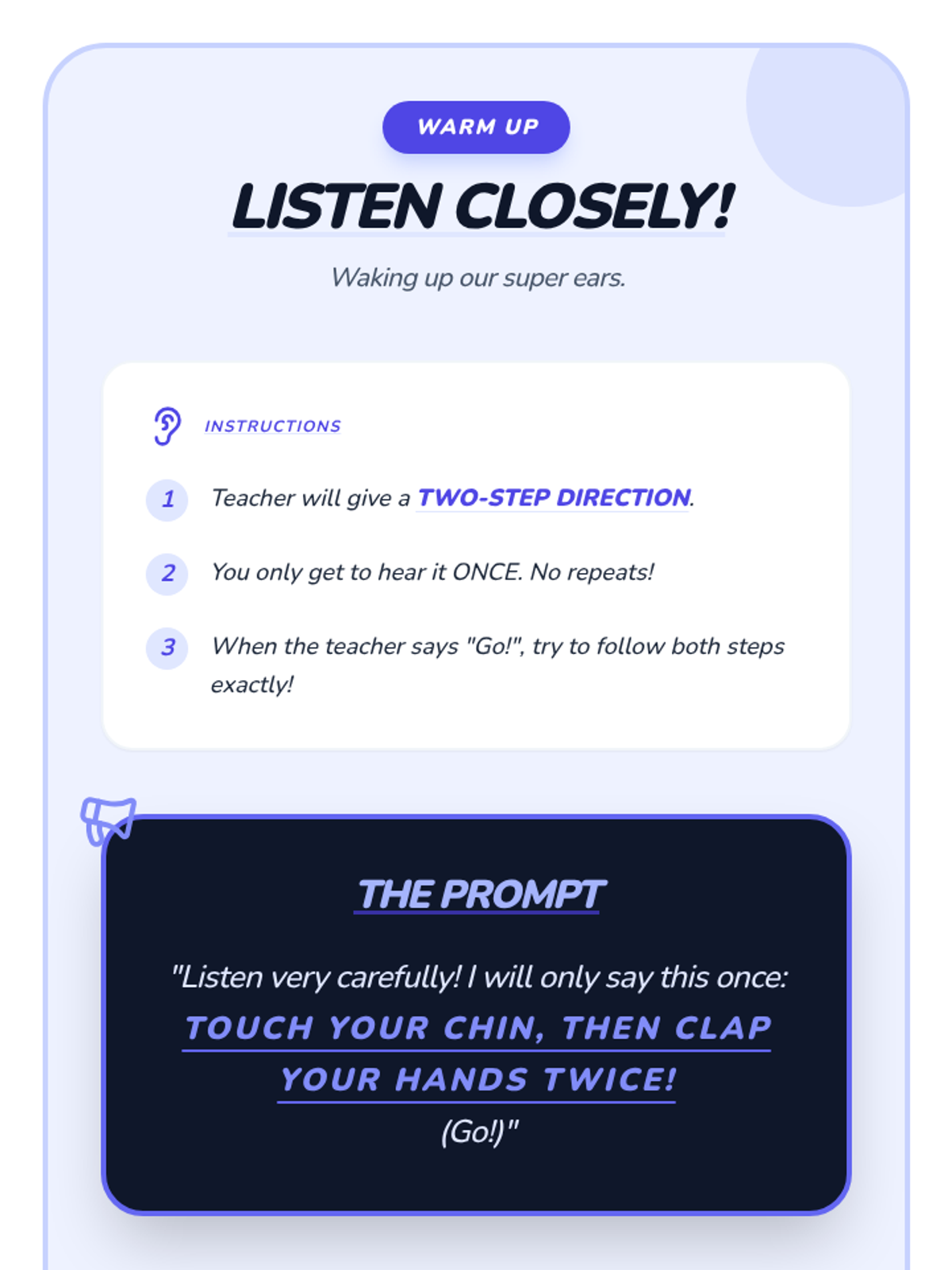
A short warm-up activity guide for Session 9, helping students realize the importance of listening through a two-step oral challenge.
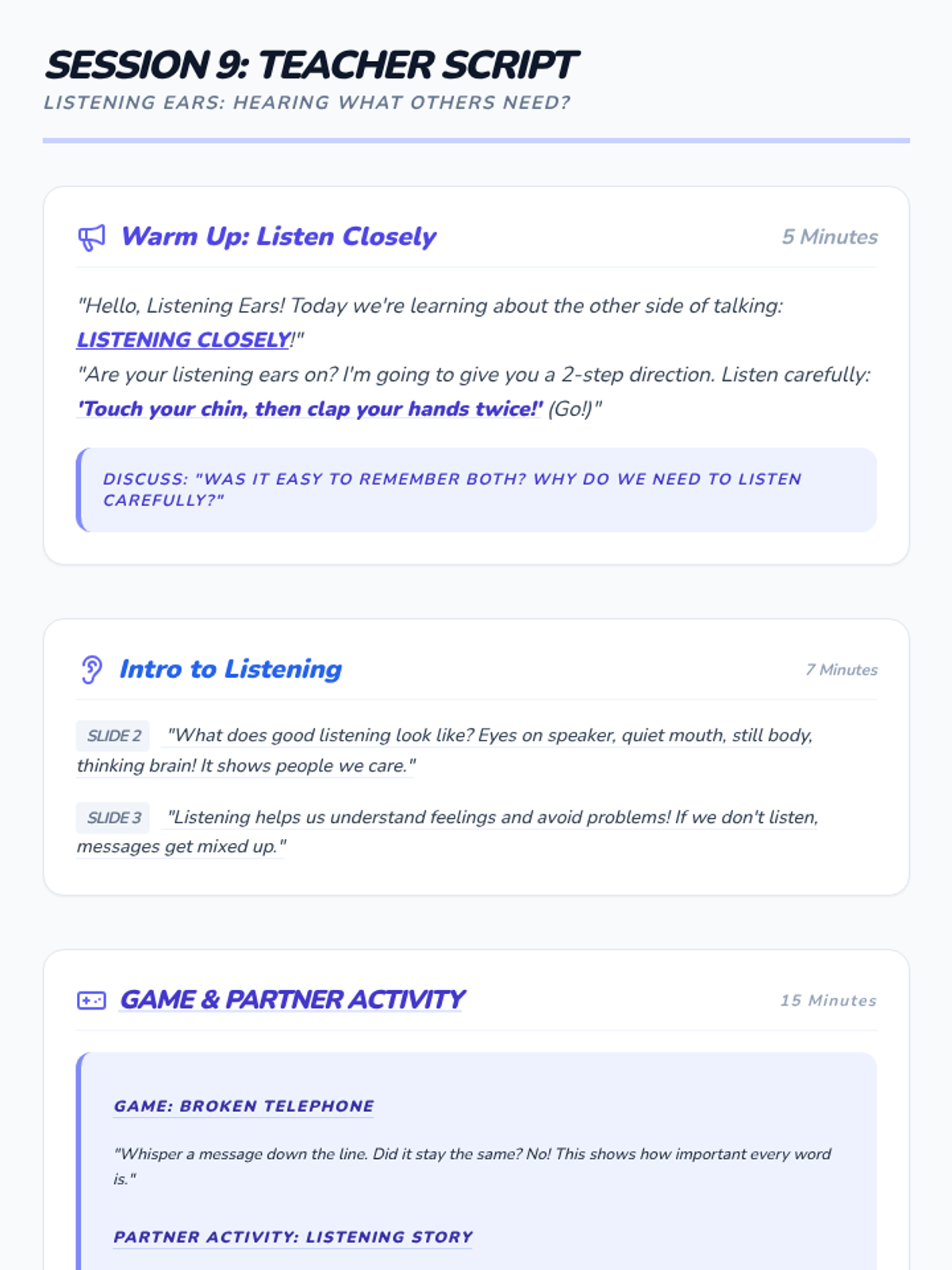
Complete instructional script for Session 9, including word-for-word prompts for the Broken Telephone game and partner listening activity.
Engaging slide deck for Session 9, teaching students what good listening looks like and its importance in understanding others' needs and avoiding misunderstandings.
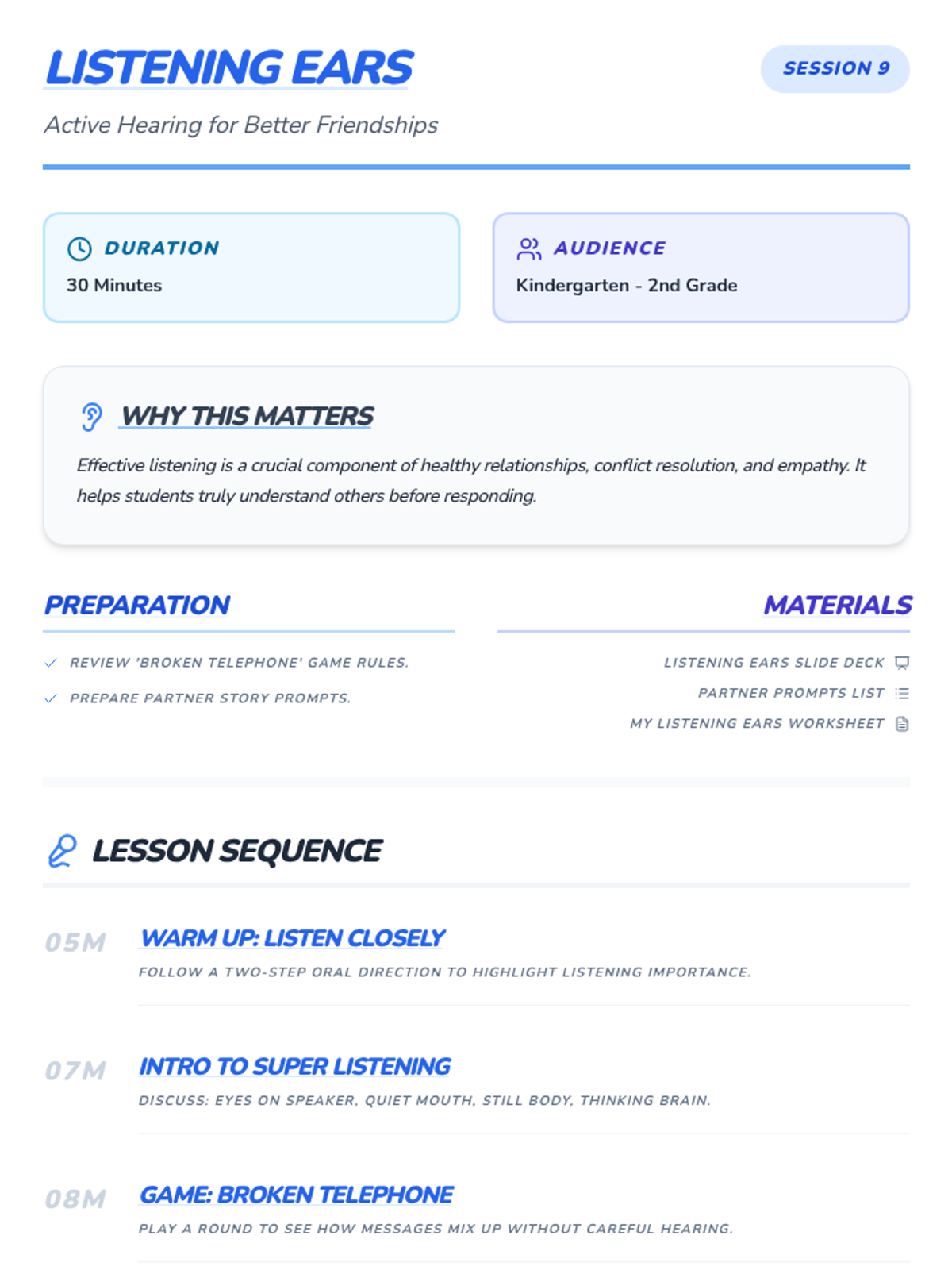
Session 9 lesson plan for teachers, focusing on active listening skills through a game, partner activity, and reflective worksheet.
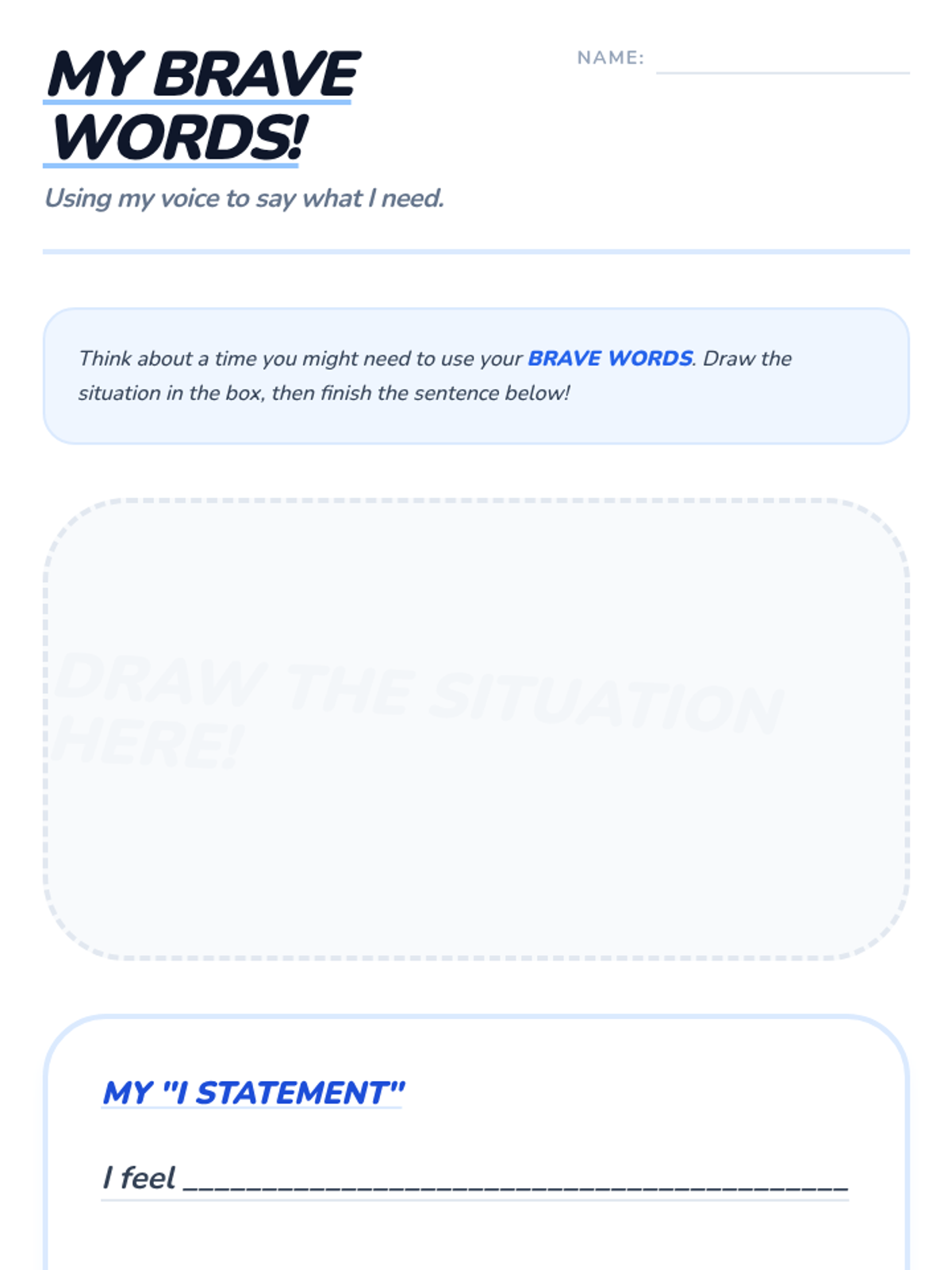
A worksheet for Session 8 where students draw or write about a situation where they could use their brave words or an "I statement."
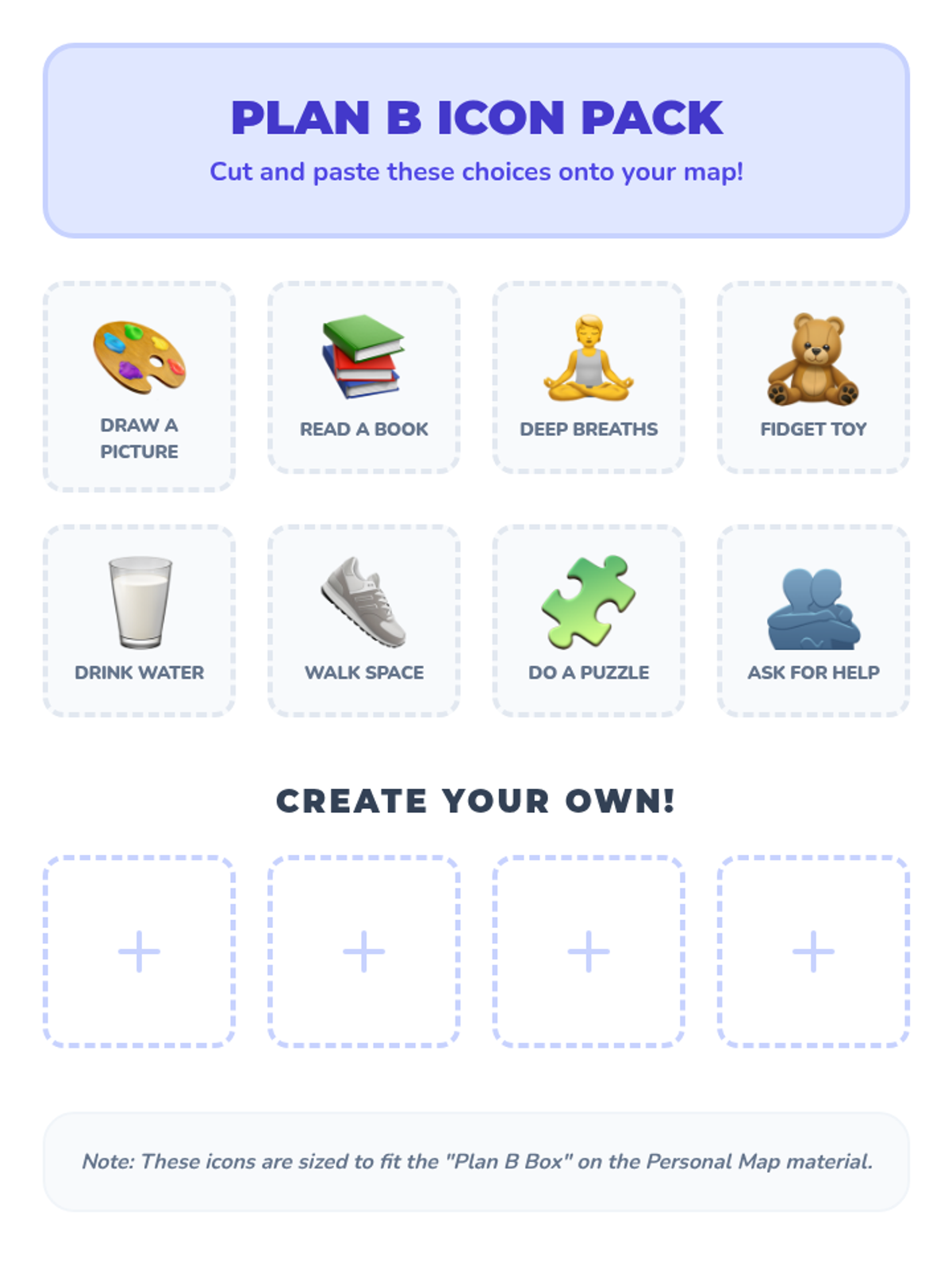
Teacher resource containing cut-out icons of Plan B strategies for students to use when creating their personalized flexibility maps.
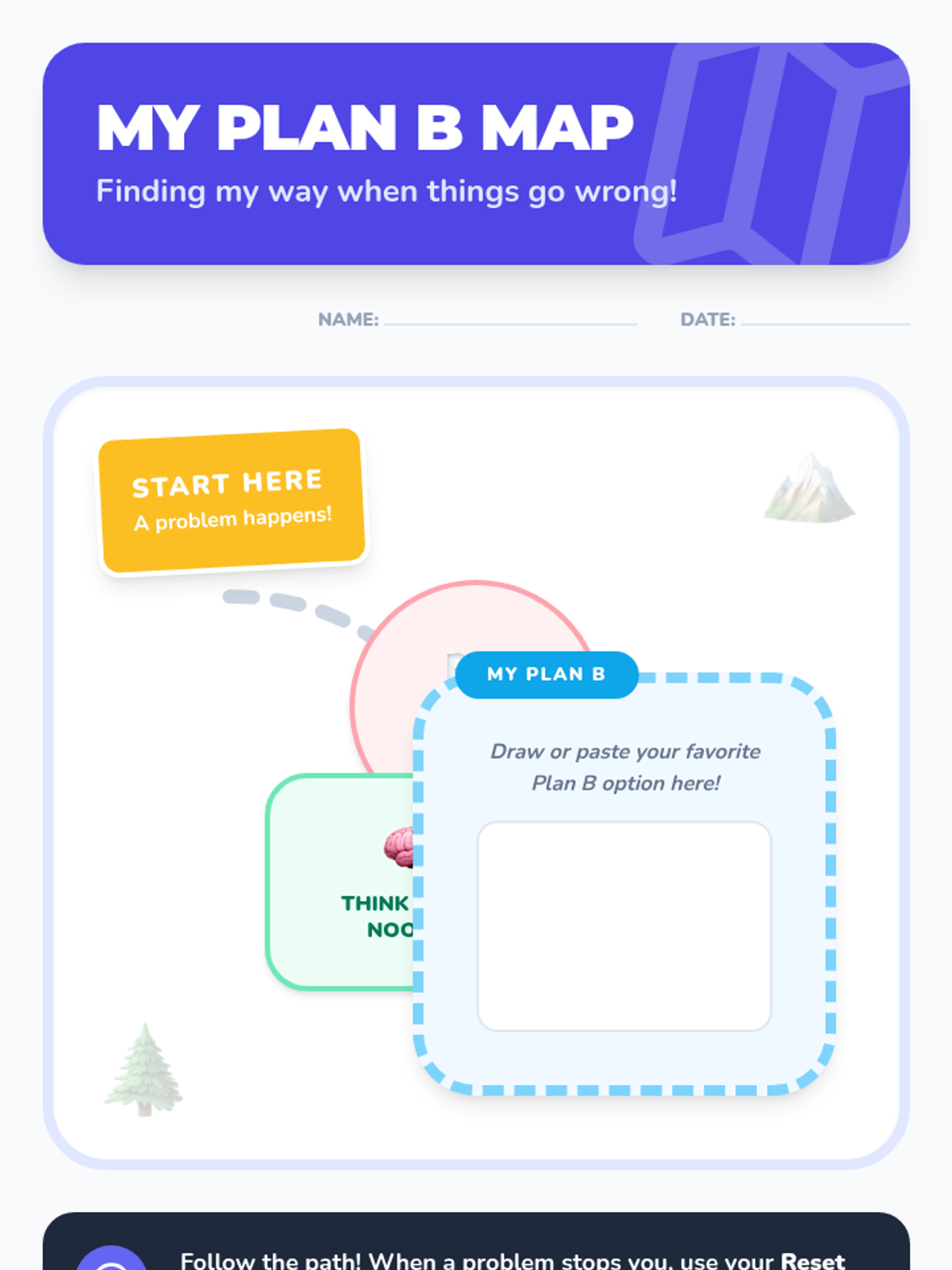
Final project template for Lesson 5, where students create a visual 'map' showing their personal strategy for navigating obstacles using learned techniques.
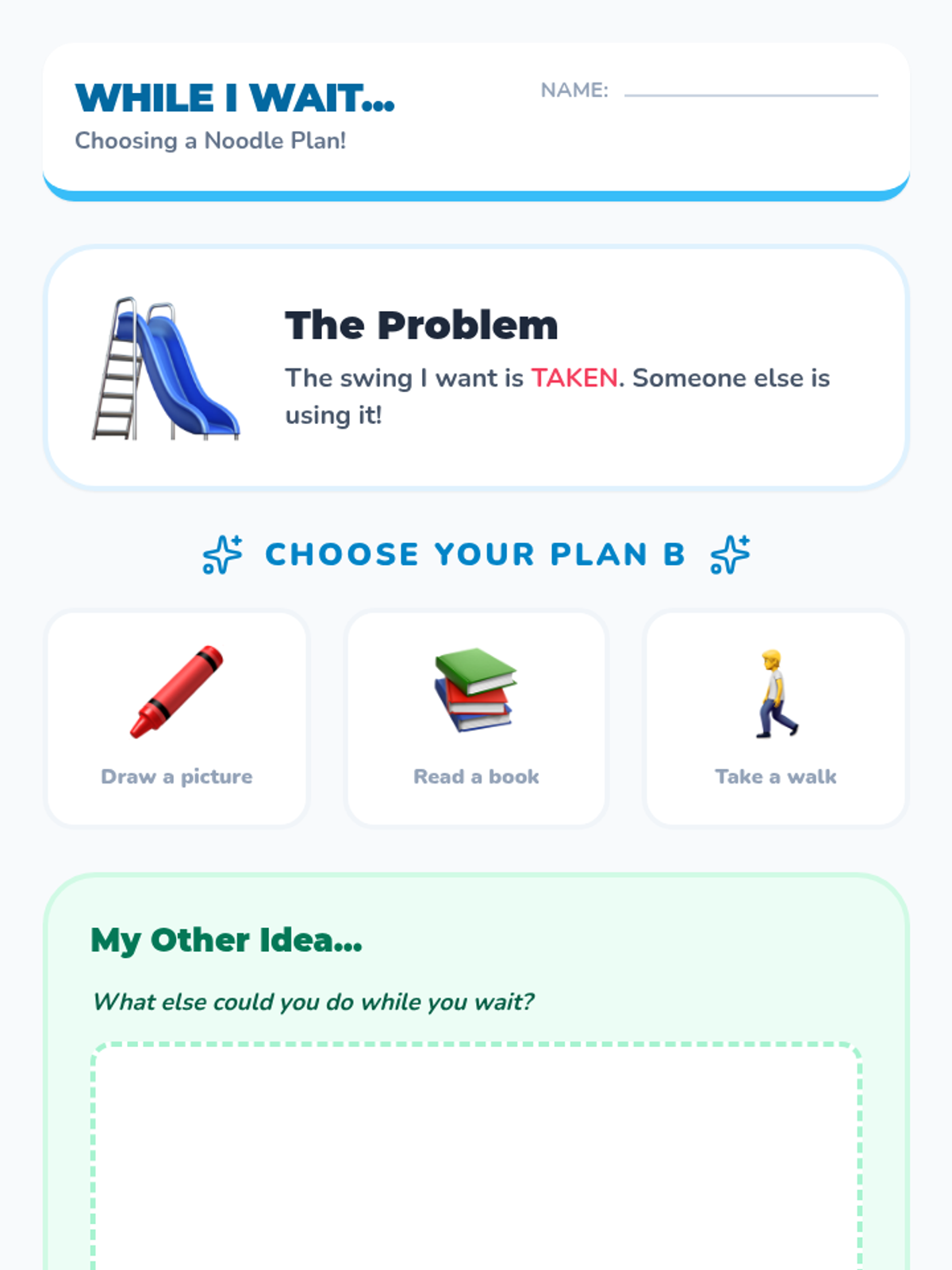
Student activity sheet for Lesson 4, allowing students to choose a 'Plan B' activity when a preferred item is unavailable.
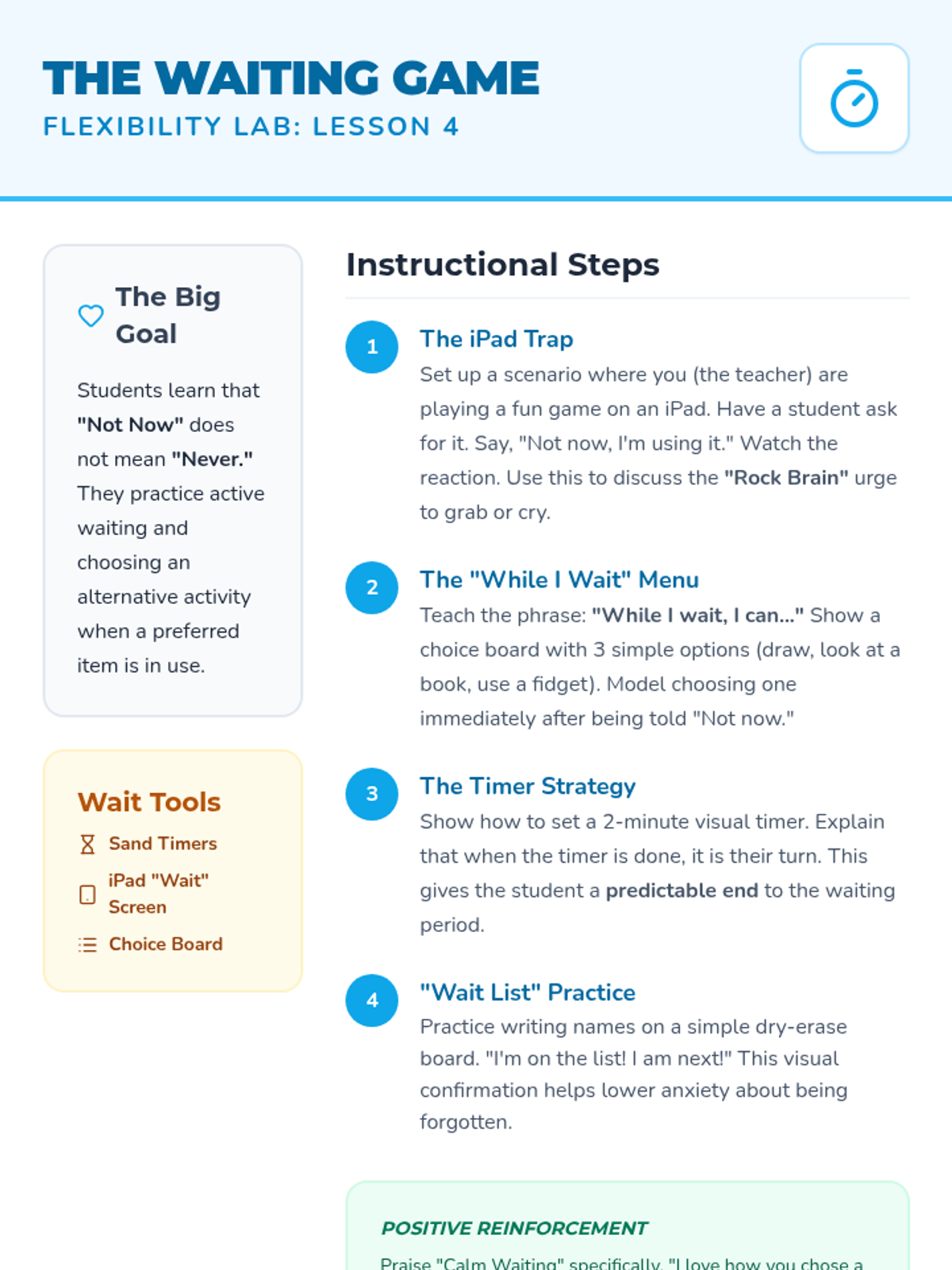
Teacher instructional guide for Lesson 4, teaching students strategies for 'active waiting' and using choice boards when items are unavailable.
Engaging slide presentation for Lesson 3 on schedule changes, introducing 'Plan A' vs. 'Plan B' and the ritual of moving visual schedule cards.
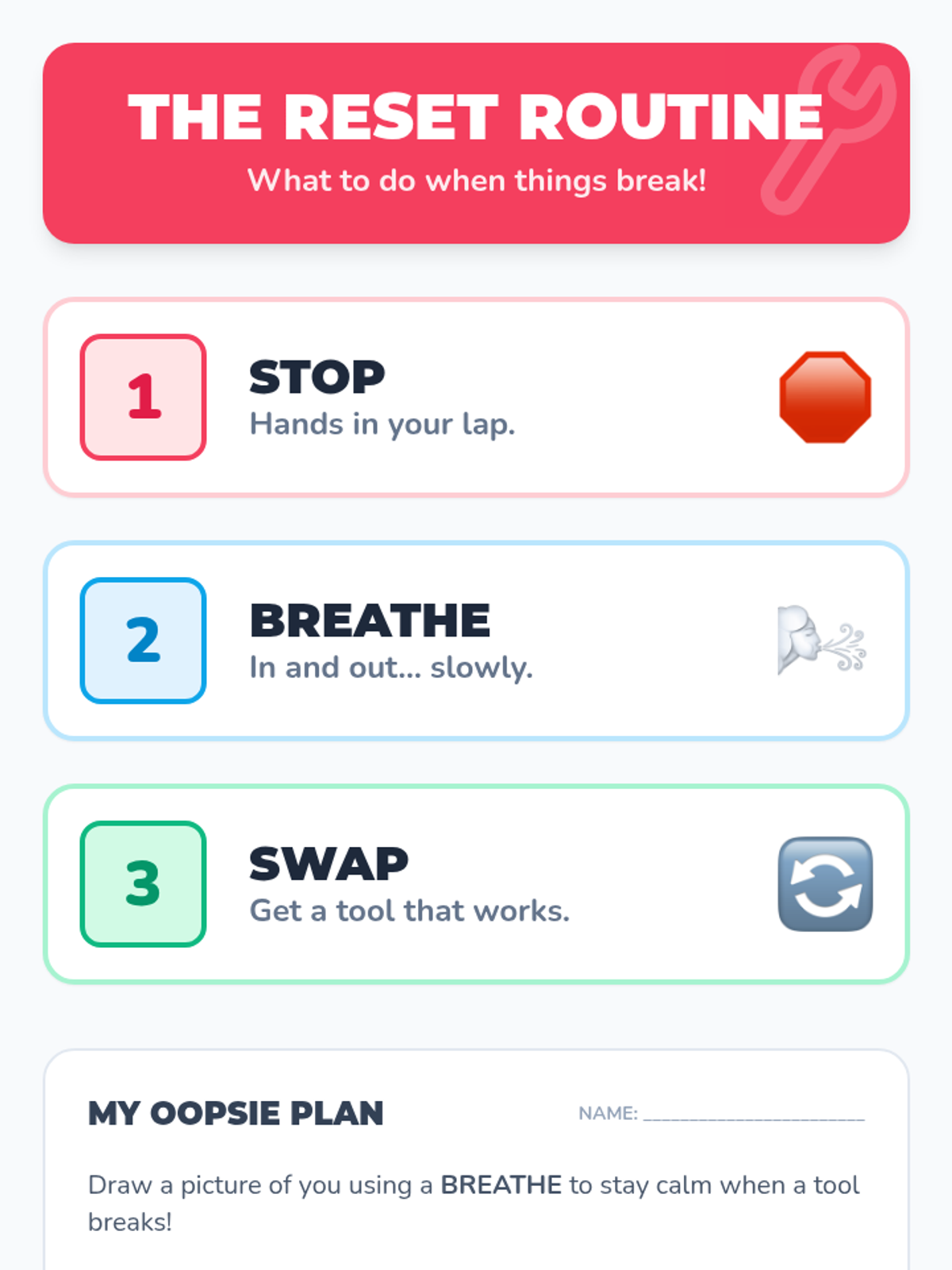
Visual anchor chart and worksheet for the 'Reset Routine' (Stop-Breathe-Swap), designed for students to visualize the steps of emotional regulation when tools break.
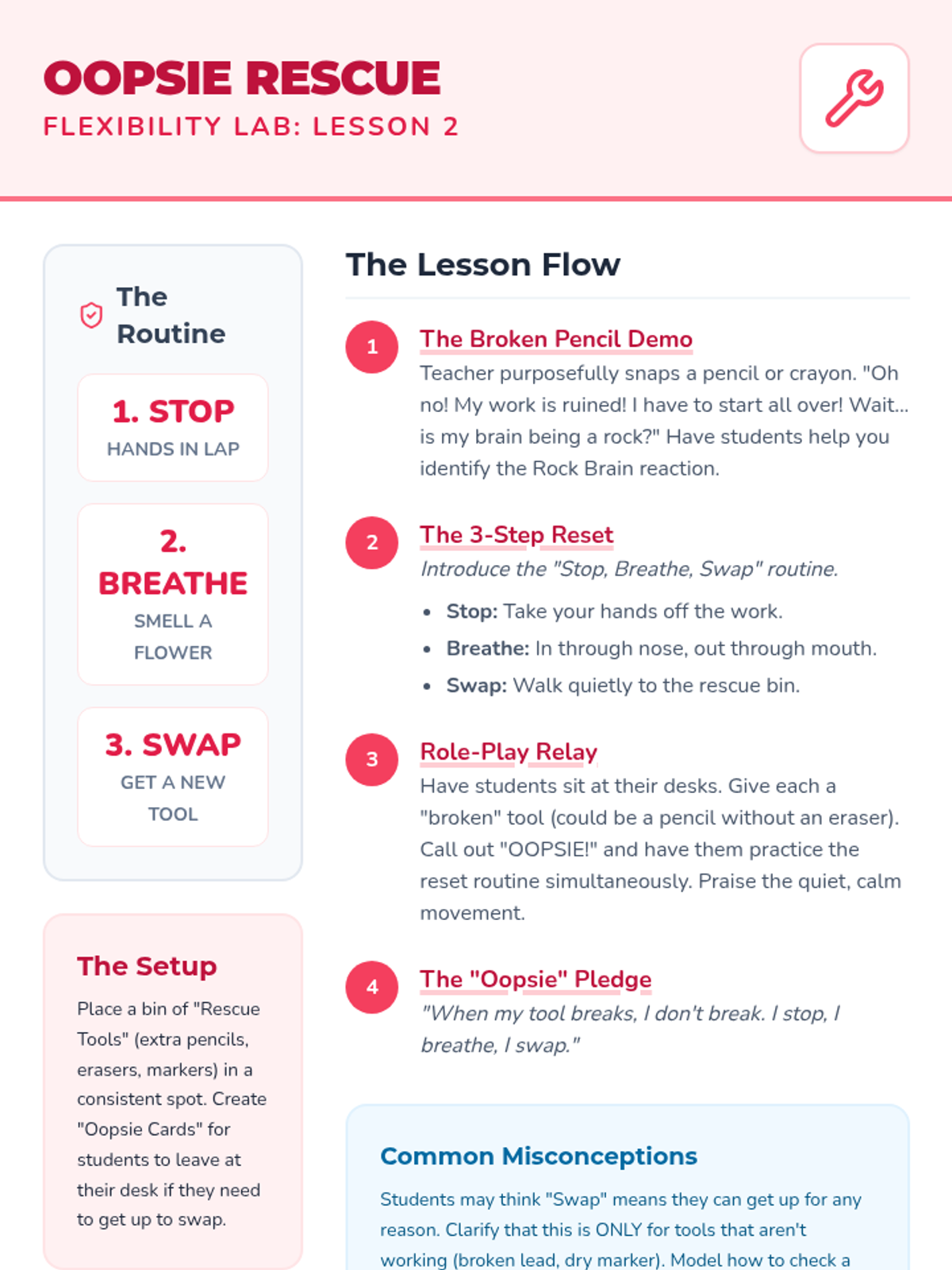
Teacher instructional guide for Lesson 2, focusing on the Stop-Breathe-Swap routine for handling broken classroom tools.
Visual slide deck for Lesson 1 introducing the Rock vs. Noodle brain concepts with engaging visuals and practice scenarios.
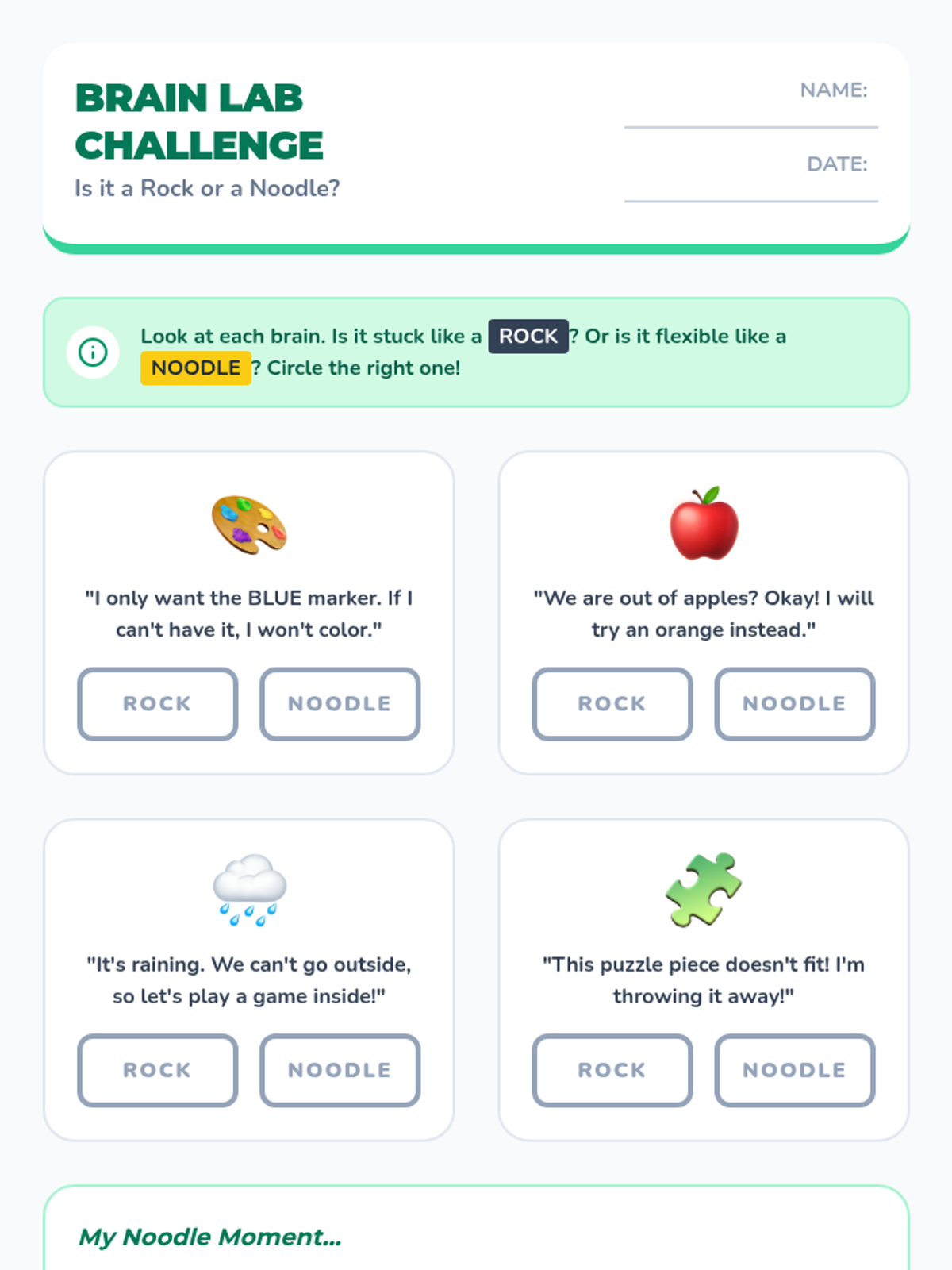
Student worksheet for identifying 'Rock' vs. 'Noodle' thinking scenarios with a drawing space for personal reflection.
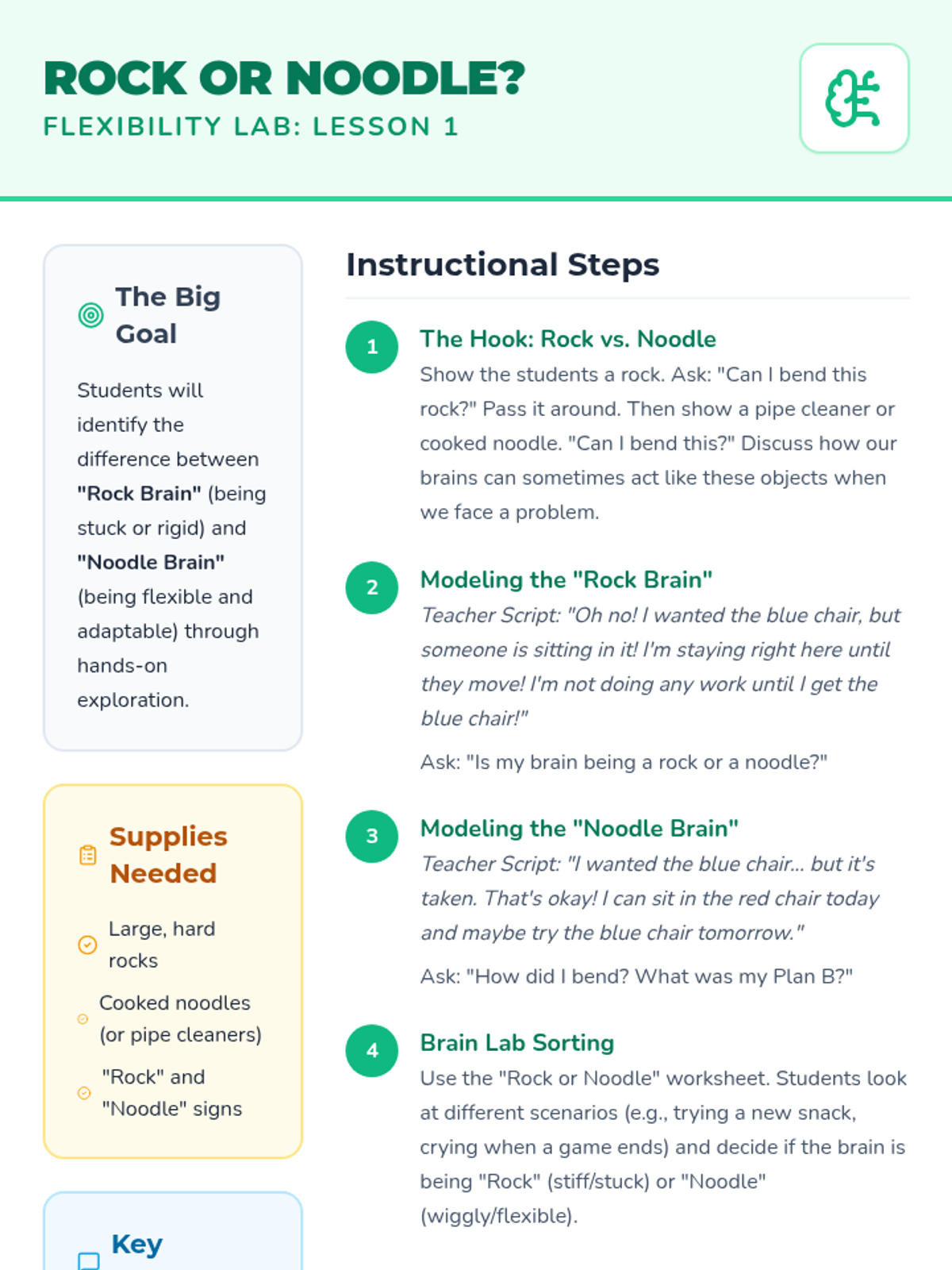
Teacher guide for the first lesson on cognitive flexibility, introducing the 'Rock Brain' and 'Noodle Brain' metaphors with scripts and activities.
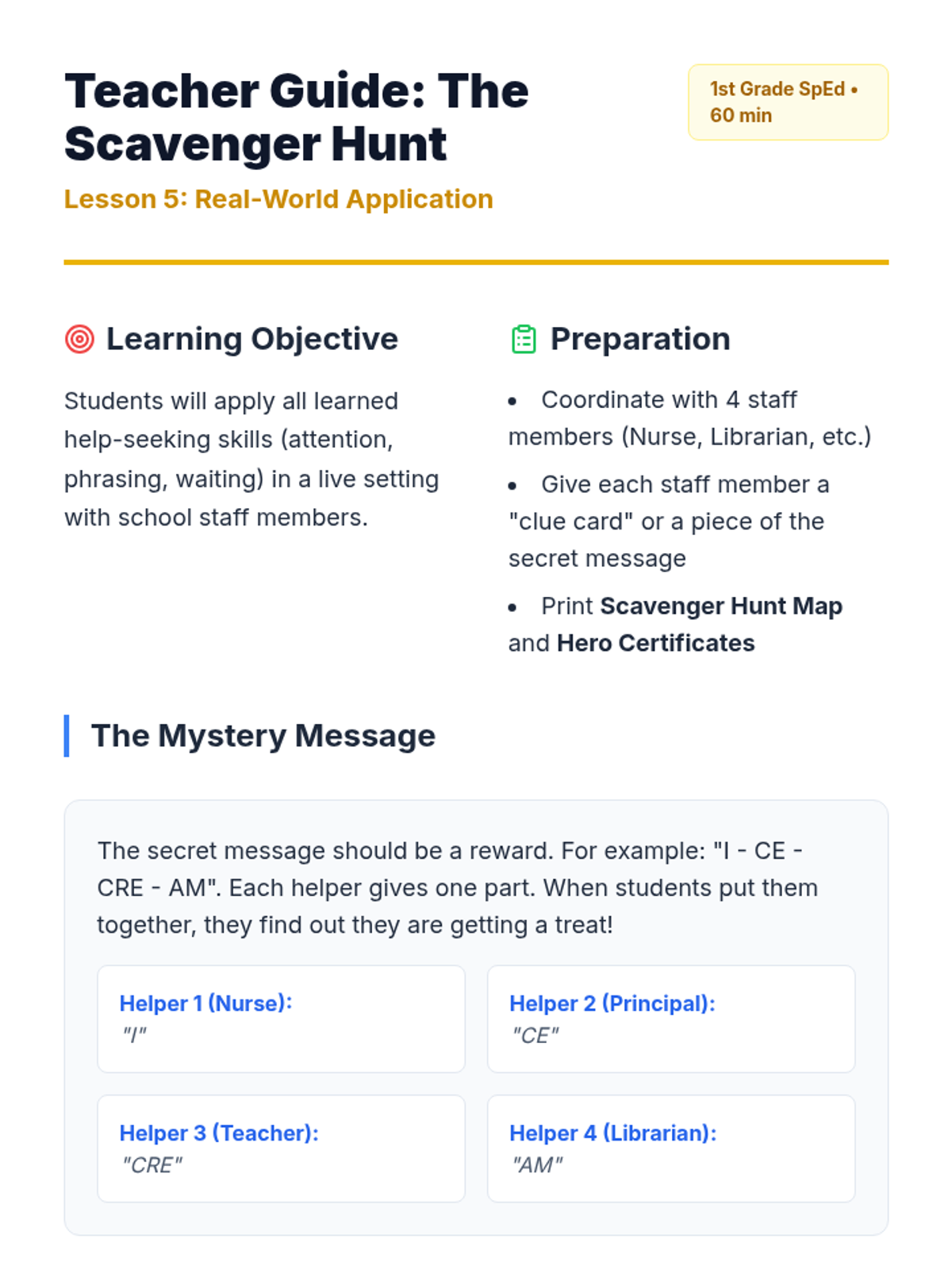
Teacher facilitation guide for Lesson 5, focusing on the setup and execution of the Helper Scavenger Hunt application activity.
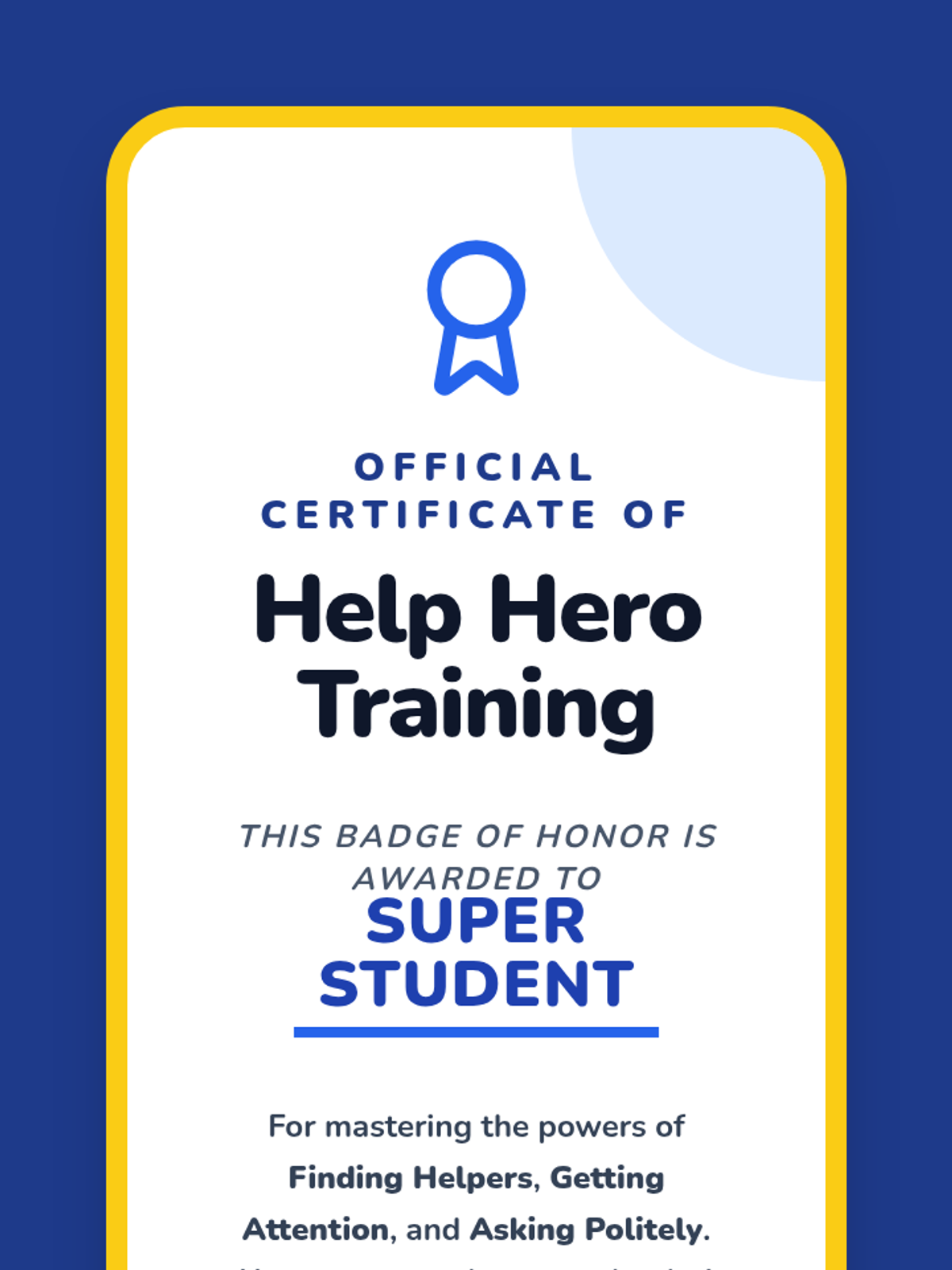
A formal certificate for students who complete the Help Hero Training sequence, celebrating their self-advocacy skills.
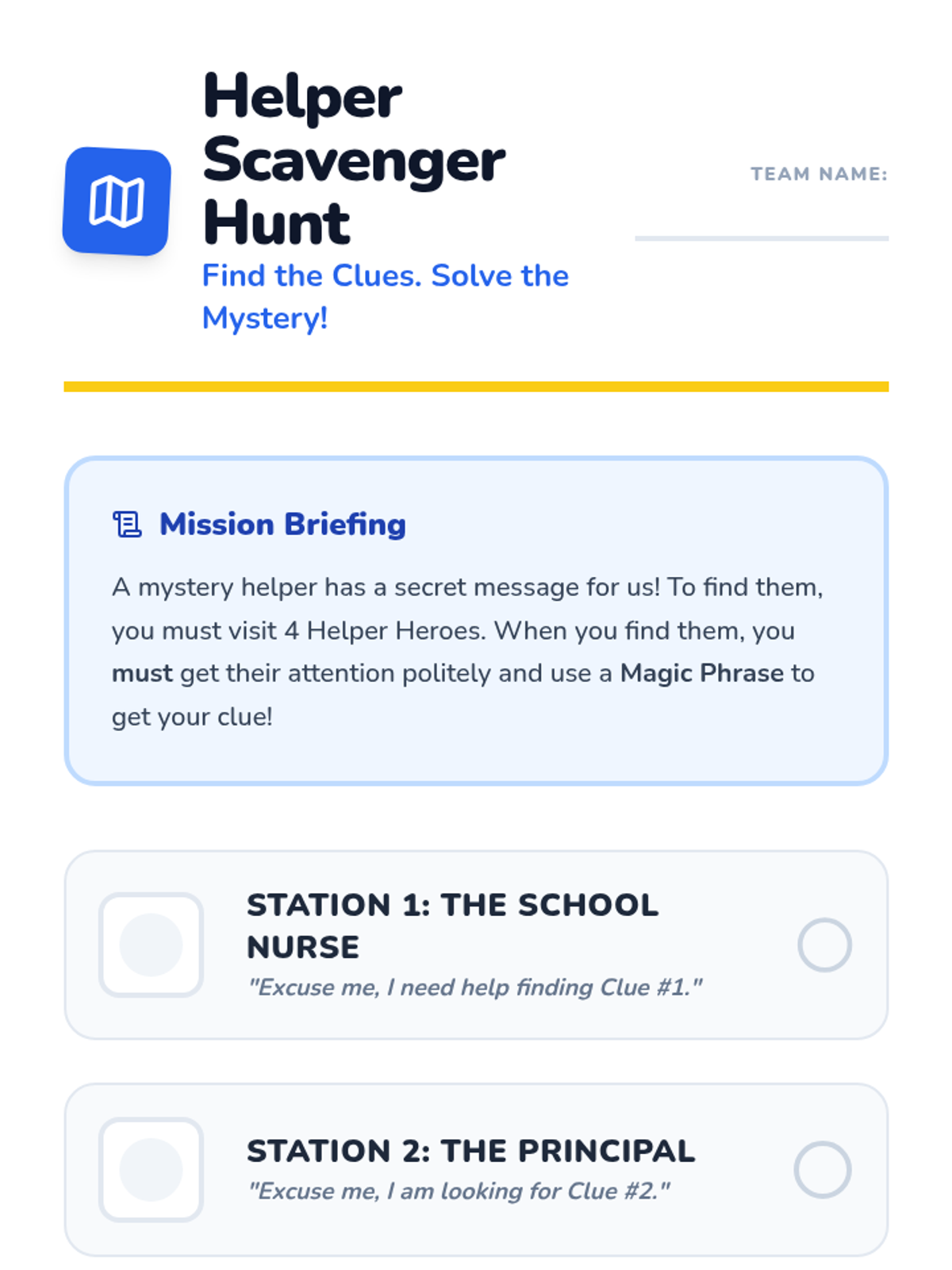
A scavenger hunt checklist for Lesson 5 where students apply help-seeking skills with various staff members to solve a classroom mystery.
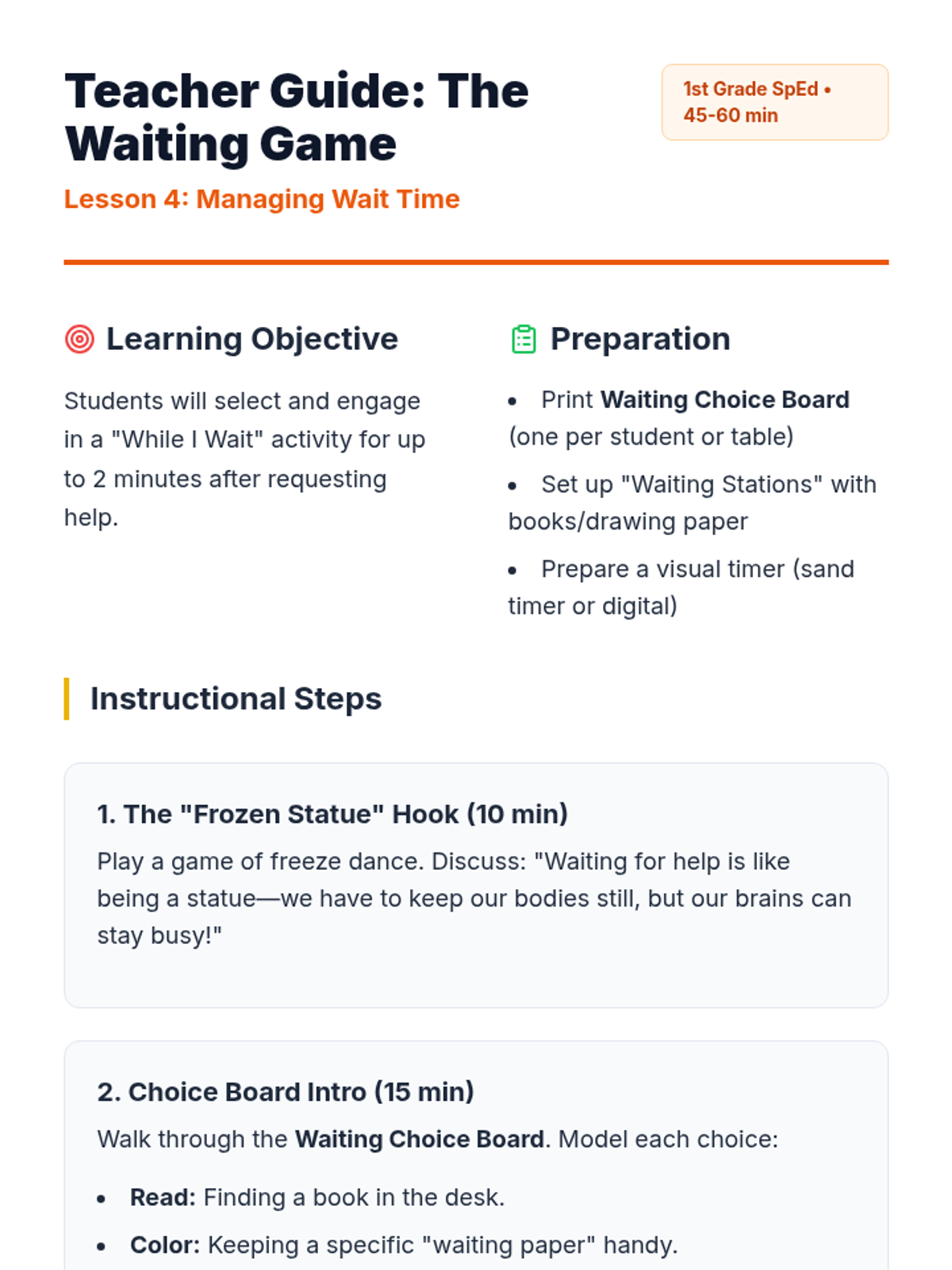
Teacher facilitation guide for Lesson 4, focusing on managing wait time and using the Choice Board.
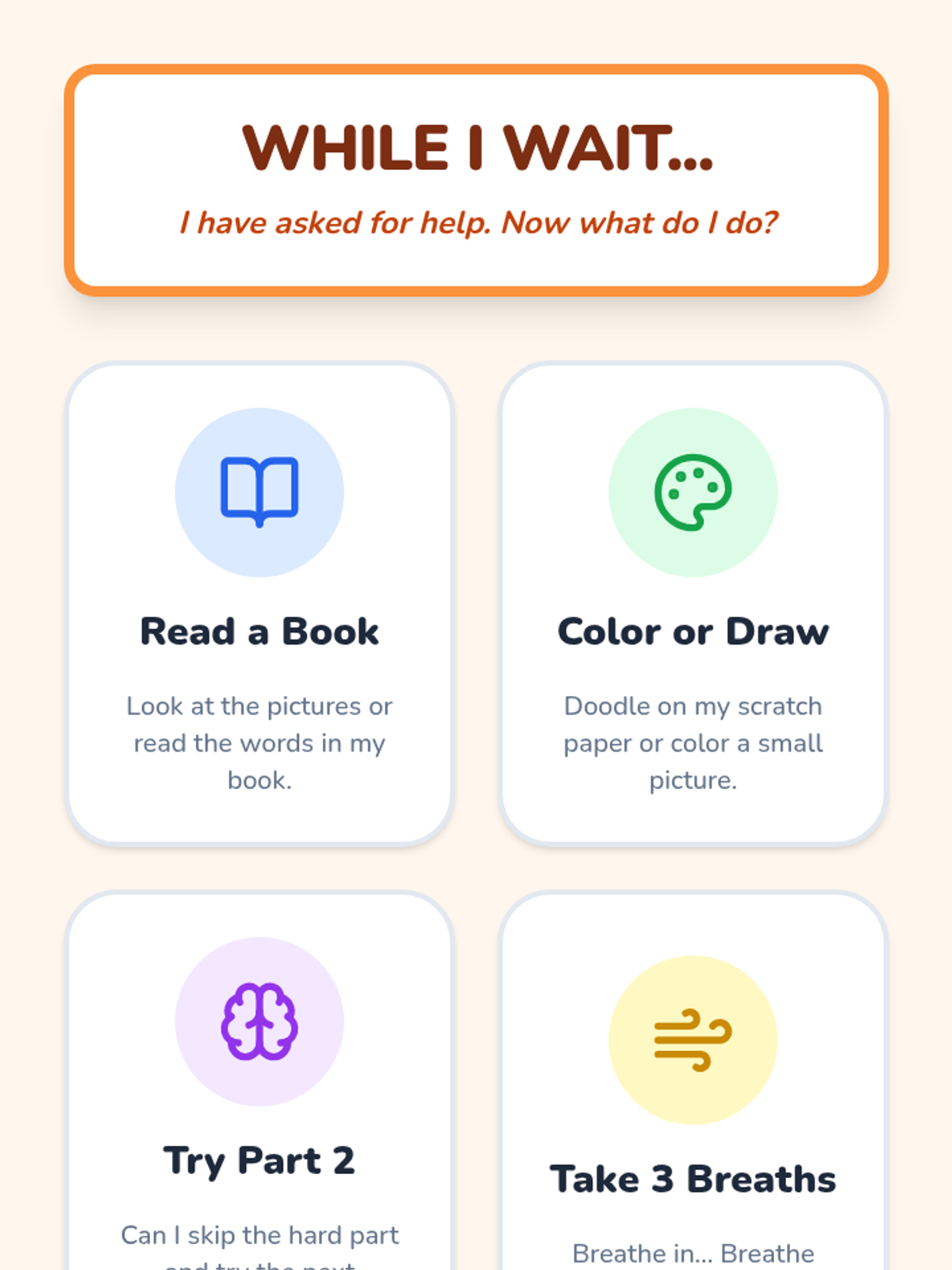
A visual choice board for students to use while waiting for assistance, providing four productive 'while I wait' activities.
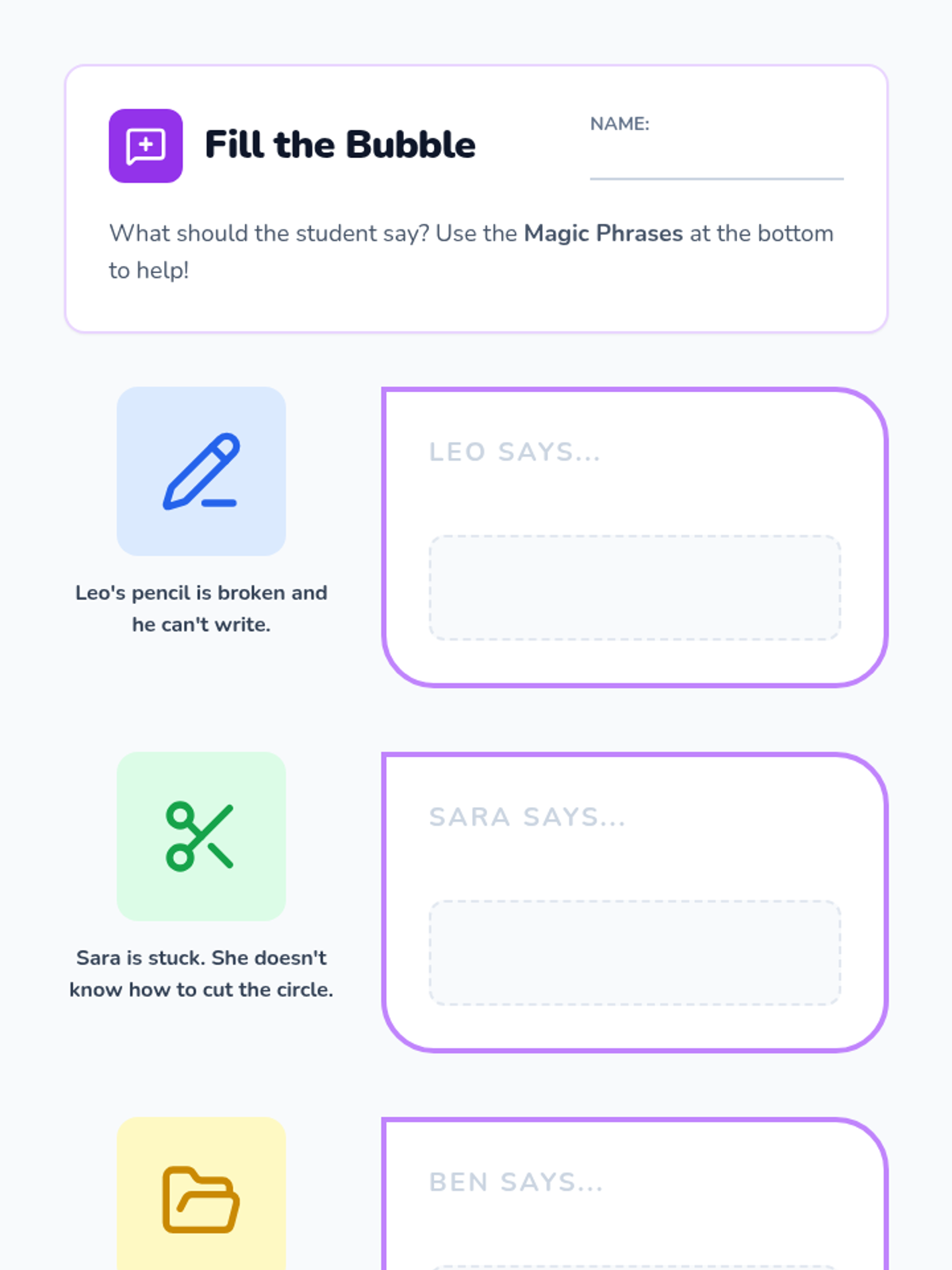
A speech bubble worksheet where students practice writing or selecting appropriate help-seeking phrases for specific classroom scenarios.
Visual slide deck for Lesson 3 teaching specific phrasing for help-seeking, moving from complaints to requests.
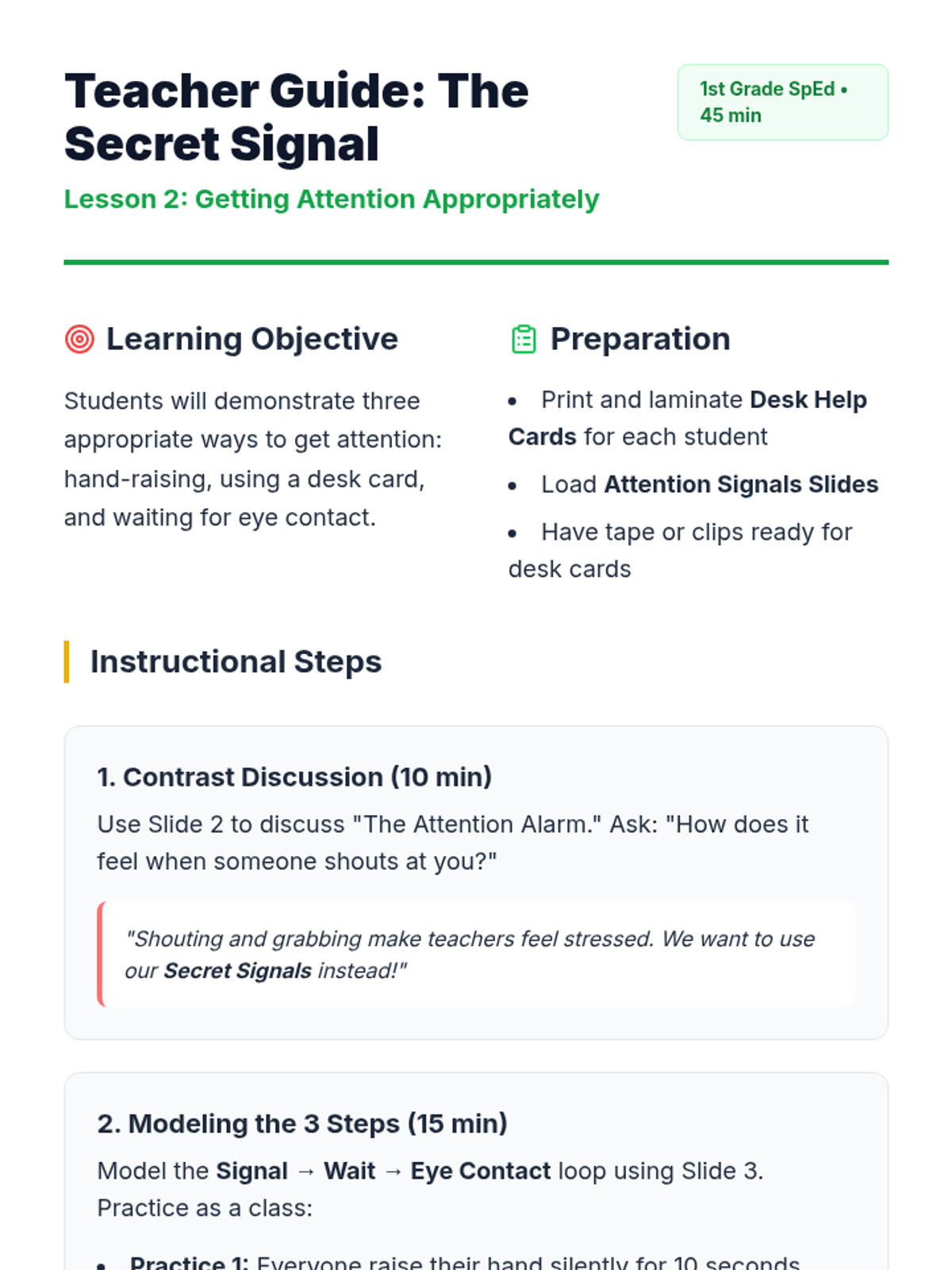
Teacher facilitation guide for Lesson 2, focusing on getting attention appropriately and using the Desk Help Cards.
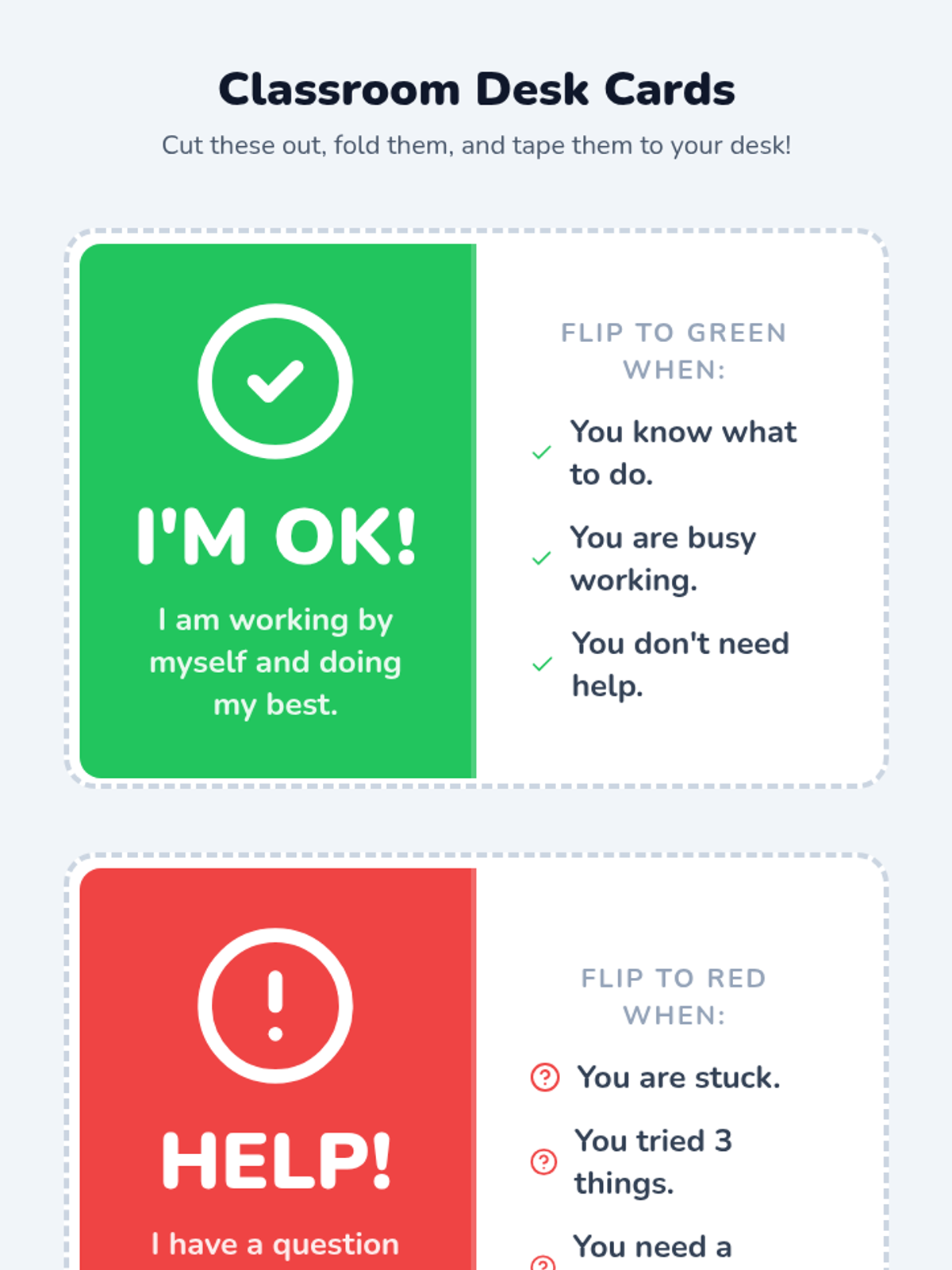
Printable double-sided desk cards for students to signal their status (Green for 'working independently', Red for 'needs help'). A vital non-verbal communication tool for the classroom.
Visual slide deck for Lesson 2 teaching appropriate ways to get attention, contrasting shouting/grabbing with signaling and waiting.
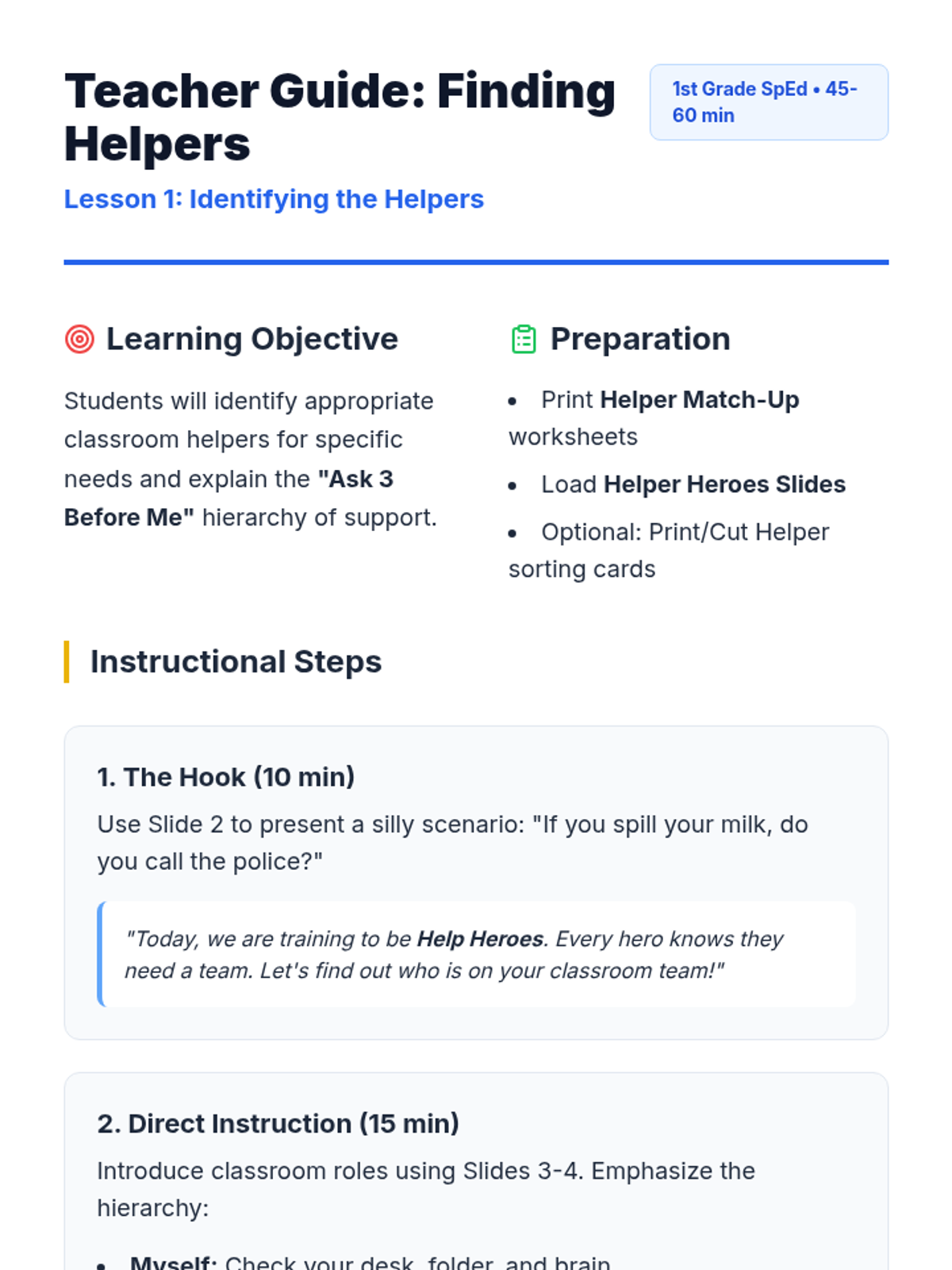
Teacher facilitation guide for Lesson 1, including instructional steps, differentiation tips, and classroom management strategies for the 'Ask 3 Before Me' rule.
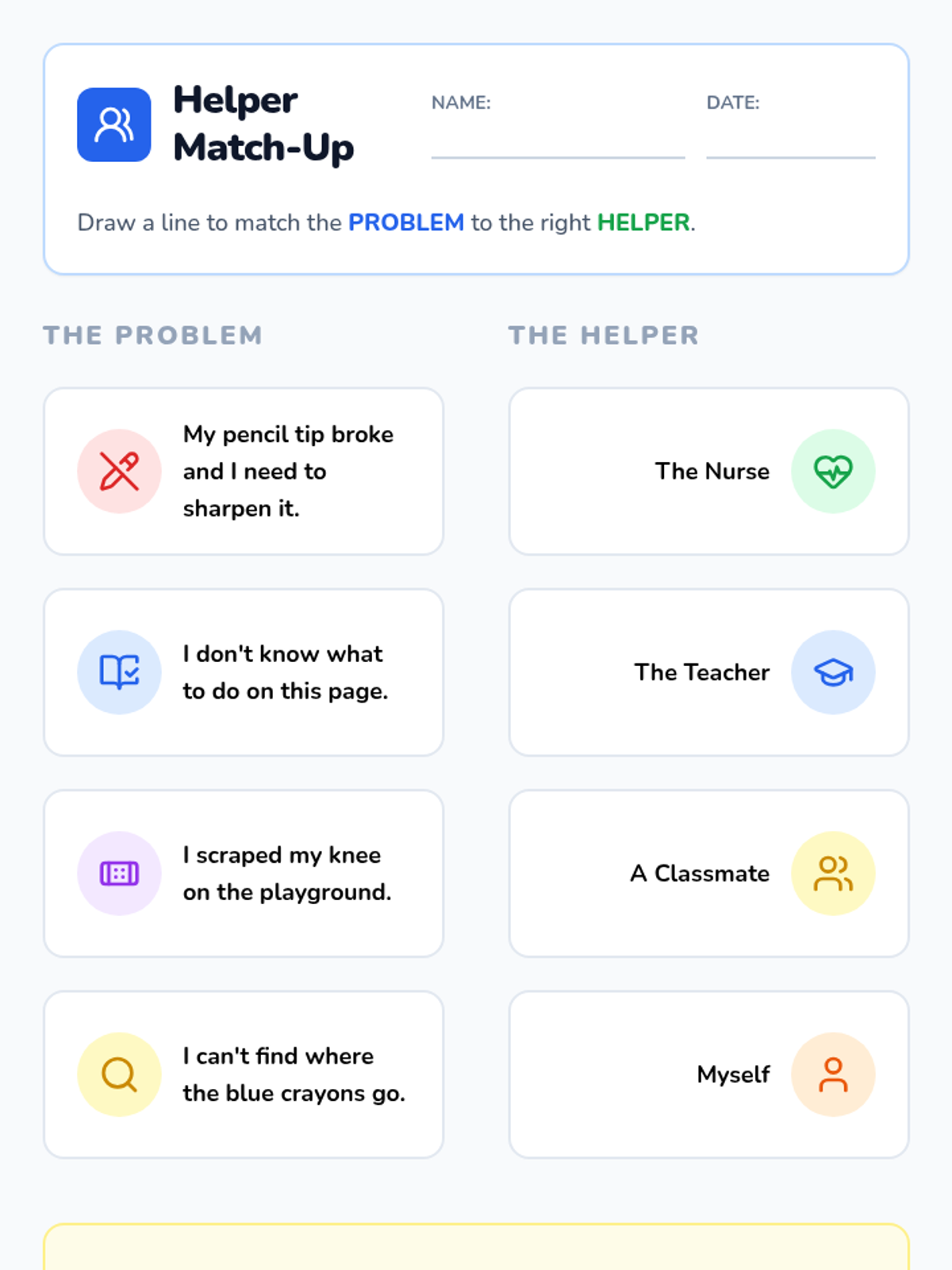
A matching activity worksheet for students to identify appropriate helpers for common classroom problems. Includes a section for reflecting on the 'Ask 3 Before Me' rule.
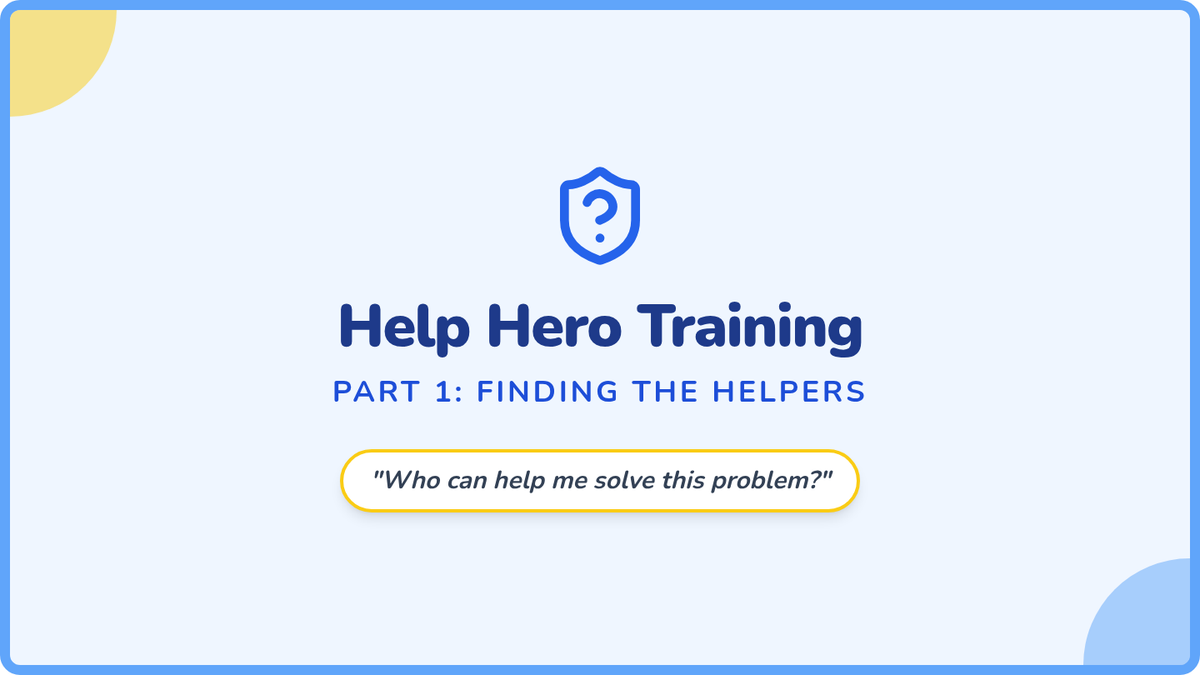
Introductory slide deck for identifying classroom helpers and understanding the 'Ask 3 Before Me' rule. features visual cues and large font sizes for accessibility.