Identifies mental health crises and suicide warning signs while developing personal safety plans and grounding techniques. Equips users with peer gatekeeper skills and direct pathways to professional crisis resources and hotlines.
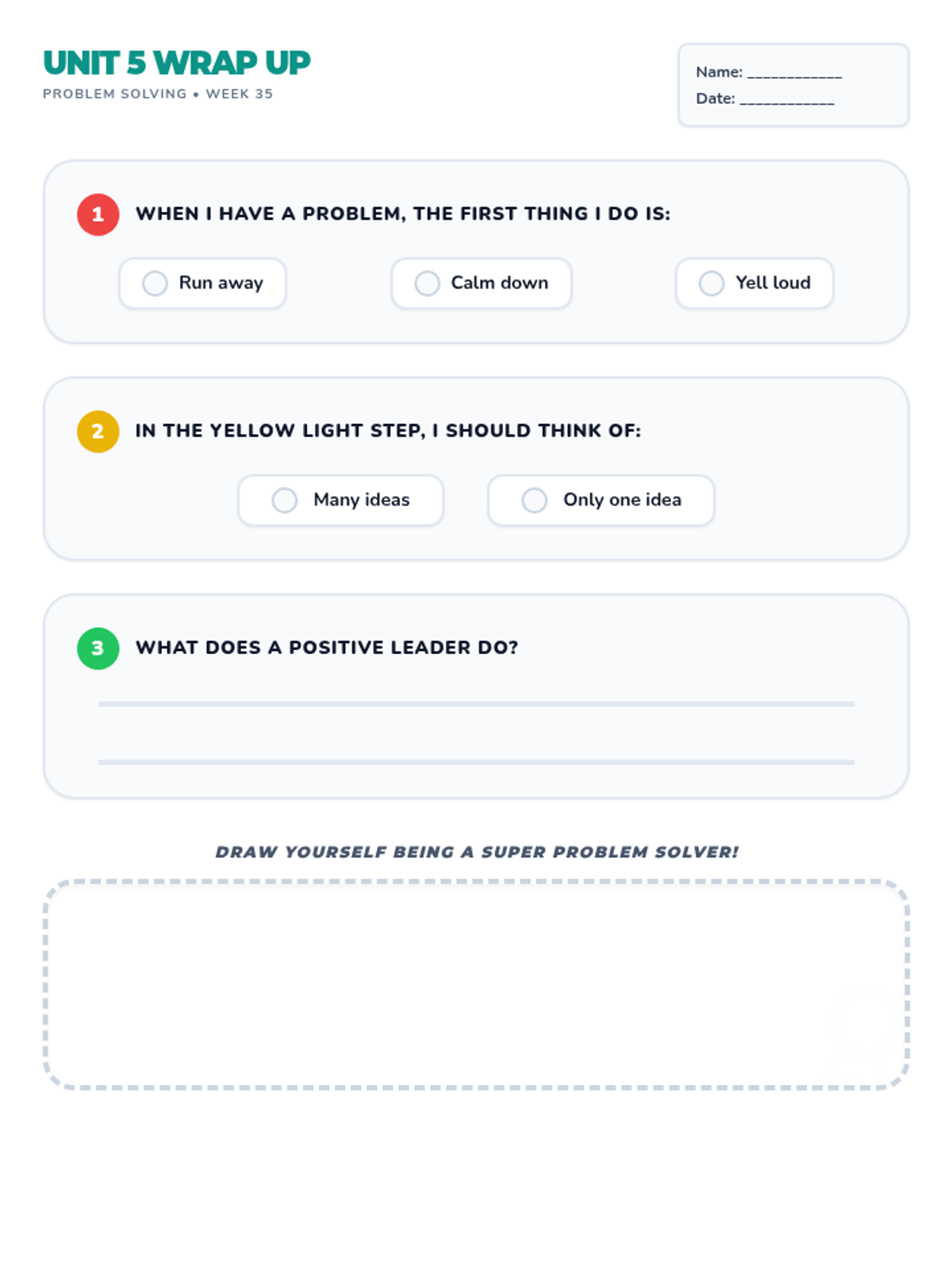
A final assessment for Unit 5. Revised with standardized answer choice styling, improved contrast, and significantly larger handwriting lines for 1st graders. Updated week label.
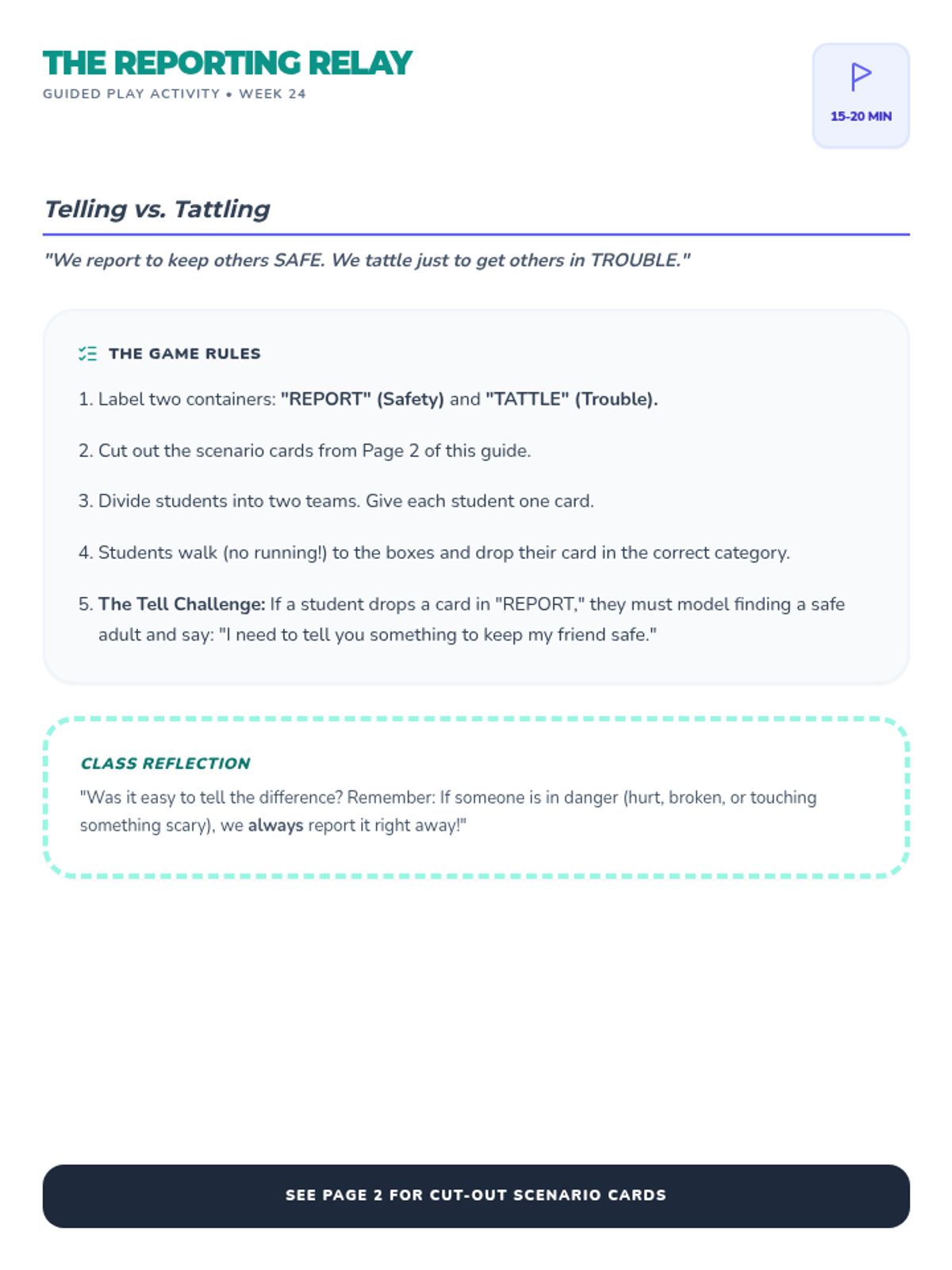
A teacher-facing guided play activity for Week 24. Revised with updated week label and full scenario cards.
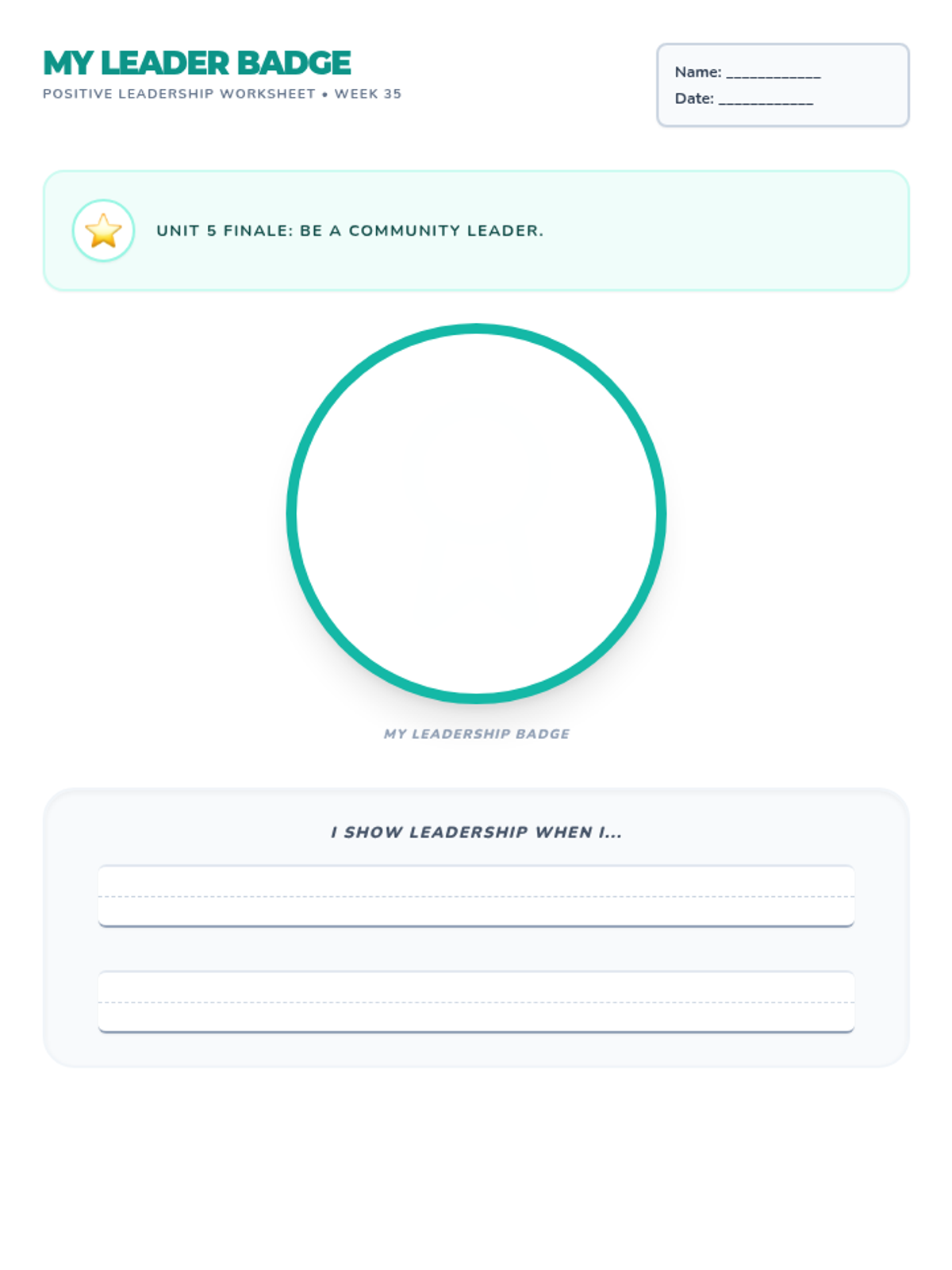
A student-facing worksheet for Week 35. Students design a personal "Leadership Badge" and identify positive actions. Revised for new sequence position.
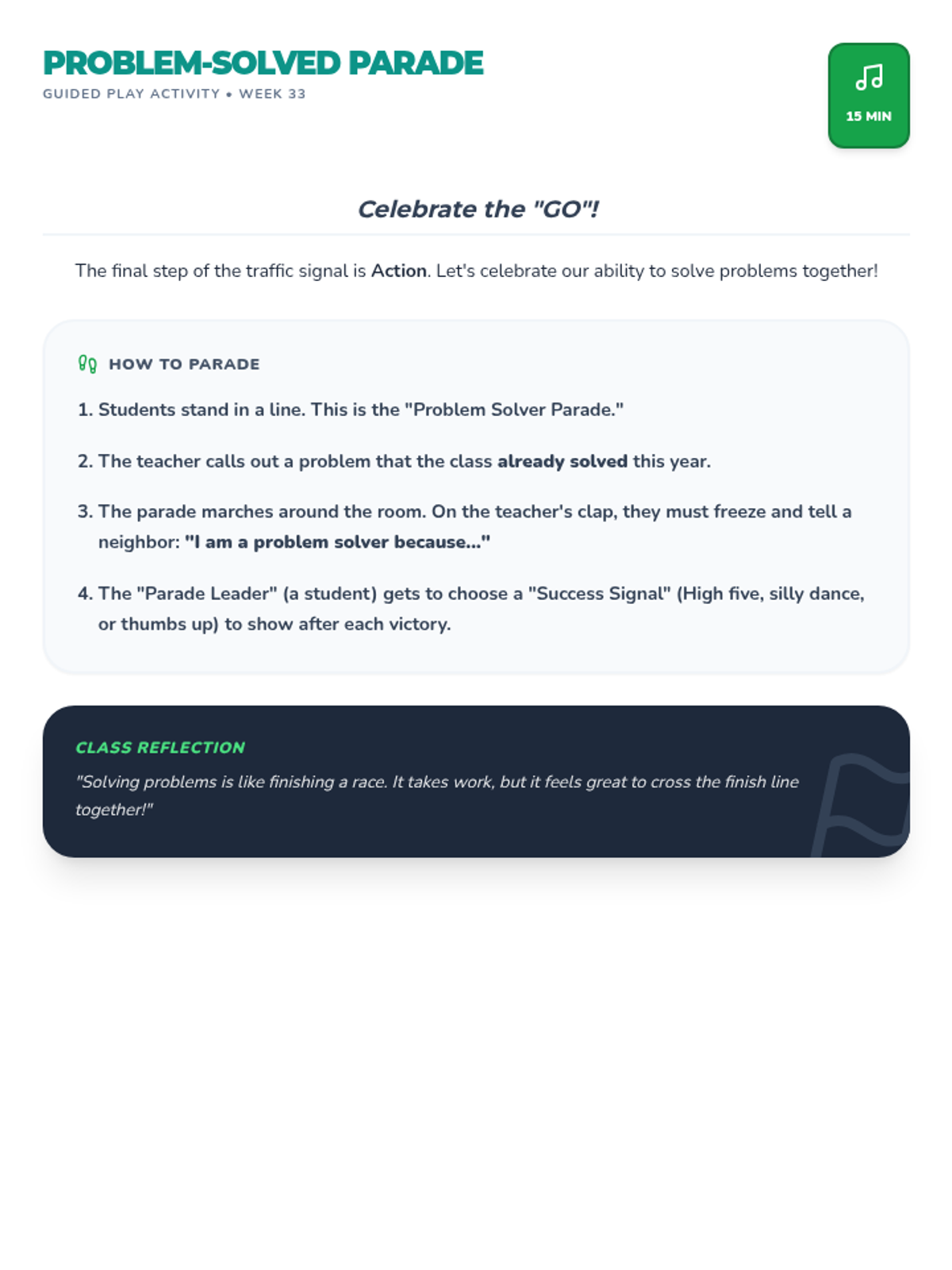
A teacher-facing guided play activity for Week 33. A movement-based celebration of collective problem-solving successes throughout the school year. Updated week label.
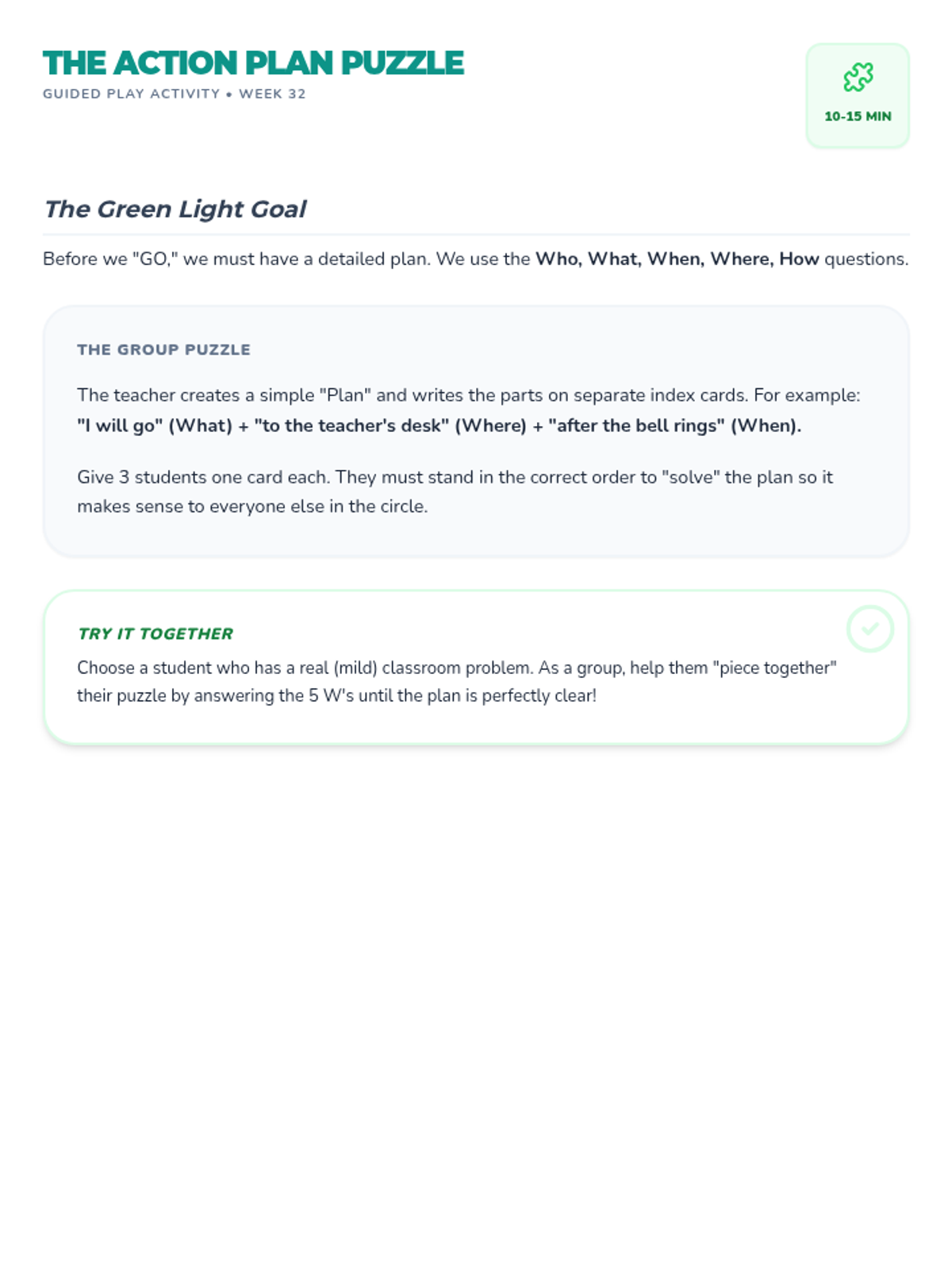
A teacher-facing guided play activity for Week 32. Students work together to "build" a detailed action plan by answering key questions (Who, What, When, etc.). Updated week label.
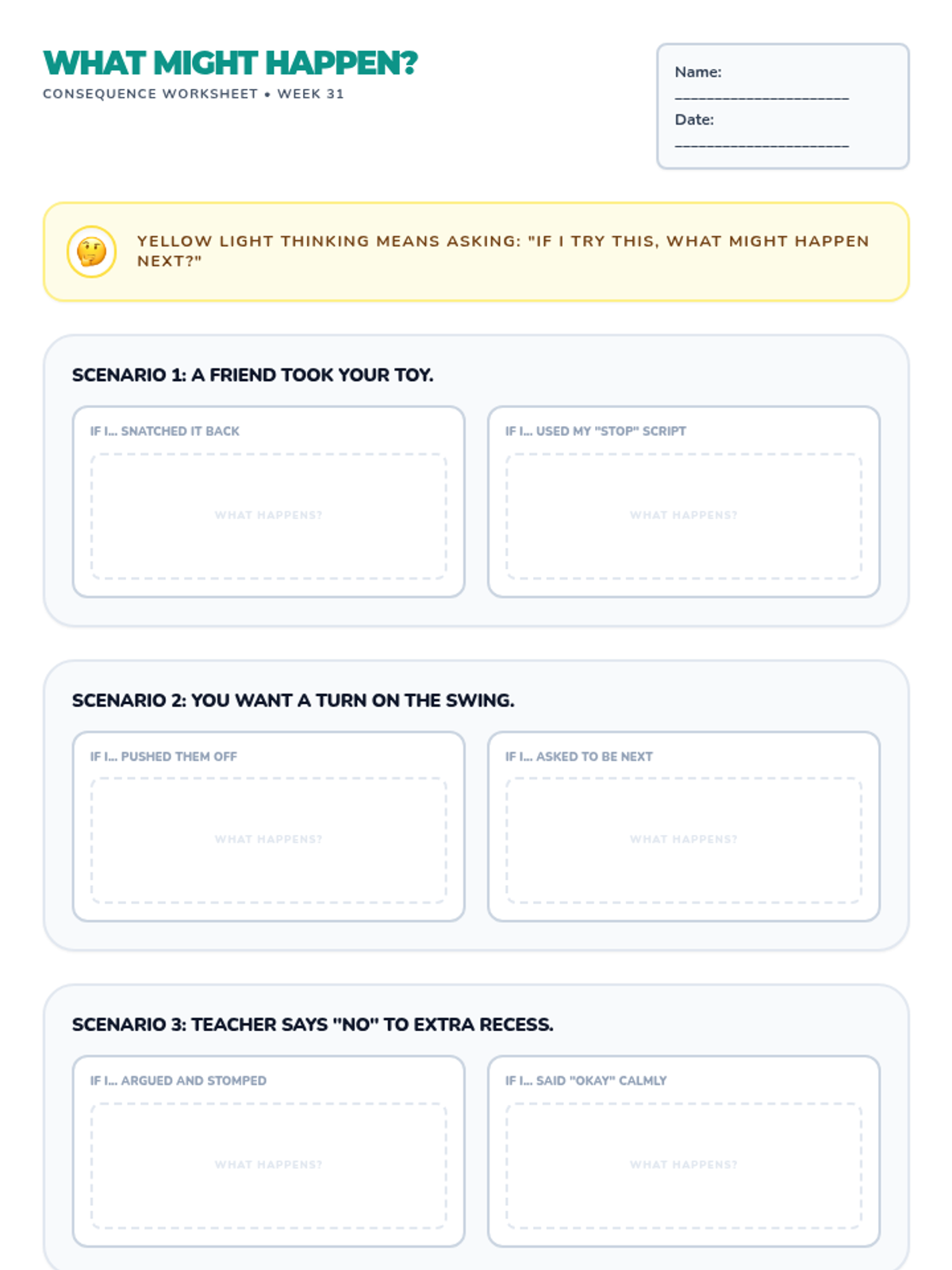
A student-facing worksheet for Week 31. Students evaluate consequences for multiple social scenarios by predicting likely outcomes. Updated week label.
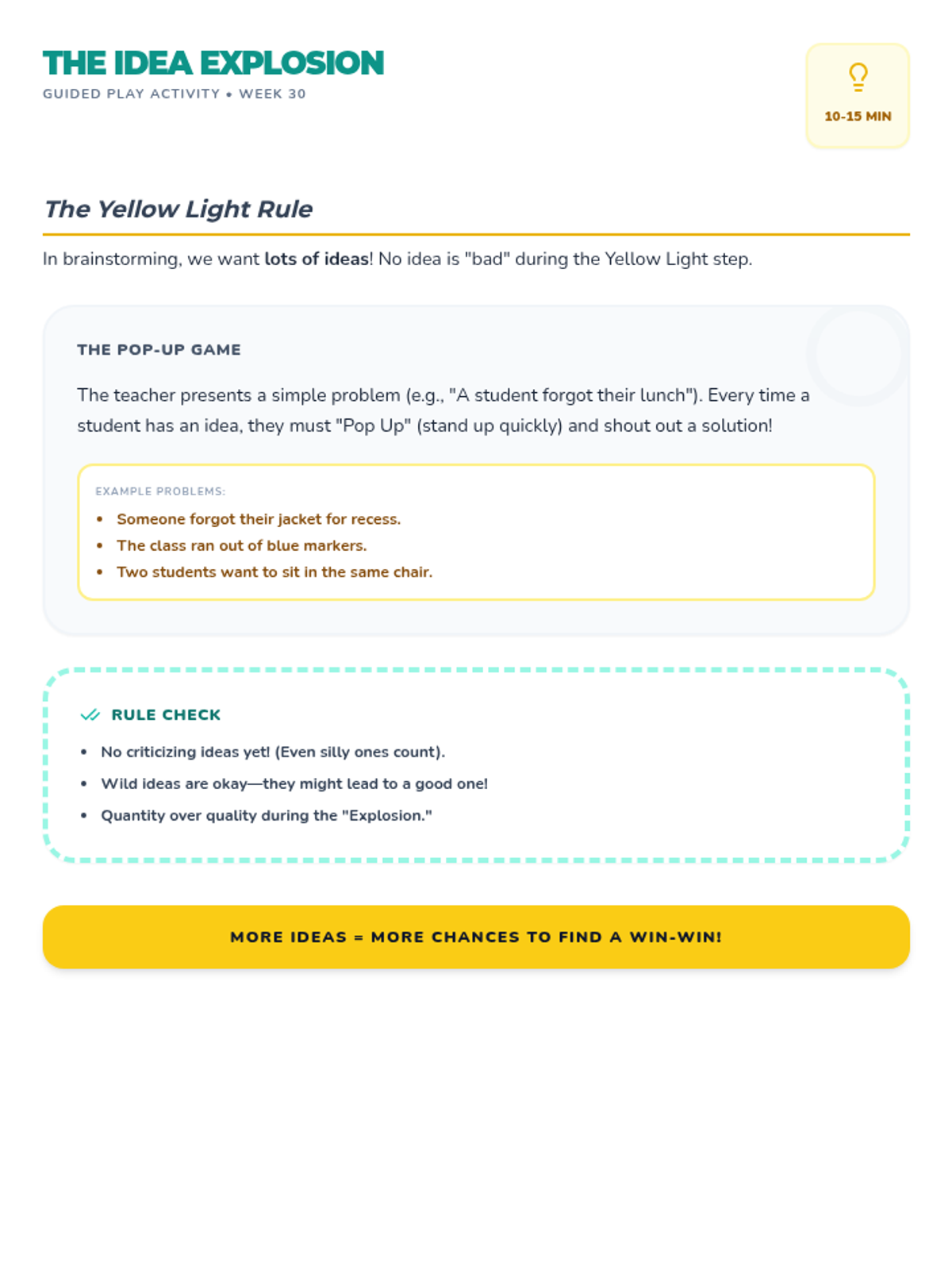
A teacher-facing guided play activity for Week 30. A rapid-fire brainstorming game that encourages students to generate multiple solutions without judgment. Updated week label and examples.
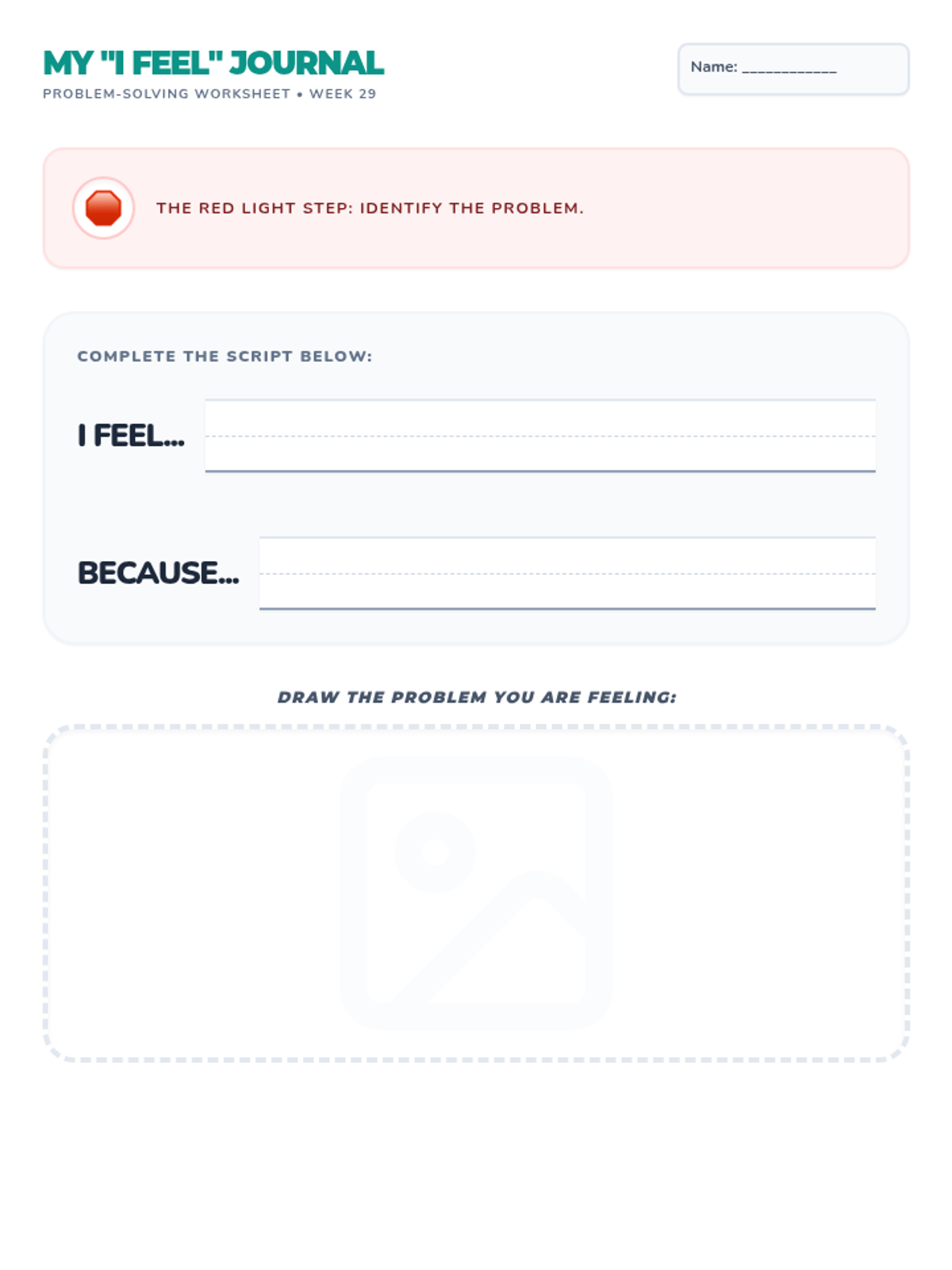
A student-facing worksheet for Week 29. Students practice using the "I feel... because..." script to clearly state a problem as part of the traffic signal model. Updated week label.
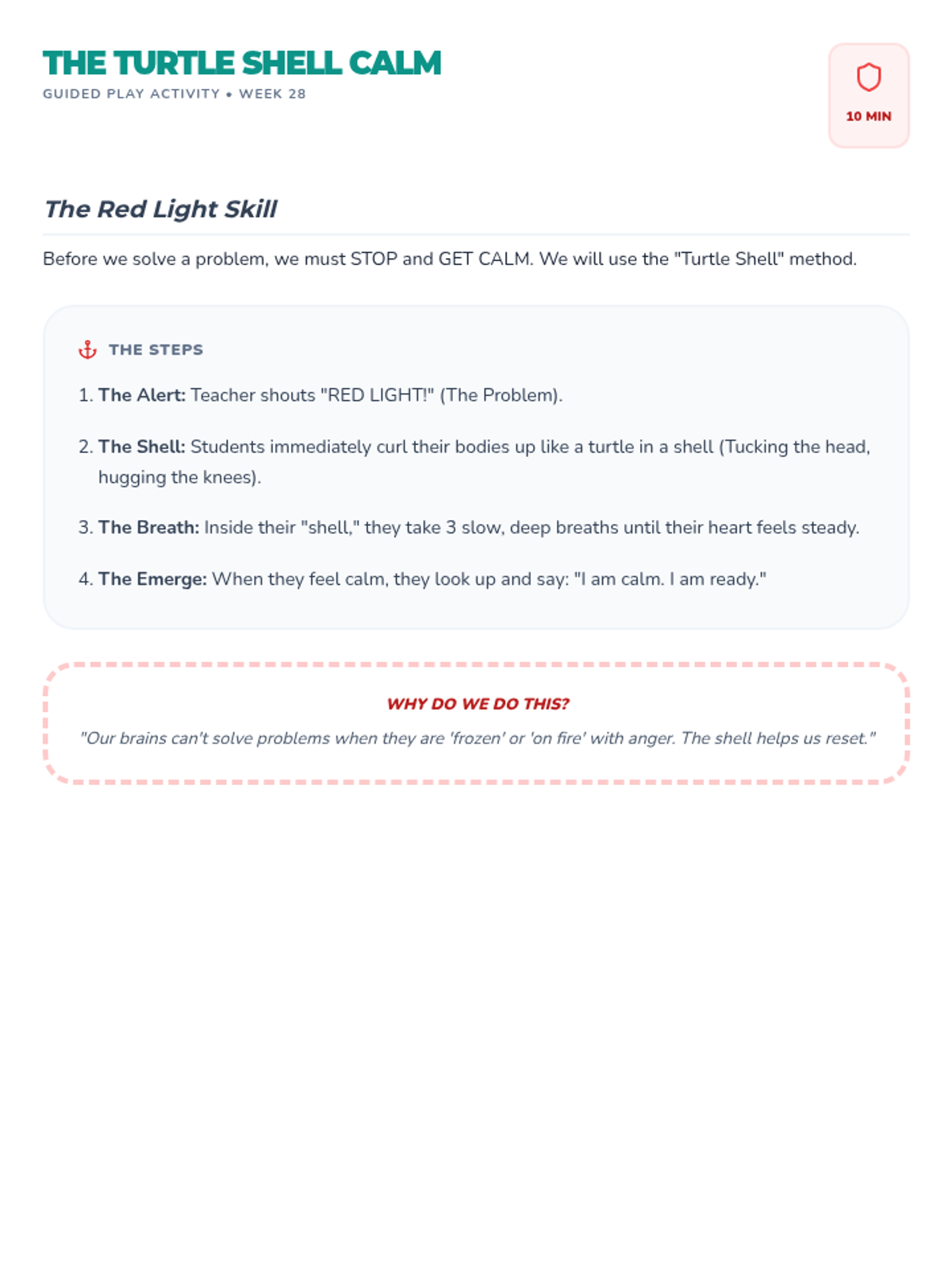
A teacher-facing guided play activity for Week 28. Teaches students the "Turtle Shell" technique for immediate self-regulation when faced with a problem. Updated week label.
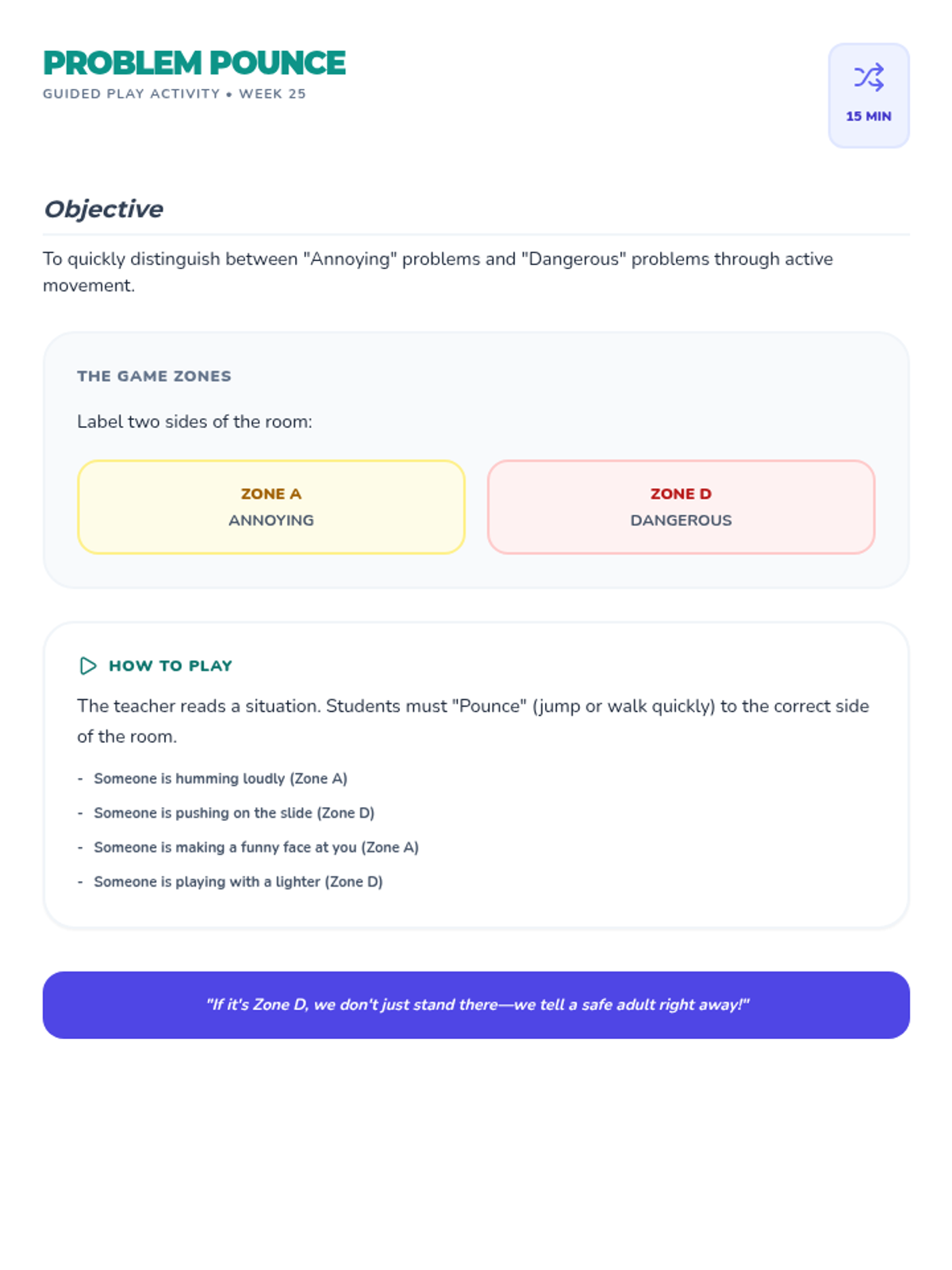
A teacher-facing guided play activity for Week 25. A movement-based sorting game where students categorize classroom problems as "Annoying" or "Dangerous." Updated week label.
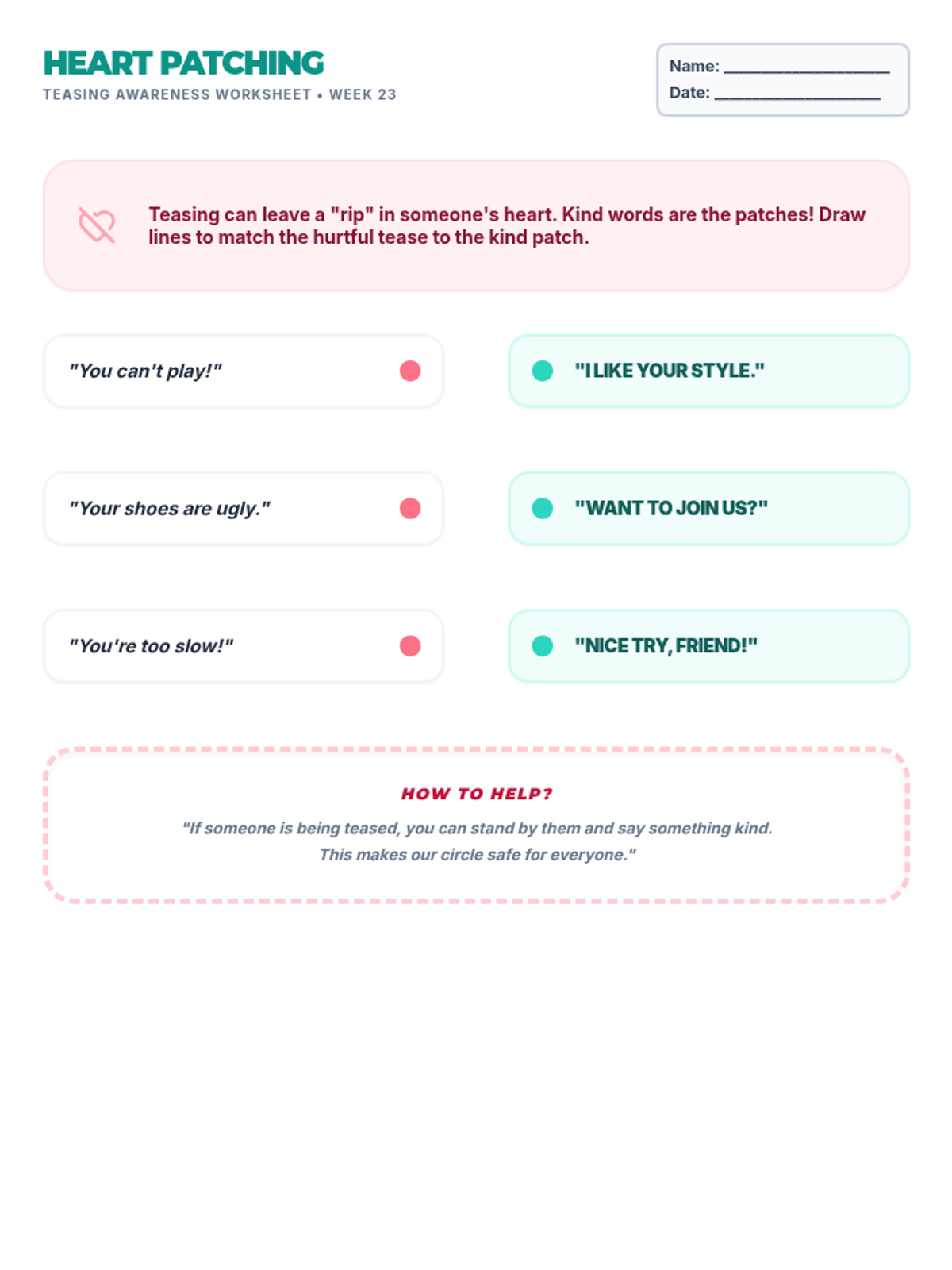
A student-facing worksheet for Week 23 focusing on the impact of teasing. Students match hurtful "teases" with helpful "patches" (kind words), promoting empathy and bystander intervention. Revised with shuffled answers for challenge and improved contrast.
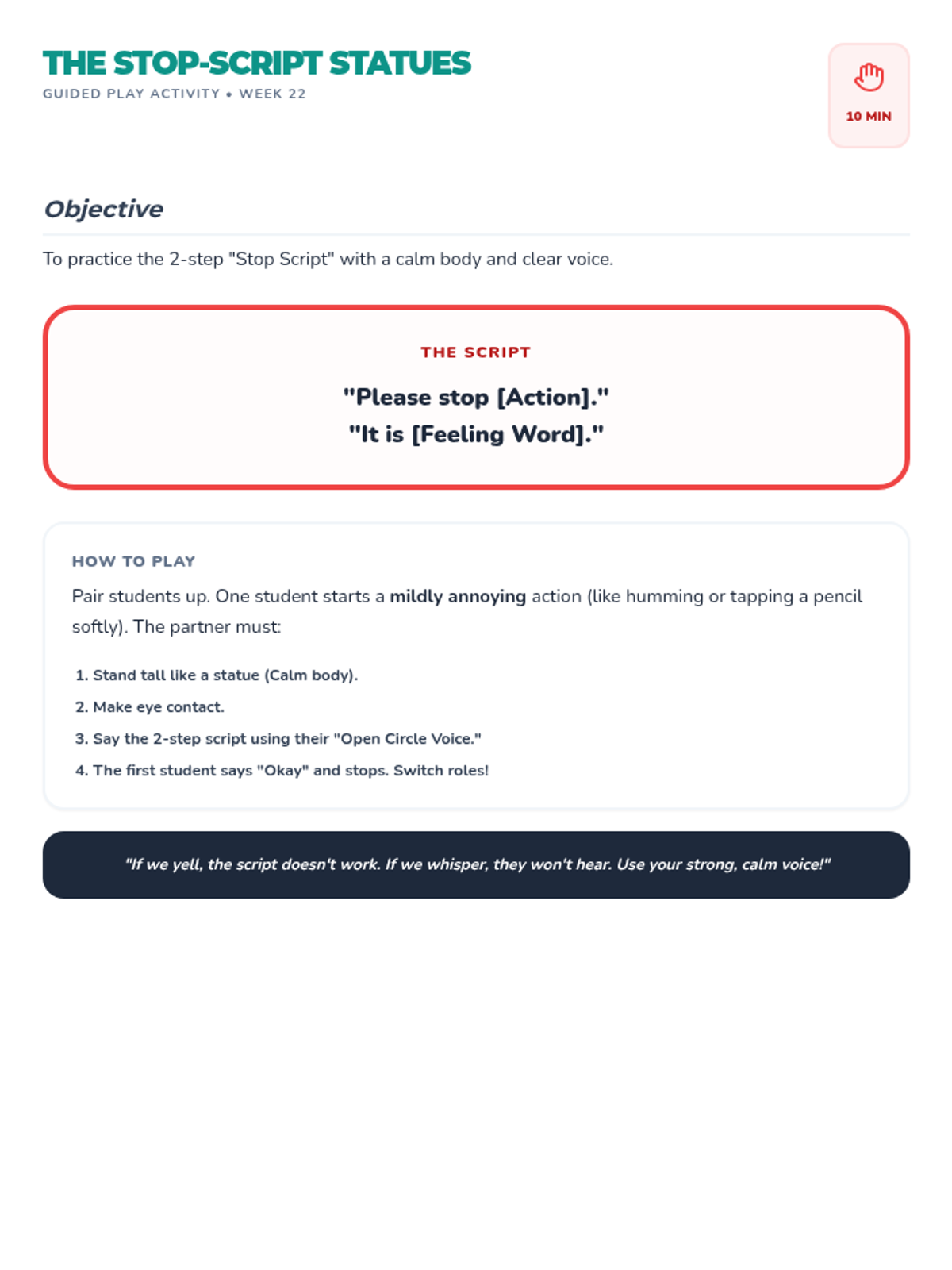
A teacher-facing guided play activity for Week 22. Students practice using the two-step "Please stop" script in a controlled, safe role-play environment.
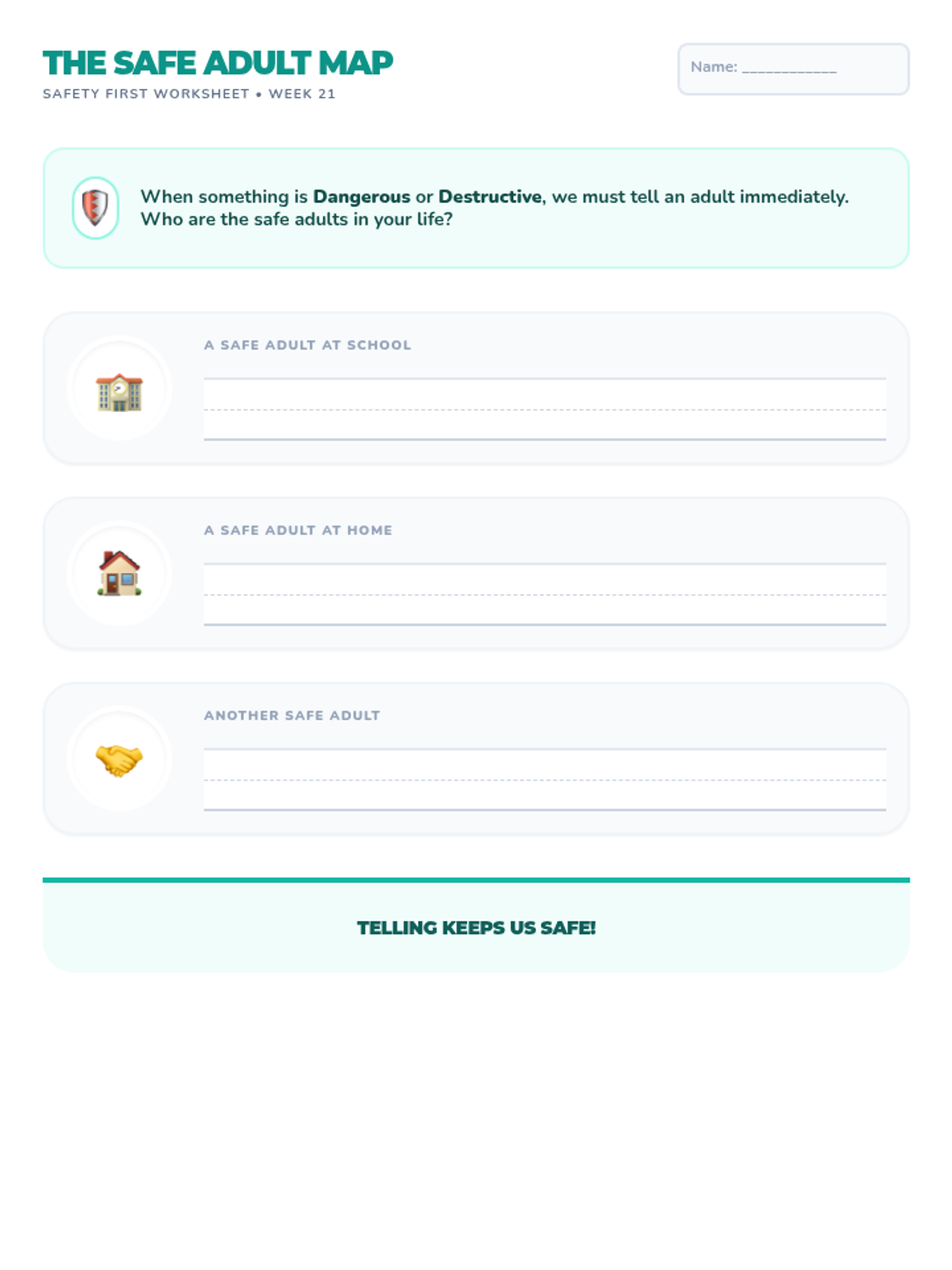
A student-facing worksheet for Week 21. Students identify and record "safe adults" in different environments (school, home, community) to ensure they know whom to contact for dangerous problems.
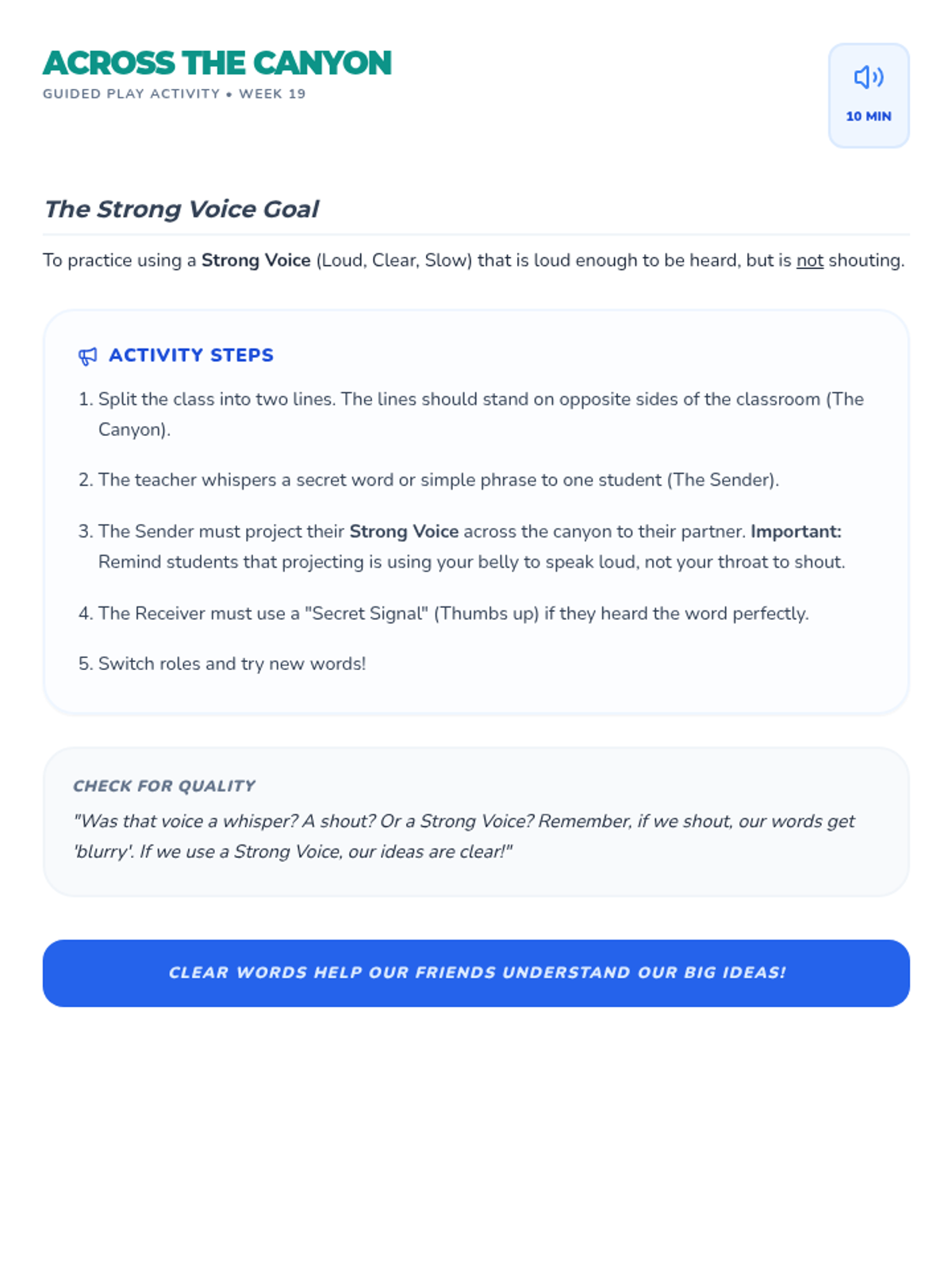
A teacher-facing guided play activity for Week 19. Revised to clarify the distinction between shouting and a "Strong Voice" and standardized terminology.
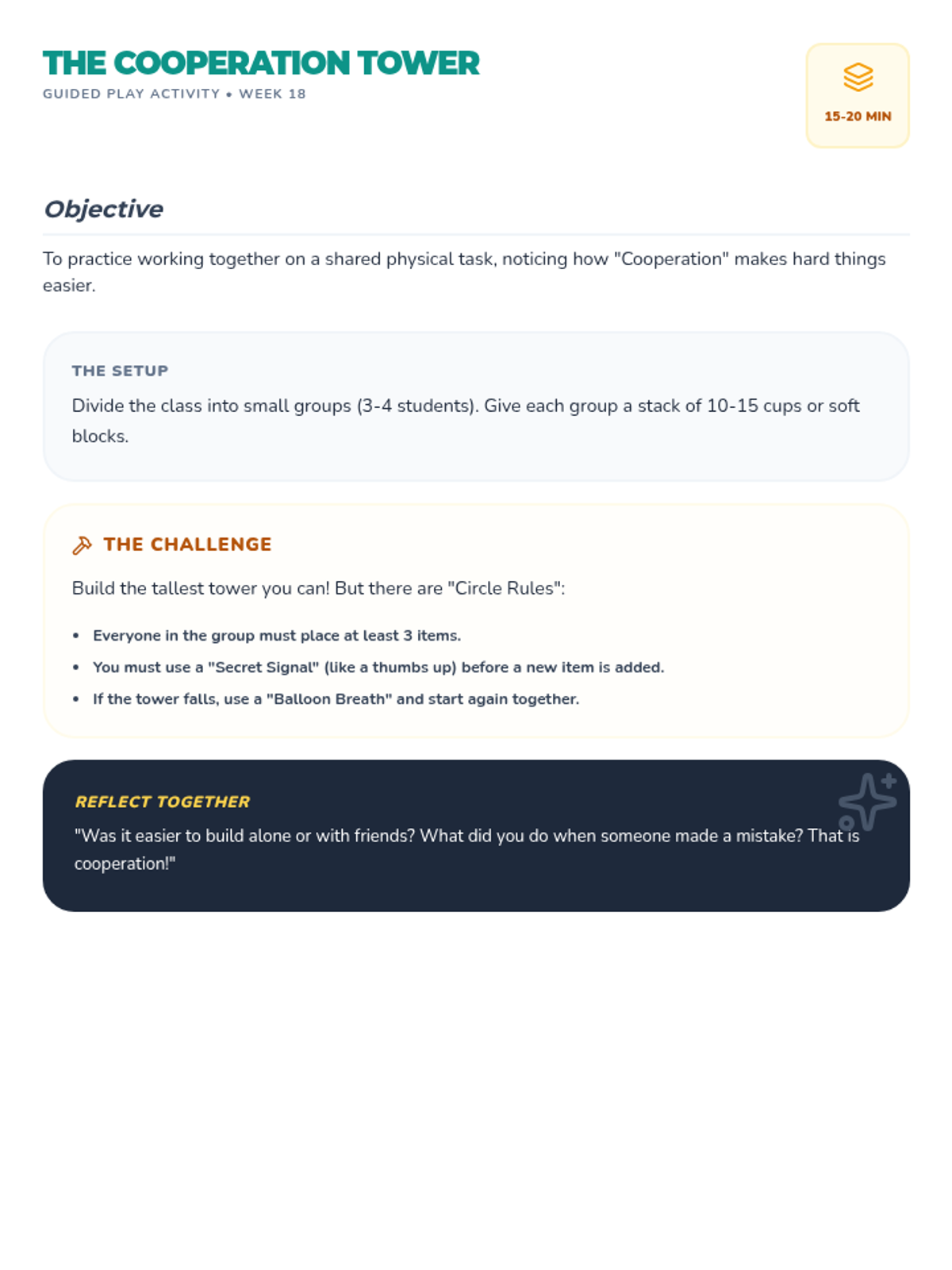
A teacher-facing guided play activity for Week 18. A collaborative building challenge that requires students to communicate and share tasks to reach a common goal.
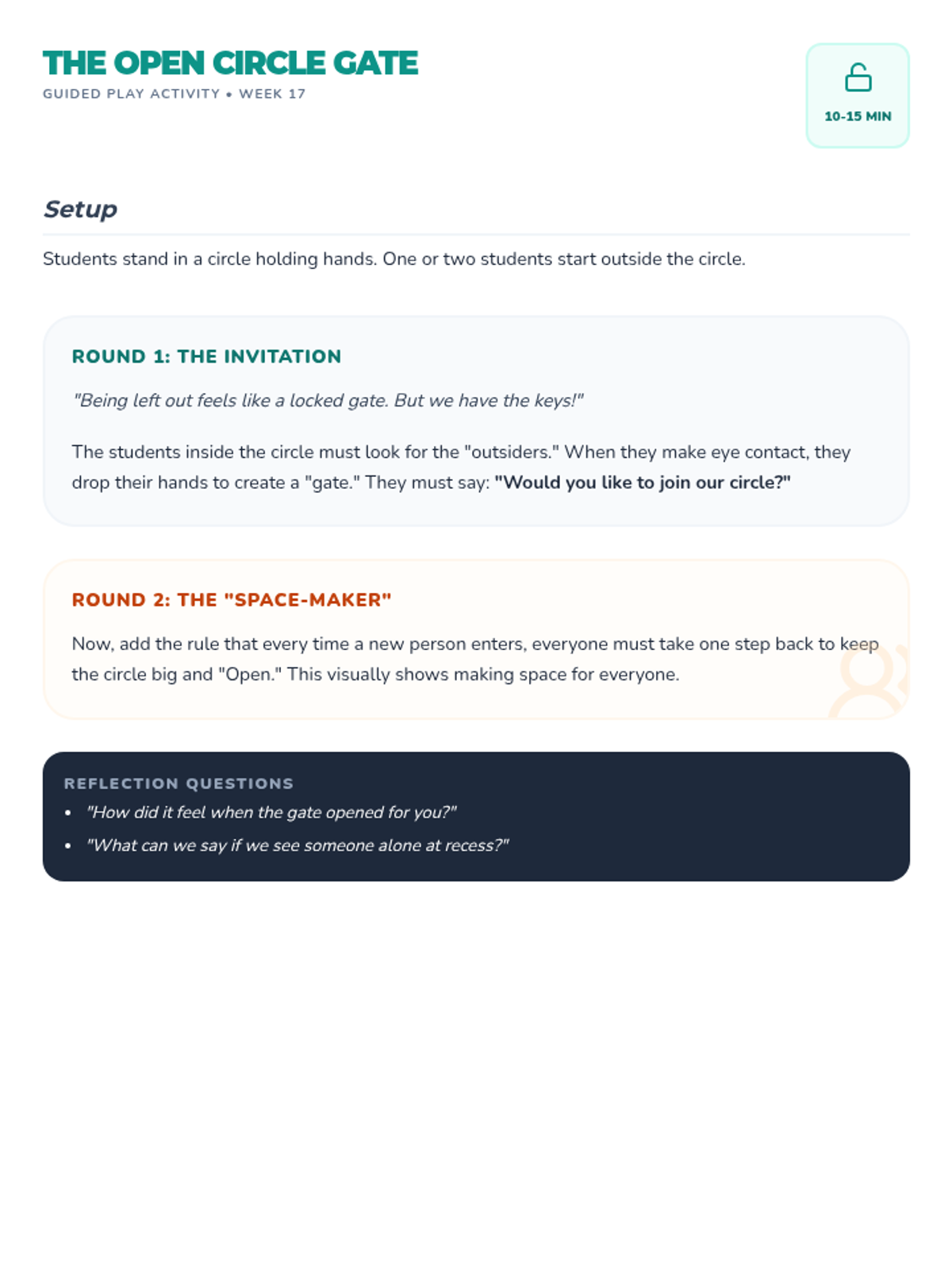
A teacher-facing guided play activity for Week 17. A movement game that simulates the feeling of being left out and the positive impact of being invited to join a group.
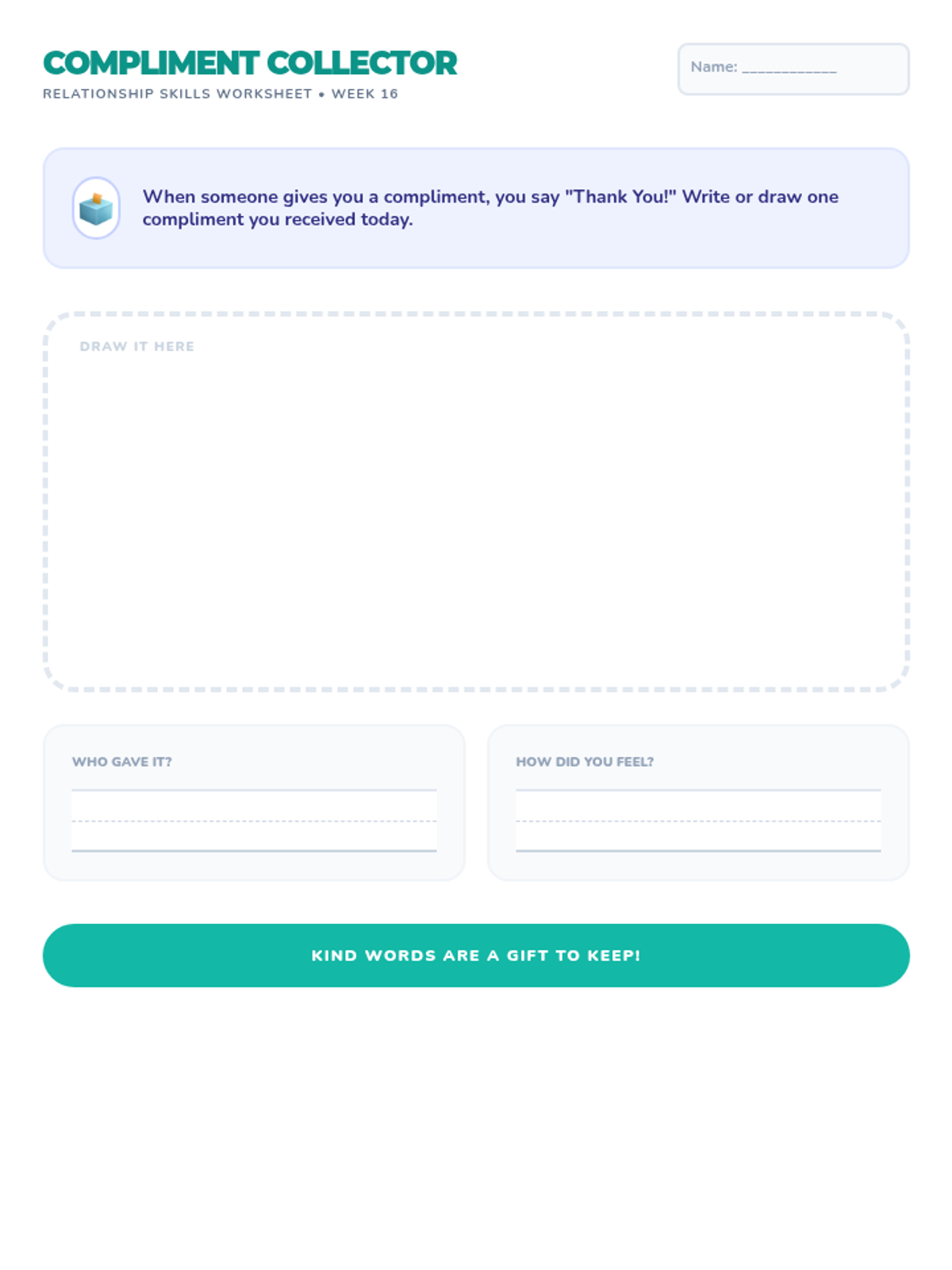
A student-facing worksheet for Week 16. Students record a compliment they received, identifying the giver and their internal feeling, reinforcing the value of gratitude.
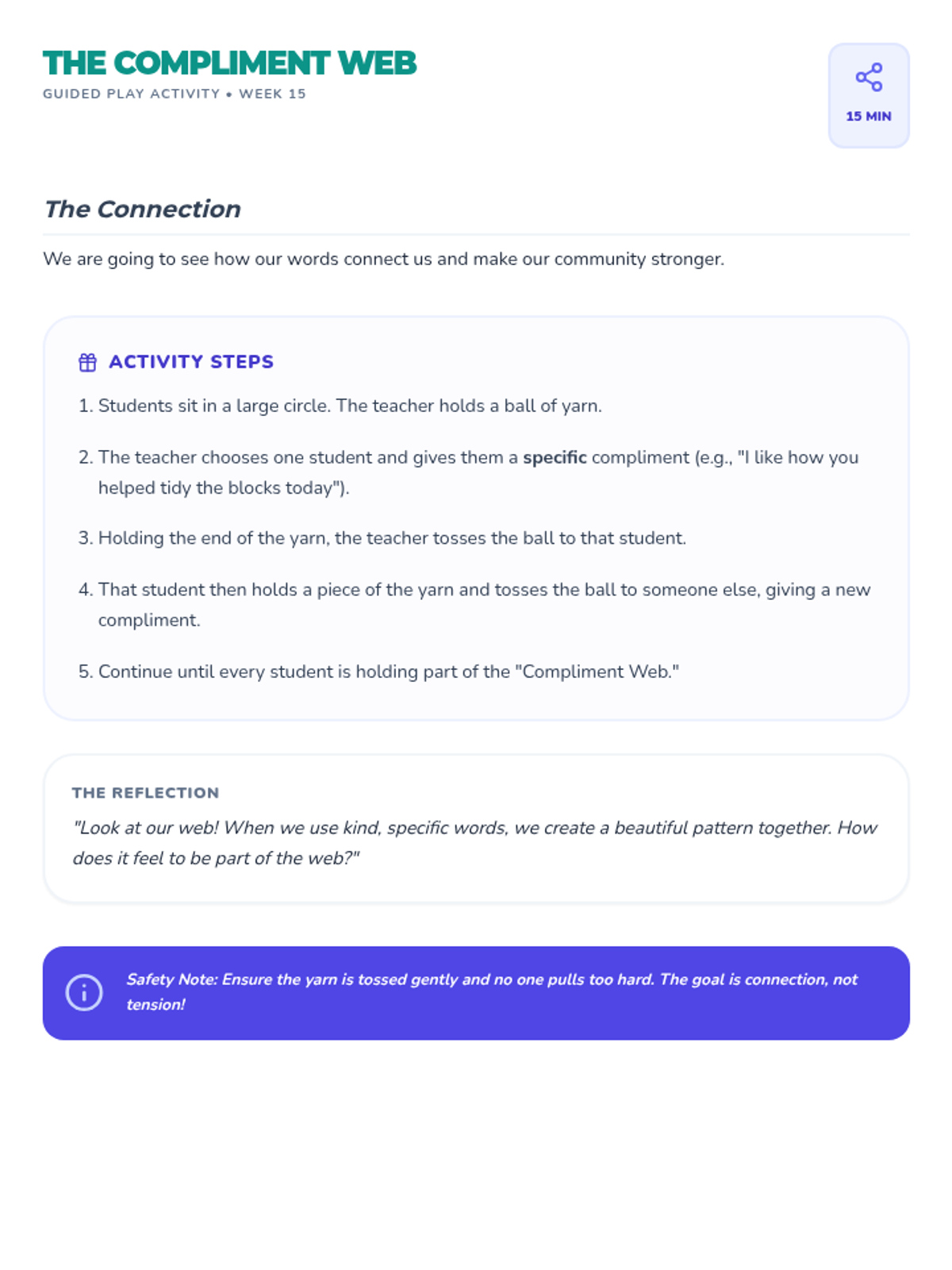
A teacher-facing guided play activity for Week 15. Students use a ball of yarn to create a physical "web" of compliments, illustrating the power of kind words.
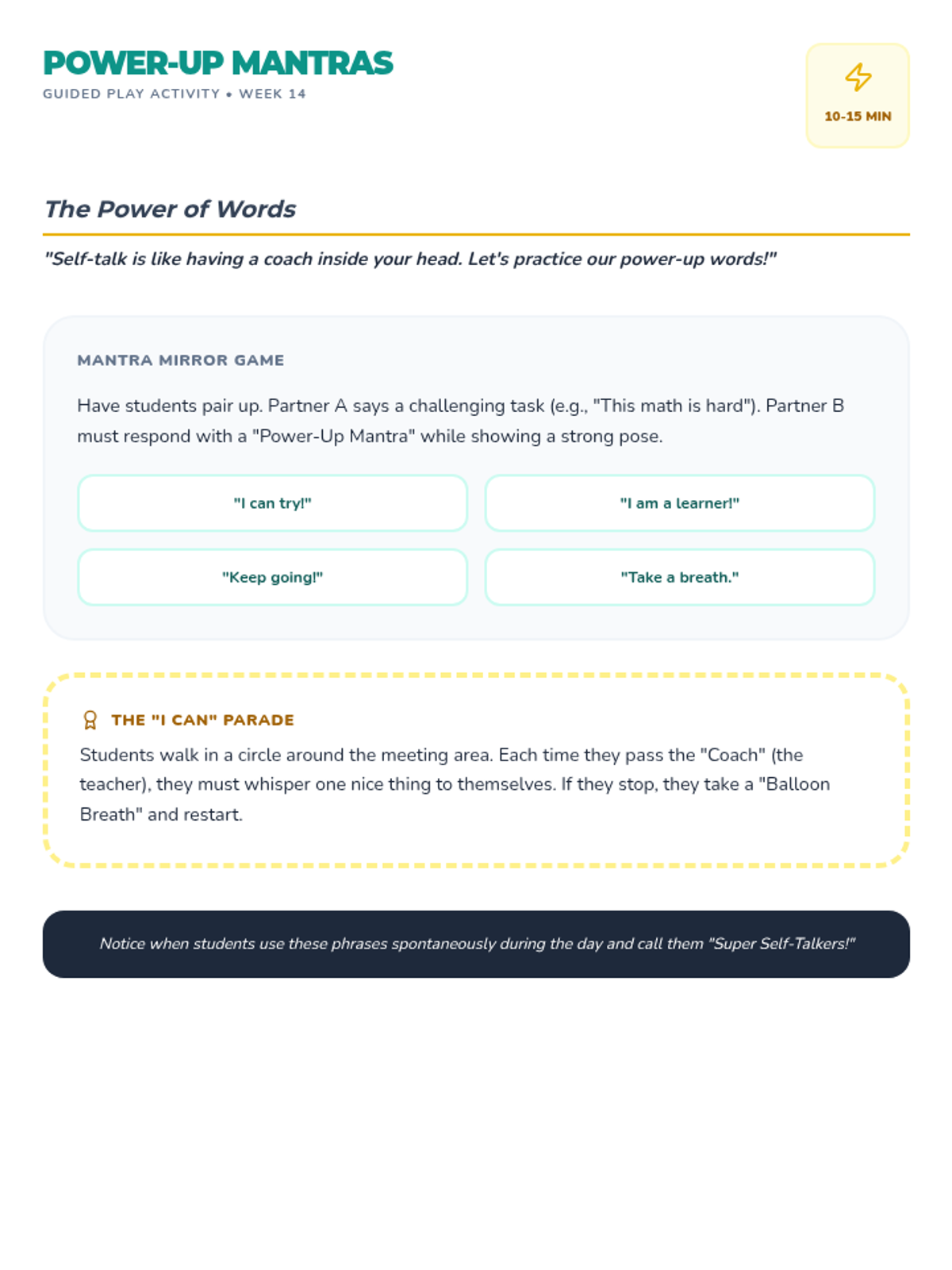
A teacher-facing guided play activity for Week 14. Students practice positive self-talk through role-play and movement-based mantras.
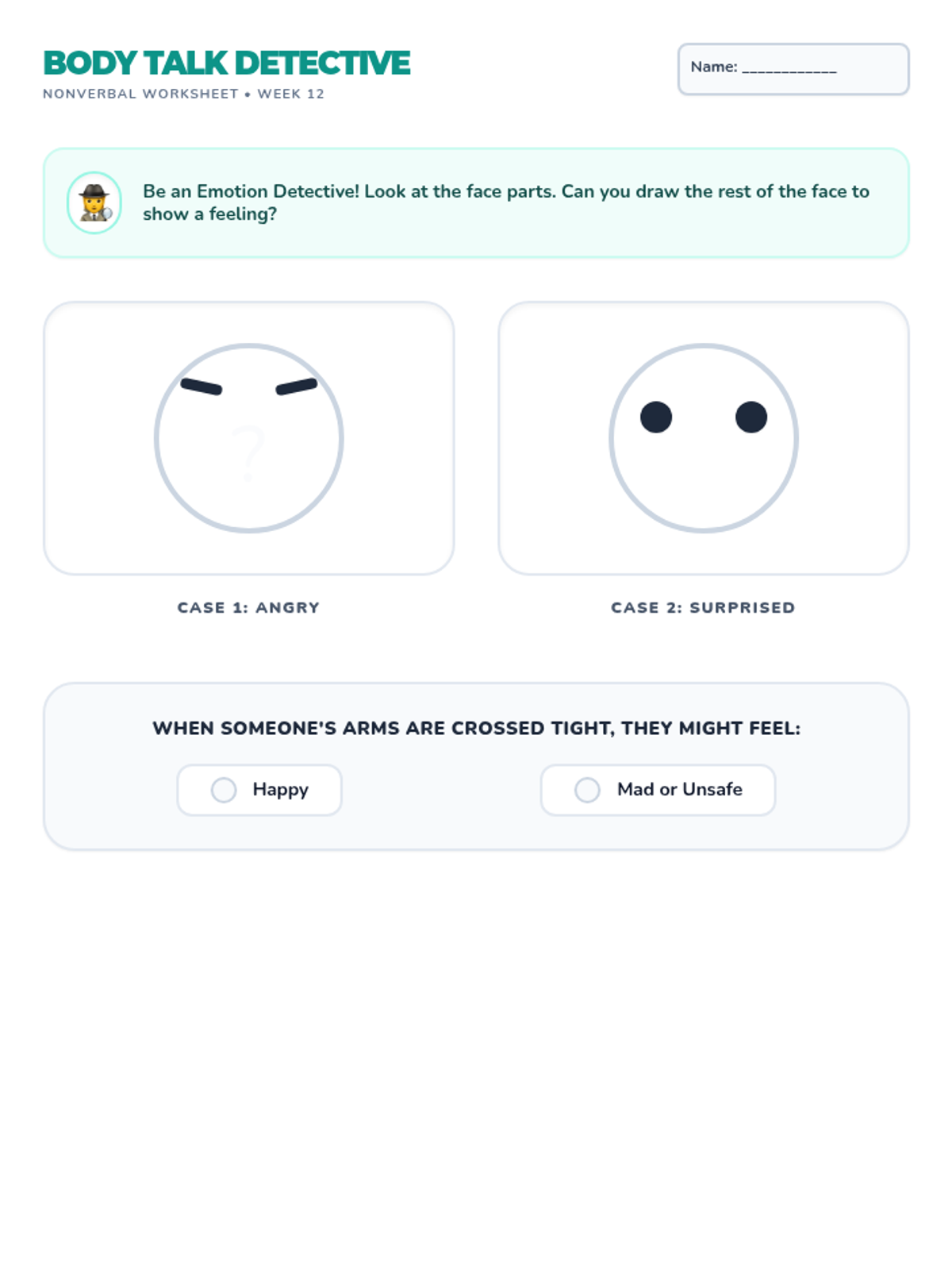
A student-facing worksheet for Week 12. Revised with corrected "Surprised" face (no mouth), increased border contrast for face circles, and improved layout.
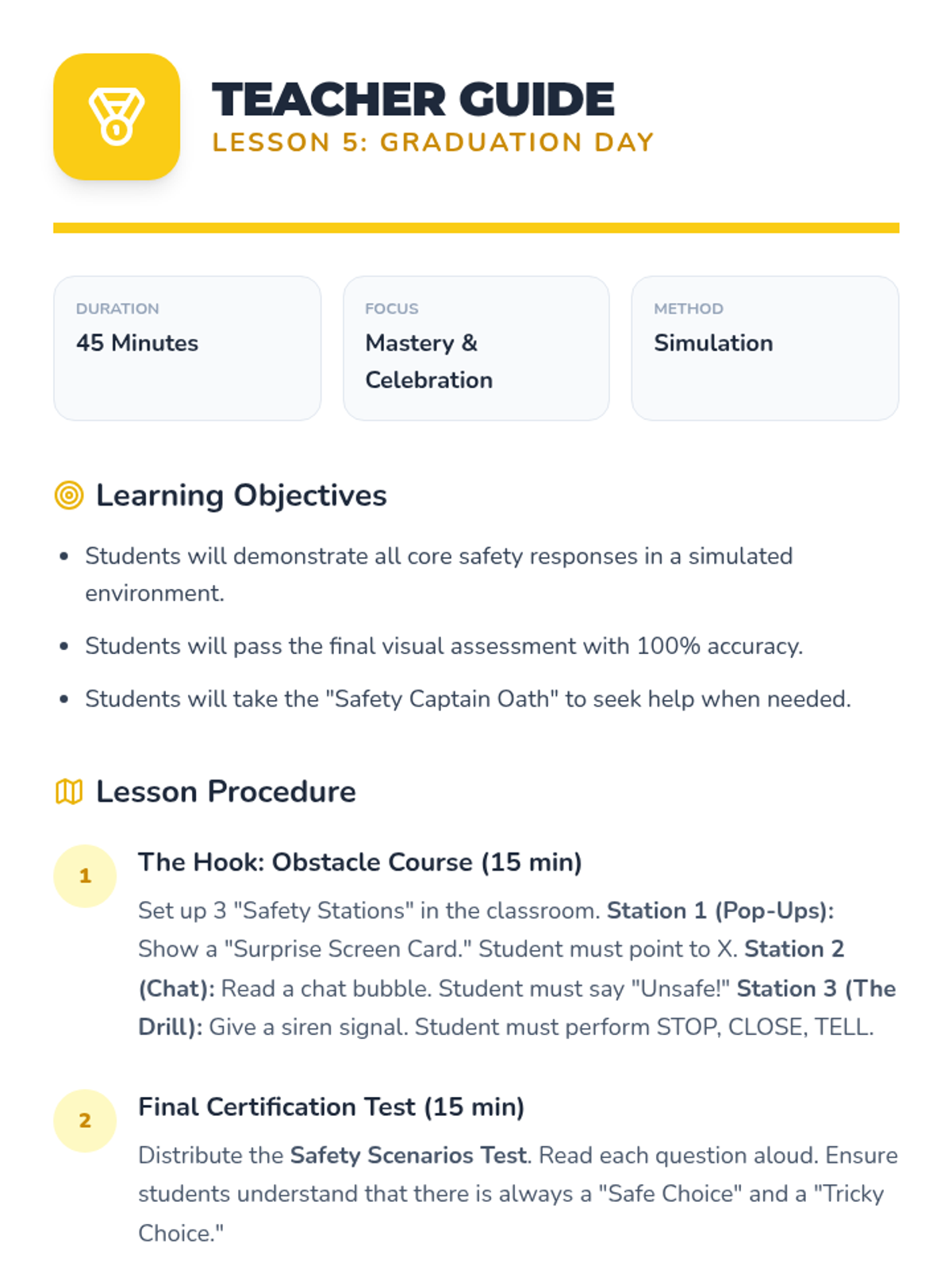
Teacher guide for Lesson 5, providing instructional steps for the final certification challenge and graduation ceremony.
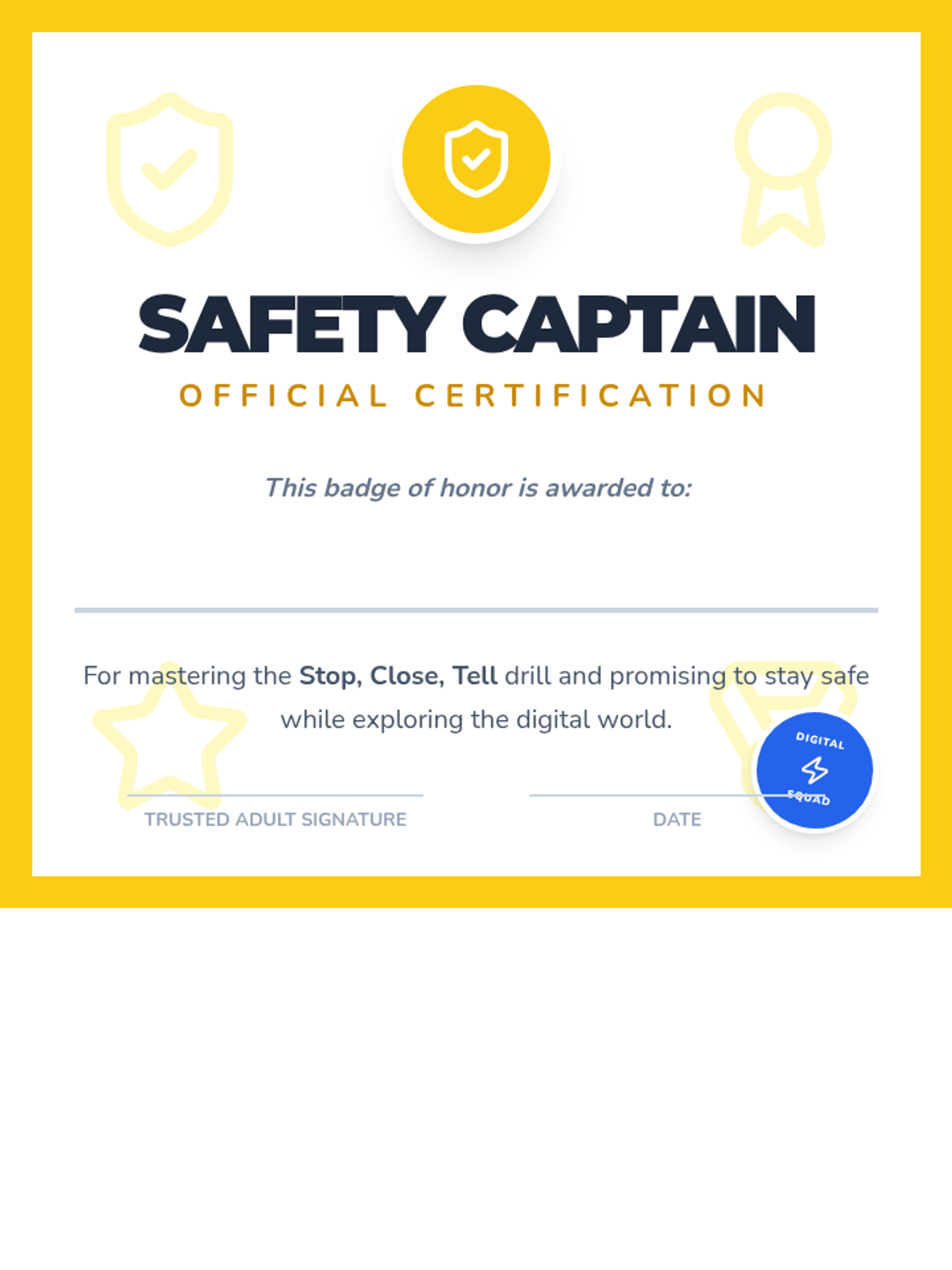
Official 'Safety Captain' certificates to be awarded to students upon completion of the Digital Safety Squad sequence.
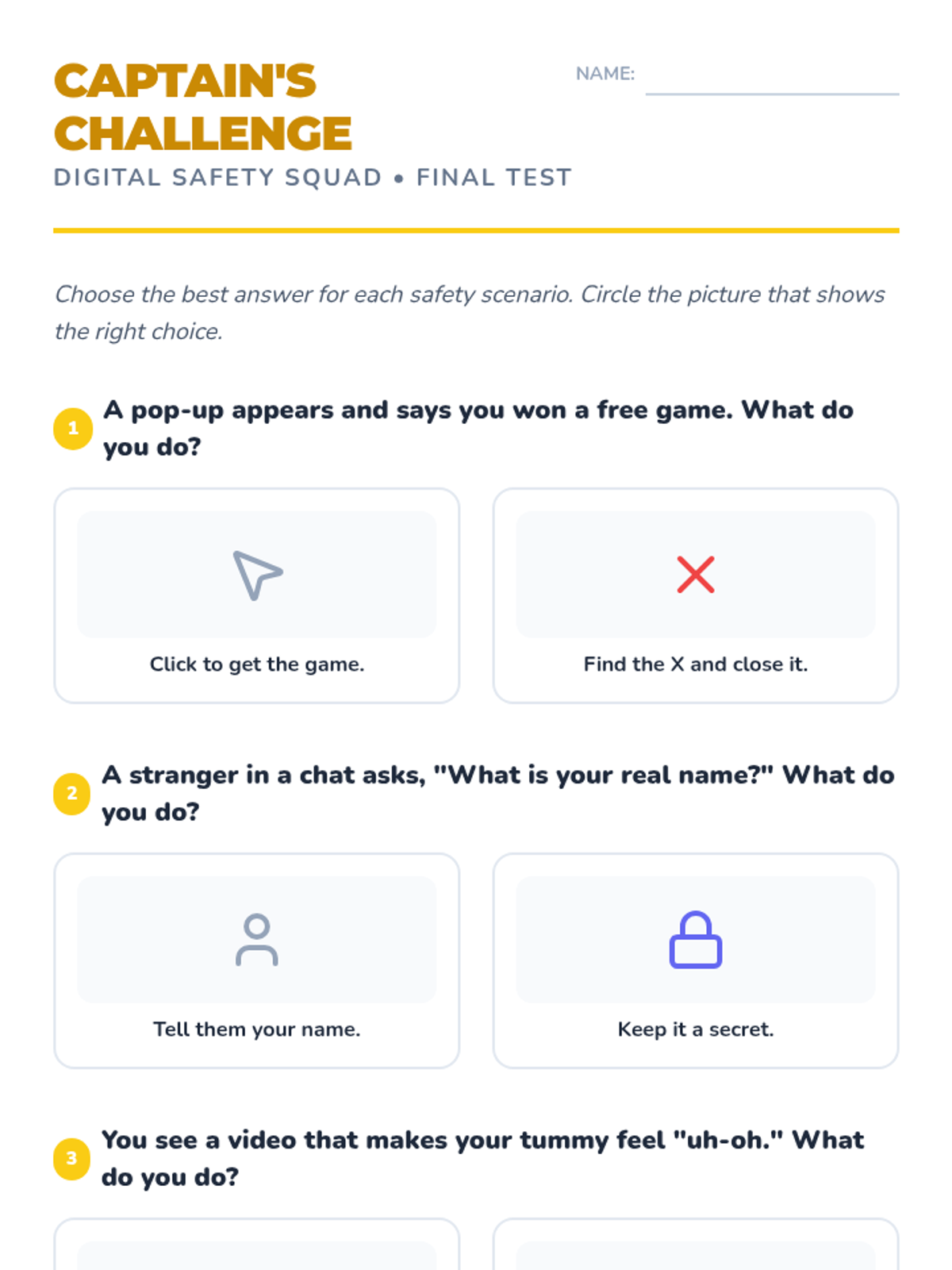
A visual final assessment for students to demonstrate their understanding of digital safety scenarios and correct responses.
Slides for the final lesson, reviewing all safety skills and introducing the certification challenge.
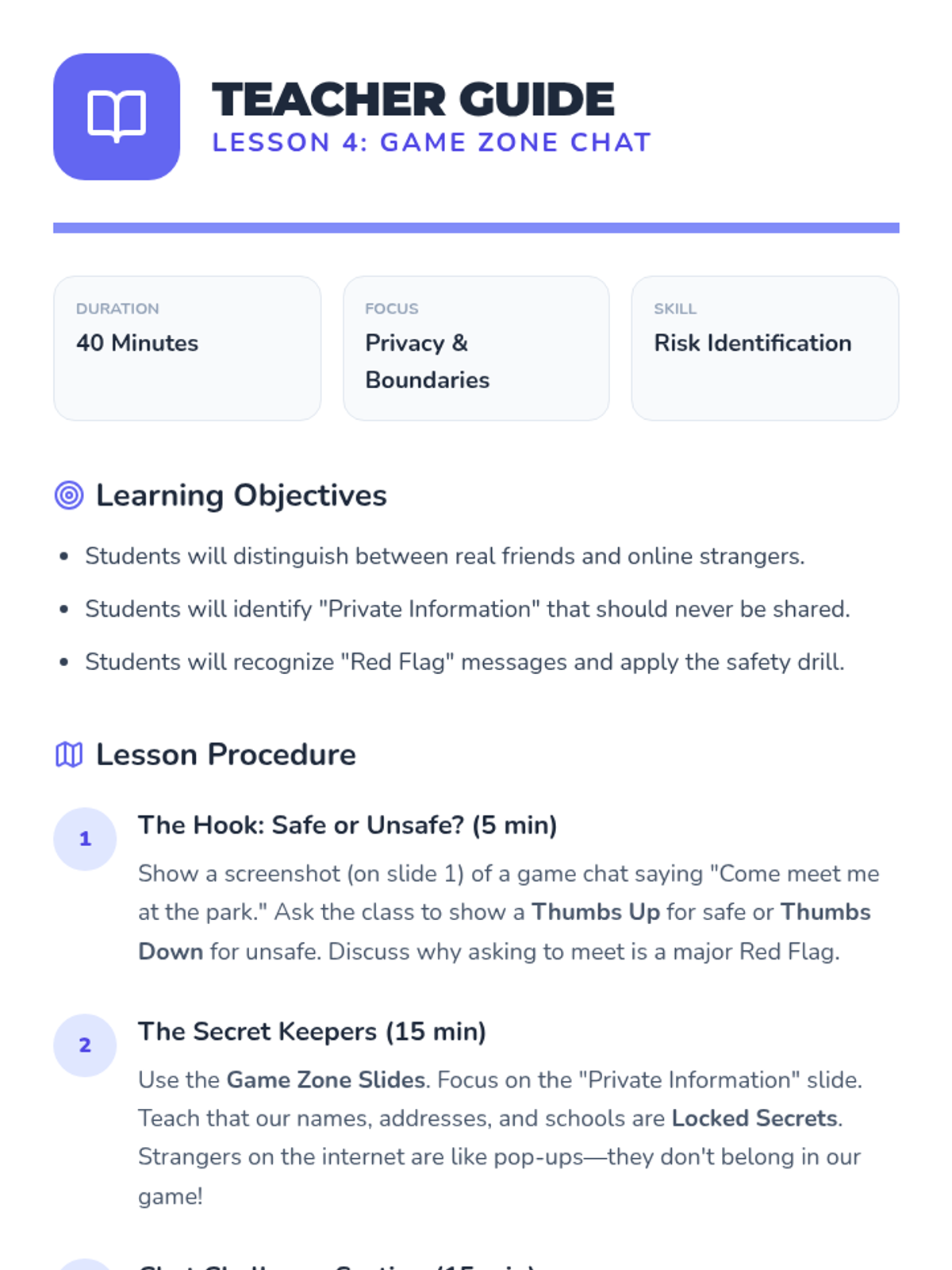
Teacher guide for Lesson 4, providing instructional steps for the "Game Zone" discussion and chat sorting activity.
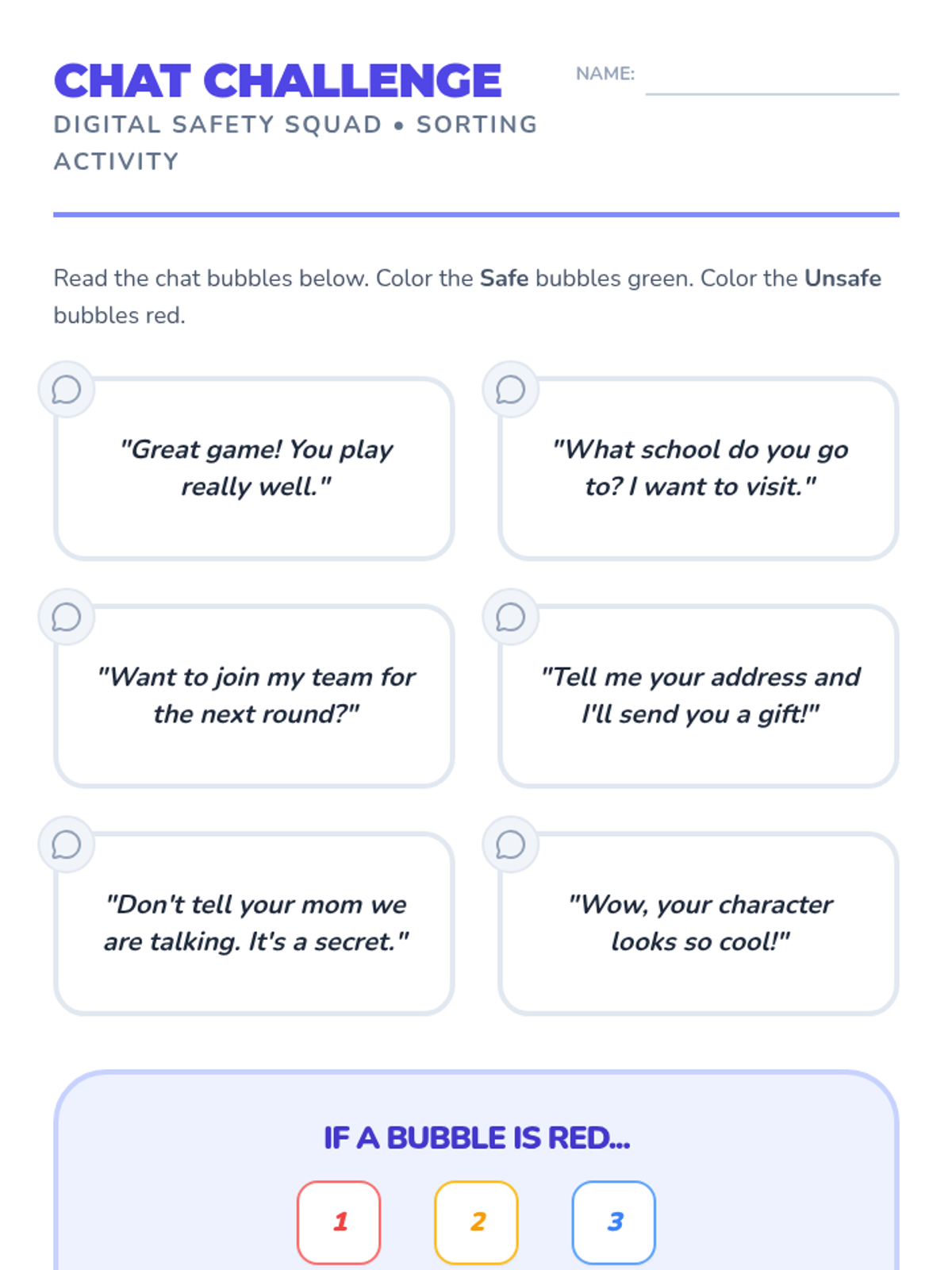
Student activity sheet for sorting safe and unsafe game chat messages, reinforcing the 'Stop, Close, Tell' response for red flag messages.
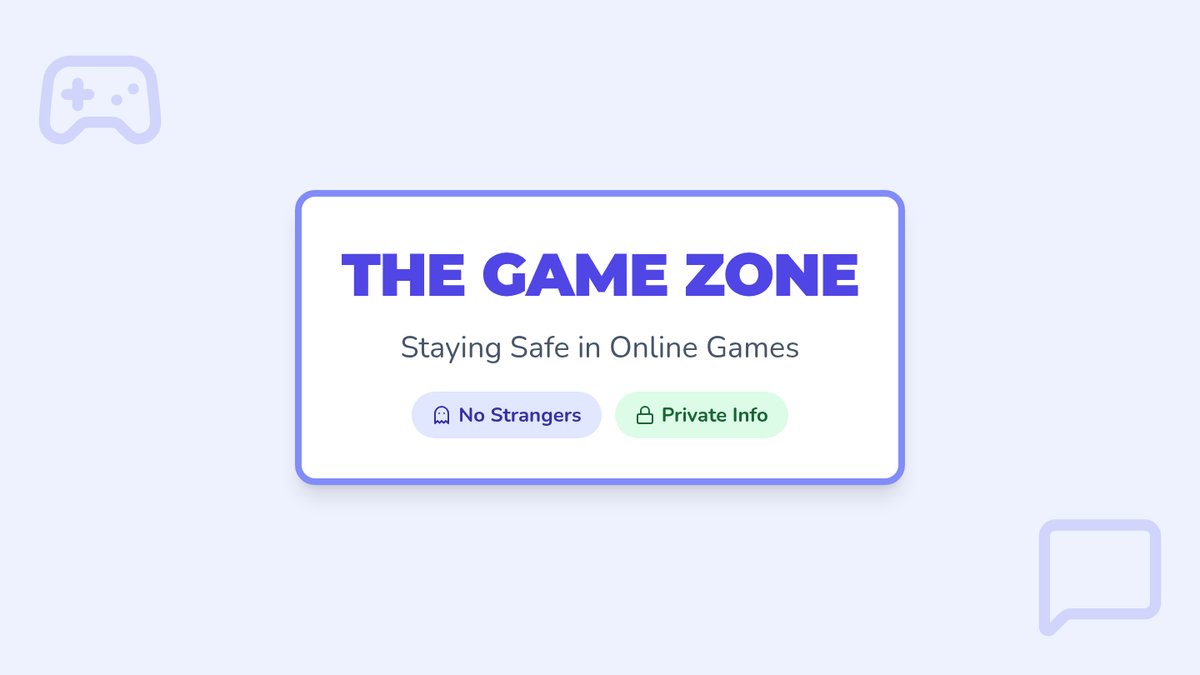
Slides for Lesson 4, focusing on recognizing unsafe in-game chat messages and applying the 'Stop, Close, Tell' rule.
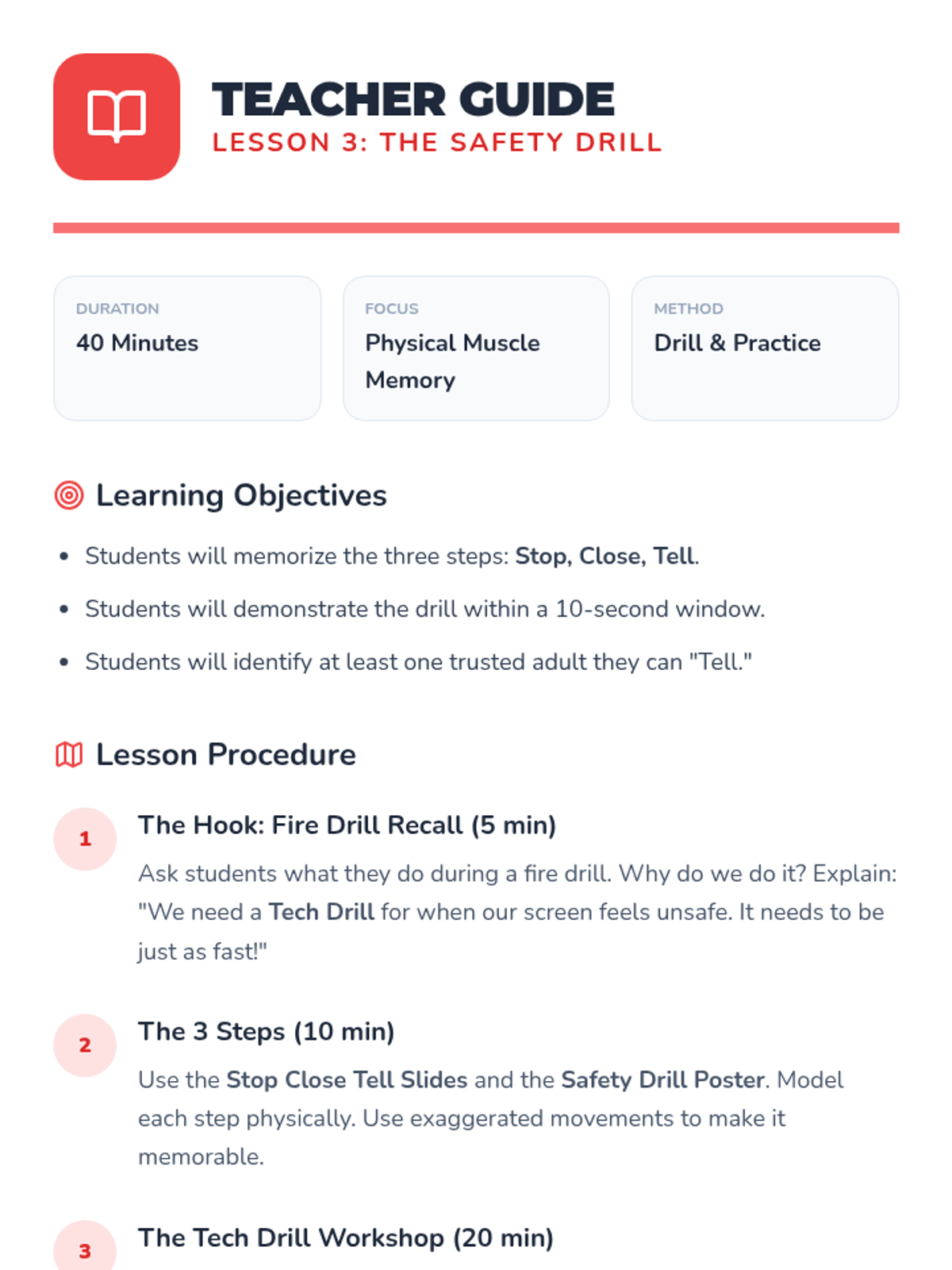
Teacher guide for Lesson 3, providing instructional steps for the 'Stop, Close, Tell' safety drill and tips for effective practice.
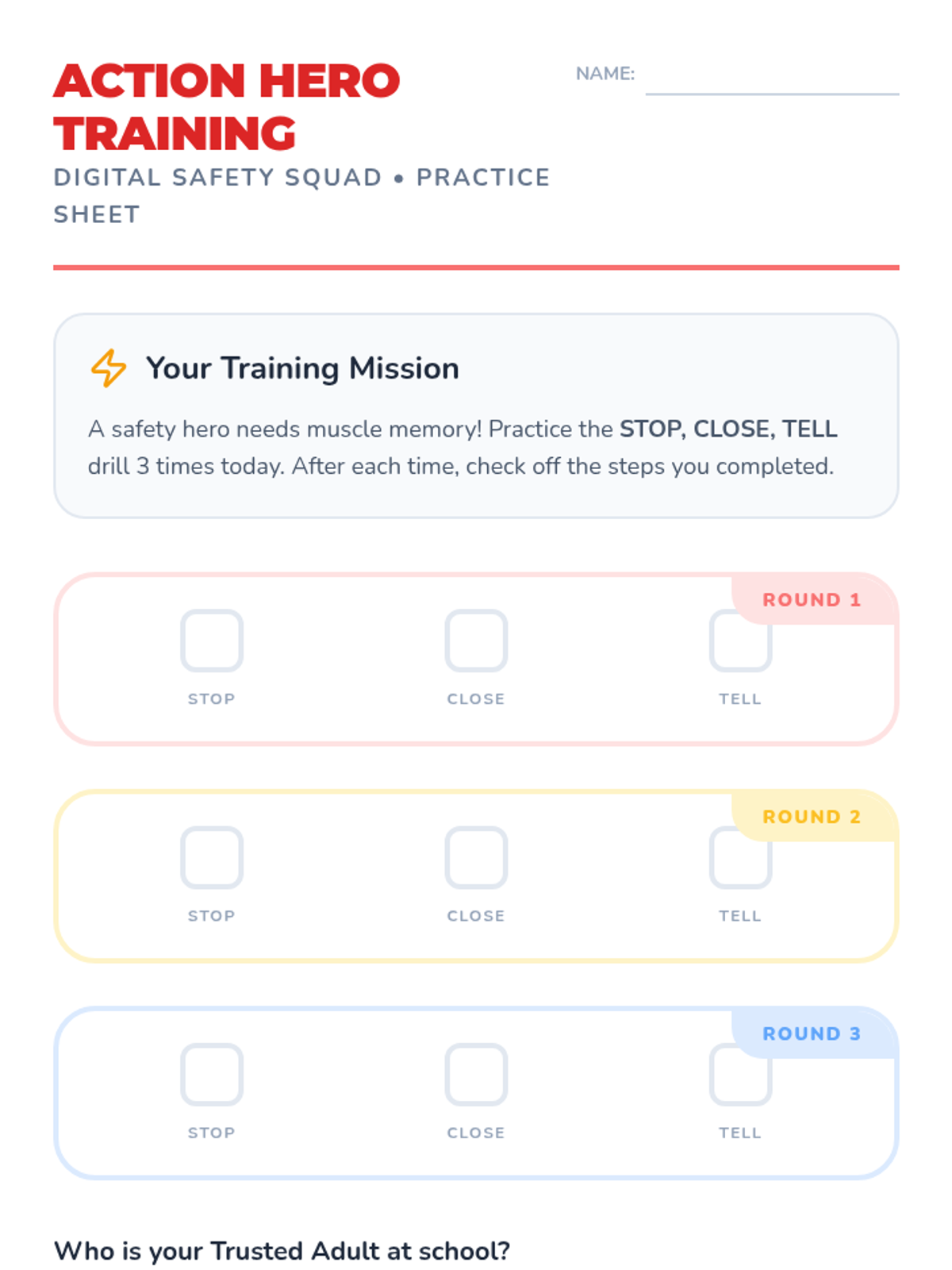
Student practice sheet for the 'Stop, Close, Tell' drill, featuring check-boxes for each round of practice and a section to identify a trusted adult.
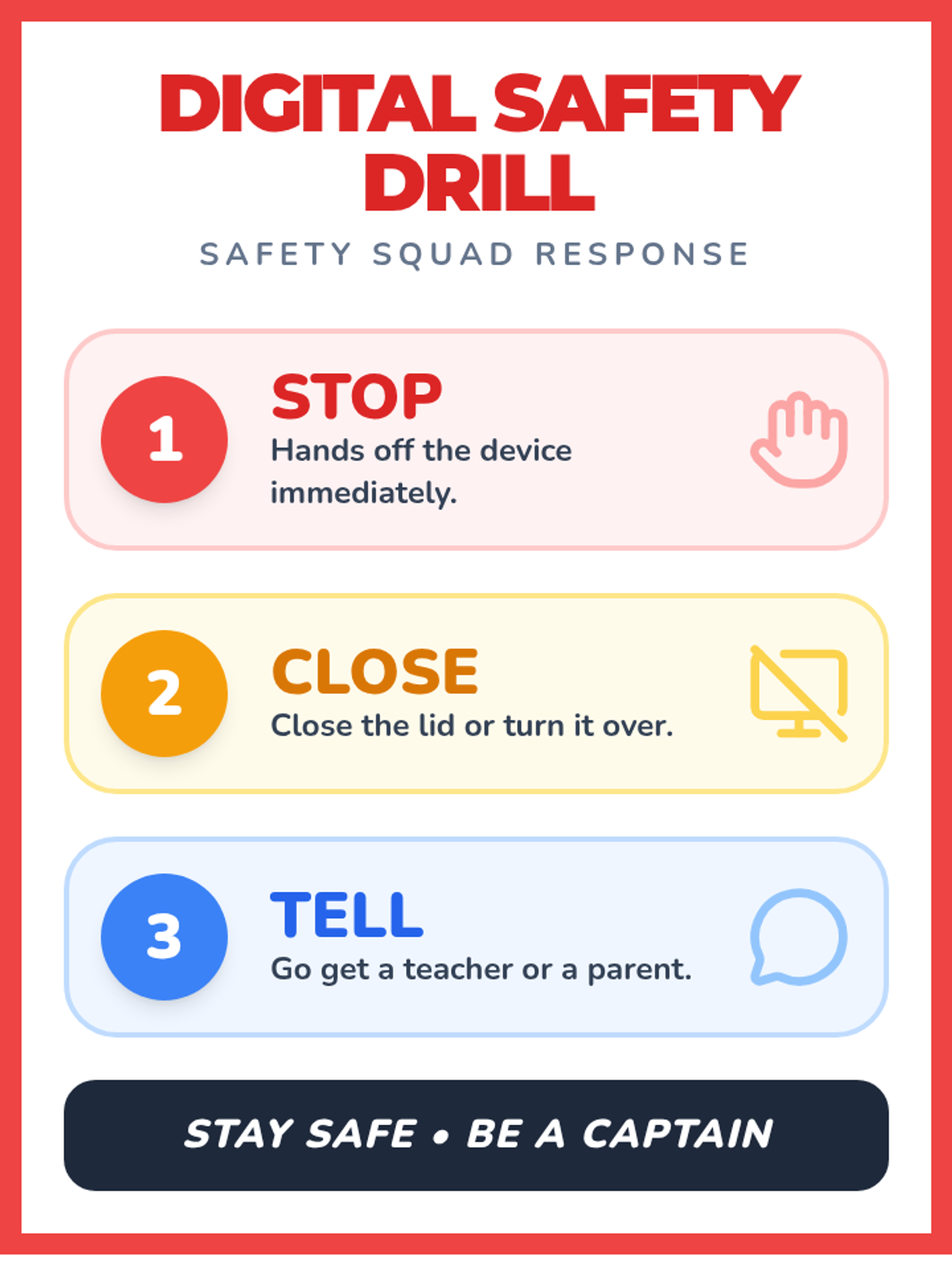
A visual reference poster for the 'Stop, Close, Tell' safety drill steps, designed for classroom display.
Slides for Lesson 3, introducing the 'Stop, Close, Tell' safety drill and explaining each step clearly for students.
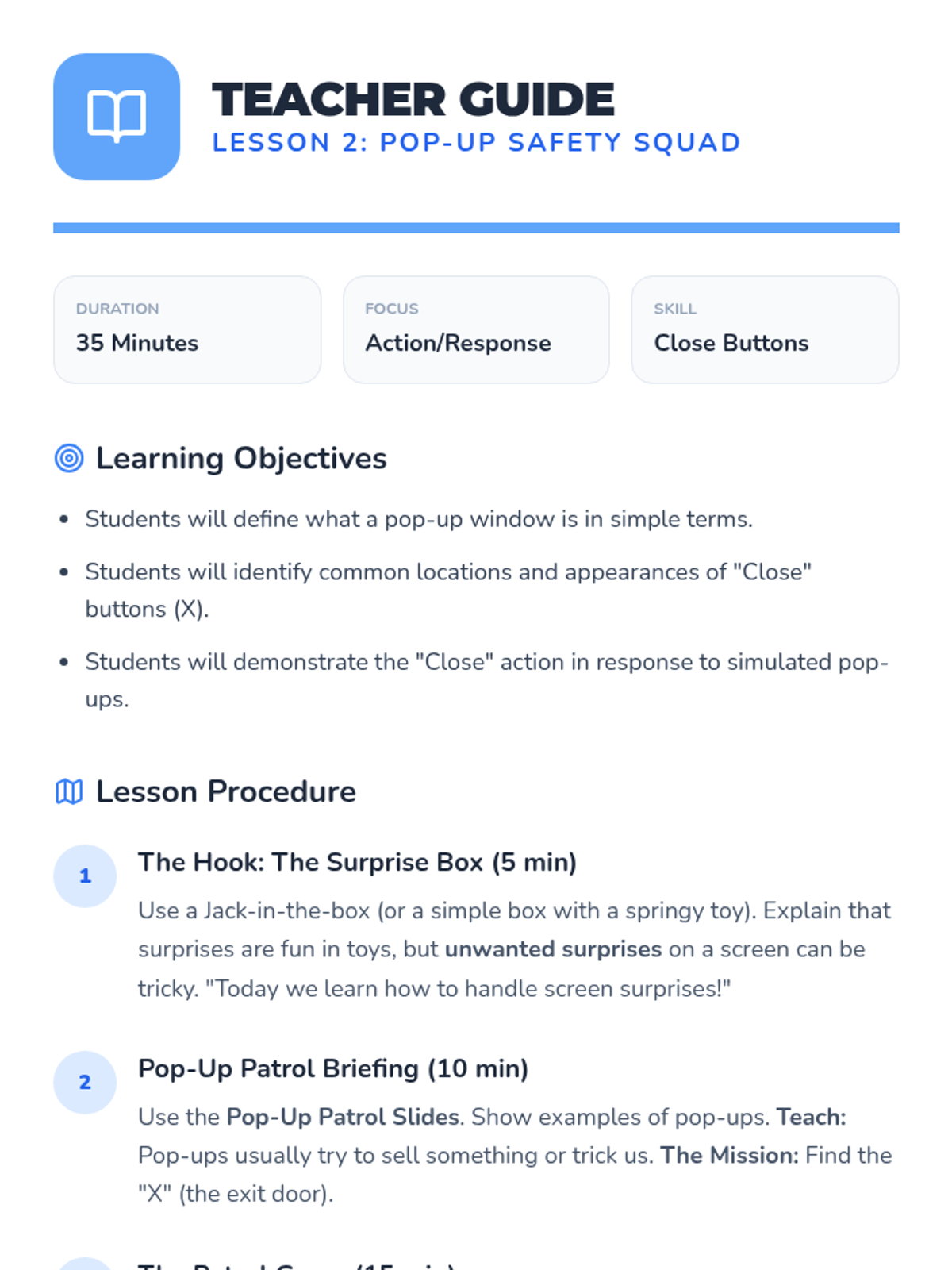
Teacher guide for Lesson 2, providing instructional steps for the "Pop-Up Patrol" game and teaching students how to handle unwanted windows.
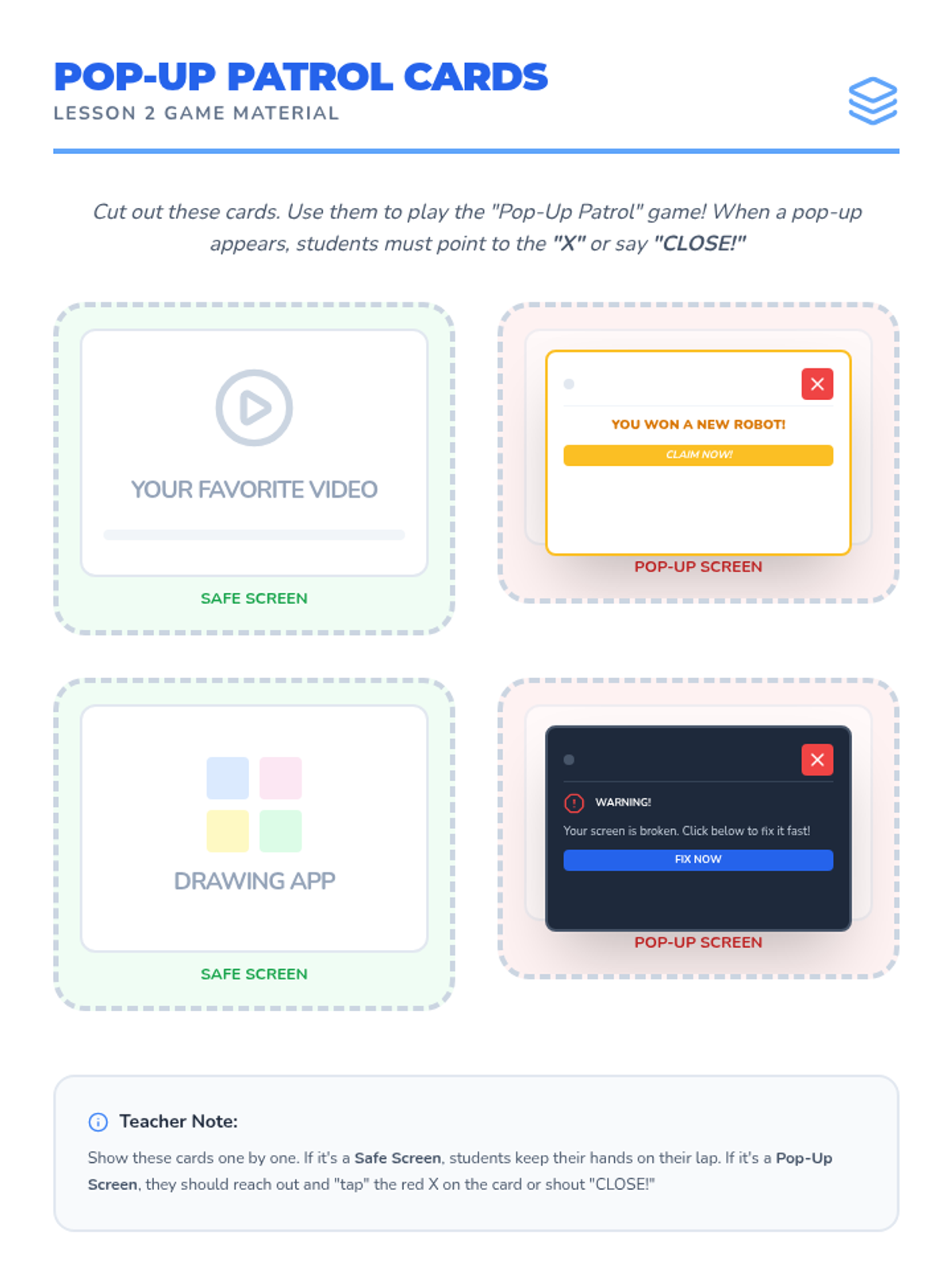
Game cards for Lesson 2 featuring safe screens and pop-up scenarios to help students practice identifying and closing unwanted windows.
Slides for Lesson 2, focusing on identifying pop-ups and learning how to safely close them using the 'X' button.
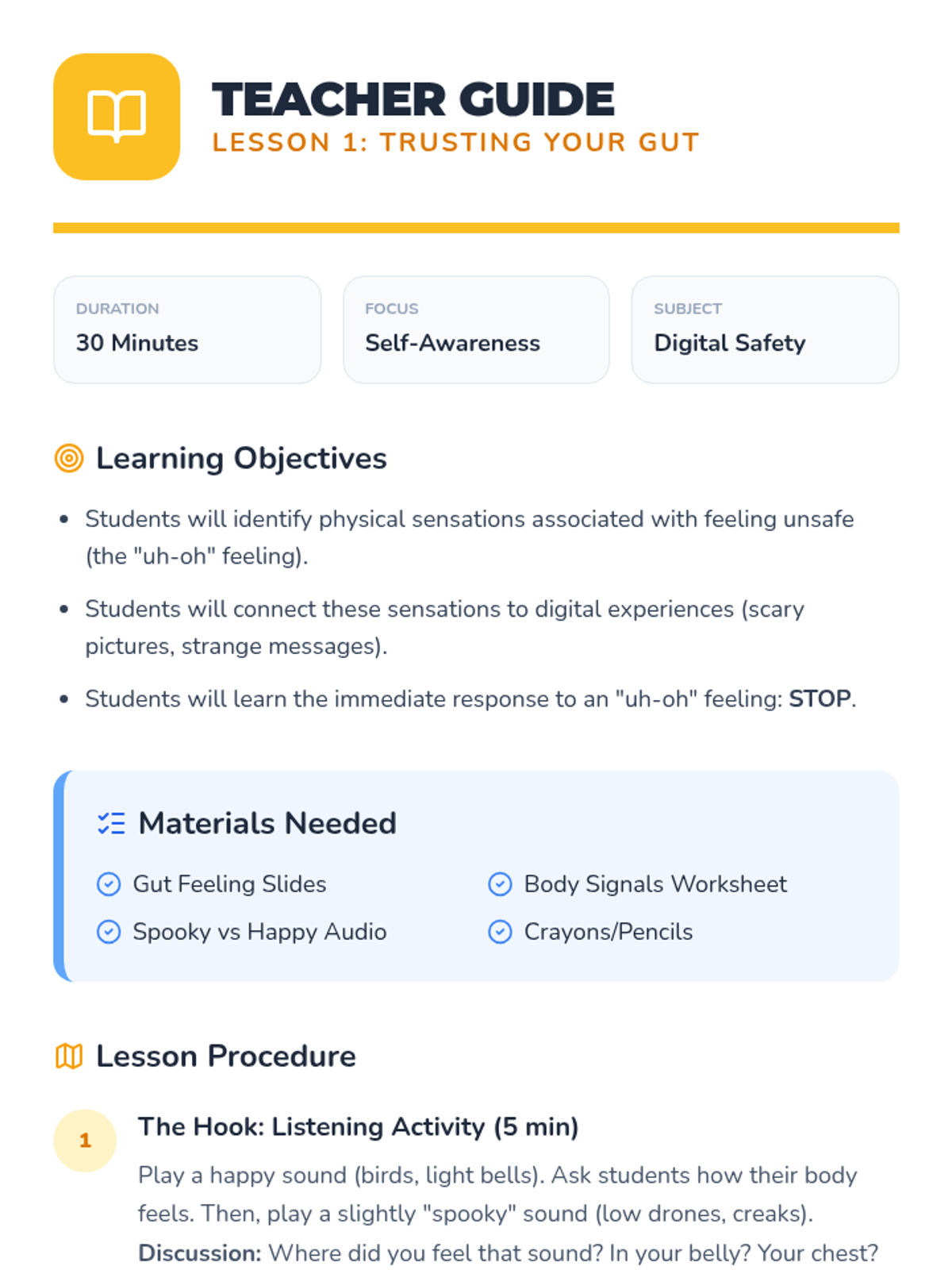
Teacher guide for Lesson 1, providing instructional steps for the "Trusting Your Gut" activity and discussion prompts.
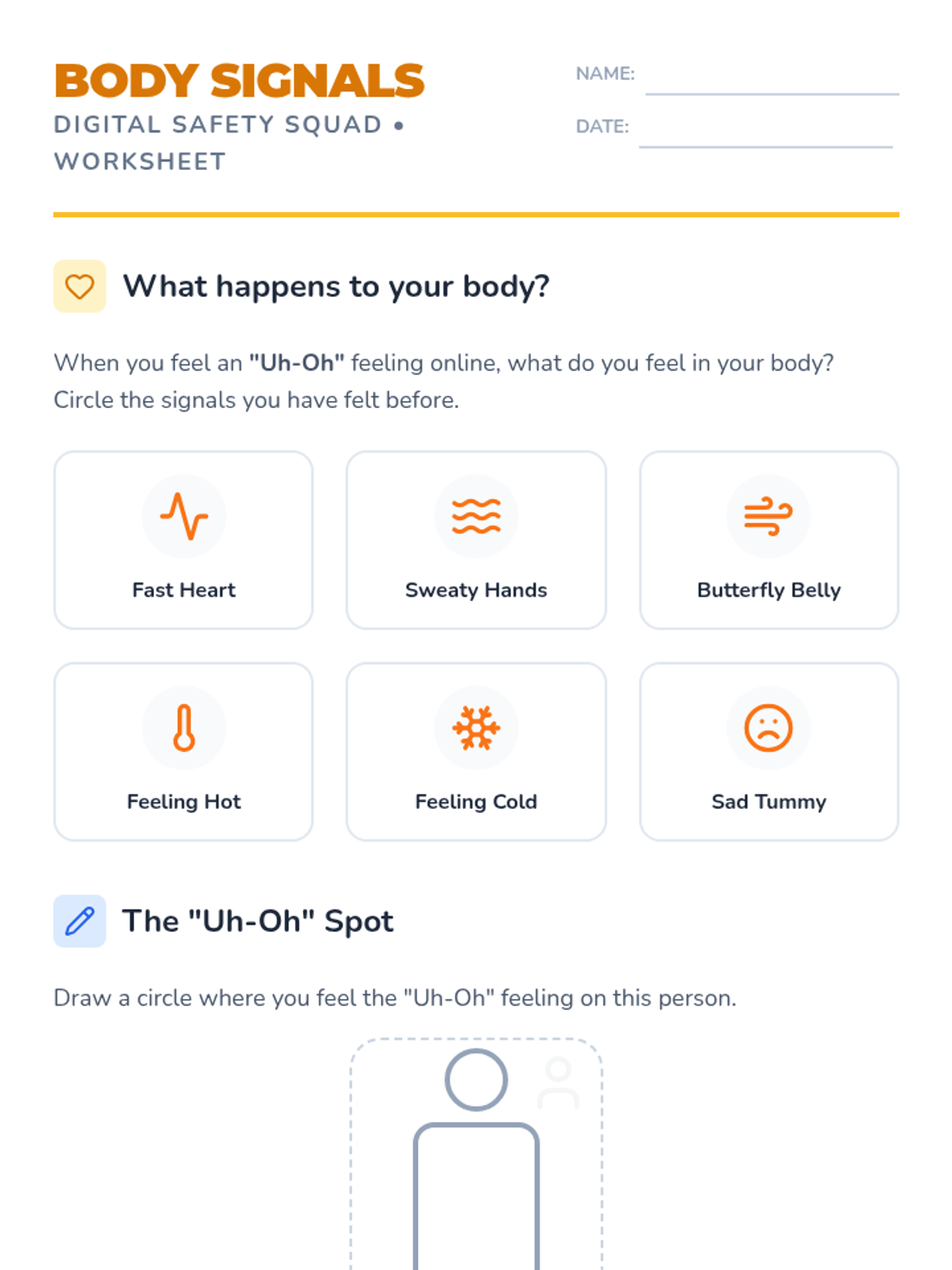
Student worksheet for Lesson 1, helping students identify physical signals of feeling unsafe and reinforcing the first safety rule.
Slides for the first lesson focusing on physical sensations of safety and recognizing 'uh-oh' feelings when using technology.
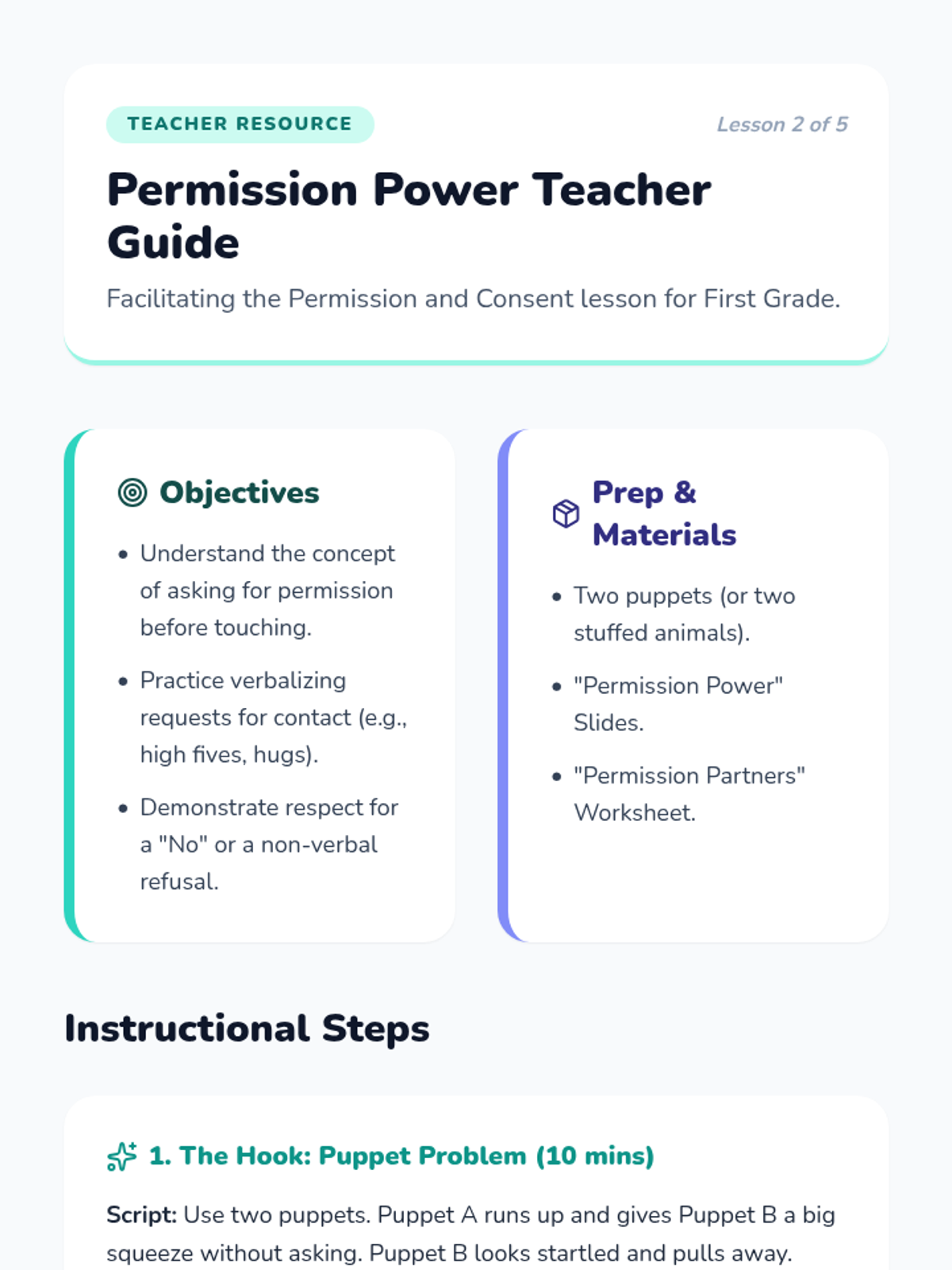
A teacher guide for the second lesson, providing instructions for the puppet show hook, "Ask, Wait, Respect" model, and role-play activities.
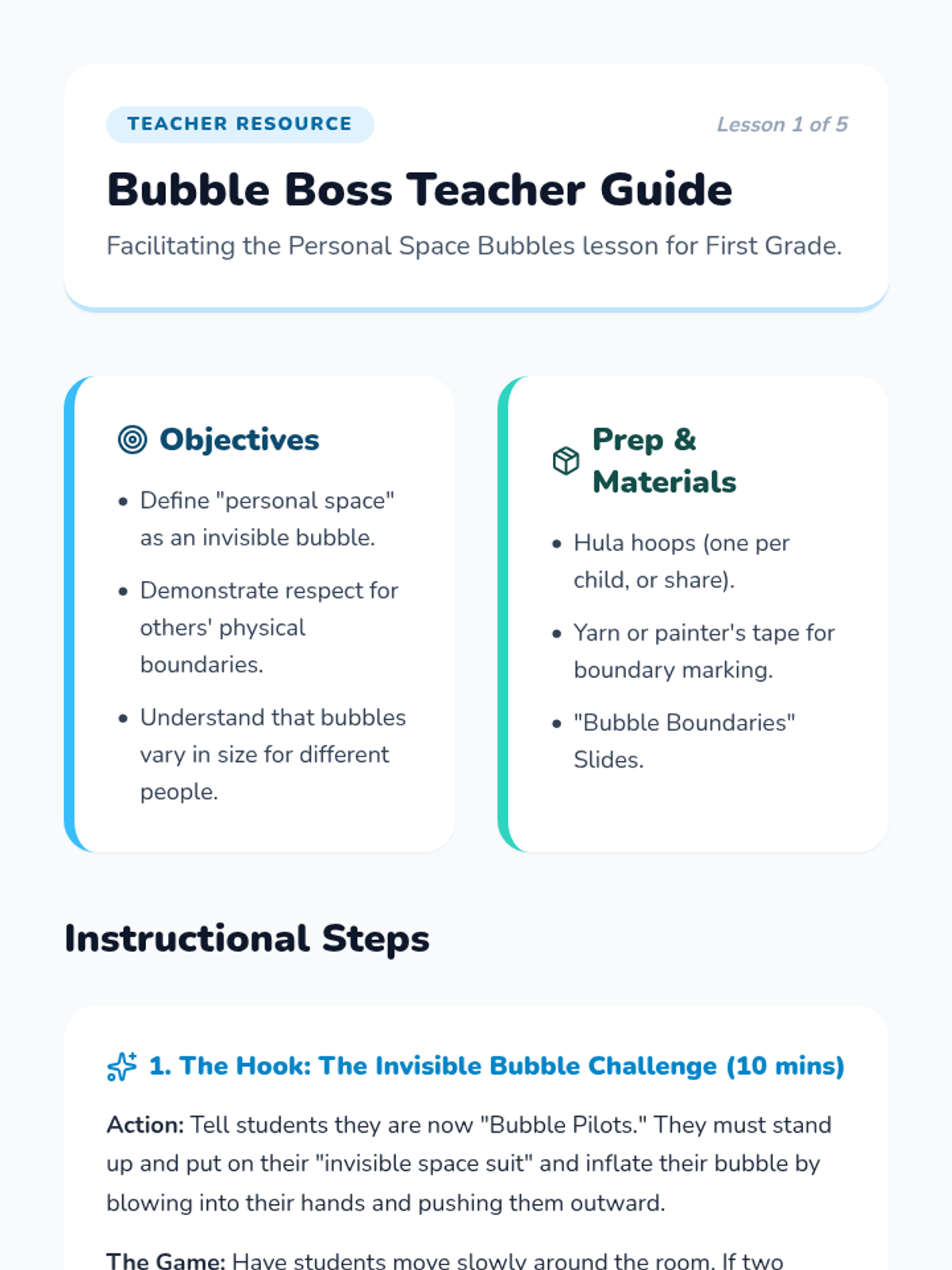
A teacher guide for the first lesson, providing instructions for the "Invisible Bubble Challenge" hook, hula hoop activity, and discussion prompts.
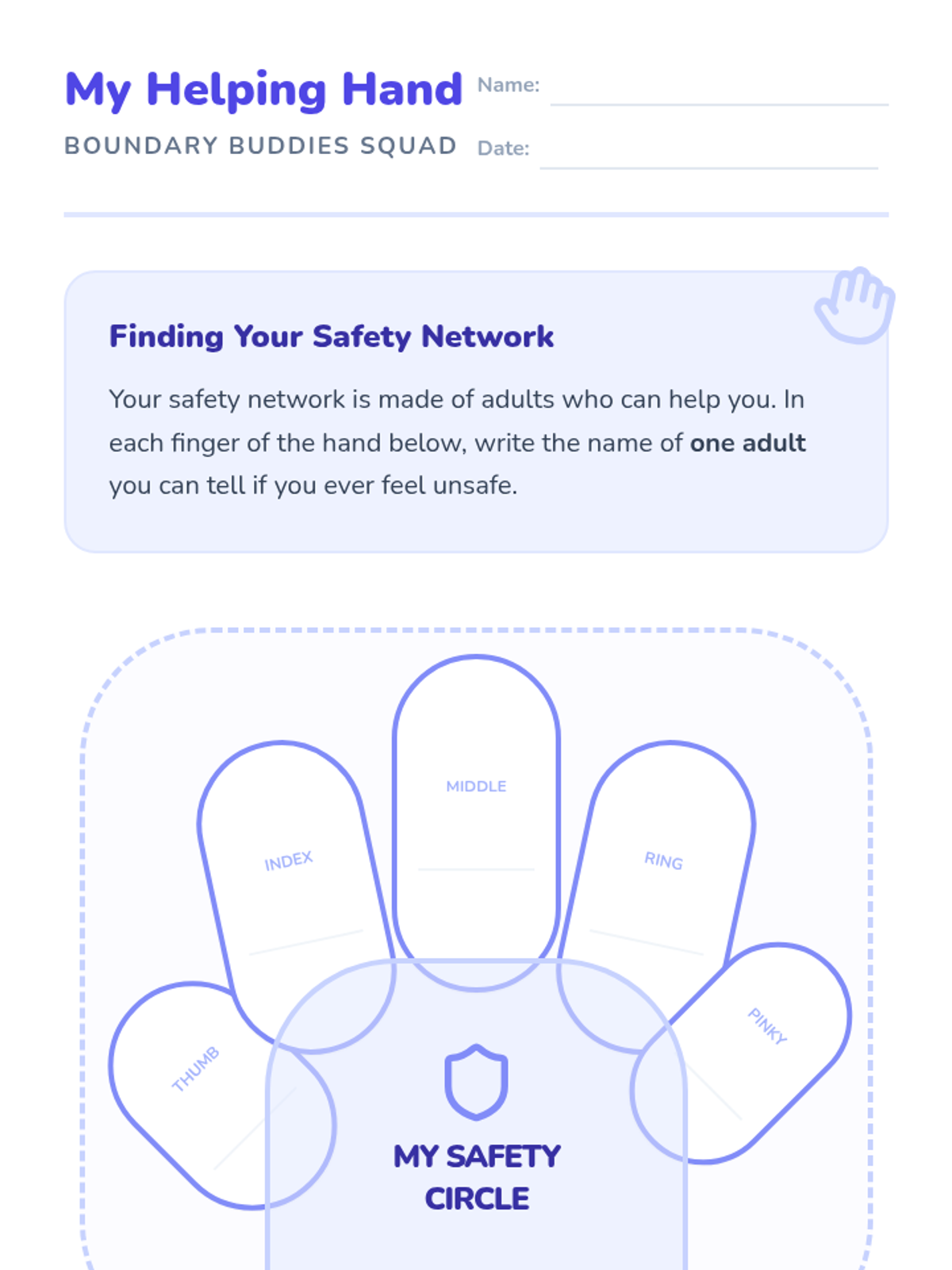
A project worksheet for first-grade students to identify five trusted adults in their safety network by writing their names in a "helping hand" diagram.