Emotion recognition ranging from basic feelings to complex nuances and mixed states. Strengthens accurate self-assessment through identity exploration, strength identification, and values-based decision making.
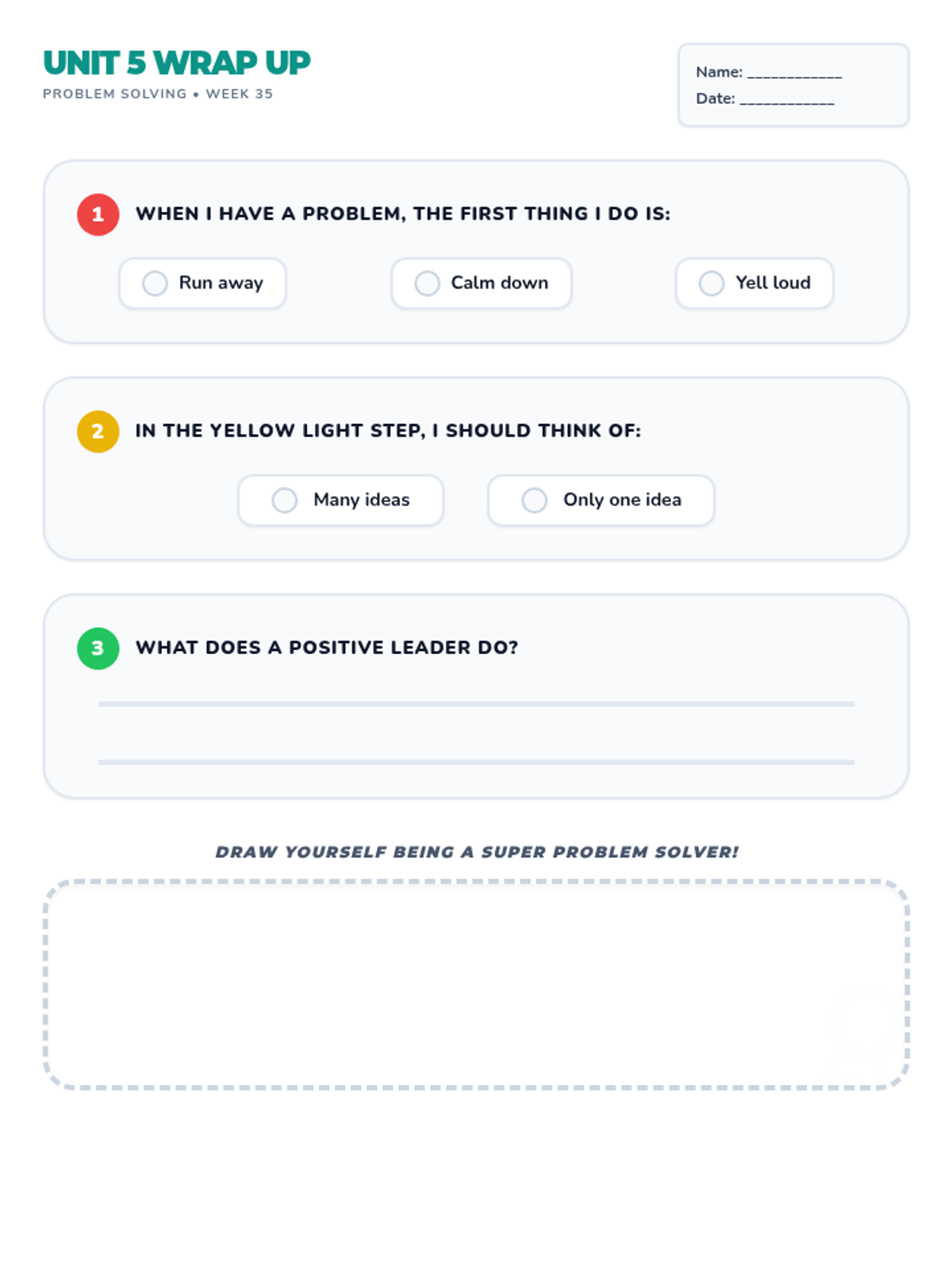
A final assessment for Unit 5. Revised with standardized answer choice styling, improved contrast, and significantly larger handwriting lines for 1st graders. Updated week label.
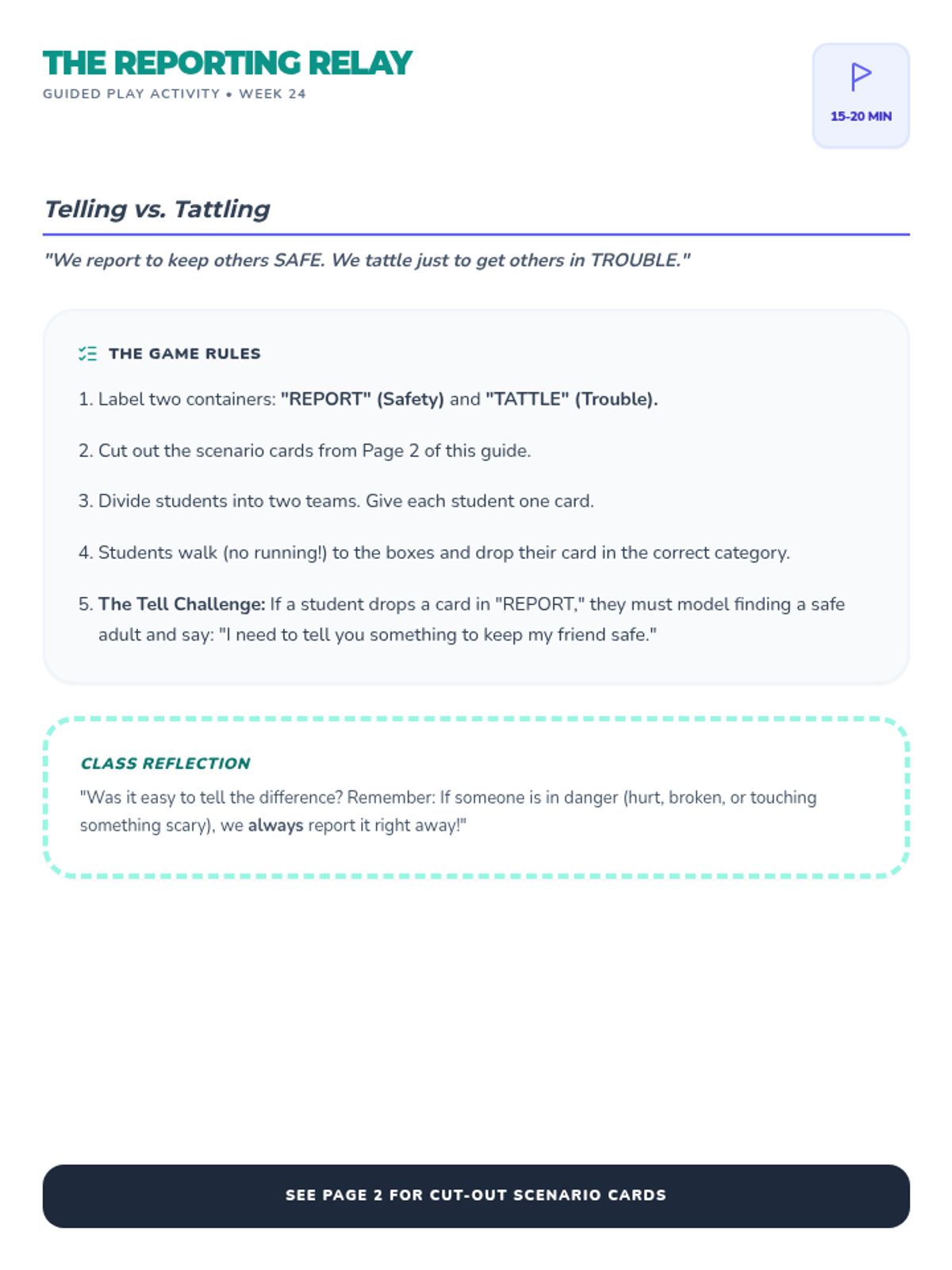
A teacher-facing guided play activity for Week 24. Revised with updated week label and full scenario cards.
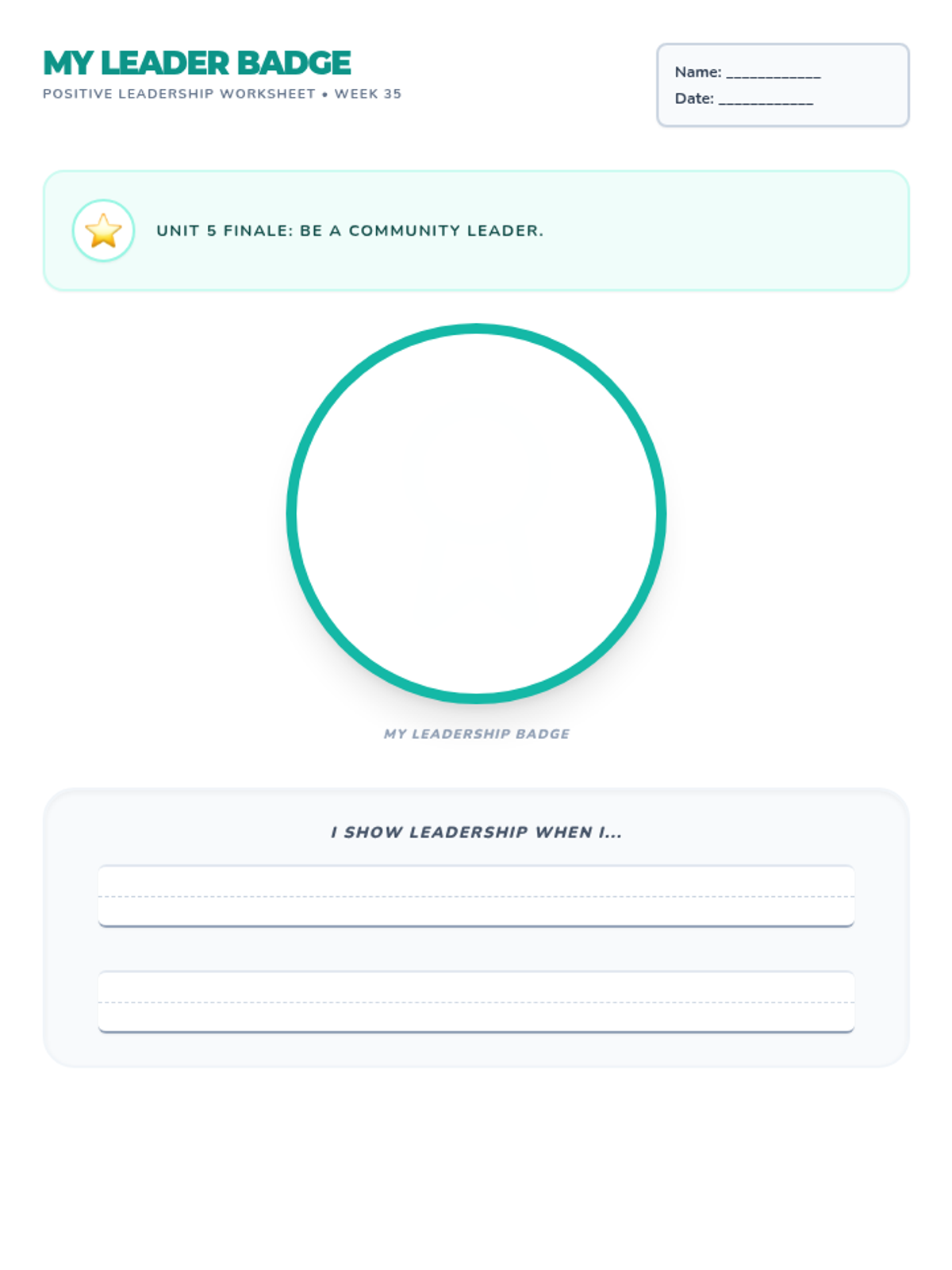
A student-facing worksheet for Week 35. Students design a personal "Leadership Badge" and identify positive actions. Revised for new sequence position.
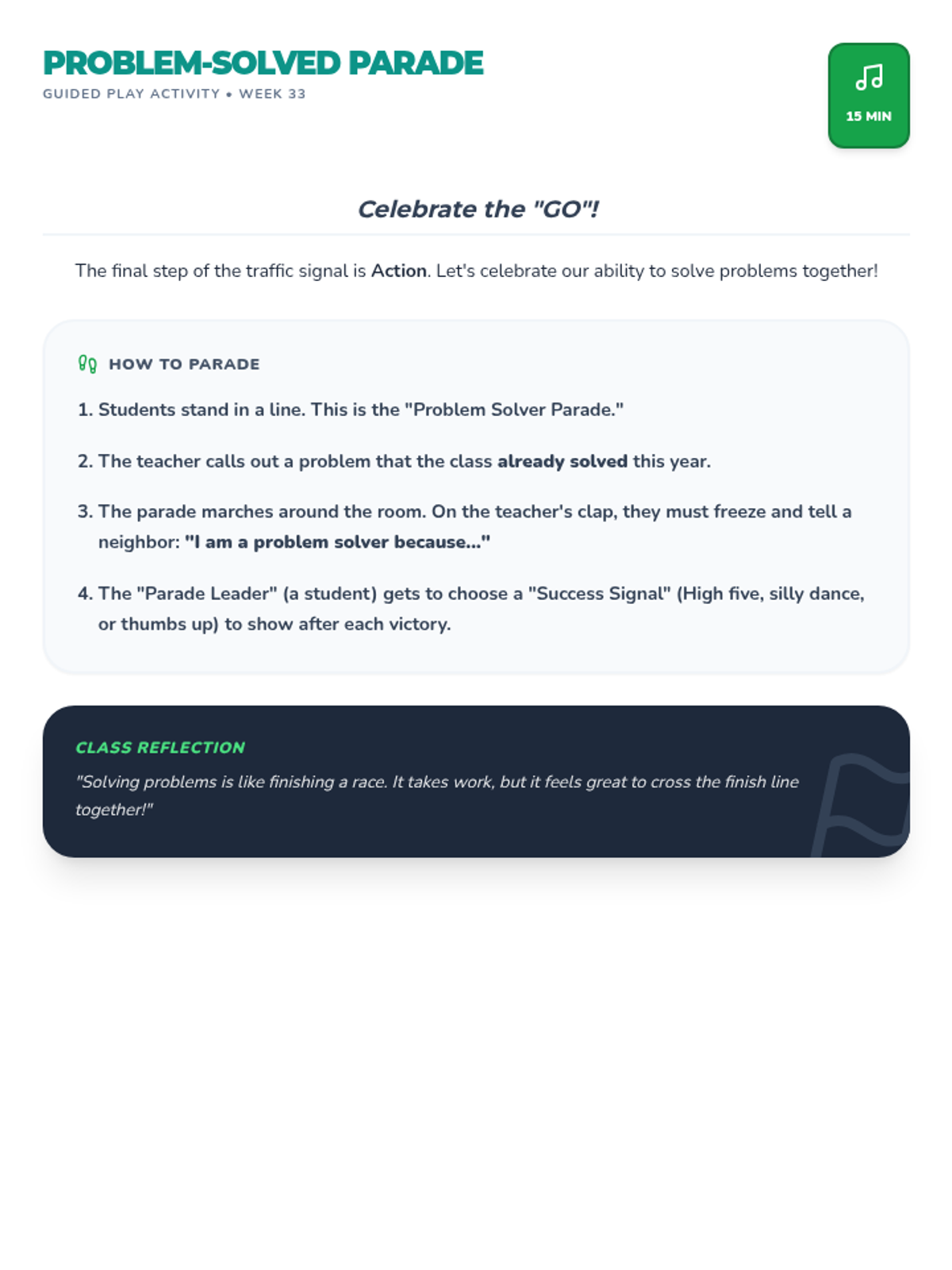
A teacher-facing guided play activity for Week 33. A movement-based celebration of collective problem-solving successes throughout the school year. Updated week label.
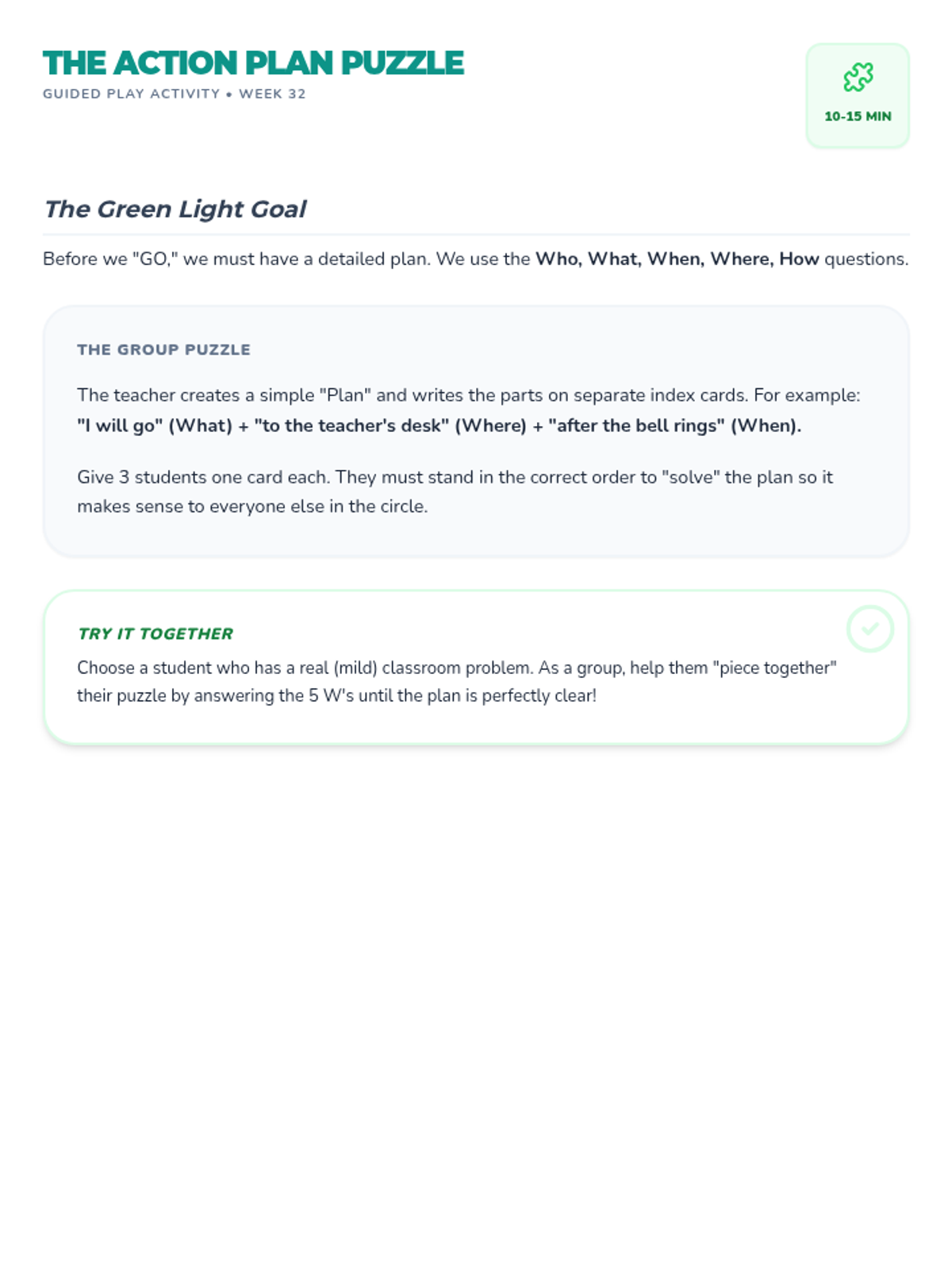
A teacher-facing guided play activity for Week 32. Students work together to "build" a detailed action plan by answering key questions (Who, What, When, etc.). Updated week label.
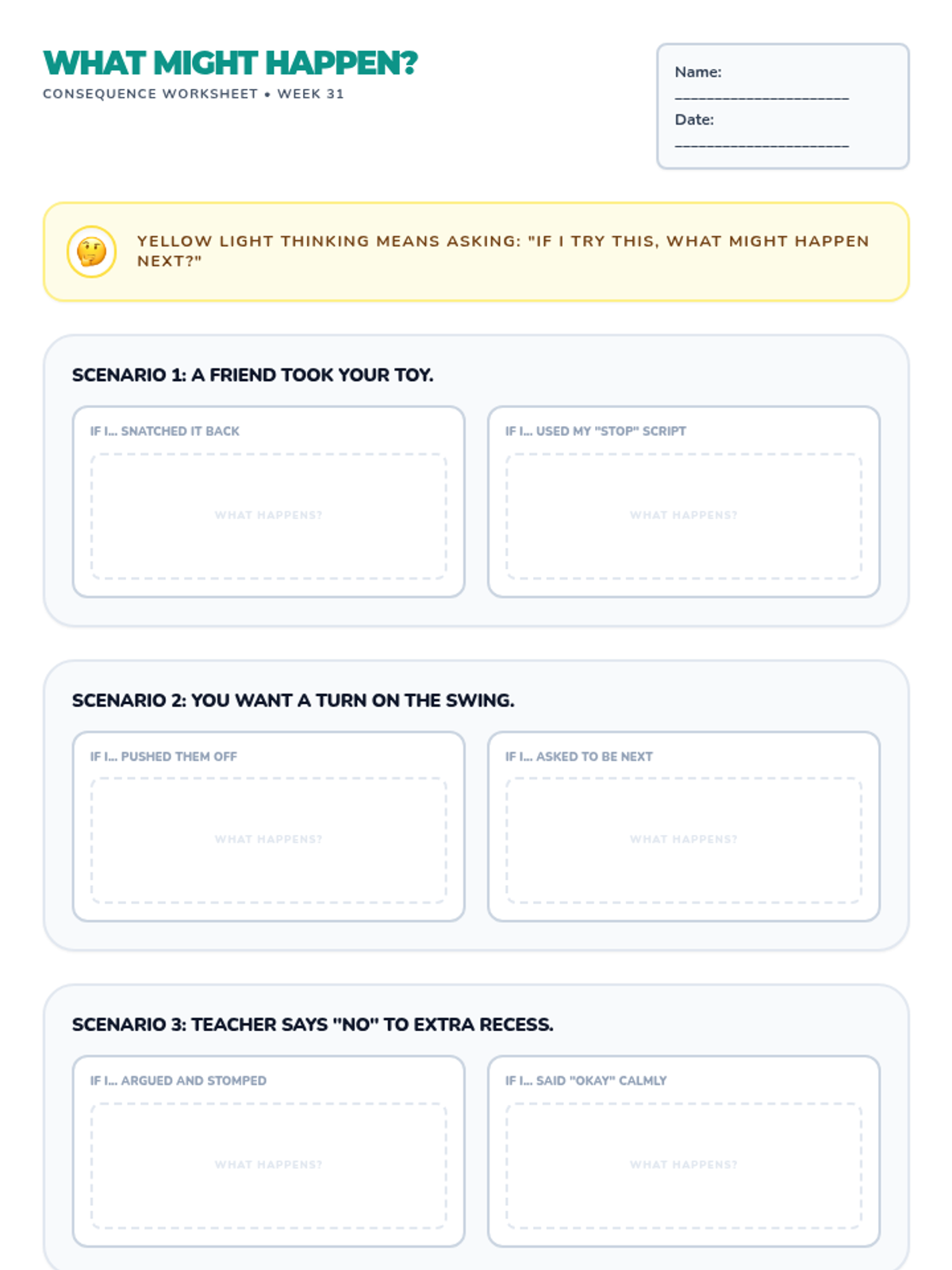
A student-facing worksheet for Week 31. Students evaluate consequences for multiple social scenarios by predicting likely outcomes. Updated week label.
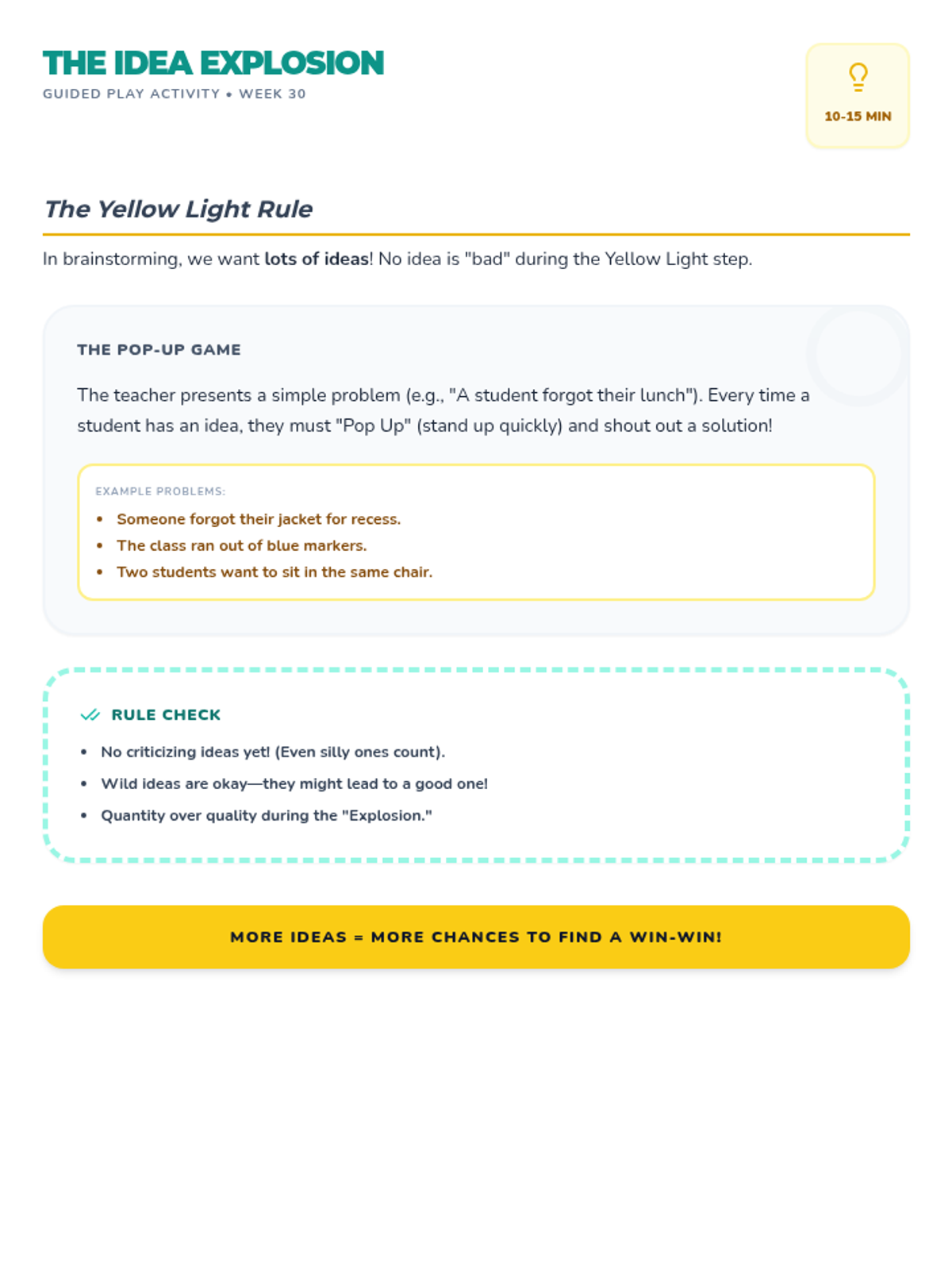
A teacher-facing guided play activity for Week 30. A rapid-fire brainstorming game that encourages students to generate multiple solutions without judgment. Updated week label and examples.
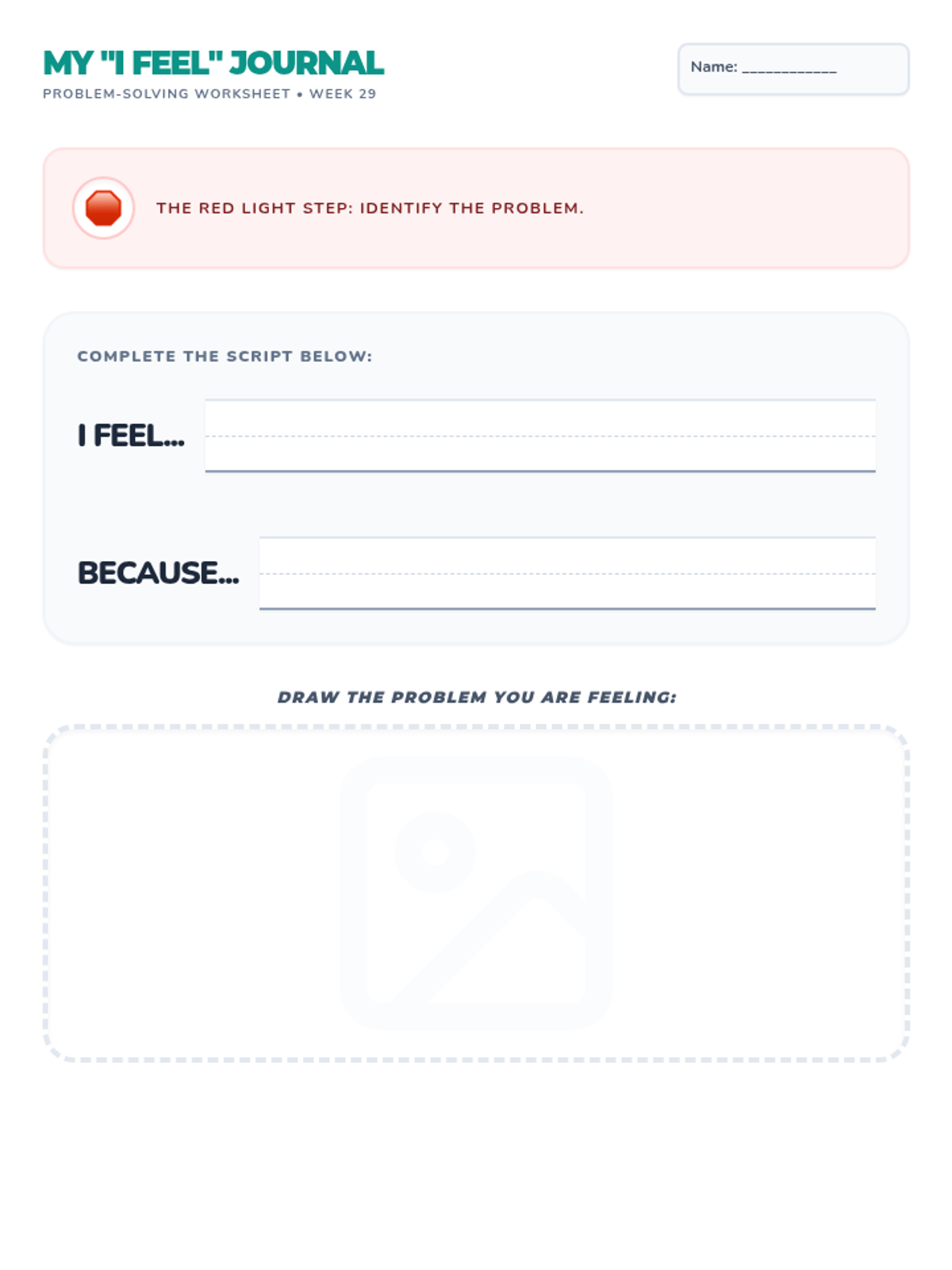
A student-facing worksheet for Week 29. Students practice using the "I feel... because..." script to clearly state a problem as part of the traffic signal model. Updated week label.
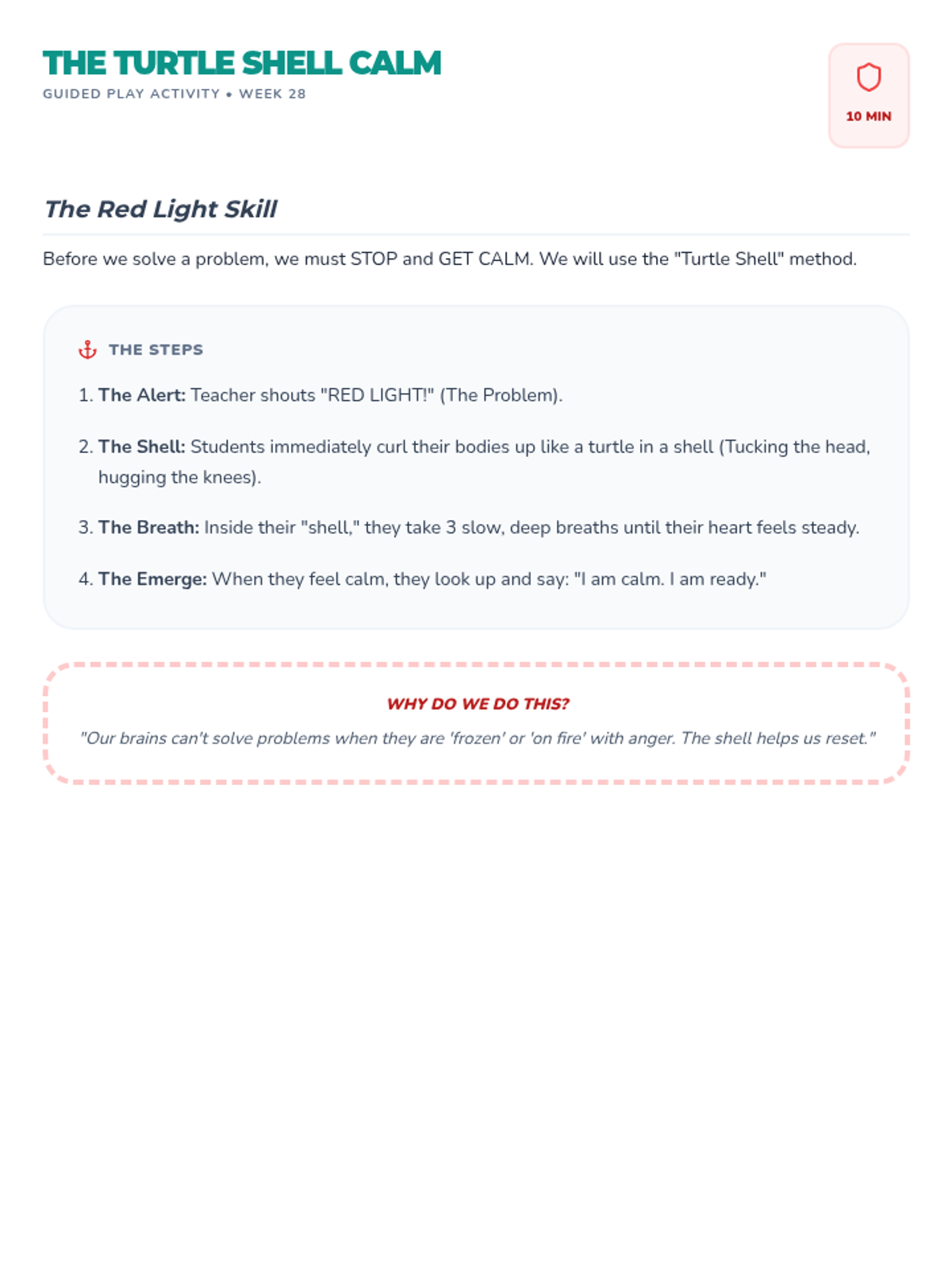
A teacher-facing guided play activity for Week 28. Teaches students the "Turtle Shell" technique for immediate self-regulation when faced with a problem. Updated week label.
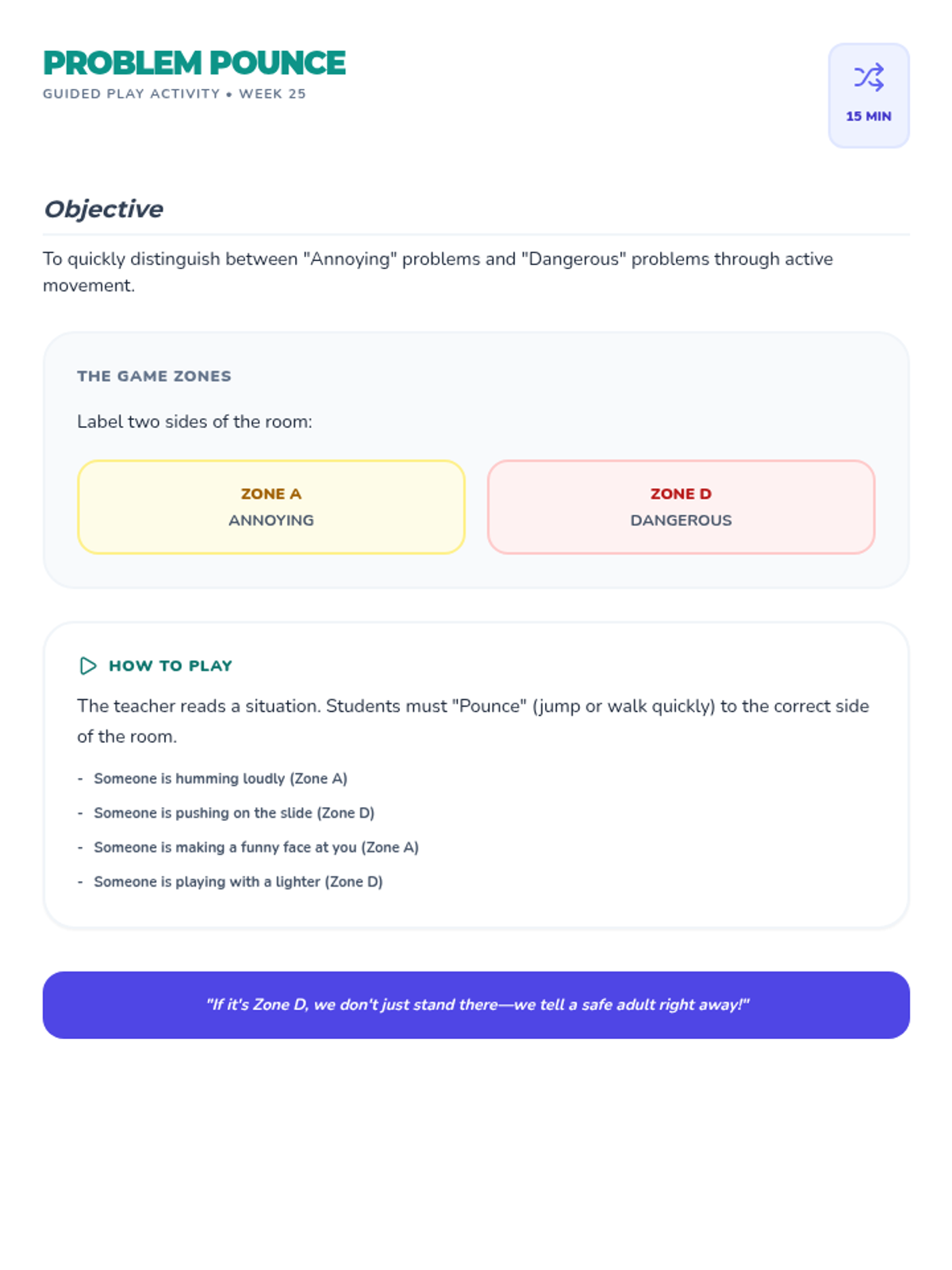
A teacher-facing guided play activity for Week 25. A movement-based sorting game where students categorize classroom problems as "Annoying" or "Dangerous." Updated week label.
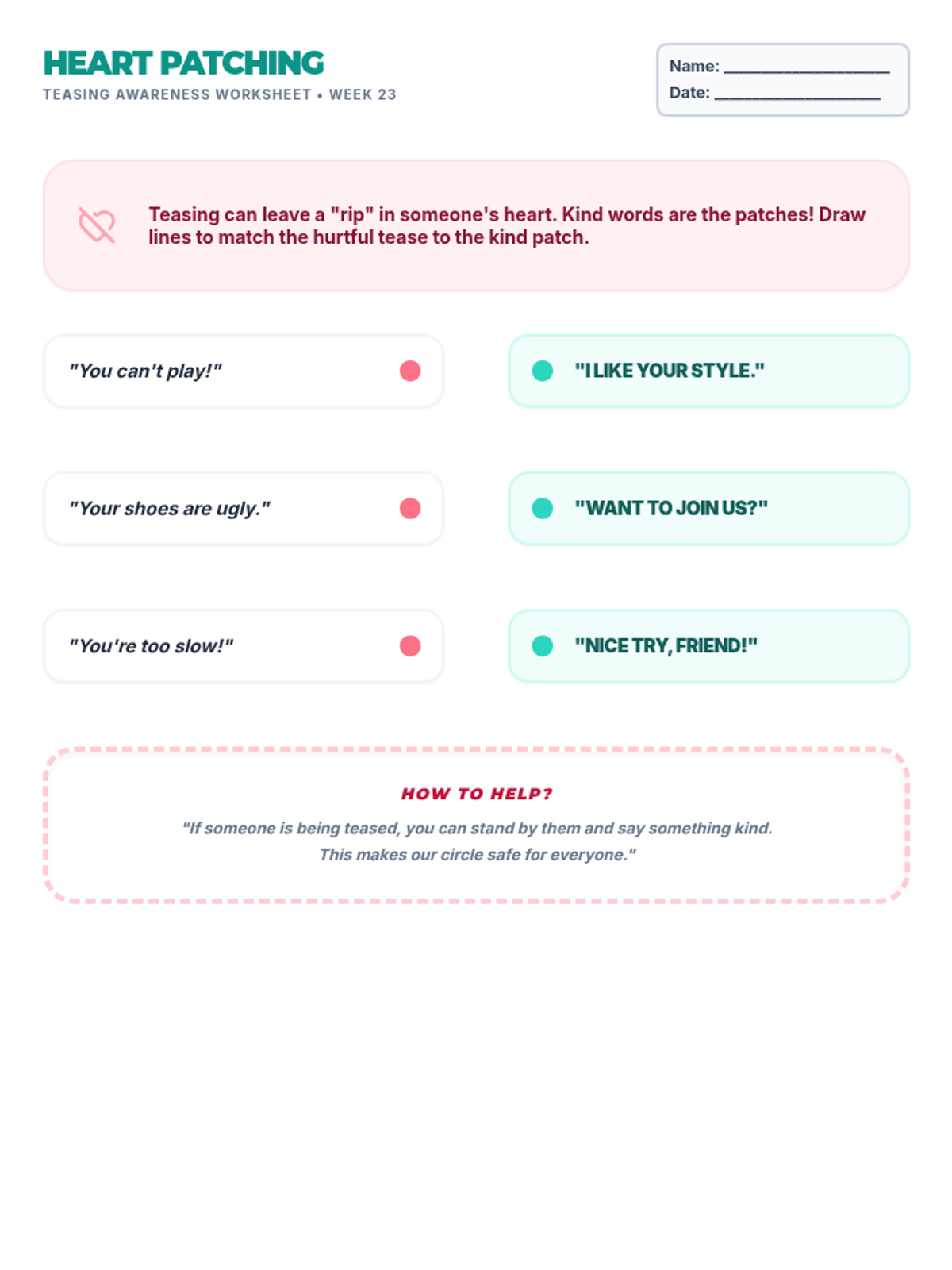
A student-facing worksheet for Week 23 focusing on the impact of teasing. Students match hurtful "teases" with helpful "patches" (kind words), promoting empathy and bystander intervention. Revised with shuffled answers for challenge and improved contrast.
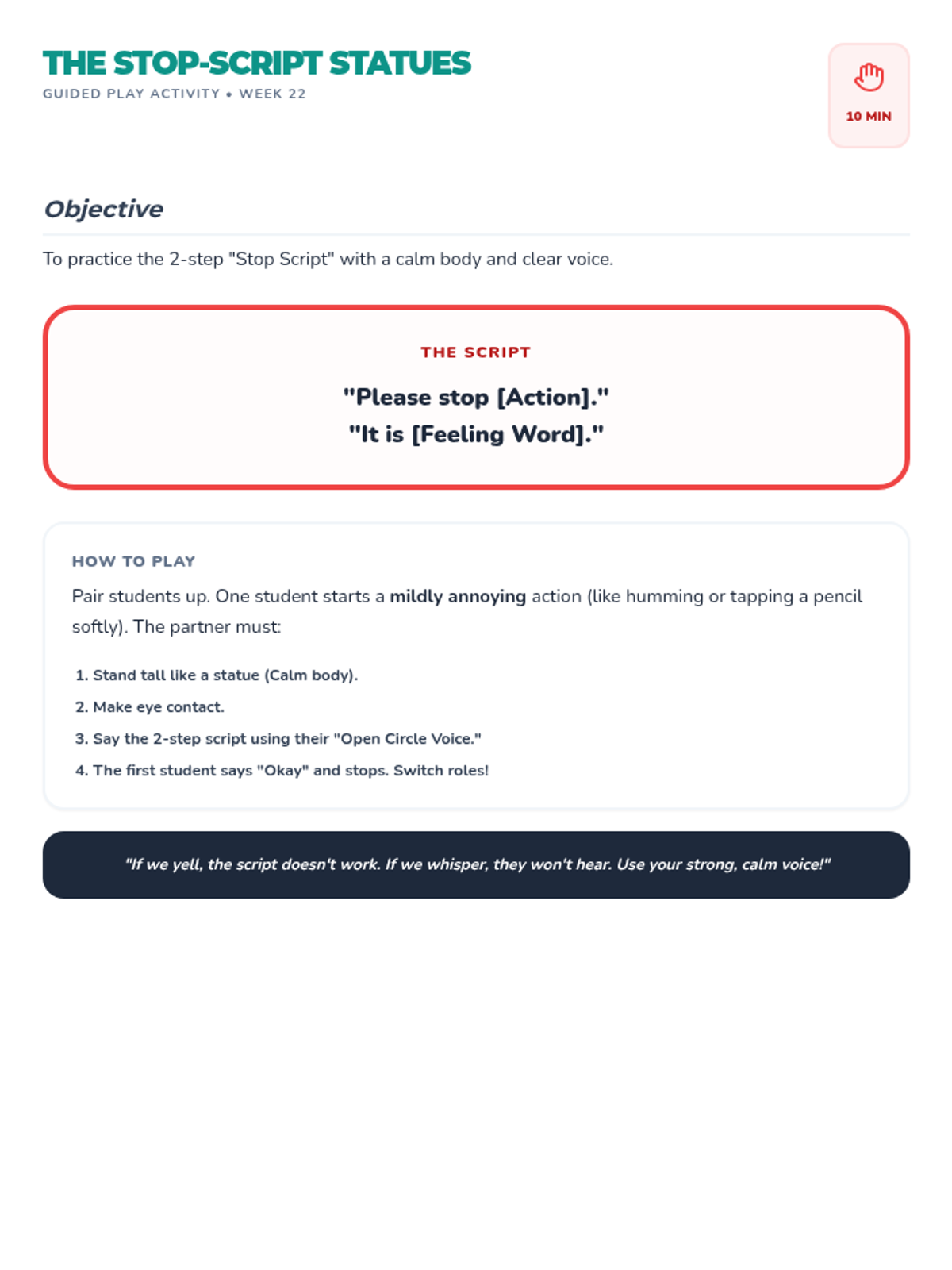
A teacher-facing guided play activity for Week 22. Students practice using the two-step "Please stop" script in a controlled, safe role-play environment.
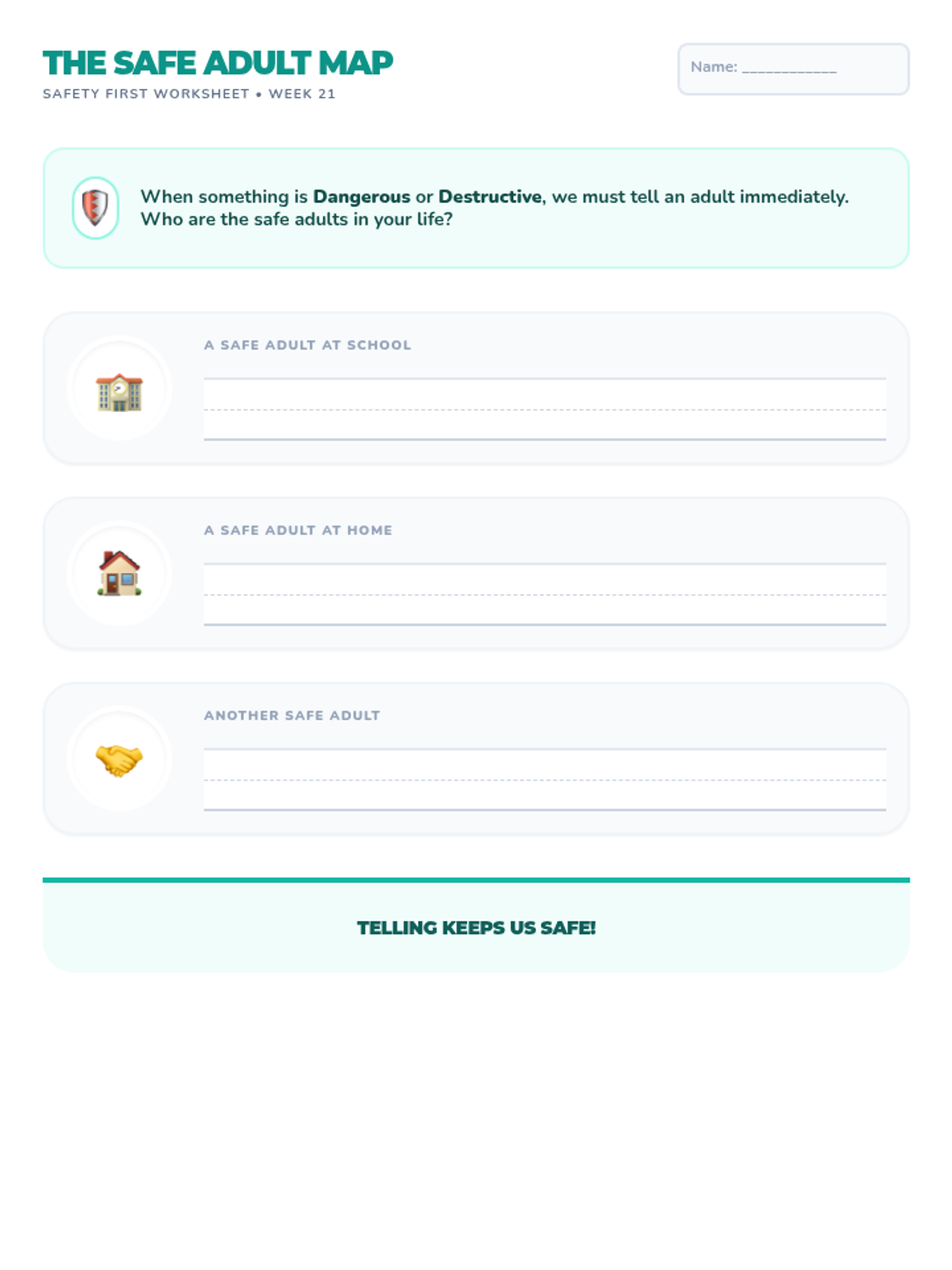
A student-facing worksheet for Week 21. Students identify and record "safe adults" in different environments (school, home, community) to ensure they know whom to contact for dangerous problems.
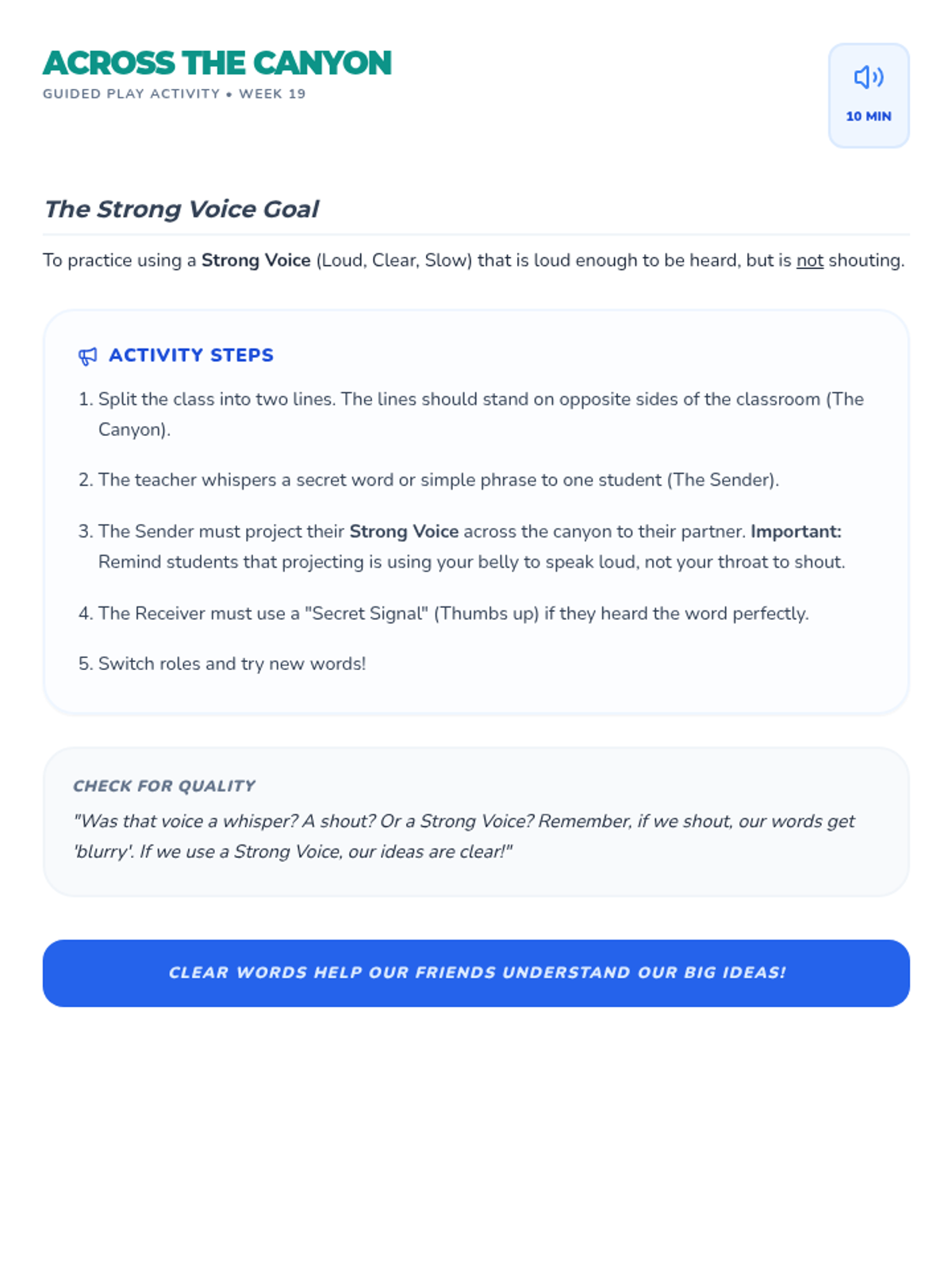
A teacher-facing guided play activity for Week 19. Revised to clarify the distinction between shouting and a "Strong Voice" and standardized terminology.
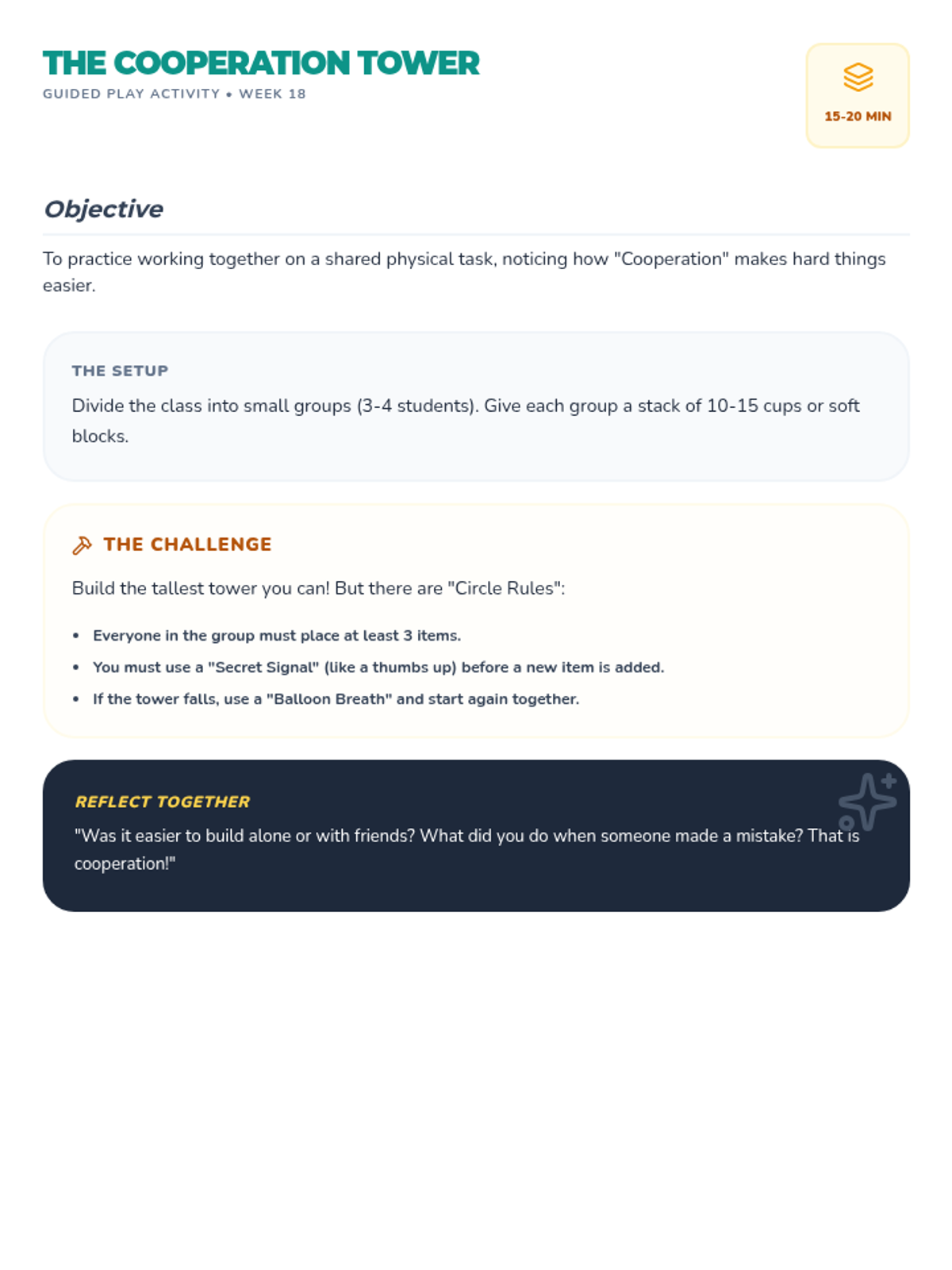
A teacher-facing guided play activity for Week 18. A collaborative building challenge that requires students to communicate and share tasks to reach a common goal.
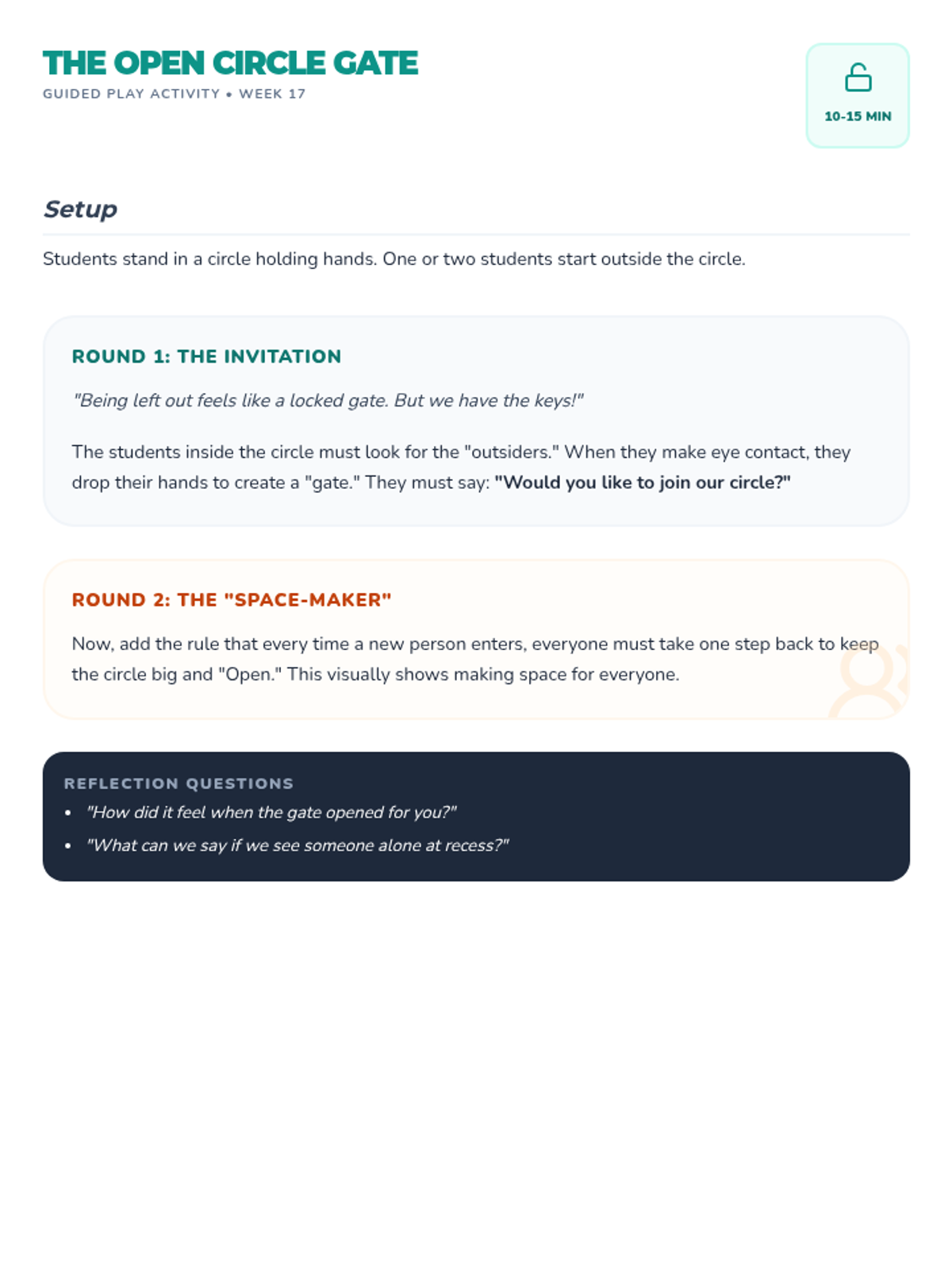
A teacher-facing guided play activity for Week 17. A movement game that simulates the feeling of being left out and the positive impact of being invited to join a group.
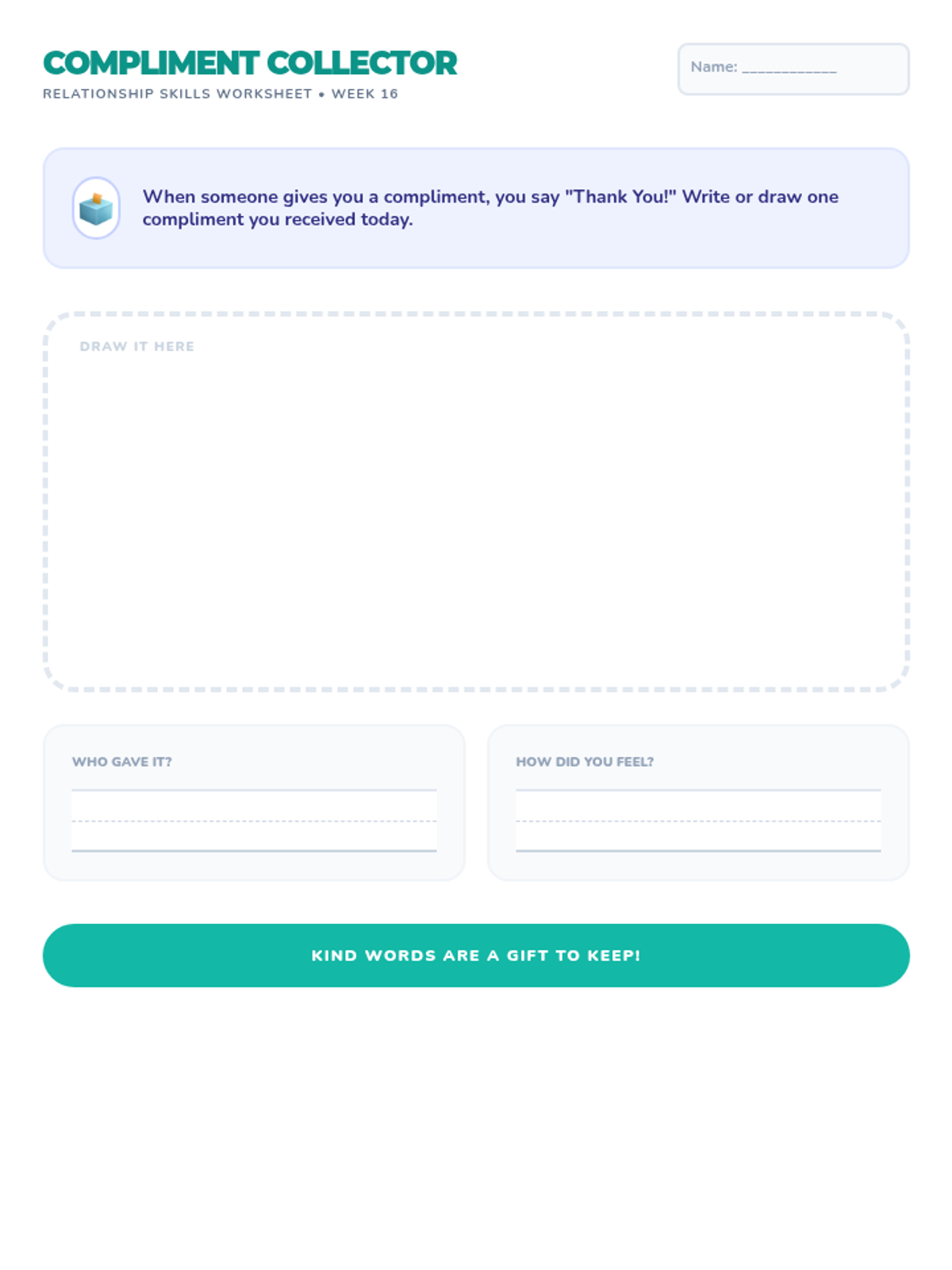
A student-facing worksheet for Week 16. Students record a compliment they received, identifying the giver and their internal feeling, reinforcing the value of gratitude.
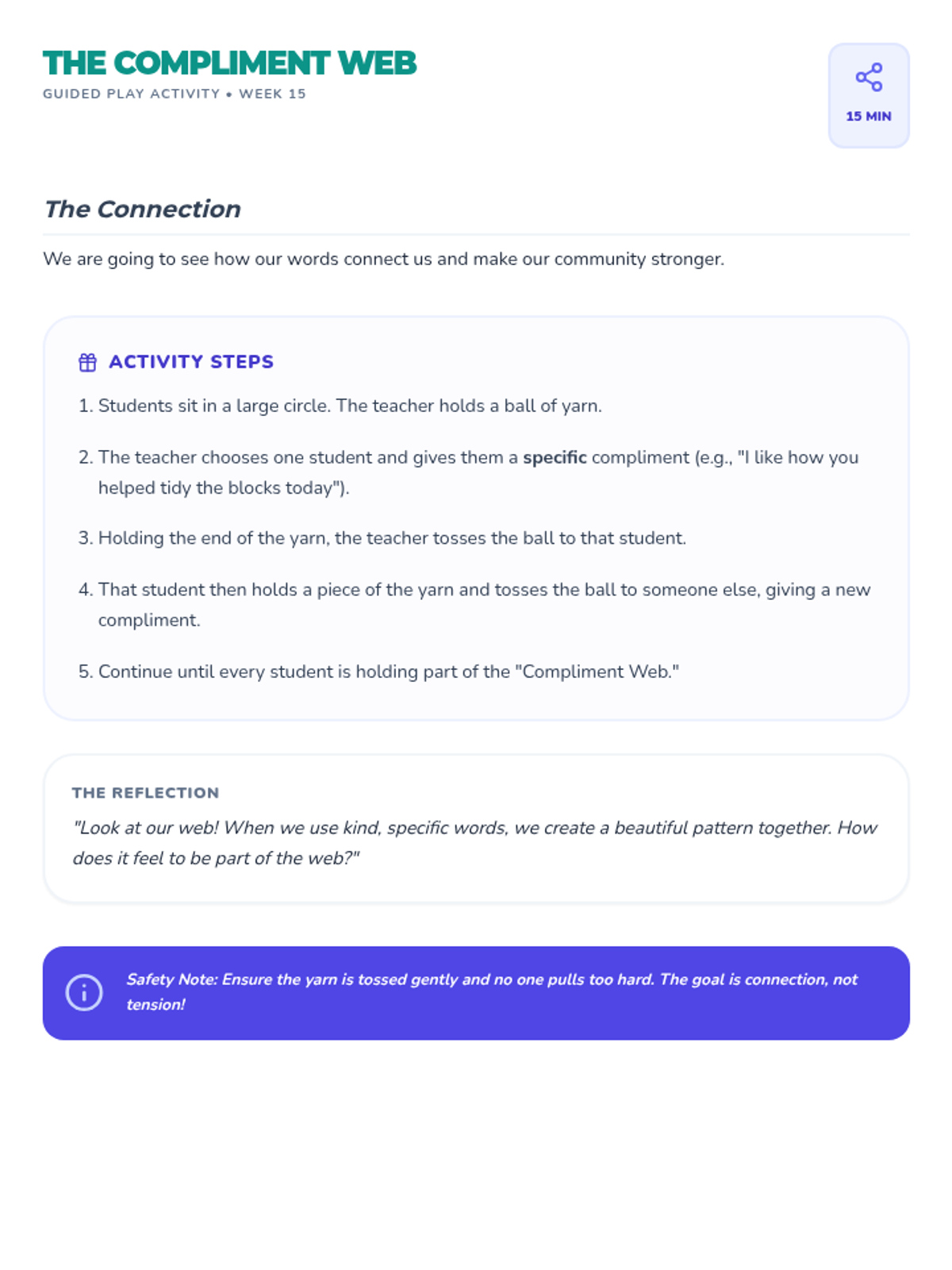
A teacher-facing guided play activity for Week 15. Students use a ball of yarn to create a physical "web" of compliments, illustrating the power of kind words.
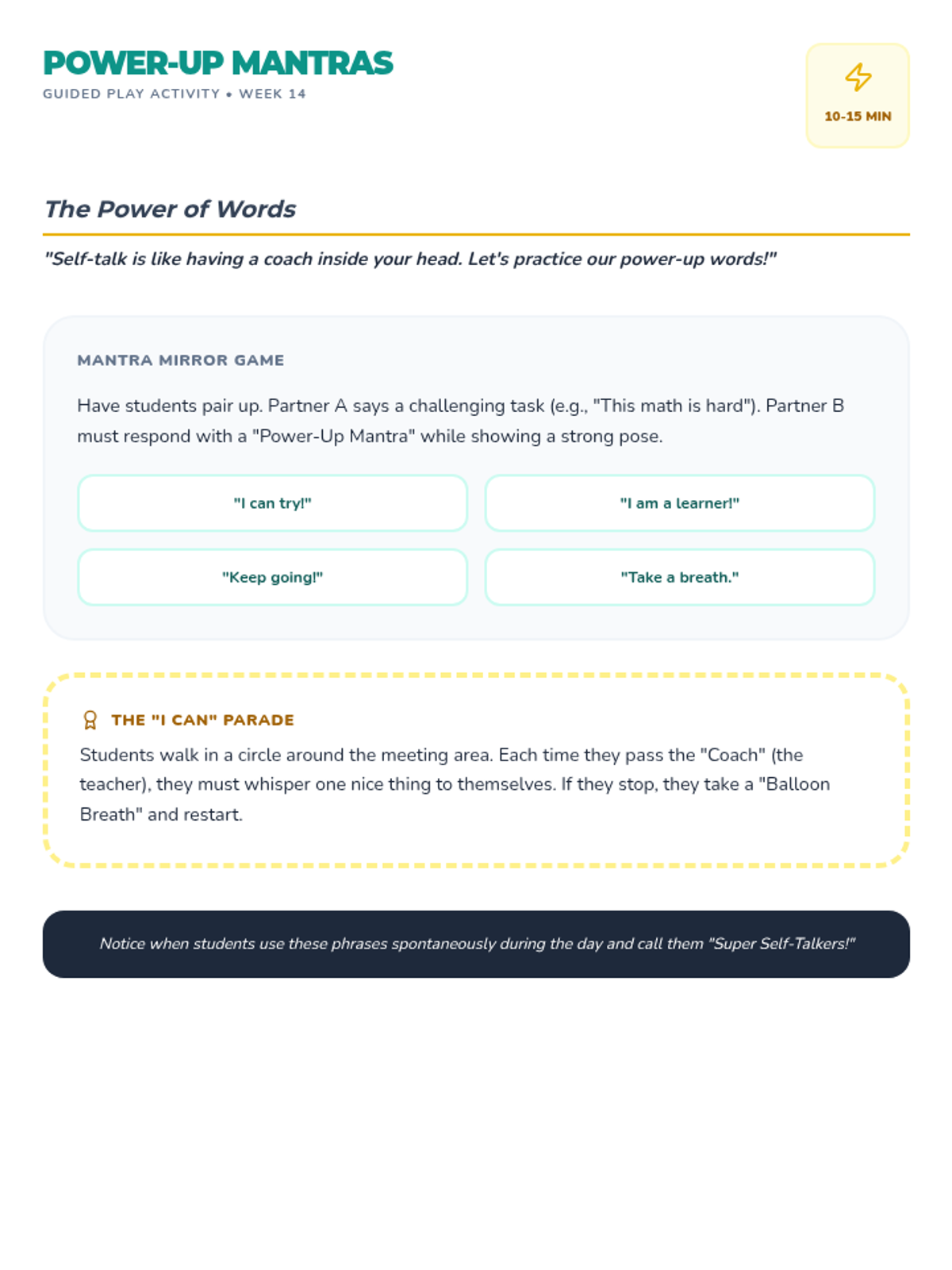
A teacher-facing guided play activity for Week 14. Students practice positive self-talk through role-play and movement-based mantras.
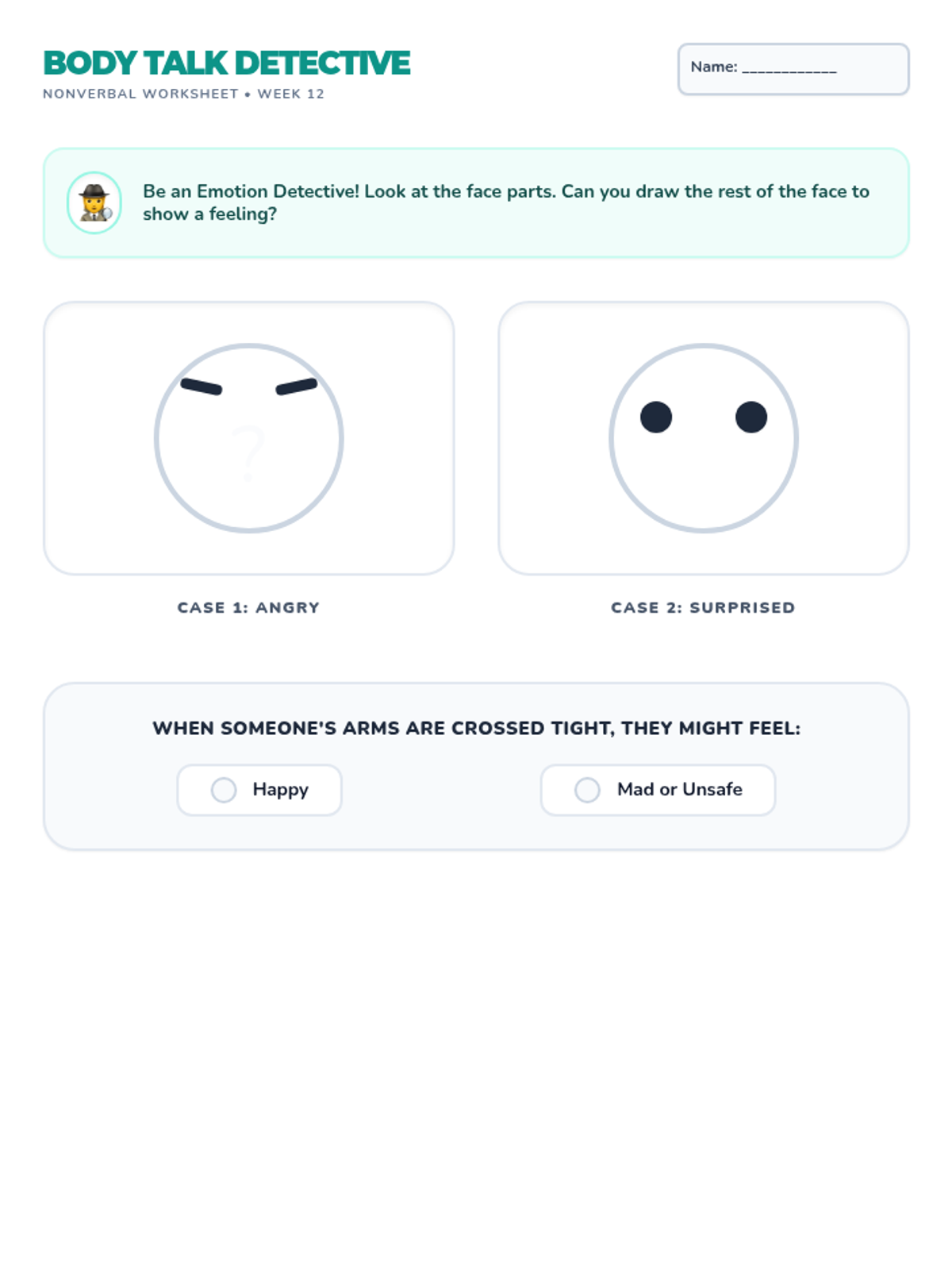
A student-facing worksheet for Week 12. Revised with corrected "Surprised" face (no mouth), increased border contrast for face circles, and improved layout.
A vibrant 7-slide visual presentation including new 'We Will' and 'I Will' statements, and a dedicated definition slide for charity.
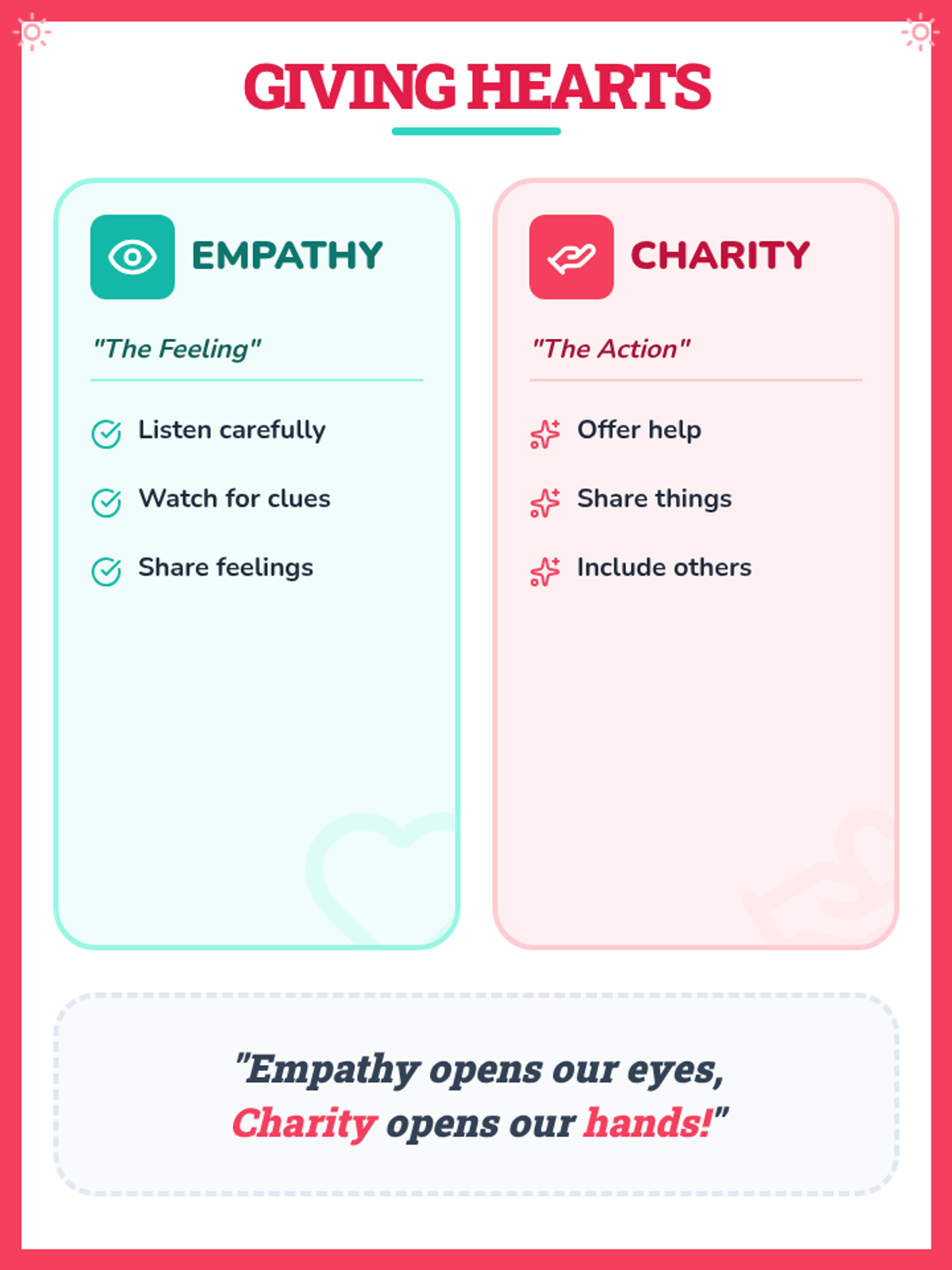
A bold, visual anchor chart for classroom display that reinforces the connection between empathy (the feeling) and charity (the action) with clear examples.
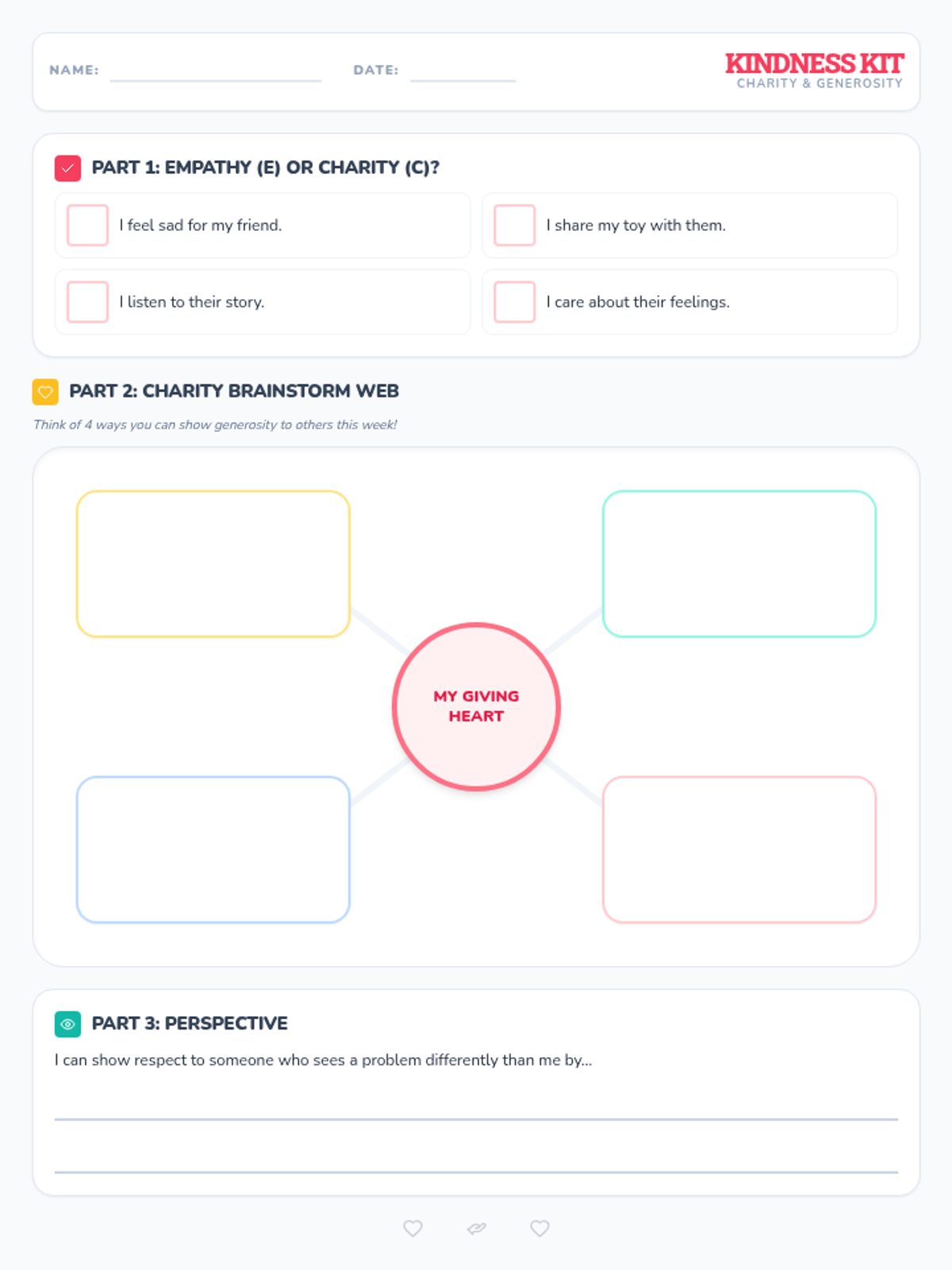
A student-facing worksheet featuring a categorization task to distinguish empathy from charity, a visual brainstorming web for identifying acts of generosity, and a reflection prompt on perspective-taking.
A vibrant 6-slide visual presentation including new 'We Will' and 'I Will' statements to frame the lesson goals and student accountability.
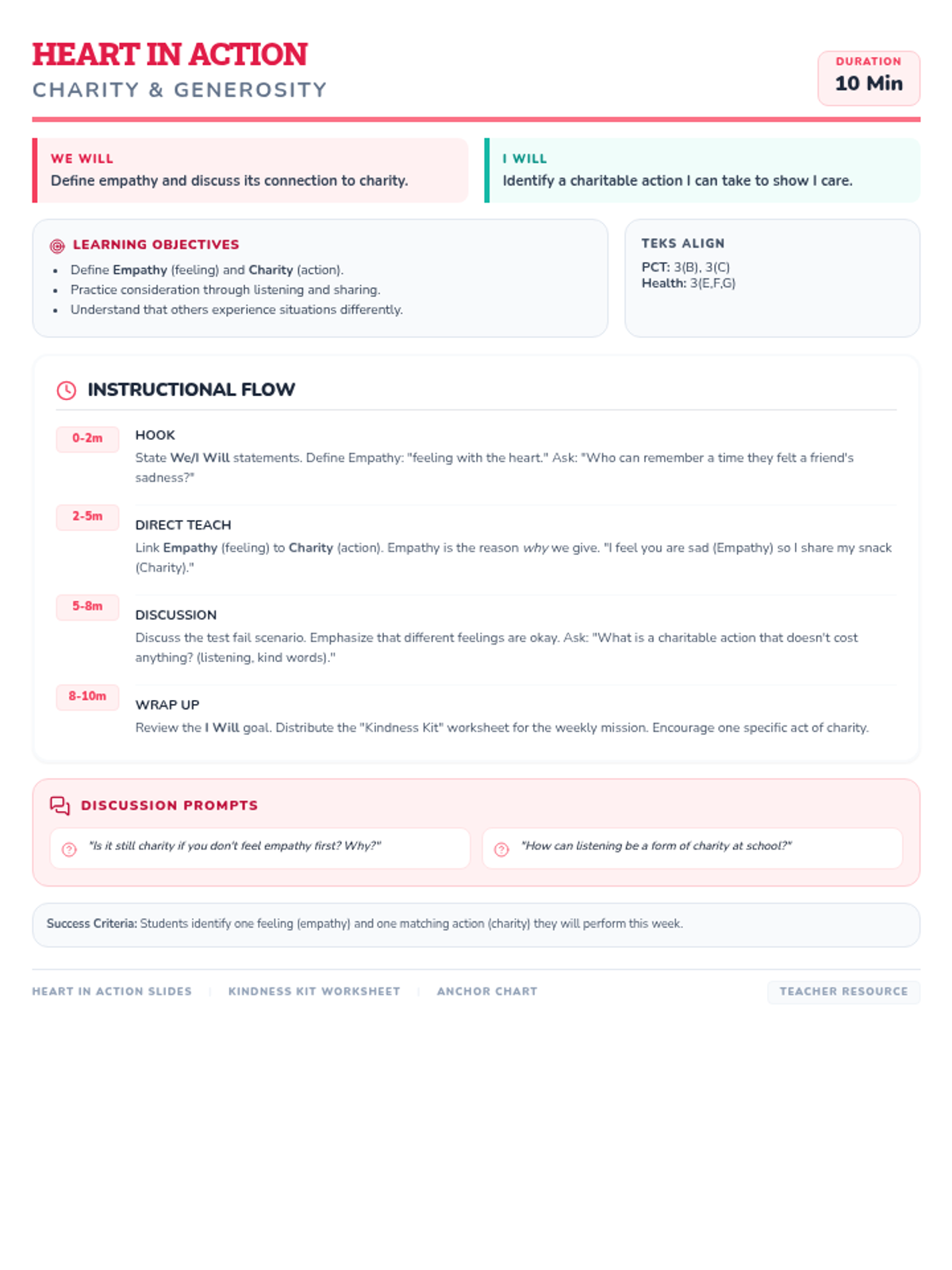
A comprehensive facilitator guide for a 10-minute whole-group lesson on empathy and charity, now featuring explicit 'We Will' and 'I Will' statements for standard-aligned instruction.
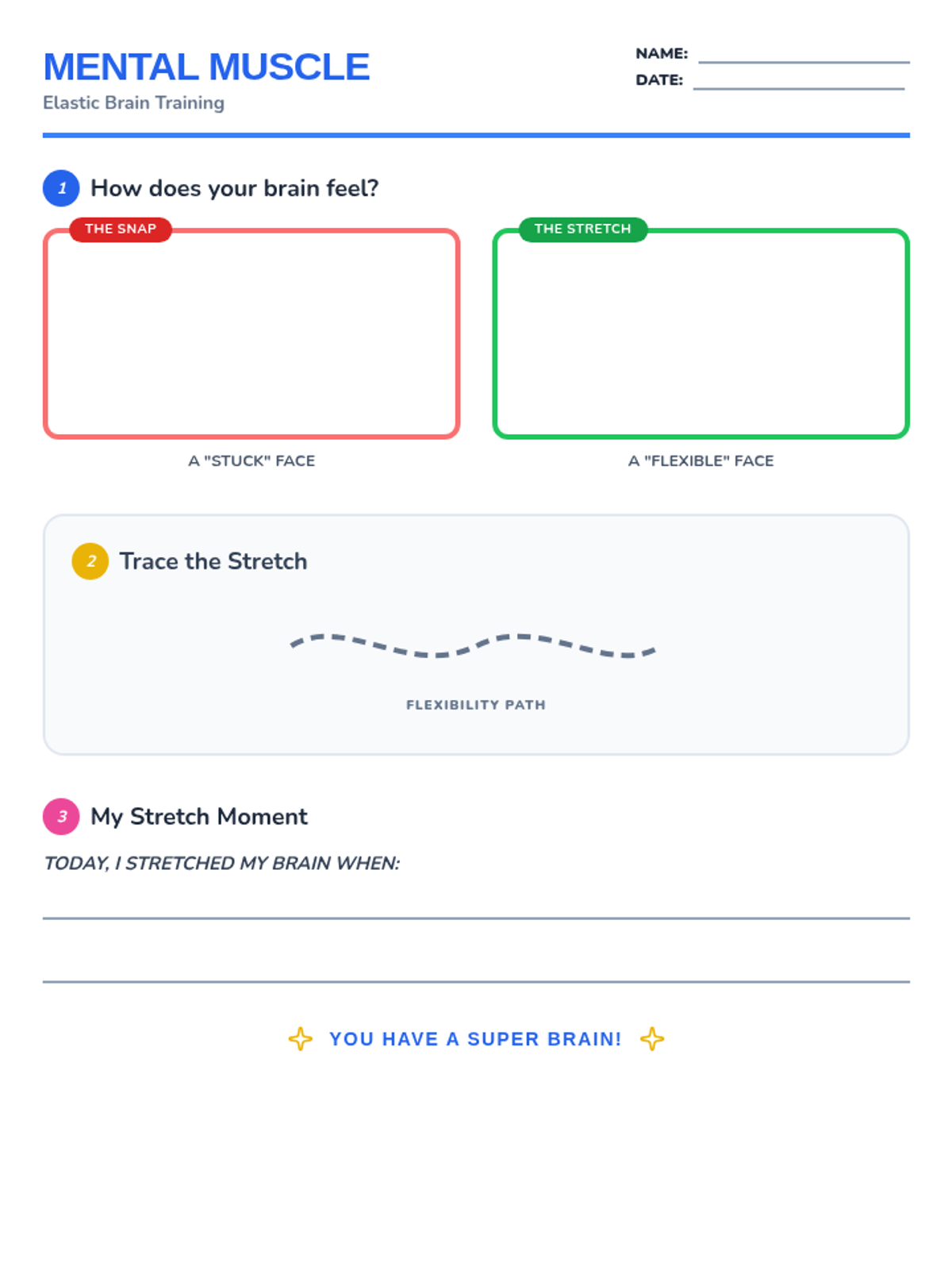
A K-2 student worksheet that uses drawing, tracing, and simple reflection to reinforce the concepts of 'snap' and 'stretch' reactions.
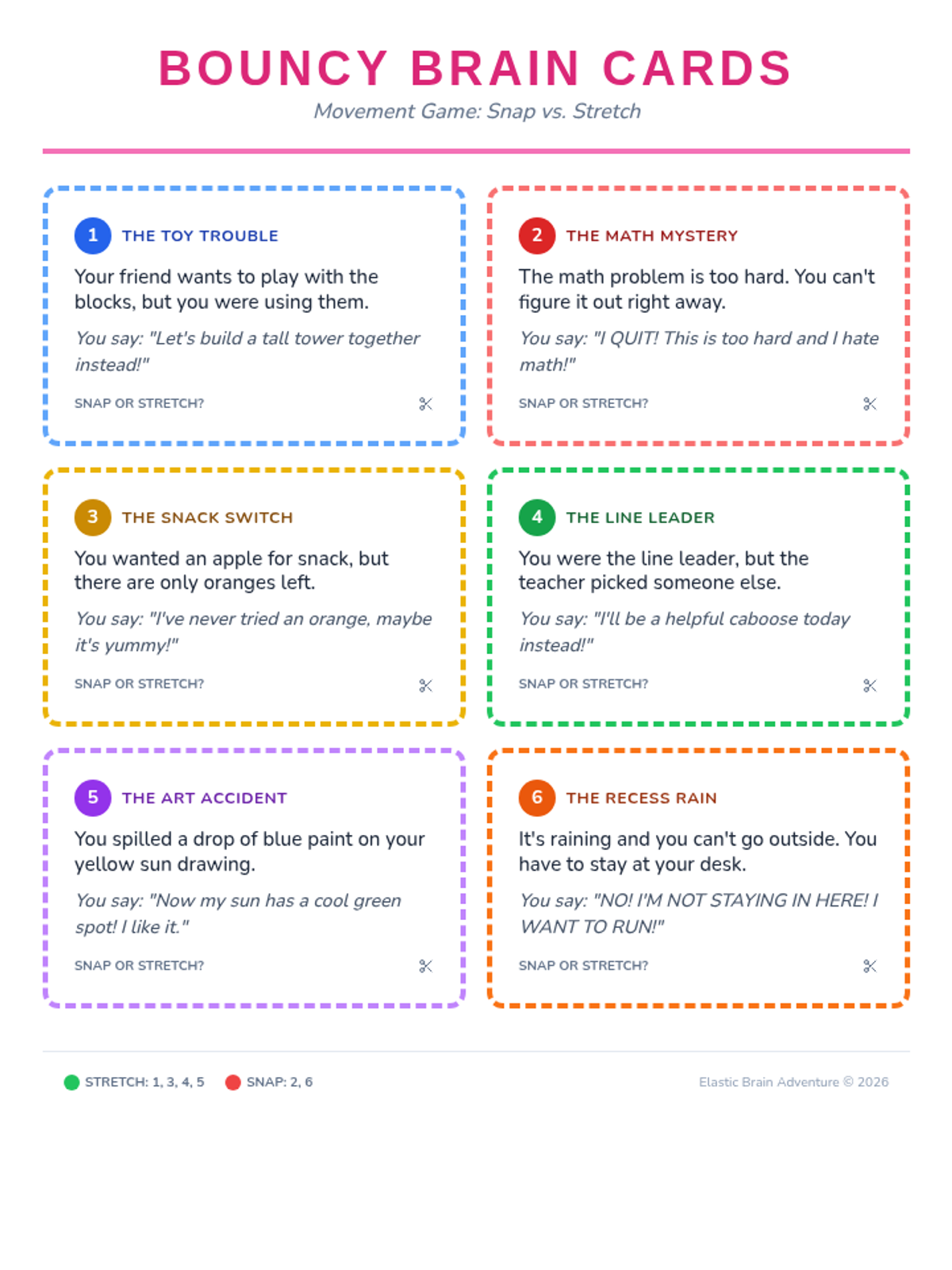
A set of six printable scenario cards for the Bouncy Brain movement activity, helping students distinguish between rigid 'snap' reactions and flexible 'stretch' responses.
A vibrant, high-energy slide deck that introduces the rubber band metaphor for cognitive flexibility through visual storytelling and movement-based prompts.
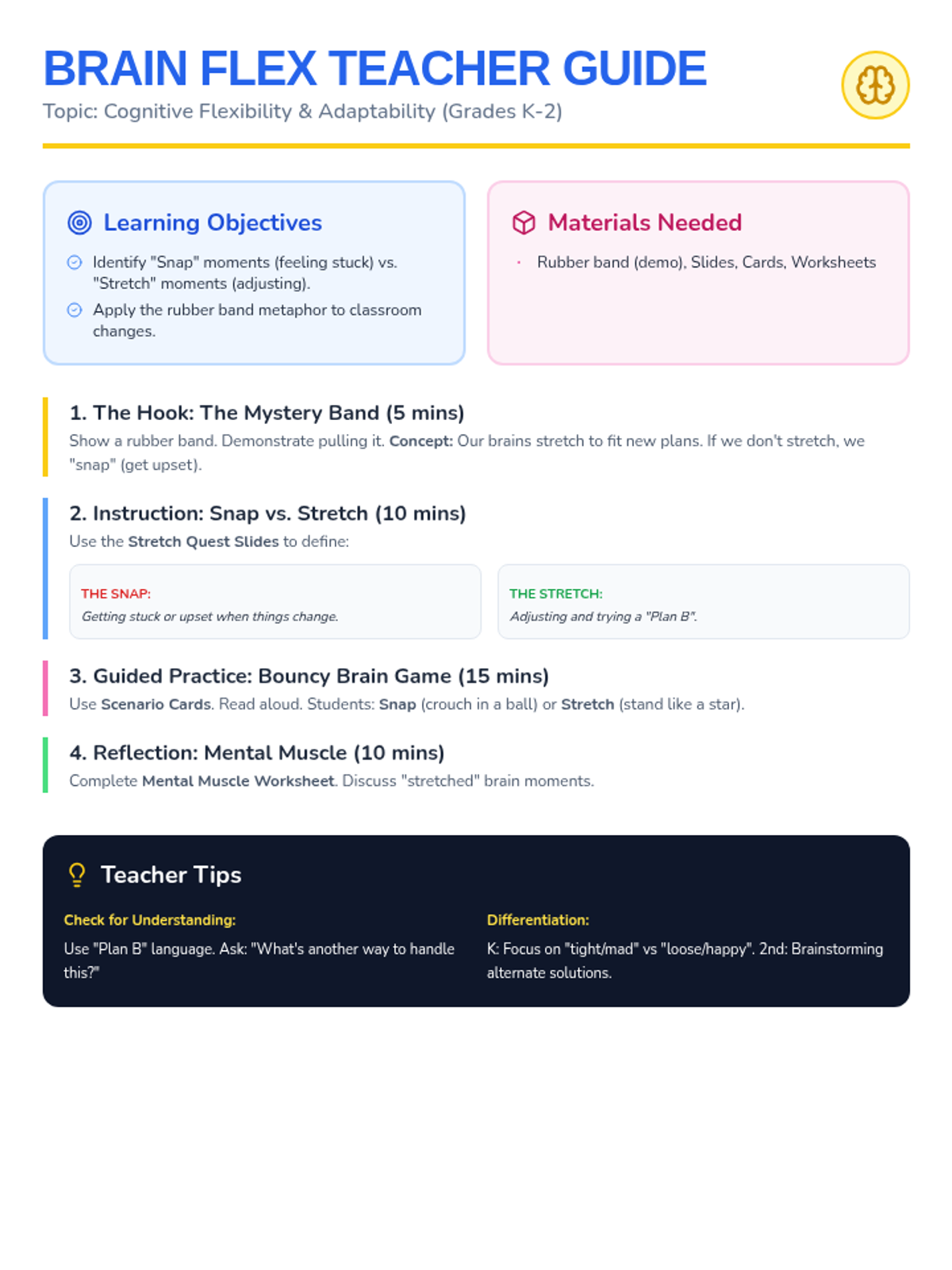
A comprehensive teacher guide for leading the Elastic Brain Adventure lesson, including objectives, step-by-step procedures, and facilitation tips for K-2 educators.
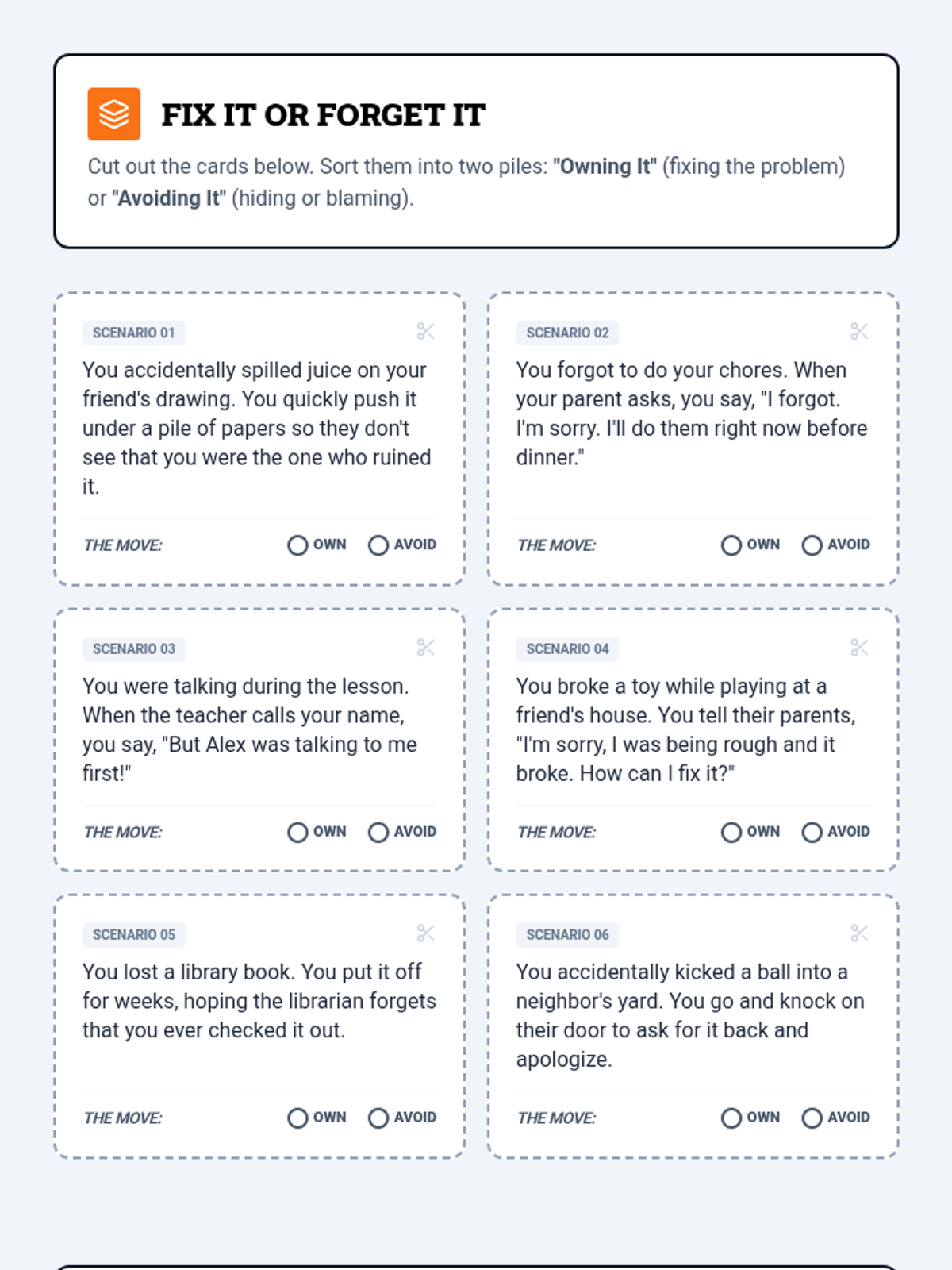
A hands-on sorting activity featuring 6 scenario cards where characters either take ownership or avoid accountability. Includes two large sorting mats ('Owning It' and 'Avoiding It') for group discussion and categorization.
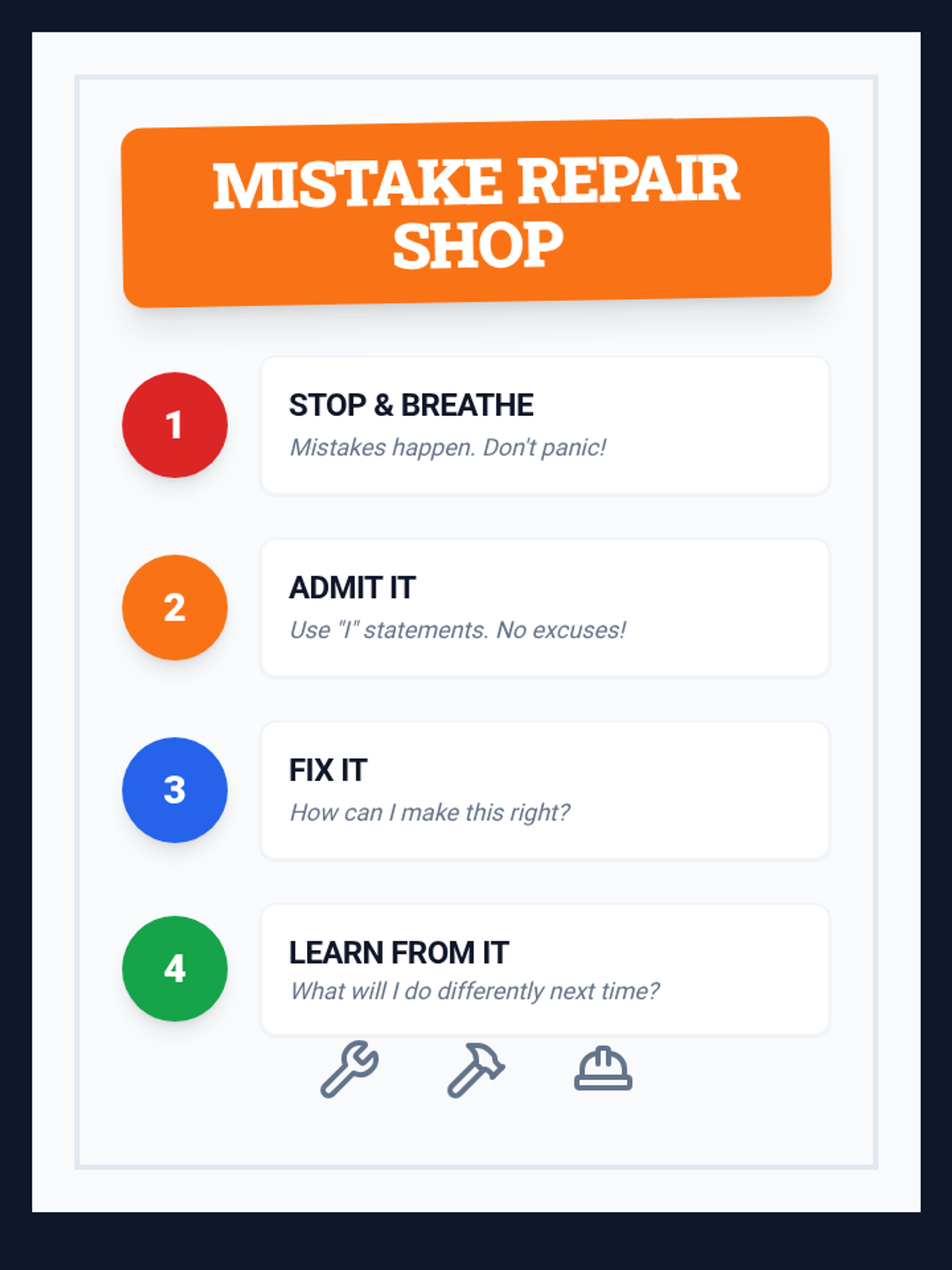
A set of classroom visuals including a large 'Mistake Repair Shop' anchor chart outlining the four-step ownership process, plus two motivational posters focusing on integrity and the growth mindset of 'upgrading' through mistakes.
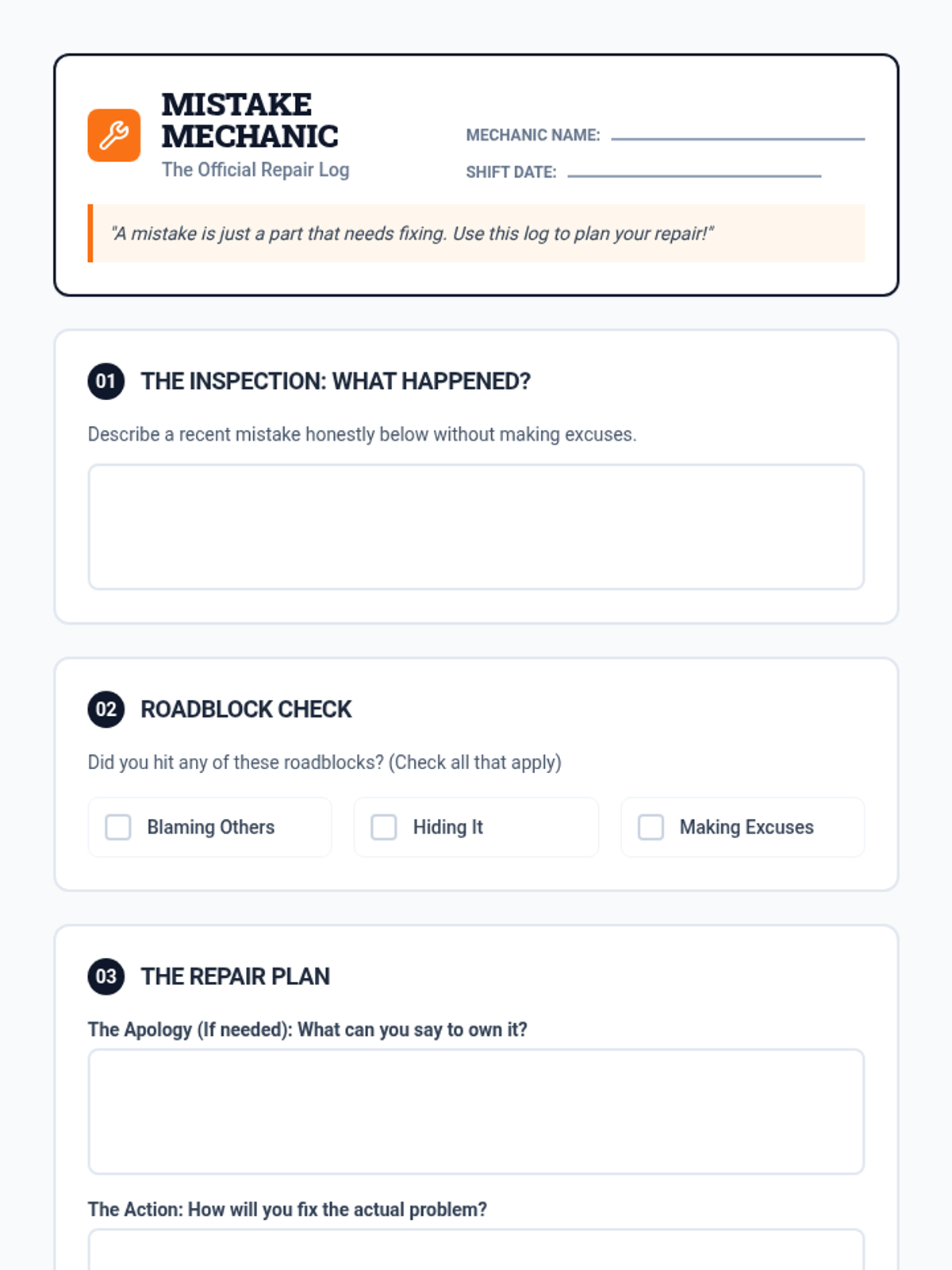
A reflection worksheet that guides students through the 'Mistake Mechanic' process. It includes sections for identifying a mistake, checking for emotional roadblocks (blame, hiding), planning a 'repair' (apology and action), and identifying the lesson learned for future 'system upgrades'.
An interactive slide deck introducing the 'Mistake Repair Shop' metaphor. It defines ownership, identifies common roadblocks like blaming and hiding, and provides a four-step 'Repair Manual' for students to follow when they make mistakes.
Revised facilitator guide. Fixed page break issues in the differentiation section by using 'break-inside-avoid'. Optimized layout and spacing to ensure all content fits professionally on a single page.
Revised worksheet for 6th-8th graders. Fixed page break issues for Section 3, increased height for emotional audit boxes (min-h-120px), and added input lines for S.T.O.P. execution steps. Improved overall tracking and legibility.
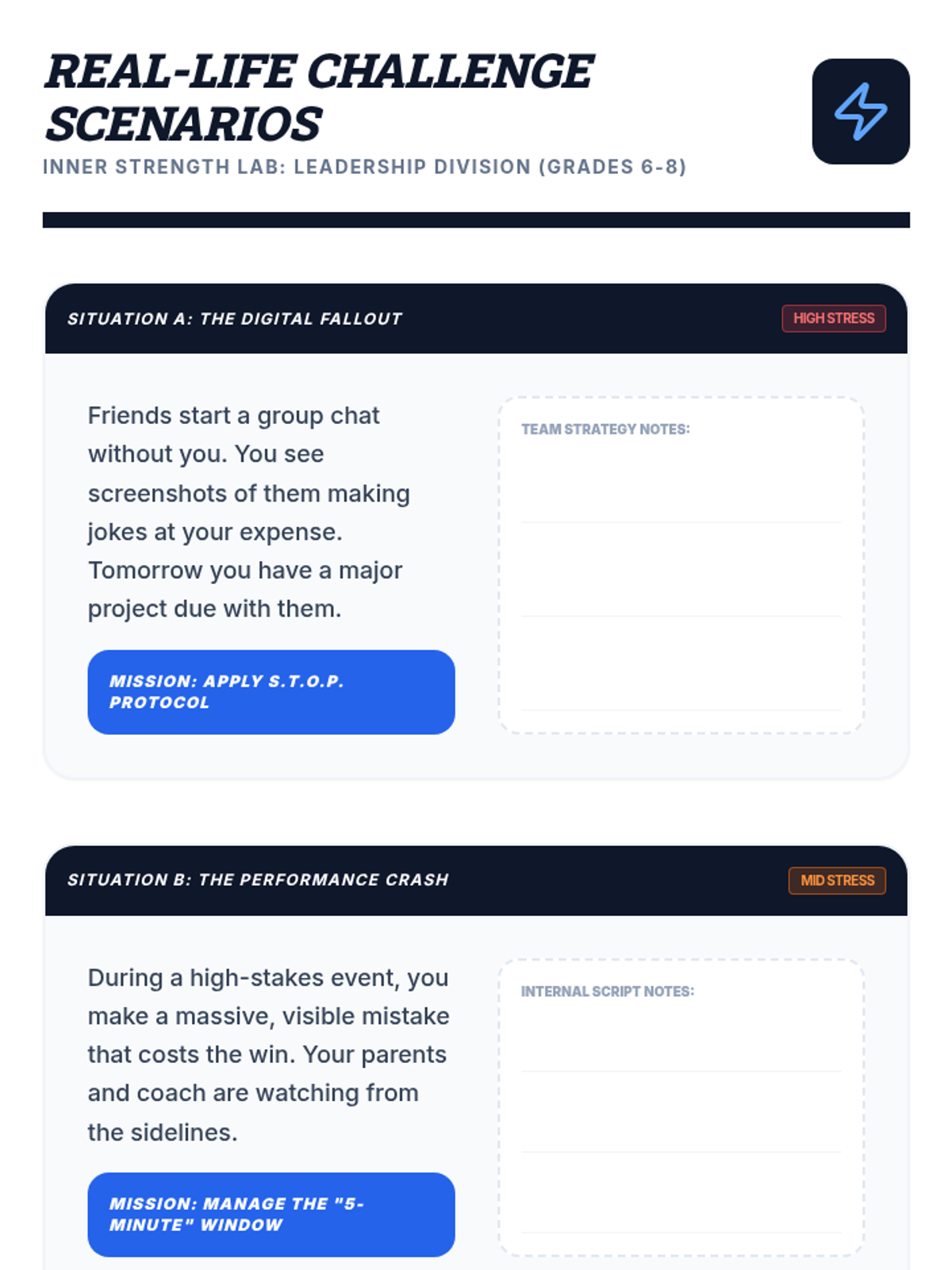
Revised scenario handout for 6th-8th graders. Added dedicated student response areas for each situation, fixed page break issues with 'break-inside-avoid', and included a S.T.O.P. protocol reference for self-contained usability.
Revised slides for 6th-8th graders. Fixed tracking in headers for clarity and added specific, high-stress social scenarios for the simulation activity on Slide 4. Improved overall visual impact and layout consistency. Final revision to fix collided words and opacity.
Revised worksheet for 3rd-5th graders with expanded student work areas (min-h-160px/100px) and improved visual instructions. Final revision to fix page break, icon rendering, and line contrast.
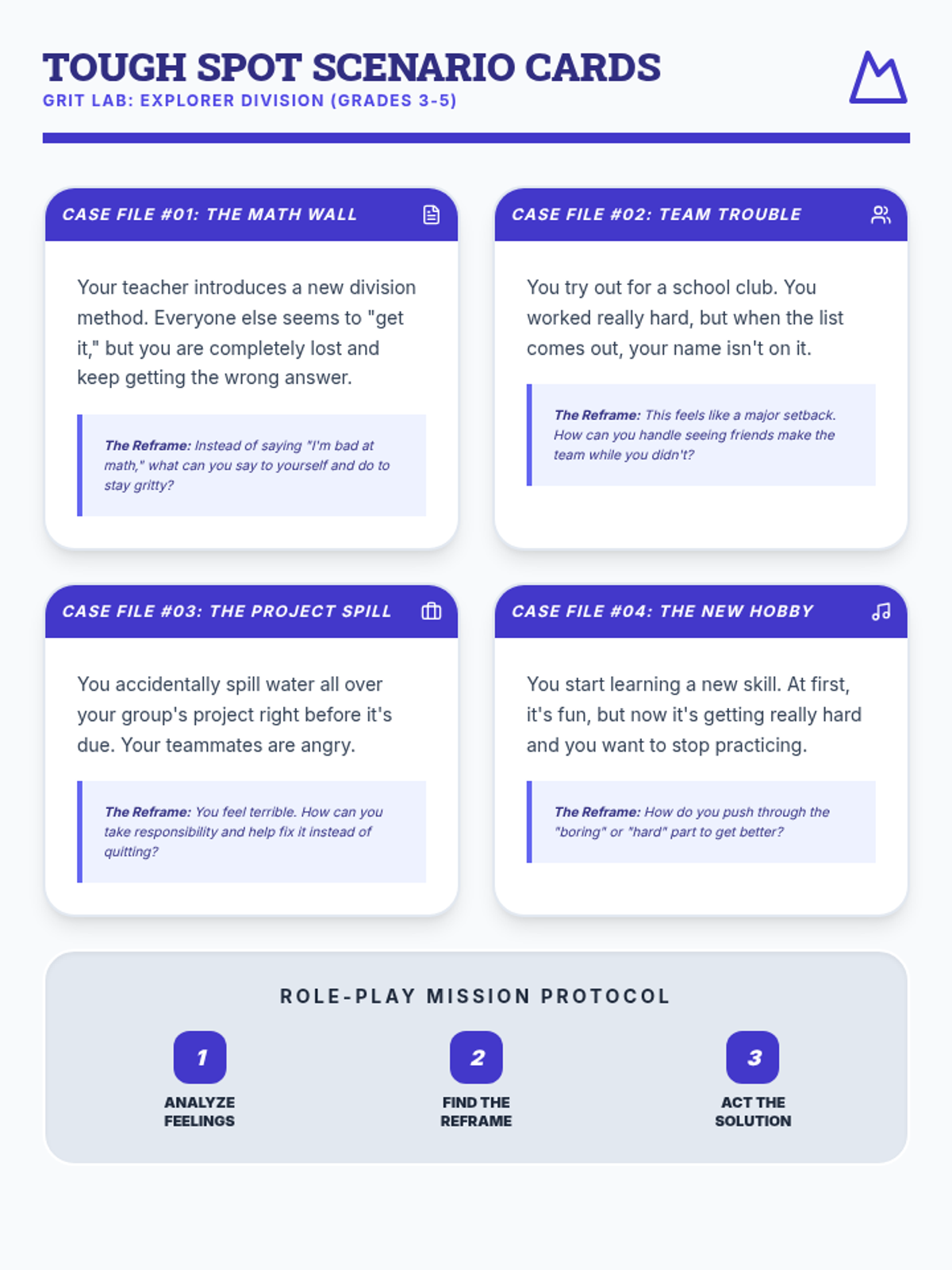
Revised scenario cards for 3rd-5th graders with fluid height containers to ensure no text is truncated. Improved visual design for instructions and consistent card layout. Final revision to fix footer page break and text sizing.
Revised instructional slides for 3rd-5th graders. Added specific role-play scenarios and improved visual balance on Slide 2. Slide 4 now includes actual Lab Challenges for group work.
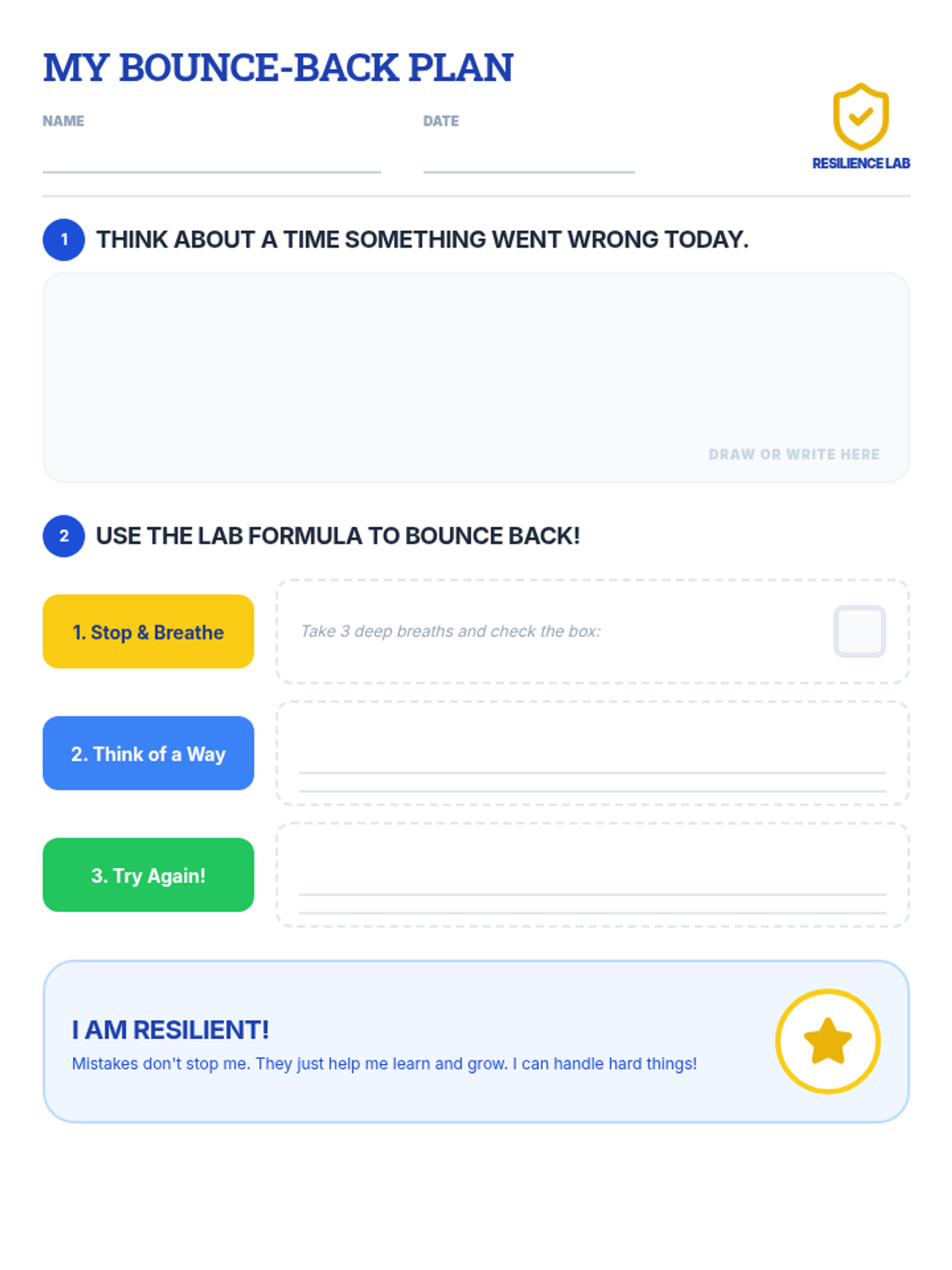
Revised worksheet for 1st-2nd graders with significantly larger student work areas (h-24), a graphic checkbox, and optimized layout to prevent page breaks. Final revision to fix minor spillover and line contrast.
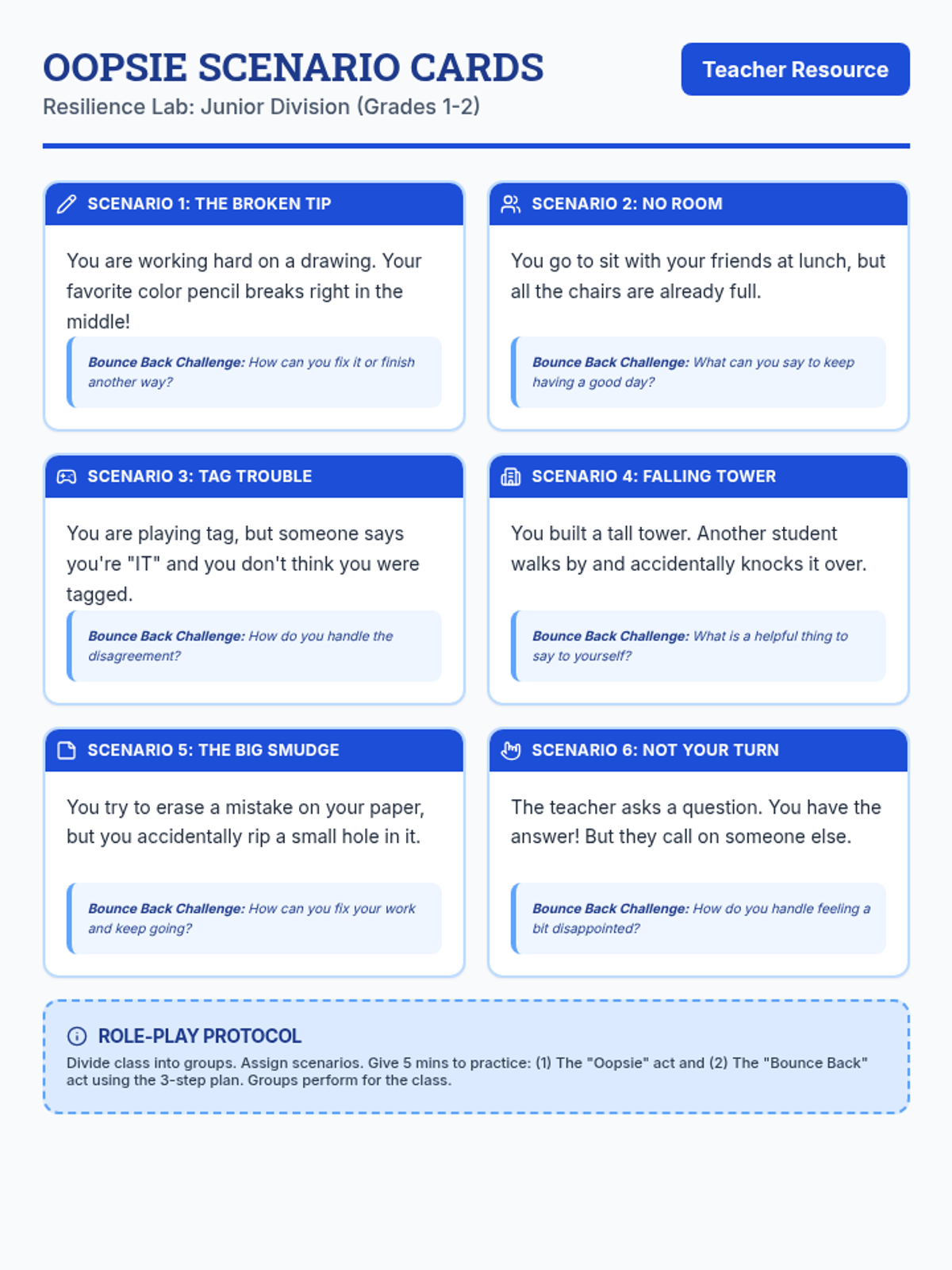
Updated scenario cards for 1st-2nd graders with 6 unique situations and optimized layout to fit on a single page. Fixed truncated text and added variety. Revised to fix footer page break and ensure icon rendering.
Visual presentation for Grades 1-2 introducing resilience through the 'Bounce-Back Plan' with engaging graphics and prompts for group role-play. Revisions include added scenarios and improved contrast.
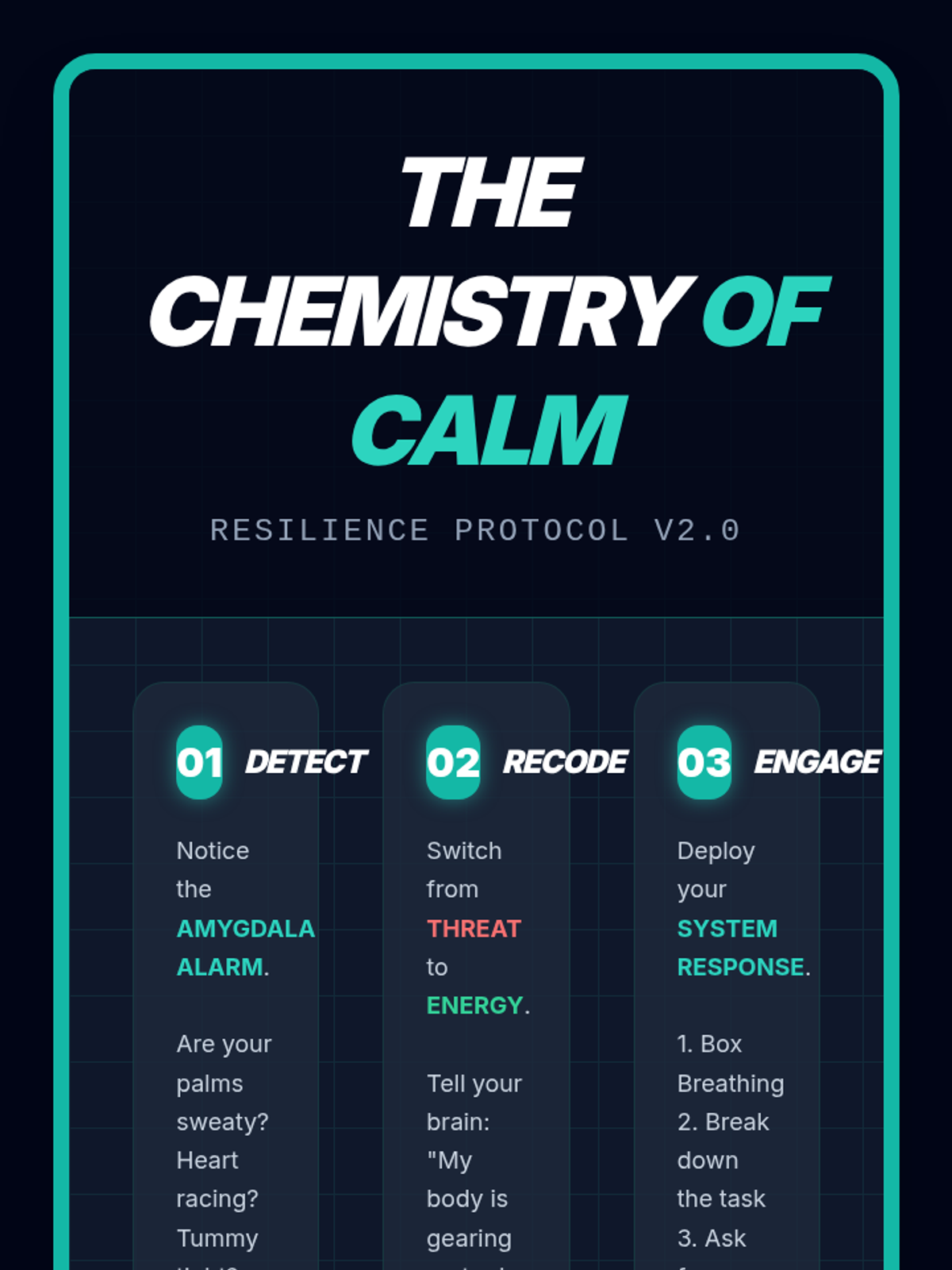
A sleek, high-tech classroom poster for middle school students. Updated to ensure single-page layout, proper word spacing, and high contrast.
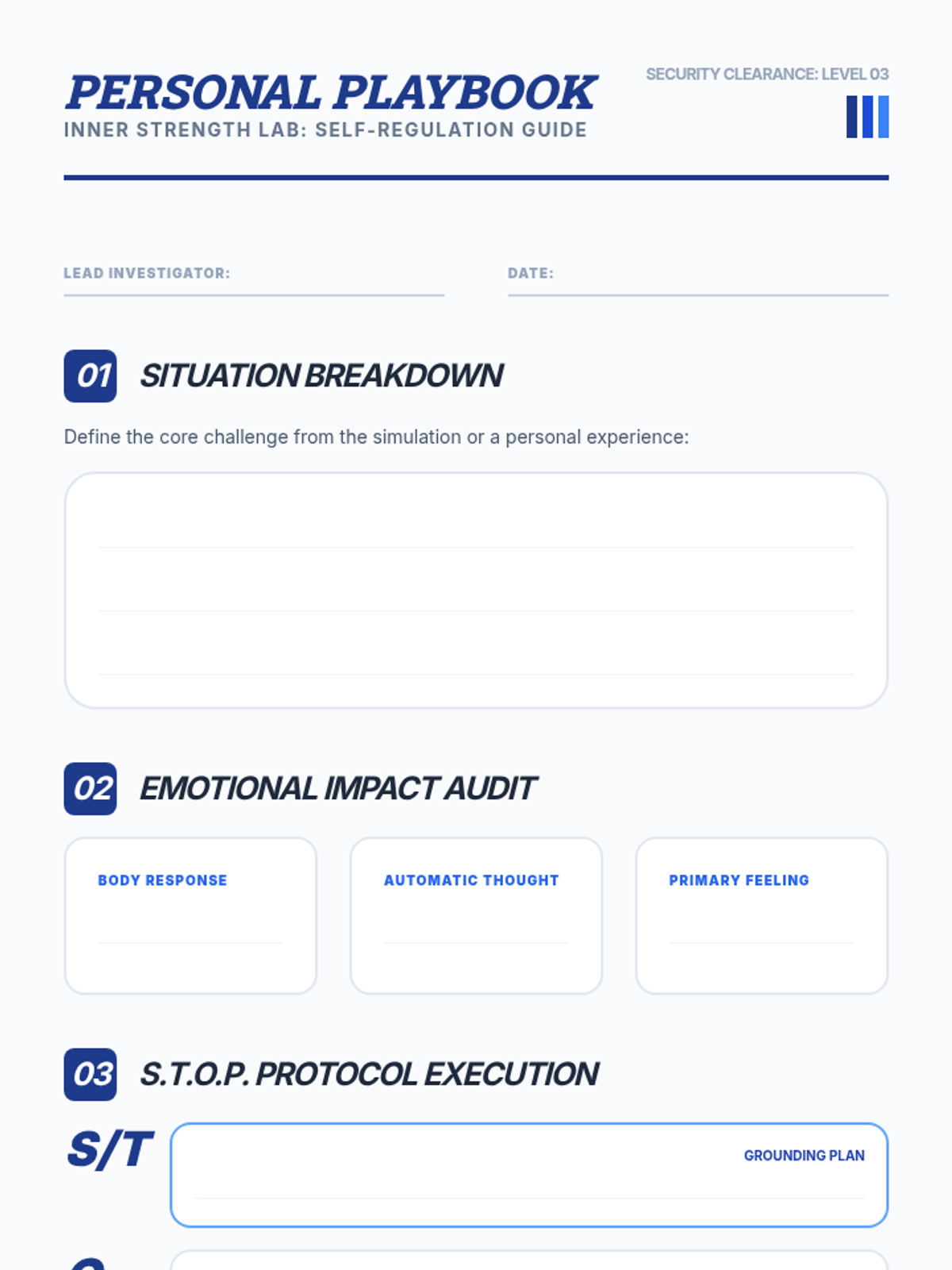
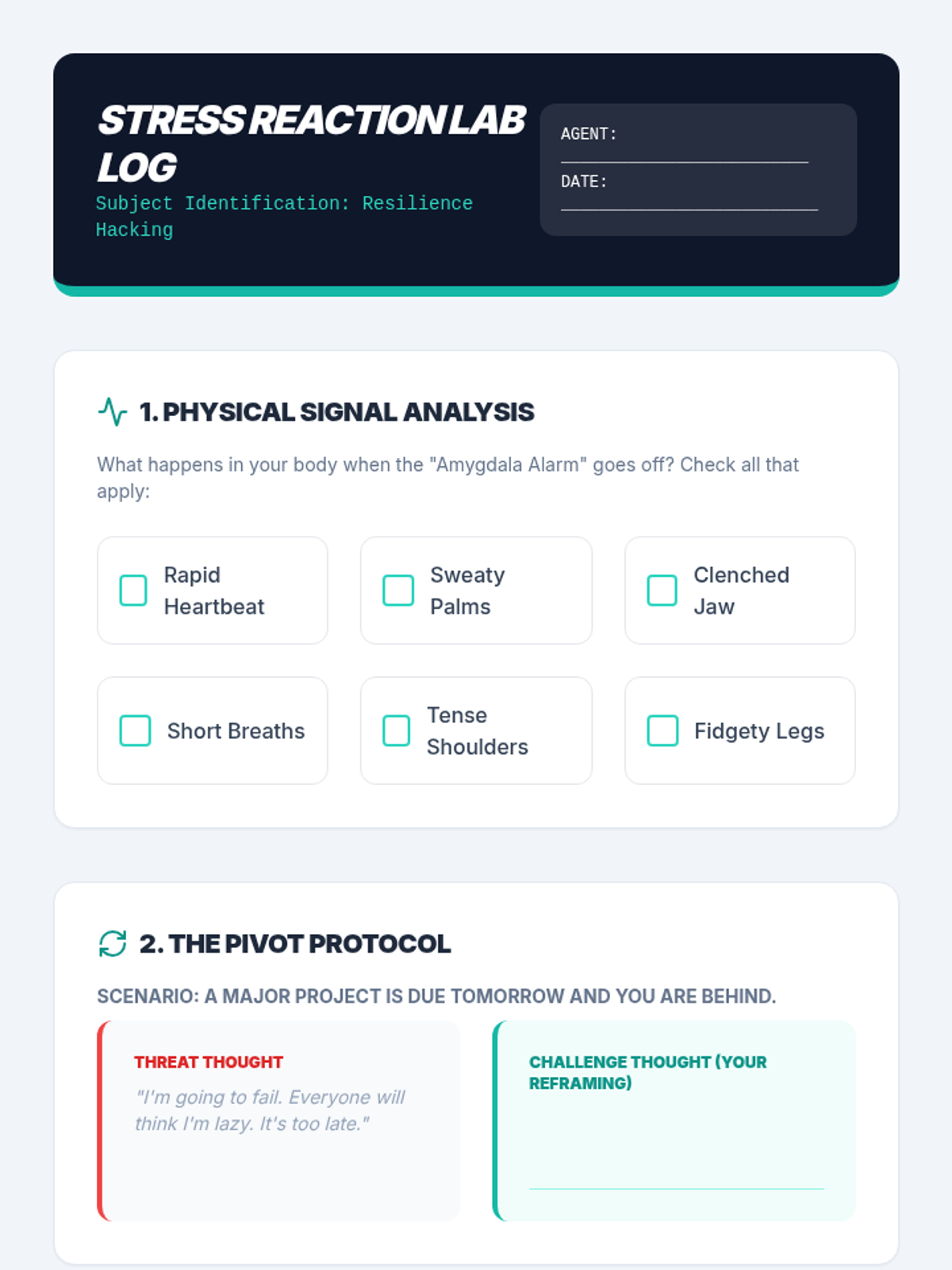
A sophisticated log-style worksheet for middle school students. Updated for single-page layout, better contrast, and larger work areas.
Slides for grades 6-8 exploring the neurobiology of stress. Updated for improved contrast and single-slide layout for the protocol.
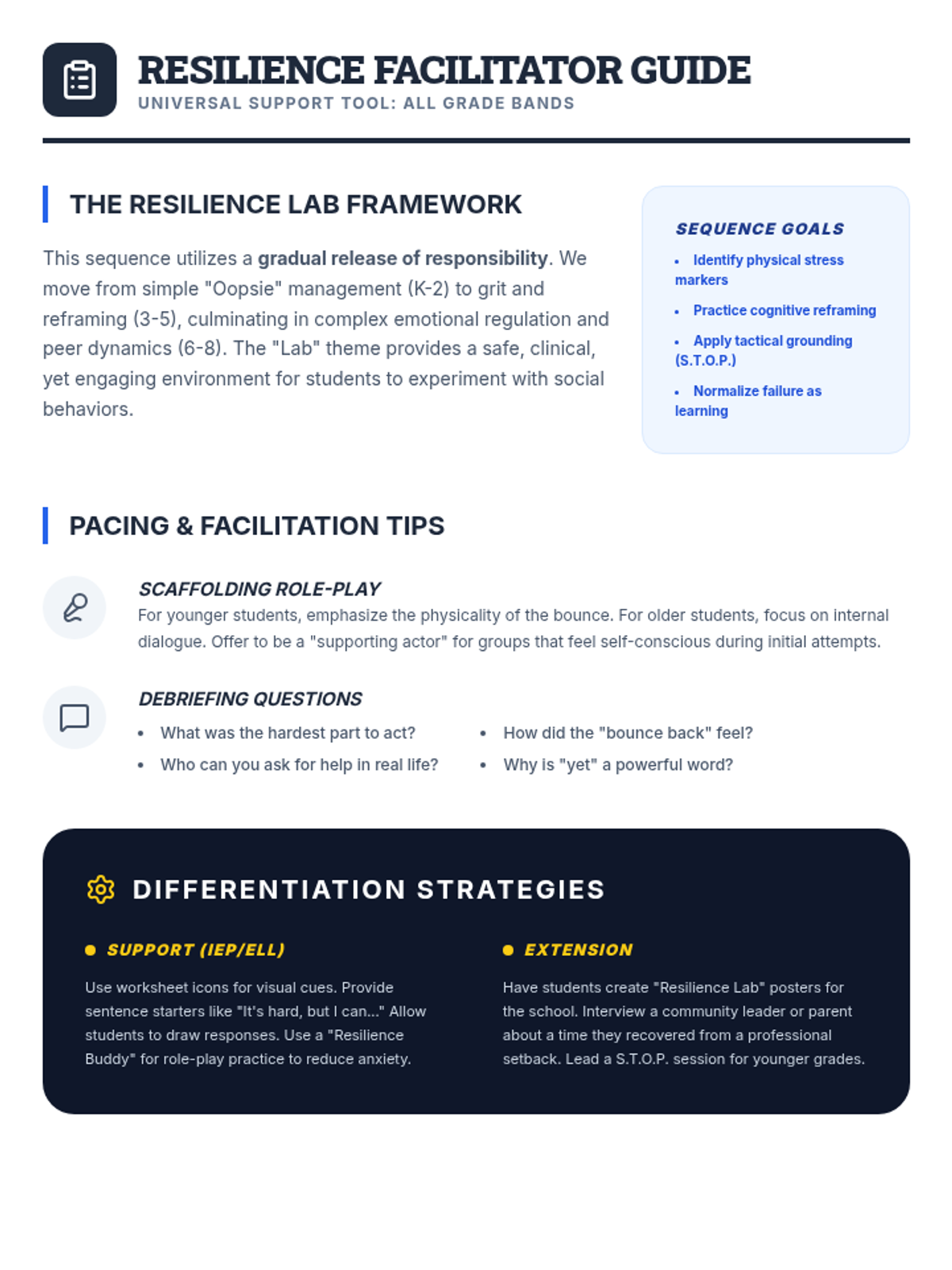
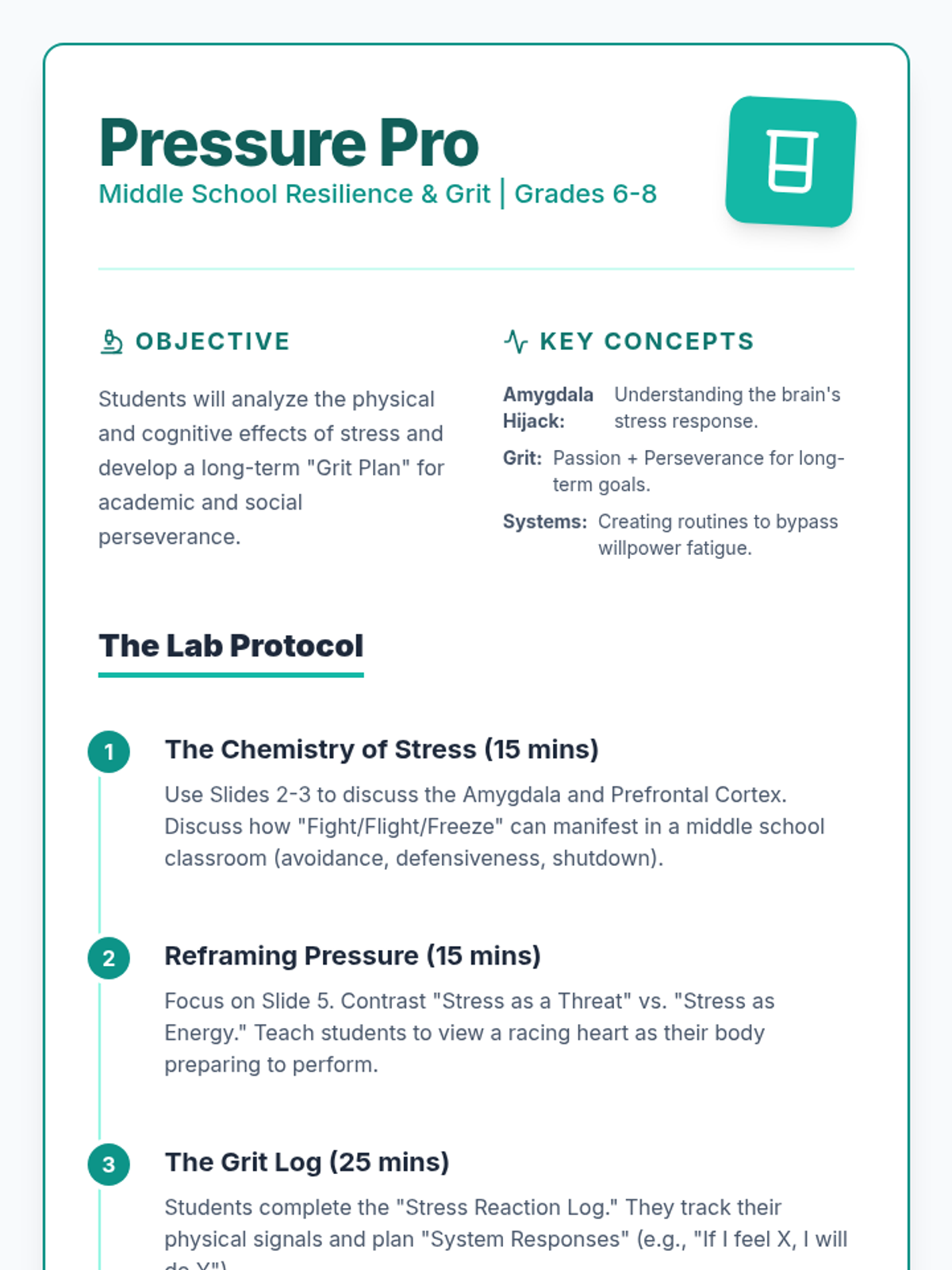
A science-based teacher guide for grades 6-8. Updated for single-page layout and improved content alignment.
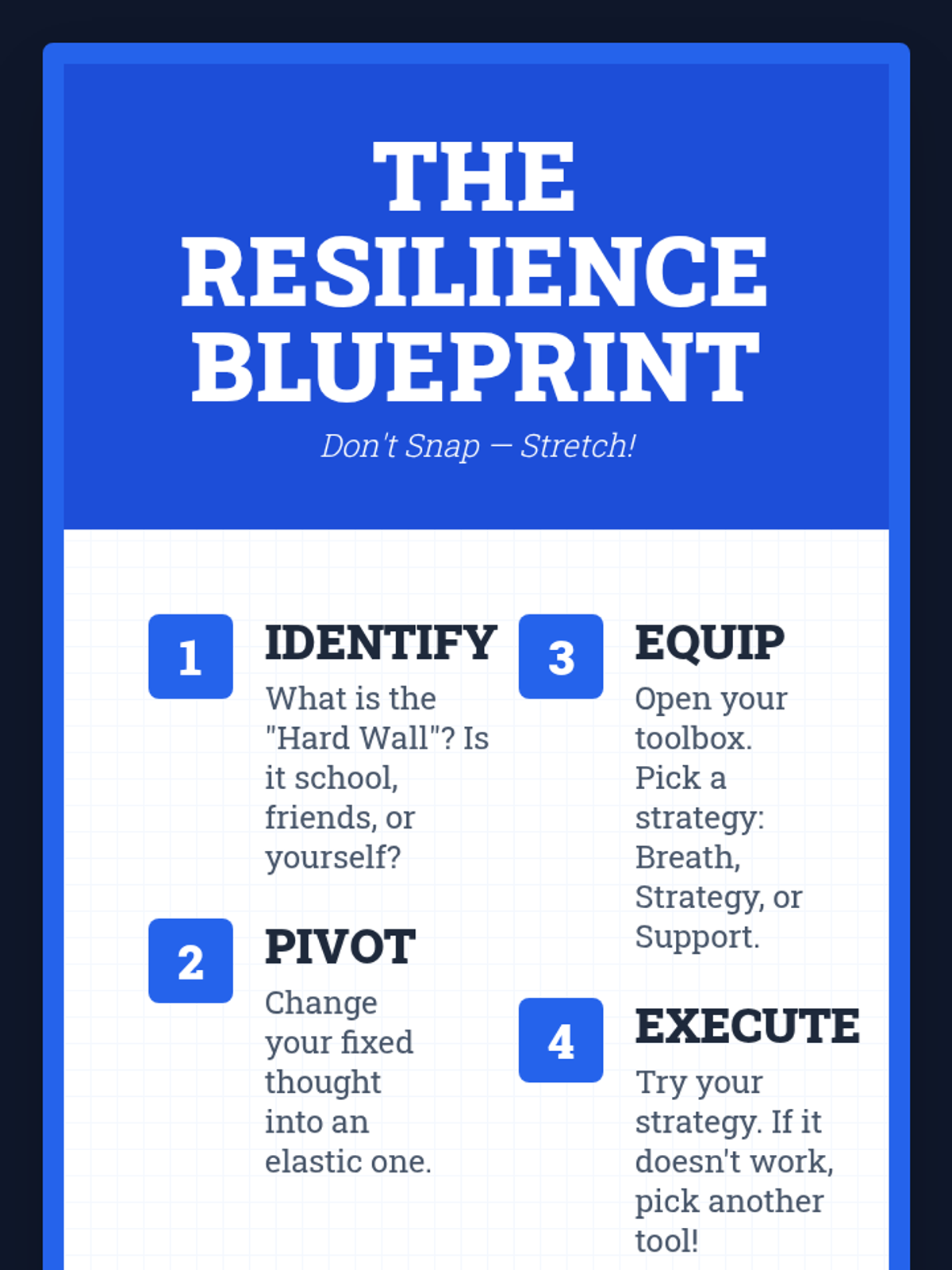
A structured blueprint-style poster for grades 3-5. Updated for single-page layout and improved icon/text scaling.
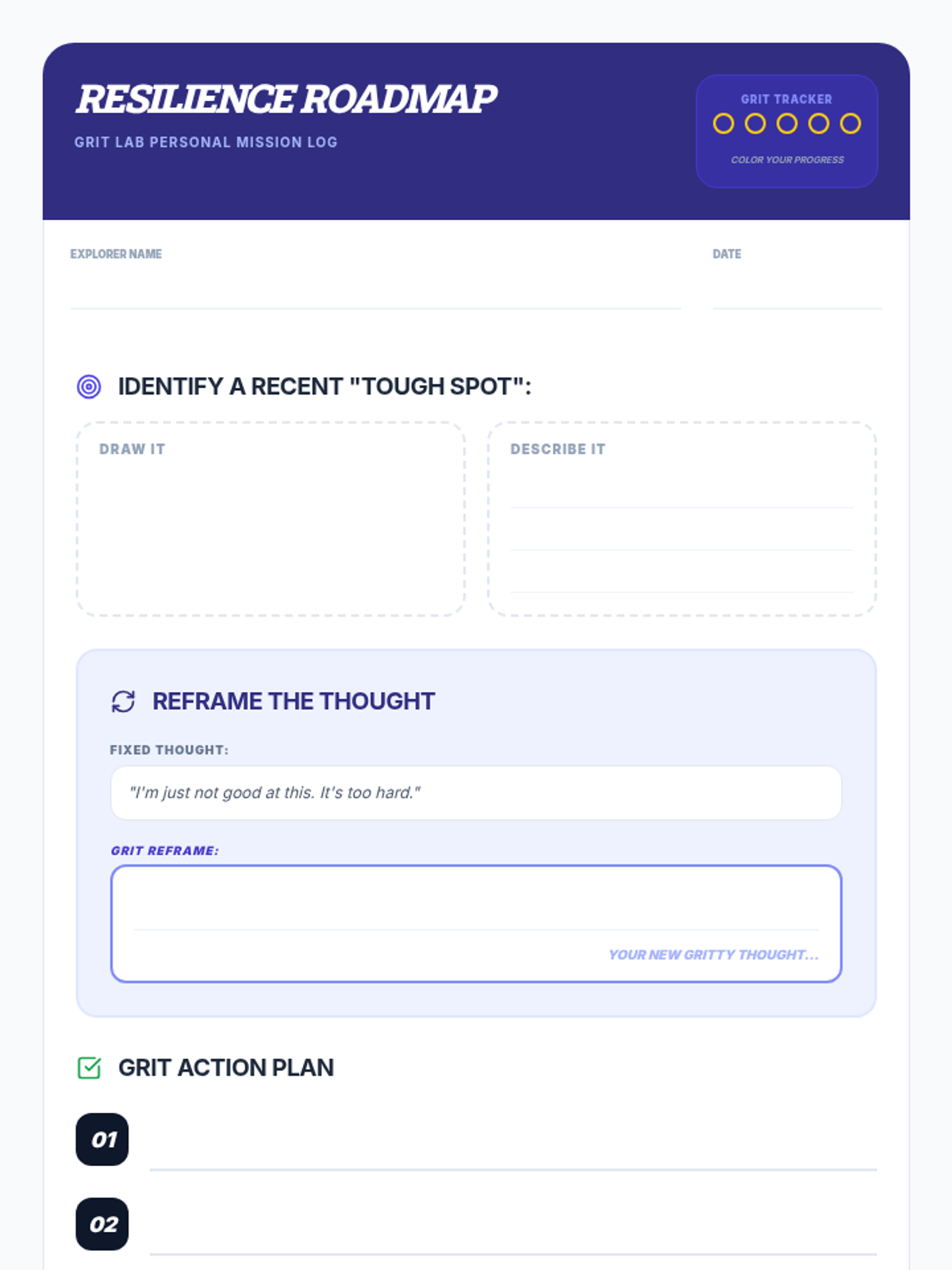
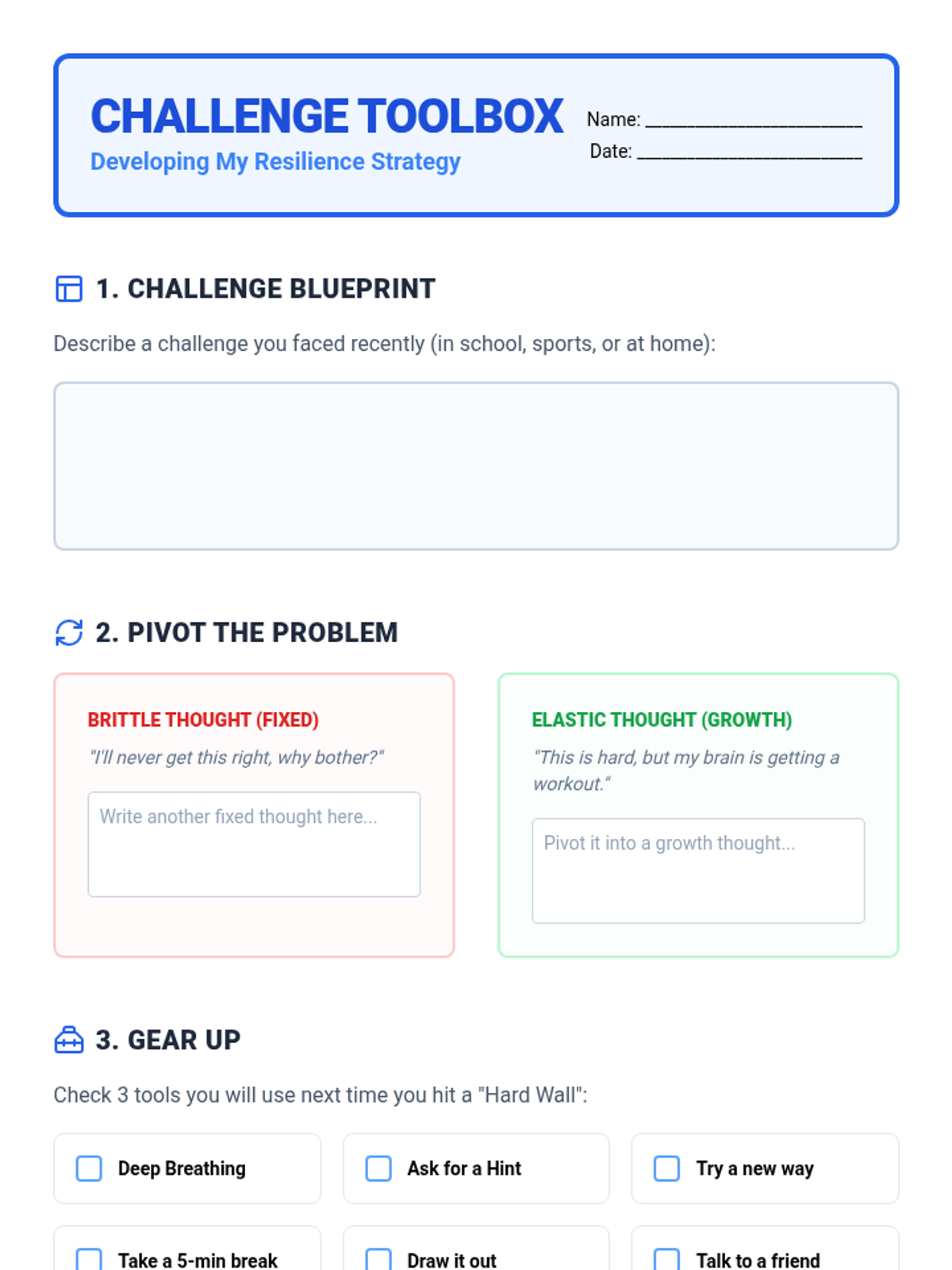
A strategy-focused worksheet for students in grades 3-5. Updated for single-page layout, white work areas, and cleared placeholders.
Slides for grades 3-5 that use an engineering metaphor for resilience. Updated for high contrast and readability.
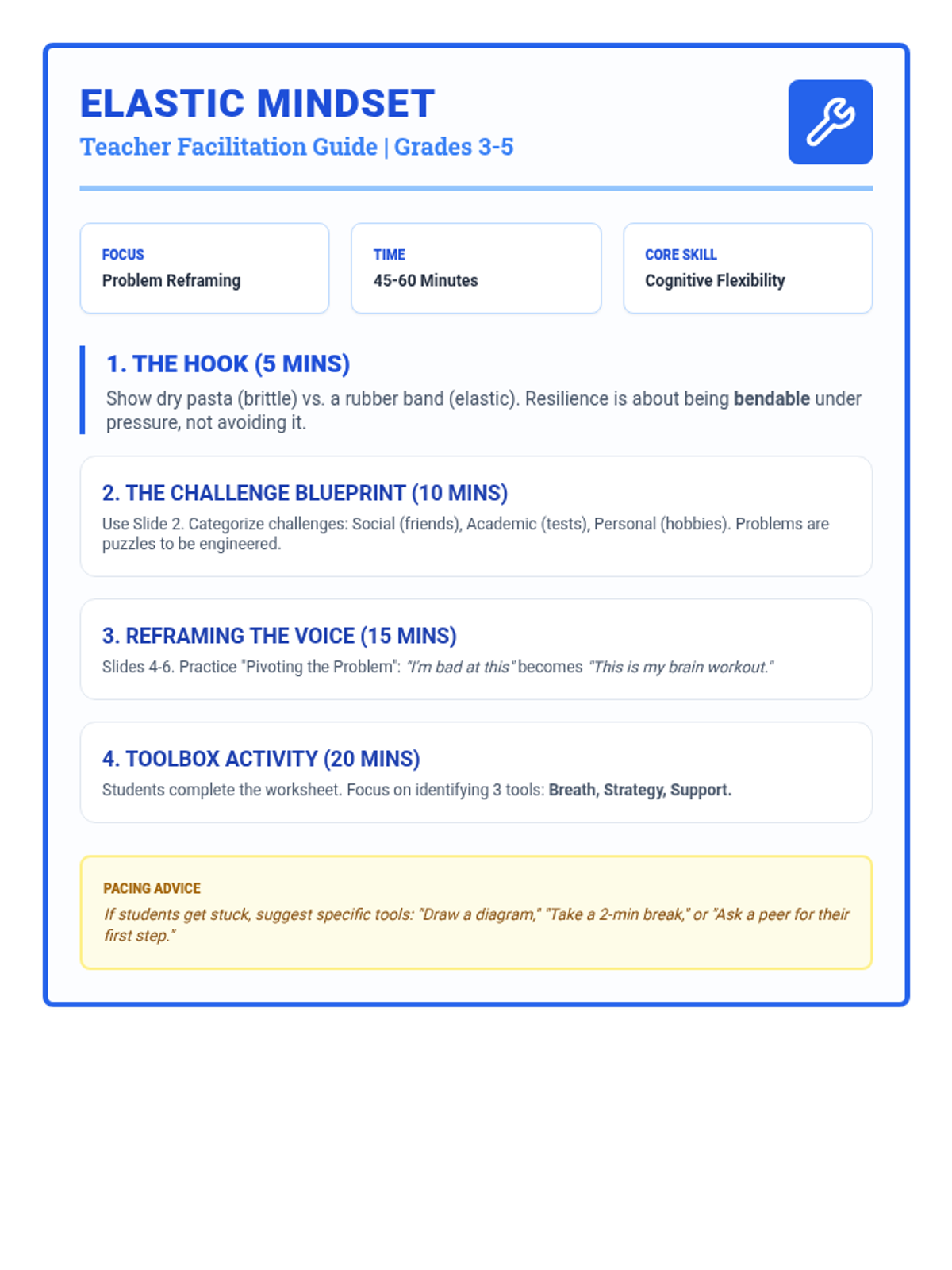
A teacher-facing lesson plan for grades 3-5 focusing on resilience. Updated for single-page optimization and better visual flow.
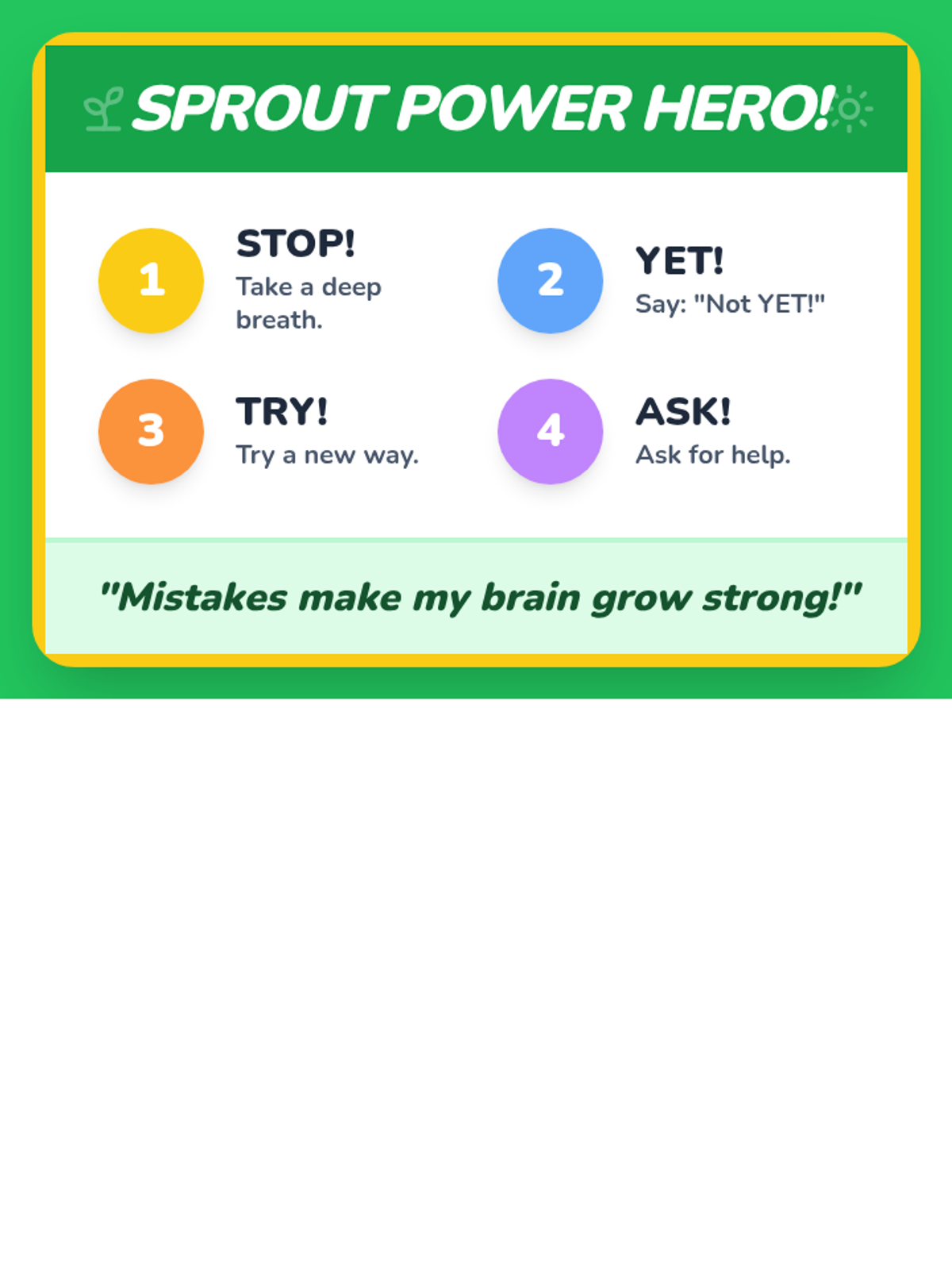
A vibrant classroom anchor chart for K-2 students. Updated to ensure single-page layout and improved contrast/spacing.
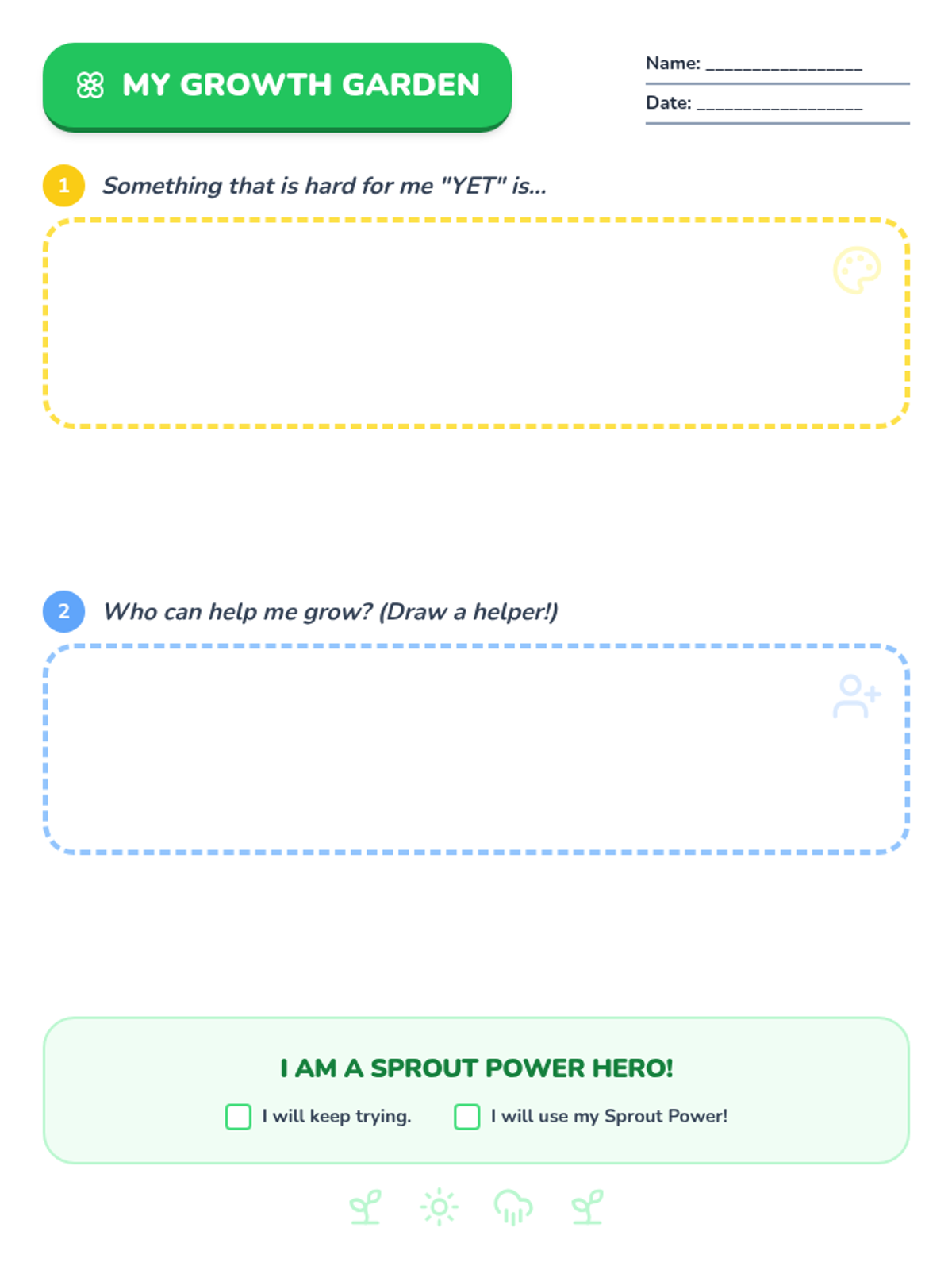
A creative drawing and writing worksheet for K-2 students. Updated to ensure single-page layout and improved contrast.
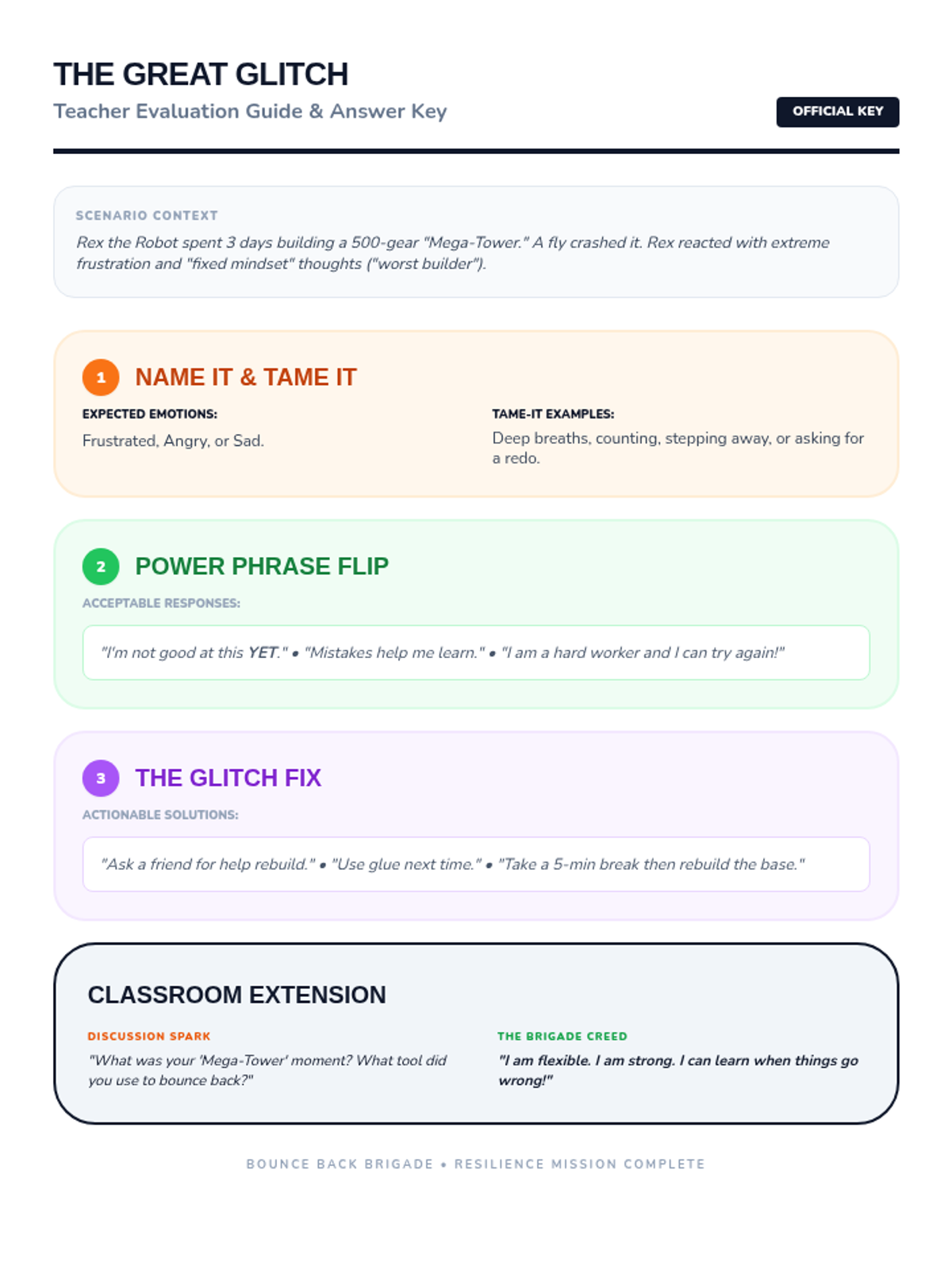
An answer key and teacher evaluation guide for 'The Great Glitch' worksheet, providing example responses and a grading philosophy focused on the process of resilience.
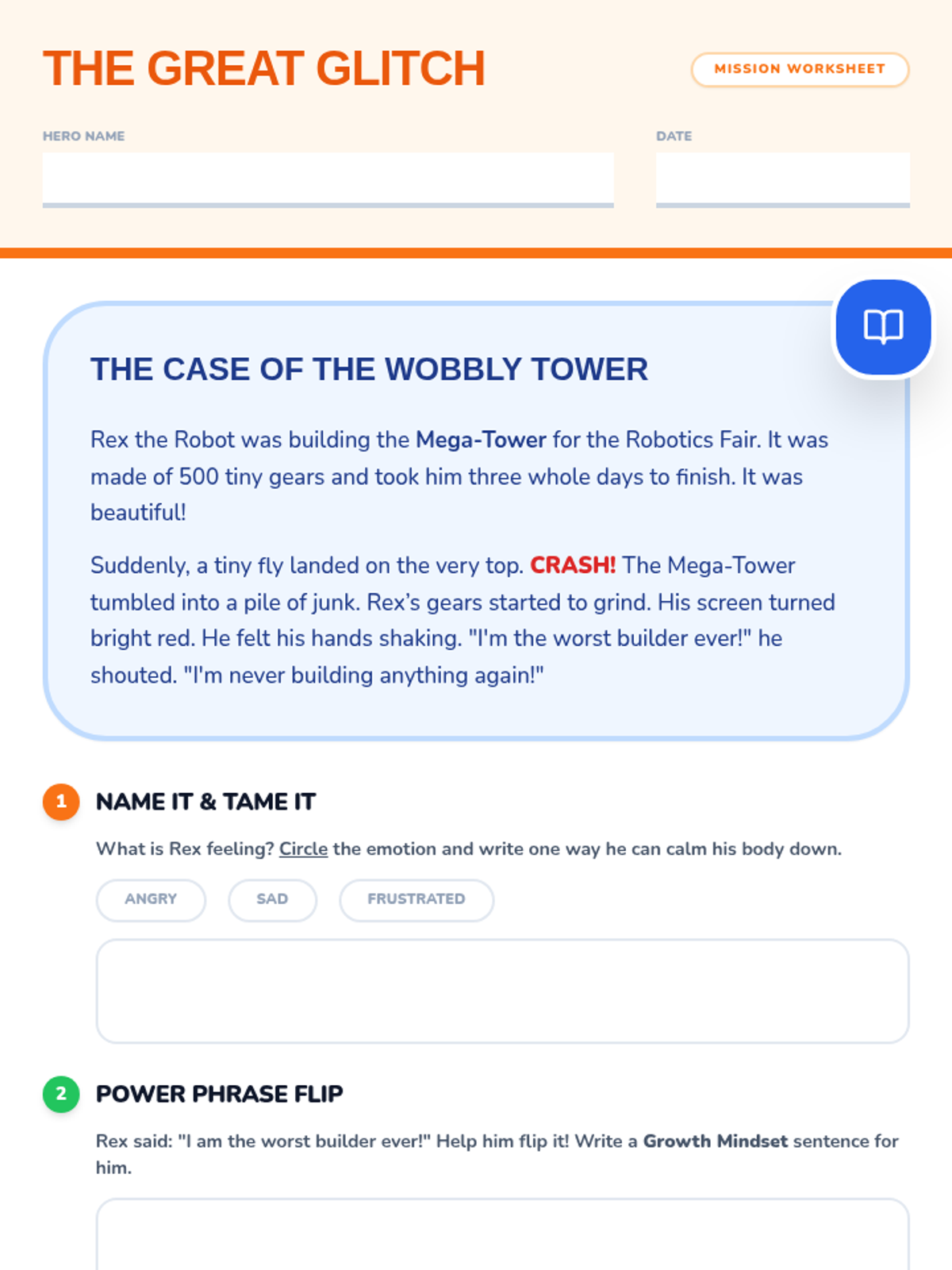
A story-based worksheet featuring 'Rex the Robot' who faces a major setback. Students apply resilience skills—emotional naming, positive self-talk, and problem-solving—to help the character bounce back.
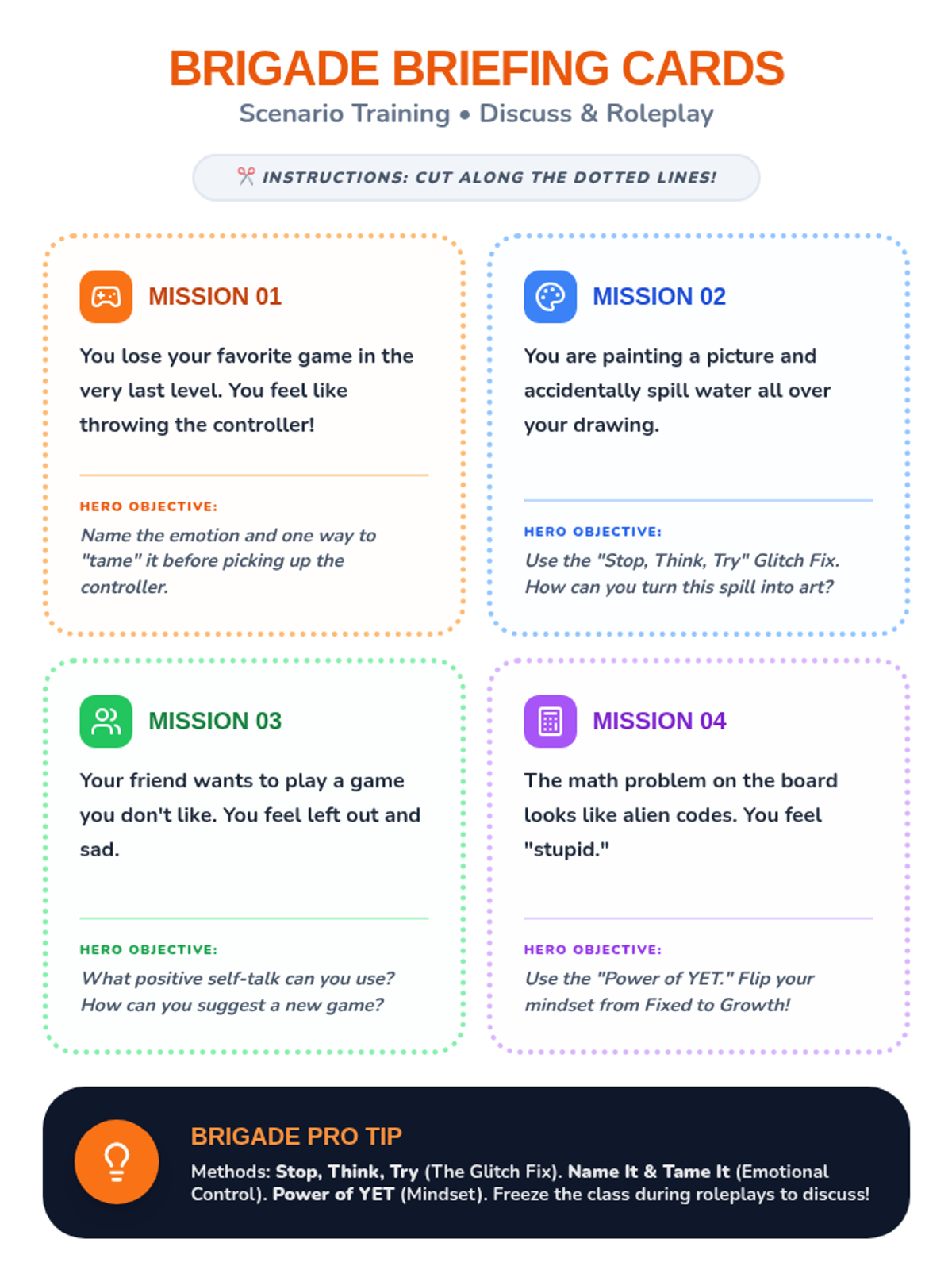
A set of 4 interactive discussion cards featuring relatable scenarios for elementary students to practice resilience skills like 'Name It/Tame It', the 'Power of YET', and the '3-Step Glitch Fix'.
A visual slide deck for elementary students teaching the core concepts of resilience, including growth mindset, emotional regulation (Name It/Tame It), positive self-talk, and a 3-step problem-solving framework.
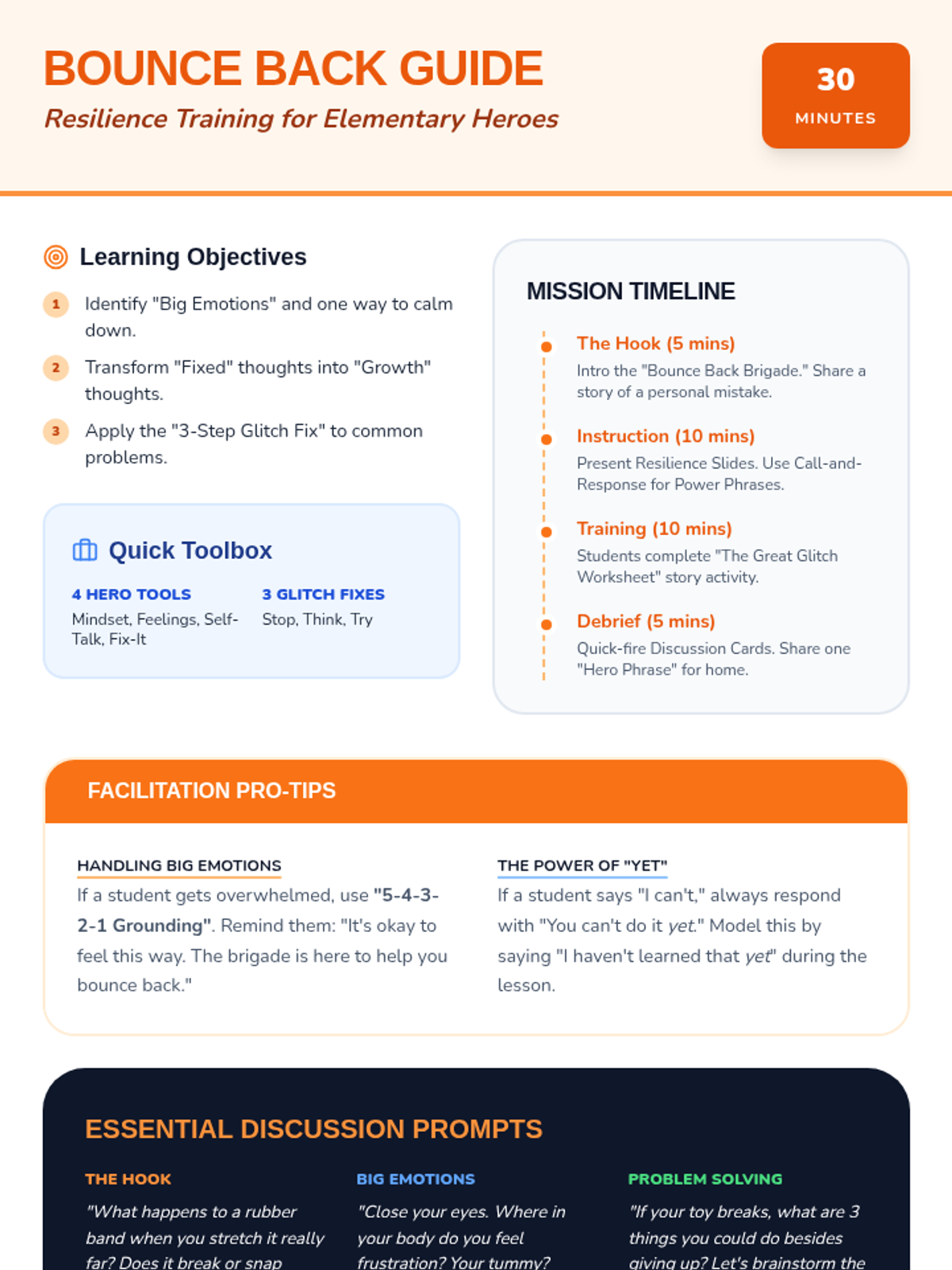
A comprehensive teacher lesson plan for the 'Bounce Back Brigade' resilience lesson, featuring a 30-minute timeline, learning objectives, and facilitation scripts focusing on growth mindset and emotional regulation.
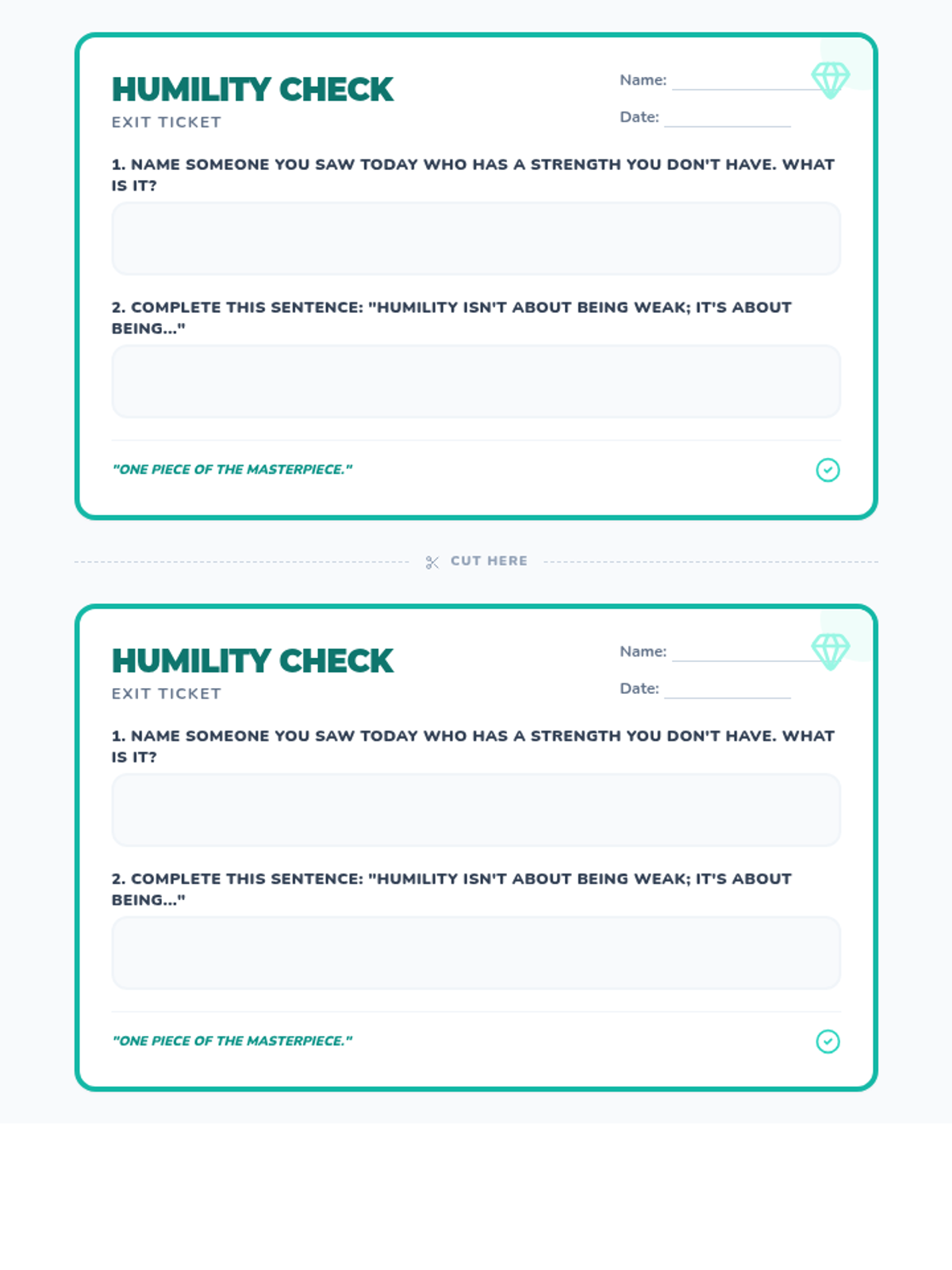
A quick exit ticket for students to demonstrate understanding of humility and their ability to recognize strengths in others.
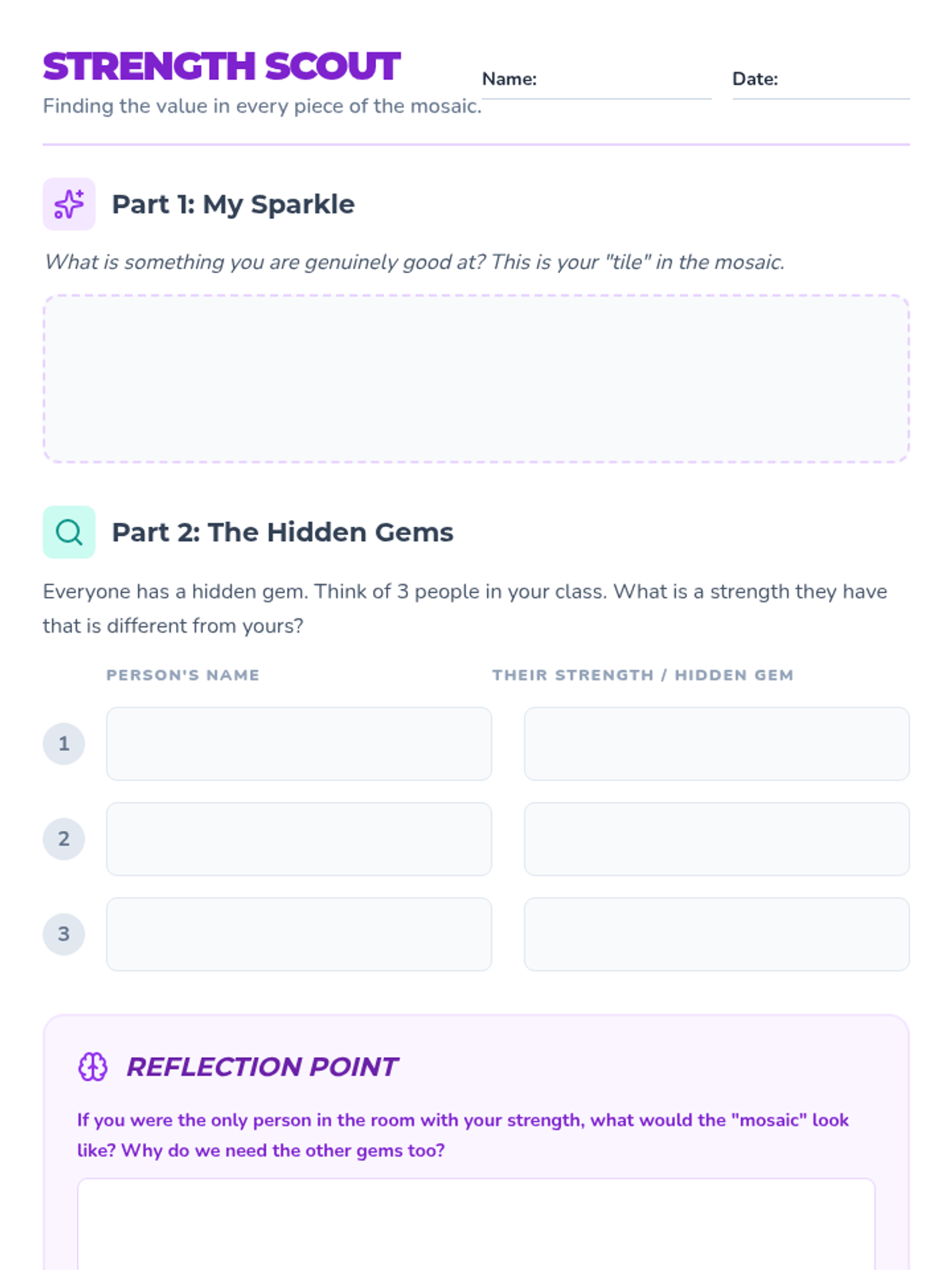
An individual self-assessment and strengths-spotting worksheet designed to help students recognize their own value while actively finding and valuing the strengths of their peers.
Engaging visual slides for the Mosaic Masterpiece lesson, introducing the concept of humility through the metaphor of a mosaic.
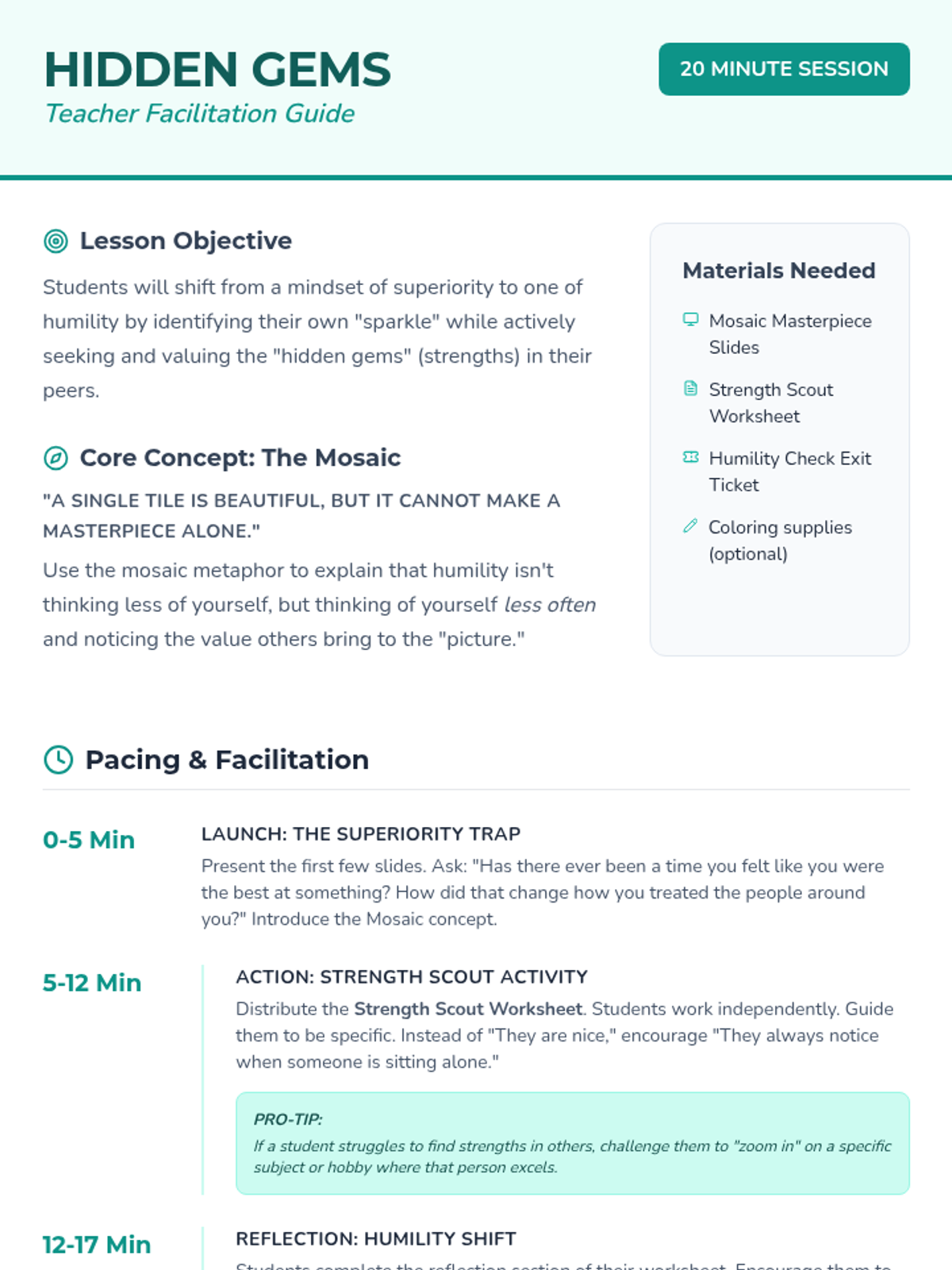
A comprehensive facilitation guide for the Mosaic Masterpiece lesson, including objective, pacing, and discussion prompts.
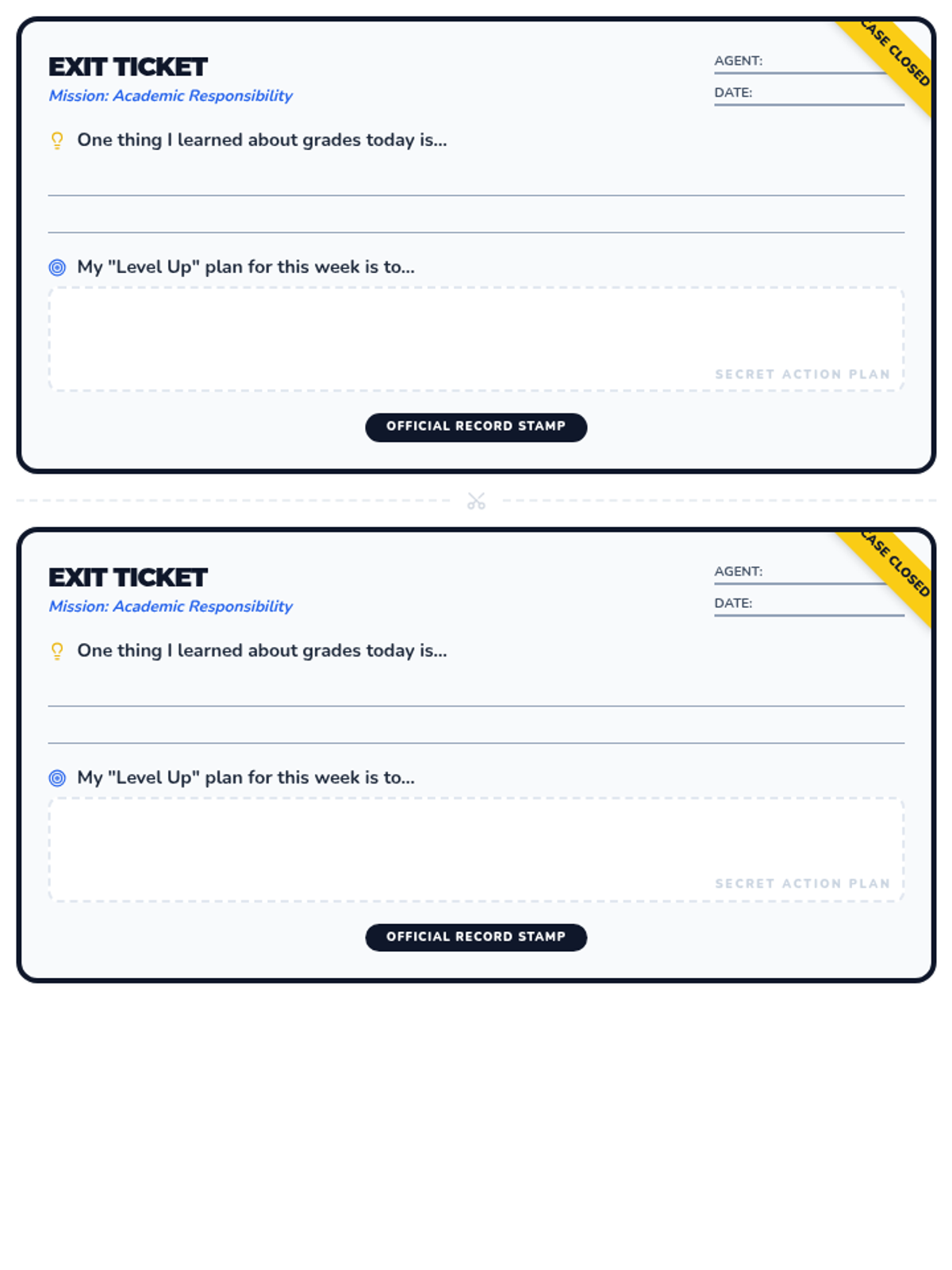
A printable exit ticket (2-per-page) for the Grade Detectives lesson, allowing students to reflect on their learning and commit to a specific action plan for academic responsibility.
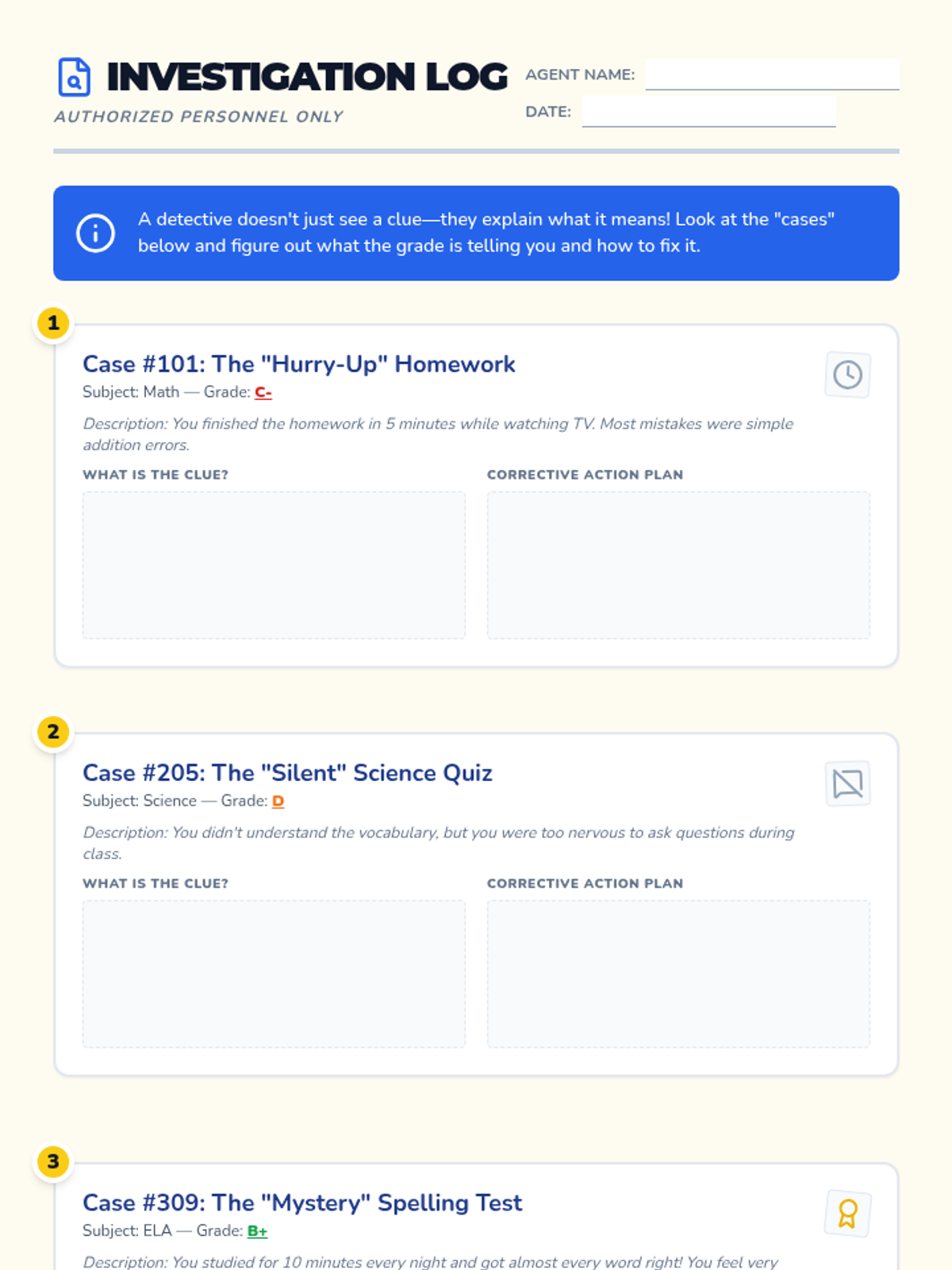
A detective-themed worksheet where students analyze hypothetical grading scenarios to practice identifying the feedback (clues) within grades and planning corrective actions.
Visual presentation slides for the Grade Detectives lesson, using a detective theme to explain academic responsibility, growth mindset, and how to use grades as feedback.
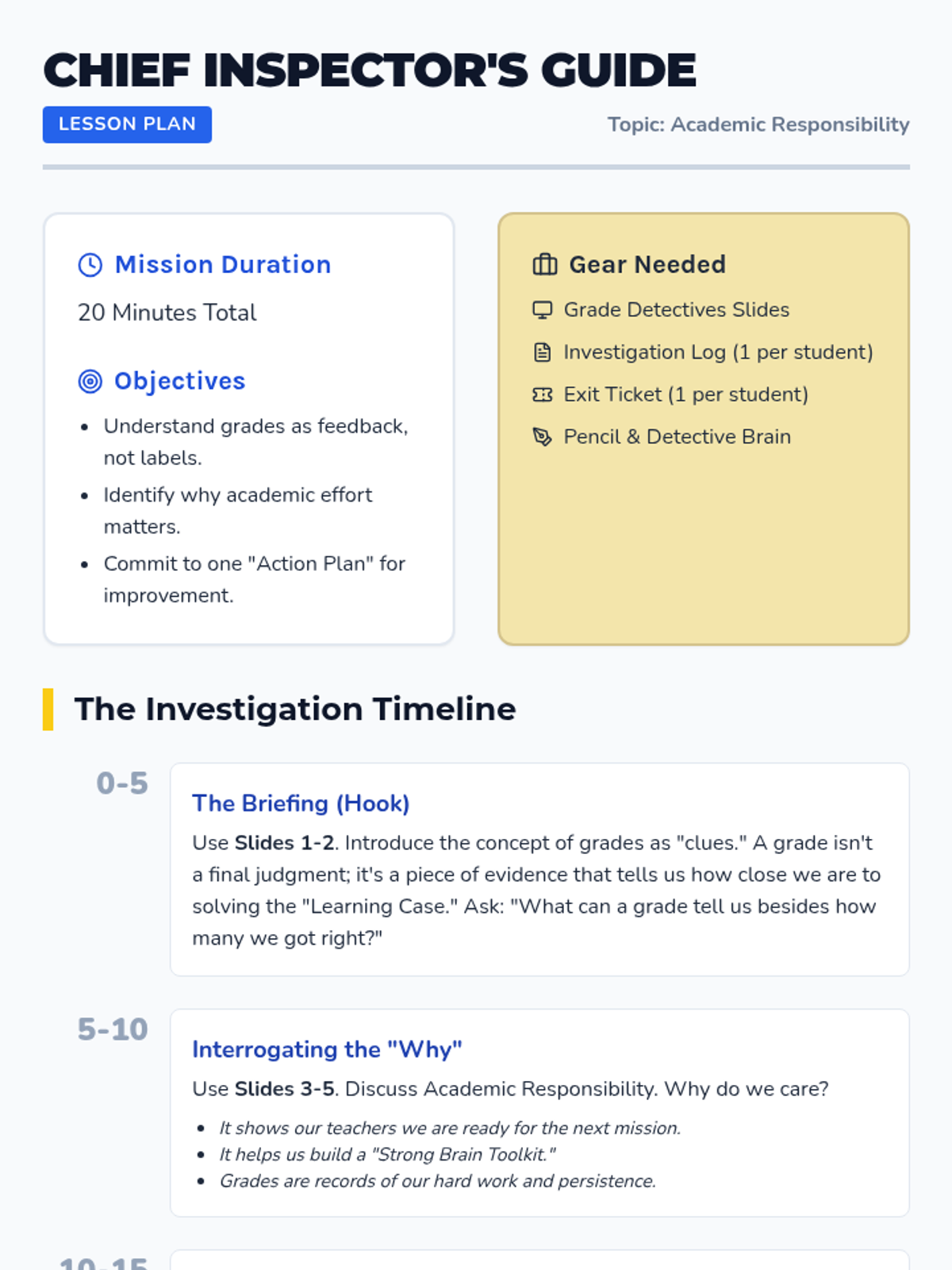
A detailed teacher's guide for the Grade Detectives lesson, outlining the 20-minute timeline, objectives, and instructional tips for fostering academic responsibility.
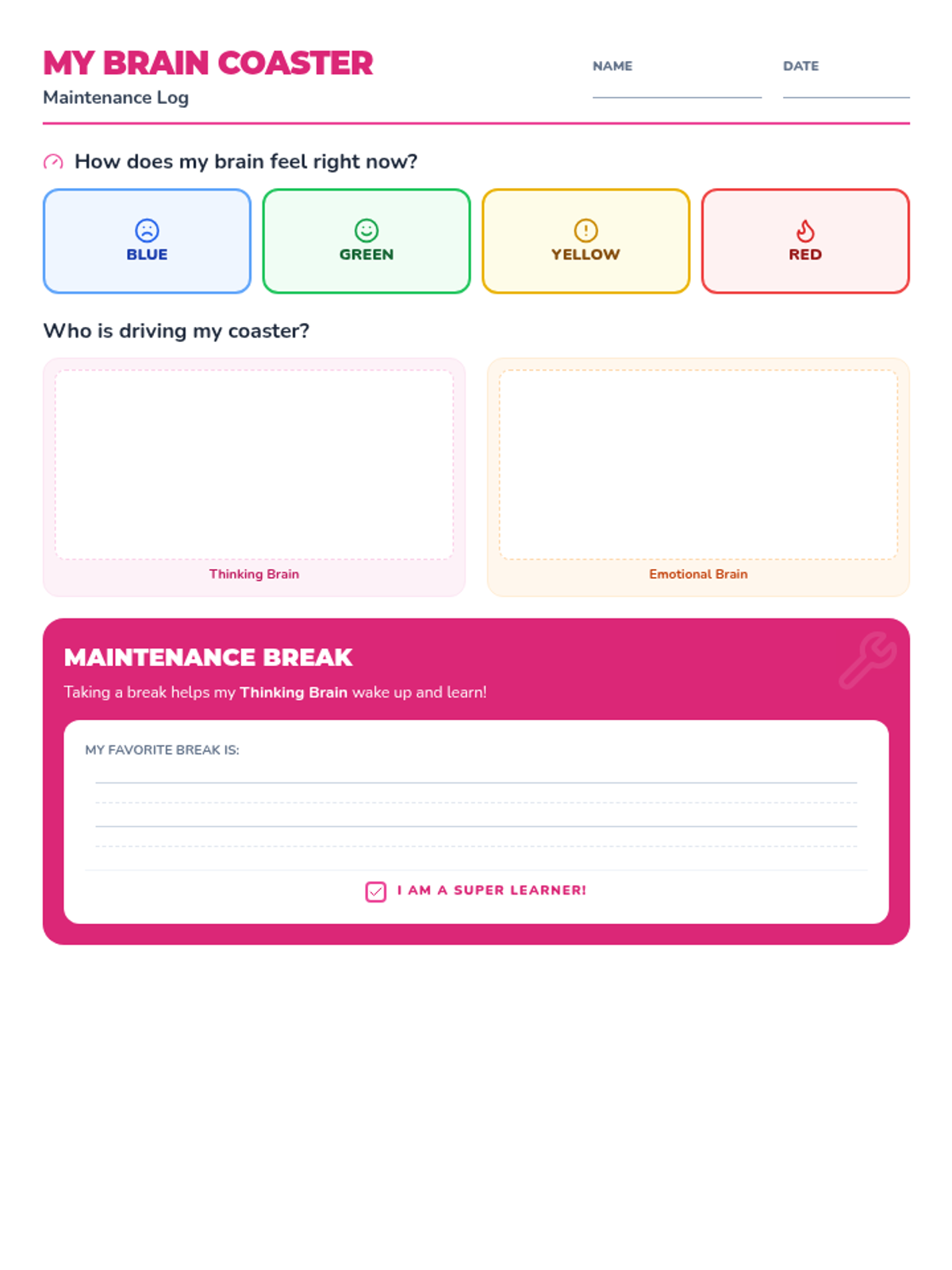
A student-facing worksheet using the rollercoaster theme to help students identify their current zone and plan a 'maintenance break' to re-engage their thinking brain. Features visual icons for 1st-grade support and improved handwriting spaces. Optimized for single-page print.
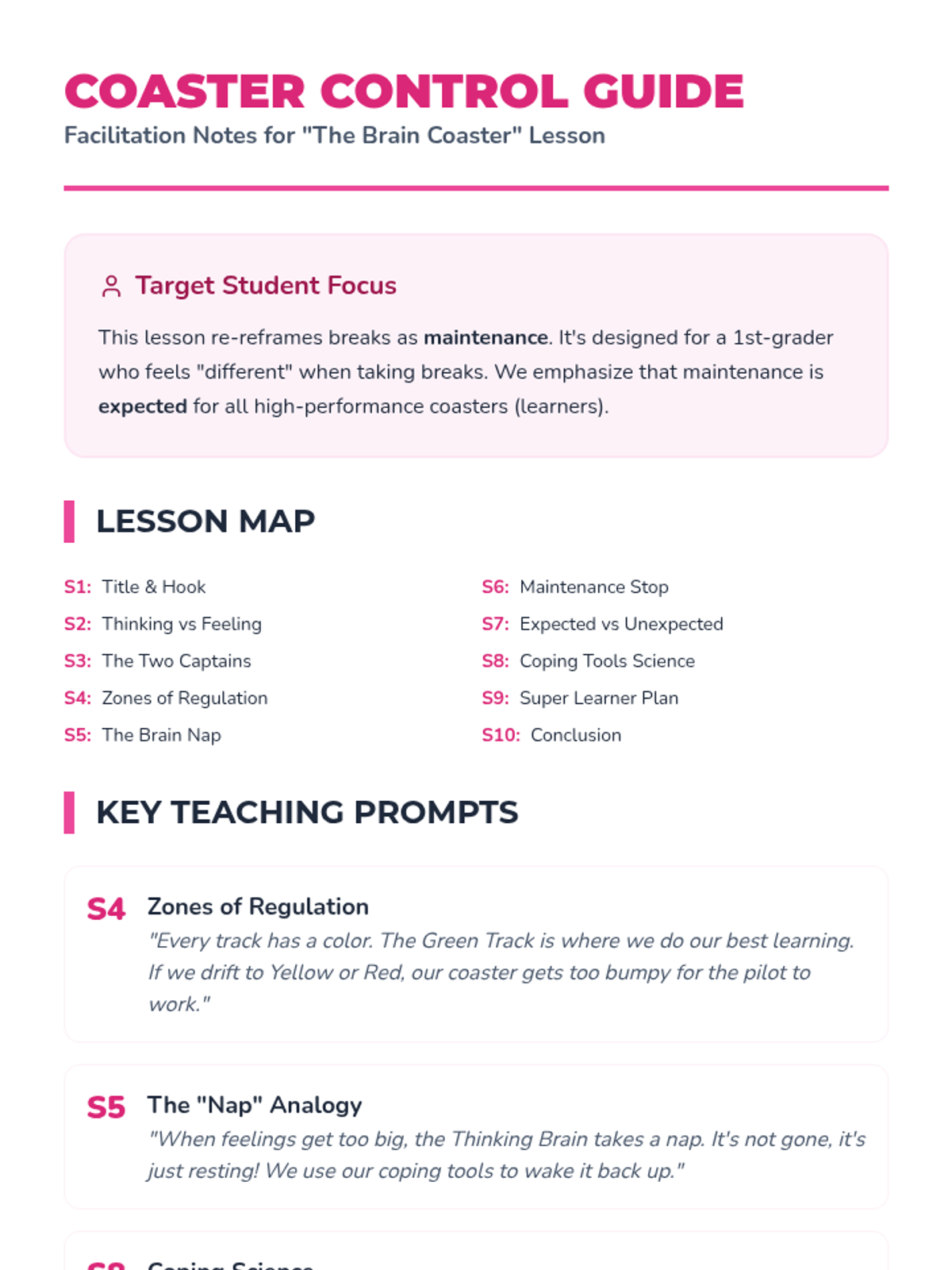
Updated teacher facilitation guide for the Brain Coaster lesson. Includes updated breathing technique terminology and consistent terminology for brain captains.
Updated visual slide deck using a pink rollercoaster theme to explain the science of brain regulation. Features "Ball Breathing" coping skill and removed pilot references from the conclusion. Added an exclamation point to the Super Learner Plan.
A visually bright and engaging slide deck for 1st graders to learn about self-esteem, featuring the "Inner Sun" concept and classroom activities.
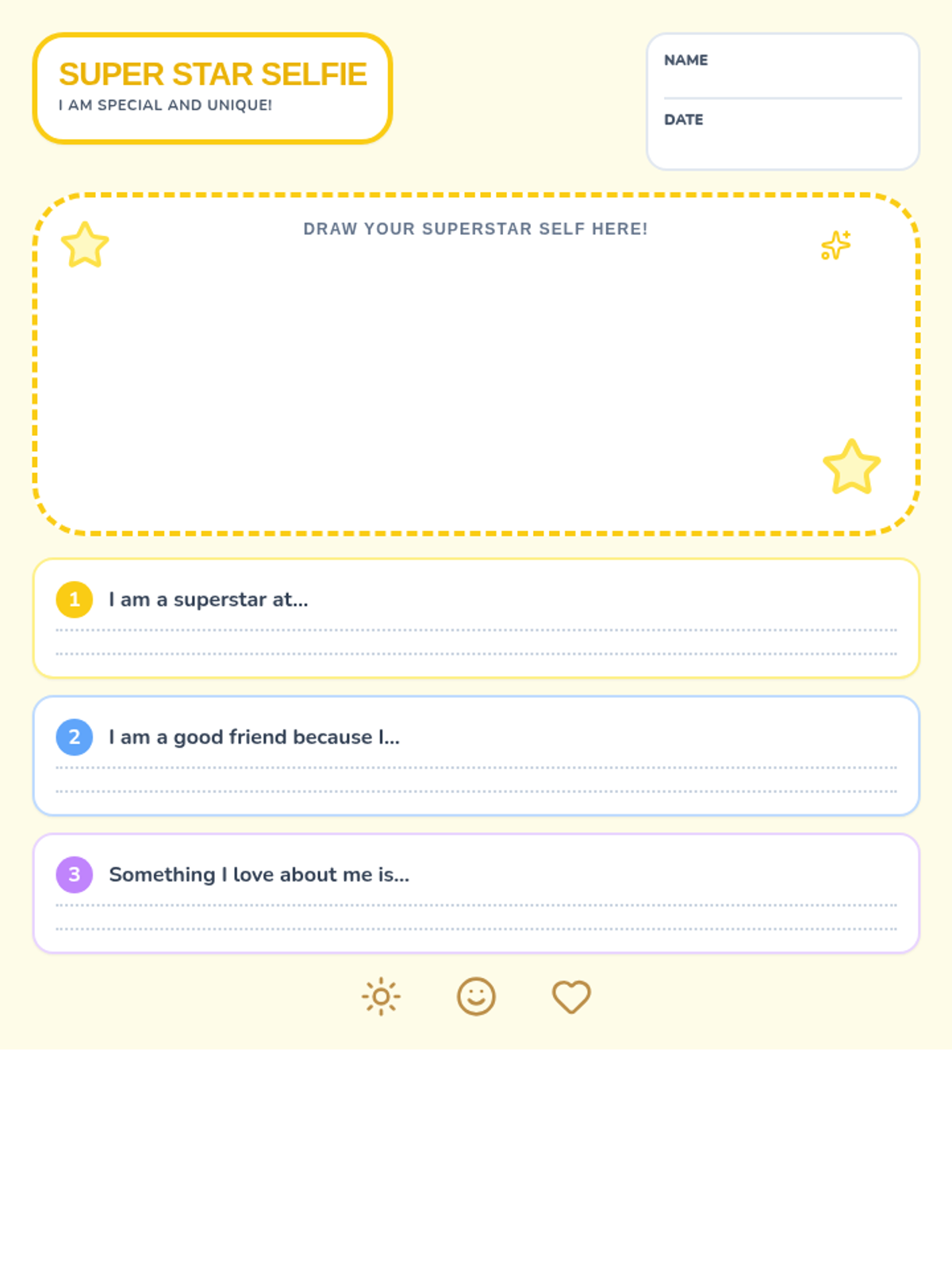
An engaging 1st-grade worksheet where students draw a "superstar selfie" and complete prompts about their strengths and positive traits.
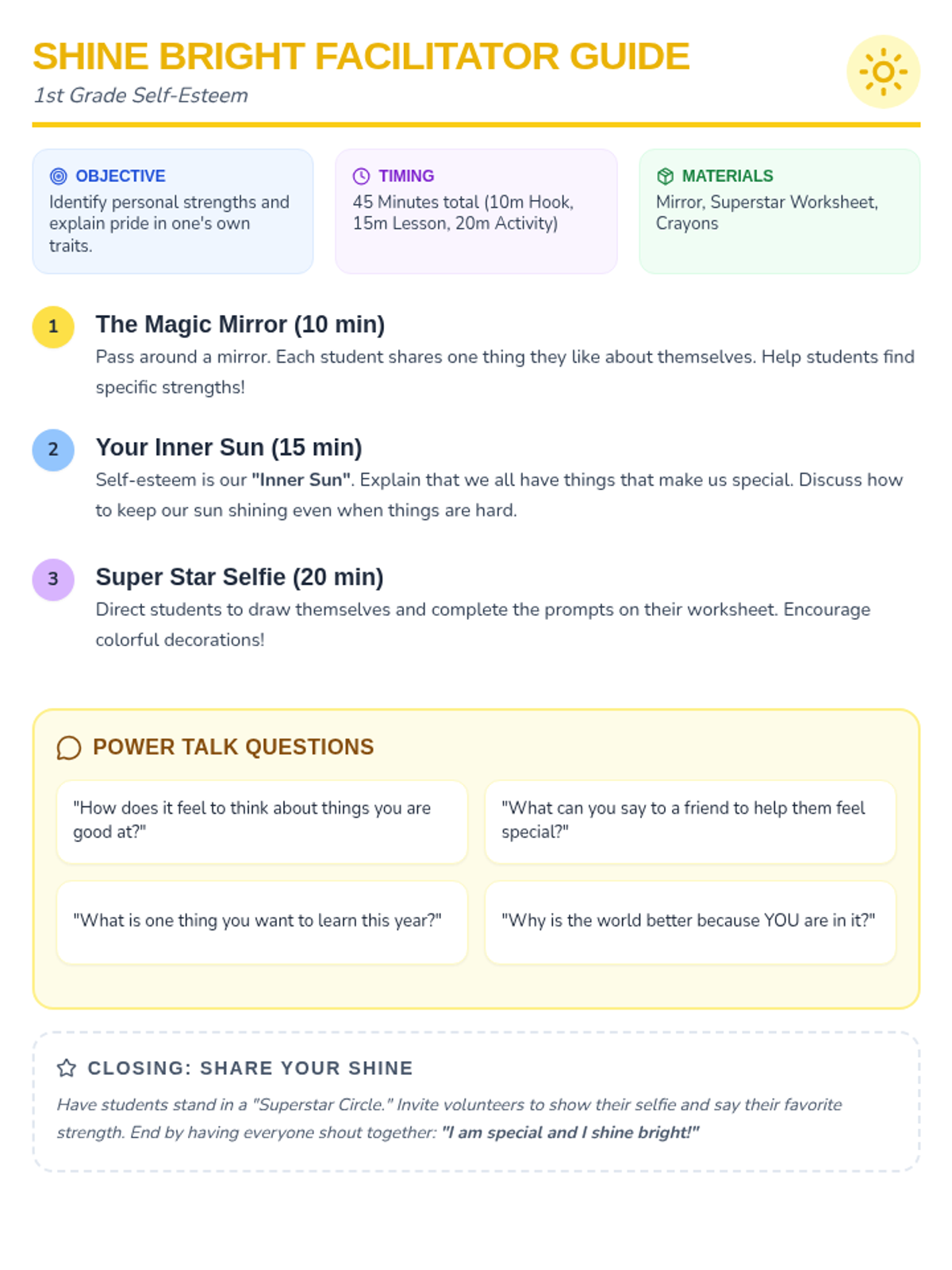
A comprehensive teacher's guide for a 1st-grade self-esteem lesson, featuring a "Magic Mirror" hook, clear instructional steps, and discussion prompts.
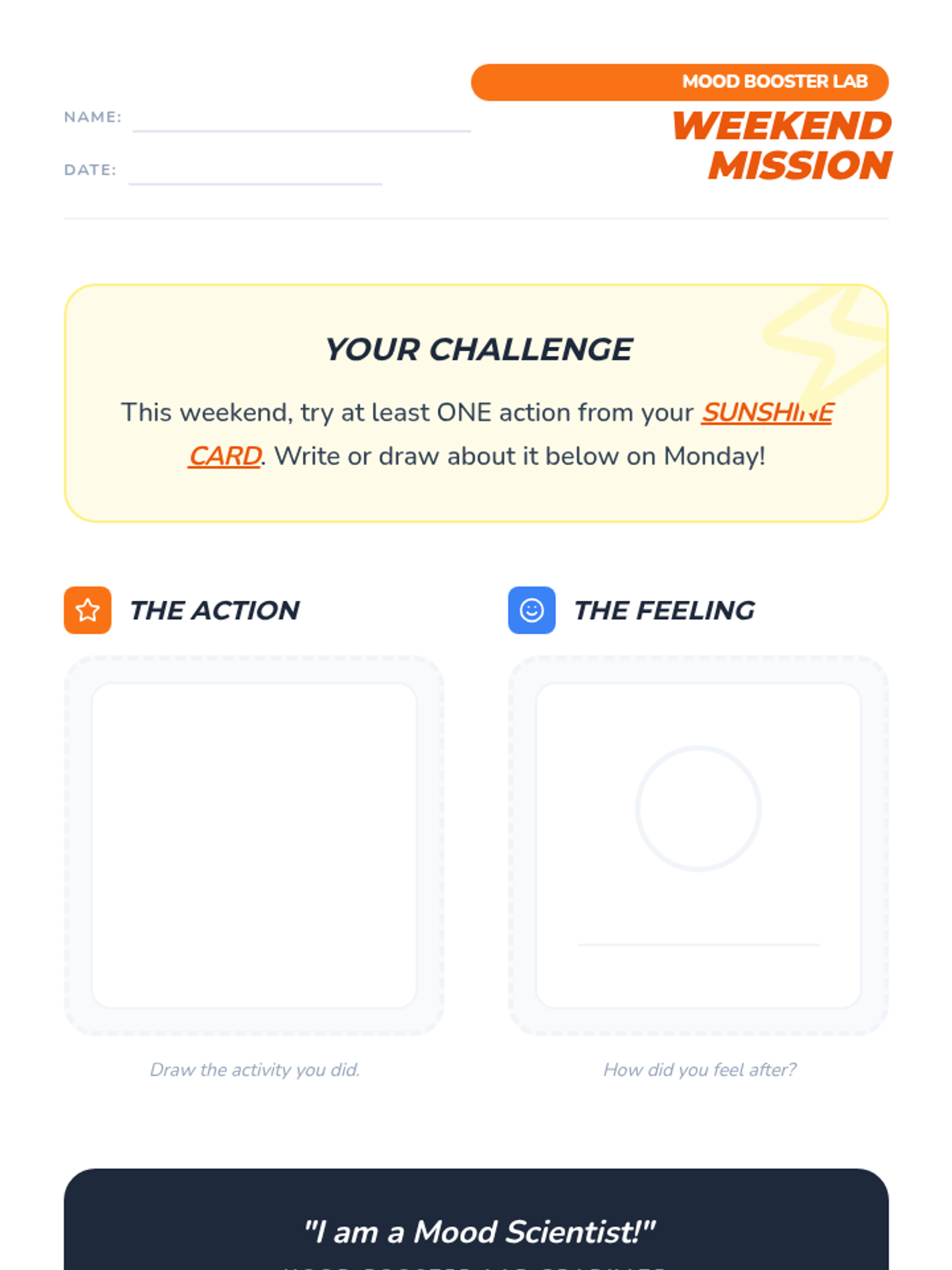
A weekend homework log for students to track their mood-boosting activity and reflect on their emotional state.
Instructional slides for Lesson 3: Designing the Sunshine Kit, guiding students through the decoration and curation process.
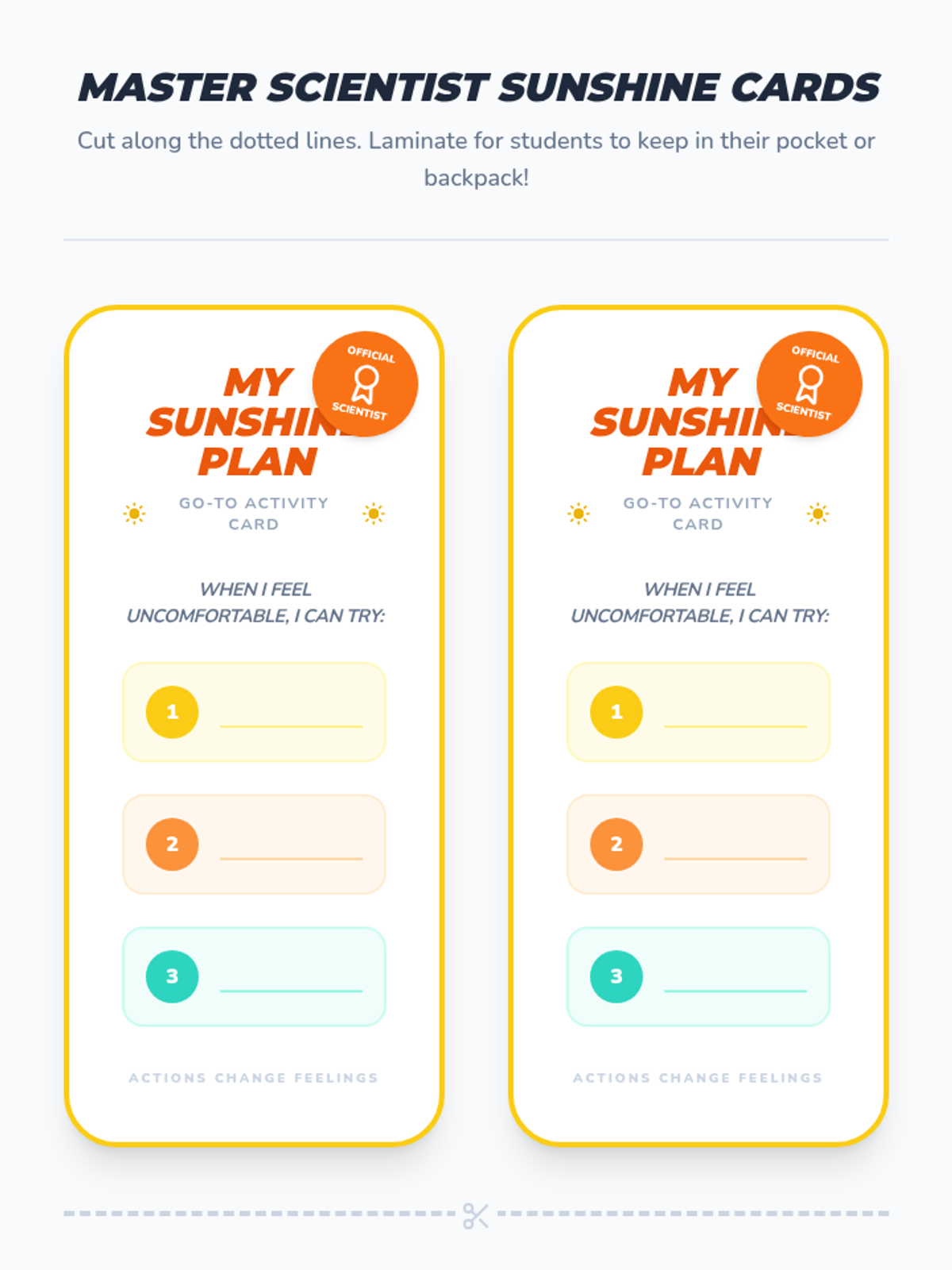
Printable 'Go-To' cards for students to list three simple actions they can take to boost their mood. Designed for cutting and laminating.
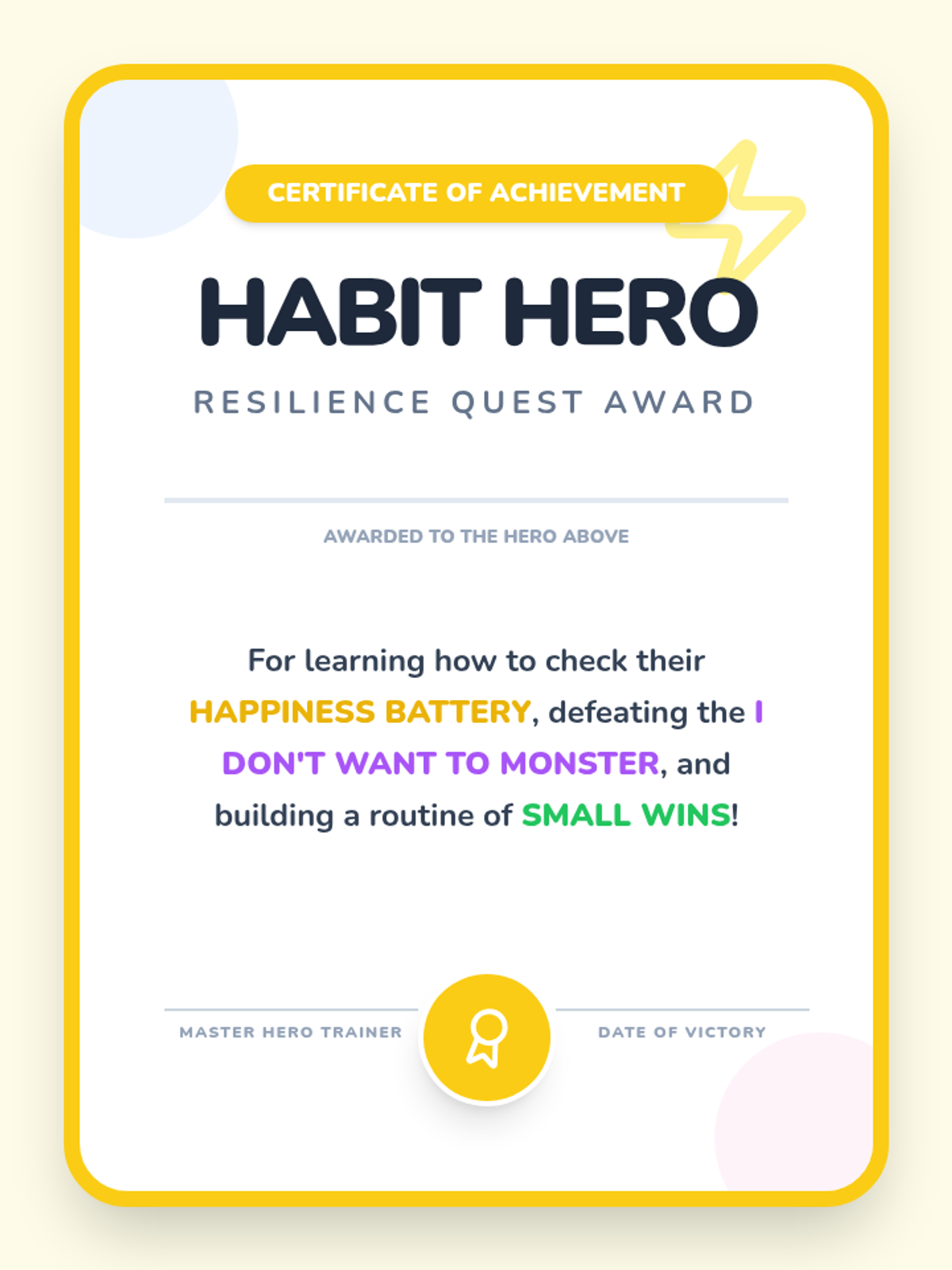
A celebratory certificate for students to receive at the end of the Resilience Quest sequence.
Introductory presentation for Lesson 5, focusing on creating a personal 'Sunshine Plan' and sharing mood-boosting strategies with peers.
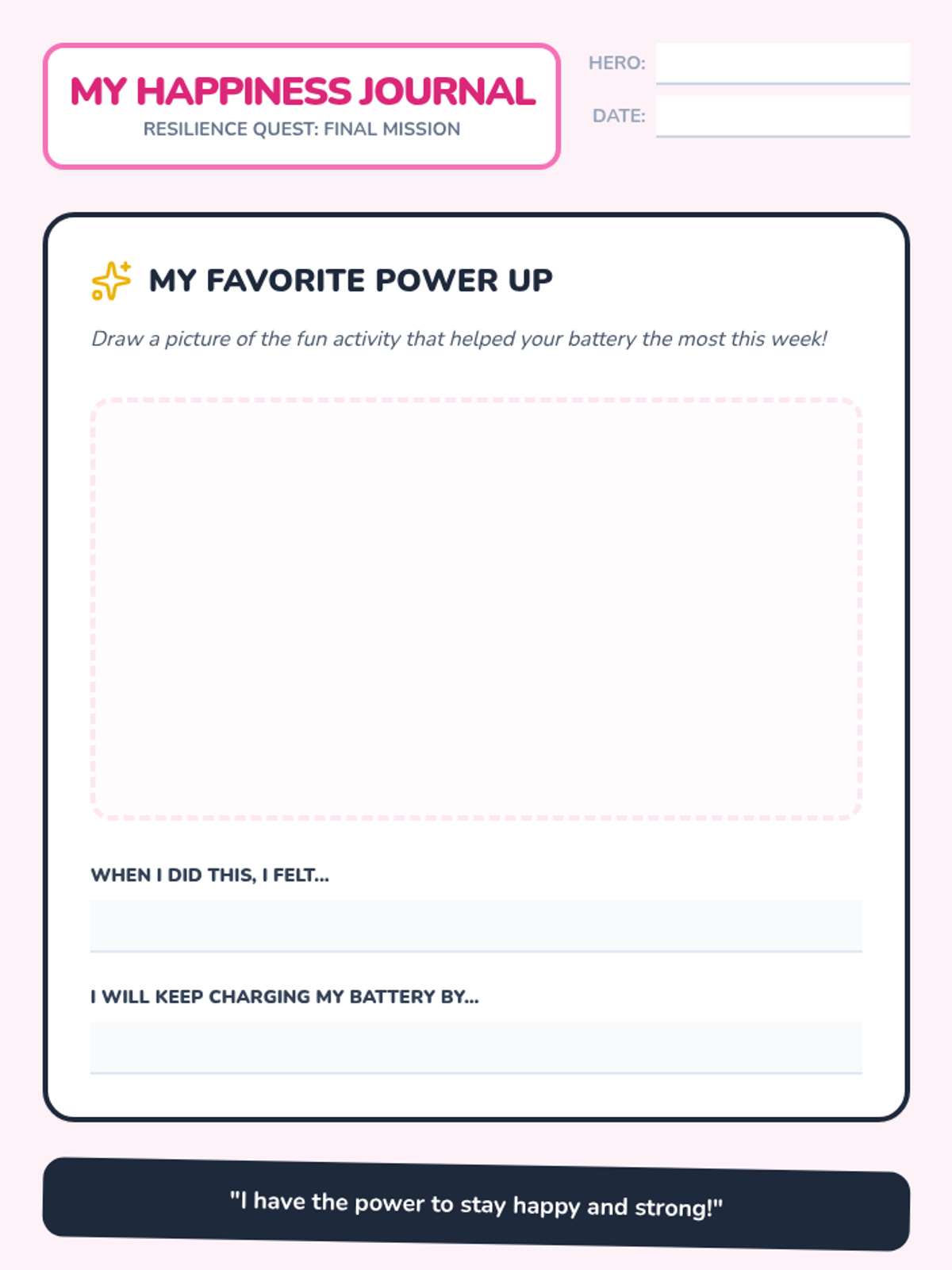
A student reflection worksheet for the final lesson, where they draw their favorite activity and reflect on their progress.
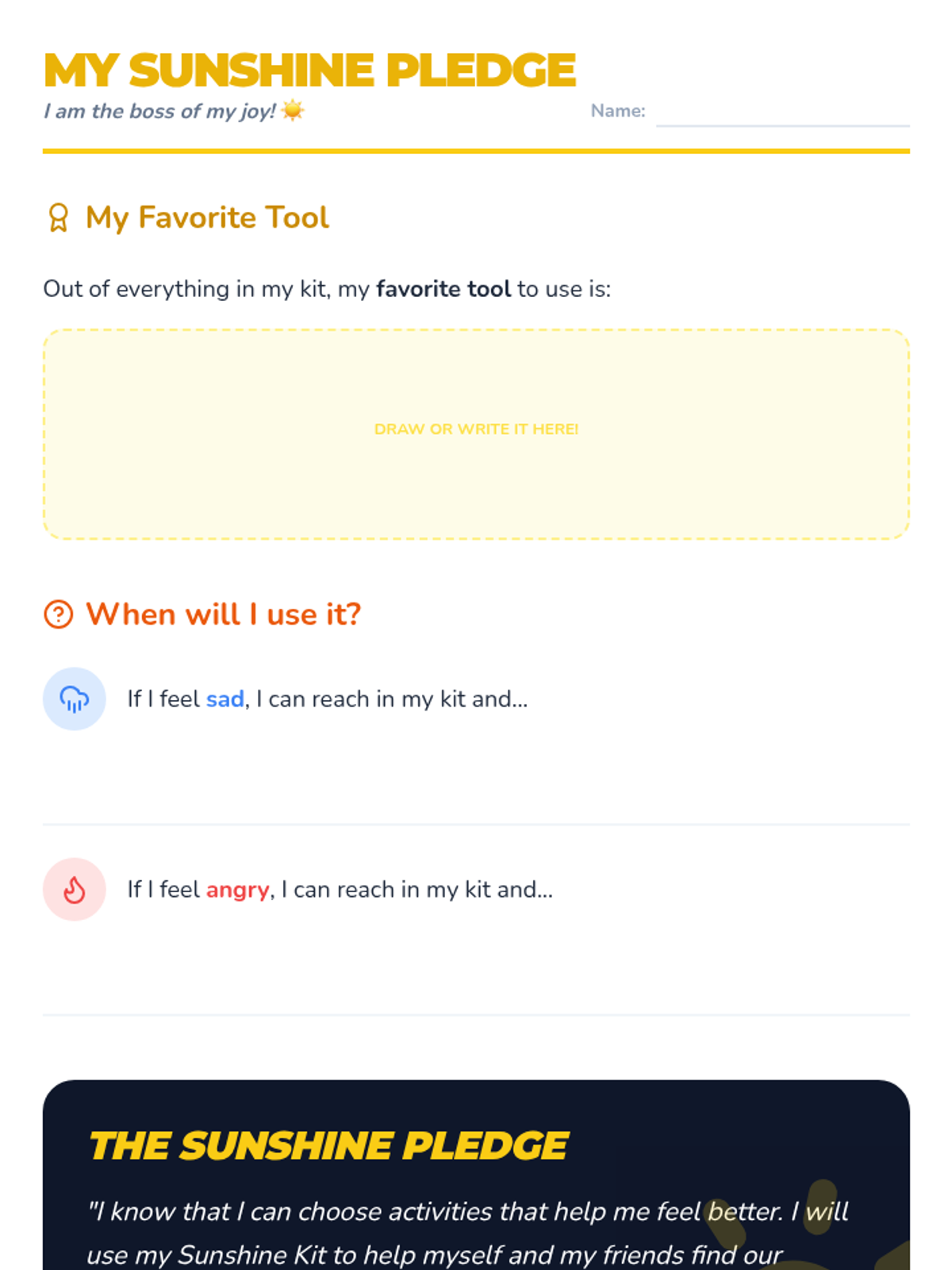
Student reflection sheet for the end of the project. Includes a personal favorite tool drawing area, application scenarios, and a 'Sunshine Pledge'.
A final reflection presentation for the Celebration Circle, reinforcing the behavioral activation loop and celebrating student progress.
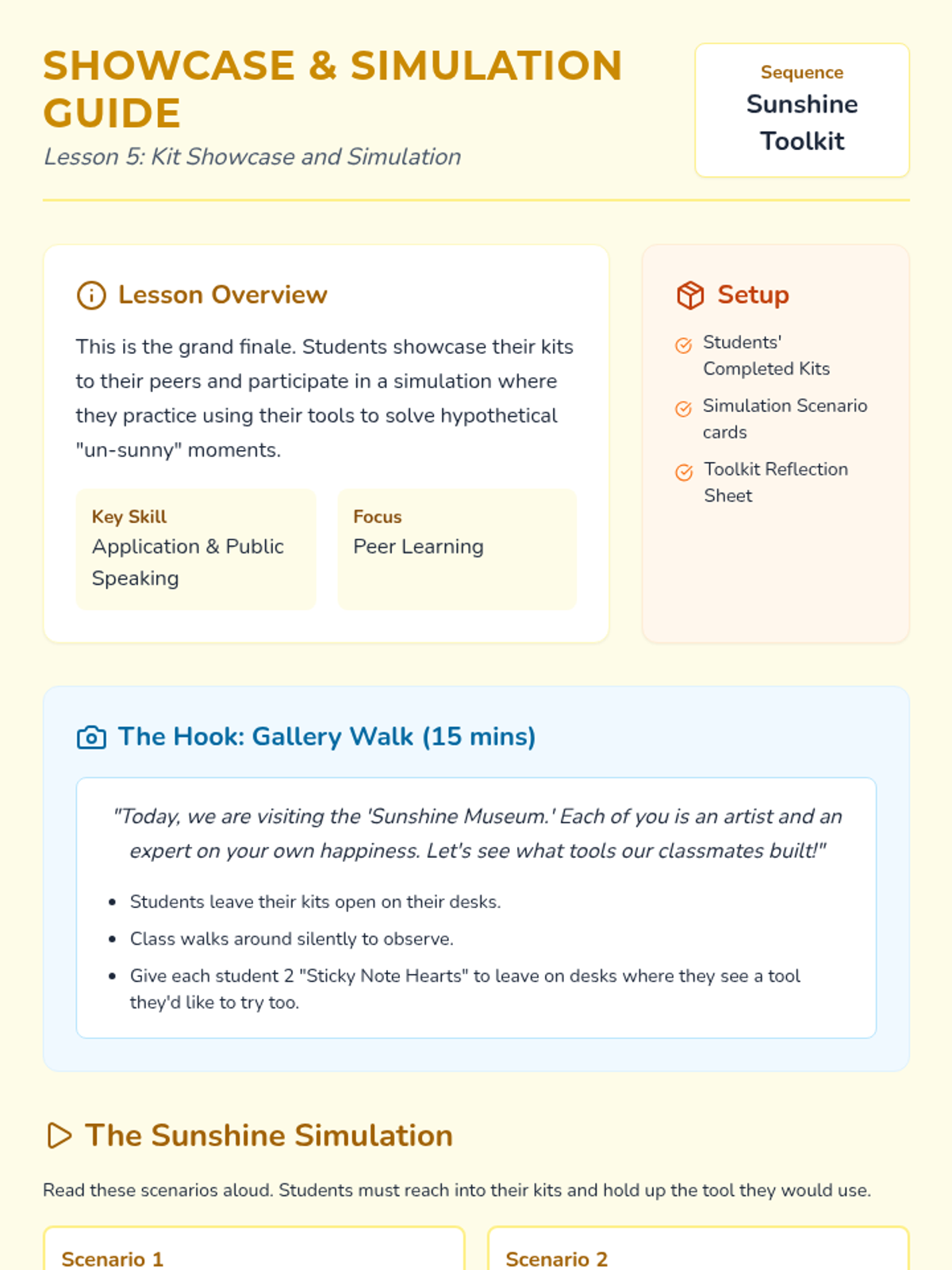
Teacher guide for the culminating Lesson 5: Kit Showcase and Simulation. Includes Gallery Walk instructions and simulation scenarios for practicing kit use.
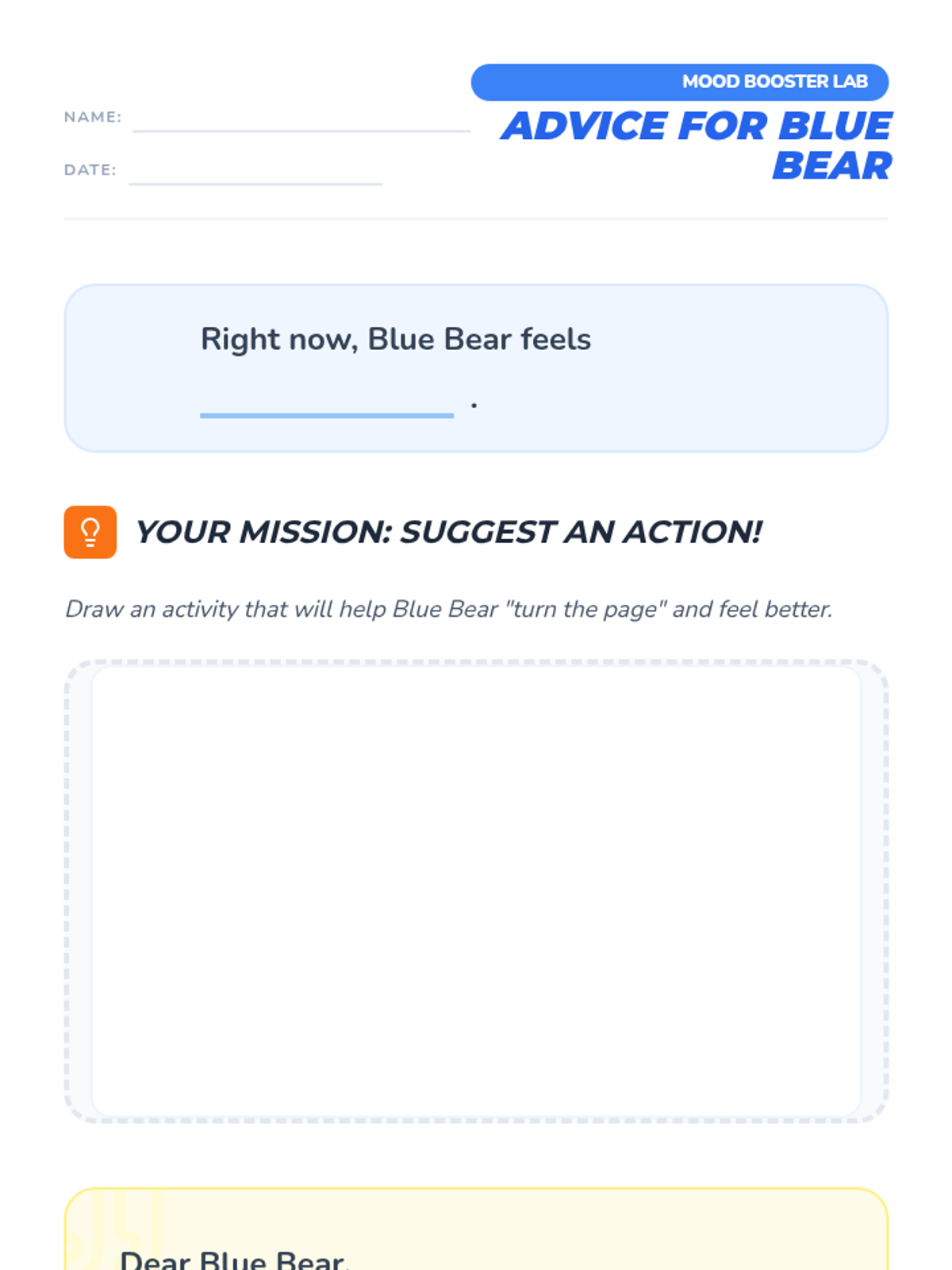
Student worksheet for suggesting mood-boosting activities to the character Blue Bear through drawing and message writing.
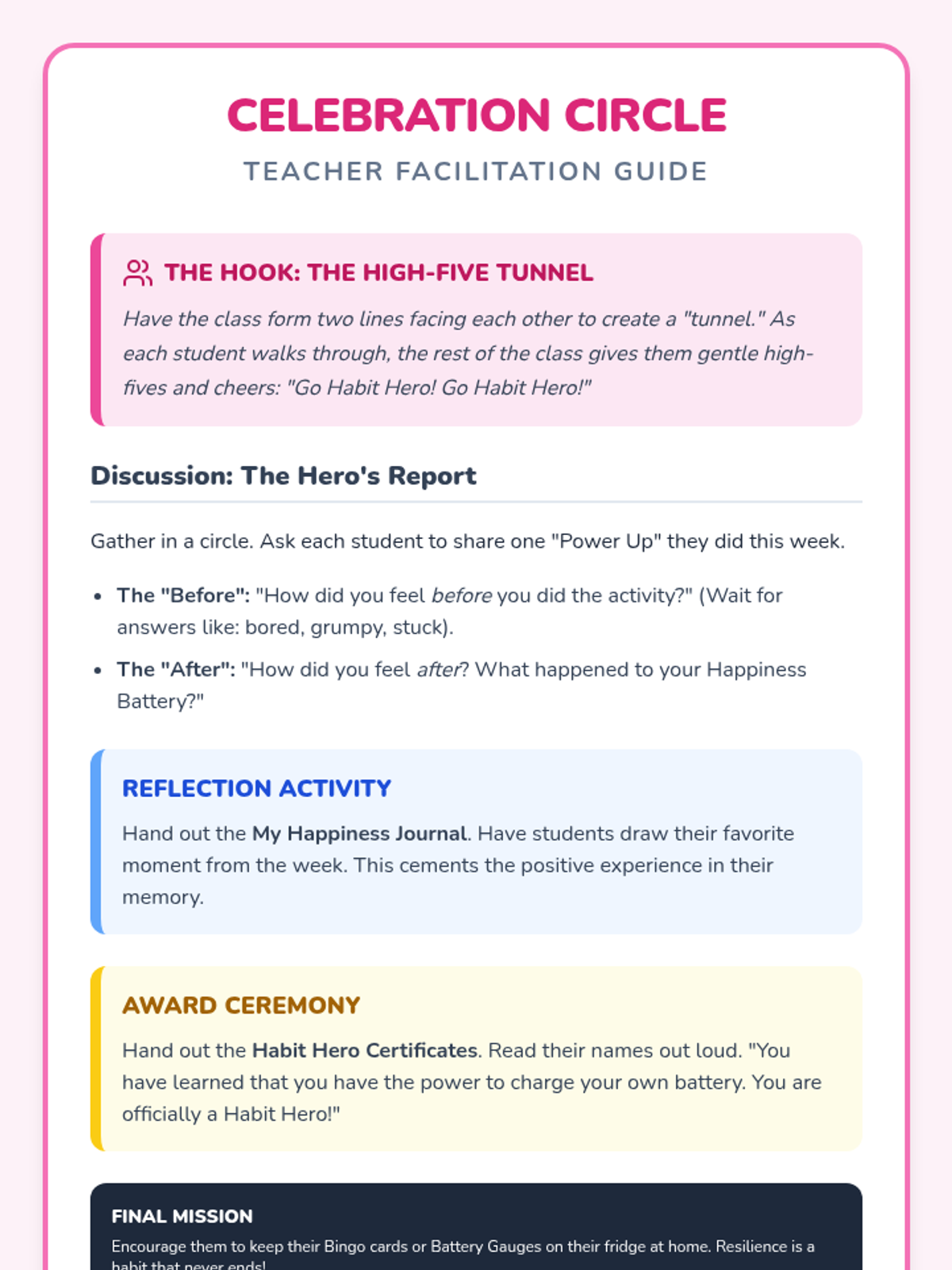
A teacher facilitation guide for the Celebration Circle lesson, including high-five tunnel instructions and reflection prompts.
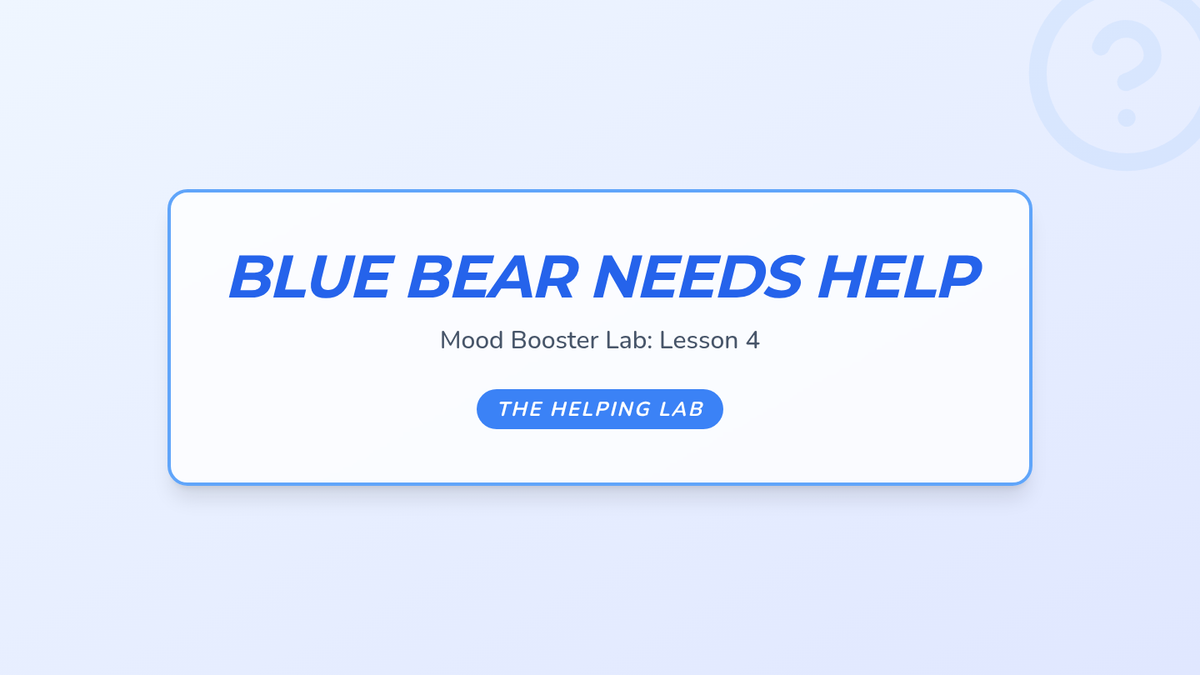
Introductory presentation for Lesson 4, using a story about Blue Bear to practice suggesting mood-boosting activities for others.
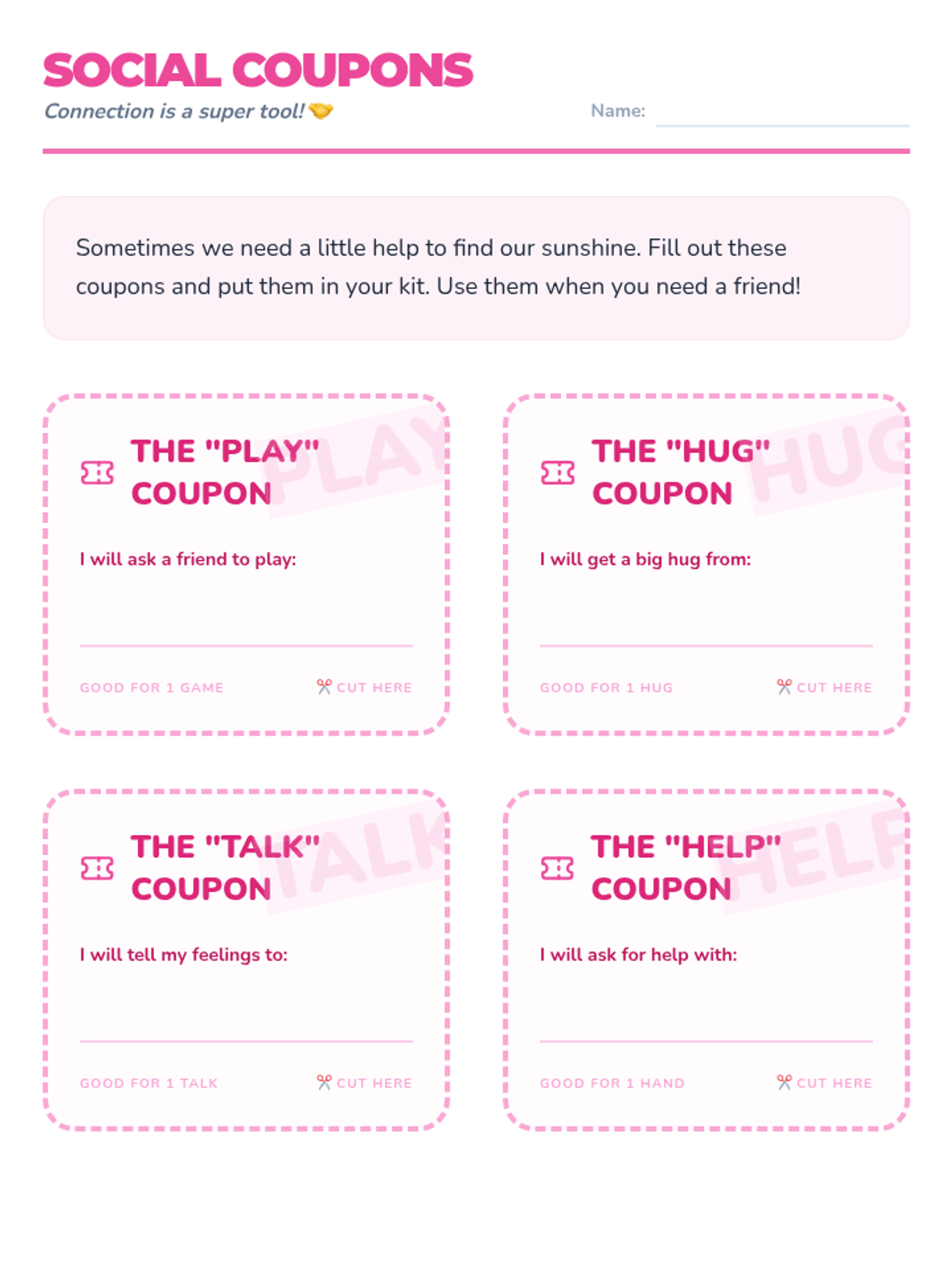
Student worksheet featuring customizable social coupons (play, hug, talk, help) to be cut out and added to their Sunshine Kits.
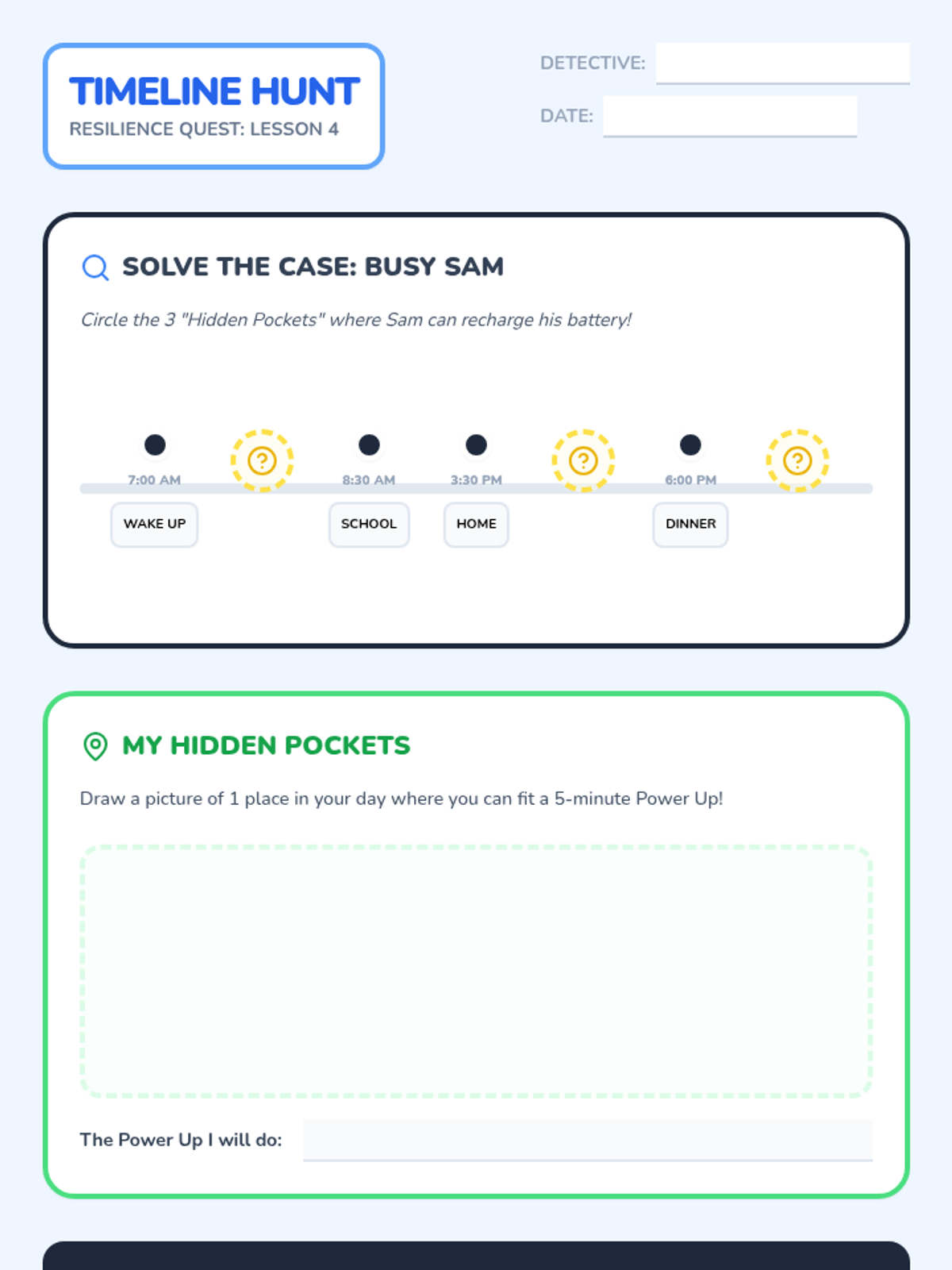
A student worksheet for identifying "hidden pockets" of time in a schedule and planning a personal daily recharge.
Instructional slides for Lesson 4: Connecting with Others, highlighting the role of social interaction in emotional well-being.
Slides introducing the 'Time Detectives' concept, helping students find small moments for positive activities.
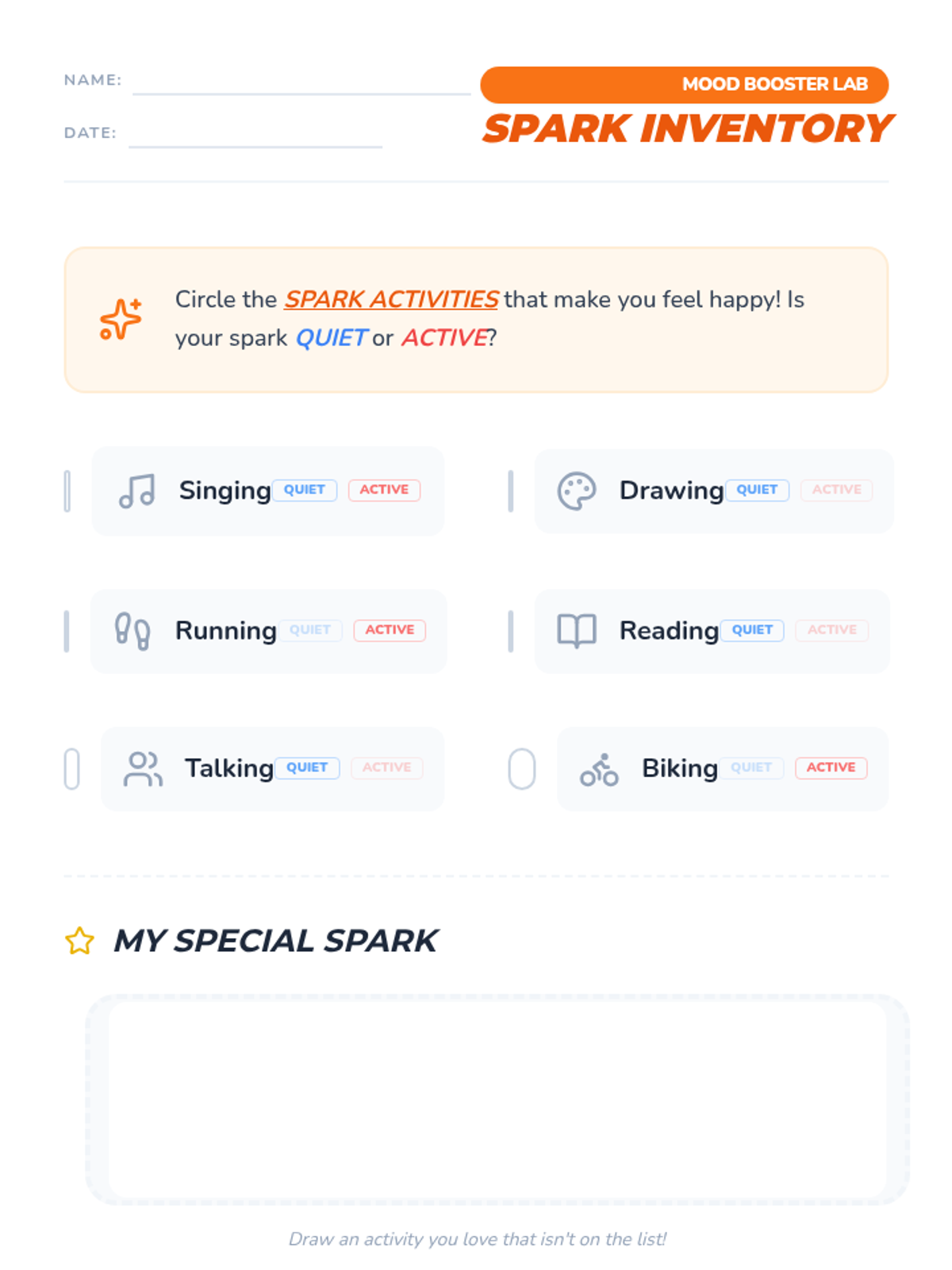
Brainstorming worksheet for students to identify their personal 'Spark Activities' and categorize them as active or quiet.
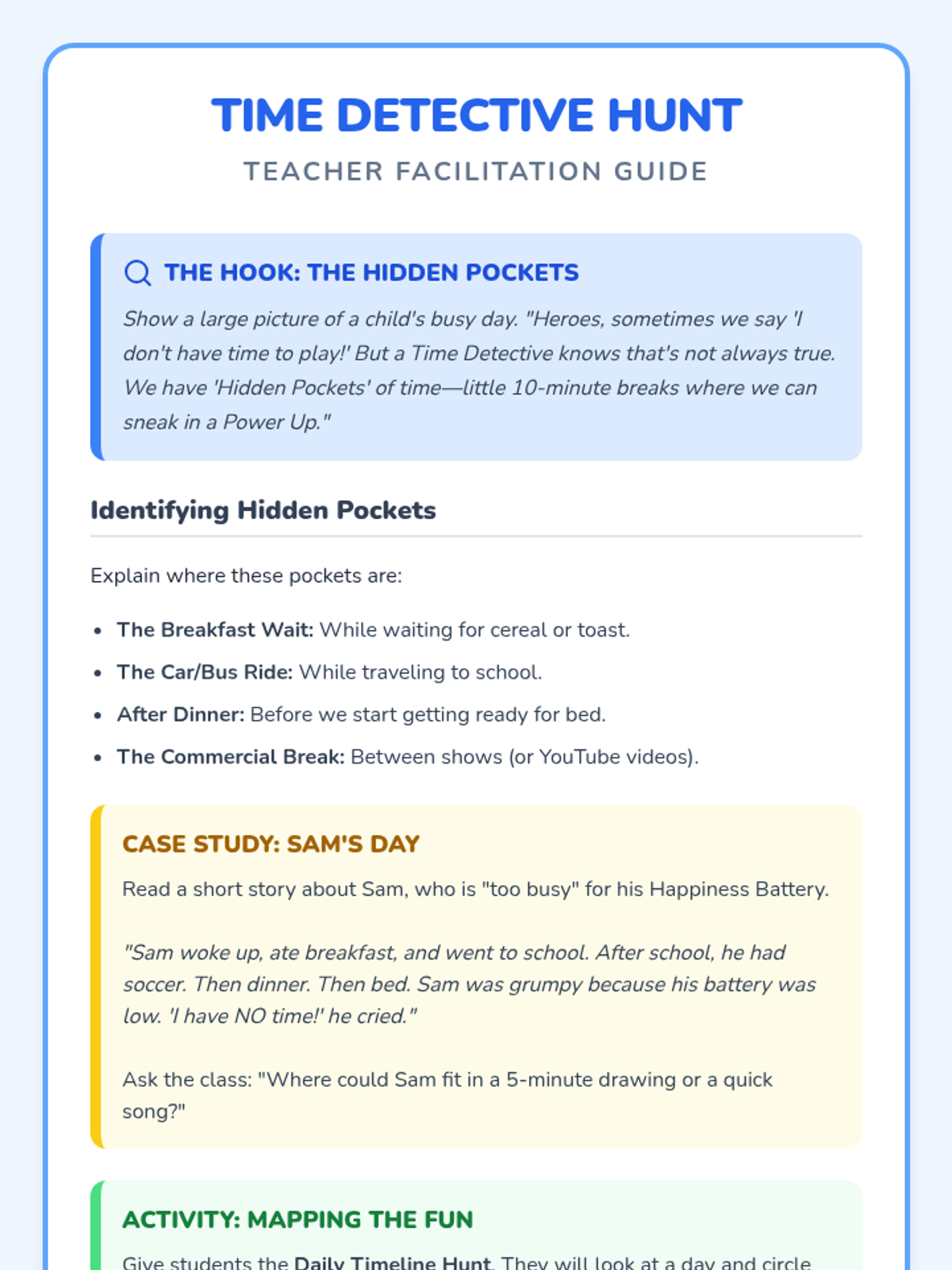
A teacher facilitation guide for the Time Detective Hunt lesson, focusing on finding small pockets of time for positive activities.
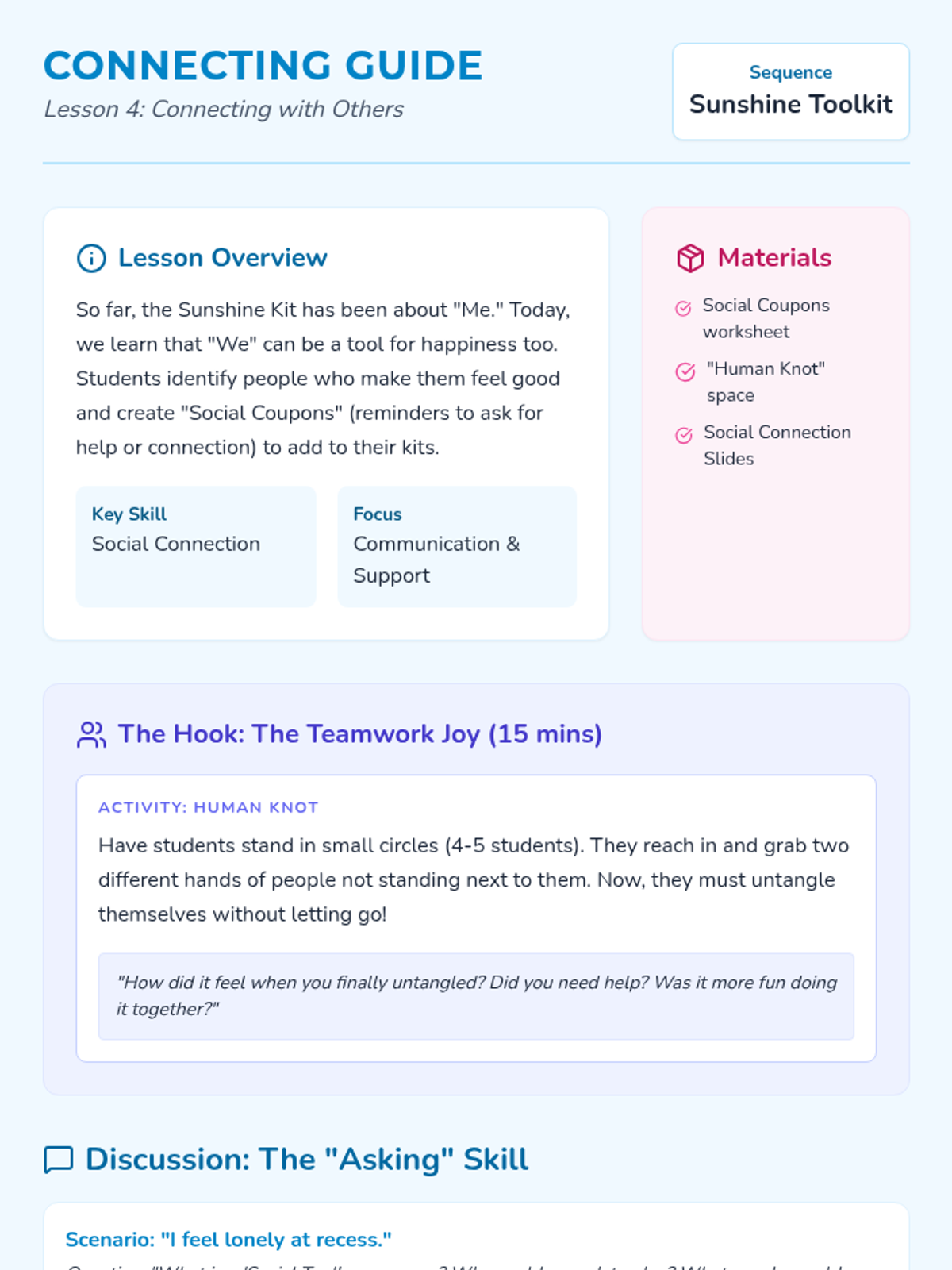
Teacher guide for Lesson 4: Connecting with Others. Includes the 'Human Knot' hook, discussion scenarios for asking for help, and instructions for Social Coupons.
Introductory presentation for Lesson 3, identifying personal 'Spark Activities' and distinguishing between active and quiet joy.