Functional behavior assessment, data tracking, and de-escalation strategies for managing classroom conduct. Addresses positive reinforcement, token economies, and individualized behavior contracts to support student self-regulation.
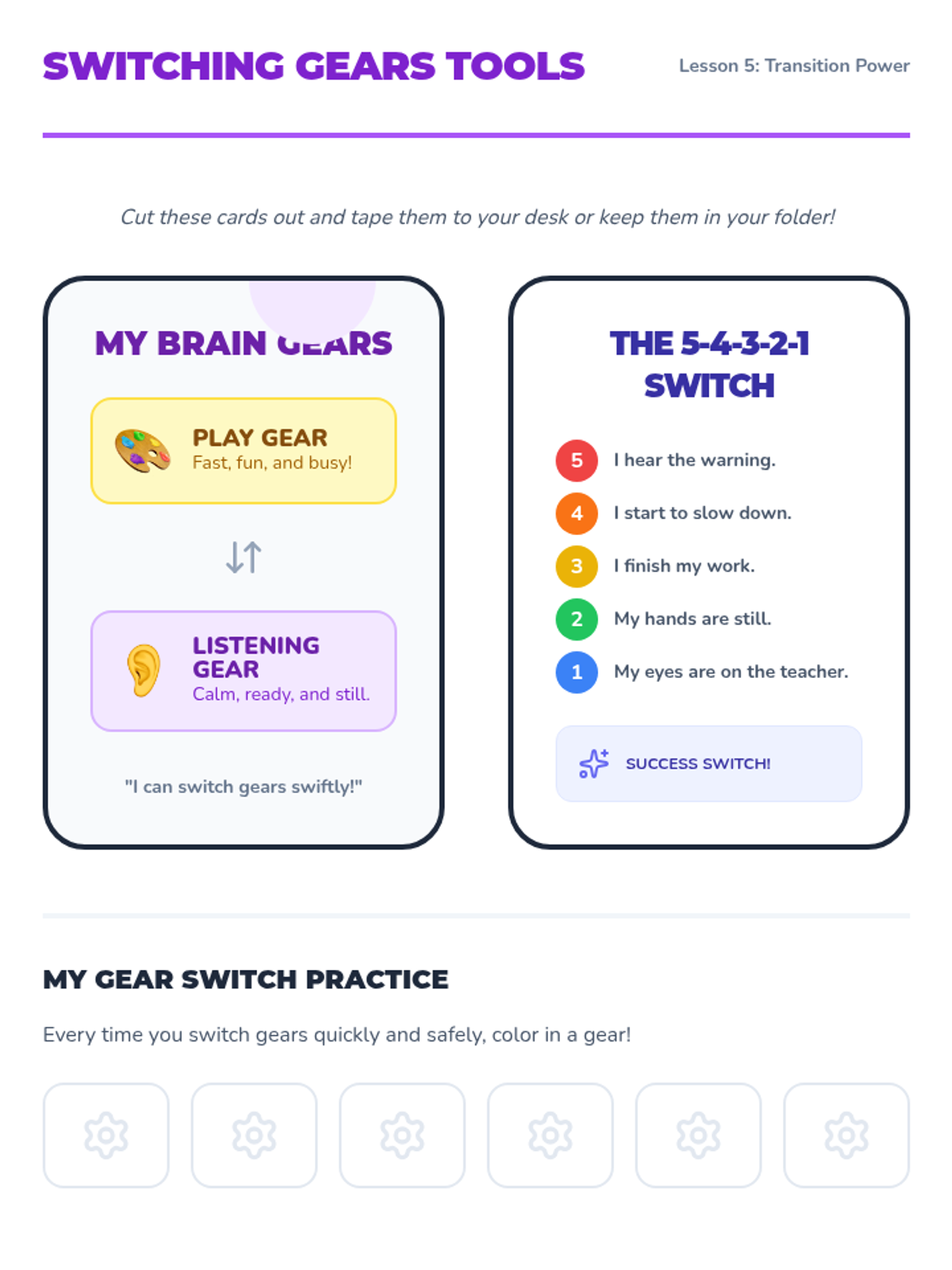
Visual cue cards and a practice log for 1st graders to master the 'Switching Gears' and 5-4-3-2-1 countdown strategies.
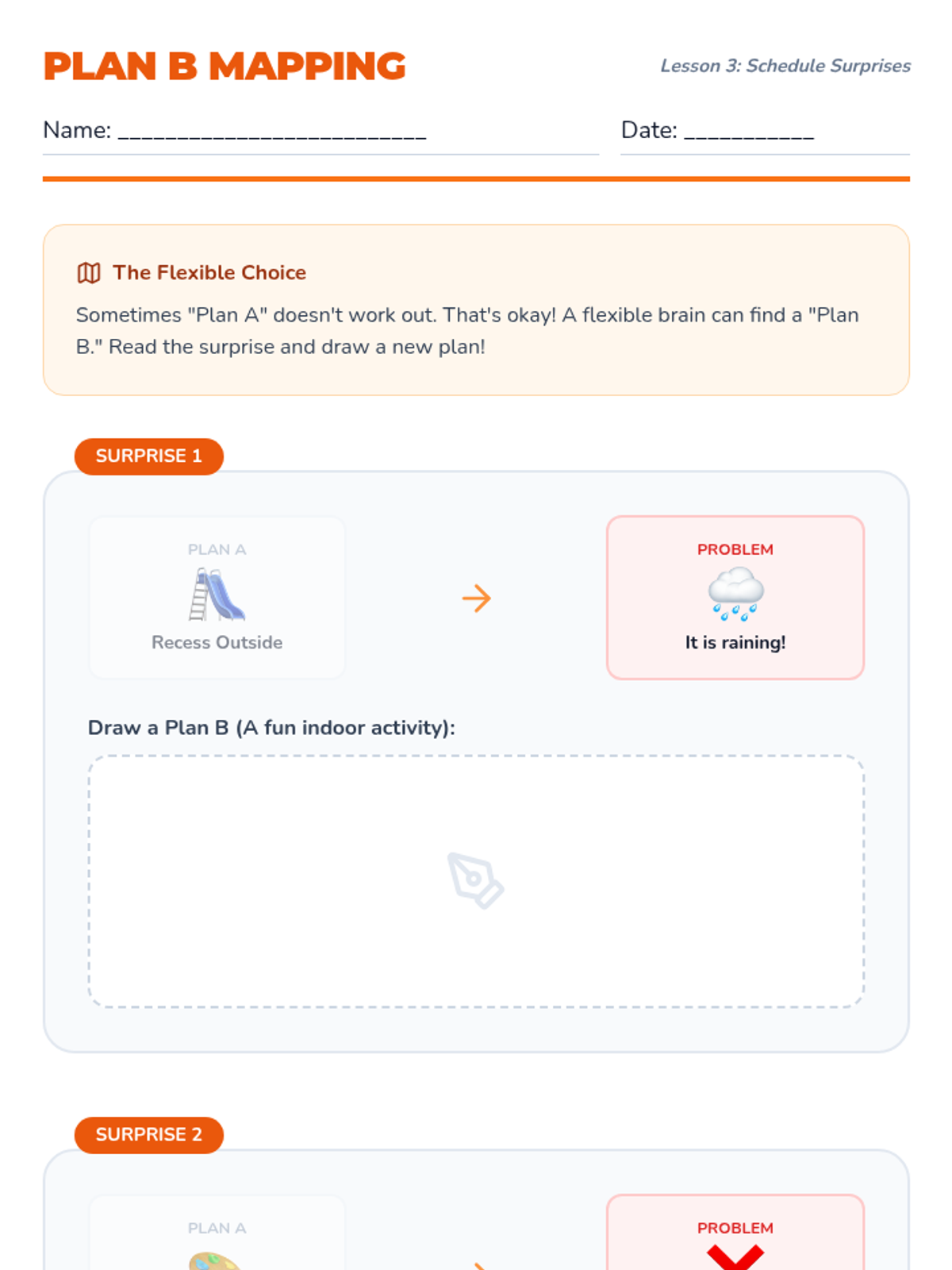
A worksheet where students practice 'Plan B' thinking by identifying alternative activities for common schedule changes.
Visual presentation for 1st graders explaining the "Switching Gears" metaphor and teaching the 5-4-3-2-1 countdown strategy for transitions.
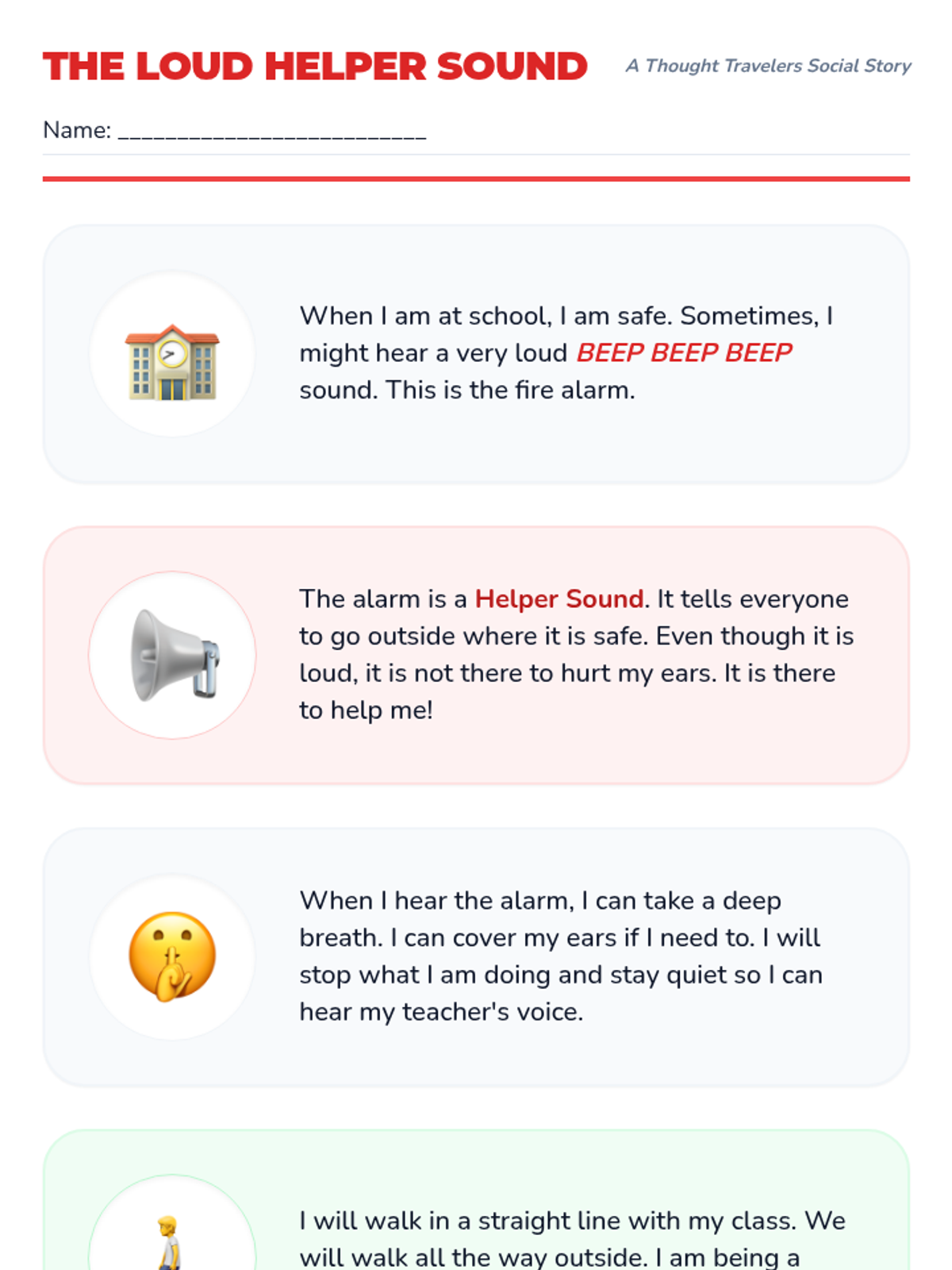
A social story with visual panels helping 1st graders understand fire drills and how to manage the loud noise of the alarm.
Visual presentation helping 1st graders understand the difference between expected and unexpected schedule changes, and how to use 'Plan B' thinking.
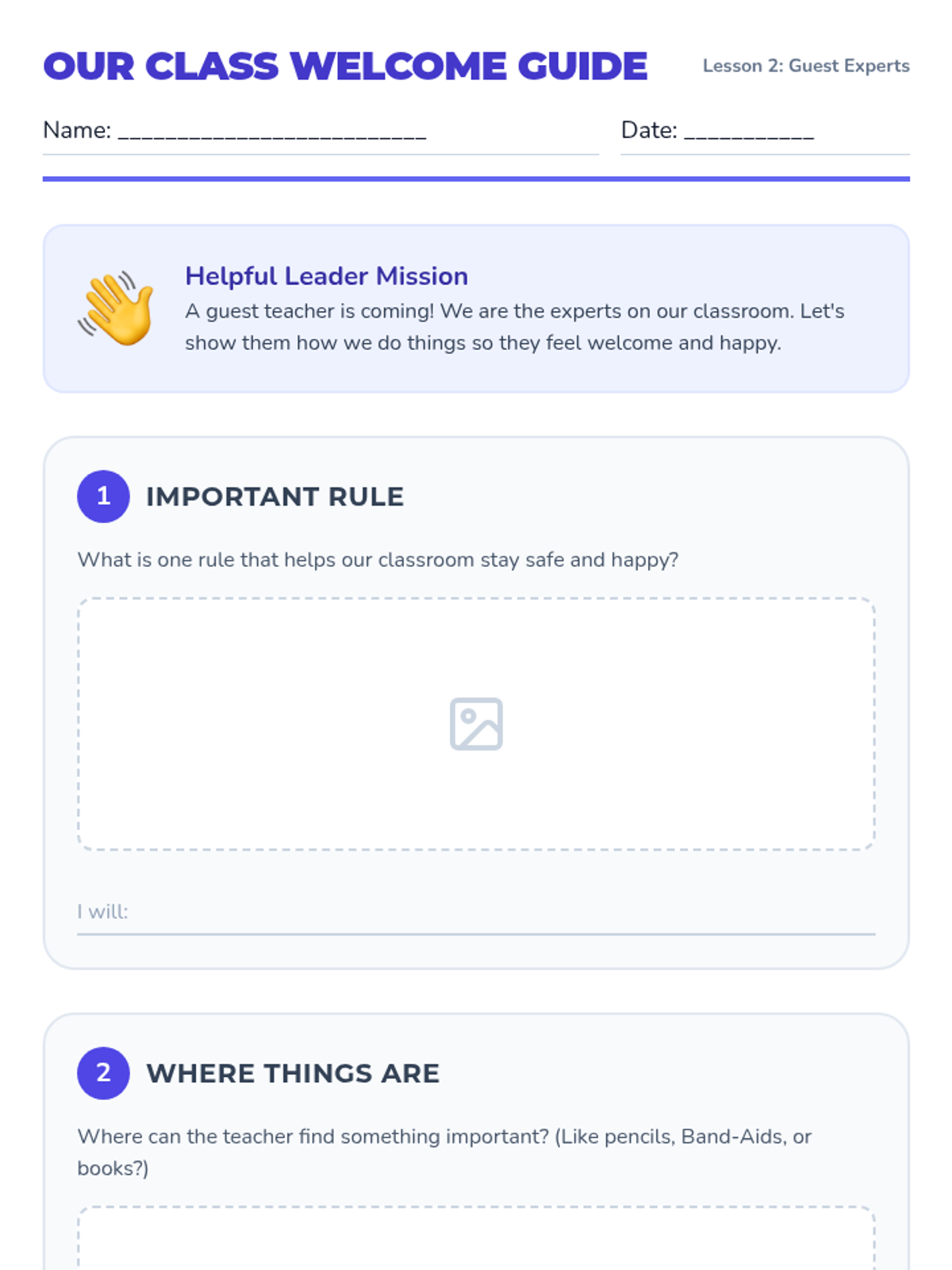
A student-facing worksheet where 1st graders draw and write about classroom rules and locations to help a guest teacher feel welcome.
Visual presentation helping 1st graders understand the role of substitute teachers and how to be helpful leaders during a teacher's absence.
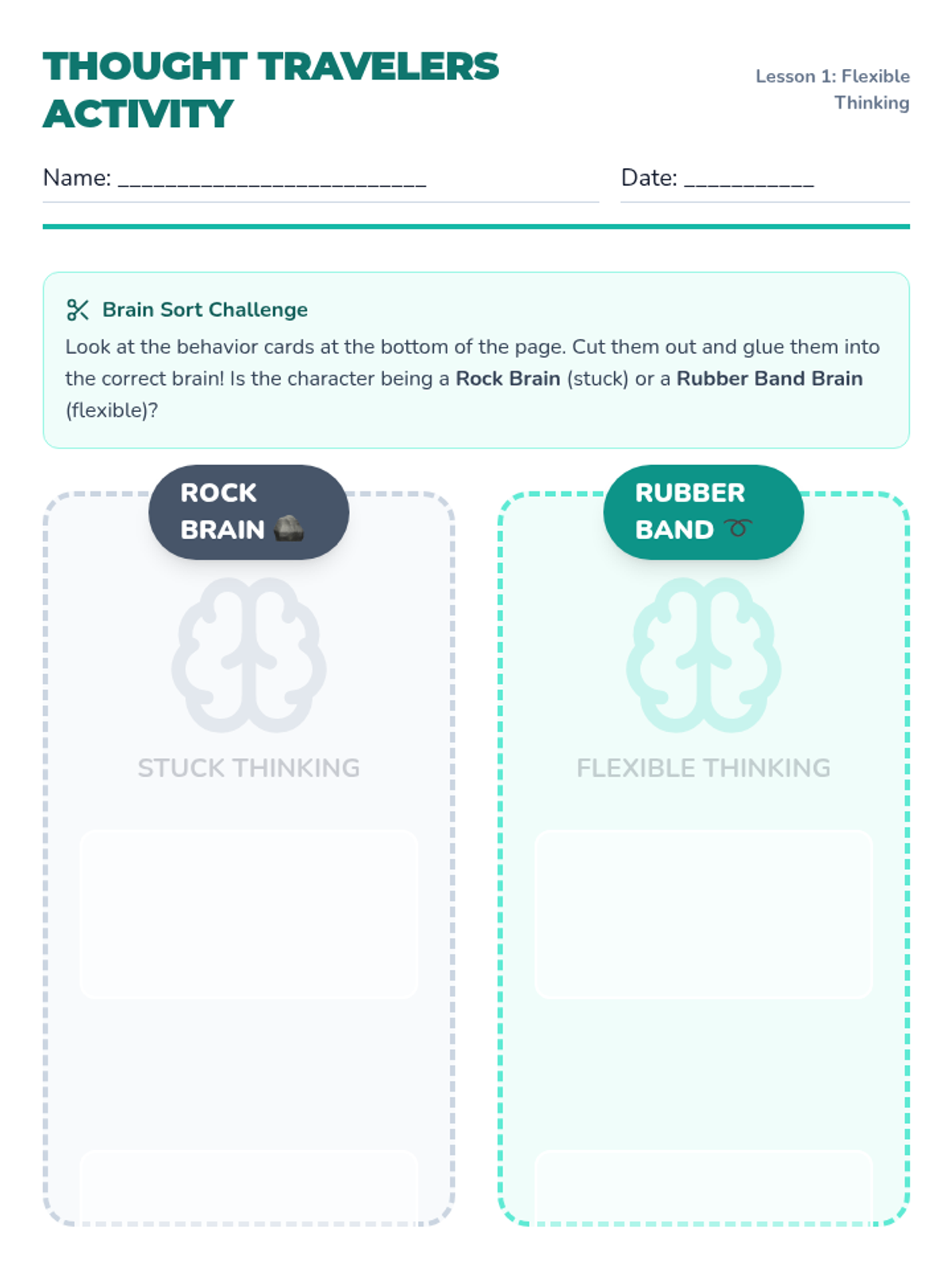
A cut-and-paste sorting activity for 1st graders to distinguish between 'Rock Brain' (stuck) and 'Rubber Band Brain' (flexible) behaviors.
Visual presentation comparing 'Rock Brain' (stiff thinking) and 'Rubber Band Brain' (flexible thinking) to help 1st grade students understand adaptability.
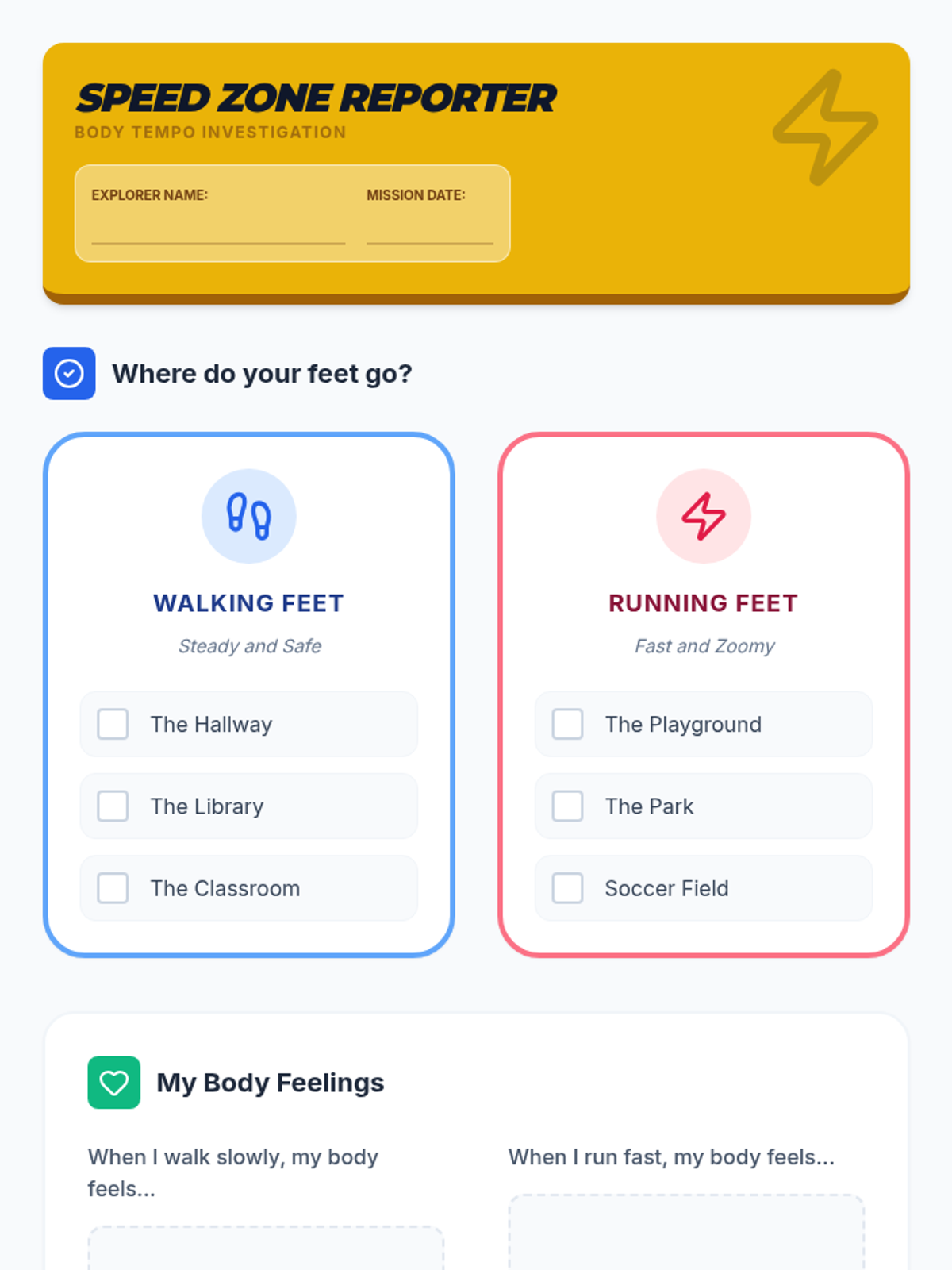
A 1st Grade worksheet where students identify appropriate locations for walking and running feet and reflect on their physical state at each speed.
Visual slides for Lesson 3 focusing on physical regulation between walking and running feet. Includes rules for Tempo Freeze and the Slowest Master challenge.
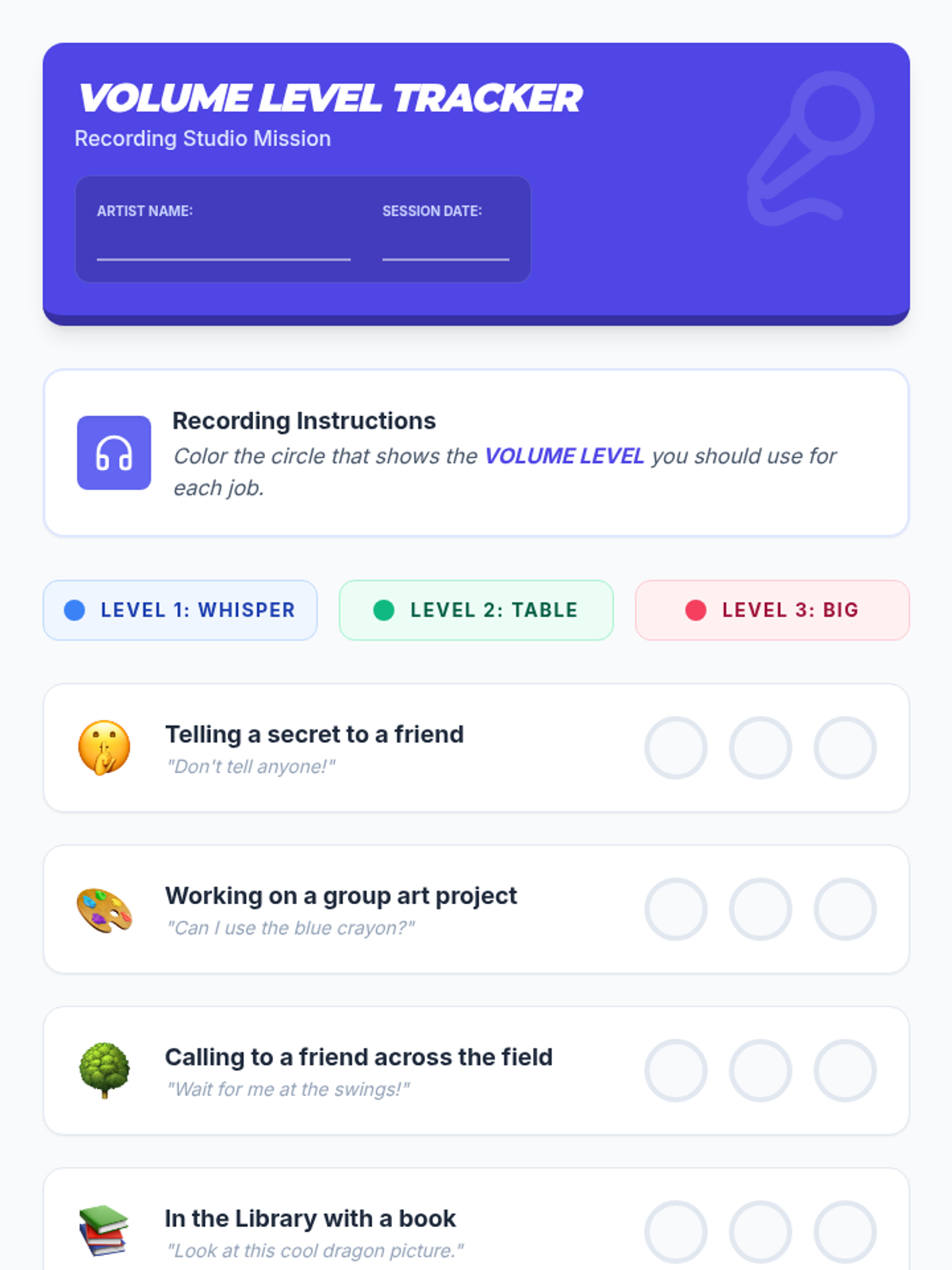
A 1st Grade worksheet where students identify the appropriate voice volume level for different scenarios using a tracking grid design. Supports self-monitoring skills.
Visual slides for Lesson 2 that introduce the concept of a "Volume Knob" with levels 1 (Whisper), 2 (Table Talk), and 3 (Outside Voice). Includes clear icons and visual themes for each level.
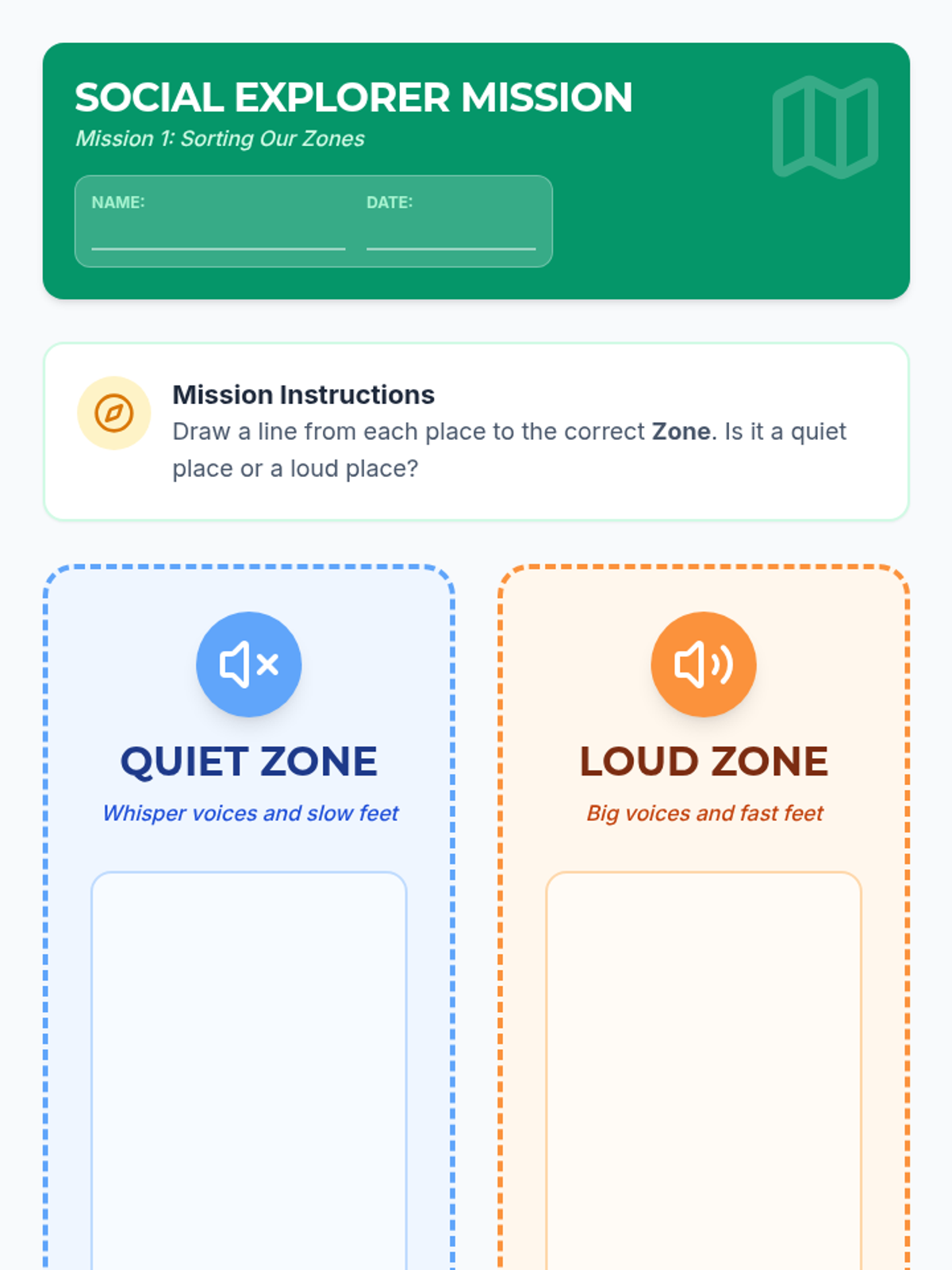
A 1st Grade worksheet where students sort different environments into Quiet and Loud zones using a matching activity. Designs as an explorer's mission.
Introductory slides for Lesson 1, using an explorer theme to teach students about quiet and loud zones. Includes visuals for categorization and a hook activity.
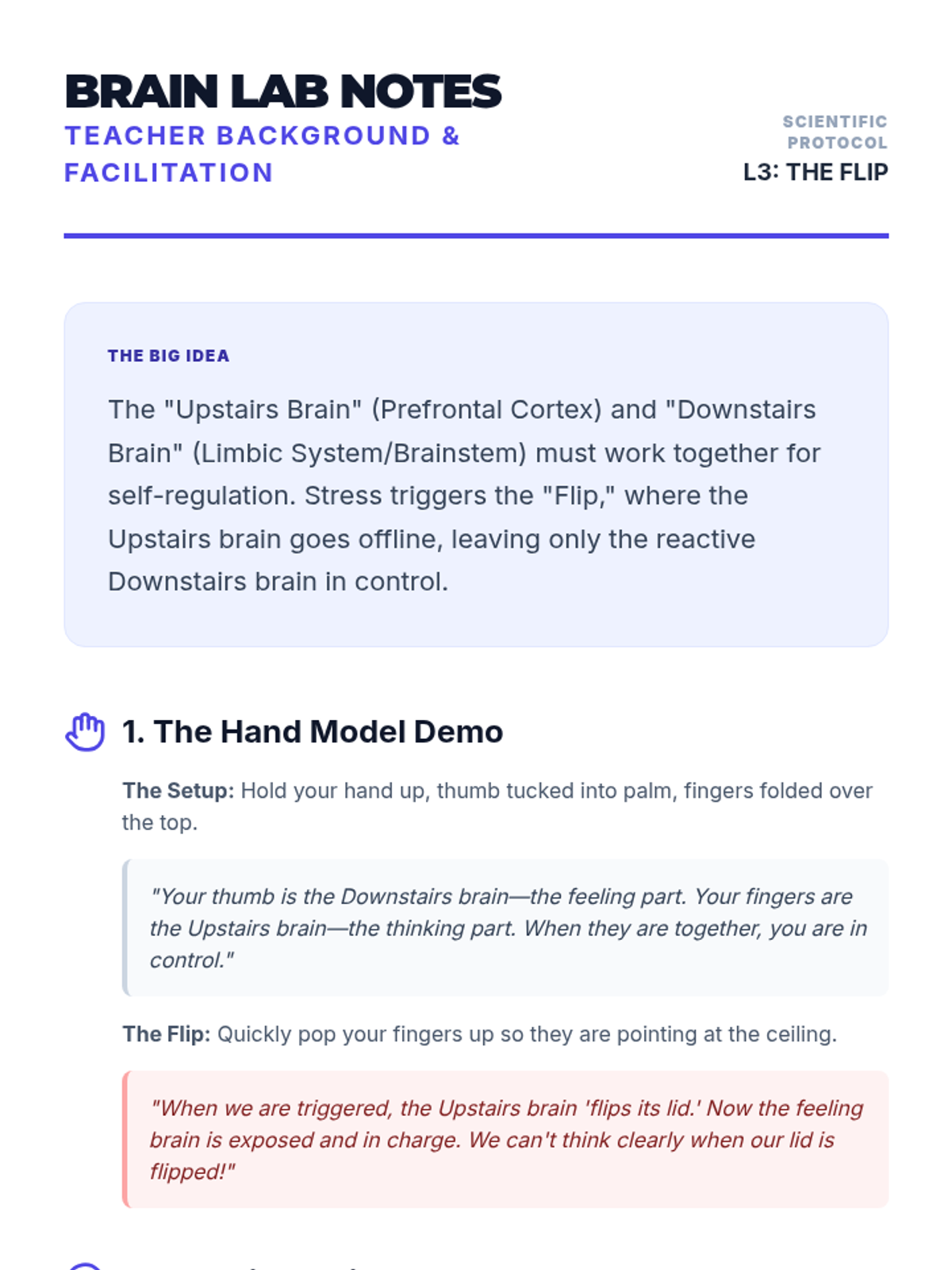
Teacher reference guide for Lesson 3. Explains the biological basis of the Hand Model of the Brain and provides discussion prompts to deepen student understanding.
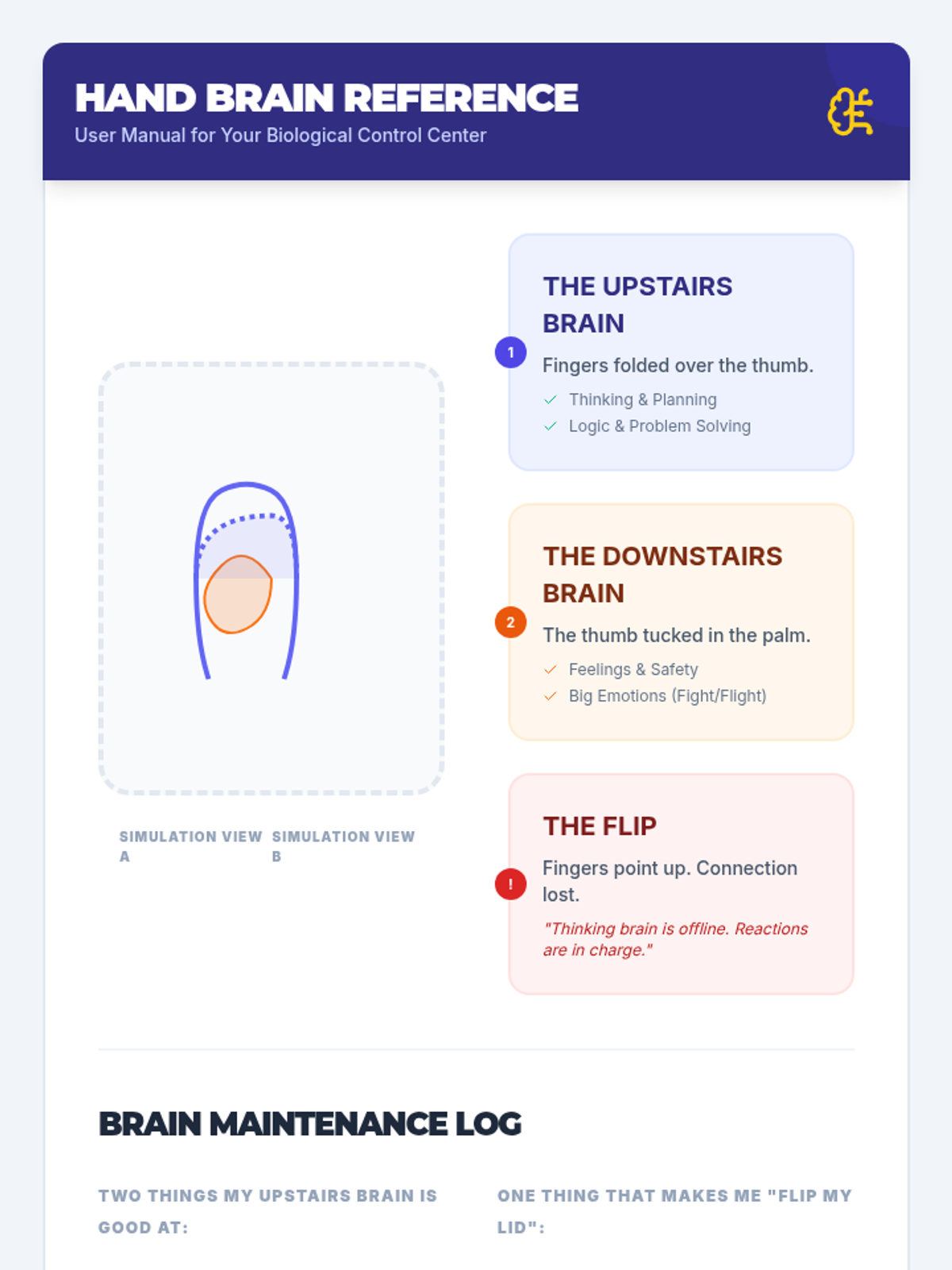
Visual reference sheet and worksheet for the 'Hand Model of the Brain.' Explains the Upstairs and Downstairs brain roles and provides space for students to identify personal lid-flipping triggers.
Slide deck for Lesson 3: The Science of the Flip. Explains the 'Upstairs' and 'Downstairs' brain model and the biological process of 'flipping your lid' during stress.
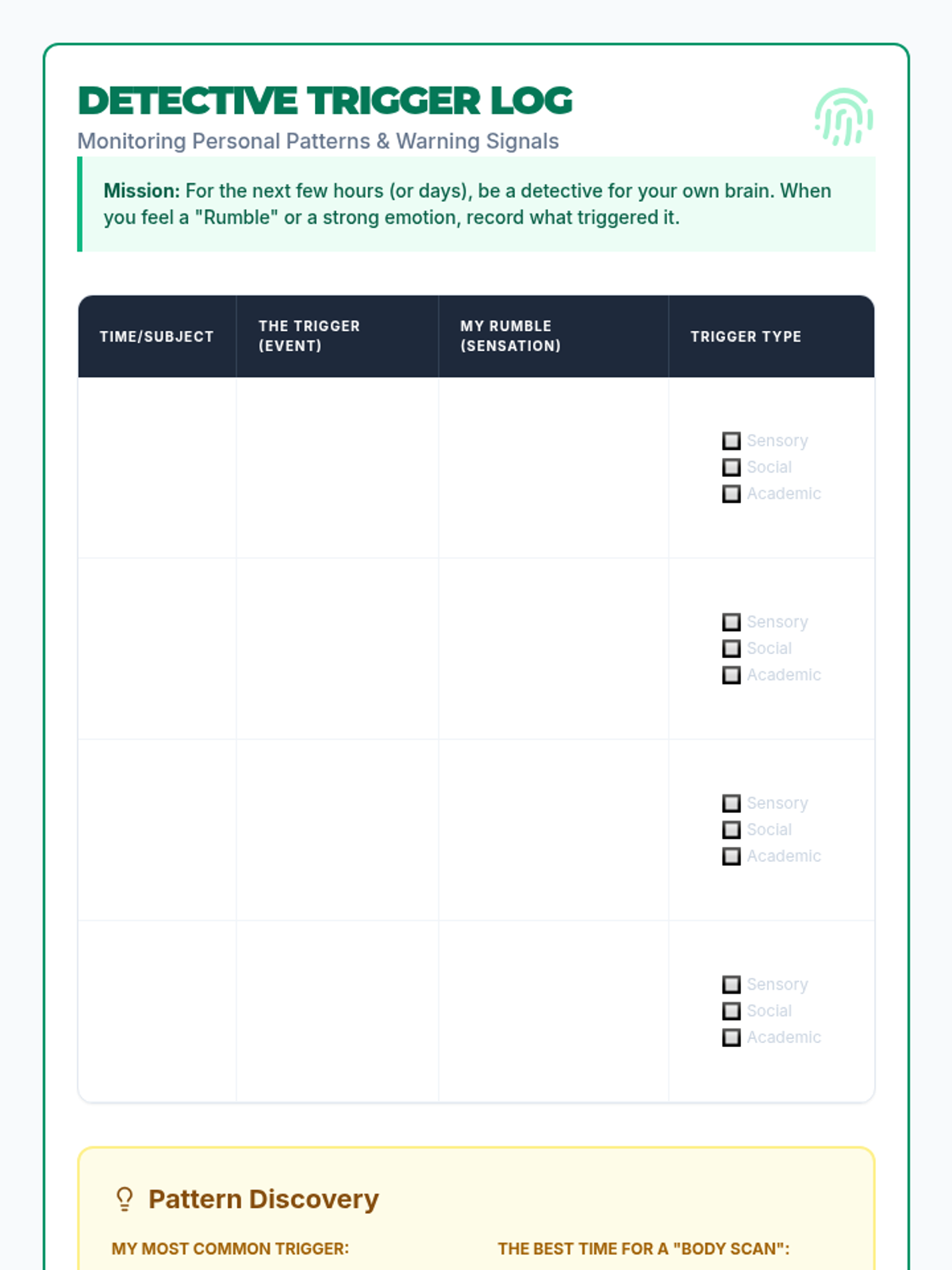
A blank self-monitoring log for students to track their triggers, sensations, and categorizations over a period of time to identify personal patterns.
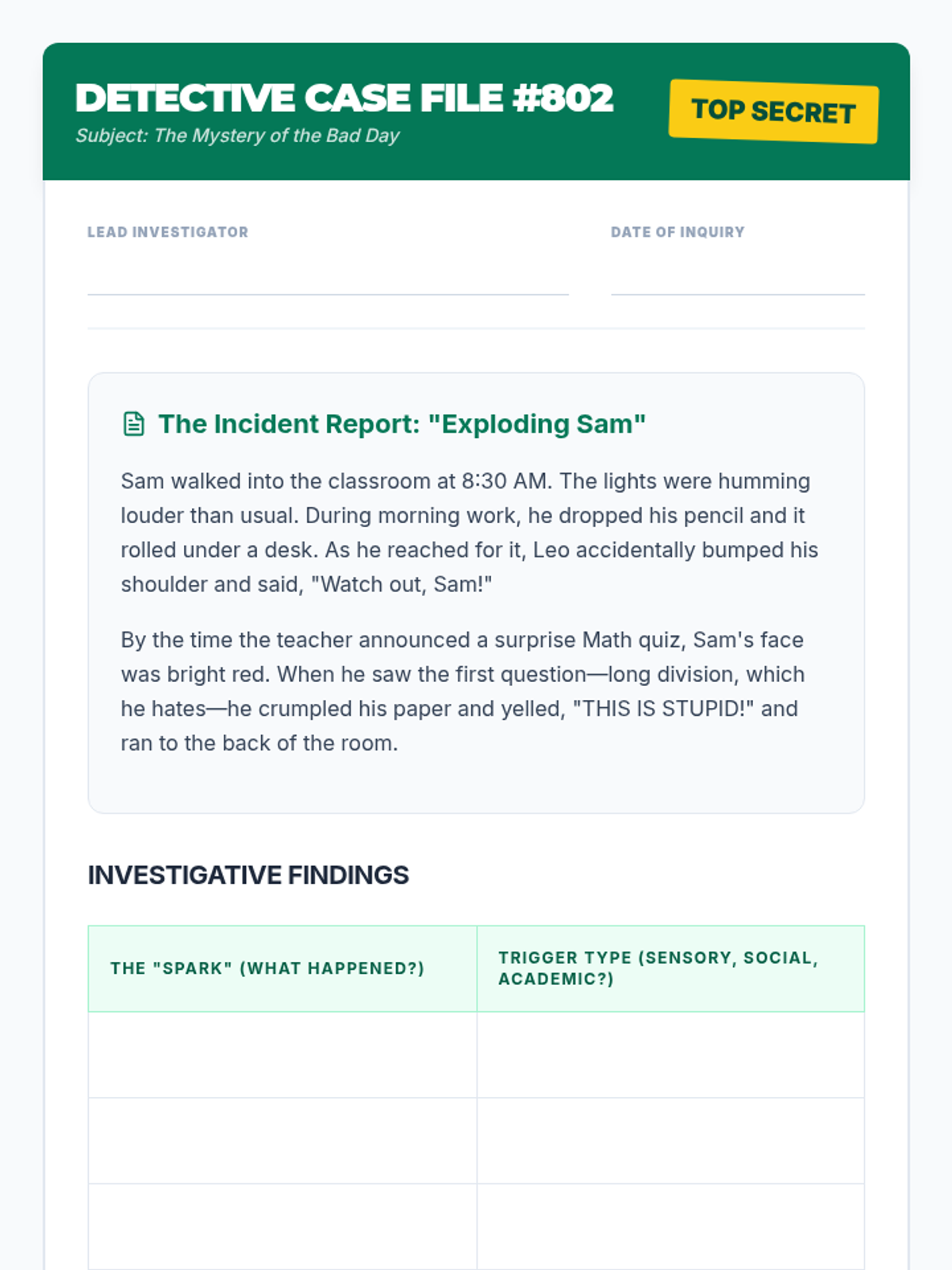
Detective-themed case study worksheet where students analyze 'Exploding Sam's' day to pinpoint environmental triggers and categorize them.
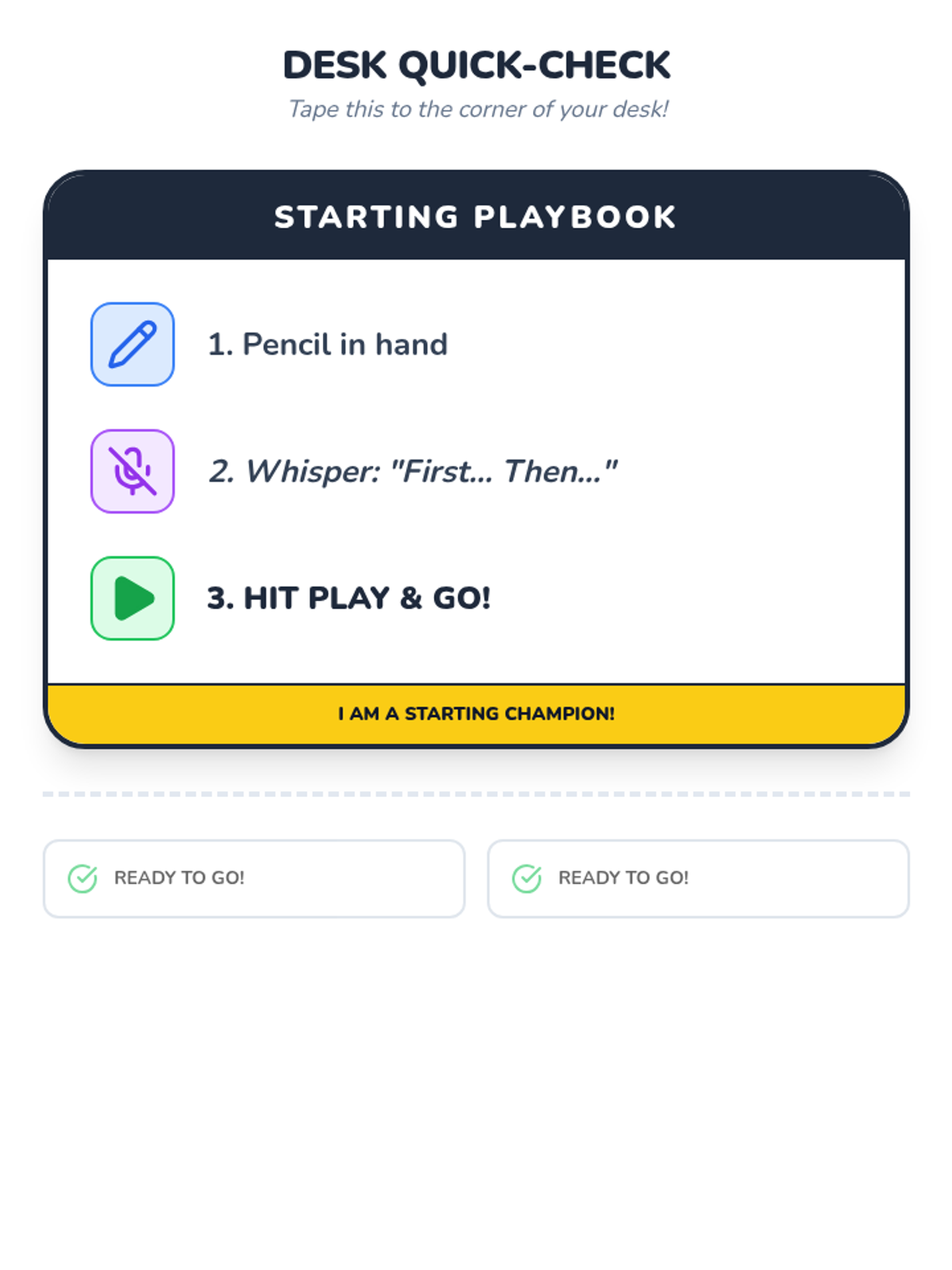
A visual cue card for students to keep on their desk, reminding them of the three steps to start a task independently.
A visual presentation for Lesson 5 that reviews the "Inner Coach" sequence and introduces the "Quiet Start" challenge.
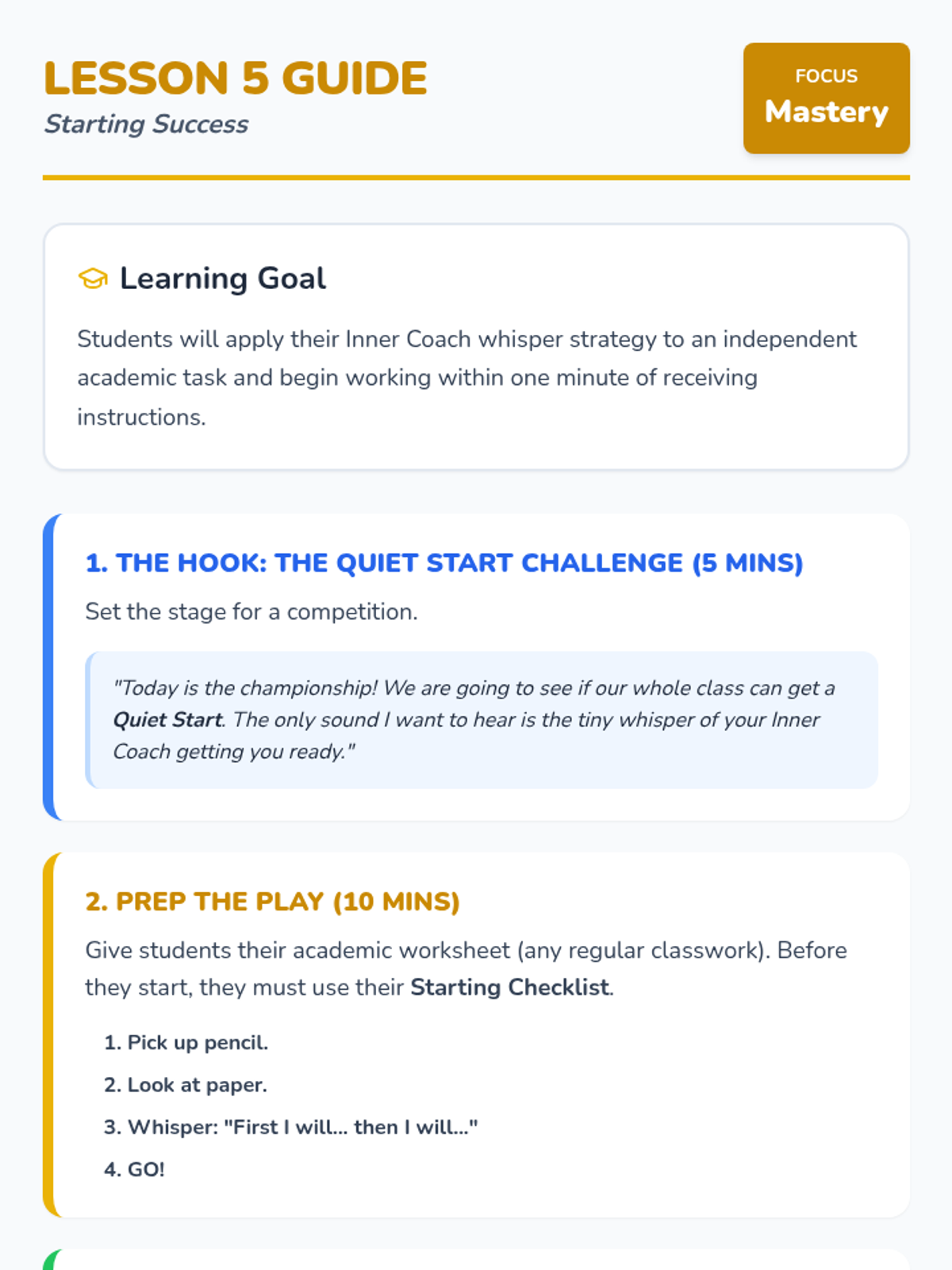
A teacher guide for Lesson 5, focusing on applying the self-talk strategy to independent academic tasks through a "Quiet Start" challenge.
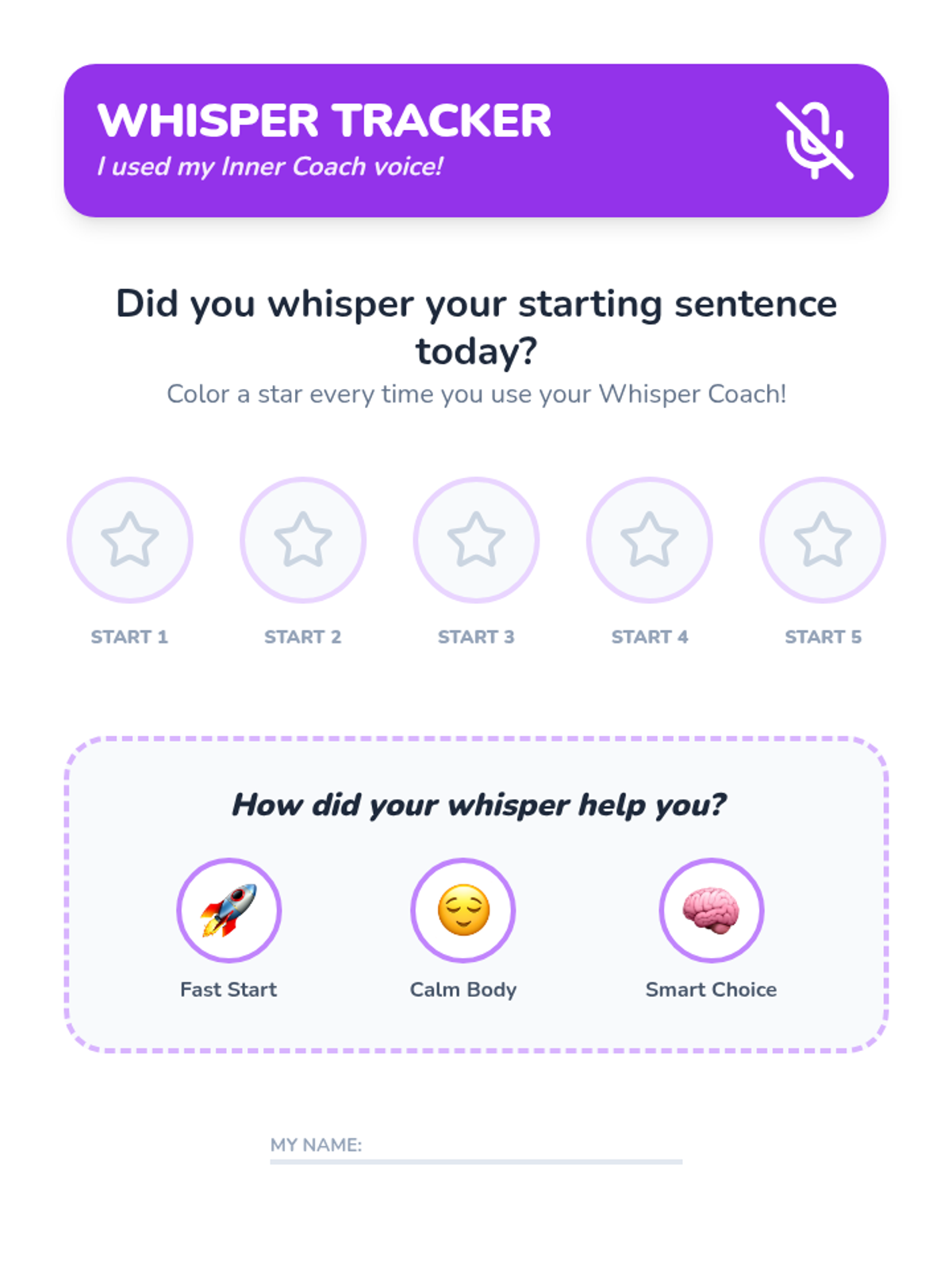
A simple reflection sheet for students to track when they successfully use their whisper coach to start a task.
A visual presentation for Lesson 4 that teaches students about volume control and practicing the whisper voice for their inner coach.
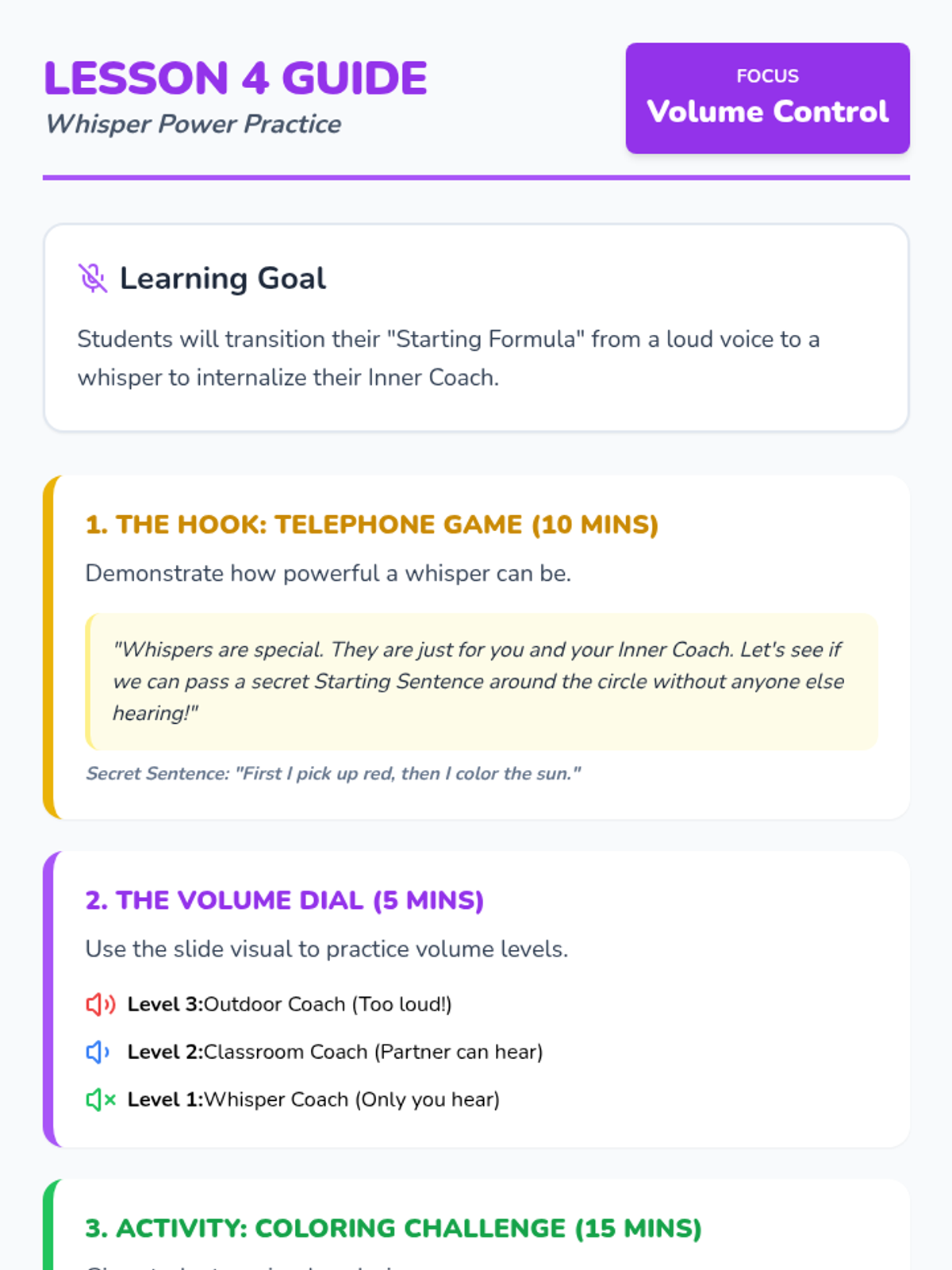
A teacher guide for Lesson 4, focusing on transitioning the "First... Then..." formula to a whisper for internalization.
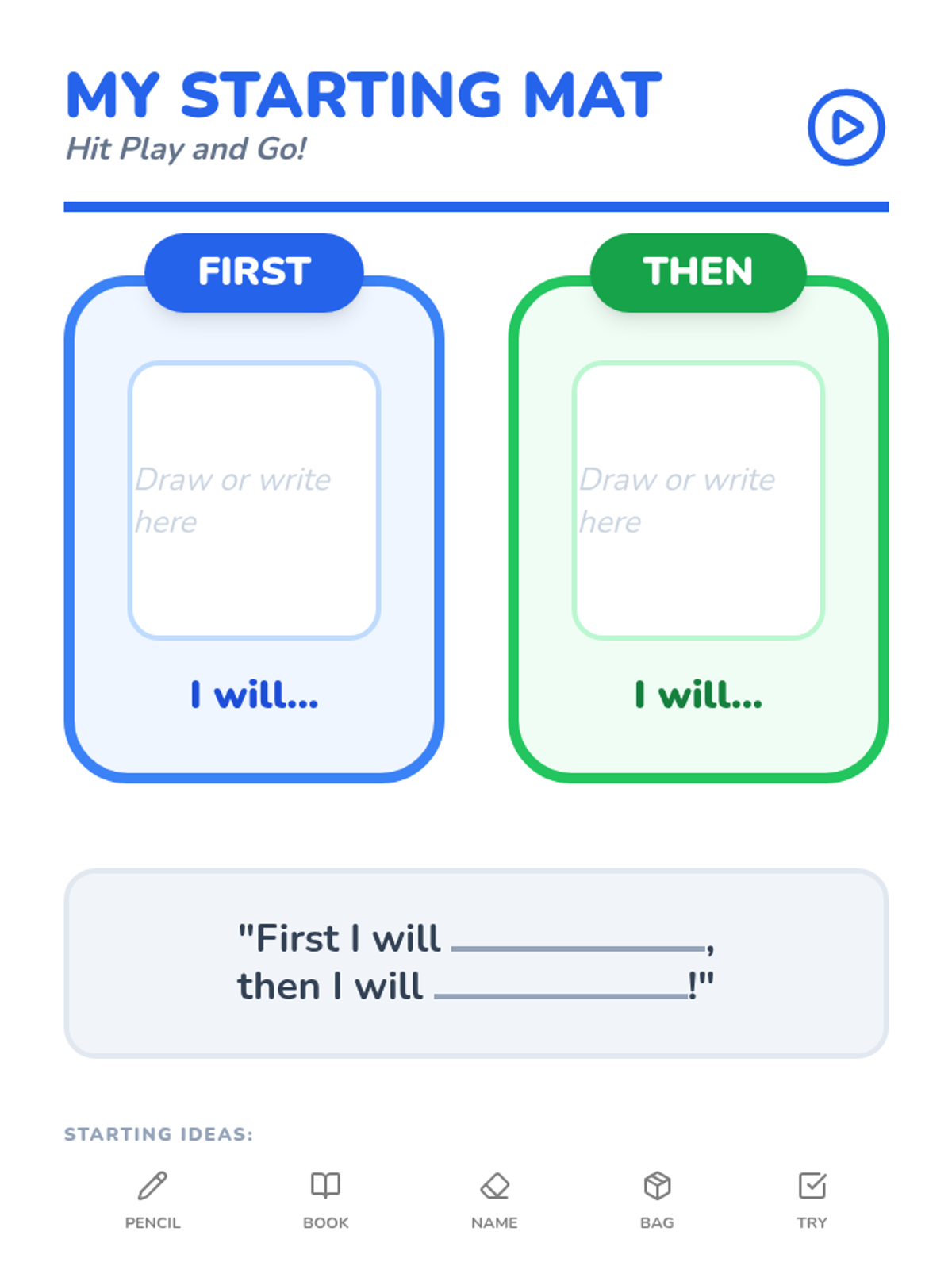
A visual organizer mat for students to plan and verbalize their first two steps for any task.
A visual presentation for Lesson 3 that explains the "First I will... then I will..." formula and provides practice prompts.
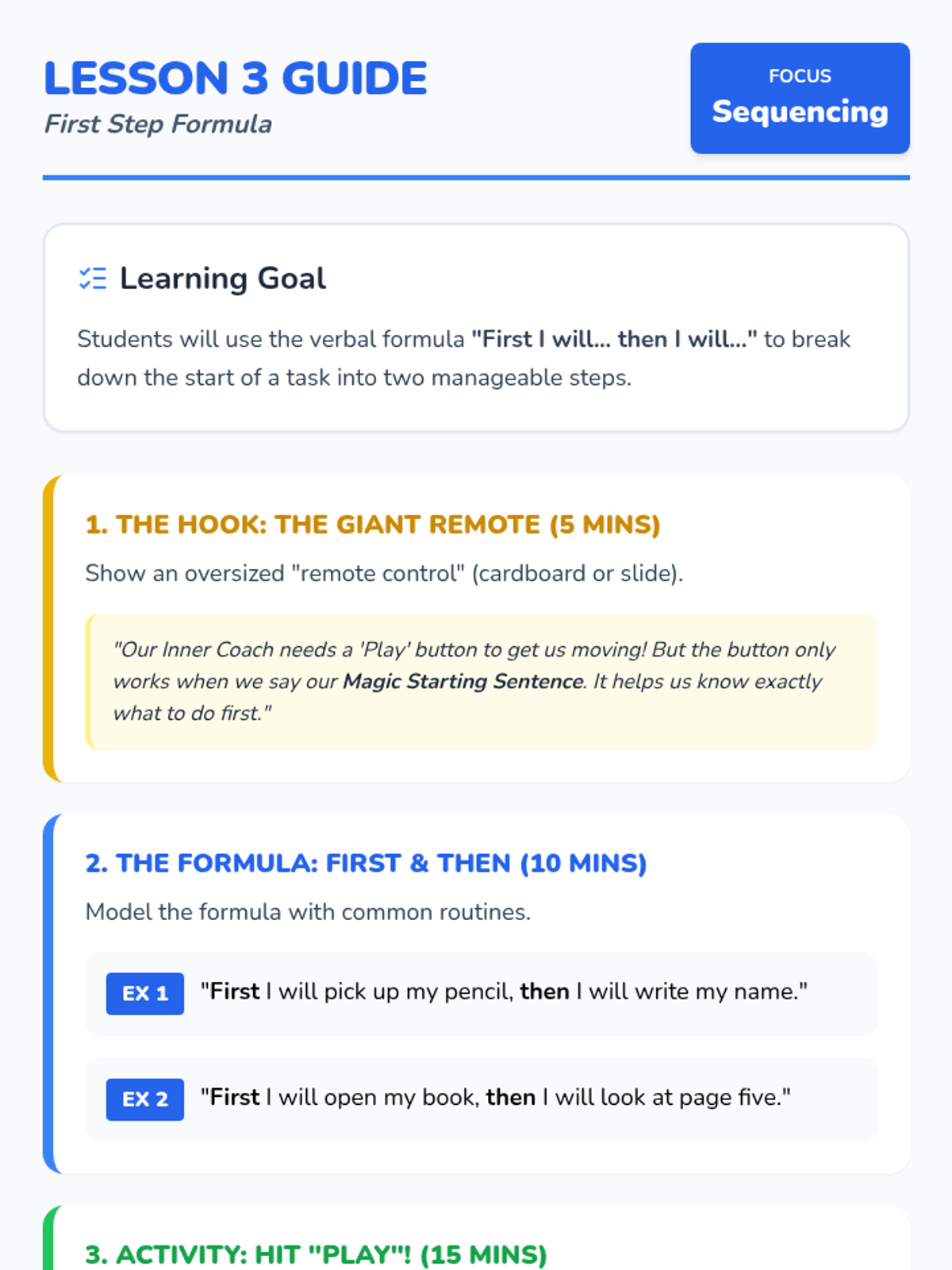
A teacher guide for Lesson 3, focusing on the "First I will... then I will..." verbal formula for task initiation.
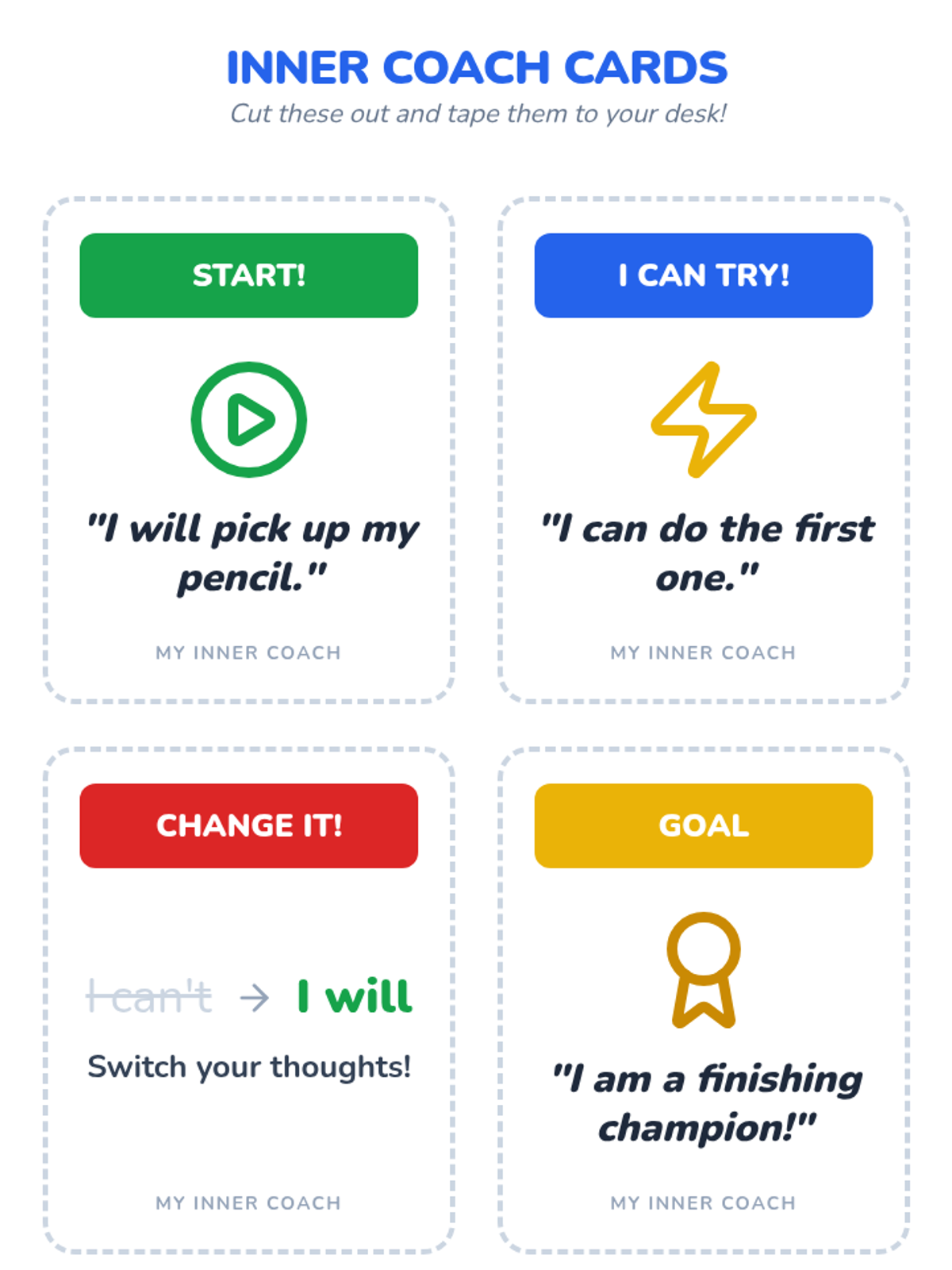
Desk reference cards for students to provide visual prompts for "Starting Thoughts" and positive self-talk.
A visual presentation for Lesson 2 that introduces the "Inner Coach" and helps students practice switching from stopping thoughts to starting thoughts.
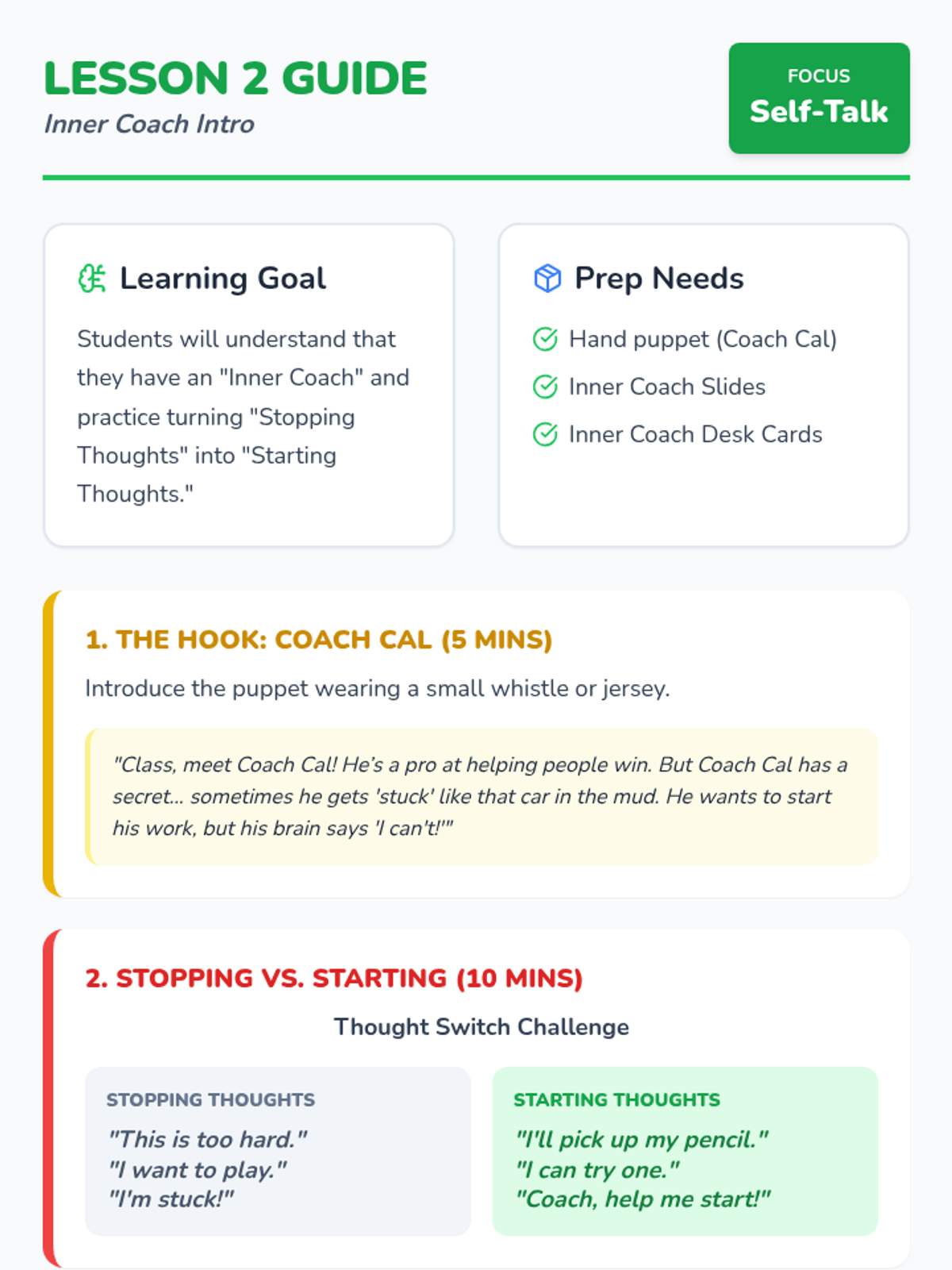
A teacher guide for Lesson 2, introducing the "Inner Coach" concept and the distinction between "Stopping" and "Starting" thoughts.
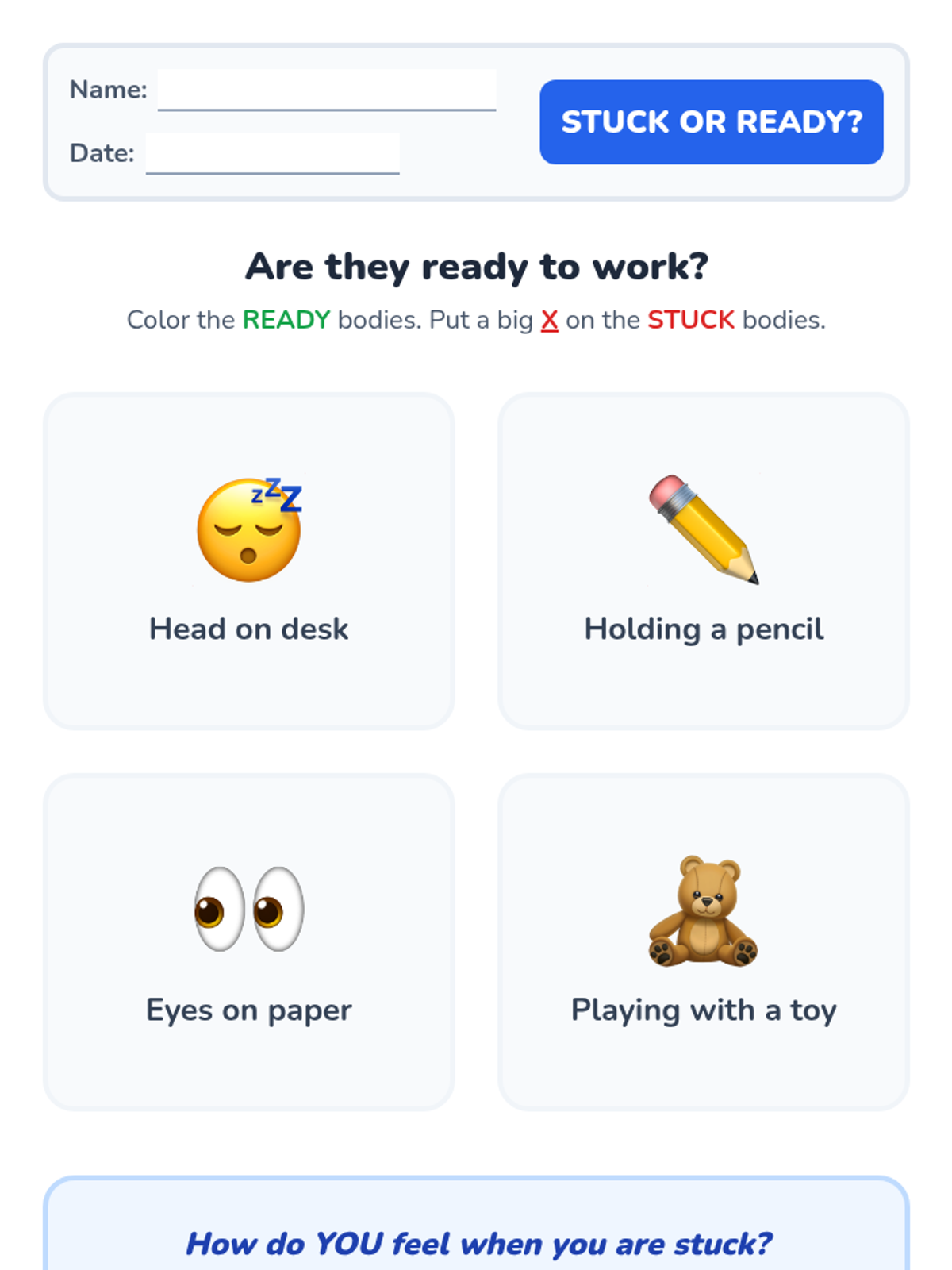
A worksheet for students to identify "Ready" vs "Stuck" behaviors and reflect on their own feelings when struggling to start a task.
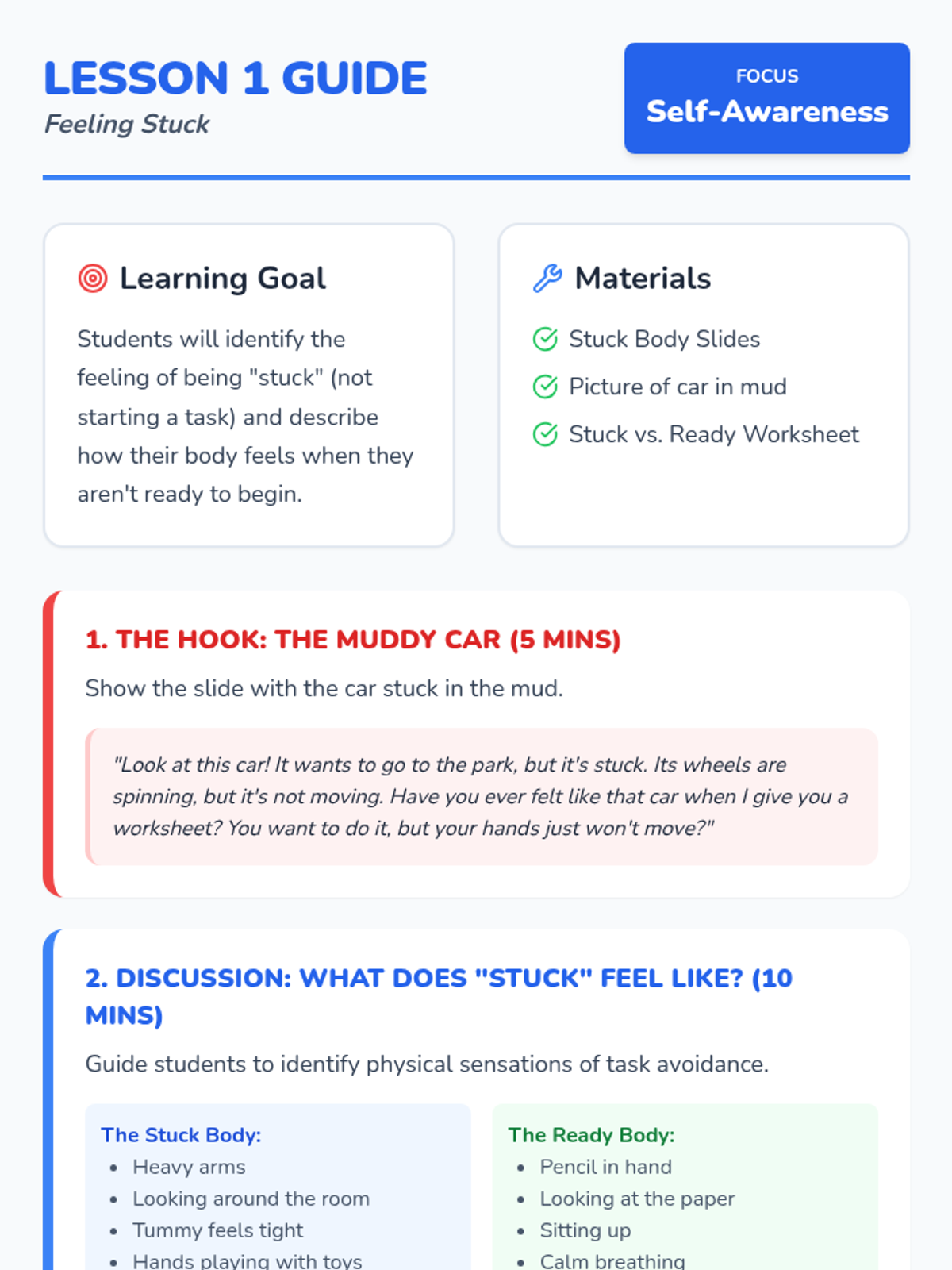
A visual presentation for Lesson 1 to help students visualize the difference between being "stuck" and being "ready" to start a task.
A teacher guide for Lesson 1, focusing on identifying the physical and emotional sensations of being "stuck" when starting a task.
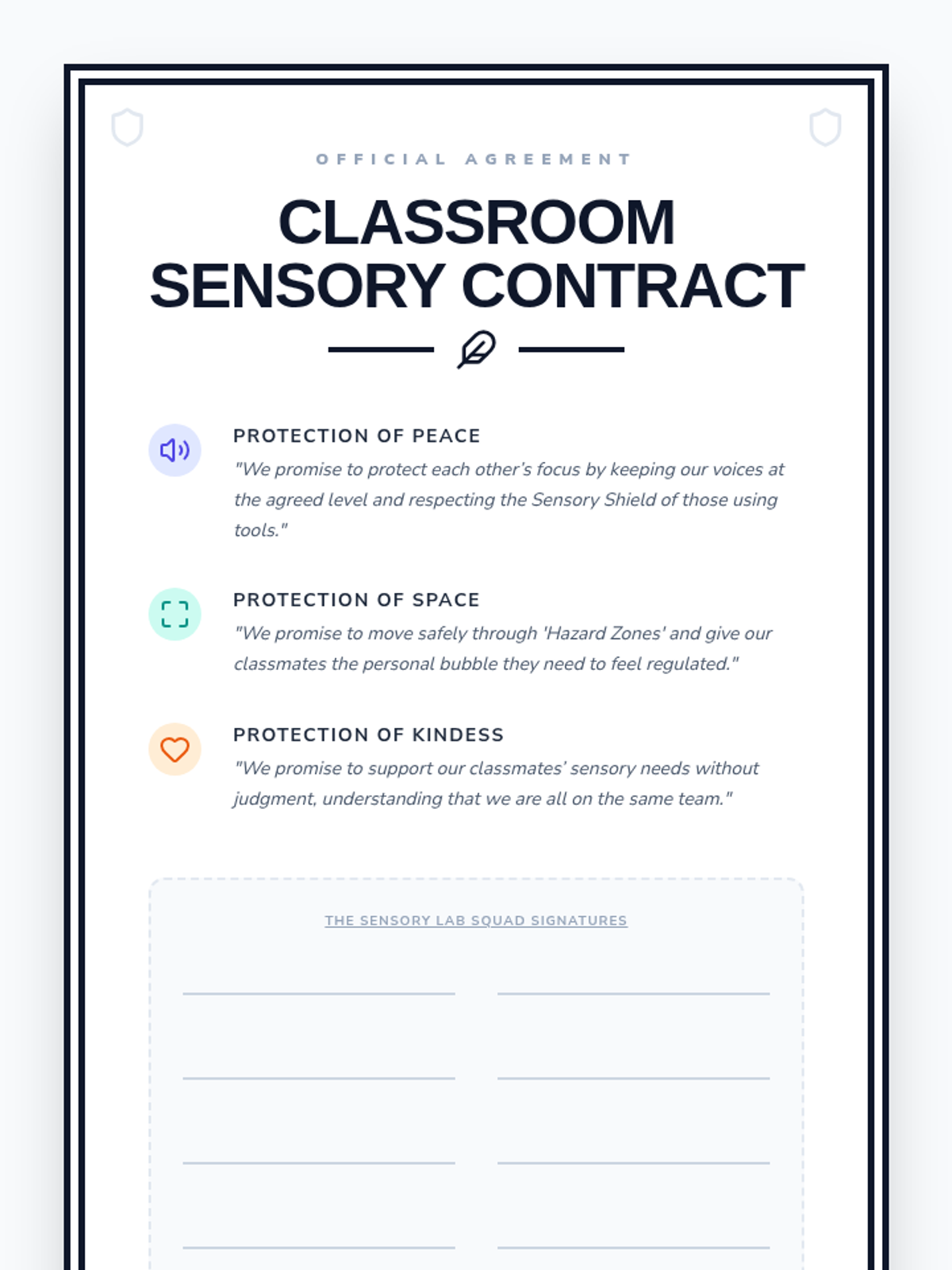
A formal classroom agreement document that establishes shared norms for noise, space, and sensory support, intended for all students to sign.
Slides for Lesson 5 consolidating learning into a classroom agreement on noise, space, and sensory support.
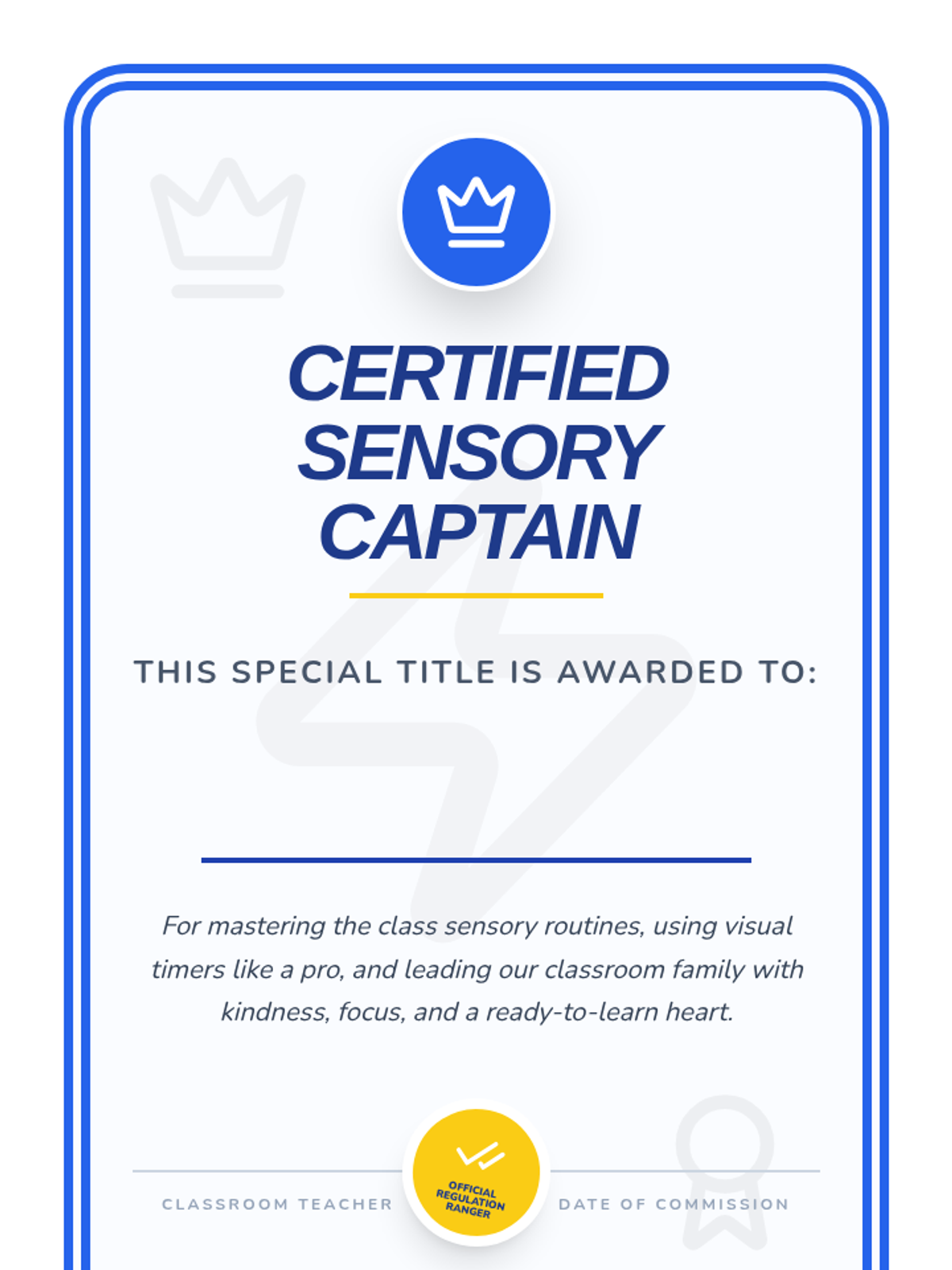
A formal 'Certified Sensory Captain' certificate awarded to students upon completing the sensory break sequence.
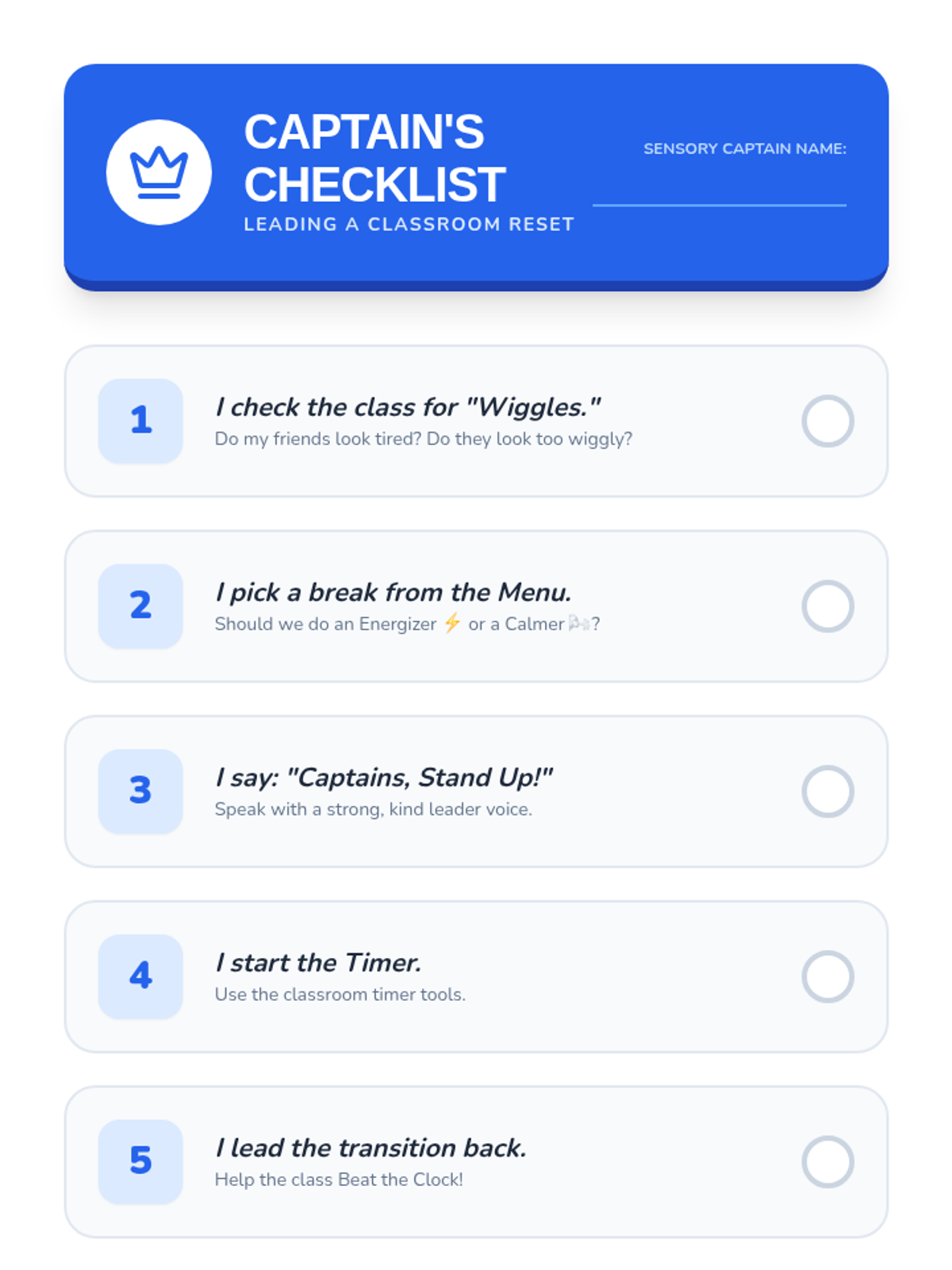
A step-by-step checklist for students to use when performing the 'Sensory Captain' leadership role.
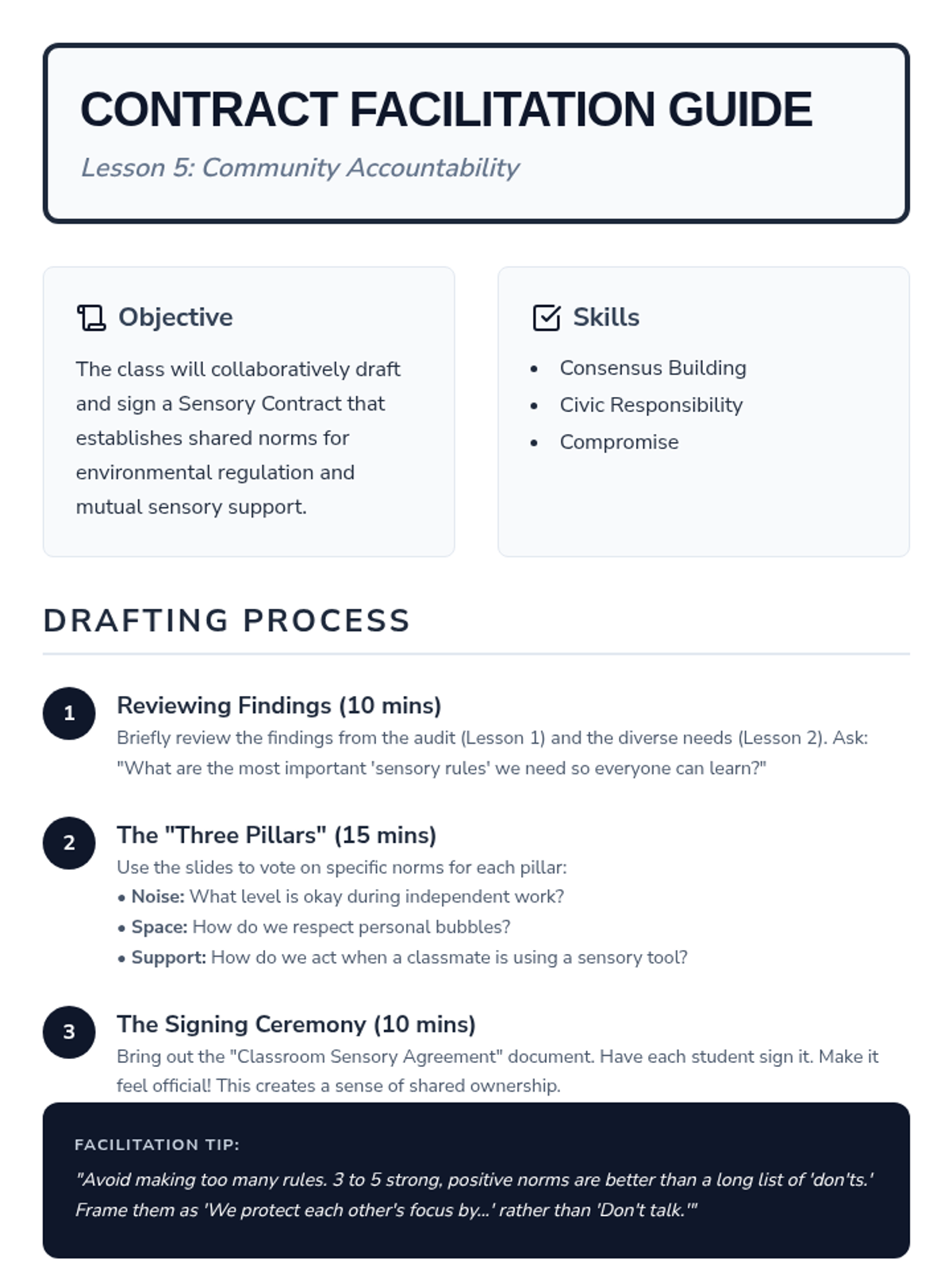
A teacher guide for the Classroom Sensory Contract lesson, featuring strategies for consensus building, signing ceremonies, and ongoing contract maintenance.
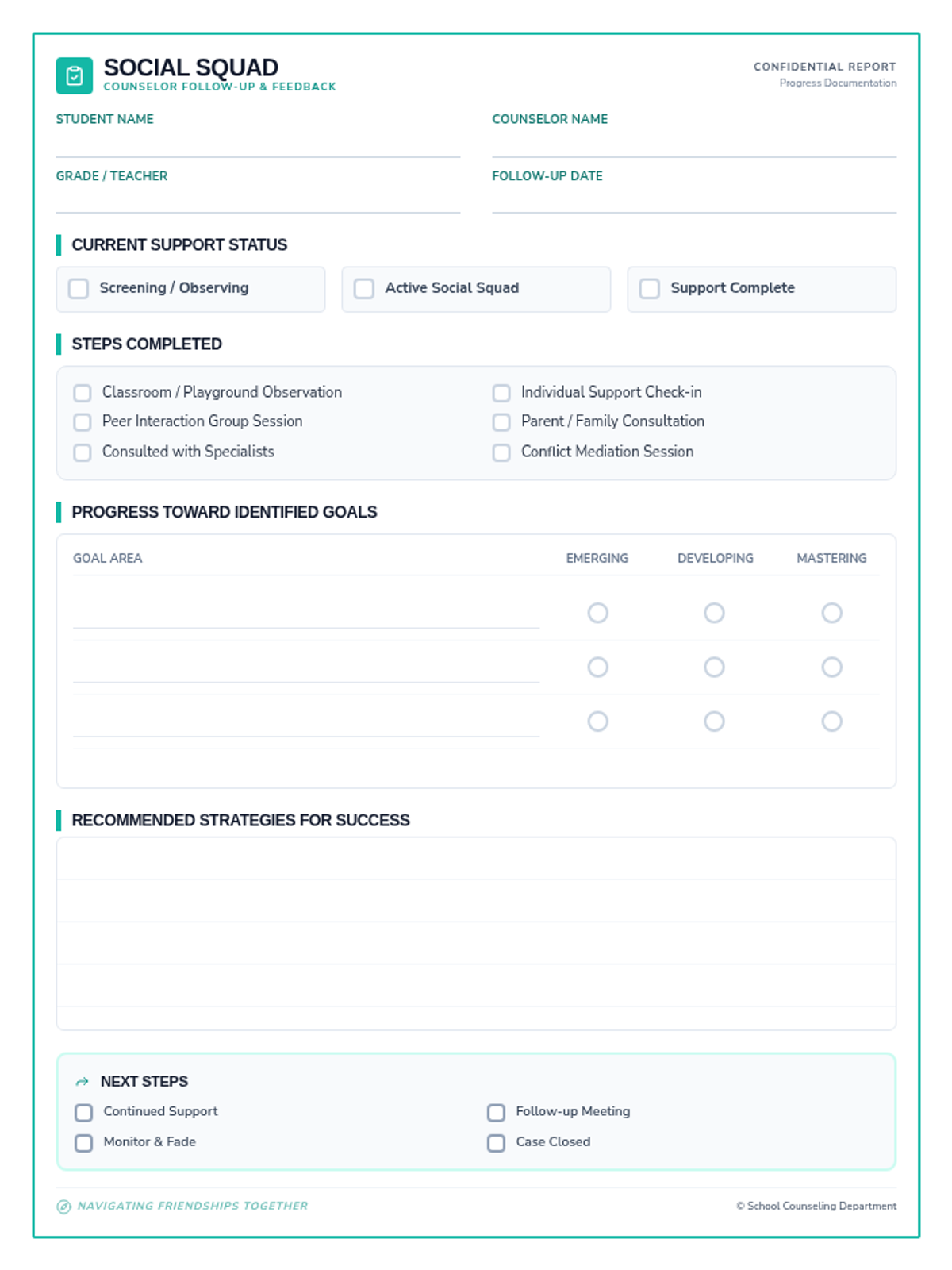
A revised school counselor follow-up and feedback form. It features a new introductory referral sentence, detailed intervention logs with dates and goals, a dedicated 'At this time' status section, and a professional closing message inviting continued collaboration. Now includes 'Outside Referral' in next steps.
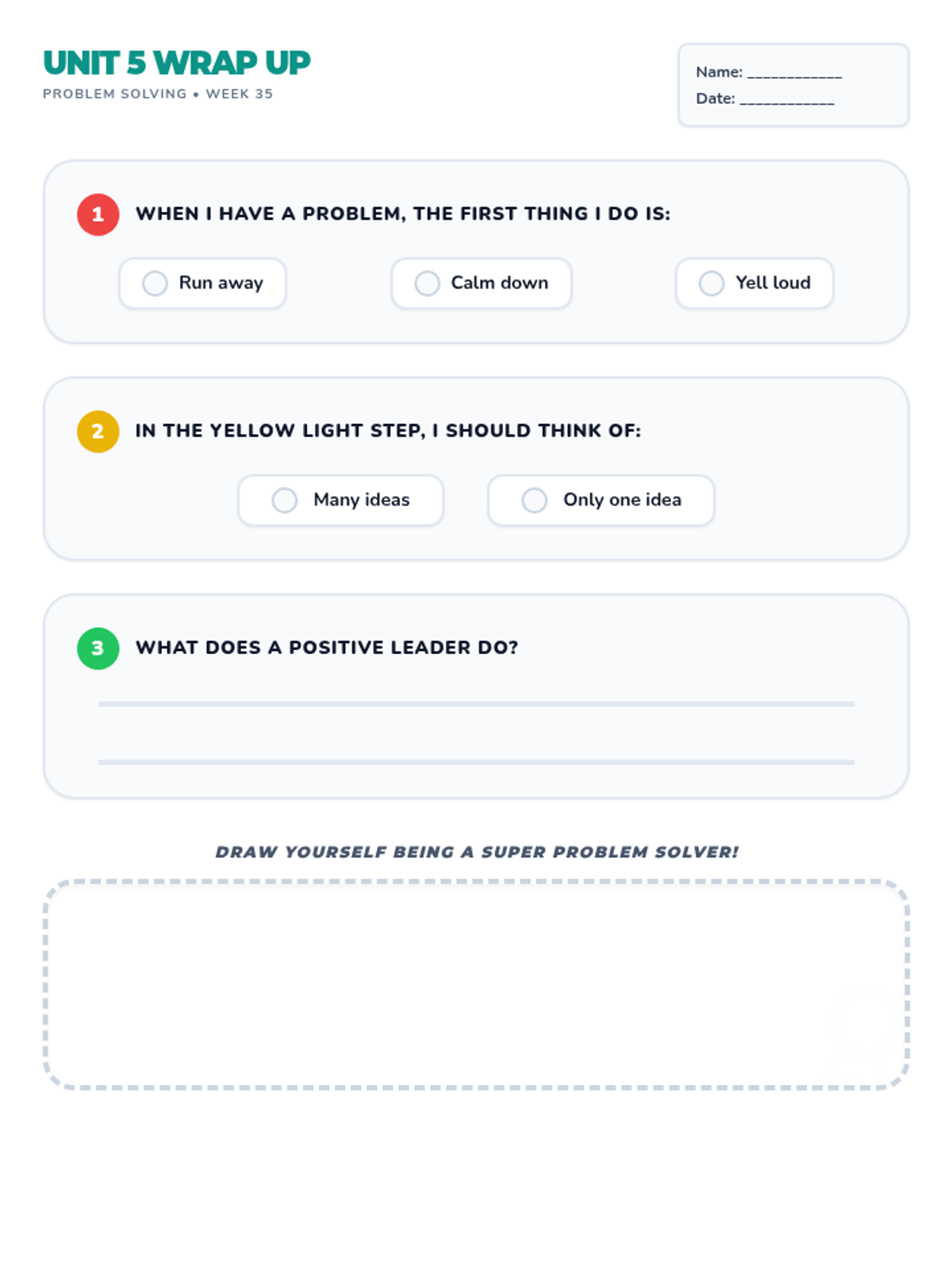
A final assessment for Unit 5. Revised with standardized answer choice styling, improved contrast, and significantly larger handwriting lines for 1st graders. Updated week label.
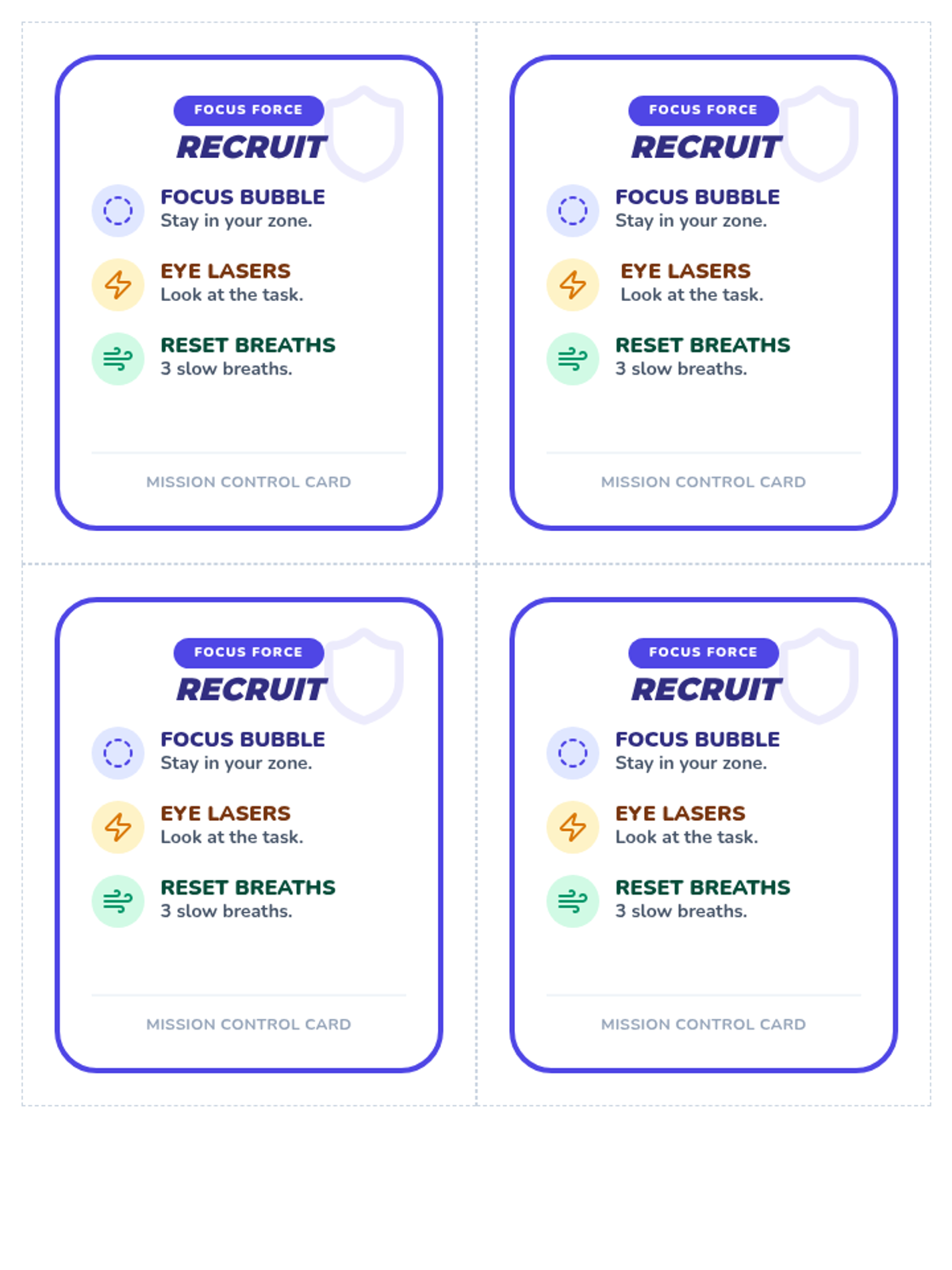
Printable desk reminders for students, providing quick visual cues for focus strategies like the Focus Bubble and Deep Breaths. Designed to be cut out and taped to a student's desk.
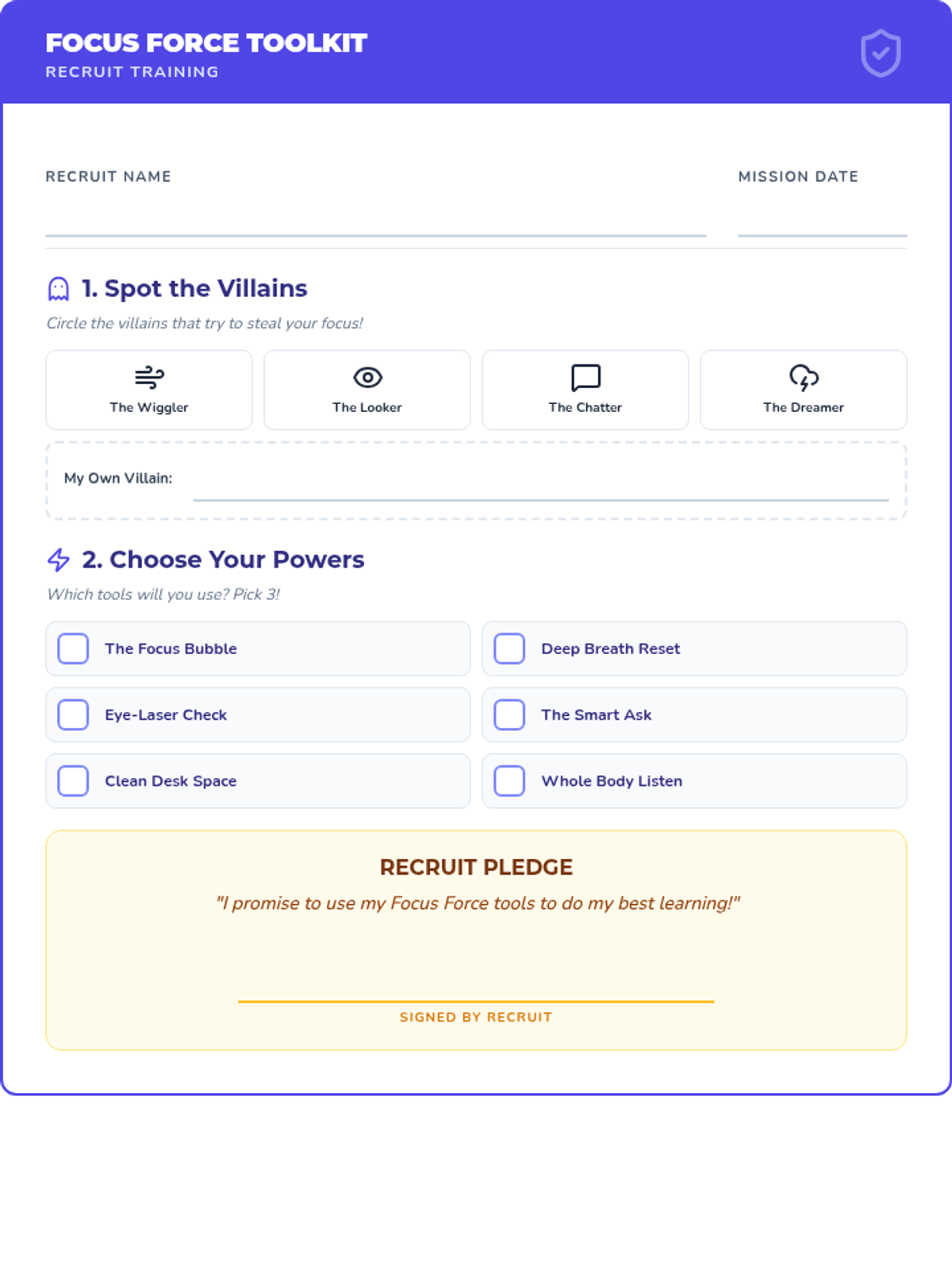
A student worksheet where 1st graders identify their specific 'distractions' and choose personalized focus strategies to use in class.
High-energy, visual-heavy presentation slides that introduce students to 'Distraction Villains' and 'Focus Superpowers' using a superhero/secret agent theme.
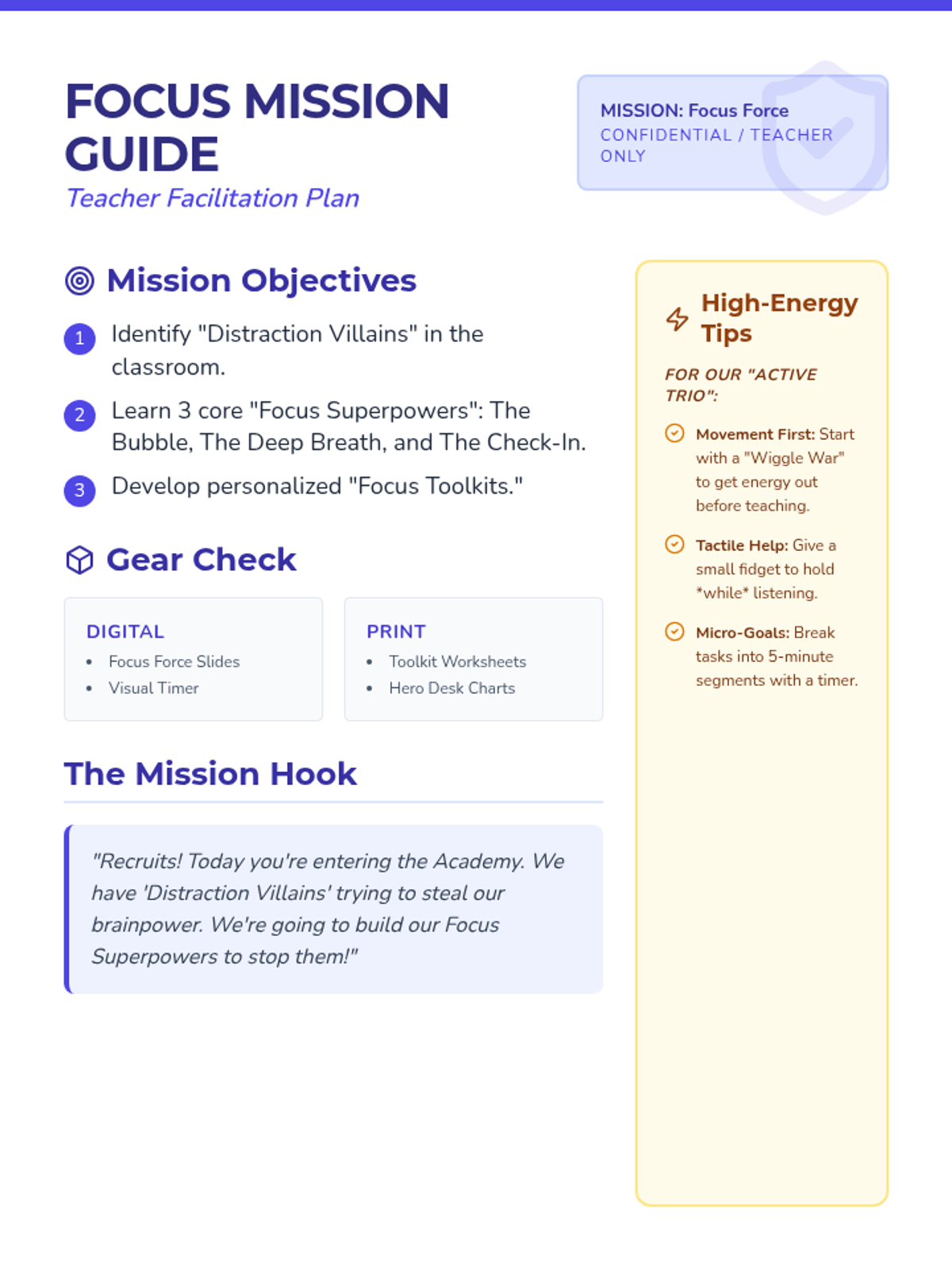
A comprehensive teacher facilitation guide with a superhero theme, including lesson objectives, energy-management tips for active students, and a step-by-step instructional sequence.
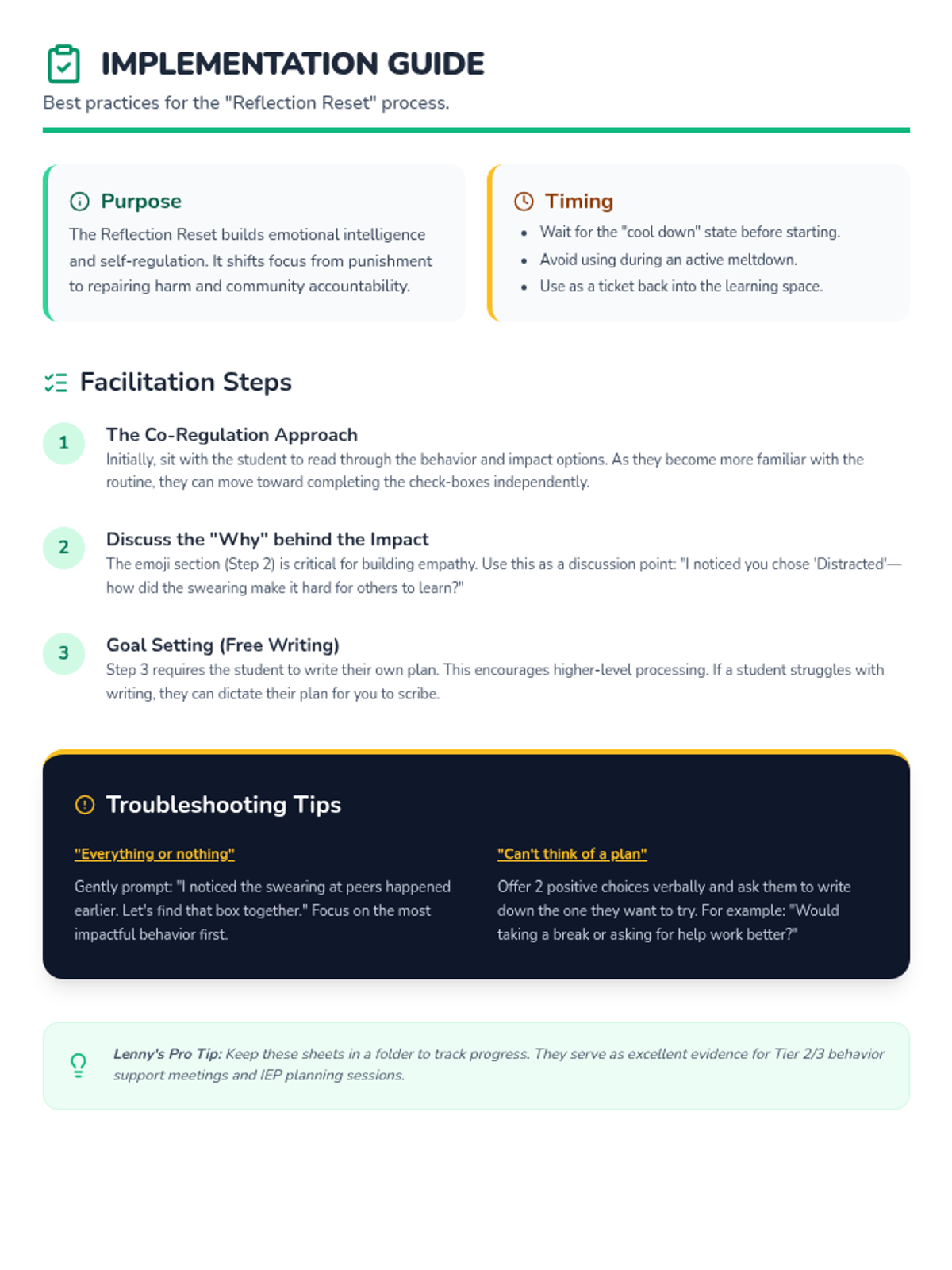
A teacher implementation guide for using the Reflection Reset sheet, revised to focus on the free-writing goal section and removing references to student signatures. Strictly 1-page design.
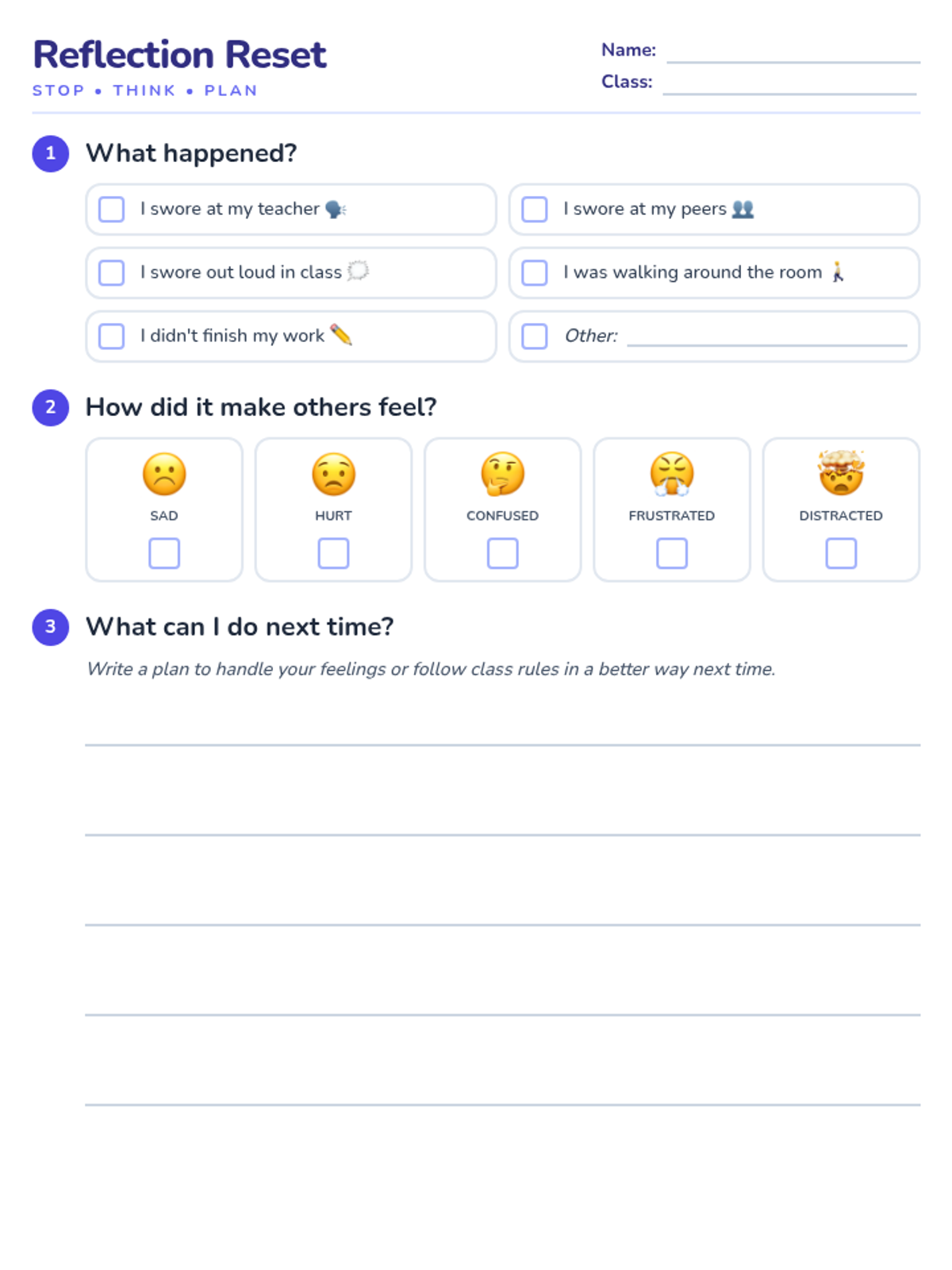
A graphic-organizer style behavior reflection sheet for students. Featuring sections for identifying behavior and impact with visuals, and a large writing area for the student to plan future choices. Removal of multiple choice for goals and student signature as requested. Strictly 1-page design.
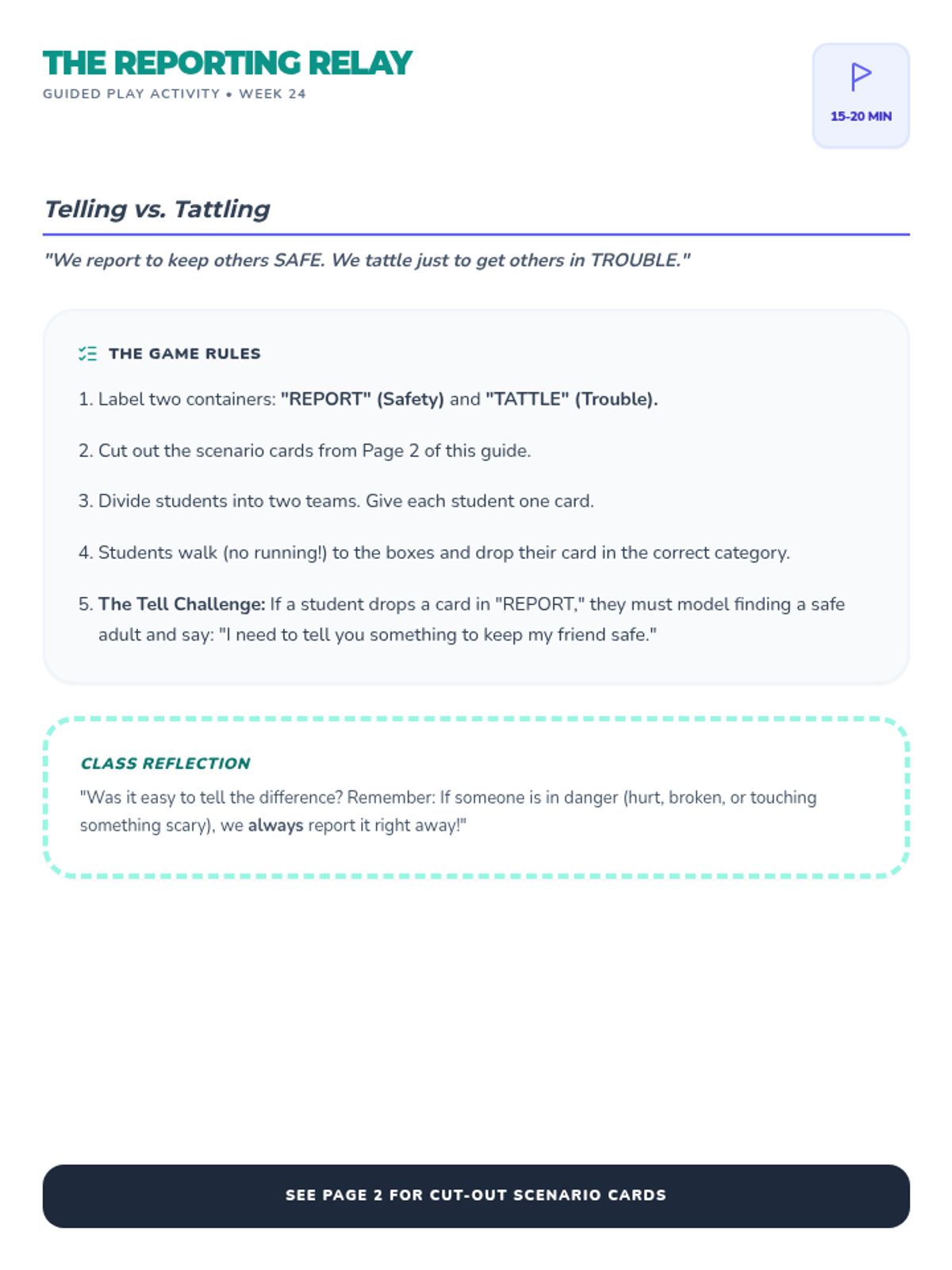
A teacher-facing guided play activity for Week 24. Revised with updated week label and full scenario cards.
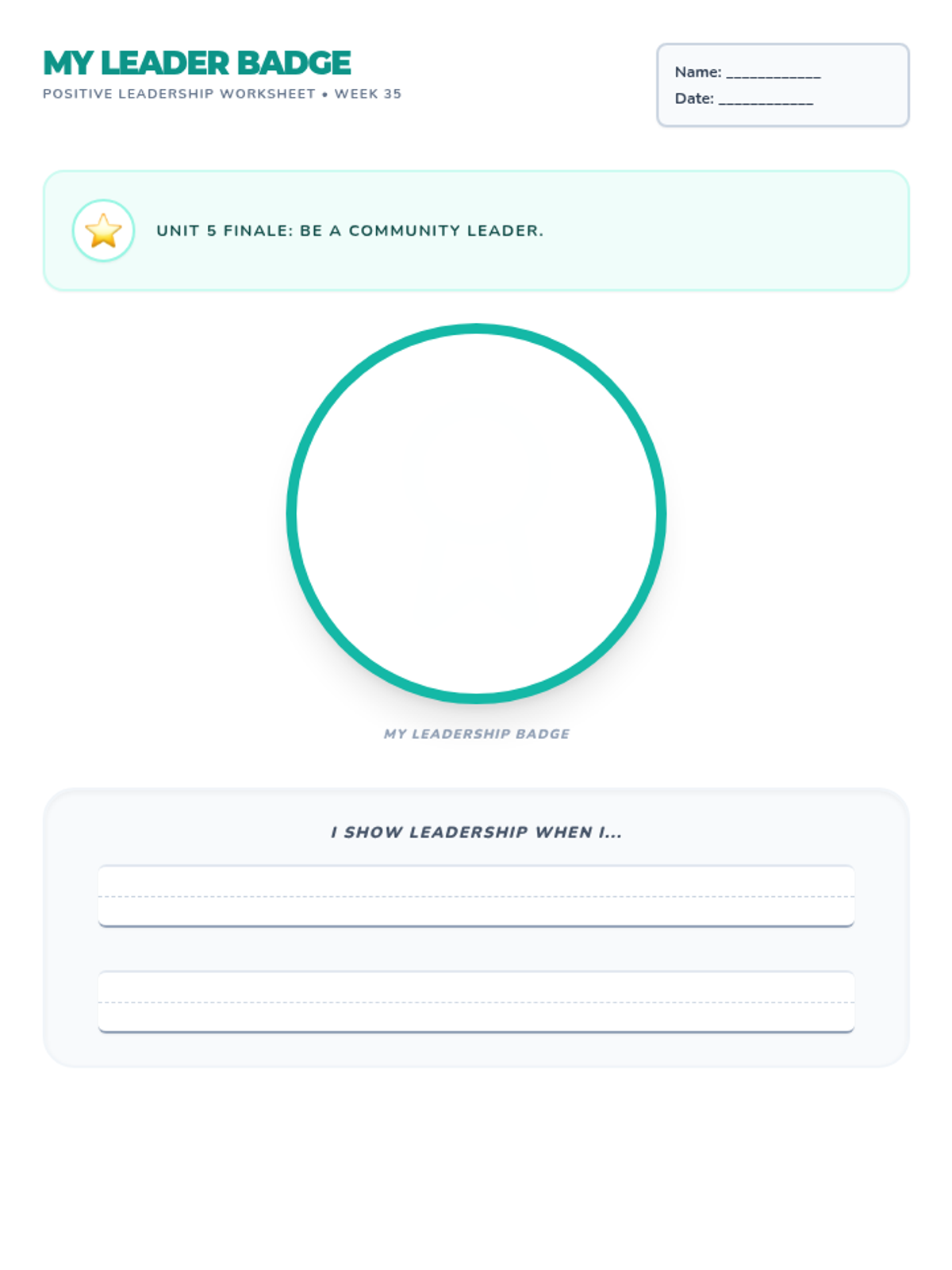
A student-facing worksheet for Week 35. Students design a personal "Leadership Badge" and identify positive actions. Revised for new sequence position.
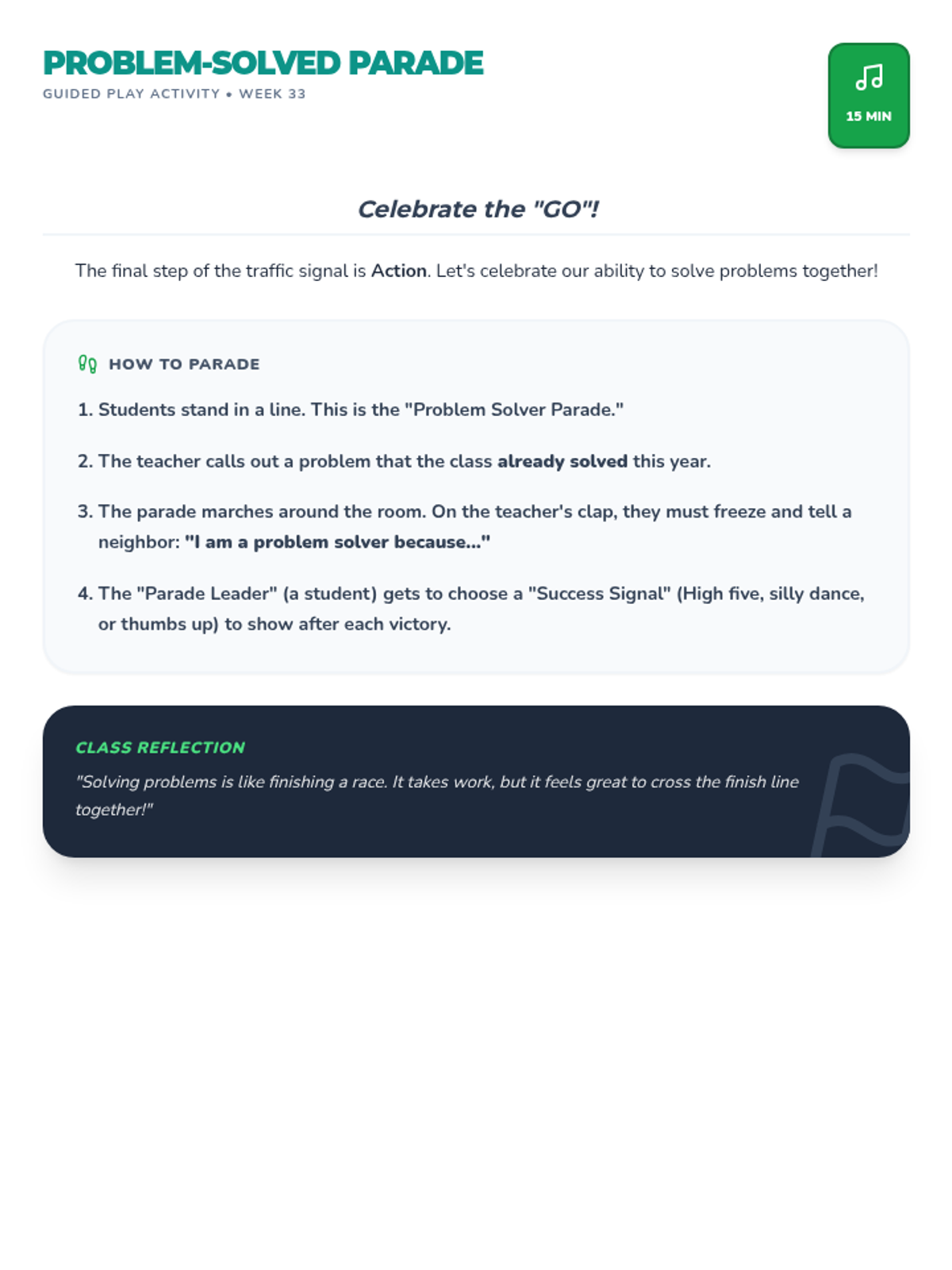
A teacher-facing guided play activity for Week 33. A movement-based celebration of collective problem-solving successes throughout the school year. Updated week label.
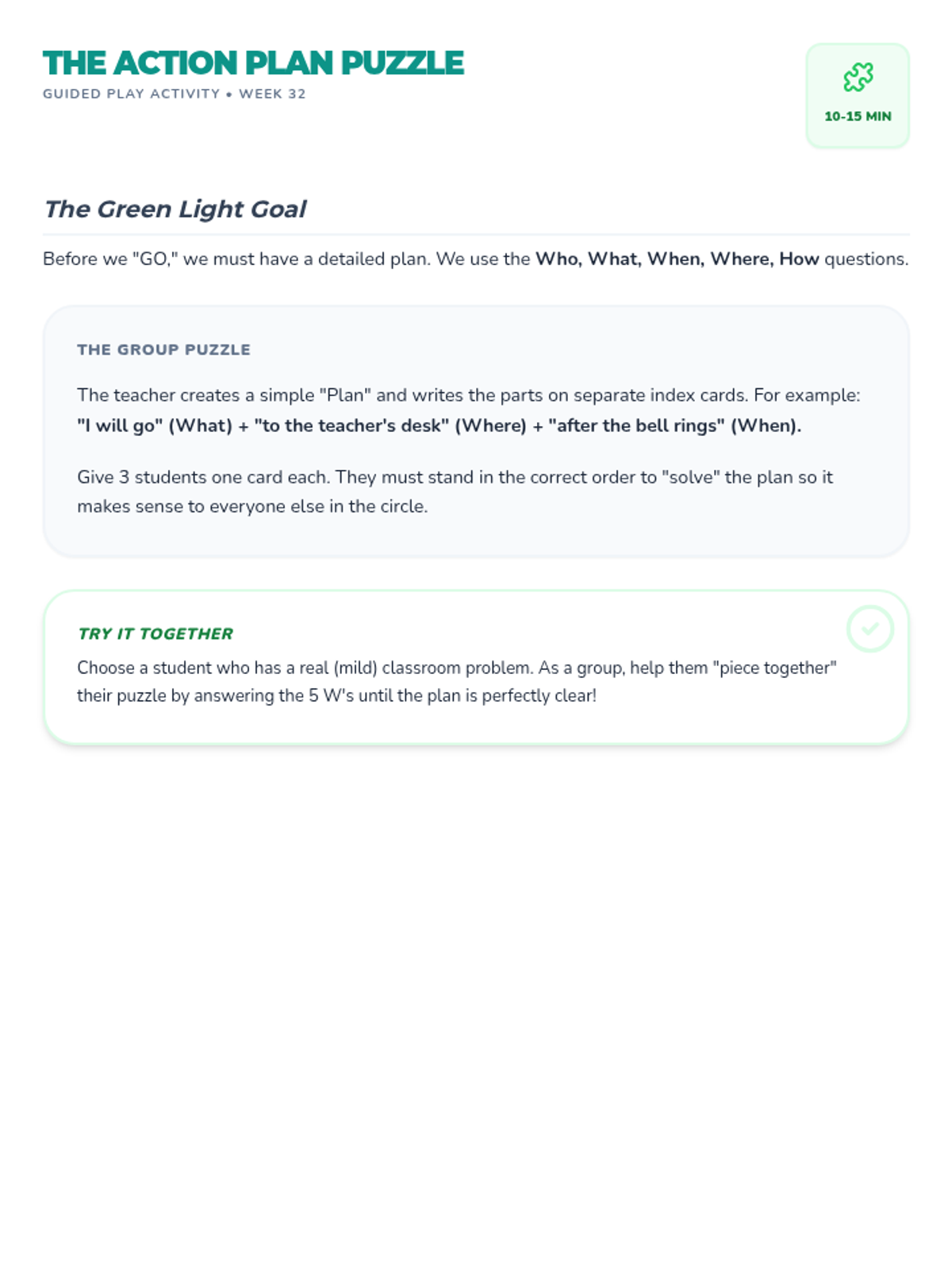
A teacher-facing guided play activity for Week 32. Students work together to "build" a detailed action plan by answering key questions (Who, What, When, etc.). Updated week label.
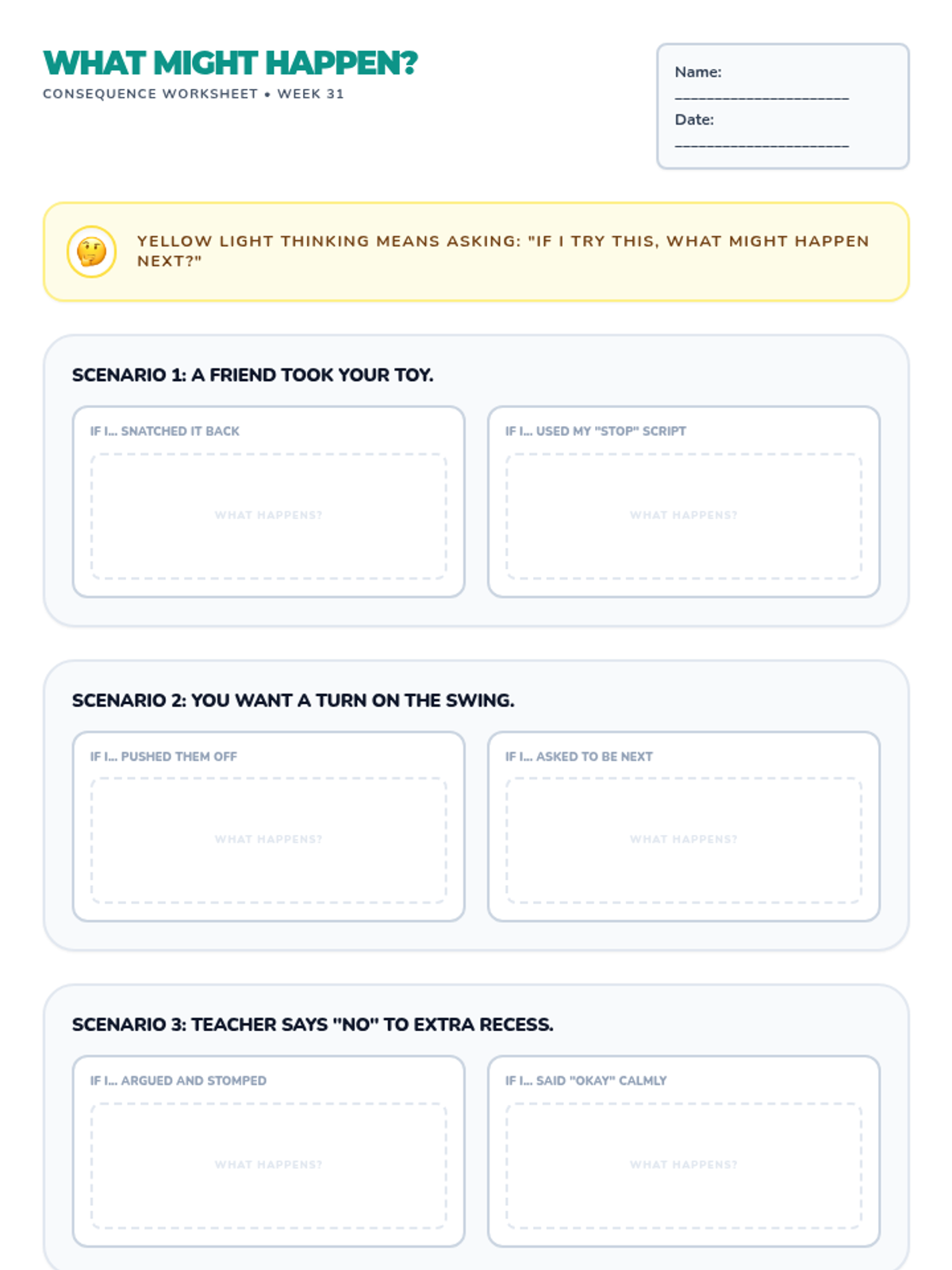
A student-facing worksheet for Week 31. Students evaluate consequences for multiple social scenarios by predicting likely outcomes. Updated week label.
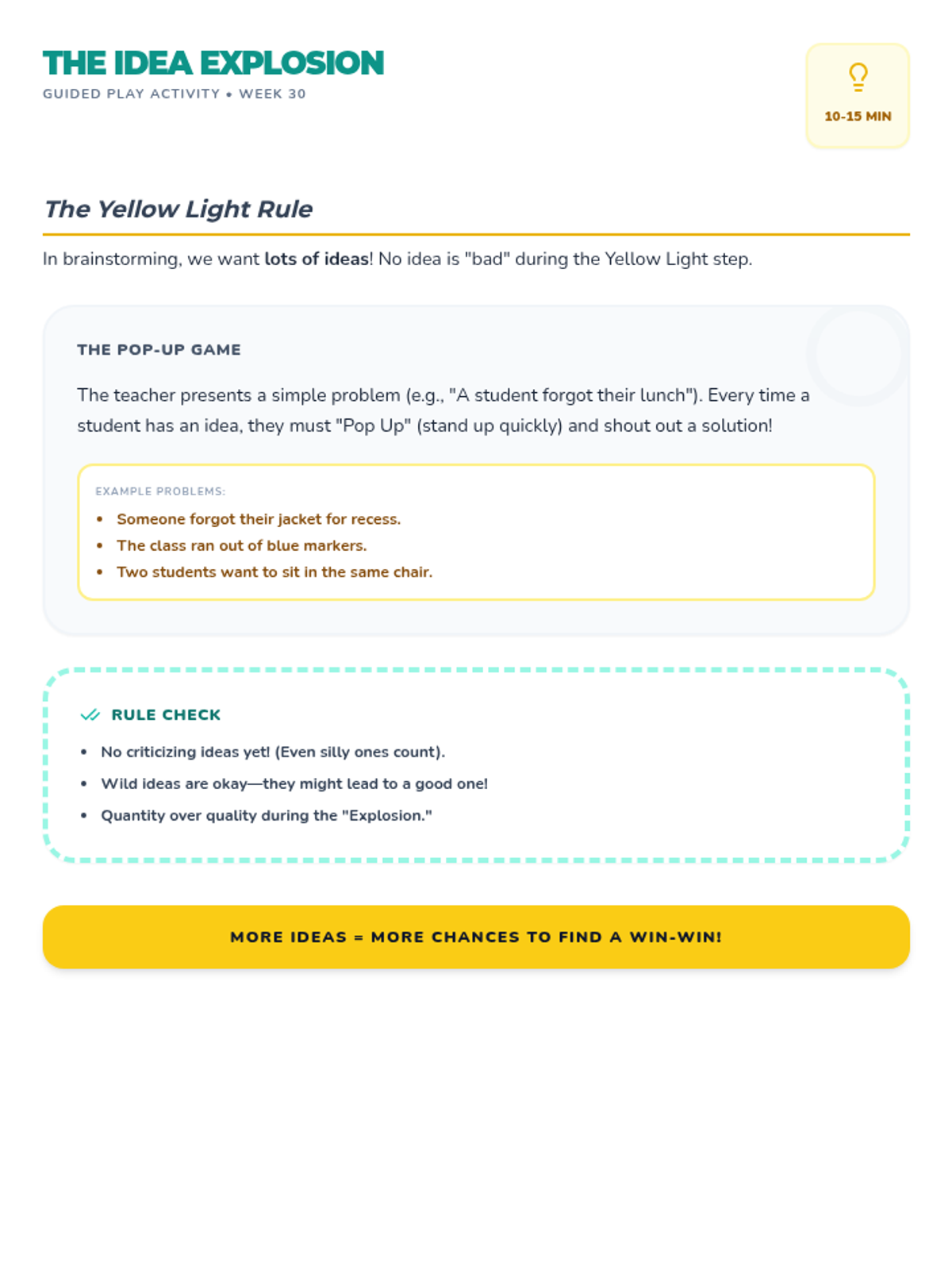
A teacher-facing guided play activity for Week 30. A rapid-fire brainstorming game that encourages students to generate multiple solutions without judgment. Updated week label and examples.
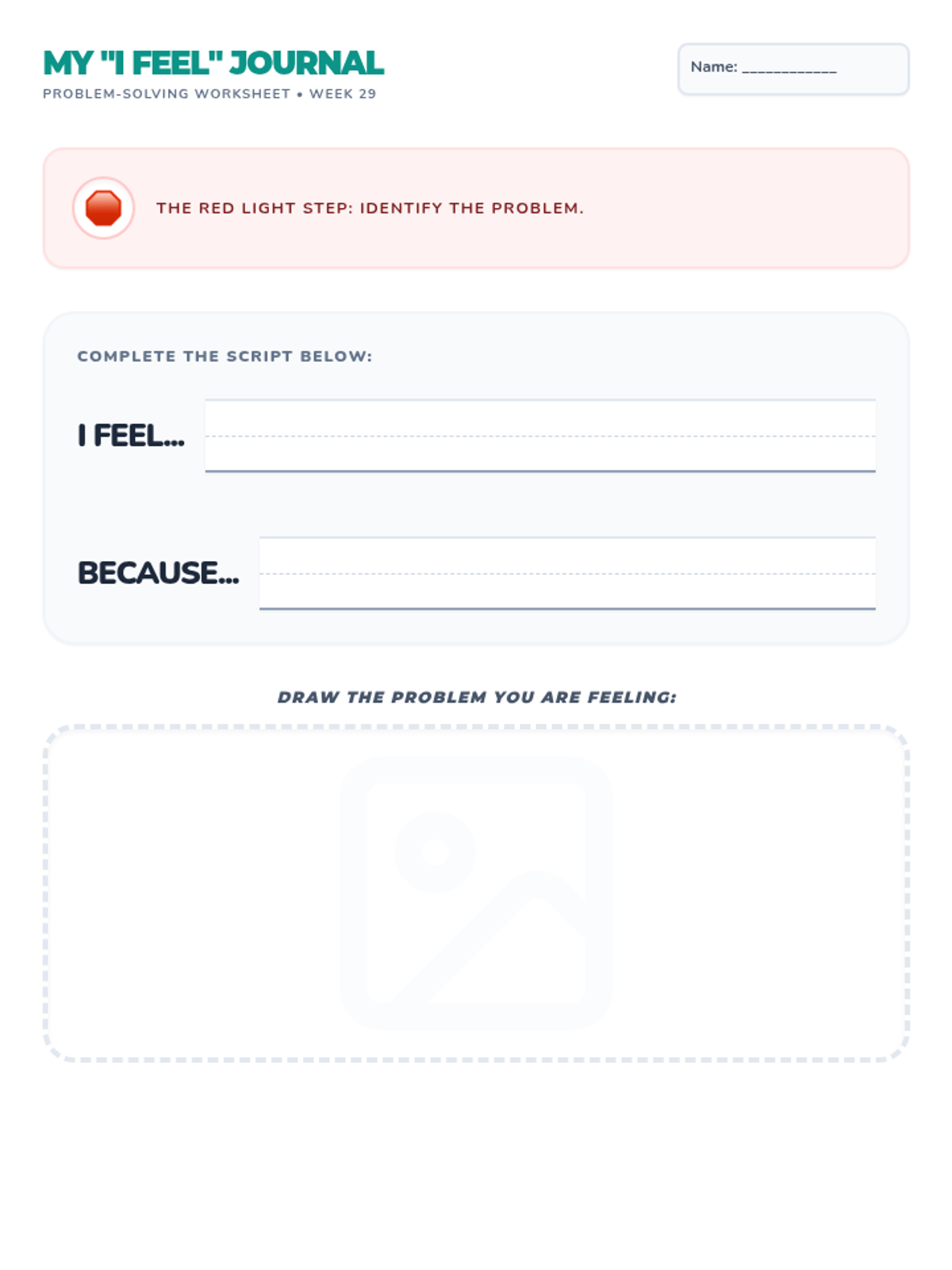
A student-facing worksheet for Week 29. Students practice using the "I feel... because..." script to clearly state a problem as part of the traffic signal model. Updated week label.
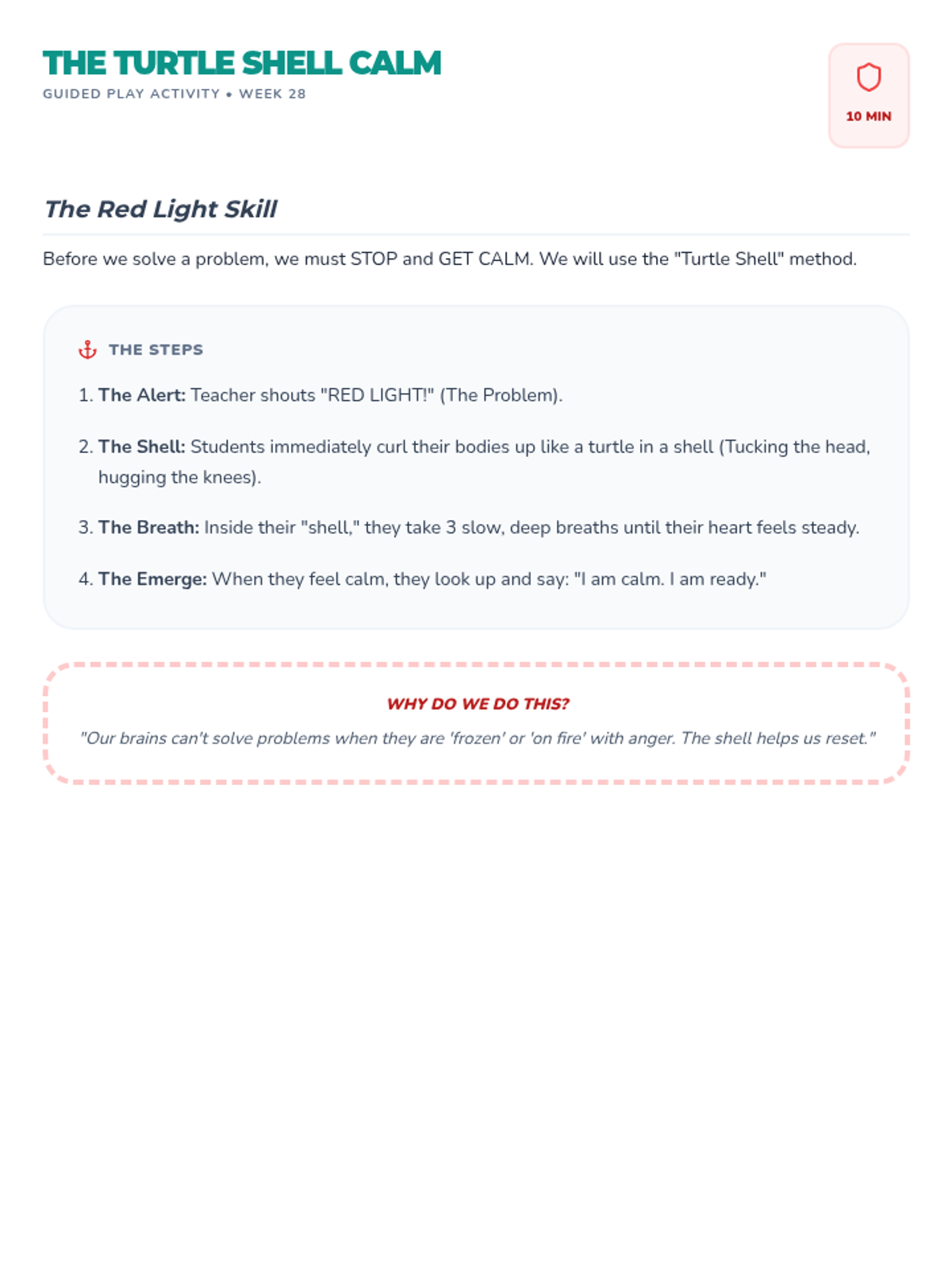
A teacher-facing guided play activity for Week 28. Teaches students the "Turtle Shell" technique for immediate self-regulation when faced with a problem. Updated week label.
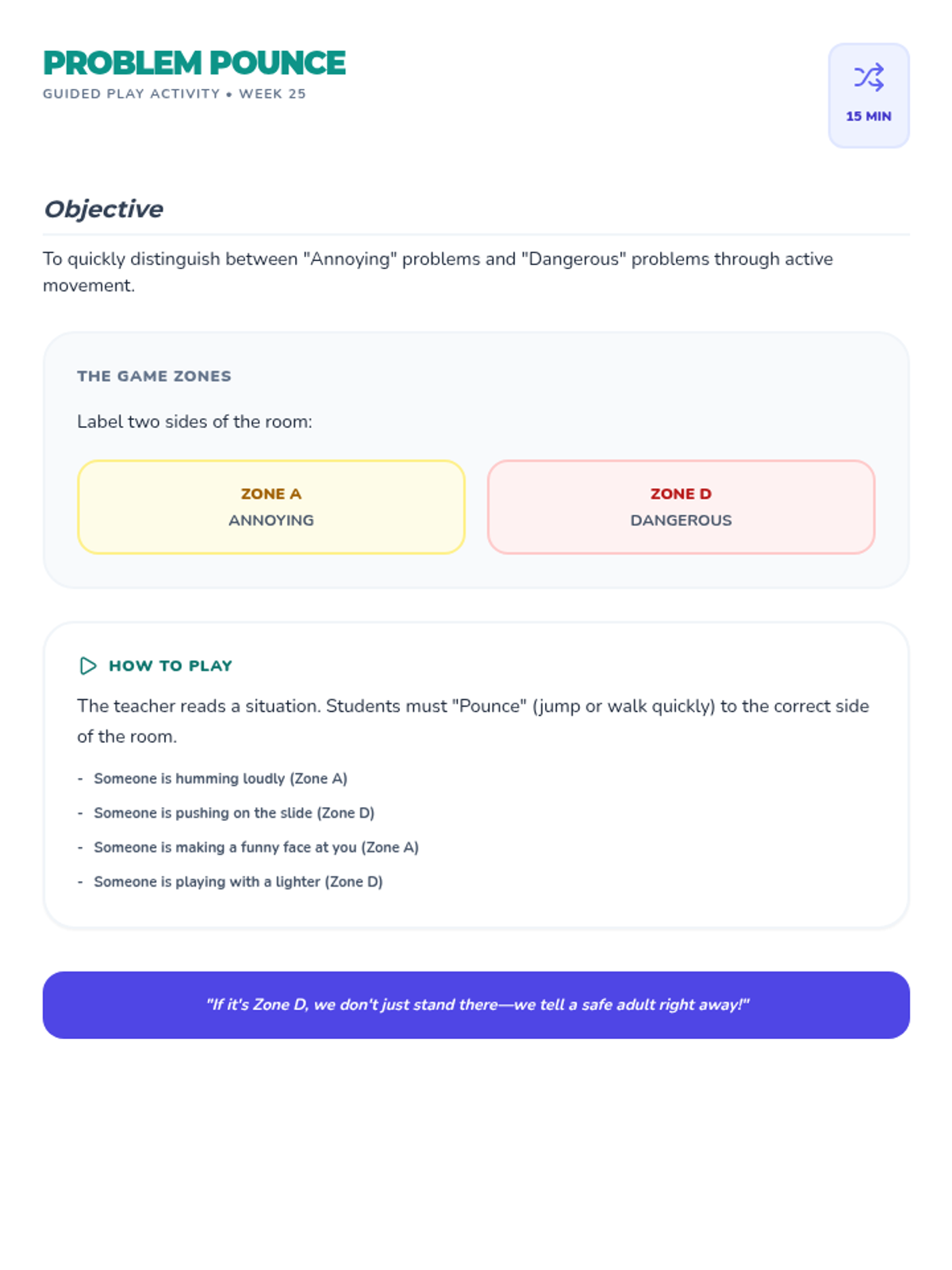
A teacher-facing guided play activity for Week 25. A movement-based sorting game where students categorize classroom problems as "Annoying" or "Dangerous." Updated week label.
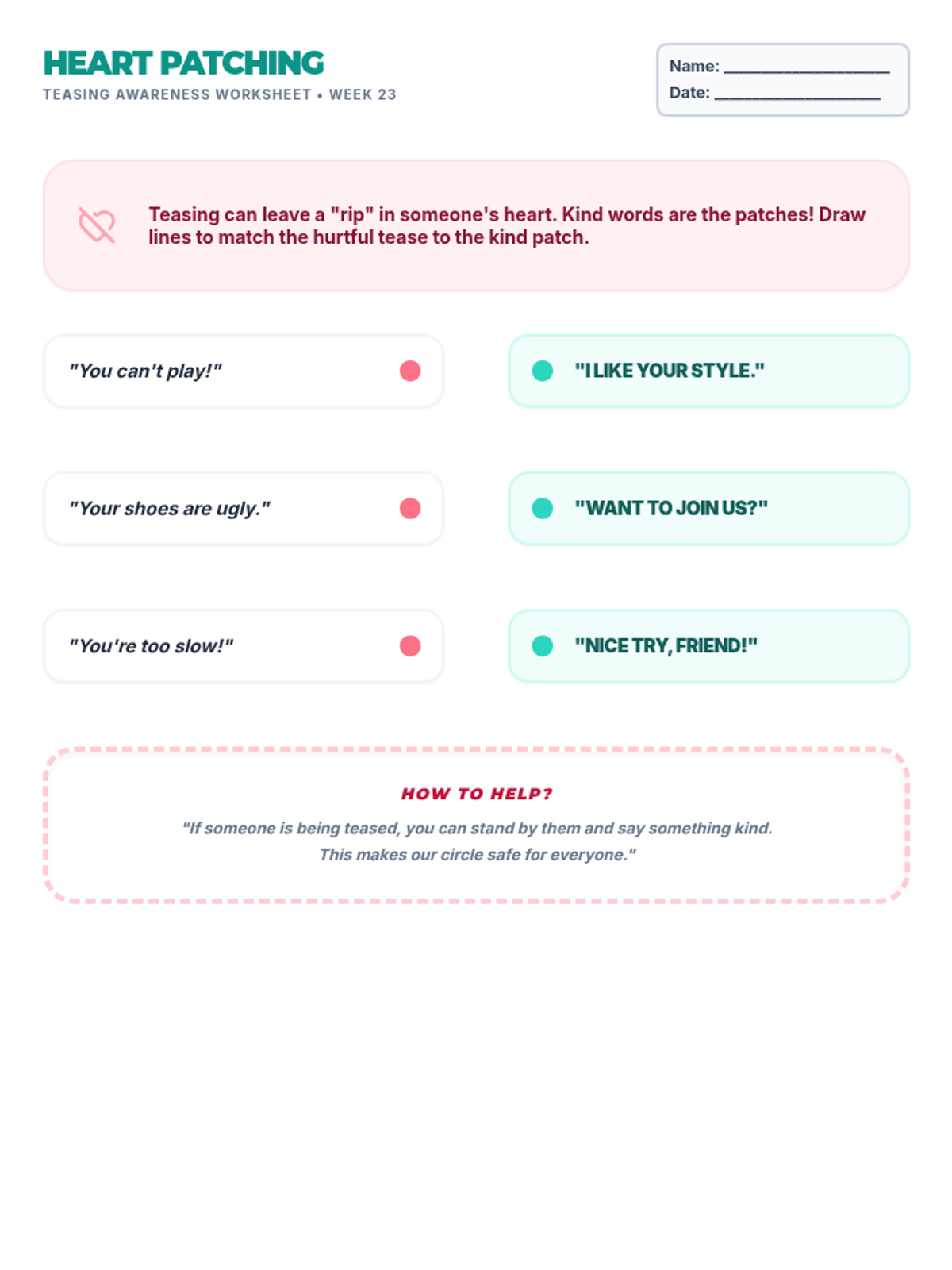
A student-facing worksheet for Week 23 focusing on the impact of teasing. Students match hurtful "teases" with helpful "patches" (kind words), promoting empathy and bystander intervention. Revised with shuffled answers for challenge and improved contrast.
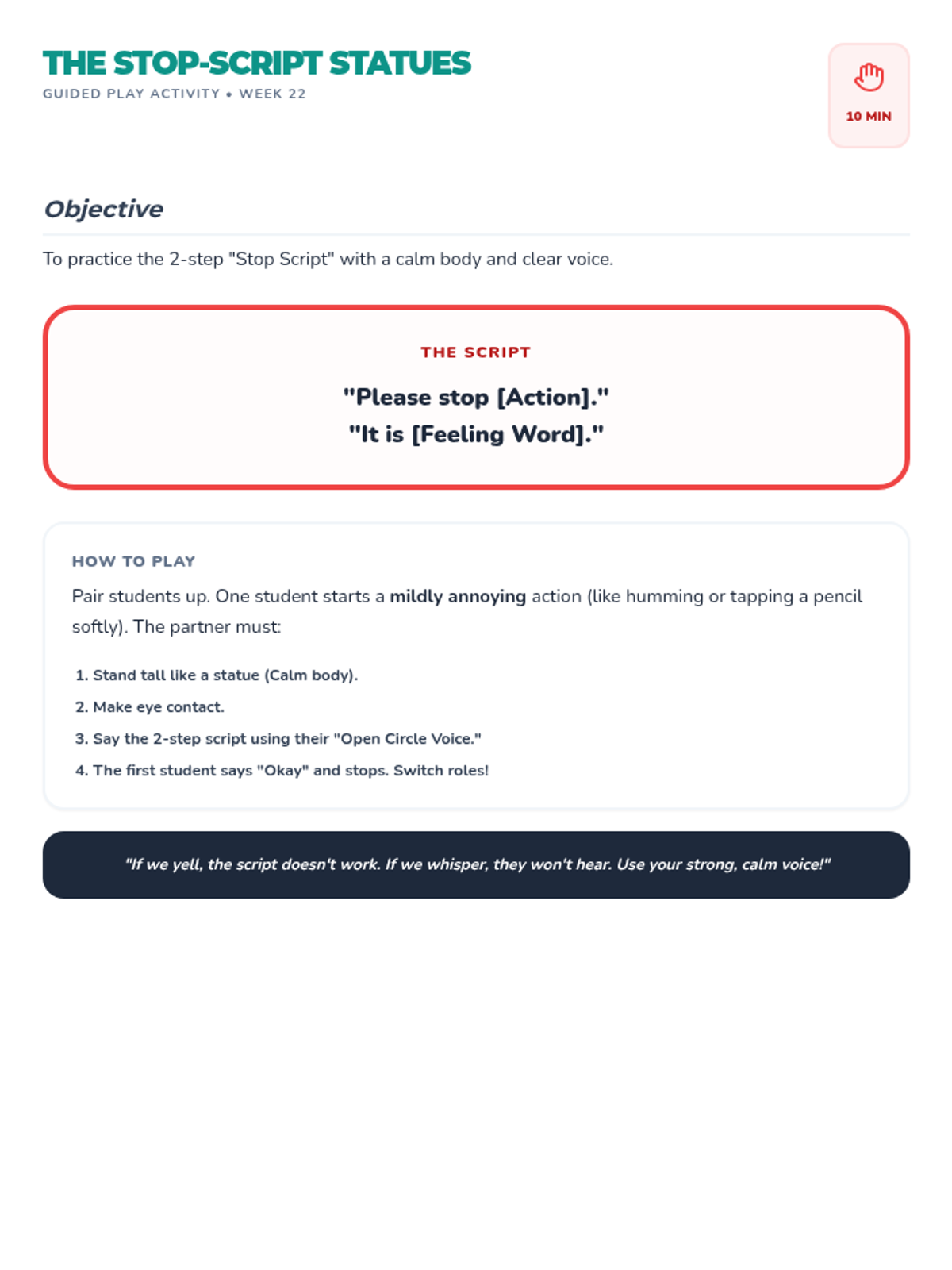
A teacher-facing guided play activity for Week 22. Students practice using the two-step "Please stop" script in a controlled, safe role-play environment.
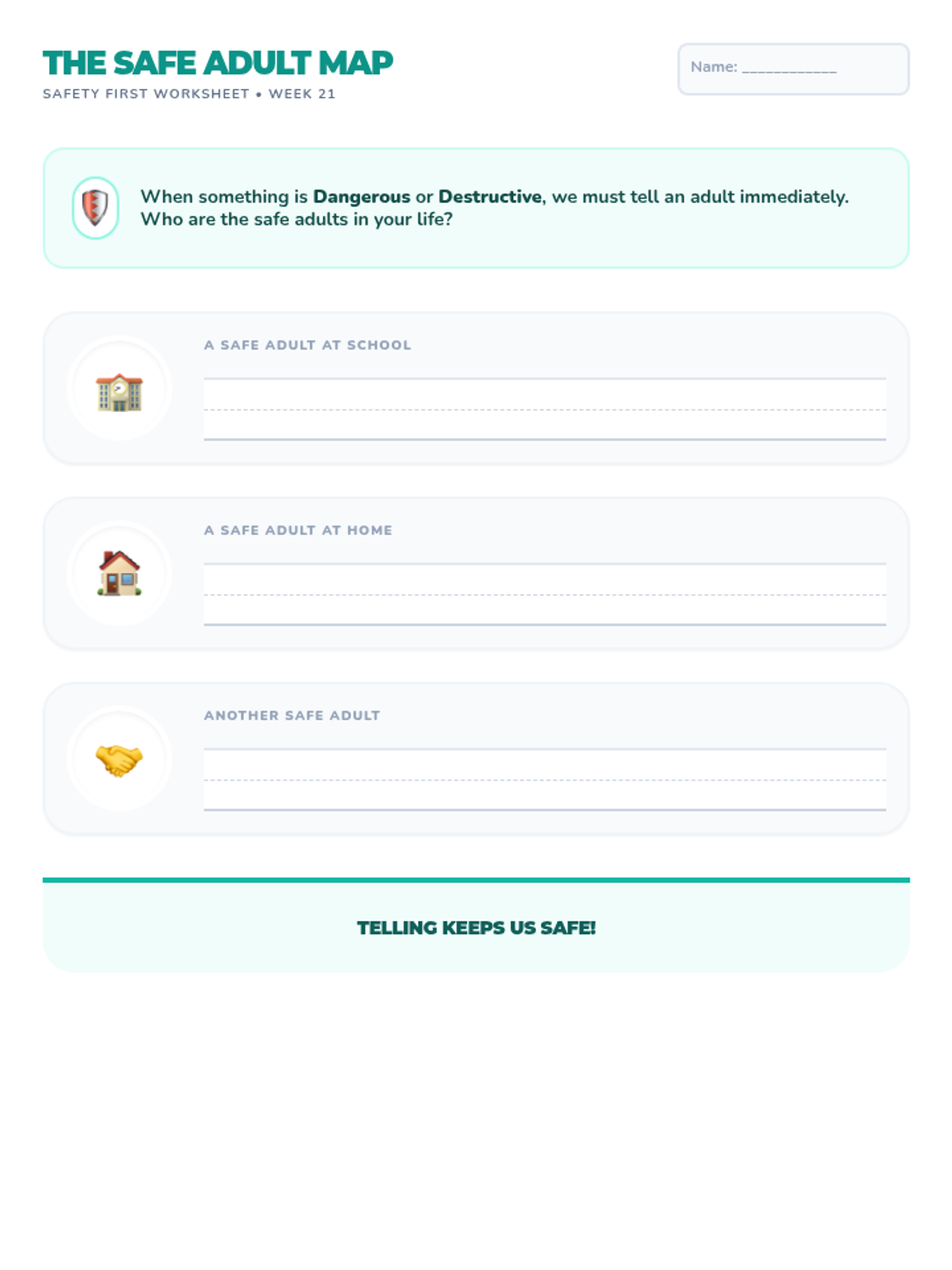
A student-facing worksheet for Week 21. Students identify and record "safe adults" in different environments (school, home, community) to ensure they know whom to contact for dangerous problems.
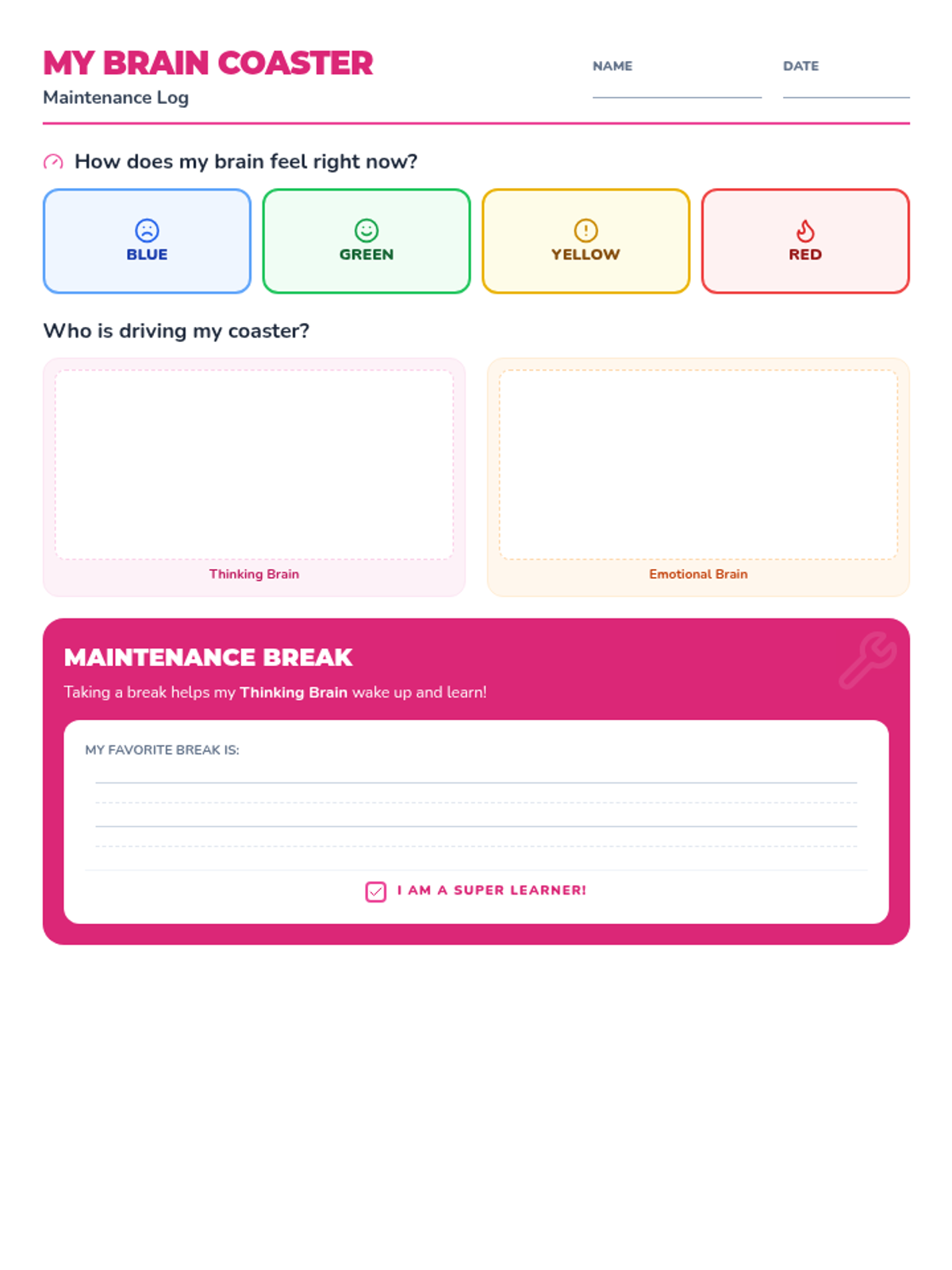
A student-facing worksheet using the rollercoaster theme to help students identify their current zone and plan a 'maintenance break' to re-engage their thinking brain. Features visual icons for 1st-grade support and improved handwriting spaces. Optimized for single-page print.
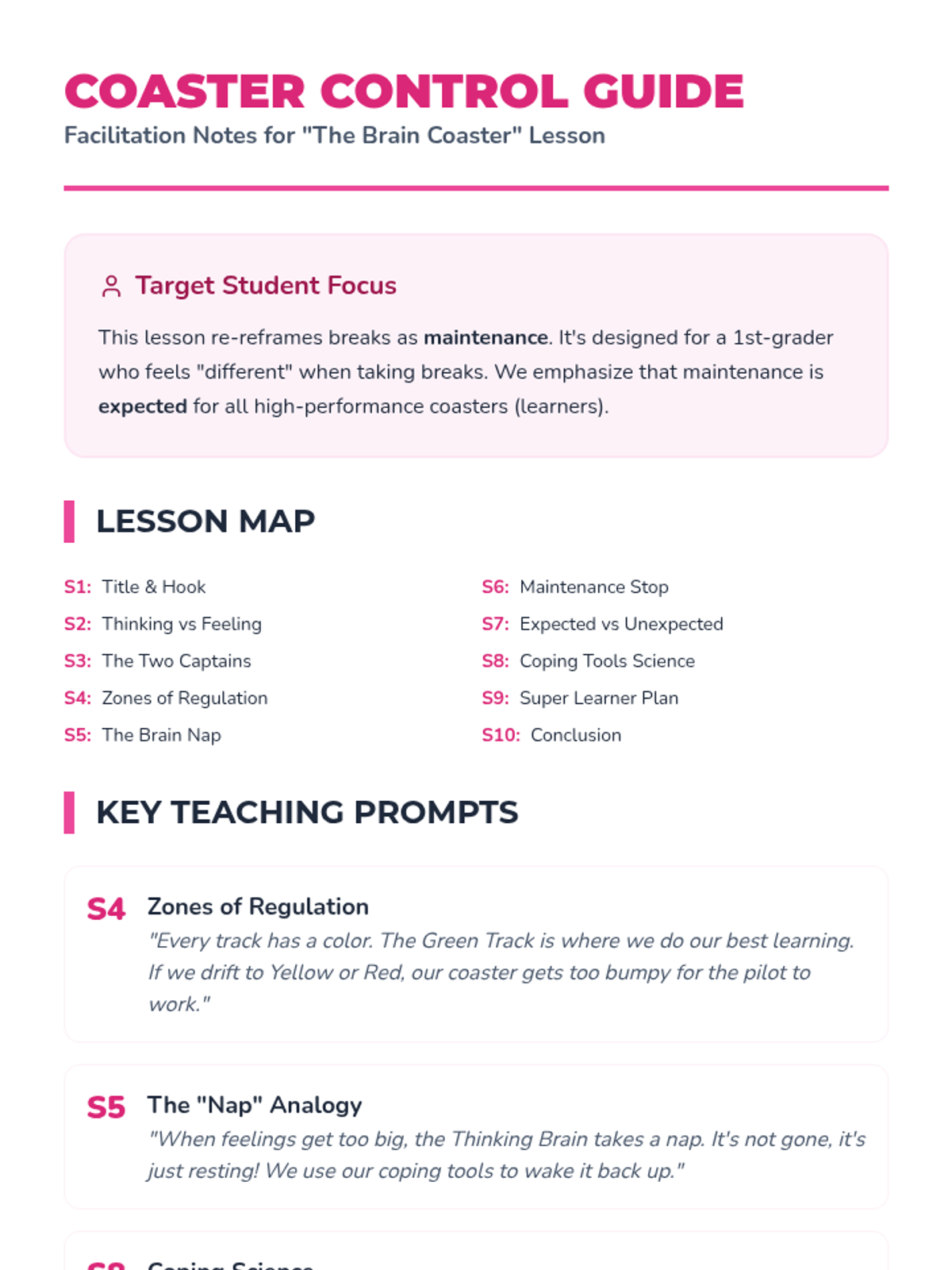
Updated teacher facilitation guide for the Brain Coaster lesson. Includes updated breathing technique terminology and consistent terminology for brain captains.
Updated visual slide deck using a pink rollercoaster theme to explain the science of brain regulation. Features "Ball Breathing" coping skill and removed pilot references from the conclusion. Added an exclamation point to the Super Learner Plan.
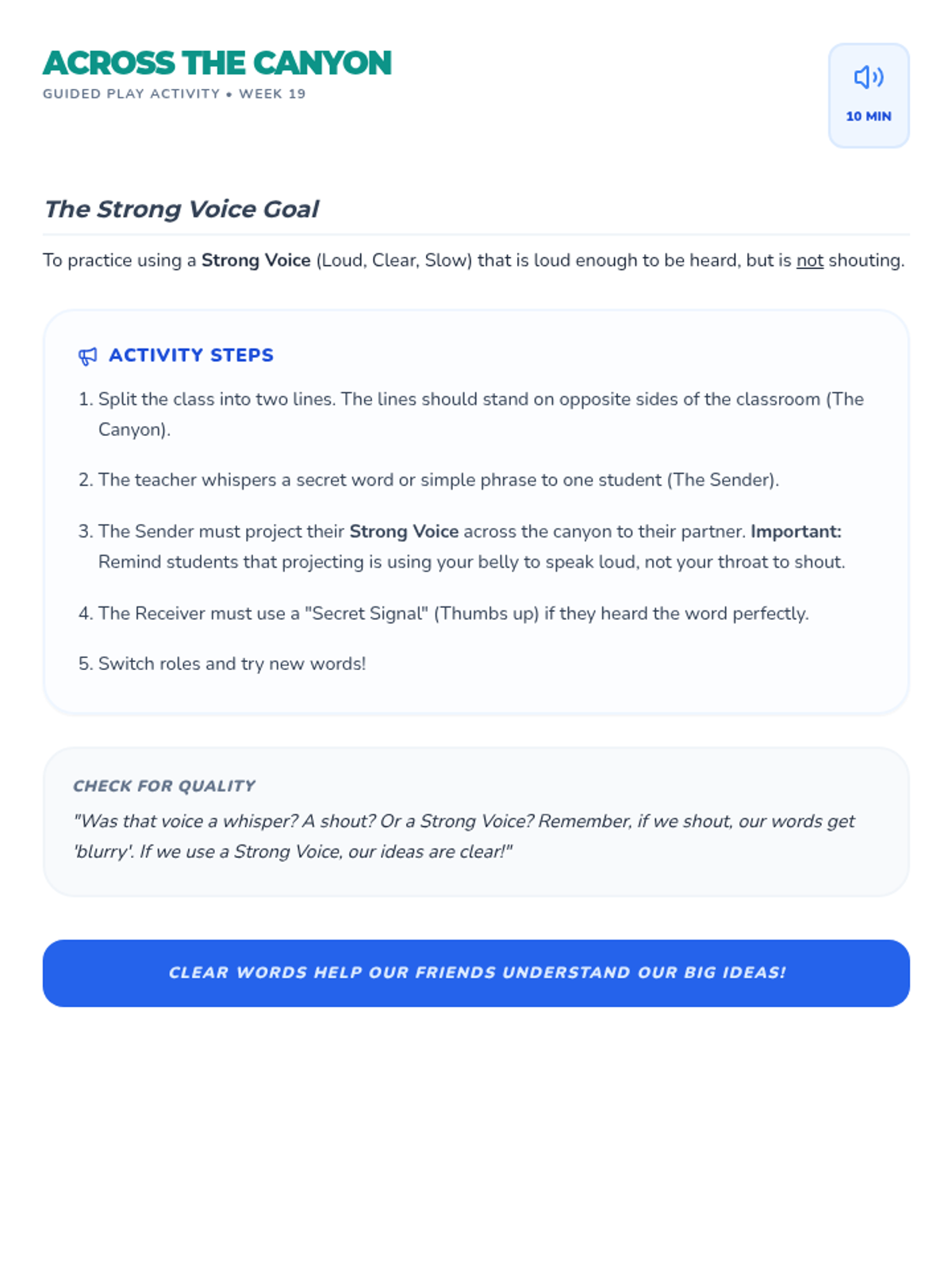
A teacher-facing guided play activity for Week 19. Revised to clarify the distinction between shouting and a "Strong Voice" and standardized terminology.
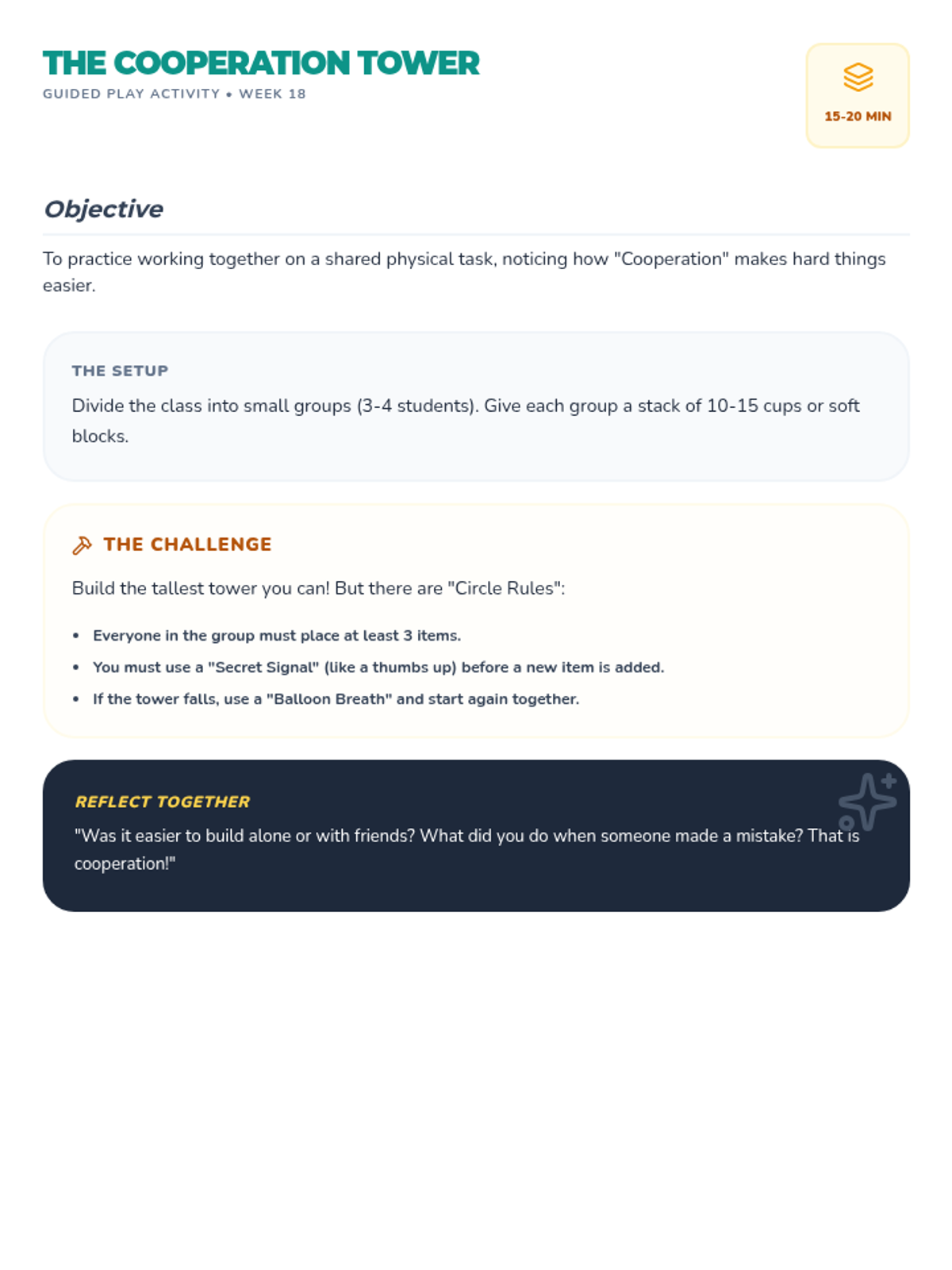
A teacher-facing guided play activity for Week 18. A collaborative building challenge that requires students to communicate and share tasks to reach a common goal.
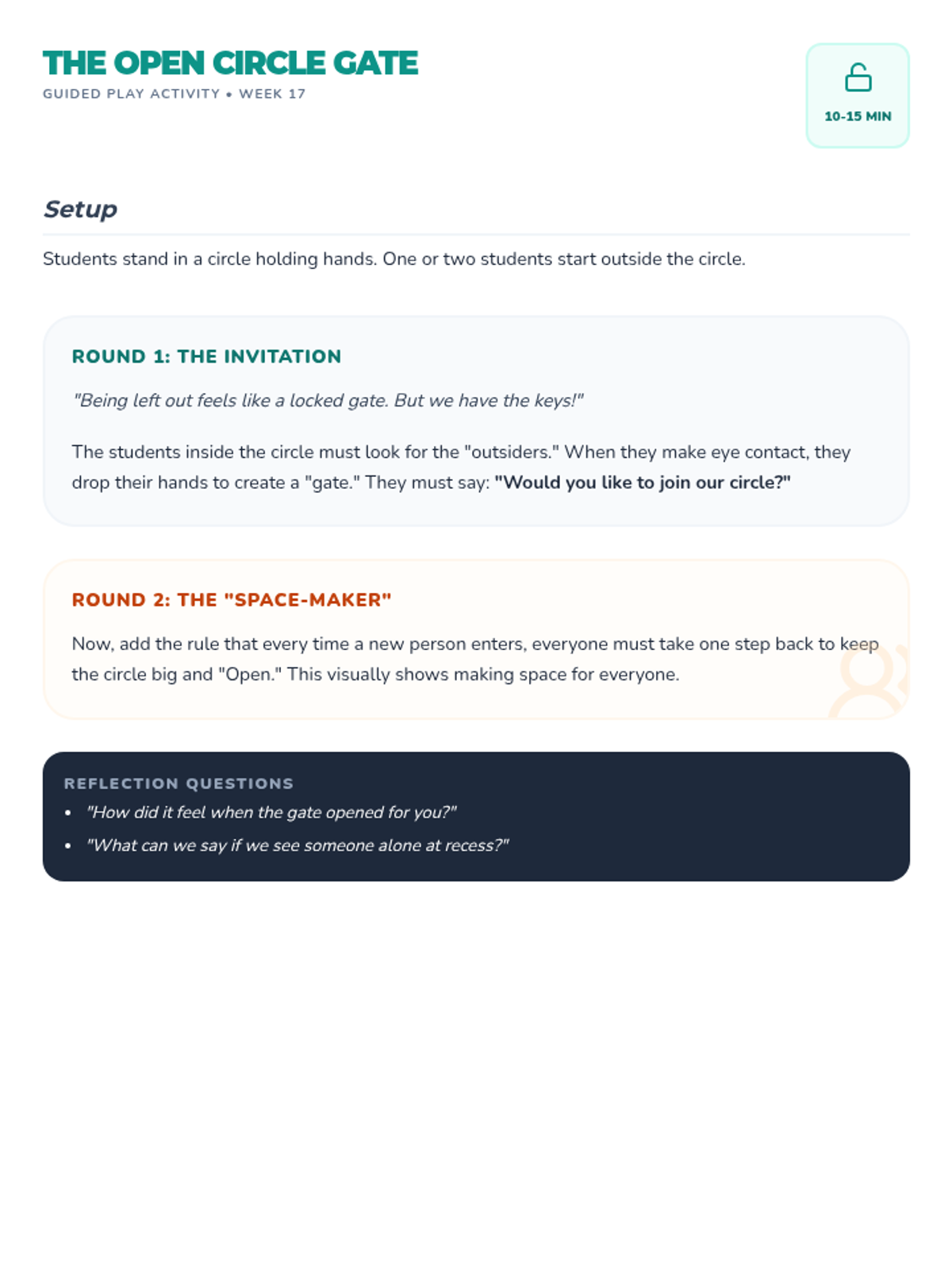
A teacher-facing guided play activity for Week 17. A movement game that simulates the feeling of being left out and the positive impact of being invited to join a group.
English presentation slides for Lesson 2, explaining how to set up and maintain a sticker chart reward system to motivate school attendance and positive routines.
English presentation slides for Lesson 1, focusing on validating school anxiety while maintaining firm attendance boundaries. Includes practical scripts and morning routine tips.
Spanish presentation slides for Lesson 2, explaining how to set up and maintain a sticker chart reward system to motivate school attendance and positive routines.
Spanish presentation slides for Lesson 1, focusing on validating school anxiety while maintaining firm attendance boundaries. Includes practical scripts and morning routine tips.
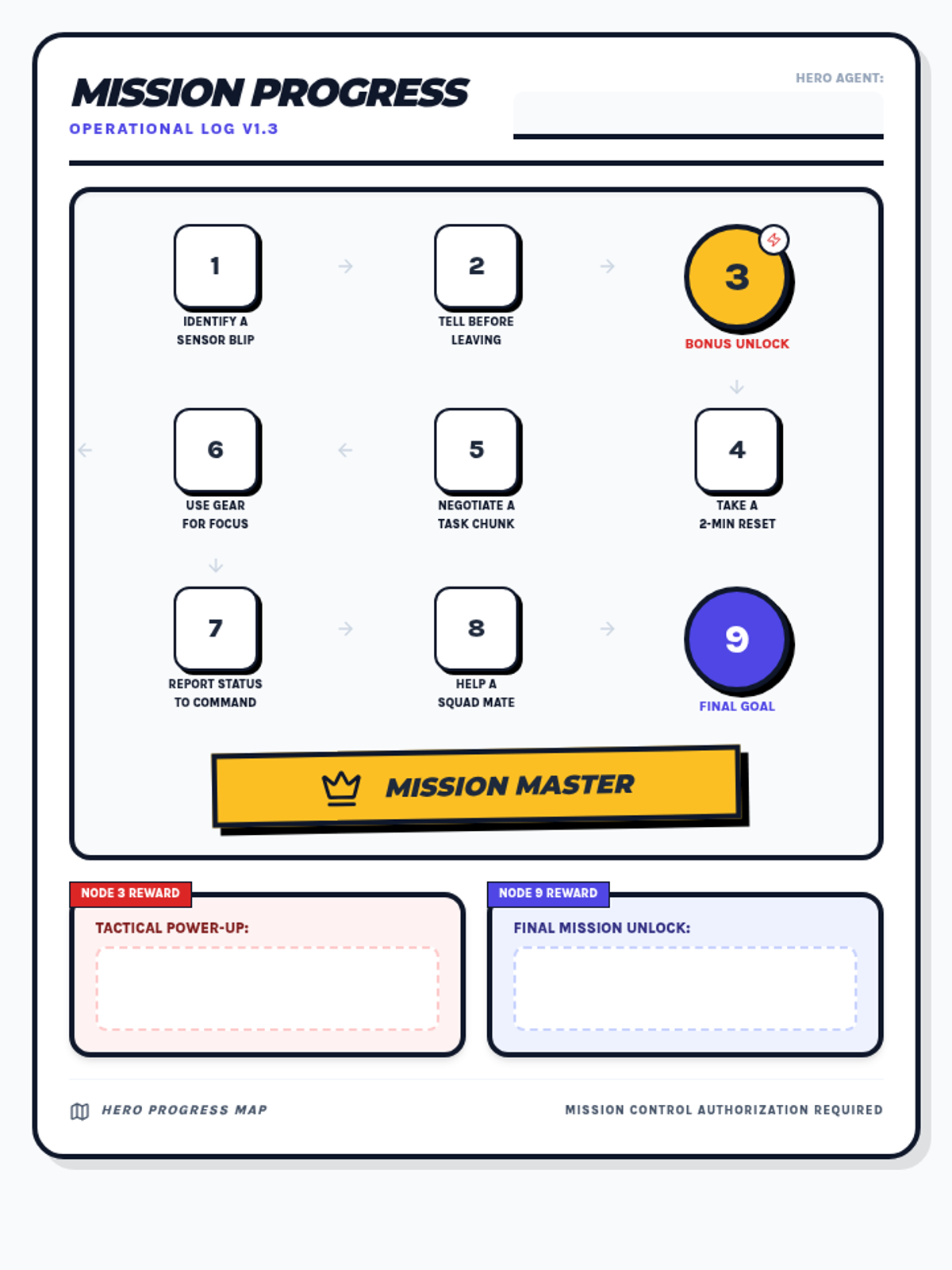
A progress-tracking reward map for students to visualize their task completion and advocacy usage. Features a game-board style path with specific advocacy milestones and milestone unlock slots. Updated for single-page print optimization and improved path logic.
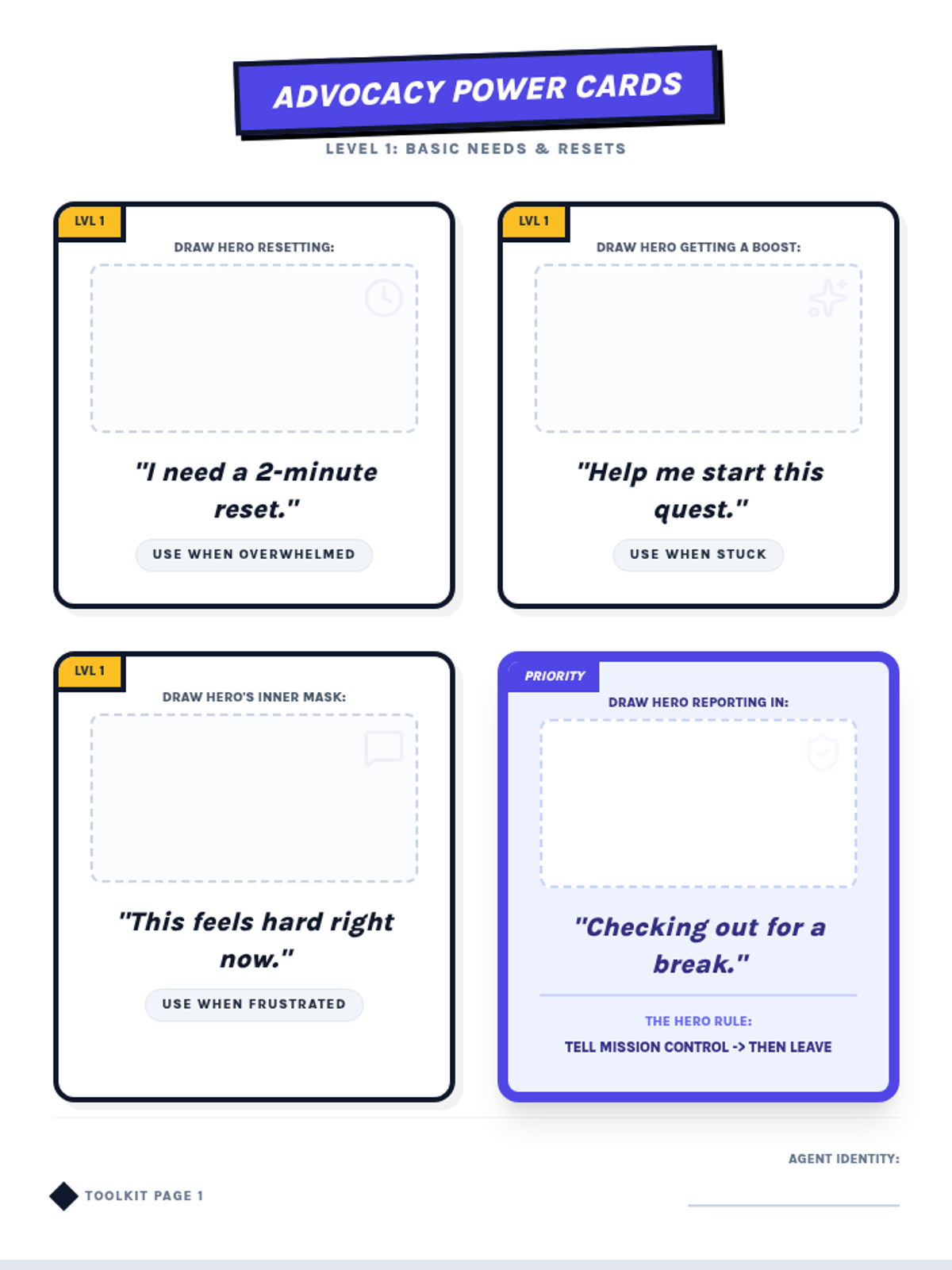
An expanded set of visual advocacy cards (12 total) including level 1 needs/resets, level 2 environmental adjustments, and level 3 complex communications like clarification and emotional transparency. Now features a comic-scaffolded design for higher engagement.
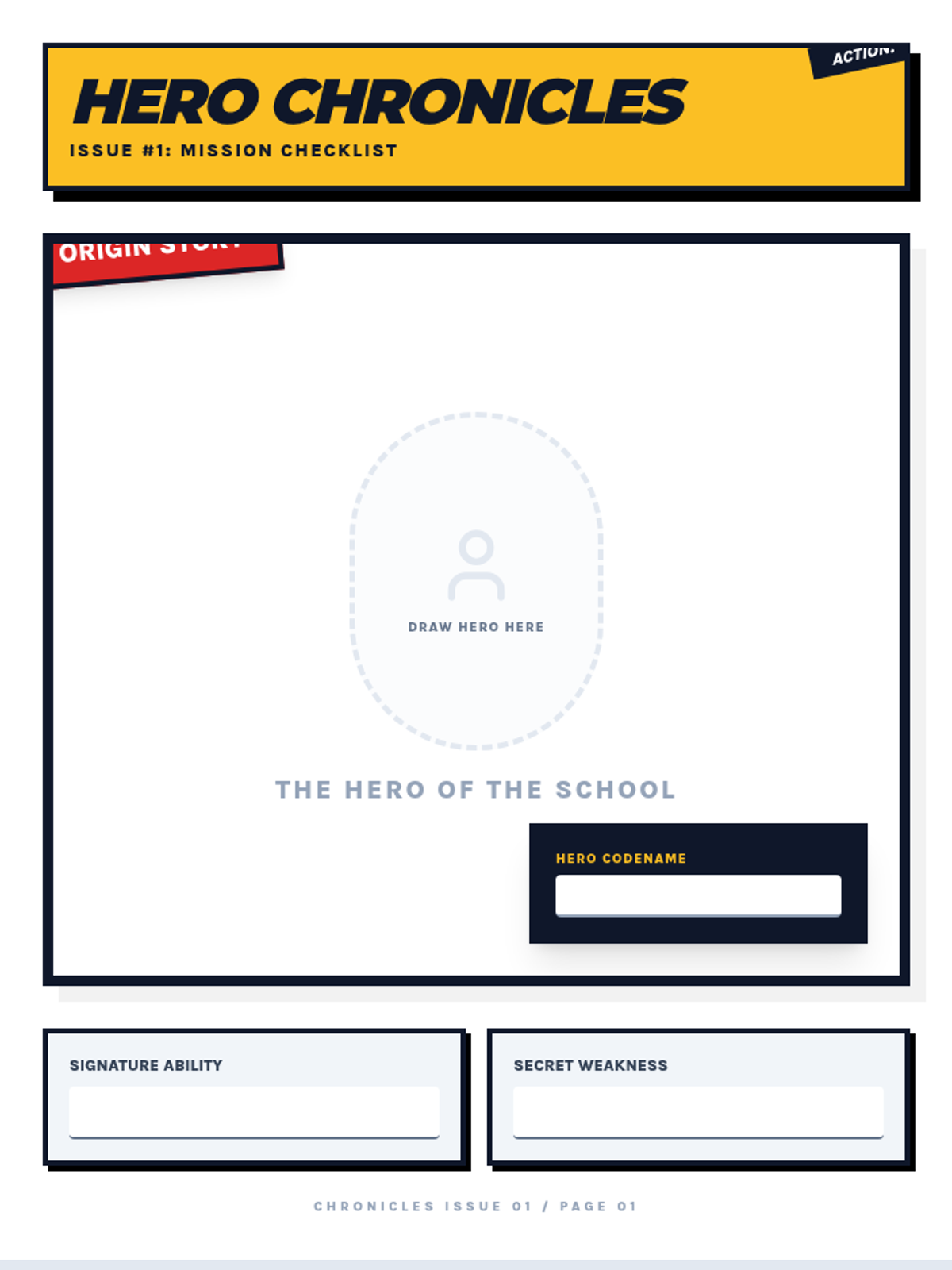
A comic-strip based activity workbook for a student to practice self-advocacy, task completion, and emotional expression through narrative missions. Includes pre-drawn scaffolding elements like silhouettes and speech bubbles to lower engagement barriers. Now includes expanded missions for identifying triggers and group advocacy.
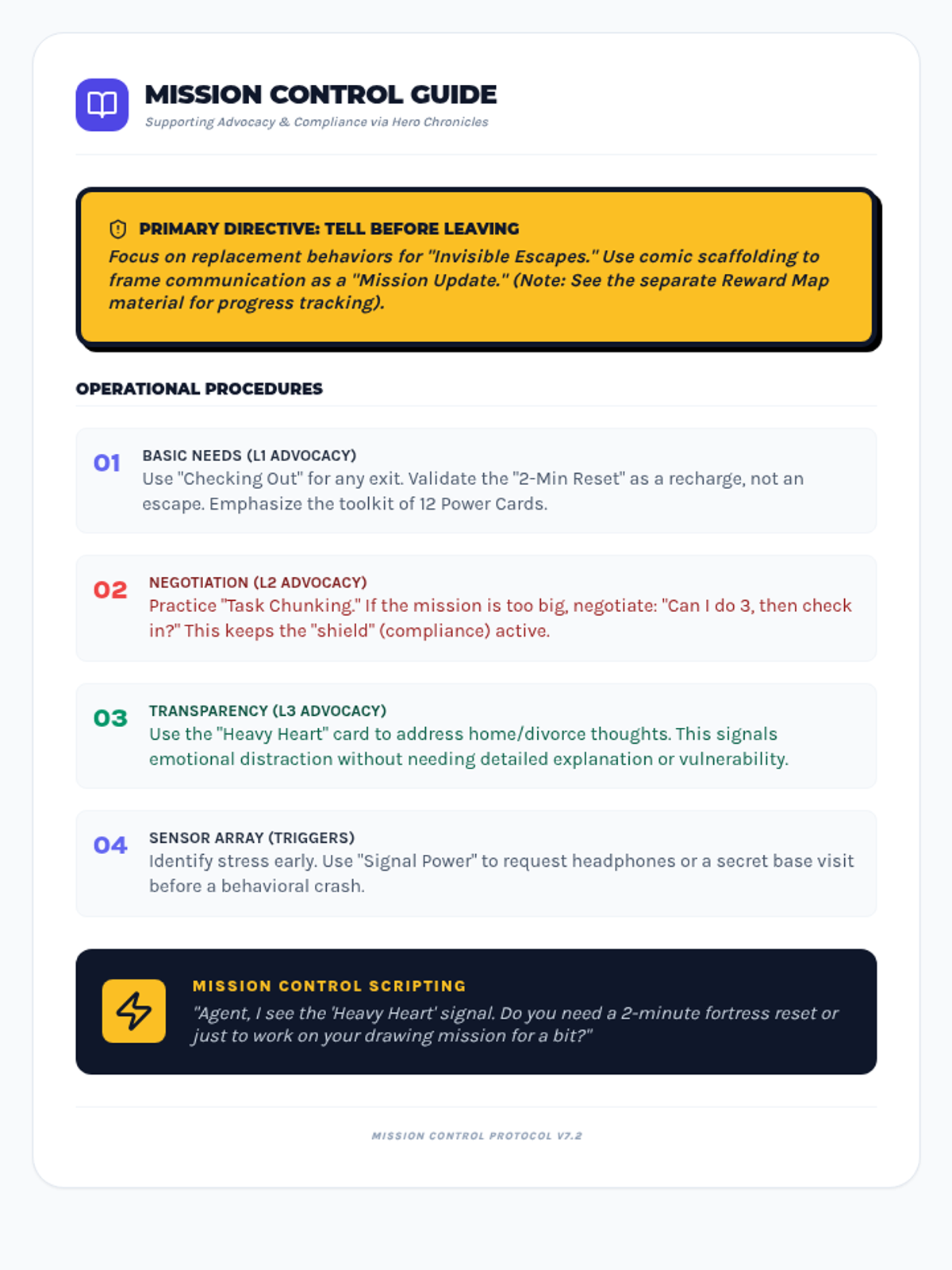
A teacher facilitation guide for using the Hero Chronicles comic-based workbook, specifically focusing on the "Tell Before Leaving" advocacy skill and utilizing partial comic scaffolding. Now includes facilitation for Level 3 complex advocacy and emotional transparency.
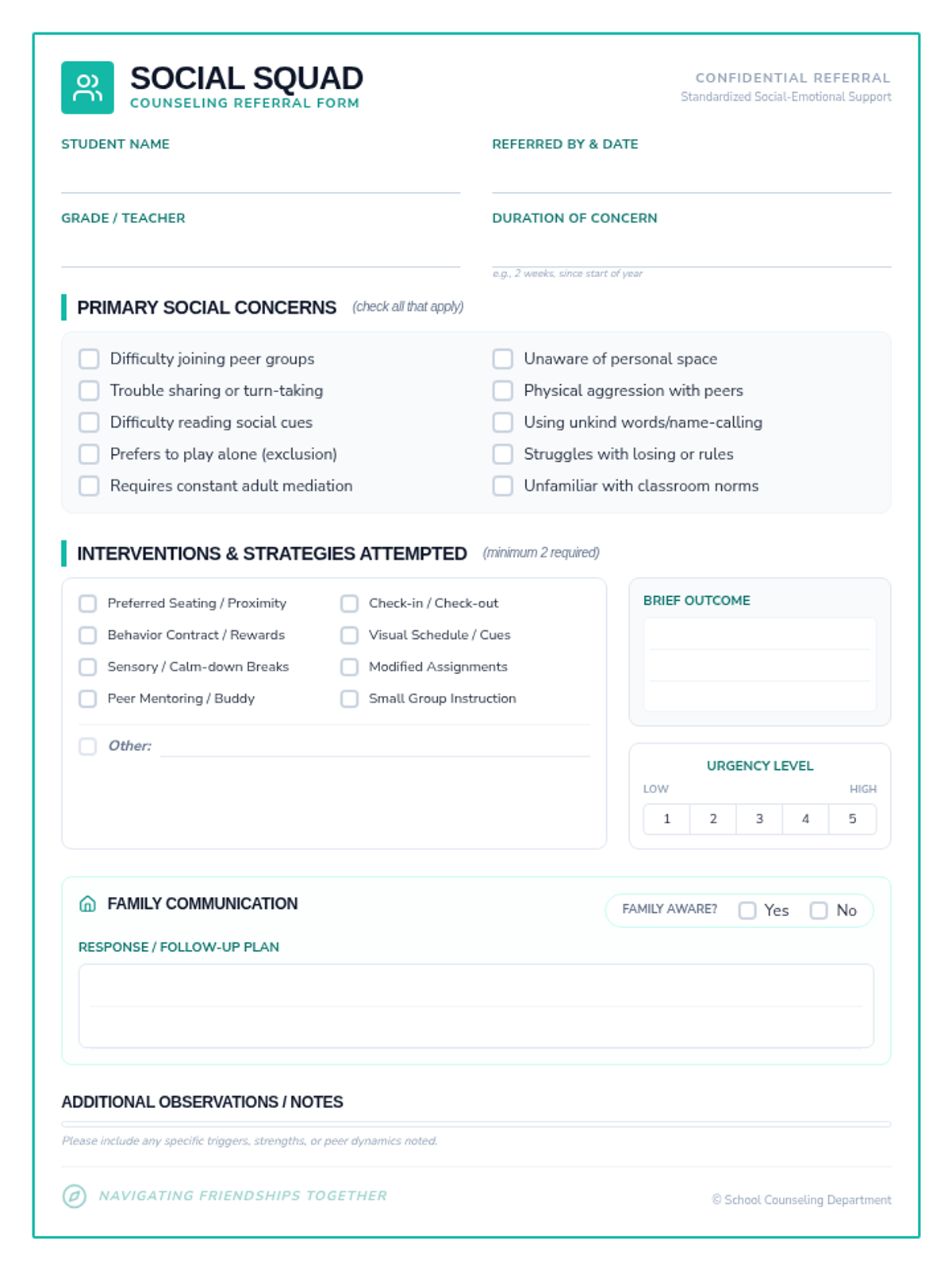
A comprehensive school counseling referral form updated with a dedicated 'Student Goals' section and restored full checklists for primary concerns and interventions. The layout ensures 'Additional Observations' and 'Family Communication' are equally sized, optimizing space for a one-page printable format.
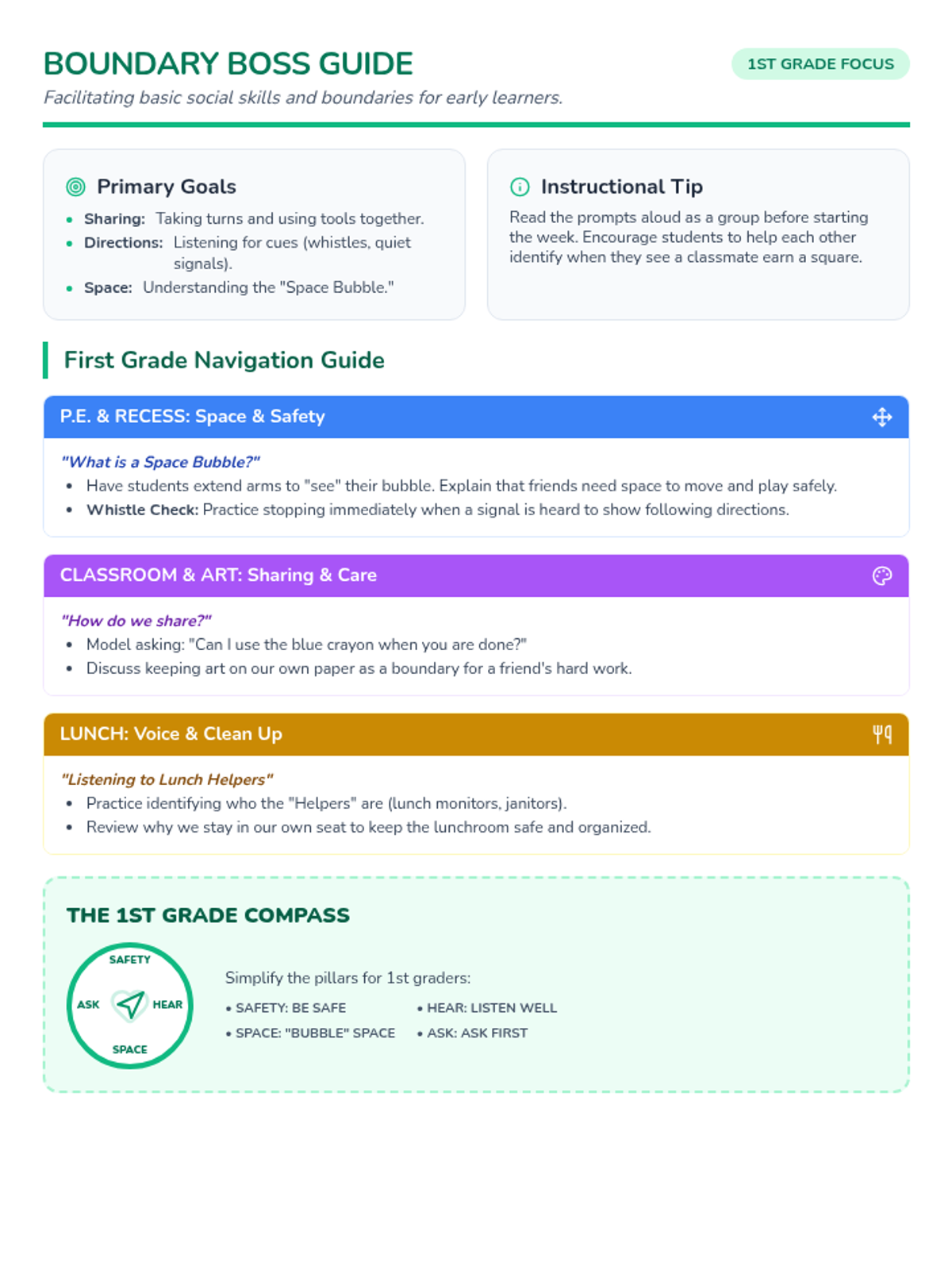
A teacher facilitation guide tailored for 1st grade, focusing on sharing, following directions, and personal space boundaries. Provides simplified strategies and discussion prompts to support the Friendship Finder Bingo activity.
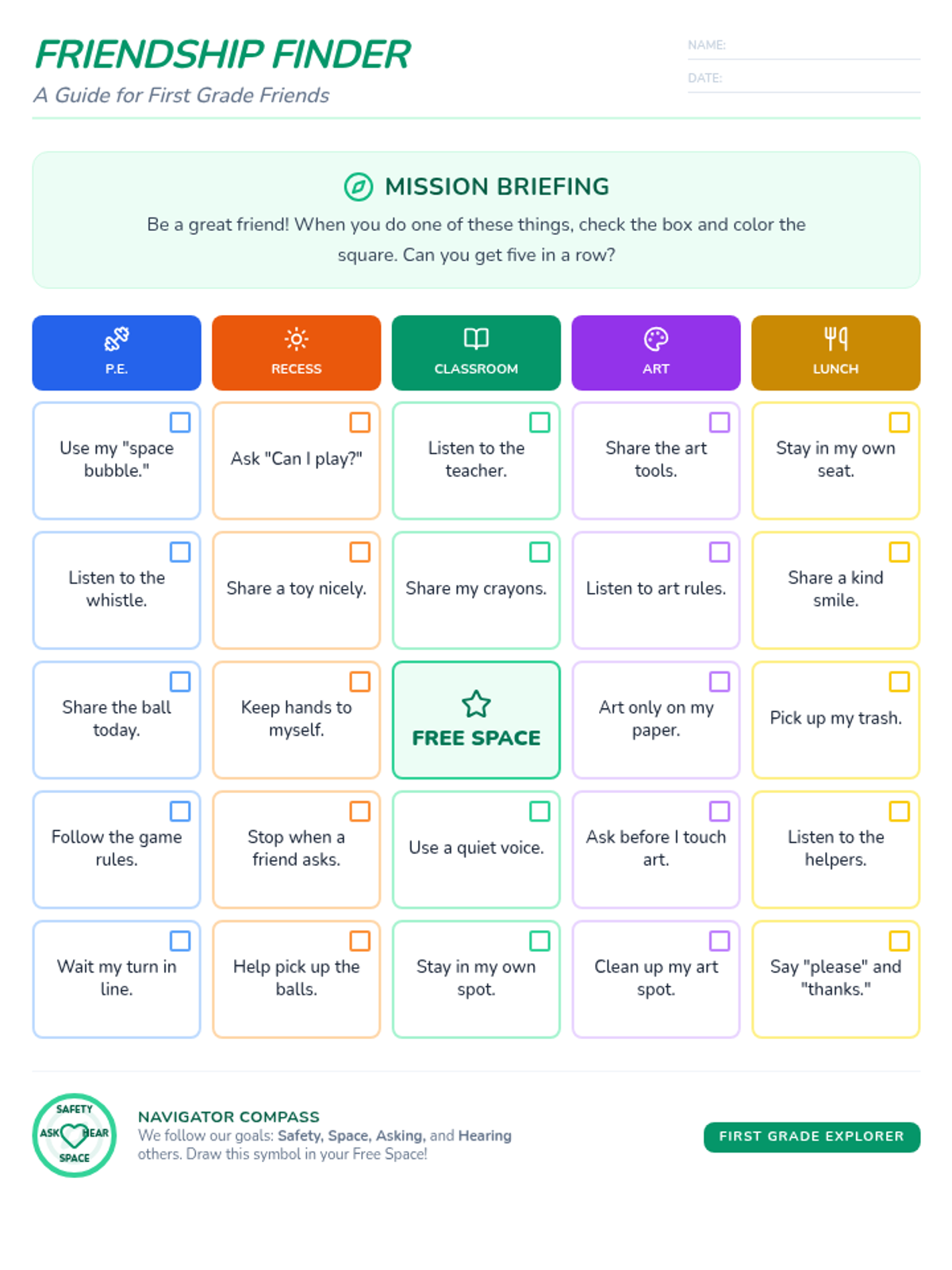
A simplified 5x5 bingo-style activity board for 1st graders focusing on sharing, following directions, and personal space. Features easy-to-read prompts and check-boxes for tracking social skills across PE, Recess, Classroom, Art, and Lunch.
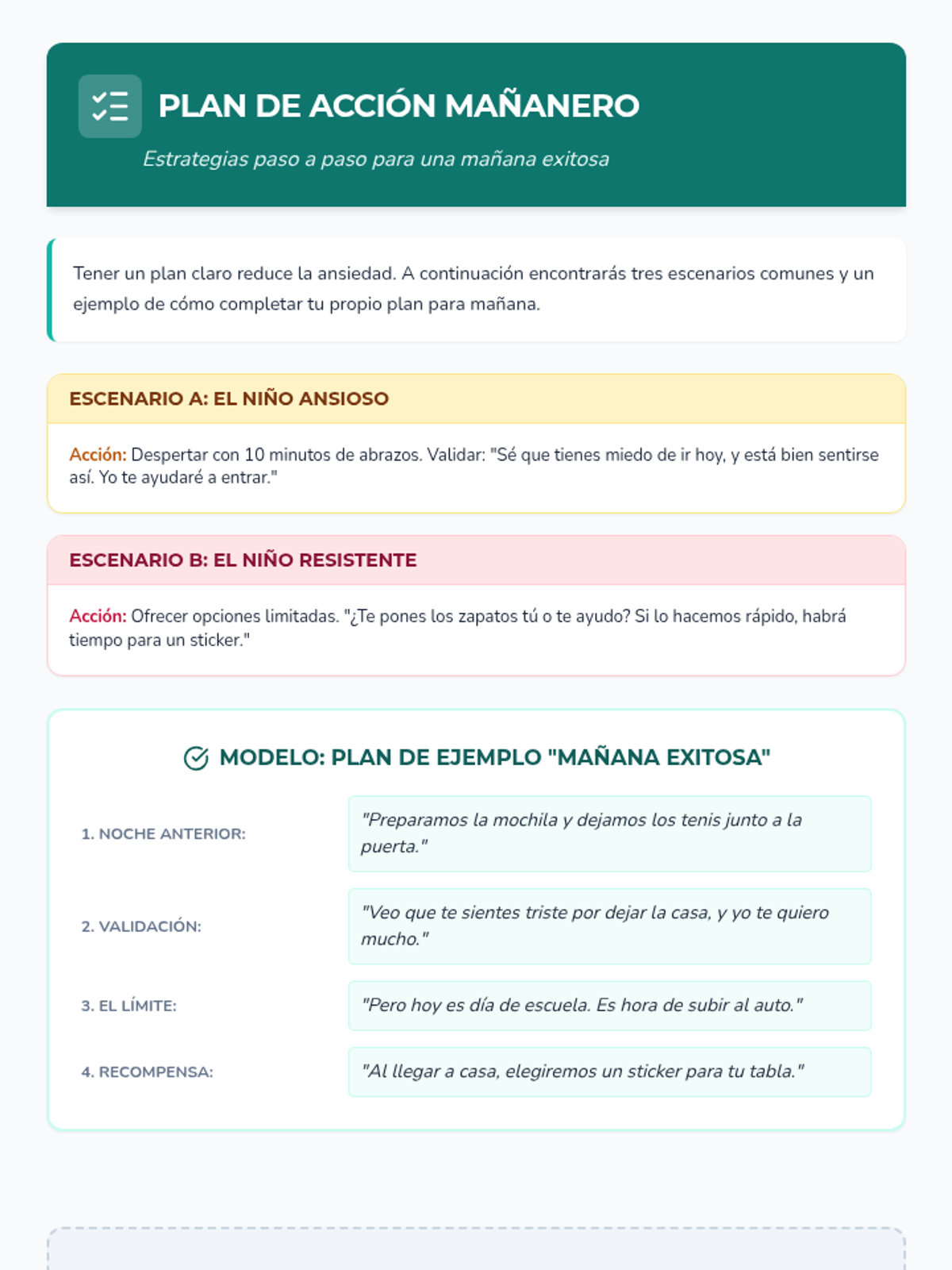
A Spanish action plan guide for parents providing specific scenarios and steps for handling morning routines and school refusal, including a customizable template with plenty of space for notes.
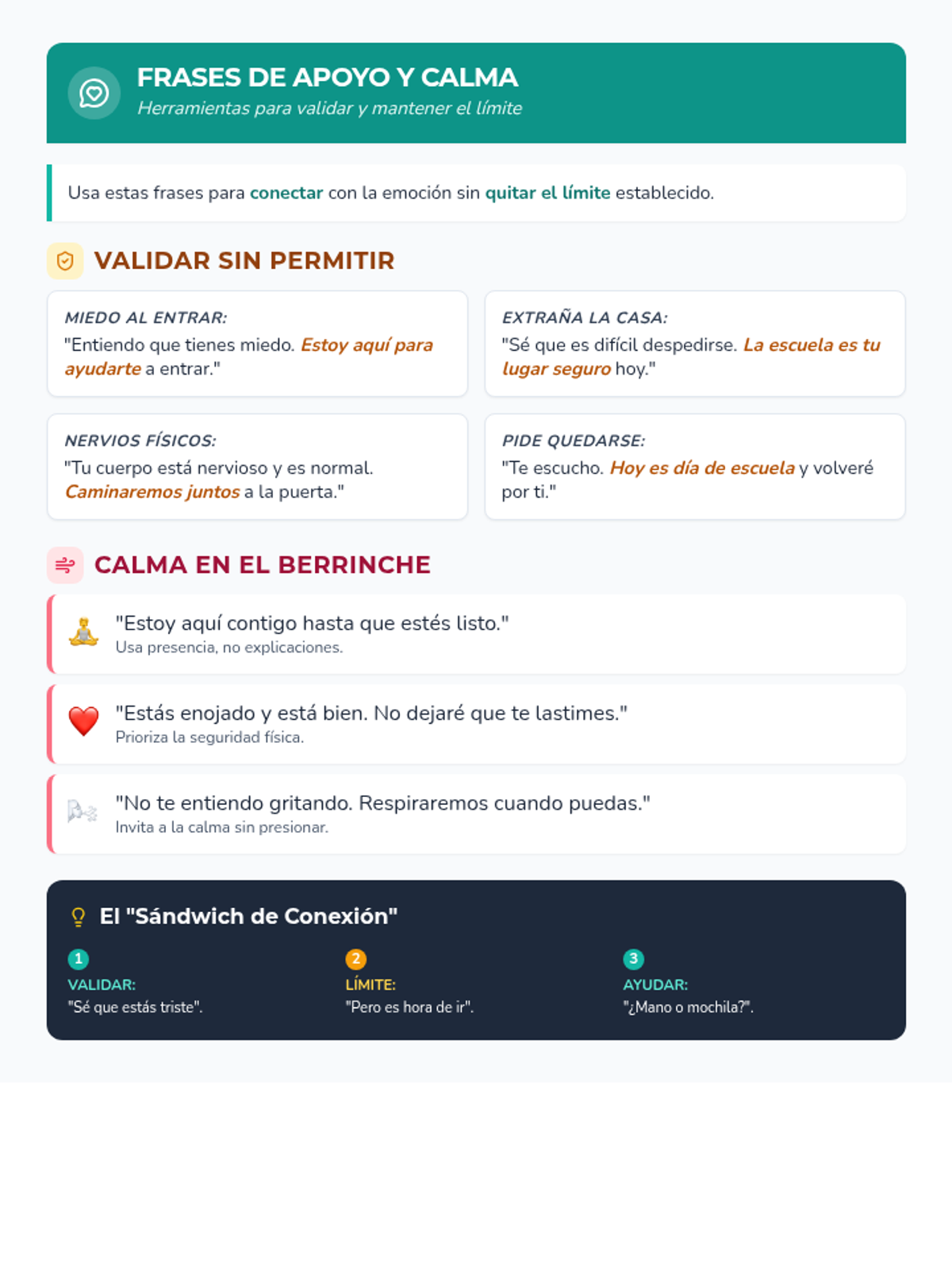
A Spanish reference sheet for parents featuring validating phrases that maintain boundaries for school attendance, along with soothing scripts for managing childhood tantrums.
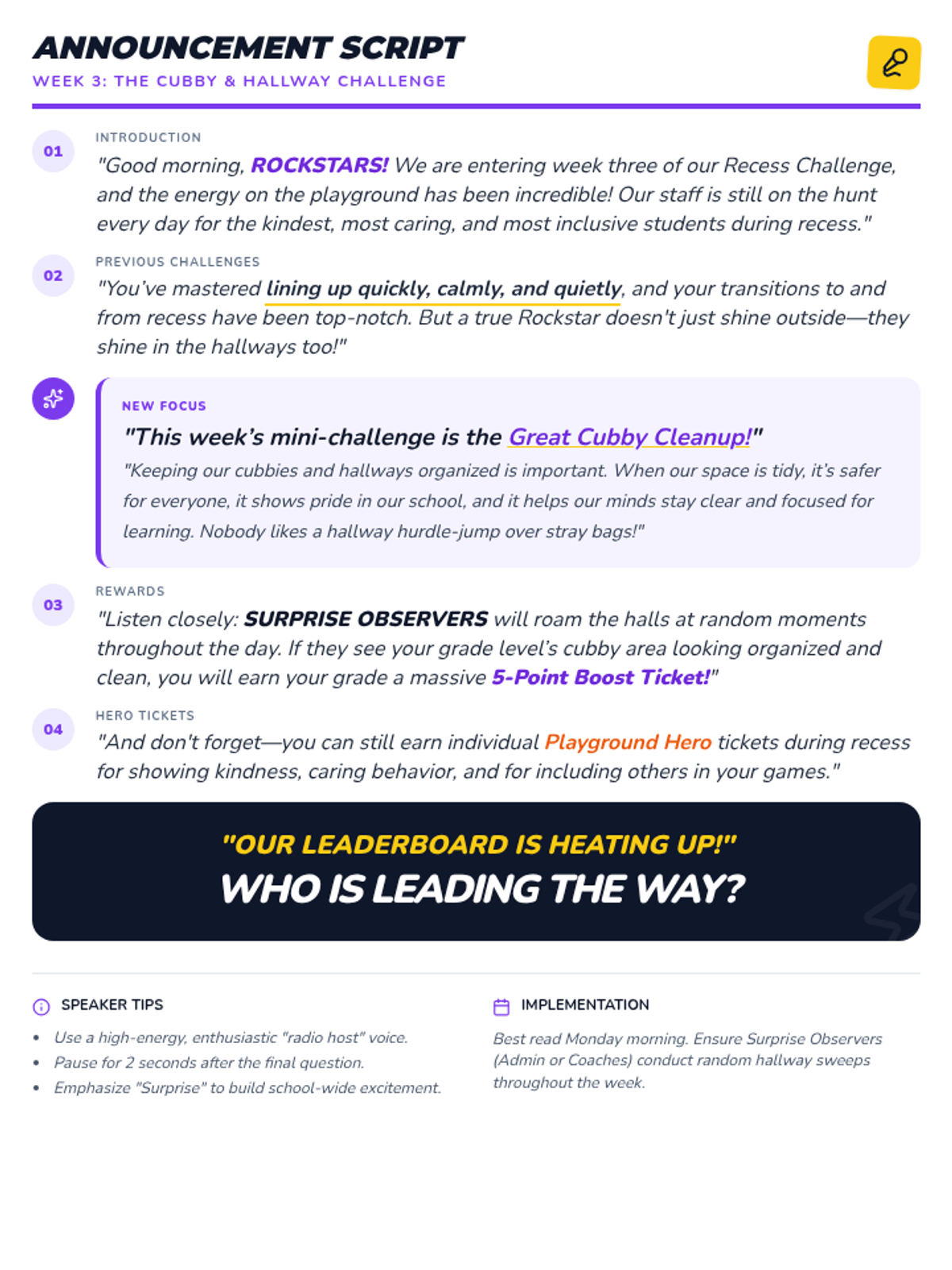
An announcement script for the third week of the Recess Rockstar Challenge, introducing the "Great Cubby Cleanup" mini-challenge and explaining the importance of tidiness for school pride and safety.
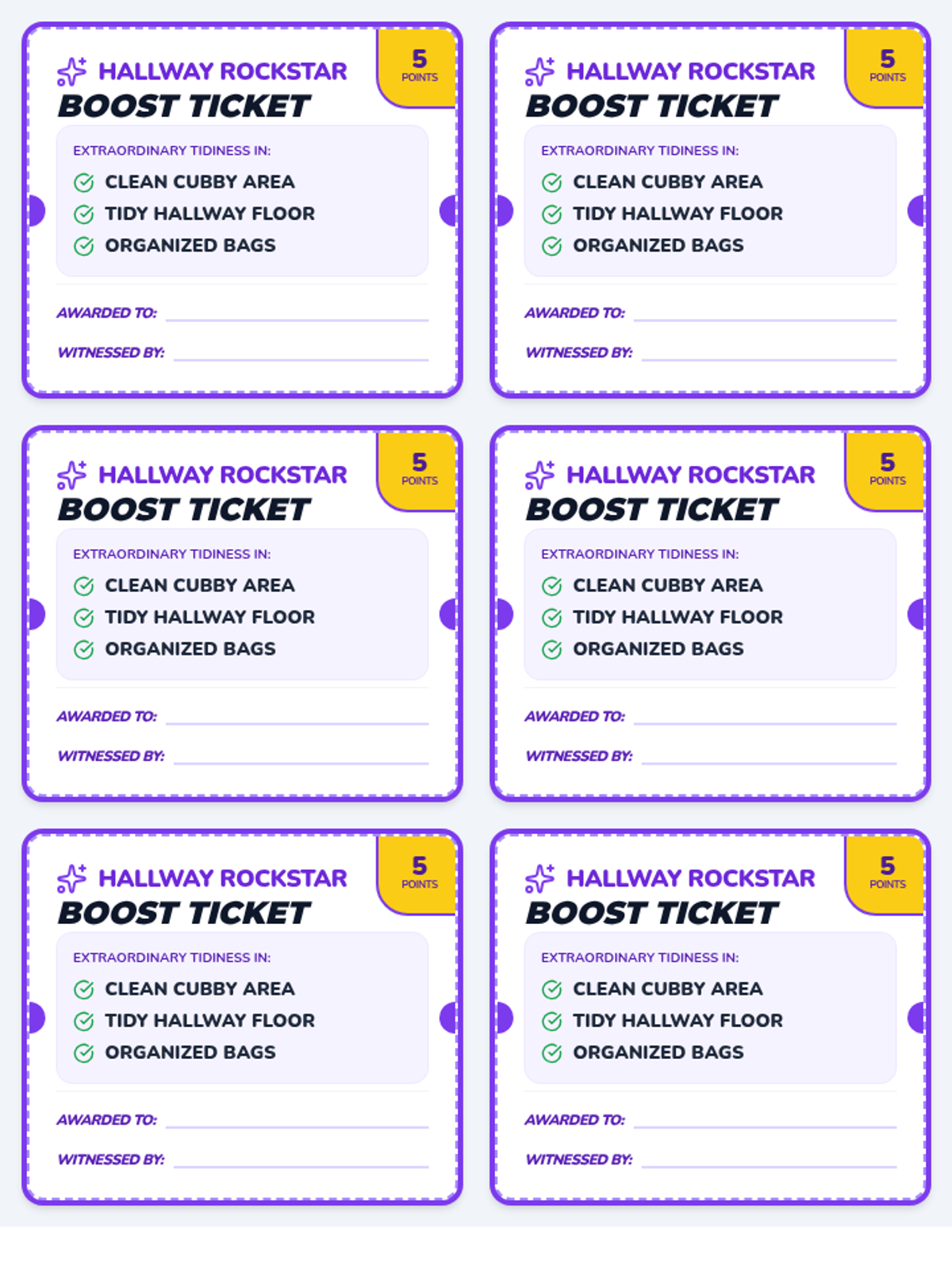
A printable sheet featuring six high-value "Cubby Hallway Boost" tickets worth five points each, intended for whole-class recognition of maintaining clean and organized common spaces.
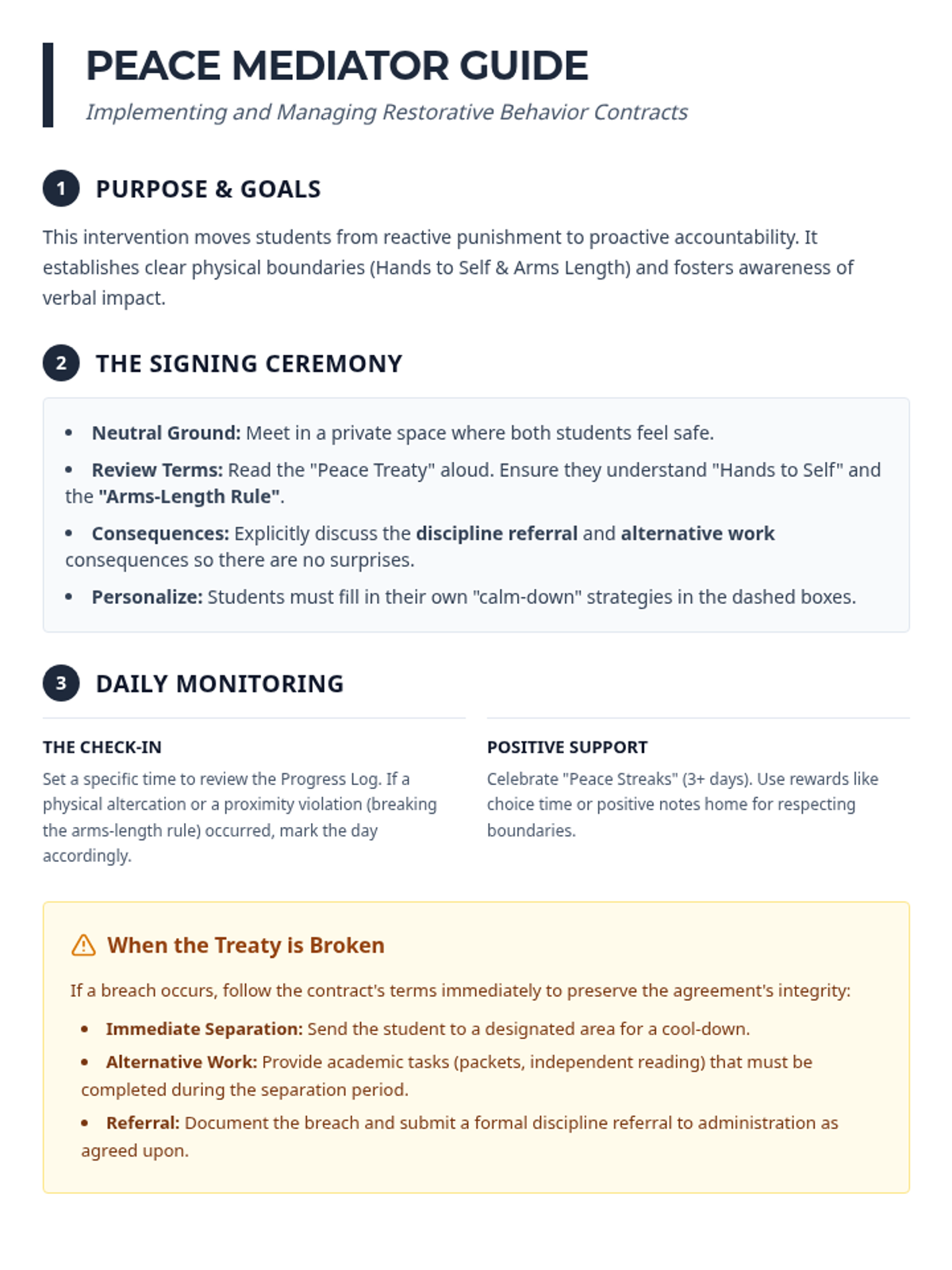
A teacher resource guide providing instructions on how to facilitate the 'Student Behavior Contract' meeting, managing consequences, and coordinating with Specials teachers.
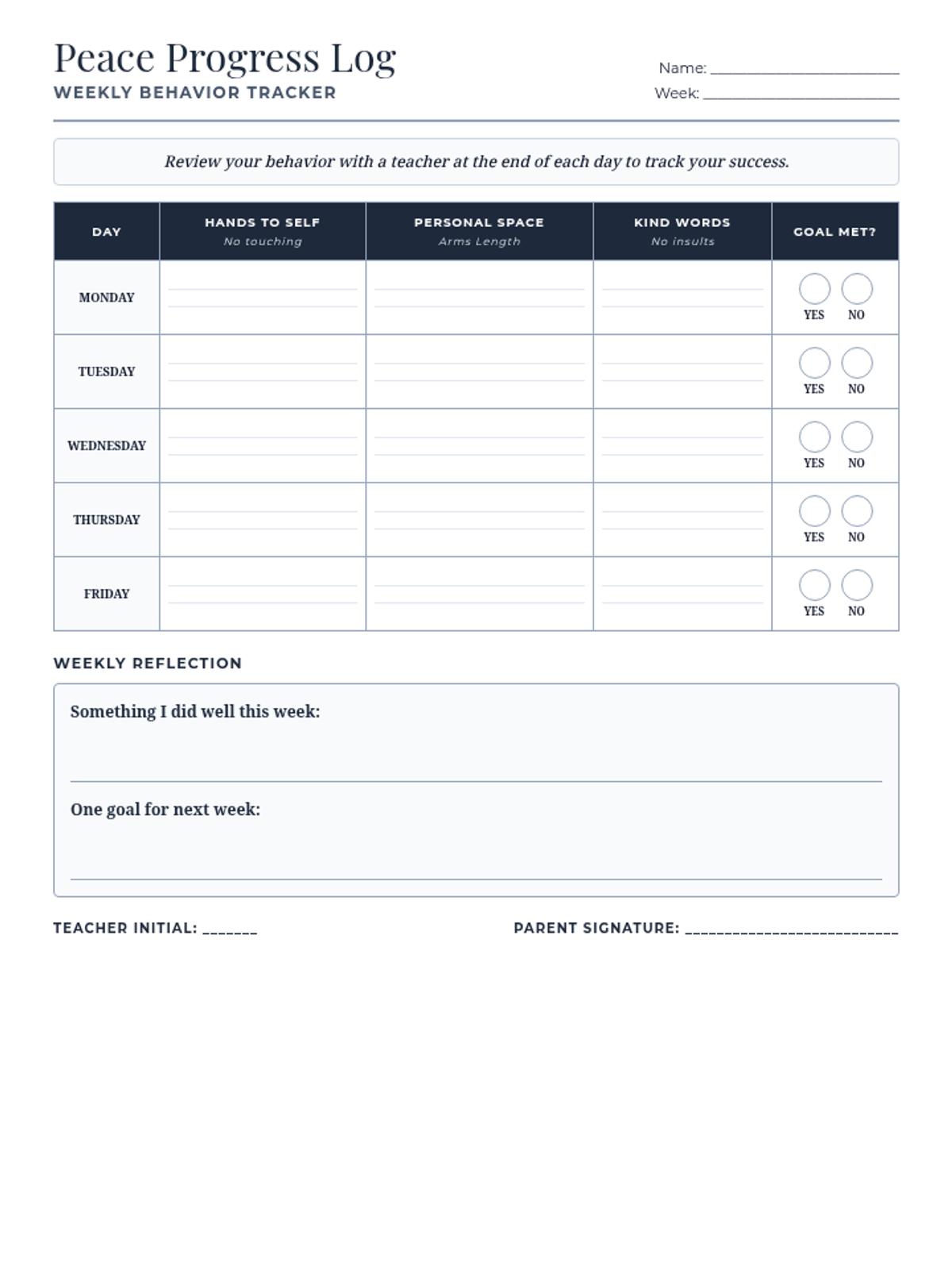
A daily behavior tracking sheet for students to monitor their adherence to the Student Behavior Contract across all learning environments. Fits on a single page.
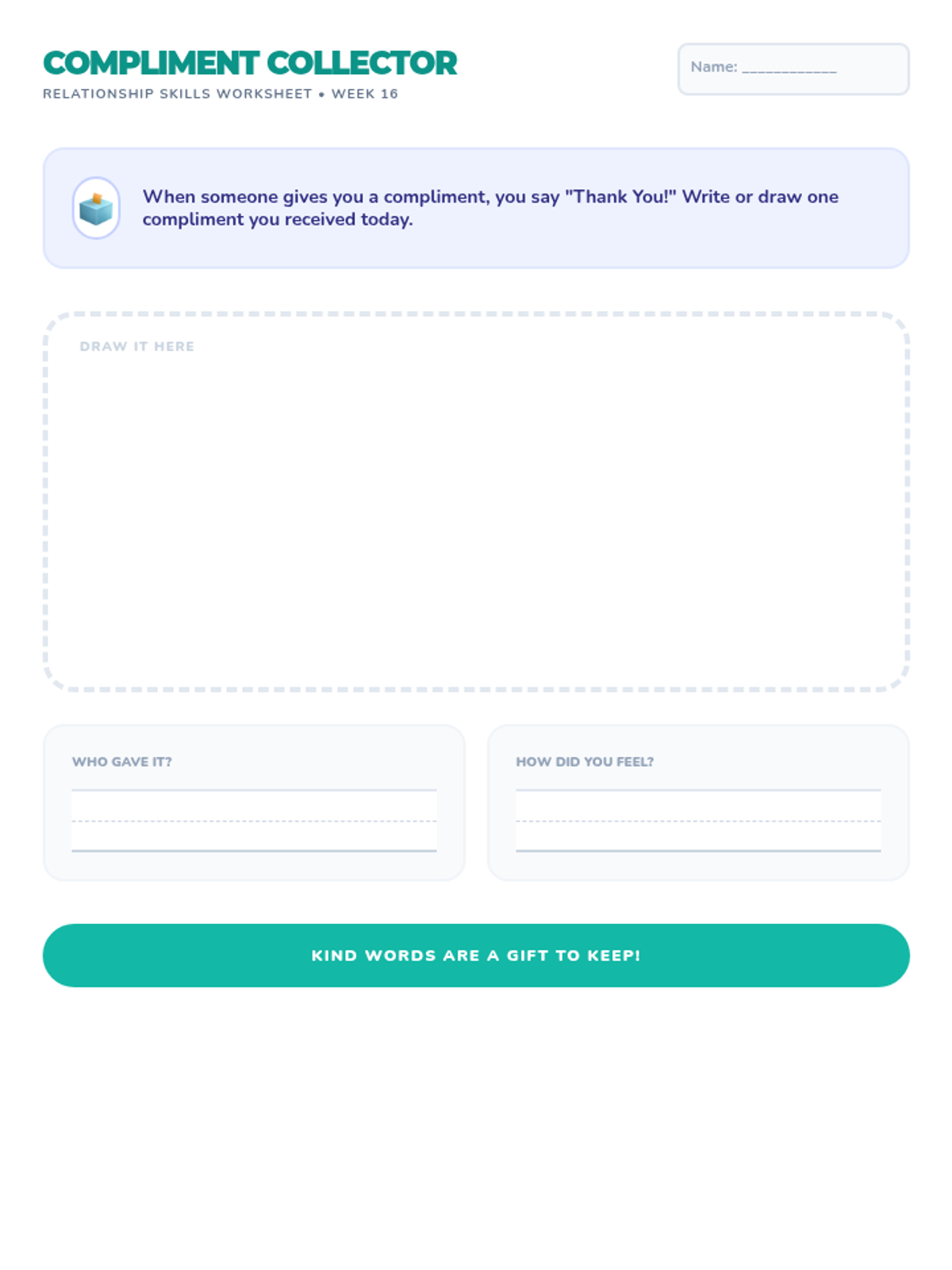
A student-facing worksheet for Week 16. Students record a compliment they received, identifying the giver and their internal feeling, reinforcing the value of gratitude.
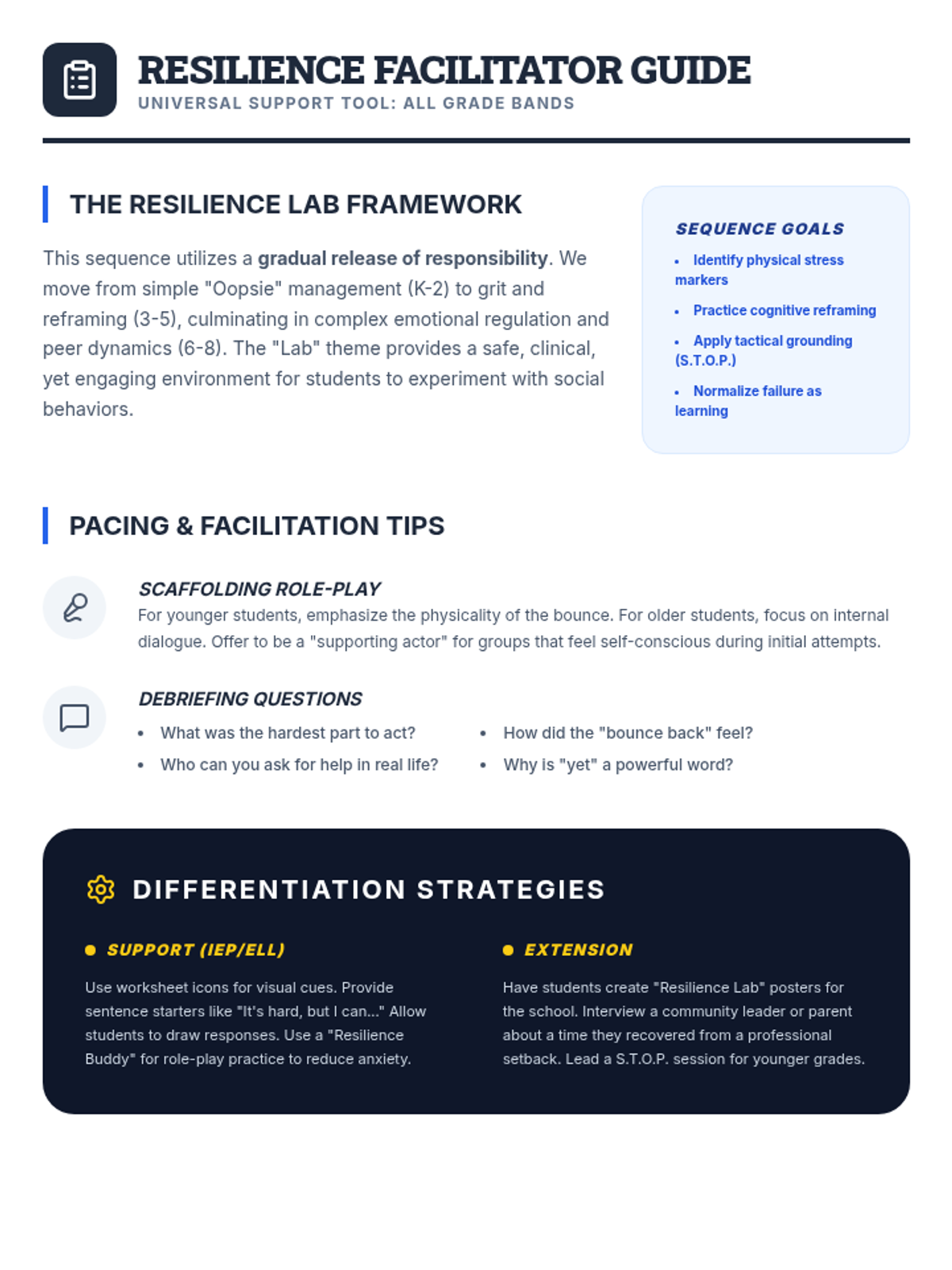
Revised facilitator guide. Fixed page break issues in the differentiation section by using 'break-inside-avoid'. Optimized layout and spacing to ensure all content fits professionally on a single page.
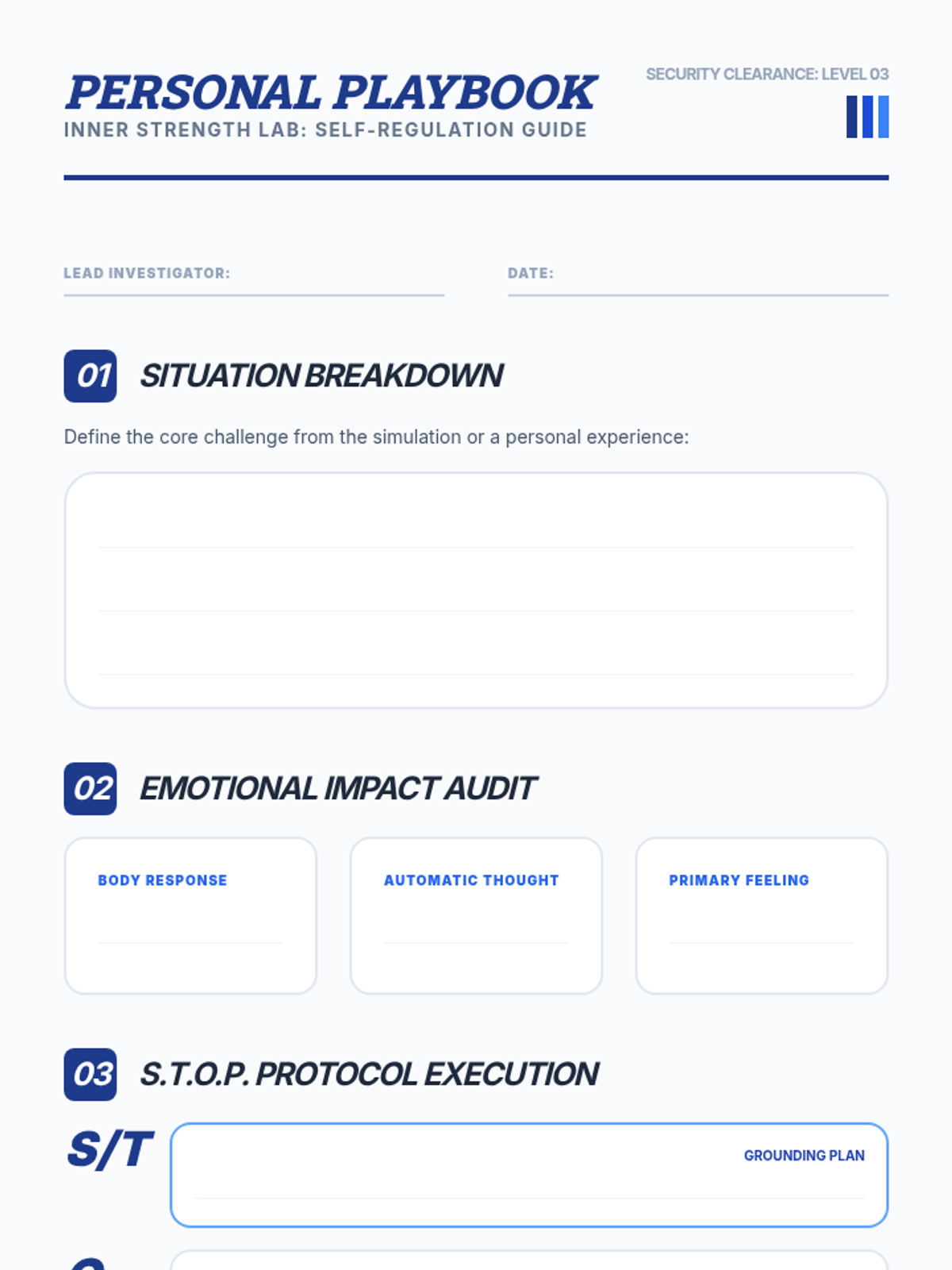
Revised worksheet for 6th-8th graders. Fixed page break issues for Section 3, increased height for emotional audit boxes (min-h-120px), and added input lines for S.T.O.P. execution steps. Improved overall tracking and legibility.
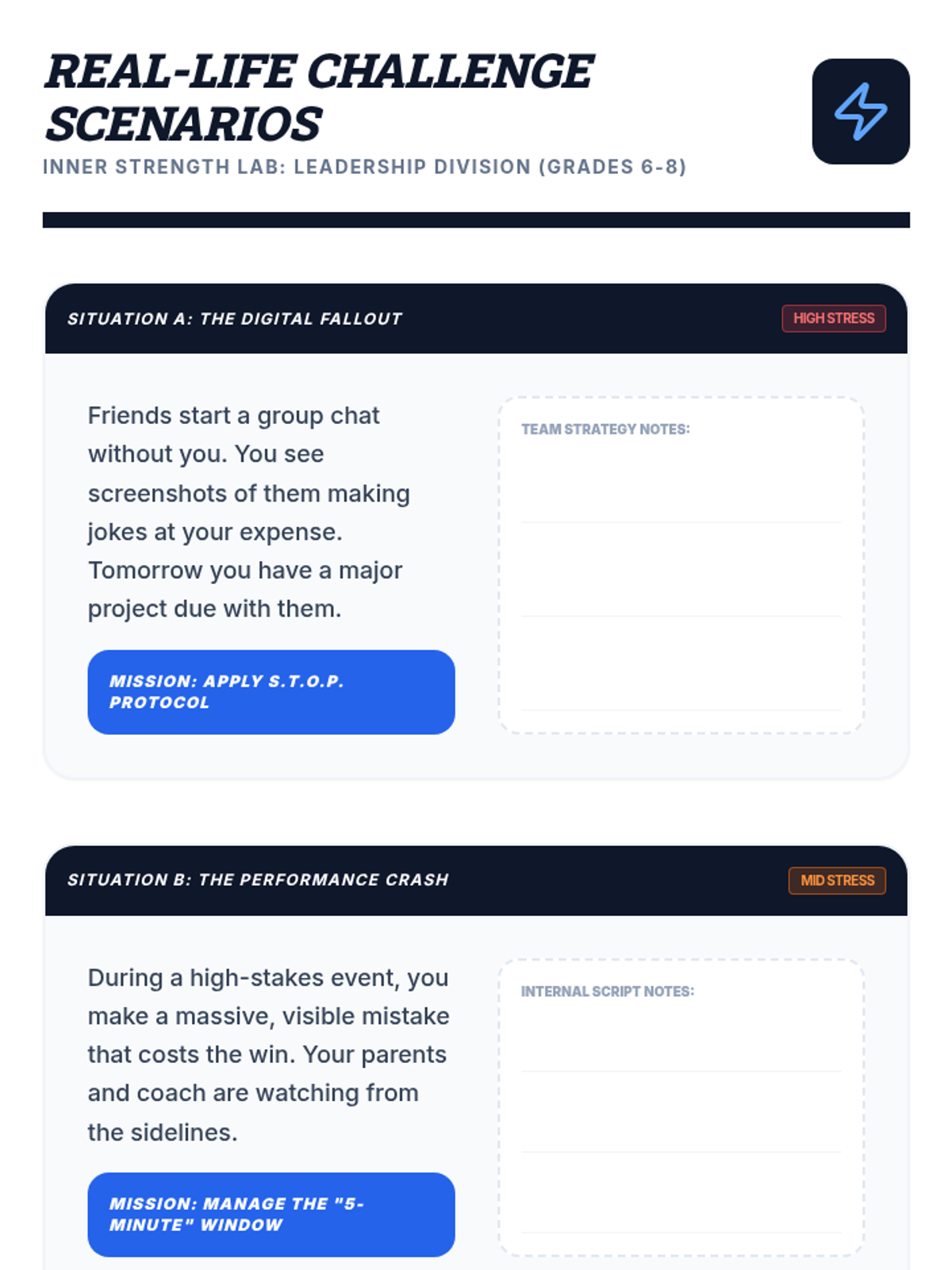
Revised scenario handout for 6th-8th graders. Added dedicated student response areas for each situation, fixed page break issues with 'break-inside-avoid', and included a S.T.O.P. protocol reference for self-contained usability.
Revised slides for 6th-8th graders. Fixed tracking in headers for clarity and added specific, high-stress social scenarios for the simulation activity on Slide 4. Improved overall visual impact and layout consistency. Final revision to fix collided words and opacity.
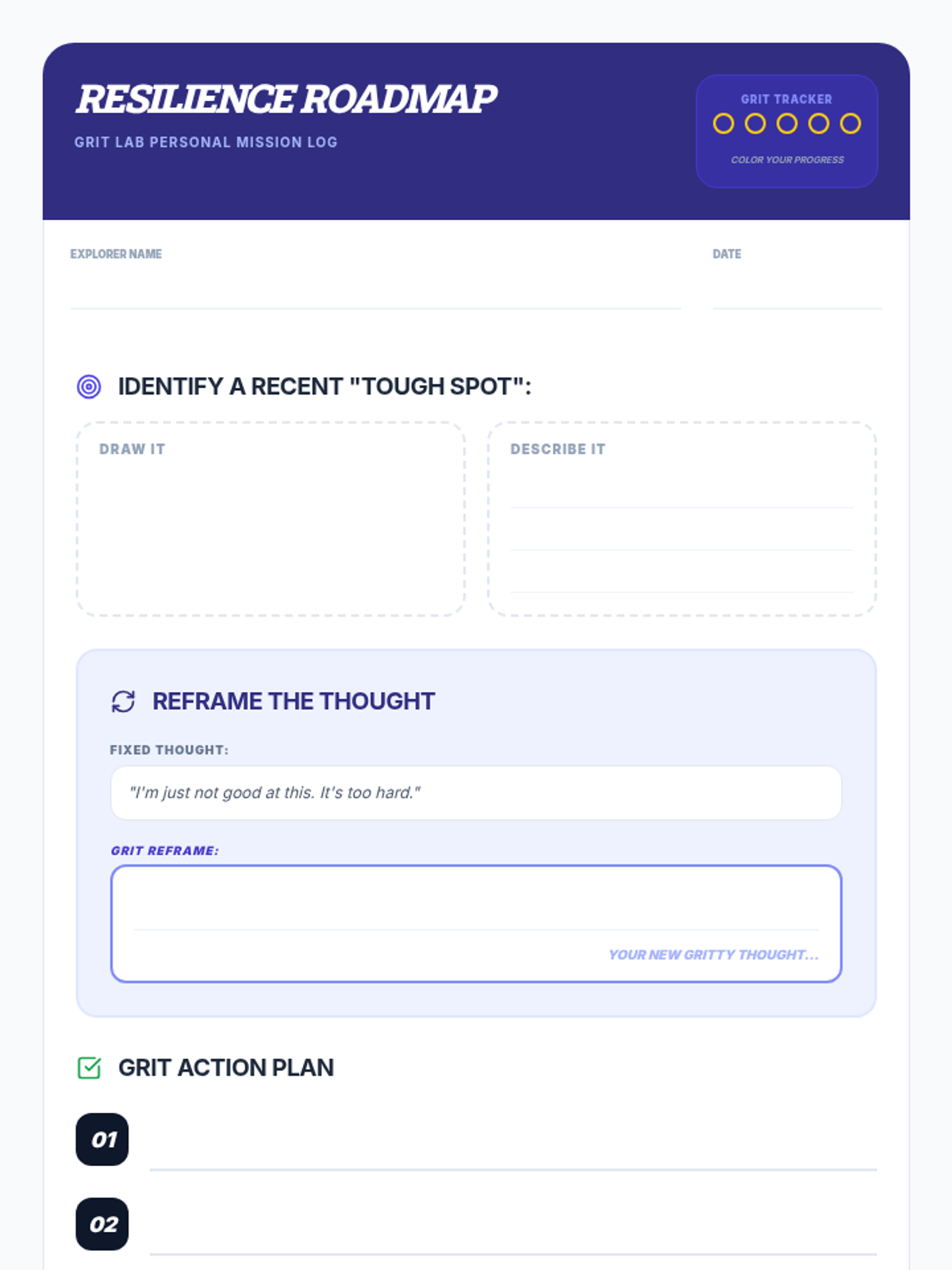
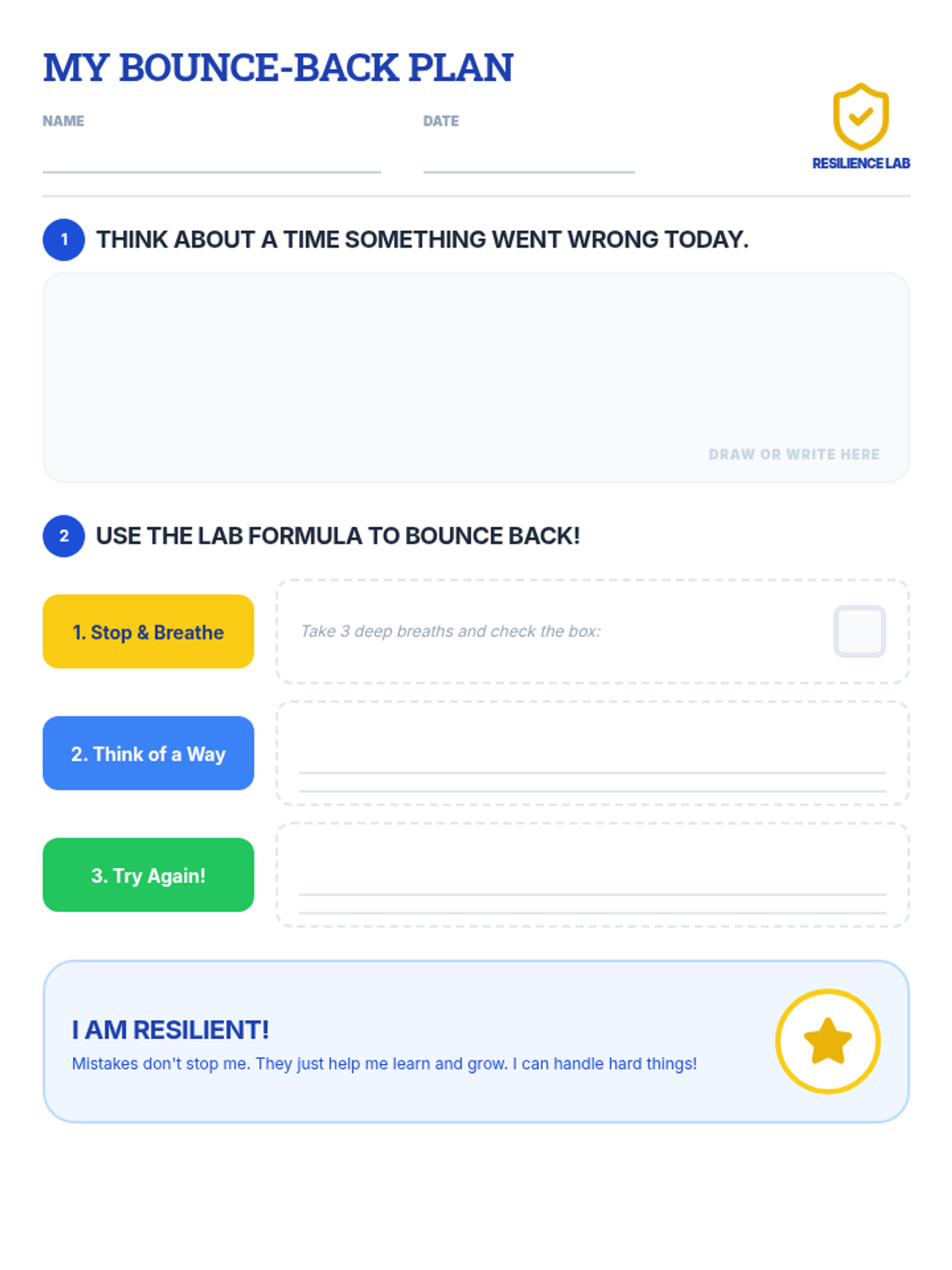
Revised worksheet for 3rd-5th graders with expanded student work areas (min-h-160px/100px) and improved visual instructions. Final revision to fix page break, icon rendering, and line contrast.
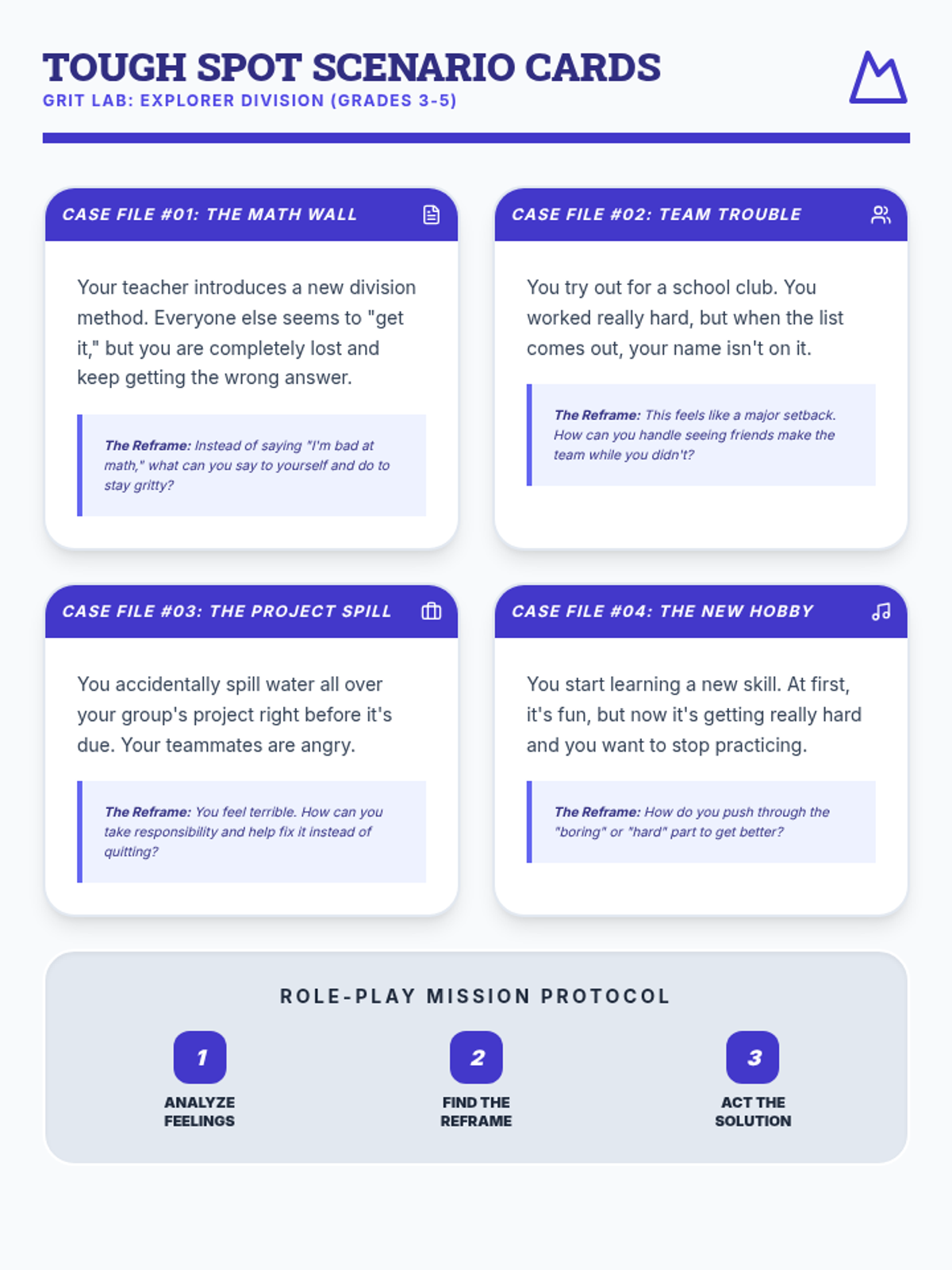
Revised scenario cards for 3rd-5th graders with fluid height containers to ensure no text is truncated. Improved visual design for instructions and consistent card layout. Final revision to fix footer page break and text sizing.
Revised instructional slides for 3rd-5th graders. Added specific role-play scenarios and improved visual balance on Slide 2. Slide 4 now includes actual Lab Challenges for group work.
Revised worksheet for 1st-2nd graders with significantly larger student work areas (h-24), a graphic checkbox, and optimized layout to prevent page breaks. Final revision to fix minor spillover and line contrast.
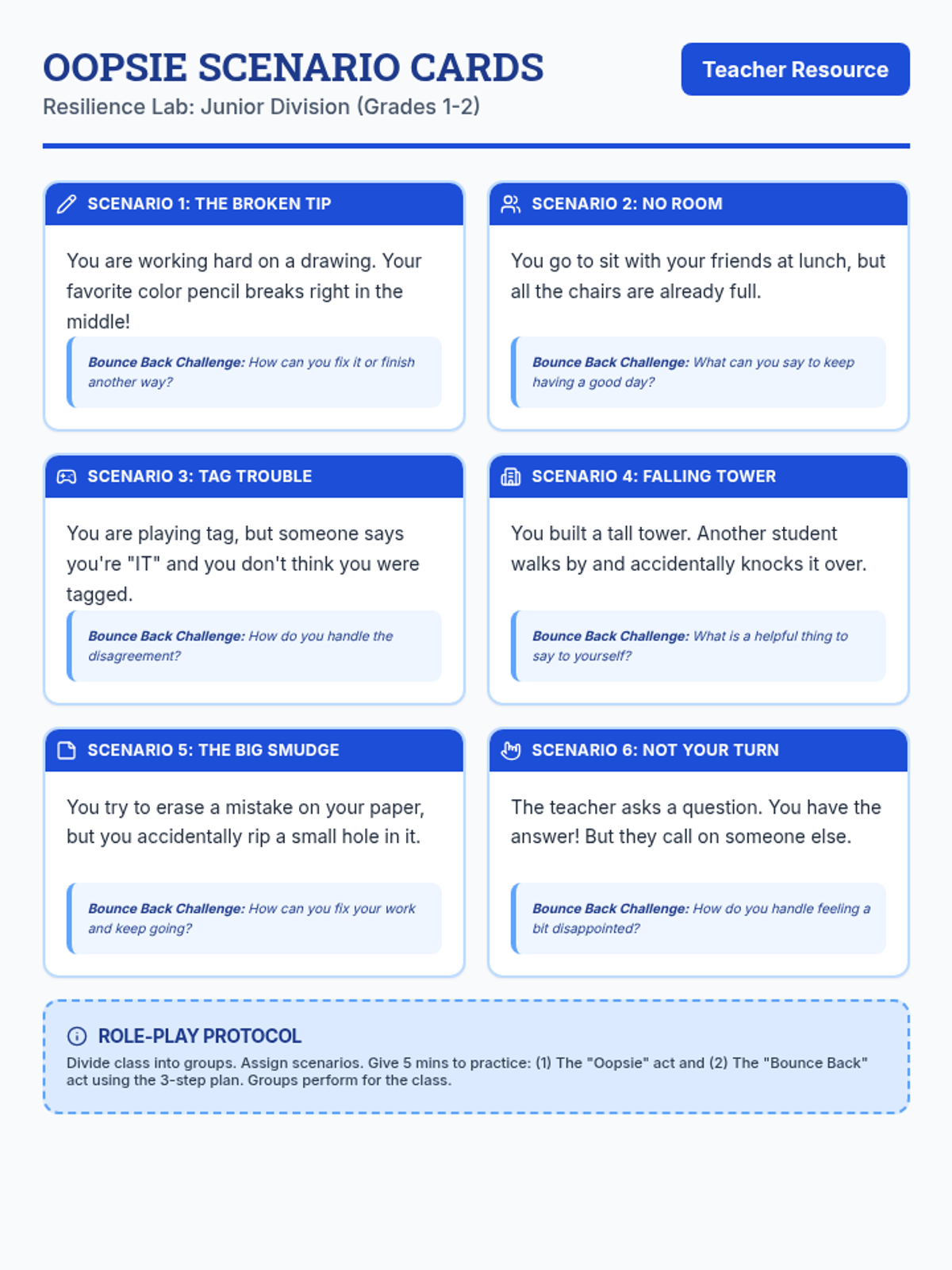
Updated scenario cards for 1st-2nd graders with 6 unique situations and optimized layout to fit on a single page. Fixed truncated text and added variety. Revised to fix footer page break and ensure icon rendering.
Visual presentation for Grades 1-2 introducing resilience through the 'Bounce-Back Plan' with engaging graphics and prompts for group role-play. Revisions include added scenarios and improved contrast.
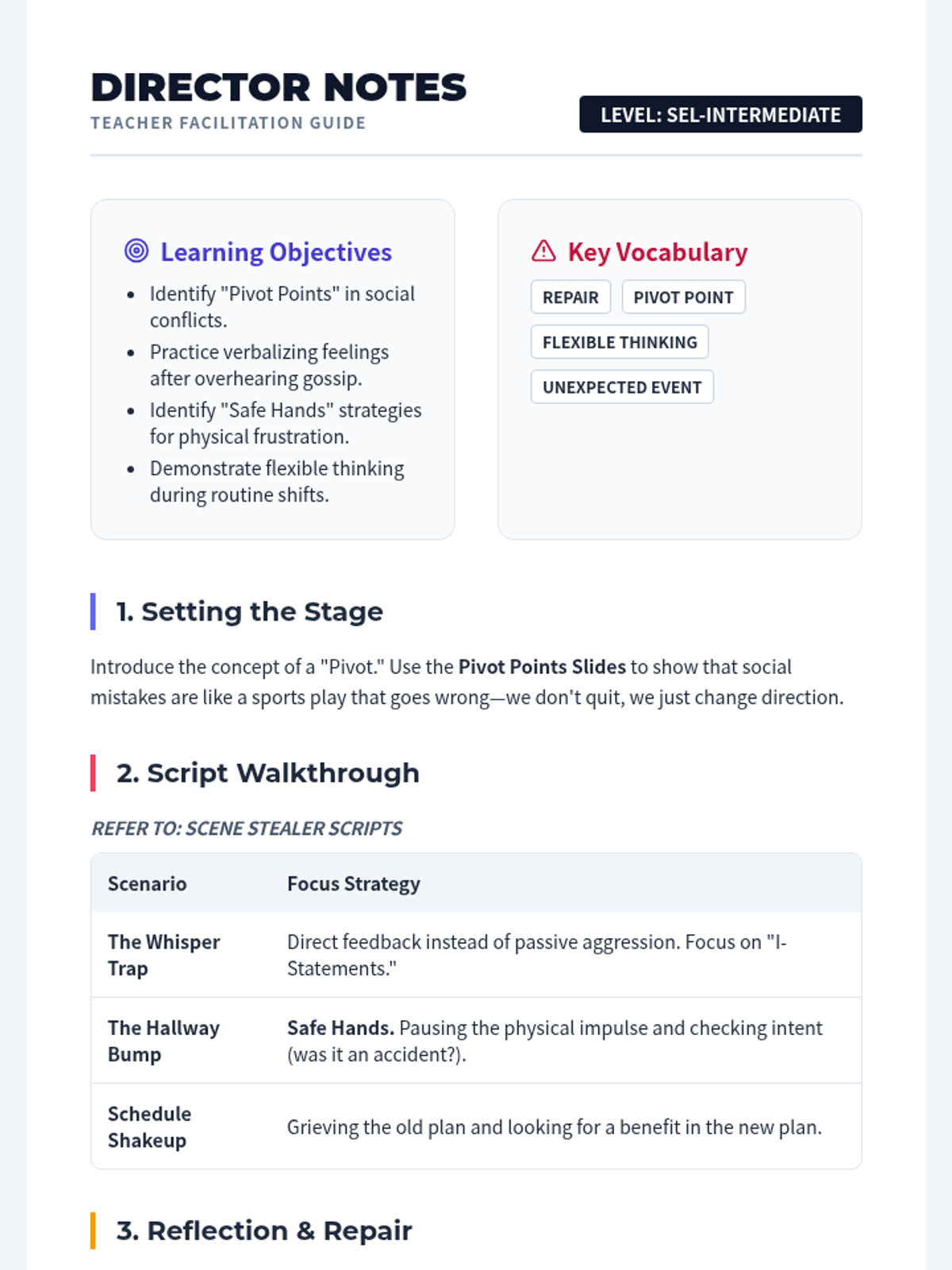
A teacher's guide for facilitating the "Social Pivot" lesson. Includes learning objectives, key vocabulary, facilitation steps for roleplay, and tips for handling sensitive social scenarios like physical aggression.
A visual slide deck introducing the concept of the "Social Pivot." It defines social repair and outlines the three key scenarios (overhearing gossip, physical impulses, and routine changes) with strategies for handling each.
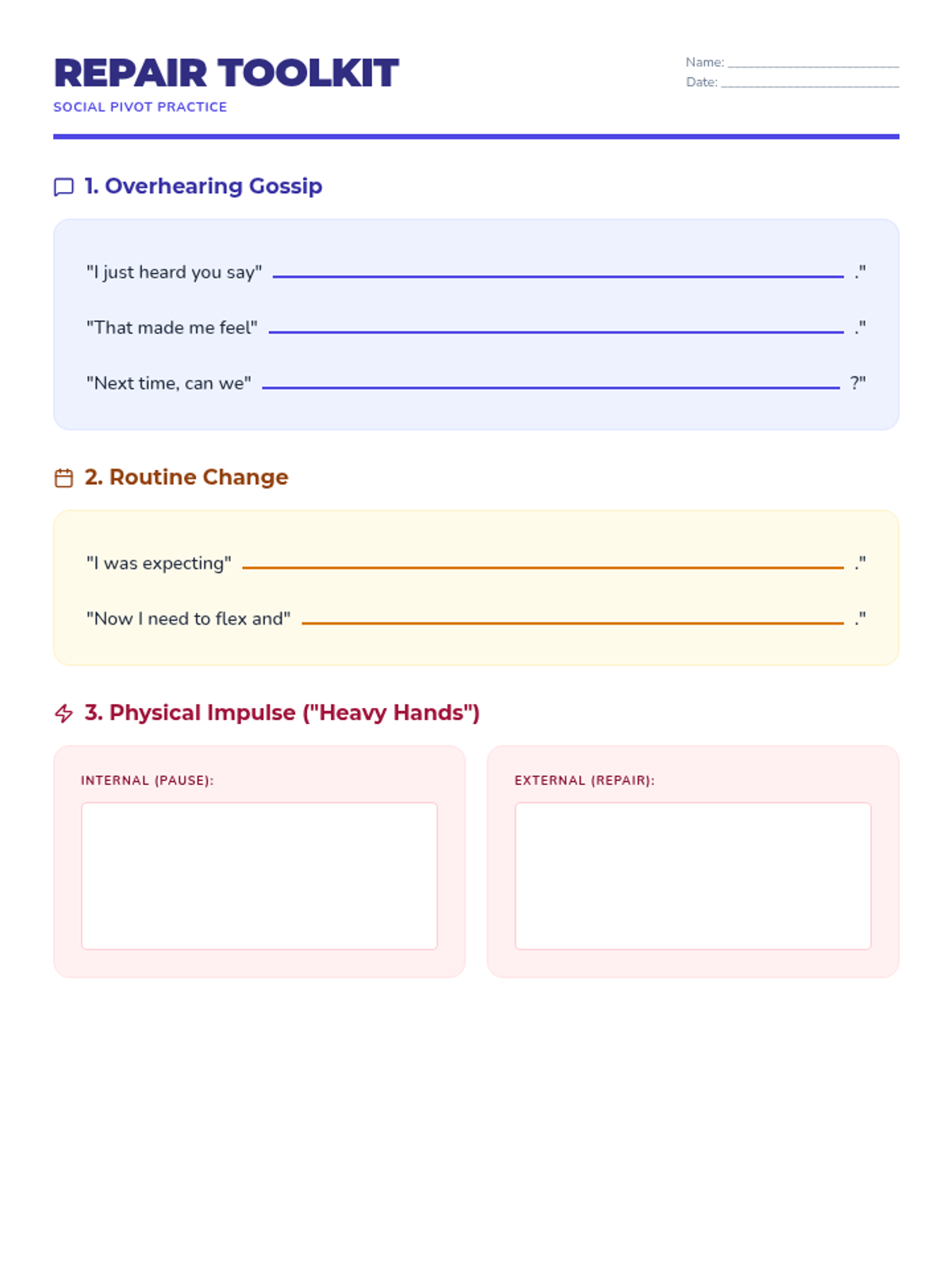
A student worksheet to practice "Social Pivot" phrases. It provides fill-in-the-blank templates for repairing relationships after overhearing gossip, managing physical impulses, and adapting to changes in routine.
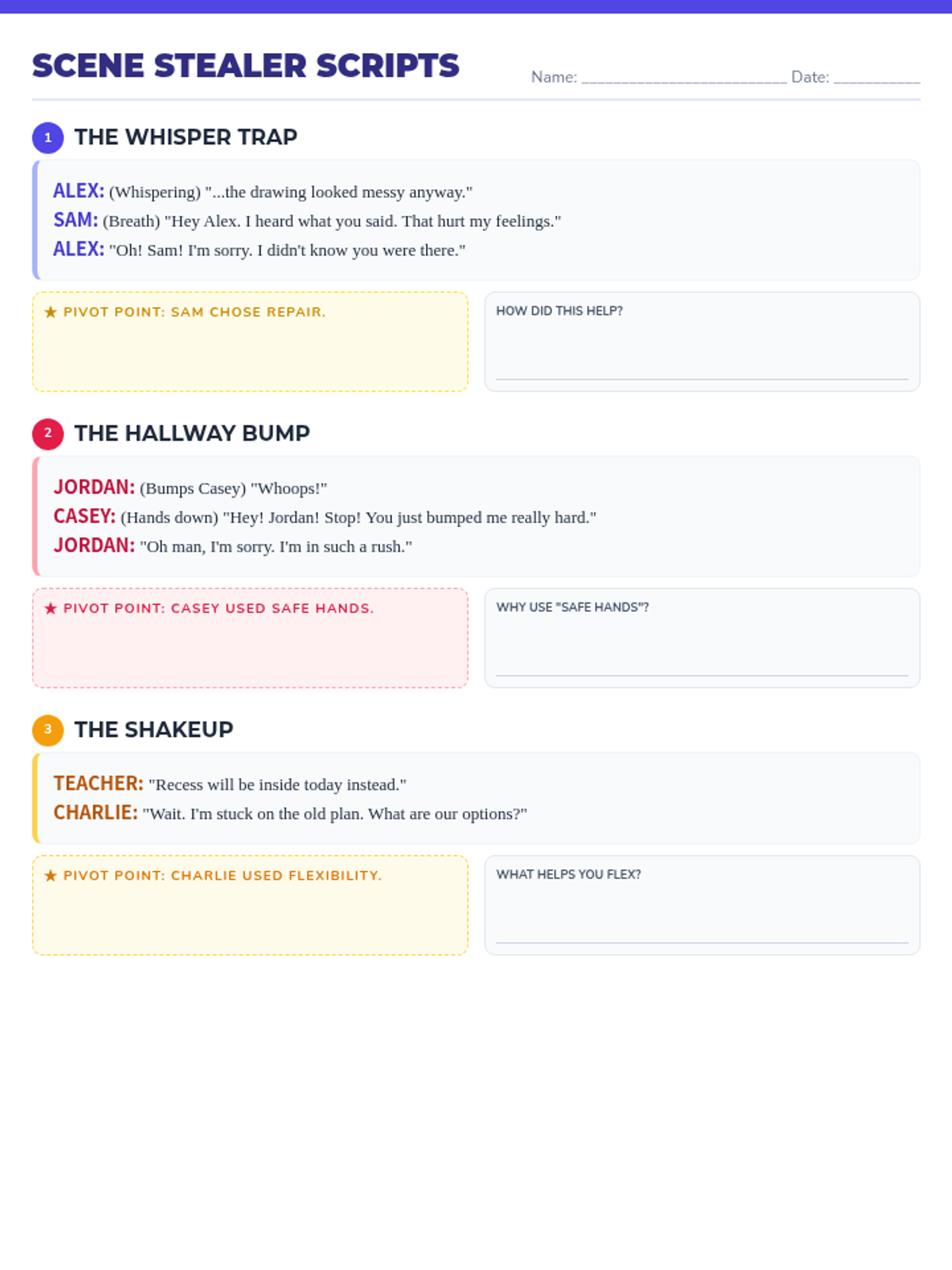
A set of three two-person dialogue scripts focusing on social thinking challenges: overhearing gossip, managing physical aggression impulses, and handling unexpected routine changes. Each script includes a "Pivot Point" where students practice repair and flexible thinking.
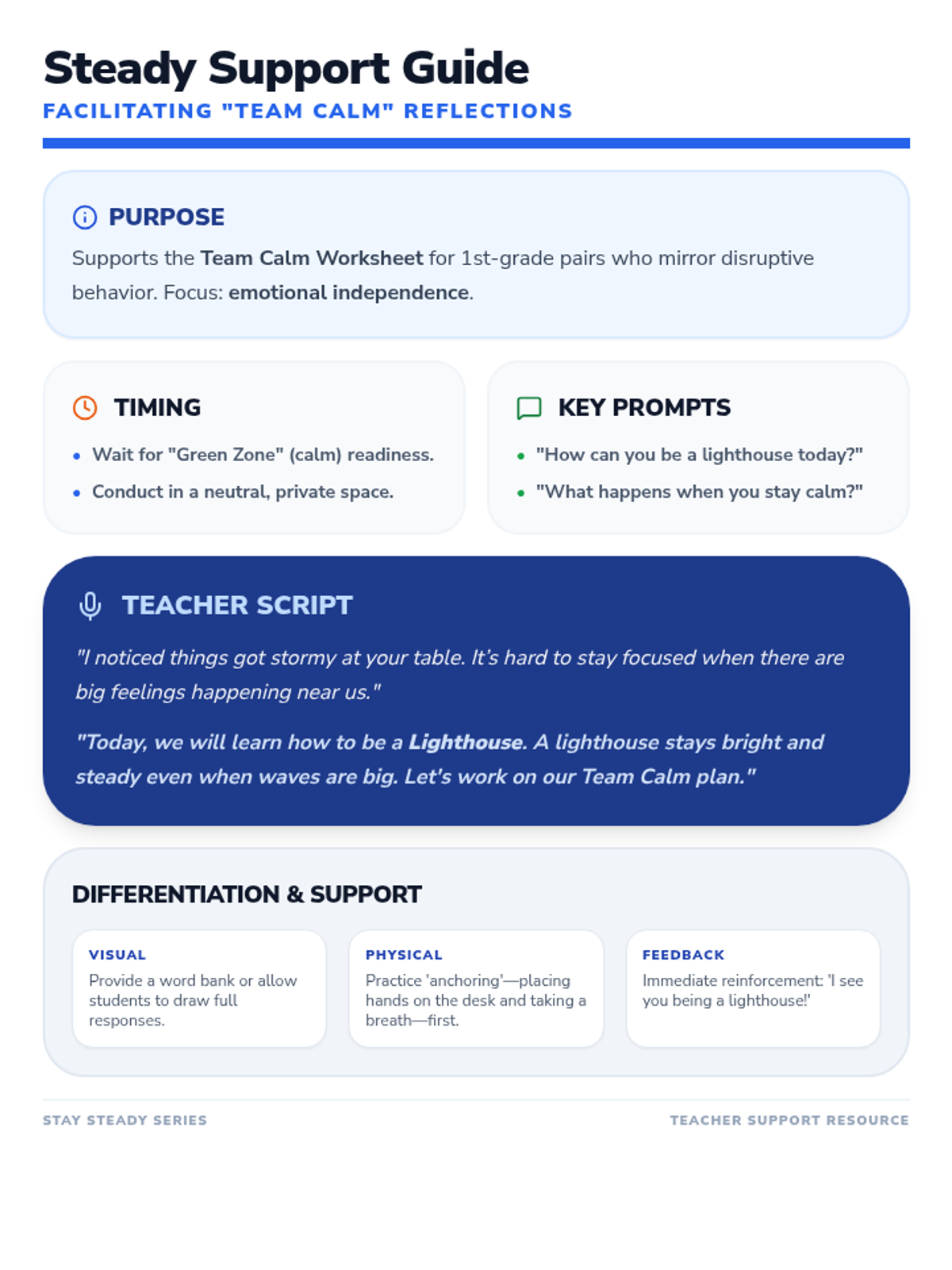
A teacher facilitation guide for using the Team Calm worksheet, including scripting, discussion prompts, and differentiation strategies for first-grade students.
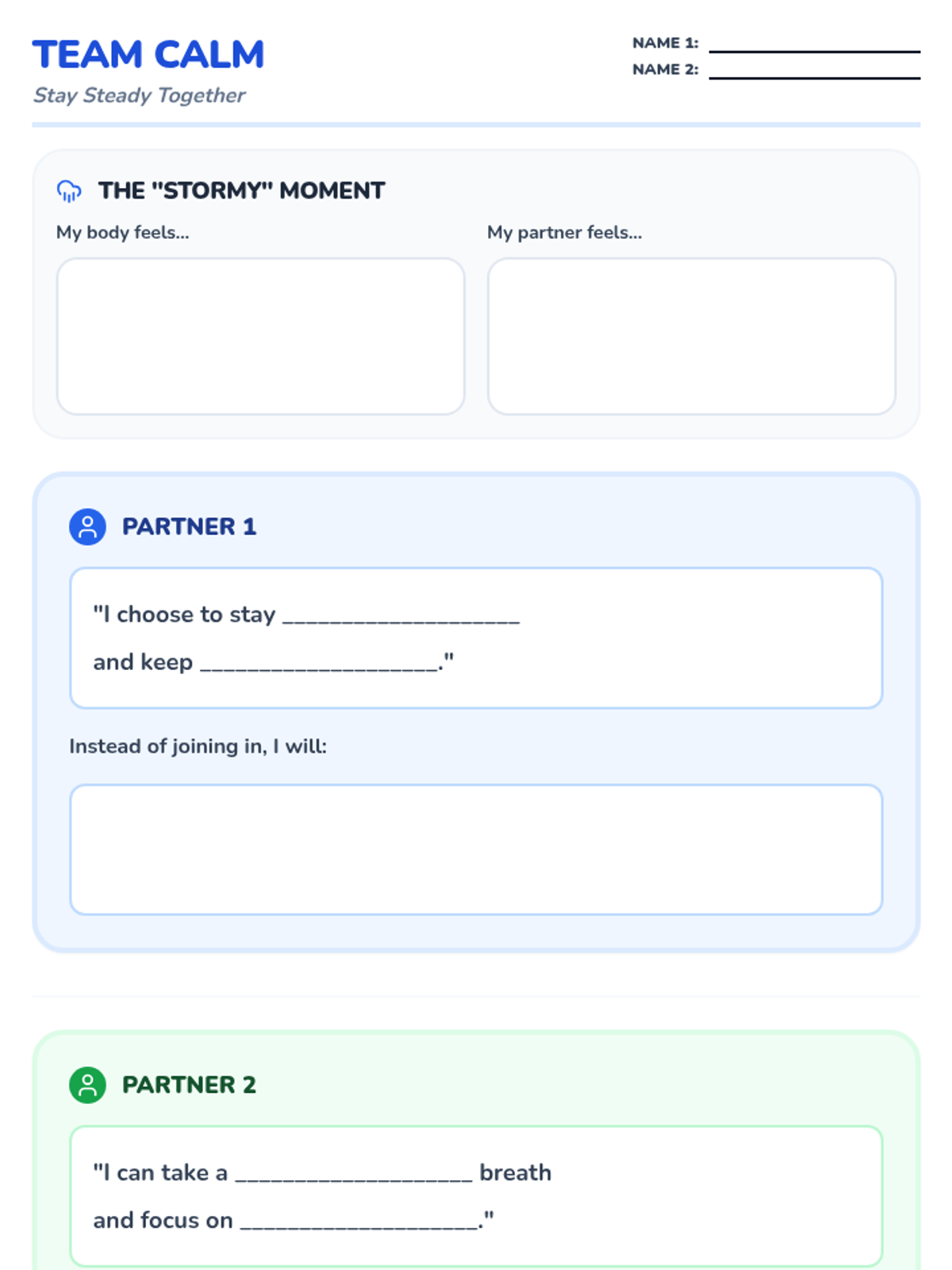
A collaborative guided reflection worksheet for two students to process their emotional reactions to disruptive behavior and plan independent positive choices using sentence starters and drawing areas.
A visual presentation introducing the 'Lighthouse' metaphor to help first graders understand how to remain calm and independent when peers are disruptive or emotionally dysregulated.