Empathetic skill development through emotion recognition, cultural diversity appreciation, and bias confrontation. Targets multi-perspective analysis to support respectful interactions and complex social responses.
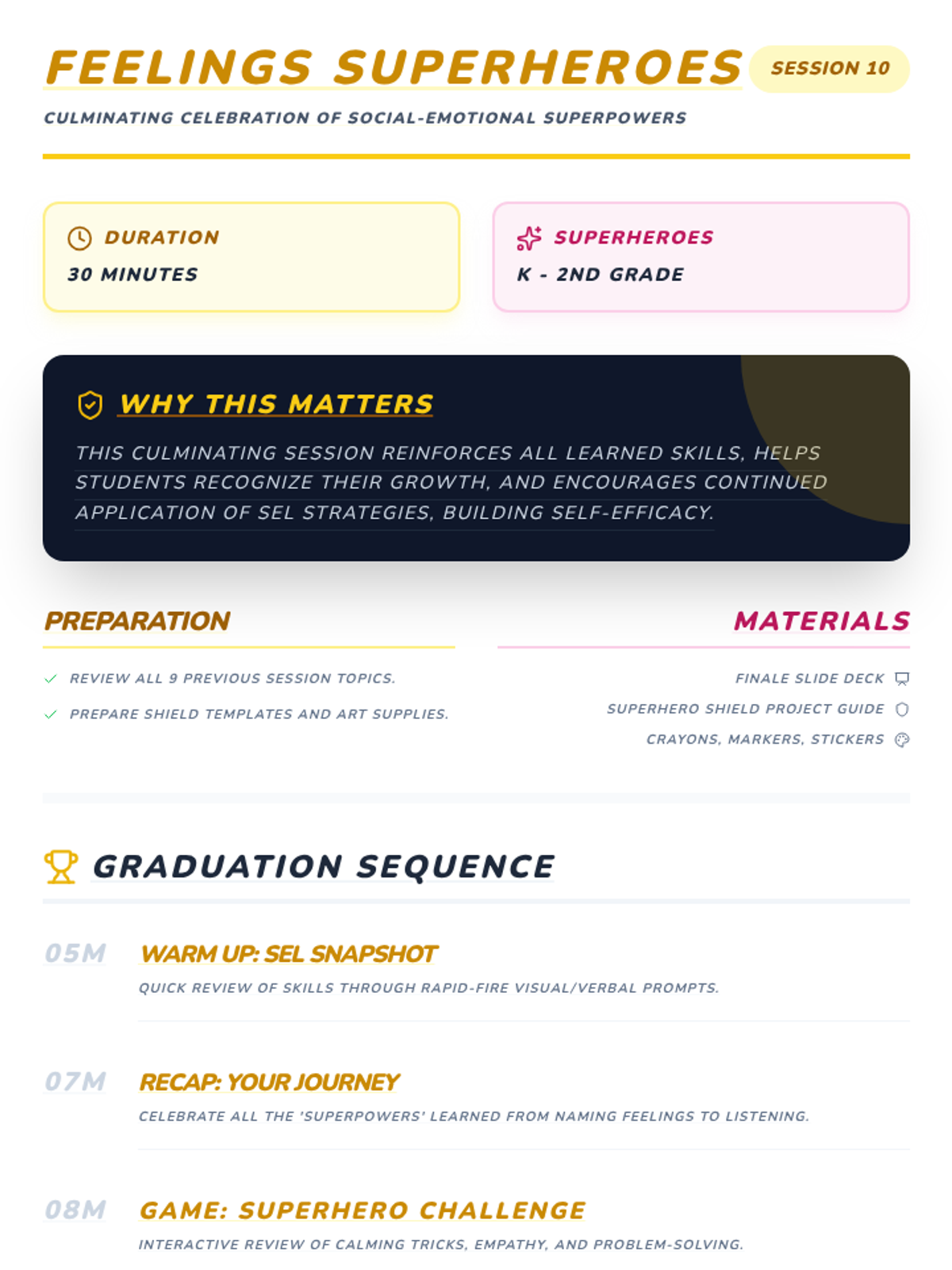
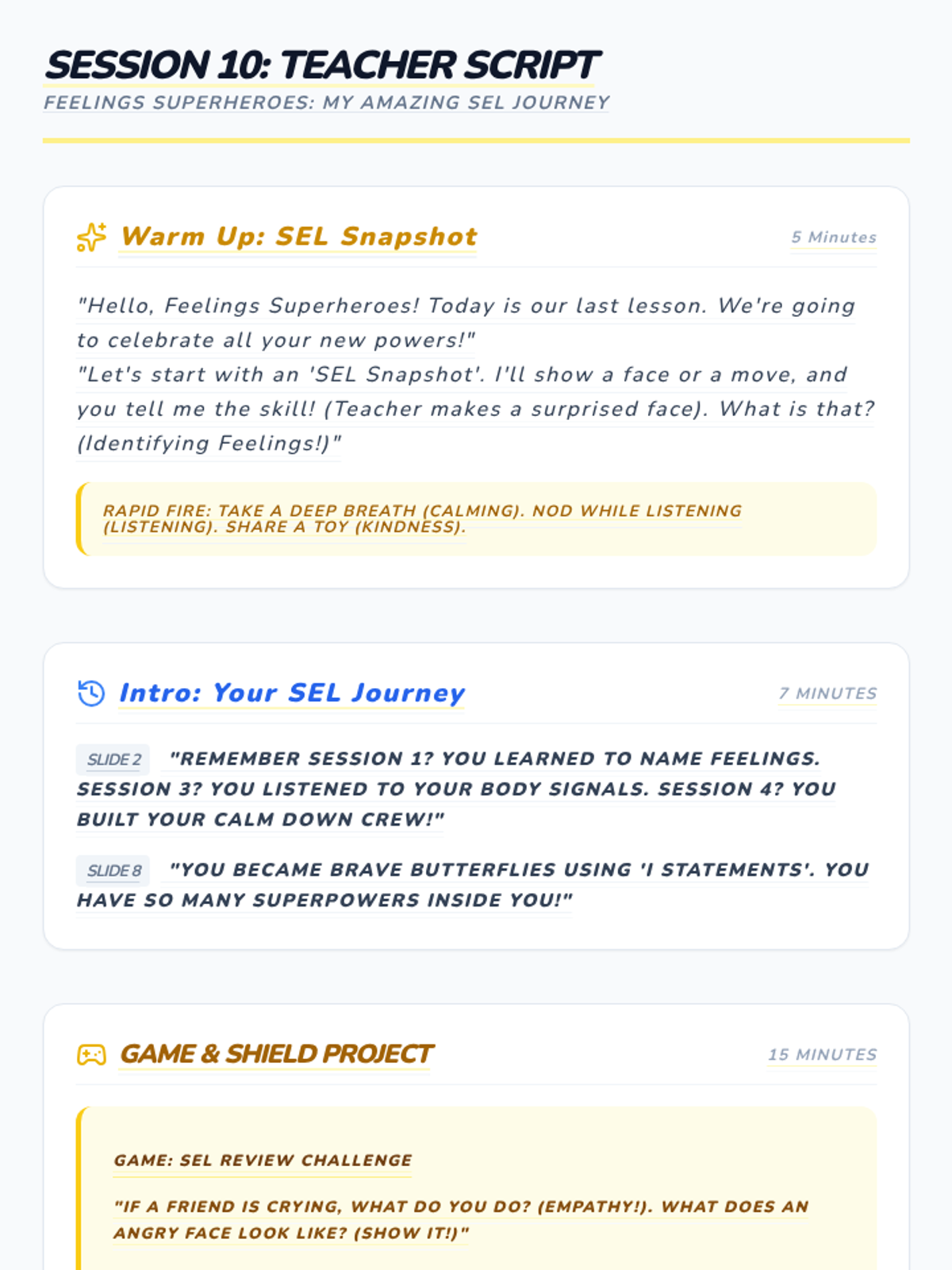
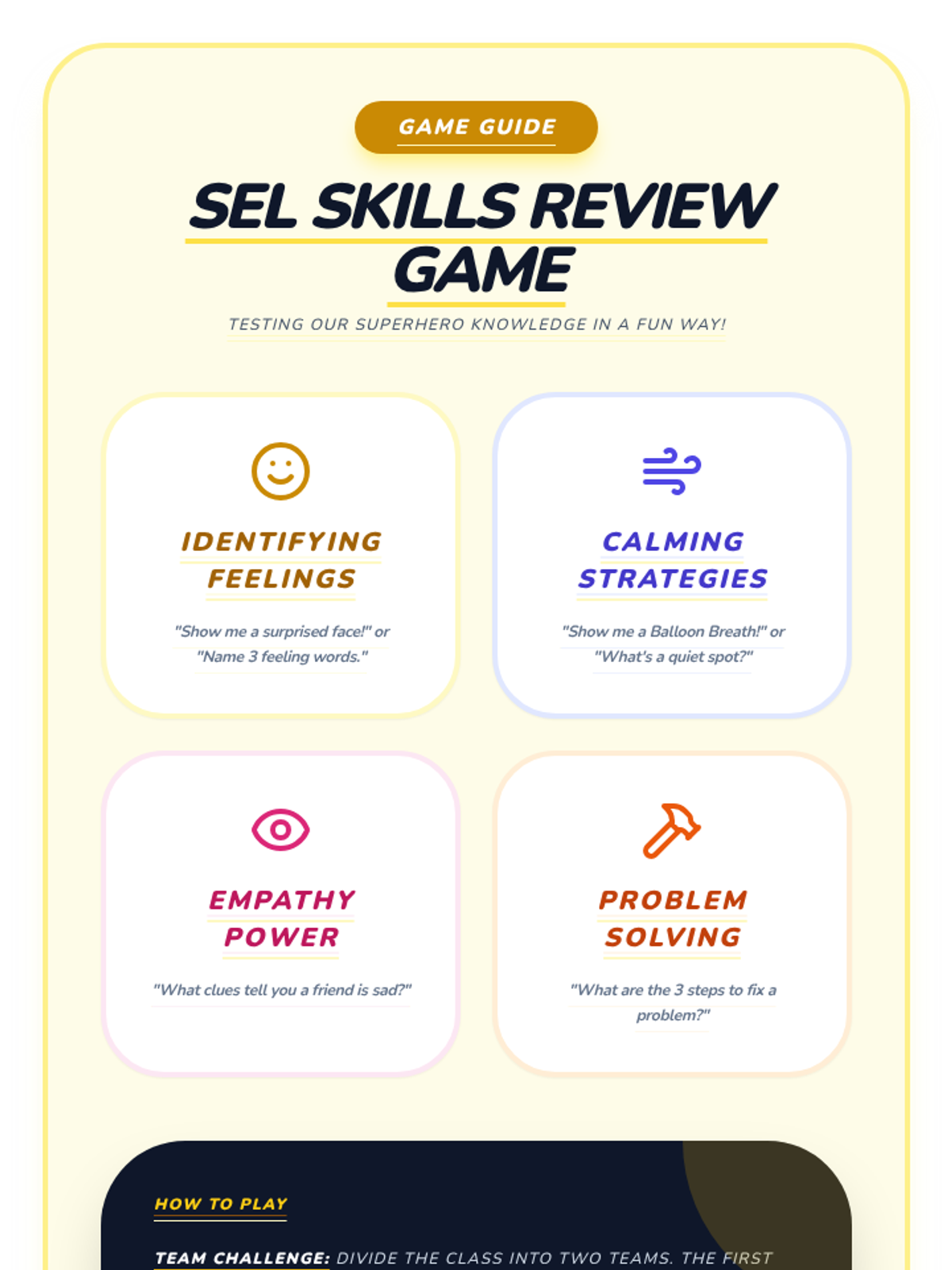
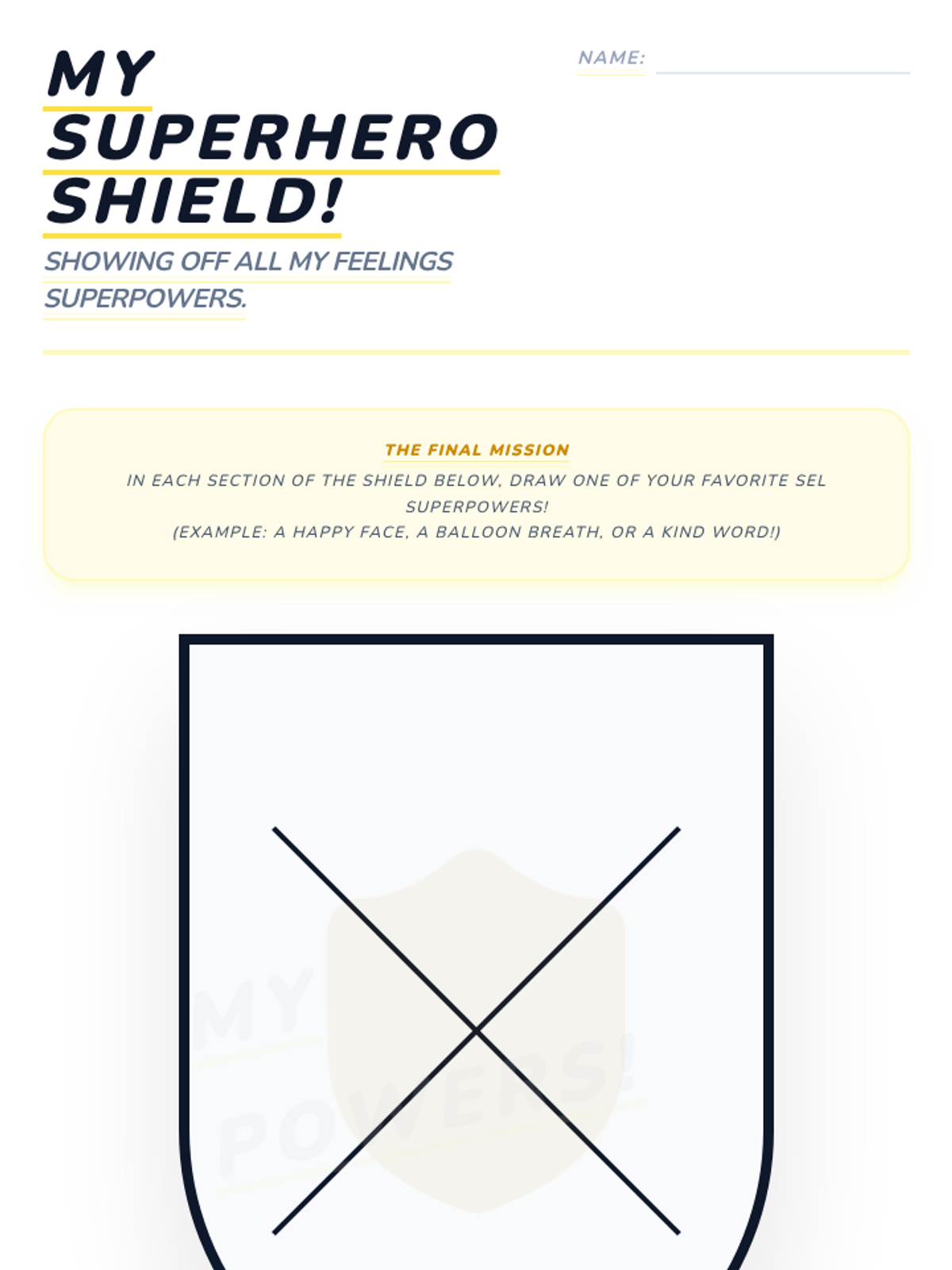
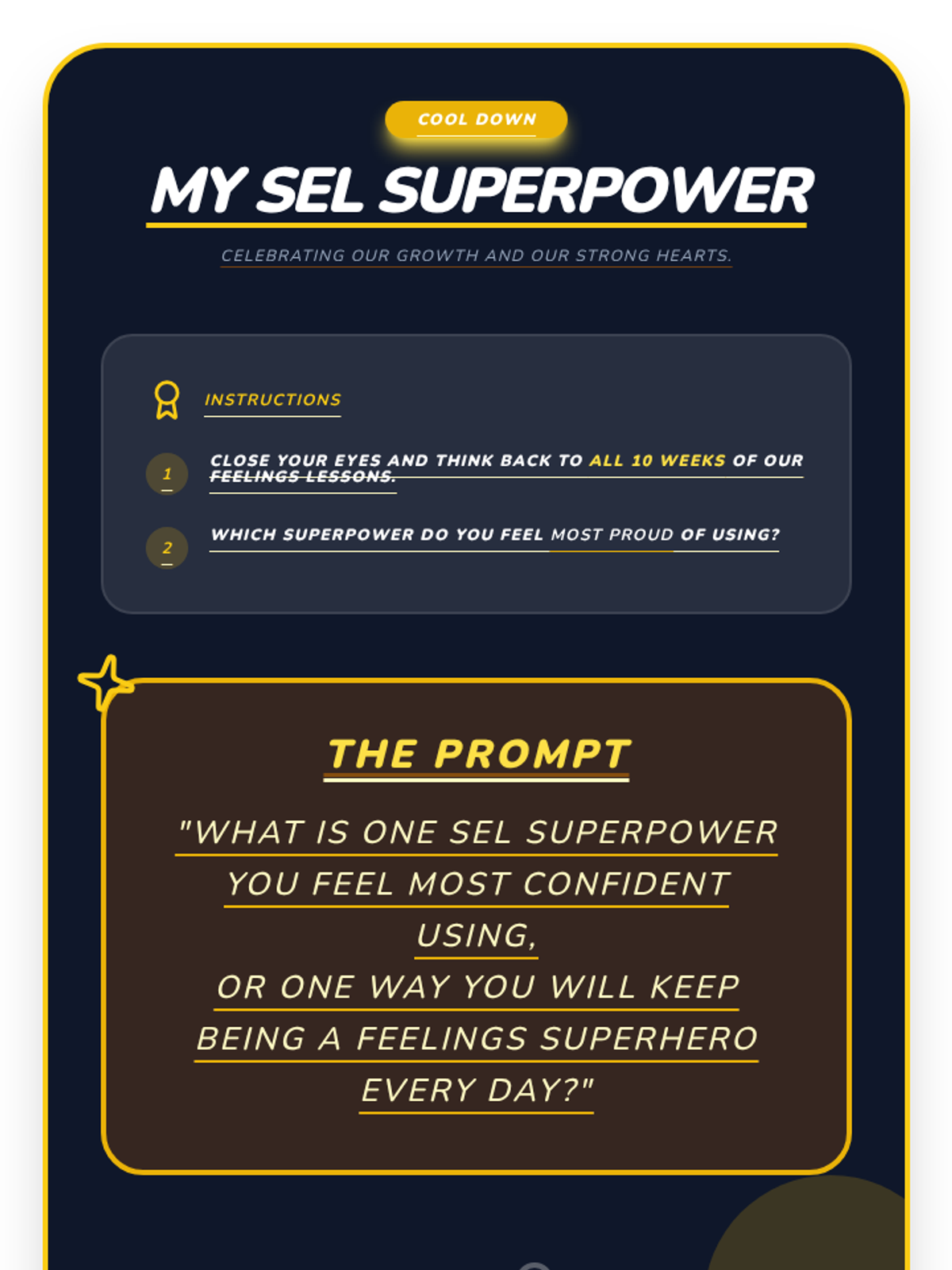
A culminating session that reviews all SEL skills and celebrates students' emotional growth.
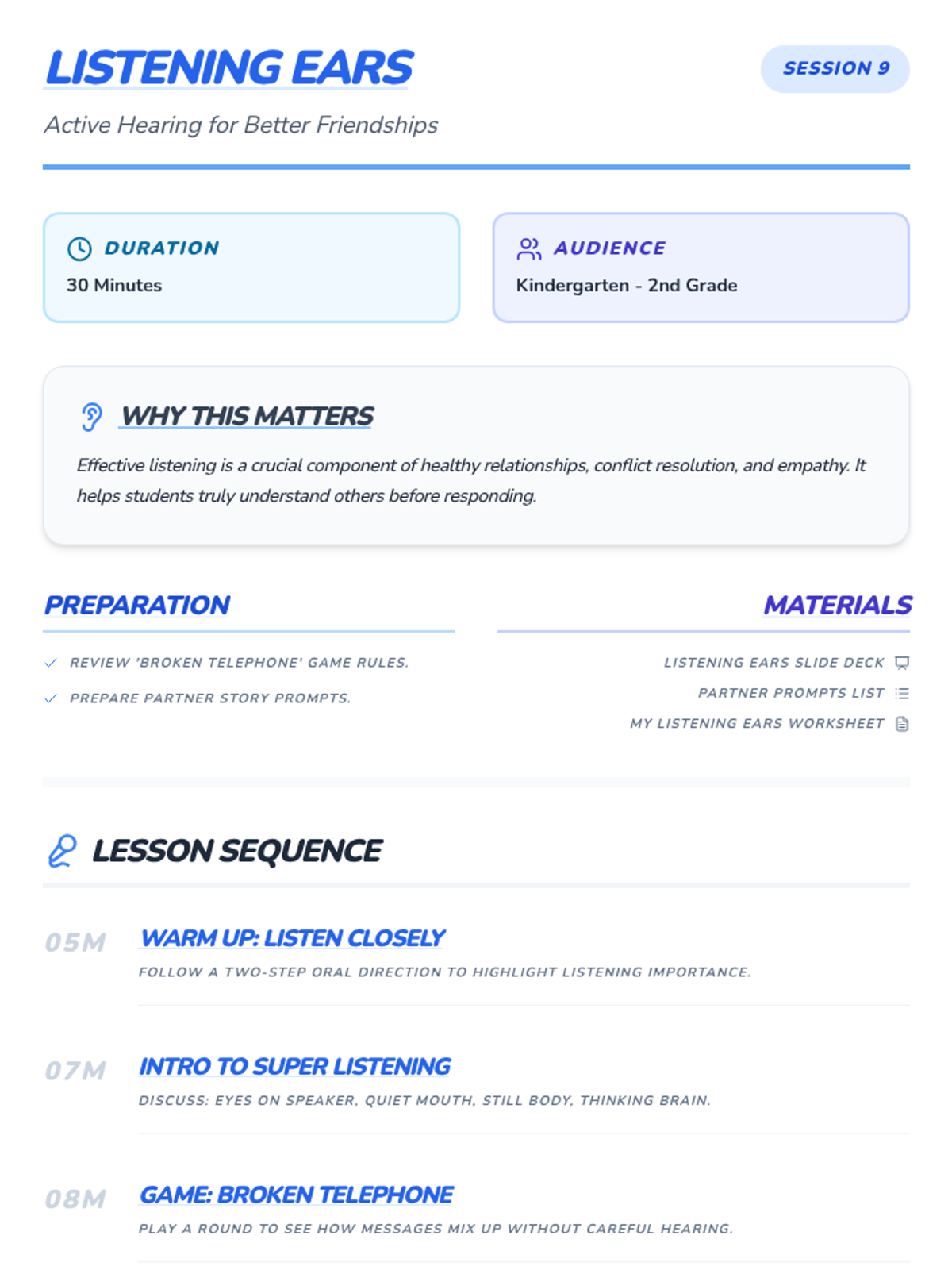
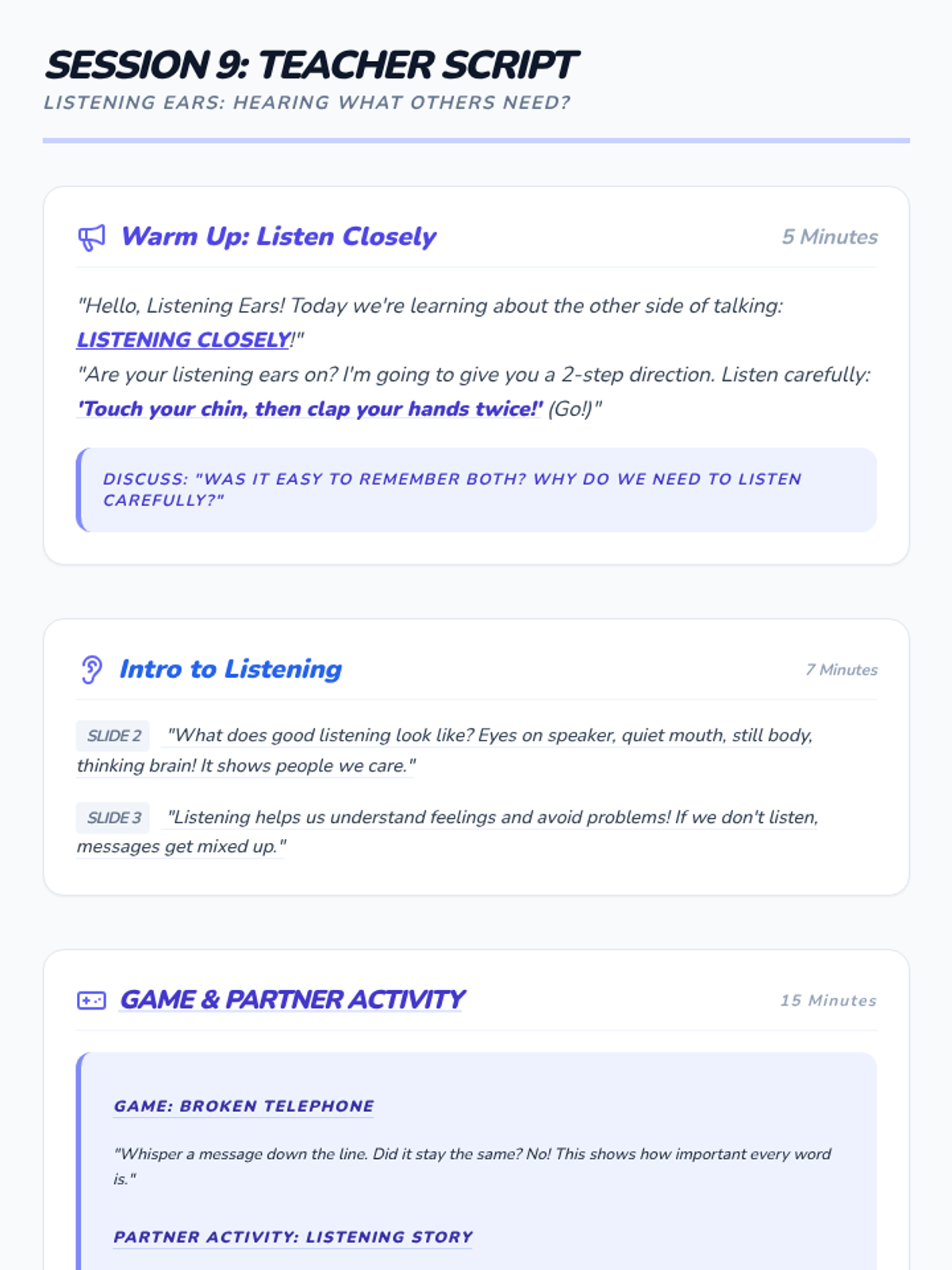
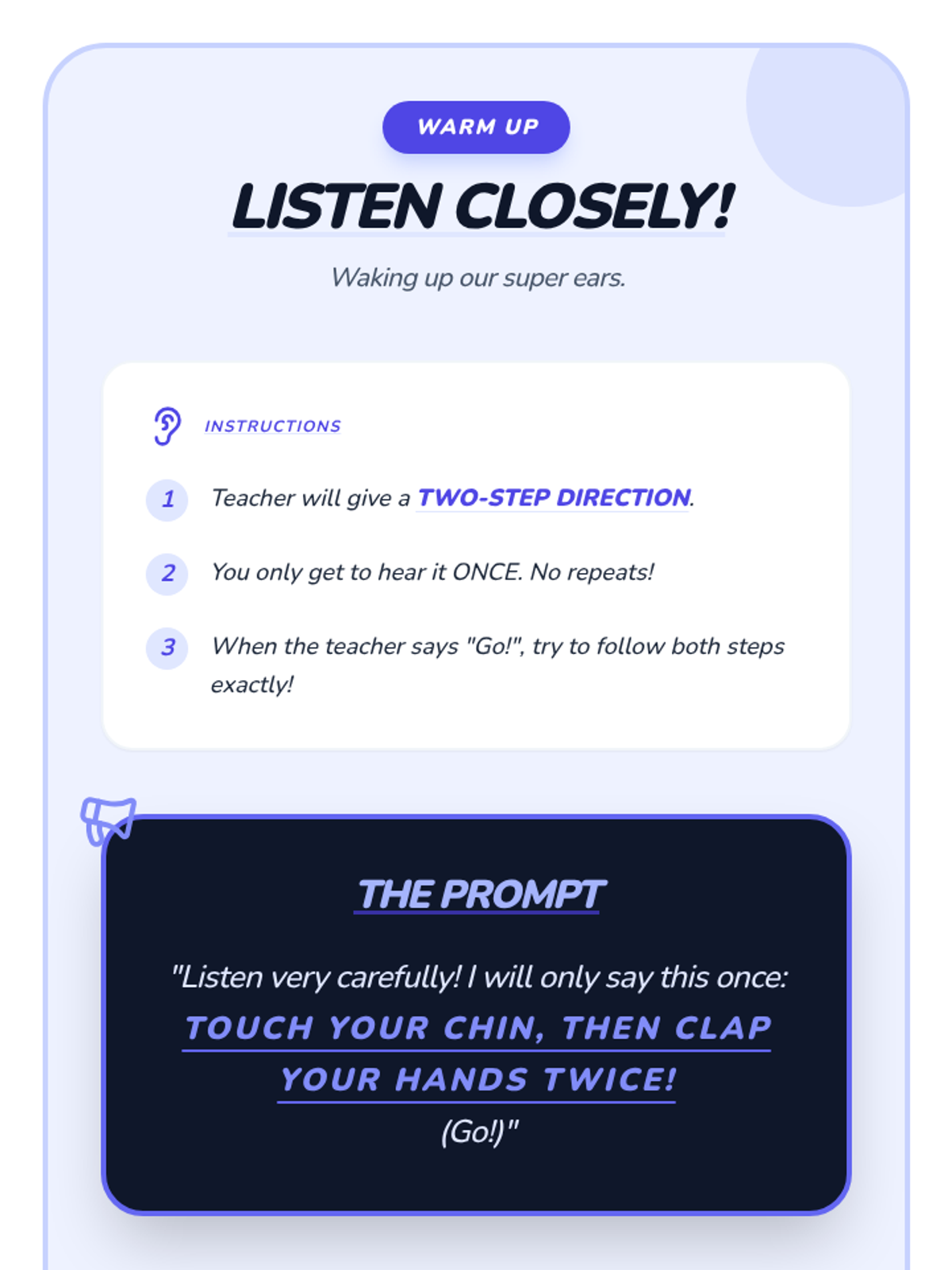
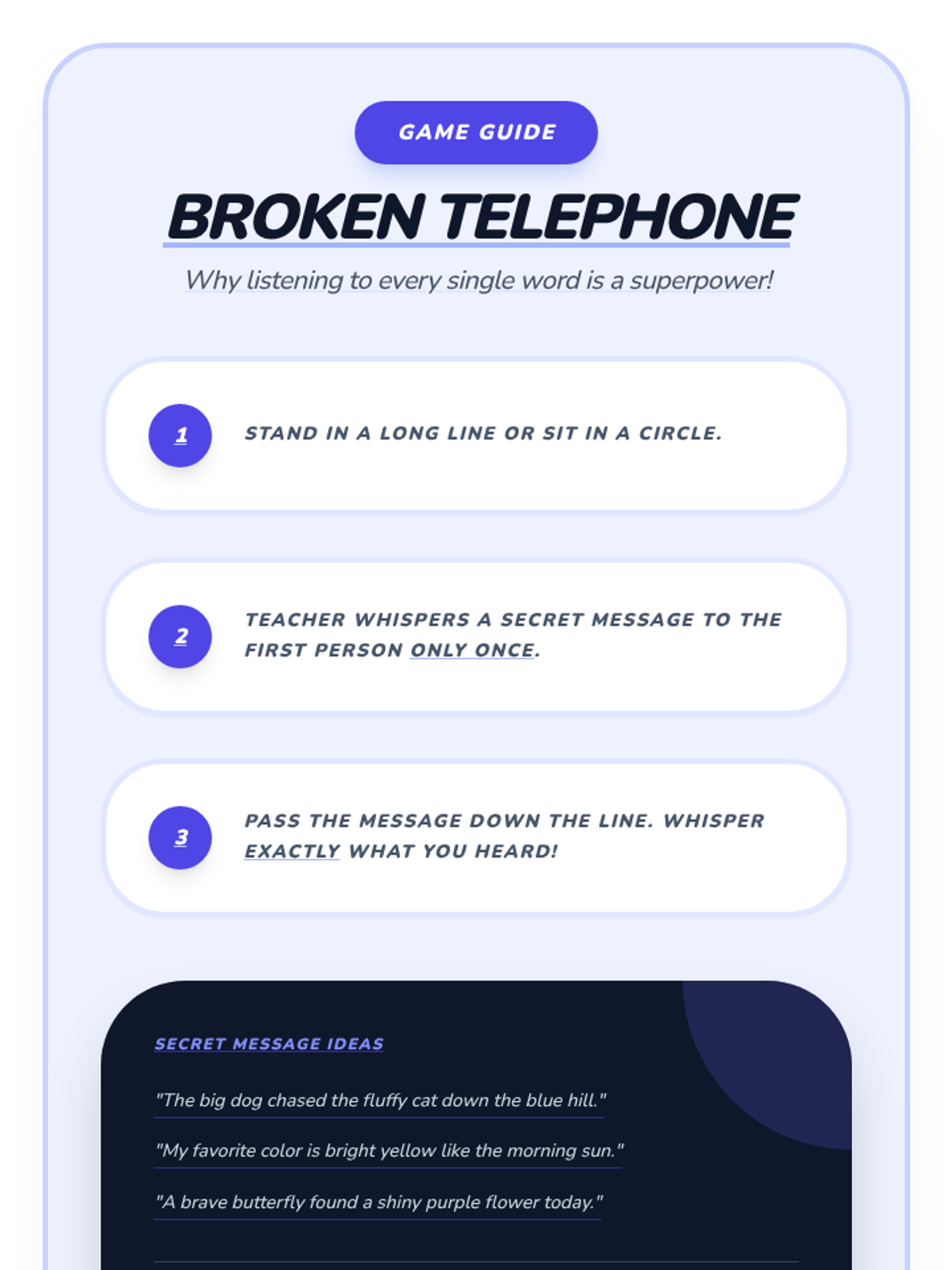
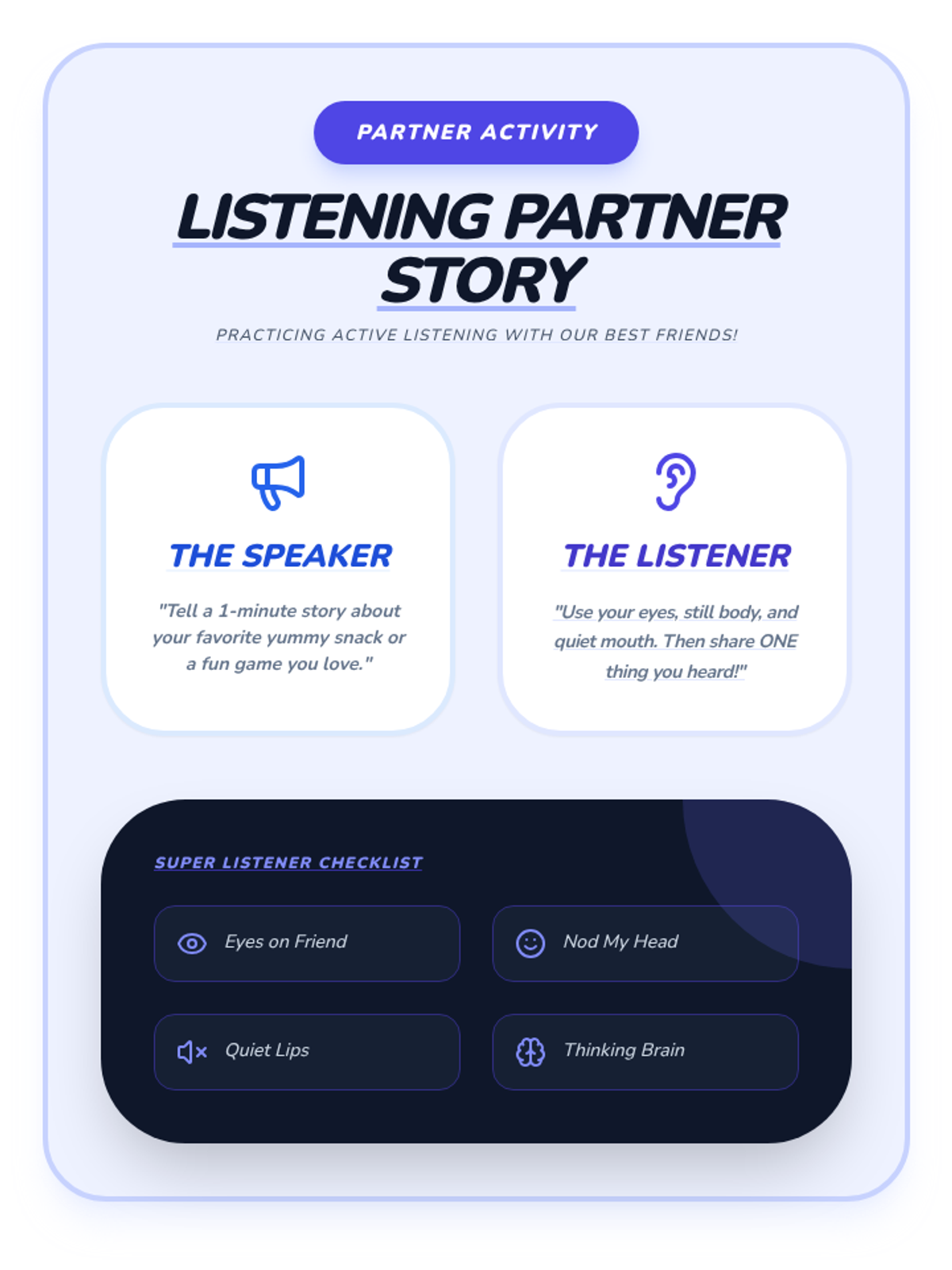
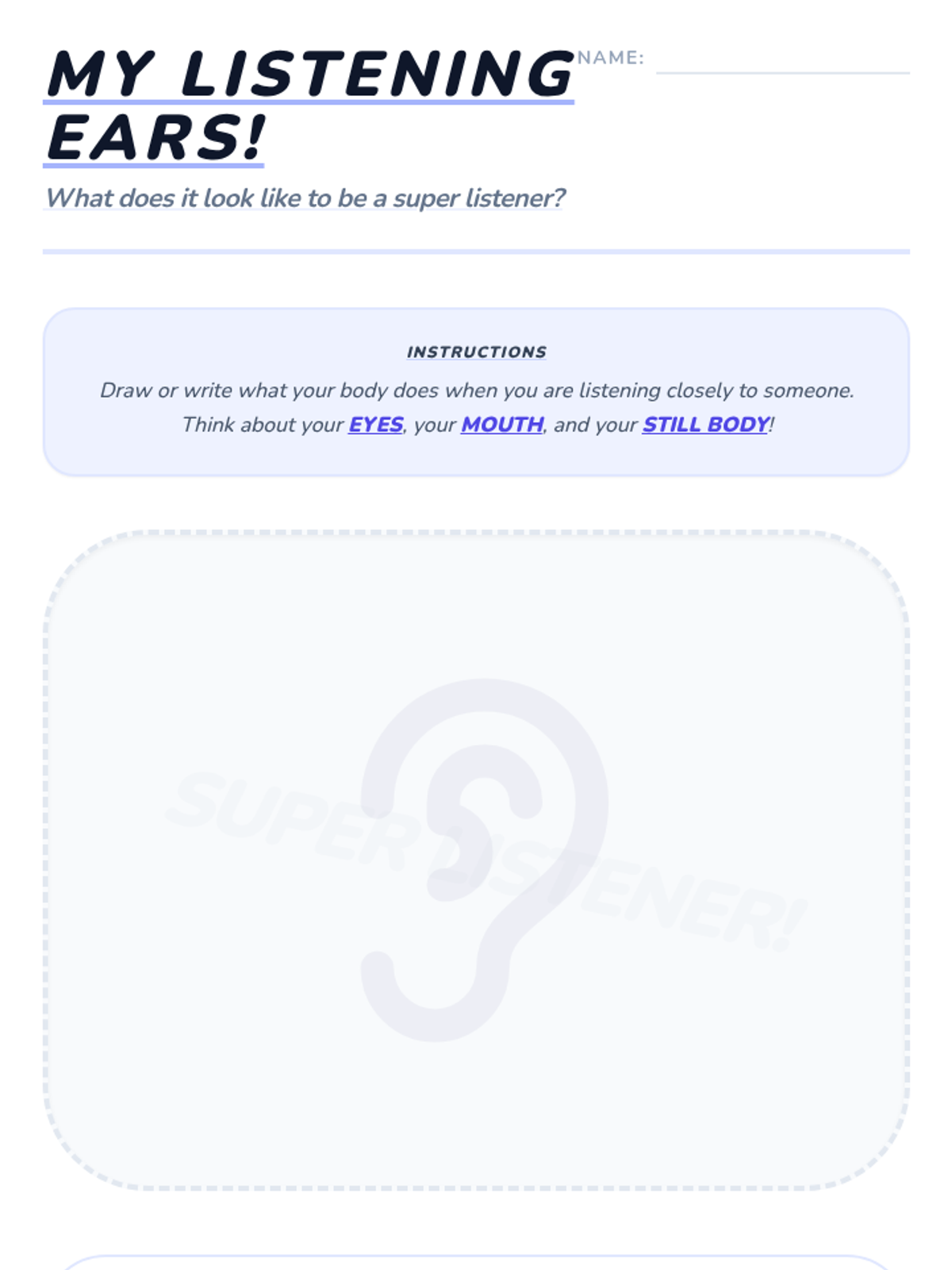
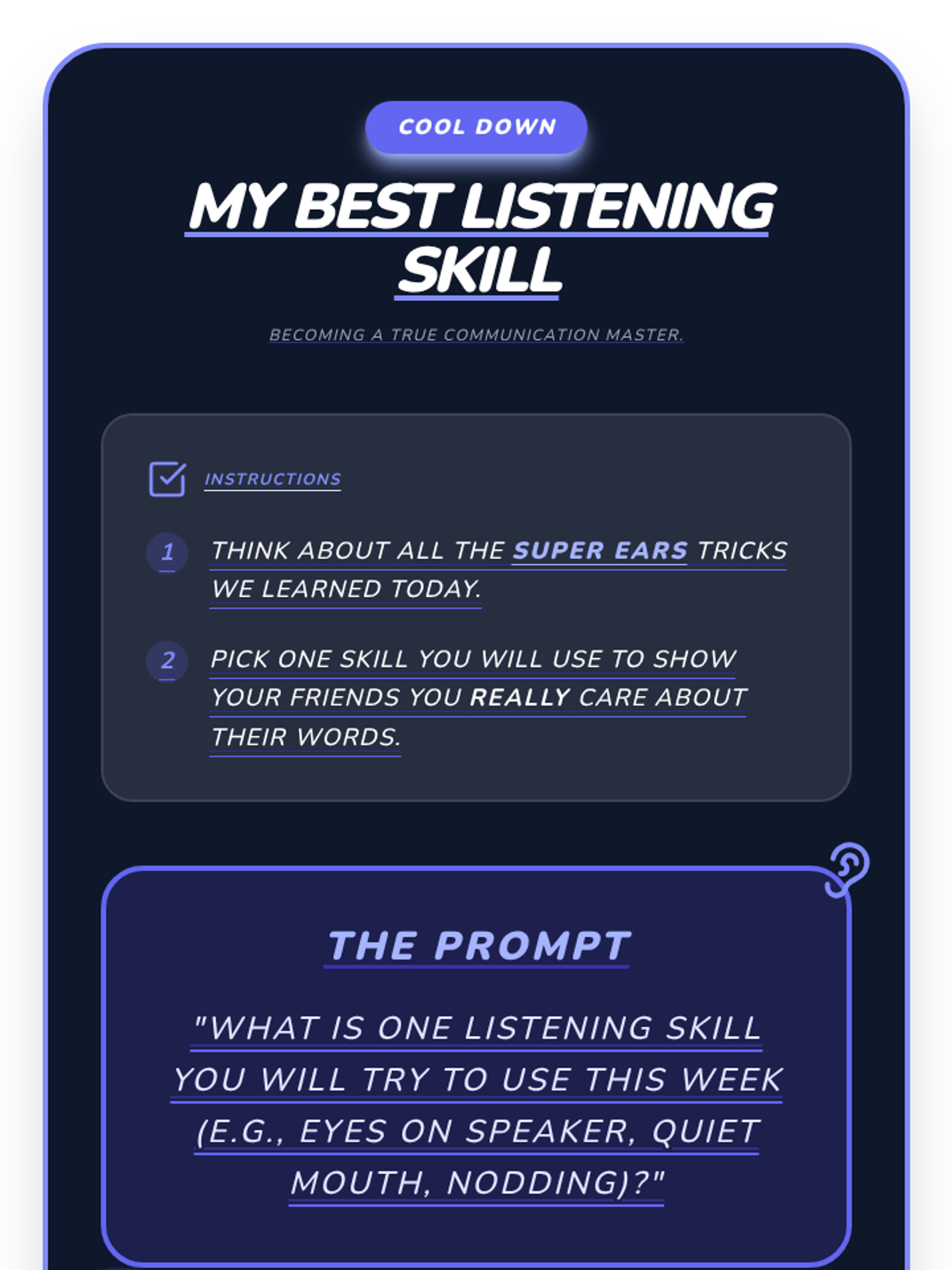
Practices active listening skills to better understand friends and resolve misunderstandings.
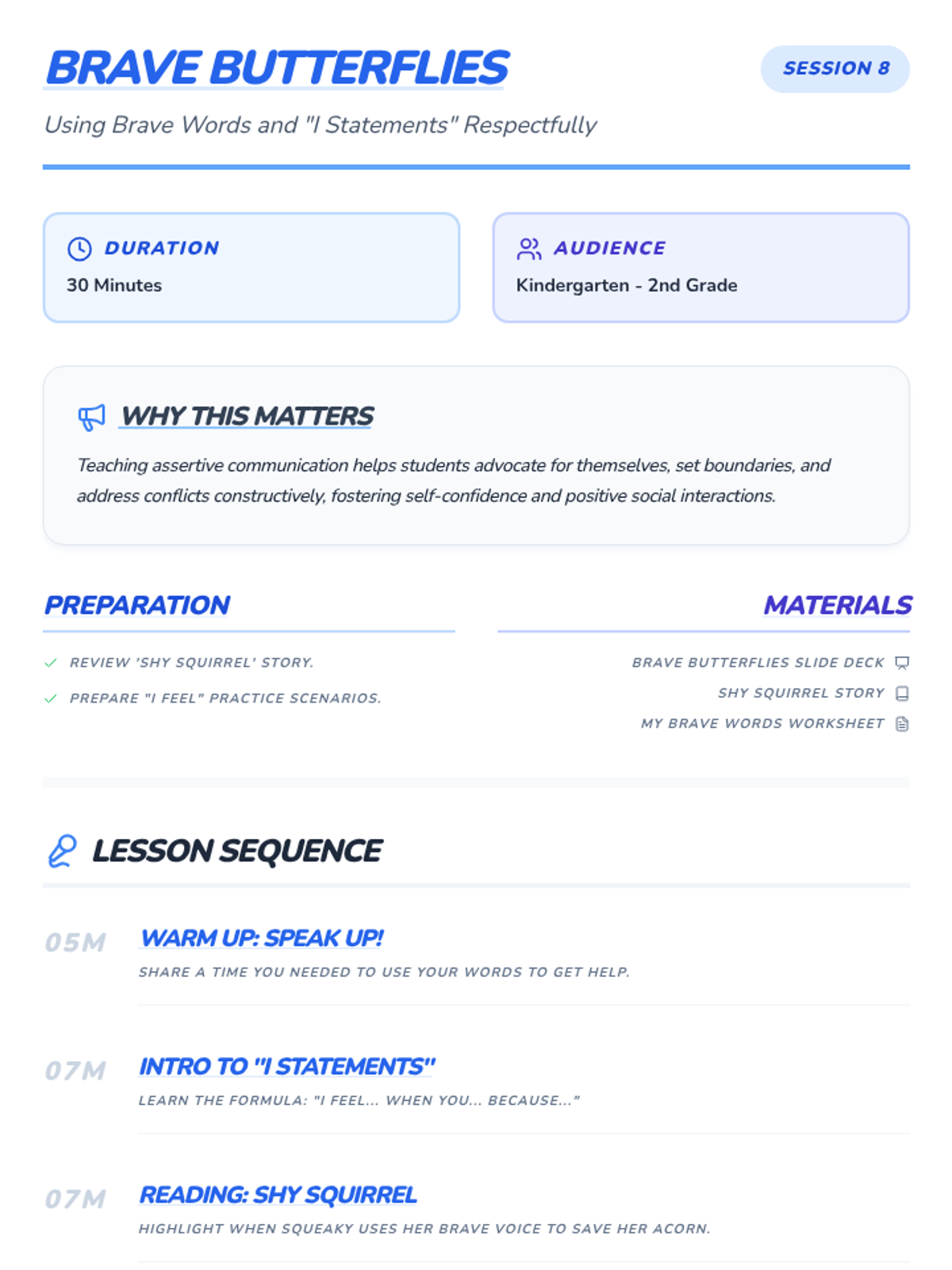
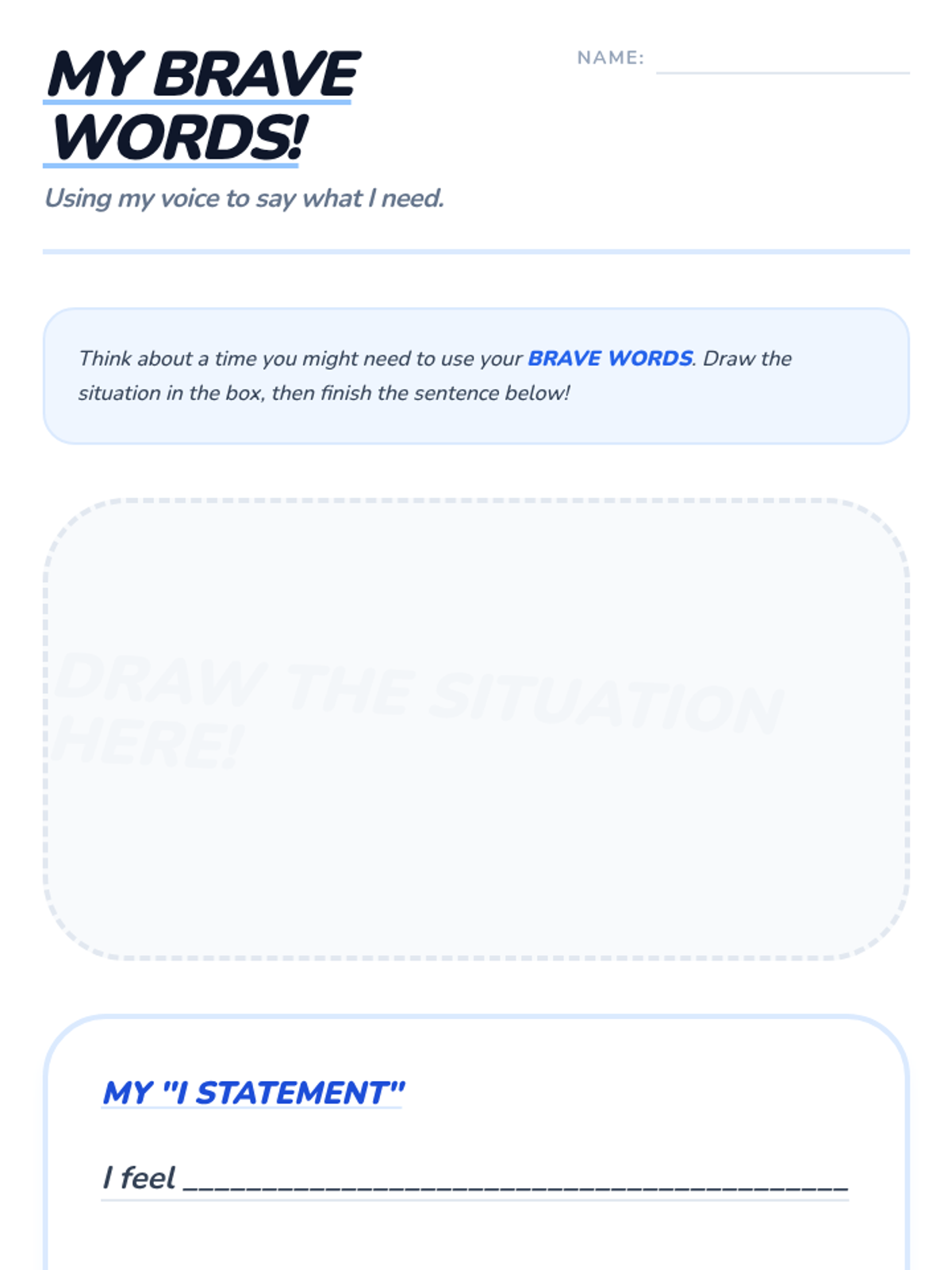
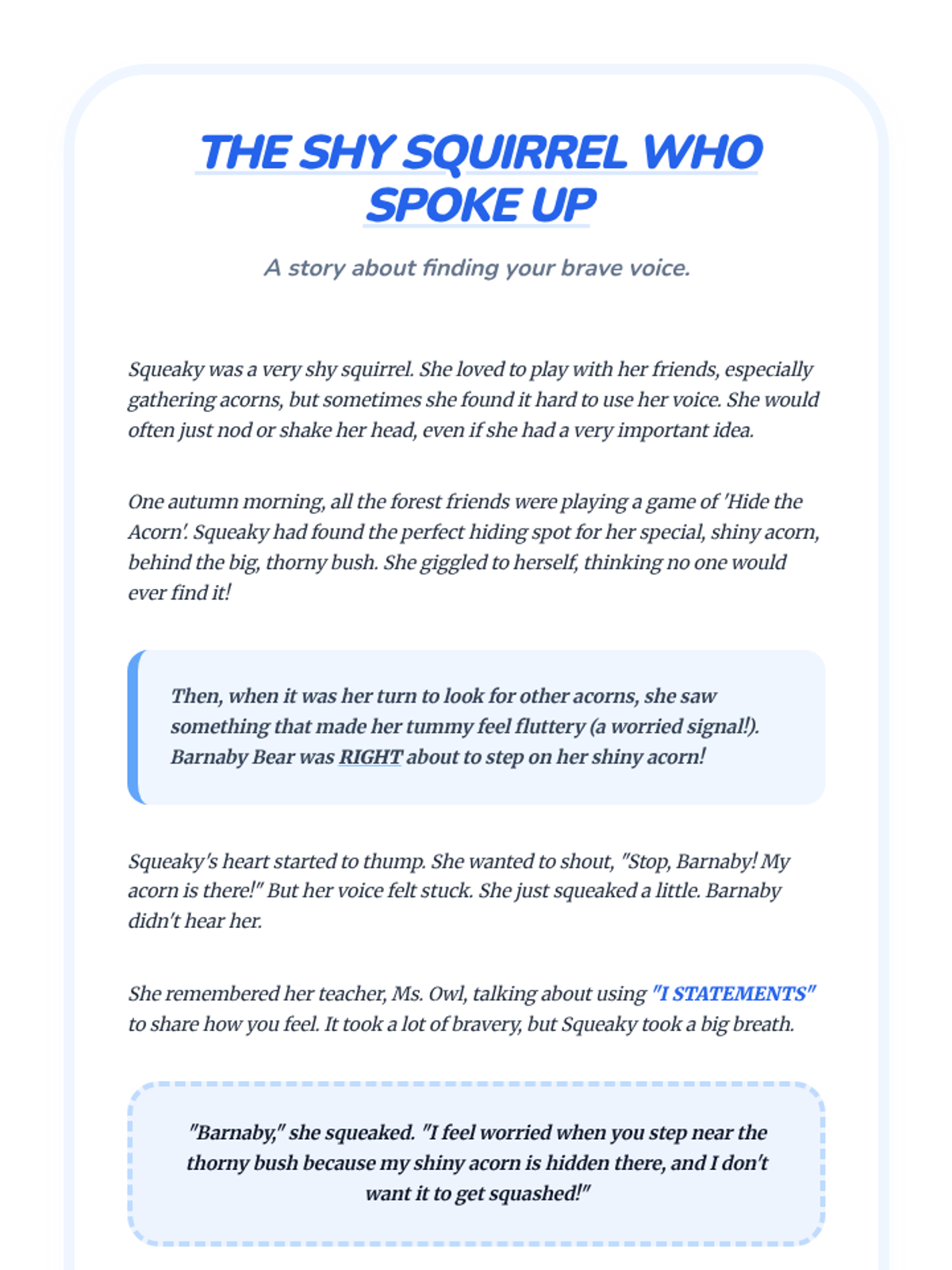
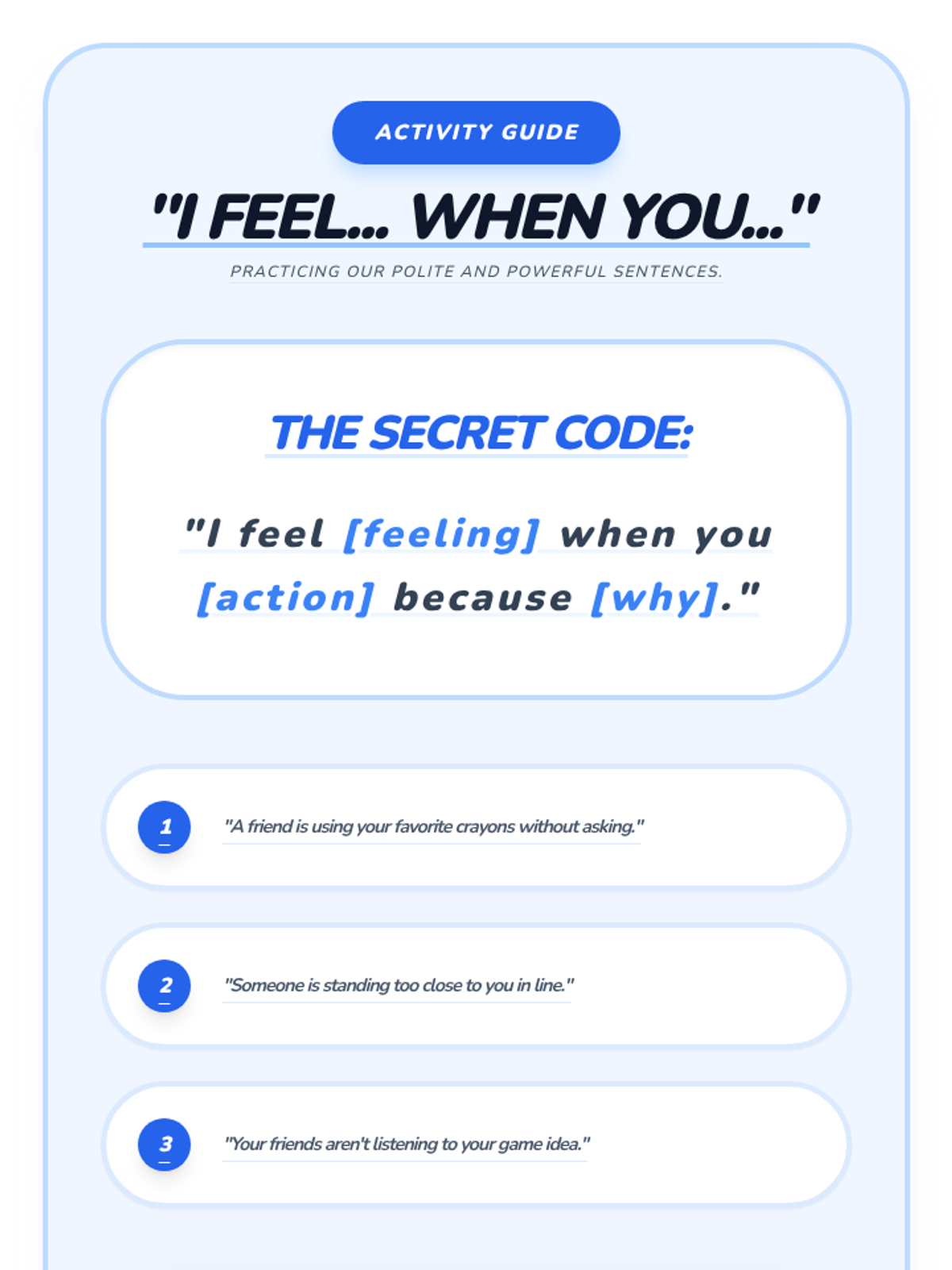
Teaches assertive communication using 'I statements' to advocate for personal needs respectfully.
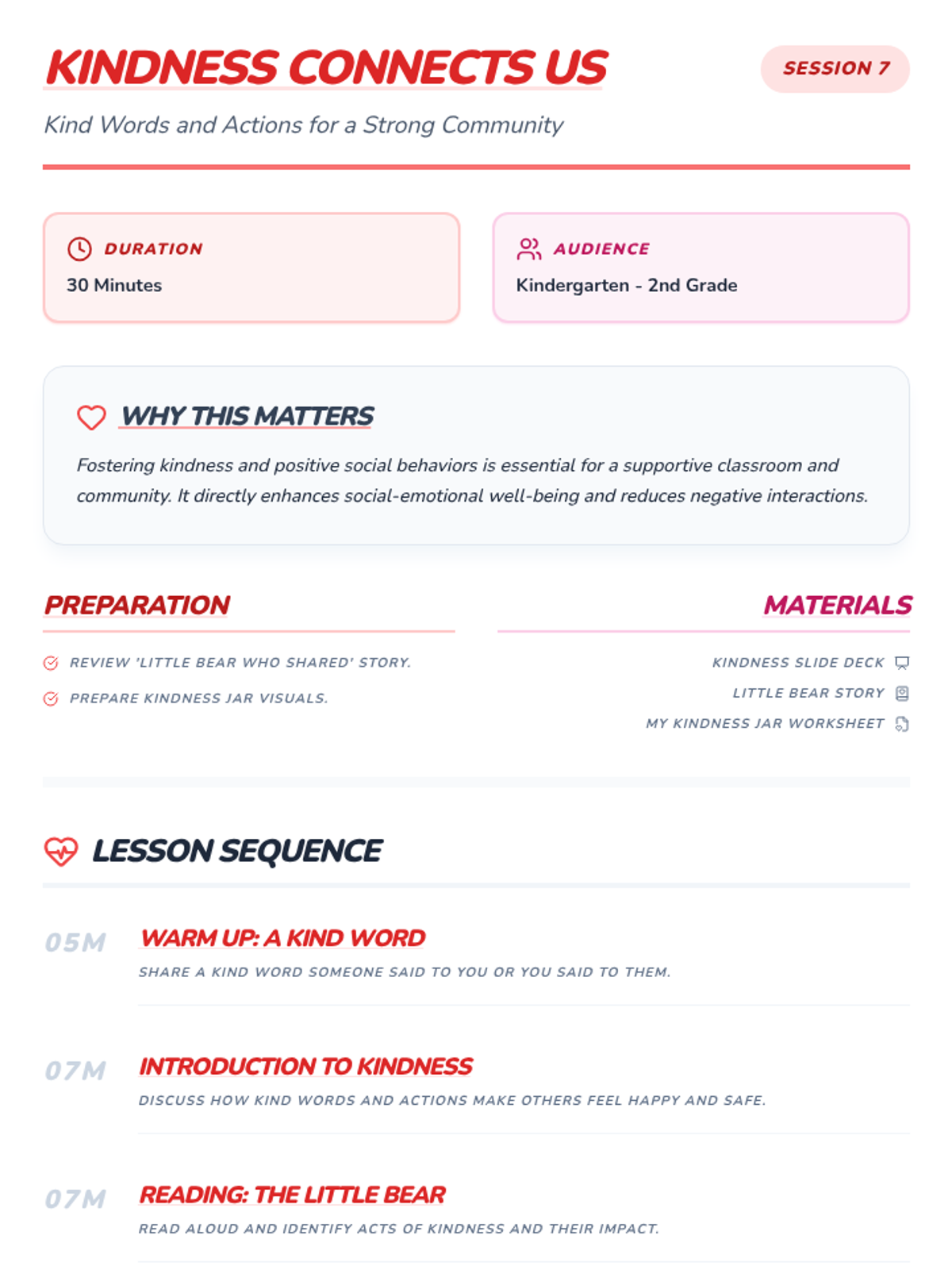
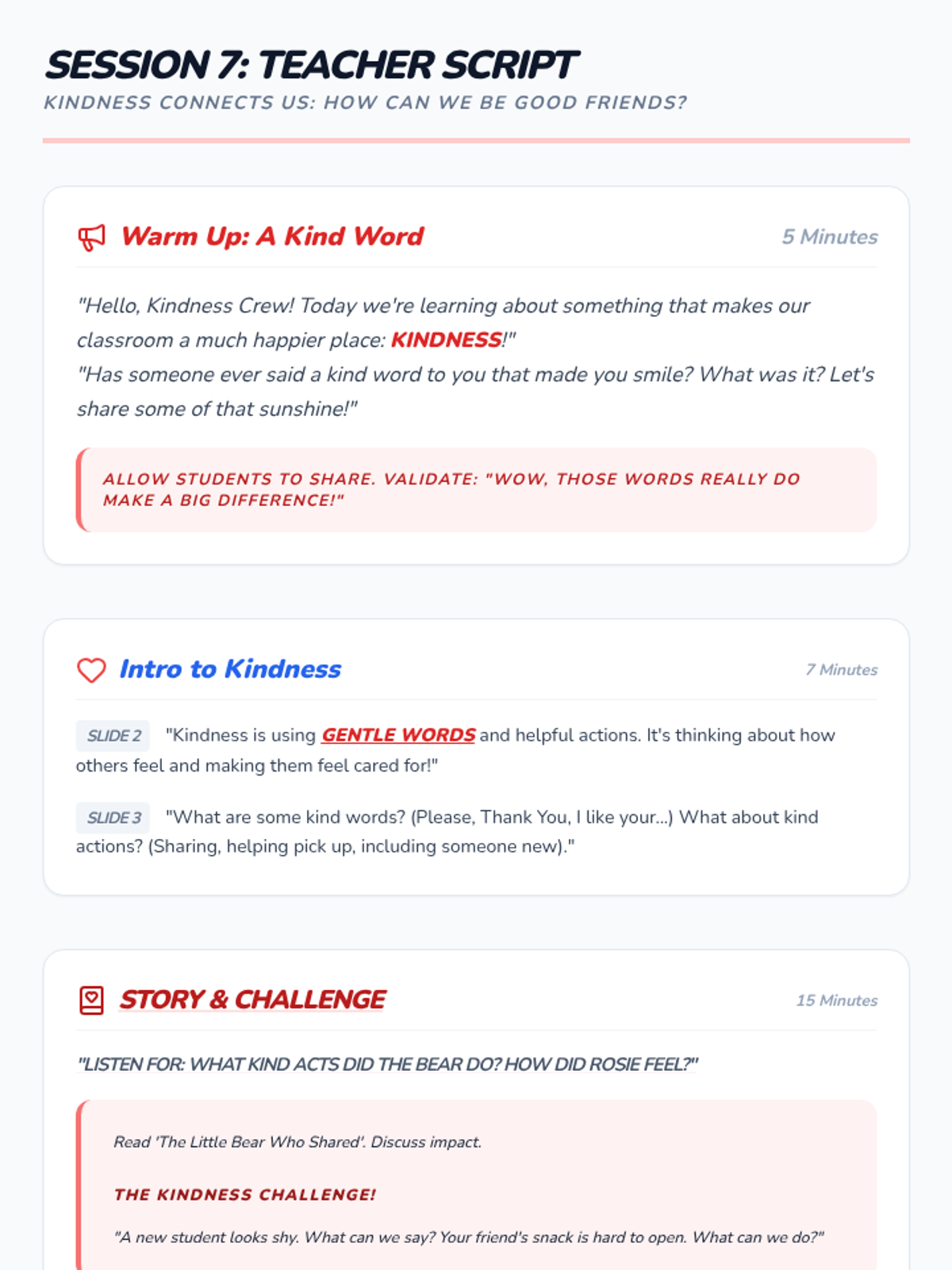
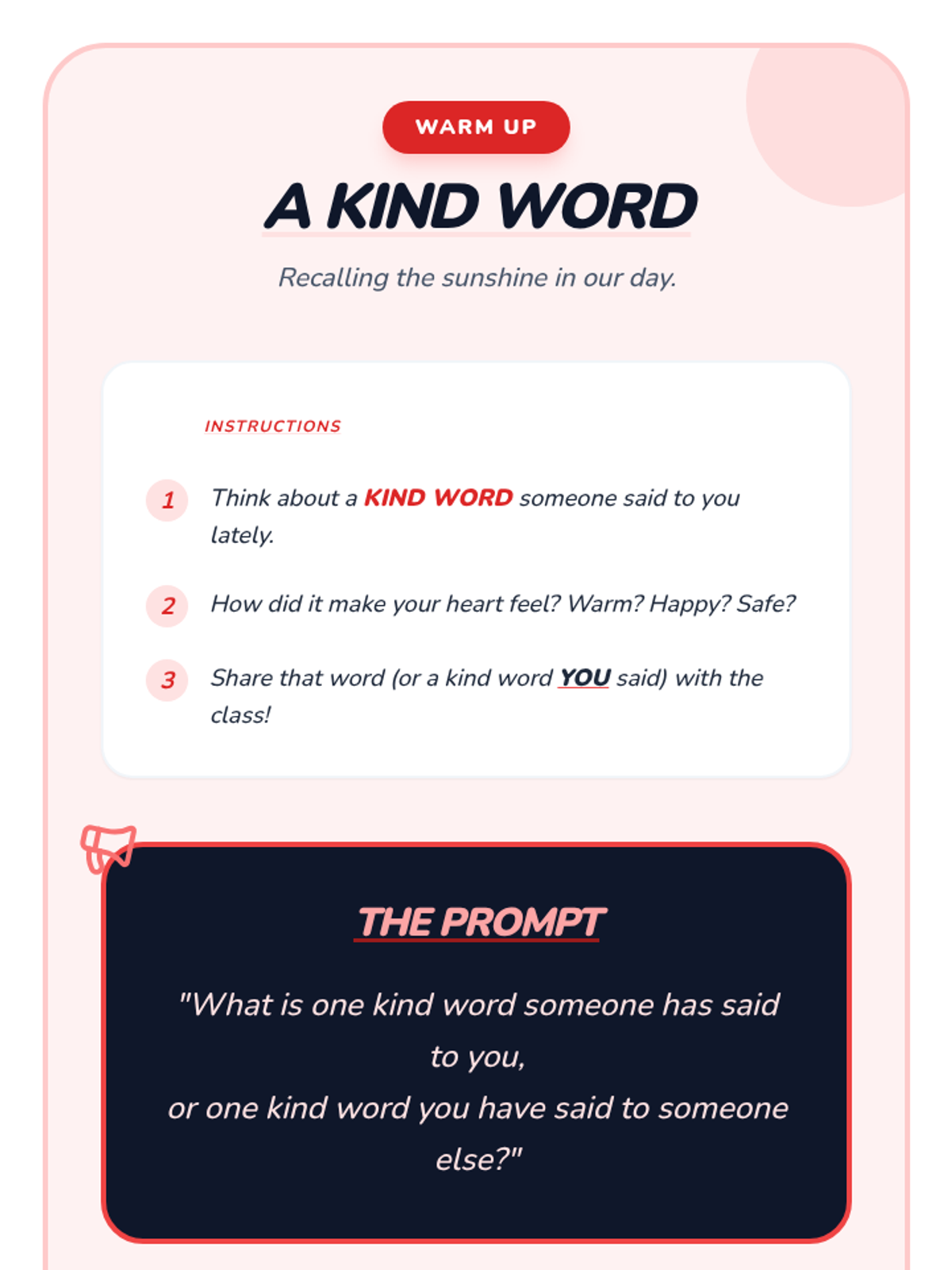
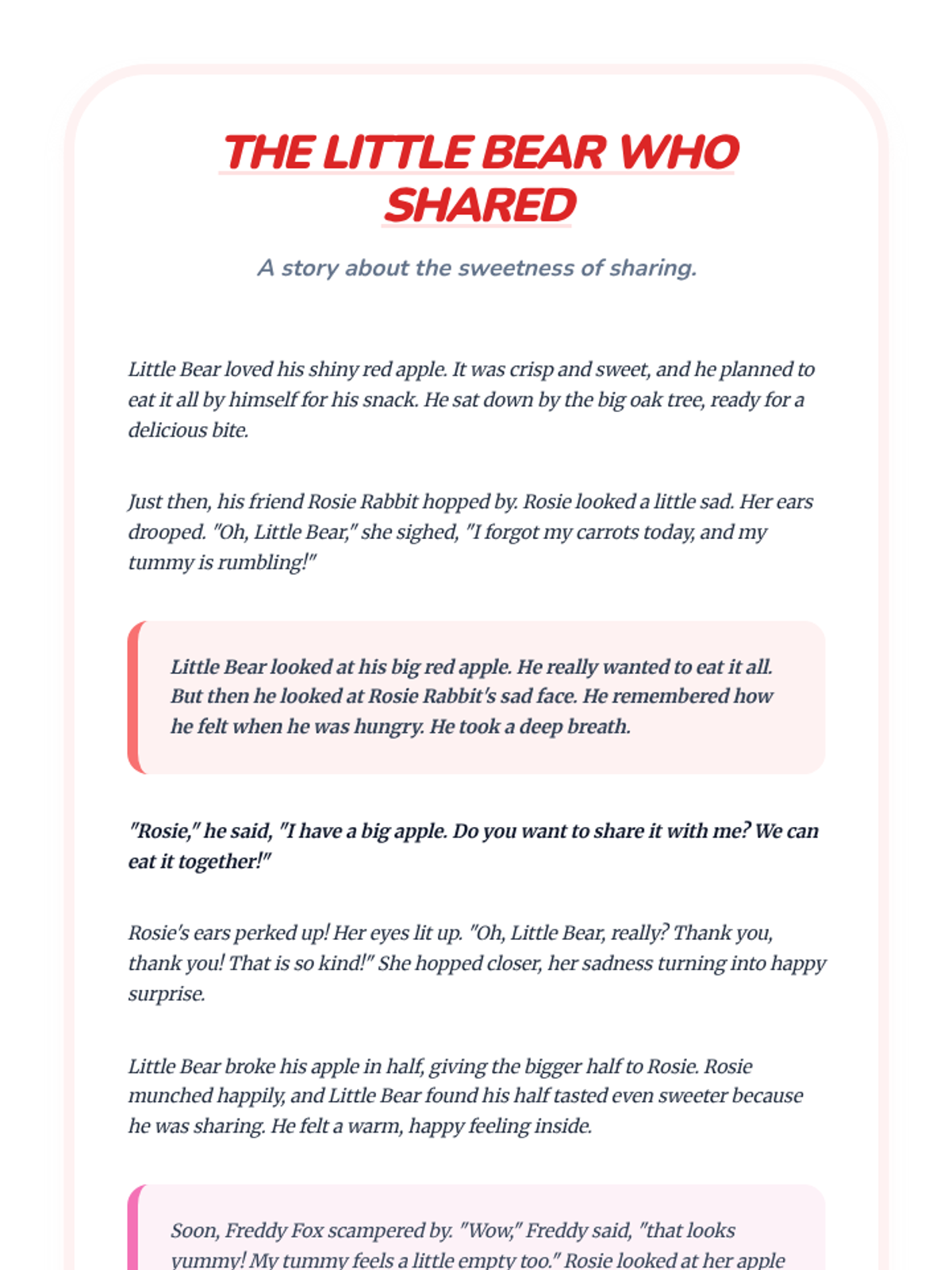
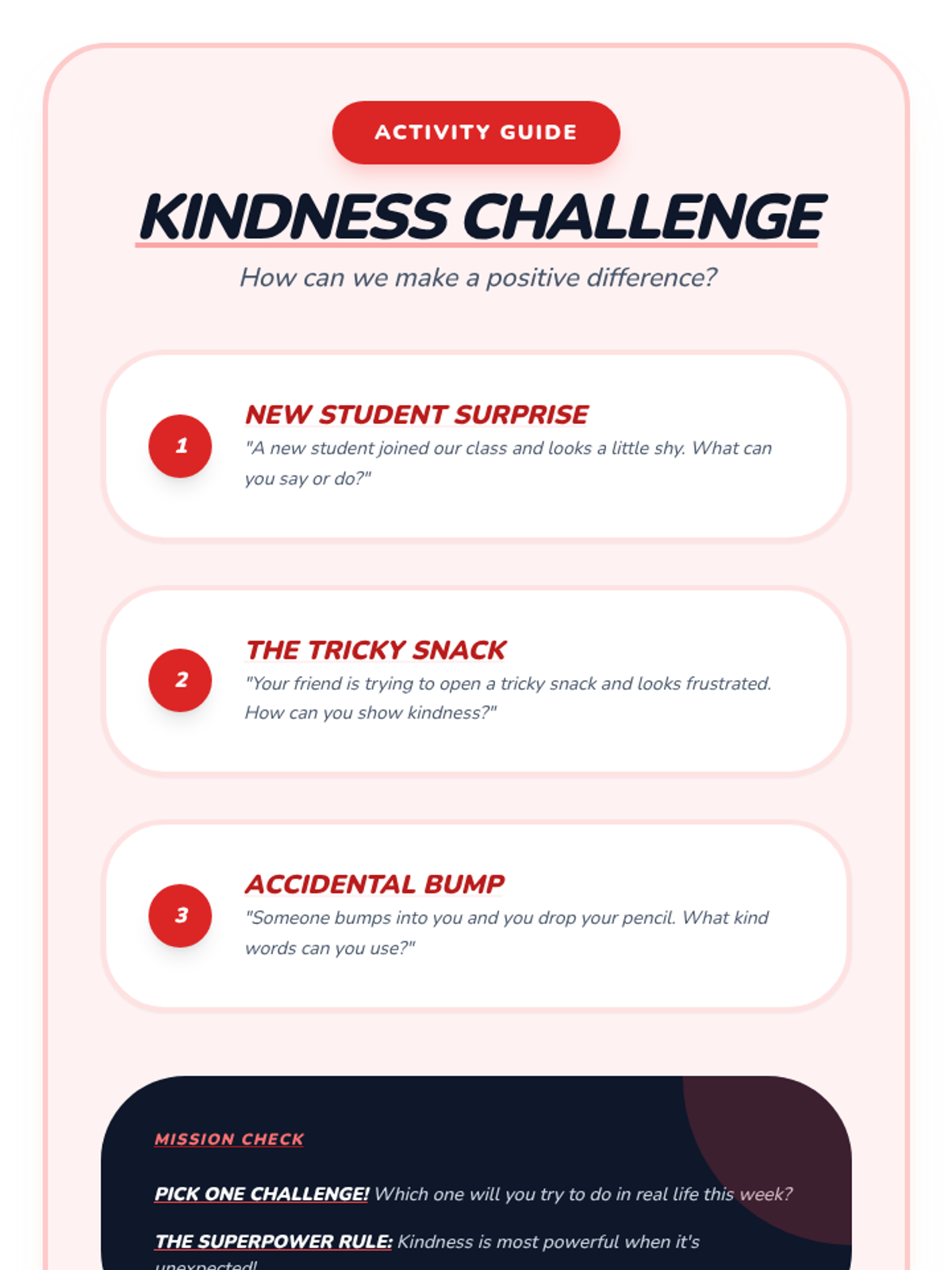
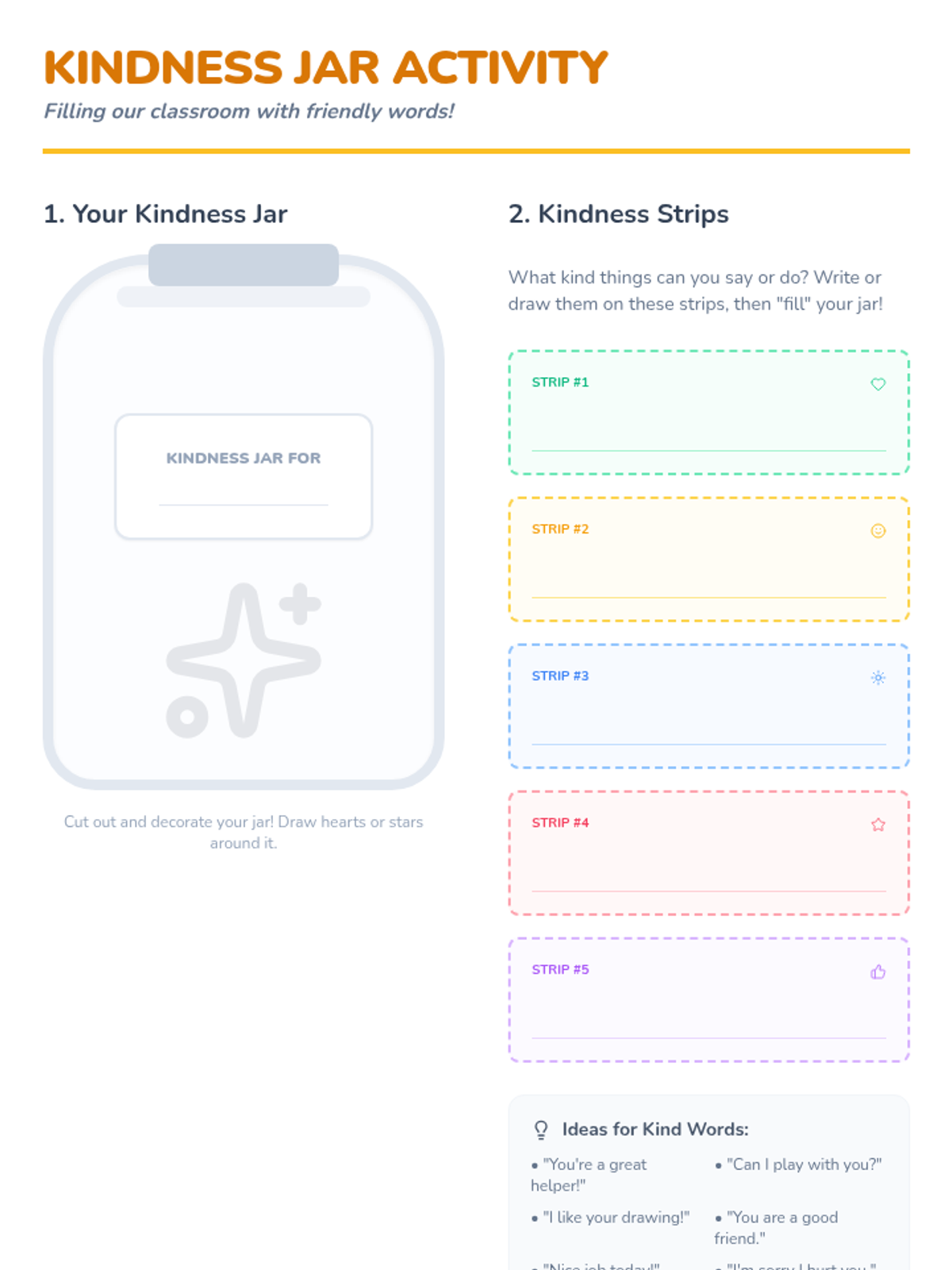
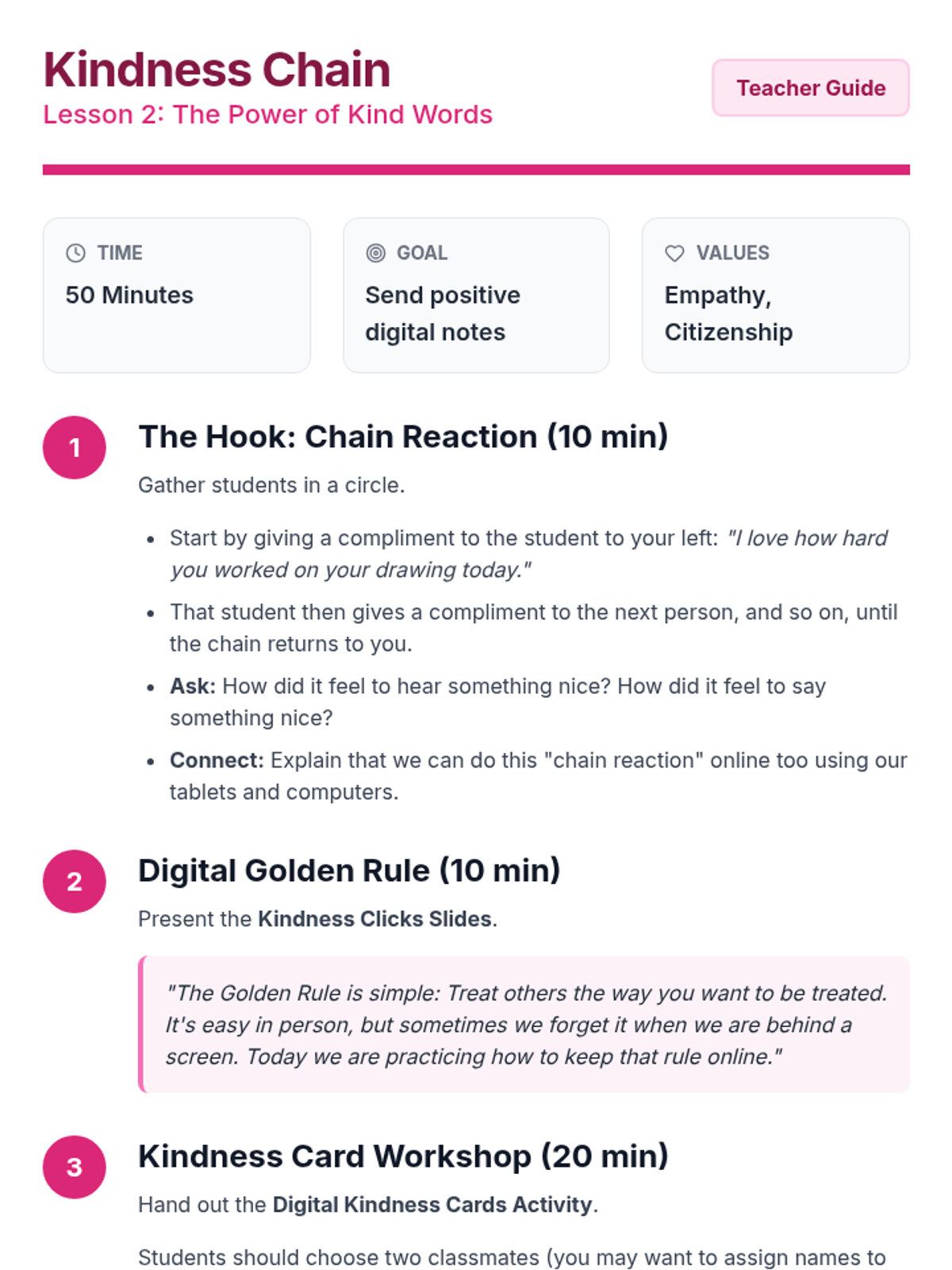
Focuses on the importance of kind words and actions in building a supportive community.
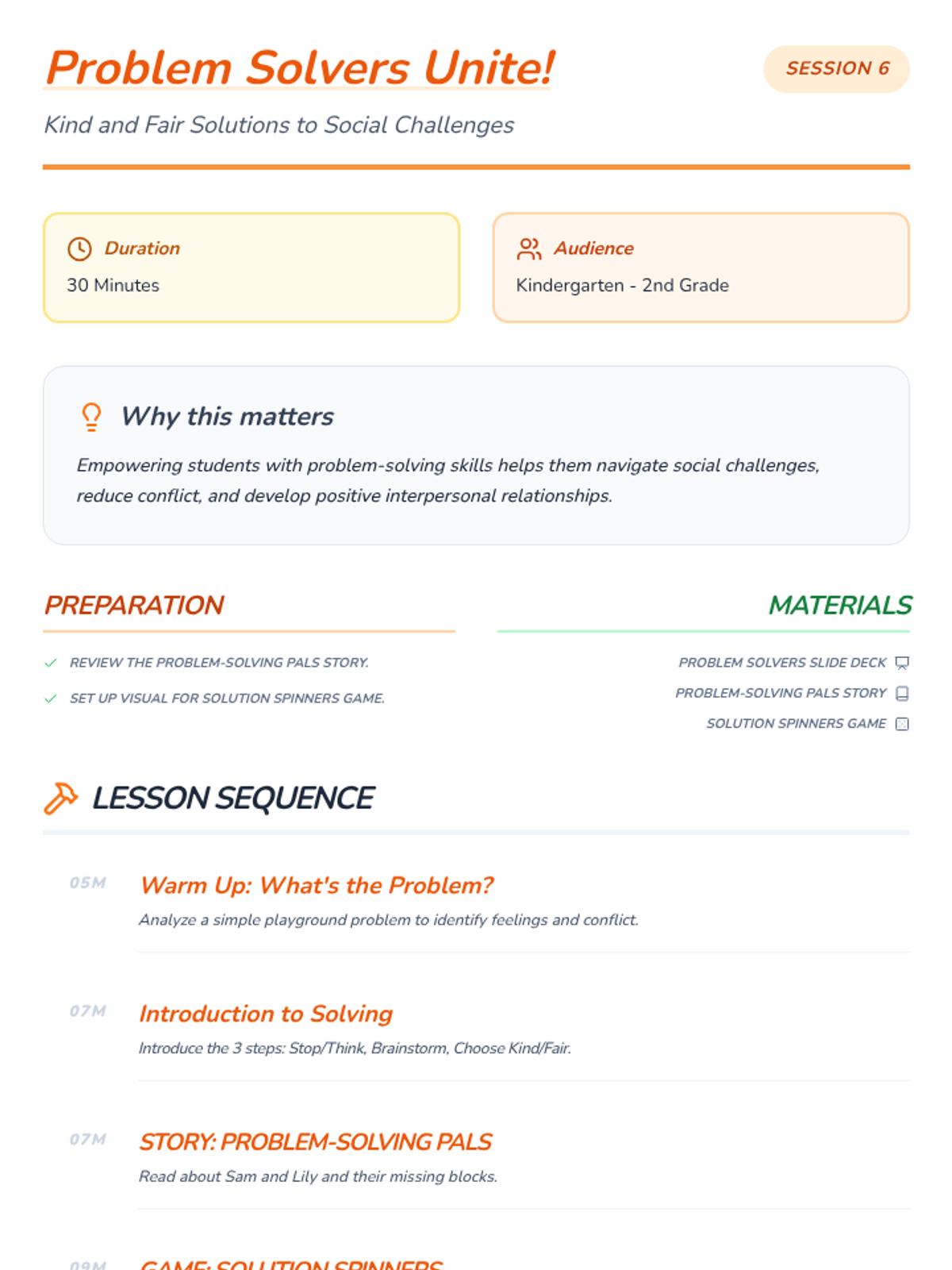
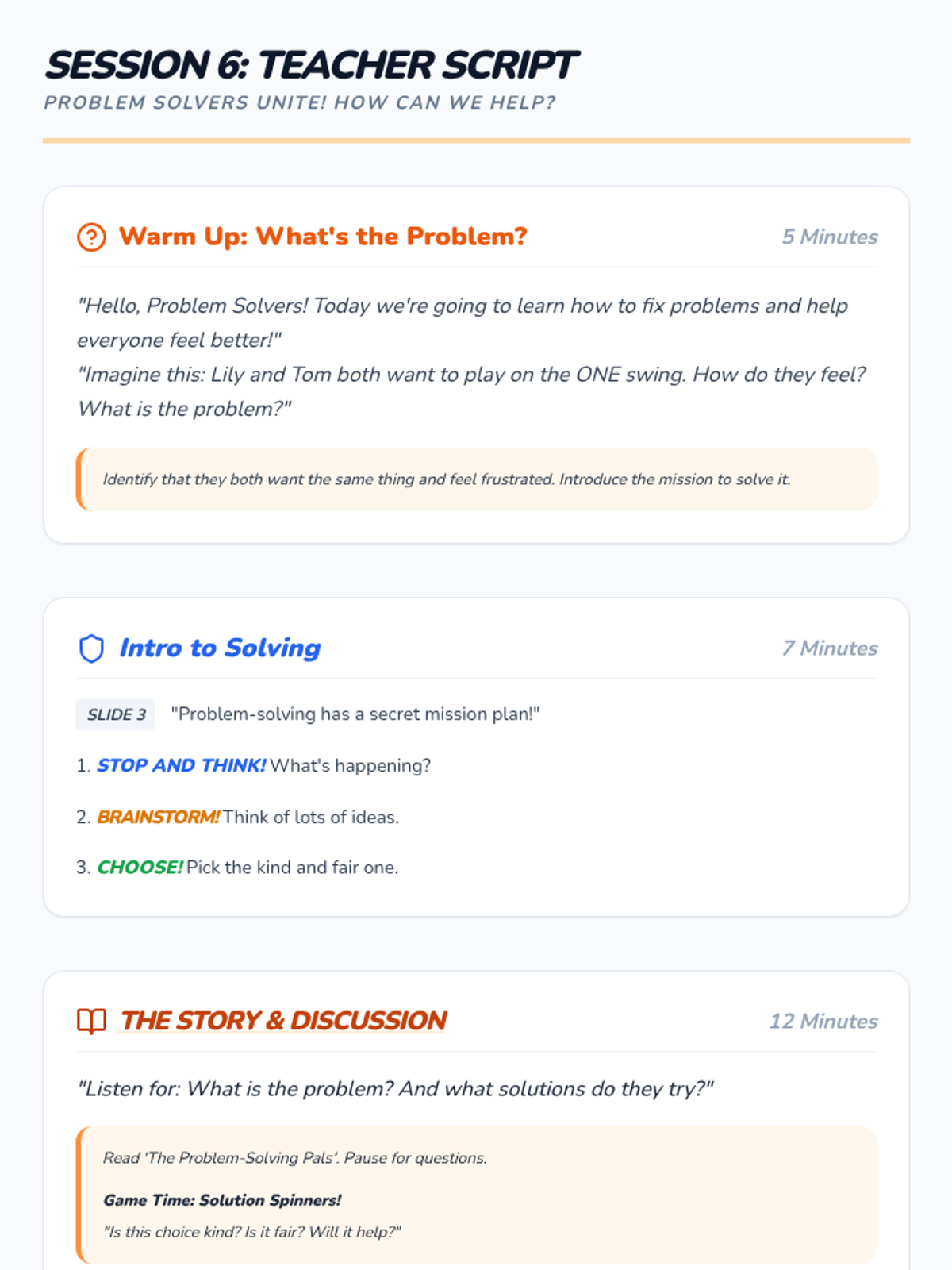
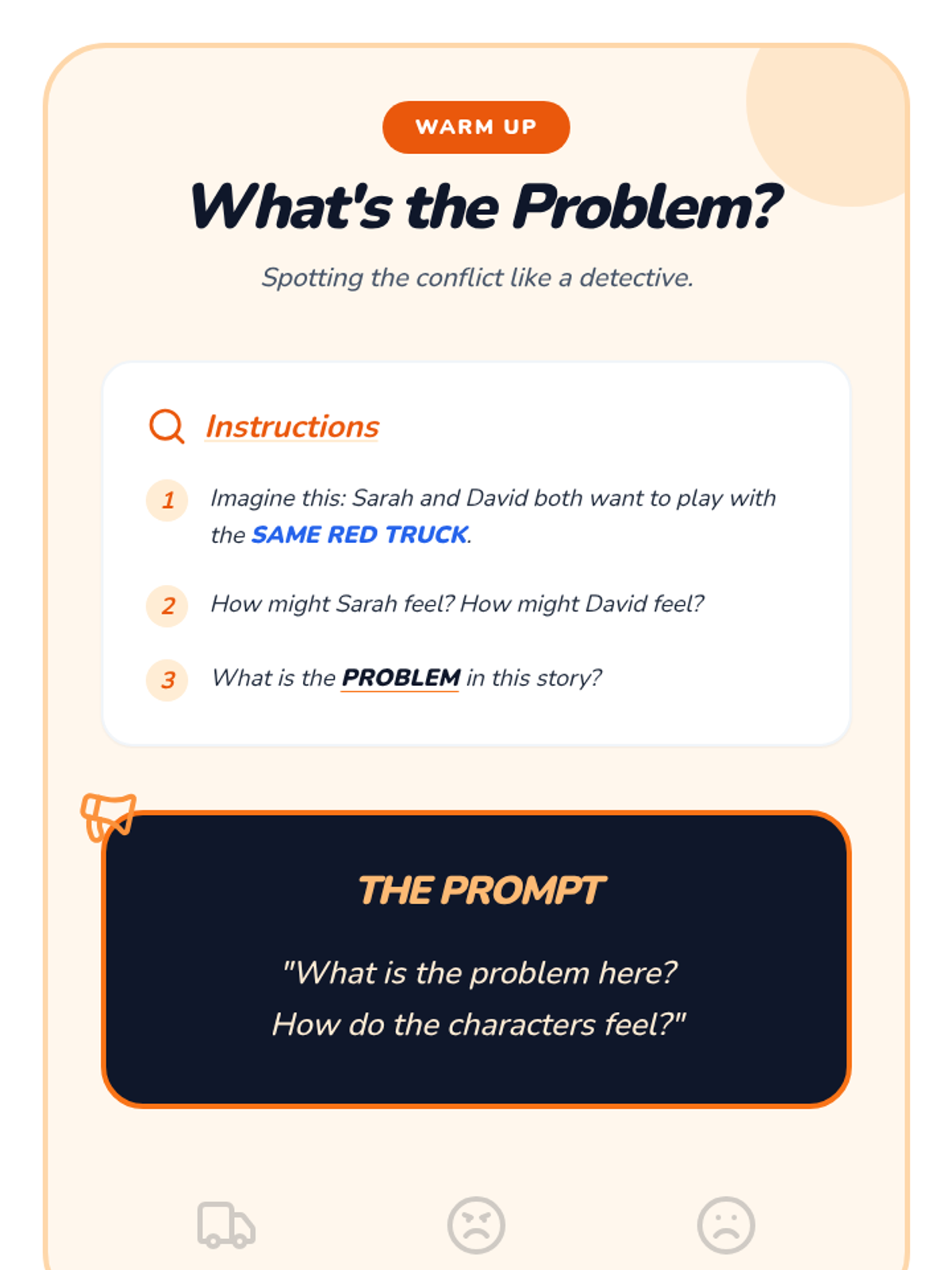
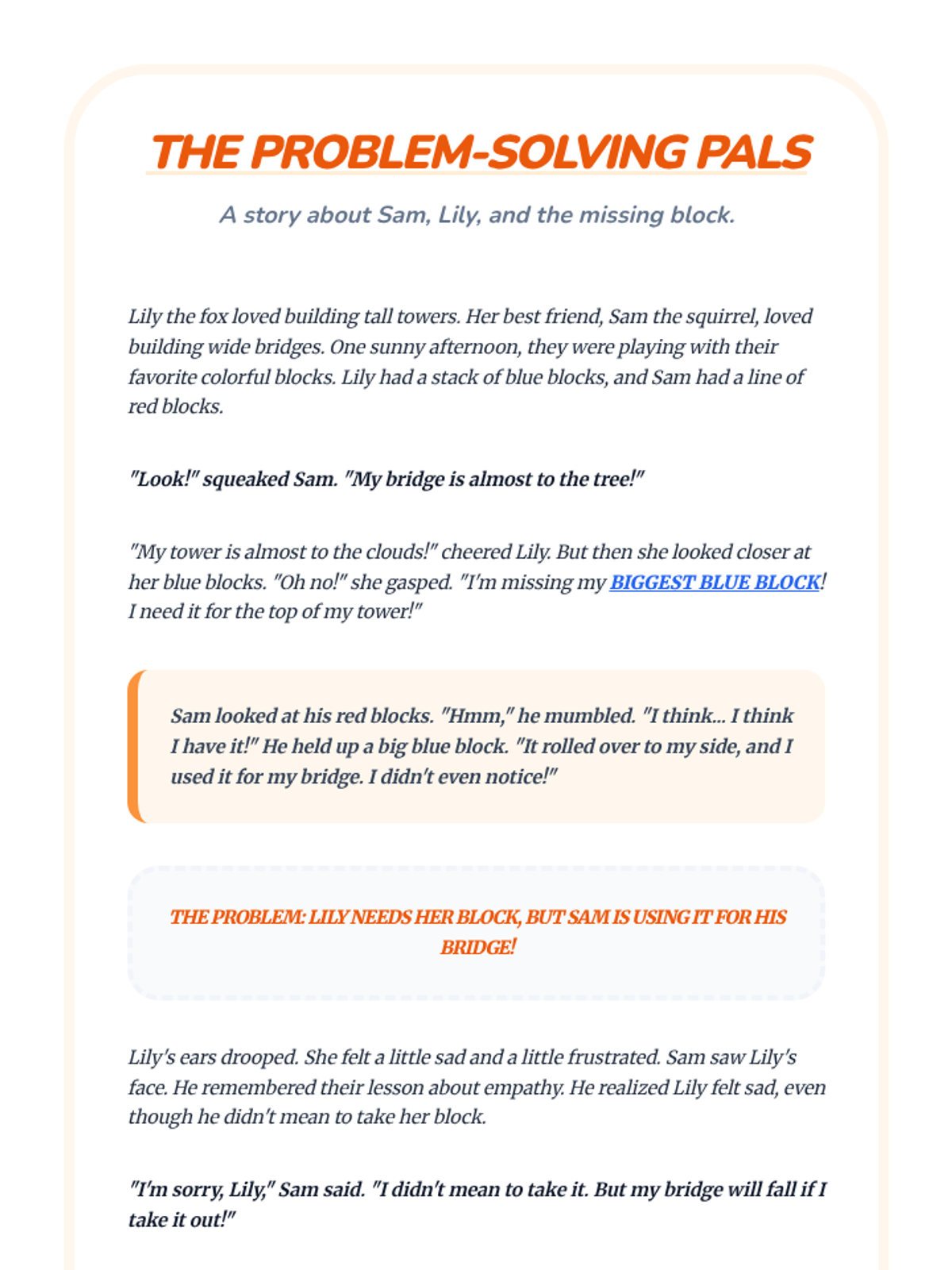
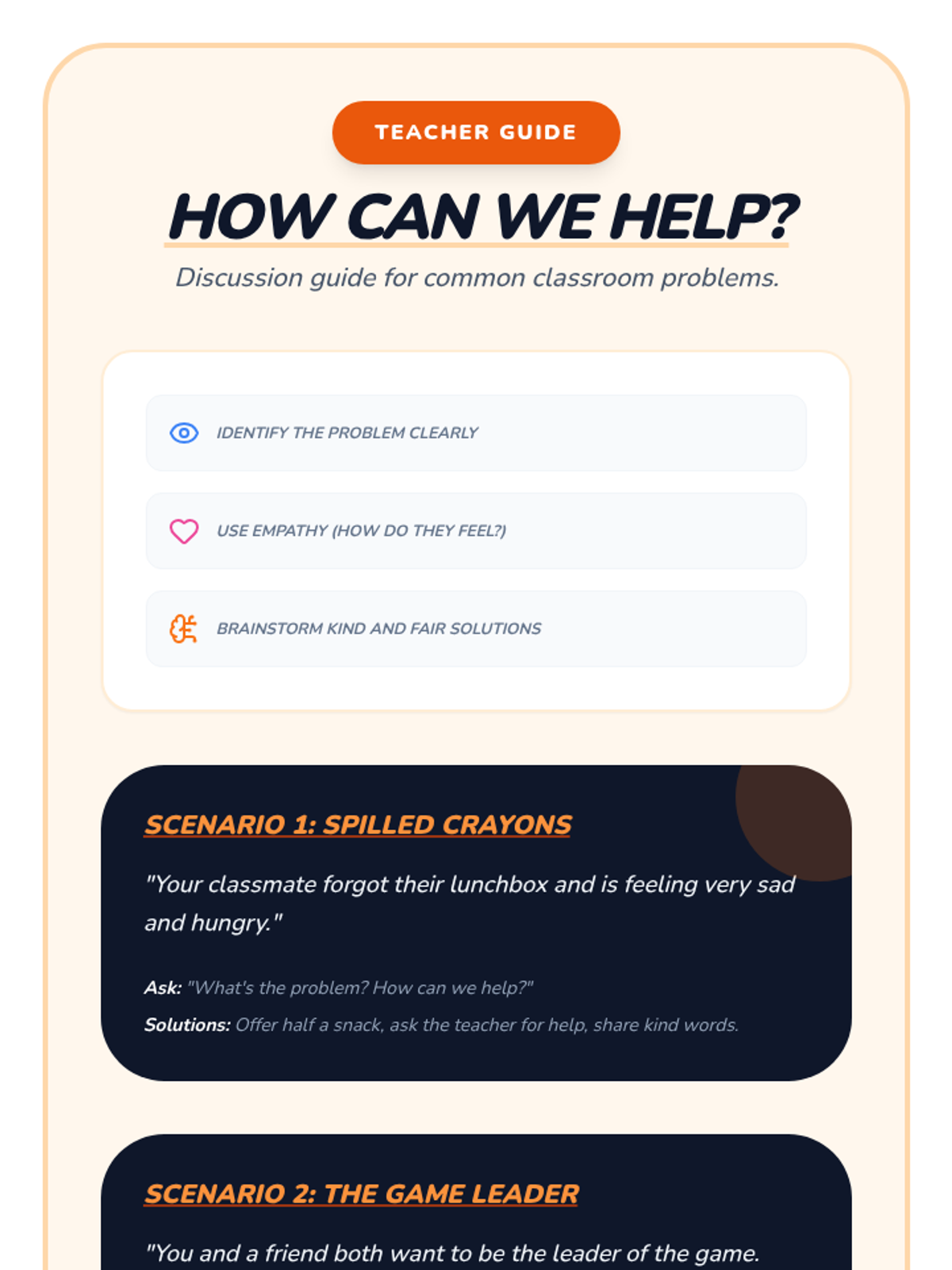
Introduces a step-by-step approach to solving social conflicts with kindness and fairness.
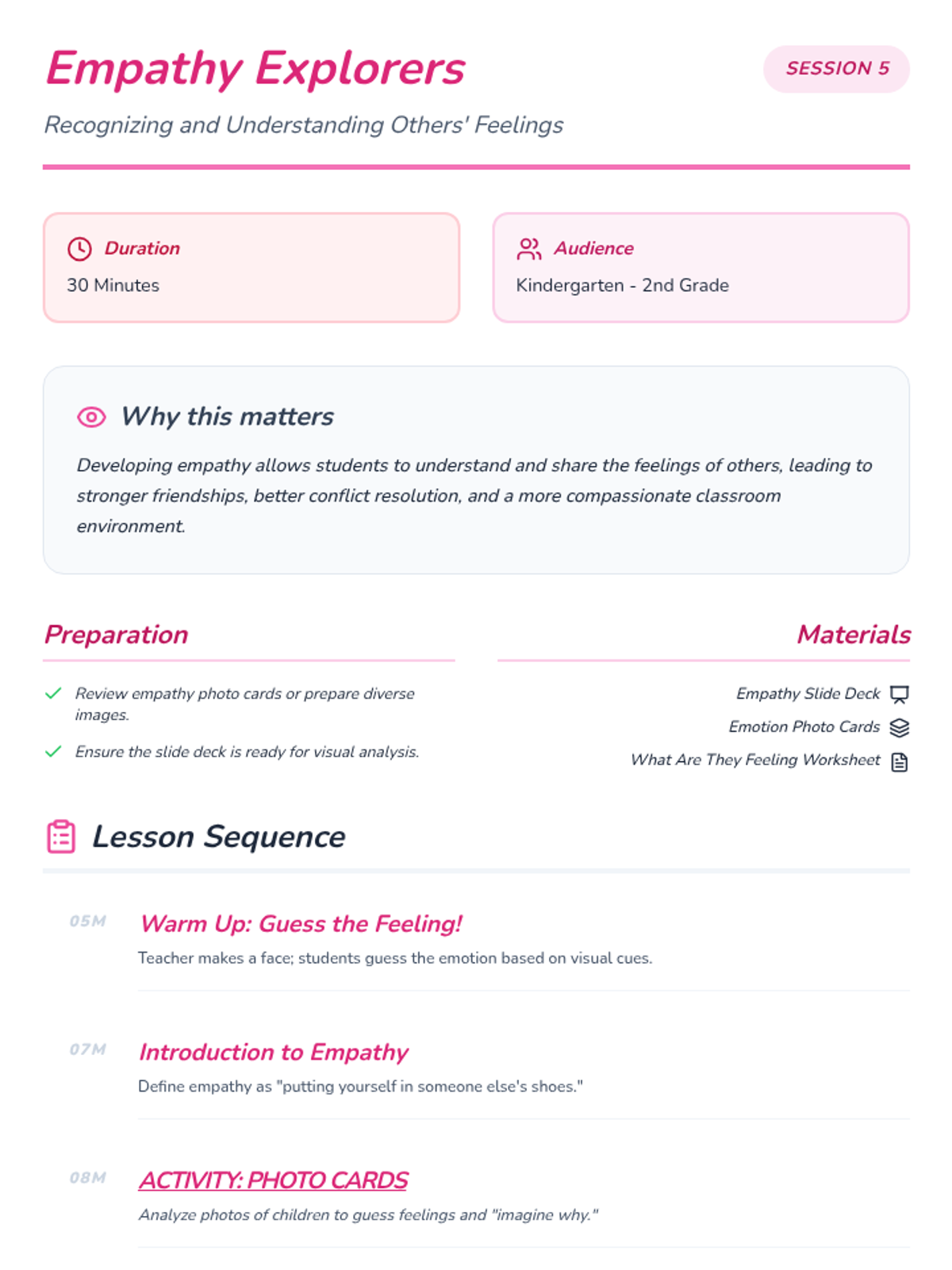
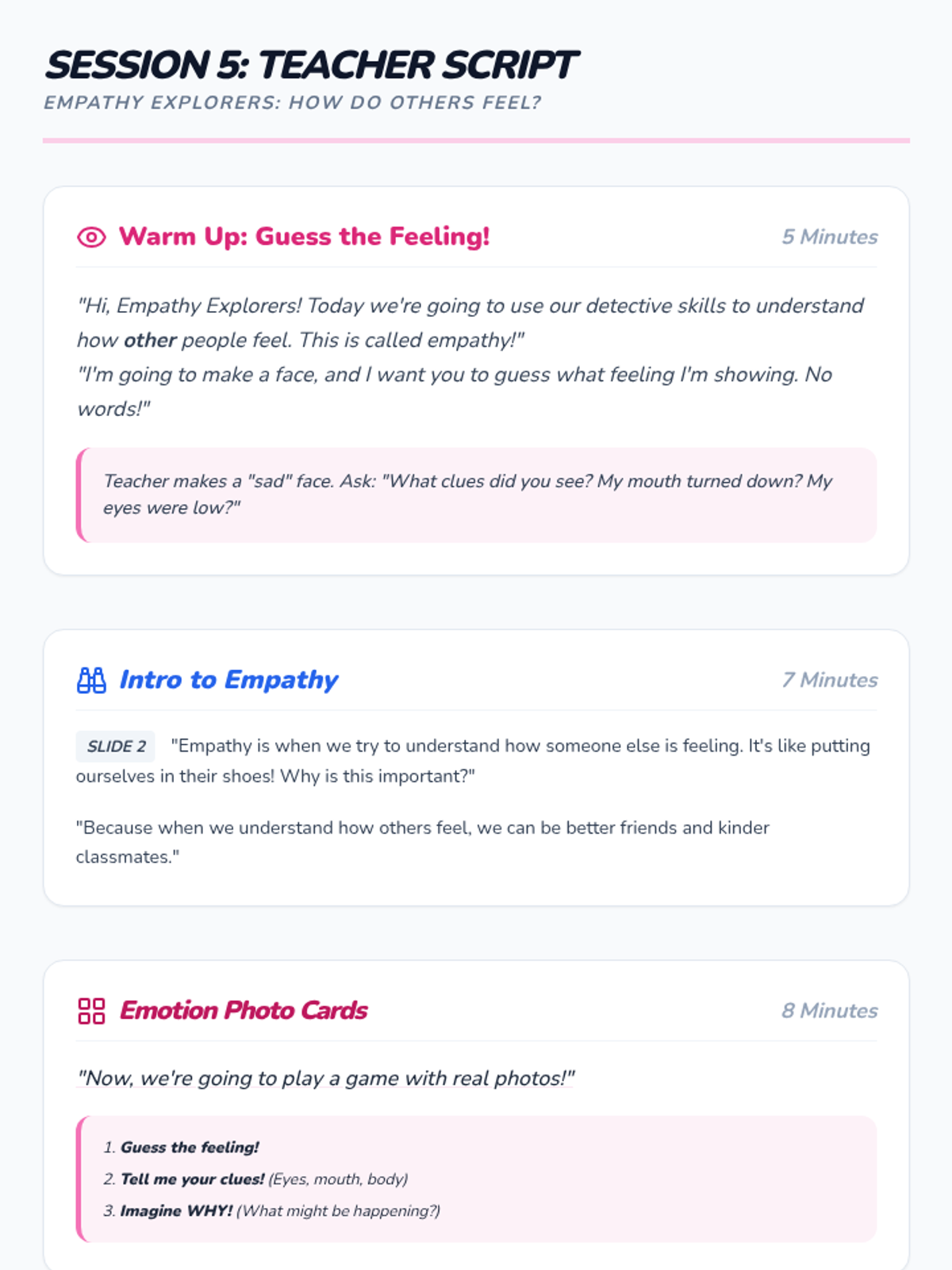
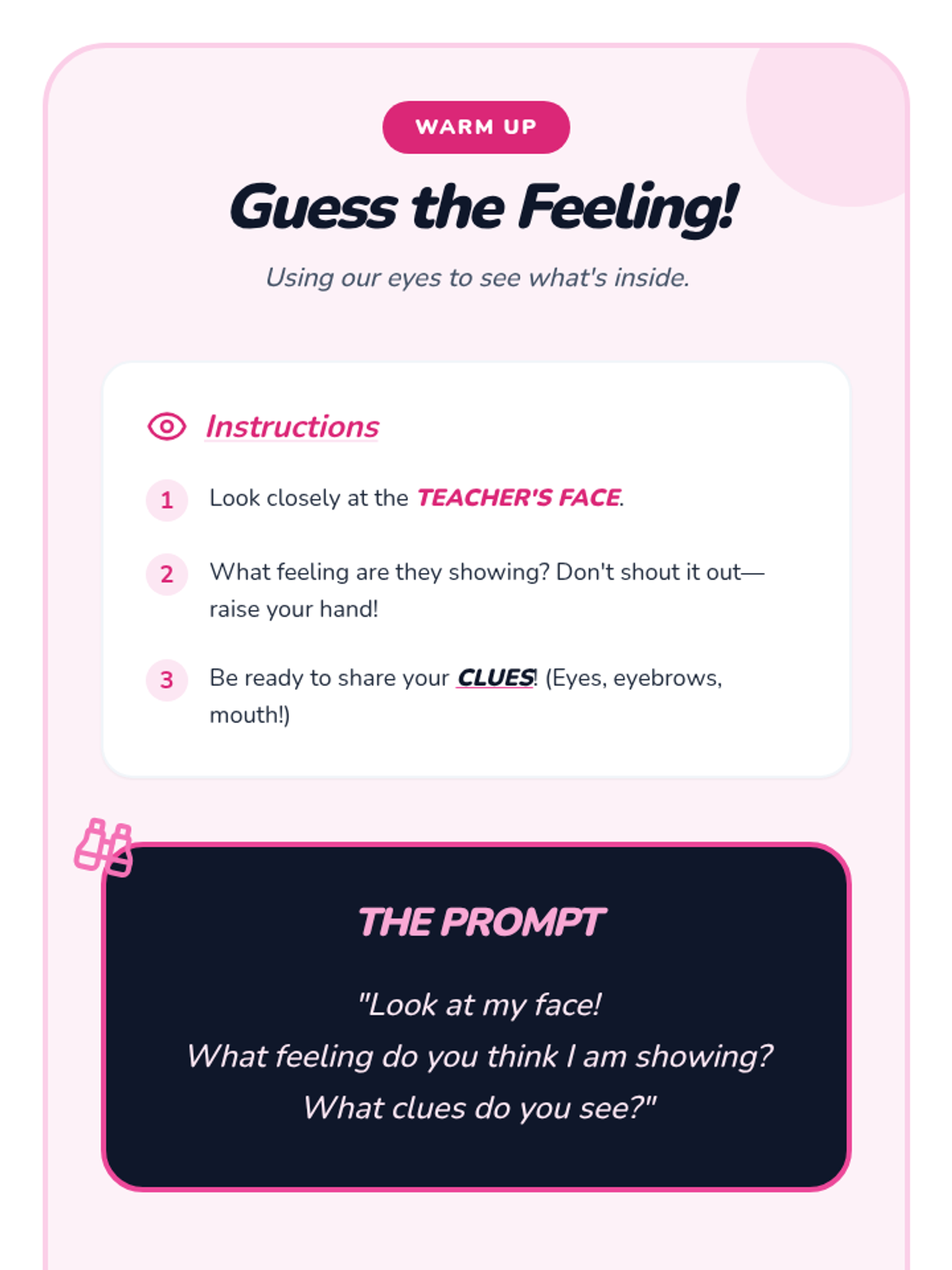
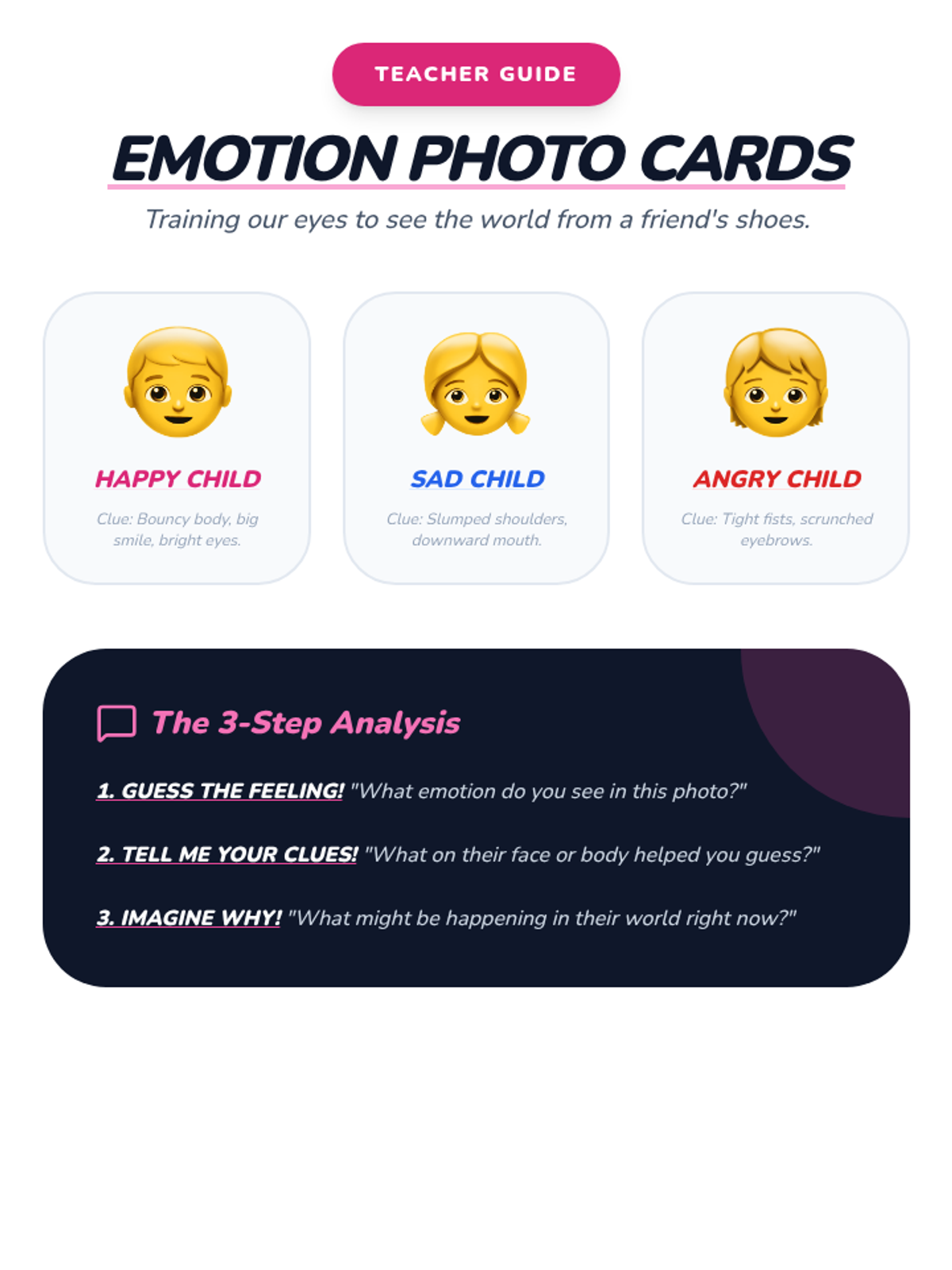
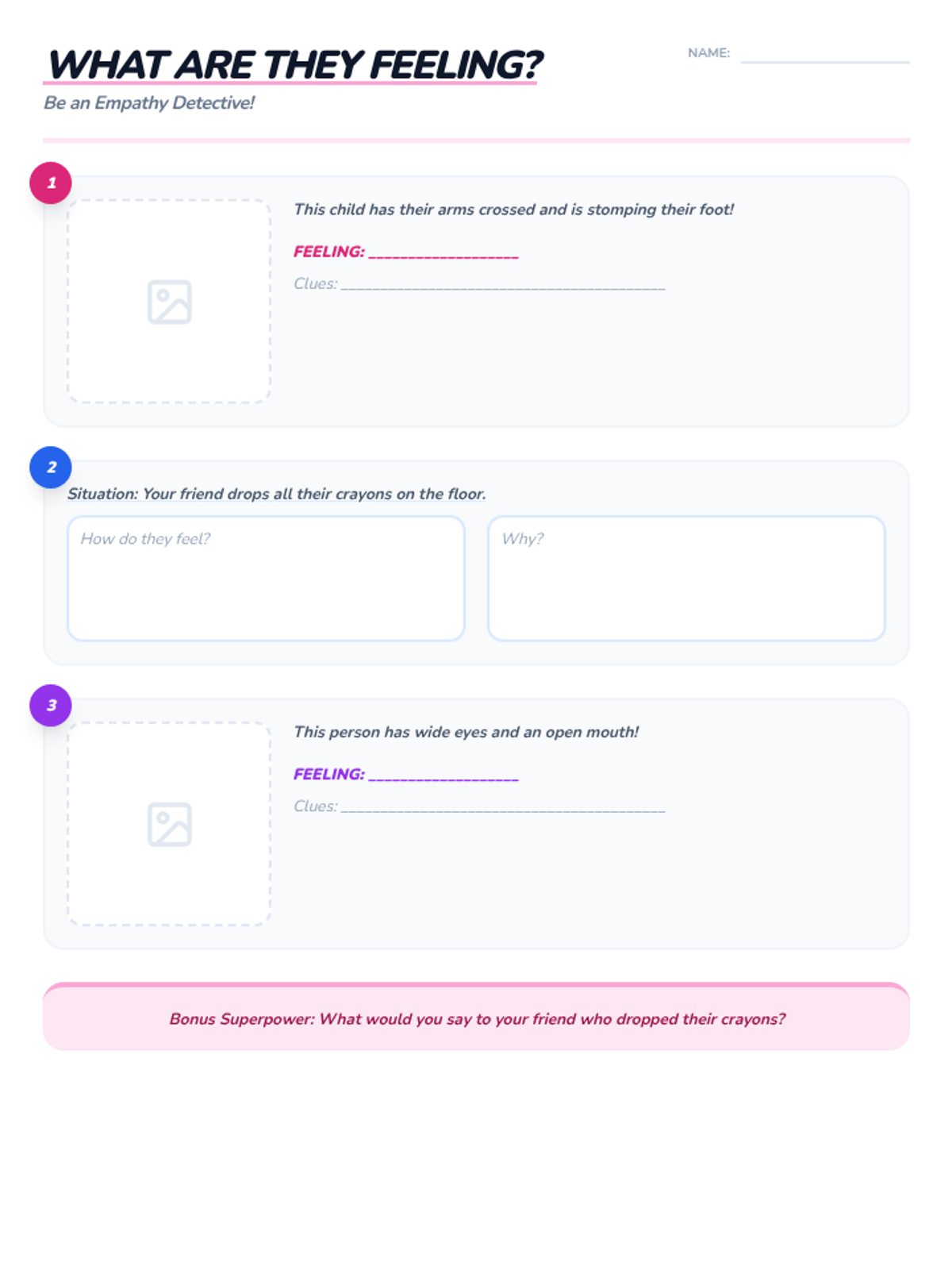
Develops empathy by practicing how to recognize and understand emotions in others.
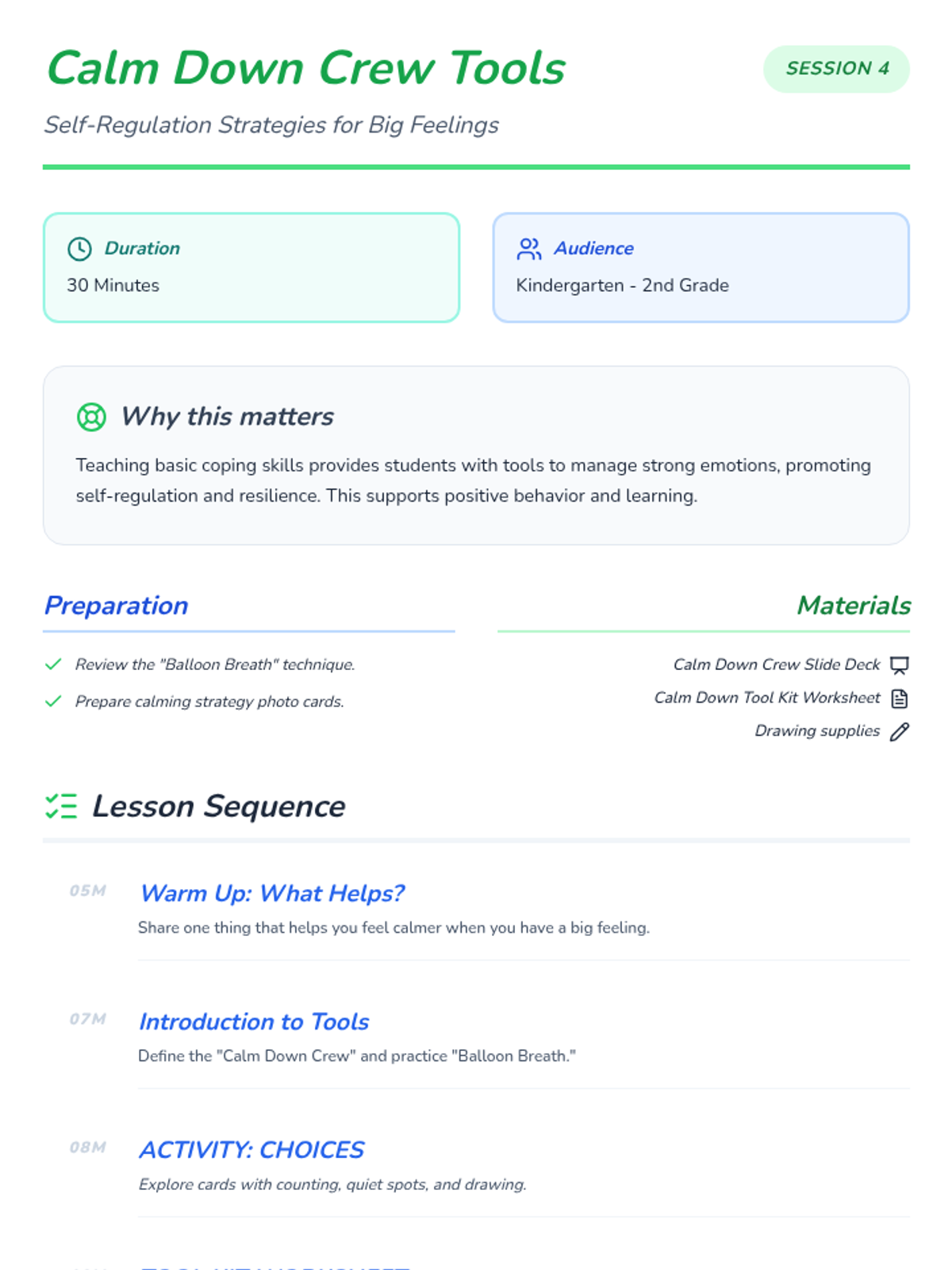
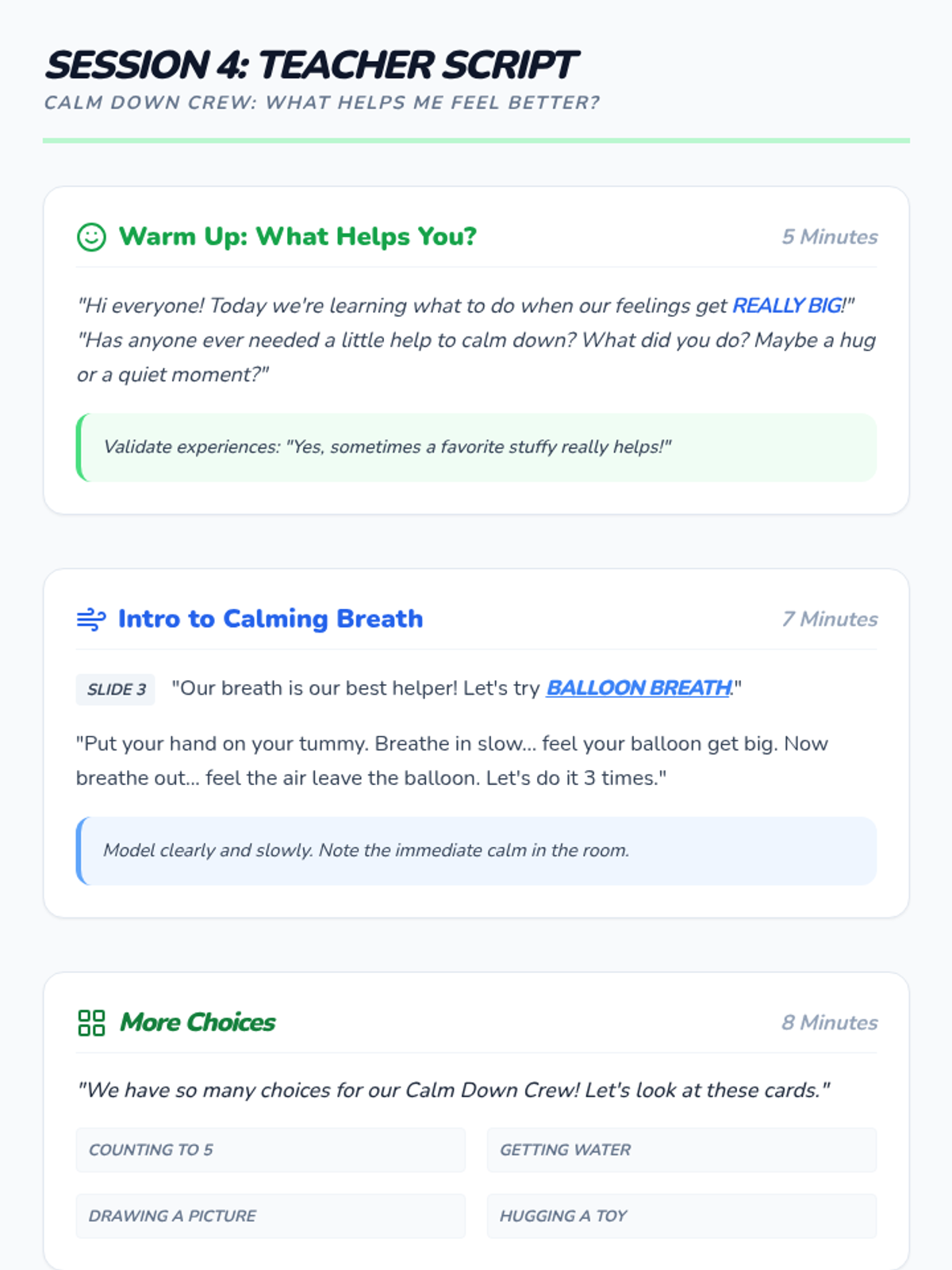
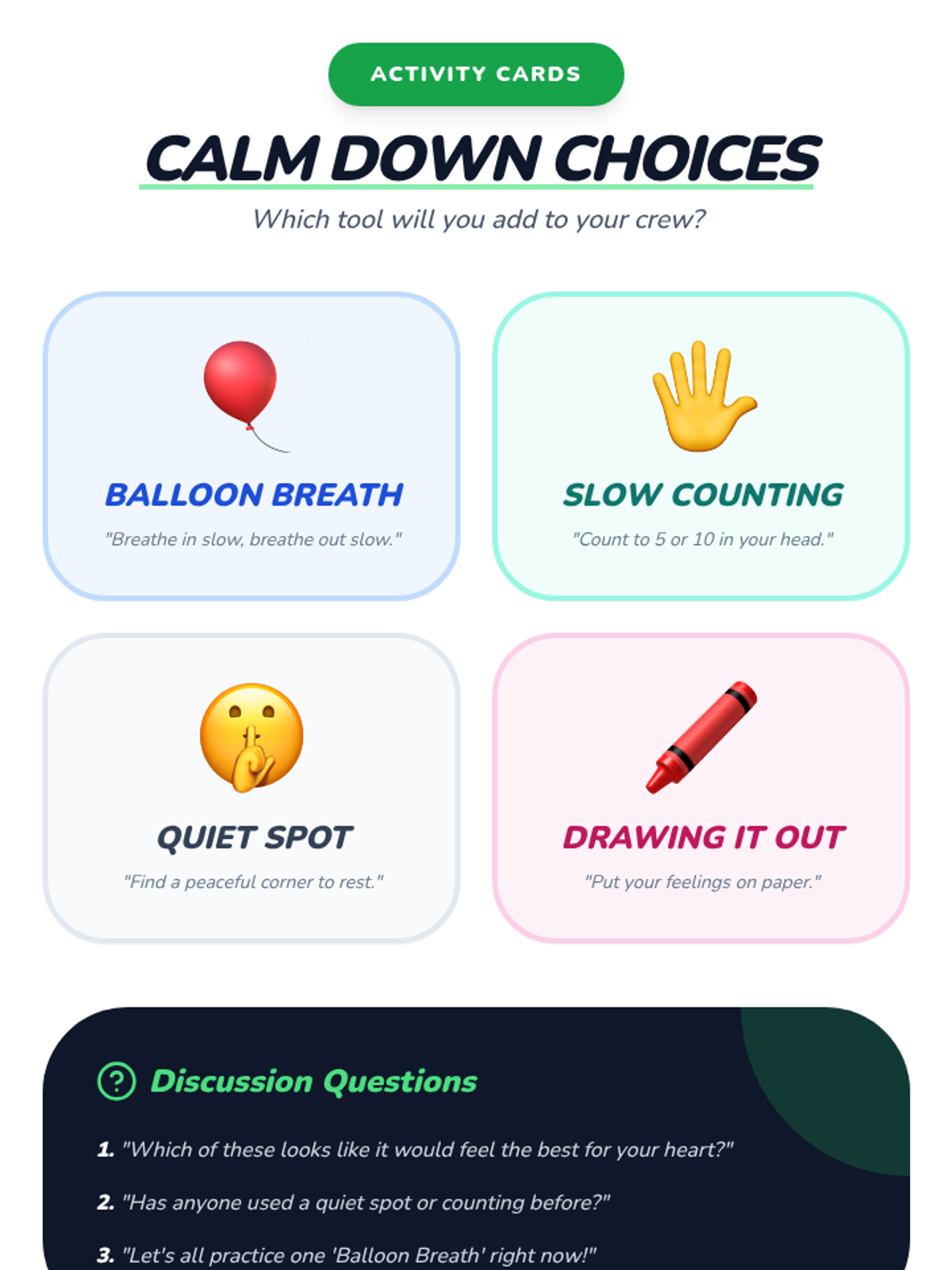
Teaches practical self-regulation strategies like deep breathing and counting to manage intense emotions.
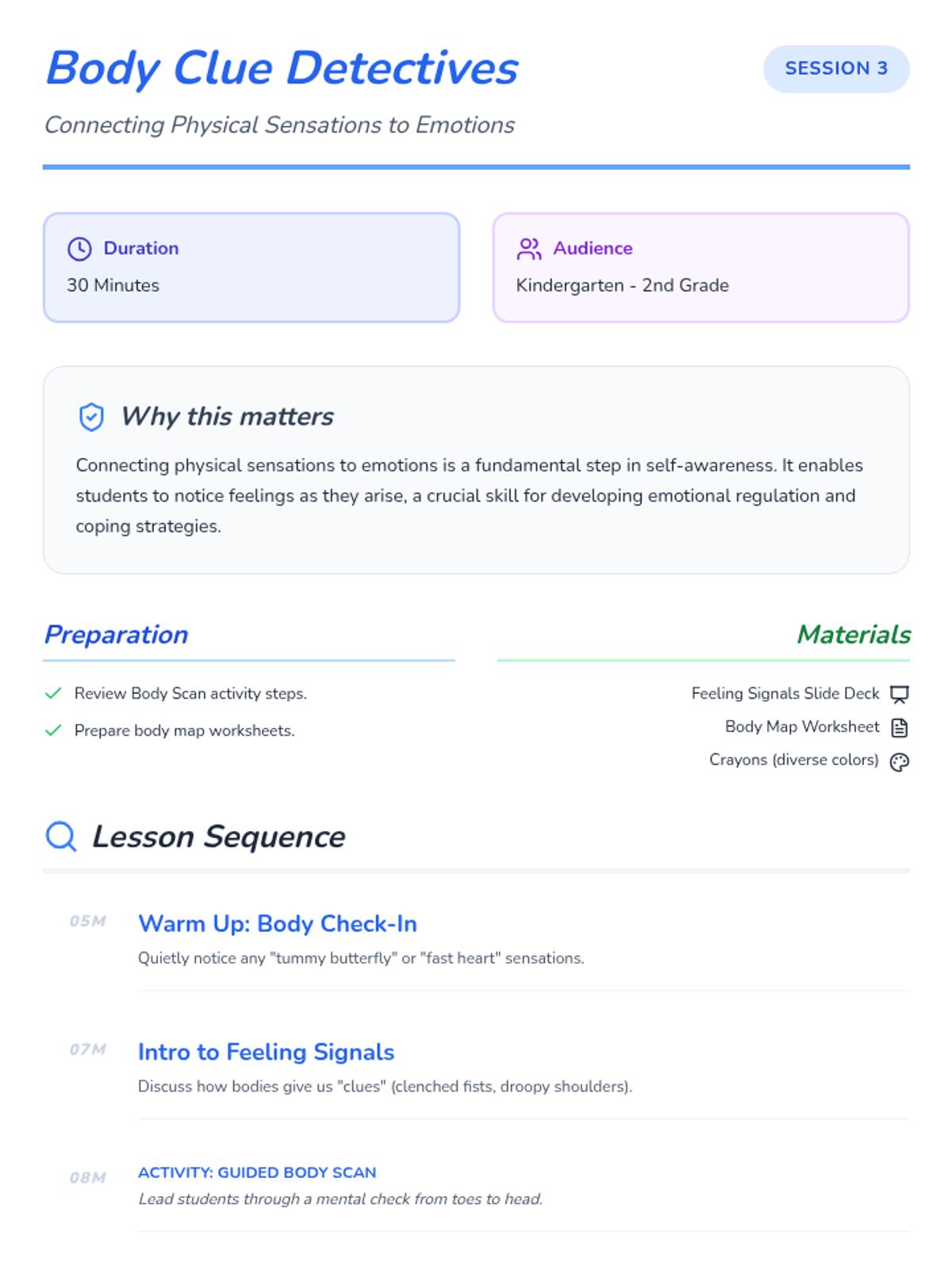
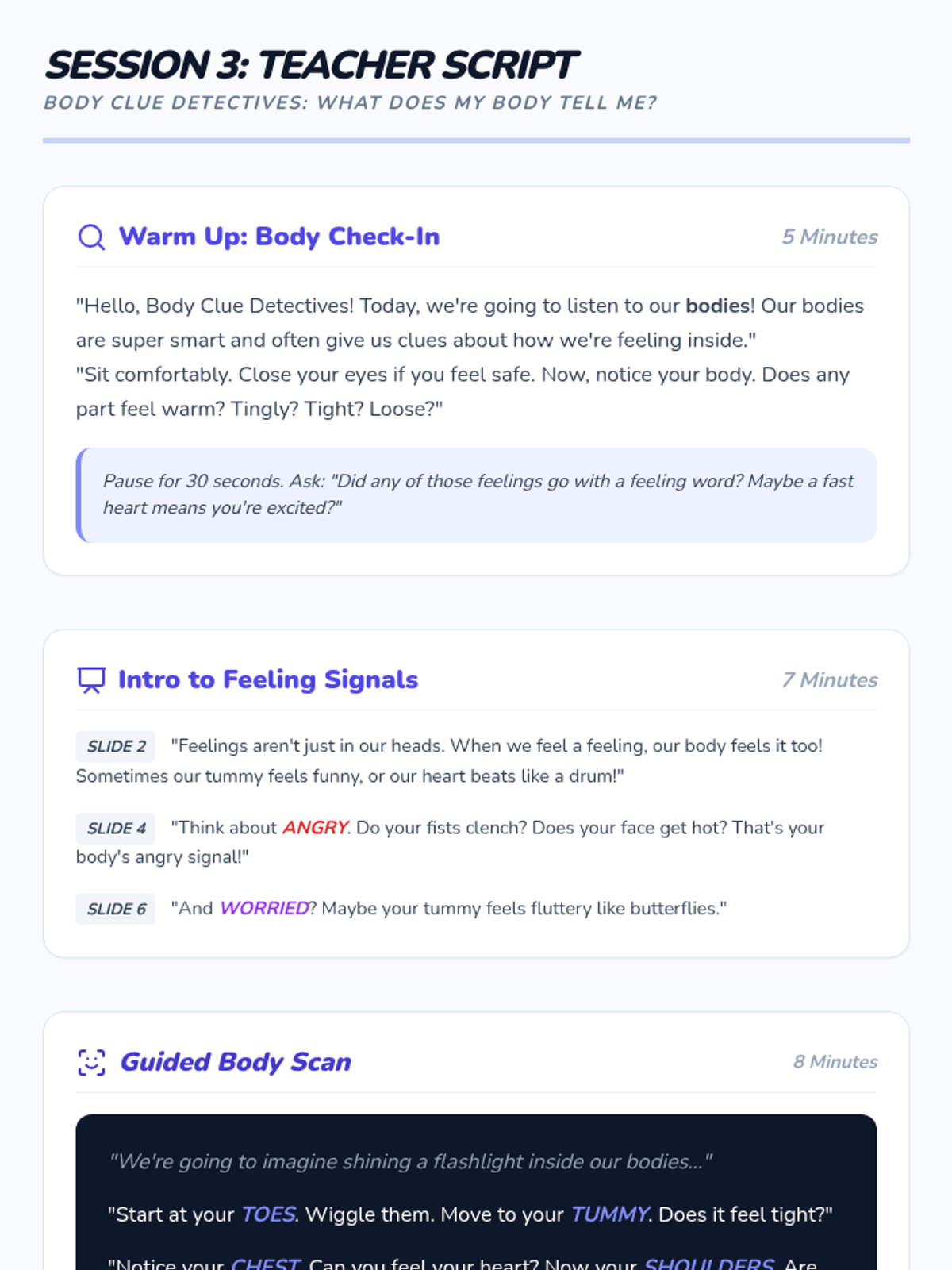
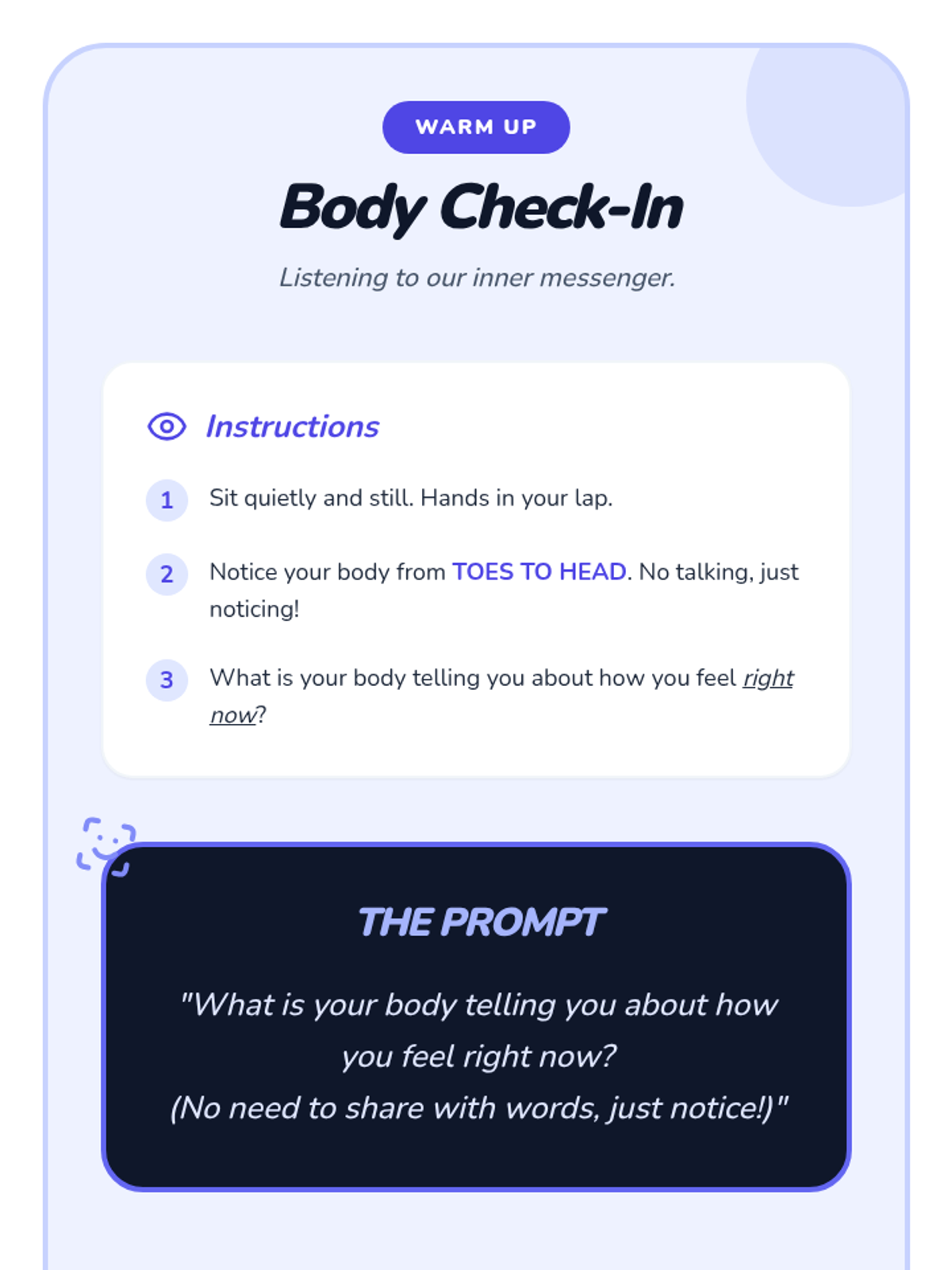
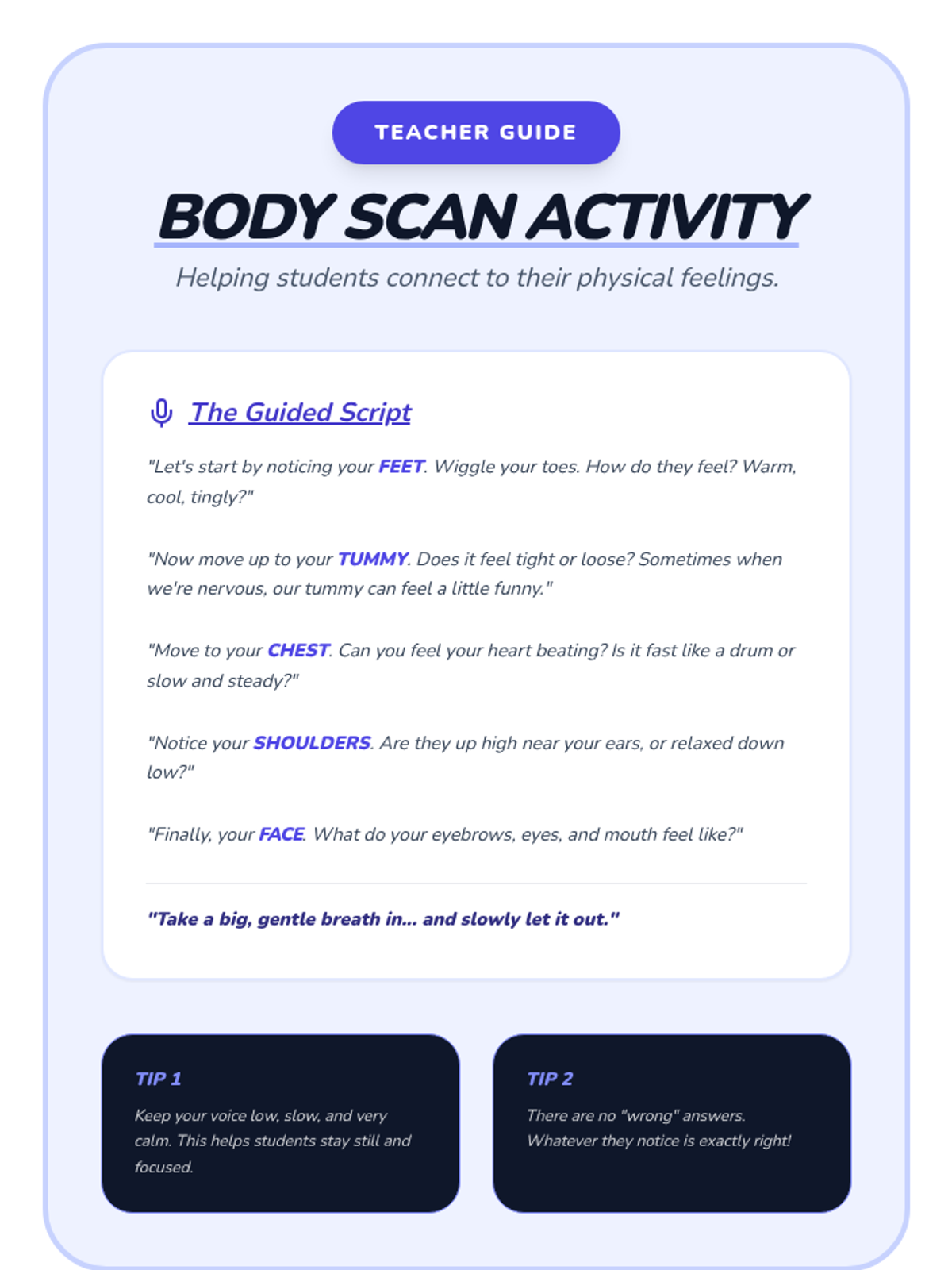
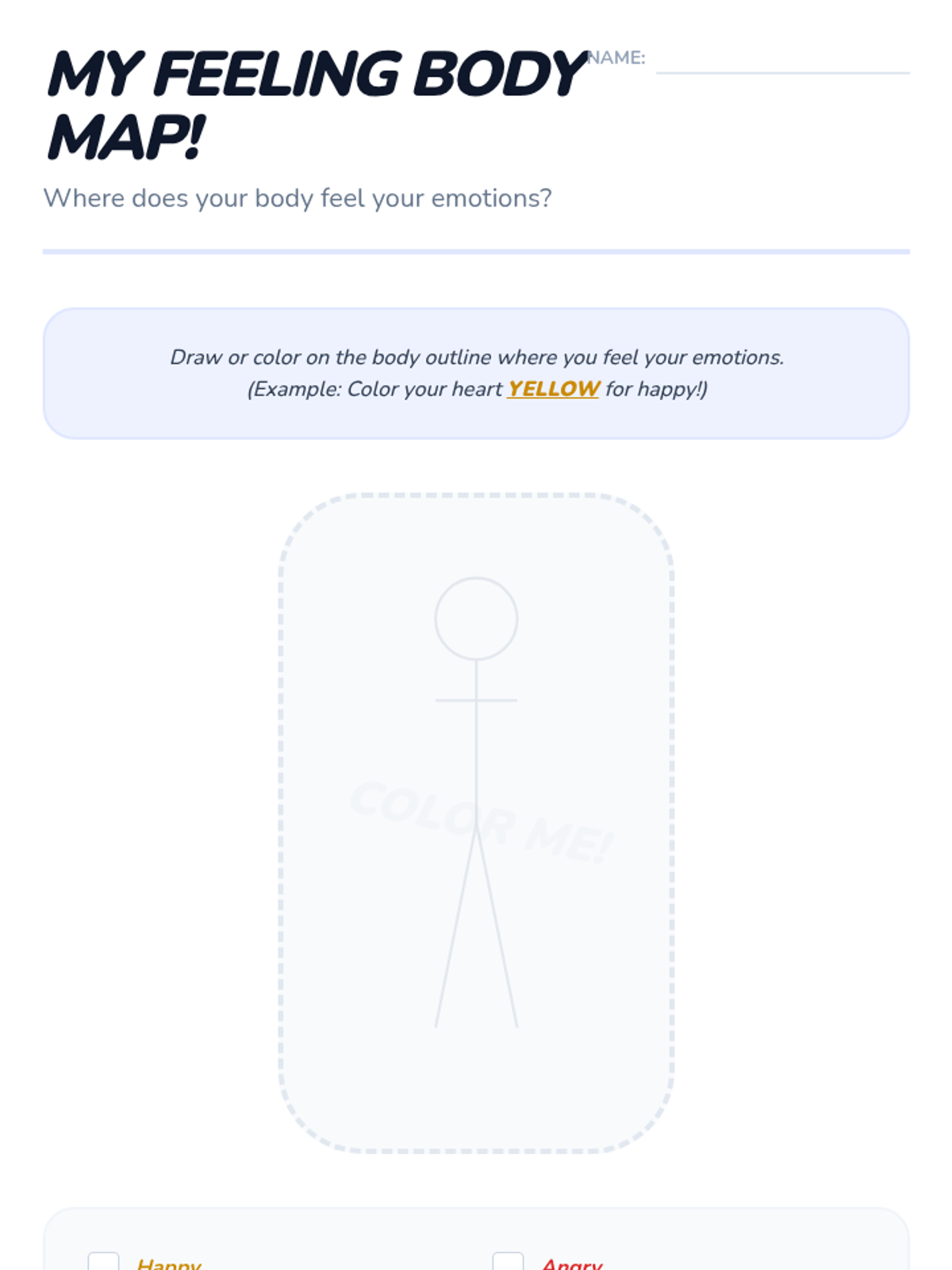
Connects physical sensations to emotions, helping students identify feelings through body signals.
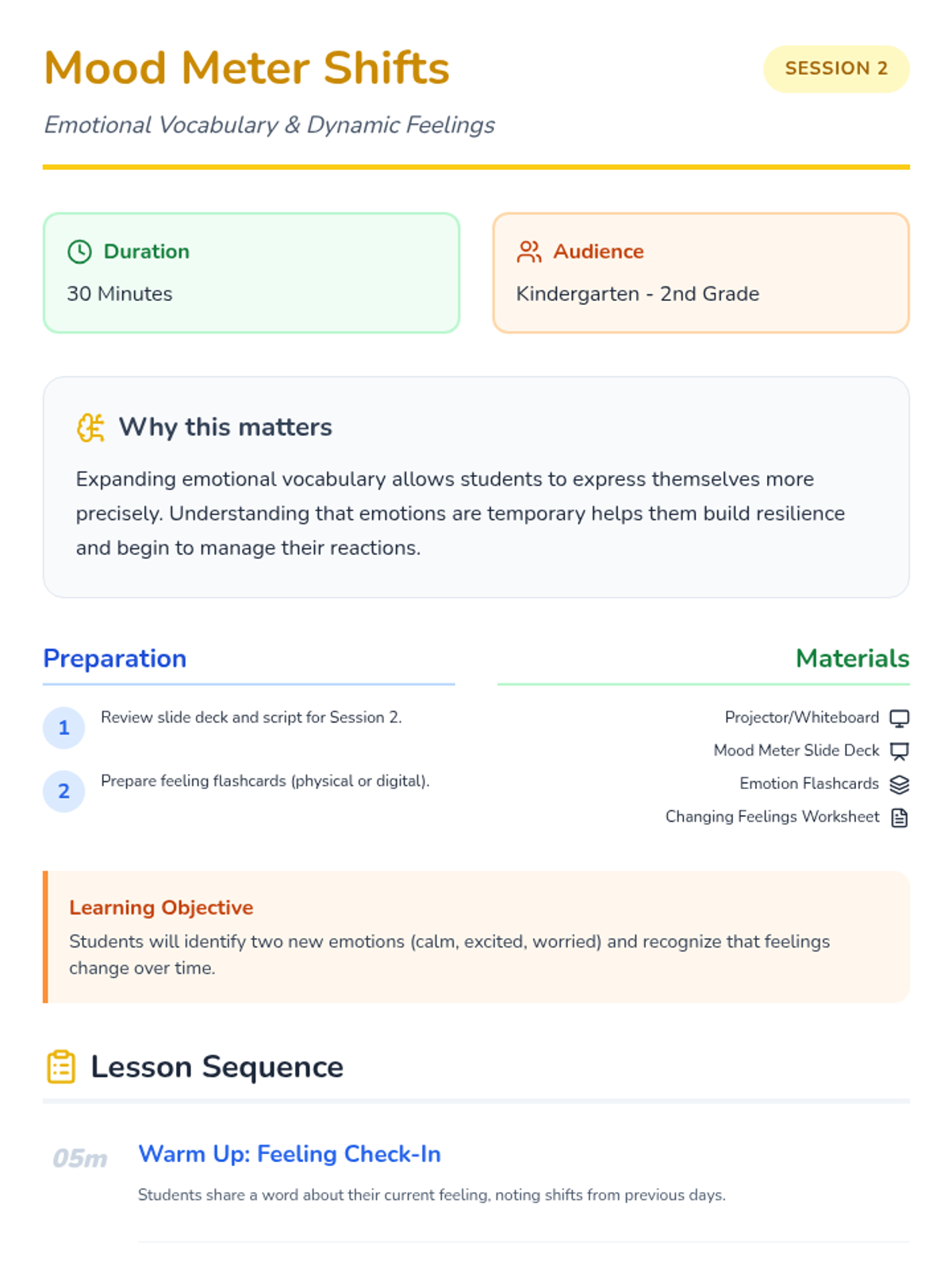
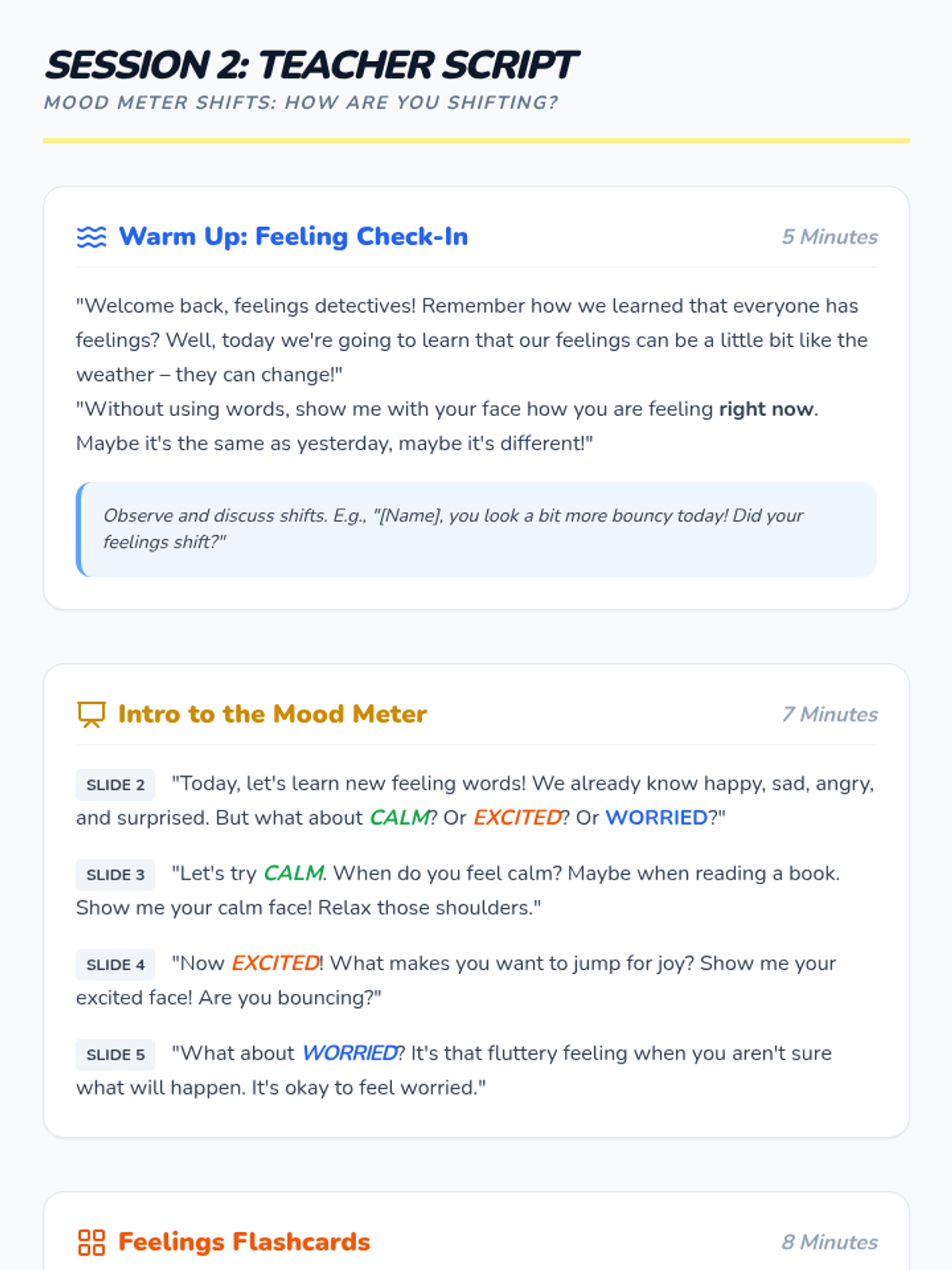
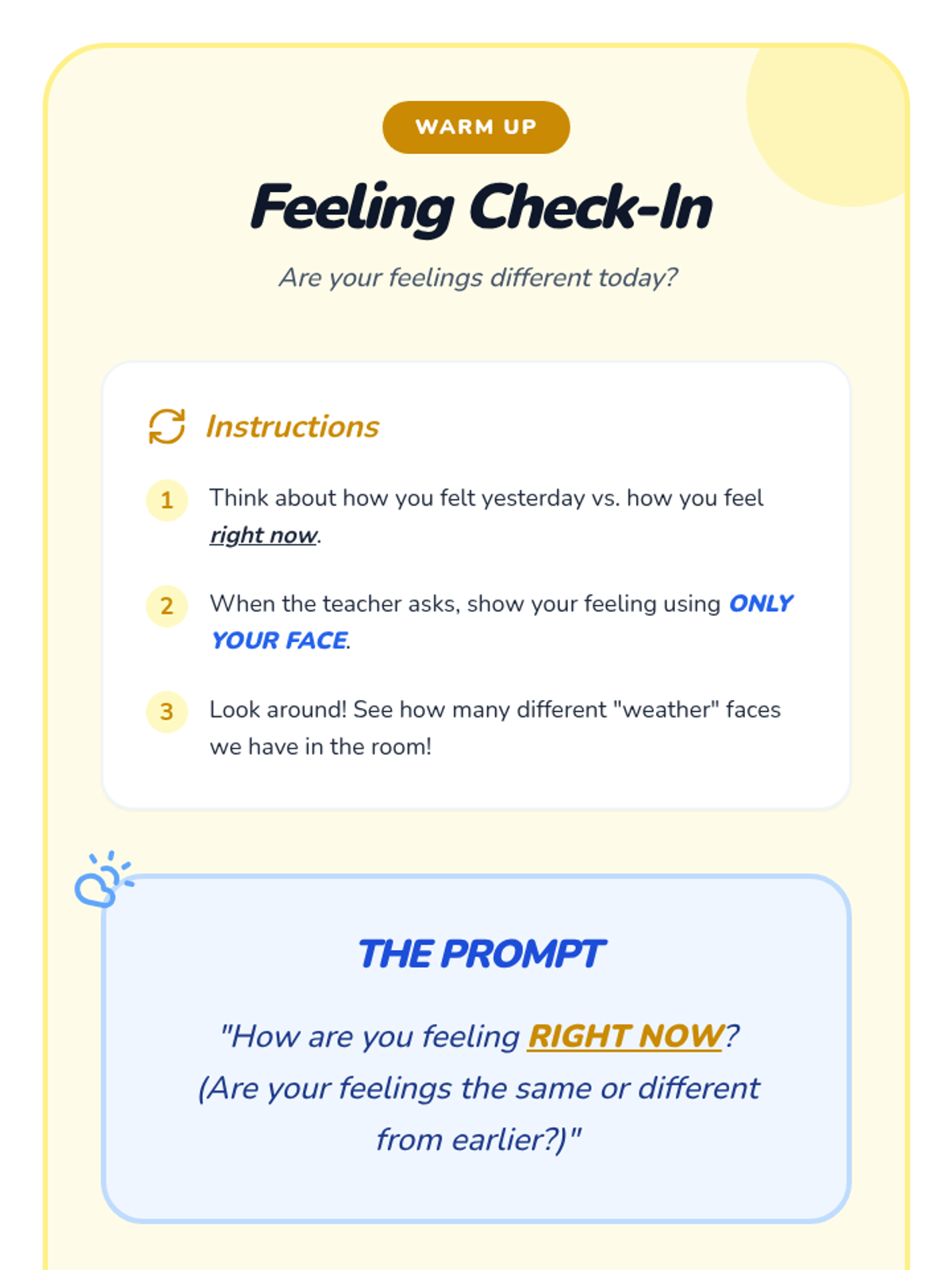
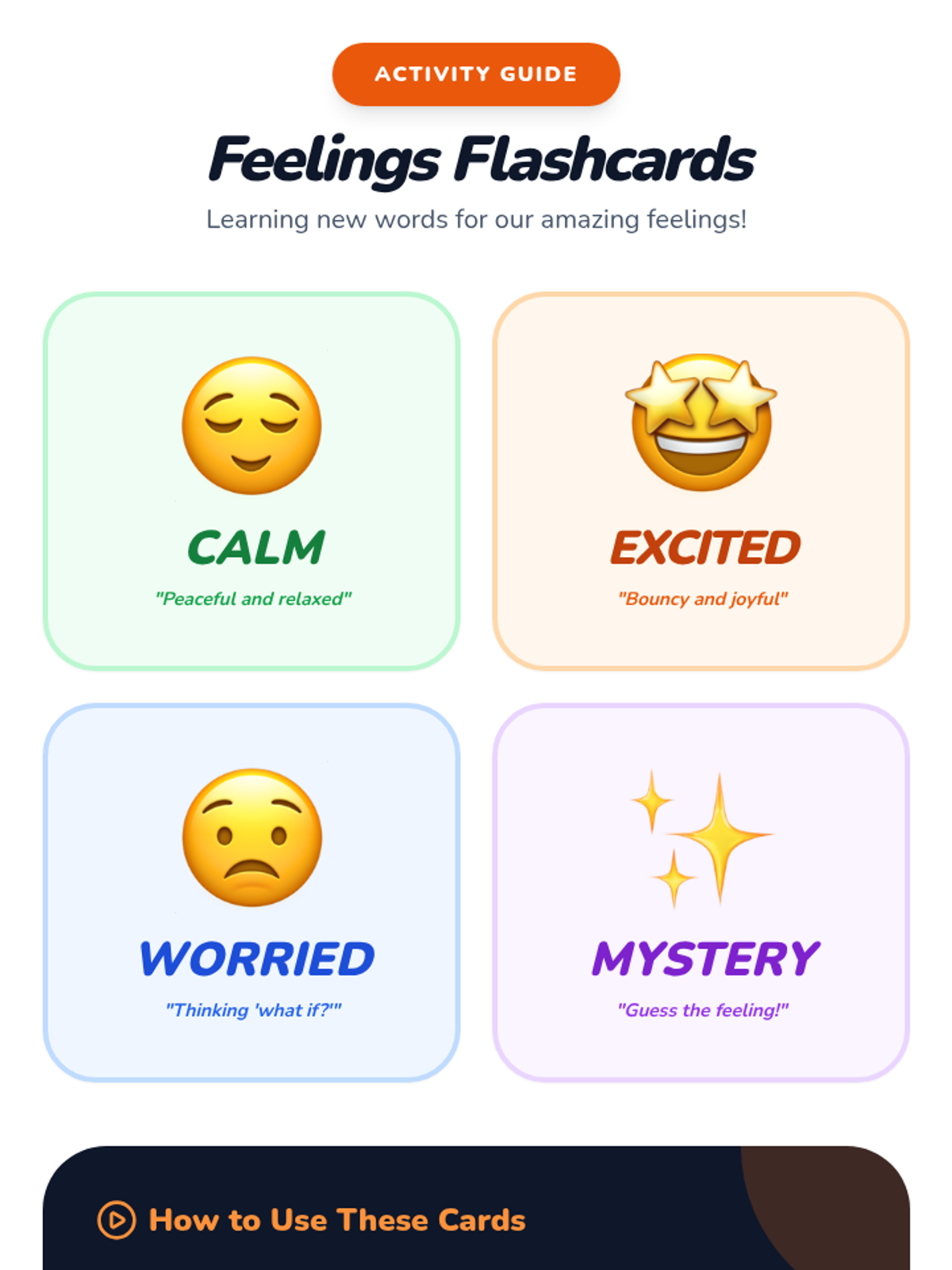
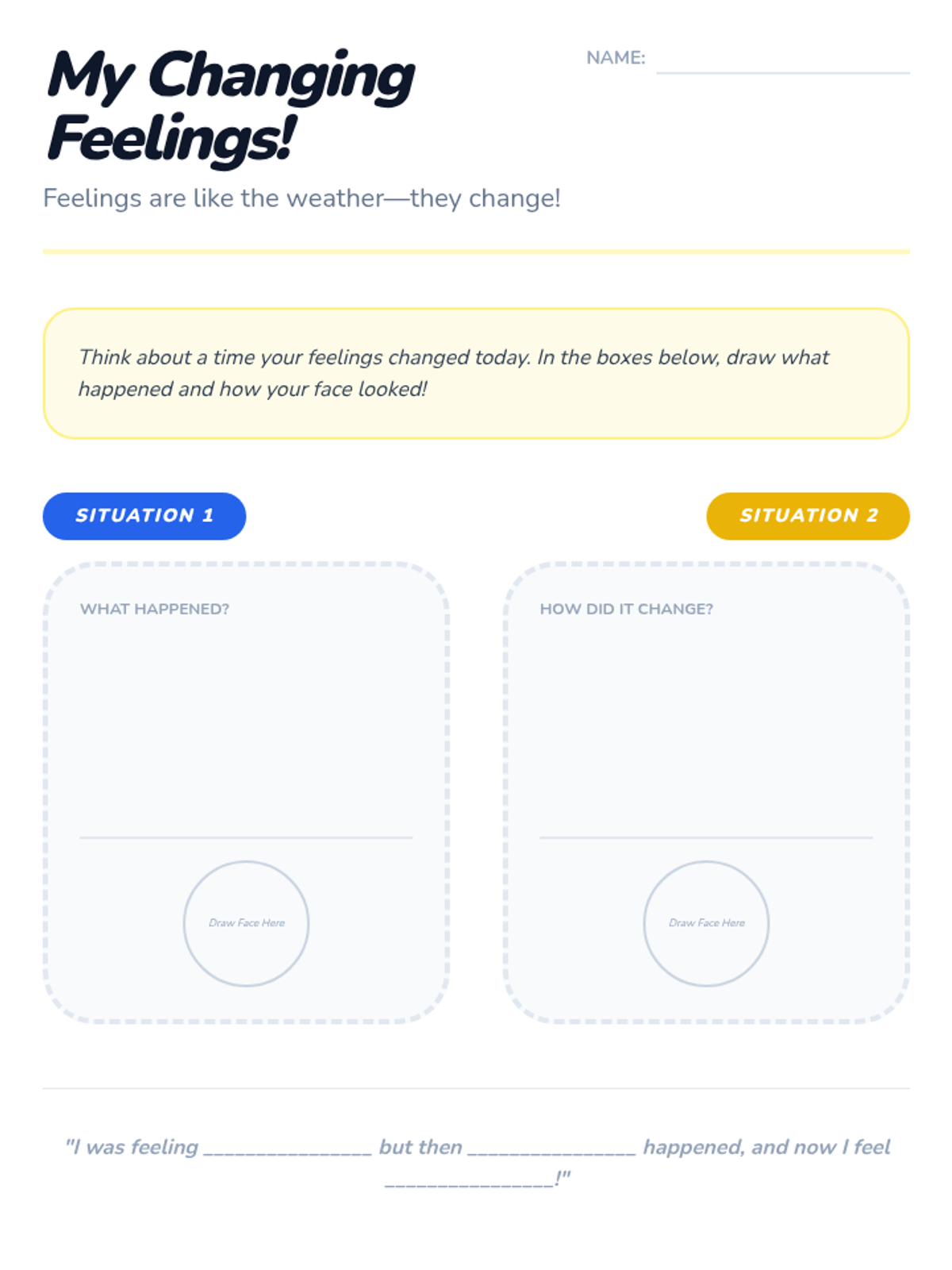
Explores a wider range of emotions and the concept that feelings change over time.
Introduces the concept of emotions and naming basic feelings through a story and interactive games.
A gentle introduction for K-2 students to understand autism and celebrate neurodiversity through storytelling and creative activities.
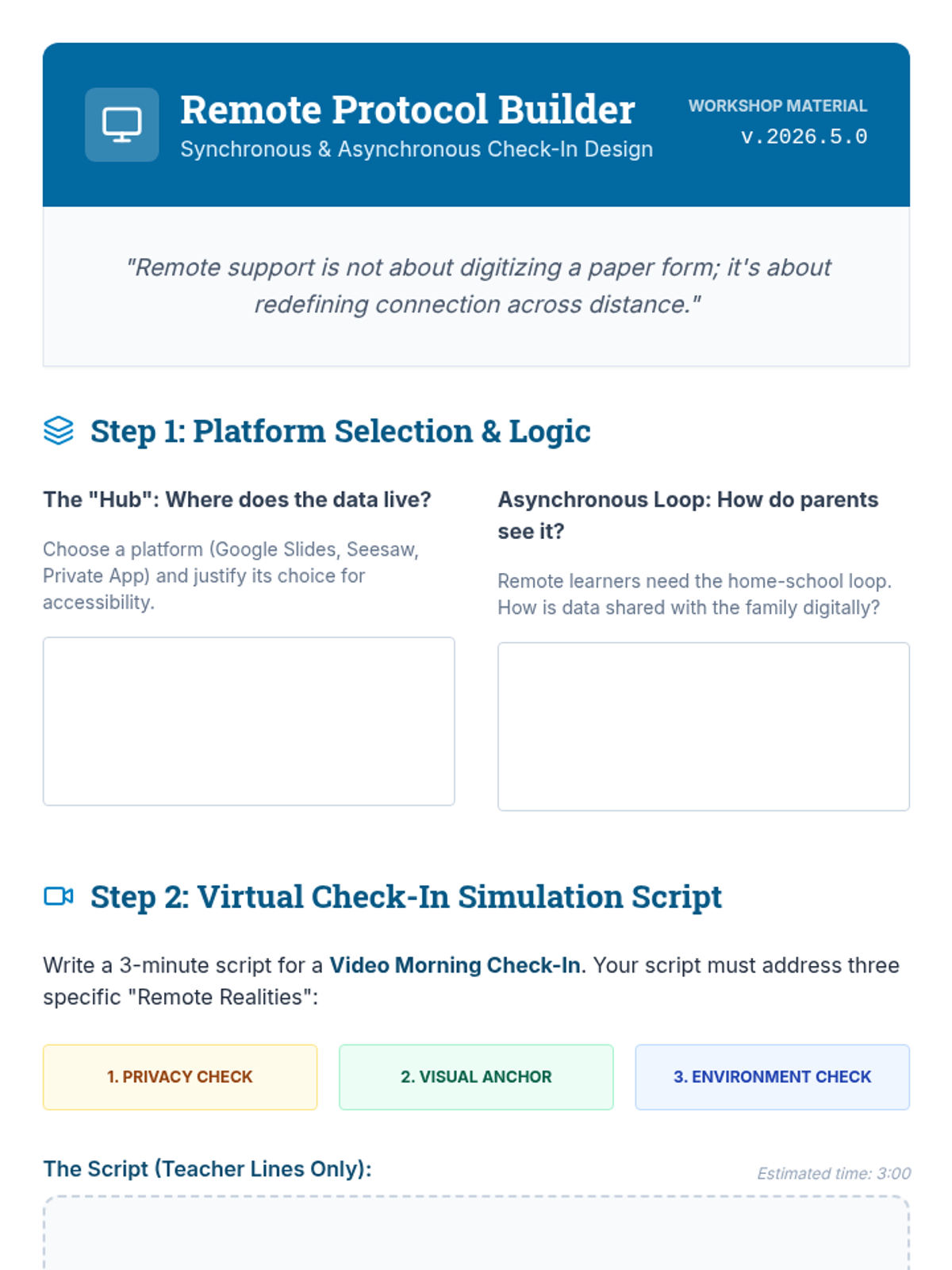
Preparing for remote and hybrid environments, students learn to maintain connection and consistency through digital check-in platforms and video protocols.
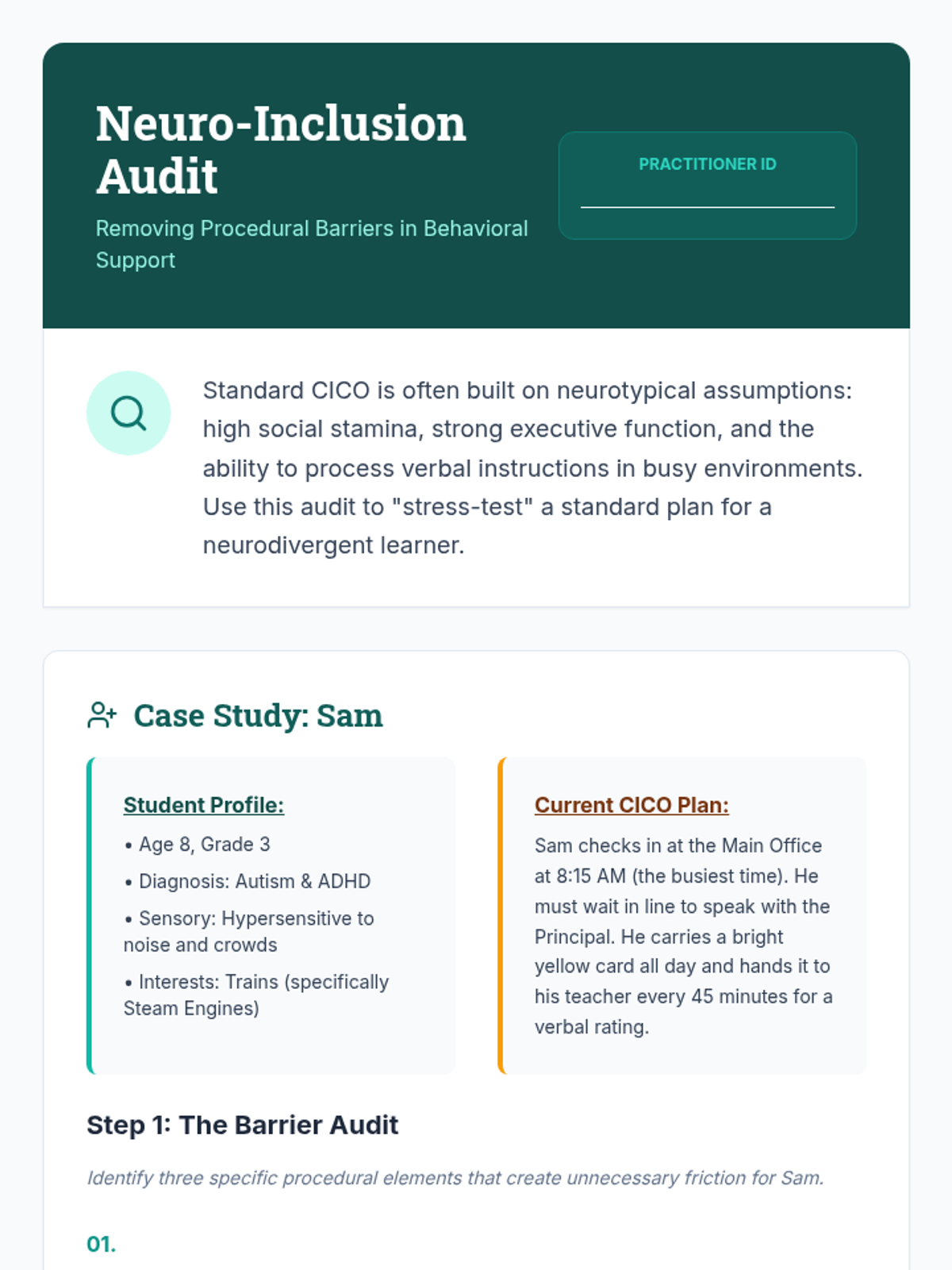
Students explore strategies for adapting behavioral supports for neurodivergent learners, including sensory adjustments and the use of special interests as reinforcers.
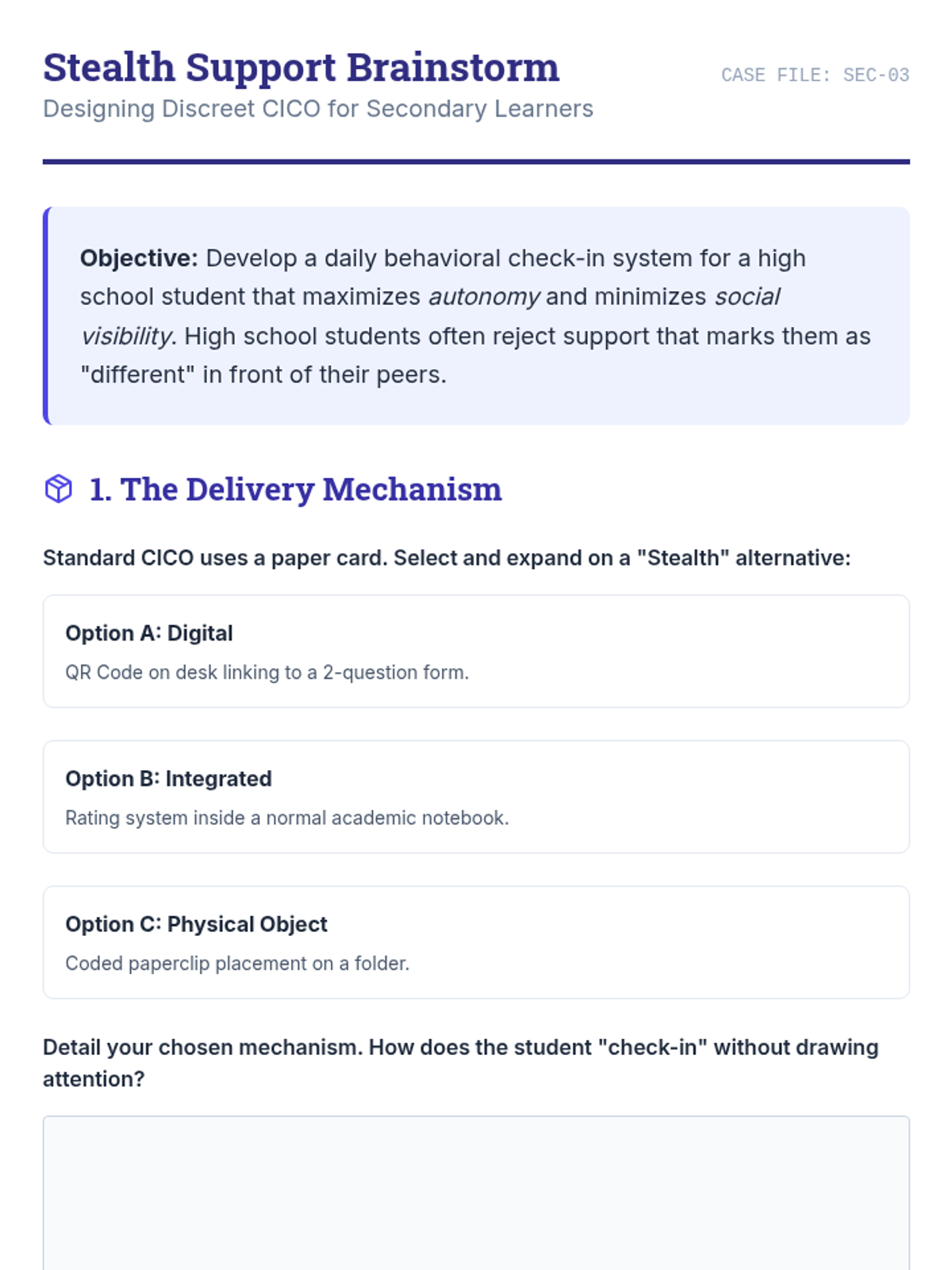
This lesson addresses the autonomy needs and social sensitivities of adolescents by focusing on self-monitoring, discreet feedback, and student-led goal setting.
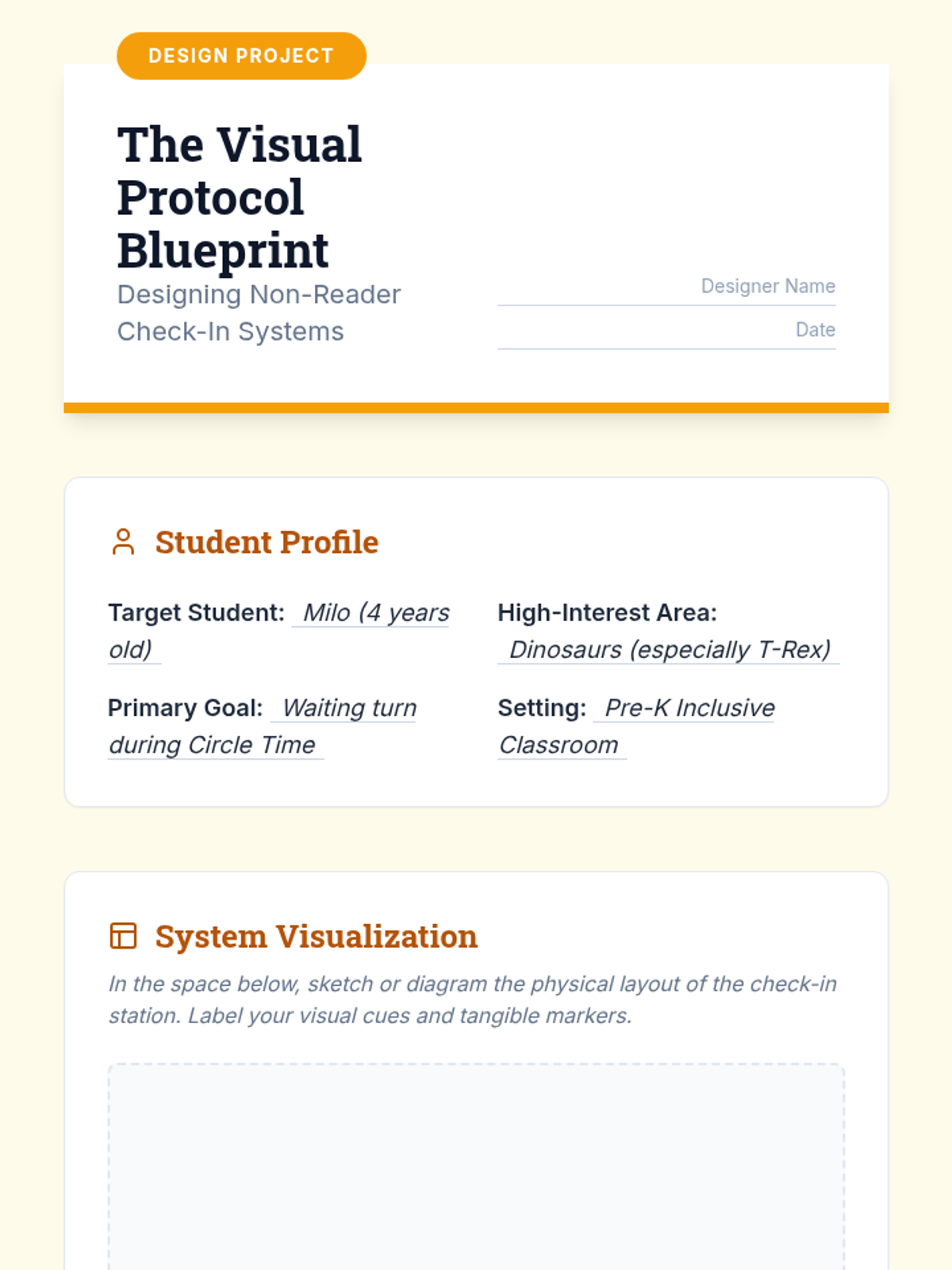
Focusing on Pre-K through 2nd grade, this lesson adapts check-in procedures to be more visual and tangible for learners who are still developing literacy and abstract reasoning skills.
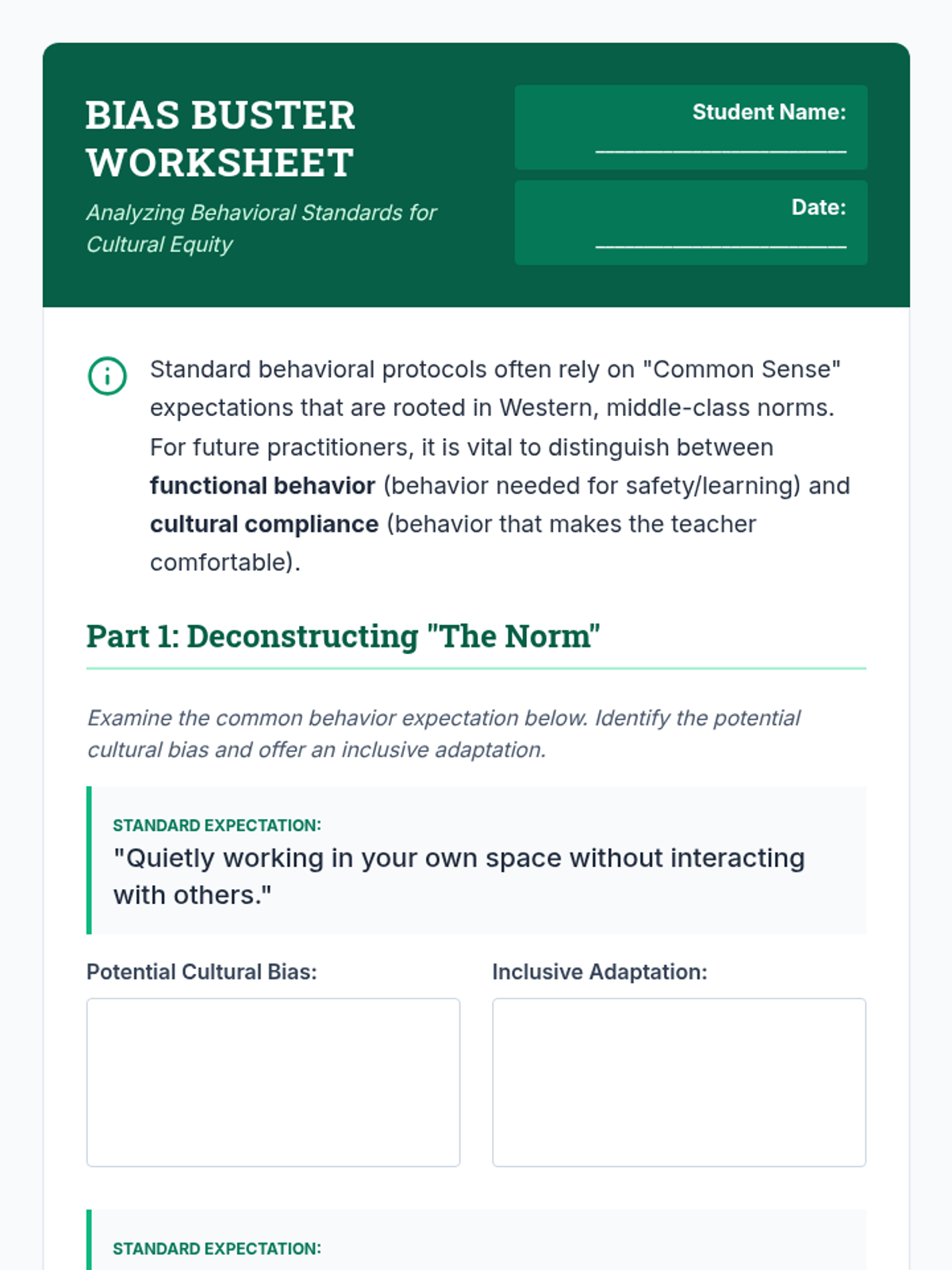
Students critique standard behavioral expectations for cultural bias and learn to adapt check-in conversations to honor diverse cultural backgrounds and communication styles.
Students share their completed Greeting Guides and demonstrate their understanding of community social norms through a gallery walk.
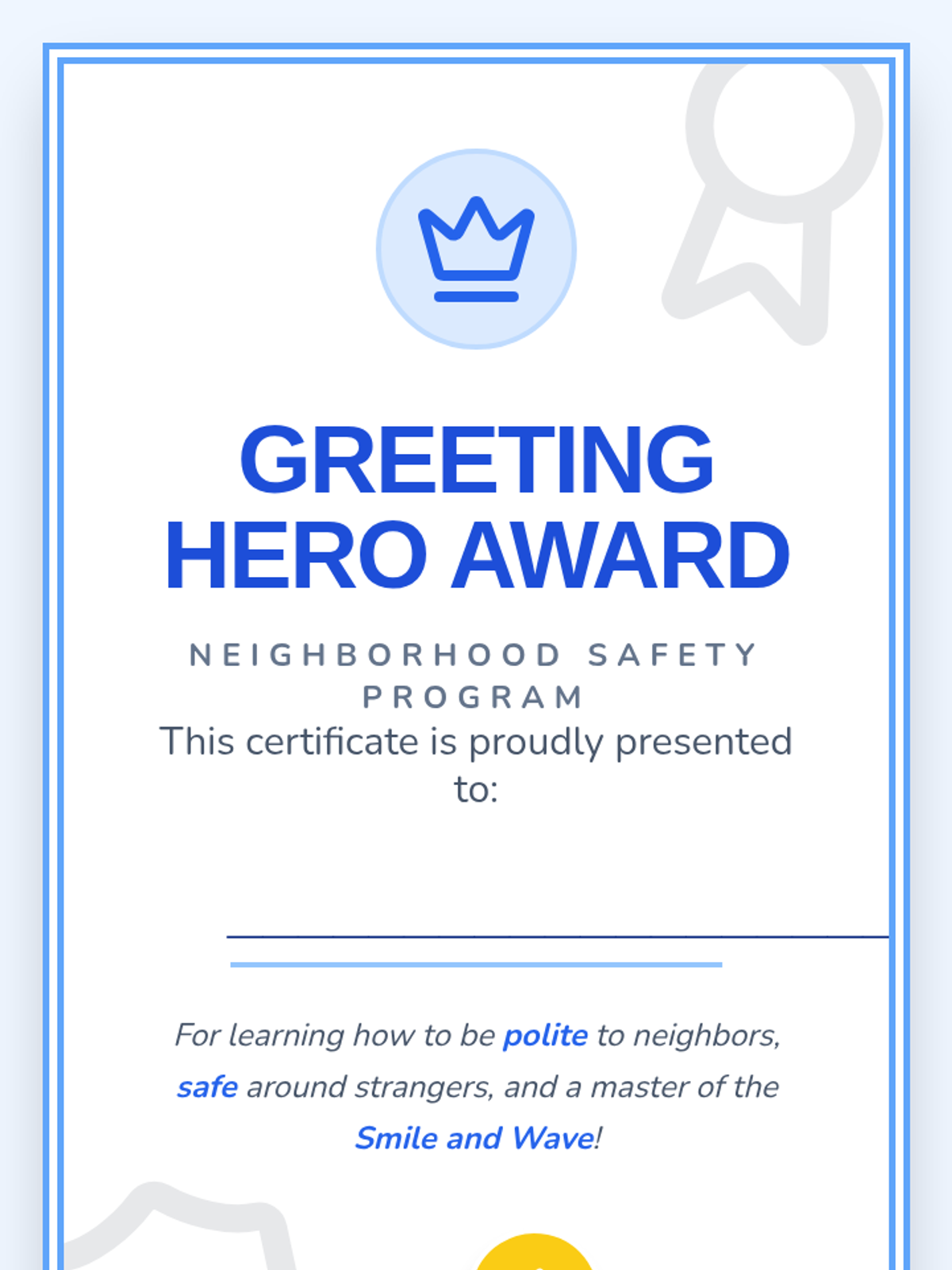
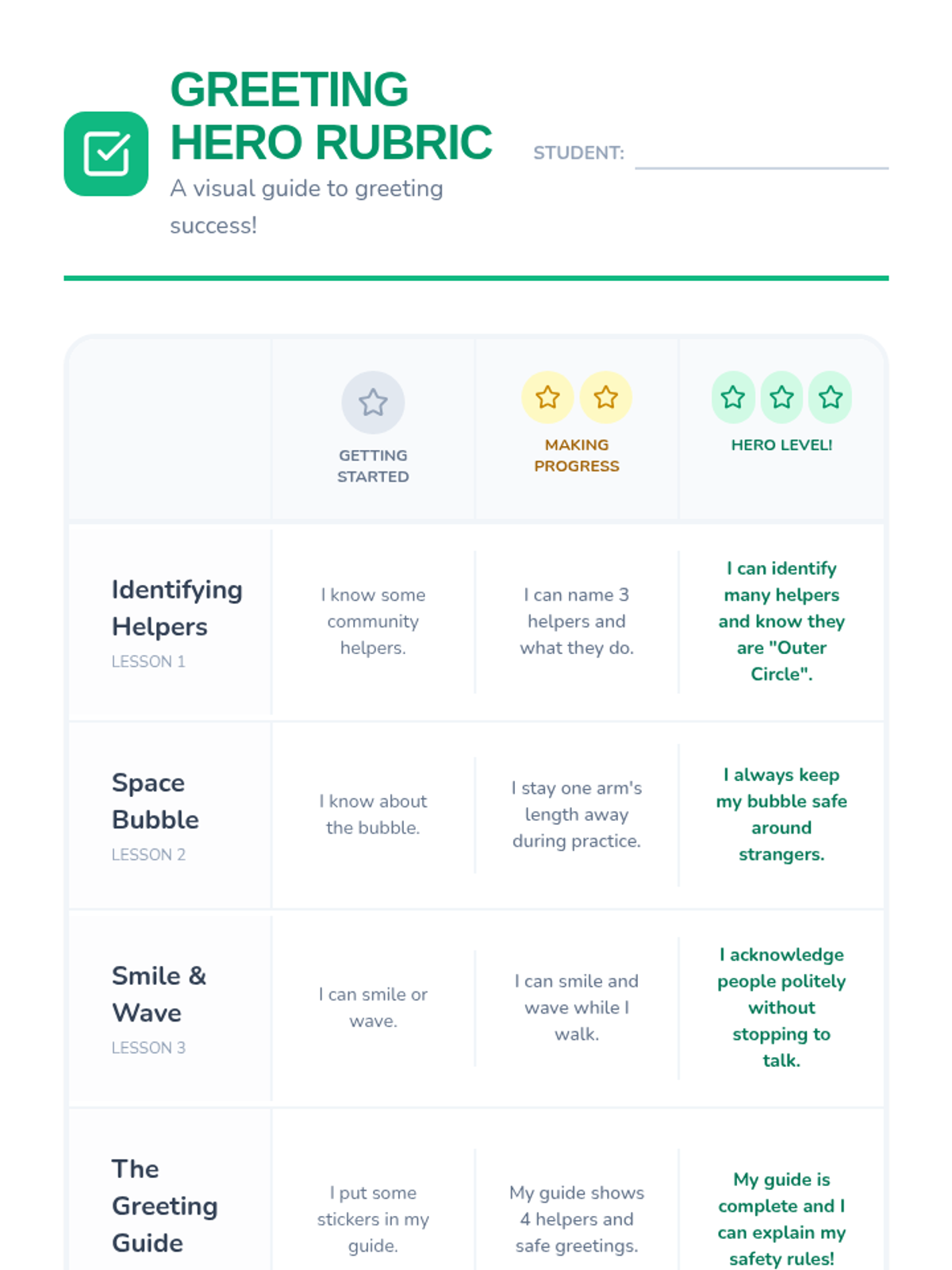
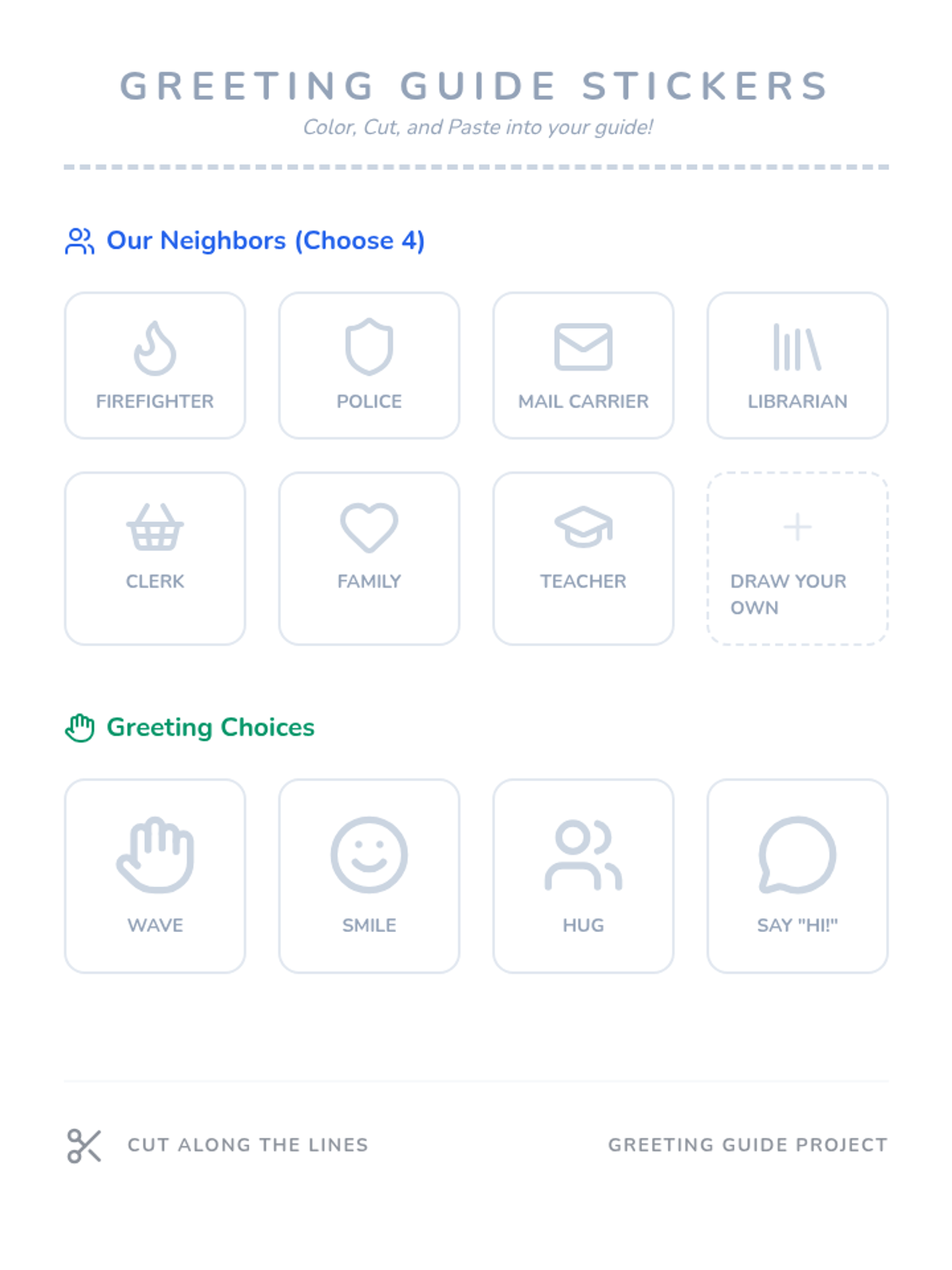
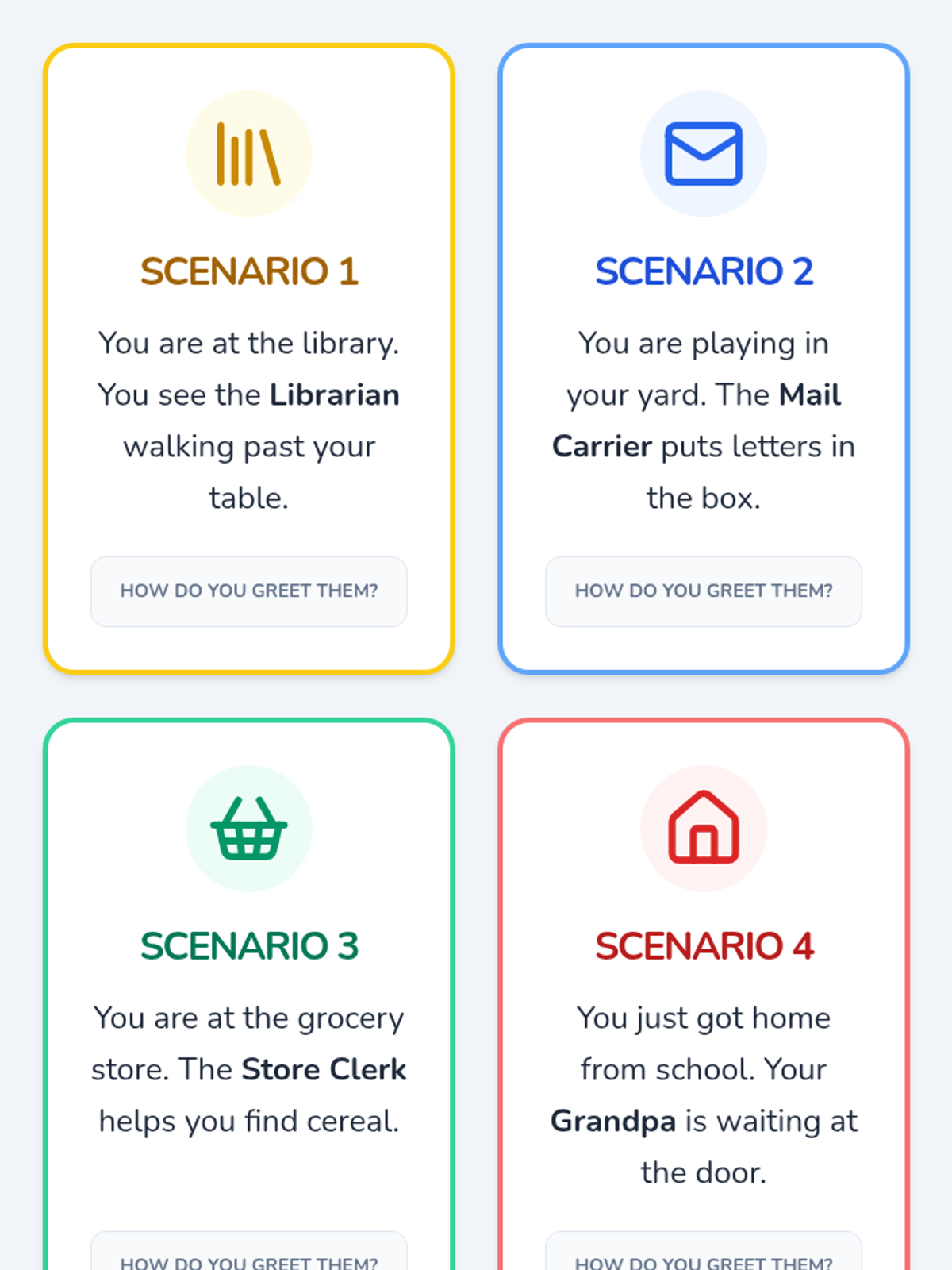
Students assemble their 'Community Greeting Guide' by matching community members with appropriate safety-first greetings.
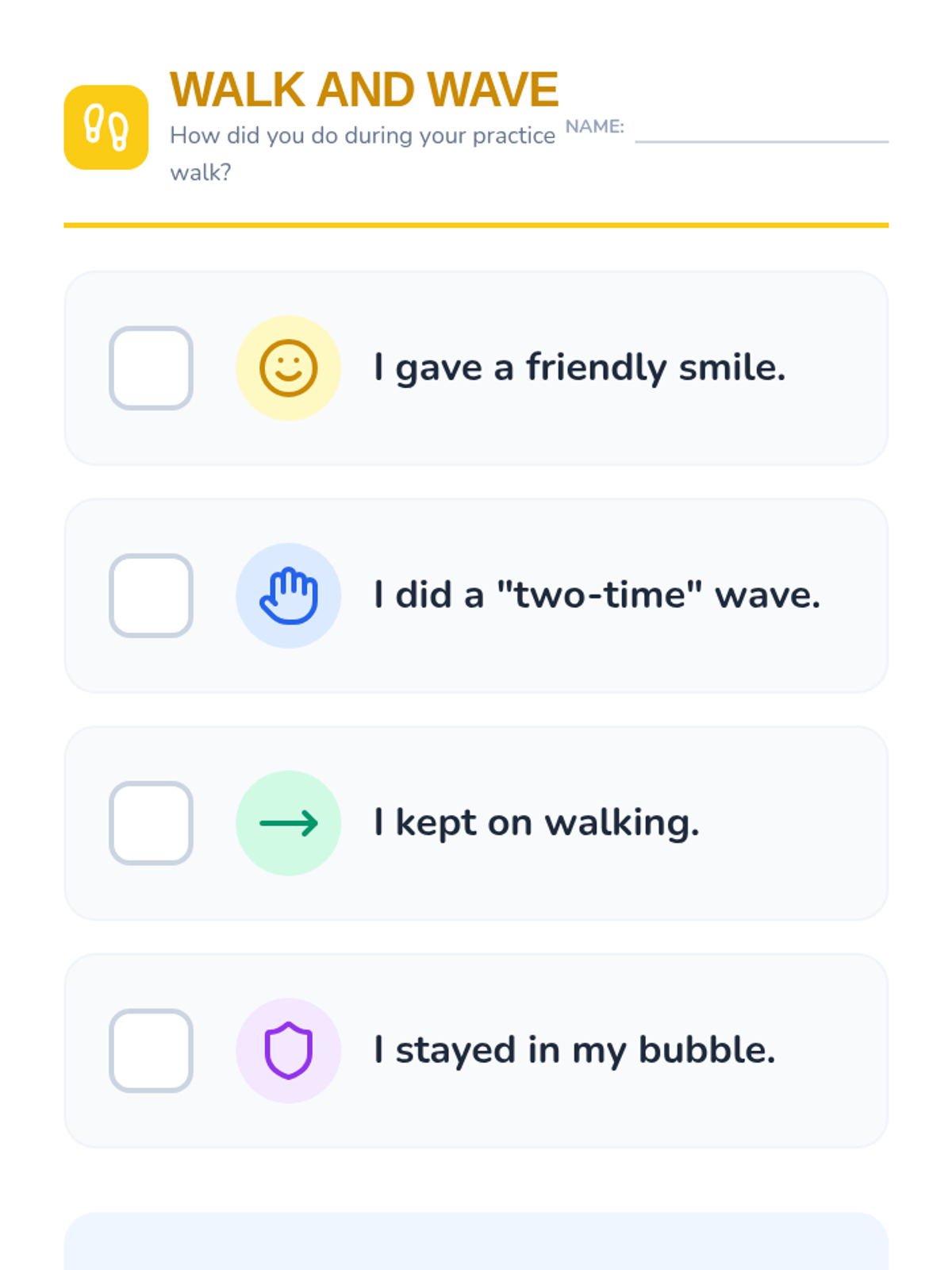
Practicing the 'Smile and Wave' technique to acknowledge strangers politely without close contact or extended conversation.
The class formalizes their commitment to inclusion by co-creating and signing a classroom pledge.
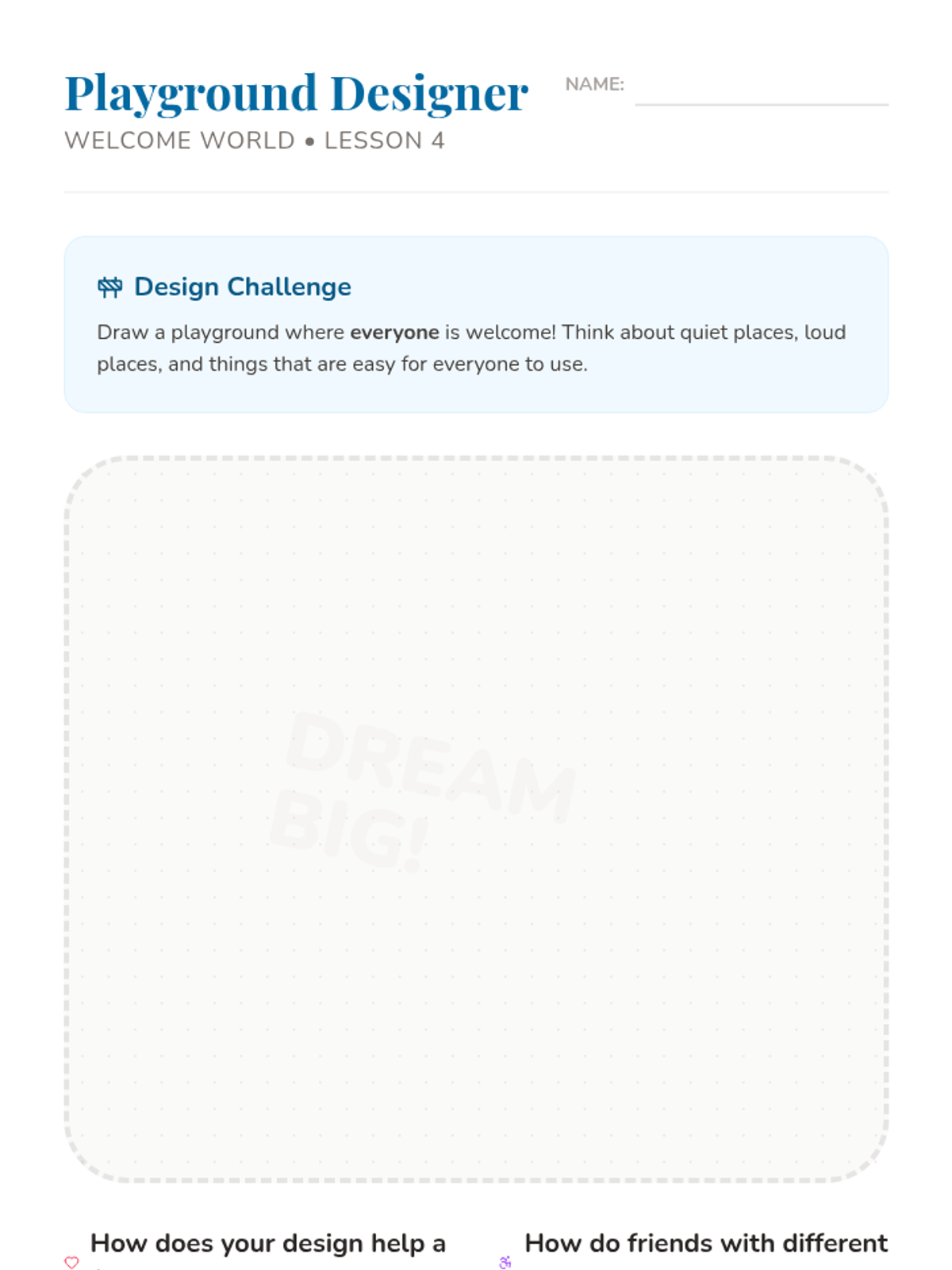
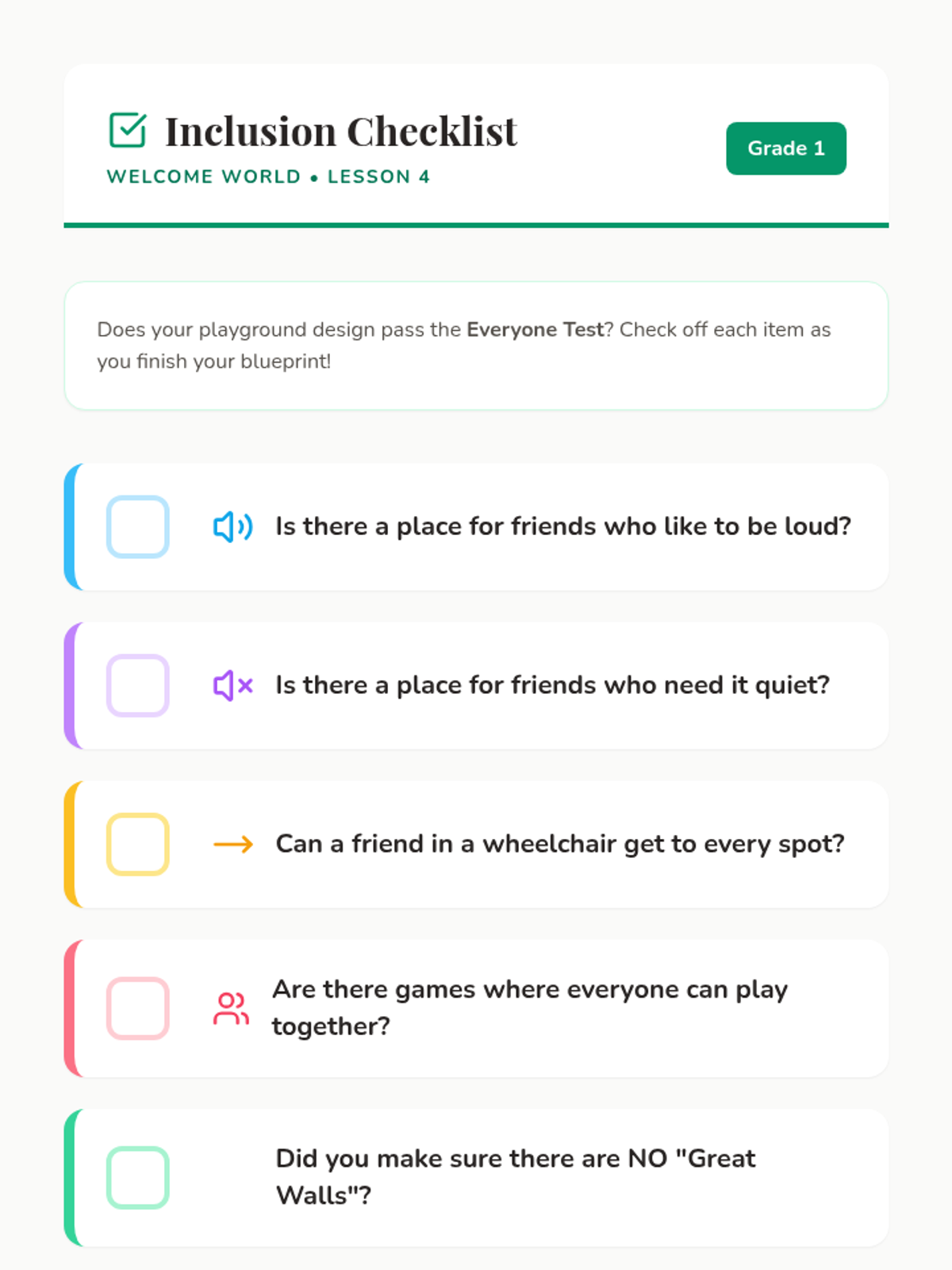
Students design inclusive playground models to visualize a world where everyone can play together regardless of differences.
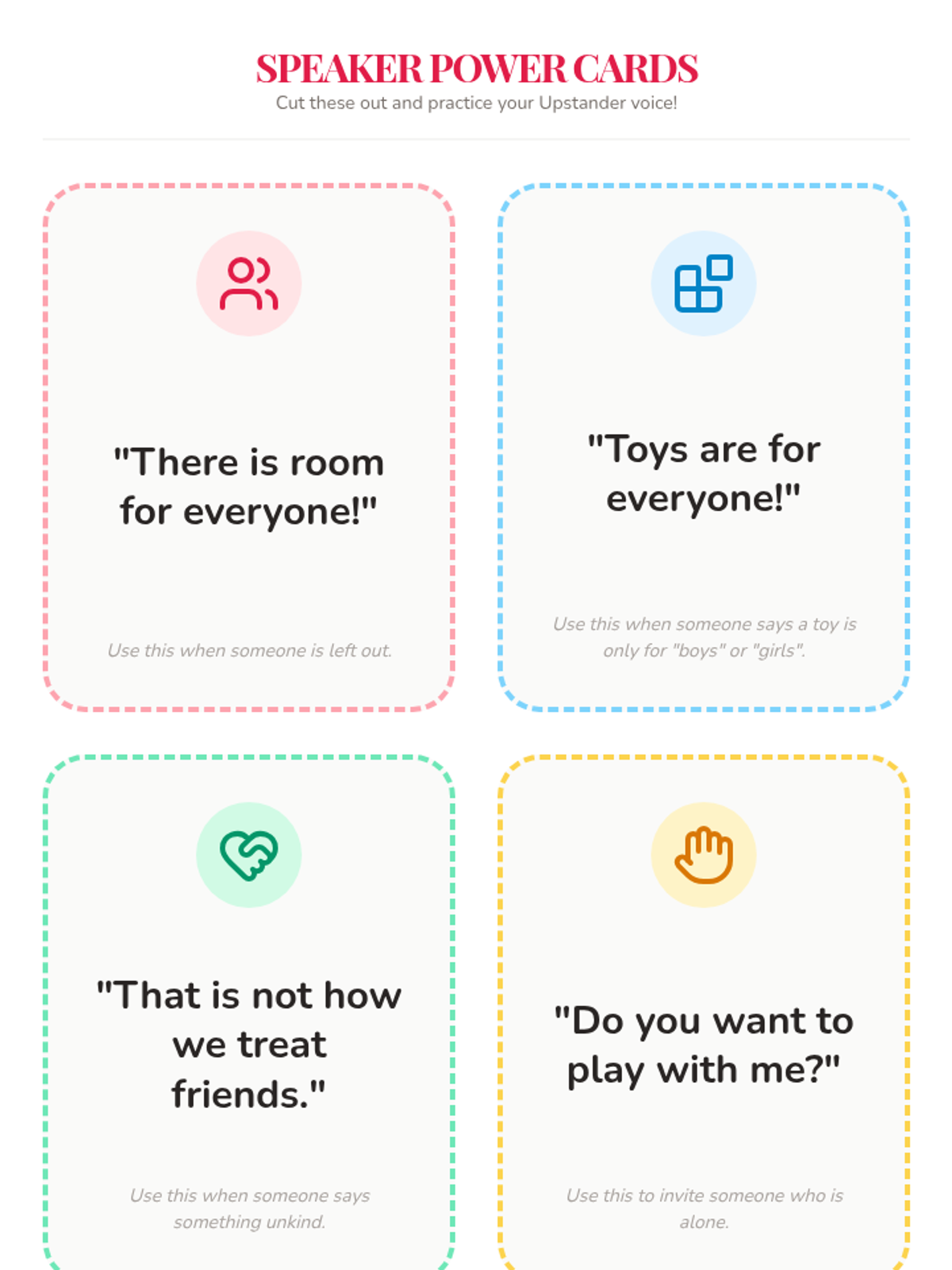
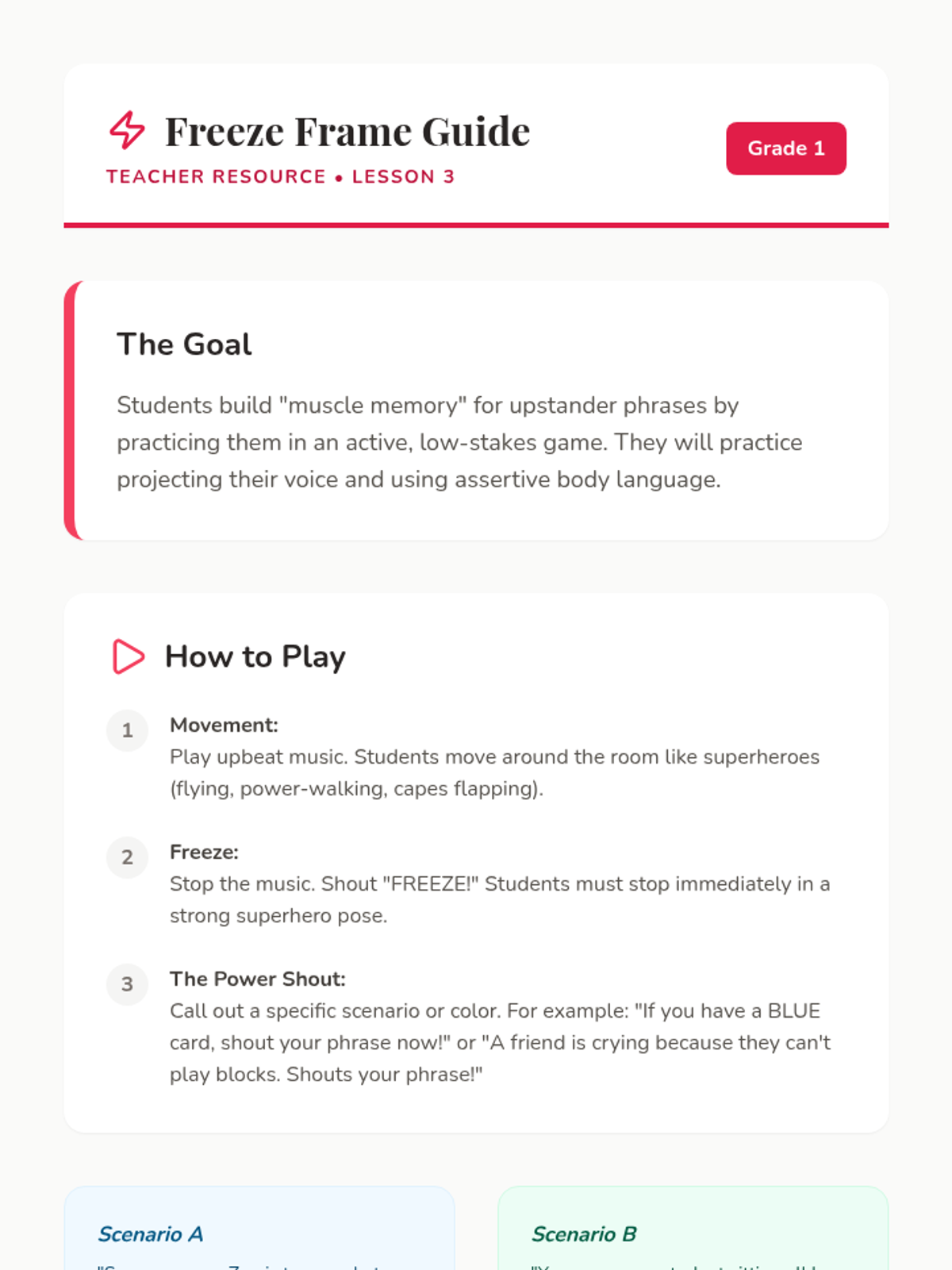
Students learn and practice specific upstander phrases to respond to unfair comments and stereotypes in a safe, structured environment.
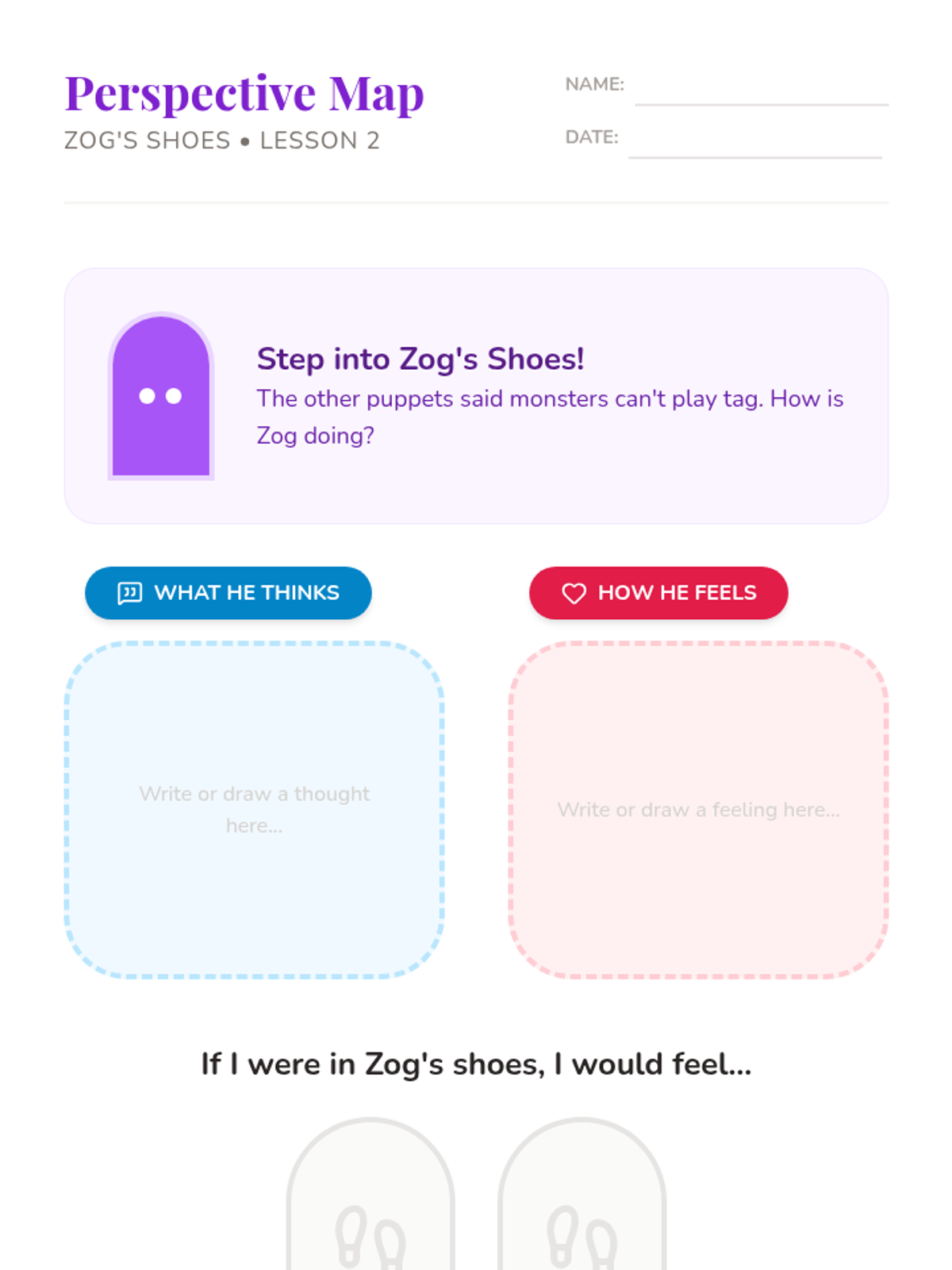
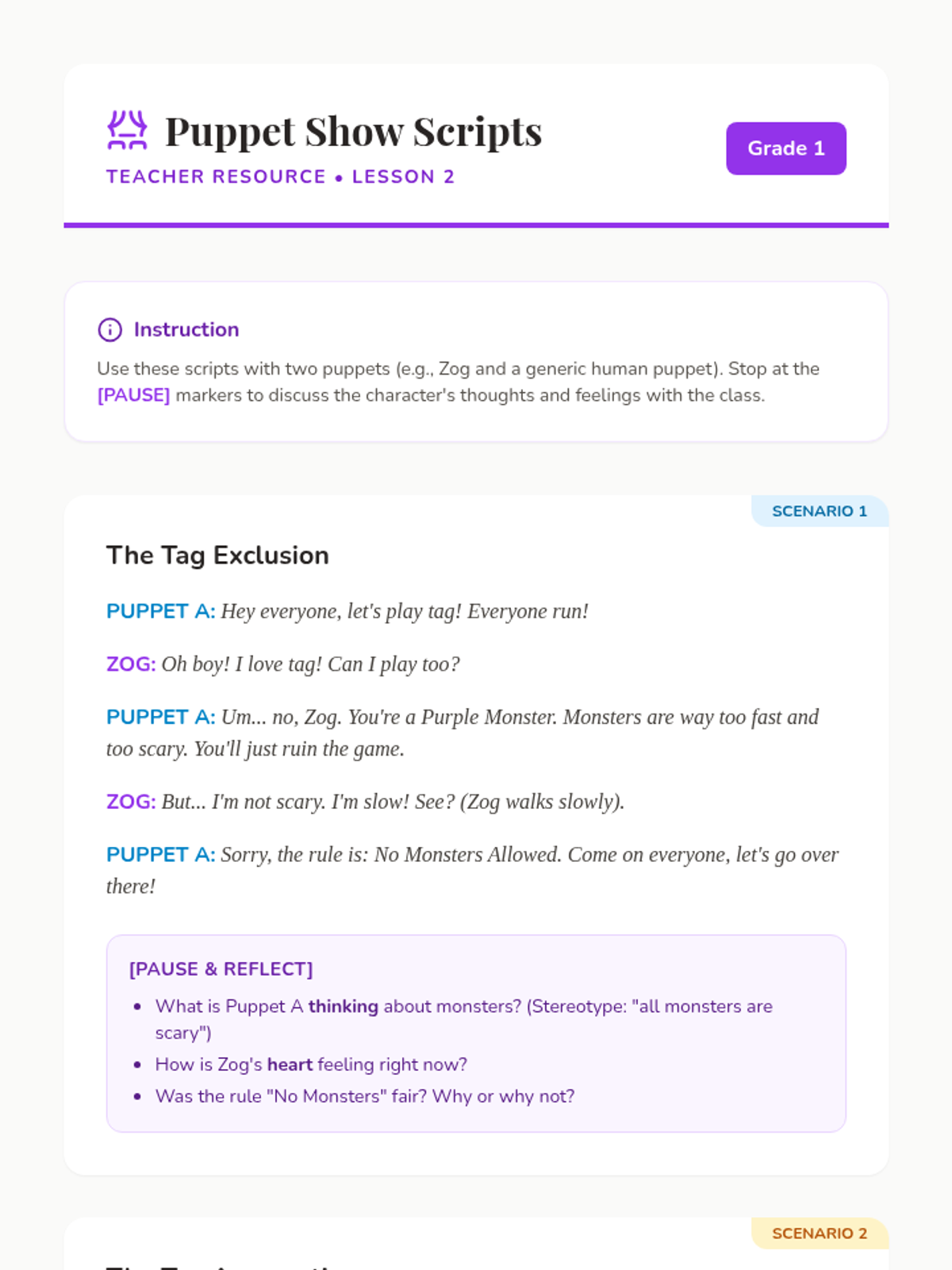
Using puppets, students practice perspective-taking by identifying how characters feel when they are excluded based on stereotypes.
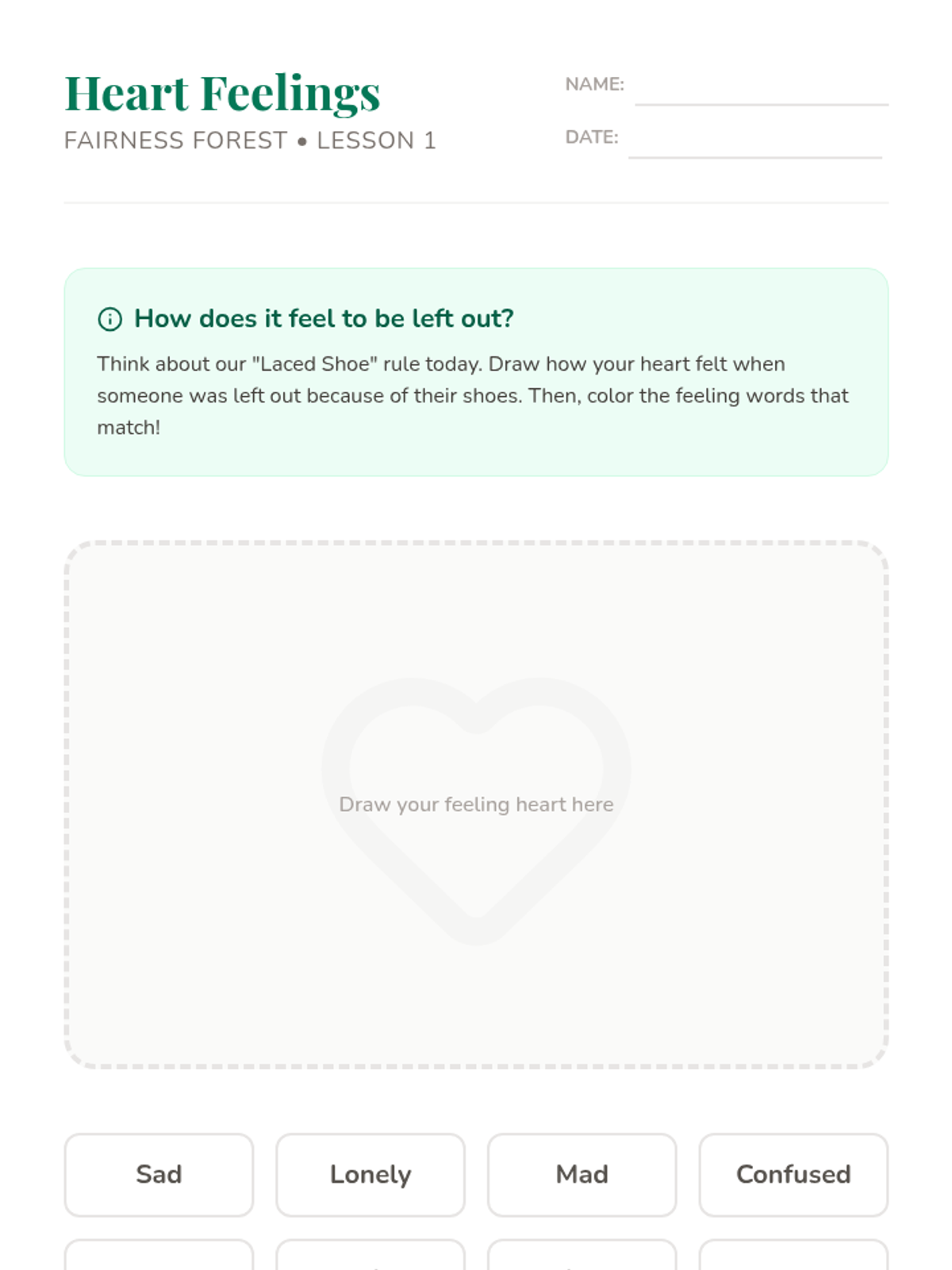
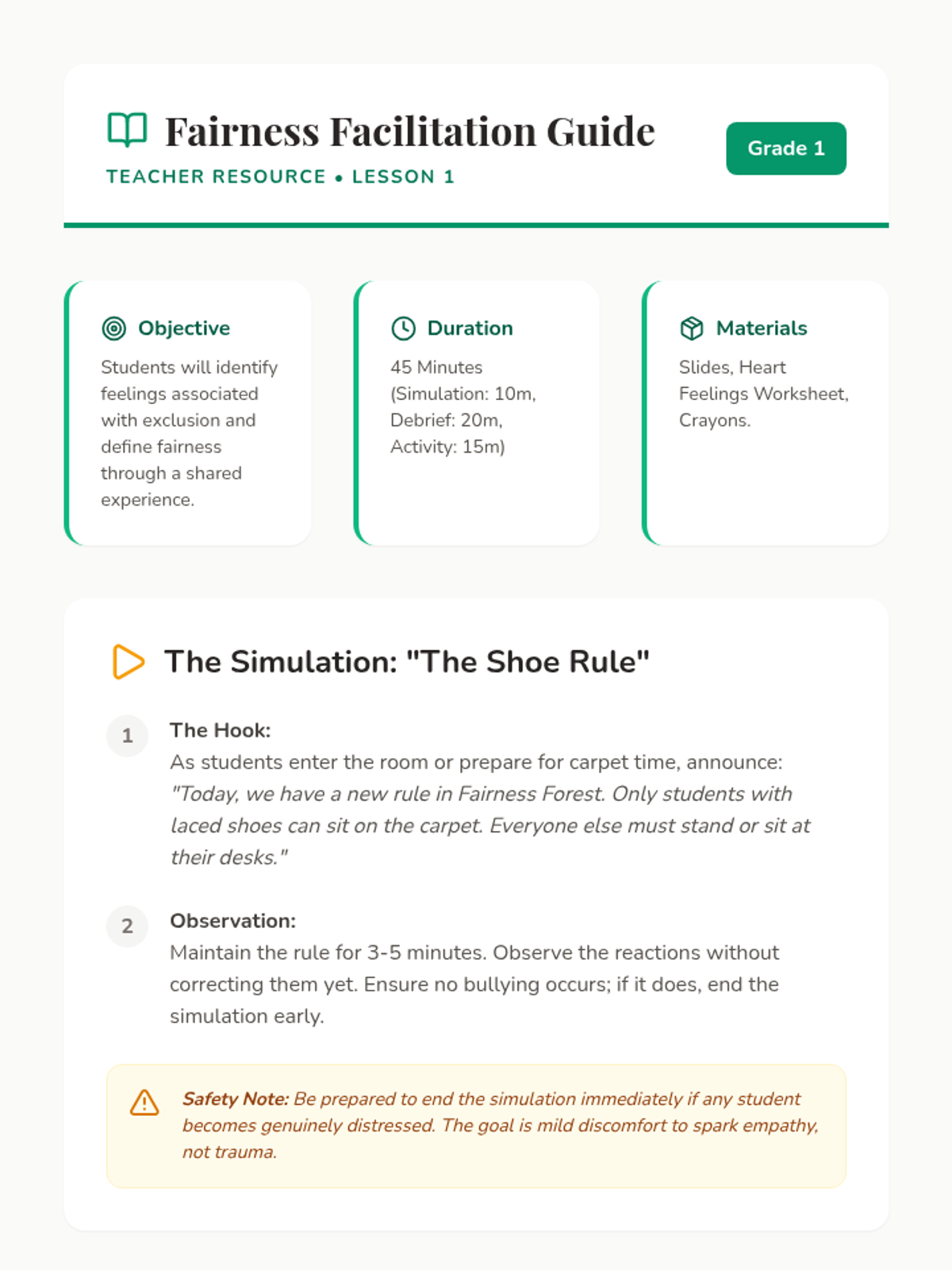
Students experience a structured simulation of unfairness to identify feelings associated with exclusion and define the concept of fairness.
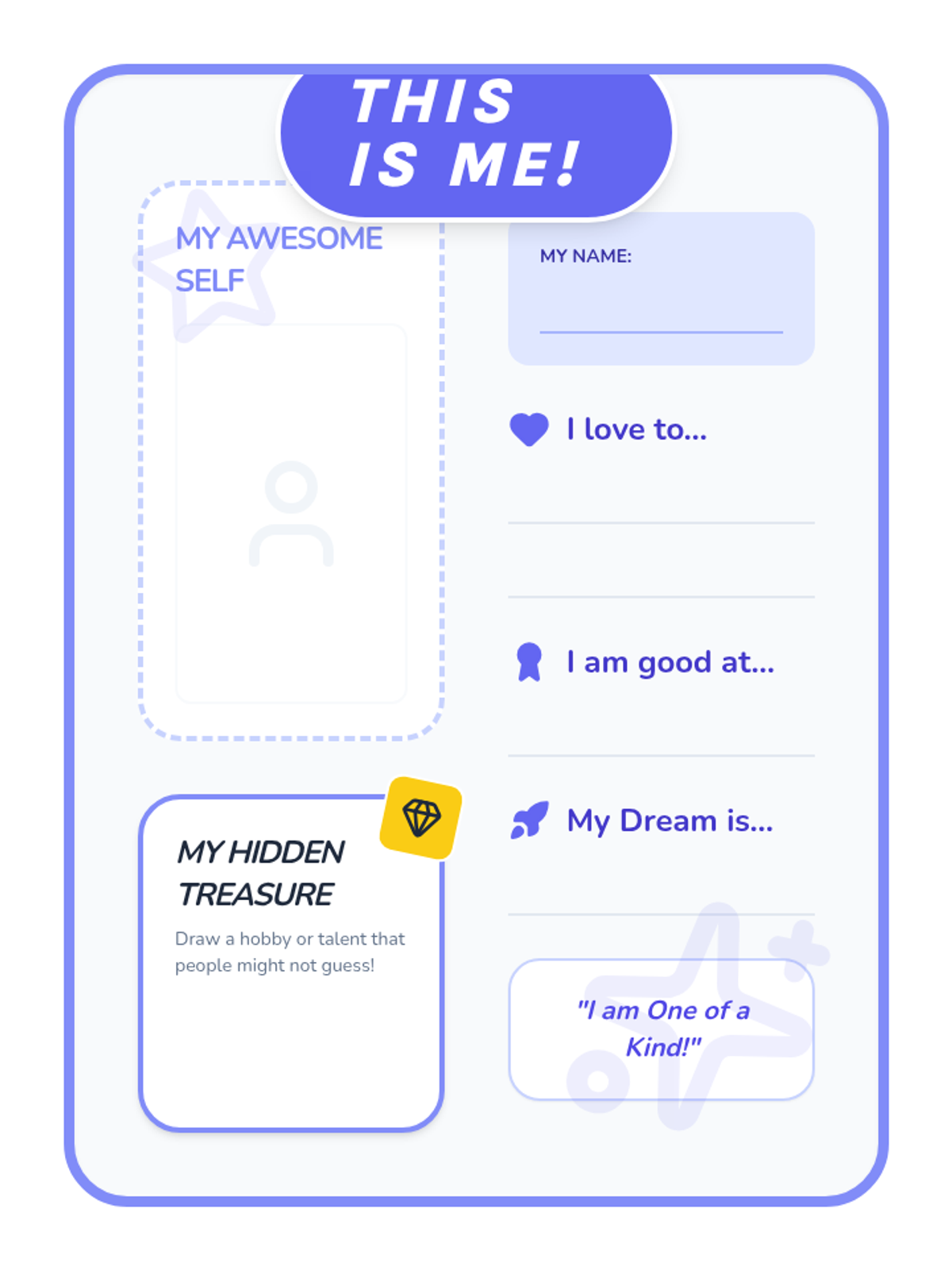
Students create and present posters that showcase their unique mix of interests, celebrating their individual identities beyond stereotypes.
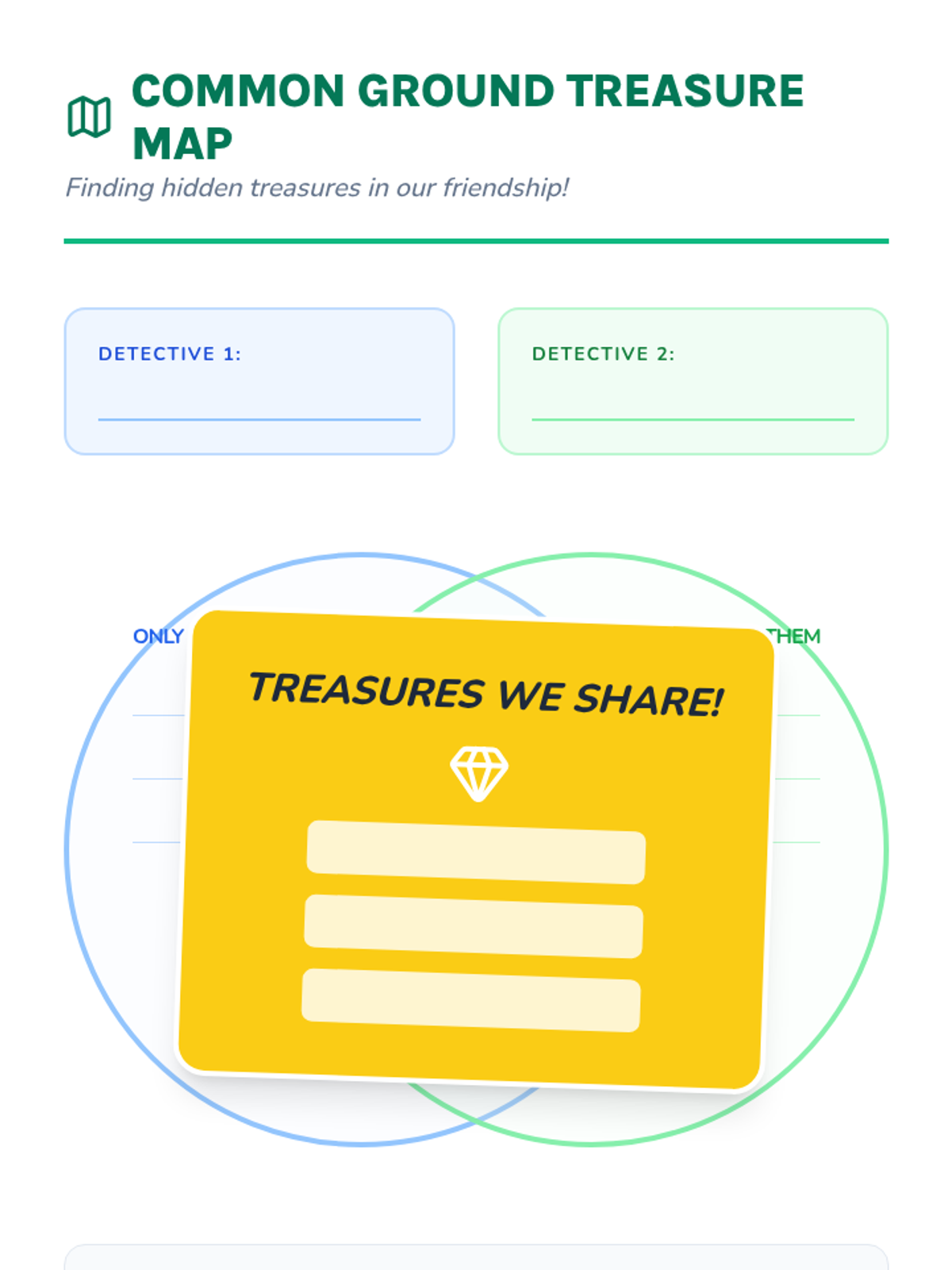
Partners find shared interests across outward differences using a simplified Venn diagram approach to build empathy and connection.
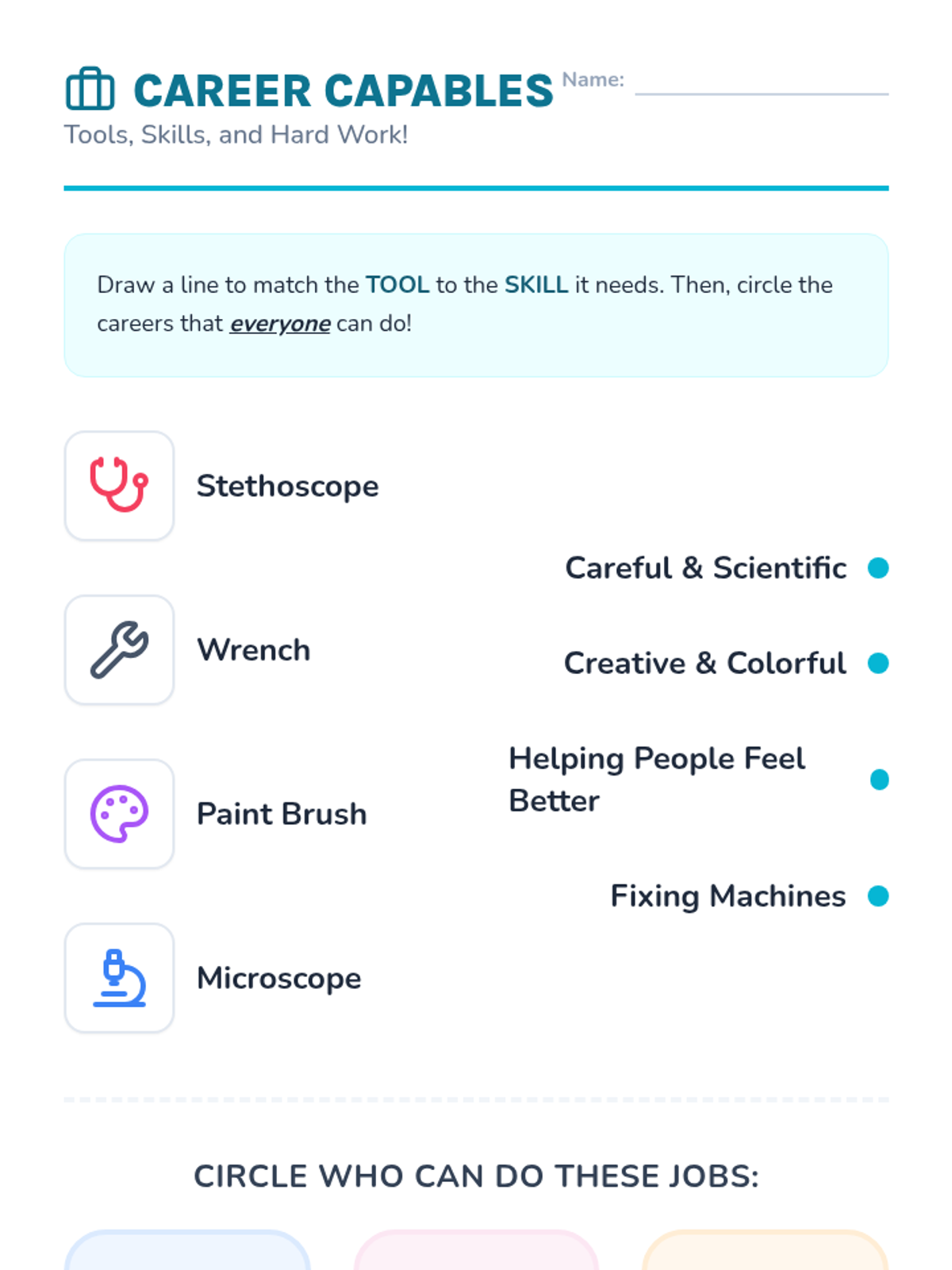
Students engage with community helper roles to see that skills and hard work determine career paths, regardless of appearance or gender.
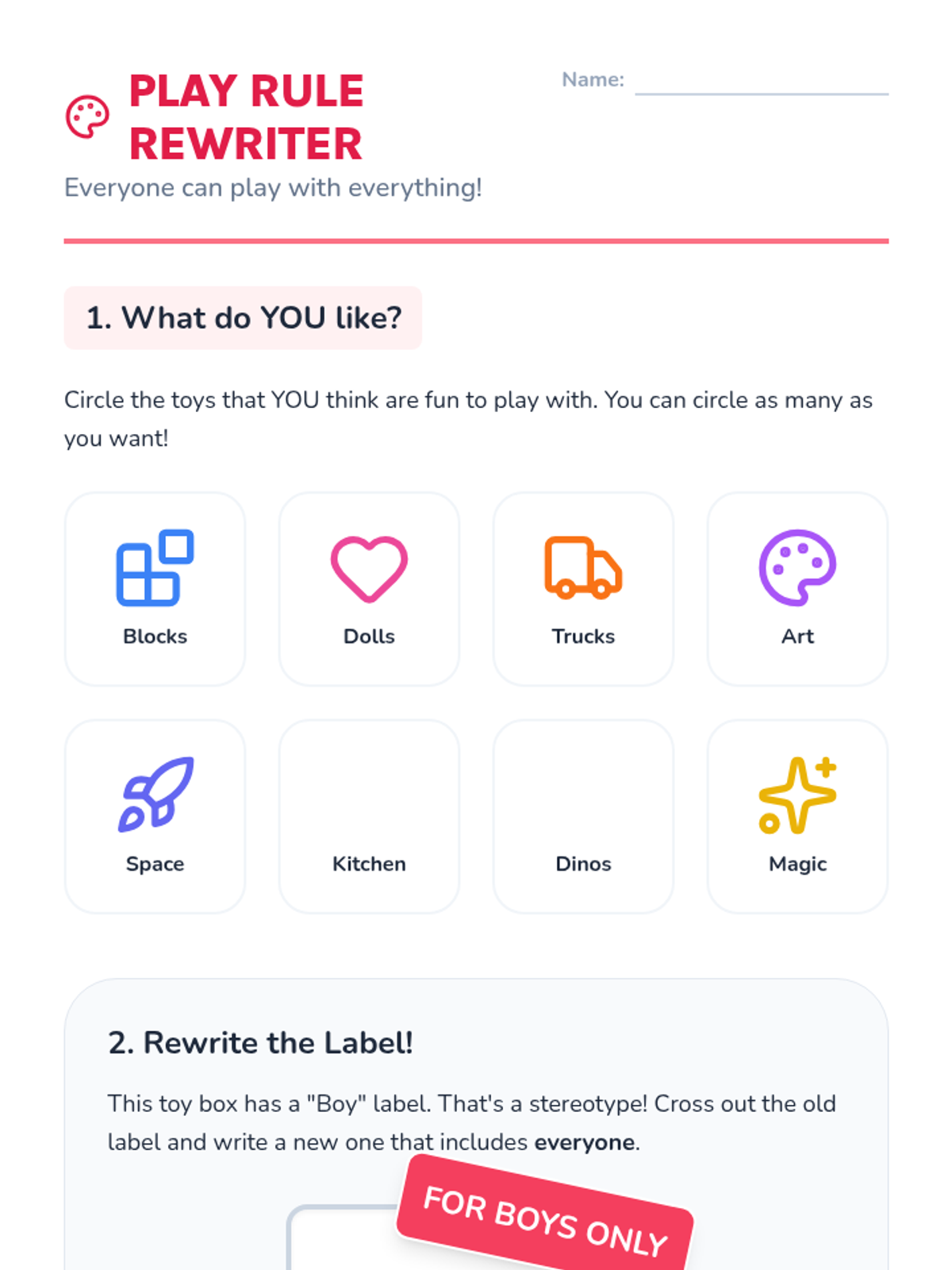
Class examines toys and marketing to discuss why some are labeled for boys or girls, concluding that play and interests should not be limited by gender.
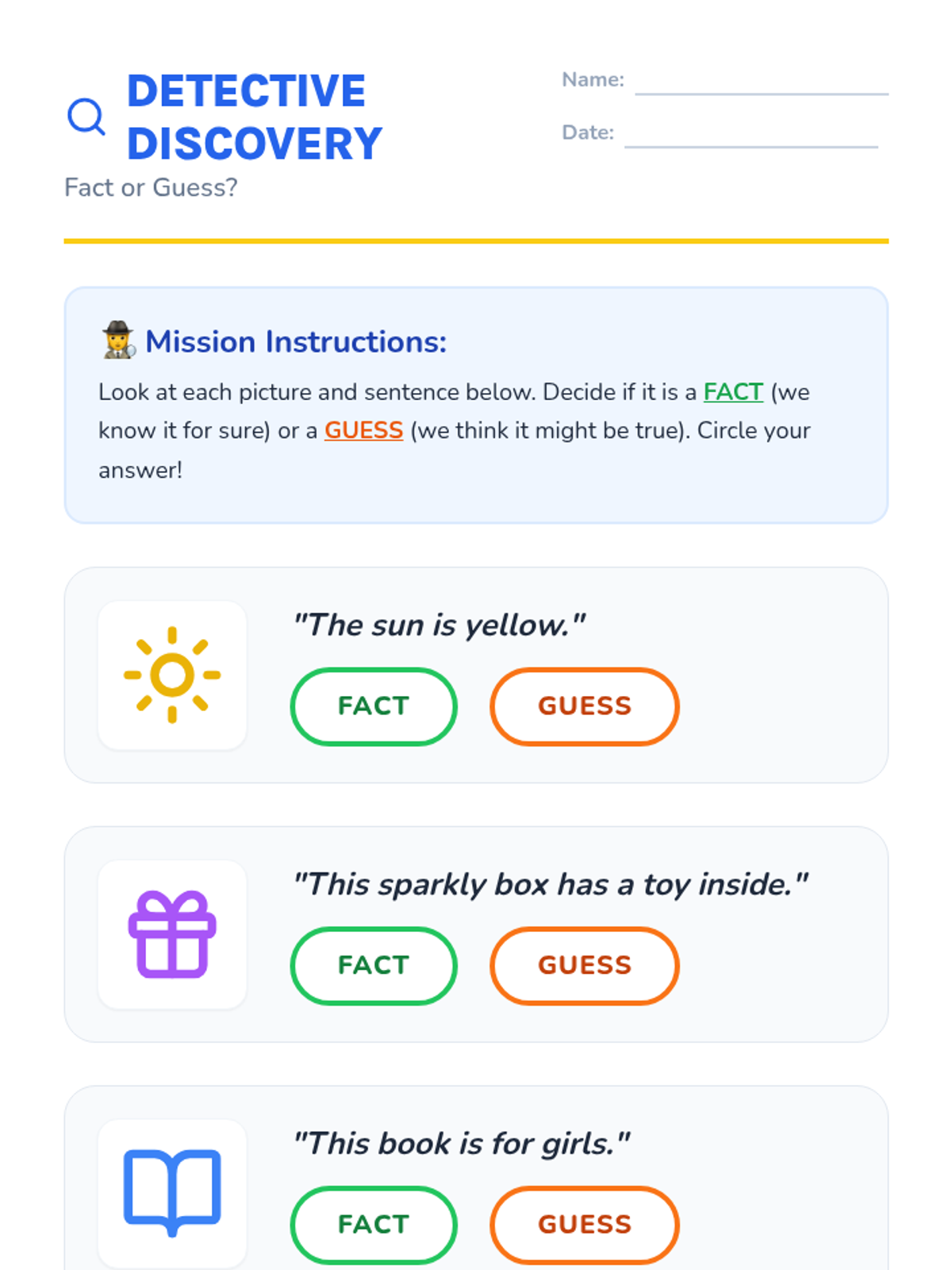
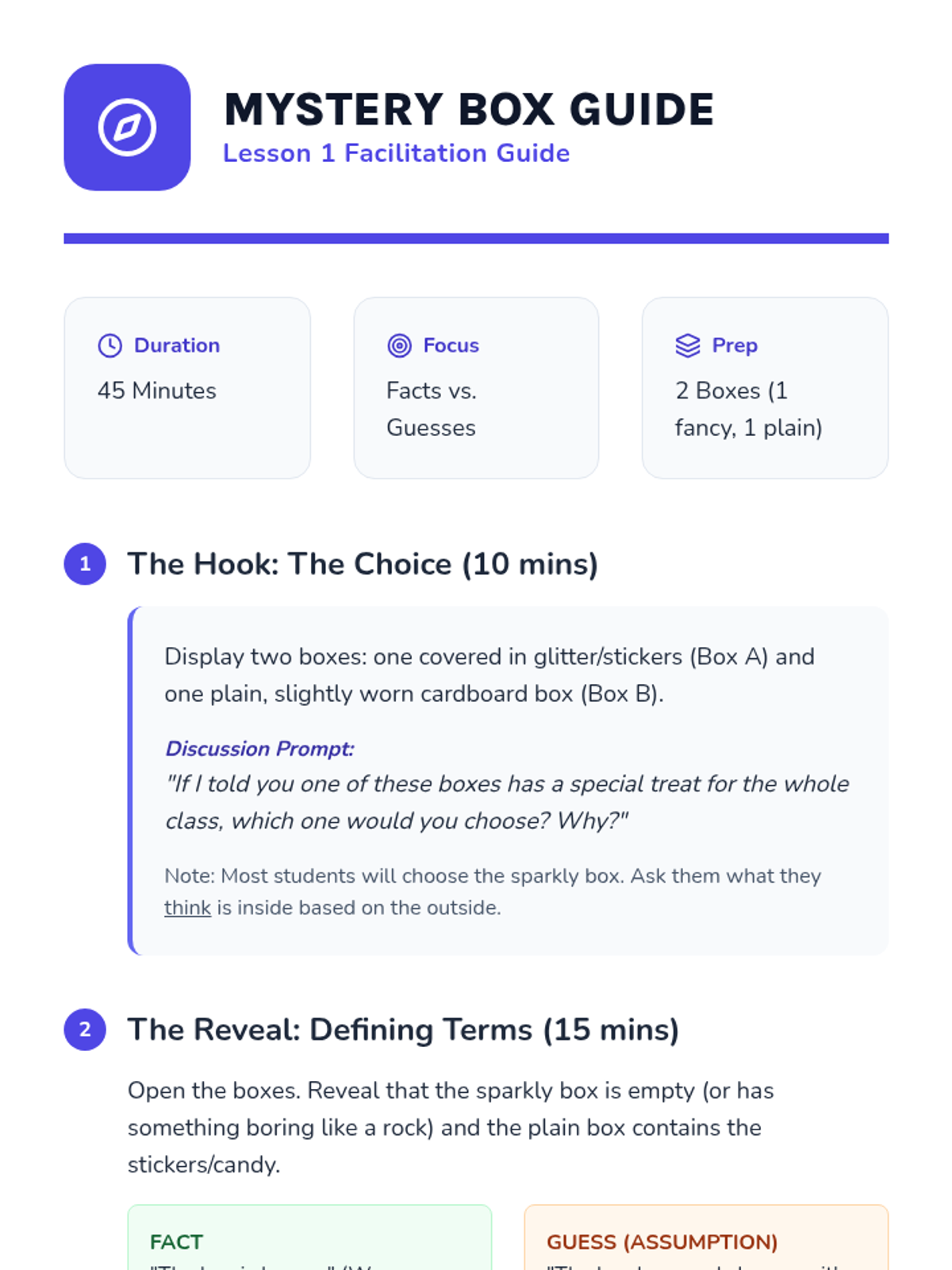
Students learn the difference between a fact (what we know for sure) and a guess (an assumption) using a Mystery Box activity. They connect this to how looking at someone's outside doesn't tell us everything about their inside.
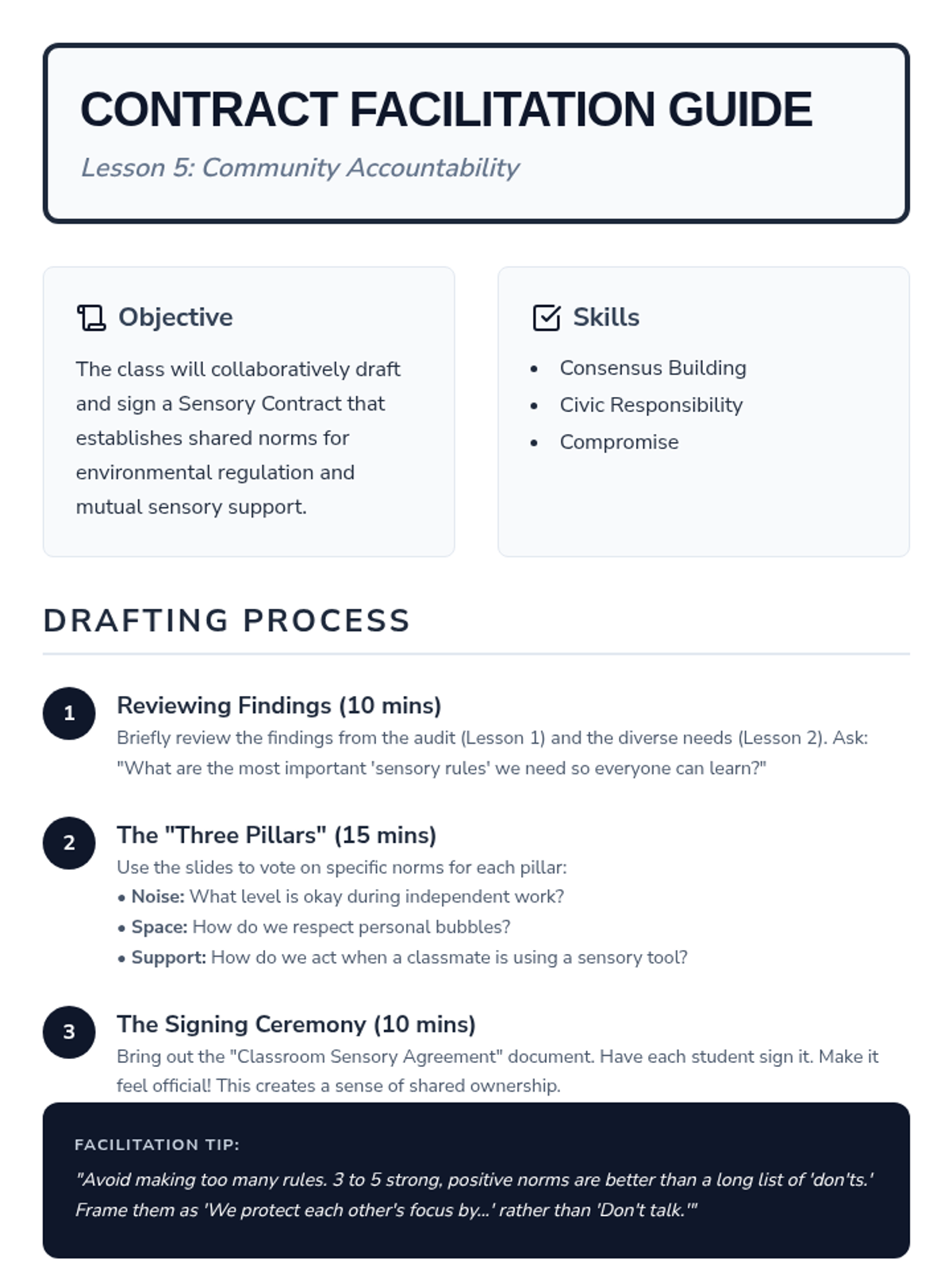
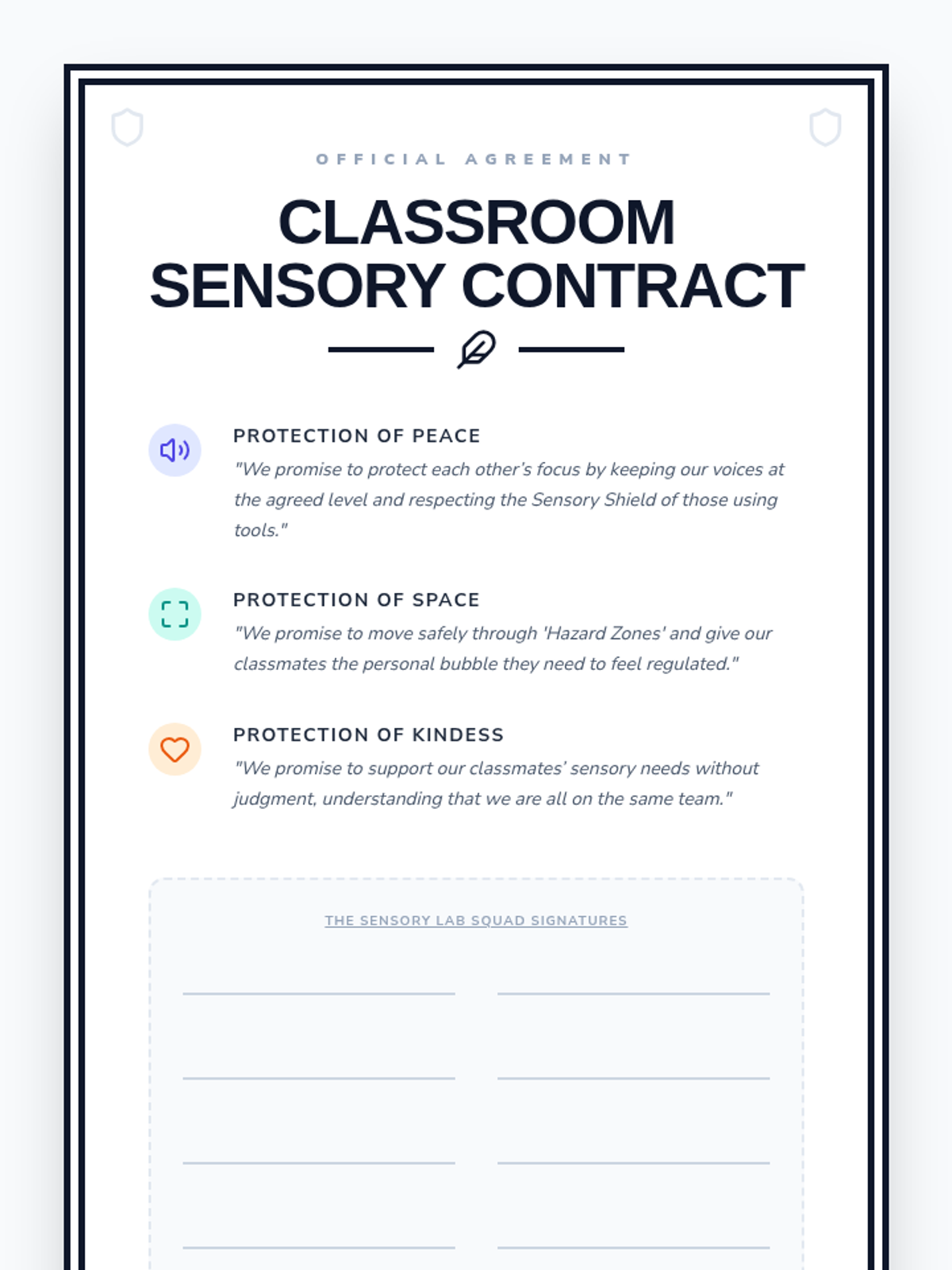
The sequence culminates in the creation of a shared classroom agreement that establishes norms for noise, space, and sensory support.
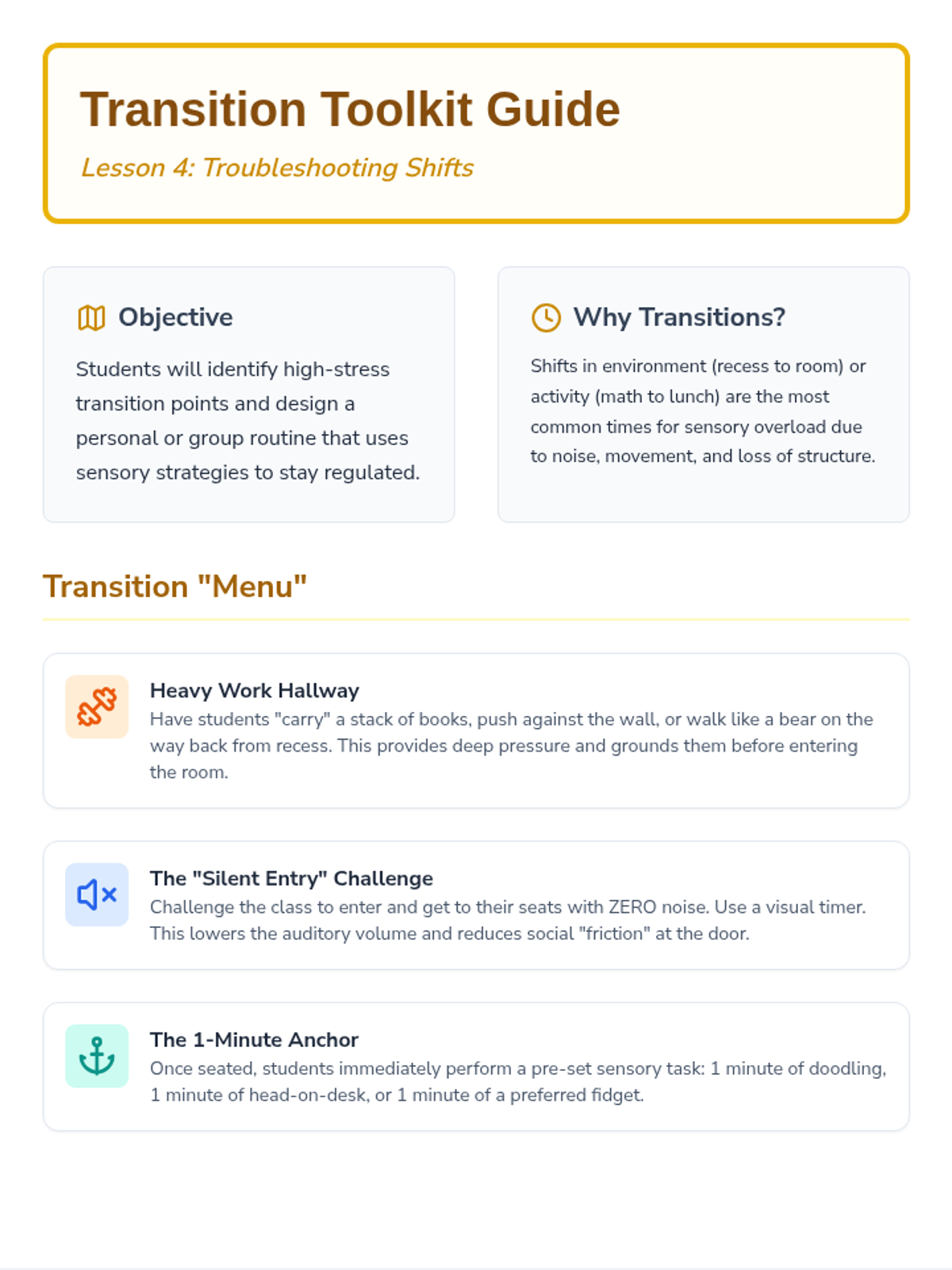
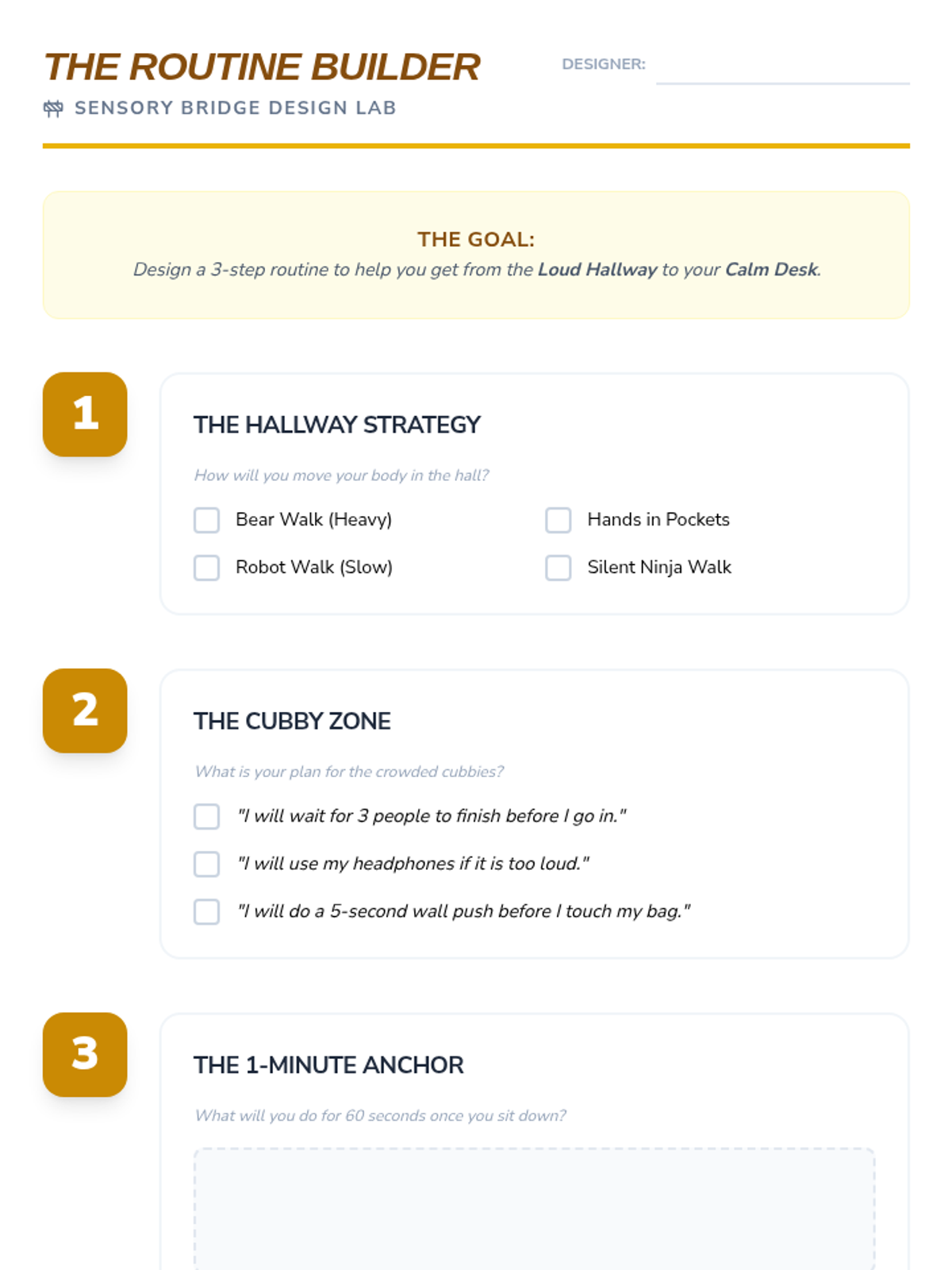
Students identify high-stress transition times and brainstorm proactive routines to maintain sensory regulation when moving between activities.
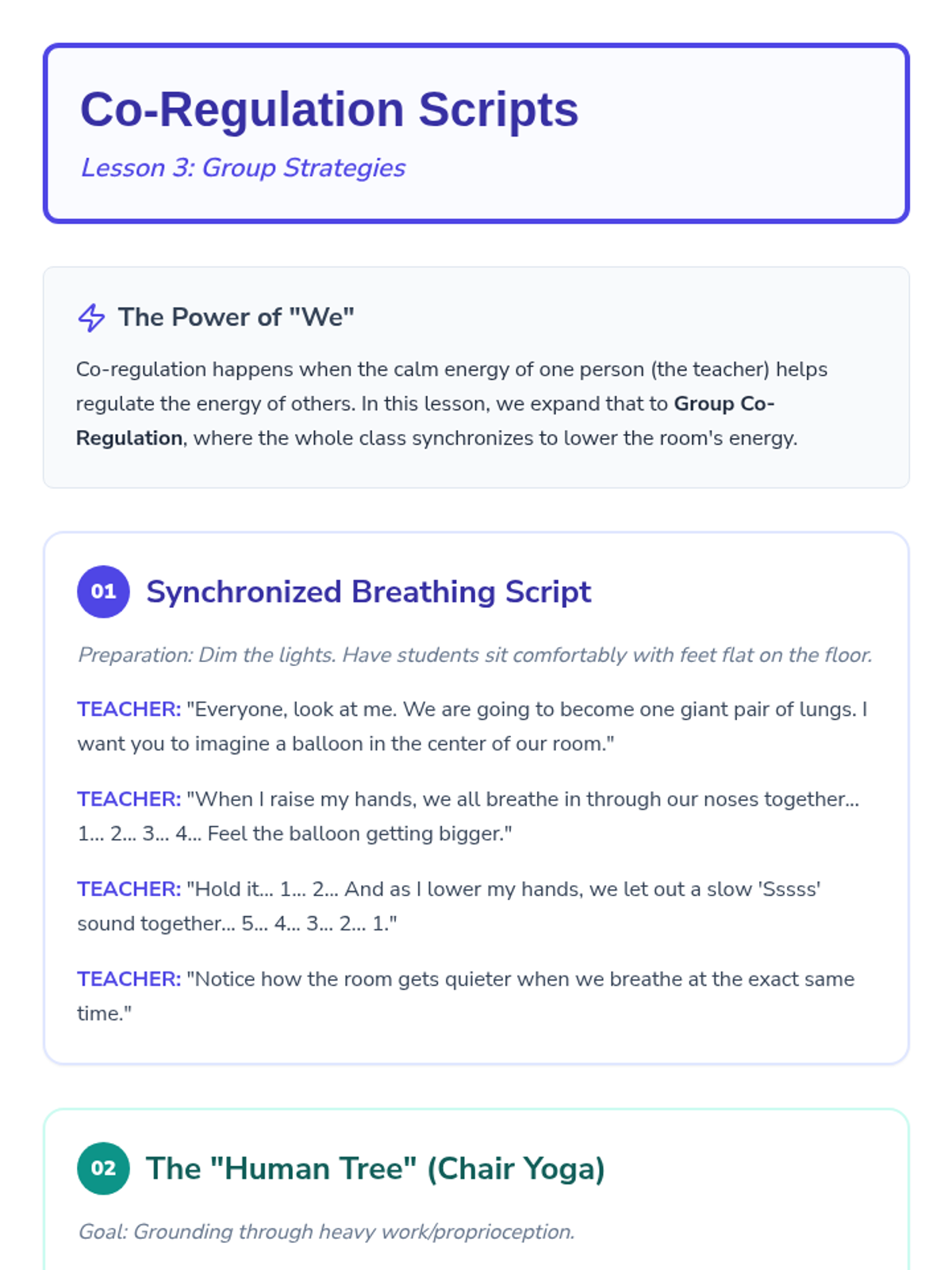
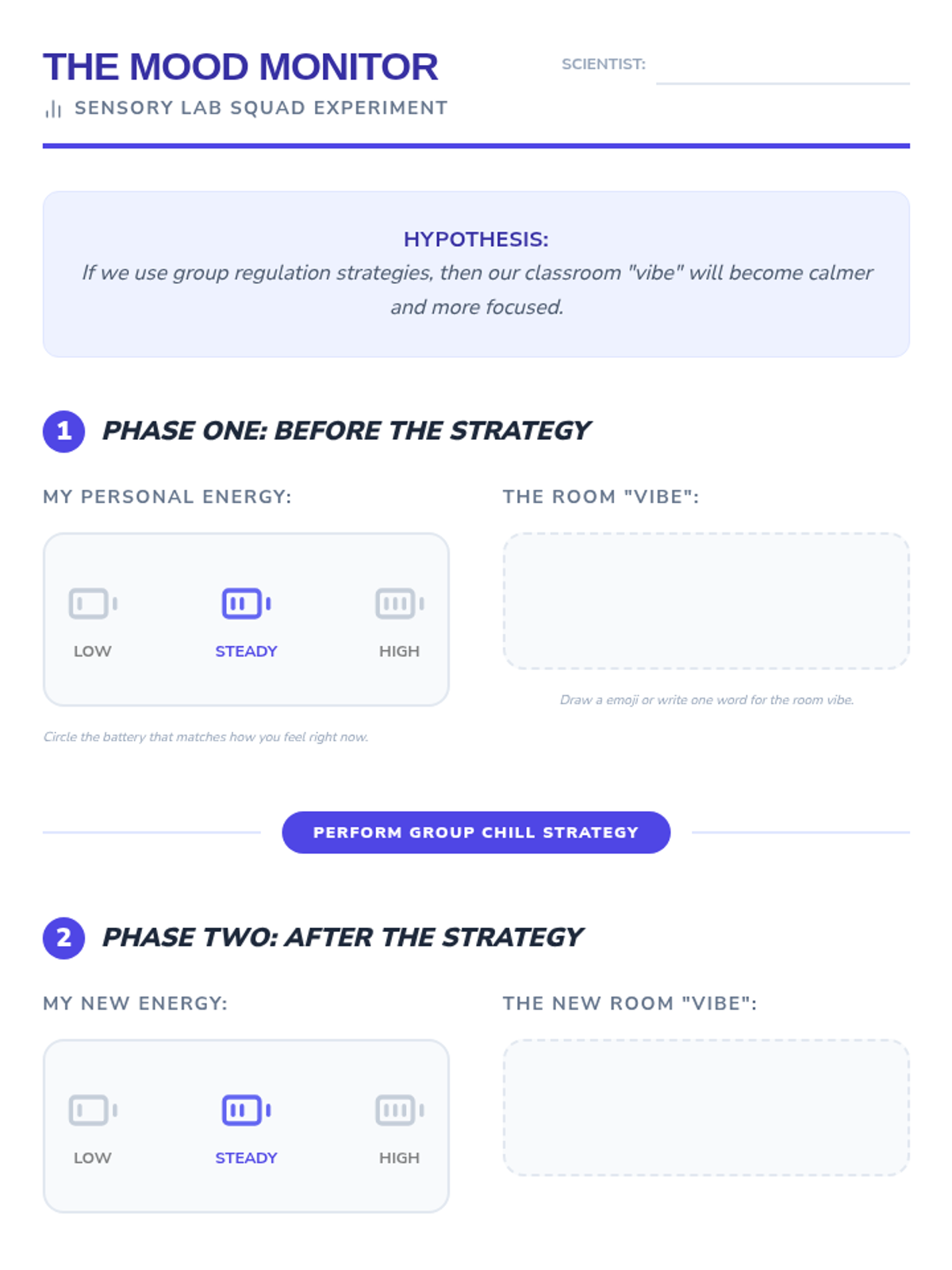
The class practices whole-group regulation techniques like synchronized breathing and chair yoga to understand how collective action affects the energy of the room.
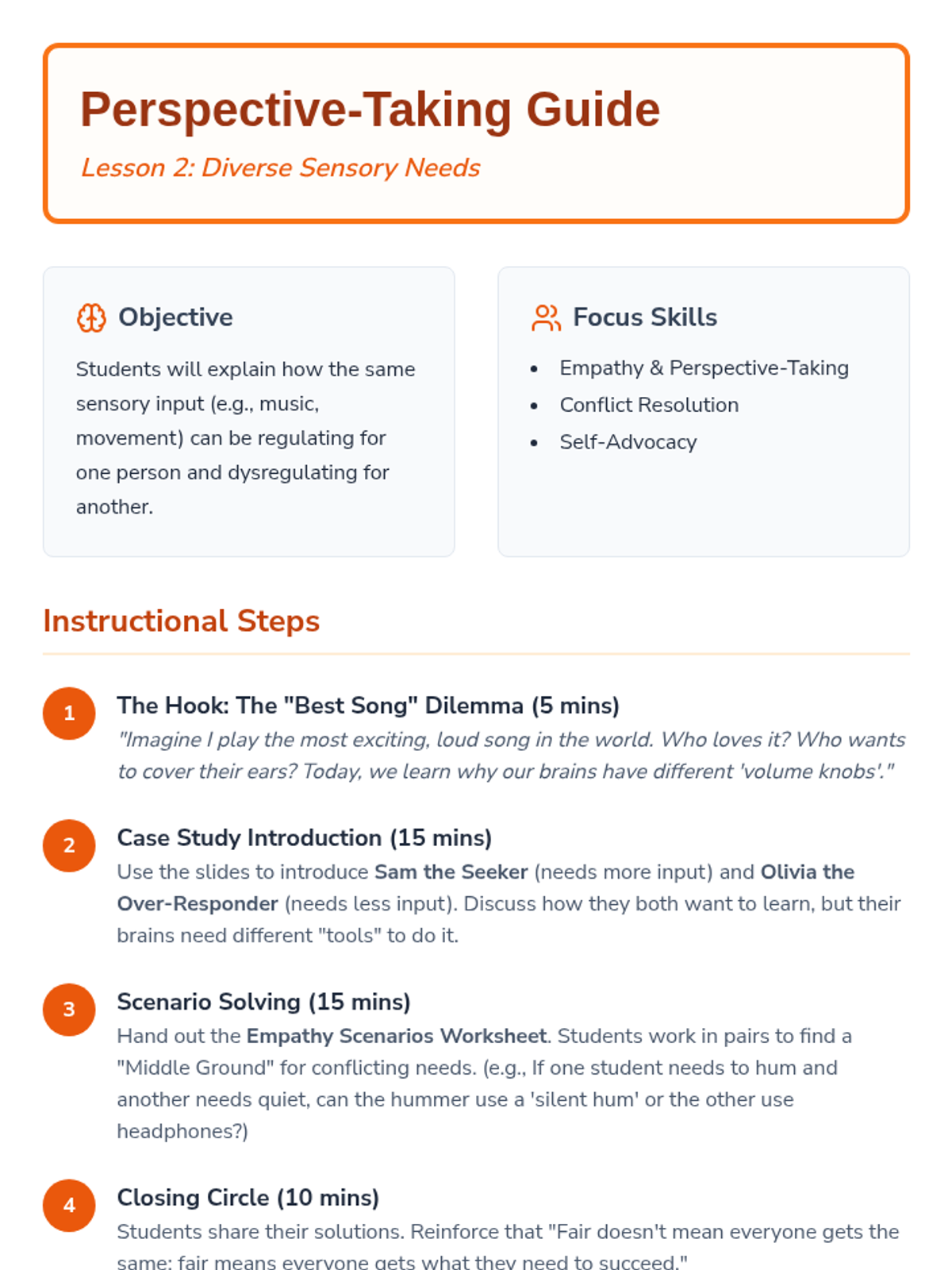
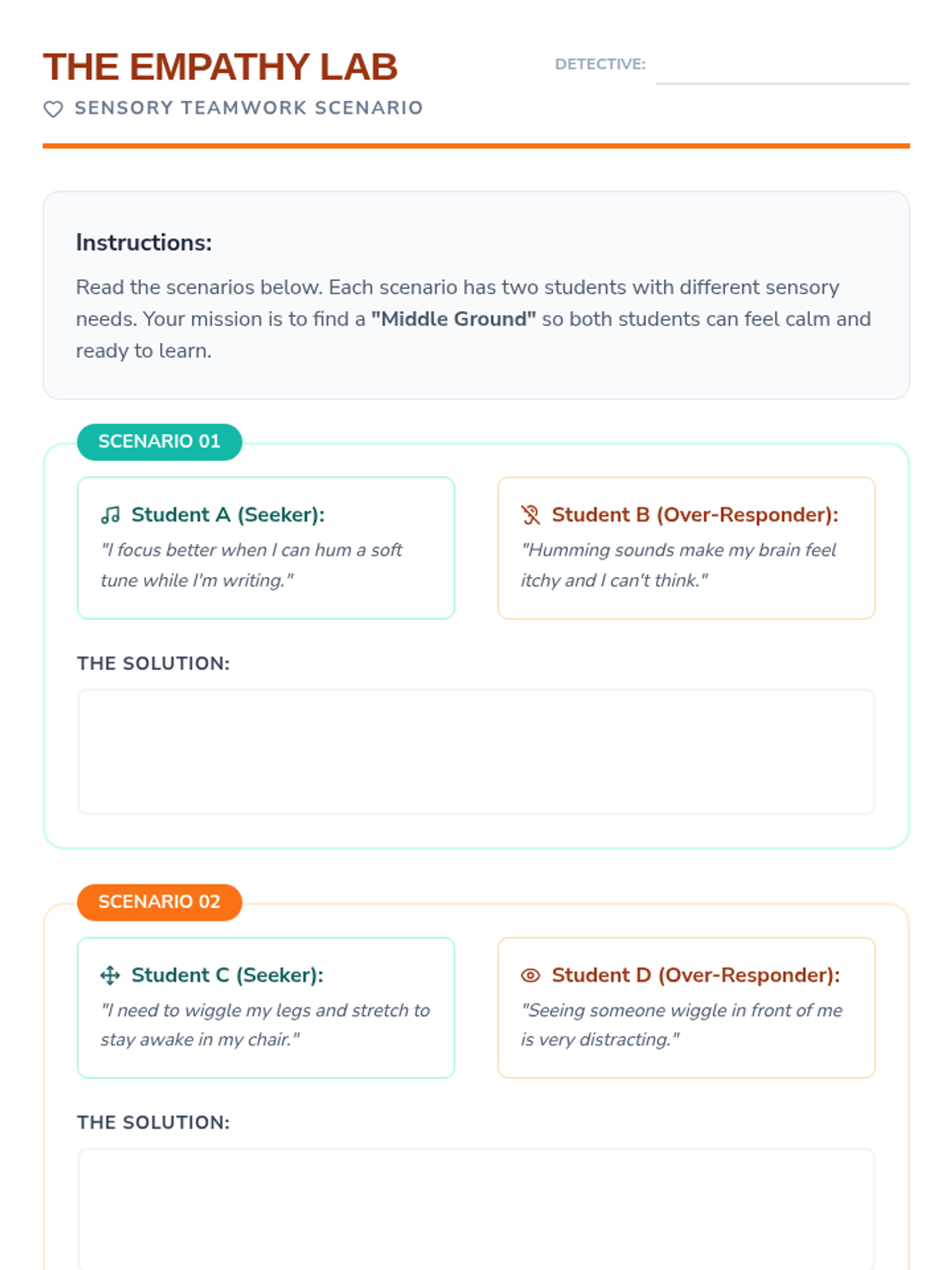
Students explore how sensory preferences vary between individuals and practice perspective-taking to understand and respect classmates' different needs.
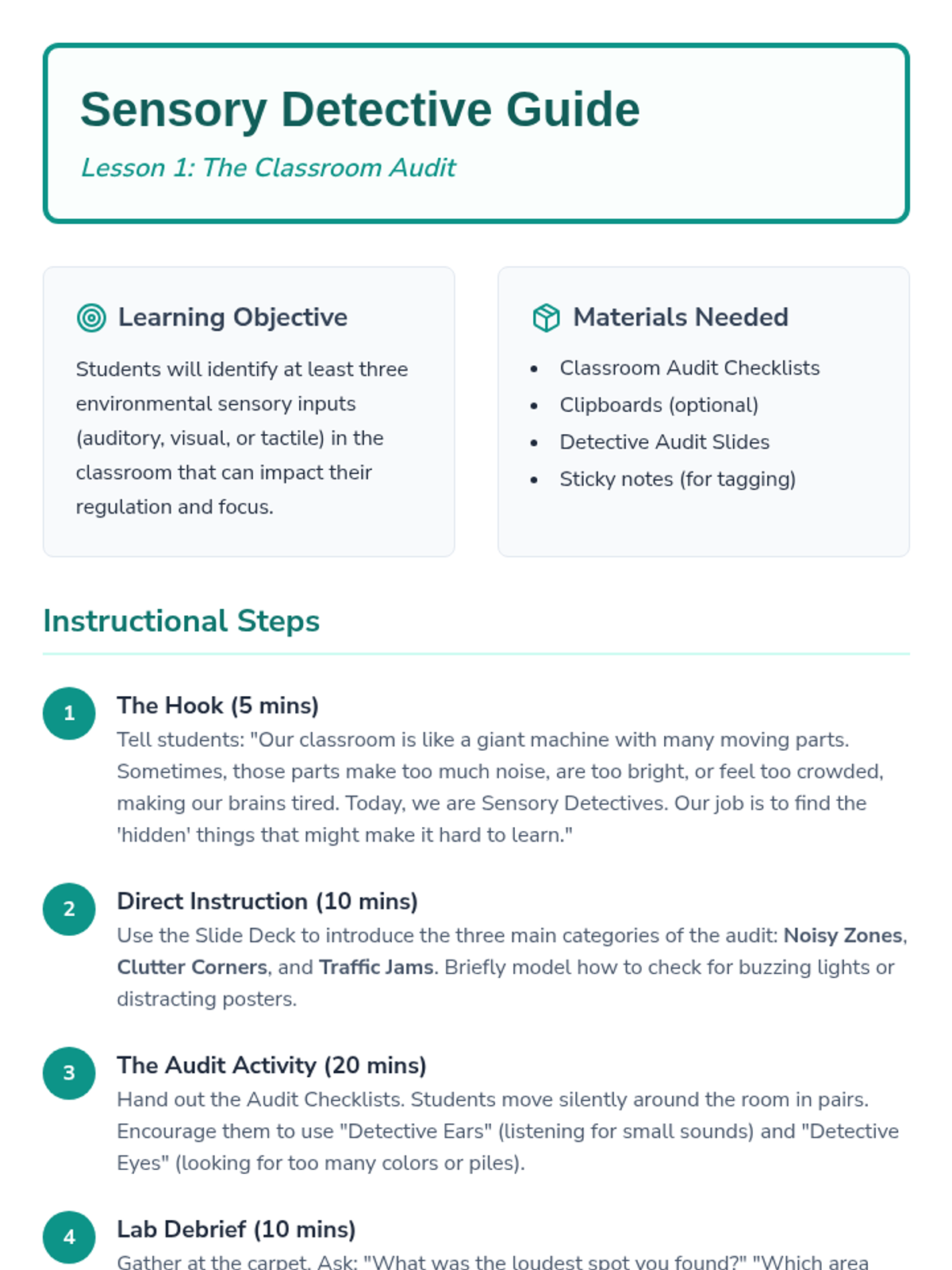
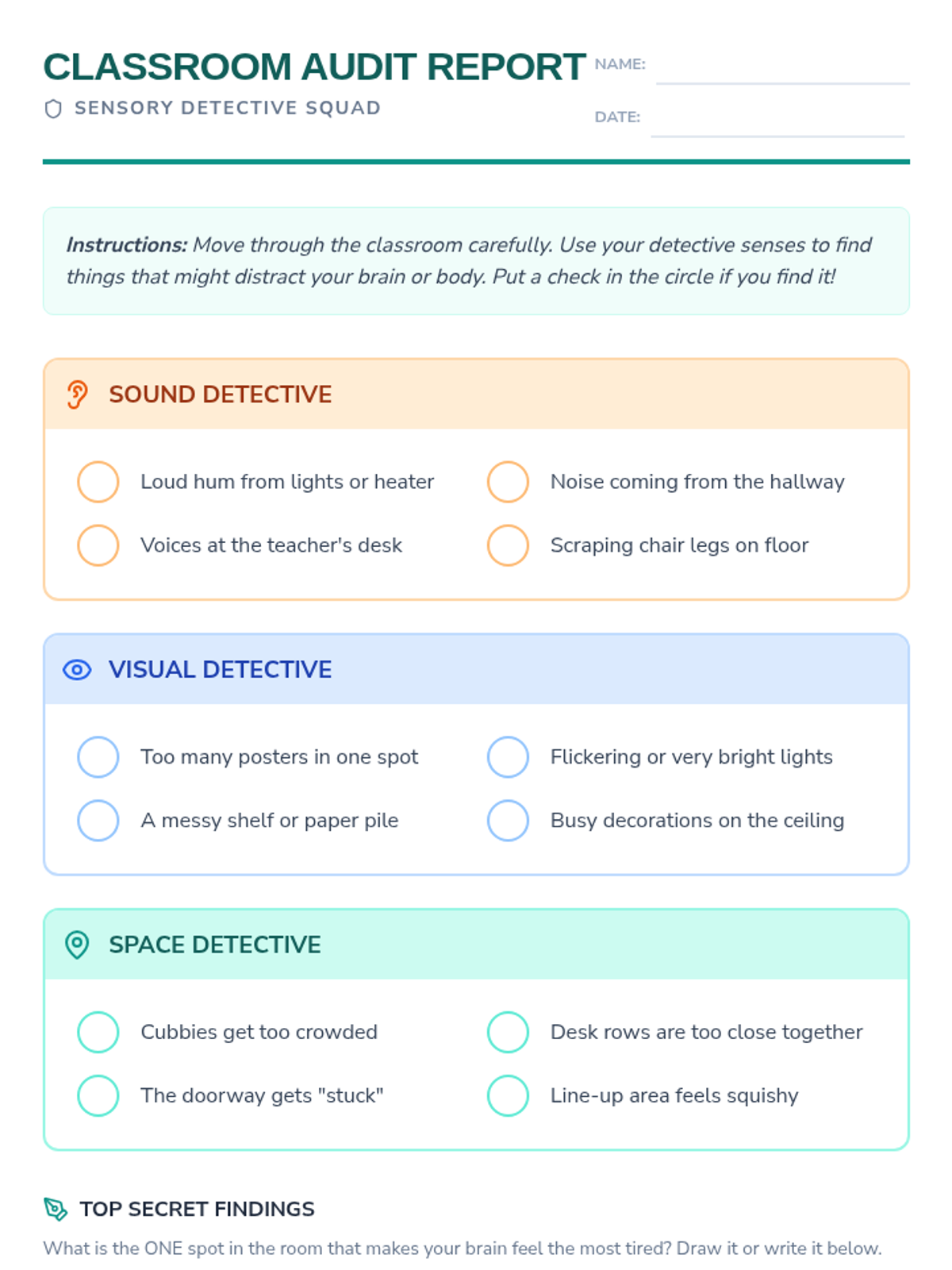
Students conduct a hands-on audit of their classroom to identify environmental sensory triggers and discuss how these factors impact their ability to focus and stay calm.
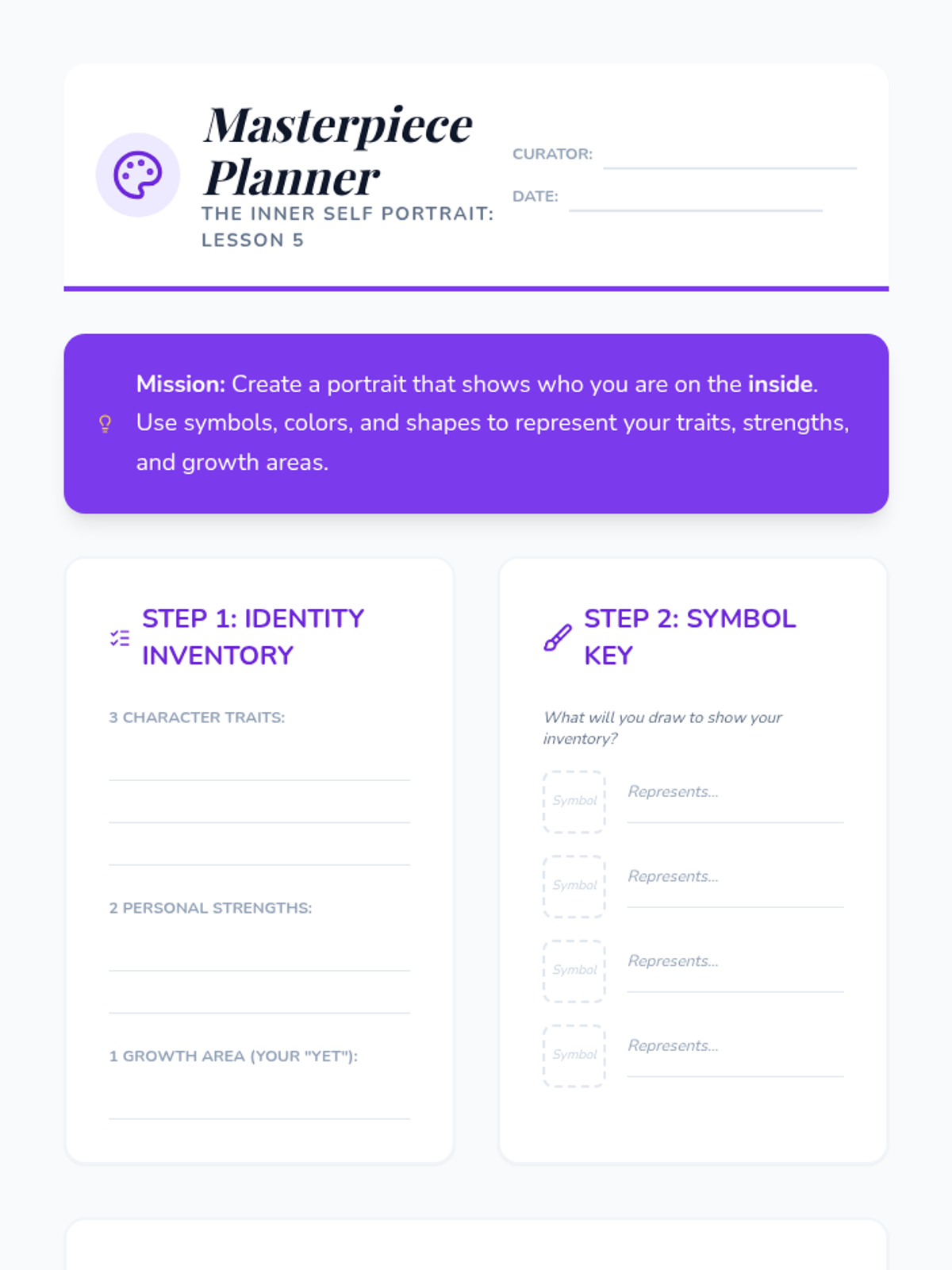
Students synthesize their learning by creating a symbolic self-portrait that represents their internal identity.
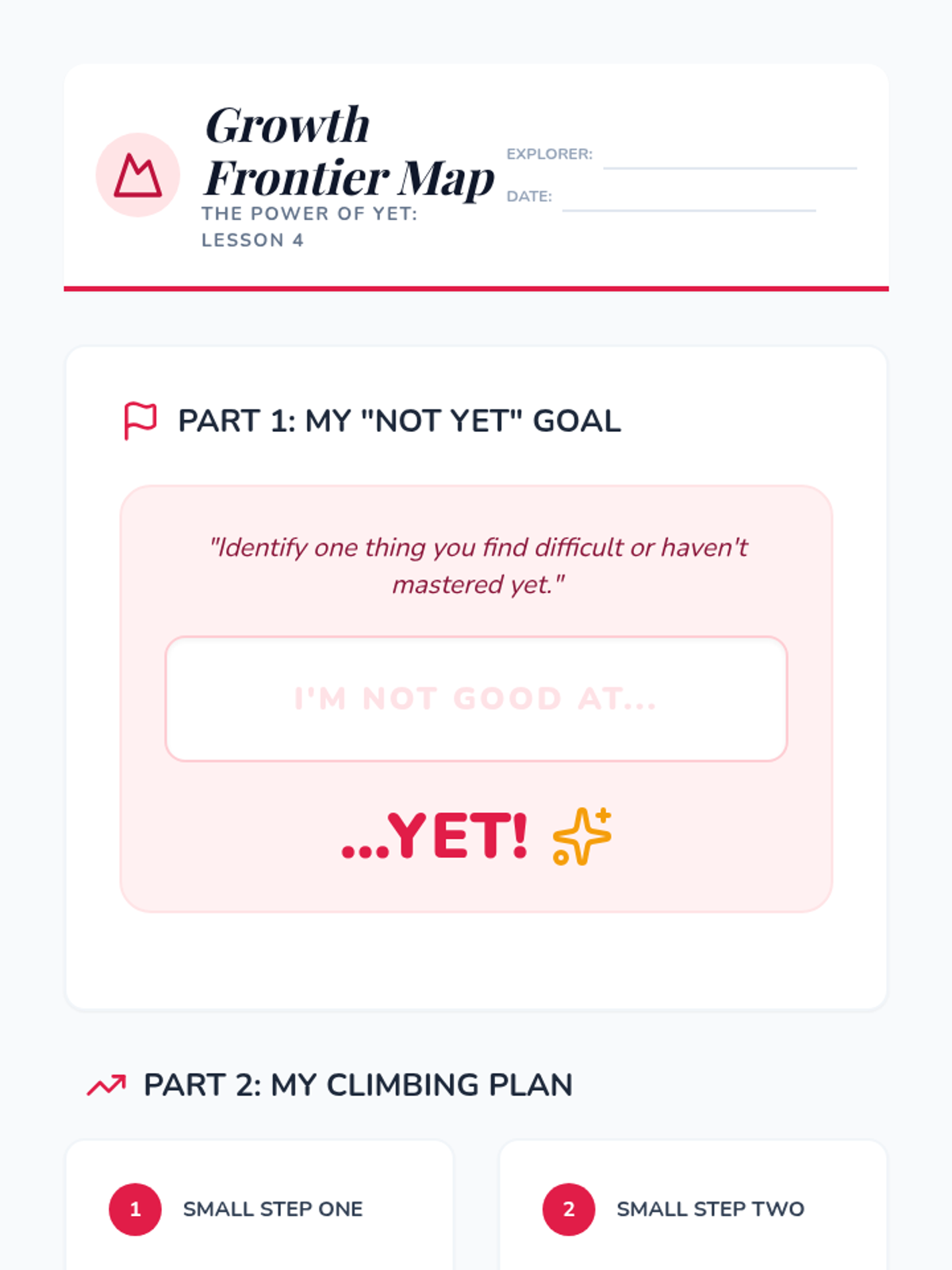
Students learn about the 'Power of Yet' and identify areas for growth, framing challenges as part of their developing identity.
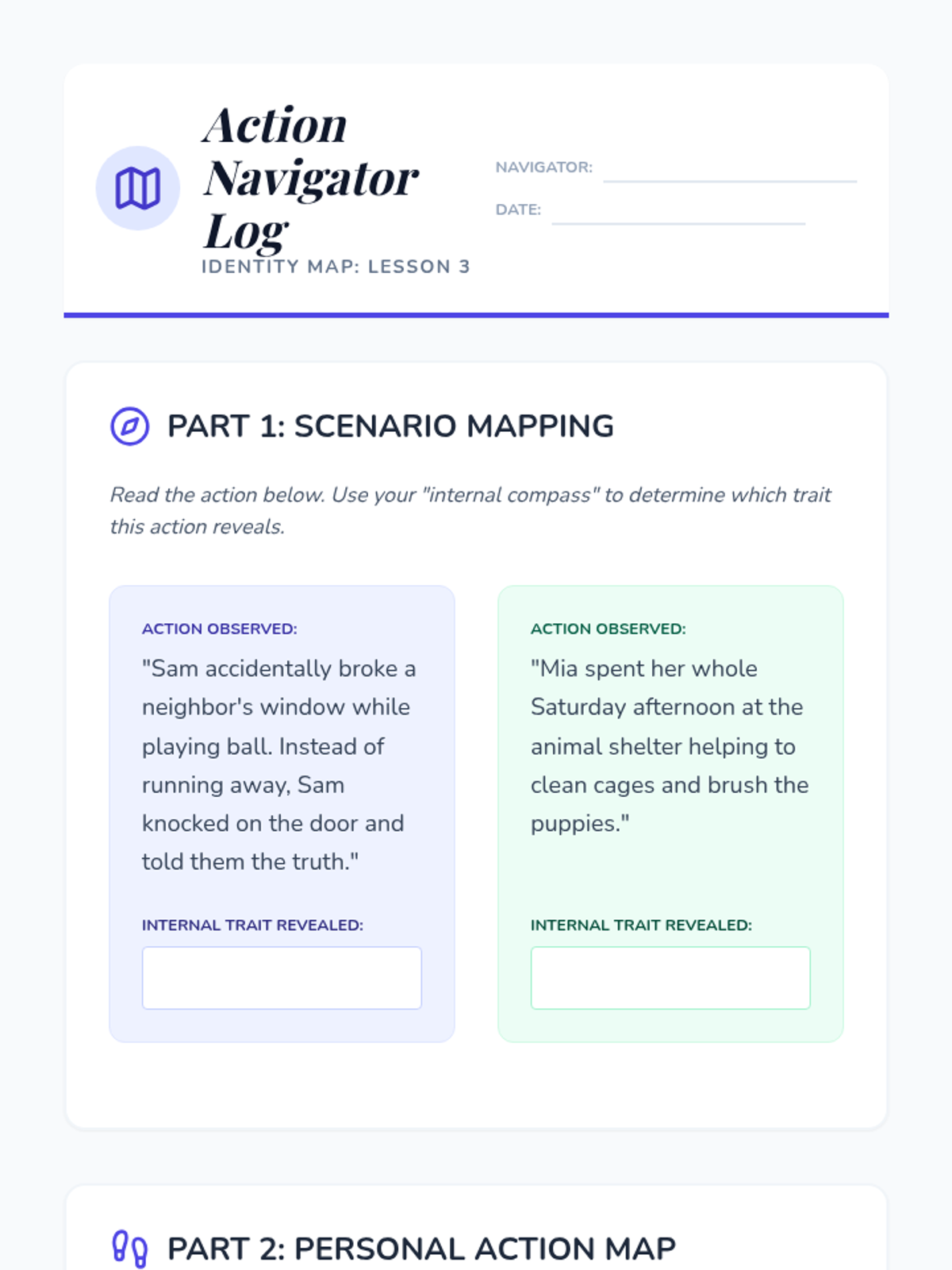
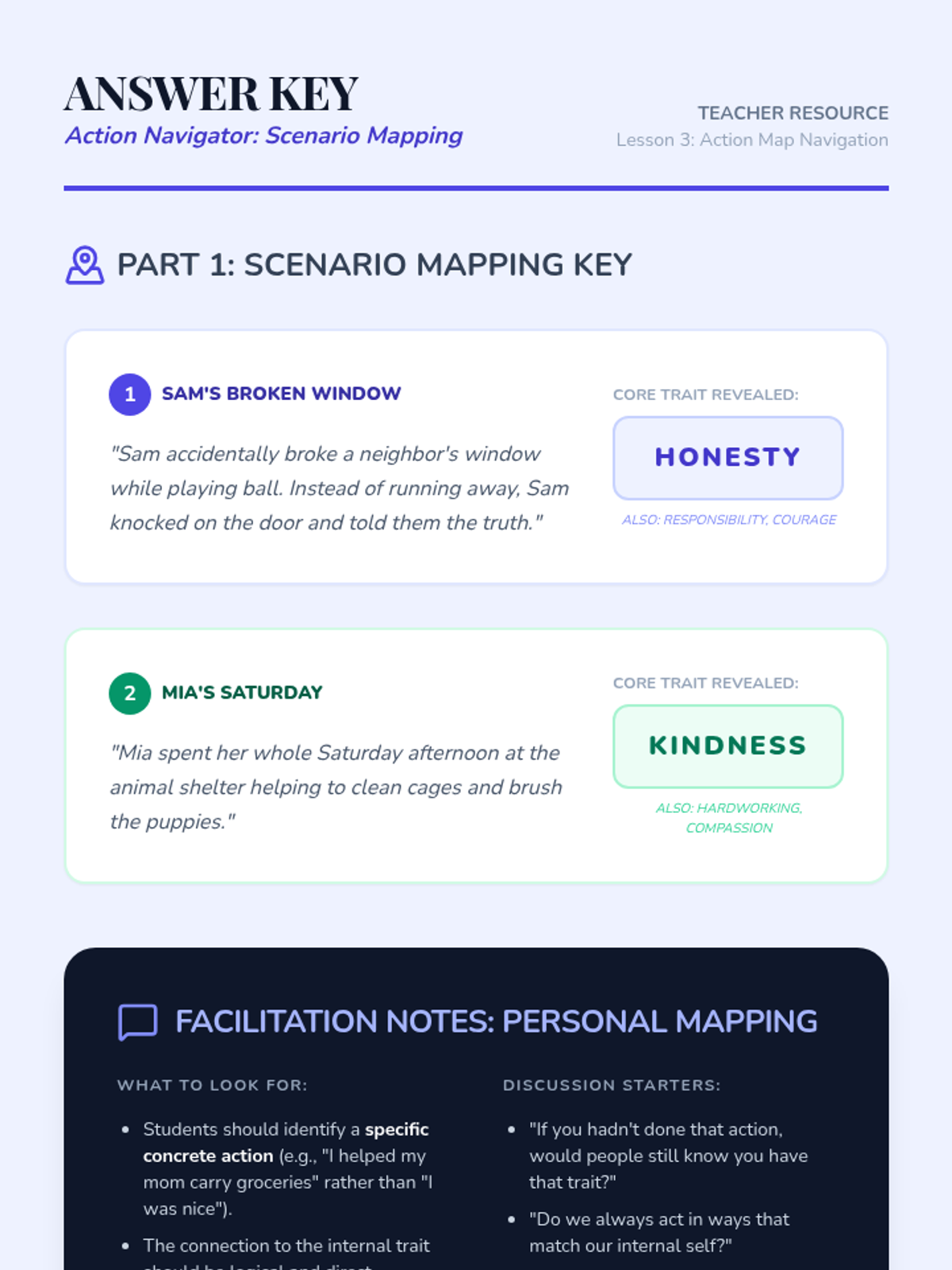
Students explore how behaviors reveal personality traits through role-playing and scenario analysis.
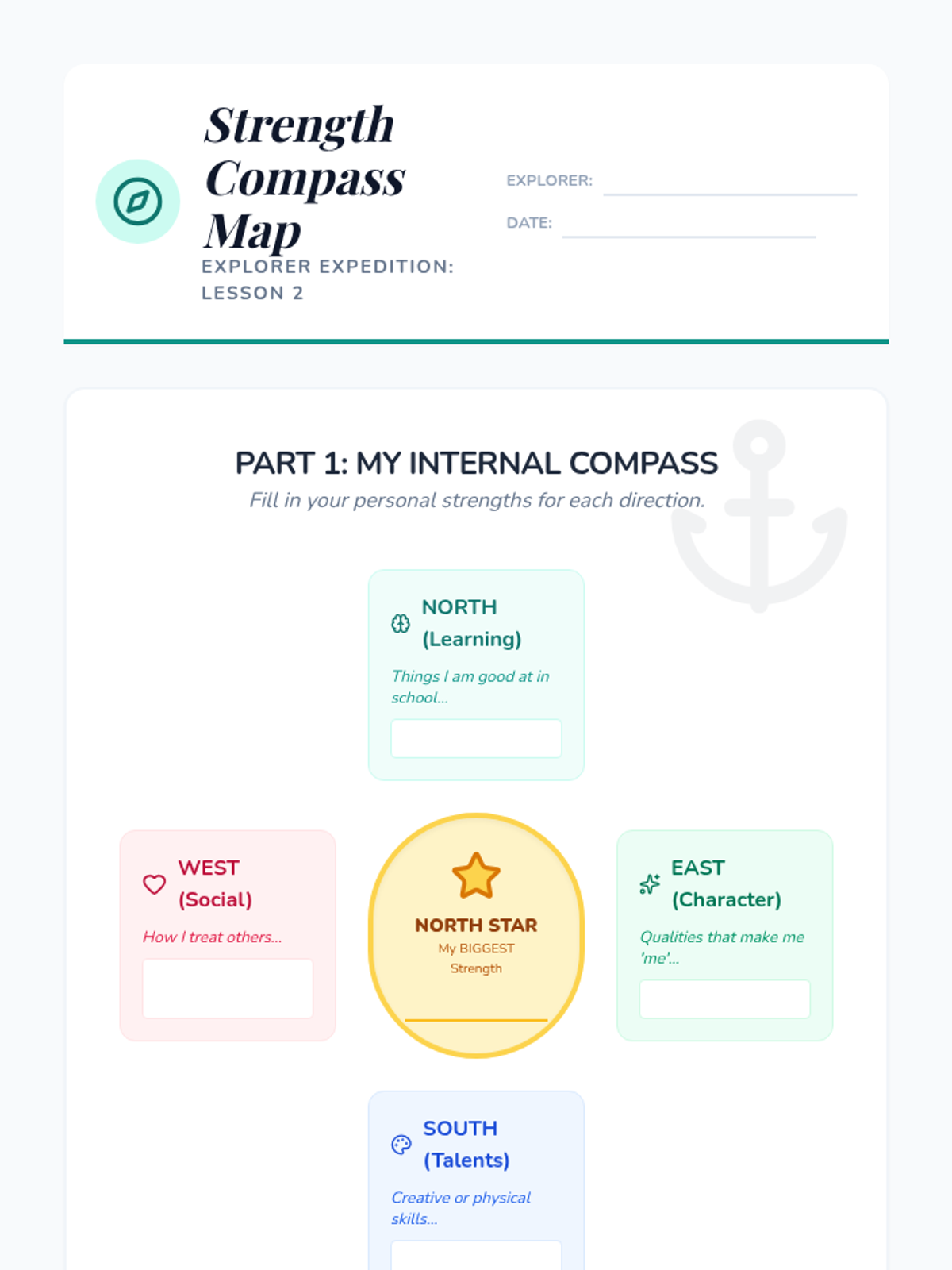
Students identify their personal strengths and talents while practicing 'strength spotting' in their peers.
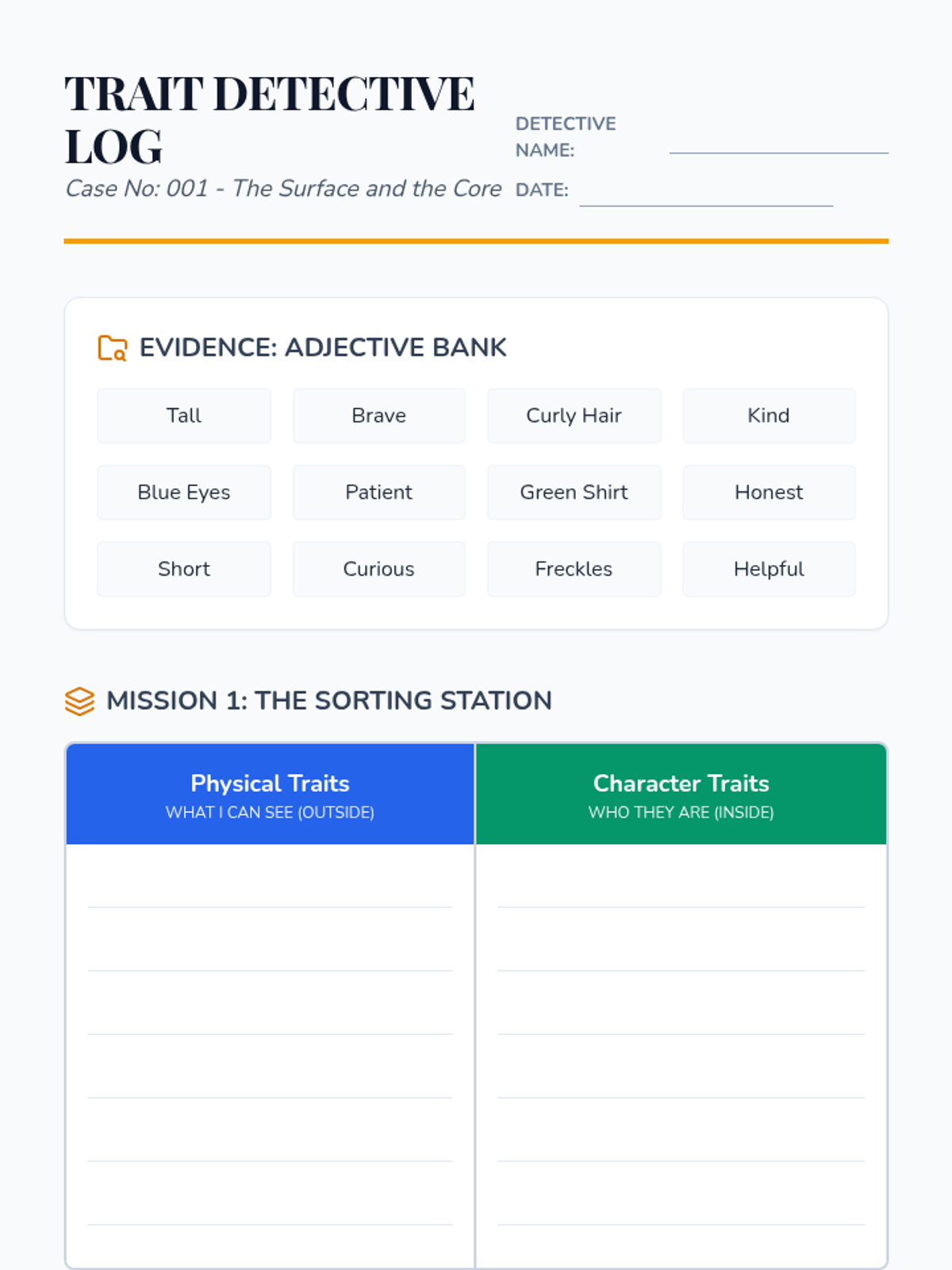
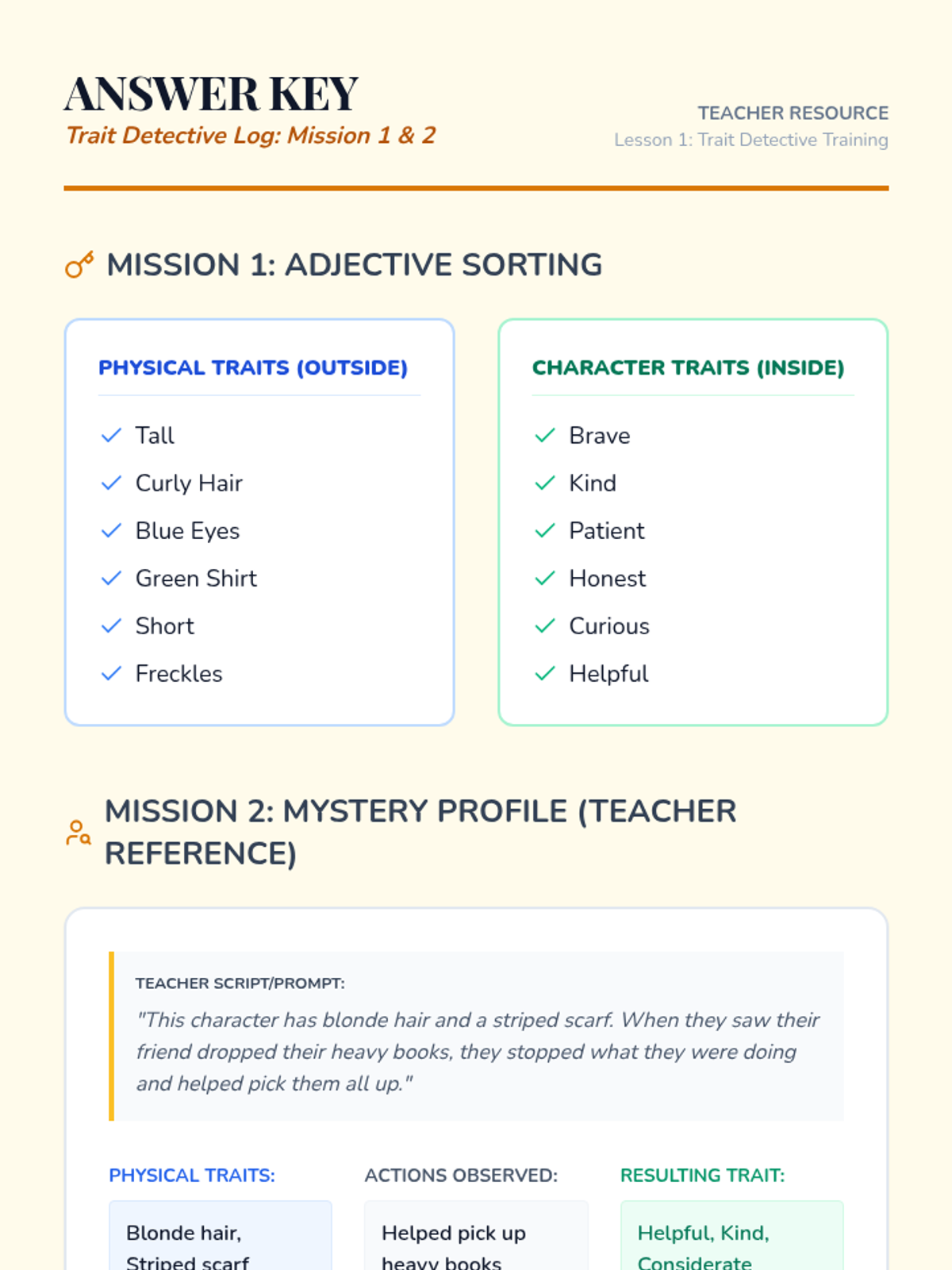
Students analyze fictional characters to differentiate between physical traits (what we see) and character traits (what we infer from actions).
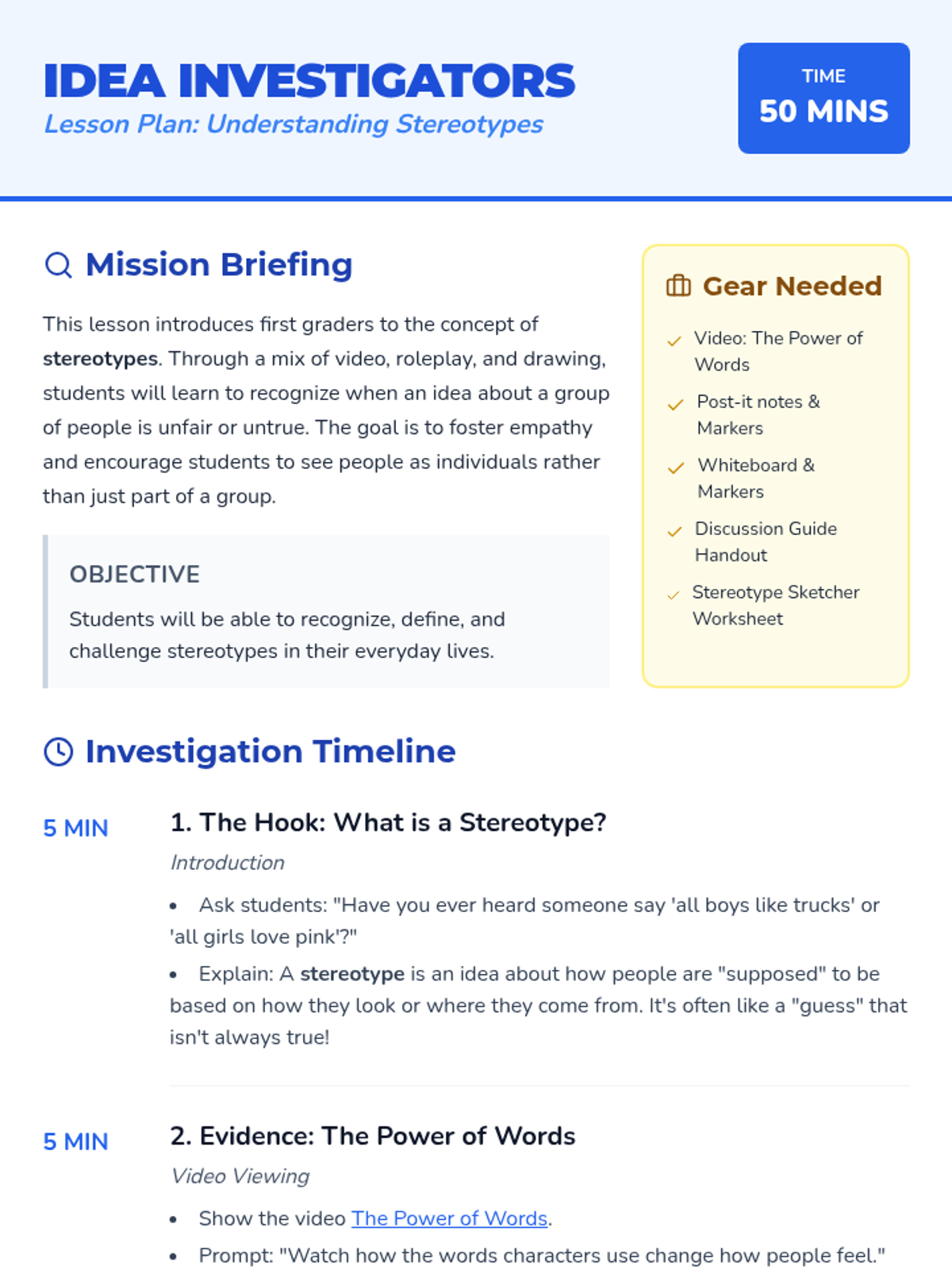
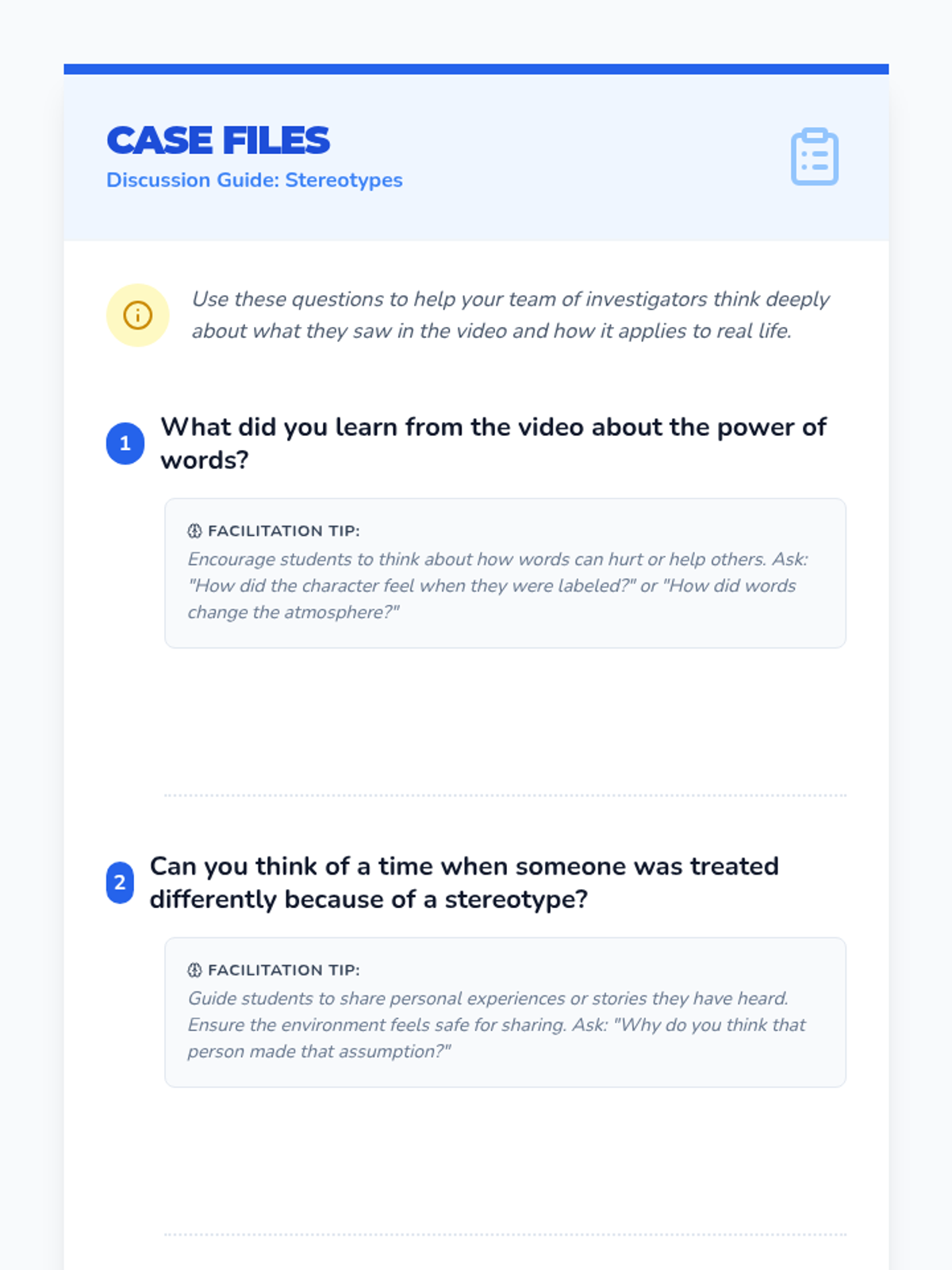
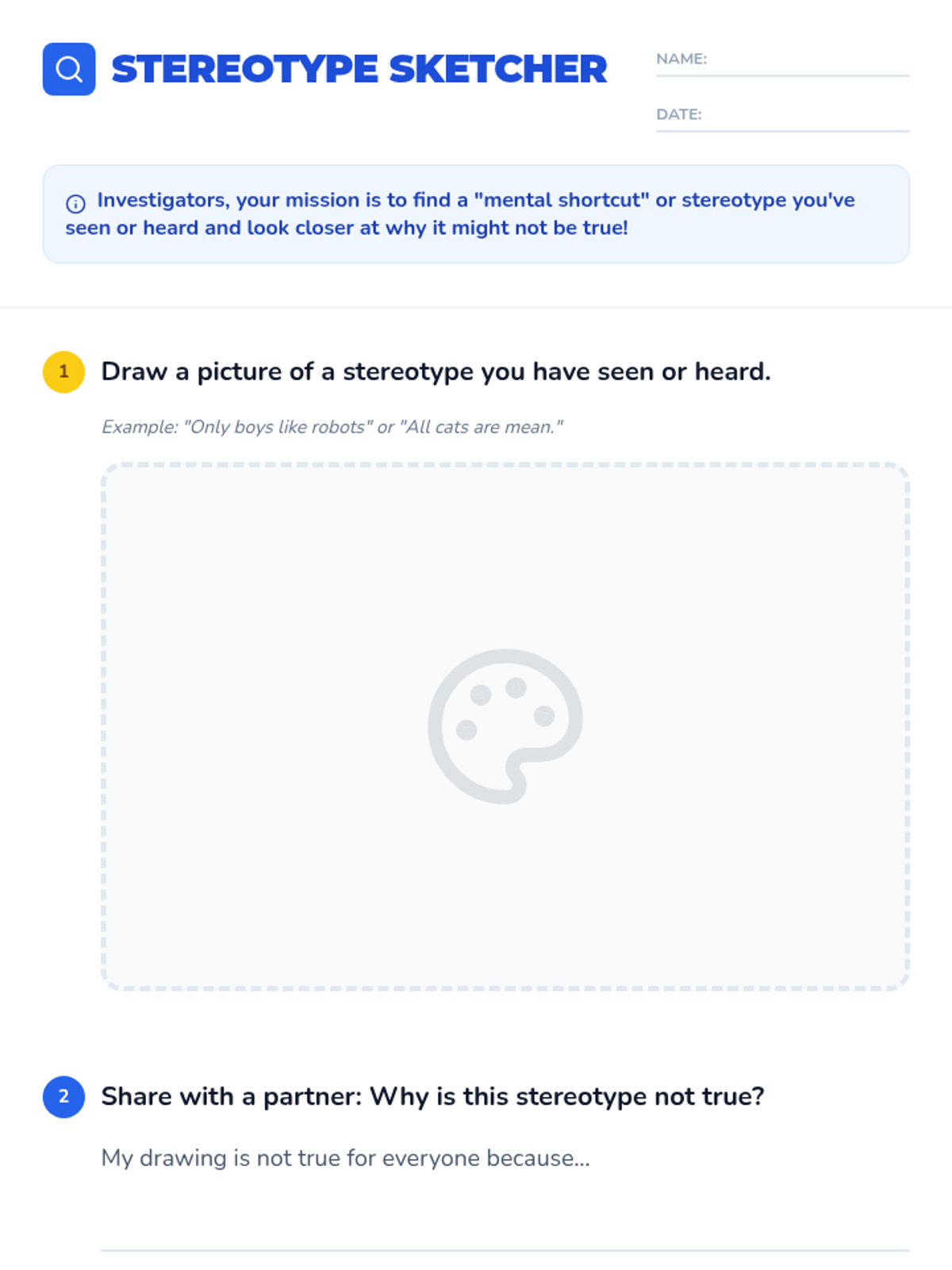
This lesson introduces first graders to the concept of stereotypes, helping them recognize and challenge preconceived notions through video, discussion, and hands-on activities. Students will explore how words affect others and learn to appreciate individuality over generalizations.
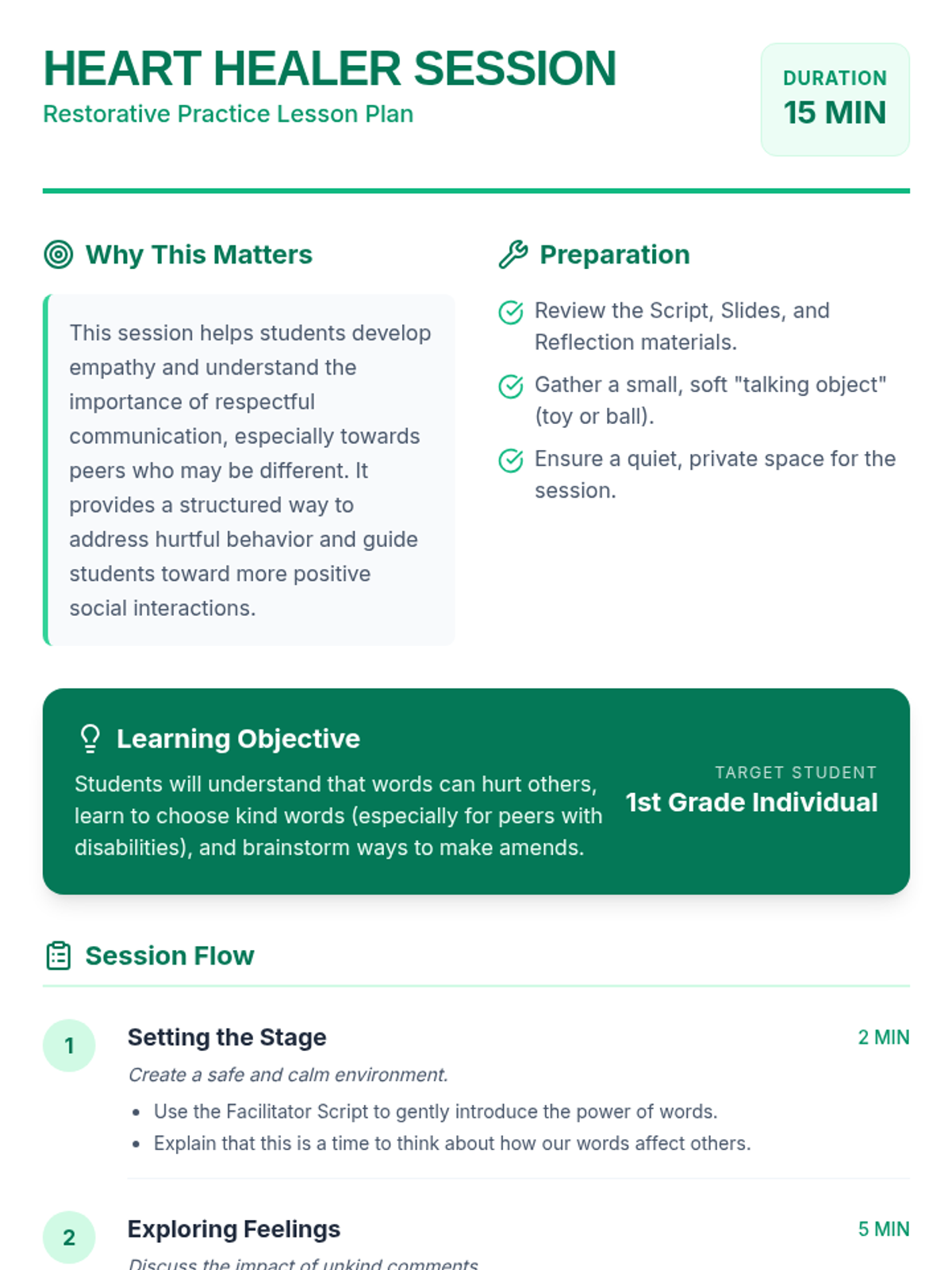
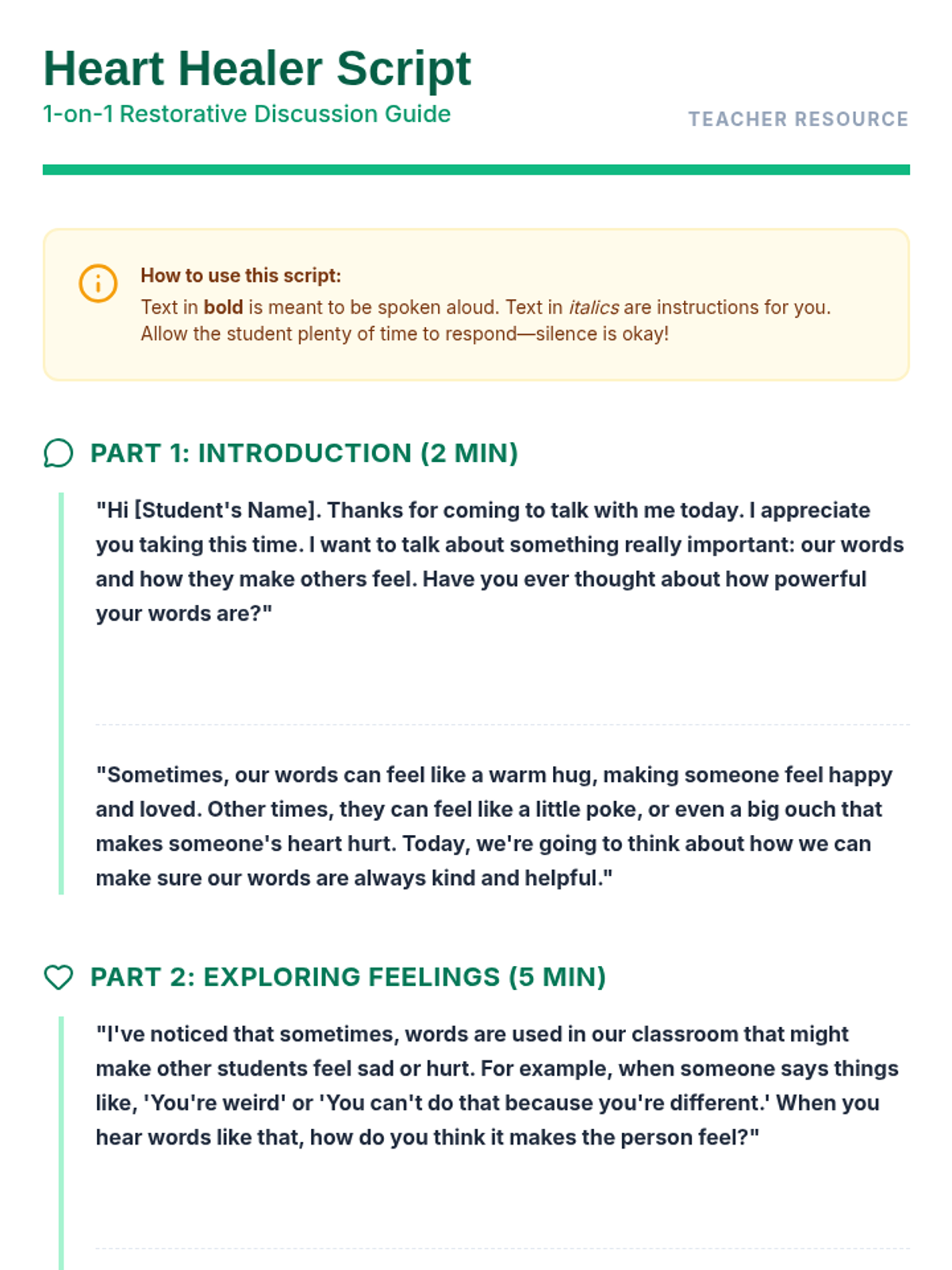
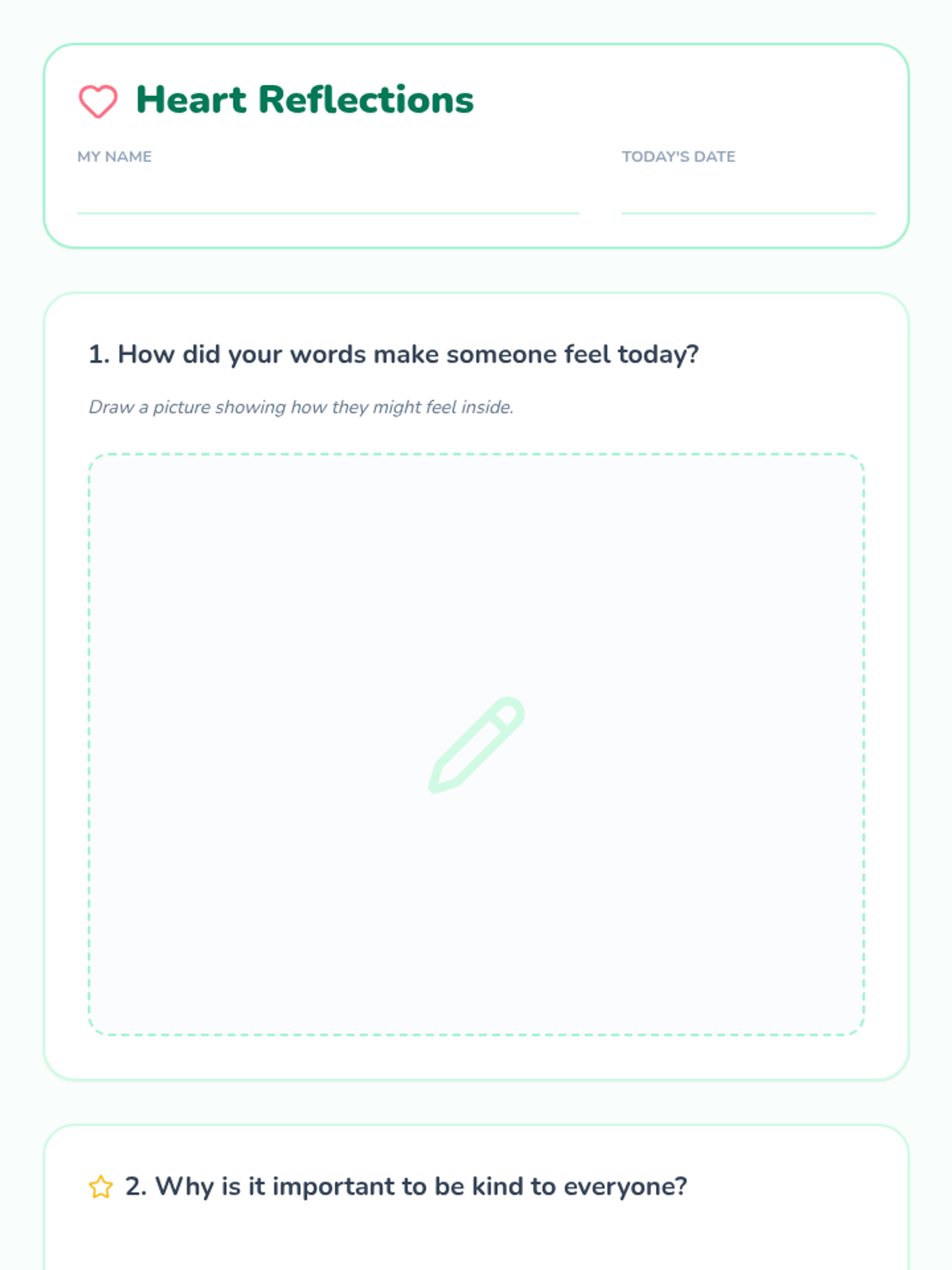
A 15-minute one-on-one restorative practice session designed for a 1st-grade student to build empathy, understand the impact of hurtful words, and make amends after an incident involving a peer with a disability.
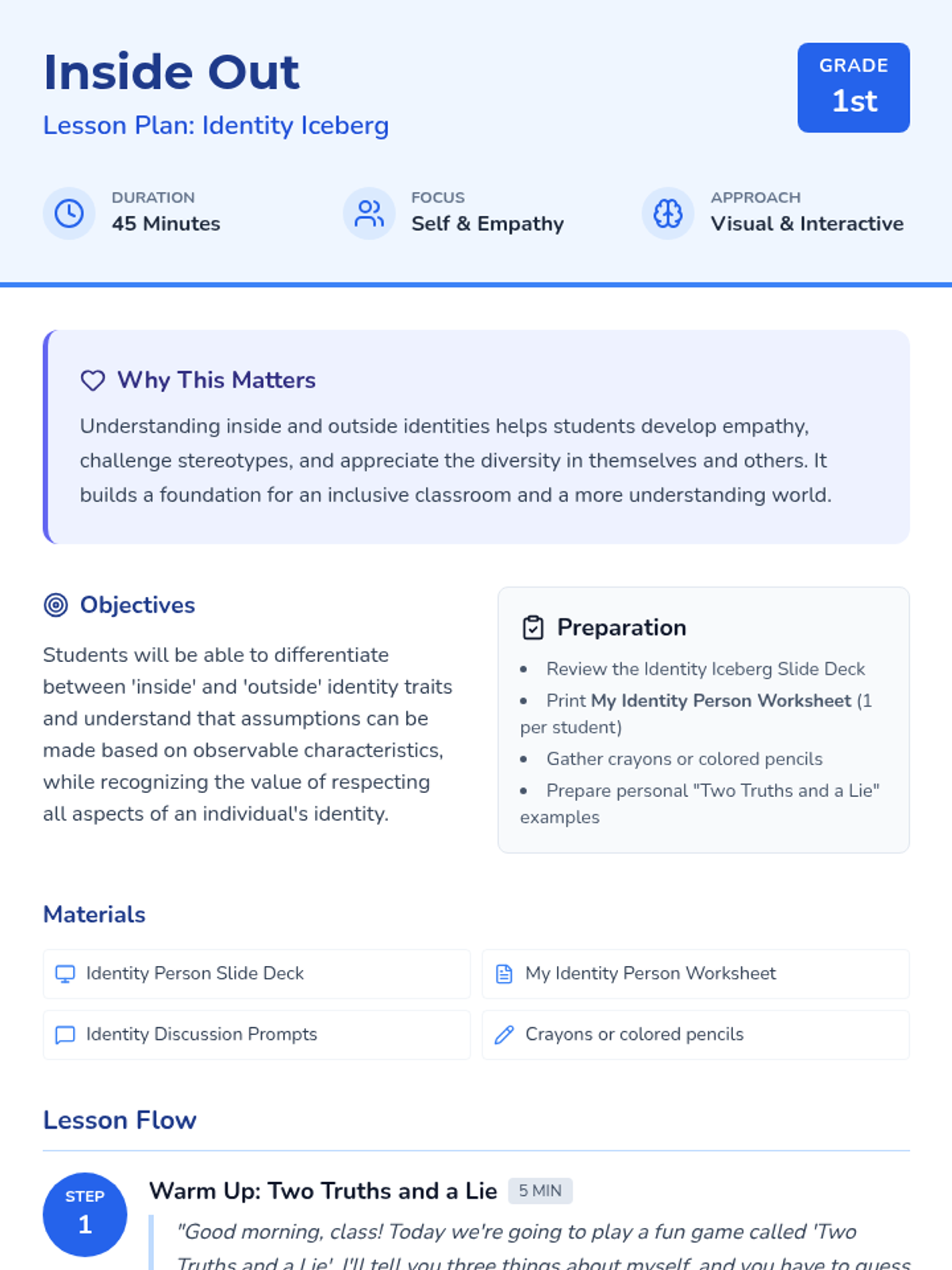
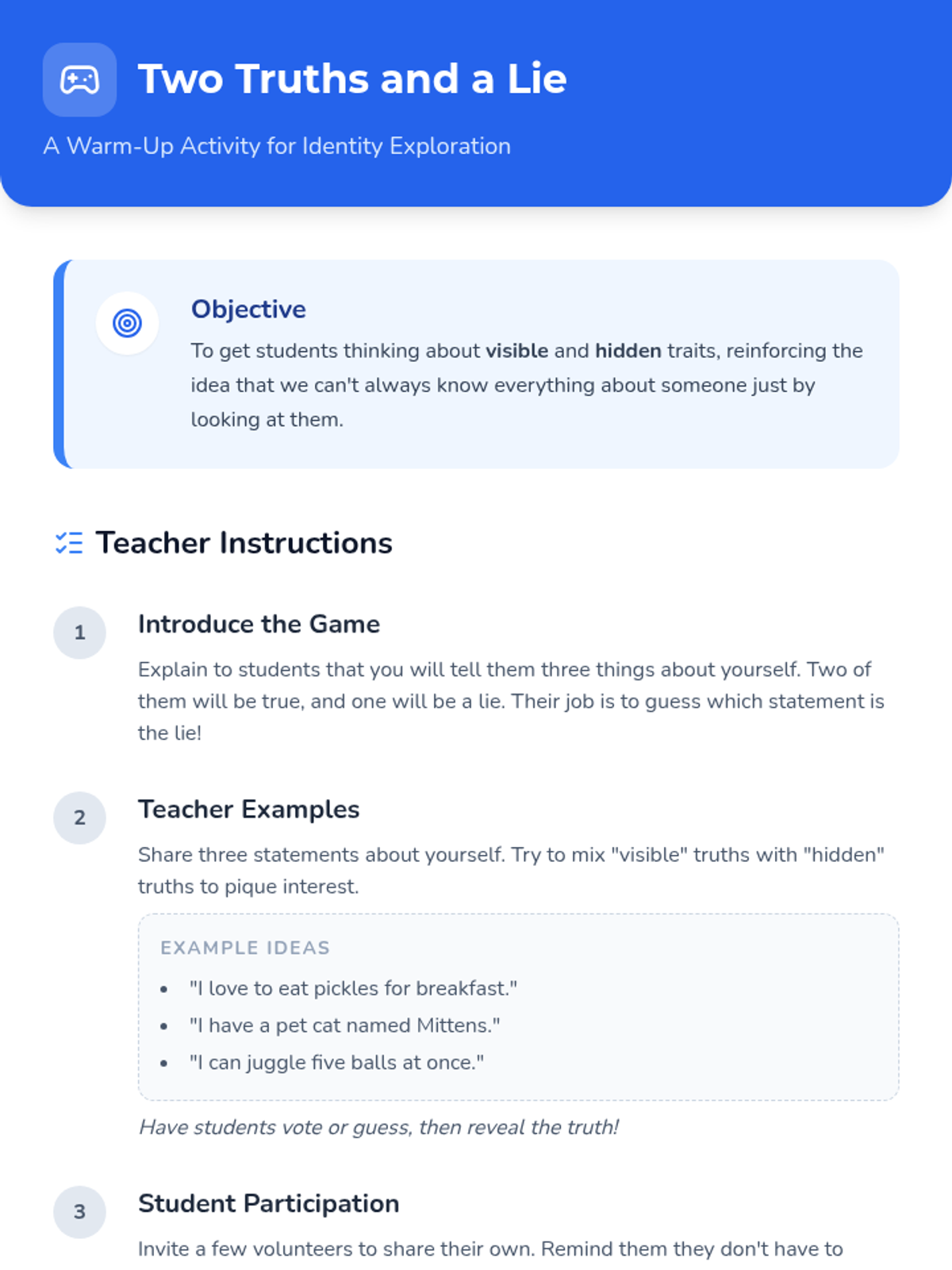
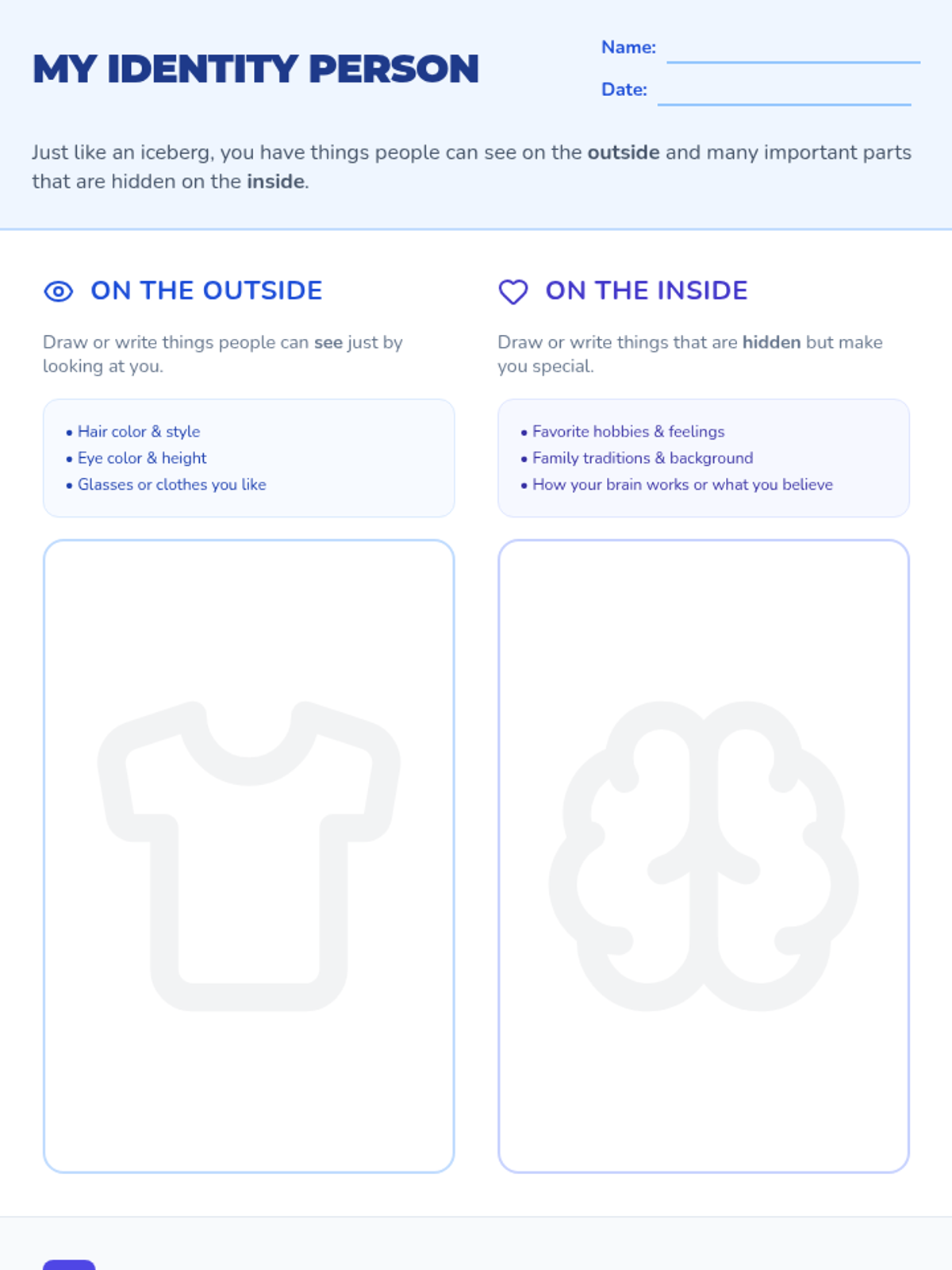
A 45-minute lesson for 1st-grade students to explore 'inside' and 'outside' identities using an iceberg metaphor. Students will learn about visible traits versus hidden qualities like neurodivergence, ethnicity, and feelings to build empathy and respect.
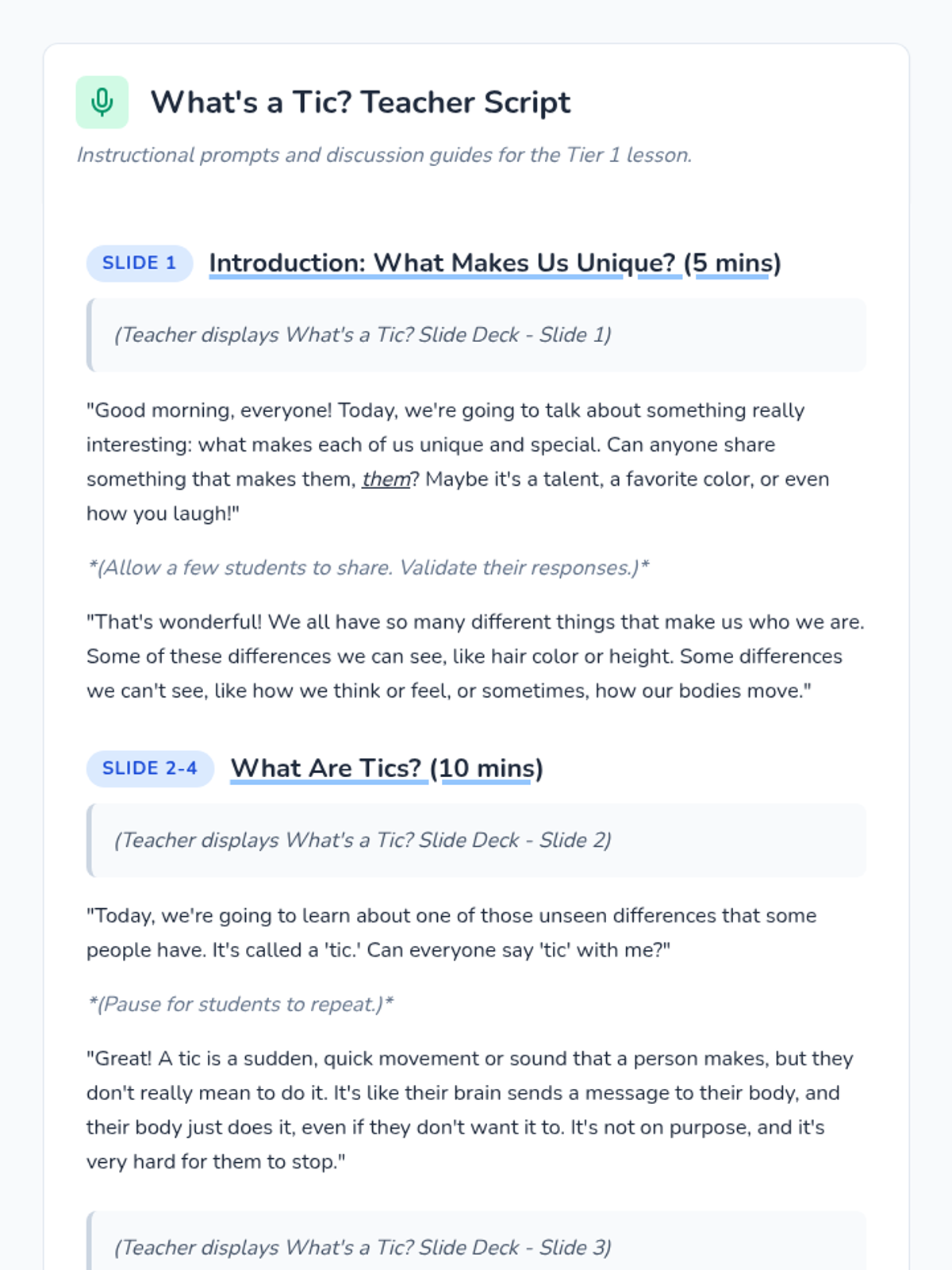
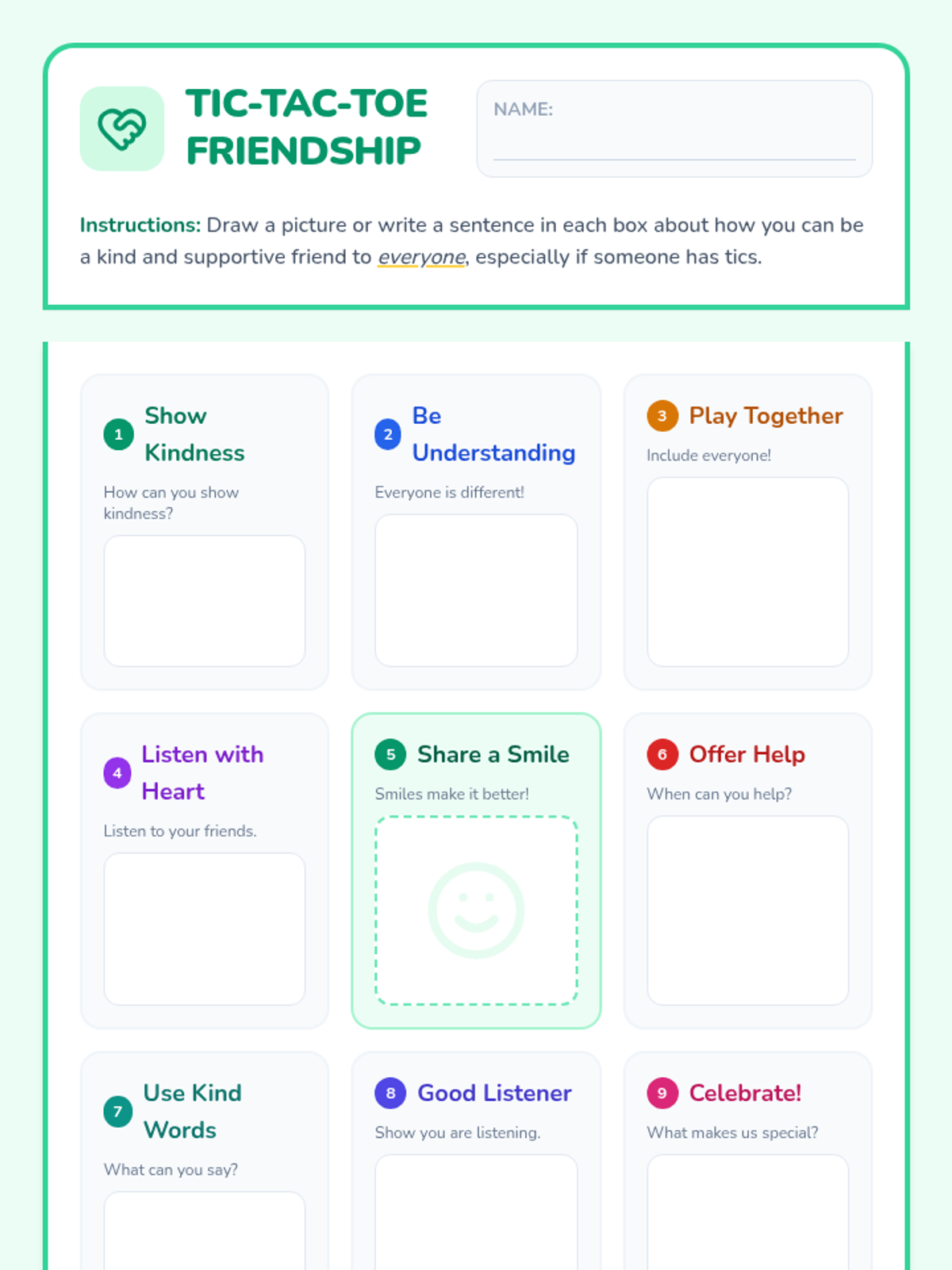
This lesson introduces 1st-grade students to tic disorders, fostering empathy and understanding. Through discussion and activities, students will learn what tics are and how to be a supportive friend. One 30-minute session for elementary school students.
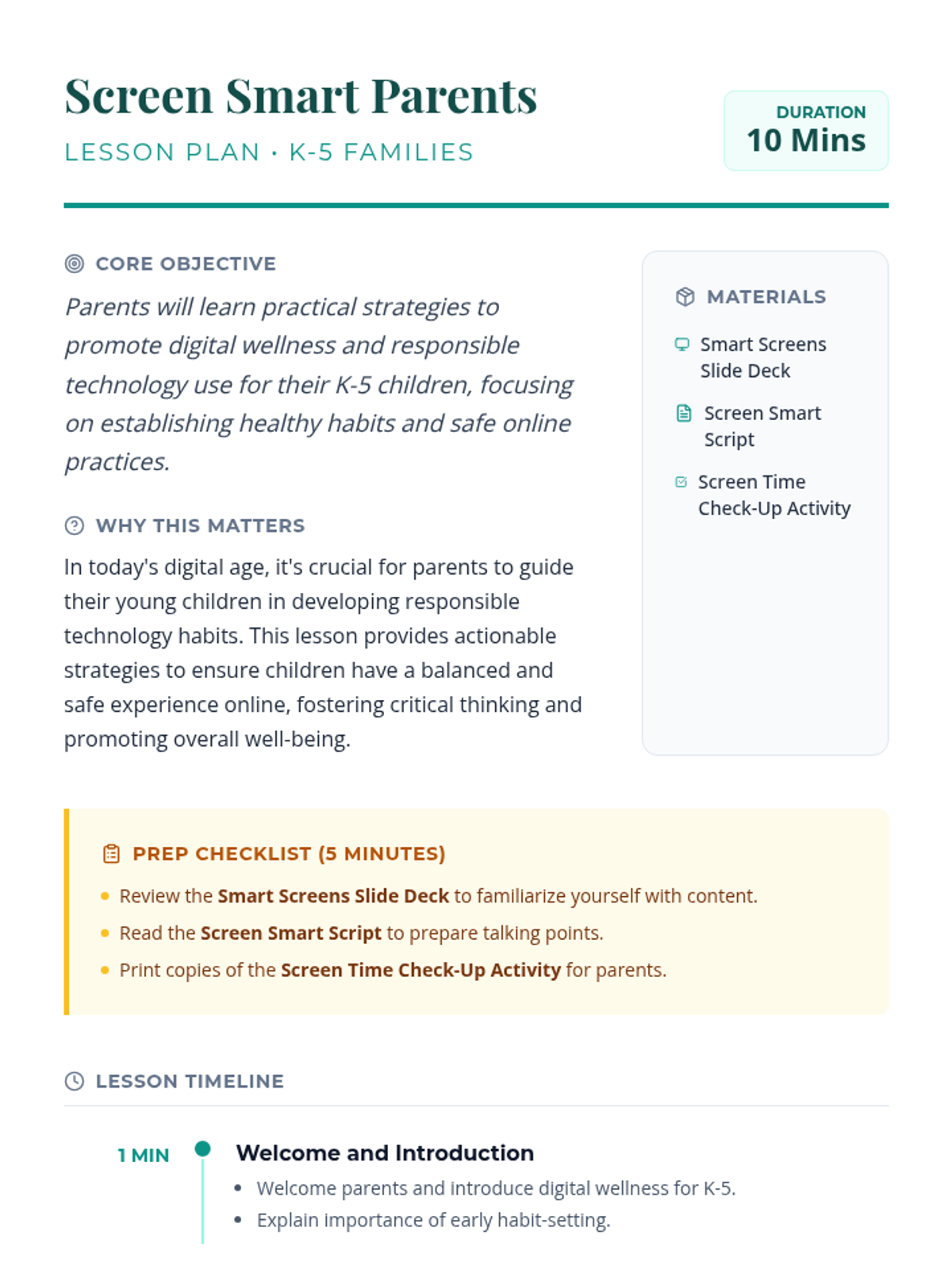
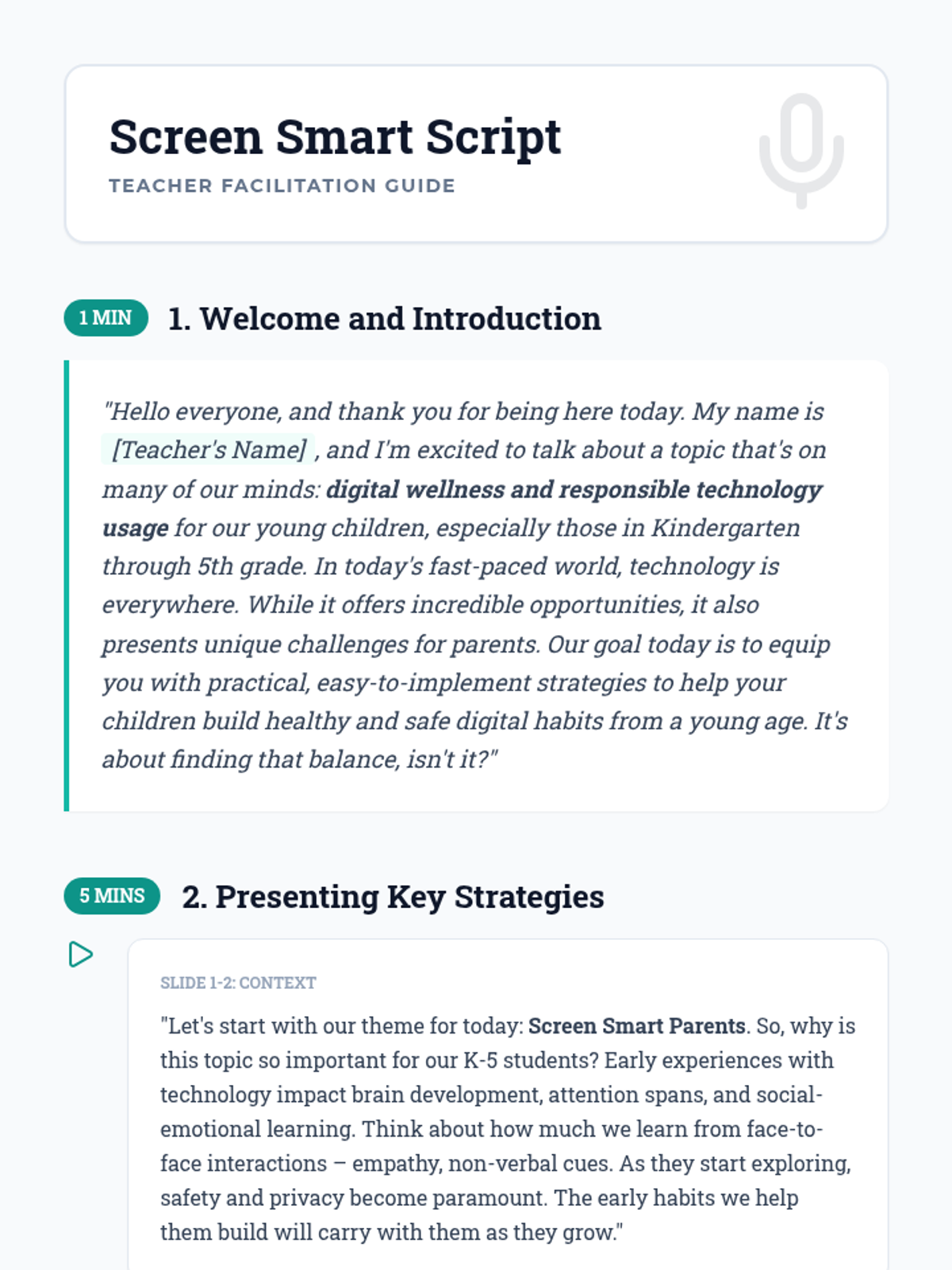
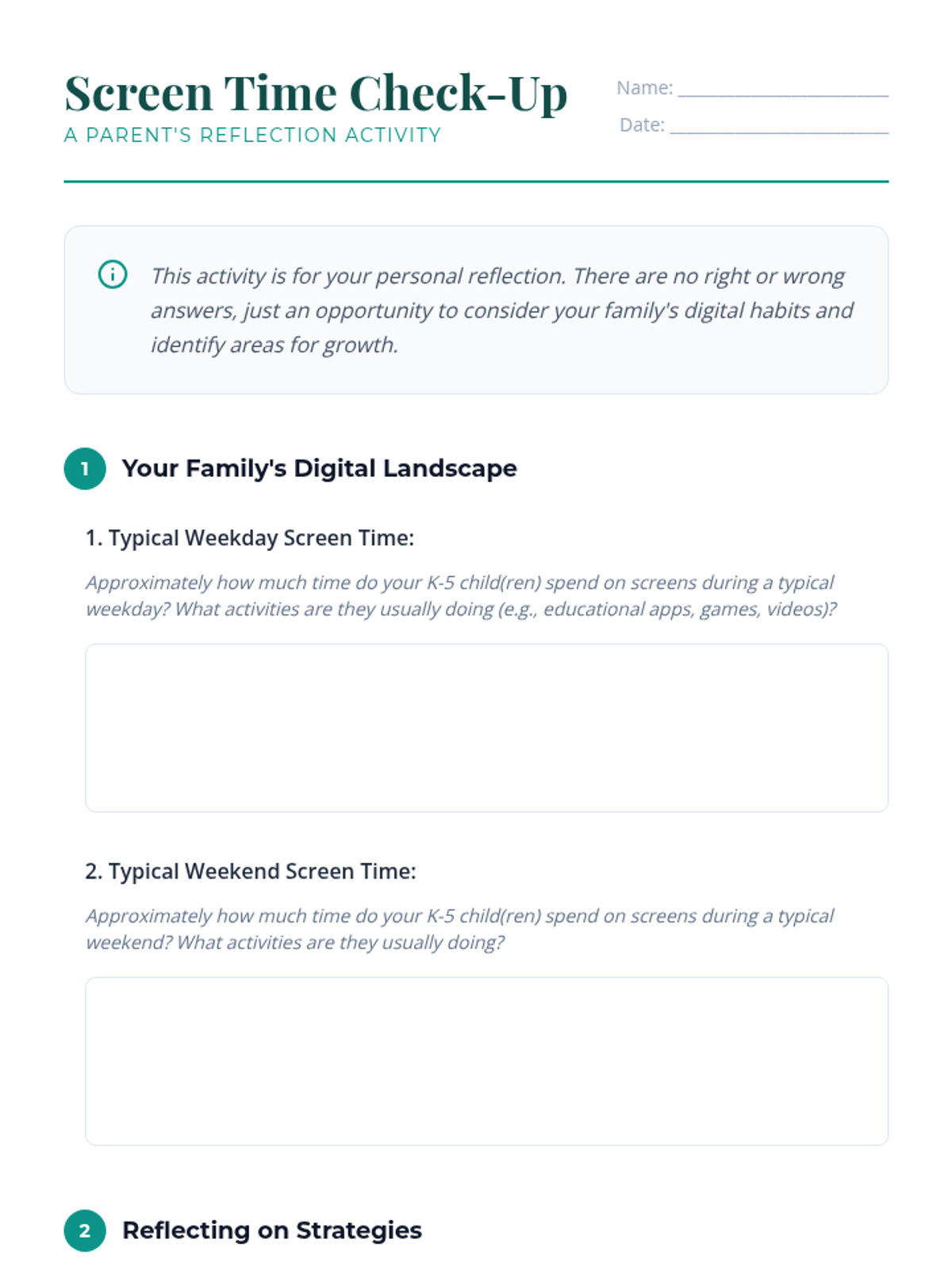
This 10-minute lesson provides K-5 parents with essential strategies for fostering digital wellness and responsible technology usage in their children, focusing on balanced screen time and safety.
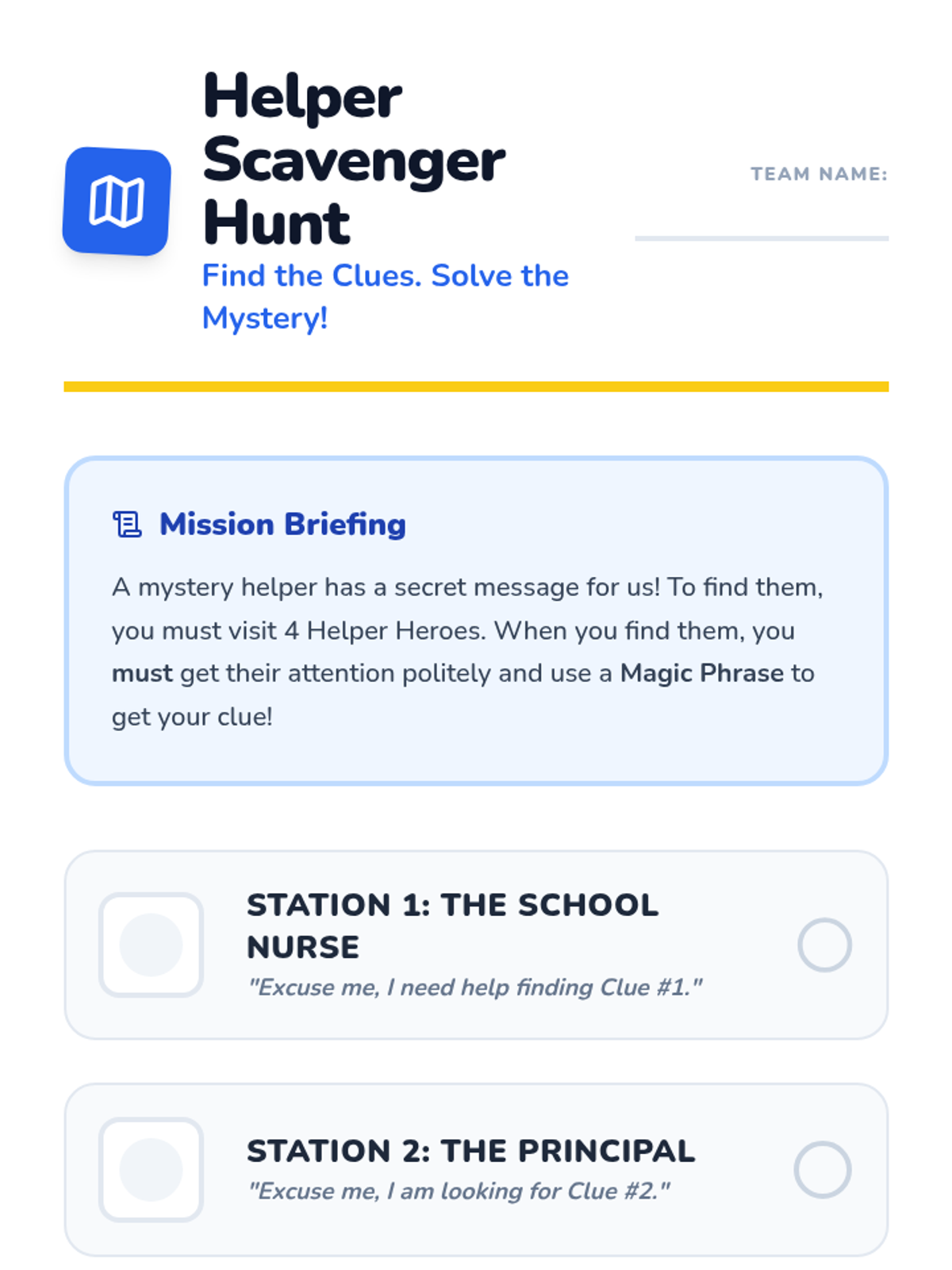
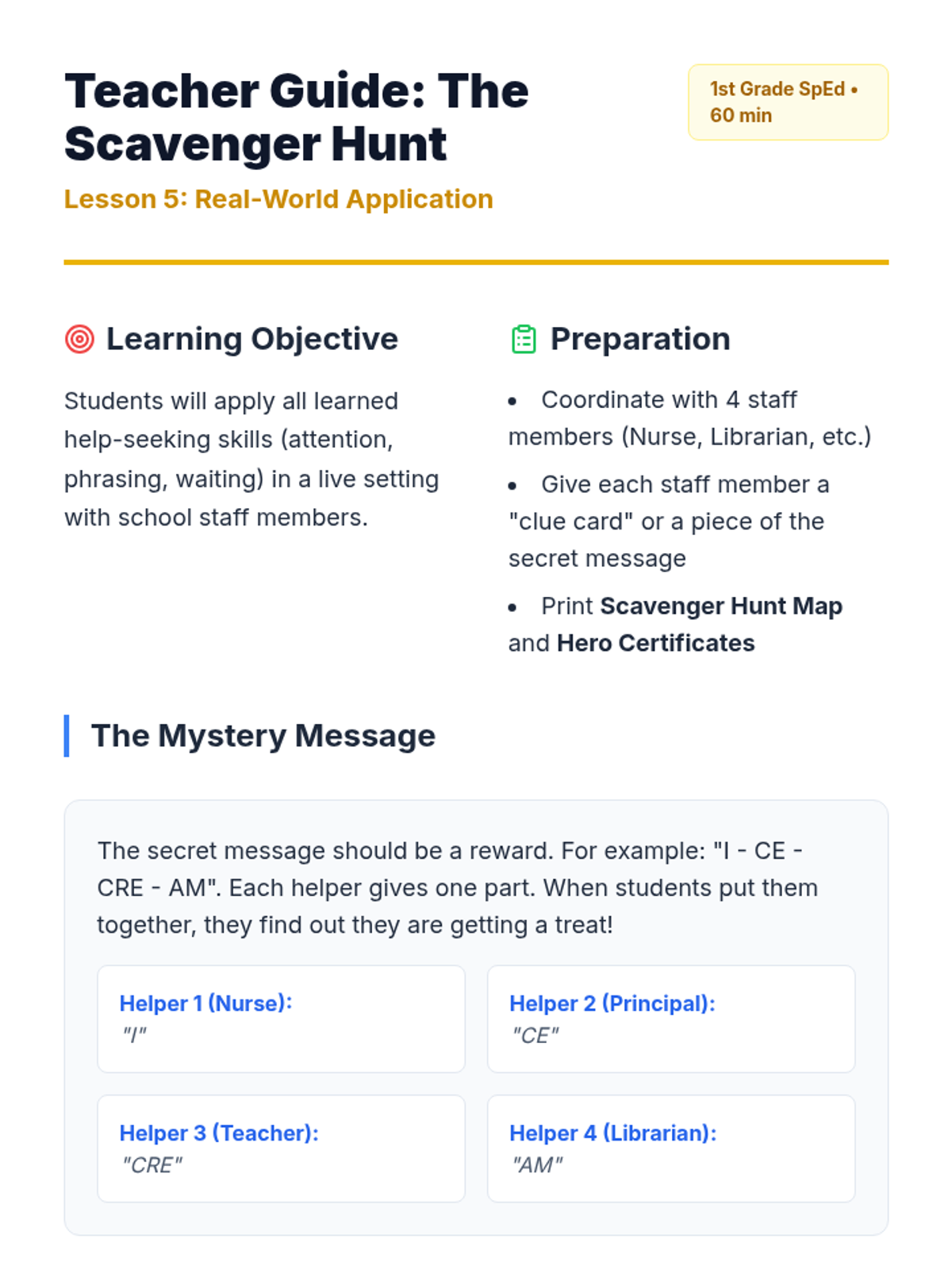
A culminating classroom scavenger hunt where students apply all their help-seeking skills in a real-world mystery activity.
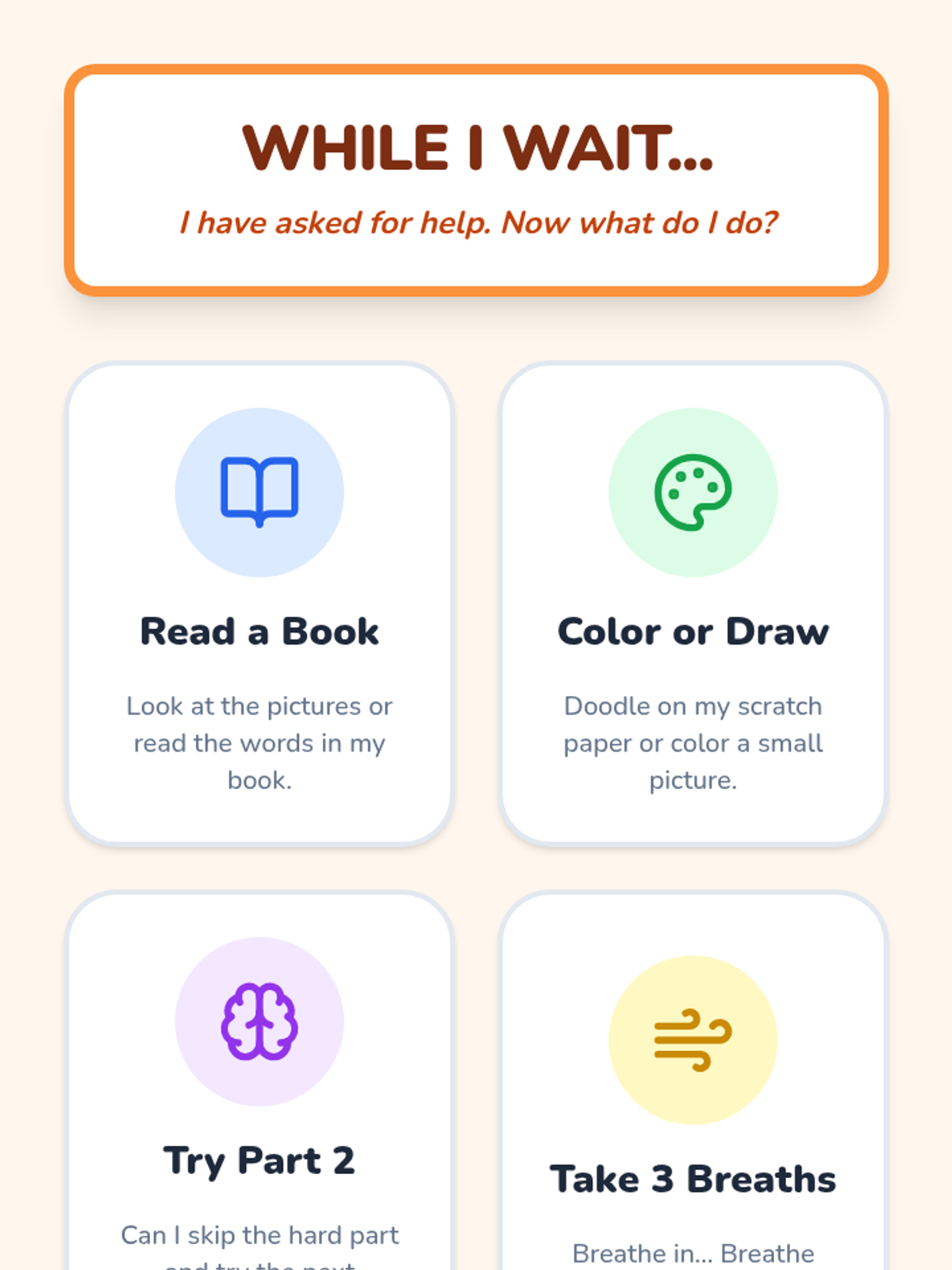
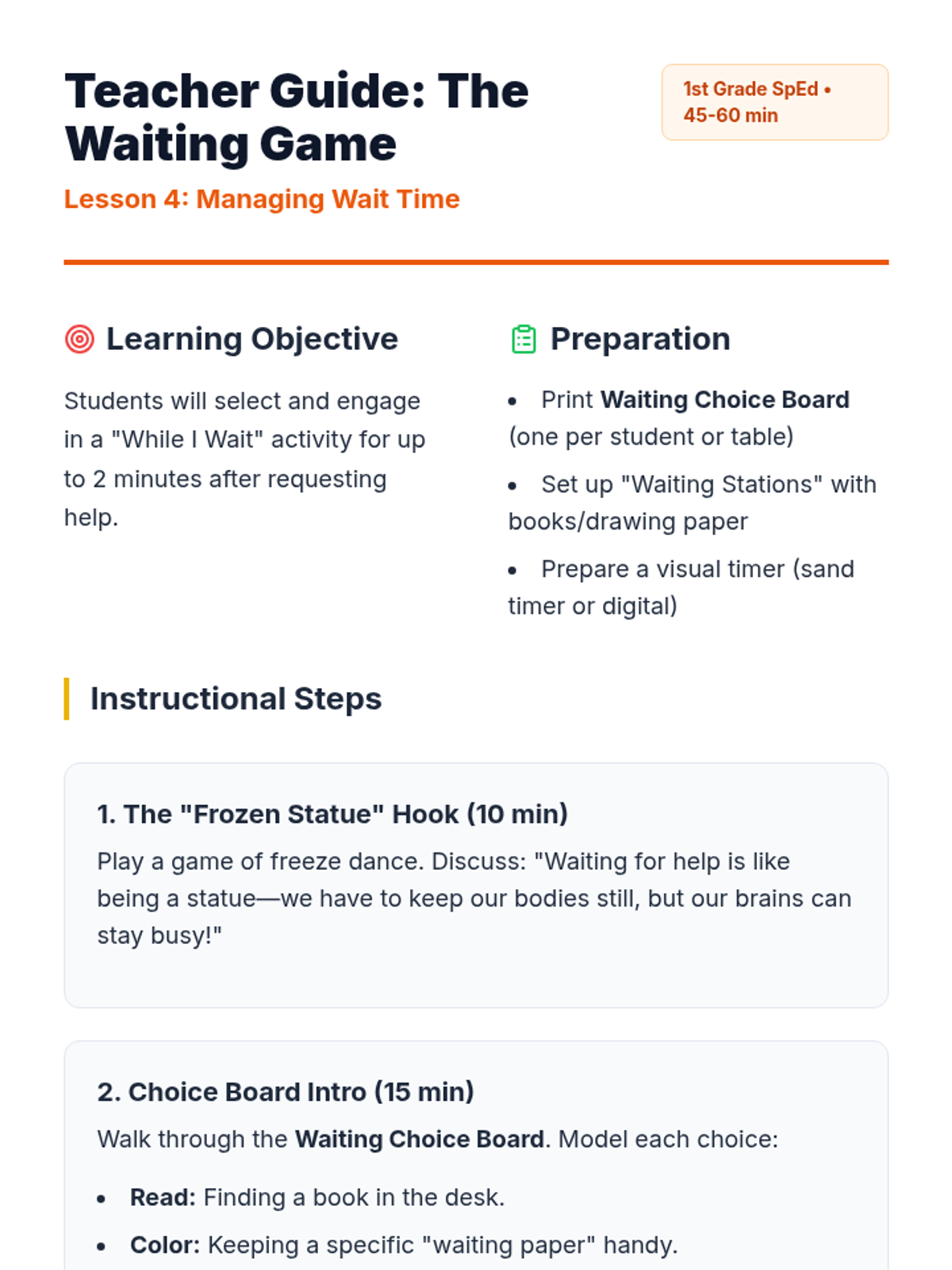
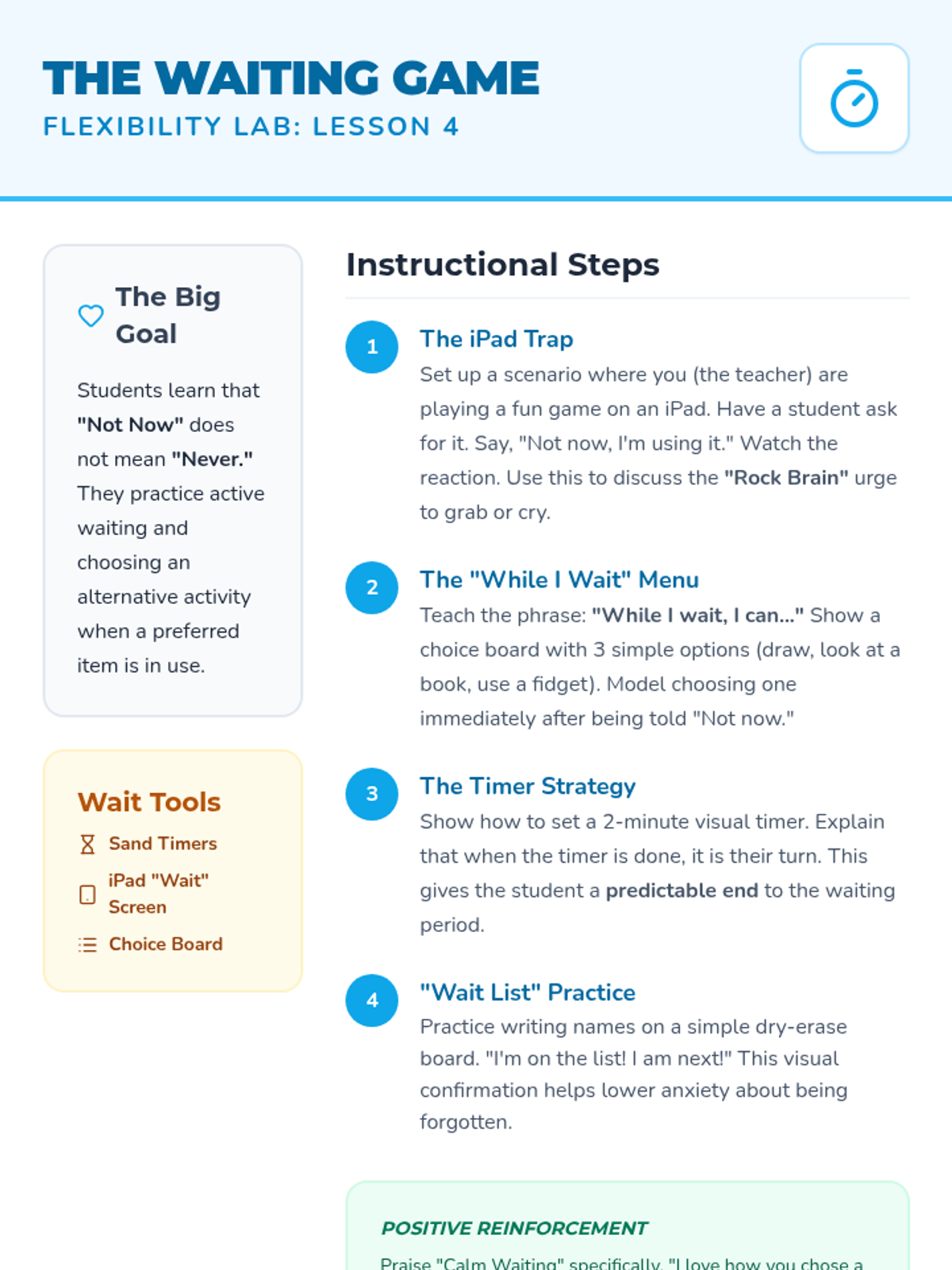
Develops self-regulation skills for the period between asking for help and receiving it, using 'While I Wait' choice boards.
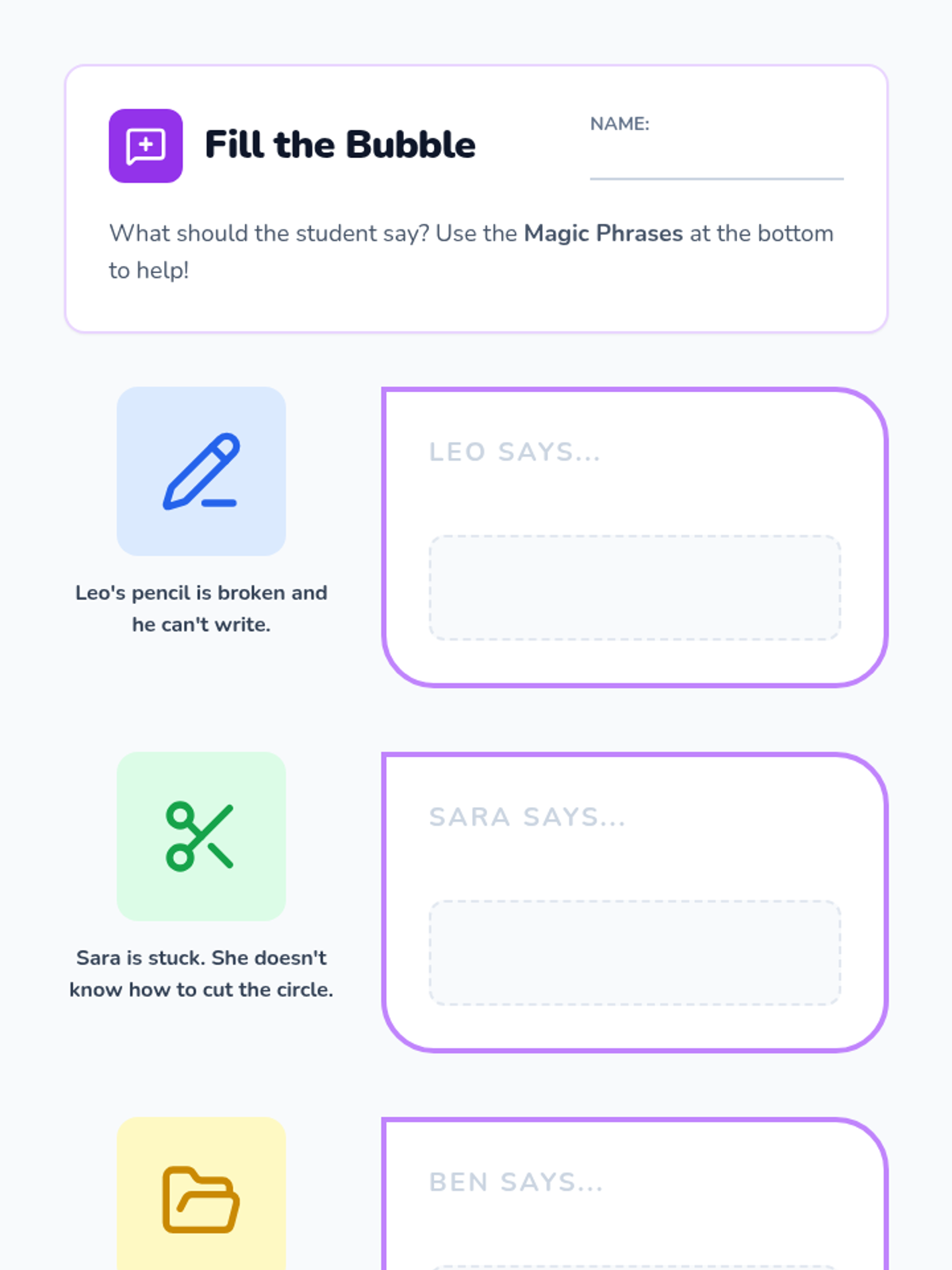
Teaches students specific language and sentence stems to communicate their specific needs clearly and politely.
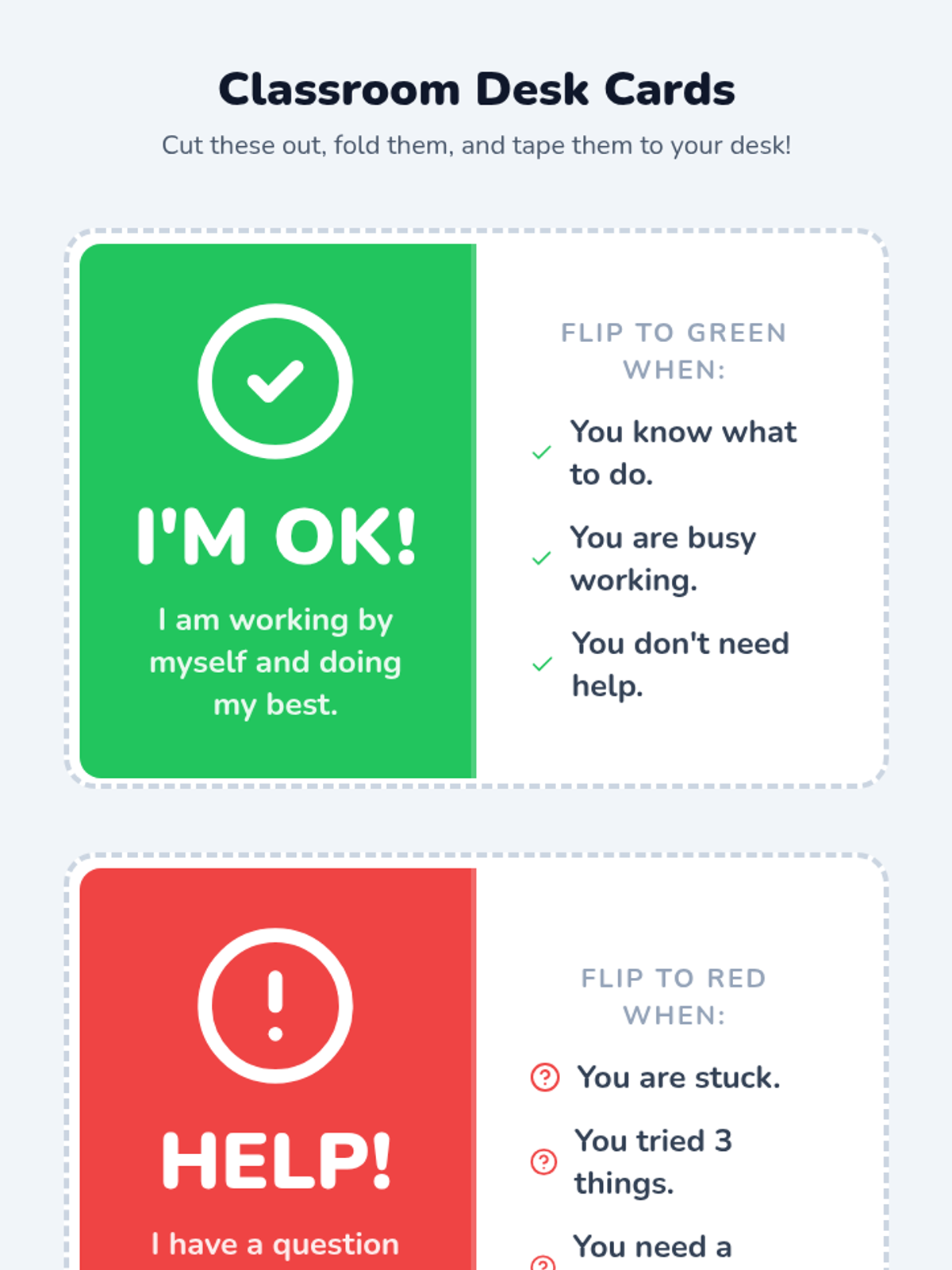
Focuses on the physical actions of getting attention politely, including hand-raising and non-verbal signals.
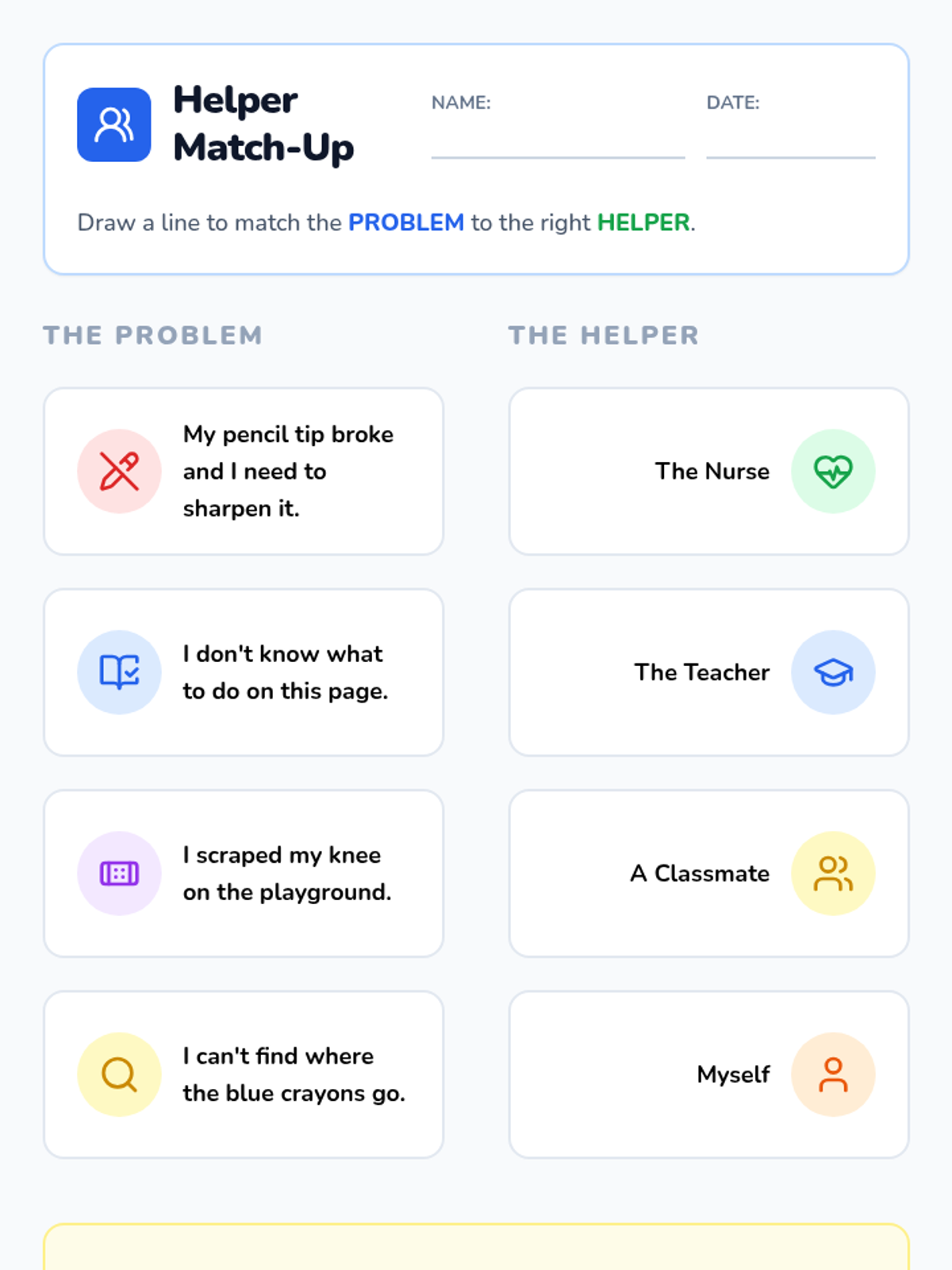
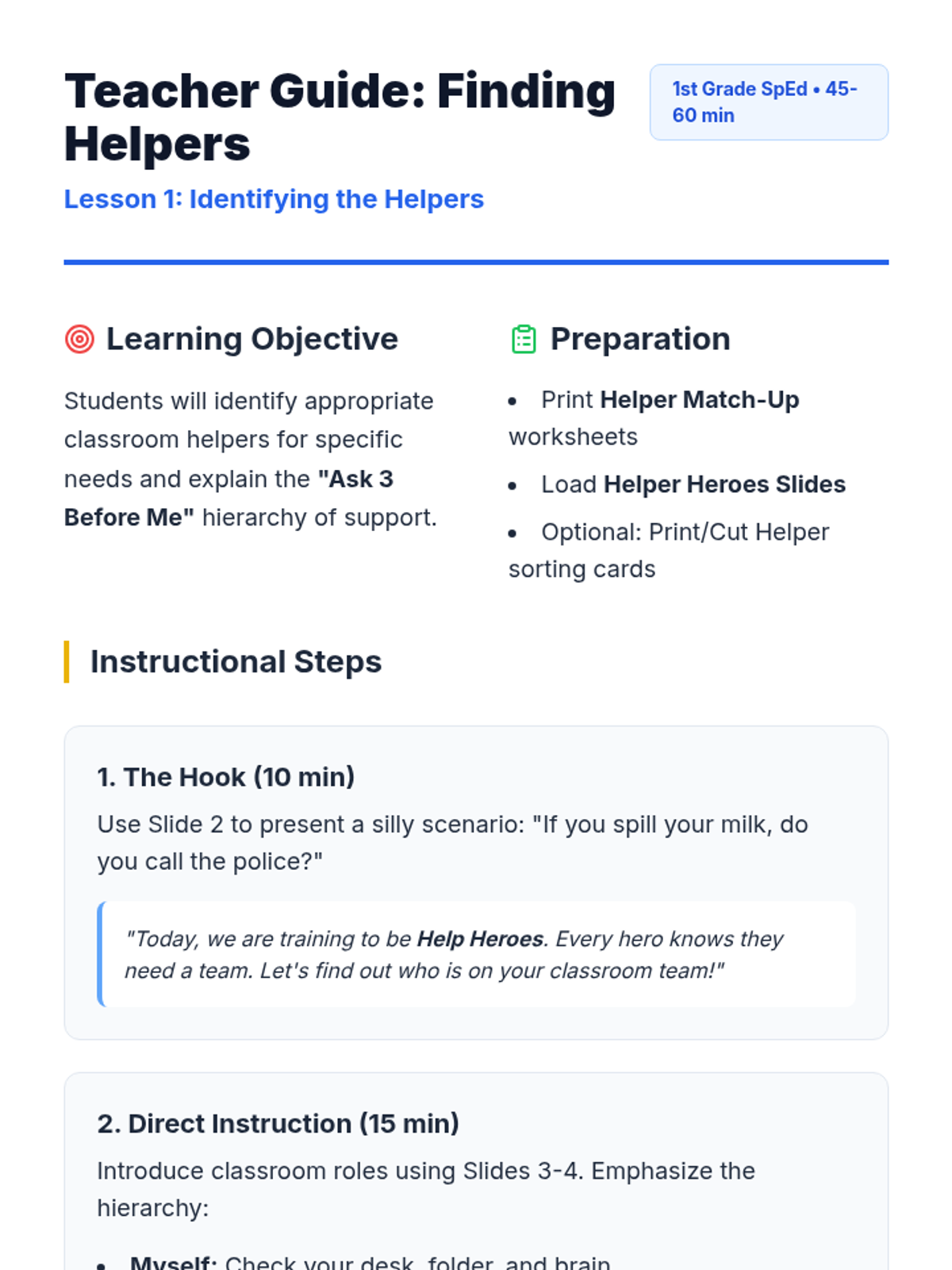
Students learn to distinguish between different types of helpers and classroom roles, establishing the 'Ask 3 Before Me' rule for seeking support.
Teaches digital etiquette and empathy, emphasizing that the Golden Rule applies online just as much as it does in person.
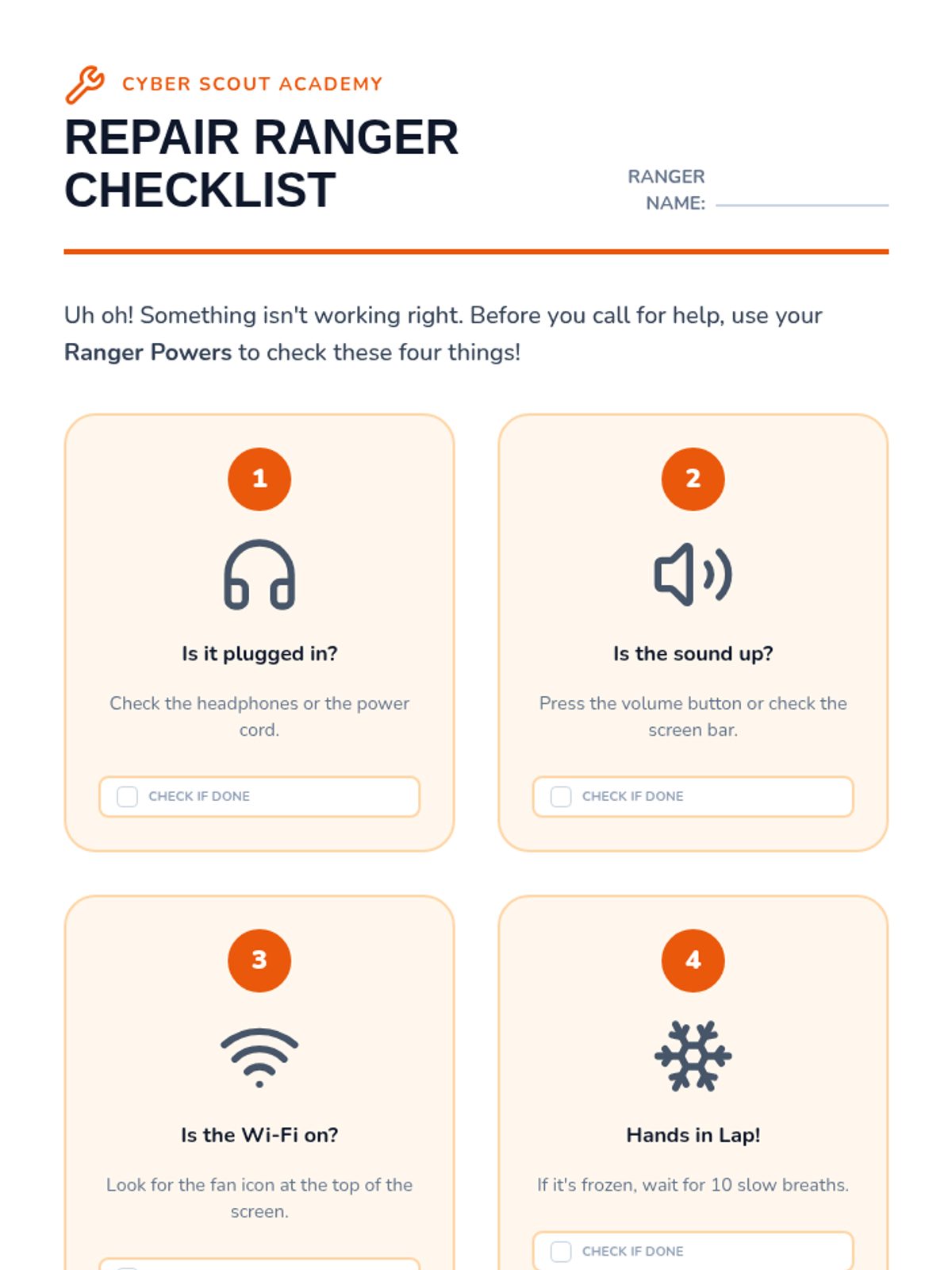
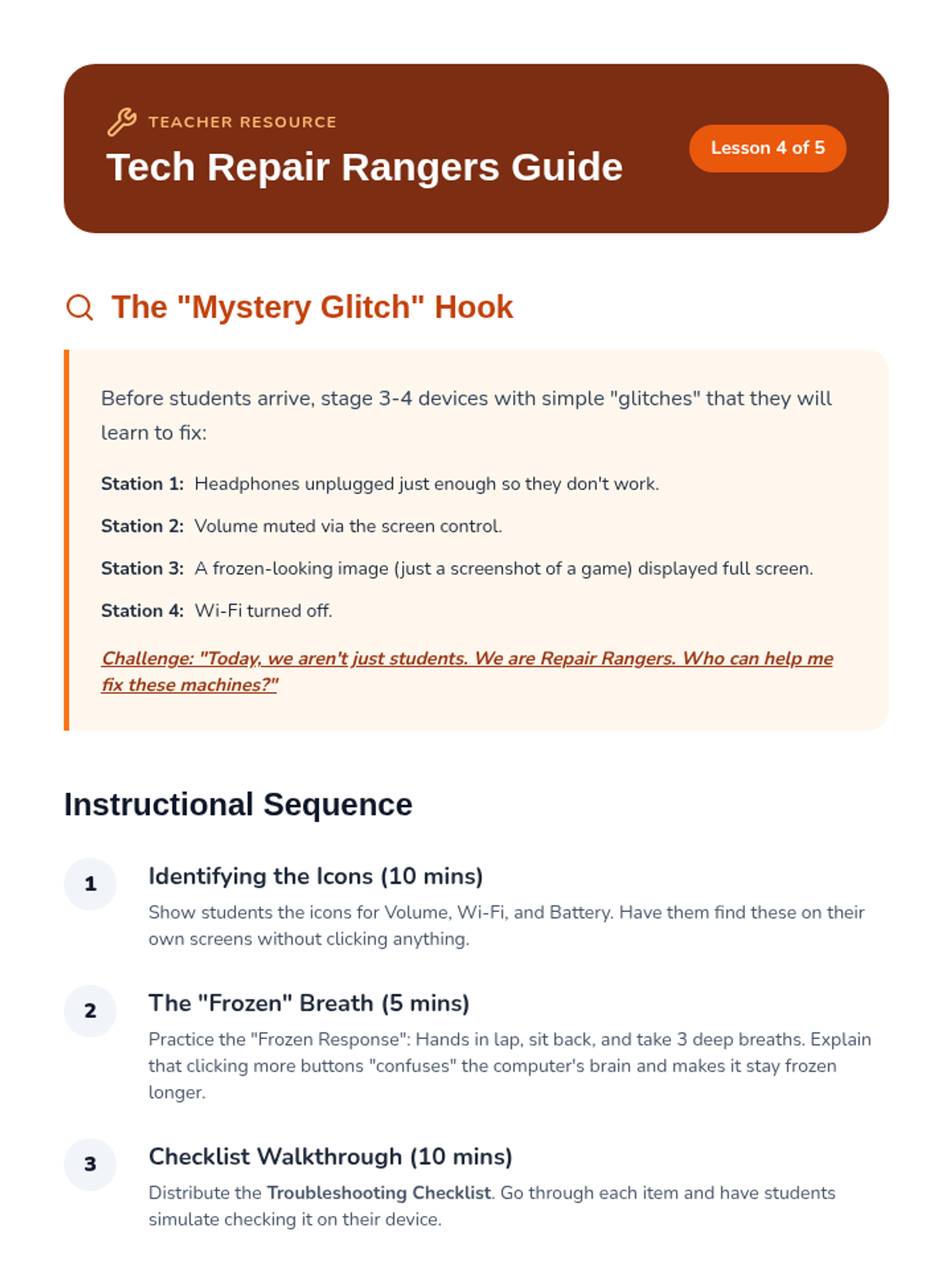
Empowers students with basic troubleshooting steps for common tech issues like sound, internet connection, and frozen screens.
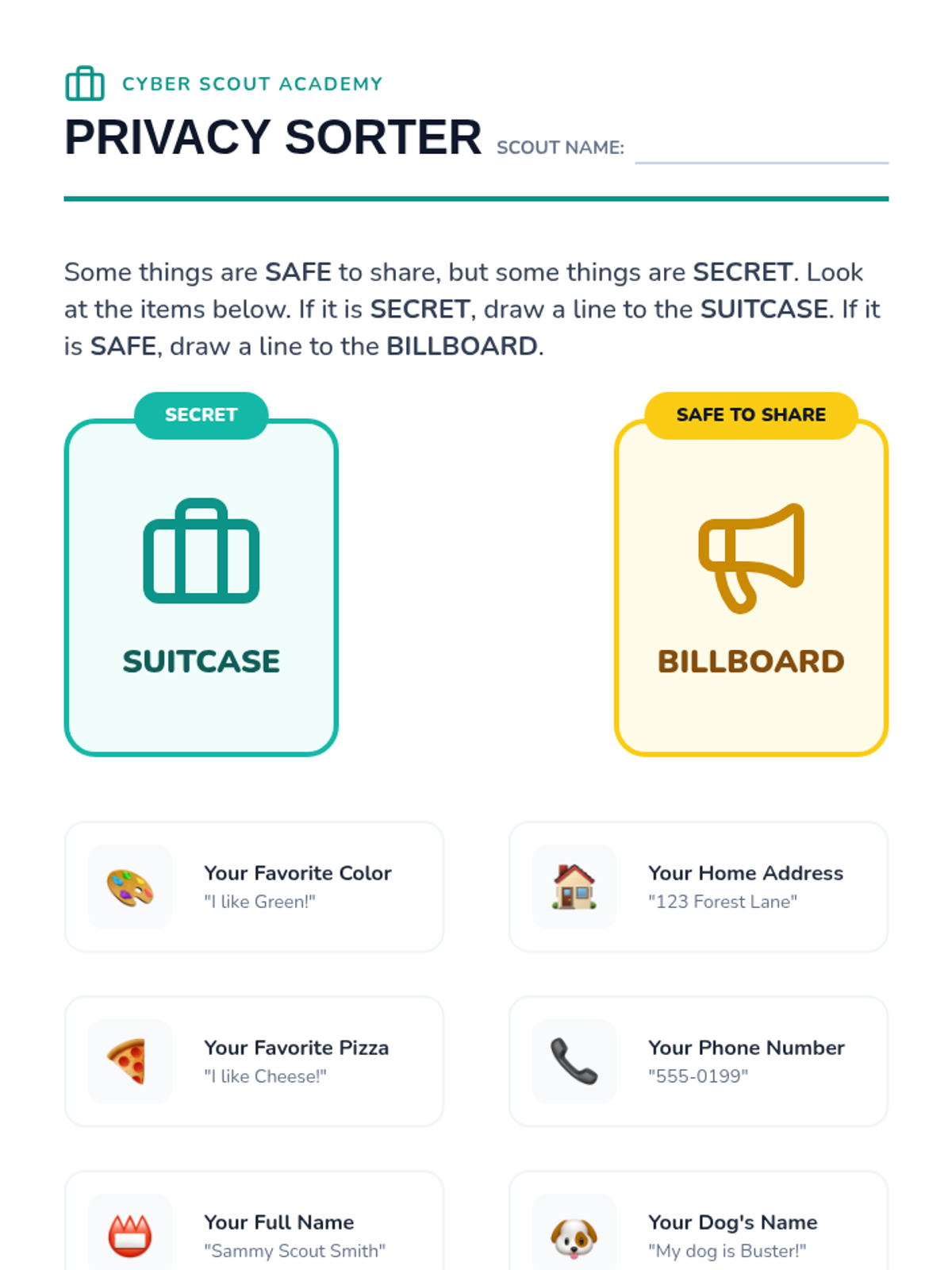
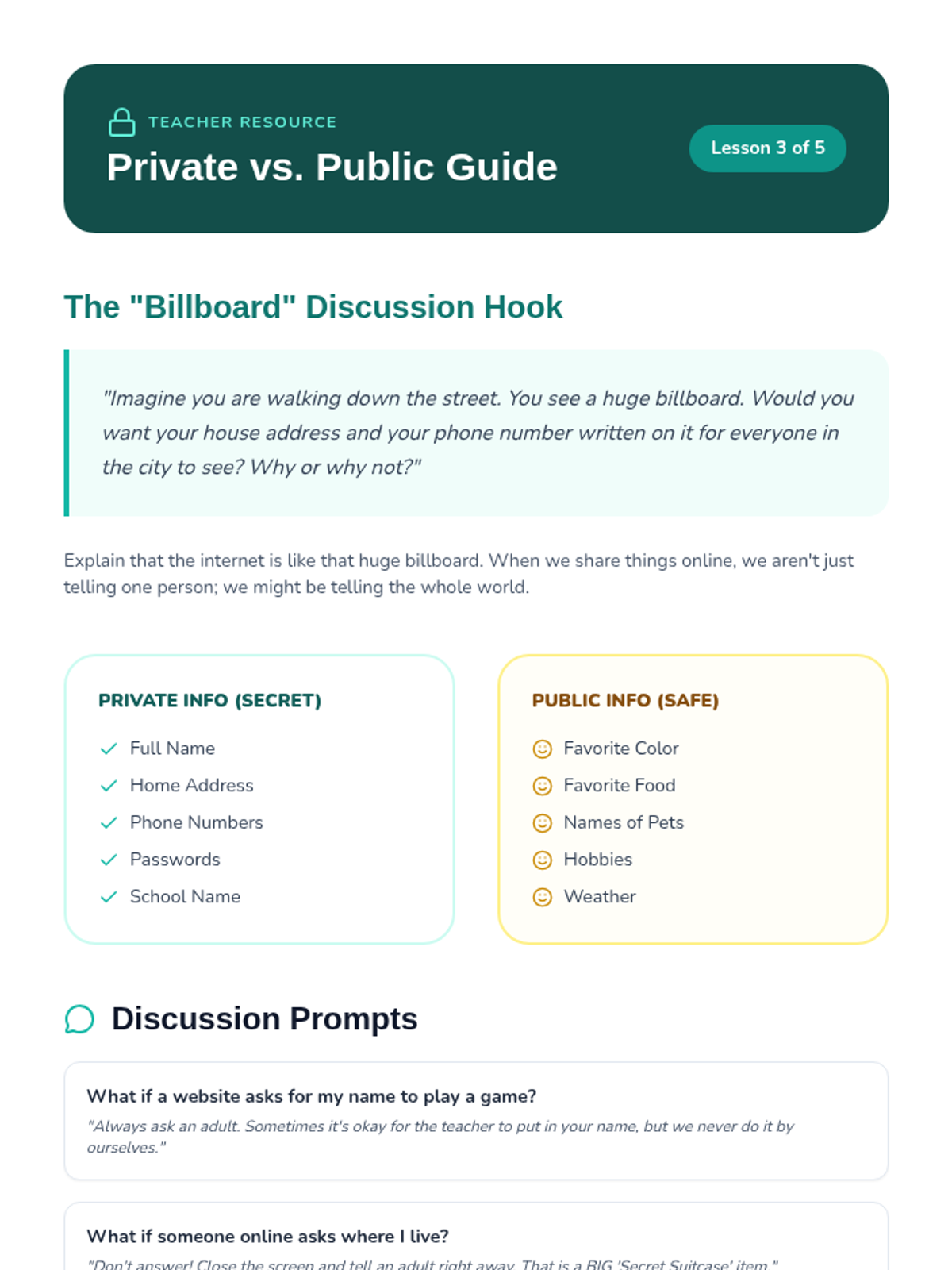
Introduces the concept of private vs. public information, teaching students what is safe to share online and what must stay secret.
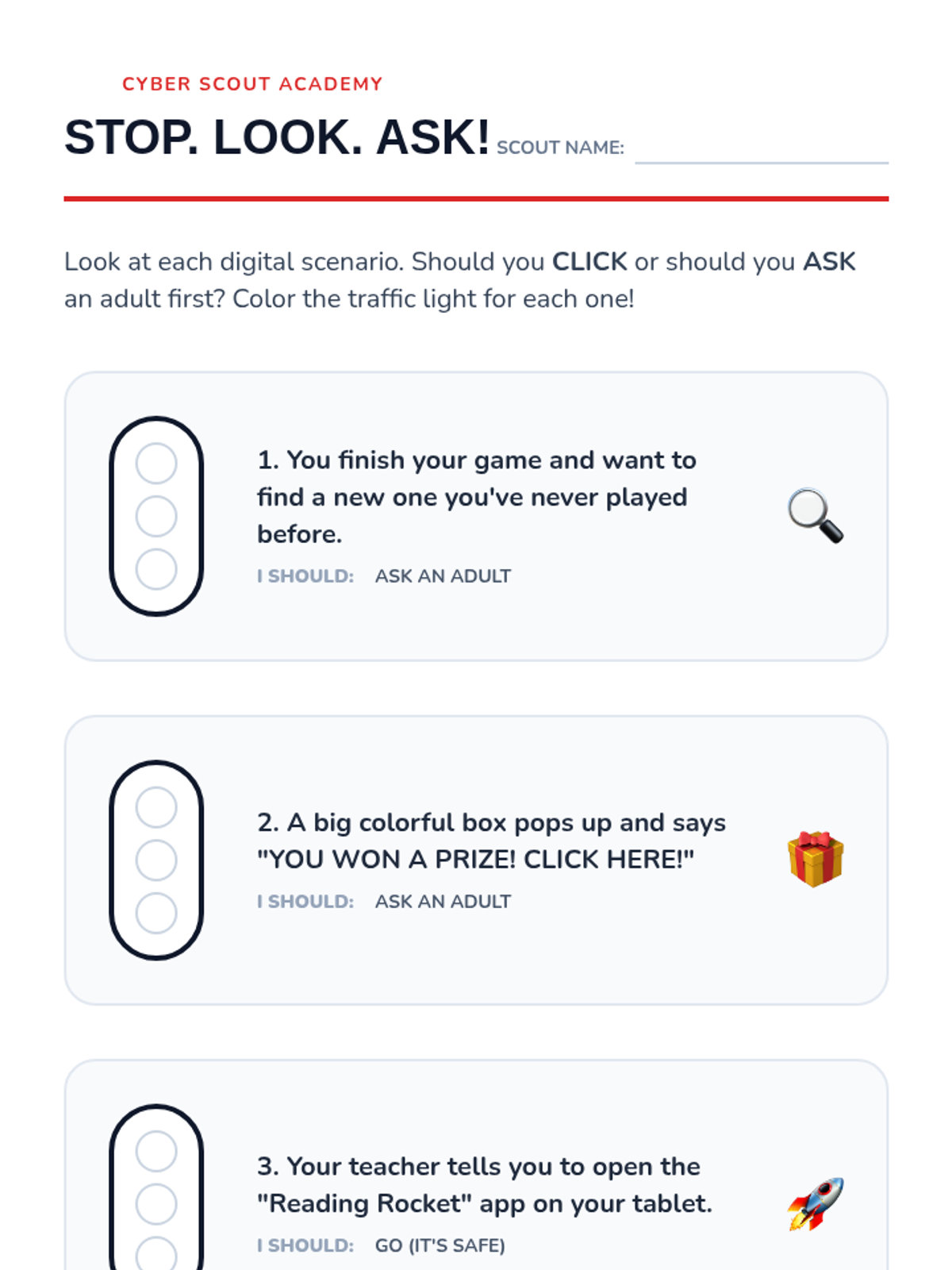
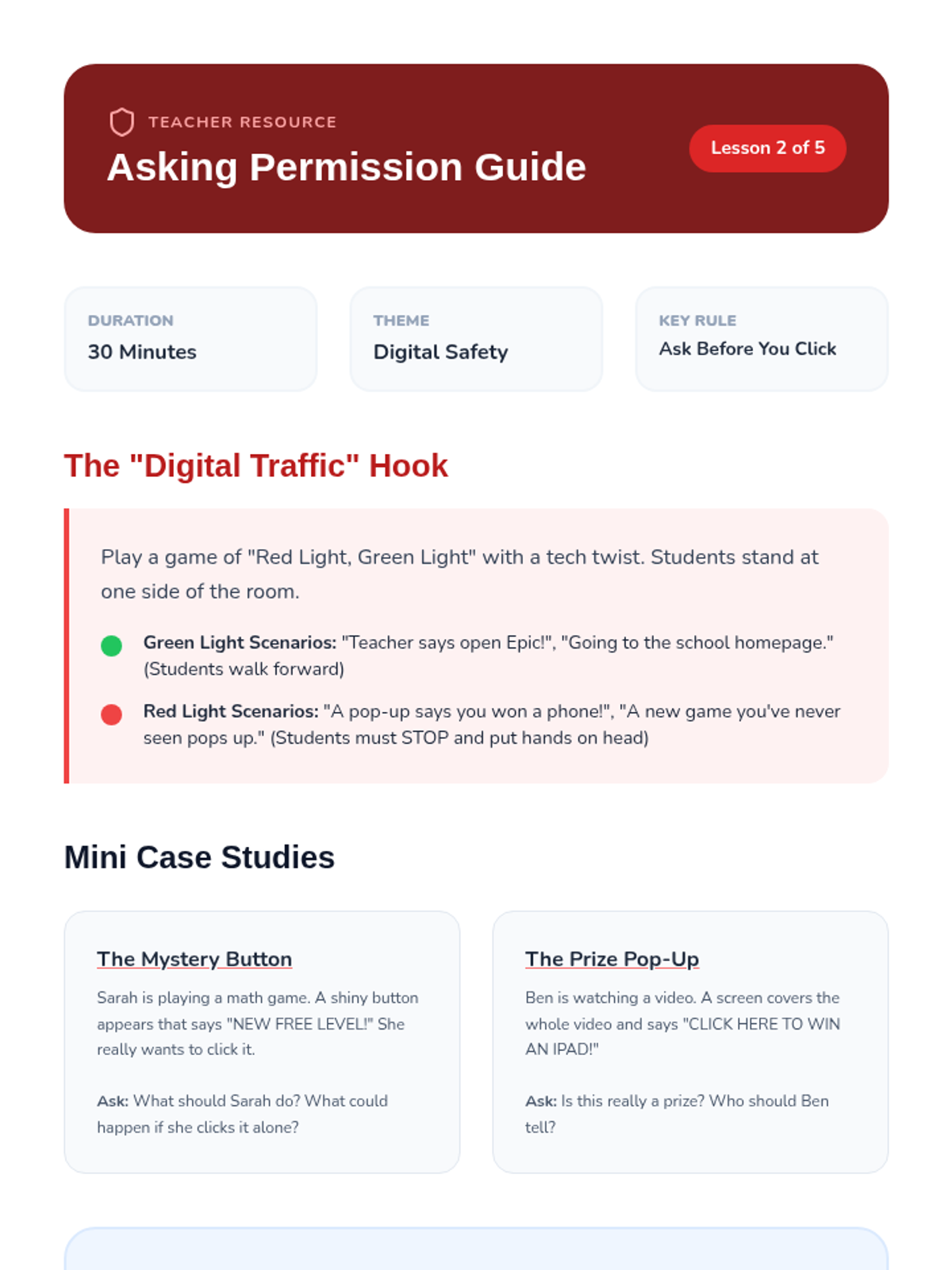
Focuses on the essential safety rule of asking a trusted adult for permission before going online, downloading apps, or clicking new links.
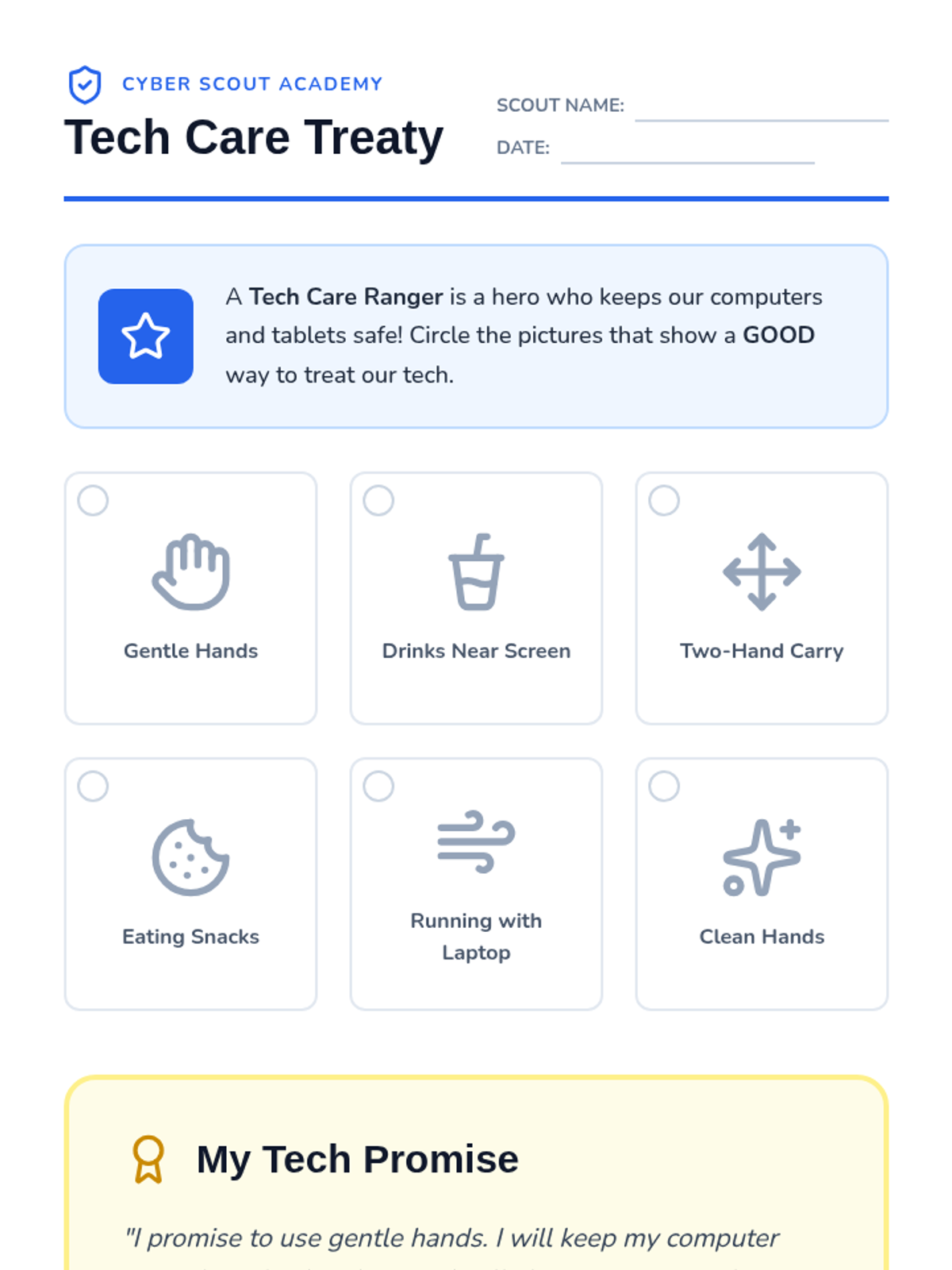
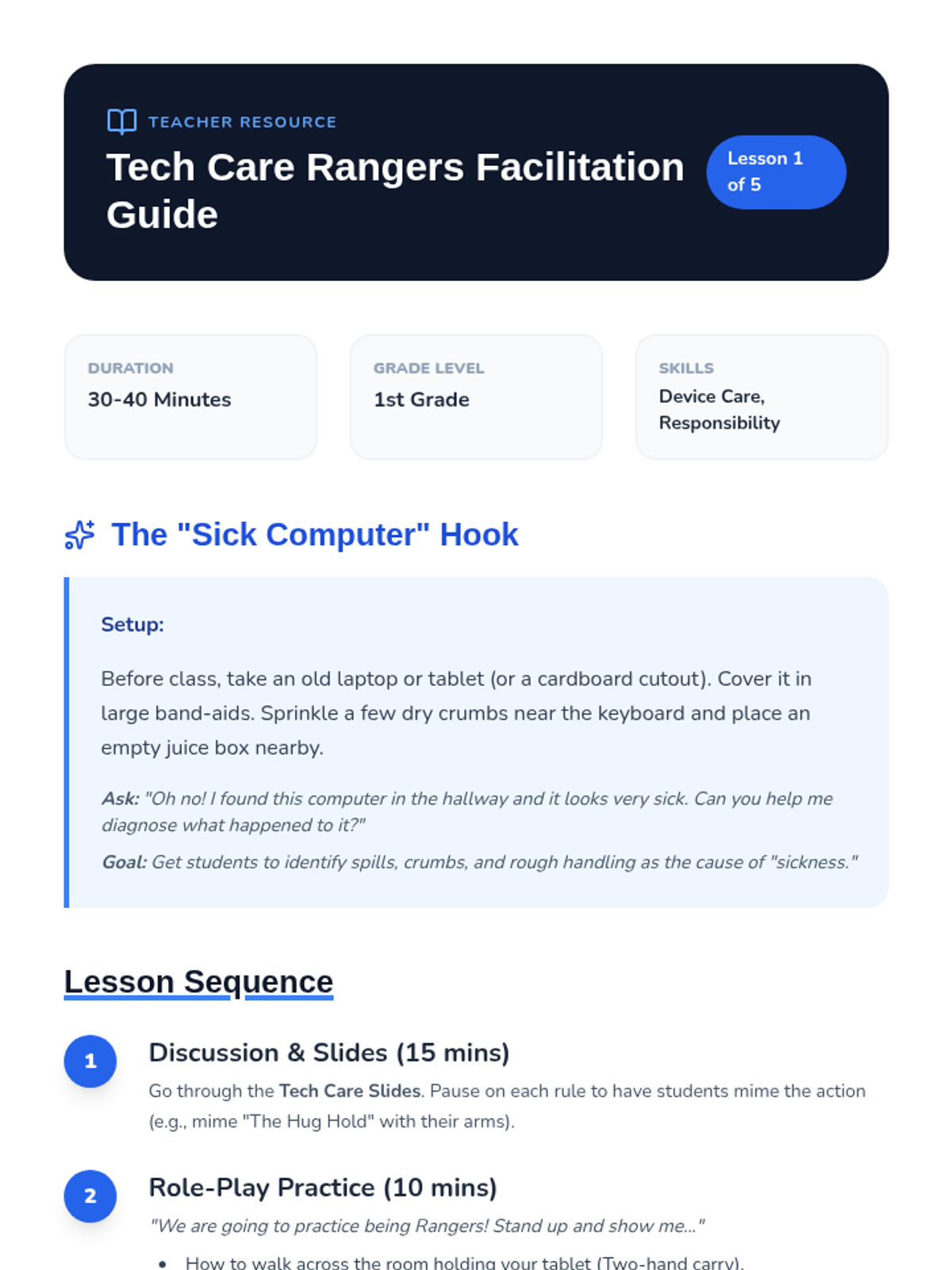
Students learn the physical responsibilities of using technology, including proper handling, environment rules (no food/drink), and creating a collective 'Tech Treaty'.
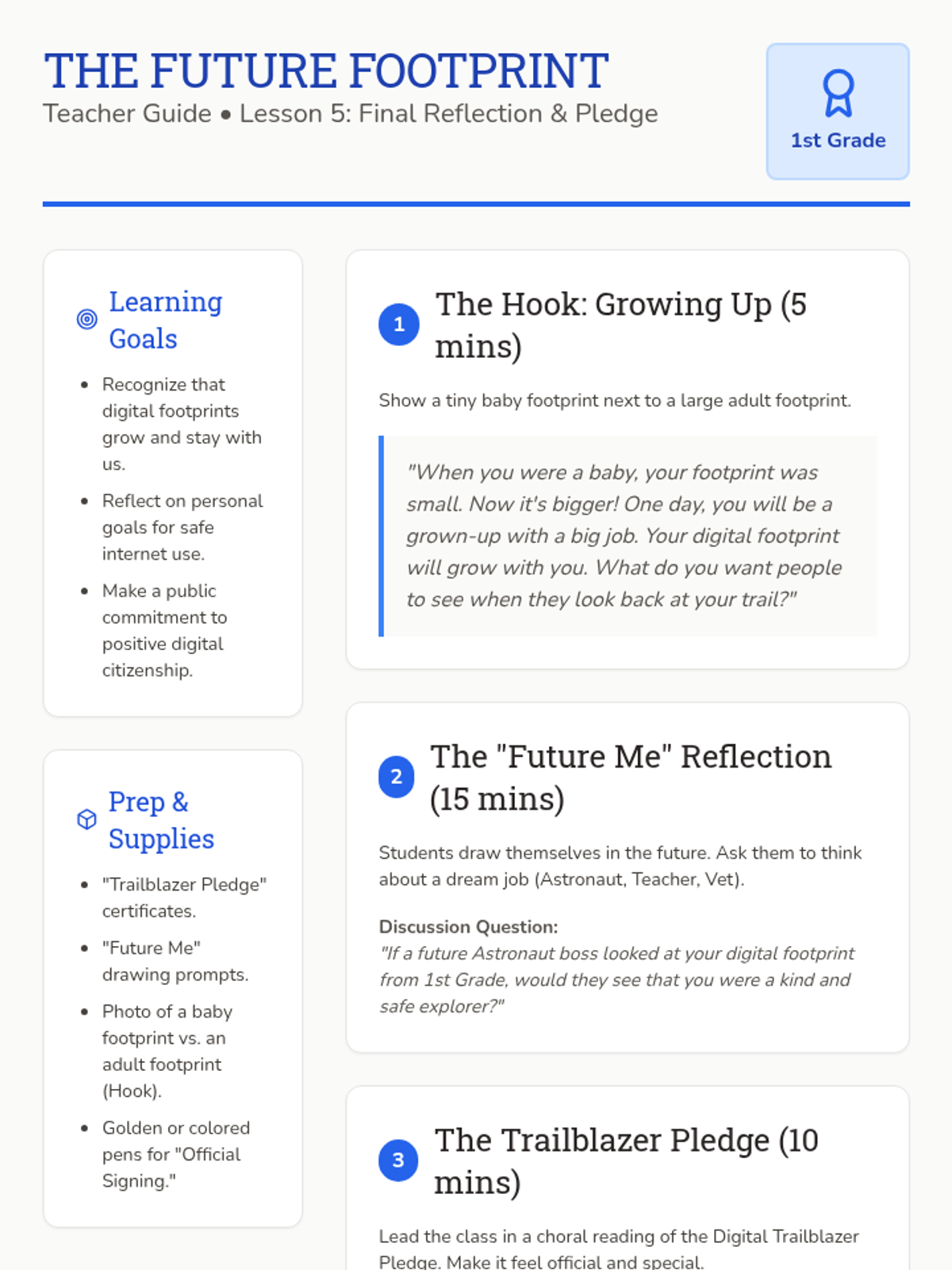
Students look toward the future and commit to being responsible digital citizens through a class pledge and self-reflection.
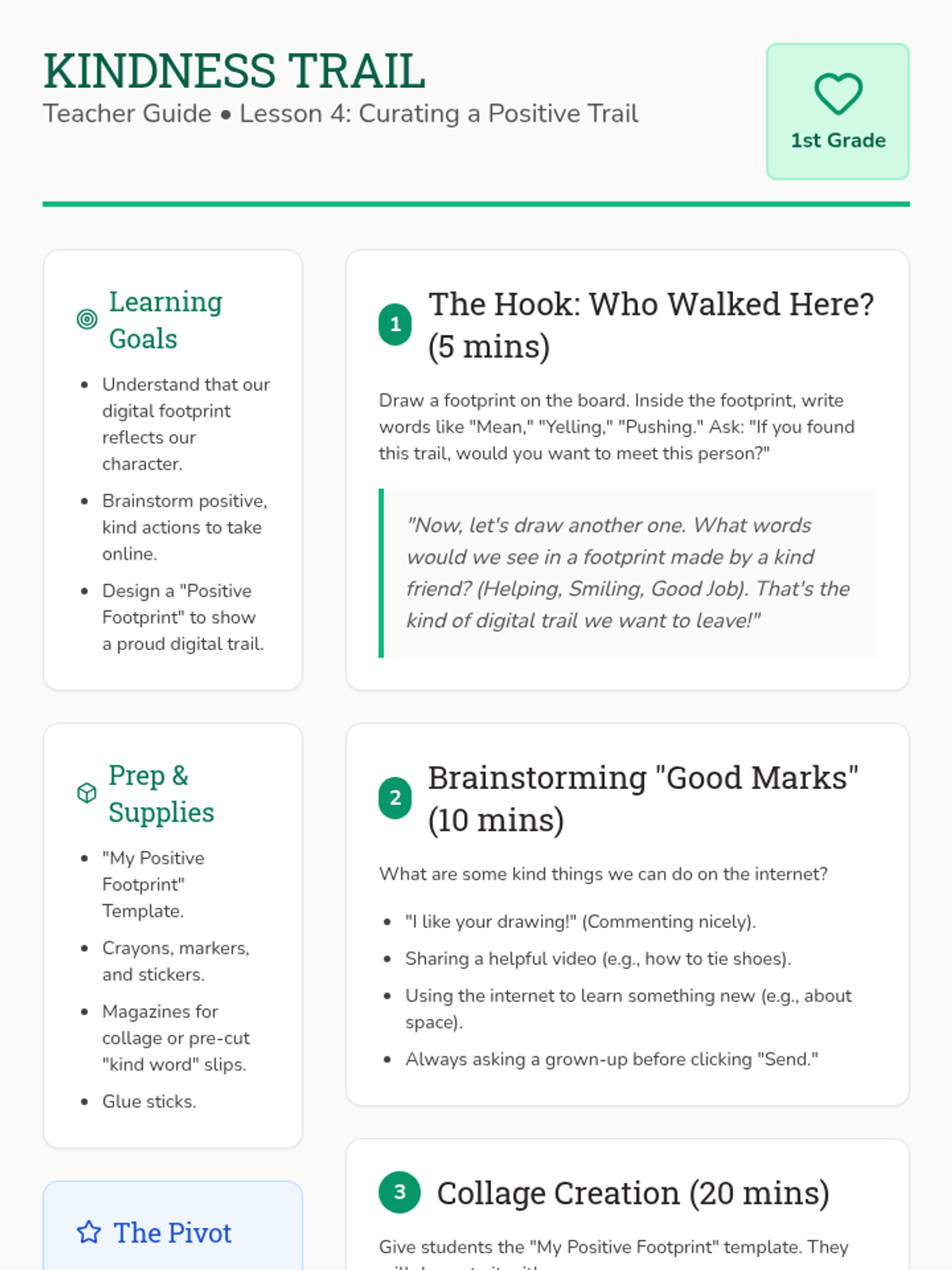
Students focus on positive digital citizenship by creating a 'good footprint' collage of kind words and helpful actions.
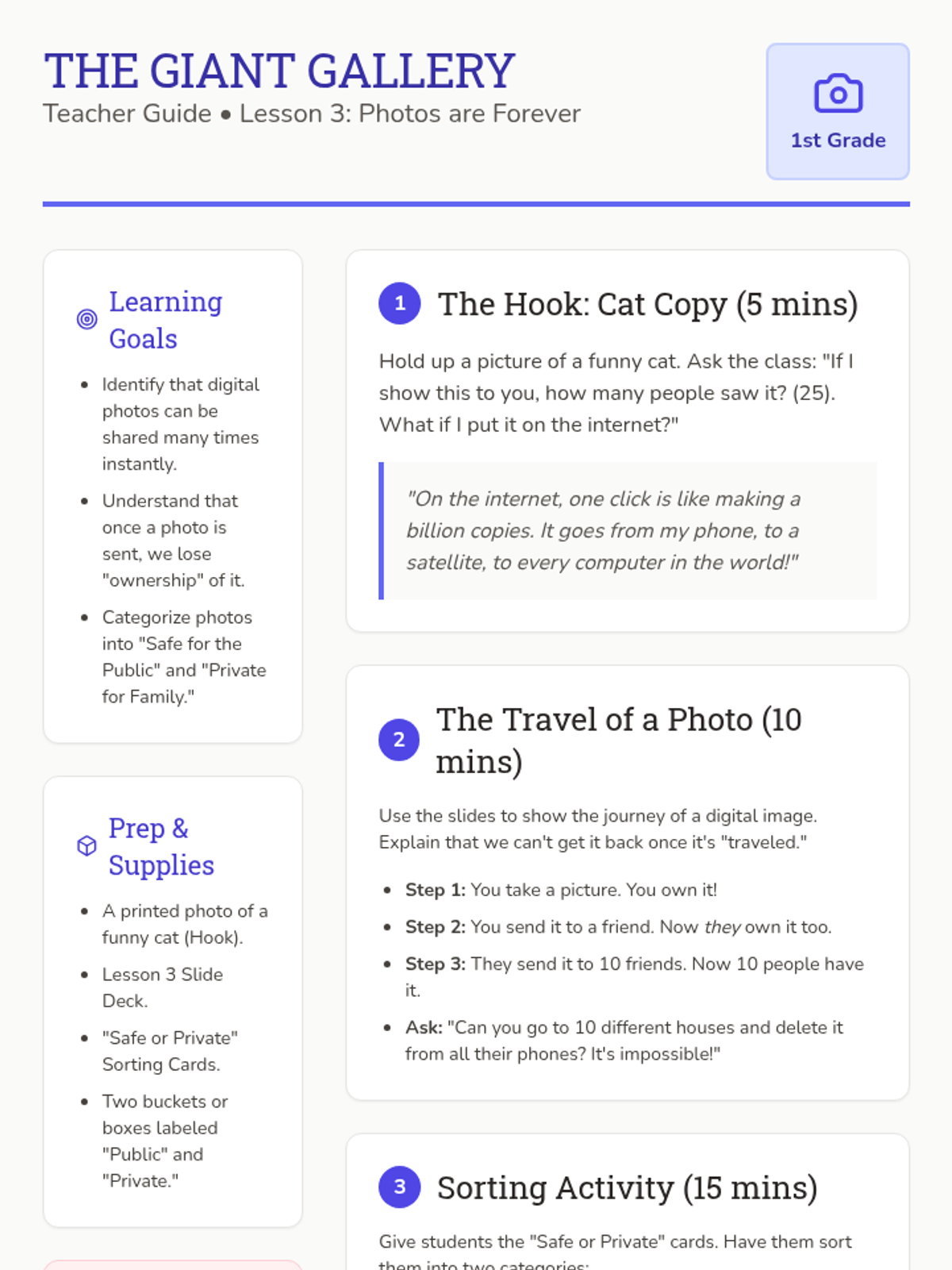
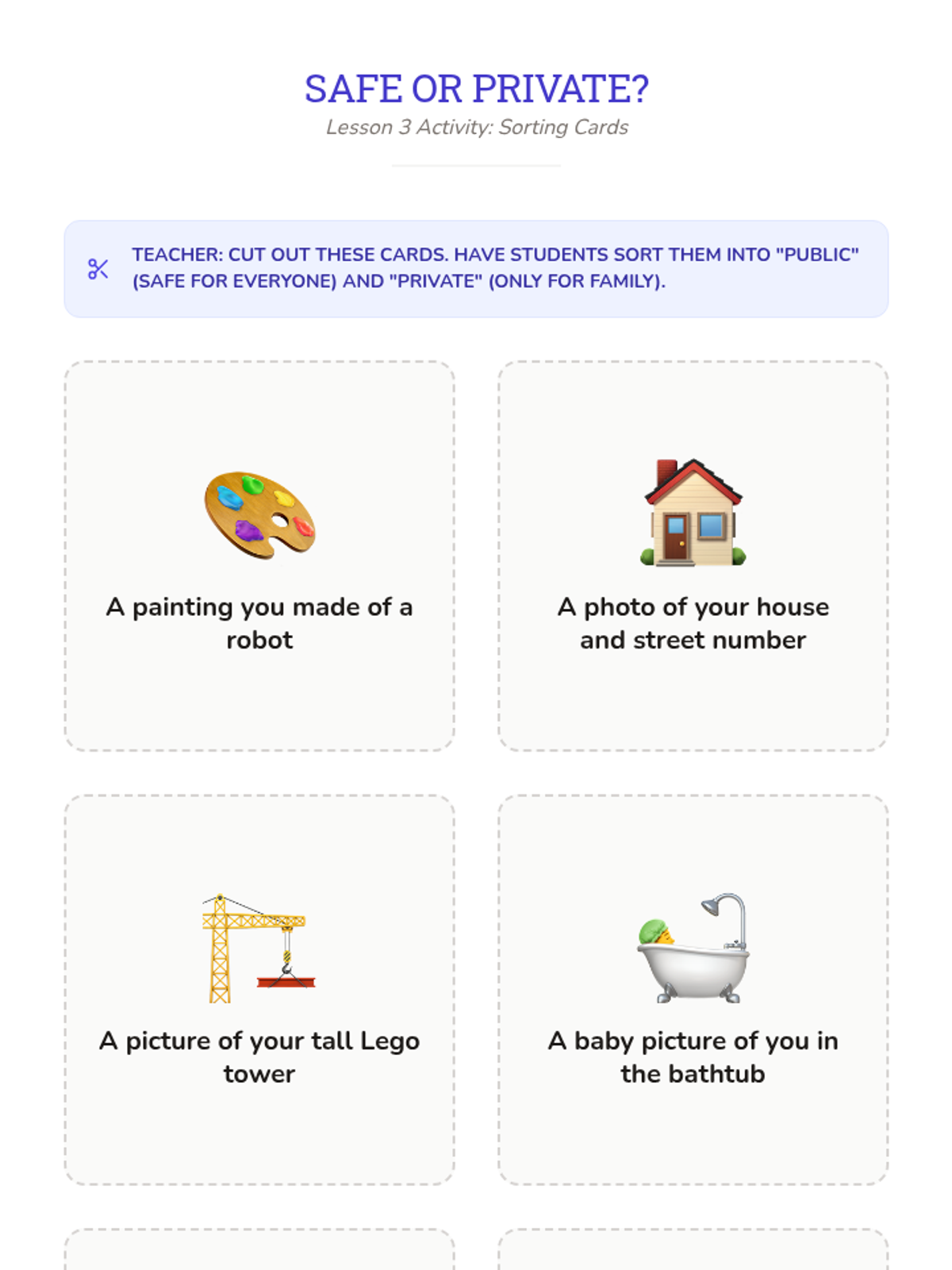
Students learn about photo sharing and the lack of control once an image is online, practicing safe vs. private photo choices.
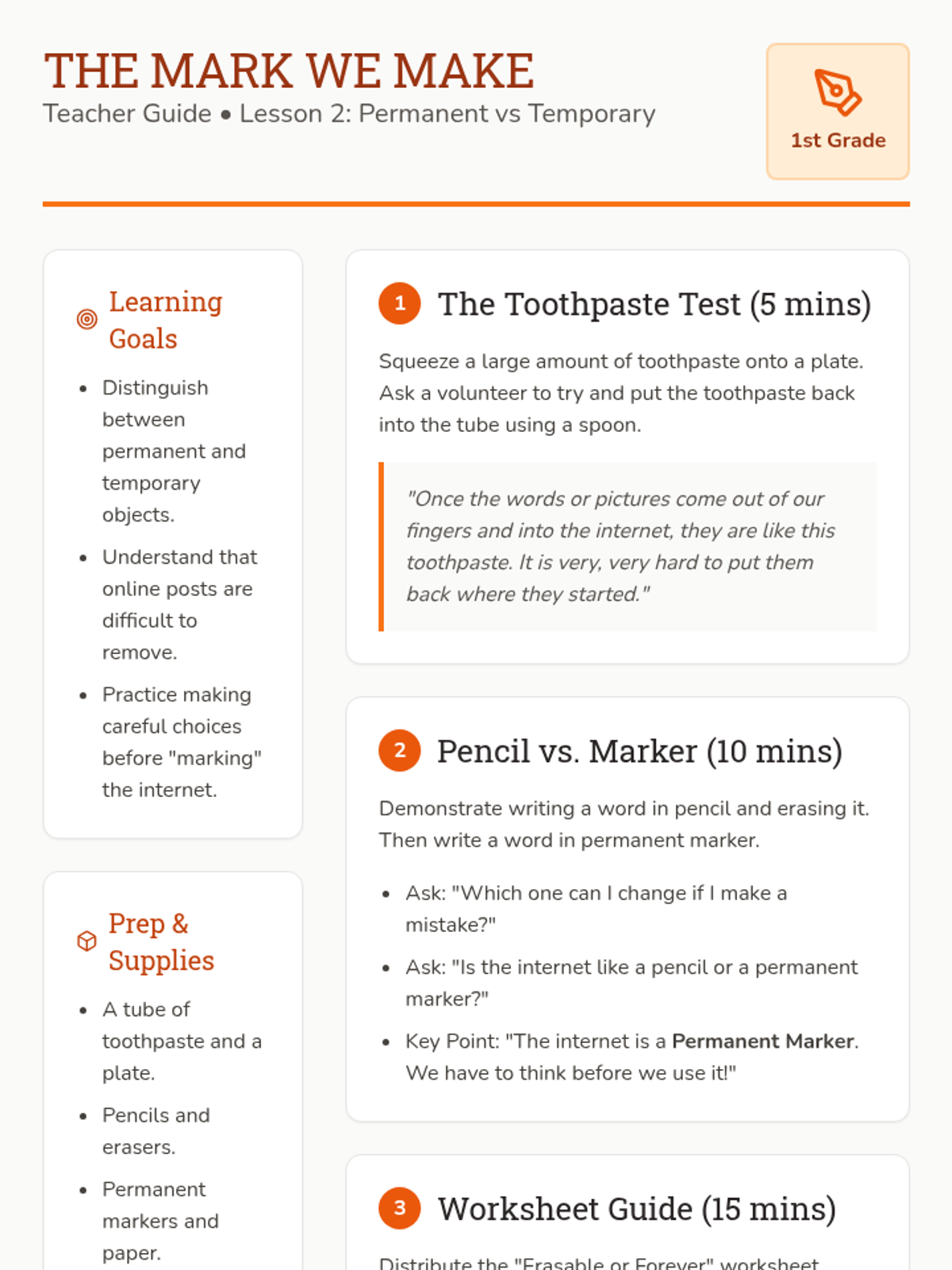
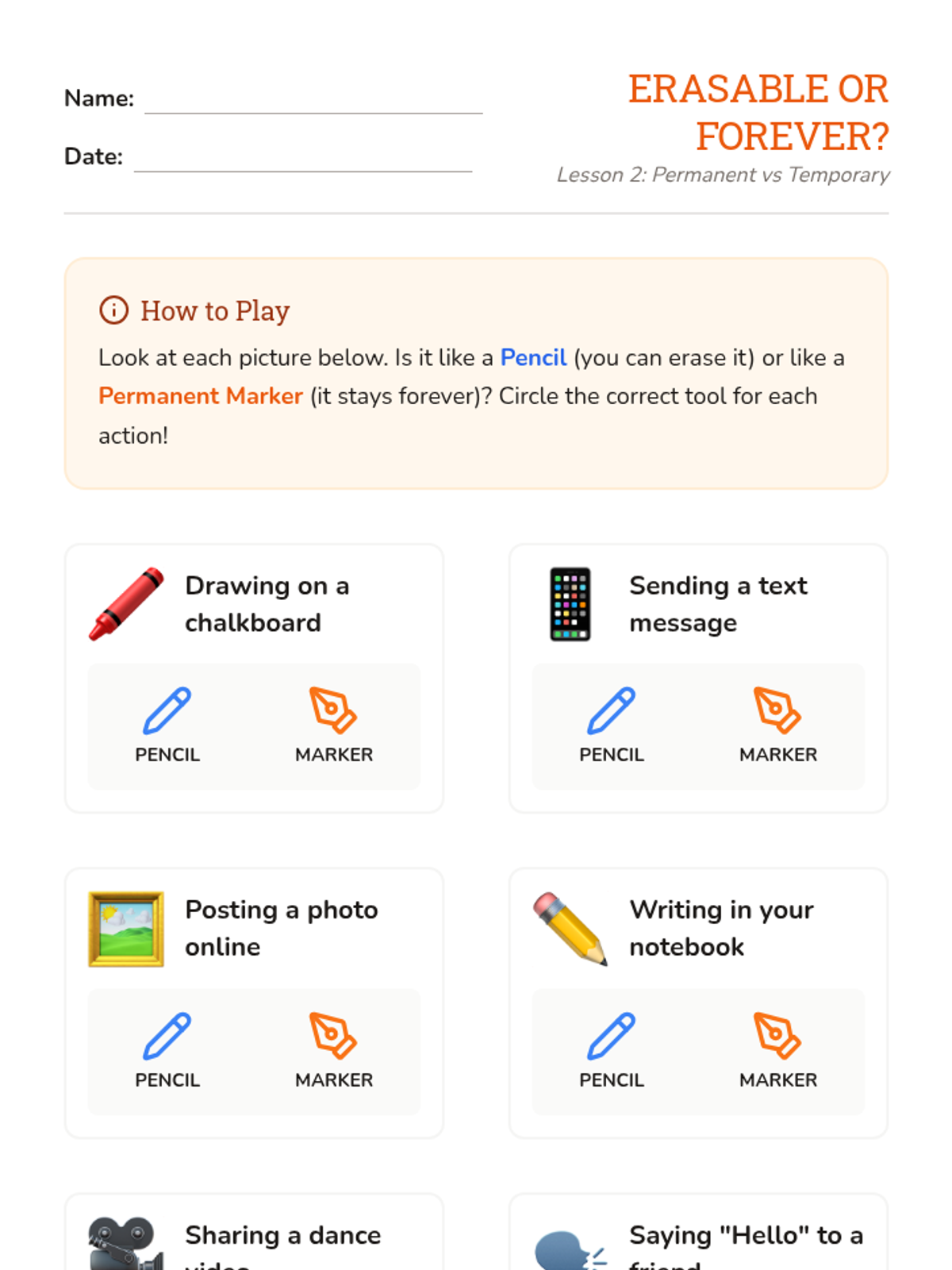
Using the toothpaste and marker metaphors, students distinguish between things that can be erased and things that stay forever online.
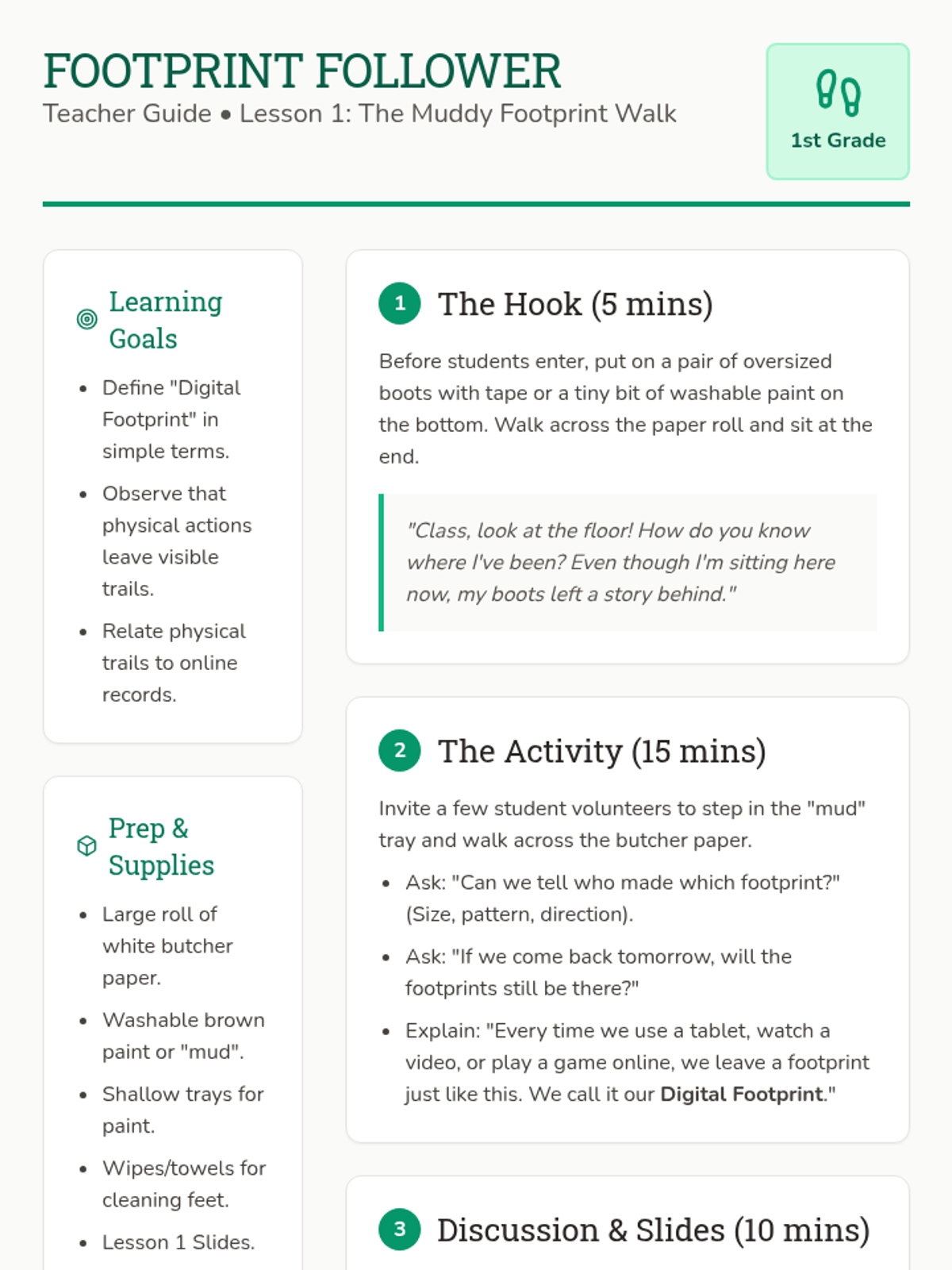
Students explore the concept of a 'trail' using physical footprints to understand how actions online leave a record of where they have been.
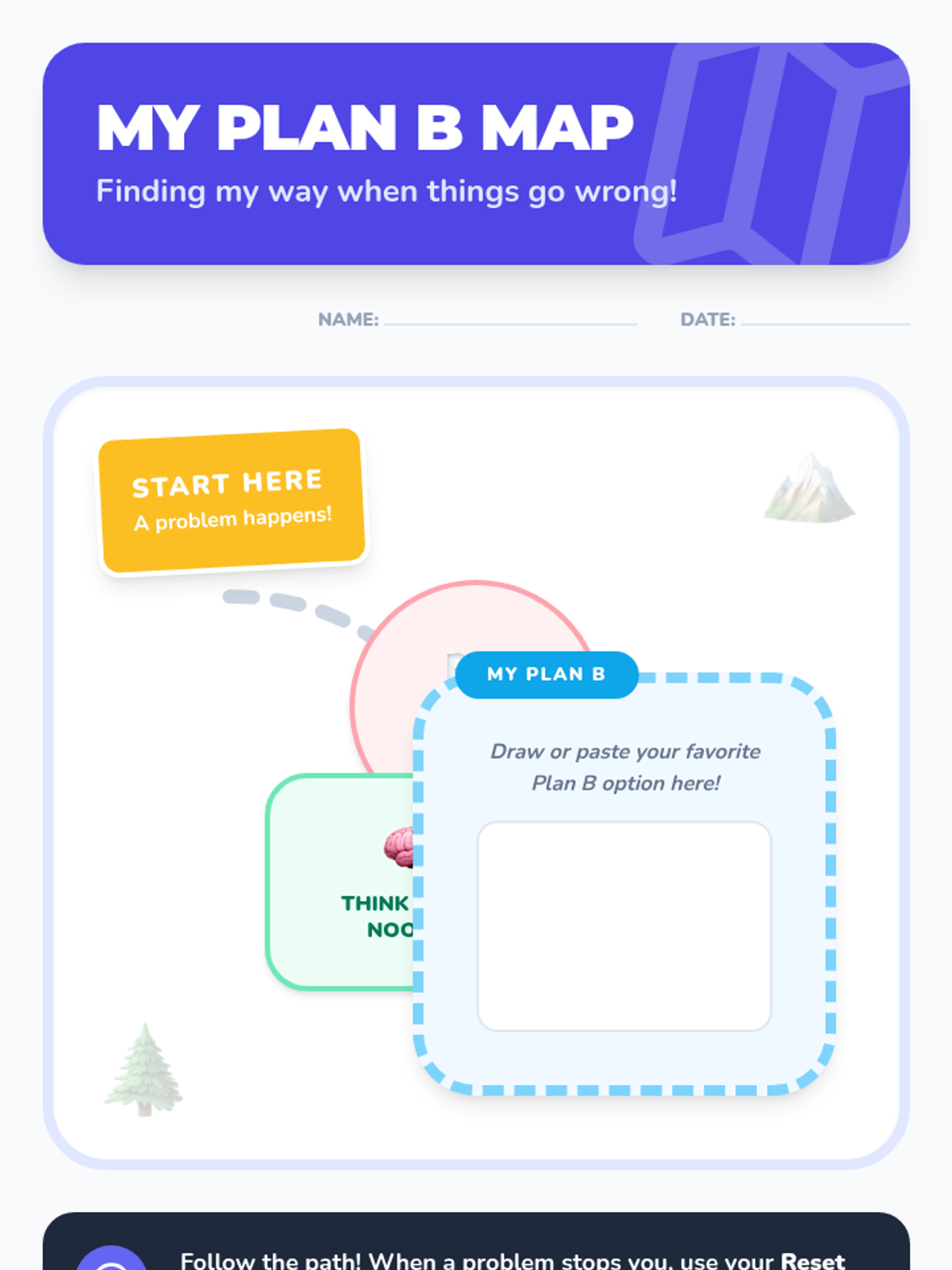
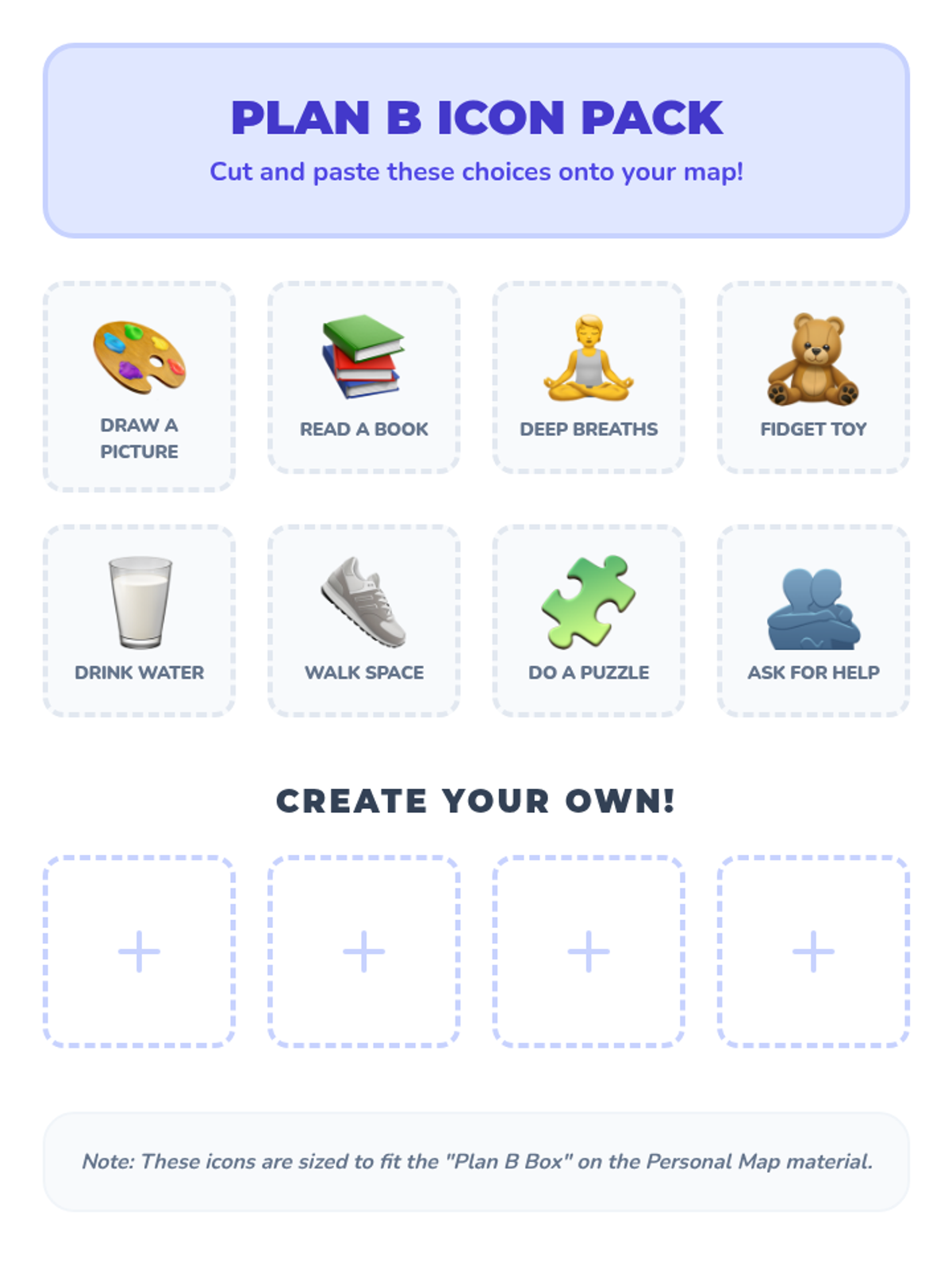
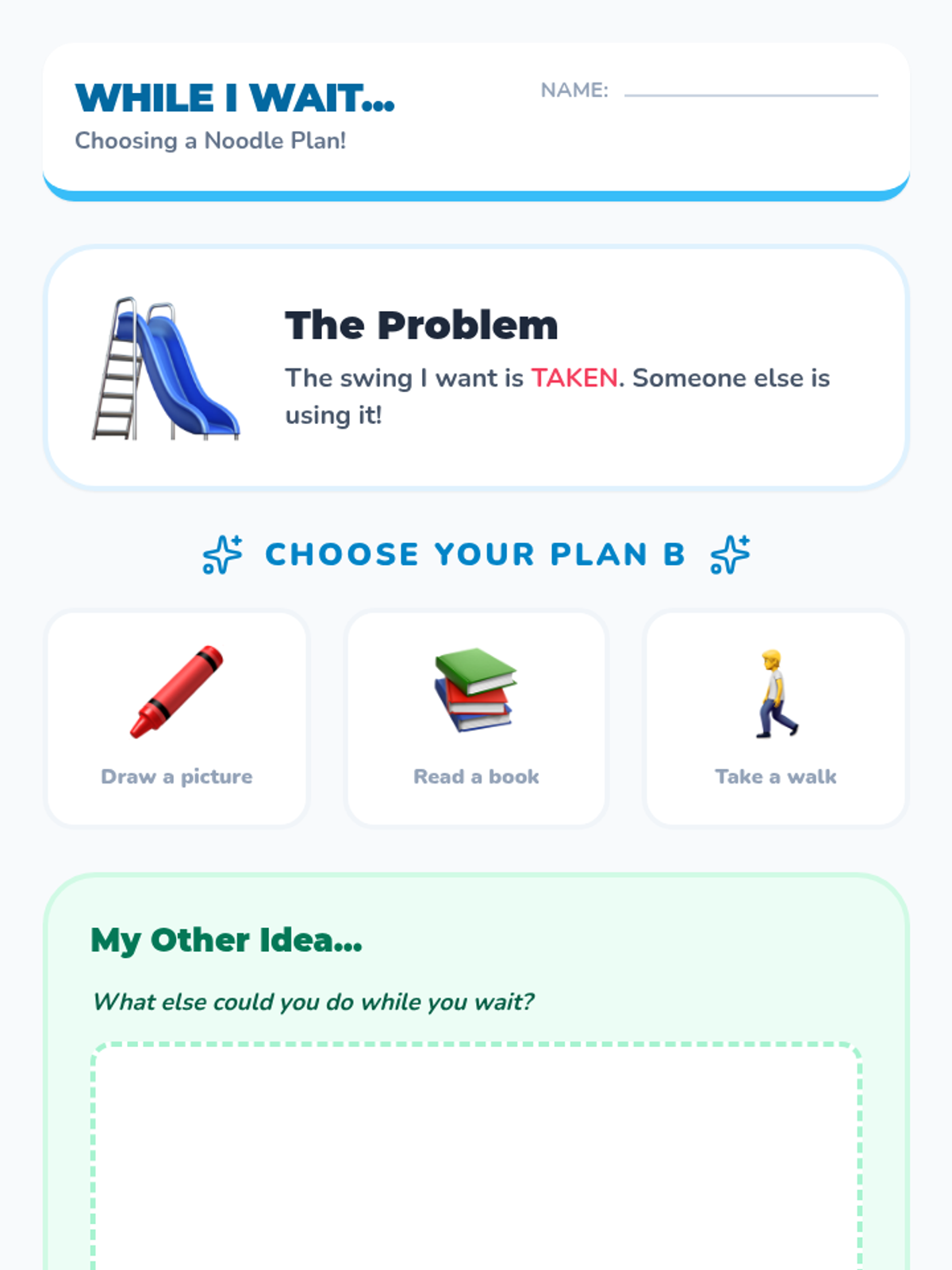
Students synthesize their learning by creating a personalized visual map of 'Plan B' options for common classroom obstacles.
Focuses on the skill of 'waiting' and choosing alternatives when preferred items are unavailable.
Students practice managing anxiety during schedule shifts by using visual aids and moving to a 'Plan B' activity.
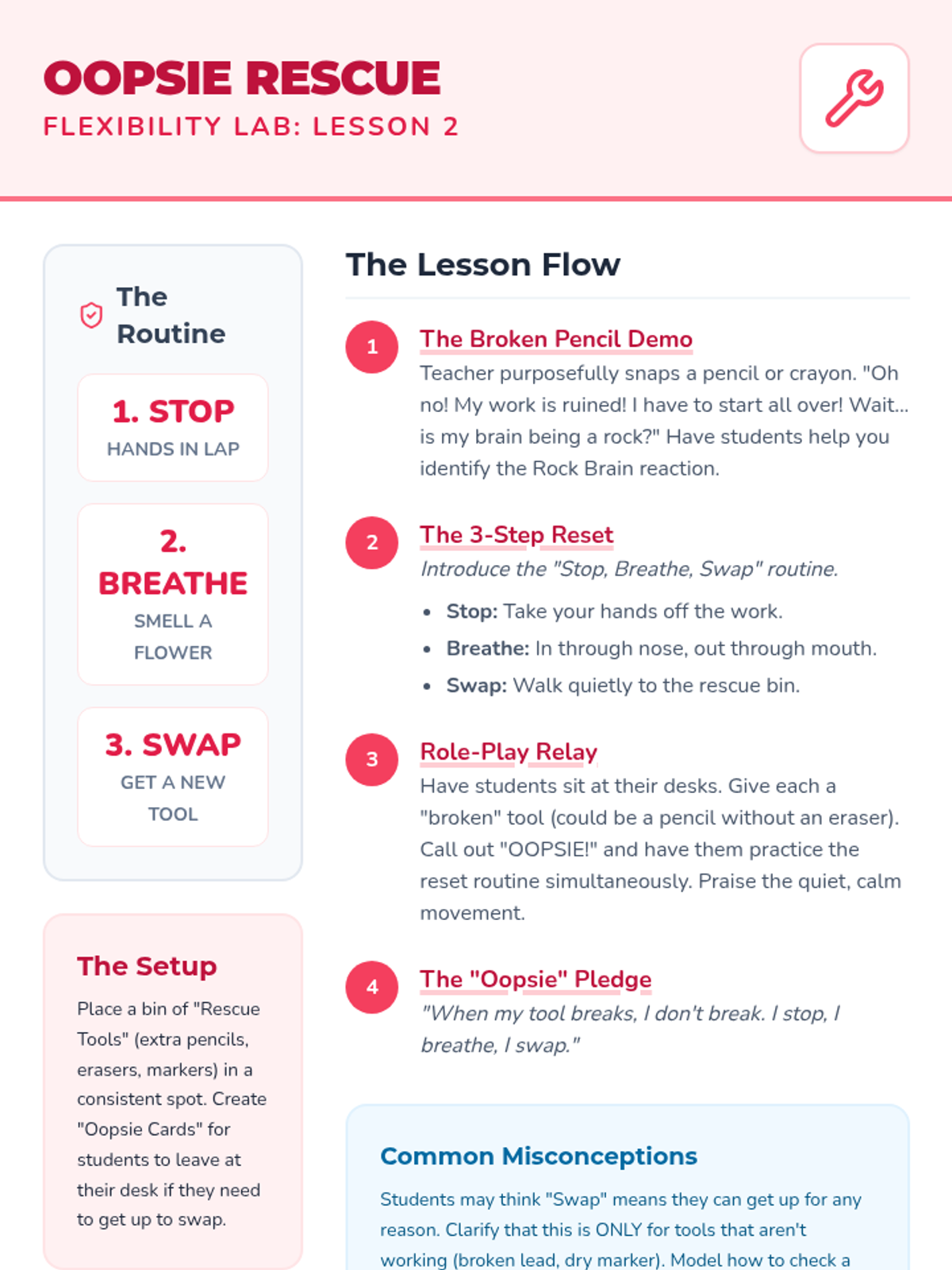
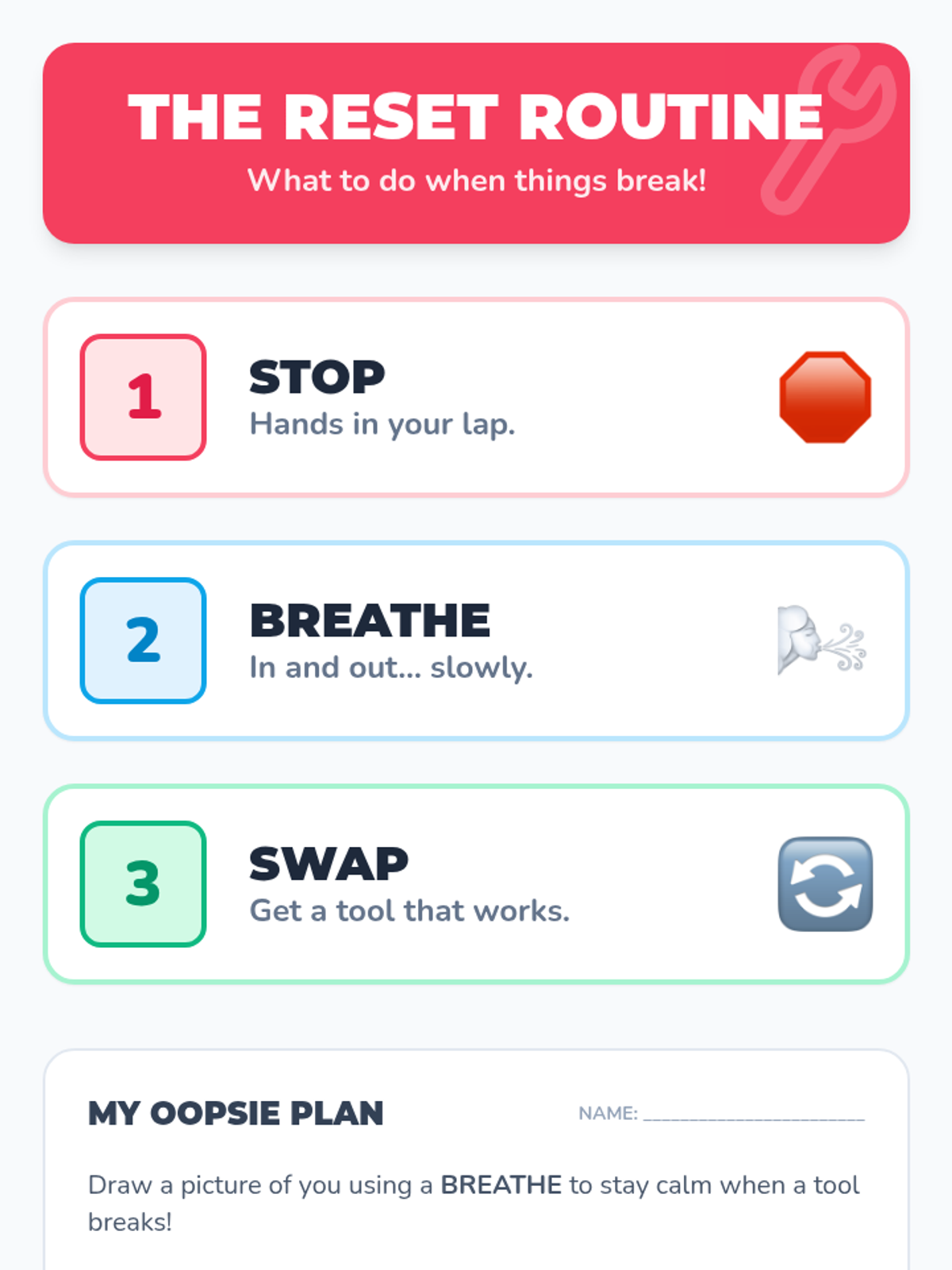
Students role-play tool breakage and practice a three-step reset routine: Stop, Breathe, Swap to maintain emotional regulation.
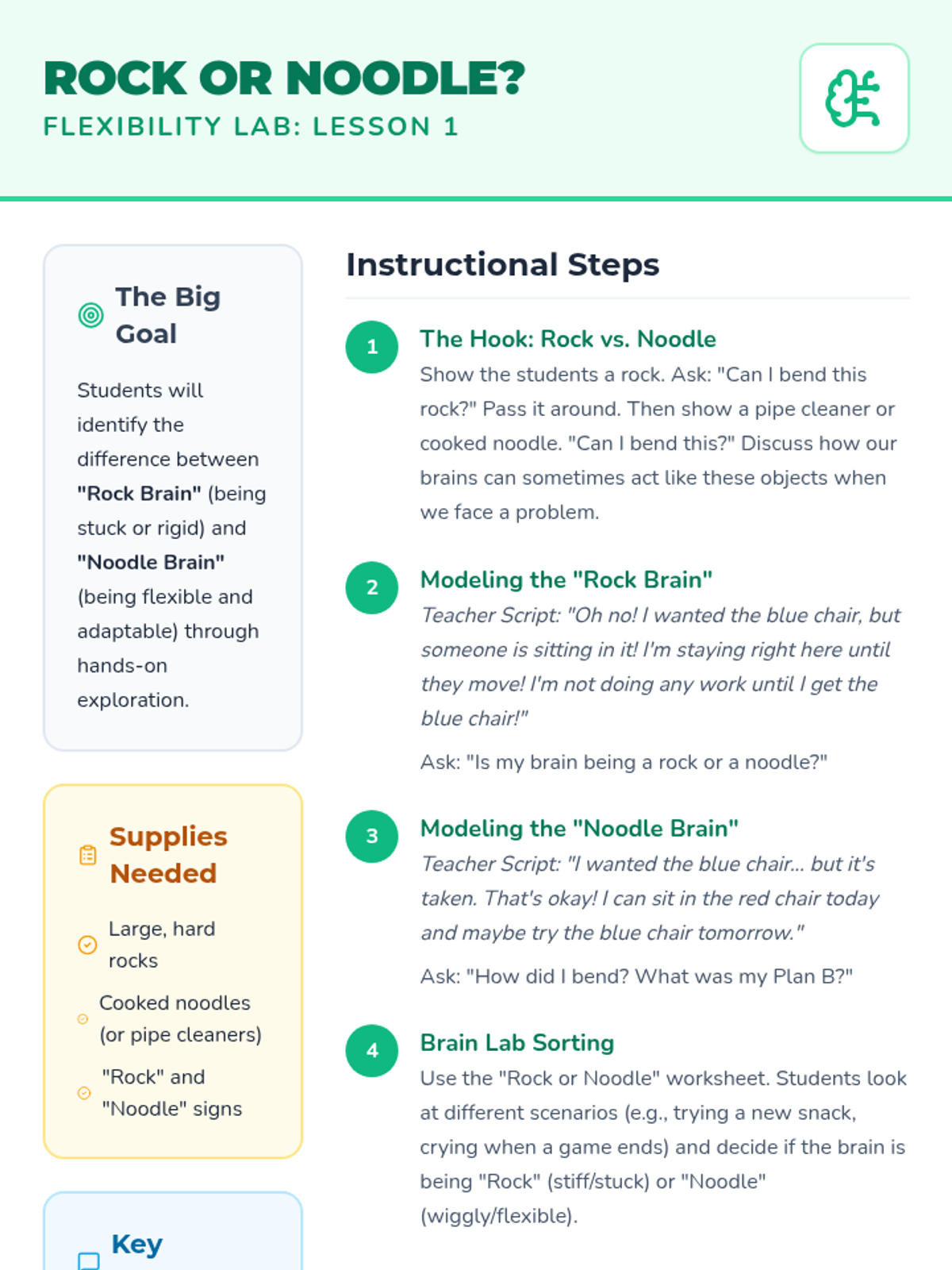
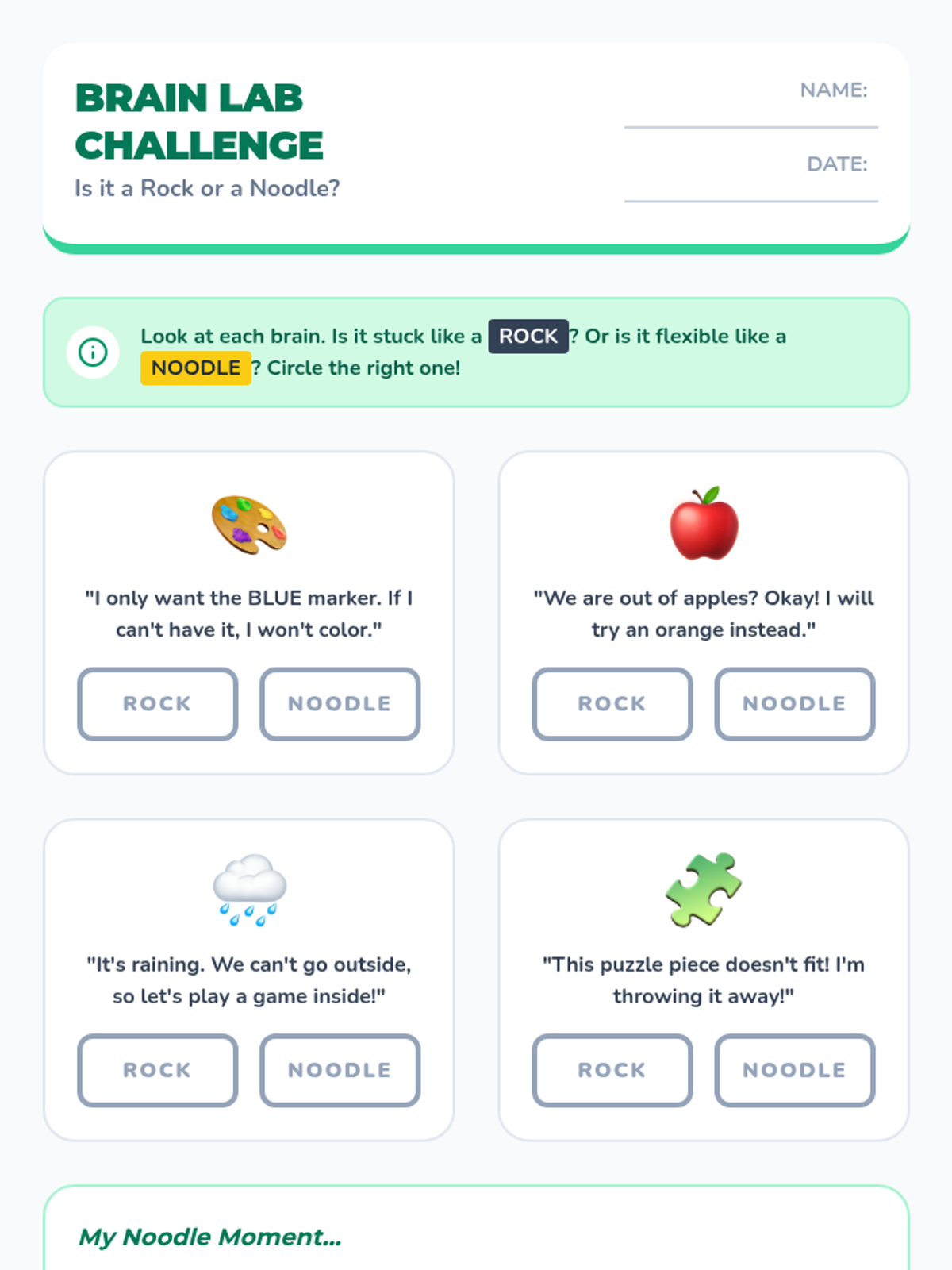
Students explore the difference between 'rock brain' (stuck) and 'noodle brain' (flexible) using physical objects and metaphors. They establish the core vocabulary for the unit.
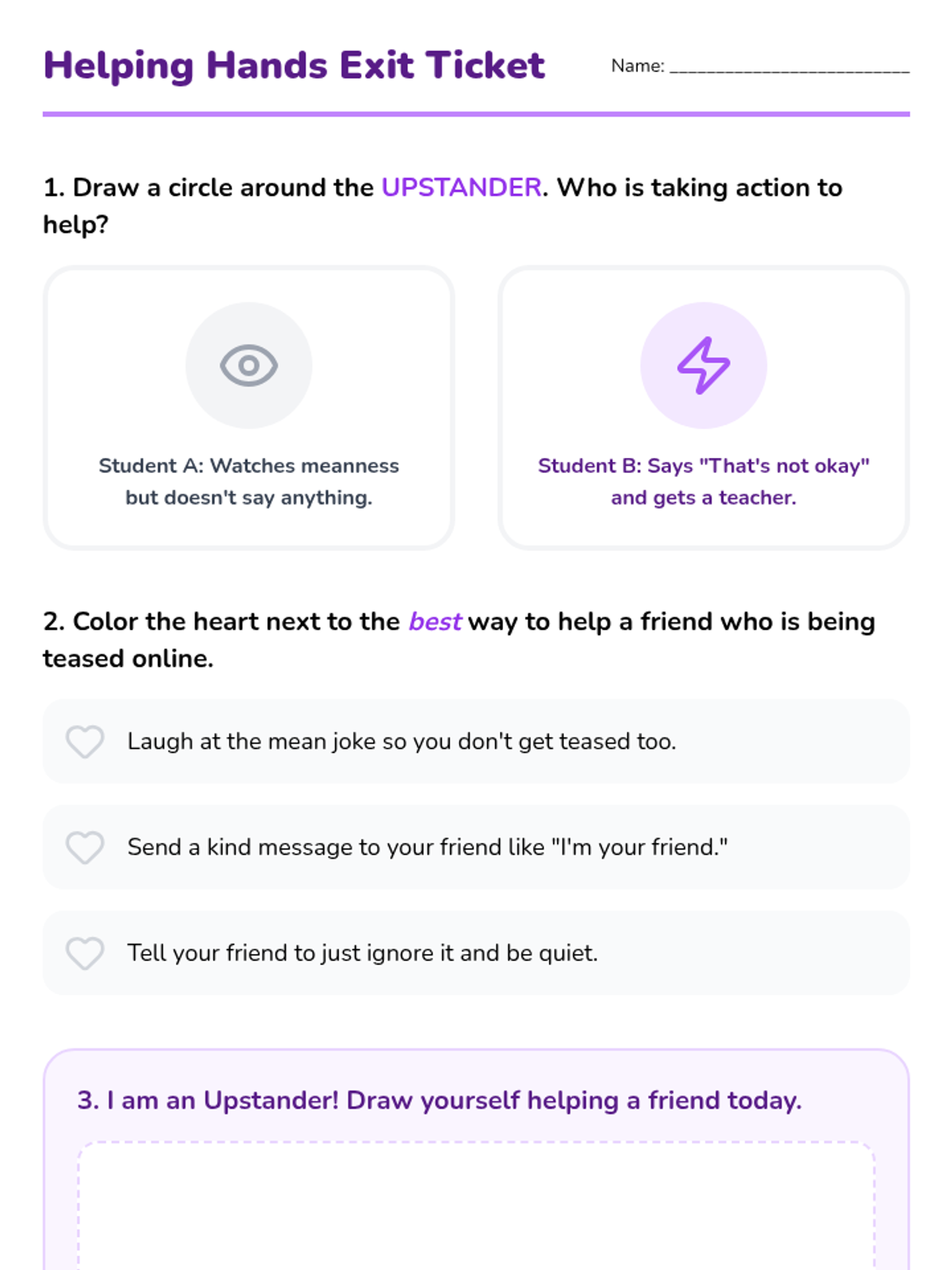
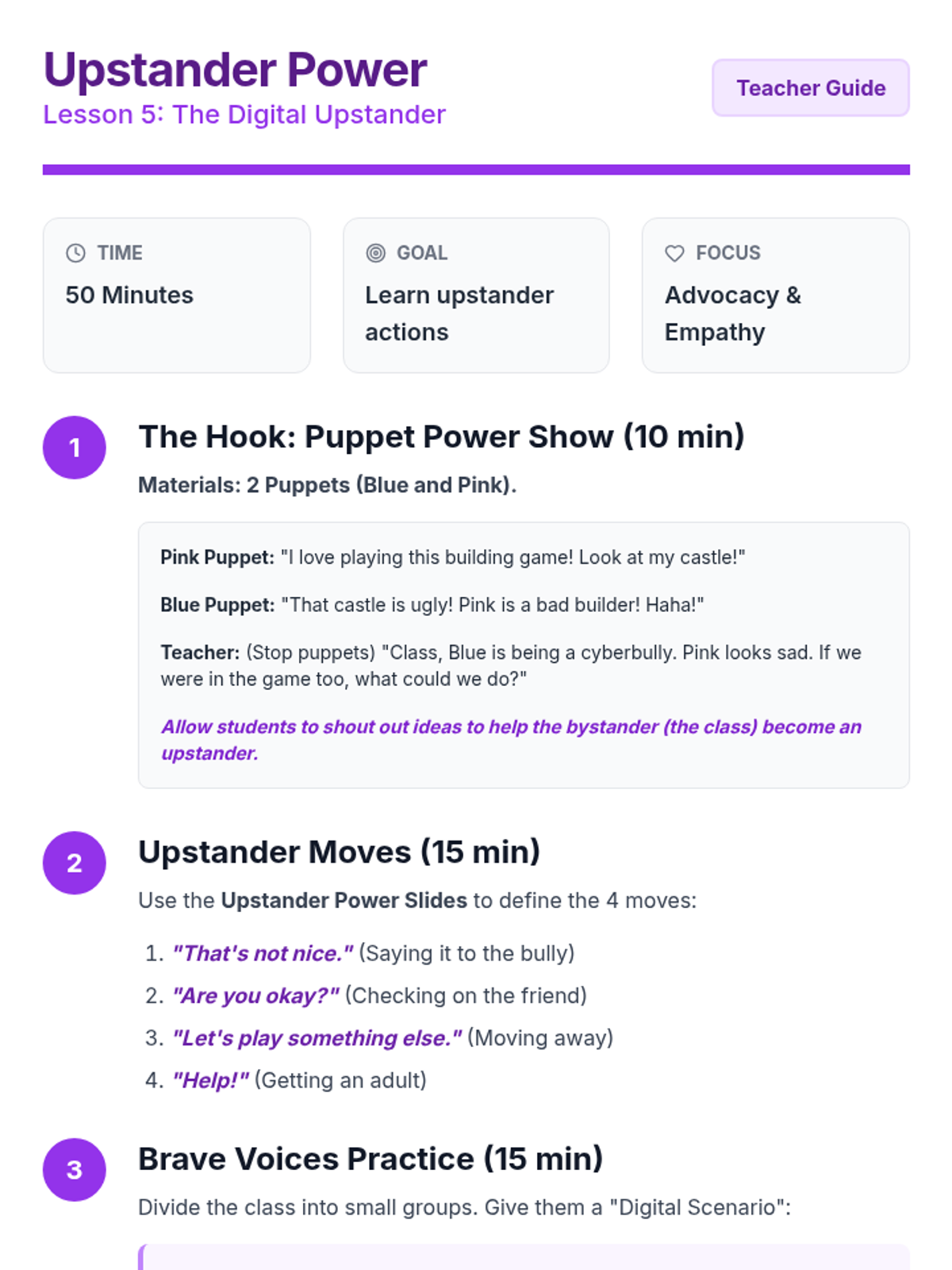
Students role-play what to do if they see a friend being treated poorly in a game. They practice saying 'That's not nice' and getting help for their friend.
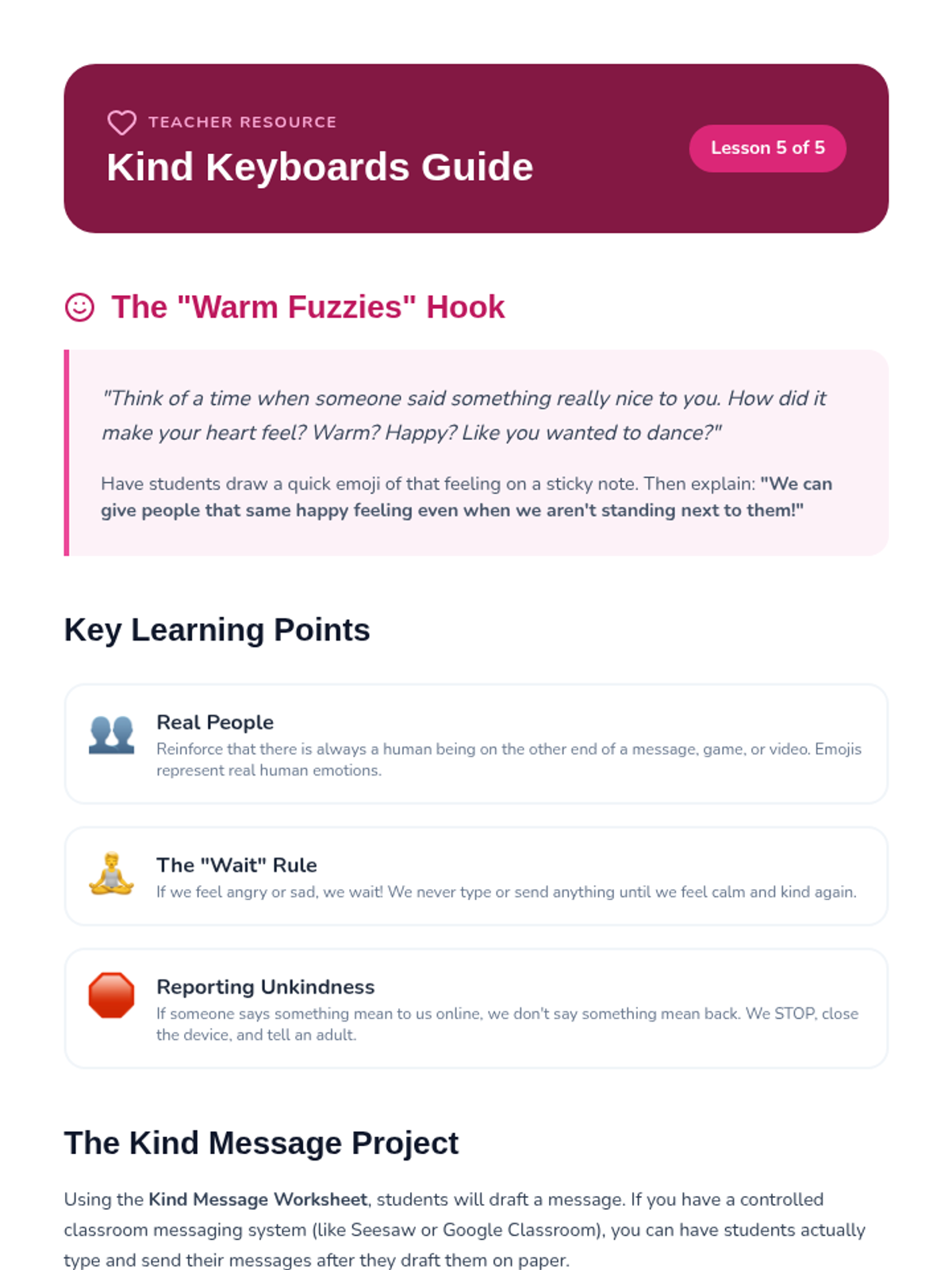
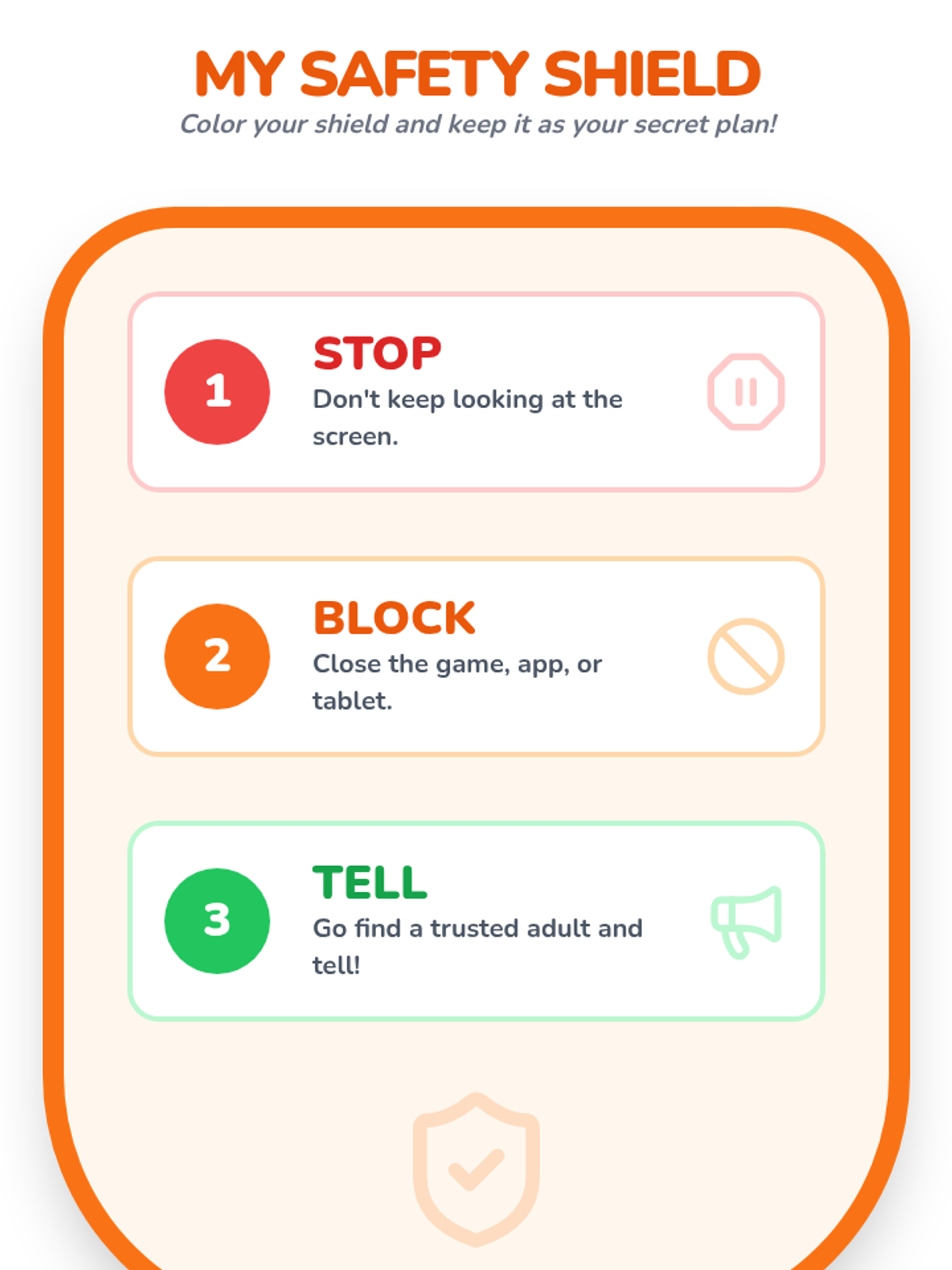
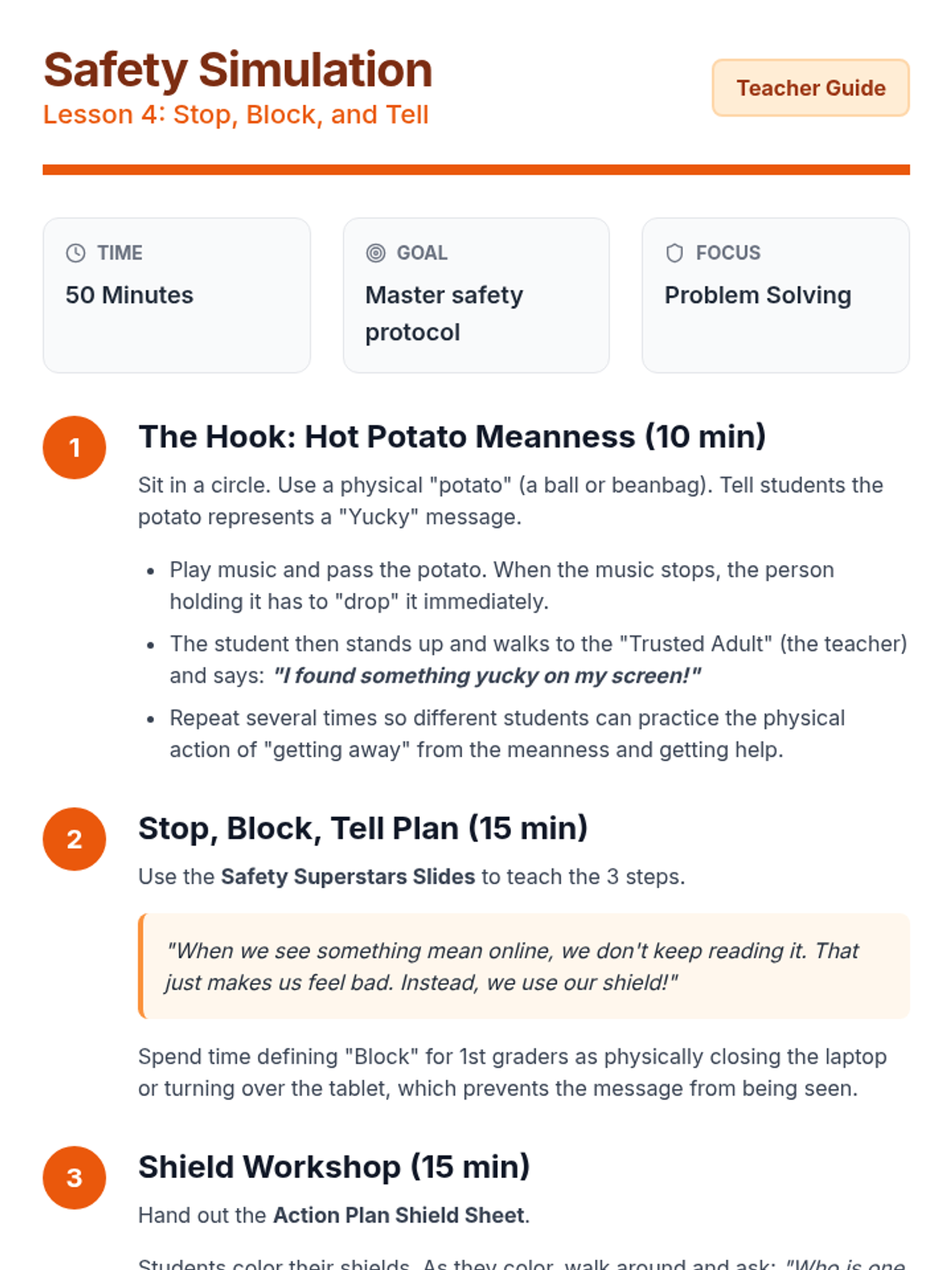
Students learn the specific action plan for when they encounter meanness: Stop looking, Block the person (or close the device), and Tell a trusted adult immediately.
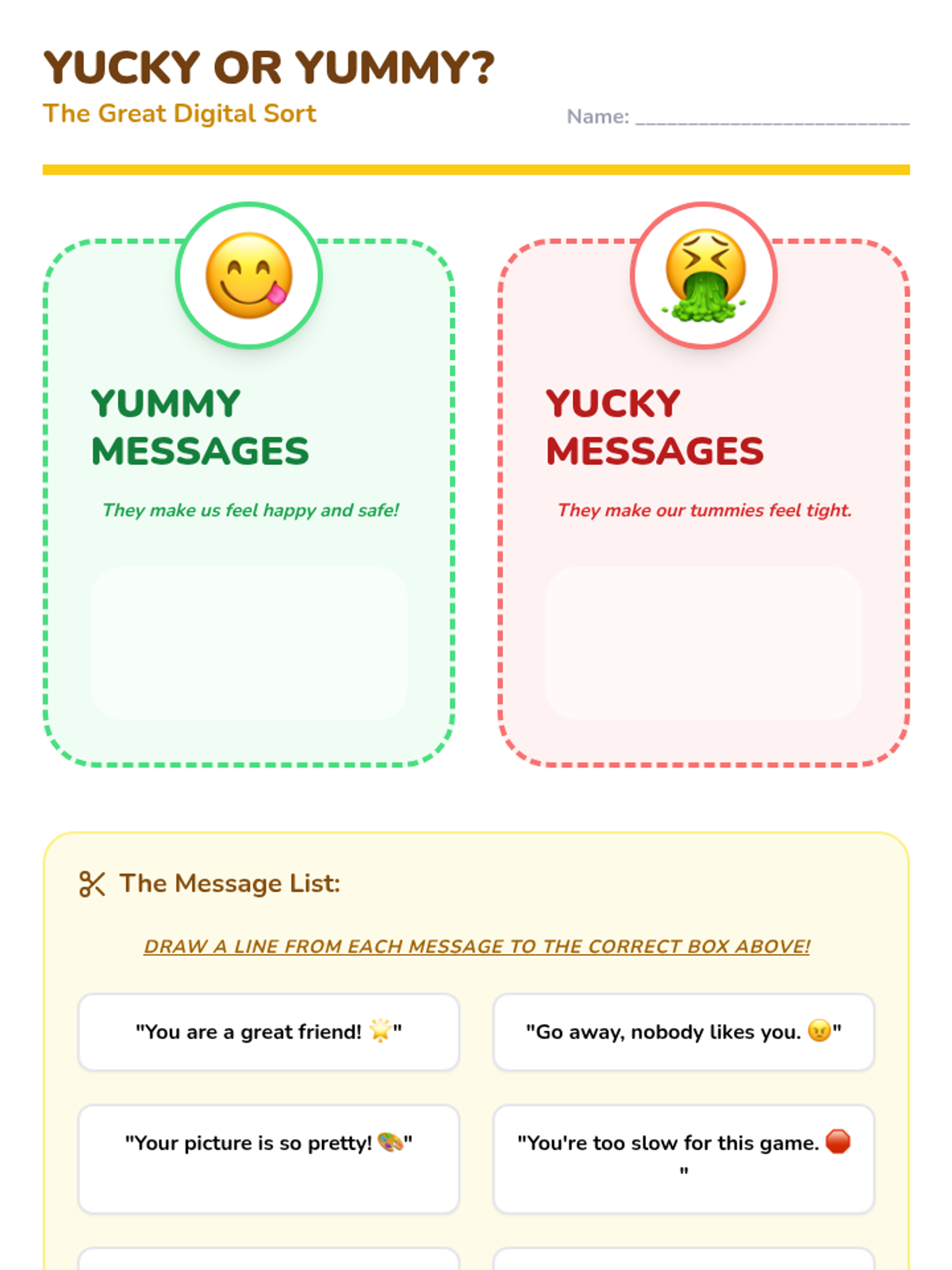
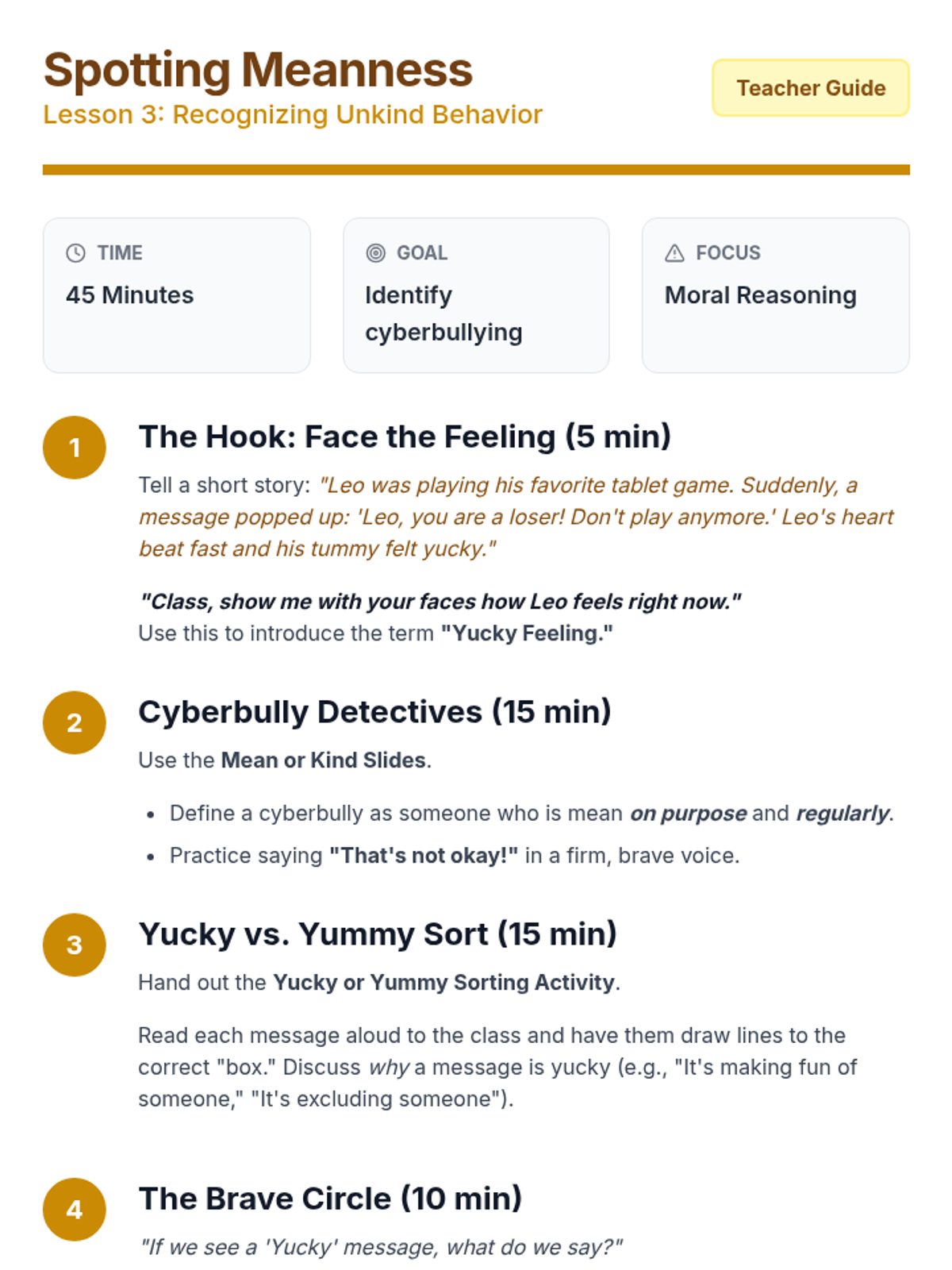
Through simple storybooks or scenarios, students identify when a character is being a 'cyberbully' (mean online). They practice naming the behavior as 'not okay.'
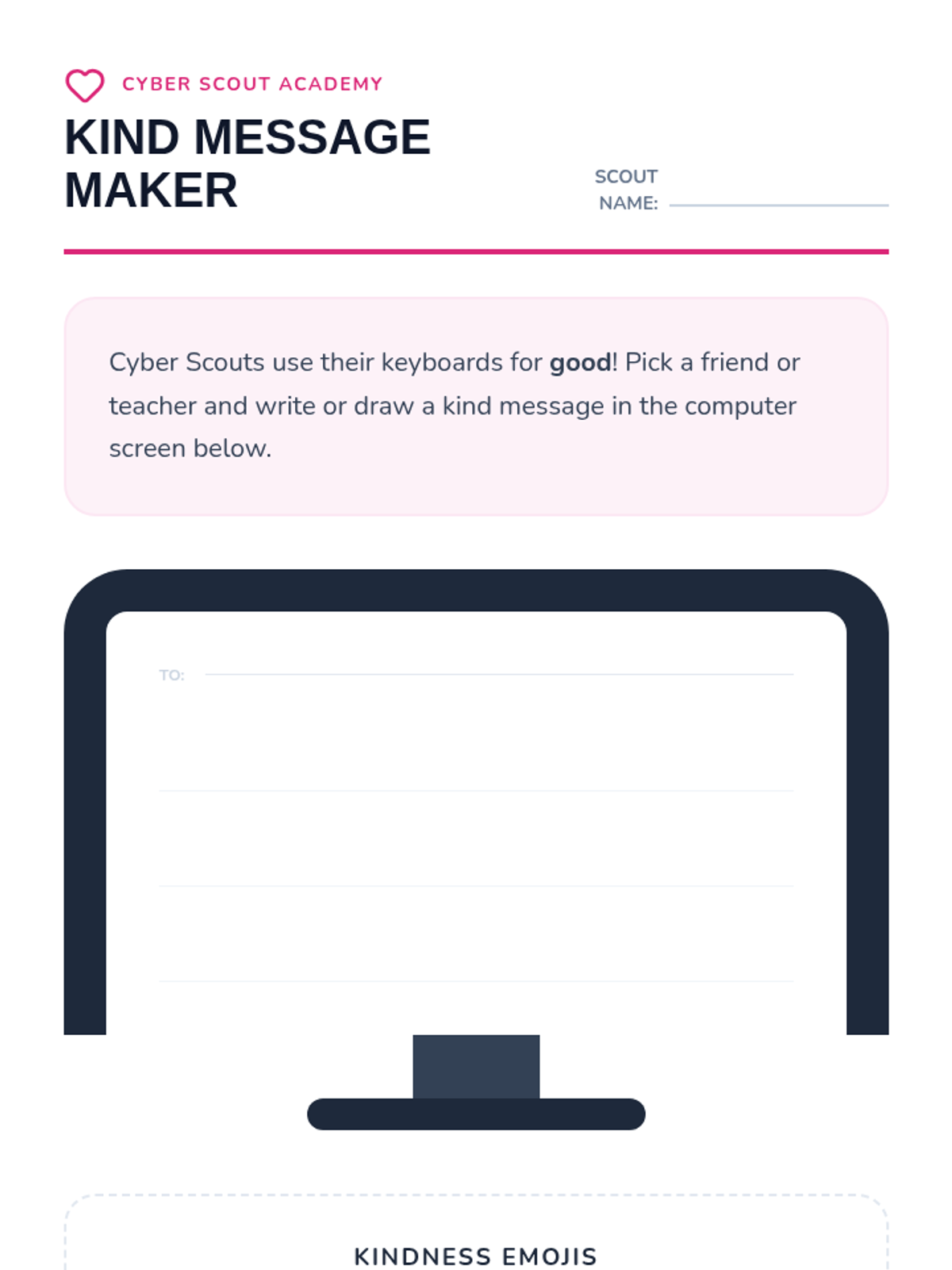
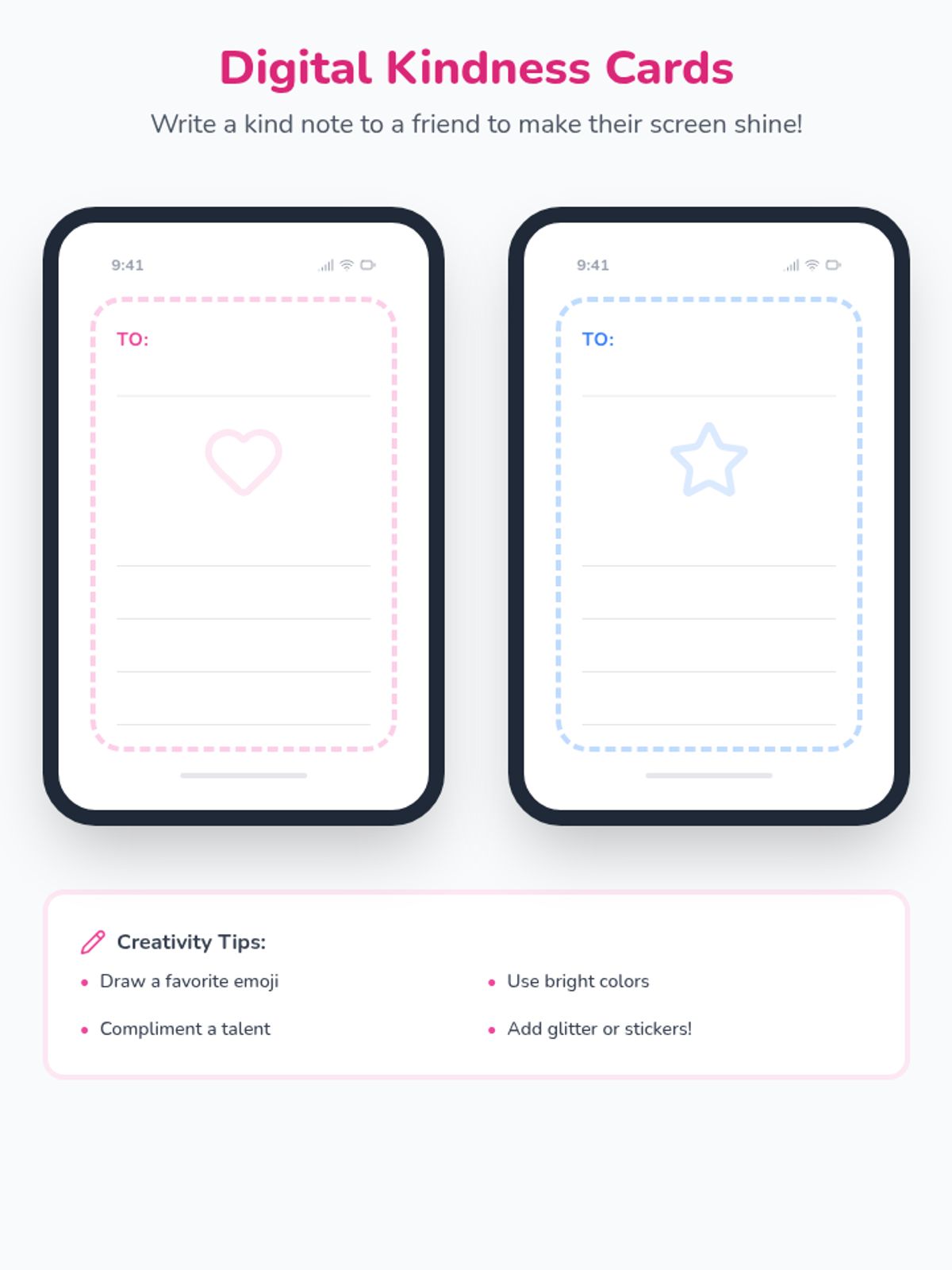
Students practice sending 'digital kindness' by writing nice notes or drawing pictures for classmates. They learn the Golden Rule applies to tablets and computers too.
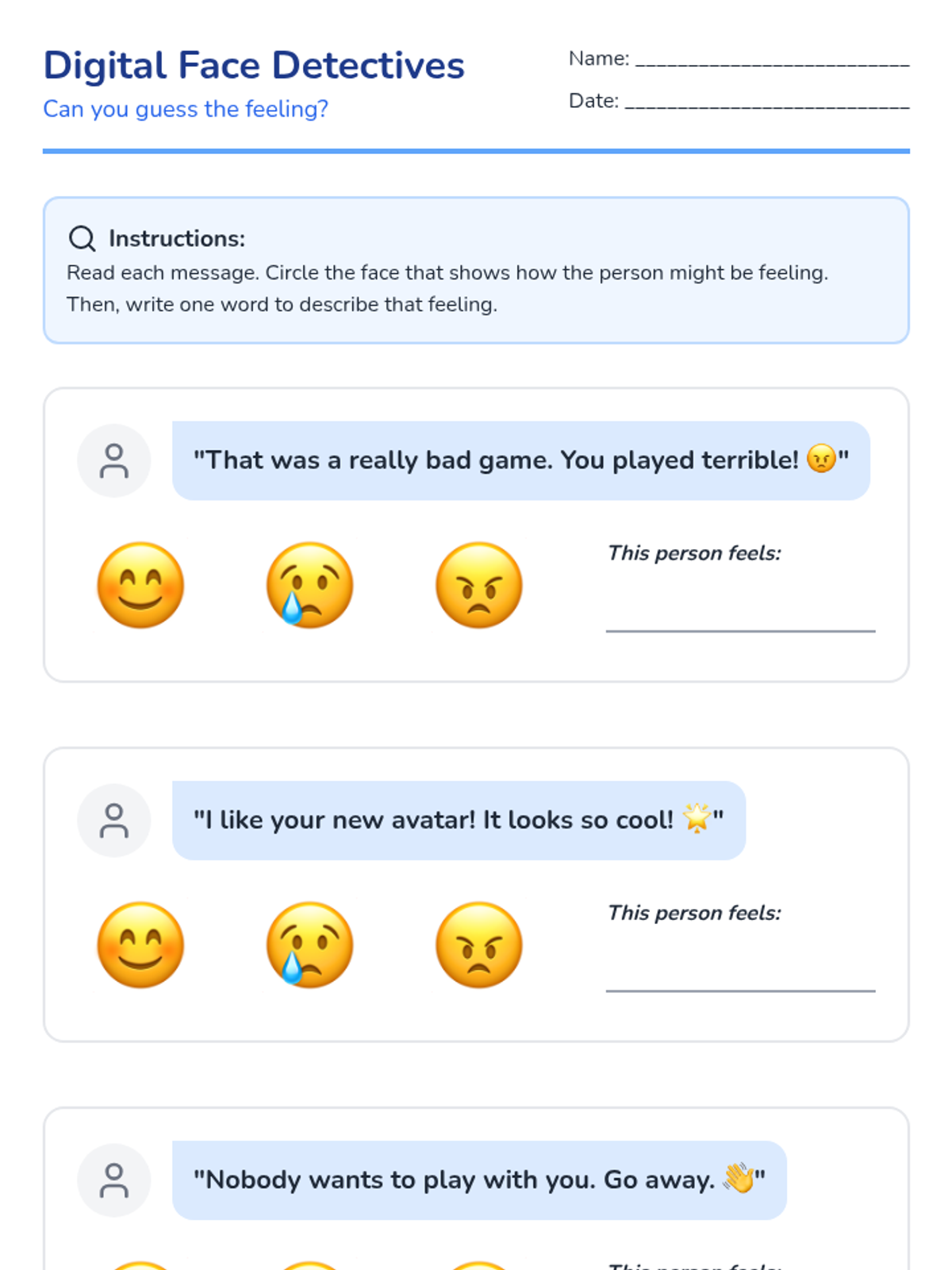
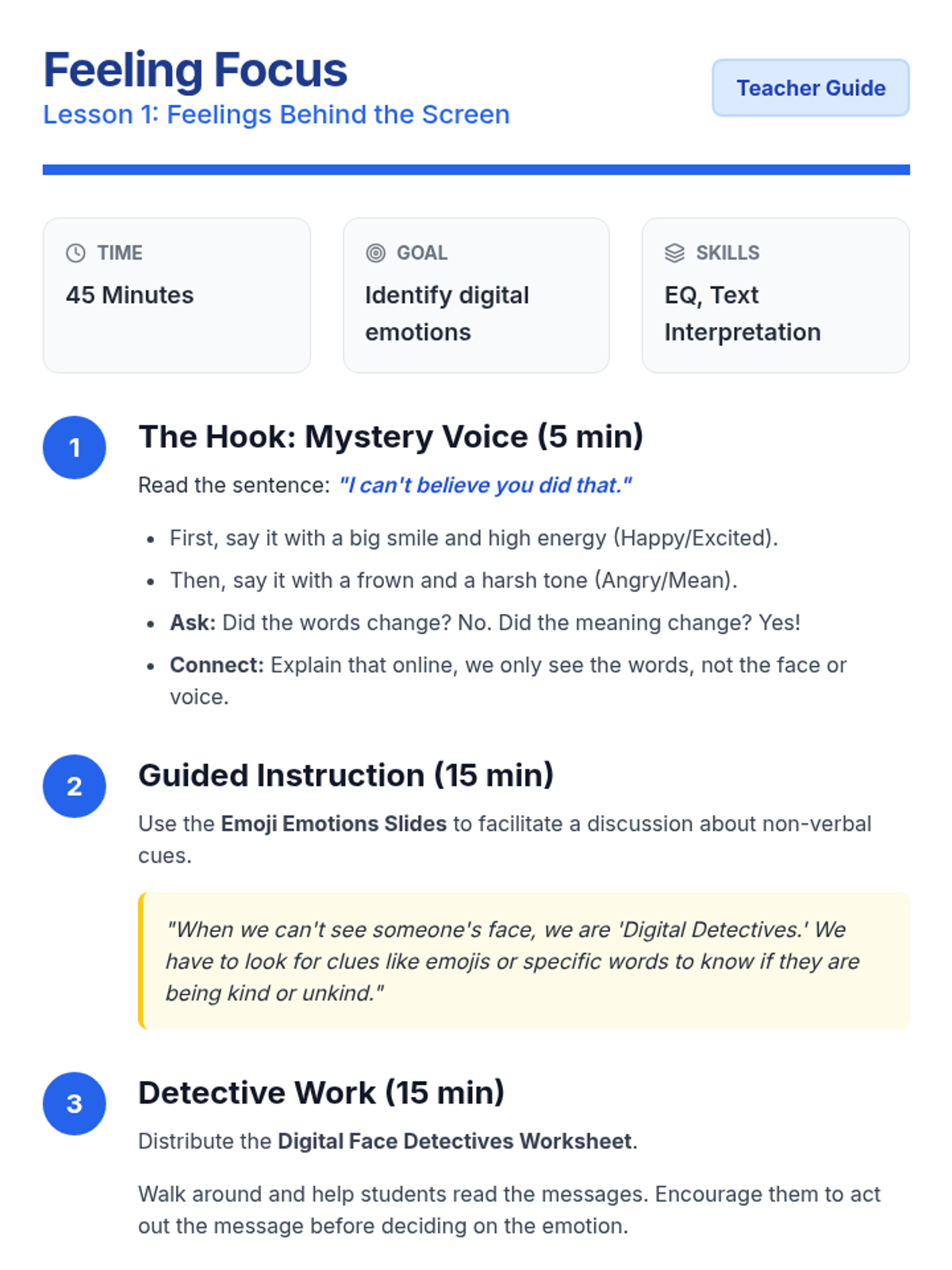
Students look at emojis and text messages to determine the emotion behind them. They discuss how it is harder to tell if someone is joking or being mean when you can't see their face.
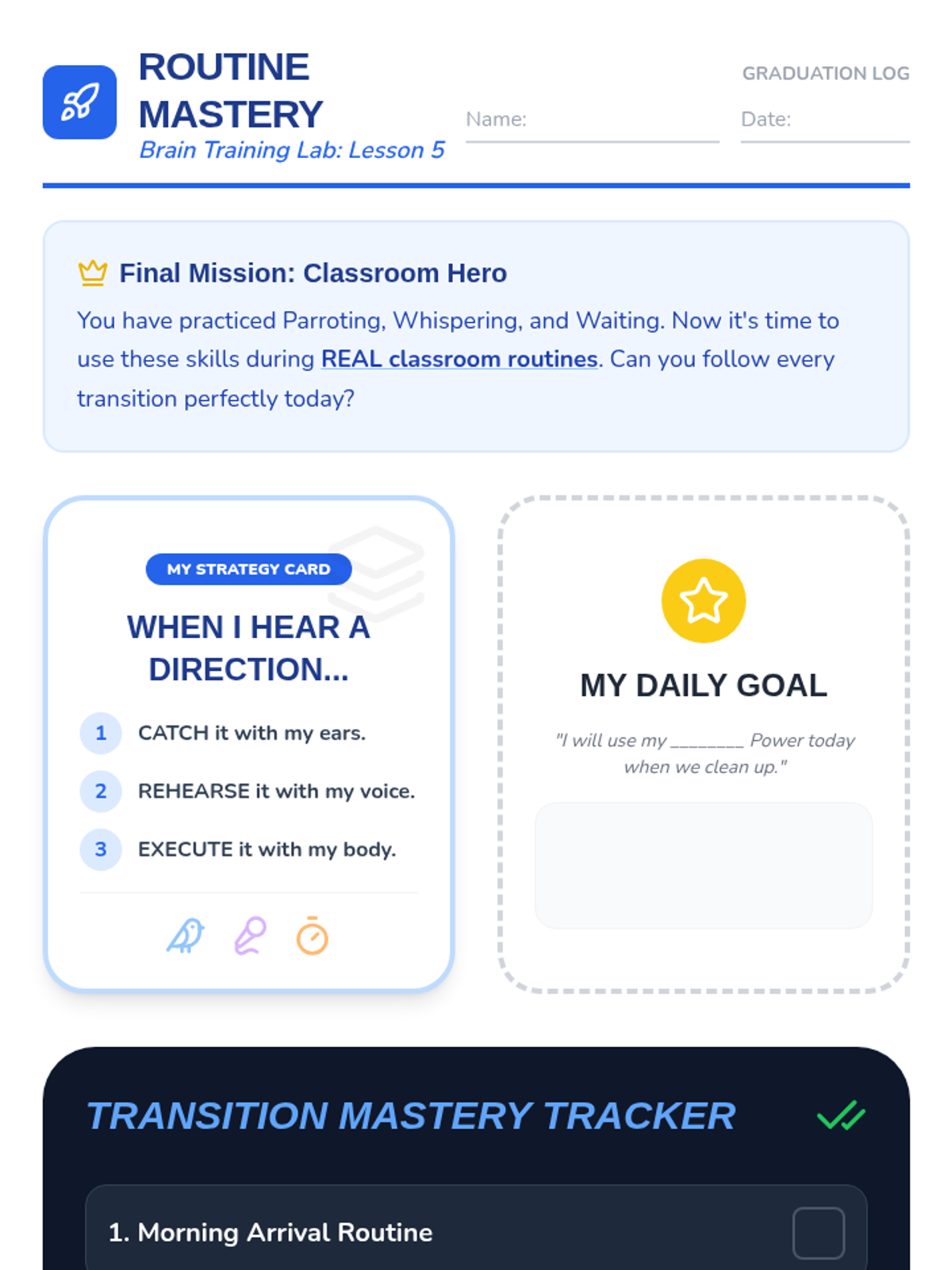
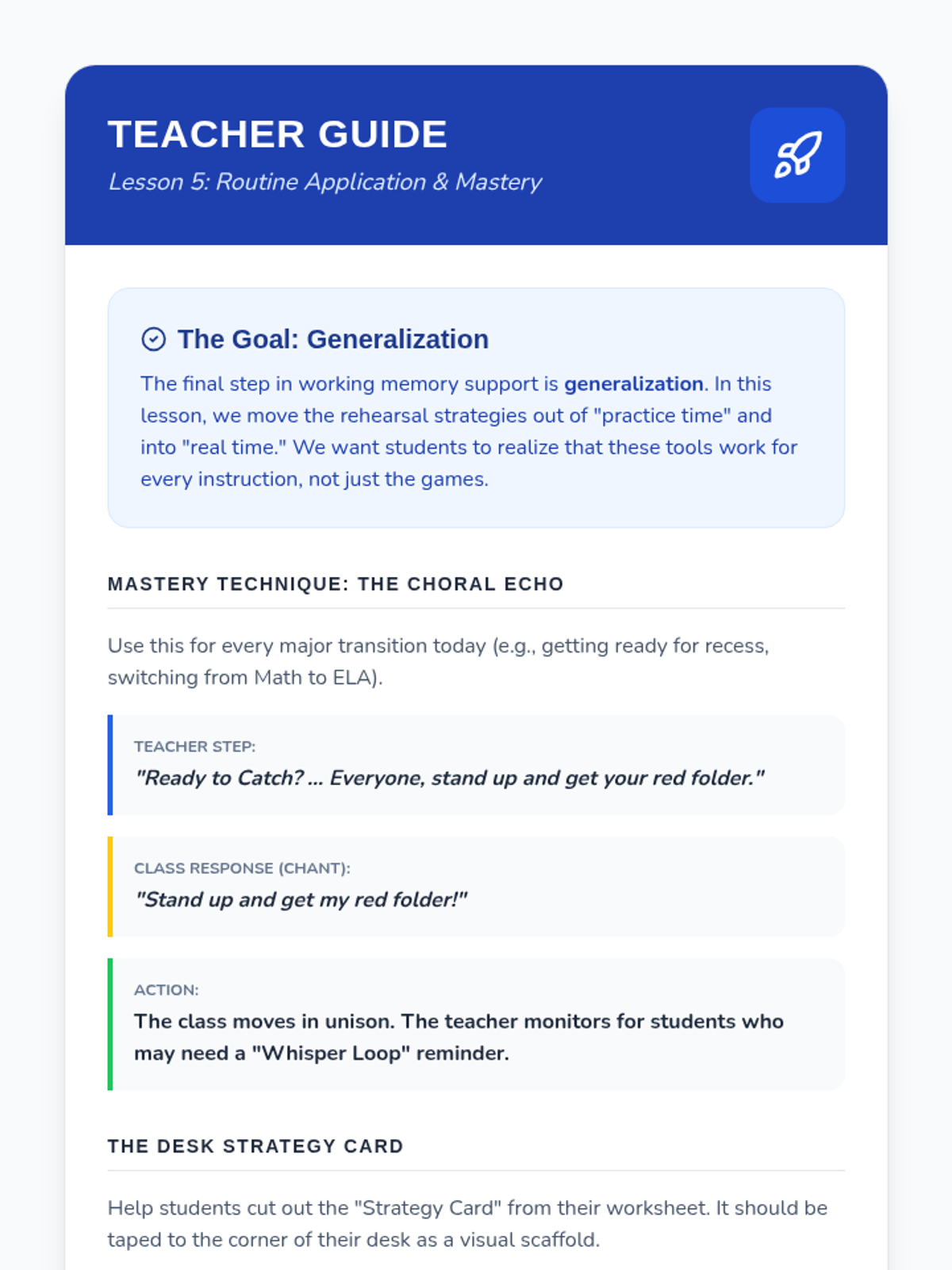
Students apply verbal strategies to actual classroom transition requests using choral responses to confirm steps.
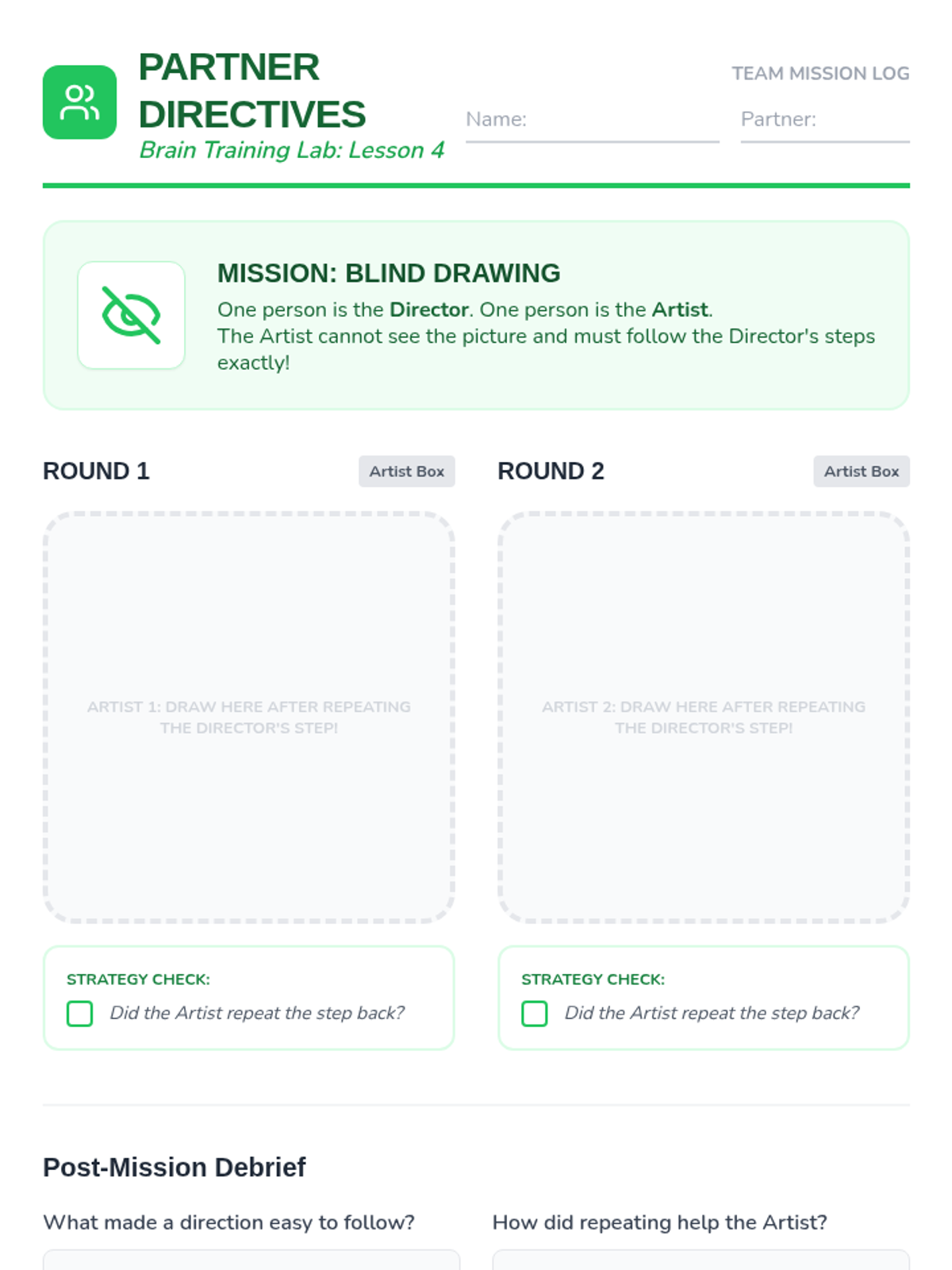
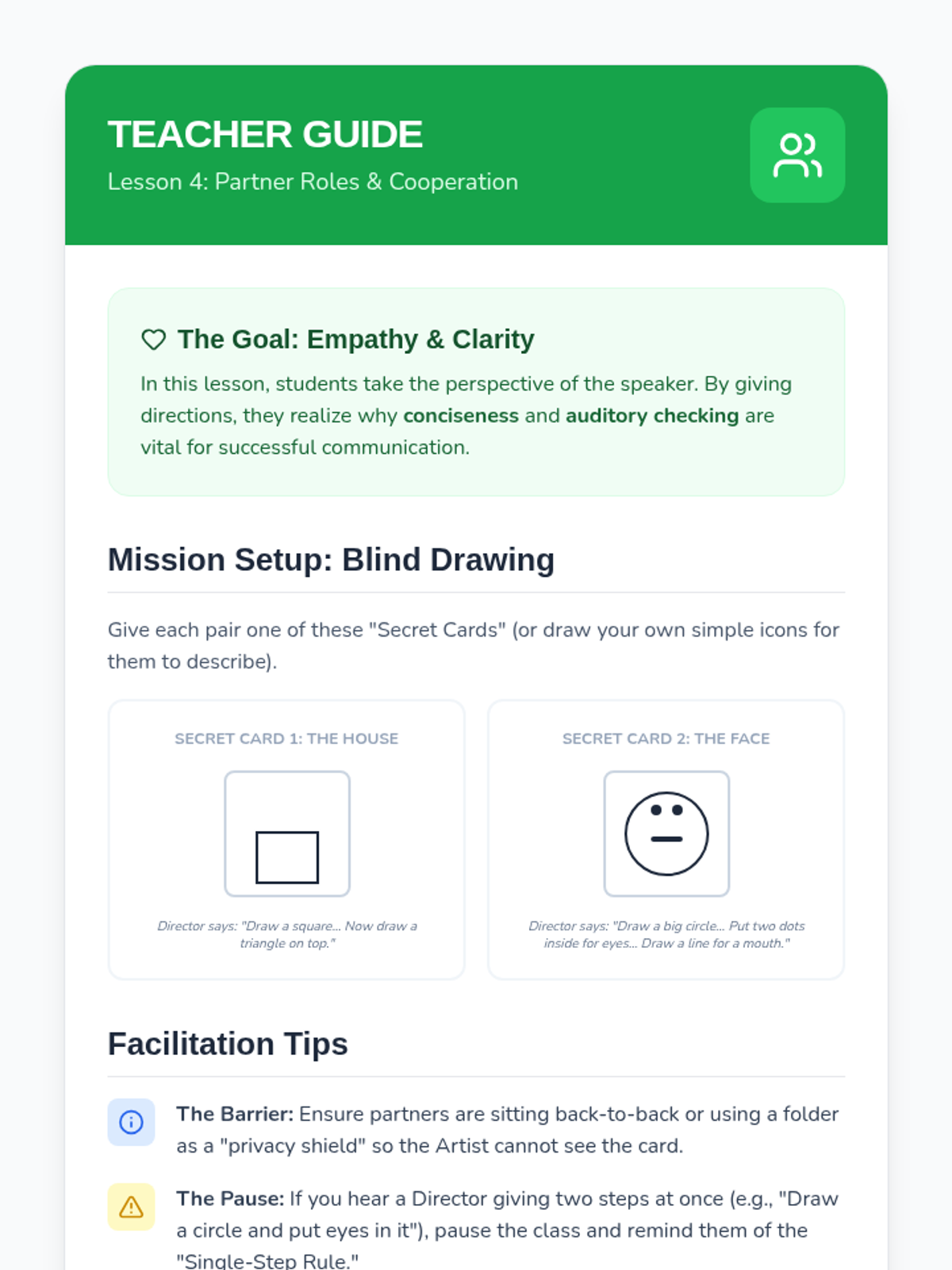
In pairs, students take turns being the 'Teacher' and the 'Student' to practice giving and repeating explicit steps.
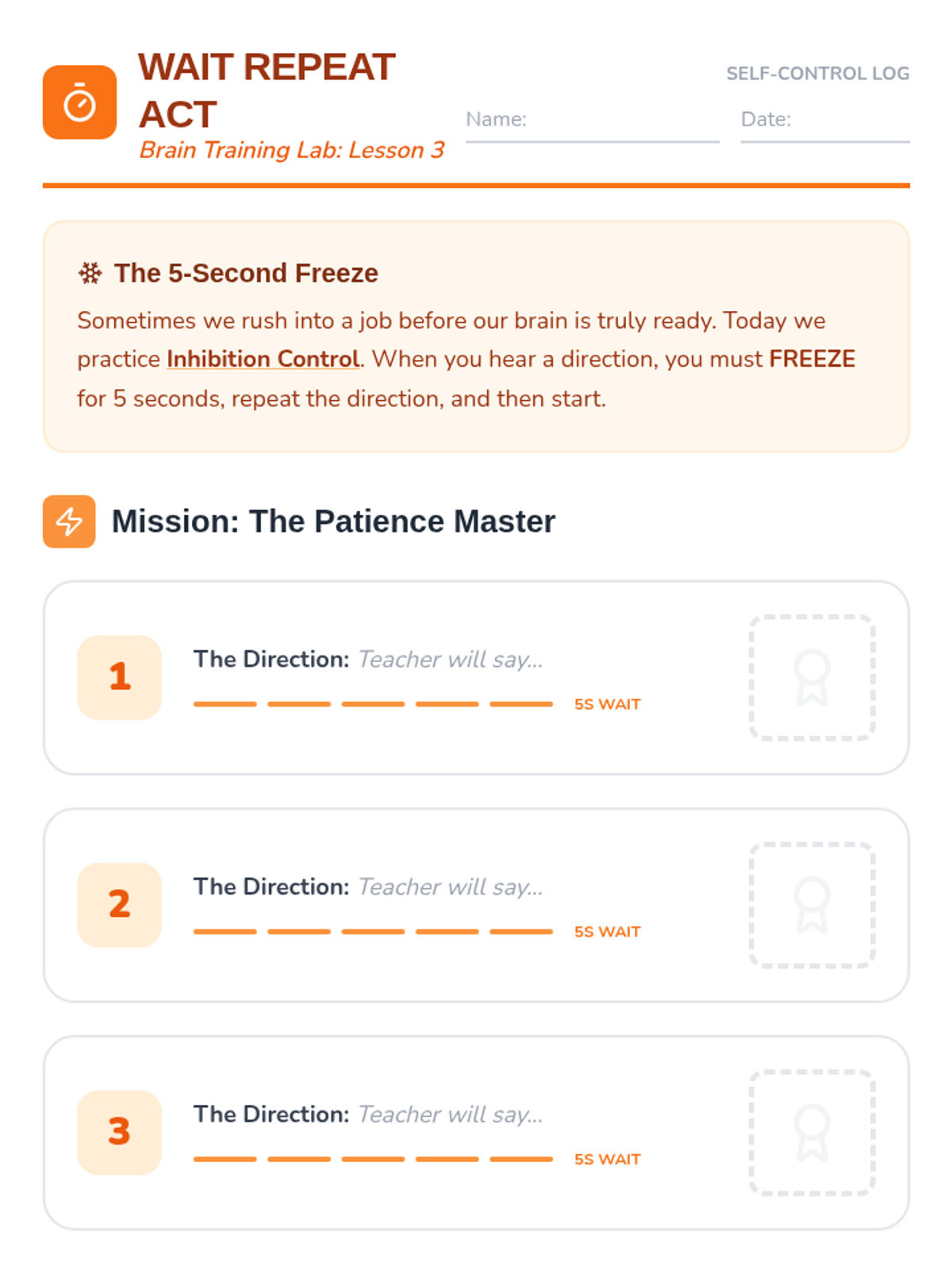
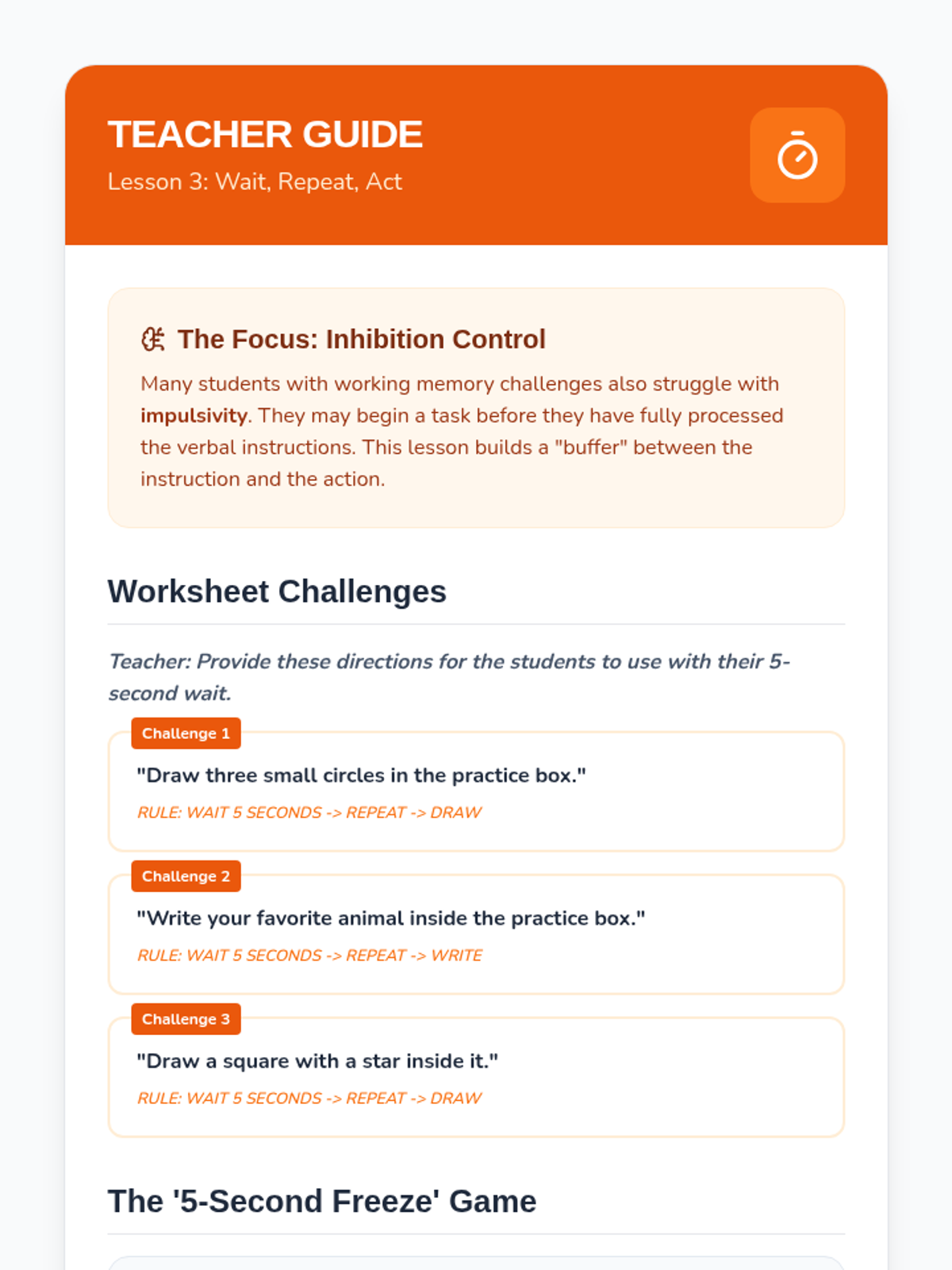
Students engage in inhibition control activities where they must wait 5 seconds after hearing a command, repeat it, and only then act.
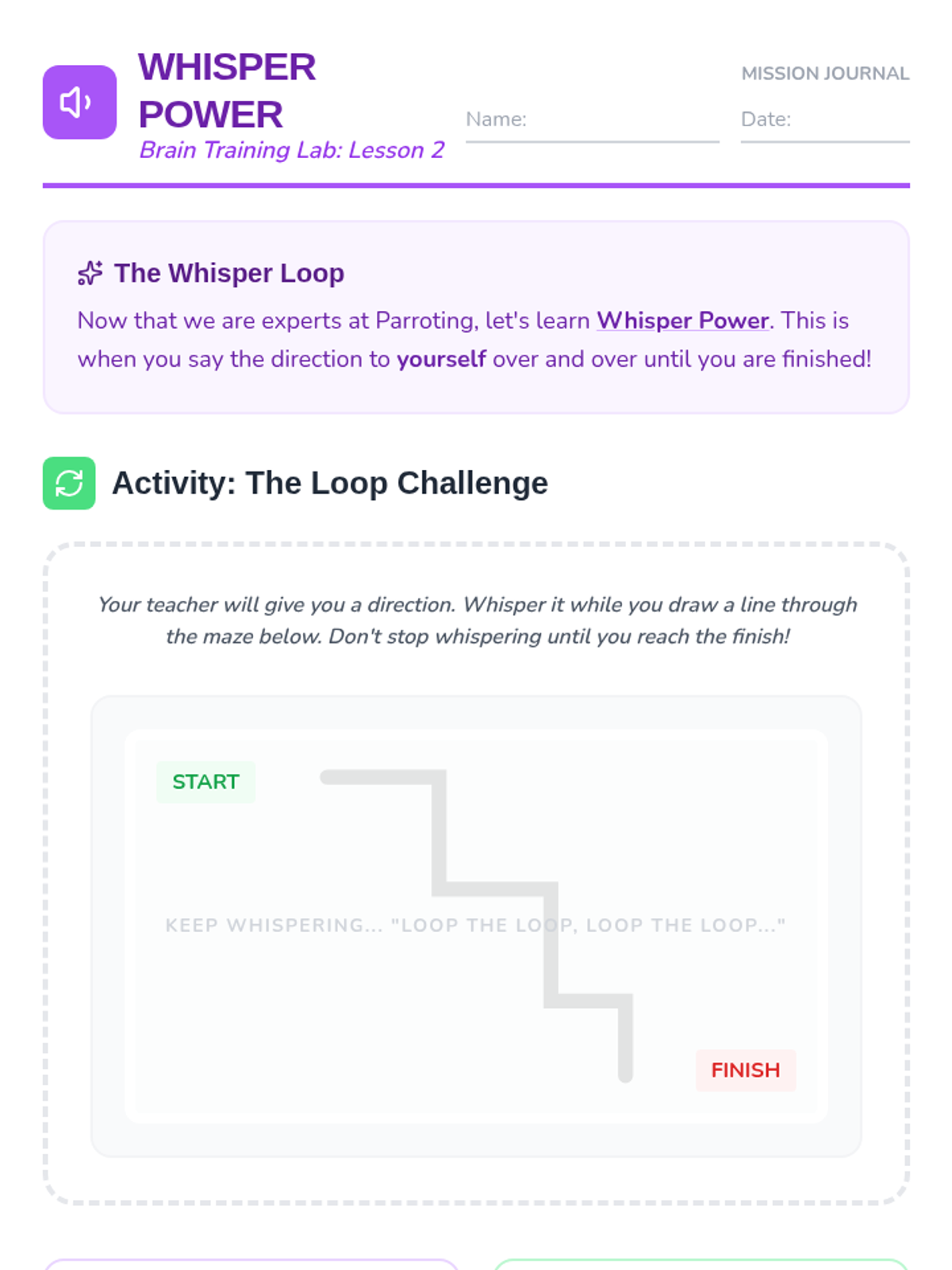
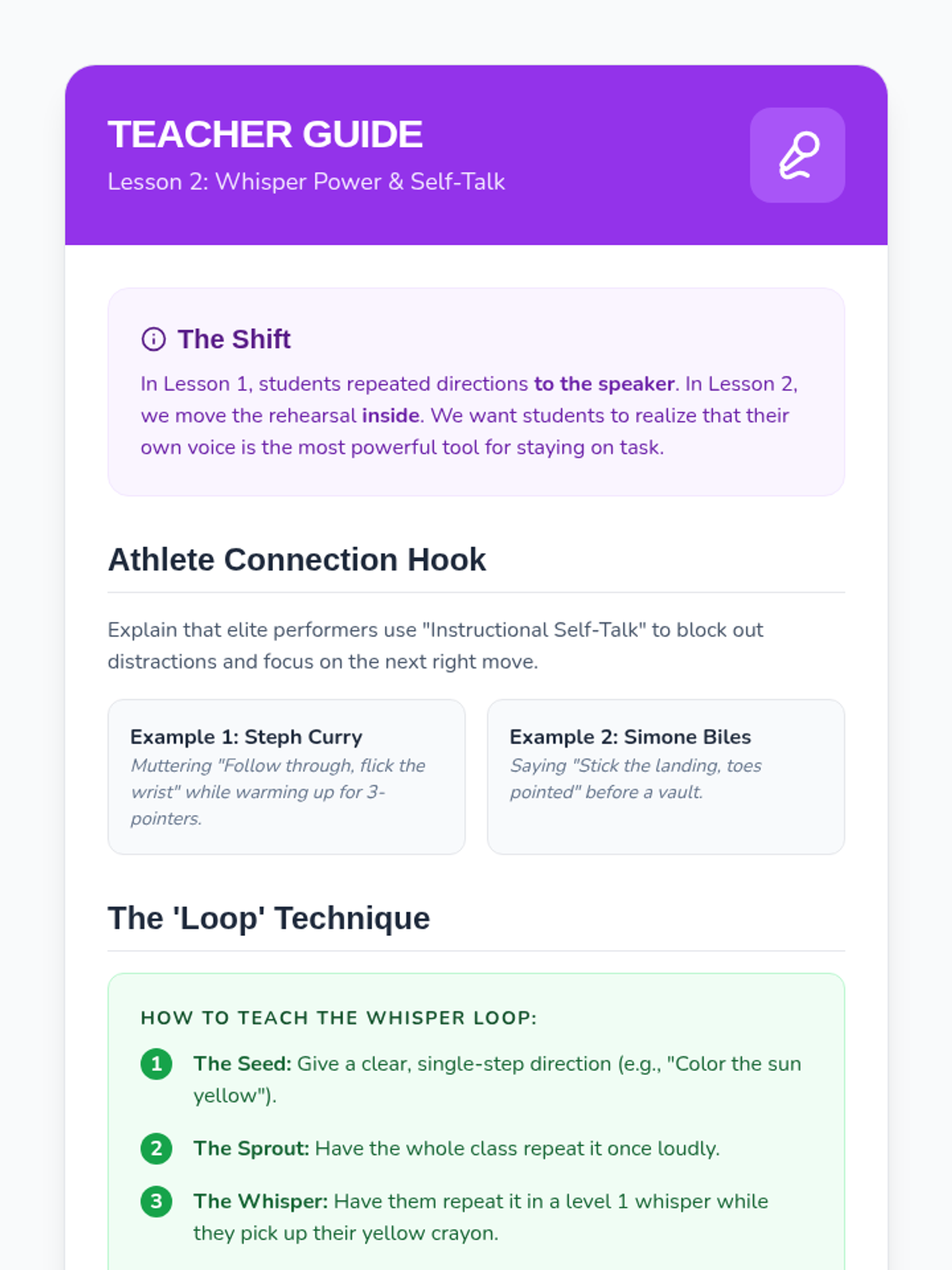
Moving from loud repetition to whispering, students practice 'self-talk.' They are given a single direction and must whisper it on a loop while performing the action.
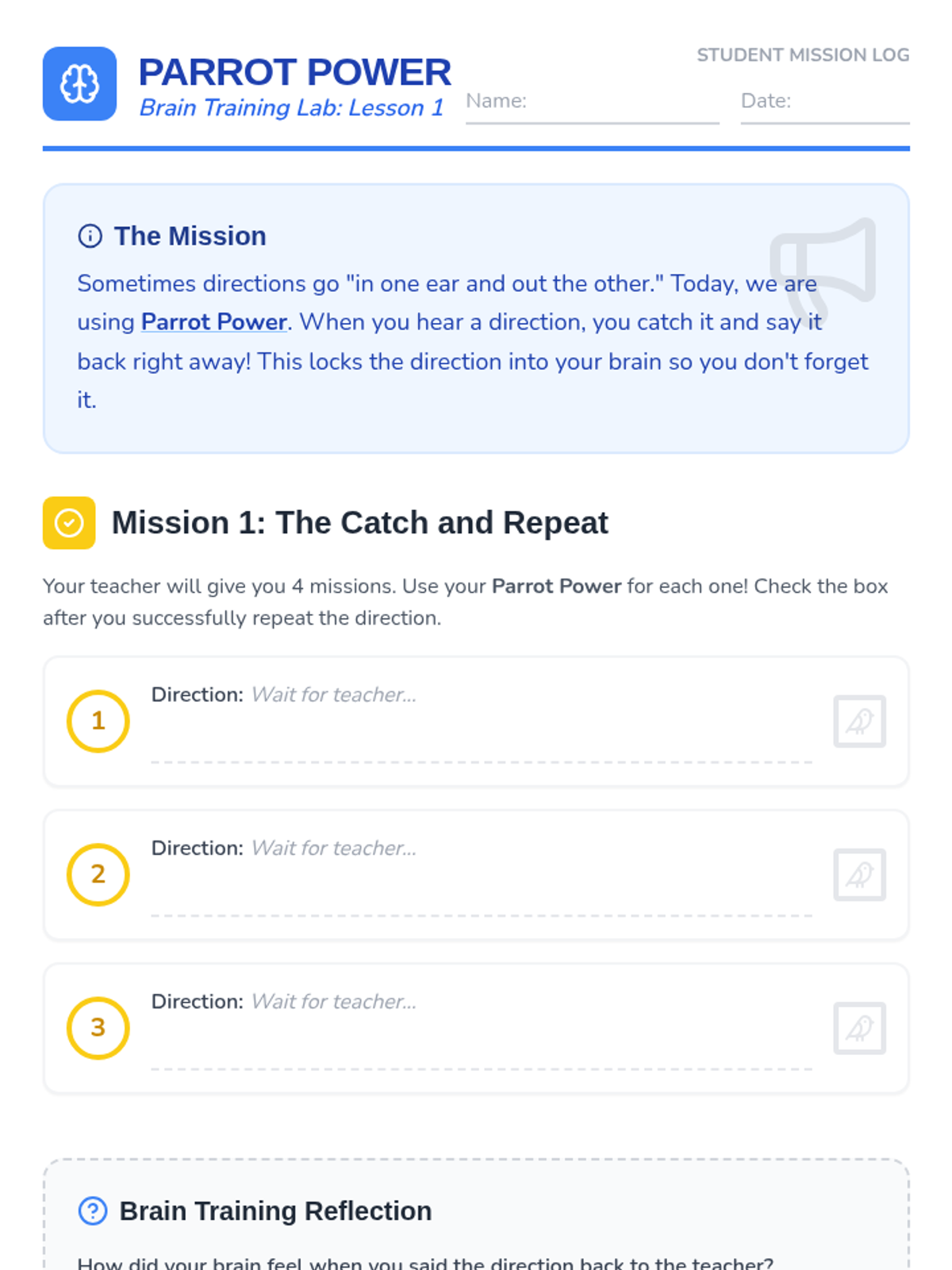
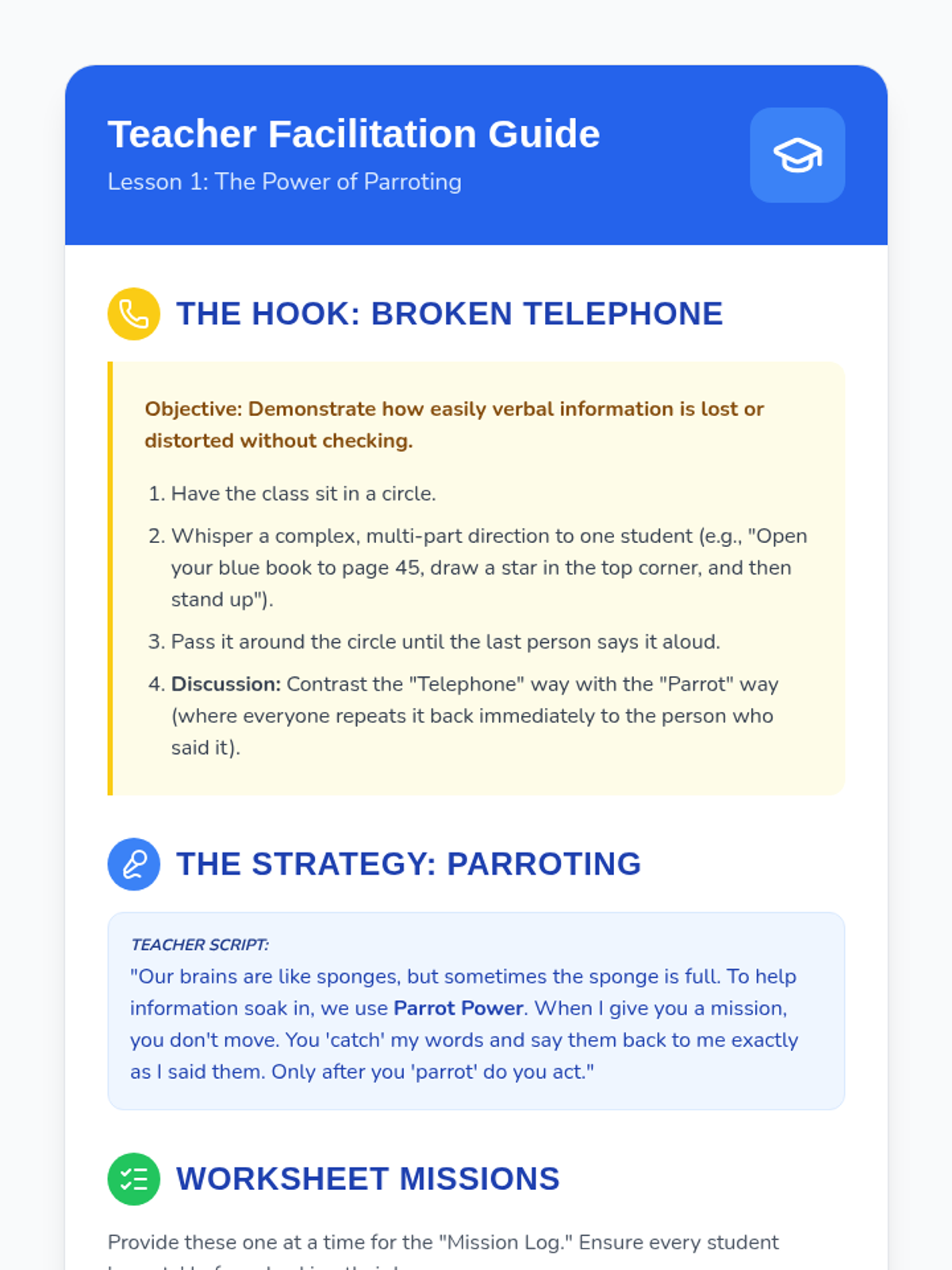
Students practice the 'parrot' technique, where they must immediately repeat a single-step direction back to the speaker before moving. The lesson emphasizes that saying it locks it into the brain.