Mindful breathing and body scan meditation techniques integrated with daily self-care routines. Develops strategies for balancing life demands and advocating for personal wellness needs.
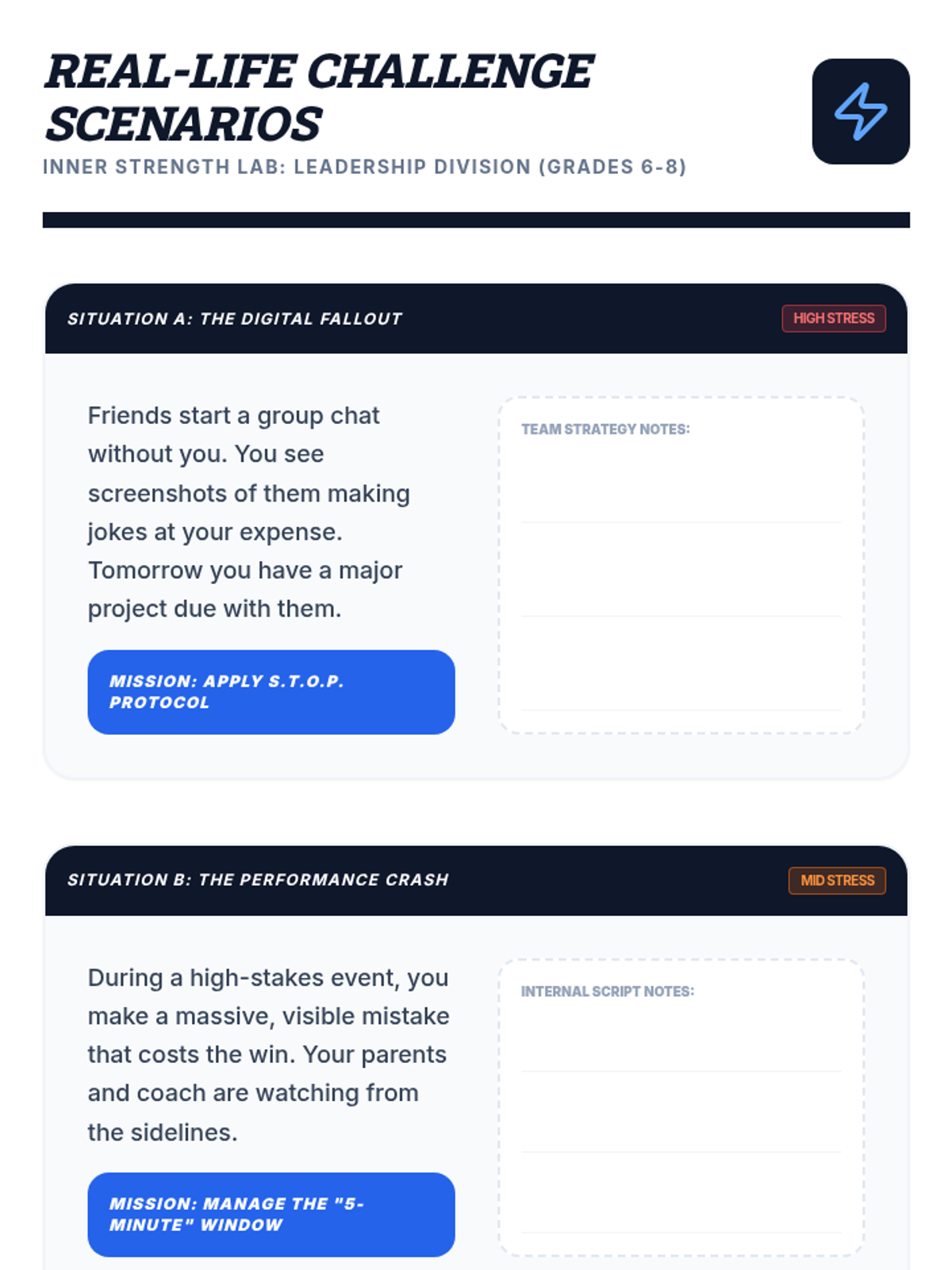
Equips middle schoolers (6th-8th) with strategies to handle complex social dynamics and personal setbacks using realistic role-play scenarios.
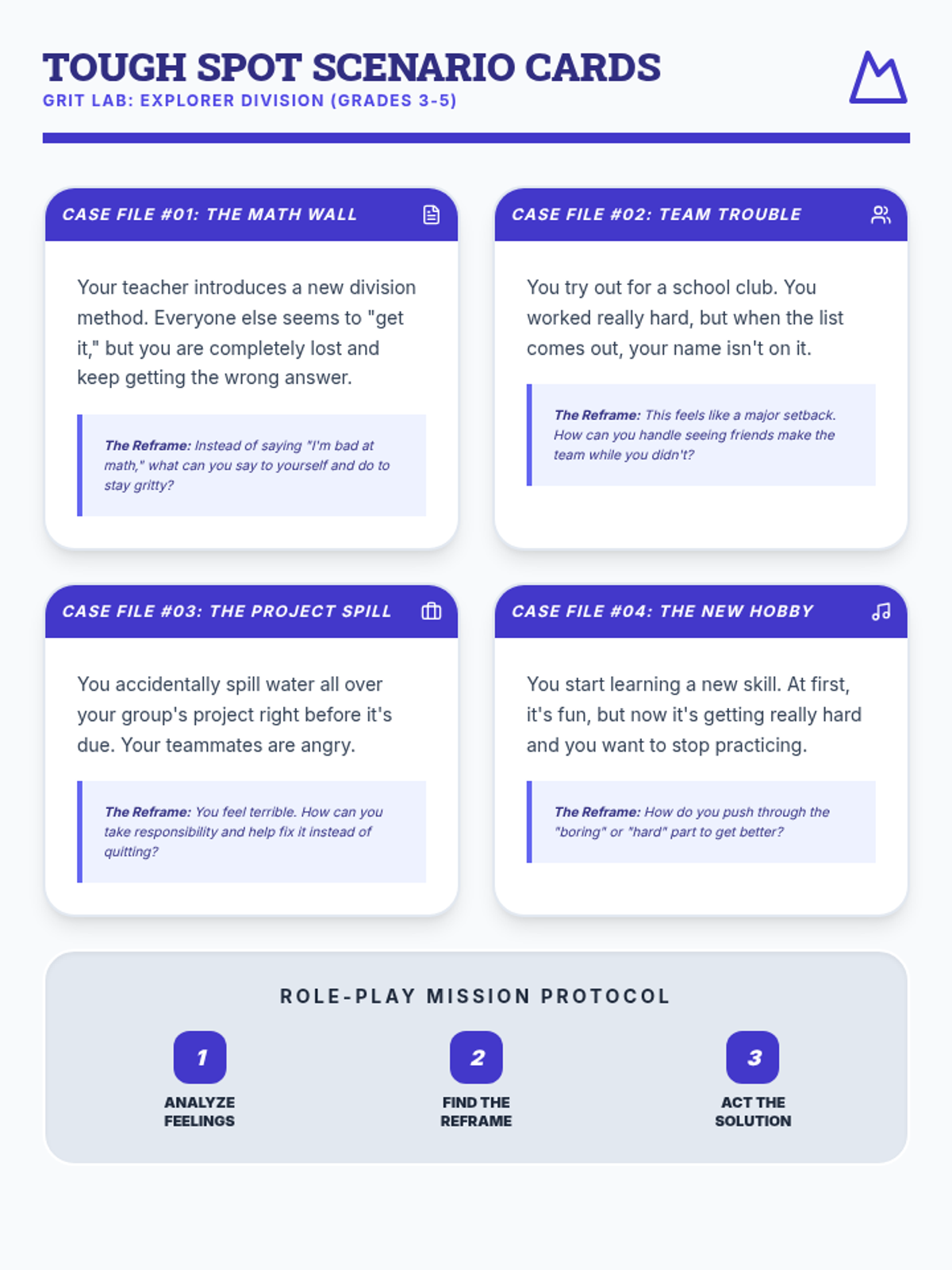
Helps 3rd to 5th graders develop grit and perspective when facing academic and social challenges through collaborative role-play.
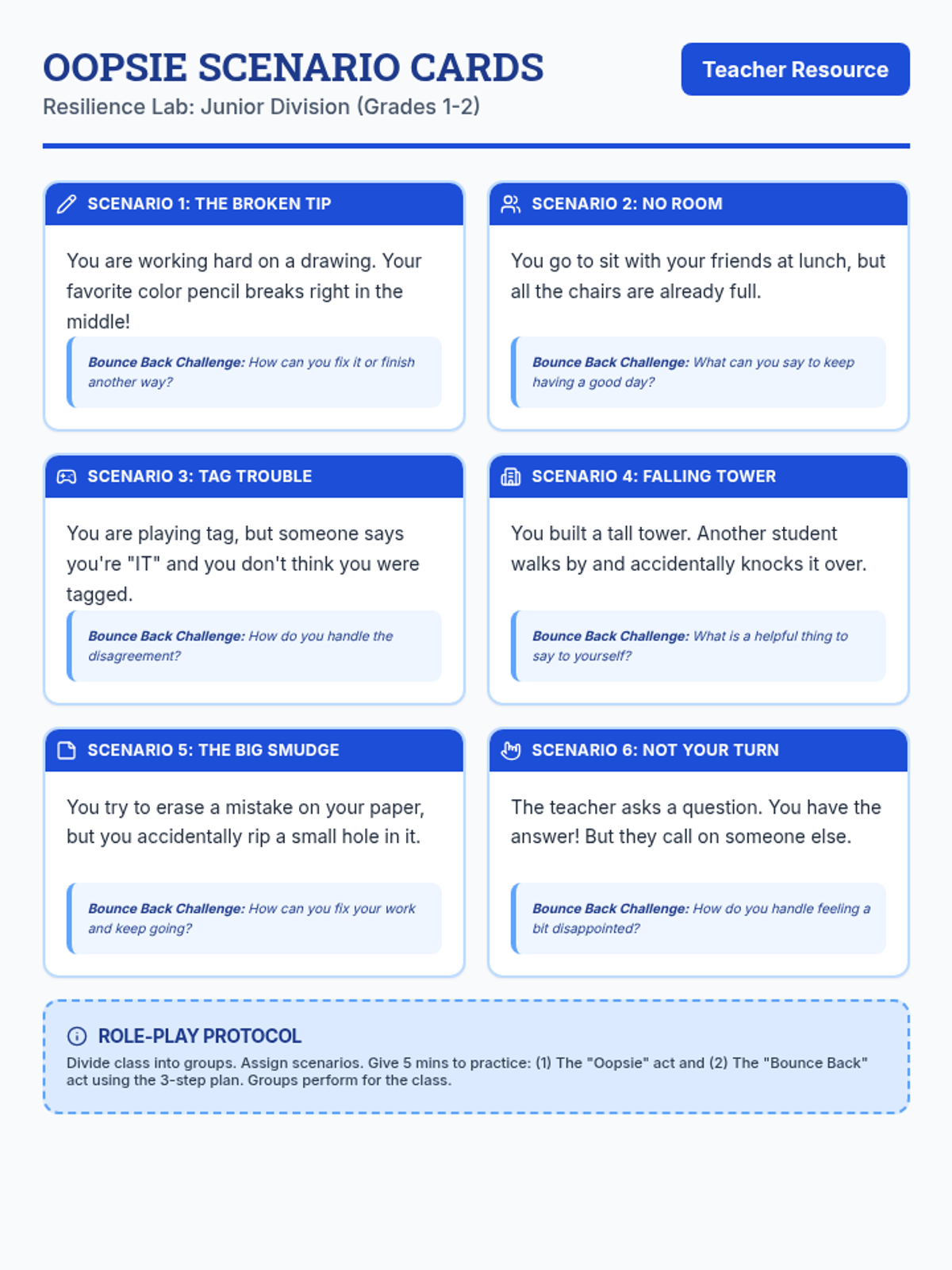
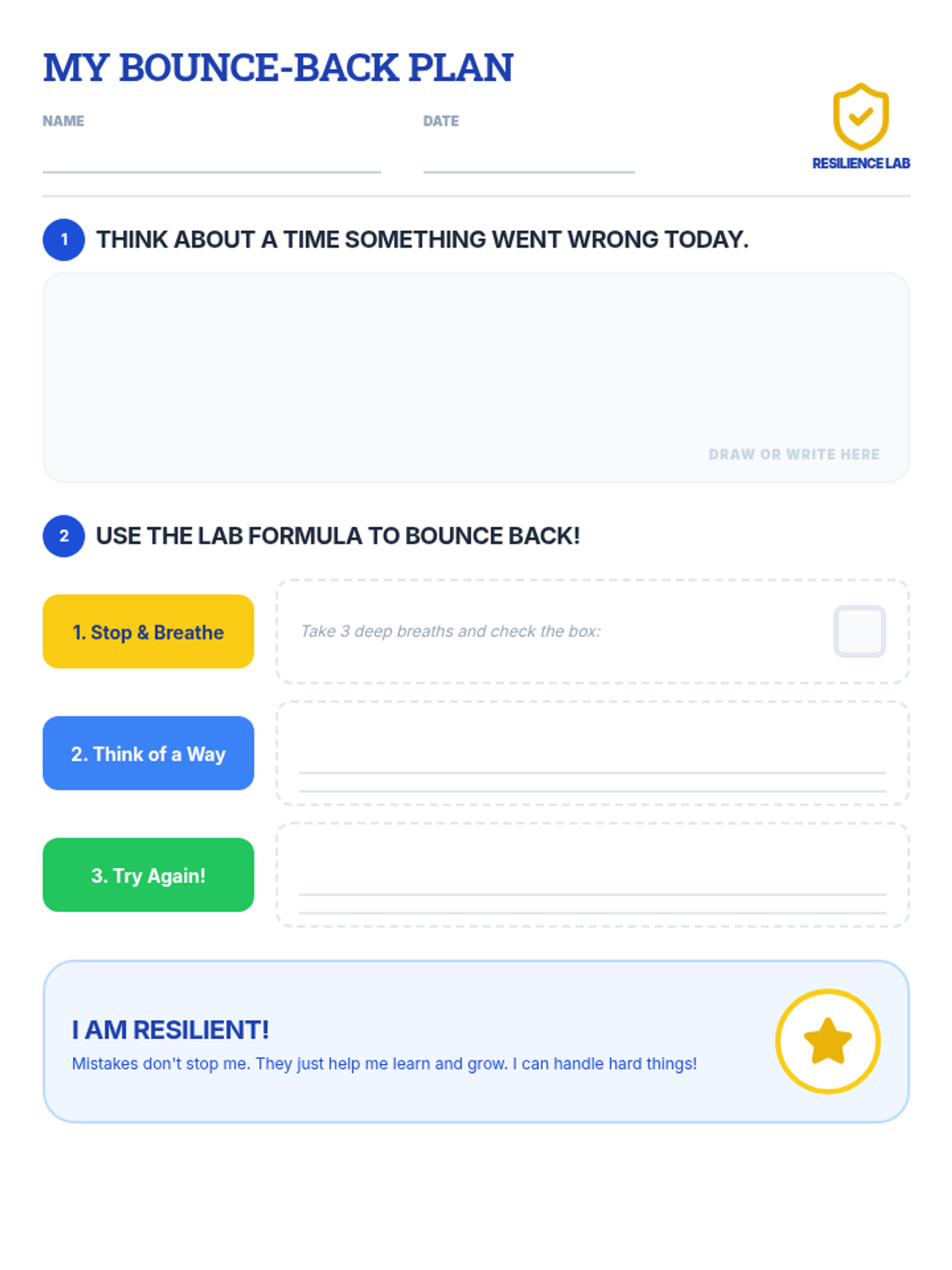
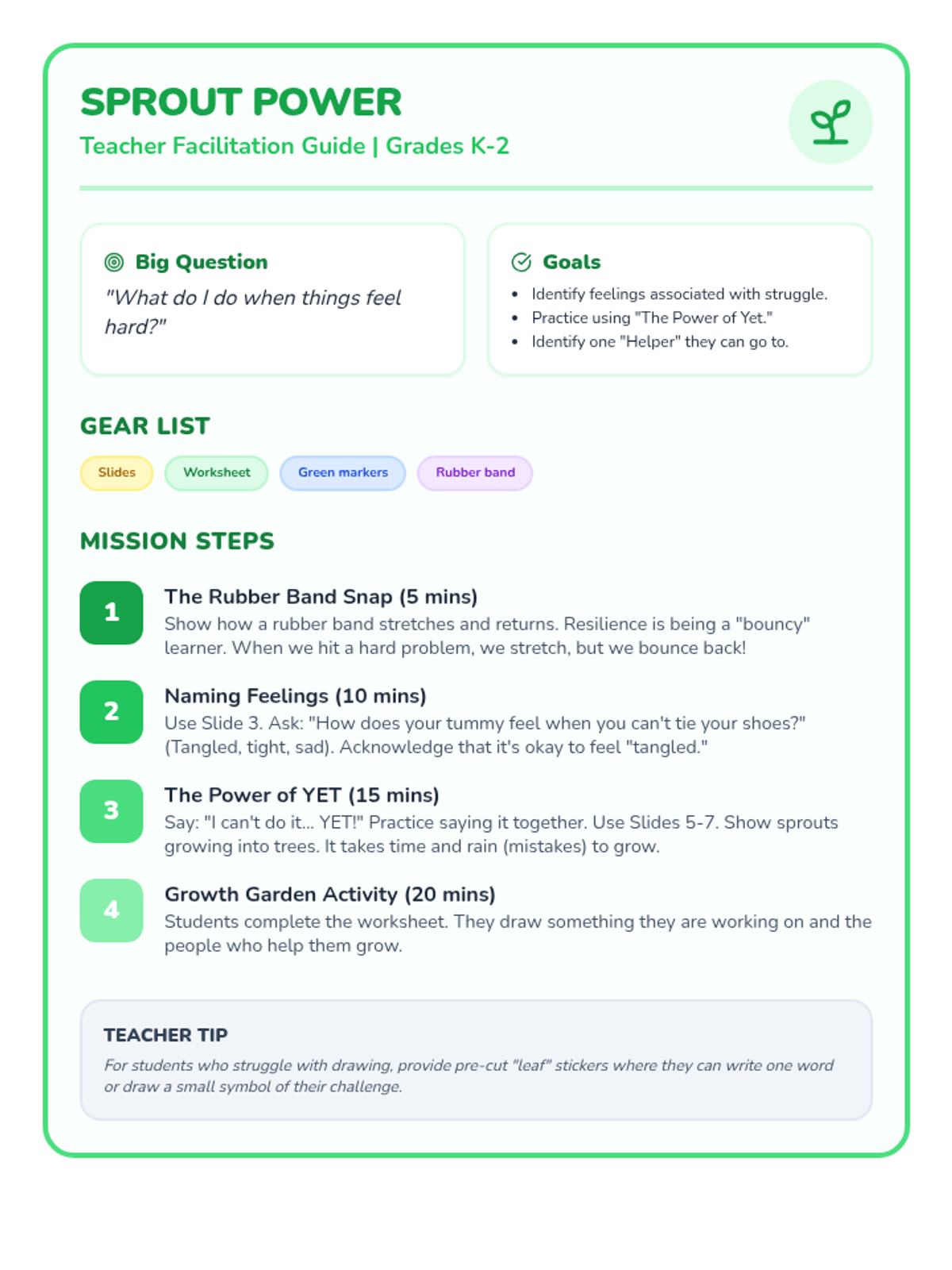
Introduces 1st and 2nd graders to the concept of 'bouncing back' from small mistakes and managing big feelings using role-play scenarios.
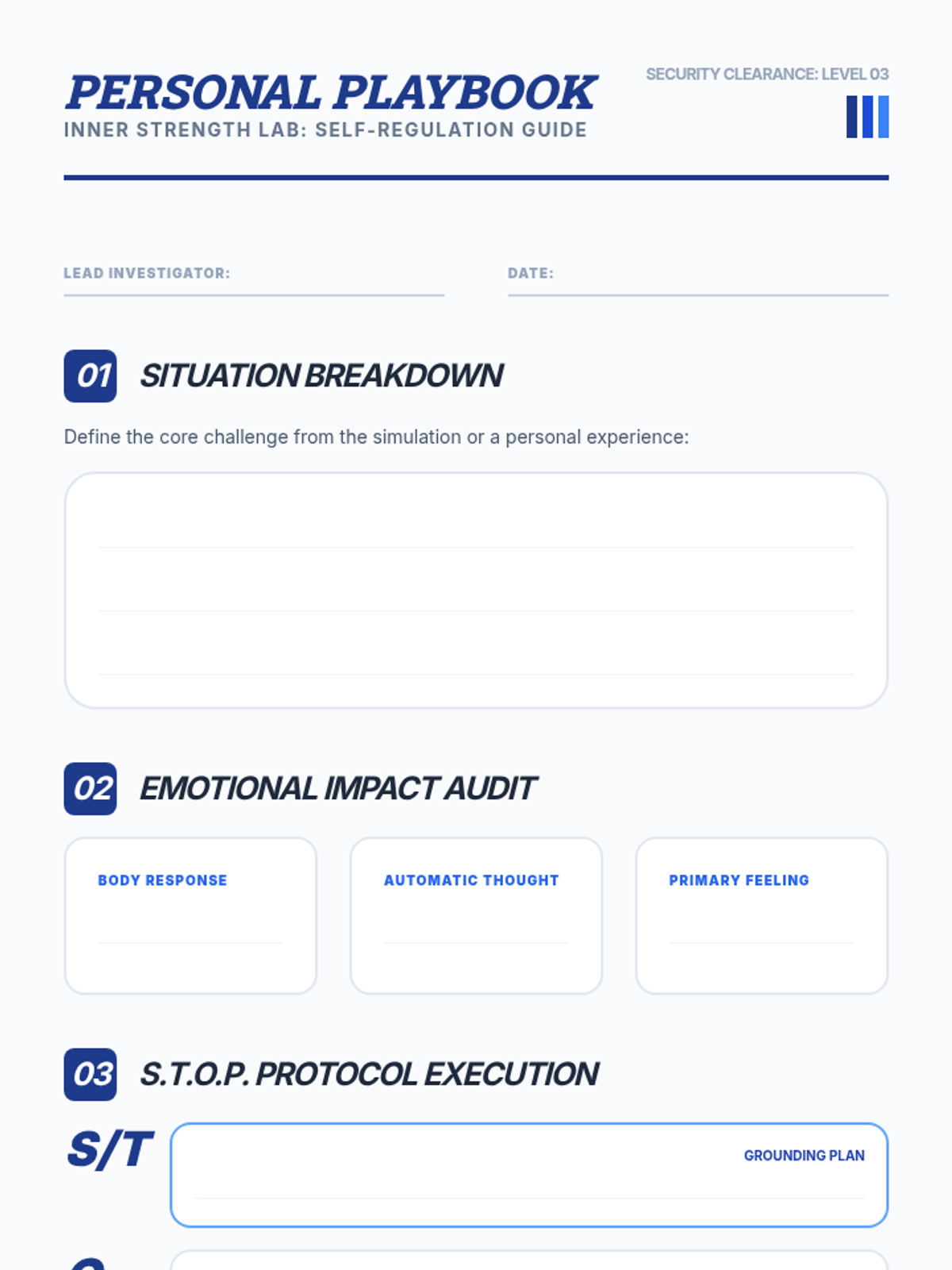
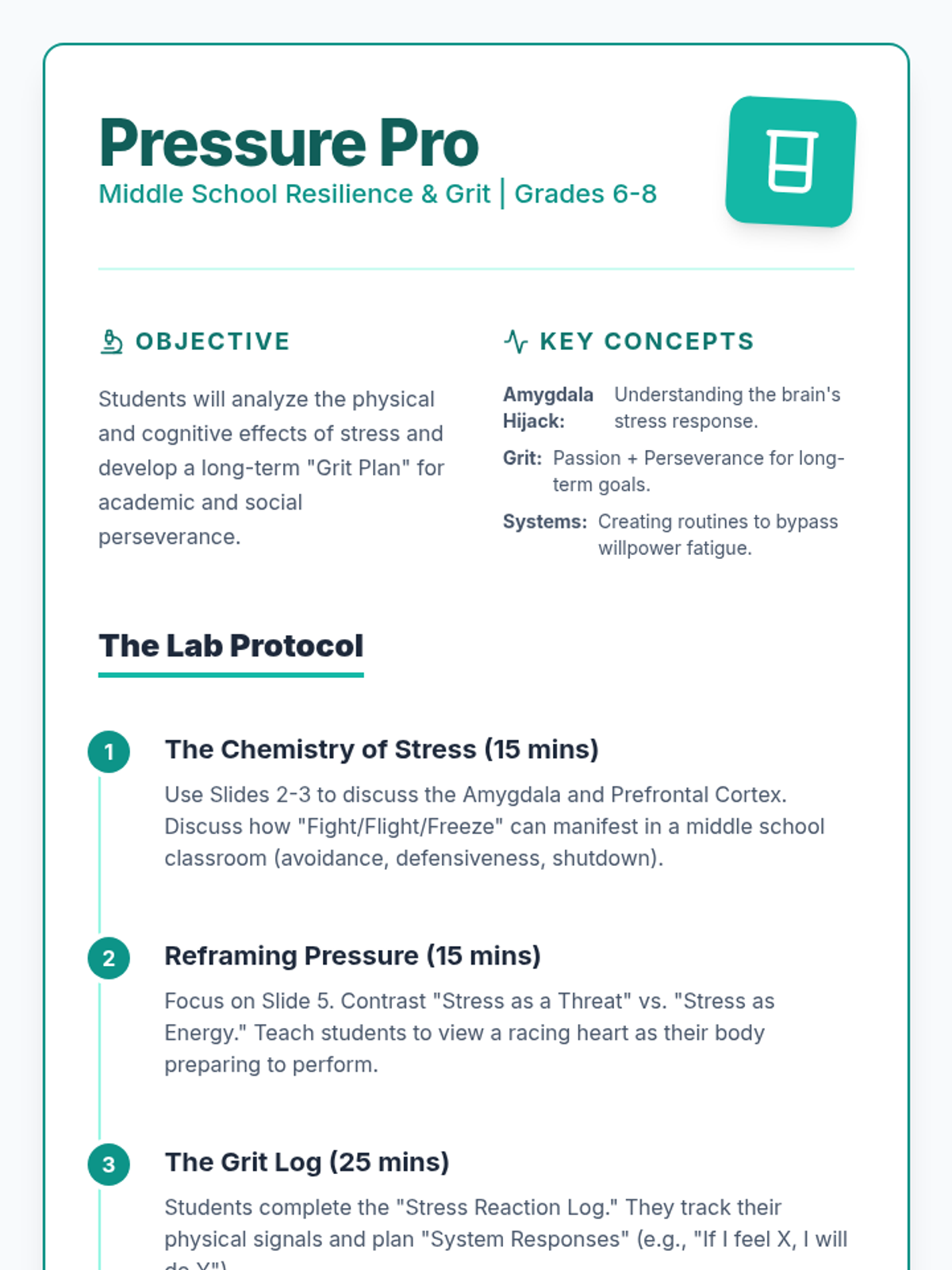
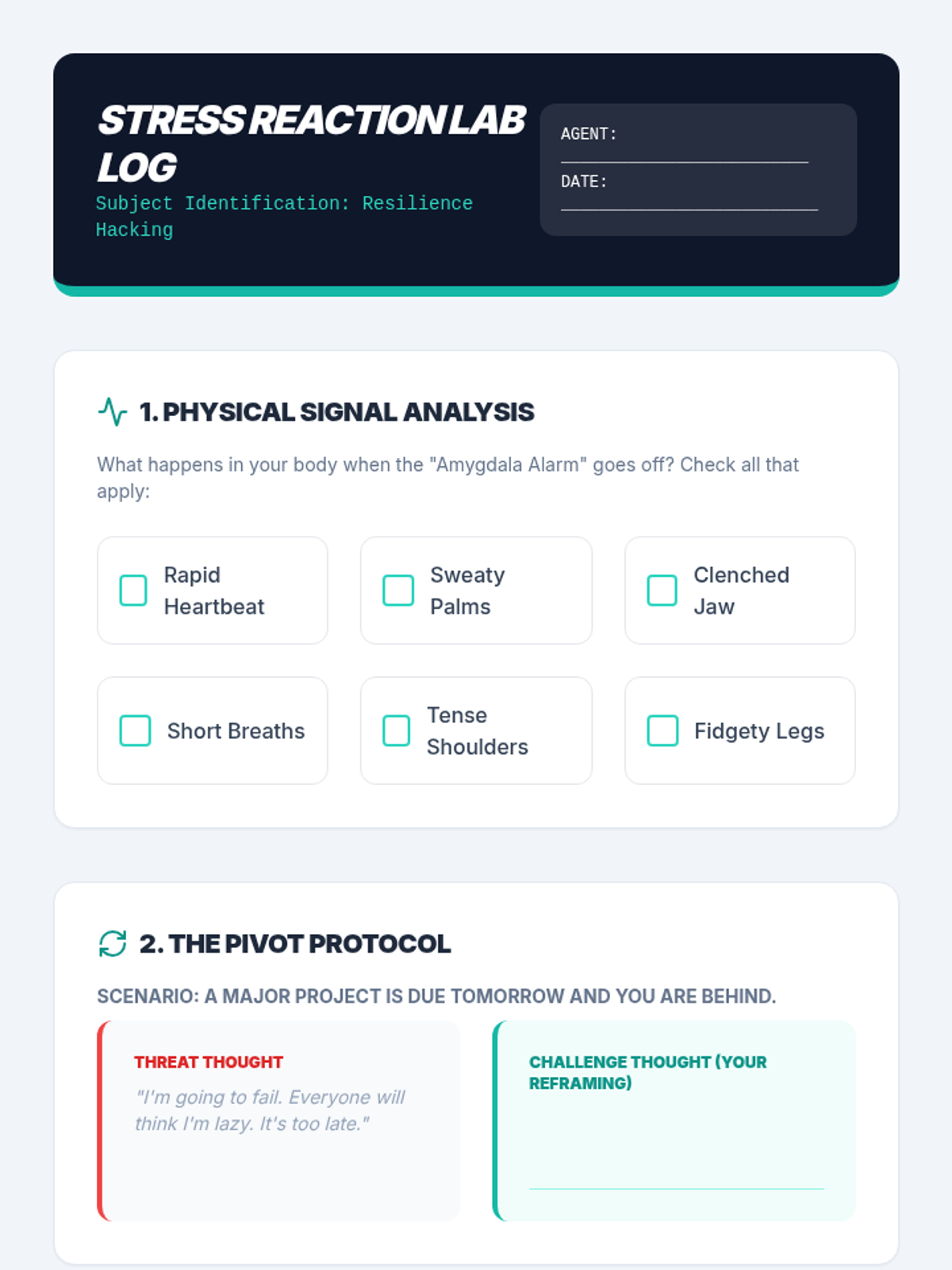
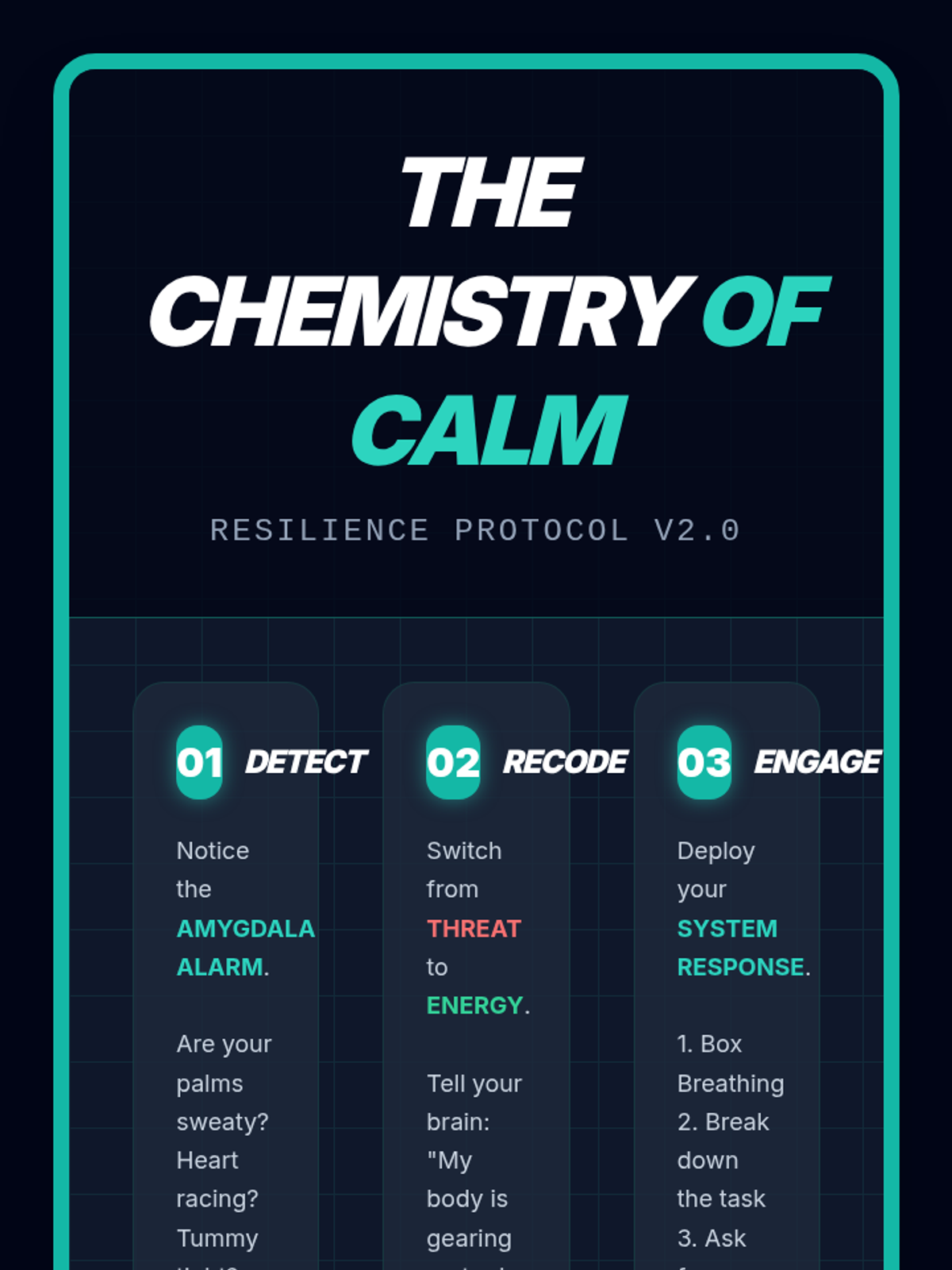
Explores the science of stress, long-term perseverance (grit), and developing a personal resilience plan for navigating middle school transitions.
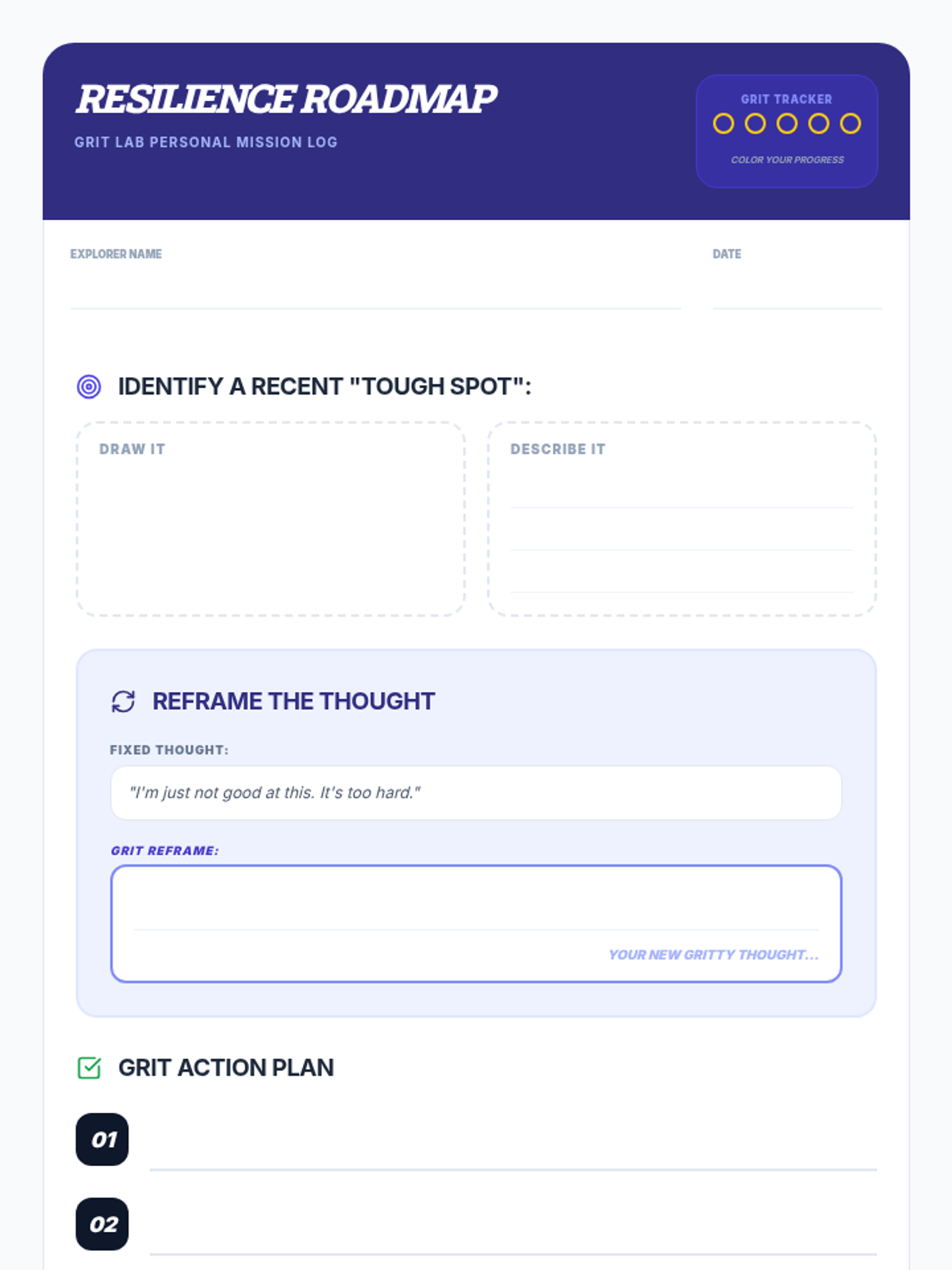
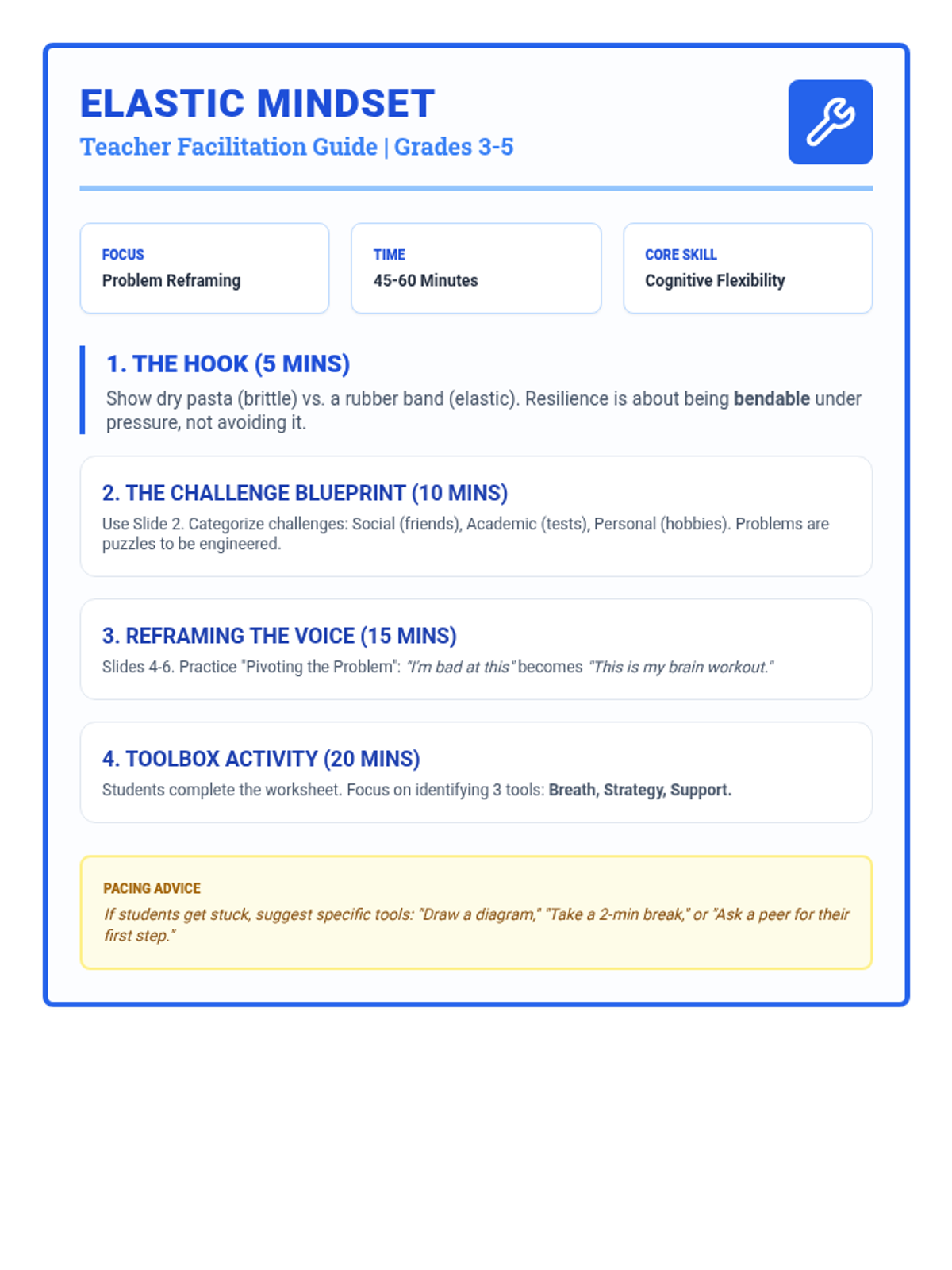
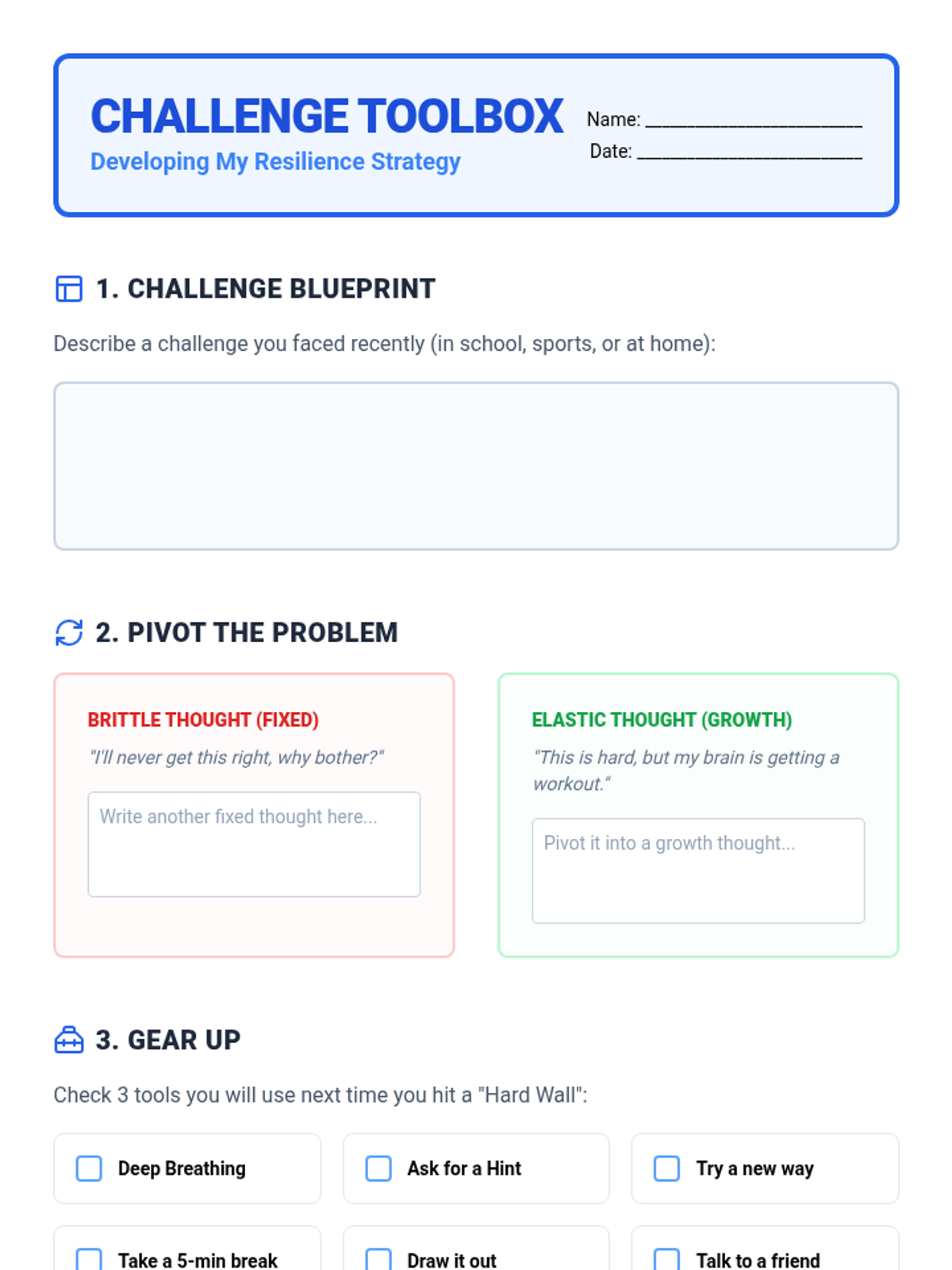
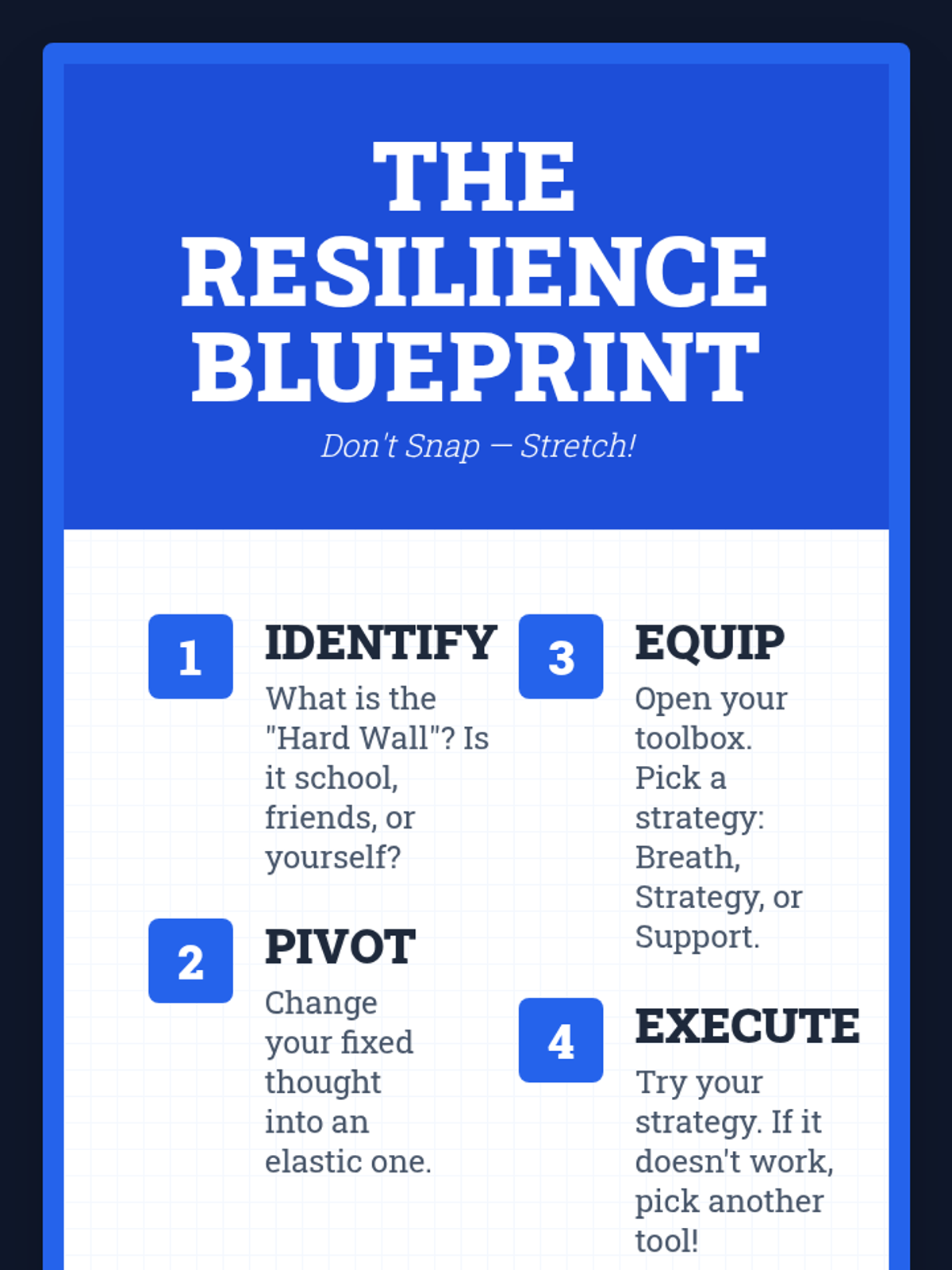
Teaches students to identify challenges, reframe negative thoughts, and build a 'toolbox' of coping strategies for social and academic hurdles.
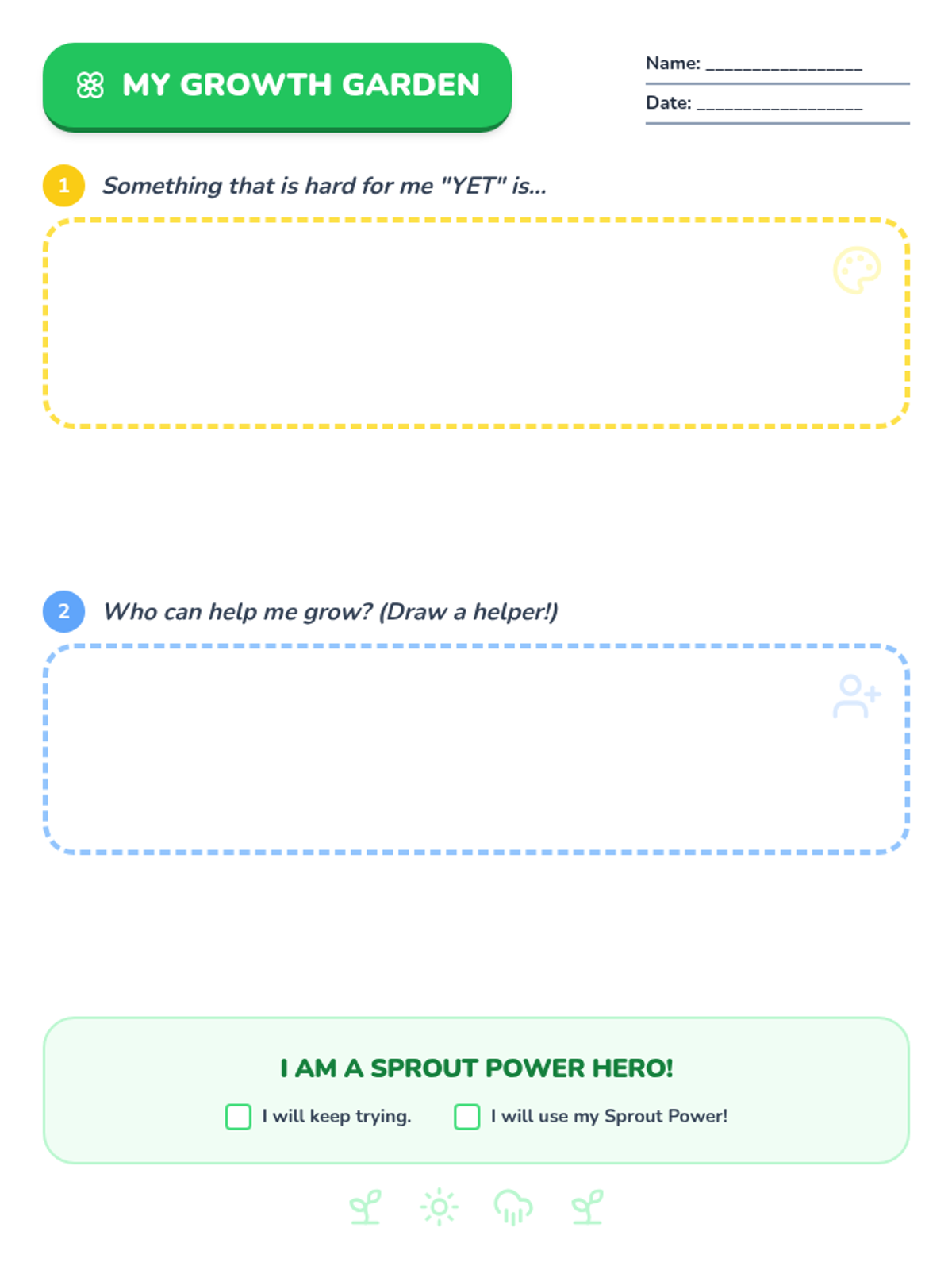
Focuses on naming emotions, understanding that mistakes help us grow, and using the 'Power of Yet' to build early resilience.
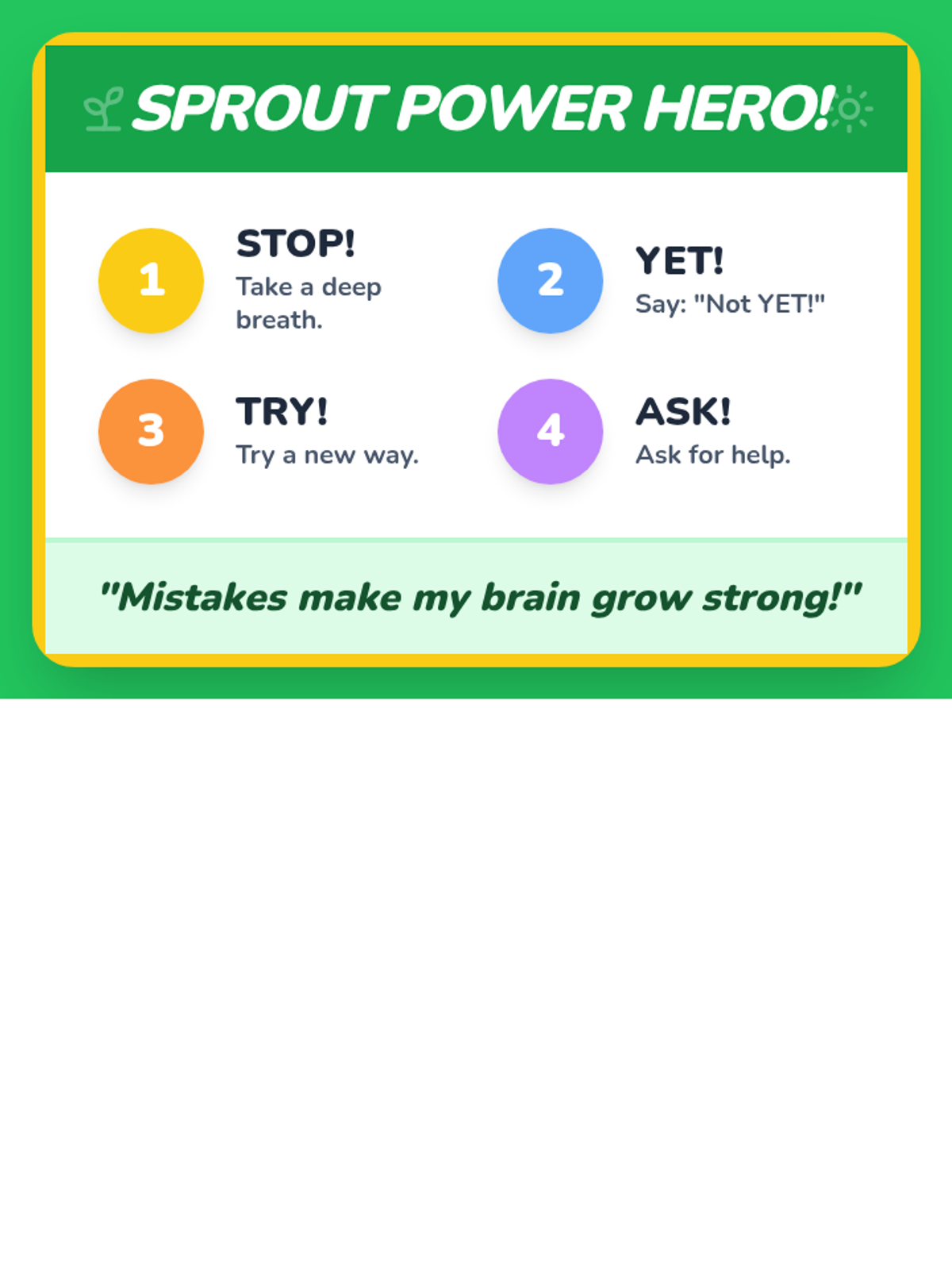
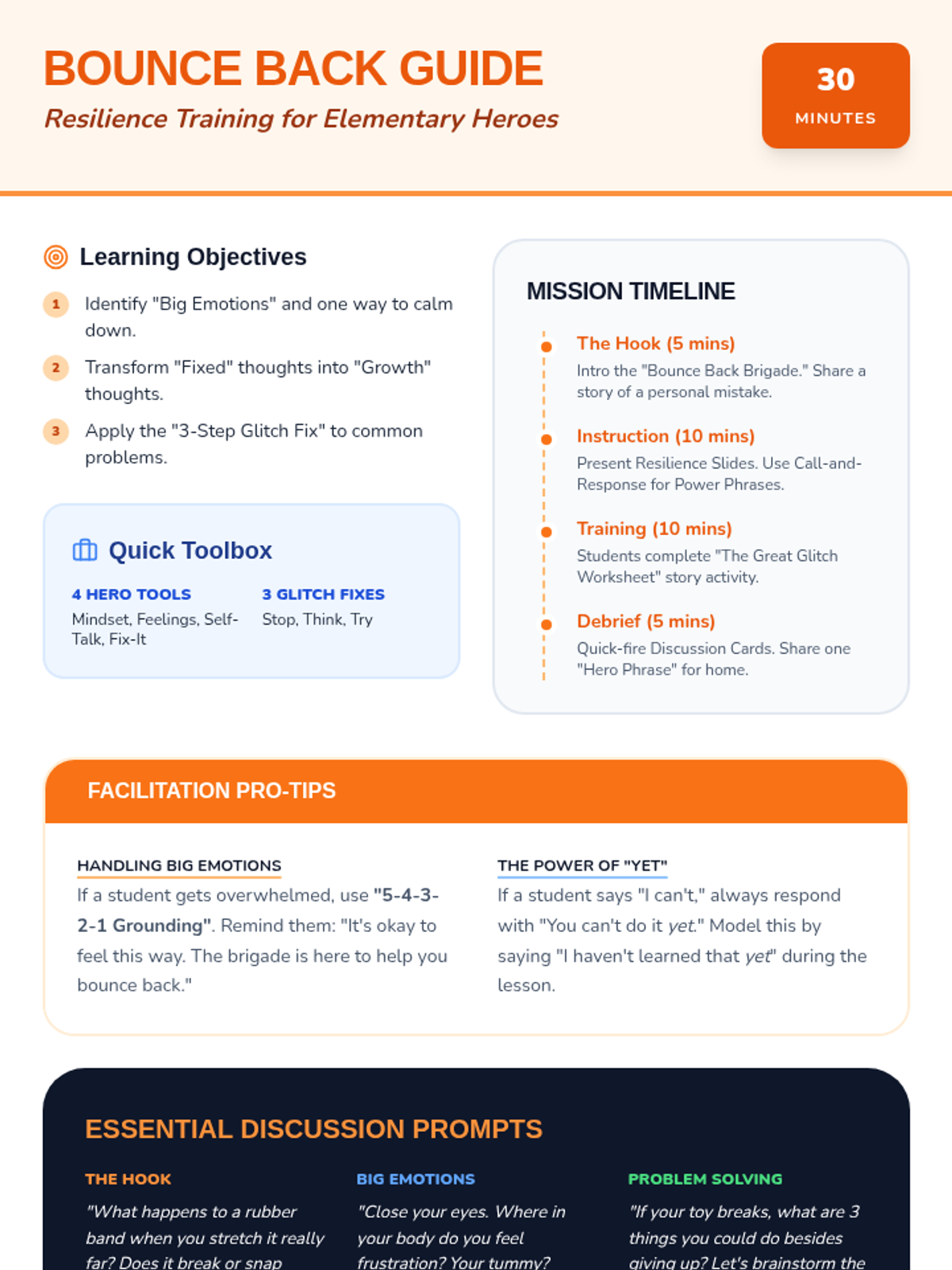
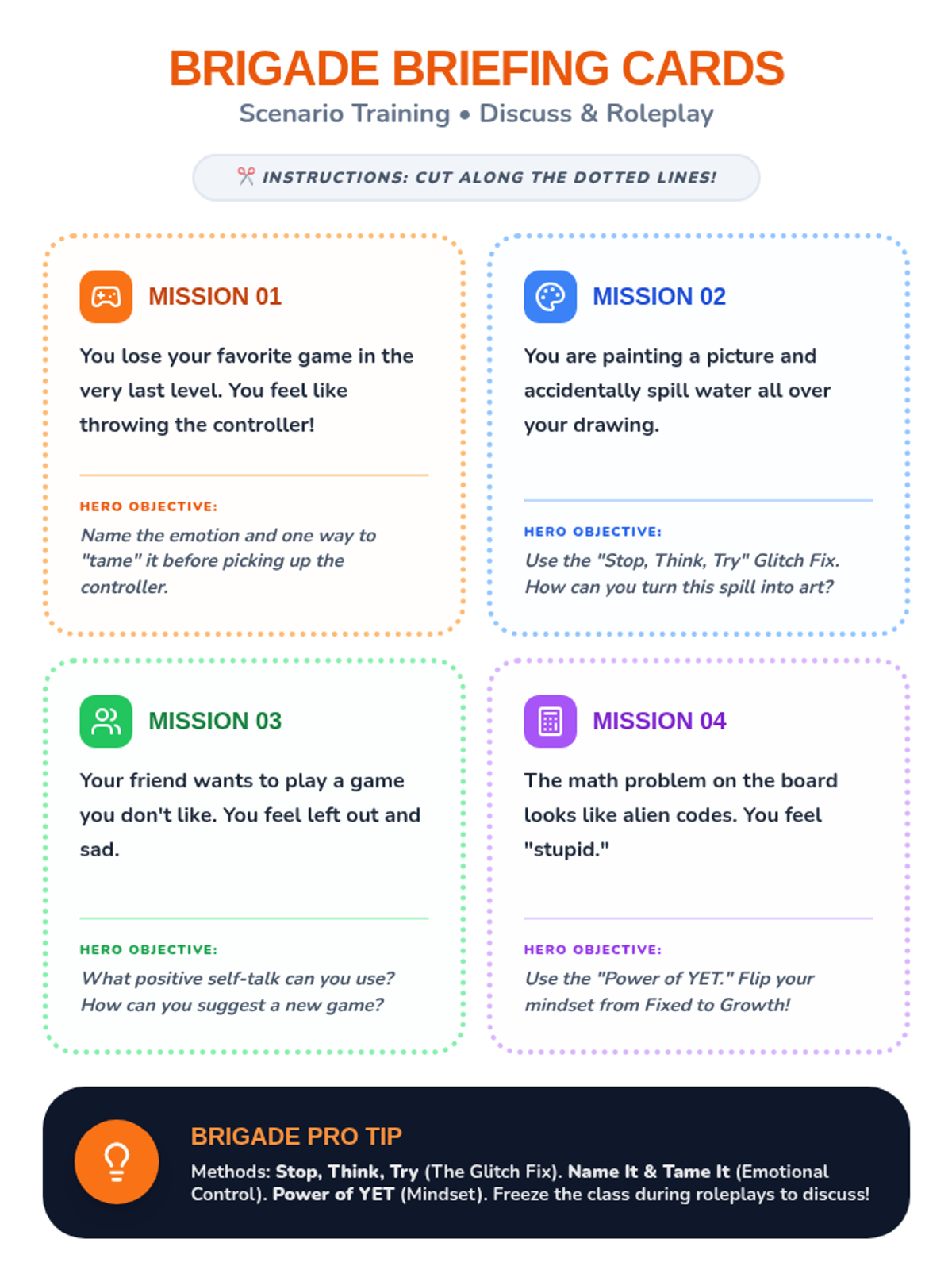
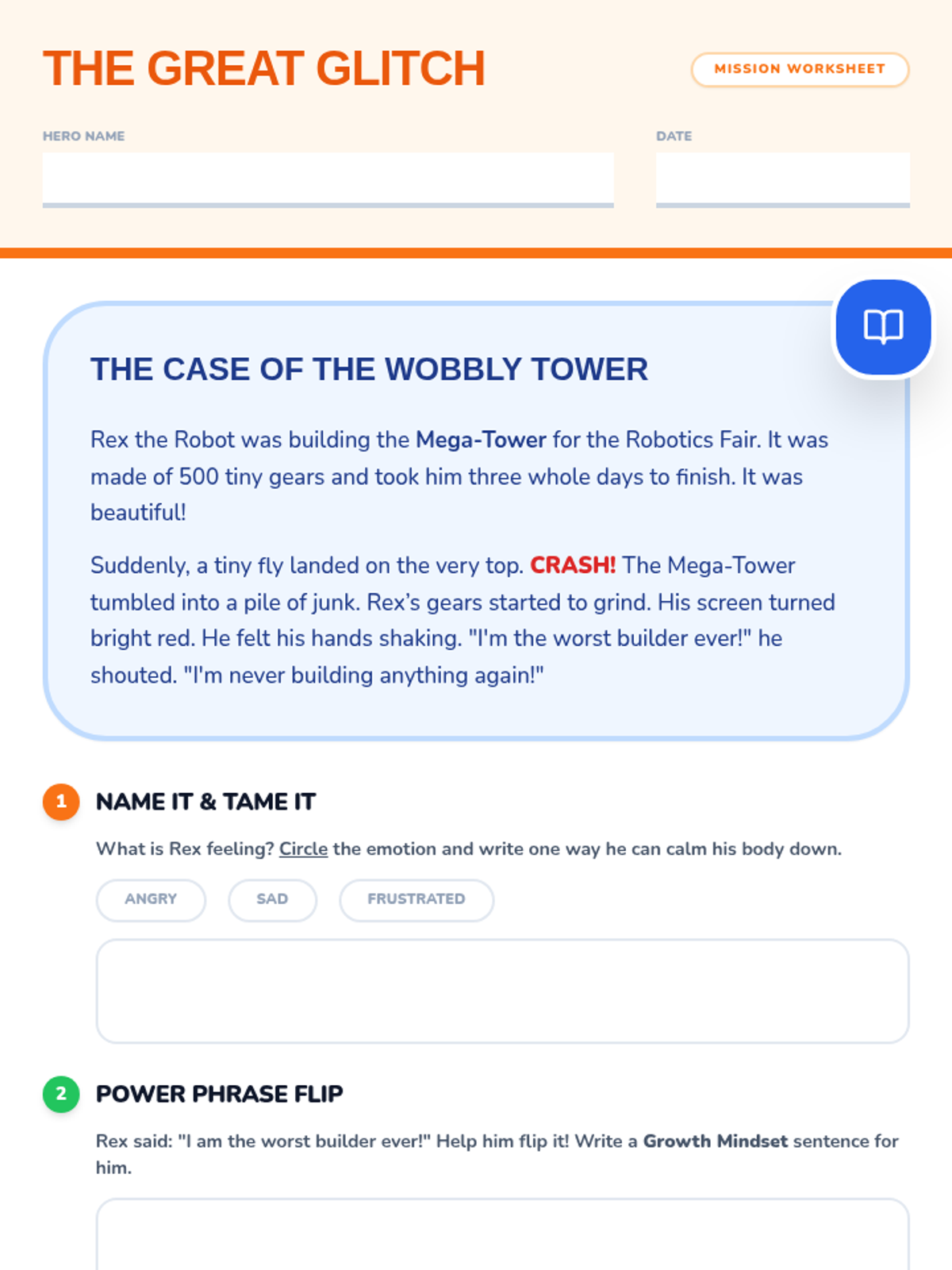
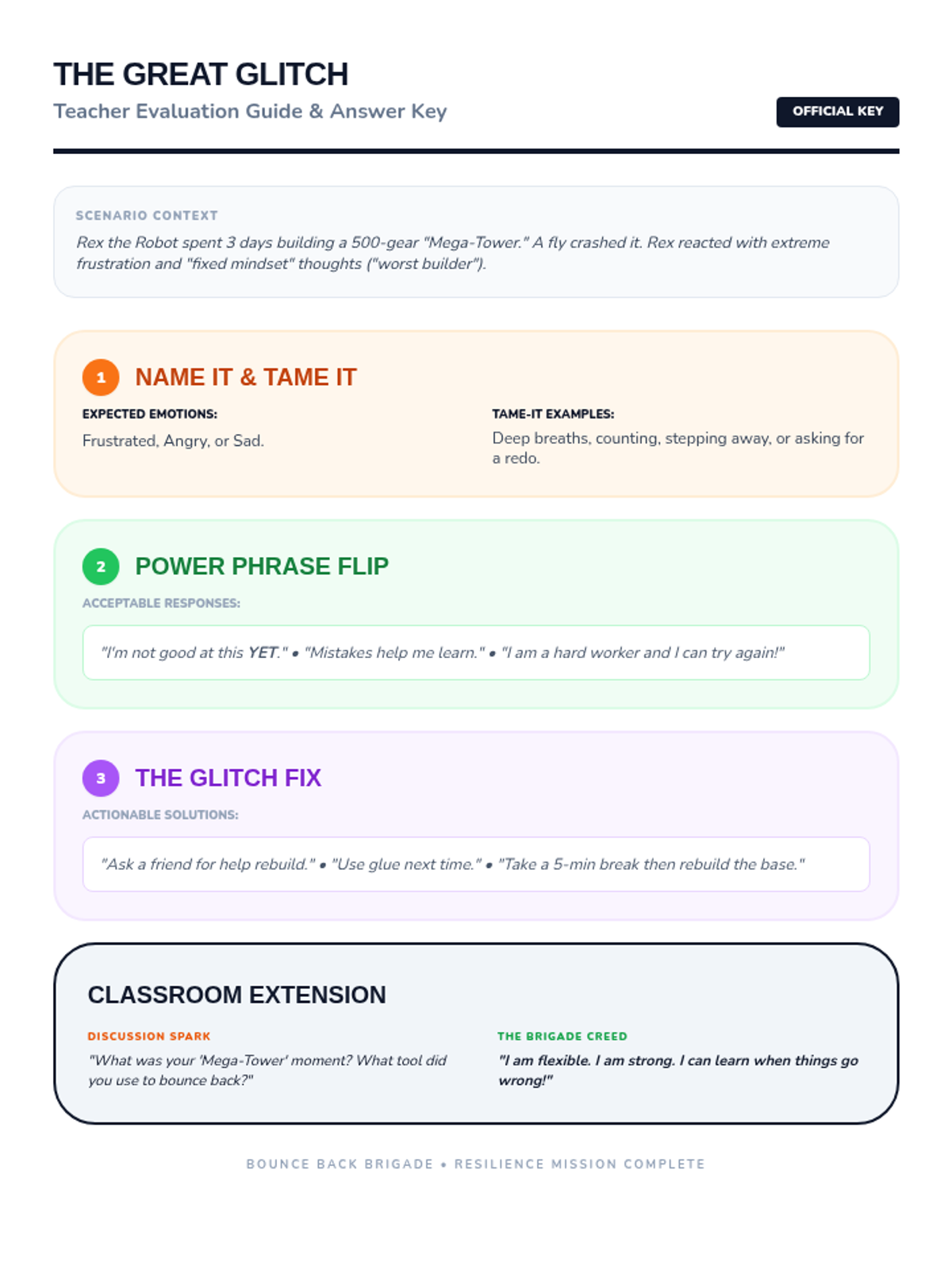
A fast-paced, high-energy 30-minute lesson designed to teach elementary students the fundamentals of resilience through the 'Bounce Back Brigade' framework. Students learn to navigate big emotions, use positive self-talk, adopt a growth mindset, and solve problems through interactive slides and story-based activities.
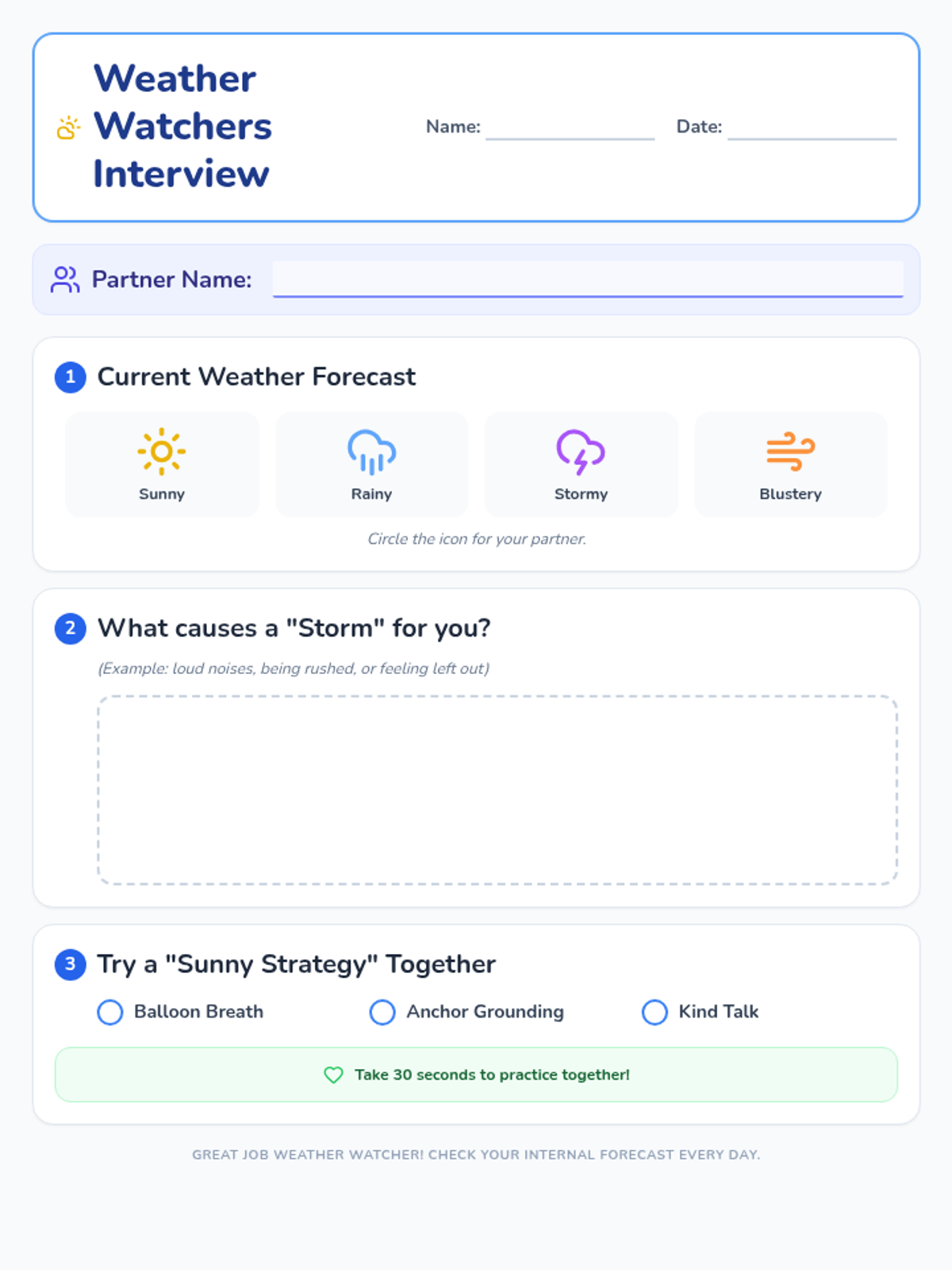
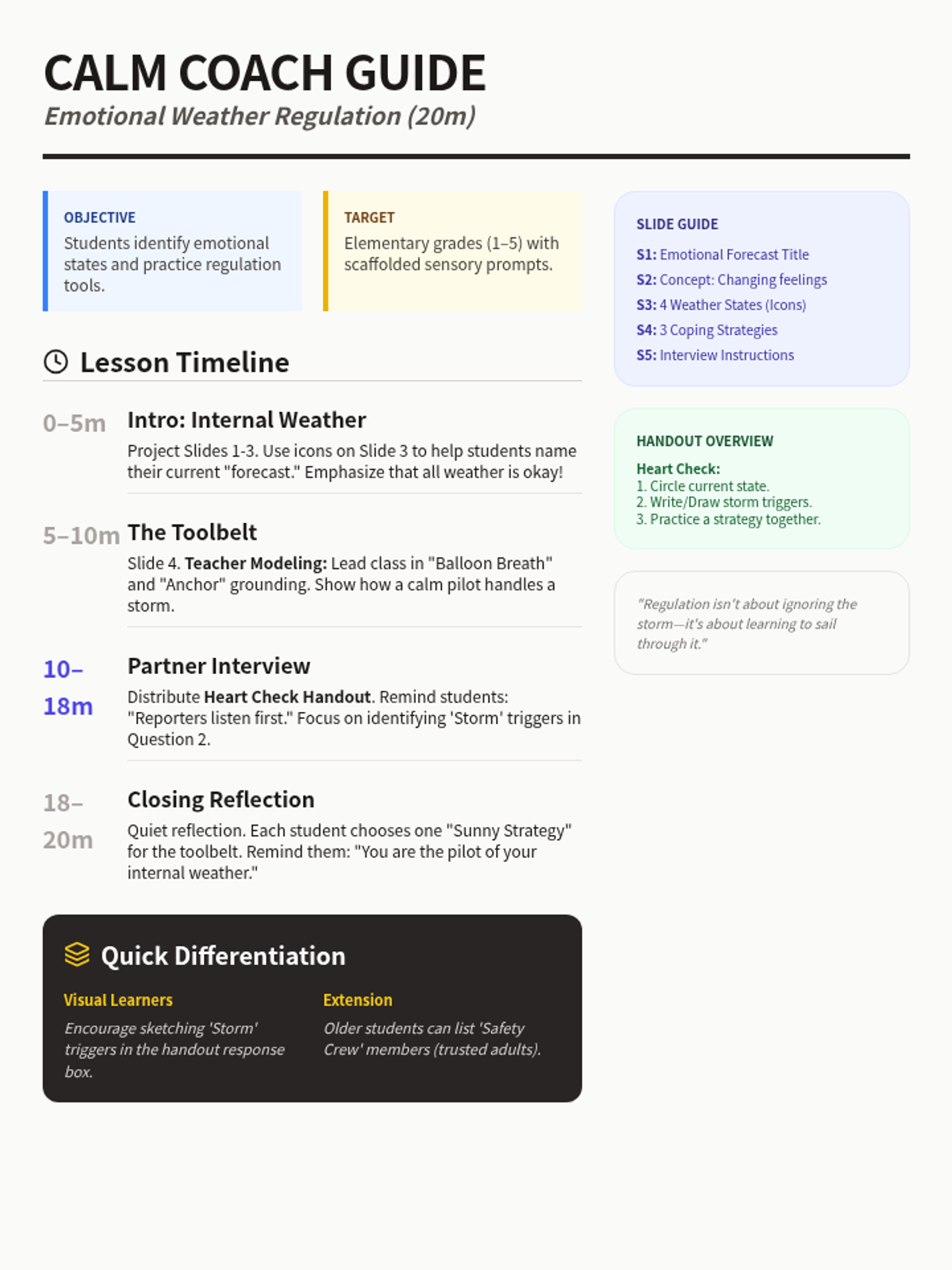
A 20-minute lesson focused on emotional regulation through the metaphor of 'internal weather,' helping students identify feelings and practice self-care strategies.
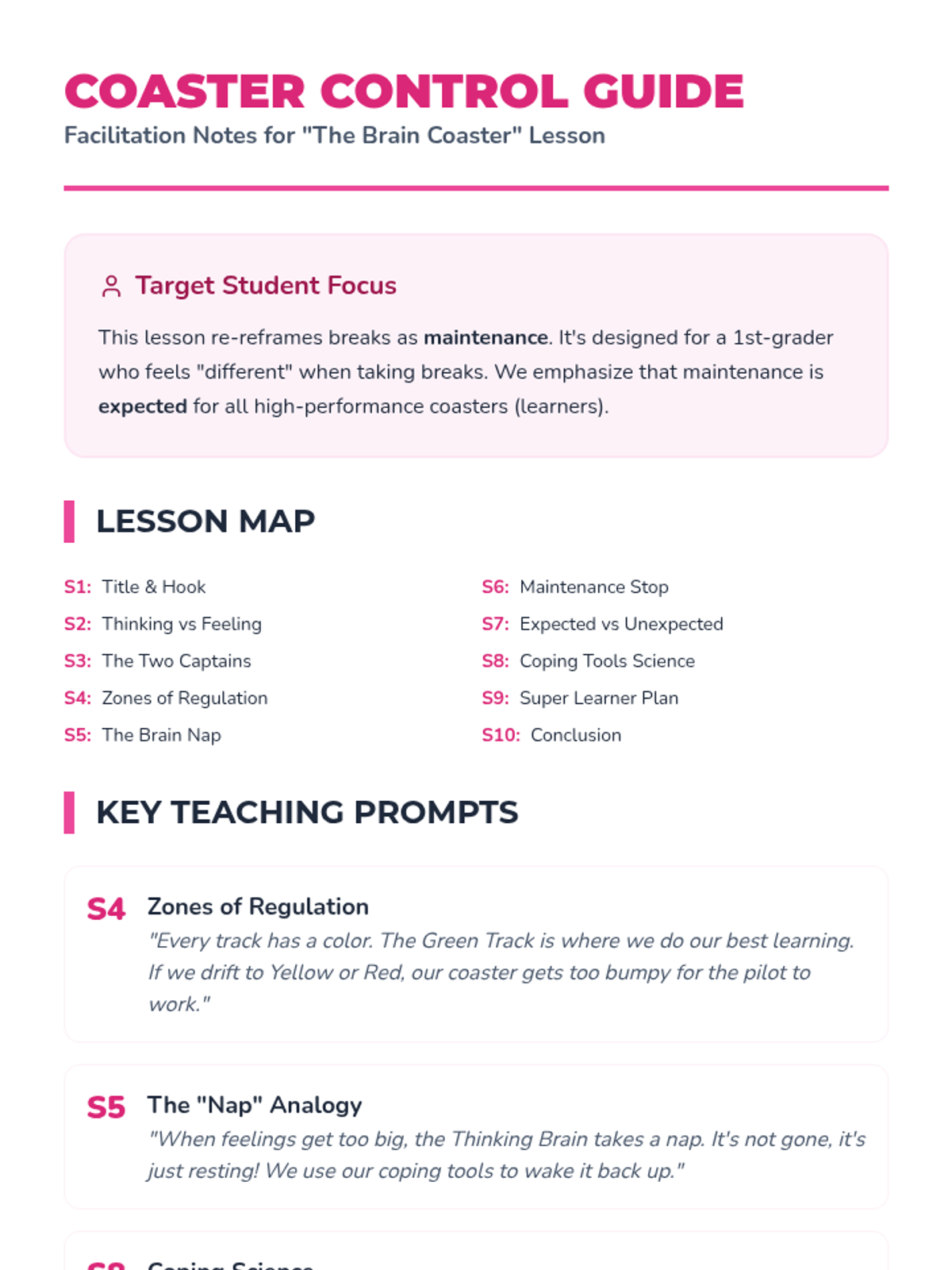
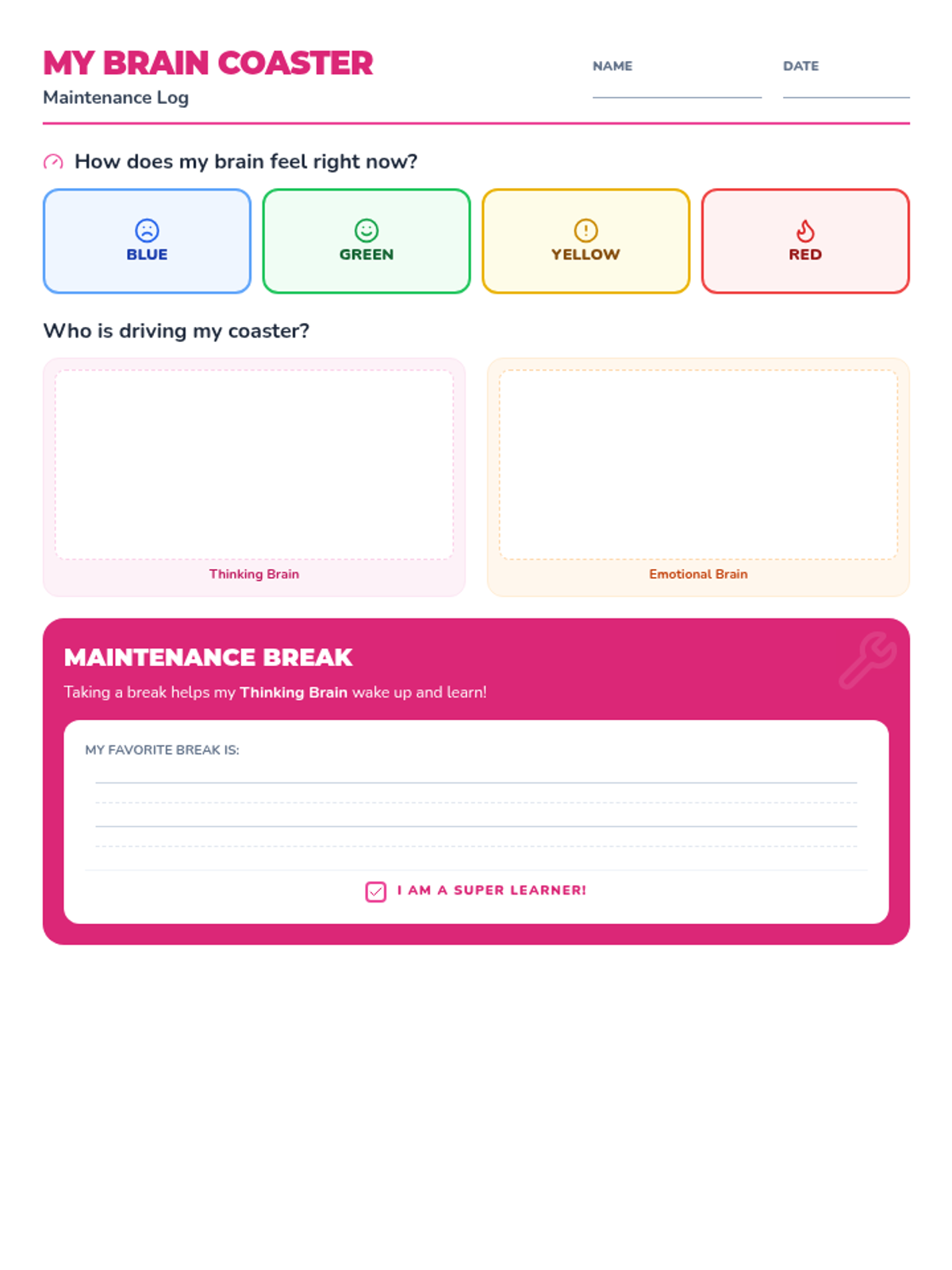
A social-emotional learning lesson designed for a 1st-grade student with autism, using a rollercoaster theme and Social Thinking language to explain the science of brain regulation and the value of breaks.
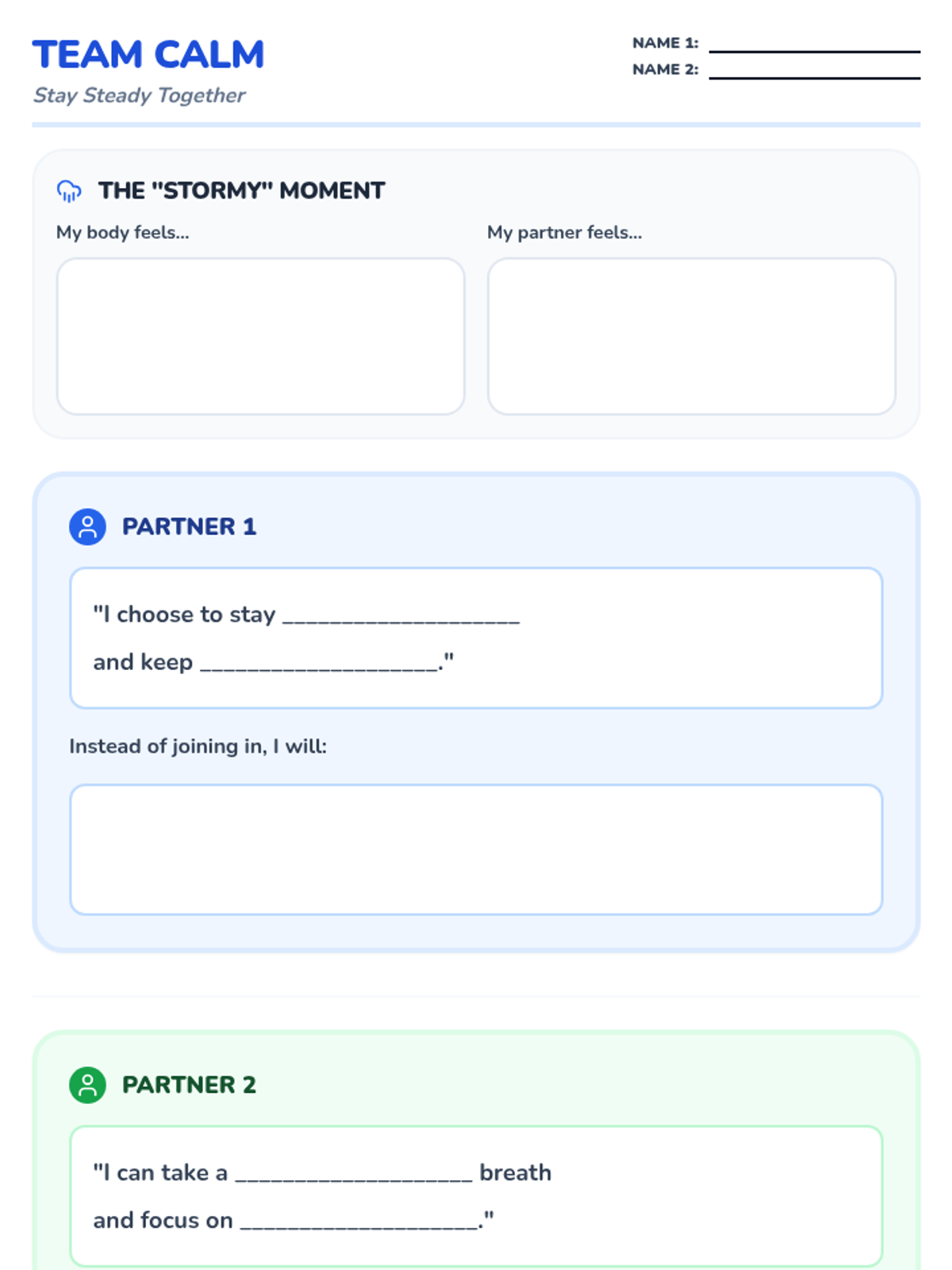
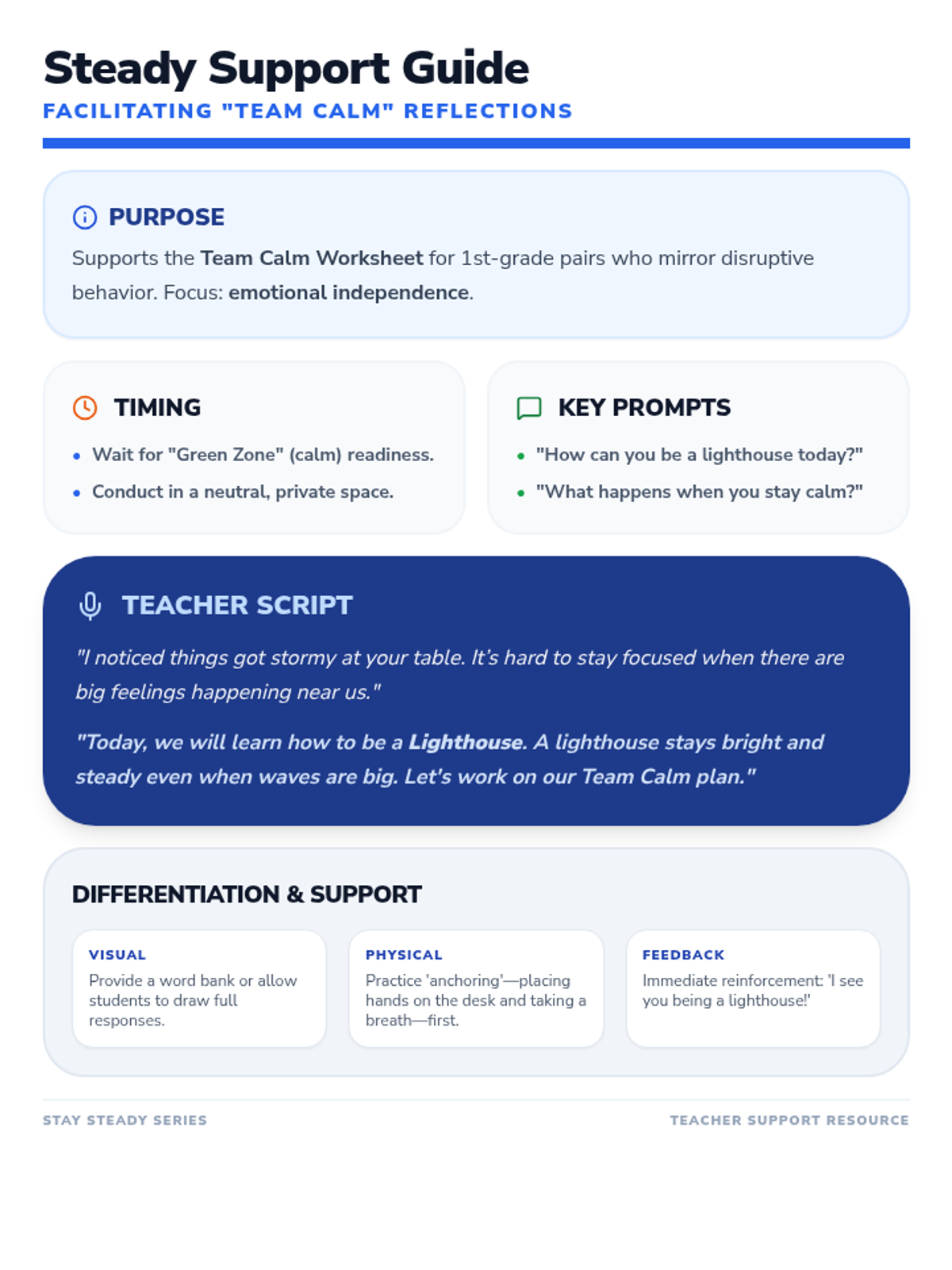
This lesson helps young students learn how to maintain their own emotional regulation and make positive choices even when their peers are experiencing emotional outbursts or disruptive behavior. It focuses on the 'lighthouse' metaphor—being a steady light during someone else's storm.
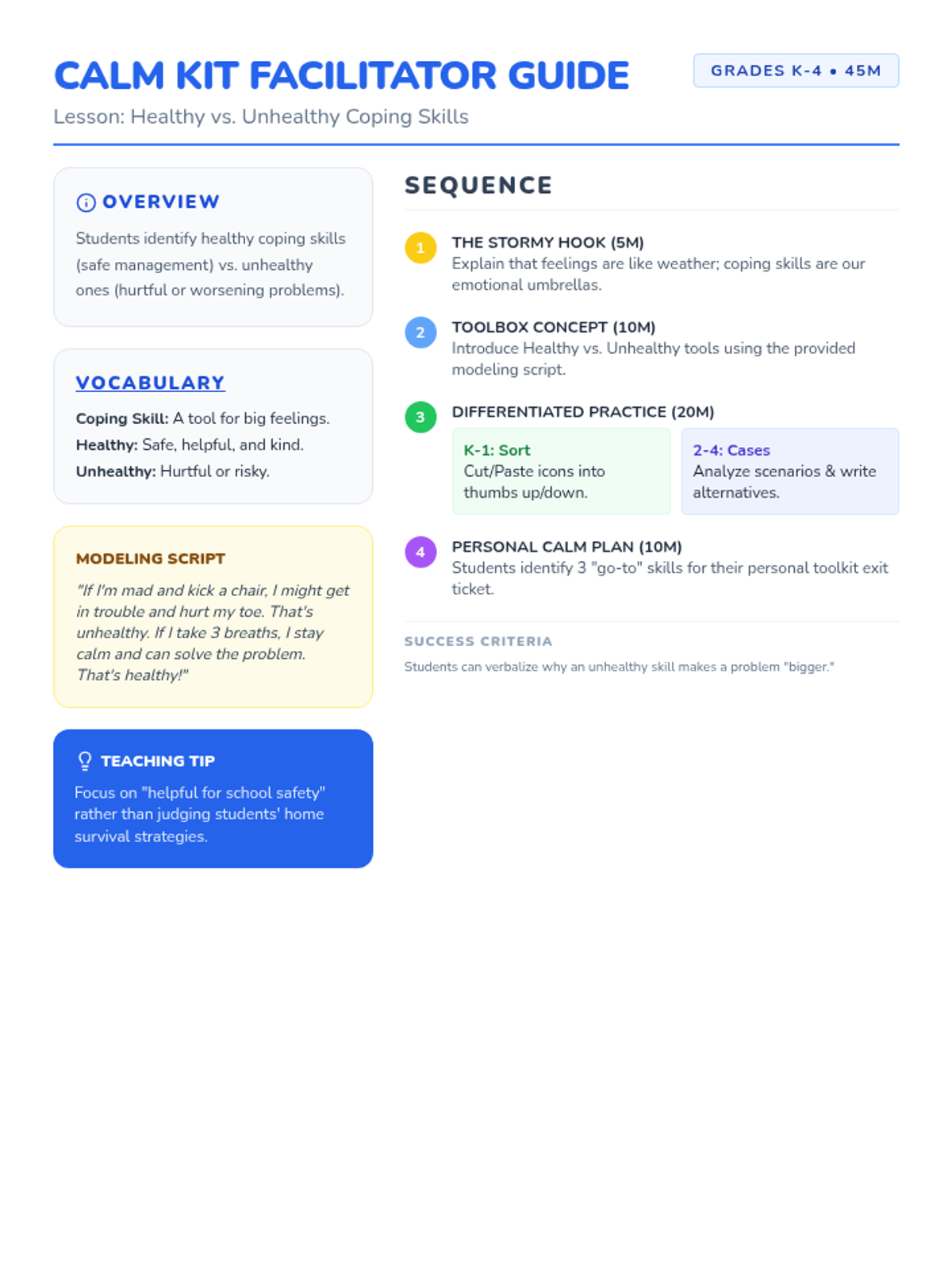
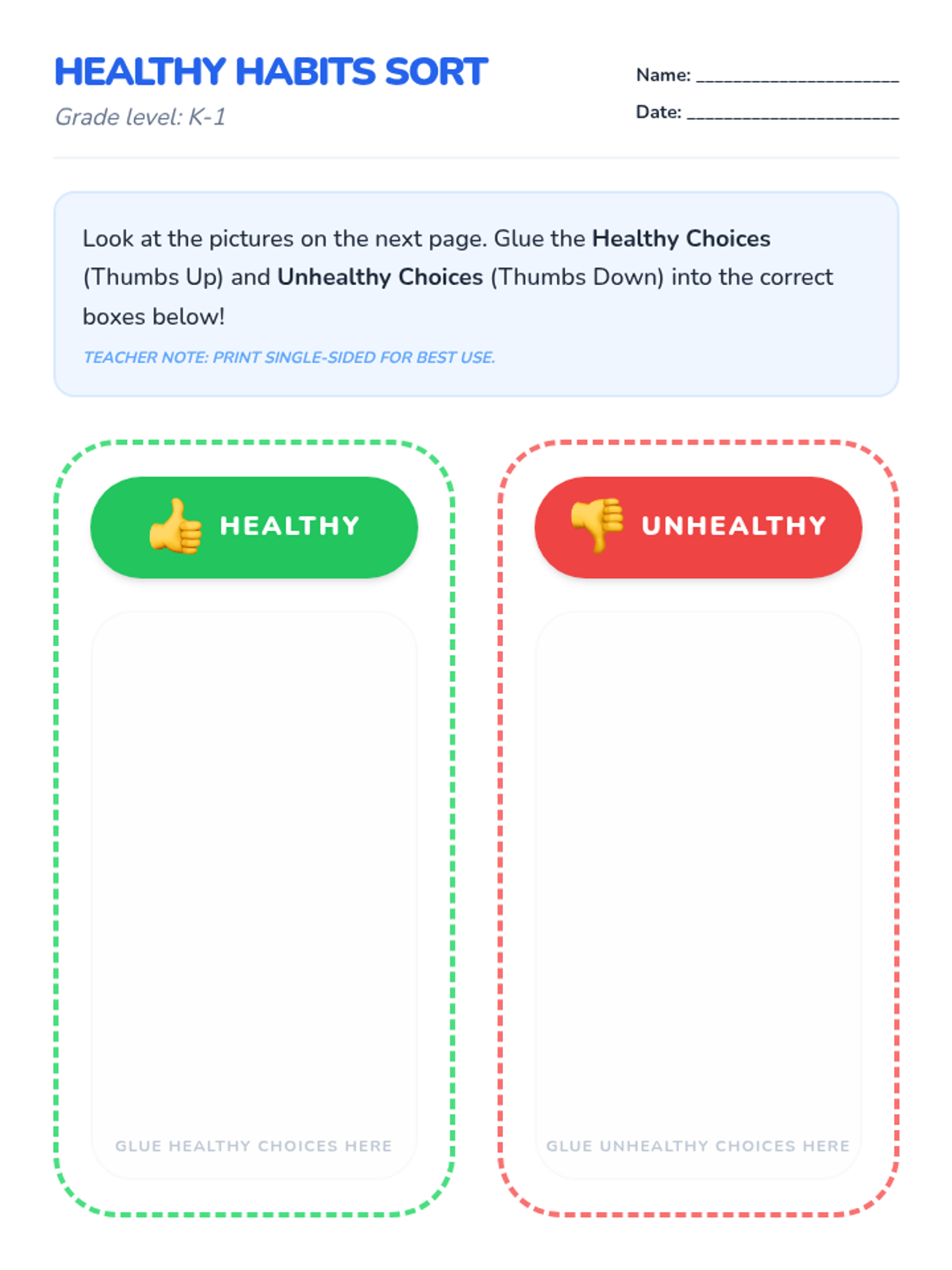
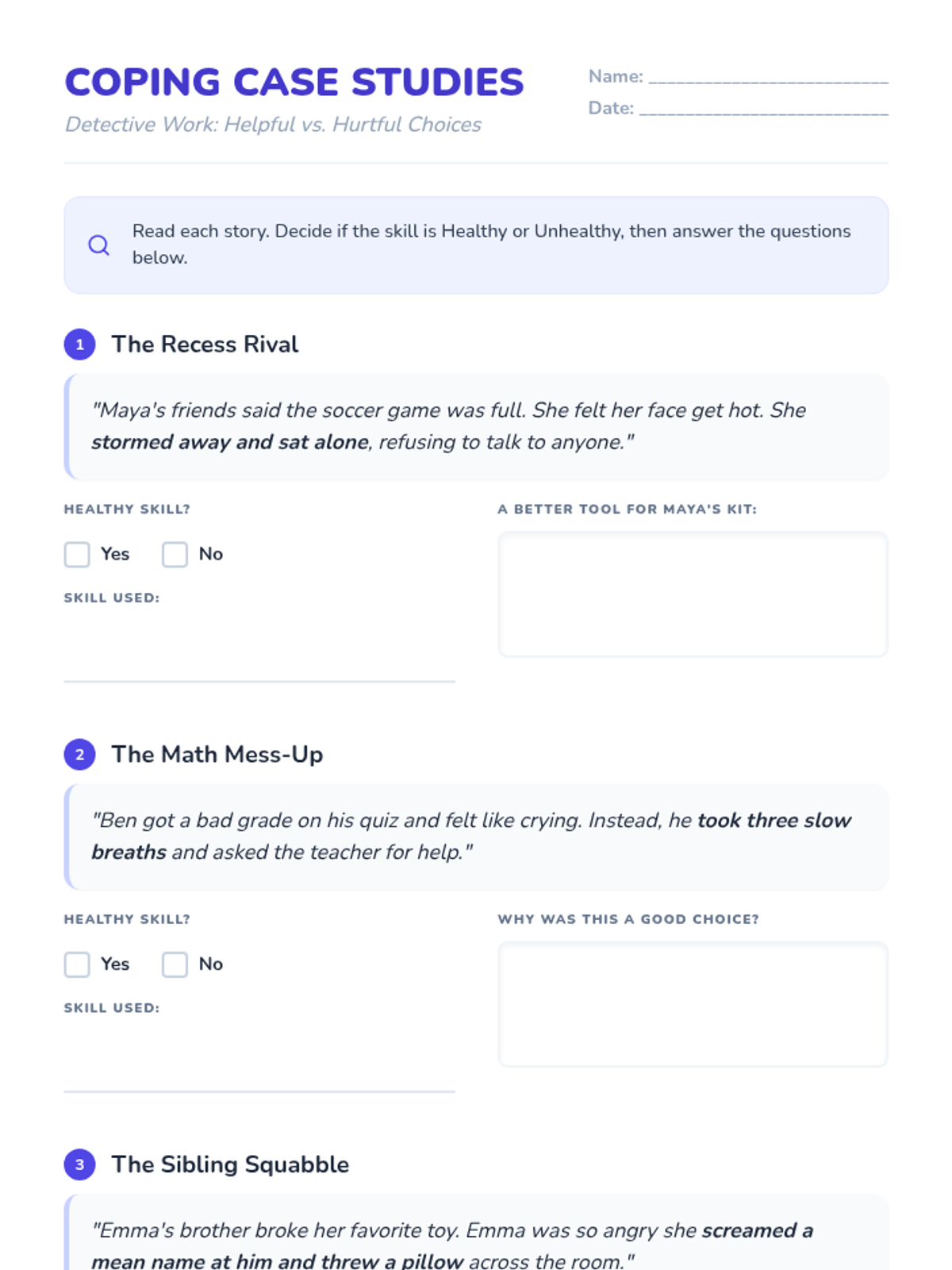
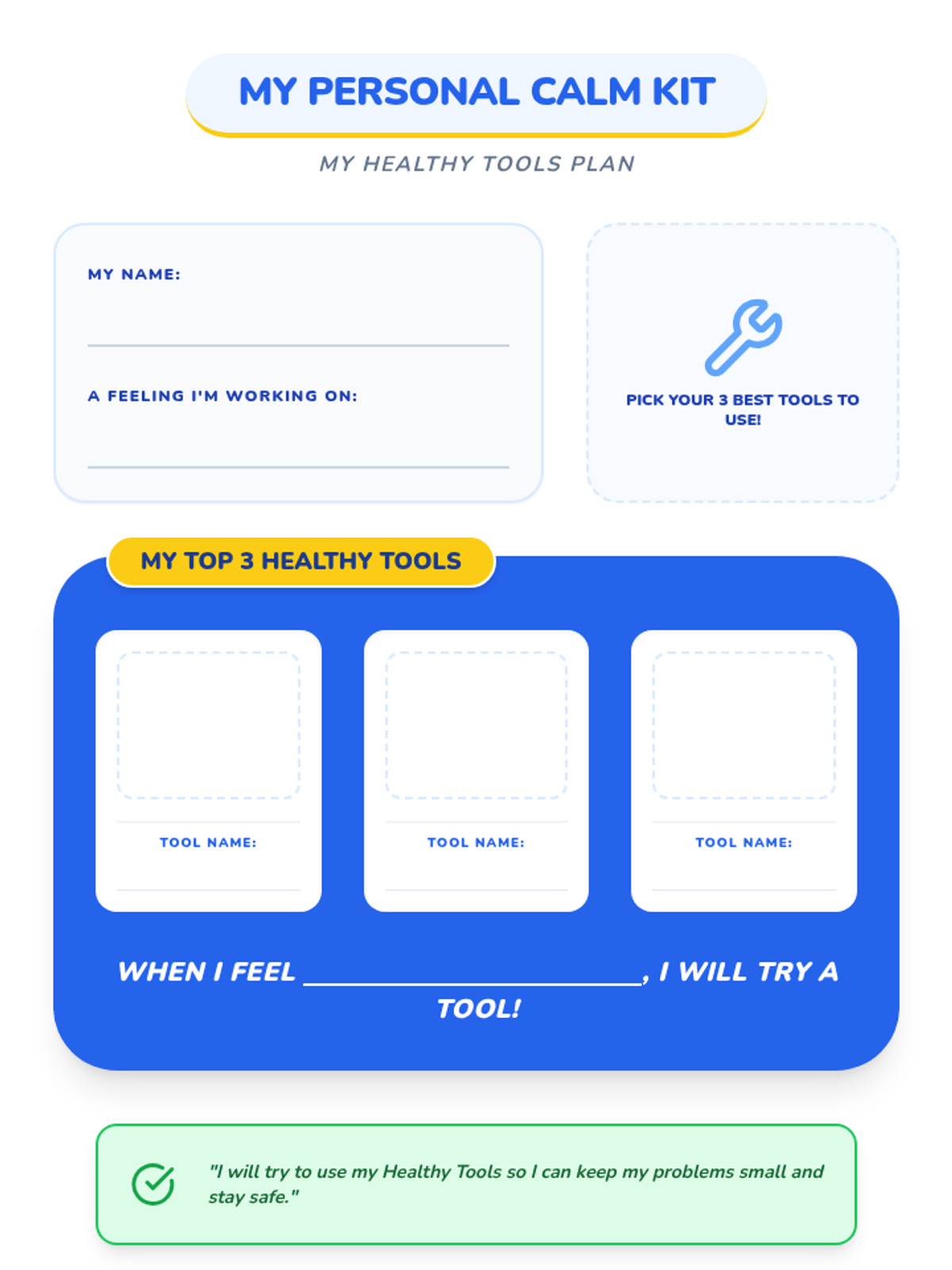
A comprehensive lesson on identifying and choosing healthy coping skills for students in grades K-4, featuring differentiated activities for younger and older learners.
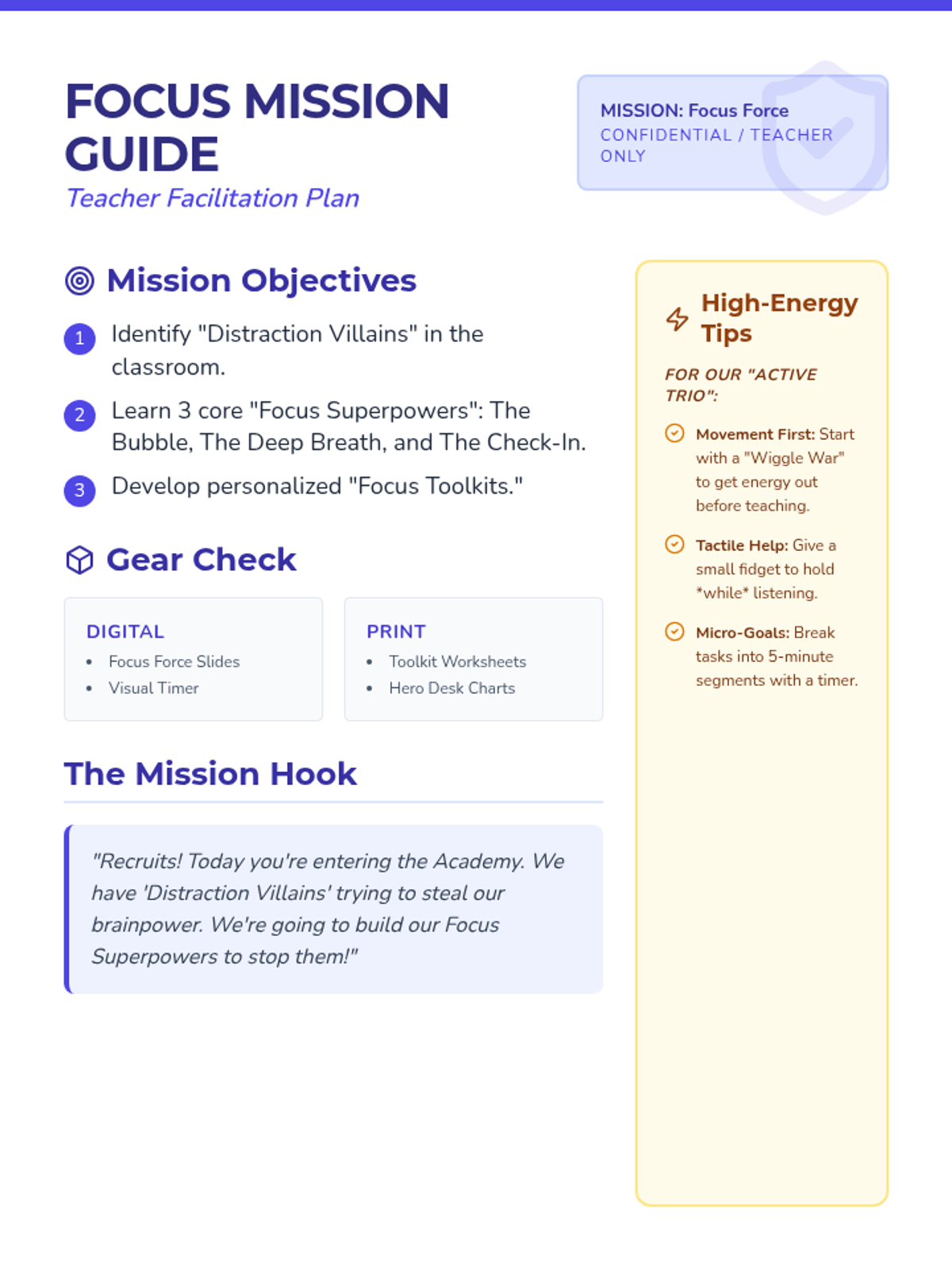
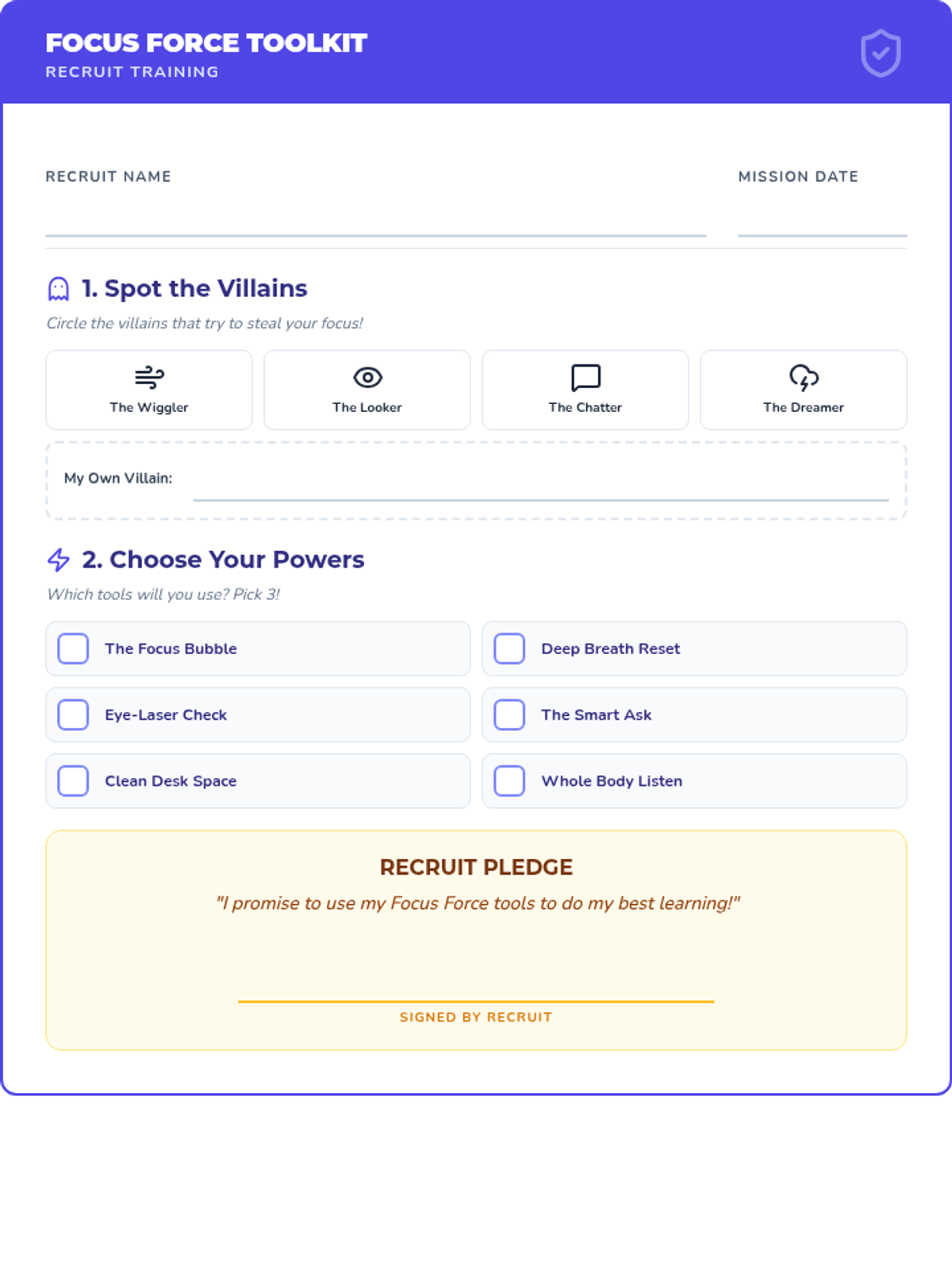
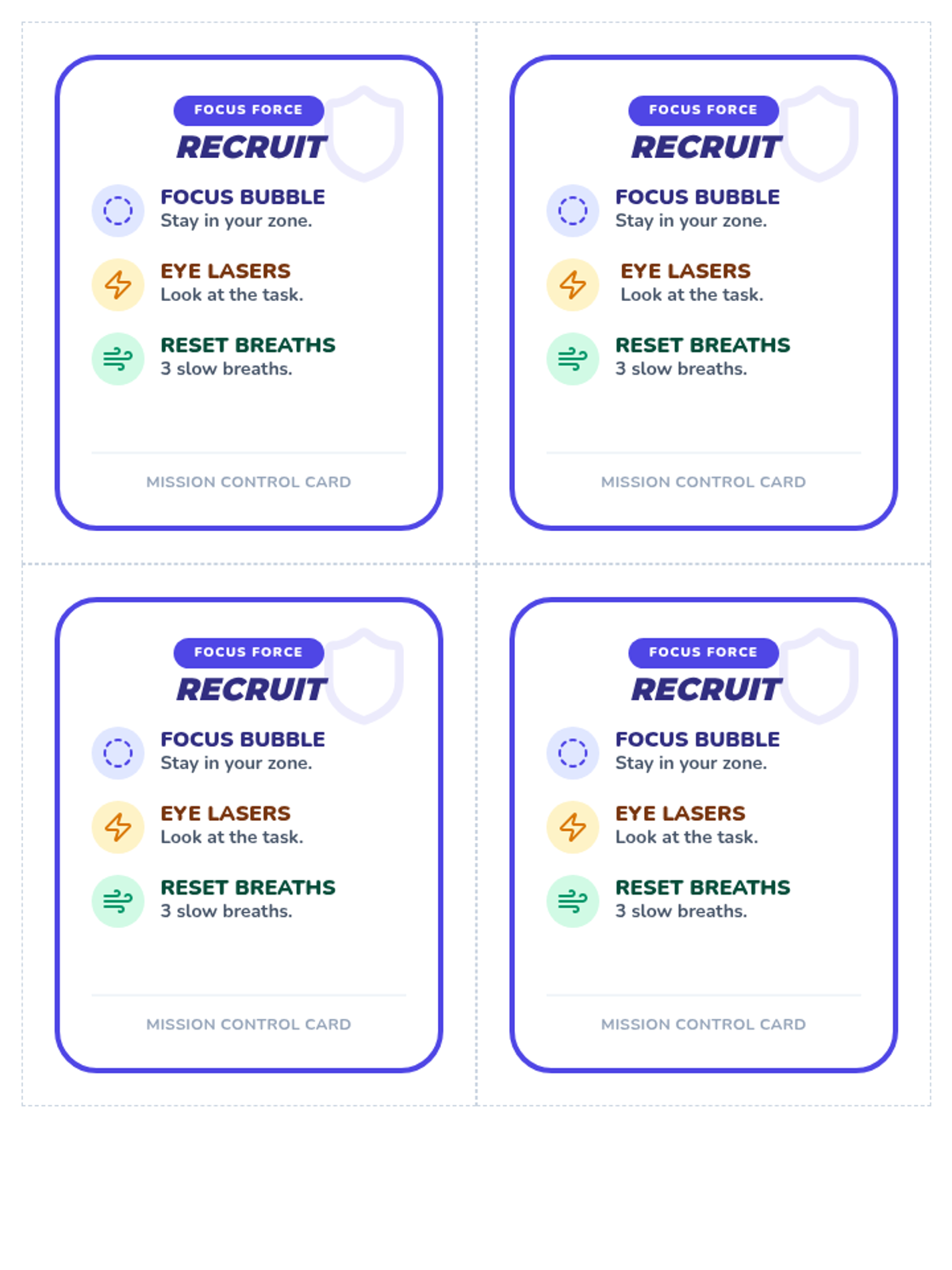
A high-energy, superhero-themed lesson designed to teach 1st graders practical strategies for staying focused and managing distractions in the classroom.
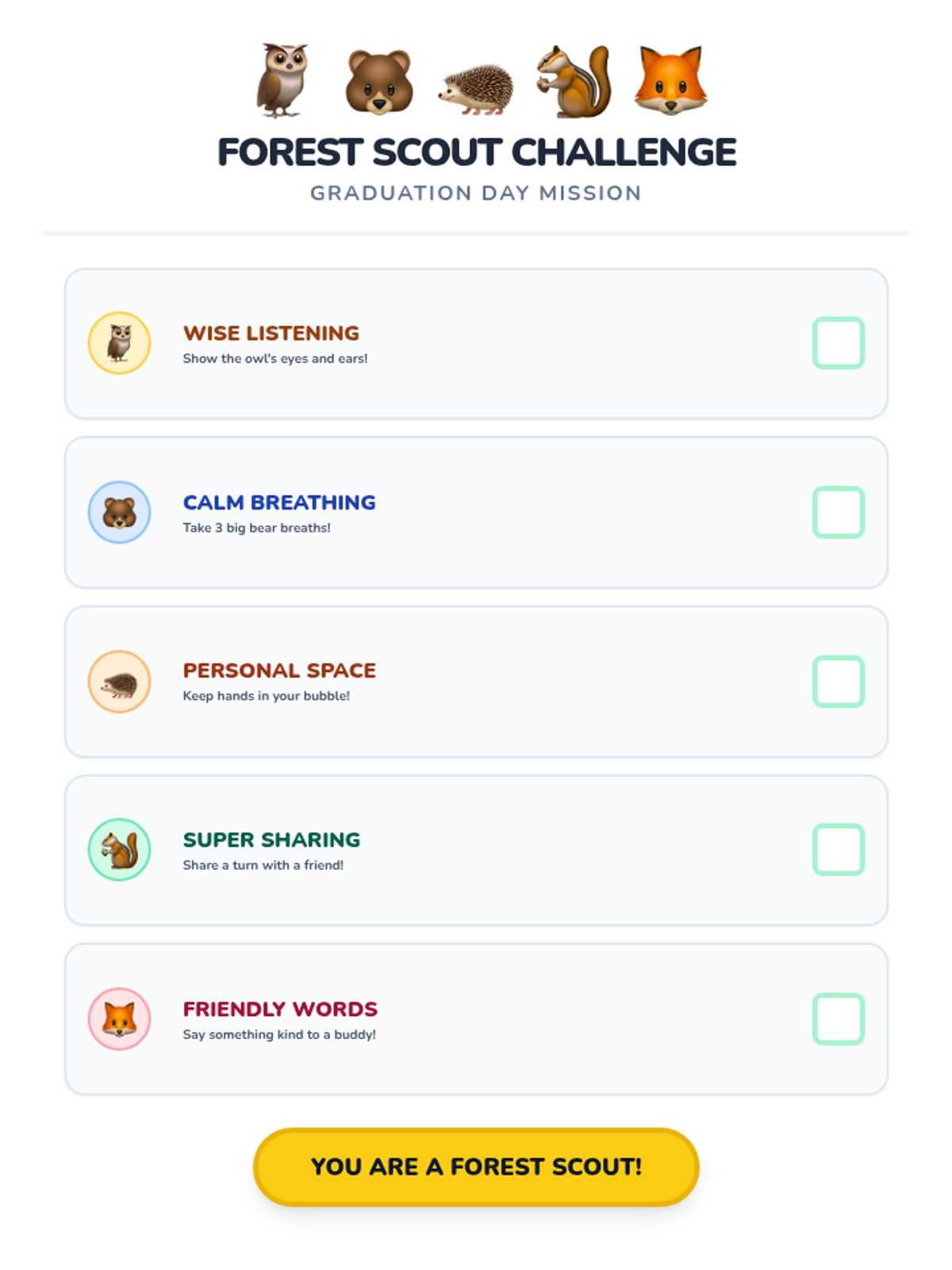
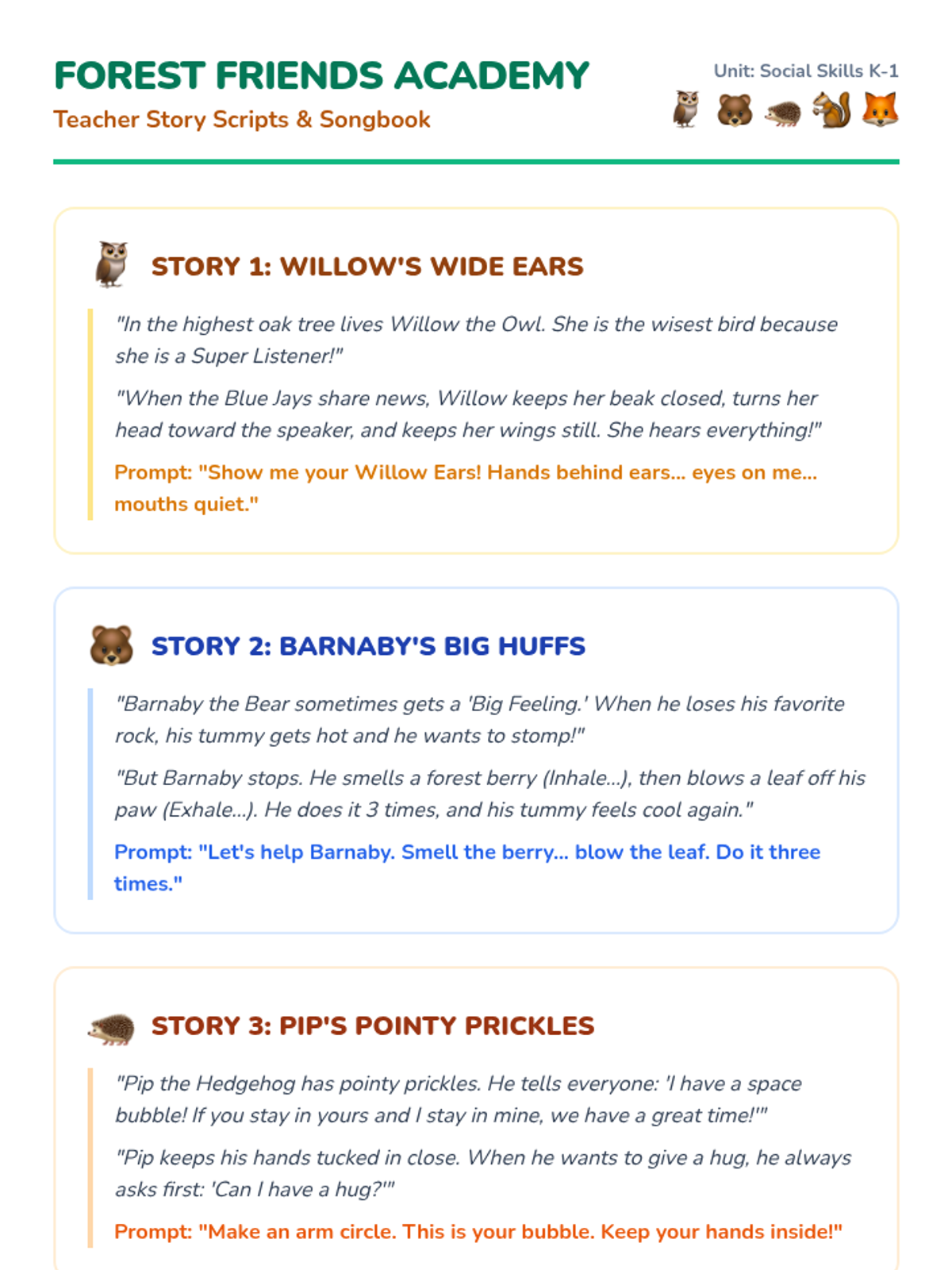
A review of all skills learned in the unit. Students earn their "Forest Scout" status by demonstrating each of the five core skills through a series of fun forest-themed challenges.
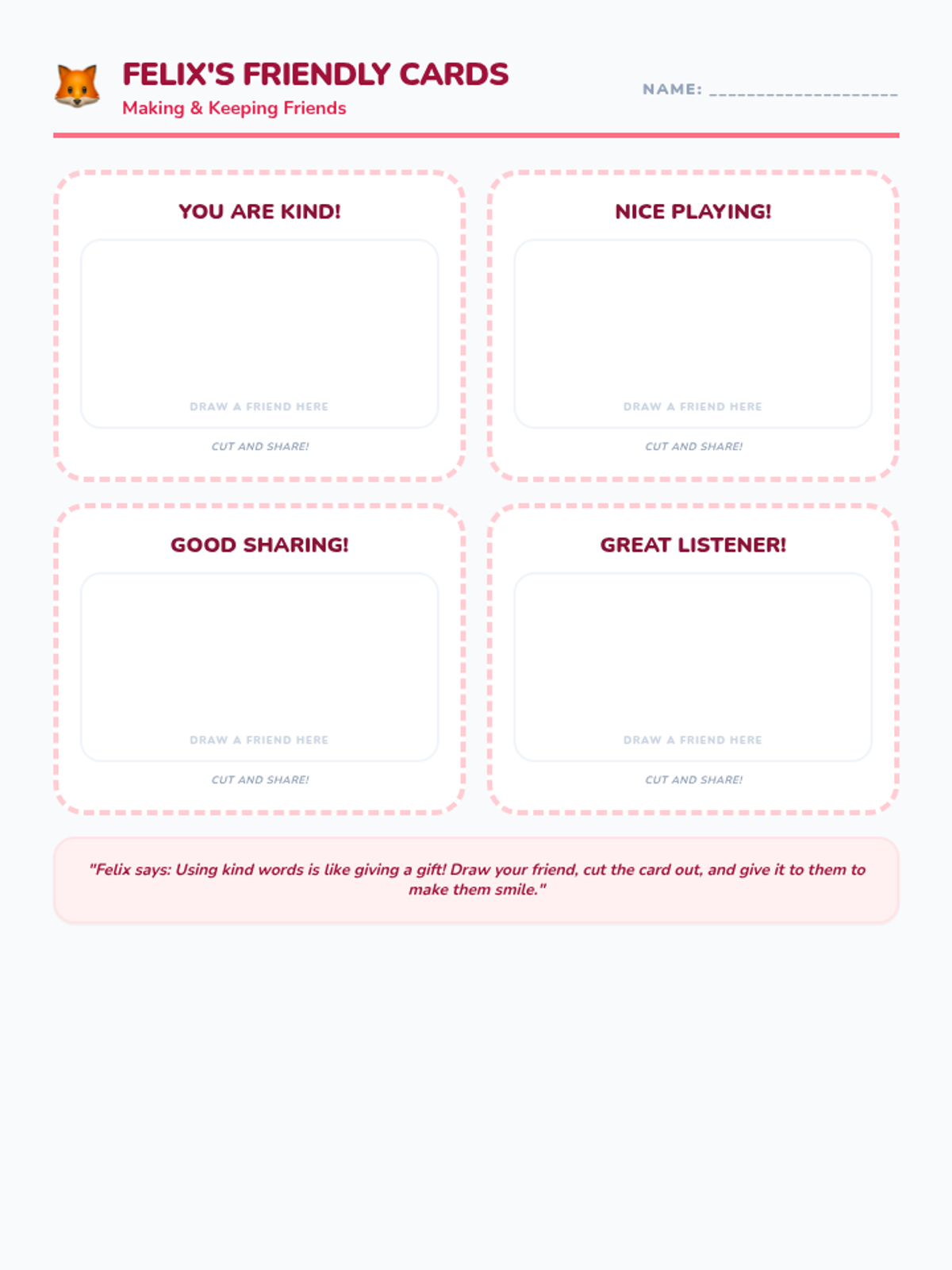
Focuses on making and keeping friends through kind words and actions with Felix the Fox. Students learn how to join a group and say kind things to their peers.
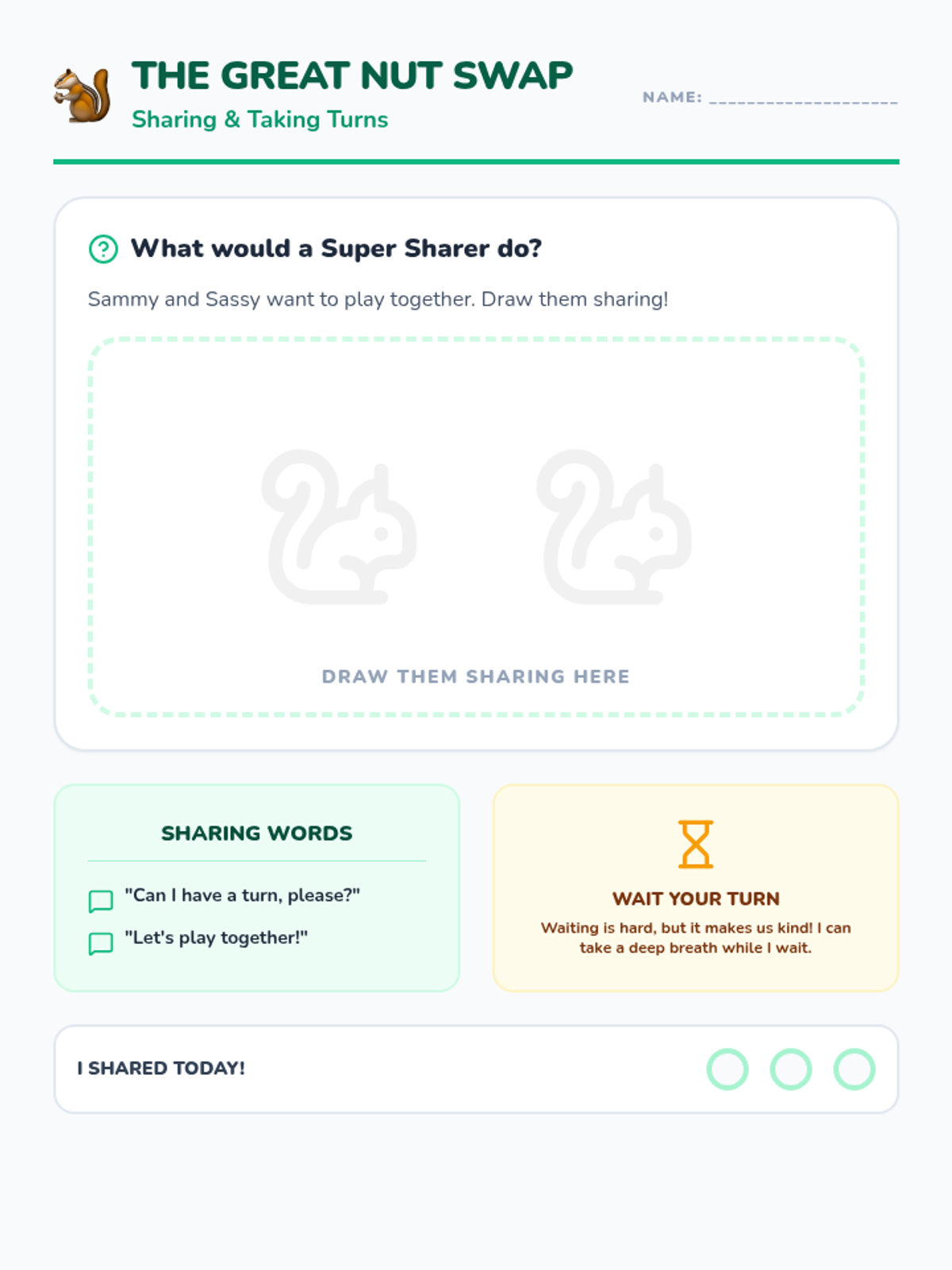
Teaches the concepts of sharing and taking turns using Sammy and Sassy the Squirrels. Students practice using "I want" statements and waiting for a timer or natural break.
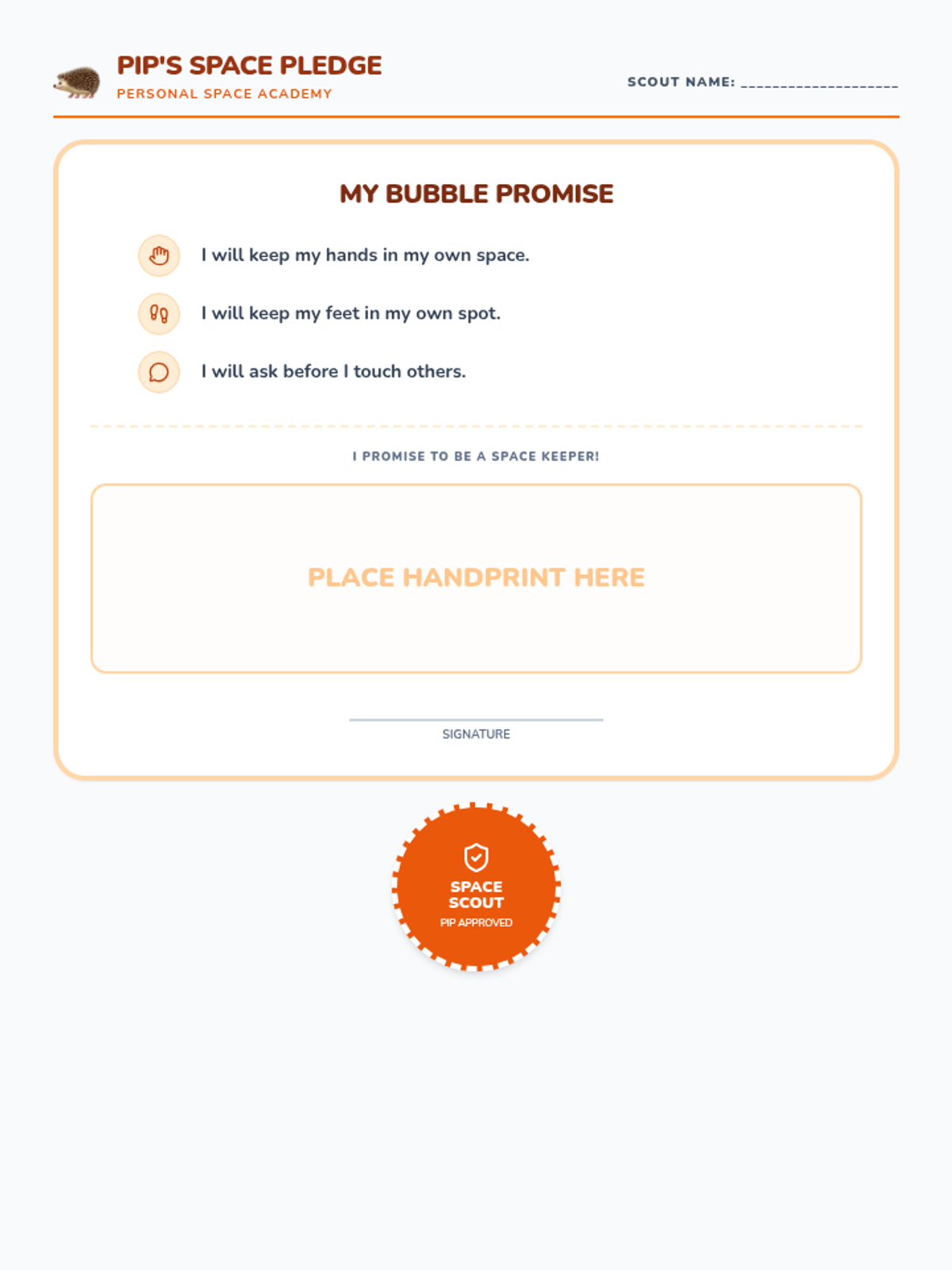
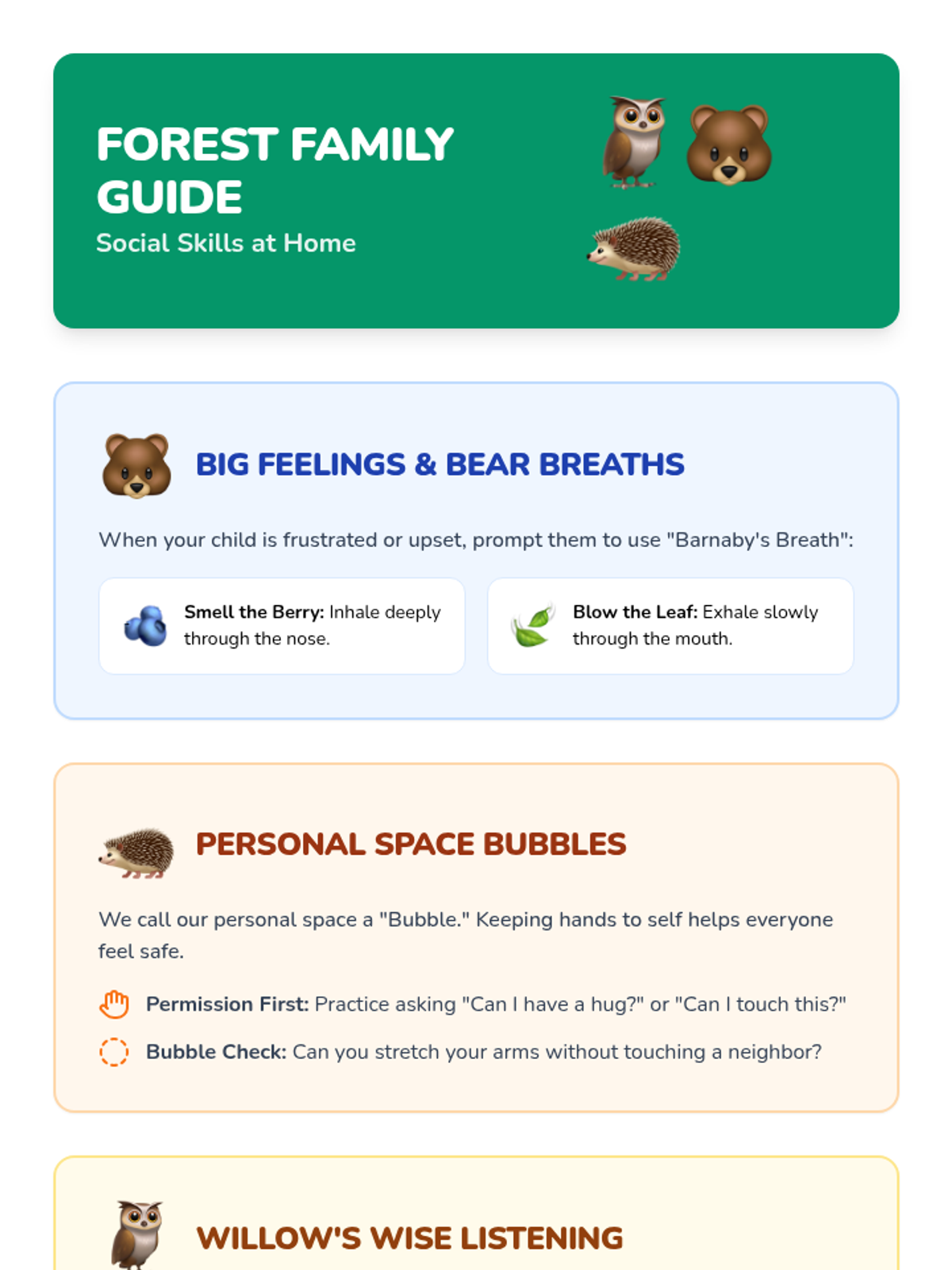
Focuses on personal space and keeping hands to self using the metaphor of a hedgehog's space bubble. Students practice asking for permission before touching others or their belongings.
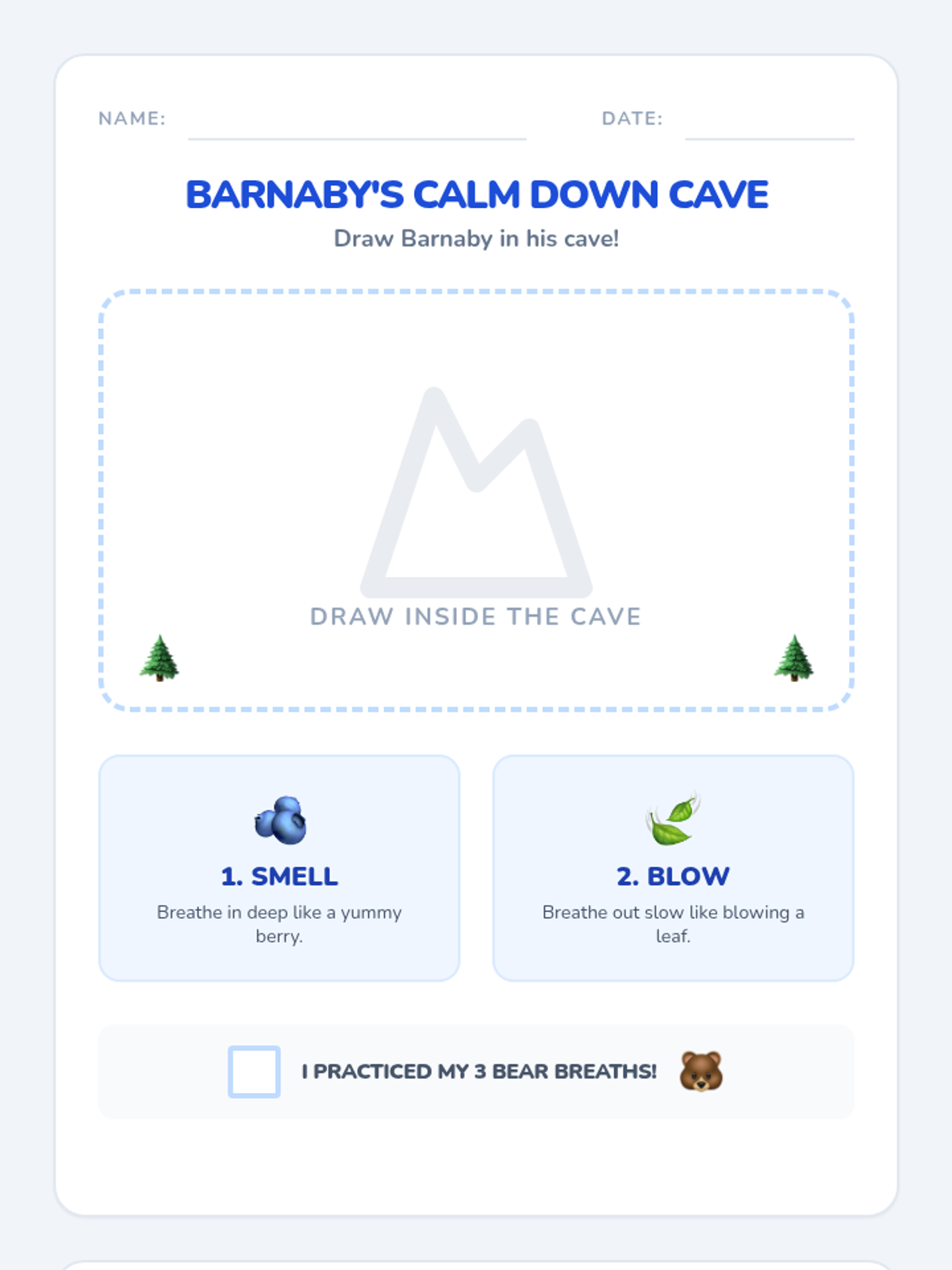
Teaches self-regulation strategies, specifically deep breathing, through the character of Barnaby the Bear. Students learn how to identify "big feelings" and use the "Calm Down Cave" technique.
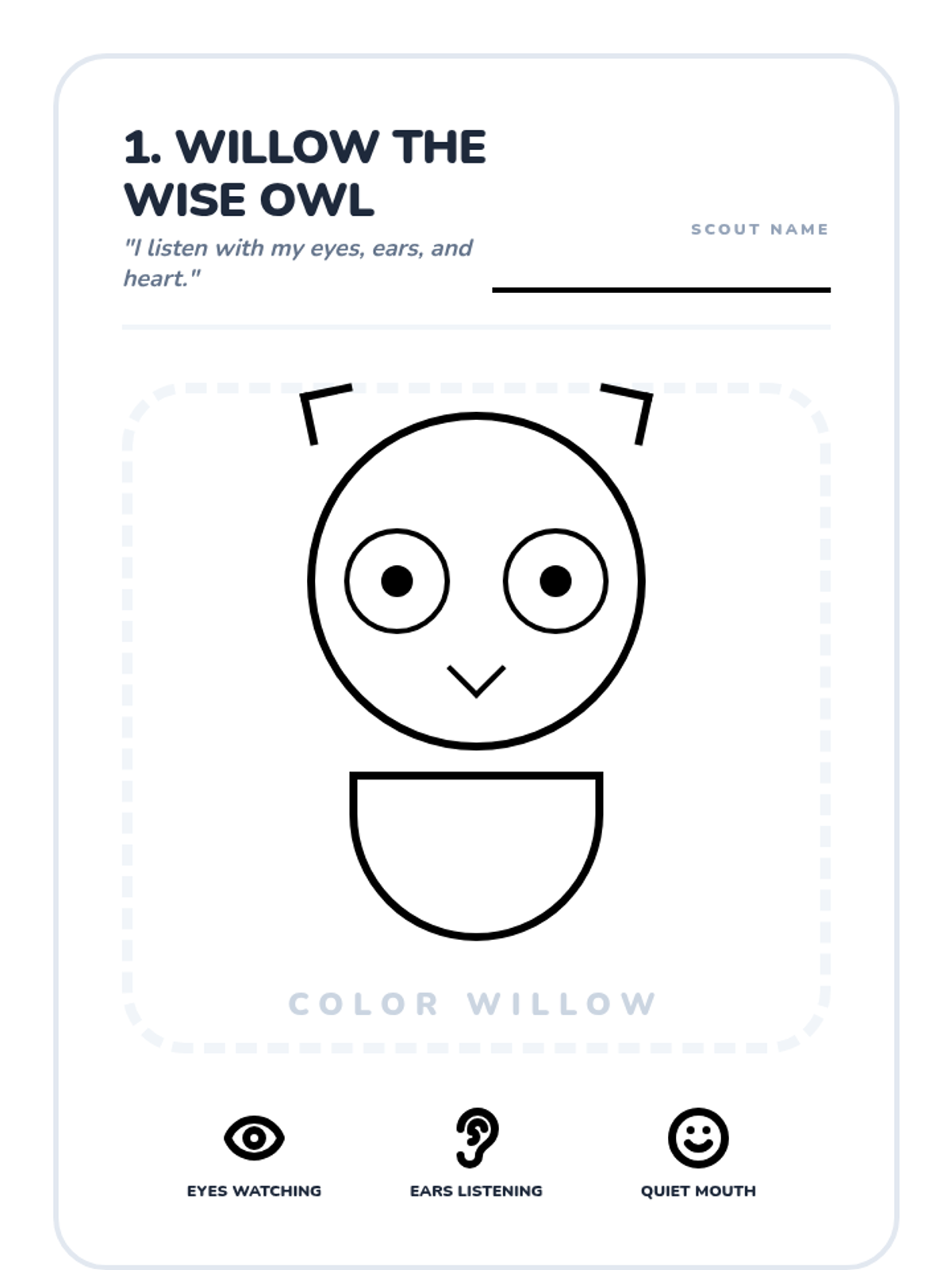
Focuses on whole-body listening and following multi-step directions using the character of Willow the Wise Owl. Students practice identifying what a good listener looks like and sounds like.
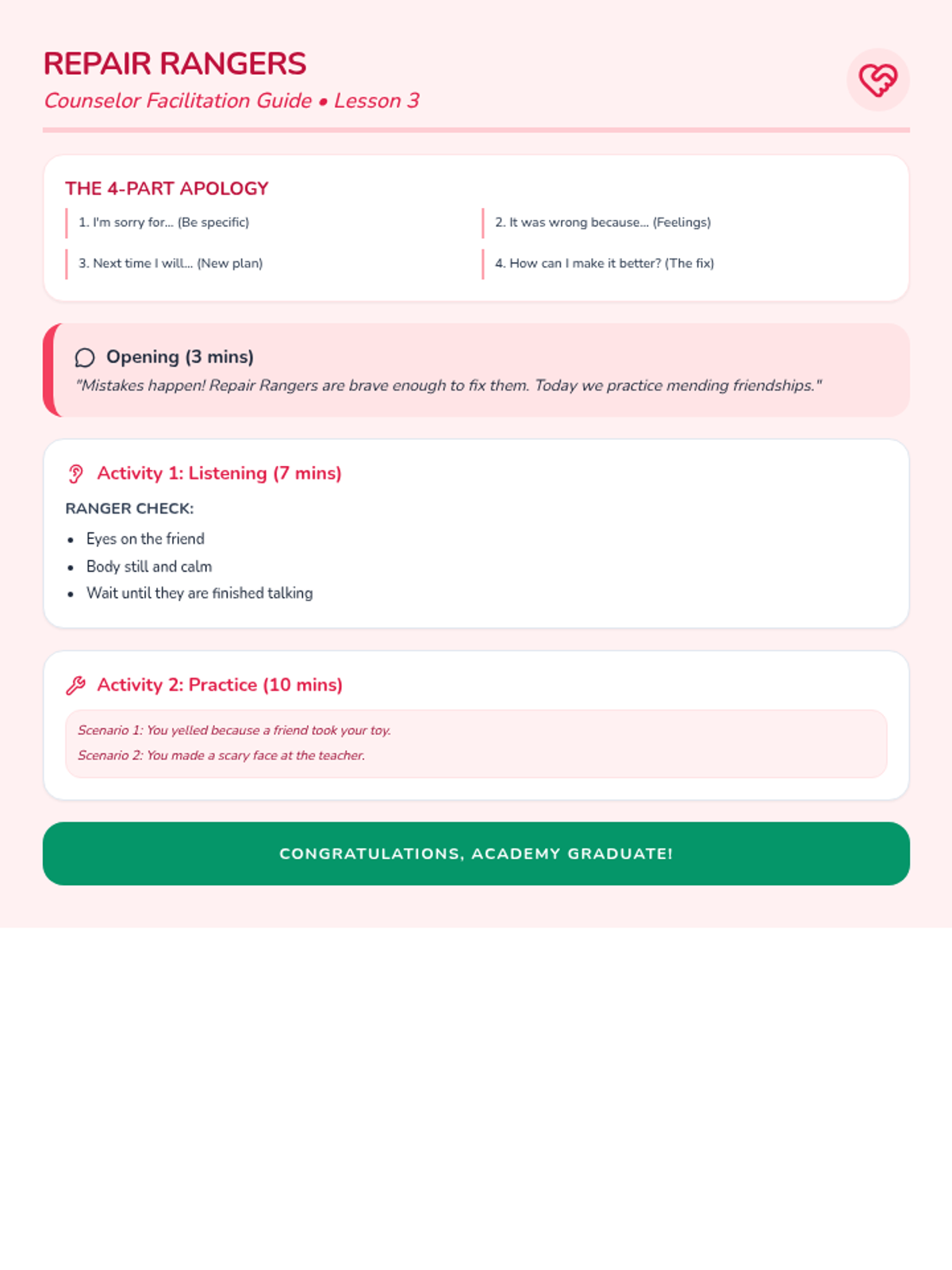
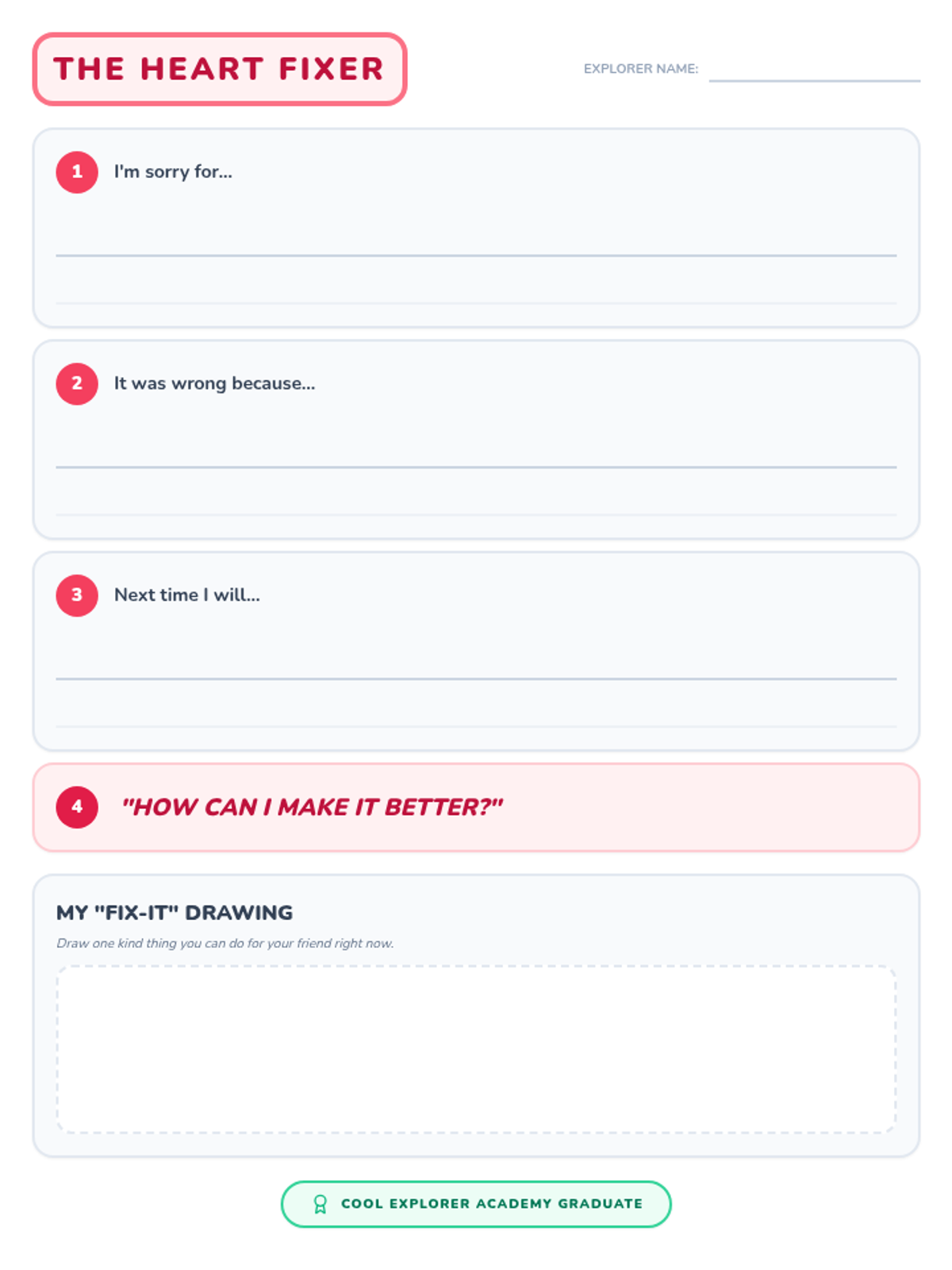
Teaches active listening and the steps of a meaningful apology to repair relationships with peers.
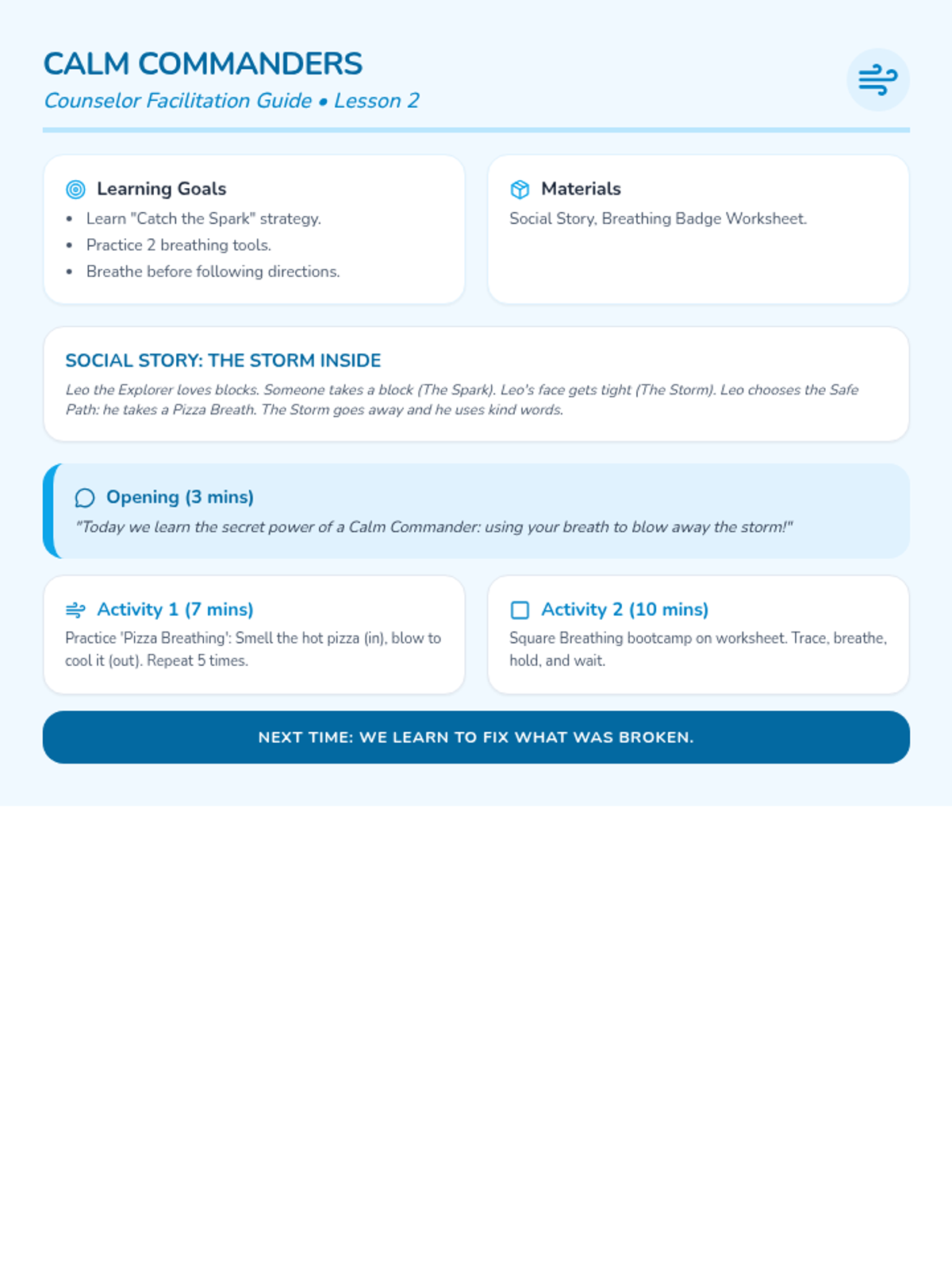
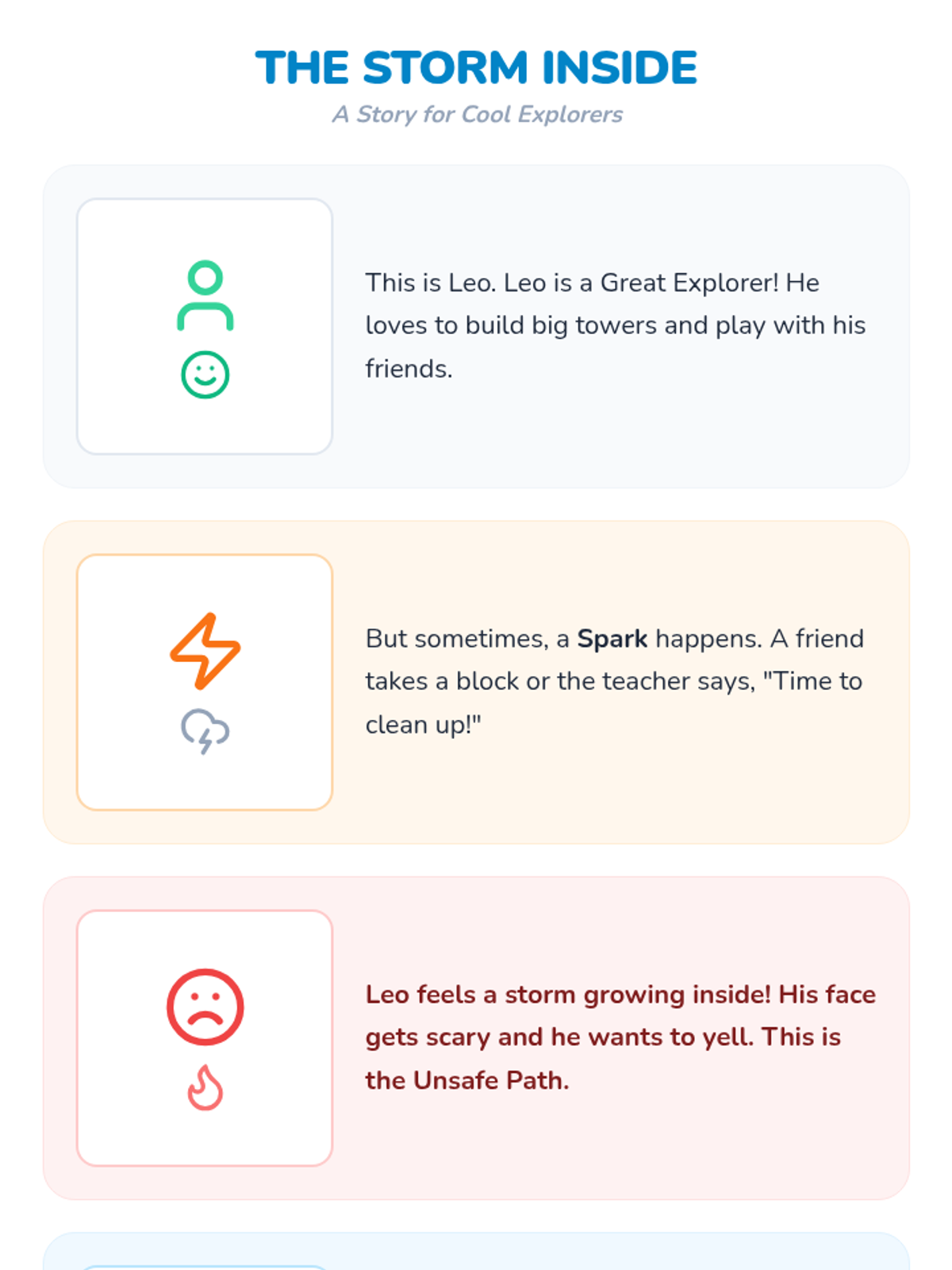
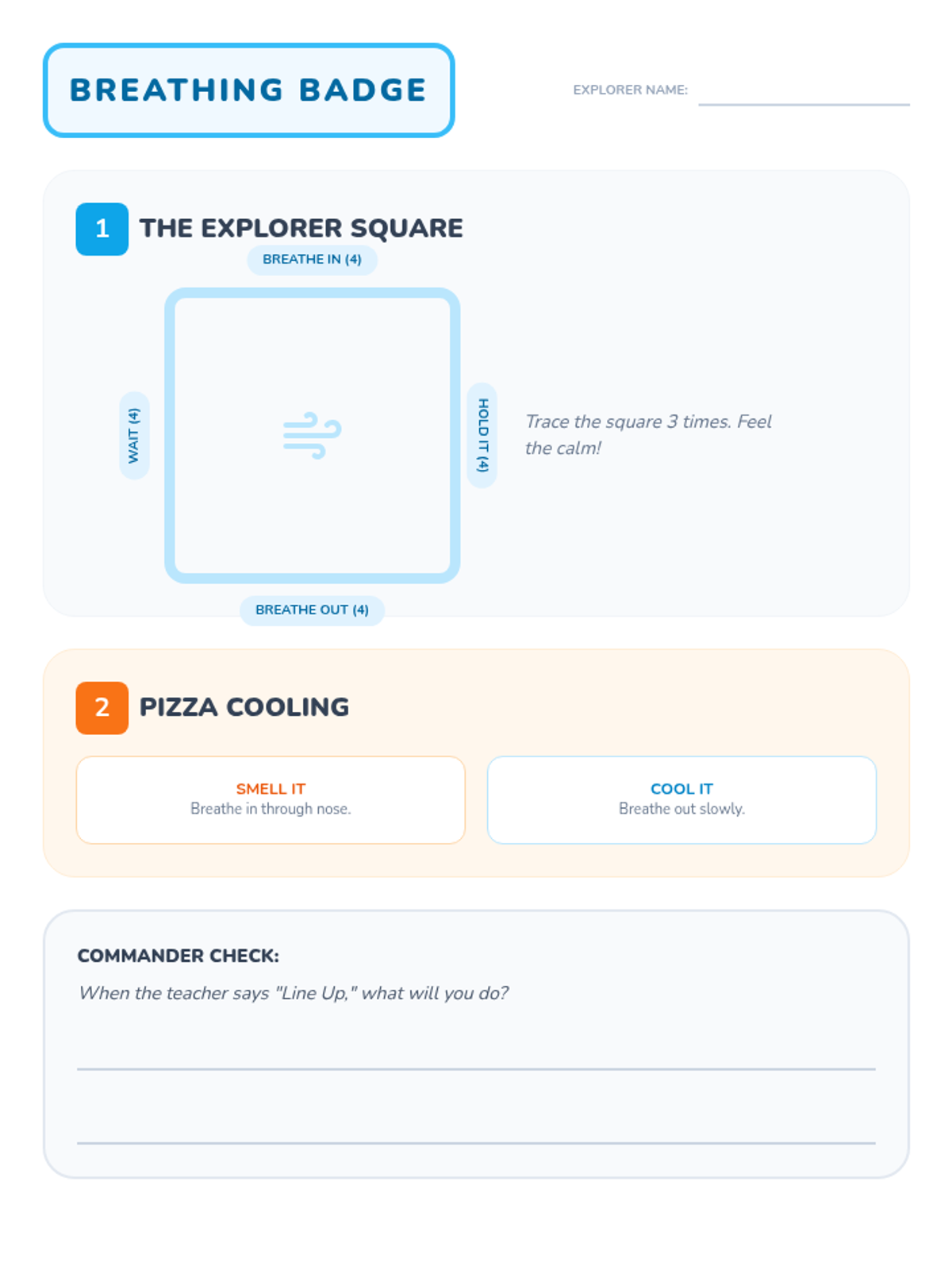
Teaches practical calm-down breathing techniques and tools through a social story and visual guide.
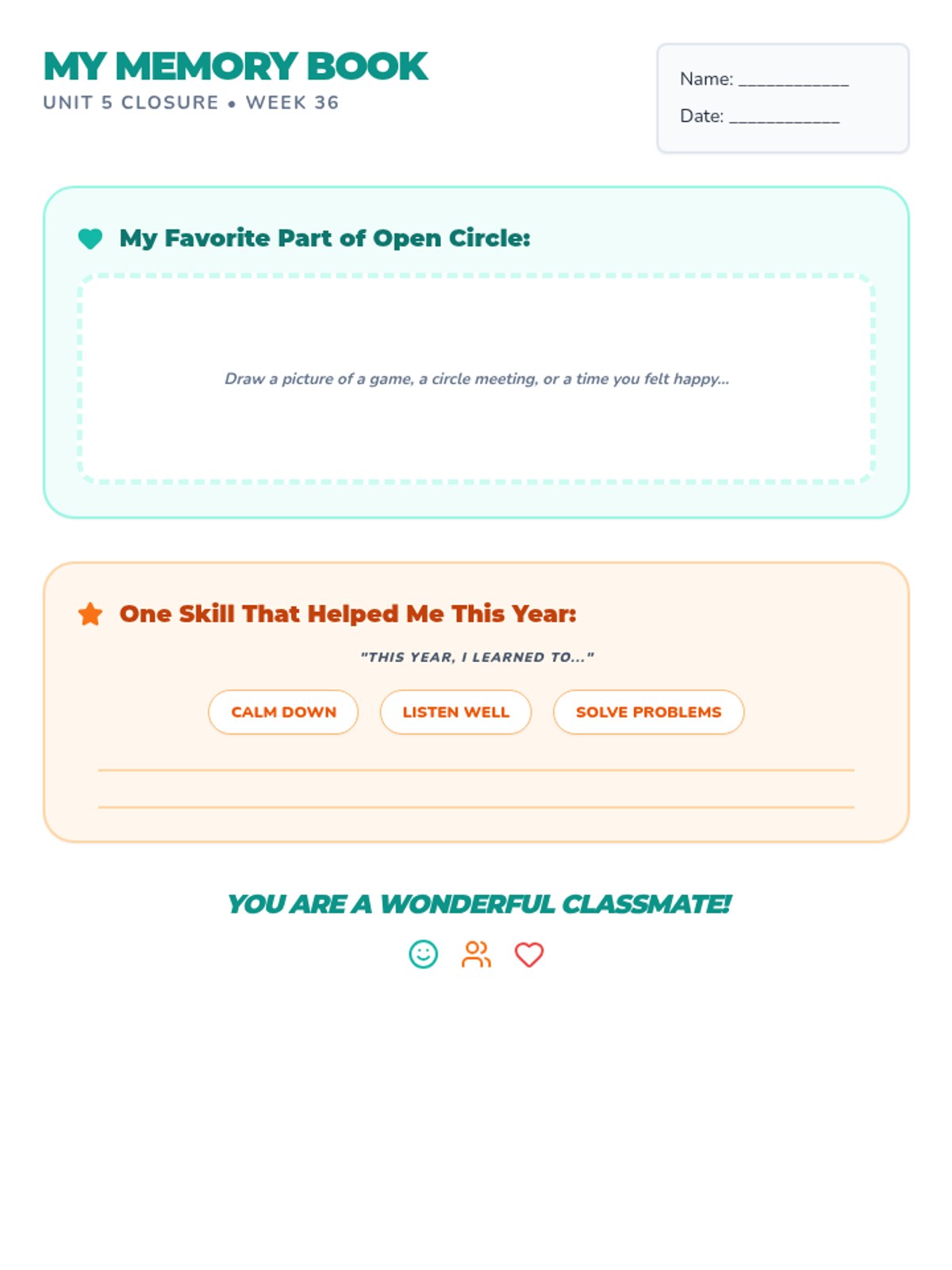
Final reflections on the school year and the growth made in Open Circle.
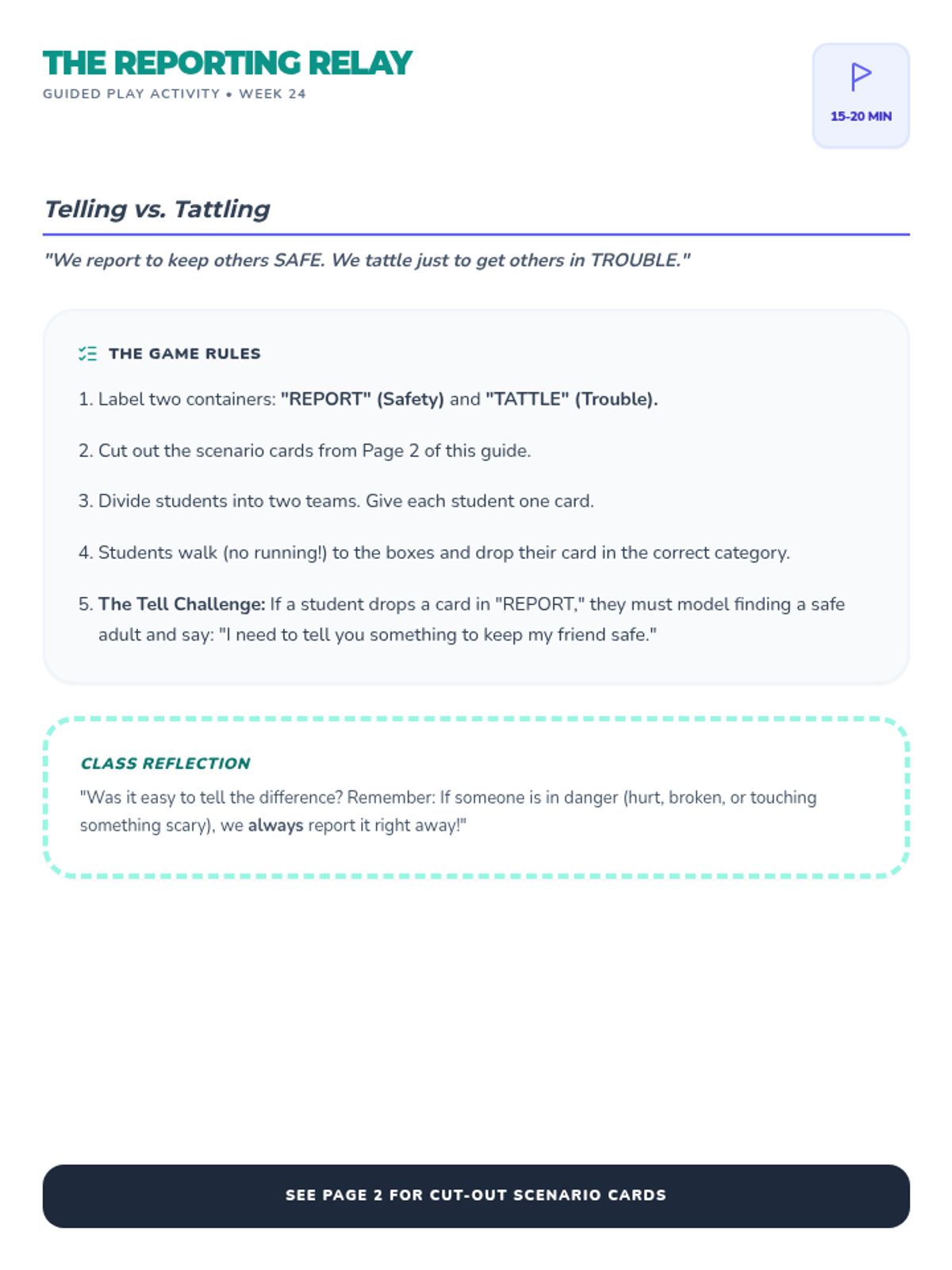
A supplementary lesson clarifying the difference between getting others in trouble versus keeping them safe.
A full practice session using the complete problem-solving process on real scenarios.
Defining positive leadership and how to use SEL skills to help the group.
Practicing how to try a plan and what to do if it doesn't work as expected.
Choosing the best idea and making a detailed plan for how to carry it out.
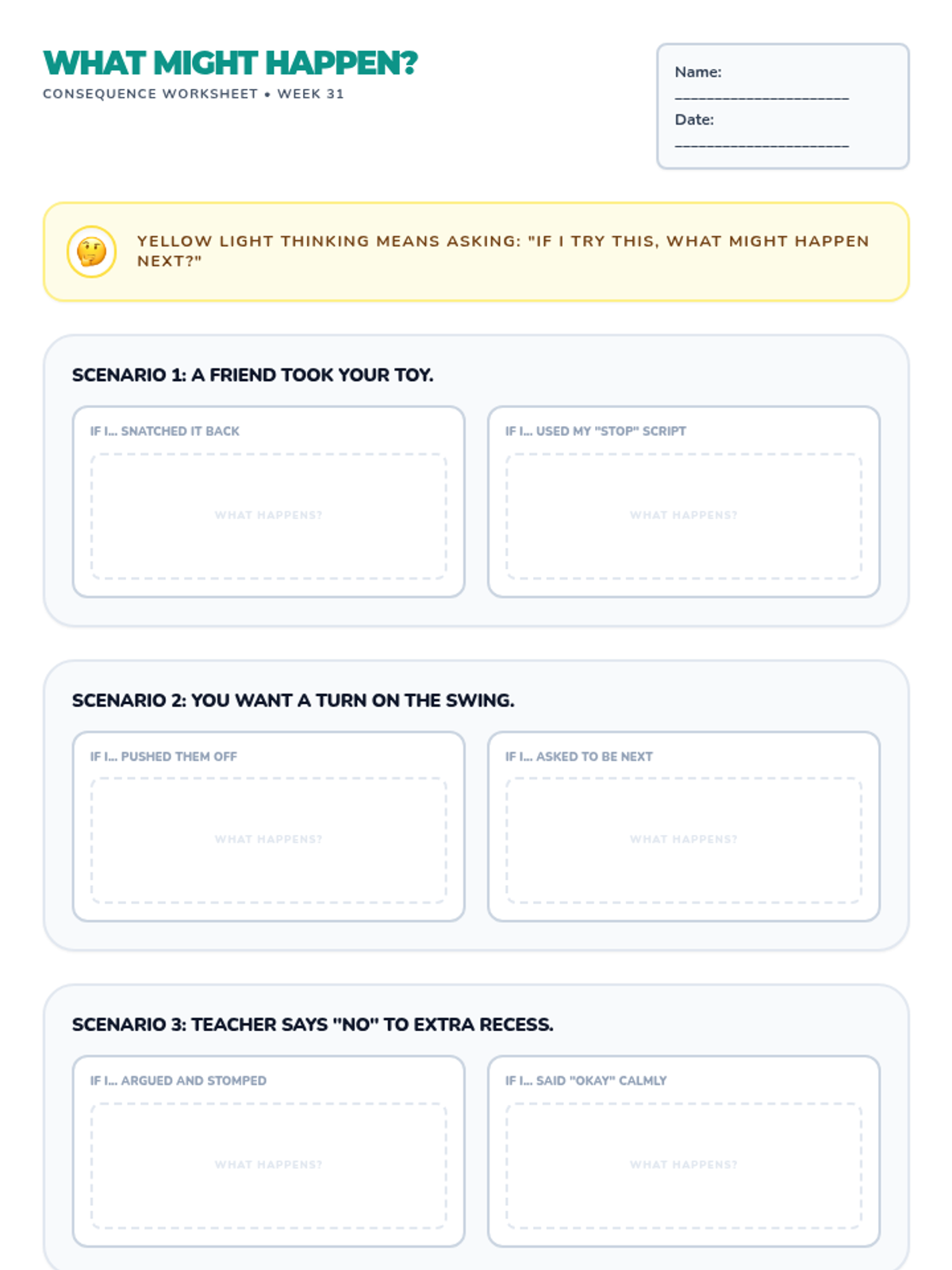
Evaluating brainstormed ideas by asking 'What might happen if I try this?'
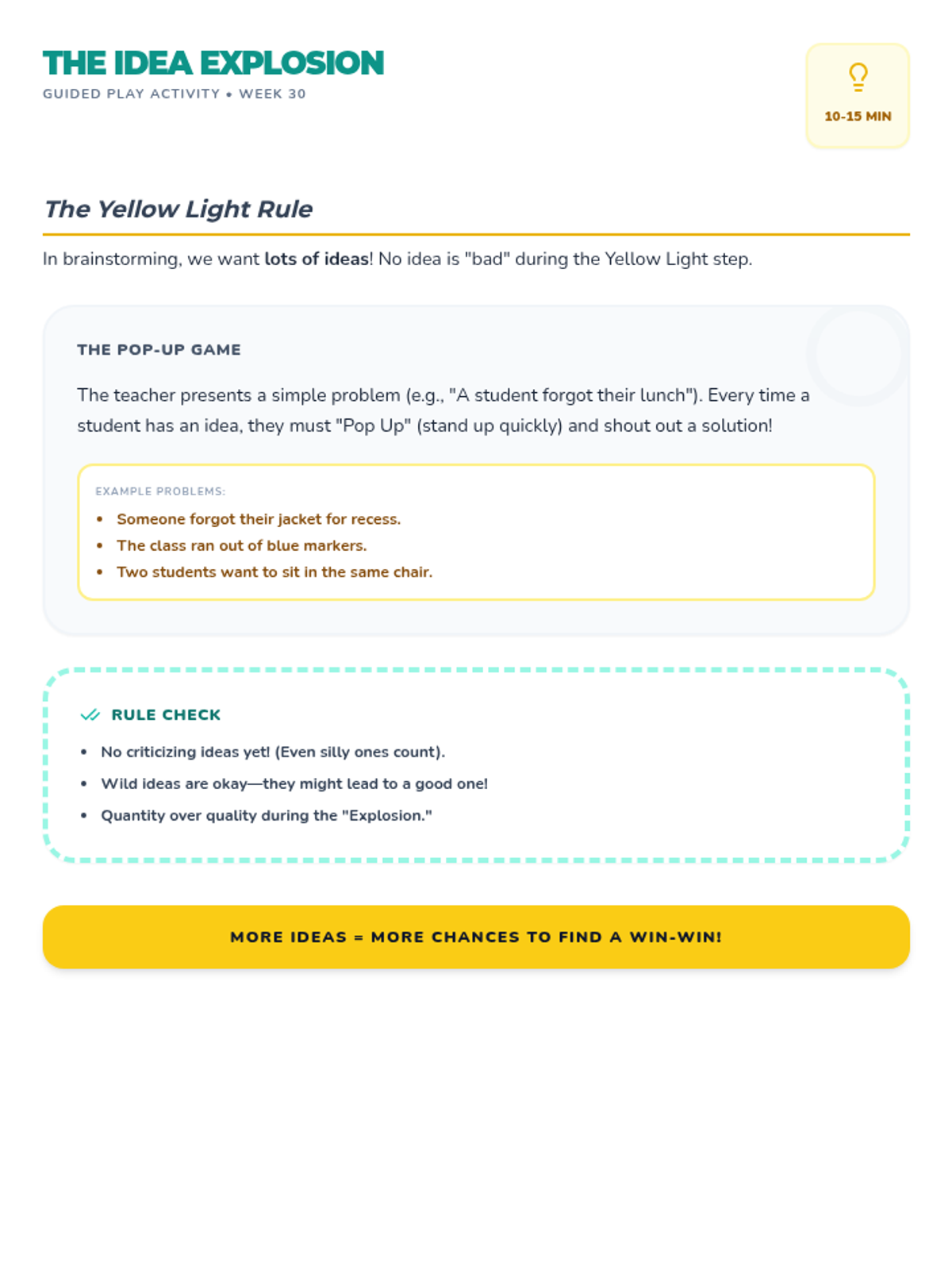
Learning the rules of brainstorming to generate many possible solutions to a problem.
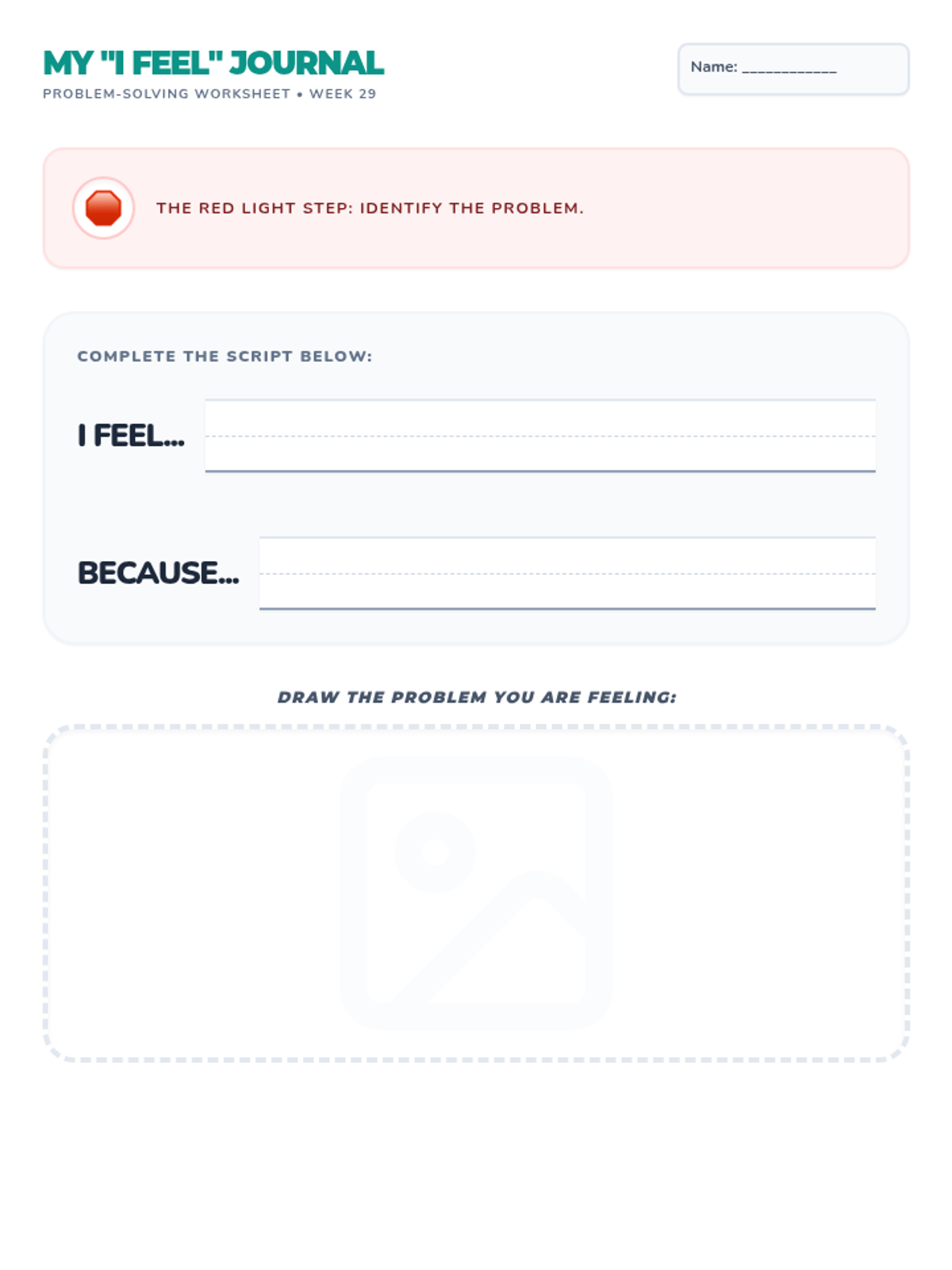
Practice using 'I feel... because...' to identify the specific problem.
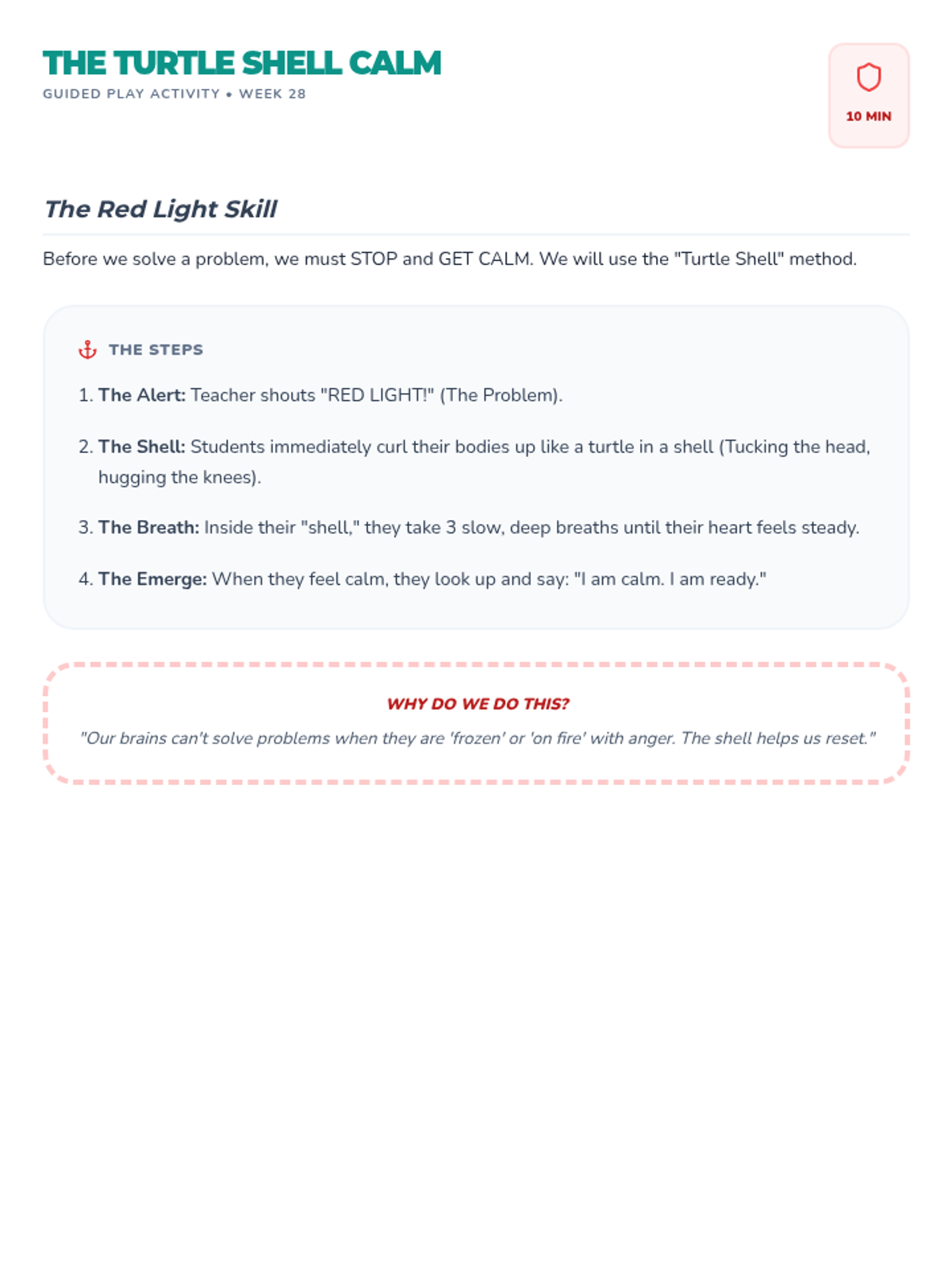
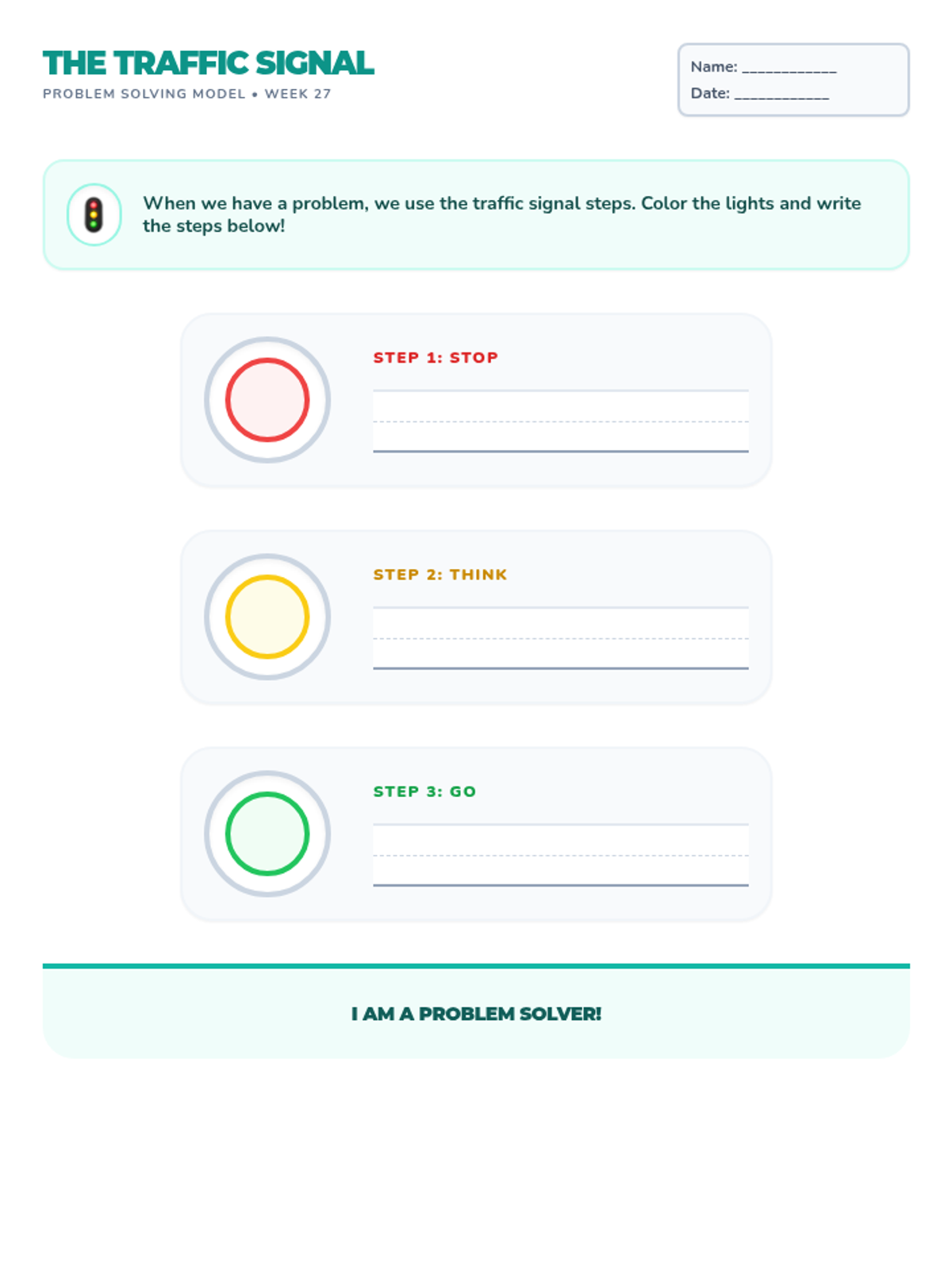
Focusing on the first step of the traffic signal: stopping to calm down.
Introduction to the Stop, Think, Go traffic signal model for solving problems.
Defining what a problem is and identifying common problems that occur in first grade.
Reviewing the categories of problems and how to tell the difference between them.
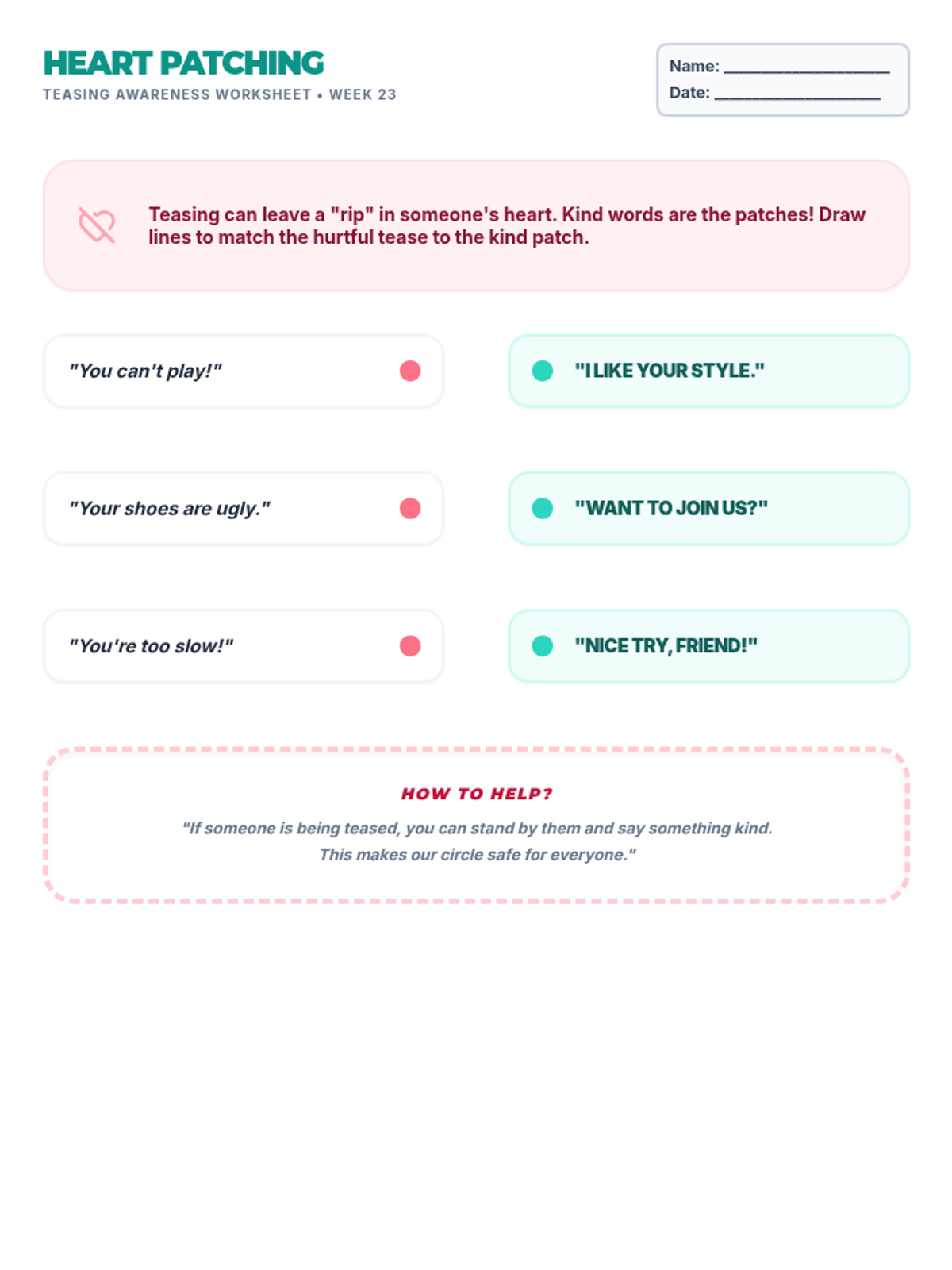
Discussing how teasing feels and practicing strategies to respond when being teased.
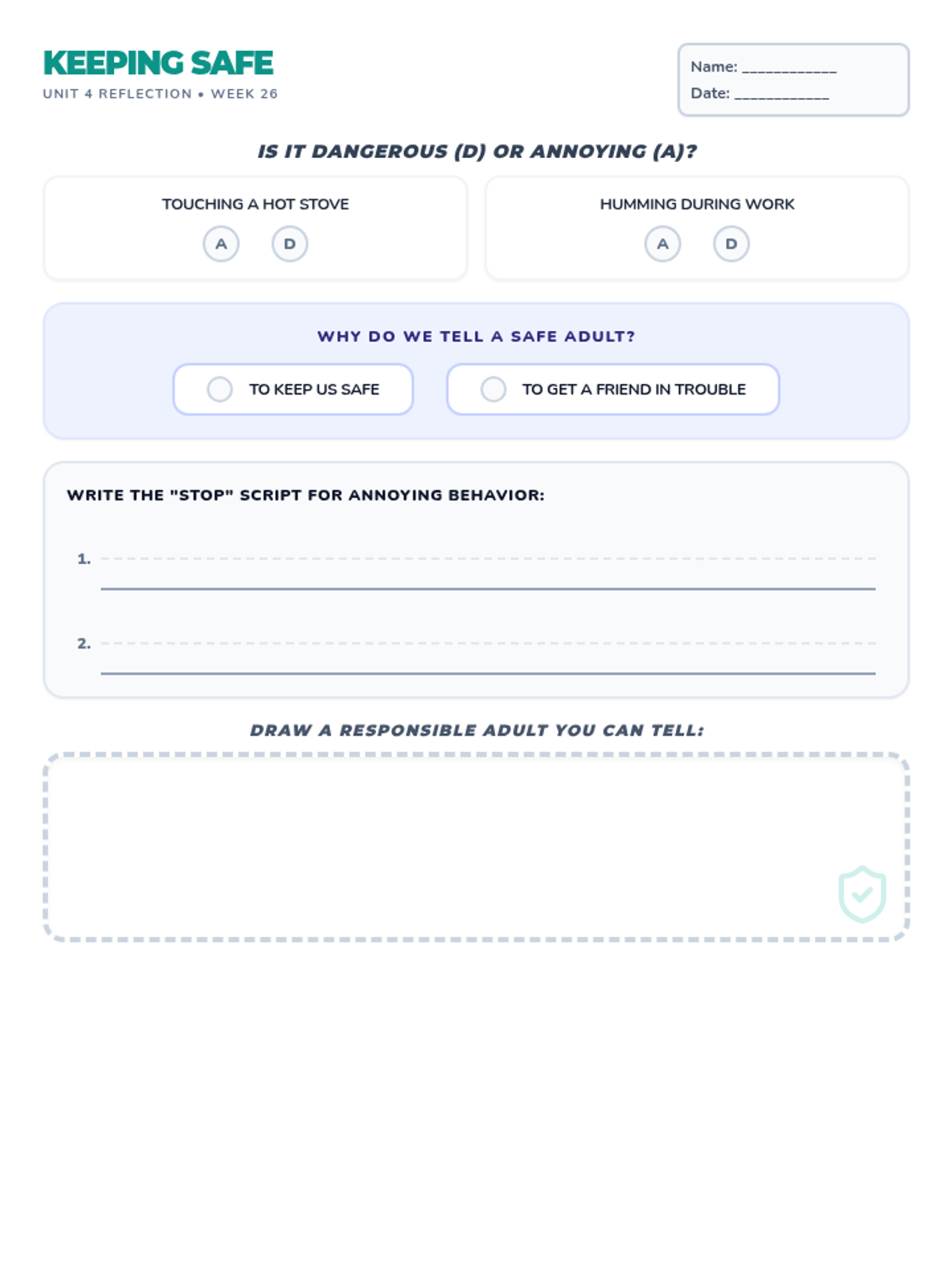
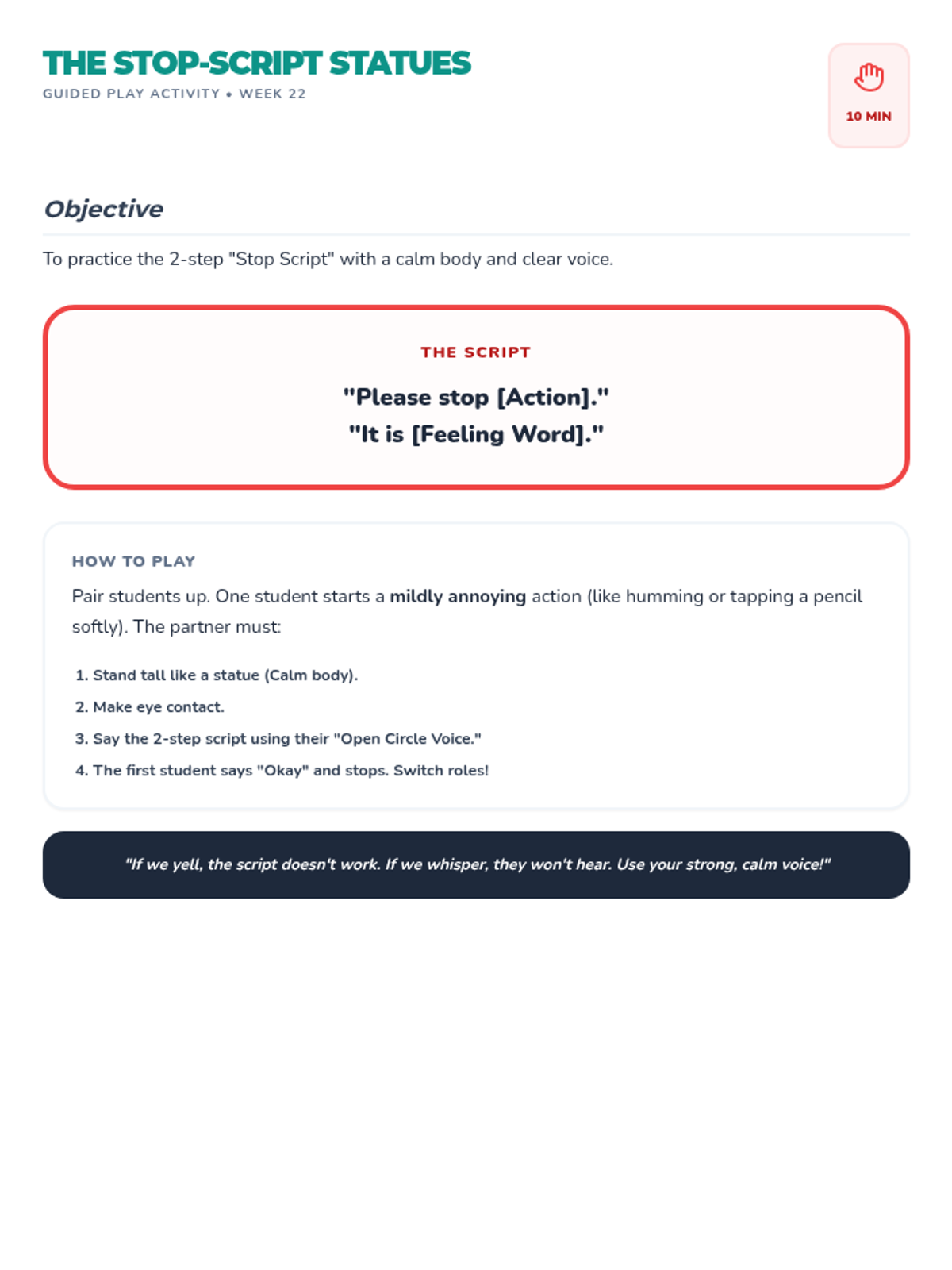
Students learn a two-step script for addressing annoying but not dangerous behavior.
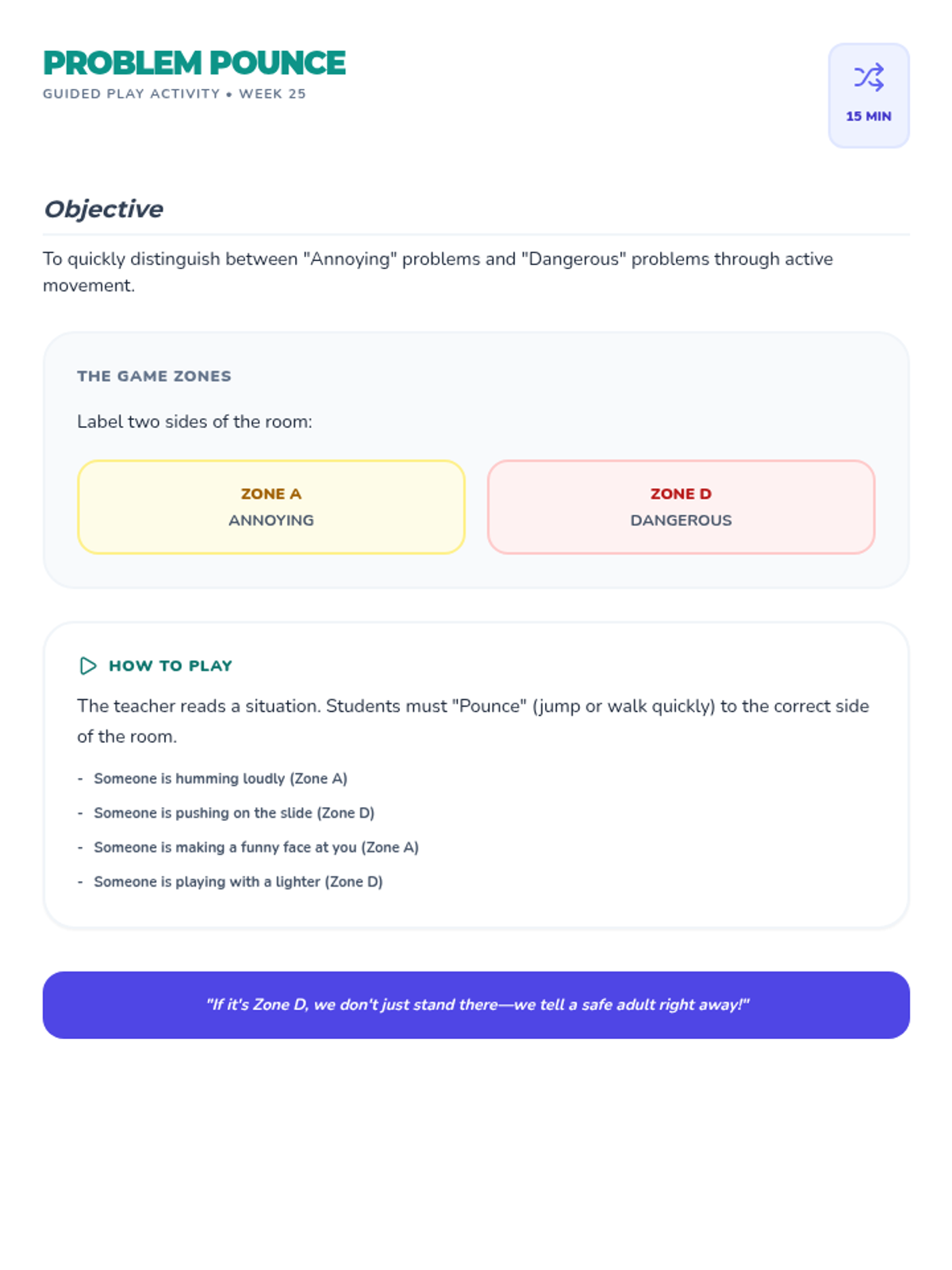
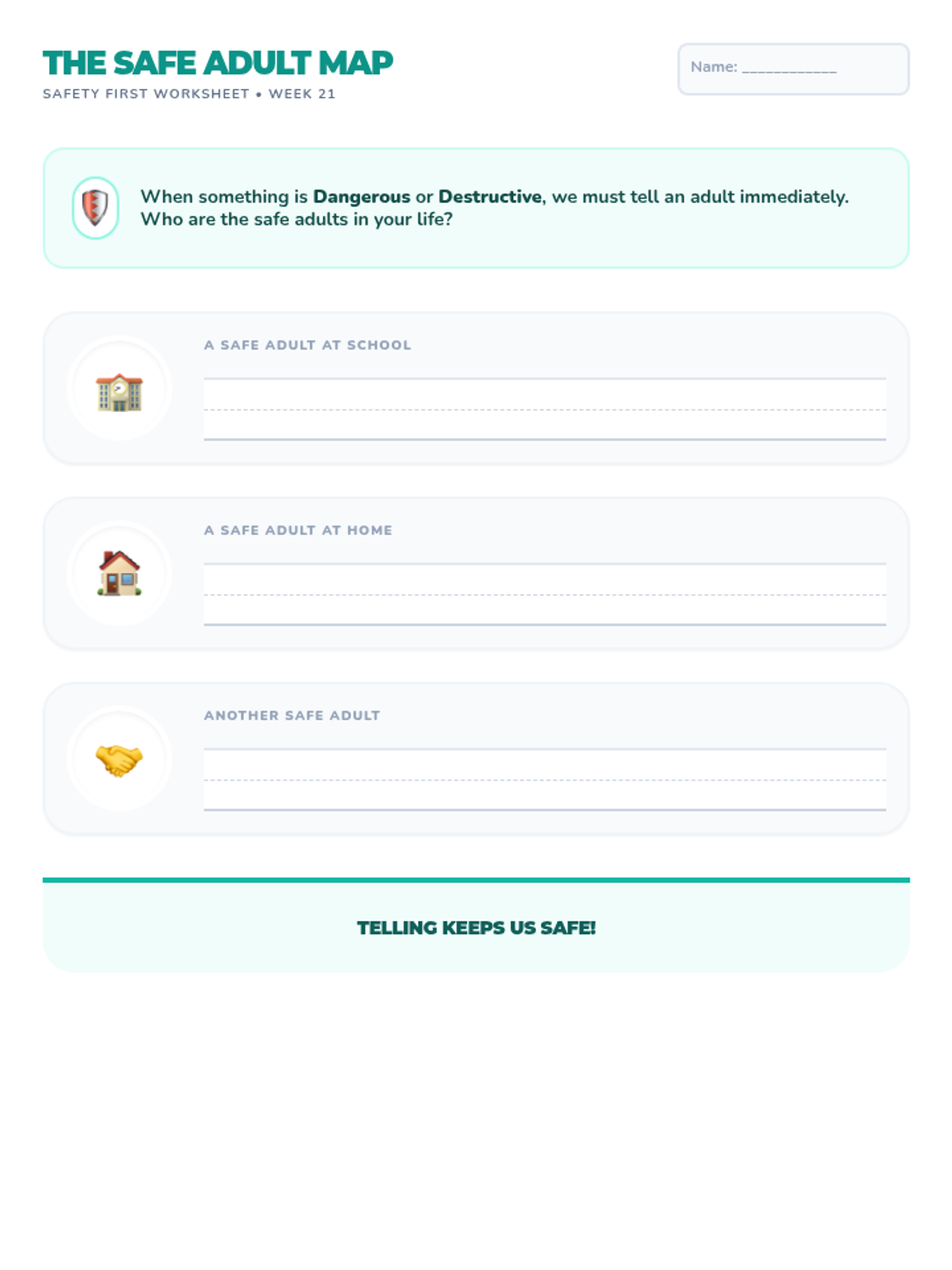
Defining dangerous and destructive behaviors and knowing when to tell a responsible adult immediately.
Identifying healthy ways to express anger through words rather than hurtful actions.
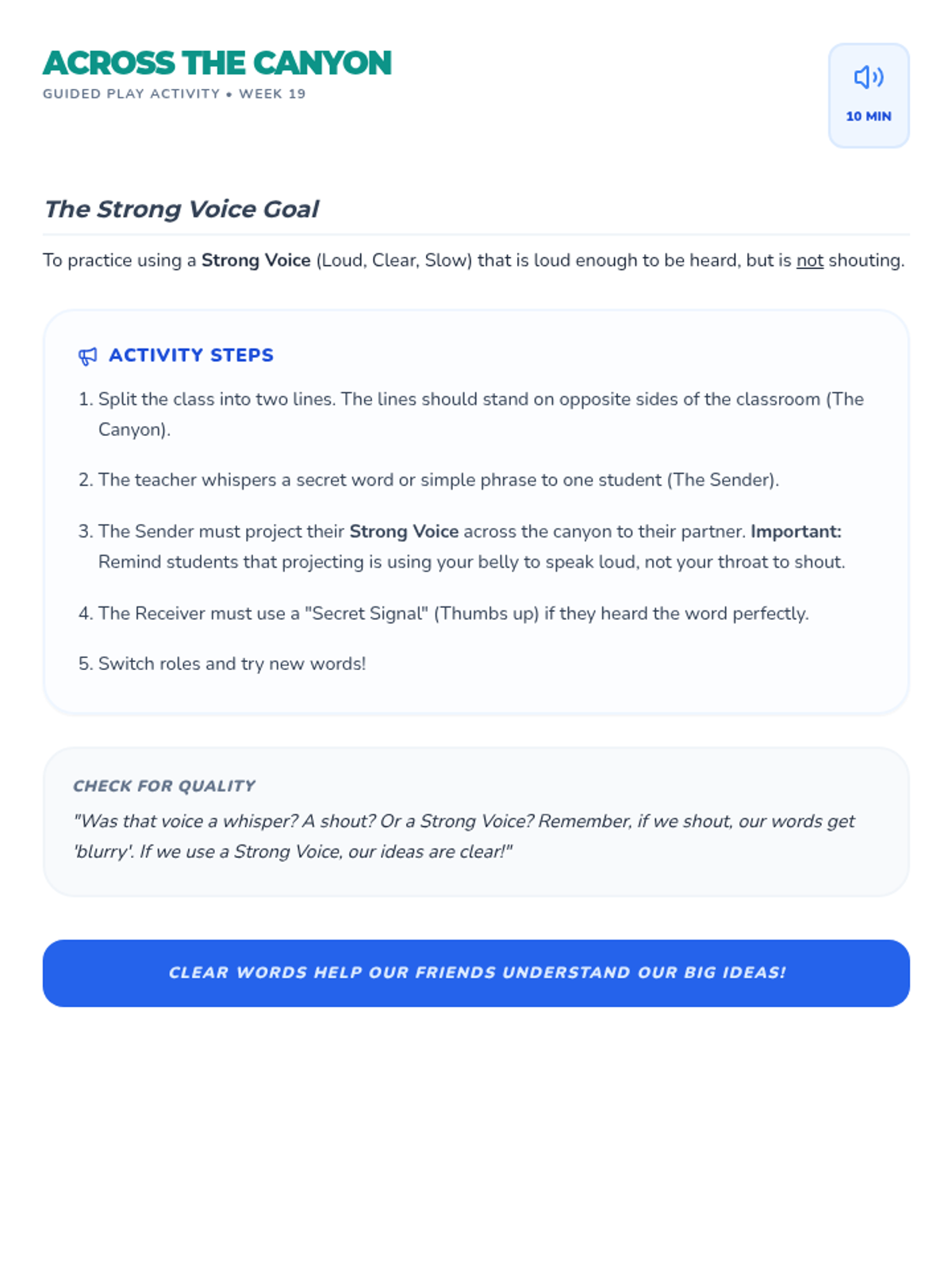
Learning to speak clearly, slowly, and loudly enough so others can hear important ideas.
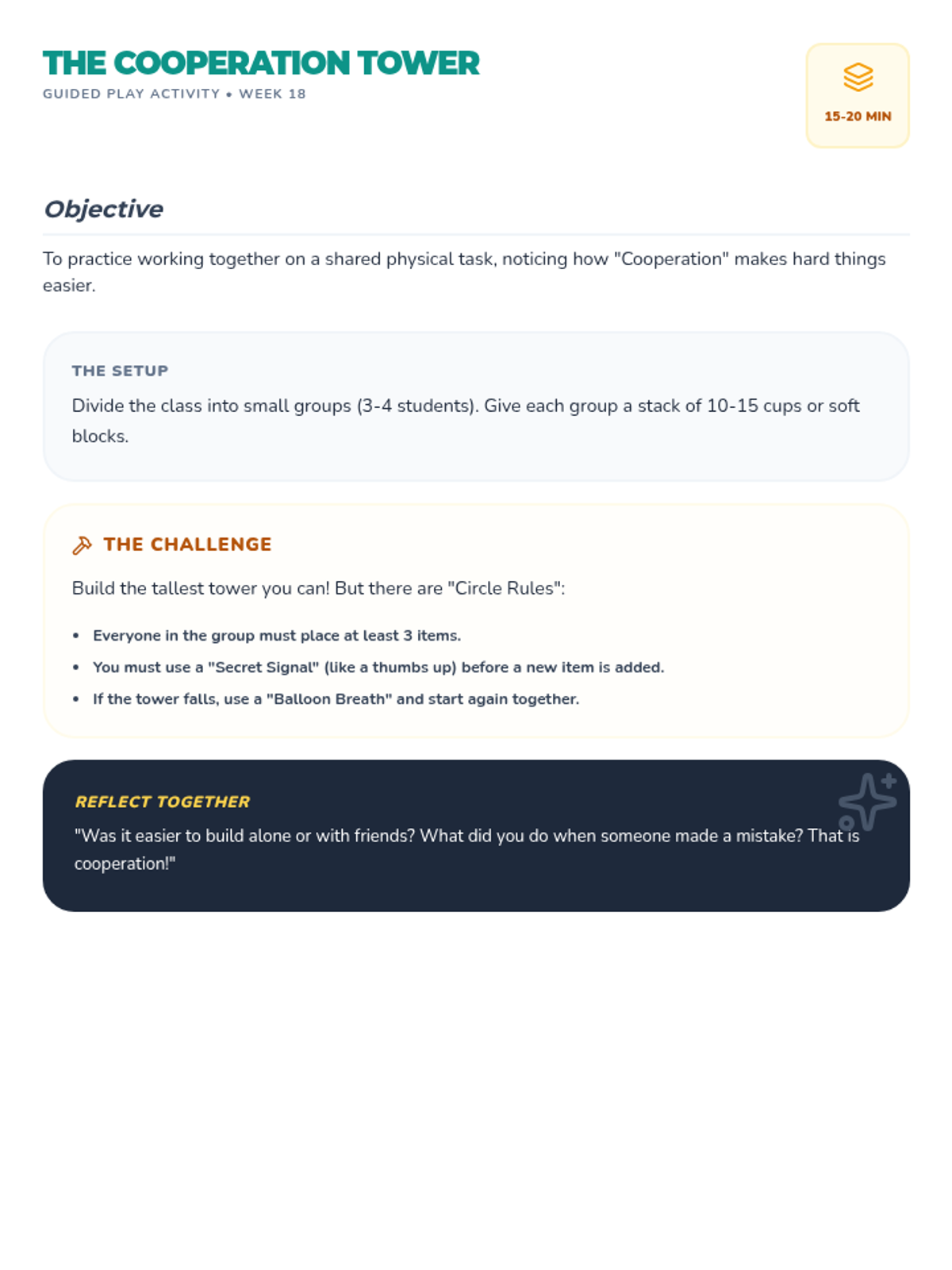
Students practice working together on a shared task to understand the value of cooperation.
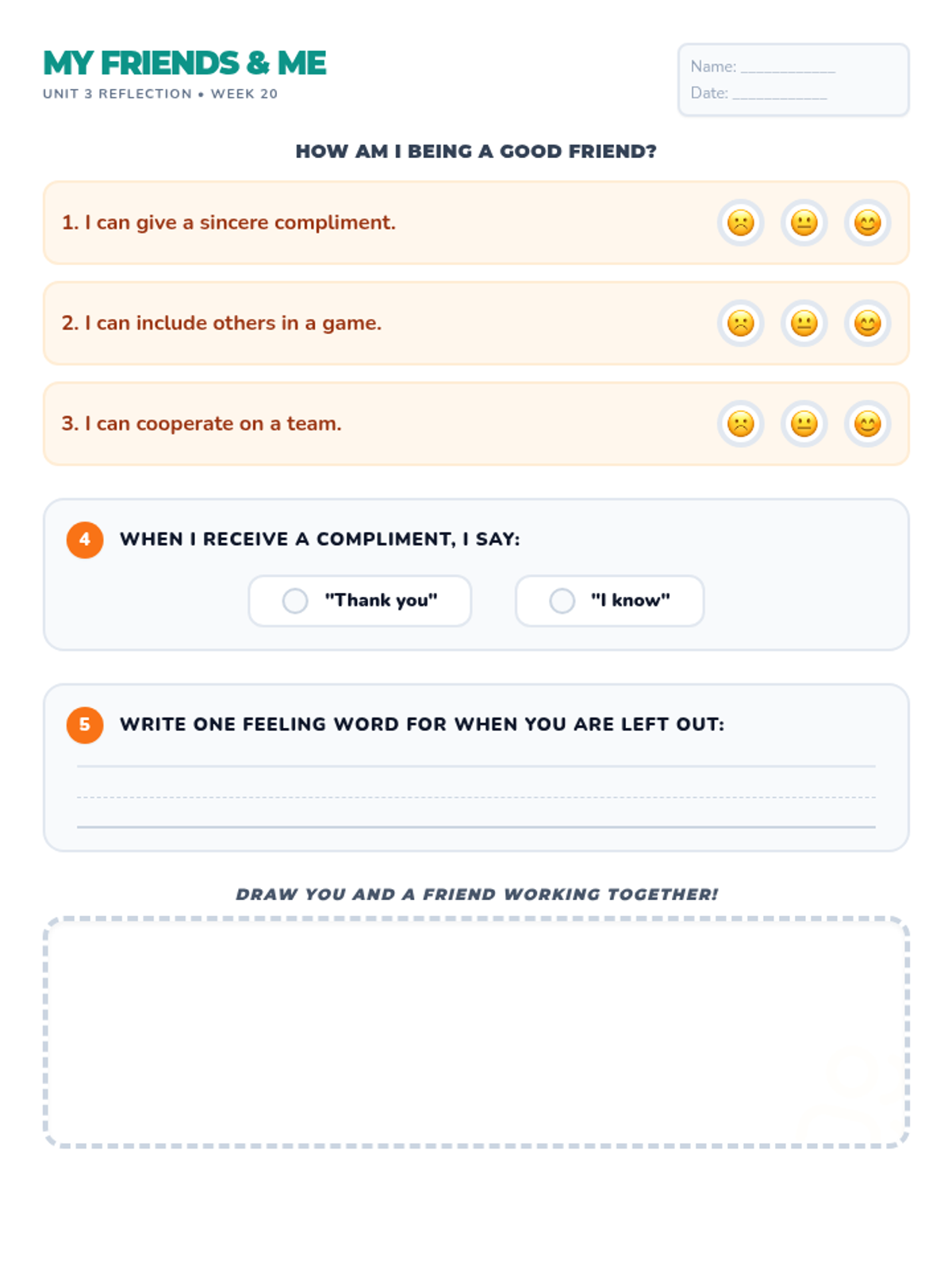
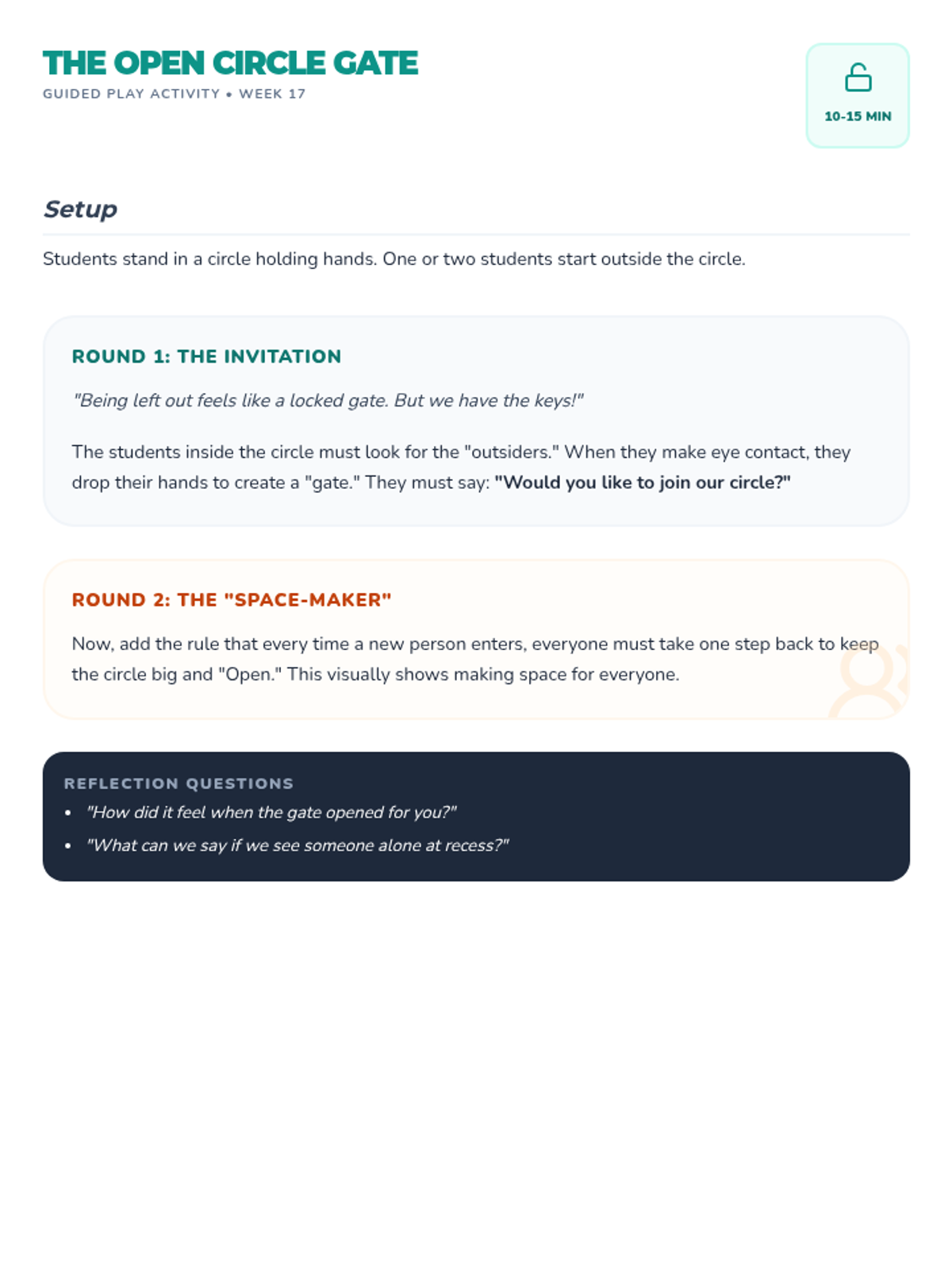
Discussing the feeling of being left out and brainstorm ways to invite others to join activities.
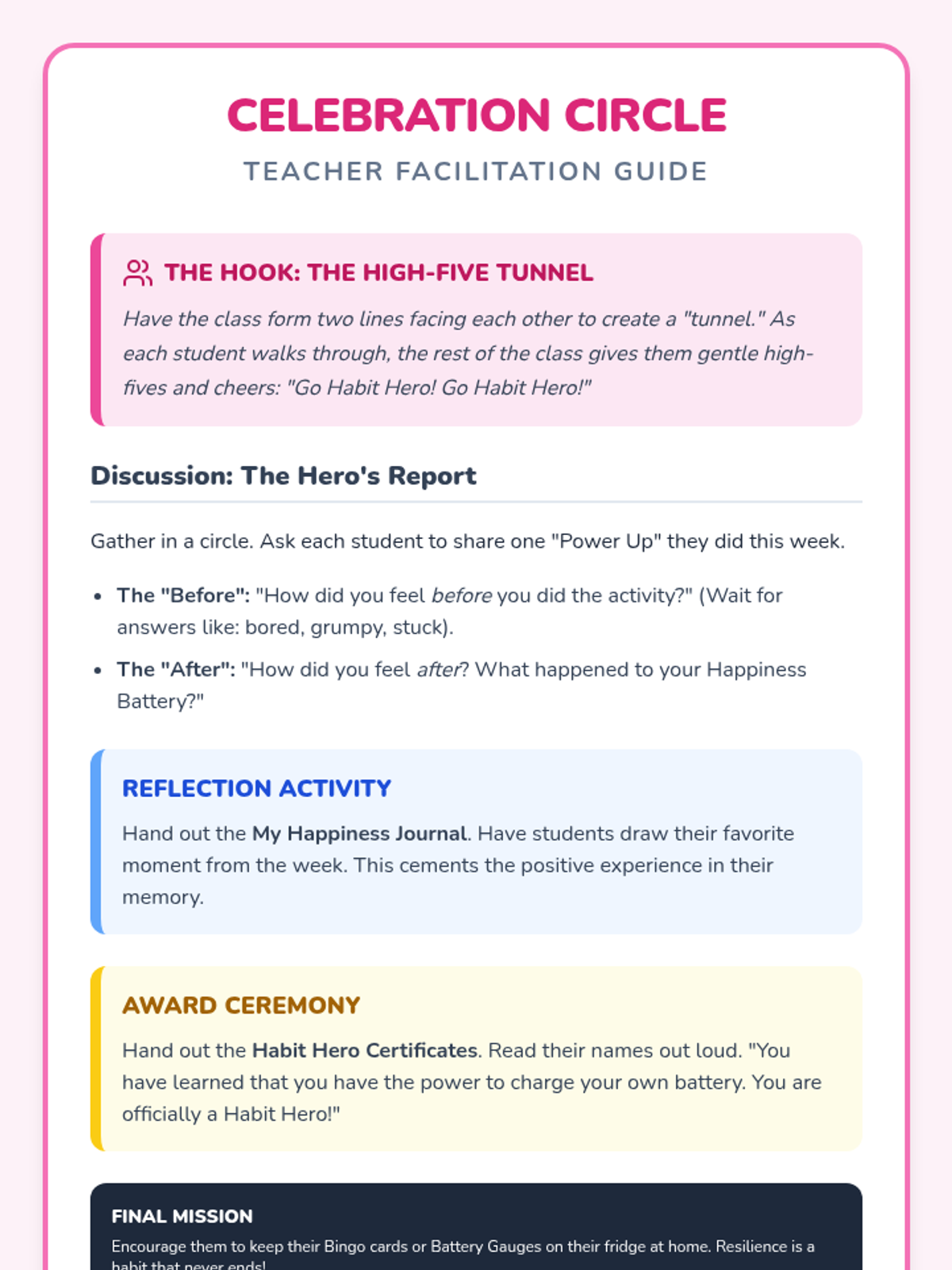
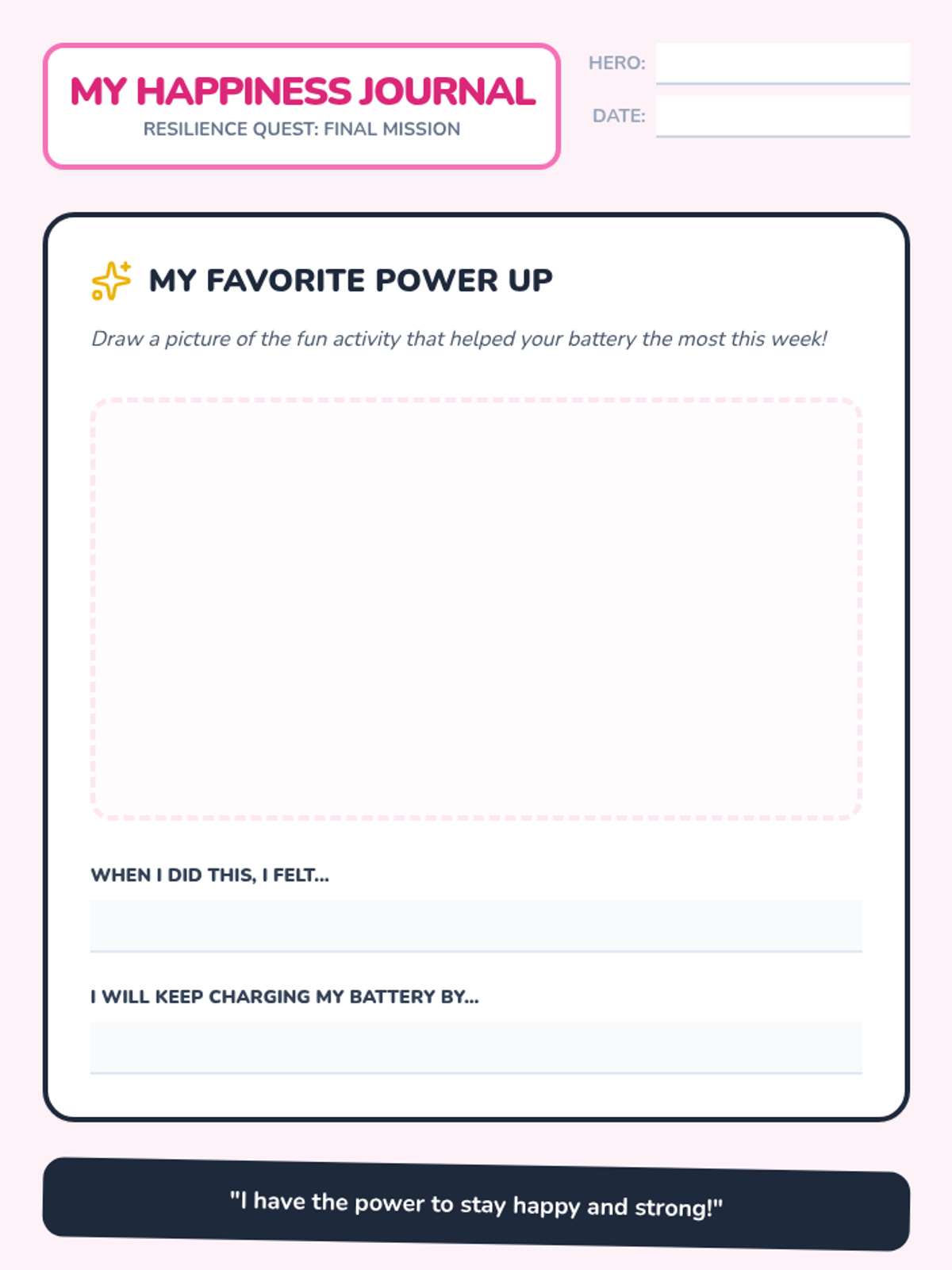
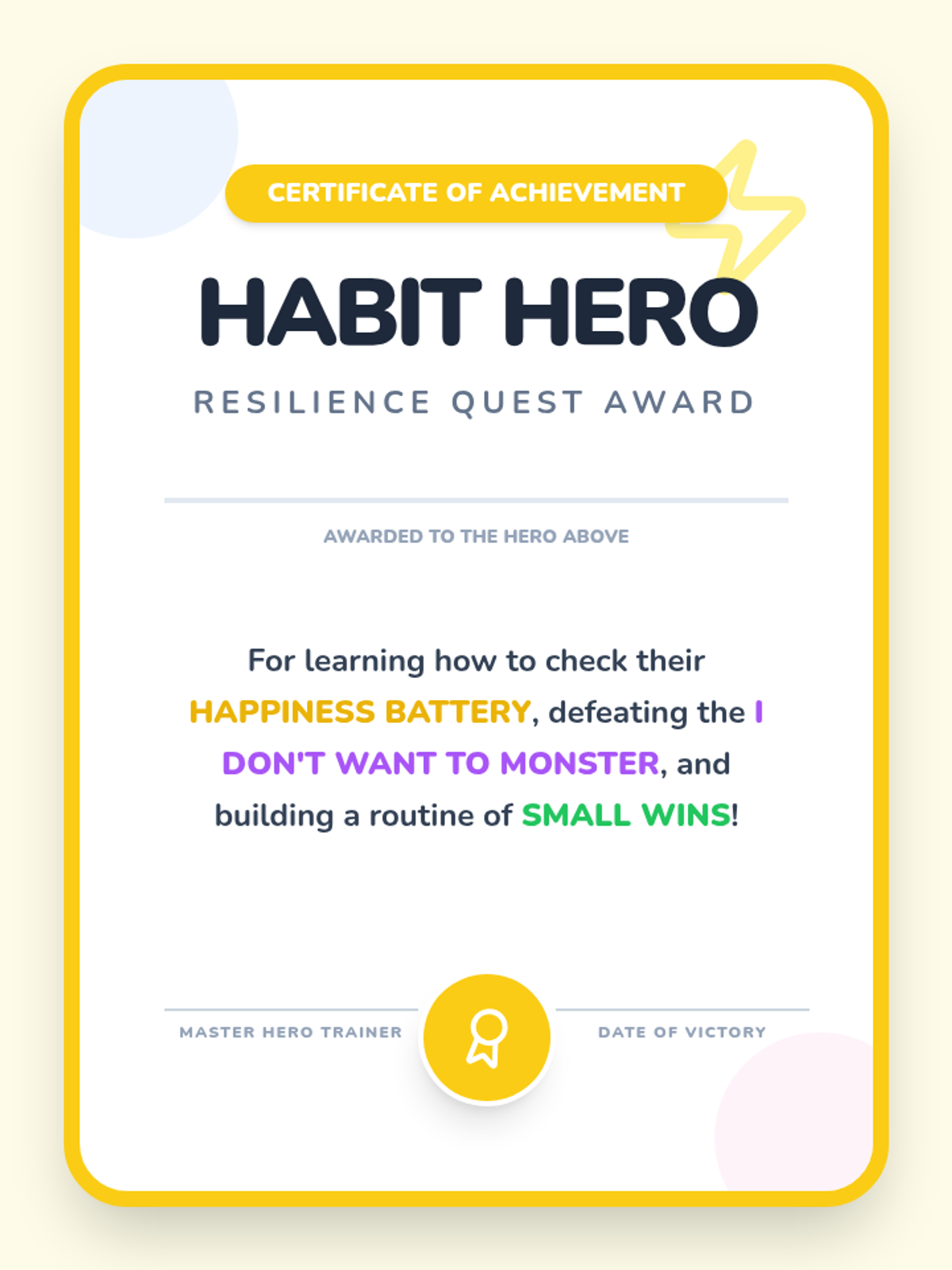
A final reflection and celebration session where students share their progress, discuss the impact of their new habits, and receive recognition for their efforts.
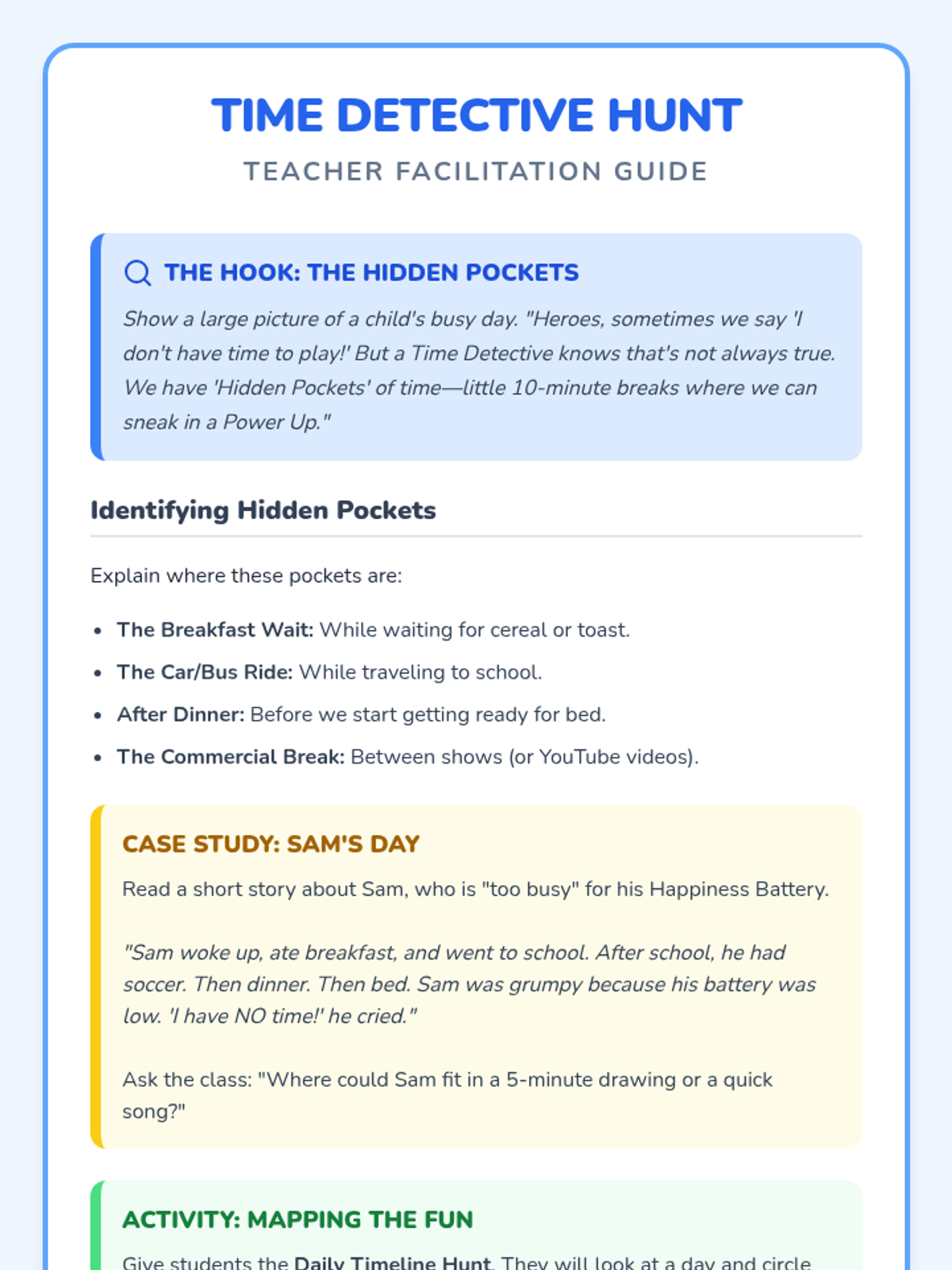
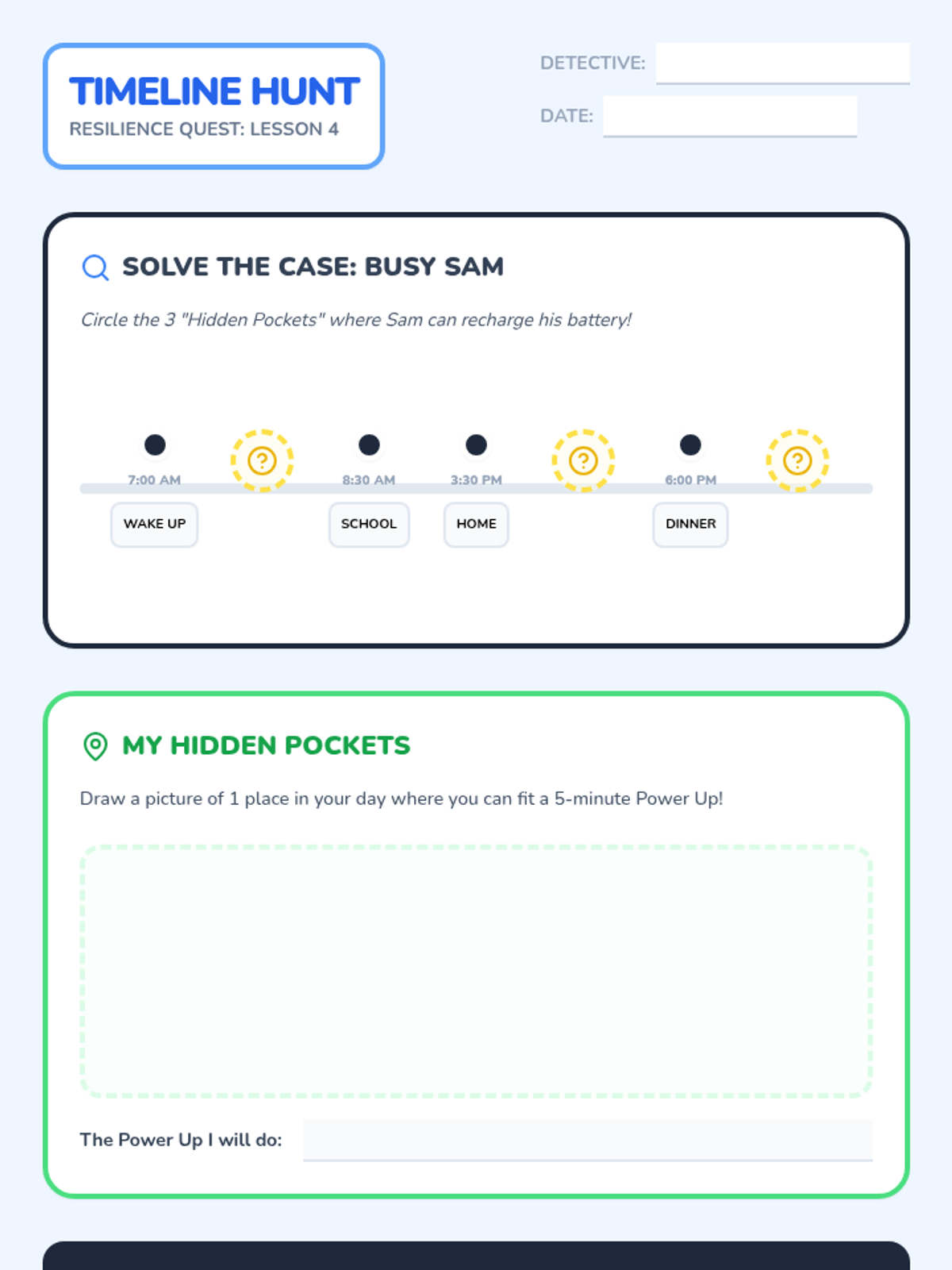
Students become 'Time Detectives' to identify opportunities in their daily lives to fit in short, high-impact positive activities.
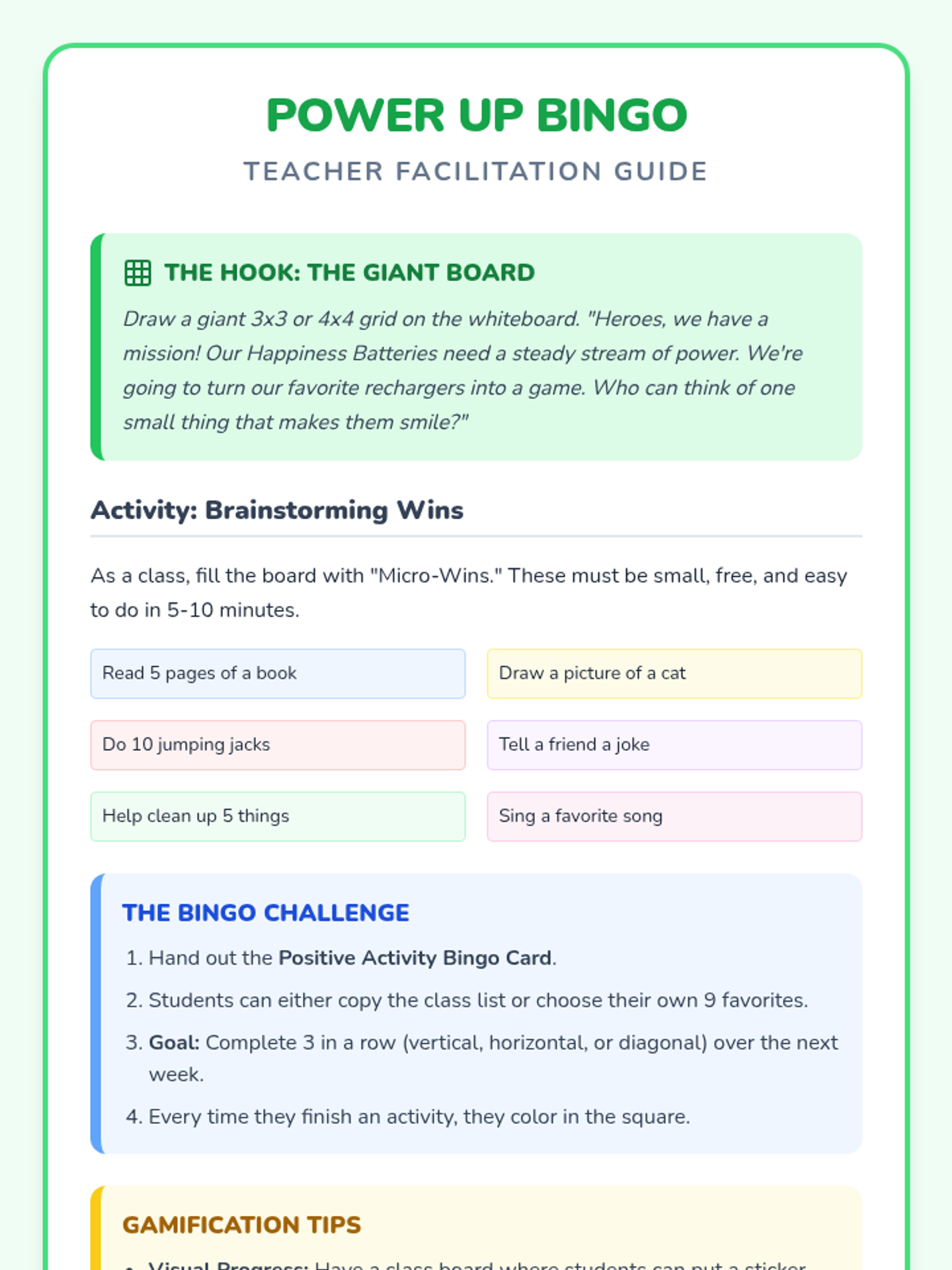
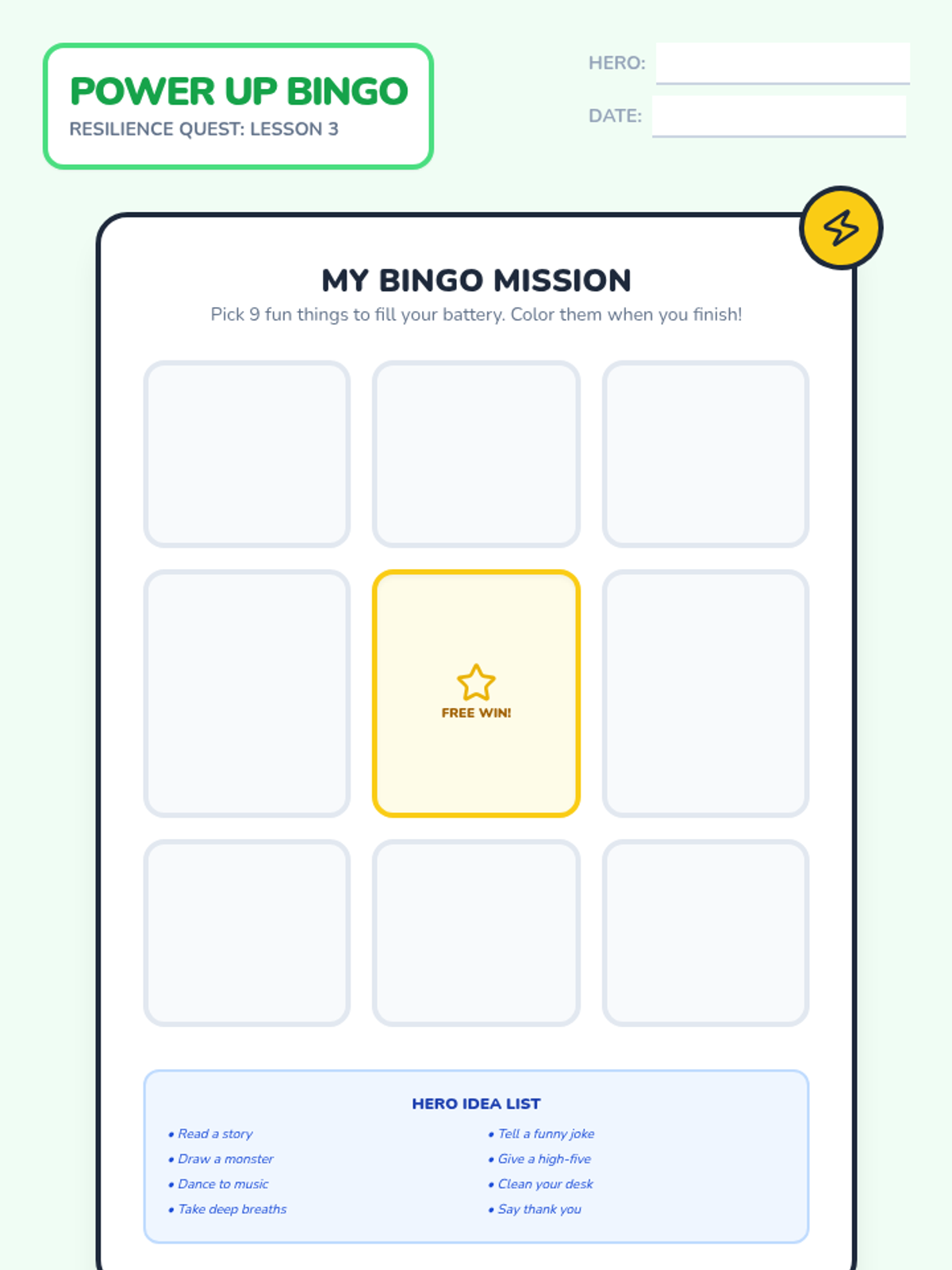
Students gamify their positive habits by creating and participating in a class-wide bingo challenge focused on daily small wins.
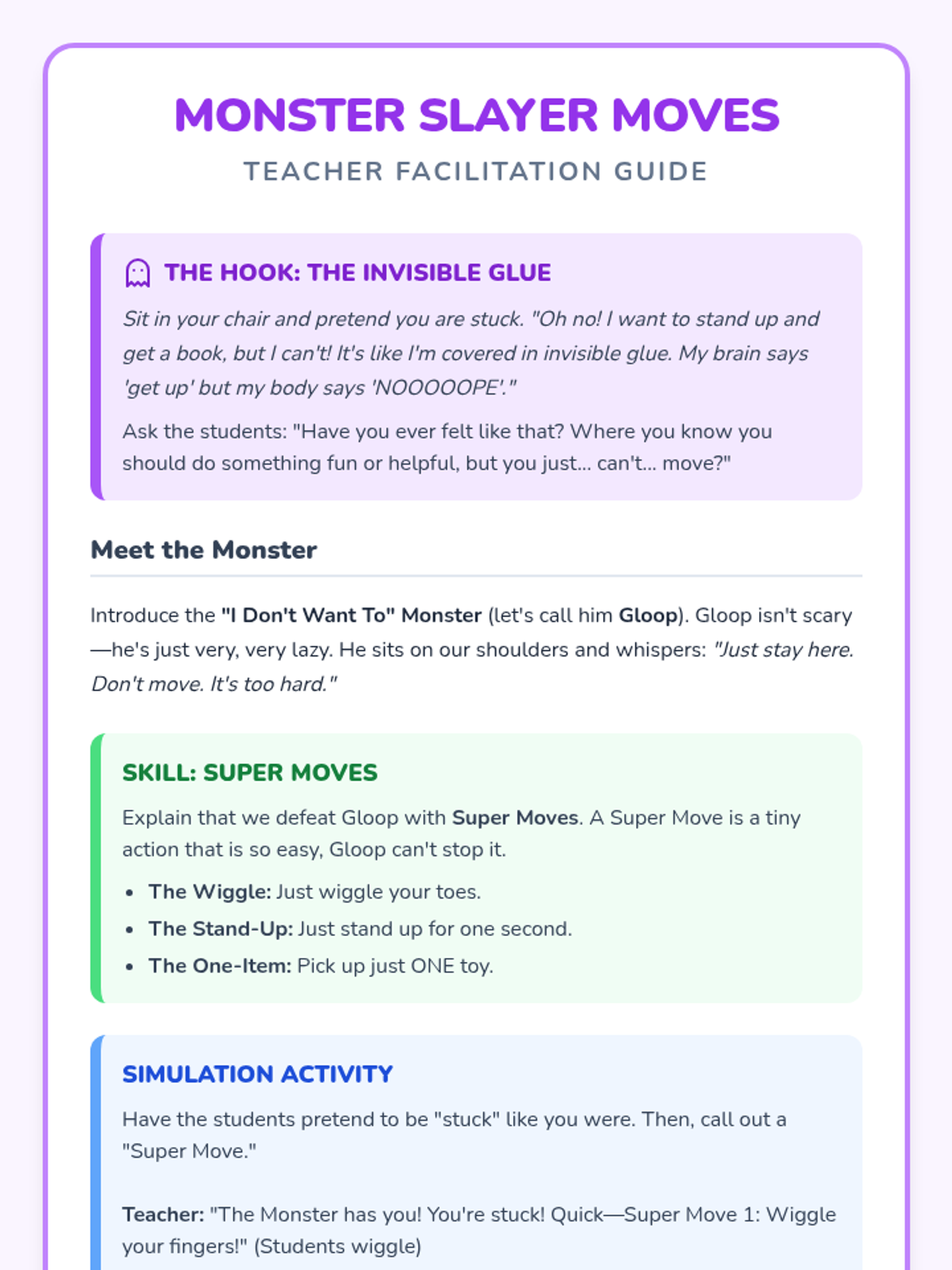
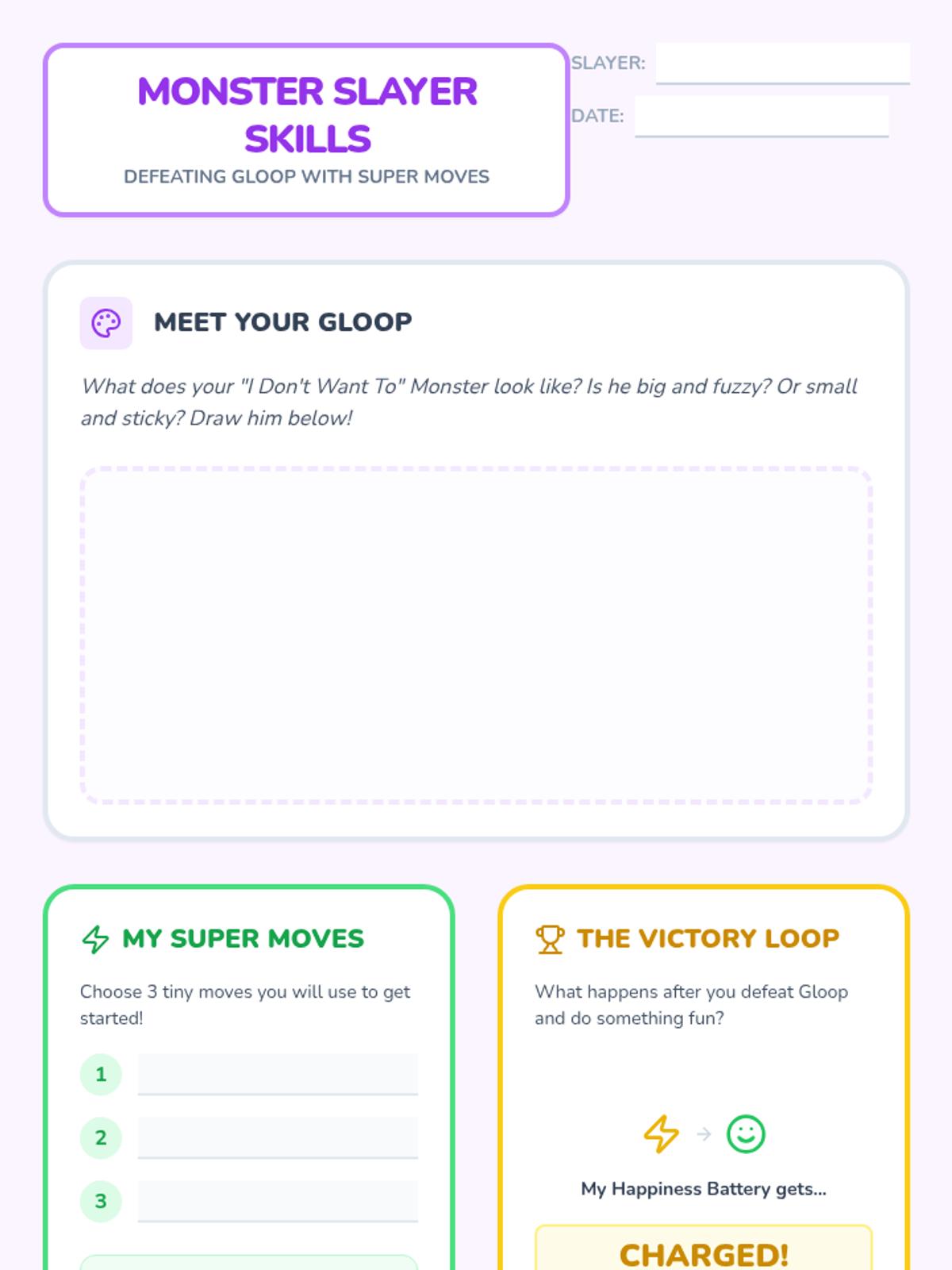
Teaches students how to overcome inertia and task initiation hurdles by personifying the 'I Don't Want To' feeling and using 'Super Moves' to get started.
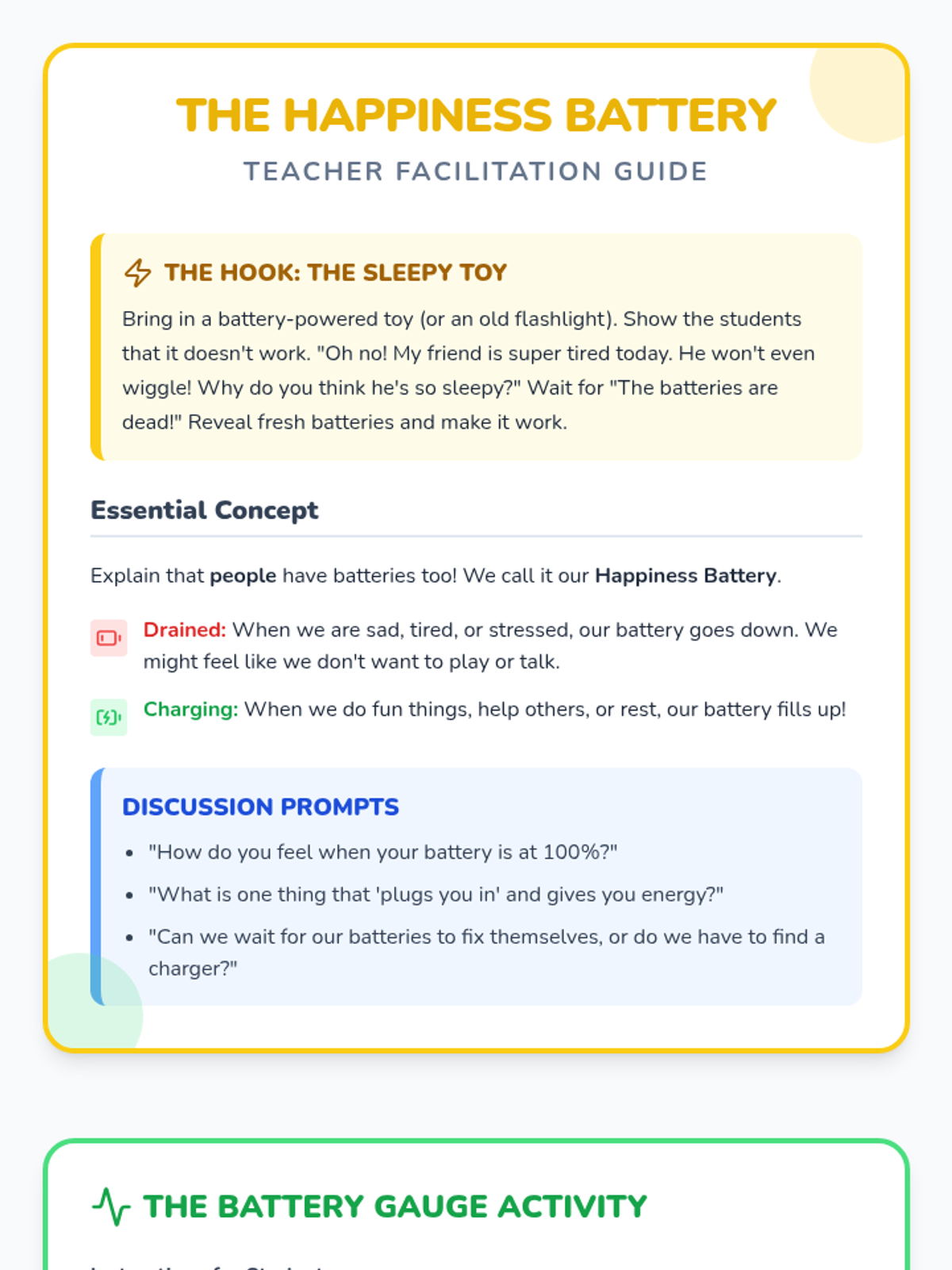
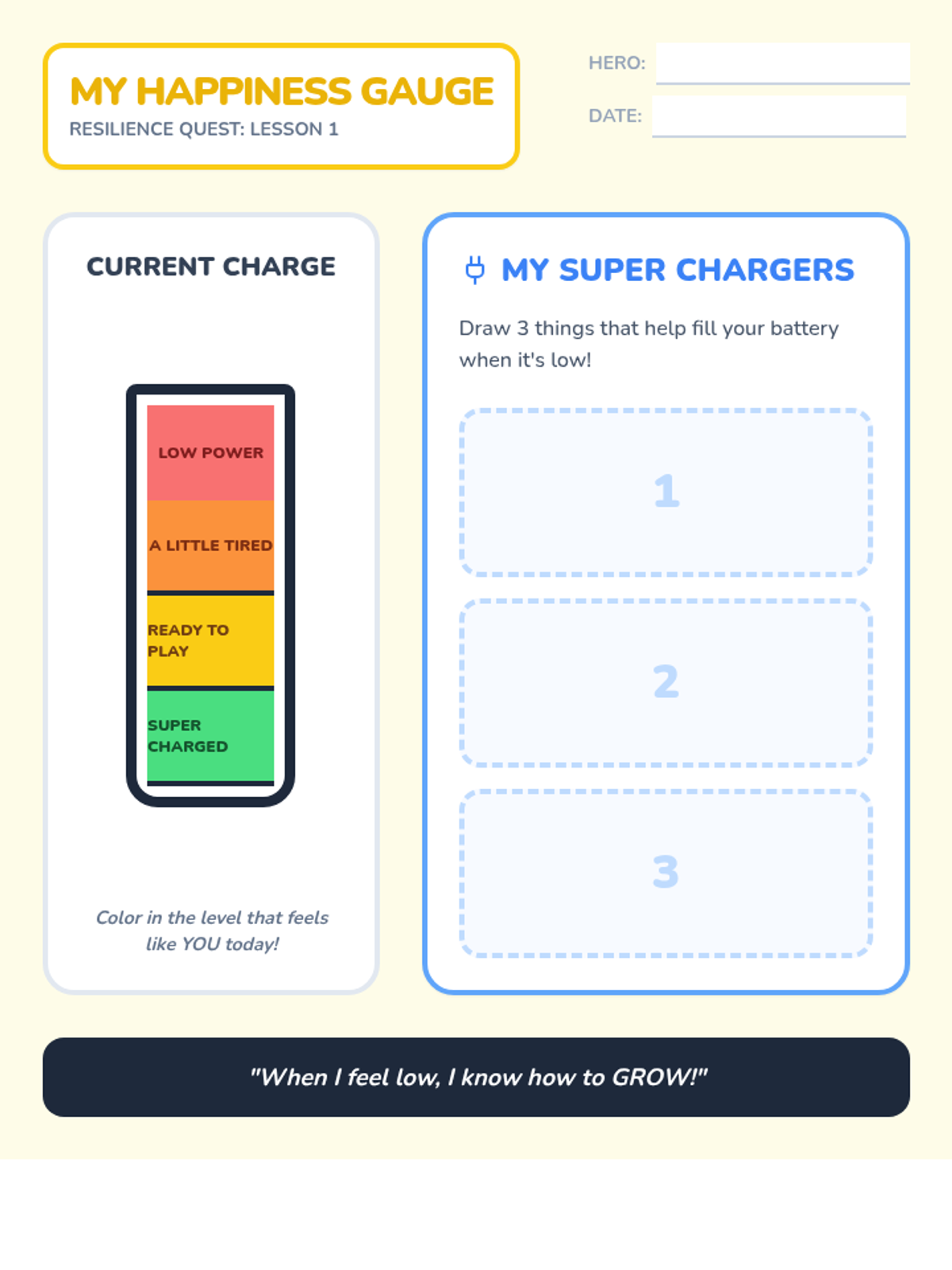
Introduces the battery metaphor for emotional energy, teaching students to monitor their own 'charge' and understand the need for recharging through positive activities.
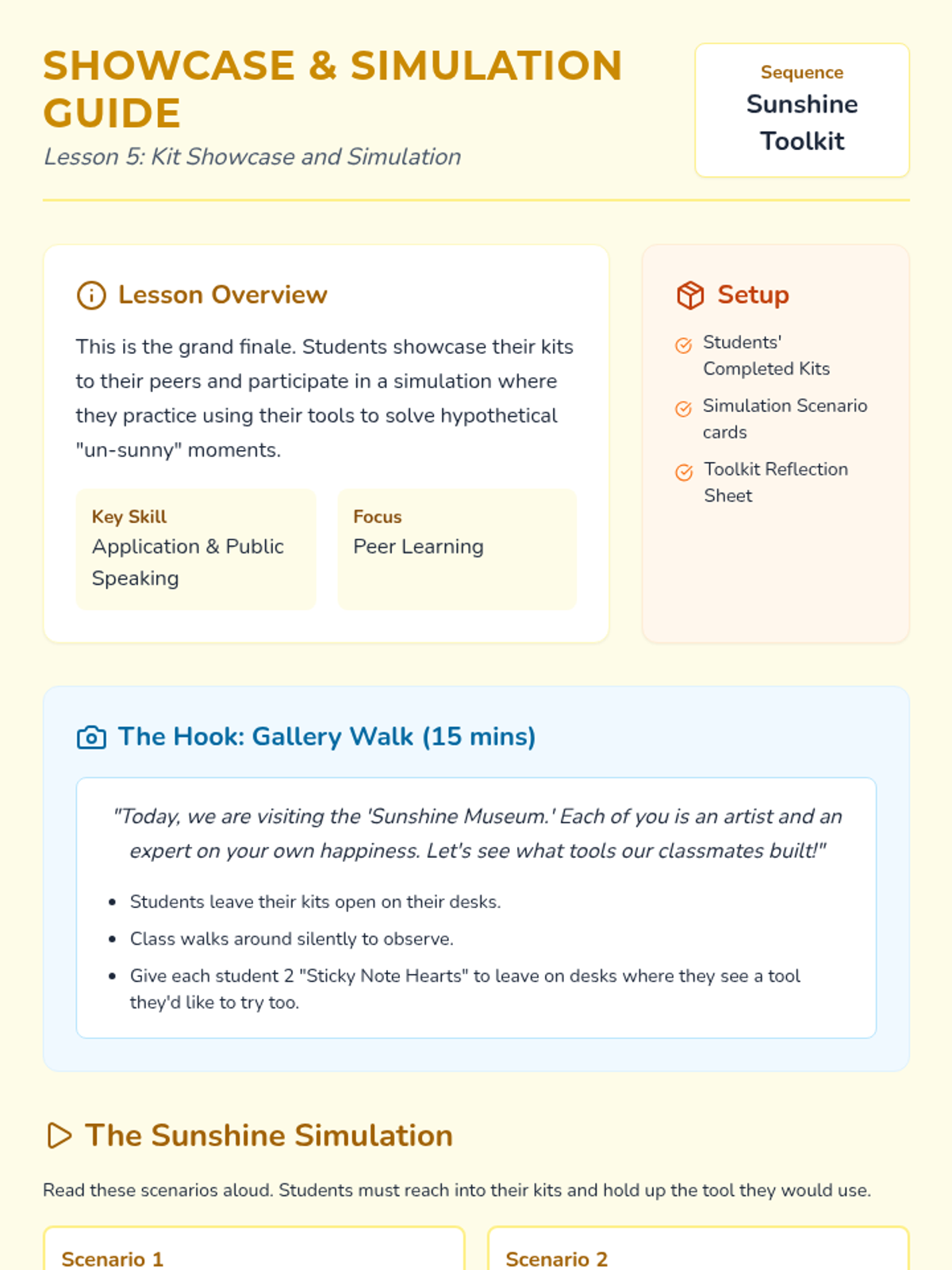
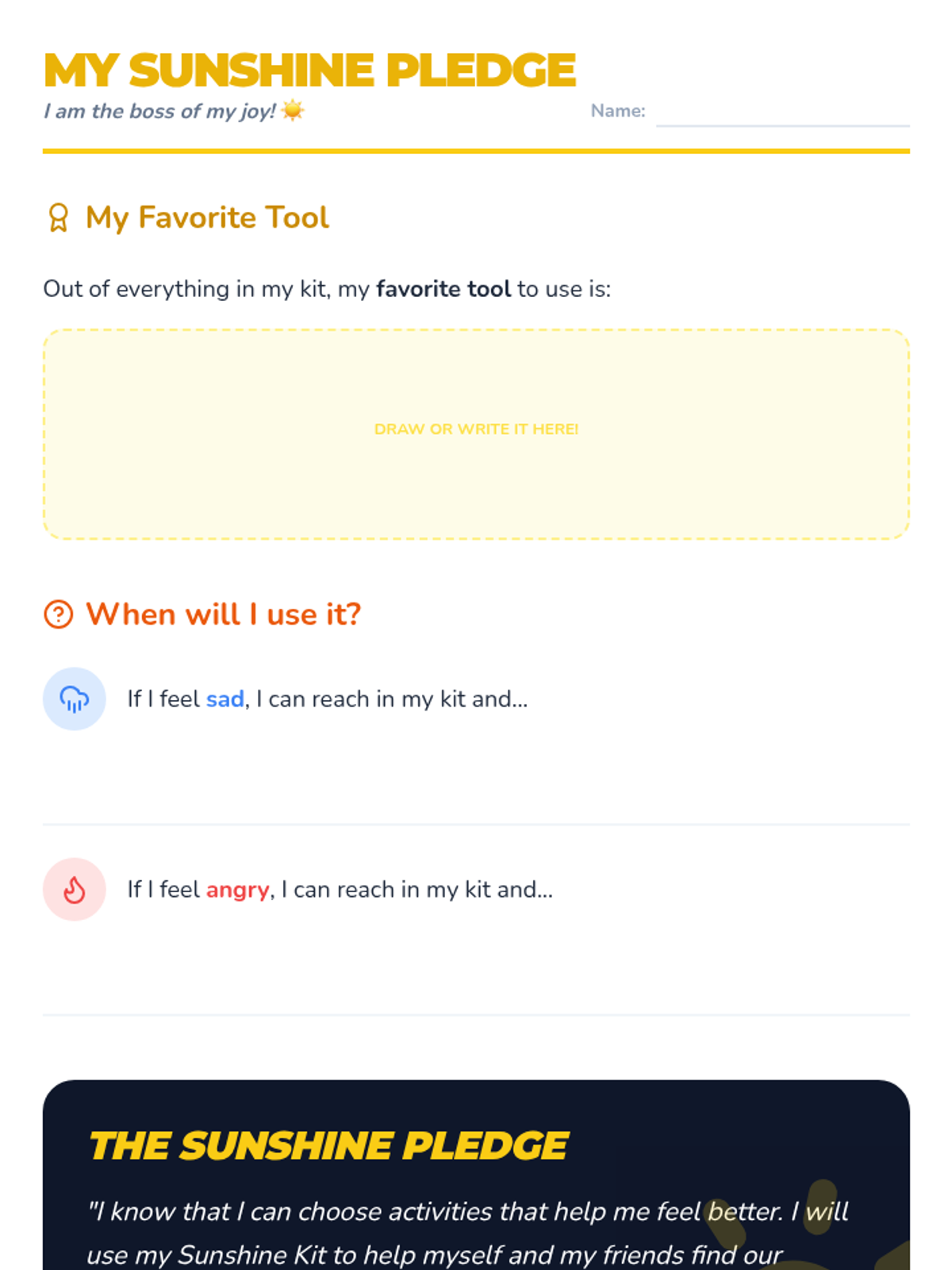
The culminating lesson where students present their kits and practice using them through real-world simulations. A Gallery Walk allows students to learn from their peers' creative tool choices.
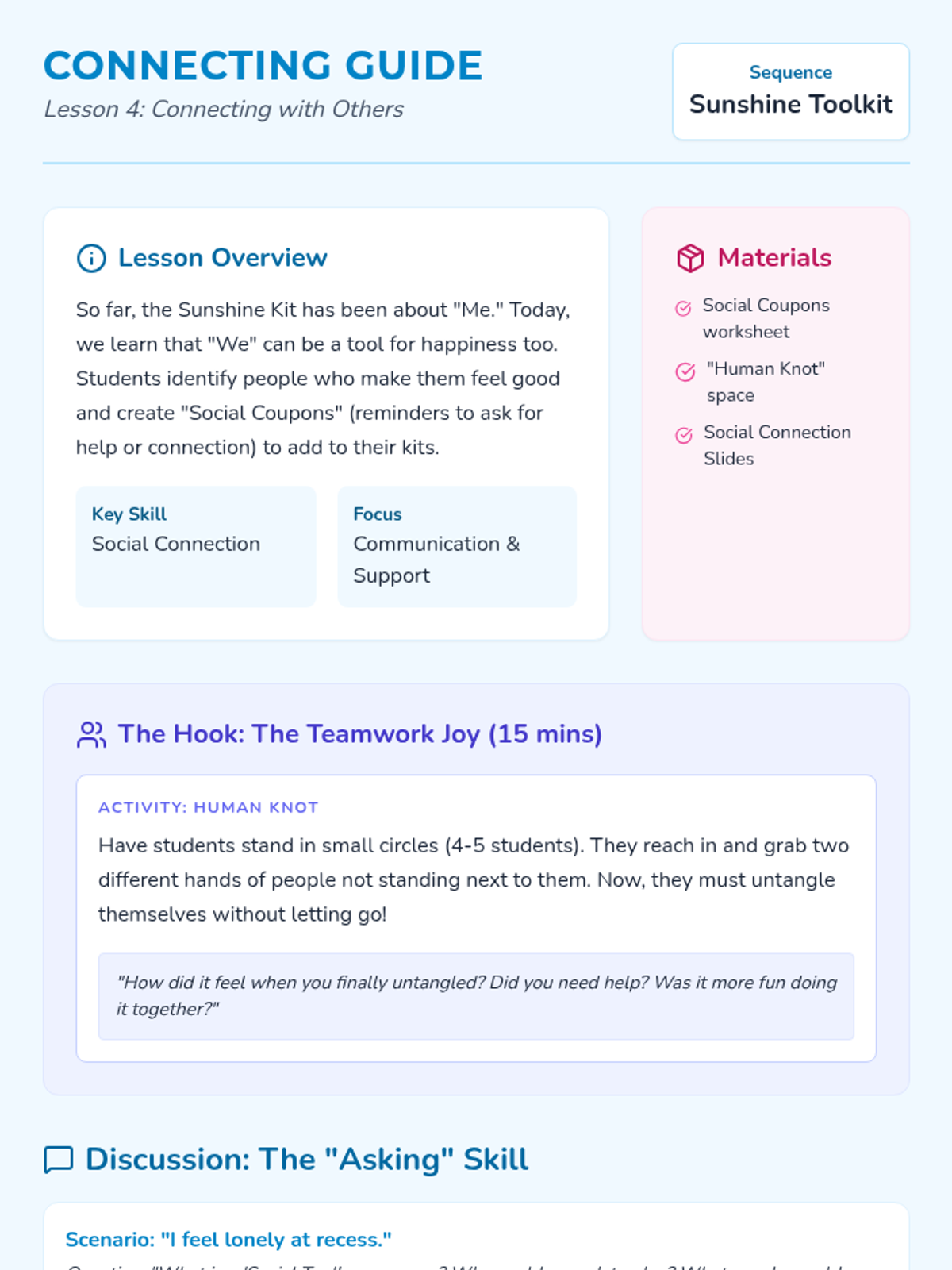
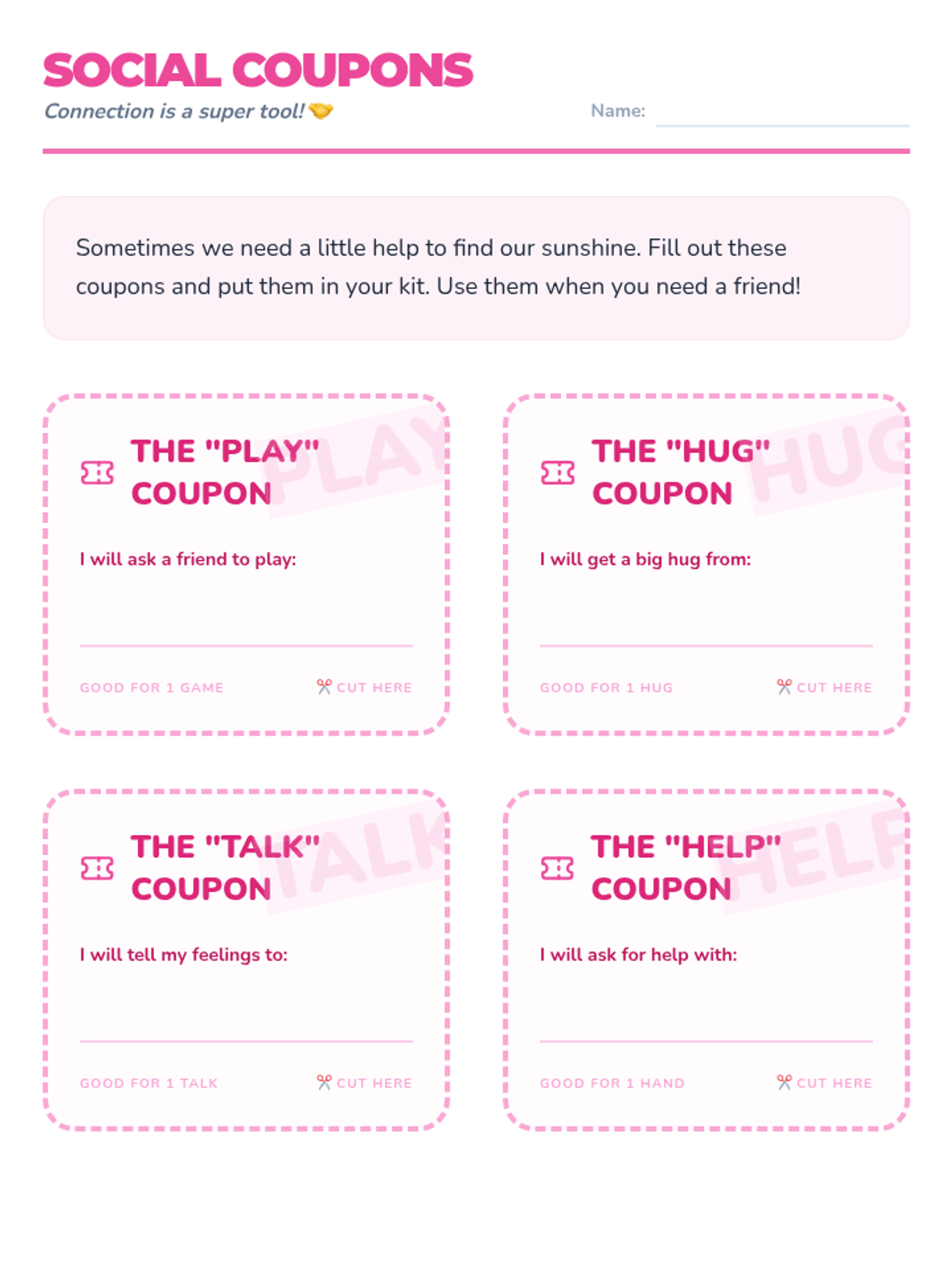
Students learn the value of social connections as a source of positive experiences. They identify people they can reach out to and create 'Social Coupons' to add to their kits for moments when they need a friend or family member.
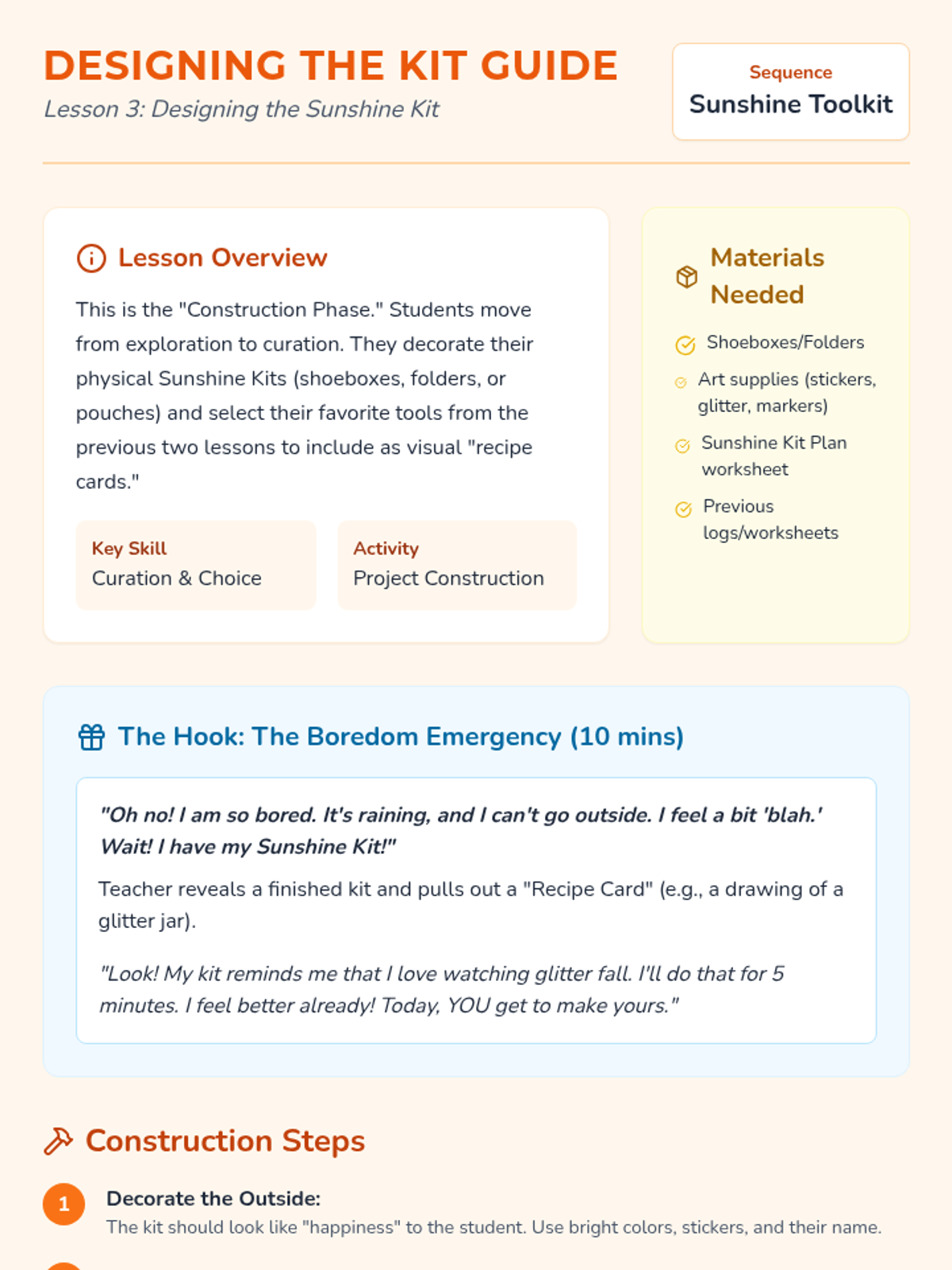
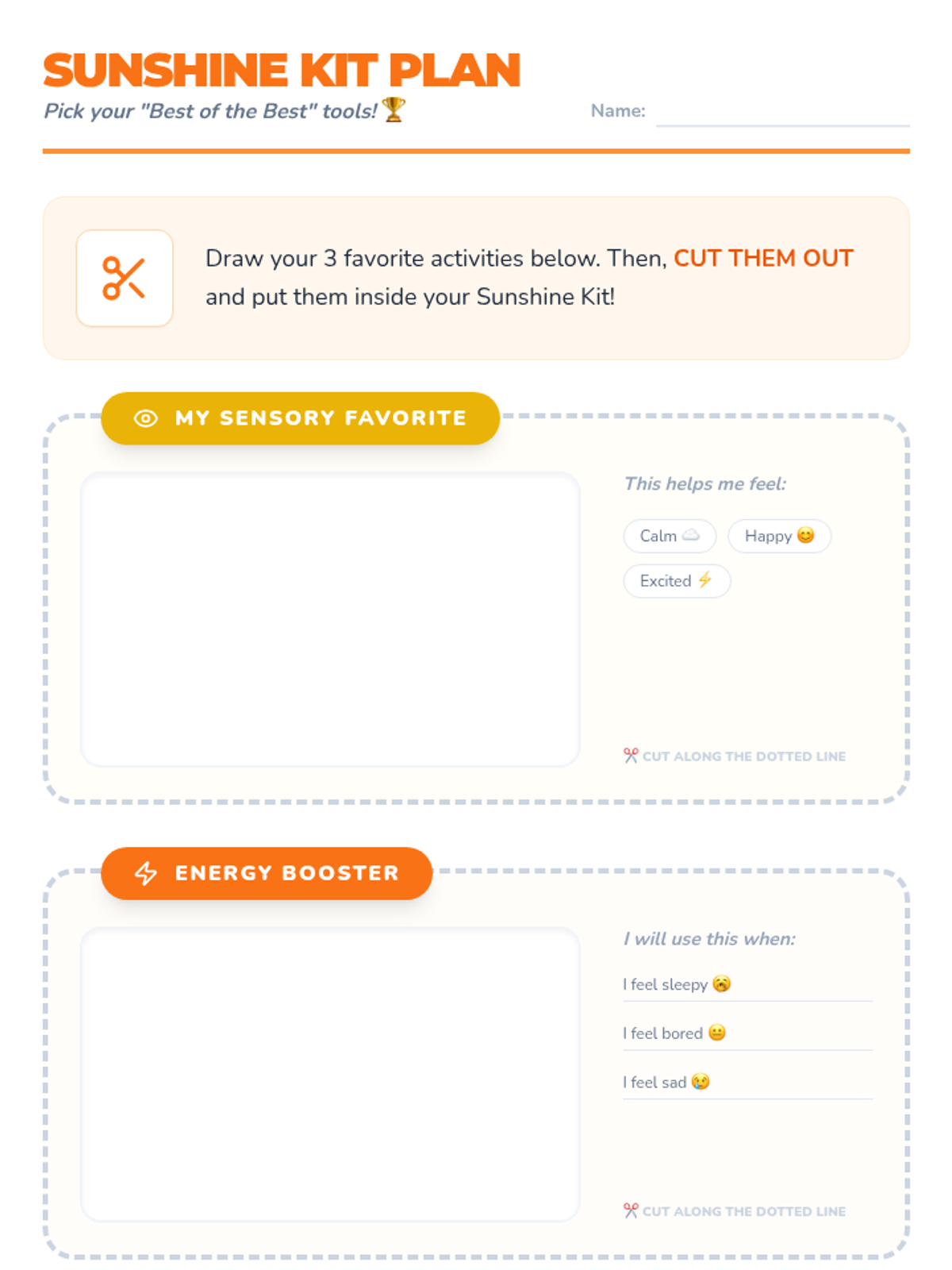
Students begin the physical construction of their Sunshine Kits, decorating their containers and selecting specific sensory and movement tools to include based on their previous discoveries.
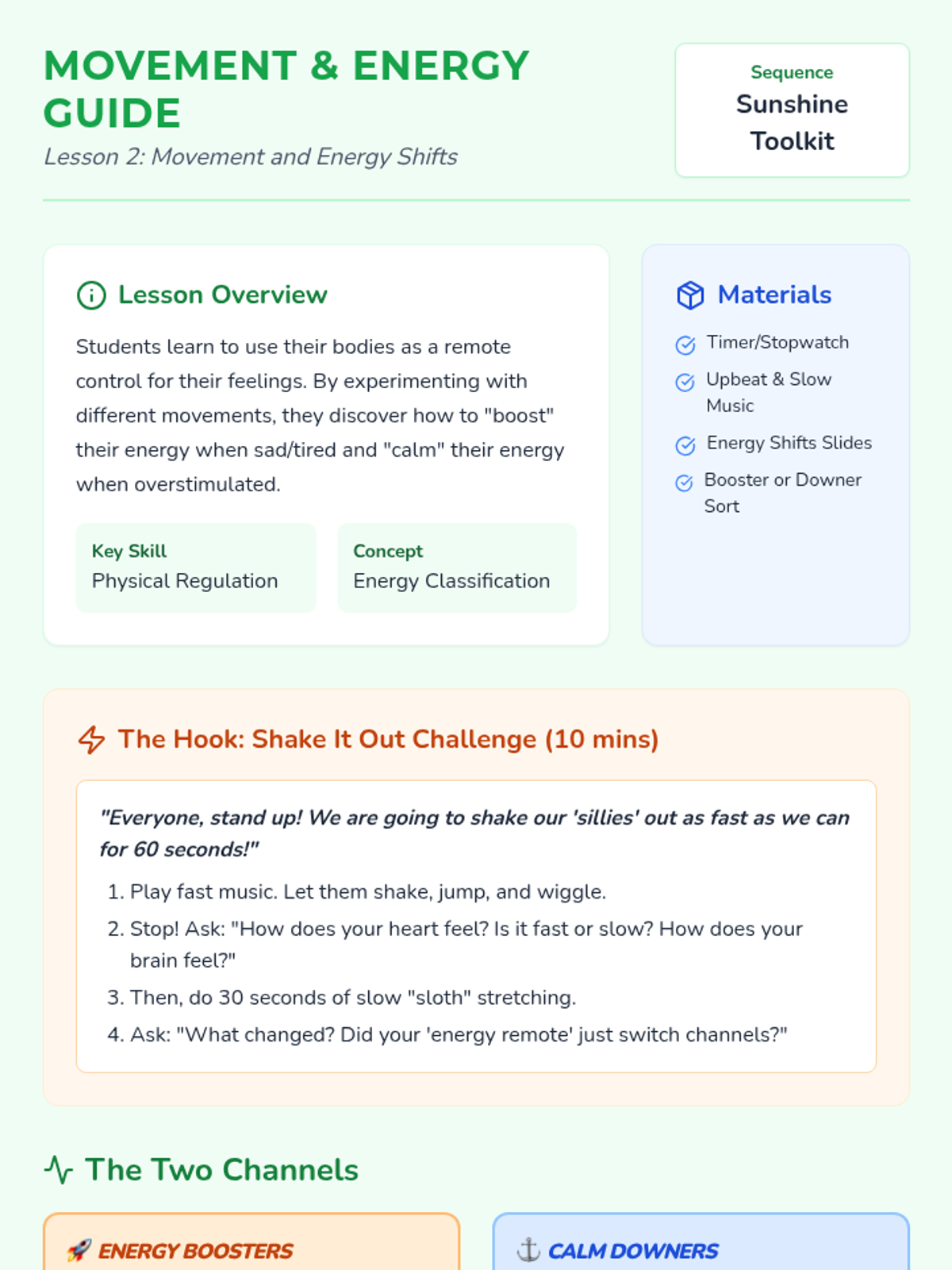
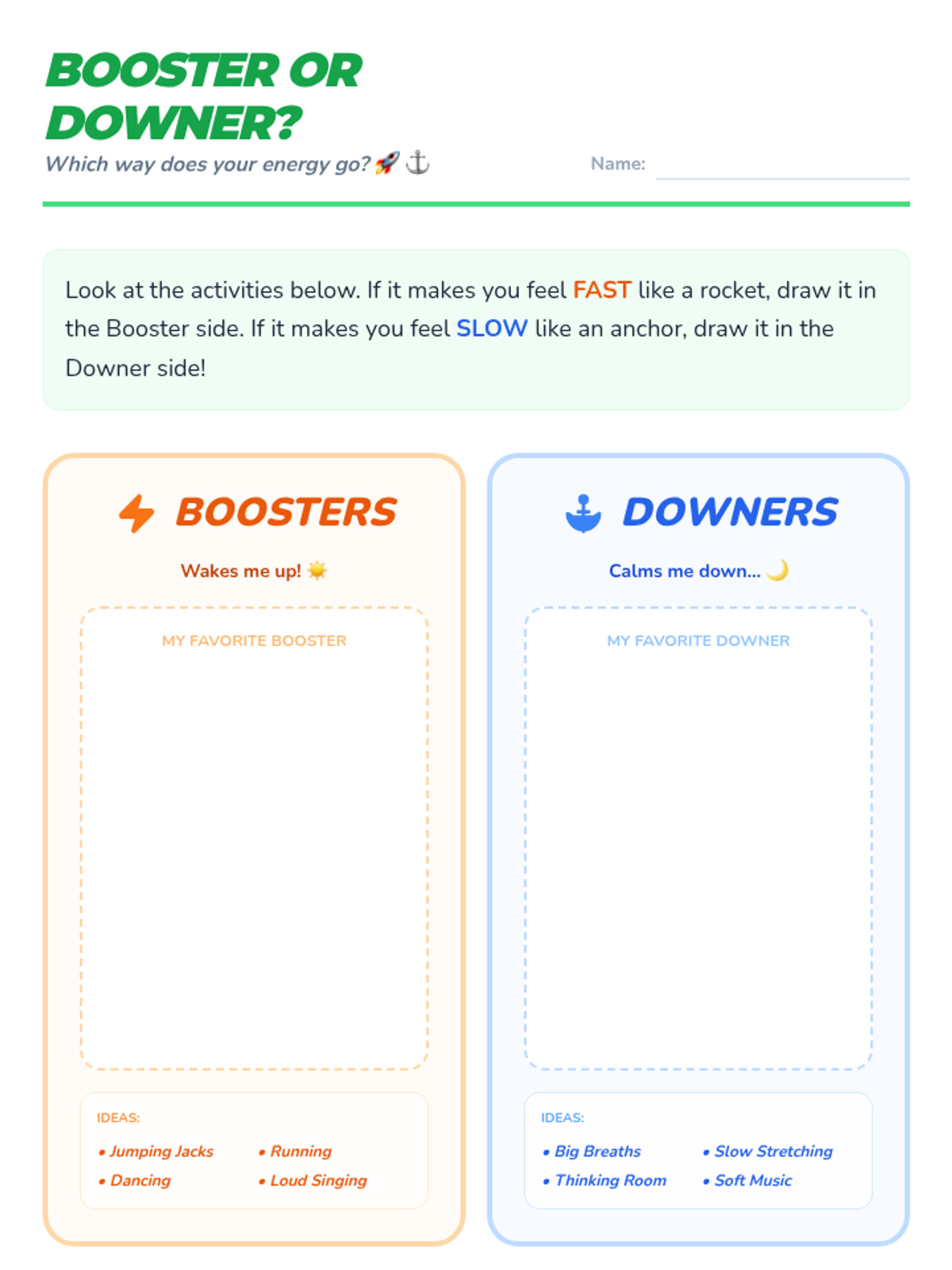
Students investigate how physical movement can shift their energy and mood. They learn to categorize activities as 'Energy Boosters' for low energy and 'Calm Downers' for high anxiety or overstimulation.
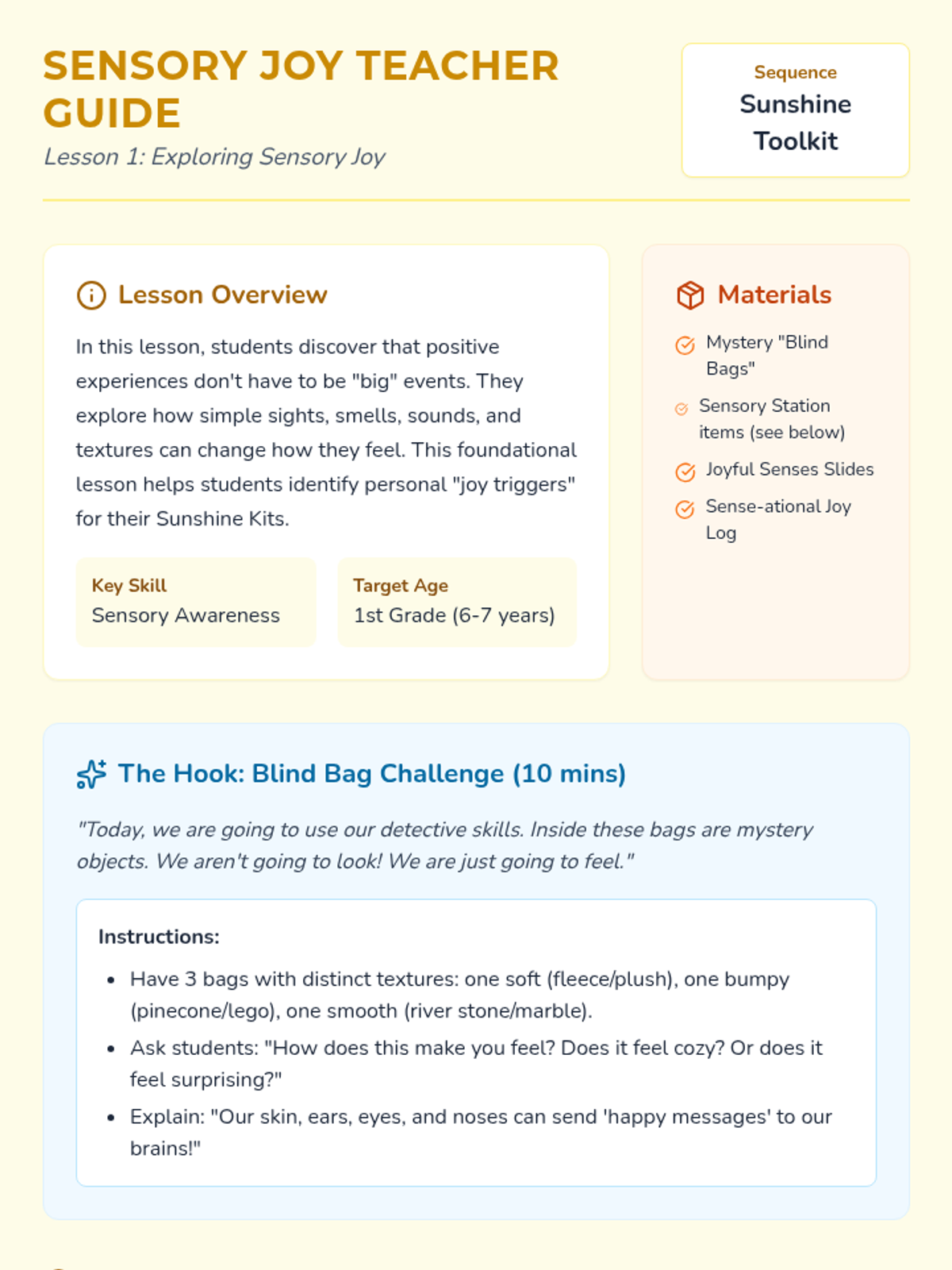
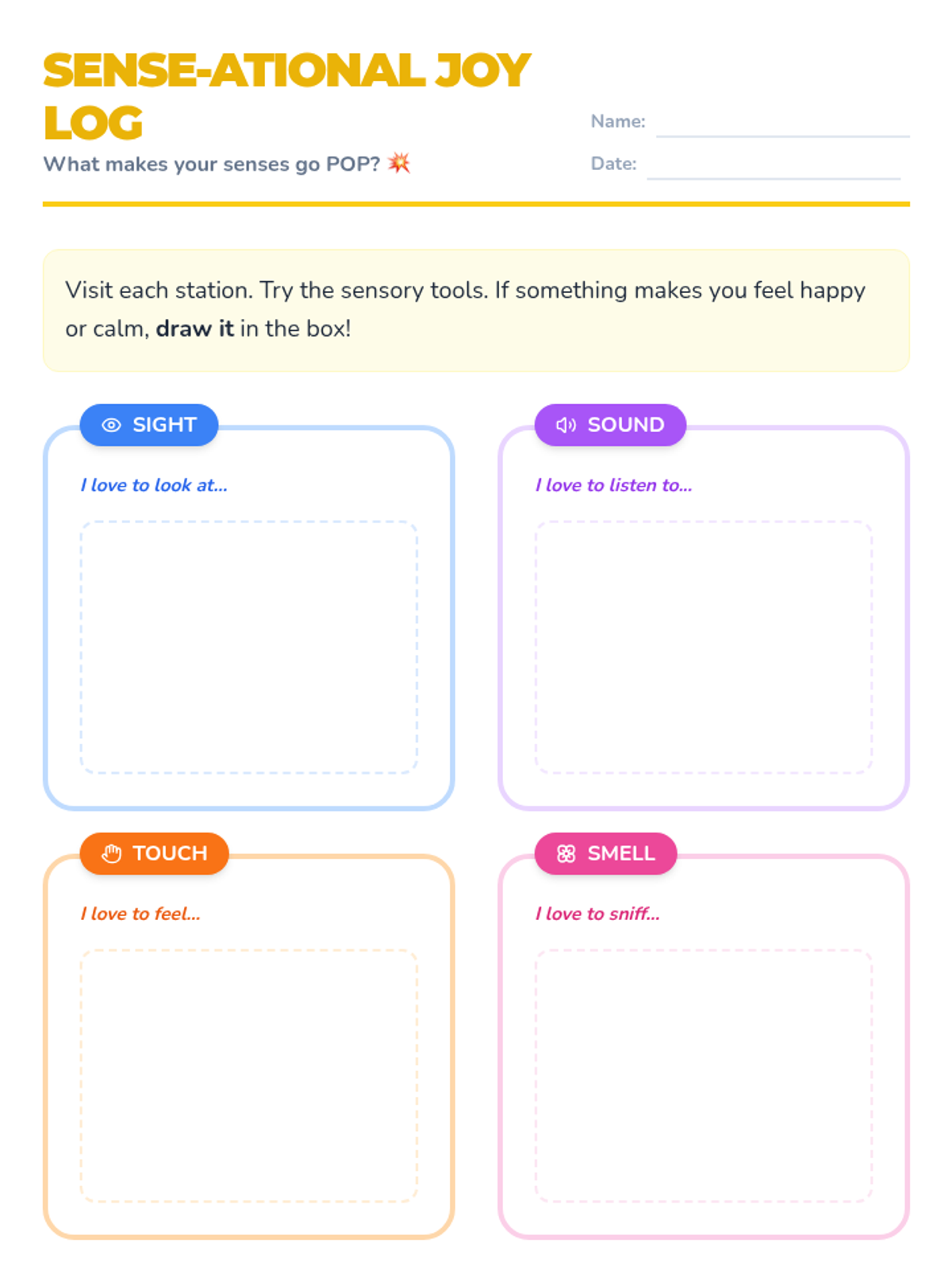
Students explore how their five senses can create simple positive experiences and help them feel happy or calm. They rotate through stations to identify personal sensory preferences for their Sunshine Kits.
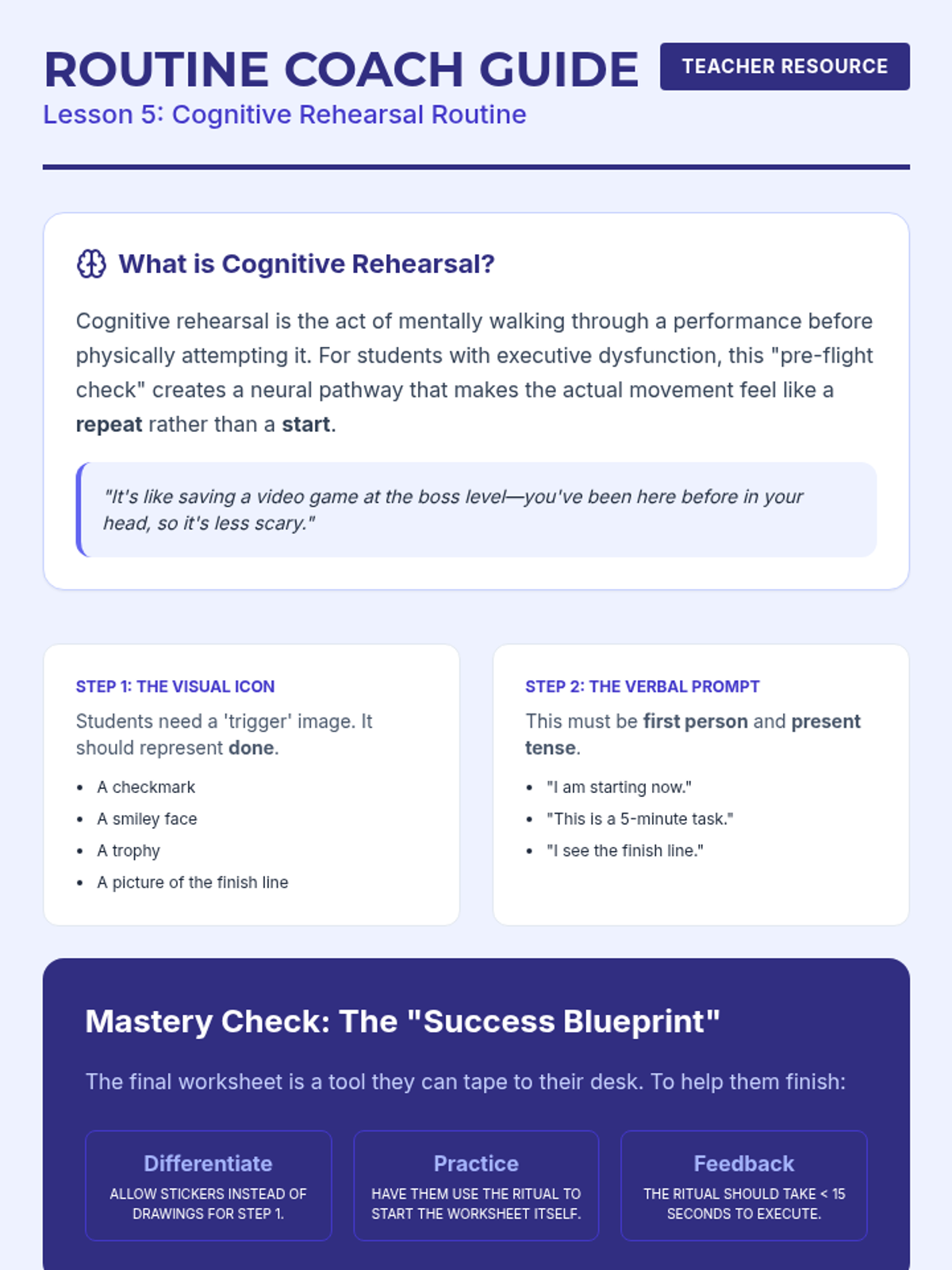
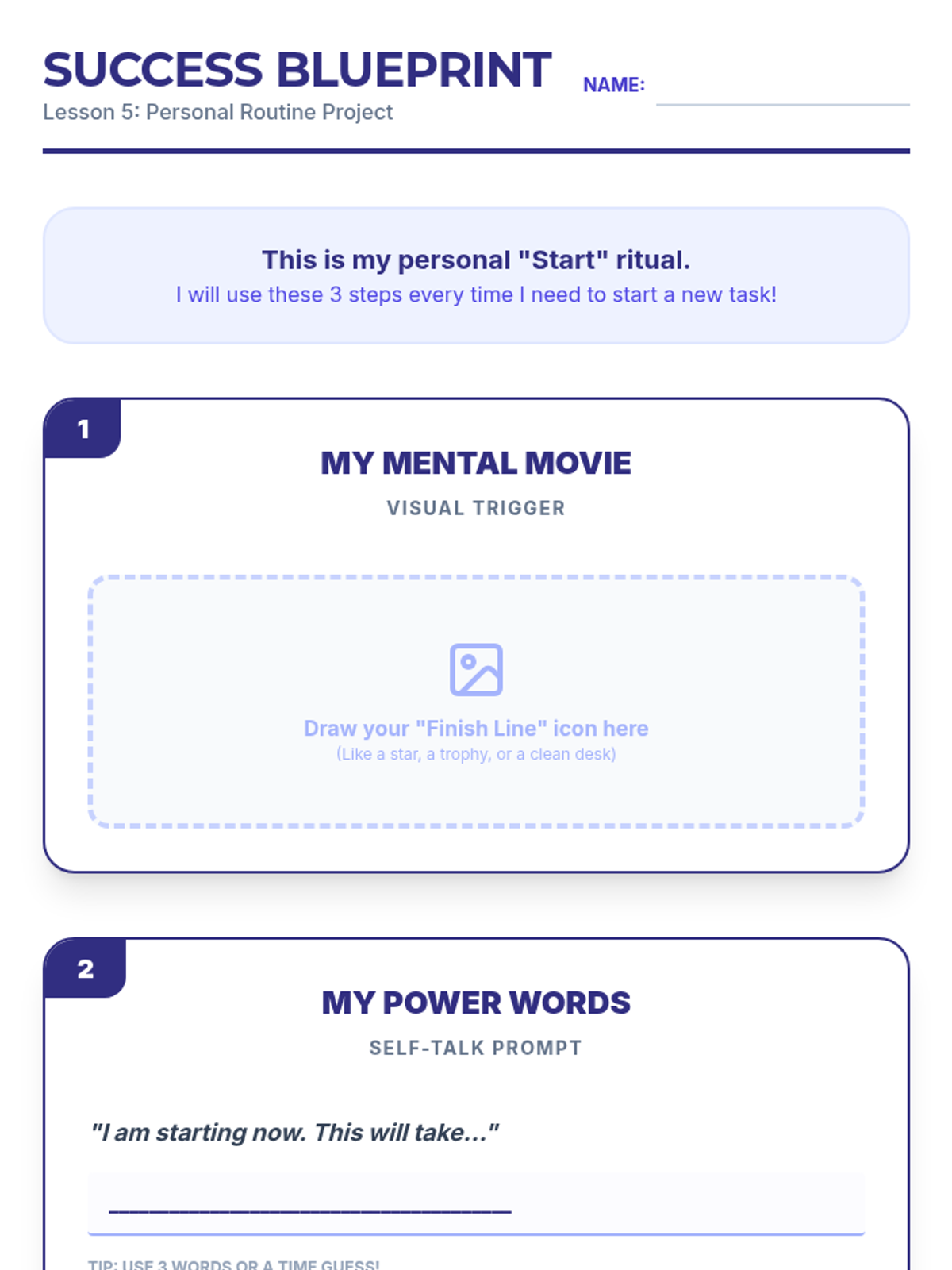
Students create a personal storyboard or checklist that combines a visual icon with a verbal prompt for task initiation.
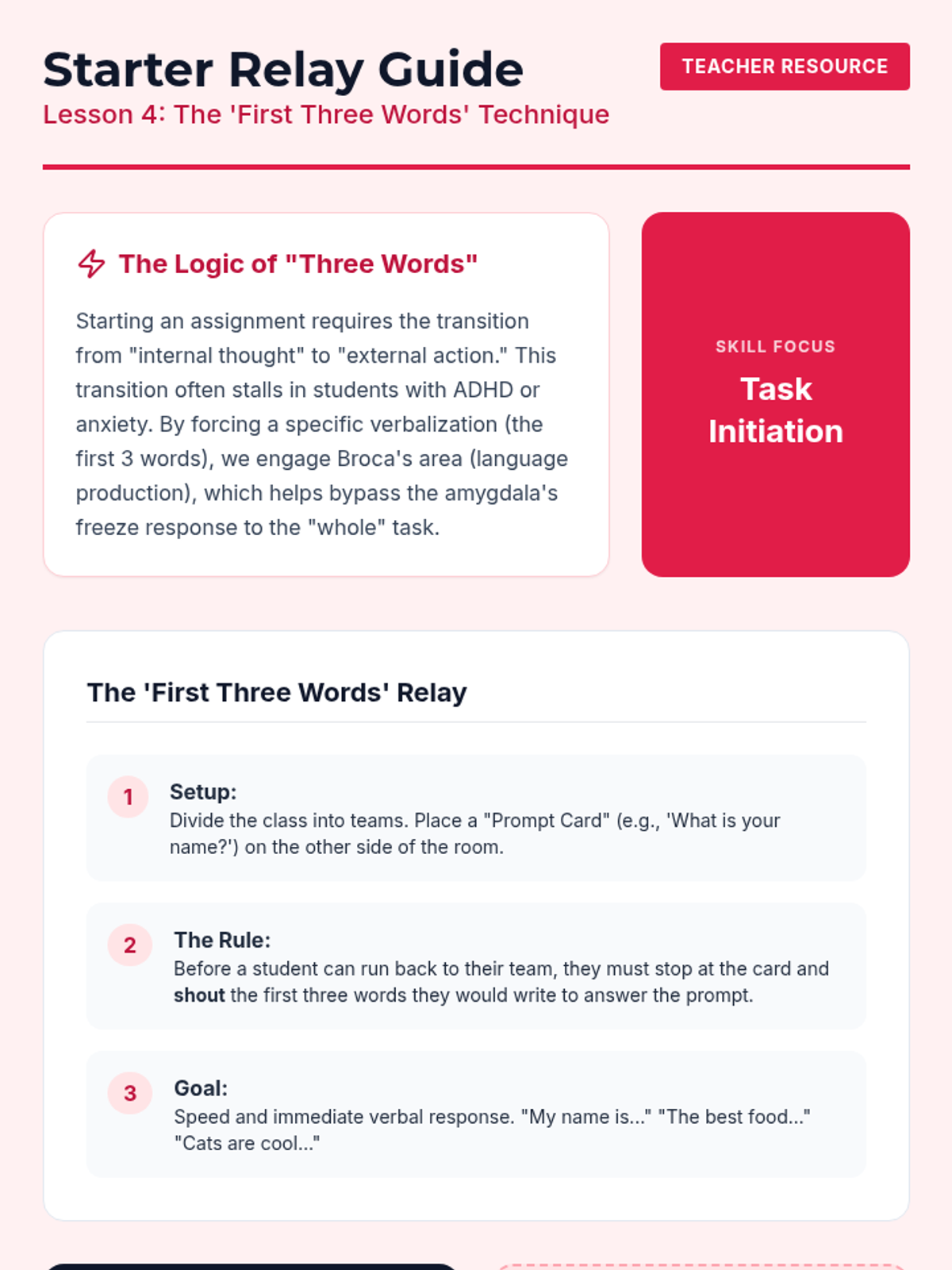
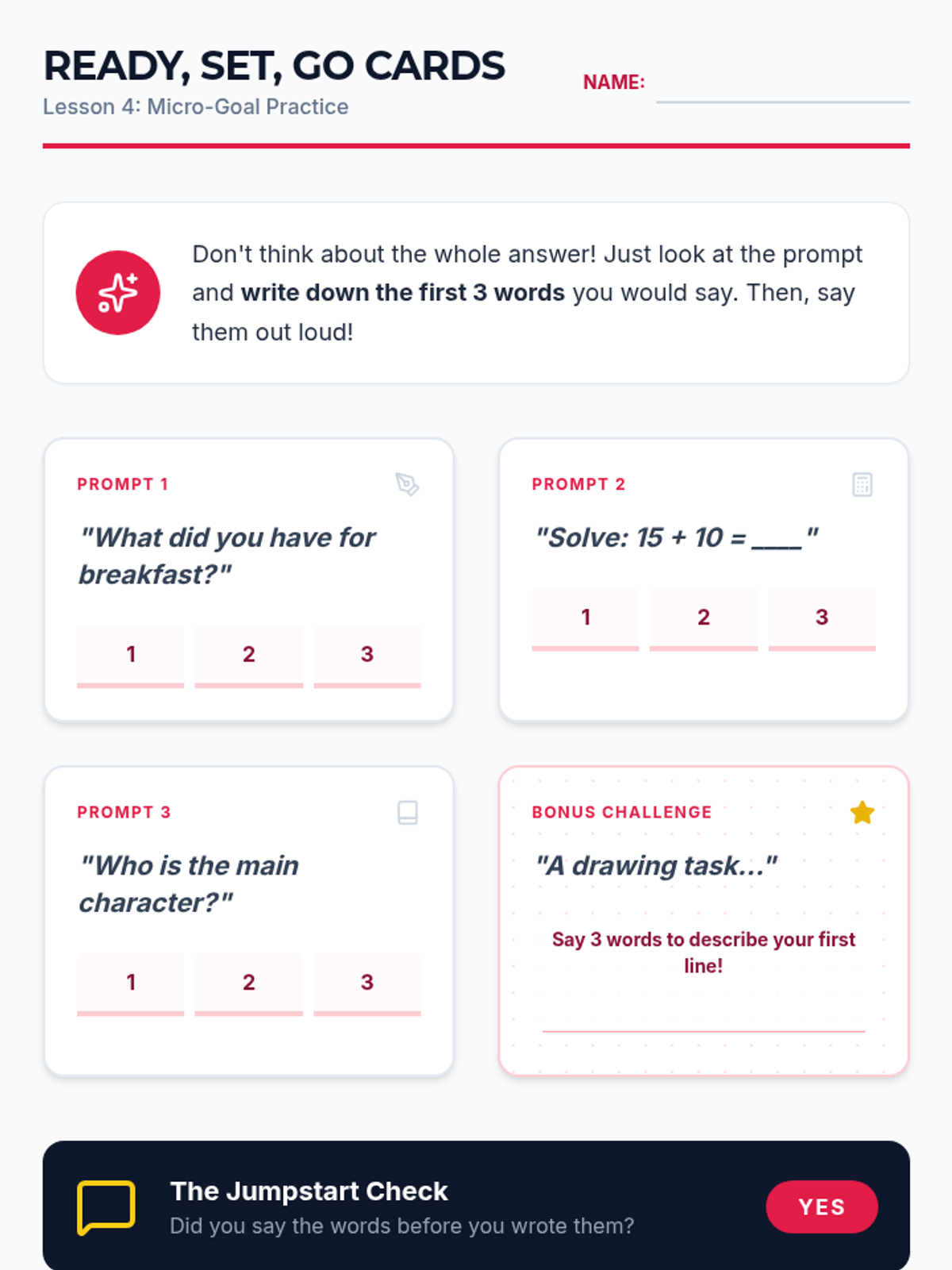
Students learn to identify the first three words of a task to lower the barrier to entry and engage the brain's language center.
Students learn to estimate time and use verbal reassurance to reduce overwhelm.
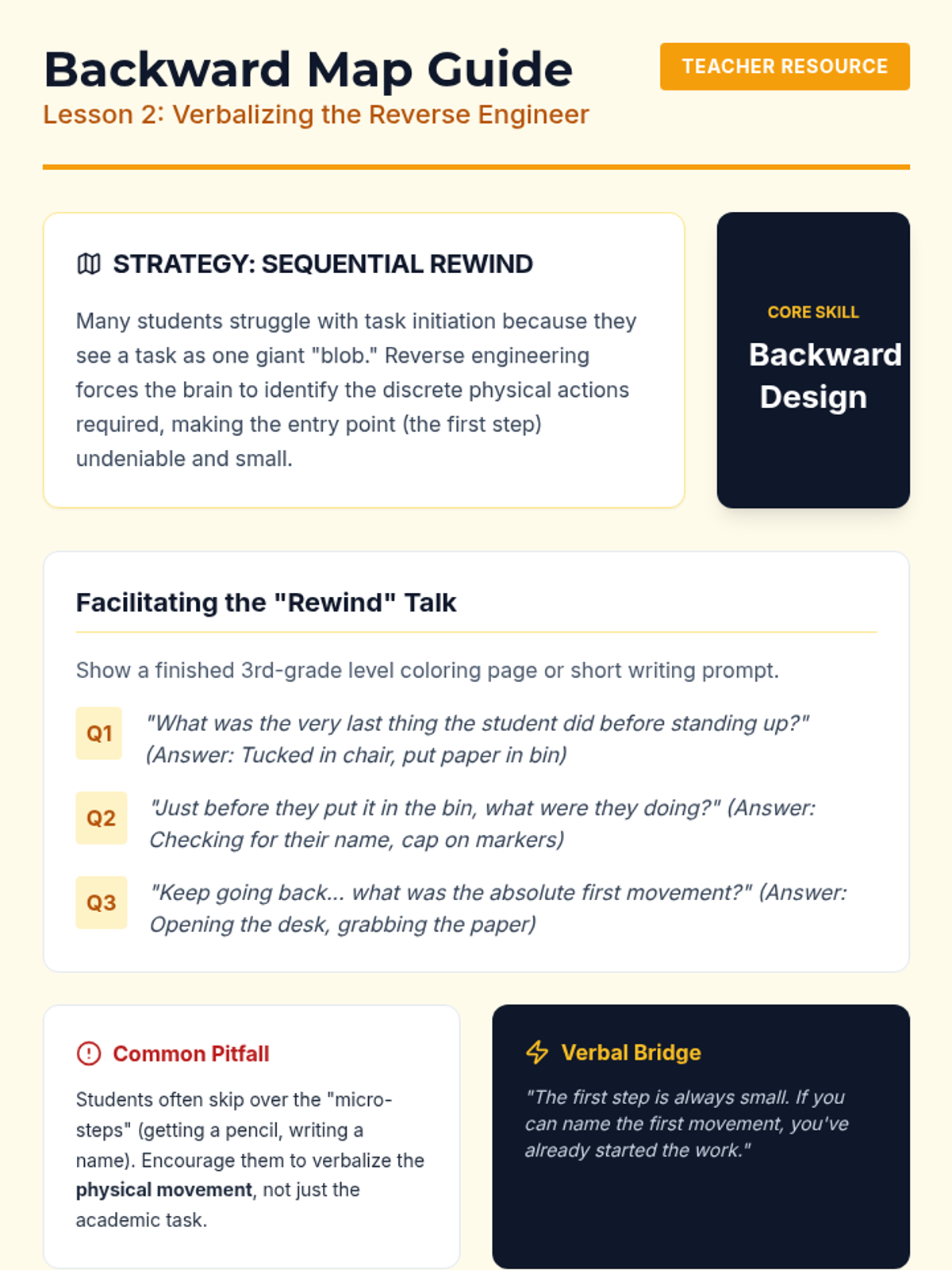
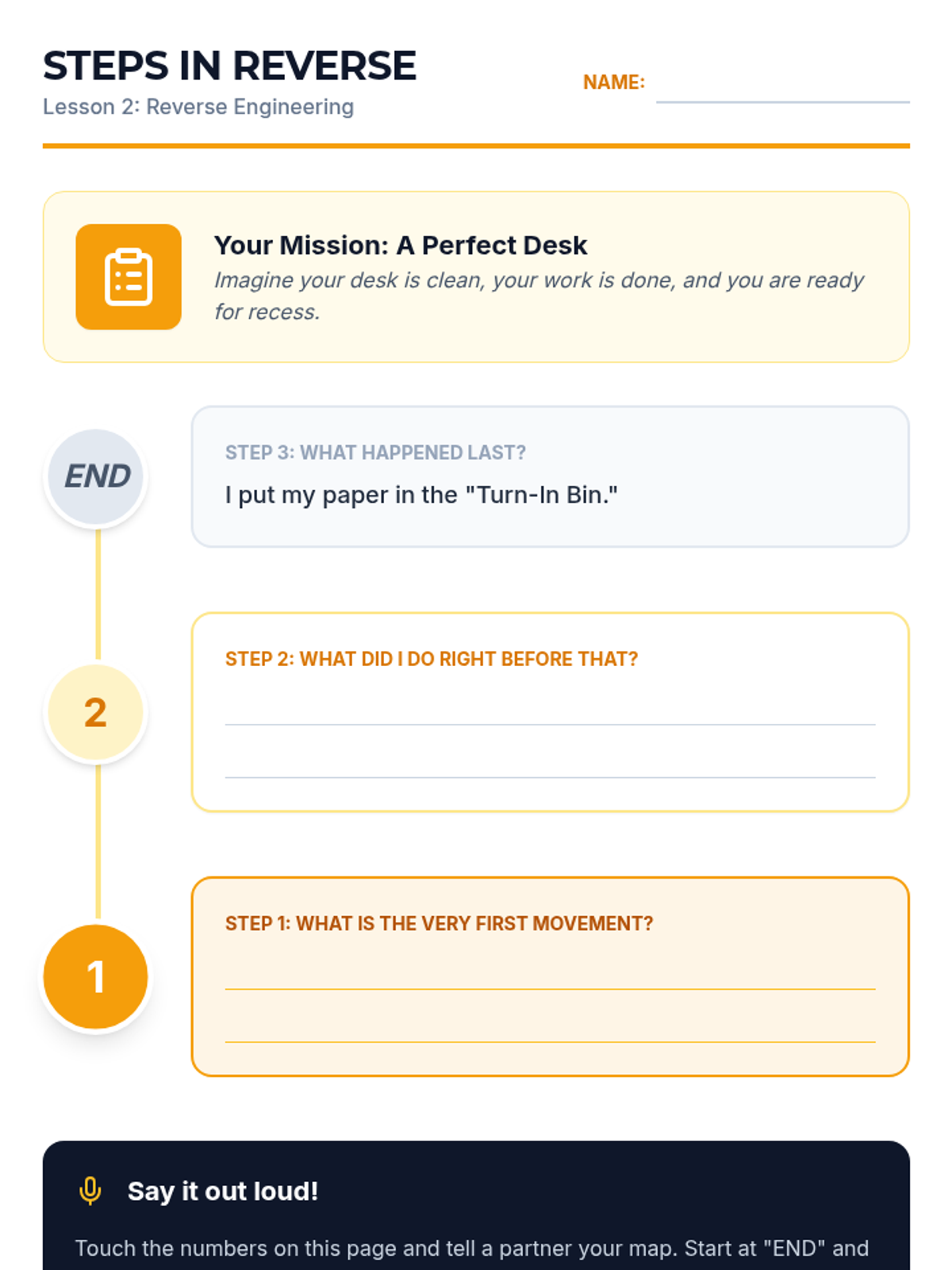
Students talk backward through the steps of a completed sample to make the first step obvious and approachable.
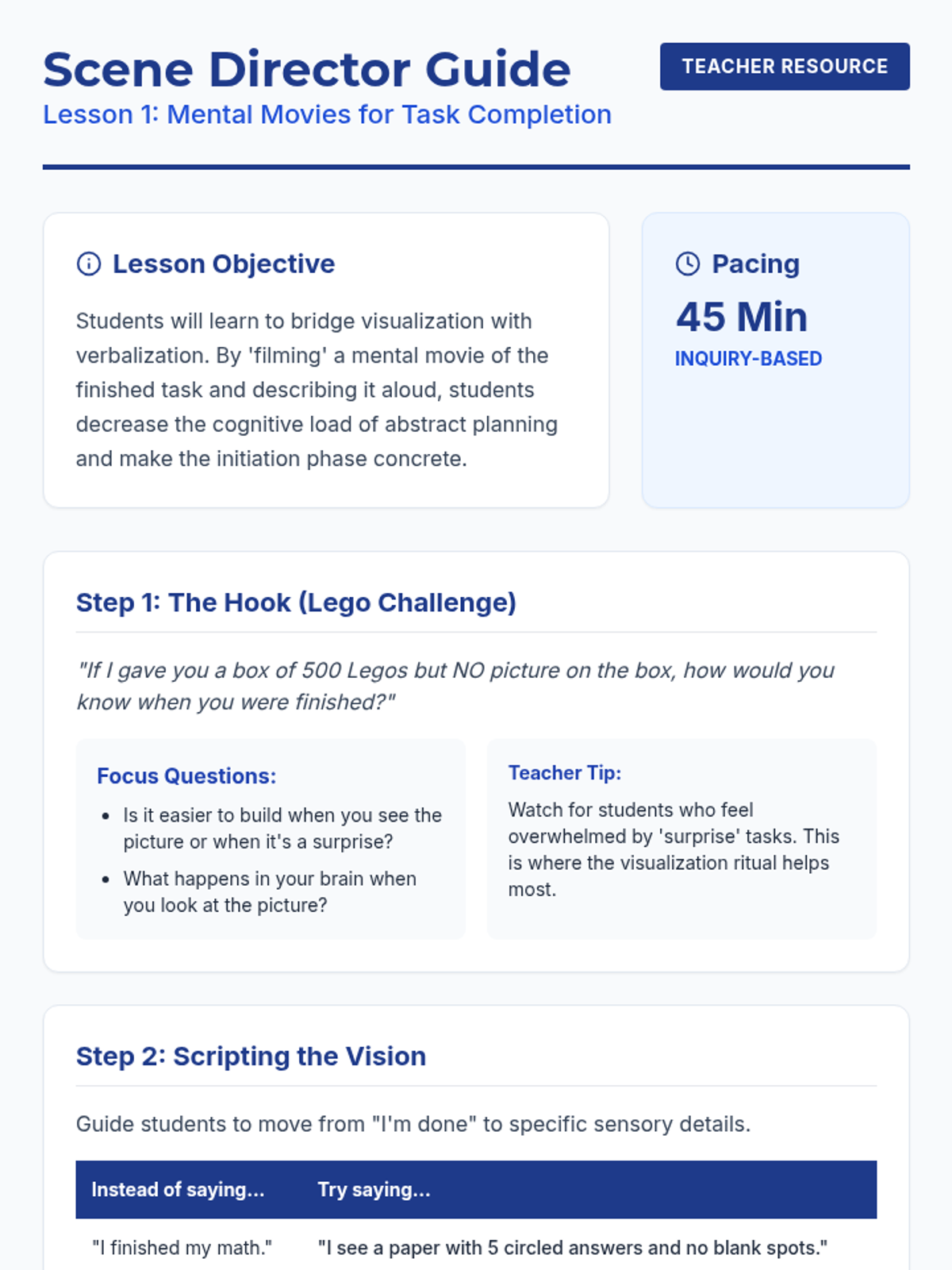
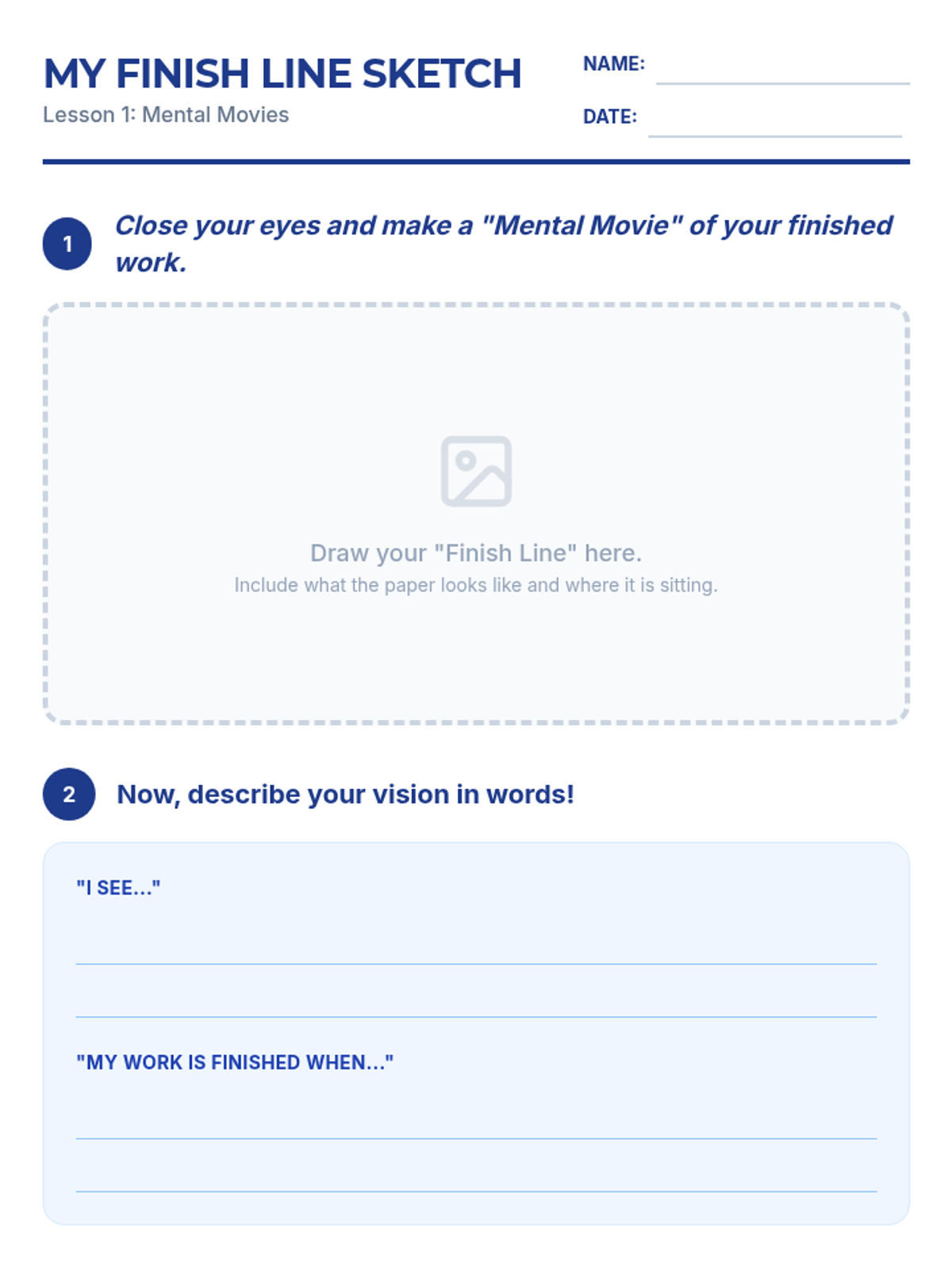
Students practice closing their eyes and creating a detailed mental image of what 'finished' looks like before describing it aloud.
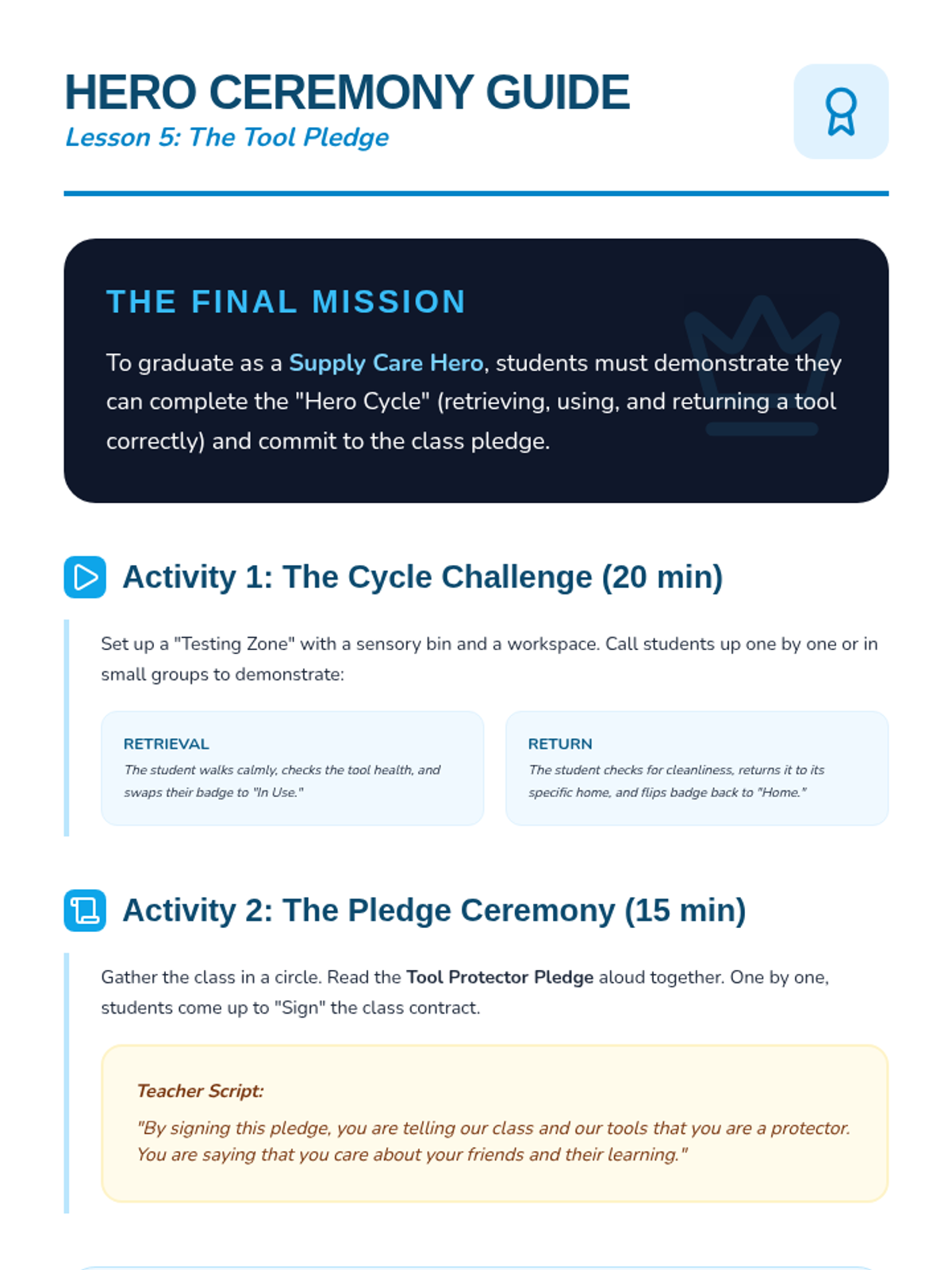
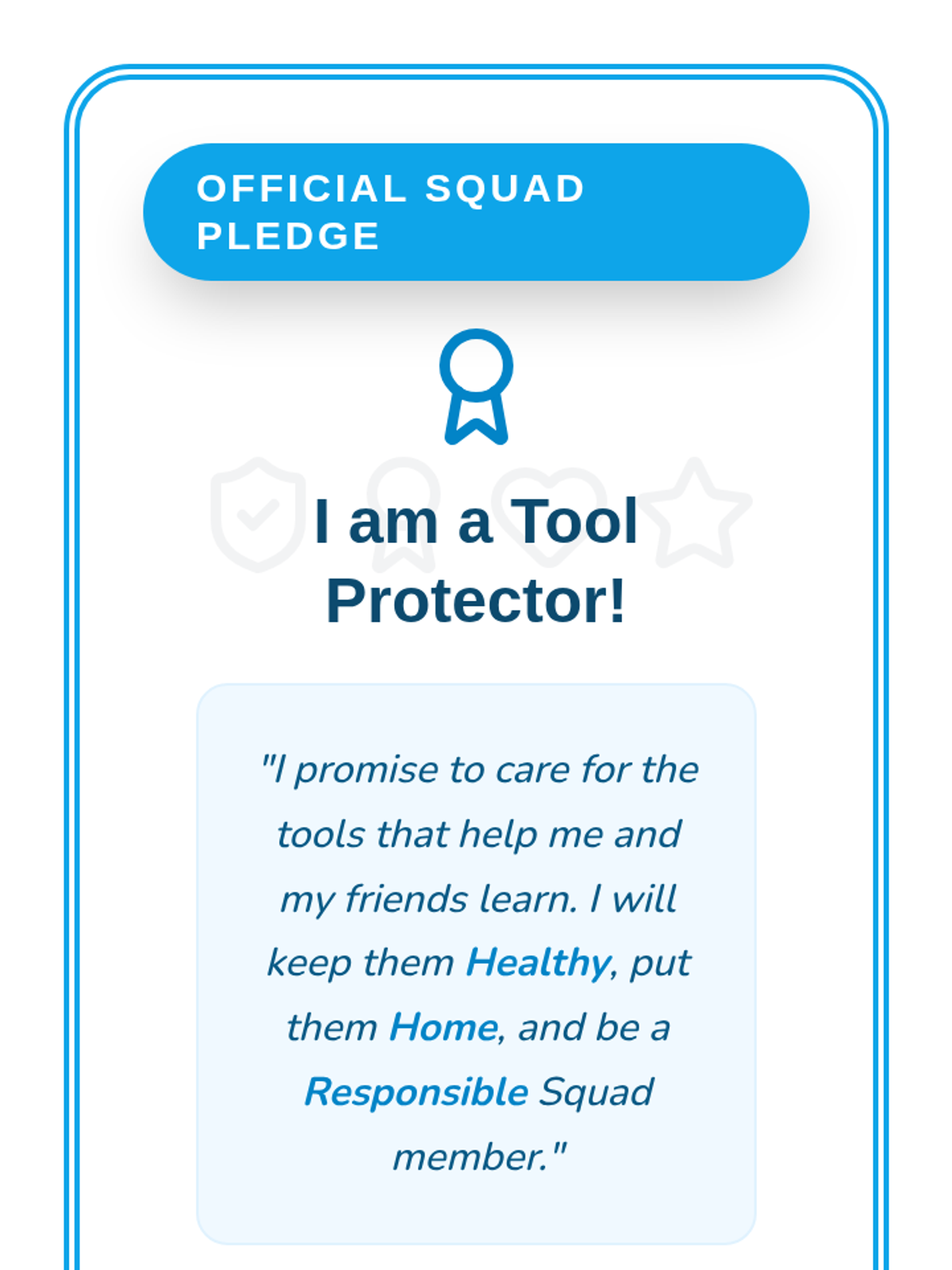
Students synthesize their learning by co-creating a class pledge and demonstrating the full cycle of retrieving, using, and returning tools correctly.
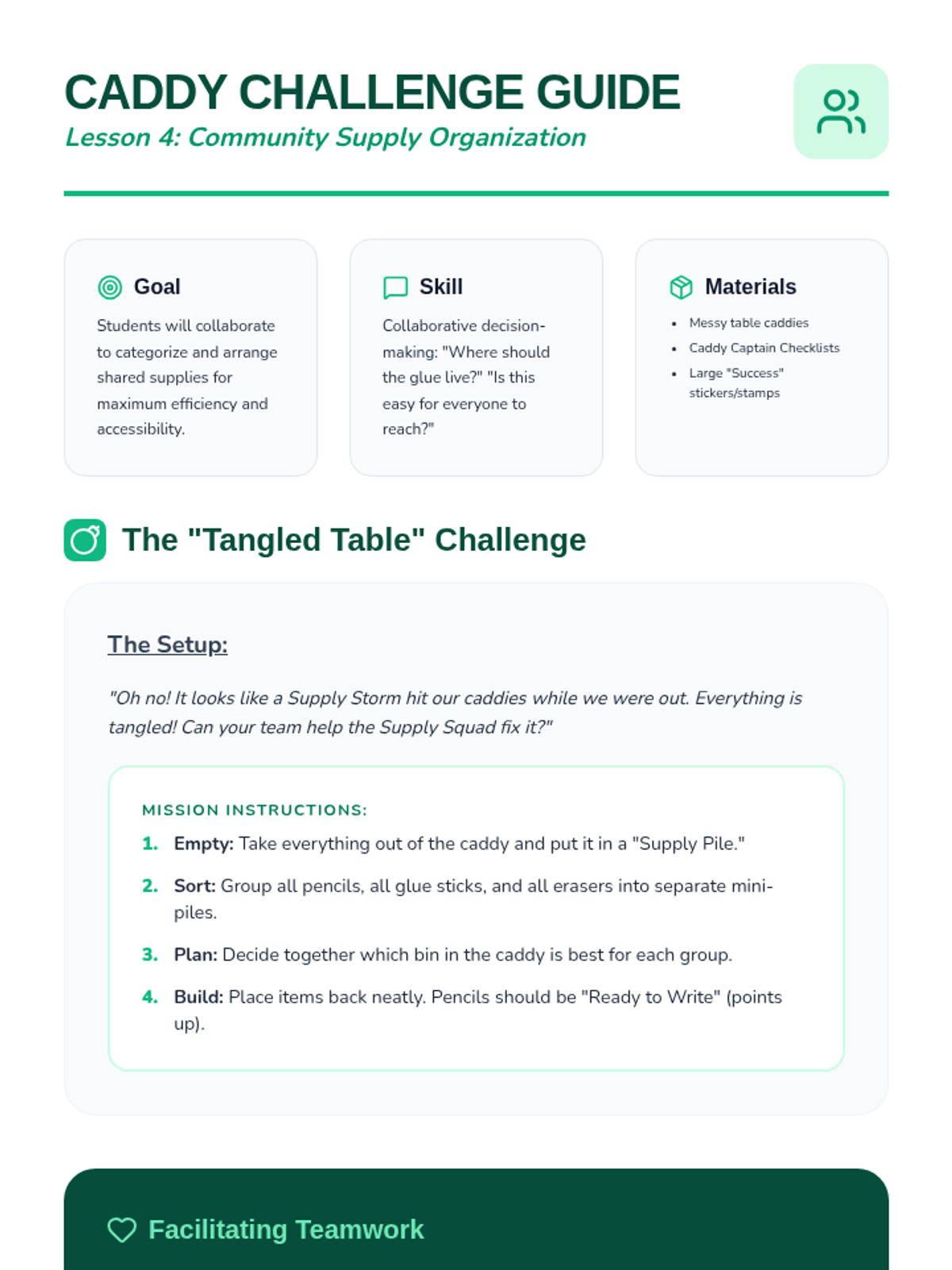
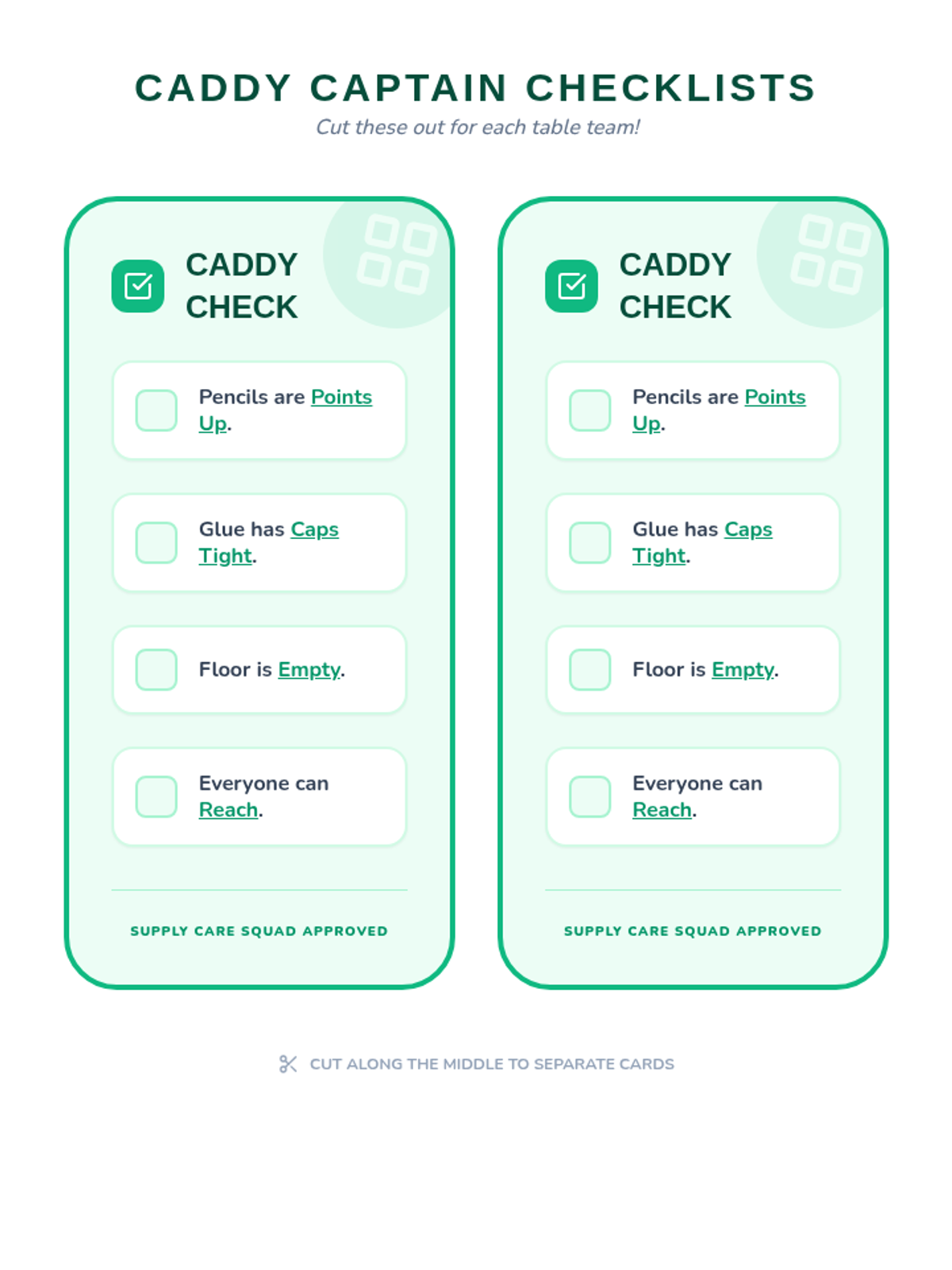
Working in teams, students organize shared table caddies and classroom shelves to ensure materials are accessible and easy to find for everyone.
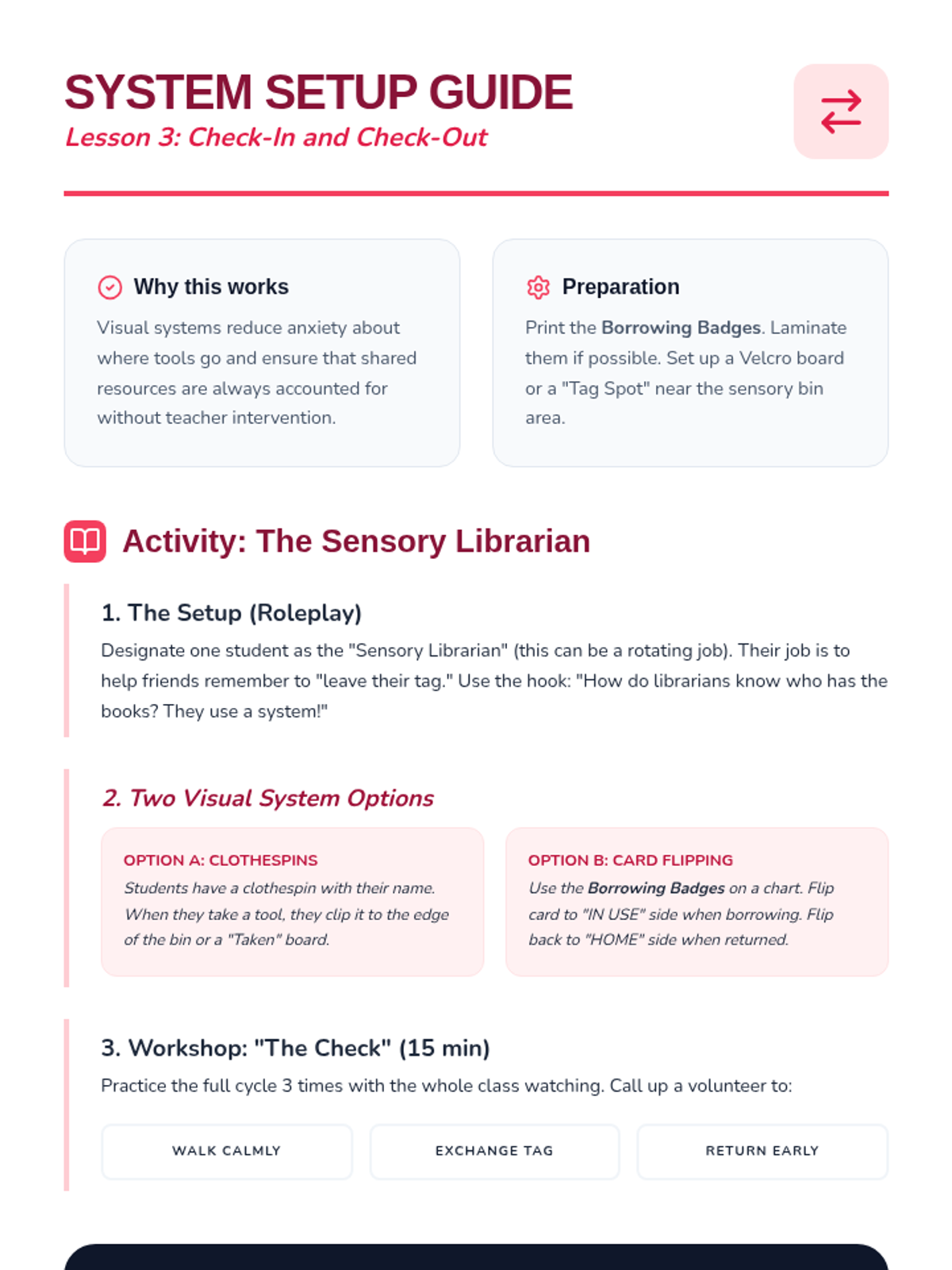
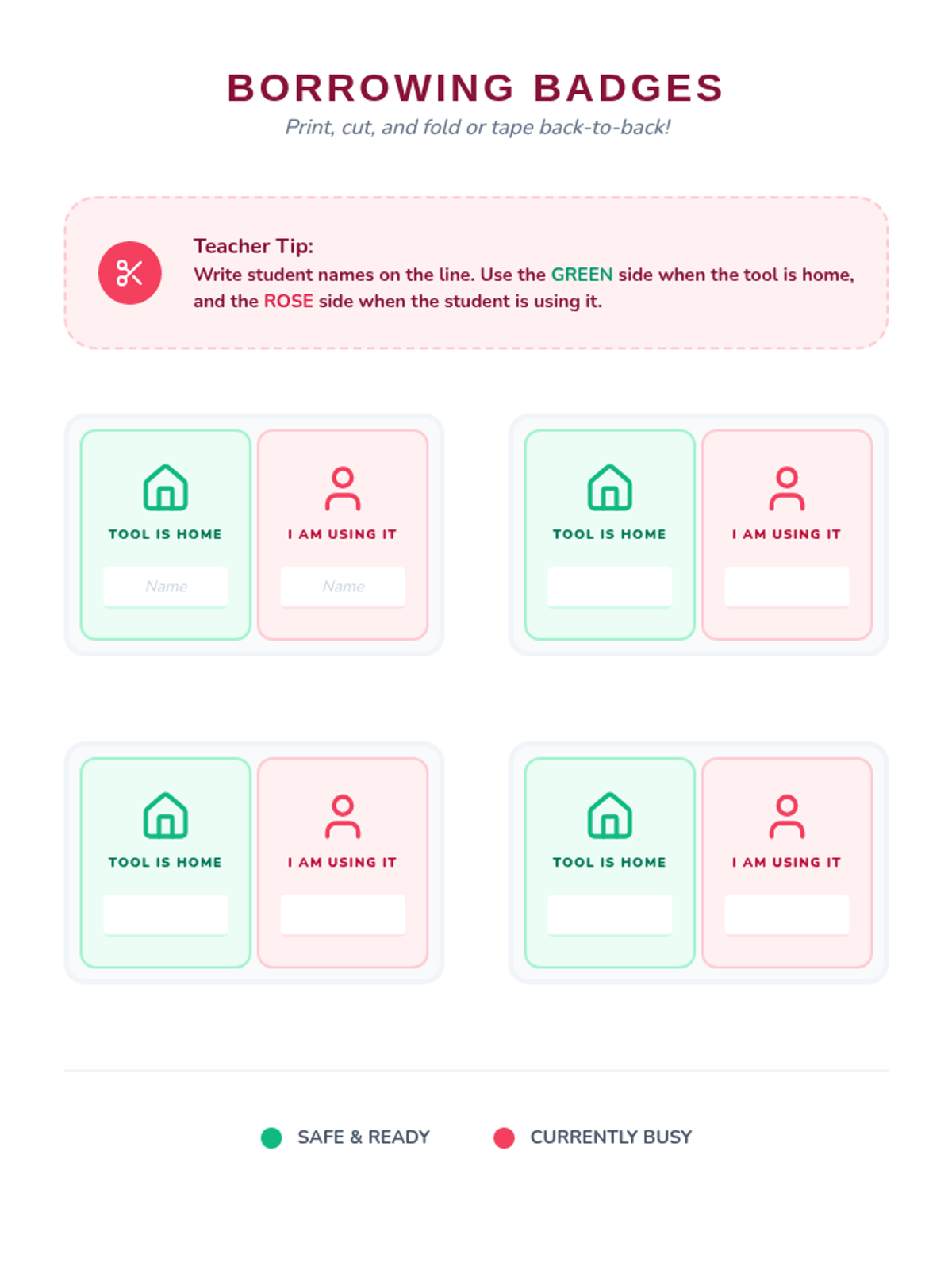
Students practice simplified borrowing systems, such as card flipping or clothespin moving, to learn accountability for shared classroom resources.
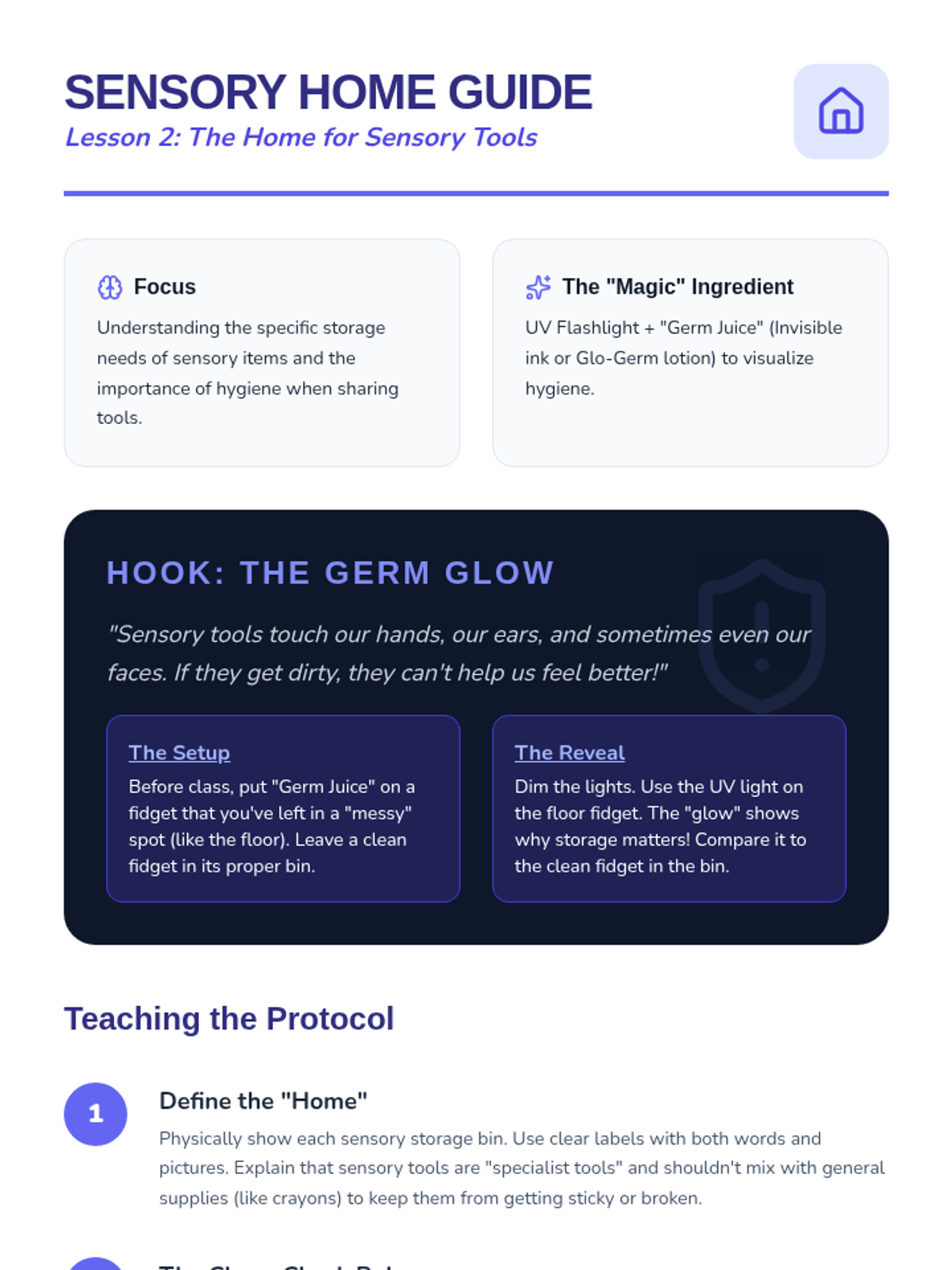
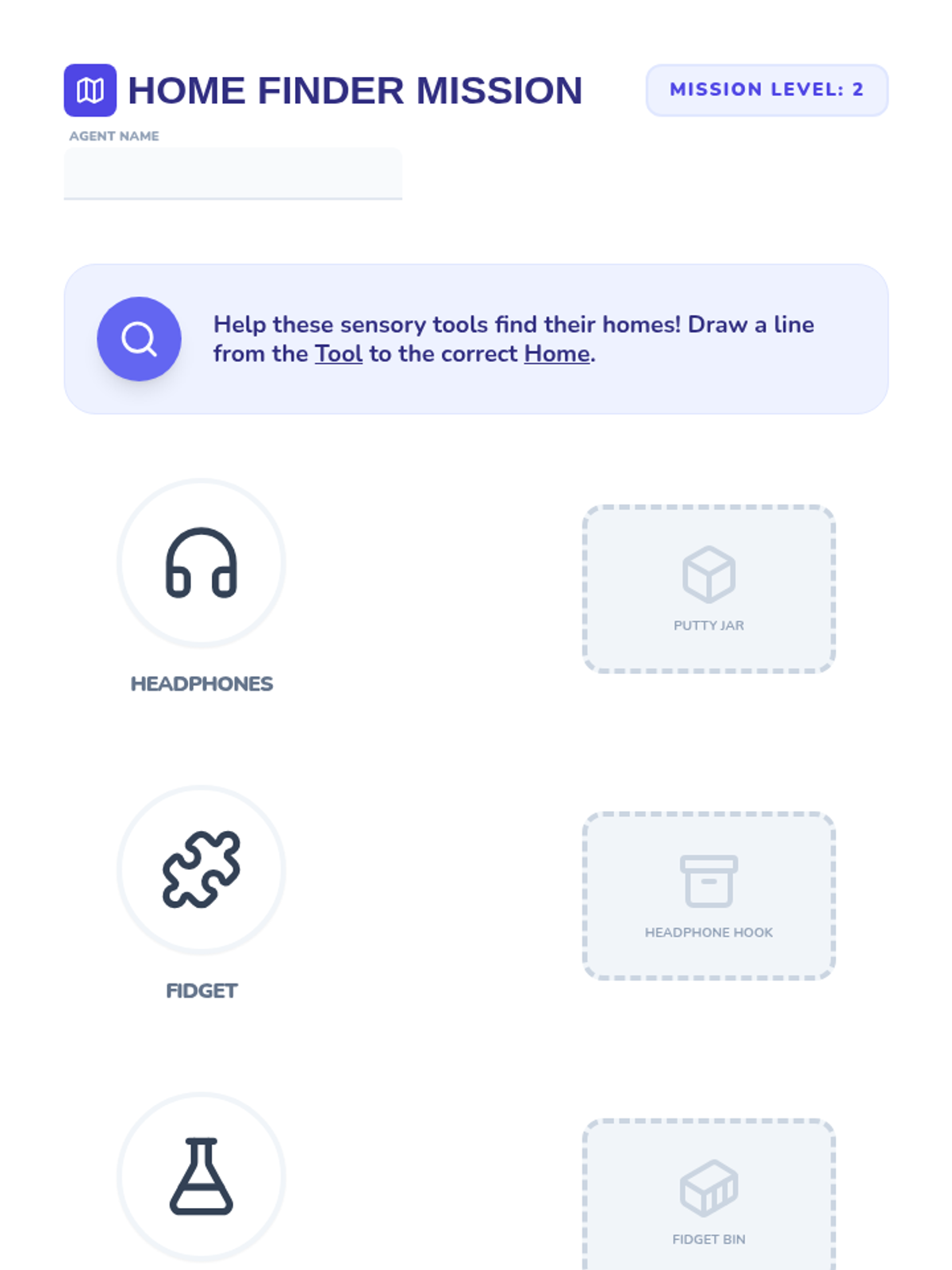
Focusing on sensory items like headphones and fidgets, students learn specific storage needs and hygiene practices to keep tools safe and clean.
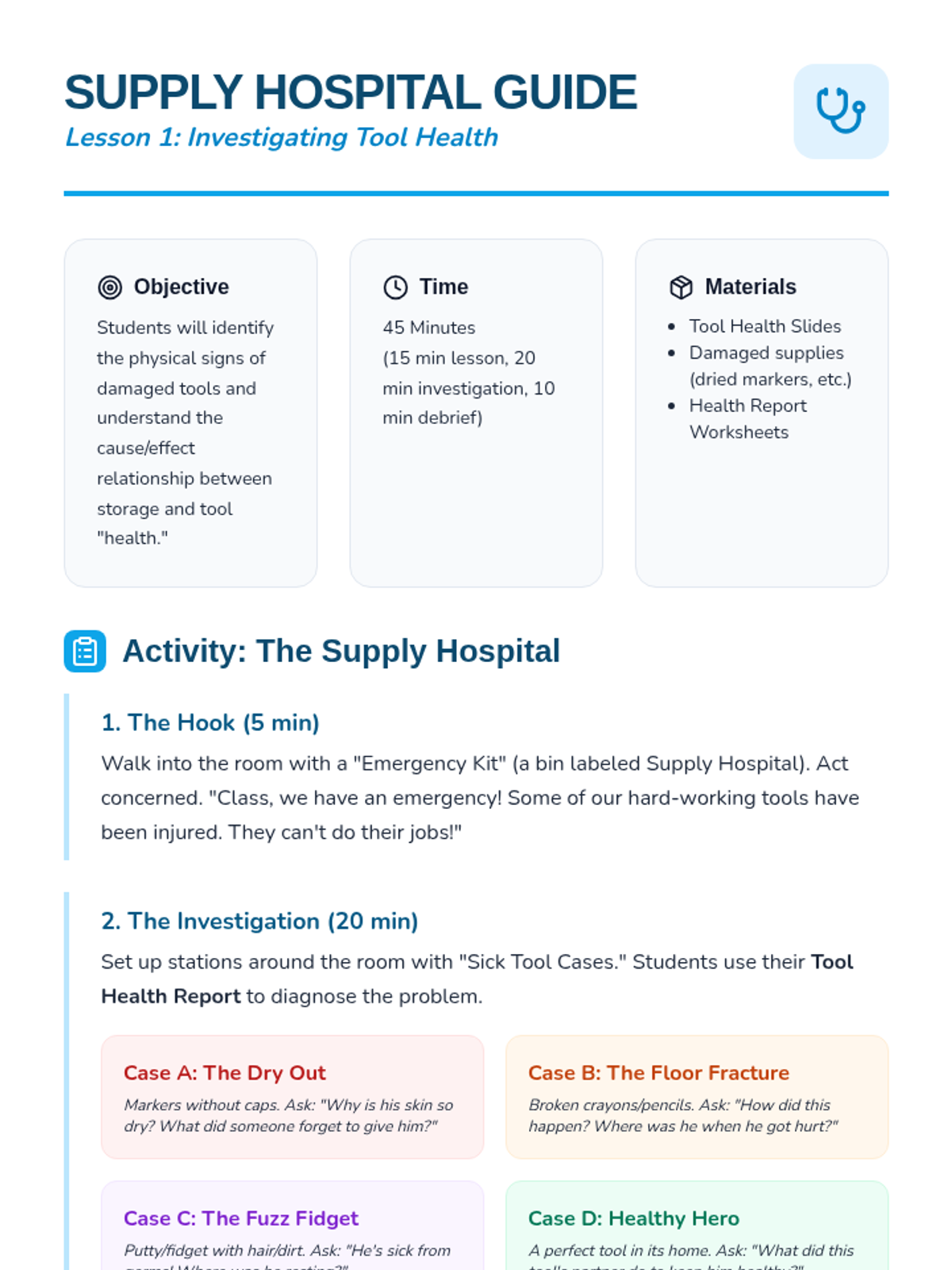
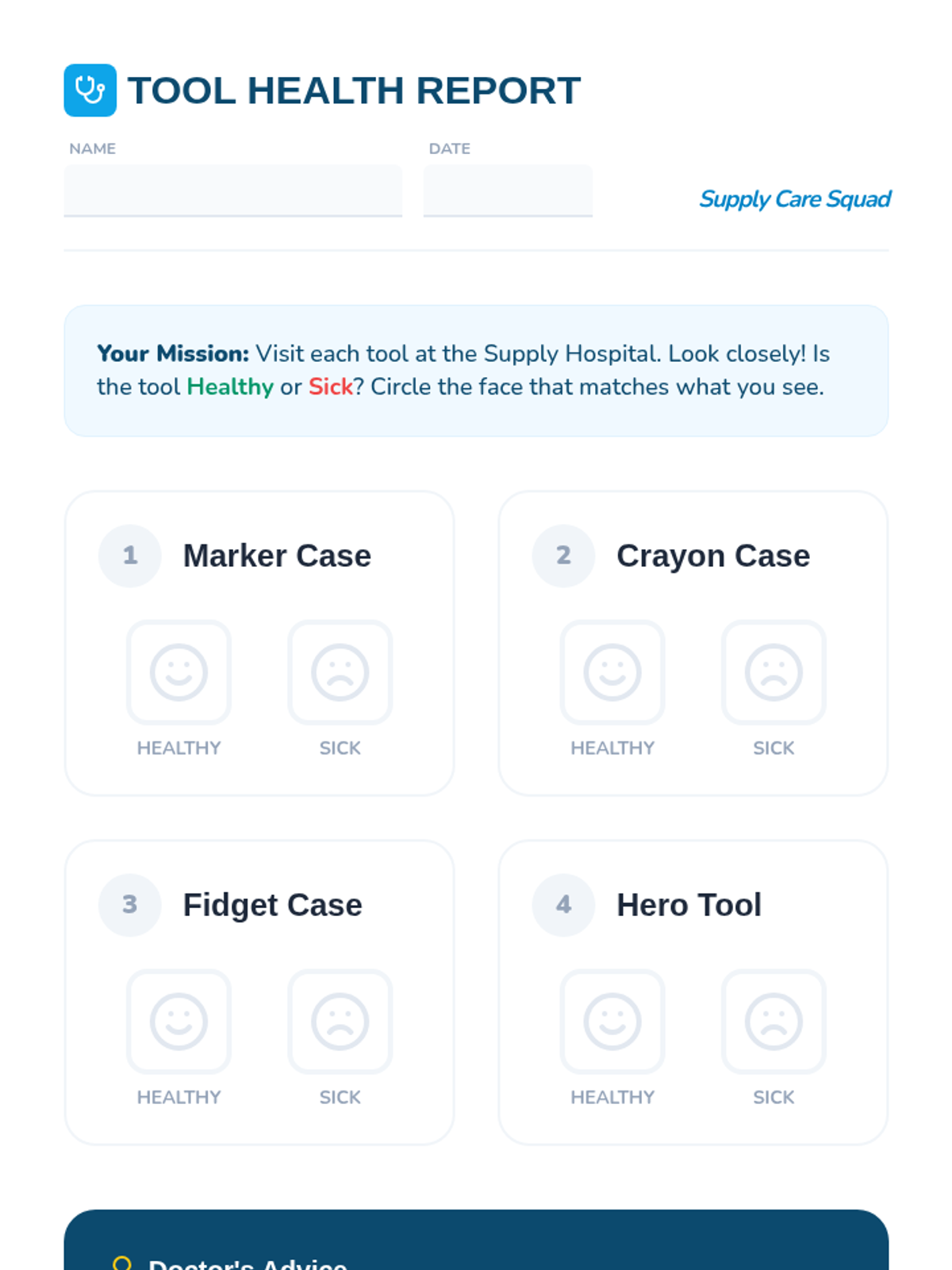
Students investigate 'healthy' versus 'sick' classroom supplies to understand how proper storage prevents damage. They explore cause and effect through a 'Supply Hospital' simulation.
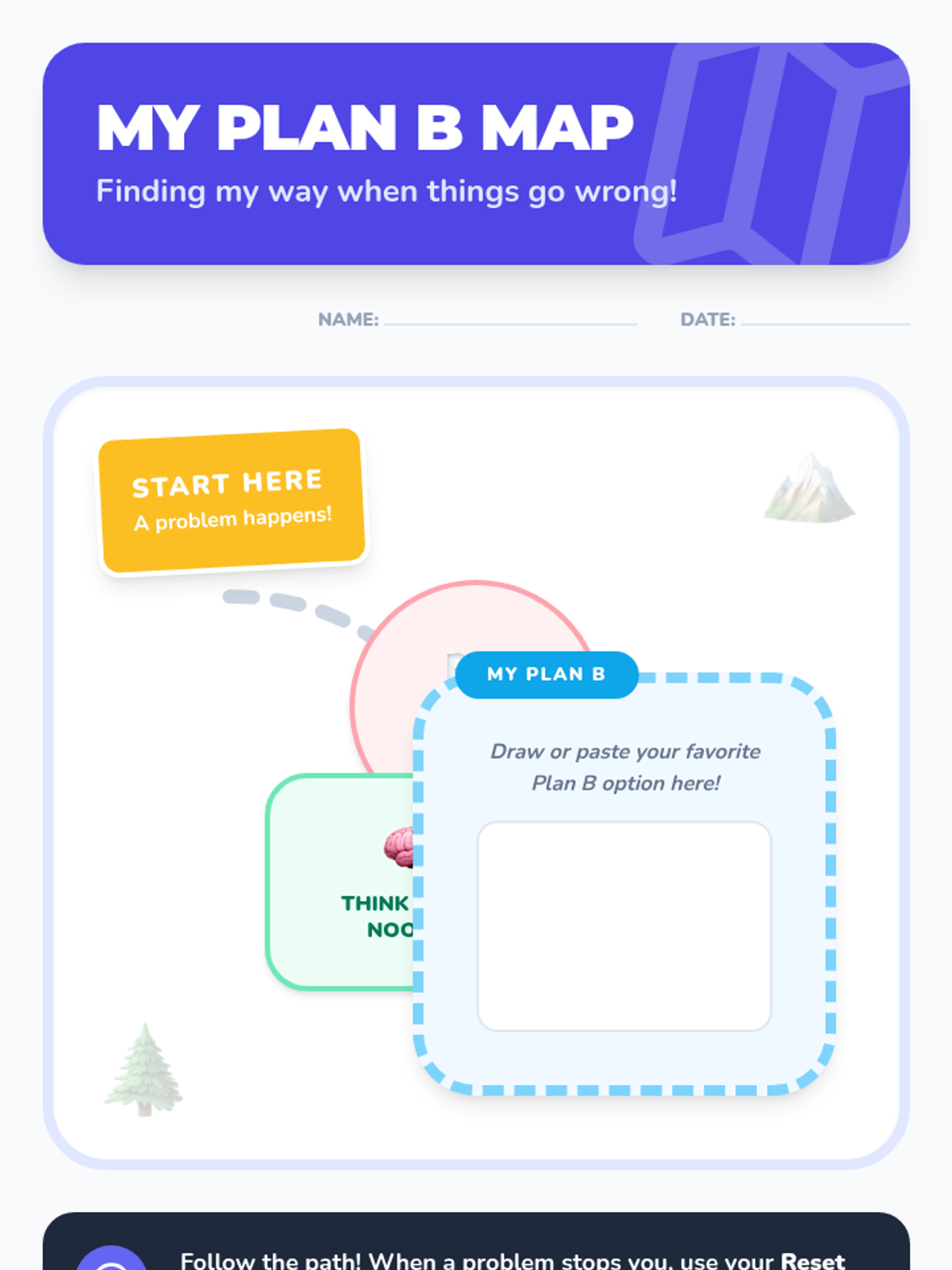
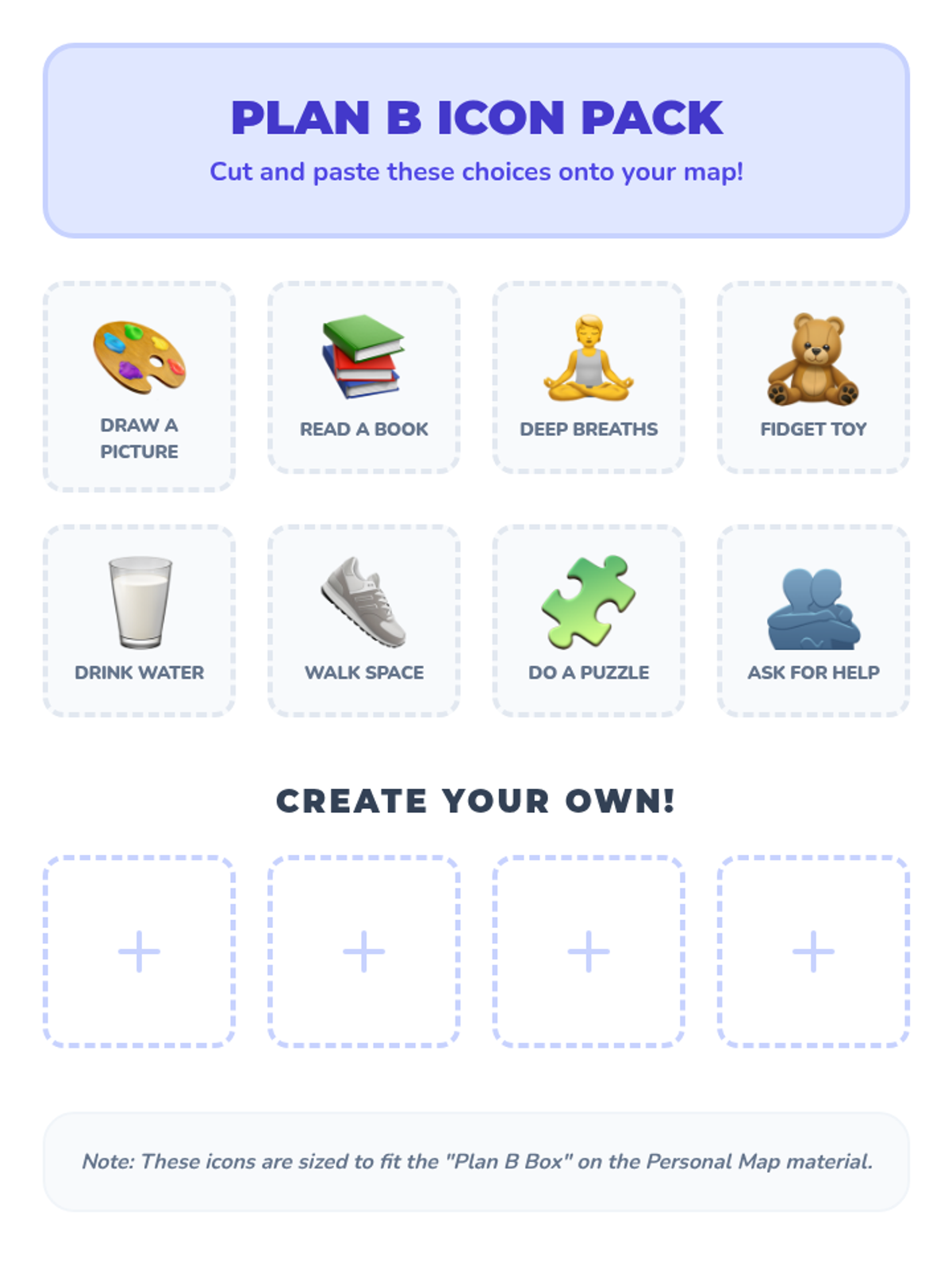
Students synthesize their learning by creating a personalized visual map of 'Plan B' options for common classroom obstacles.
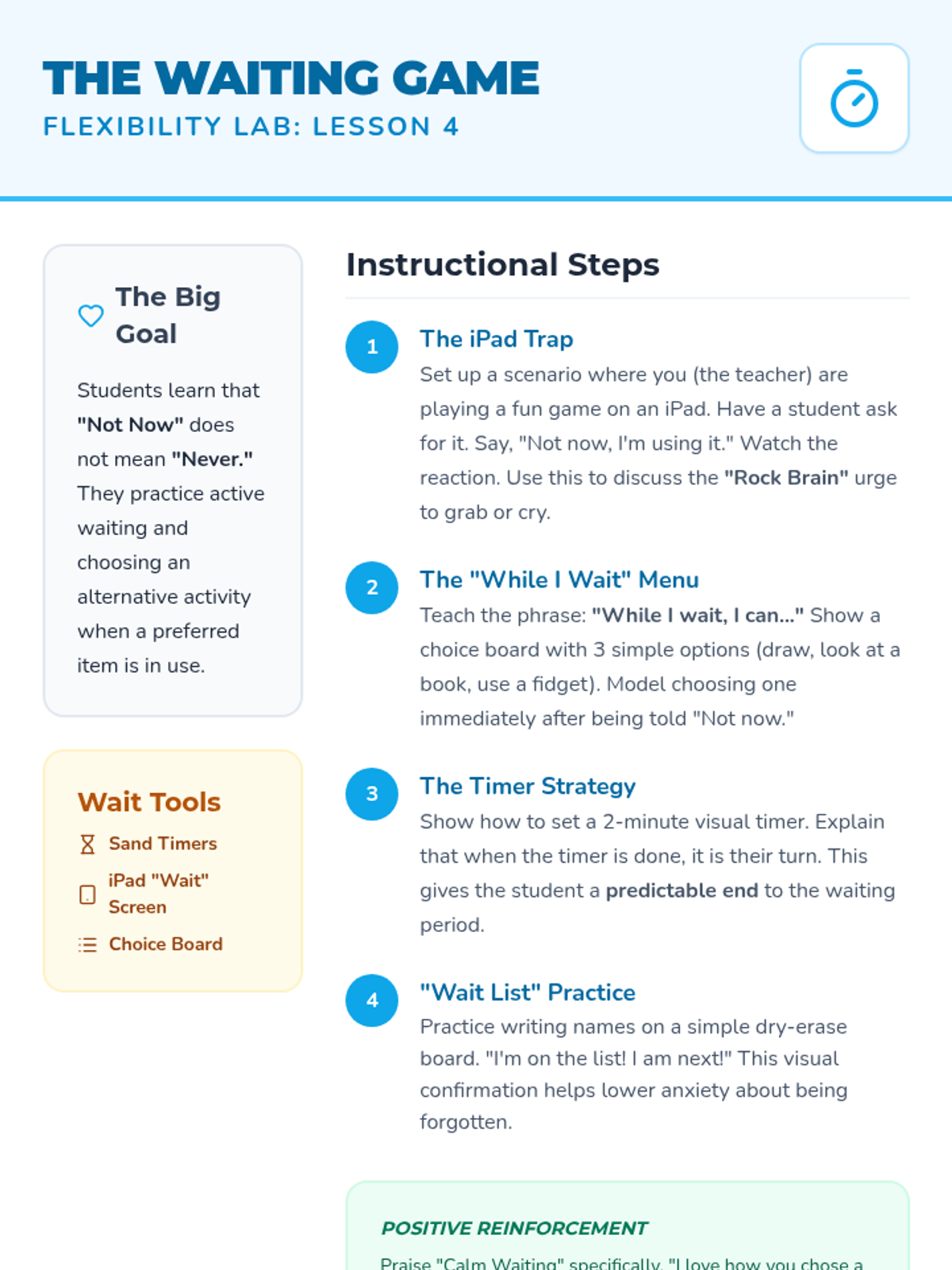
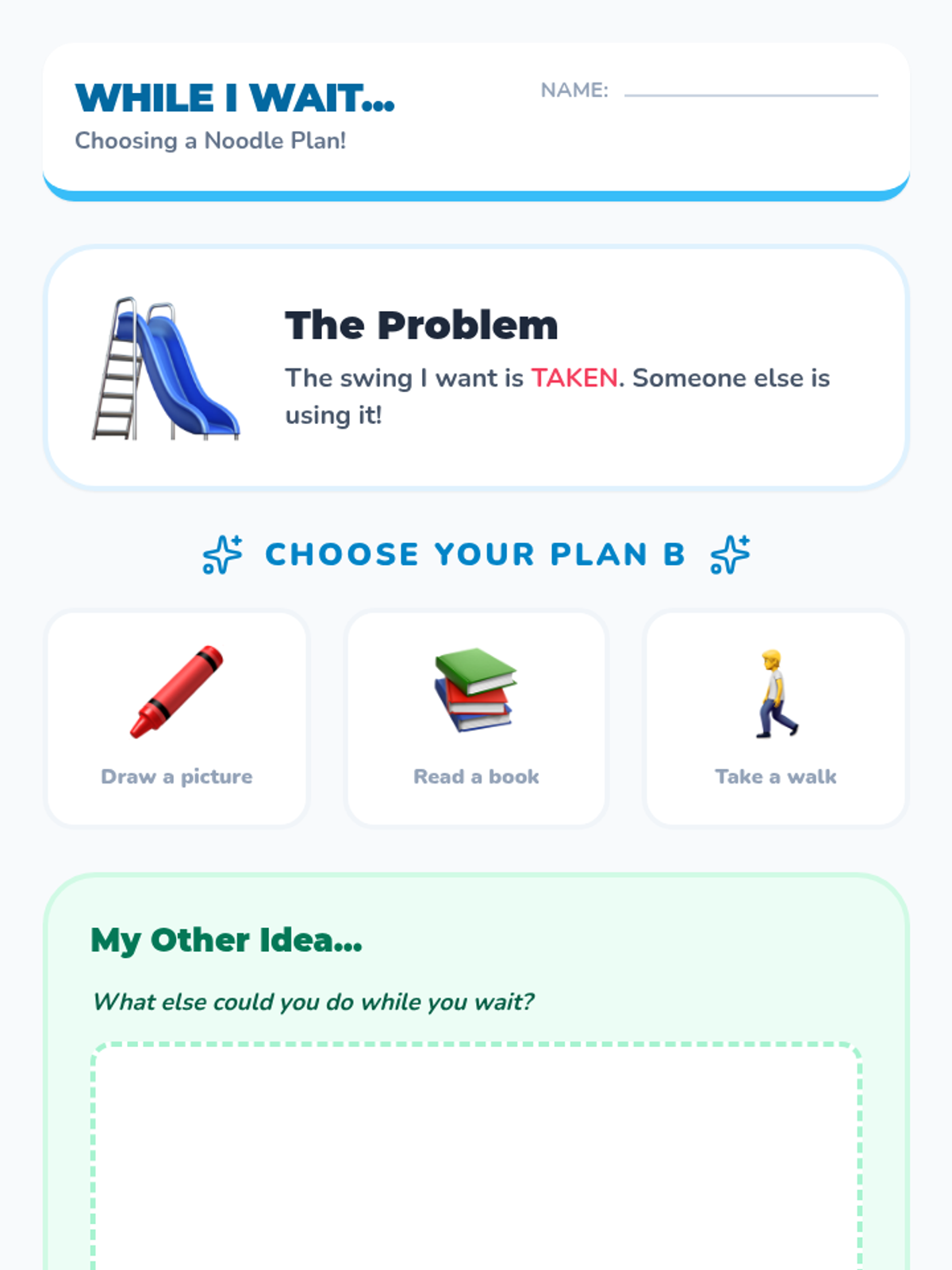
Focuses on the skill of 'waiting' and choosing alternatives when preferred items are unavailable.
Students practice managing anxiety during schedule shifts by using visual aids and moving to a 'Plan B' activity.
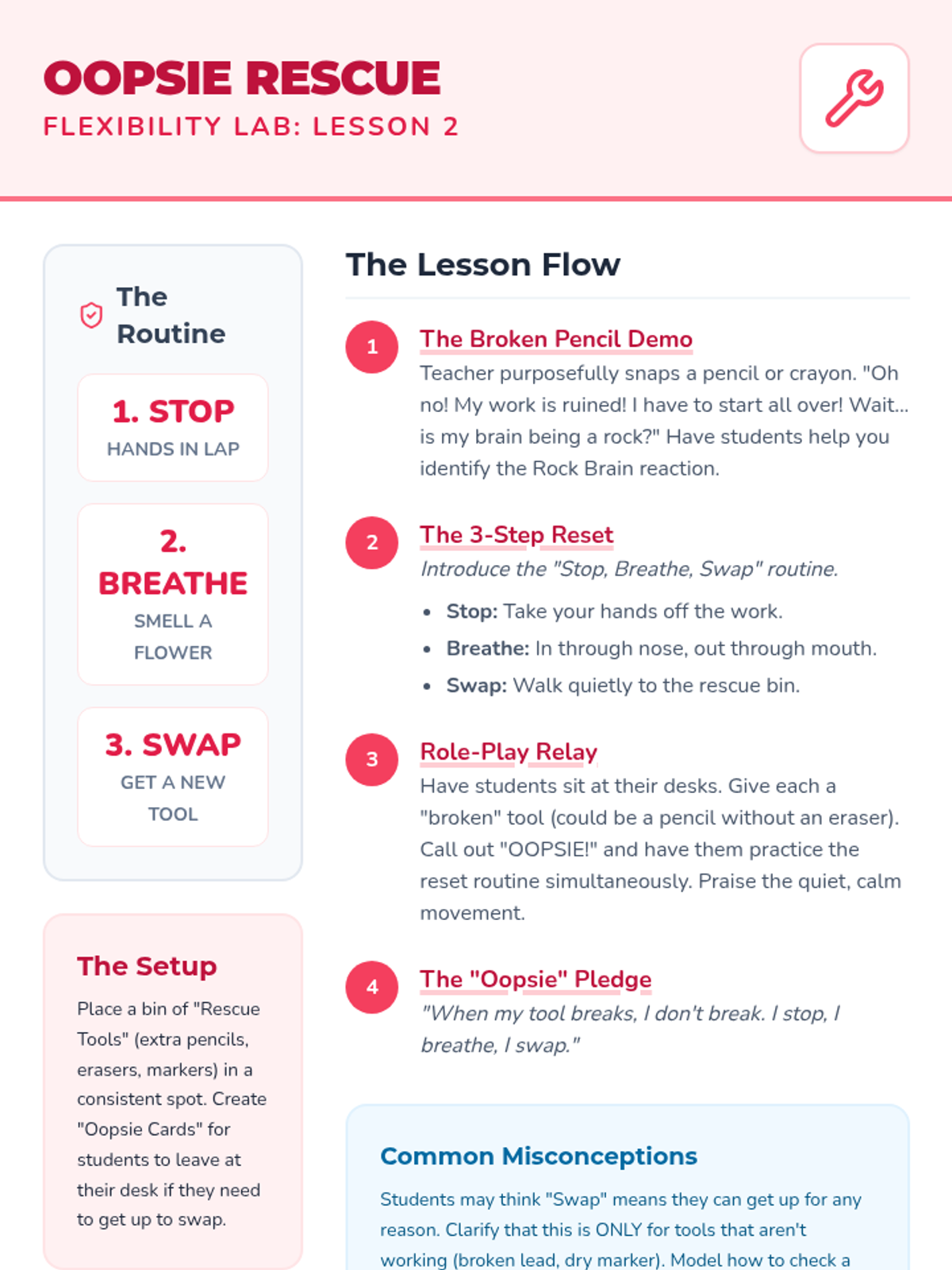
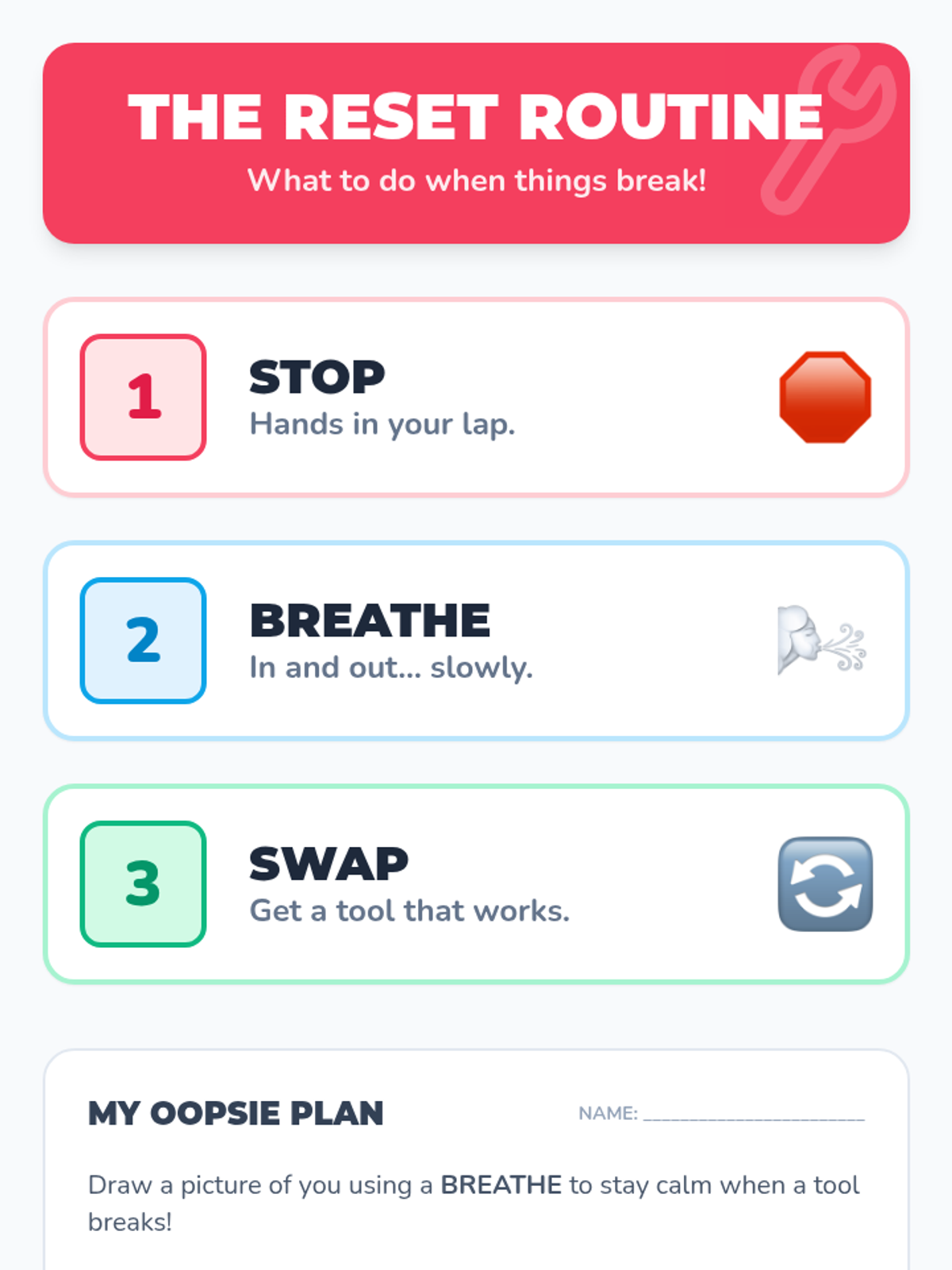
Students role-play tool breakage and practice a three-step reset routine: Stop, Breathe, Swap to maintain emotional regulation.
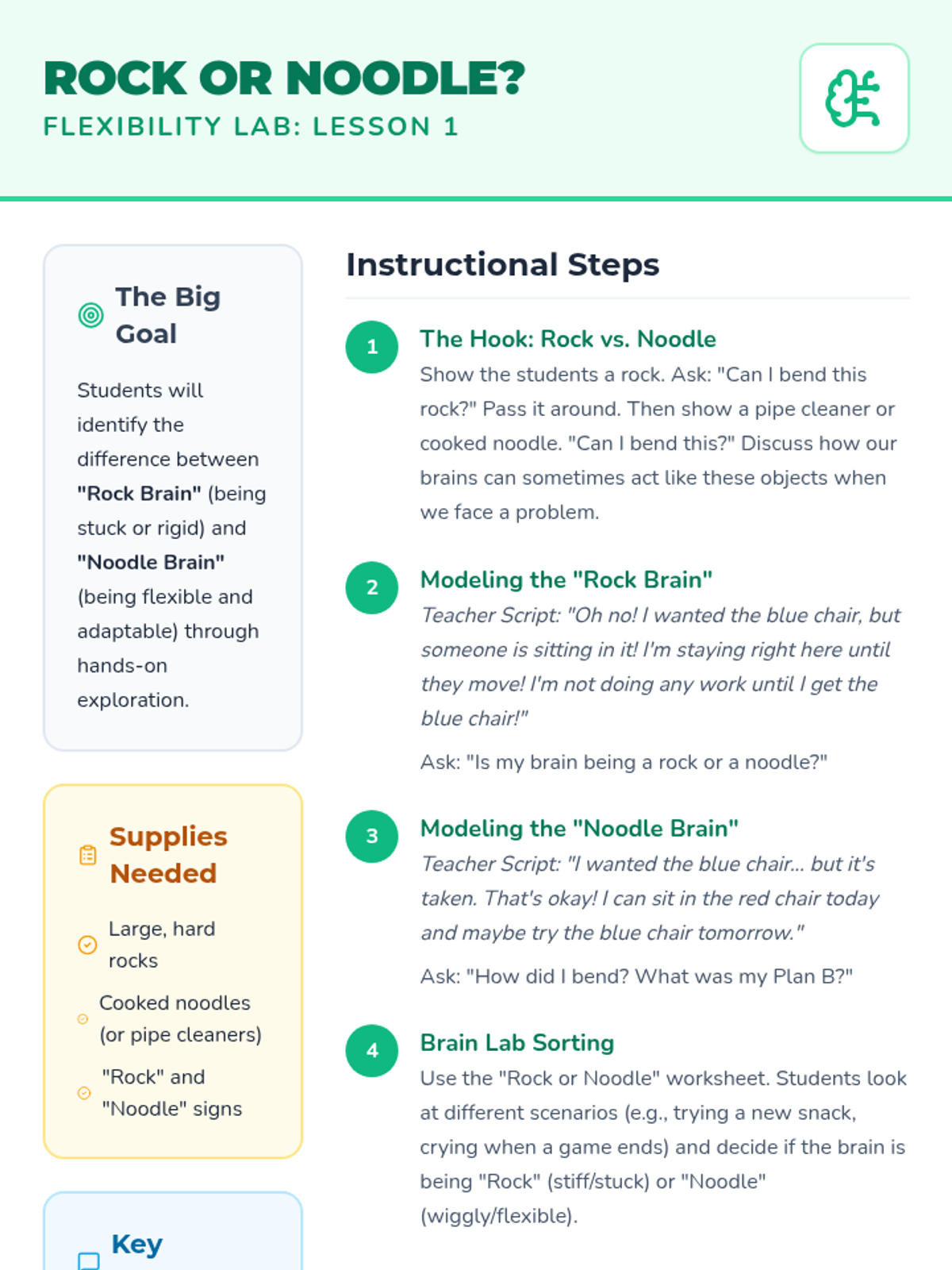
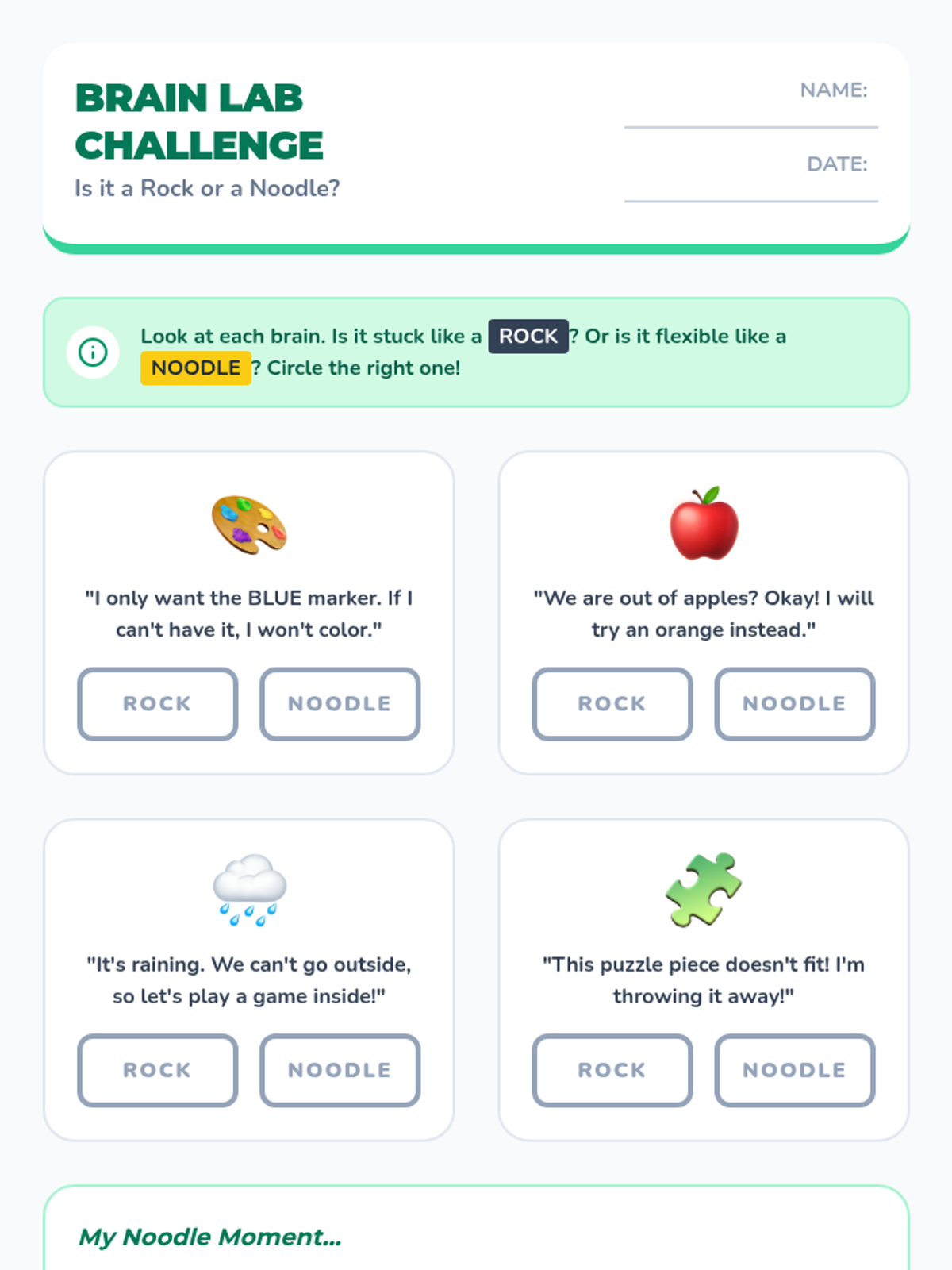
Students explore the difference between 'rock brain' (stuck) and 'noodle brain' (flexible) using physical objects and metaphors. They establish the core vocabulary for the unit.