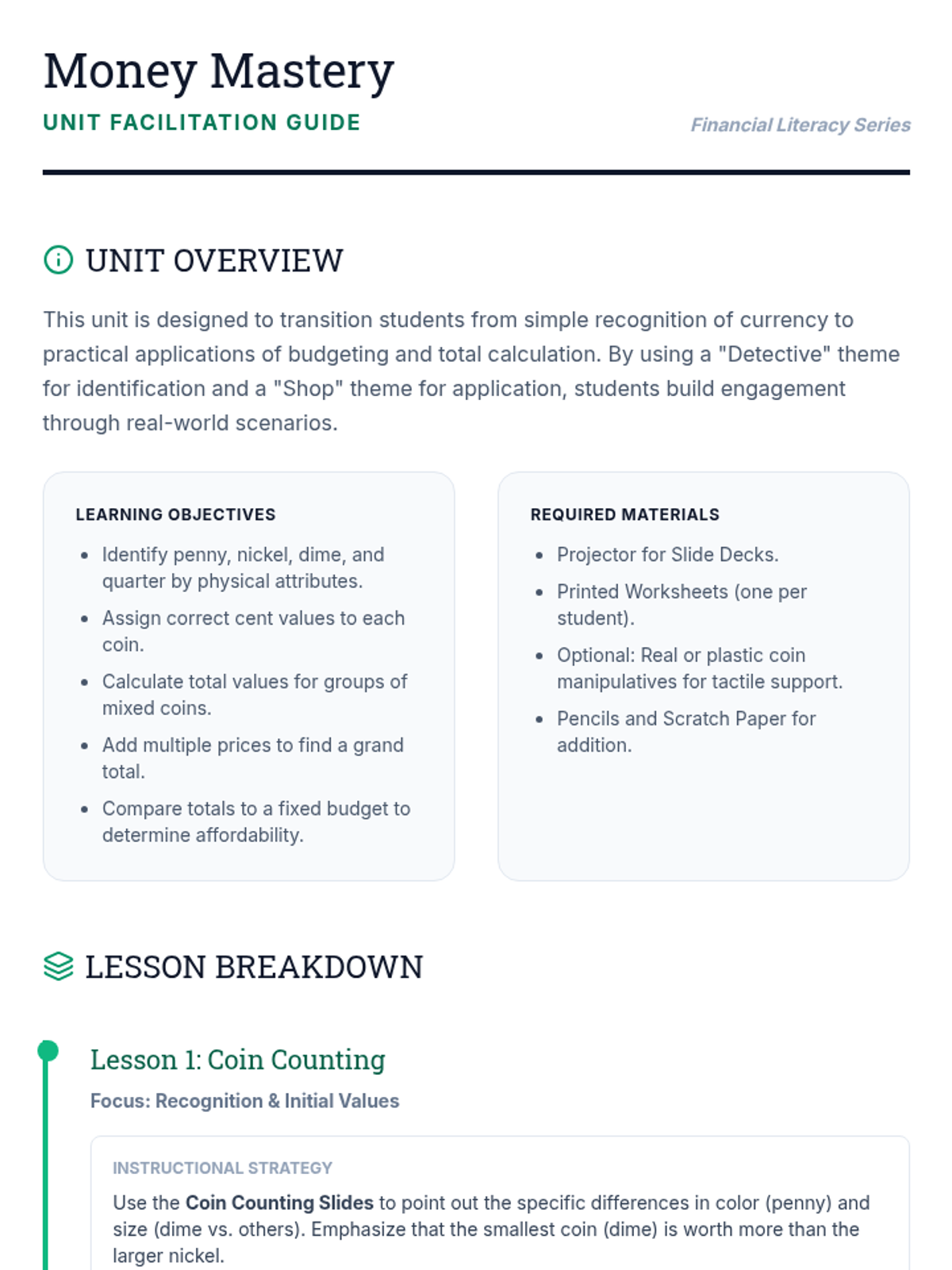
Budgeting, saving, and investment strategies alongside practical skills for managing credit, taxes, and banking. Addresses insurance needs, employment income, and major purchase decisions to support comprehensive long-term financial planning.
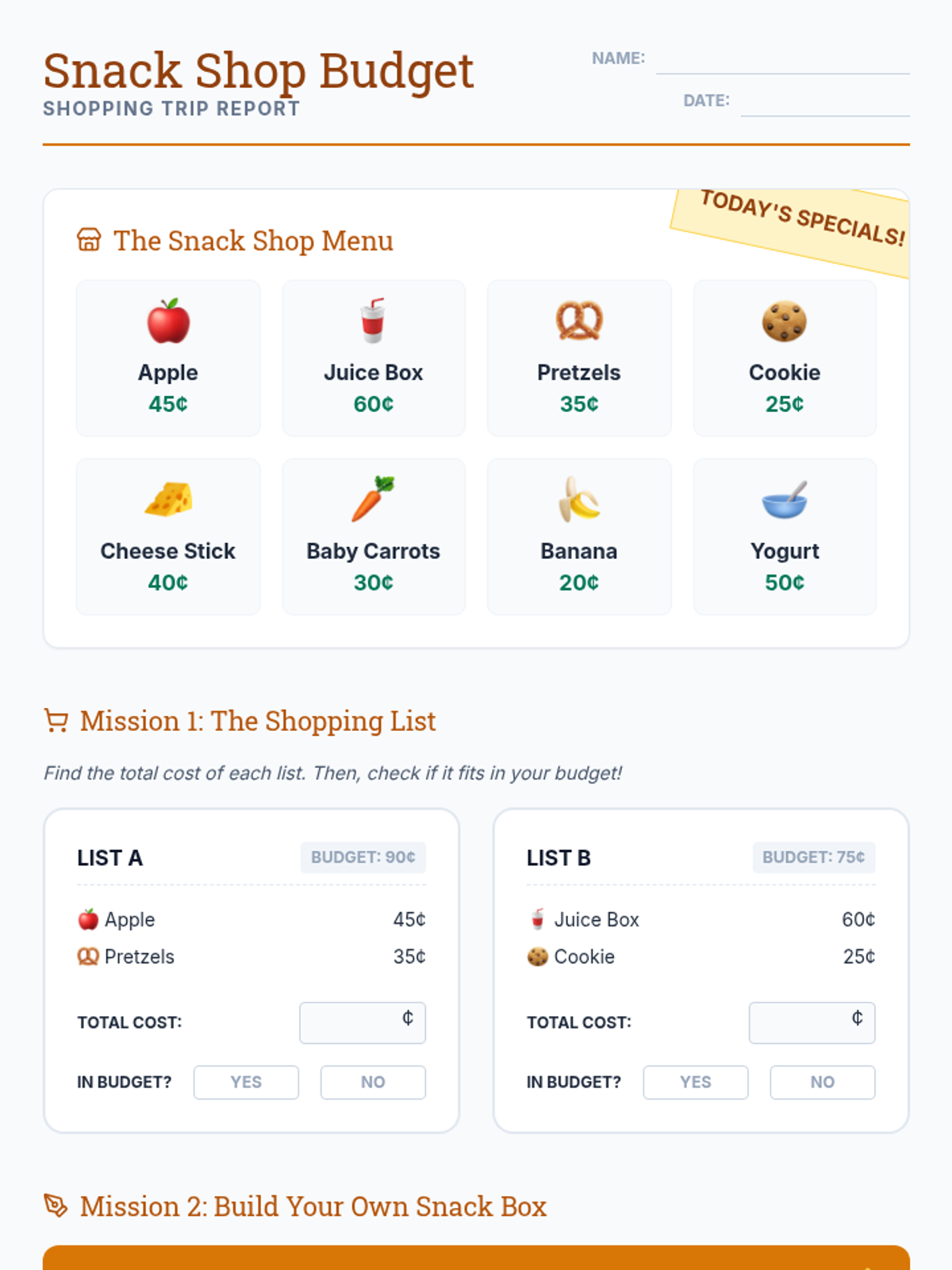
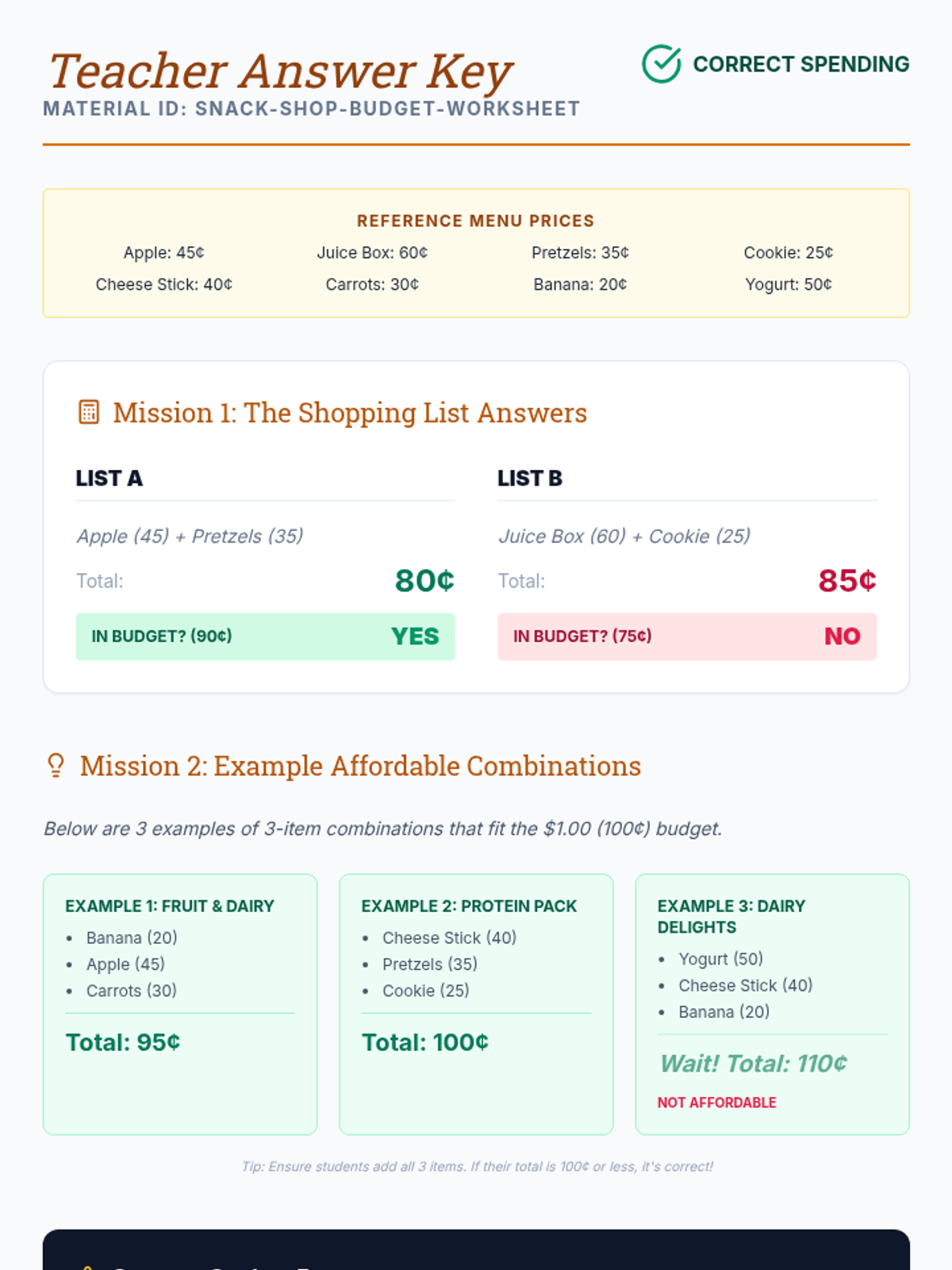
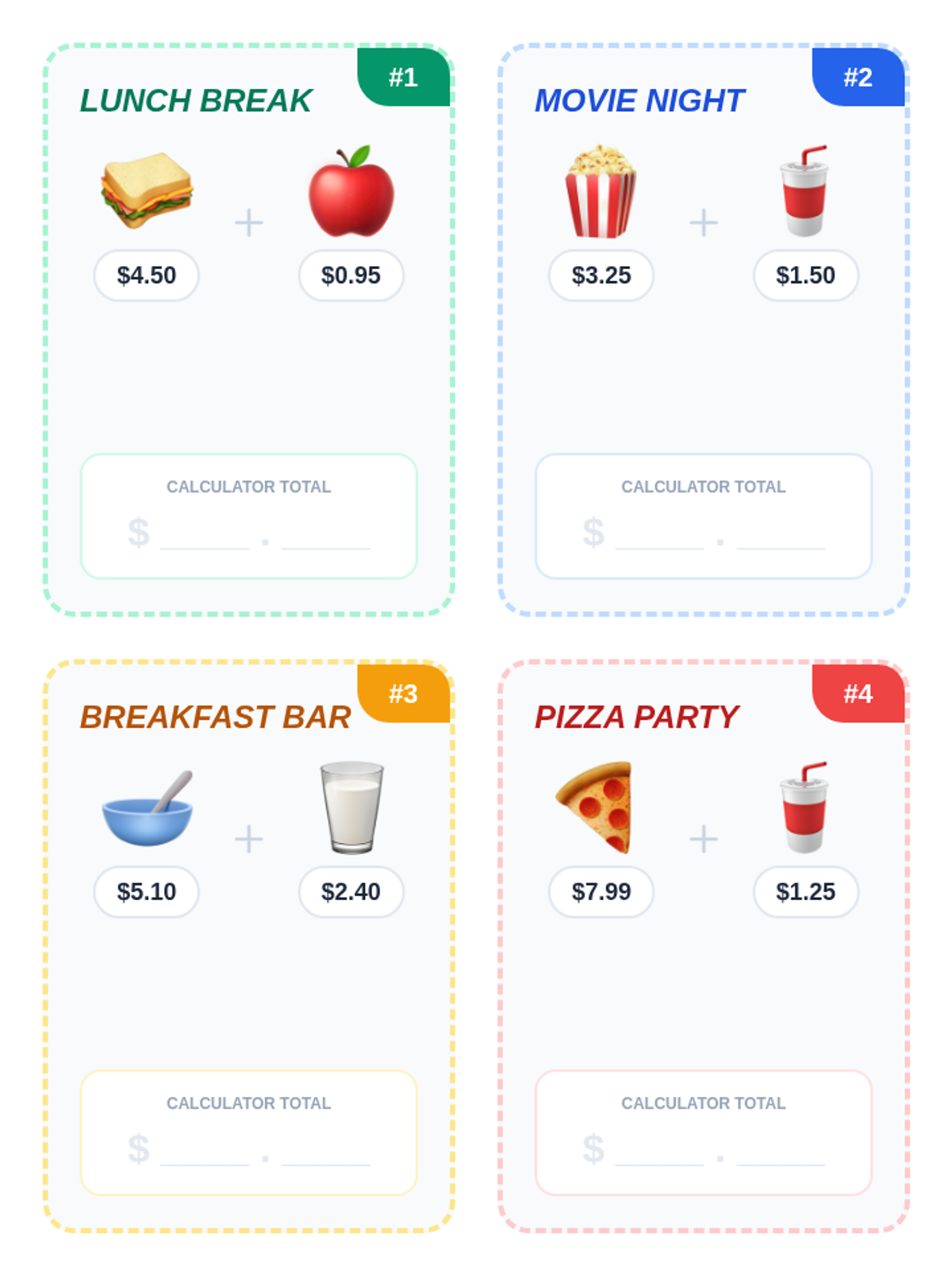
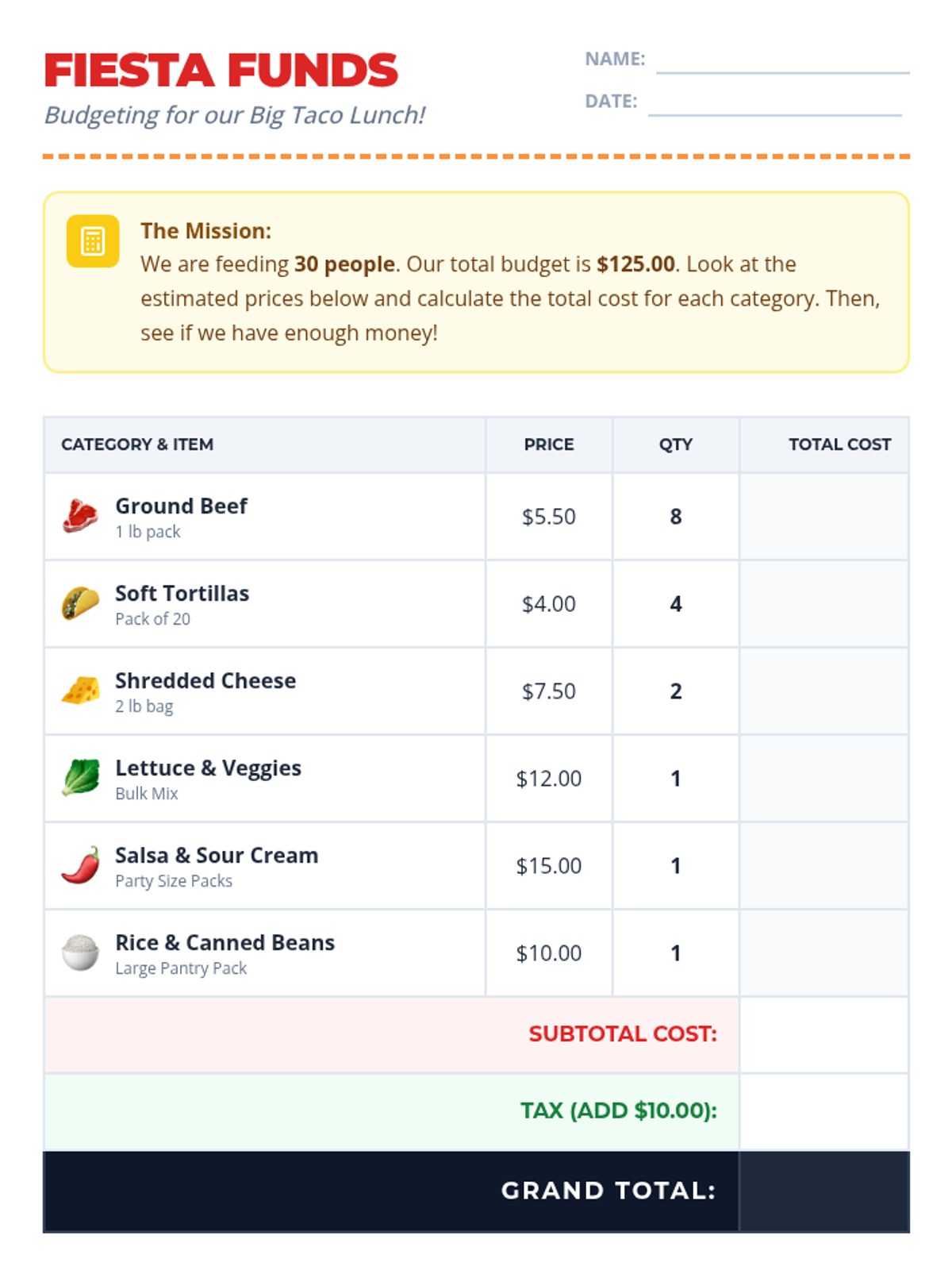
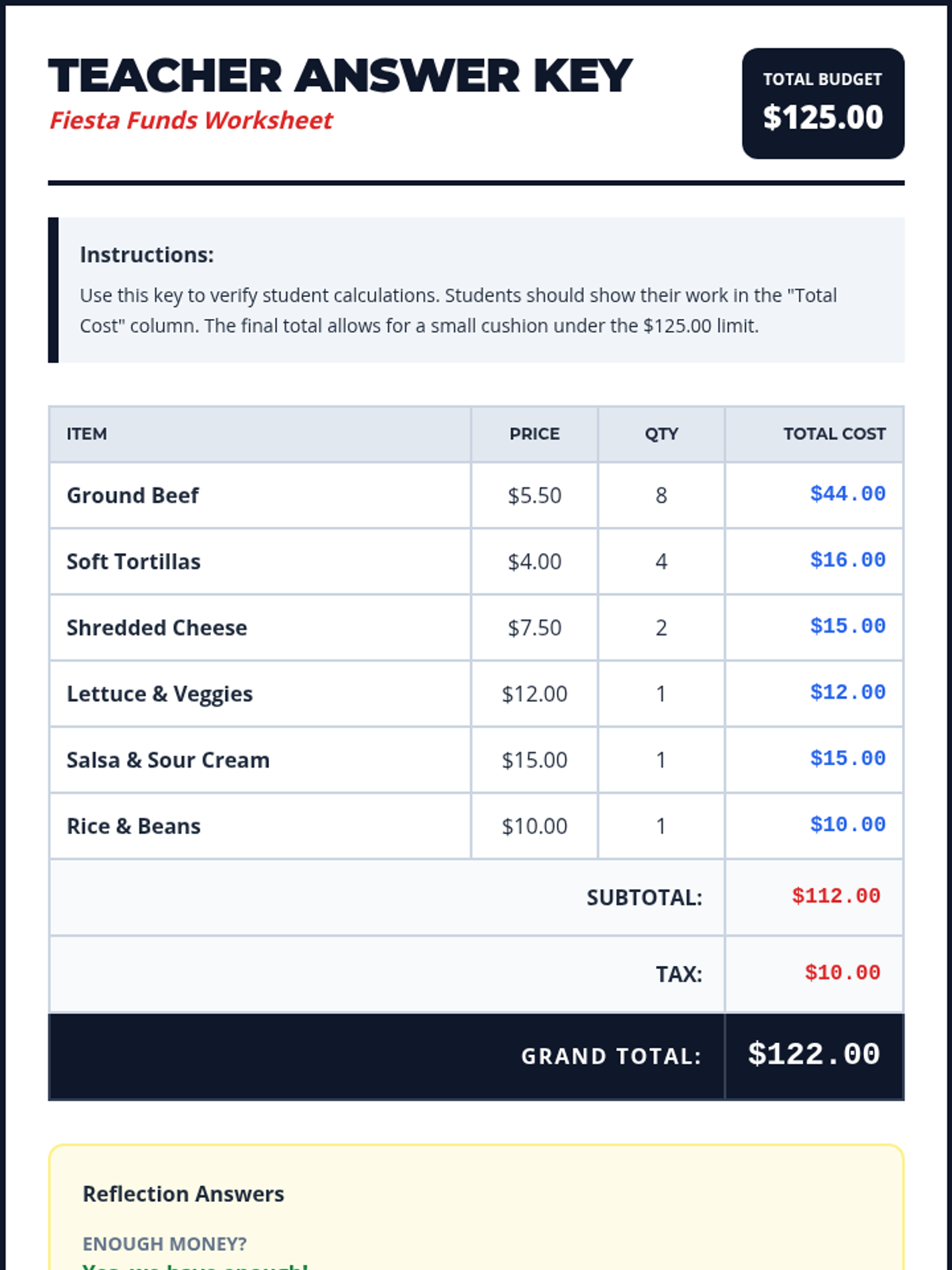
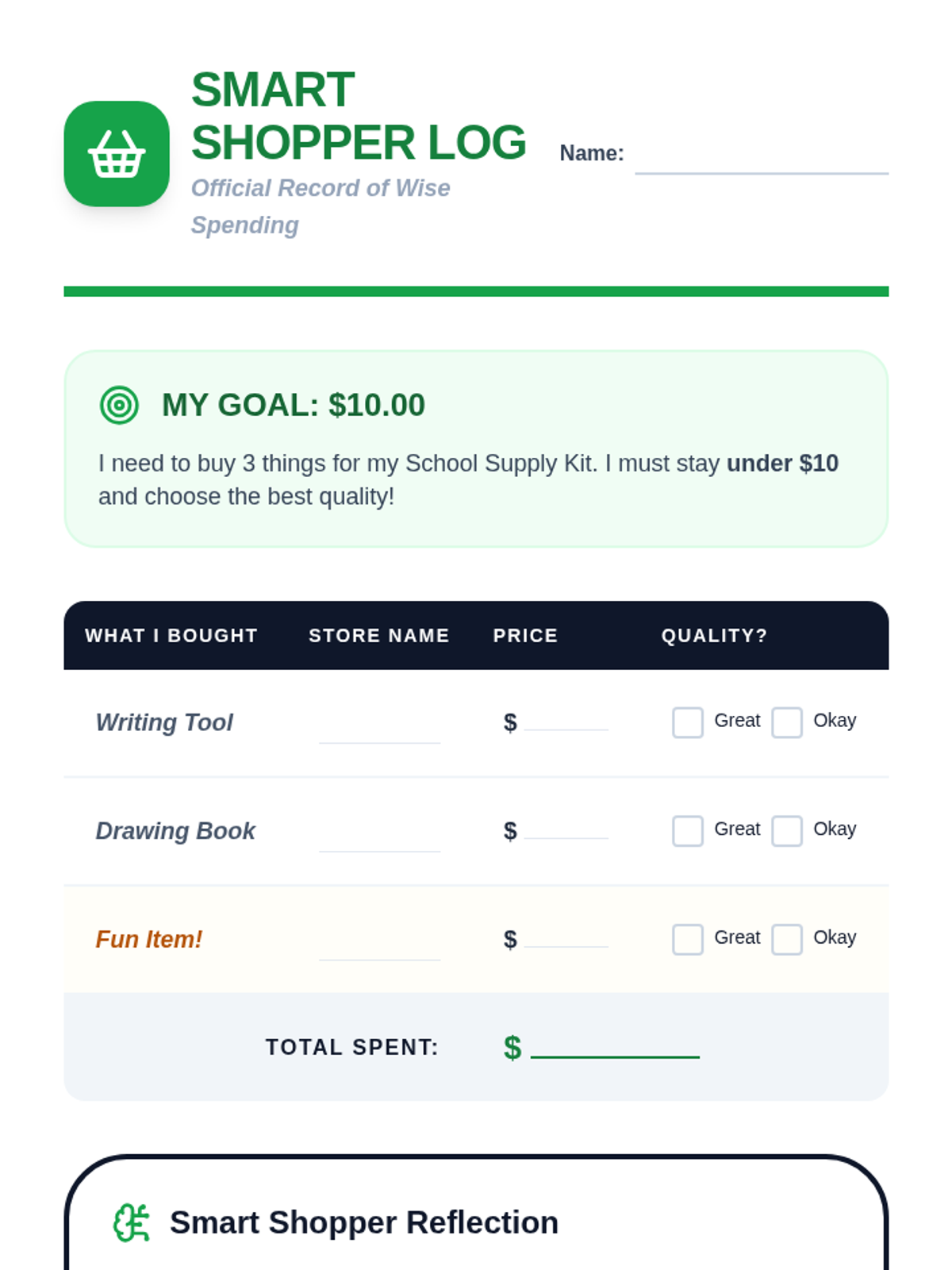
This lesson teaches students how to calculate total costs of multiple items and make spending decisions based on a fixed budget.
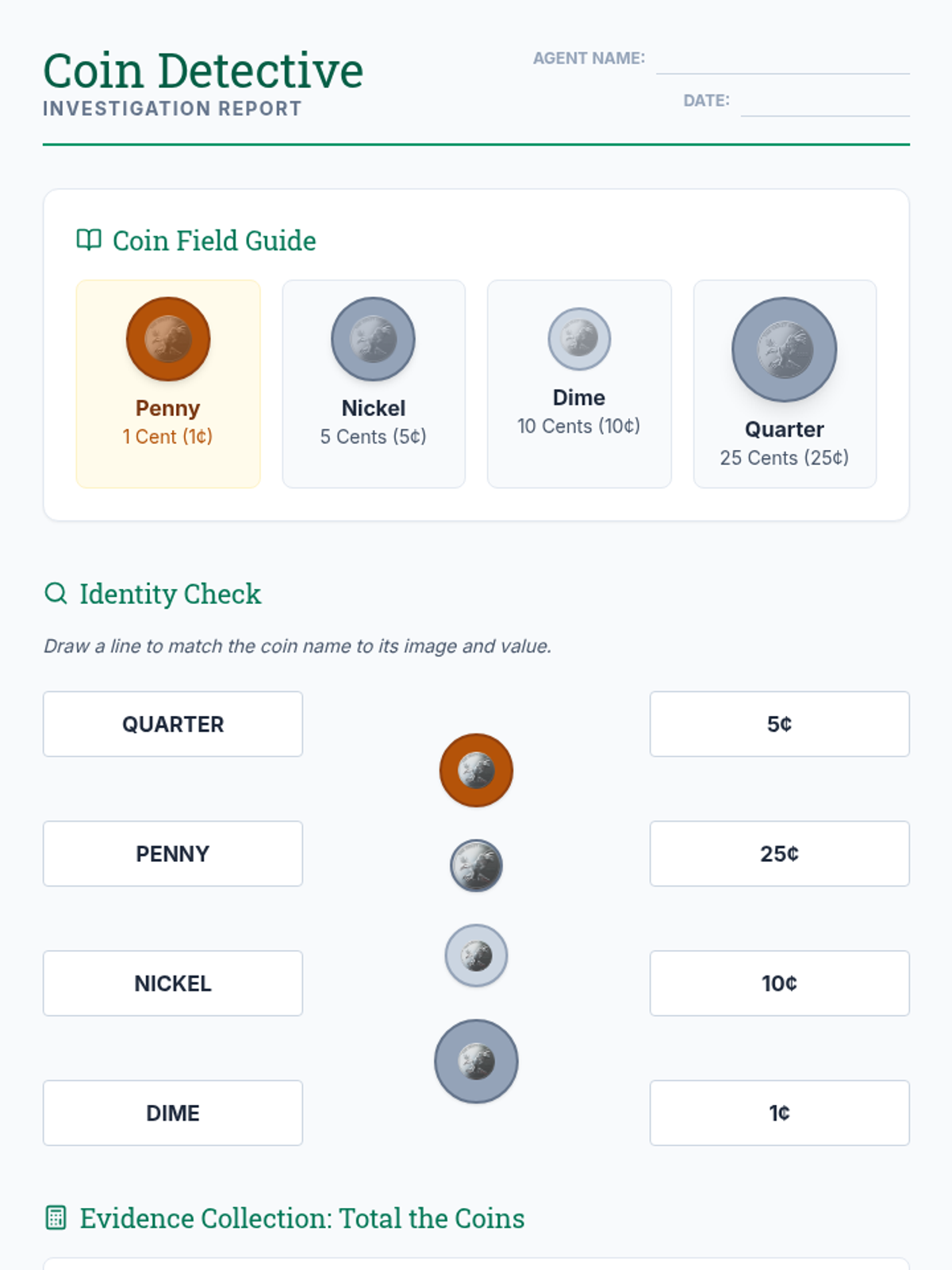
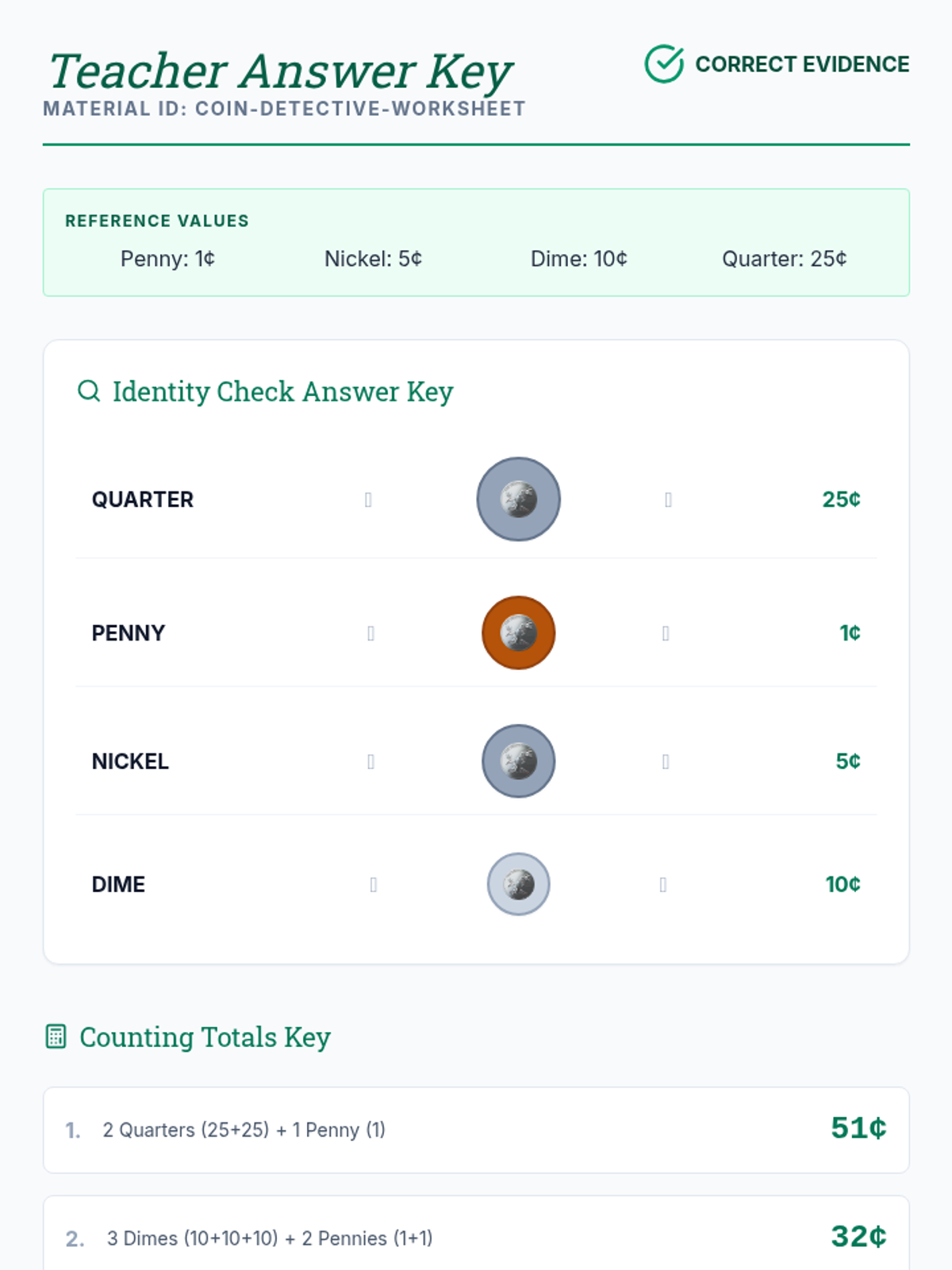
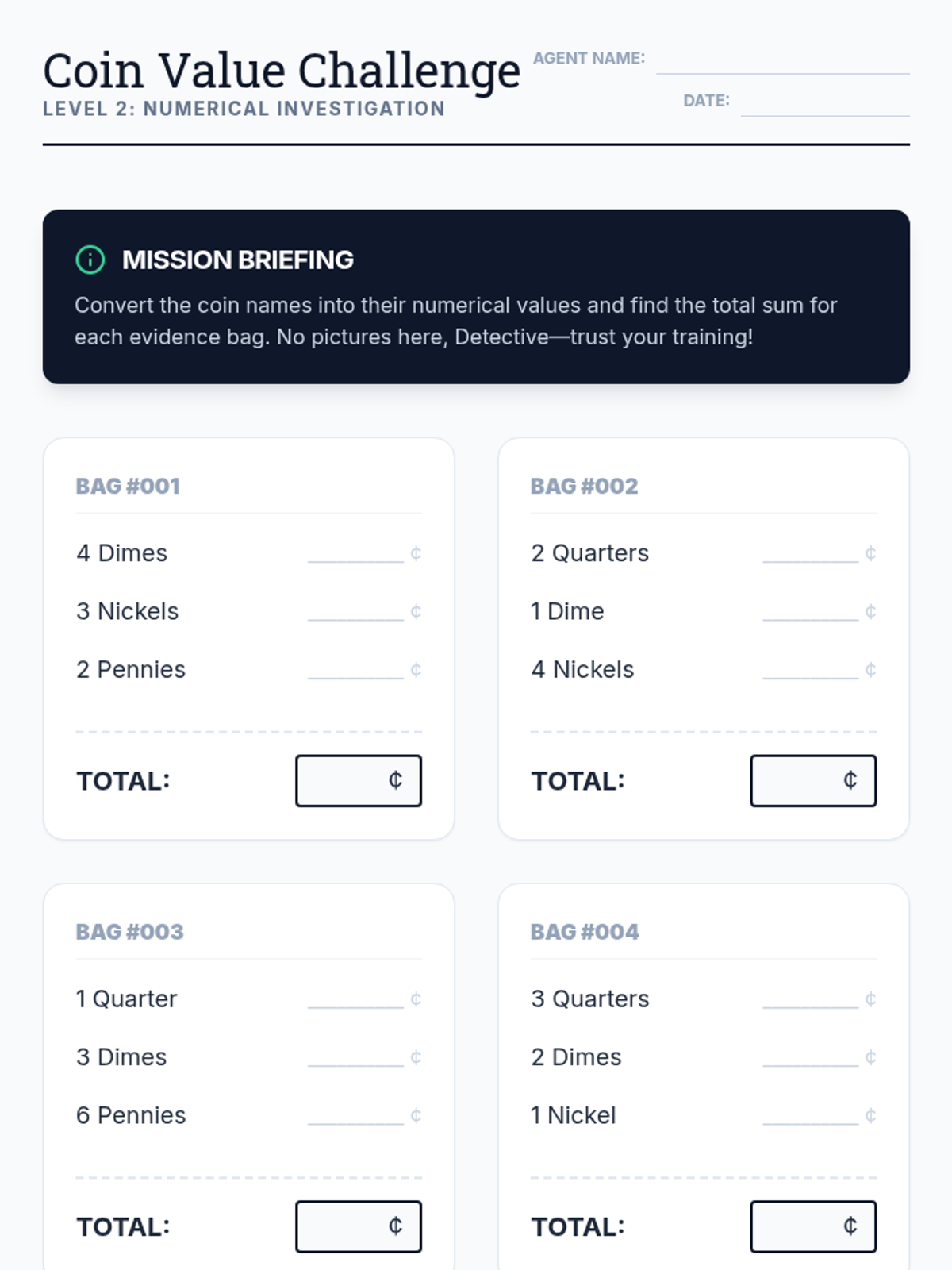
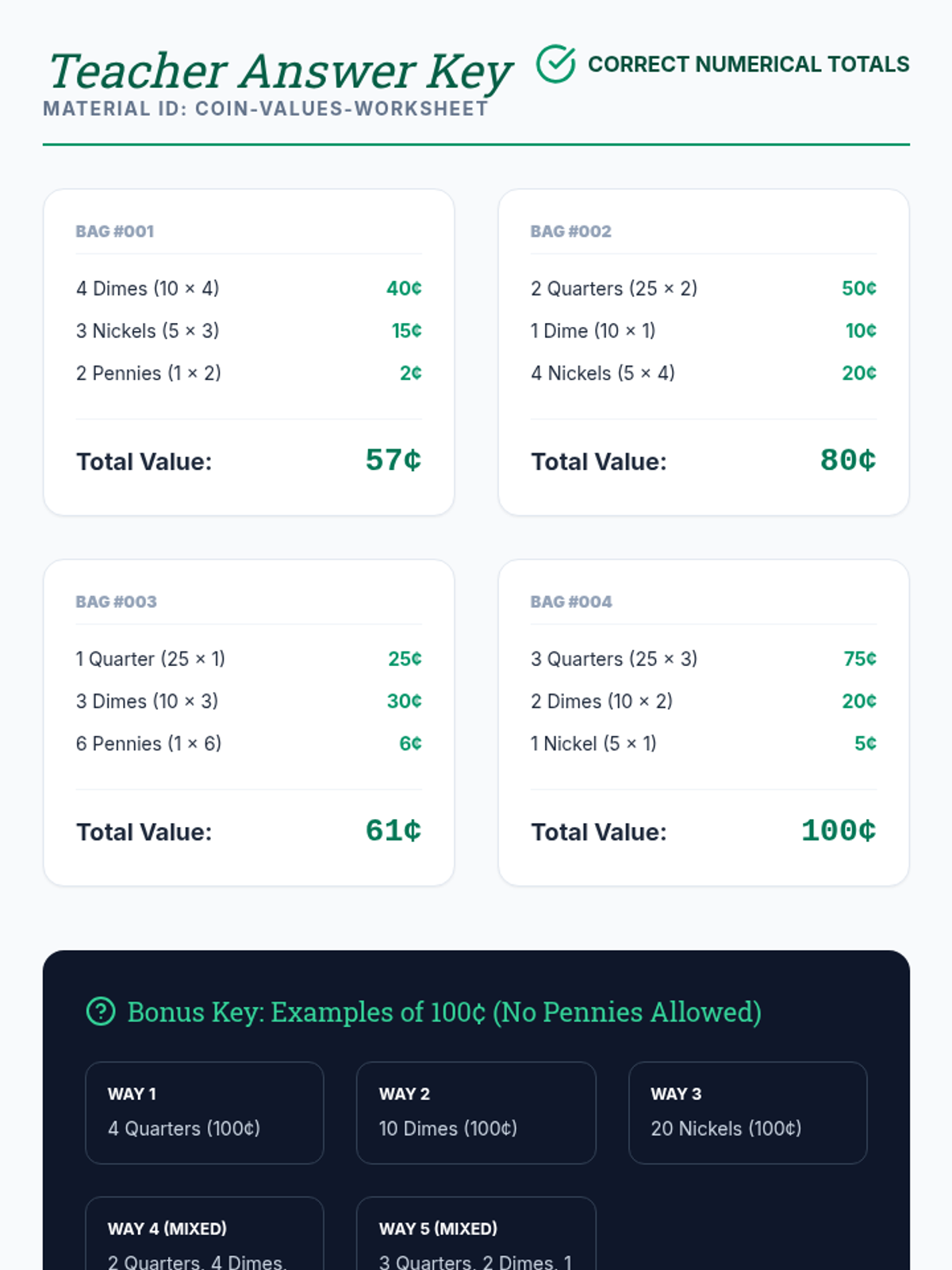
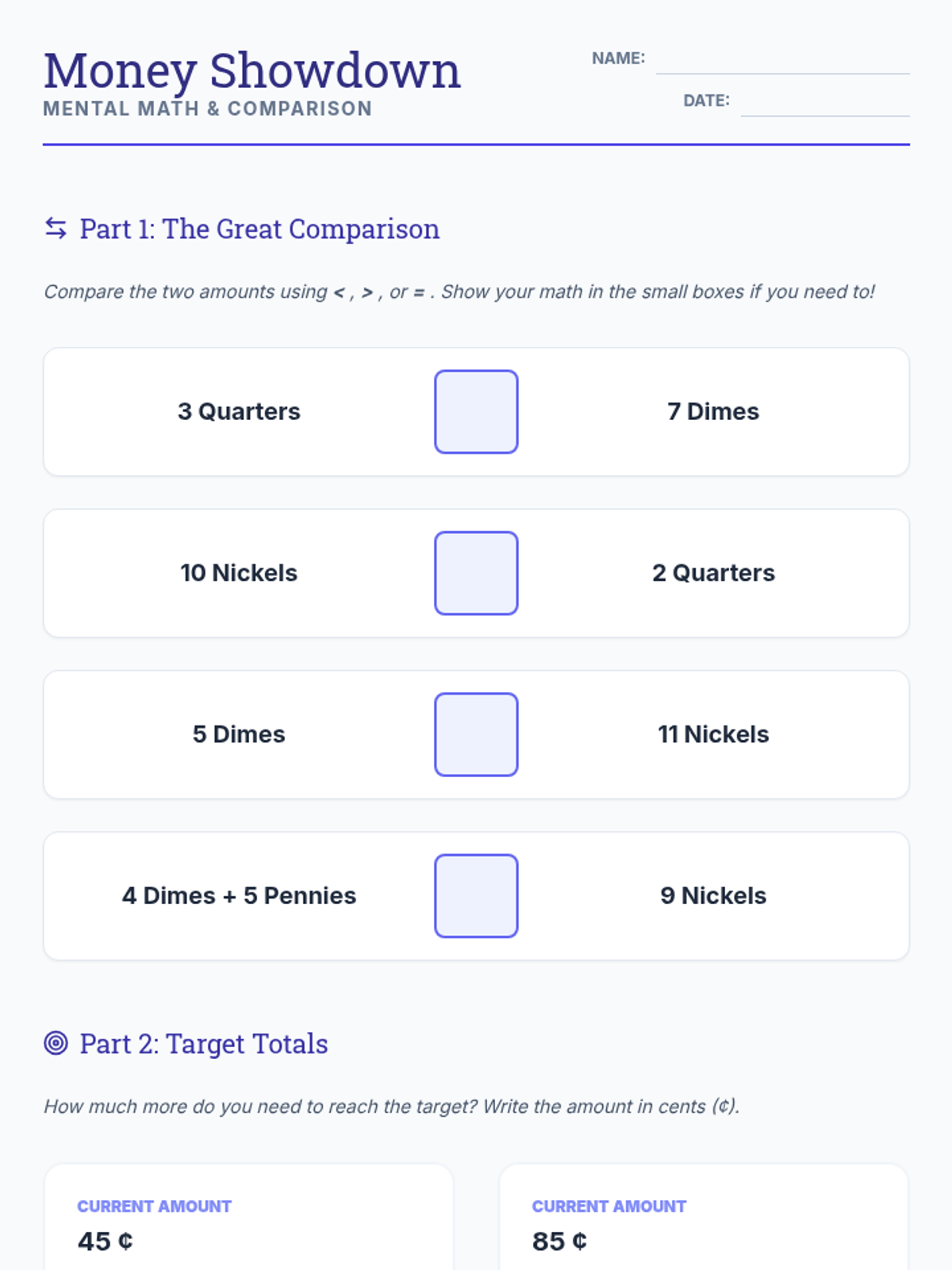
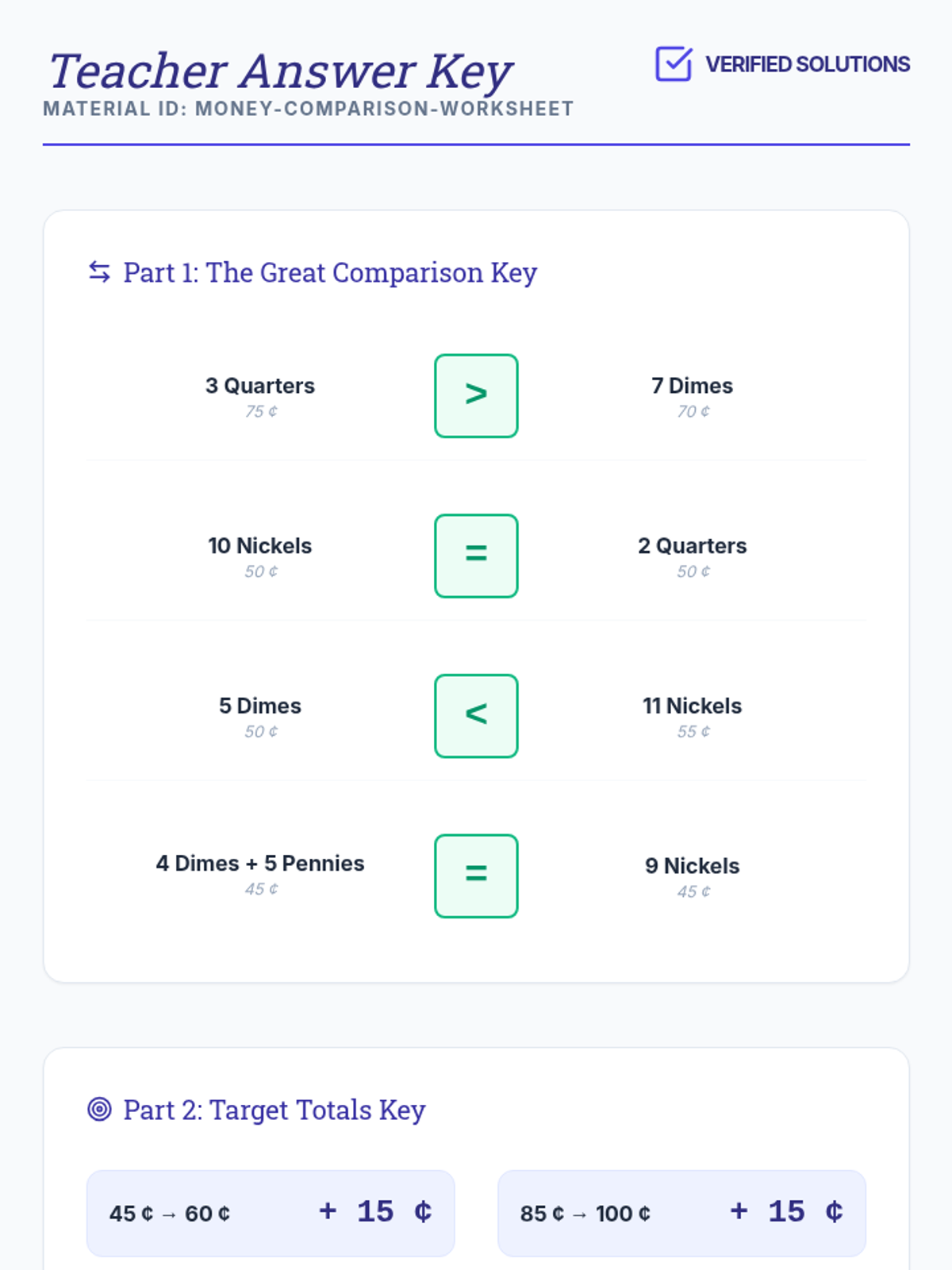
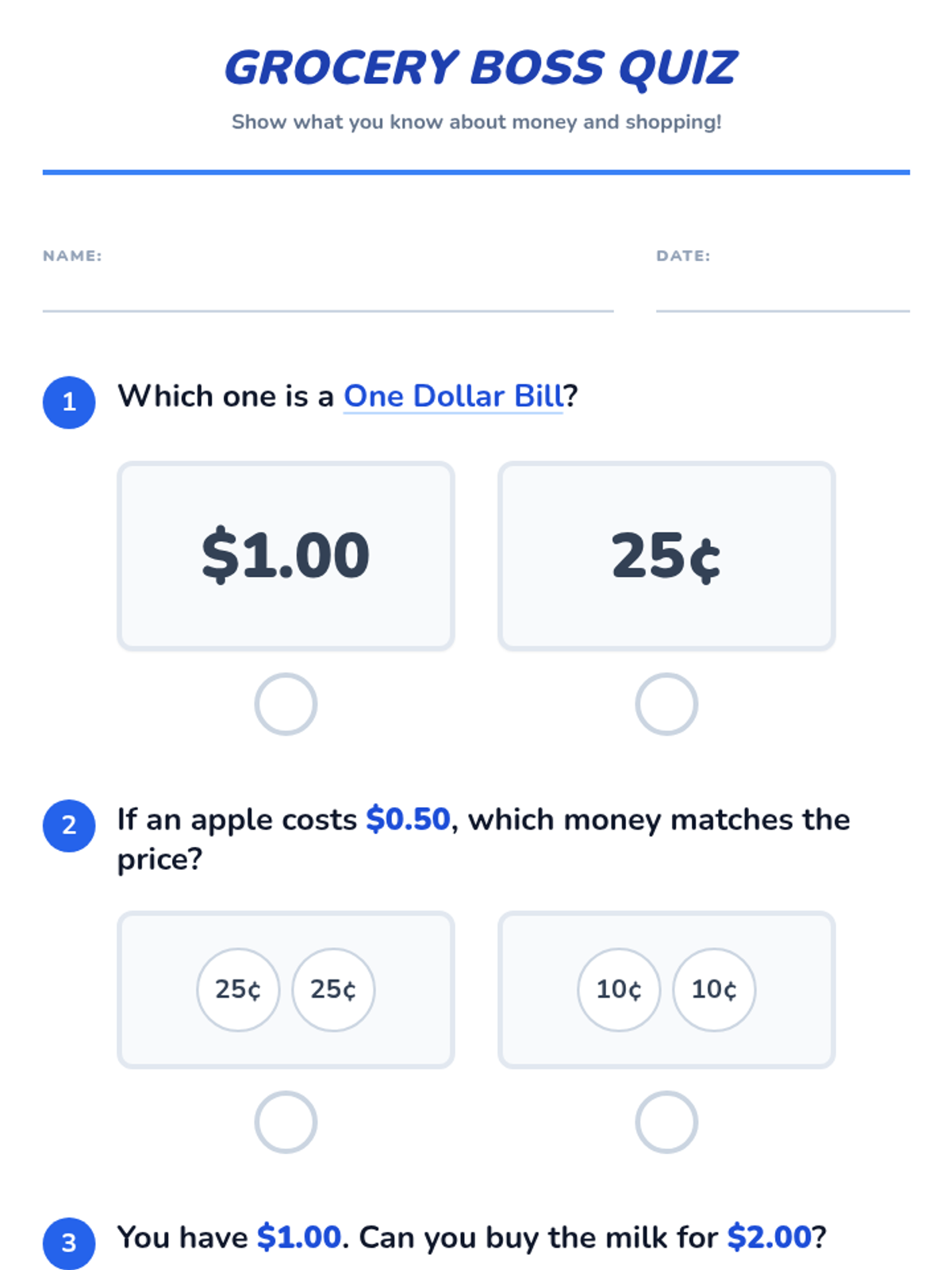
This lesson focuses on identifying US coins (penny, nickel, dime, quarter) and their respective values through visual recognition and matching.
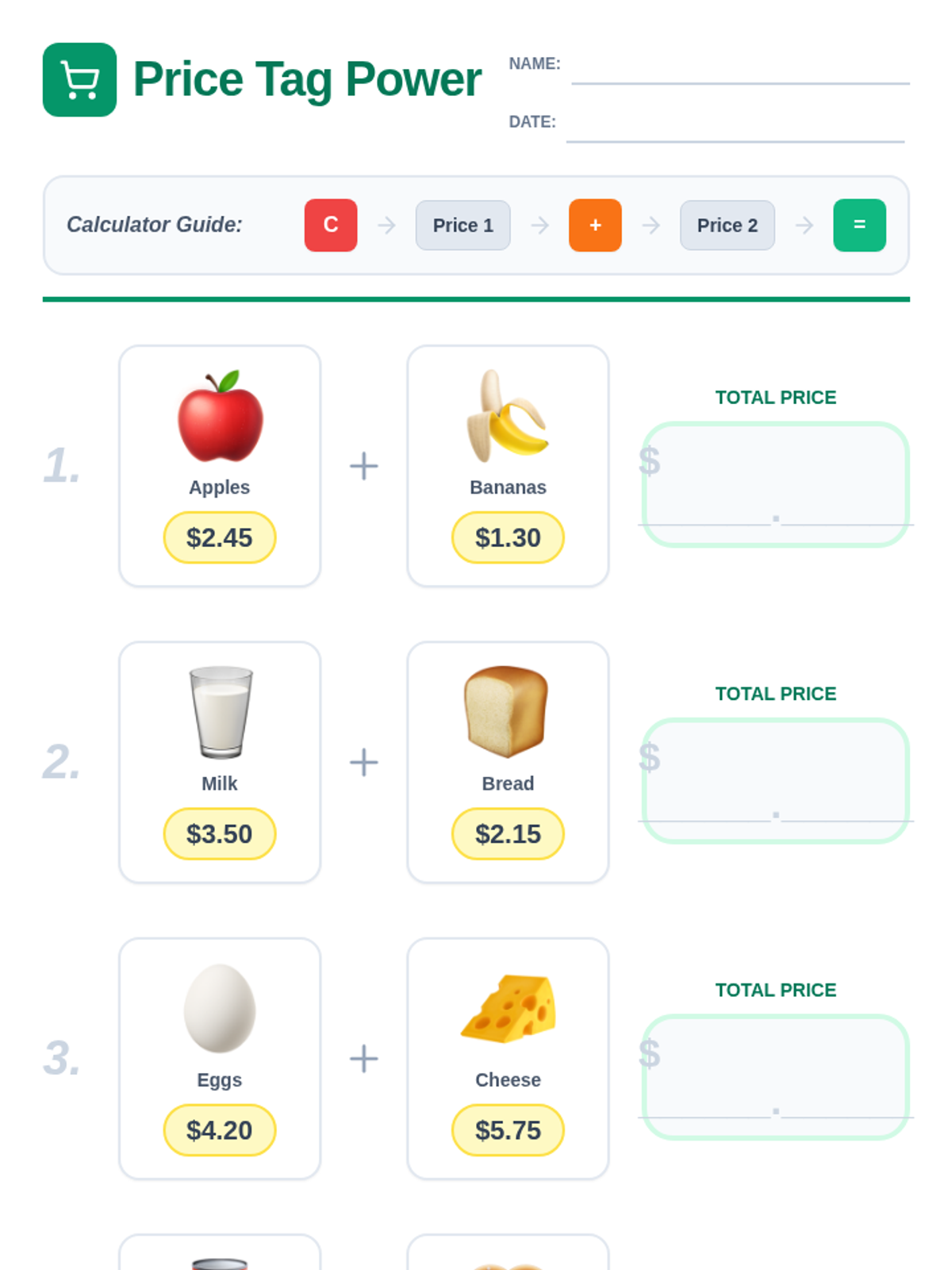
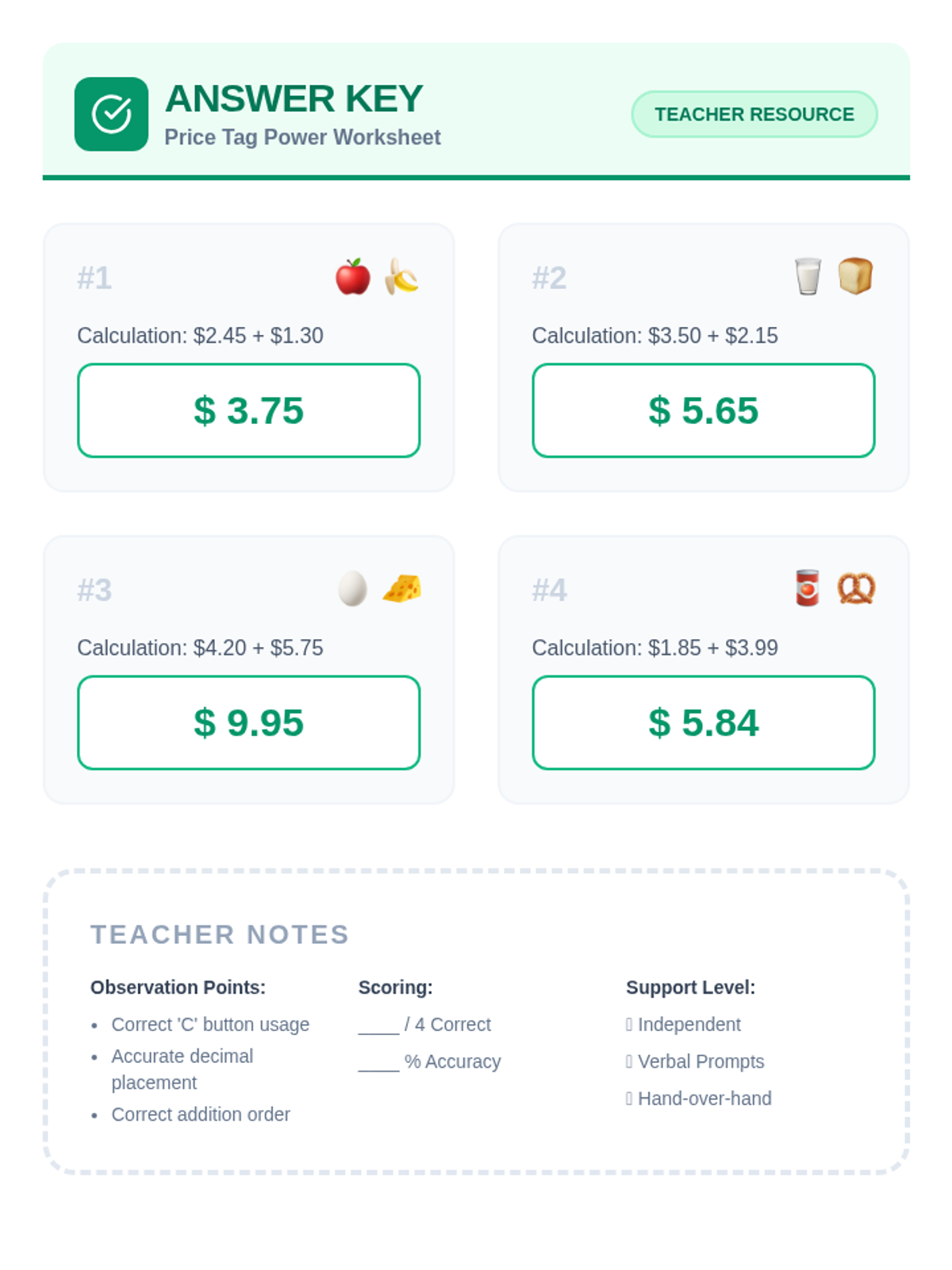
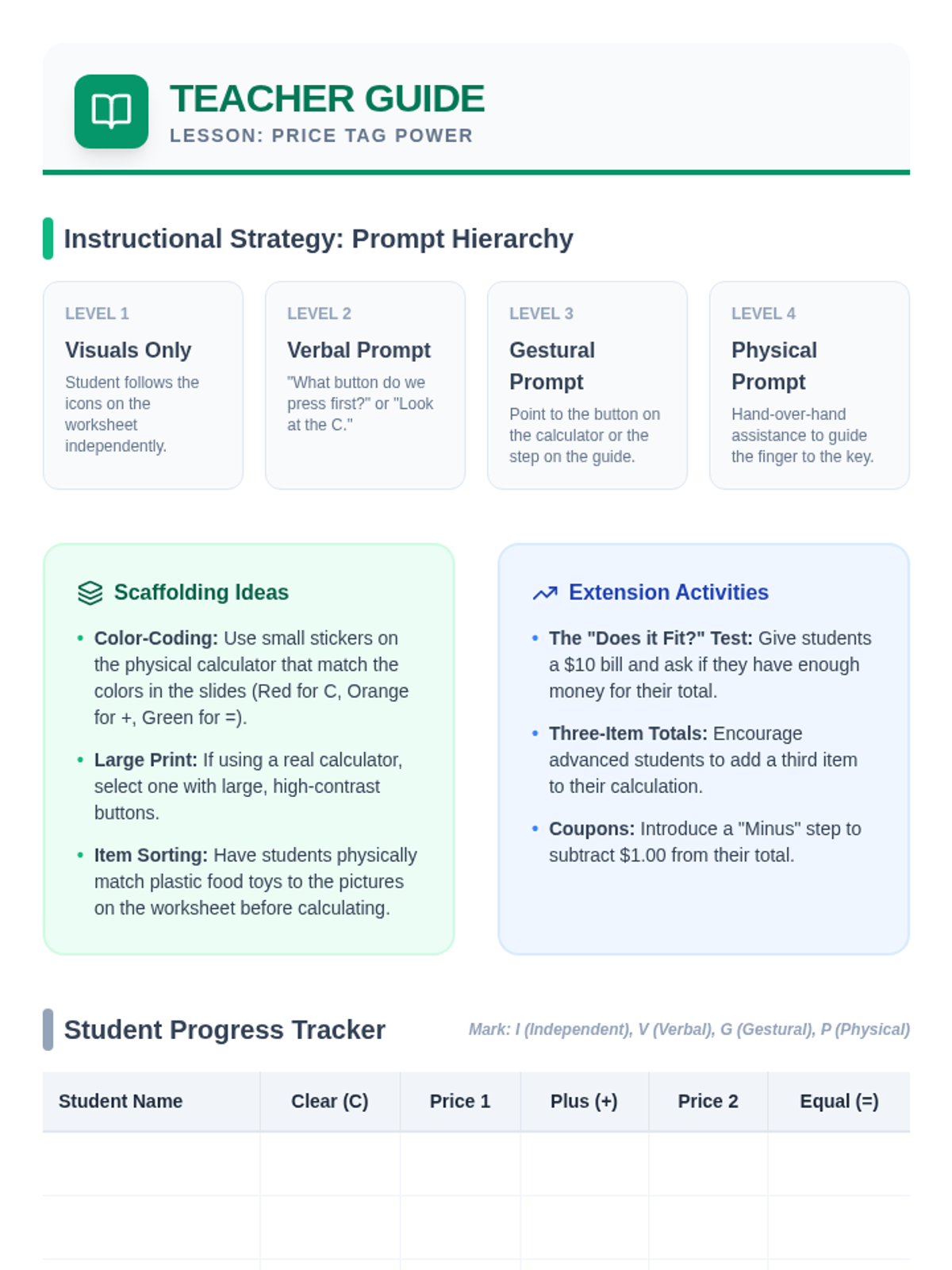
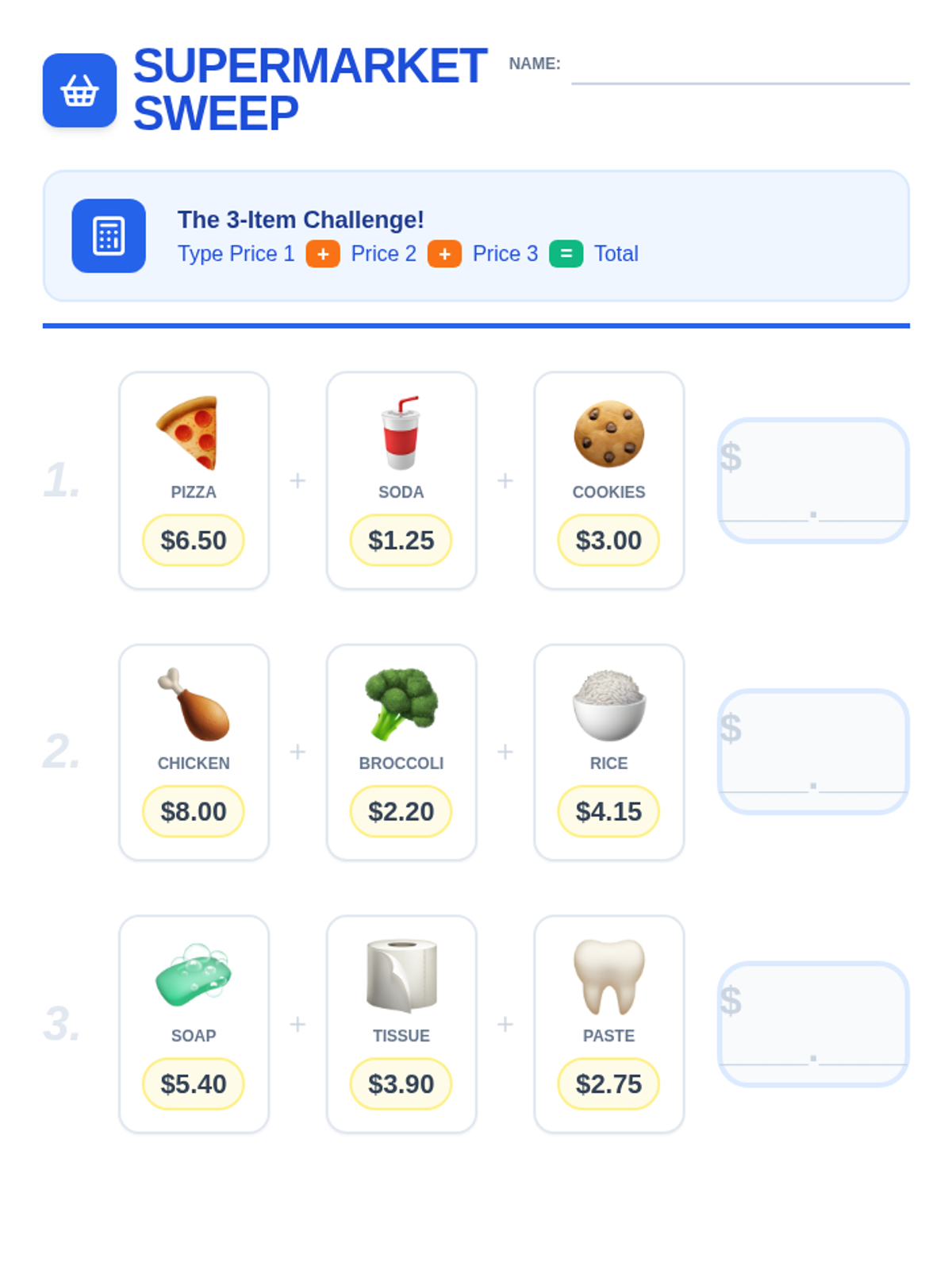
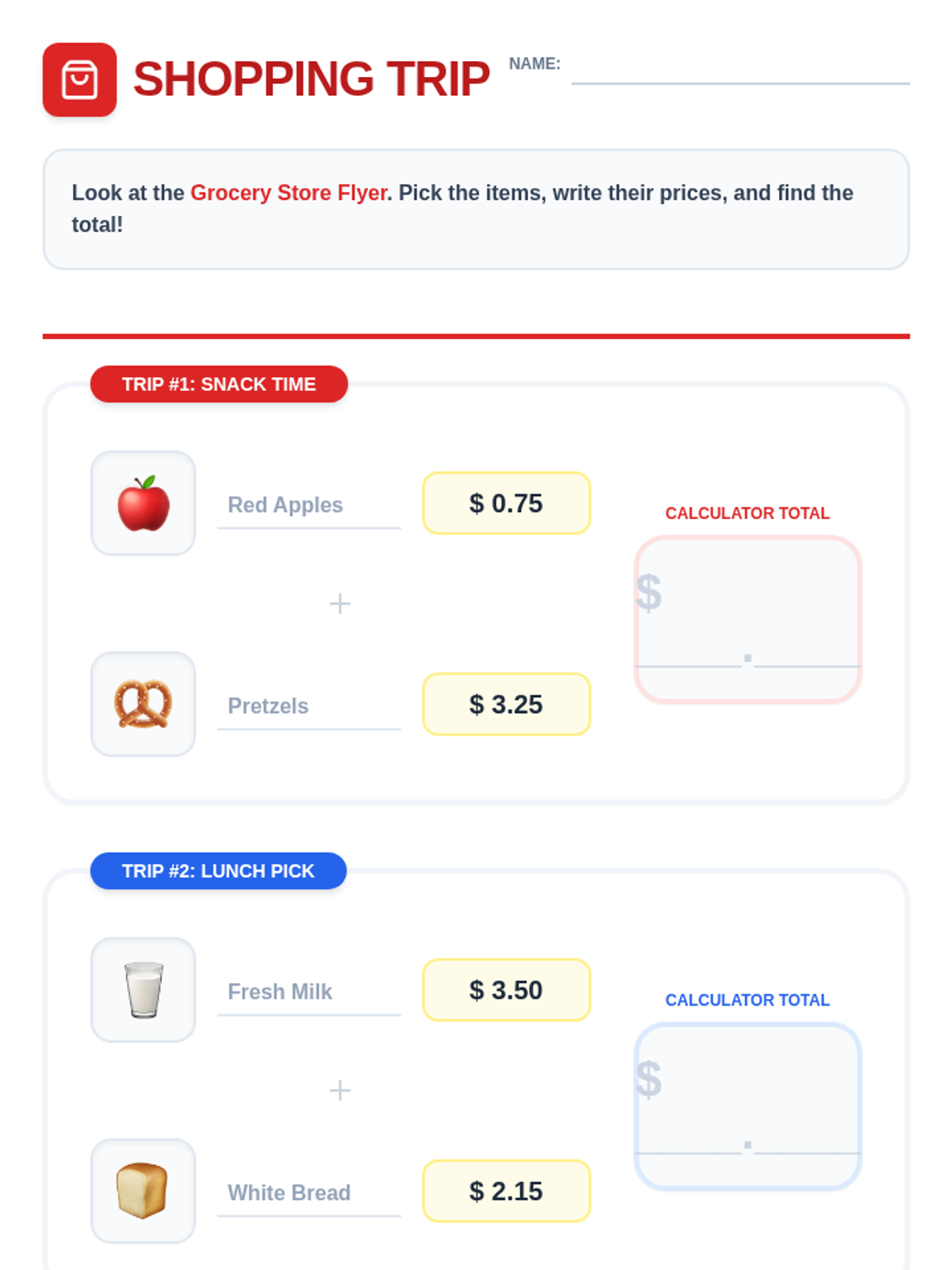
Students learn to use a calculator to add up the prices of grocery items, following a visual step-by-step guide to ensure accuracy in a real-world shopping scenario.
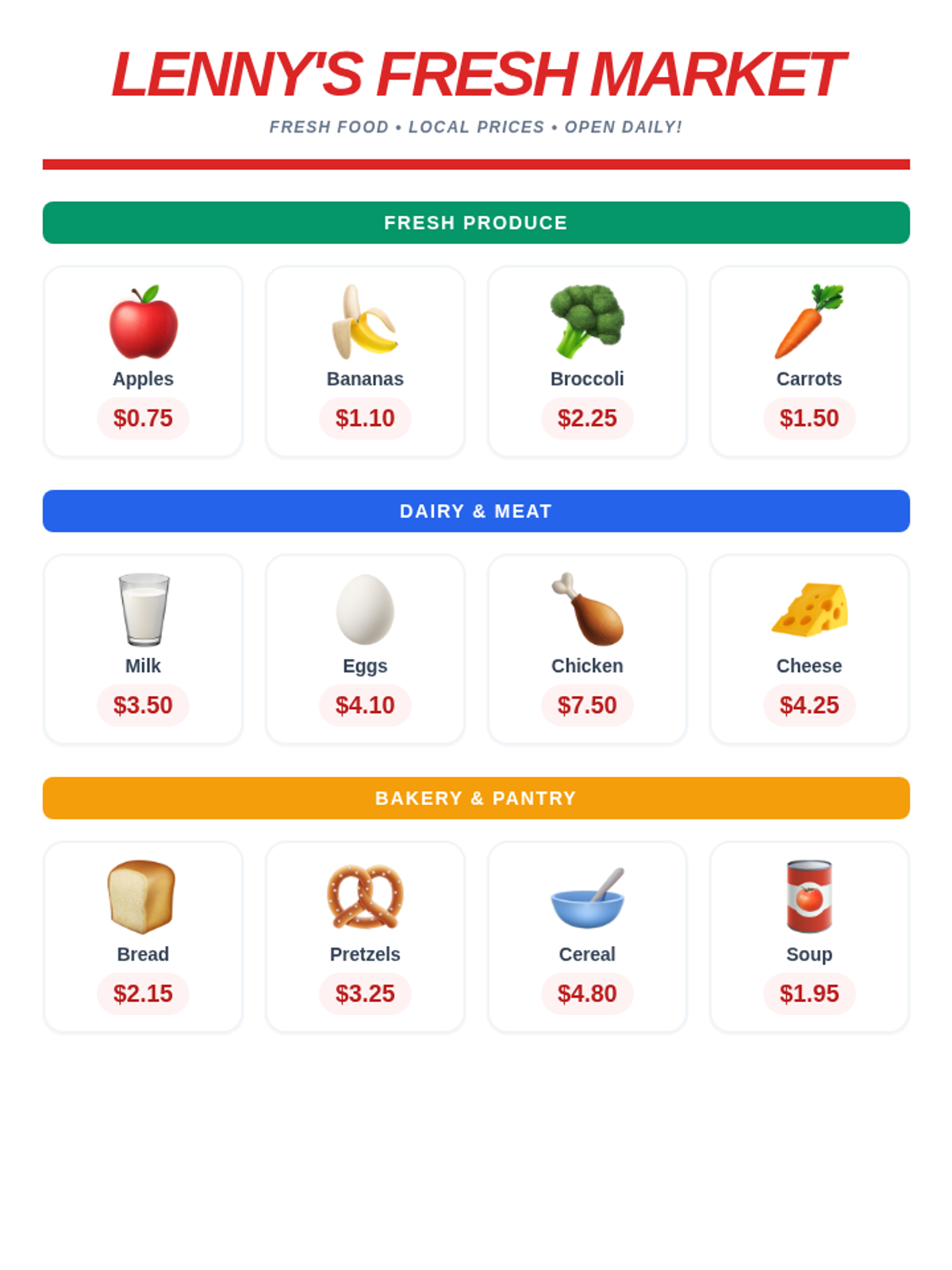
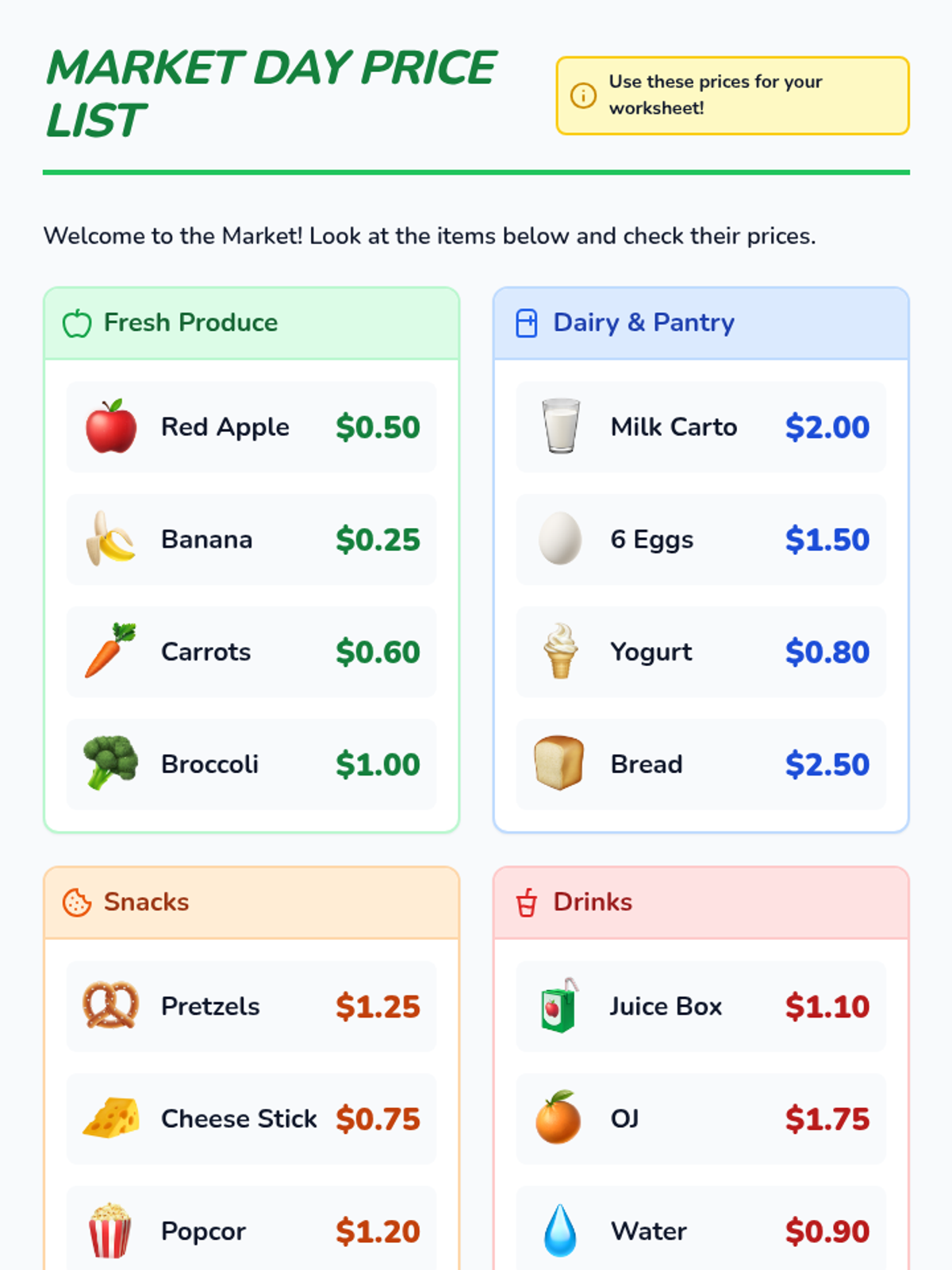
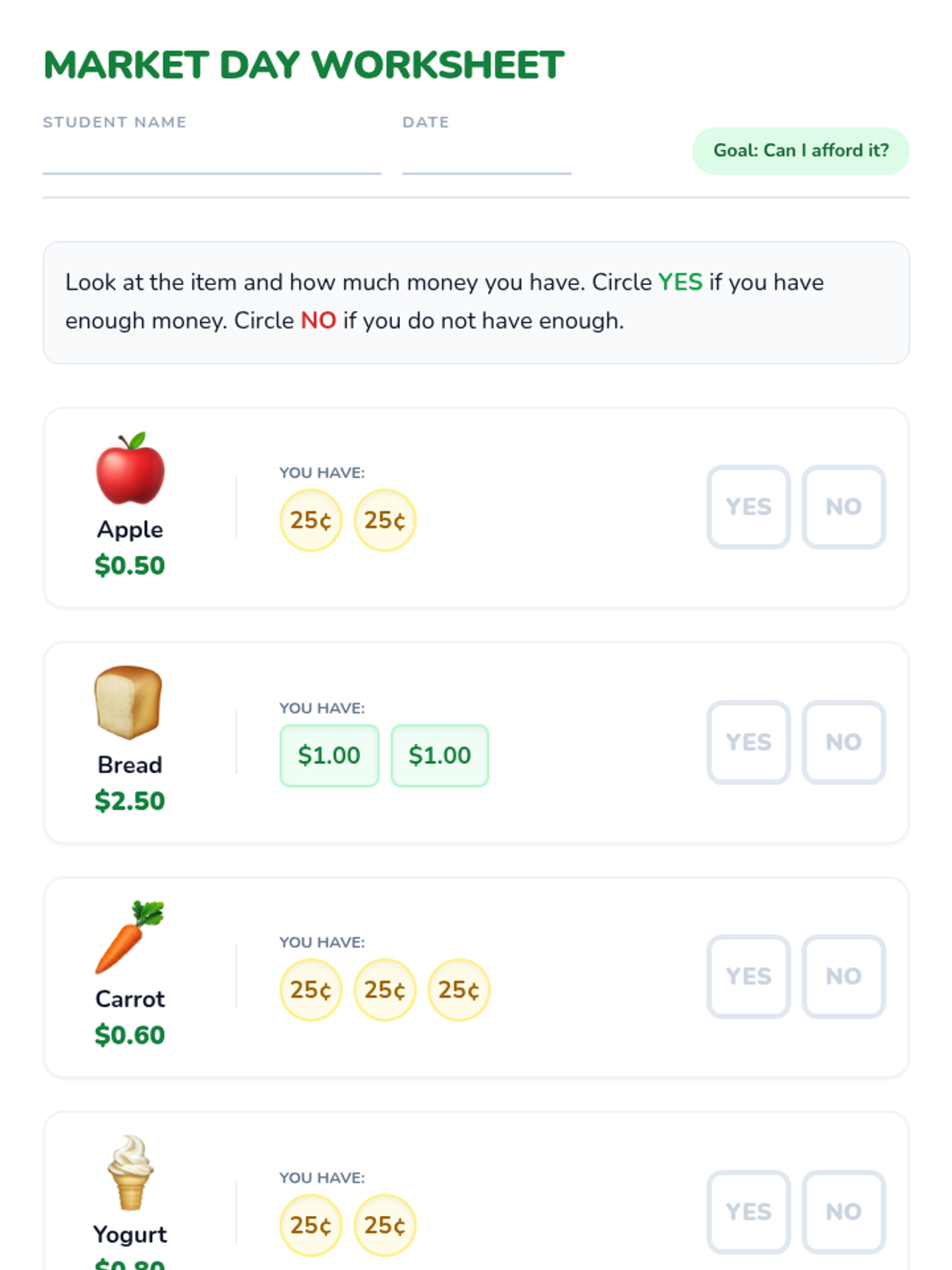
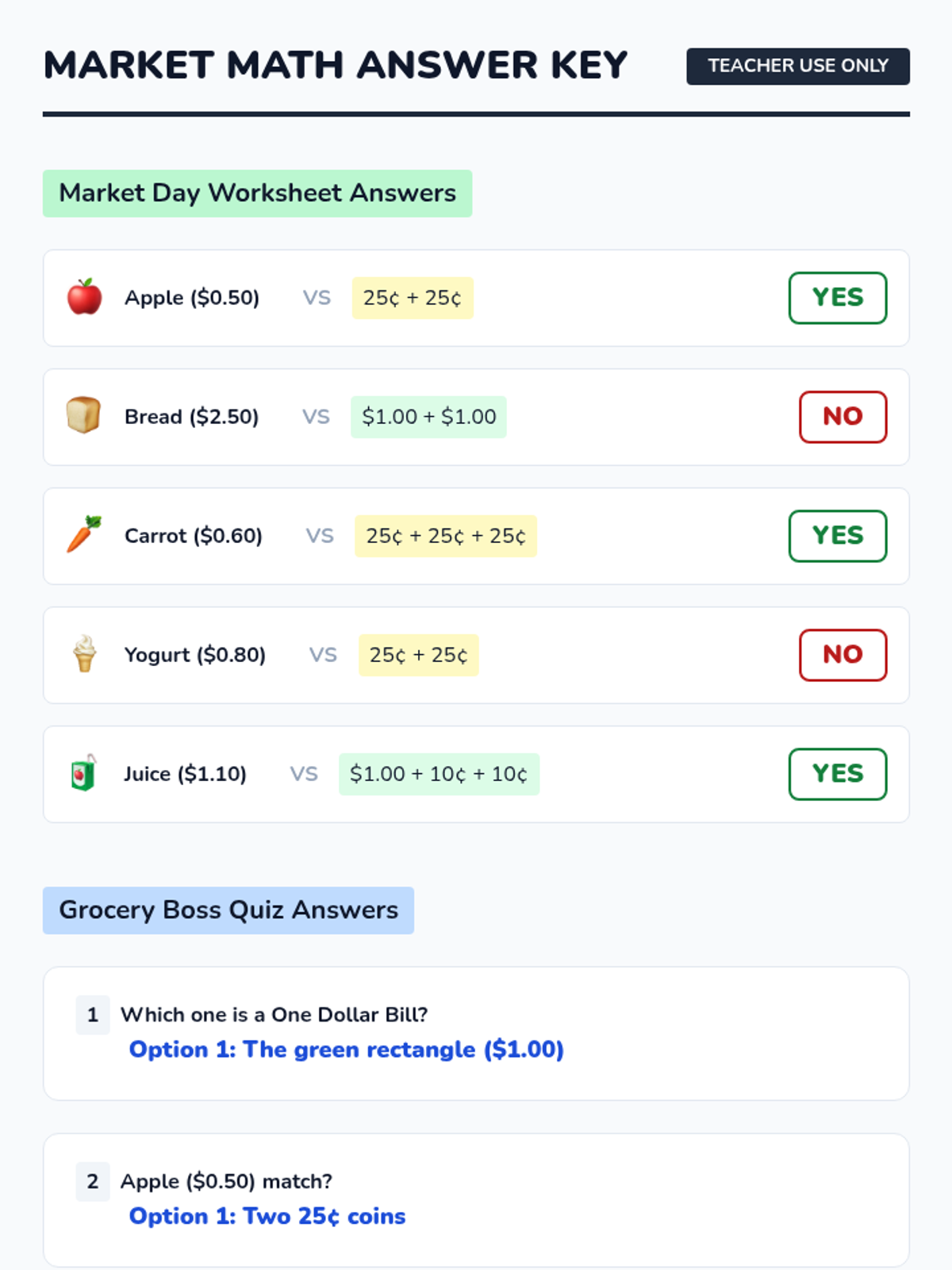
A hands-on introduction to basic budgeting and grocery shopping. Students practice identifying prices, comparing costs, and making simple purchasing decisions using dollars and cents with high visual support.
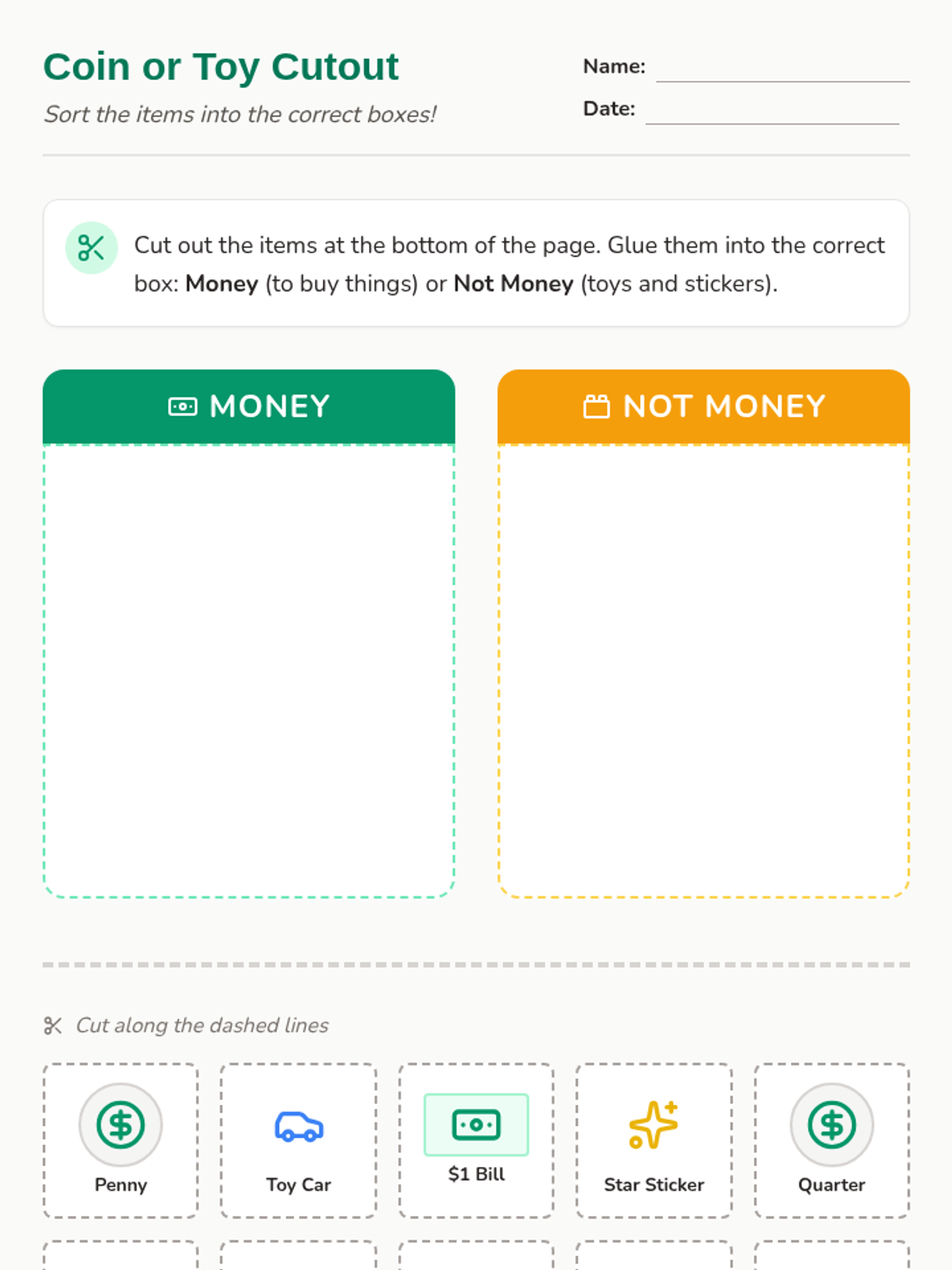
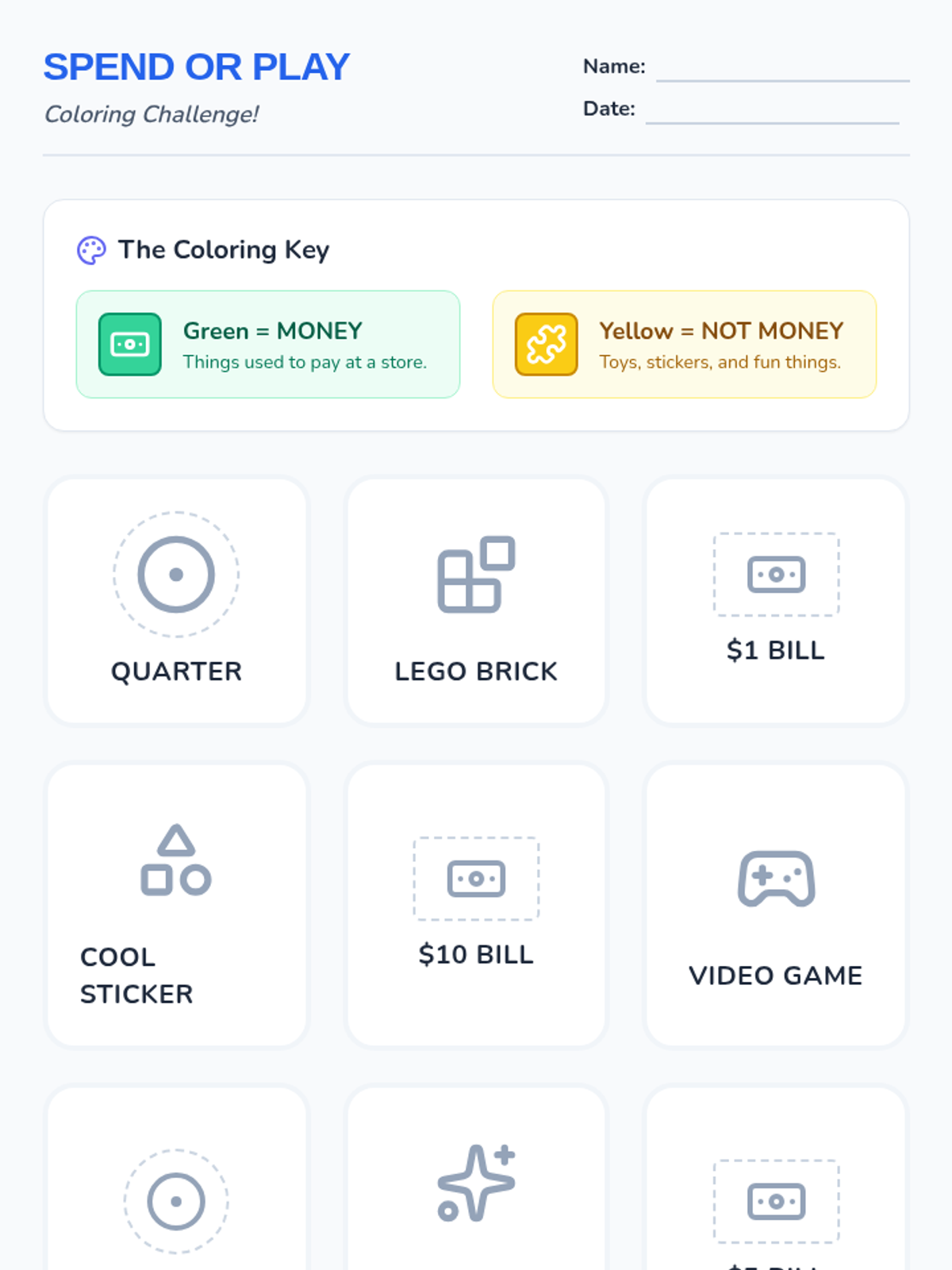
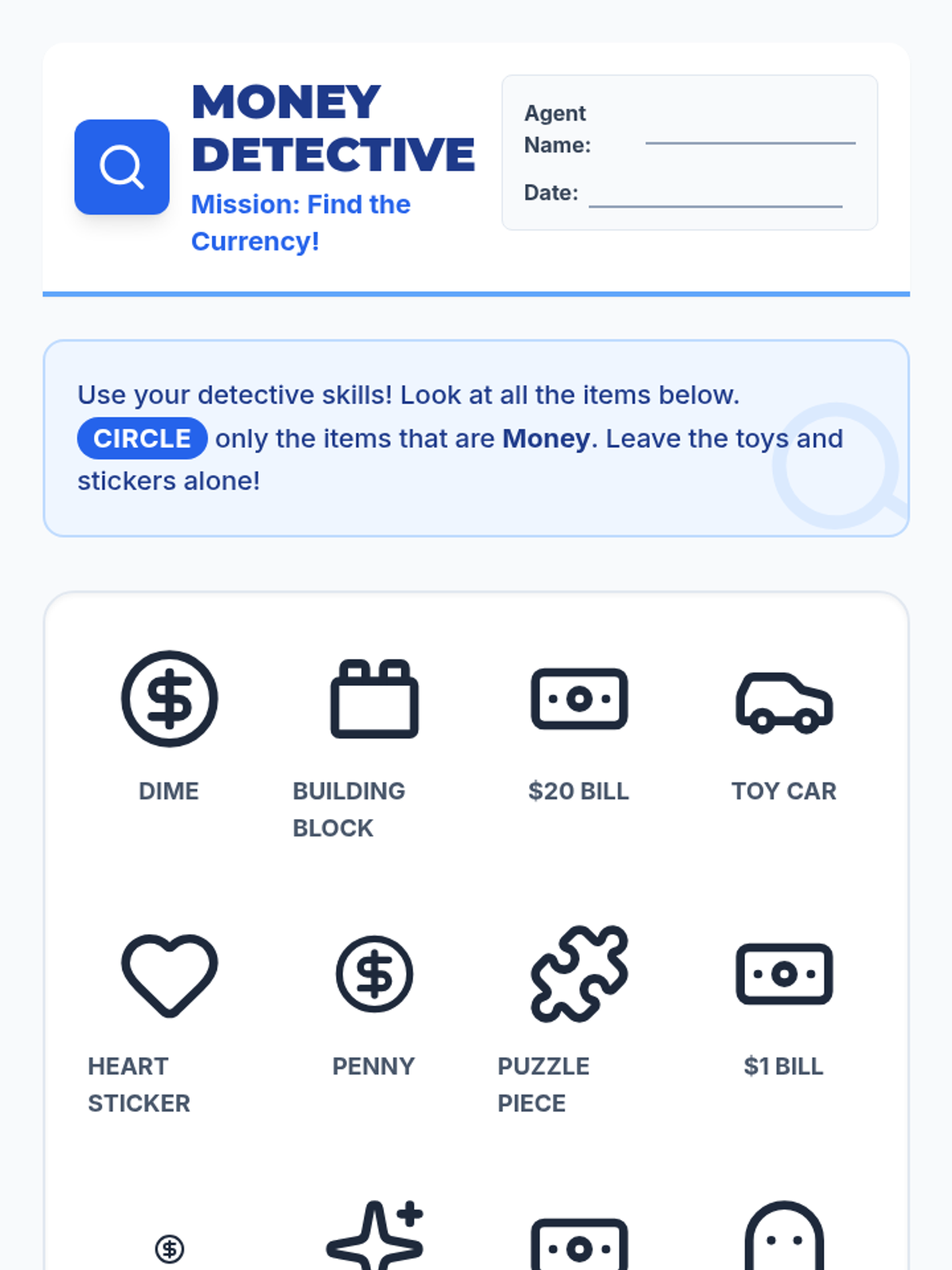
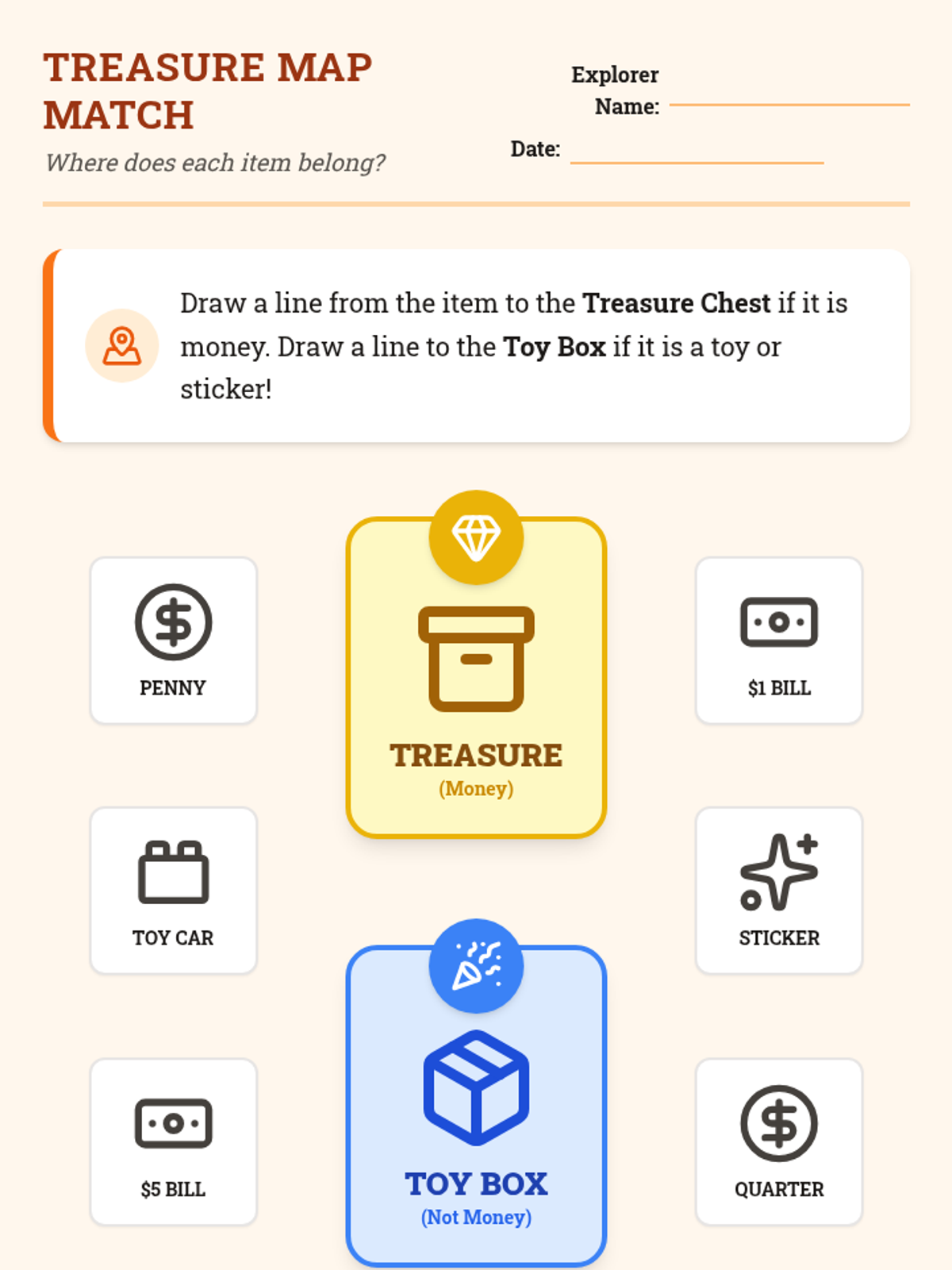
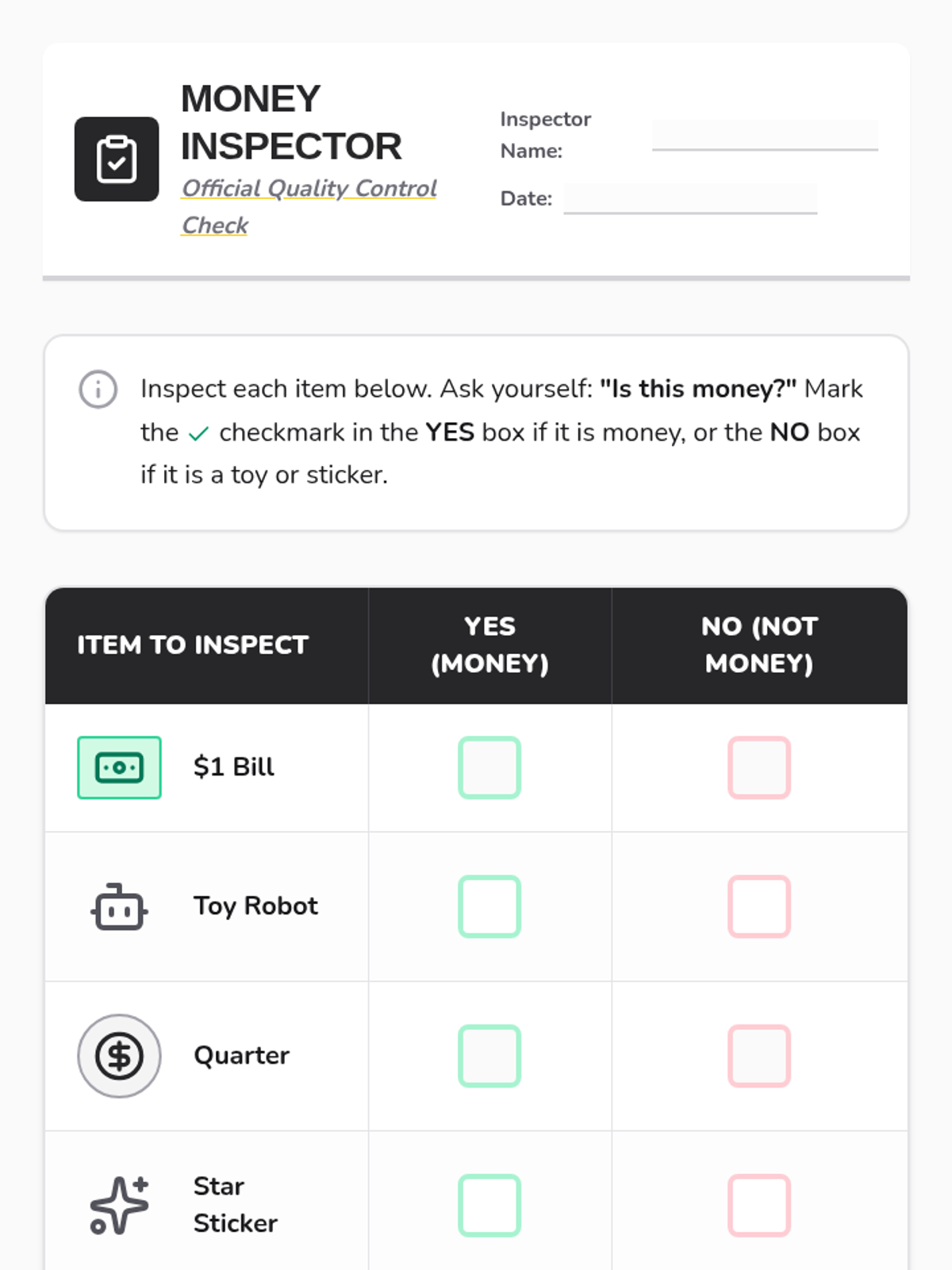
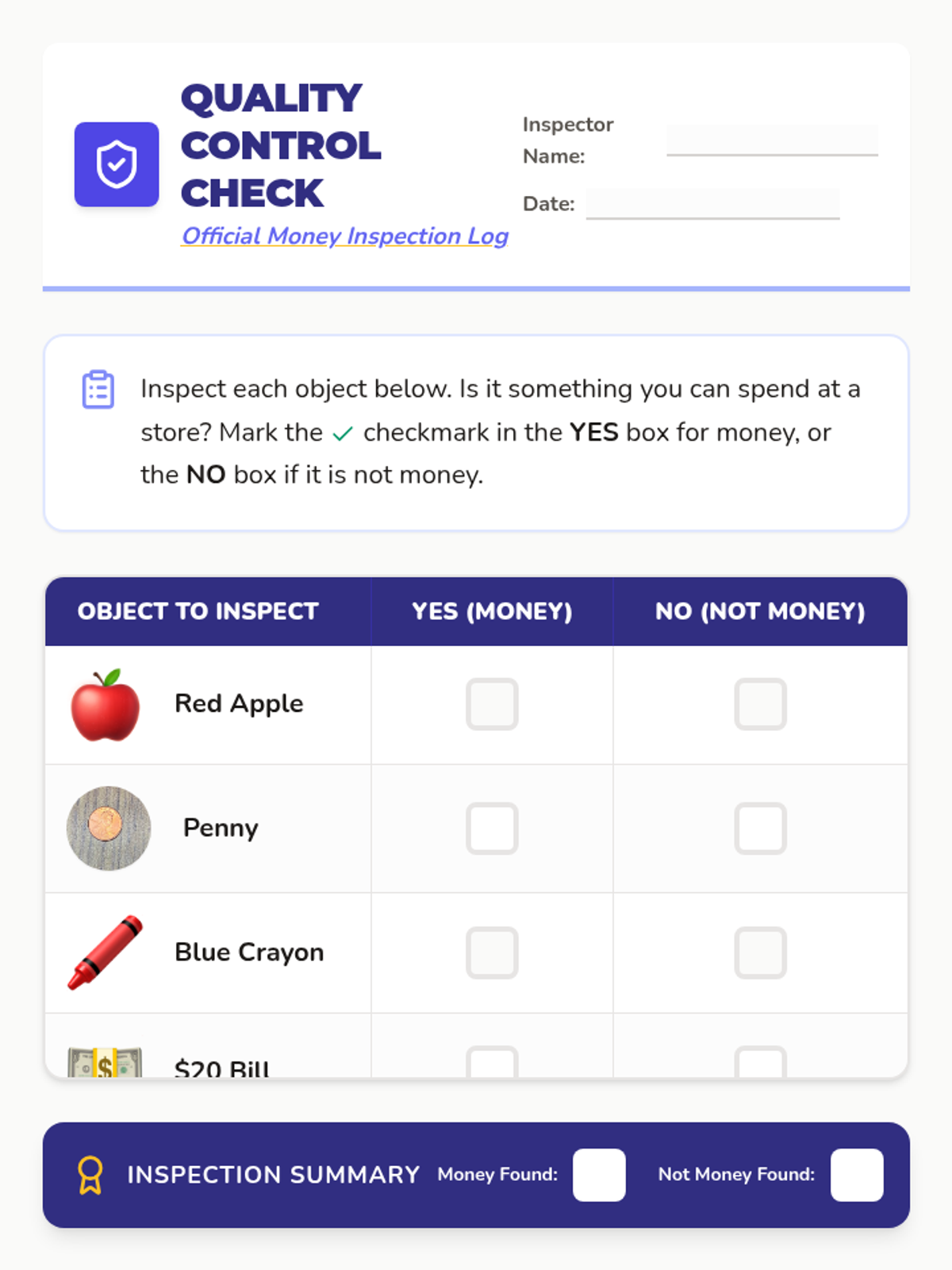
A series of foundational worksheets designed to help early learners distinguish between currency (money) and non-monetary items like toys and stickers. Through sorting, coloring, and identifying, students build an understanding of what constitutes a medium of exchange.
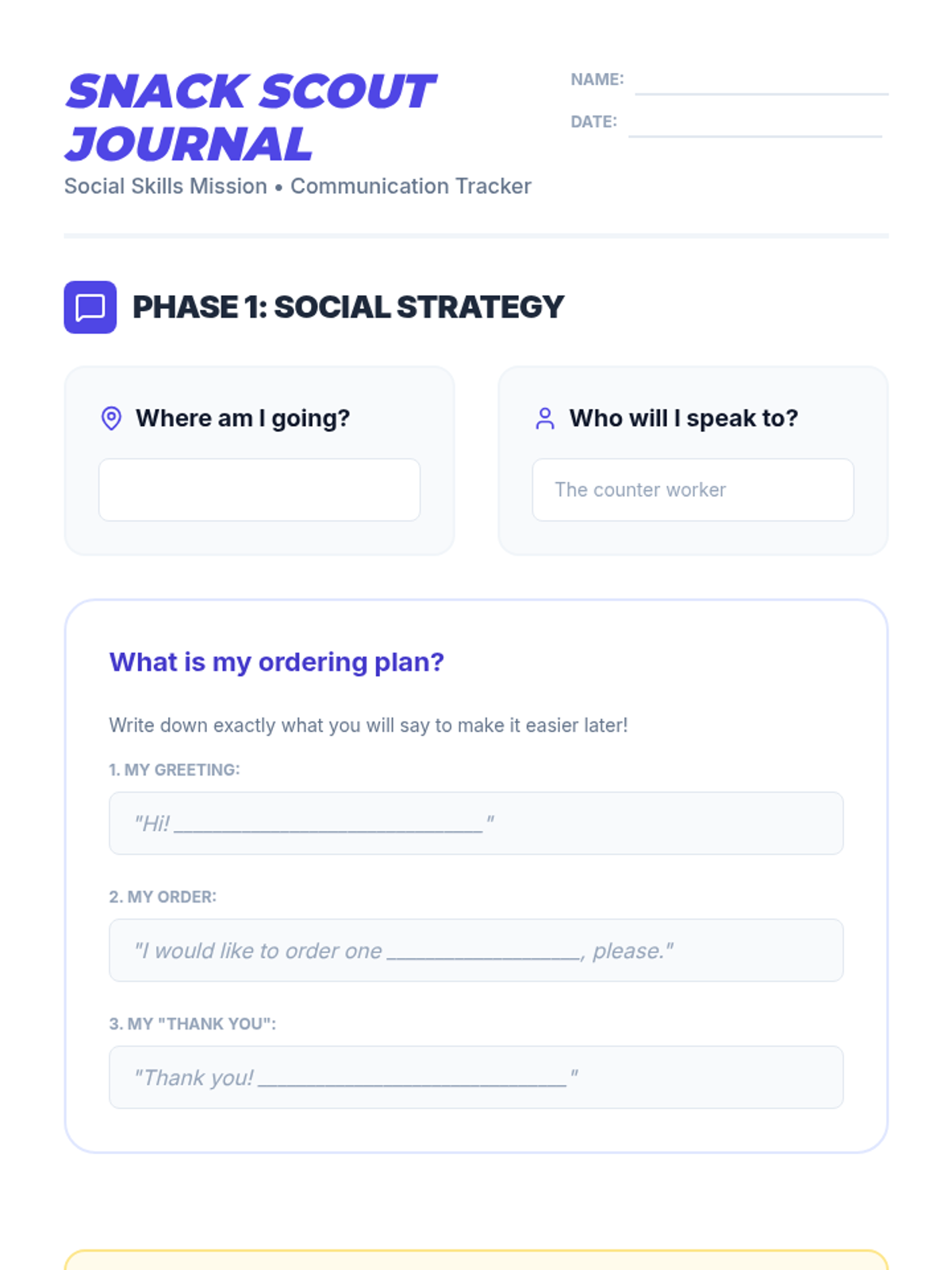
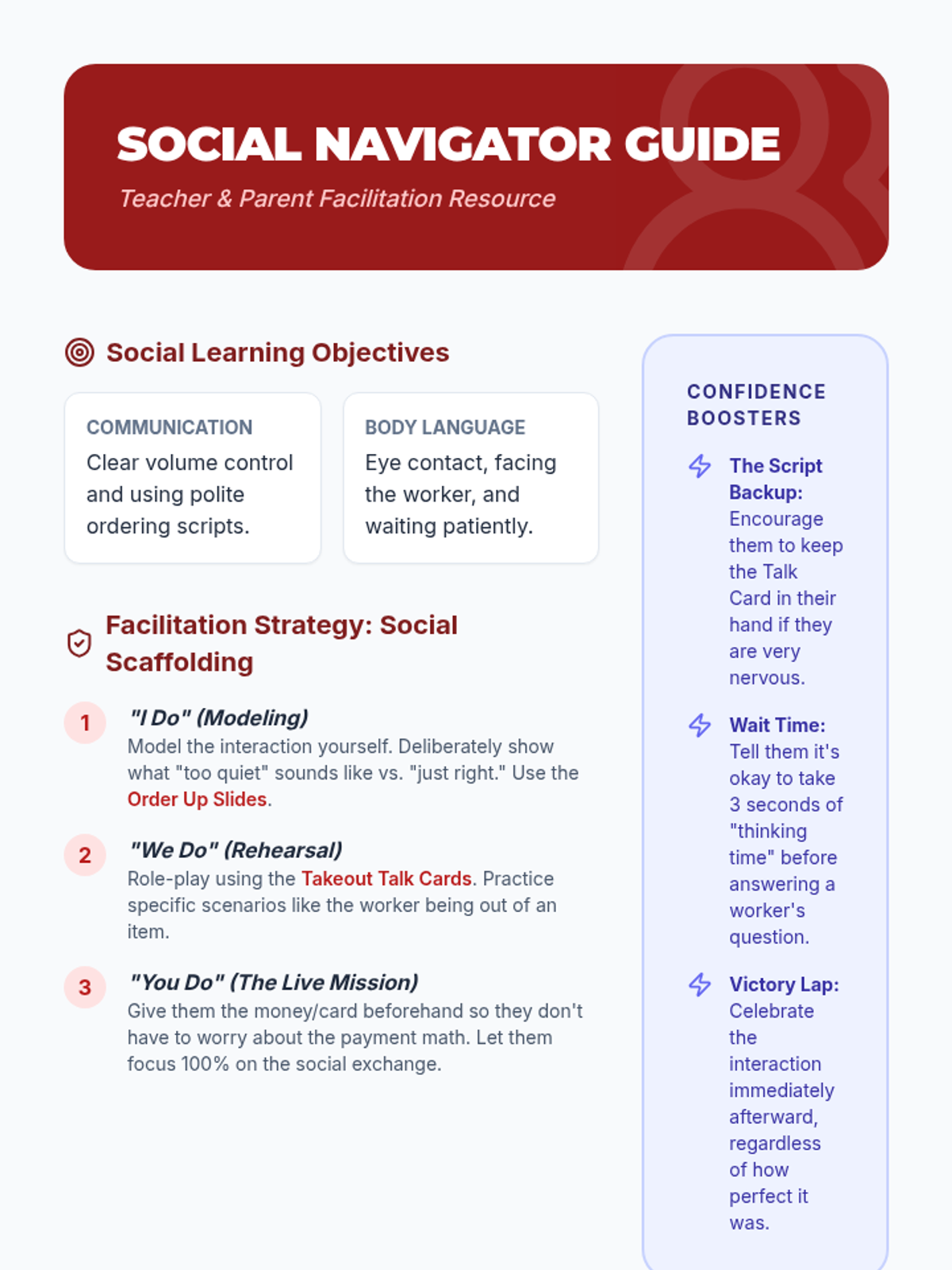
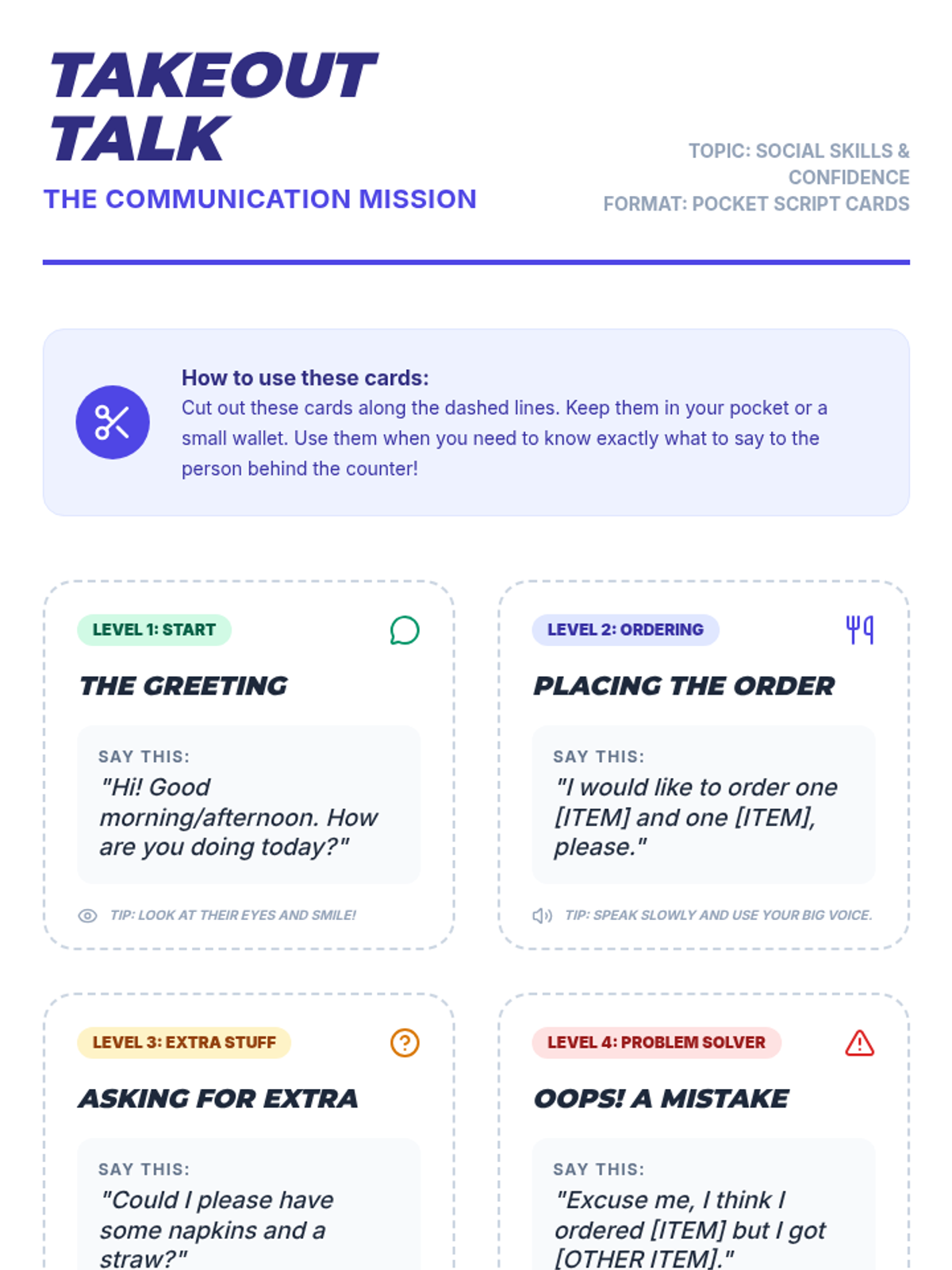
A practical lesson focused on the real-world social skills of ordering food, communicating with workers, and navigating a public restaurant space with confidence.
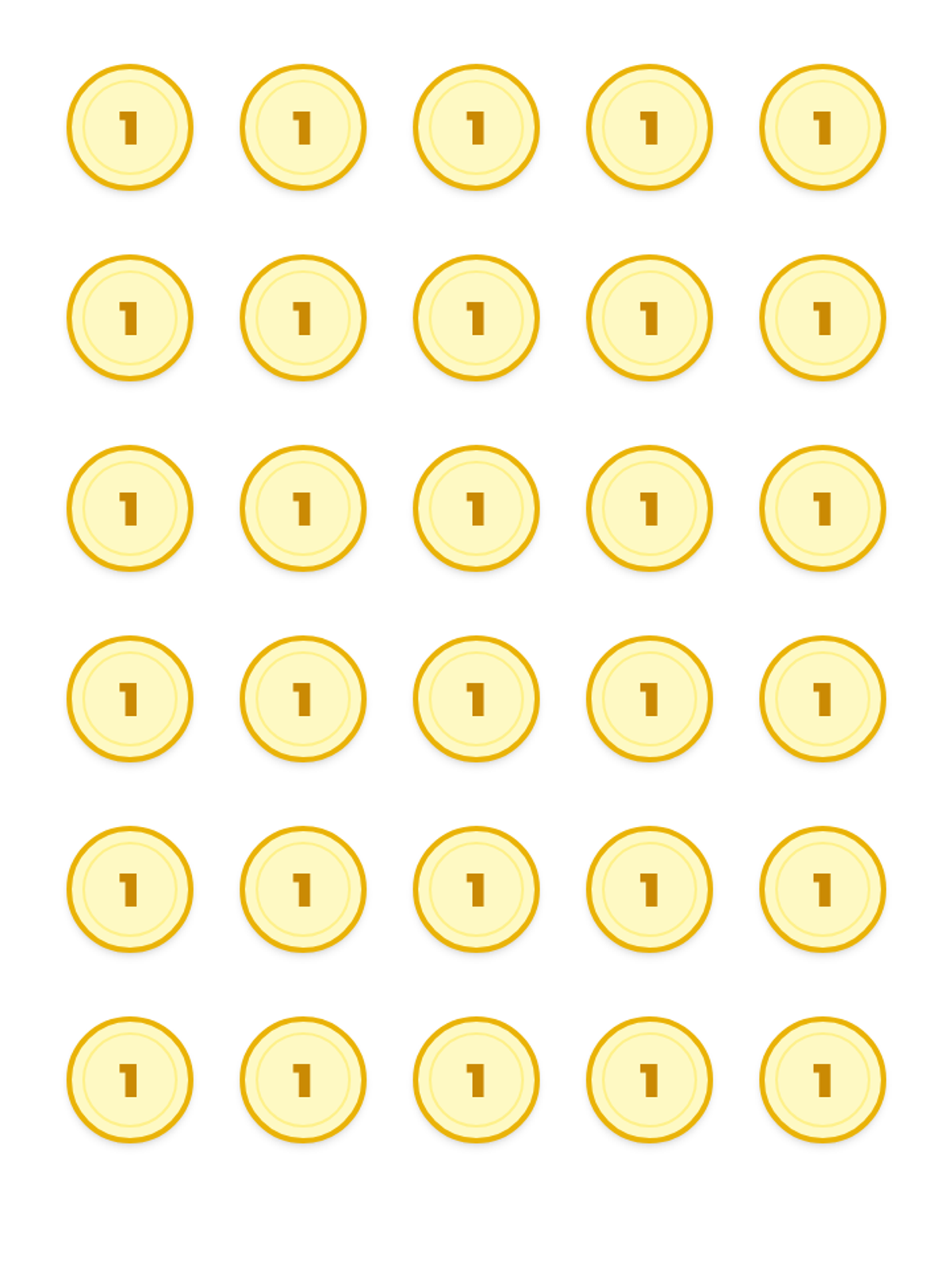
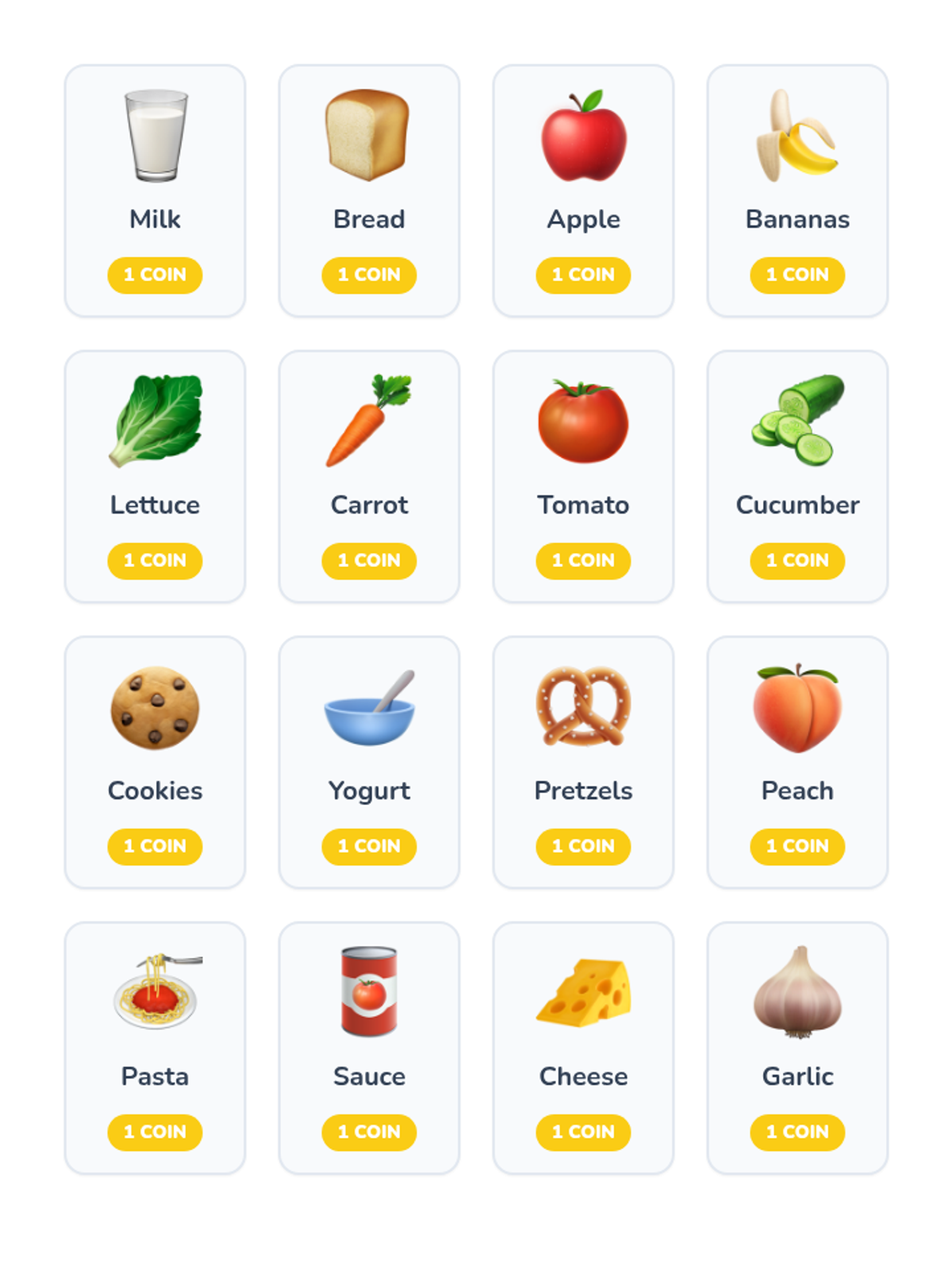
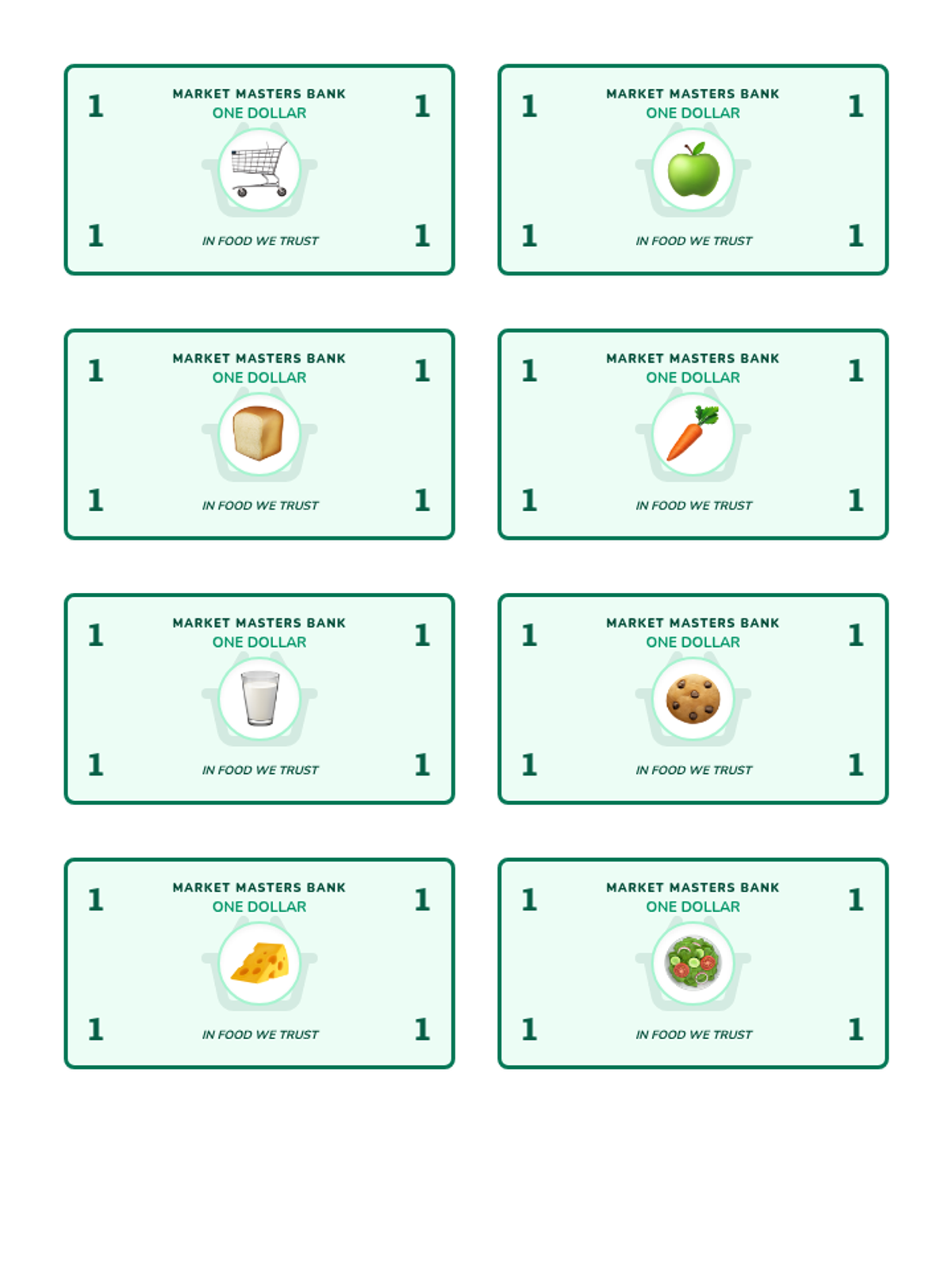
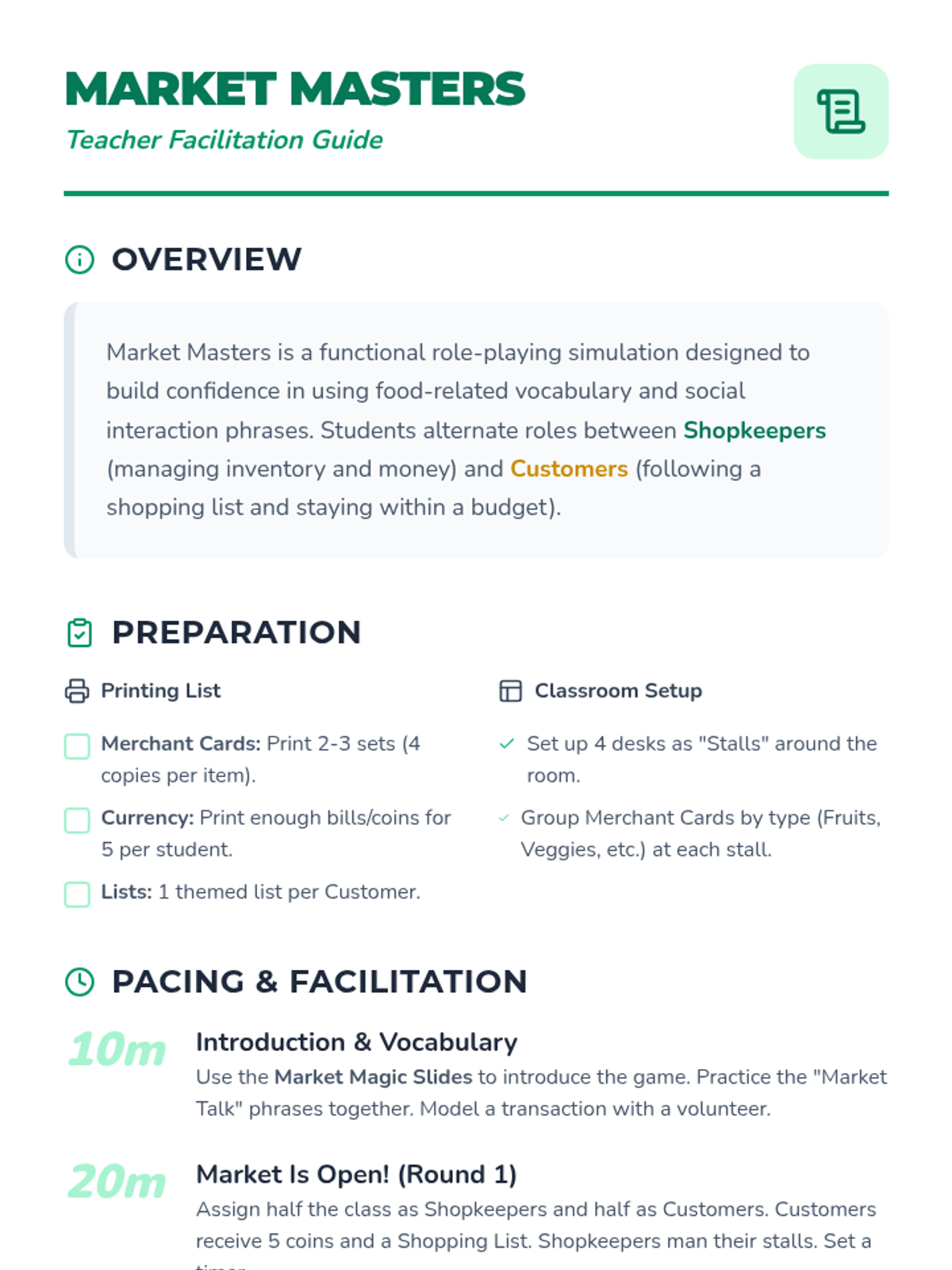
An interactive role-playing lesson where students practice food vocabulary and social skills by simulating a grocery shopping experience. Students take on roles as shopkeepers and customers to use target language in a functional context.
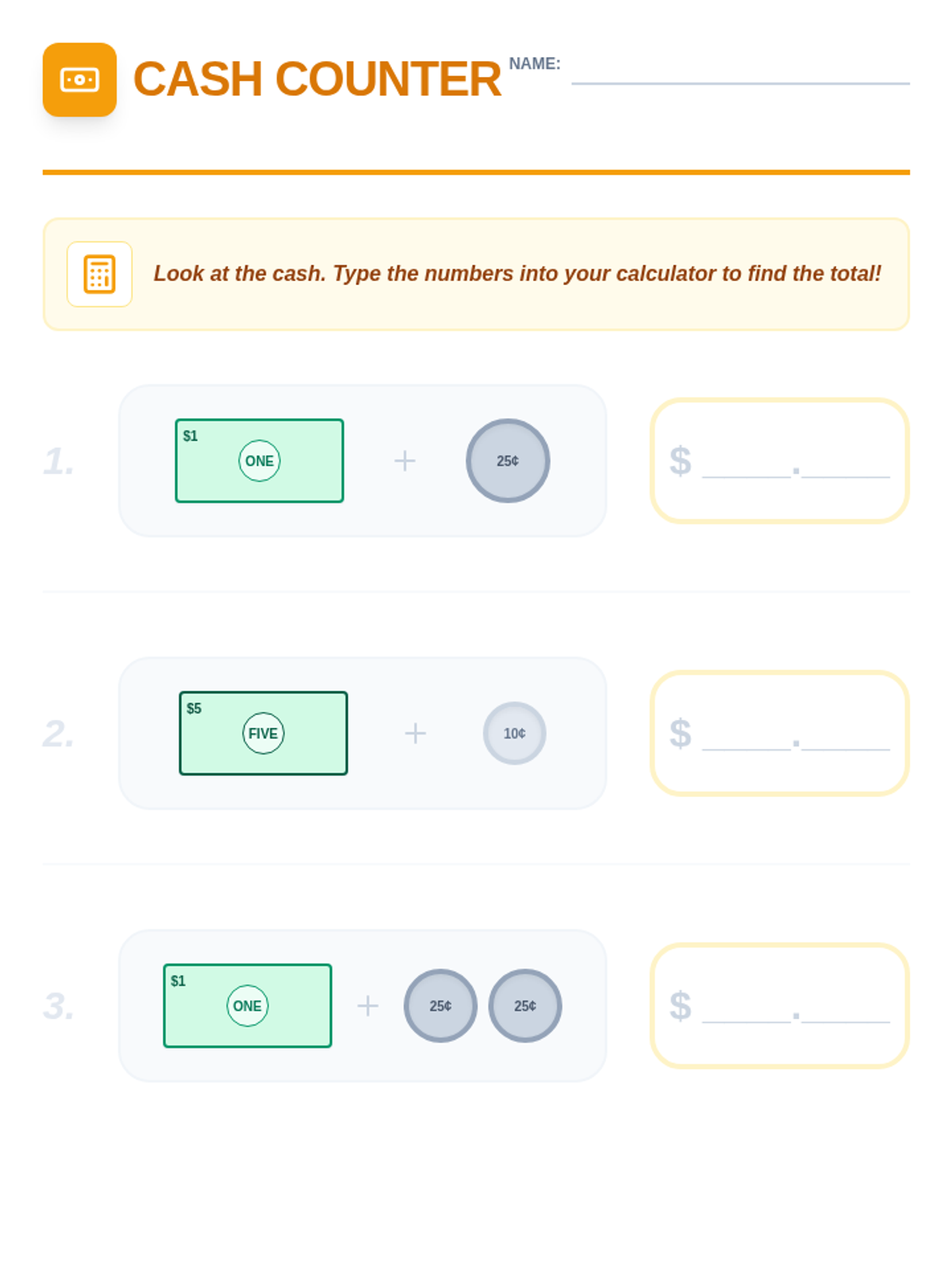
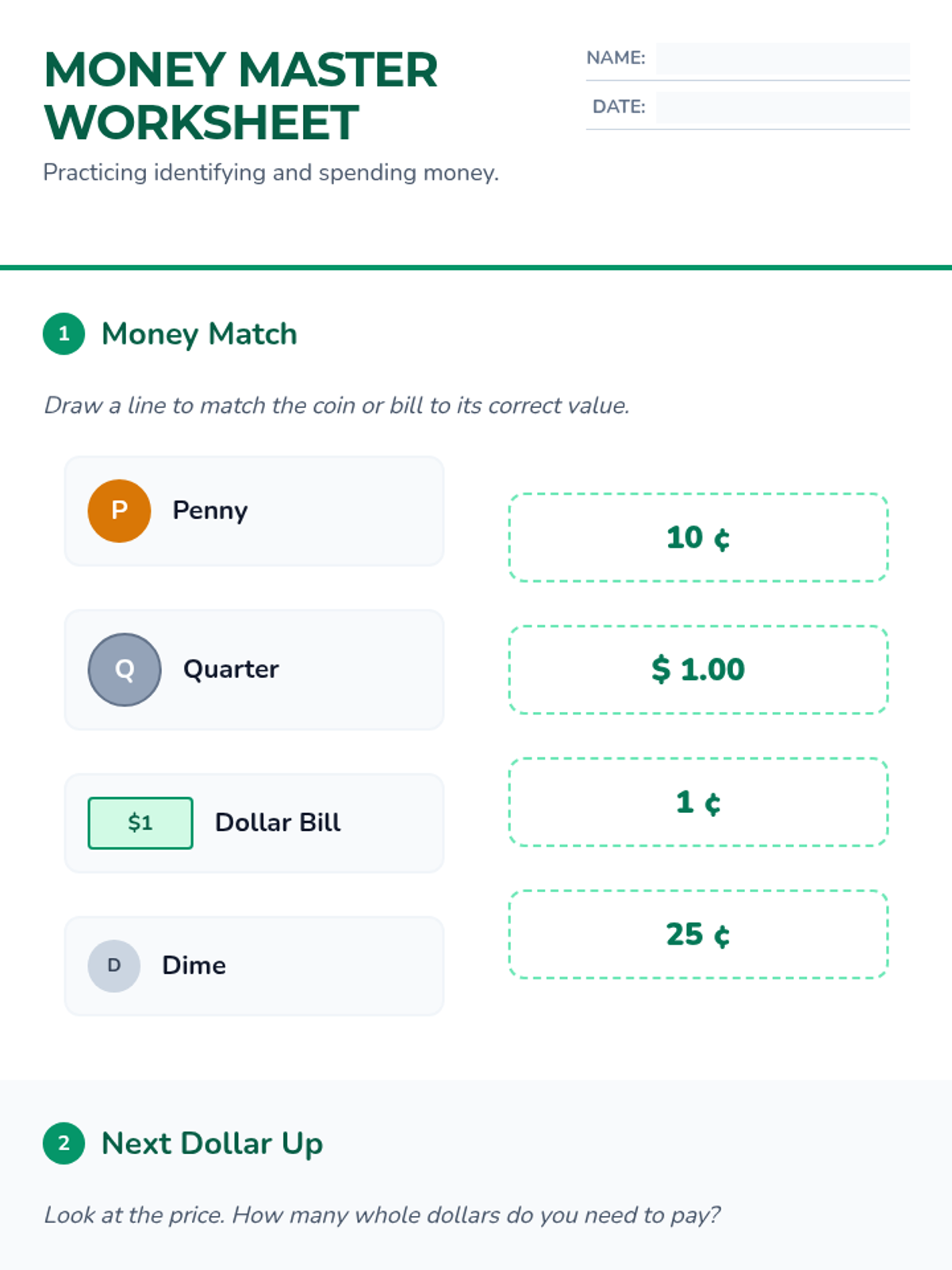
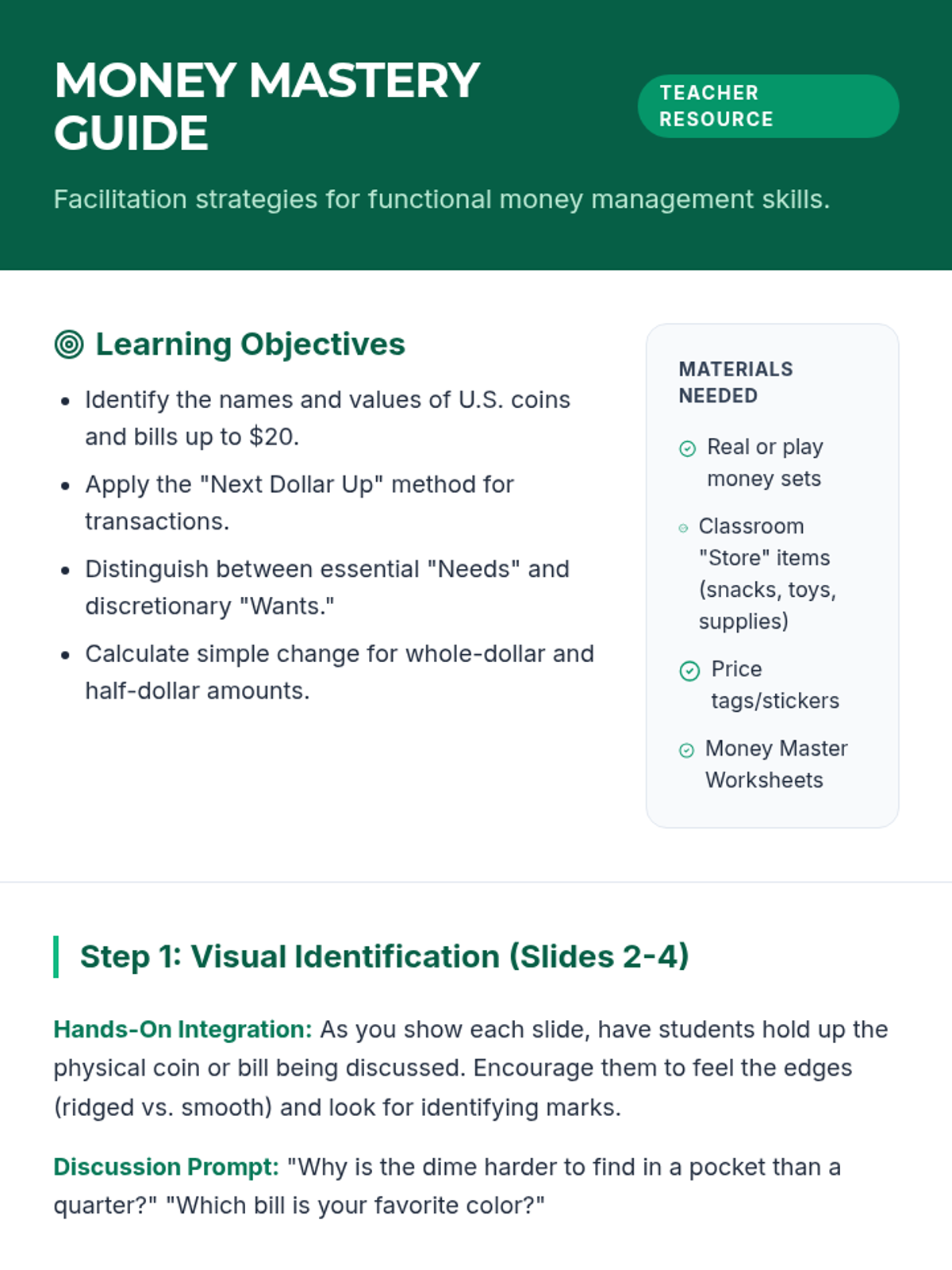
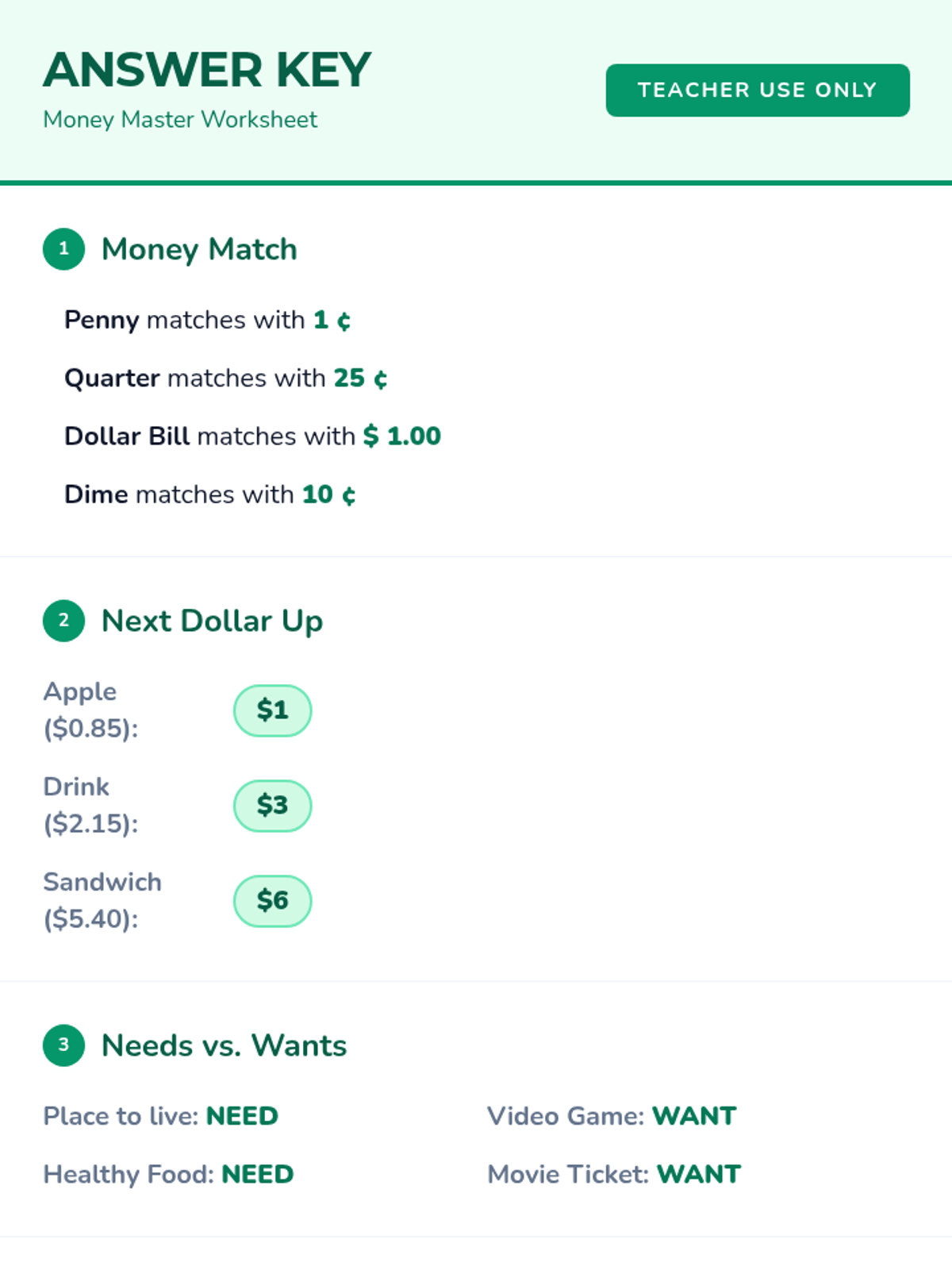
A functional life skills lesson focused on identifying currency, making simple change, and basic budgeting for independent living.
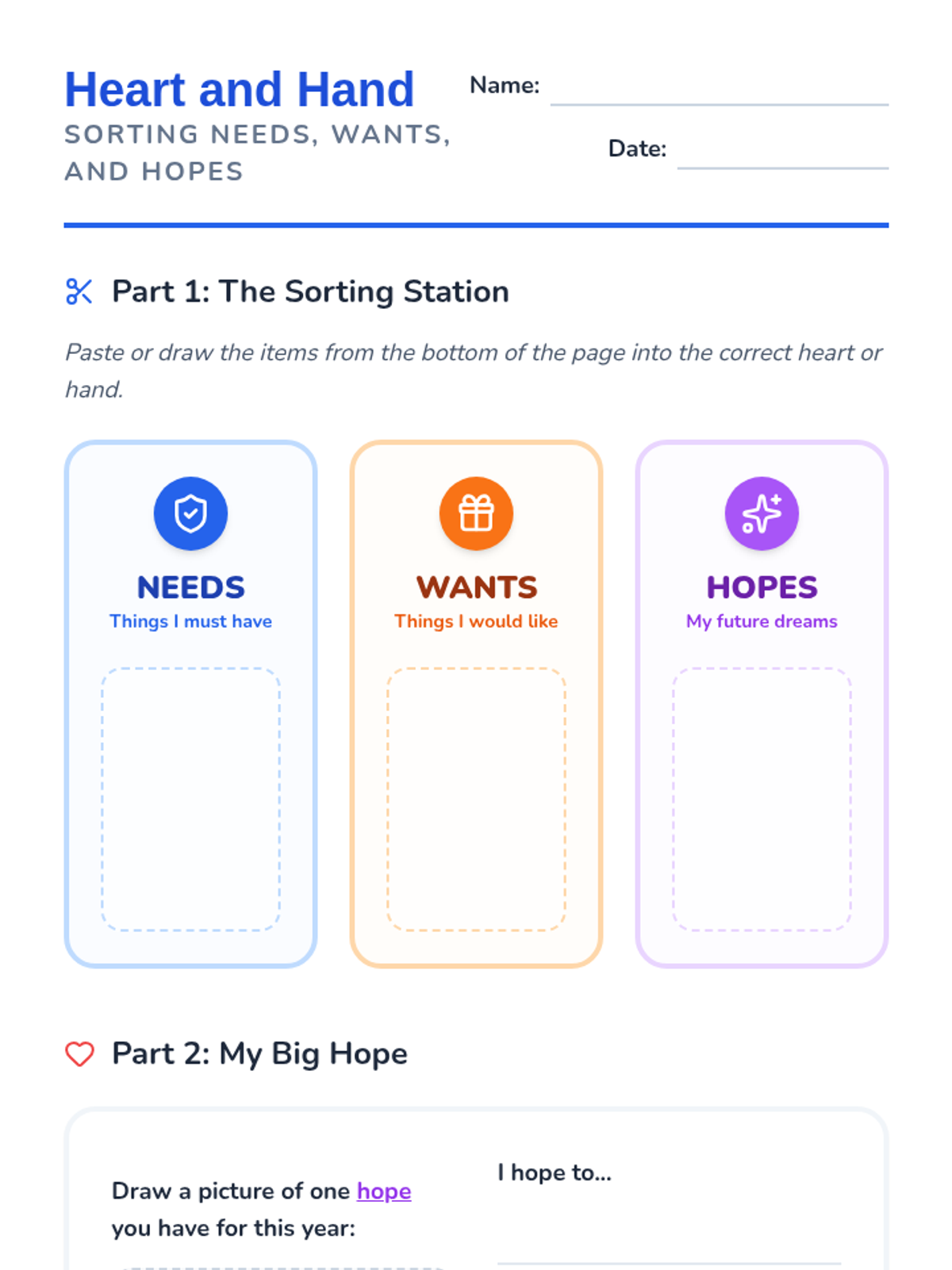
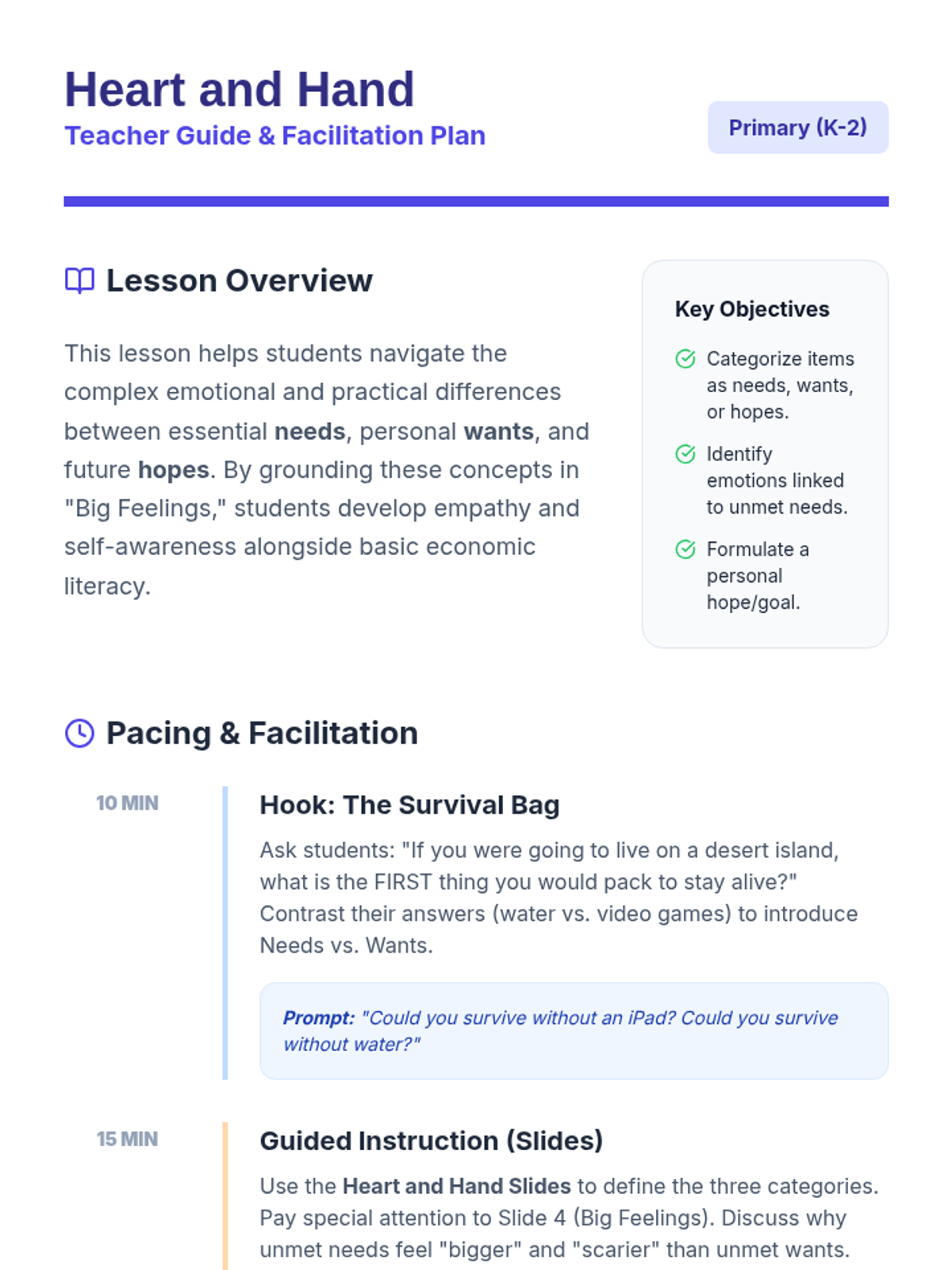
A primary-level lesson exploring the differences between essential needs, personal wants, and future hopes, including how we feel when needs aren't met.
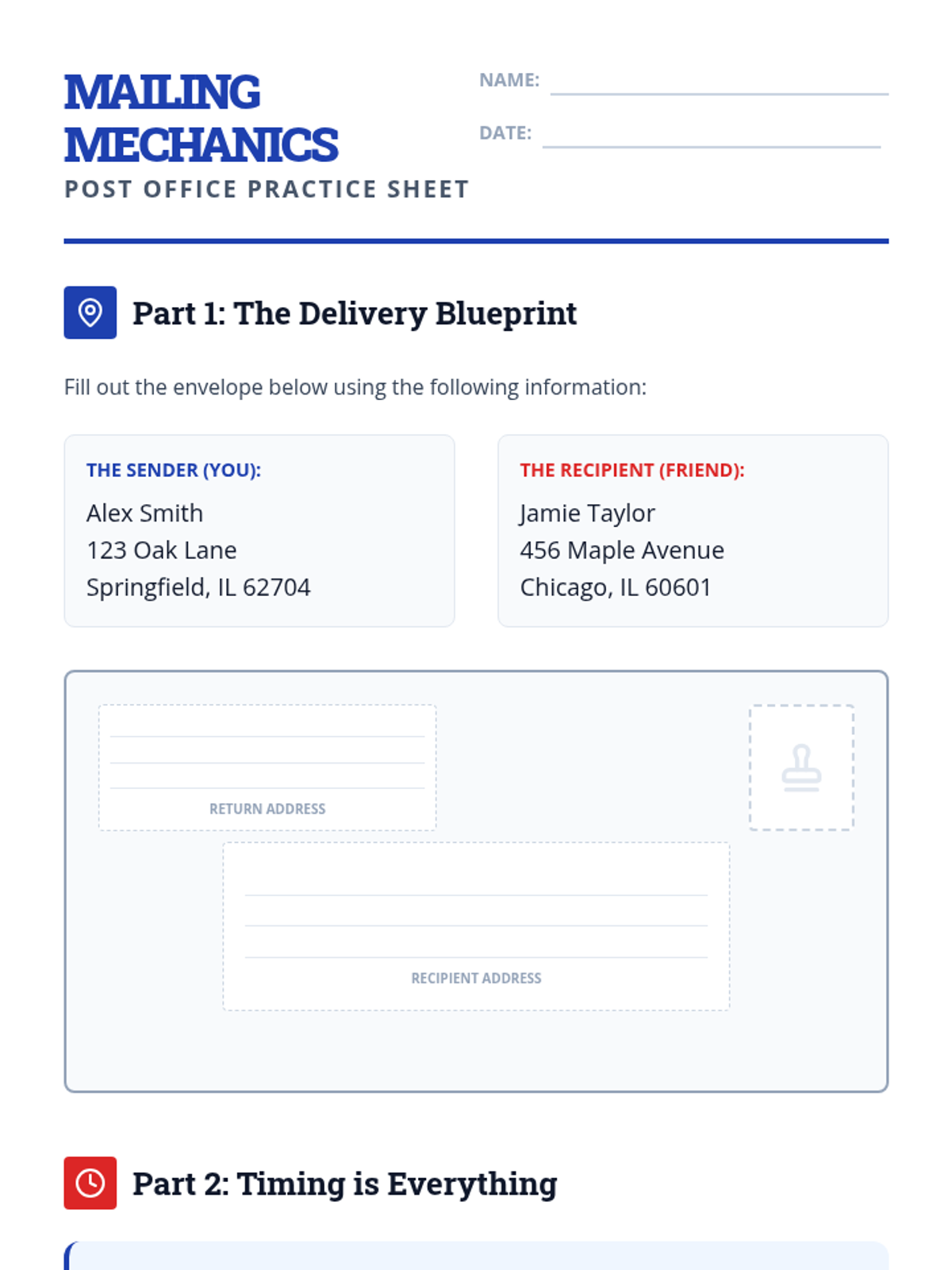
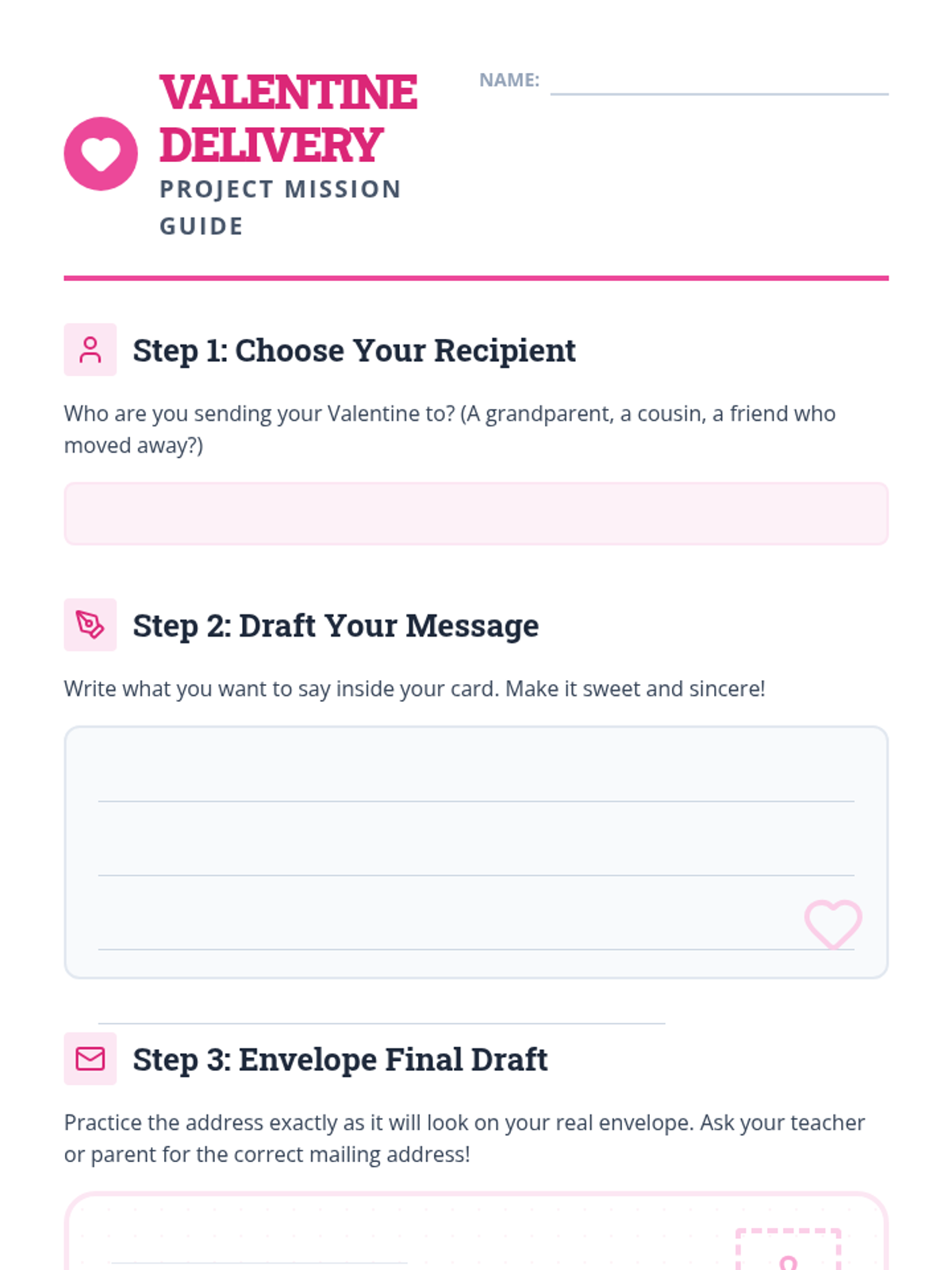
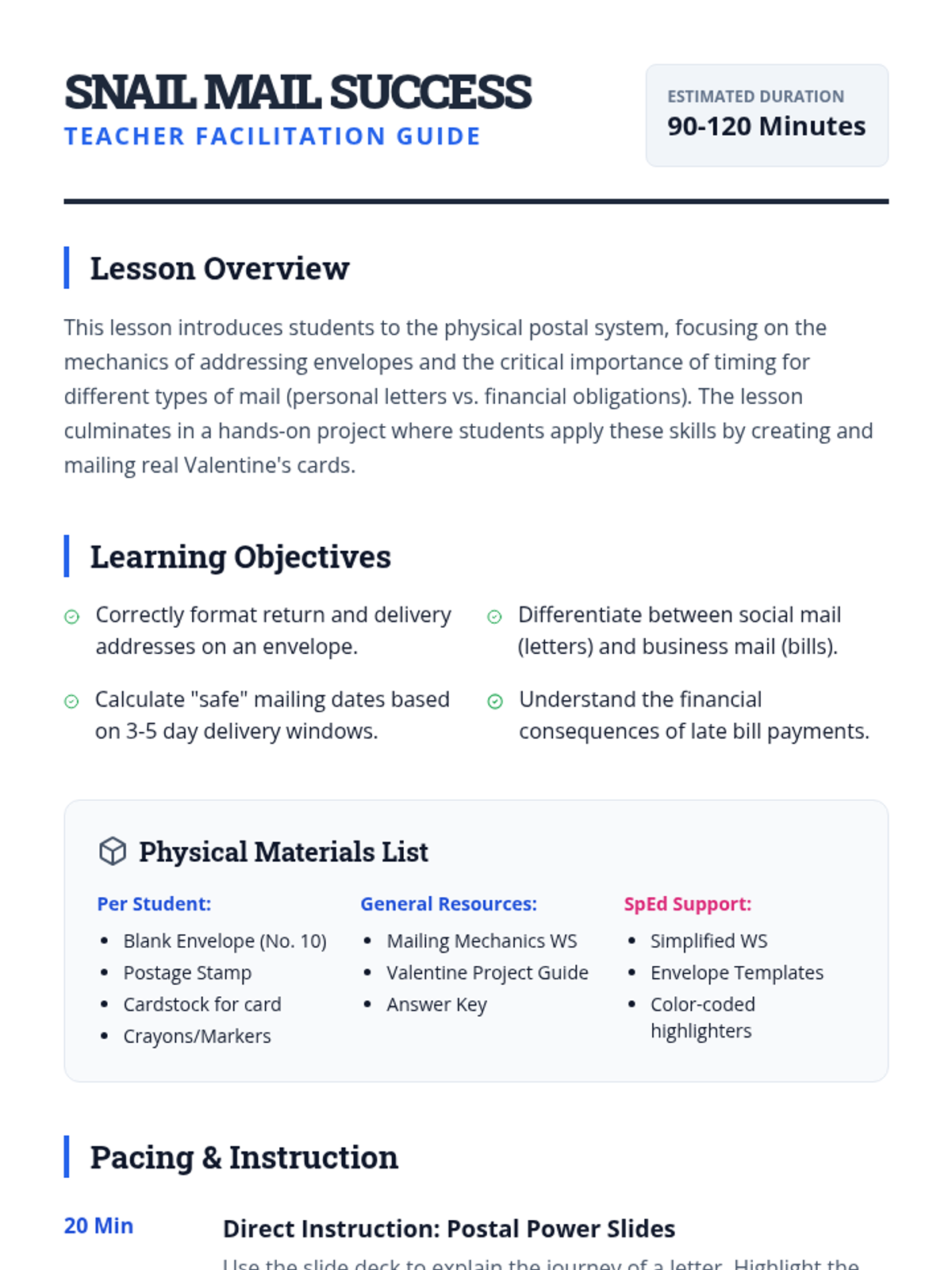
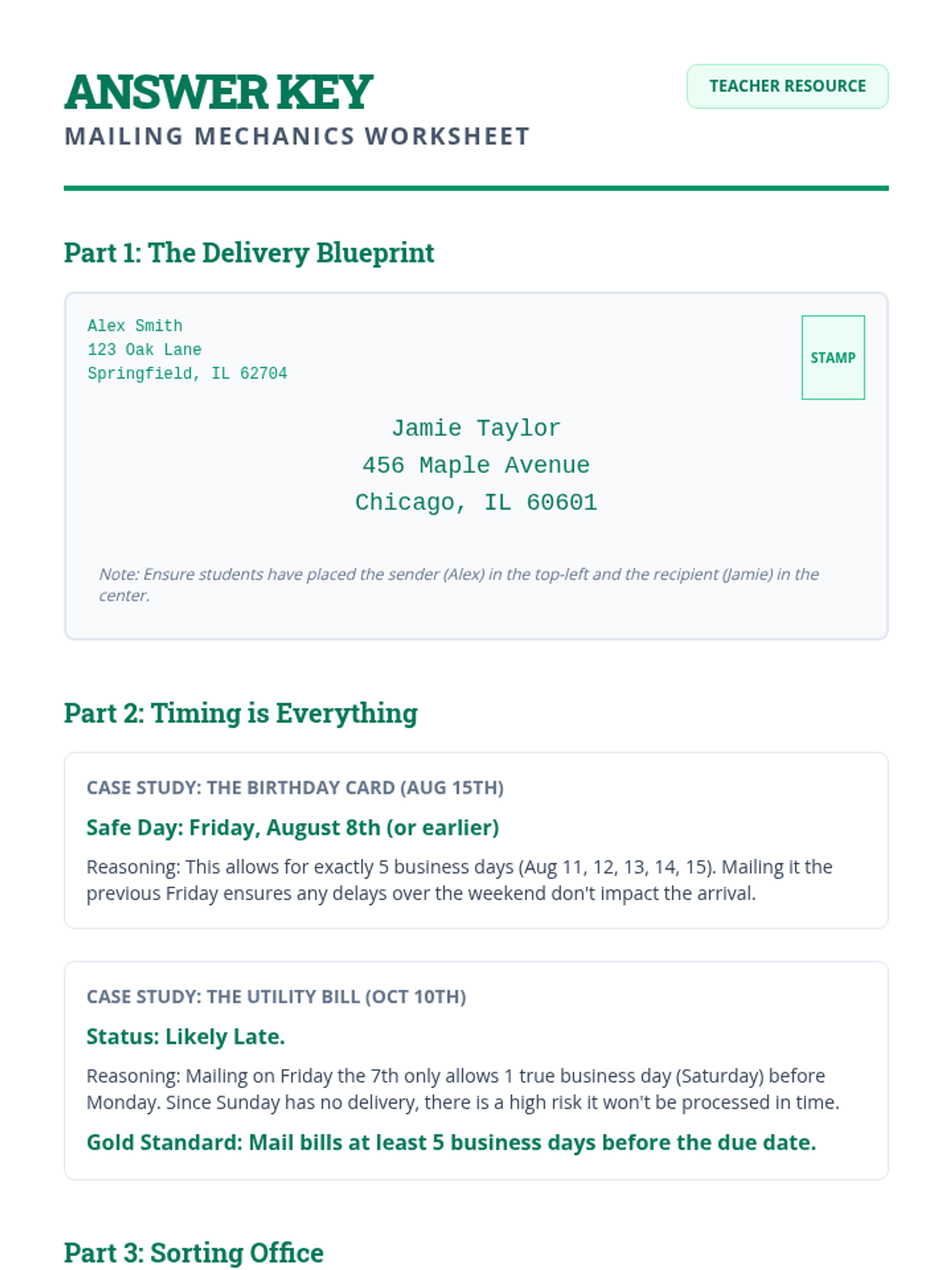
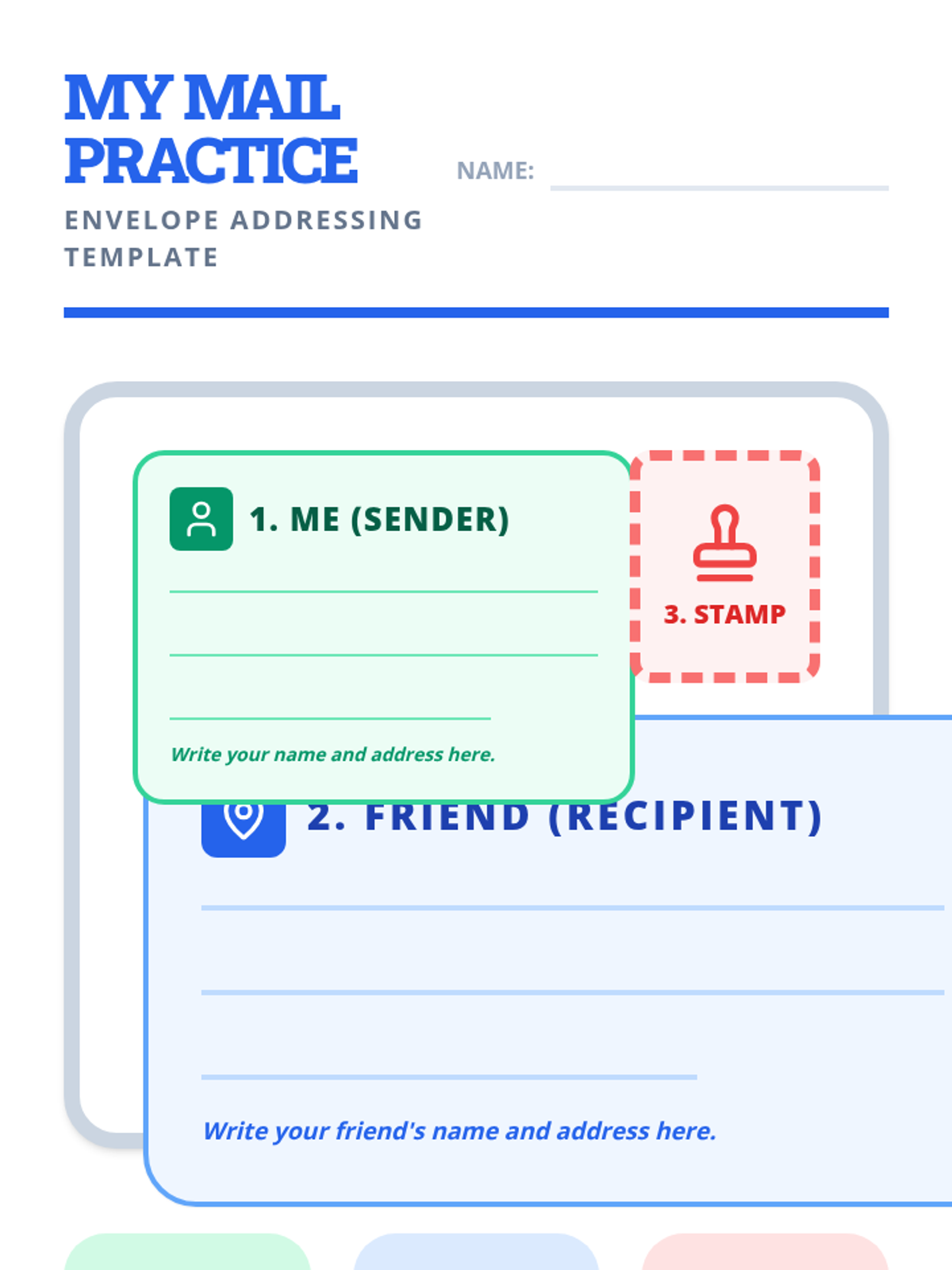
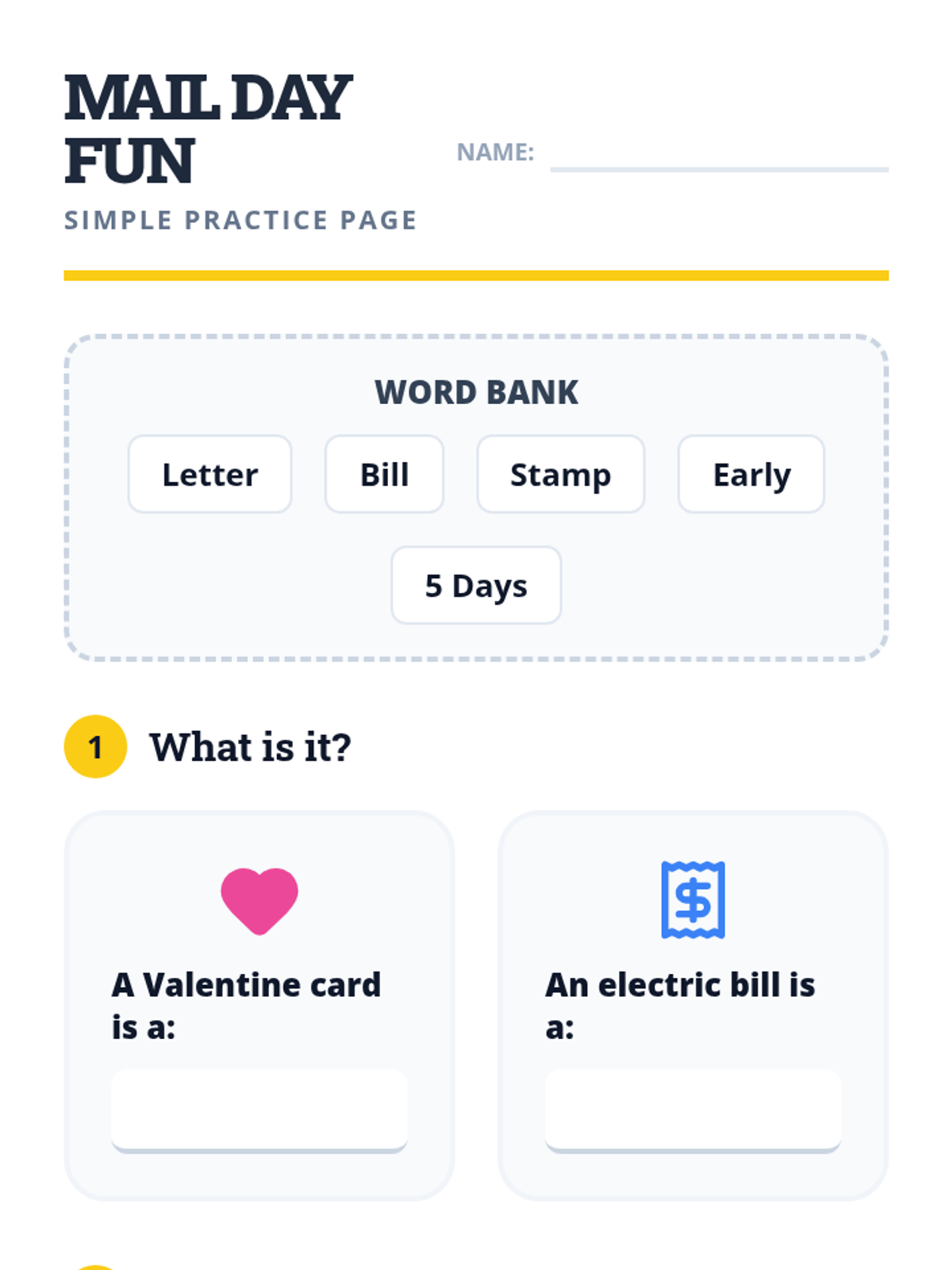
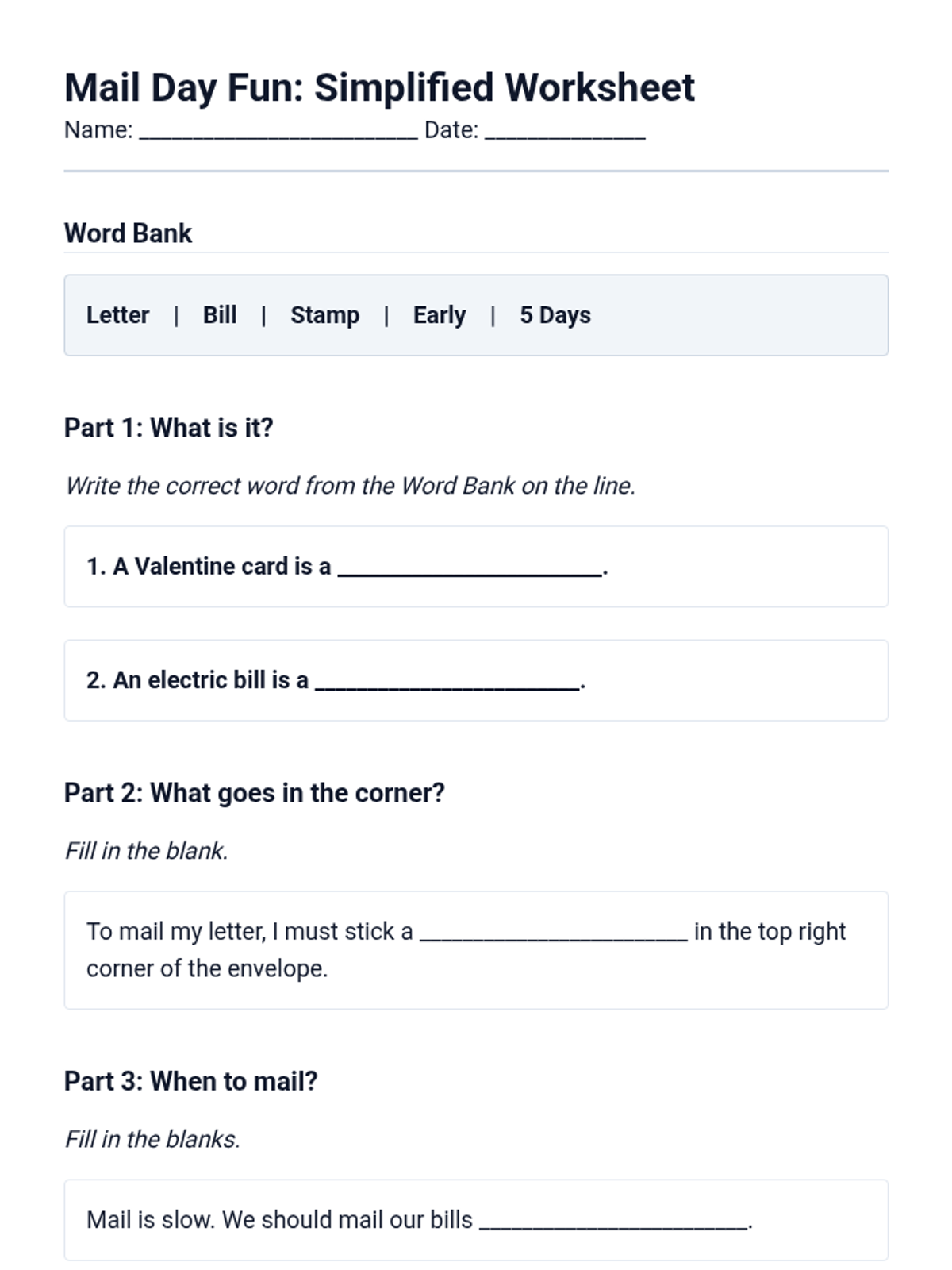
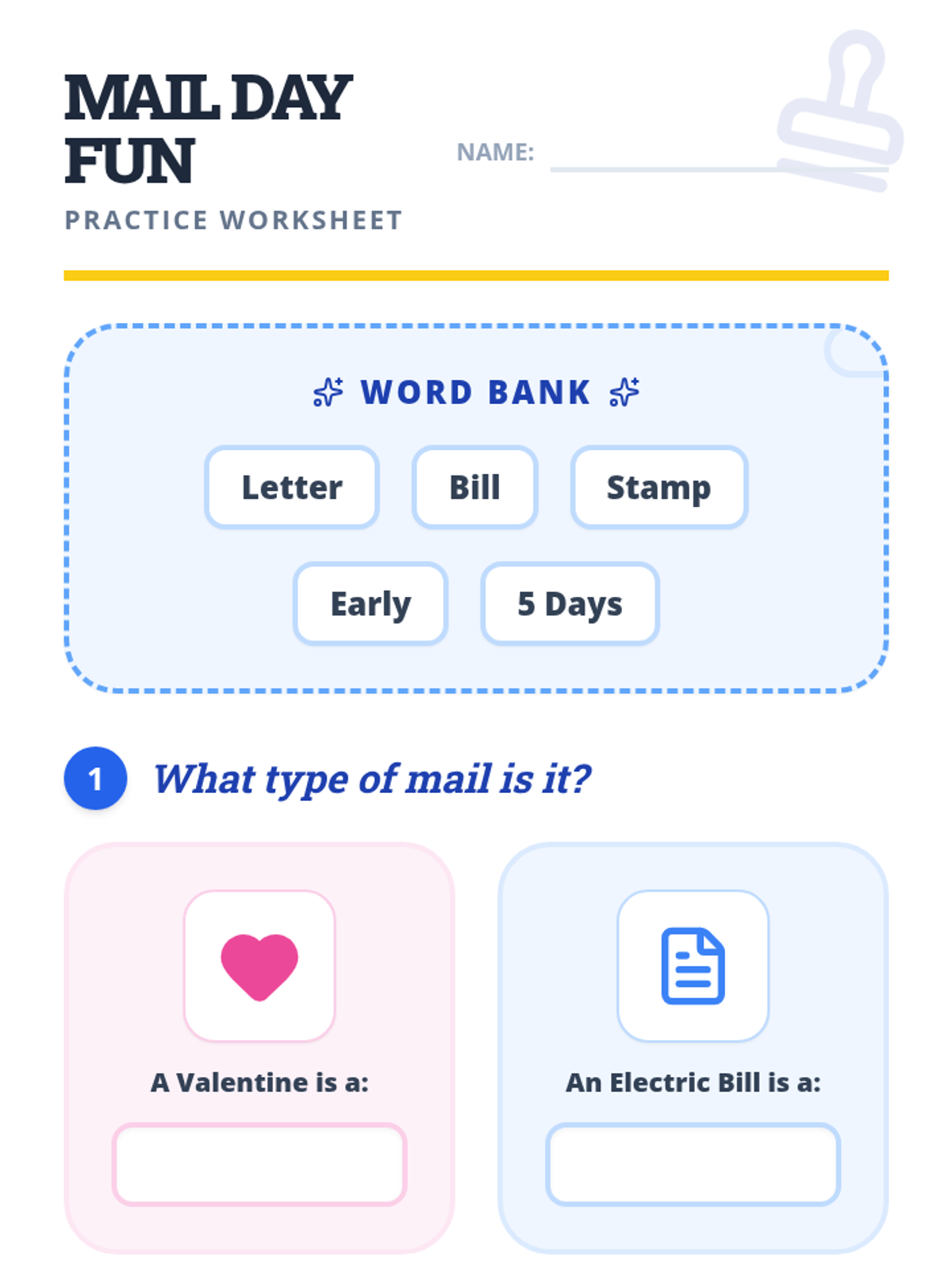
A comprehensive lesson teaching students the mechanics of sending mail, the etiquette of timing for letters and bills, and a hands-on Valentine's Day mailing project.
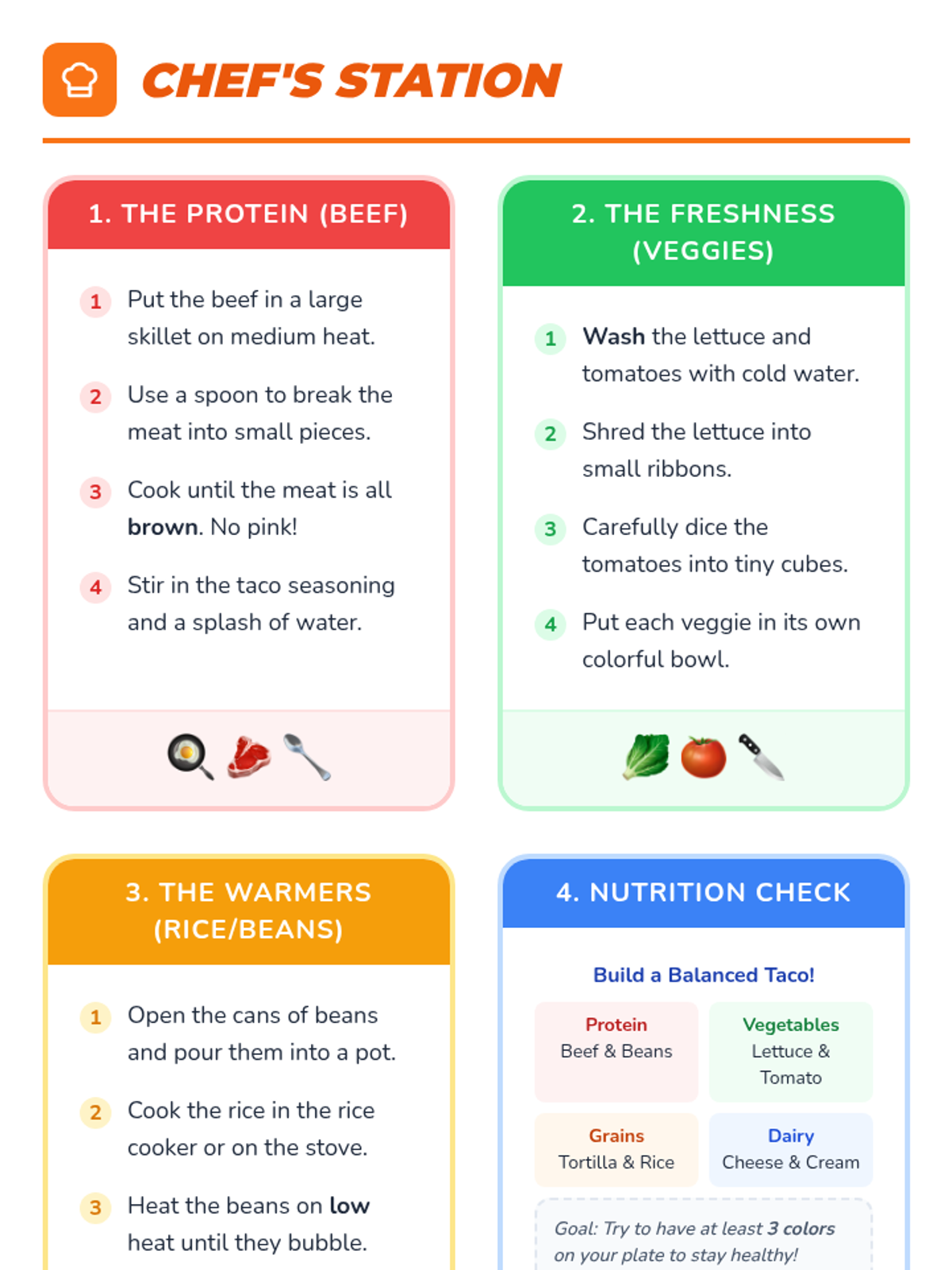
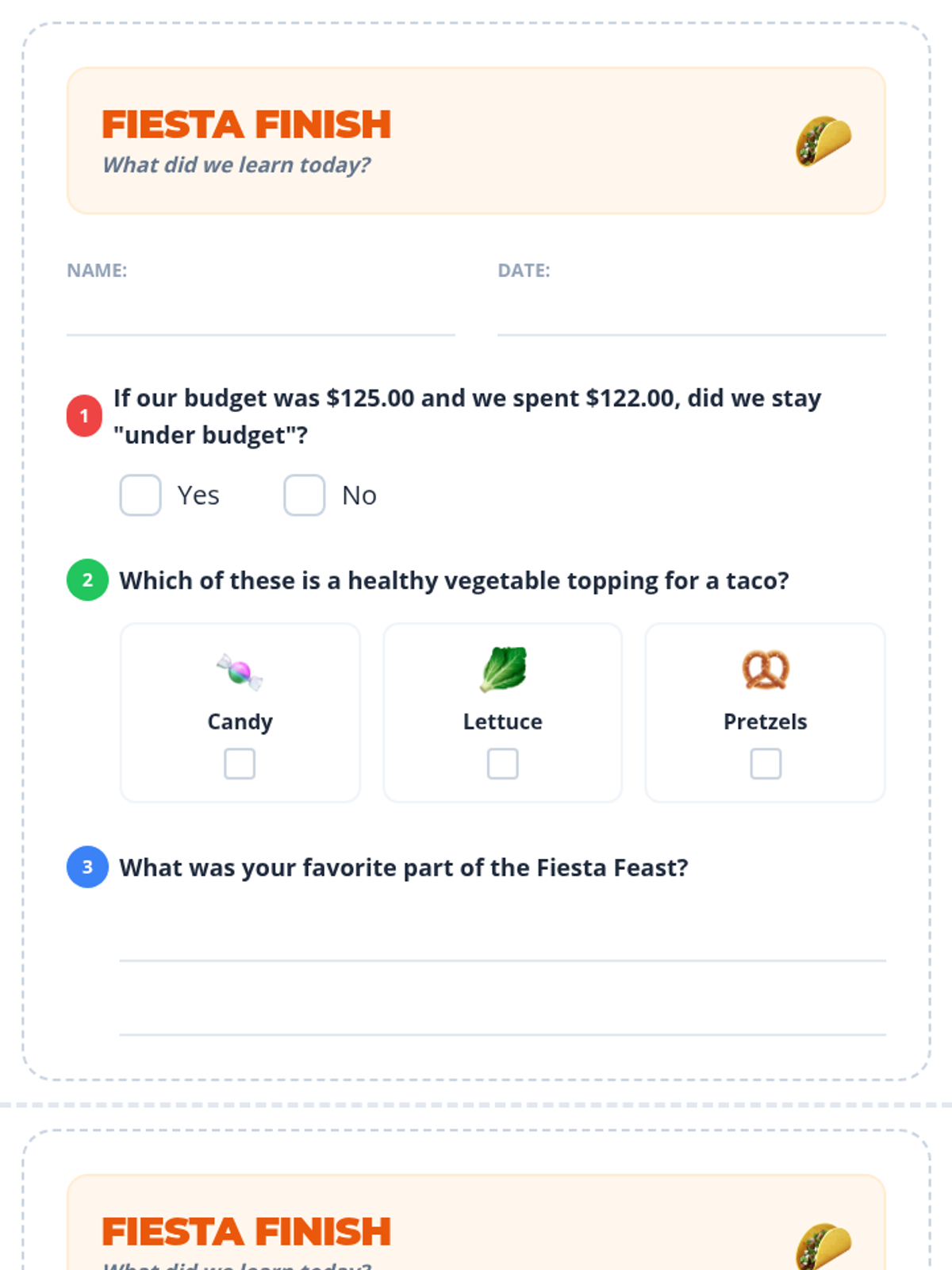
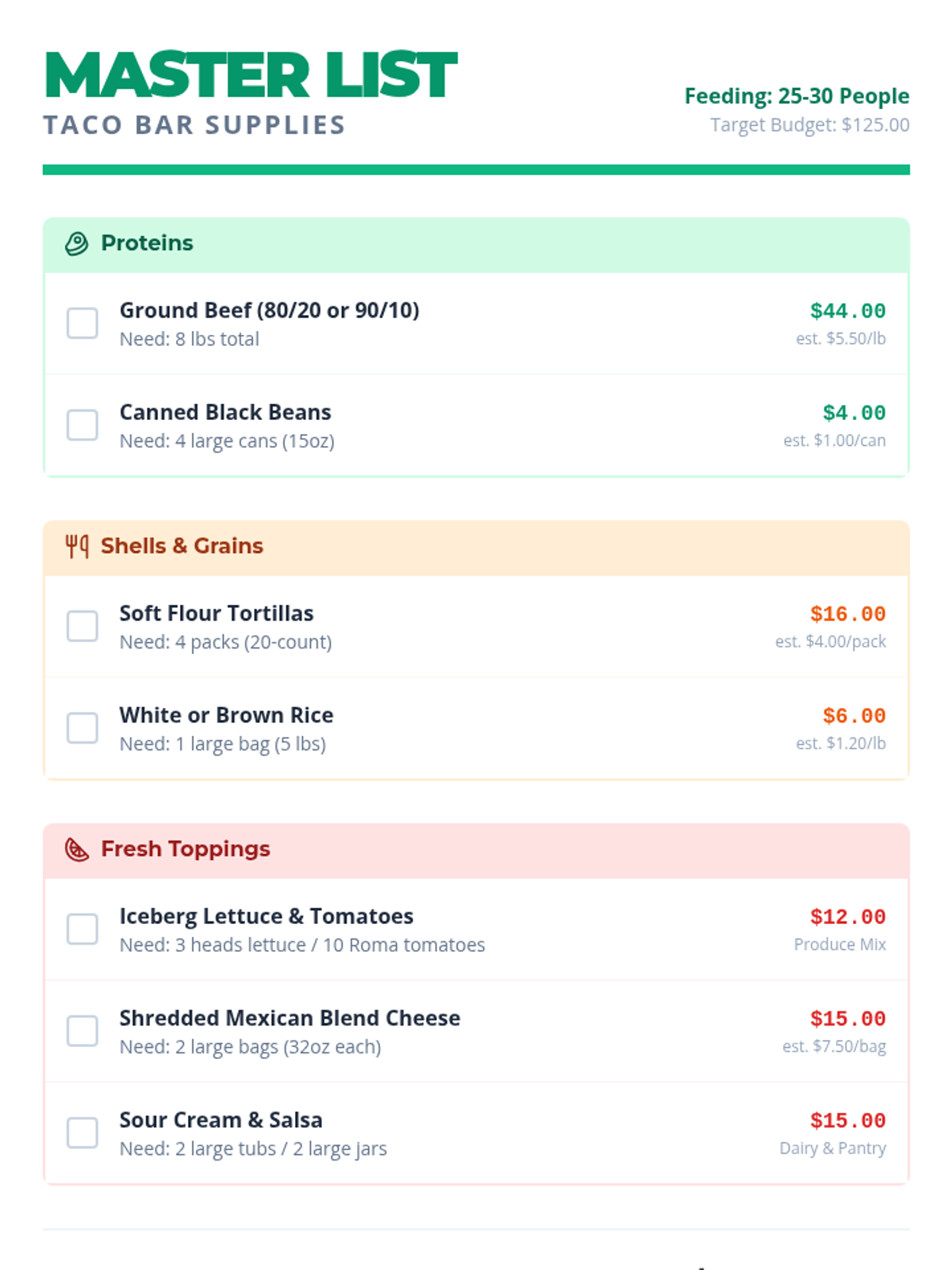
Focuses on food preparation and nutrition. Students follow visual recipes to prepare taco ingredients and identify healthy food groups.
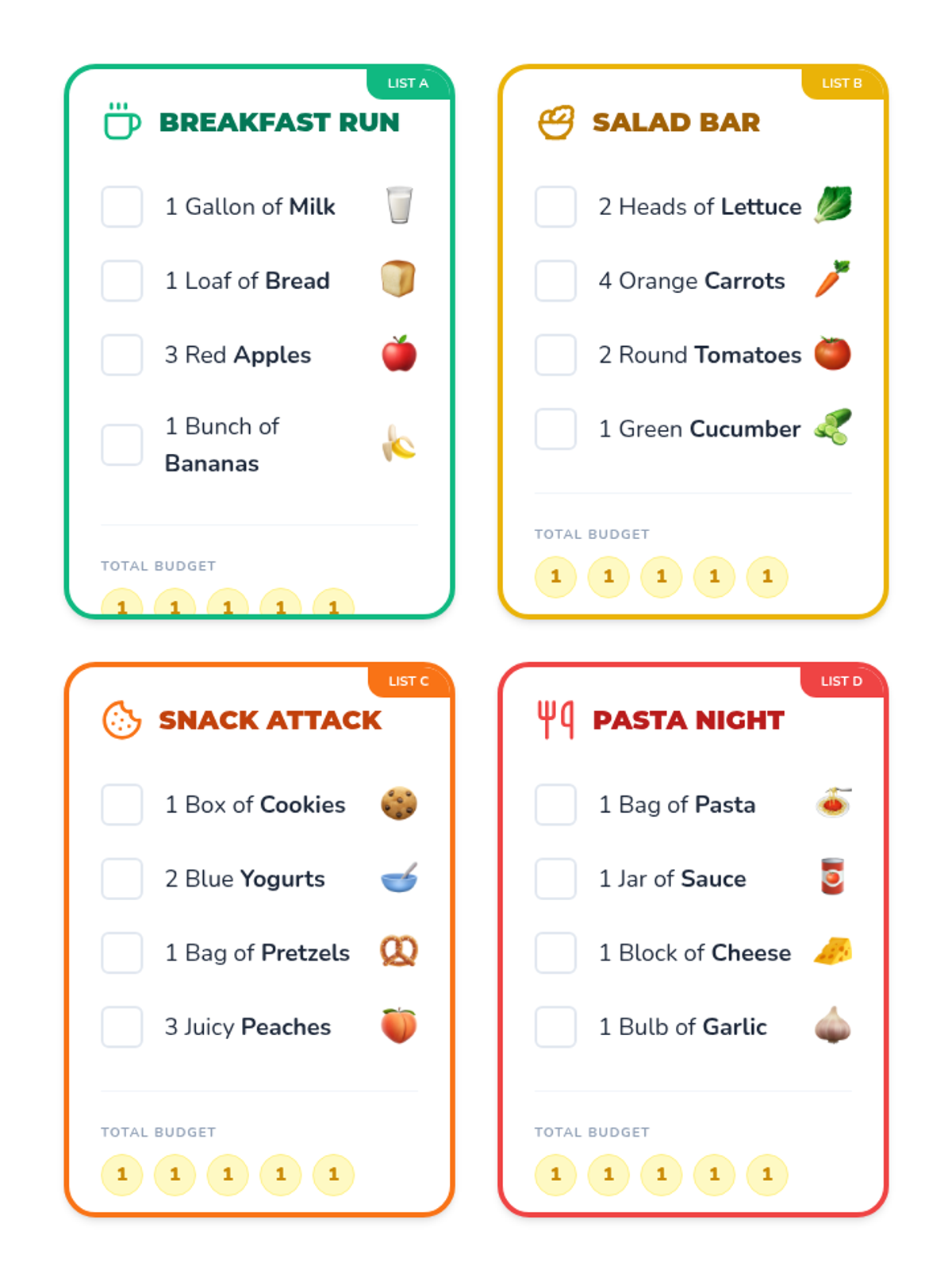
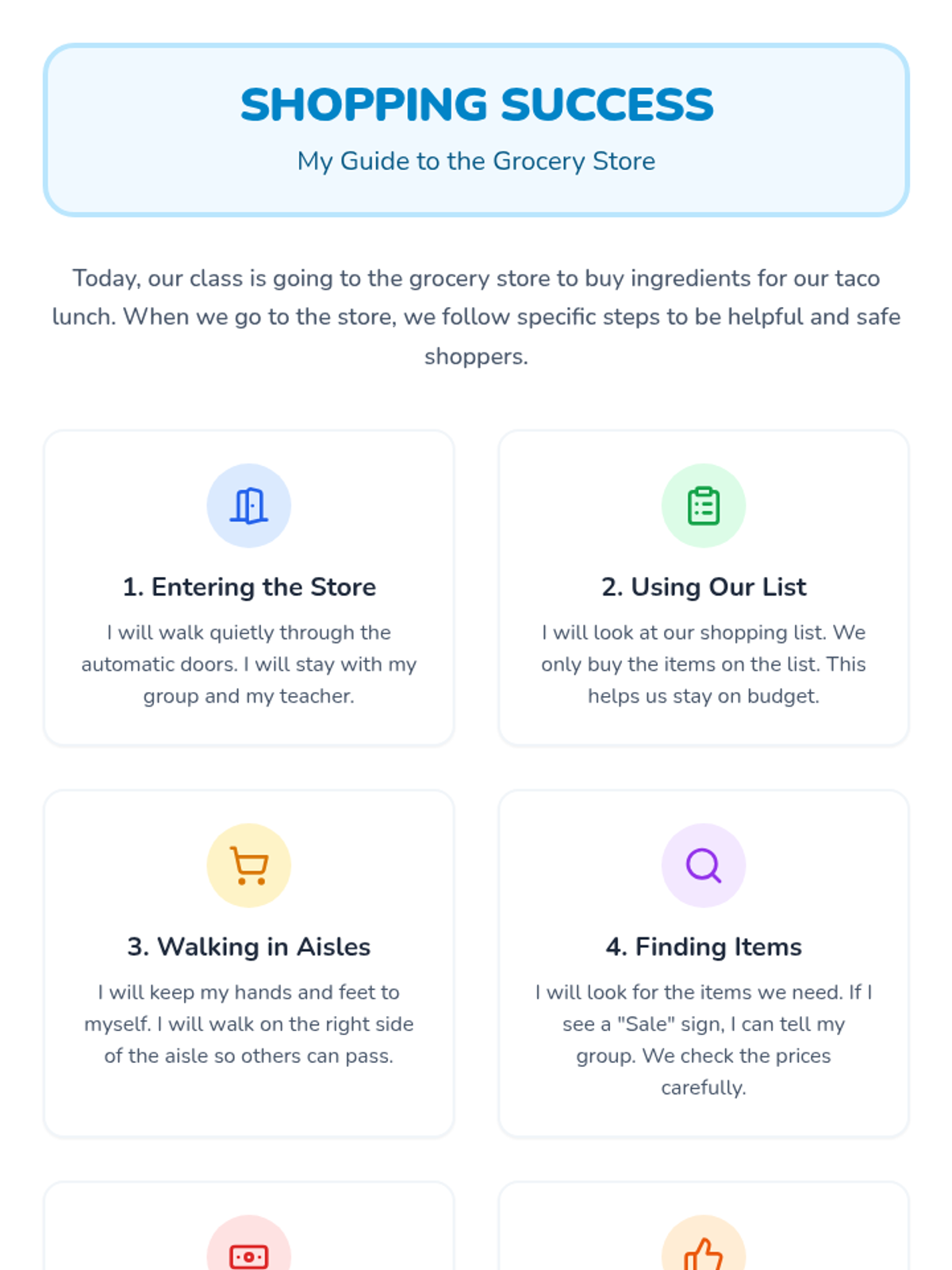
Focuses on the financial and social aspects of grocery shopping. Students calculate costs, manage a budget, and learn the social expectations of visiting a store.
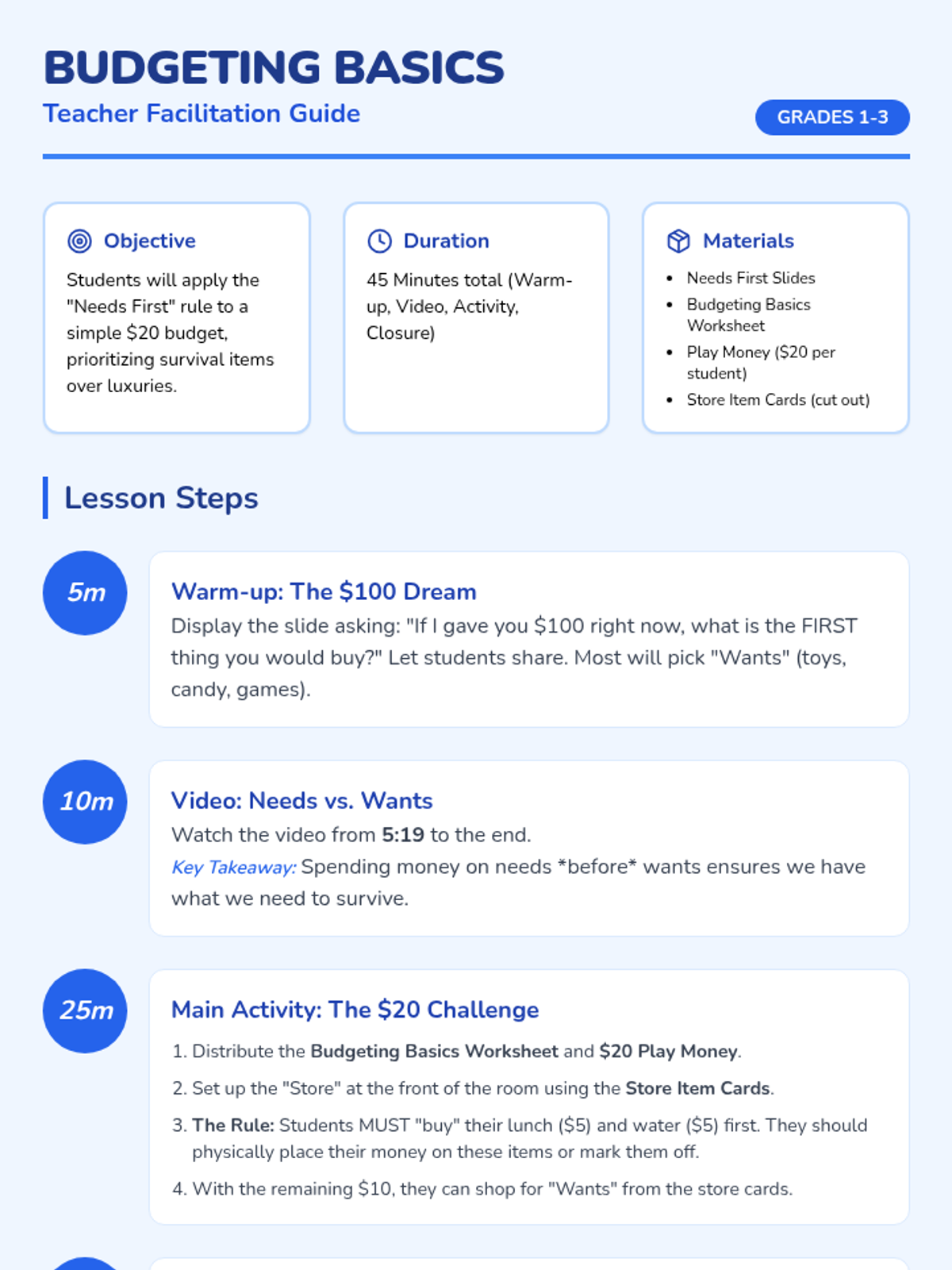
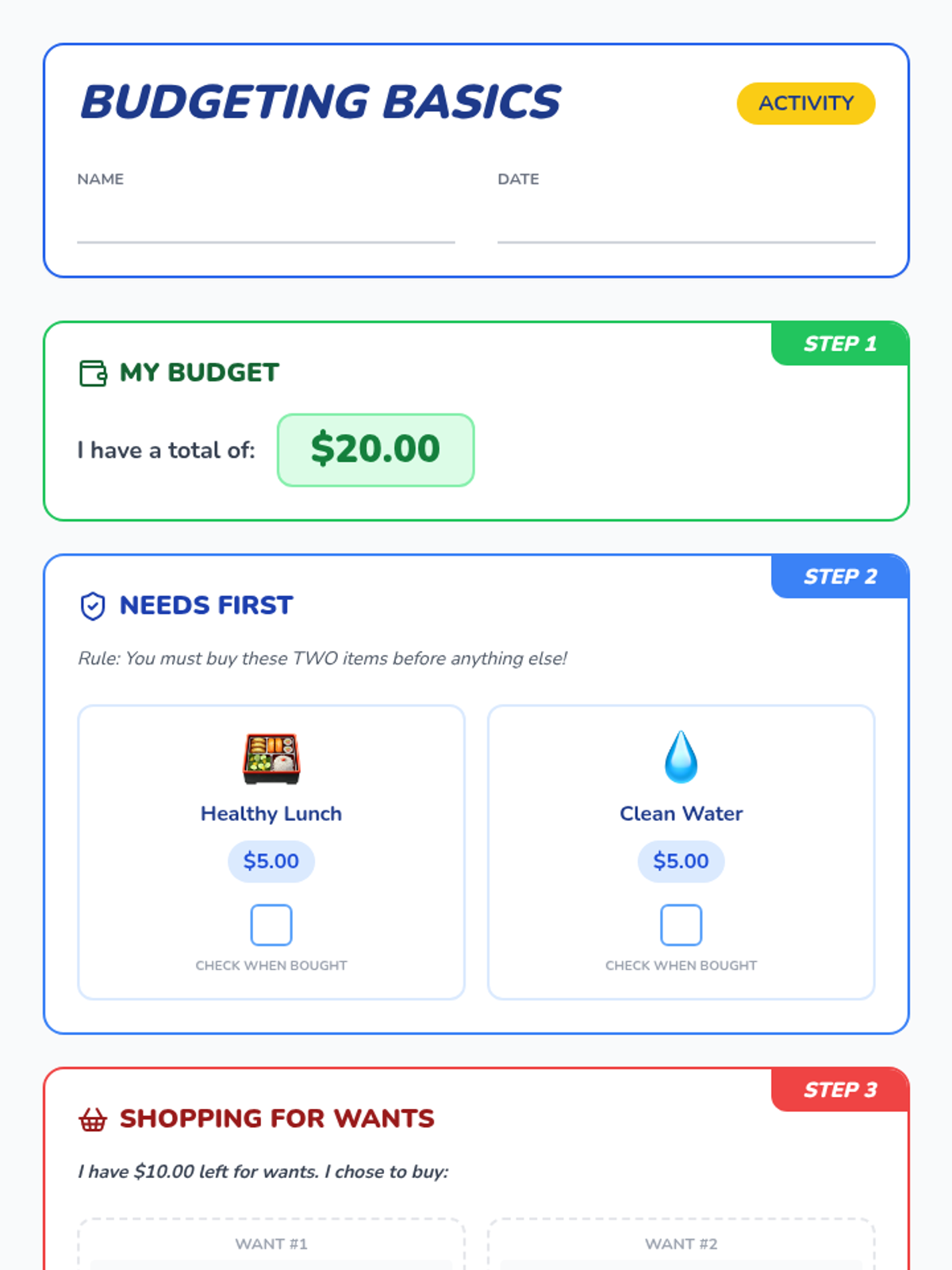
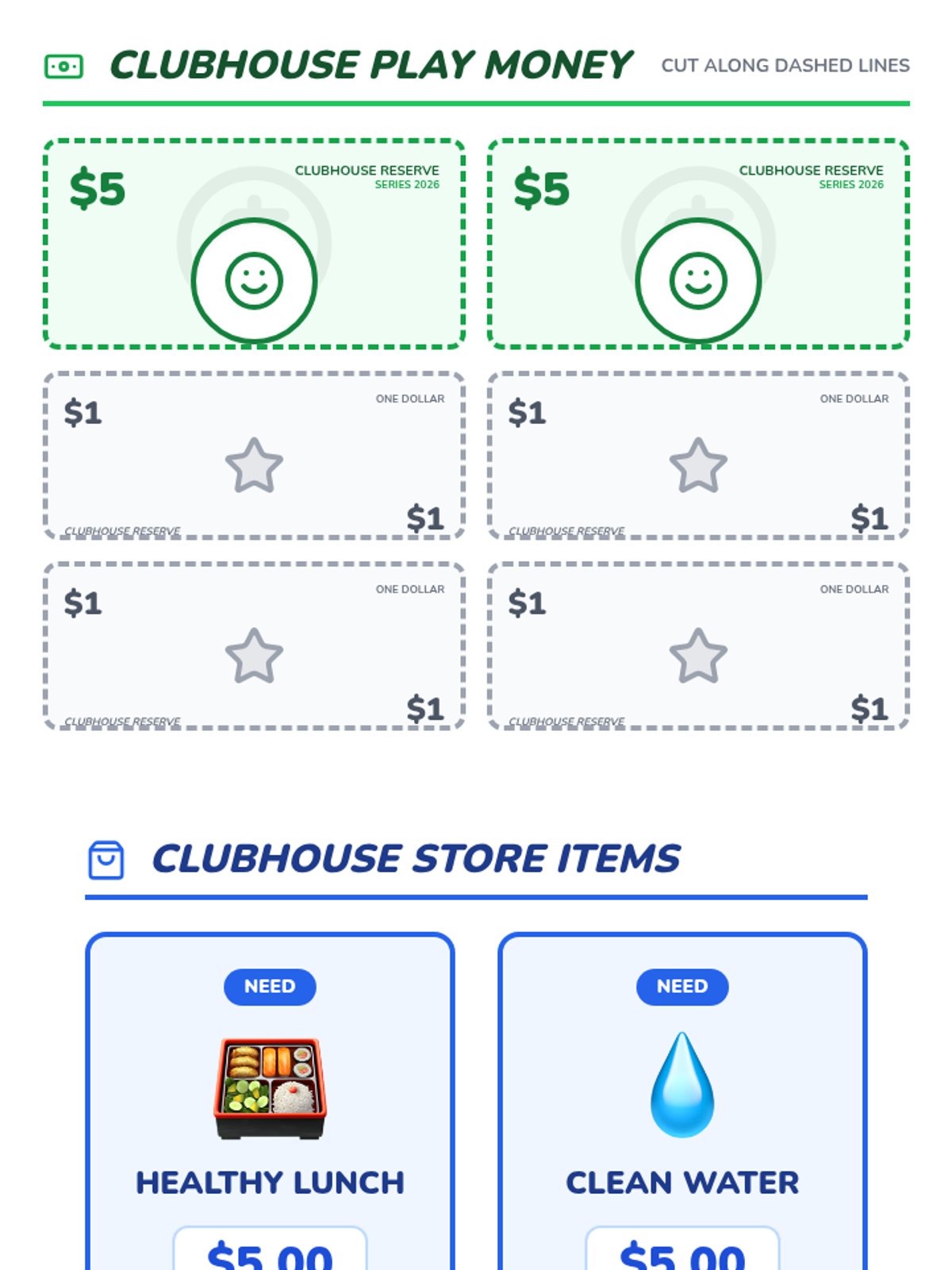
Students learn the difference between needs and wants and practice the 'Needs First' rule by managing a $20 budget to purchase essentials before luxuries.
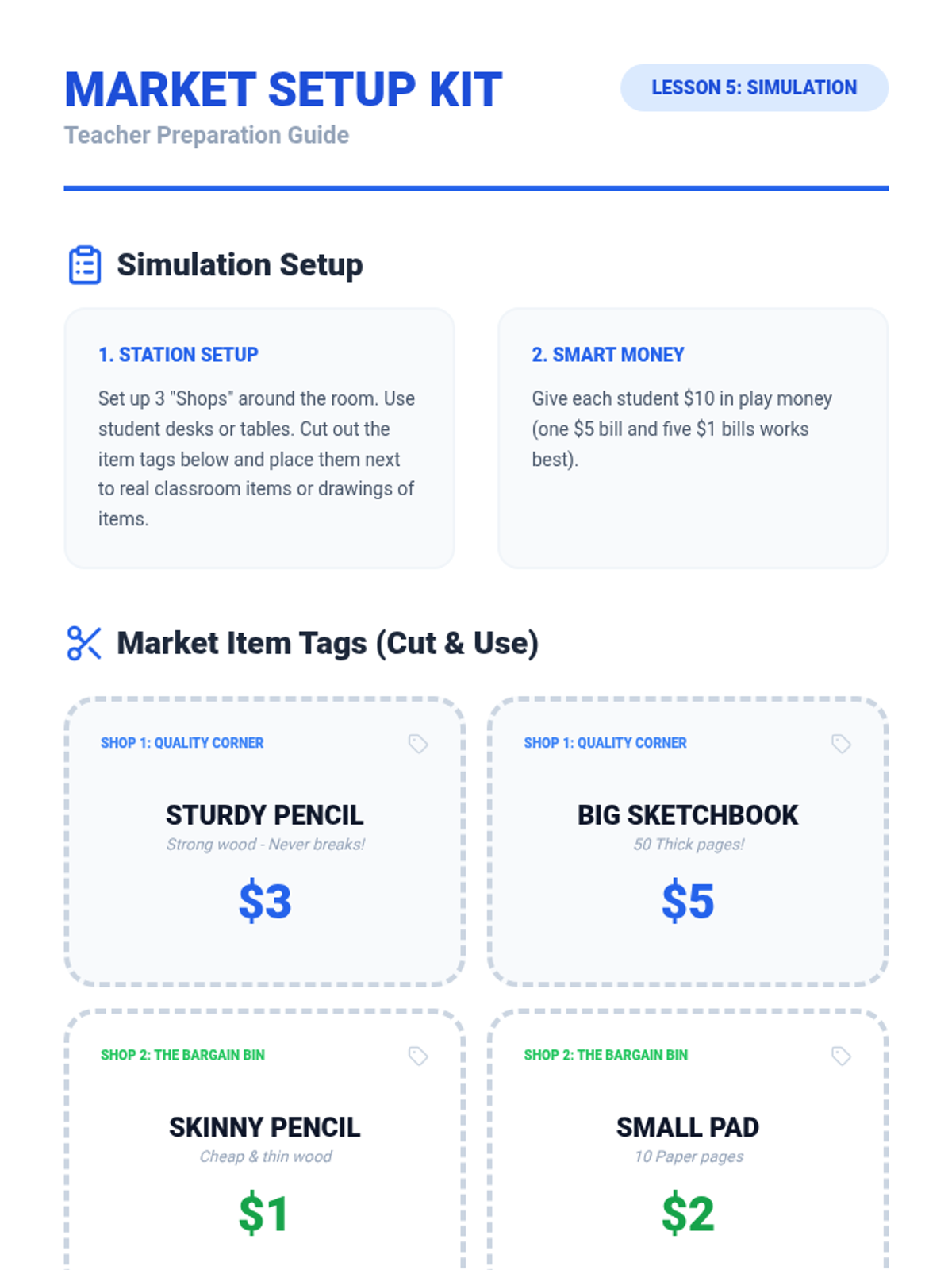
In this final simulation, students navigate a classroom 'store' with play money, encountering items with different prices and quality levels. They must apply all previous skills to make the best purchase decisions for a set scenario.
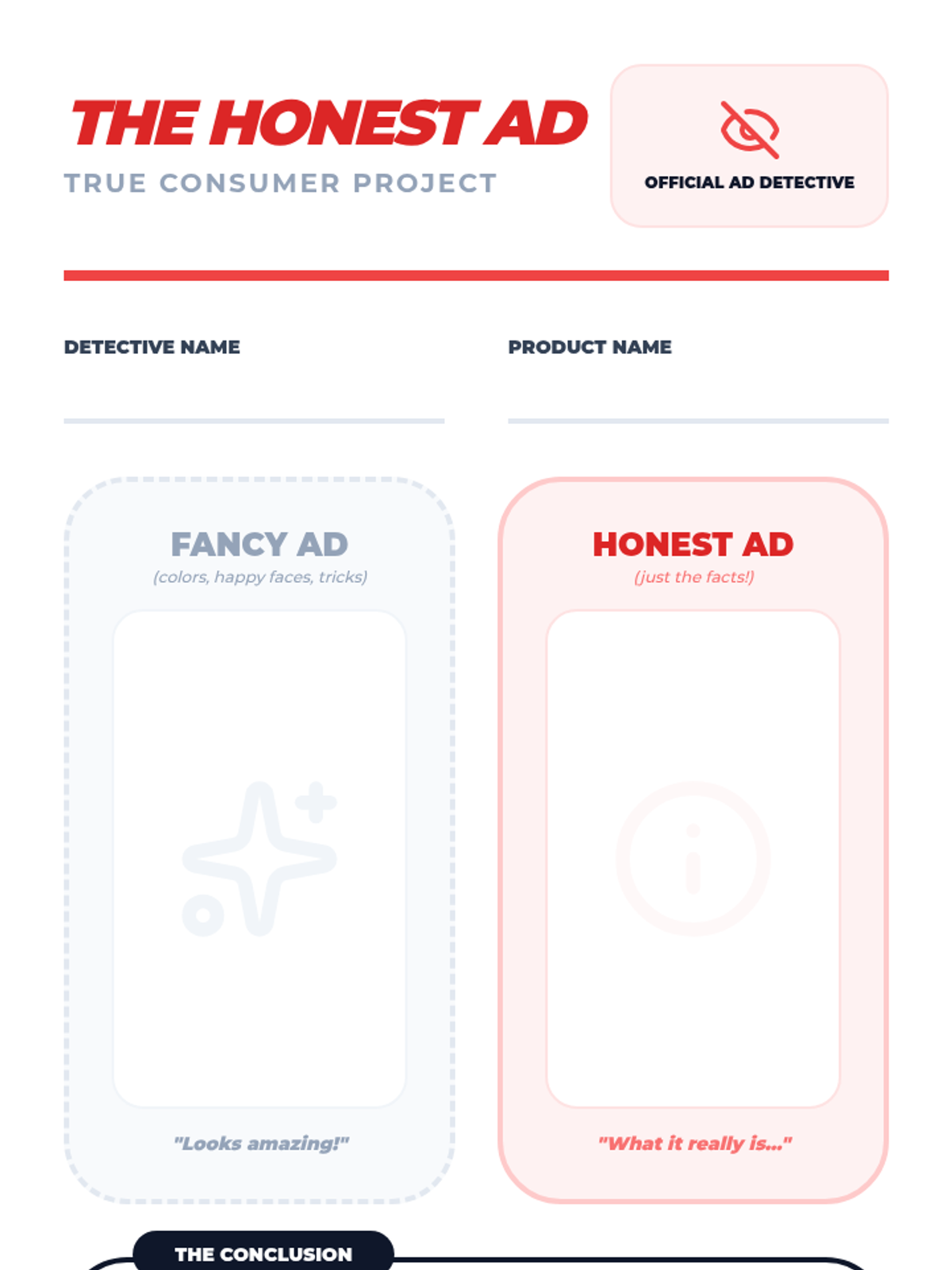
Students analyze simple advertisements to see how colors and words make them want to buy things, then create their own 'honest ad' to understand how marketing works.
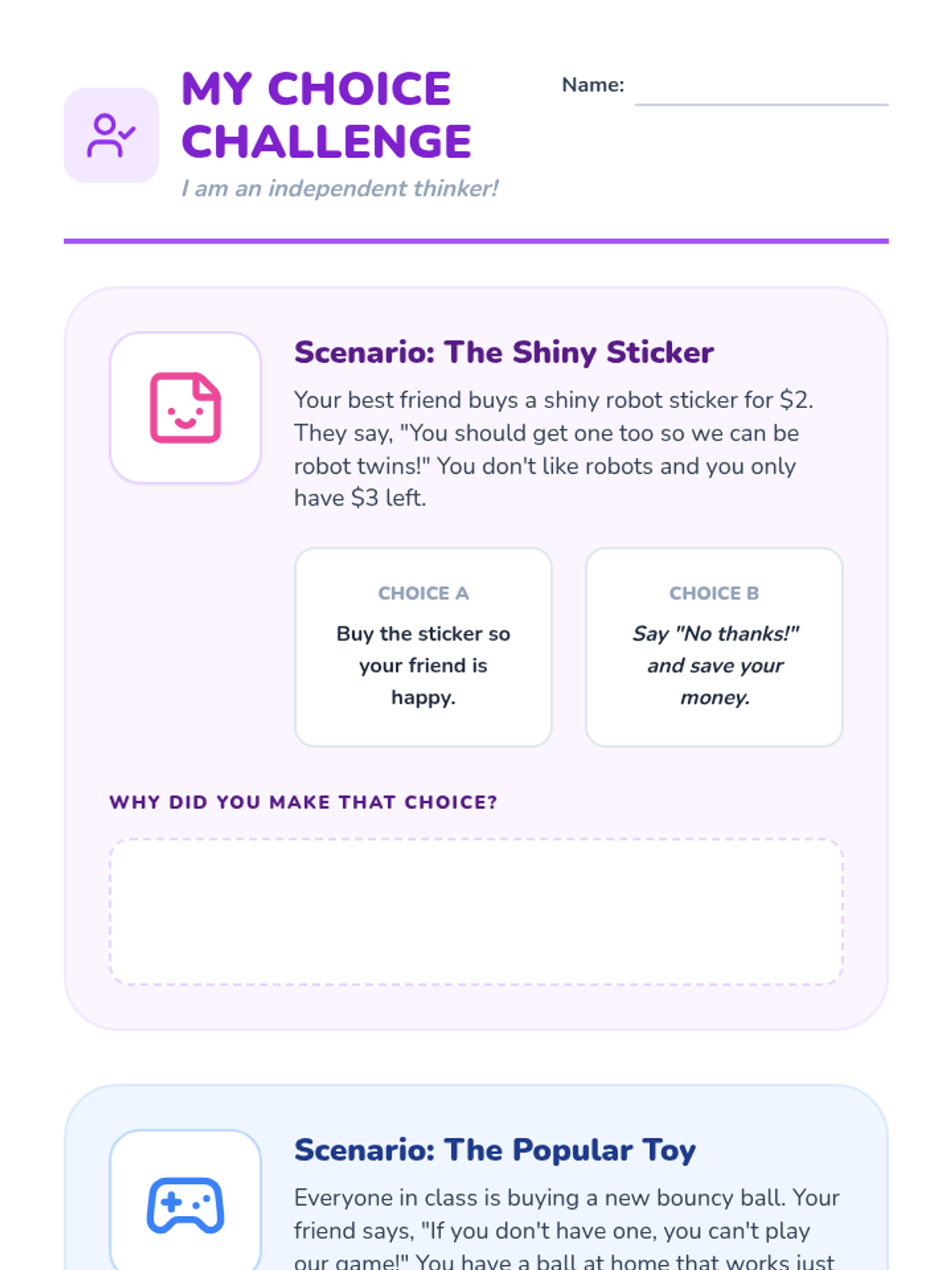
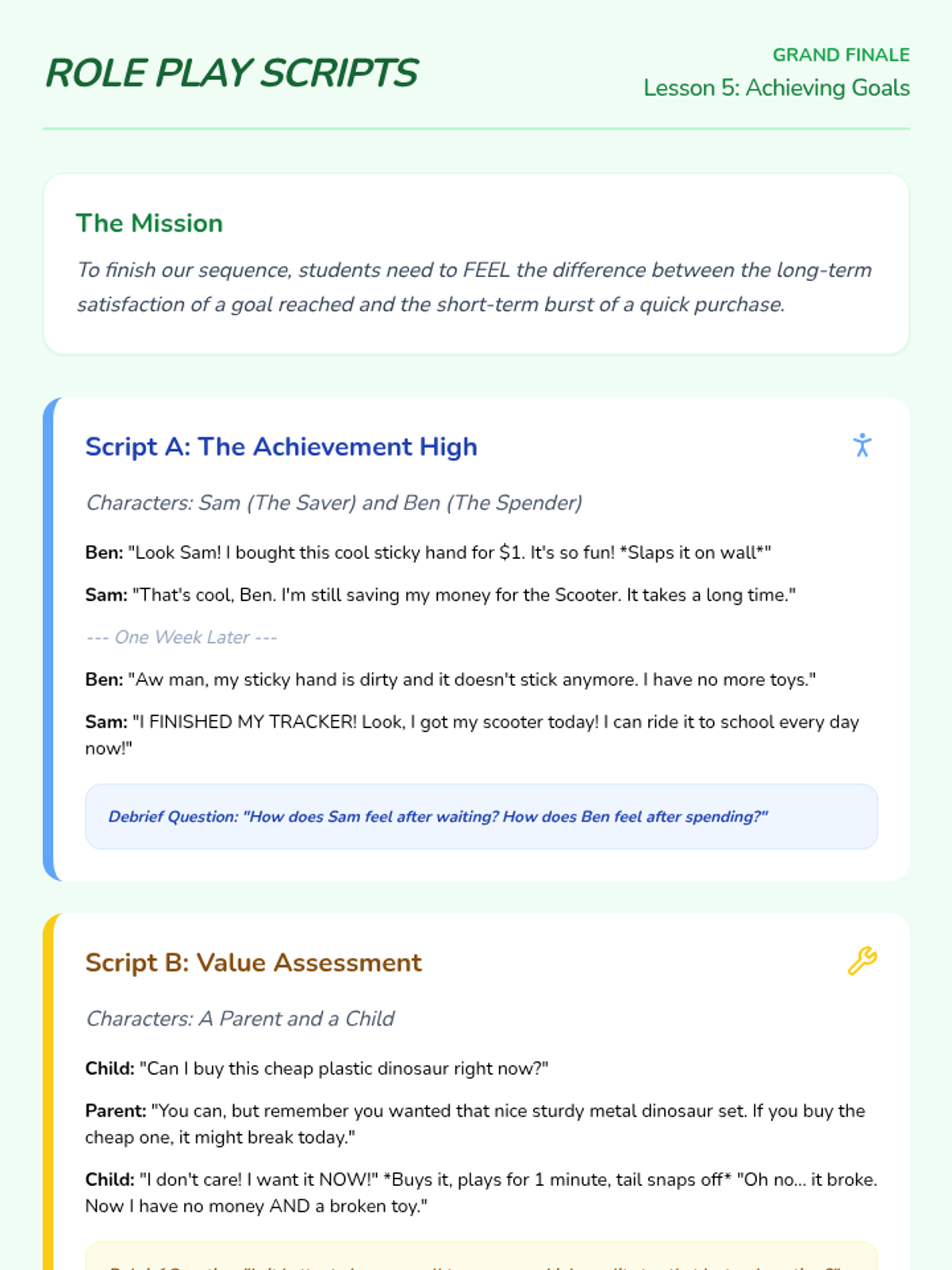
Through role-playing scenarios, students explore how friends influence spending and practice making independent decisions based on their own needs and wants.
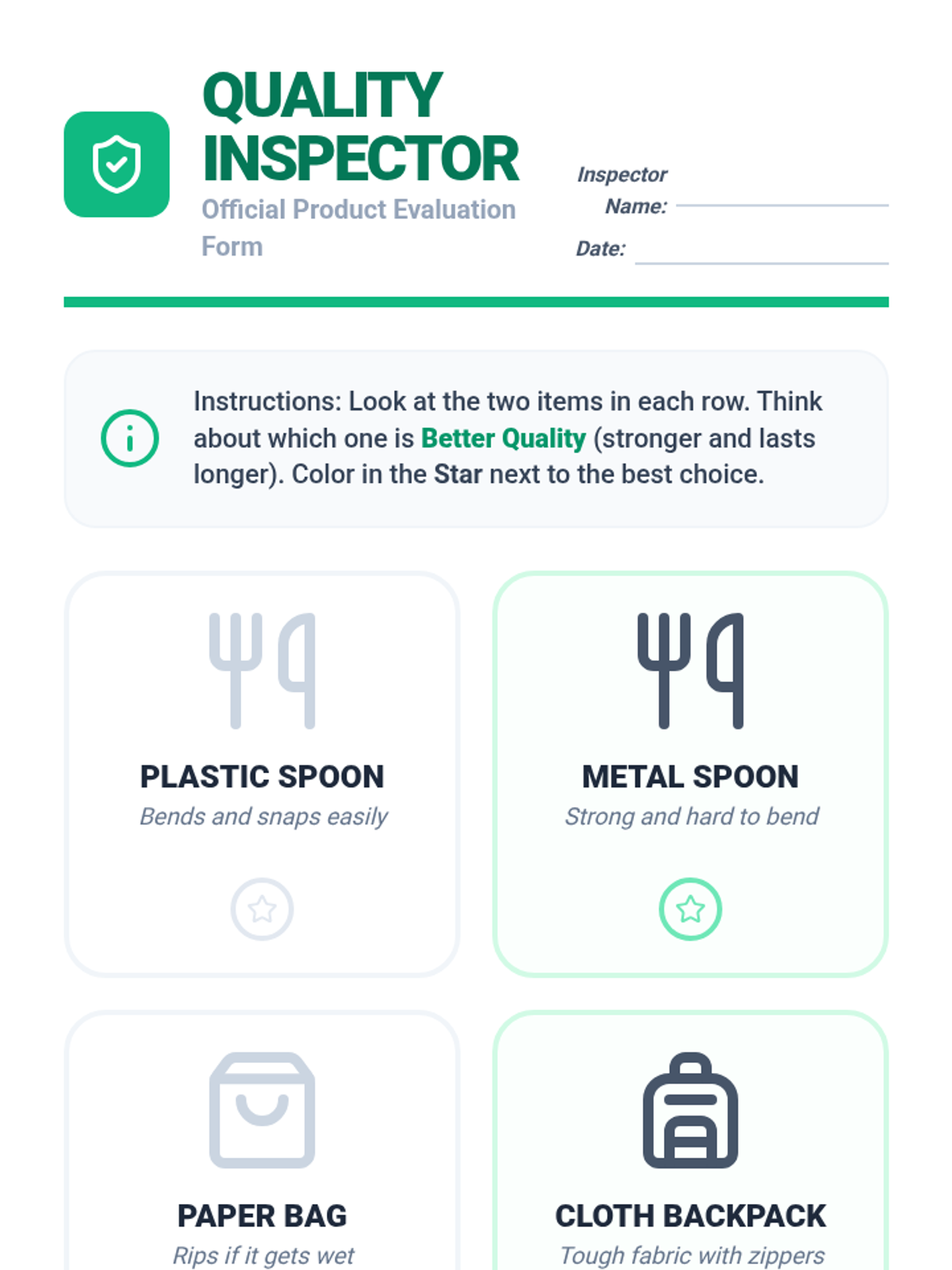
Students examine objects to determine their quality and durability, discussing the risks of buying items that break easily versus investing in well-made products.
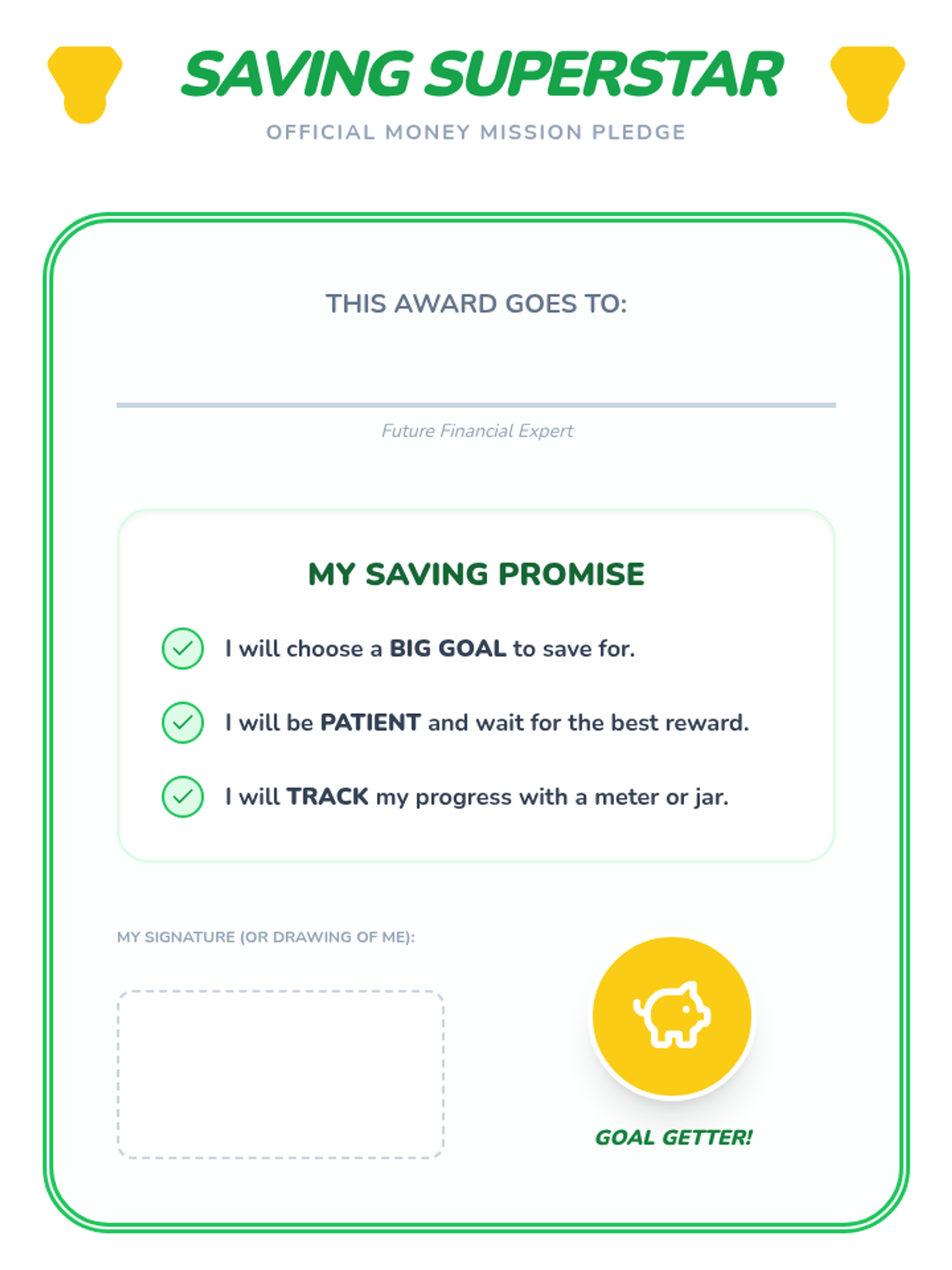
Students reflect on the satisfaction of reaching a goal and make a personal pledge to practice good saving habits.
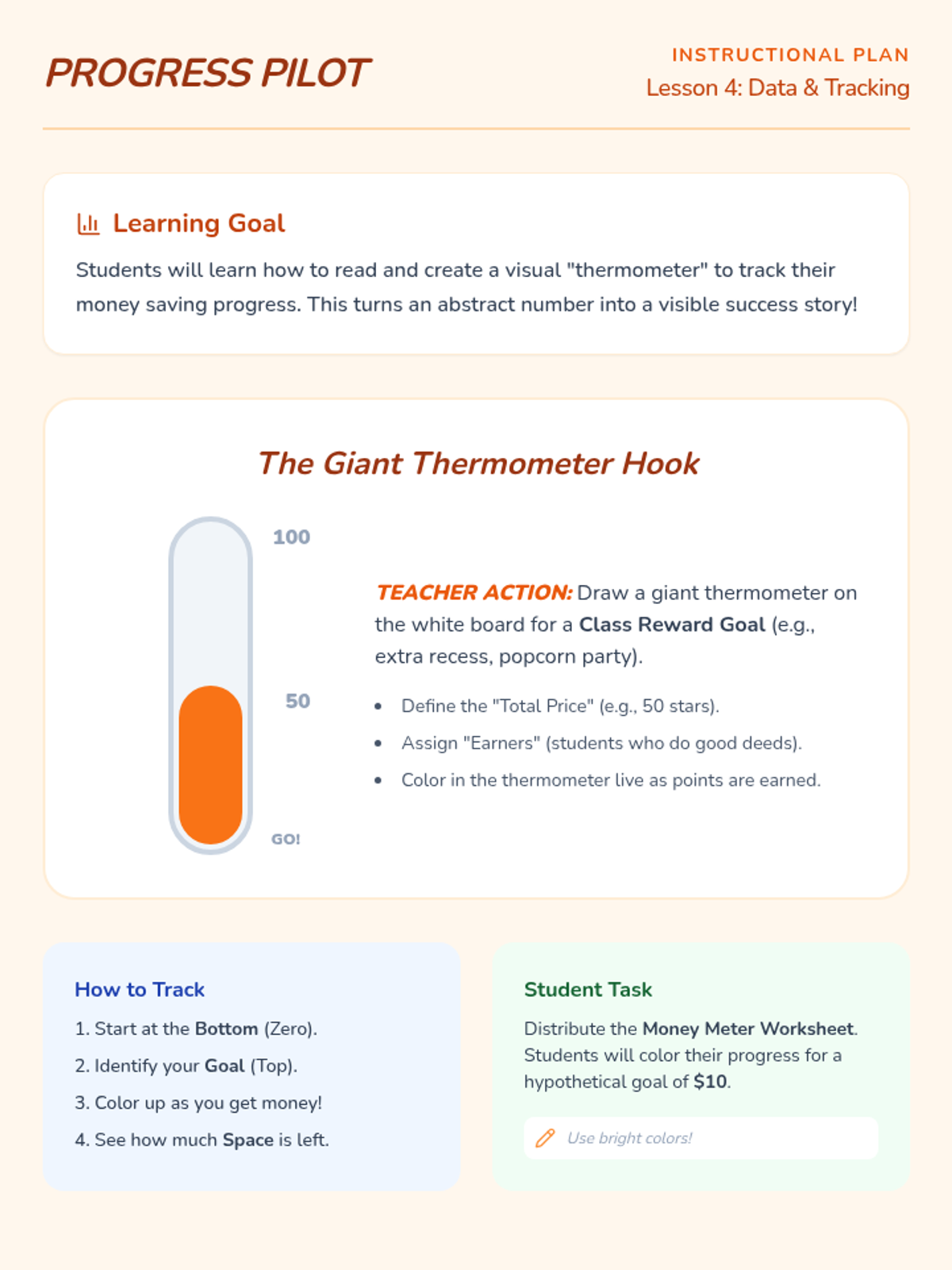
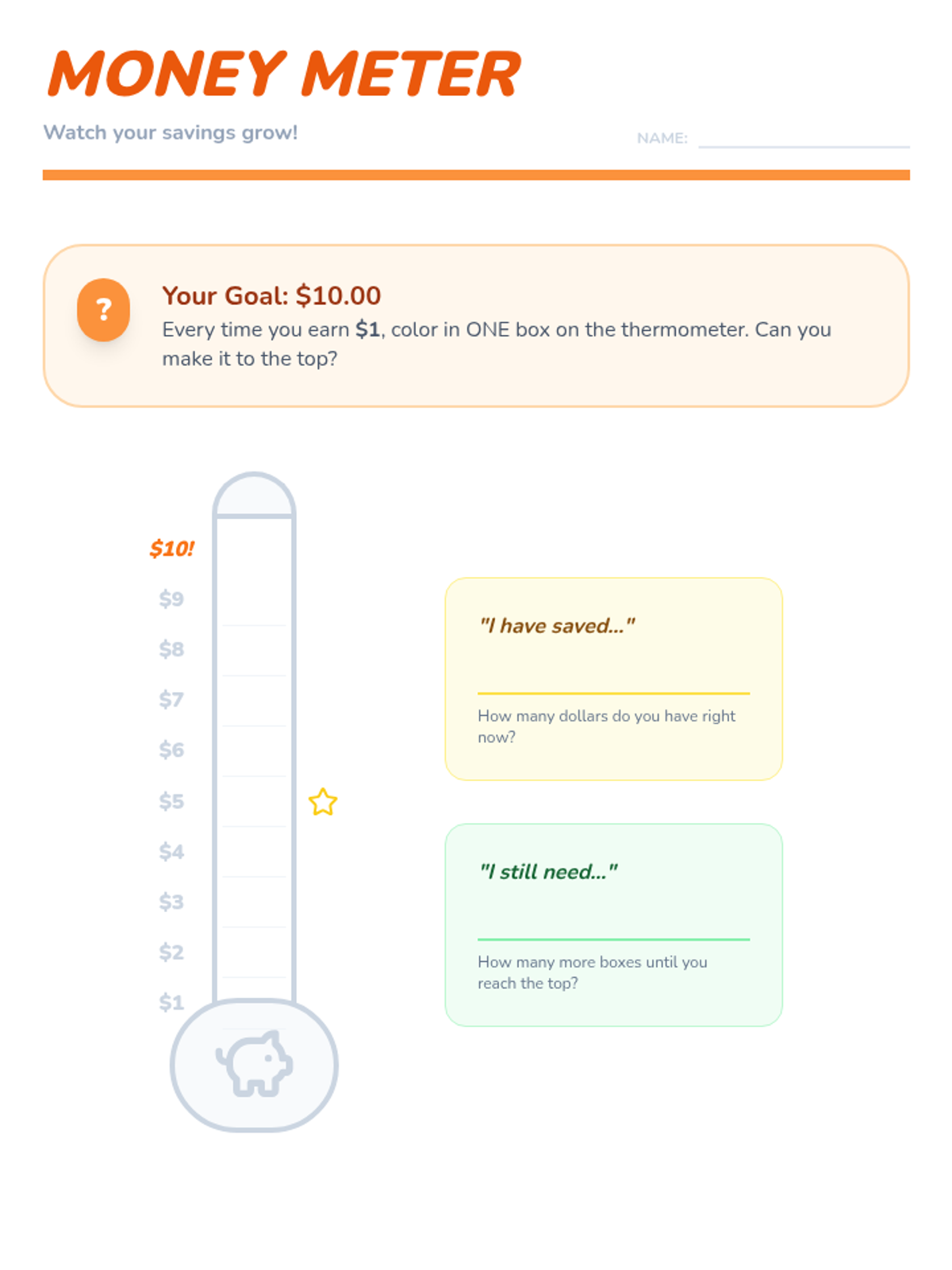
Students learn to track their financial progress using visual charts and thermometers to stay motivated toward their goals.
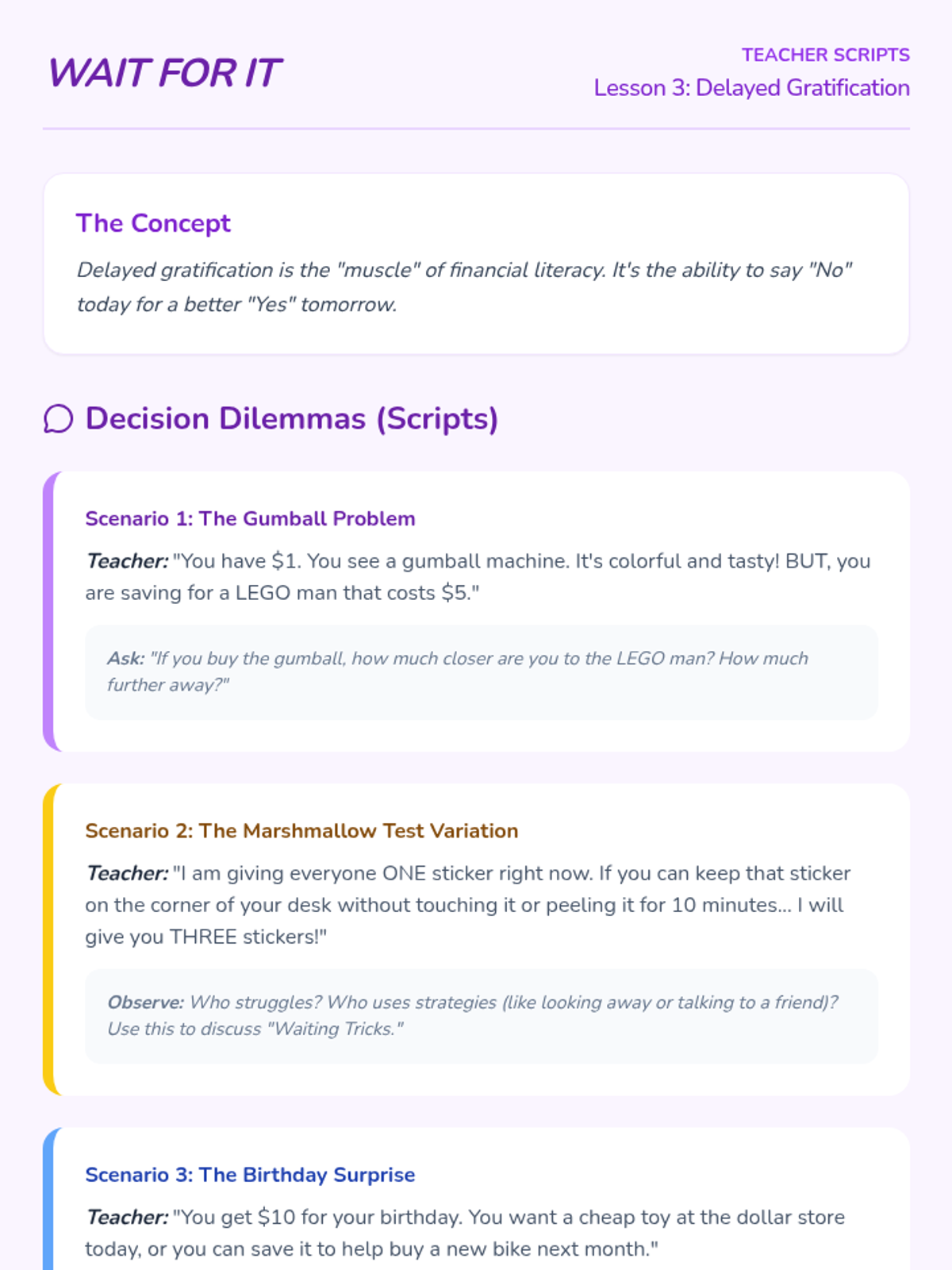
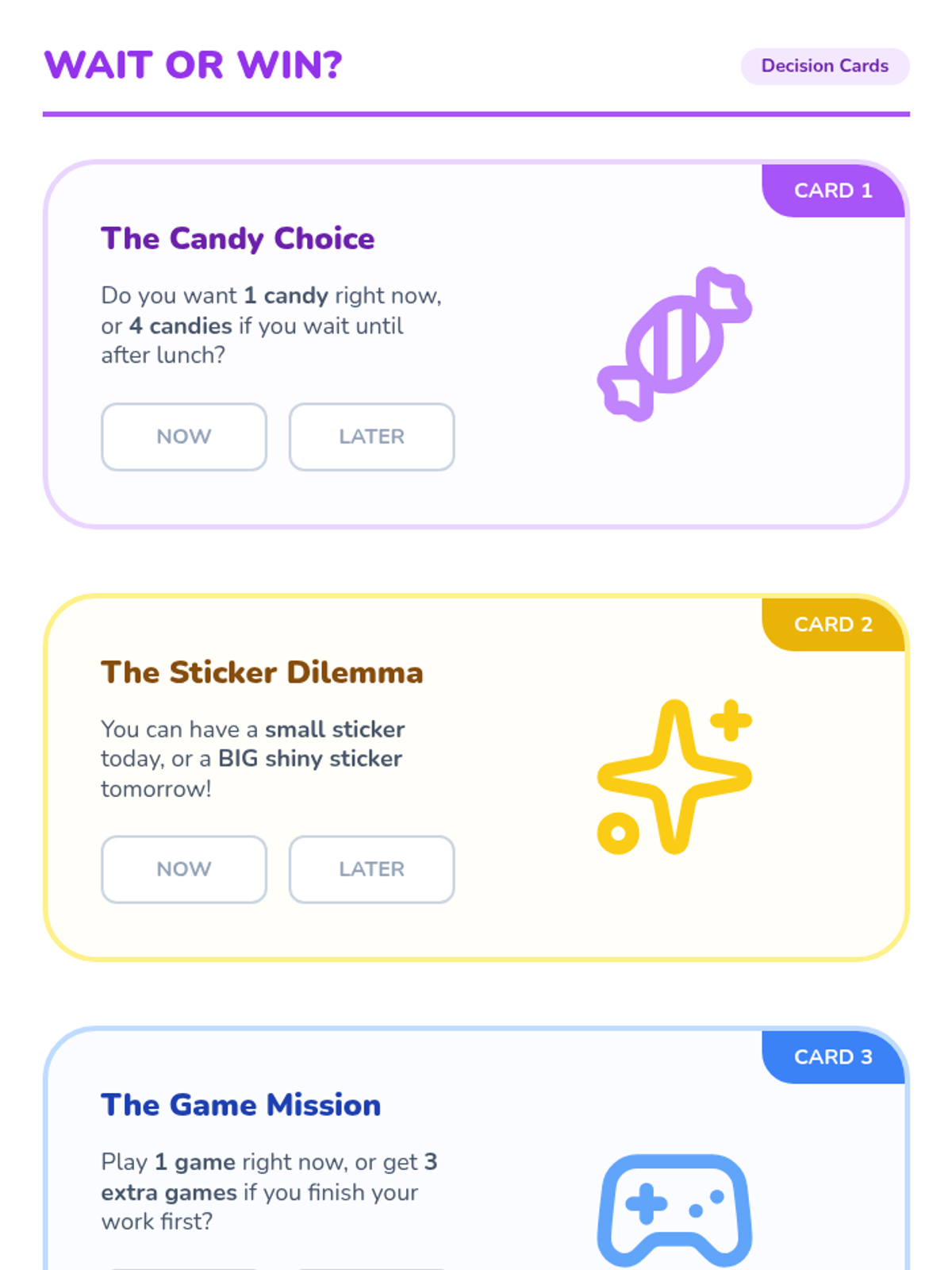
Students practice choosing between a small reward now and a larger reward later, building emotional regulation and understanding delayed gratification.