Explore the fascinating patterns of Earth's seasons! This 30-minute lesson for 4th graders helps students understand why we have seasons and the predictable changes they bring, connecting scientific concepts to their everyday experiences.
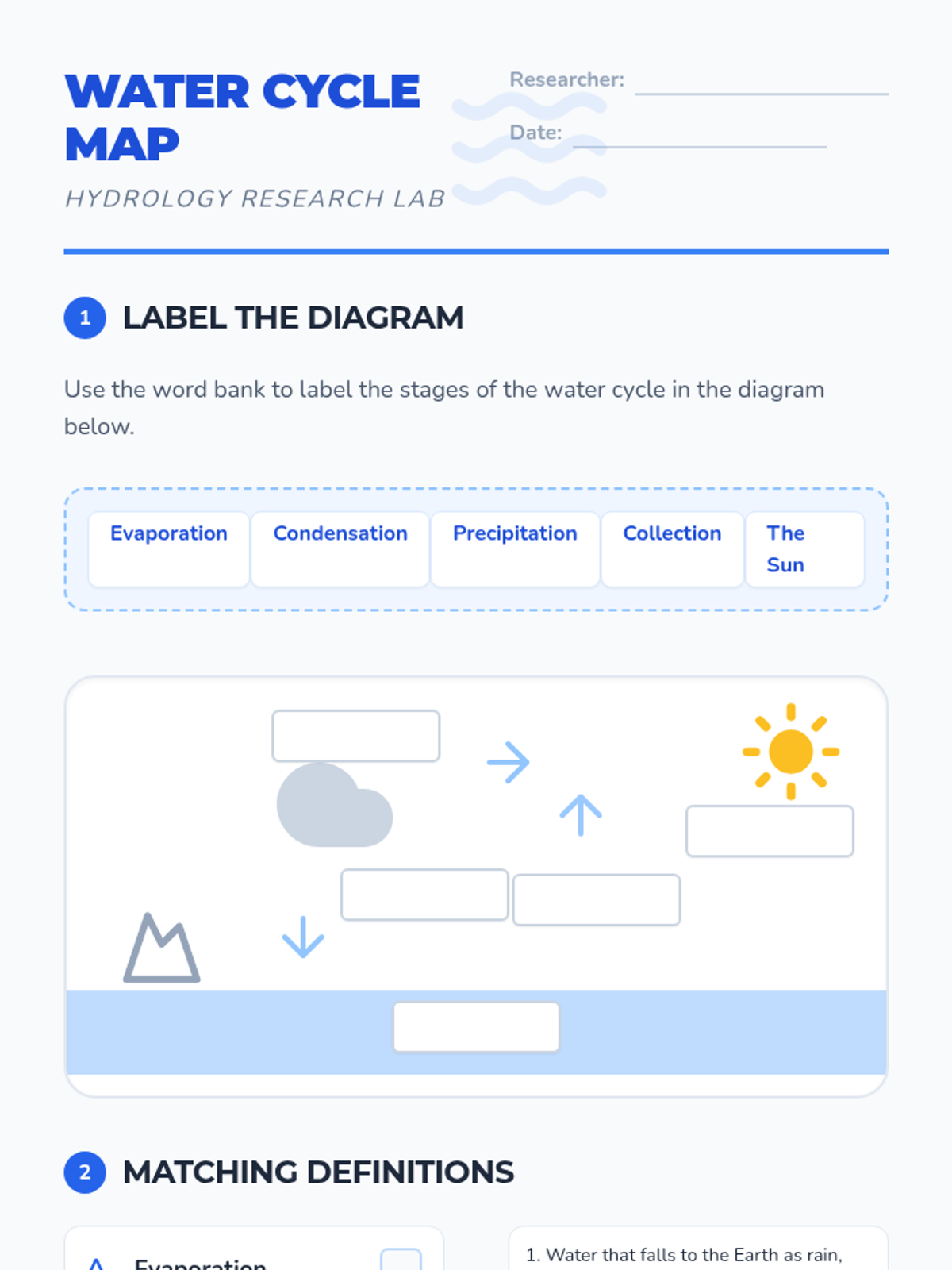
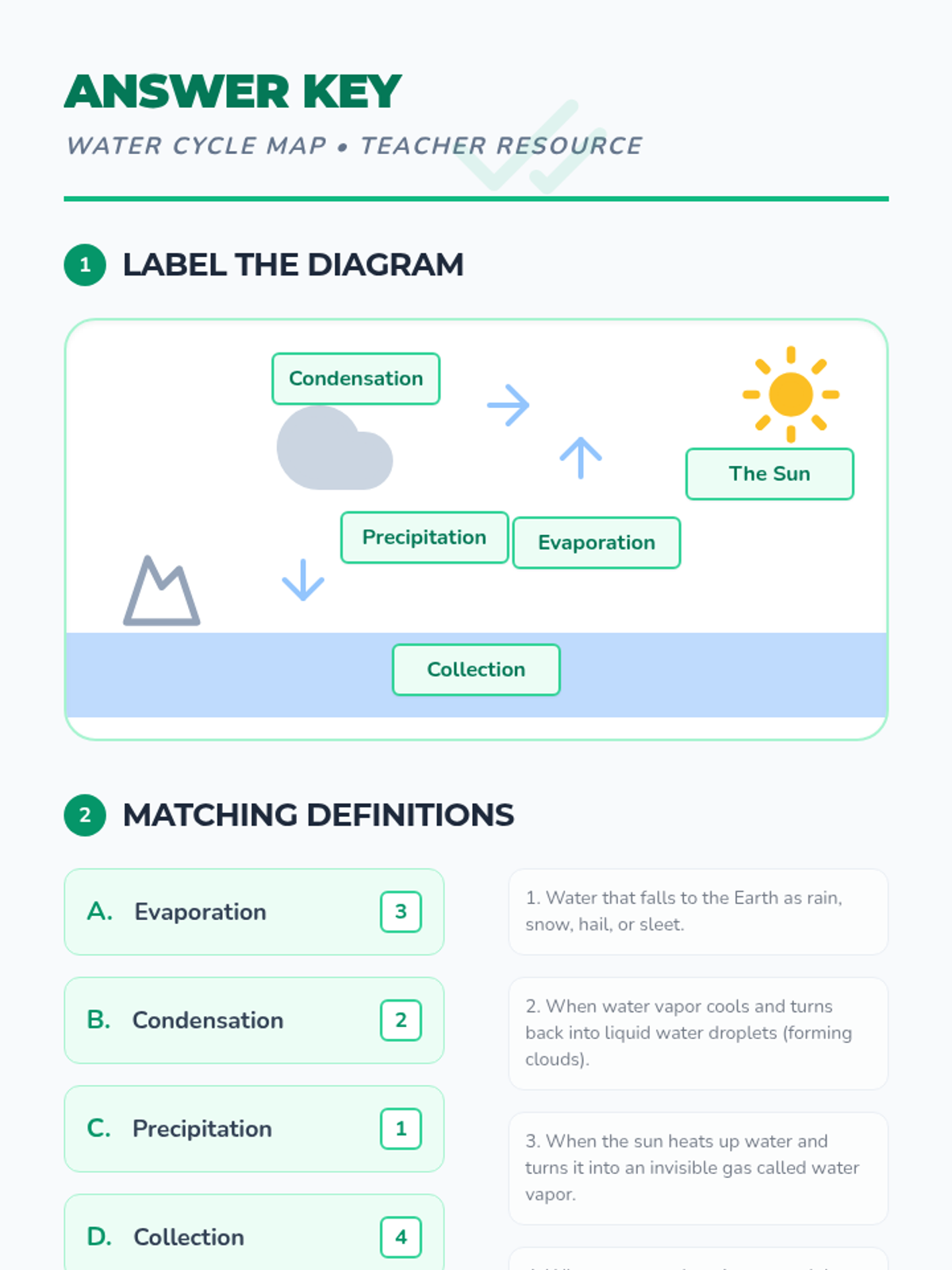
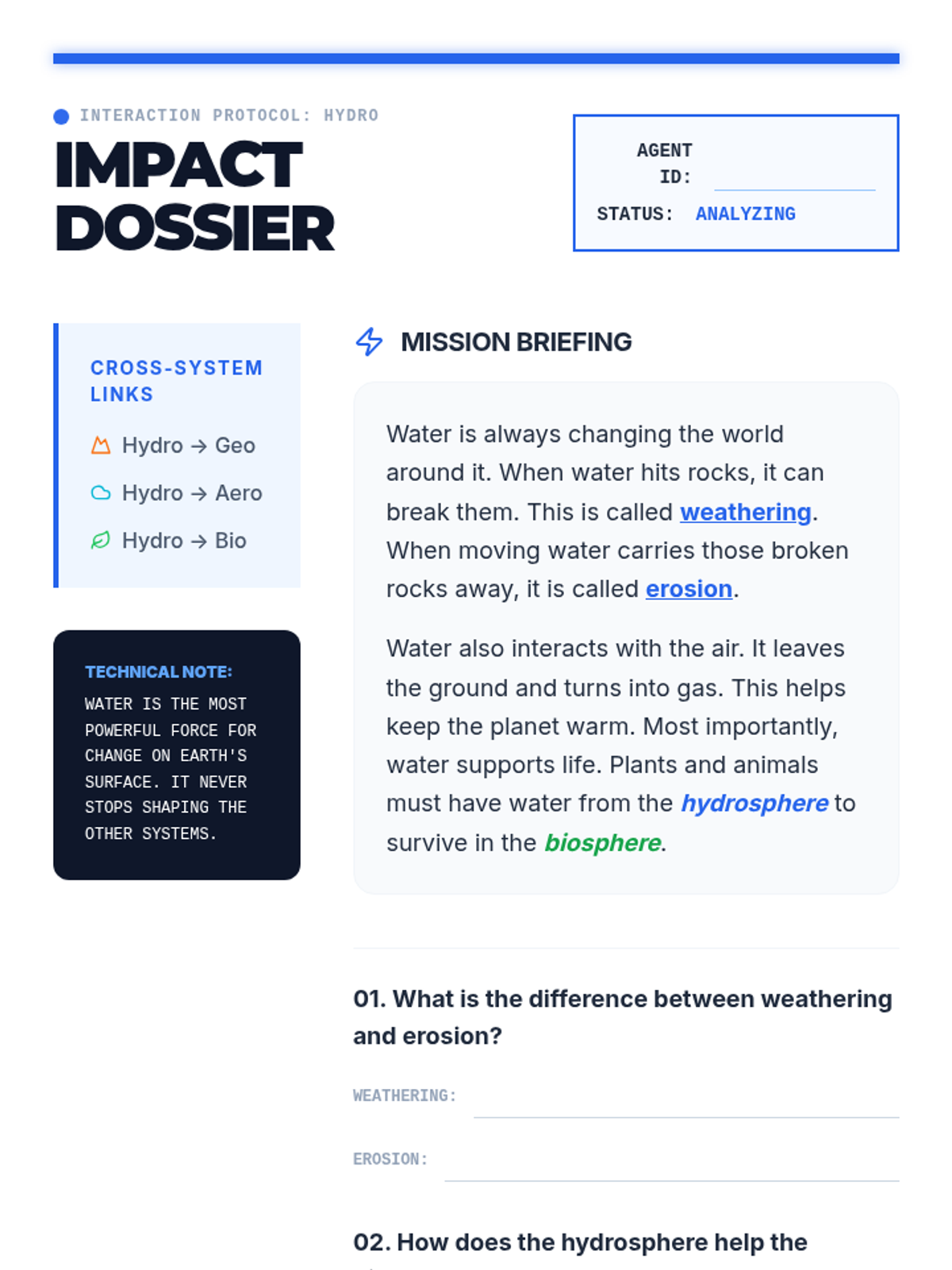
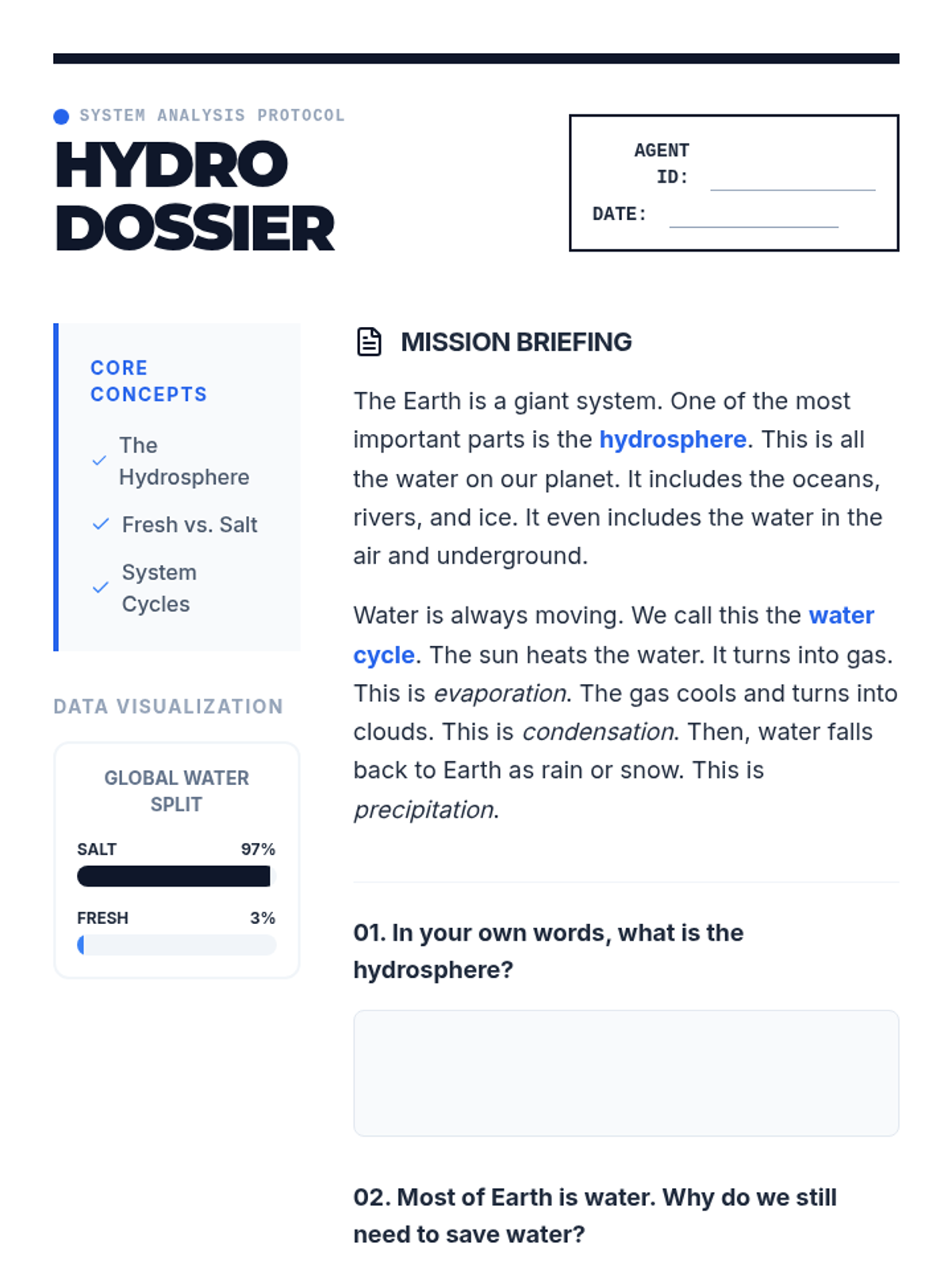
A comprehensive review lesson covering Earth's water distribution, fossil records in rock layers, plate tectonics, and the water cycle to prepare students for the Unit 4 Quiz.
Students complete the 'Master Certification' post-assessment and celebrate their growth as investigators.
Comparing and contrasting different animal defense mechanisms across multiple short texts.
Synthesizing information to create concise summaries of animal defense strategies.
Using context clues to determine the meaning of domain-specific vocabulary words in complex texts.
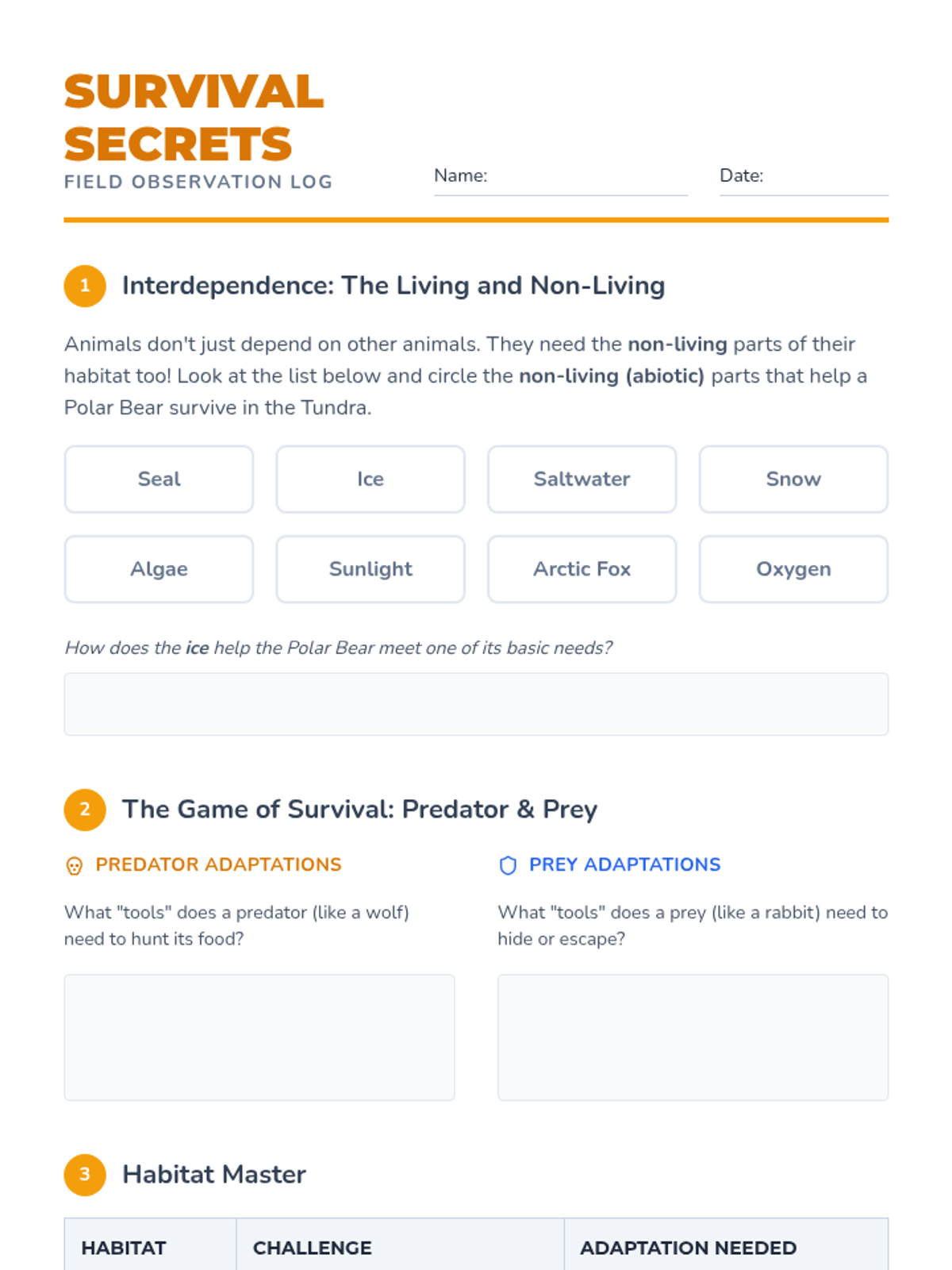
Investigating the cause-and-effect relationship between predator actions and prey reactions.
A mid-intervention review session featuring a progress monitoring assessment and a collaborative vocabulary game.
Focus on word morphology (prefixes and suffixes) and how they change the meaning of scientific terms.
Exploring behavioral defenses and practicing identifying supporting details that reinforce the main idea.
Focus on physical defenses (armor, spikes) and identifying the main idea of a short informational text.
Students take the 'Entry Exam' to assess baseline knowledge and are introduced to the concept of animal defenses and key academic vocabulary.
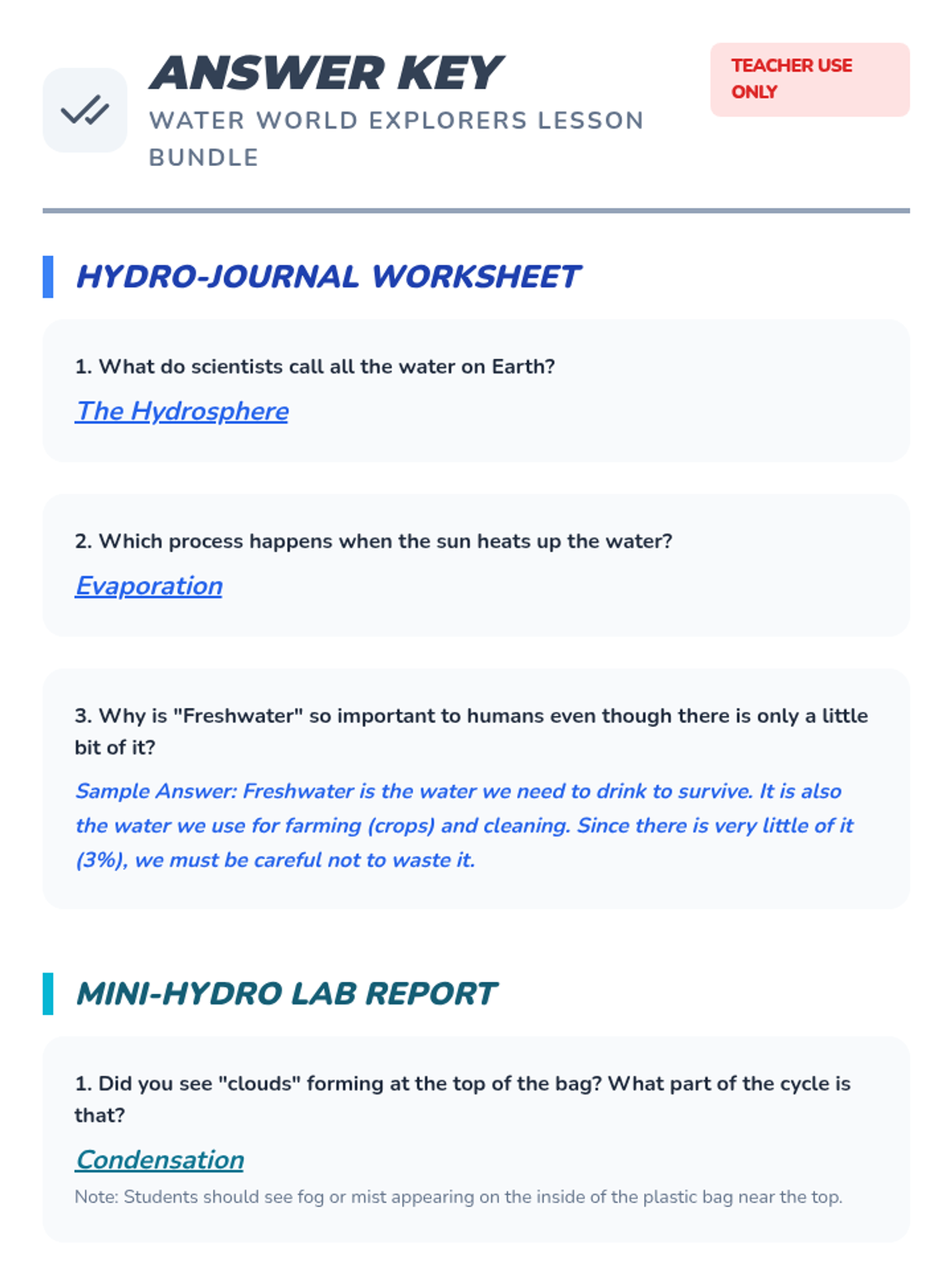
Comprehensive answer keys for all student-facing materials, including weekly field logs and the pre/post assessment.
Assessment tools, implementation guides, and progress trackers for the 6-week intervention.
Week 6 is the final review and post-assessment week. Students will synthesize their learning and complete the summative evaluation of their vocabulary and comprehension growth.
Week 5 looks at mimicry and false appearances. Students will summarize complex informational sections and compare different defensive strategies.
Week 4 covers chemical defenses like venom and poison. Students will practice root words and suffixes (morphology) and cause-and-effect relationships.
Week 3 examines behavioral defenses such as fleeing or freezing. Students will focus on supporting details in informational texts.
Week 2 explores camouflage. Students will work on context clues and how animals use their appearance to blend into their environment.
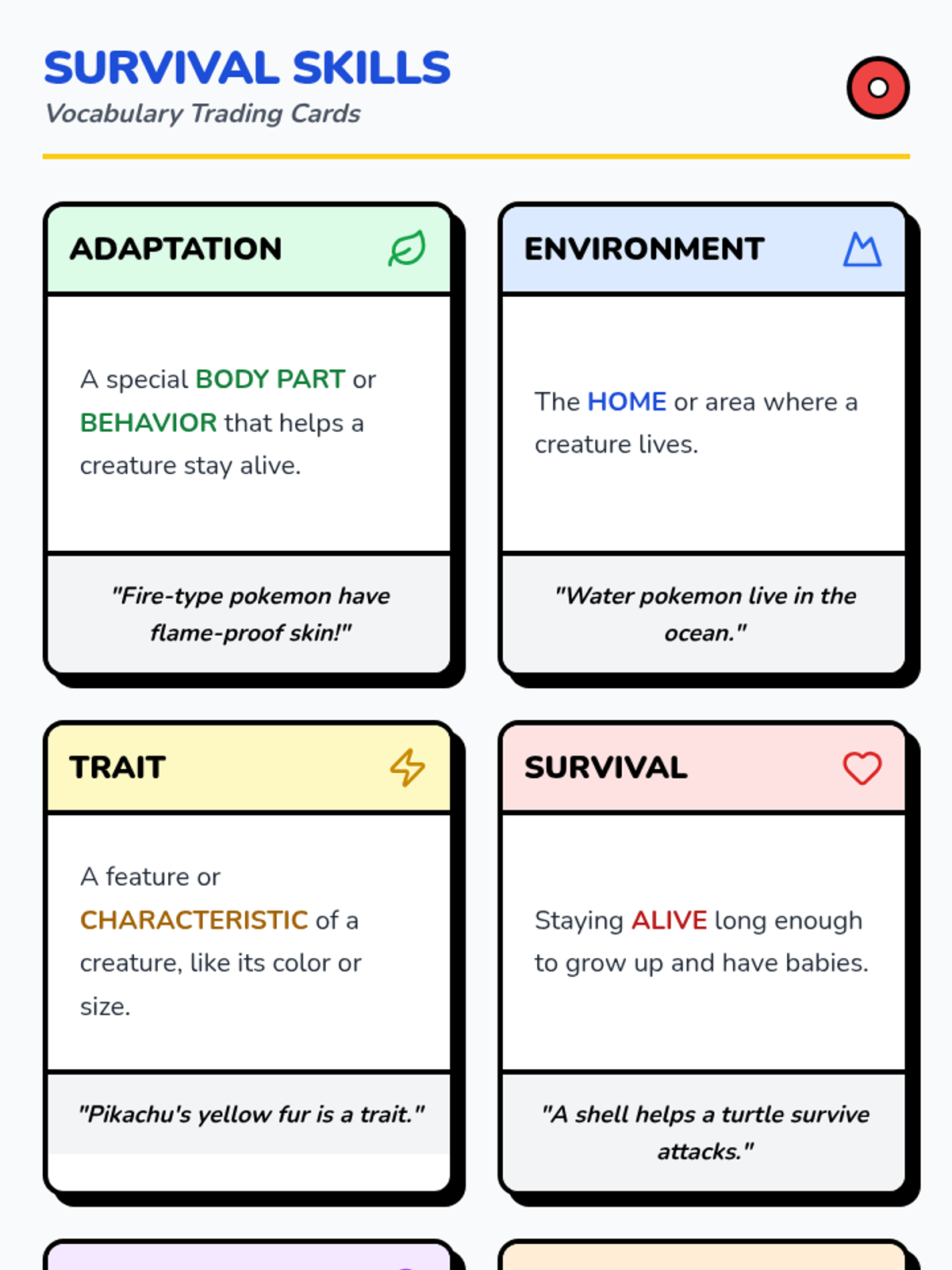
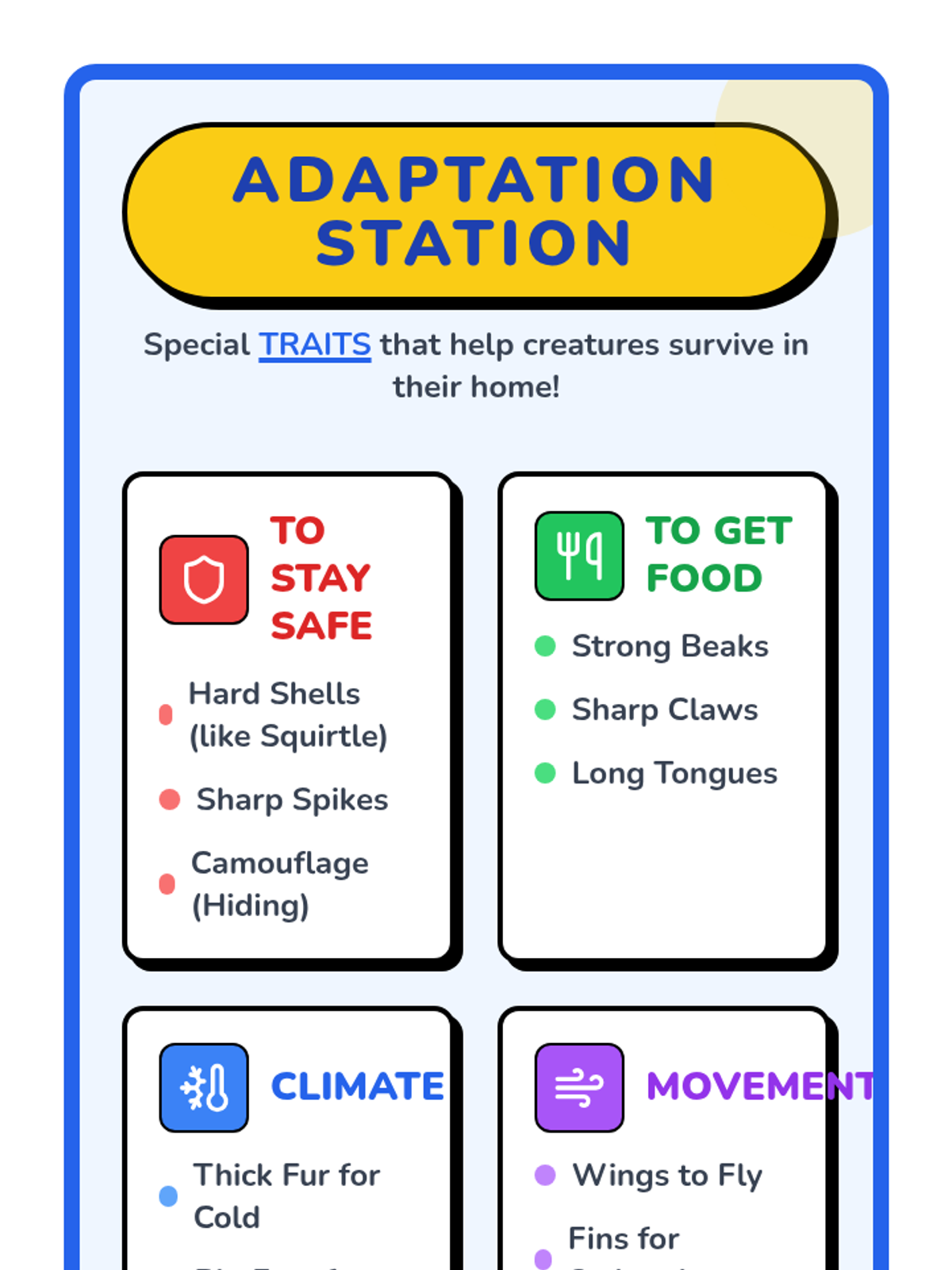
Week 1 focuses on physical animal defenses like armor and shells. Students will practice identifying main ideas and learning academic vocabulary related to structure and function.
An introductory lesson on Microsoft Word basics, covering document creation, saving, text formatting, and clipboard actions (copy/cut/paste). Students will learn through a 'Word Wizardry' theme, transforming technical skills into creative magic.
A series of feedback and reflection tools for students, parents, and teachers to evaluate learning after completing the Wild Adventure project. It uses an explorer theme to make the assessment process engaging and collaborative.
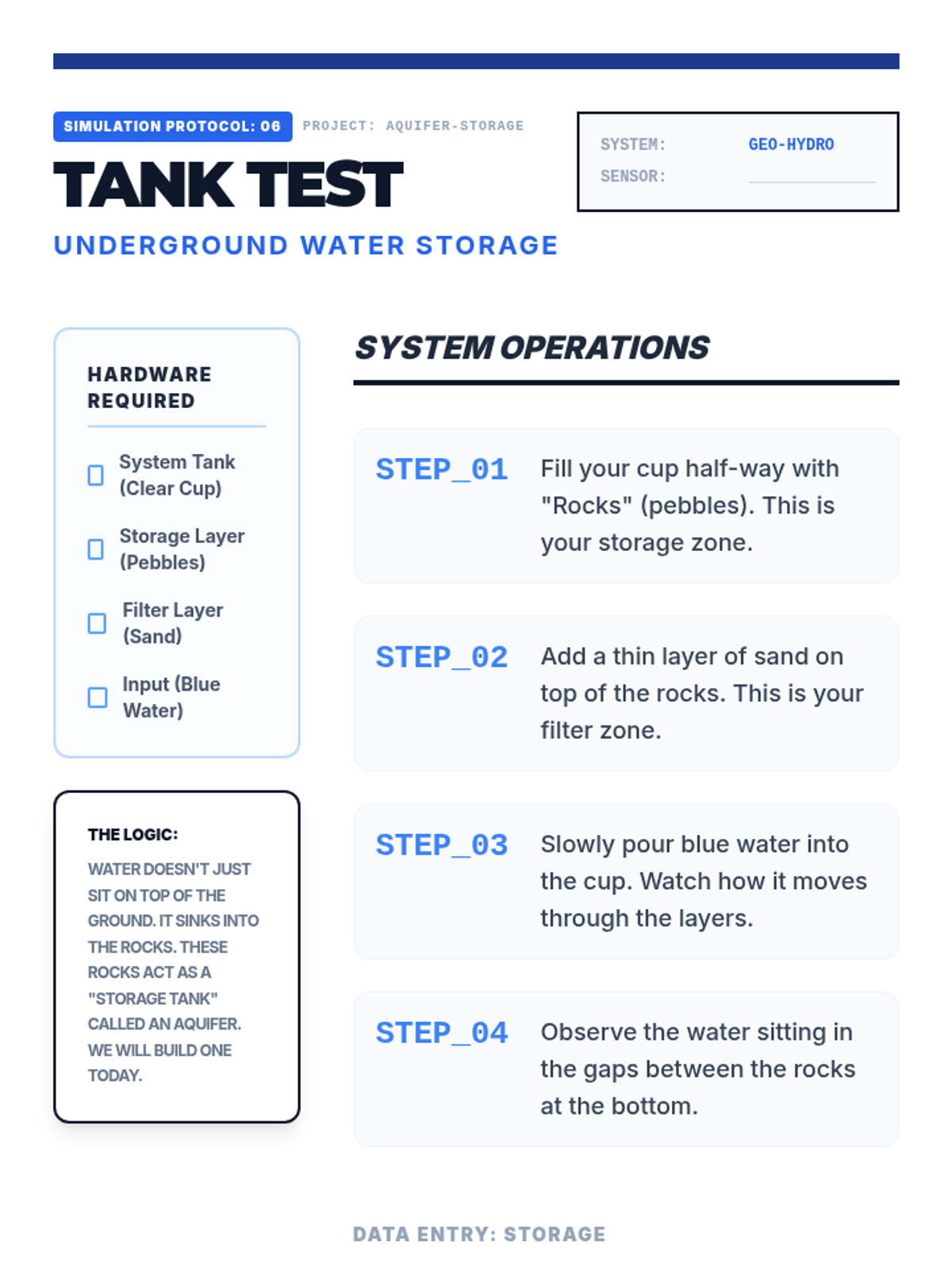
A hands-on lesson exploring the relationship between water level and volume, teaching students how to observe, measure, and compare how much liquid a container holds.
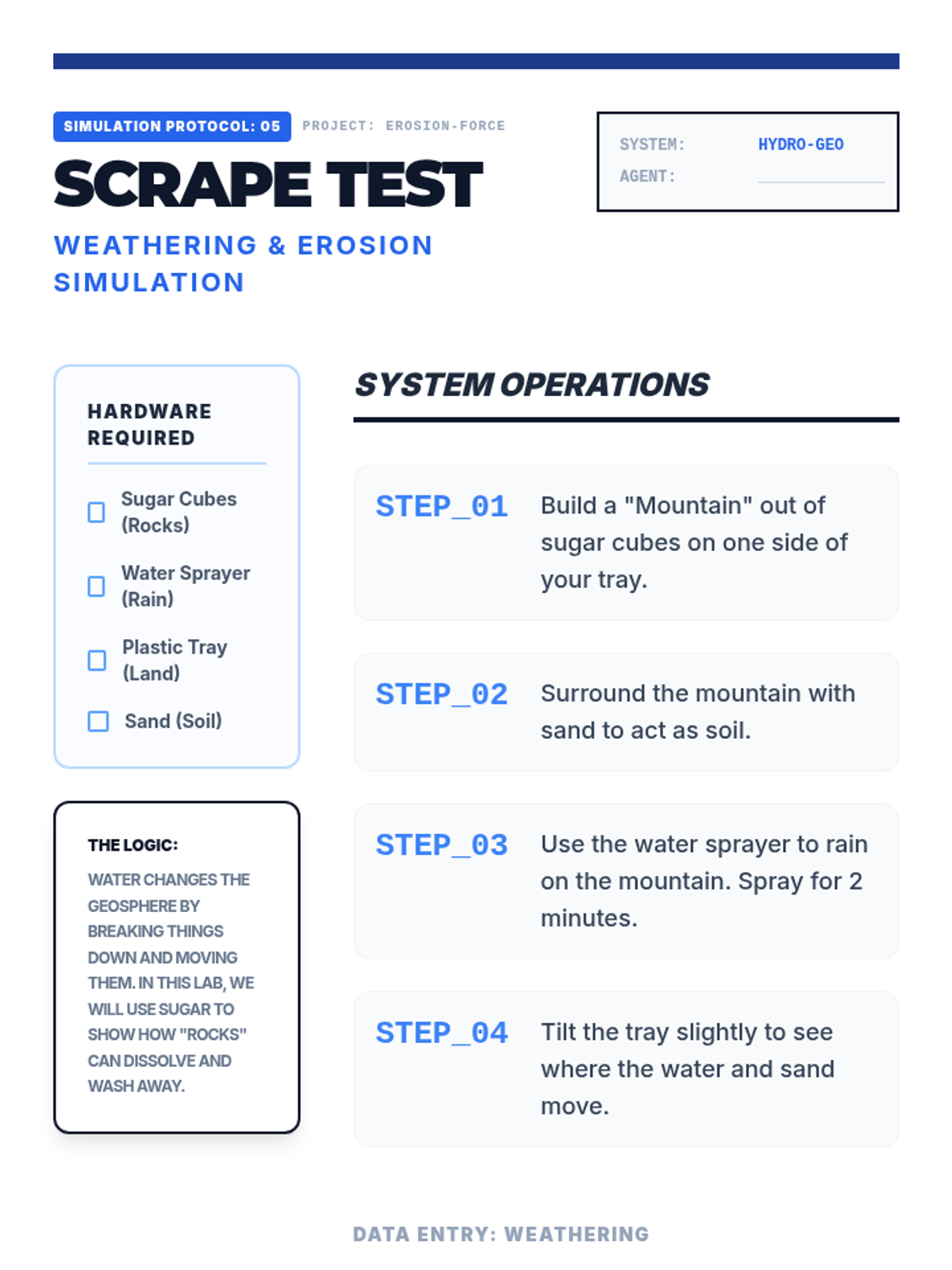
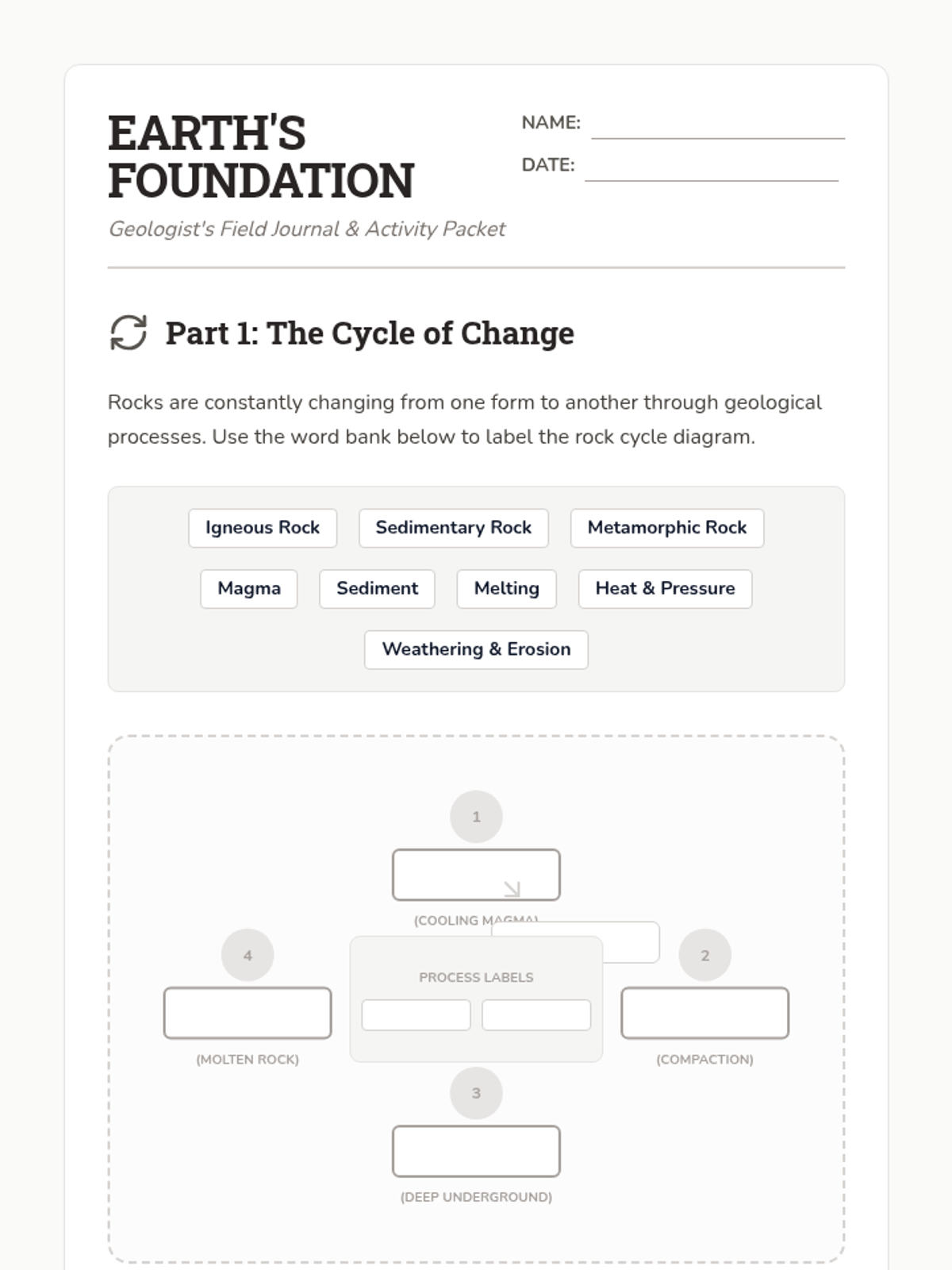
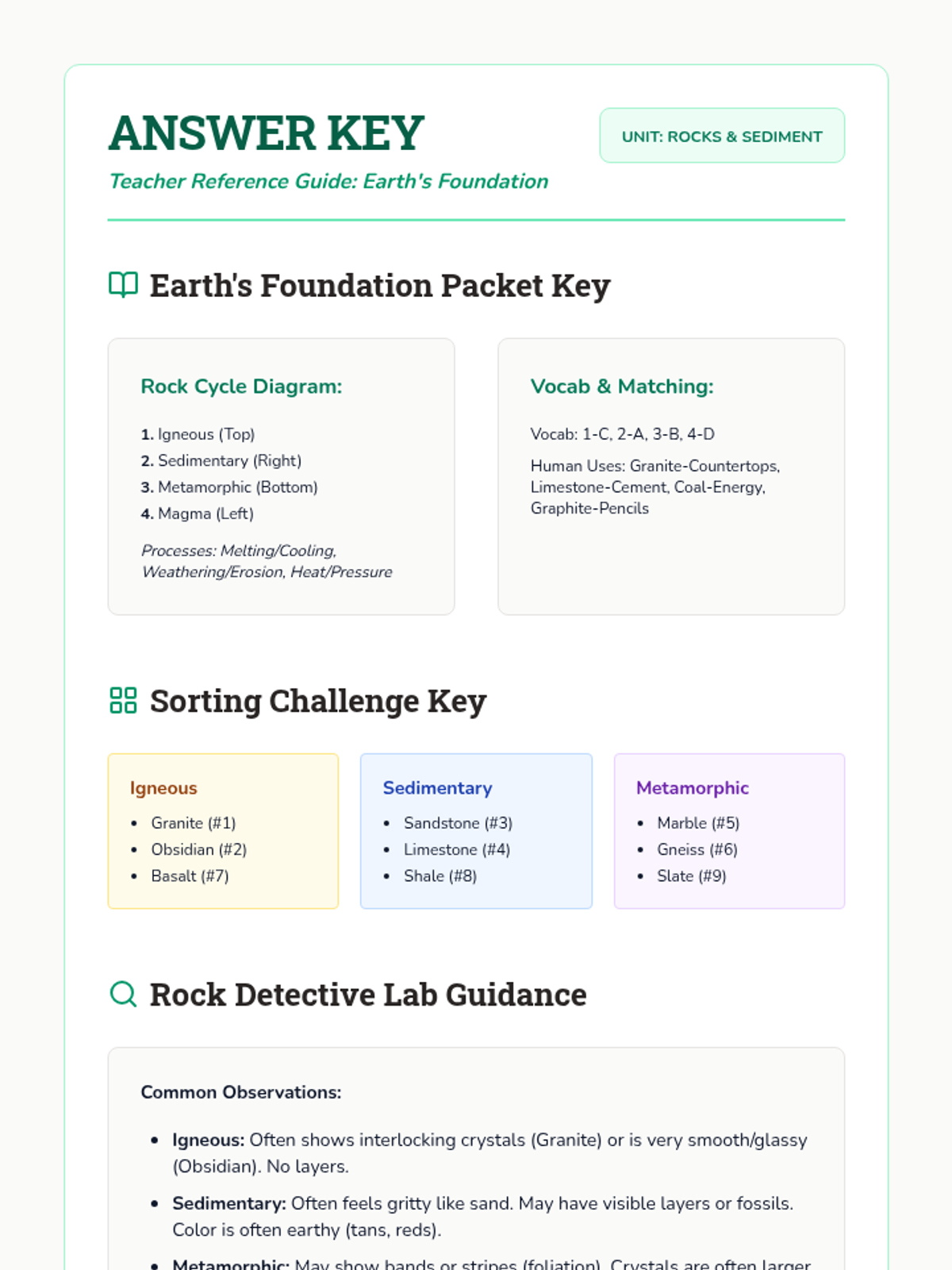
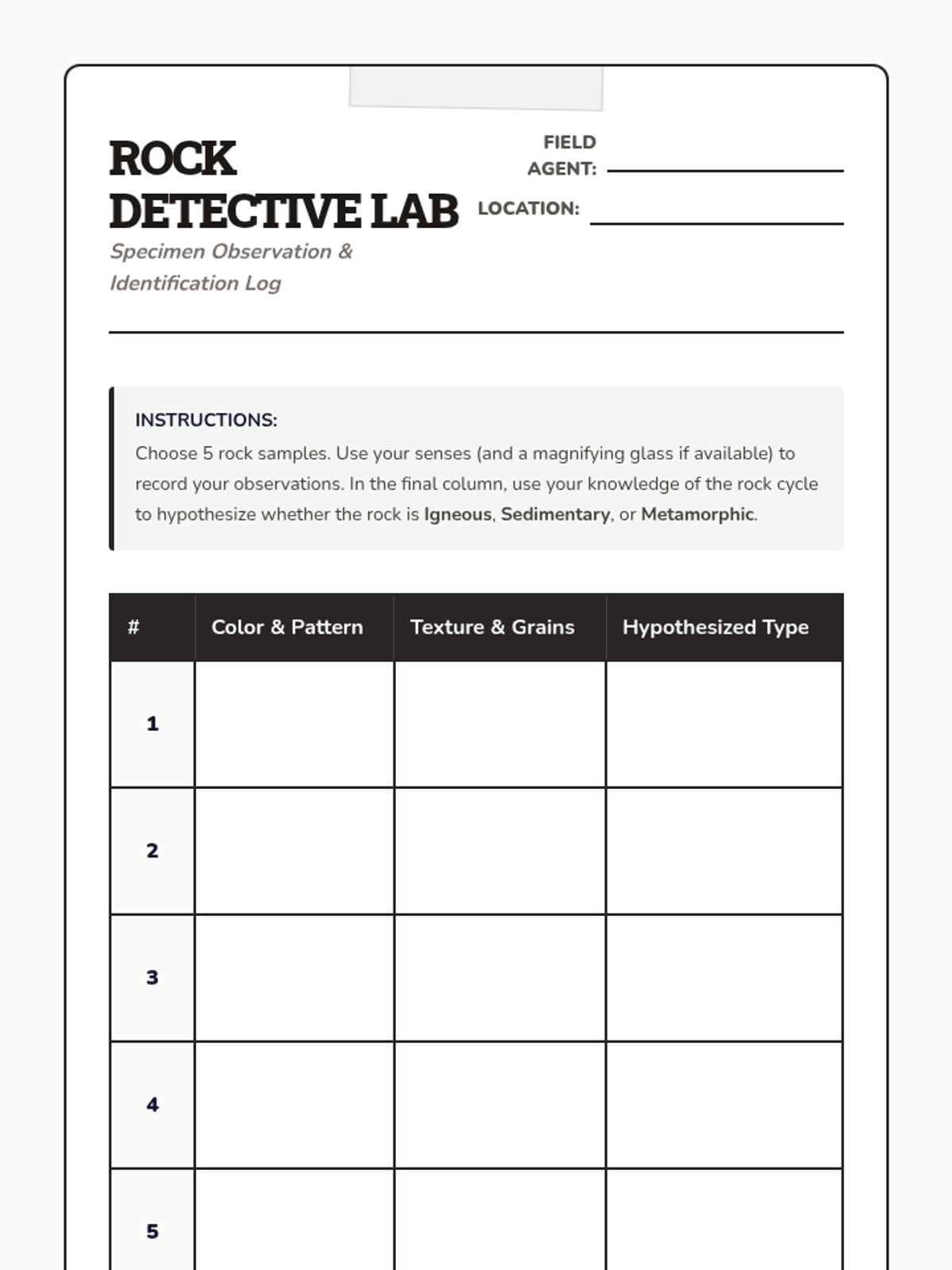
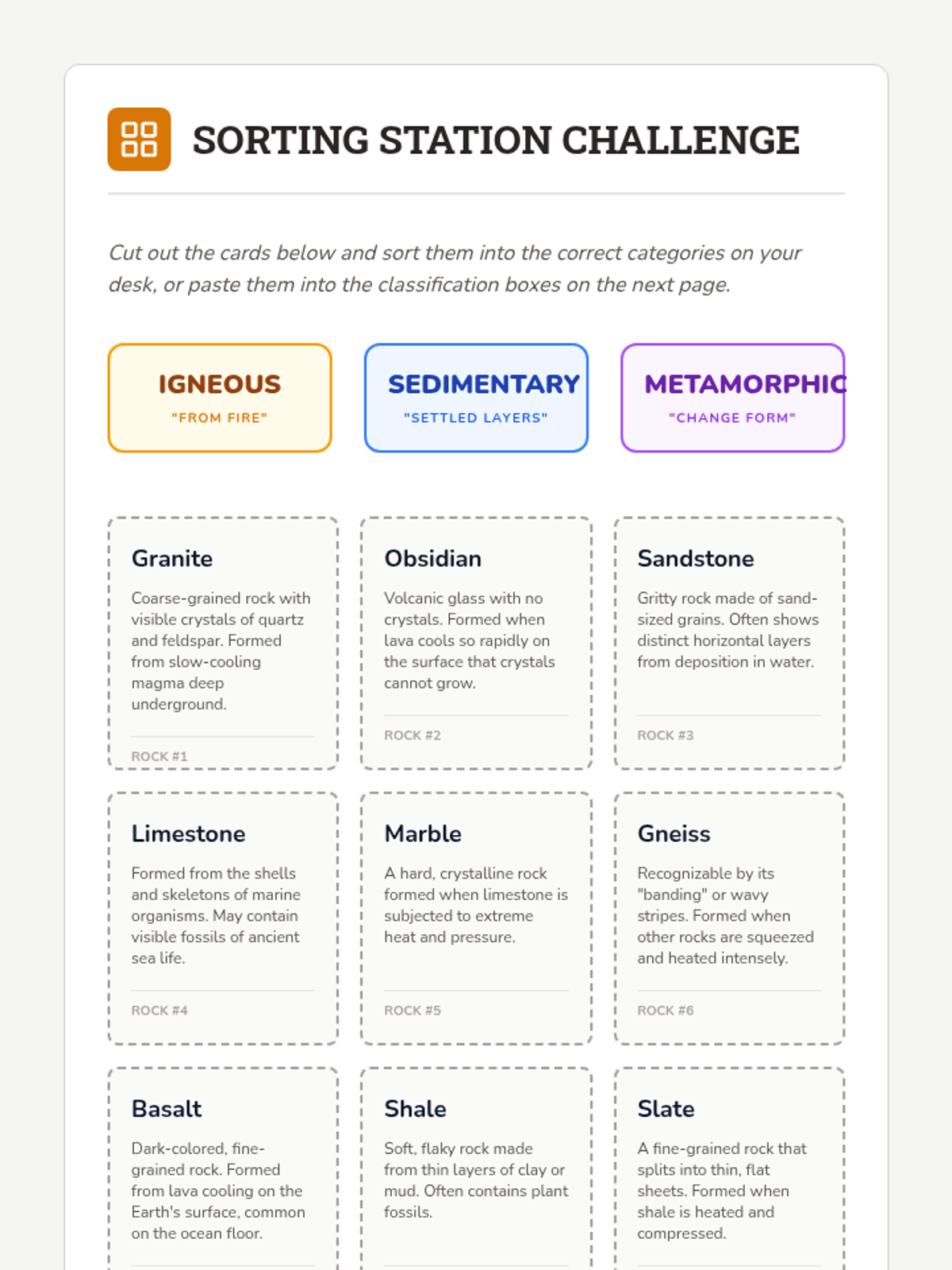
Students become geological detectives to investigate how rocks change over time through heat, pressure, and erosion, culminating in a mystery-solving identification challenge.
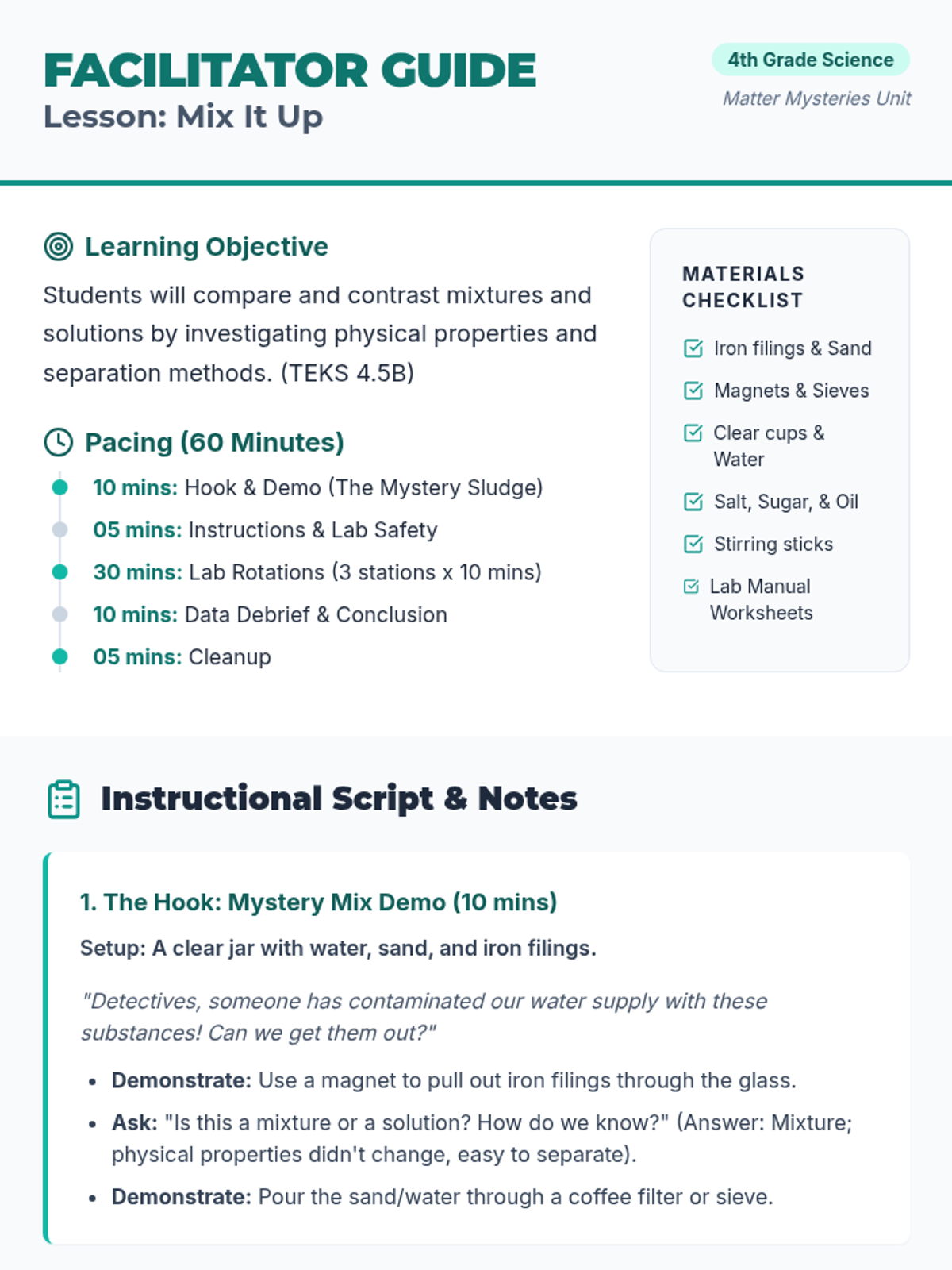
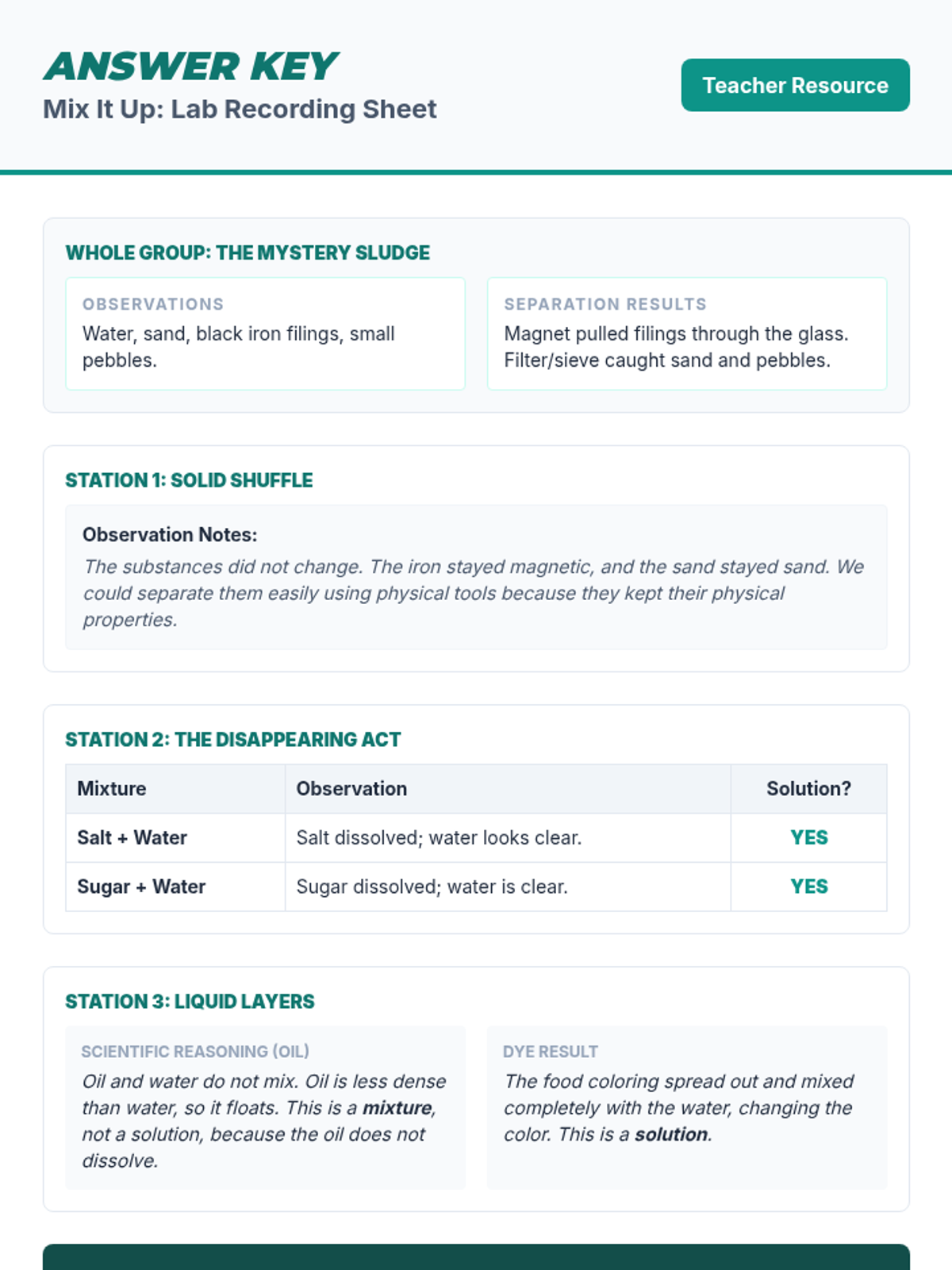
Students explore how materials interact with water and energy, focusing on solubility, density, and the conduction of heat and electricity.
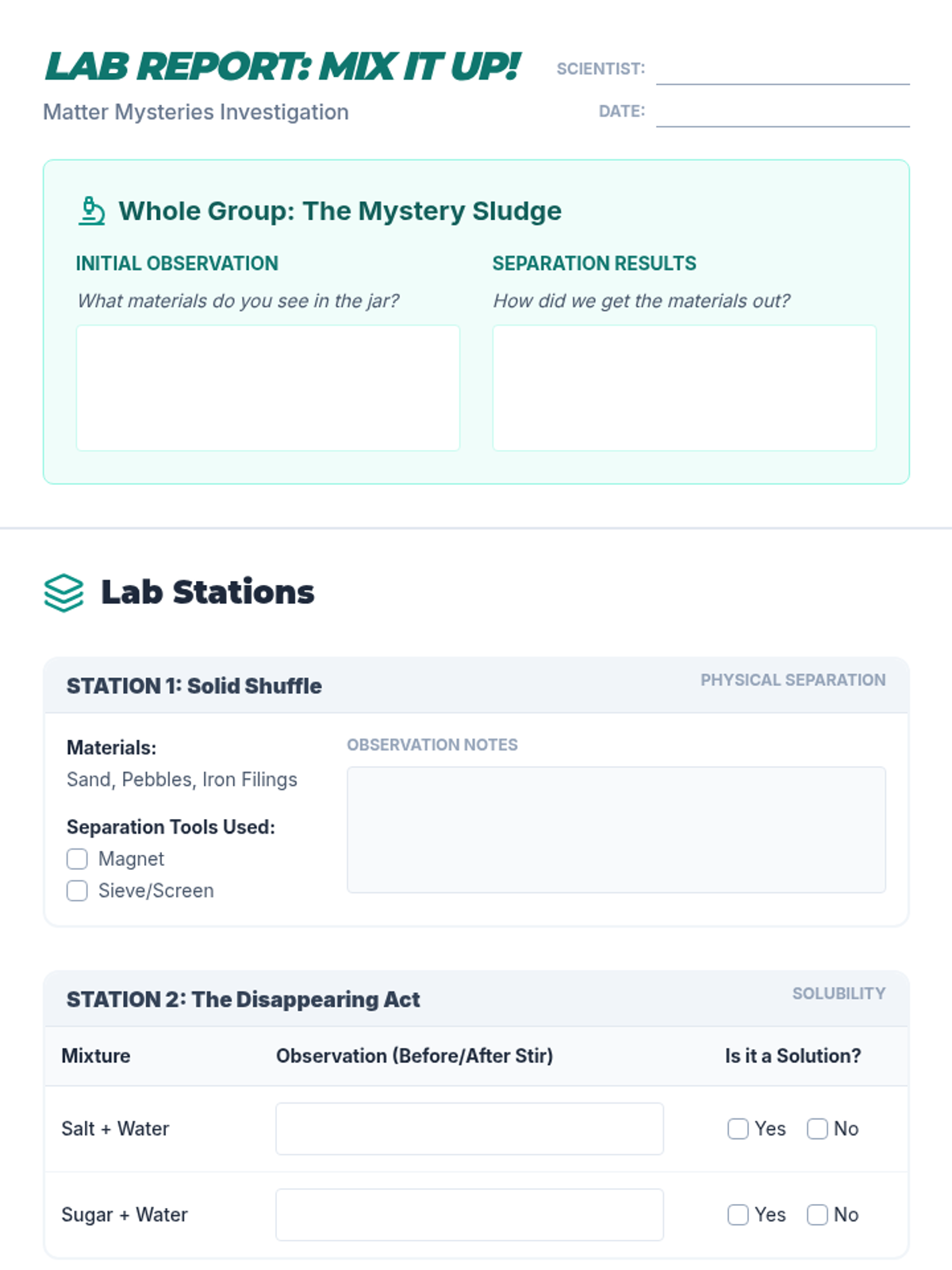
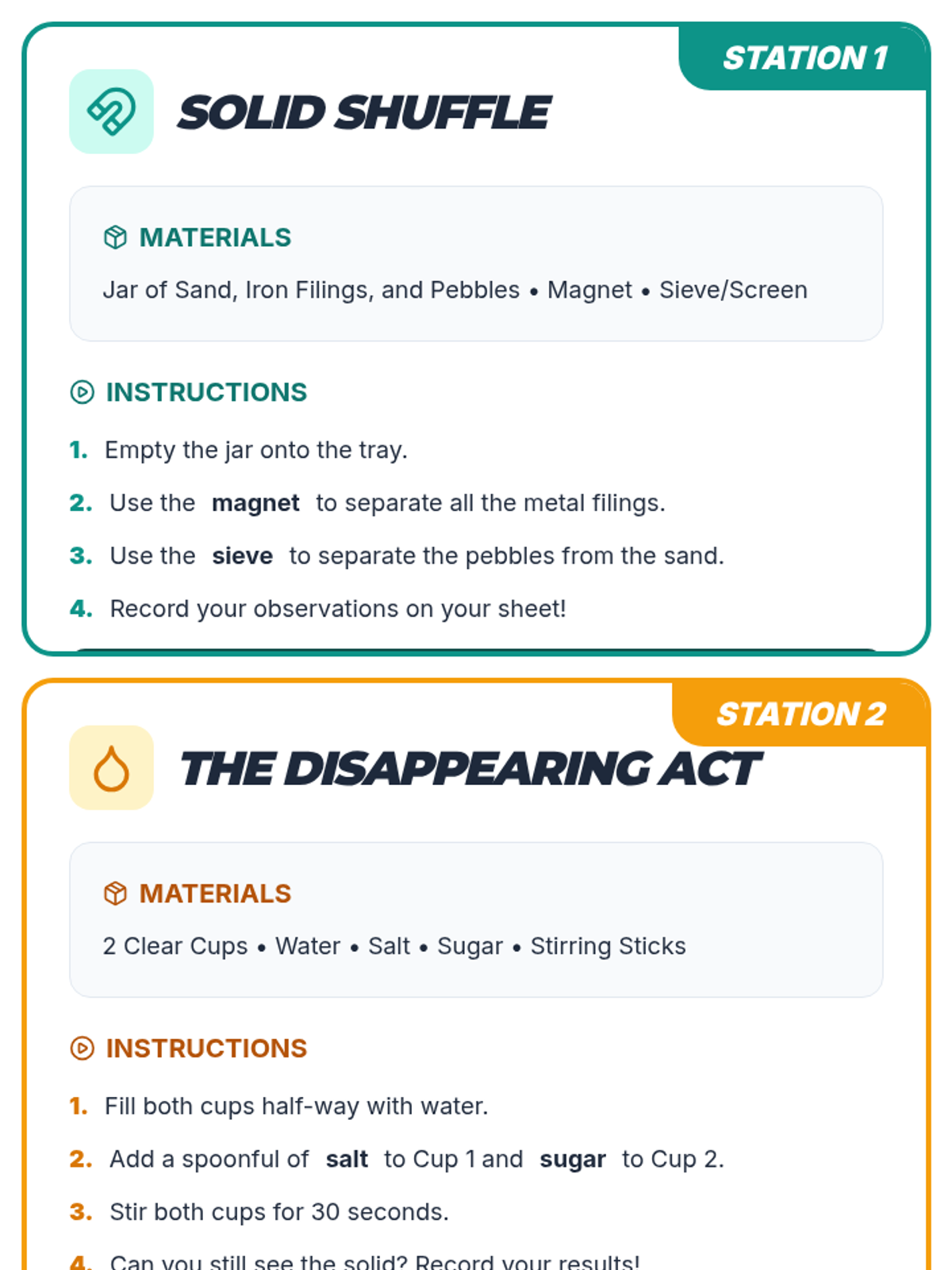
Students investigate the physical properties of solid objects, including hardness, flexibility, magnetism, and how states of matter define a material's initial form.
Investigates how living and nonliving things interact within an ecosystem, focusing on energy flow and environmental balance.
Explores the six simple machines and how they make work easier by changing the direction or magnitude of a force.
A foundational introduction to ecosystems, biomes, and the roles living things play in their environments. Students explore biotic and abiotic factors and the simple energy paths within food chains and webs.
A quick 30-minute introduction to the skeletal system, focusing on its main functions and the names of key bones in the human body. Students will explore how their 'internal frame' helps them move and stay protected.
Students explore the ecosystem beneath the forest floor, focusing on animals that create tunnels and live among tree roots.
A lesson exploring the characteristics, classification, and social behavior of prehistoric Sabertooth cats.
A lesson focused on the formation of sedimentary rocks and how their layers serve as a timeline for life on Earth, specifically focusing on the sequence of formation and fossil aging.
A lesson exploring the unique life cycle of periodical cicadas and how their emergence patterns help them survive and reproduce.
A hands-on science lab using crackers, water, and plastic bags to simulate the digestive process, with differentiated materials for various learner needs.
A lesson introducing students to various ecosystems through vocabulary and visual identification. Students will learn the key characteristics of different biomes including forests, deserts, and oceans.
A lesson that uses a 'mystery drink' metaphor to teach students about computer viruses and the critical importance of asking for permission before downloading files from the internet.
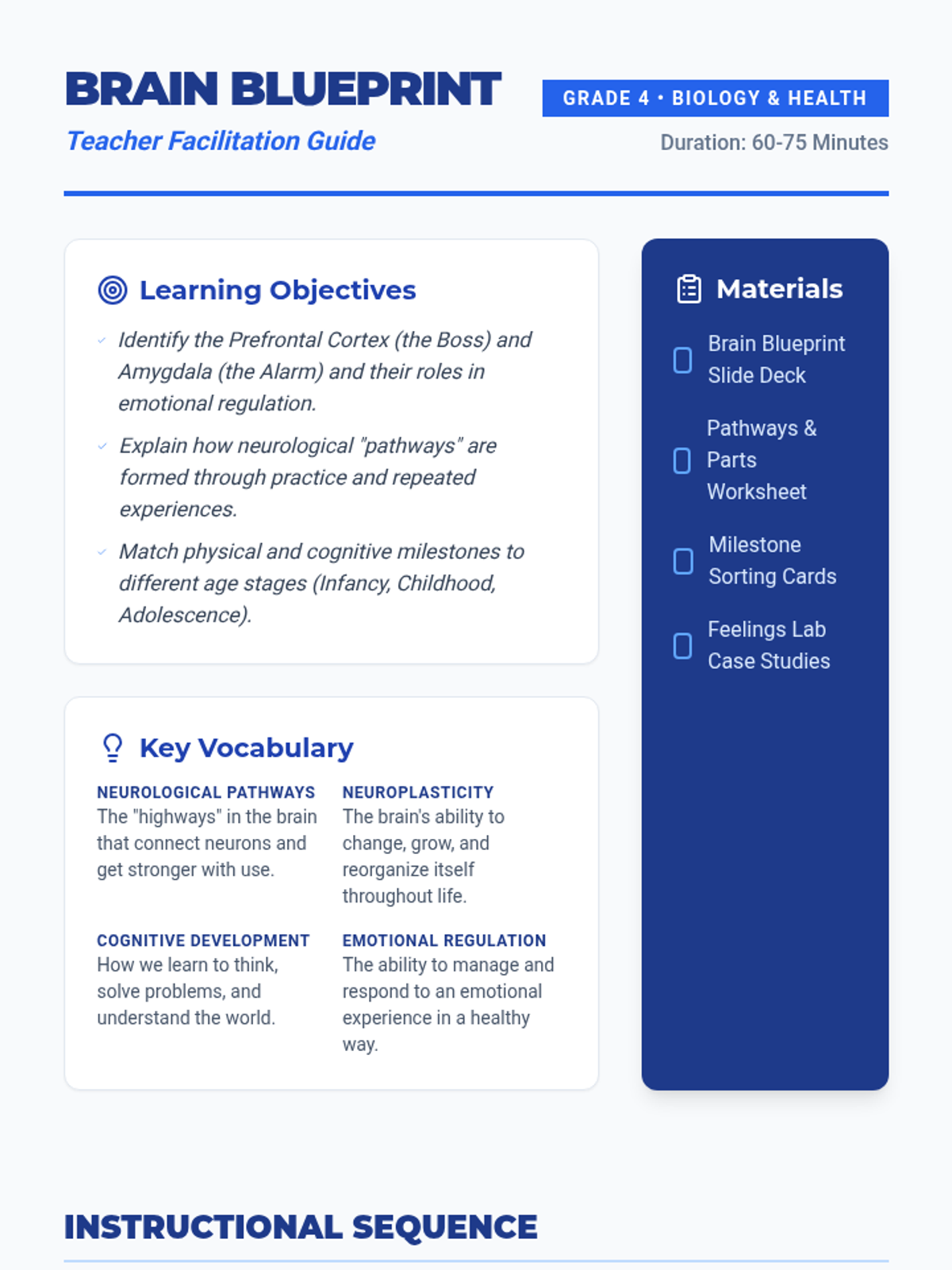
A comprehensive lesson exploring how the five sense organs collect data and send signals to the brain for processing. Students will learn the pathway from stimulus to perception through reading, mapping, and assessment.
A comprehensive lesson exploring the five human sense organs, their functions, and essential care practices to maintain sensory health.
Students investigate how different gene versions lead to different proteins and traits, moving from Darwin's Bark Spiders to human athletes. They will model inheritance and apply their findings to real-world runner scenarios.
A comprehensive set of materials designed for MCAS-Alt portfolios, focusing on the plant life cycle (birth, growth, reproduction, and death) through sequencing and model-building.
A comprehensive resource set for teaching and assessing the flow of matter in ecosystems, specifically designed for MCAS-Alt data collection. Students will identify roles (producer, consumer, decomposer) and build models of energy flow using food chains.
A lesson focused on observing and questioning inherited traits in animals (dogs, cats, and humans) designed for MCAS Alt evidence collection. Students use structured sentence stems to record observations and develop inquiry questions about how traits are passed from parents to offspring.