An interdisciplinary lesson exploring ecological footprints through the unique environmental context of the Jemez Valley. Students analyze local resource consumption and research regional conservation to develop a sense of environmental stewardship.
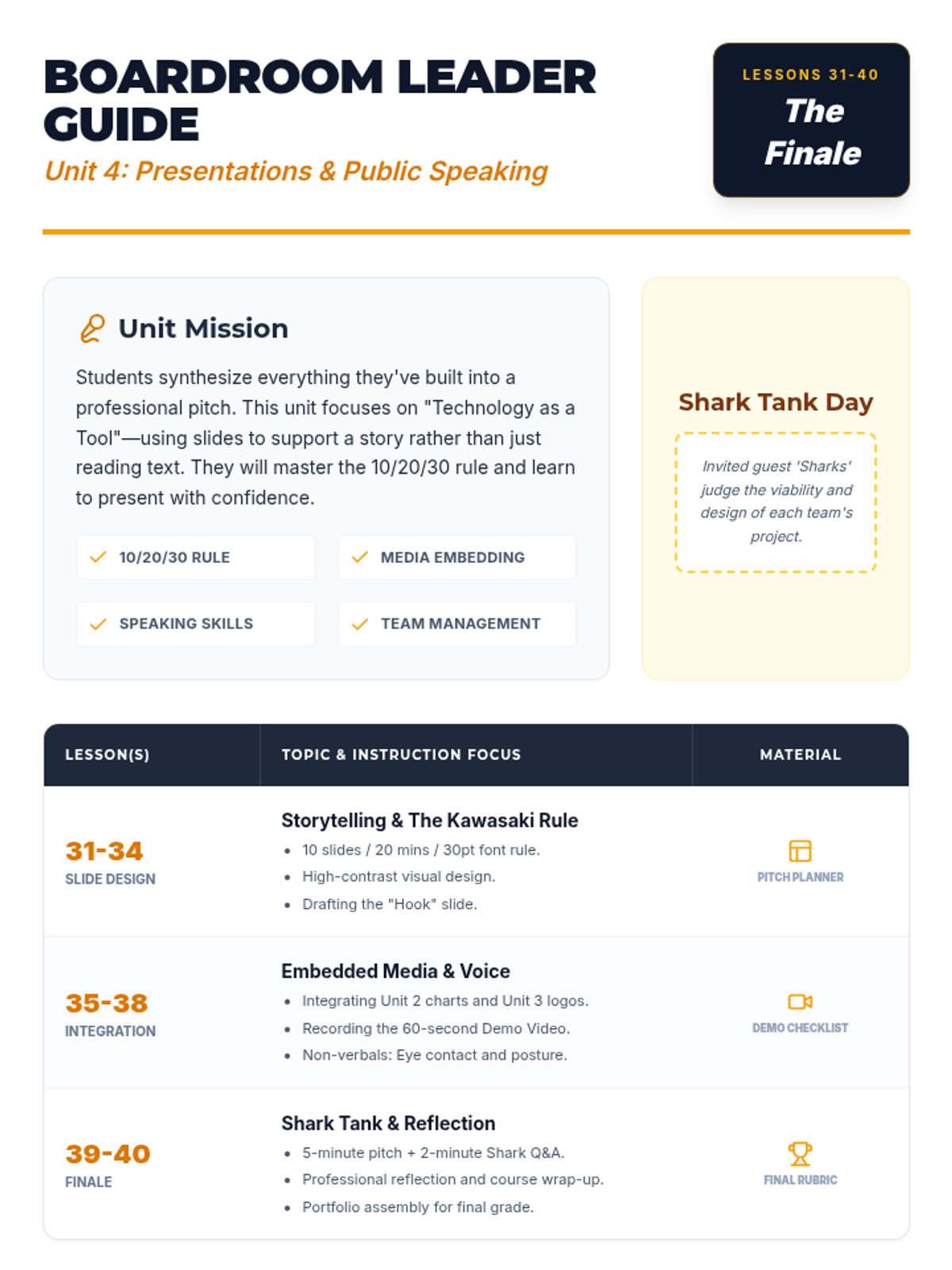
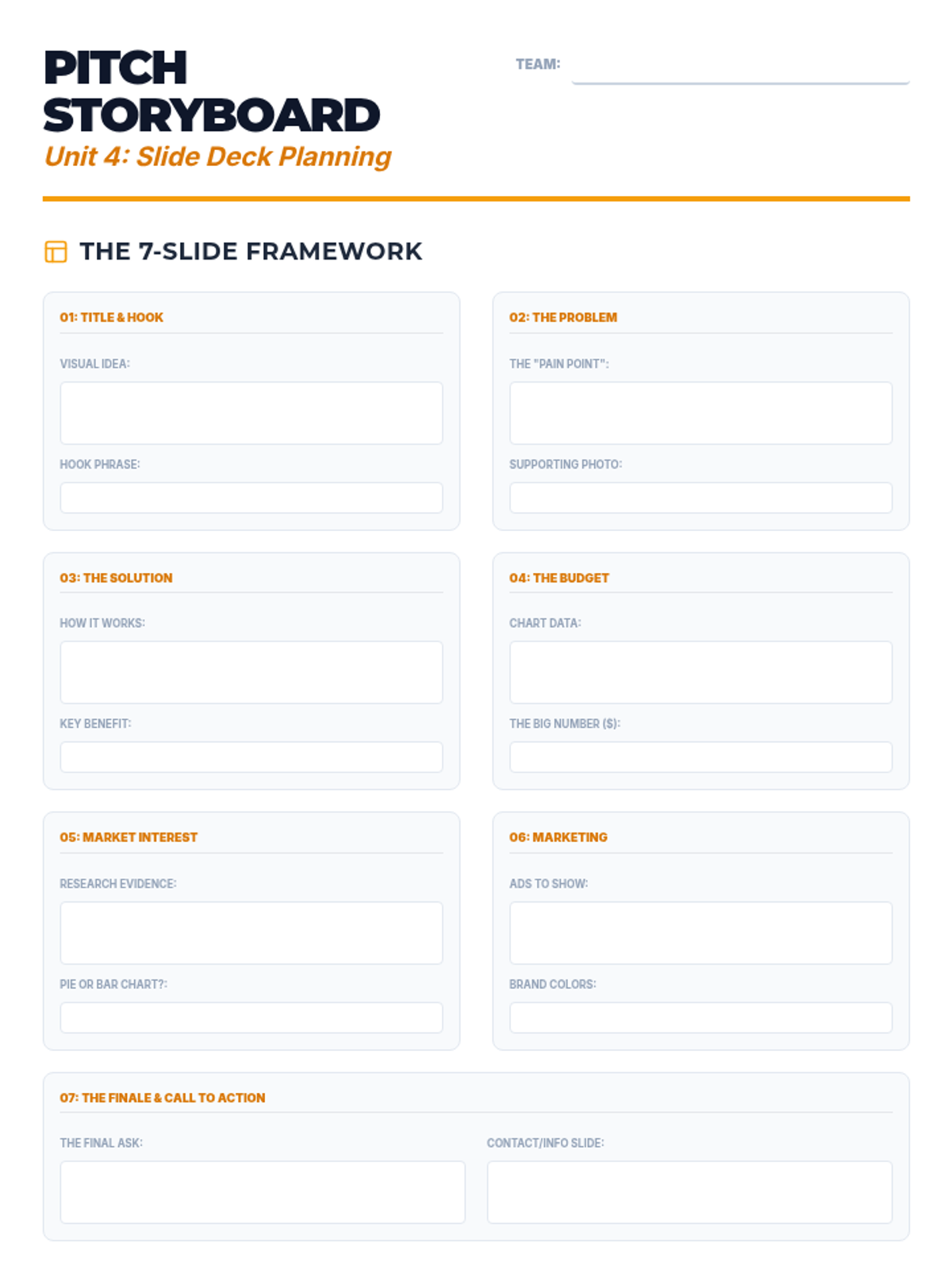
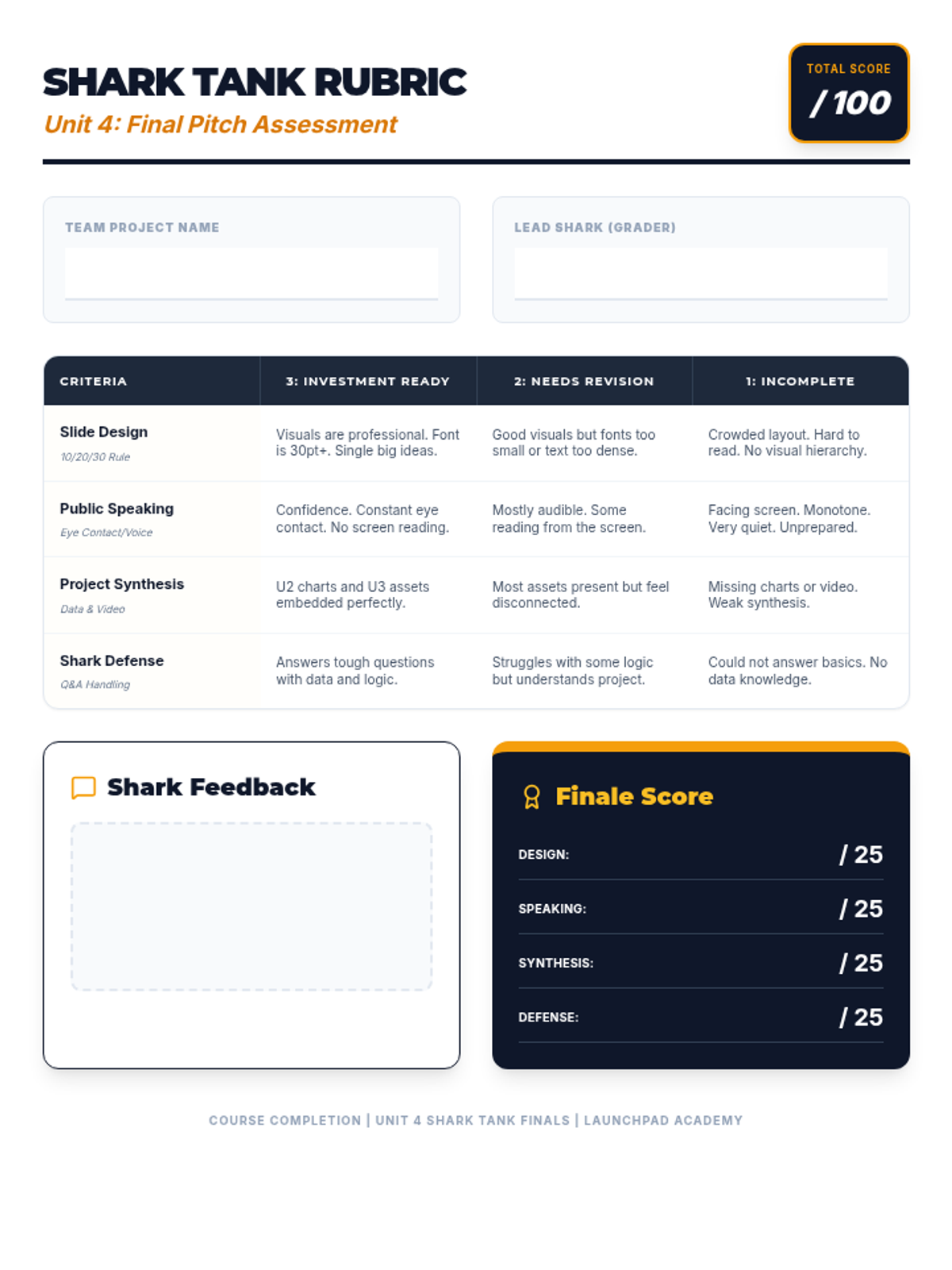
The finale of the course where students synthesize their proposal, budget data, and marketing assets into a high-impact digital presentation. Students learn presentation design, media integration, and public speaking skills to present their ideas to a panel of 'Sharks'.

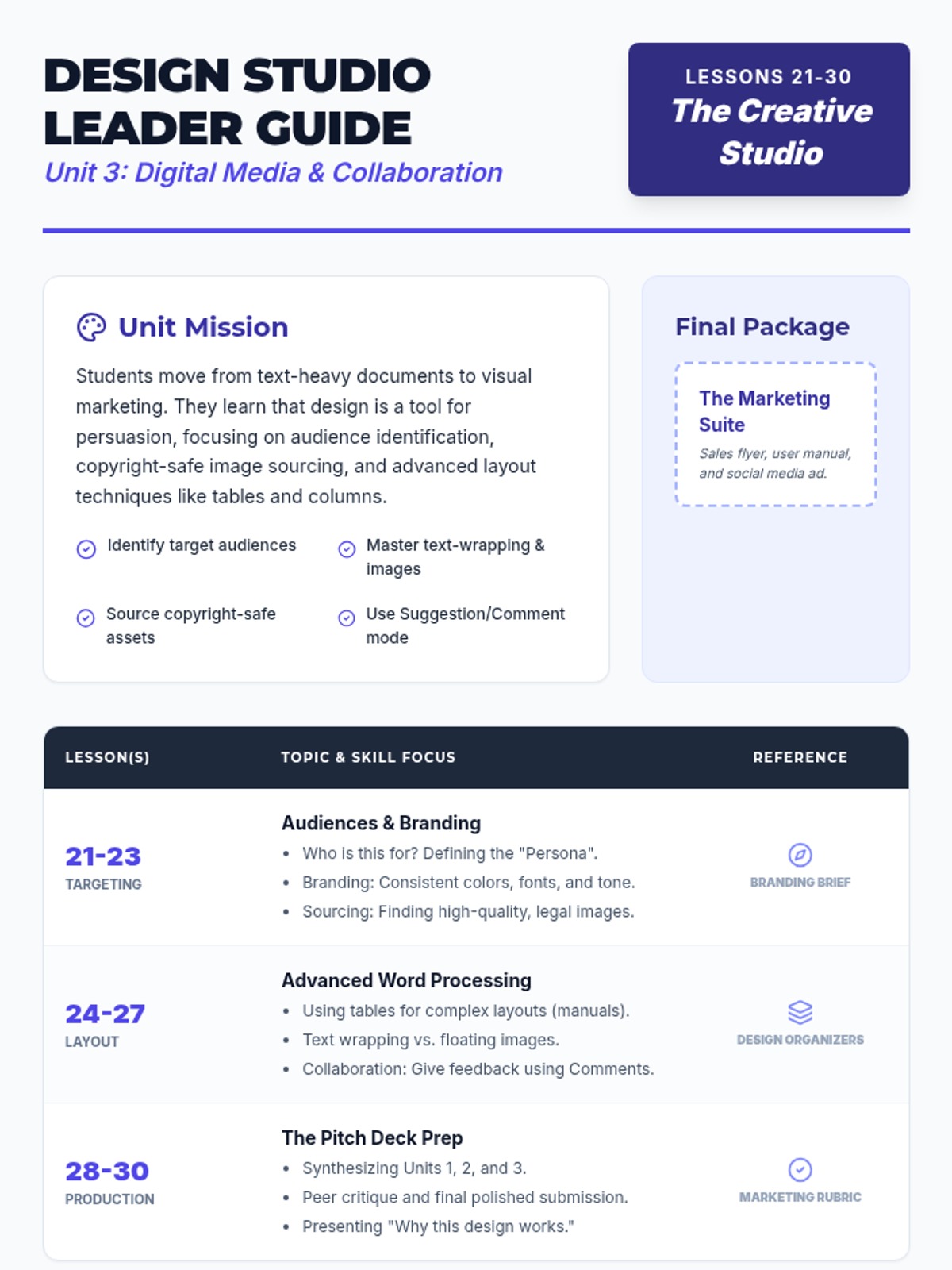
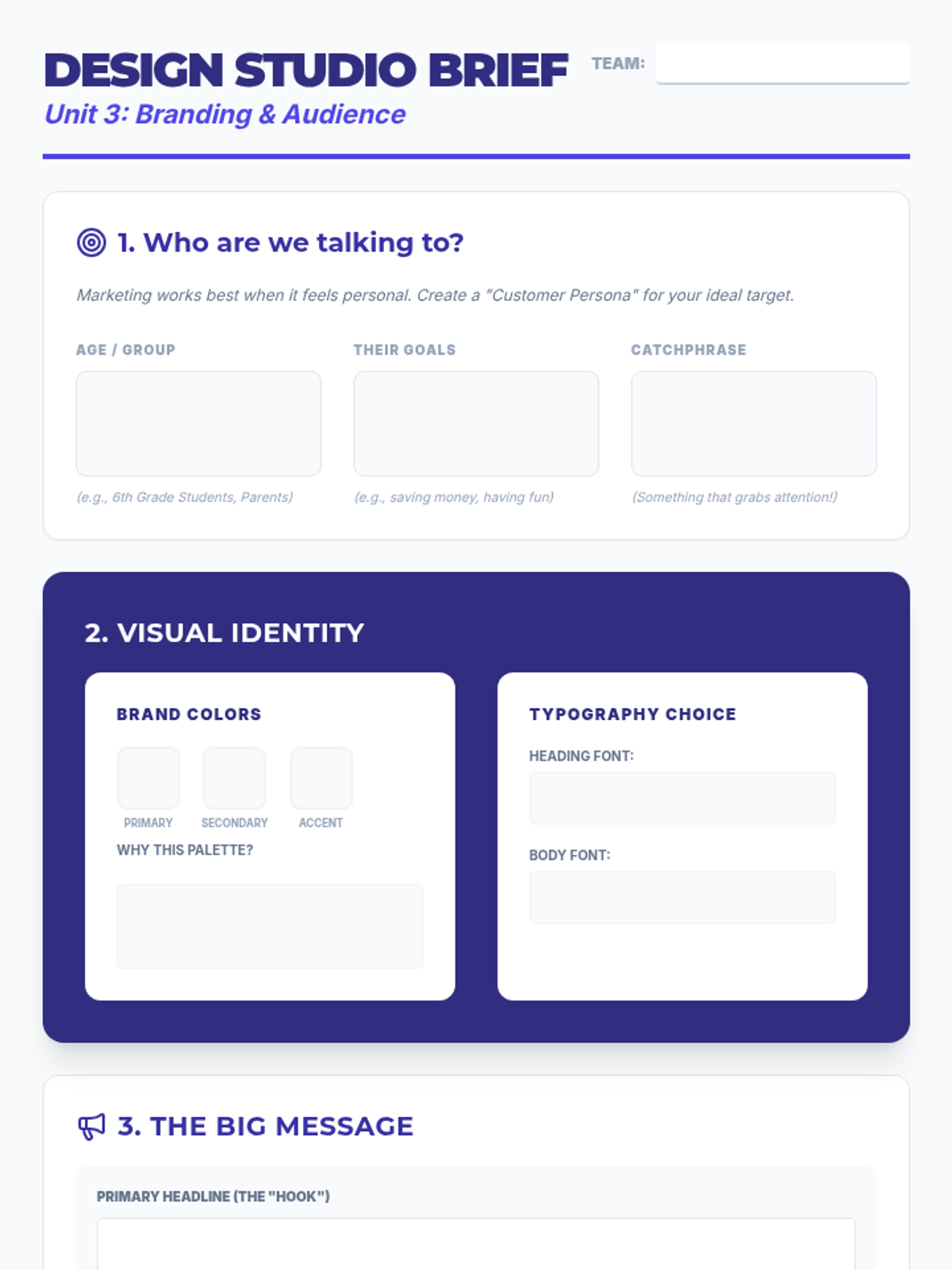
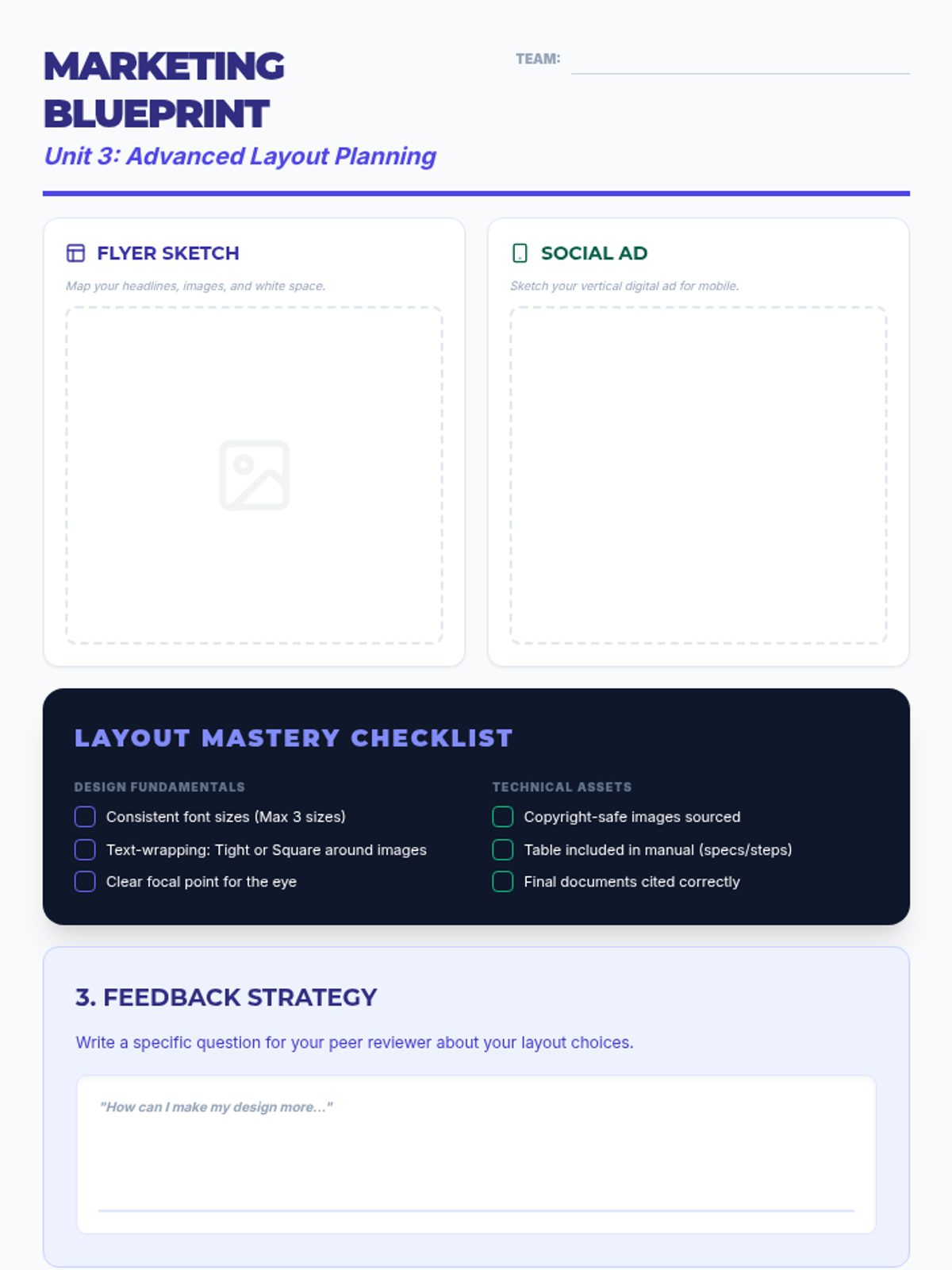
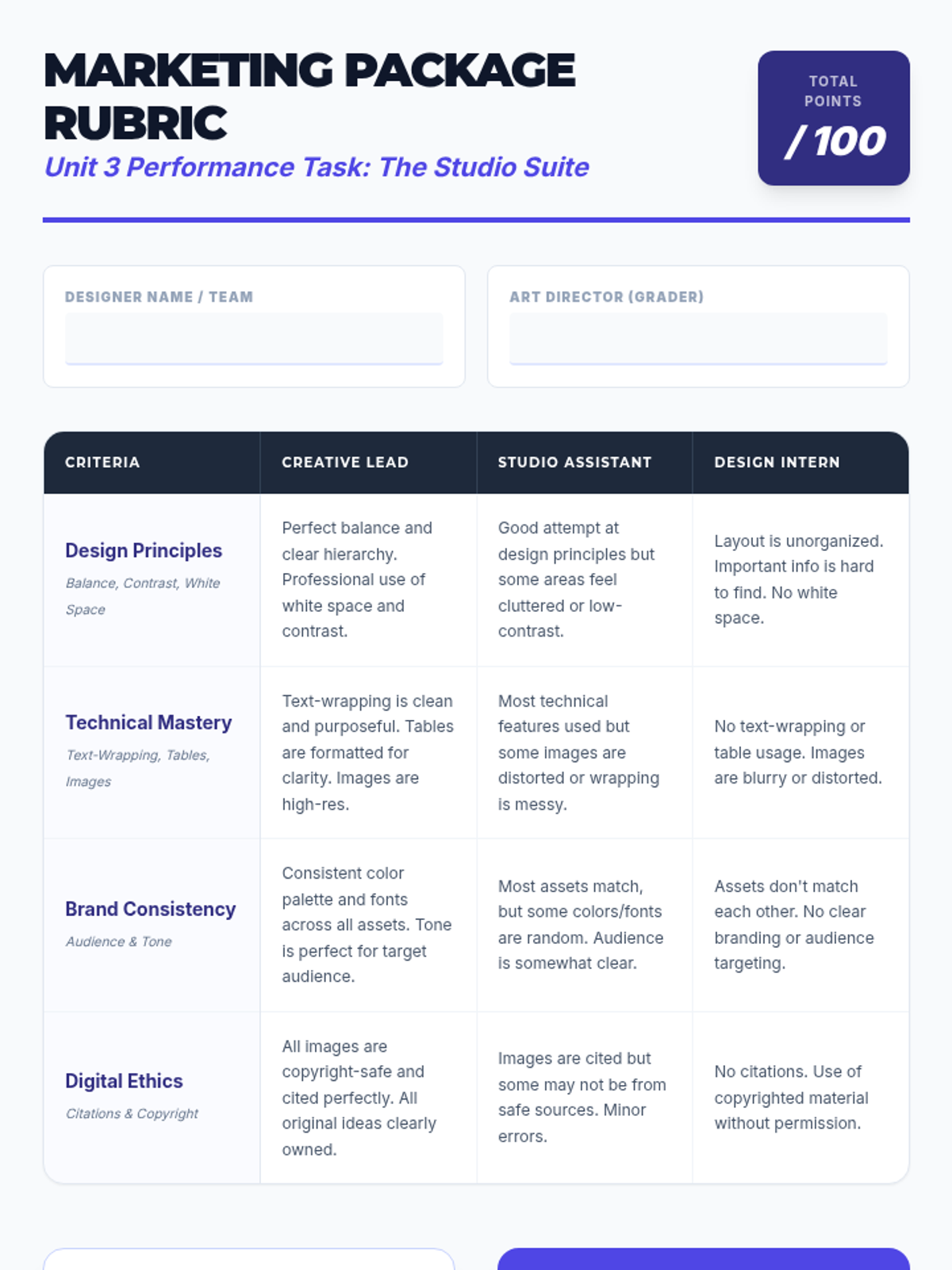
Now that the data is solid and the business plan is formed, students must “market” their solution or product. This unit pushes word processing beyond just text into layout, graphic integration, and copyright-safe image sourcing.
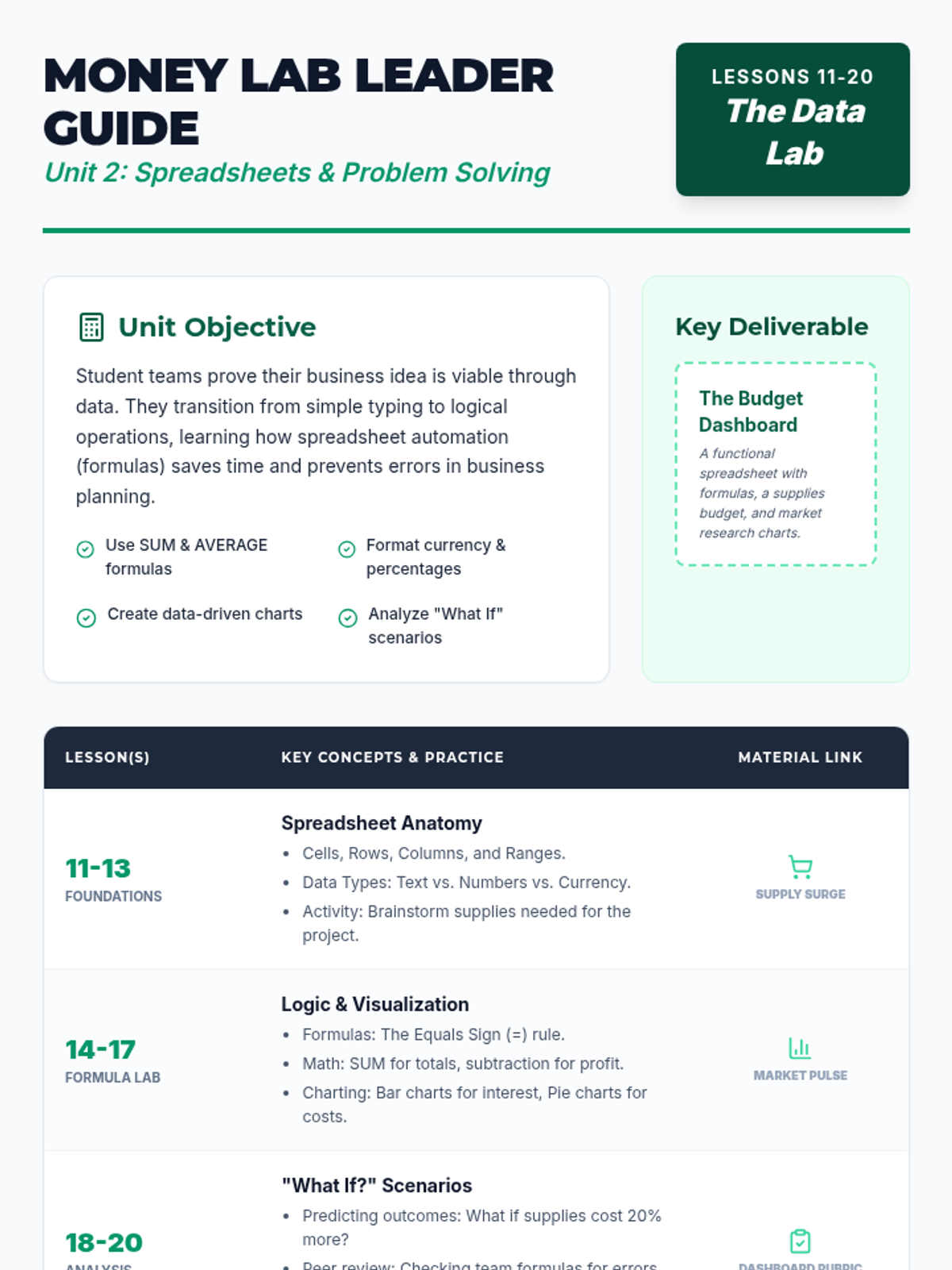
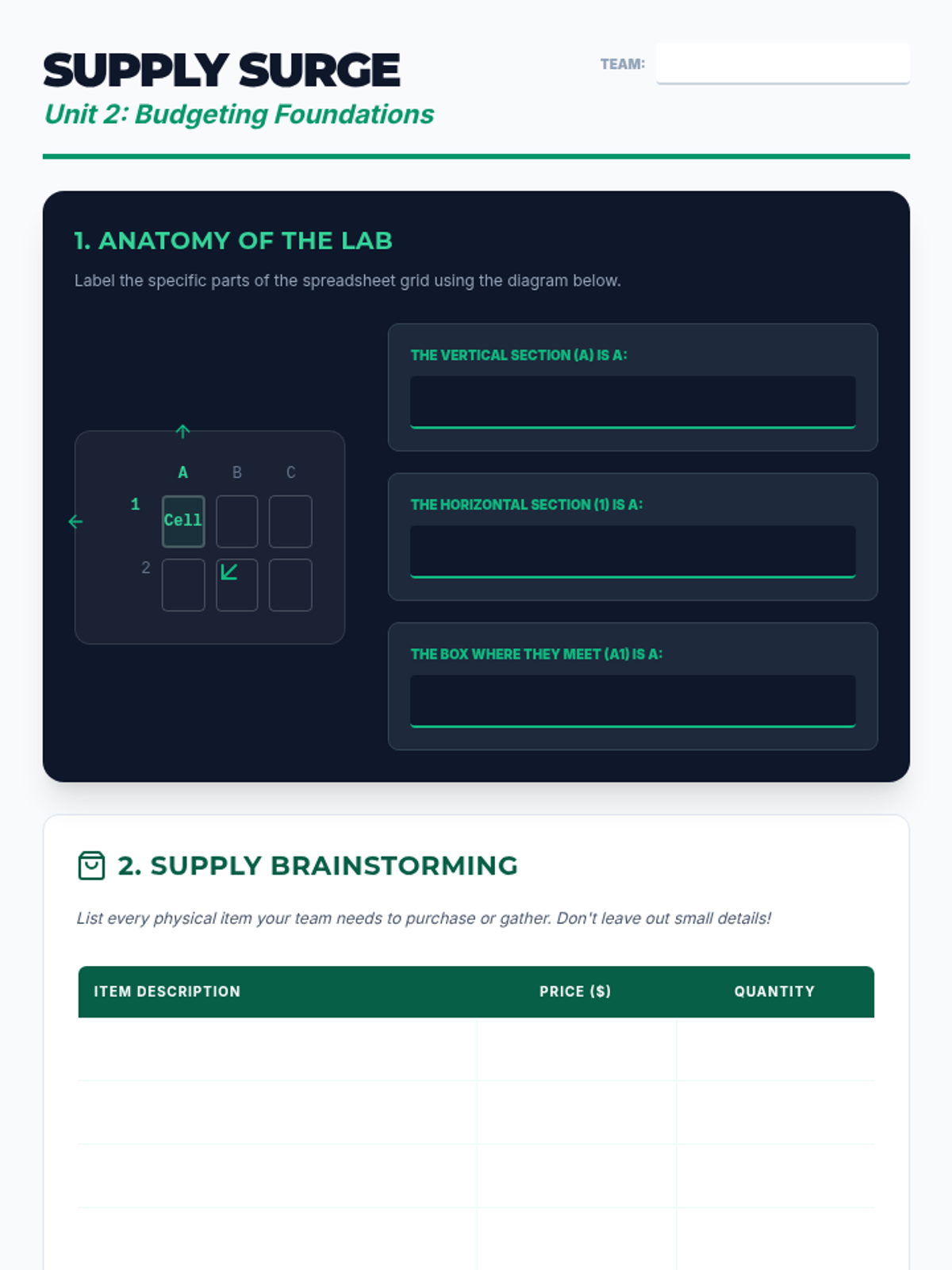
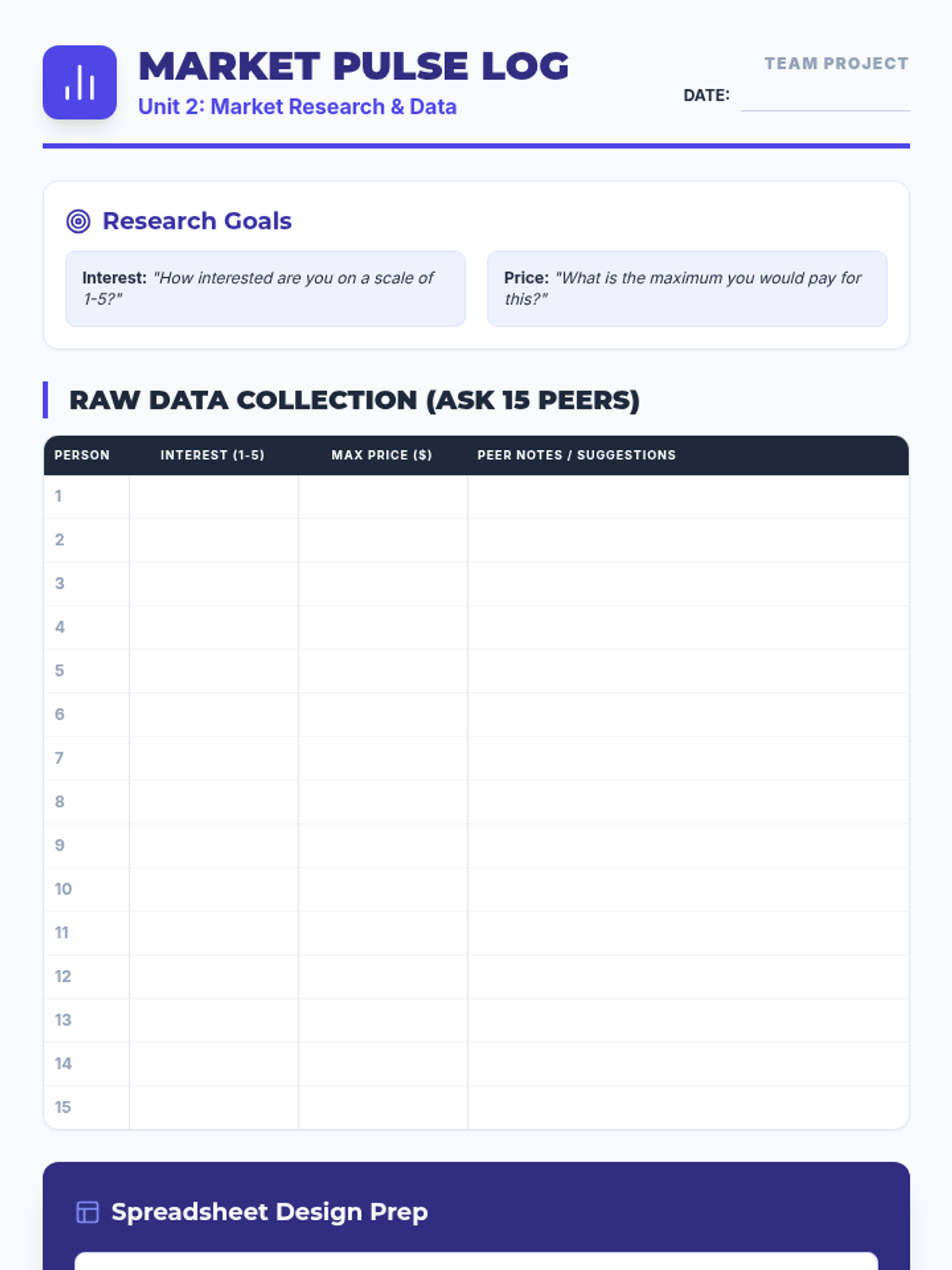
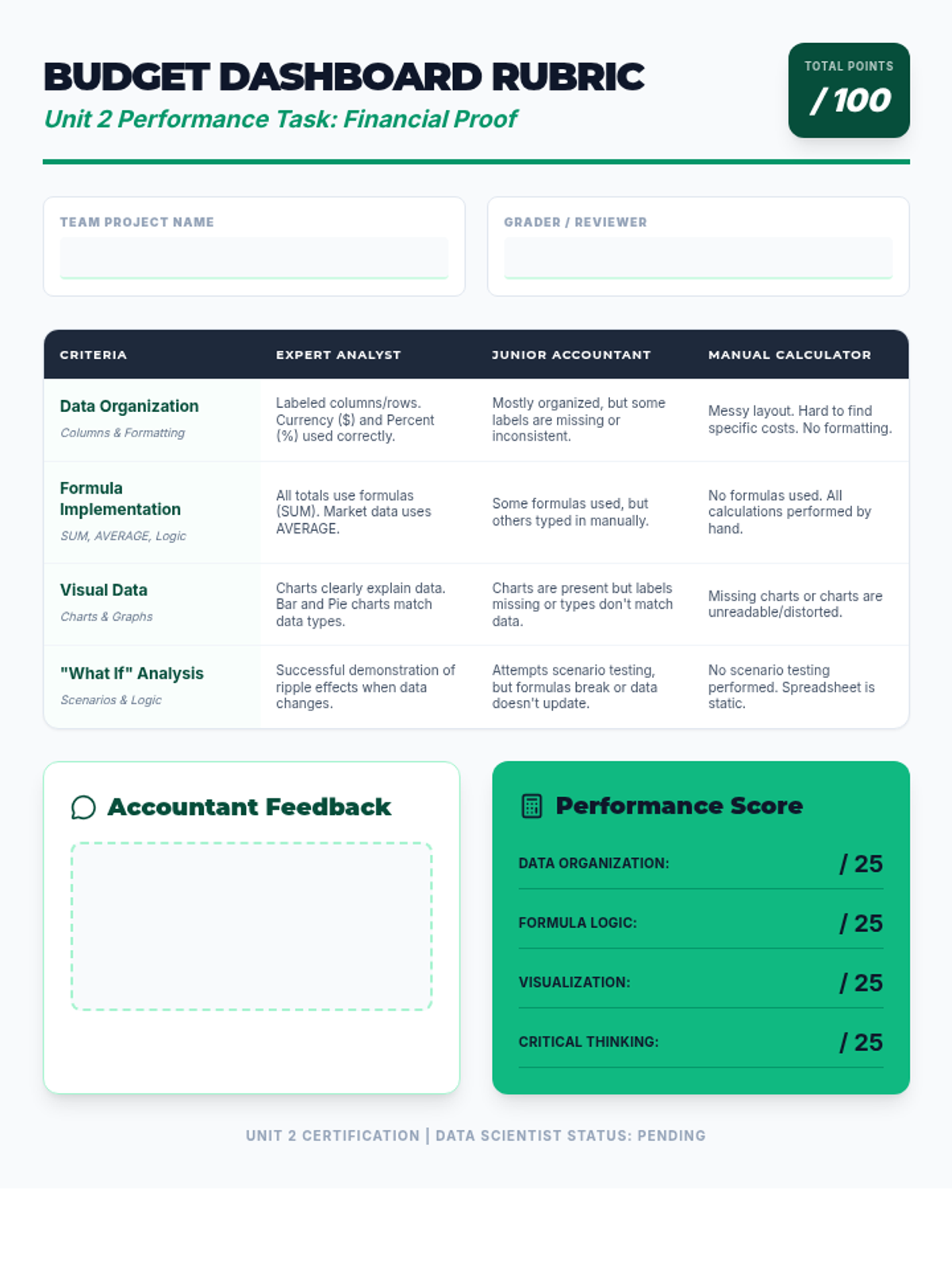
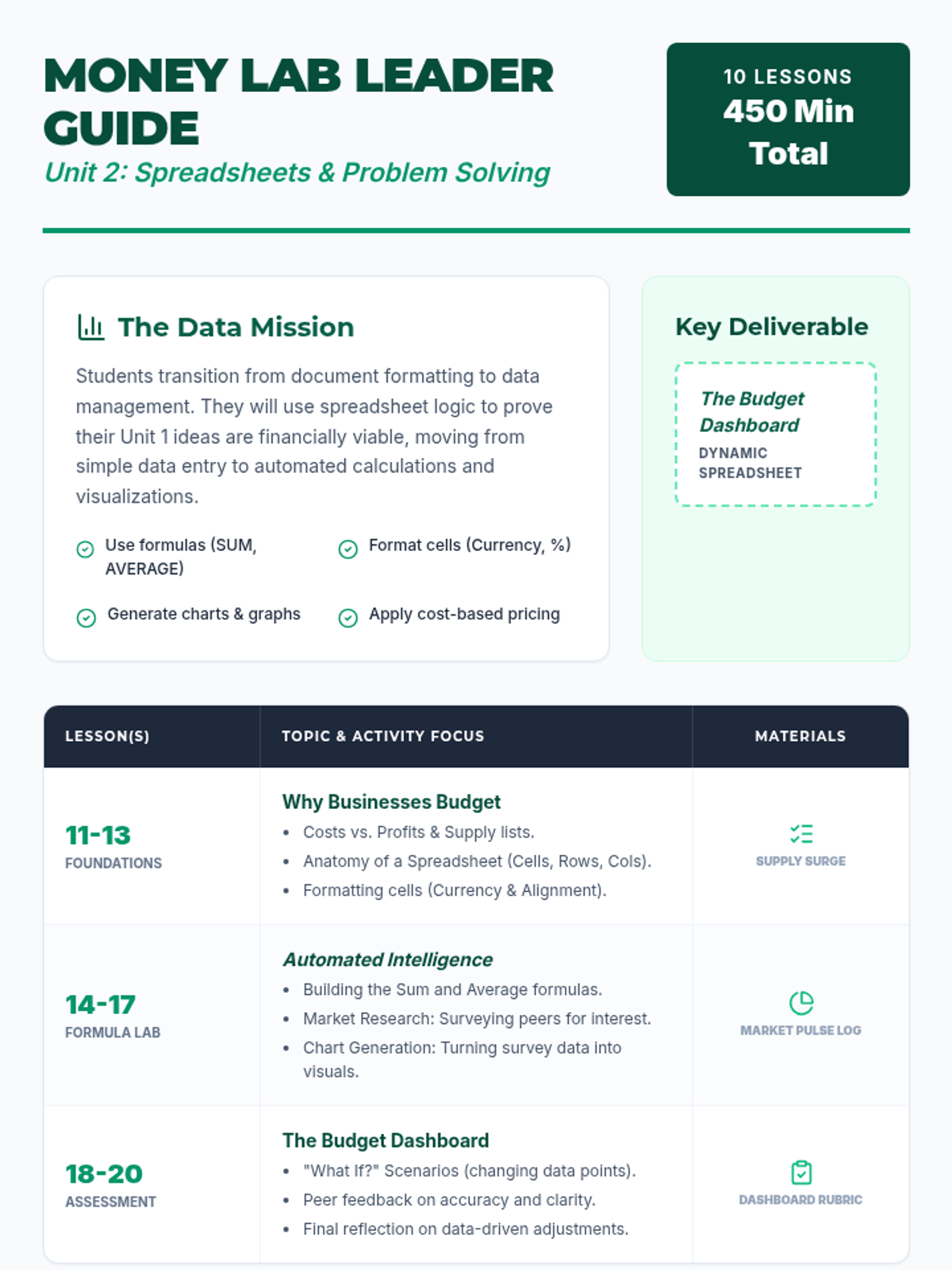
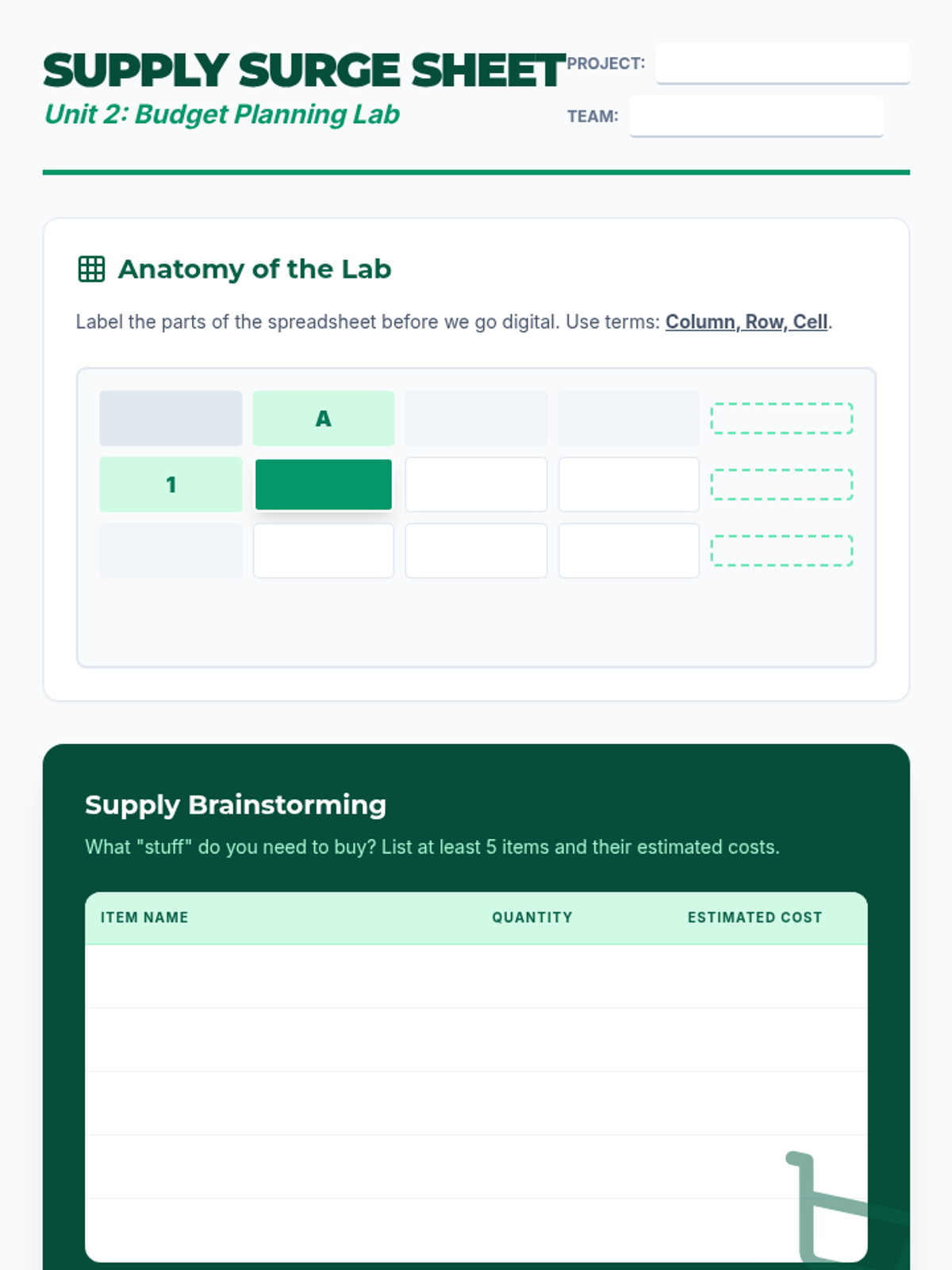
The second unit of the computer skills course where students use spreadsheet software to prove their business ideas are viable. They learn about costs, profits, basic formulas (SUM, AVERAGE), and data visualization through charts and graphs.
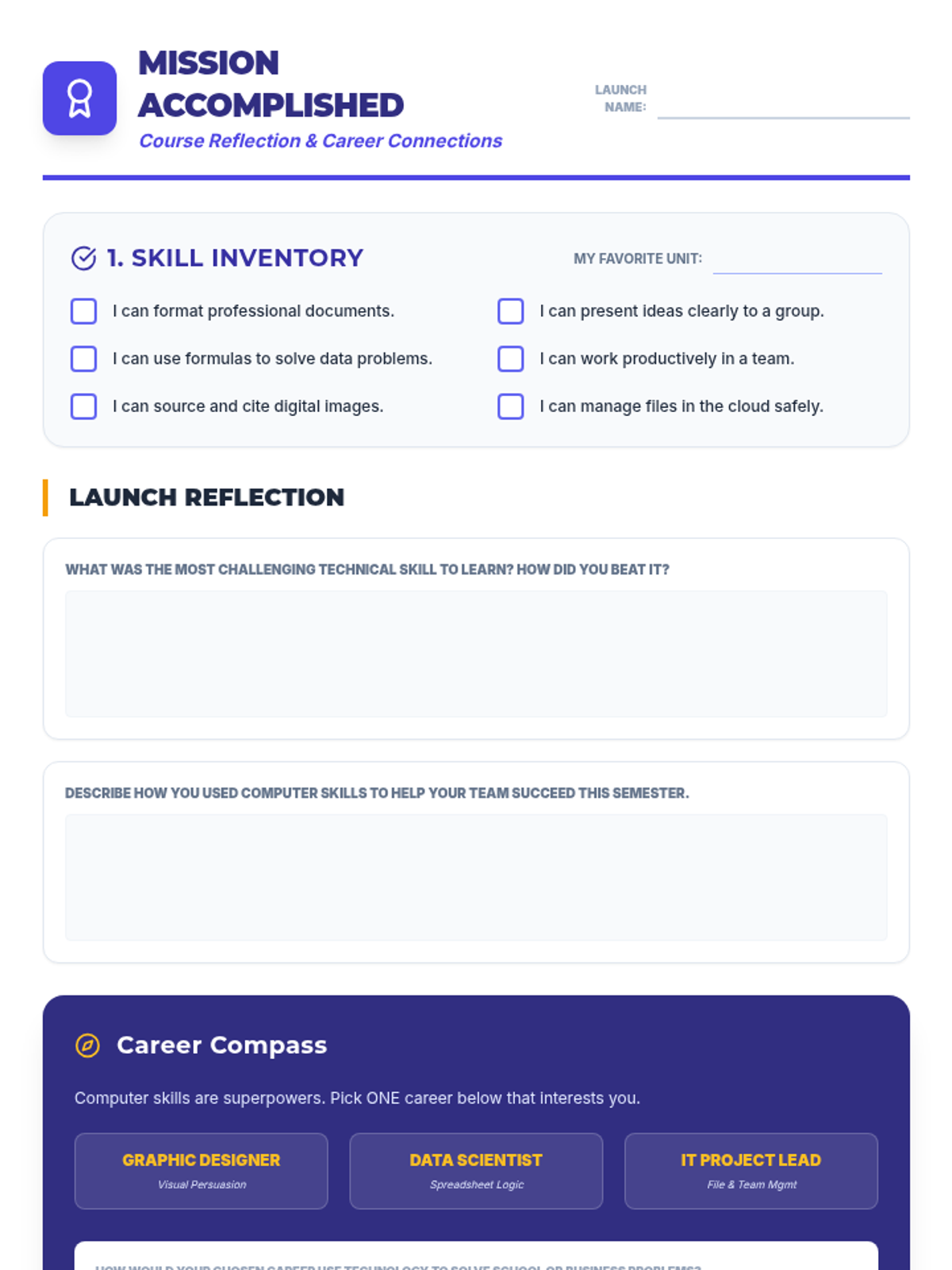
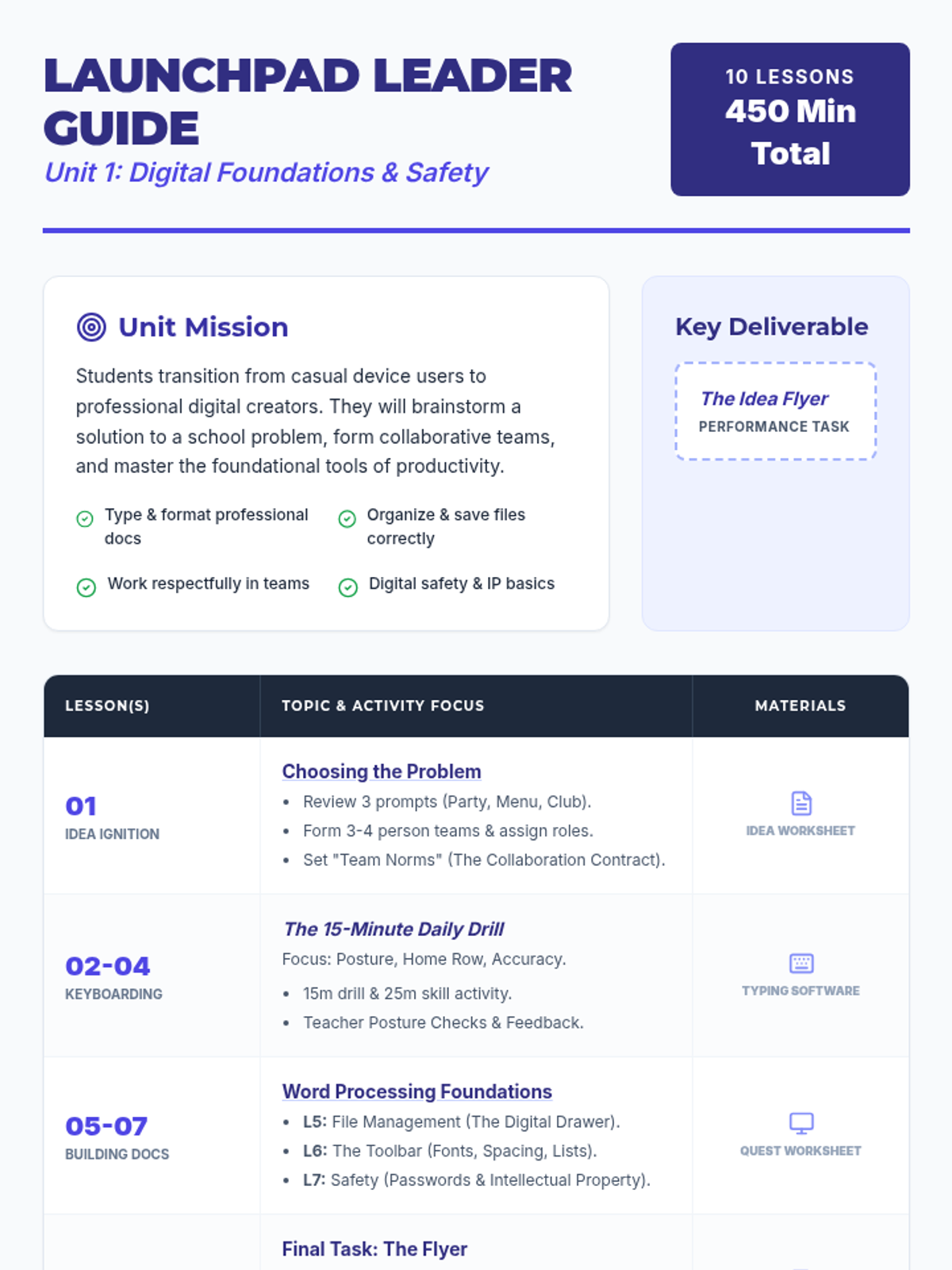
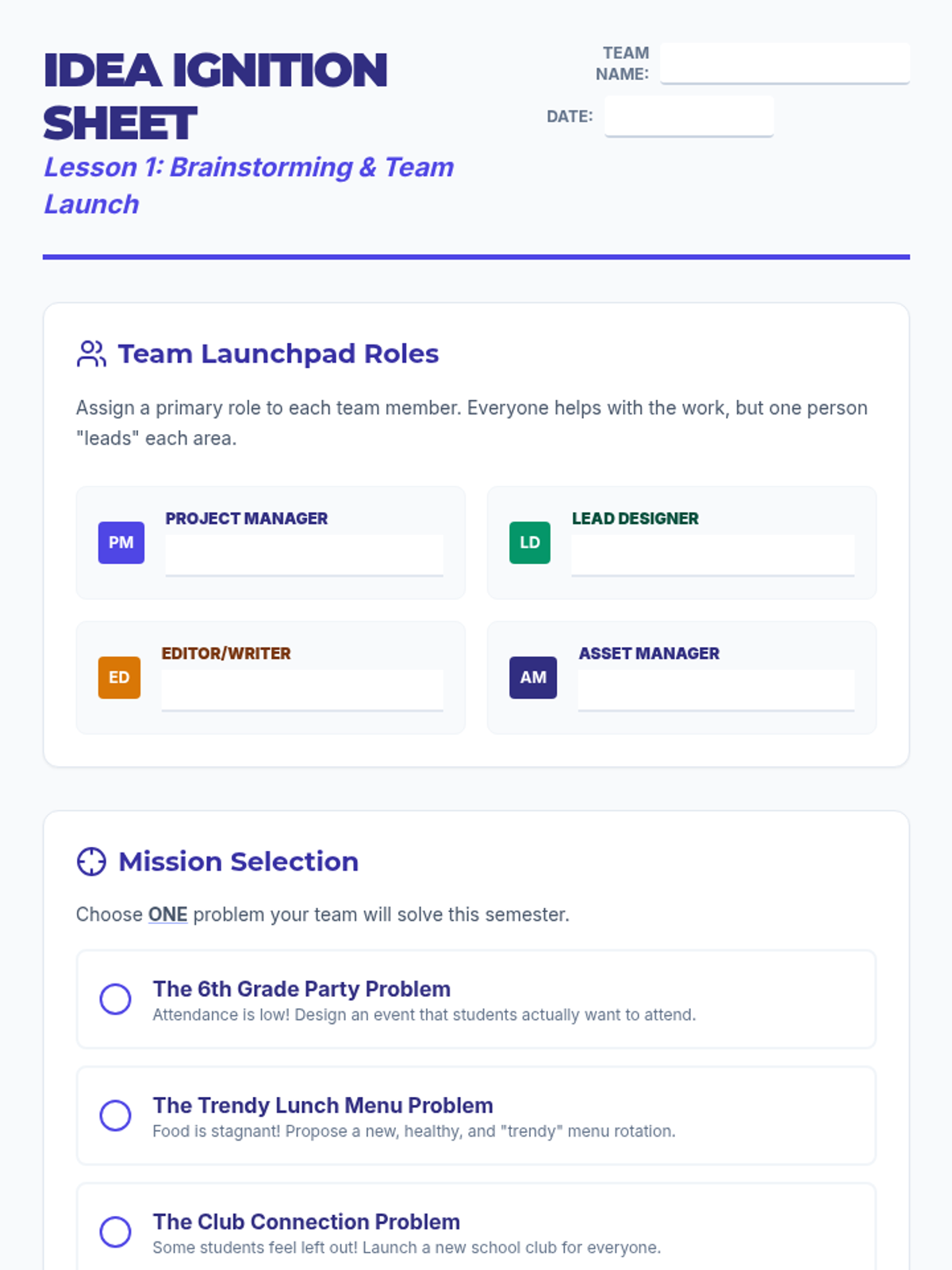
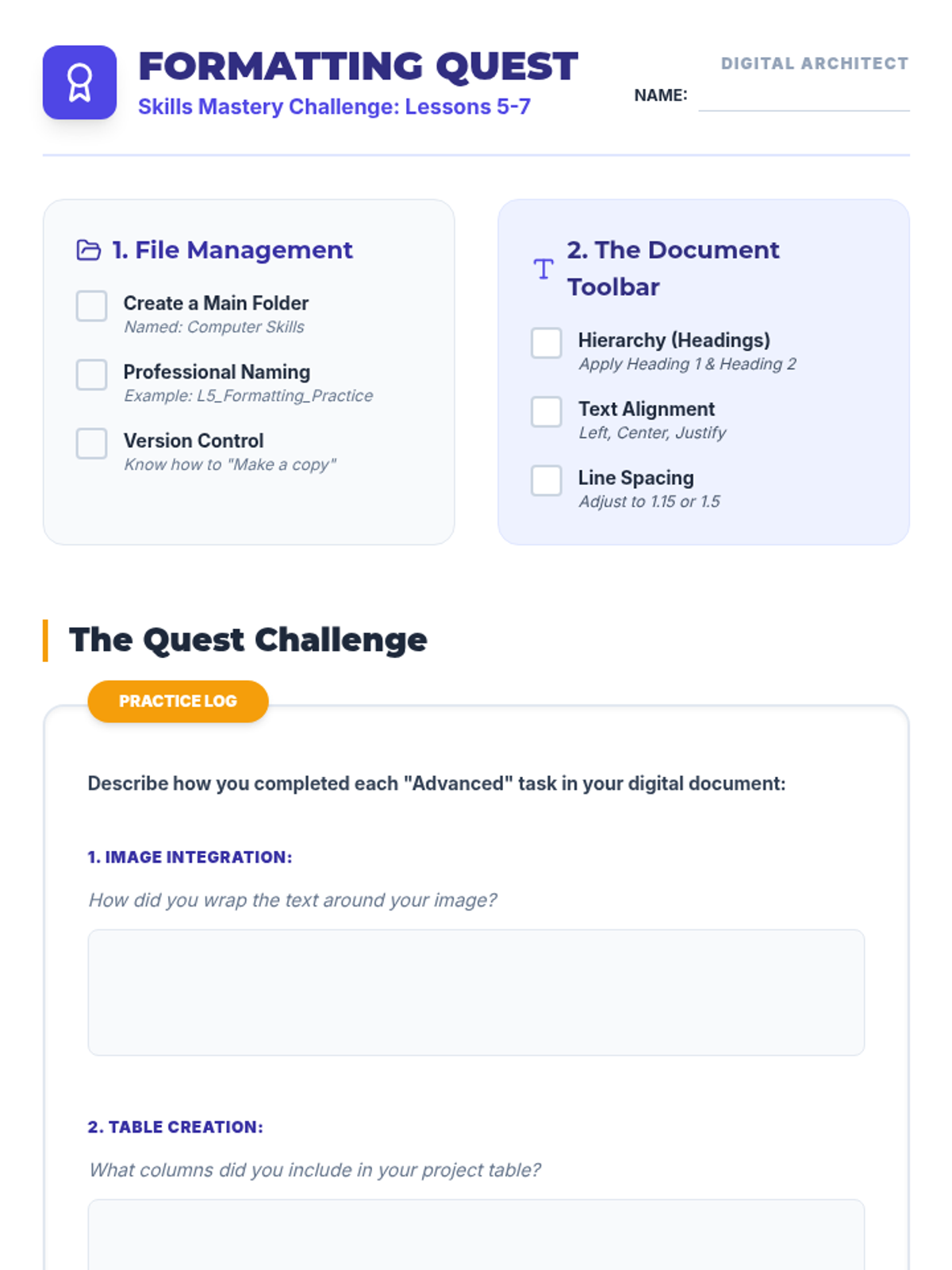
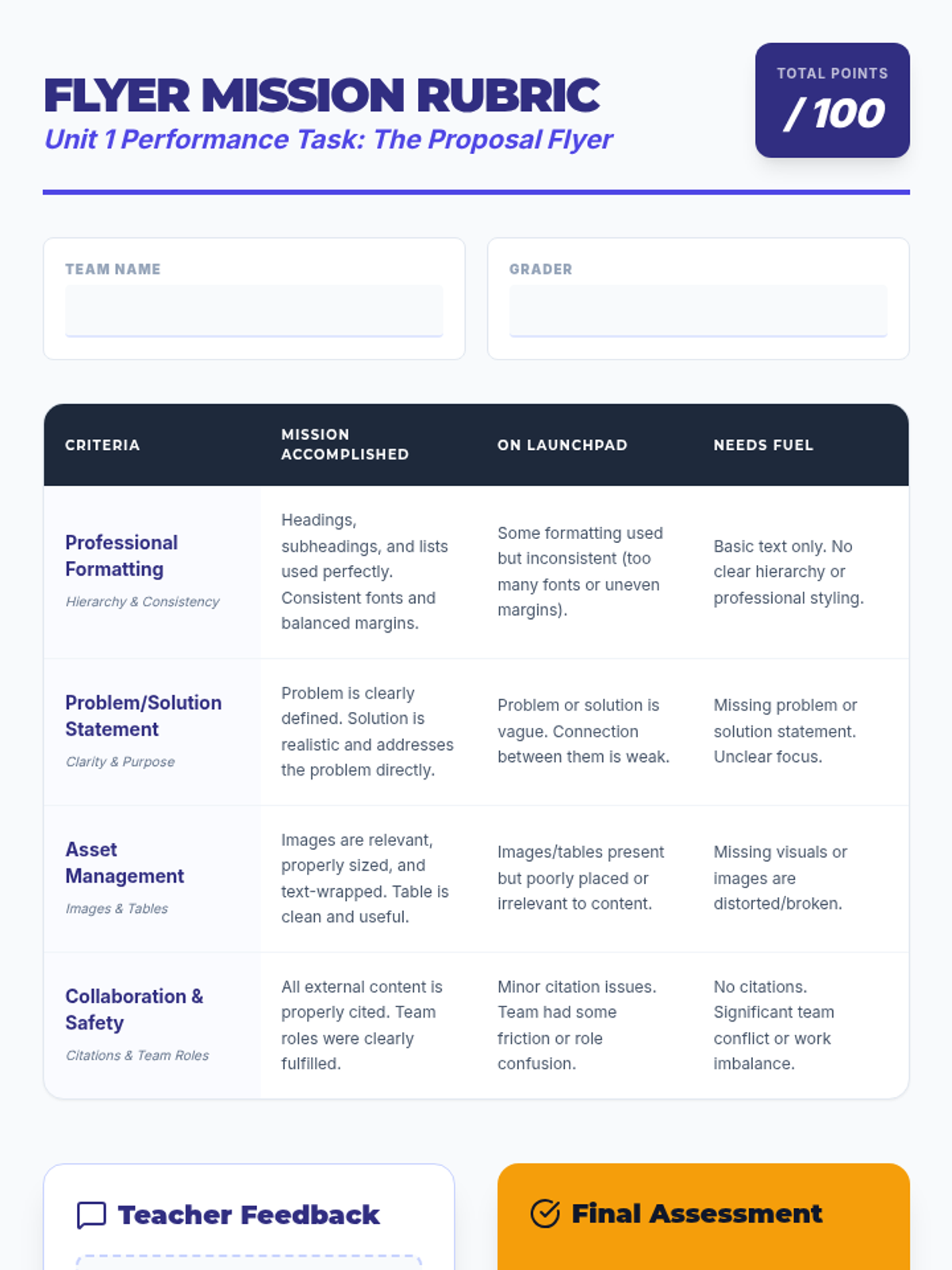
The first unit of a 6th-grade computer skills course focusing on brainstorming business ideas, keyboarding foundations, and word processing basics. Students form teams and learn to create professional documents while practicing digital safety and file management.
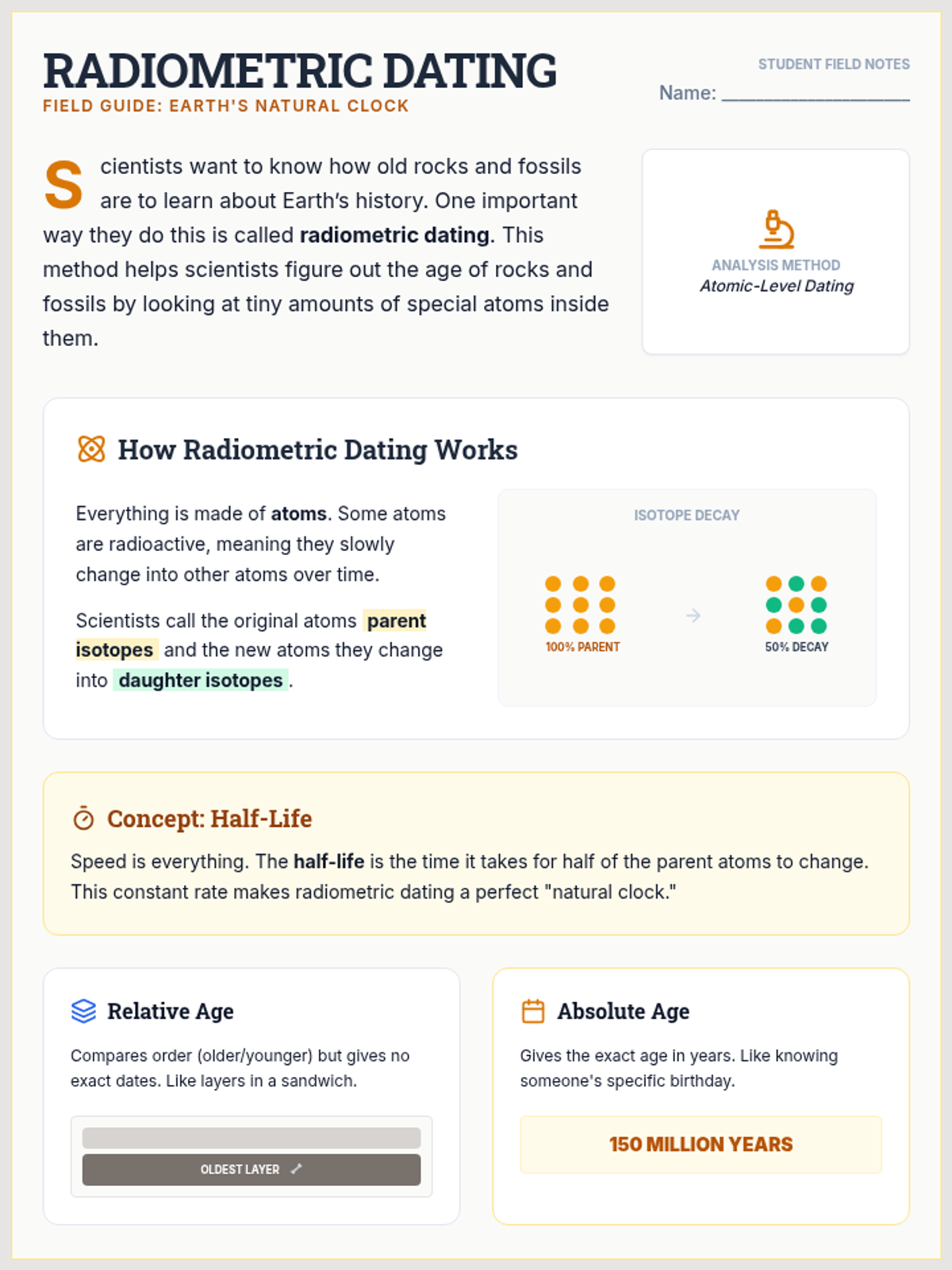
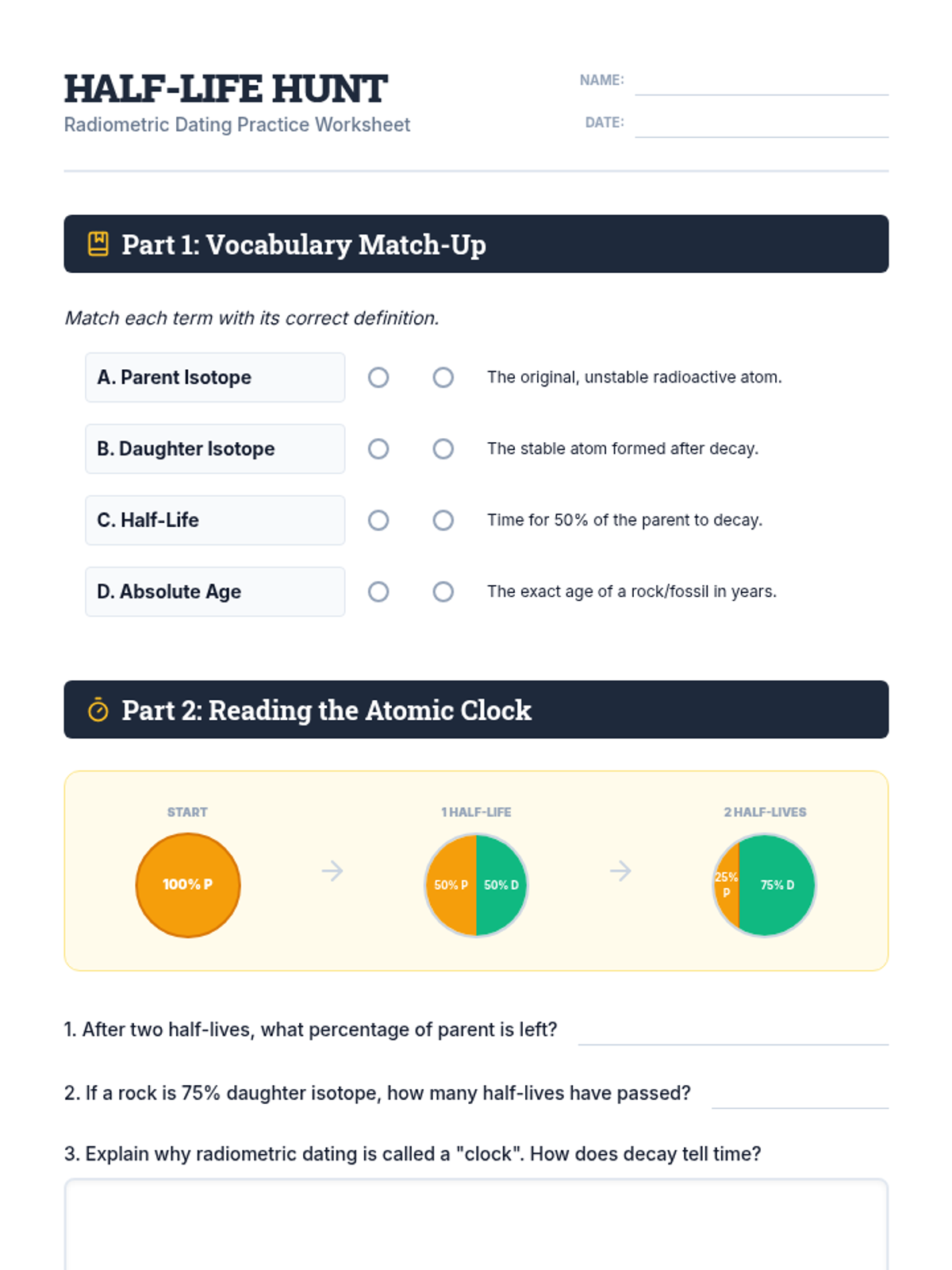
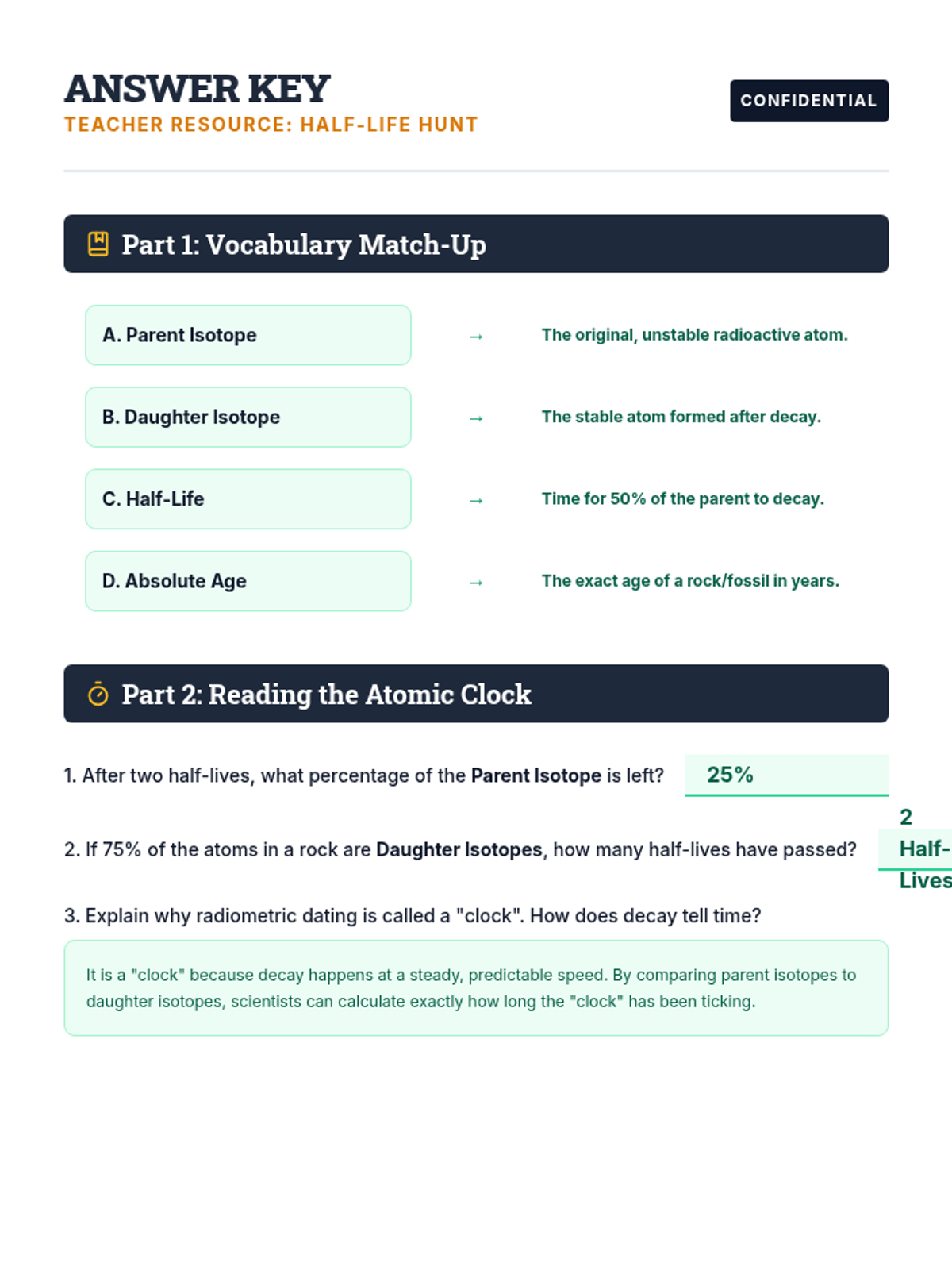
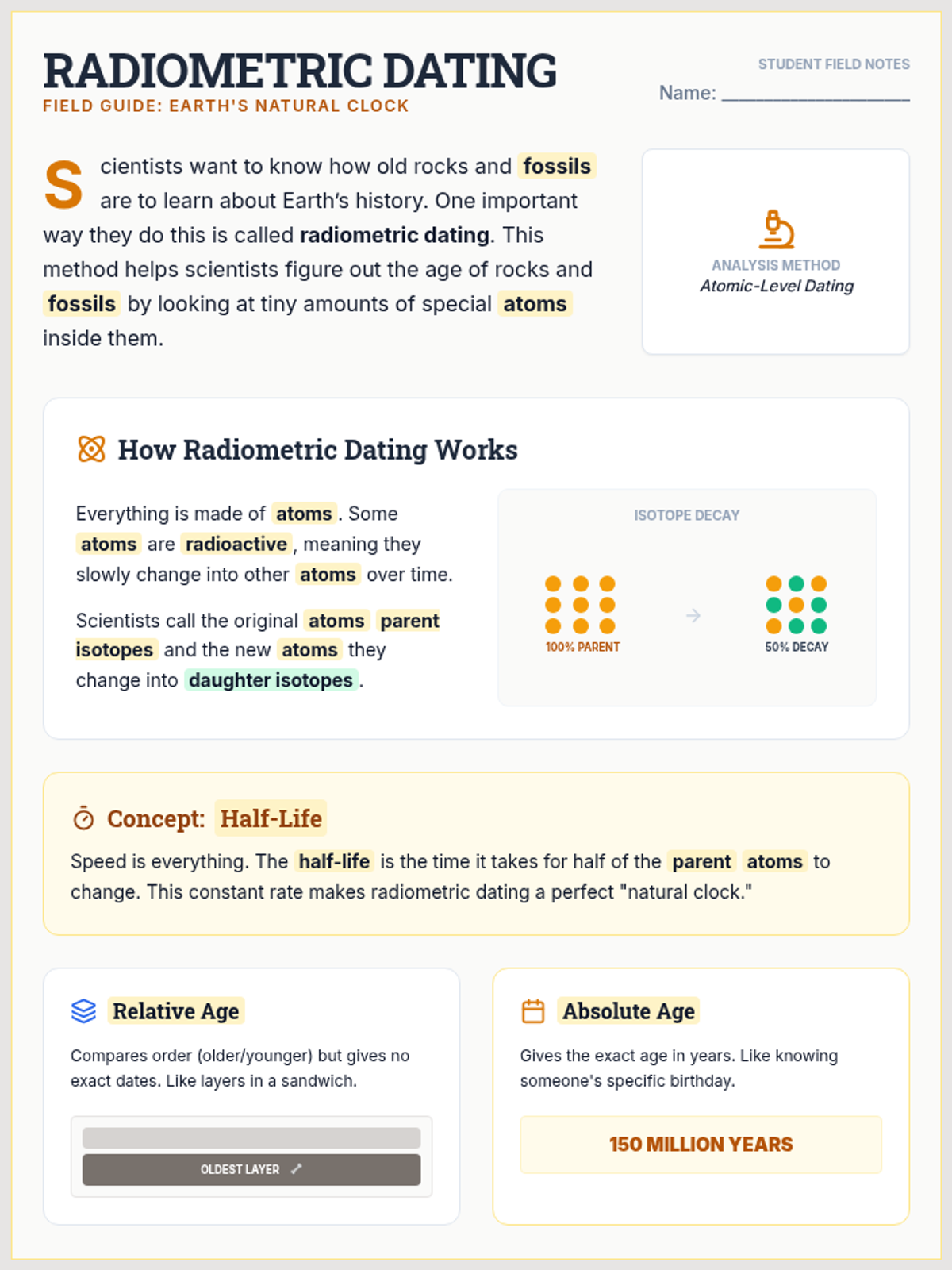
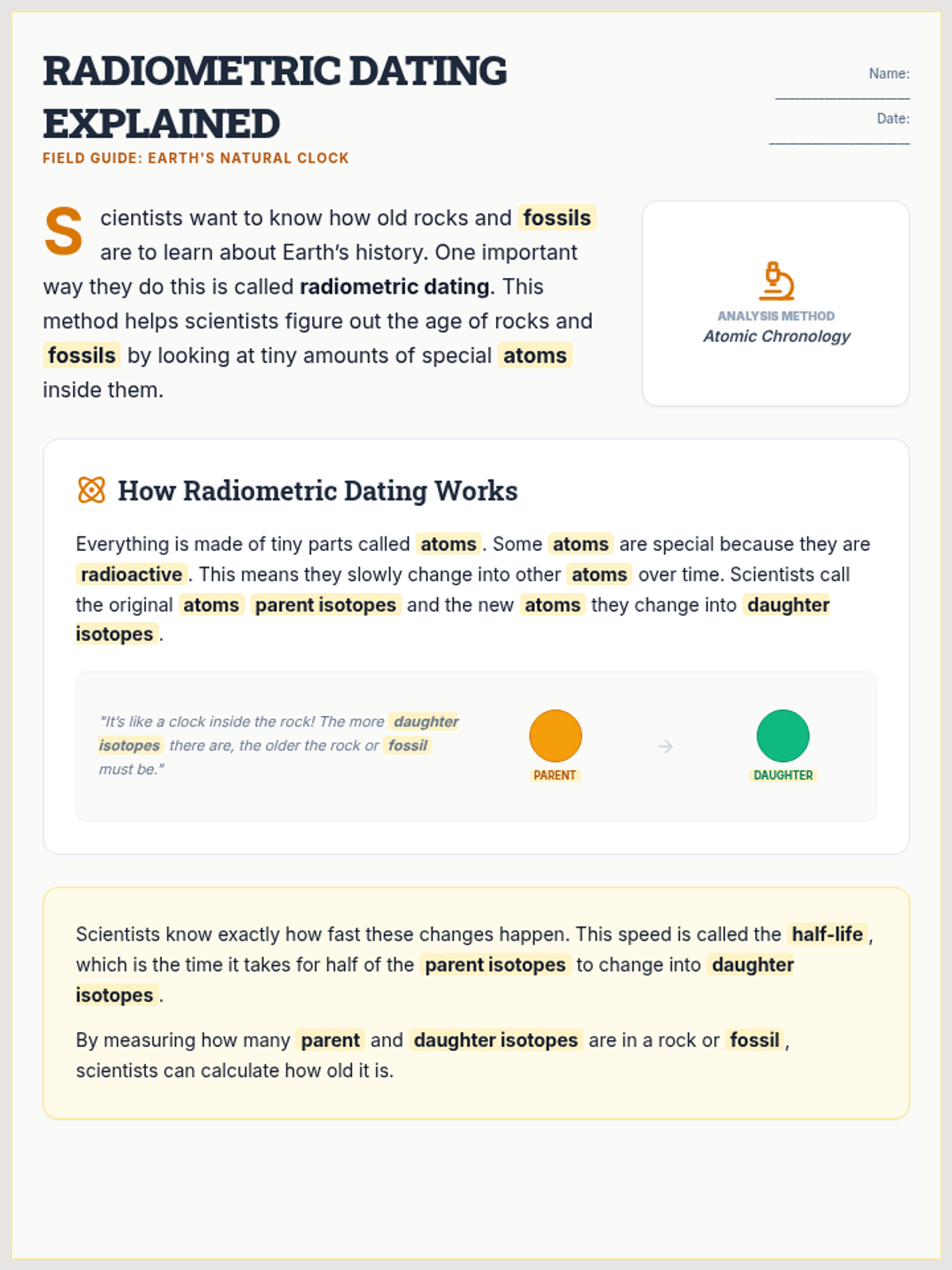
A comprehensive introduction to radiometric dating, explaining how scientists use radioactive isotopes to determine the absolute age of rocks and fossils, and comparing it to relative dating methods.
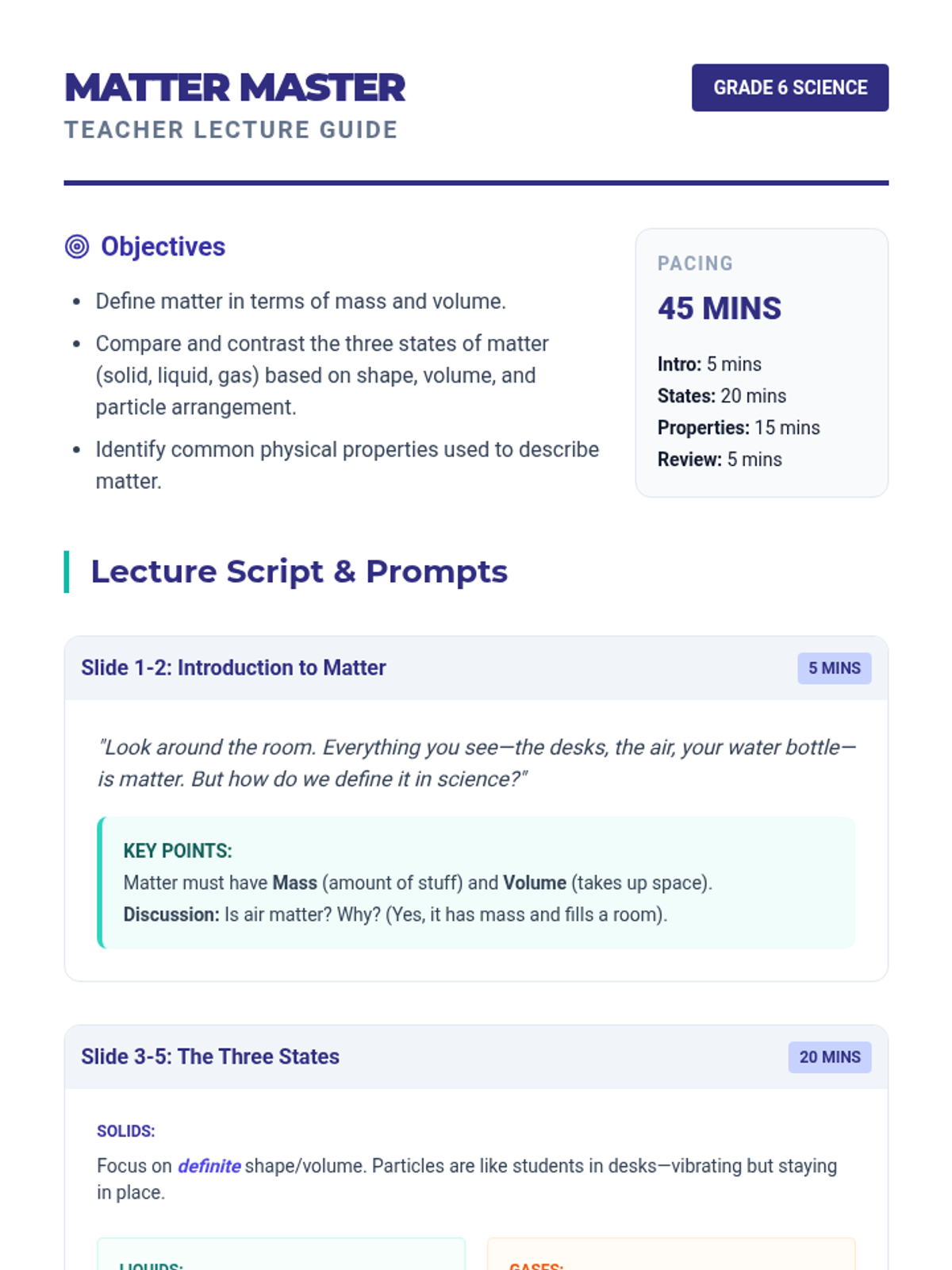
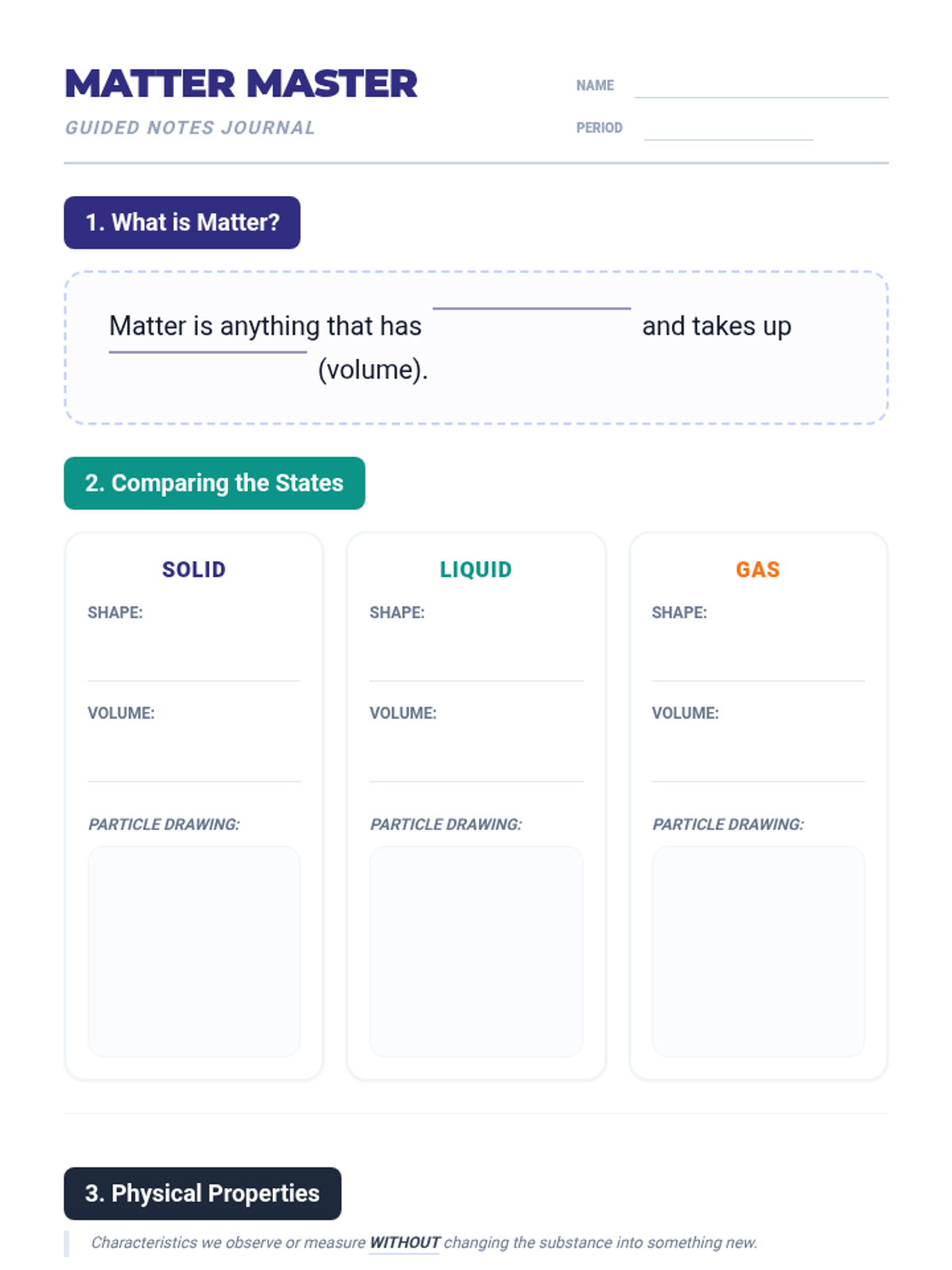
A comprehensive lesson exploring the three primary states of matter (solid, liquid, gas) and their physical properties, designed for 6th-grade students. Includes visual aids, guided note-taking, and teacher-led instruction.
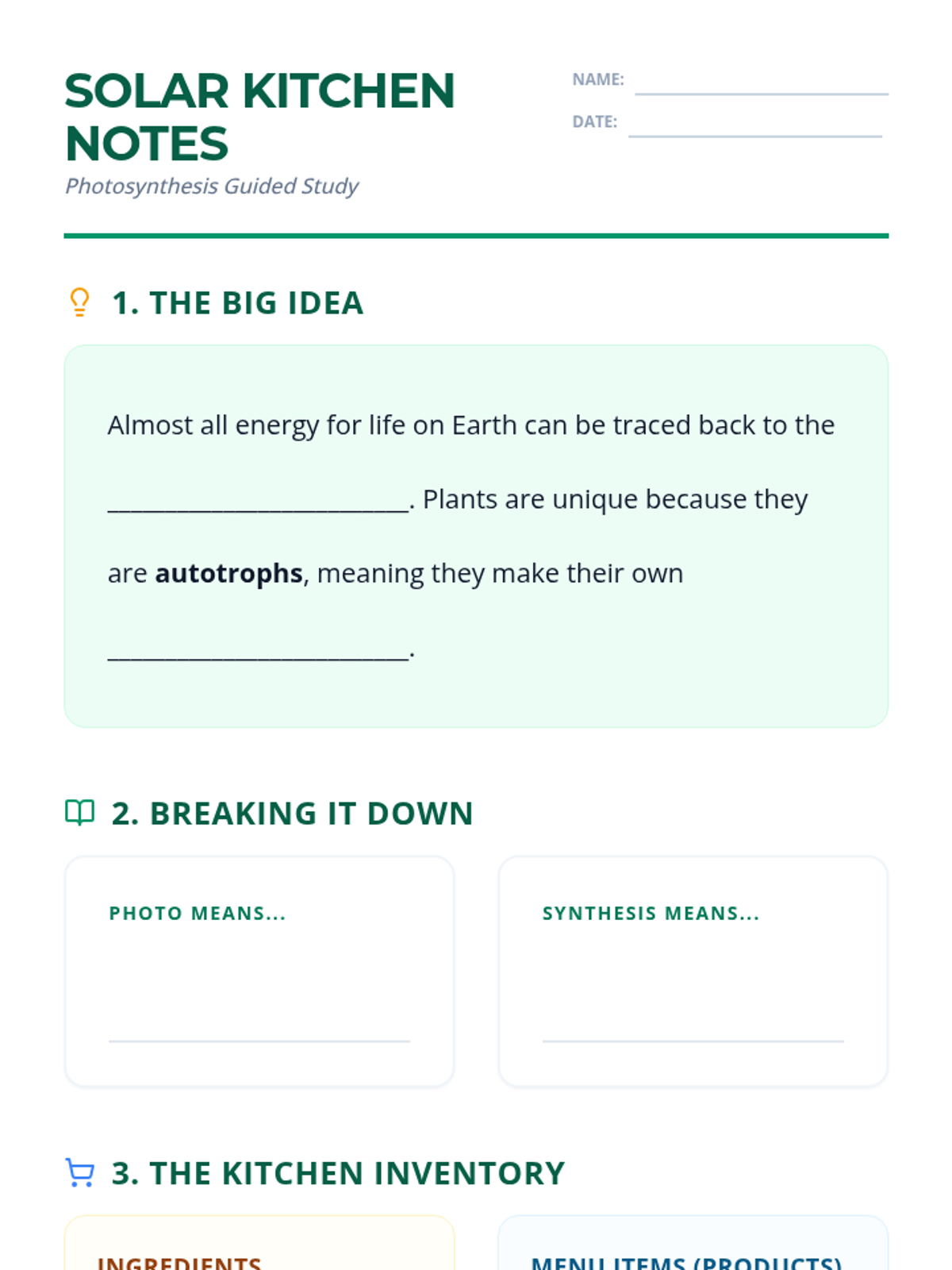
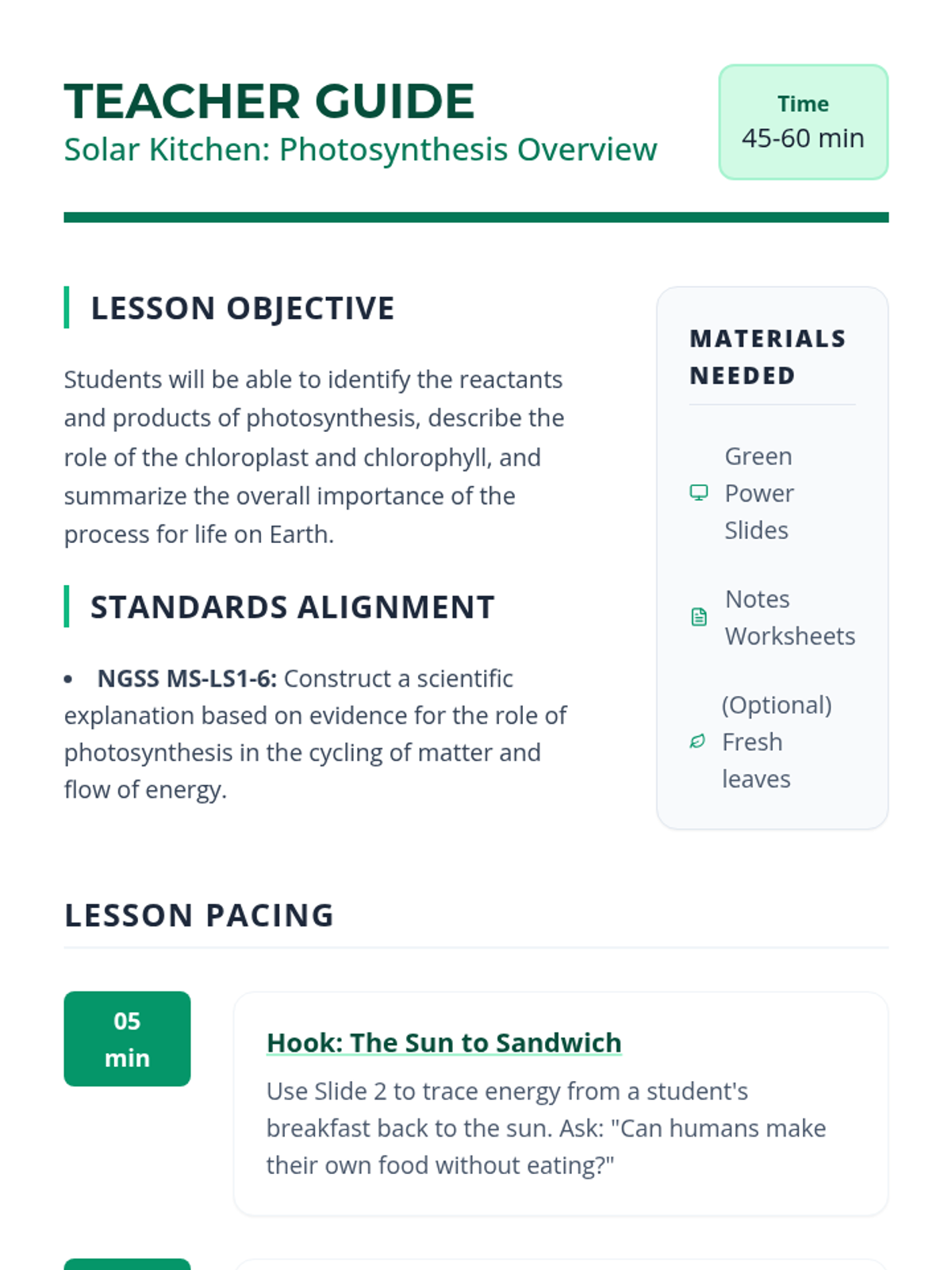
A foundational lesson on photosynthesis for middle schoolers, framing plants as 'Solar Kitchens' that convert light energy into chemical energy. The lesson covers reactants, products, the role of chloroplasts, and the importance of the process for life on Earth.
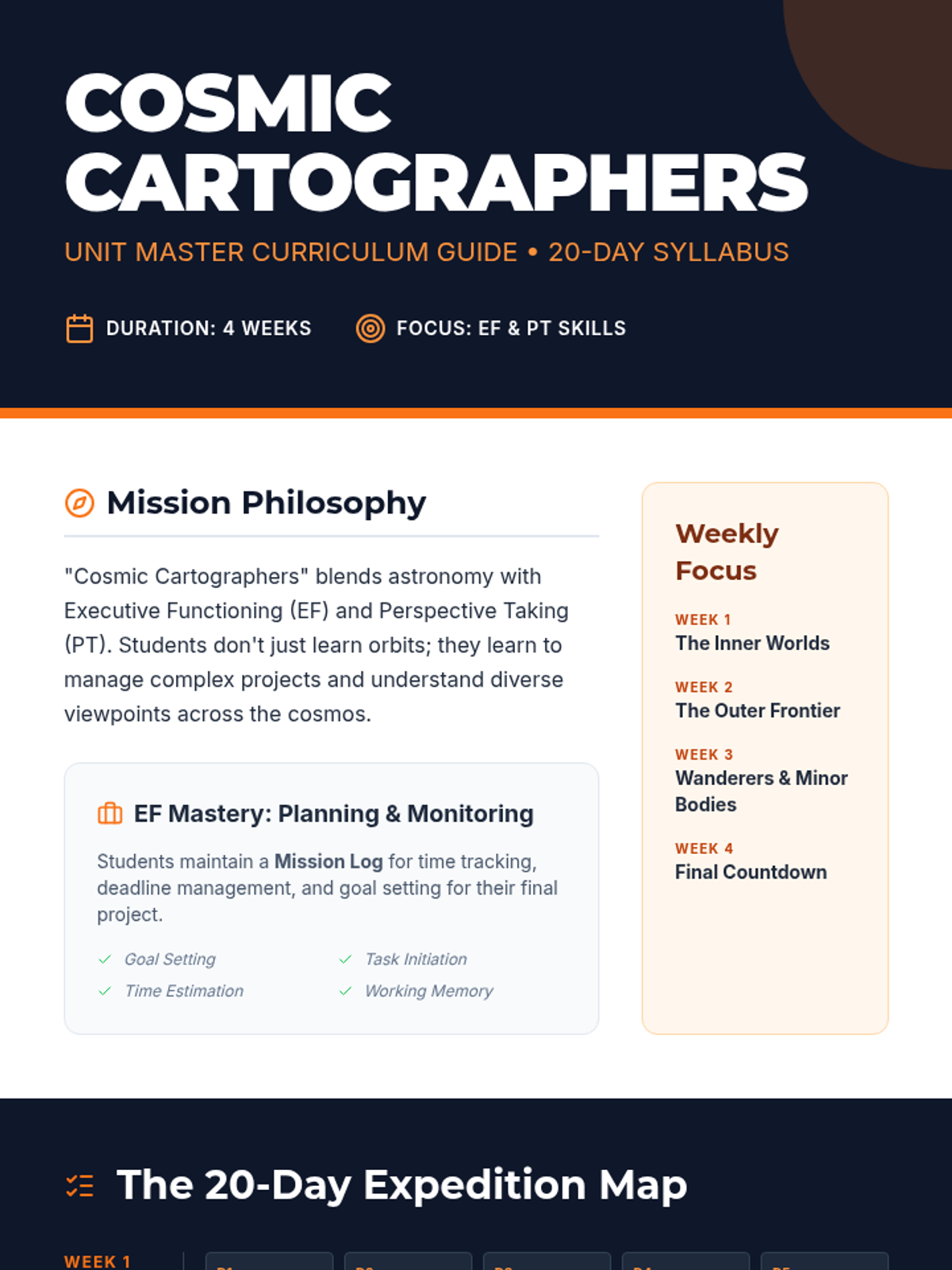
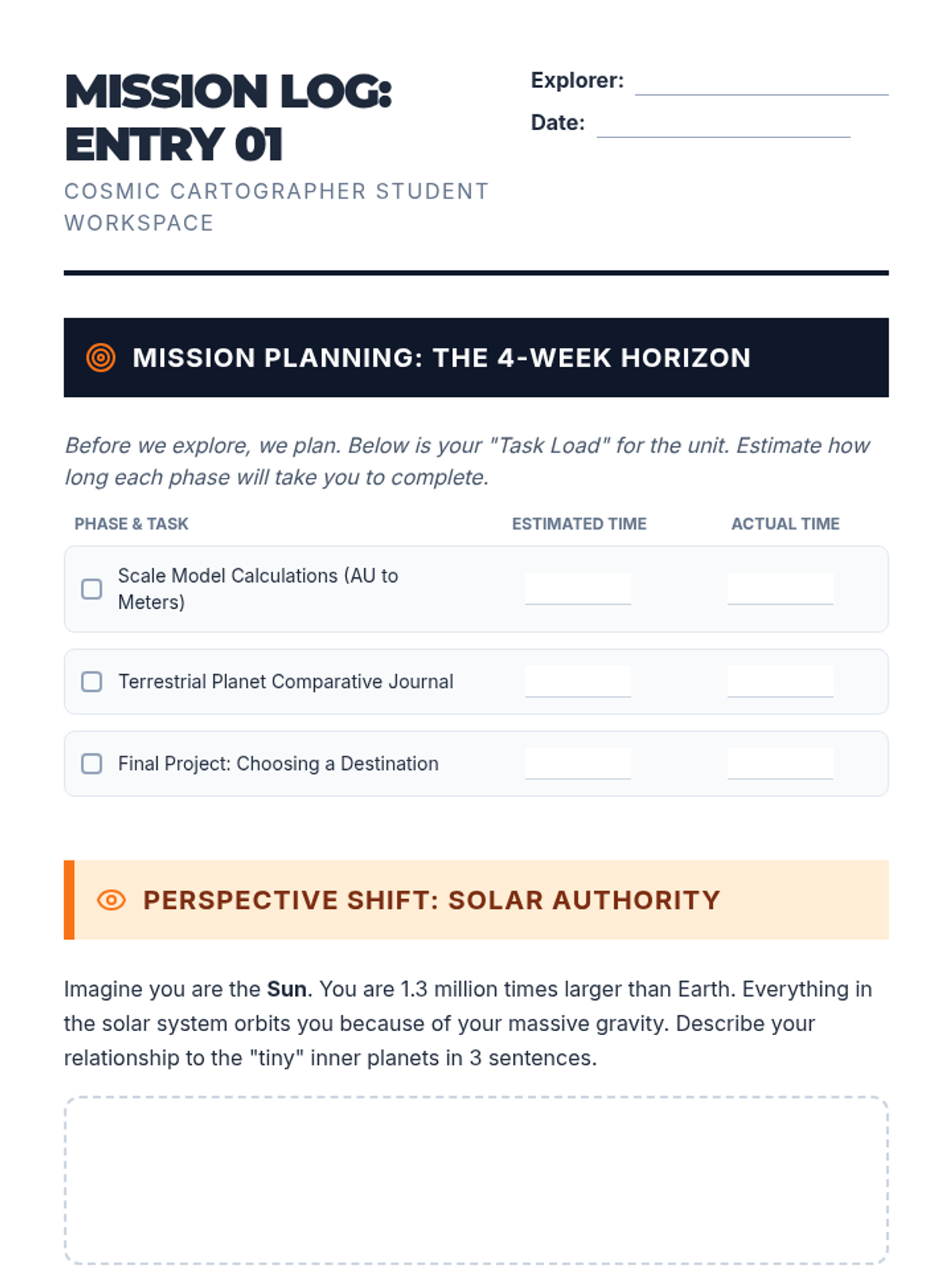
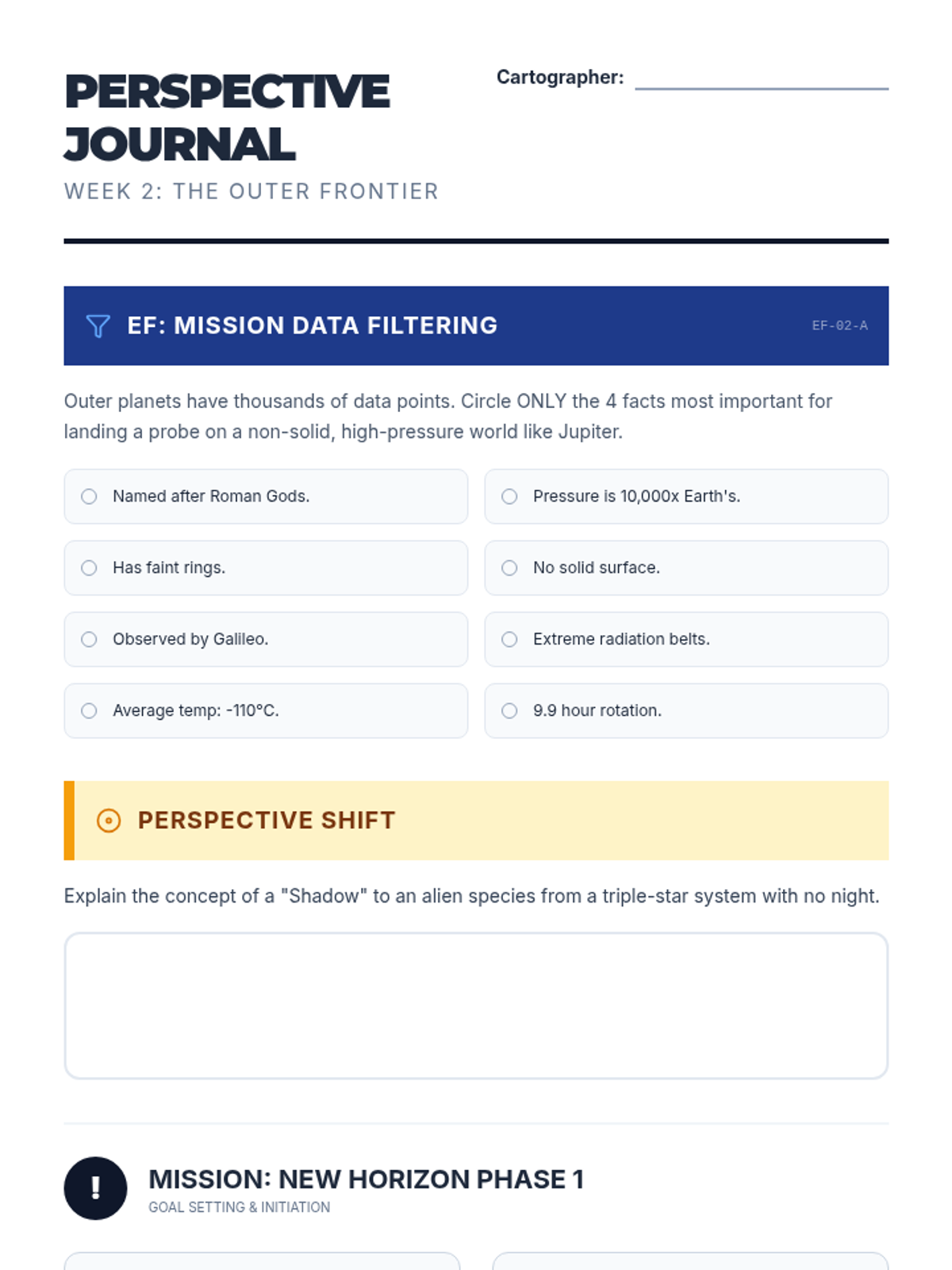
Weeks 1 focus on the scale of the solar system, the Sun, and the terrestrial planets, emphasizing executive functioning through organizational 'Mission Logs' and perspective-taking via planetary viewpoints.
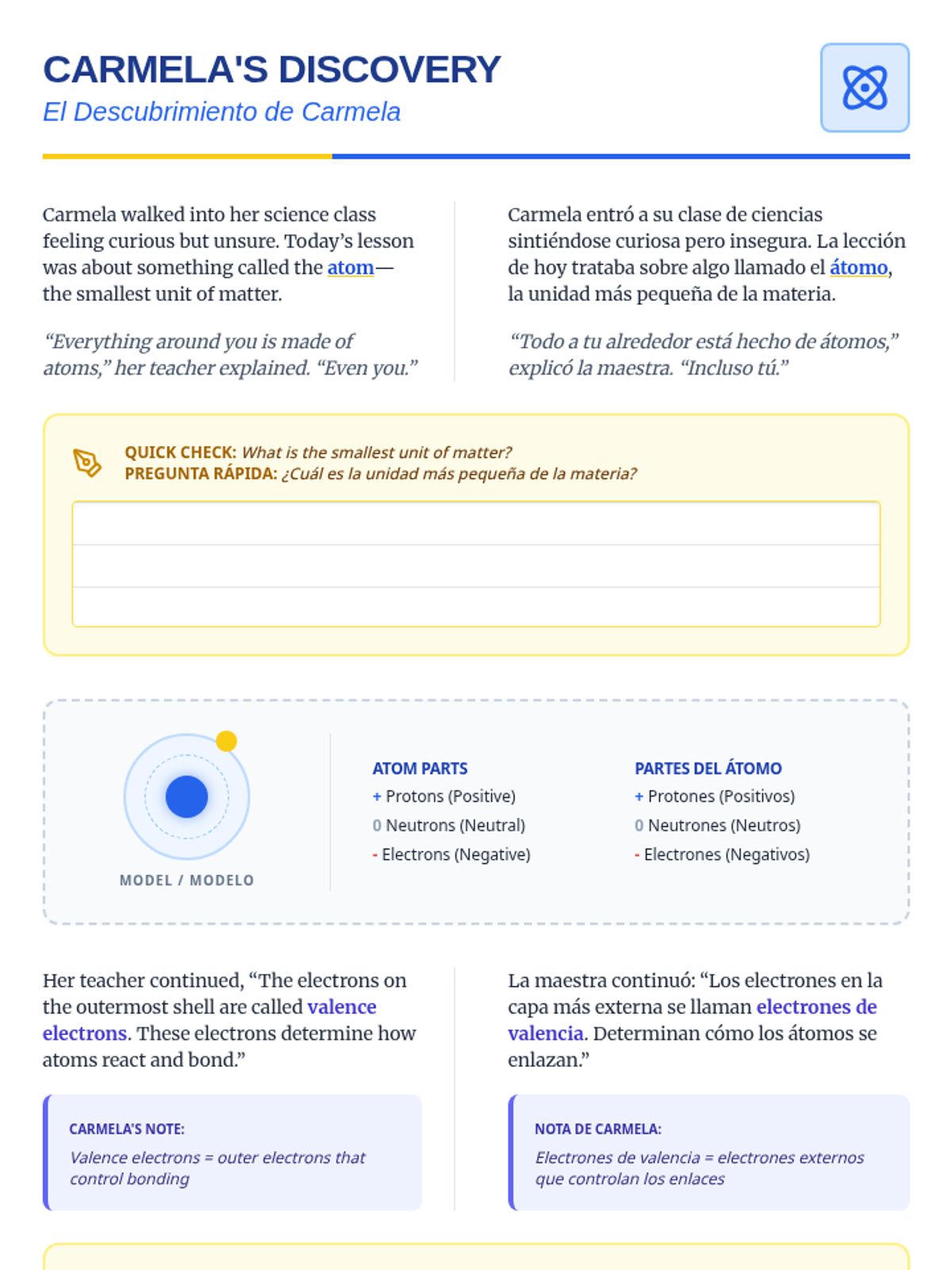
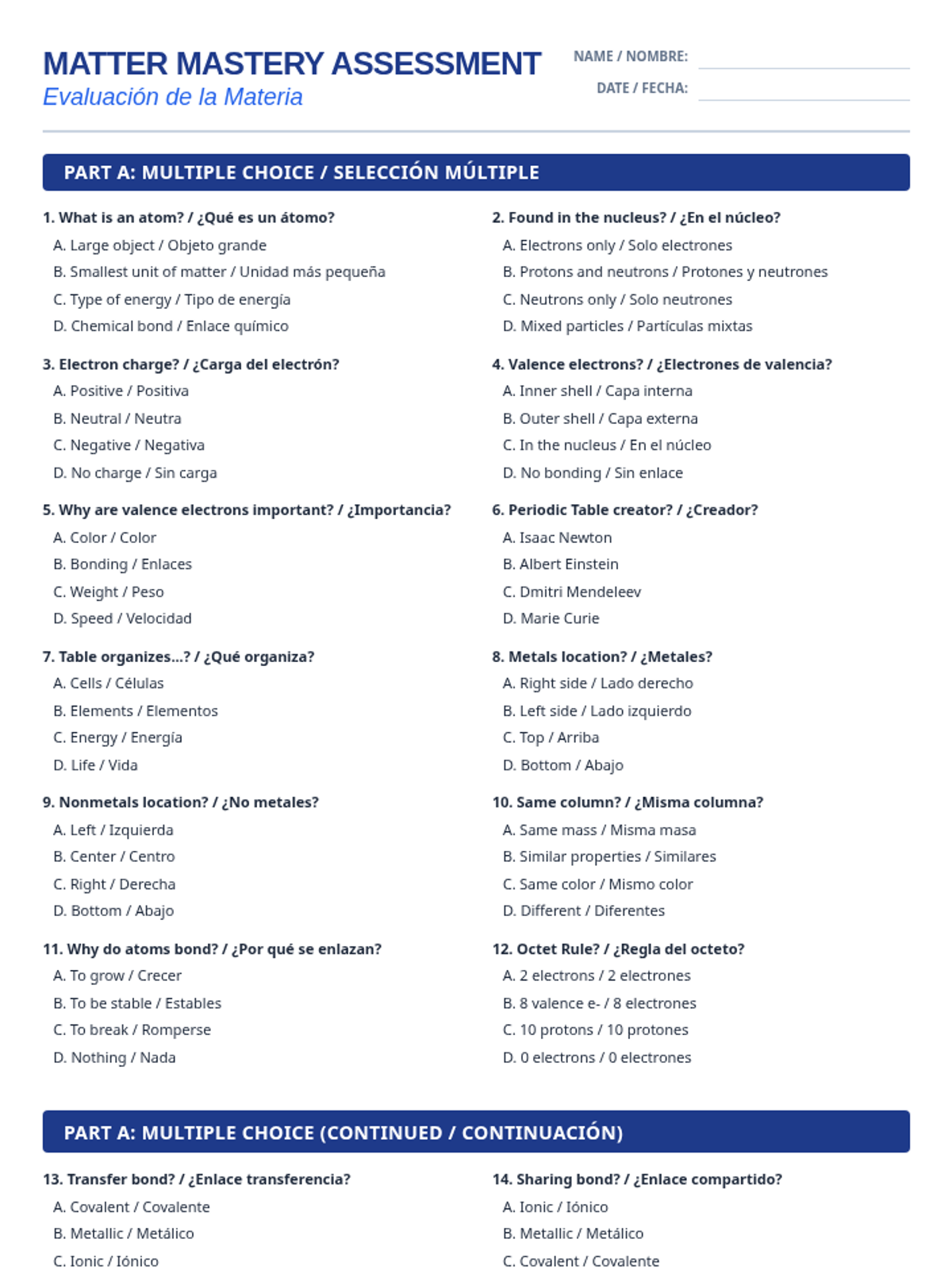
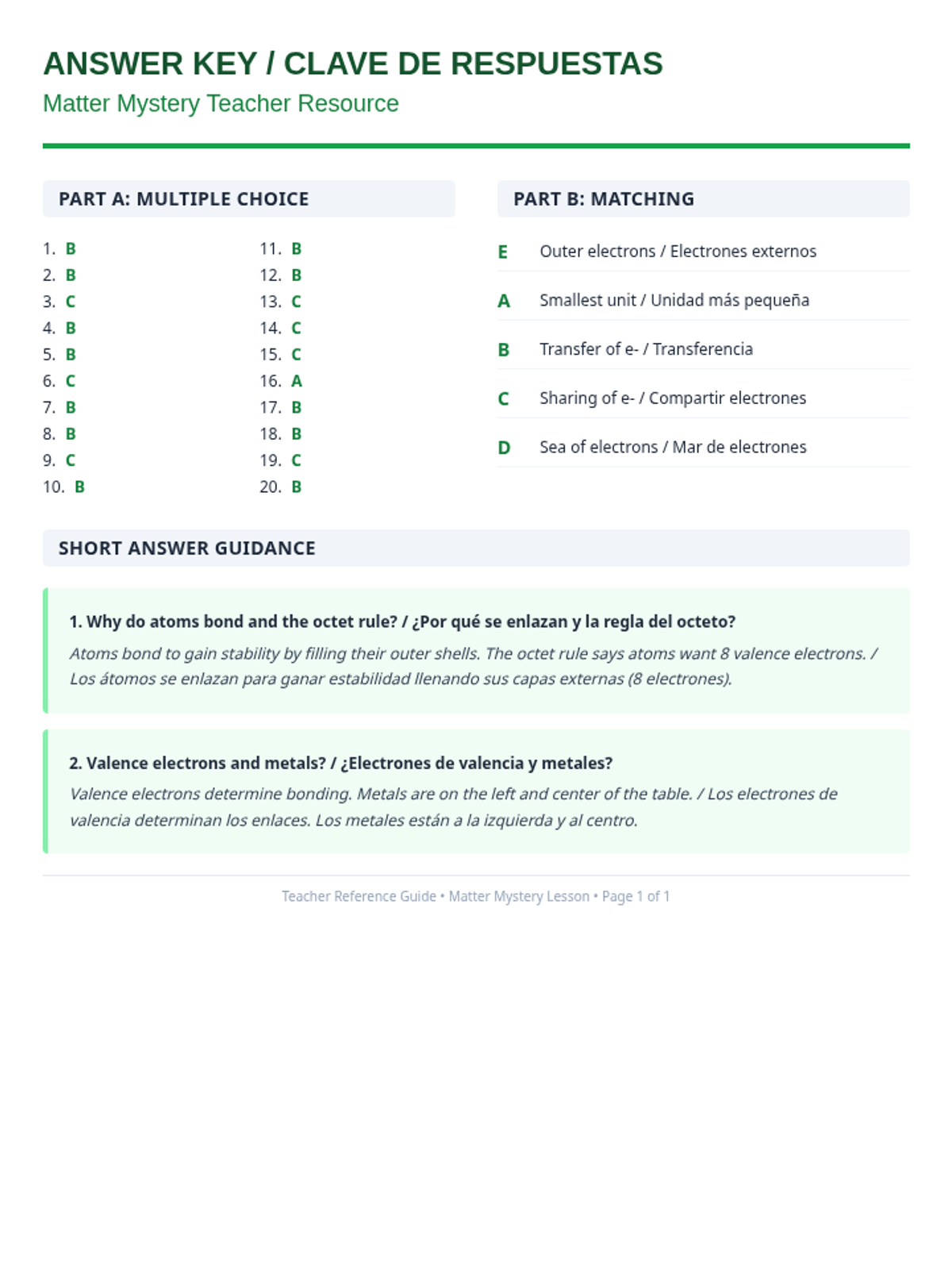
Explore the fundamentals of atoms, the periodic table, and chemical bonding through the story of Carmela's science class. This lesson covers atomic structure, valence electrons, and types of bonding in a bilingual format.
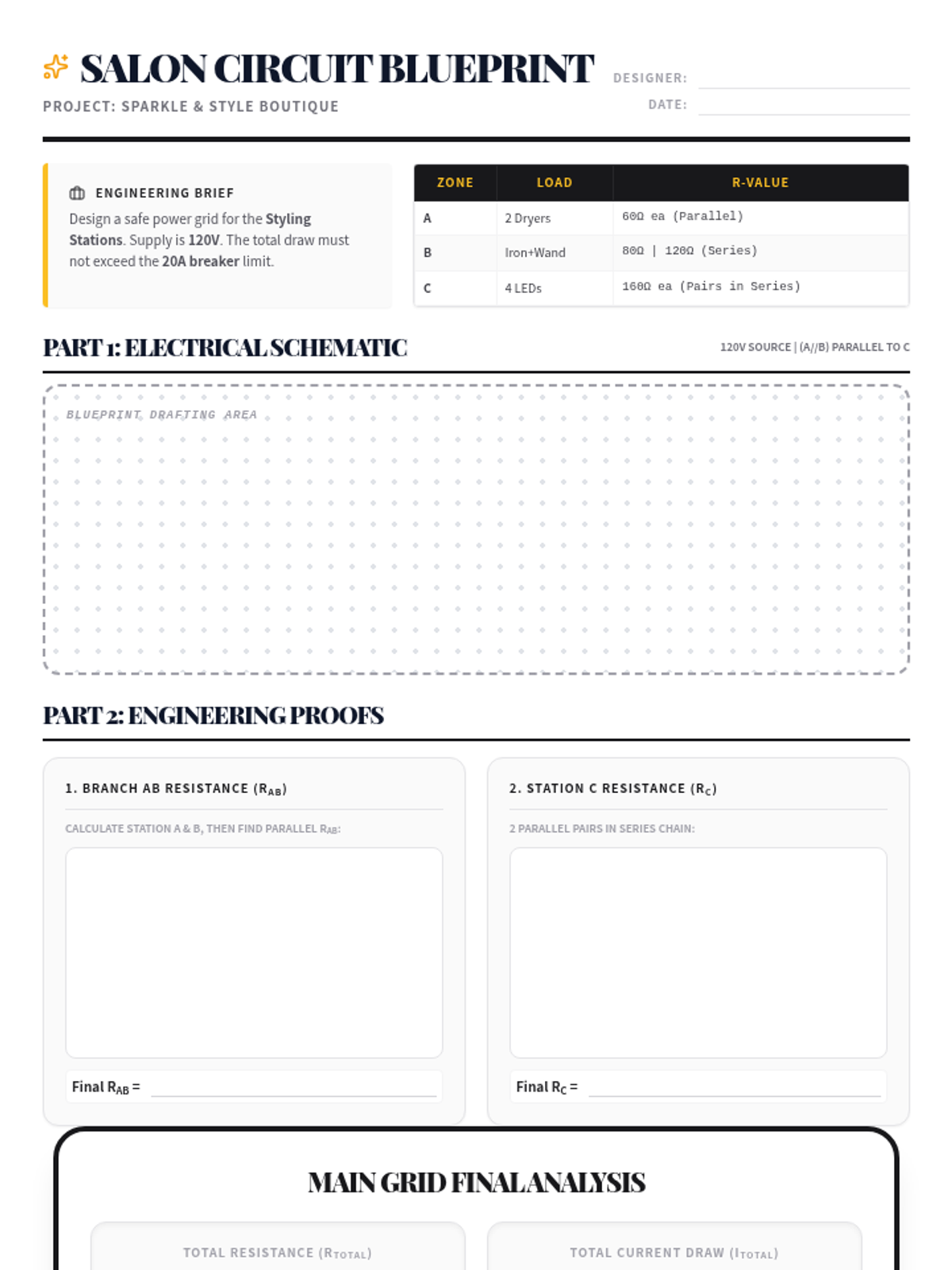
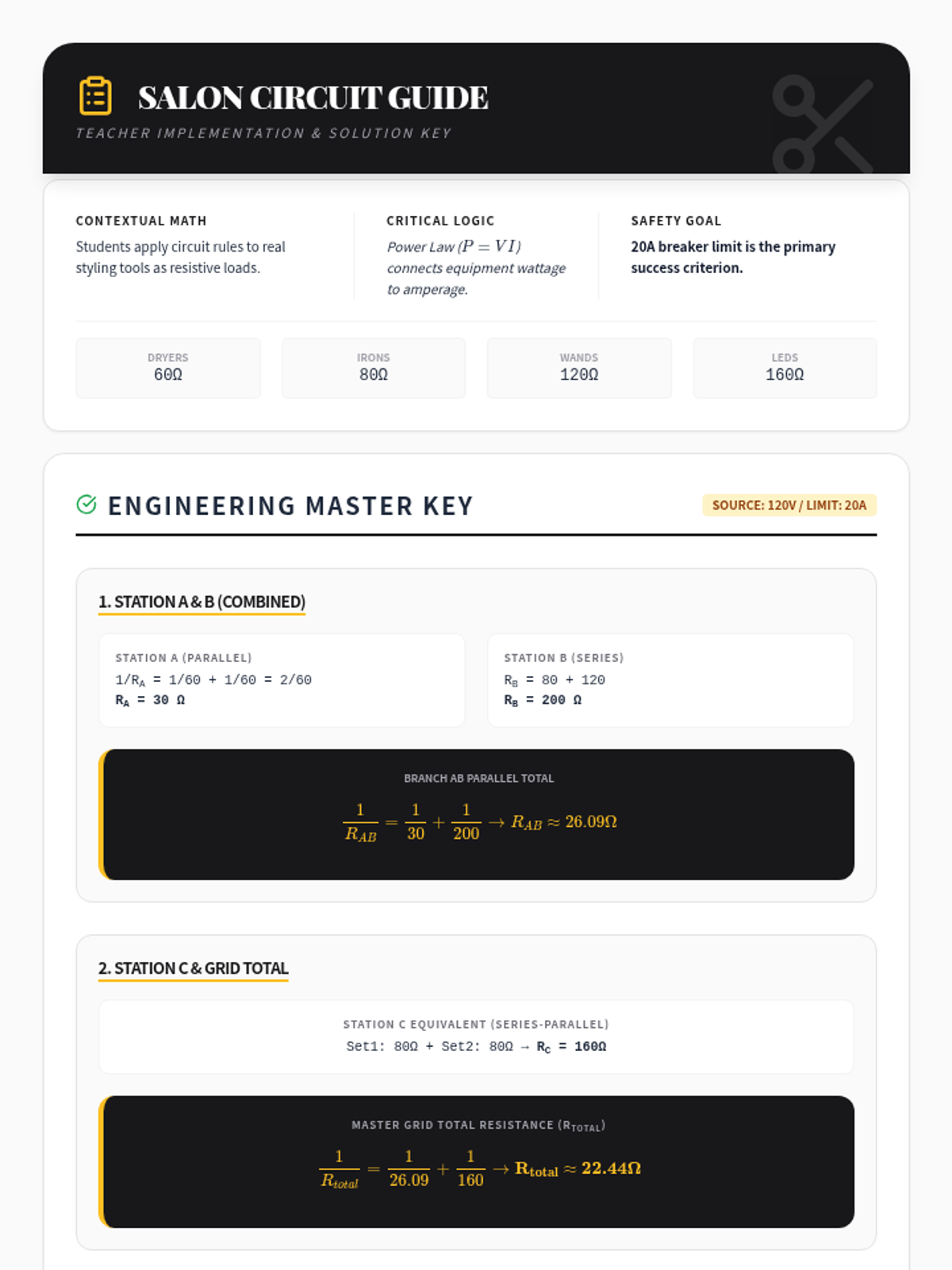
Students apply combination circuit knowledge to design the electrical layout of a modern hair salon, balancing the high current demands of professional styling tools.
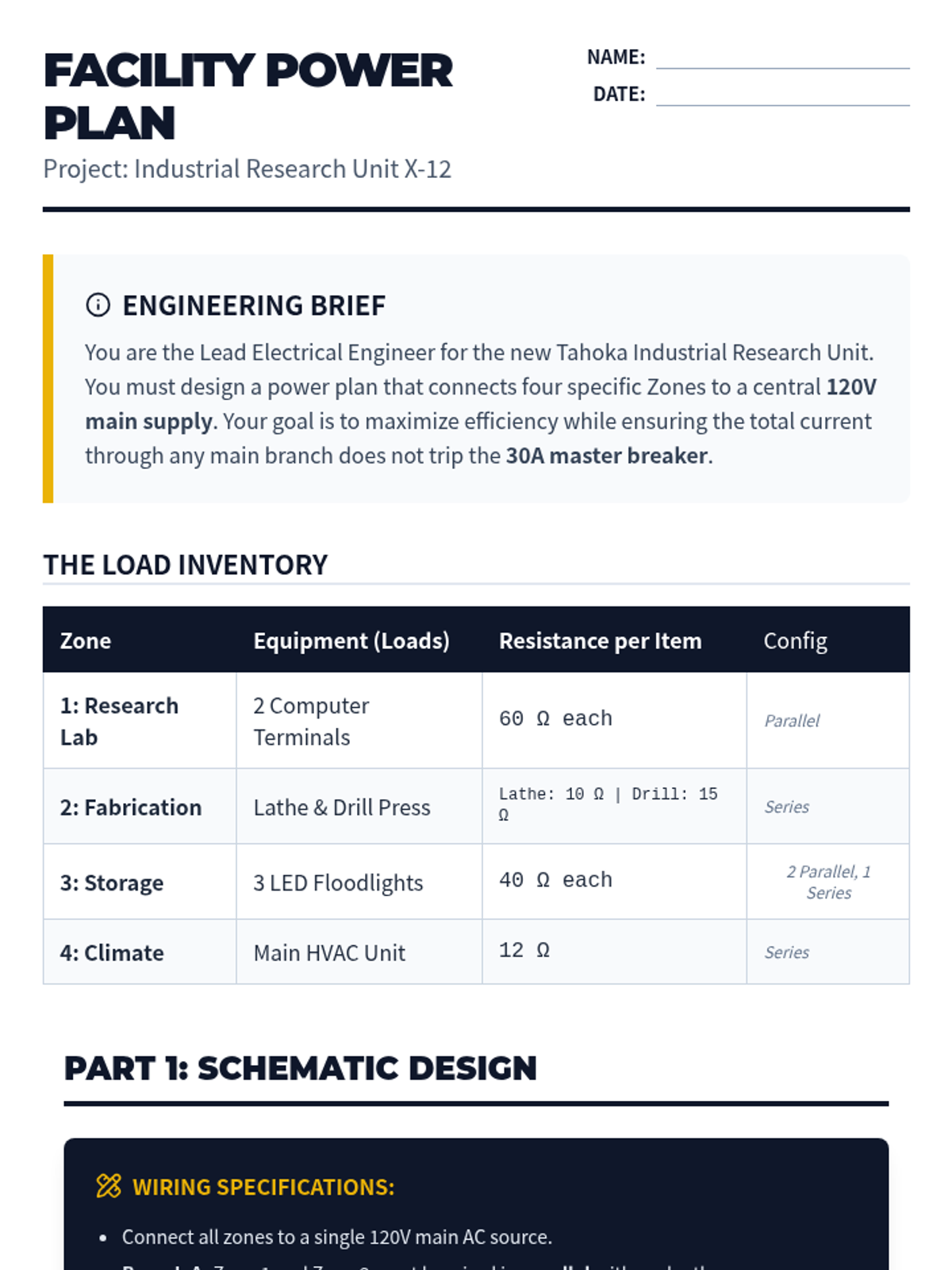
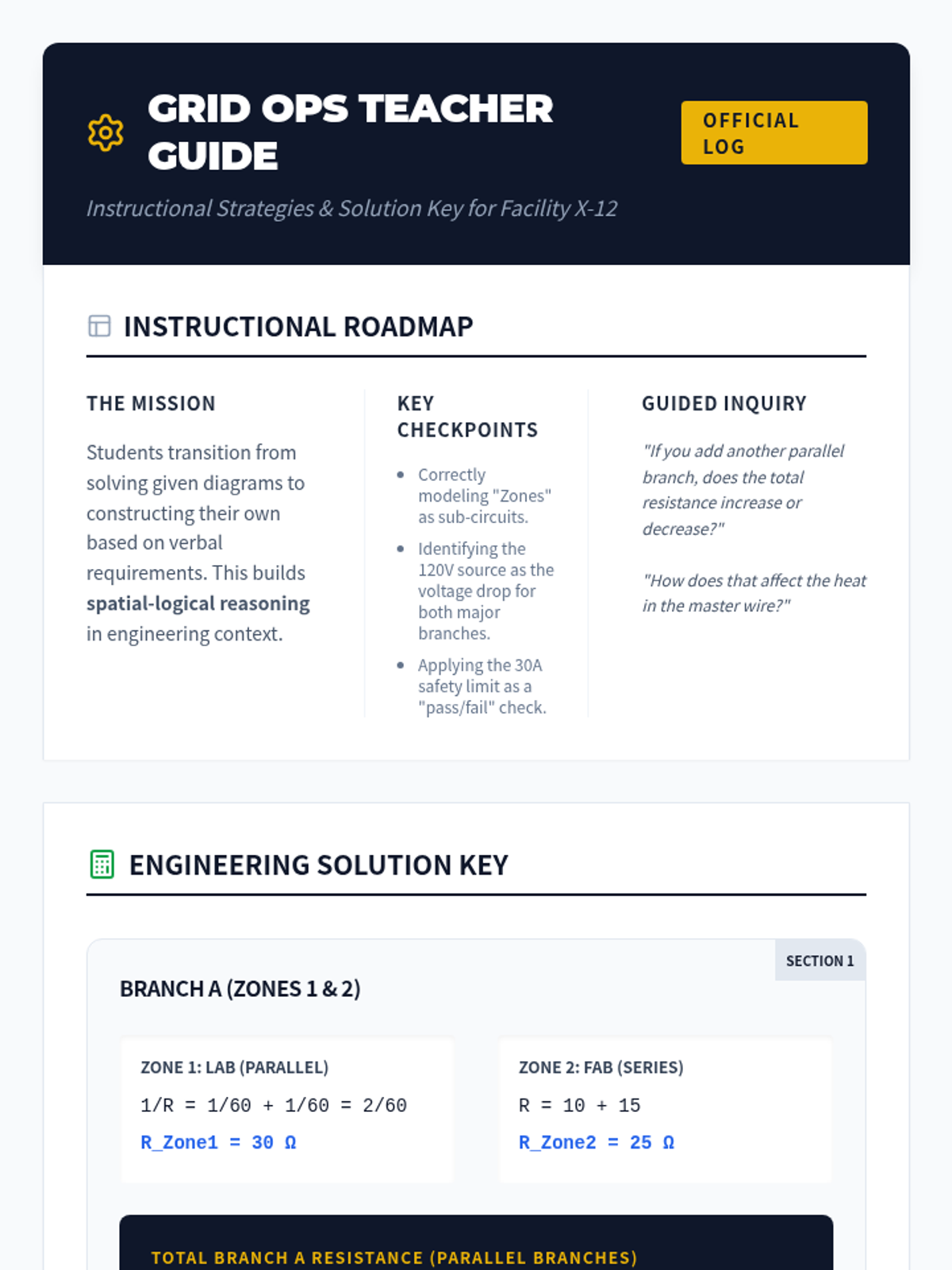
Students apply their knowledge of combination circuits and Ohm's Law to design a multi-room power plan for an industrial facility, balancing voltage requirements and current limits.
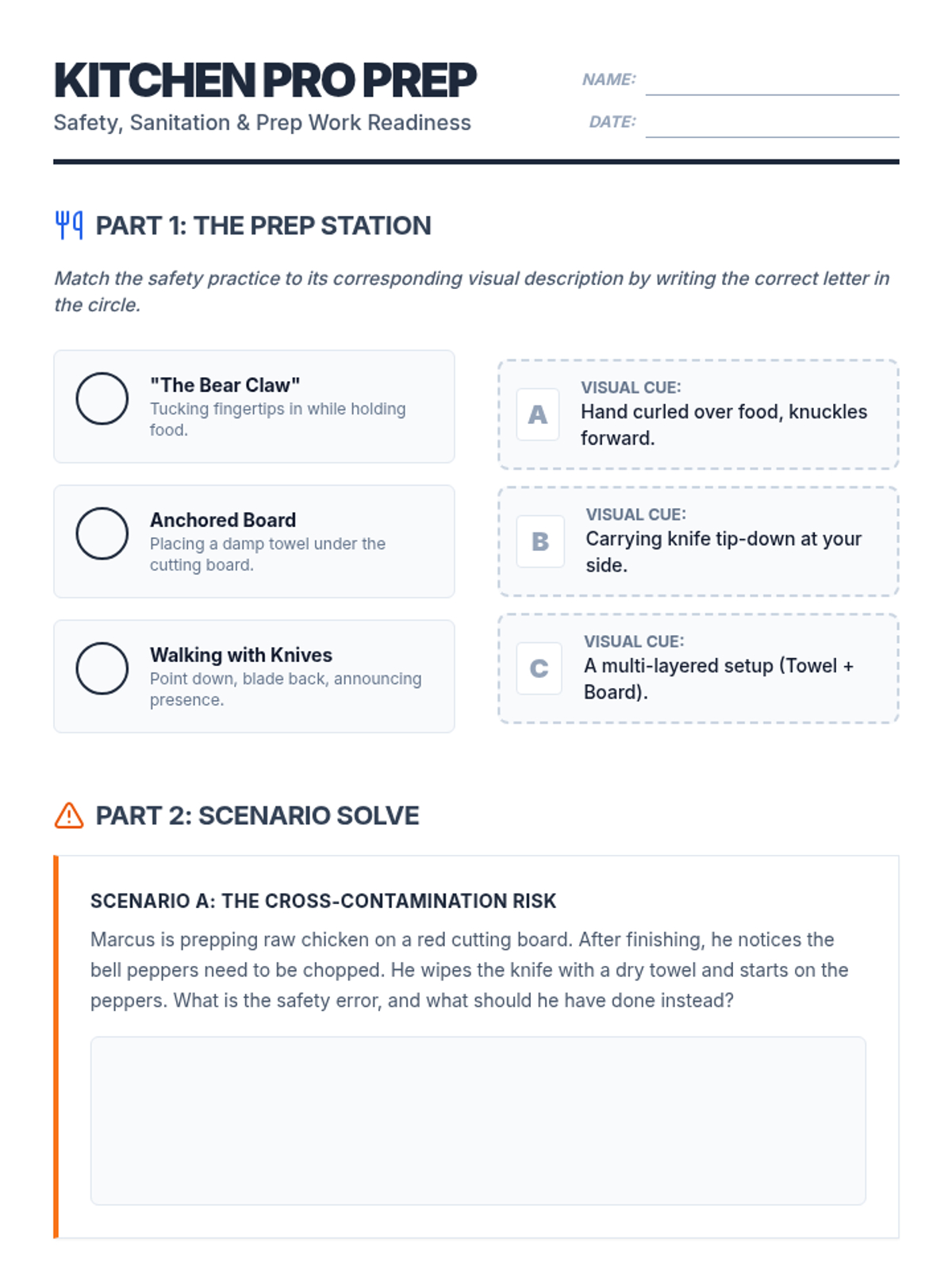
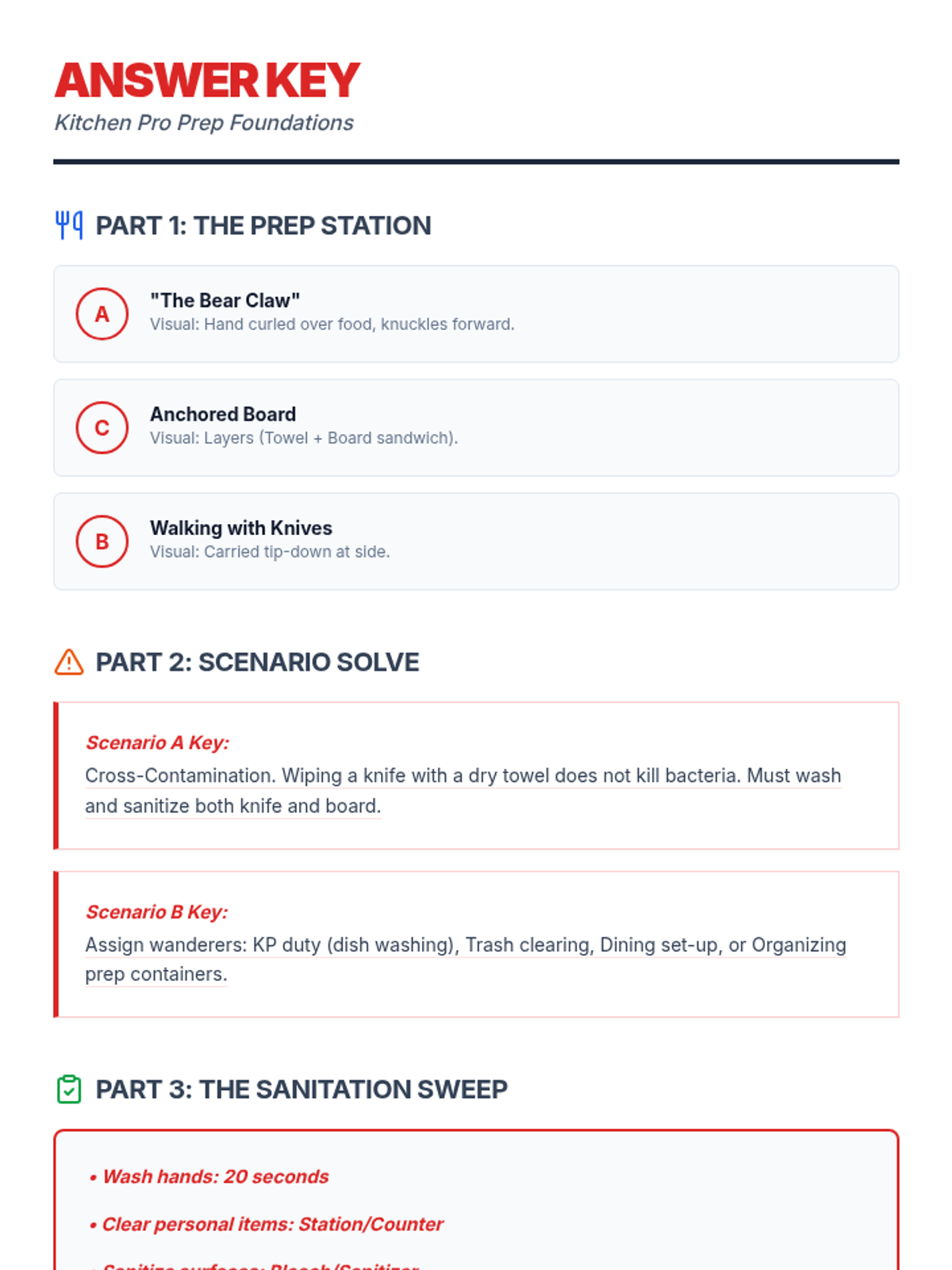
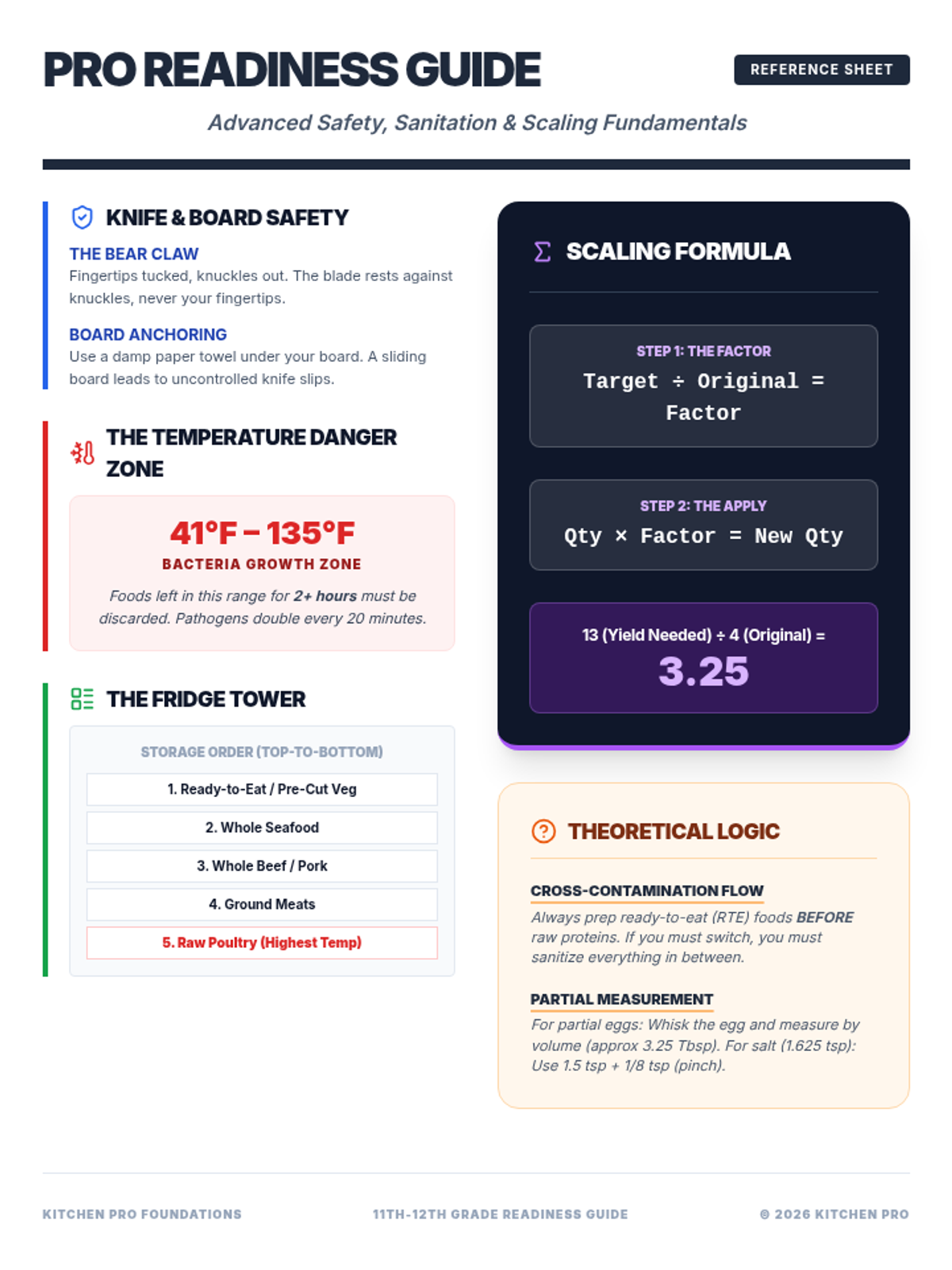
A foundational kitchen skills lesson focused on safety, sanitation, knife handling, and recipe scaling for a small group environment.
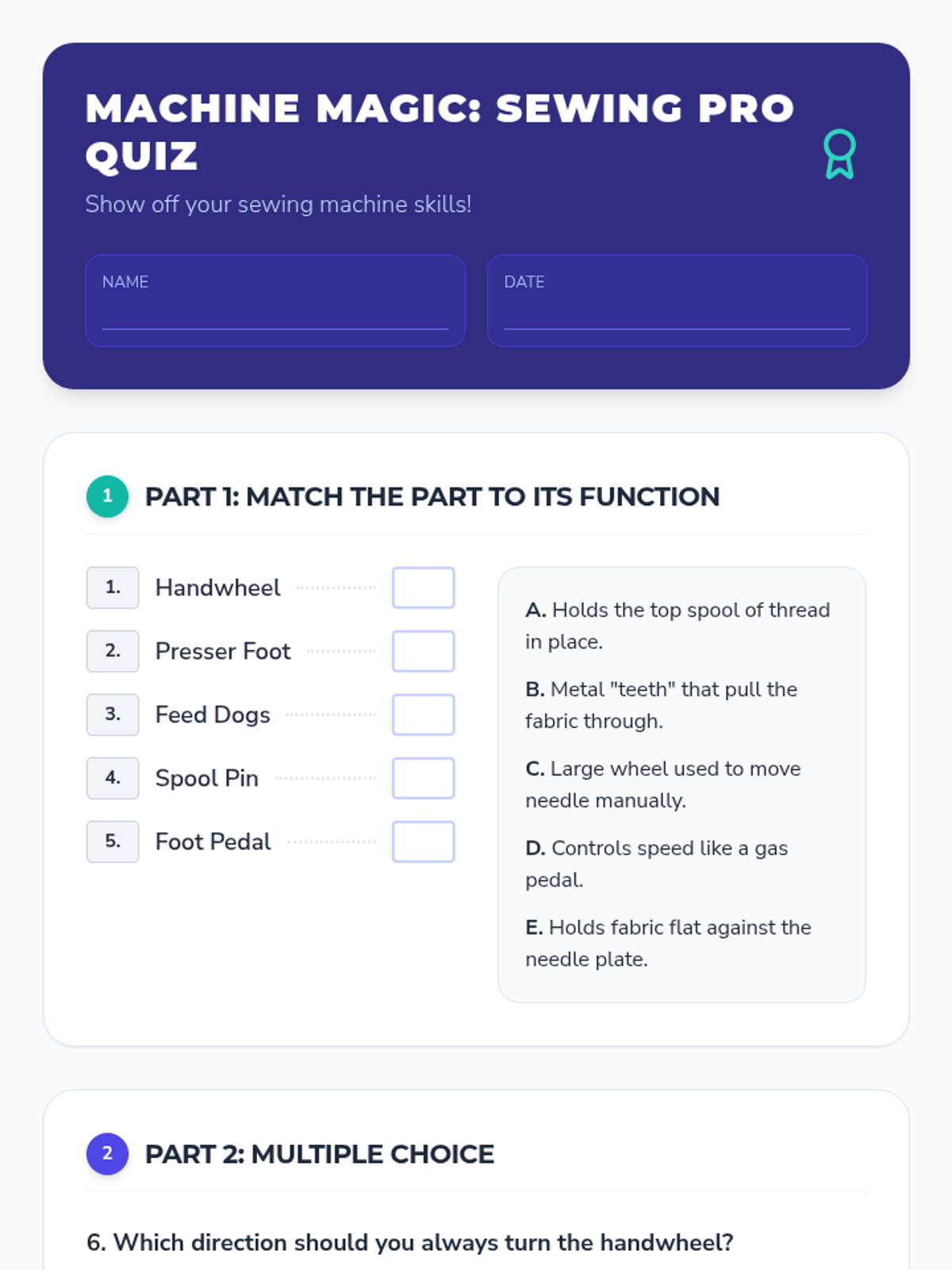
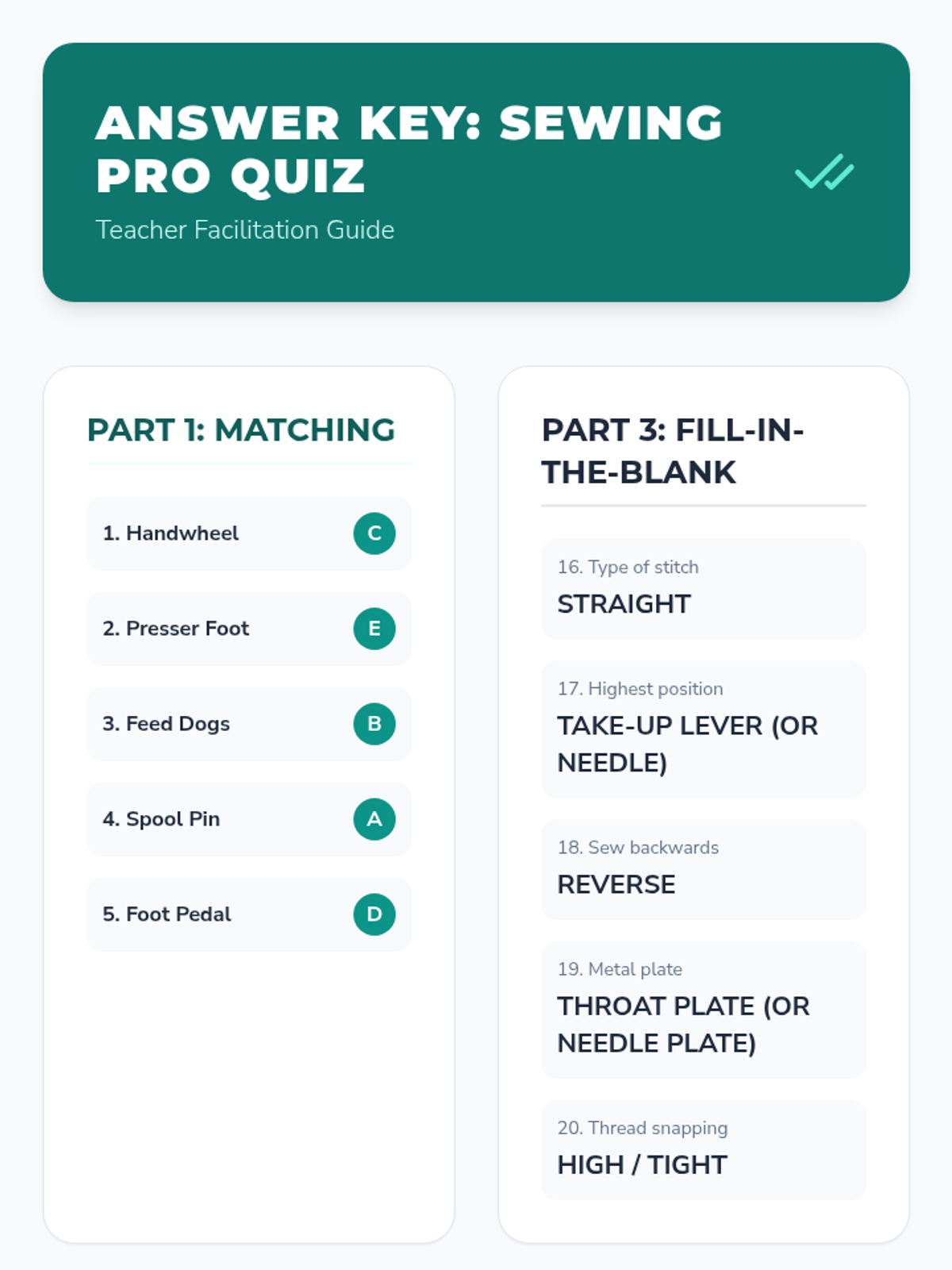
A comprehensive introduction to sewing machine operation for middle schoolers, covering safety, machine anatomy, threading, and basic stitches. Students will learn how to prepare their machine and troubleshoot common issues like tension.
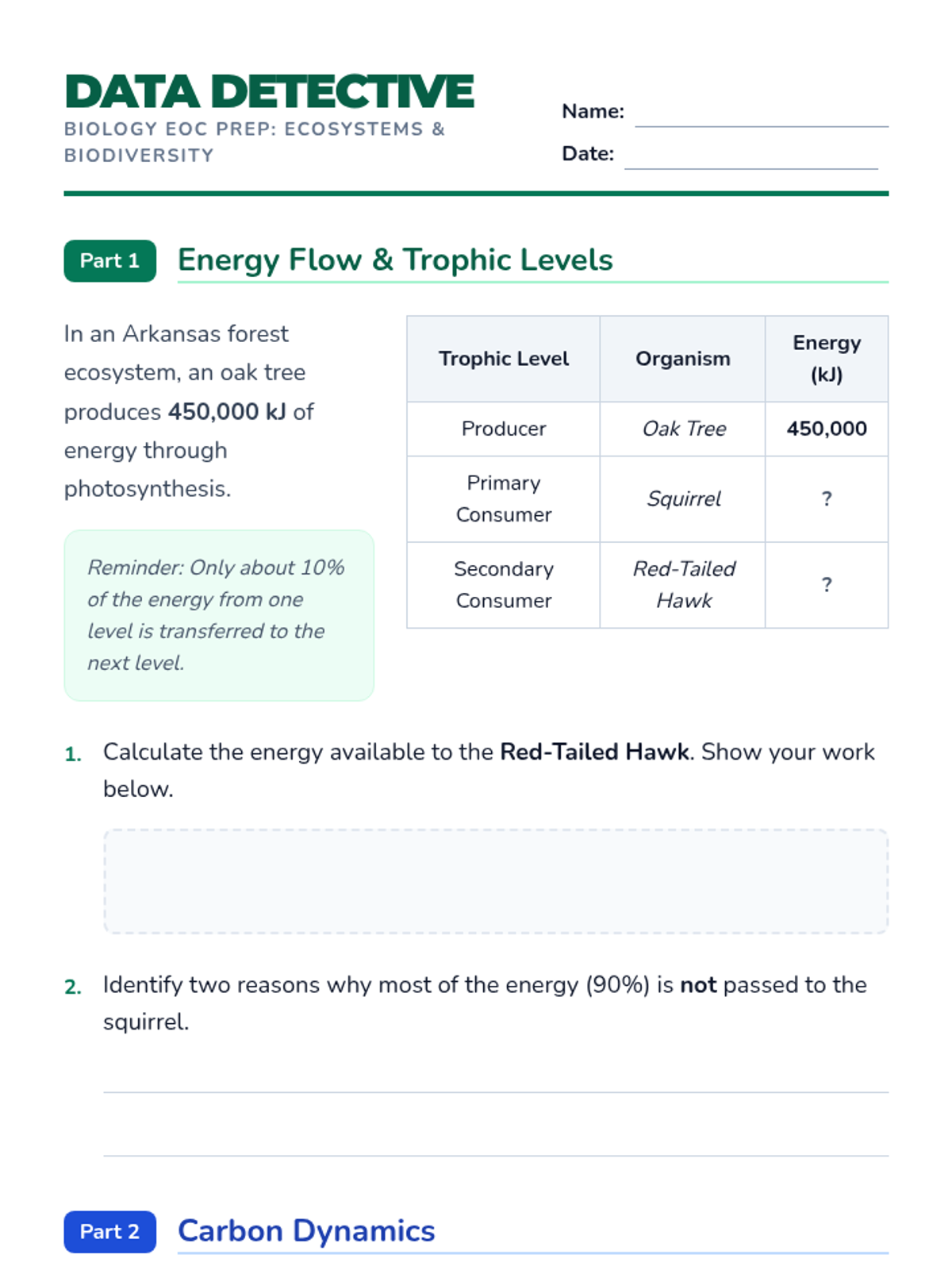
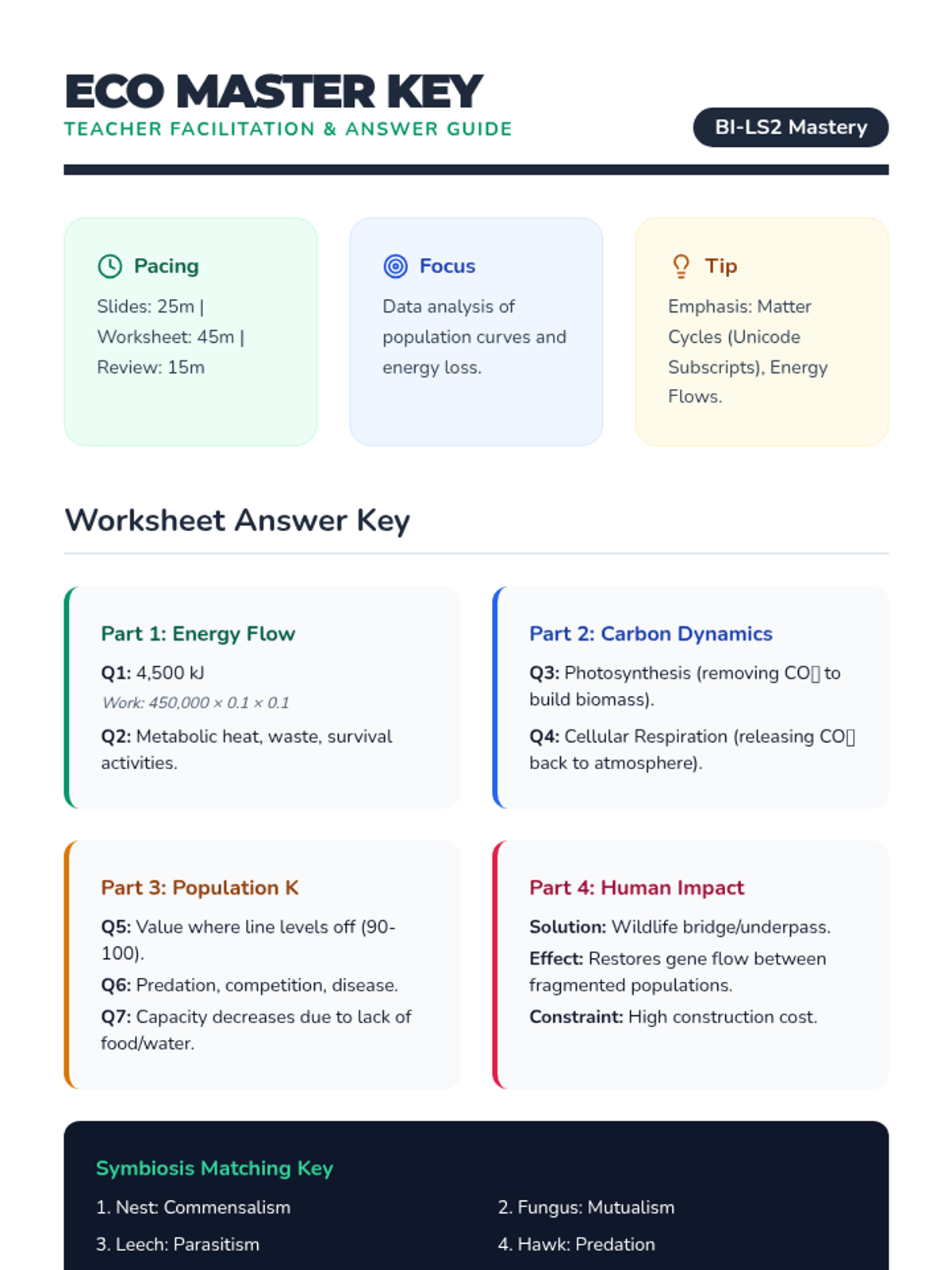
A comprehensive test prep lesson for the Arkansas Biology EOC, focusing on ecosystem dynamics, energy flow, matter cycling, and human impacts on biodiversity with a heavy emphasis on data interpretation.
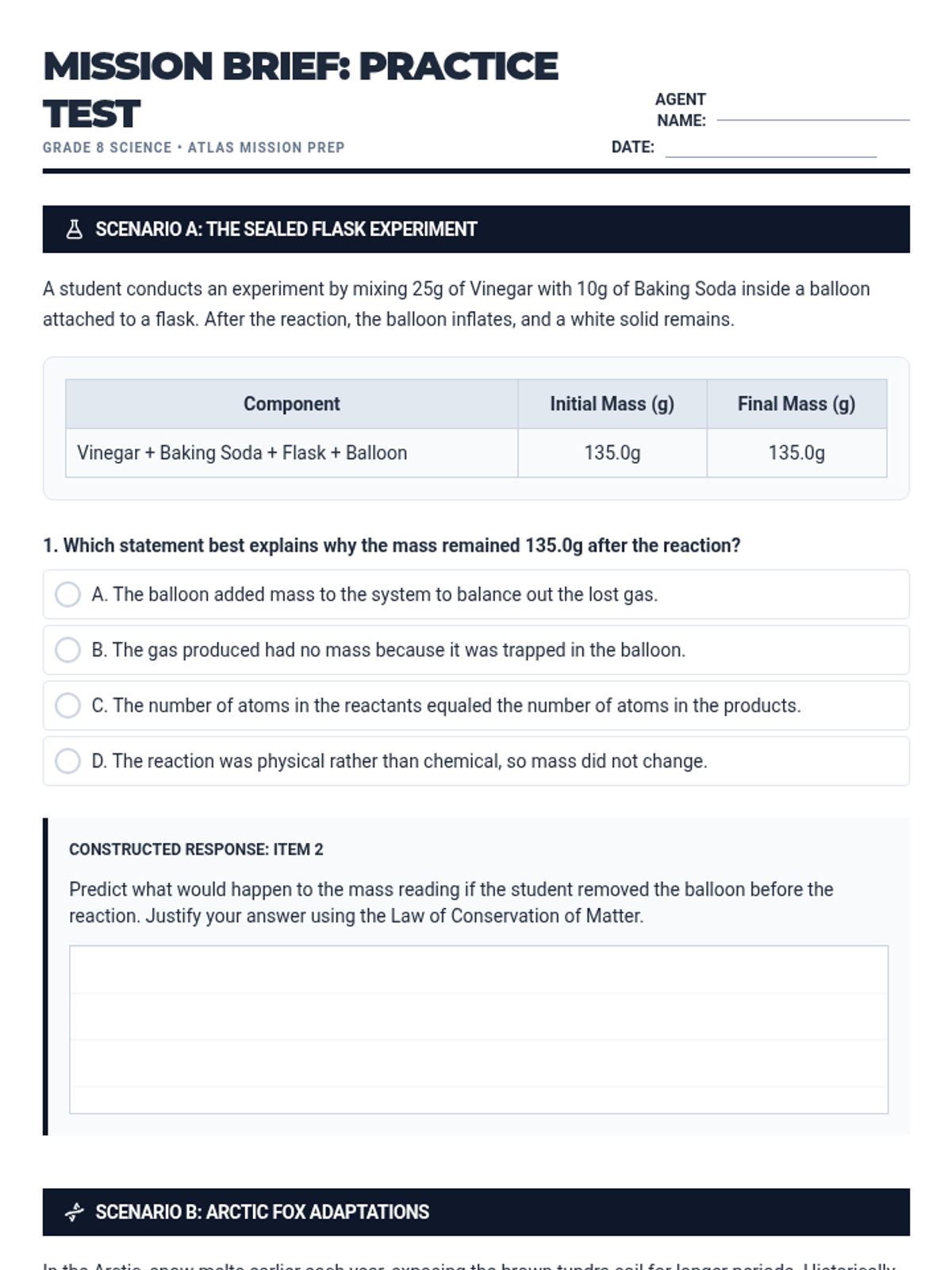
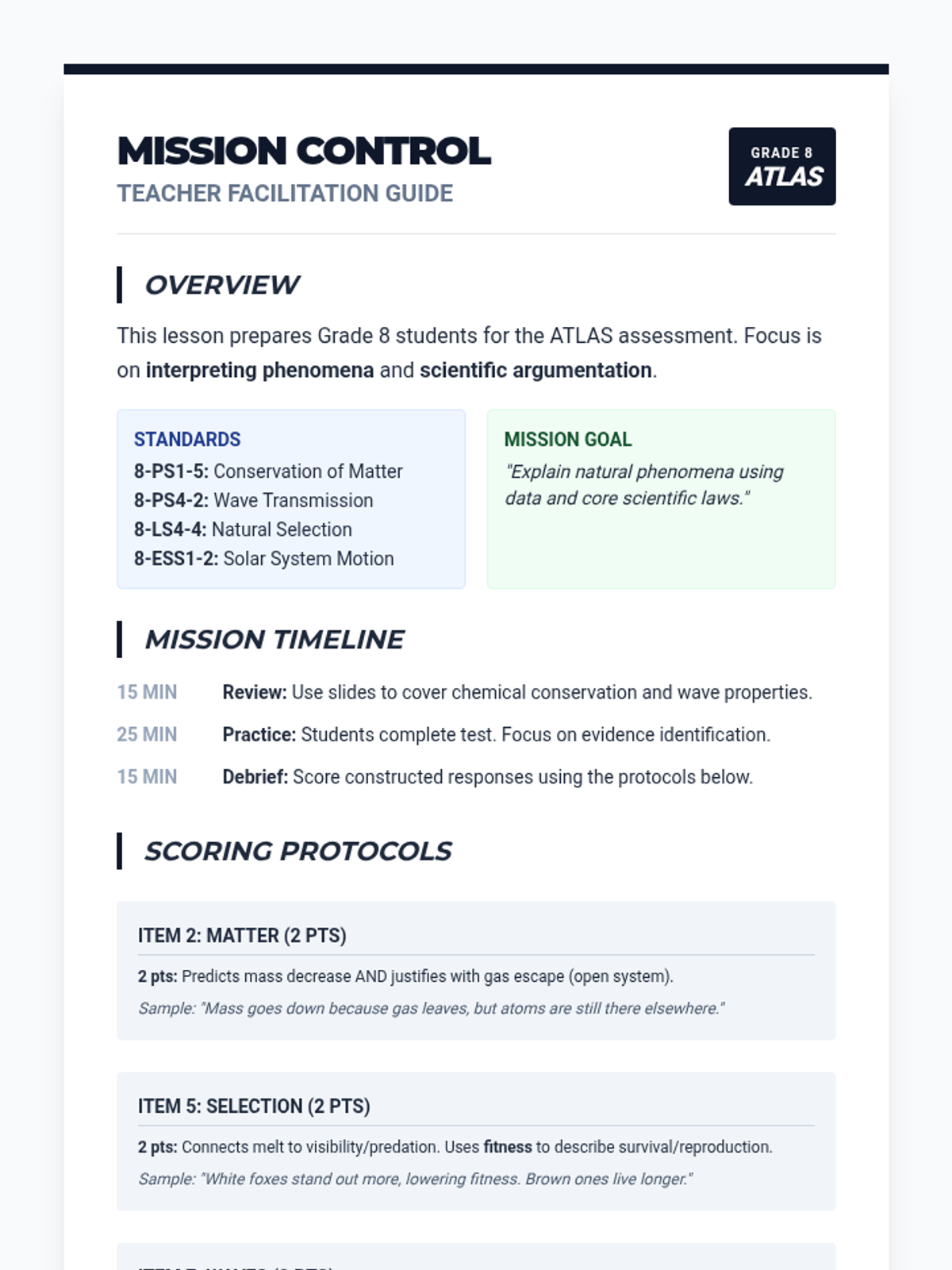
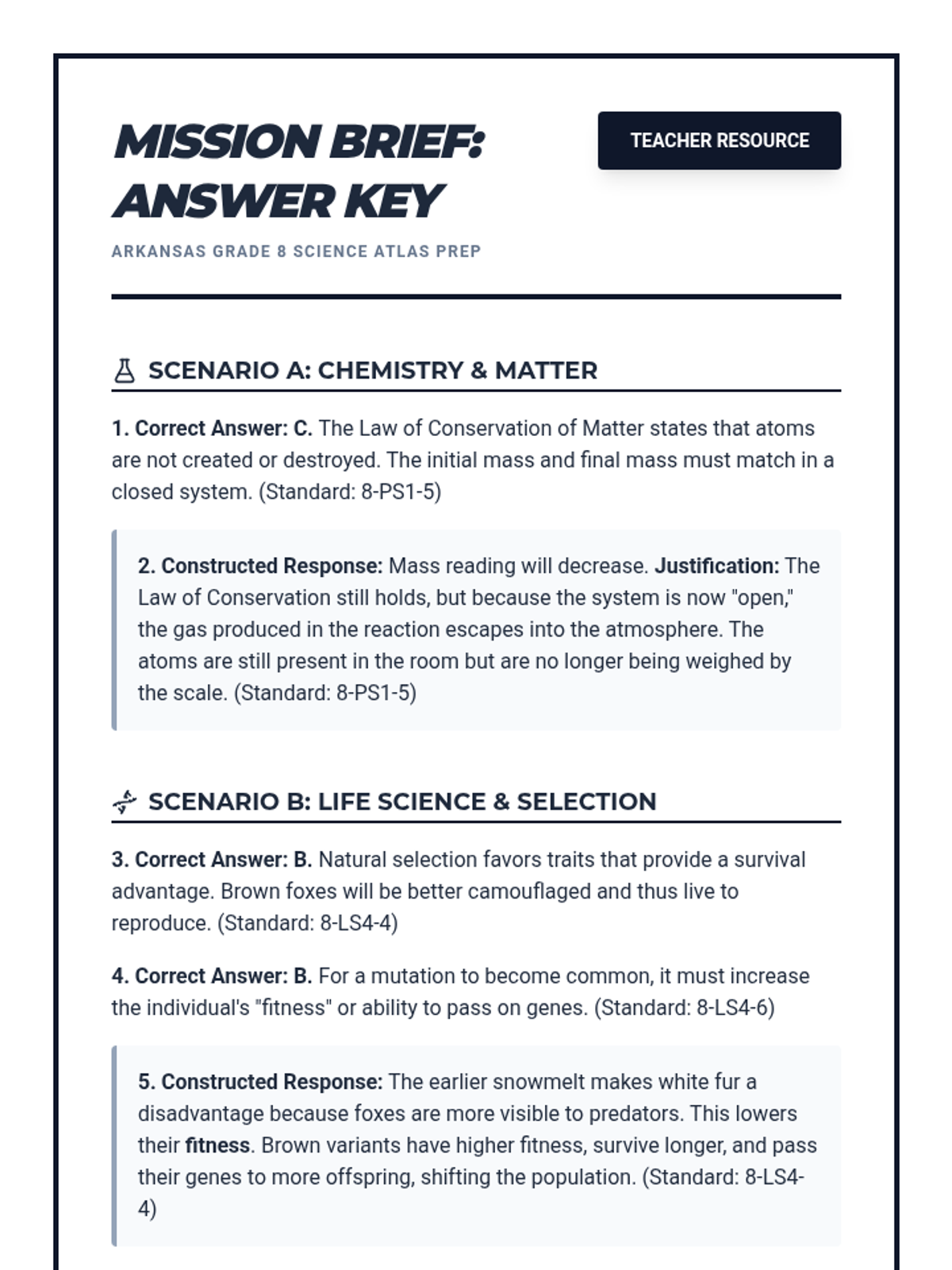
A comprehensive test preparation lesson for Grade 8 students focused on key Arkansas ATLAS standards: physical science, life science, and Earth/space science.
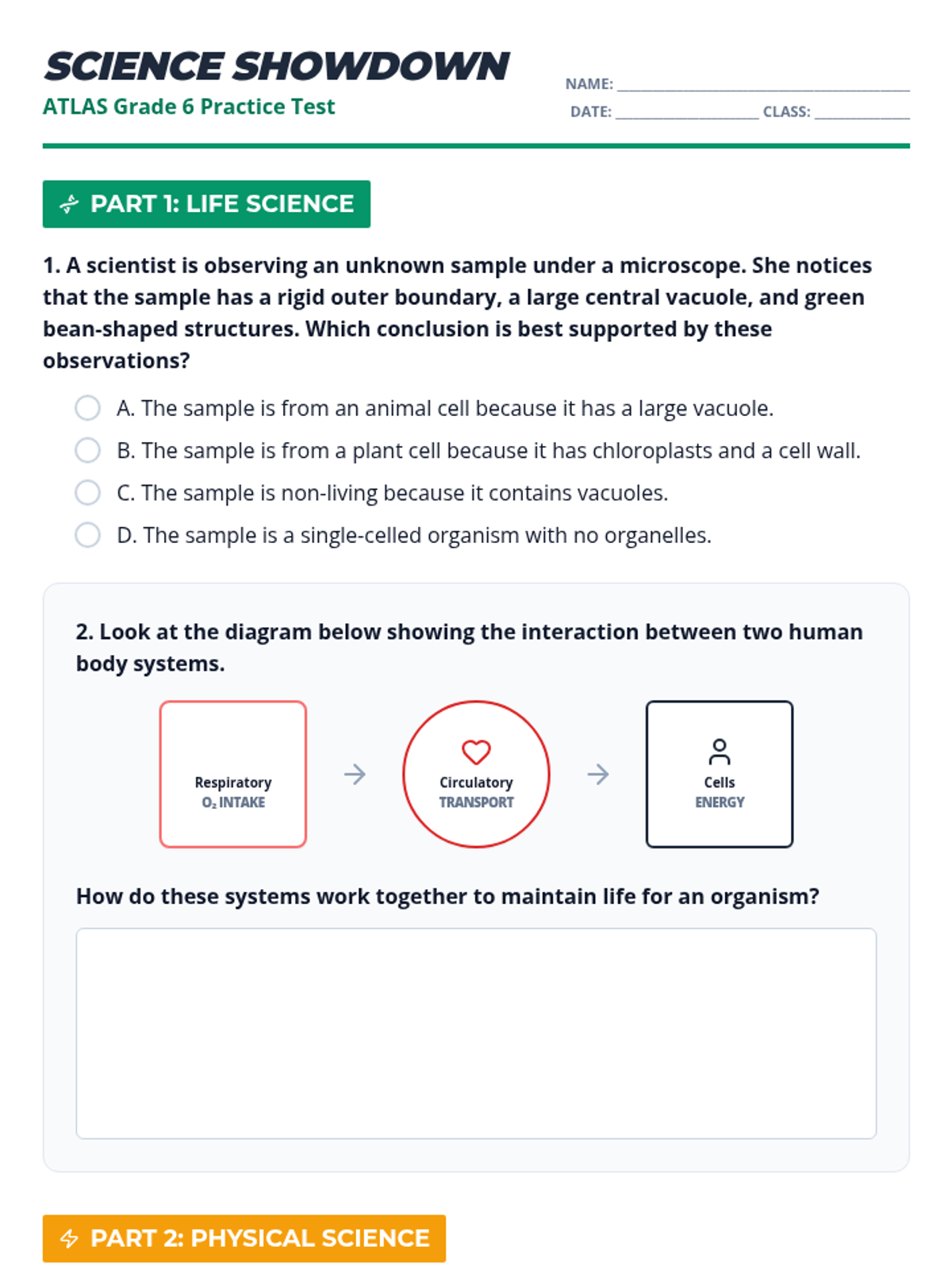
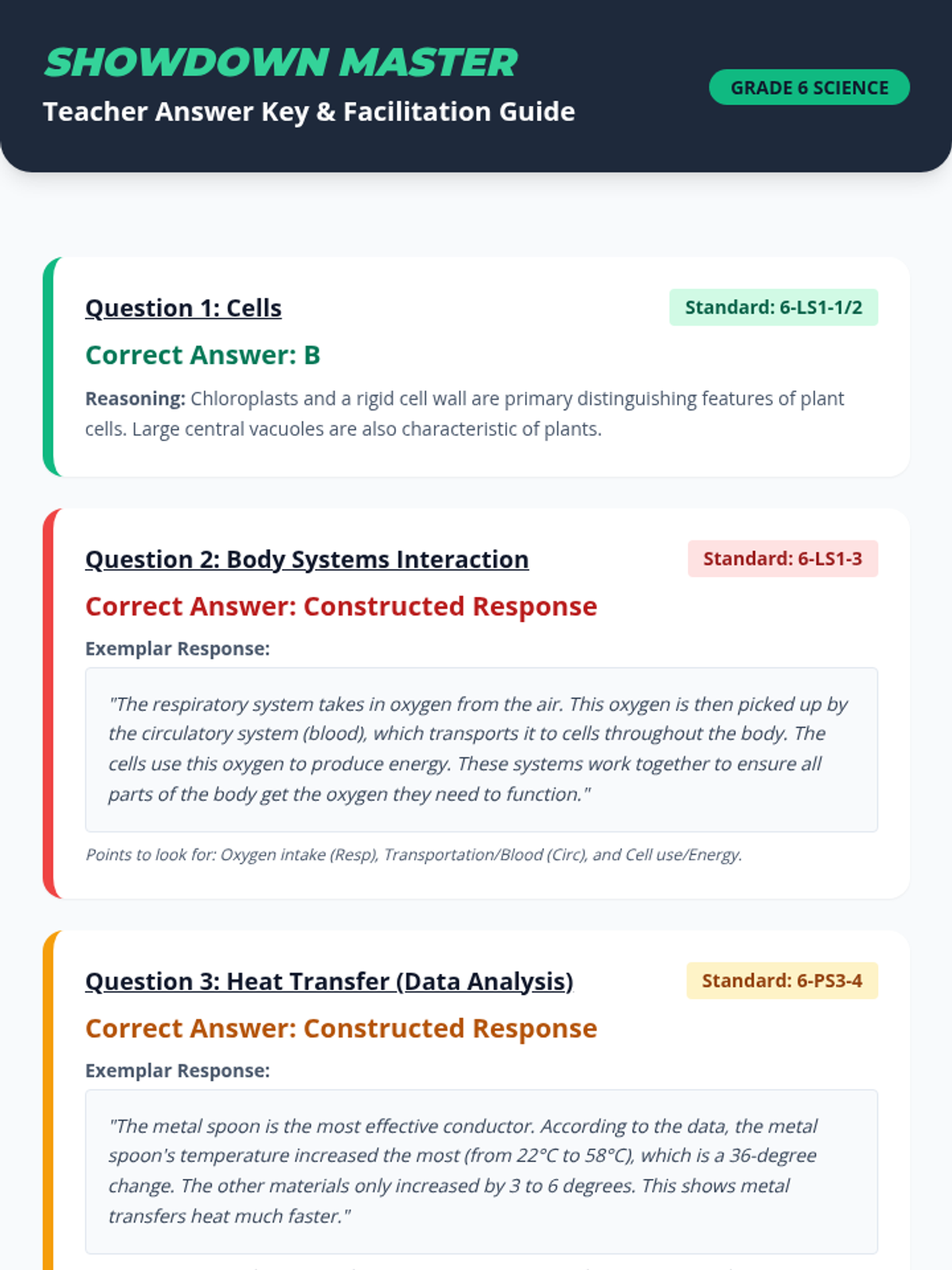
A comprehensive Grade 6 Science review lesson covering cells, body systems, energy, Earth's history, and weather patterns, specifically designed for Arkansas ATLAS test preparation.
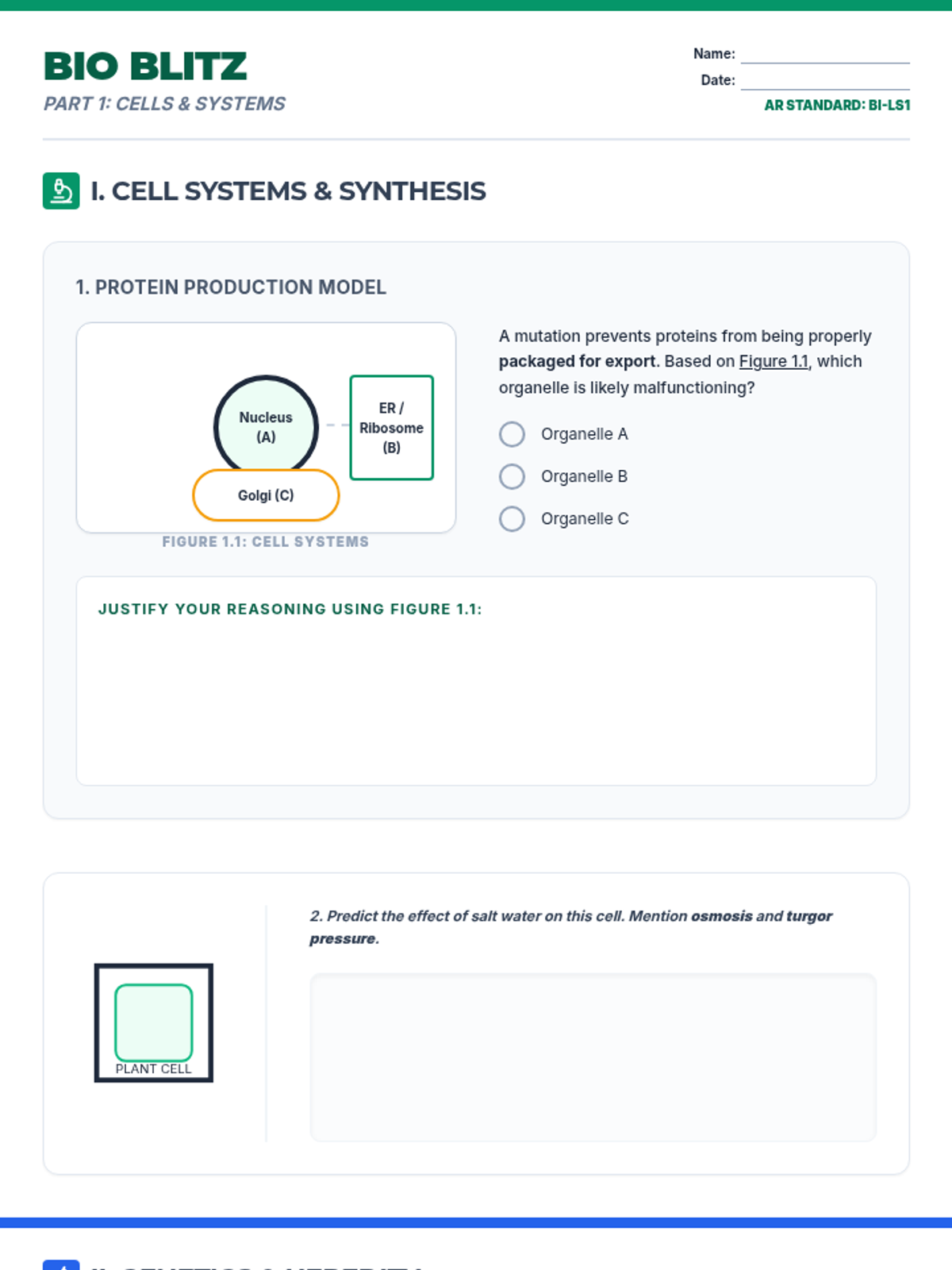
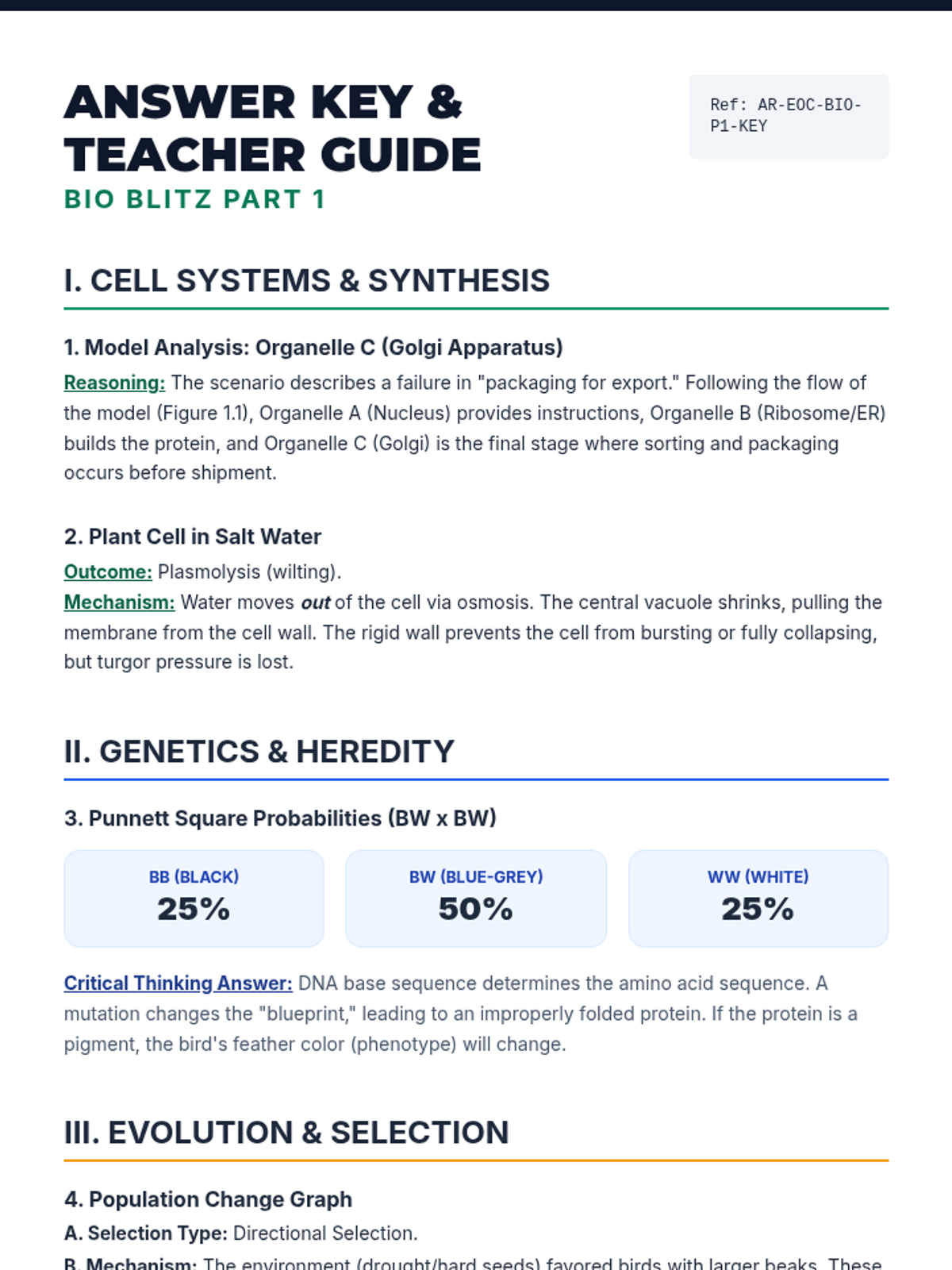
A comprehensive review session for the Arkansas Biology EOC exam, focusing on cellular processes, genetic inheritance, and evolutionary mechanisms through model-based reasoning.
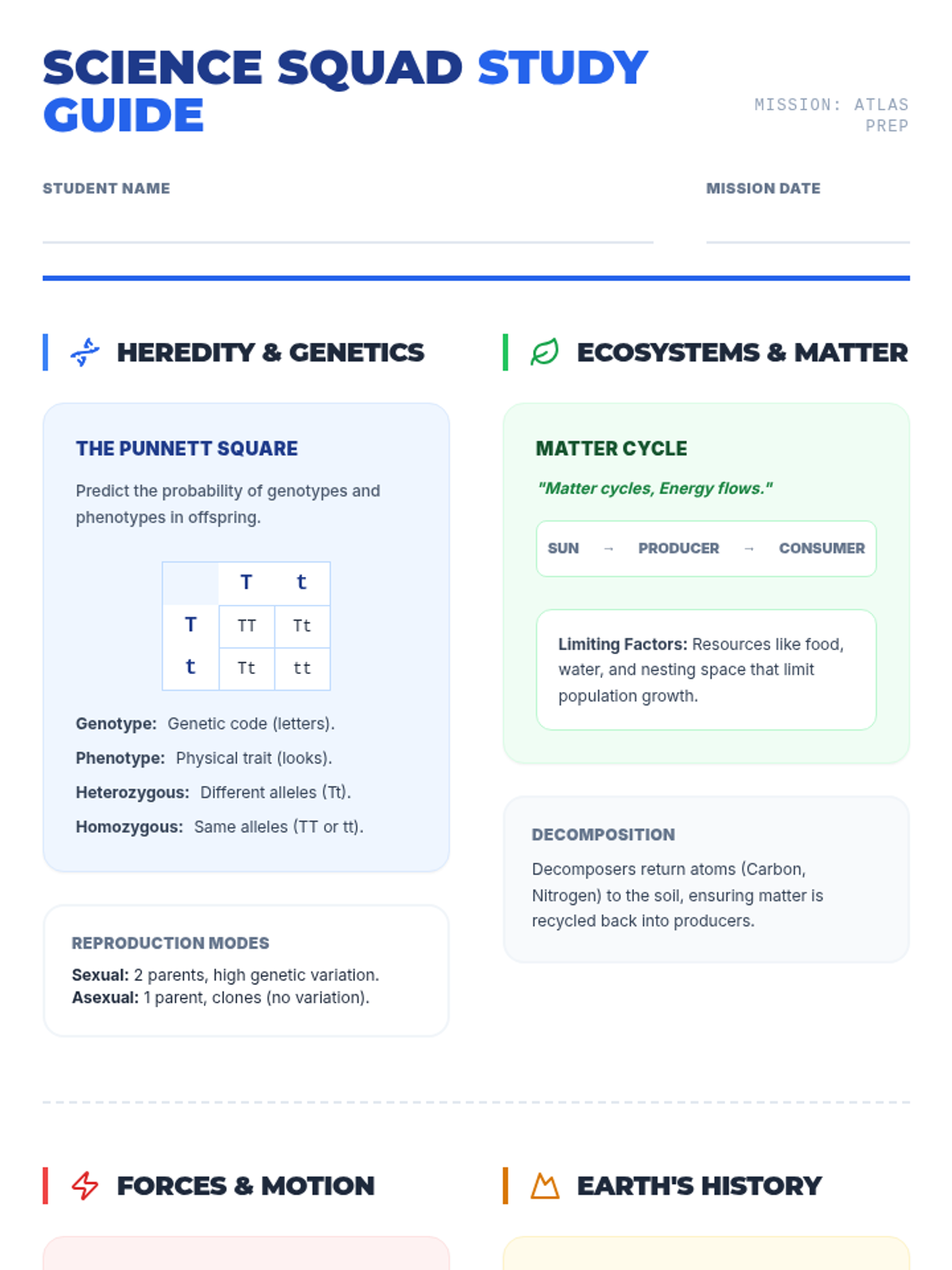
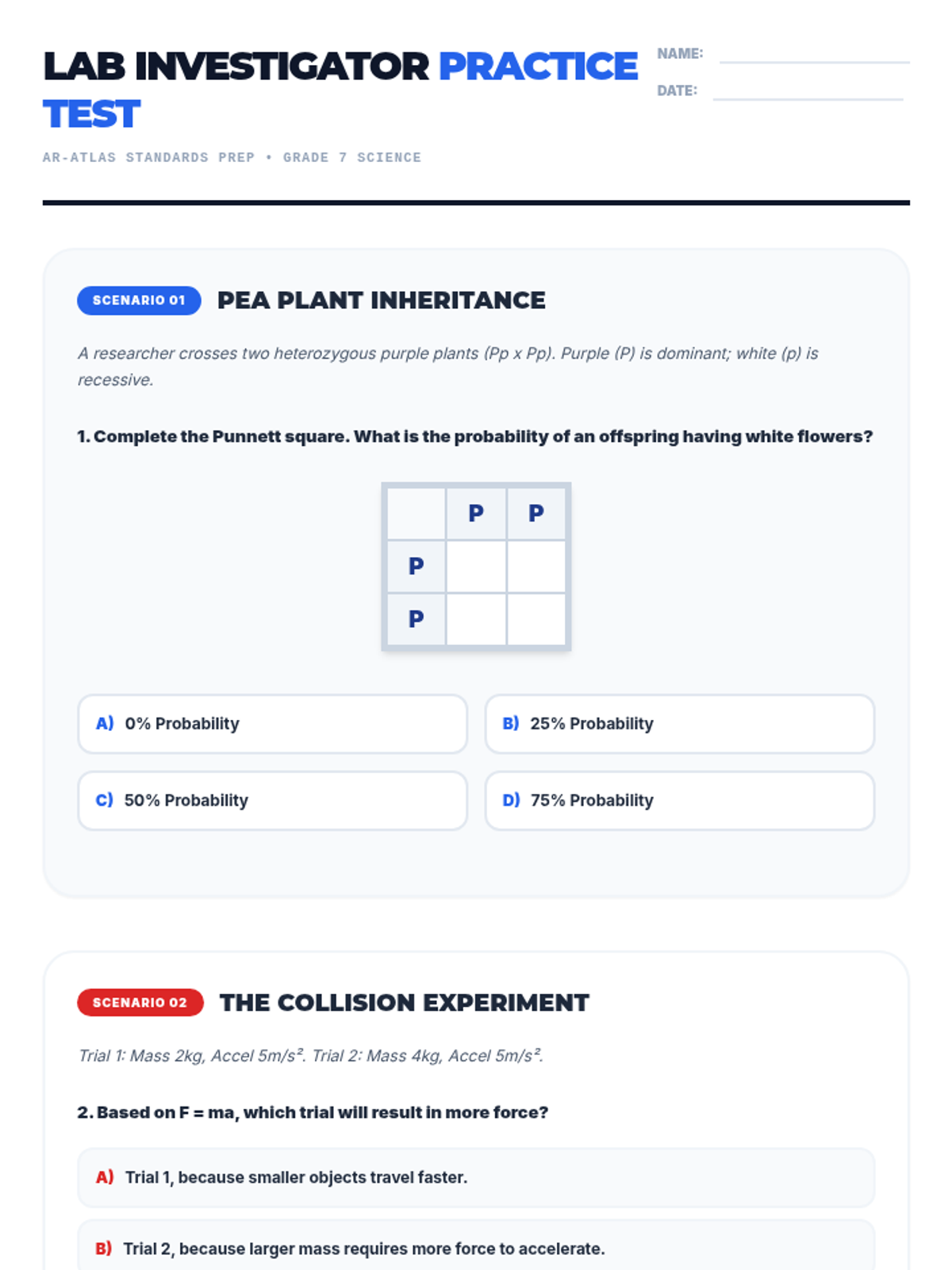
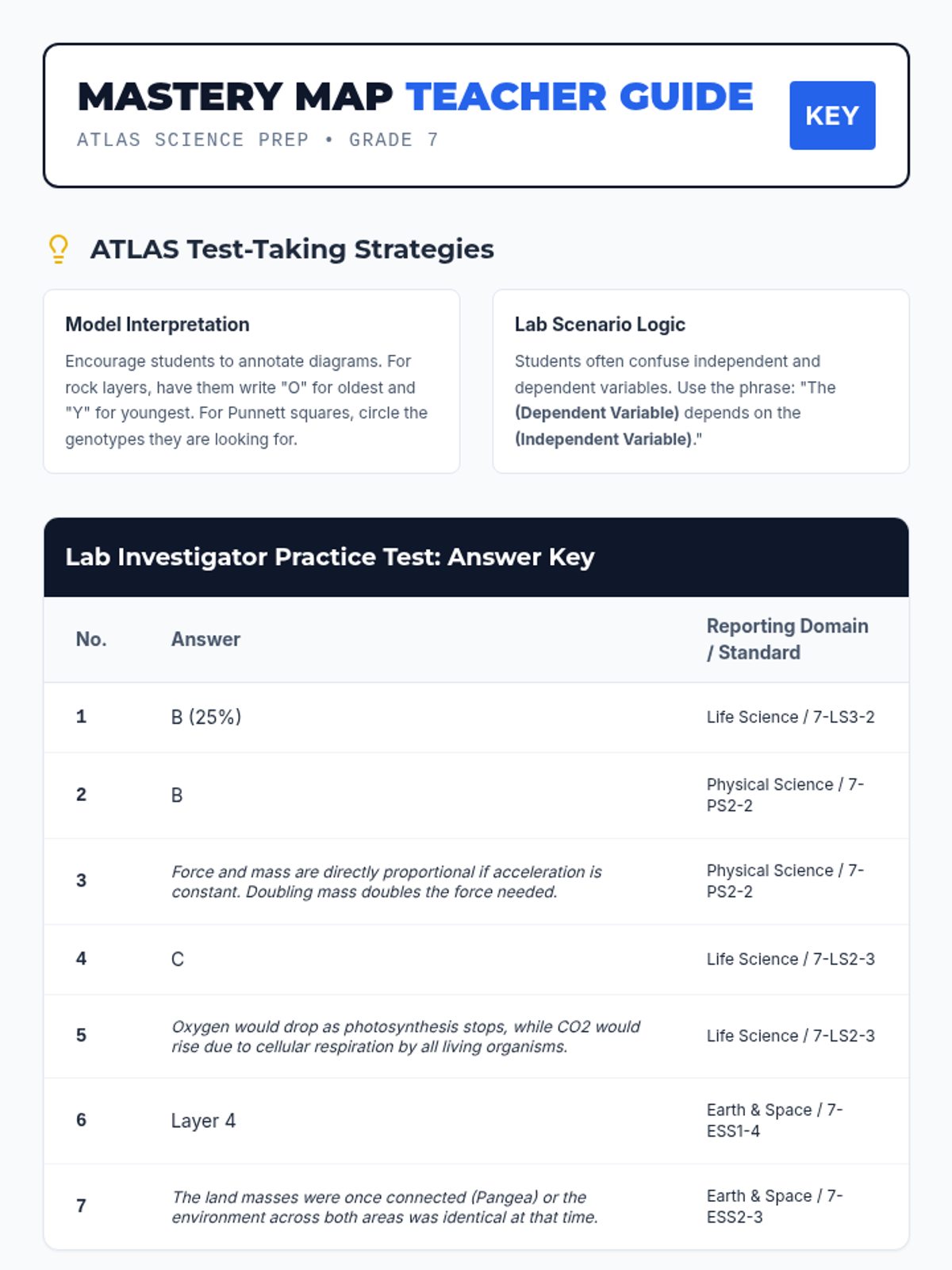
A comprehensive test preparation lesson for Grade 7 Science, specifically aligned to the Arkansas ATLAS assessment. It covers heredity, ecosystems, forces, and Earth's history through model-based reasoning and lab scenarios.
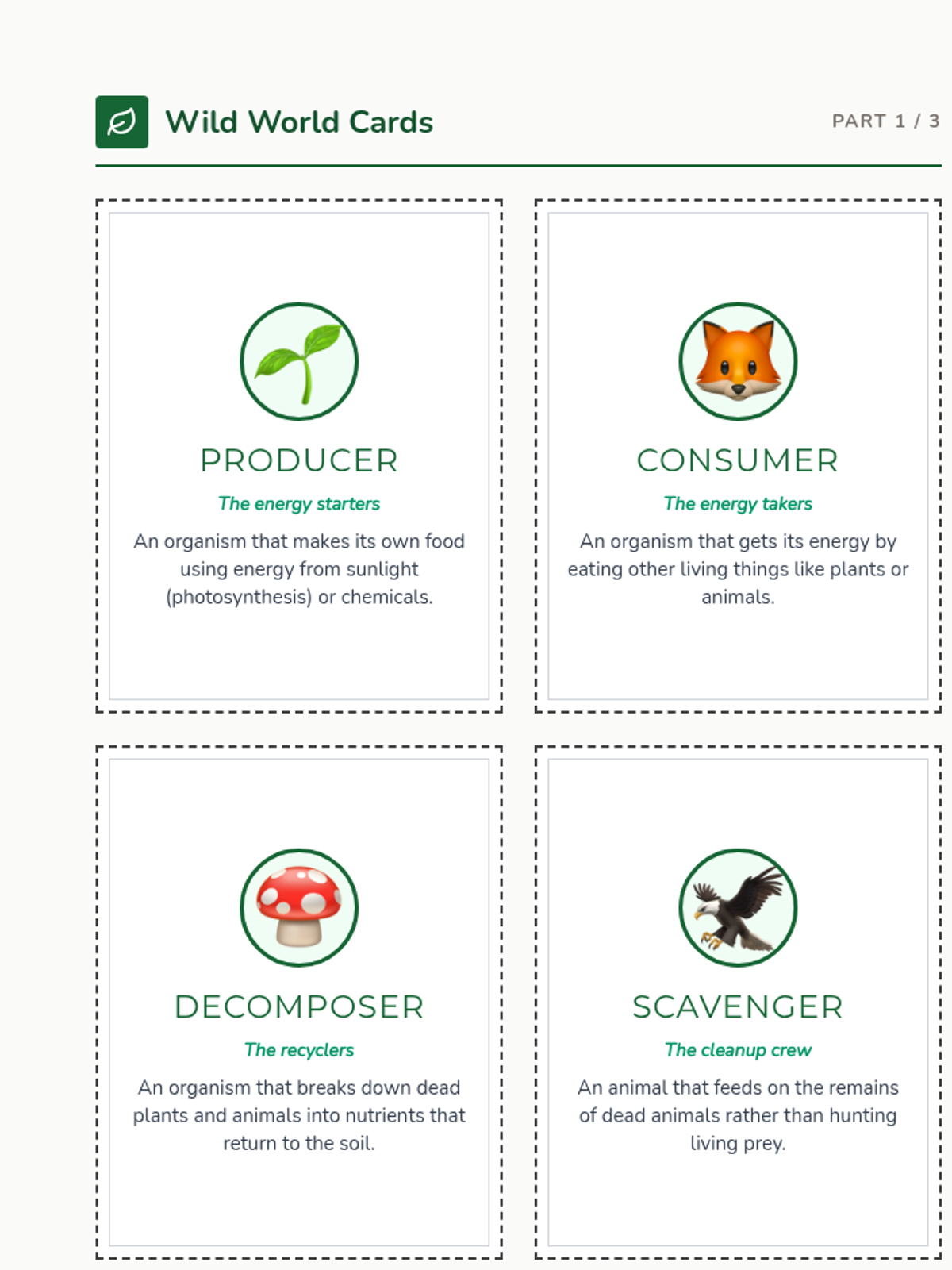
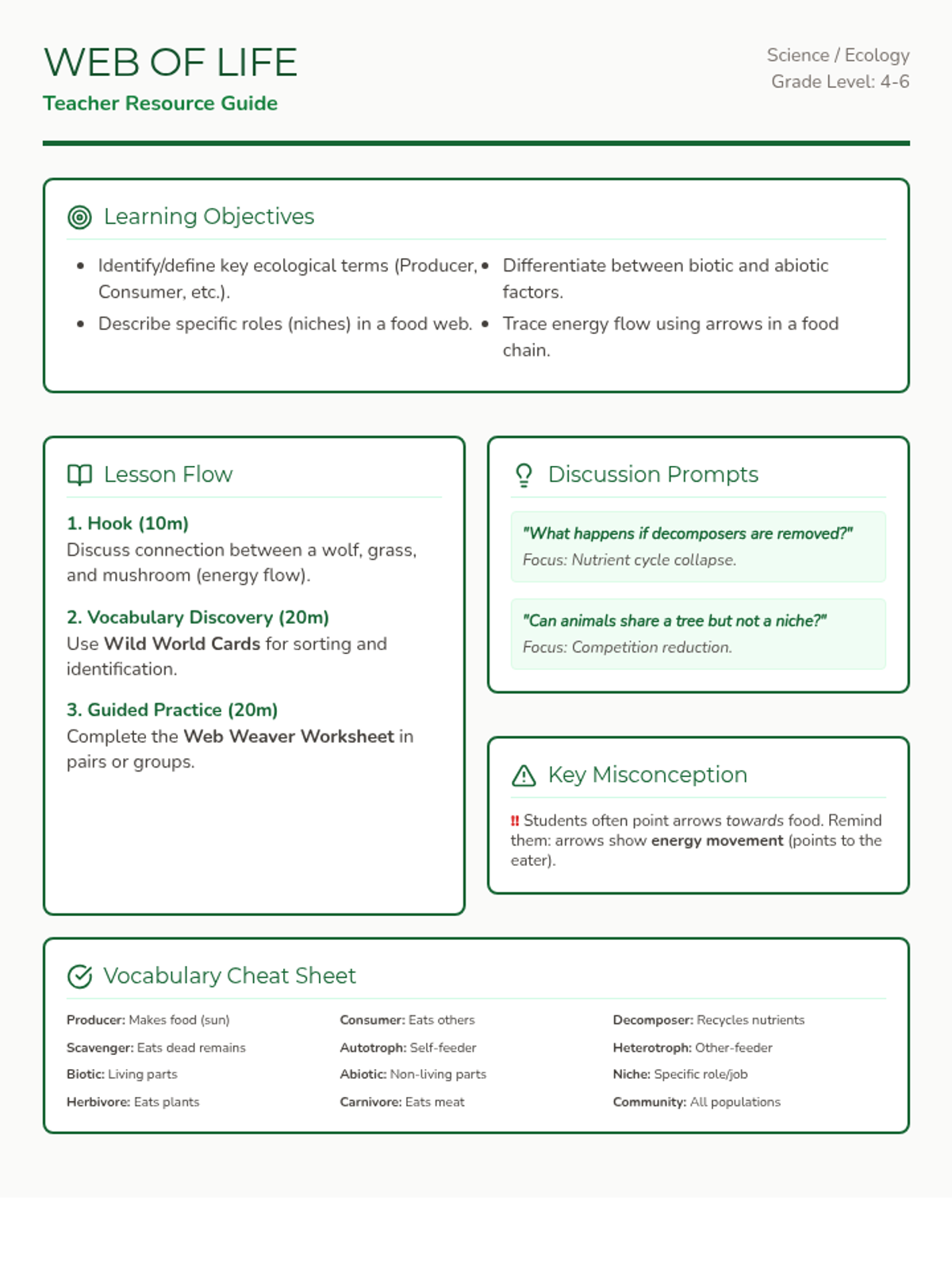
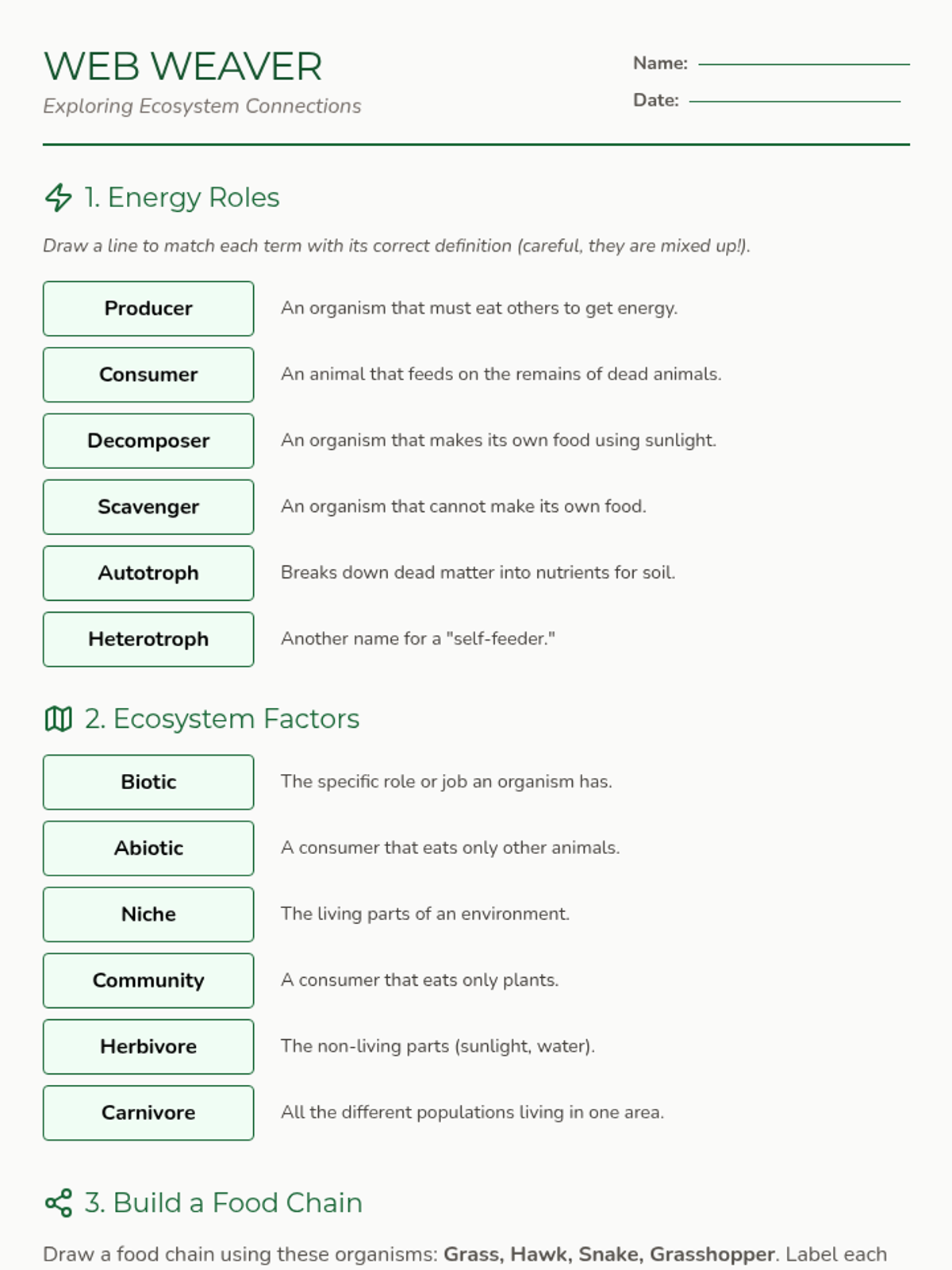
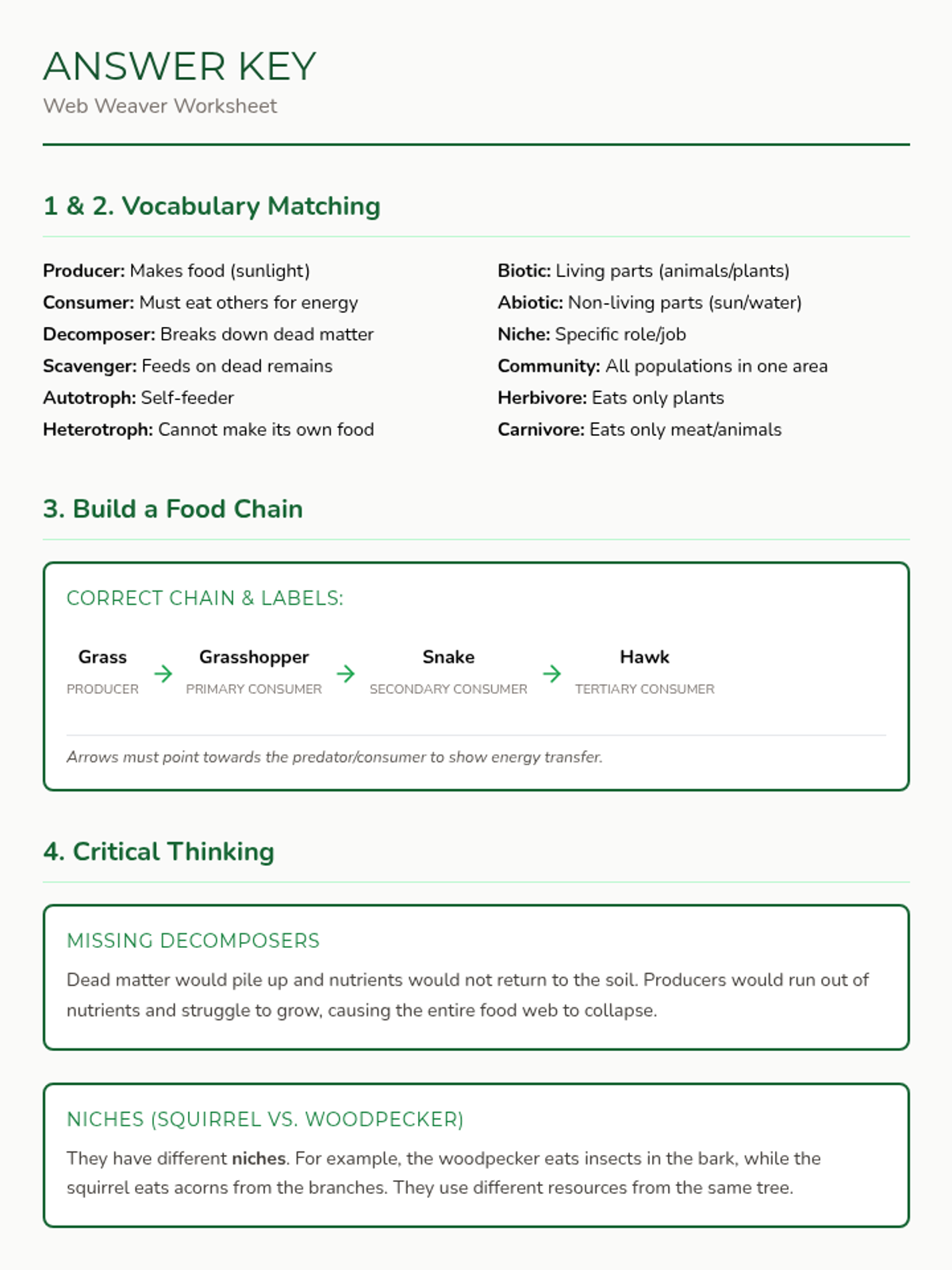
A lesson exploring how energy flows through an ecosystem using food webs. Students learn key vocabulary and identify roles of different organisms within their environment.
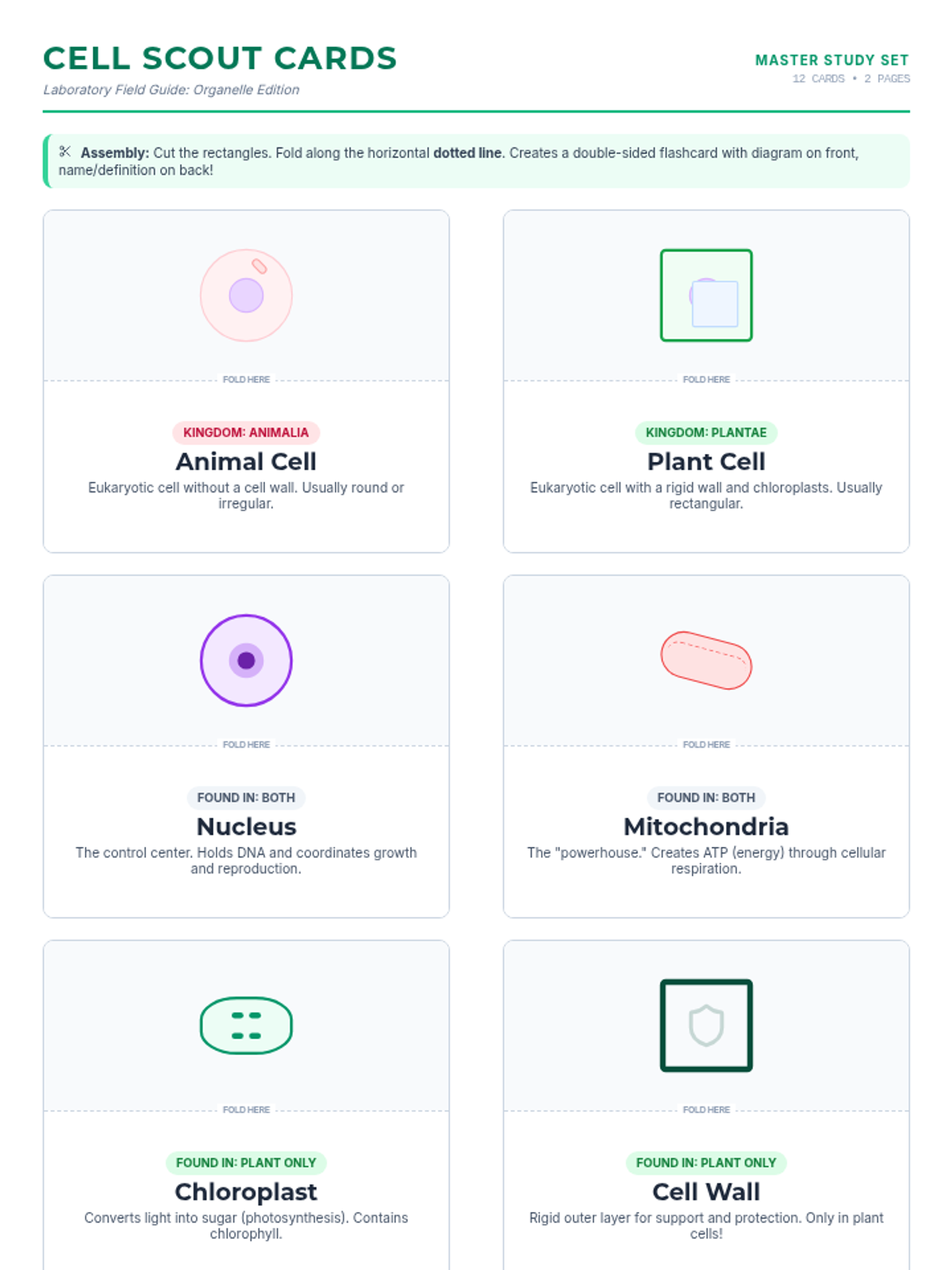
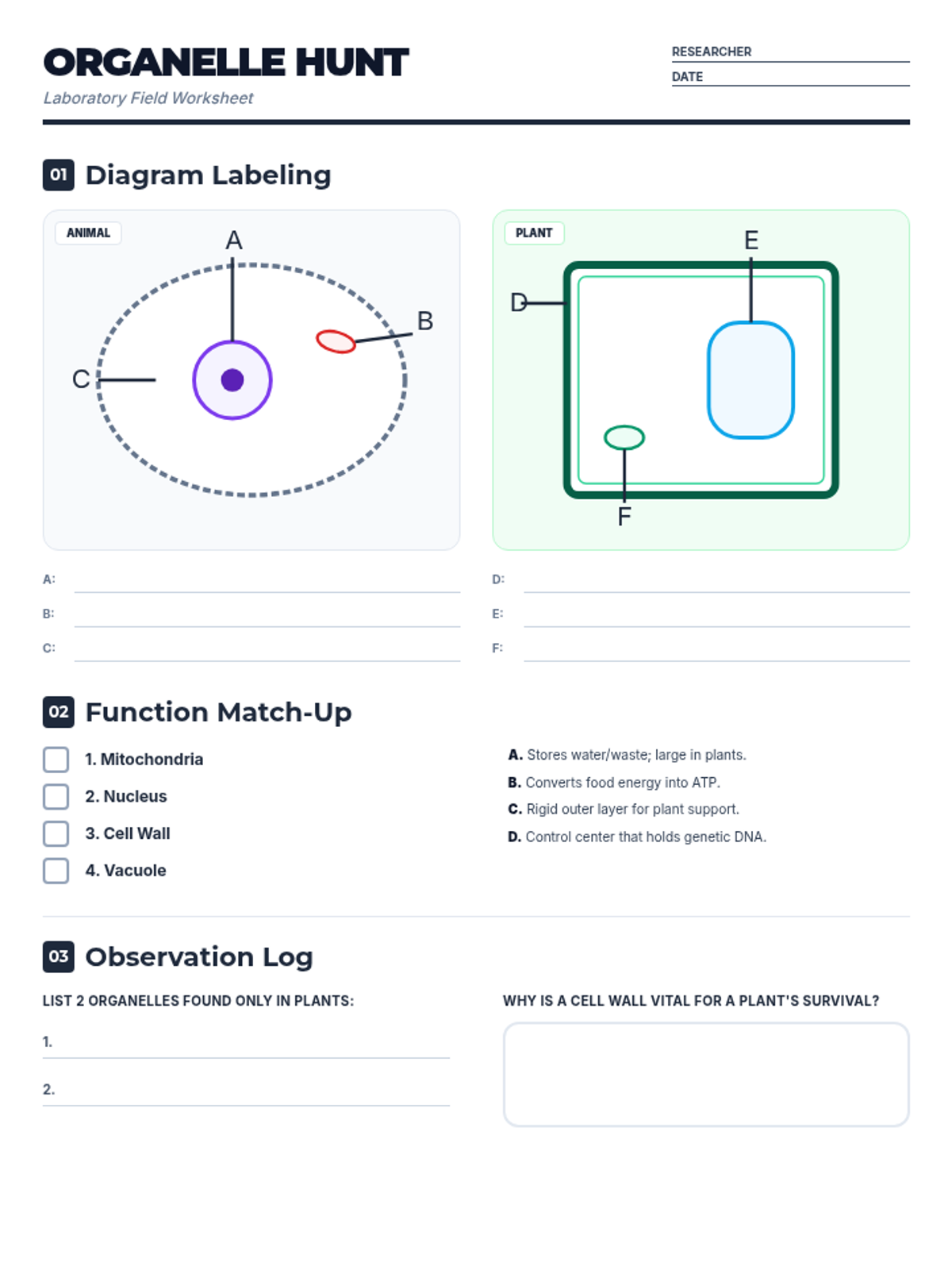
A comprehensive introduction to the microscopic world of animal and plant cells, exploring key organelles and their functions through visual diagrams and hands-on labeling.