A comprehensive lesson for 7th graders on subtext and the 'show, don't tell' technique. Students learn to analyze what is left unsaid in narratives and apply these techniques to their own creative writing project.
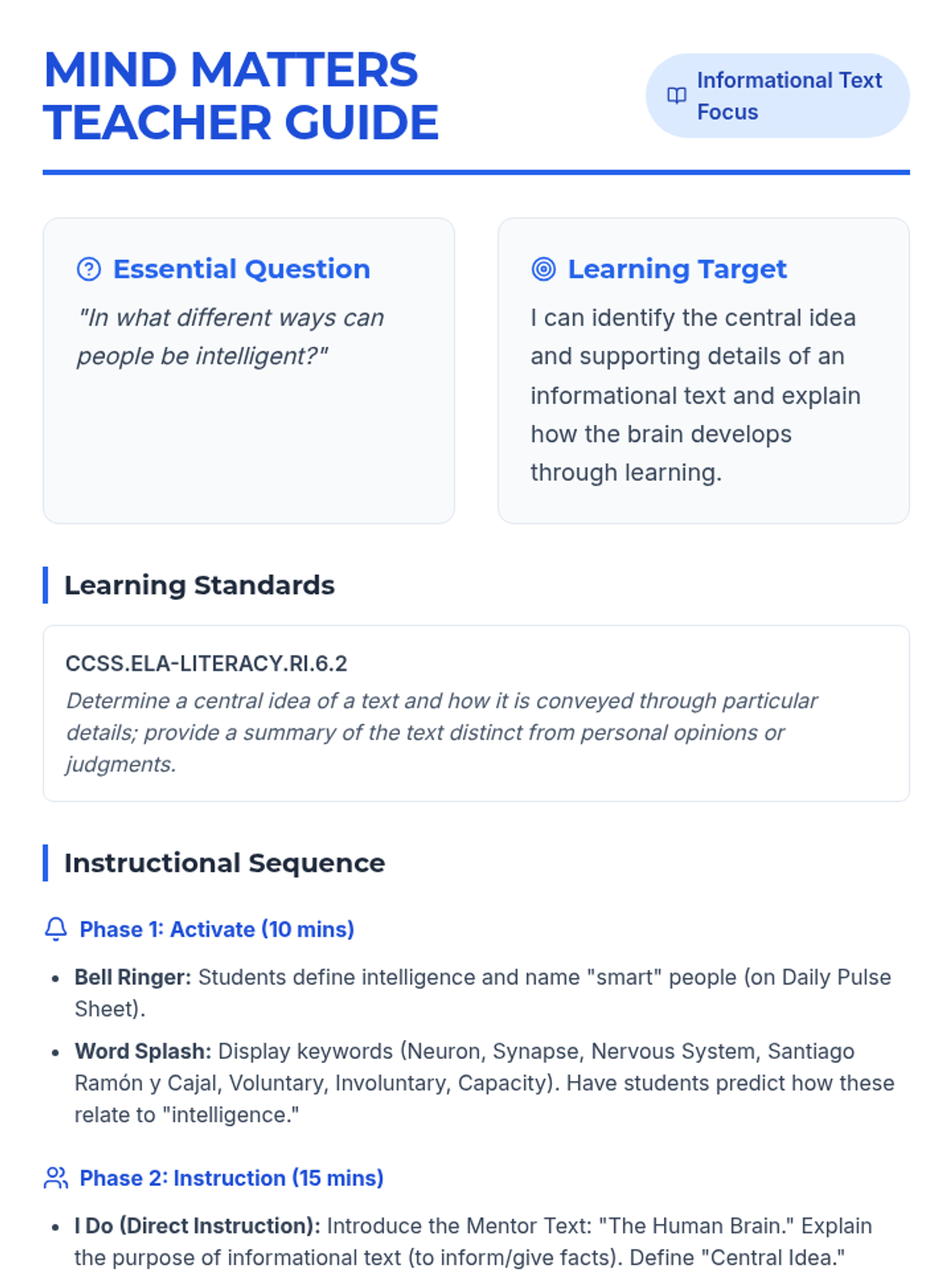
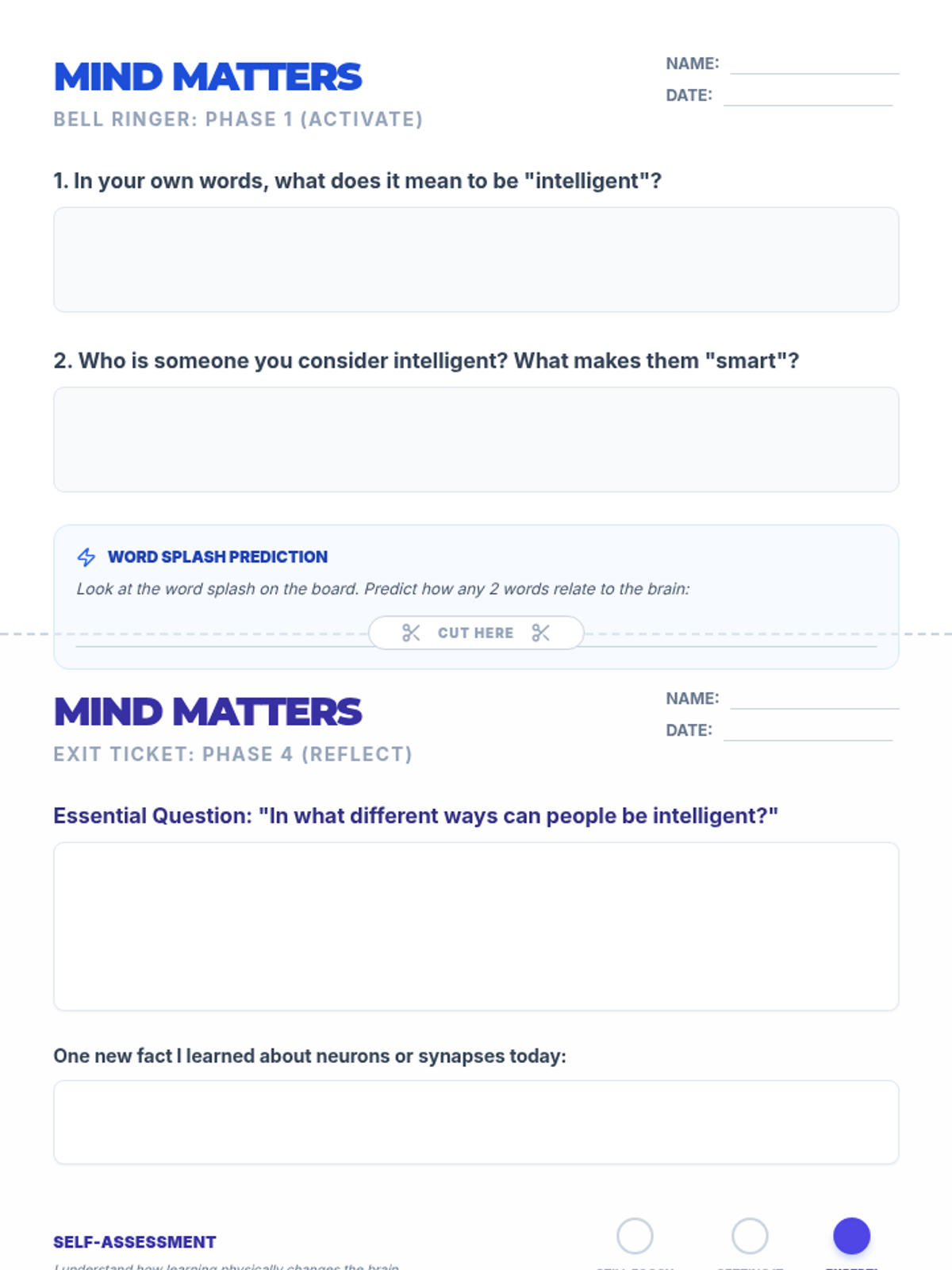
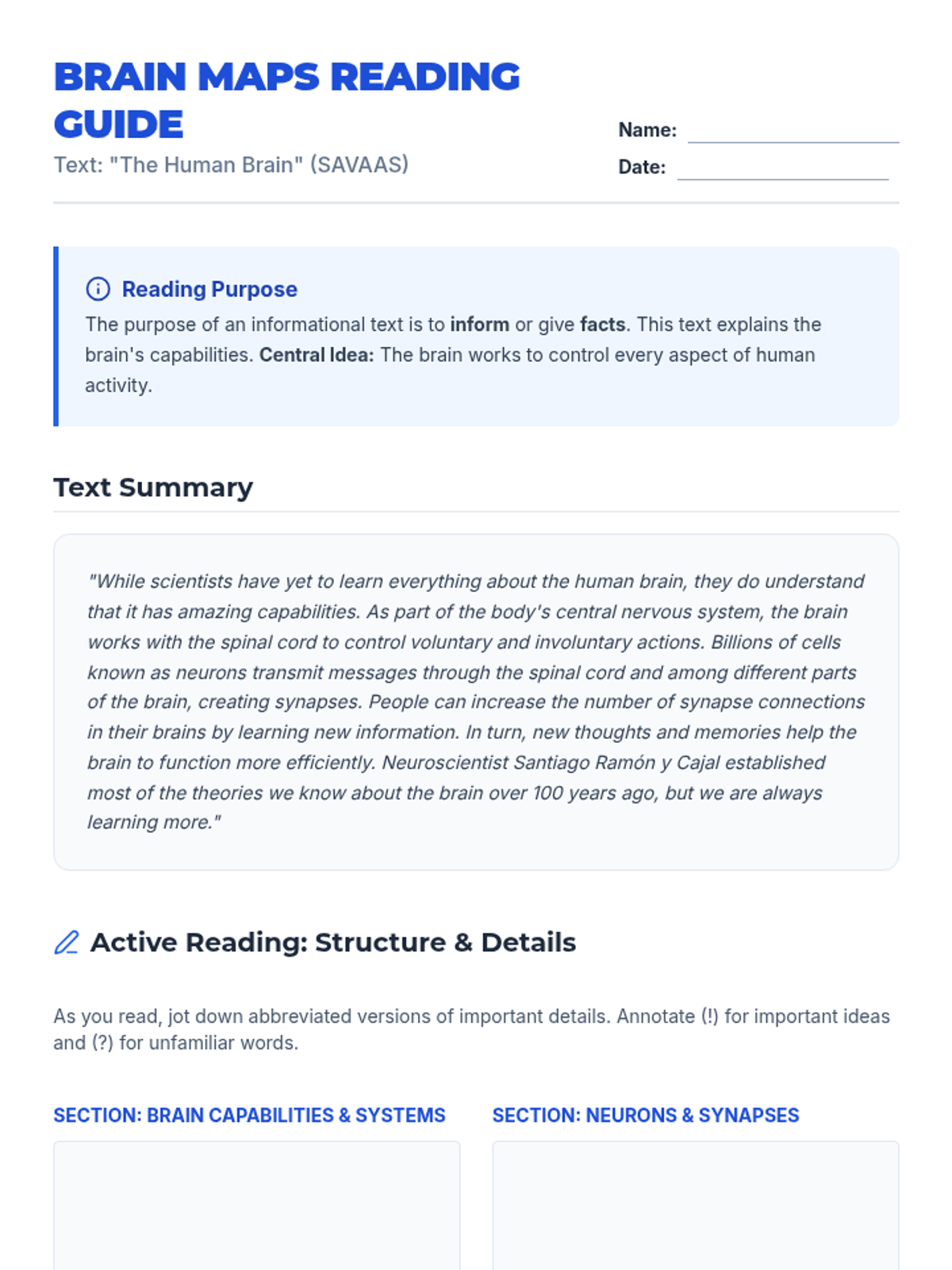
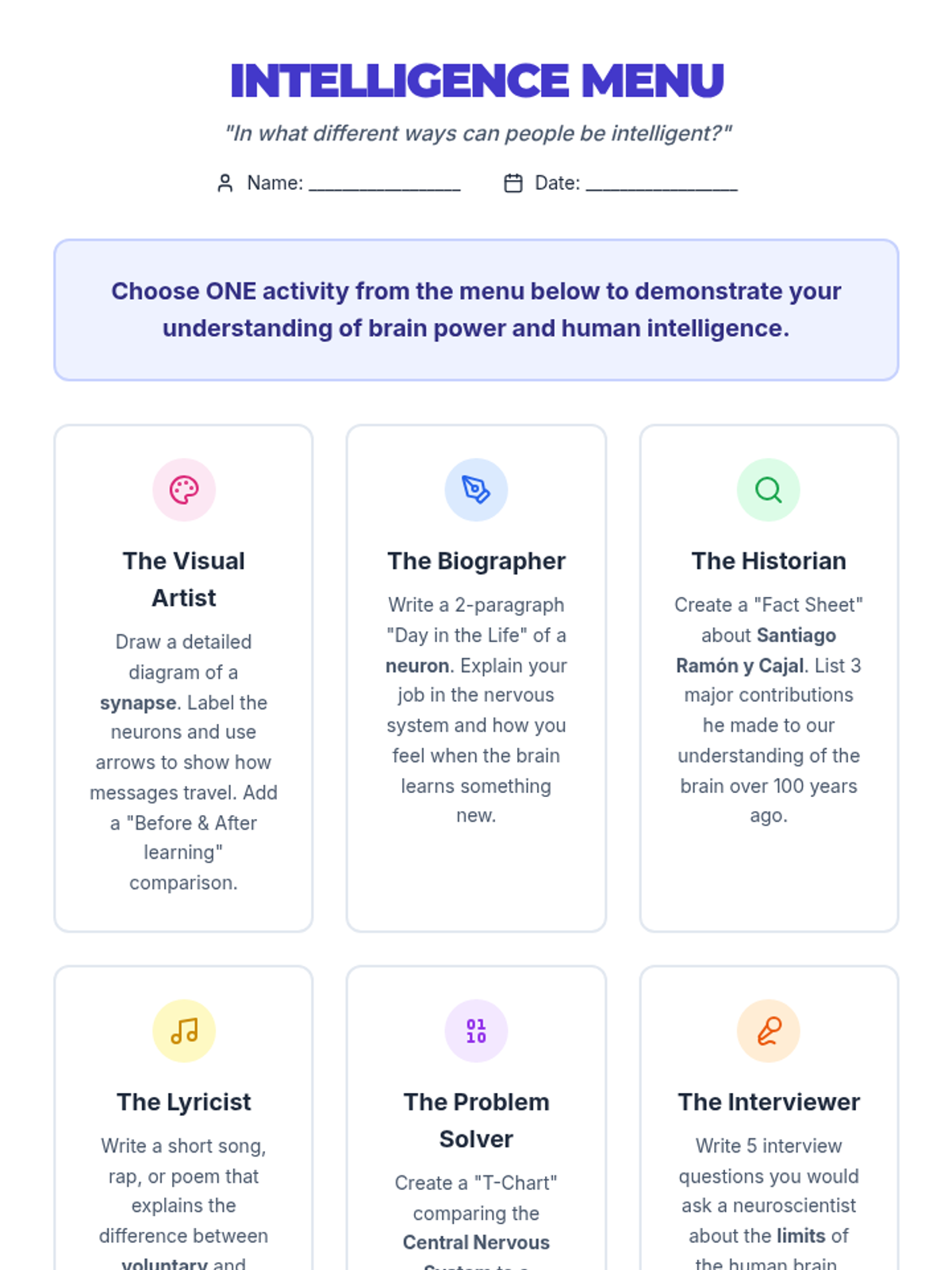
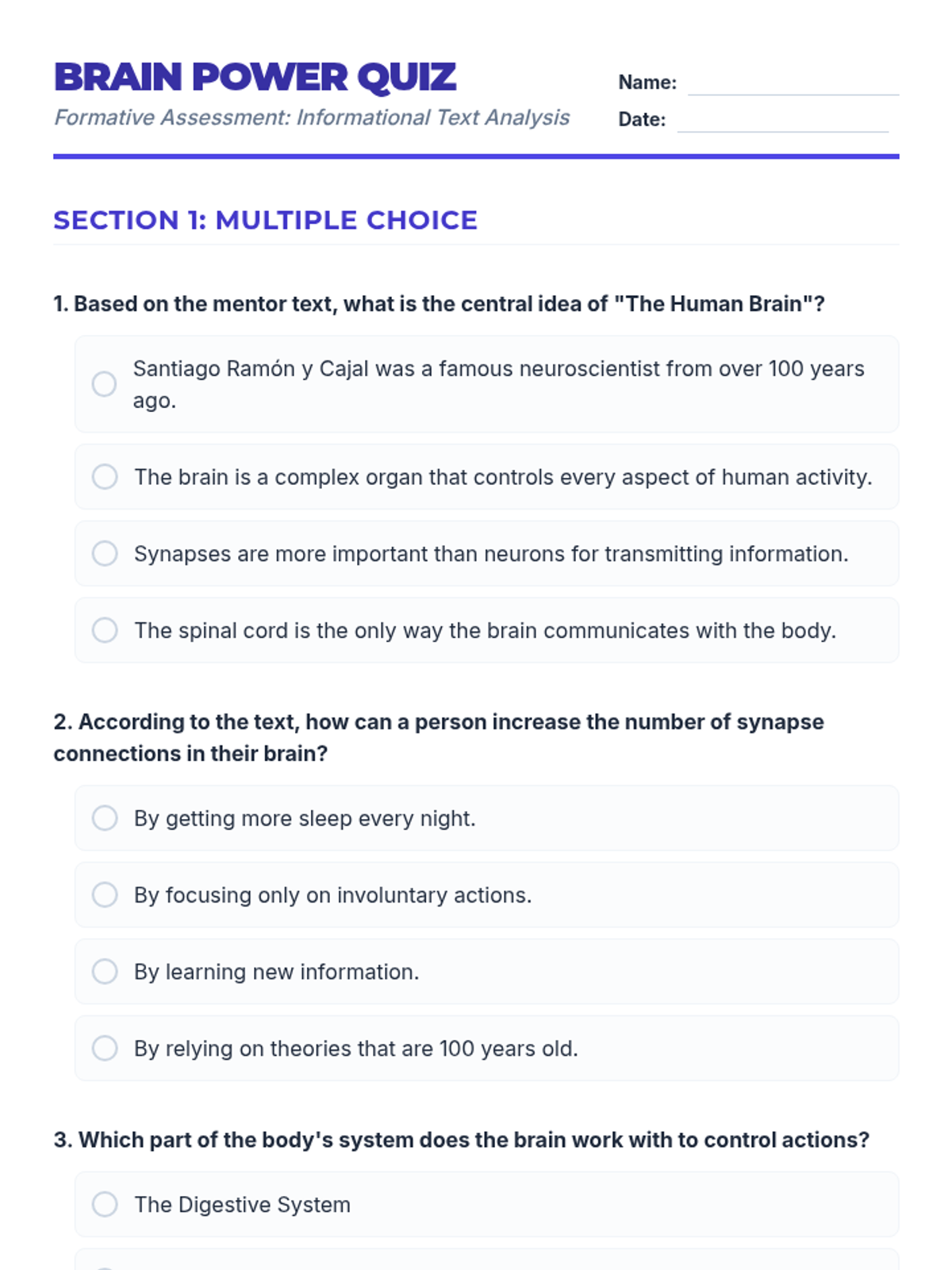
A comprehensive lesson exploring the human brain's capabilities and the nature of intelligence, featuring an informational text analysis and a multiple intelligences choice board.
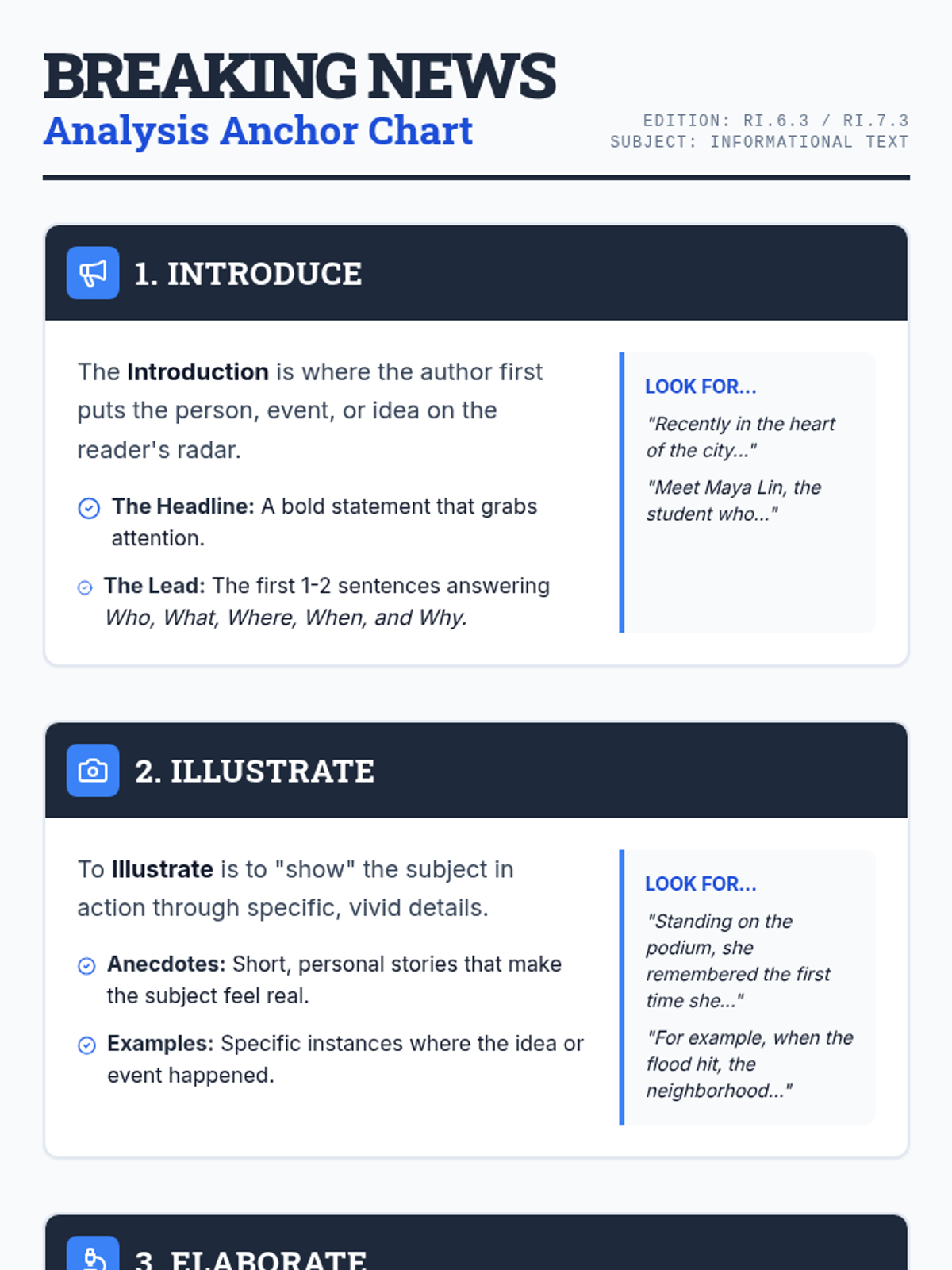
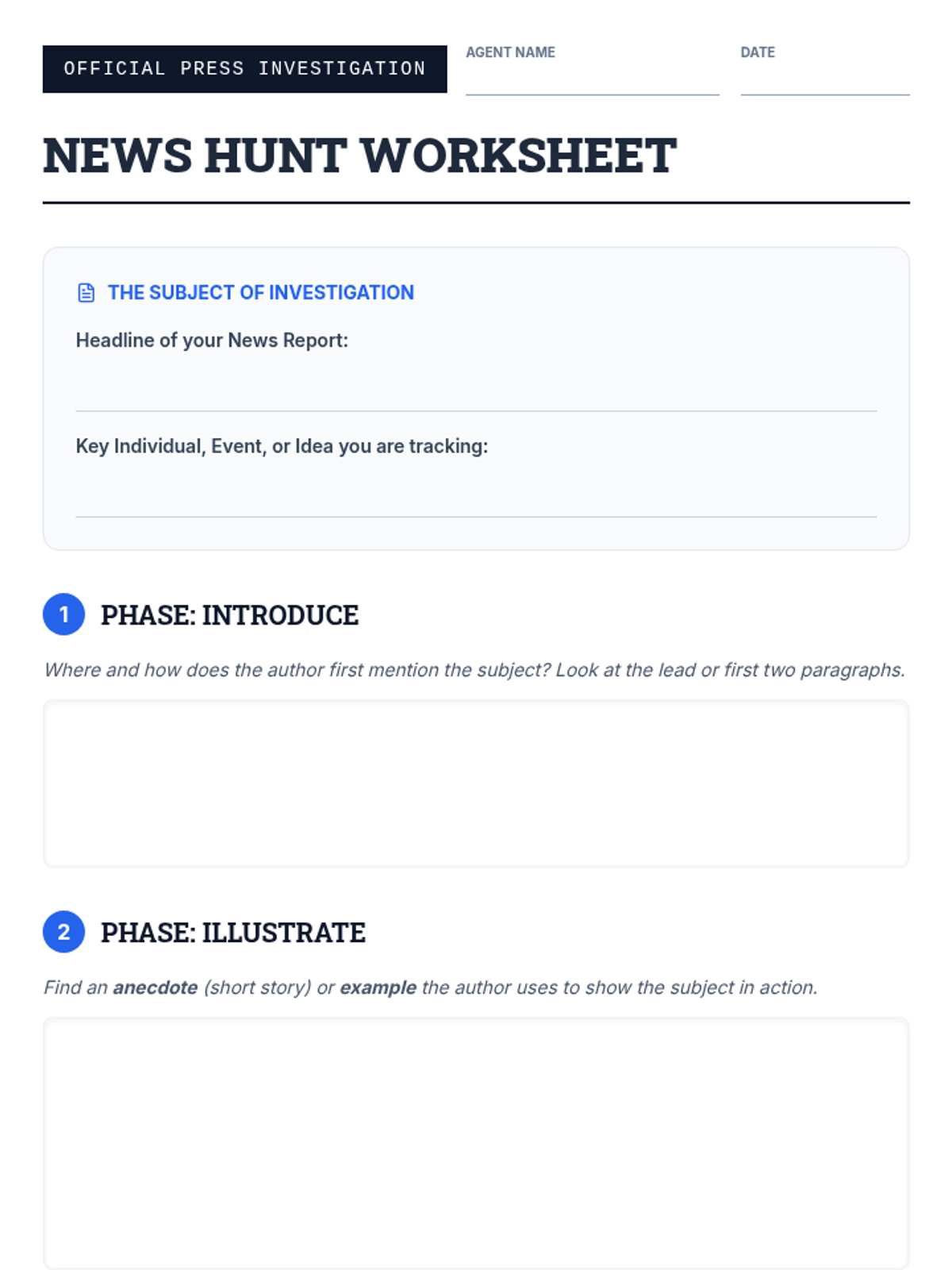
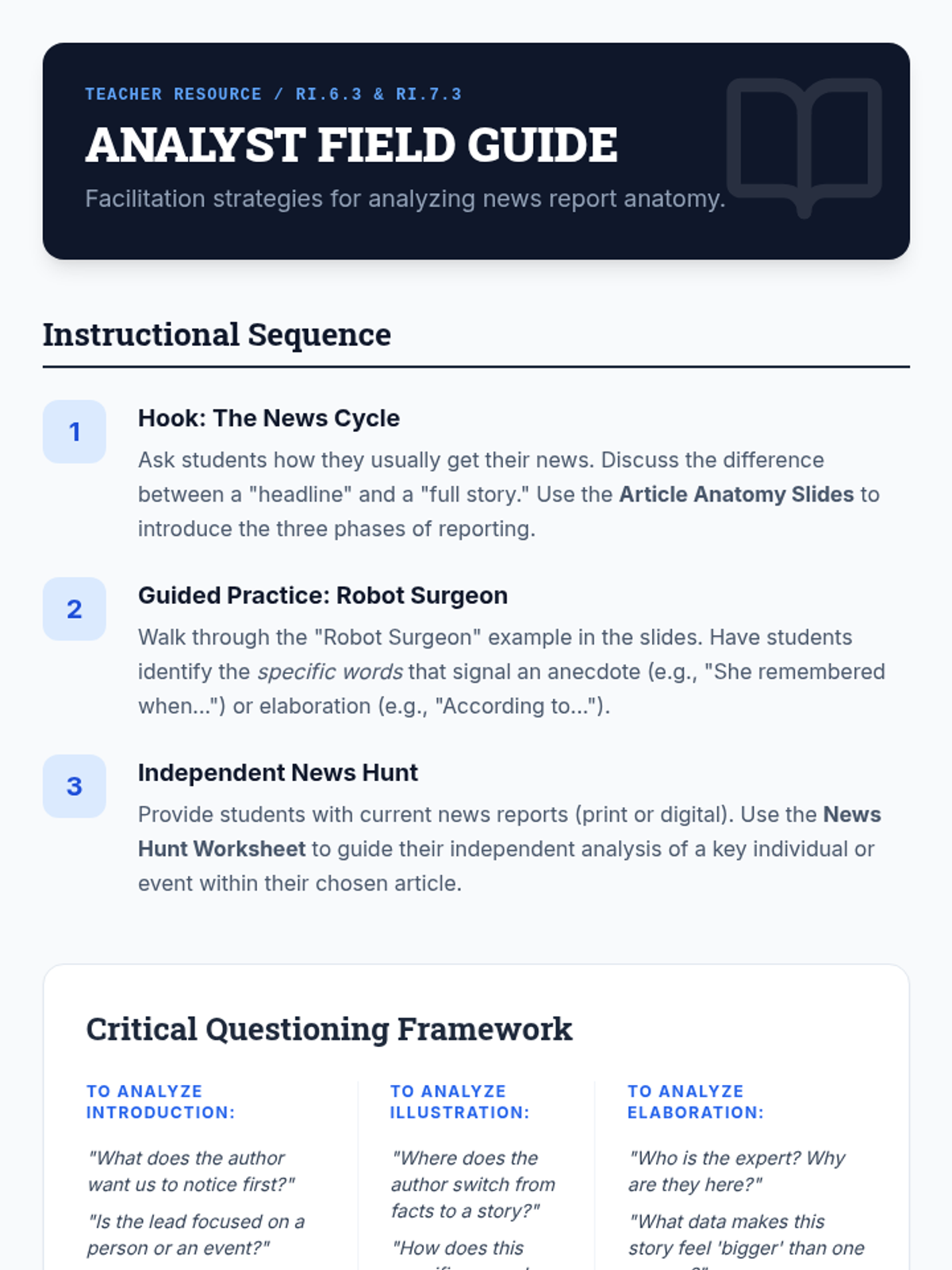
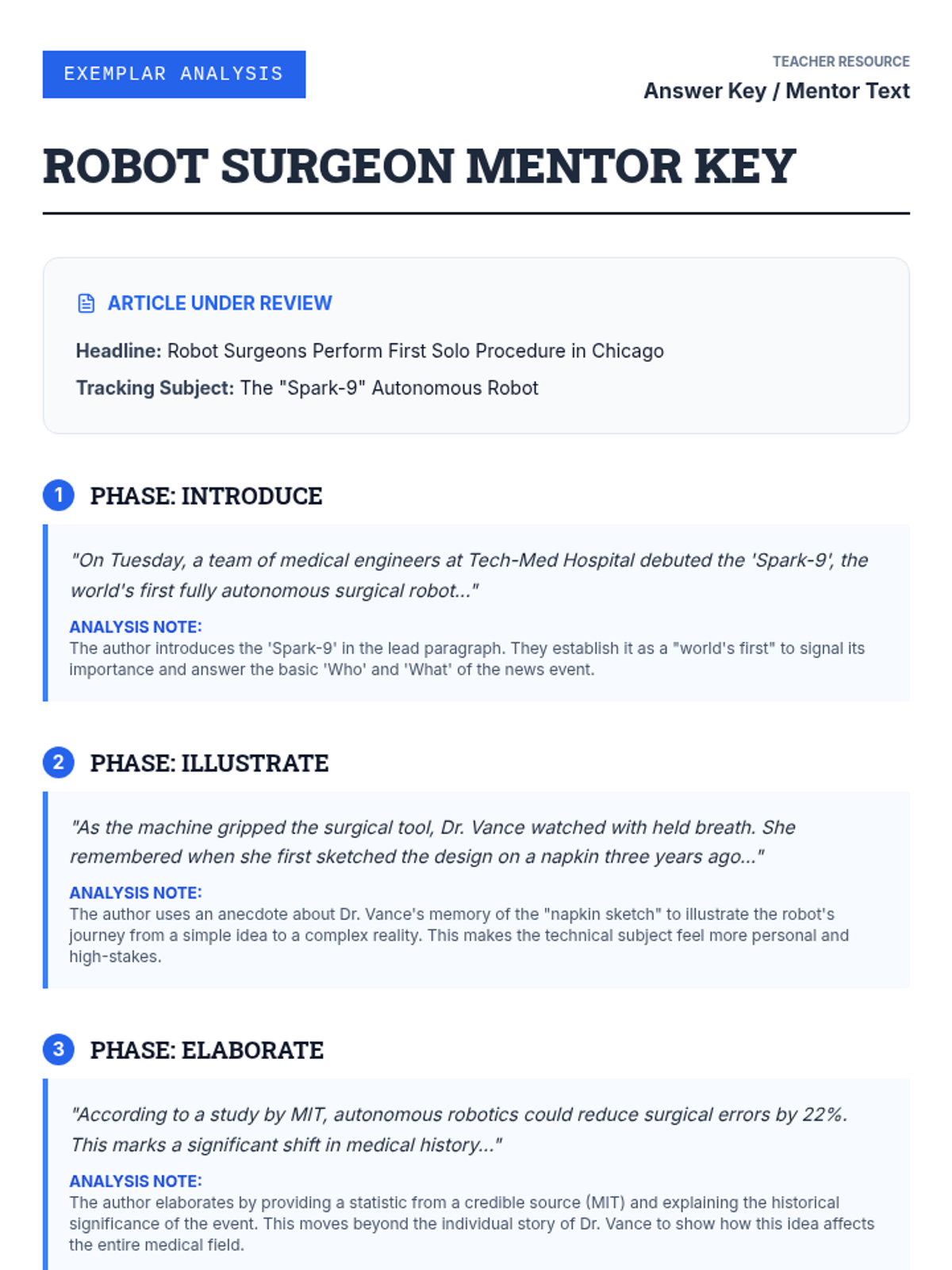
This lesson teaches students to analyze how news reports introduce, illustrate, and elaborate on key individuals, events, or ideas using specific examples and anecdotes.
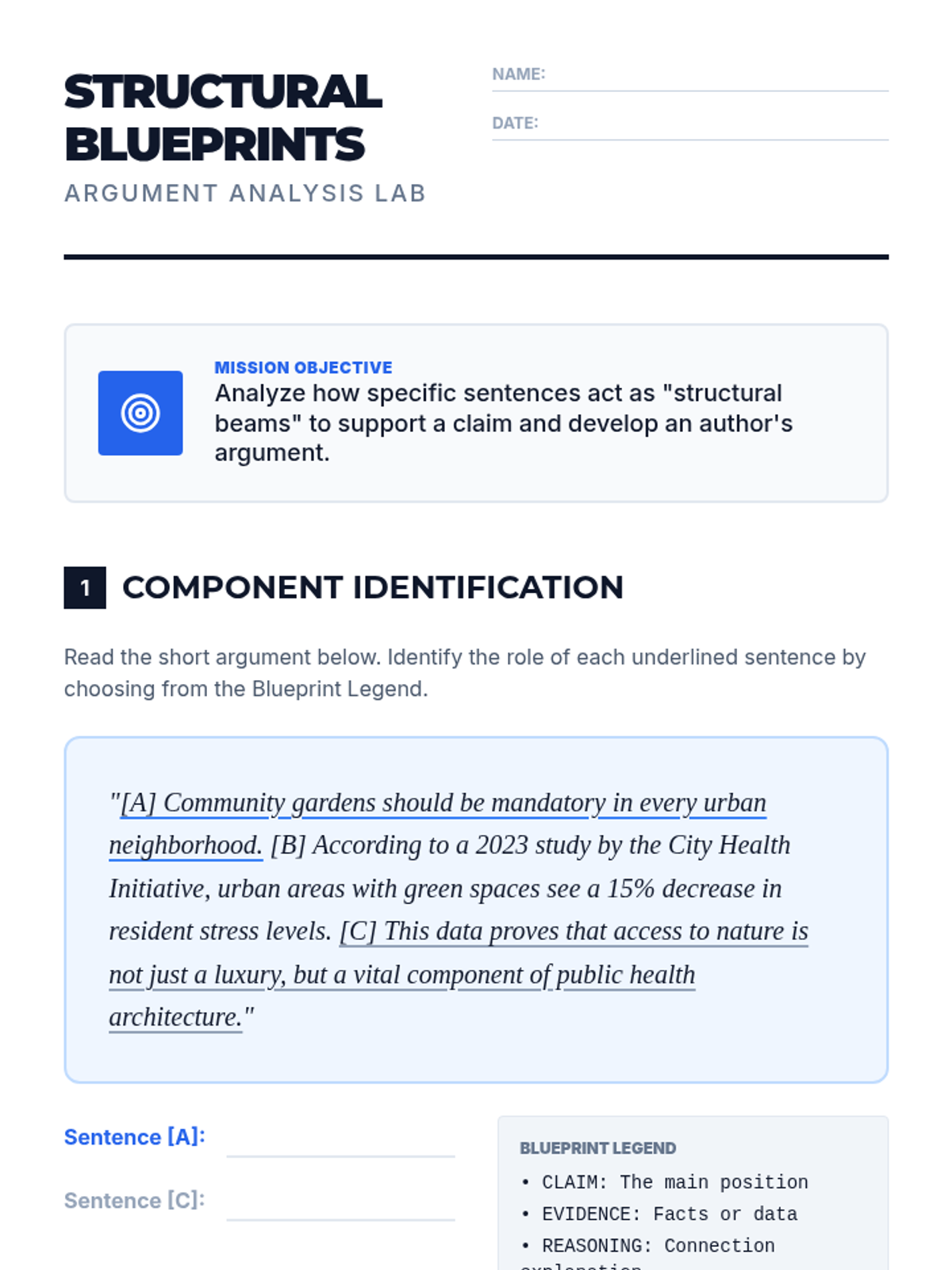
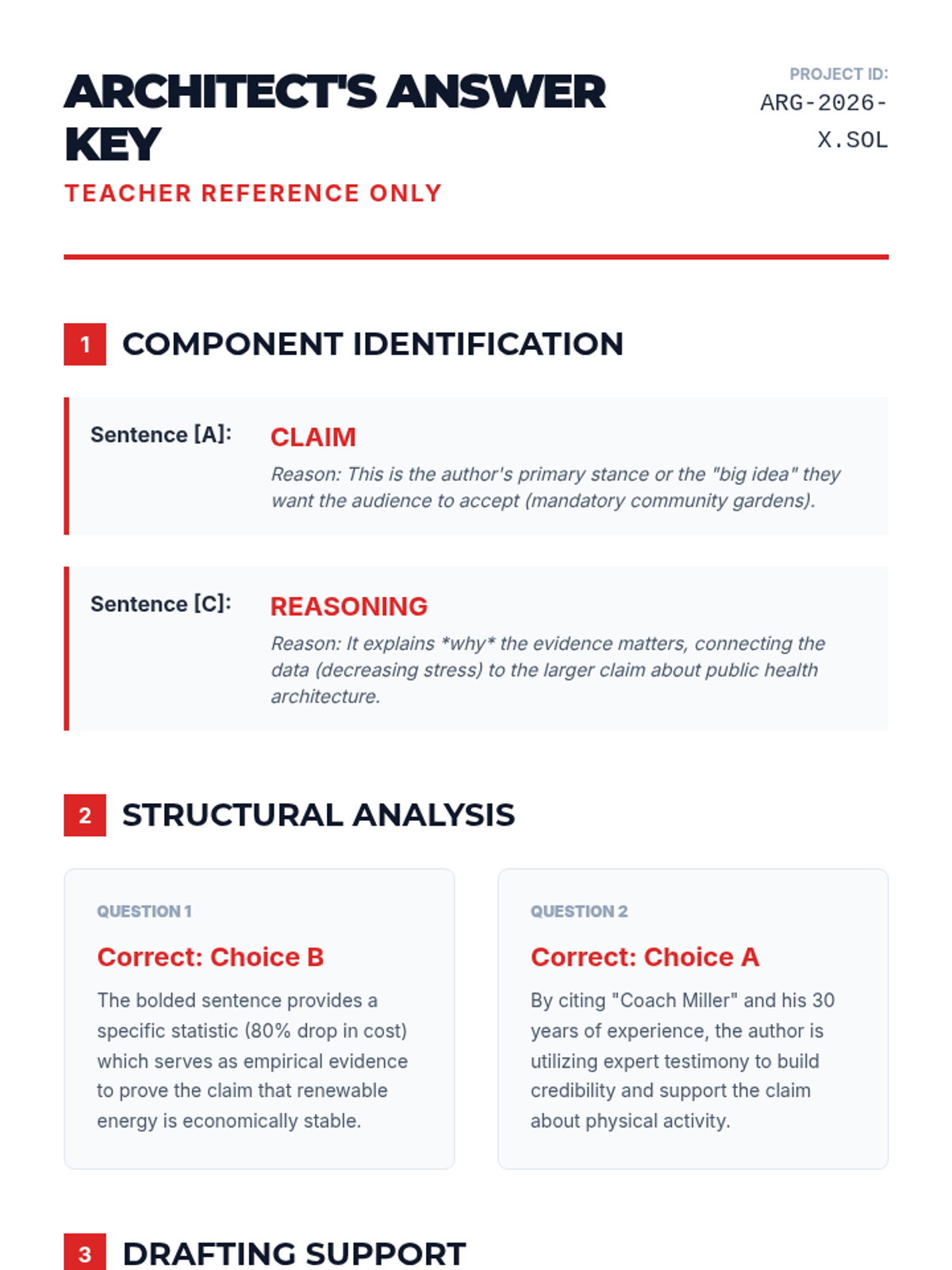
A lesson focused on analyzing how specific parts of a text contribute to the overall structure and the development of an argument through evidence. Students learn to see texts as 'blueprints' where every sentence serves a structural purpose.
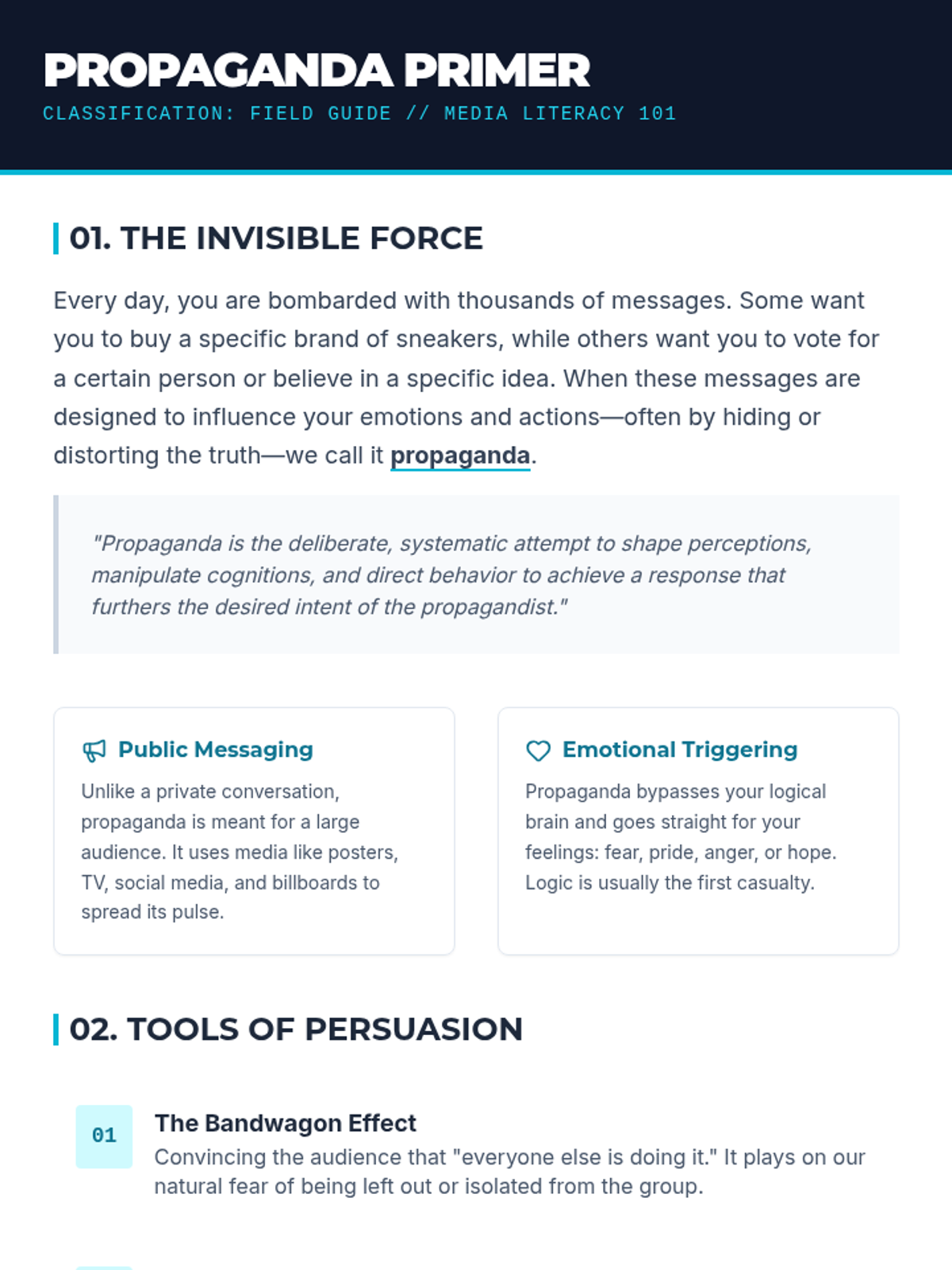
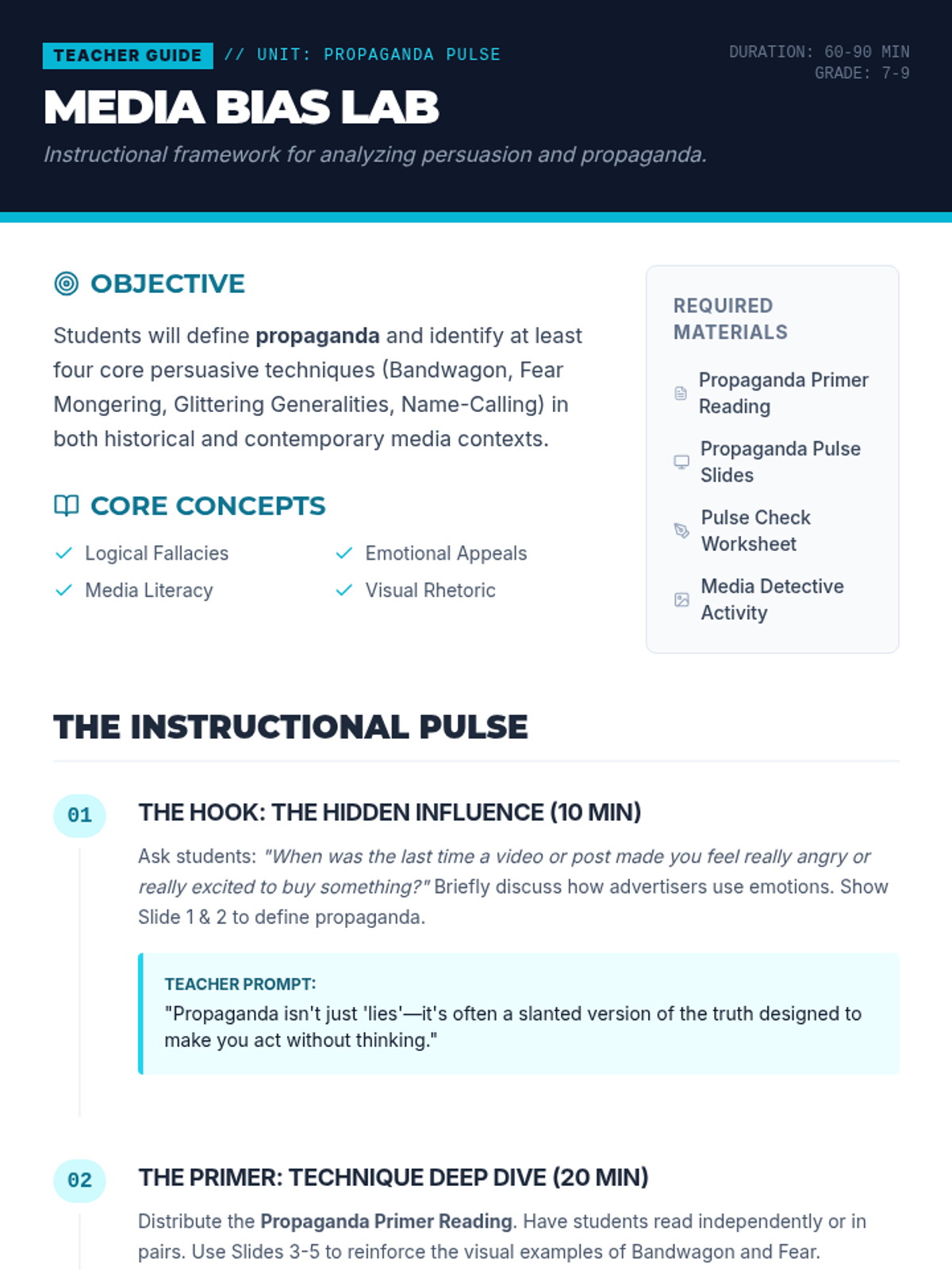
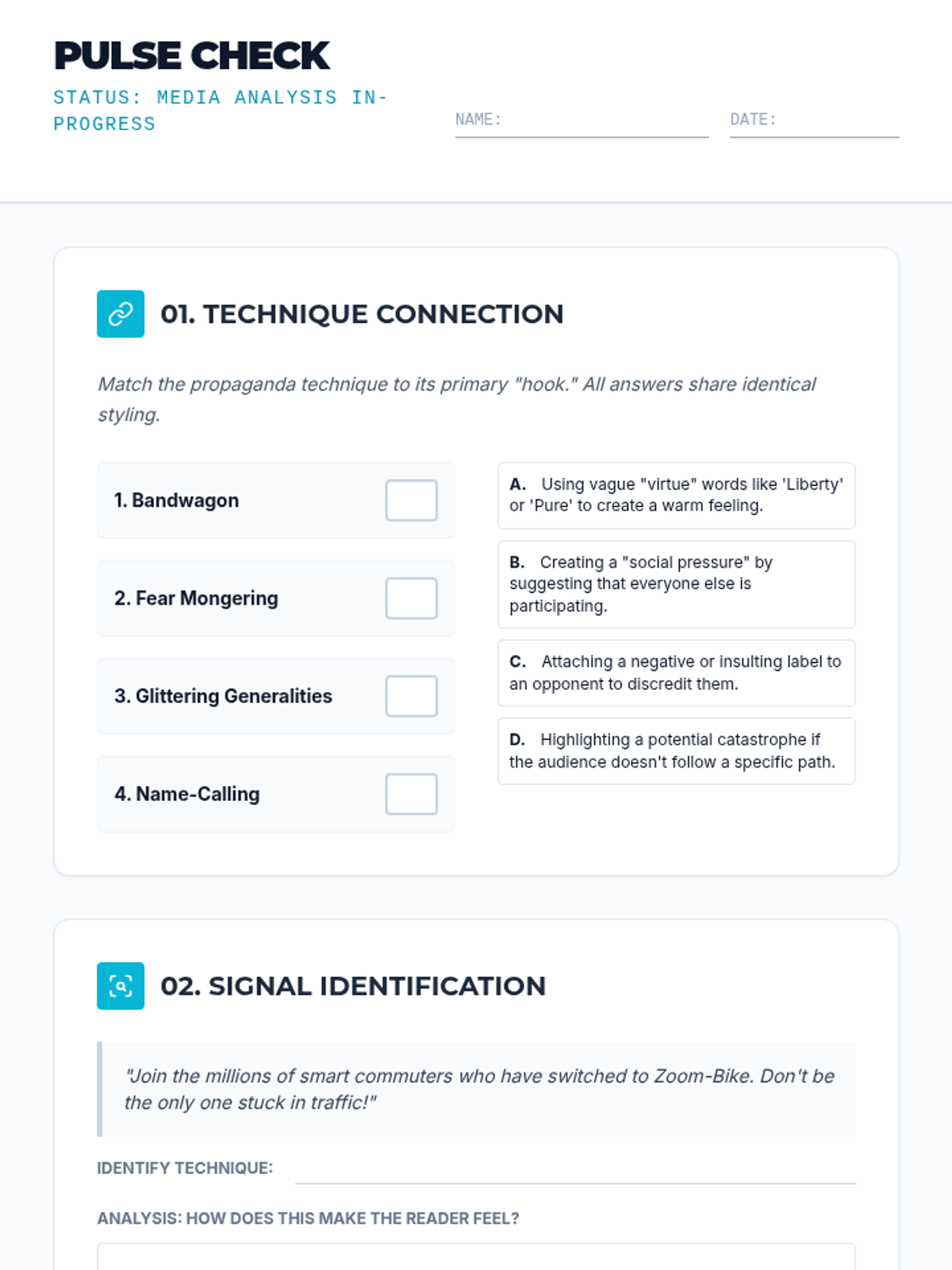
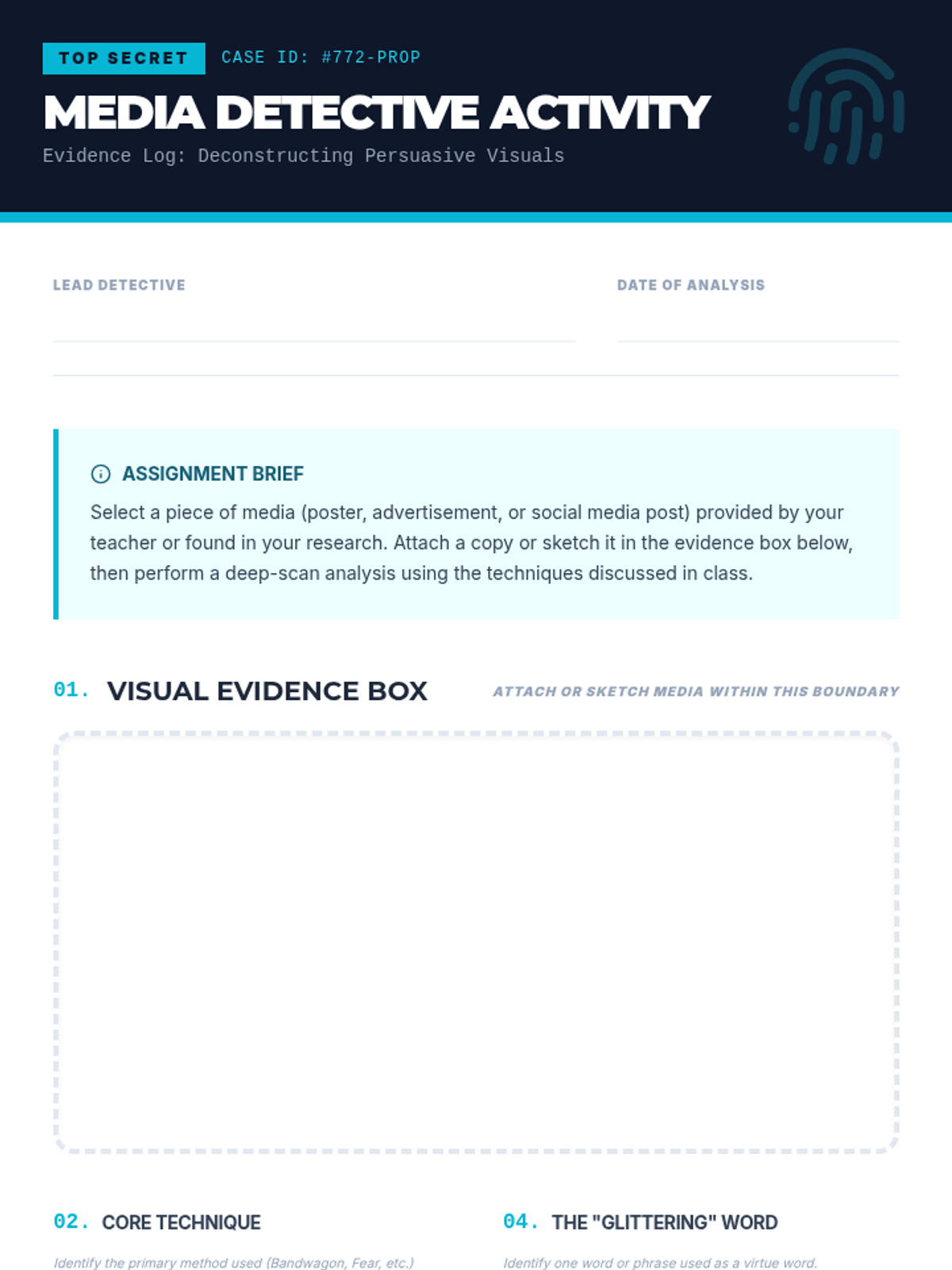
An introductory exploration into the world of propaganda, teaching students to identify bias and persuasive techniques in historical and modern media.
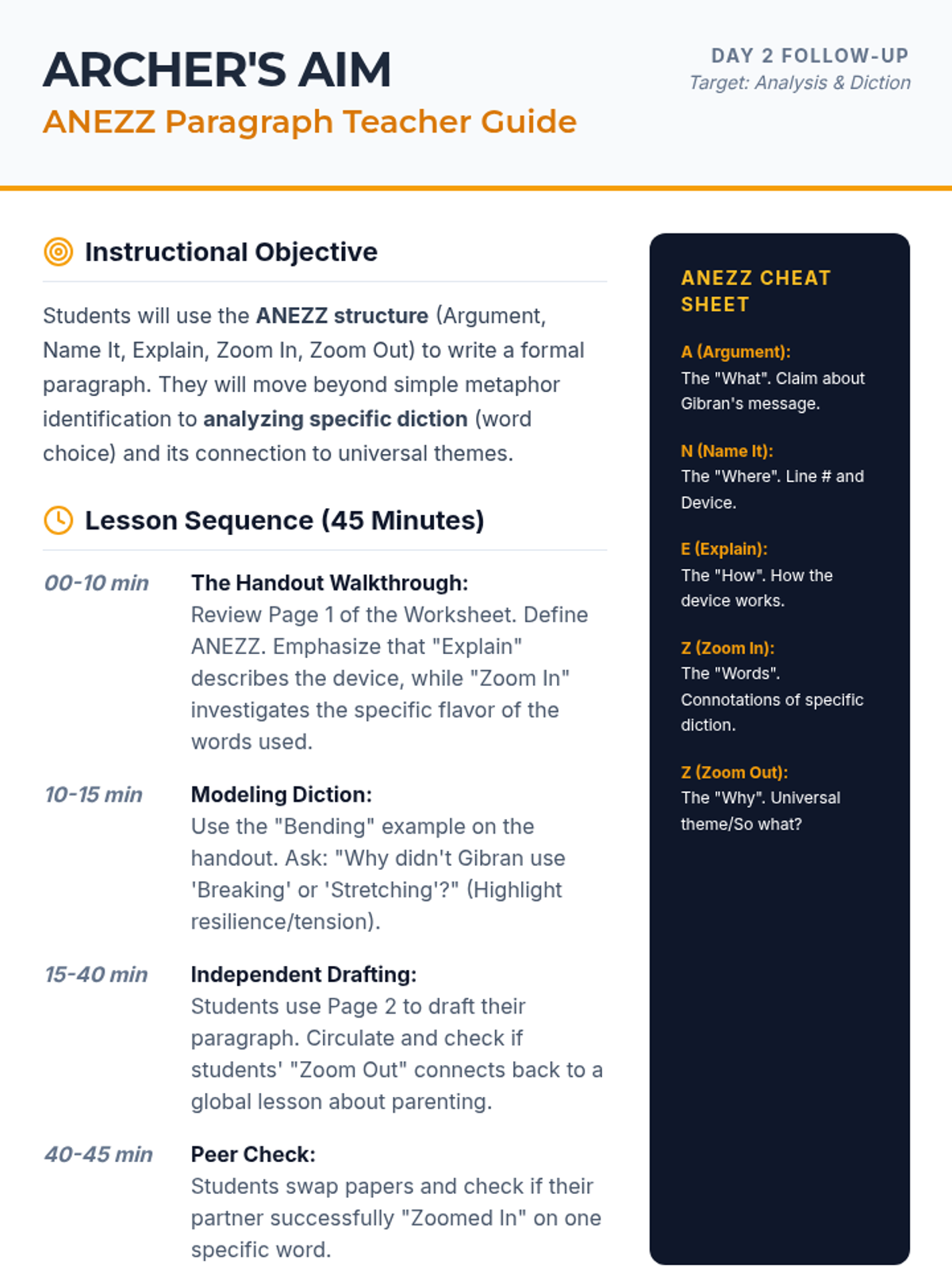
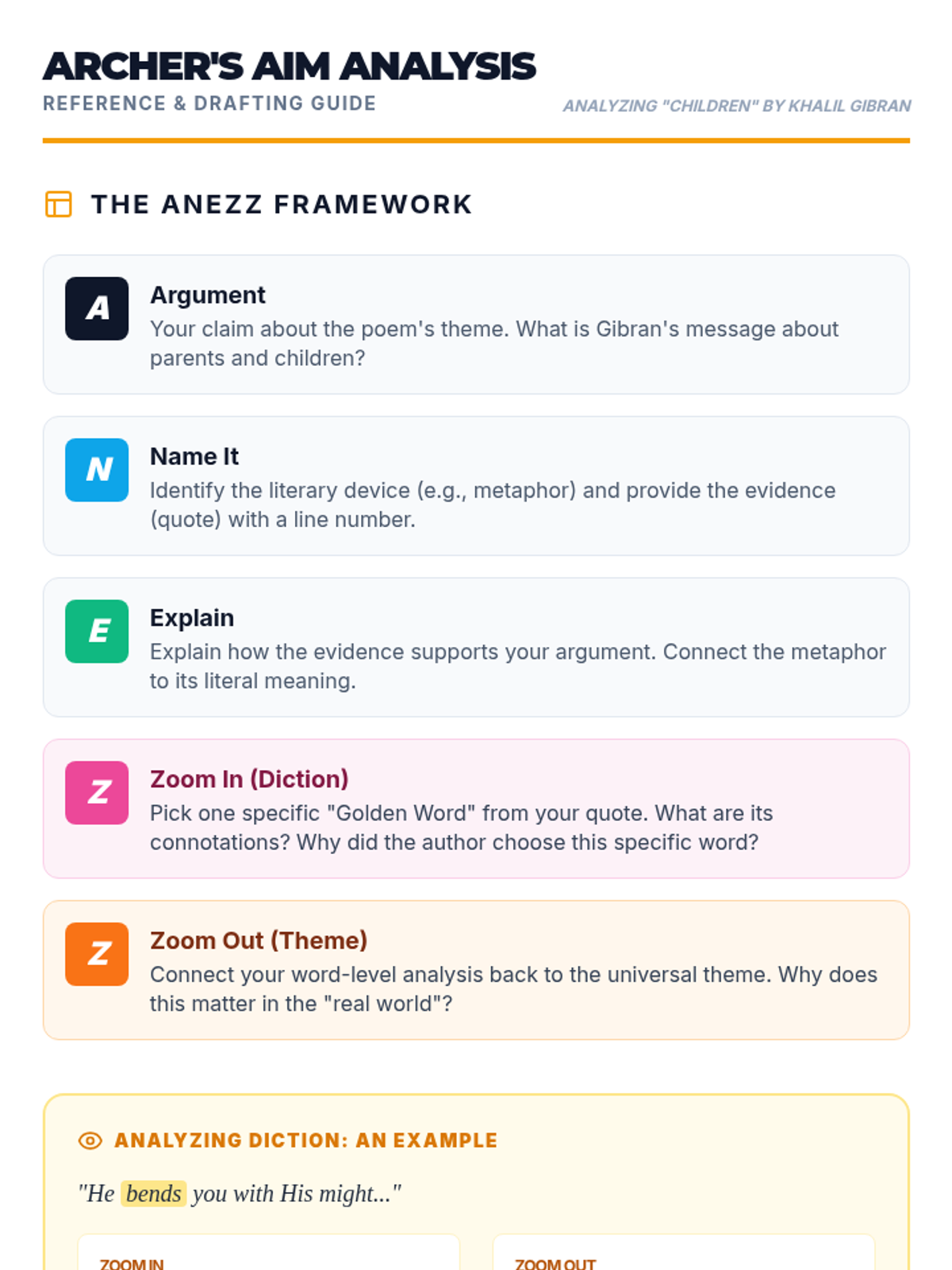
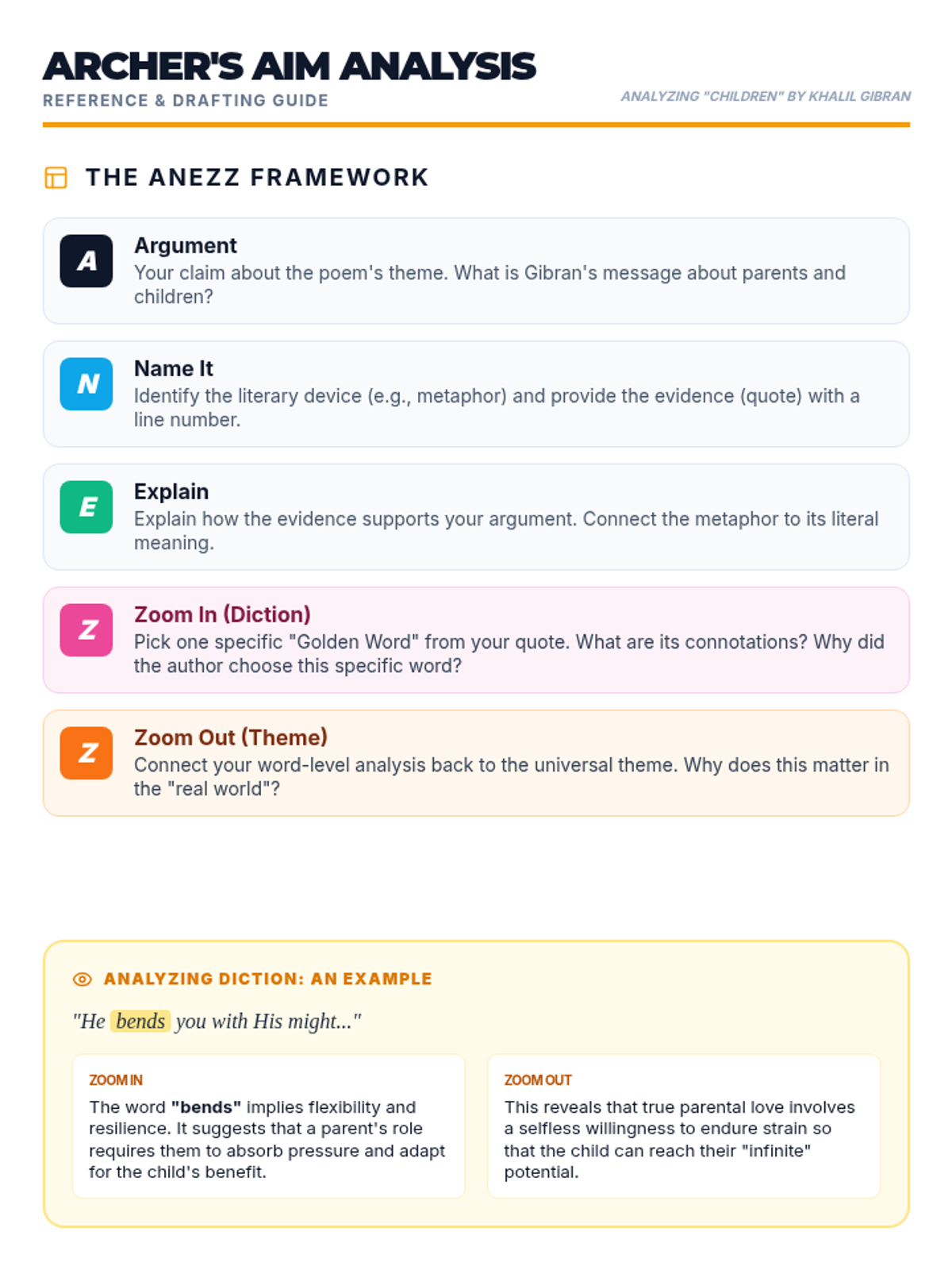
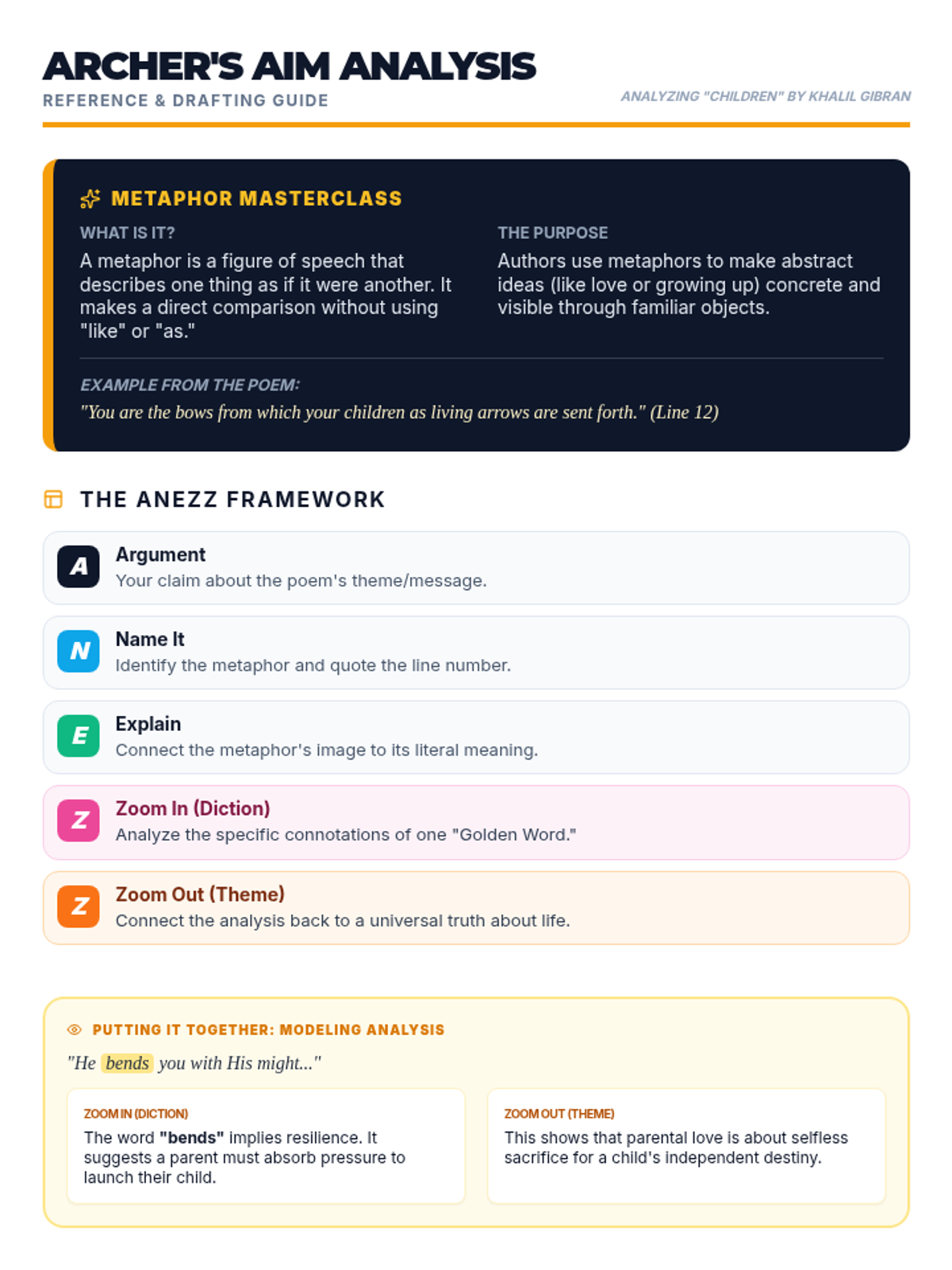
A follow-up lesson focused on mastering literary analysis through the ANEZZ paragraph structure, using Khalil Gibran's 'Children' to explore figurative language and theme.
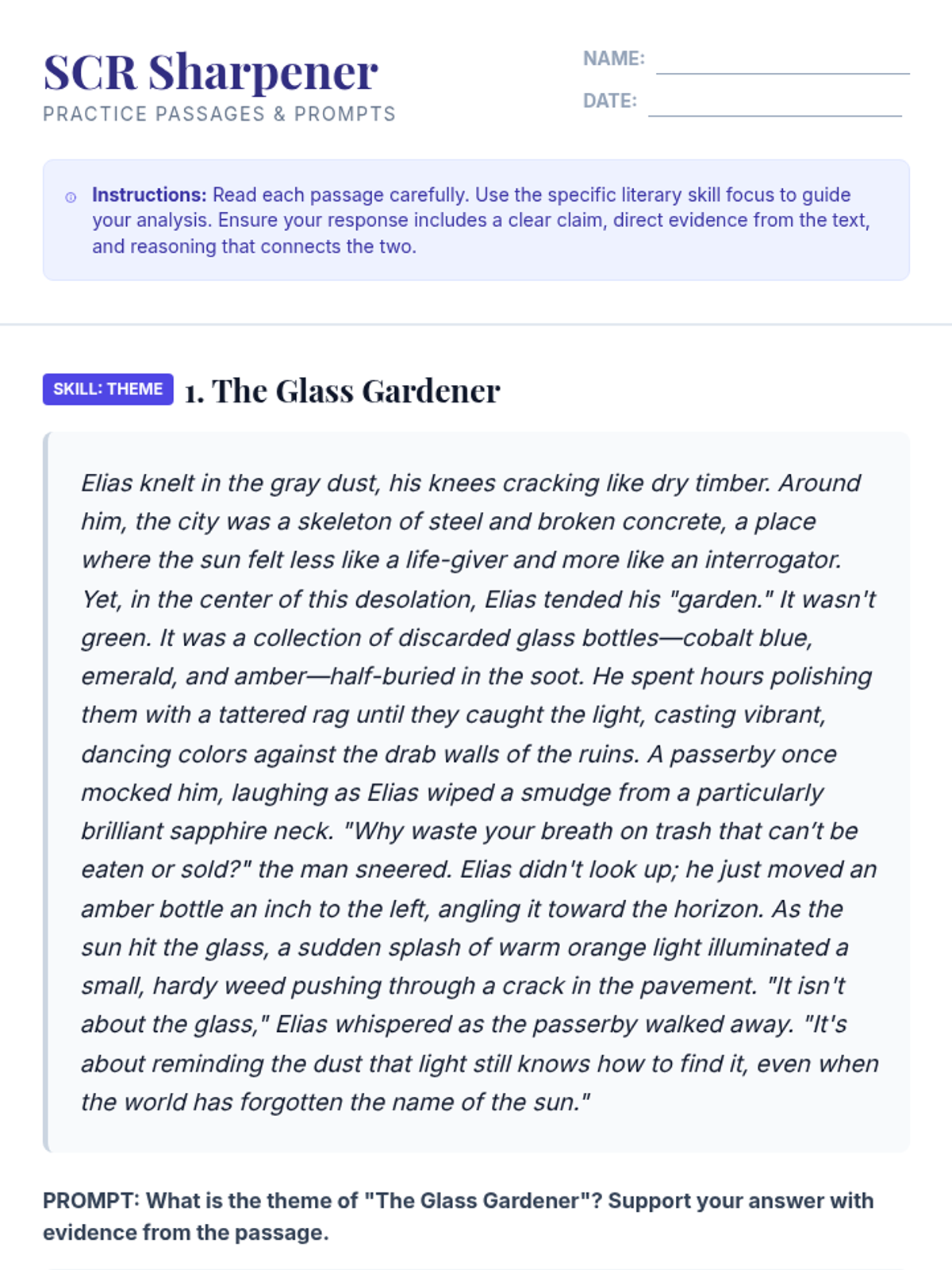
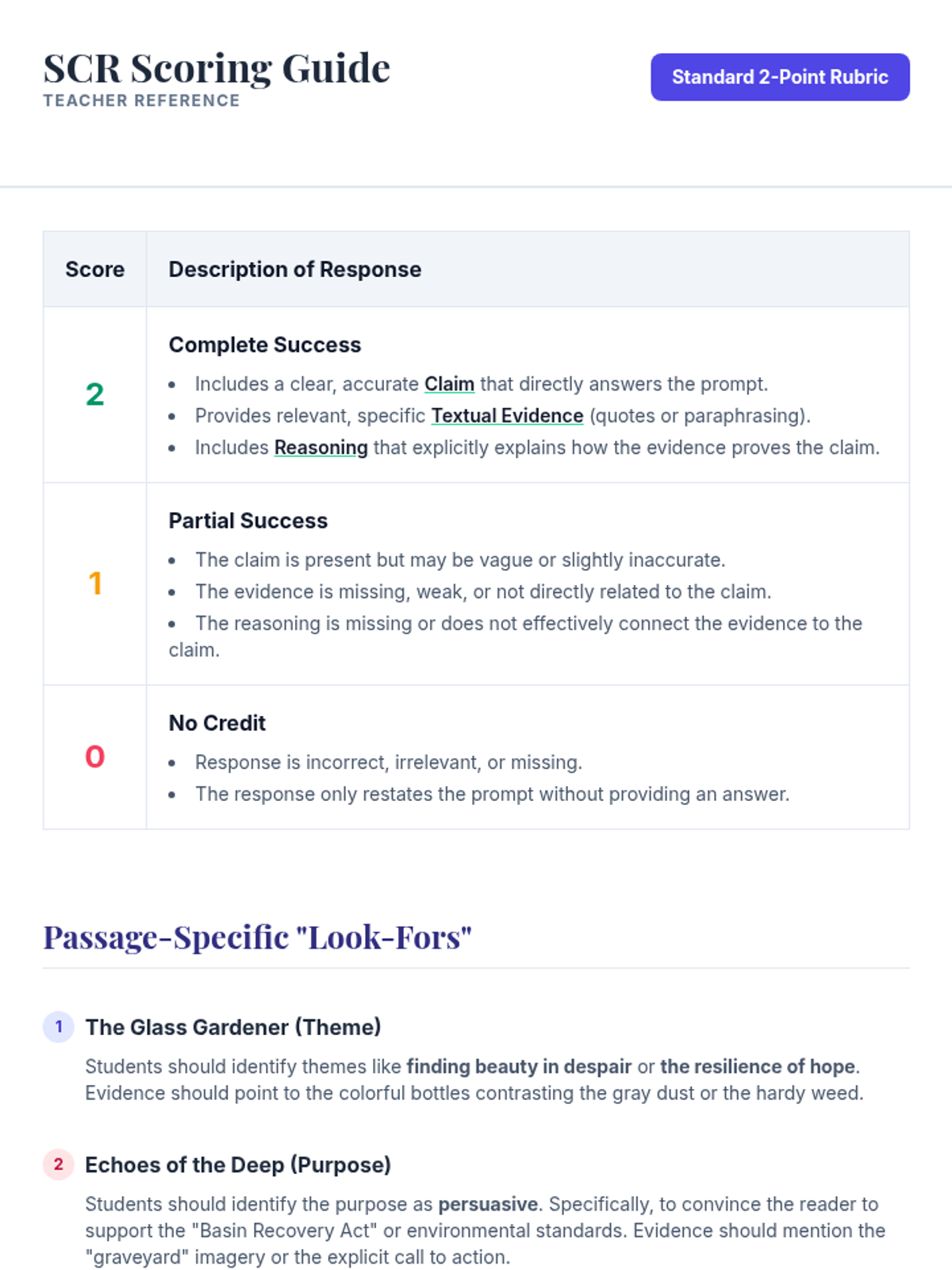
A focused workshop for mastering Short Constructed Responses (SCR), featuring five evidence-rich passages that target theme, purpose, diction, and synthesis skills.
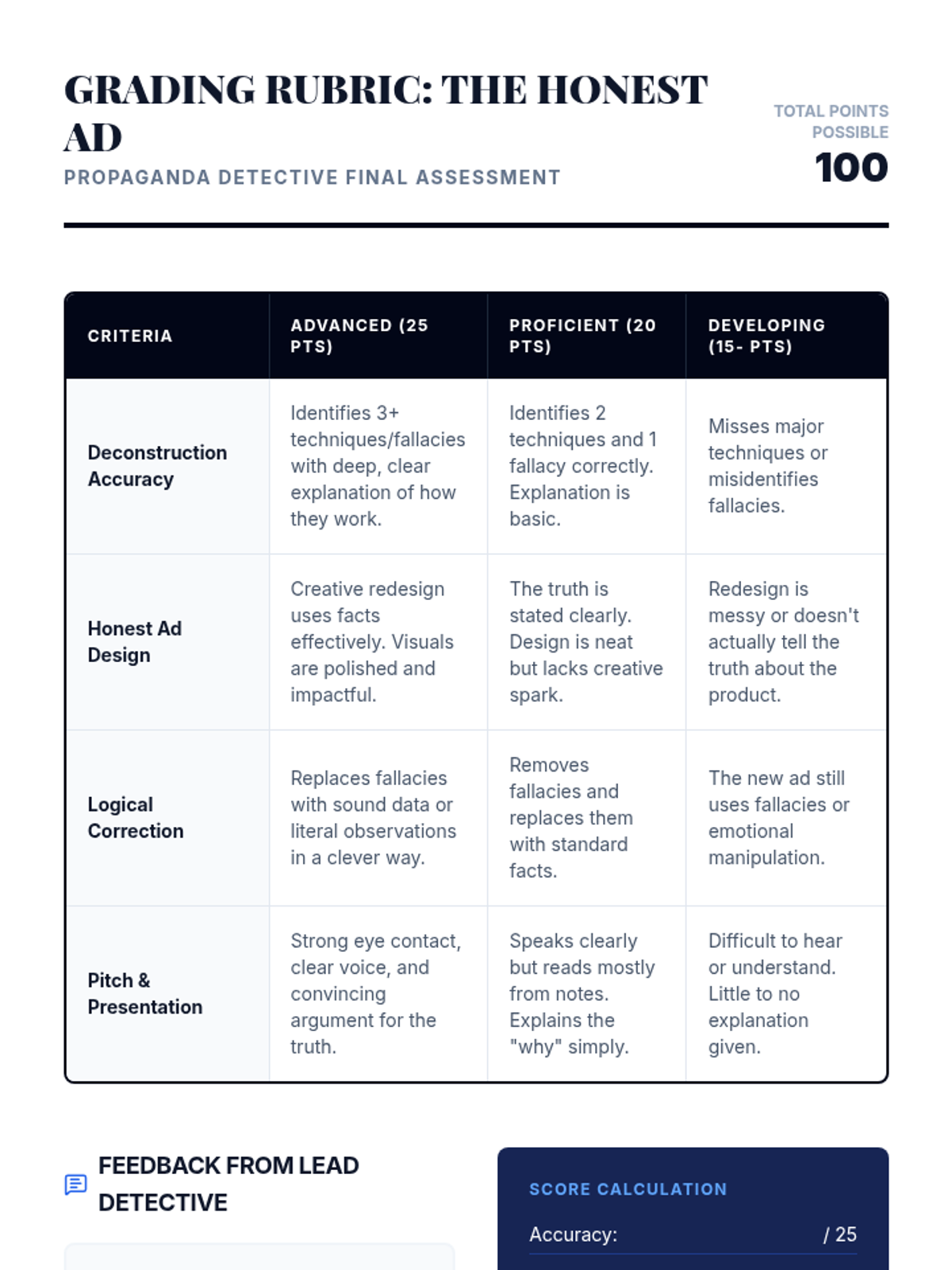
The final phase where students apply their knowledge to deconstruct a real-world advertisement and create an 'honest' version that reveals the truth behind the marketing.
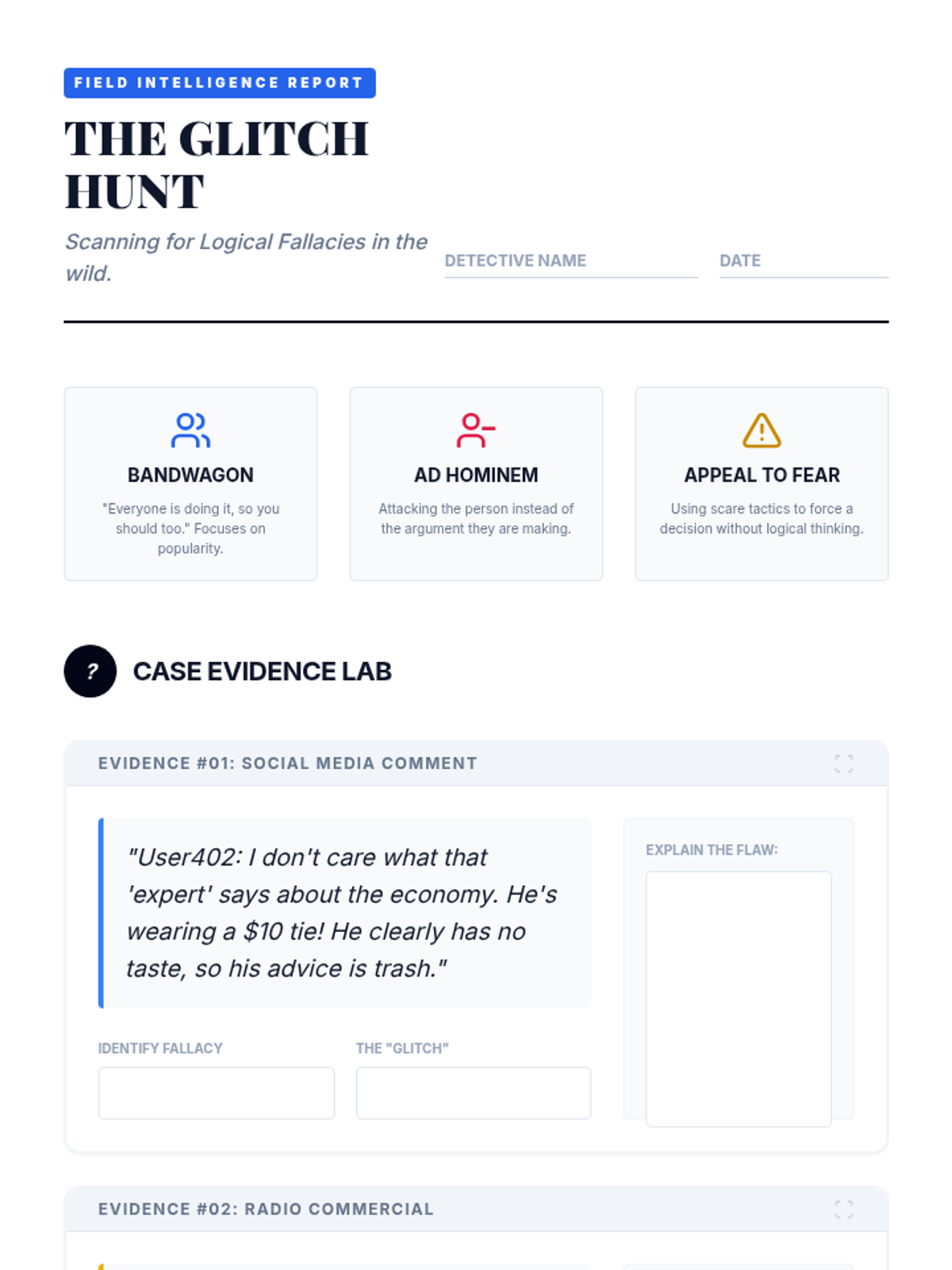
An investigation into common logical fallacies like the bandwagon effect, appeal to authority, and fear-mongering as seen in social media and news.
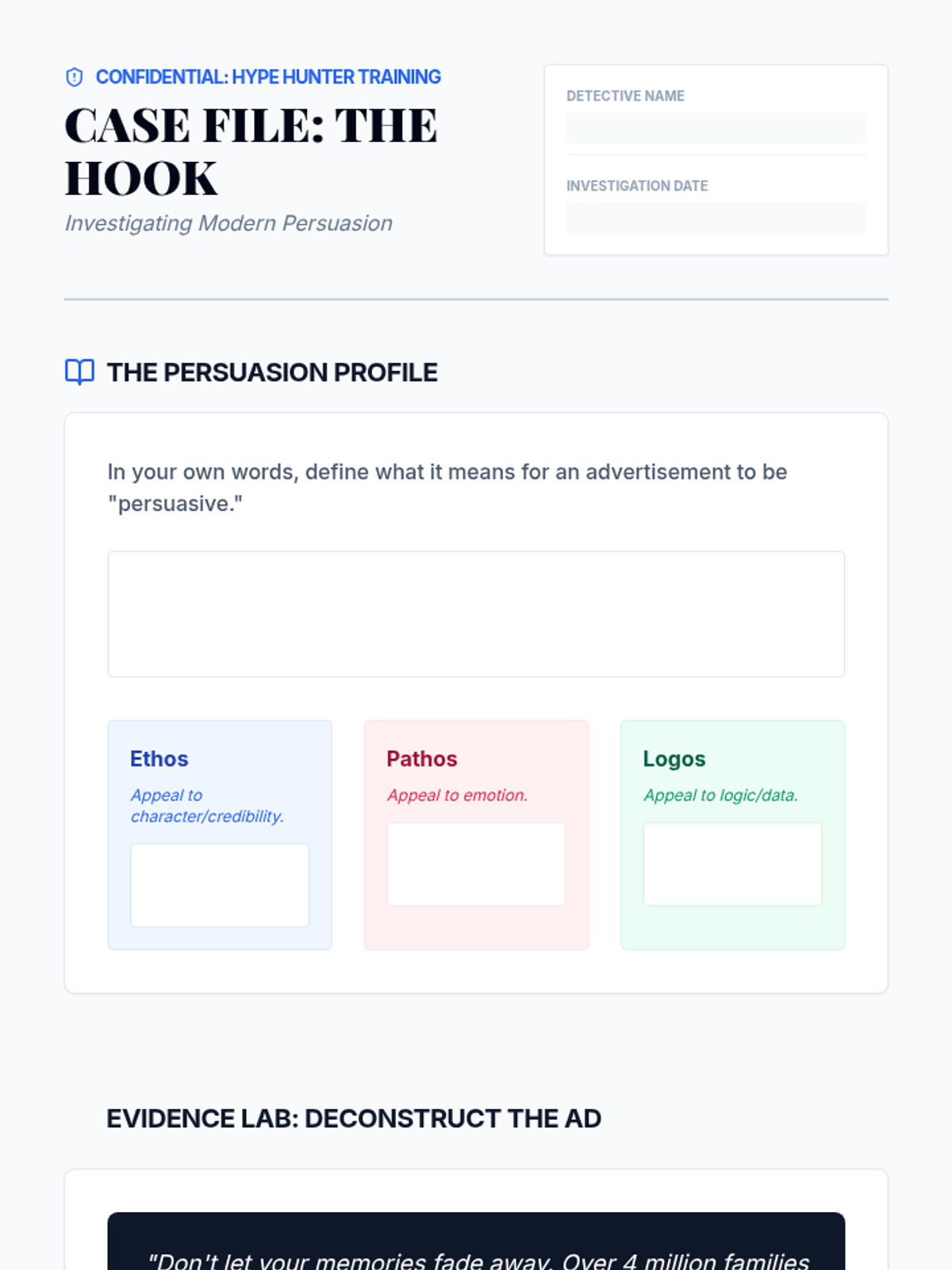
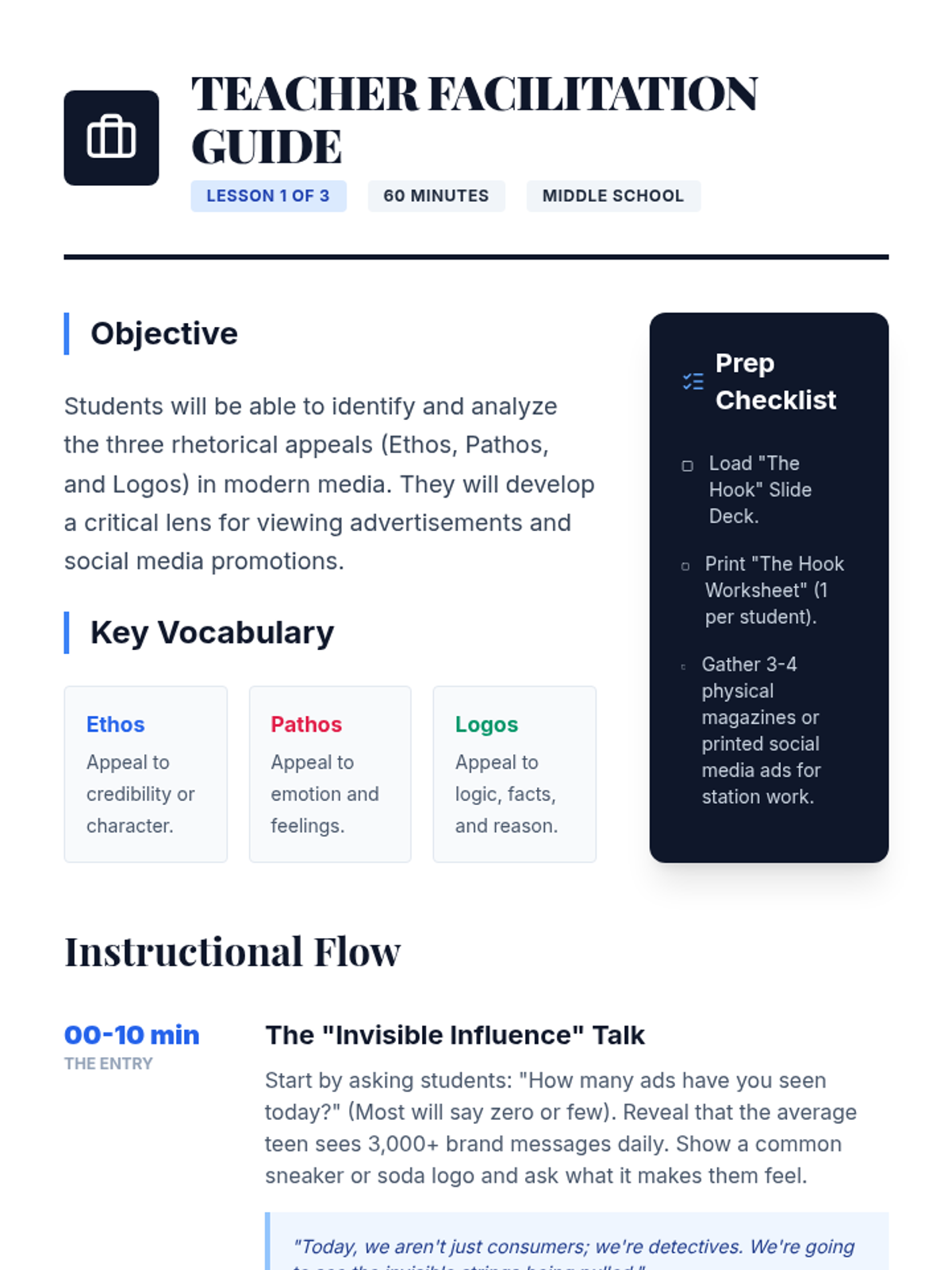
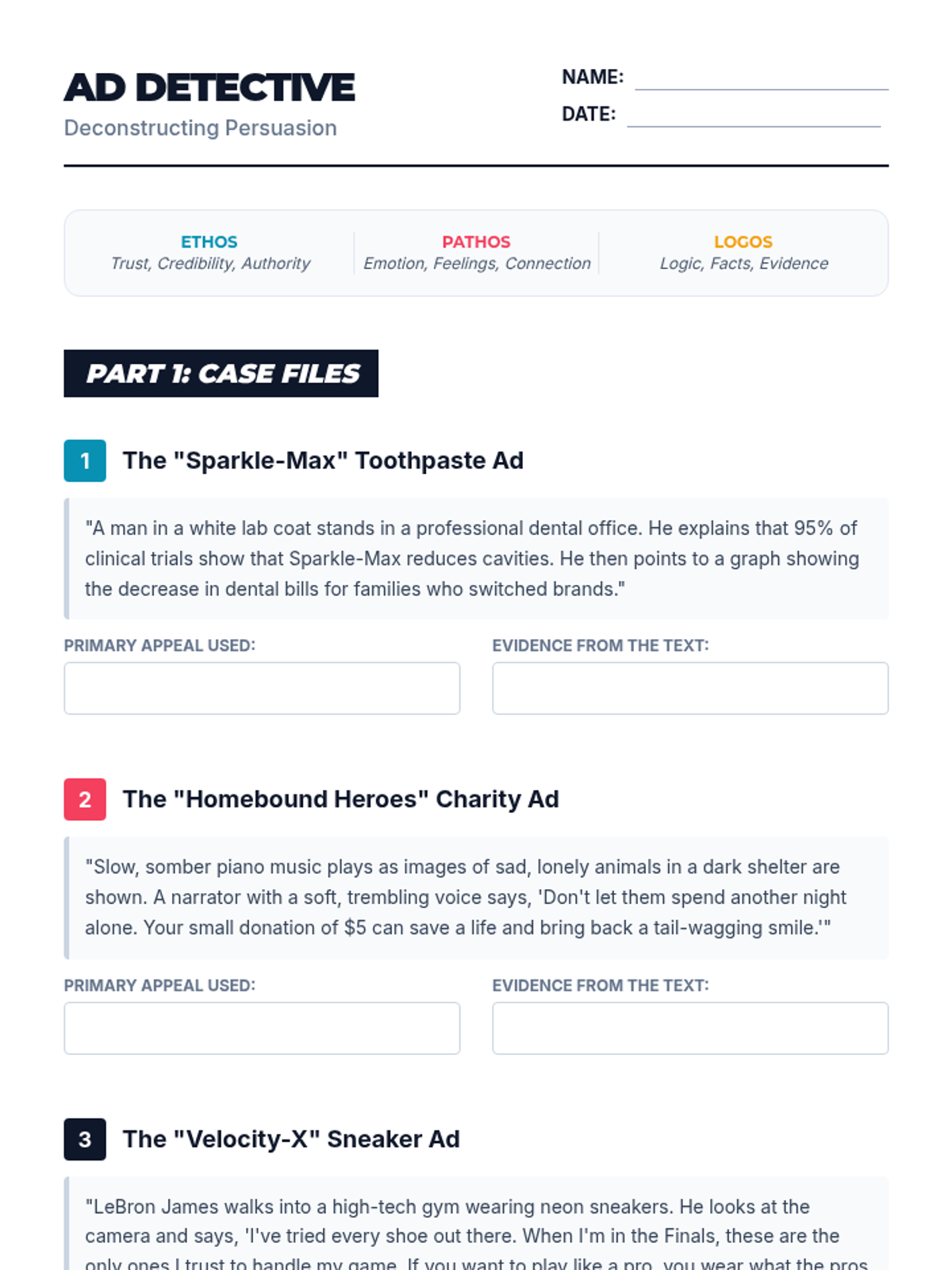
Students explore the core pillars of persuasion (Ethos, Pathos, Logos) and how they are used in modern advertising to influence consumer behavior.
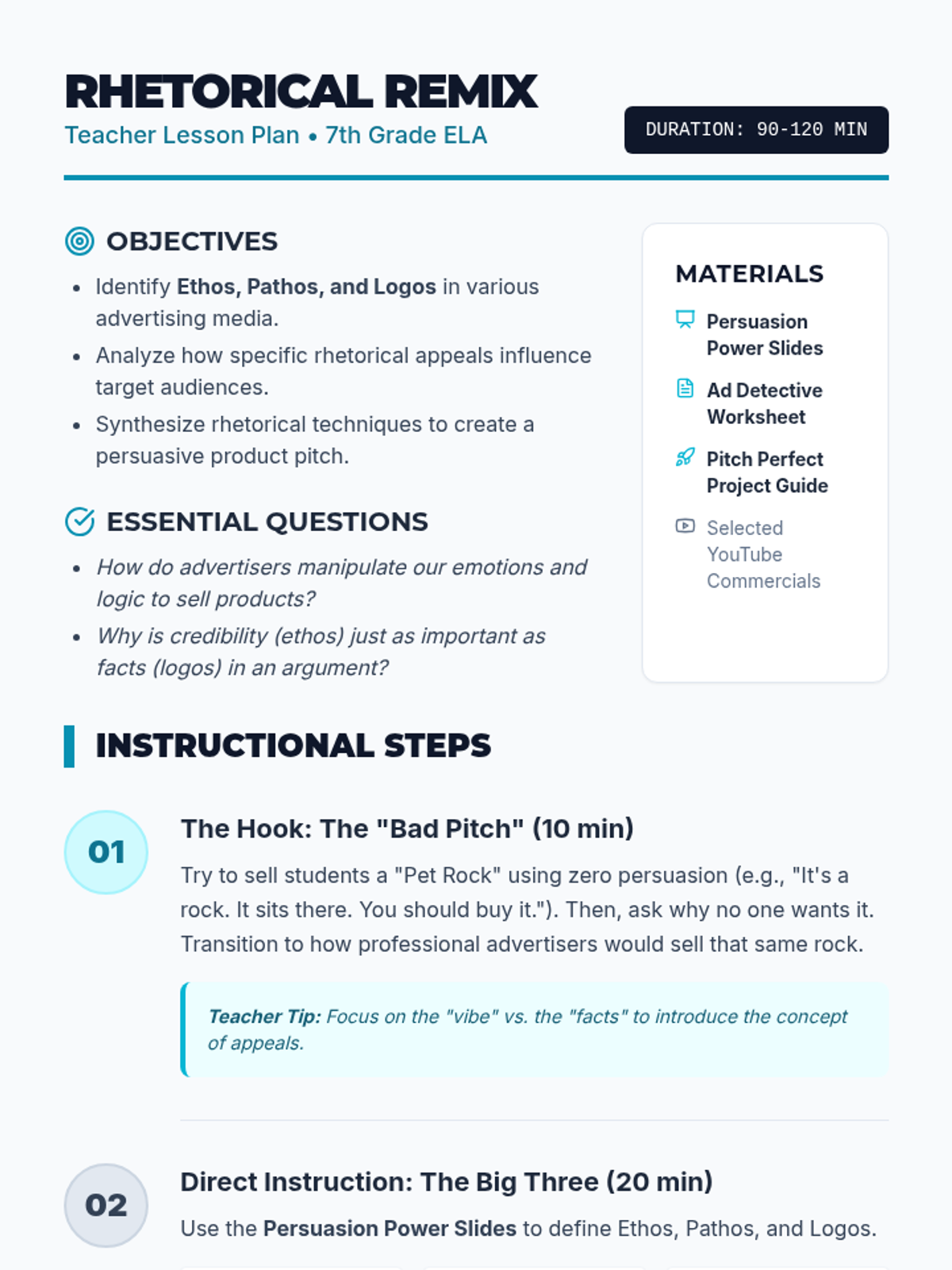
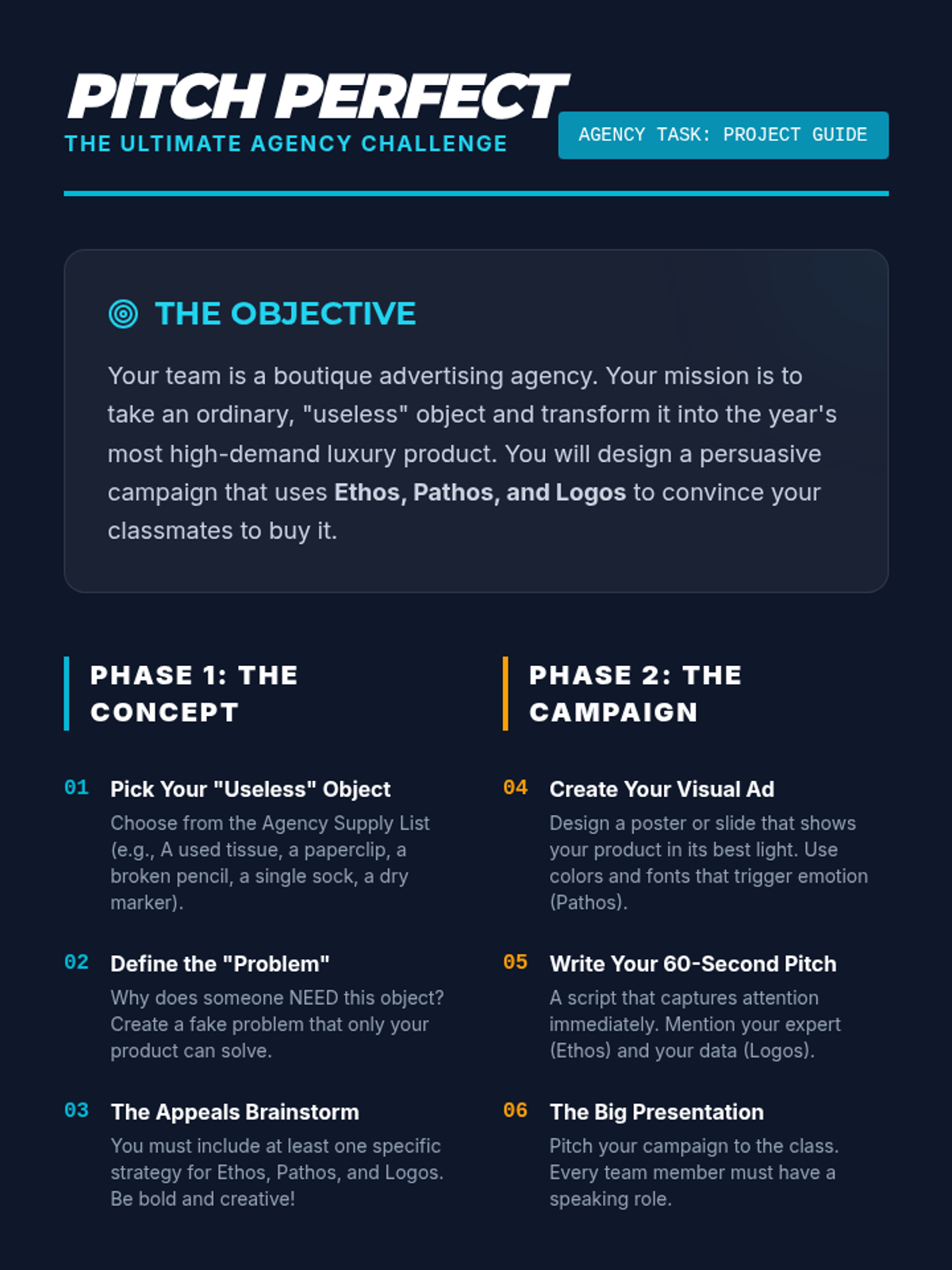
A dynamic 7th-grade ELA lesson where students deconstruct advertising techniques (Ethos, Pathos, Logos) and apply them to create their own persuasive product campaigns.
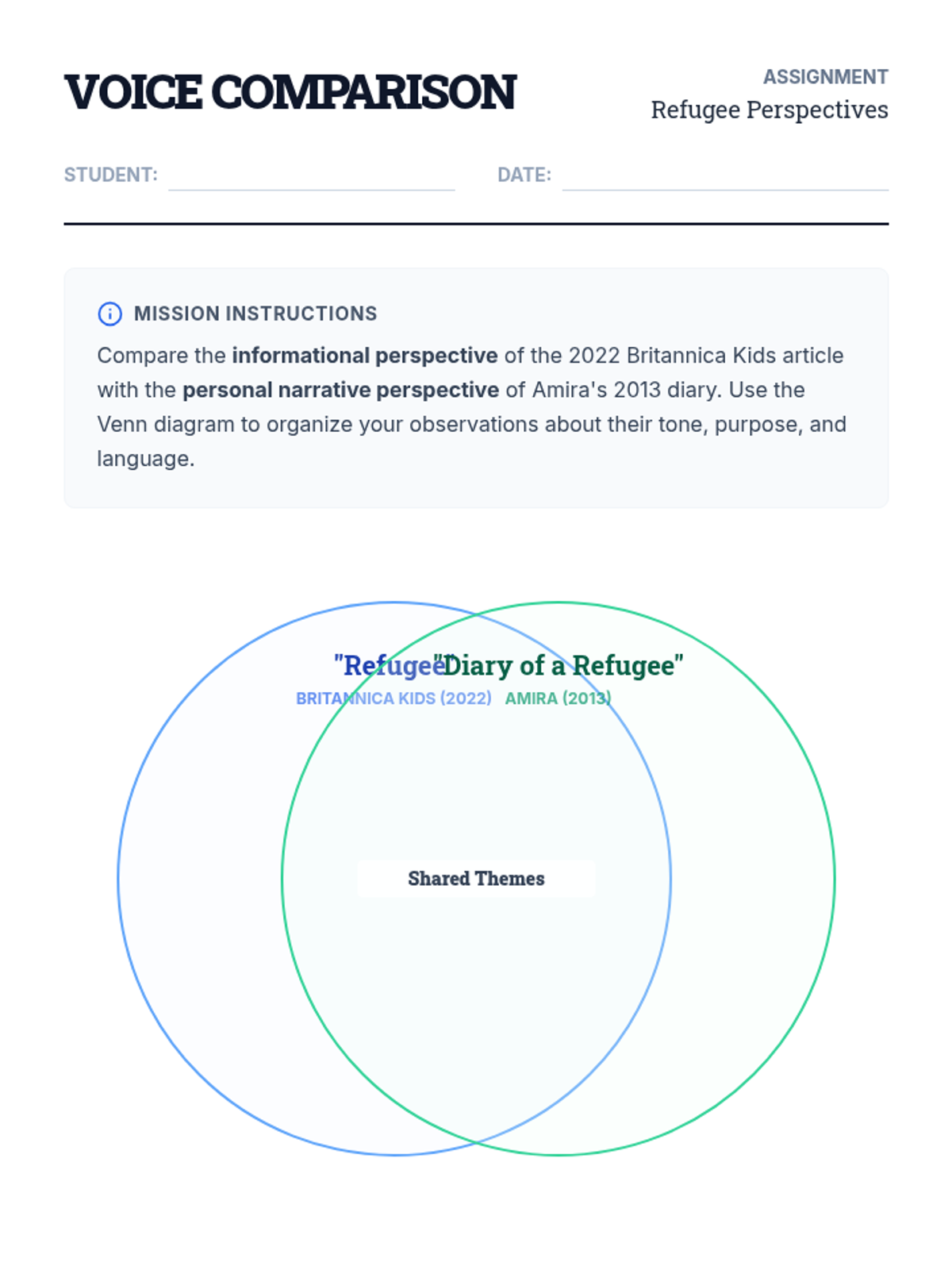
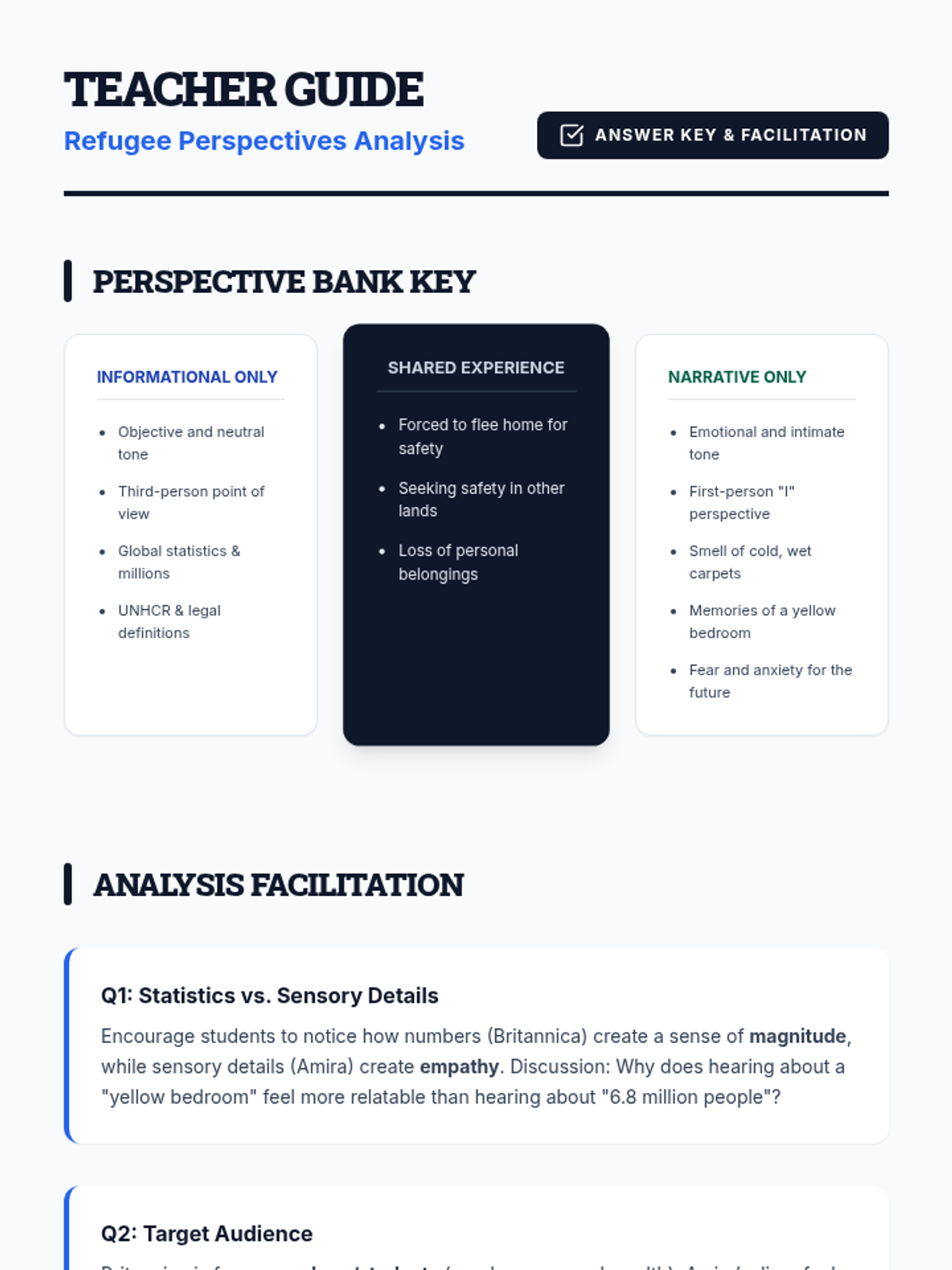
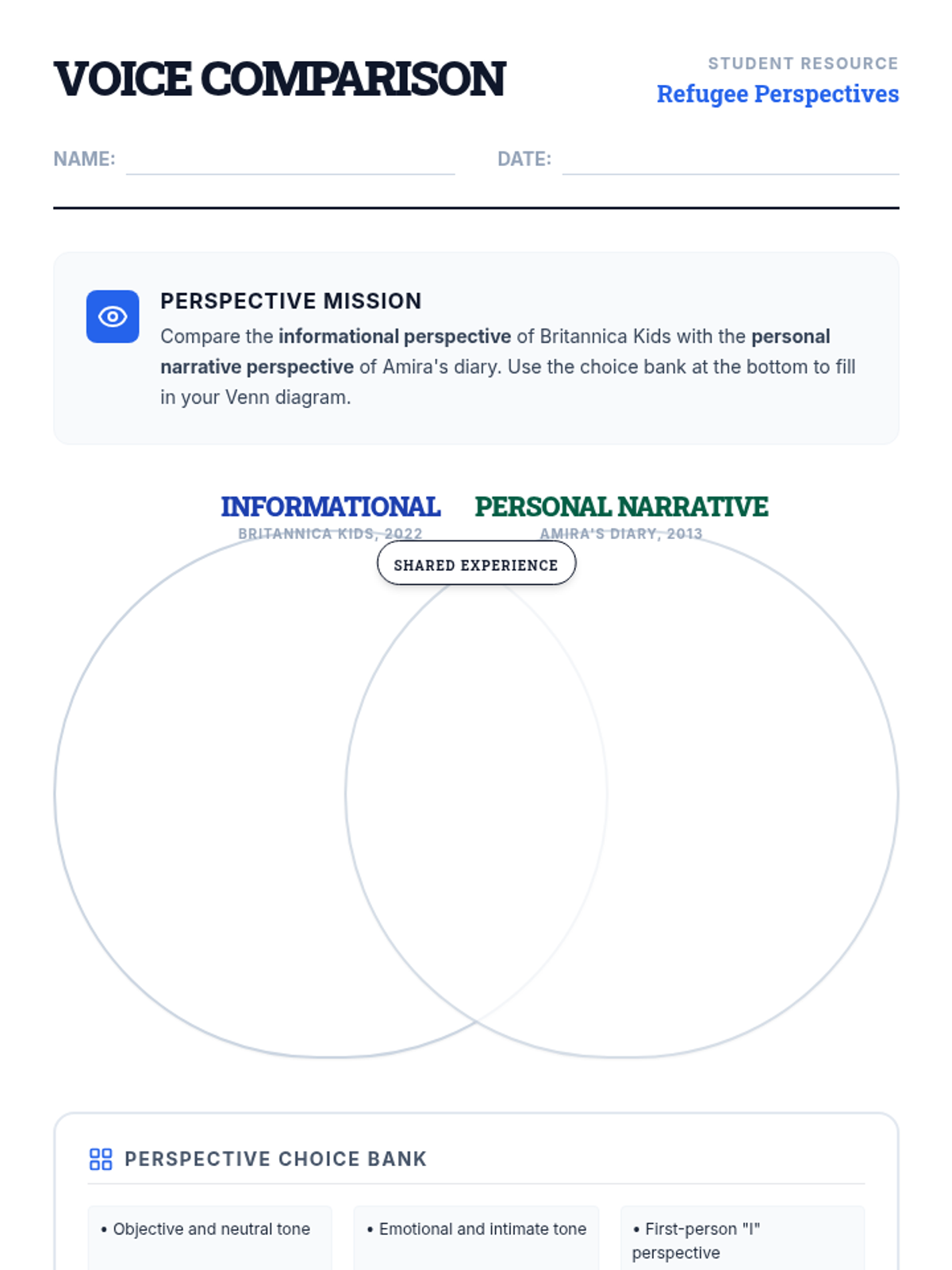
A lesson comparing informational and personal narrative perspectives on the refugee experience using two distinct texts. Students analyze how different formats and voices shape our understanding of global issues.
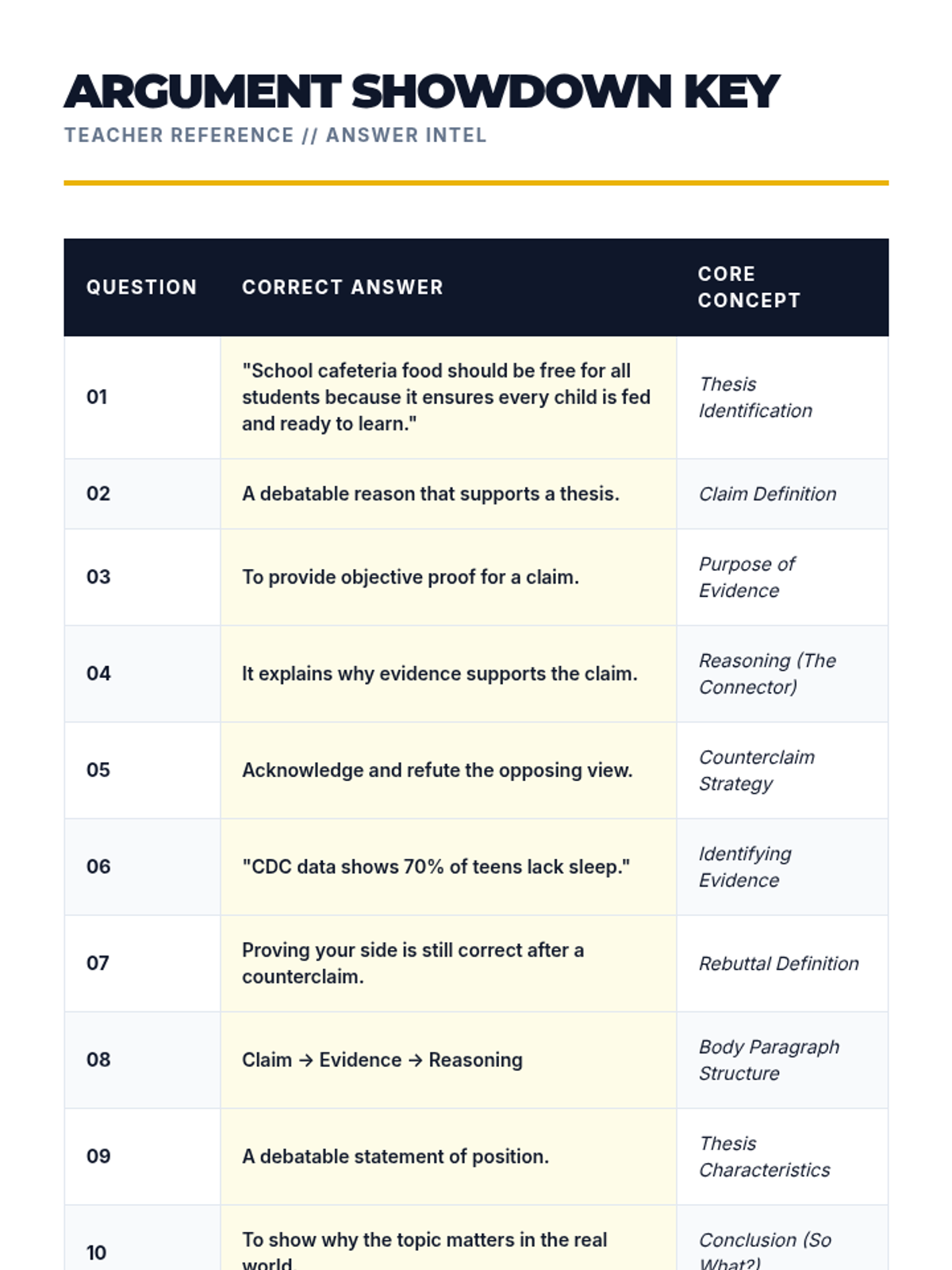
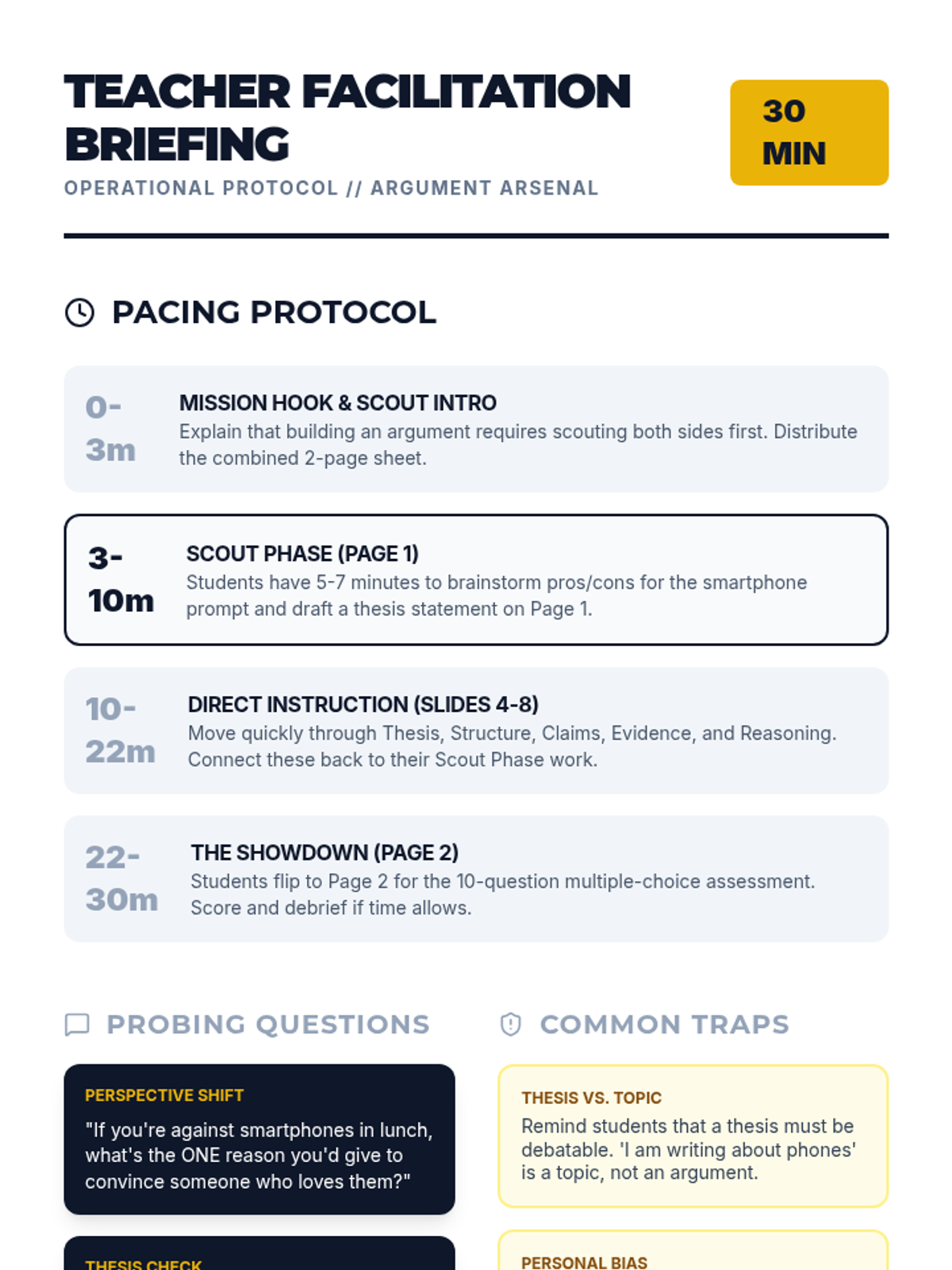
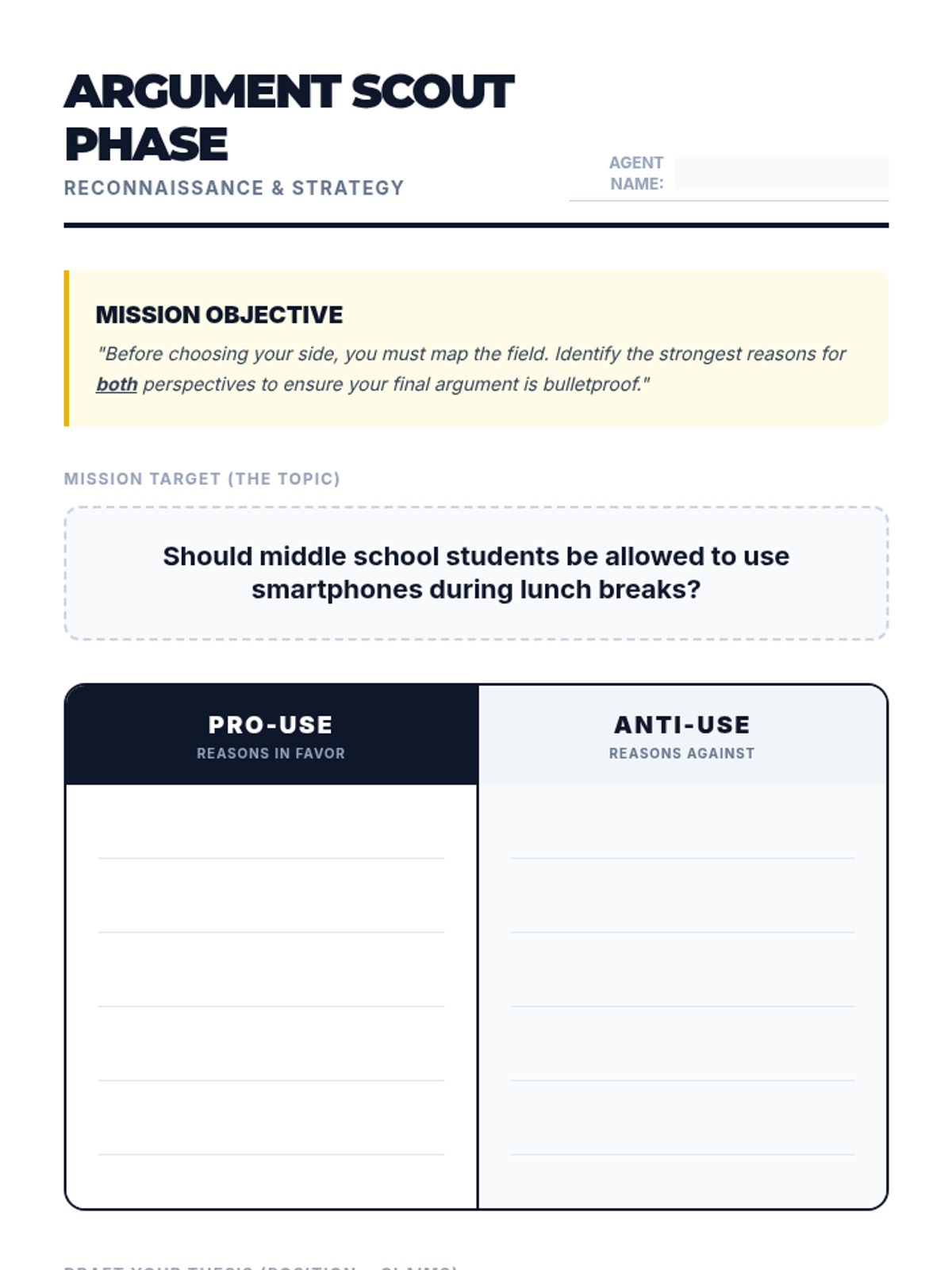
A fast-paced 30-minute introduction to the structural components of argumentative writing, focusing on building strong claims, supporting them with evidence, and addressing counterclaims.
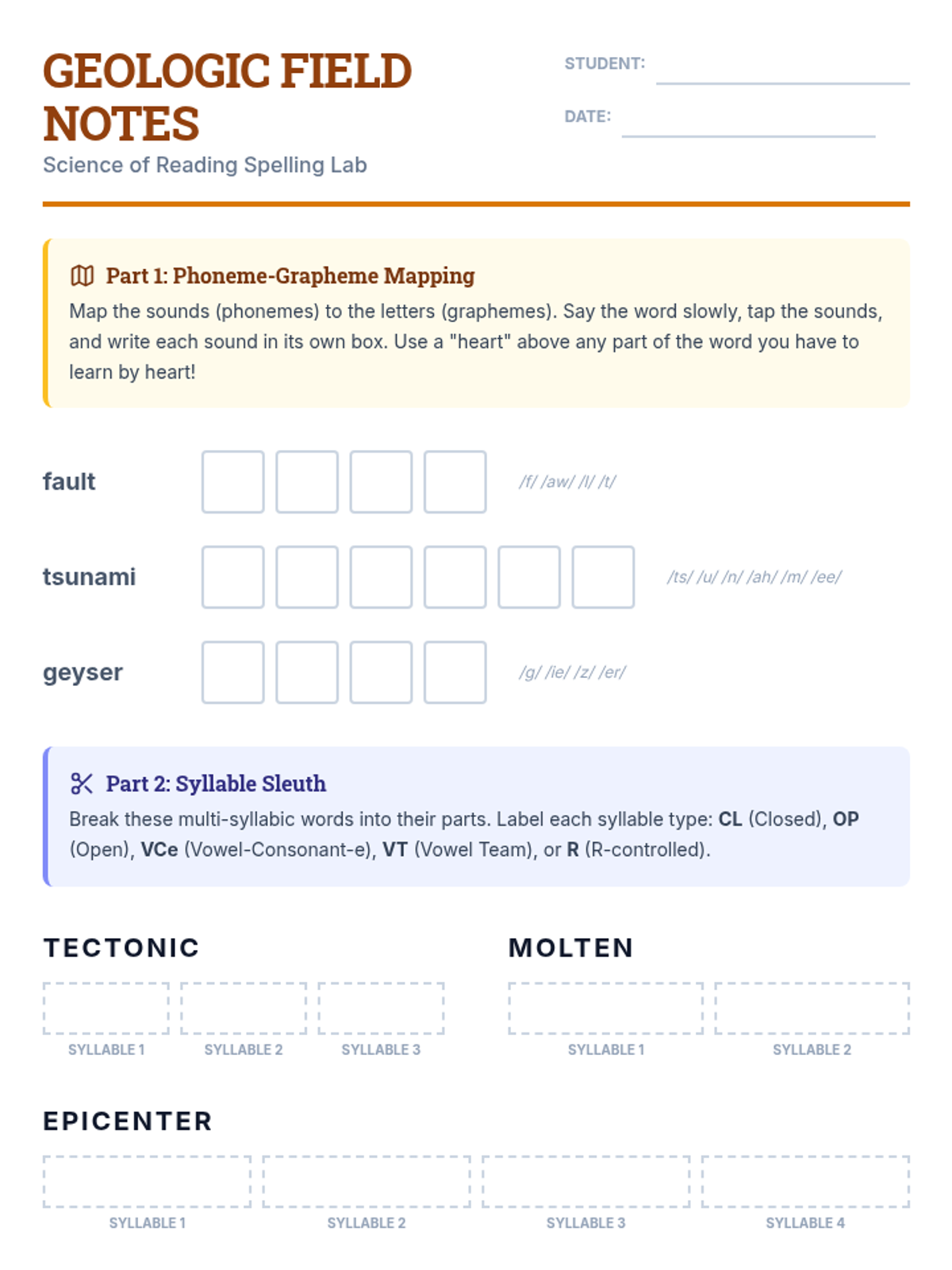
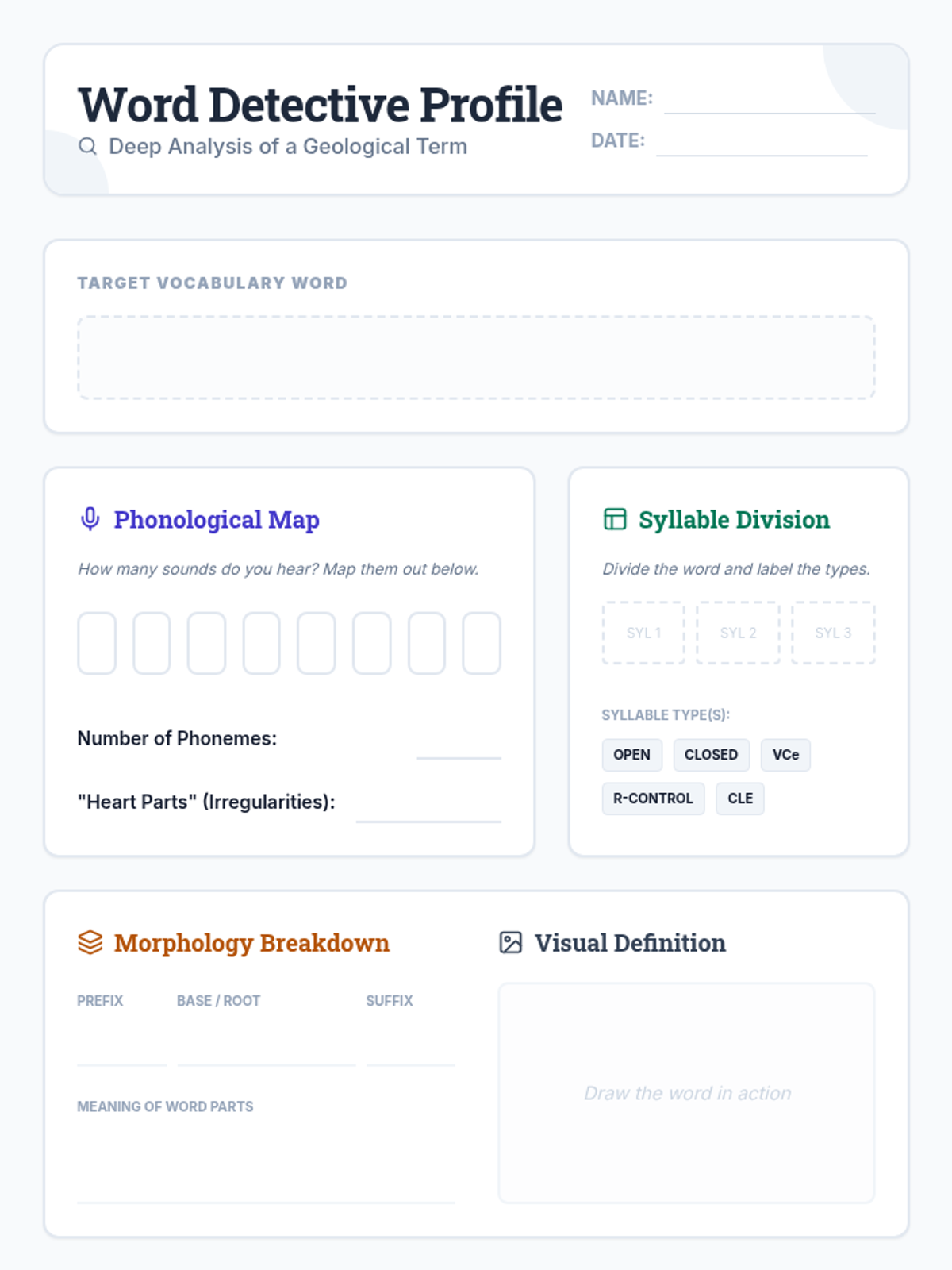
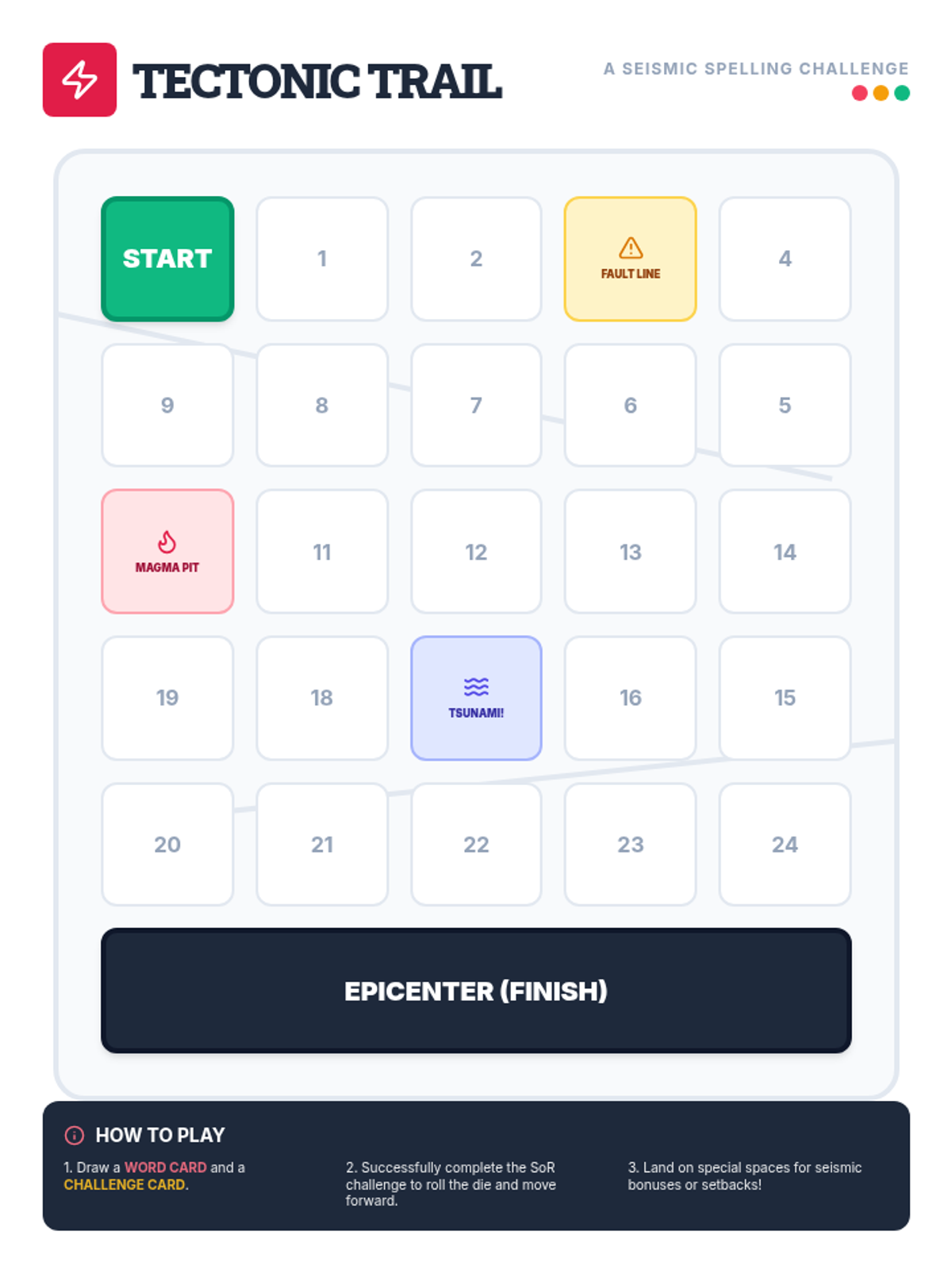
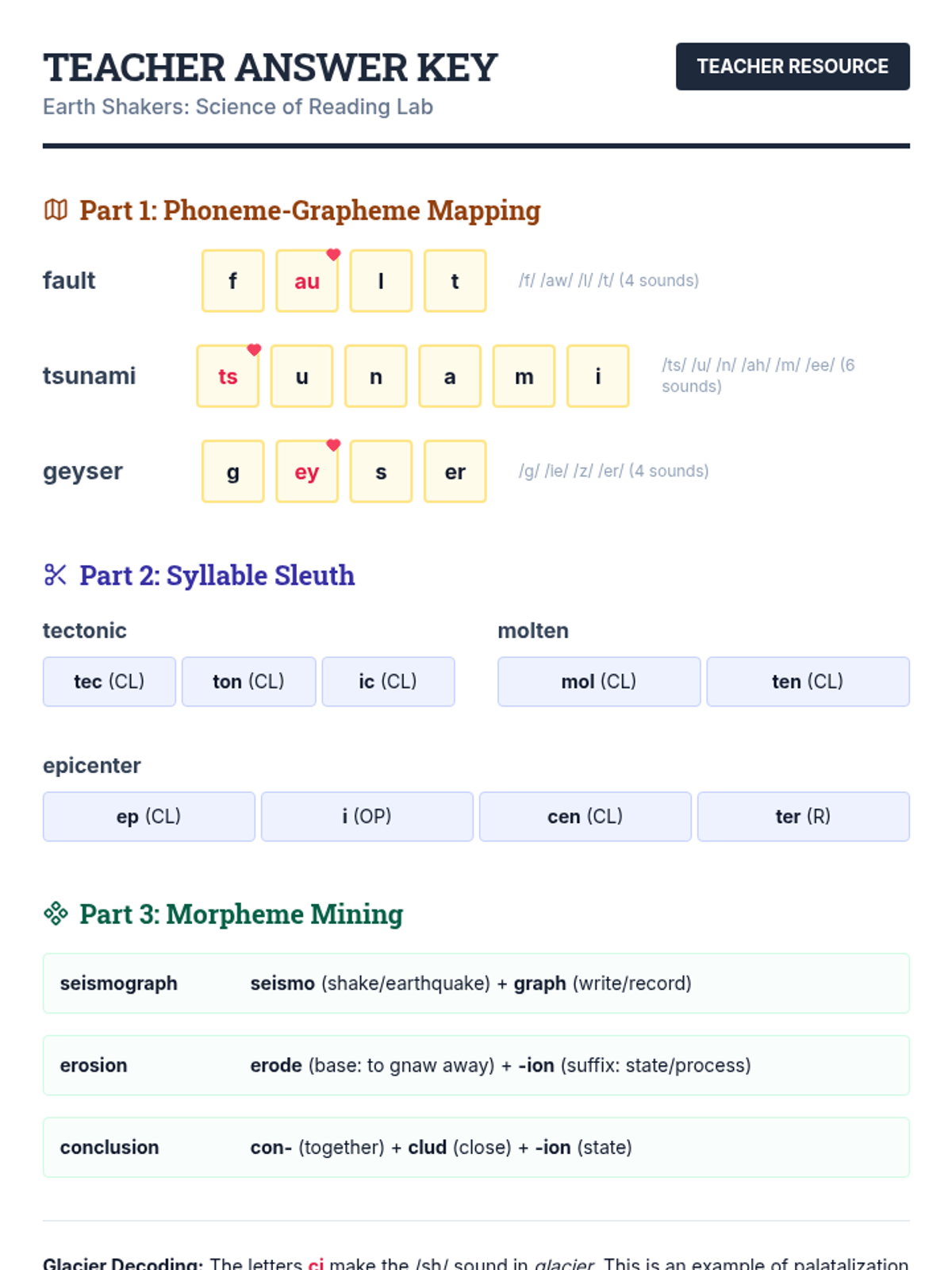
A comprehensive set of Science of Reading based activities focusing on geological vocabulary through phoneme-grapheme mapping, syllable division, and morphological analysis.
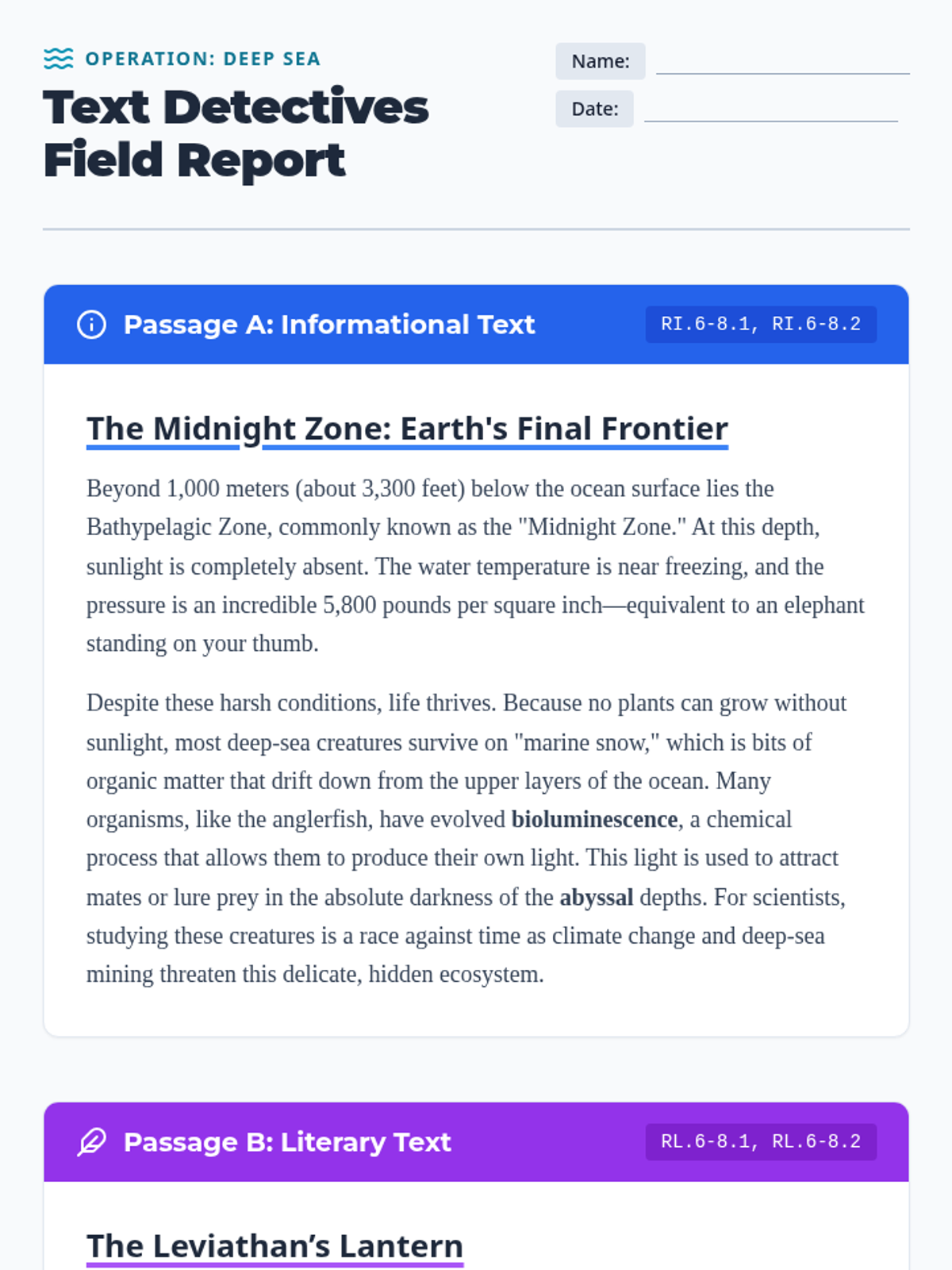
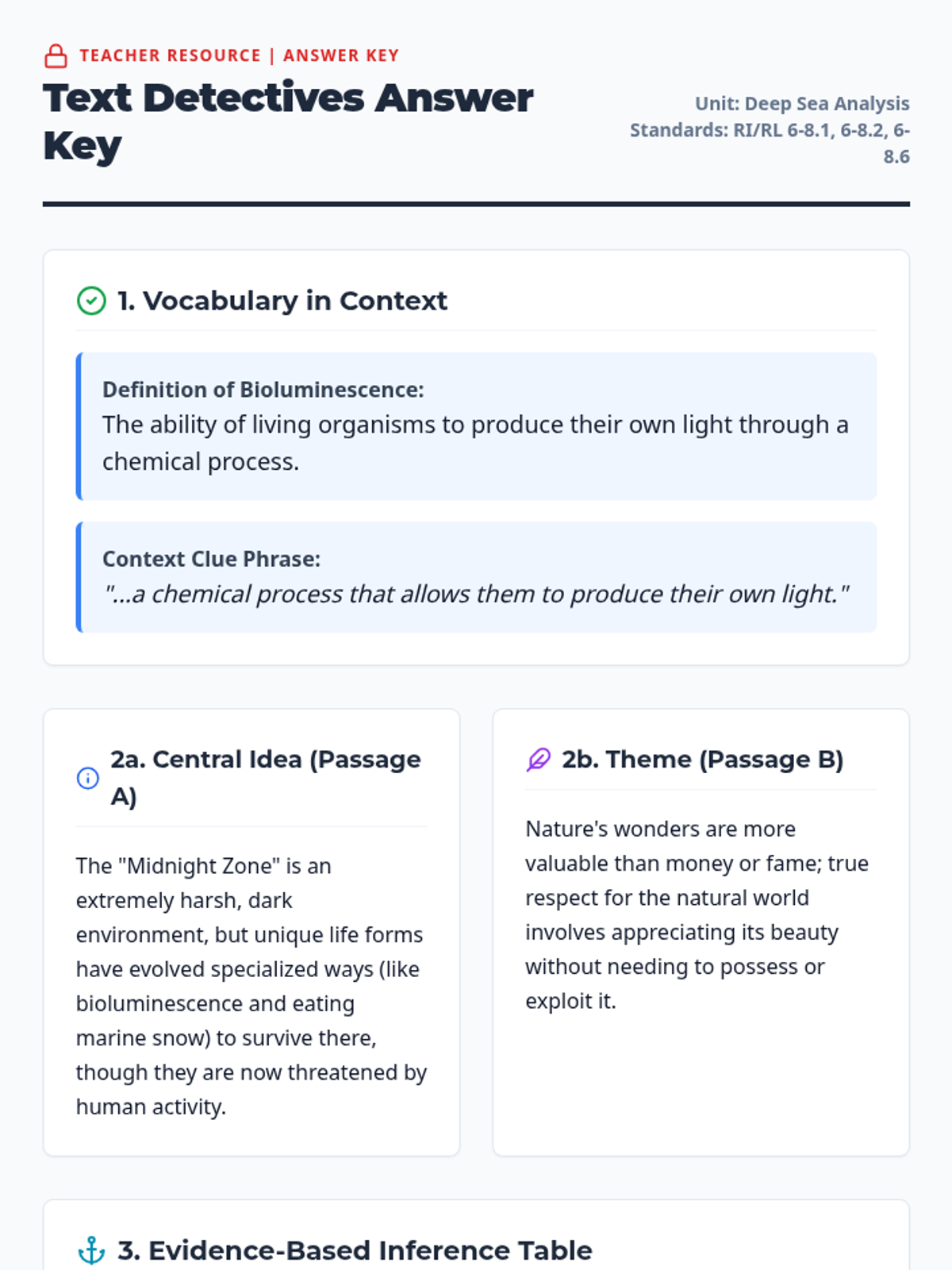
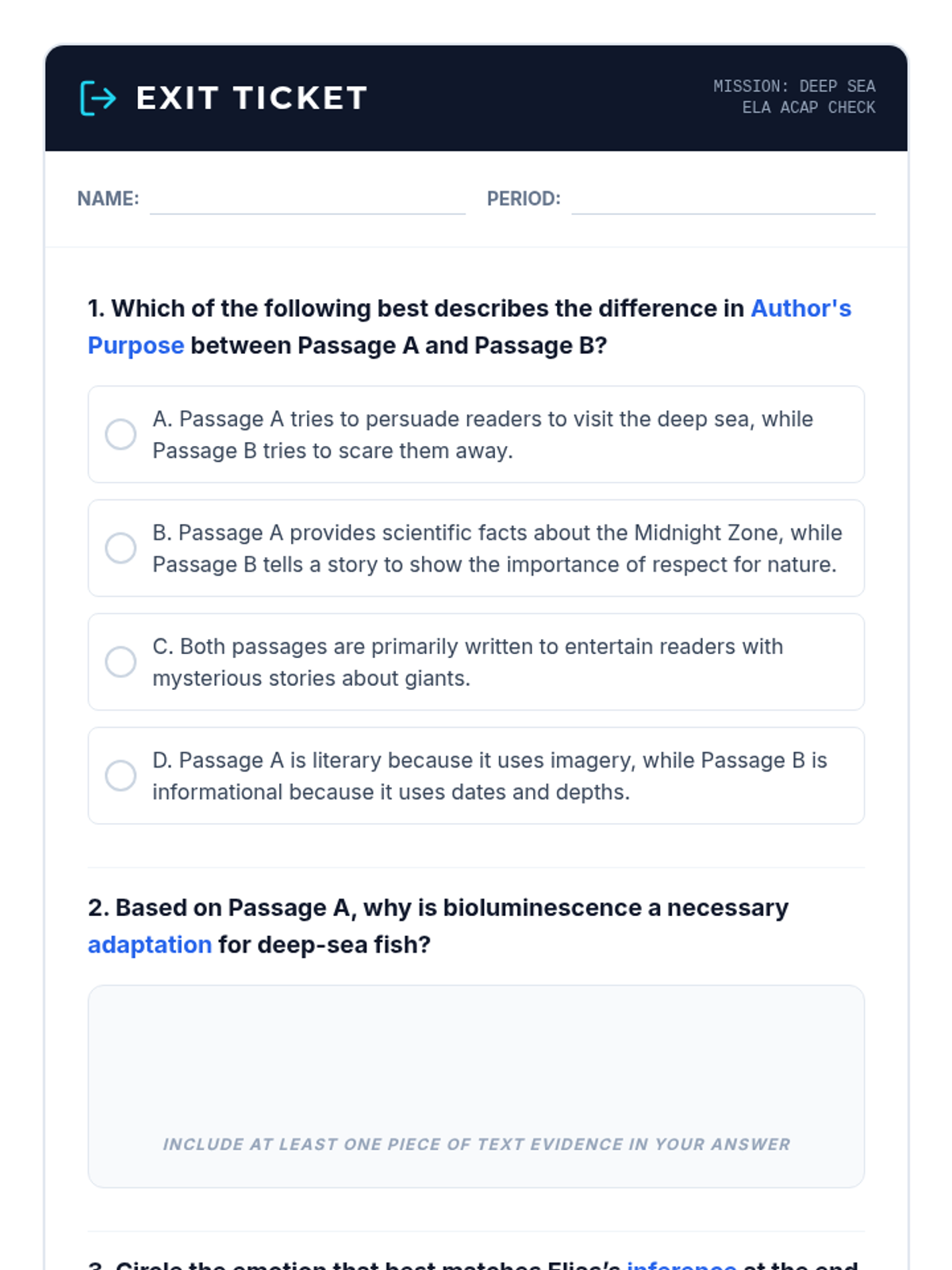
A 45-minute middle school ELA lesson focused on comparing informational and literary texts through the lens of deep-sea exploration. Students analyze author's purpose, determine central ideas, and cite evidence to support inferences using Alabama ACAP-aligned strategies.