A lesson comparing informational and personal narrative perspectives on the refugee experience using two distinct texts. Students analyze how different formats and voices shape our understanding of global issues.
A comprehensive lesson exploring the human brain's capabilities and the nature of intelligence, featuring an informational text analysis and a multiple intelligences choice board.
This lesson explores the structural elements of dystopian fiction, focusing on how authors use world-building to critique contemporary society. Students analyze classic and modern excerpts before designing their own symbolic 'failed society' map.
This lesson teaches students to analyze how news reports introduce, illustrate, and elaborate on key individuals, events, or ideas using specific examples and anecdotes.
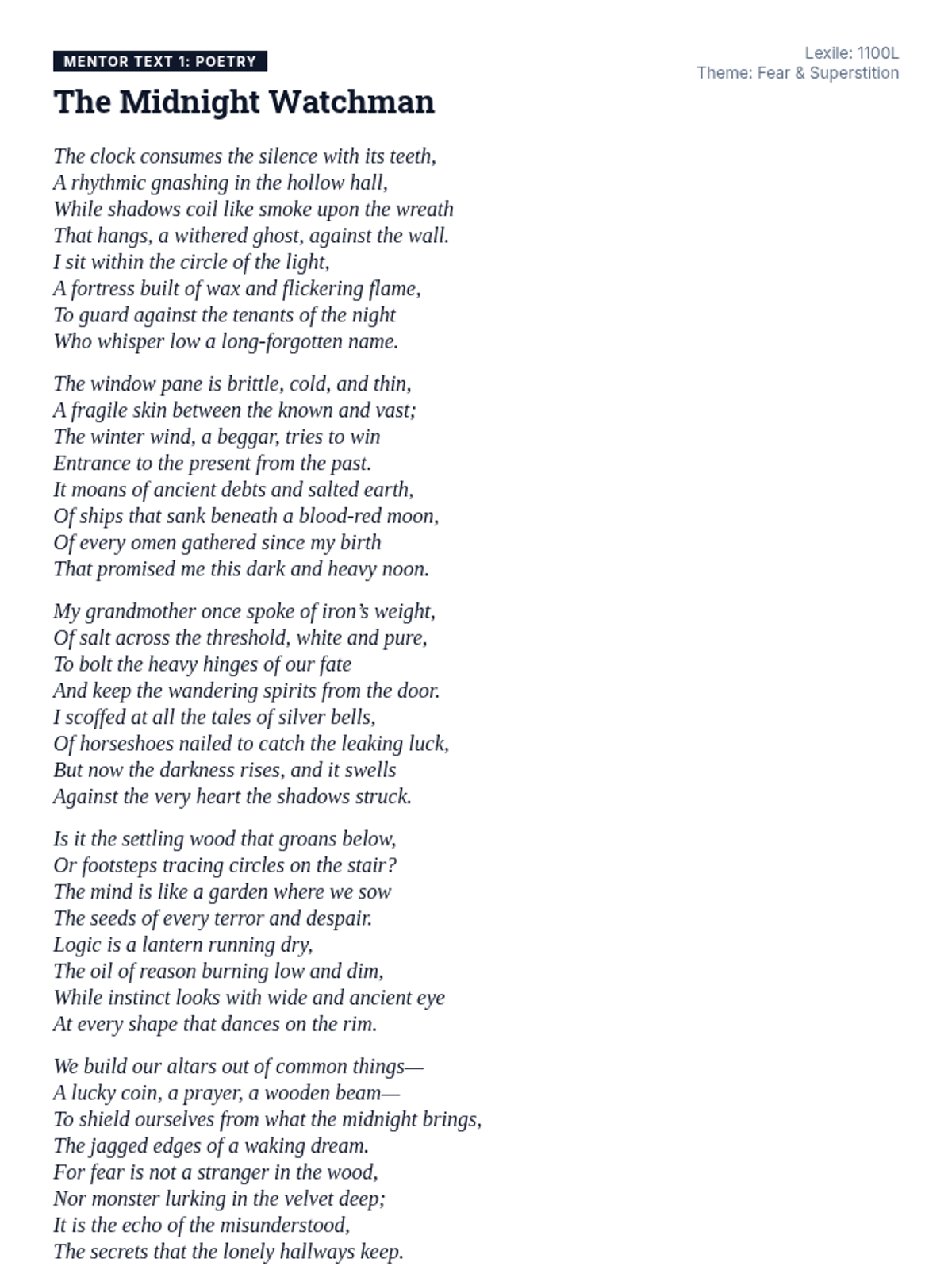
A lesson focused on analyzing how specific parts of a text contribute to the overall structure and the development of an argument through evidence. Students learn to see texts as 'blueprints' where every sentence serves a structural purpose.
A focused study on the prefix 'RE-', the root 'GEO', and the suffix '-LESS' through the lens of Greek and Roman mythology. Students will read myth-inspired stories and complete activities to master these common word parts.
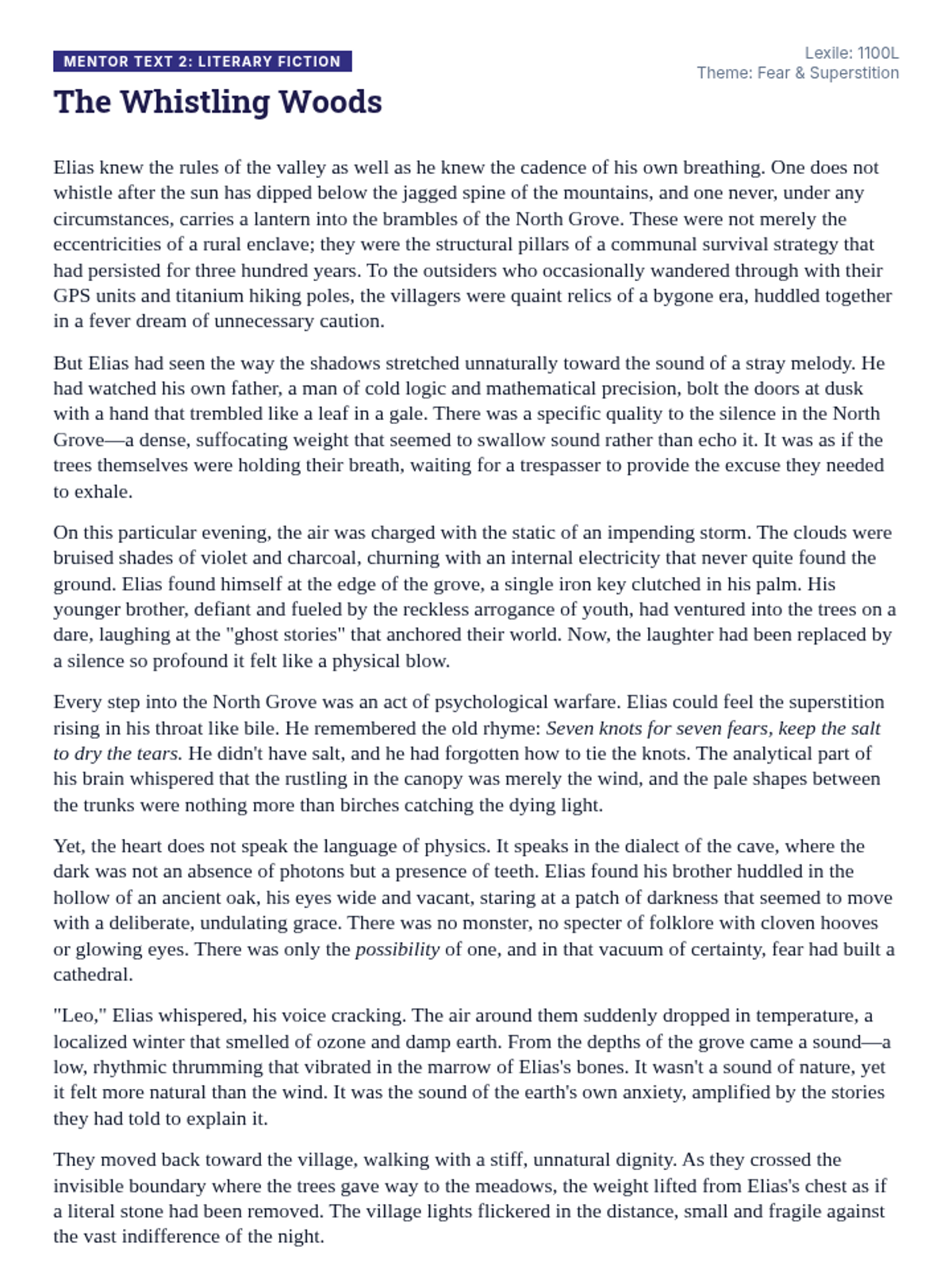
A focused lesson exploring the deep connections between Shakespeare's language and the core themes of Hamlet through quotation analysis.
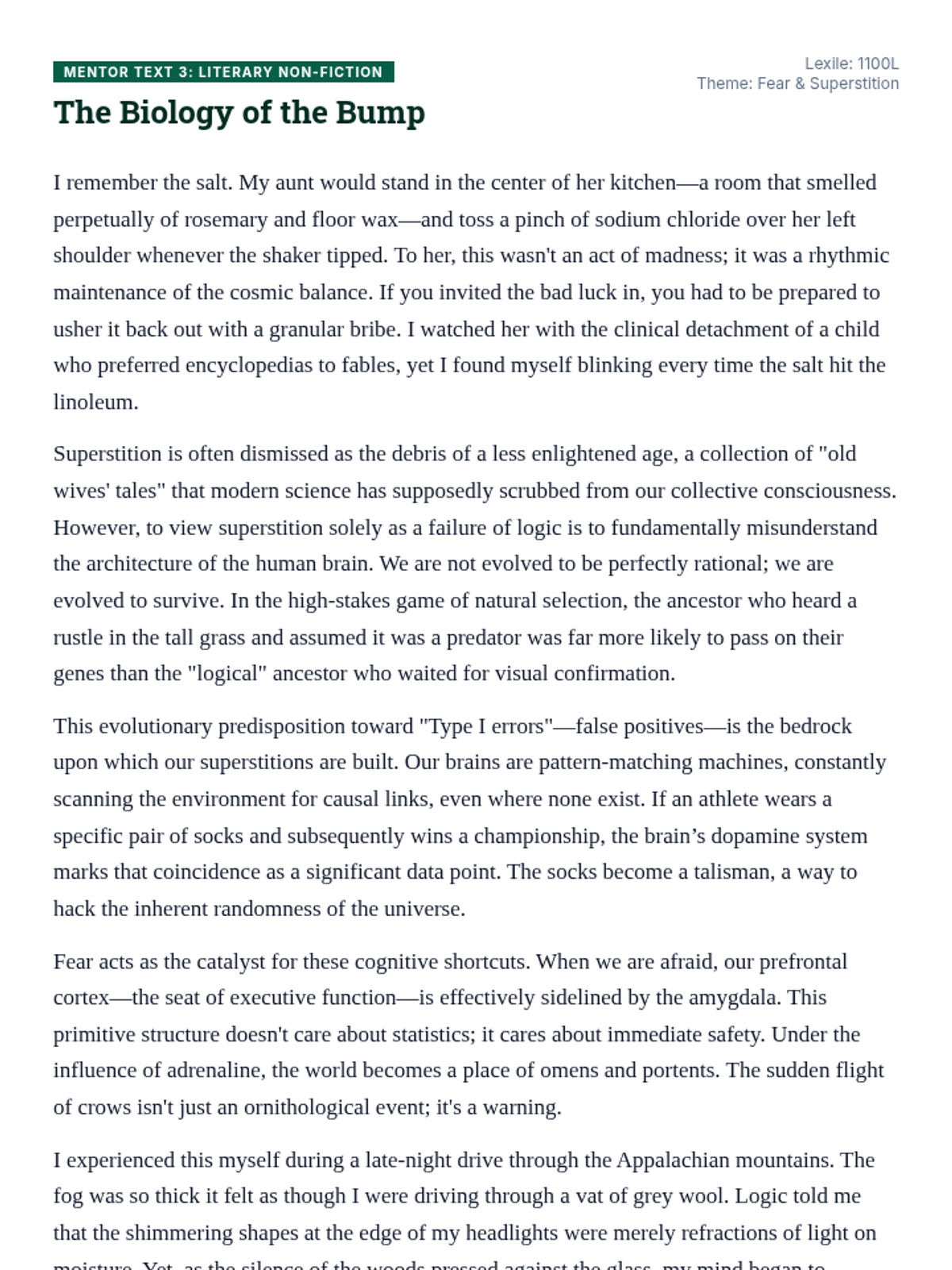
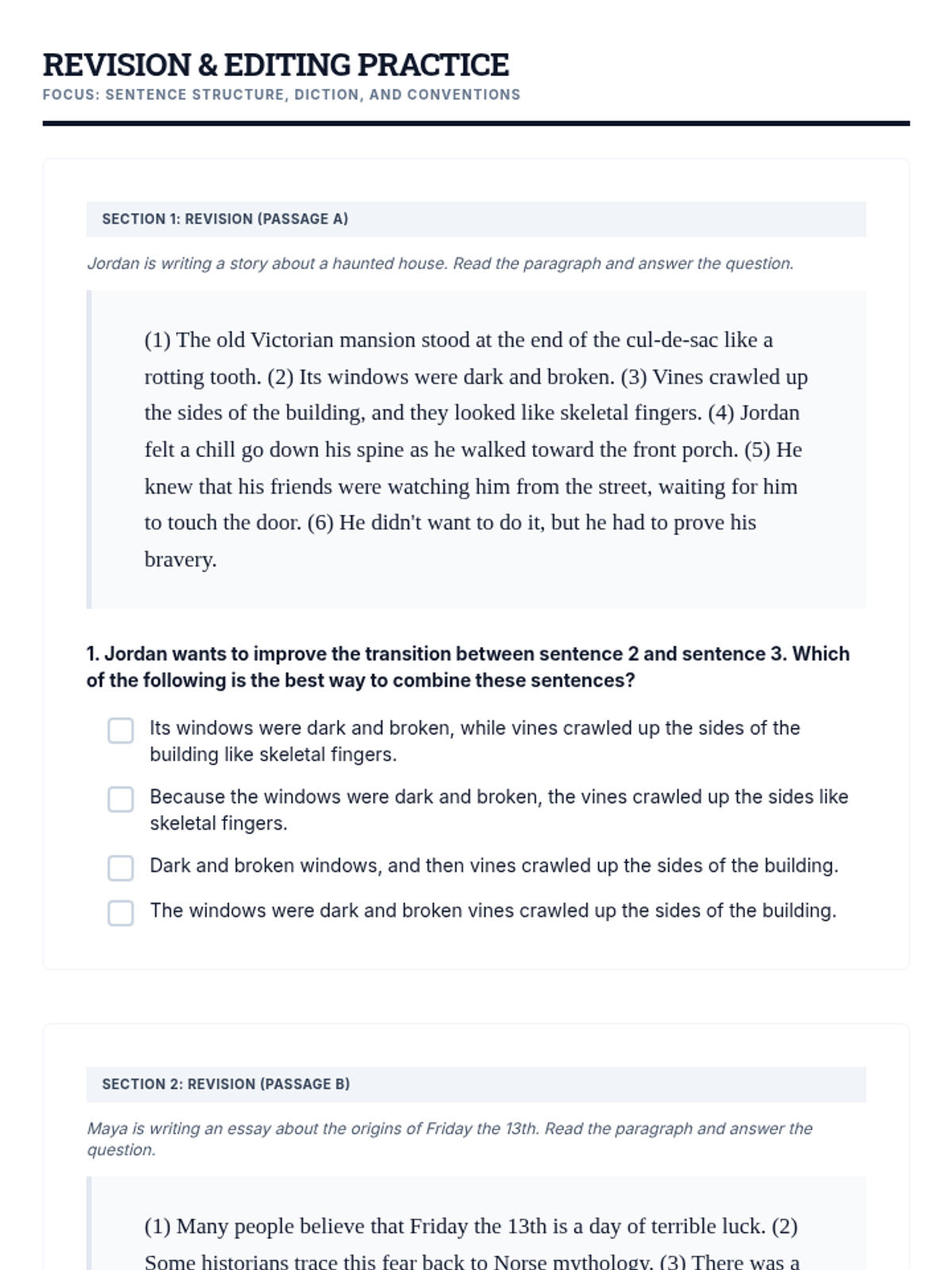
A series of daily editing drills targeting high-frequency STAAR grammar standards including verb agreement, pronoun-antecedent clarity, and complex punctuation.
Identifying and fixing fragments, run-ons, and comma splices in academic writing.
Mixed review and simulation of the STAAR editing/revising section.
Pronoun-antecedent agreement and possessive apostrophe usage.