A high-energy, movement-based lesson where kindergarteners learn to identify community helpers and their workplaces through a classroom scavenger hunt. Students 'patrol' the room to match heroes to their stations using a visual passport.
Students share their final video with the school community and reflect on their learning journey.
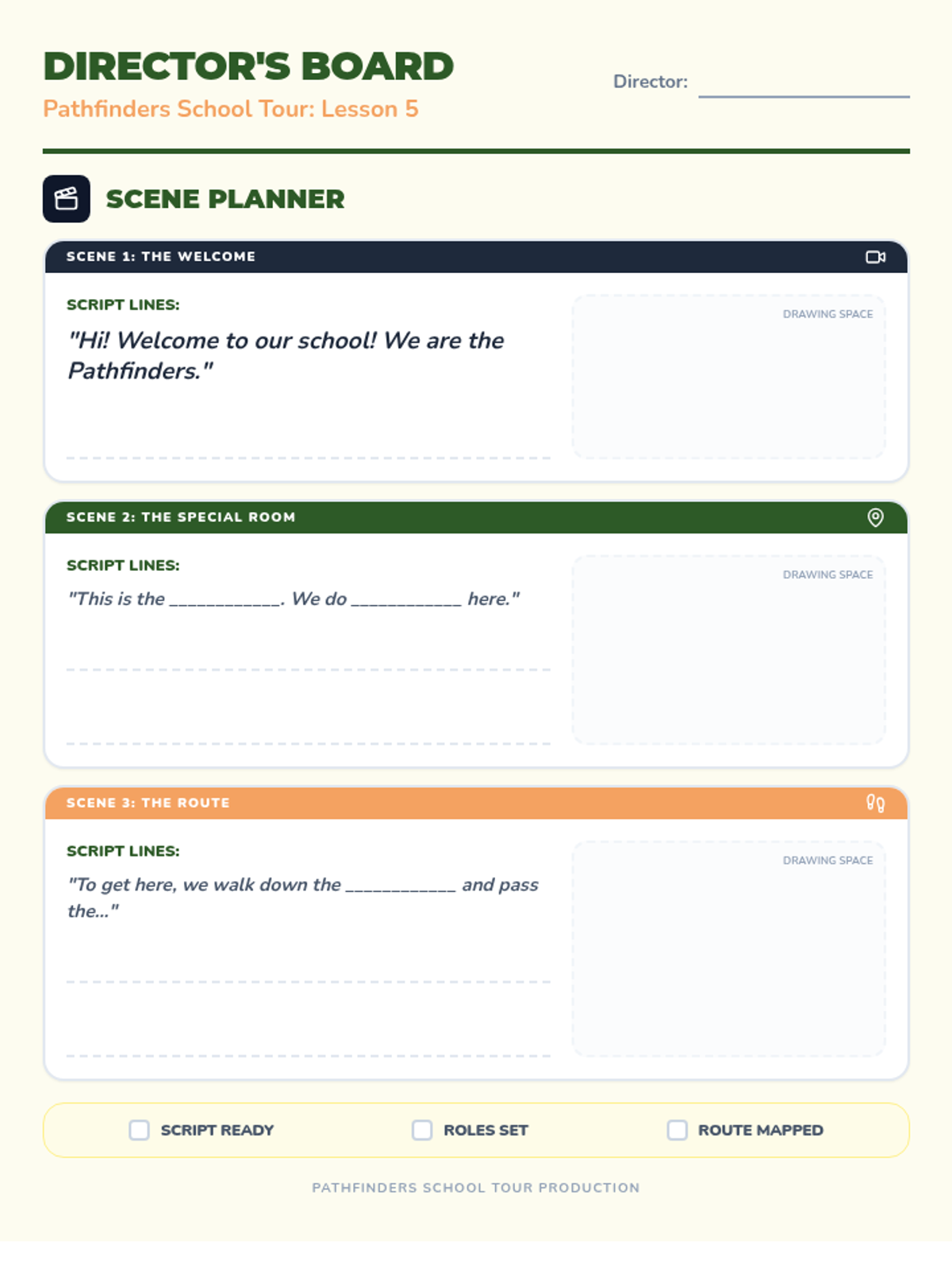
Students script and film their video tour, applying their knowledge of school roles and locations.
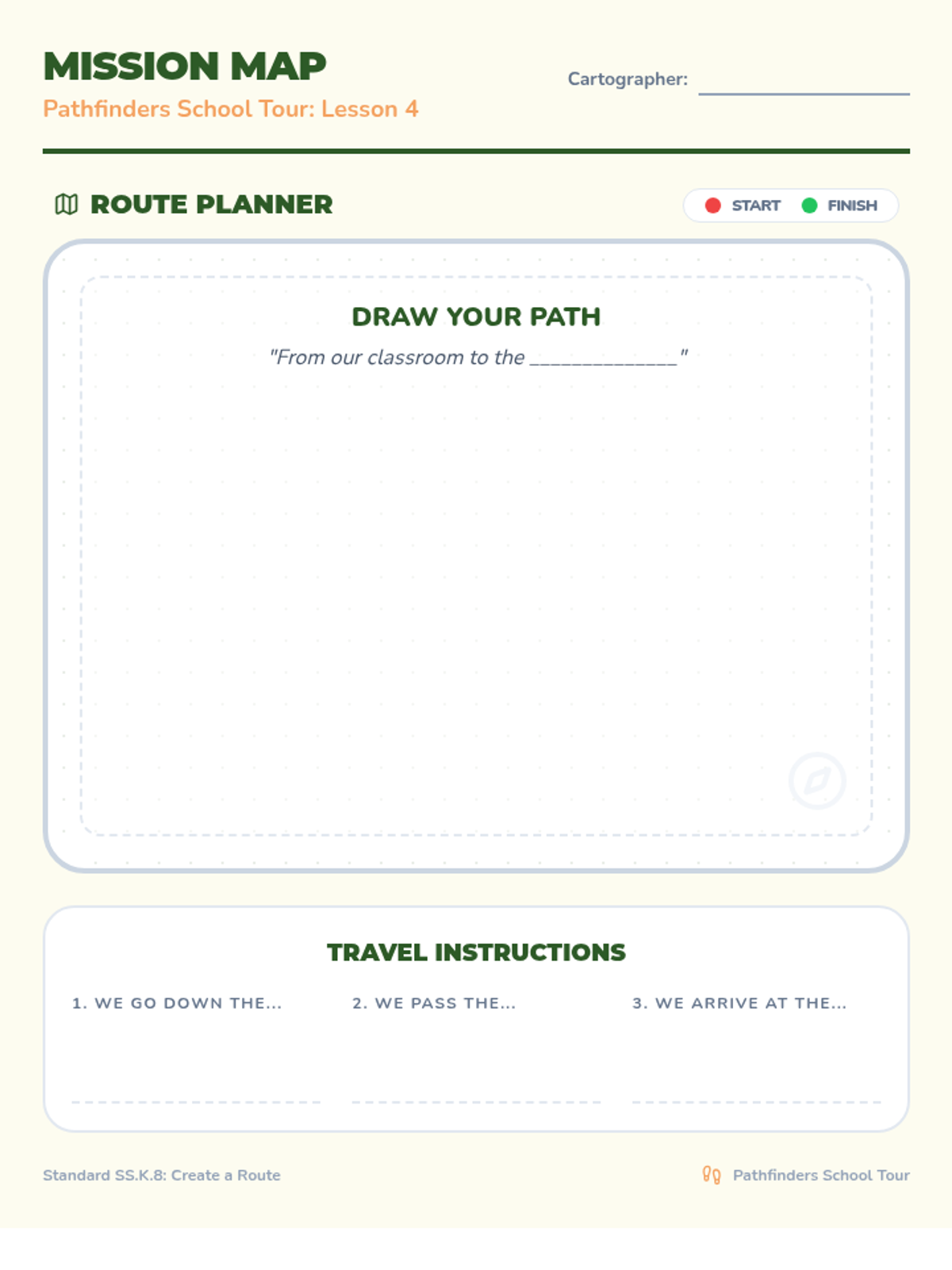
Students learn to use geographic tools to create specific routes and paths between important school locations.
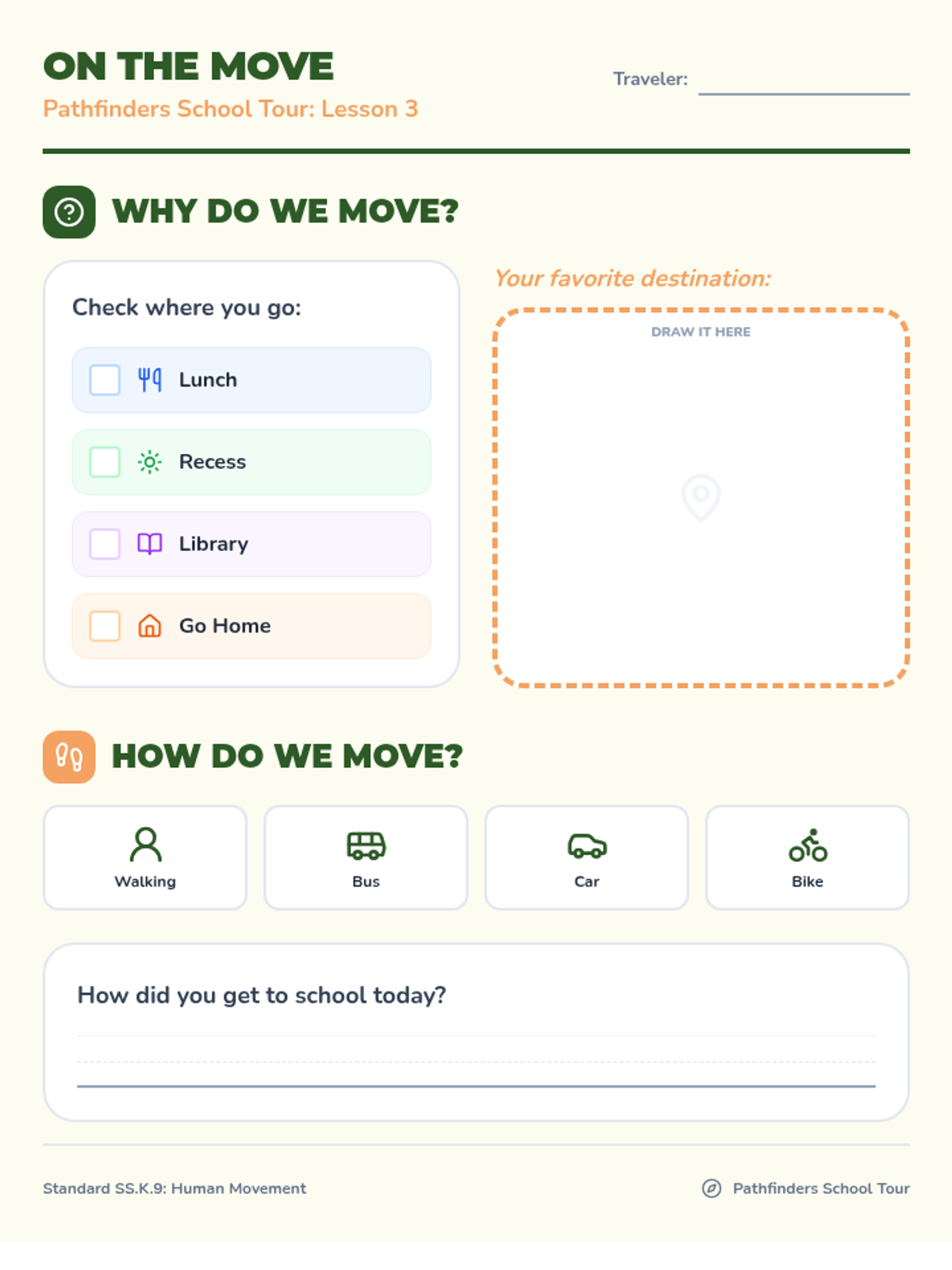
Students analyze the reasons why we move through the school and the different ways we travel from place to place.
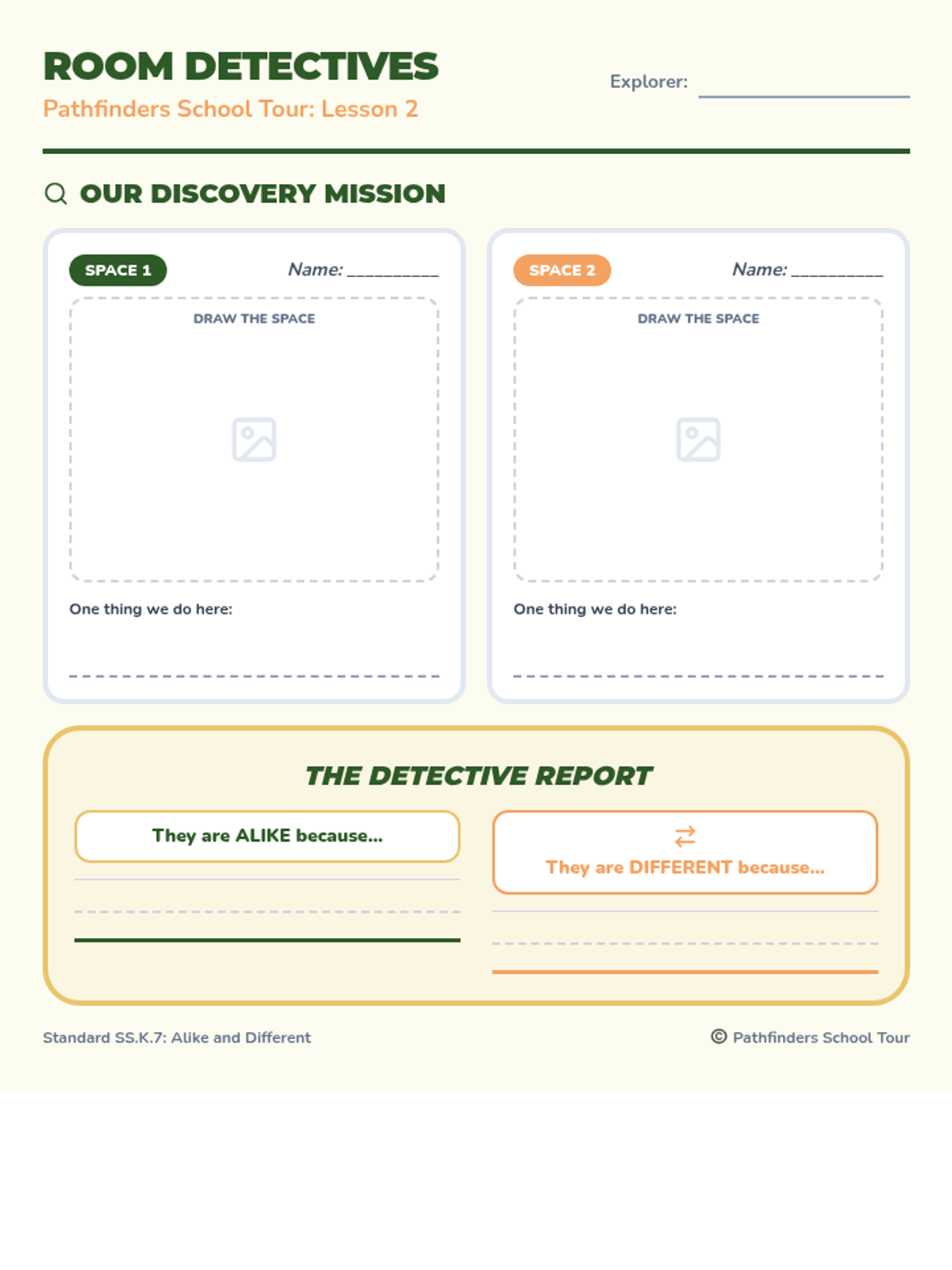
Students investigate different areas of the school to discover how spaces are alike and different in purpose and appearance.
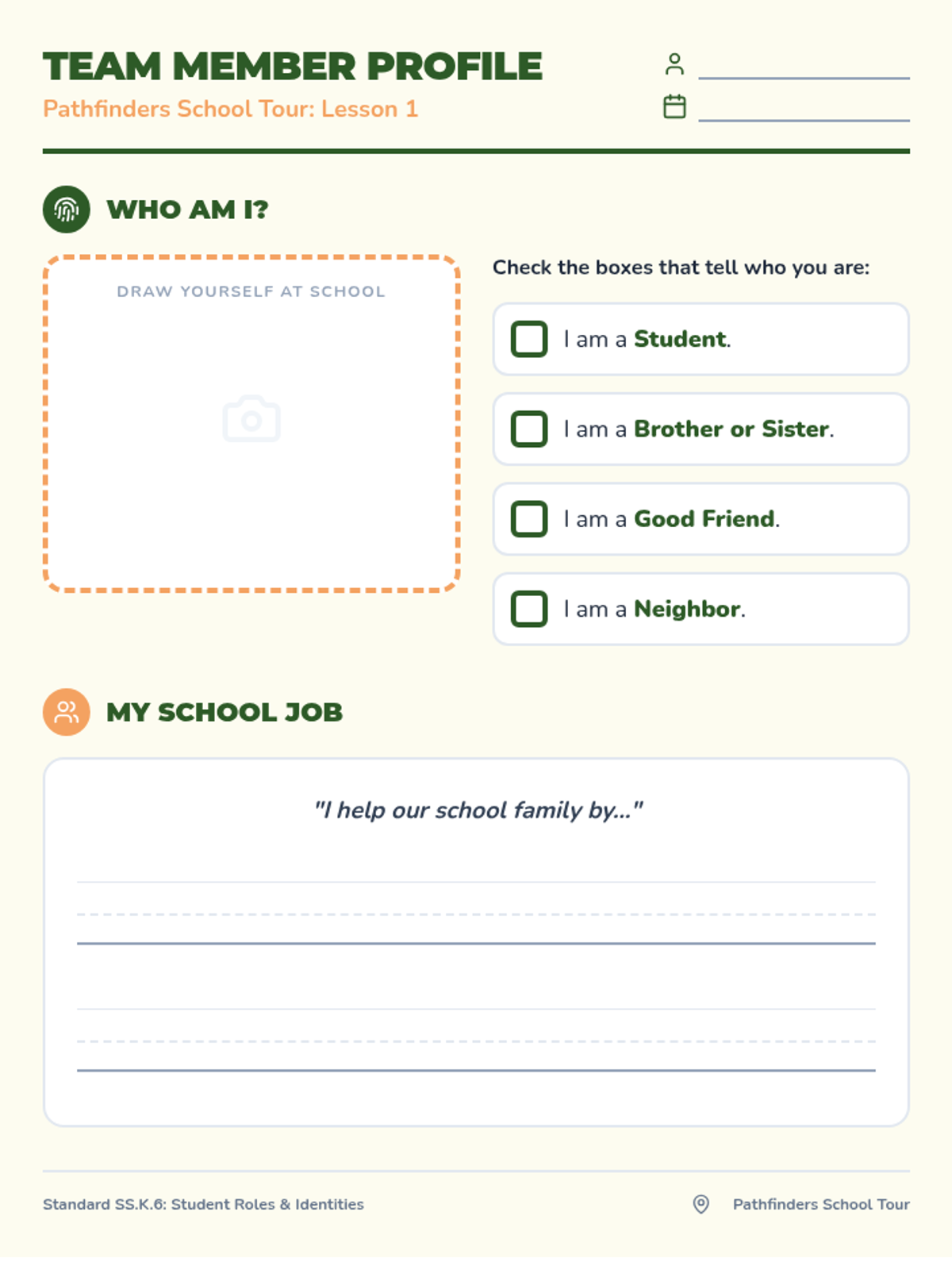
Students explore their identities as members of the school family and identify the different roles people play to make the school work.
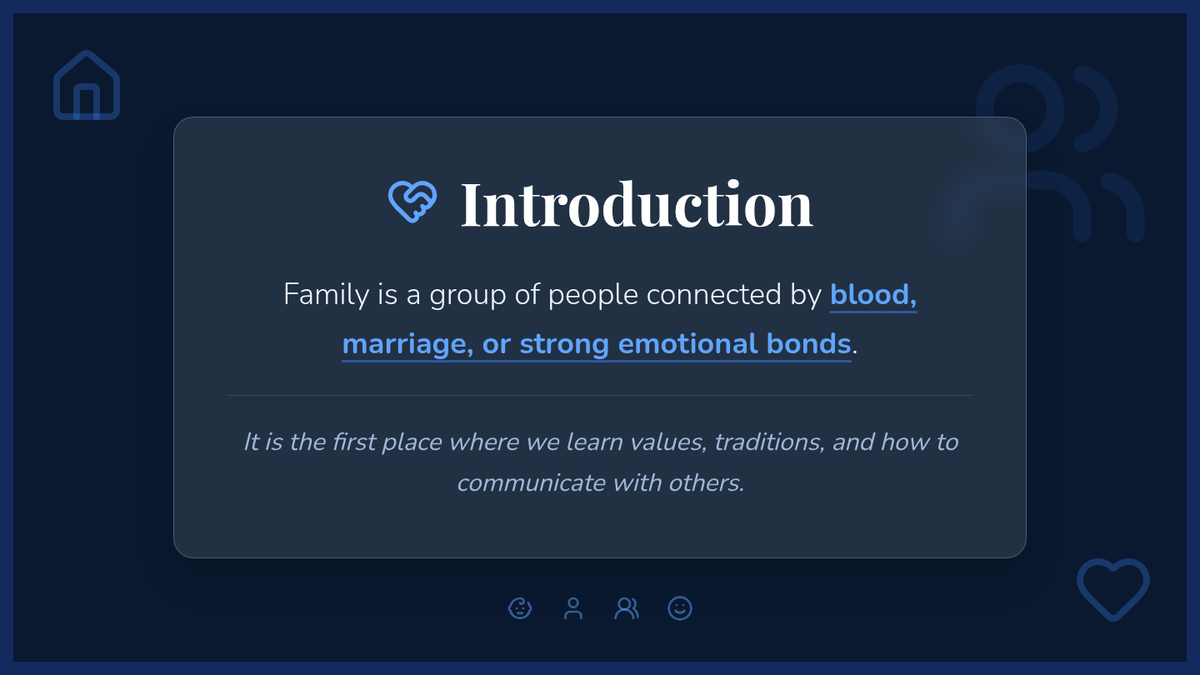
A lesson introducing the concept of family, its definition, and its importance as a social unit.
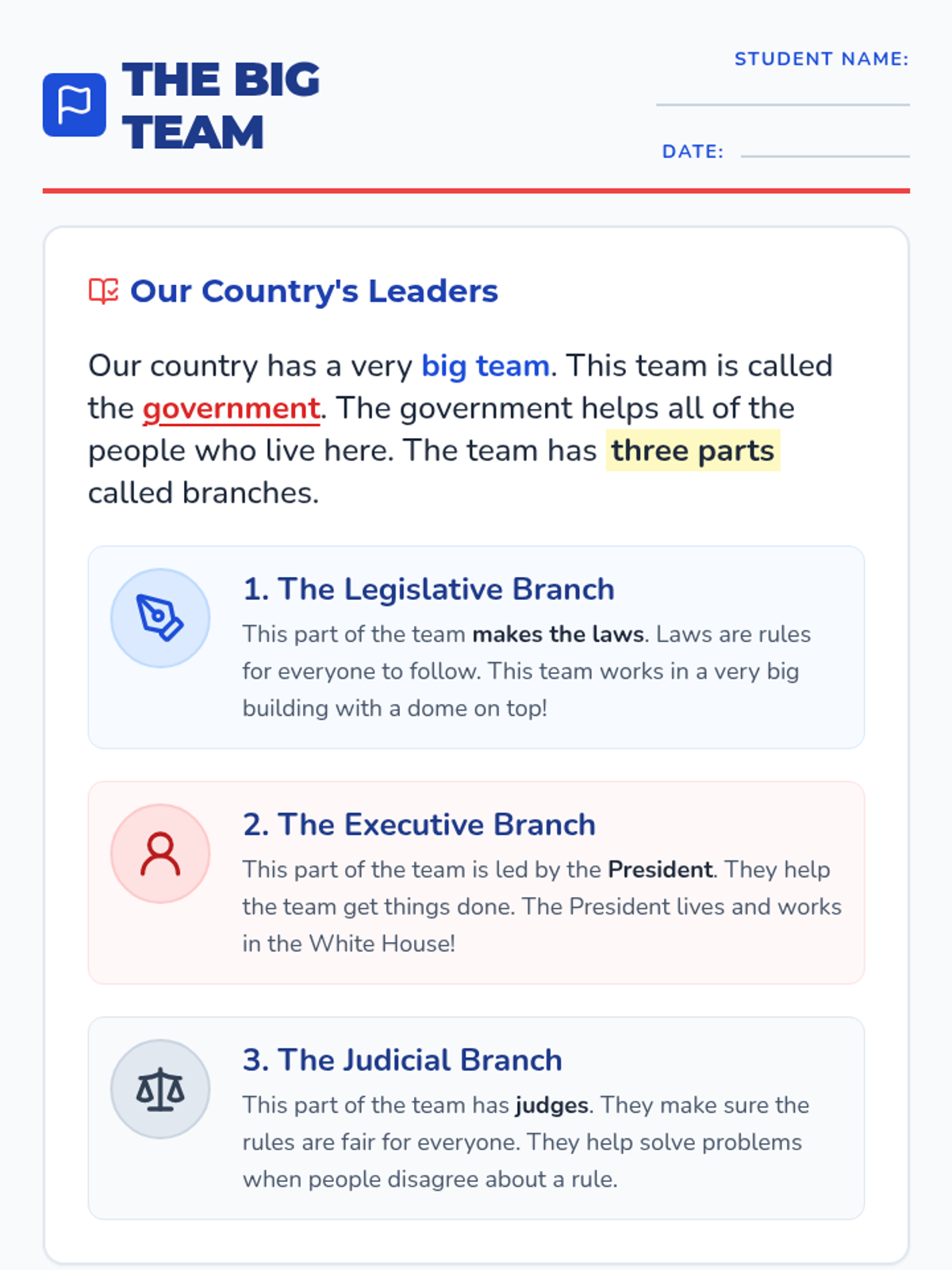
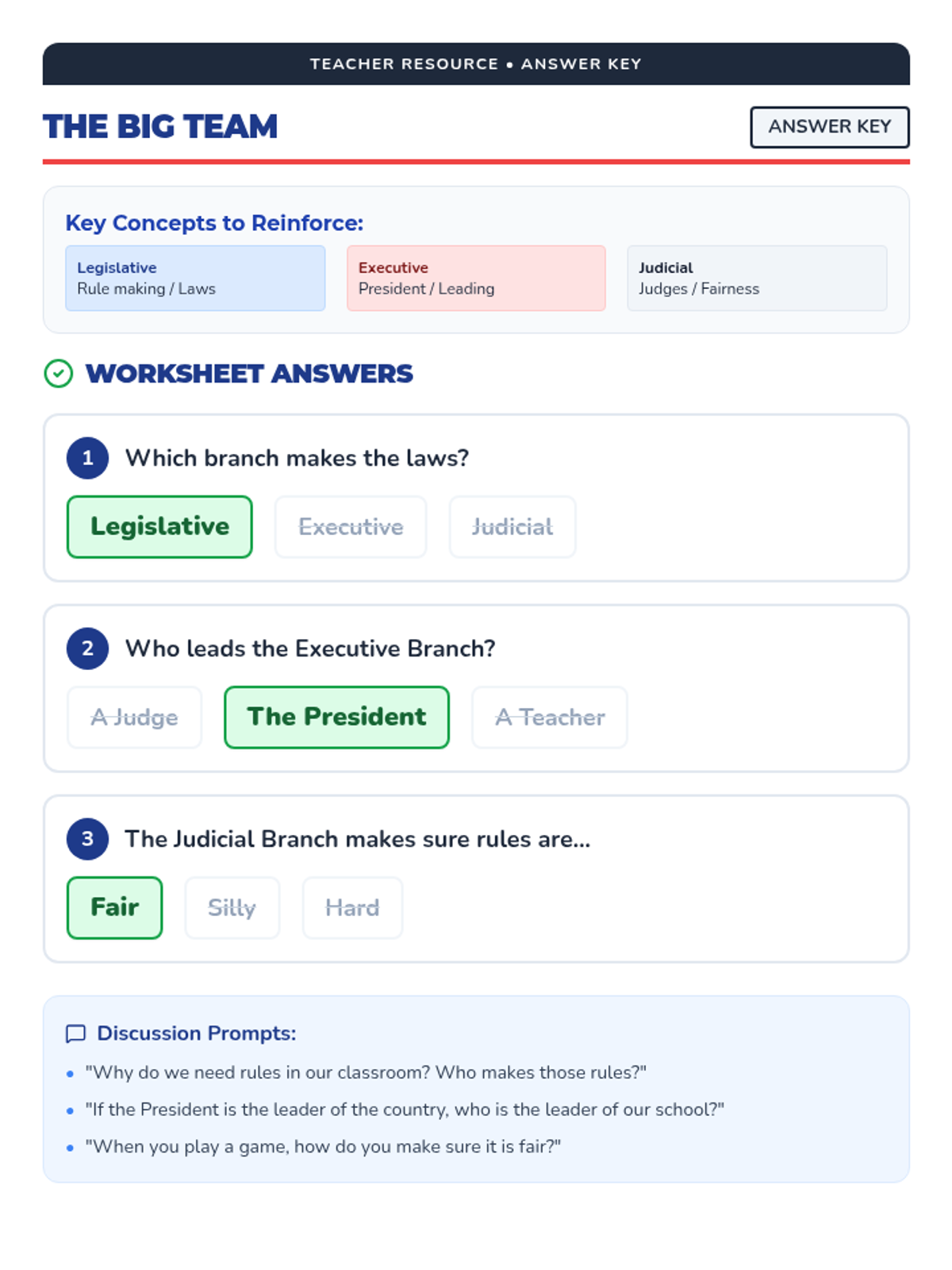
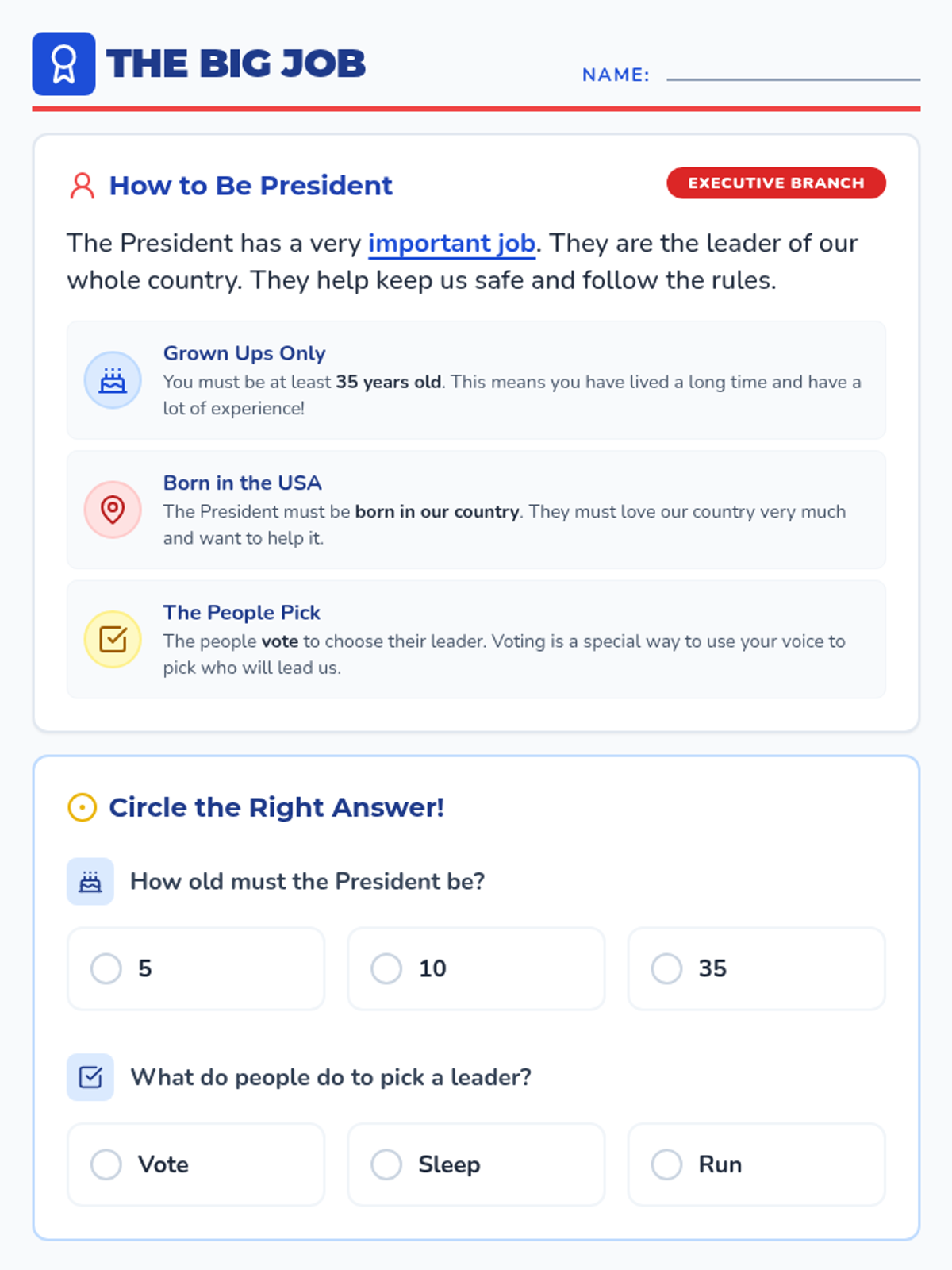
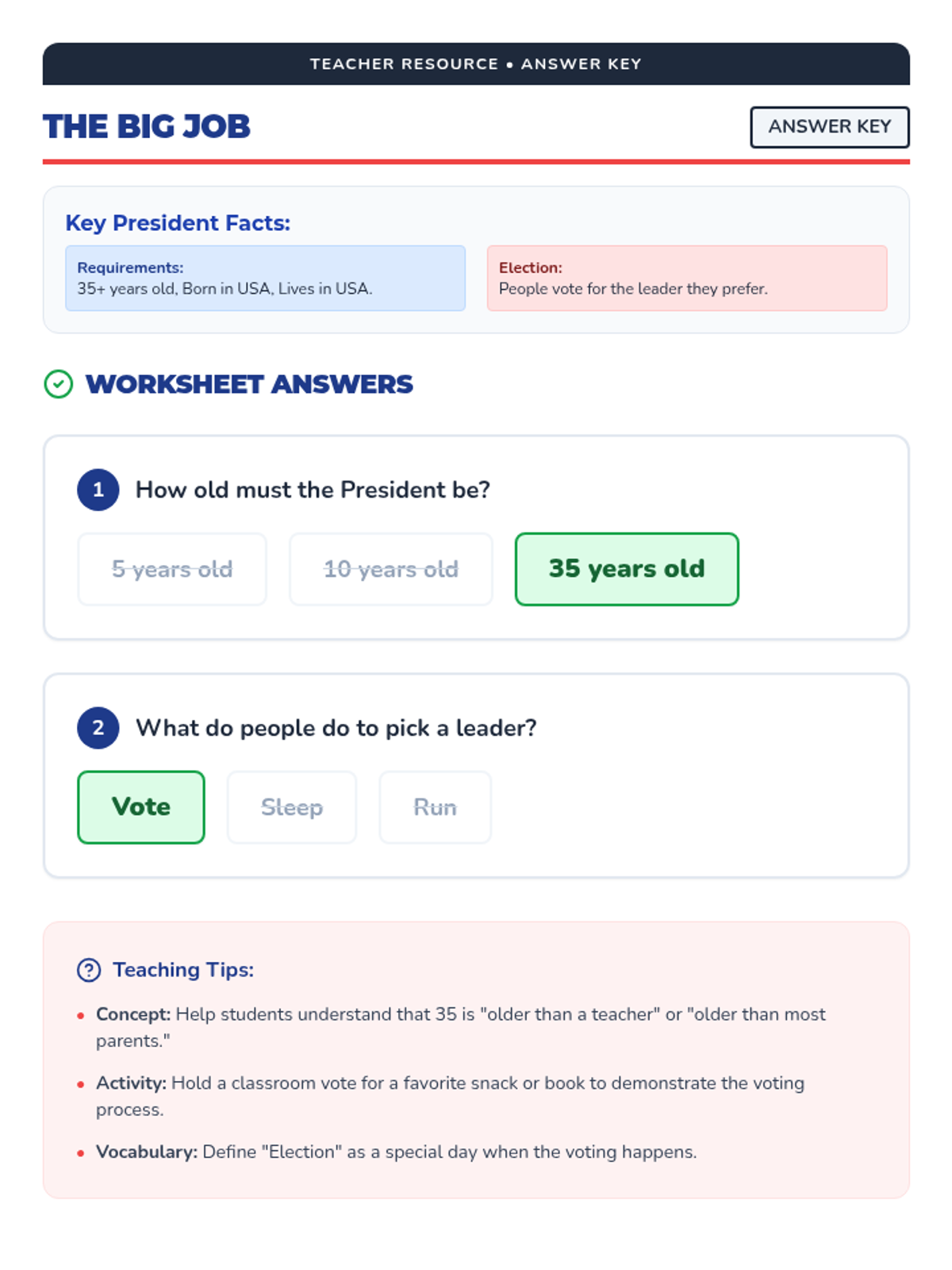
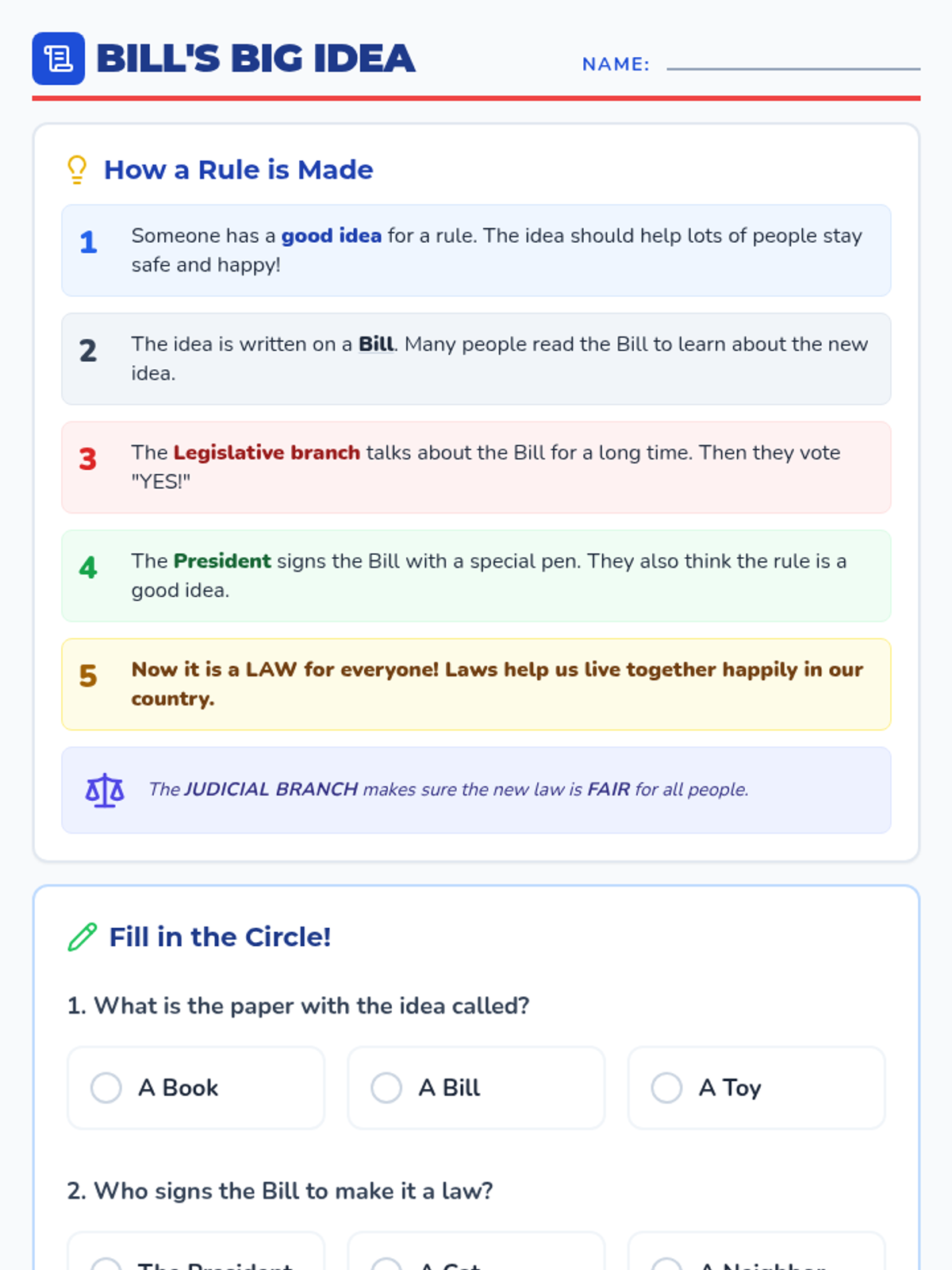
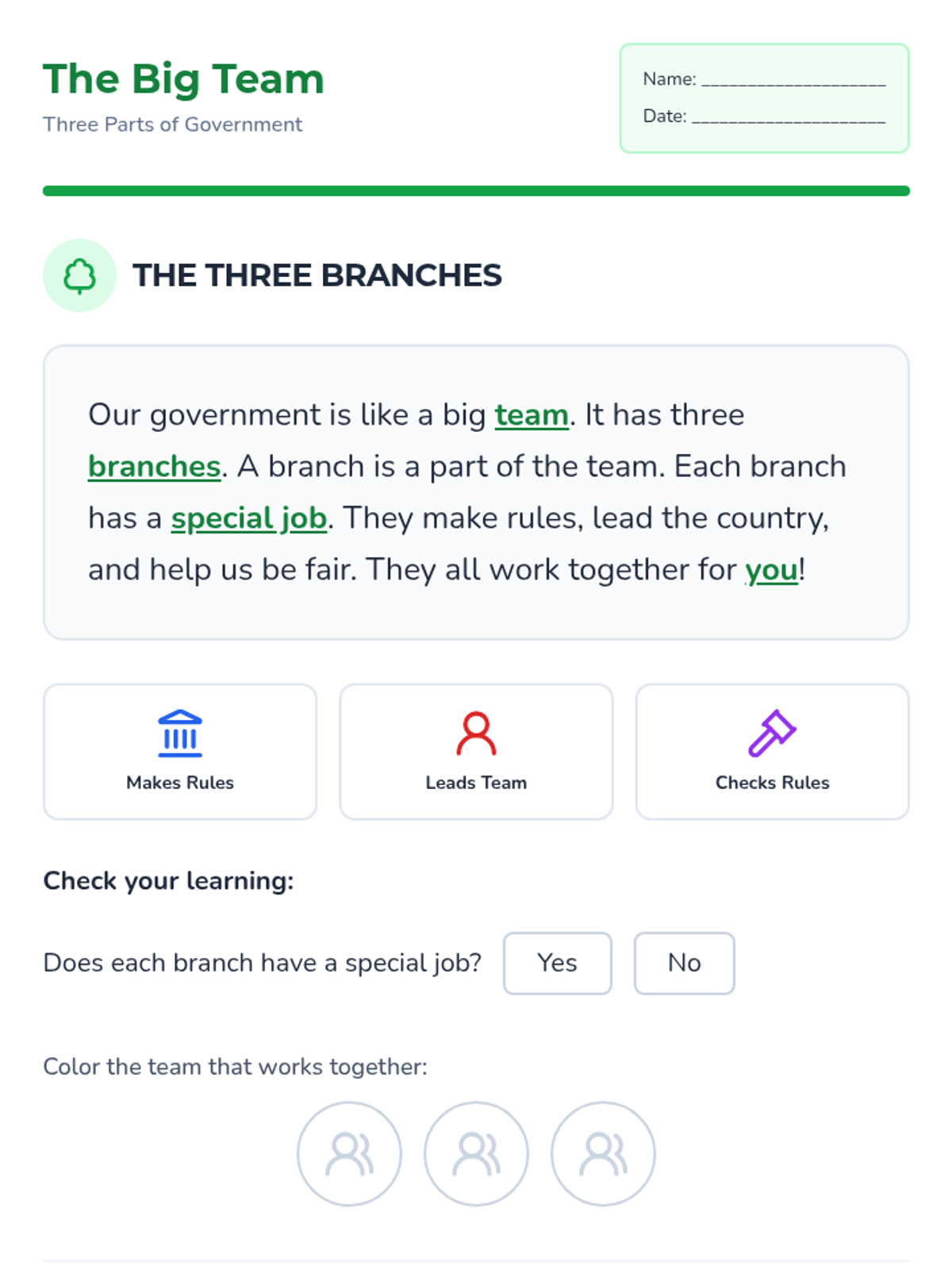
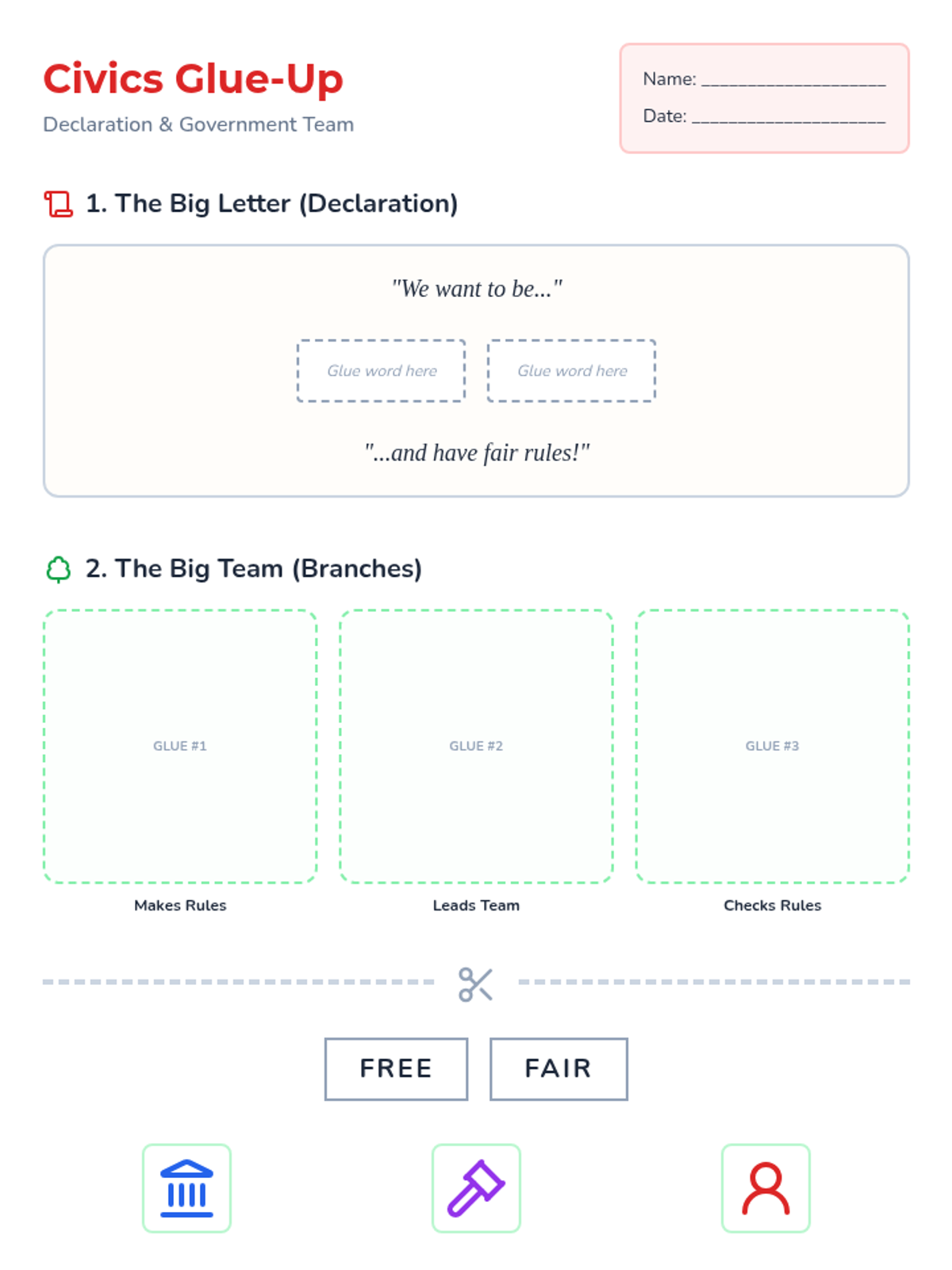
Introduction to the three branches of the U.S. government using simple language and visual aids for kindergarten students.
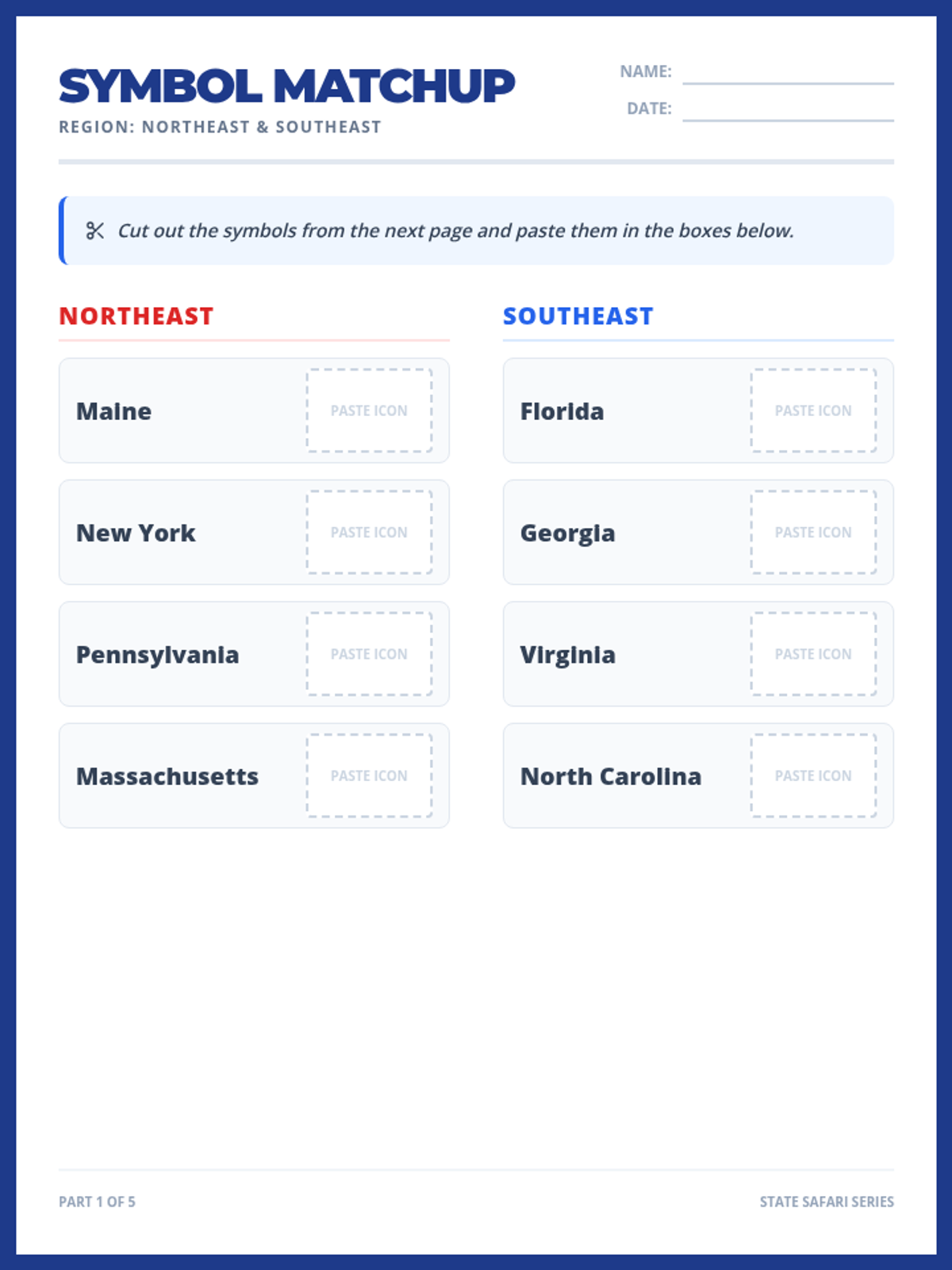
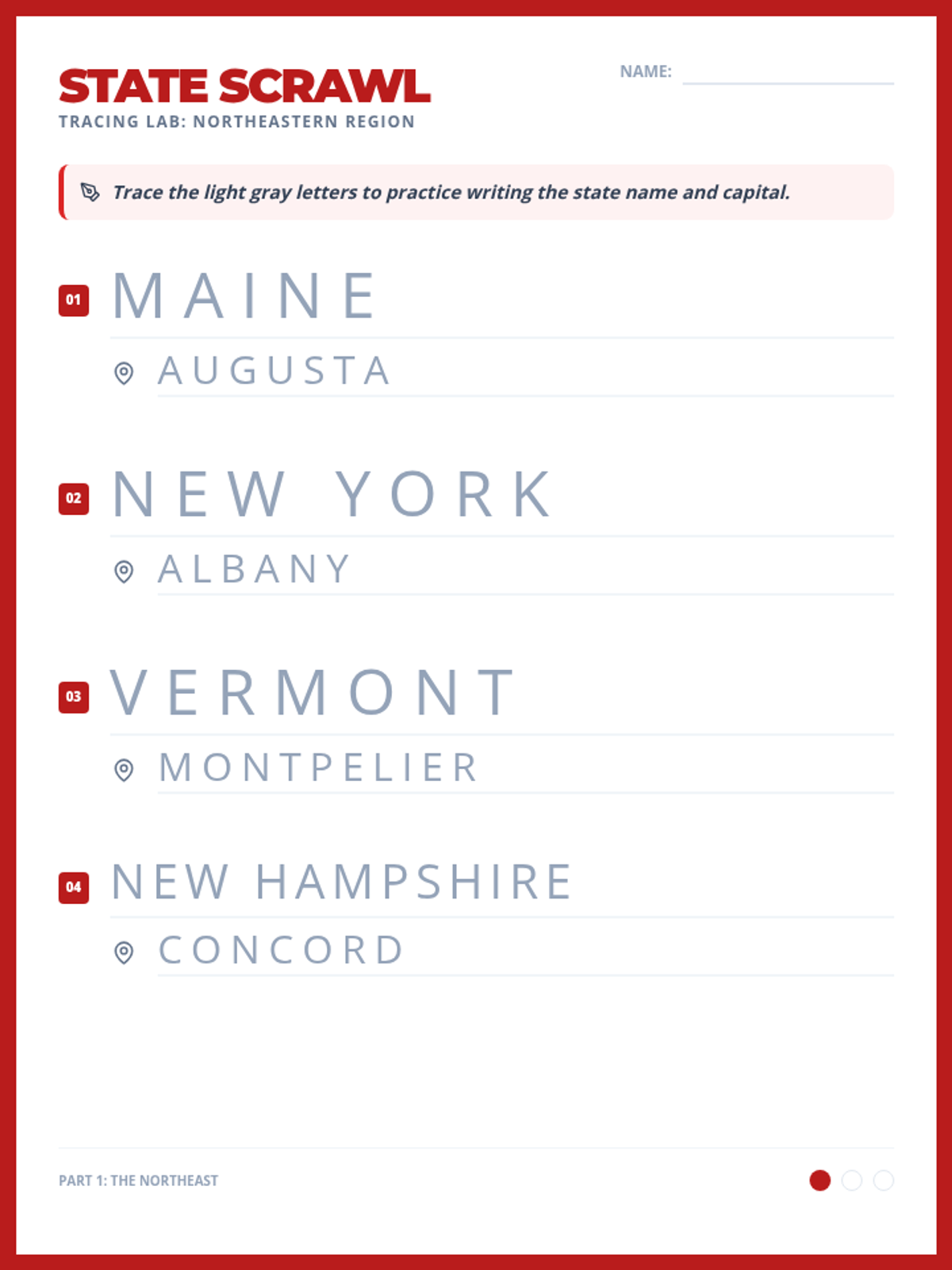
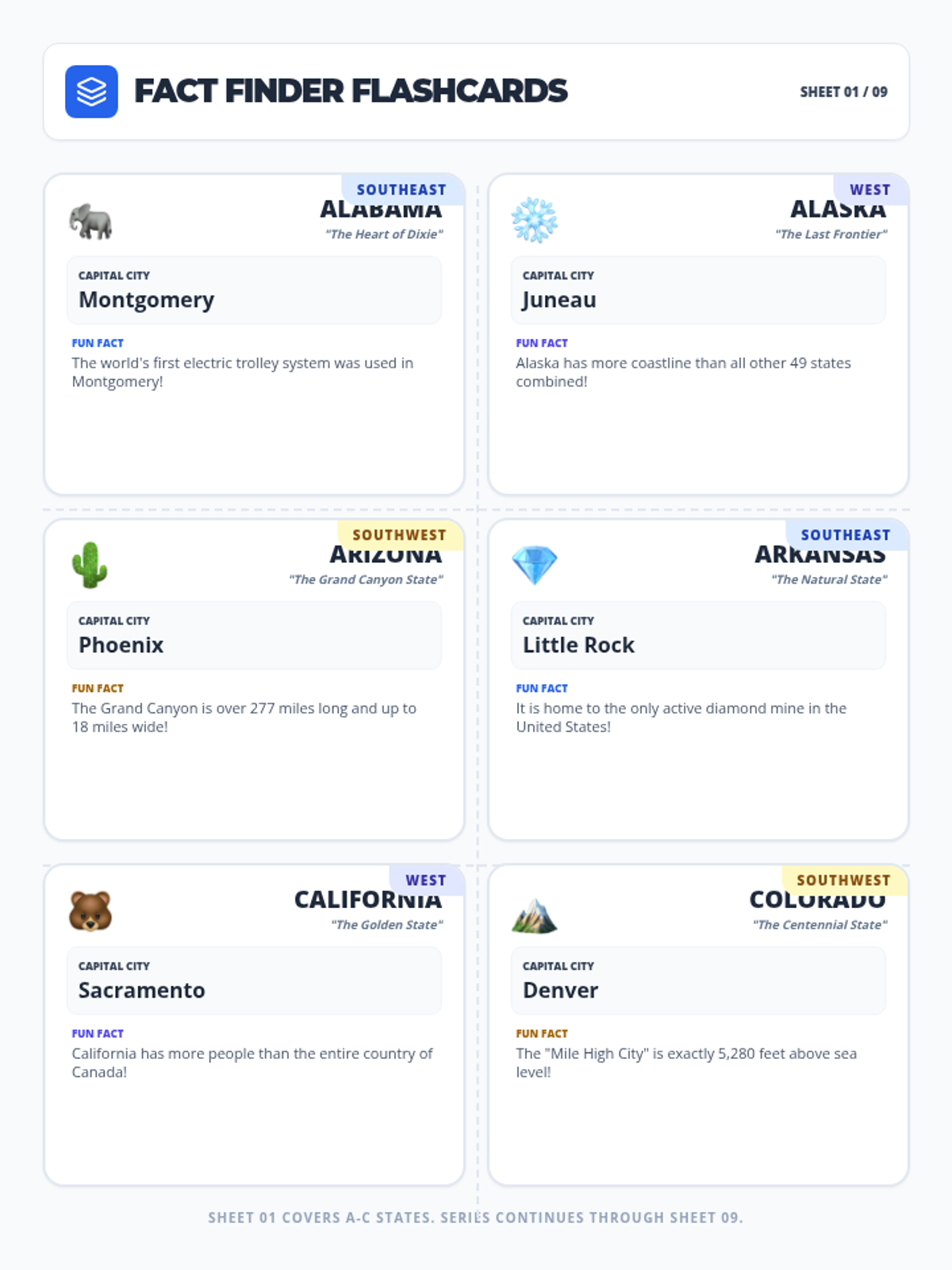
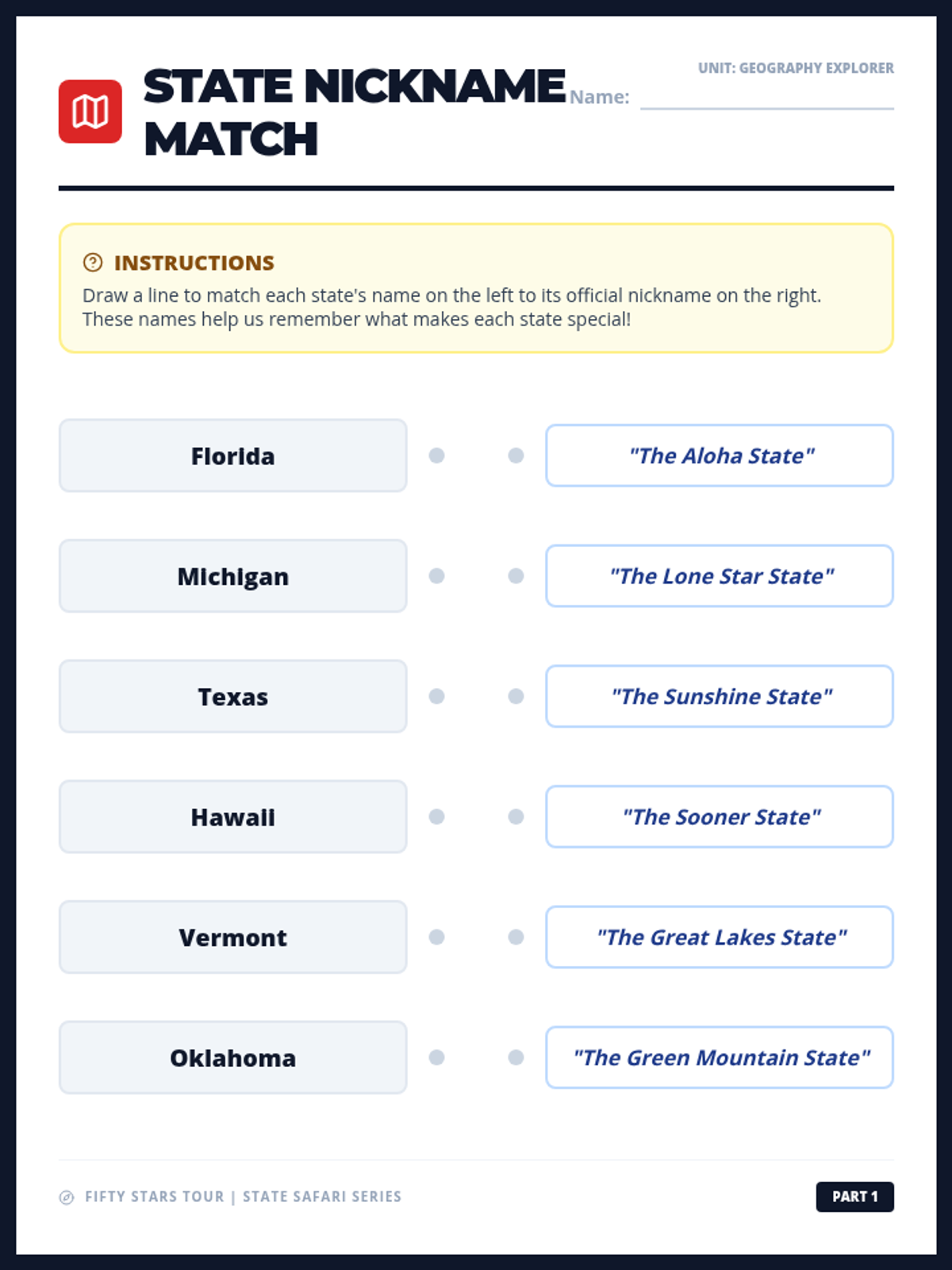
An introductory overview of all 50 states, focusing on visual identification, nomenclature, and basic facts.
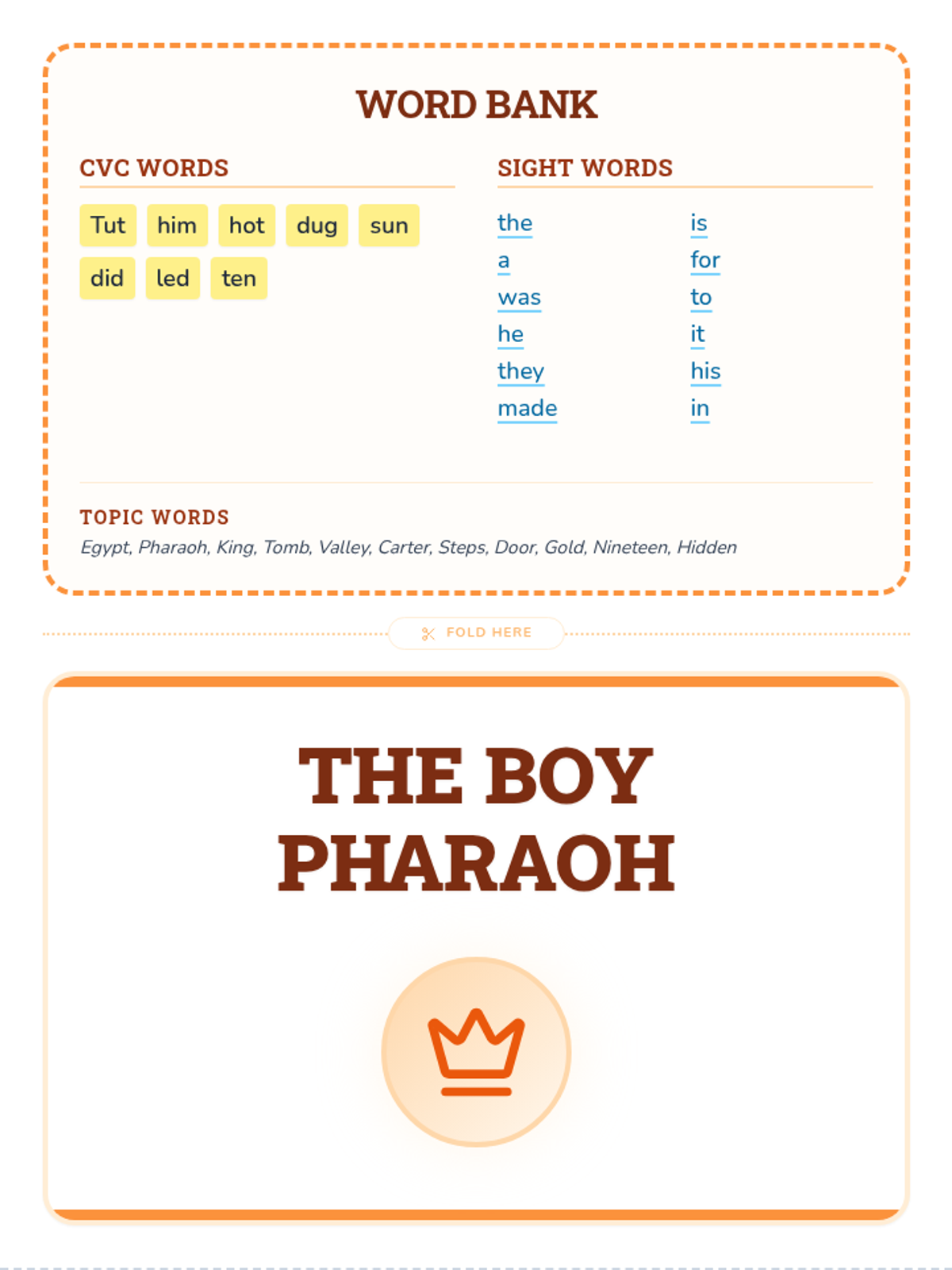
A lesson introducing King Tutankhamun, focusing on his life as a young pharaoh and the discovery of his hidden tomb in the Valley of the Kings.
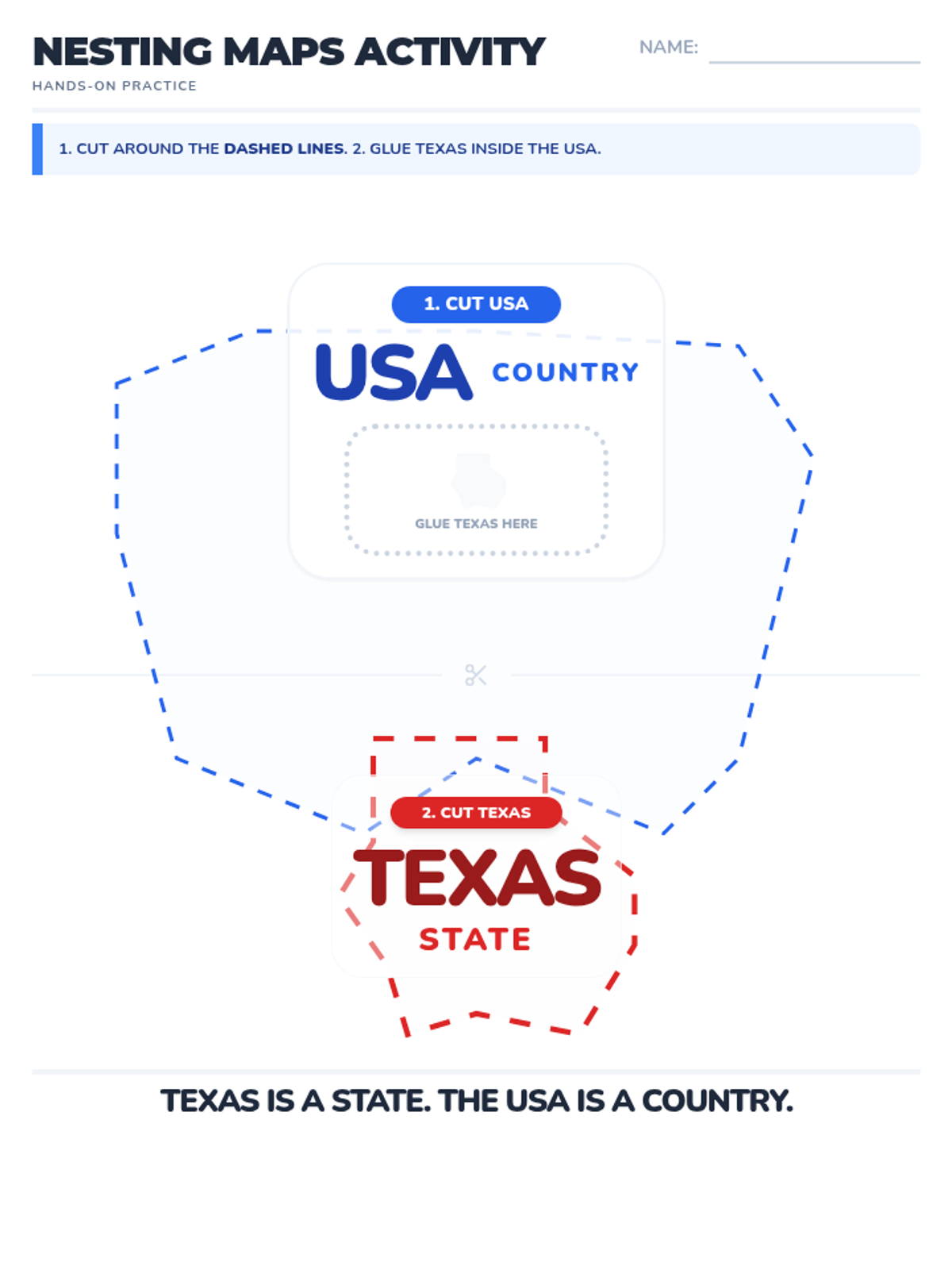
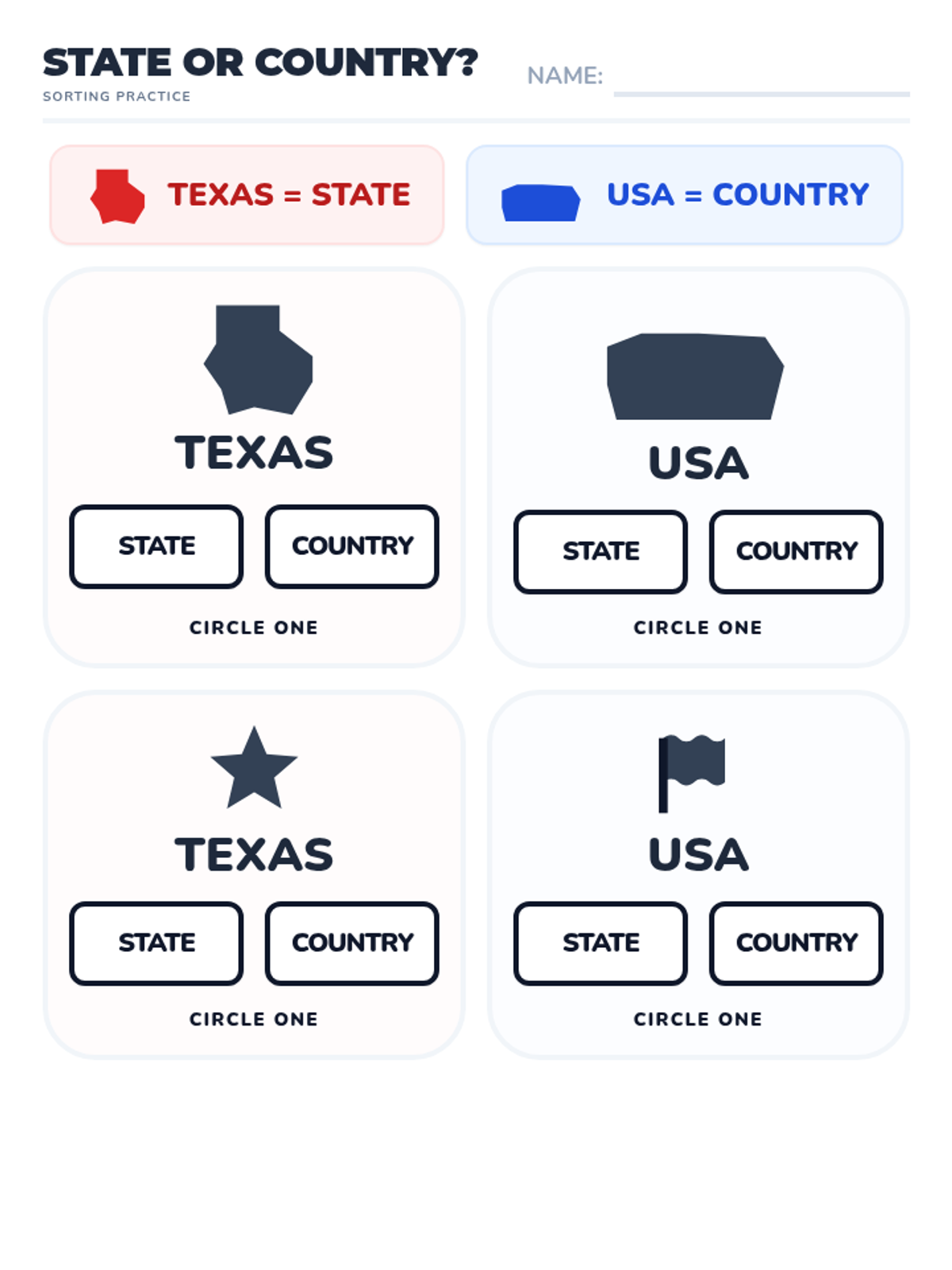
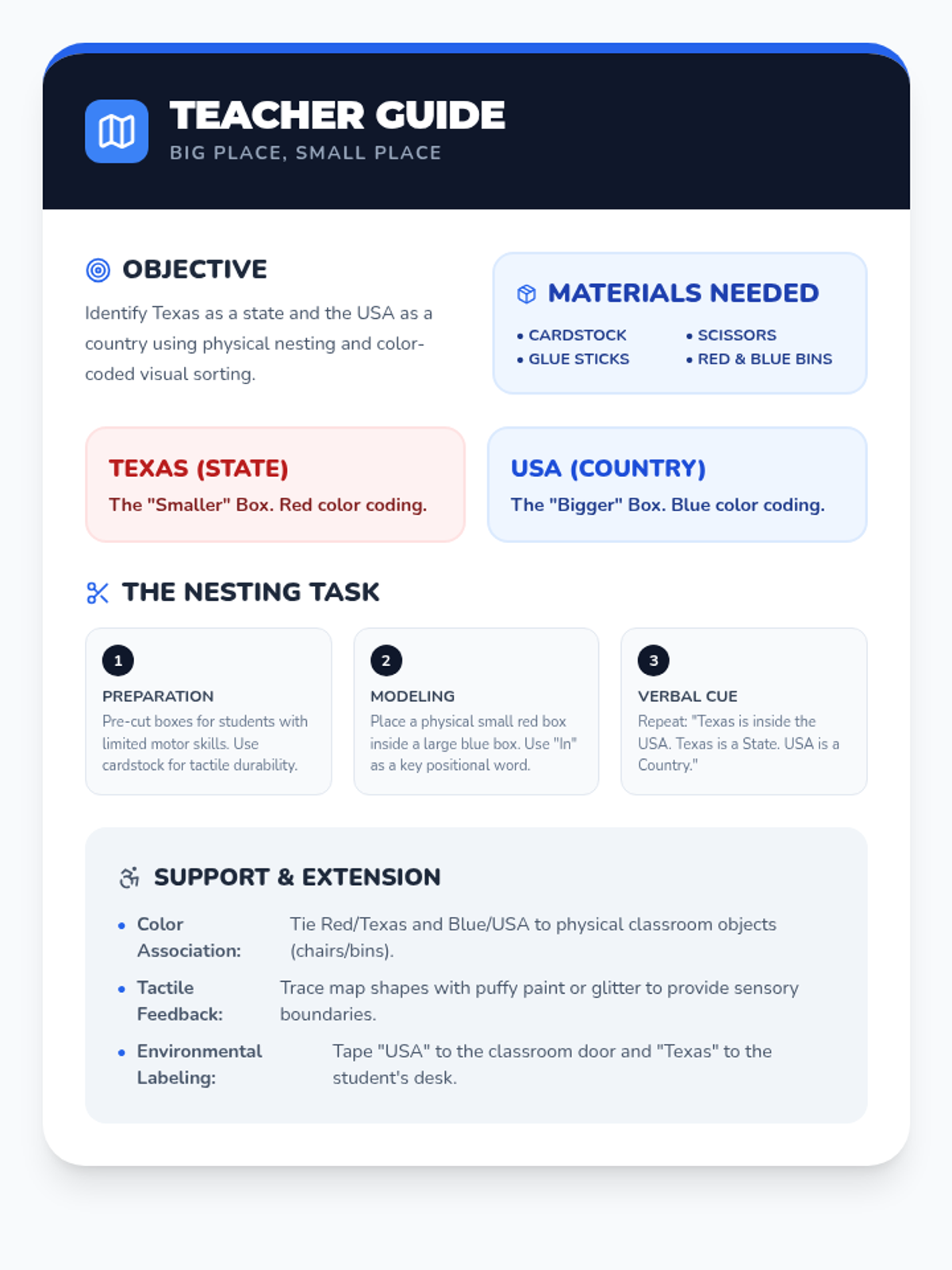
A foundational geography lesson designed for early emergent learners to distinguish between their state (Texas) and their country (USA) using visual nesting and simple categorization.
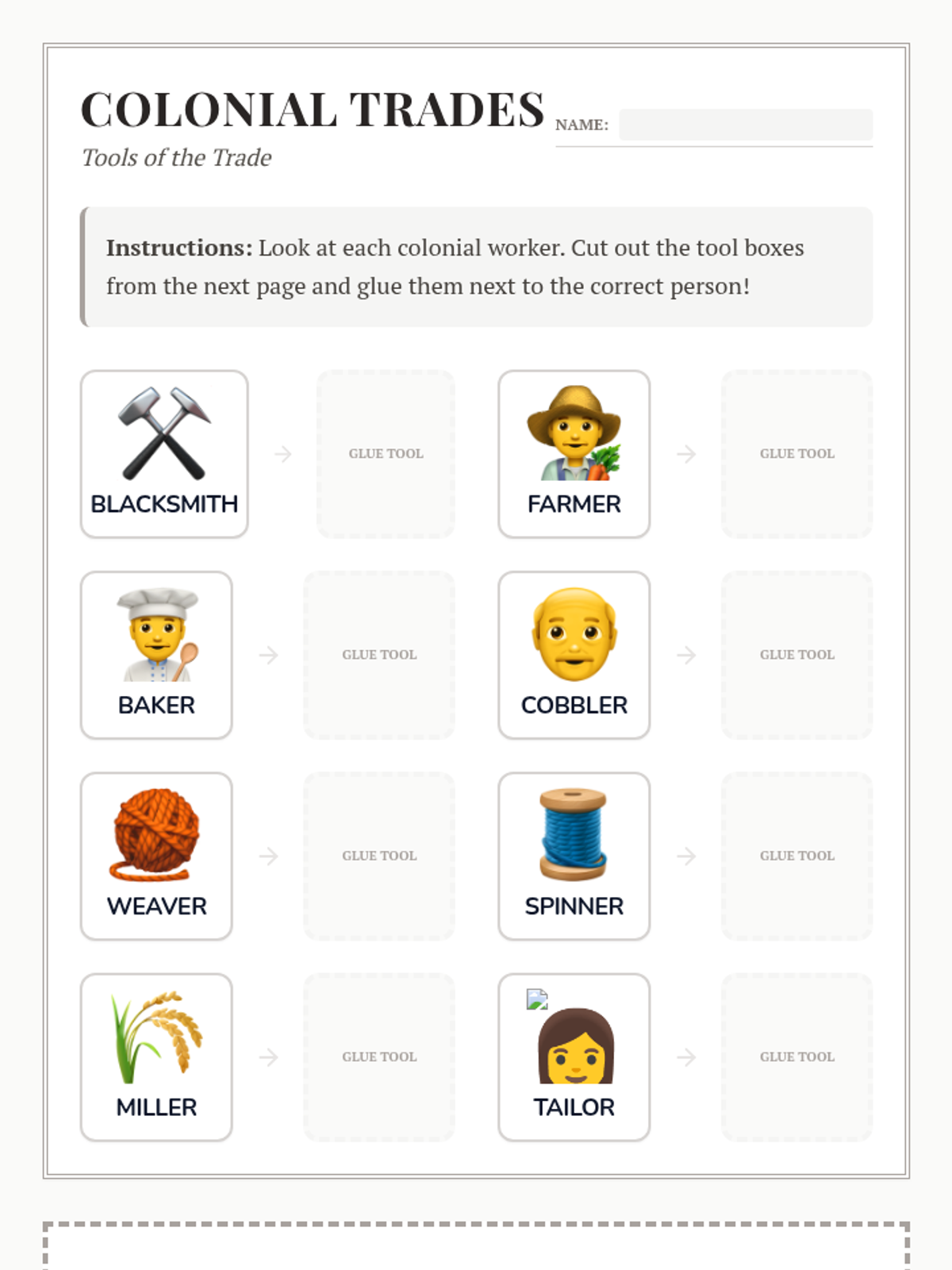
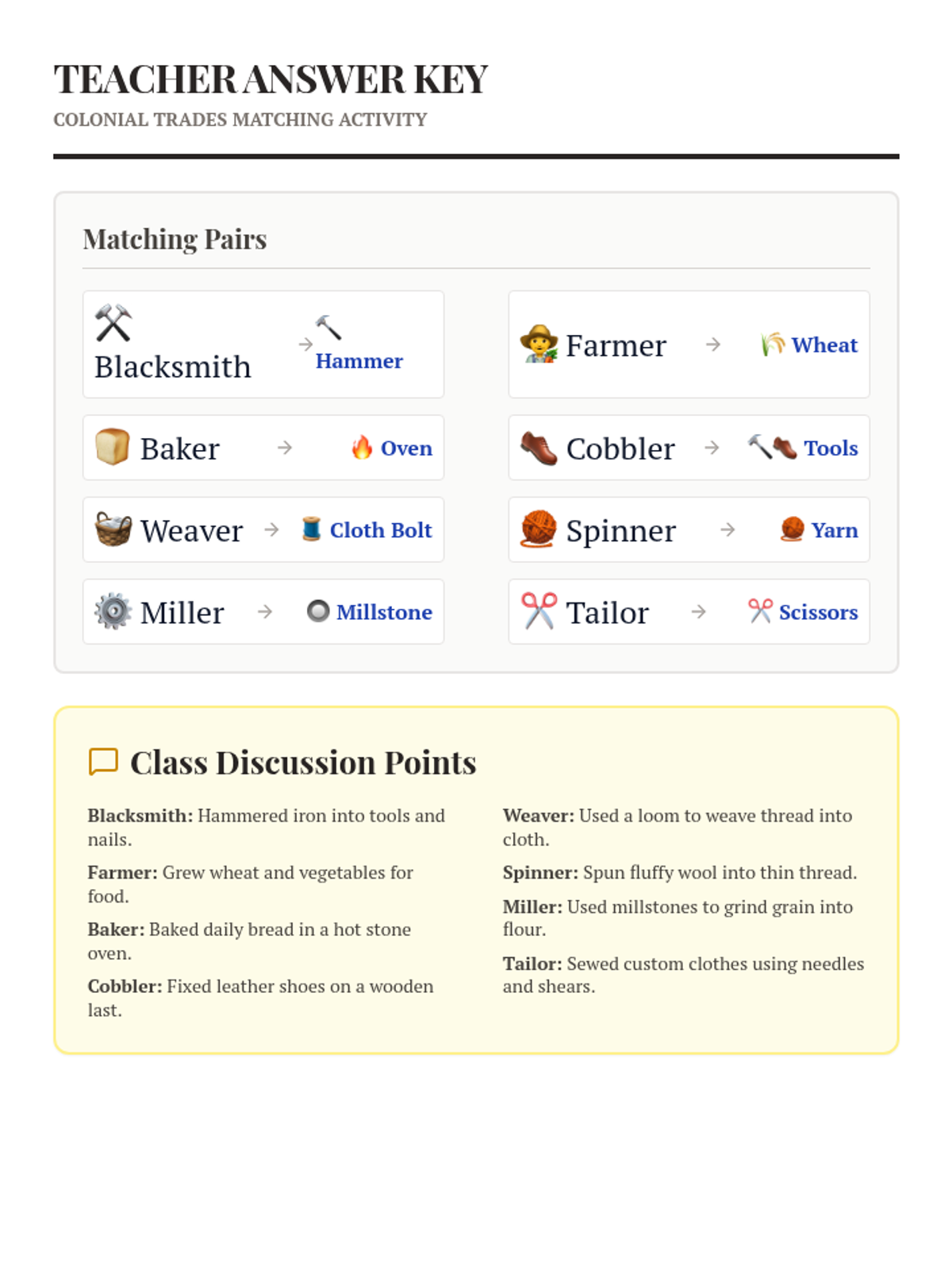
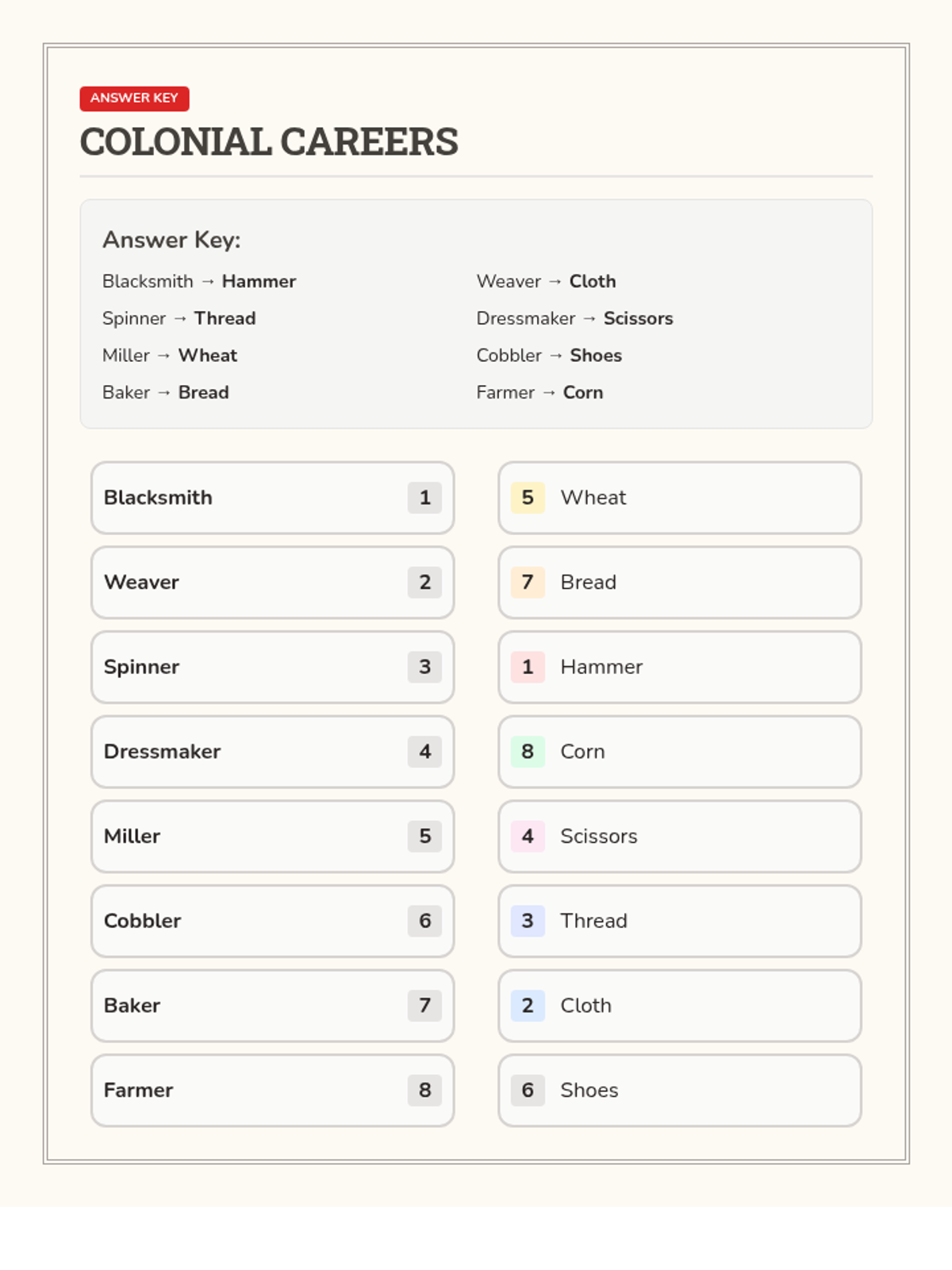
A hands-on exploration of colonial occupations where students match tradespeople like blacksmiths and bakers to their essential tools through a cut-and-paste activity.
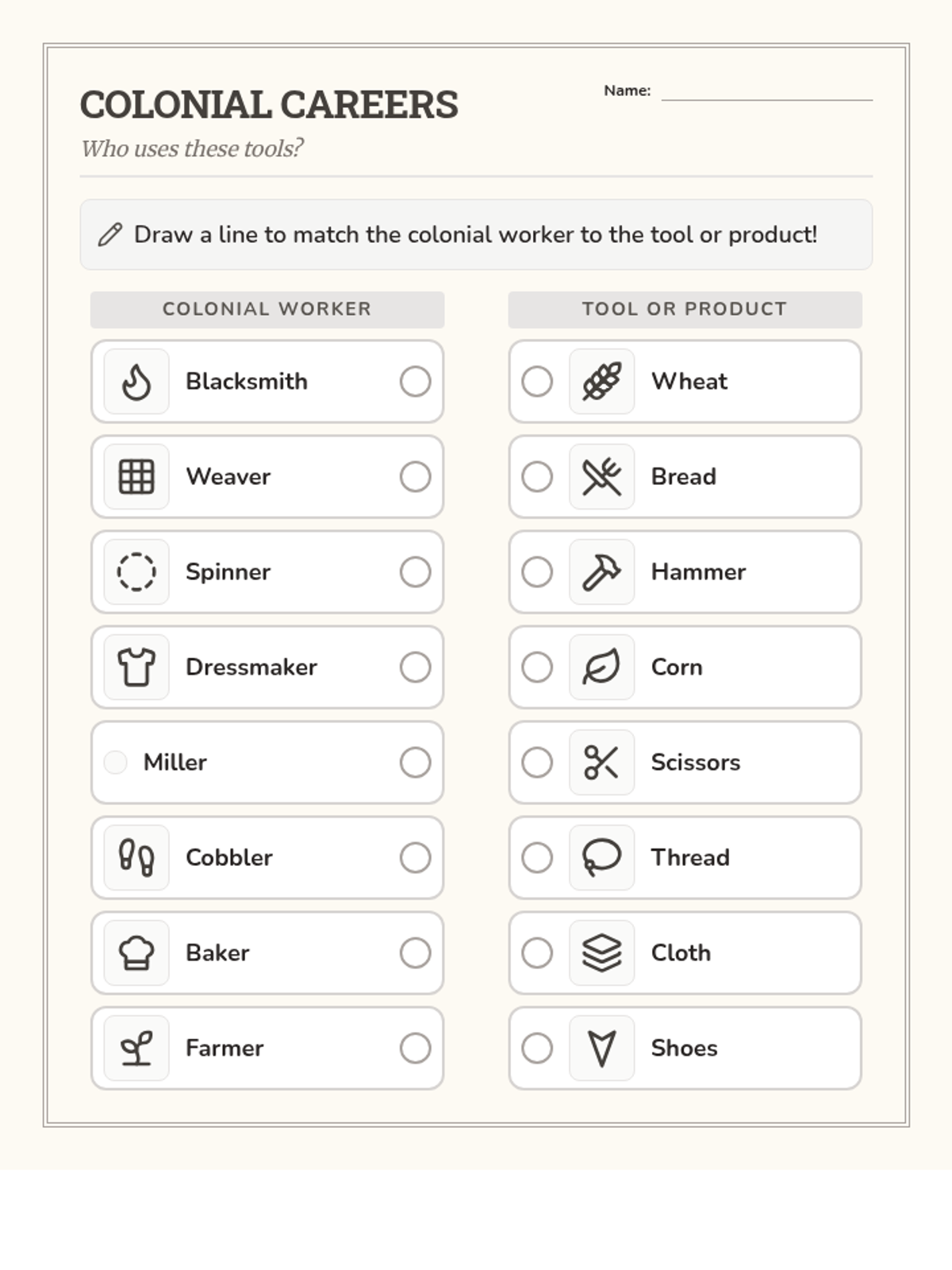
A lesson for kindergarteners to explore common colonial trades and the tools used in each profession.
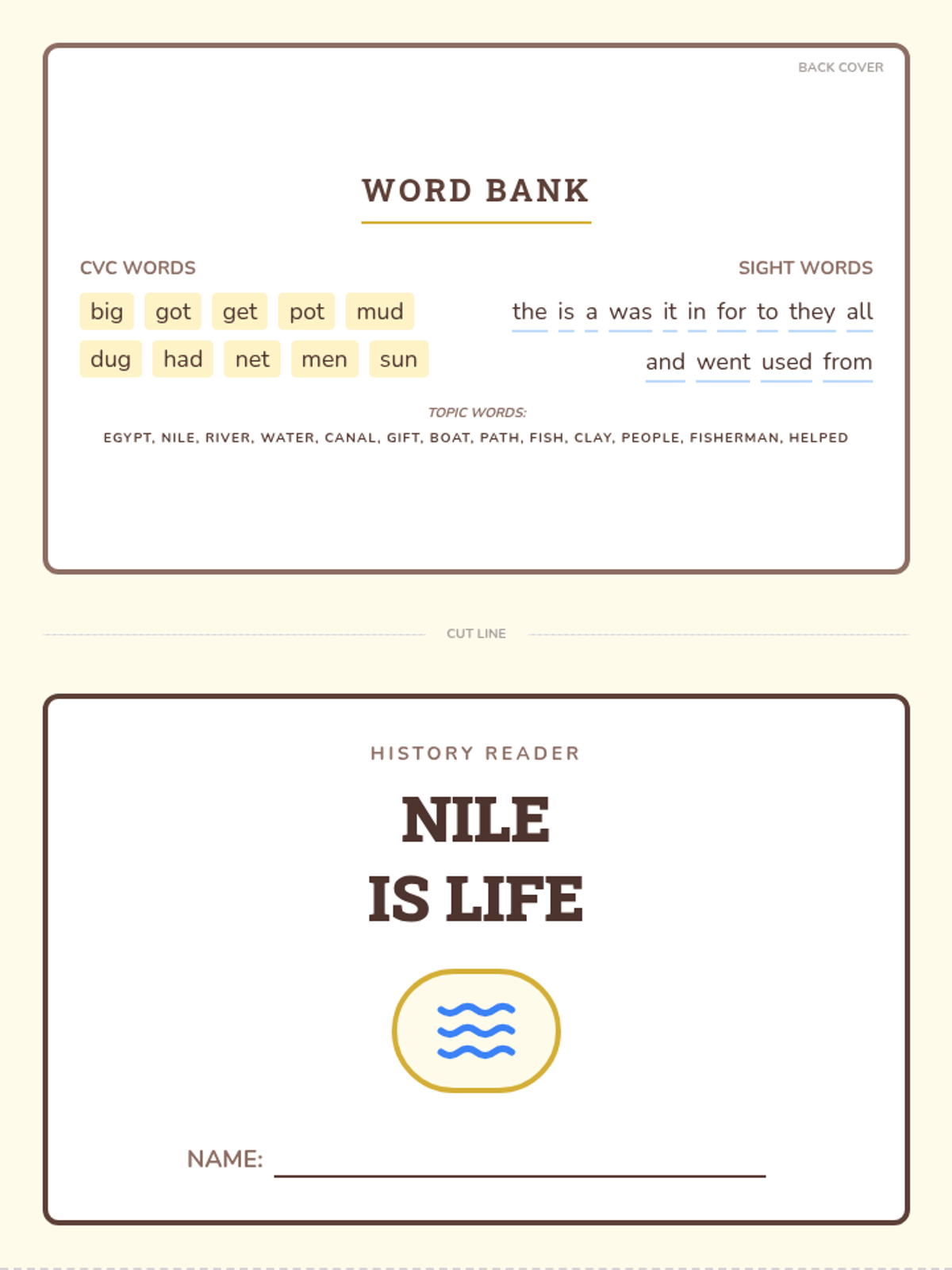
This lesson introduces the importance of the Nile River to the ancient Egyptians, focusing on its role in farming, fishing, and transportation. Students will explore how the river's annual flooding provided fertile soil and how the Egyptians managed water using canals.
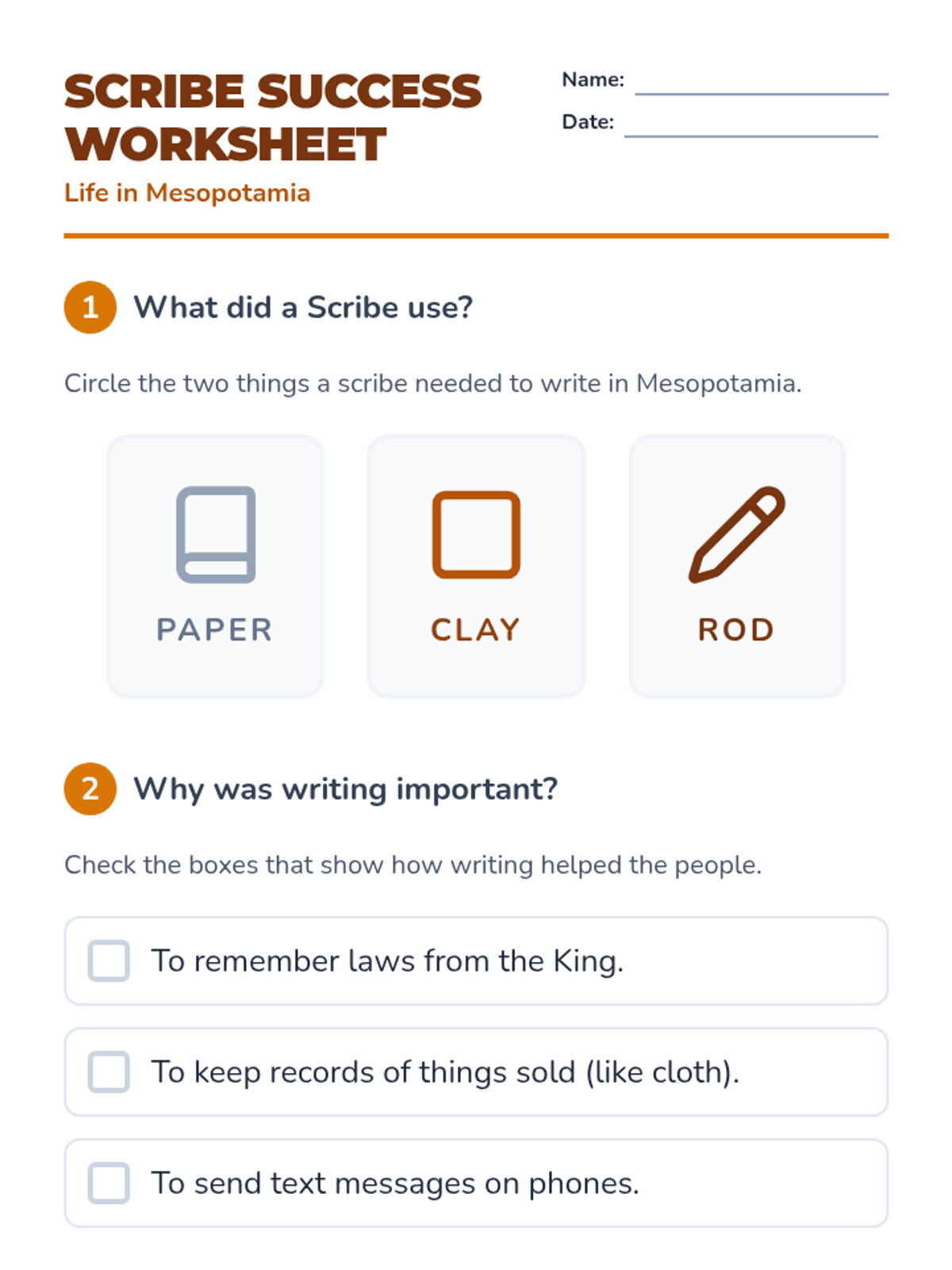
A lesson exploring the development and importance of writing in ancient Mesopotamia, specifically cuneiform and the role of scribes.
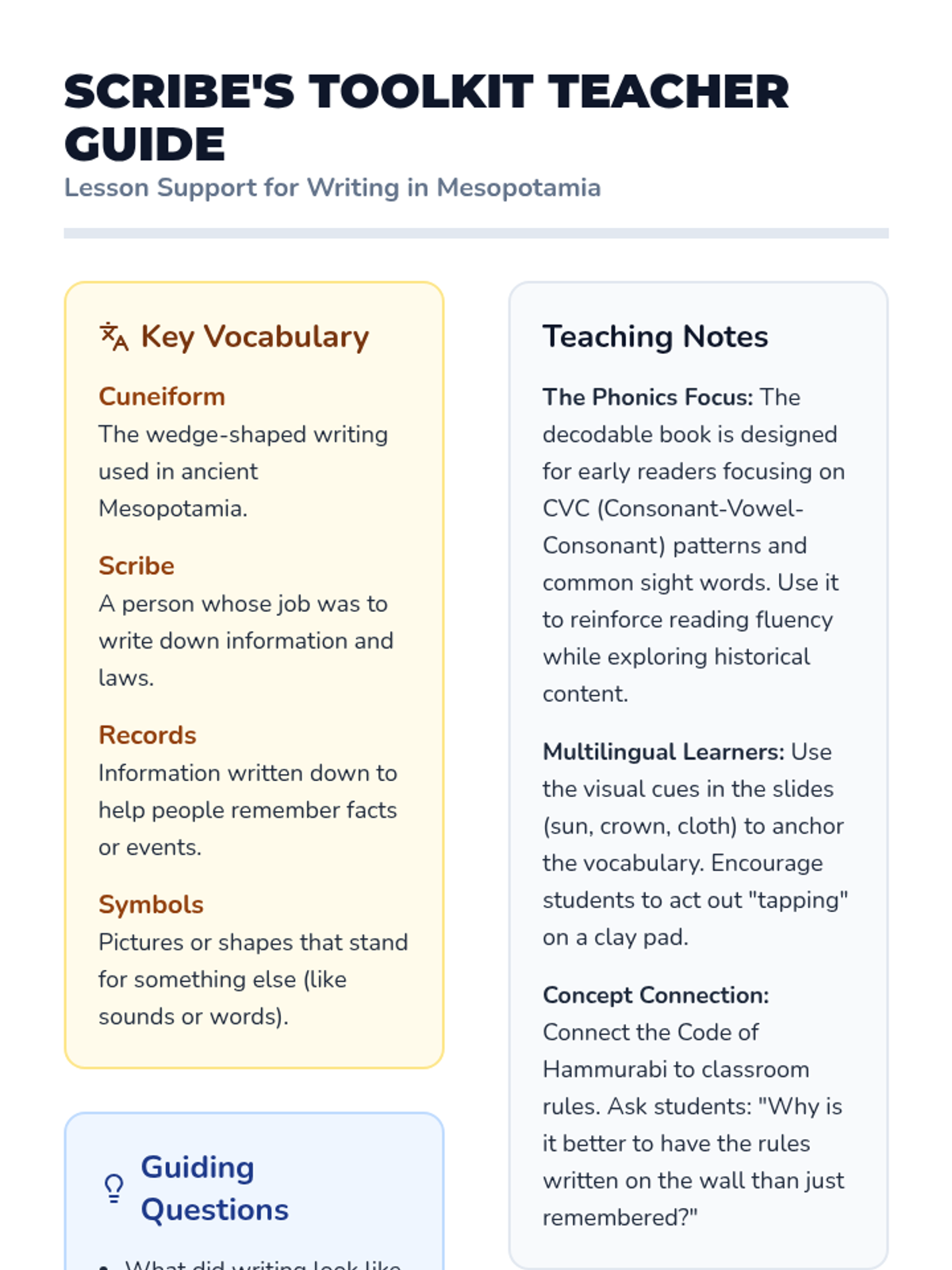
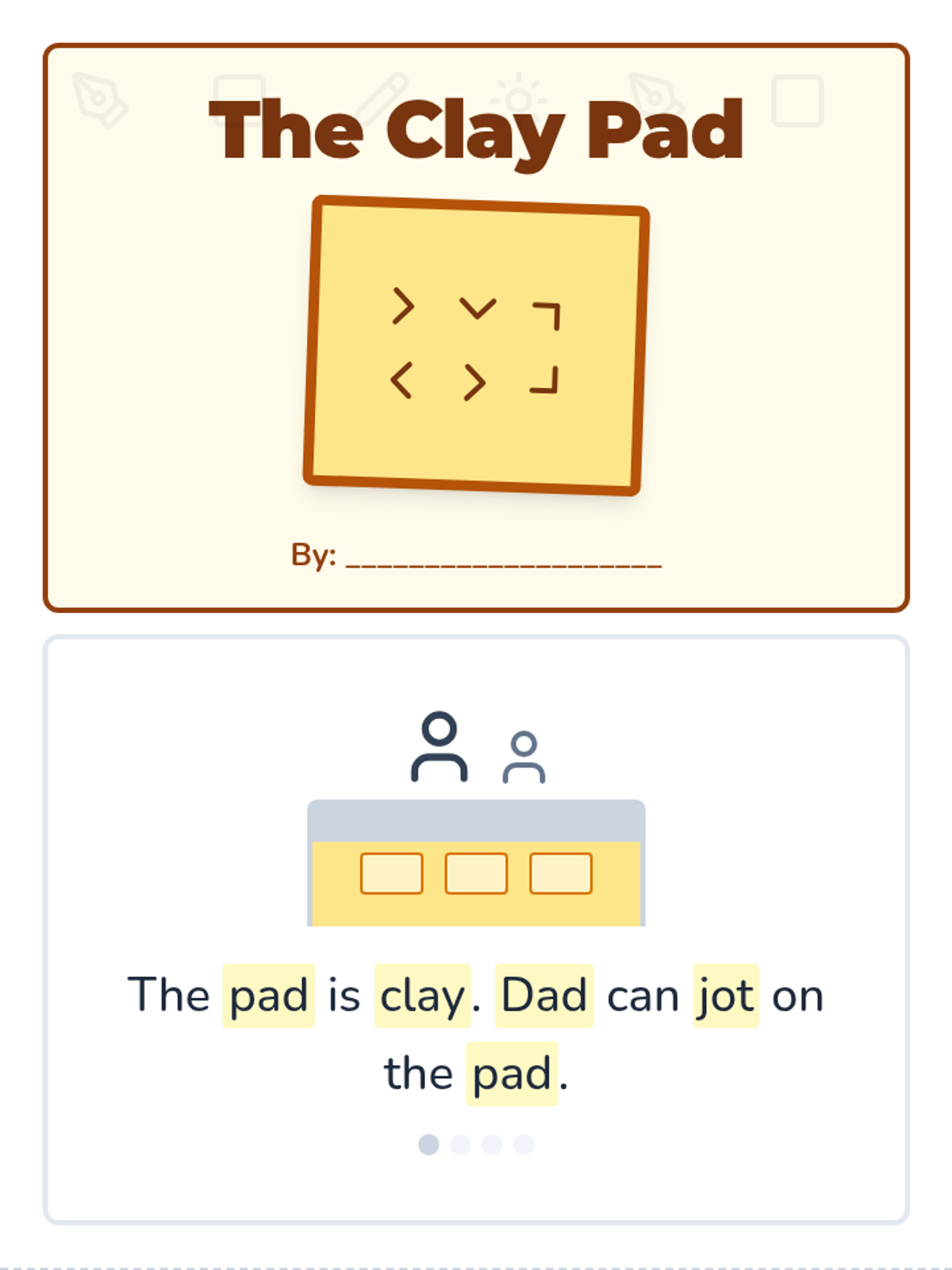
A lesson focused on the introduction of writing in Mesopotamia, specifically cuneiform and its importance for records and laws.
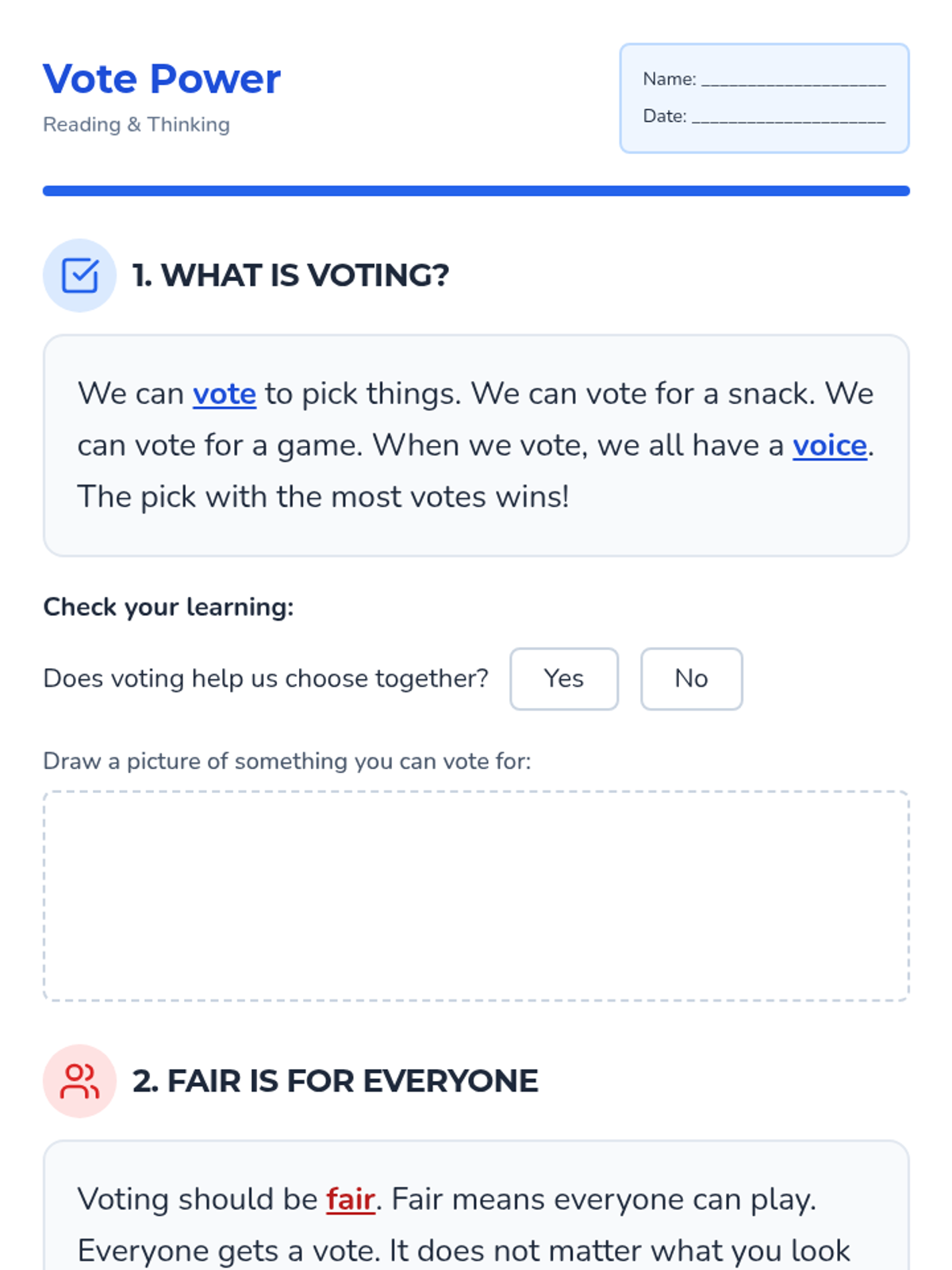
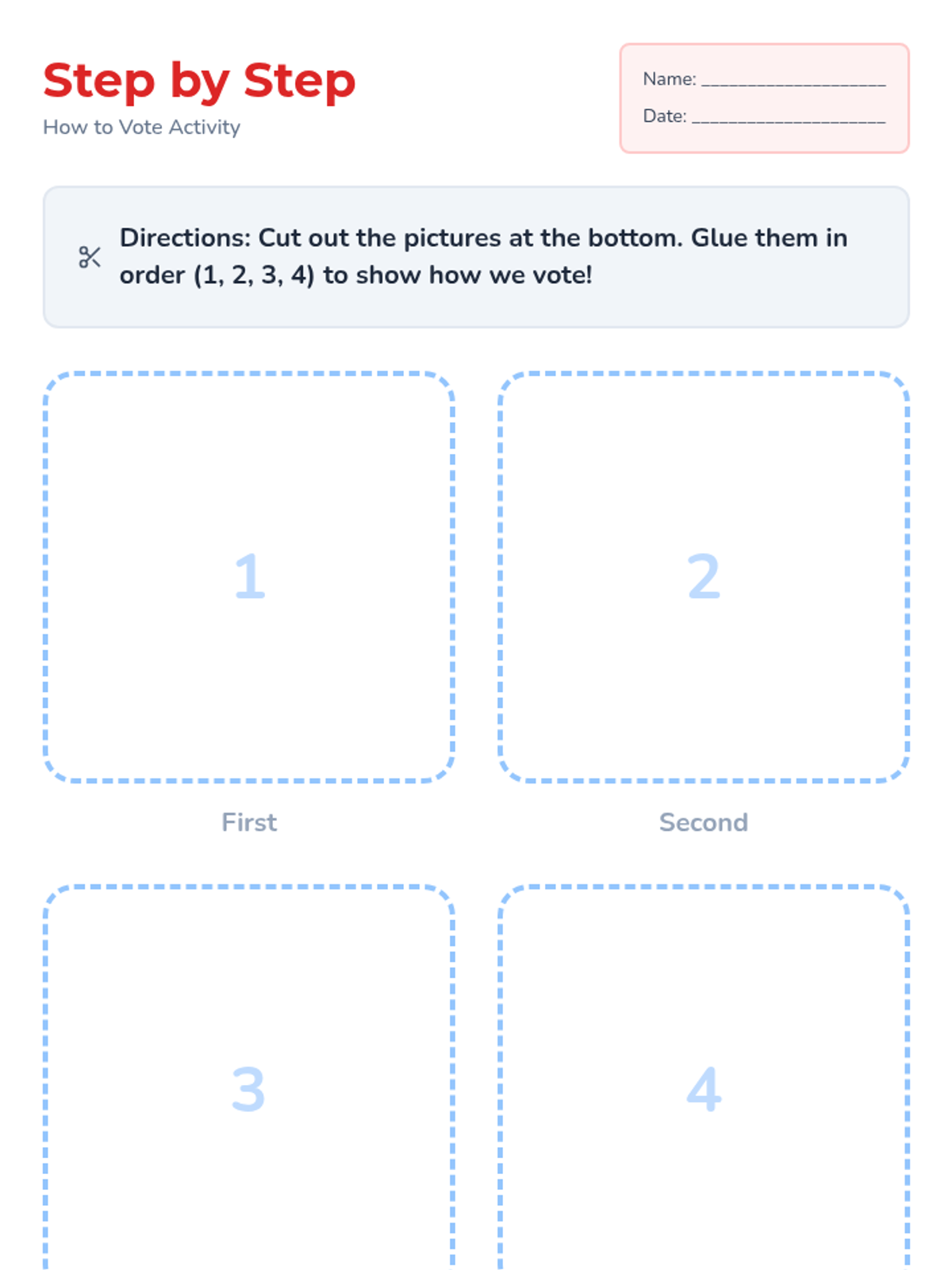
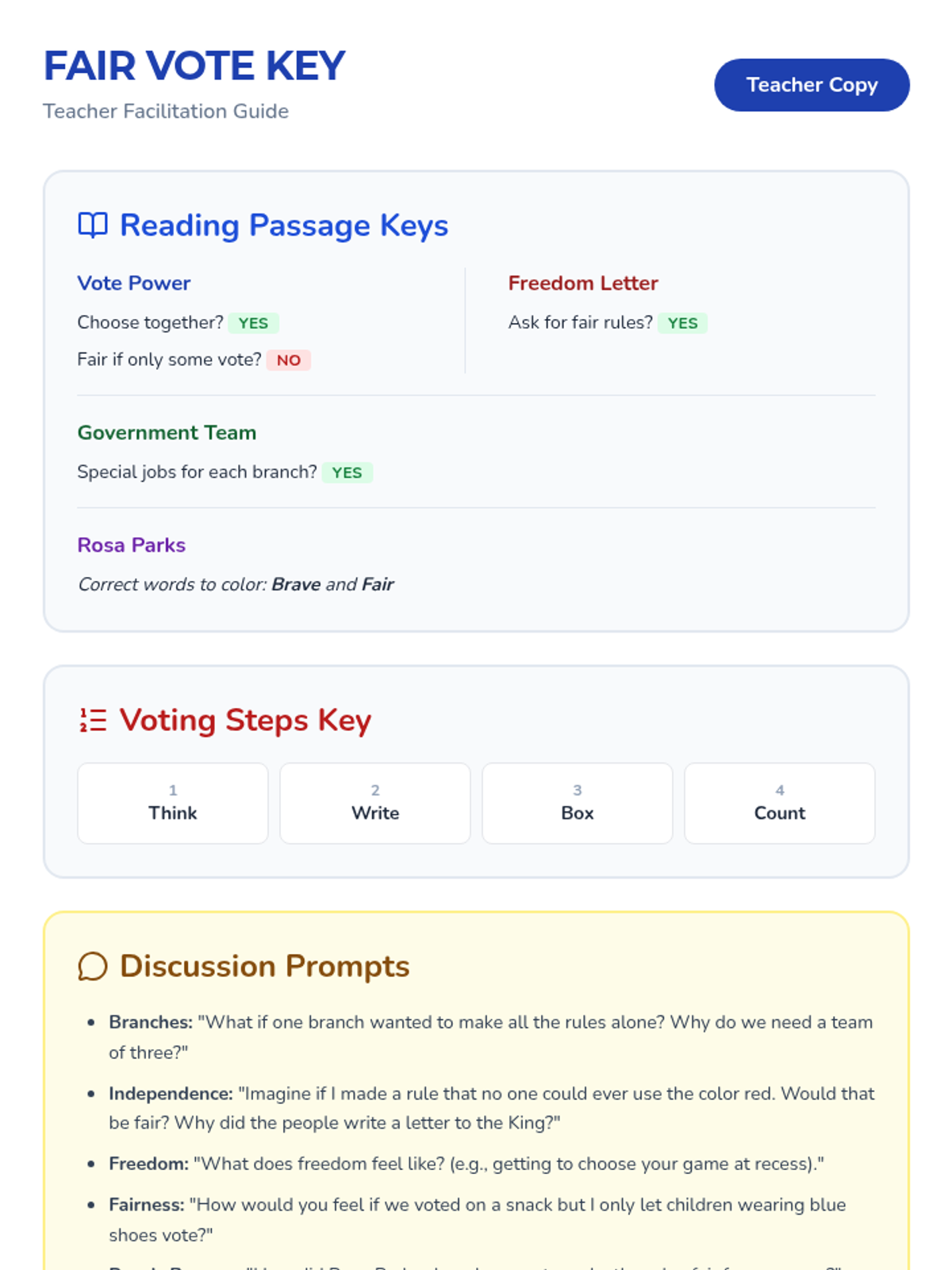
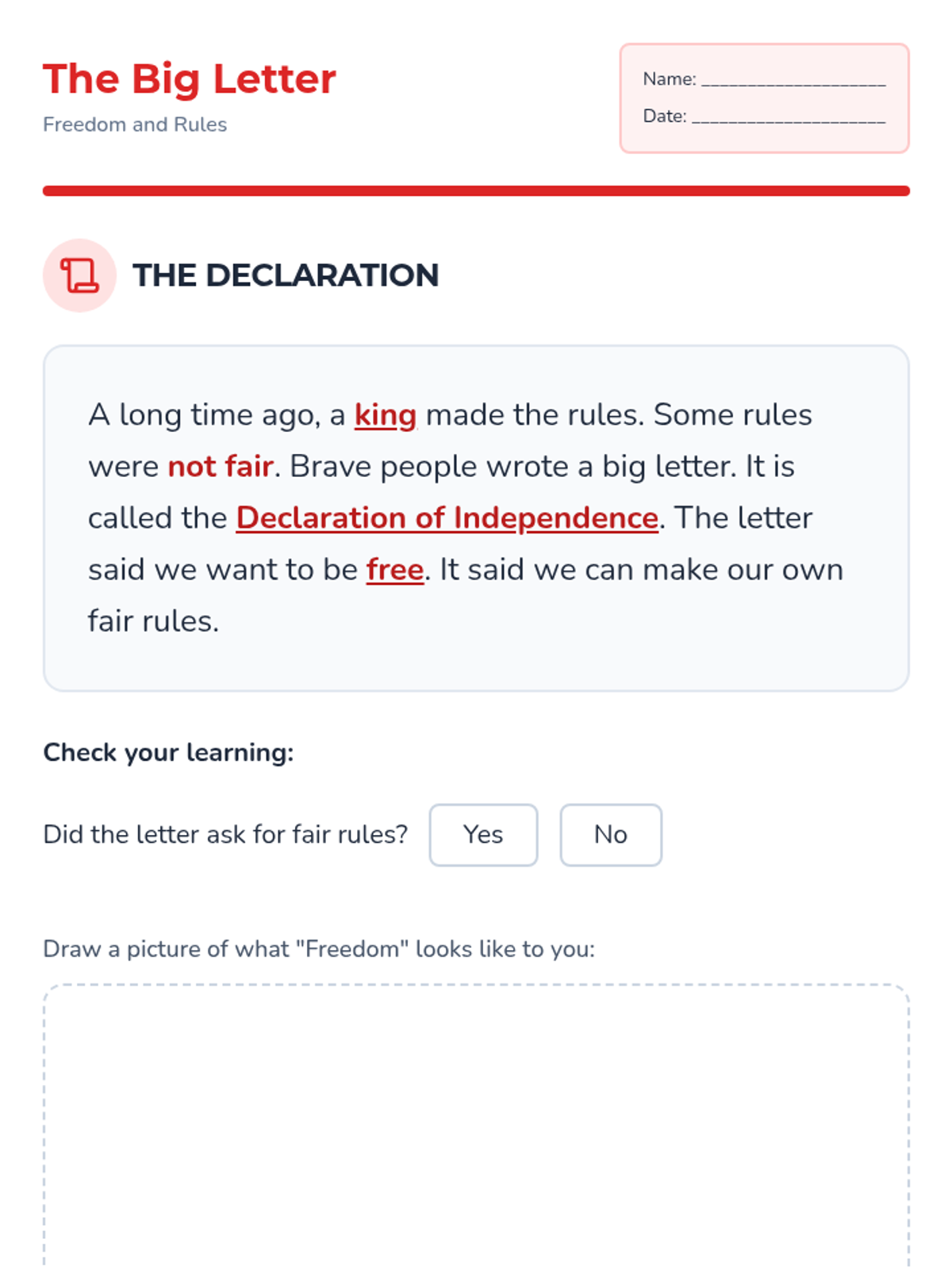
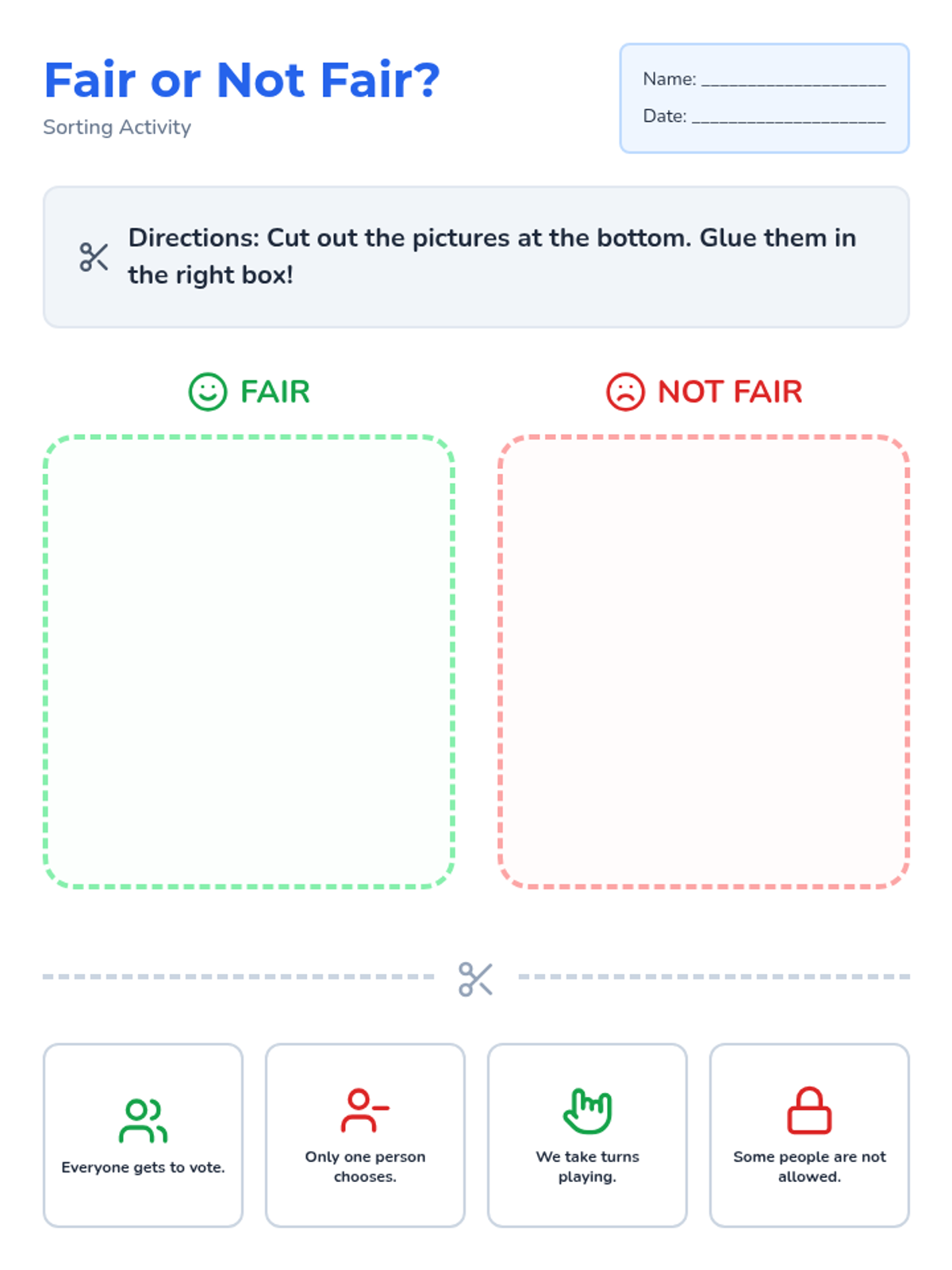
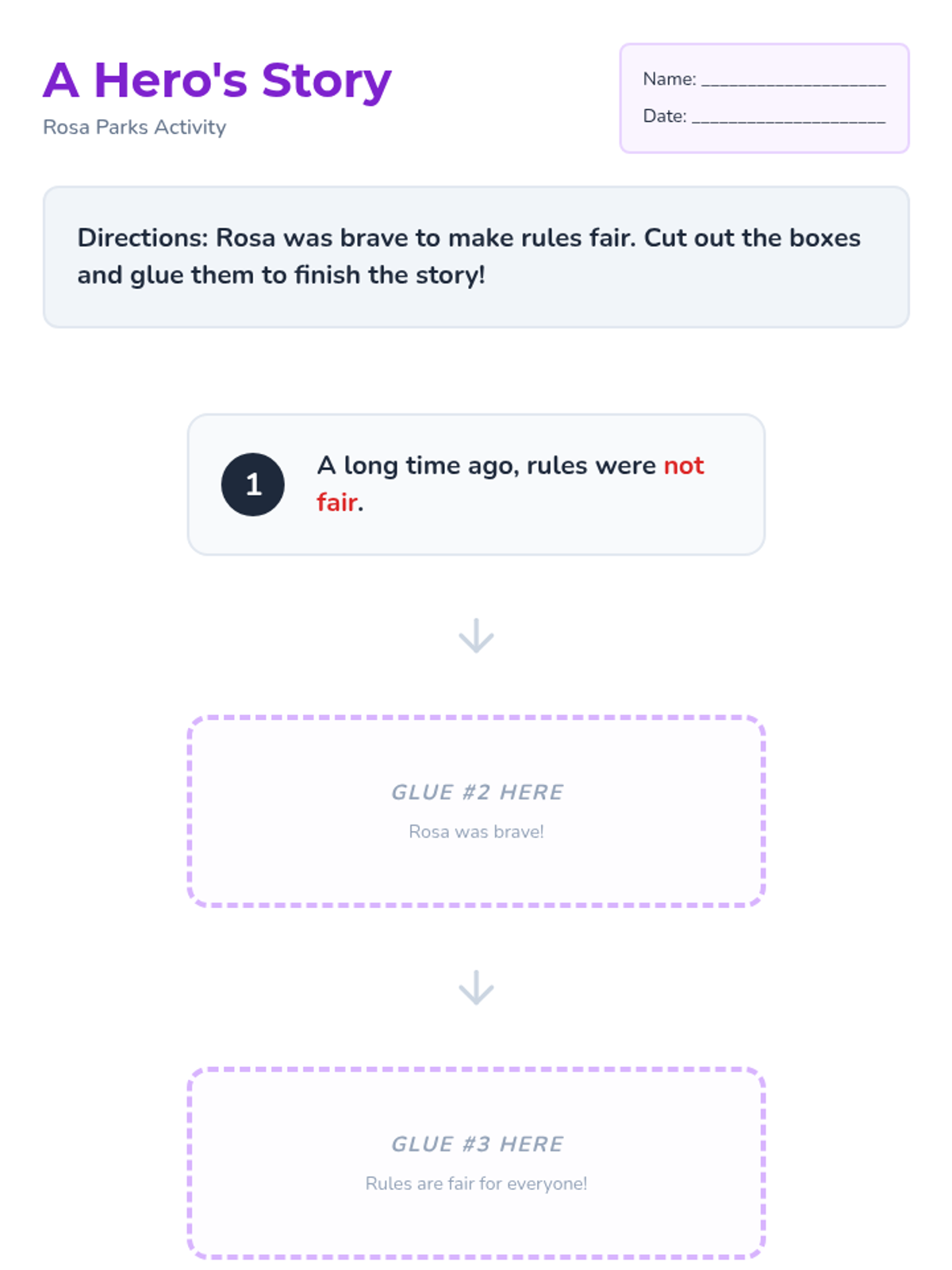
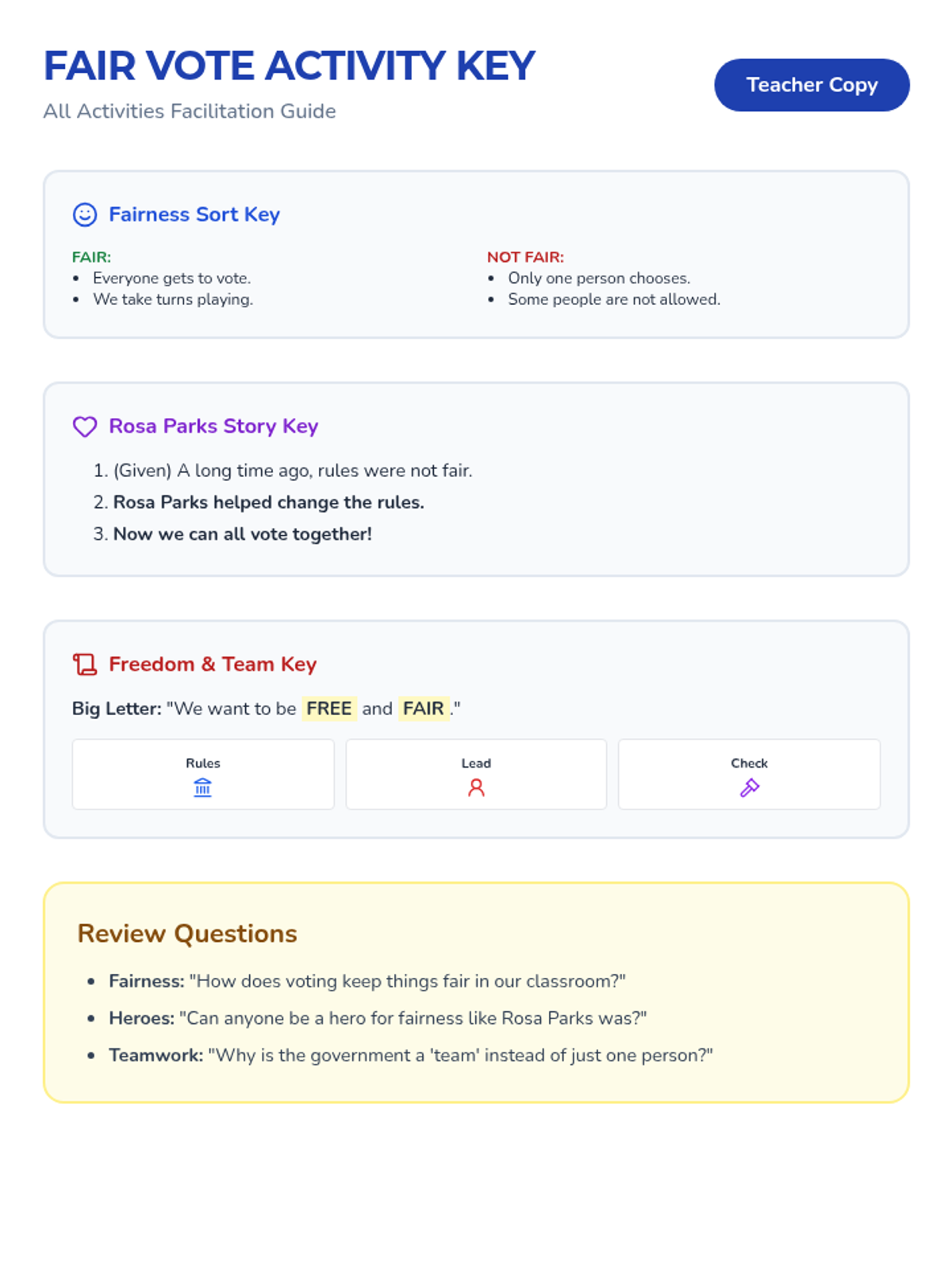
A lesson for kindergarten students introducing the concept of voting, fairness, and the historical struggle for voting rights through the story of Rosa Parks.
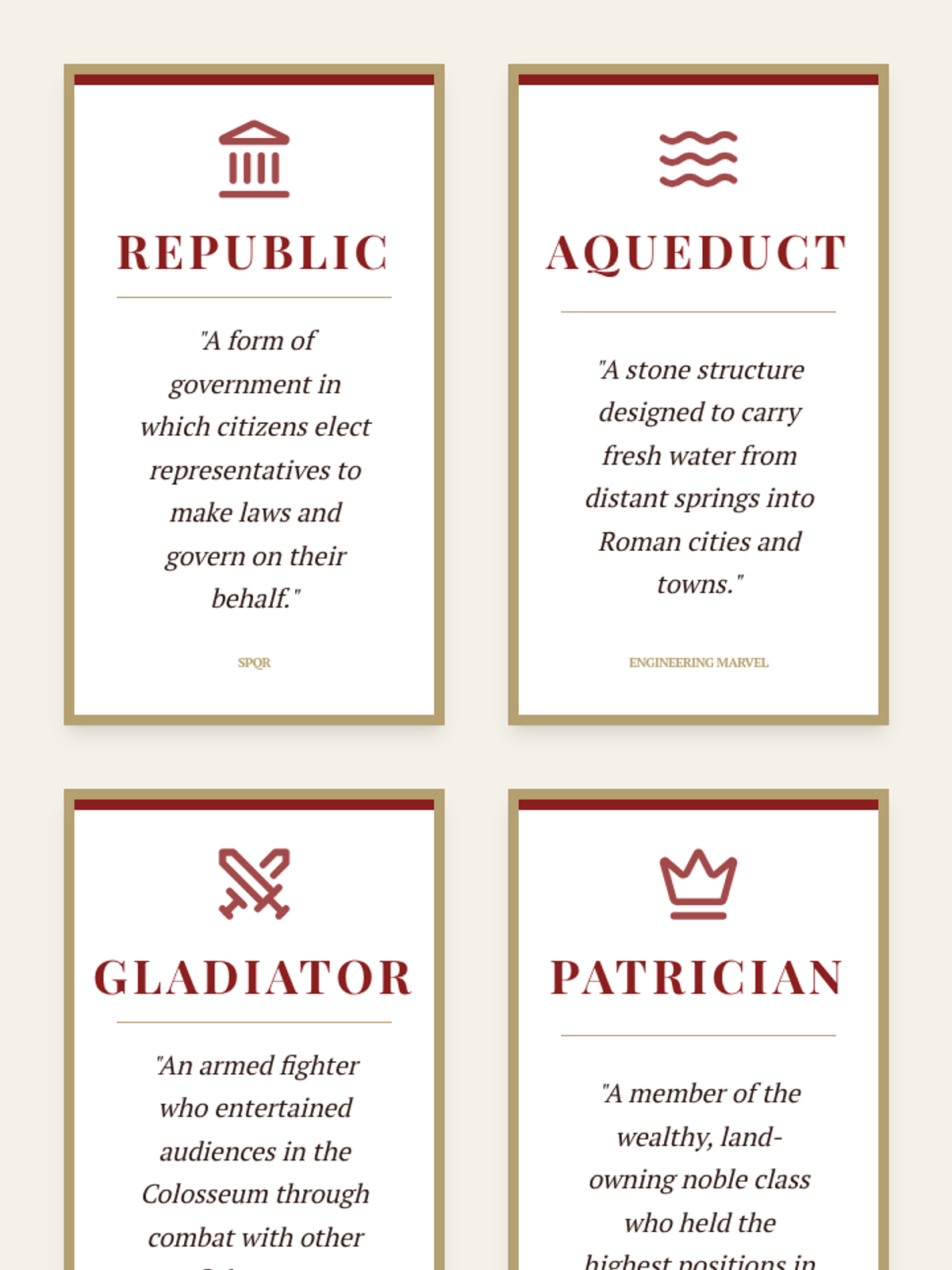
Master the essential terminology of Ancient Rome through visual and descriptive flashcards.
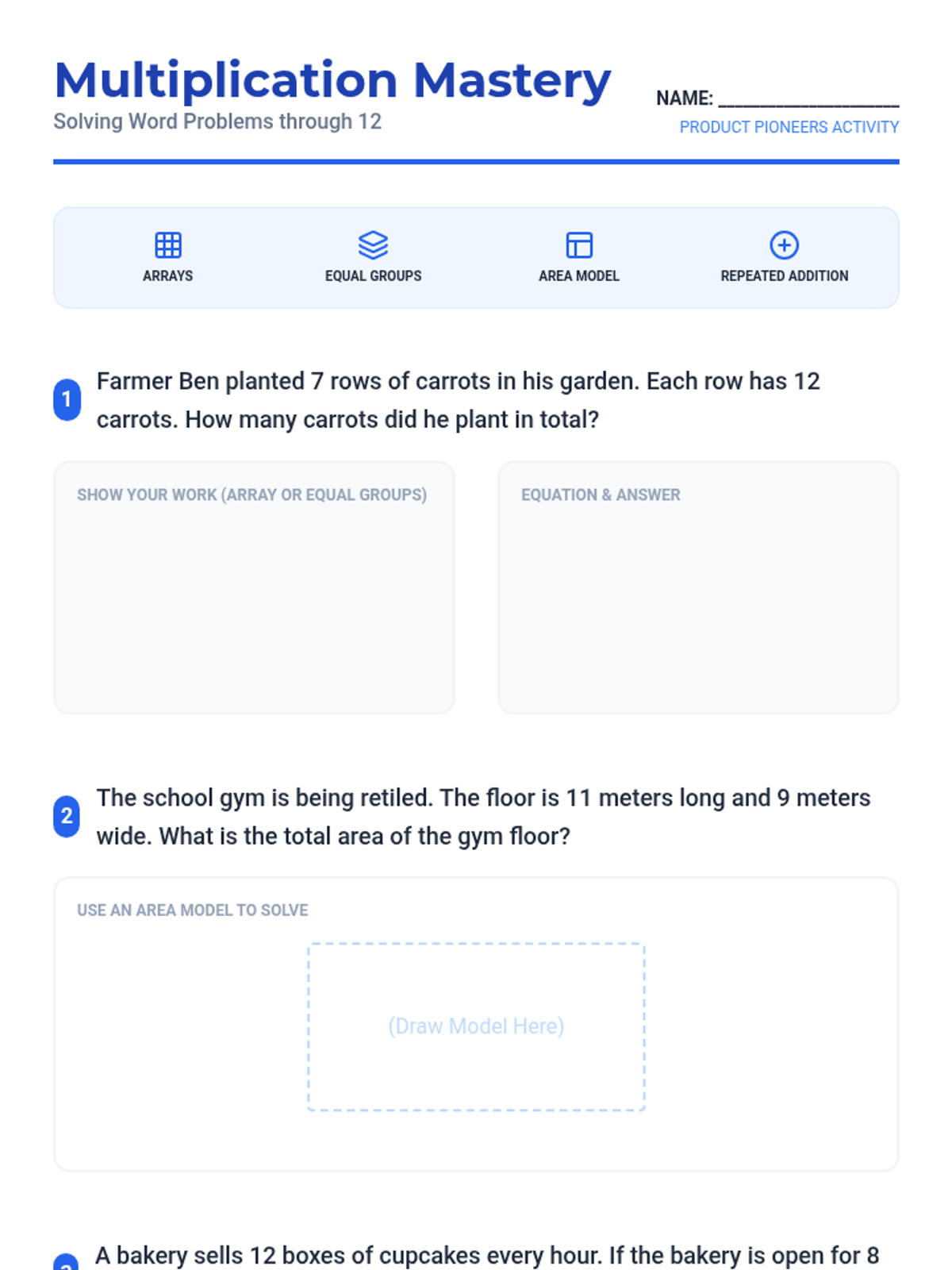
Solve complex multiplication word problems using multiple strategies including arrays and area models.
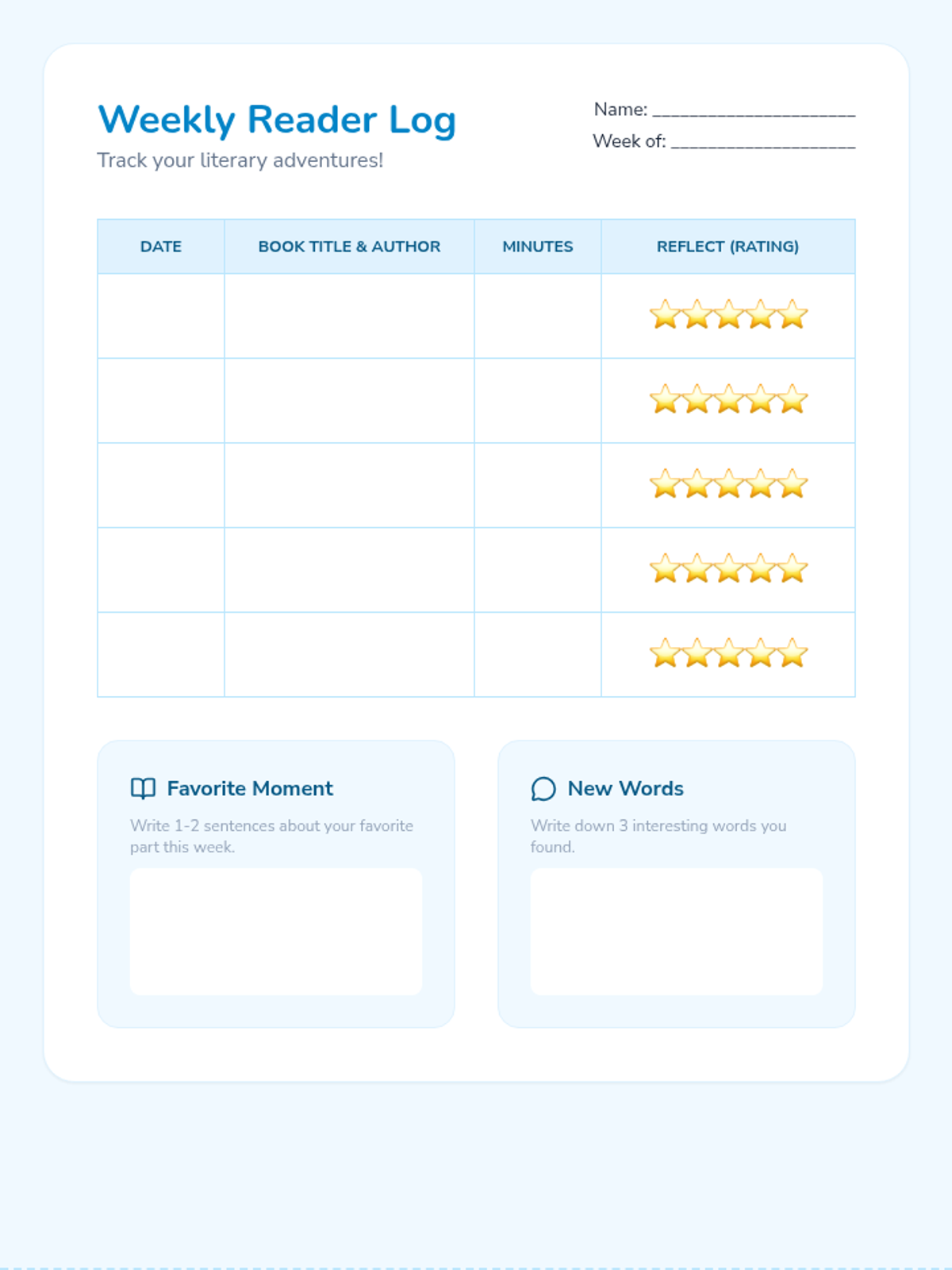
Track and reflect on daily reading progress with differentiated logs for various ability levels.
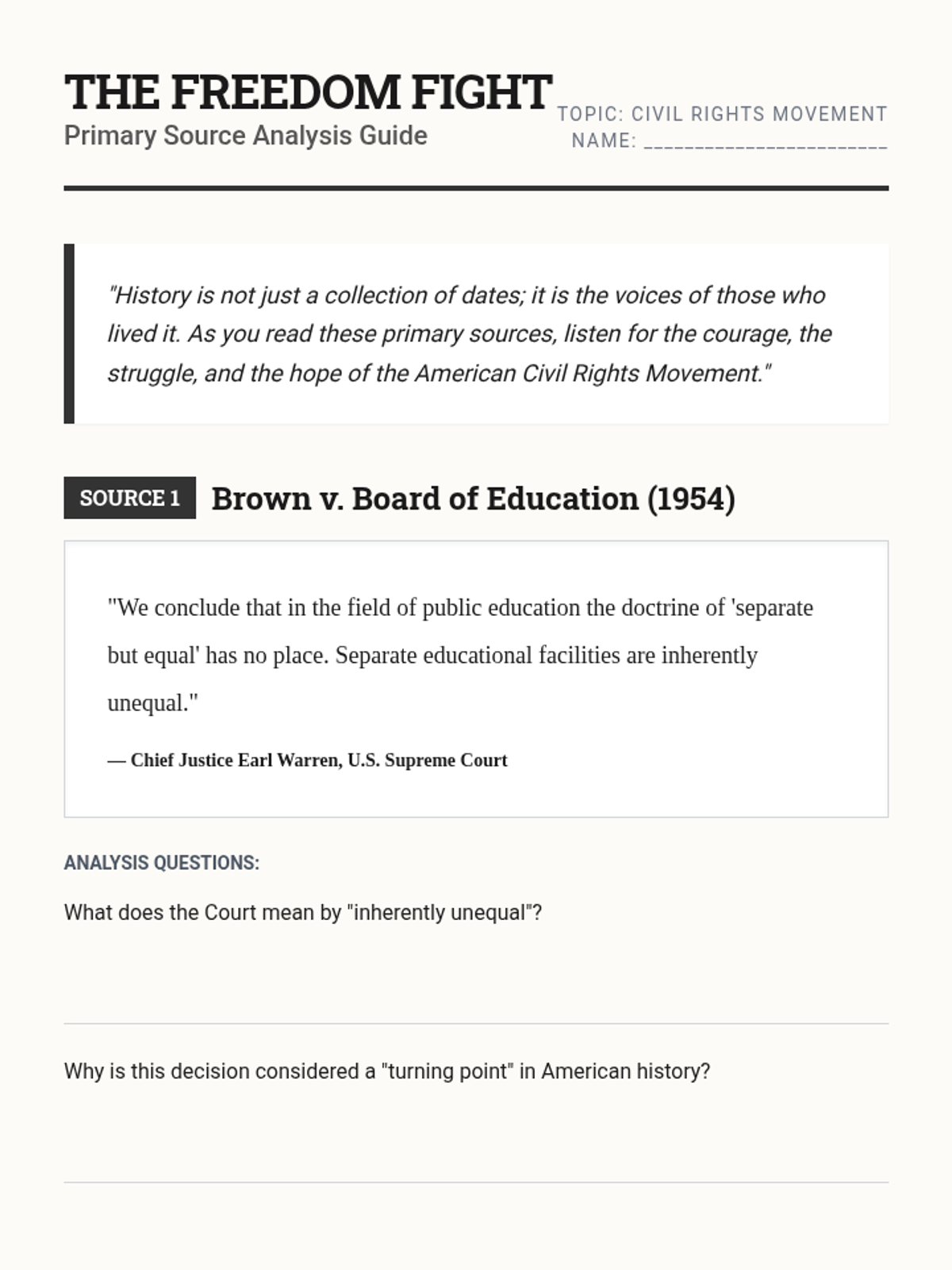
Analyze the key figures, events, and documents of the American Civil Rights Movement.
Explore how plants transform sunlight into energy through the process of photosynthesis.
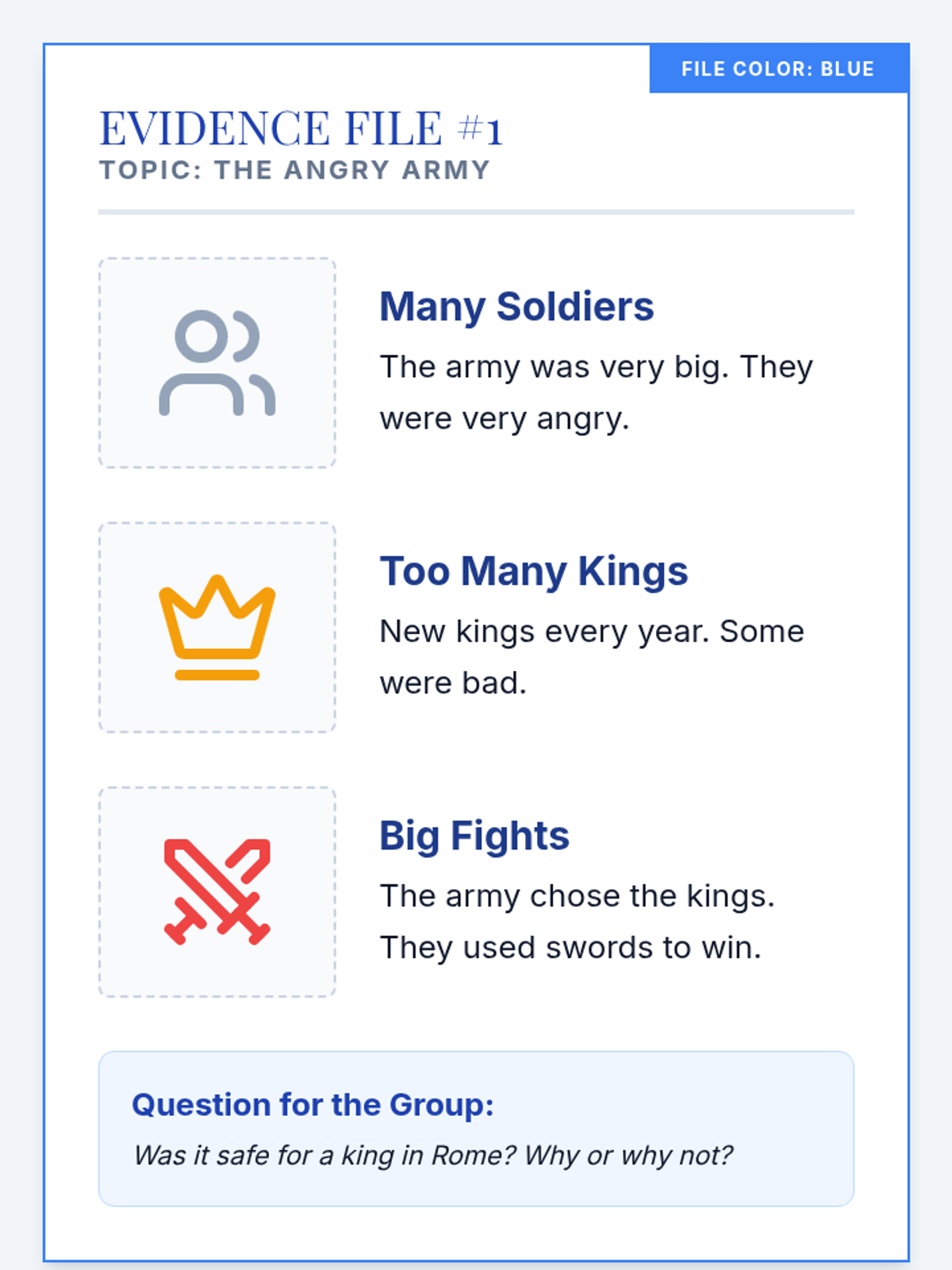
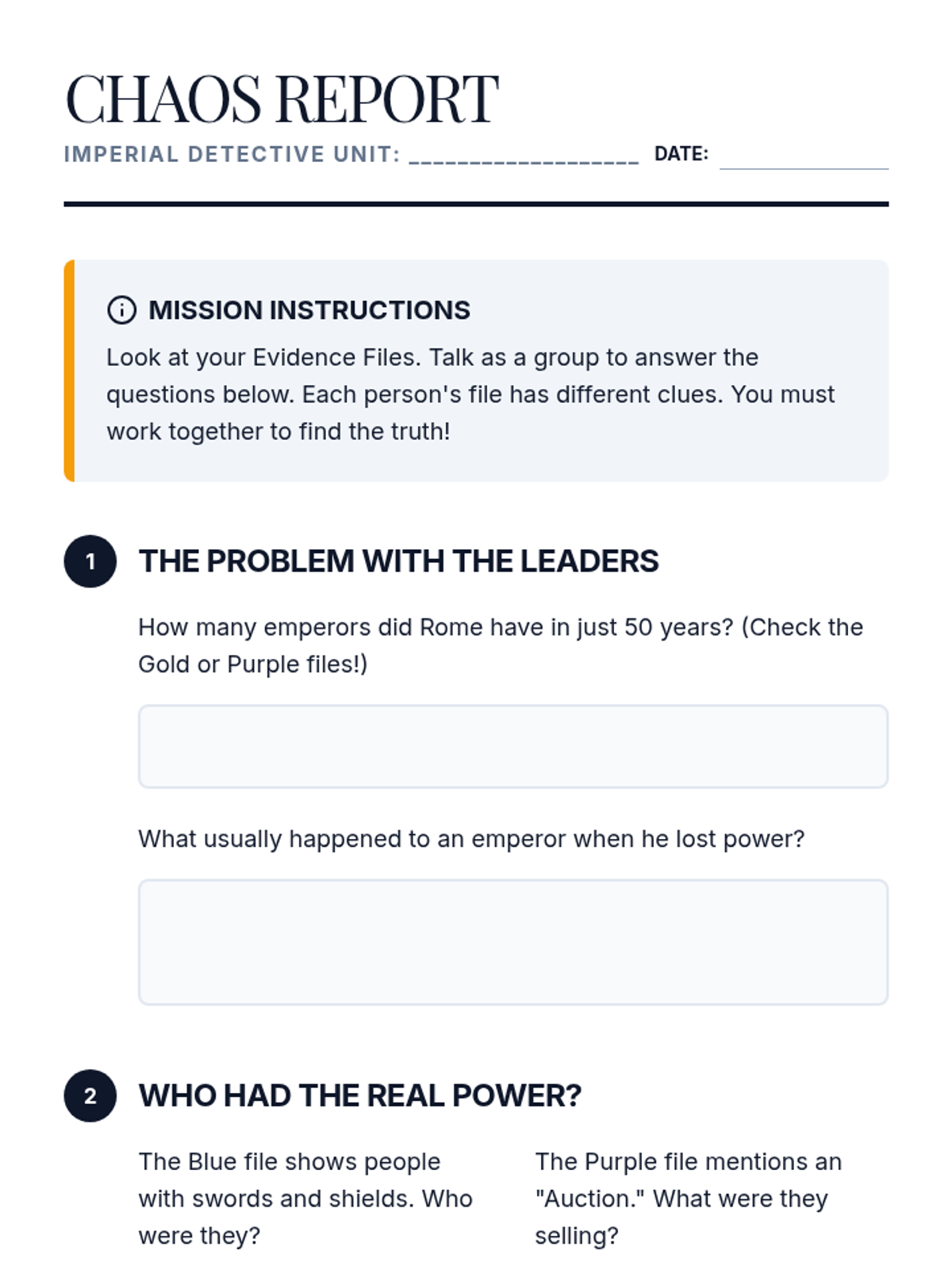
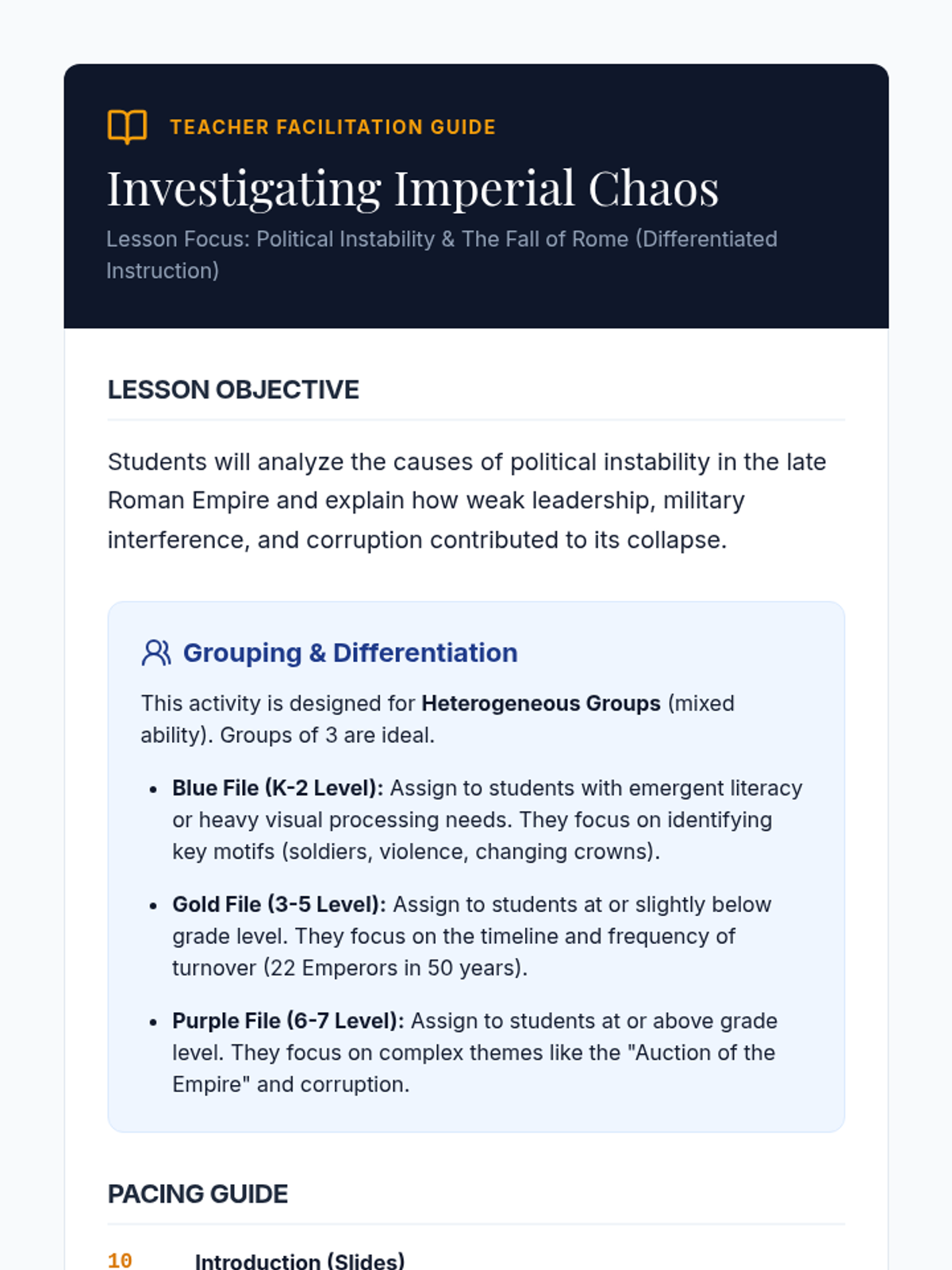
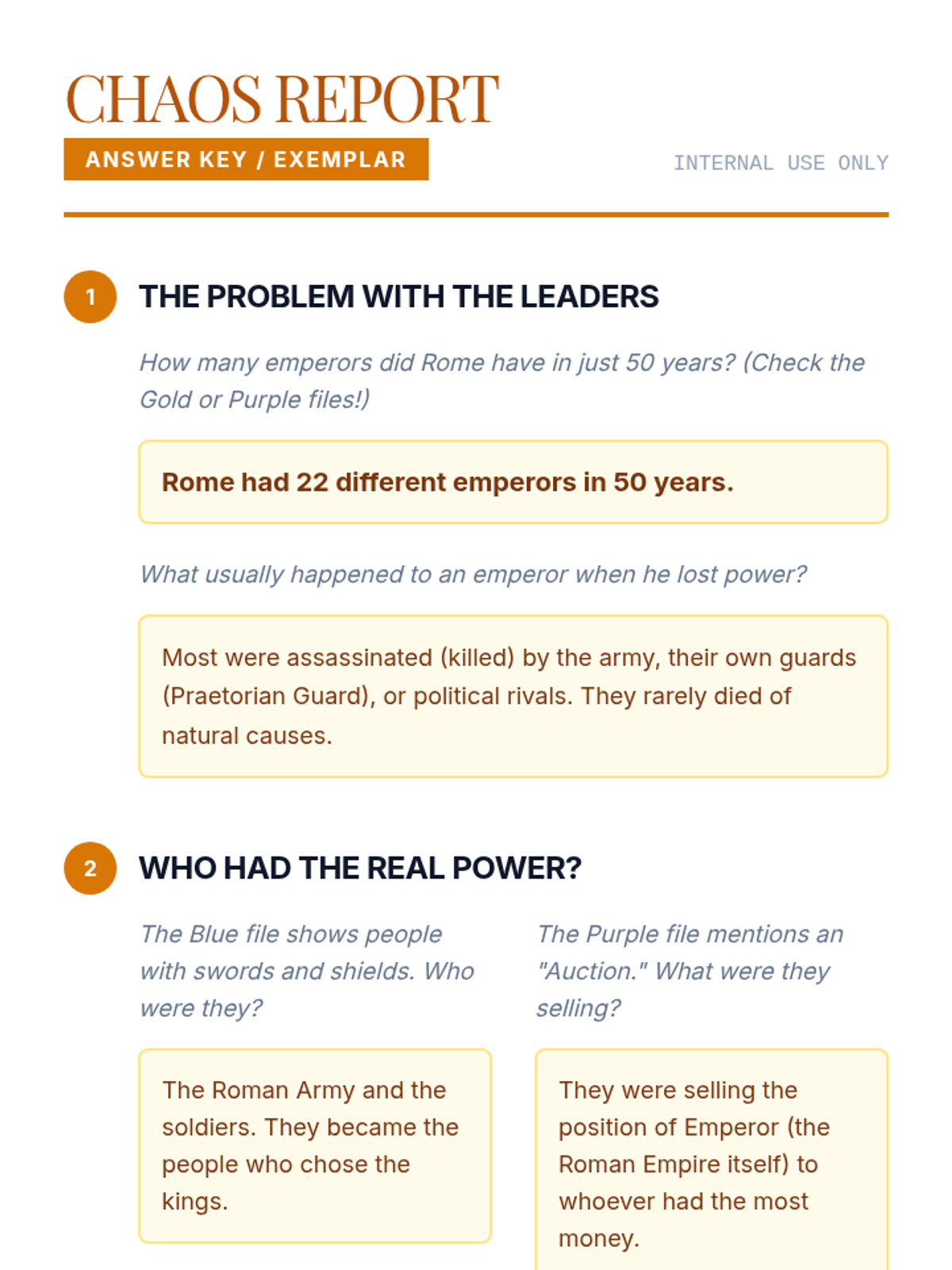
A lesson investigating the political instability that led to the Fall of Rome, featuring differentiated evidence files for diverse reading levels. Students work collaboratively to diagnose the empire's 'political sickness.'
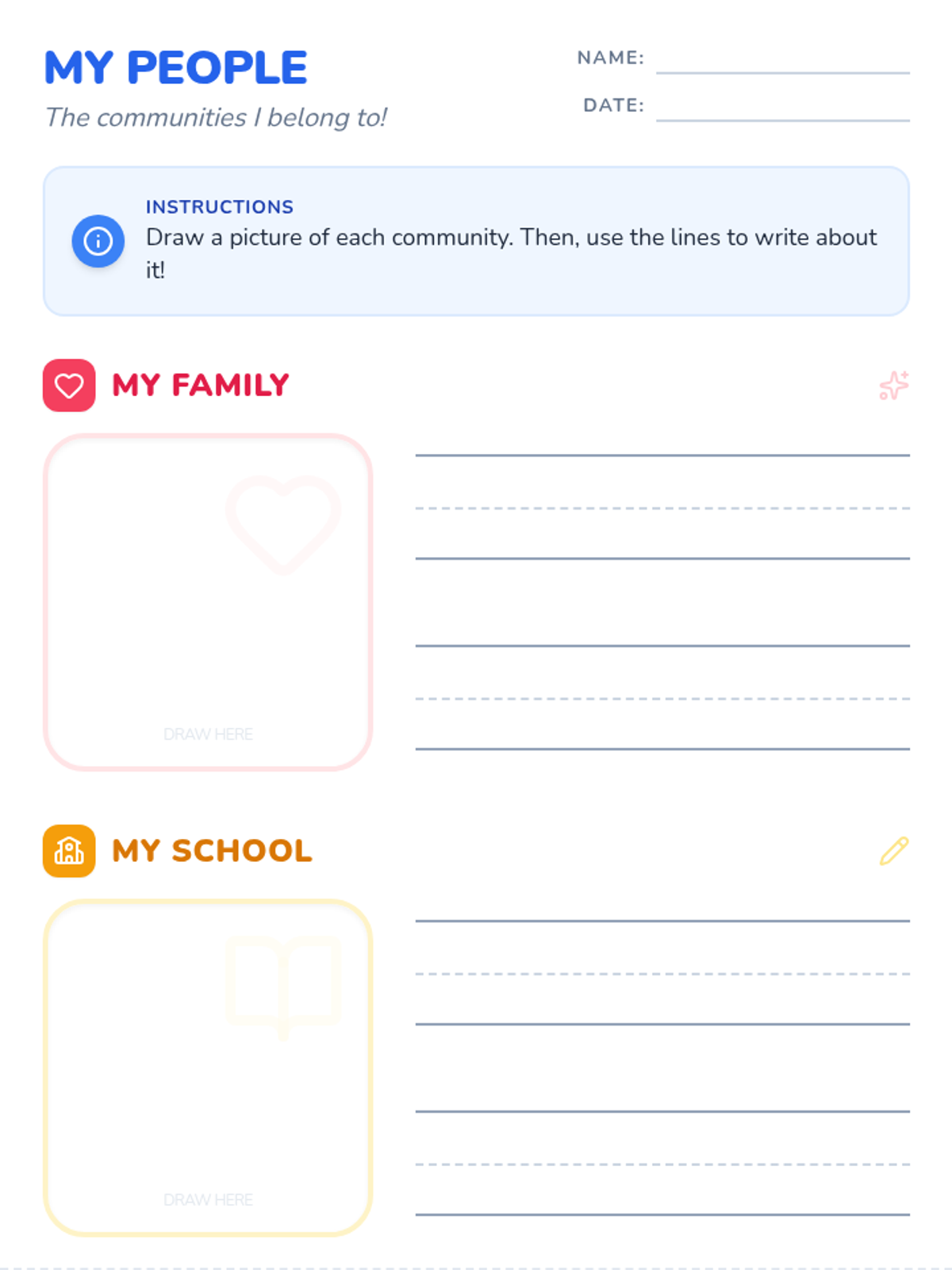
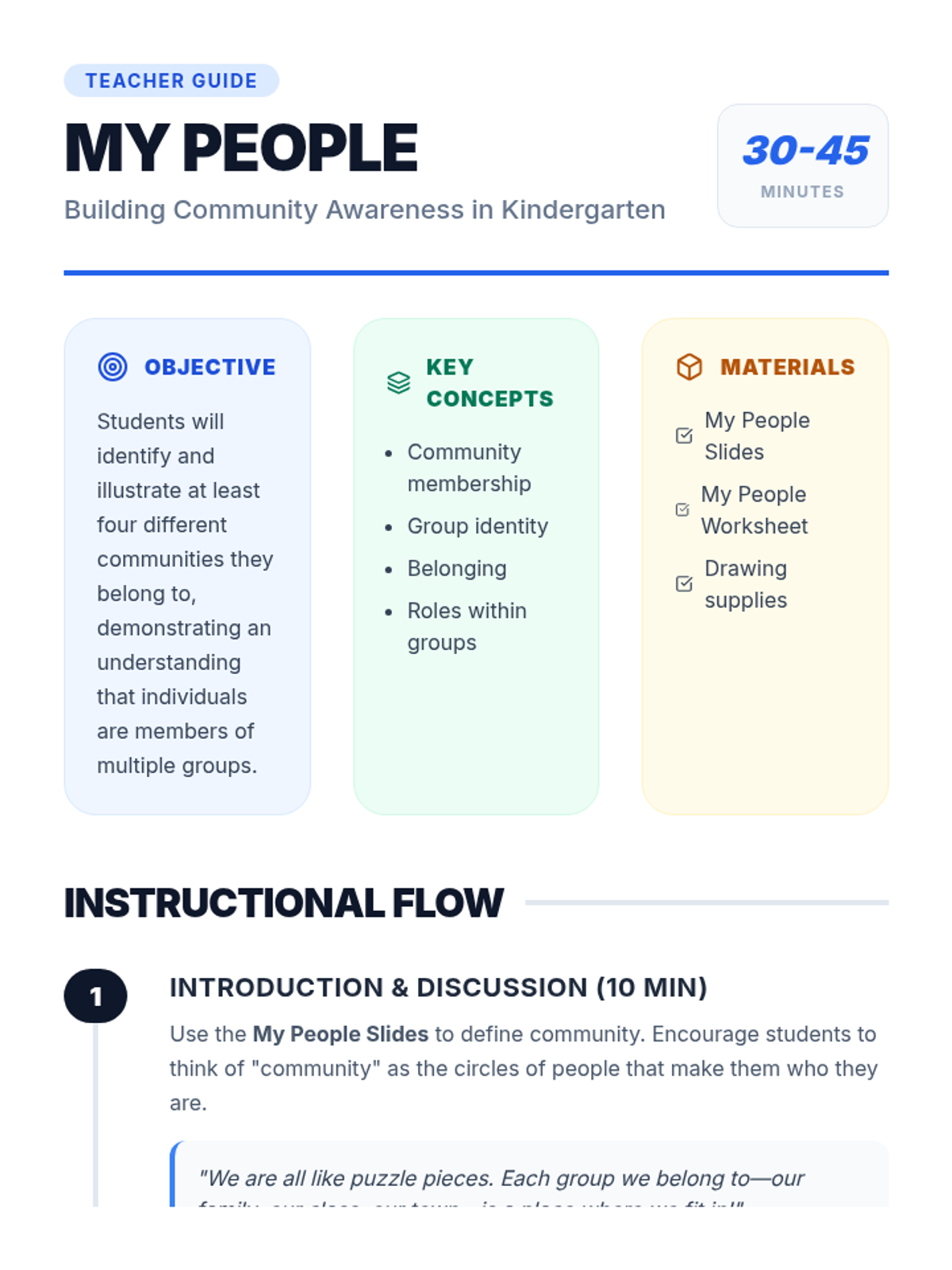
A lesson designed to help kindergarten students understand the concept of community by identifying and reflecting on the groups they belong to through drawing and early writing.
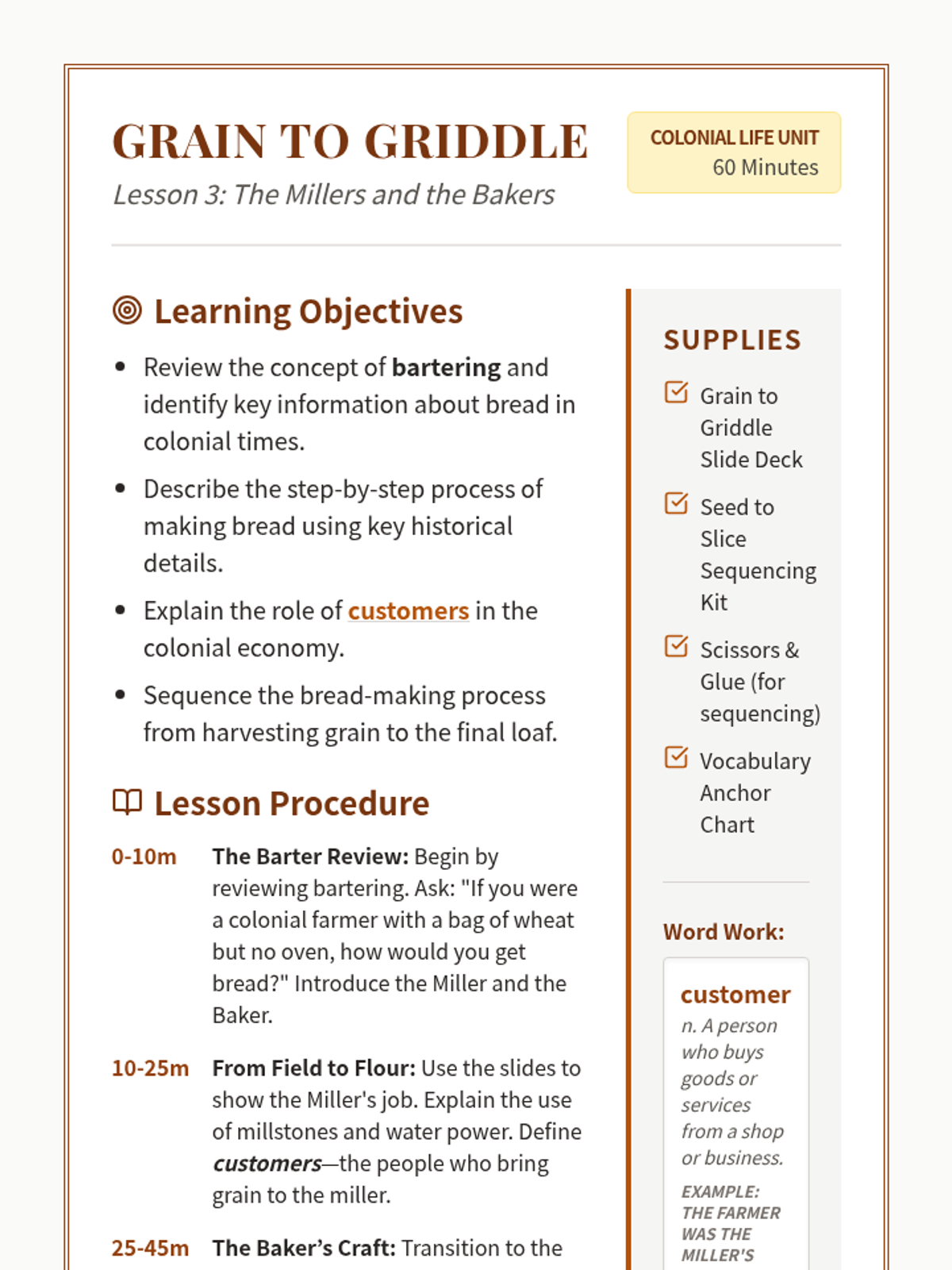
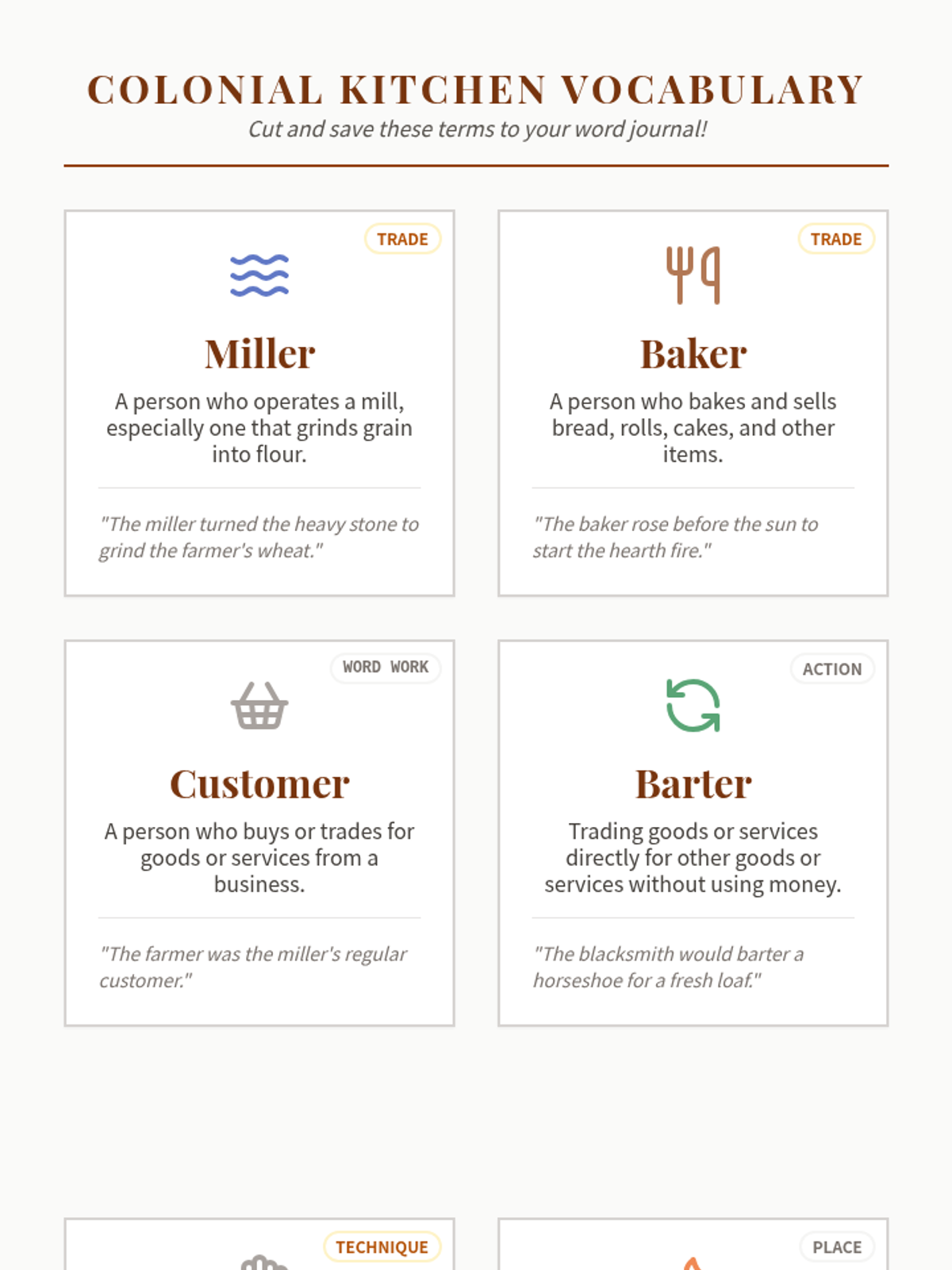
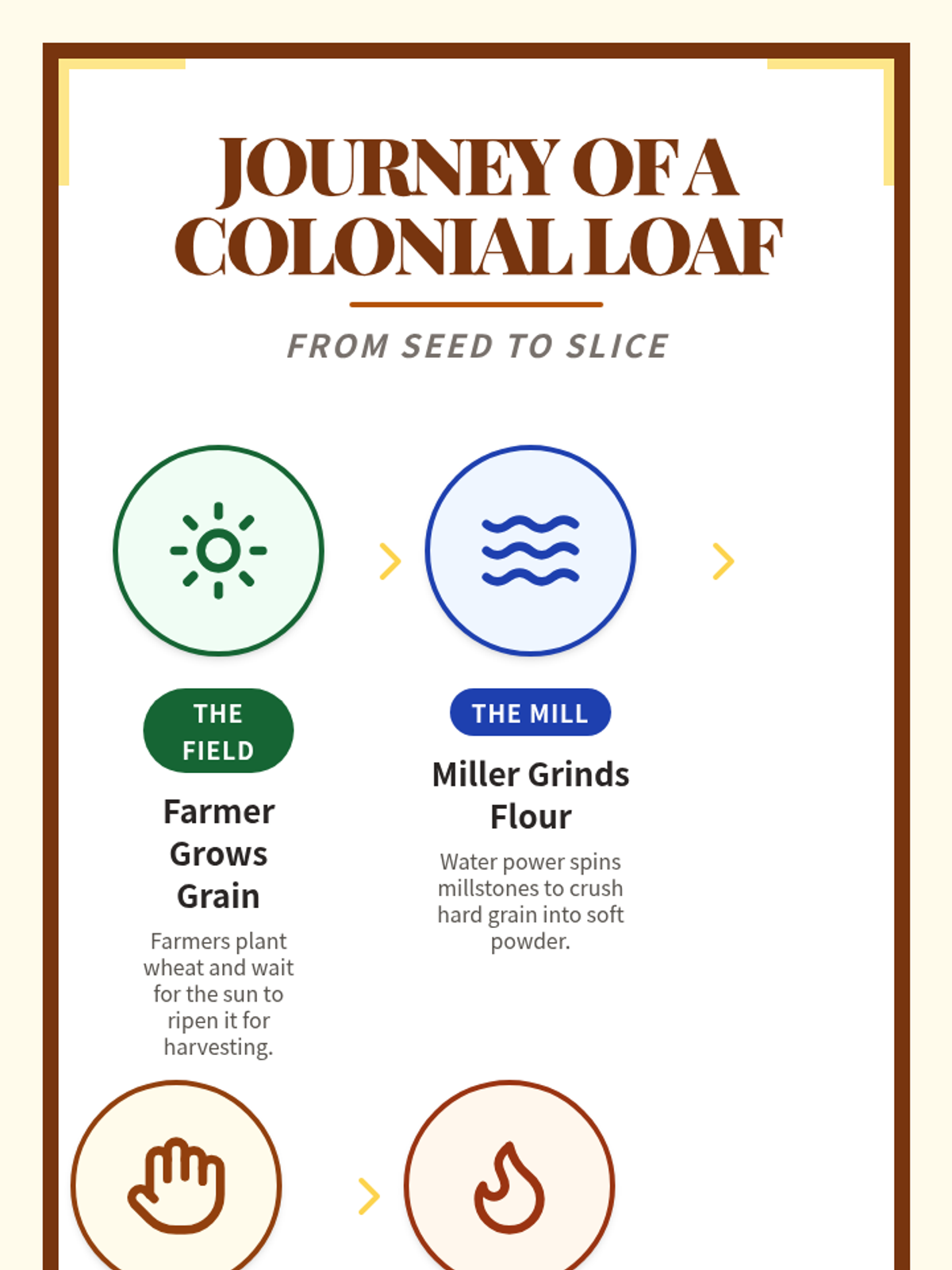
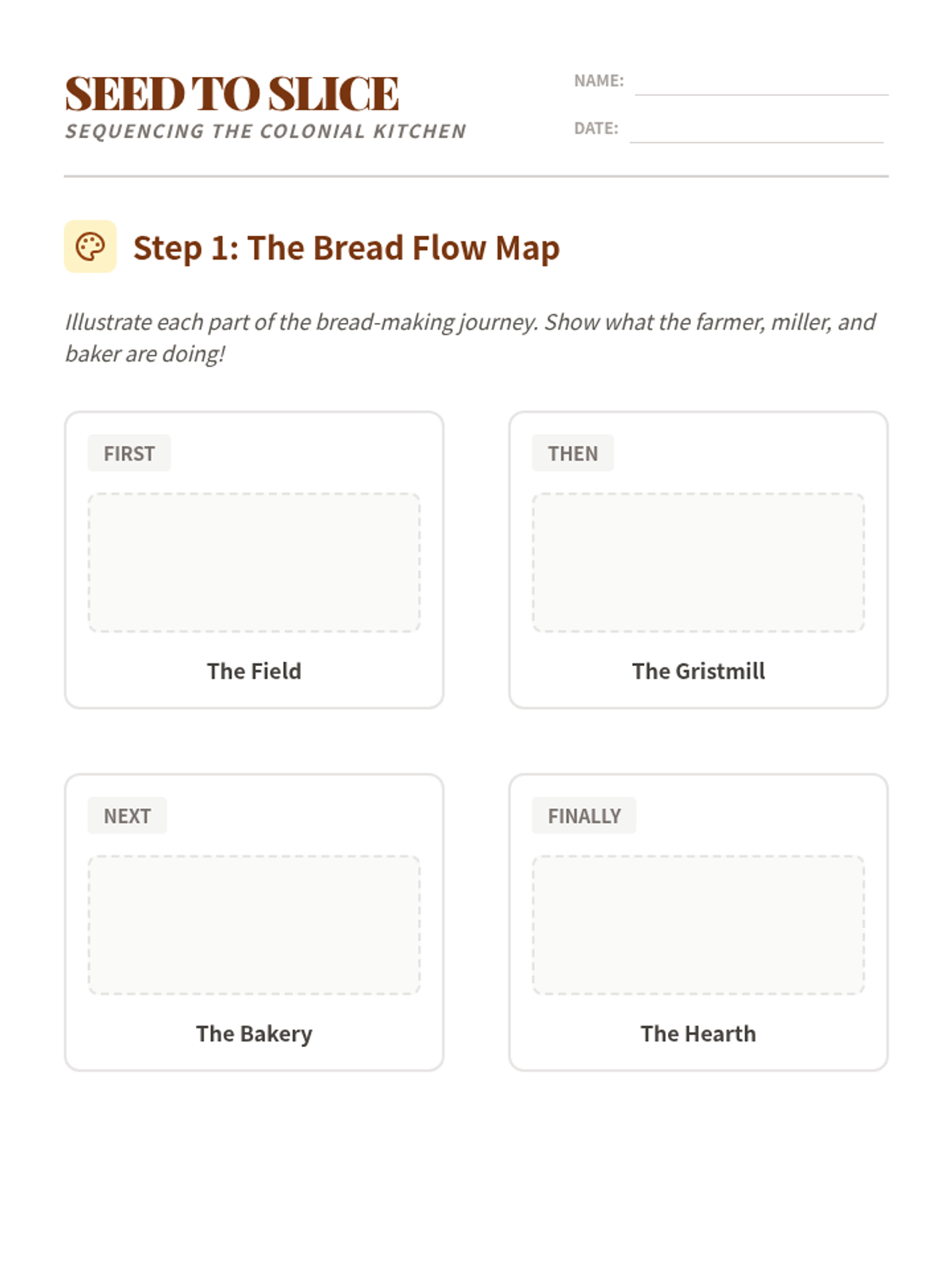
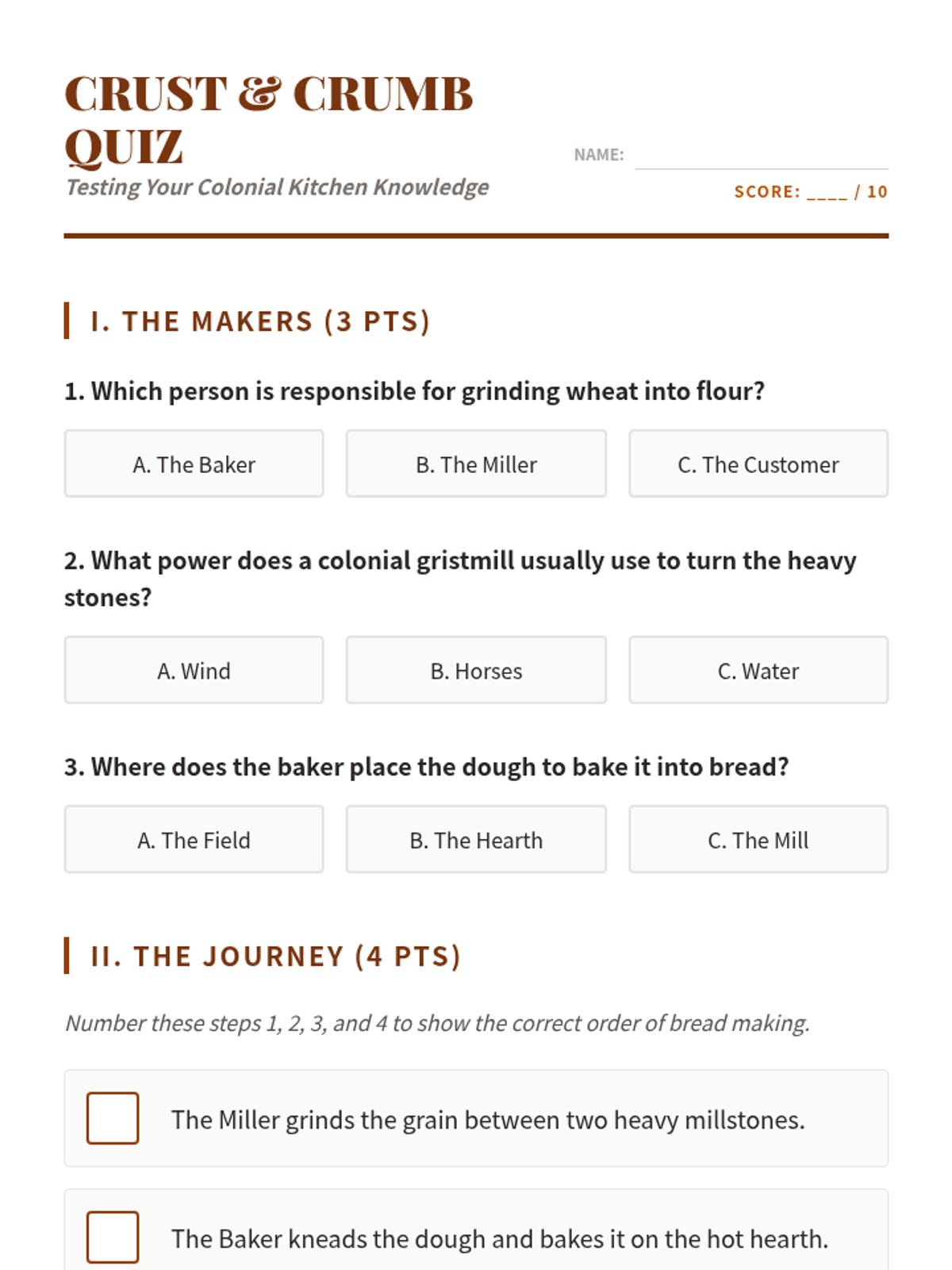
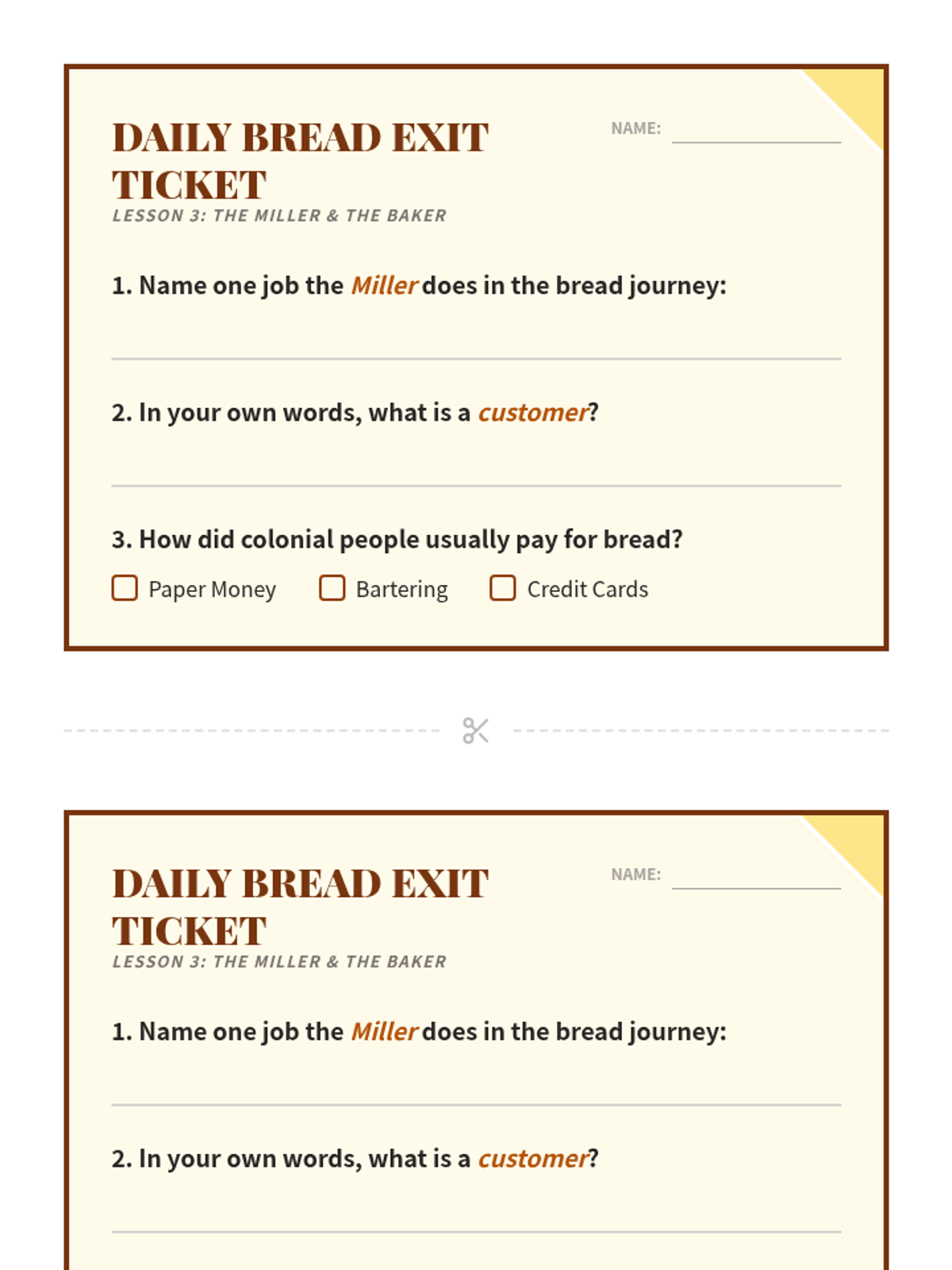
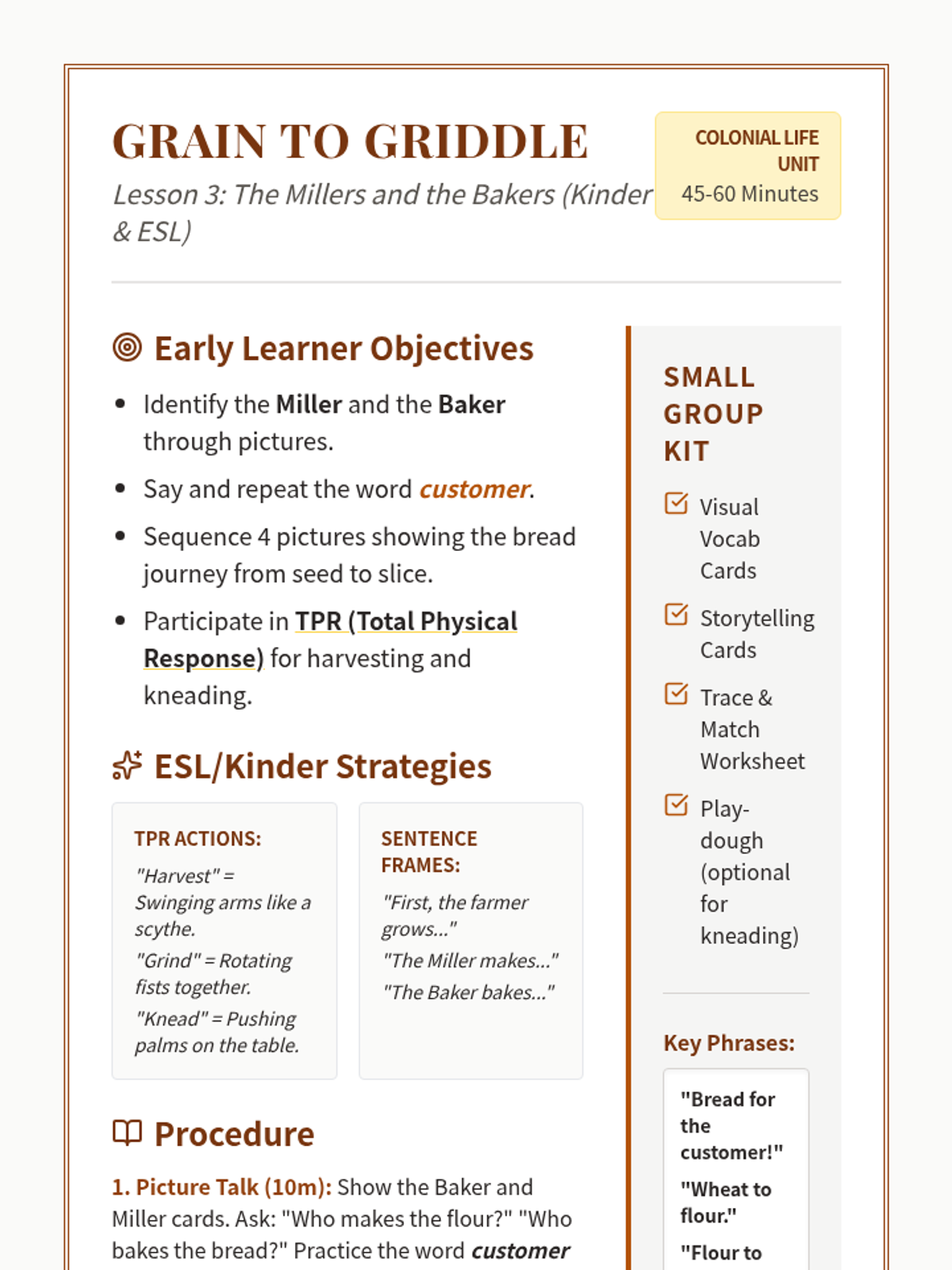
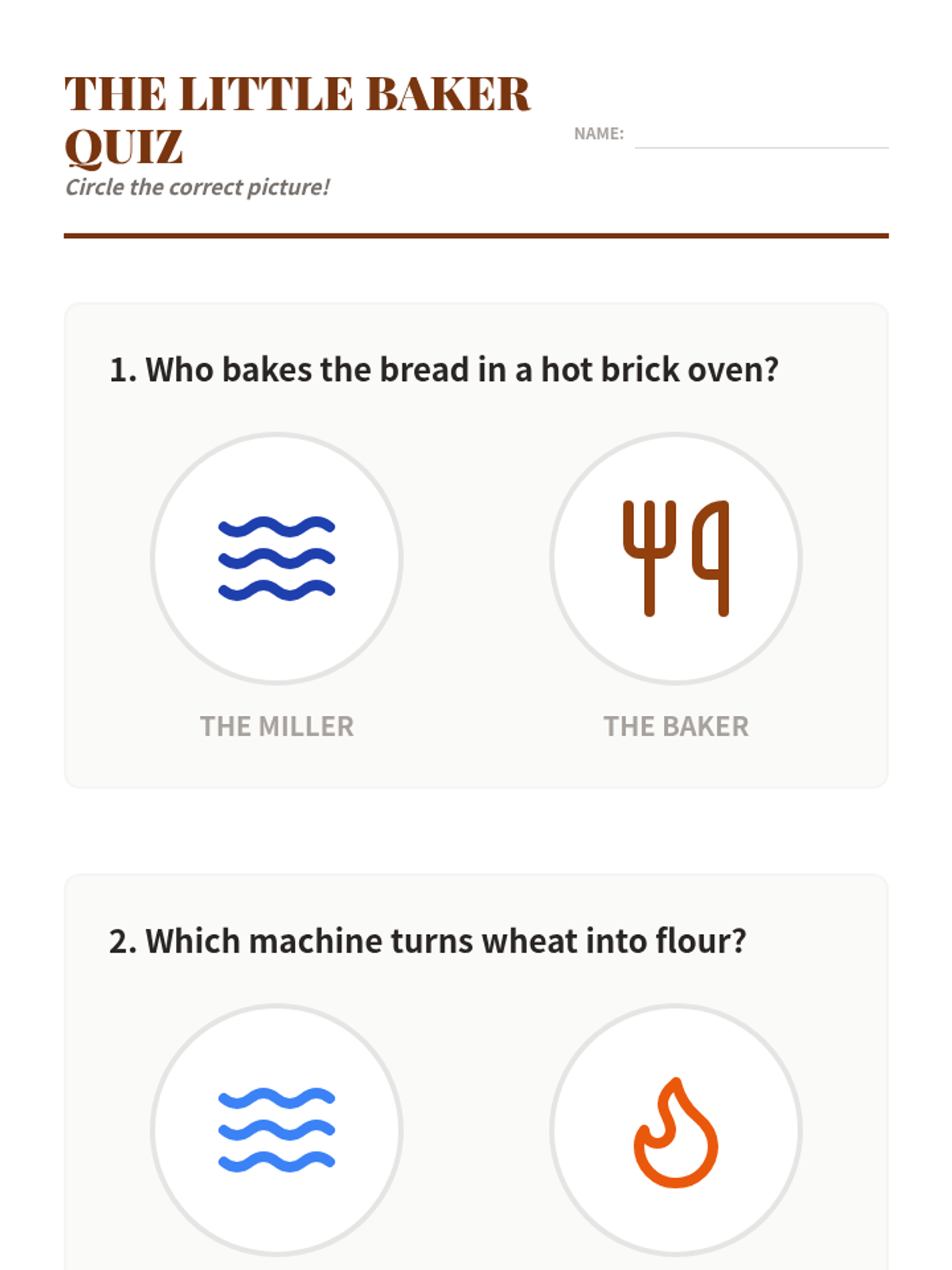
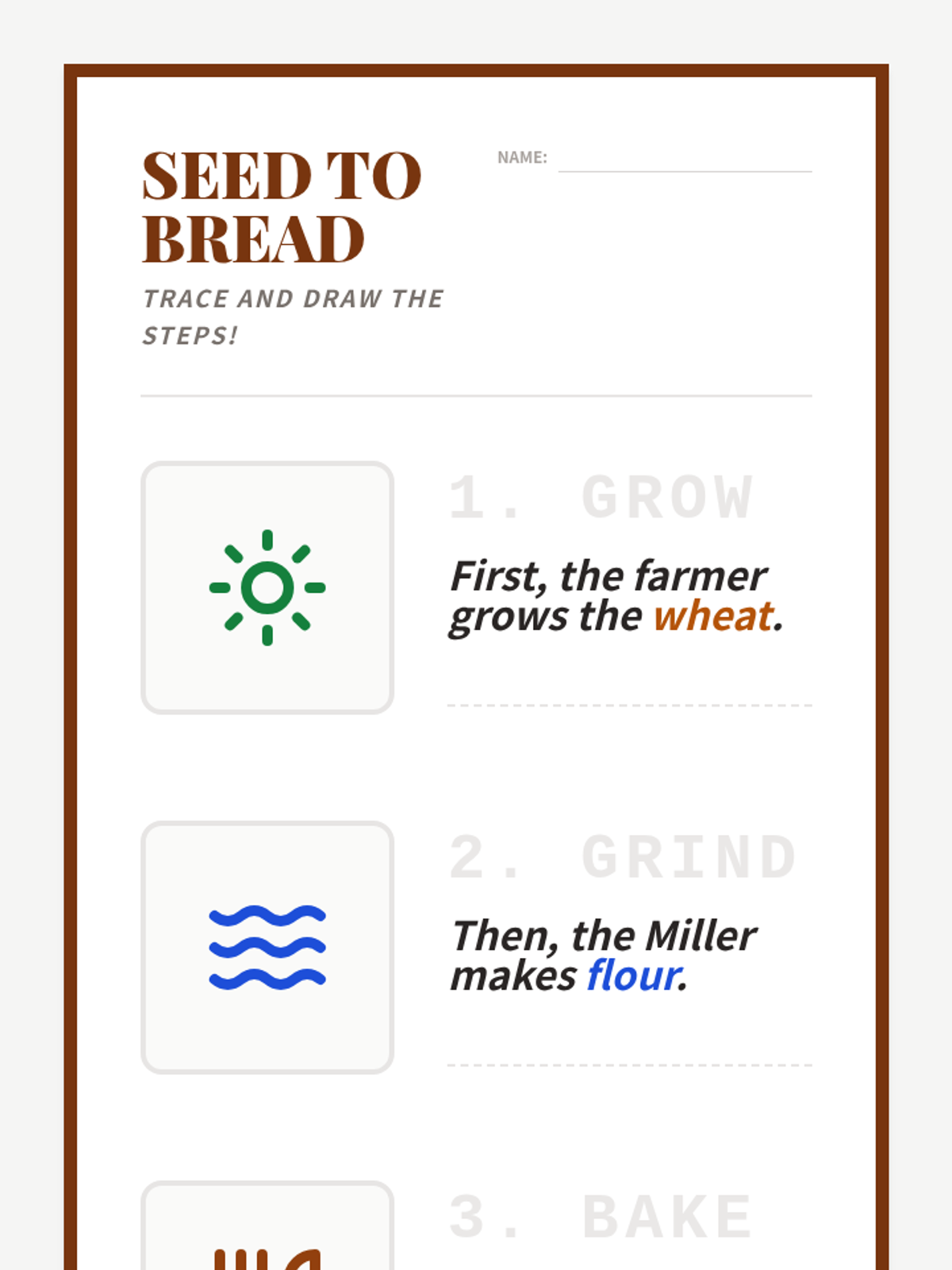
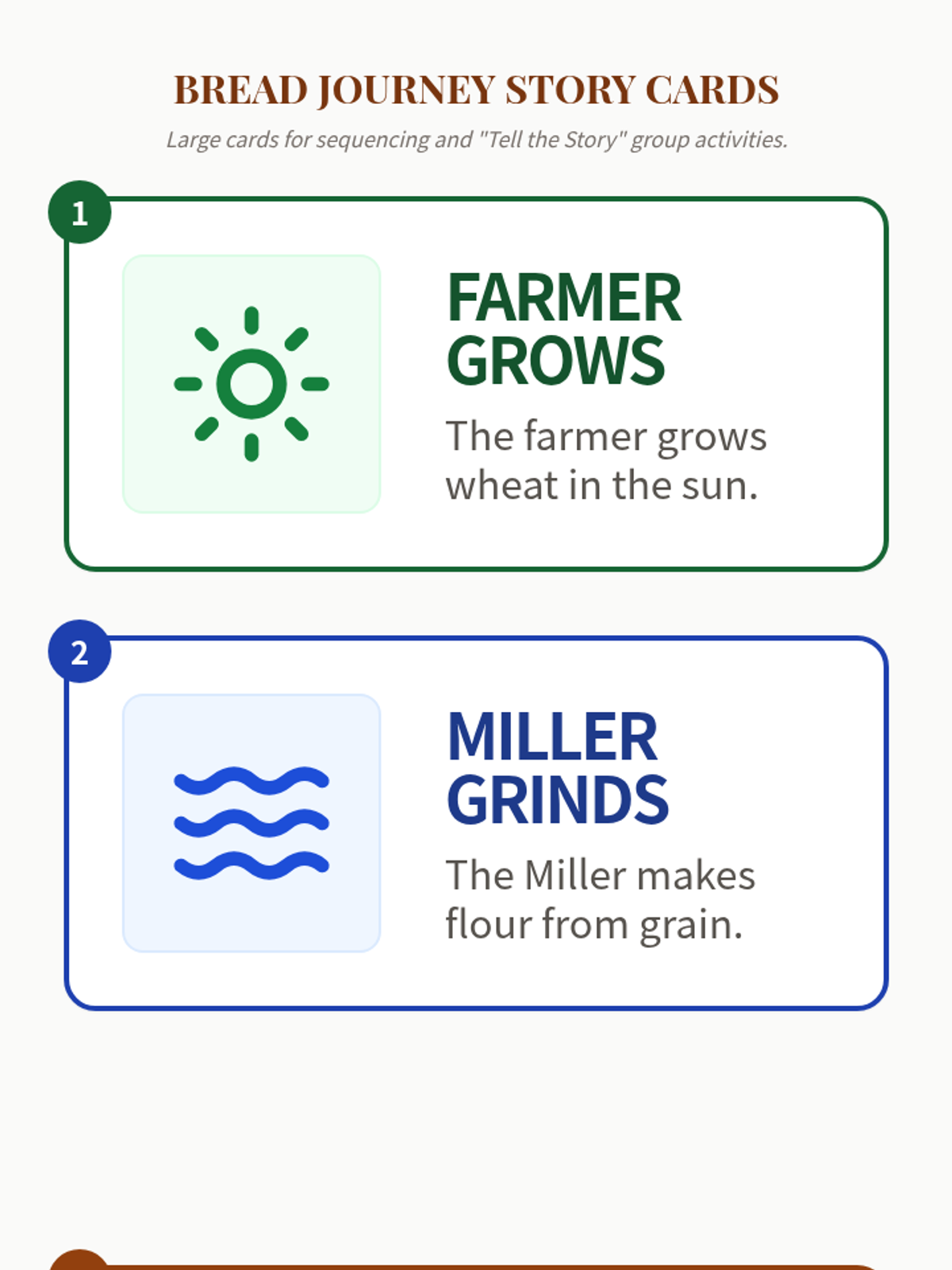
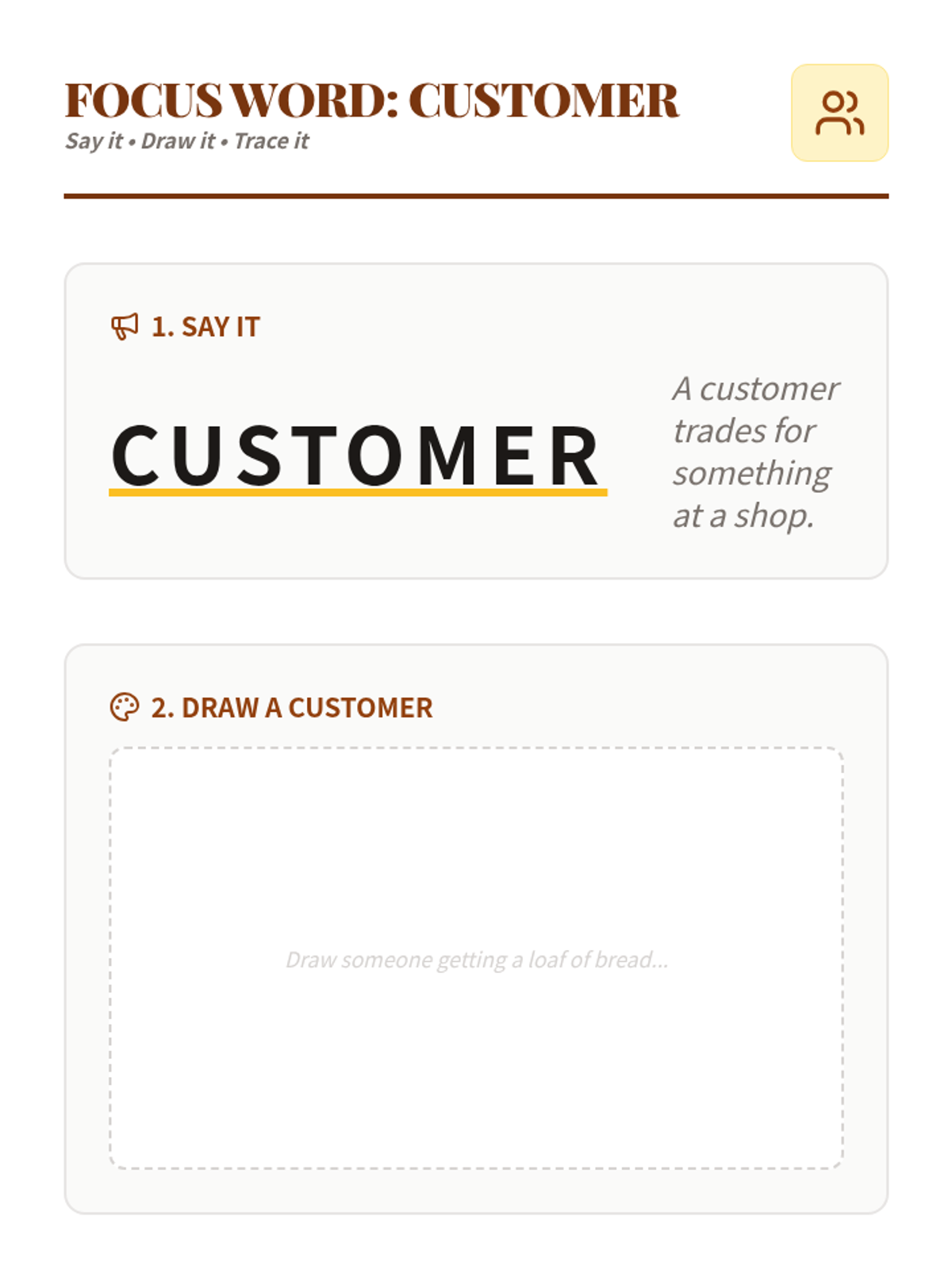
A comprehensive lesson on the colonial bread-making process, featuring the roles of millers and bakers, bartering practices, and sequencing the steps from grain to loaf.
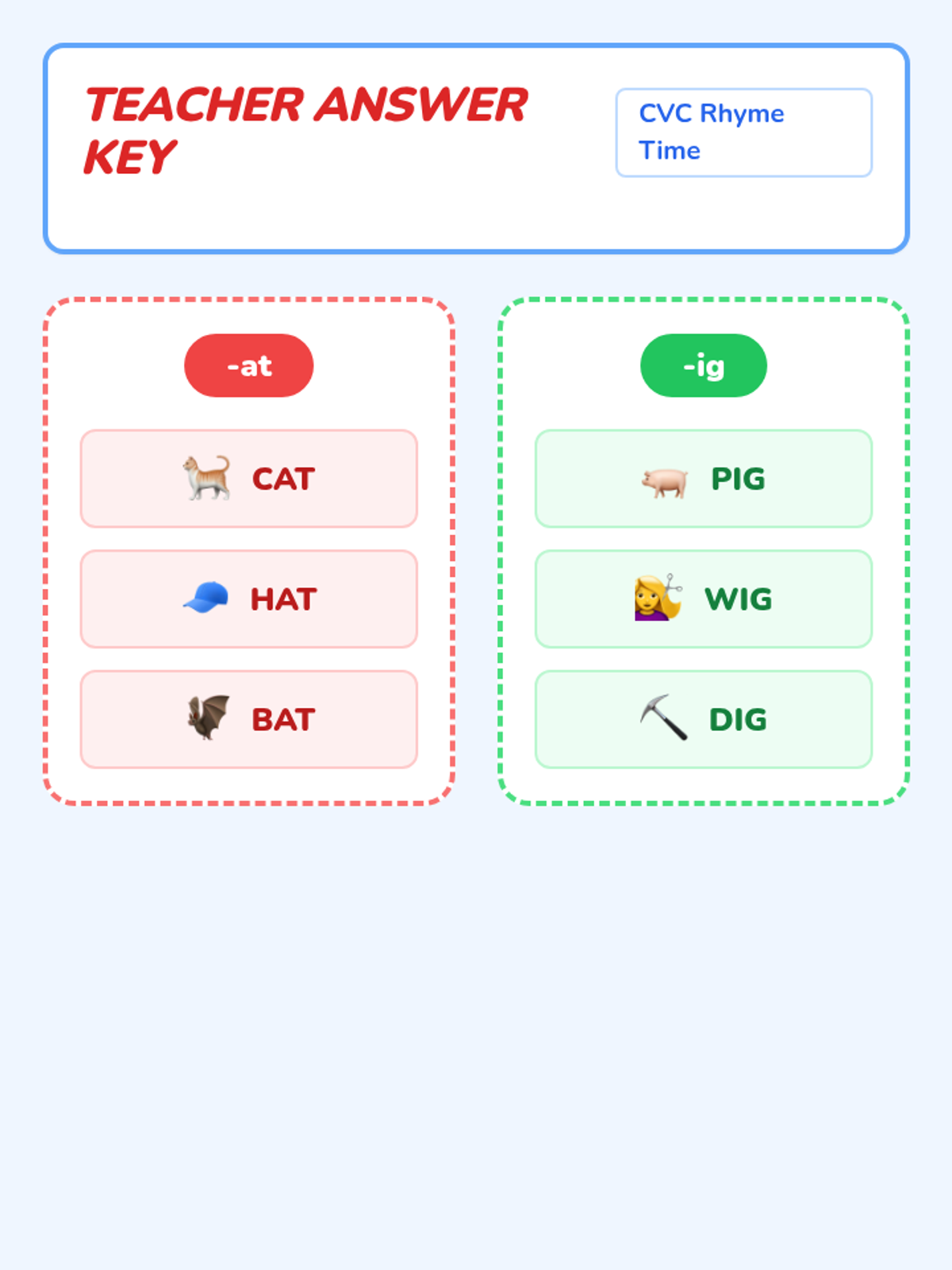
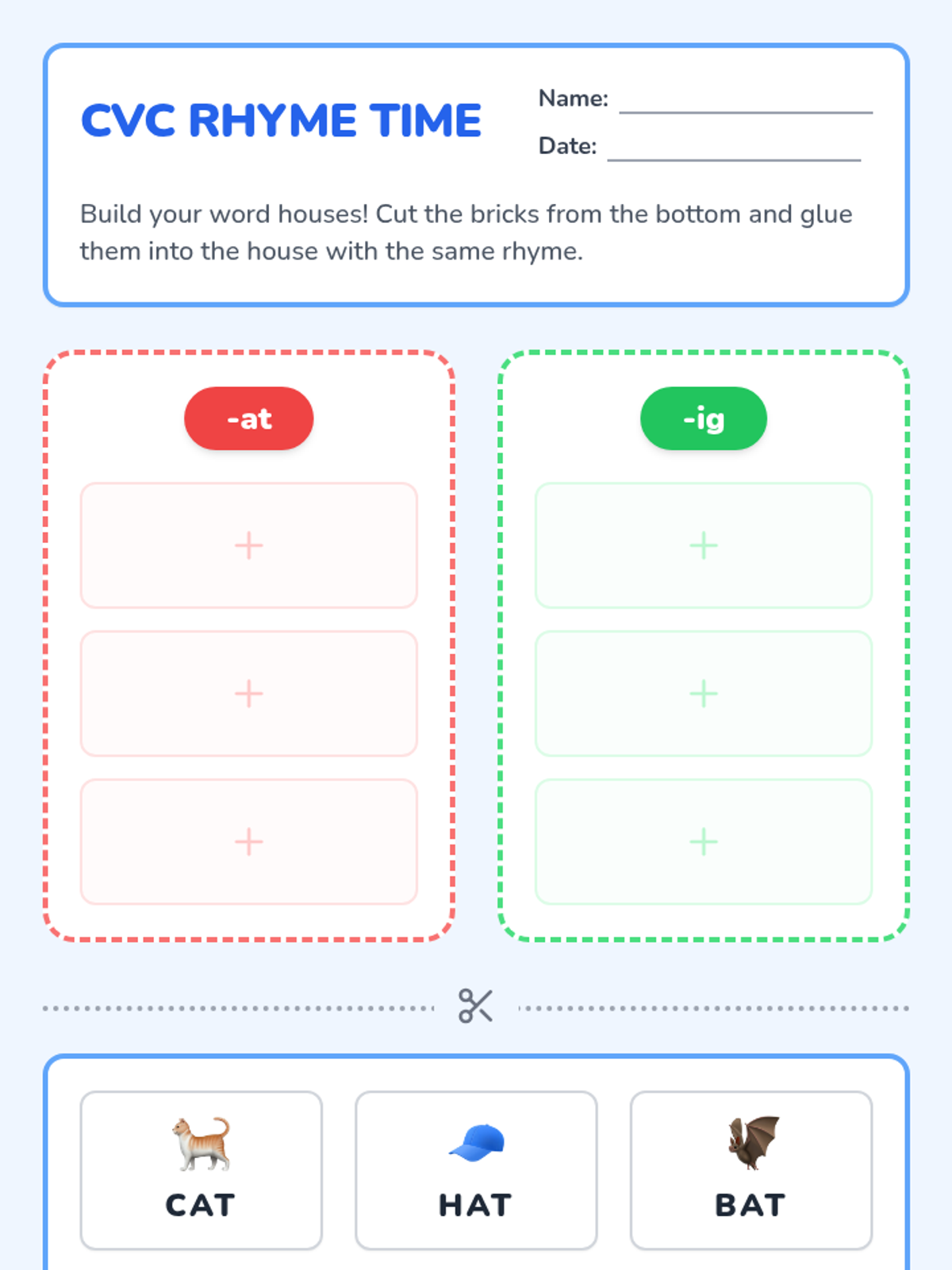
Foundational literacy activities focusing on CVC word families through tactile sorting and visual identification.
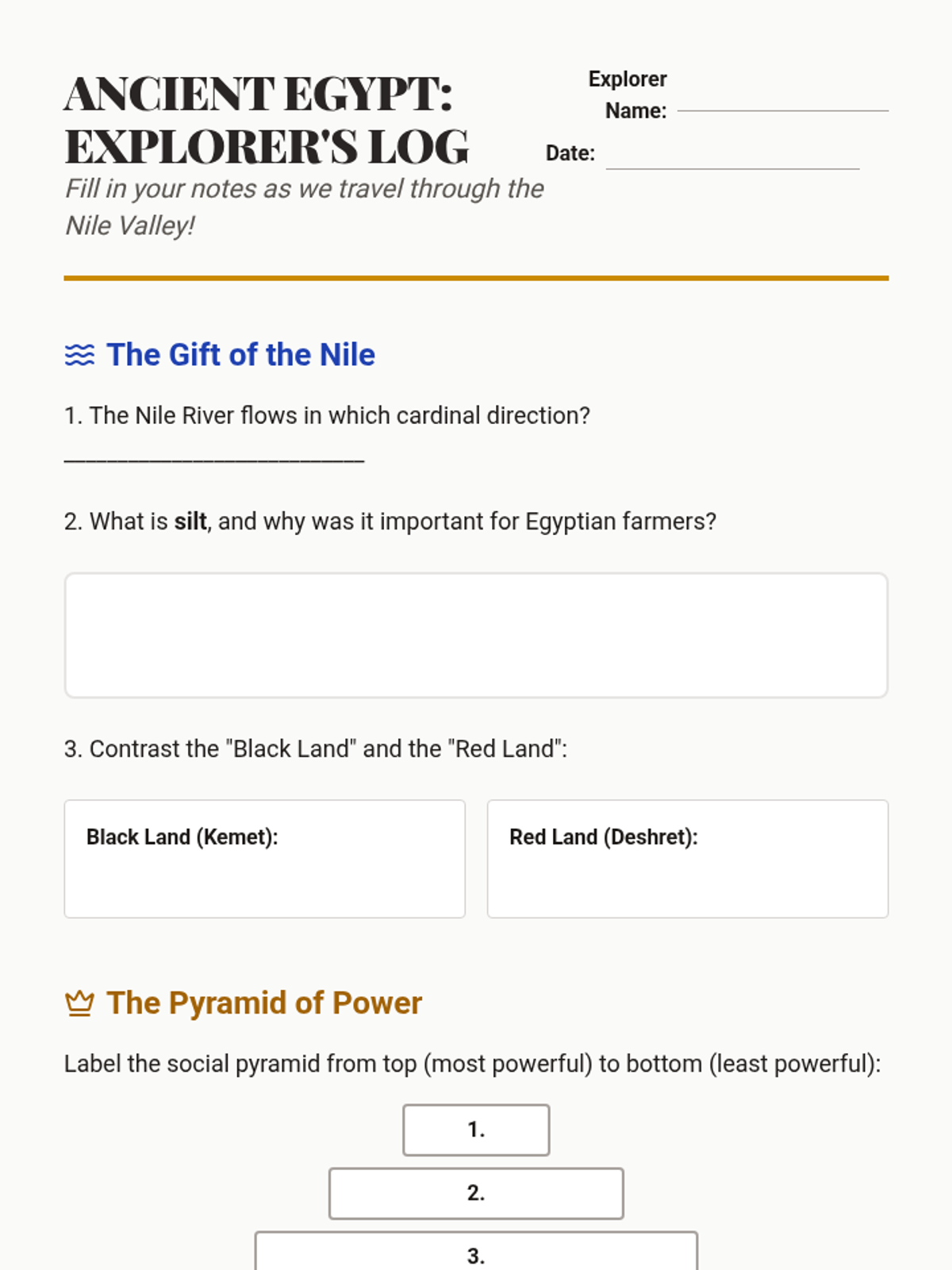
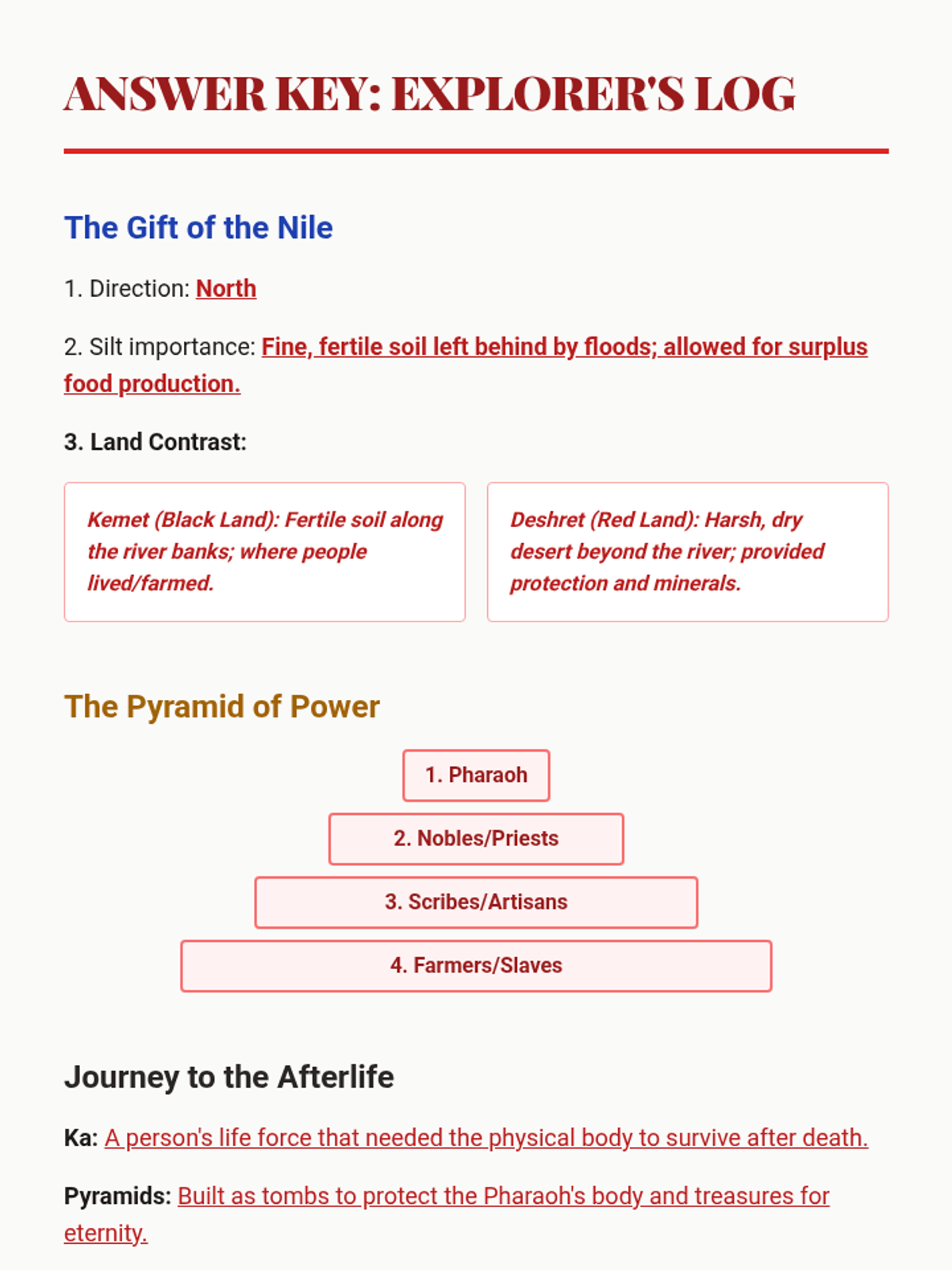
An in-depth exploration of Ancient Egyptian civilization for sixth-grade students. This lesson covers geography, social structures, religious practices, and daily life, utilizing visual slides and interactive guided notes.
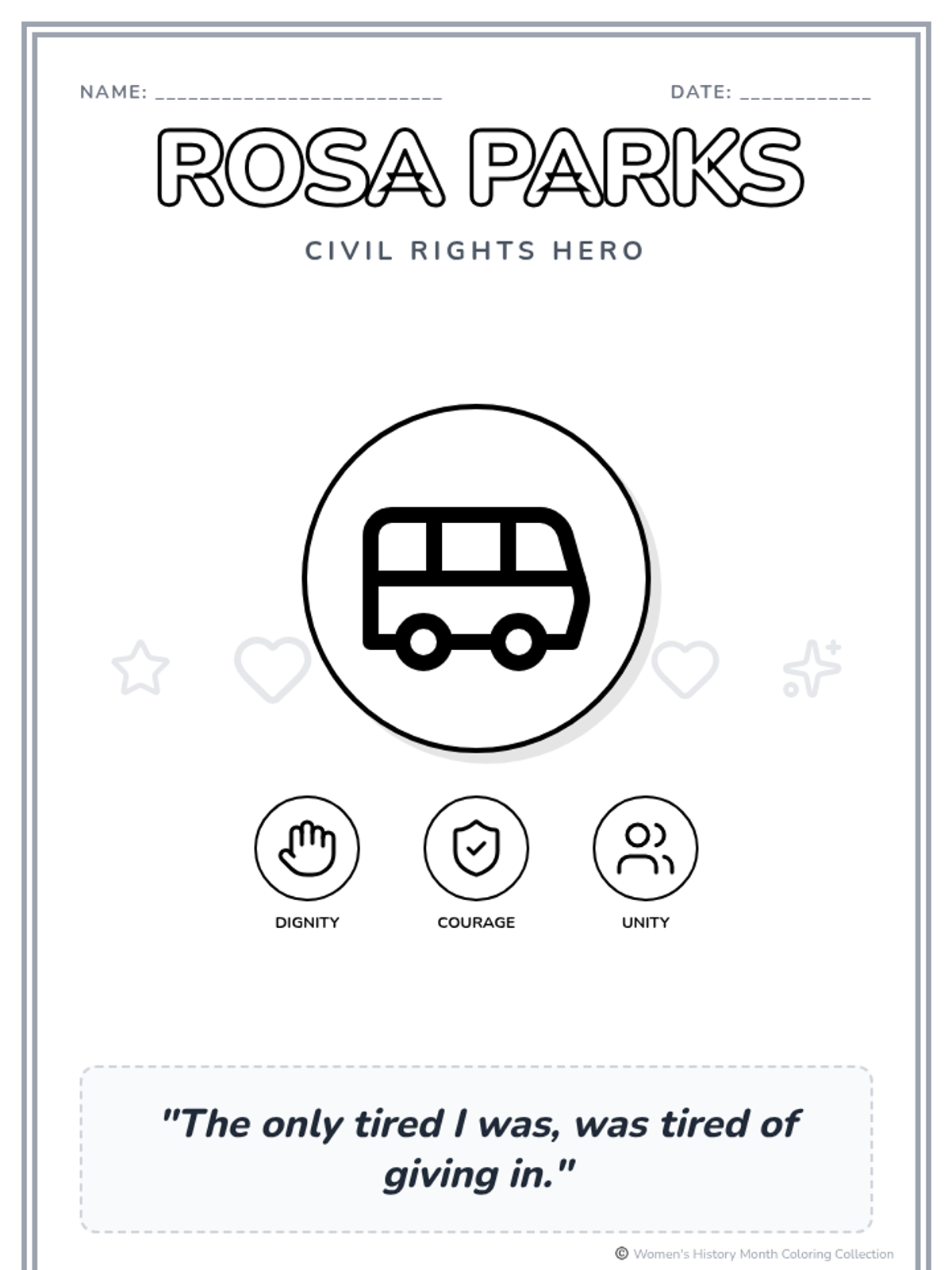
A collection of coloring pages featuring influential women from history and modern times, designed to inspire students through art and reflection.