An in-depth exploration of Ancient Egyptian civilization for sixth-grade students. This lesson covers geography, social structures, religious practices, and daily life, utilizing visual slides and interactive guided notes.
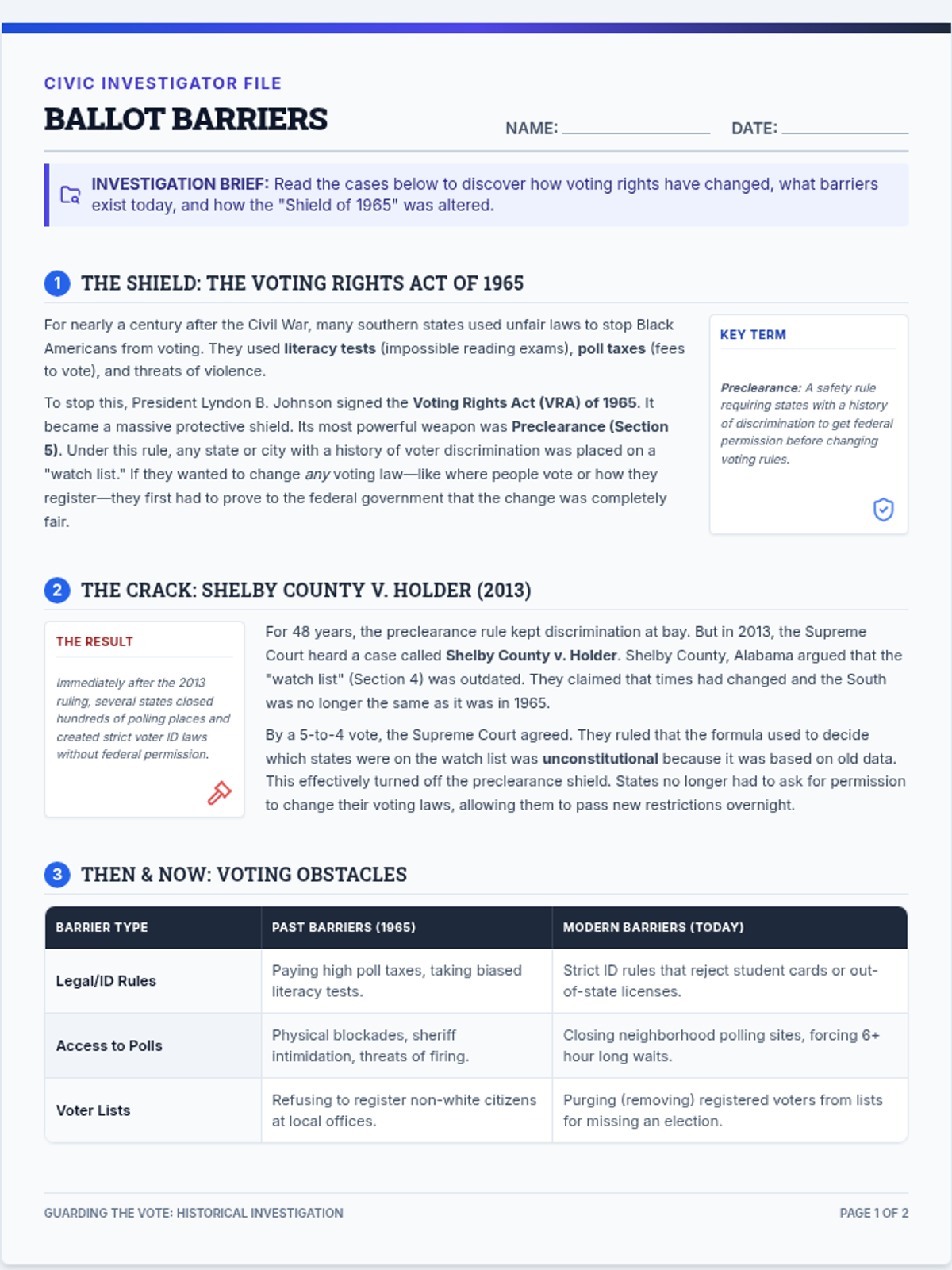
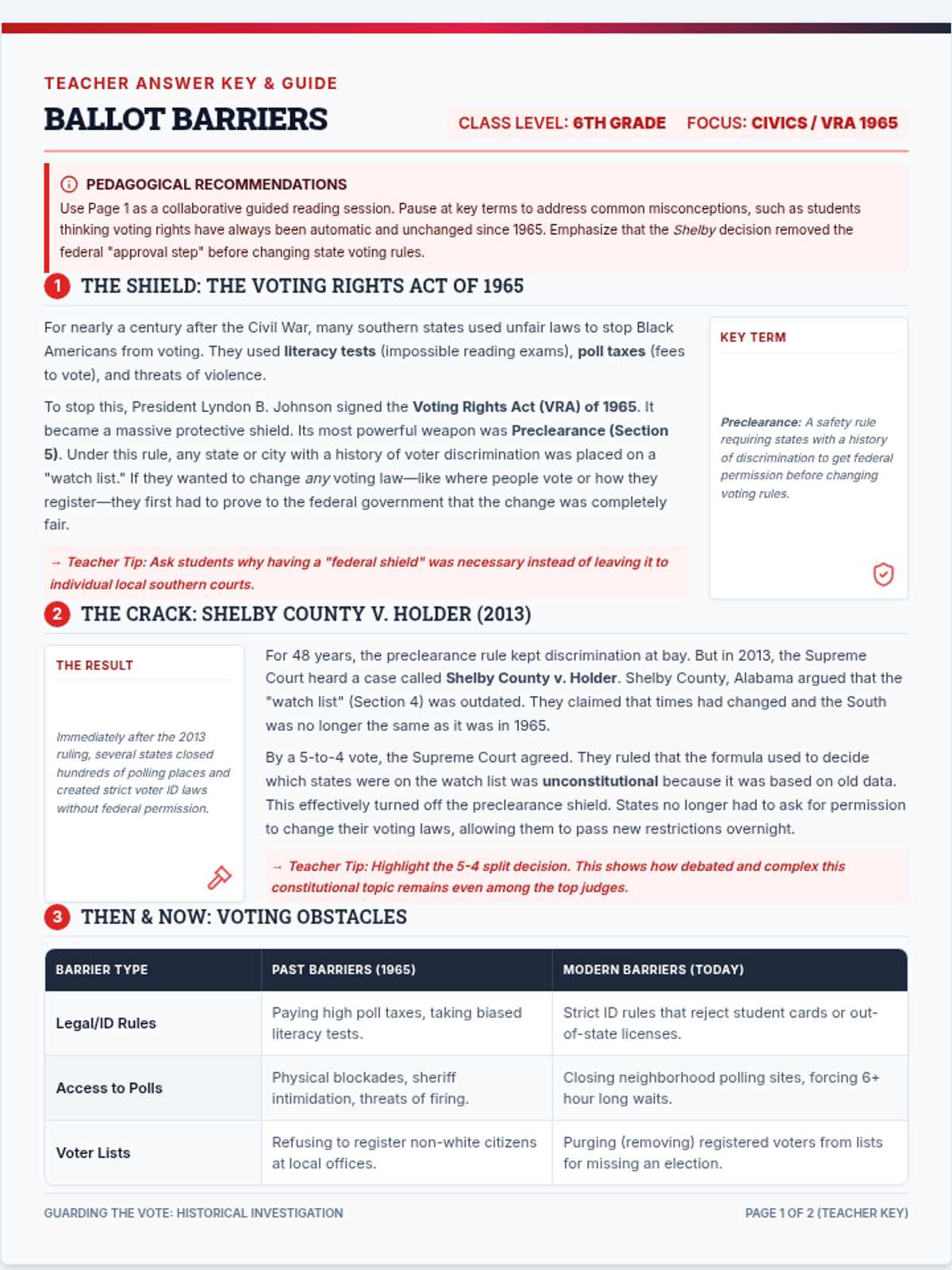
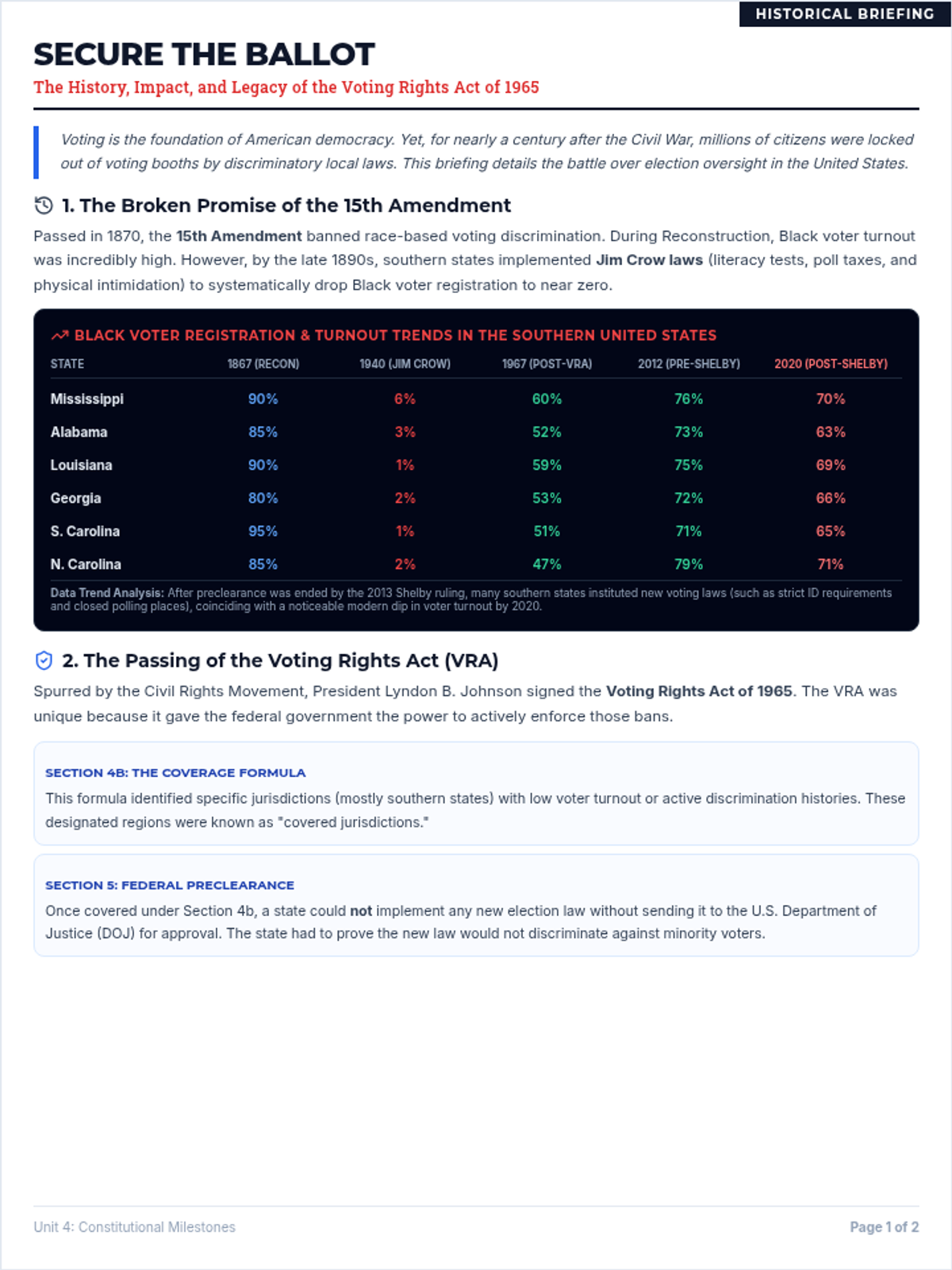
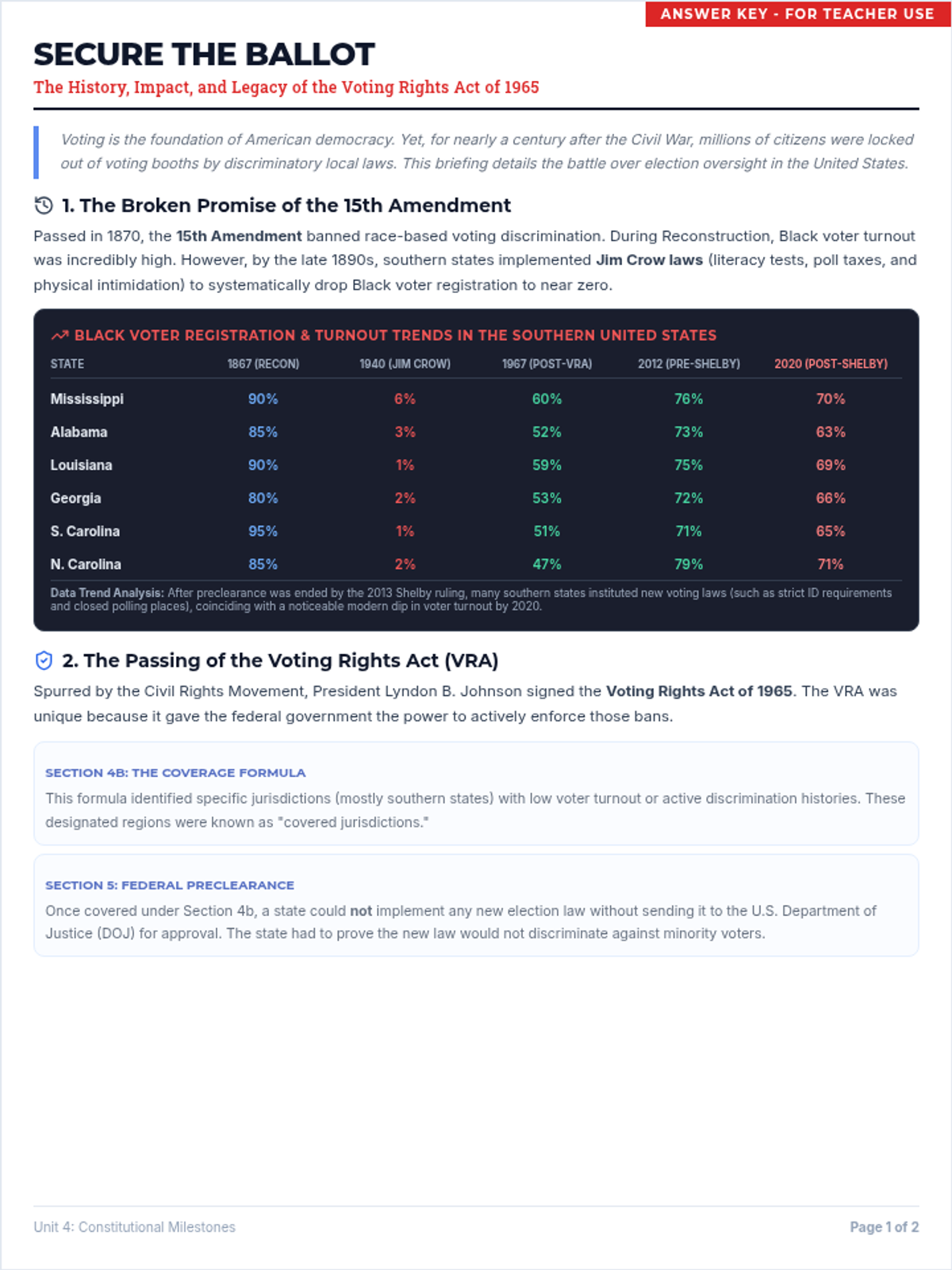
A comprehensive lesson exploring the Voting Rights Act of 1965, the pivotal 2013 Shelby County v. Holder Supreme Court decision, and modern barriers to voting. Designed to guide 6th graders through historical comparison and critical analysis.
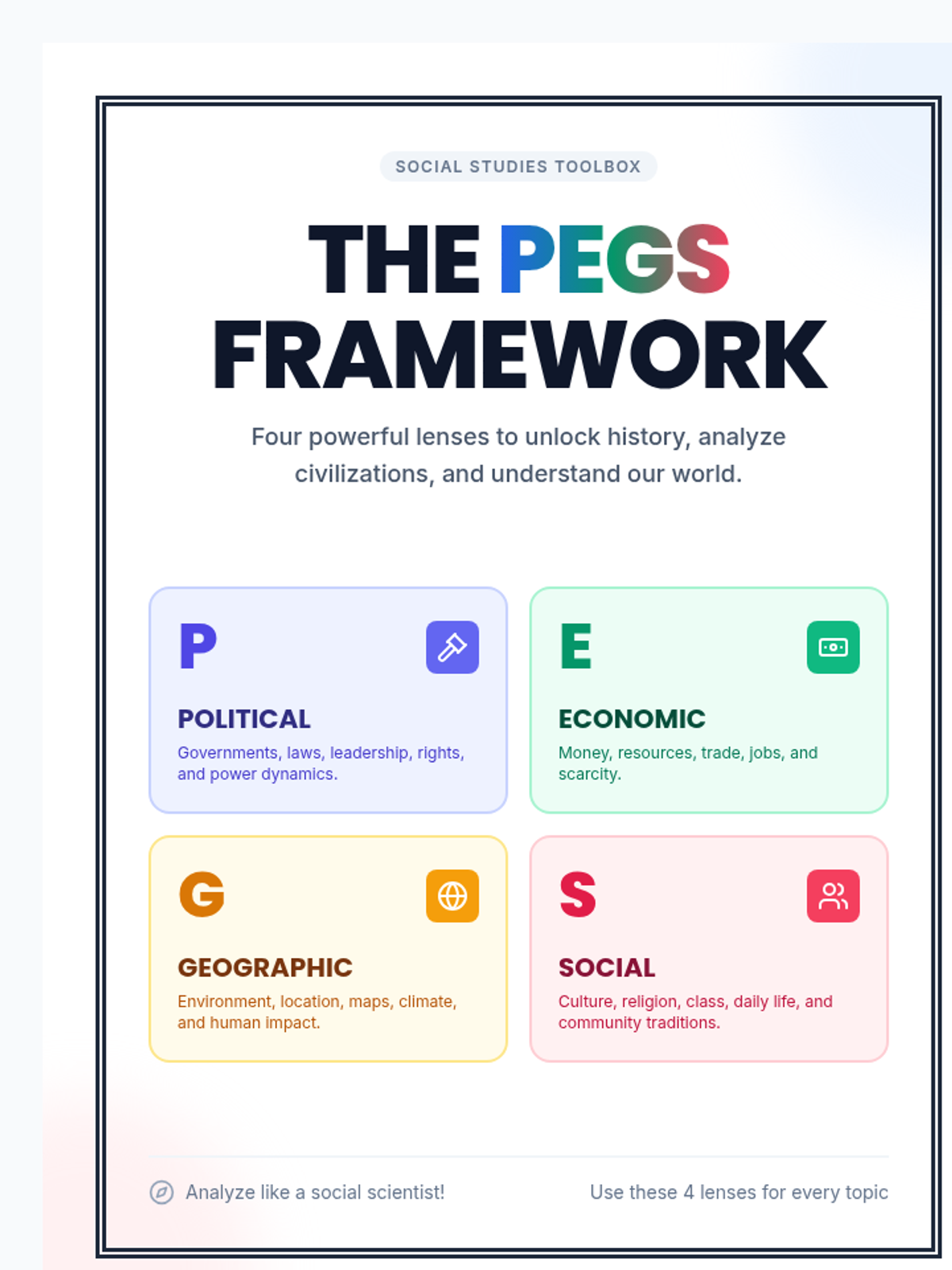
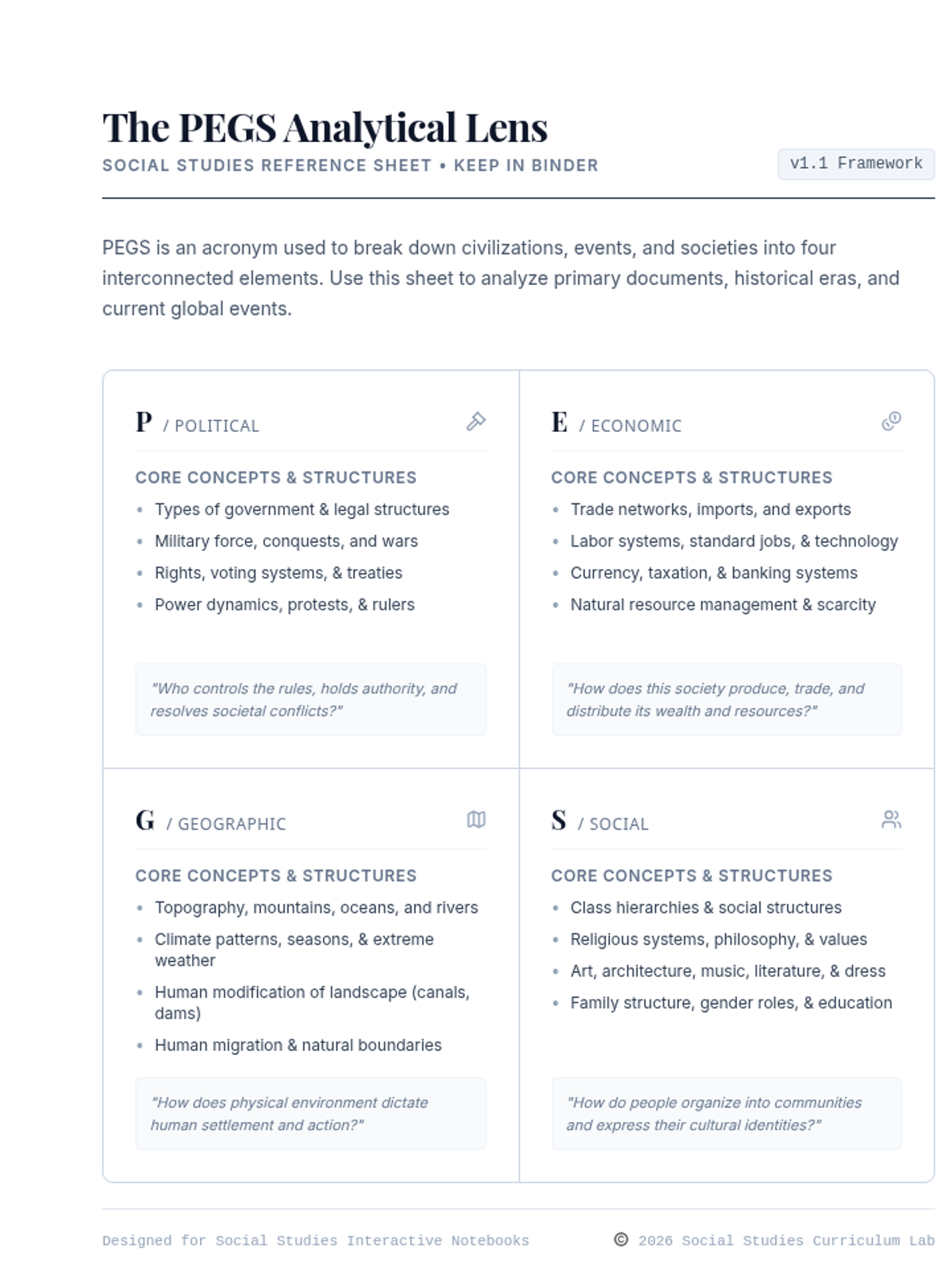
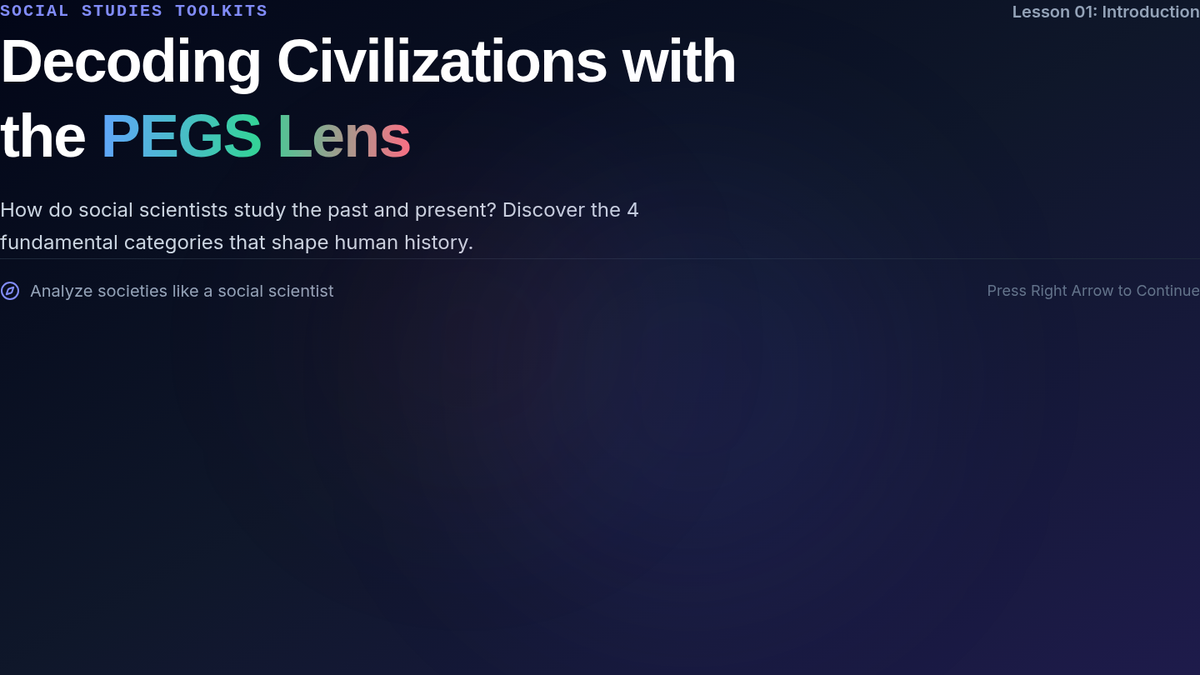
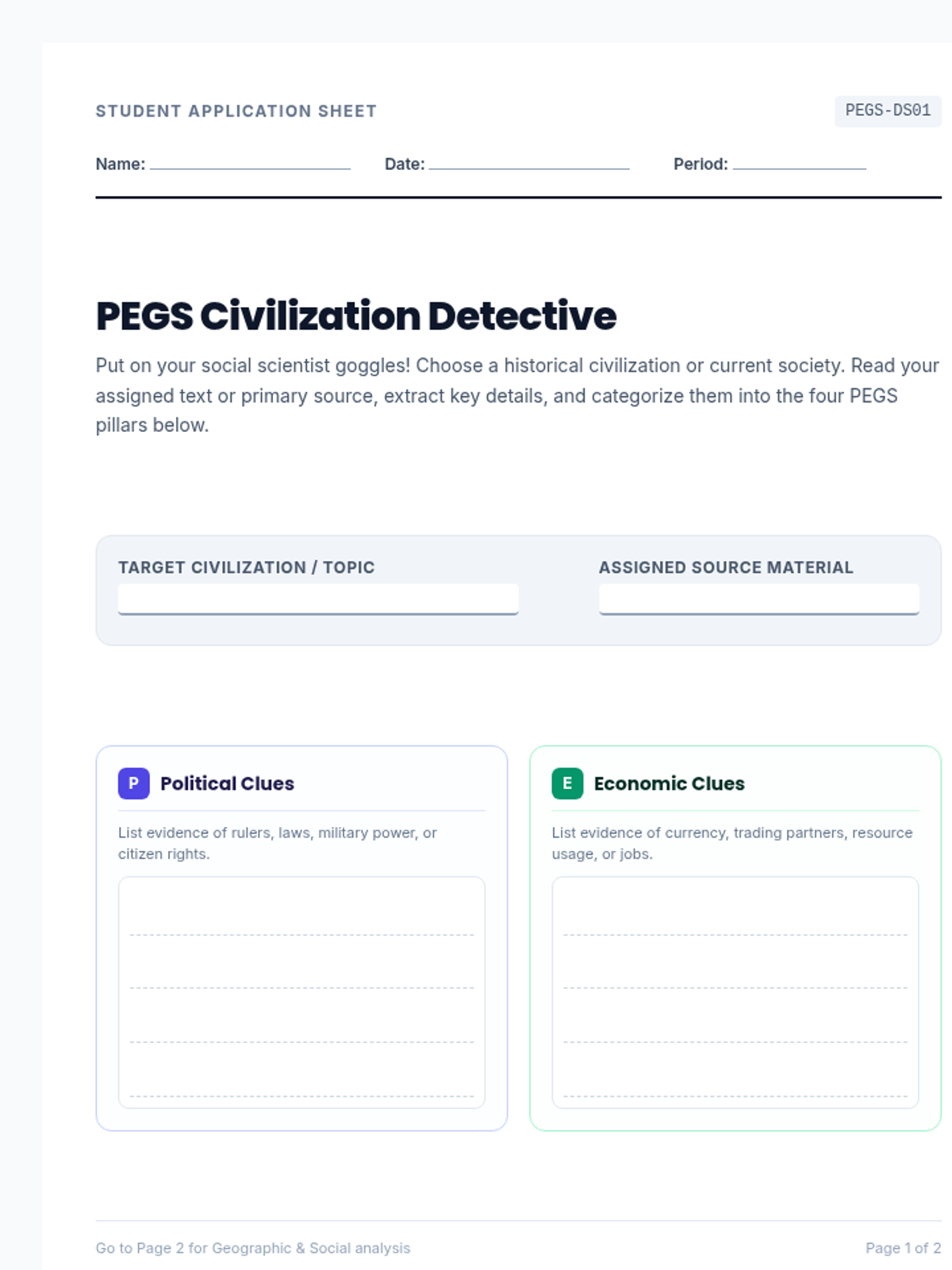
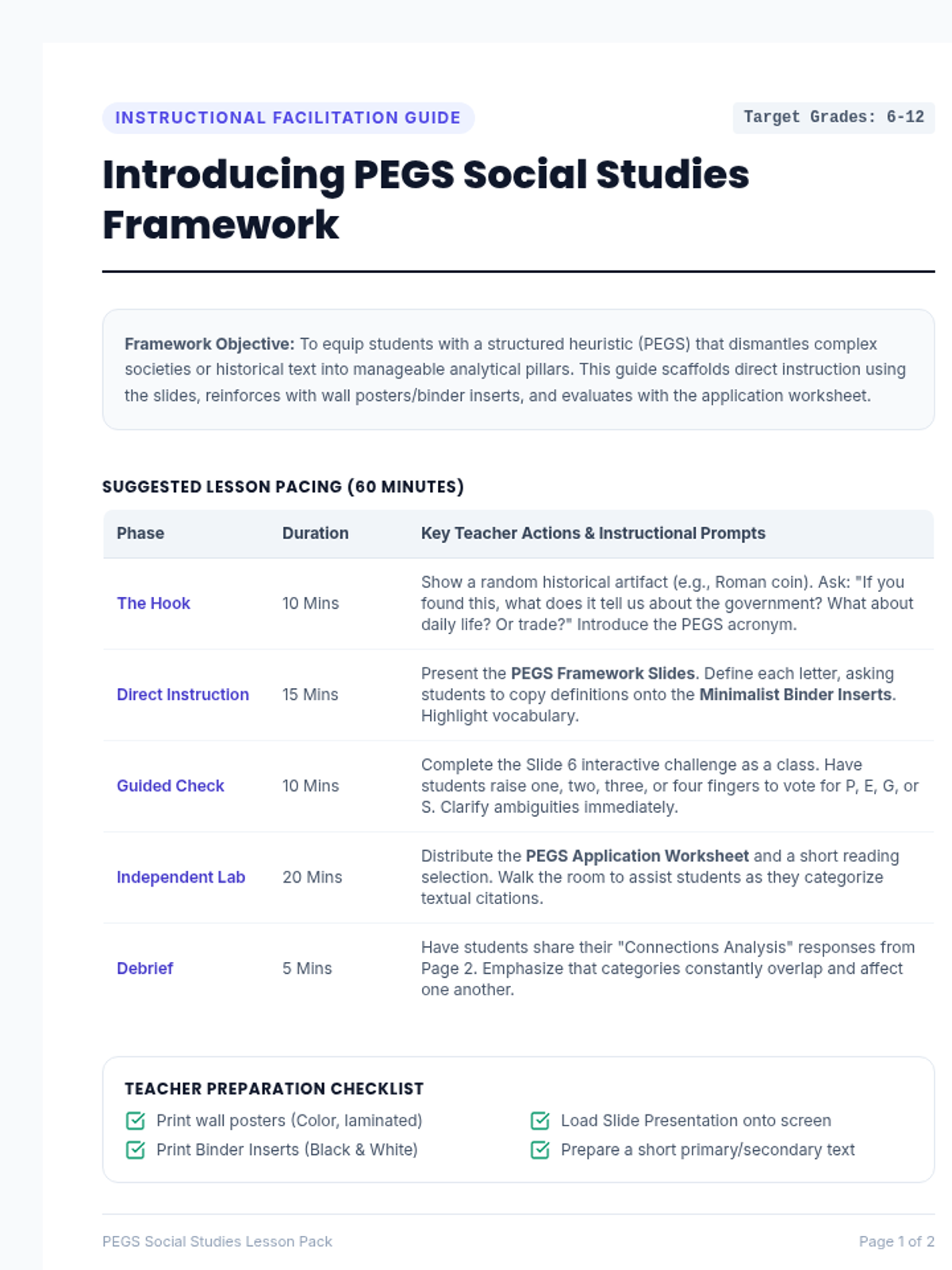
A comprehensive lesson plan and visual asset kit introducing the PEGS (Political, Economic, Geographic, Social) framework for social studies analysis. Includes vibrant illustrated wall posters, elegant minimalist binder inserts, educational slides, a student application worksheet, and a teacher's facilitation guide.
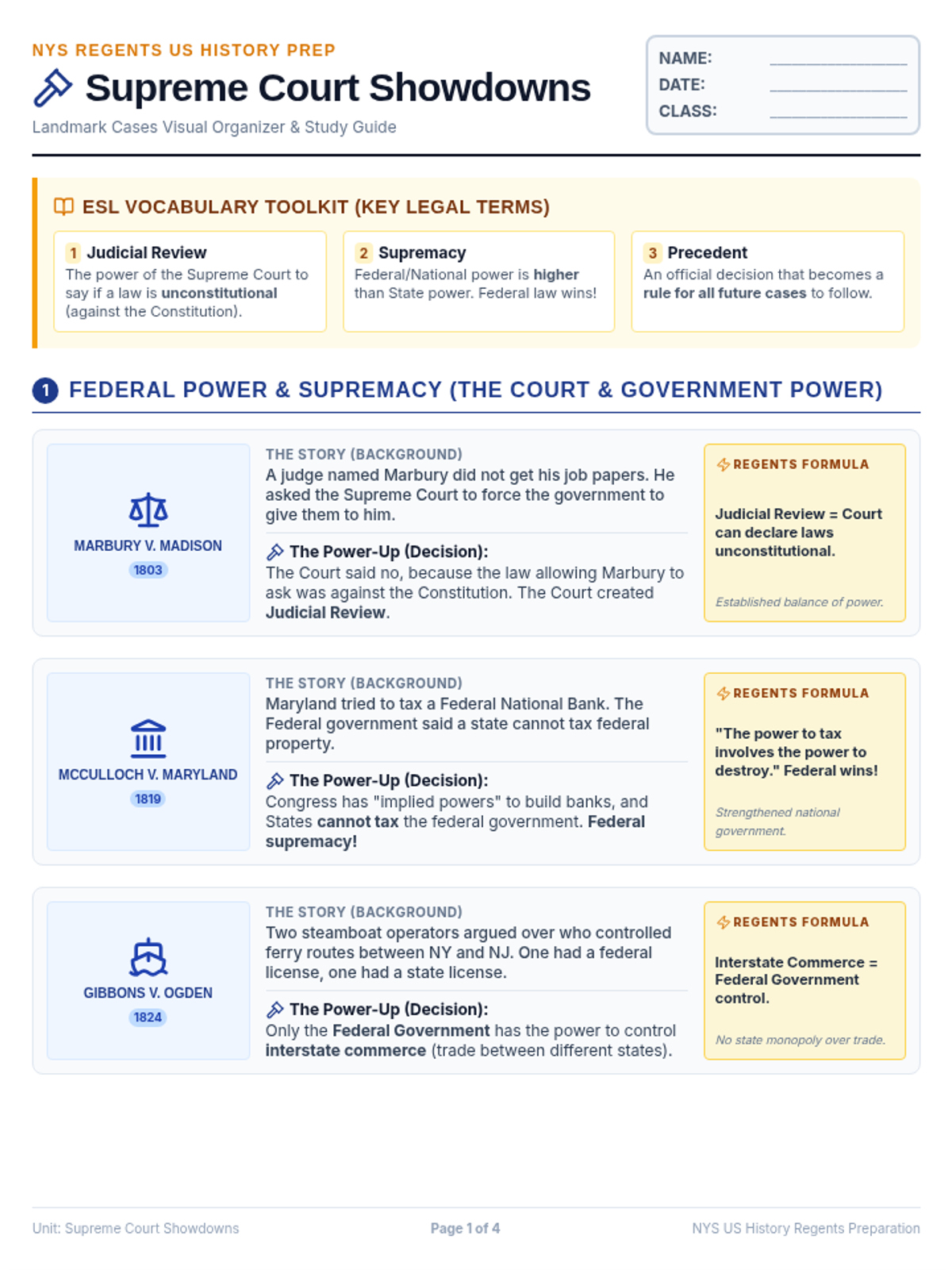
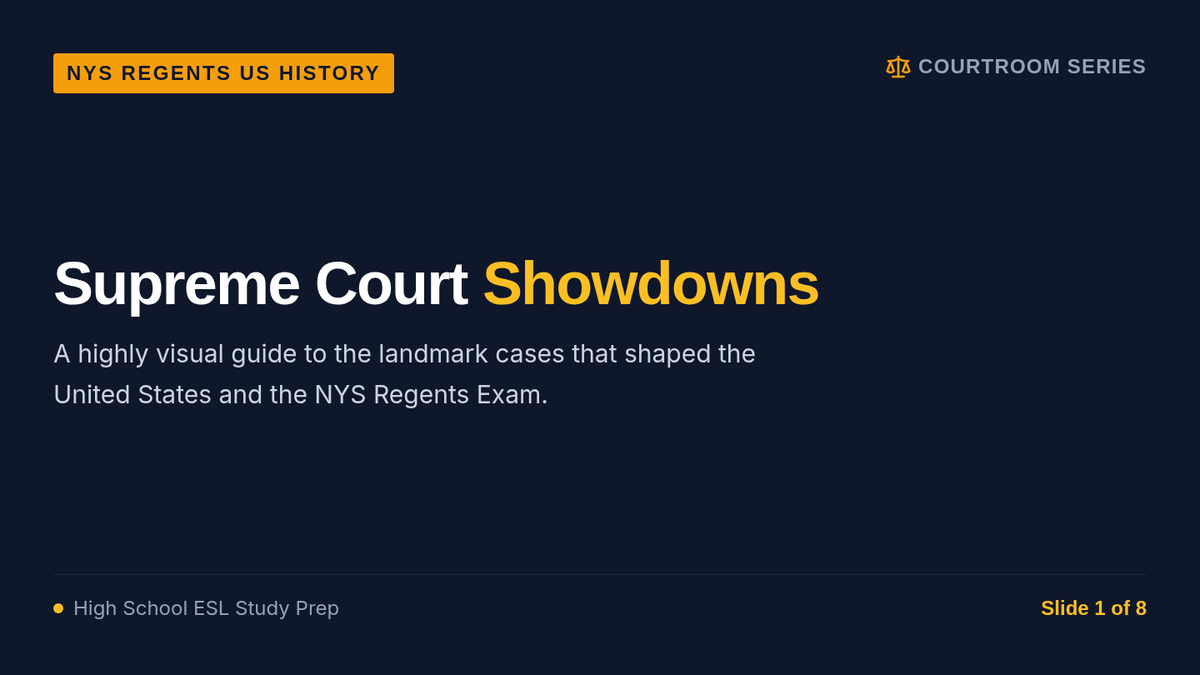
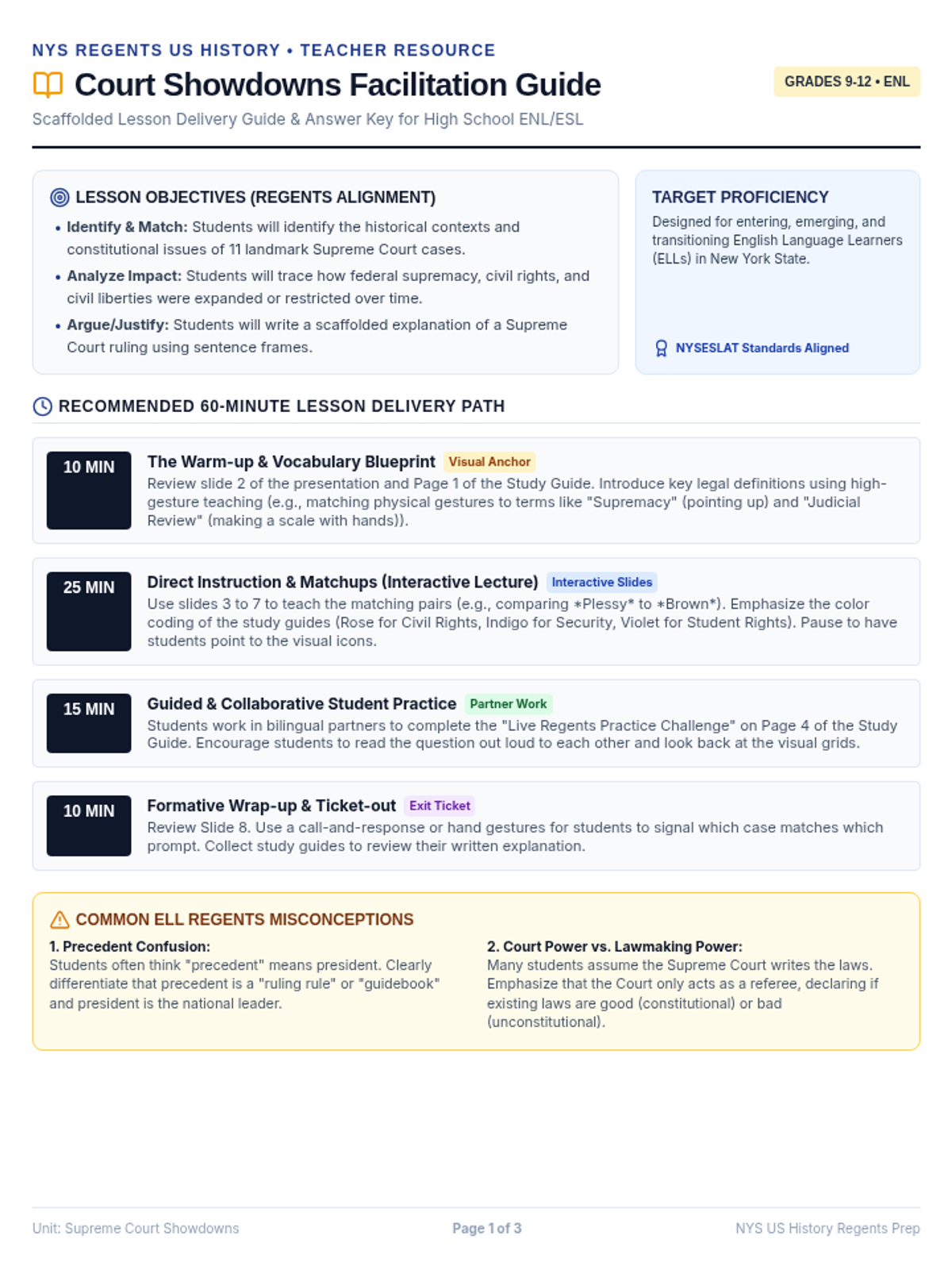
A comprehensive lesson preparing ESL high school students for the US History Regents Exam by analyzing landmark Supreme Court cases. The lesson includes visual graphic organizer study sheets, interactive slides, and a scaffolded teacher guide with vocabulary support.
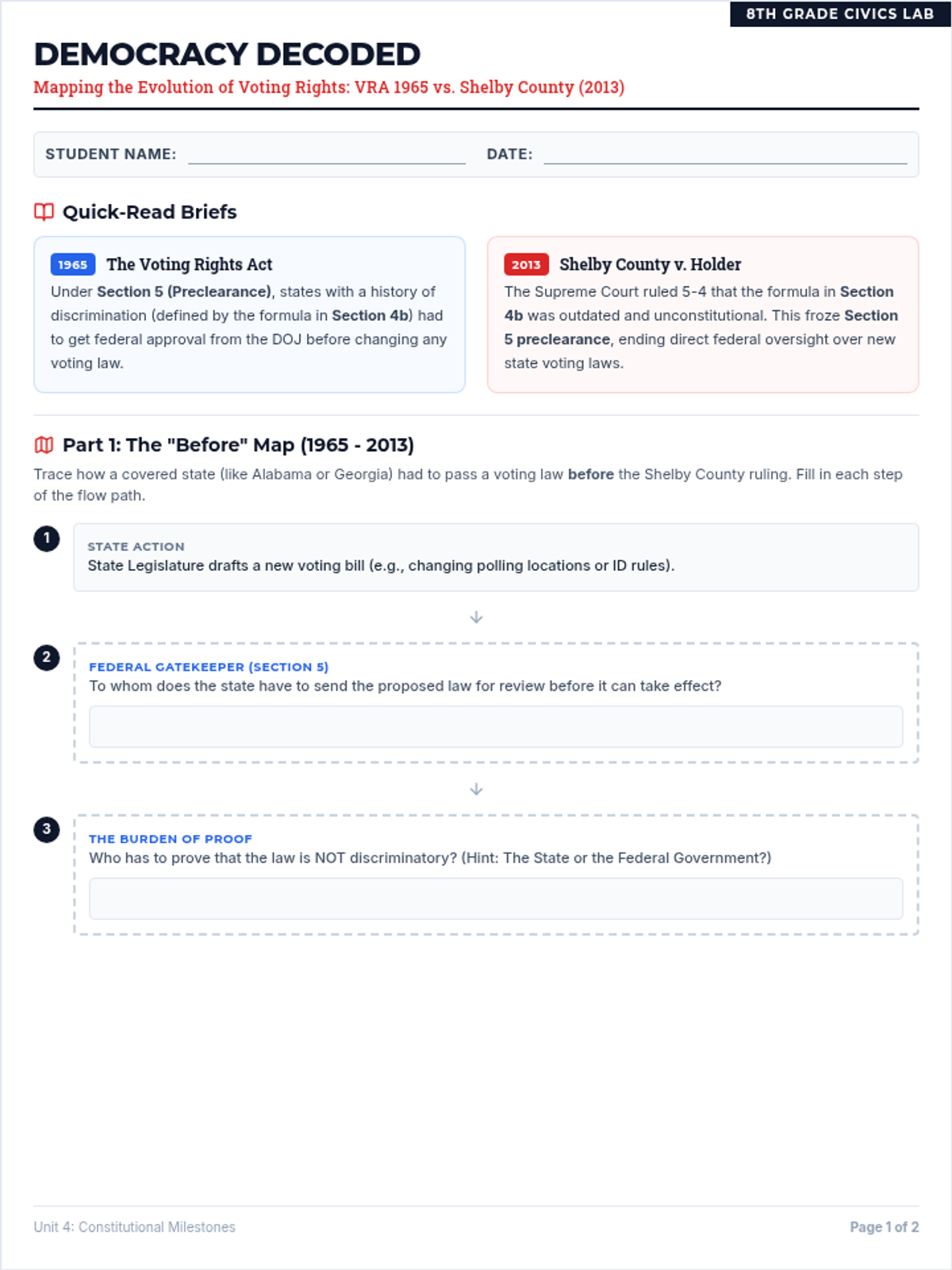
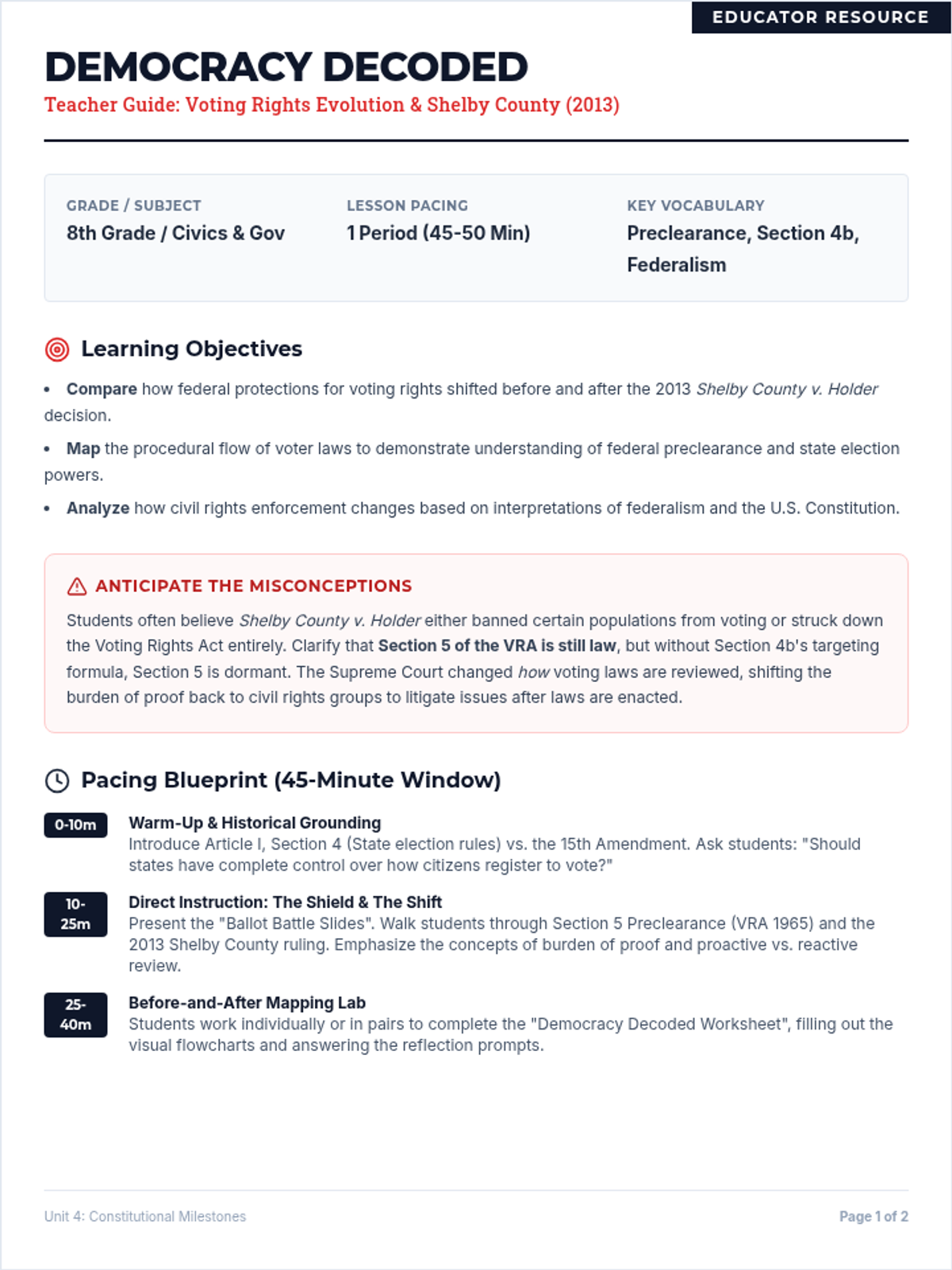
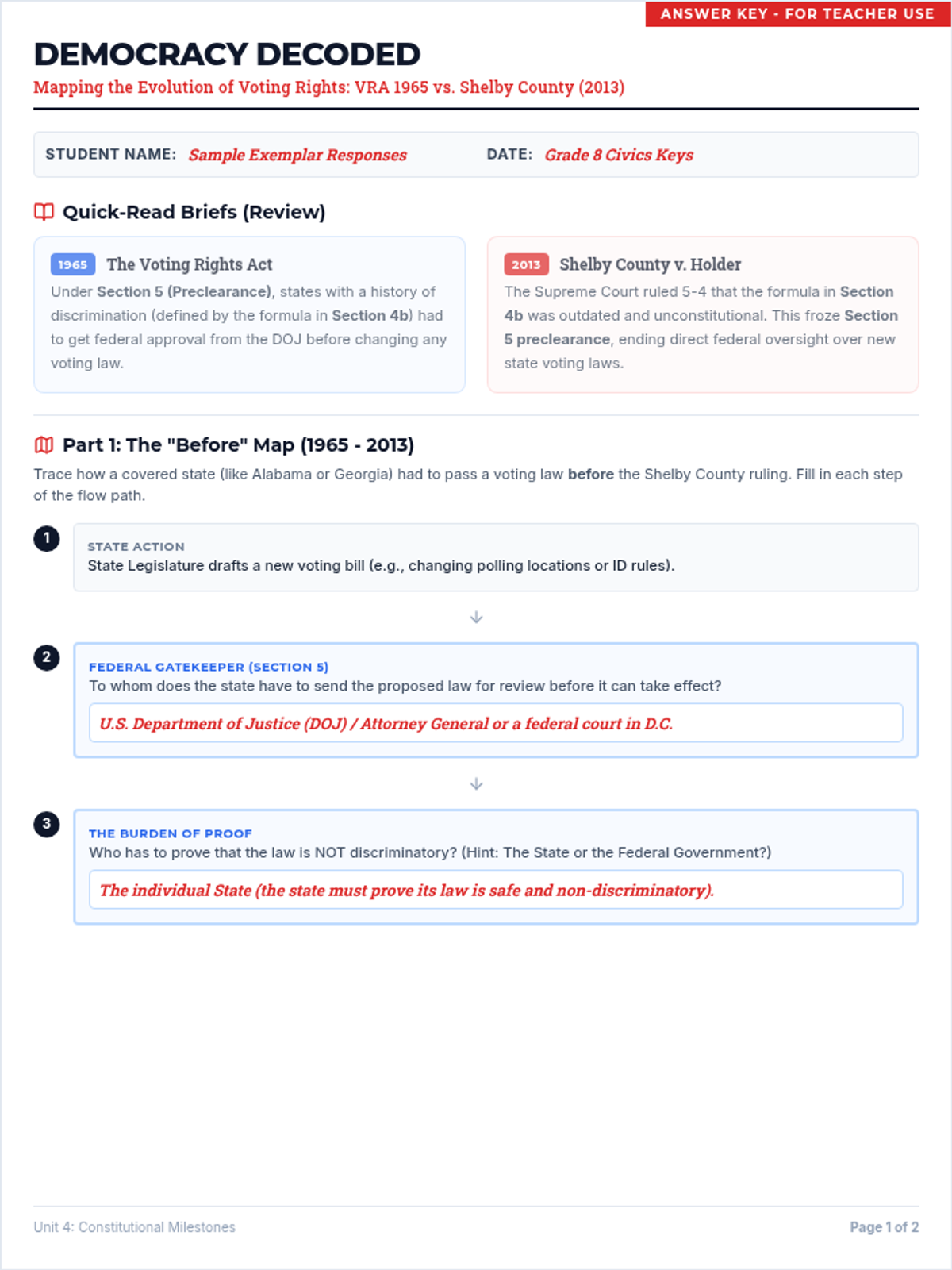
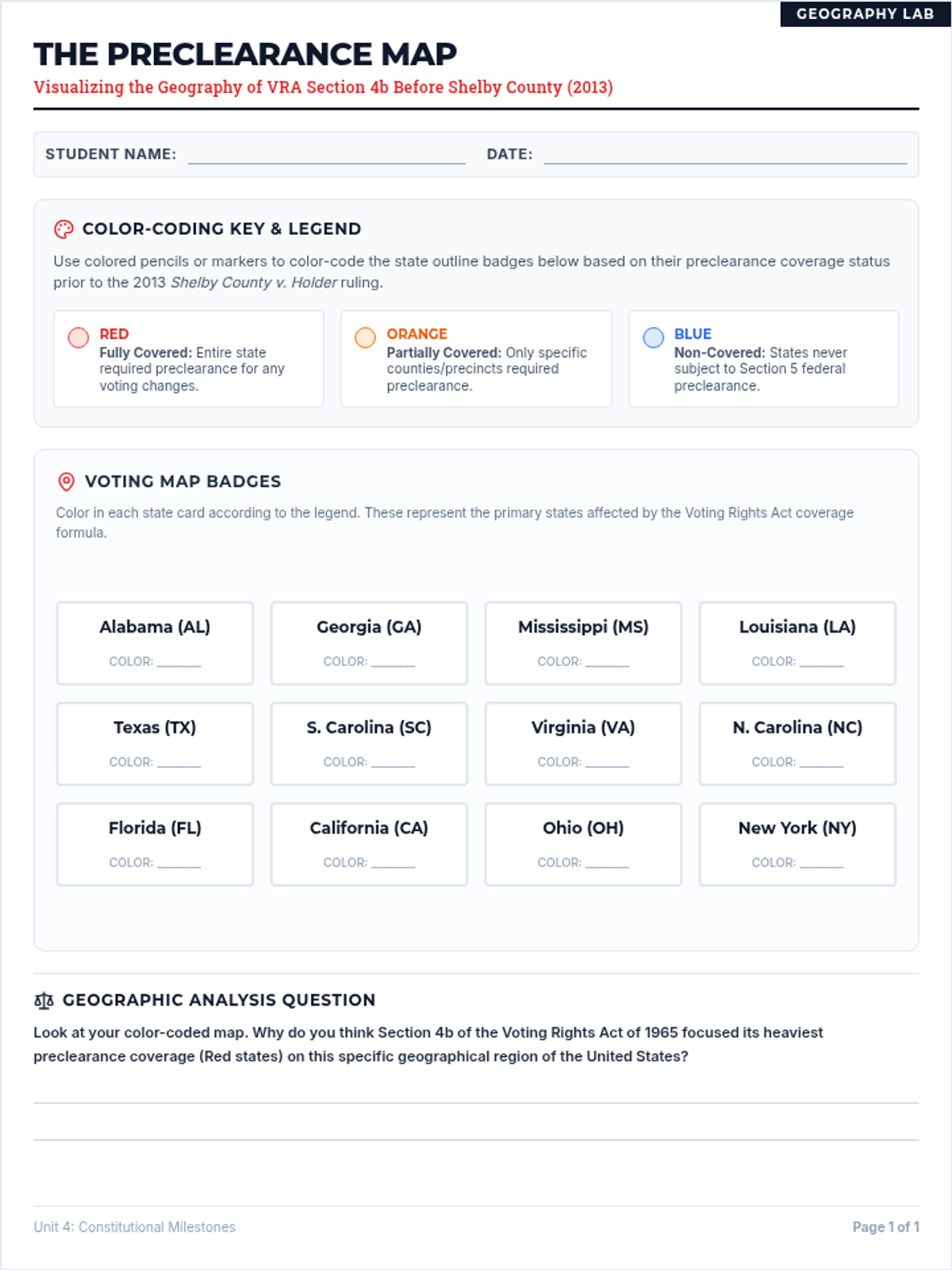
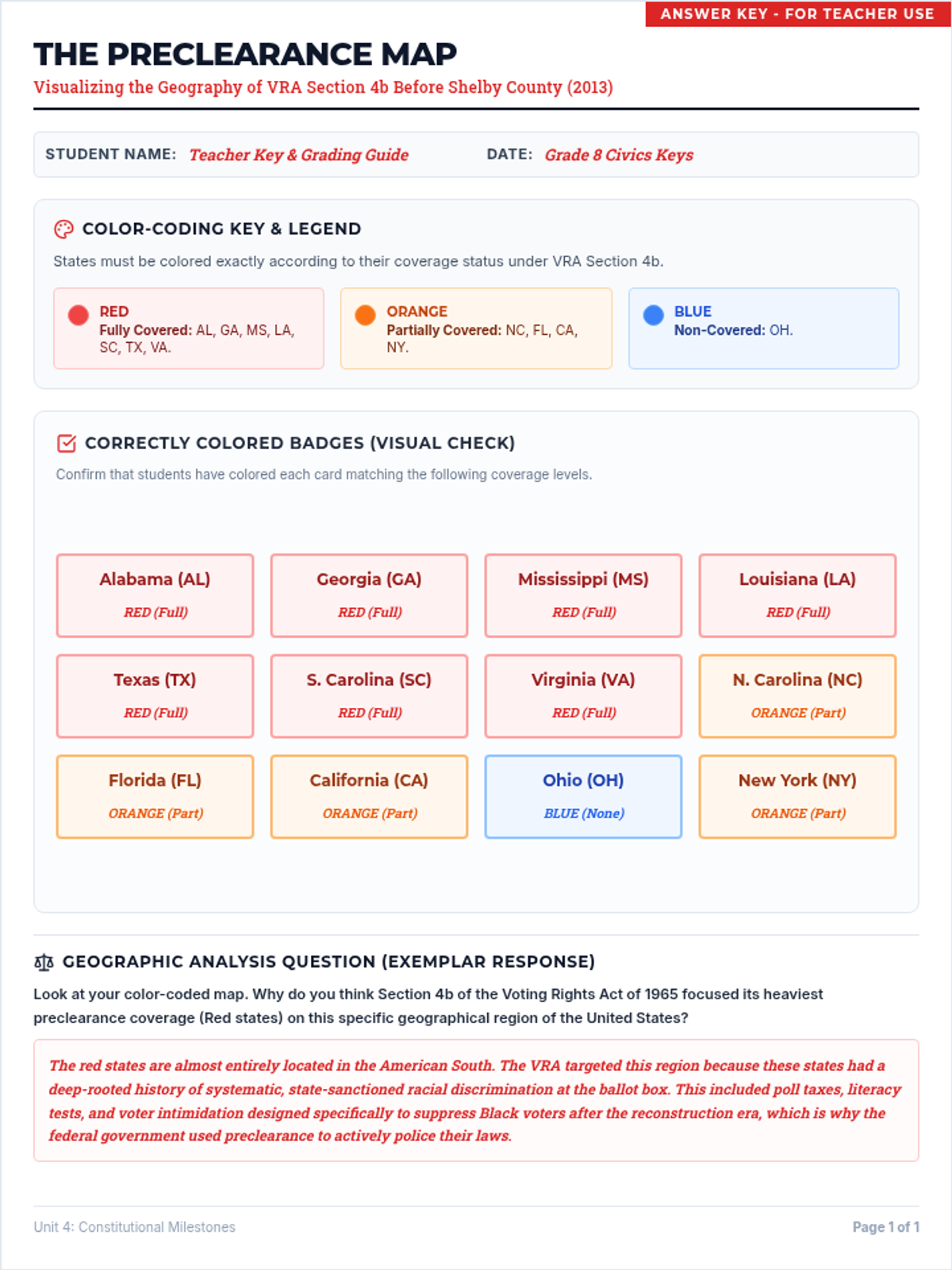
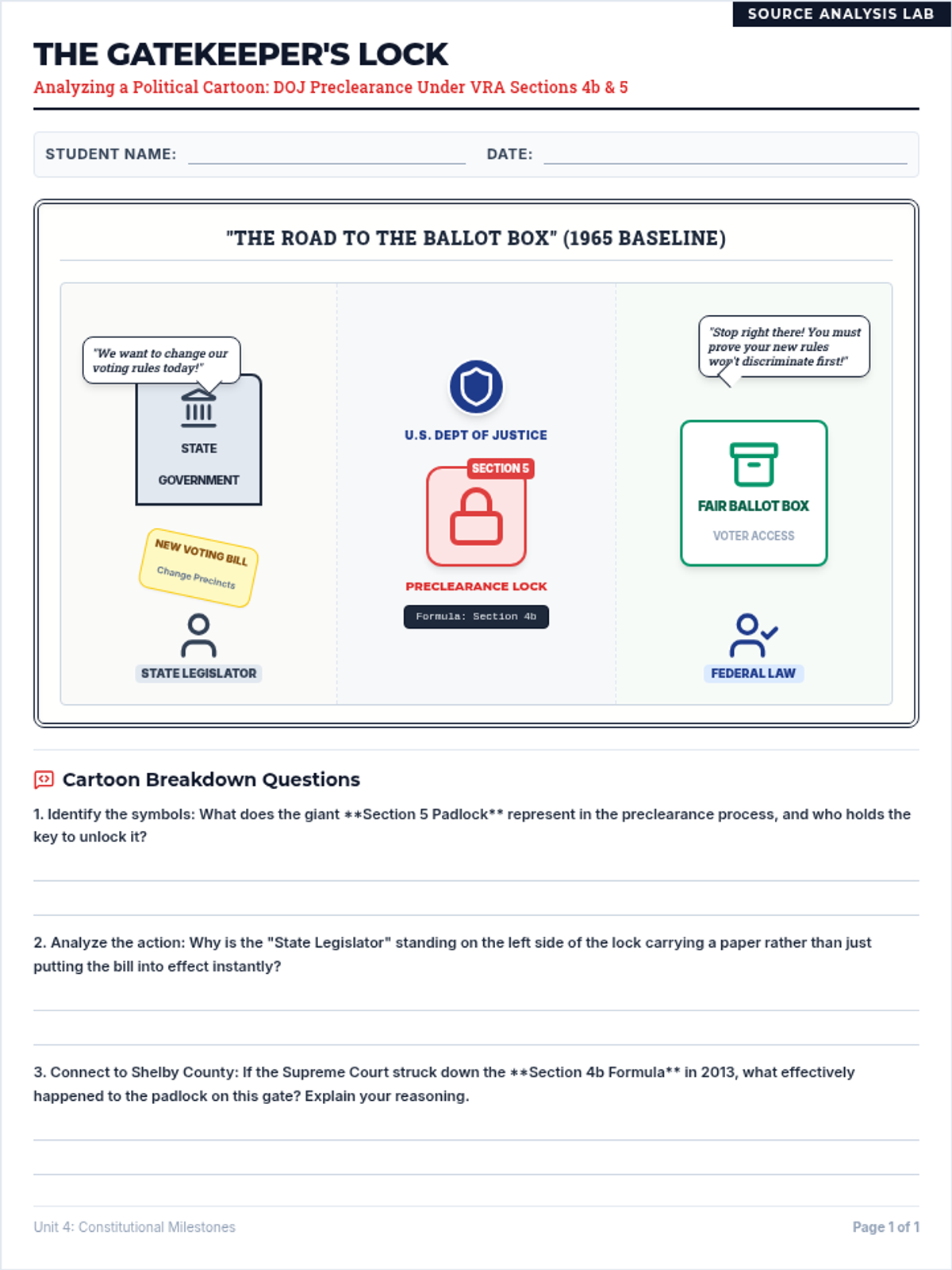
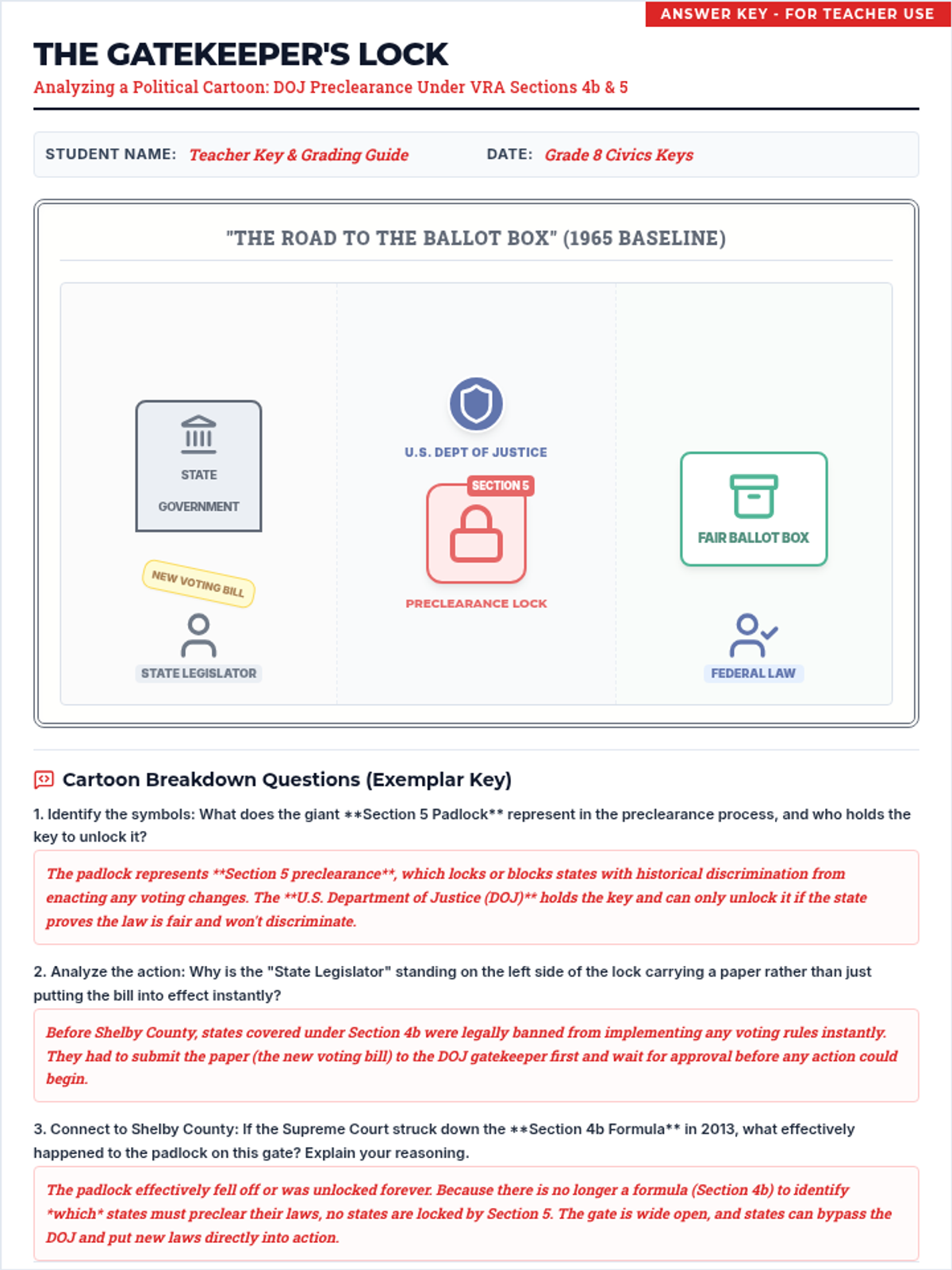
An 8th-grade civics lesson comparing the federal protections of the Voting Rights Act of 1965 to the monumental shift caused by the Supreme Court's 2013 Shelby County v. Holder decision. Students map the 'before and after' of federal preclearance to understand how voting rights enforcement changed.
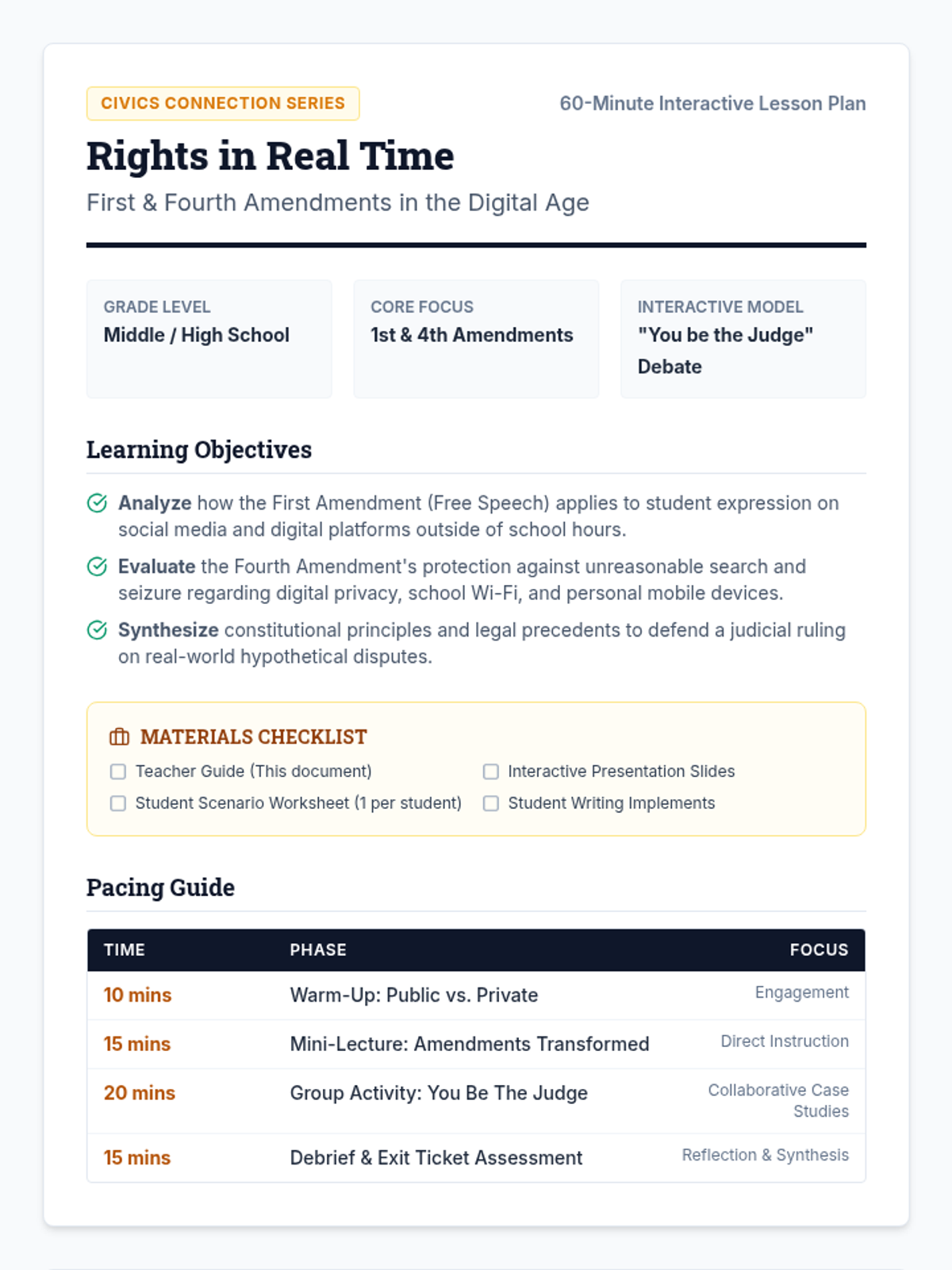
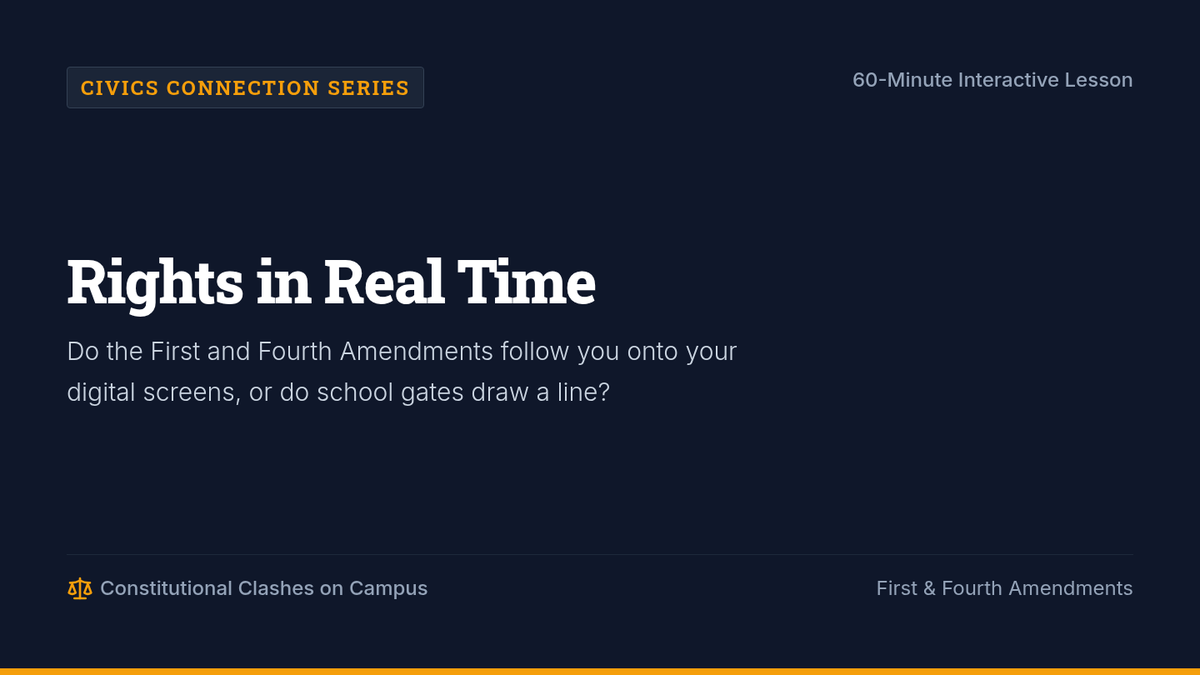
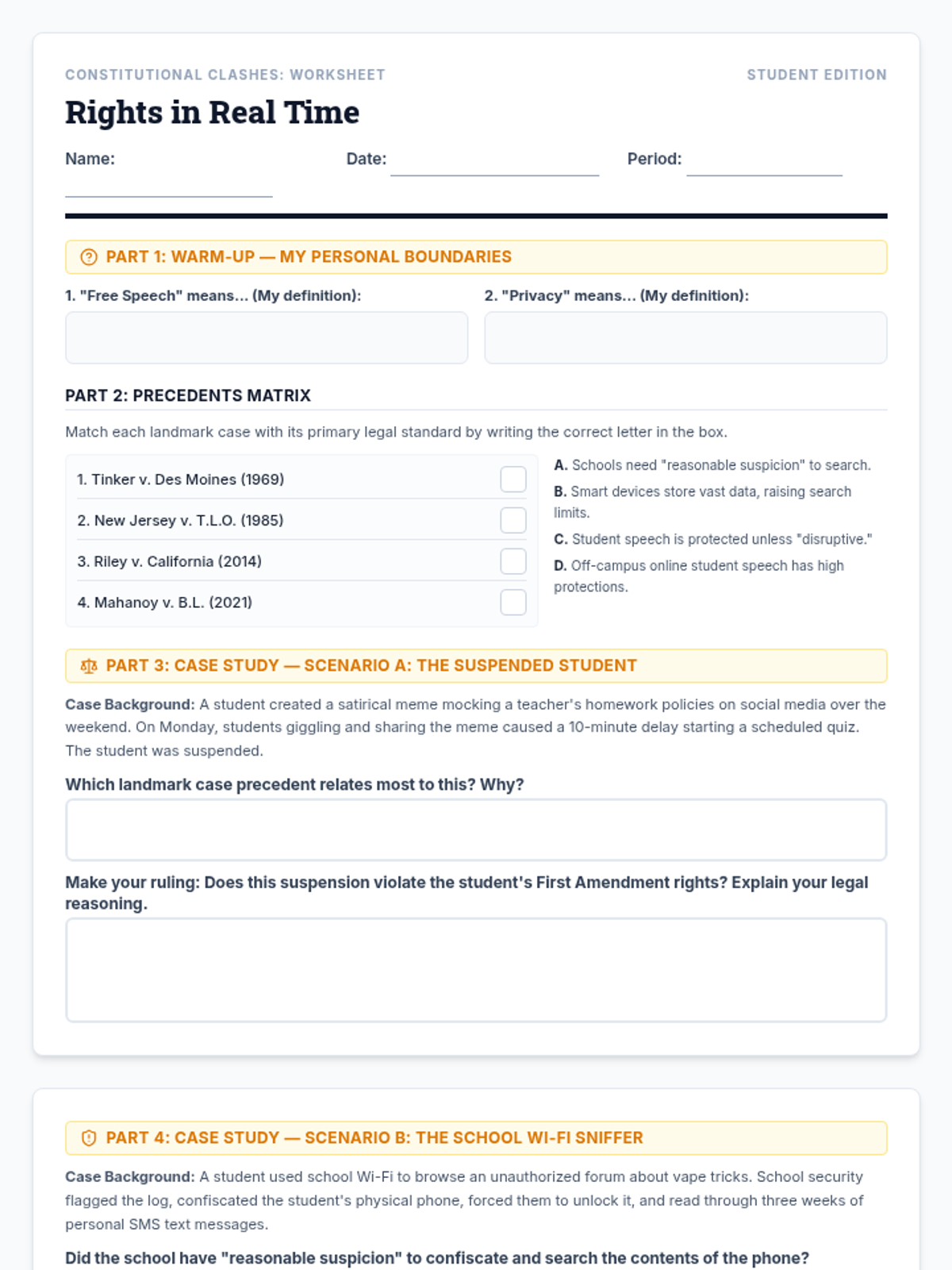
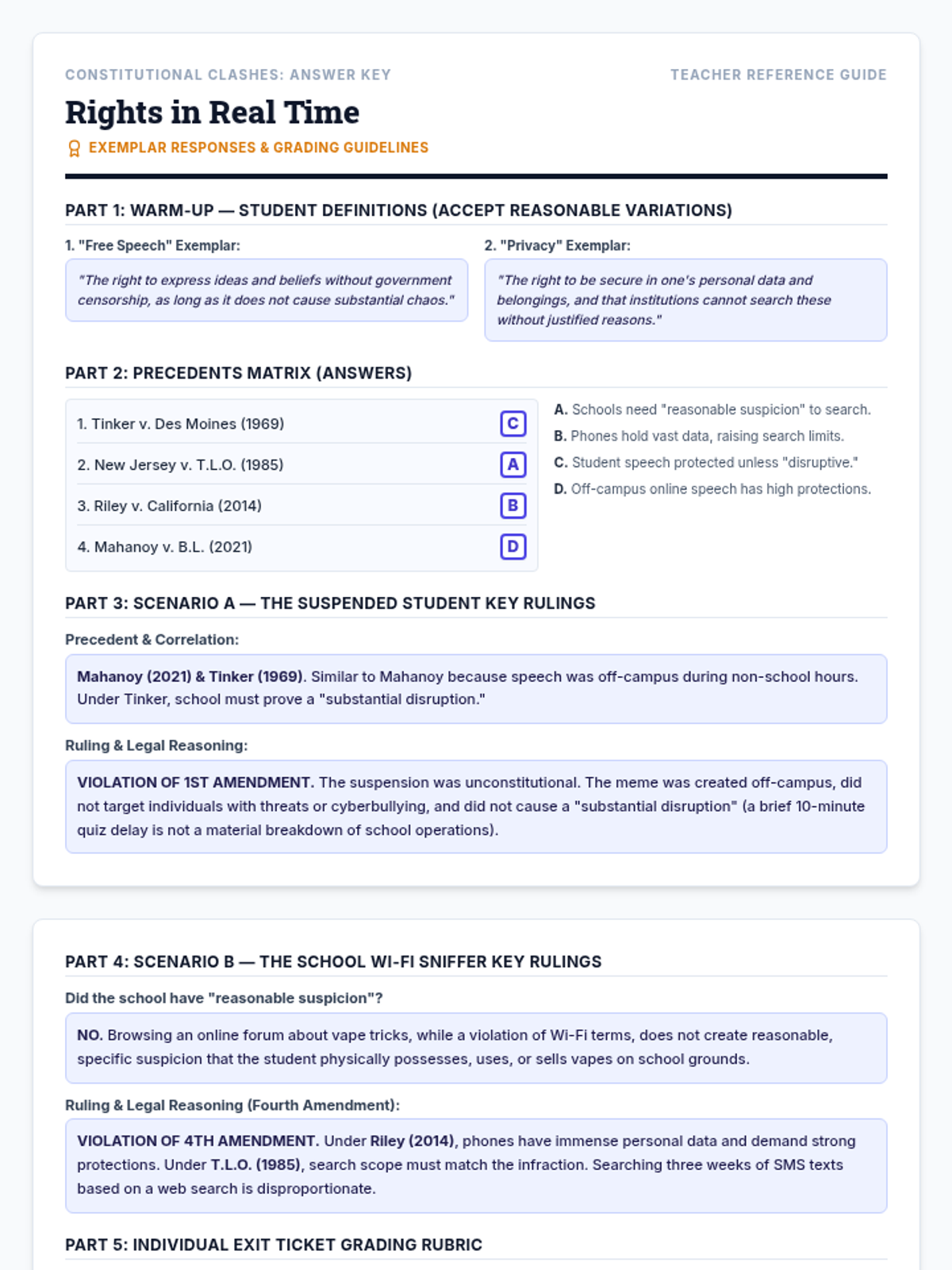
A 60-minute interactive civics lesson connecting the First and Fourth Amendments to modern scenarios, containing a teacher guide, presentation slides, student worksheet, and answer key.
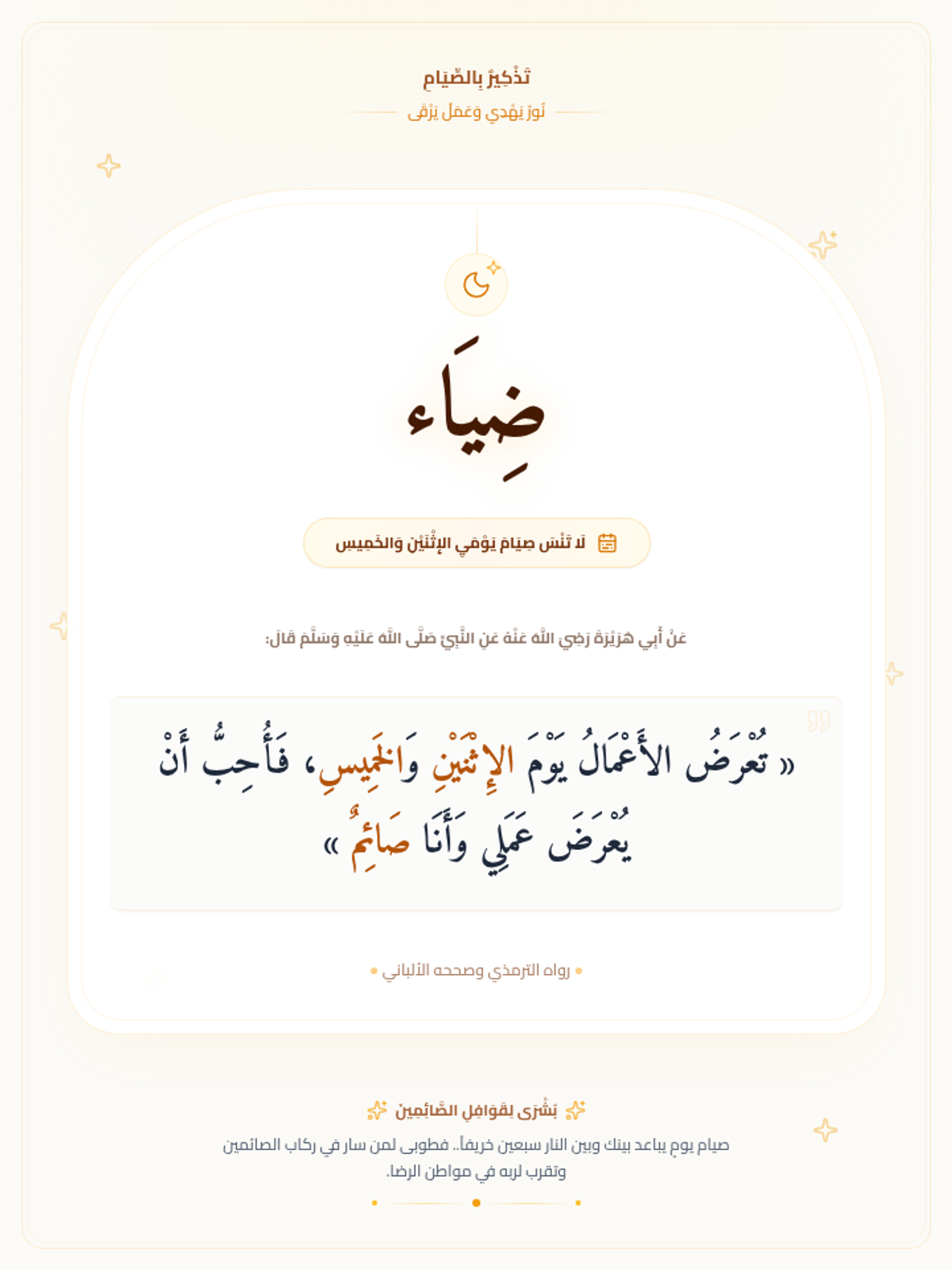
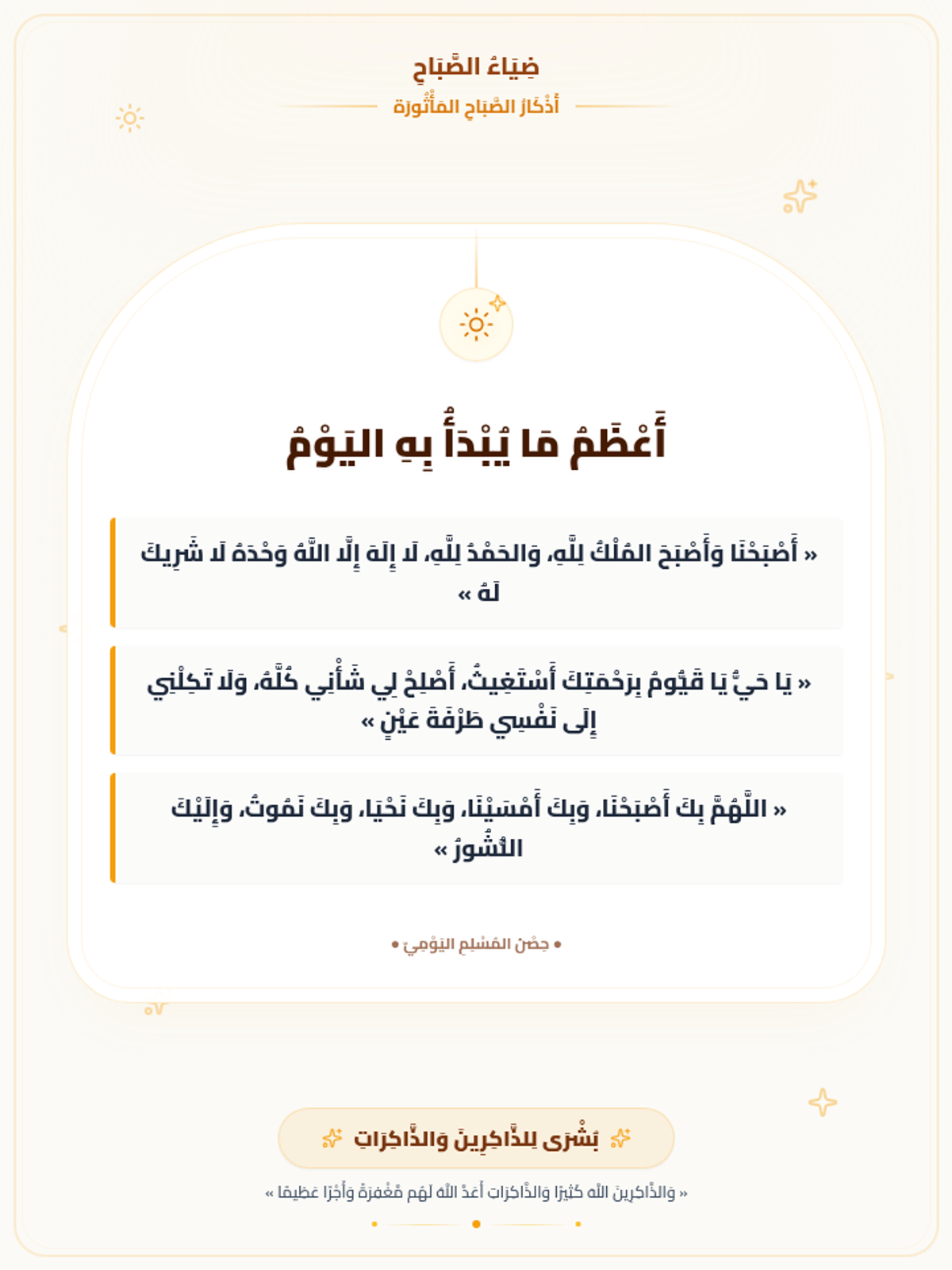
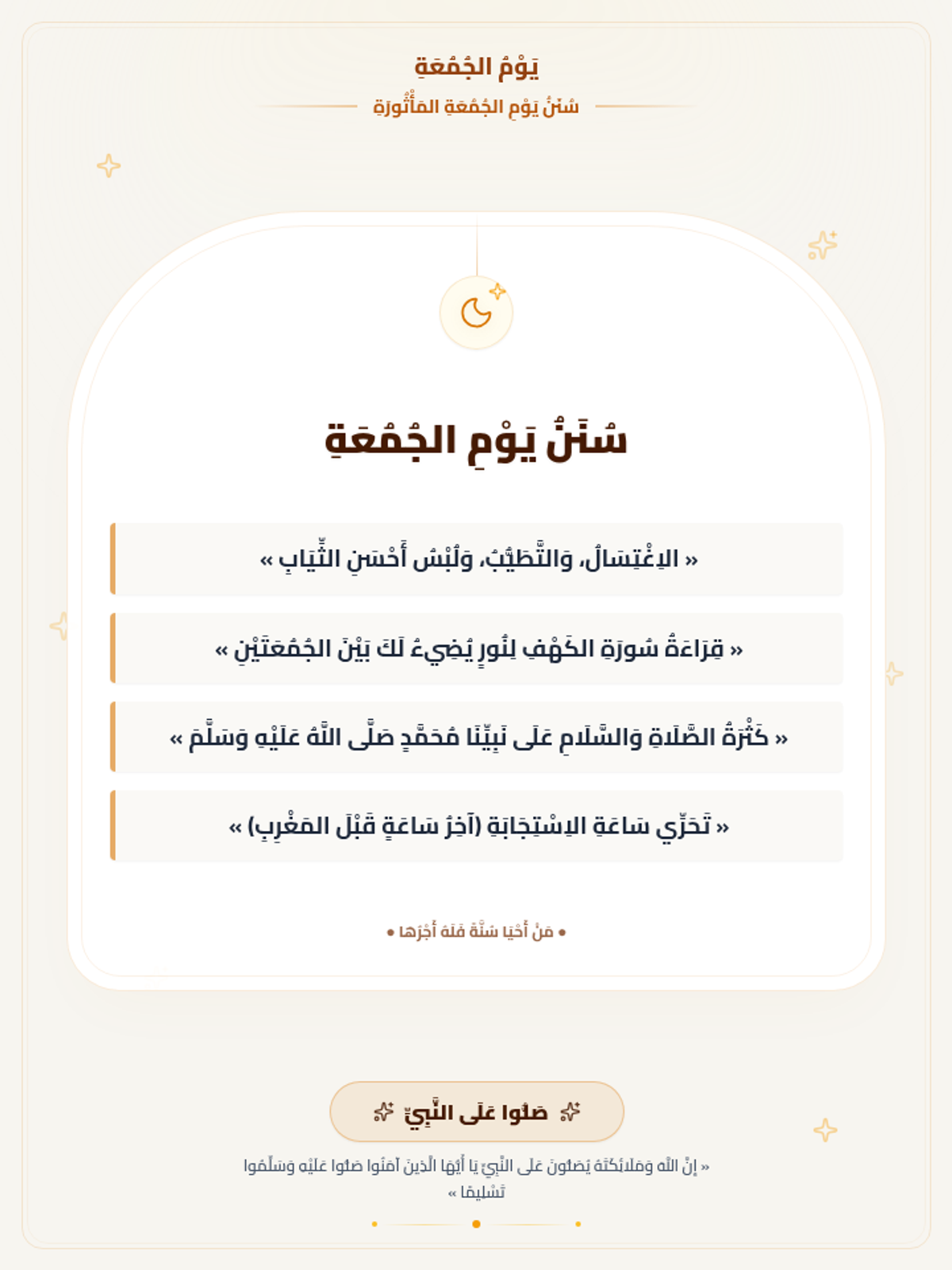
A premium, cohesive collection of beautifully designed spiritual and religious reminders for daily, weekly, and seasonal practices, featuring high-contrast connected Arabic typography, elegant arches, and glowing celestial themes.
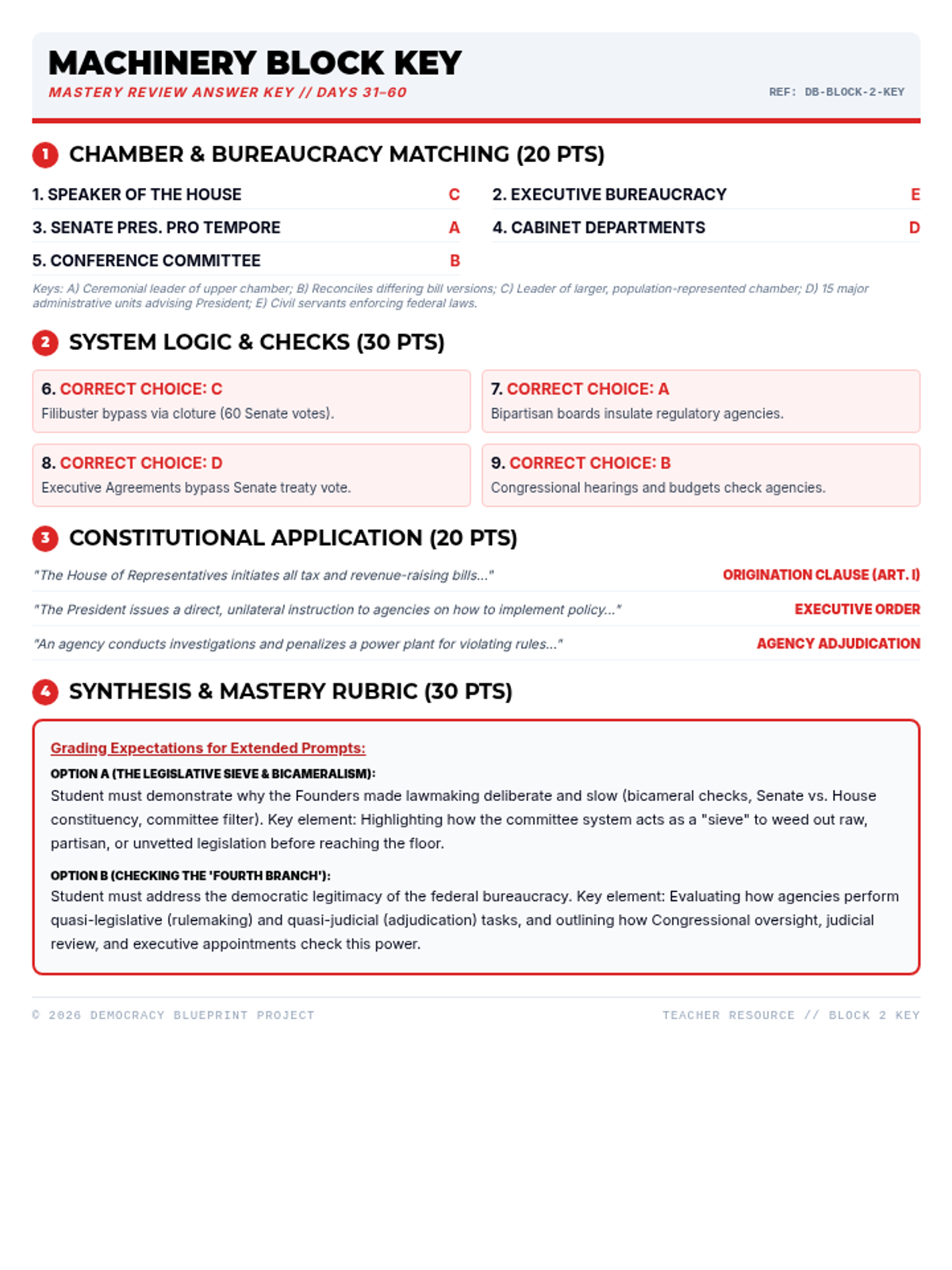
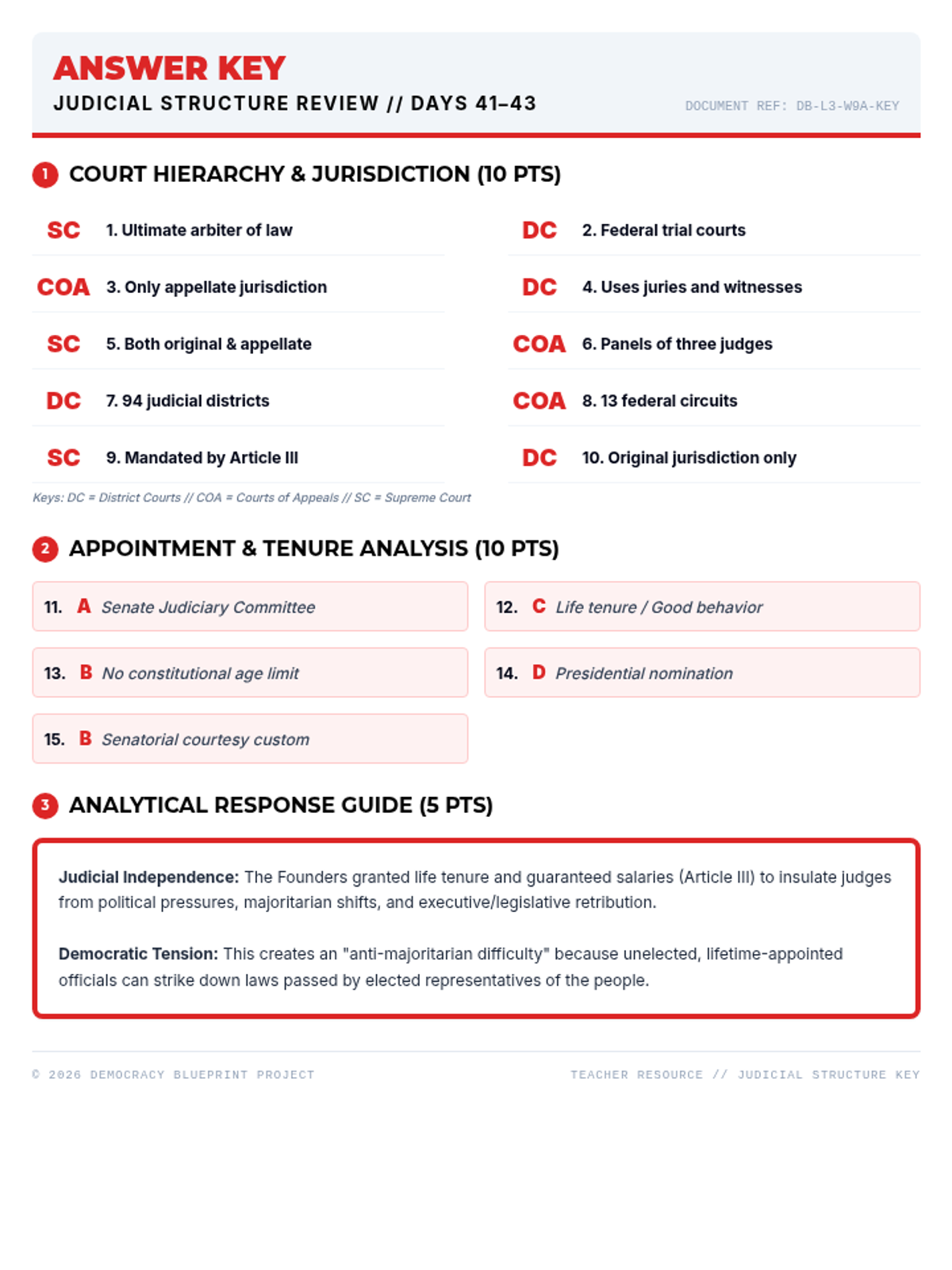
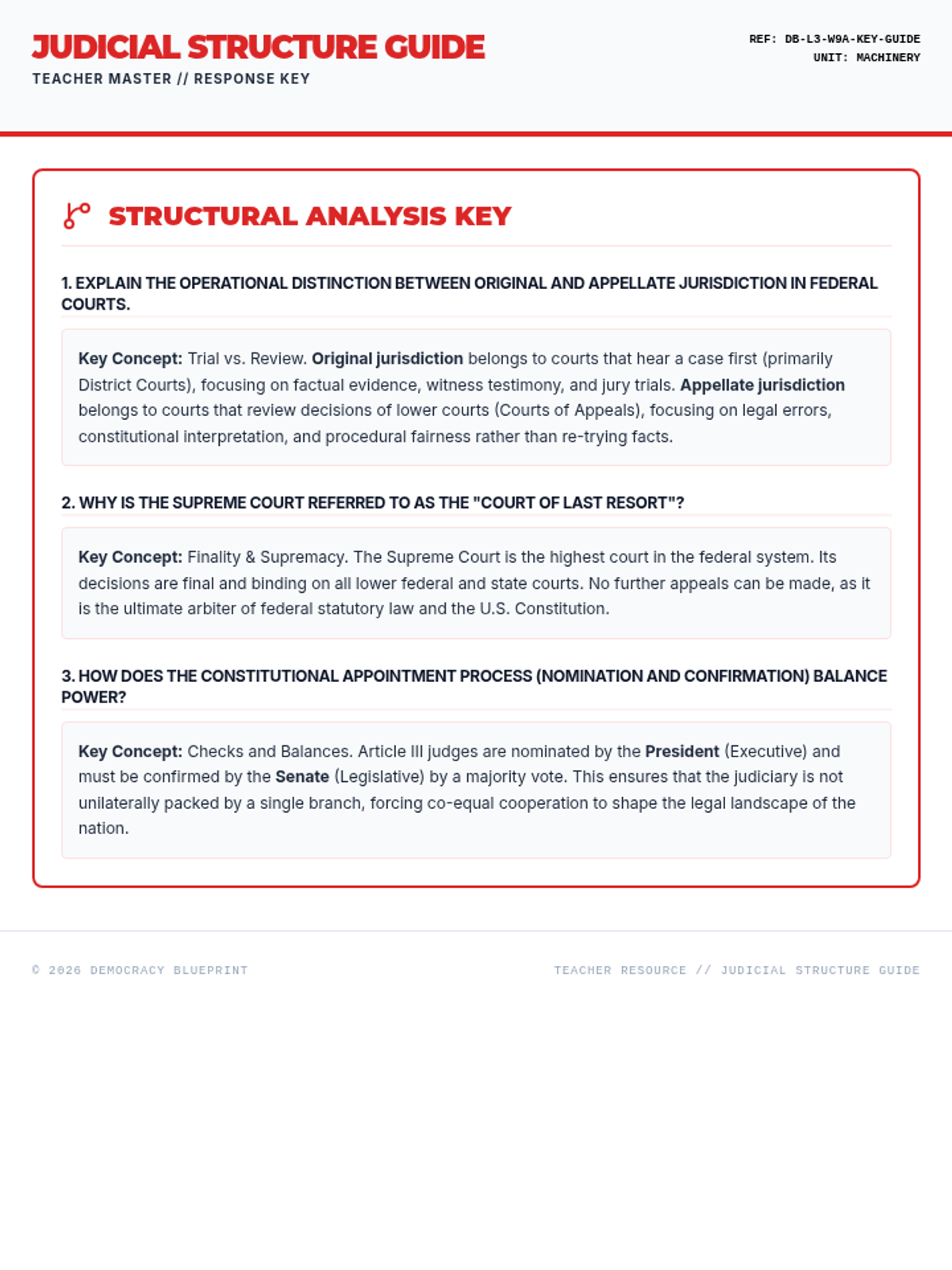
Detailed examination of the three branches of government, the bureaucracy, and the complex relationship between state and national power.
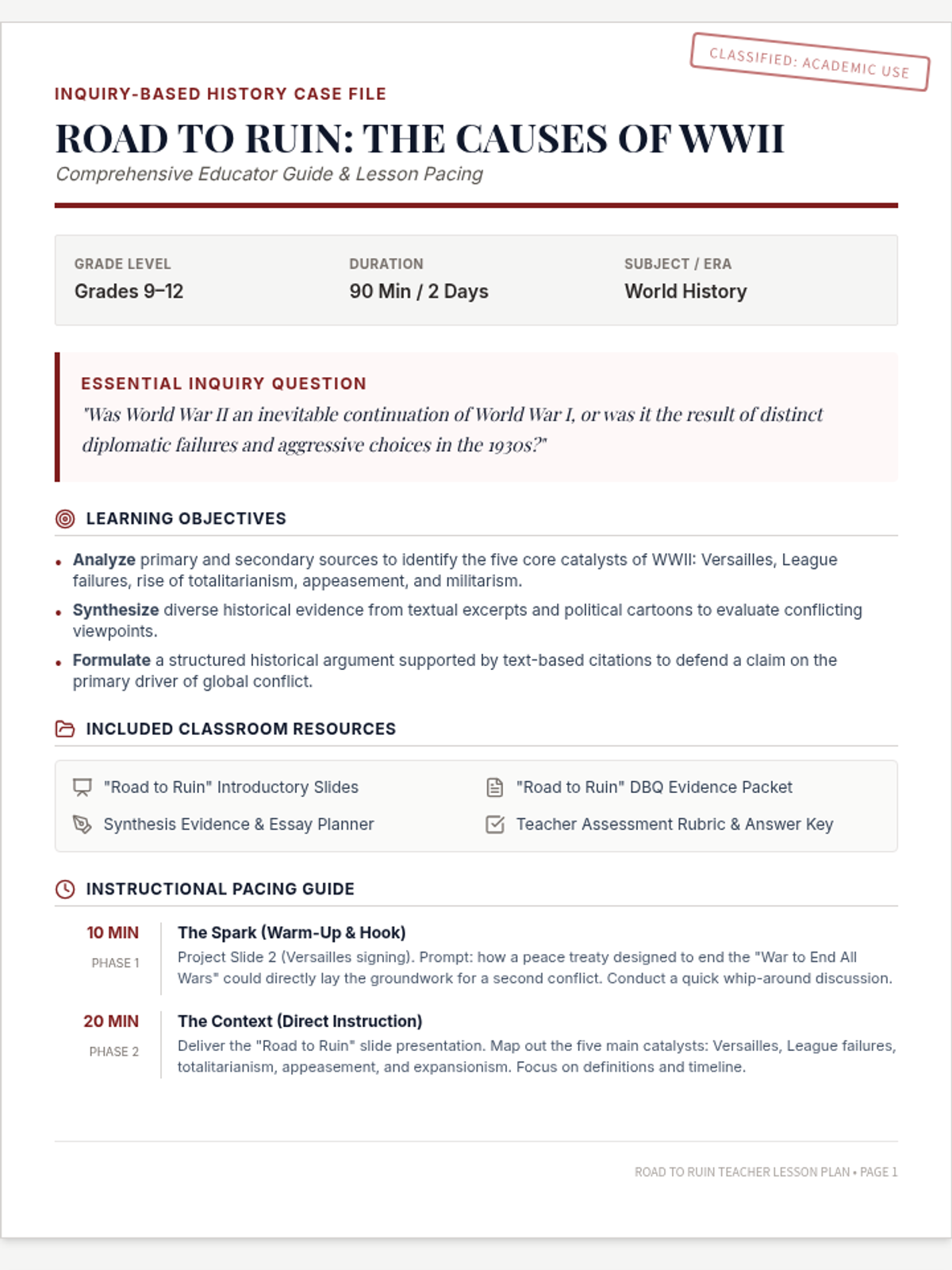
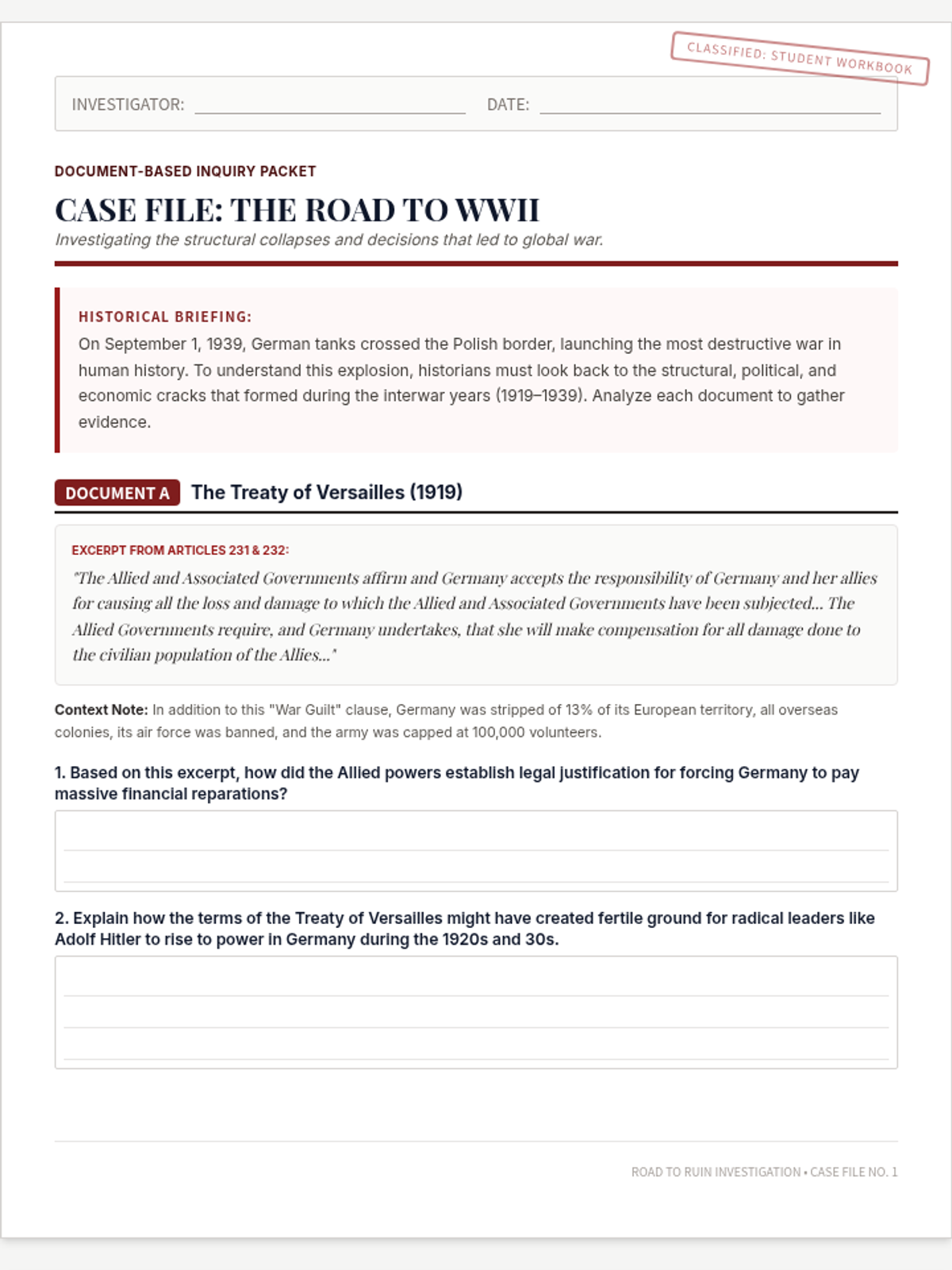
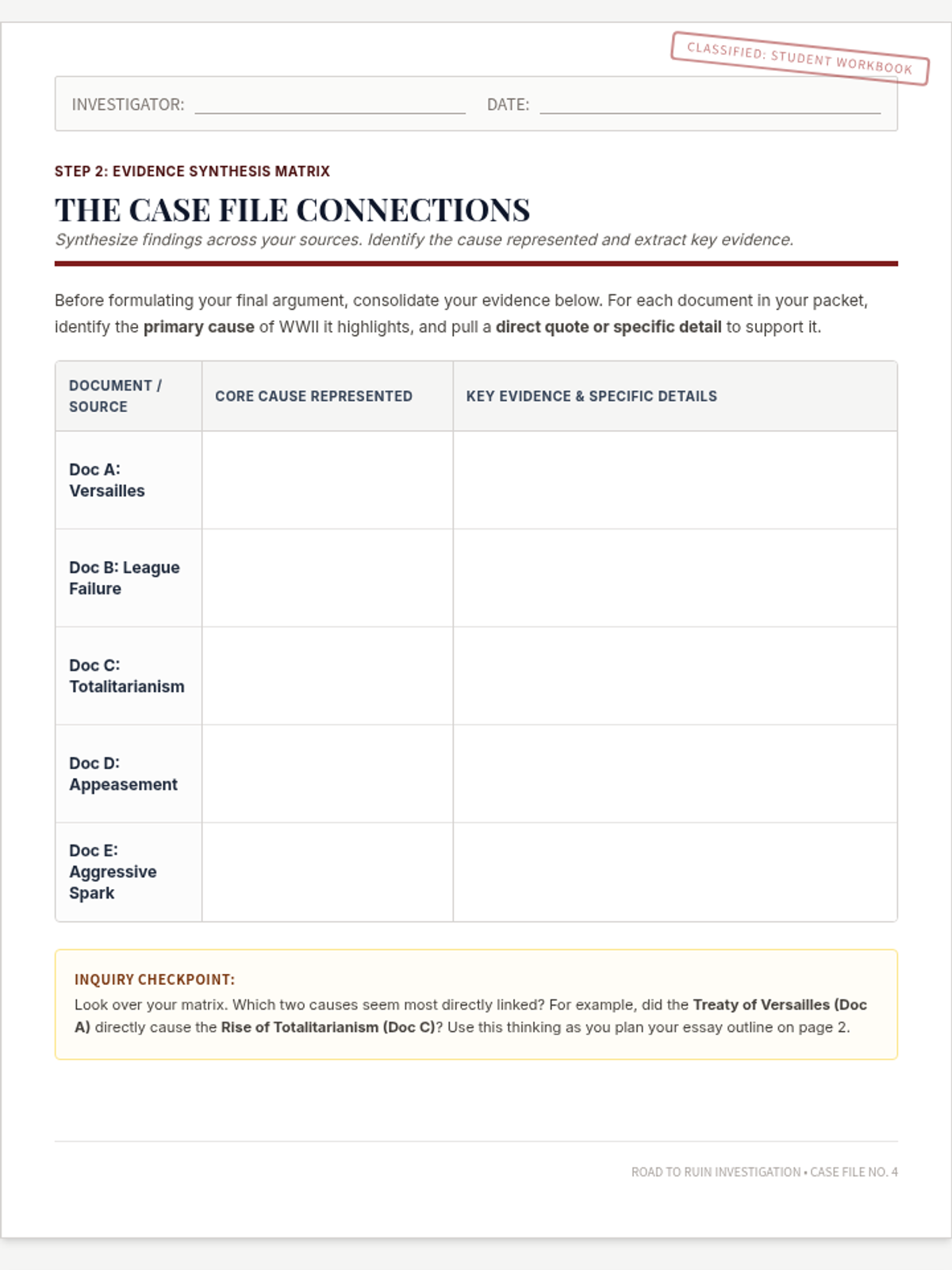
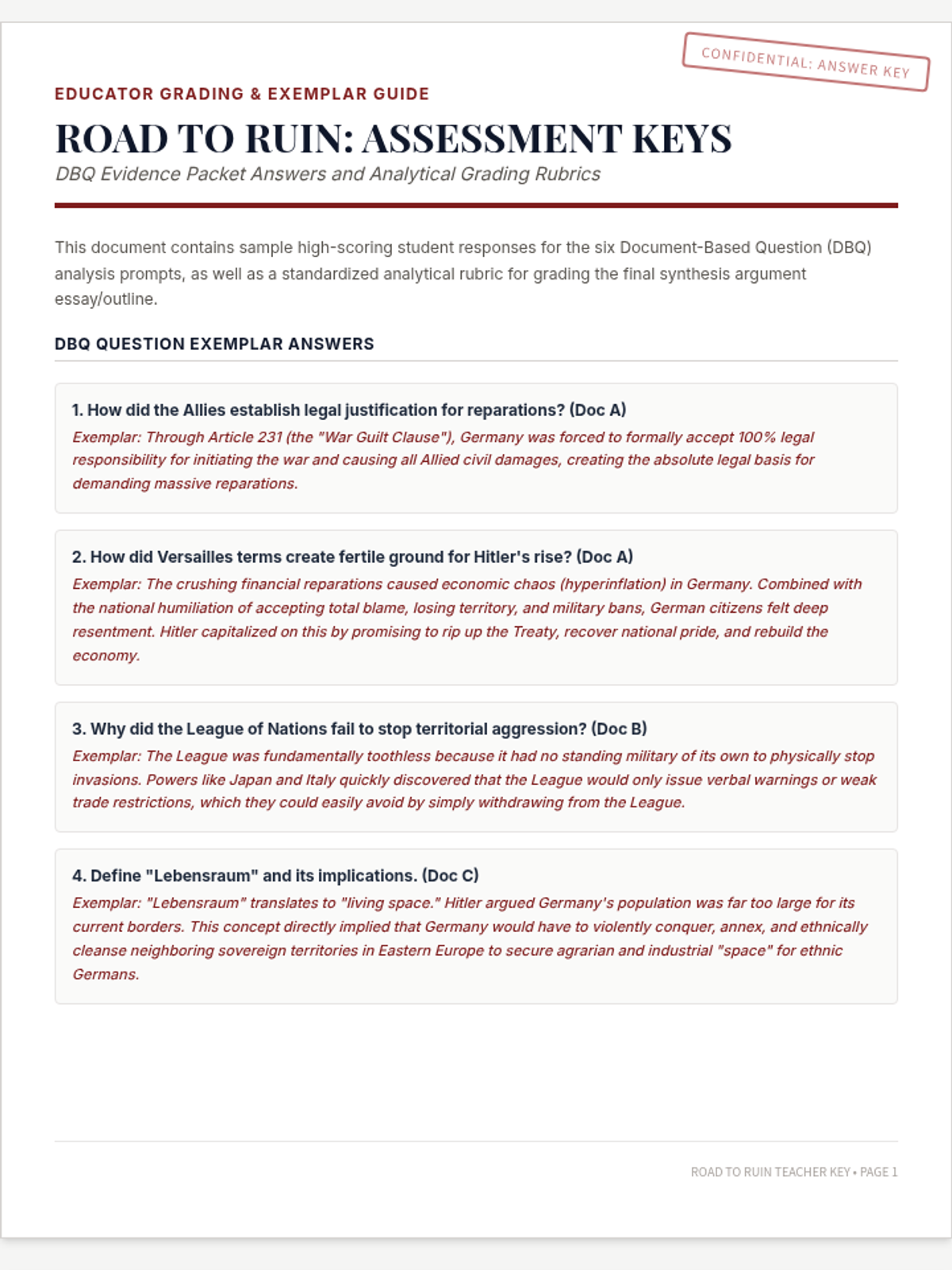
A comprehensive inquiry-based lesson exploring the multi-faceted causes of World War II (Treaty of Versailles, League of Nations failure, rise of fascism, appeasement, and aggressive expansion) through a Document-Based Question (DBQ) case study and synthesis writing activity.
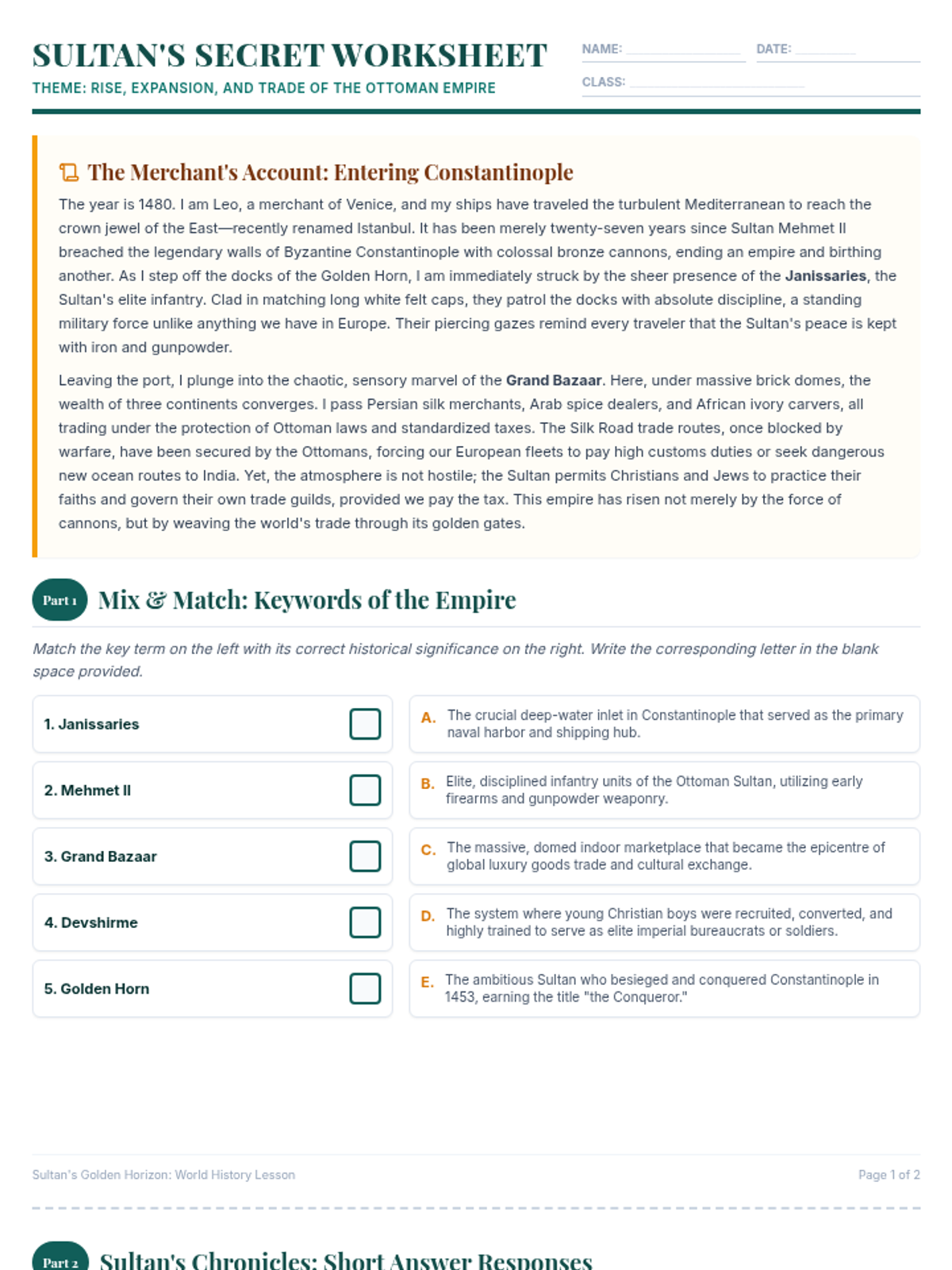
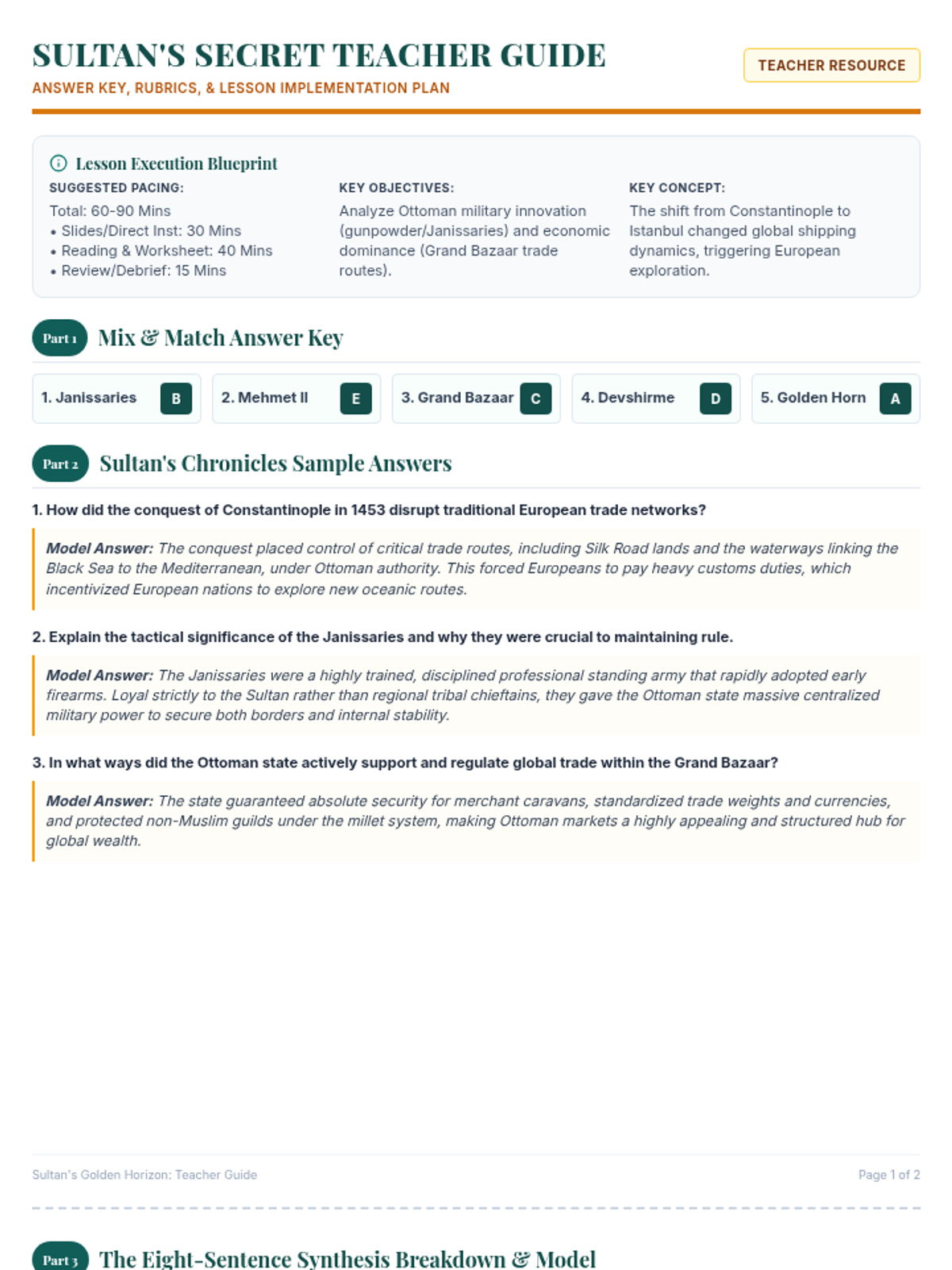
A comprehensive history lesson exploring the rise, military expansion, trade networks, and cultural exchange of the Ottoman Empire through a rich historical story, slide presentations, and structured student synthesis activities.
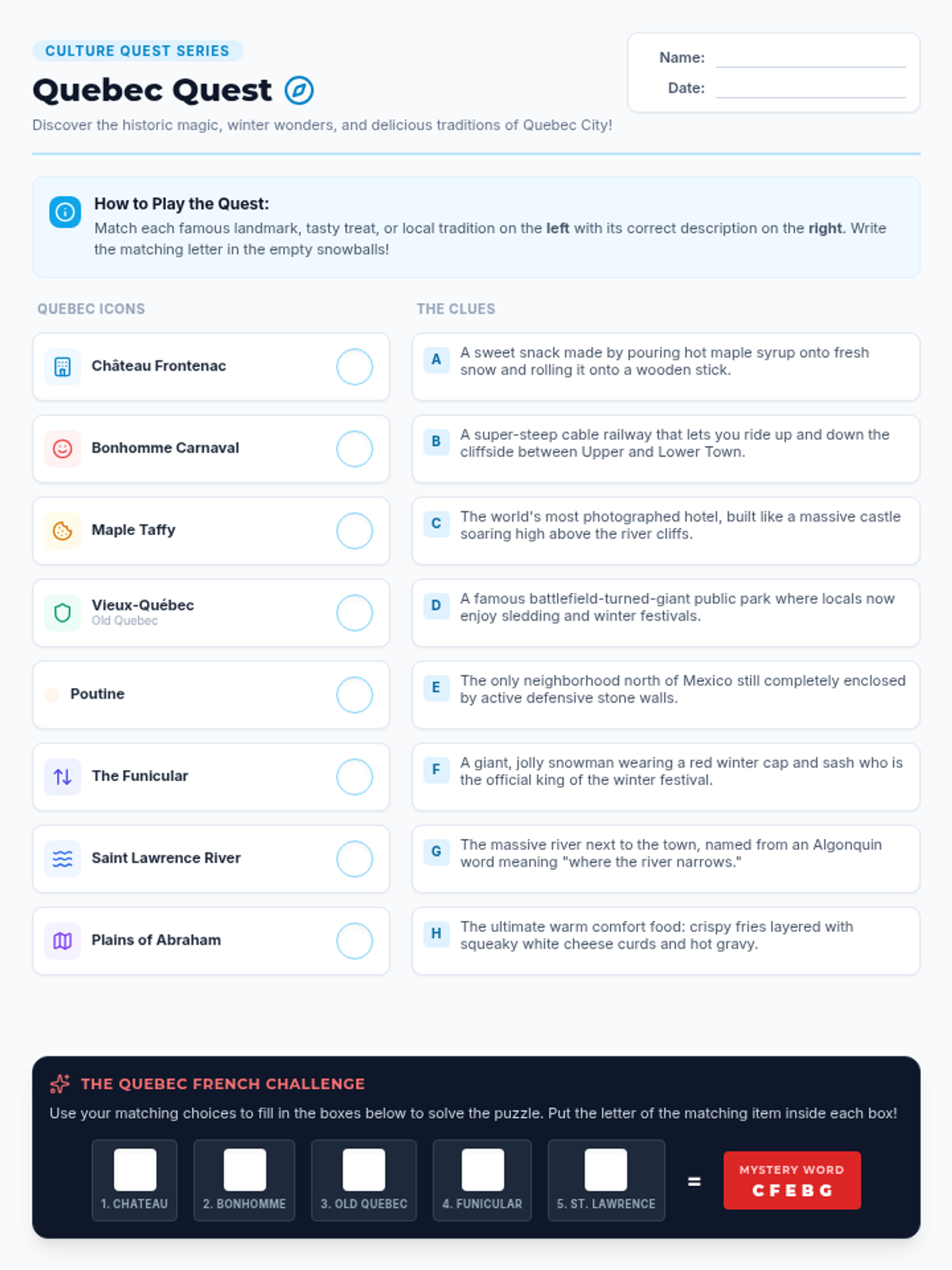
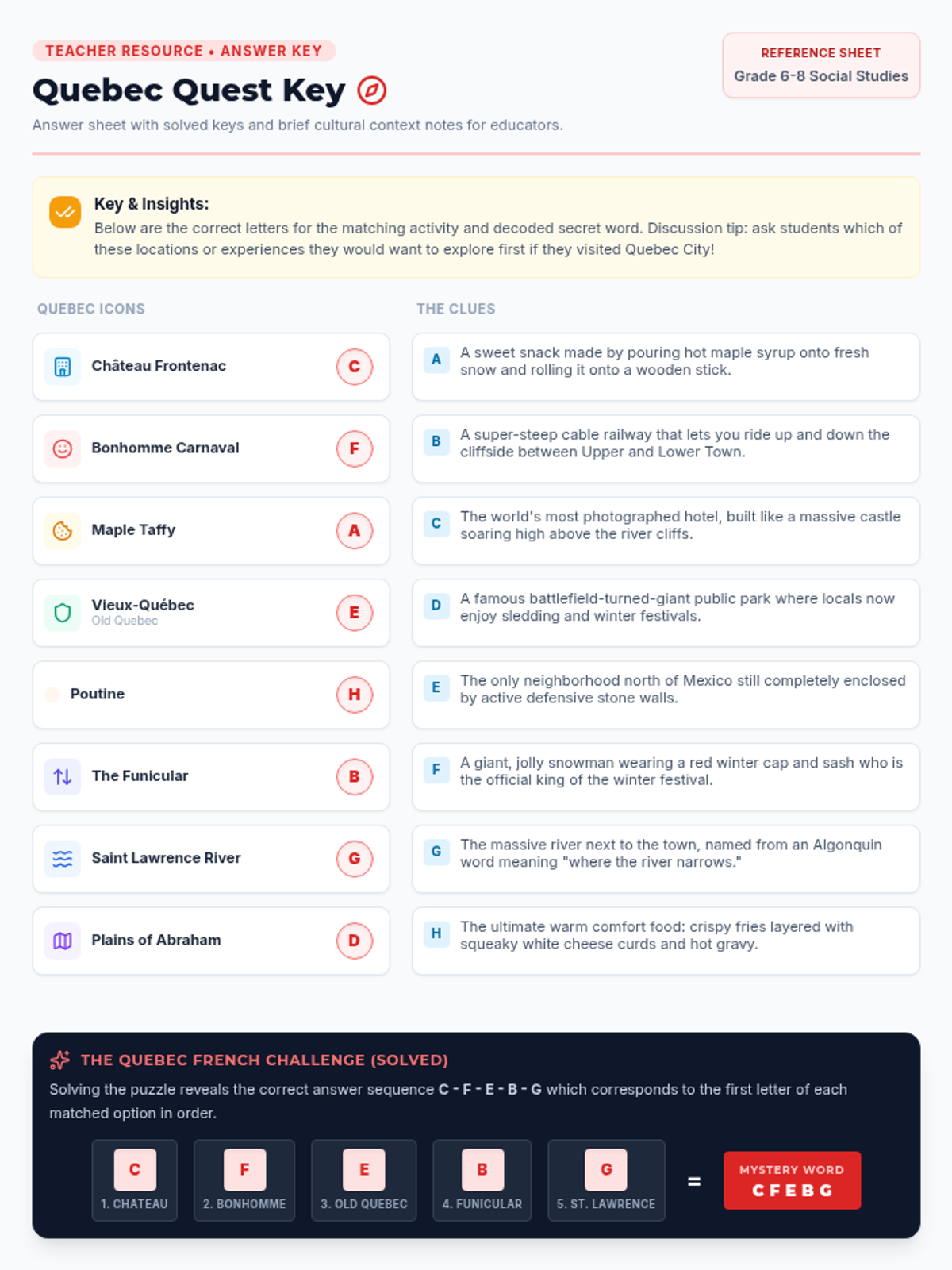
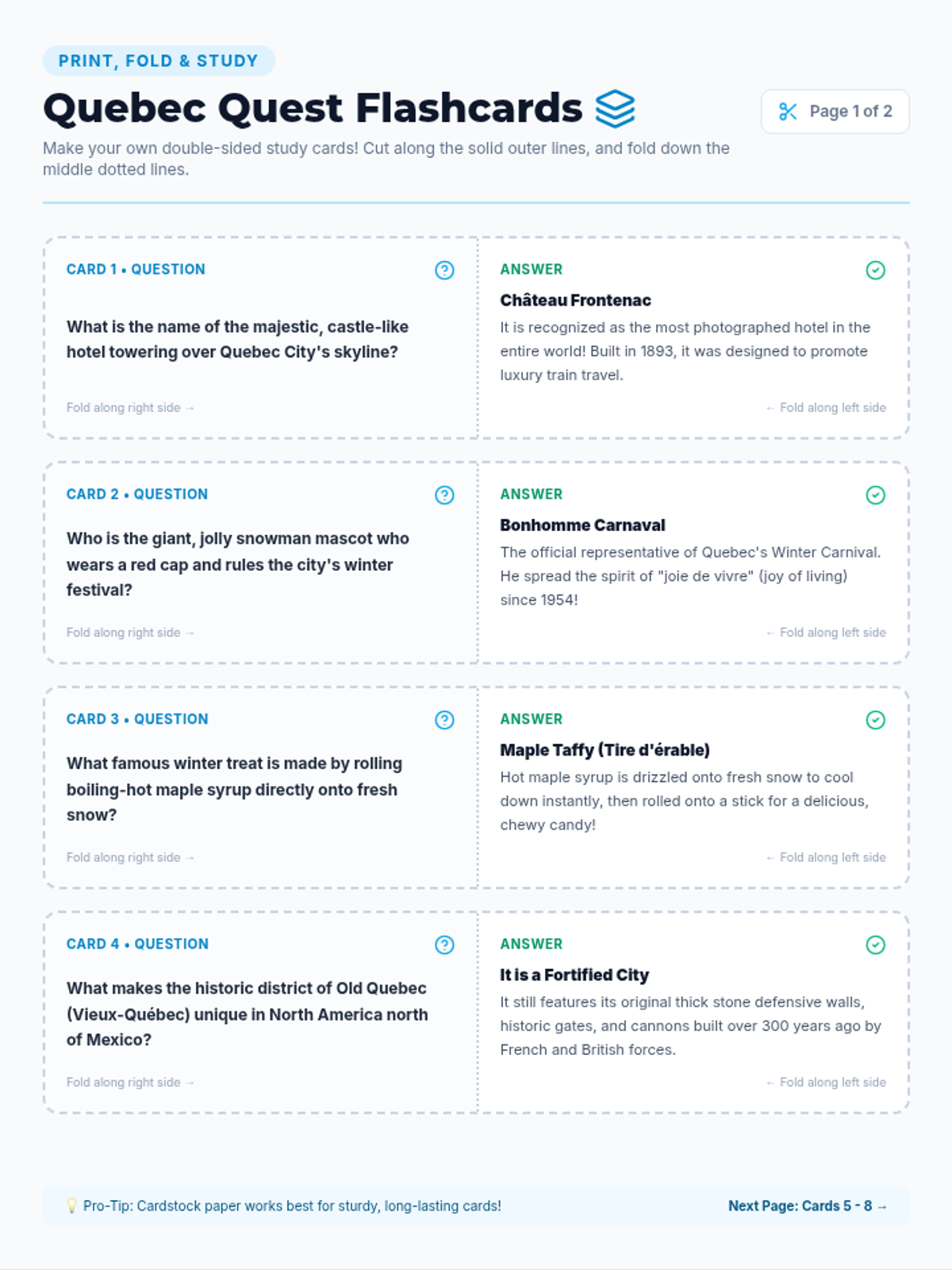
An engaging cultural exploration of Quebec City's history, landmarks, and culinary traditions for middle schoolers. Includes a matching worksheet, a comprehensive answer key, and printable fold-and-glue study flashcards.
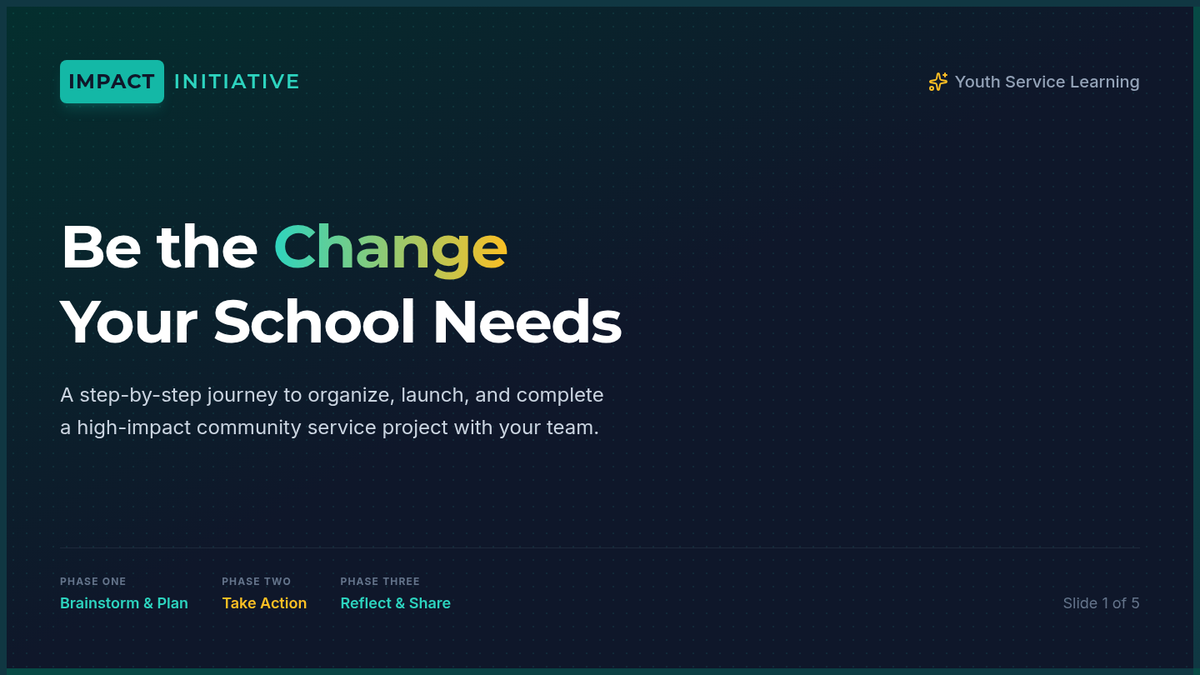
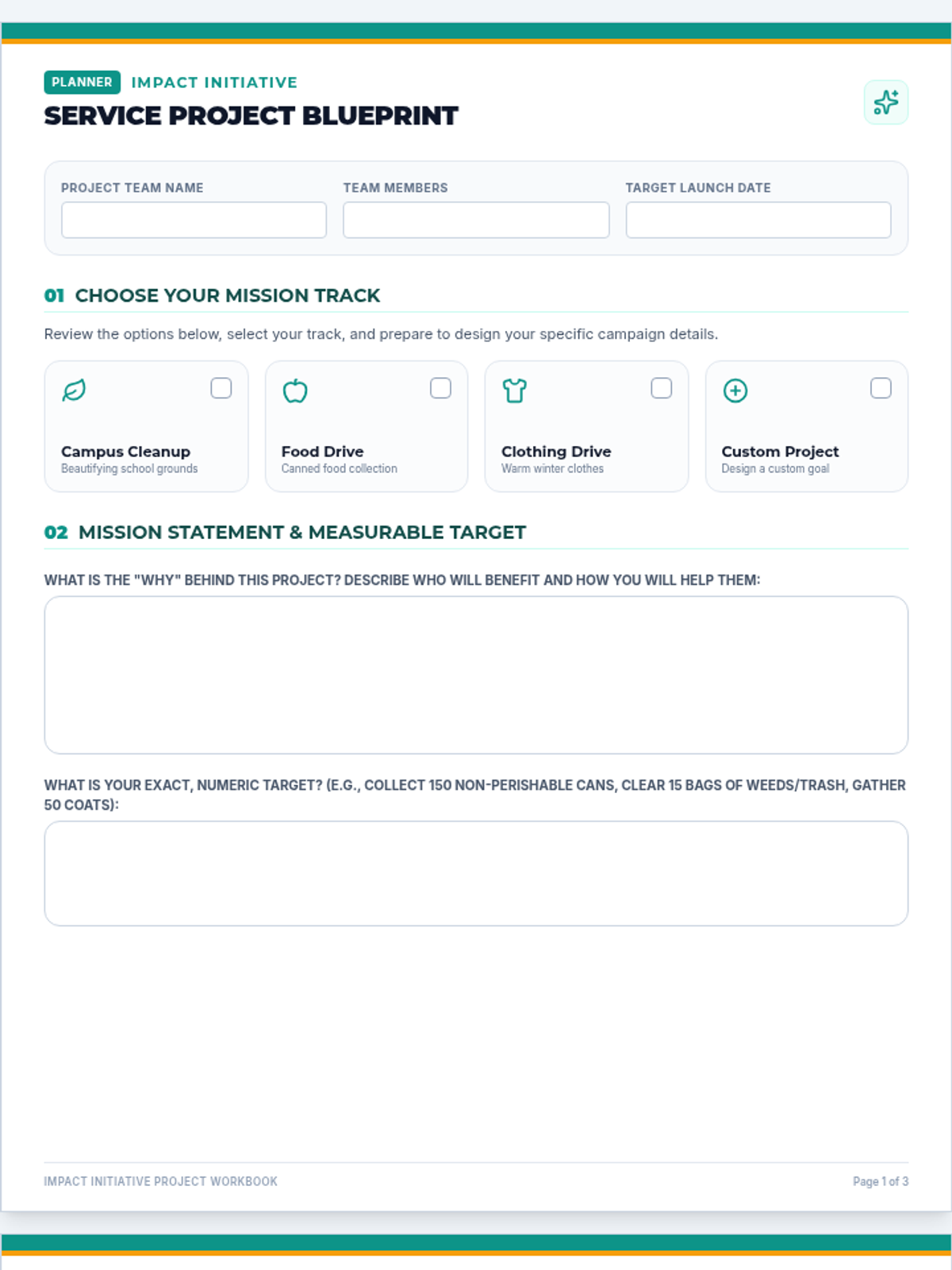
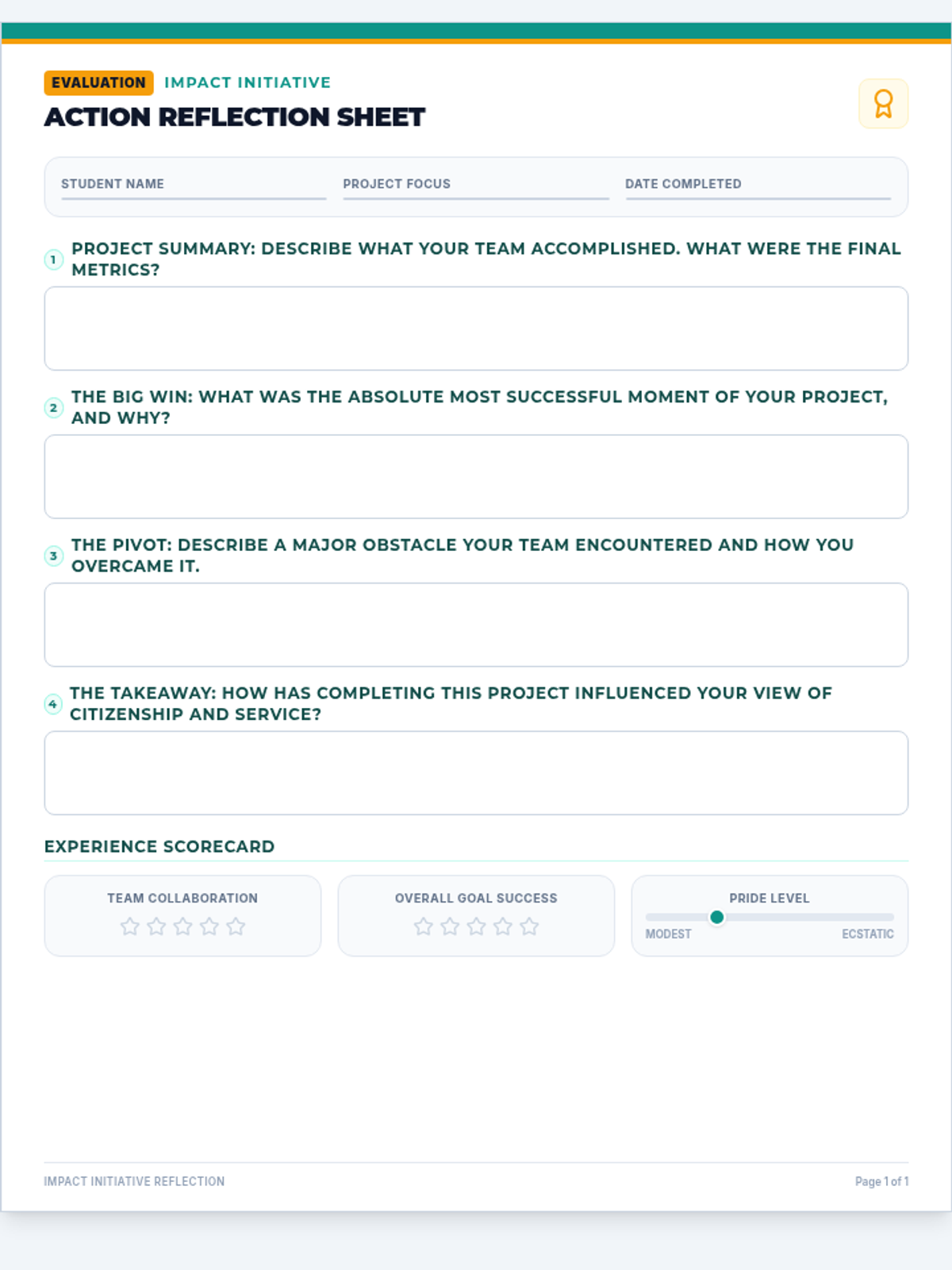
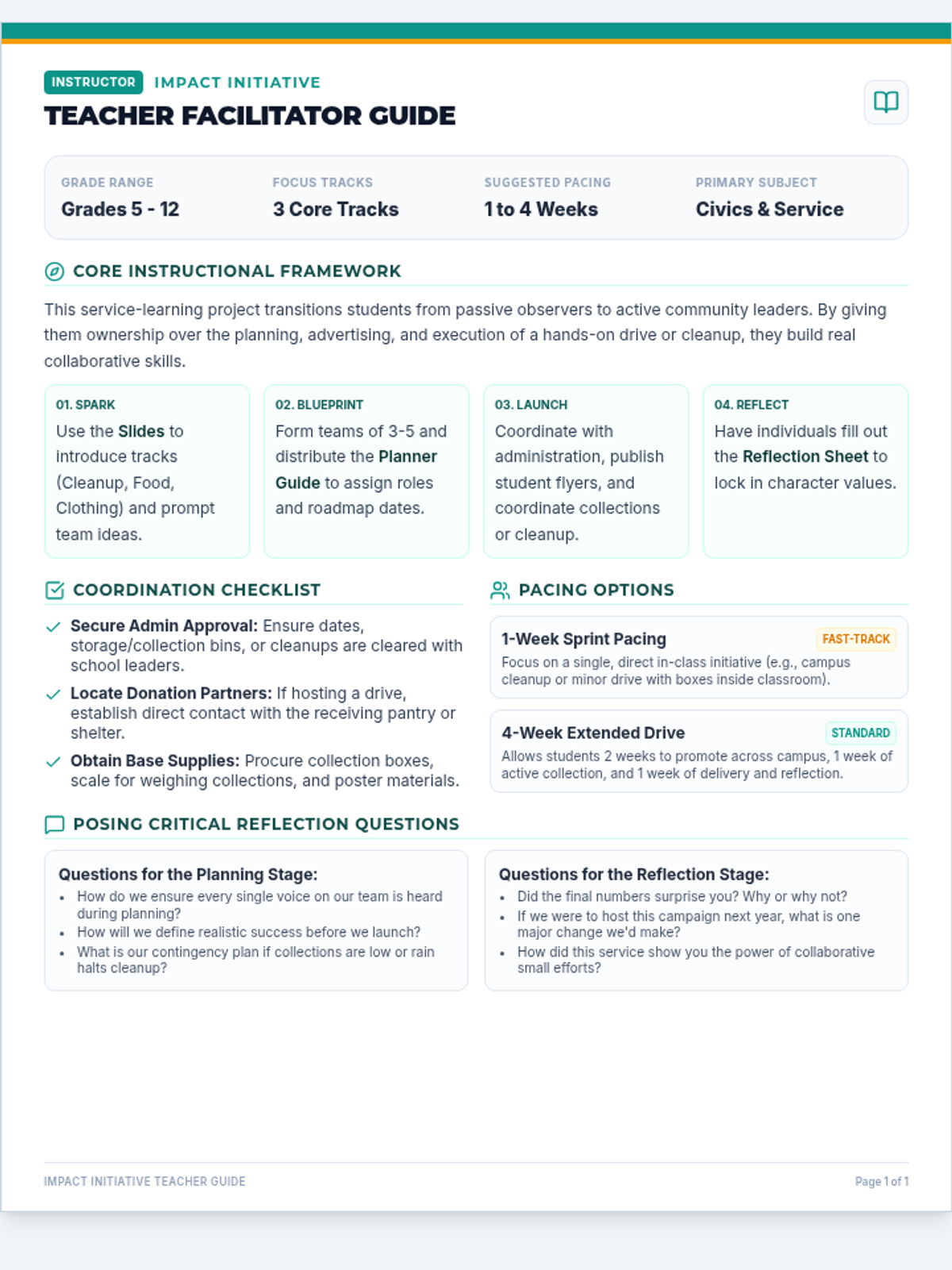
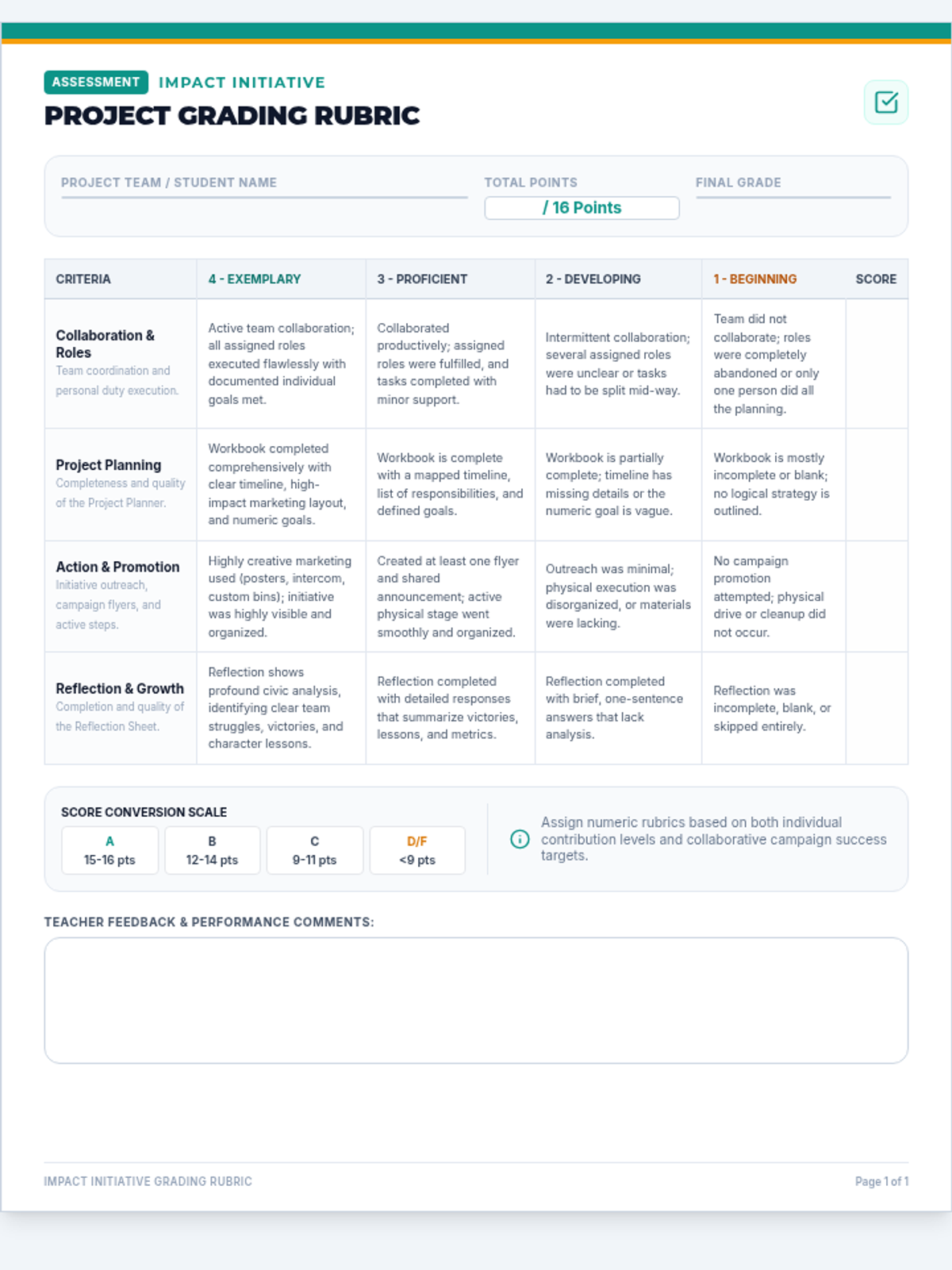
A service-learning lesson where students plan, execute, and reflect on a community service project of their choice (school campus cleanup, food drive, or clothing drive). It includes interactive presentation slides, a step-by-step project planning guide, a simplified reflection worksheet, and a teacher facilitation guide.
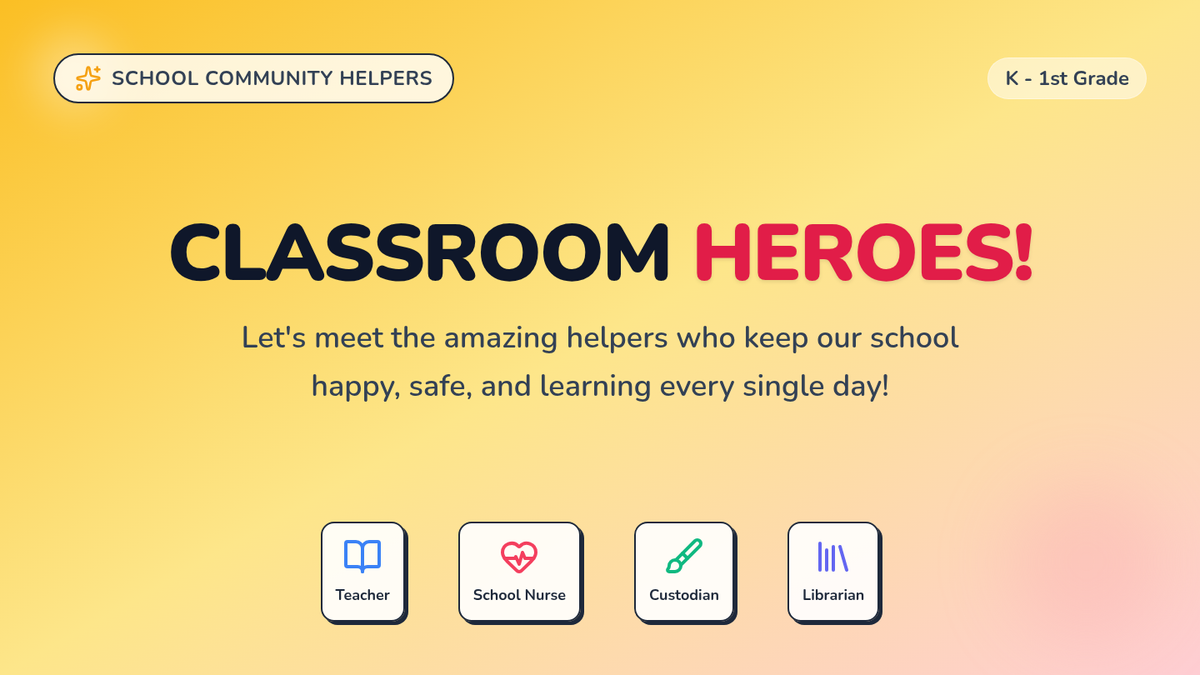
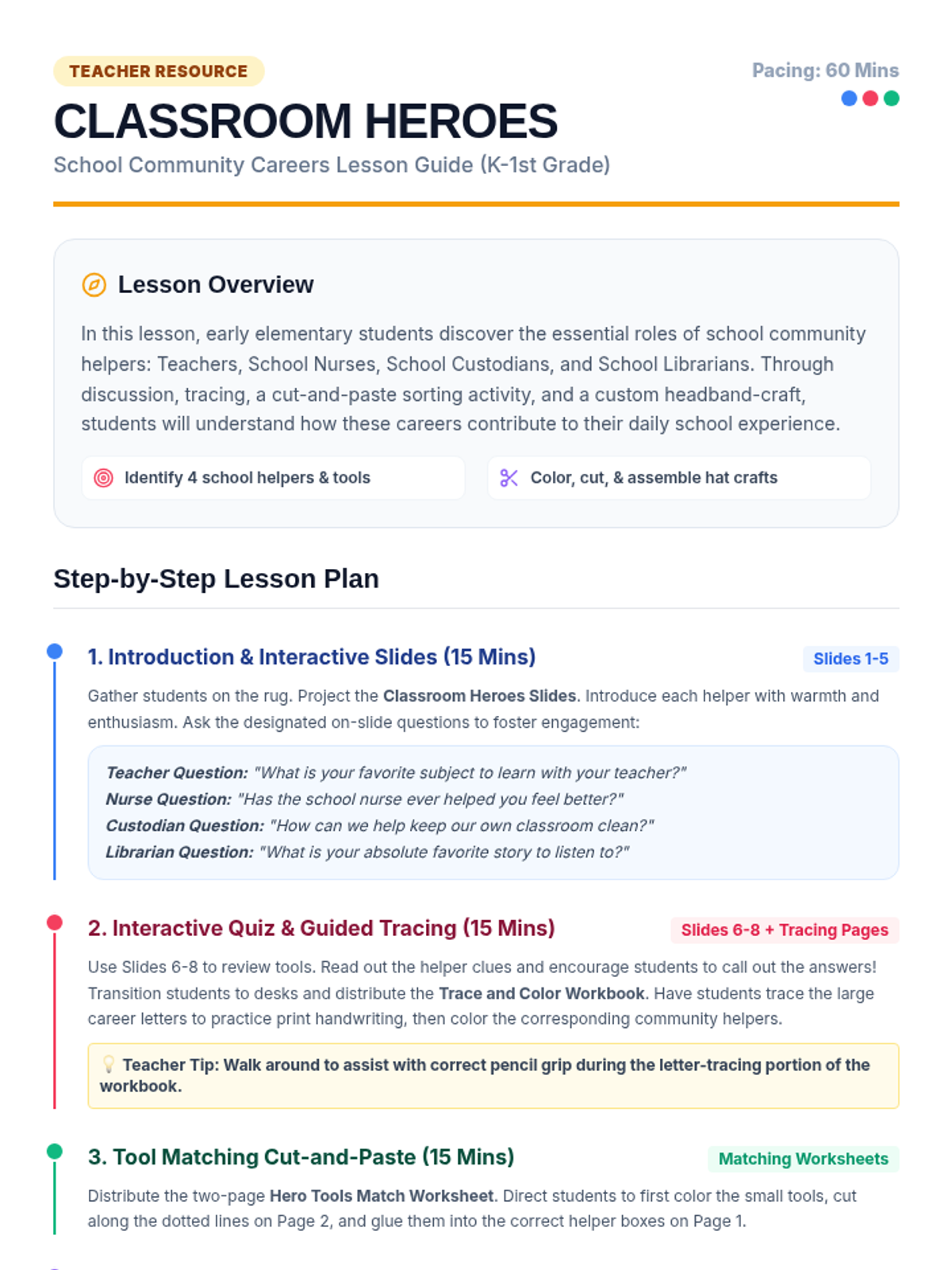
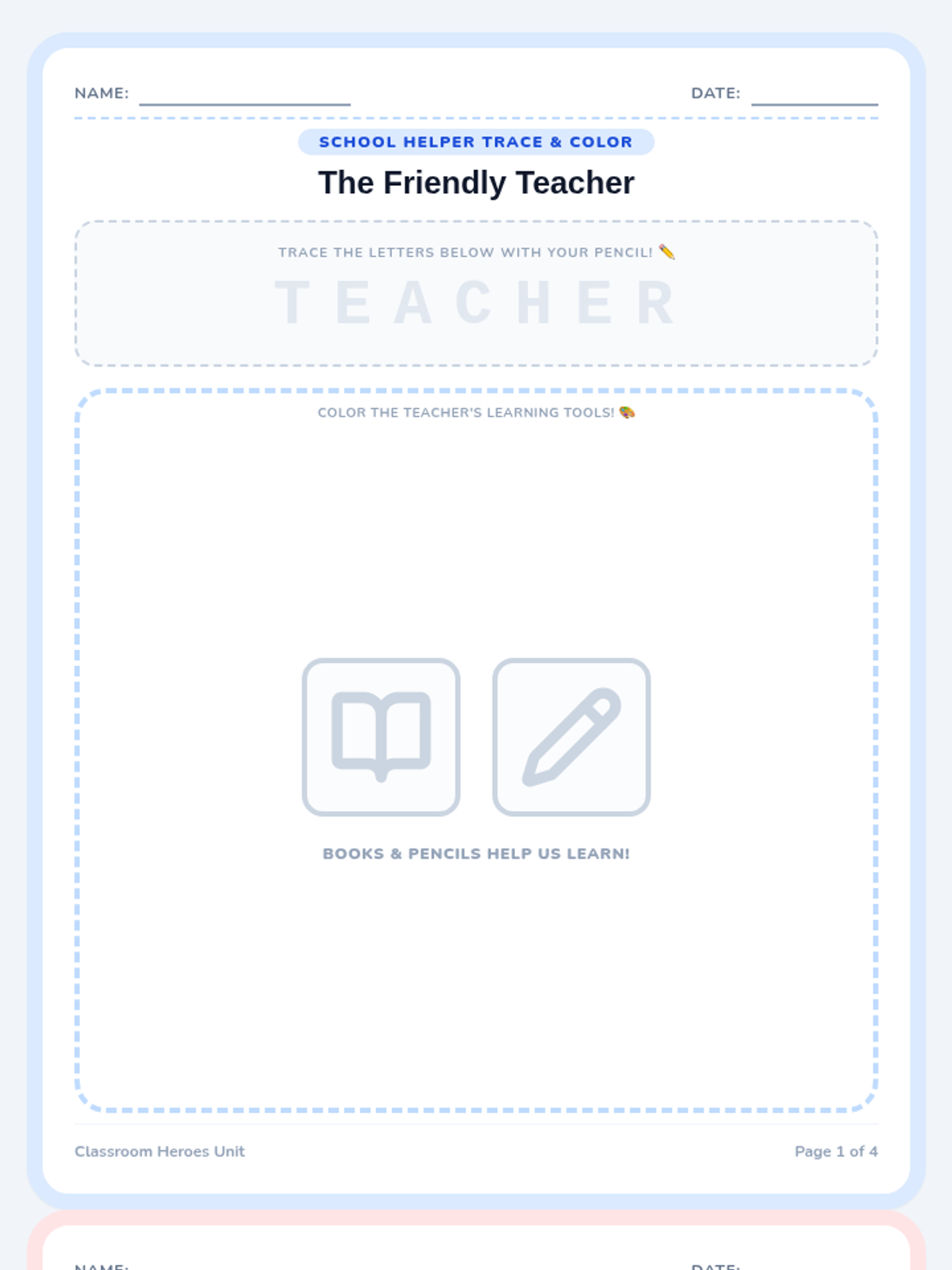
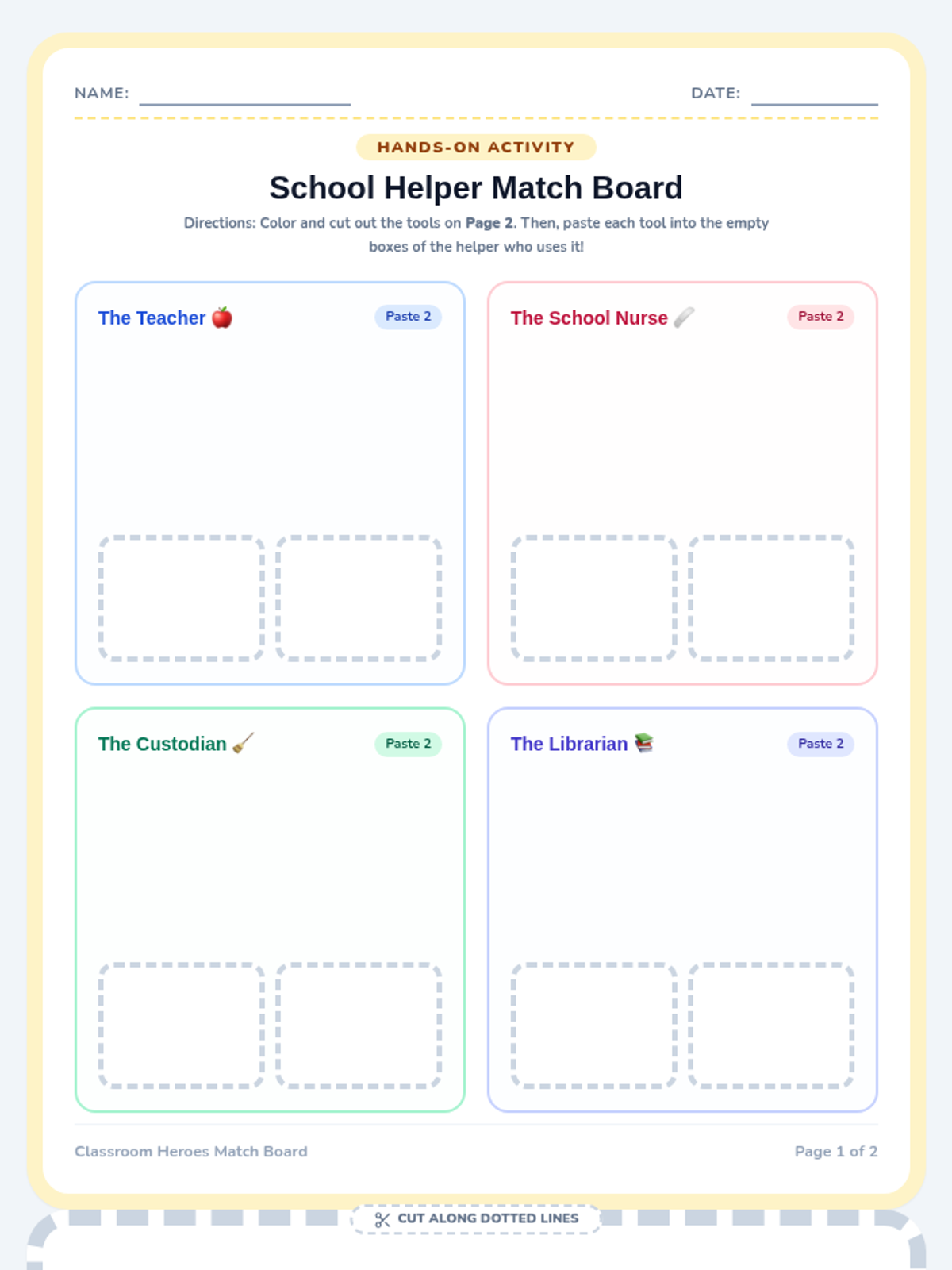
An interactive, hands-on lesson for Kindergarten and 1st-grade students to explore school community careers. This unit features interactive classroom slides, visual tracing and coloring sheets, a cut-and-paste tool-matching activity, and printable career hat crafts.
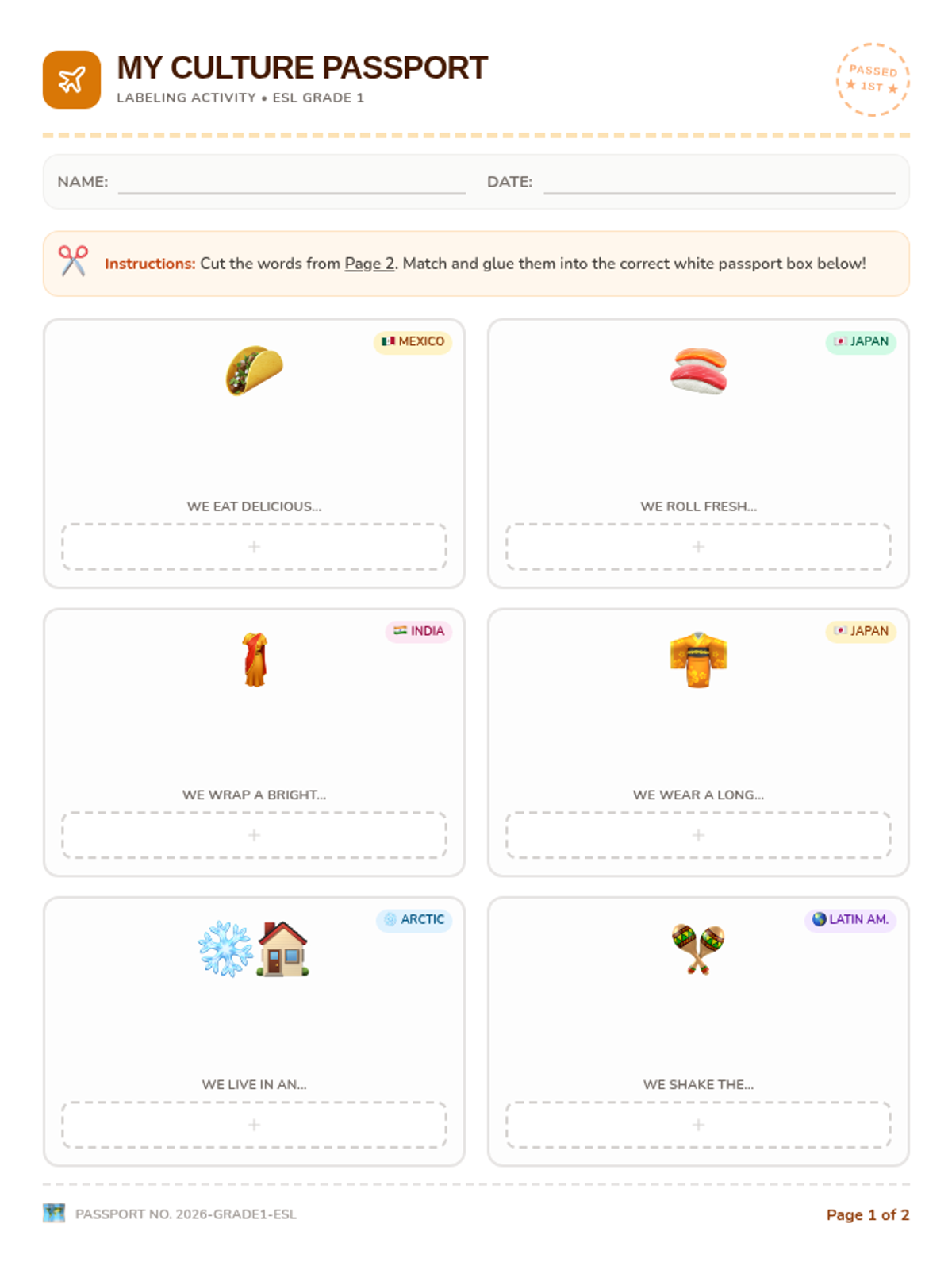
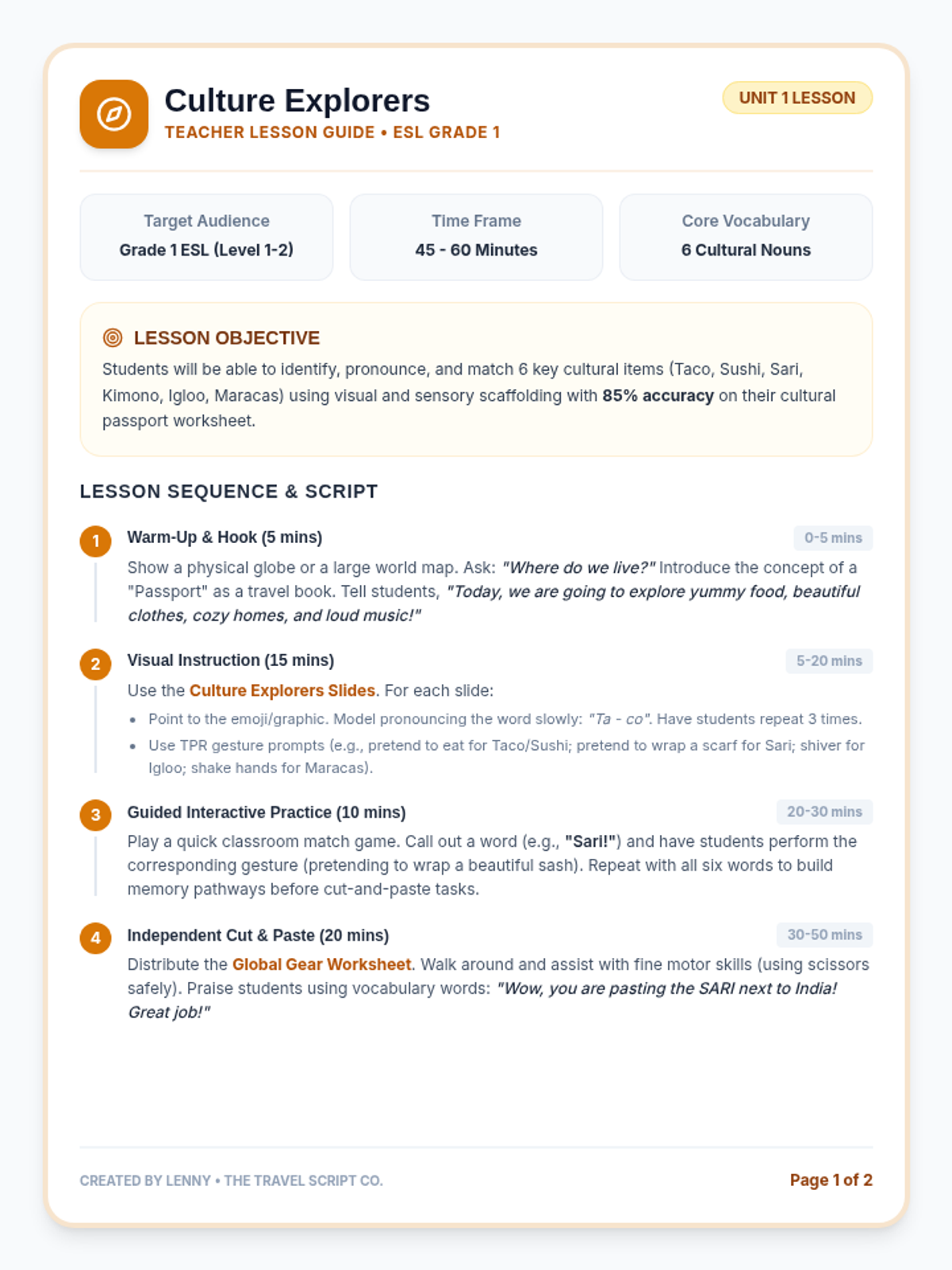
A comprehensive lesson package designed for 1st-grade ESL students to learn global vocabulary (food, clothing, shelter, music) through engaging slides, a hands-on cut-and-paste worksheet, and a supportive teacher facilitation guide.
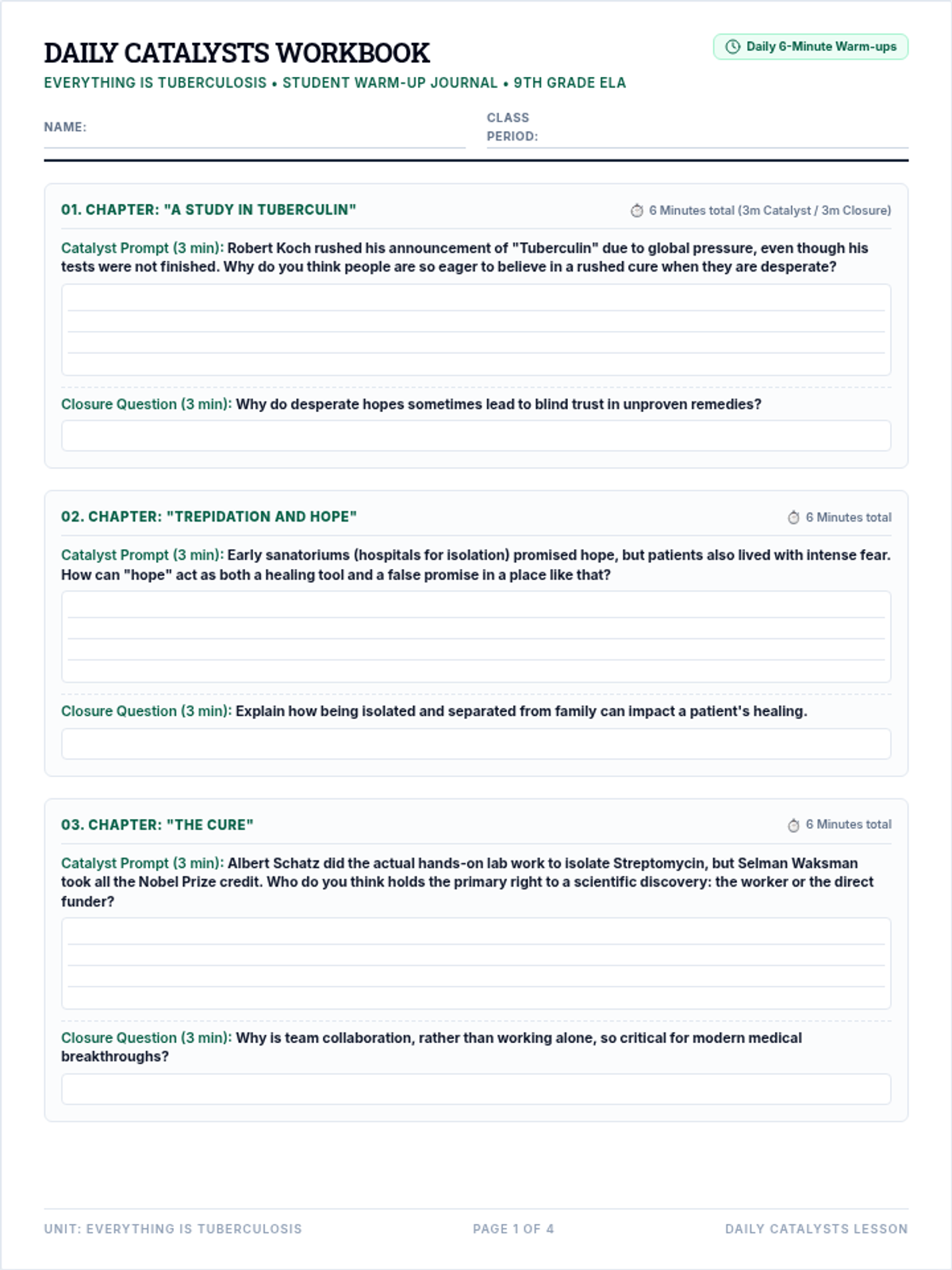
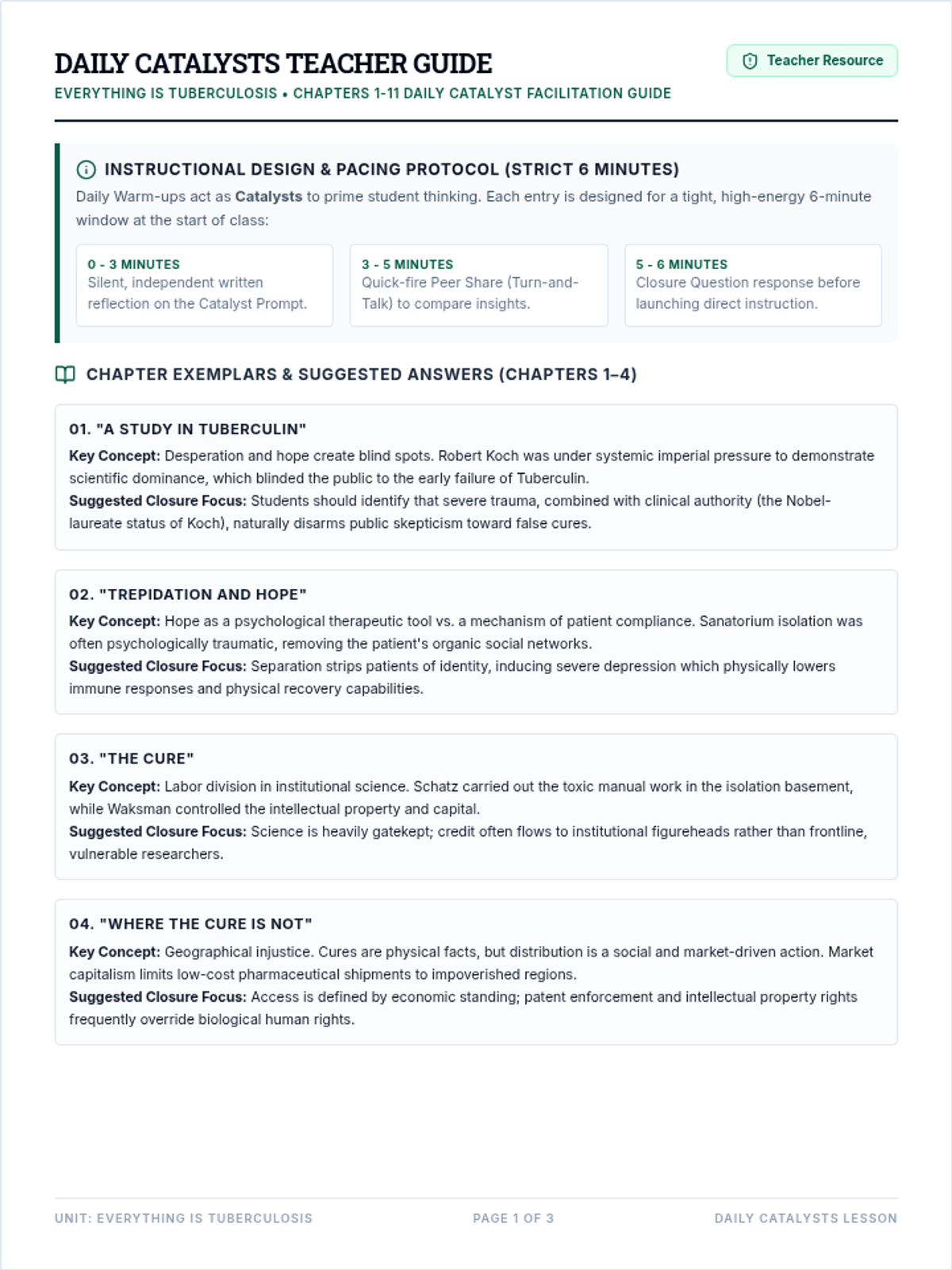
A comprehensive set of 6-minute daily warm-ups and corresponding closure questions spanning 11 crucial chapters of John Green's 'Everything is Tuberculosis'.
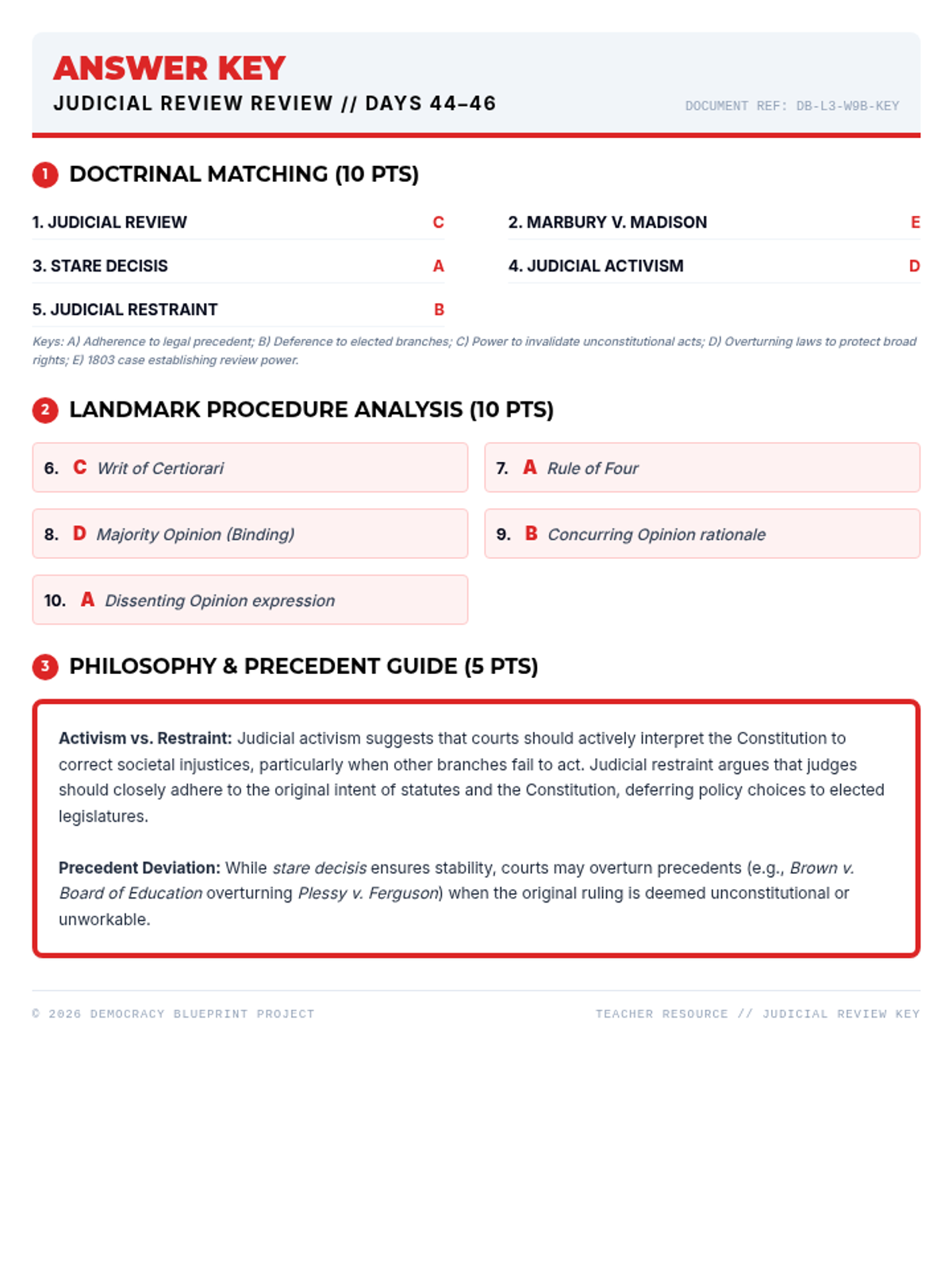
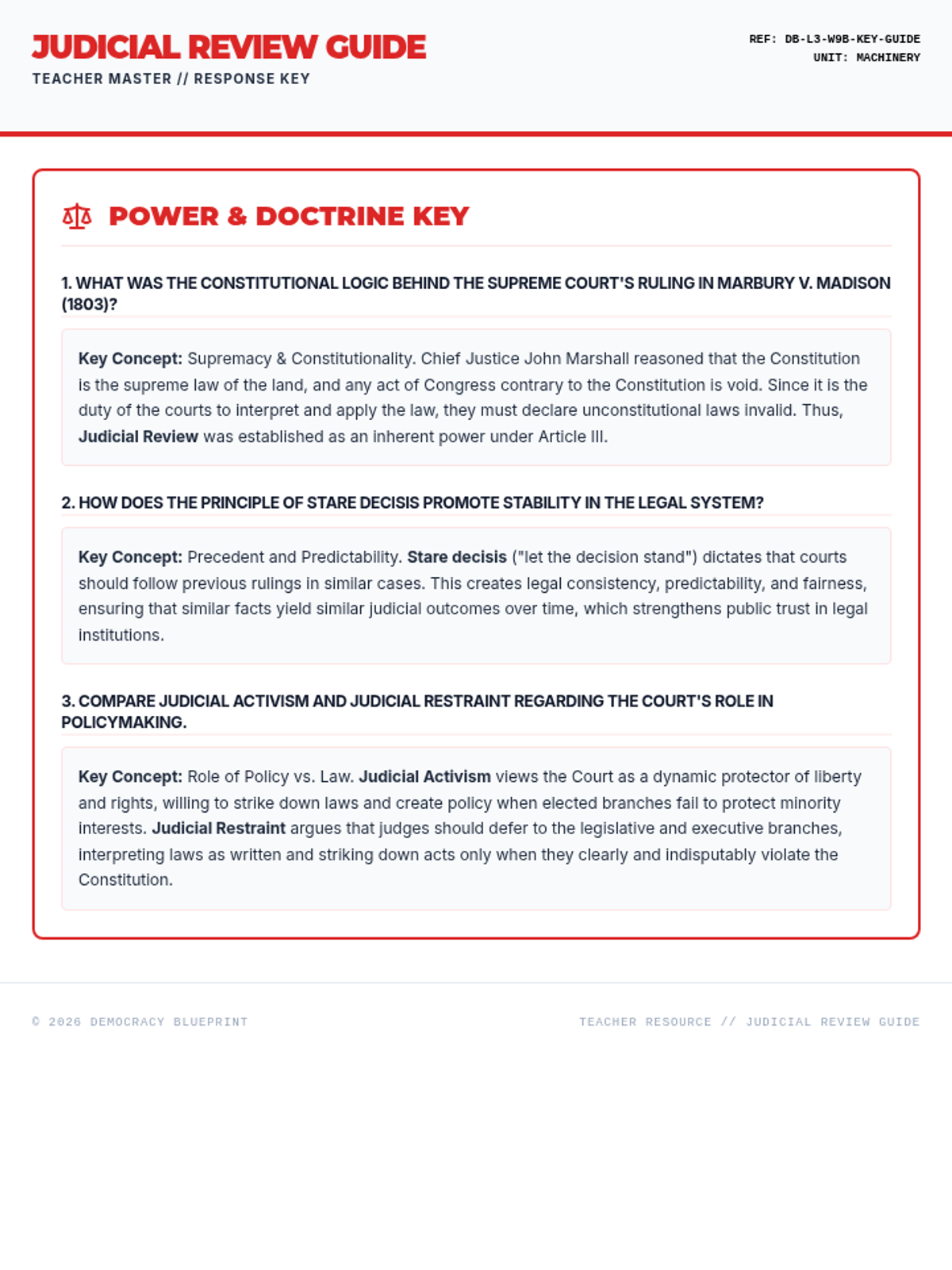
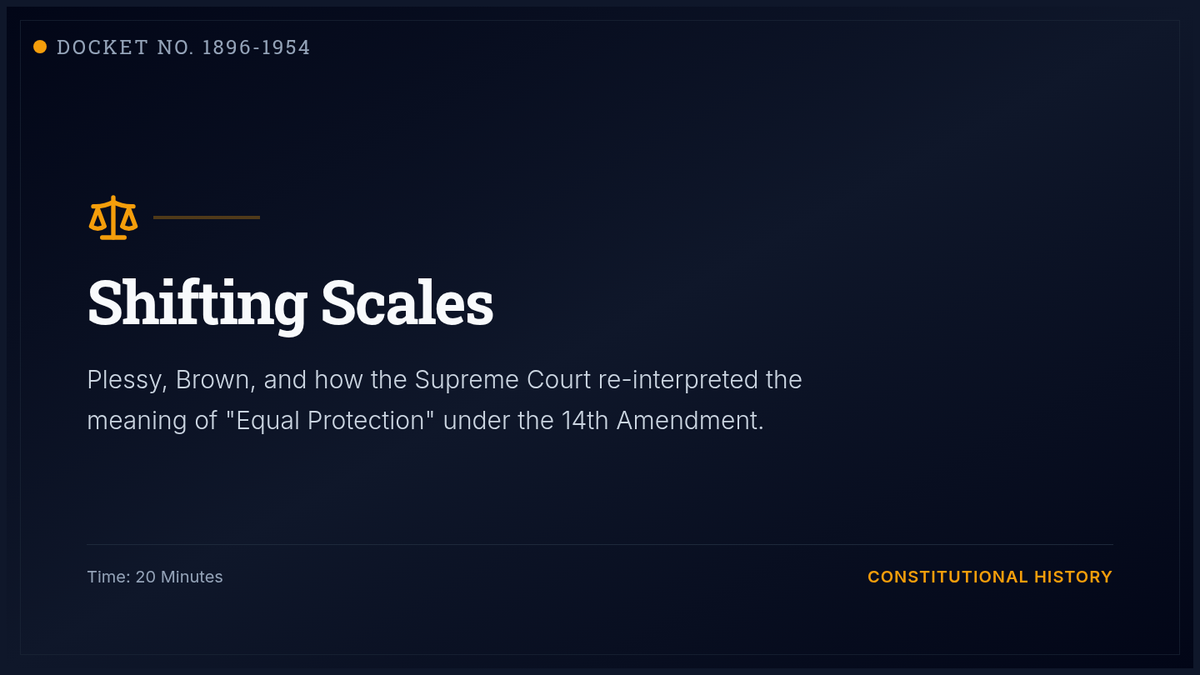
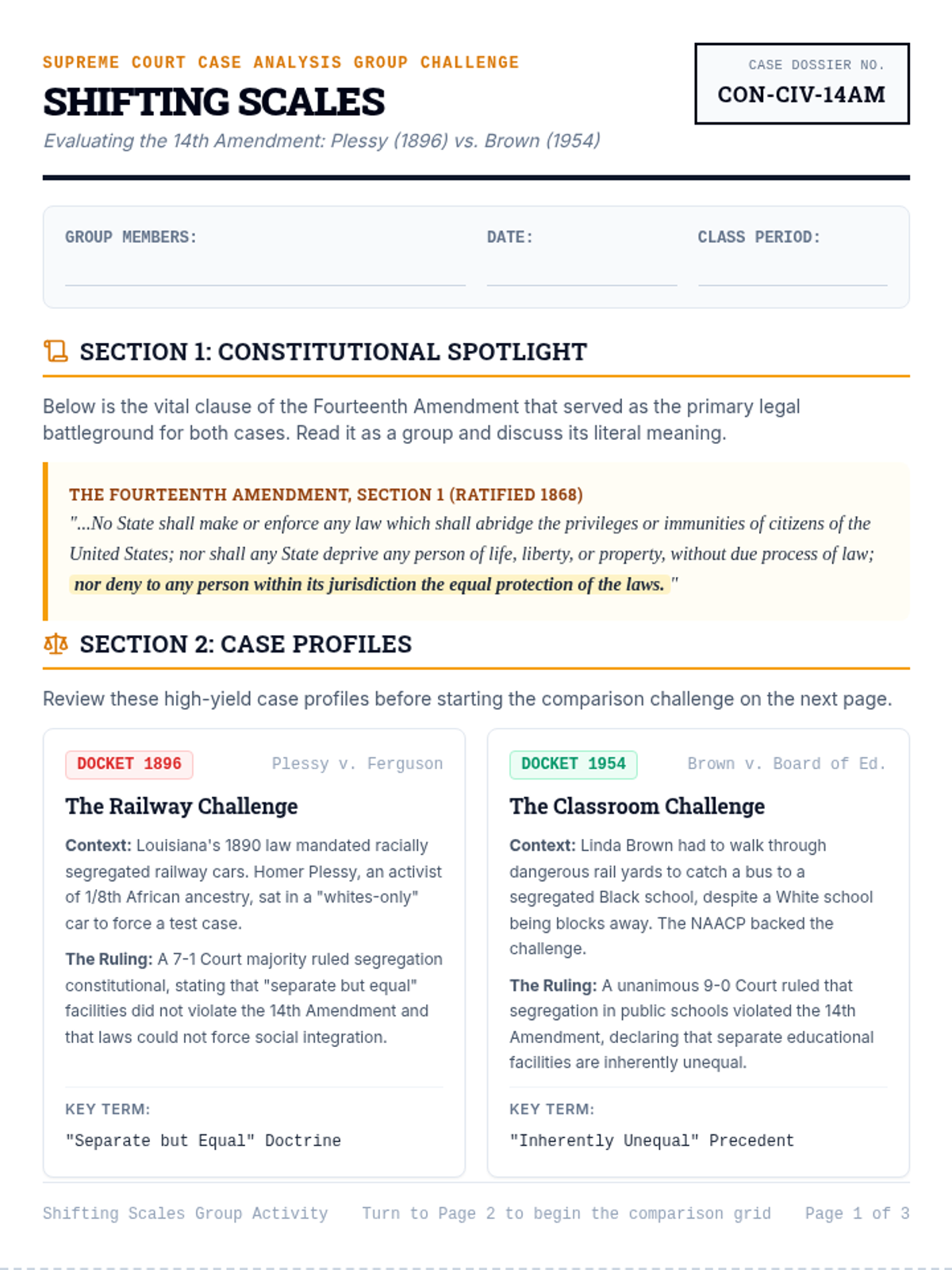
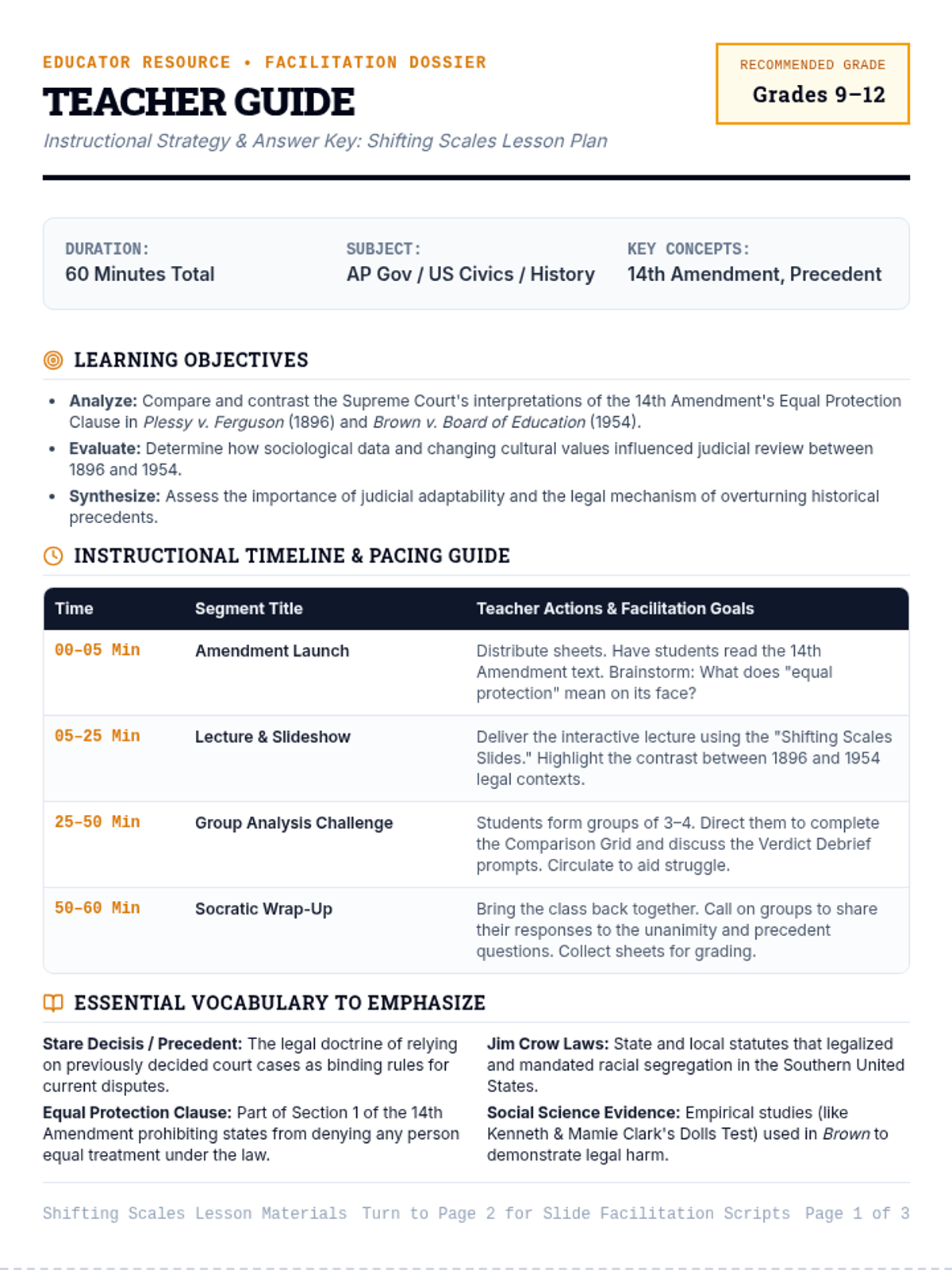
A comprehensive history and civics lesson analyzing how the Supreme Court's interpretation of the 14th Amendment evolved from Plessy v. Ferguson to Brown v. Board of Education.
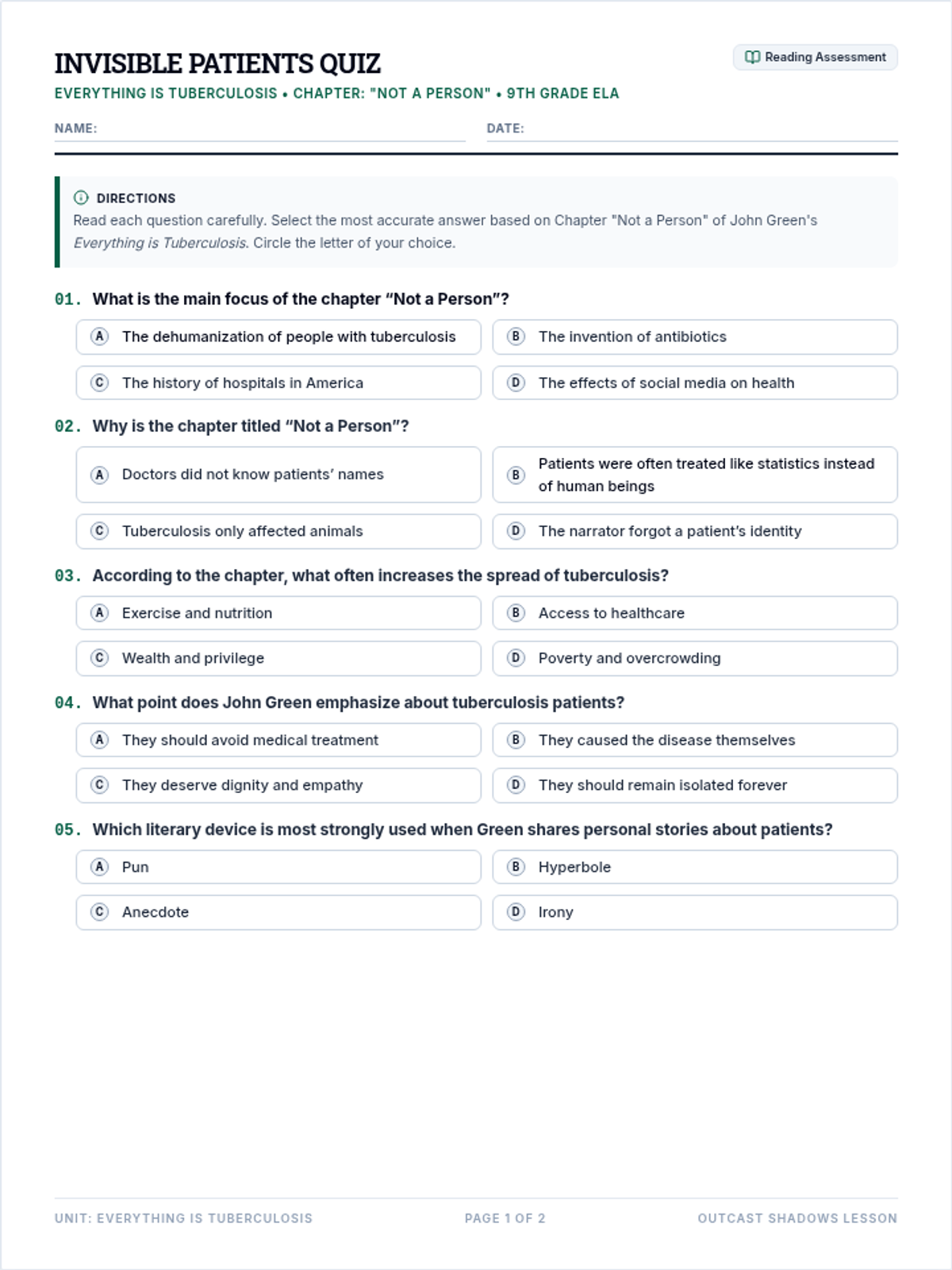
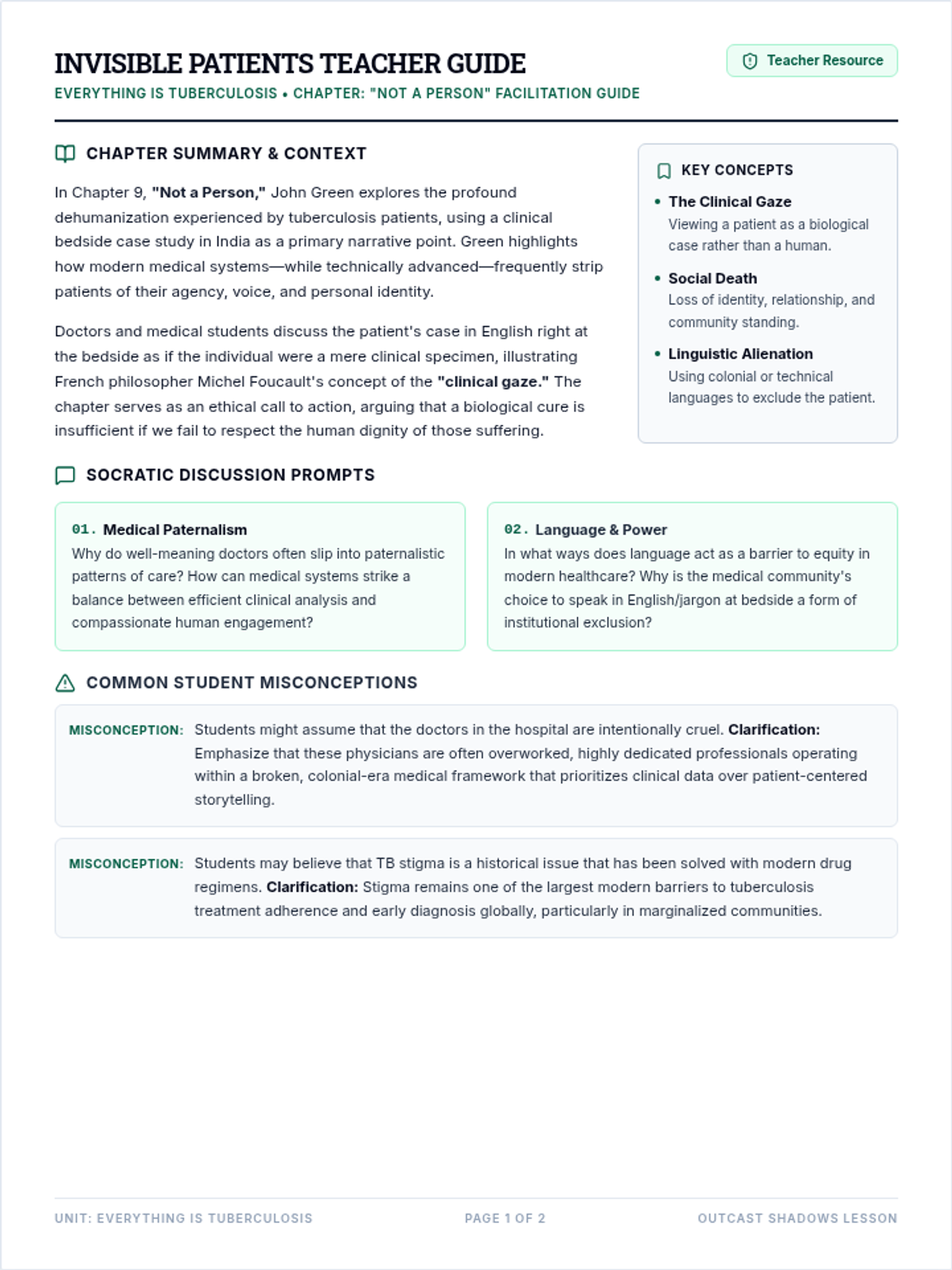
A comprehensive lesson exploring Chapter 9 ('Not a Person') of John Green's 'Everything is Tuberculosis', focusing on medical dehumanization, social stigma, and the historical and modern experiences of TB patients.
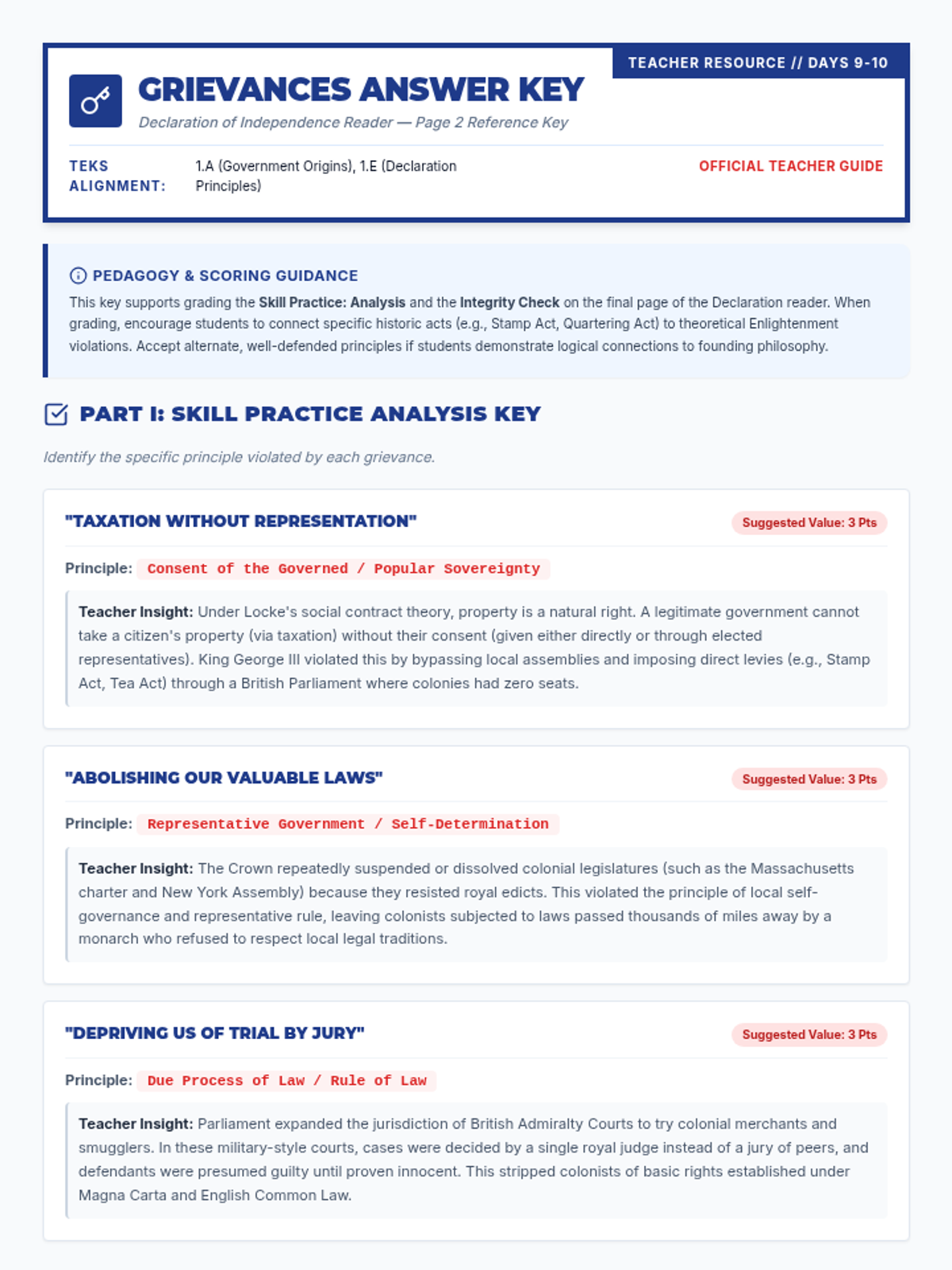
Explores the philosophical, historical, and intellectual origins of the American government and the principles established in the founding documents.
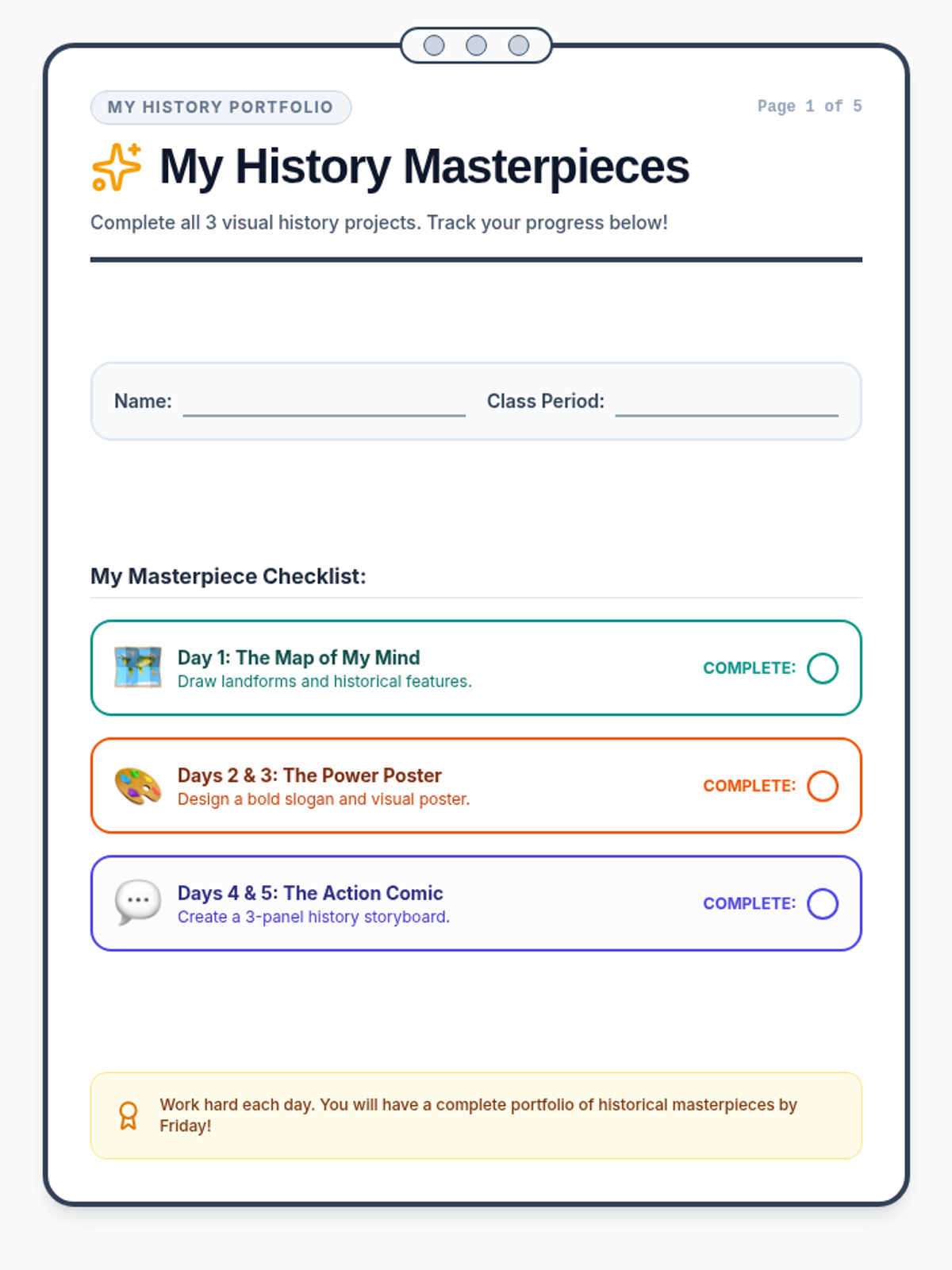
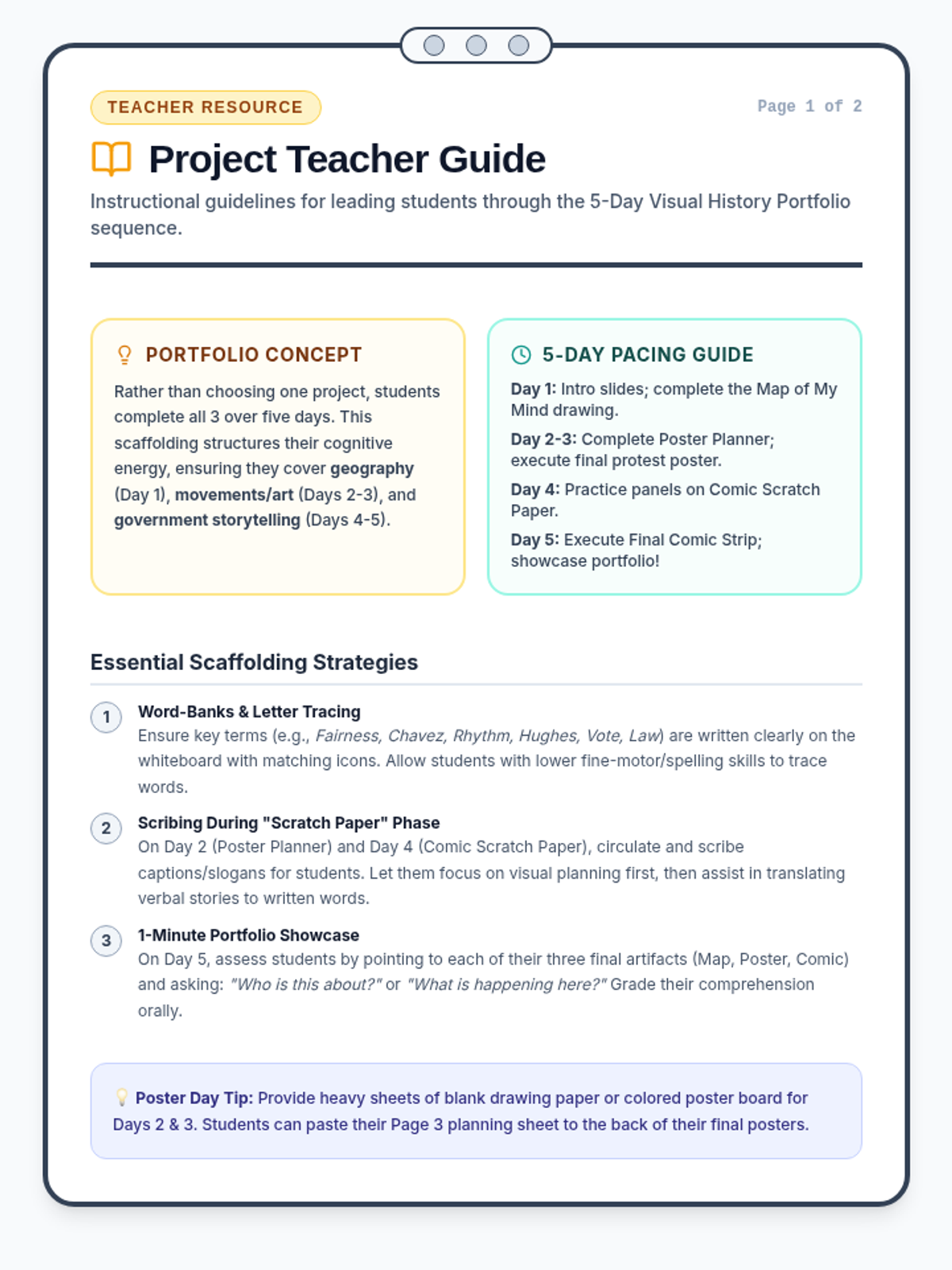
A scaffolded final project lesson where students express their historical knowledge of geography, the Farmers' Movement, government, or the Harlem Renaissance through three visual project pathways: a mind map, a protest poster, or a storyboard comic.
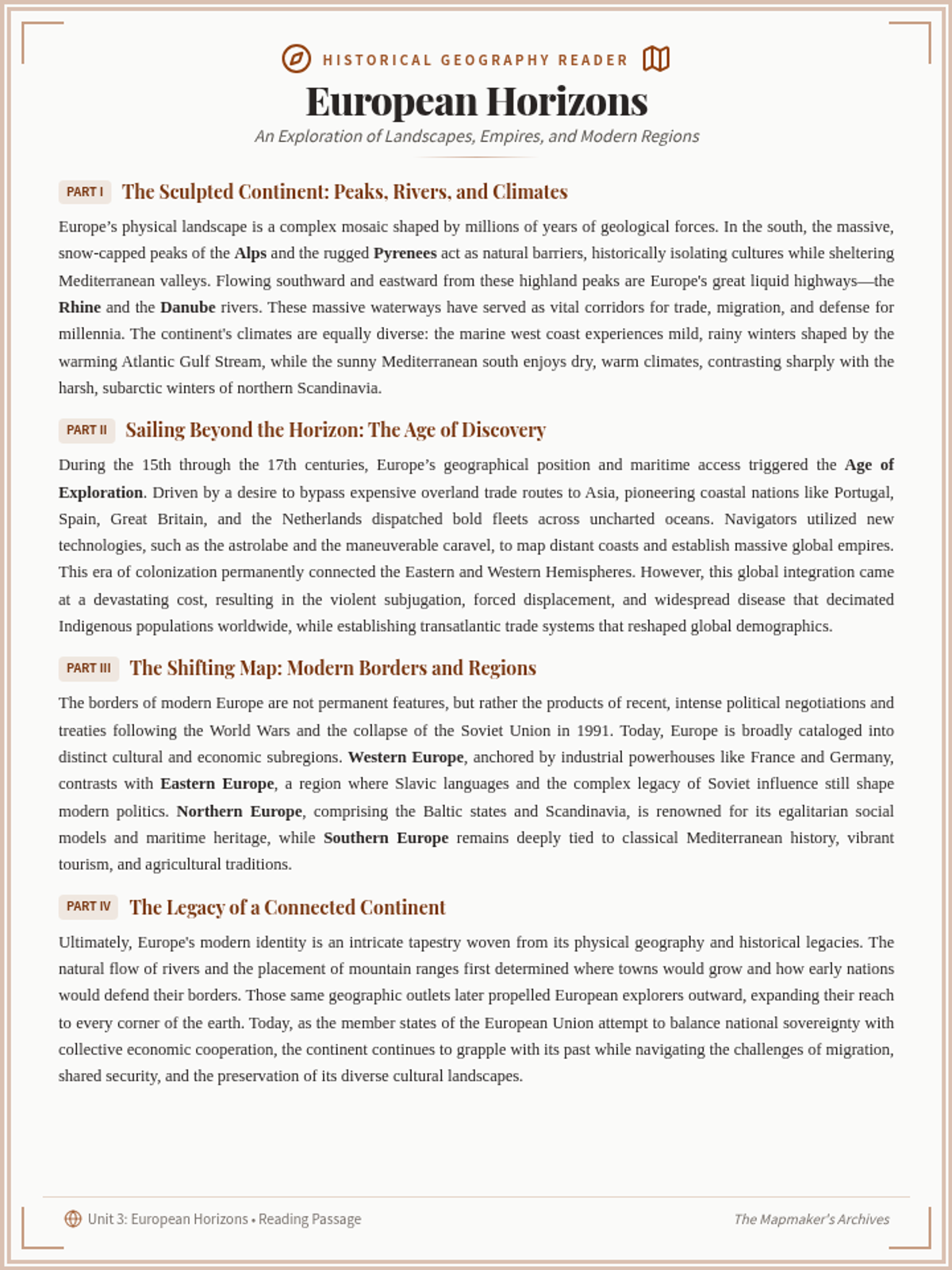
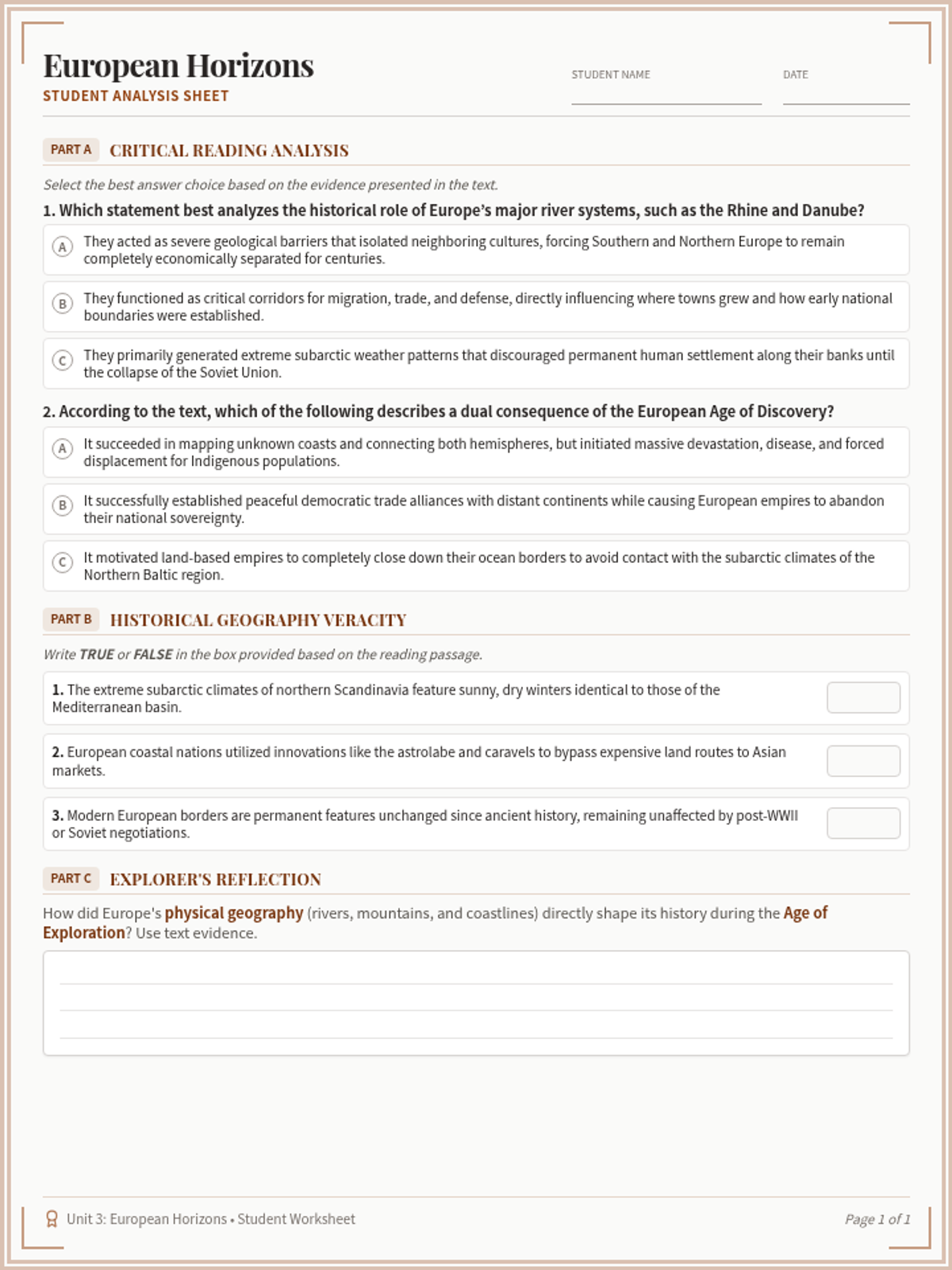
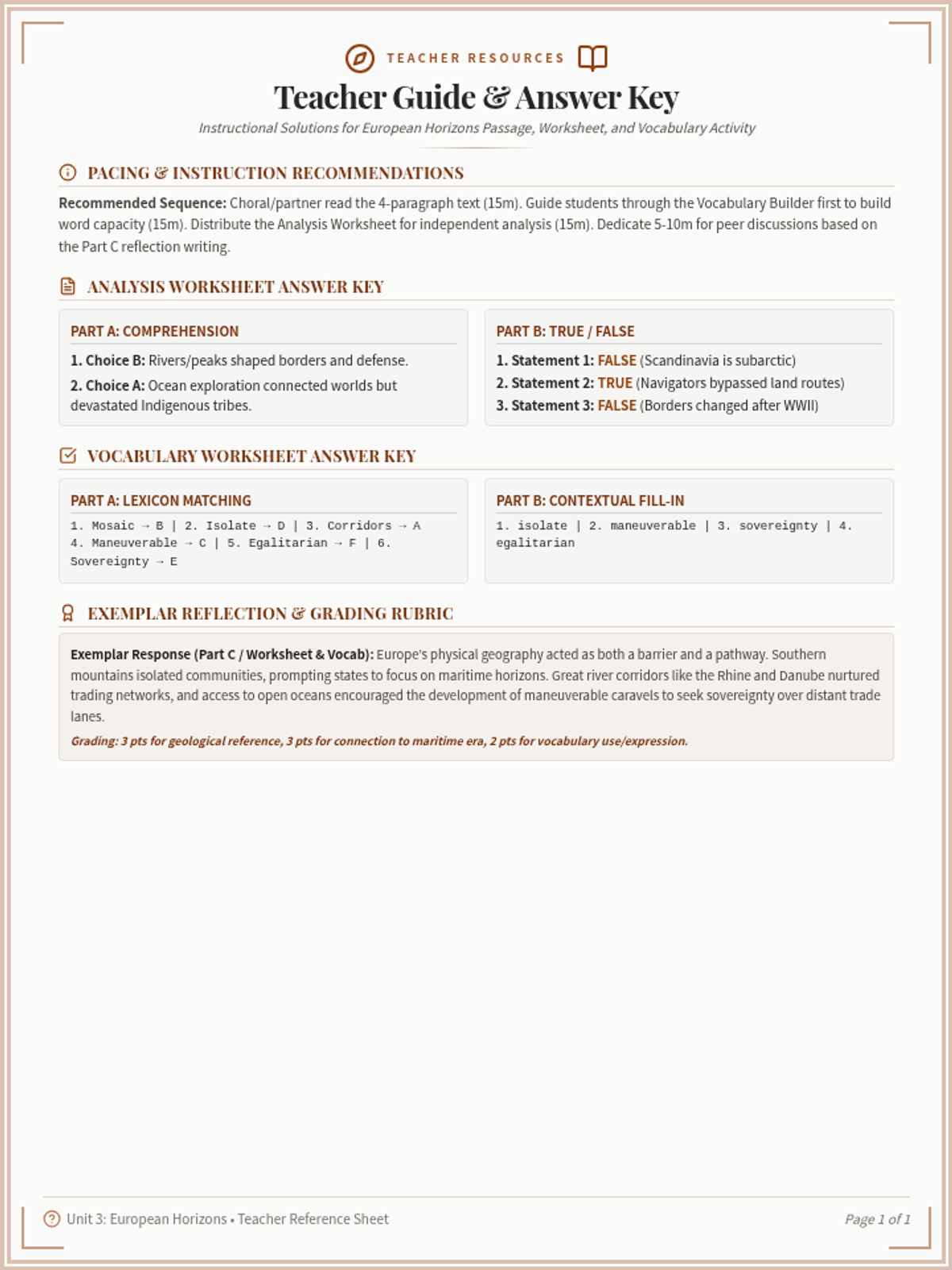
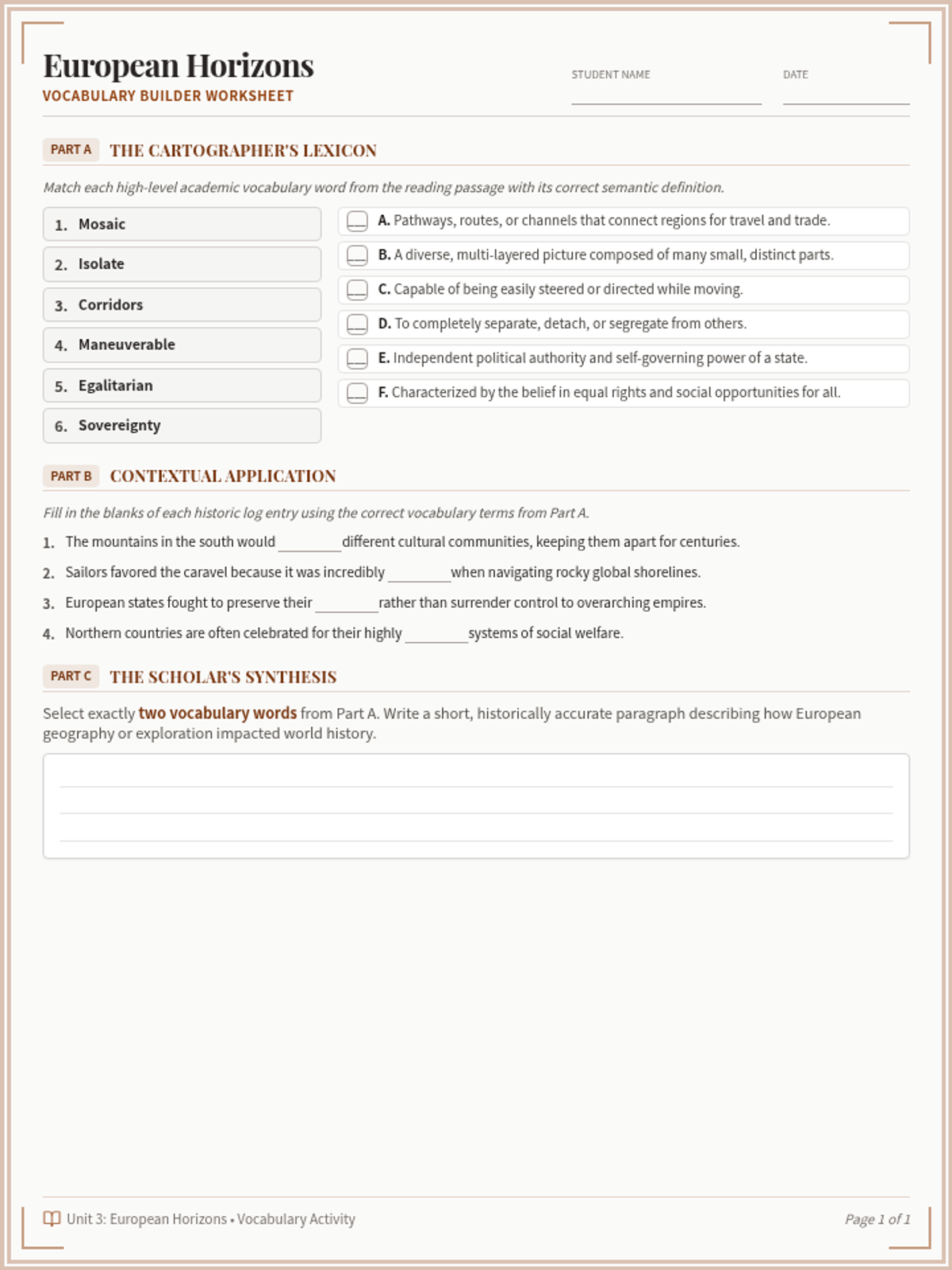
An in-depth study of Europe's diverse physical landscapes, the global legacy of its Age of Exploration, and the cultural regions that define the continent today.
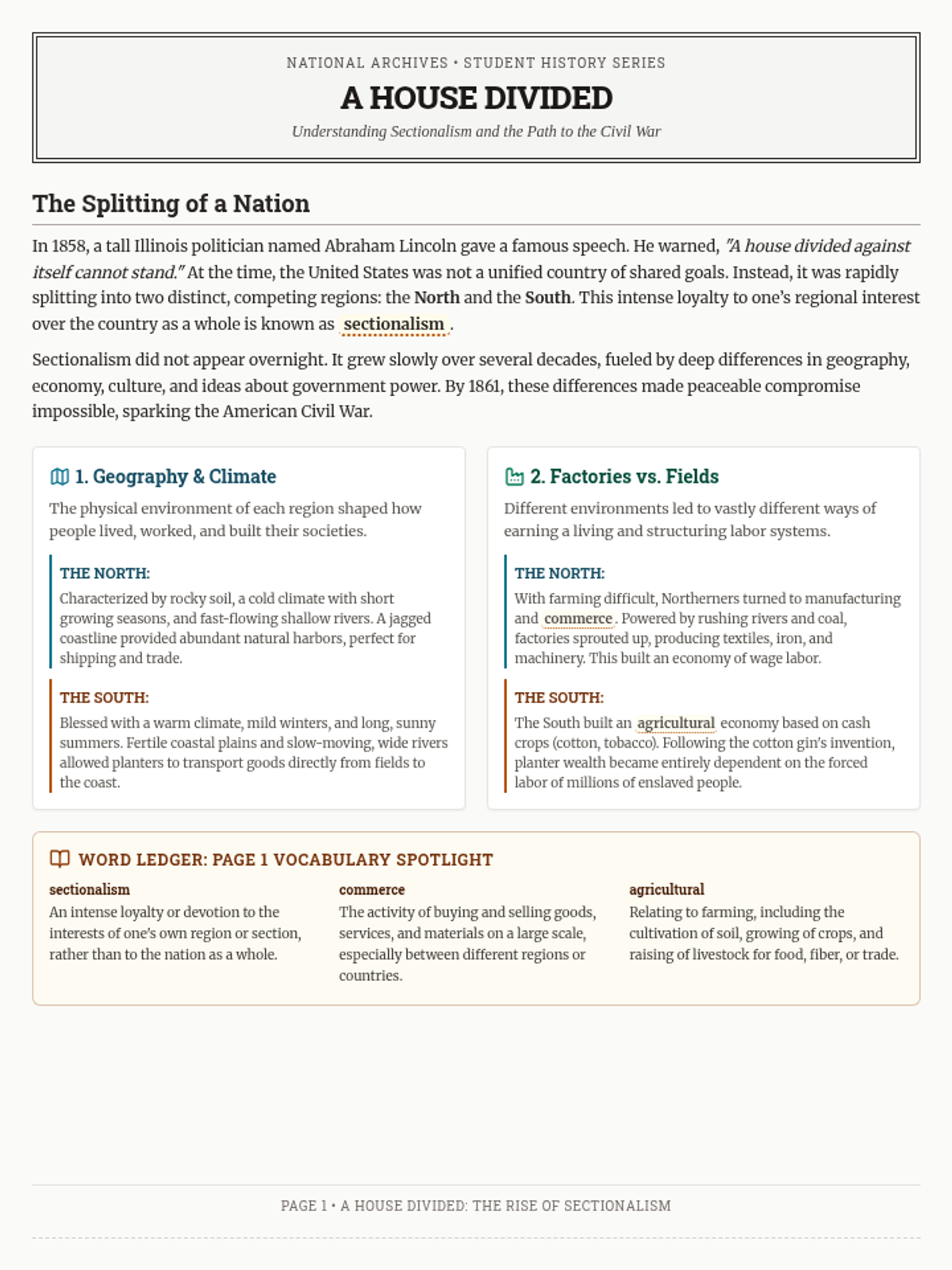
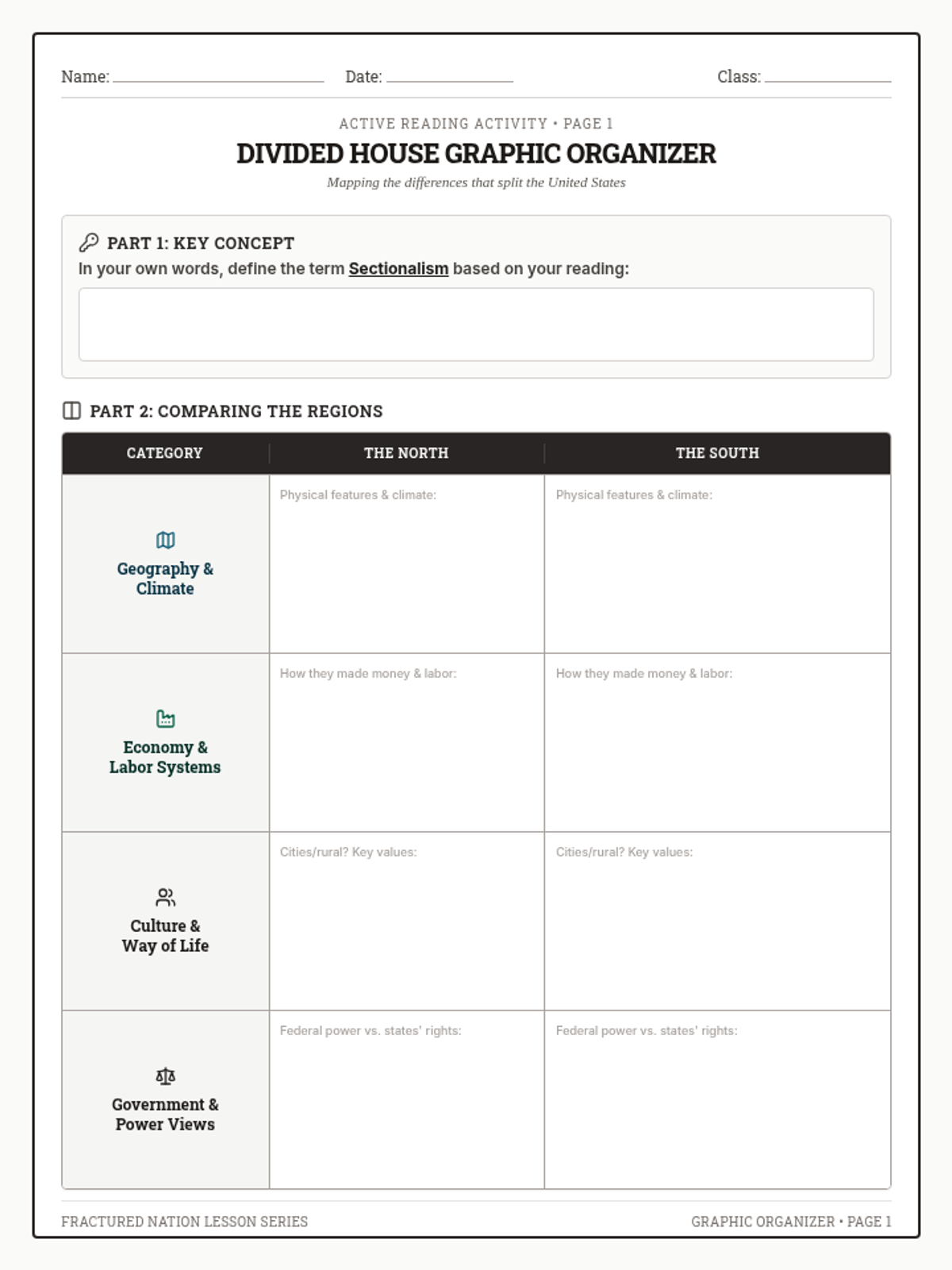
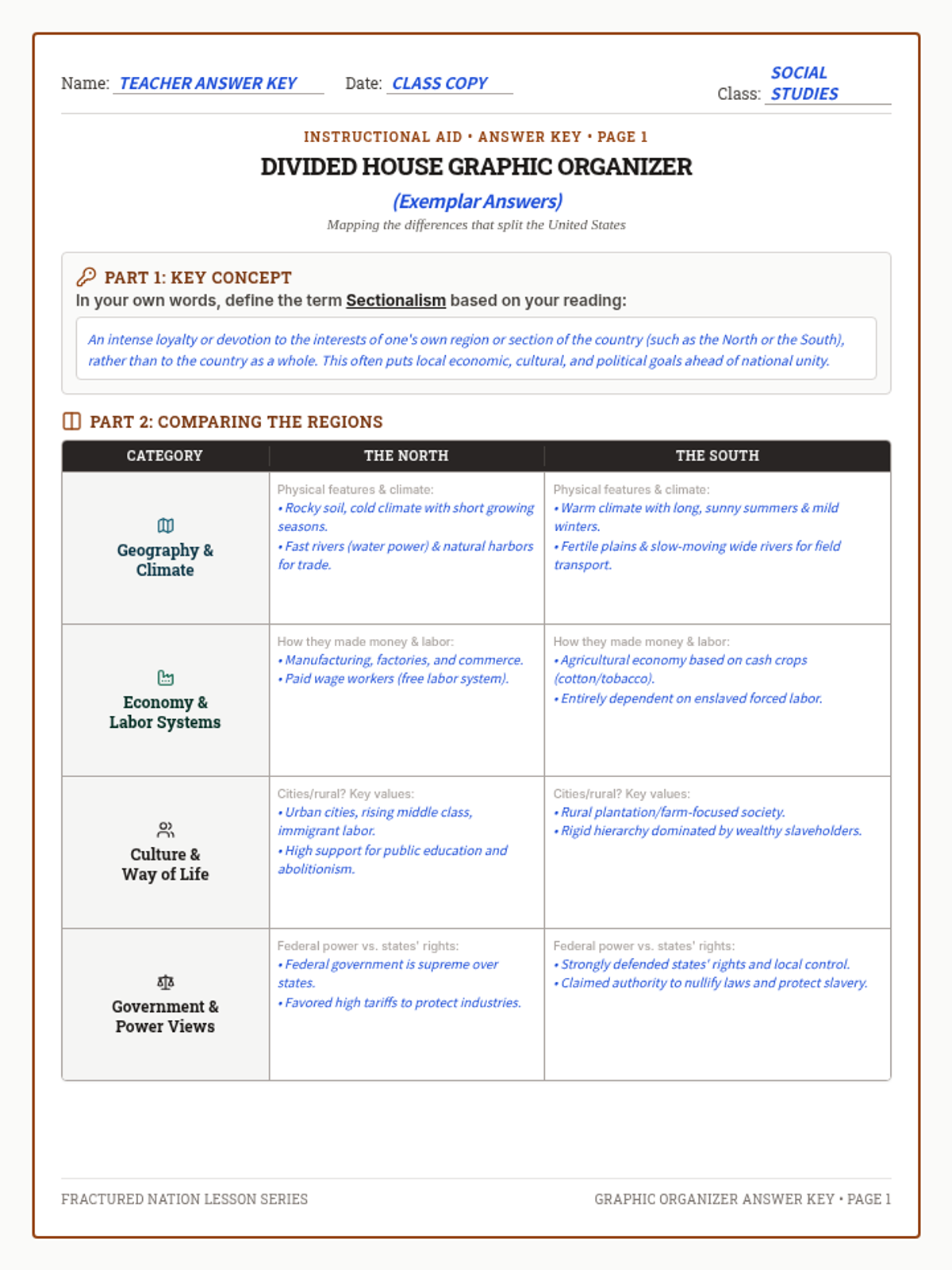
A middle school social studies lesson exploring how Sectionalism became a major long-term cause of the American Civil War. Students analyze the geographic, economic, cultural, and political differences between the North and South, culminating in a graphic organizer activity.