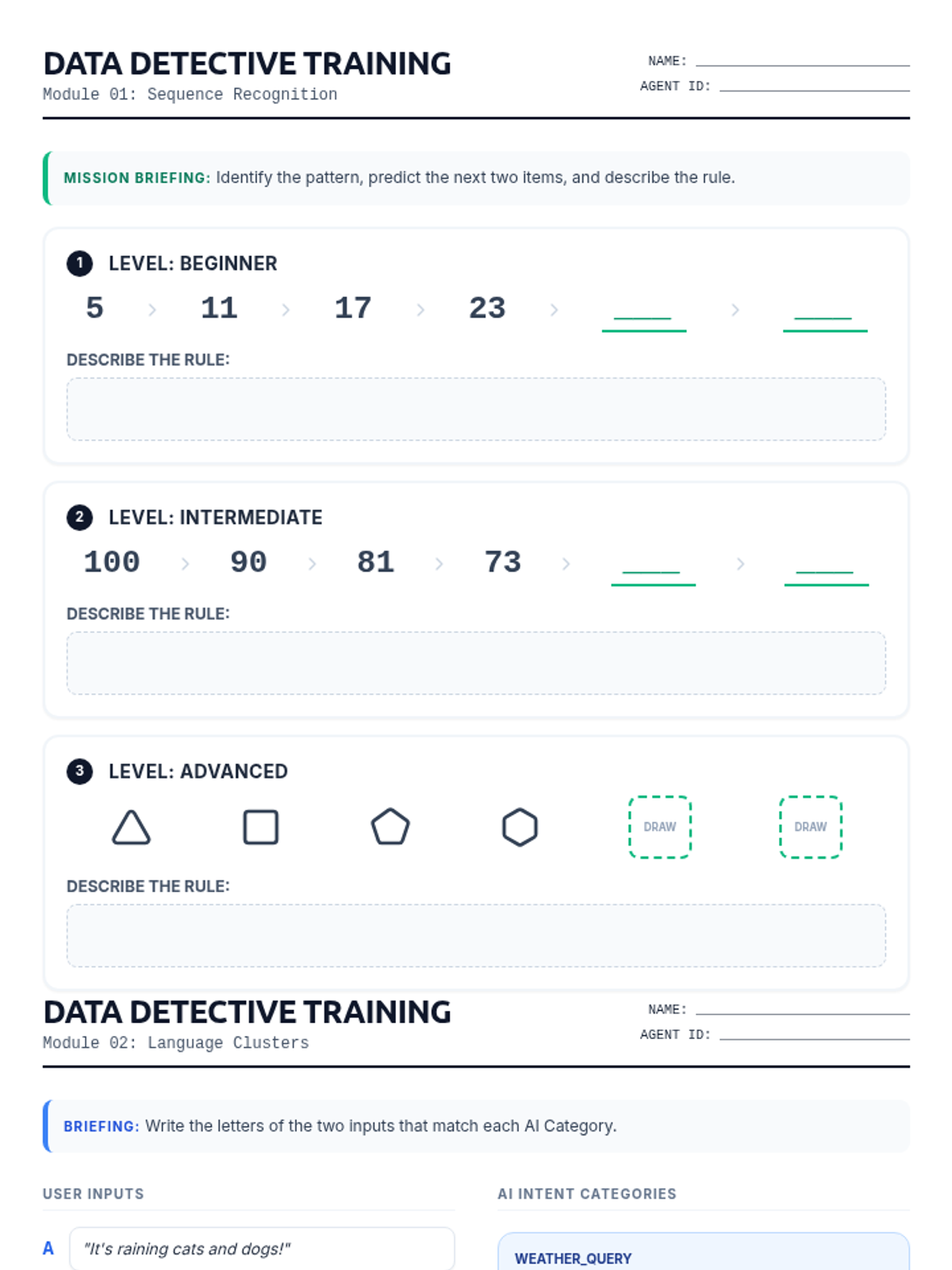
Students explore the concept of software applications, identifying how apps solve specific problems and designing their own app interface including input and output elements.
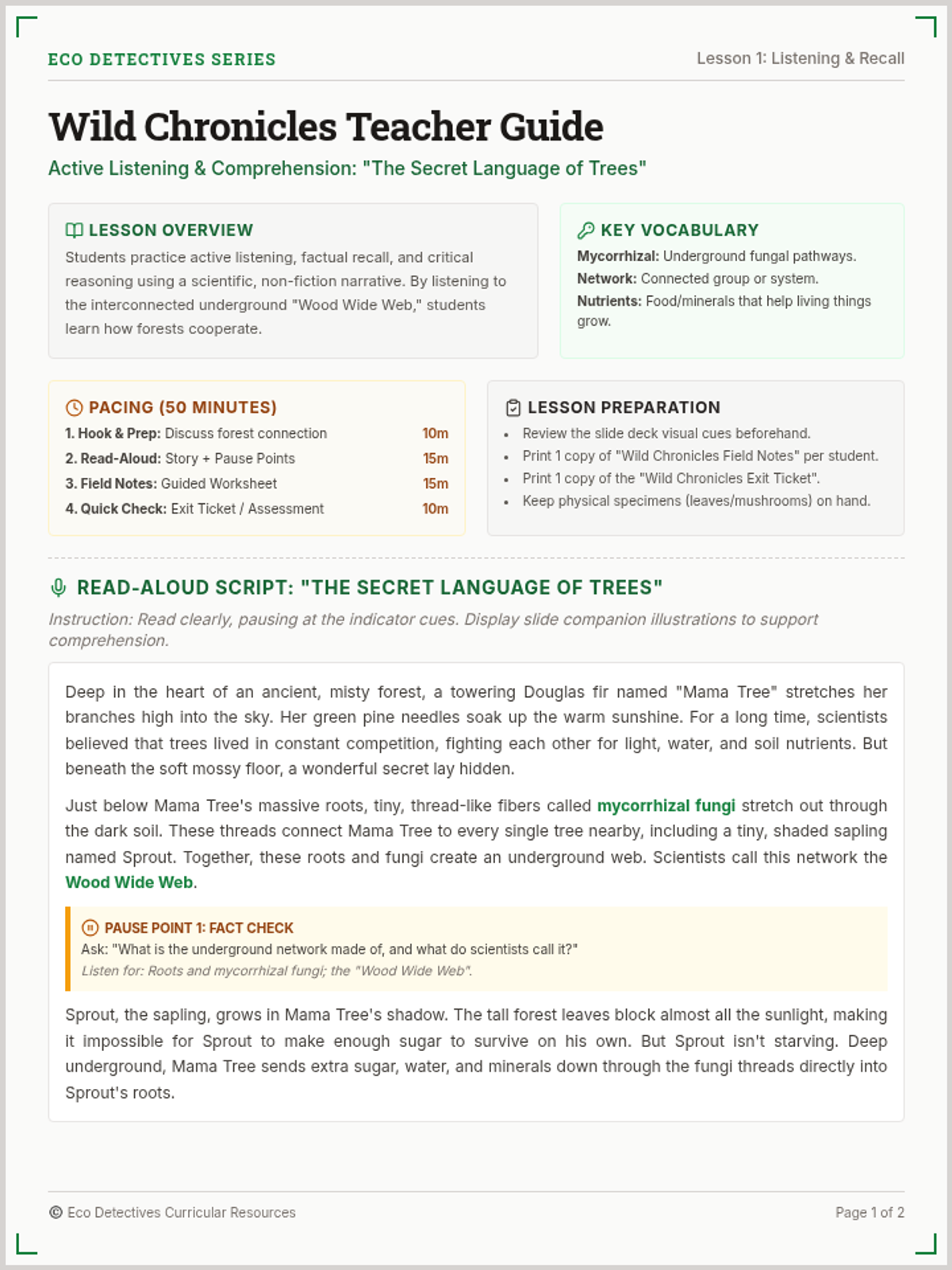
A fun, introductory lesson on the human skeletal system focusing on four major structures: the skull, rib cage, spine, and femur. Students will learn the functions of these bones through a museum-themed presentation and a labeling activity.
A quick 30-minute introduction to the skeletal system, focusing on its main functions and the names of key bones in the human body. Students will explore how their 'internal frame' helps them move and stay protected.
A lesson exploring the diverse animals that call trees their home, focusing on identification and the specific parts of the tree they inhabit.
Students explore the ecosystem beneath the forest floor, focusing on animals that create tunnels and live among tree roots.
A lesson exploring the characteristics, classification, and social behavior of prehistoric Sabertooth cats.
A lesson focused on the formation of sedimentary rocks and how their layers serve as a timeline for life on Earth, specifically focusing on the sequence of formation and fossil aging.
A lesson exploring the unique life cycle of periodical cicadas and how their emergence patterns help them survive and reproduce.
Students explore the fascinating life cycle of periodical cicadas, focusing on their unique 13 and 17-year schedules and how this behavior helps them survive against predators.
A hands-on science lab using crackers, water, and plastic bags to simulate the digestive process, with differentiated materials for various learner needs.
A lesson introducing students to various ecosystems through vocabulary and visual identification. Students will learn the key characteristics of different biomes including forests, deserts, and oceans.
A lesson that uses a 'mystery drink' metaphor to teach students about computer viruses and the critical importance of asking for permission before downloading files from the internet.
A fun, interactive phonics lesson centered around a 'Battleship' style game where Grade 3 students identify and read multisyllabic words containing the schwa sound. Students practice decoding and identifying the unstressed vowel sound in a nautical-themed setting.
Students investigate why different spiders produce different types of silk by looking at traits, proteins, and genes. This lesson adapts complex genetic concepts for a 3rd-grade reading level.
A 6th-grade science lesson adjusted for a SpEd classroom with a 3rd-grade reading level, focusing on how genes and proteins determine traits like spider silk flexibility and human running ability.
Students will identify the five sense organs and explain how they help humans perceive and interact with the world around them through reading and assessment.
A comprehensive lesson exploring how the five sense organs collect data and send signals to the brain for processing. Students will learn the pathway from stimulus to perception through reading, mapping, and assessment.
A comprehensive lesson exploring the five human sense organs, their functions, and essential care practices to maintain sensory health.
A 30-minute introductory lesson for 3rd graders about the skeletal system, focusing on major bones and their functions through the lens of being 'Bone Detectives'.
A 3rd-grade introduction to genetics focusing on how we have two versions of every gene and how small changes in those genes (mutations) can change our traits. Students act as code-breakers to discover how living things get their unique features.
A comprehensive set of materials designed for MCAS-Alt portfolios, focusing on the plant life cycle (birth, growth, reproduction, and death) through sequencing and model-building.
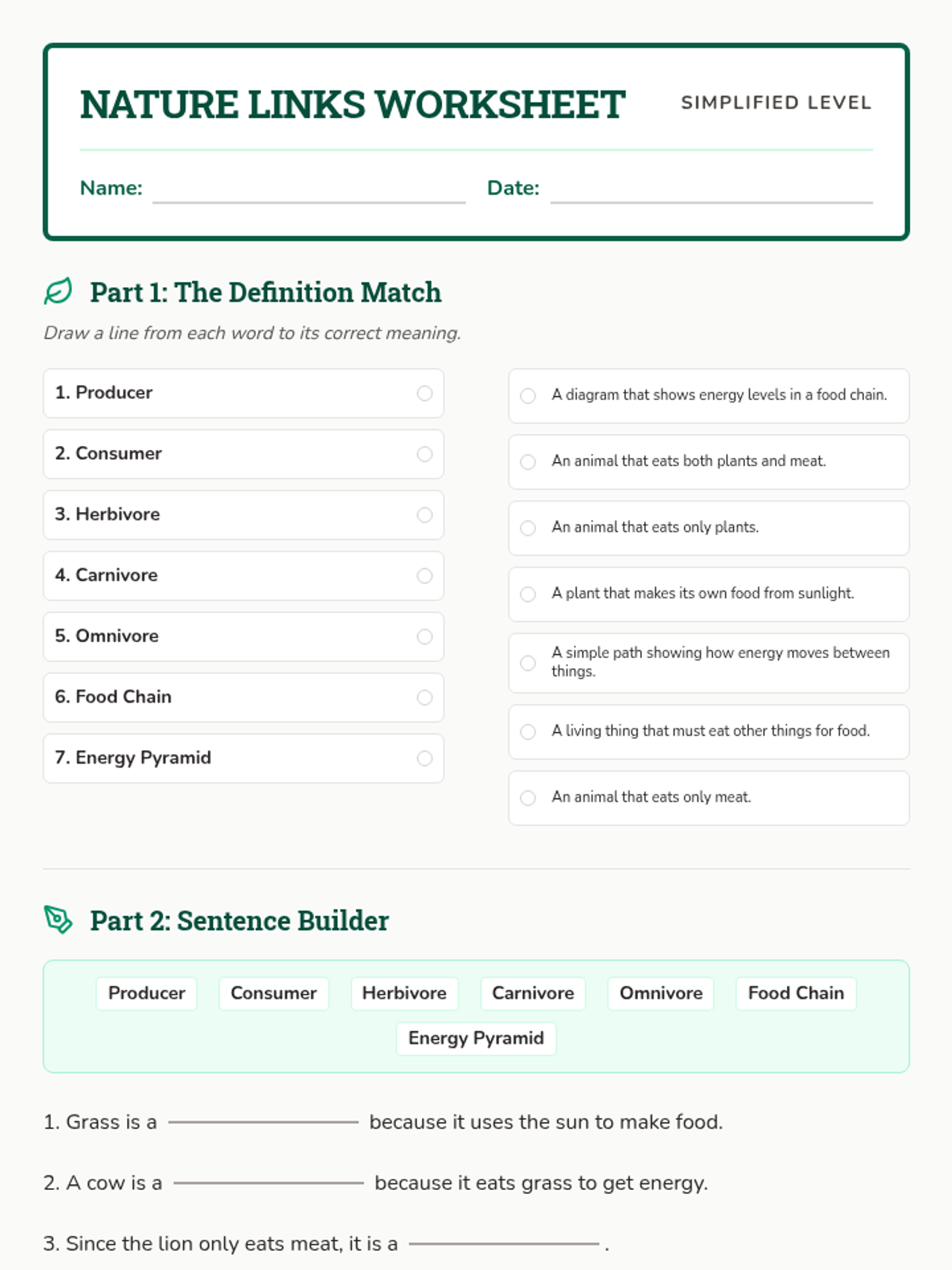
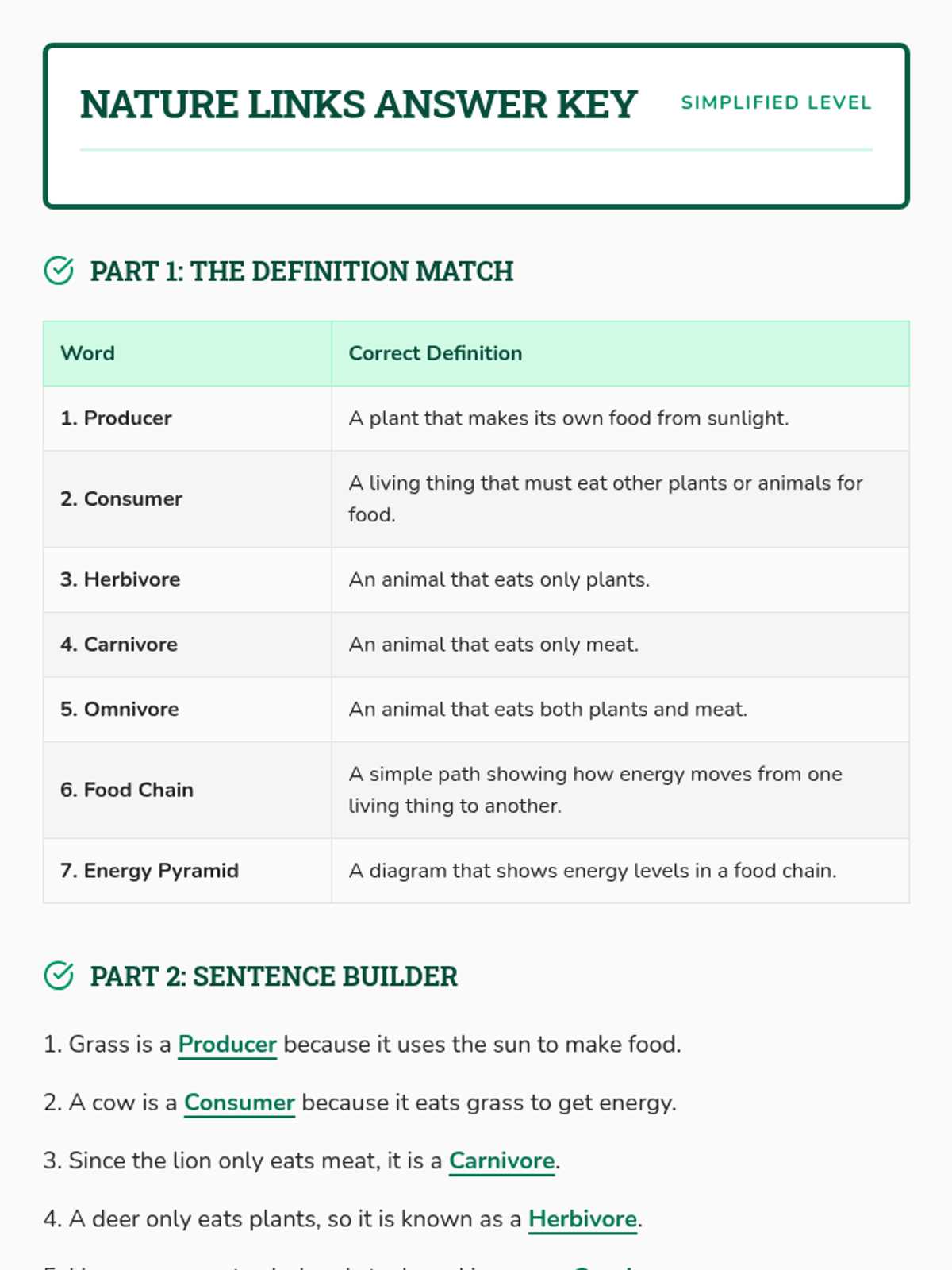
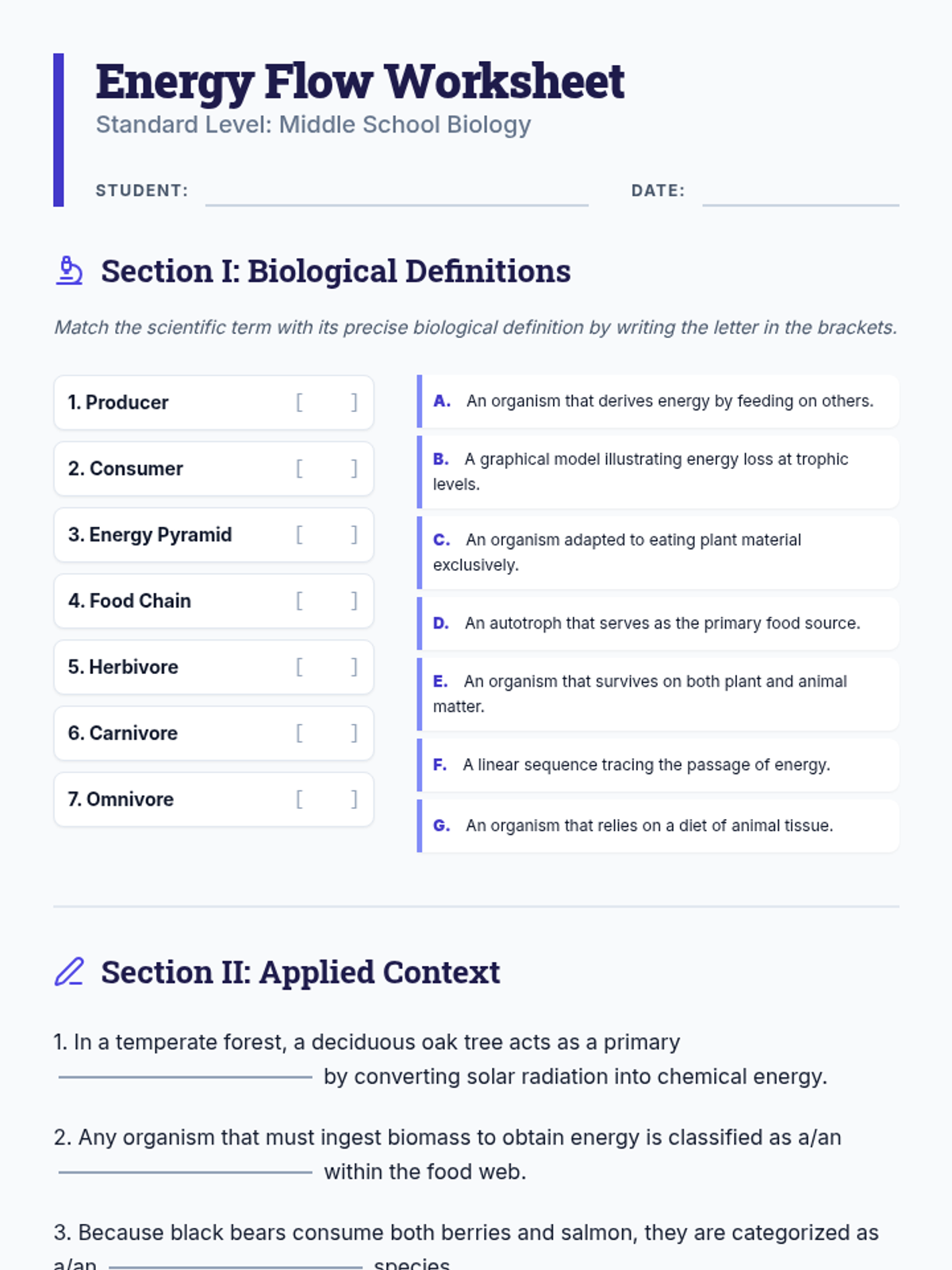
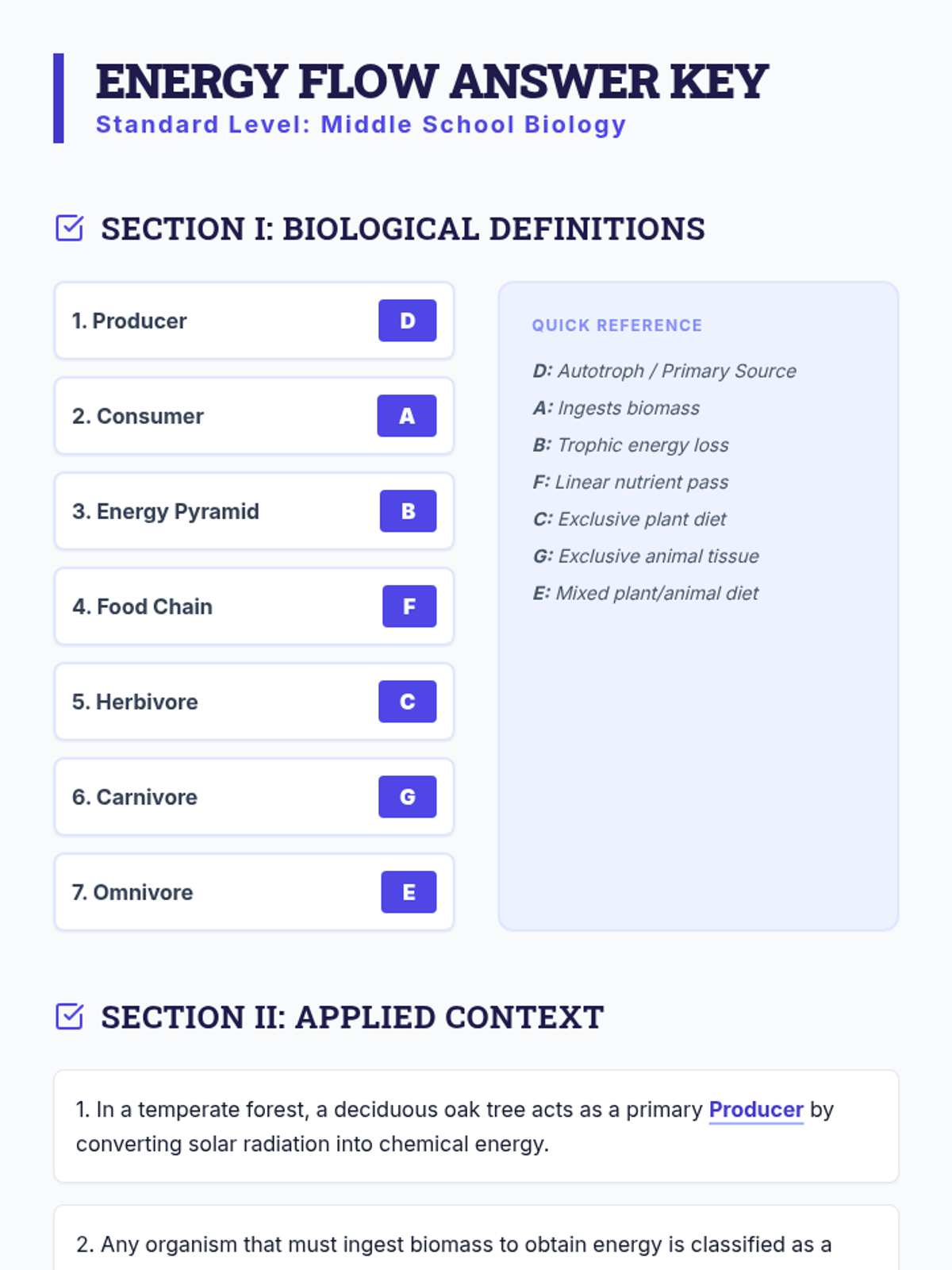
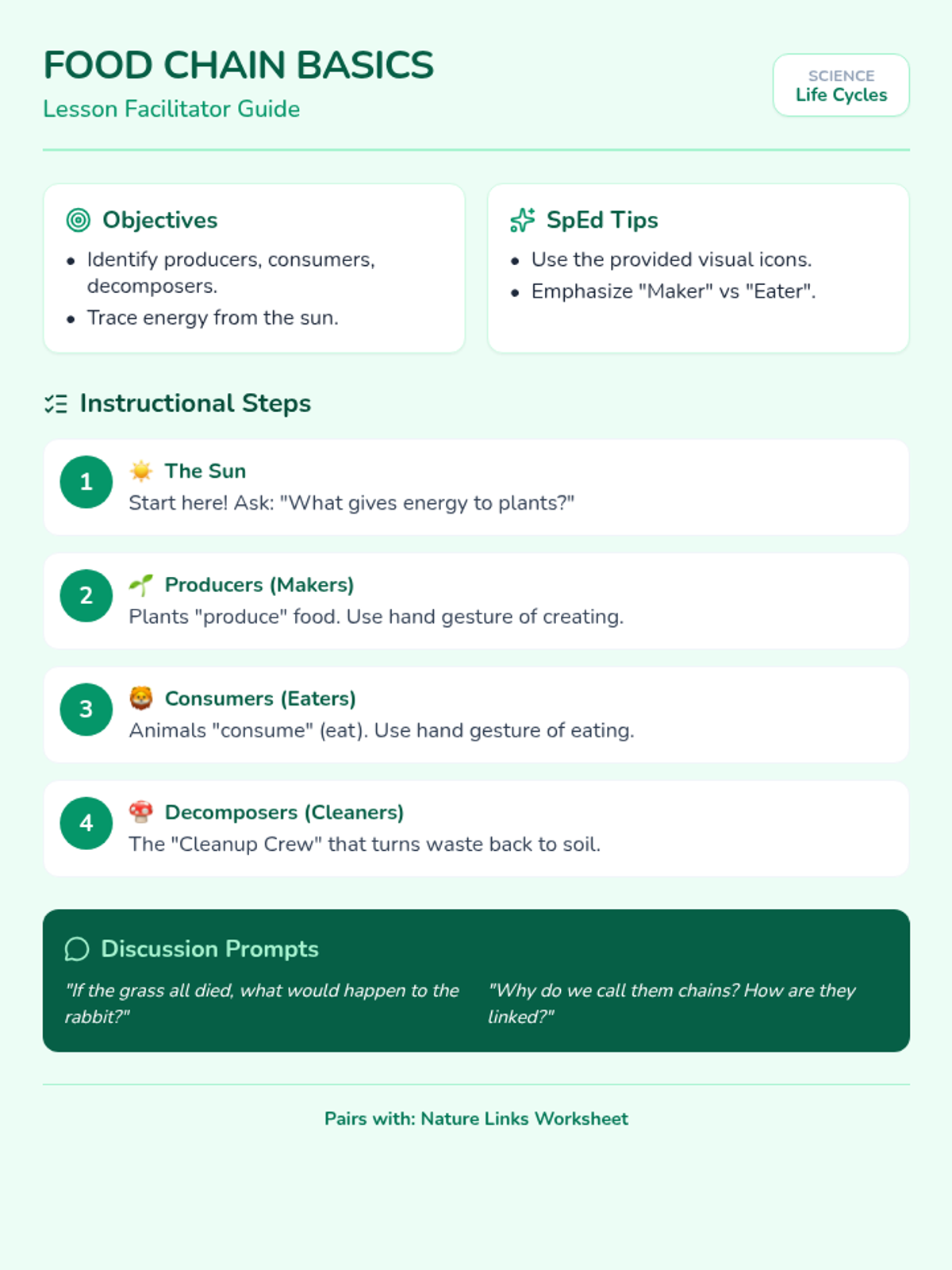
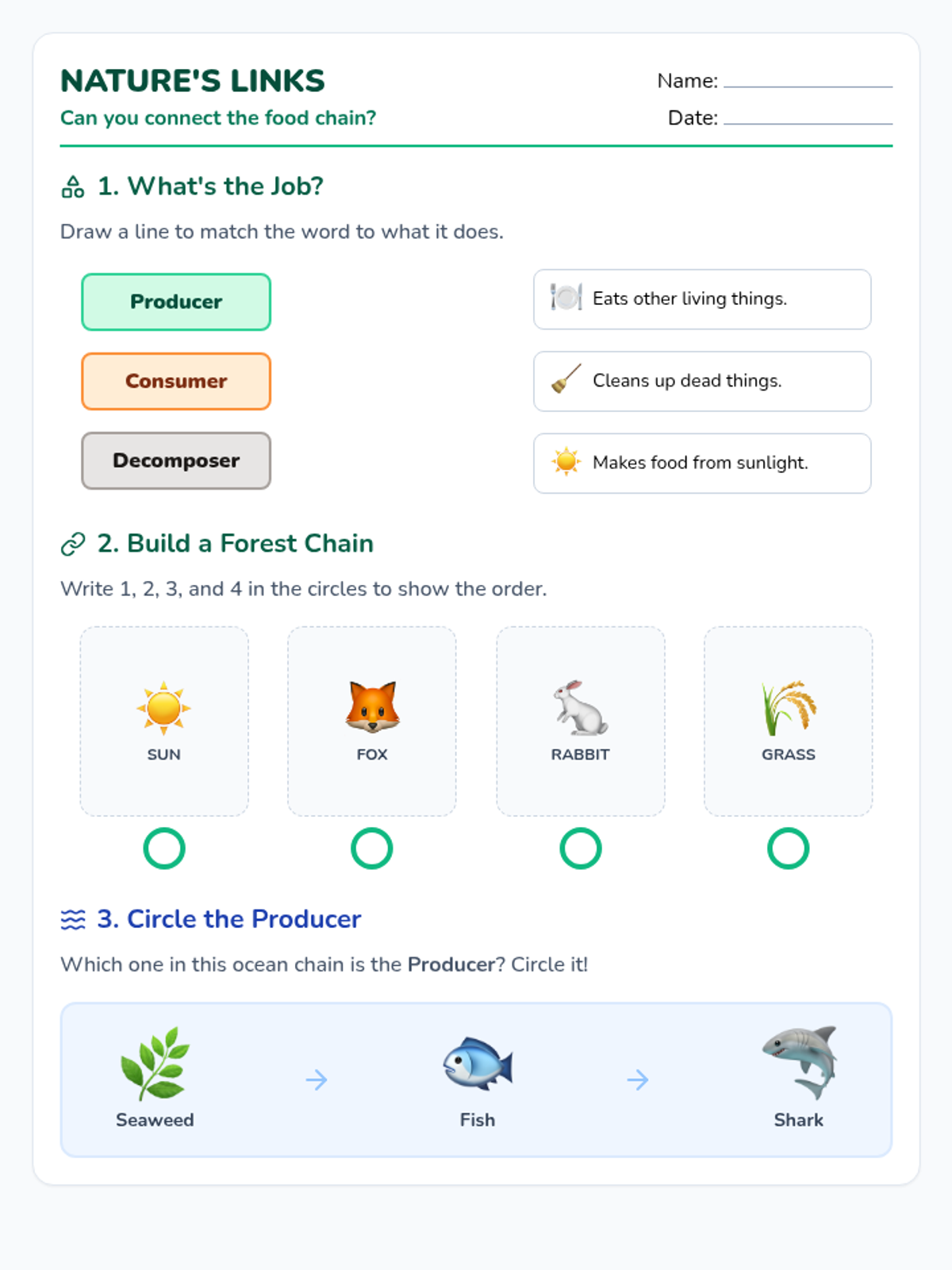
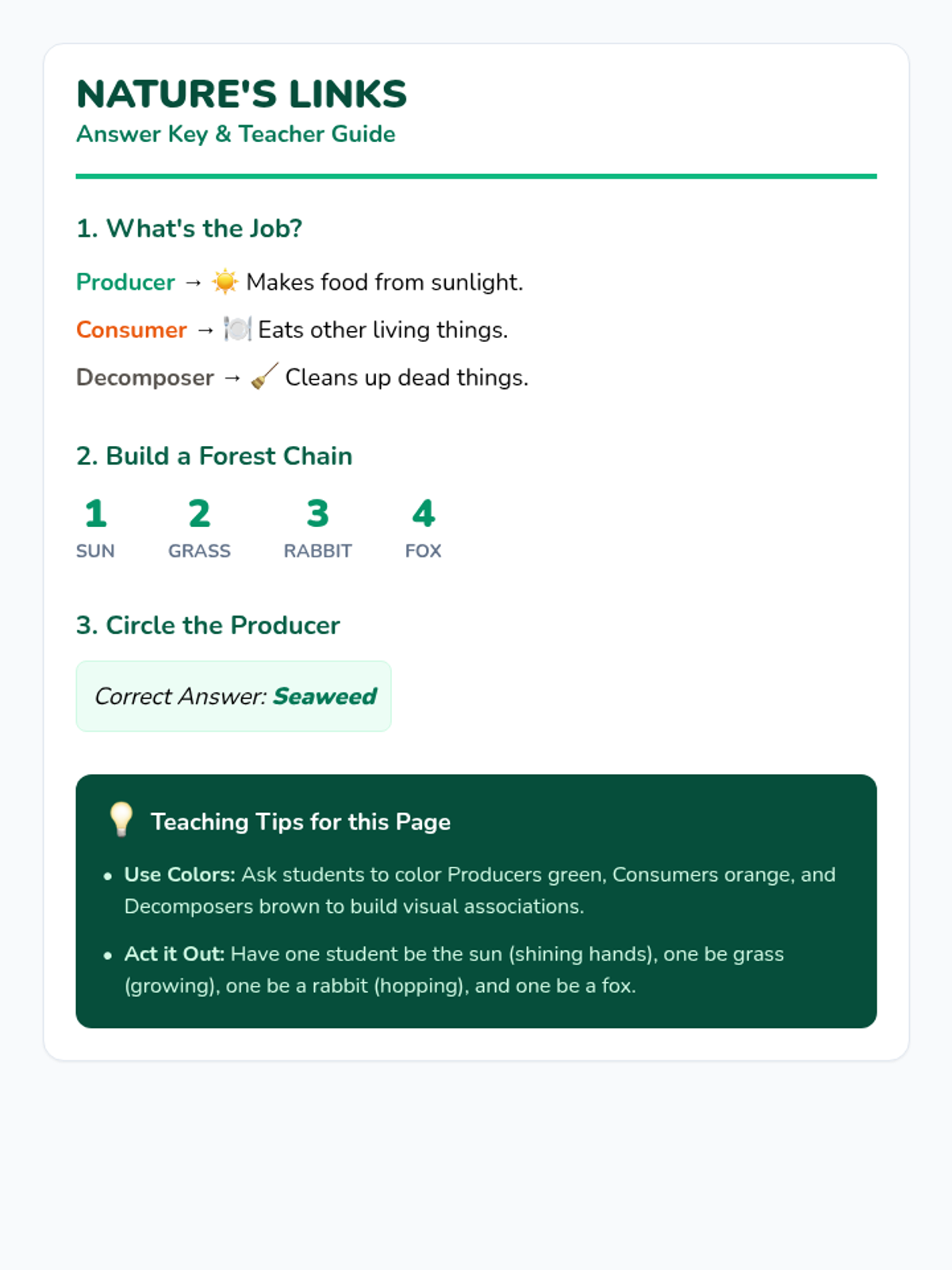
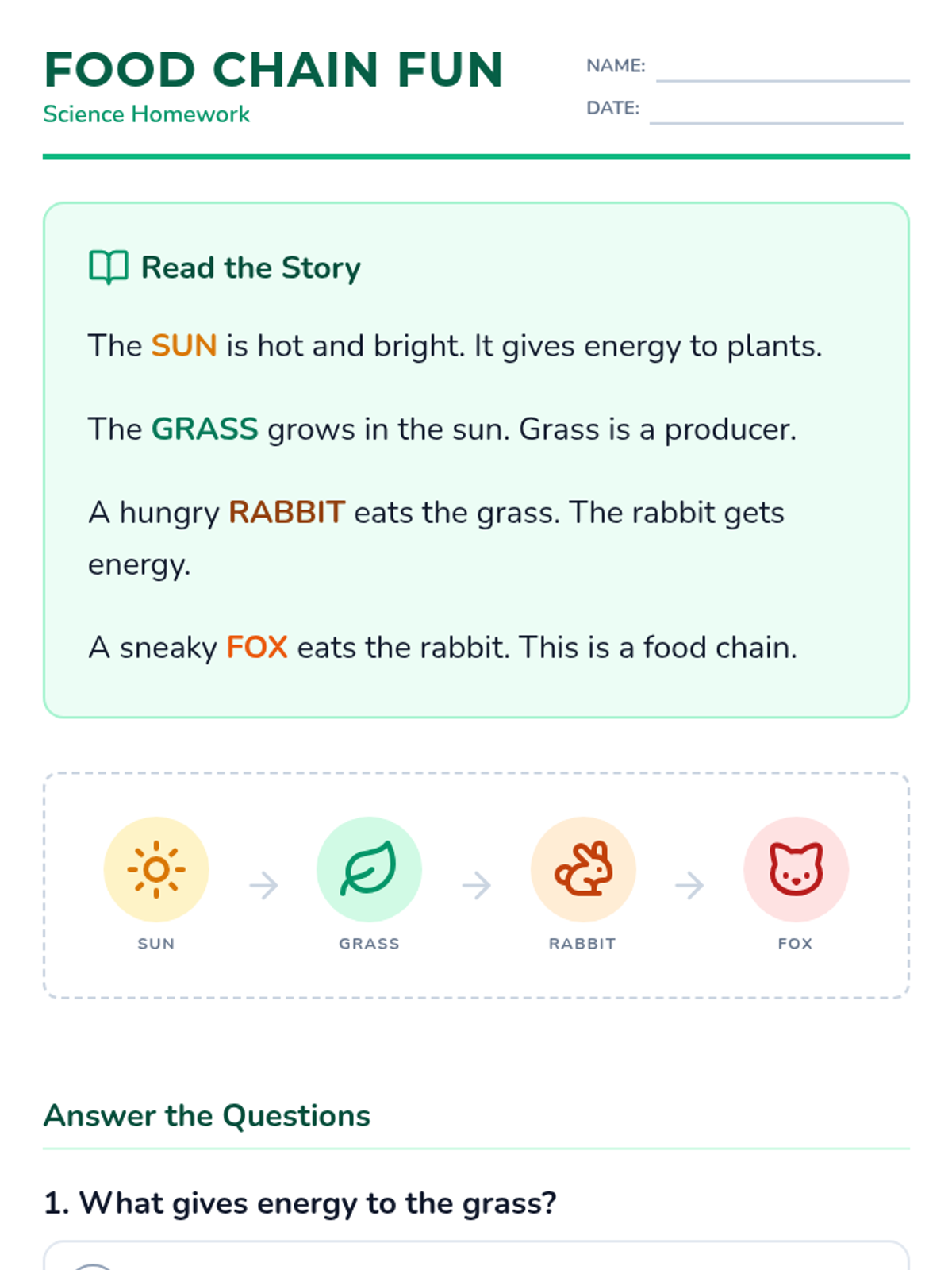
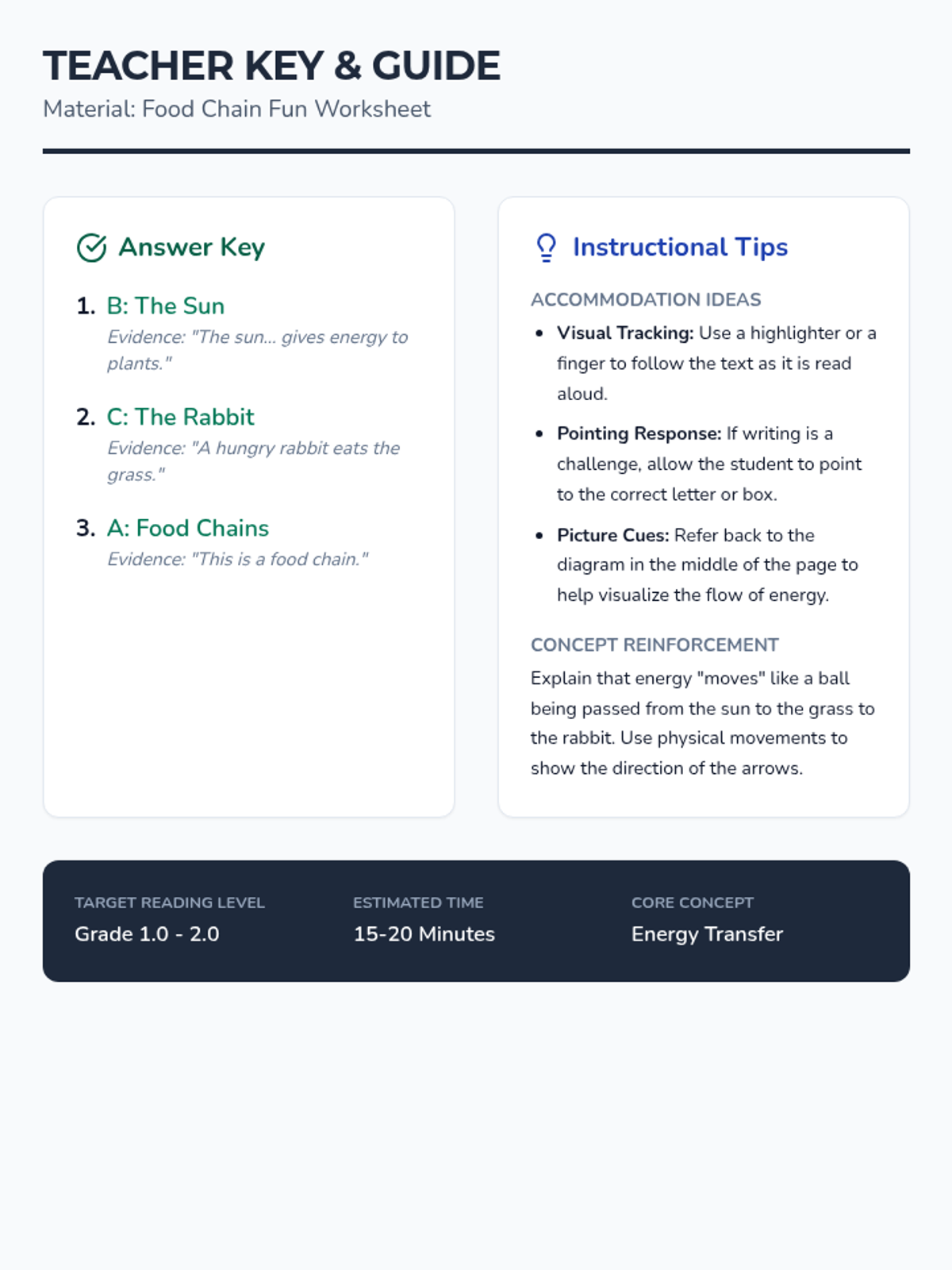
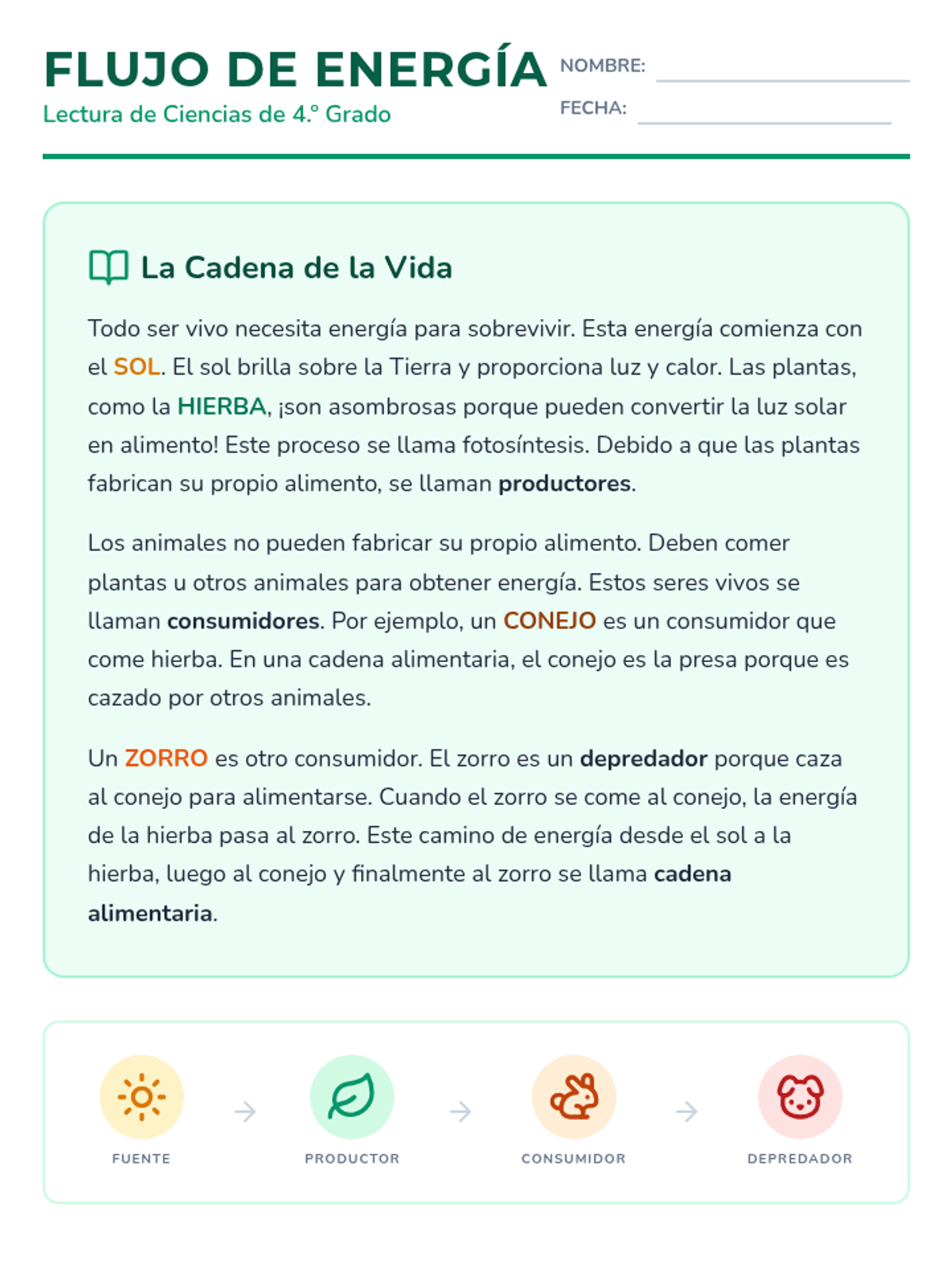
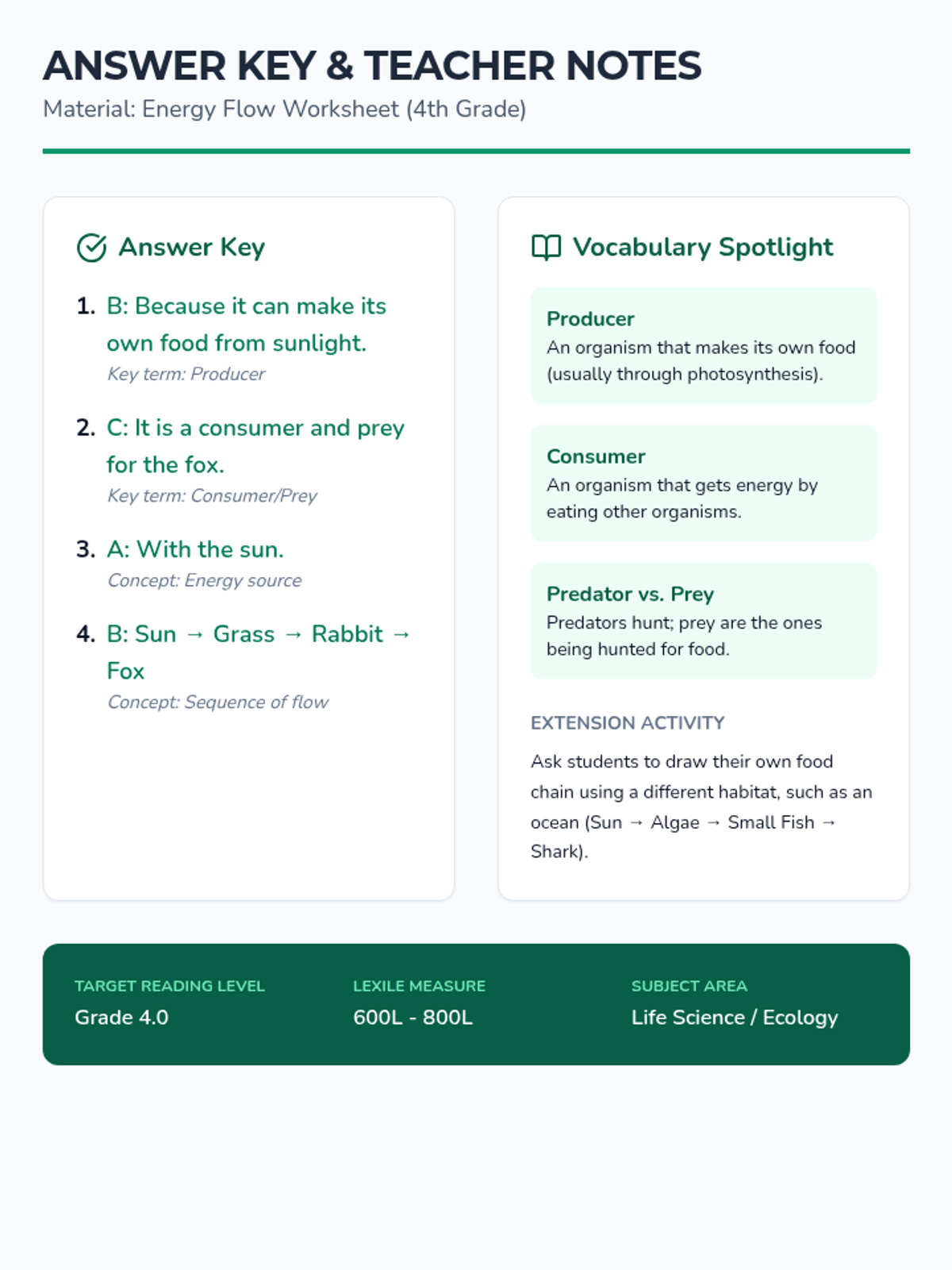
A comprehensive resource set for teaching and assessing the flow of matter in ecosystems, specifically designed for MCAS-Alt data collection. Students will identify roles (producer, consumer, decomposer) and build models of energy flow using food chains.
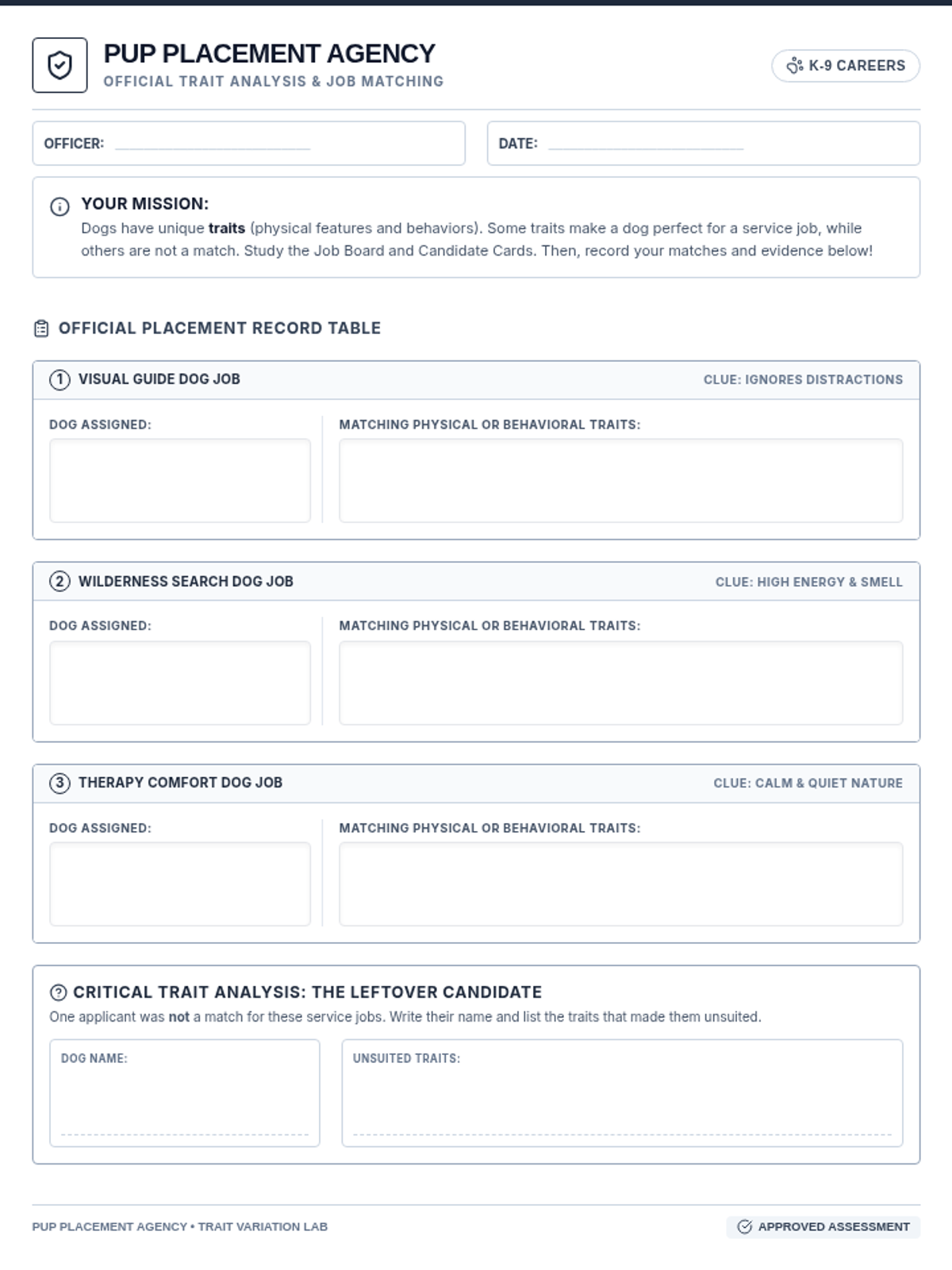
A lesson focused on observing and questioning inherited traits in animals (dogs, cats, and humans) designed for MCAS Alt evidence collection. Students use structured sentence stems to record observations and develop inquiry questions about how traits are passed from parents to offspring.
Explore the fascinating world of birds that have traded flight for other incredible skills in this engaging introductory lesson.
A hands-on project where students explore their own traits and talents. Students will document their unique 'code' and present their findings through a structured project guide.
Focuses on summarizing Kamal's story and digging deeper into character feelings. Students will compare literal text with implied meaning and practice identifying the main idea and key supporting details.
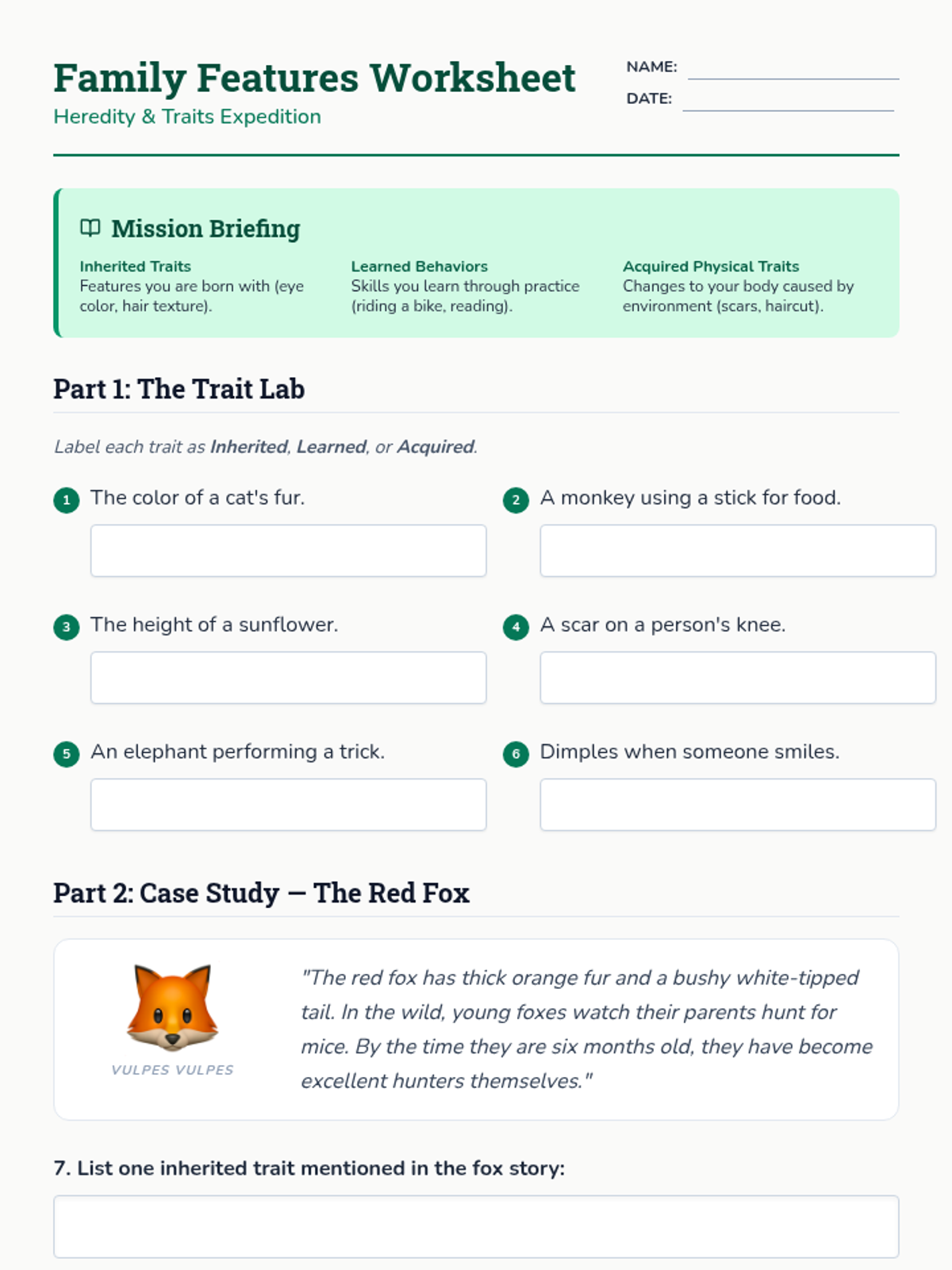
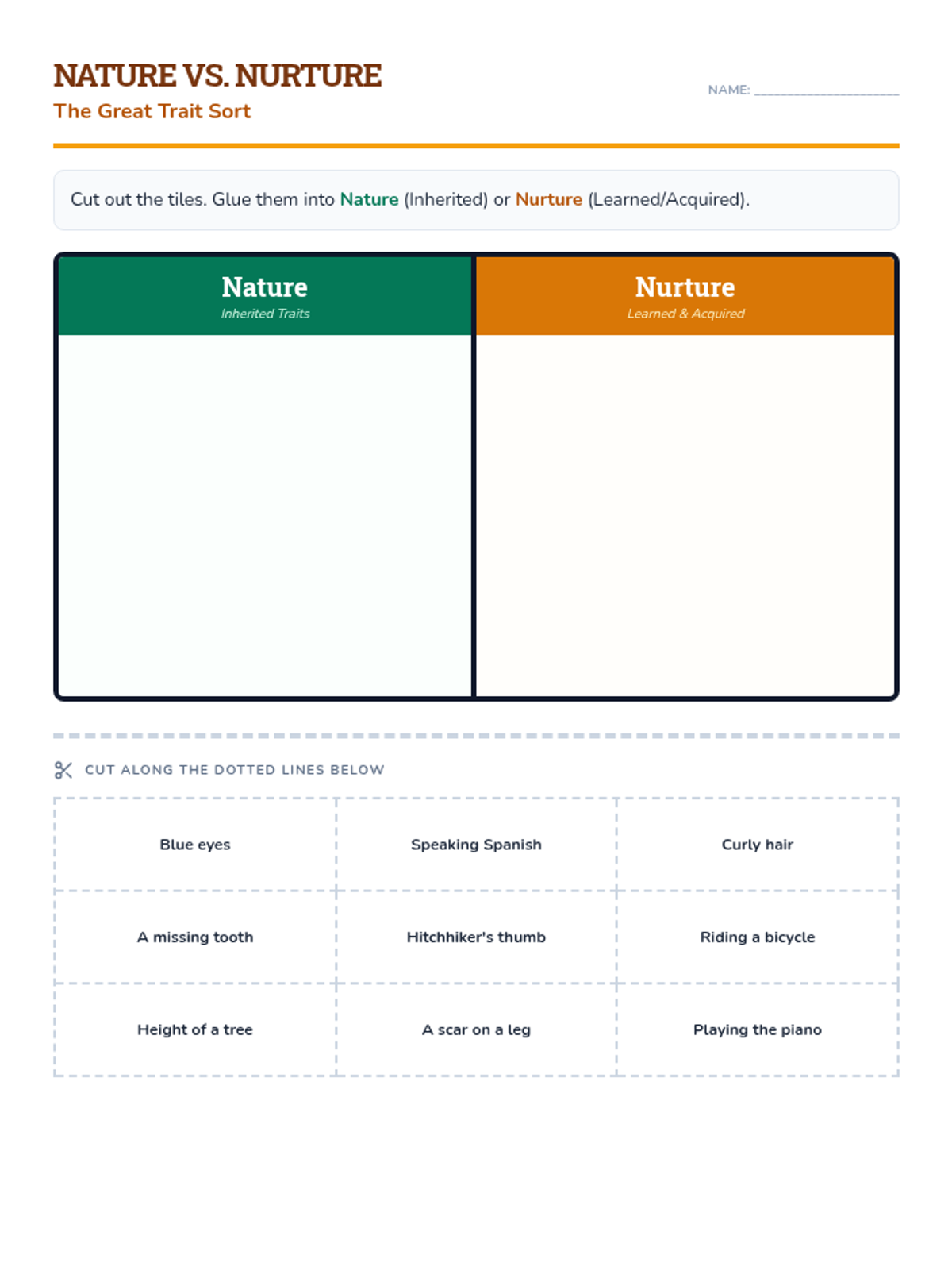
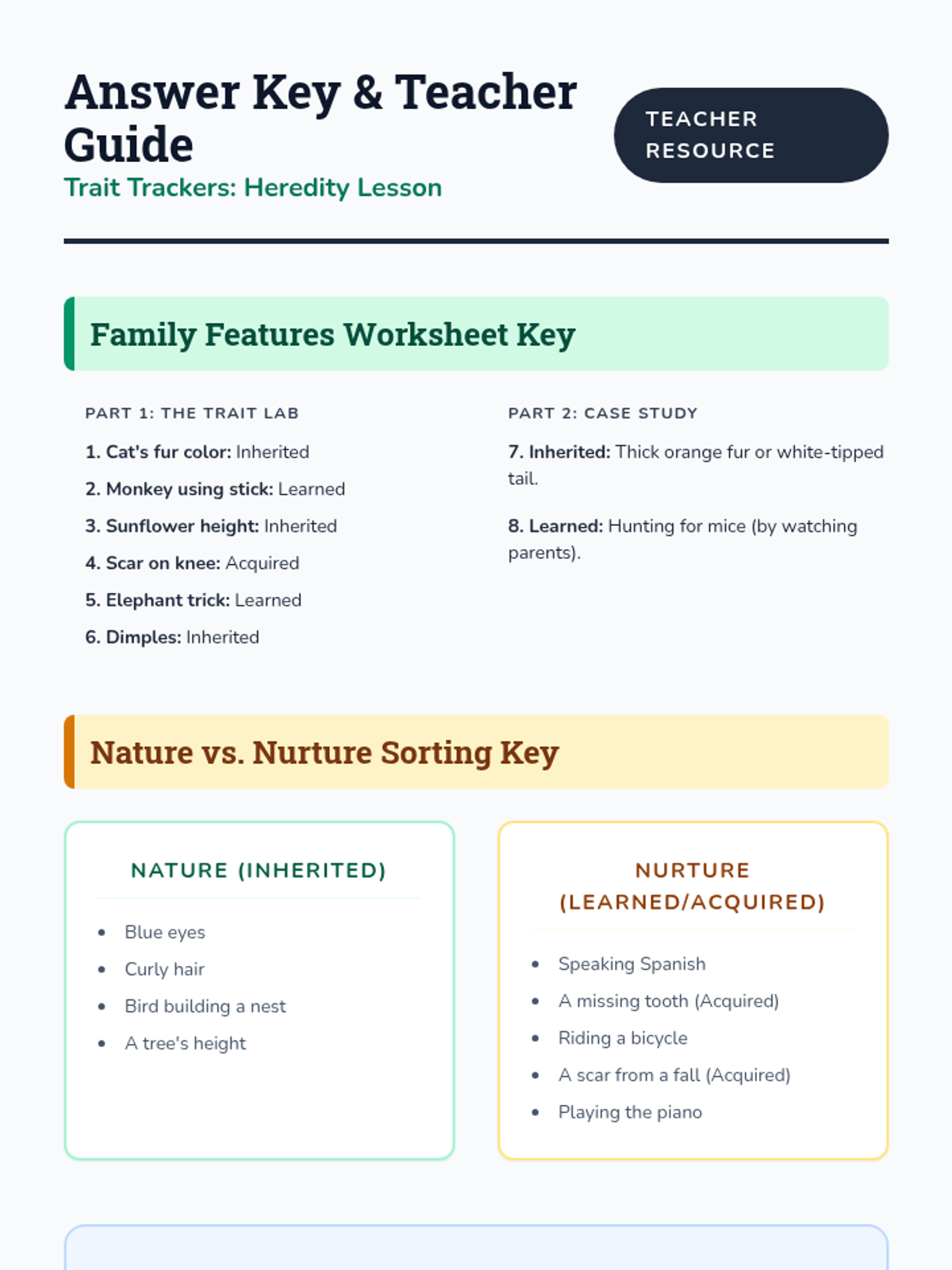
Students will define and distinguish between inherited traits (hair color, eye color) and talents (singing, sports) using Kamal's story as a guide. They will use a graphic organizer to categorize these features and complete a varied question worksheet.
Students investigate the relationship between temperature and molecular motion by observing food coloring in hot and cold water. They take on the role of 'Thermal Scientists' to solve a real-world heating problem.
Students will identify local pollinators, understand the pollination process, and begin designing a habitat conservation plan.
A visual, snowman-themed lesson designed for autistic elementary students to explore the three states of matter (solid, liquid, gas) through hands-on experimentation and clear visual aids.
Applying knowledge of electricity and magnetism to build and understand series and parallel circuits.
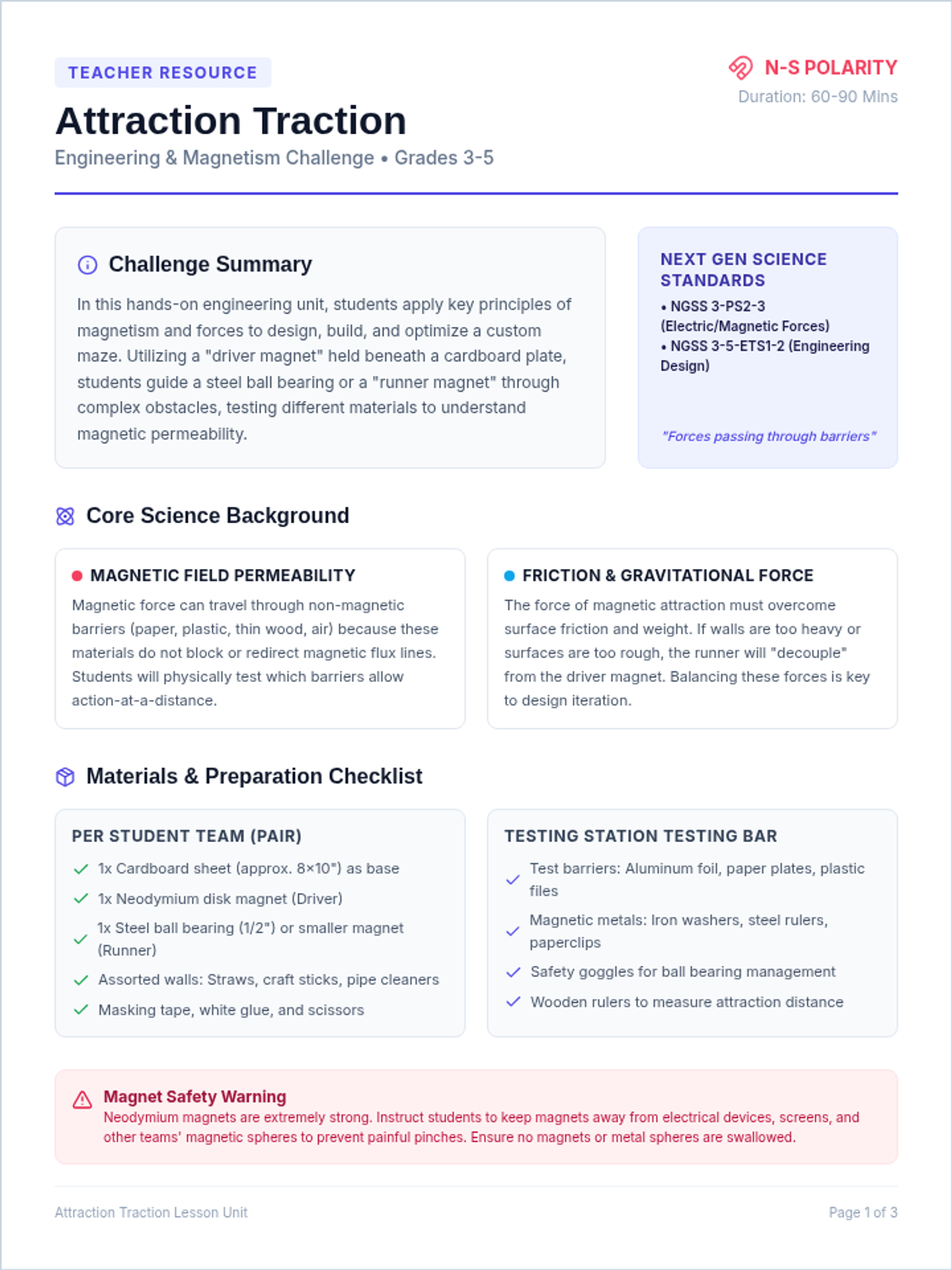
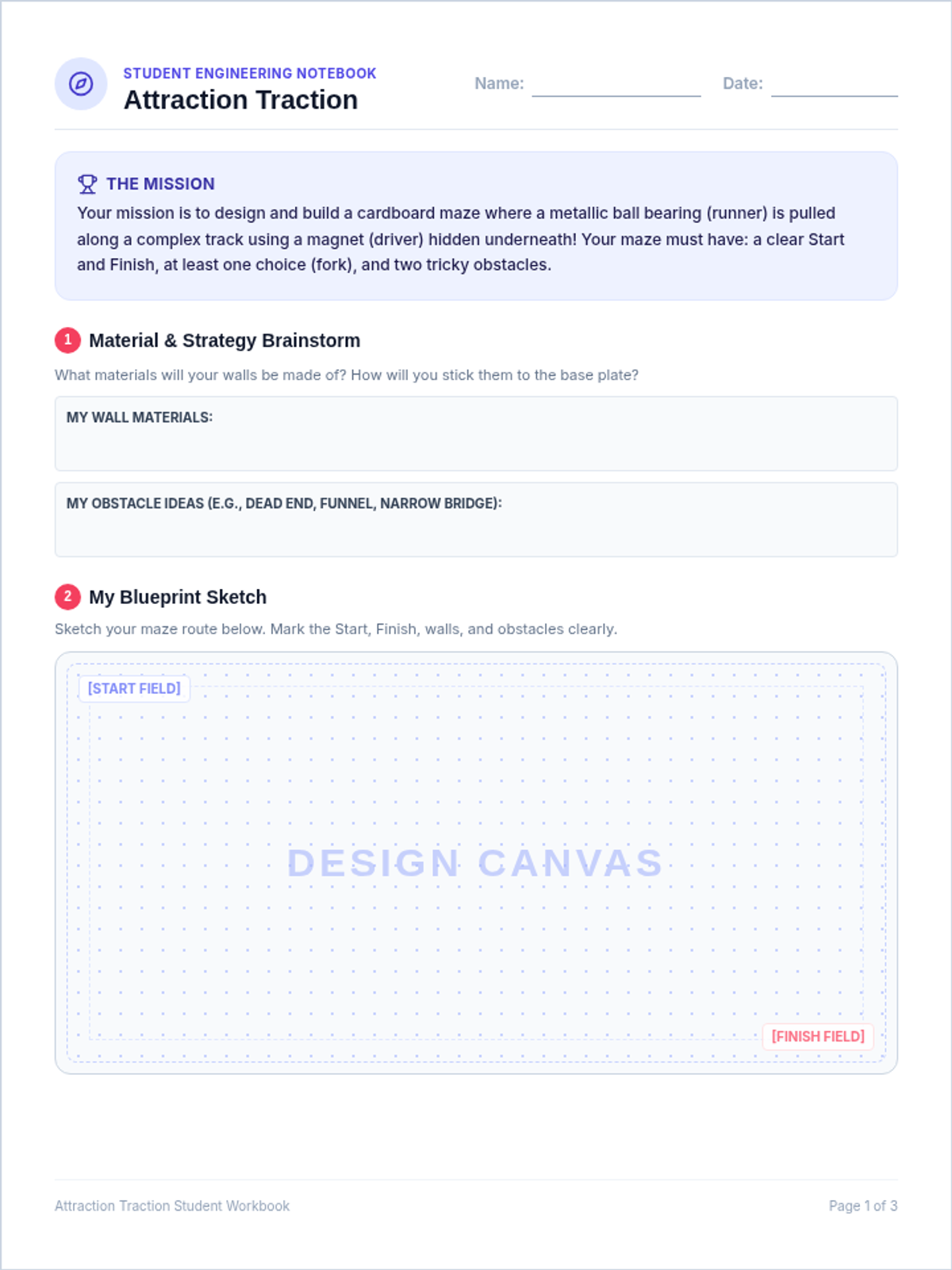
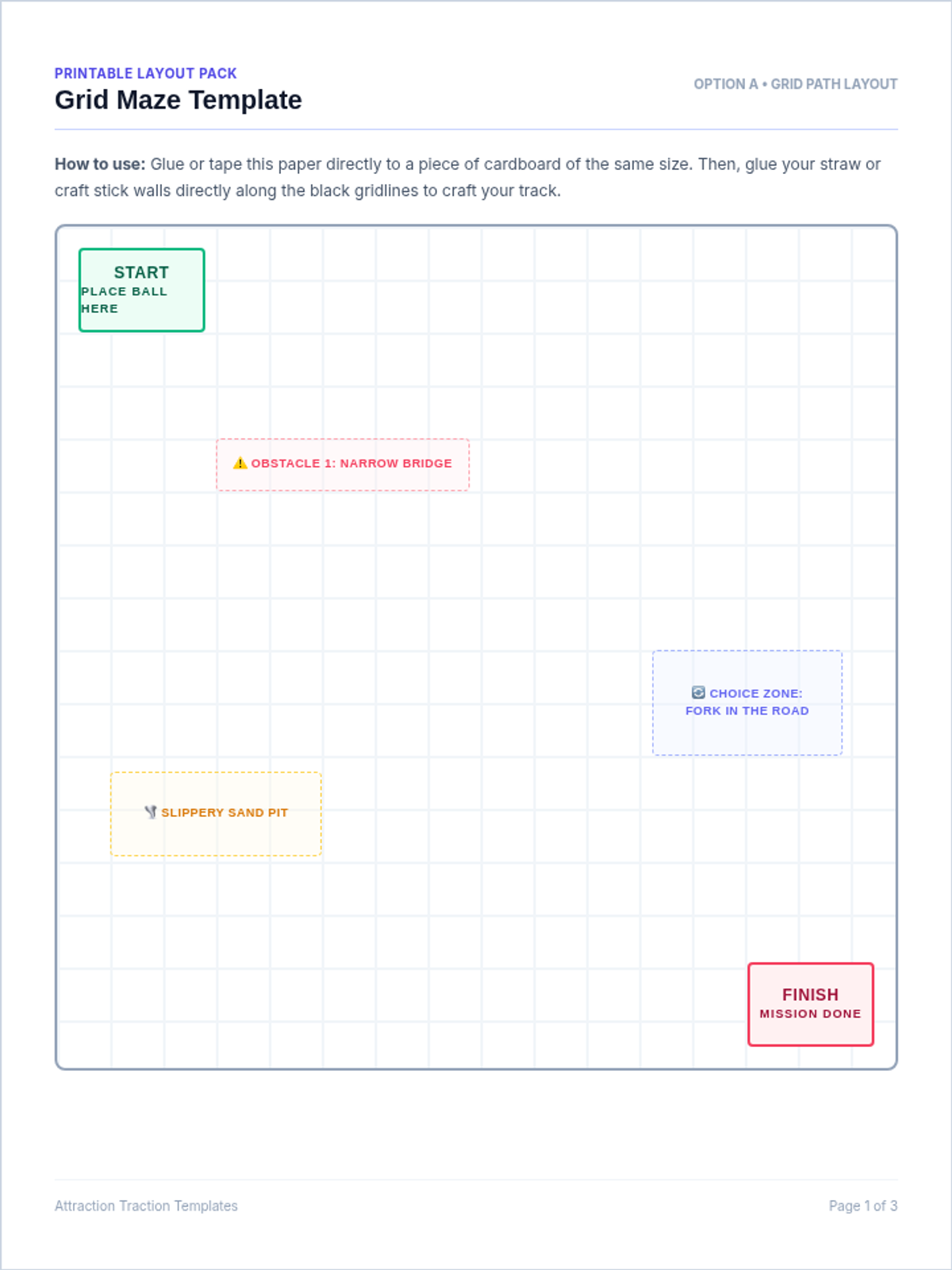
An investigation into magnetic fields, poles, and the invisible forces that attract and repel materials.
Students explore the concept of electrical energy, understanding where it comes from and how it moves from one form to another.
A quick assessment on the fundamentals of block-based programming using Scratch, focusing on sprites, scripts, and control flow.
A high-interest, low-complexity lesson designed for LIFE students focused on identifying basic insect anatomy and creating a unique bug through a project-based drawing and writing activity.
An exploration of the biology and behavior of the Great White Shark, focusing on vocabulary development and anatomical features through an underwater explorer lens.
A comprehensive lesson focusing on identifying and summarizing the physical properties of rocks, minerals, soil, and water through hands-on exploration.
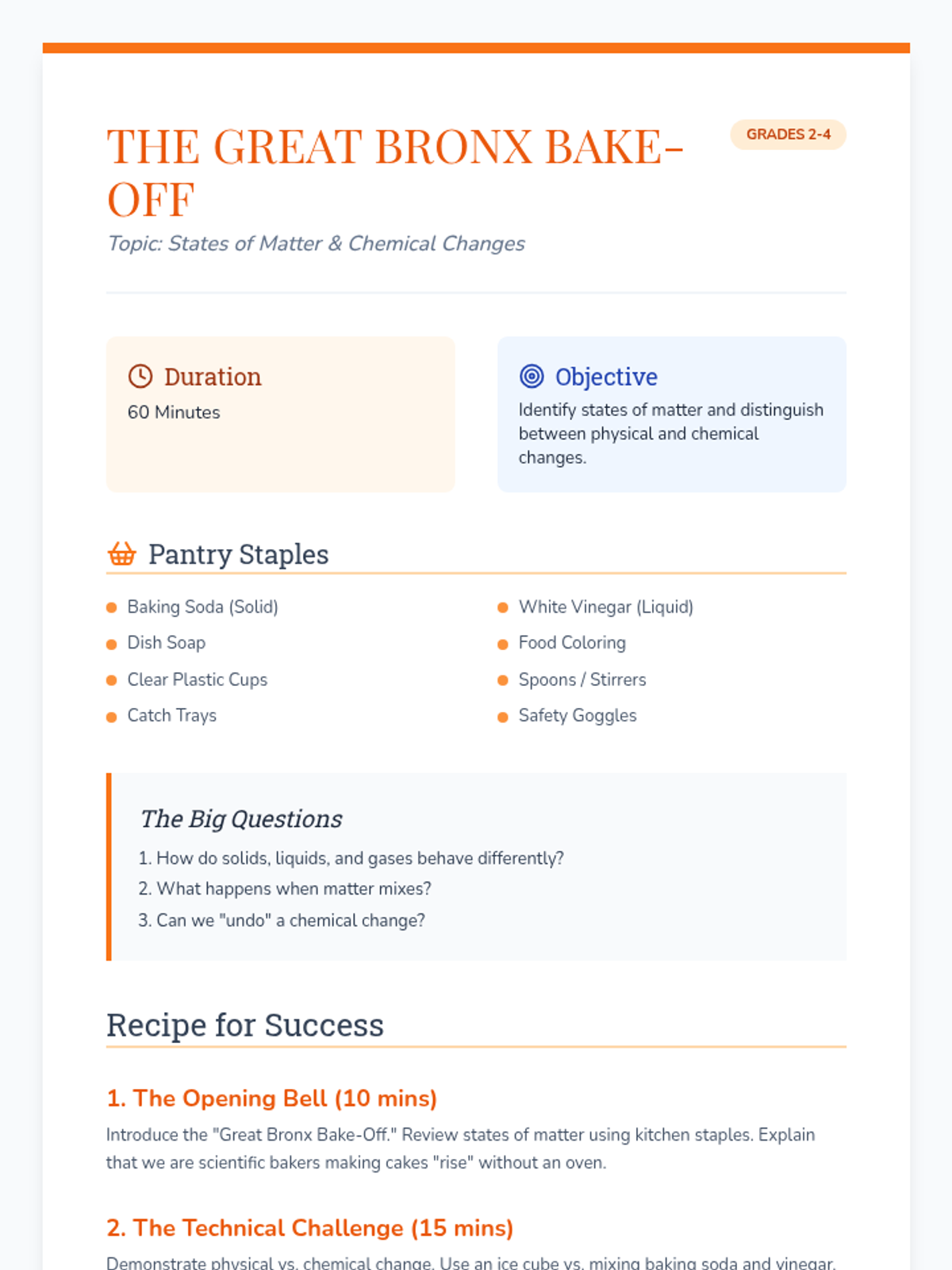
An interactive sorting activity where students categorize various objects into solids, liquids, and gases. This hands-on game uses visual cues to reinforce the fundamental properties of the states of matter.
A set of engaging memory cards and supporting materials designed to help students master two-syllable words where both syllables are open. Students will match syllable pairs to form complete words, reinforcing phonics and decoding skills.
A 3rd-grade science lesson comparing weather (short-term) and climate (long-term) through video analysis, a sorting activity, and a creative design challenge.
Students will investigate the engineering secrets of the Inca civilization, specifically their earthquake-resistant masonry. Through a hands-on building activity and a 'shake table' test, students explore how irregular, interlocking shapes create stable structures without mortar.
Students explore the diverse habitats of Great Smoky Mountains National Park through a guided video, a classification activity, and a deep dive into why this park is the 'Salamander Capital of the World'.
Students become junior meteorologists, exploring the difference between weather and climate while practicing real-time observation and forecasting skills. The lesson includes a video-based introduction, a hands-on observation activity, and a discussion on the importance of accurate forecasting.
A comprehensive 1st-3rd grade lesson exploring the Bald Eagle as a national symbol, its habitat across North America, and its impressive physical characteristics through video, mapping, and measurement.
A hands-on engineering lesson where students explore different bridge types, specifically focusing on the mechanics of suspension bridges through the lens of the Golden Gate Bridge. Students build and test their own straw bridges to understand forces like tension and compression.
Students will explore the chemical process of oxidation by watching a video about the Statue of Liberty and conducting a 'Green Pennies' experiment to simulate how copper reacts with environmental elements.
Students explore how glaciation (the formation and melting of glaciers) affects global sea levels. Through a hands-on lab and video analysis of the Beringia Land Bridge, students visualize how water trapped in ice changes the shape of our continents.
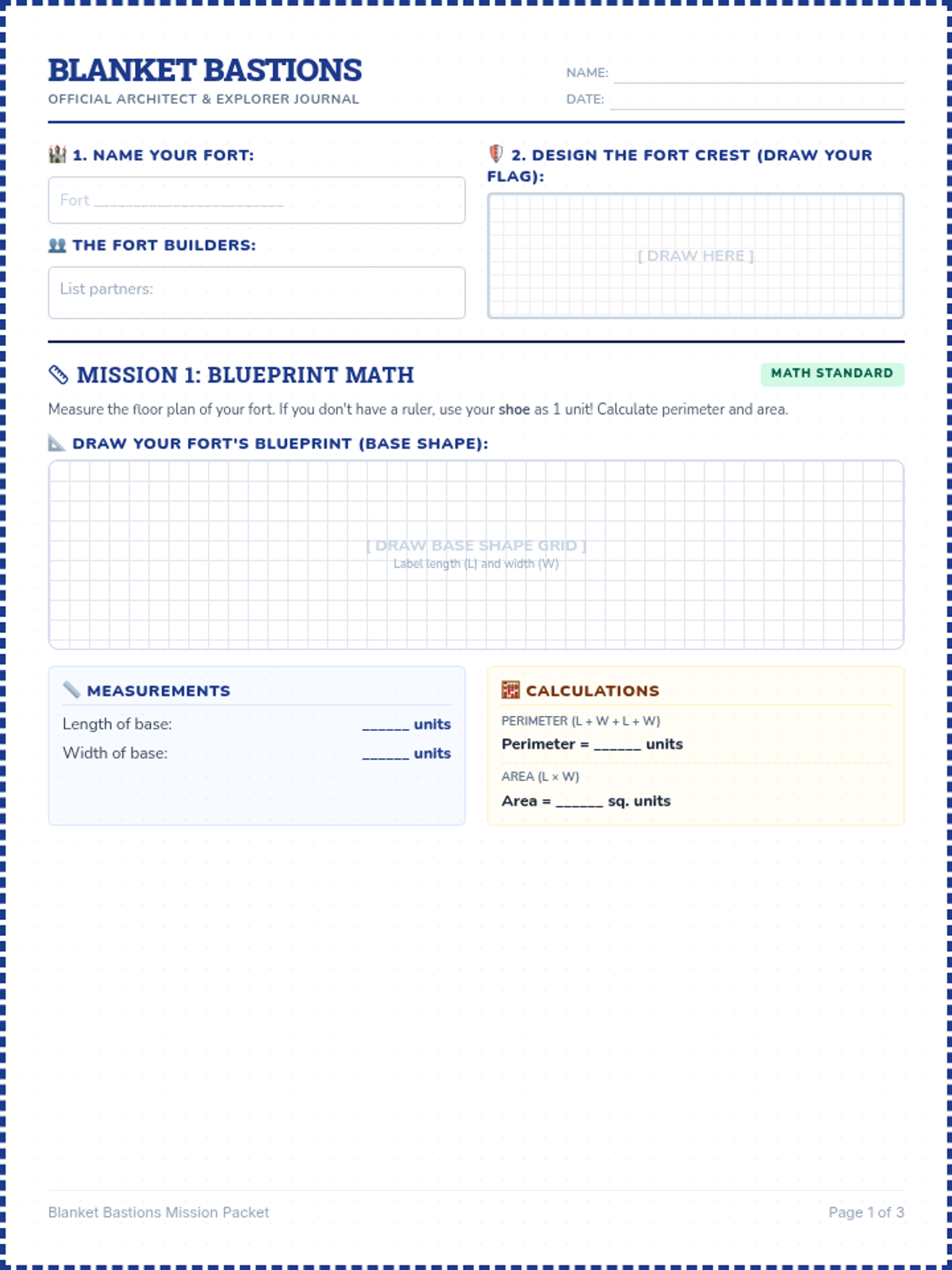
A hands-on engineering lesson where students explore how permeable pavement mimics natural systems to manage stormwater and reduce urban flooding. Students build and test model pavement cross-sections to compare traditional and sustainable urban design.
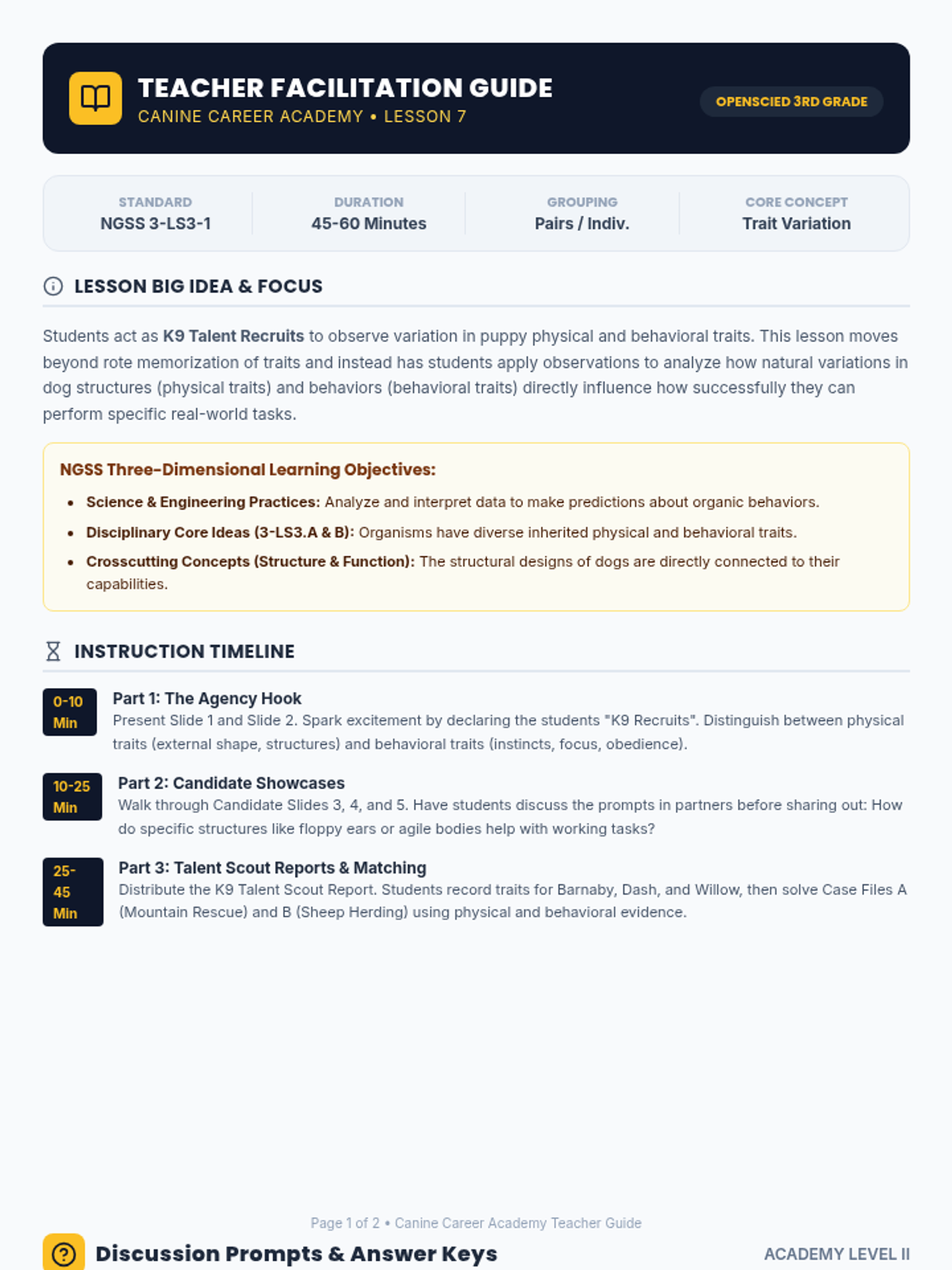
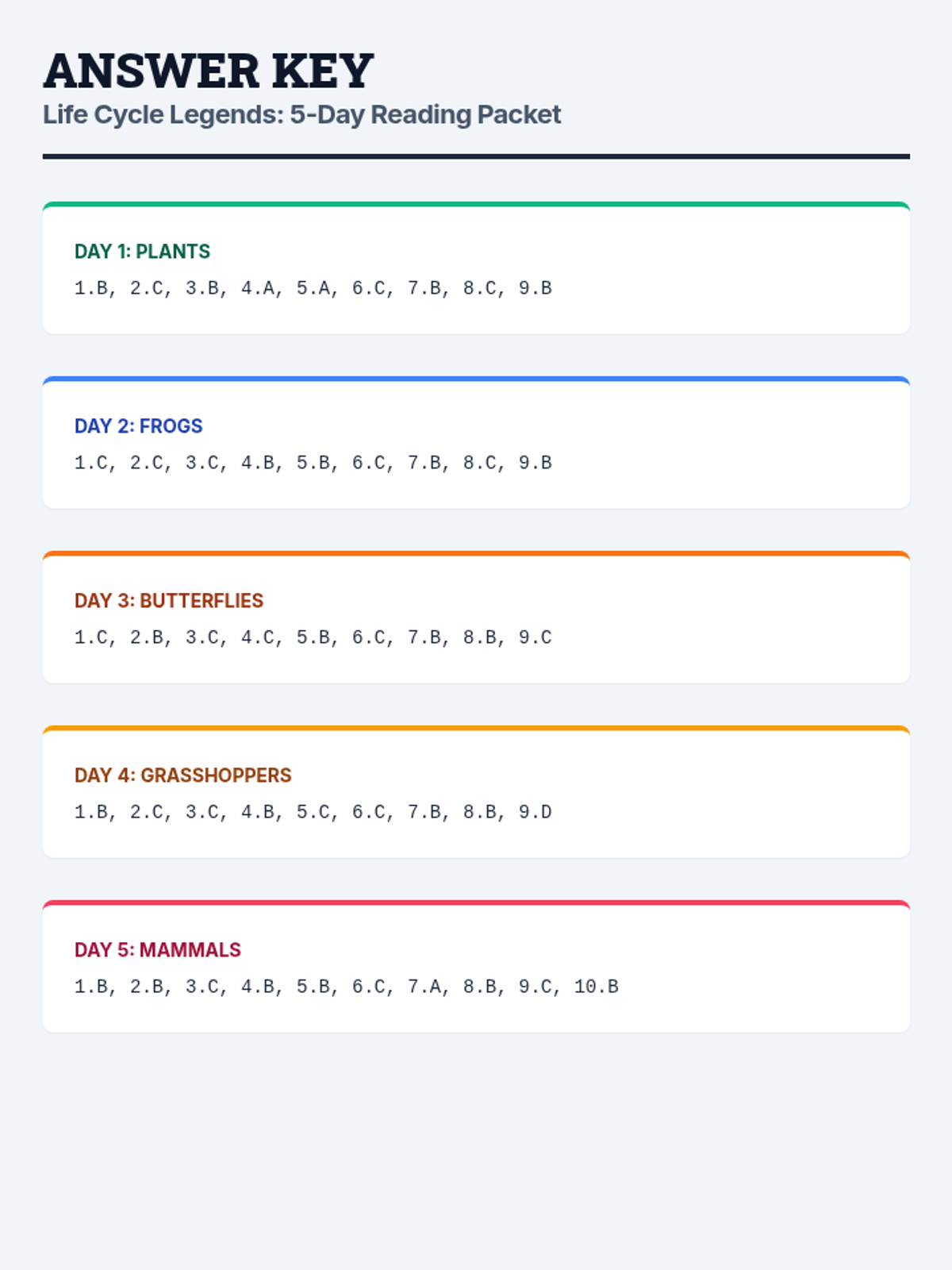
A 3rd-grade science lesson exploring homeostasis and temperature regulation through a thermostat analogy and a video on why we shiver. Students map the neural pathway from feeling cold to the shivering reflex.