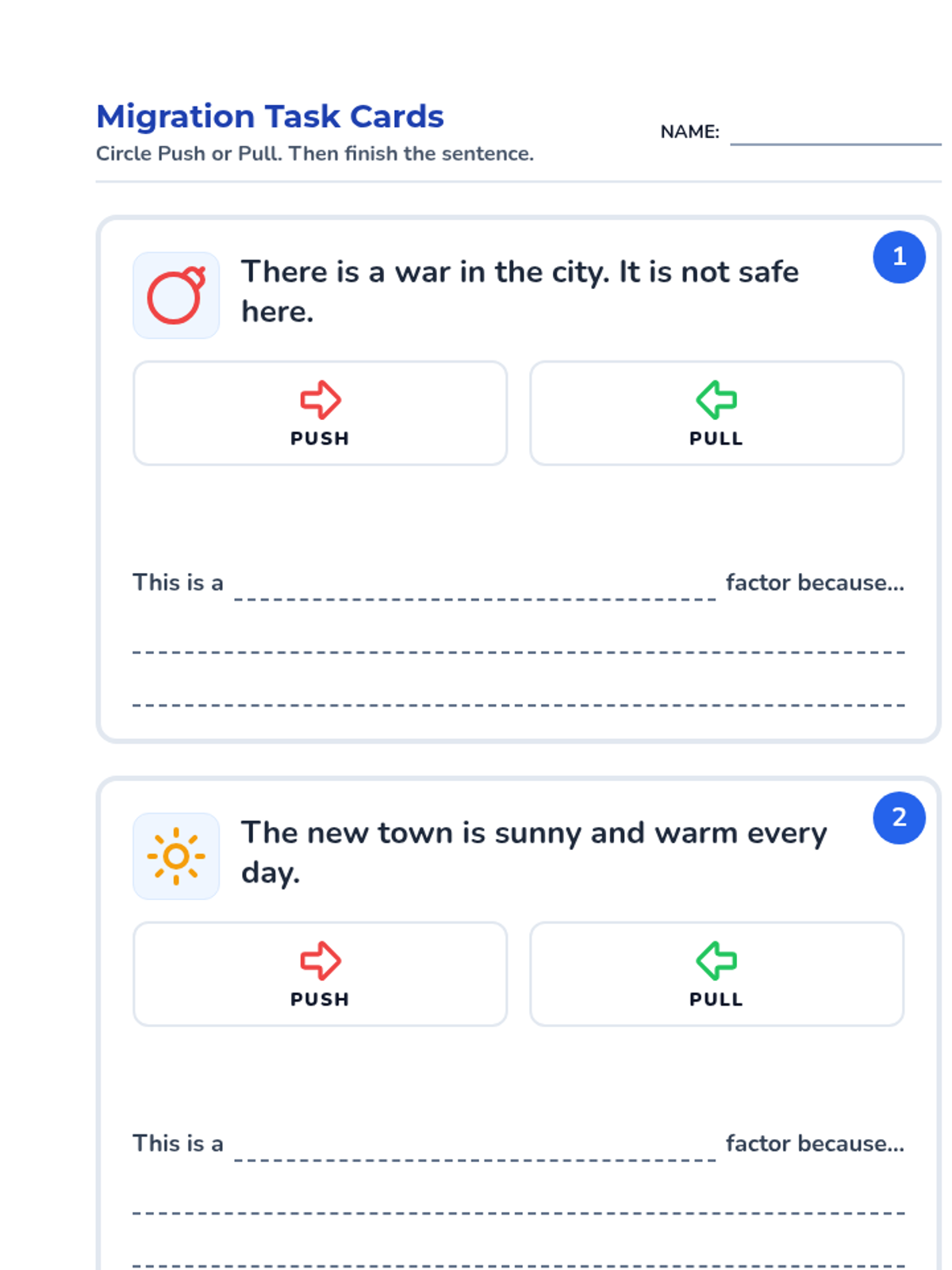
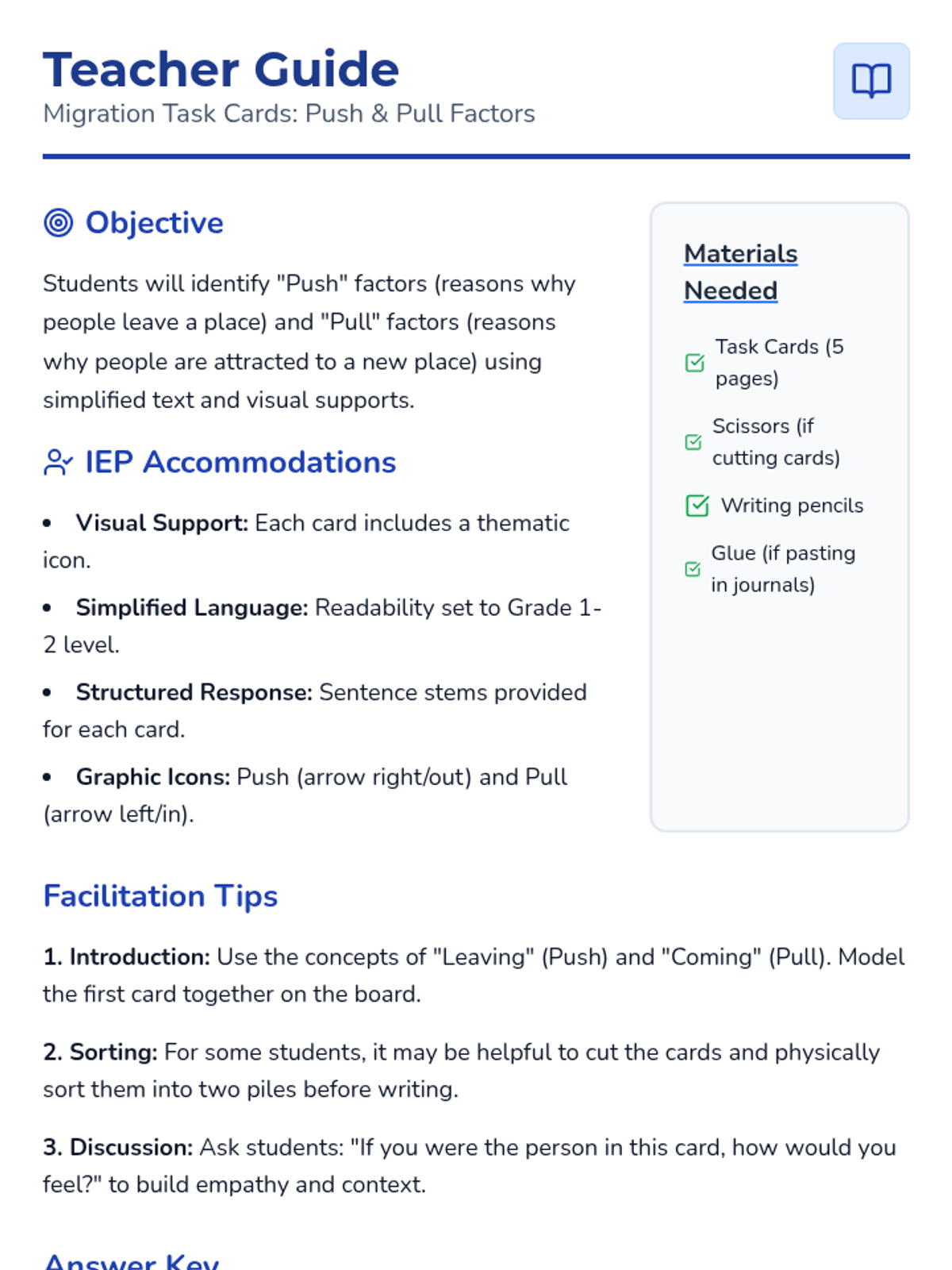
An introductory lesson exploring the concept of immigration, push and pull factors, and the emotional journey of moving to a new country through a hands-on suitcase activity.
A 20-minute mini-lesson exploring how diverse groups of people have influenced a region's culture through food, music, traditions, and language. Students will act as 'Heritage Hunters' to identify cultural contributions in their own communities.
A hands-on history project inspired by 'Born on the Water', focusing on ancestry, resilience, and the power of storytelling. Students create a visual legacy map that traces the journey of a people or family from their roots to the present day.
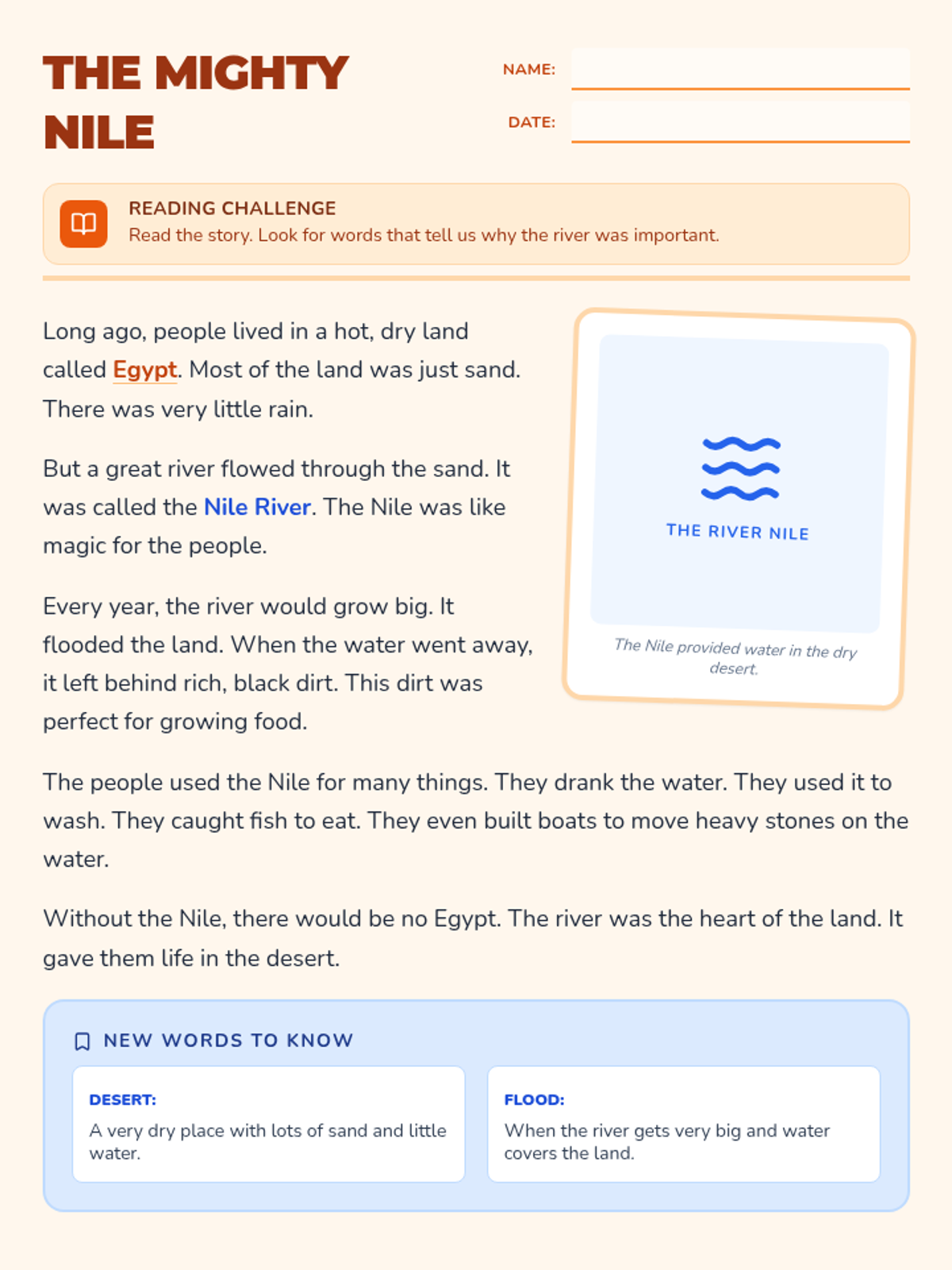
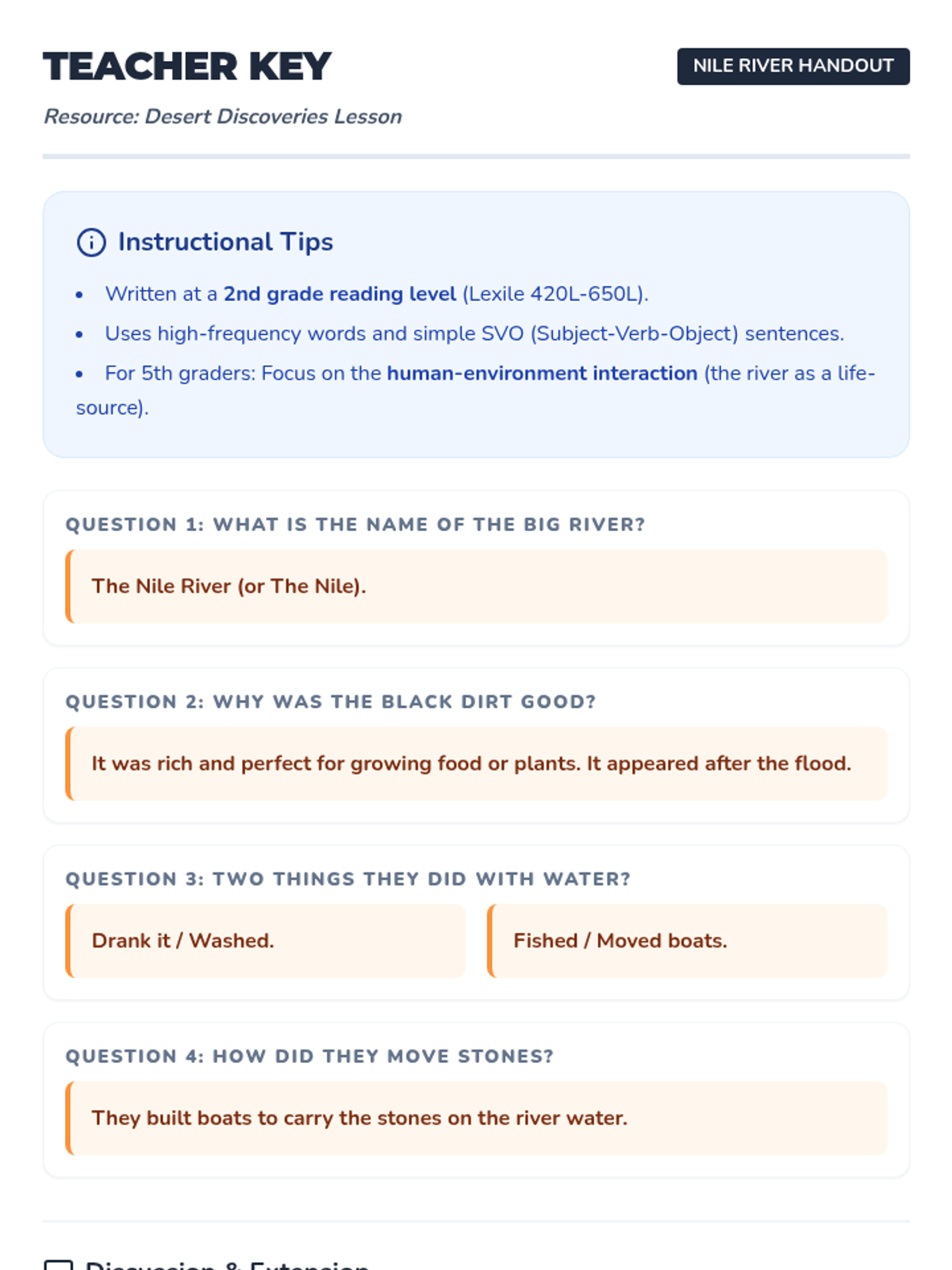
This lesson introduces the importance of the Nile River to the ancient Egyptians, focusing on its role in farming, fishing, and transportation. Students will explore how the river's annual flooding provided fertile soil and how the Egyptians managed water using canals.
An introductory lesson on Ancient China for 2nd grade students, focusing on the First Emperor, the Great Wall, and lasting inventions like paper and silk.
A series of short, daily cloze reading passages designed to help 2nd-grade students learn about different community helpers and their roles in society.
A Grade 2 lesson exploring the story of human evolution through reading comprehension and sequencing activities. Students will travel through time to meet early ancestors and discover how humans changed over millions of years.
A lesson focused on civic engagement and community service, guiding students through brainstorming actionable ways to improve their local neighborhoods and support community organizations.
A lesson focused on the introduction of writing in Mesopotamia, specifically cuneiform and its importance for records and laws.
Master the essential terminology of Ancient Rome through visual and descriptive flashcards.
Solve complex multiplication word problems using multiple strategies including arrays and area models.
Track and reflect on daily reading progress with differentiated logs for various ability levels.
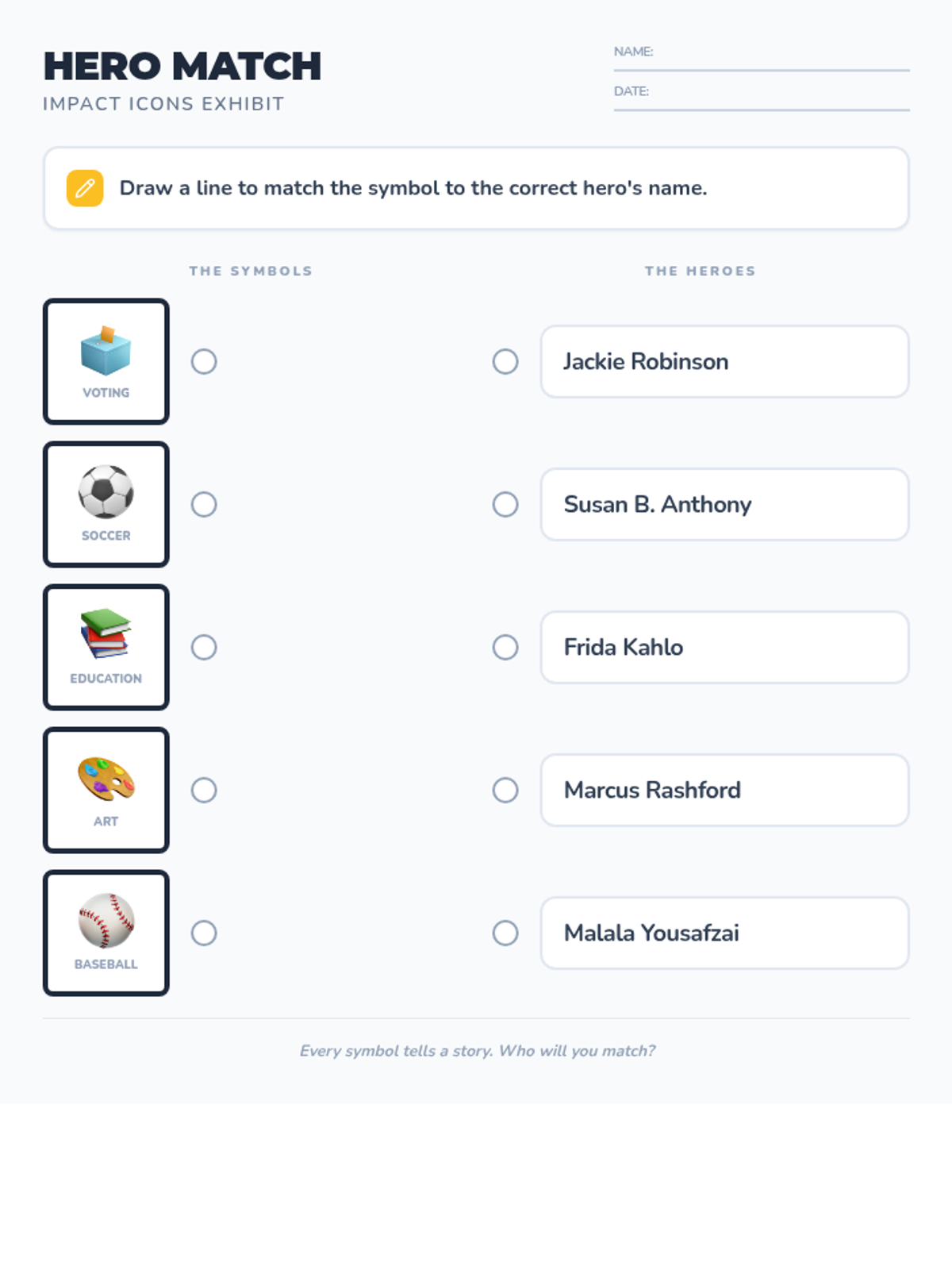
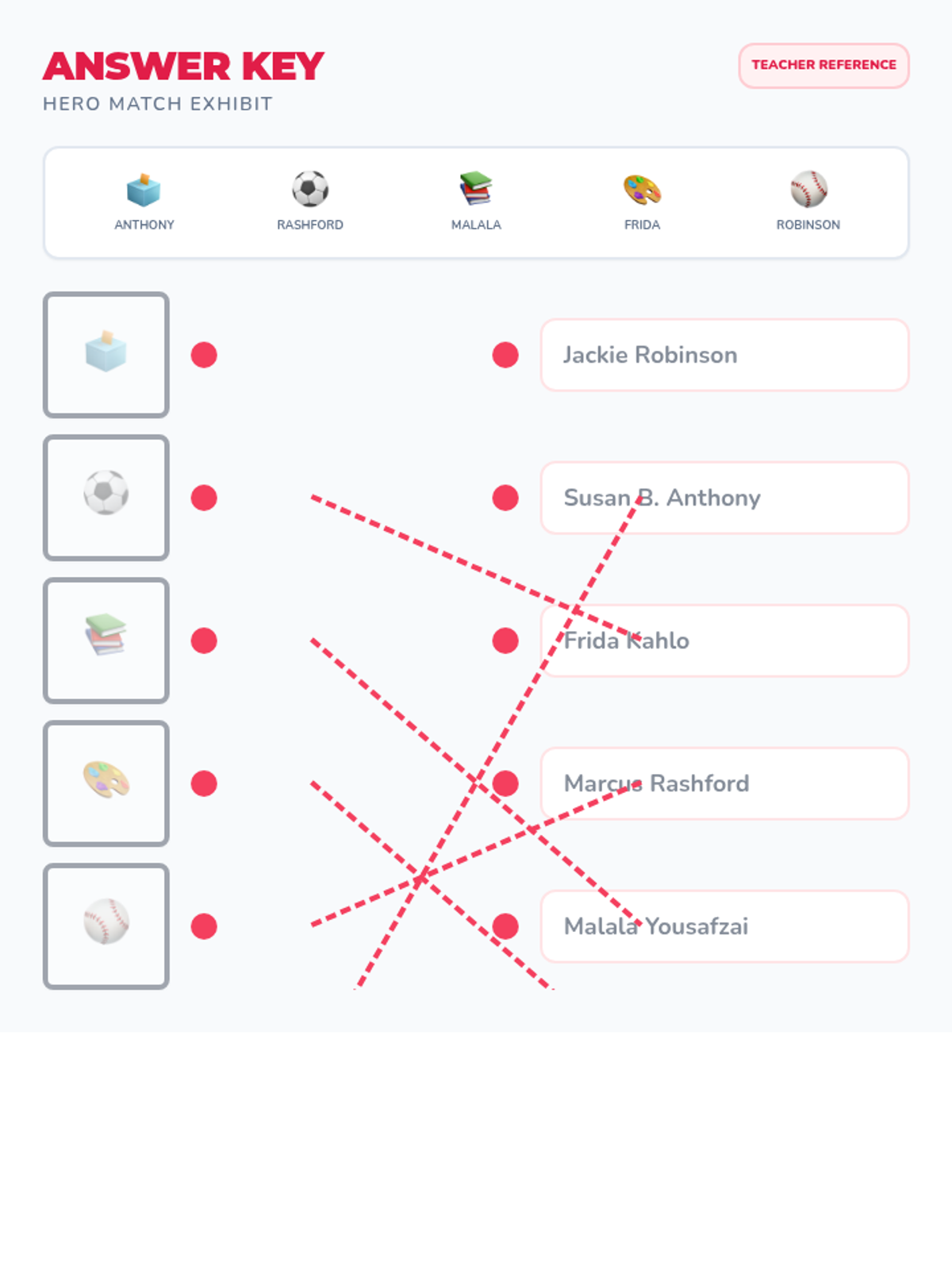
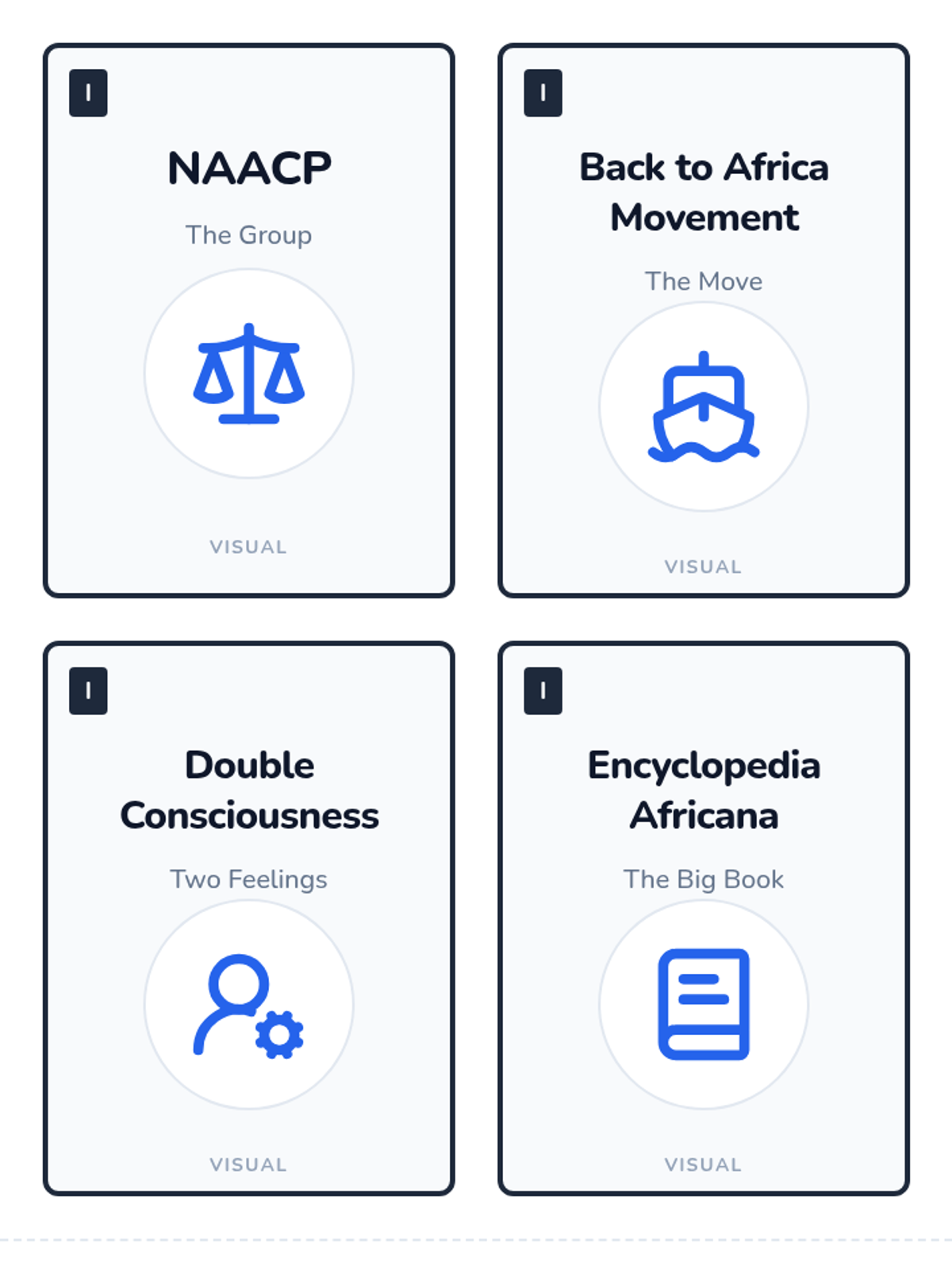
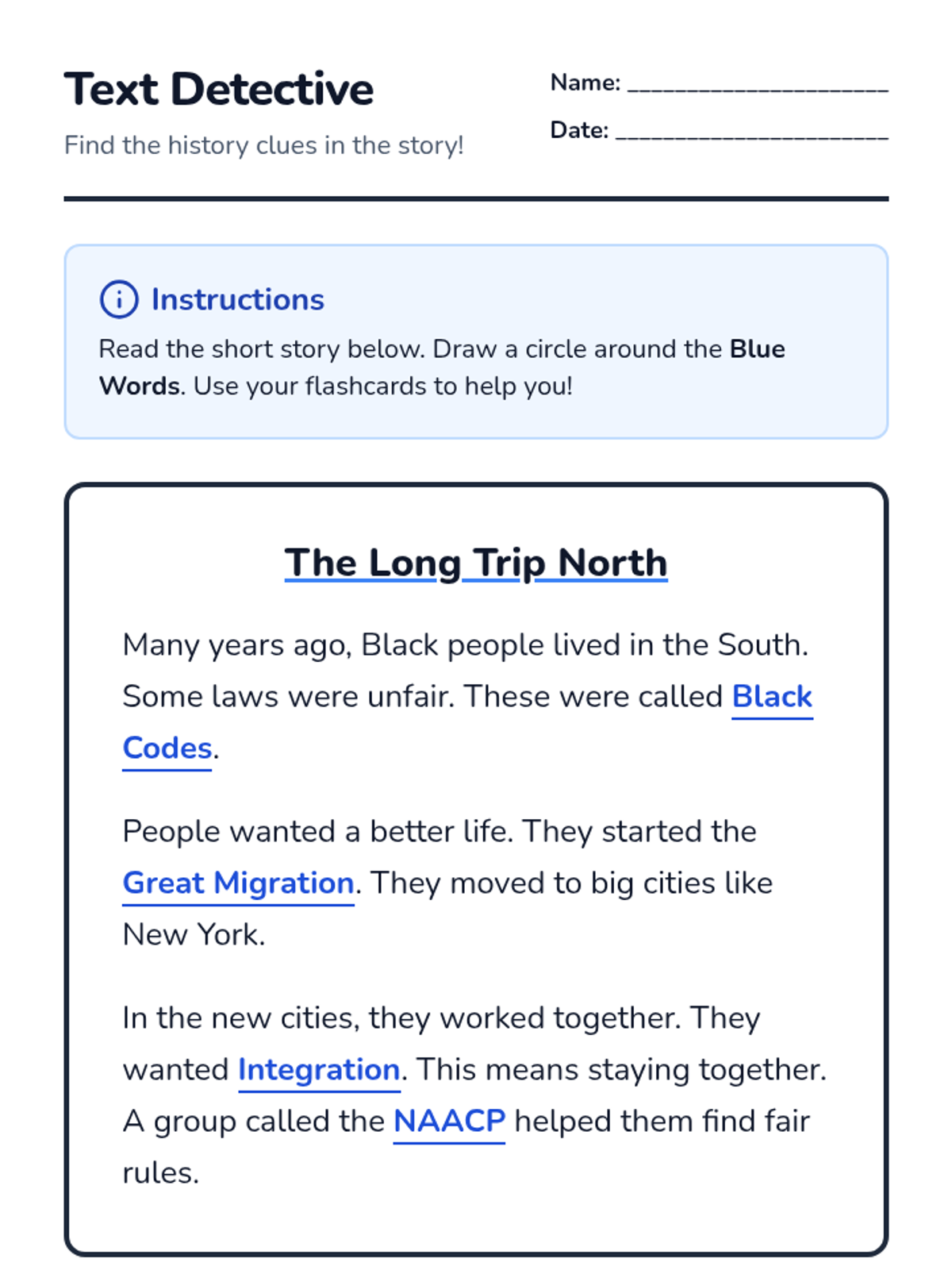
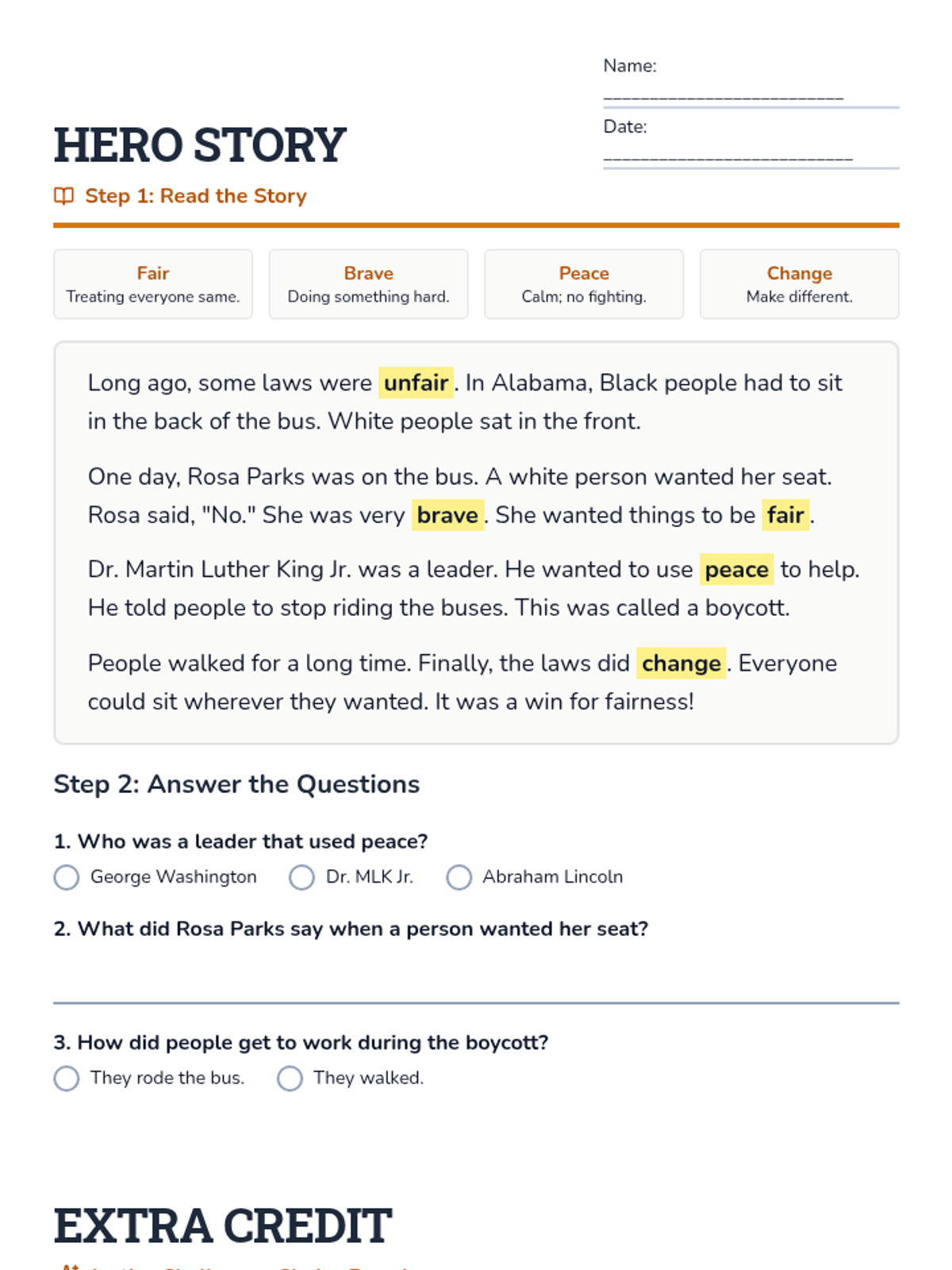
Analyze the key figures, events, and documents of the American Civil Rights Movement.
Explore how plants transform sunlight into energy through the process of photosynthesis.
A 30-45 minute lesson exploring both the religious origins and secular traditions of Easter, including a social story for behavioral expectations and a symbol-matching activity.
Discover the shape of our nation through the US Map and review all symbols with a sorting challenge.
Explore the history and meaning of the Liberty Bell and the White House as symbols of independence and leadership.
Introduce the concept of national symbols and focus on the American Flag and the Bald Eagle as symbols of freedom and strength.
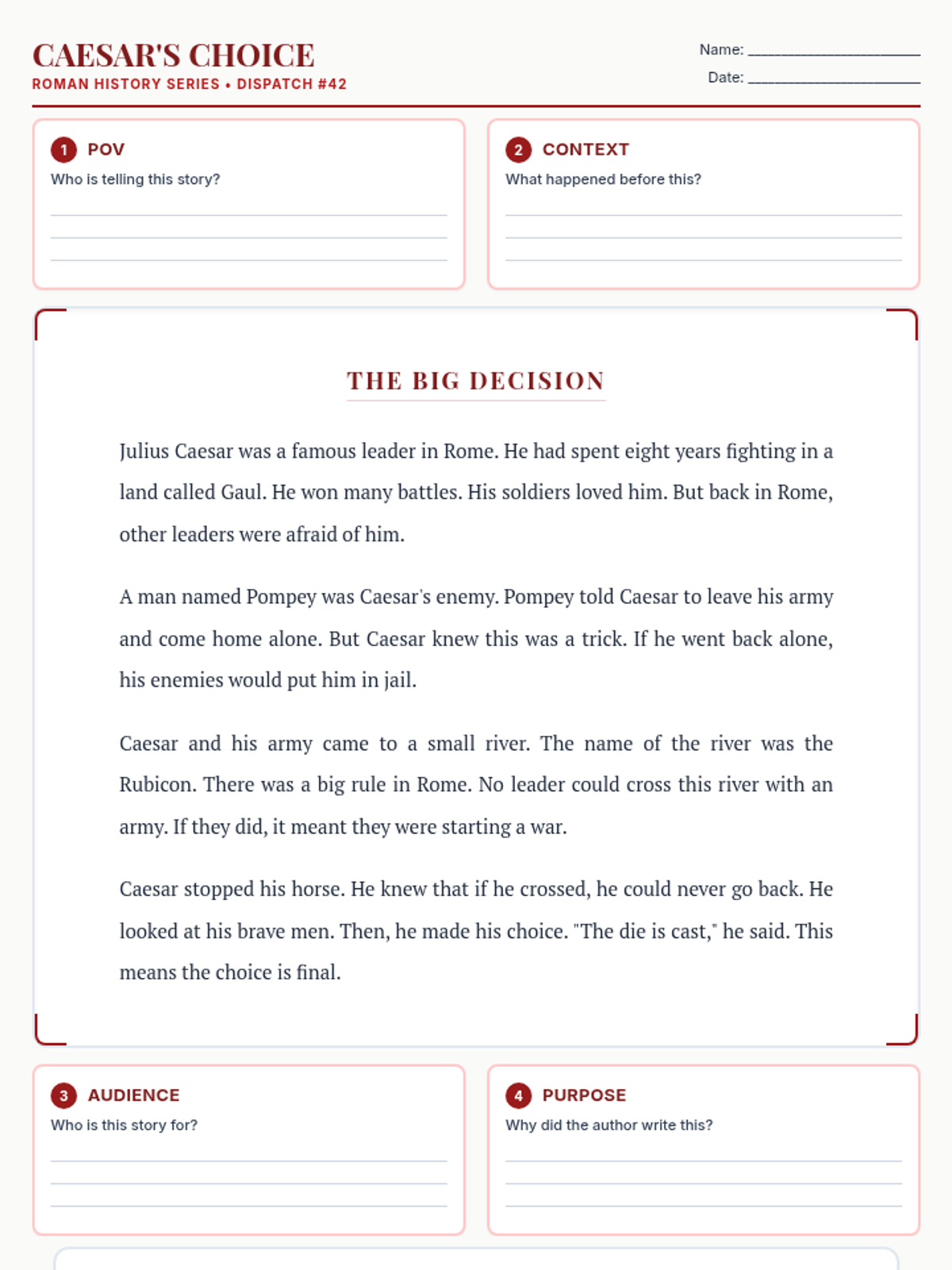
A lesson investigating the political instability that led to the Fall of Rome, featuring differentiated evidence files for diverse reading levels. Students work collaboratively to diagnose the empire's 'political sickness.'
A comprehensive lesson on the colonial bread-making process, featuring the roles of millers and bakers, bartering practices, and sequencing the steps from grain to loaf.
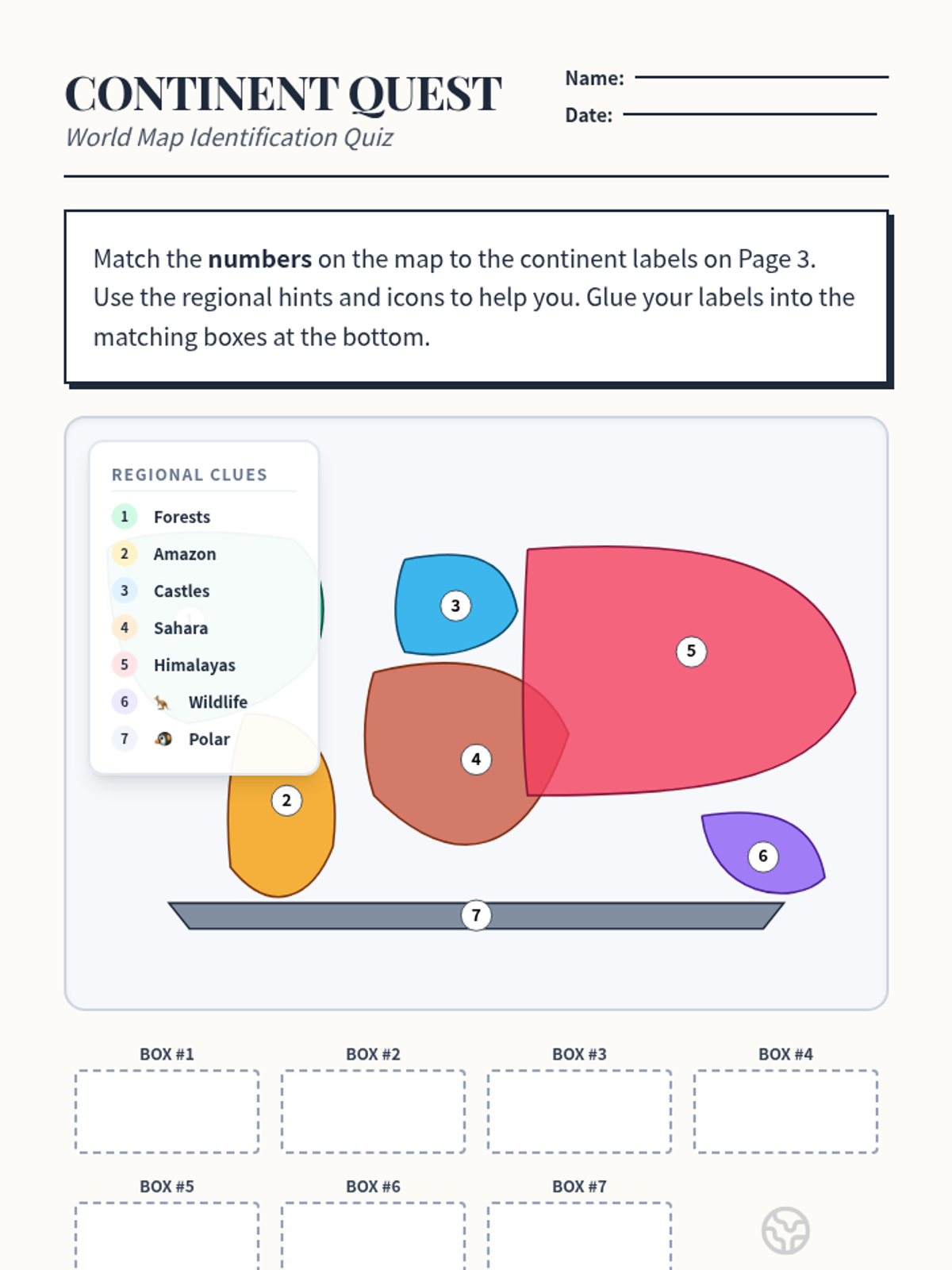
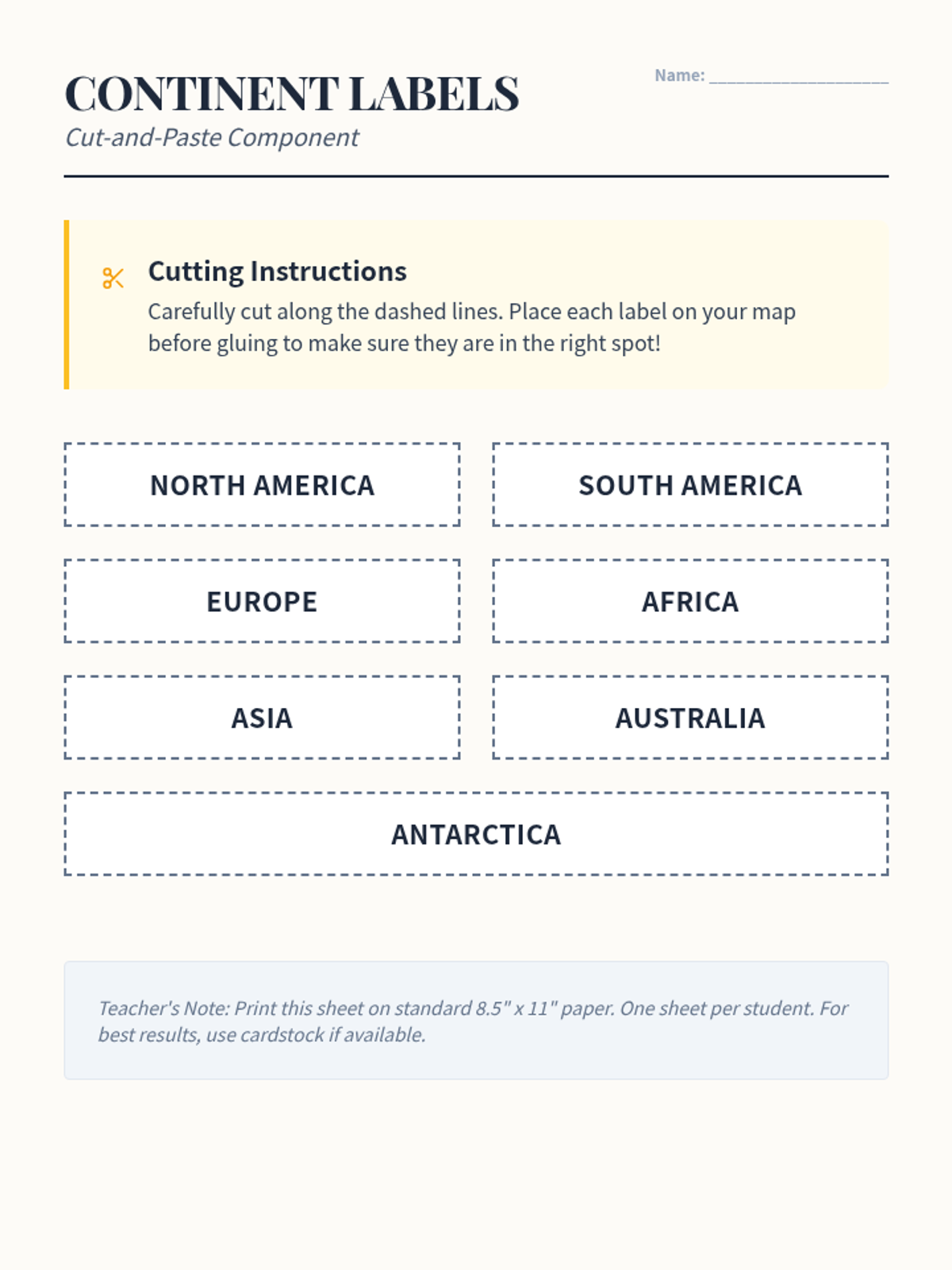
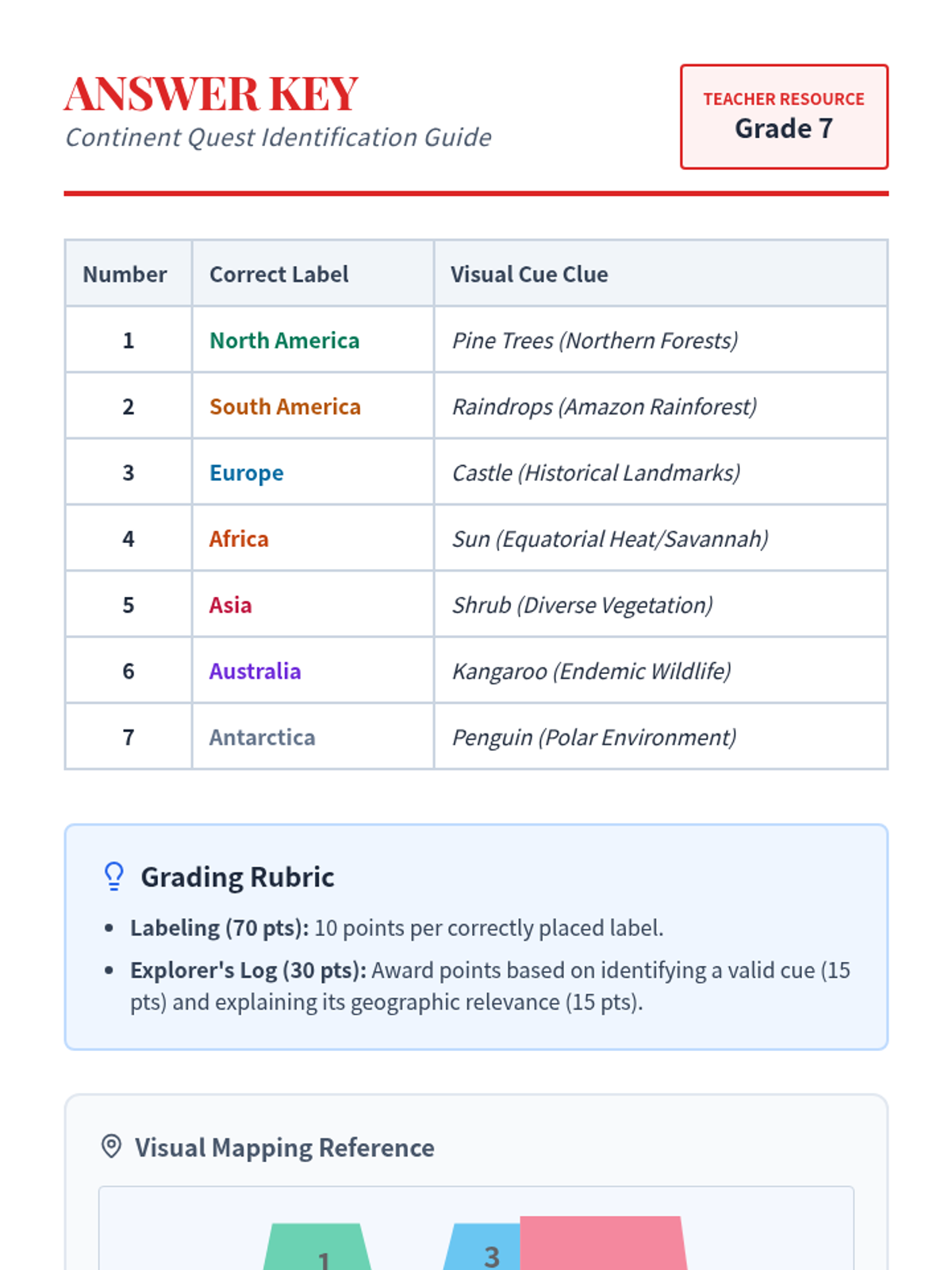
A quick visual identification activity where students recognize the seven continents by their silhouettes alone.