A rigorous high school grammar workshop focusing on debugging subject-verb agreement, mixed mechanical errors, and commonly confused words. Students take on the role of copyeditors to locate and correct 20 syntax errors with precision.
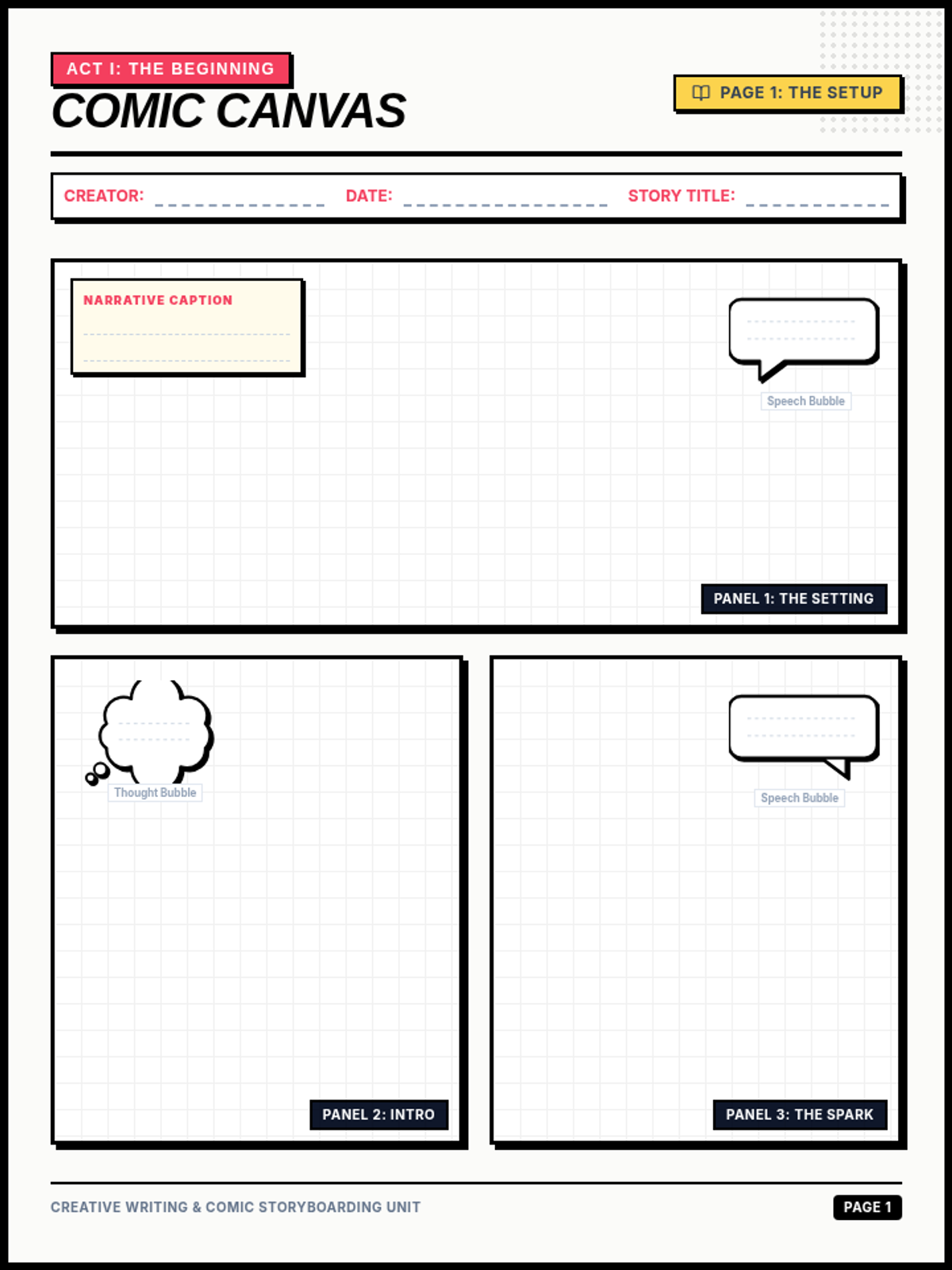
A creative narrative writing lesson that guides students through structural comic book creation, character design, and panel-by-panel storytelling using visual templates.
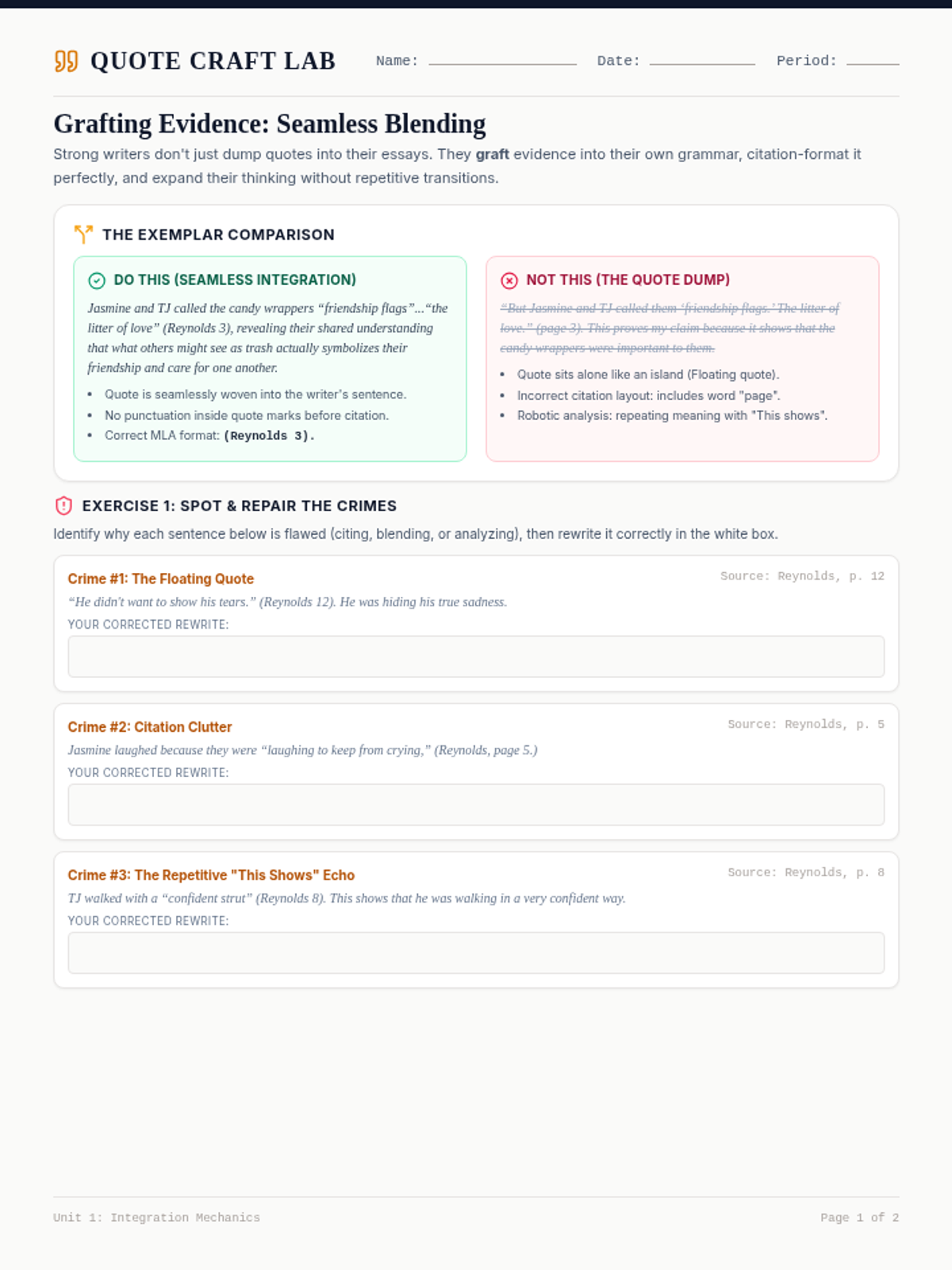
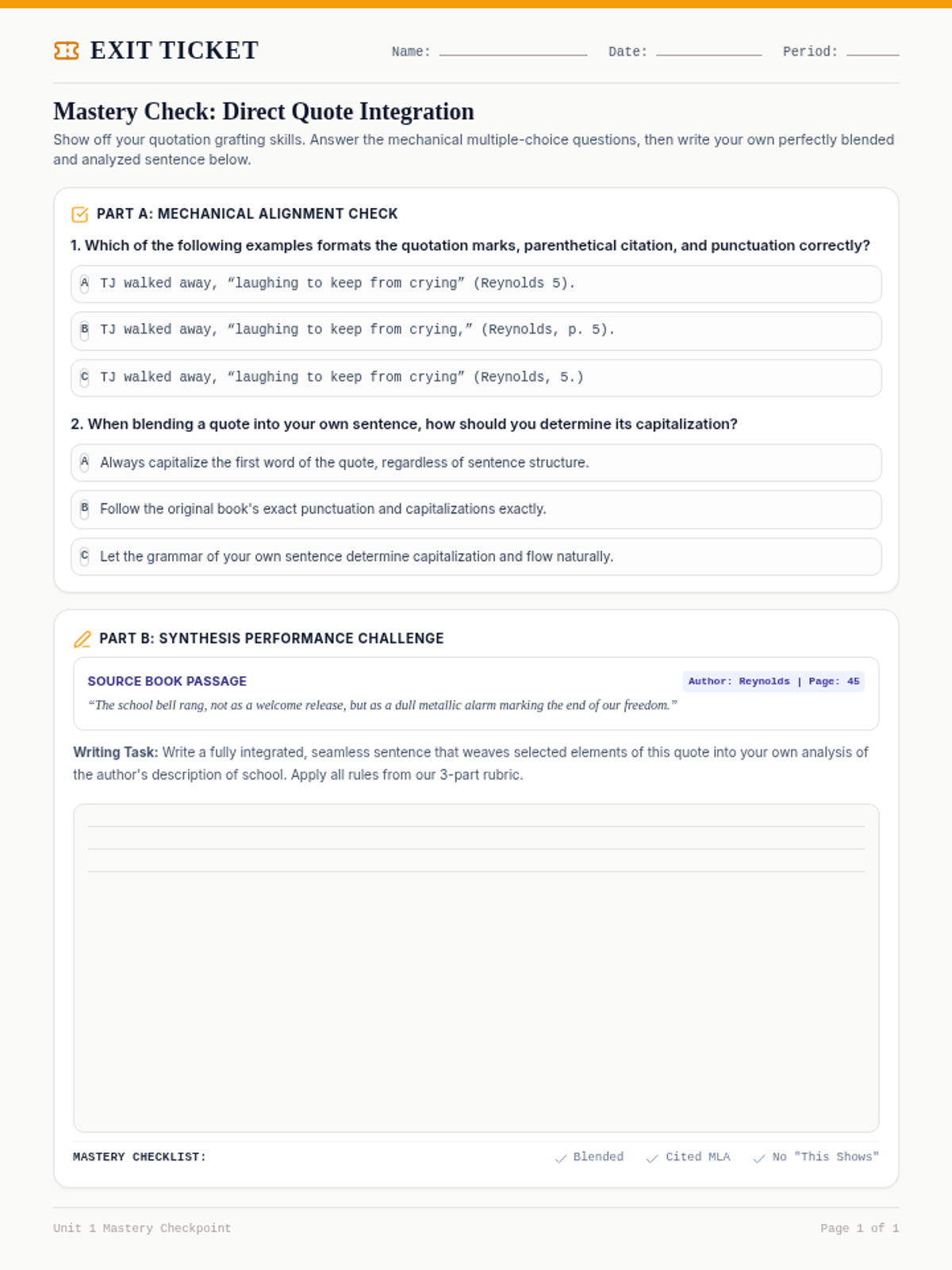
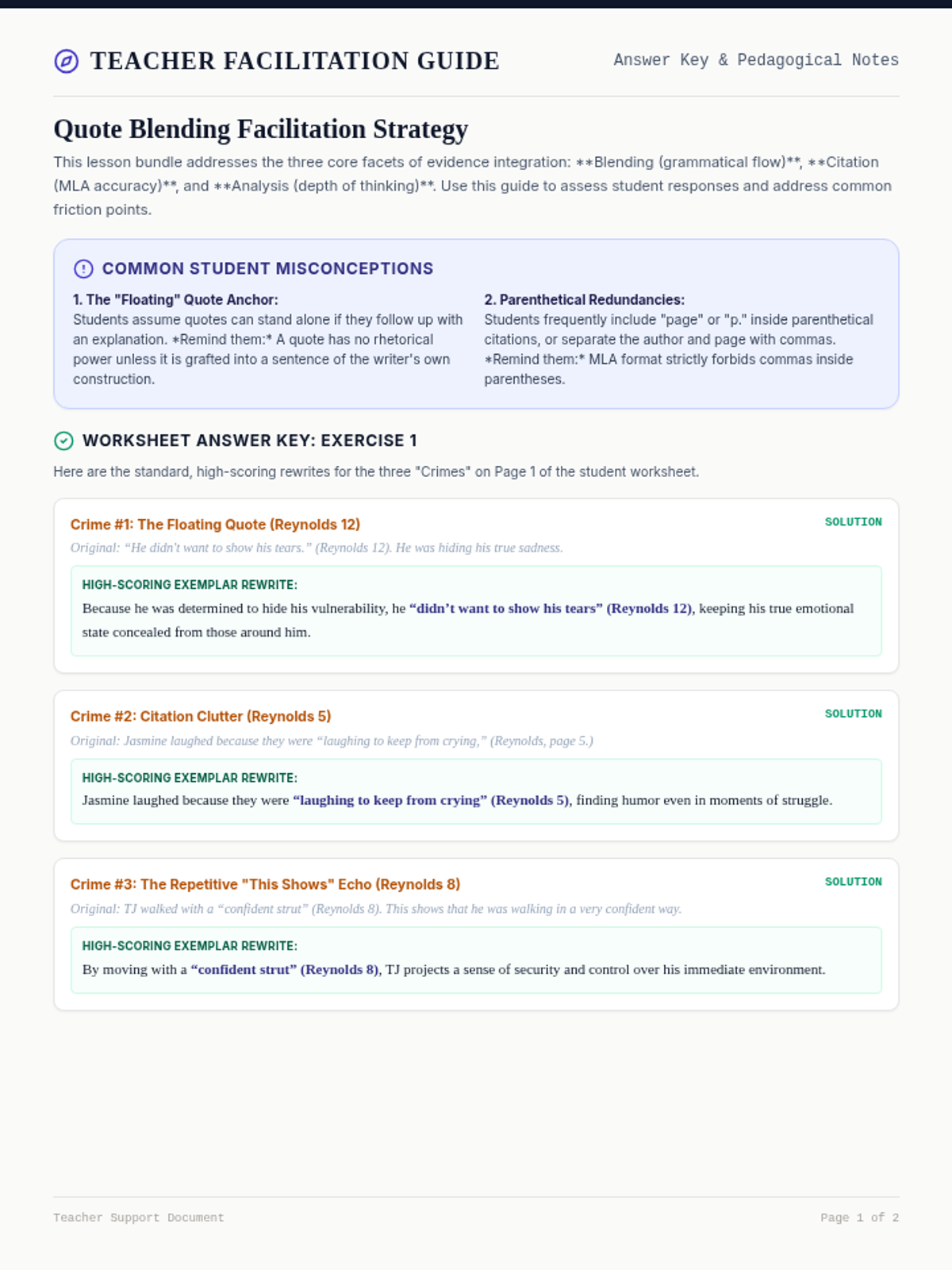
A complete lesson bundle focusing on the mechanics and analysis of direct quotations. Students learn to seamlessly blend quotes, apply correct MLA citations, and write sophisticated analysis using a structured rubric.
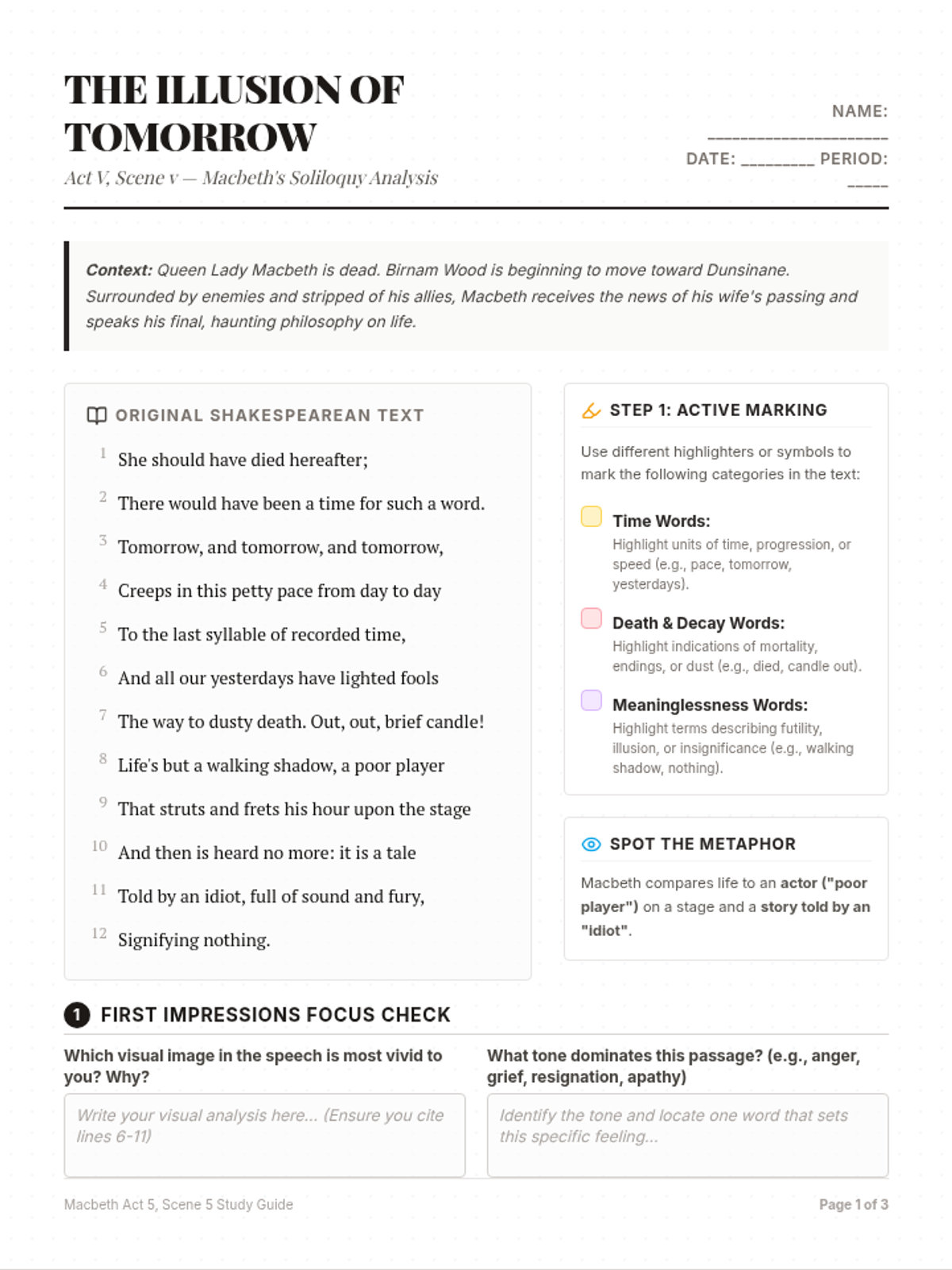
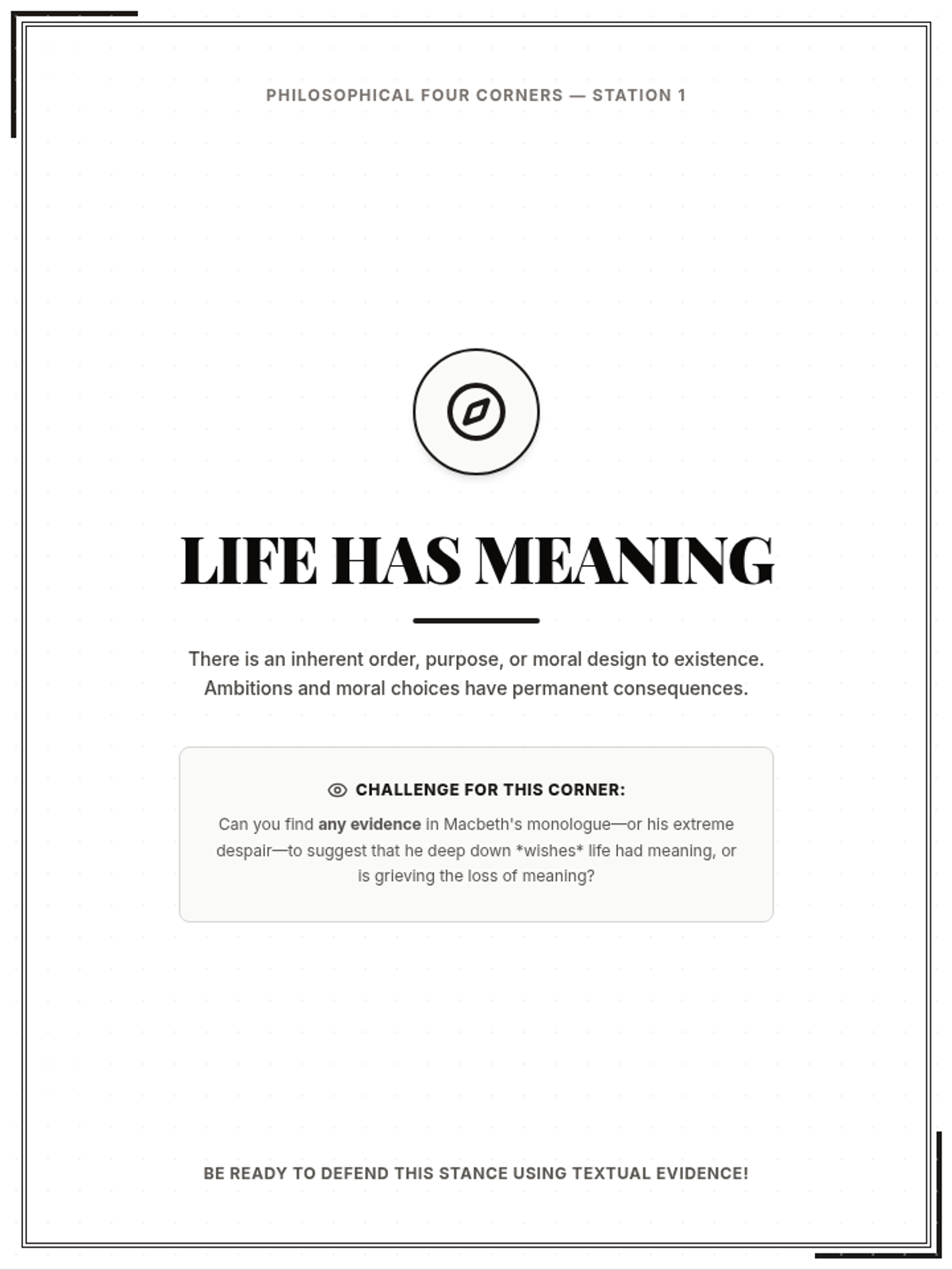
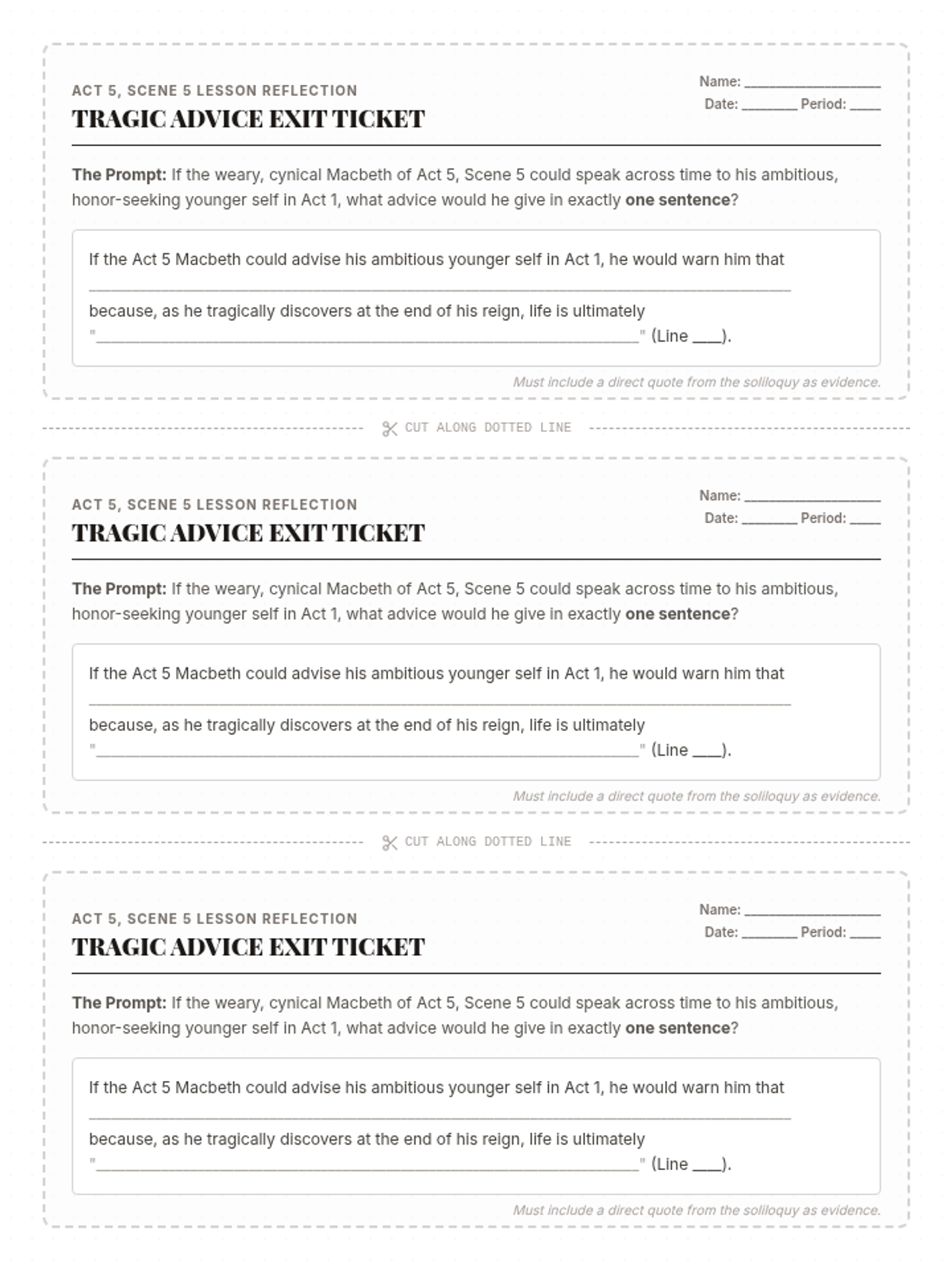
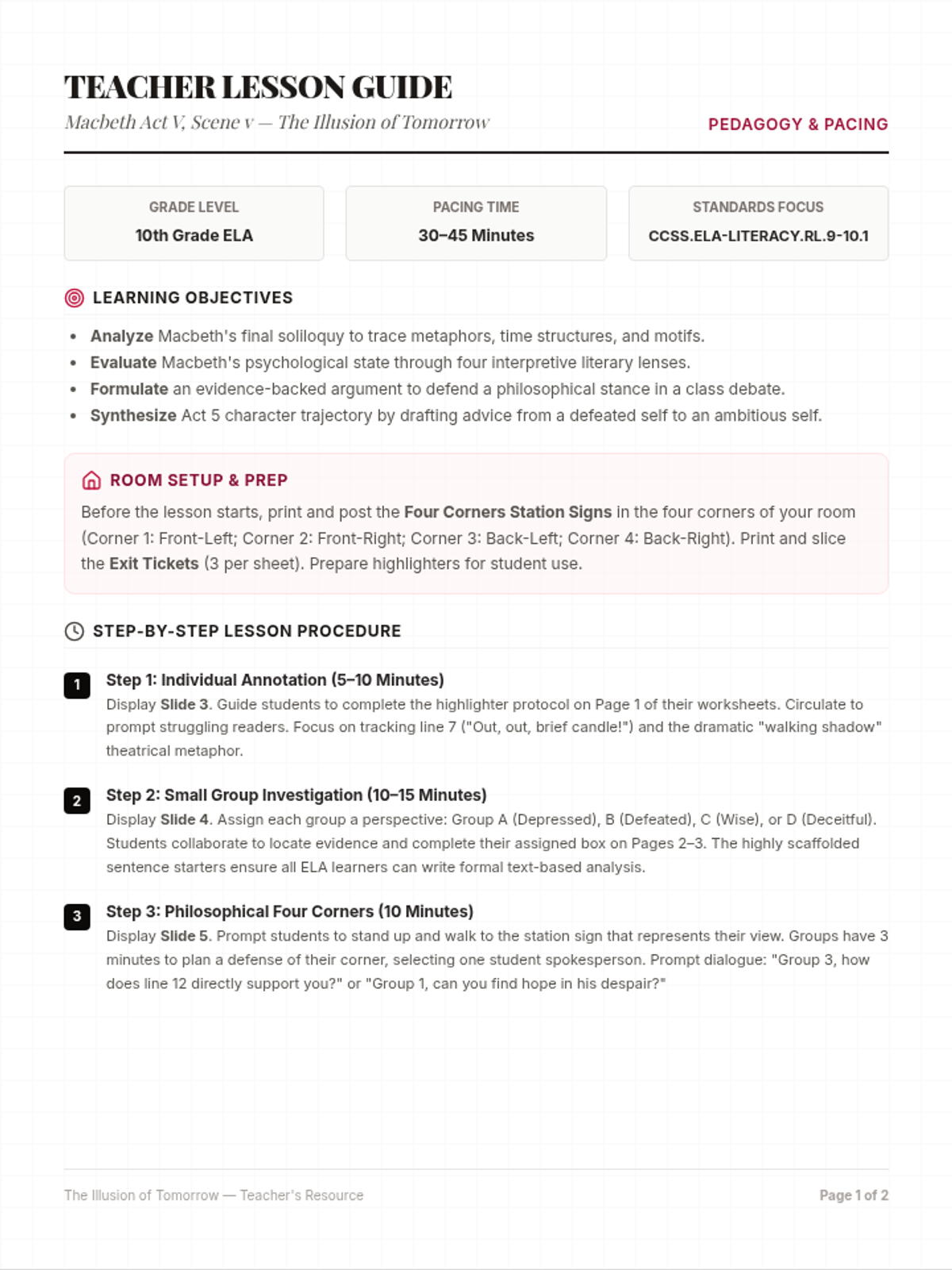
A comprehensive 10th-grade ELA lesson analyzing Macbeth's famous 'Tomorrow, and tomorrow, and tomorrow' speech from Act 5, Scene 5. Students explore Macbeth's psychological state—whether he is depressed, defeated, or finally realizing the truth of his ambitions—using textual annotation, group evidence organizers with scaffolded sentence stems, a Philosophical Four Corners debate, and a reflective exit ticket.
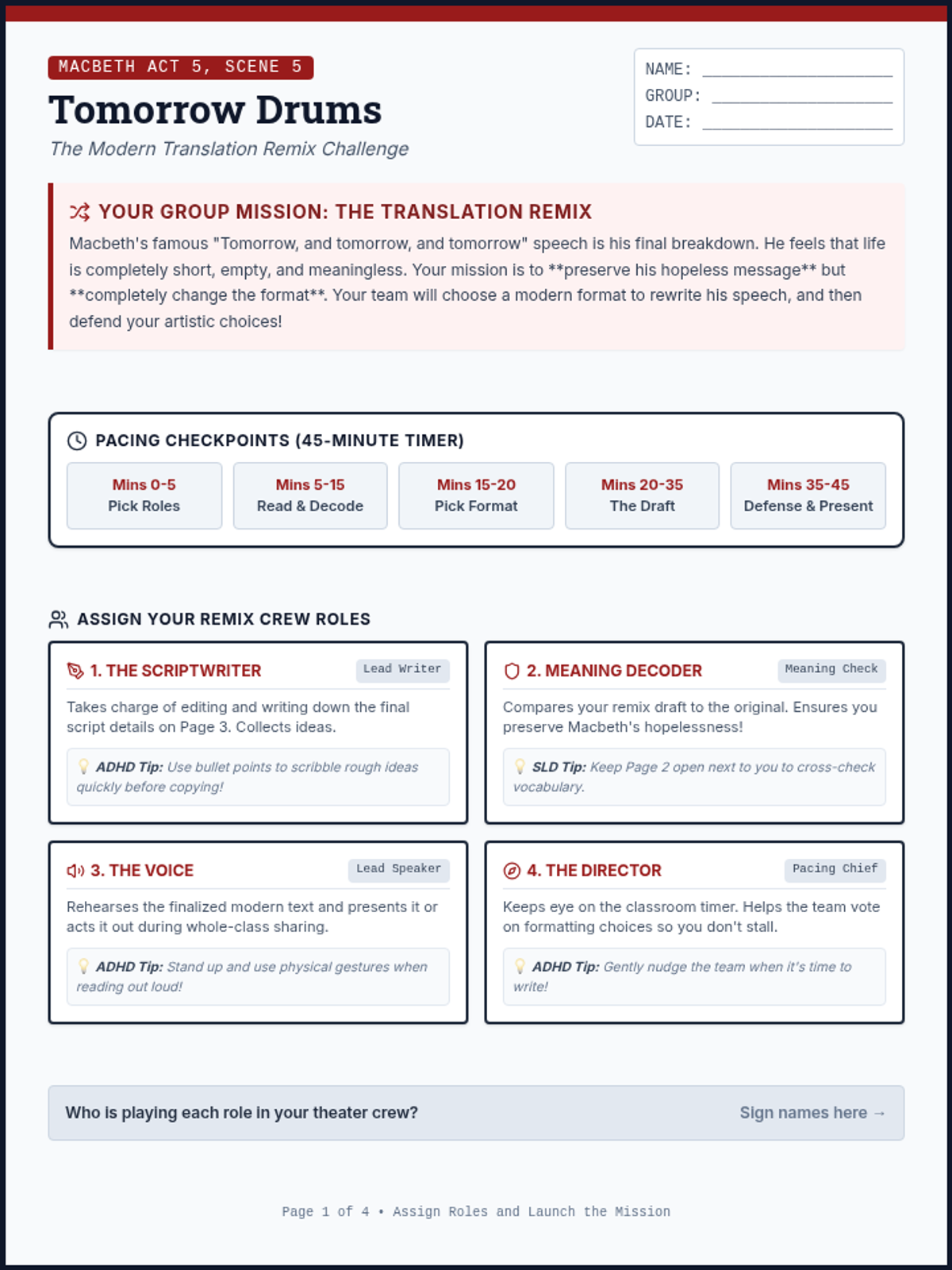
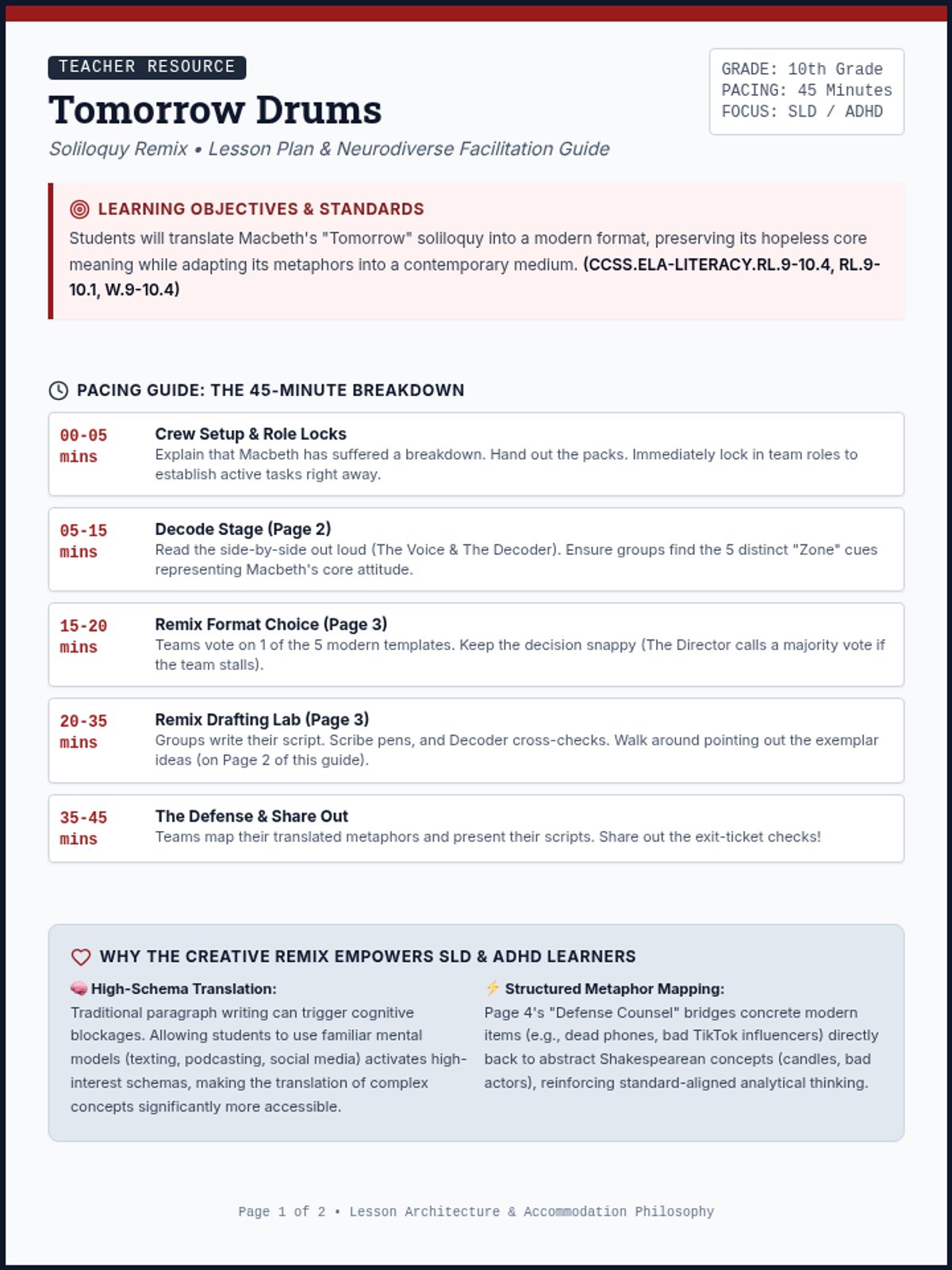
A multi-sensory, highly structured 45-minute cooperative lesson on Macbeth Act 5 Scene 5, specifically designed for 10th-grade students with SLD and ADHD. Features chunked text, side-by-side translations, visual graphic organizers, and tactile roles.
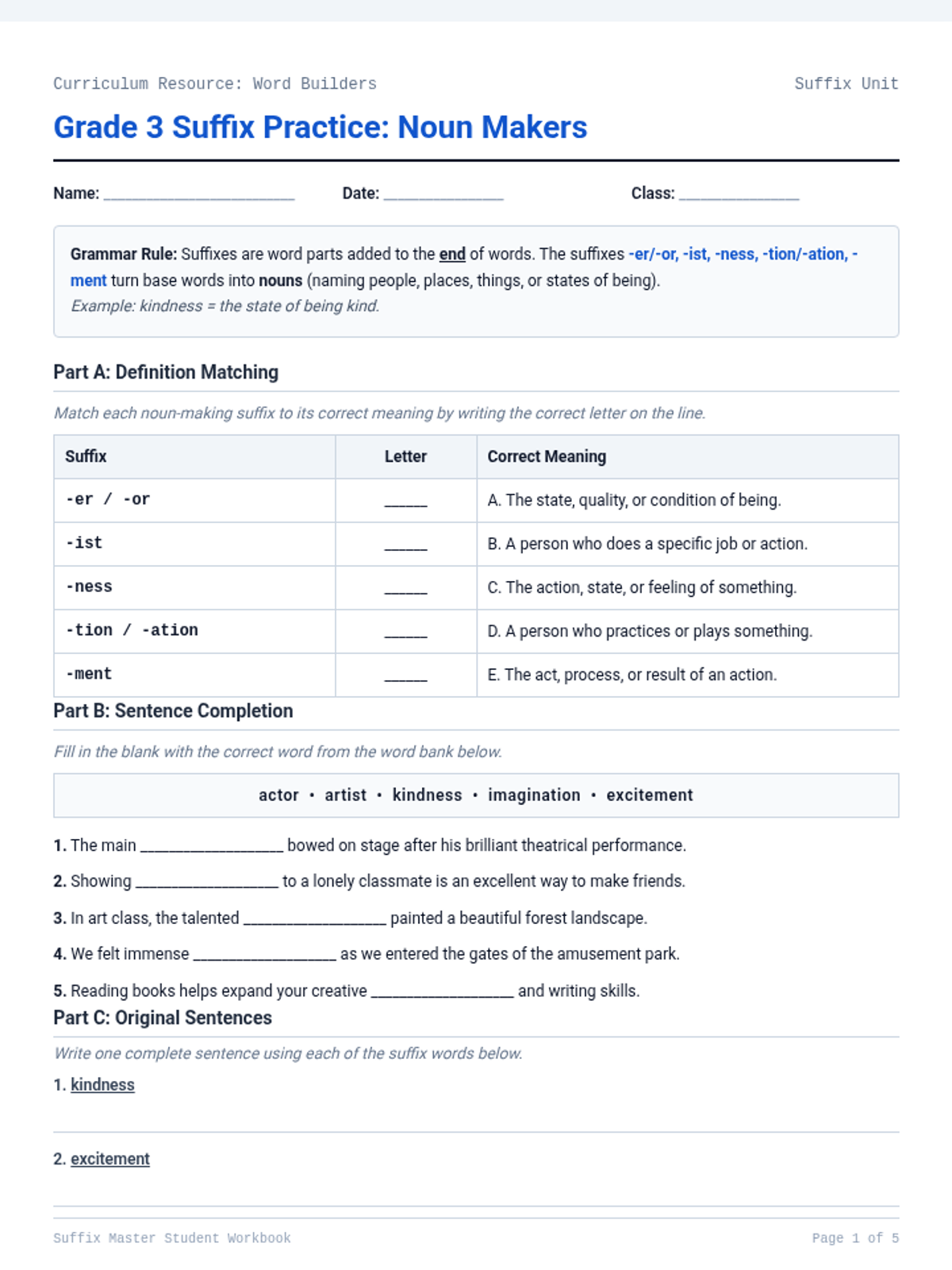
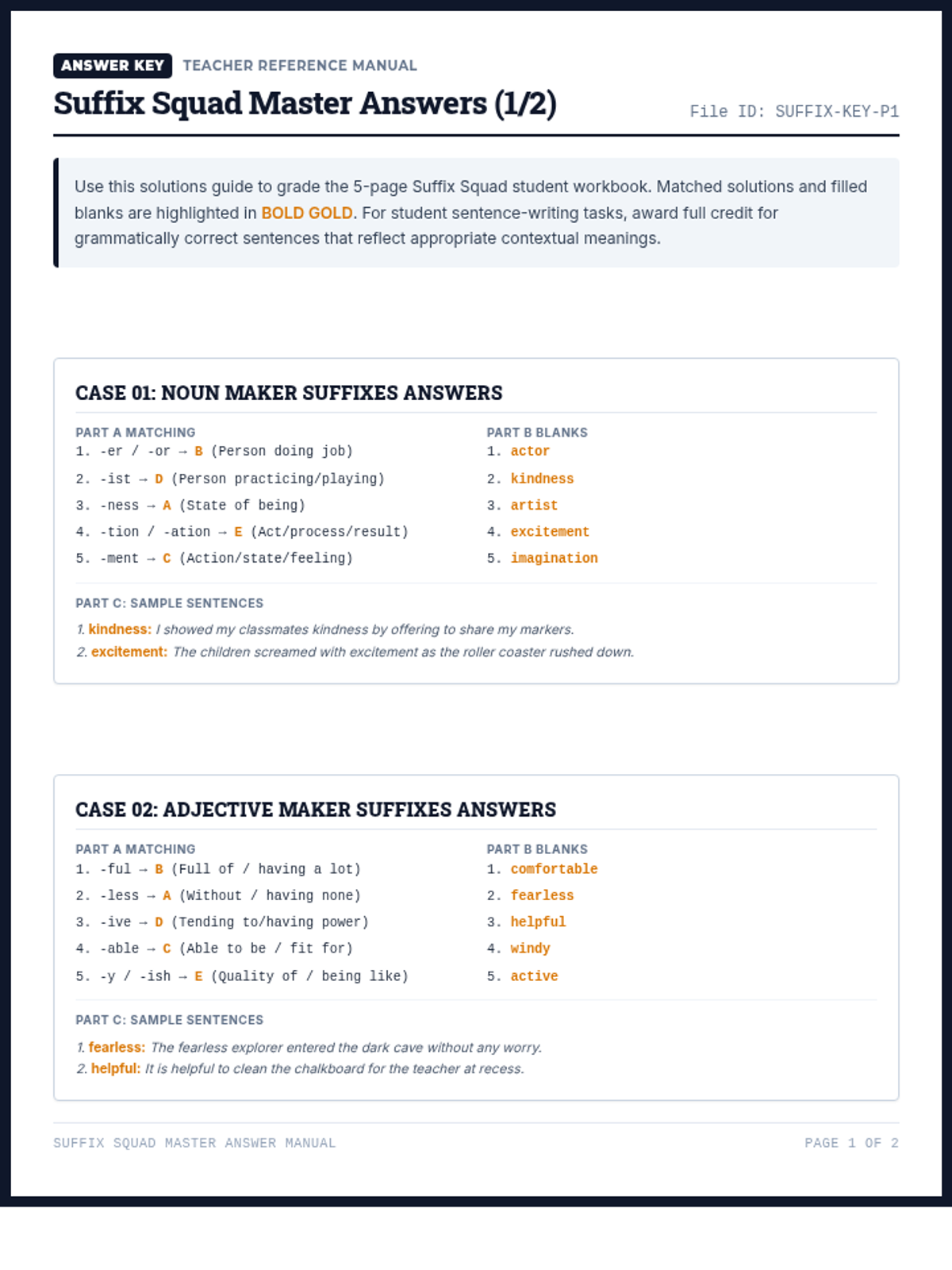
A comprehensive 3rd-grade grammar unit covering essential noun, adjective, verb, and adverb suffixes. Through engaging matching, fill-in-the-blank, and sentence writing exercises, students learn to identify, decode, and use these word parts in worksheets and a workbook.
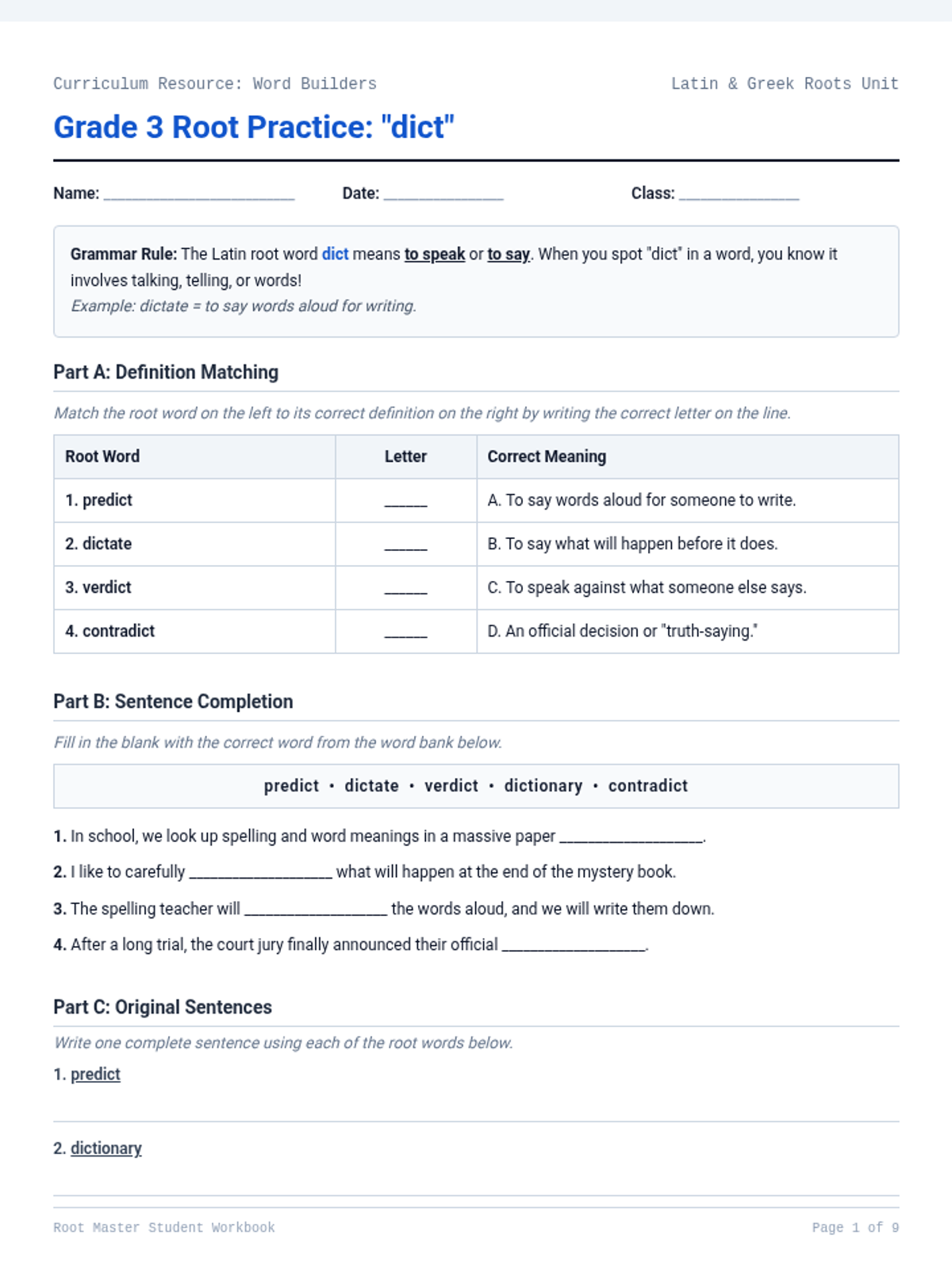
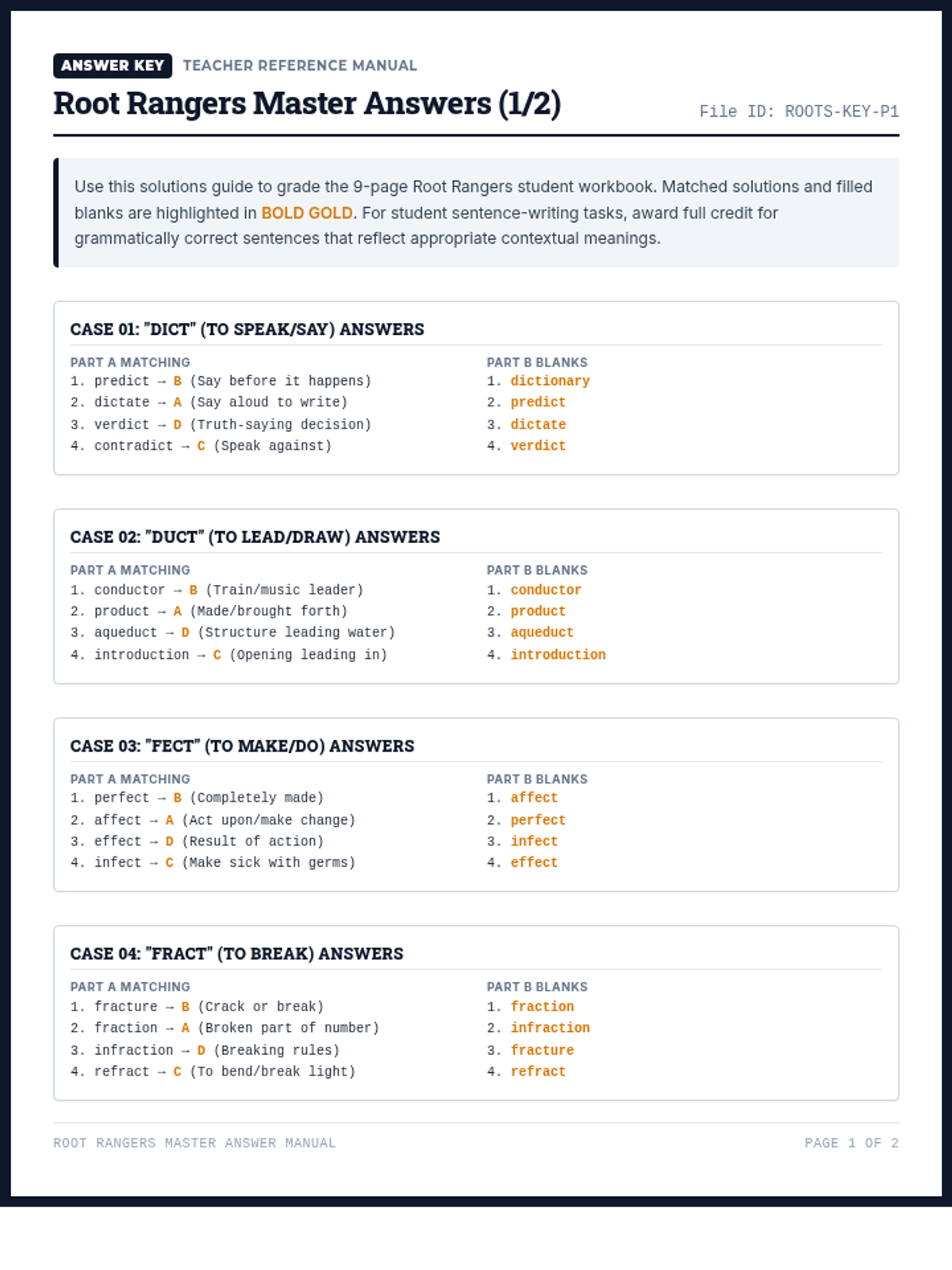
A comprehensive 3rd-grade grammar unit covering essential Greek and Latin roots: dict, duct, fect, fract, junct, struct, min, and spec. Through engaging matching, fill-in-the-blank, and sentence writing exercises, students learn to identify, decode, and use these word parts in worksheets and a workbook.
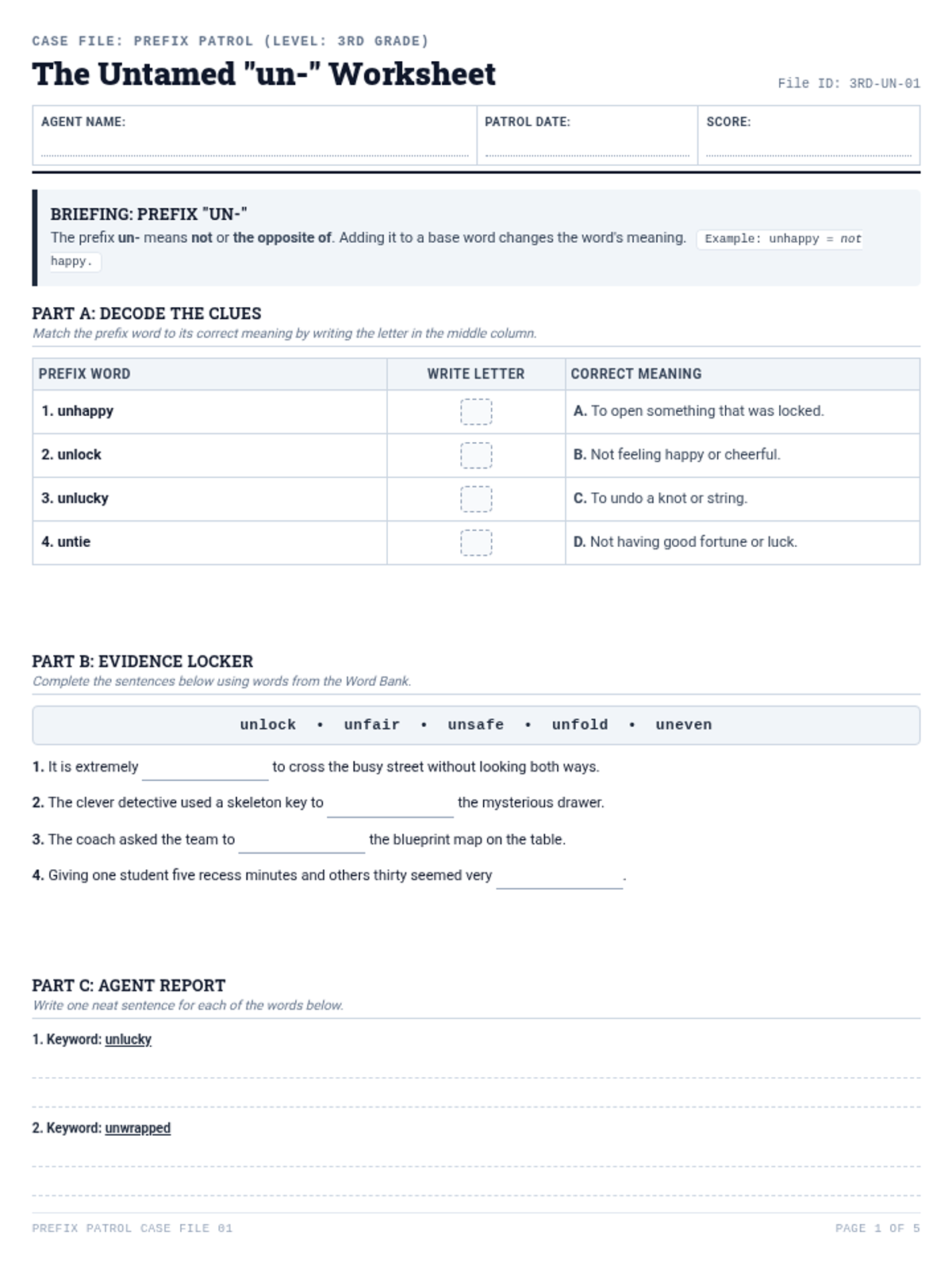
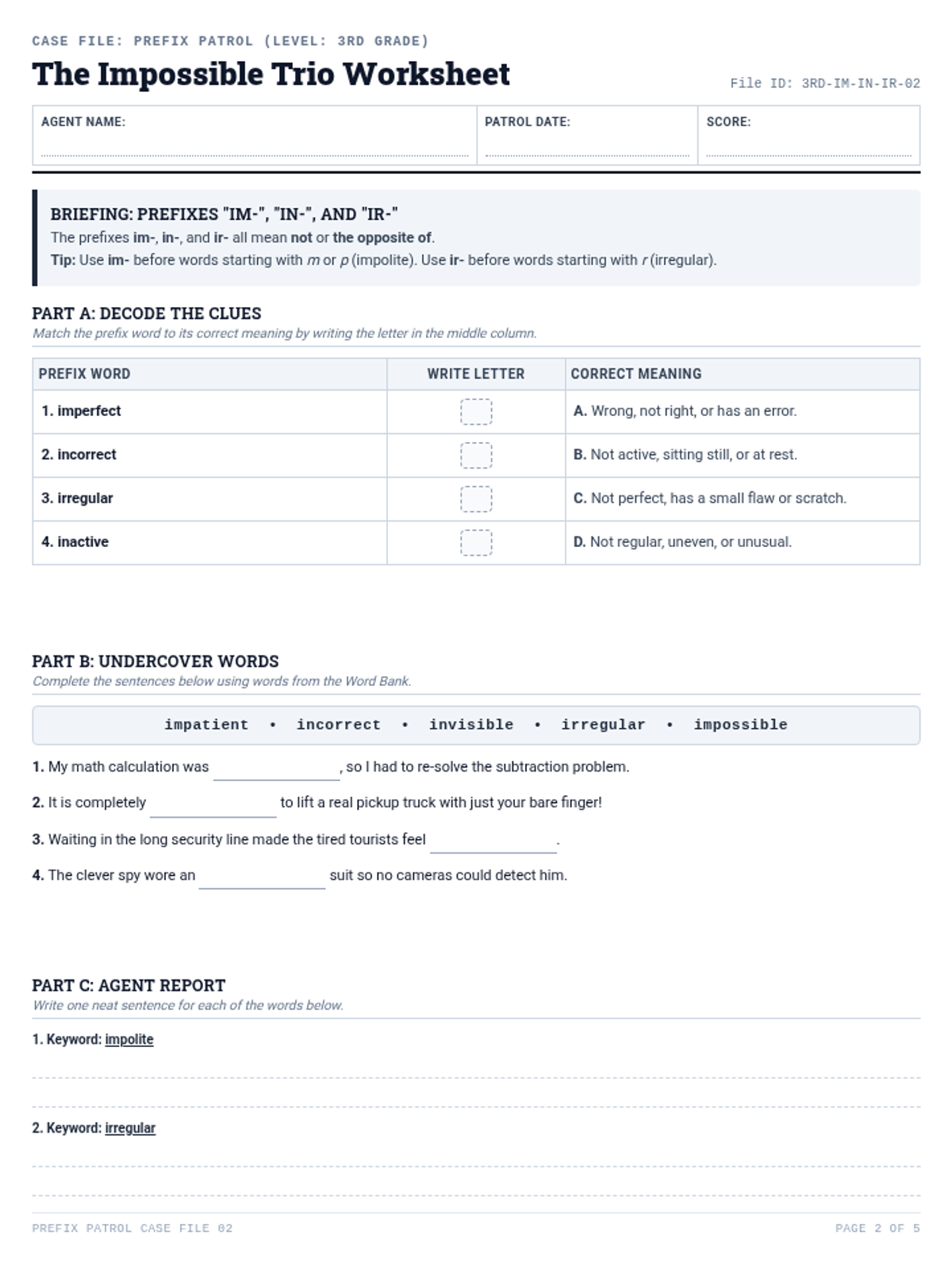
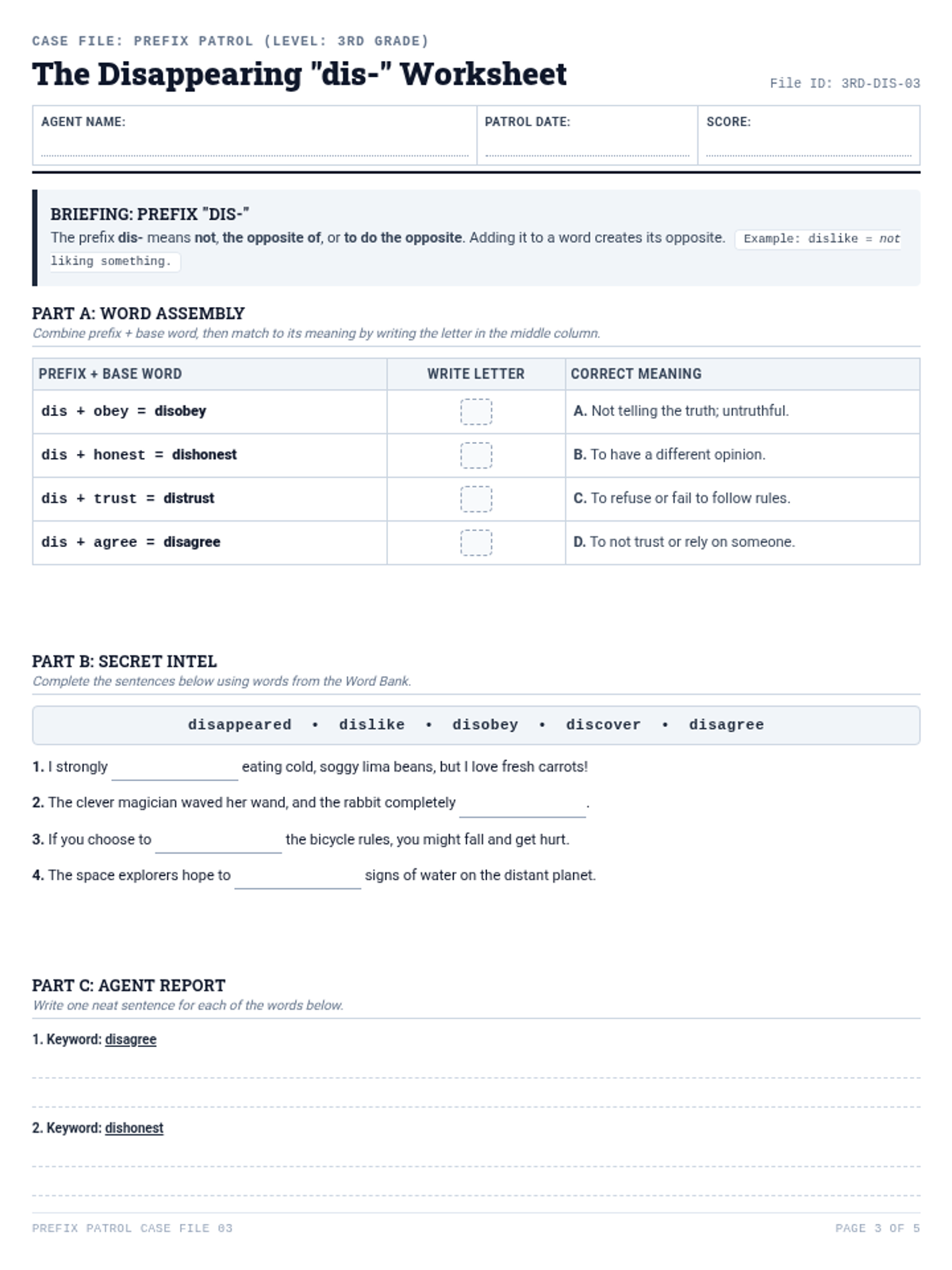
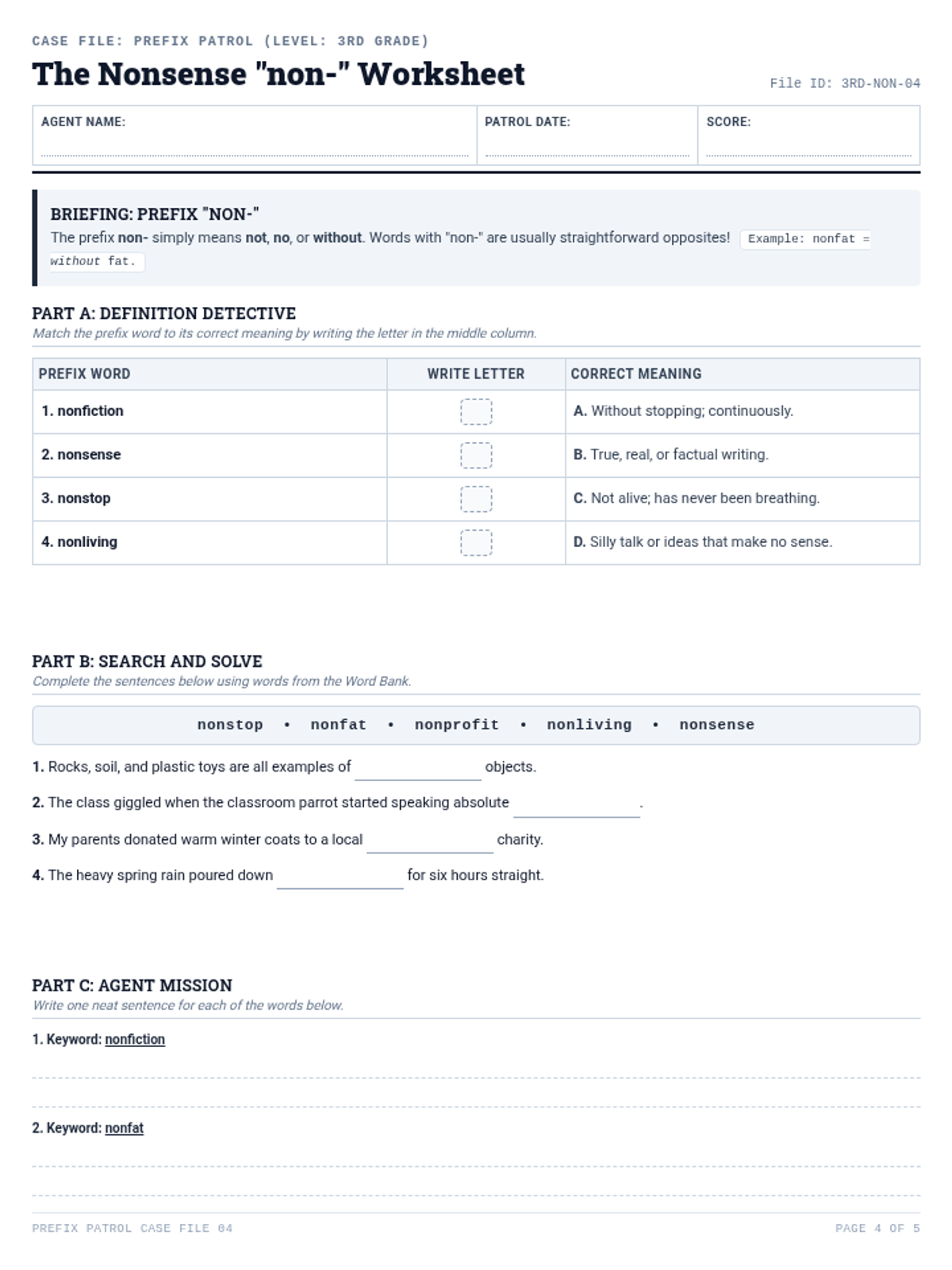
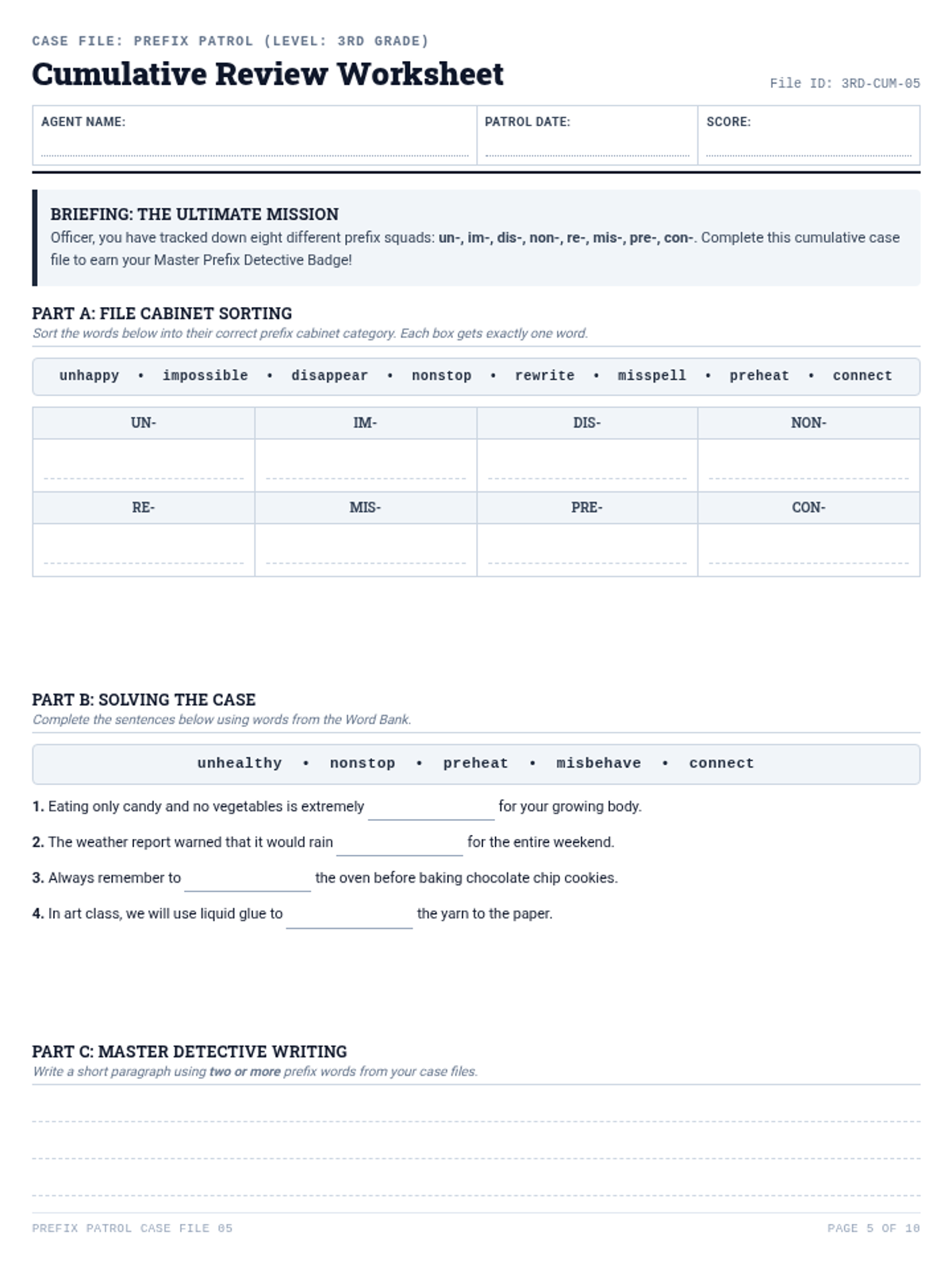
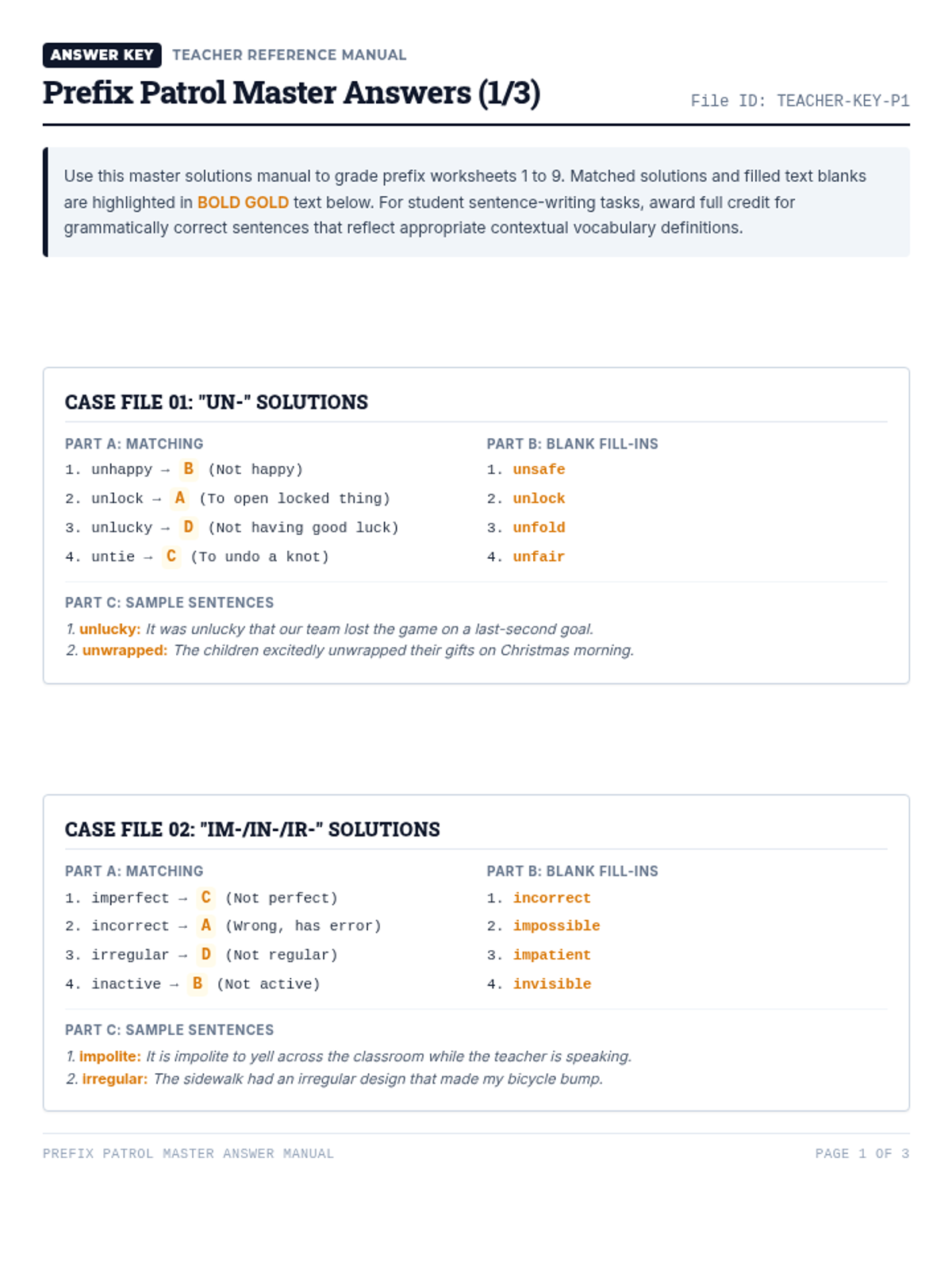
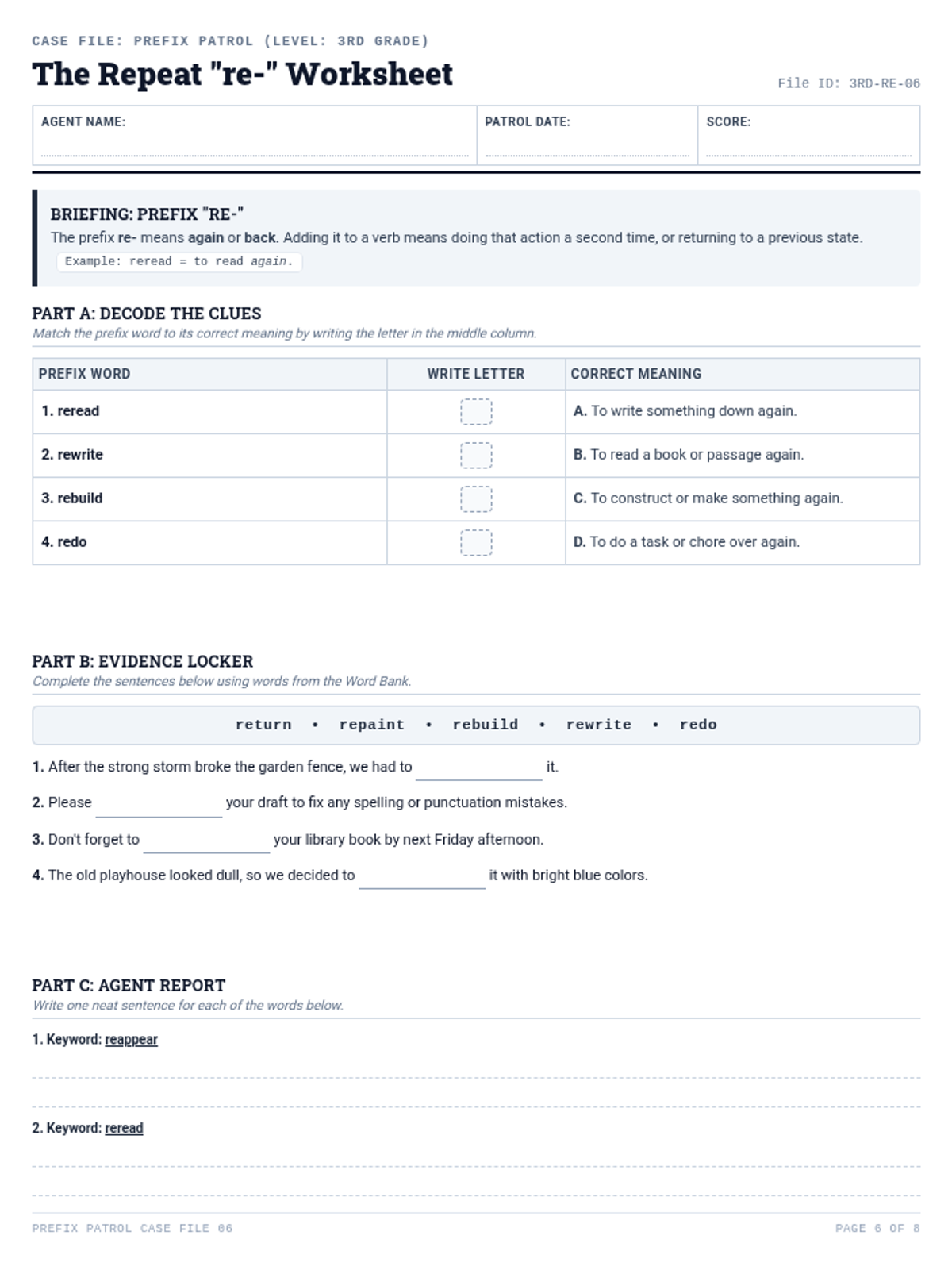
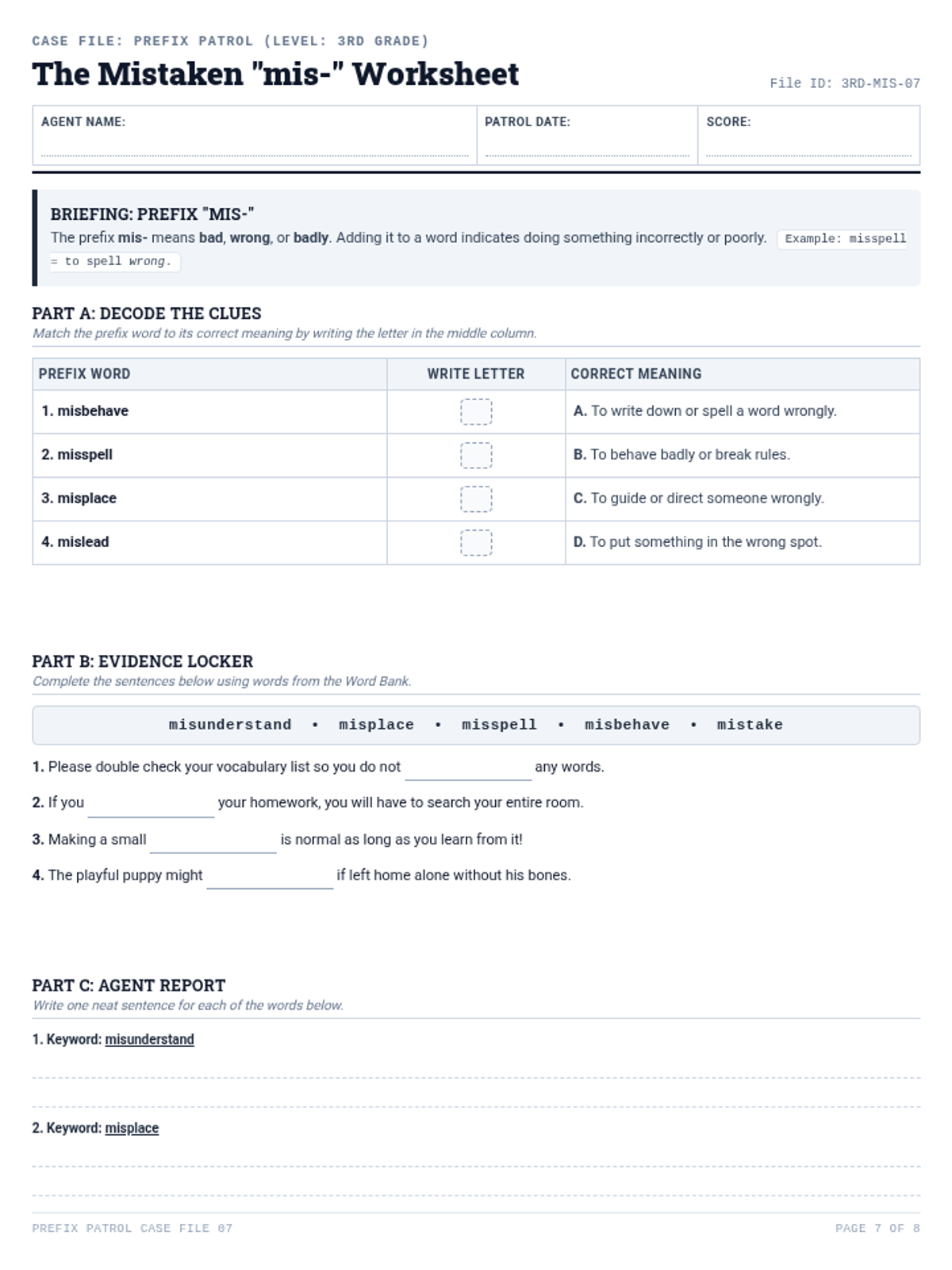
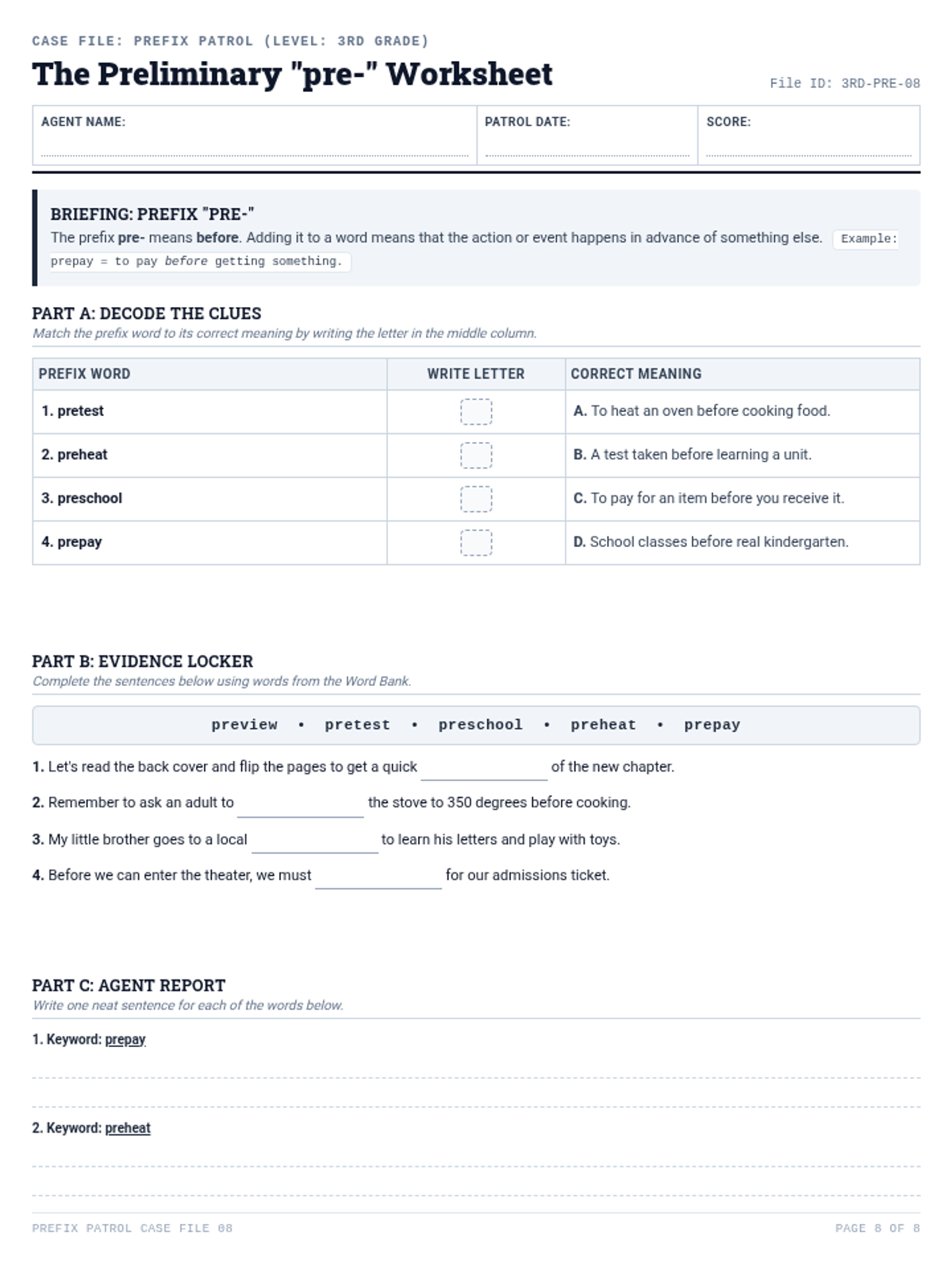
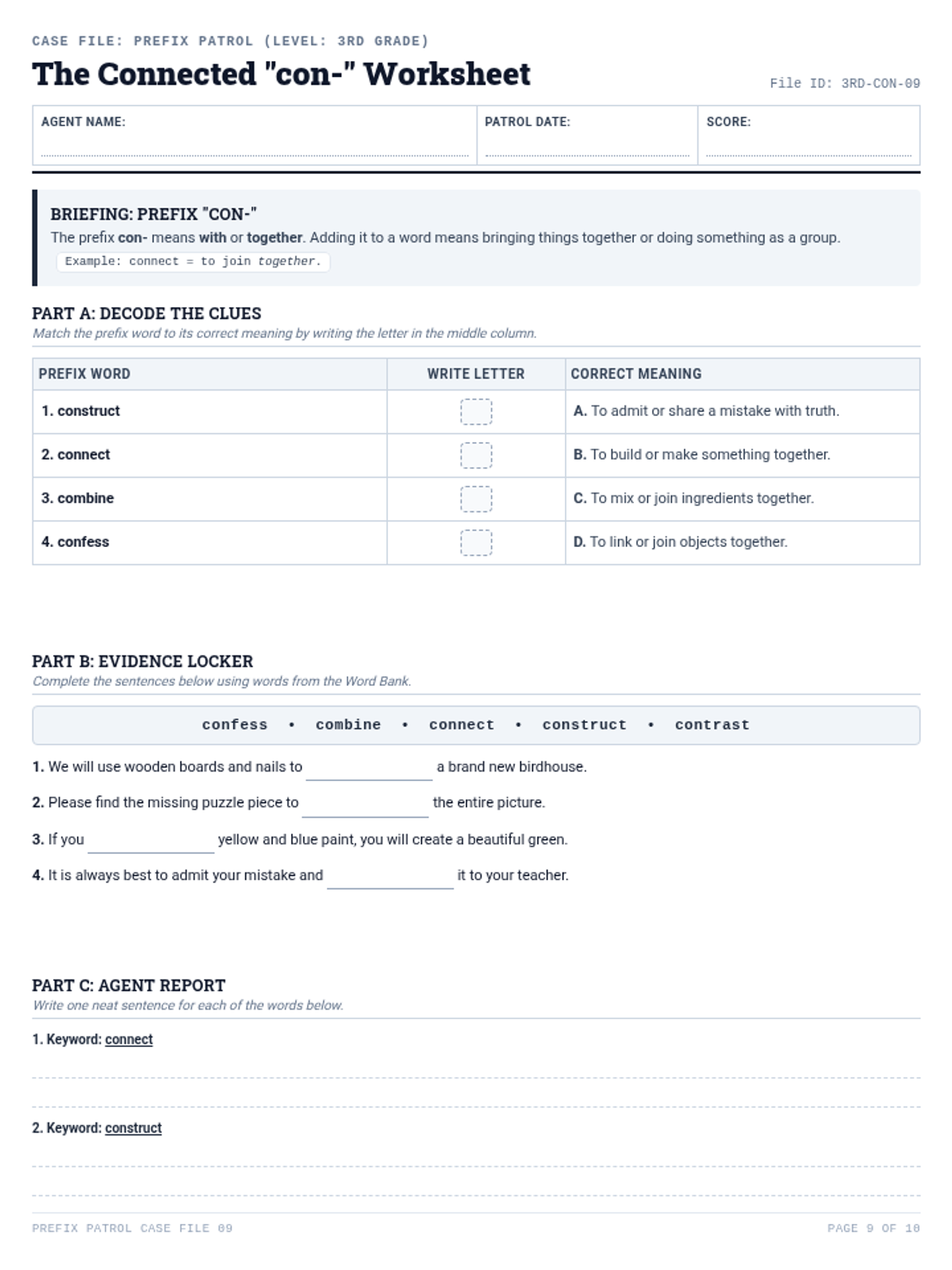
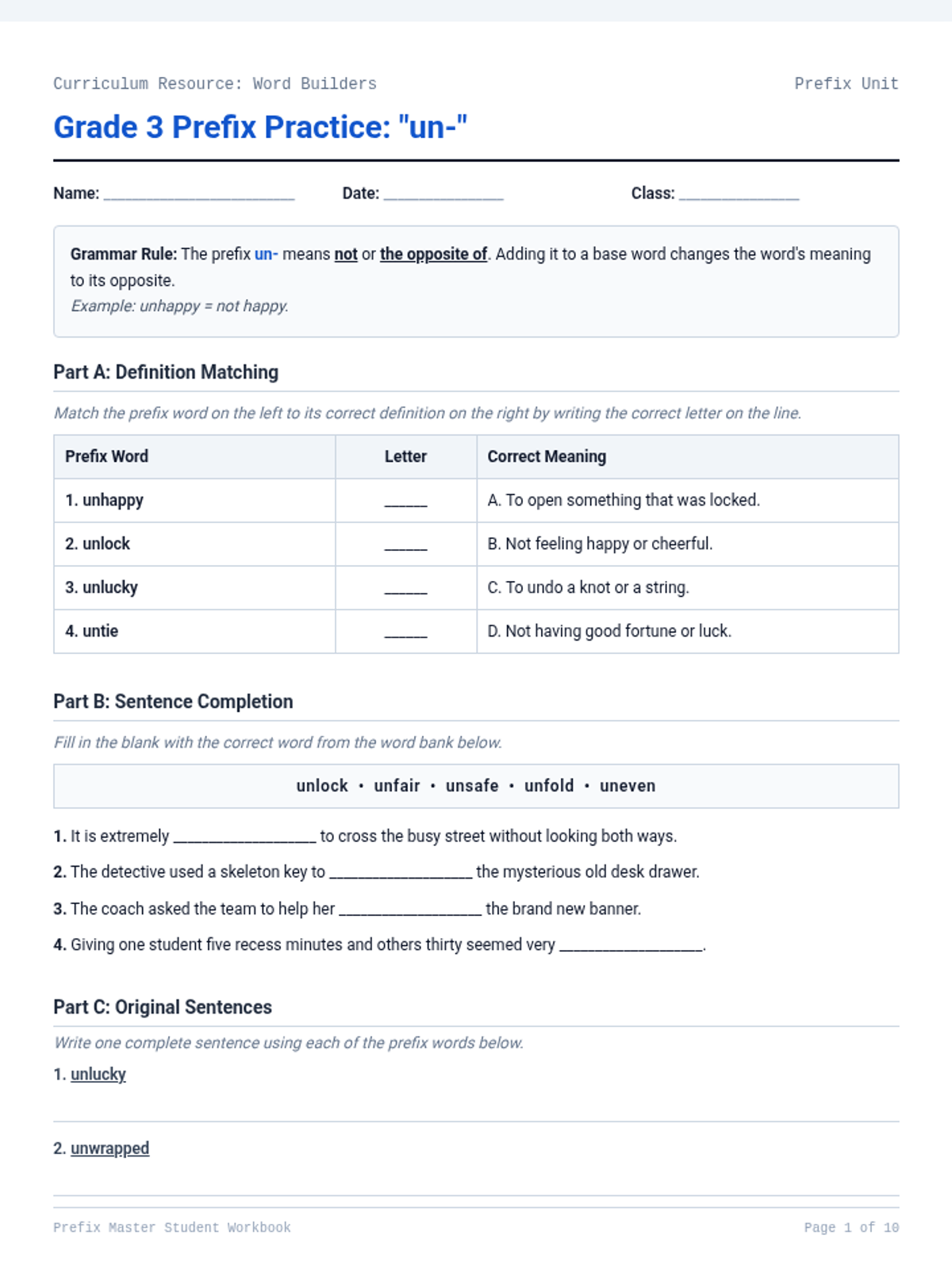
A comprehensive 3rd-grade grammar unit covering essential prefixes: un-, im-/in-/ir-, dis-, non-, re-, mis-, and pre-. Through an engaging 'Prefix Patrol' detective theme, students learn to identify, decode, and use these word parts in worksheets and cumulative review keys.
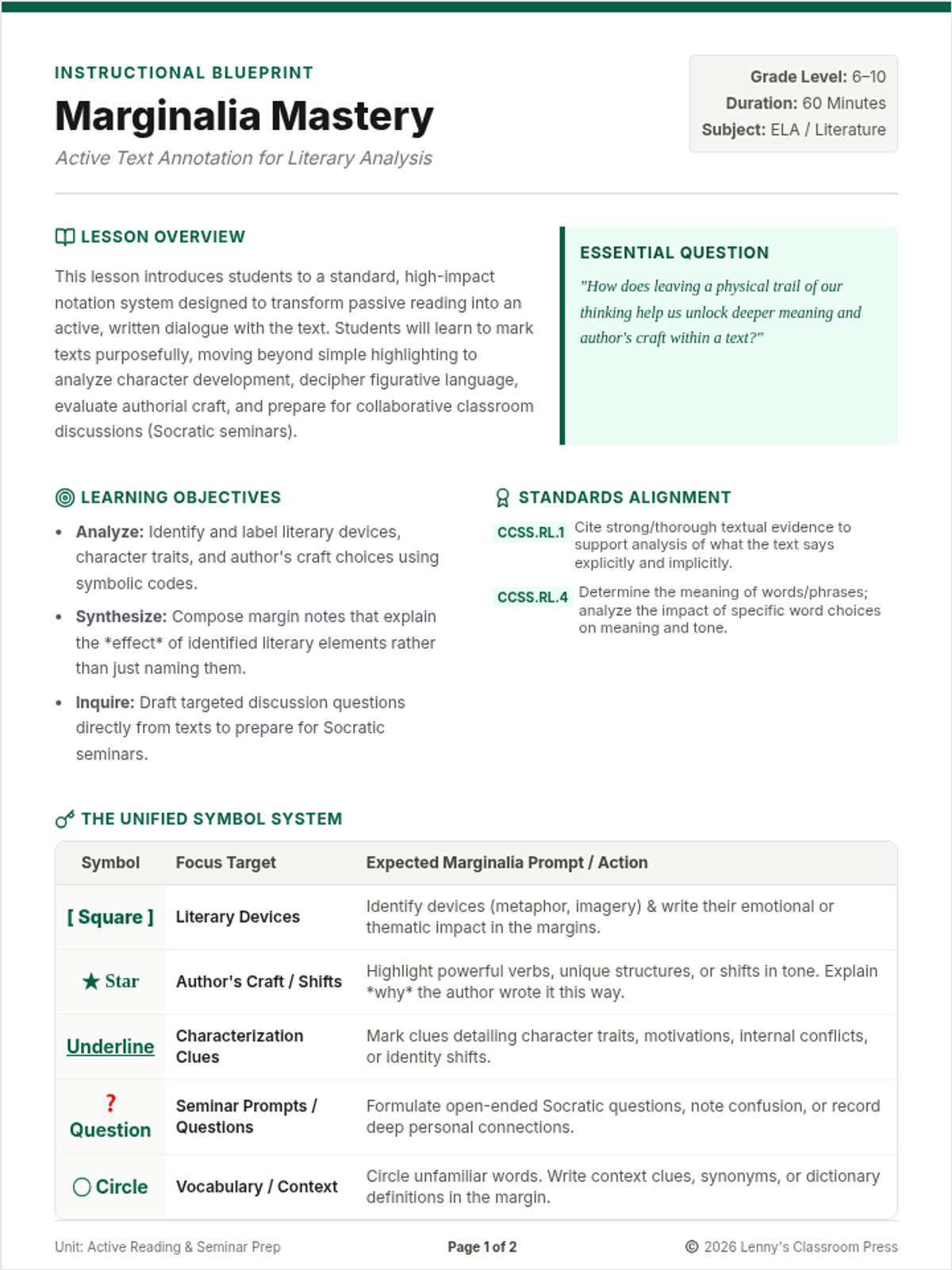
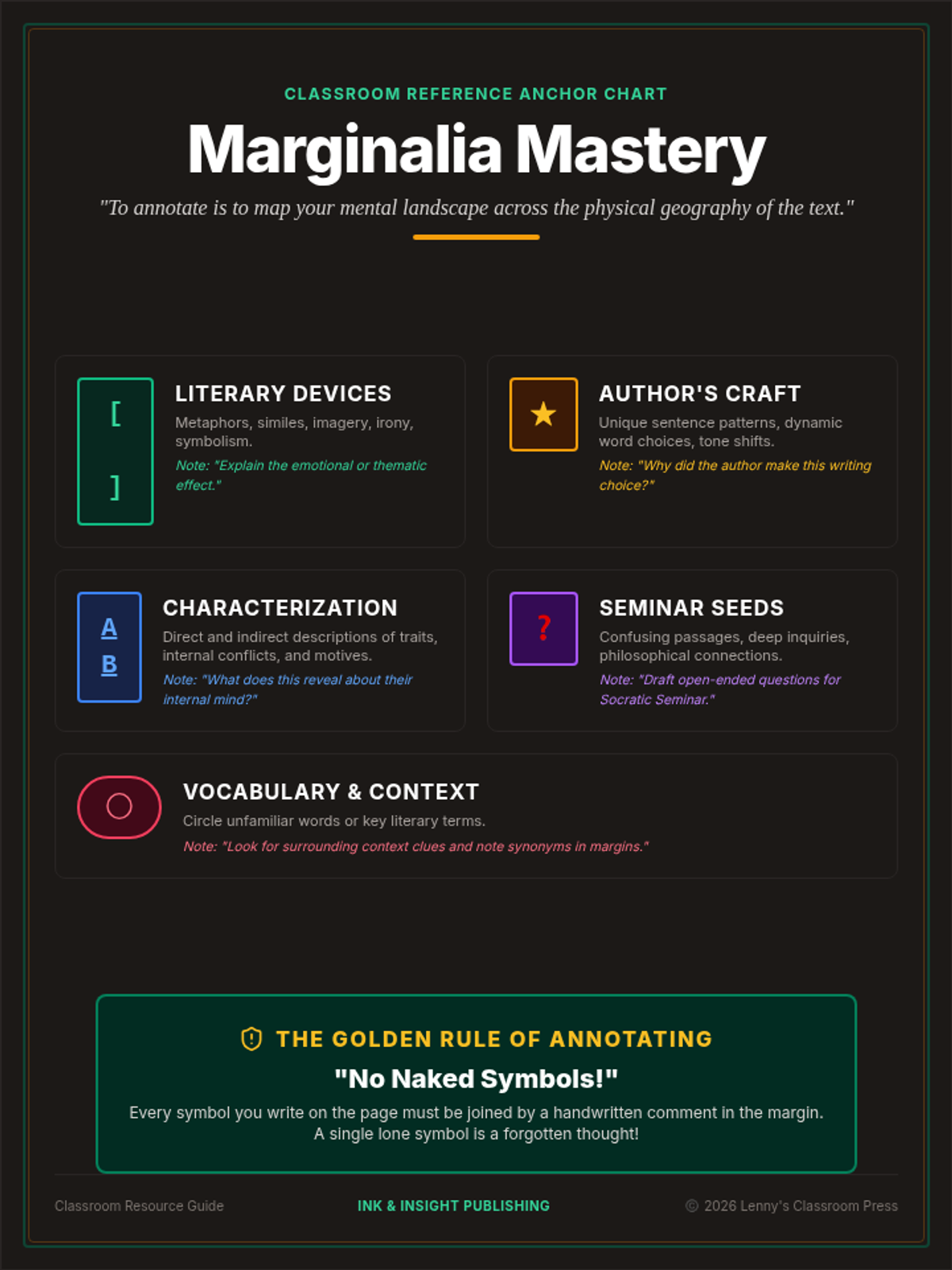
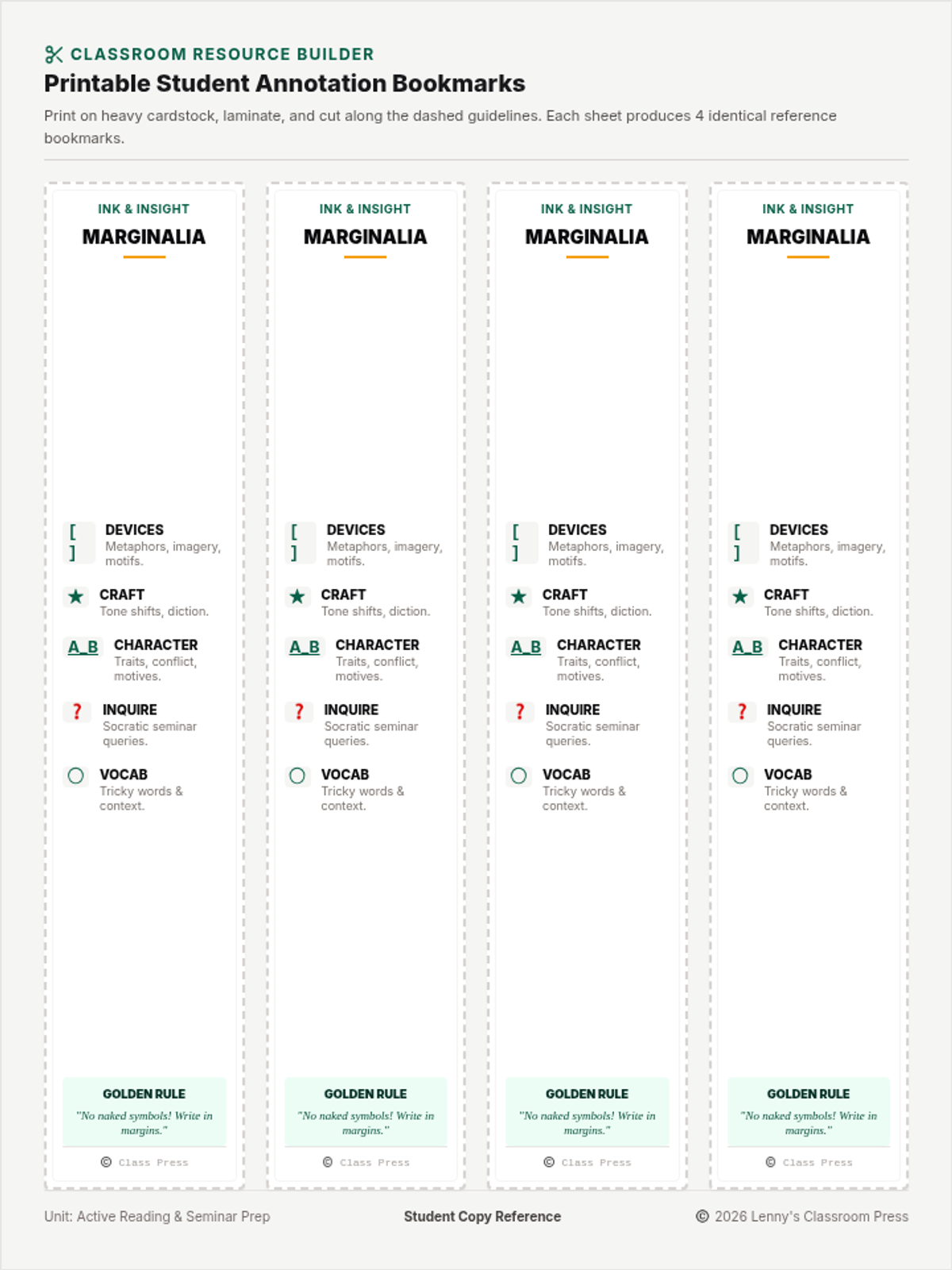
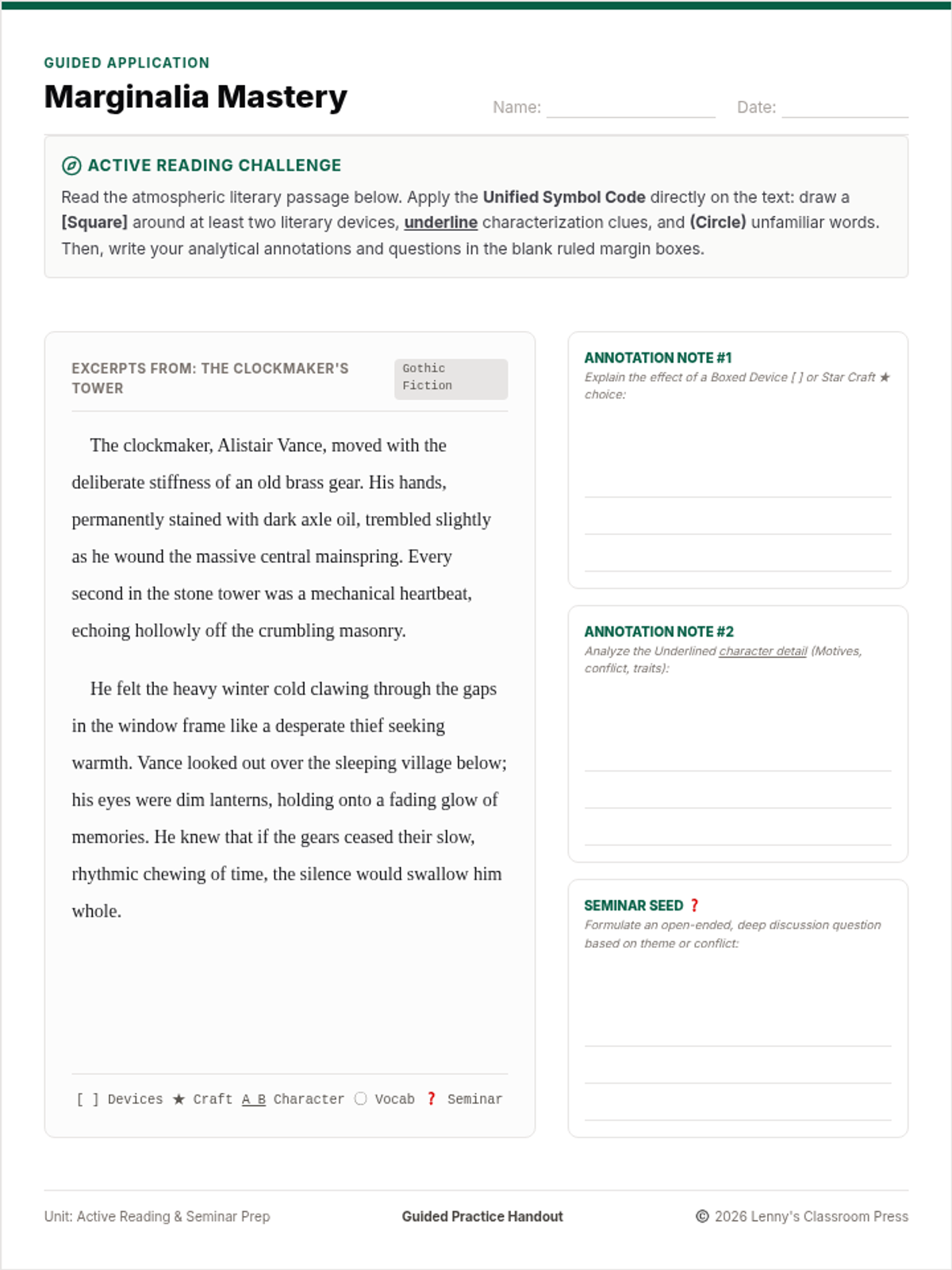
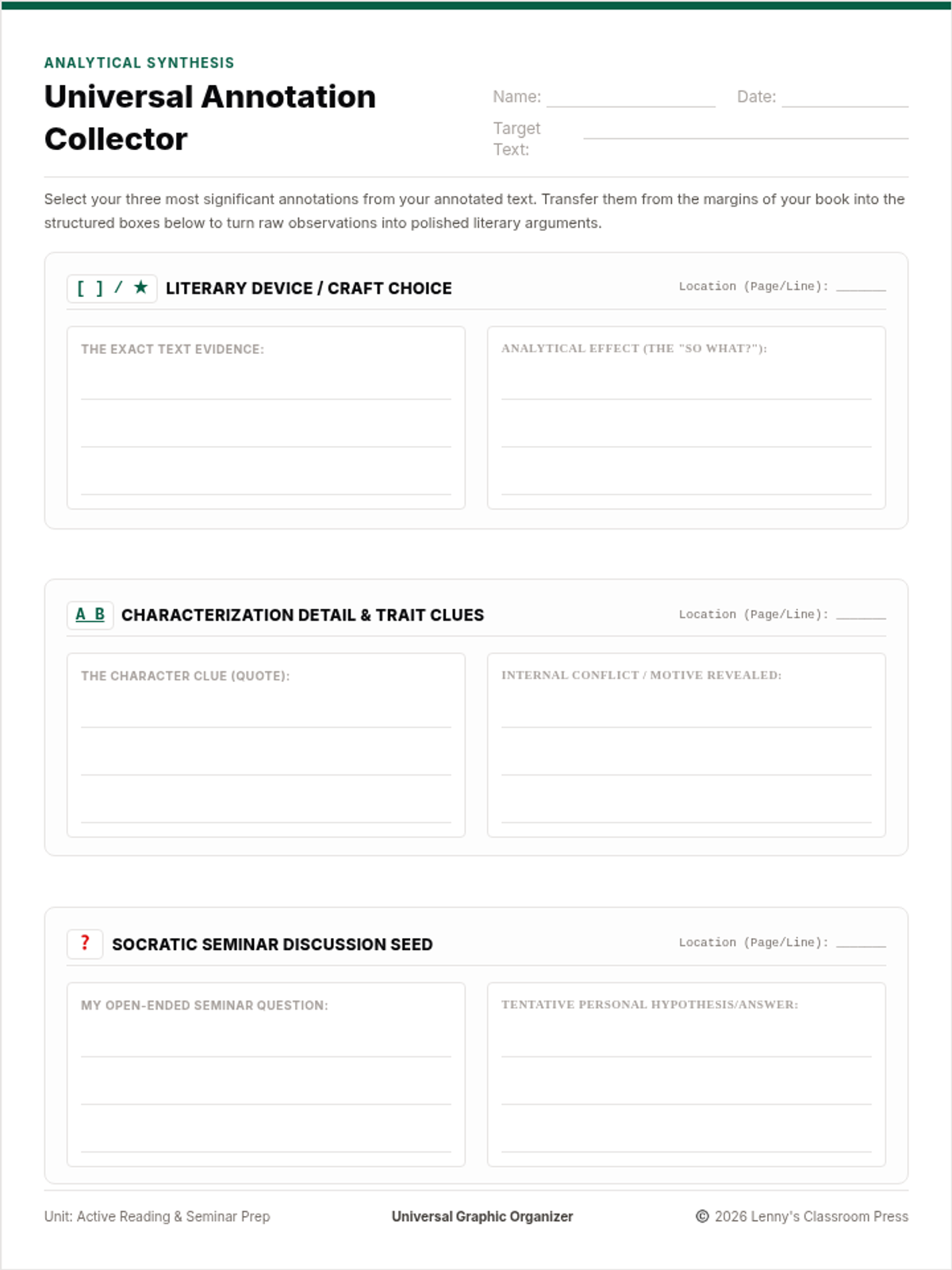
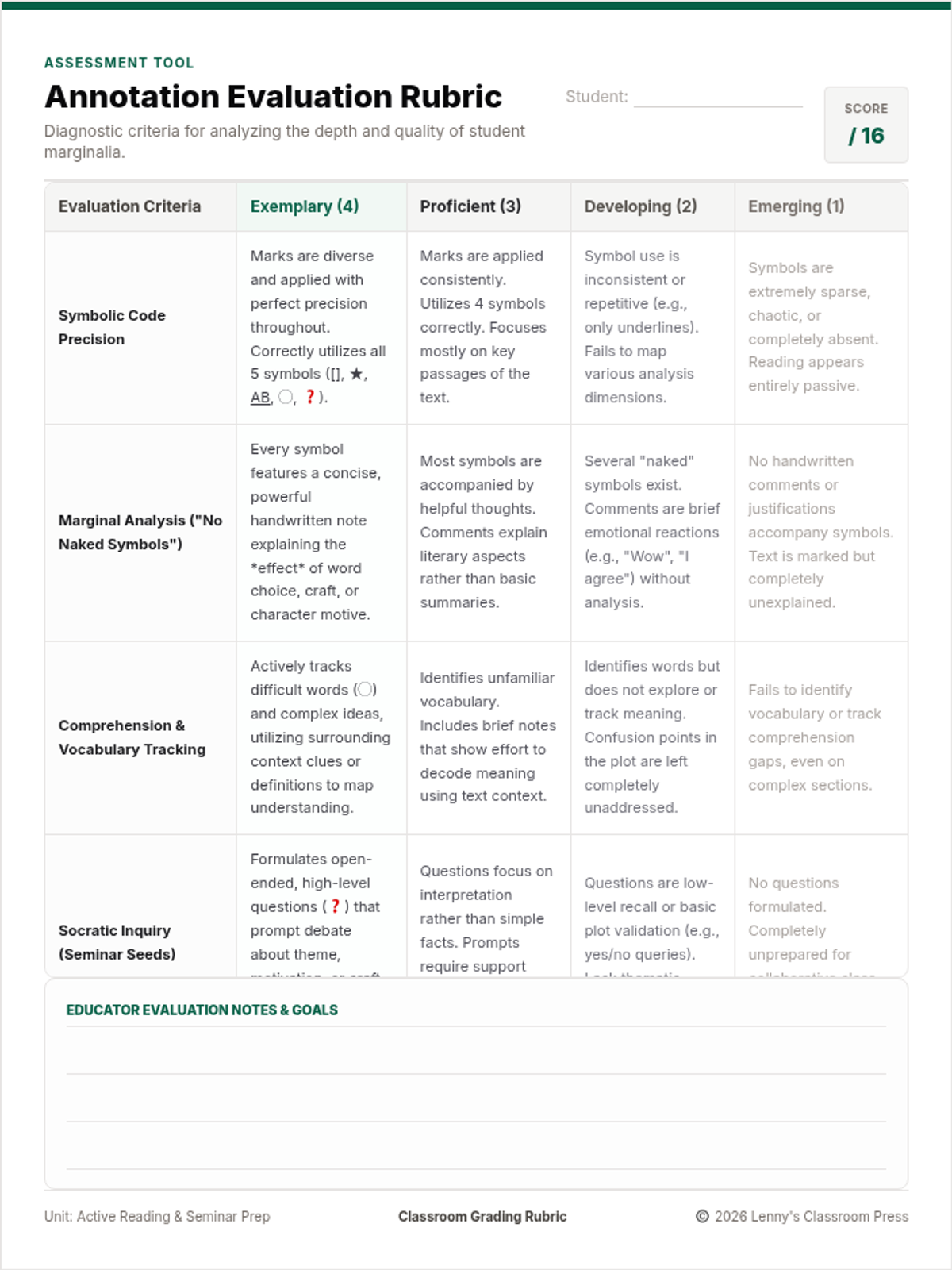
An immersive introductory lesson on active text annotation, focusing on identifying literary devices, analyzing author's craft, and tracking characterization. Students learn to use a unified code of symbols to turn reading from a passive activity into an active dialogue with the text.
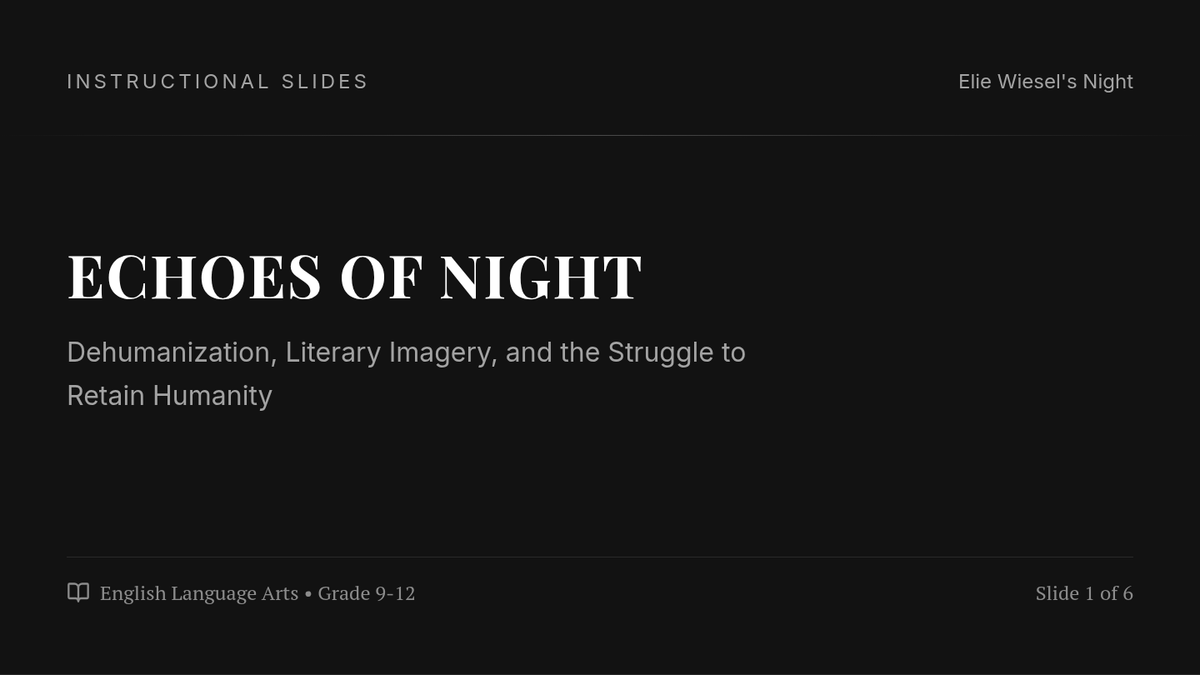
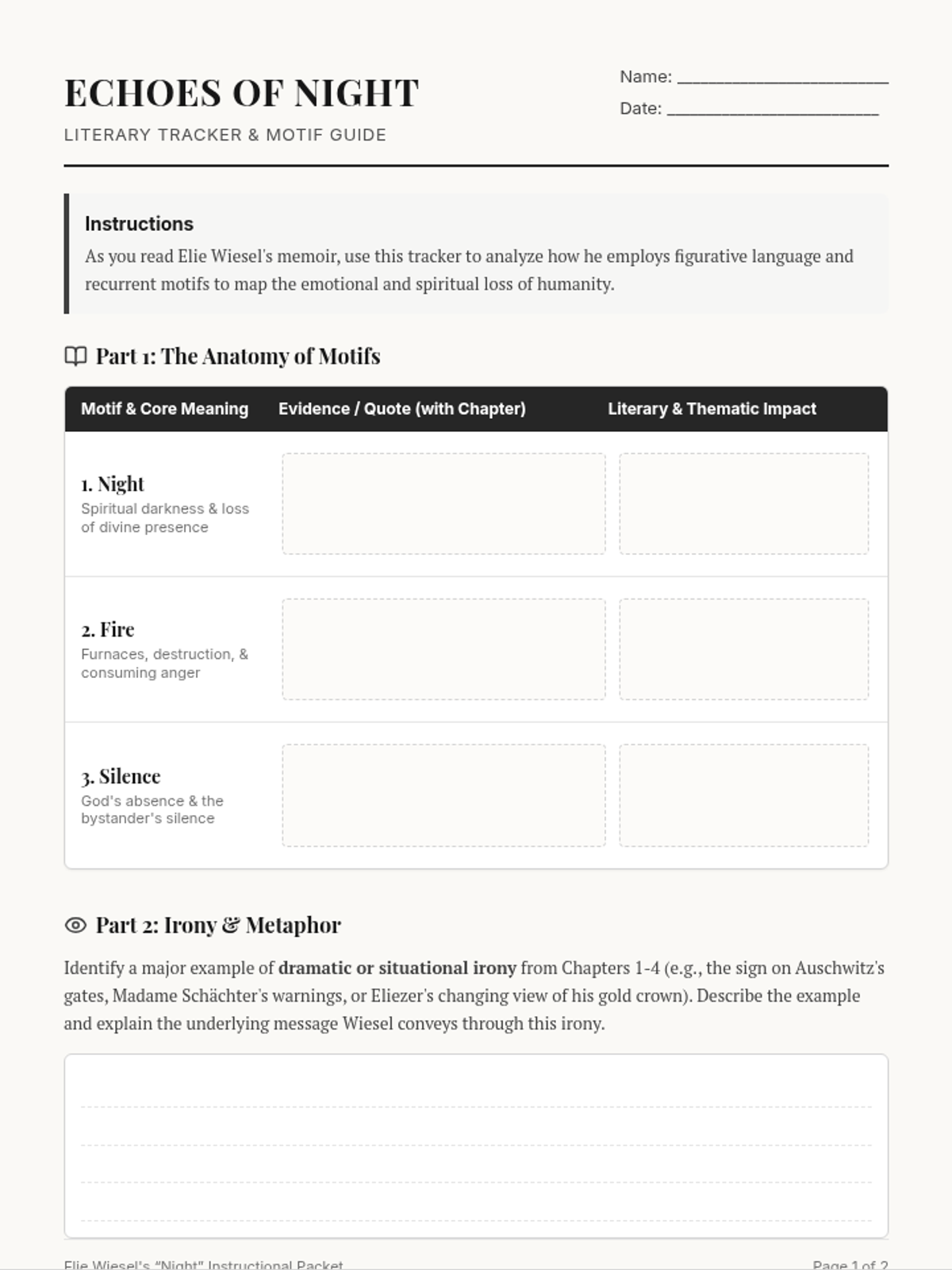
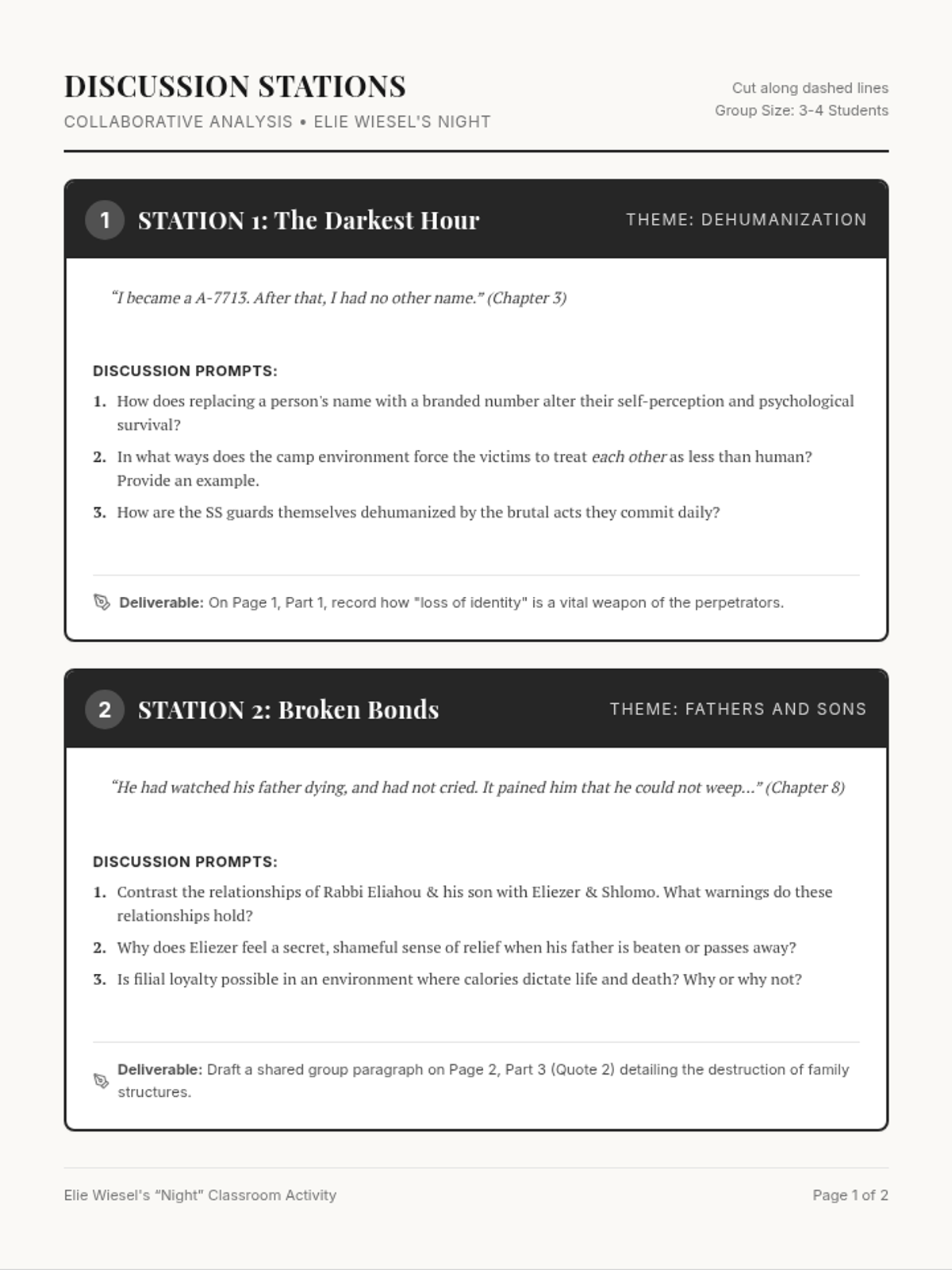
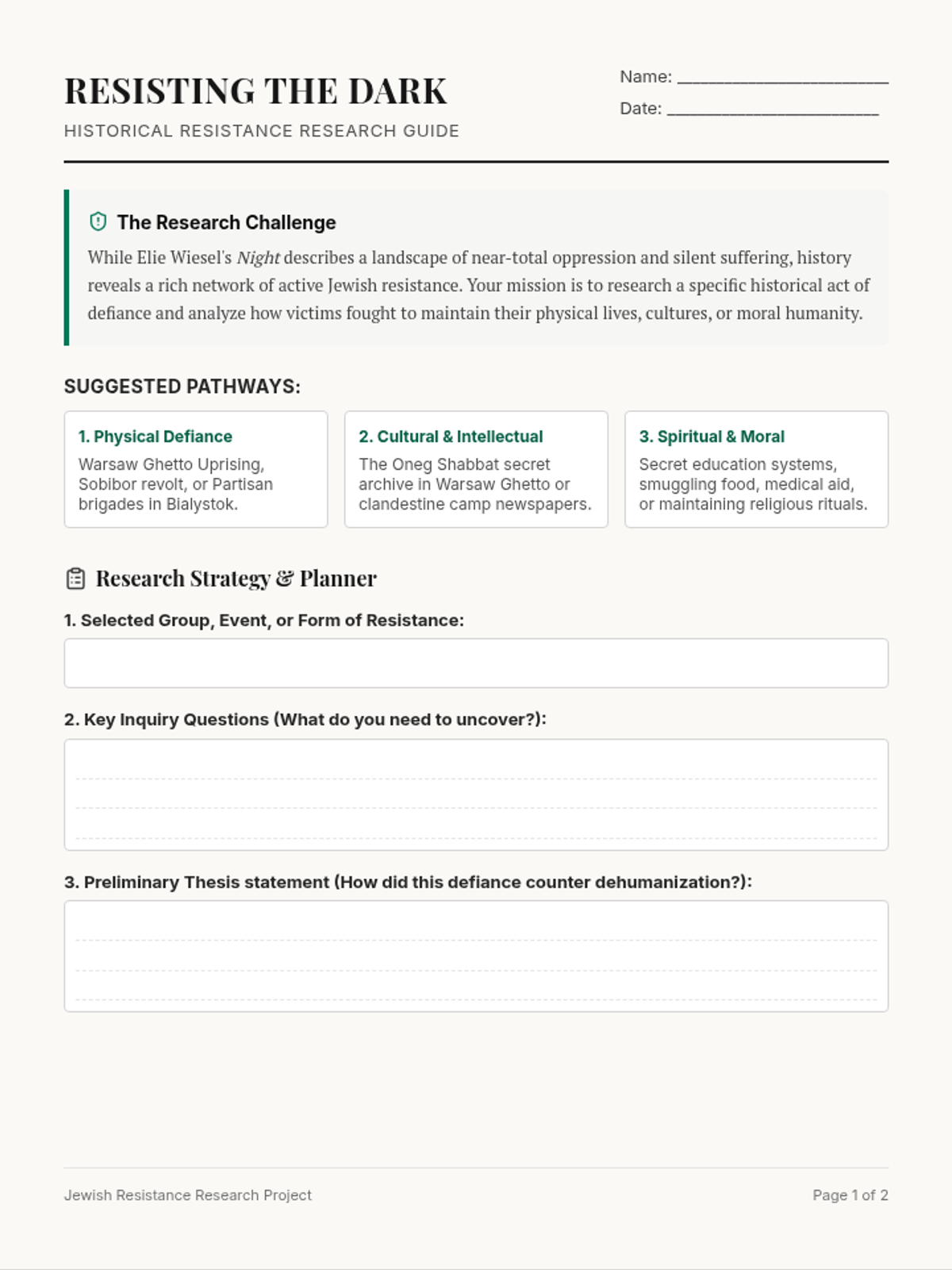
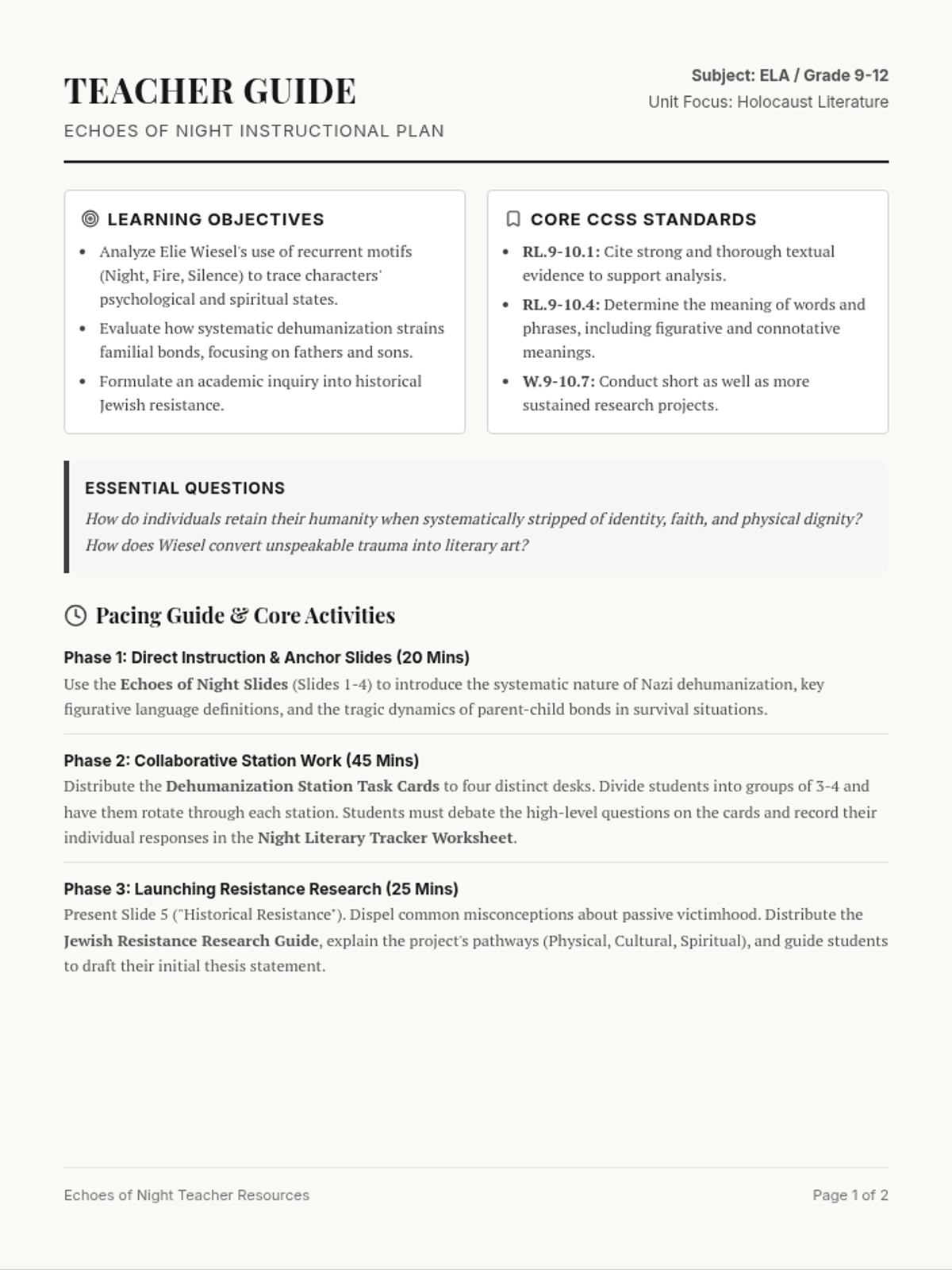
A comprehensive instructional bundle for Elie Wiesel's *Night*, exploring the systematic loss of humanity under Nazi persecution, tracking complex figurative language and motifs, and researching historical Jewish resistance. Includes an instructional slide deck, station task cards, a research project guide, and a student literary tracker.
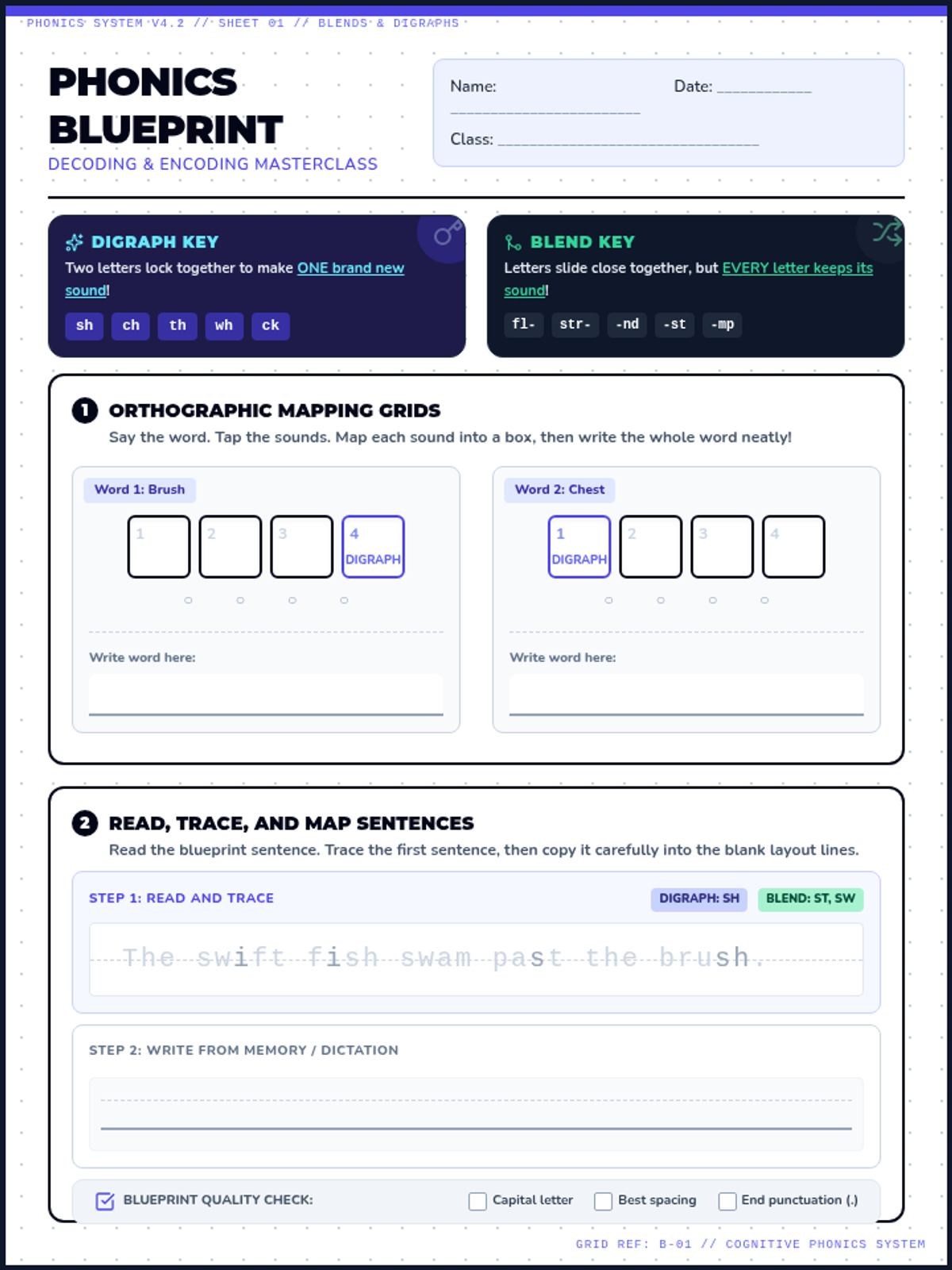
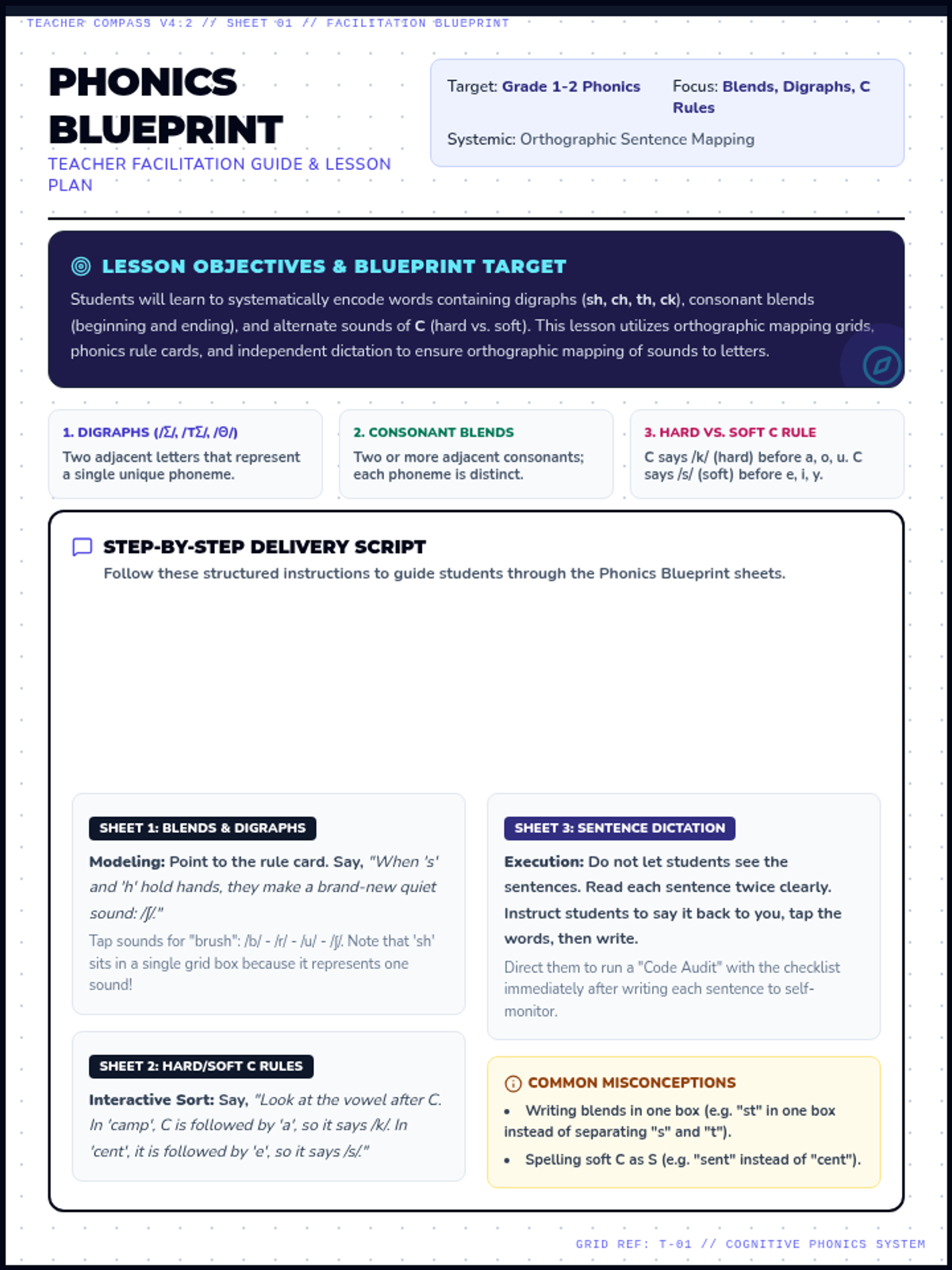
A structured phonics lesson focused on encoding sentences with digraphs, consonant blends (beginning and ending), and hard vs. soft C. Includes rule-based worksheets with spelling grids and self-monitoring checklists.
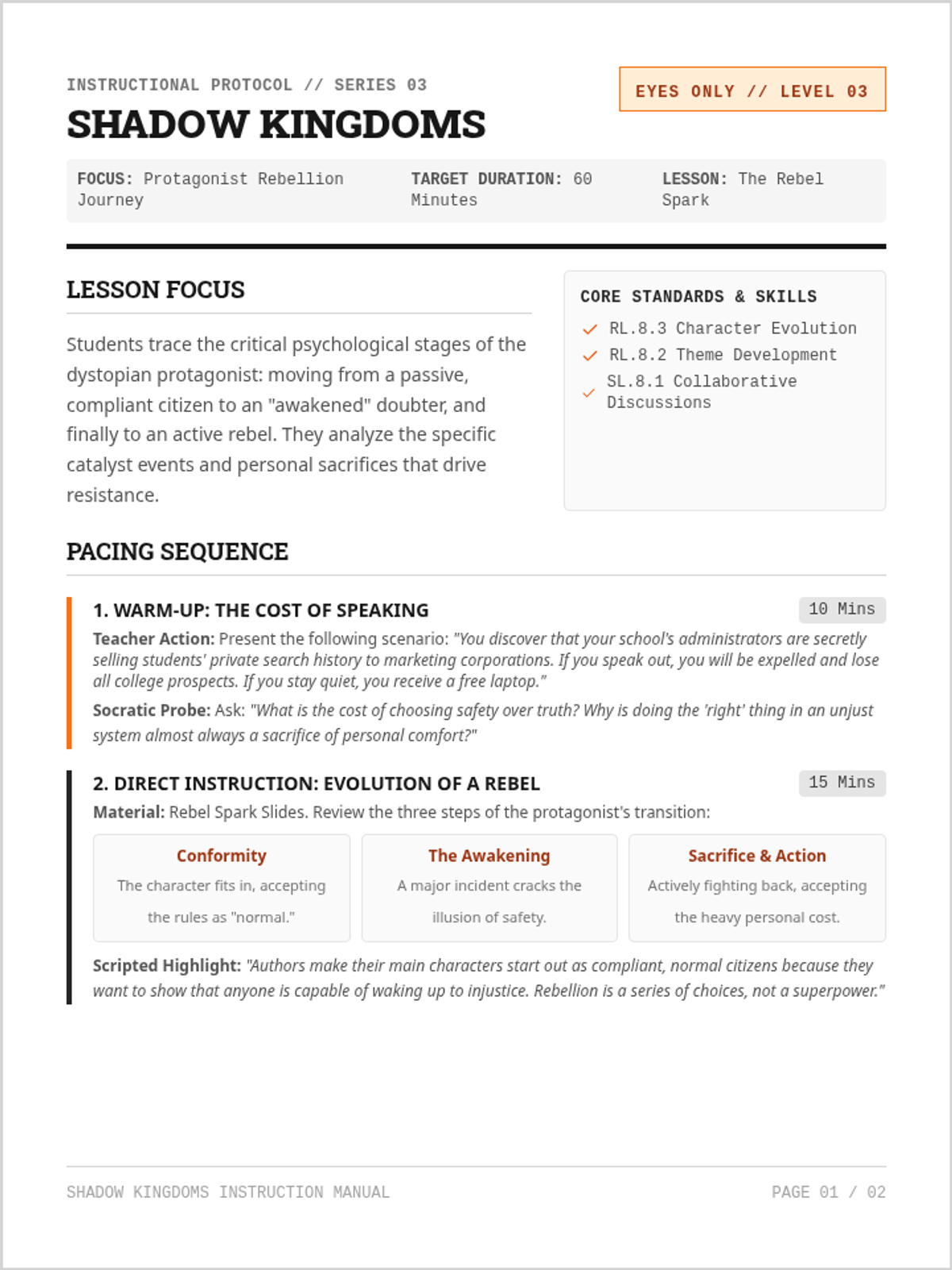
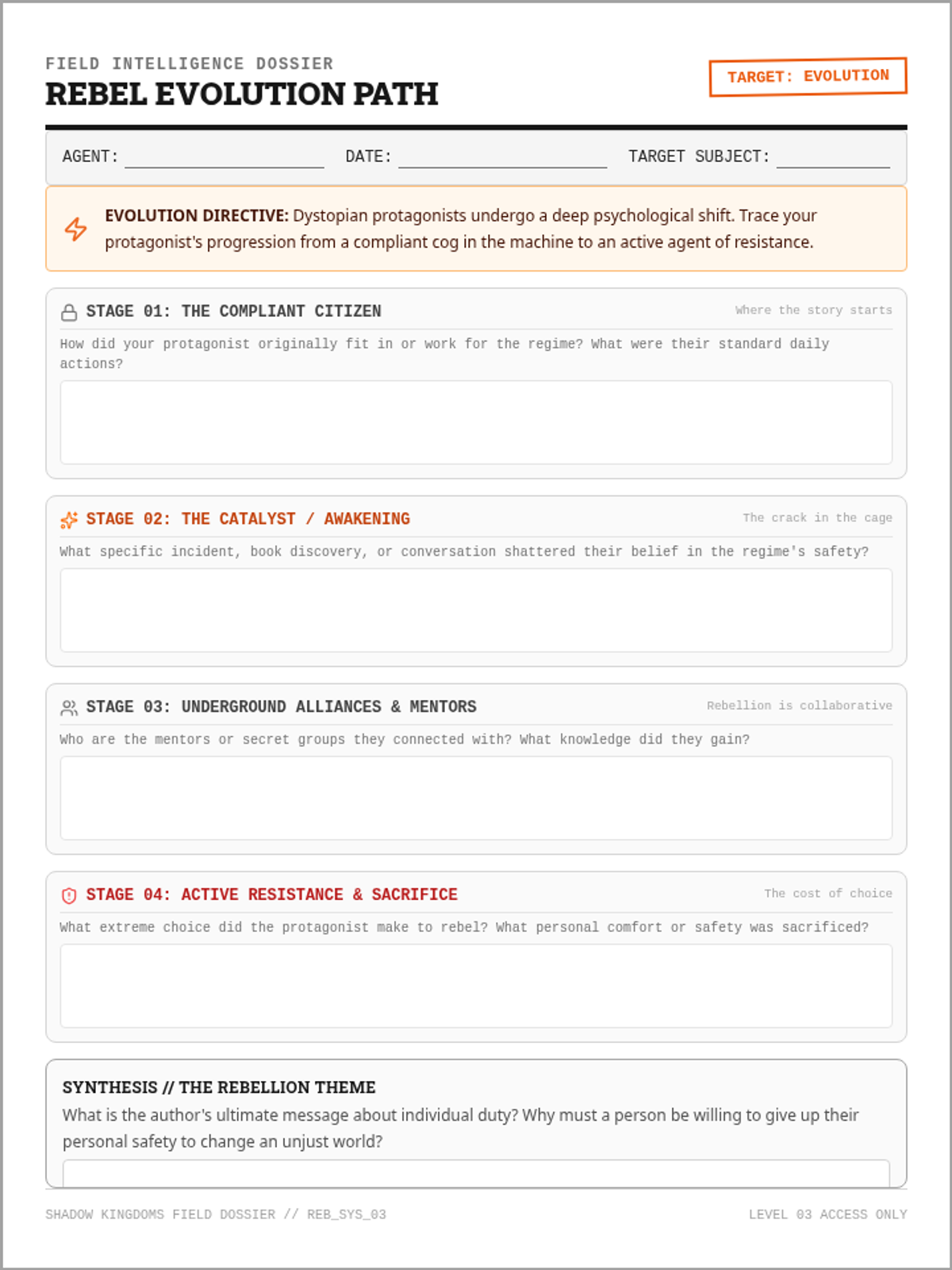
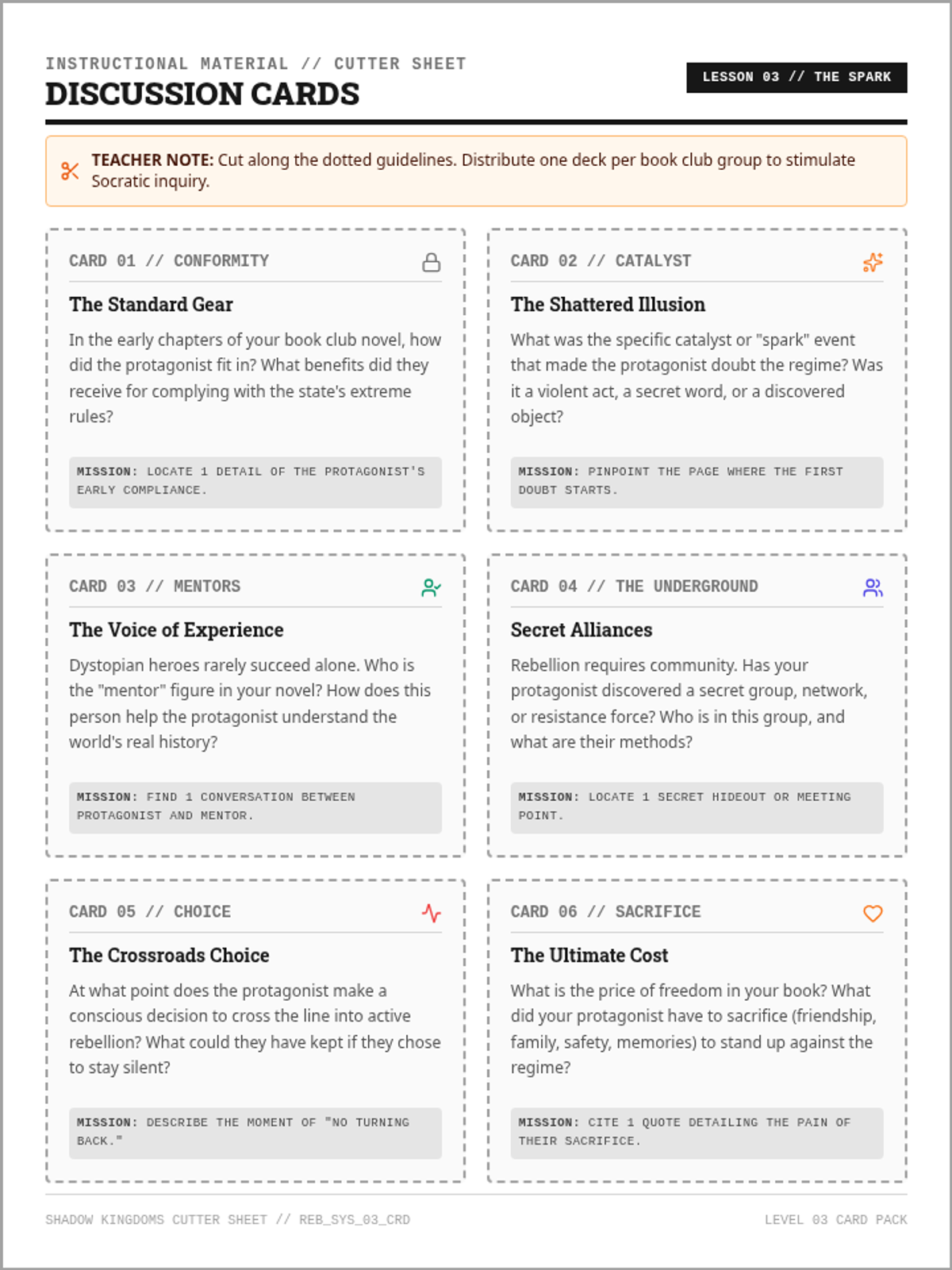
Trace the protagonist's development from a compliant citizen to an awakened rebel. Students map the critical turning points, alliances, and sacrifices that drive resistance against the regime, applying these insights to their book club novels.
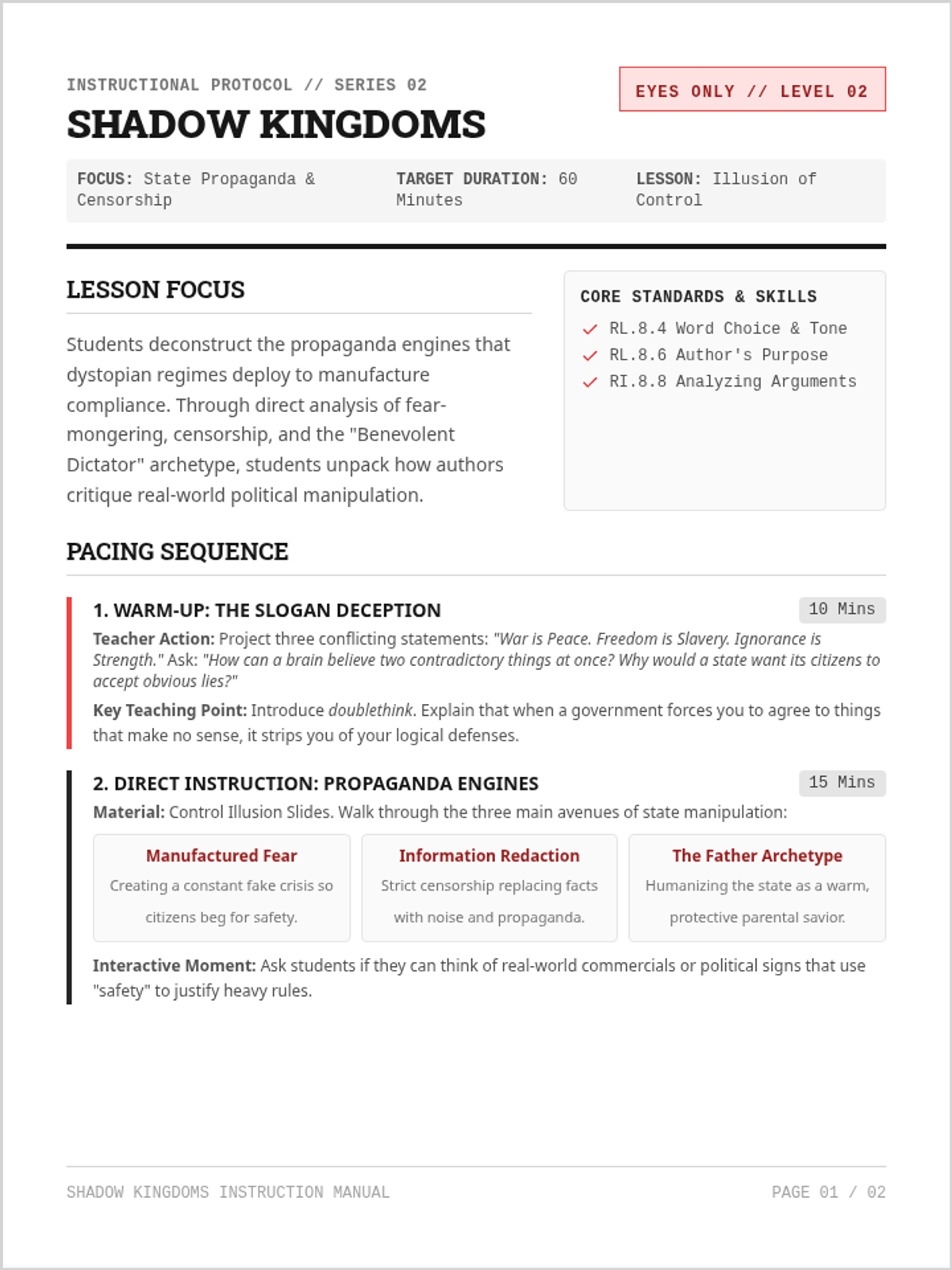
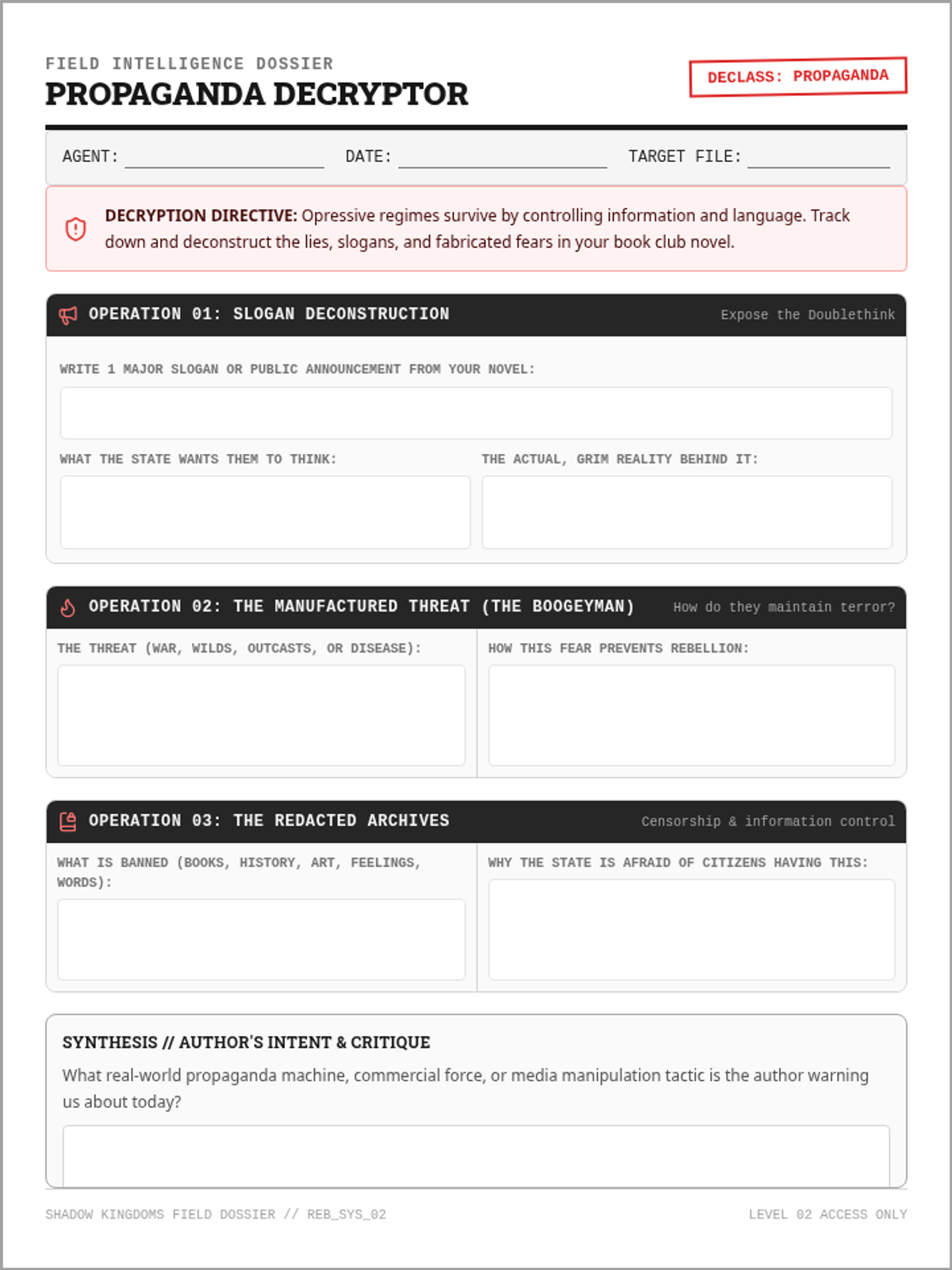
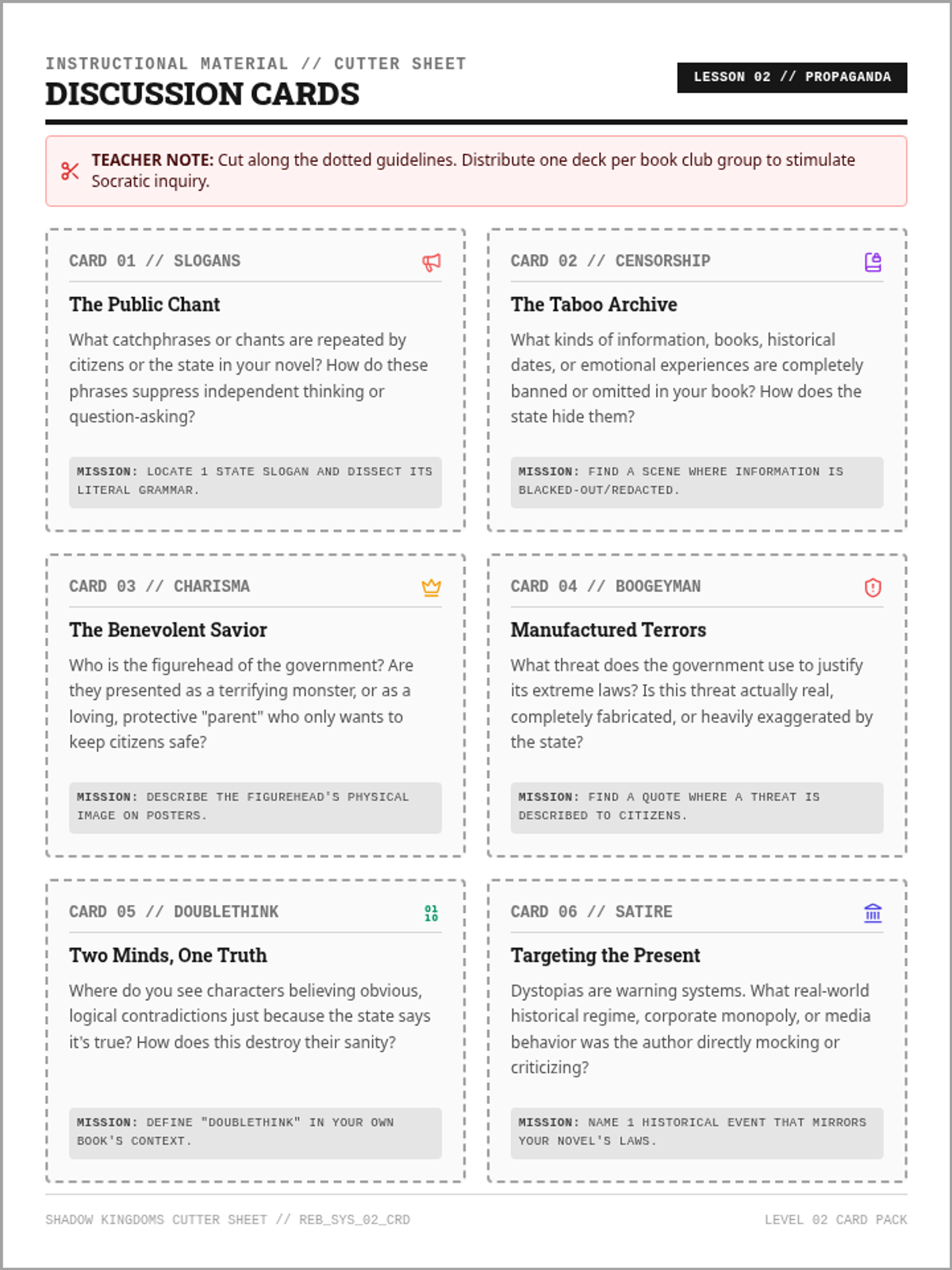
Analyze how dystopian regimes maintain authority through propaganda, censorship, and manufactured fear. Students contrast real propaganda techniques with fictional manifestations in their novels to decode the author's underlying real-world critiques.
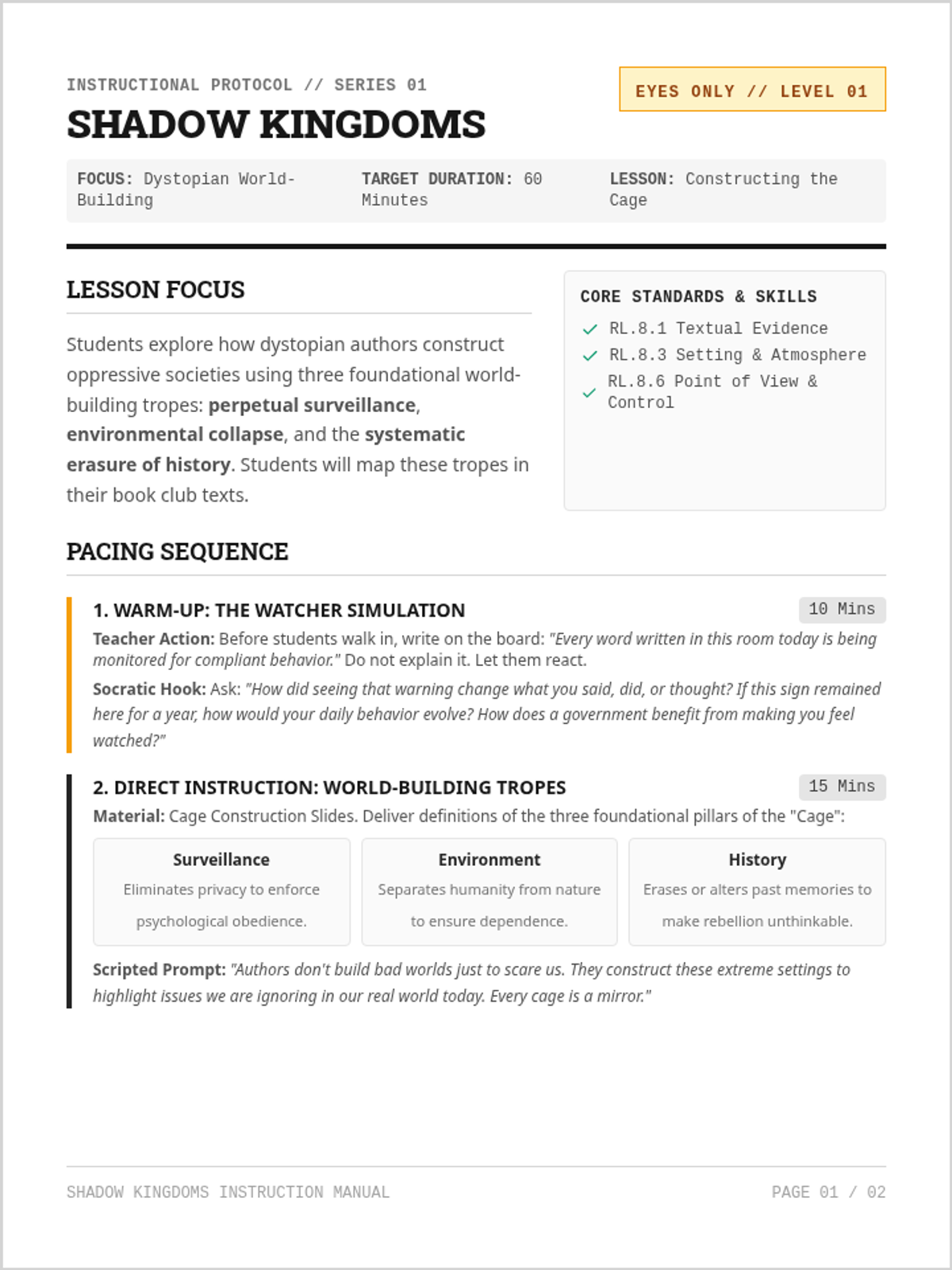
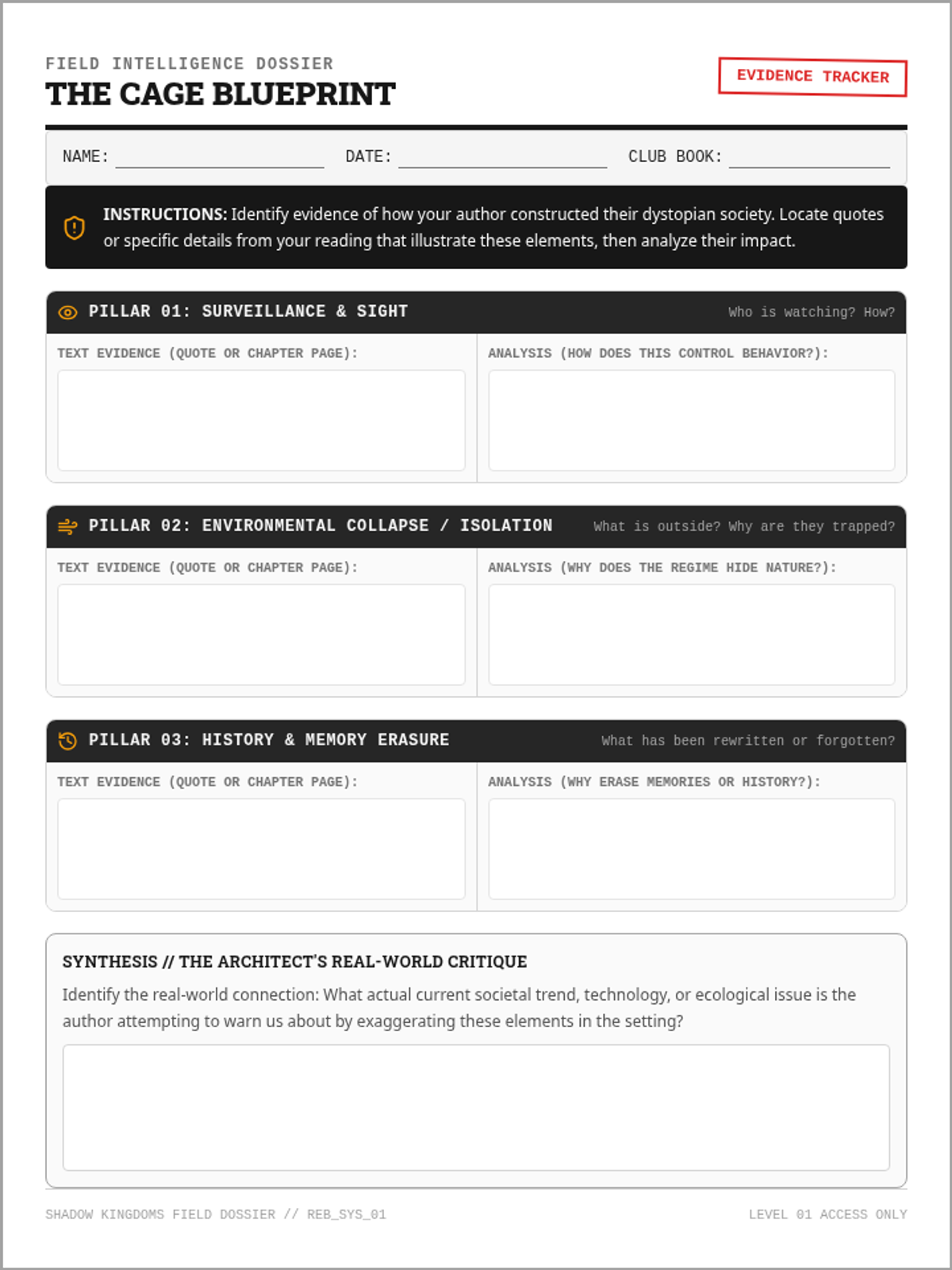
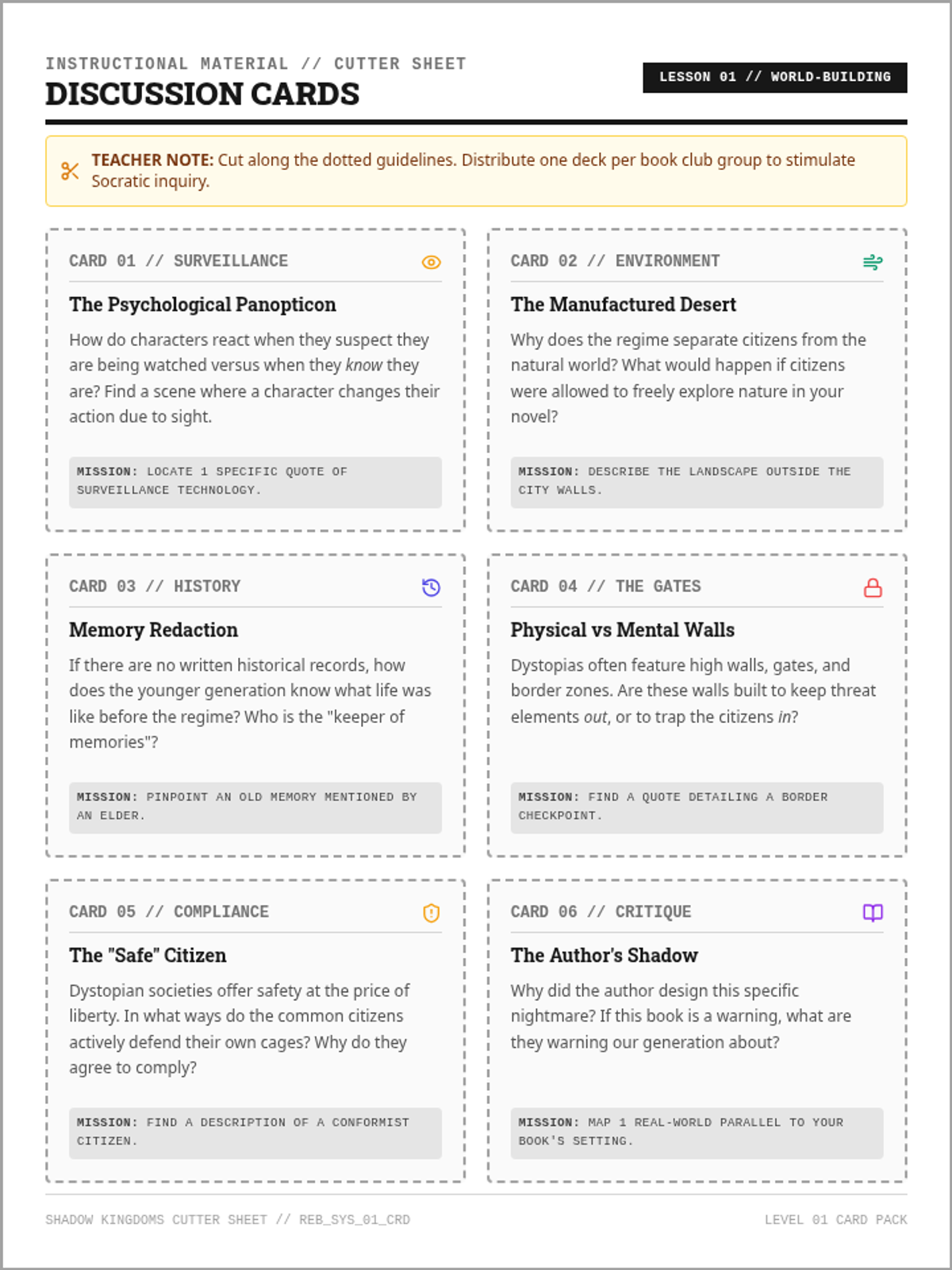
Explore how dystopian authors build oppressive societies using key tropes such as environmental collapse, intense surveillance, and the systematic erasure of history. Students analyze their book club novels to map these elements.
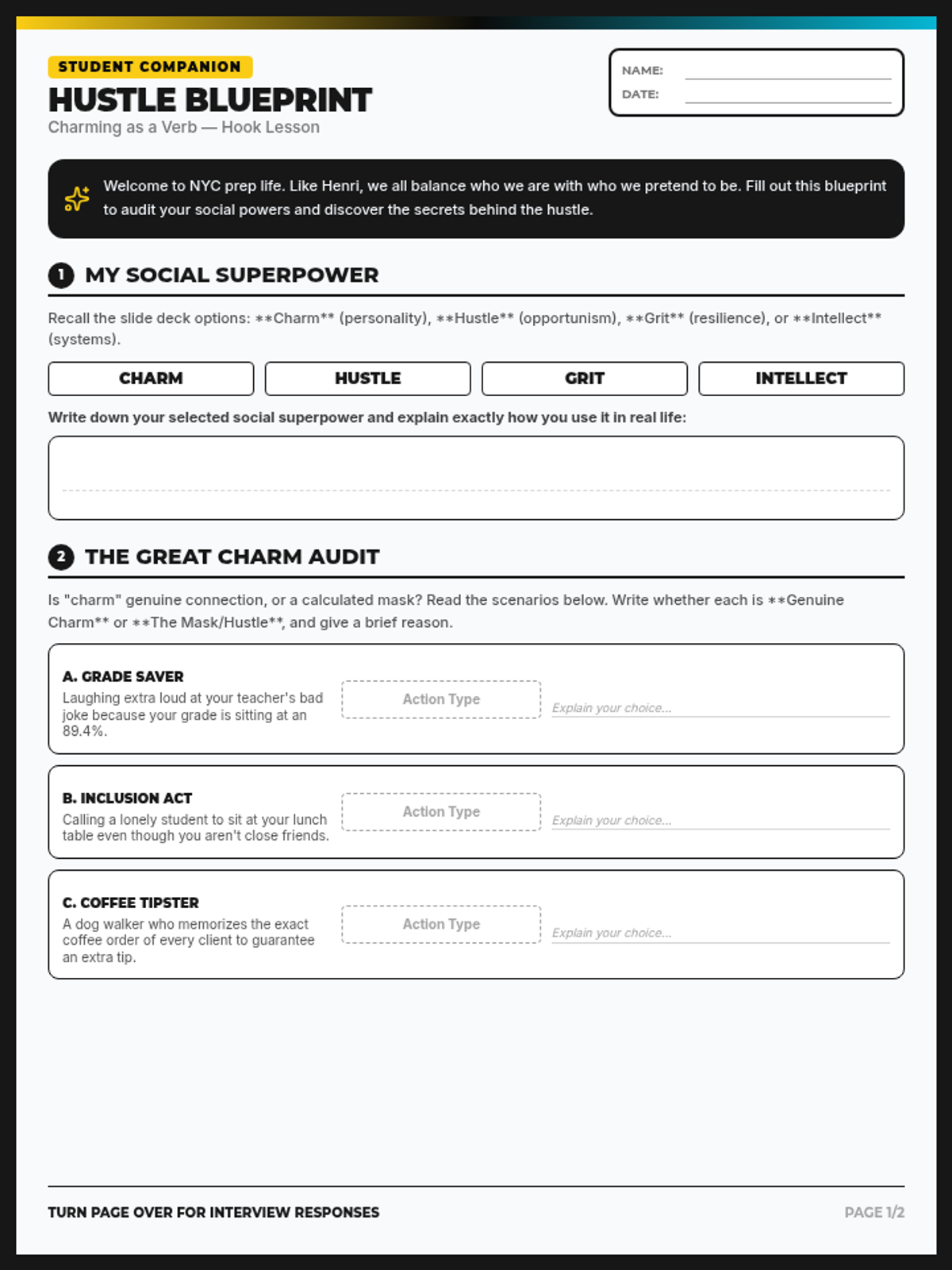
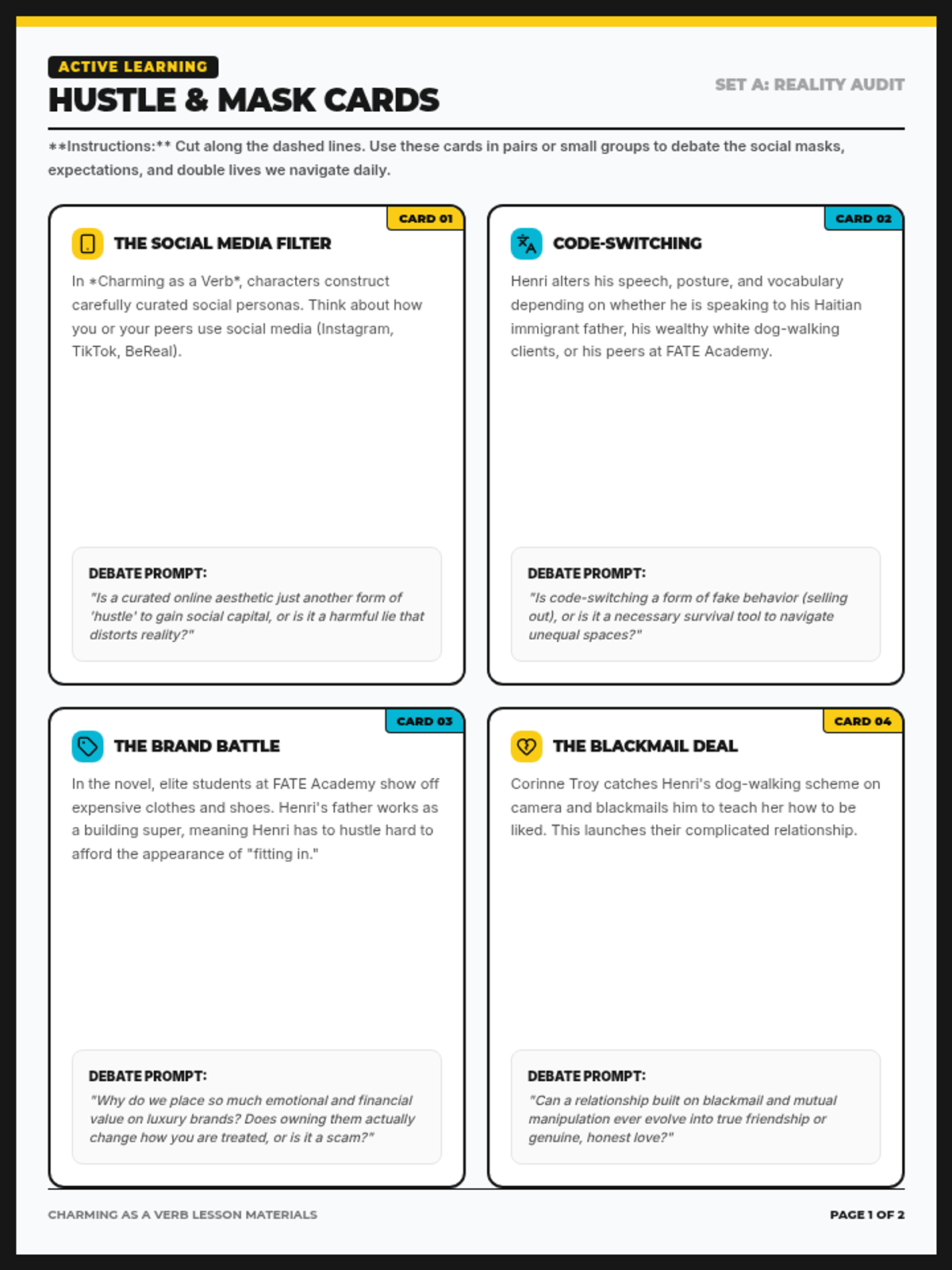
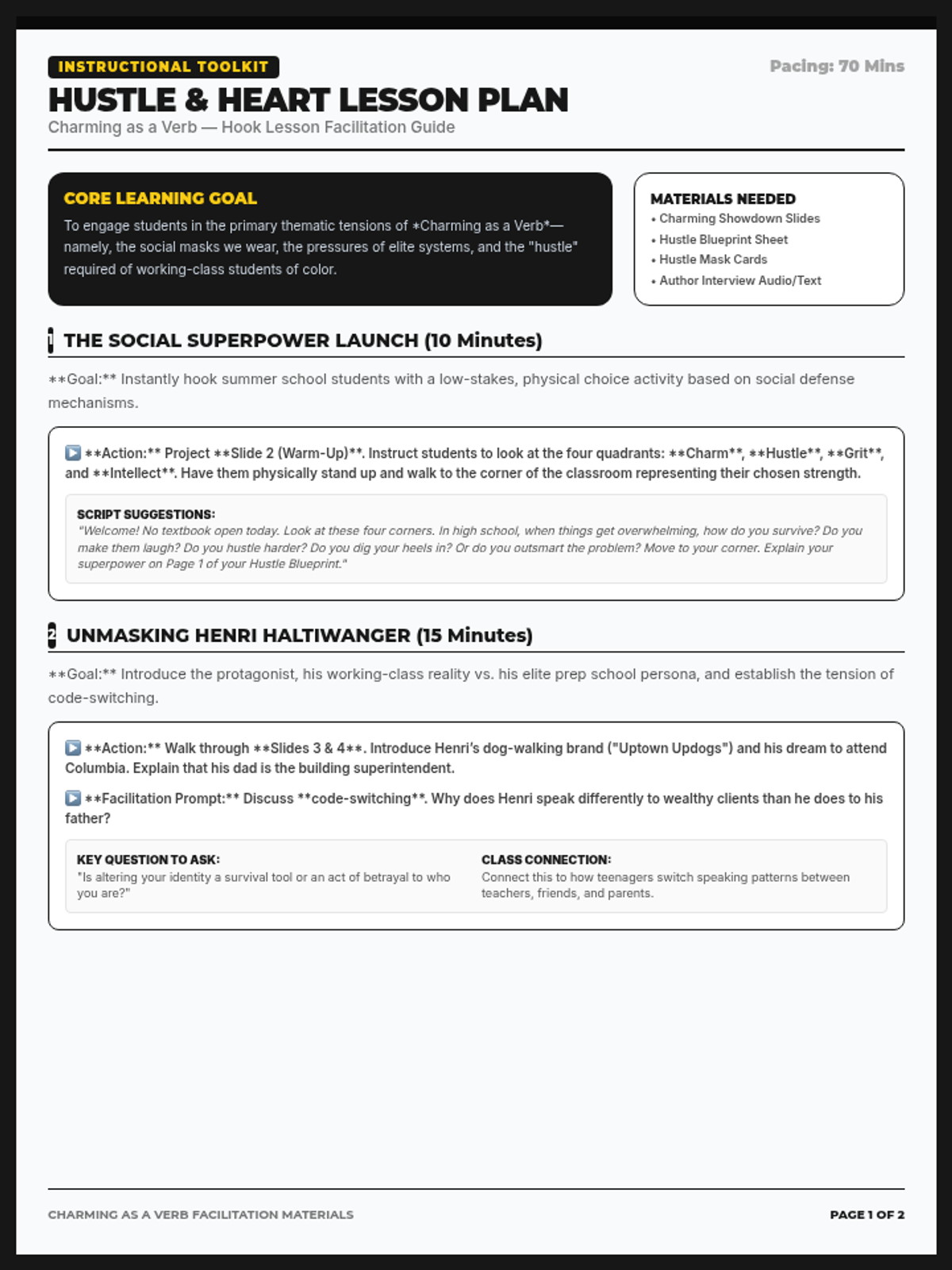
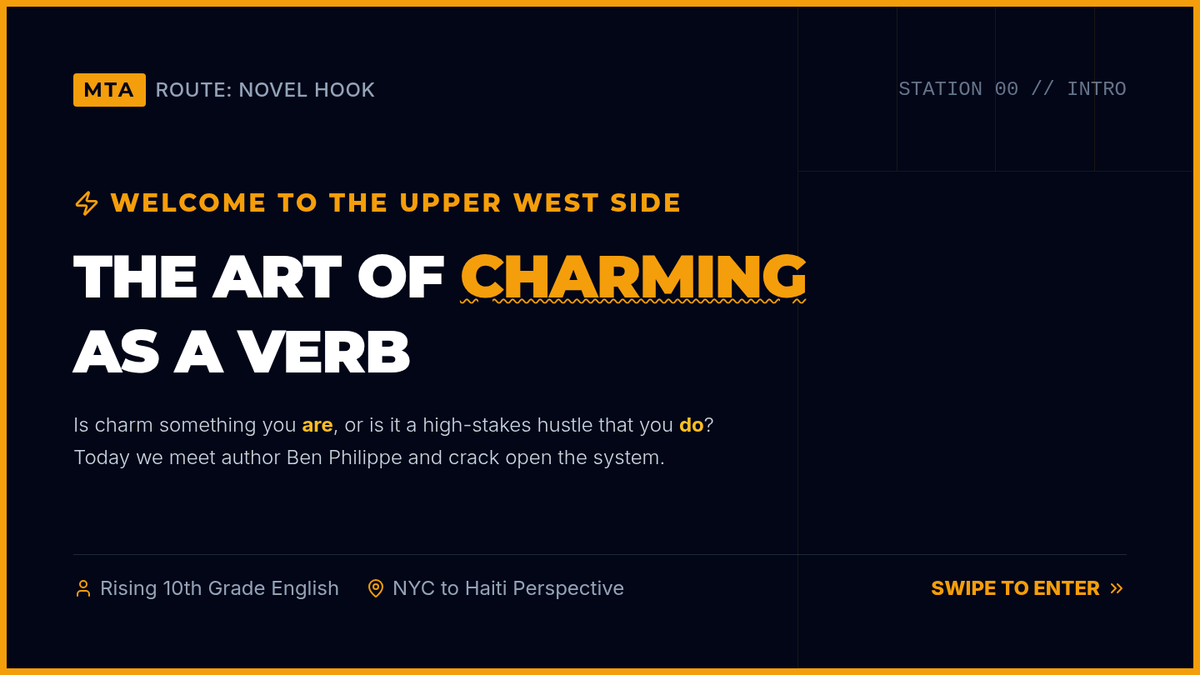
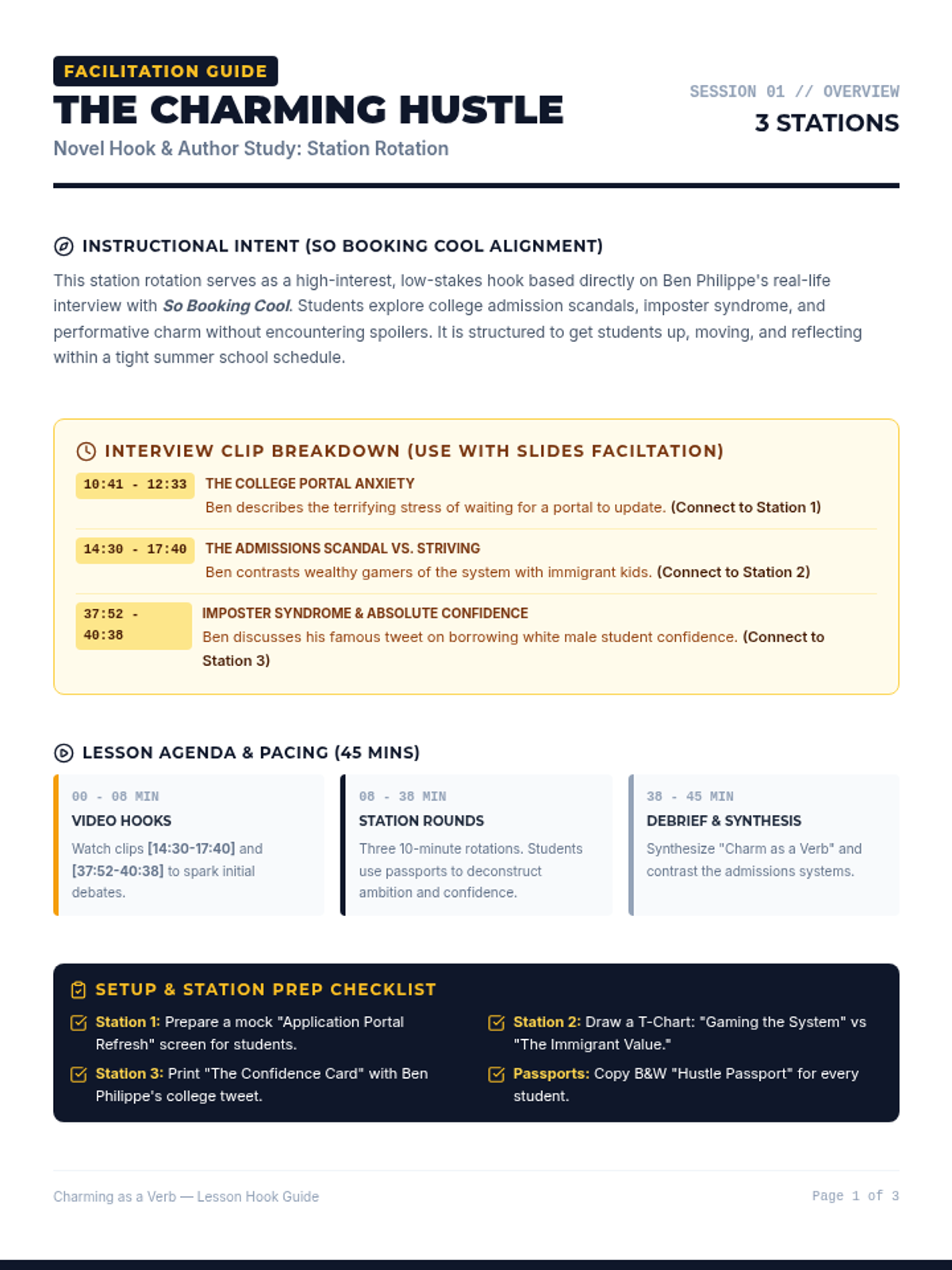
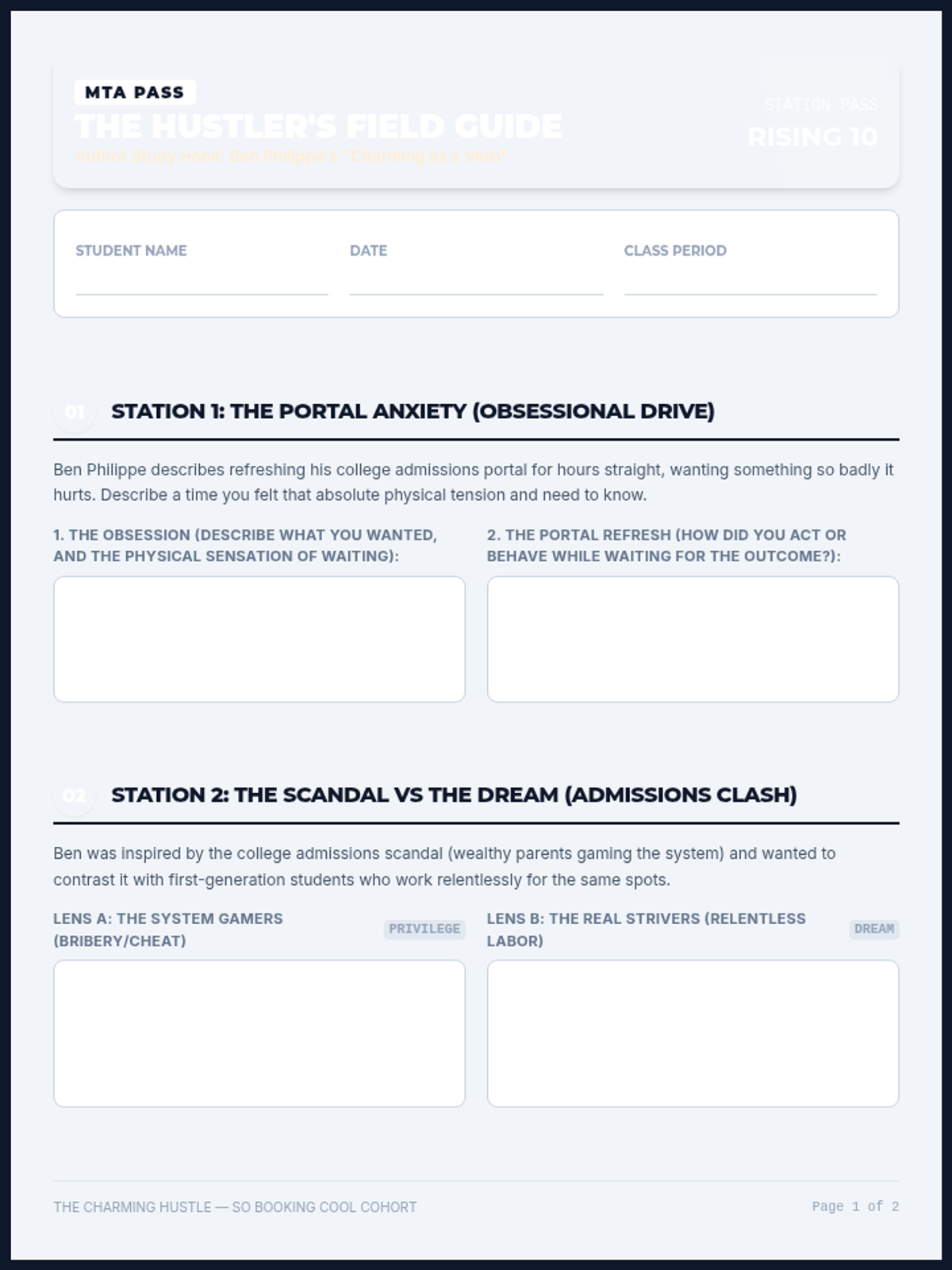
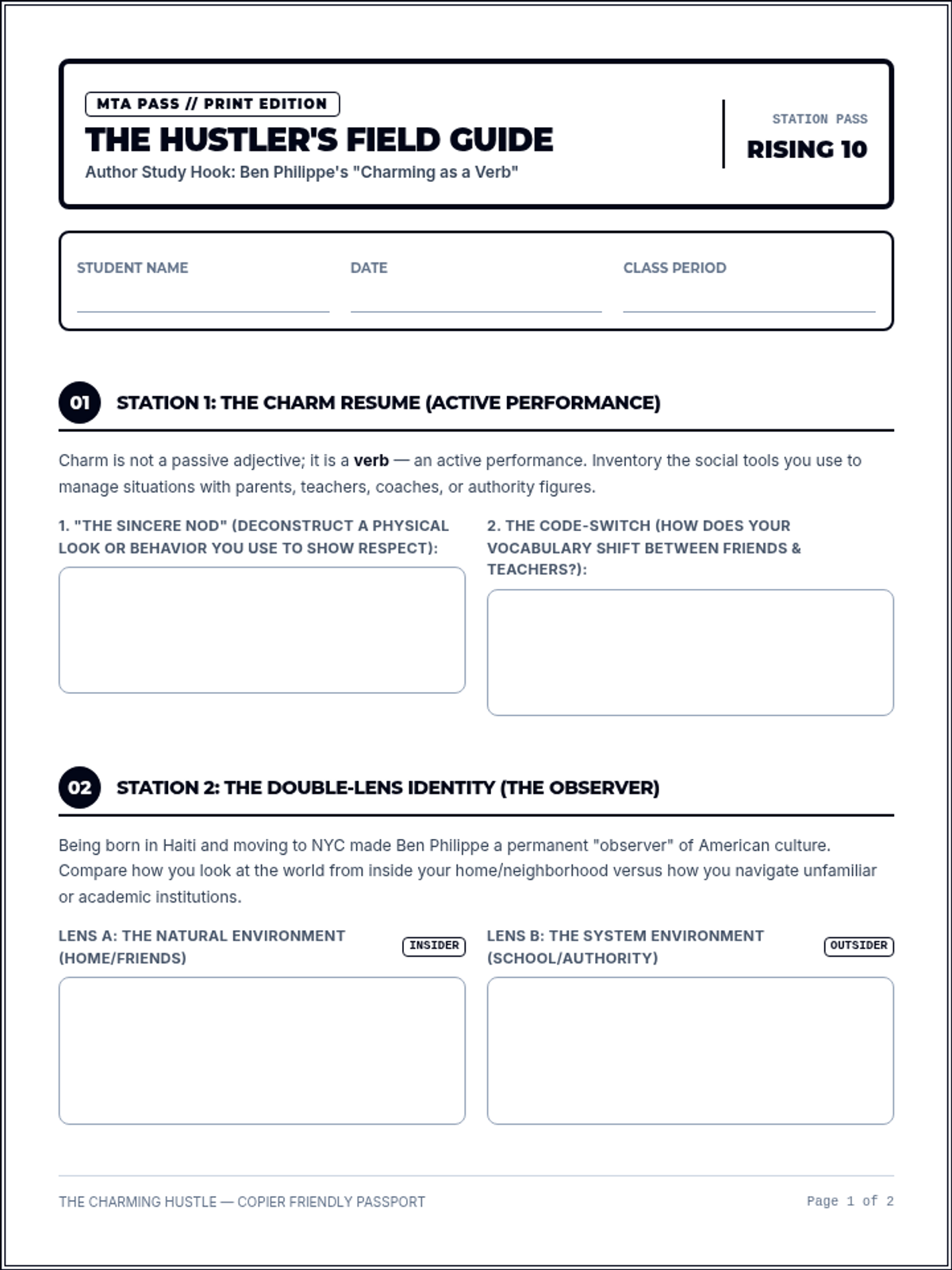
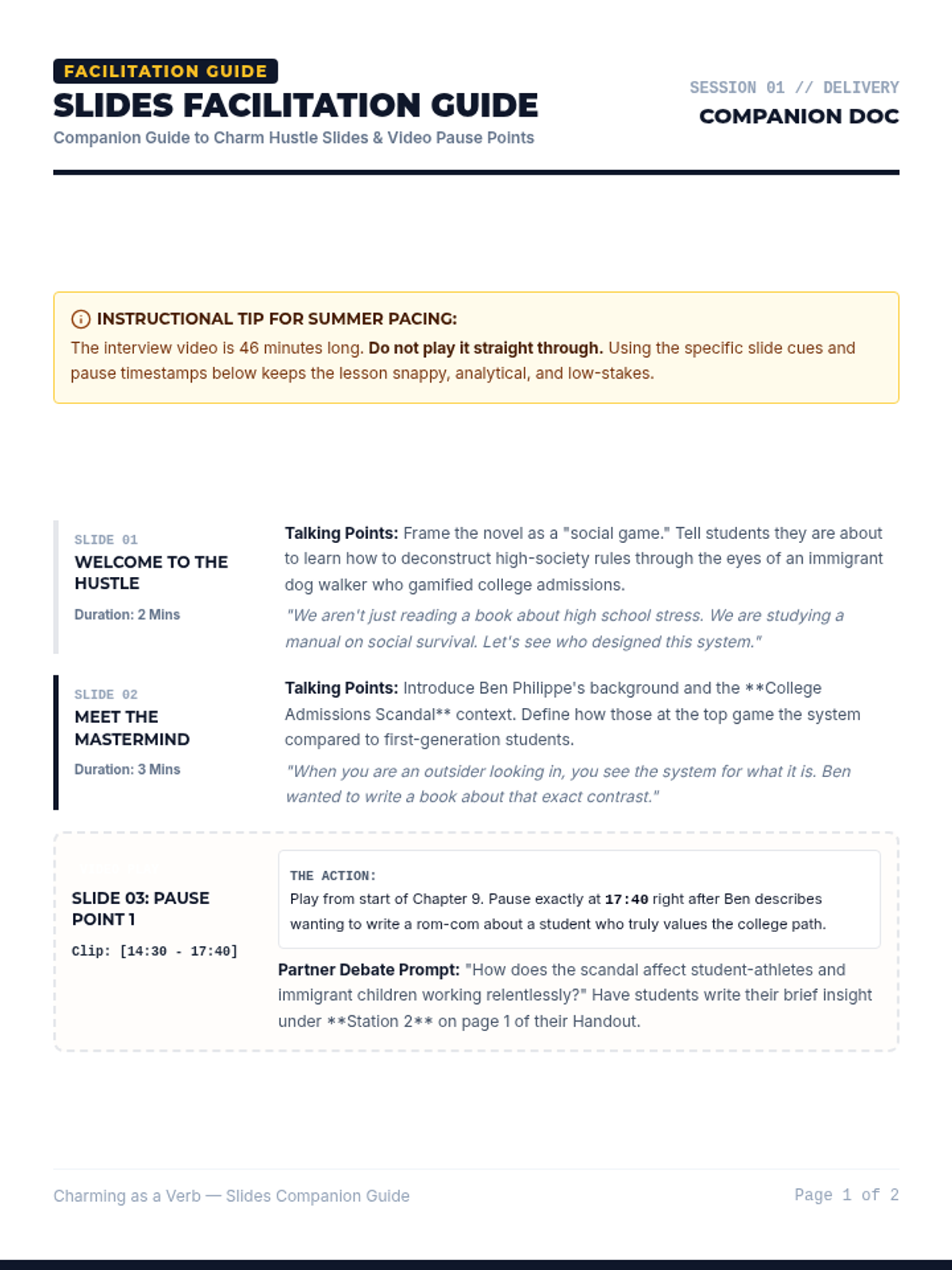
An immersive, high-energy introductory hook lesson for Charming as a Verb that engages rising 10th-grade summer school students through NYC hustle culture, the social psychology of 'charm', and an author interview on performance anxiety and self-belief.
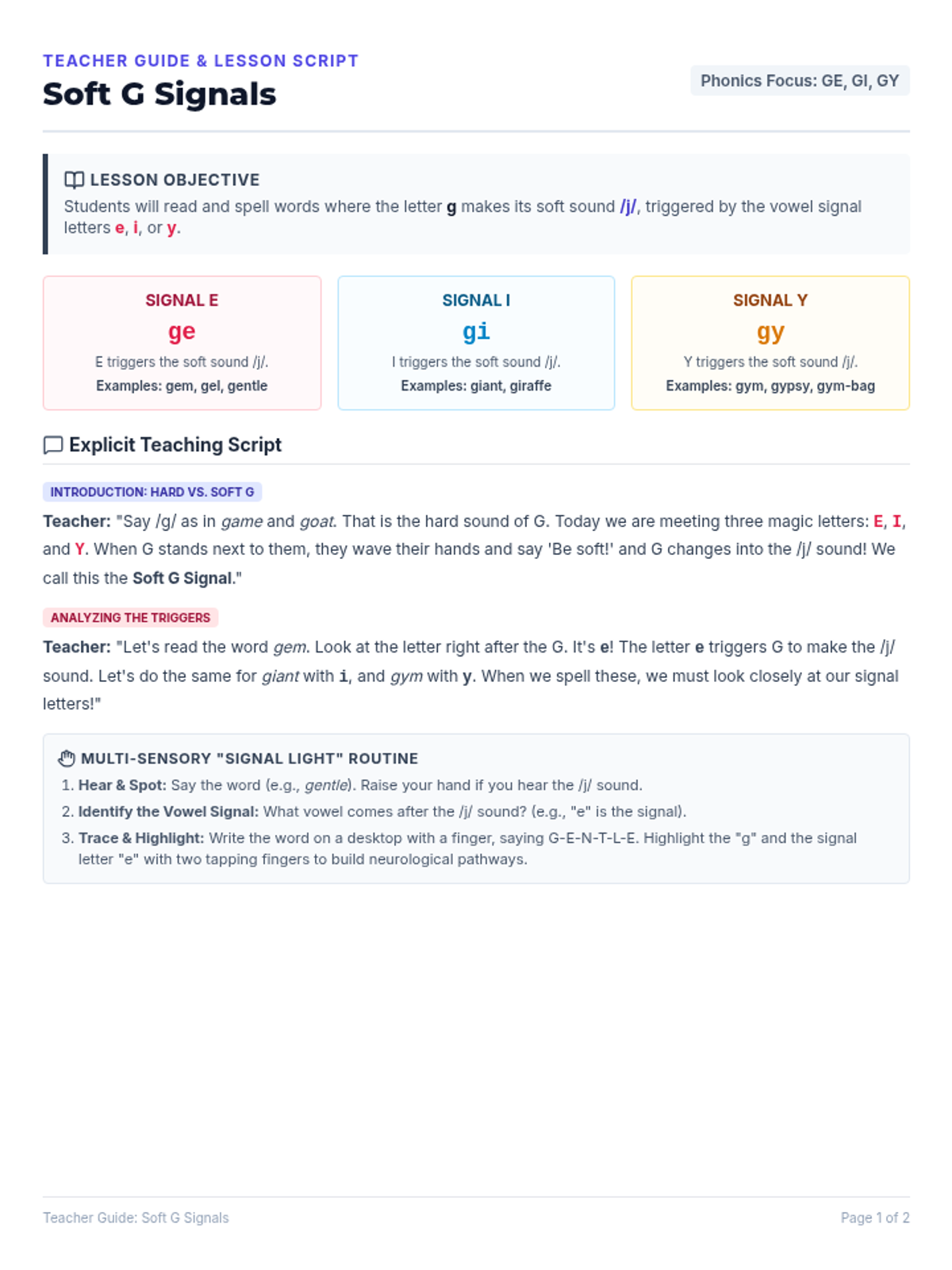
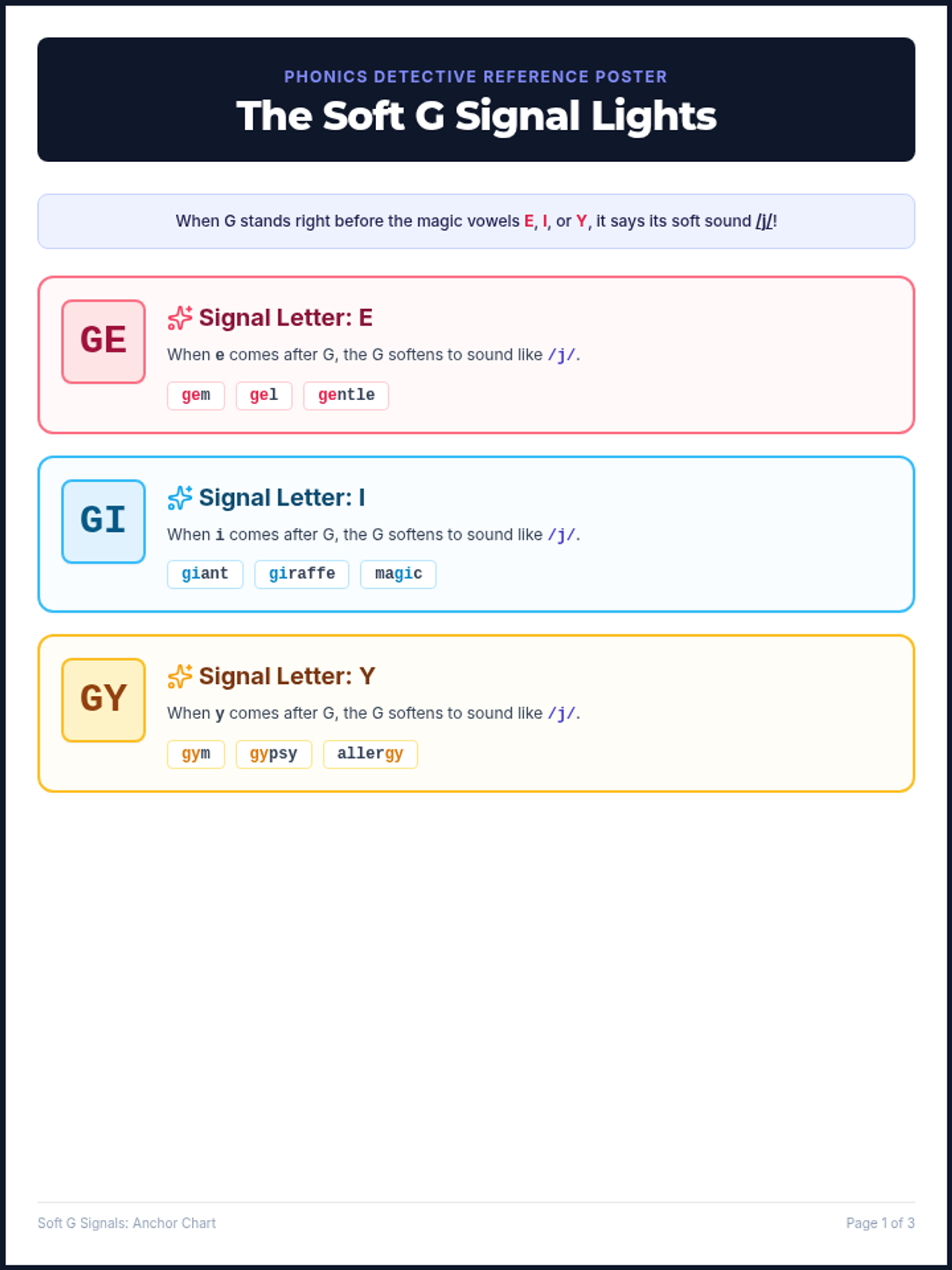
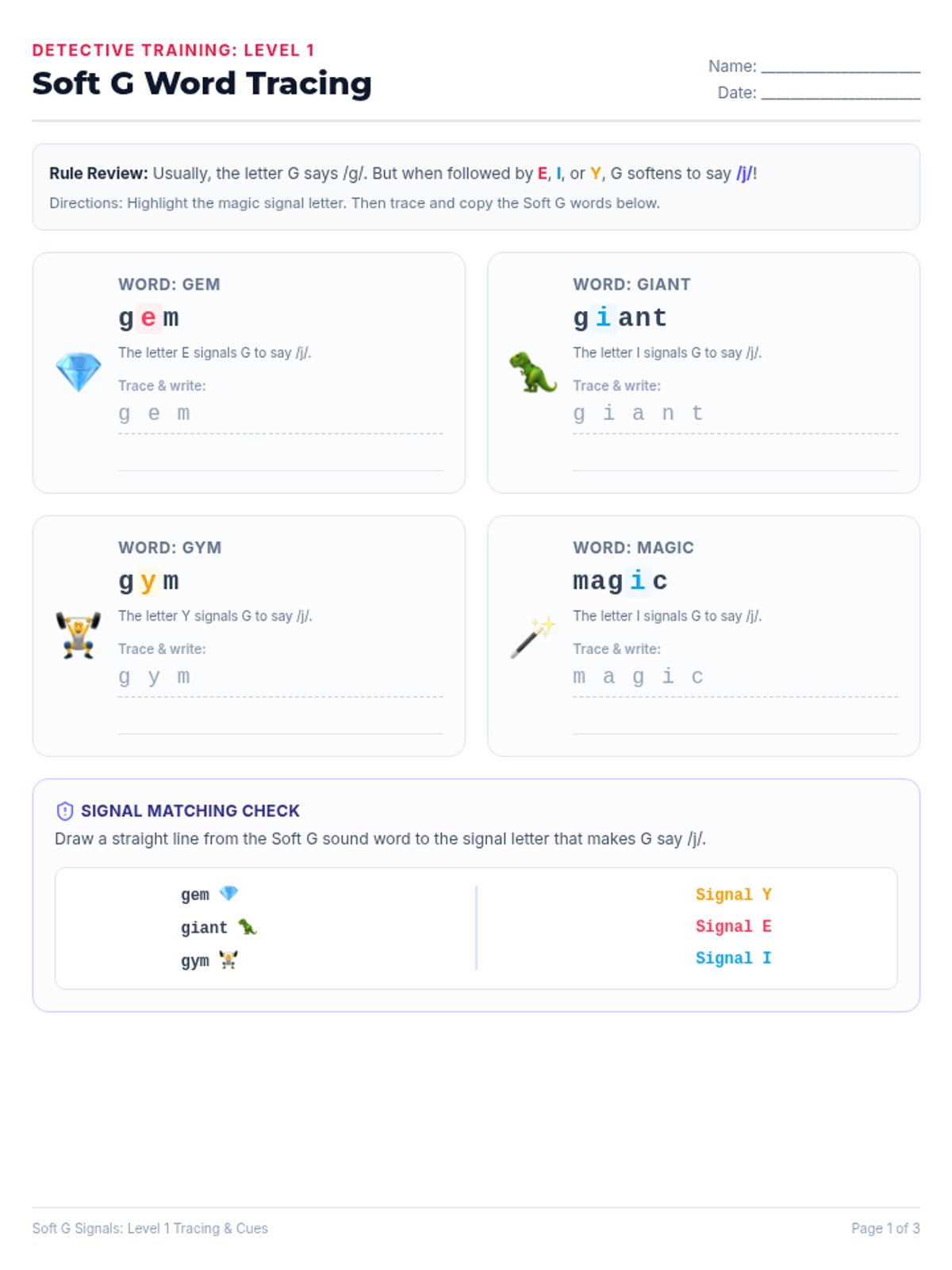
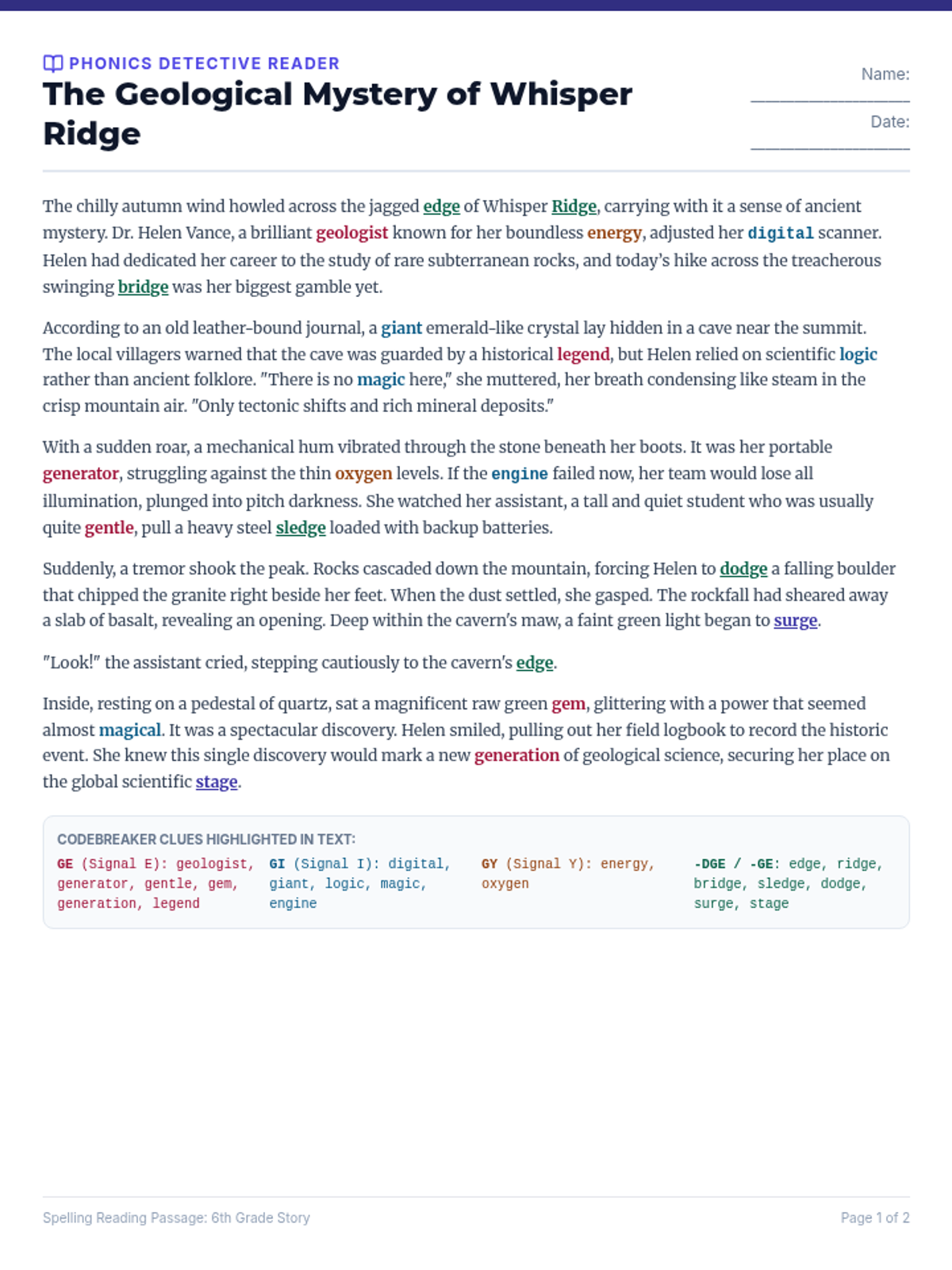
A spelling lesson exploring the soft G sound /j/ triggered by letters E, I, and Y. Students will identify, sort, and write words using the soft G patterns GE, GI, and GY.
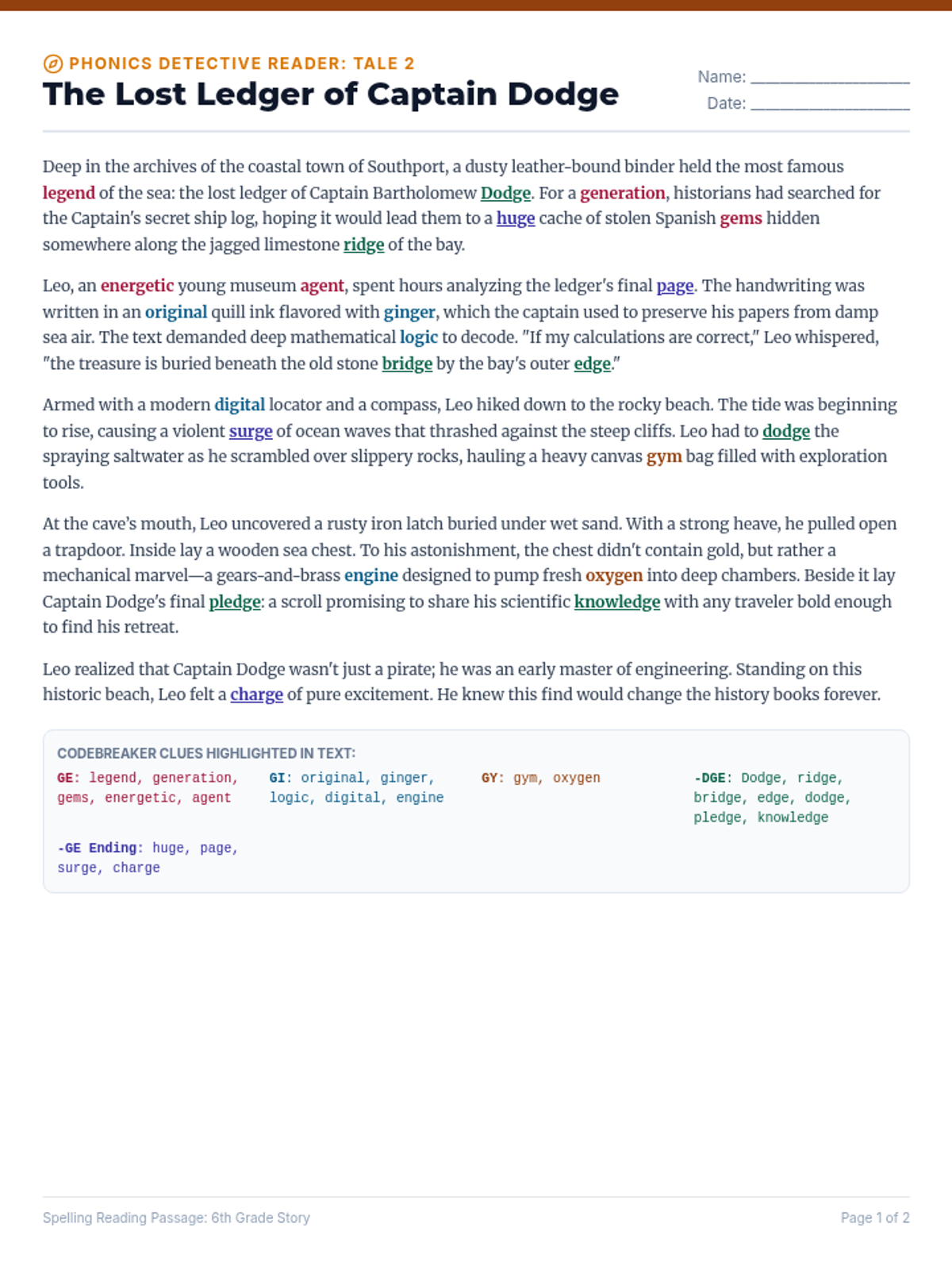
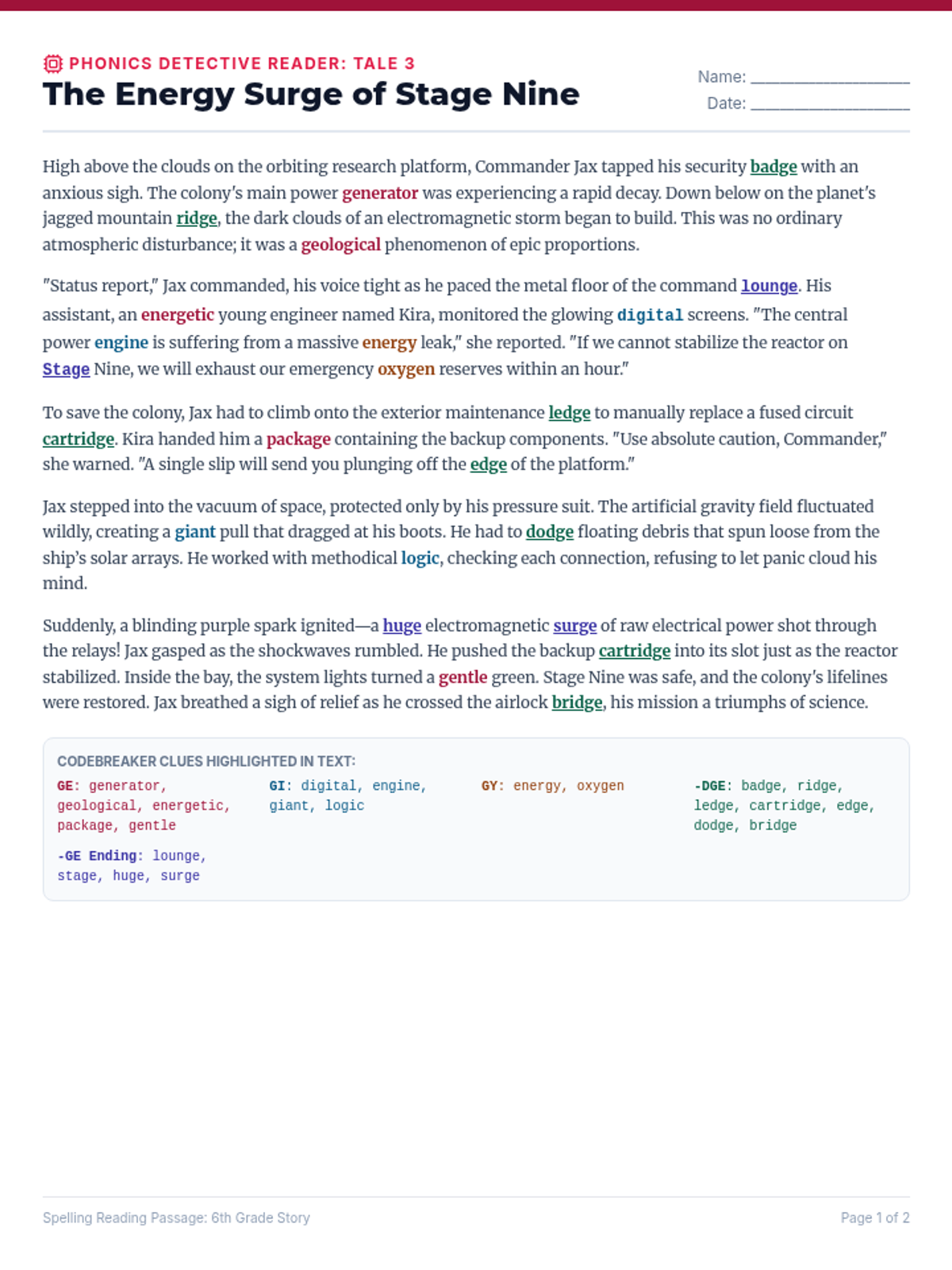
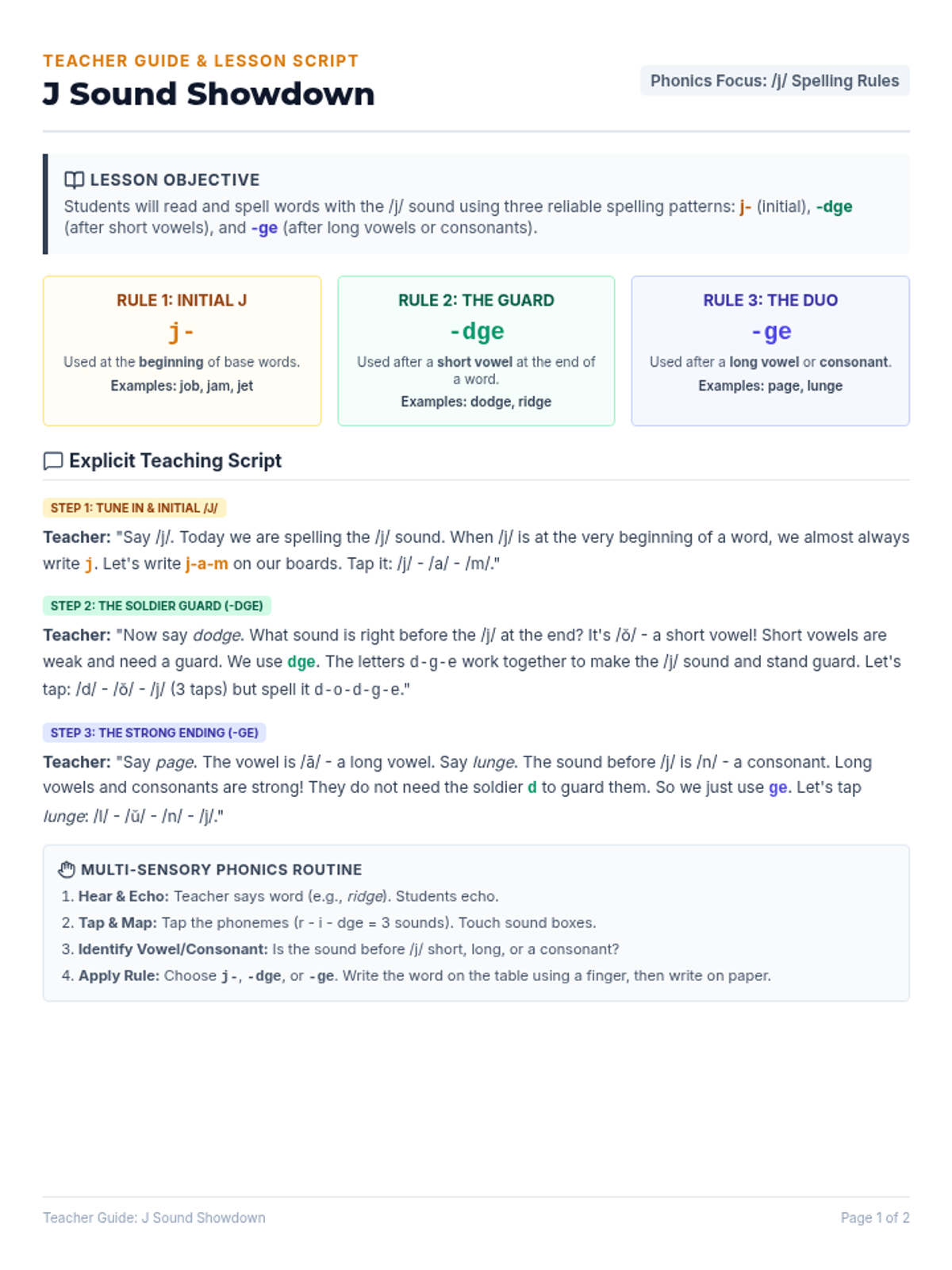
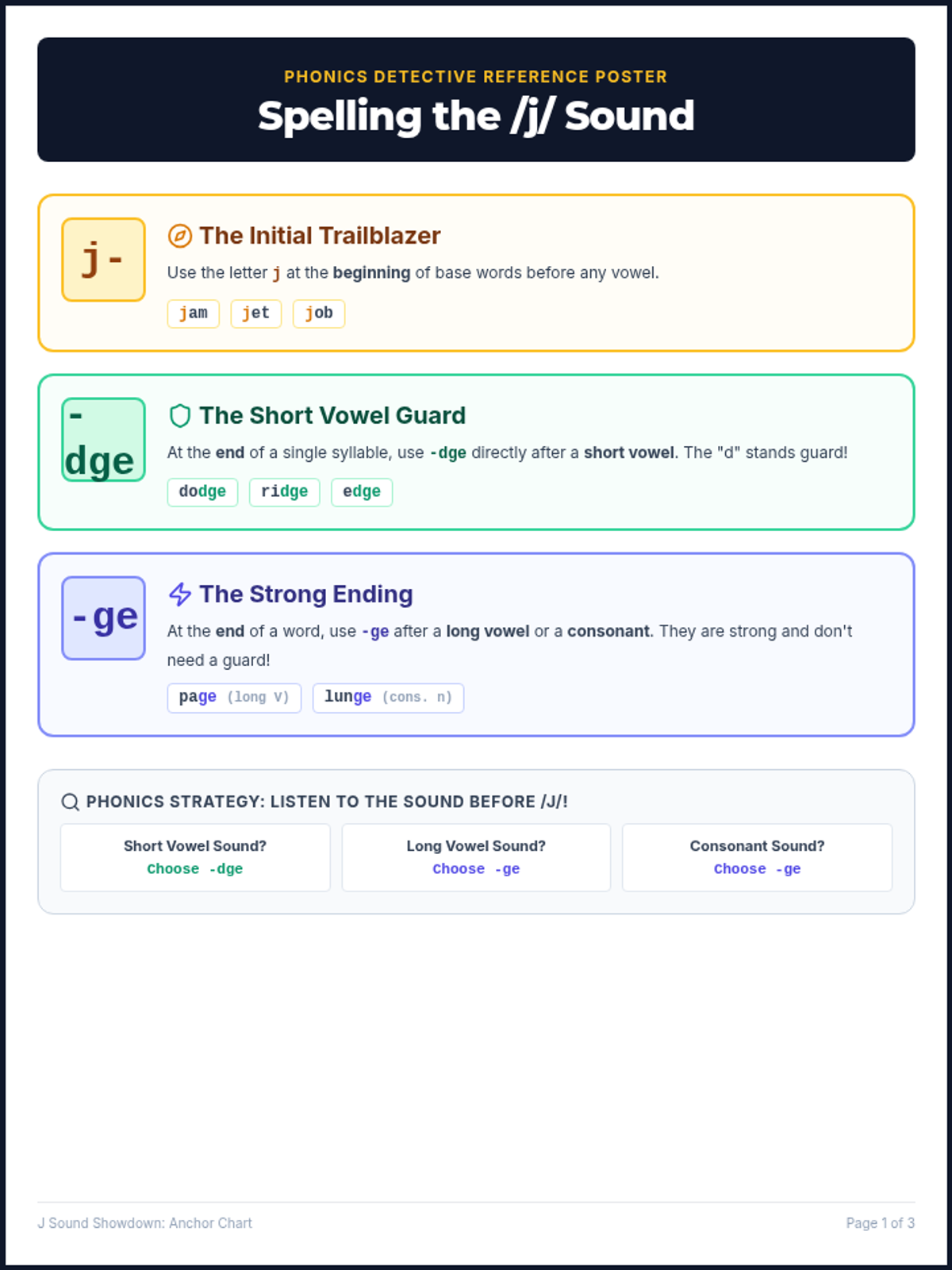
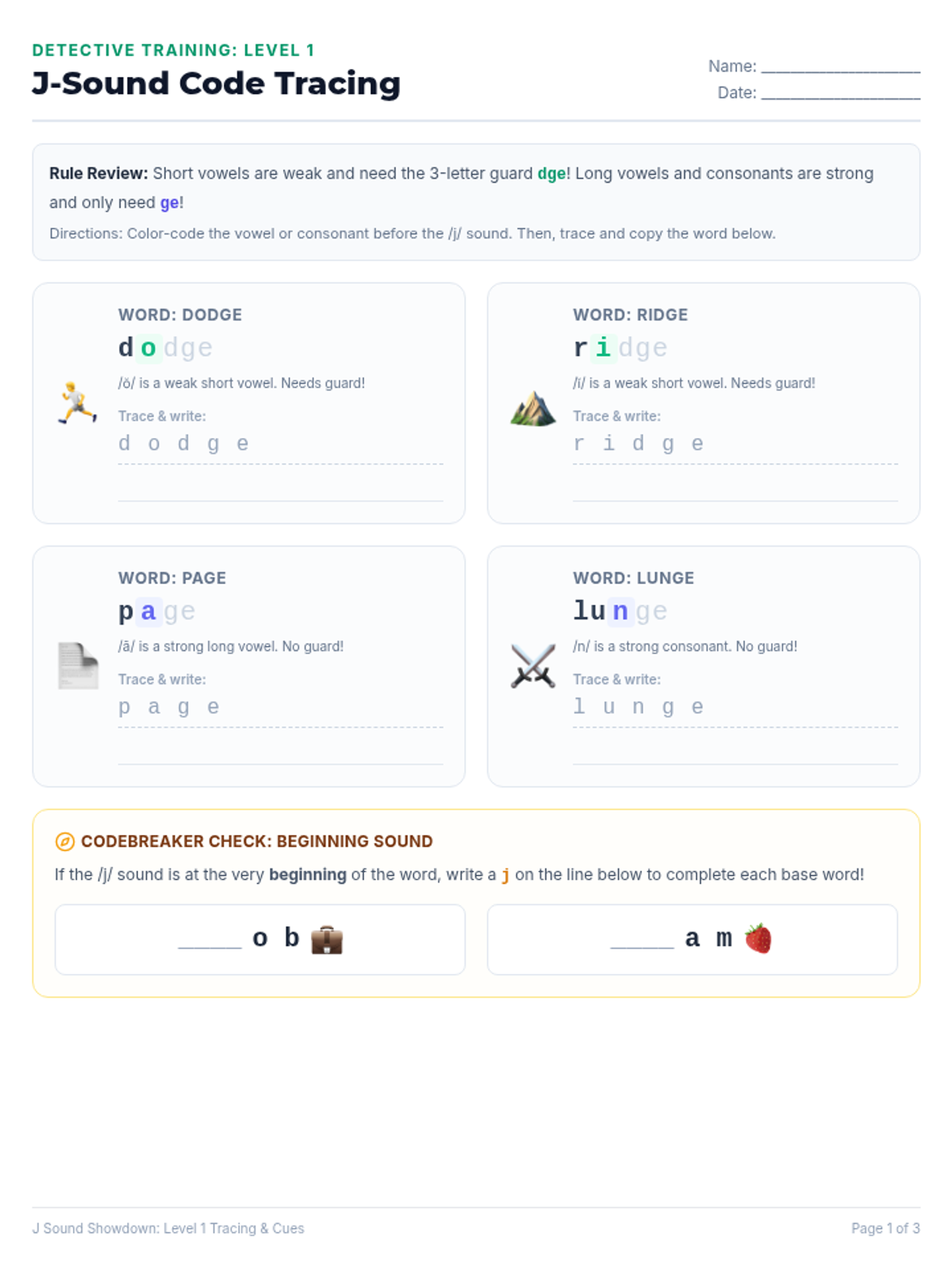
A comprehensive phonics lesson exploring the spelling rules for the /j/ sound: 'j' at the beginning, 'dge' after short vowels, and 'ge' after long vowels or consonants. Includes multi-sensory materials, explicit guides, visual slides, and leveled activities.
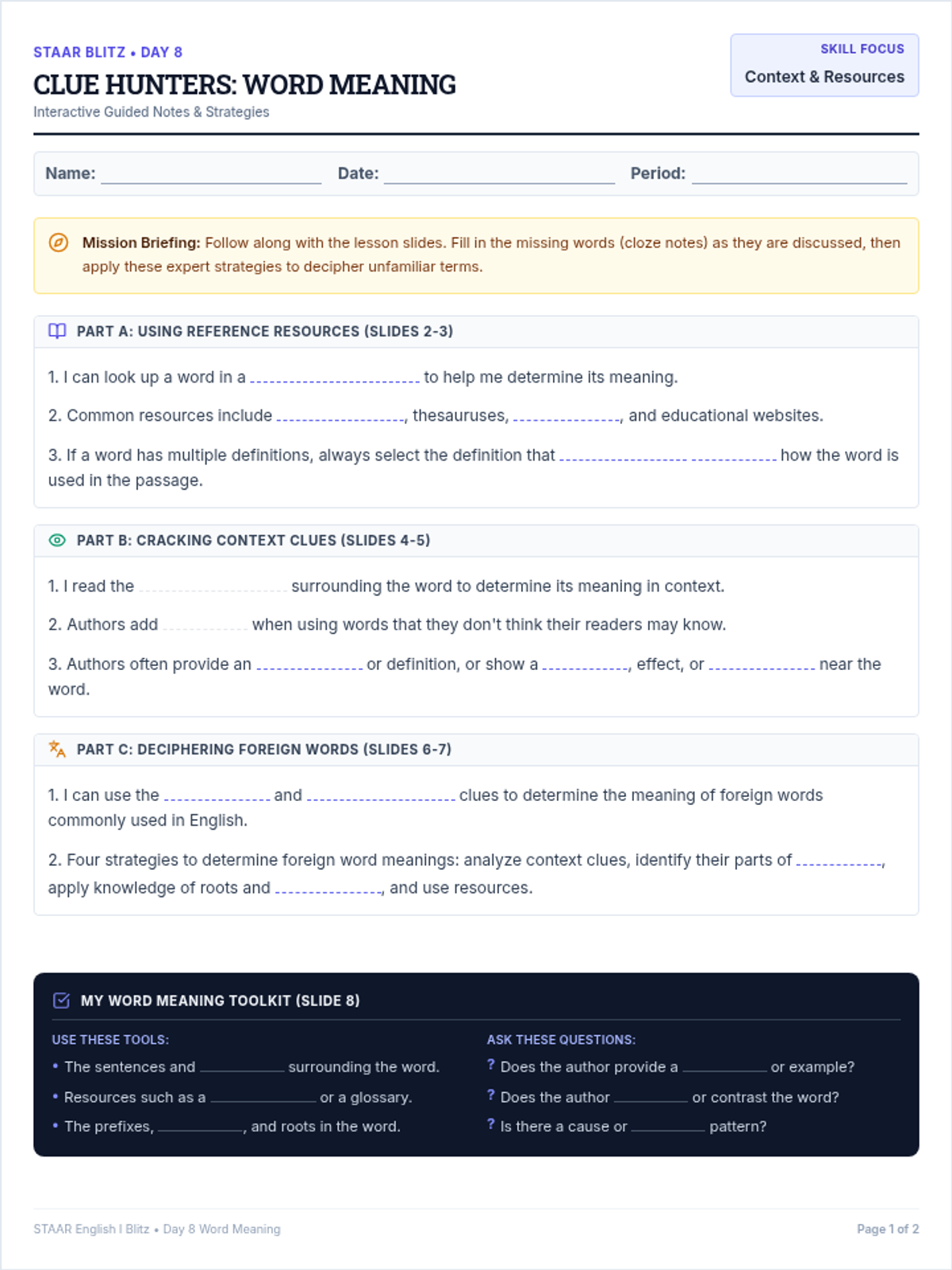
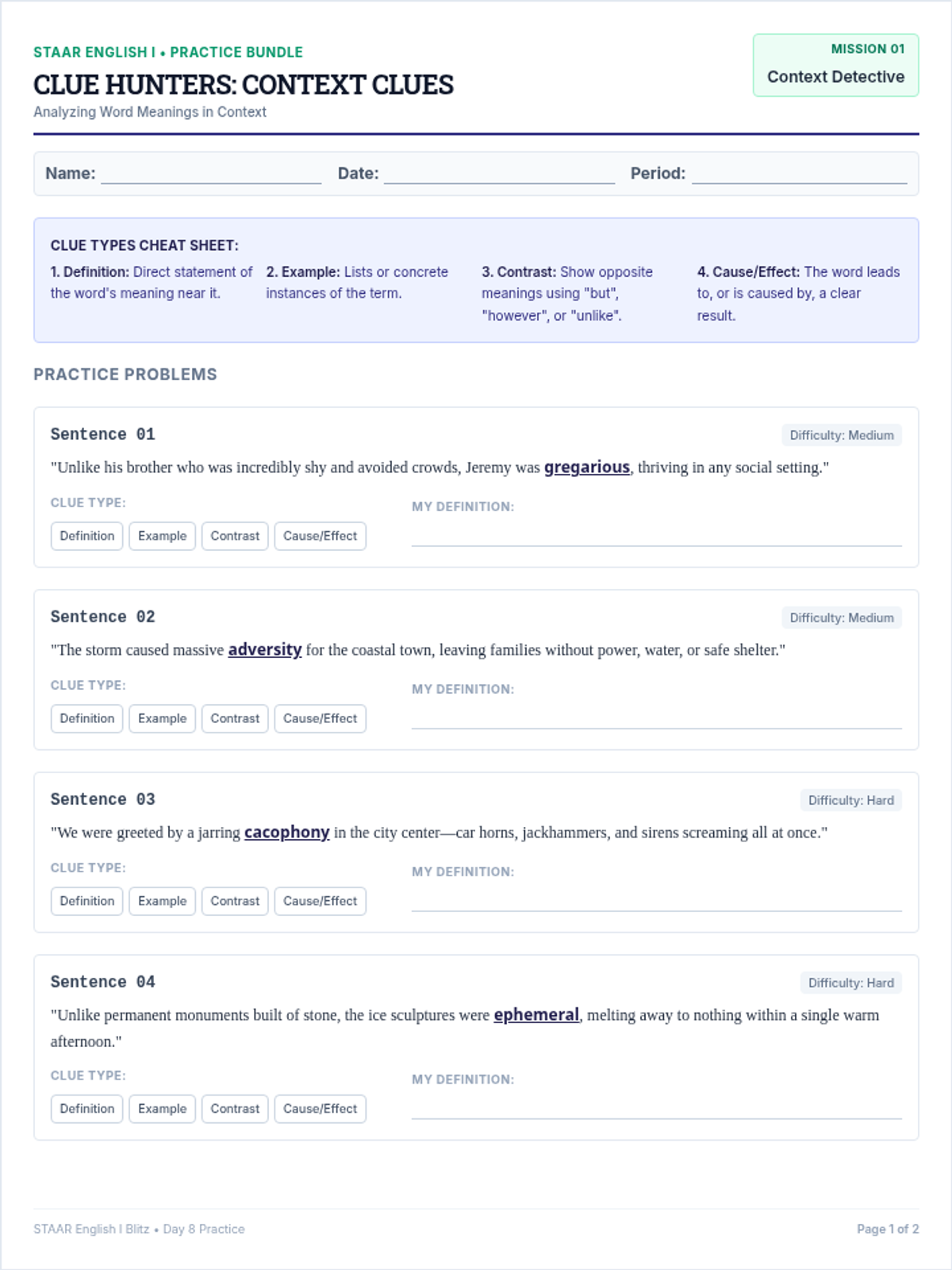
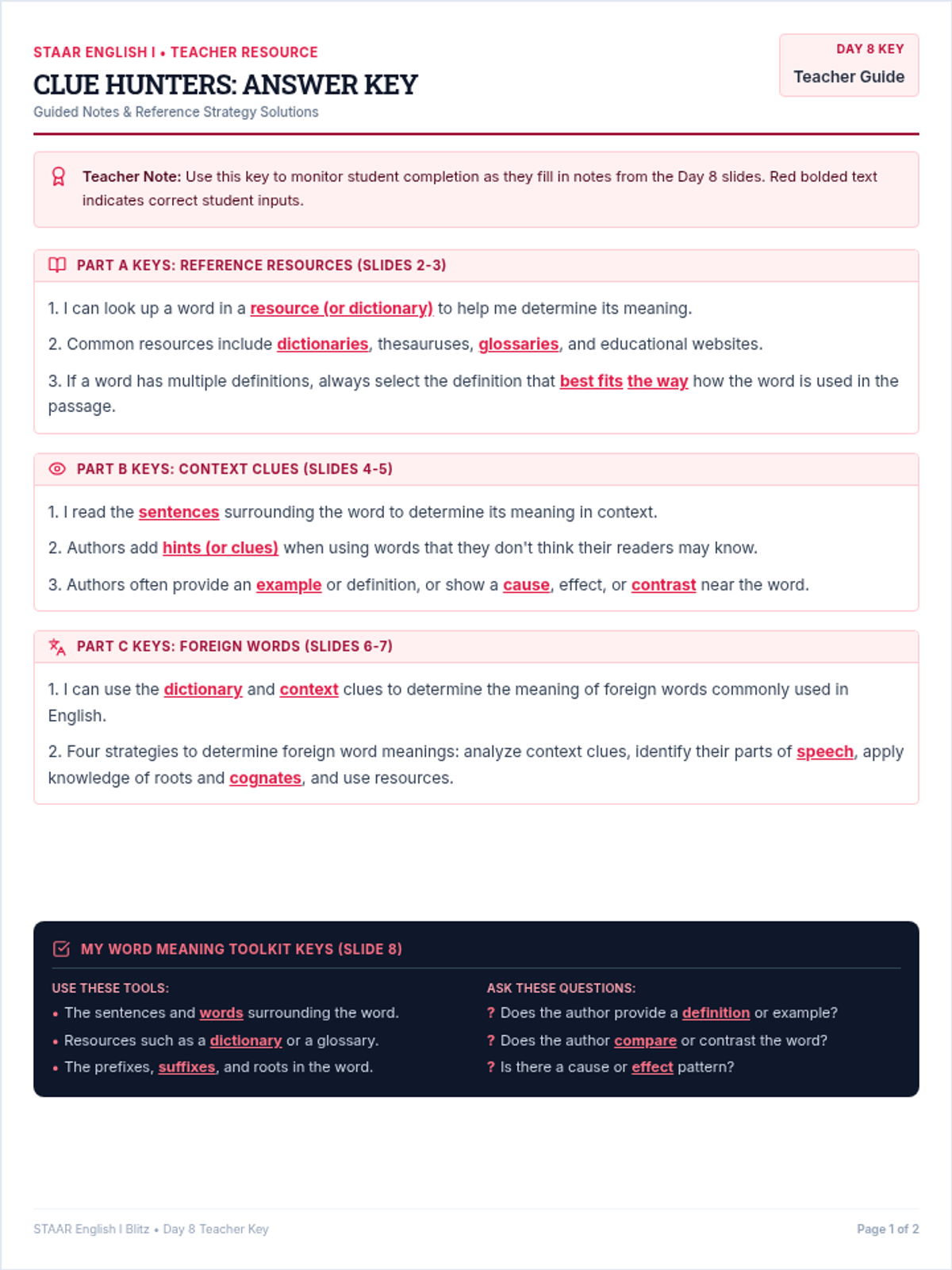
A lesson targeting STAAR-aligned word-meaning strategies, including dictionary skills, context clues types (contrast, definition, cause/effect), and analyzing foreign words in English. Includes cloze-style guided notes, a practice worksheet bundle, and a teacher answer key.
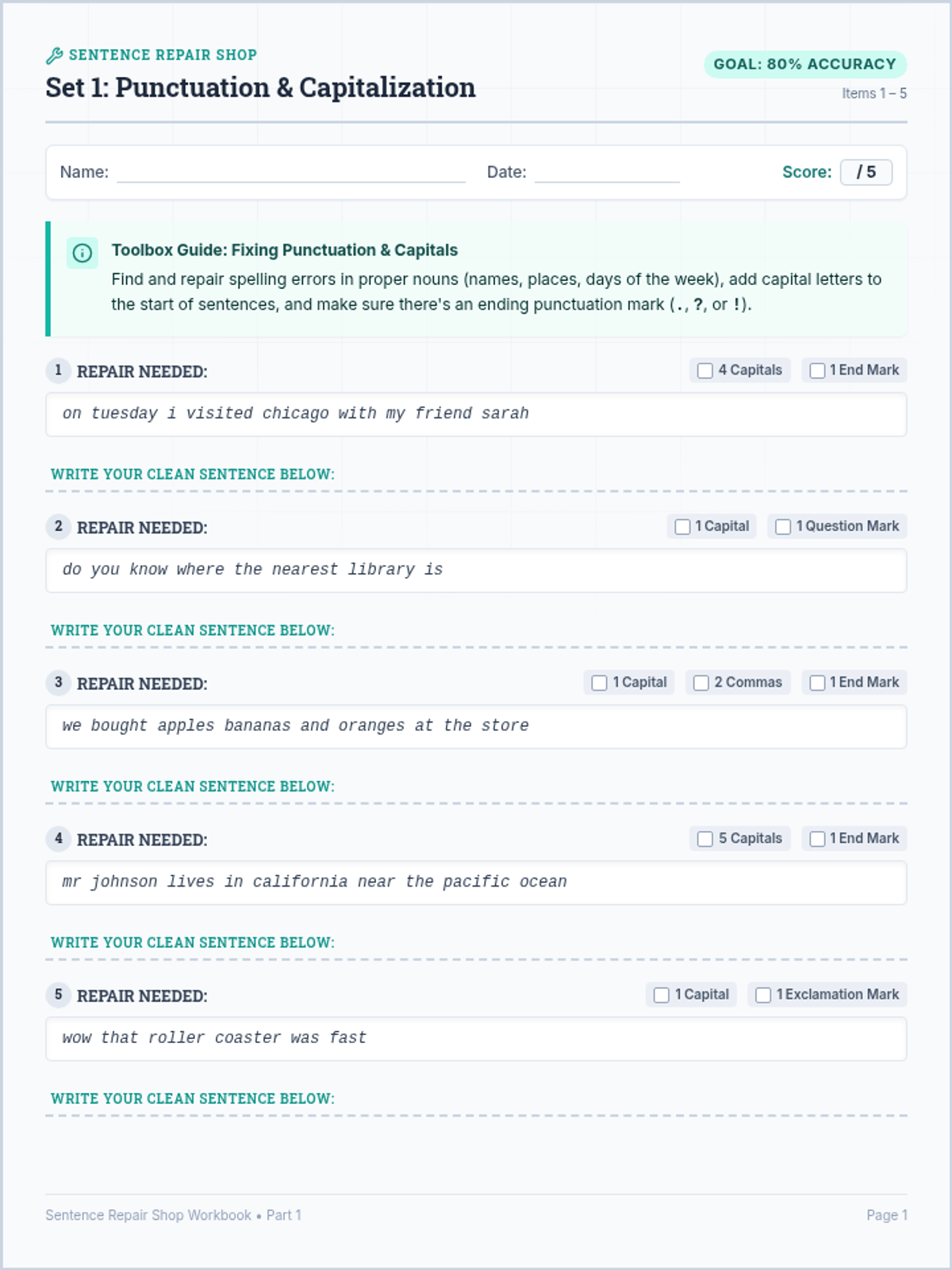
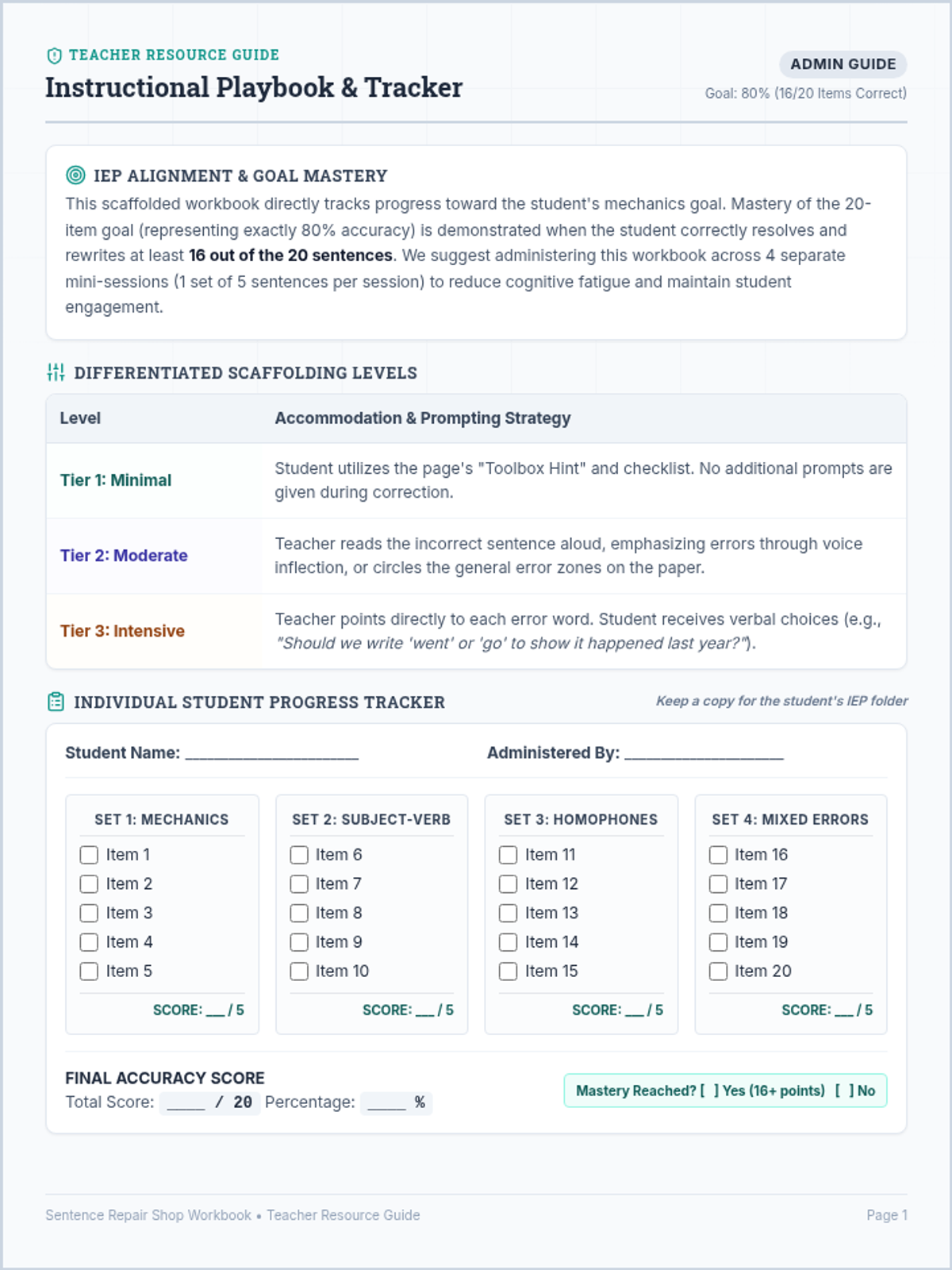
A scaffolded proofreading and editing lesson designed for high school special education students to master sentence-level punctuation, capitalization, subject-verb agreement, homophones, and mixed grammatical errors. Includes a structured student workbook and a comprehensive teacher guide with a progress tracker.
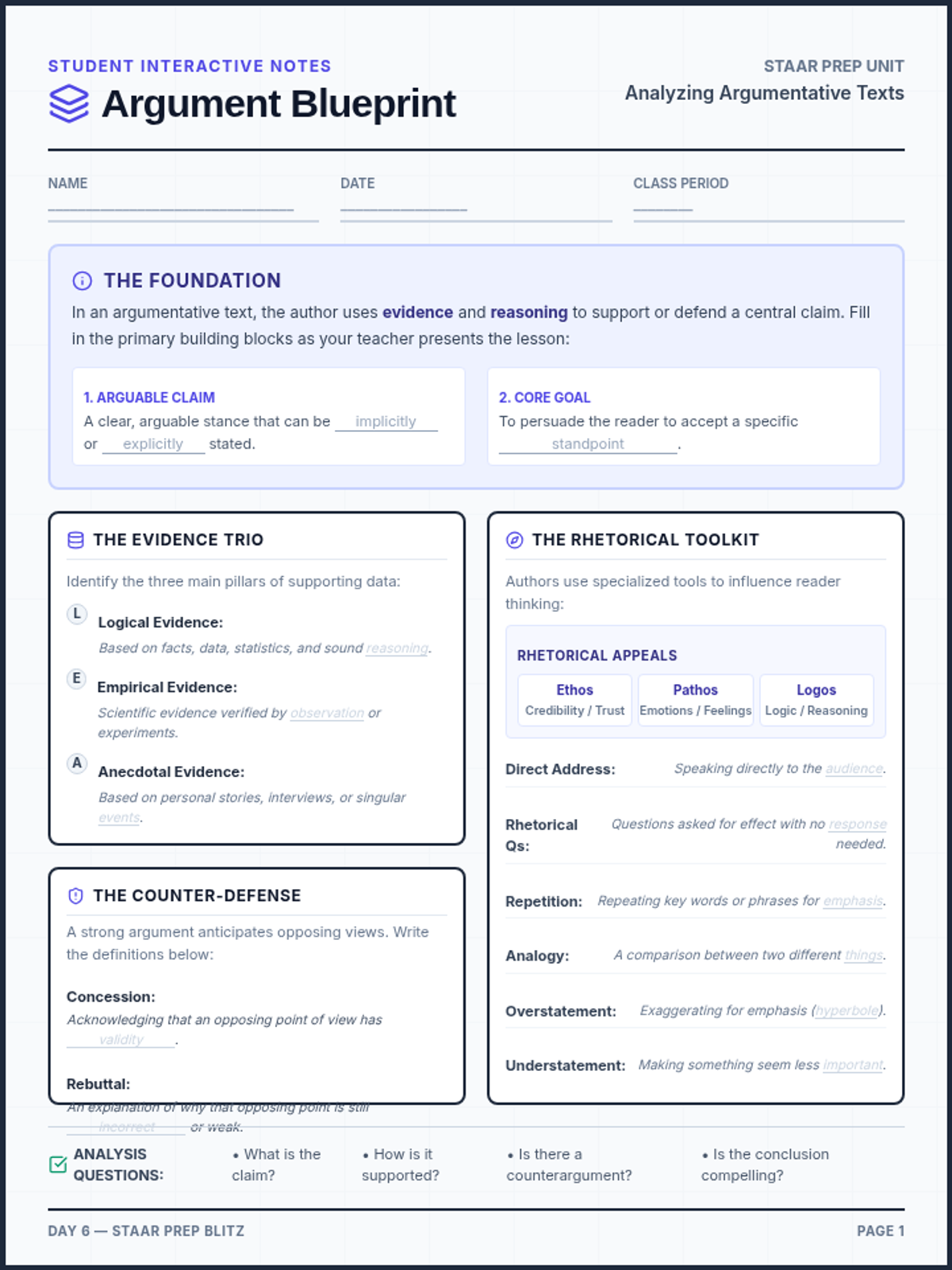
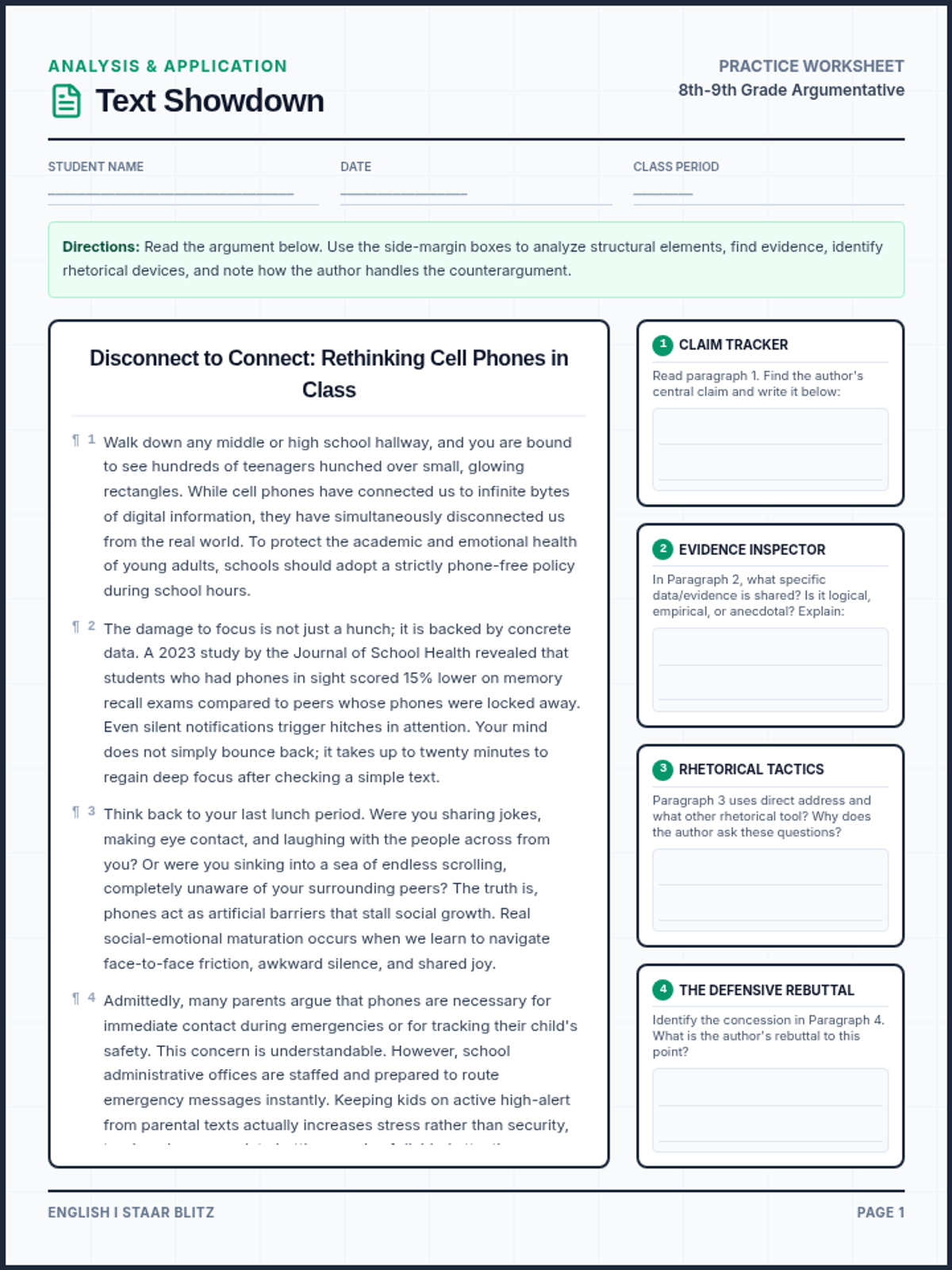
A complete 9th-grade English Language Arts STAAR prep lesson focused on analyzing the characteristics and structural elements of argumentative texts. It includes high-impact graphic organizers for concept mapping and target-text analysis alongside a high-interest practice passage with margin-notated questions.
An introductory hook lesson for Charming as a Verb that leverages the author's background, Haiti-to-NYC immigrant perspective, and satirical writing style to engage rising 10th graders in low-stakes, active learning stations and discussion.
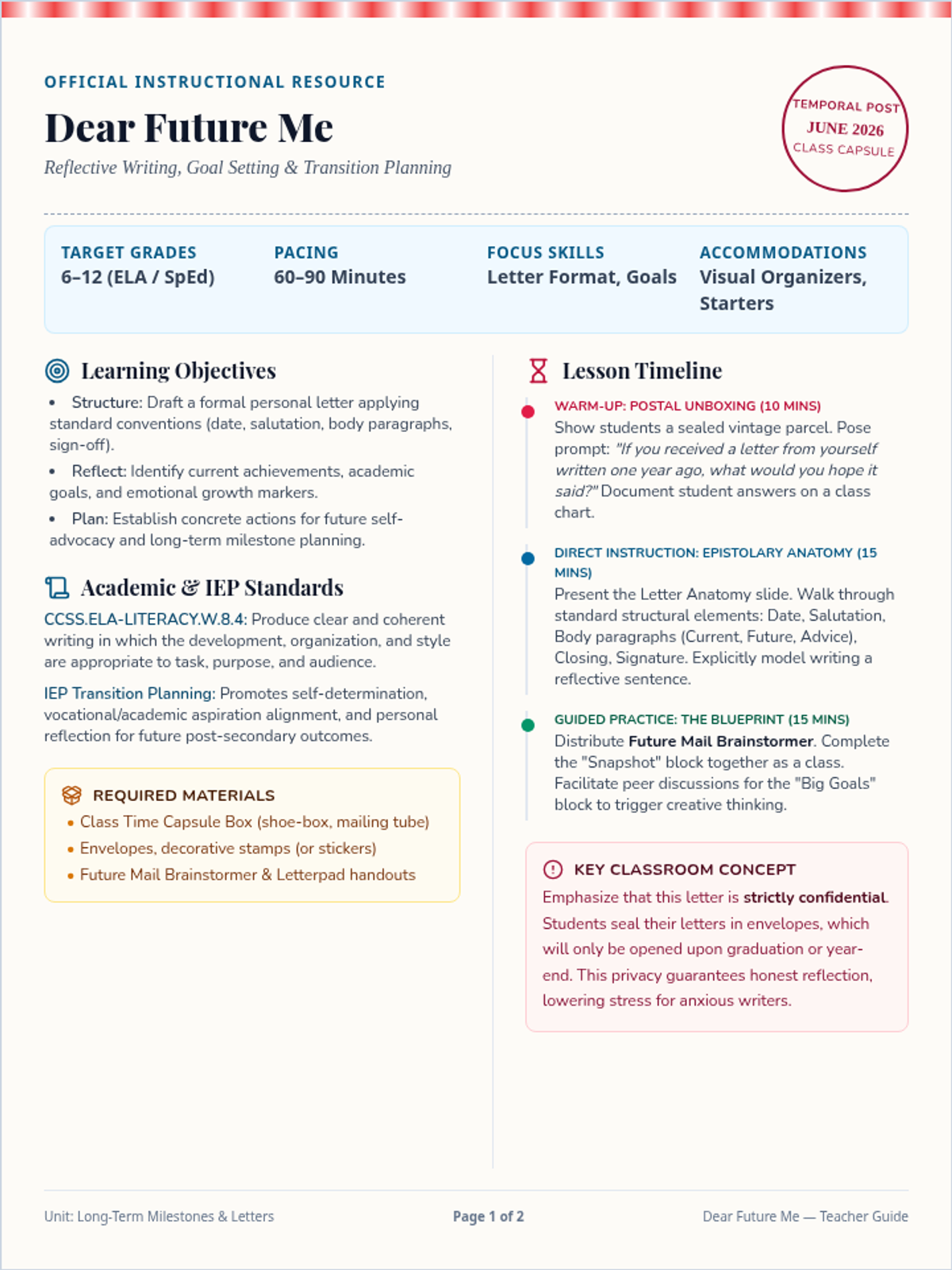
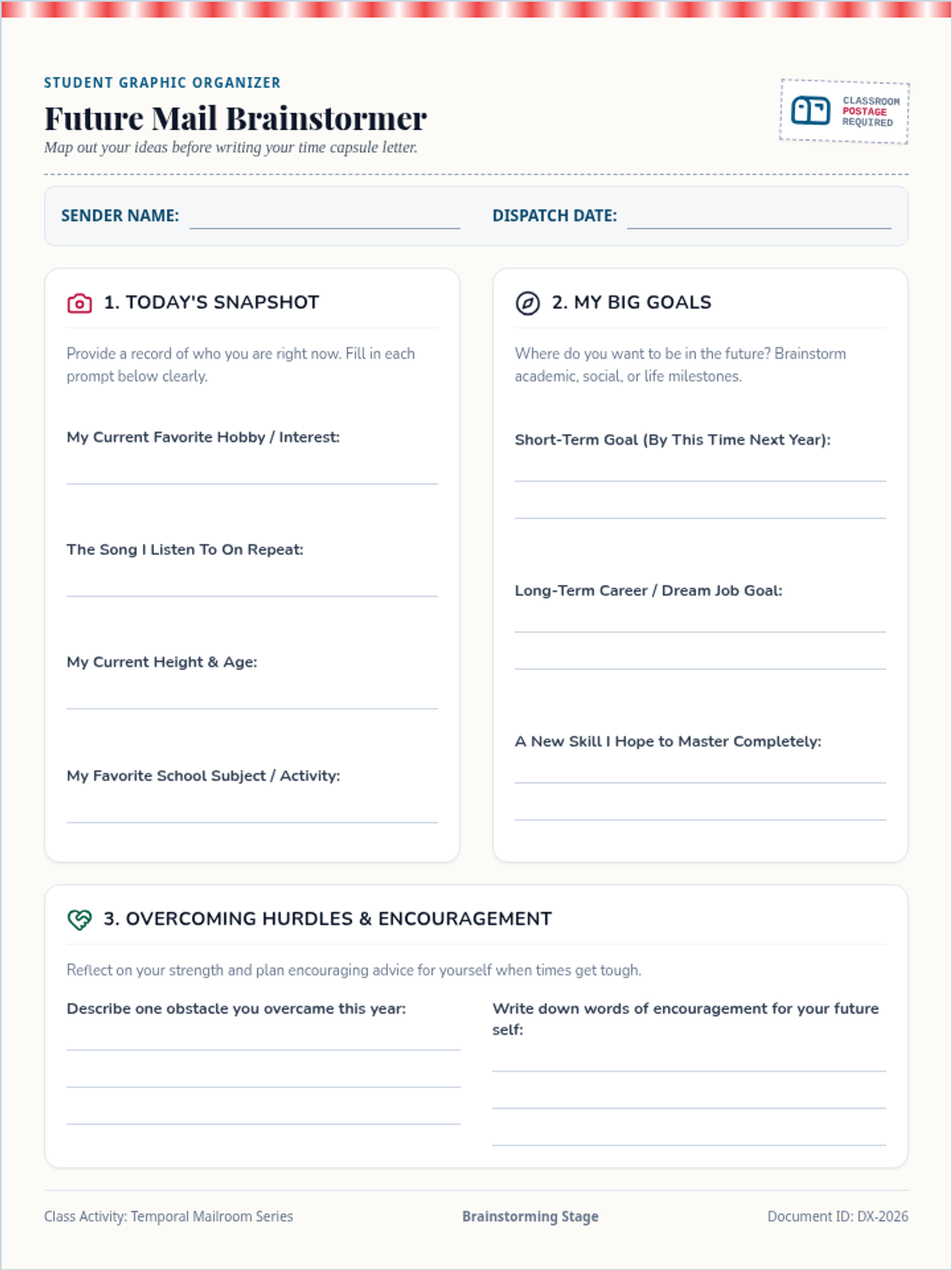
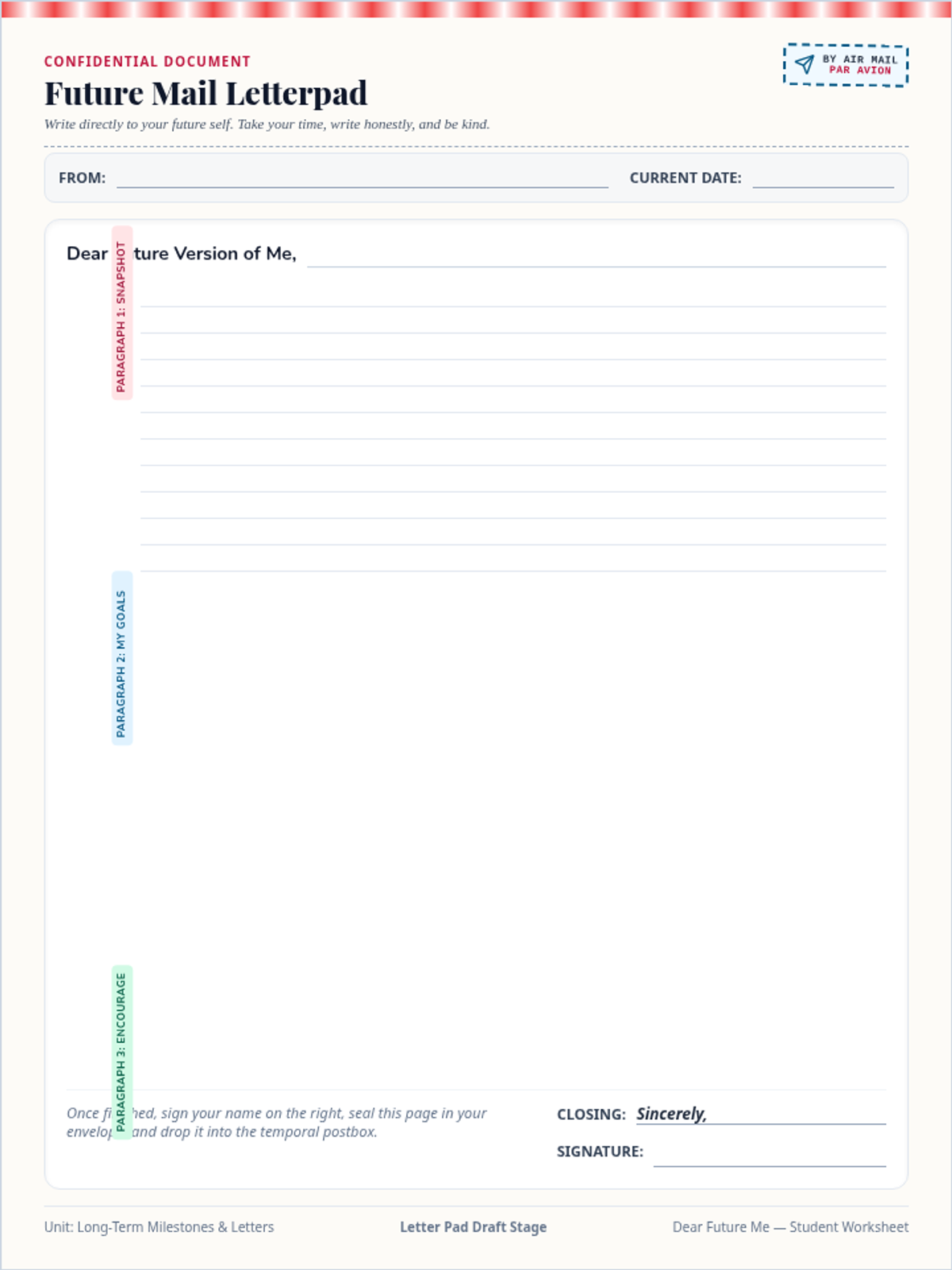
An ELA and Special Education lesson plan that guides students in brainstorming, planning, and drafting a meaningful time capsule letter to their future selves, designed with vintage postal aesthetics, strong accommodations, and scaffolded structures.
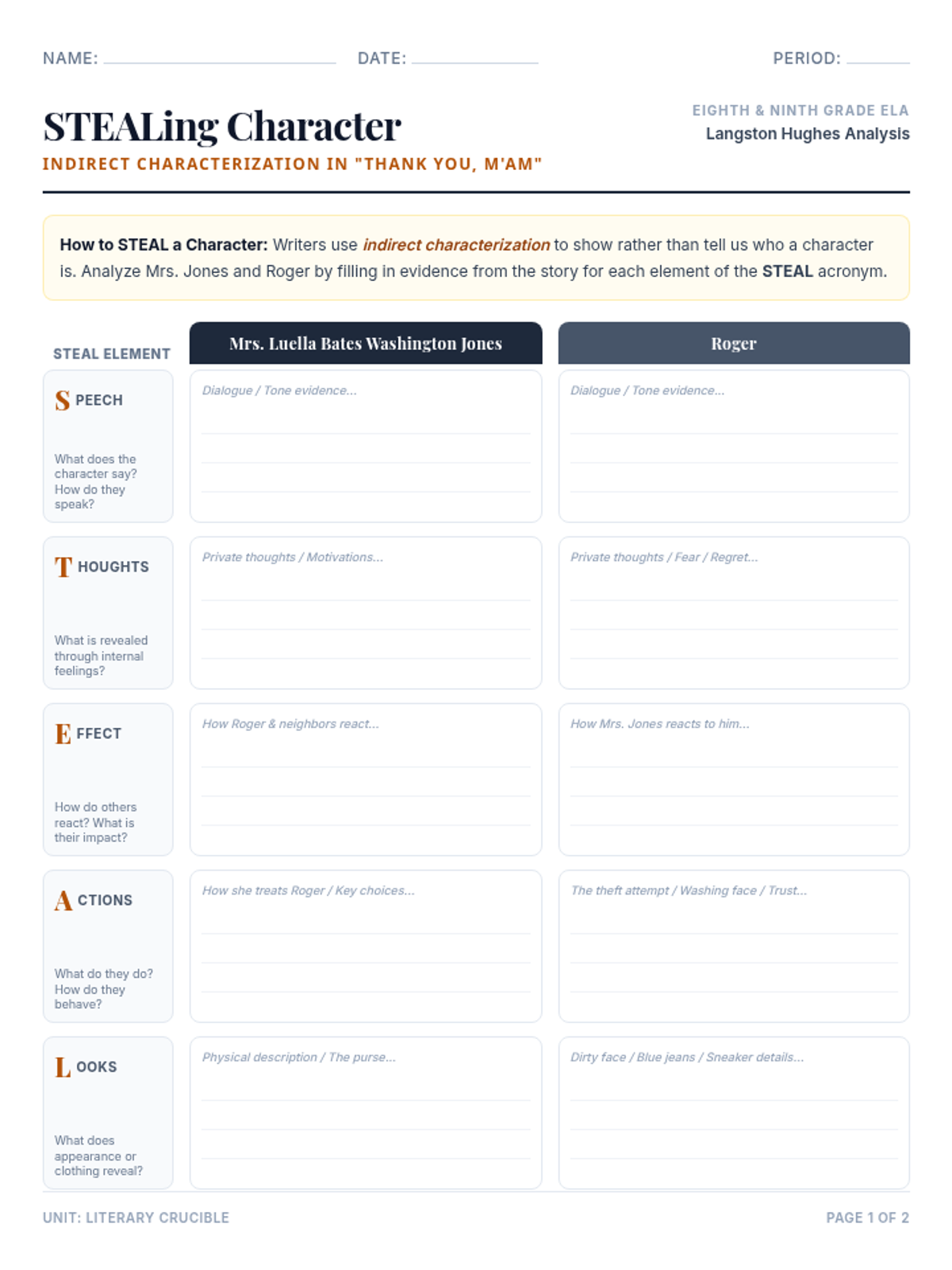
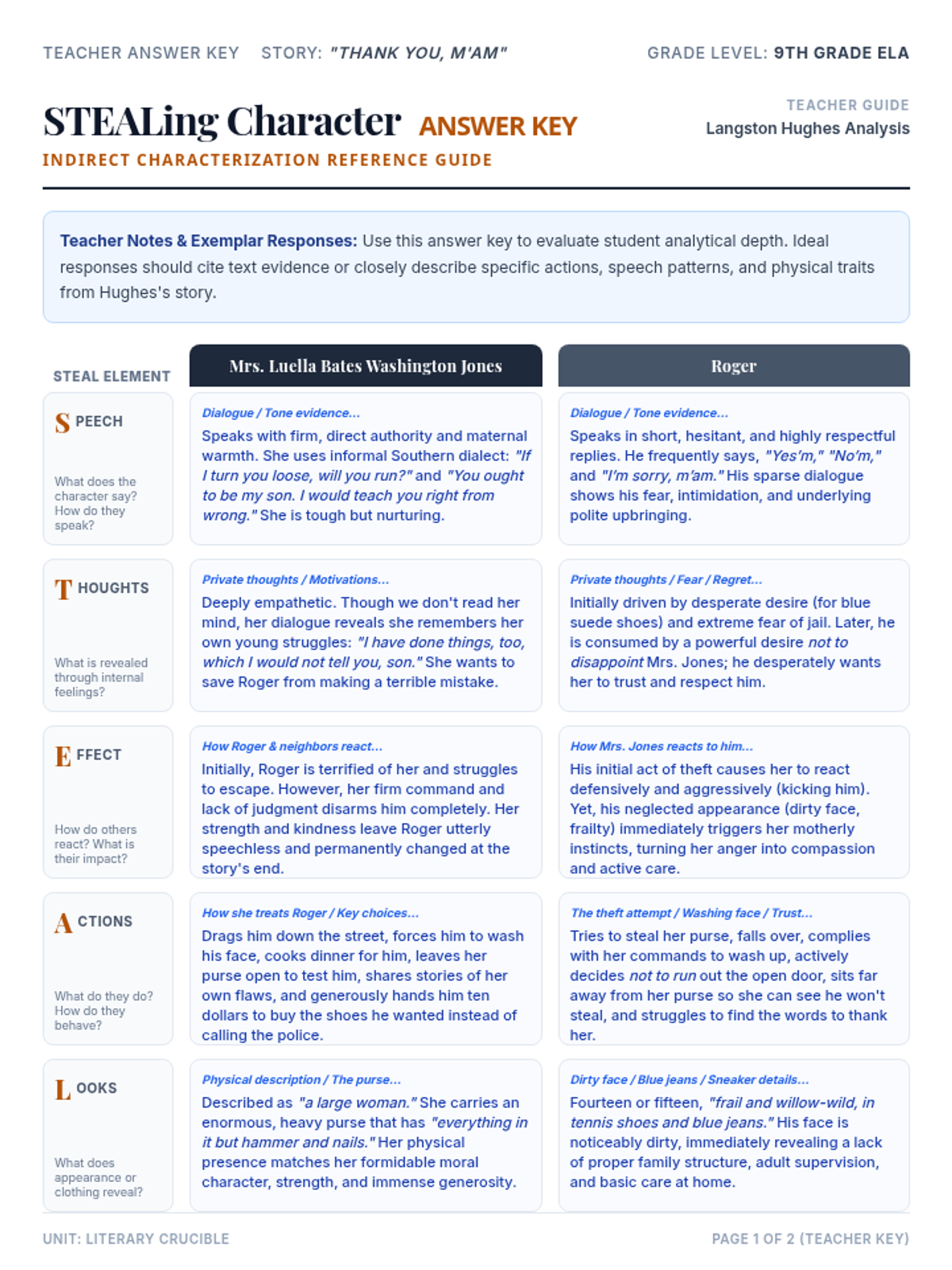
A close reading lesson exploring characterization and theme in Langston Hughes's classic short story 'Thank You, M'am'. Students analyze indirect characterization using the STEAL method and investigate direct characterization through evidence collection.
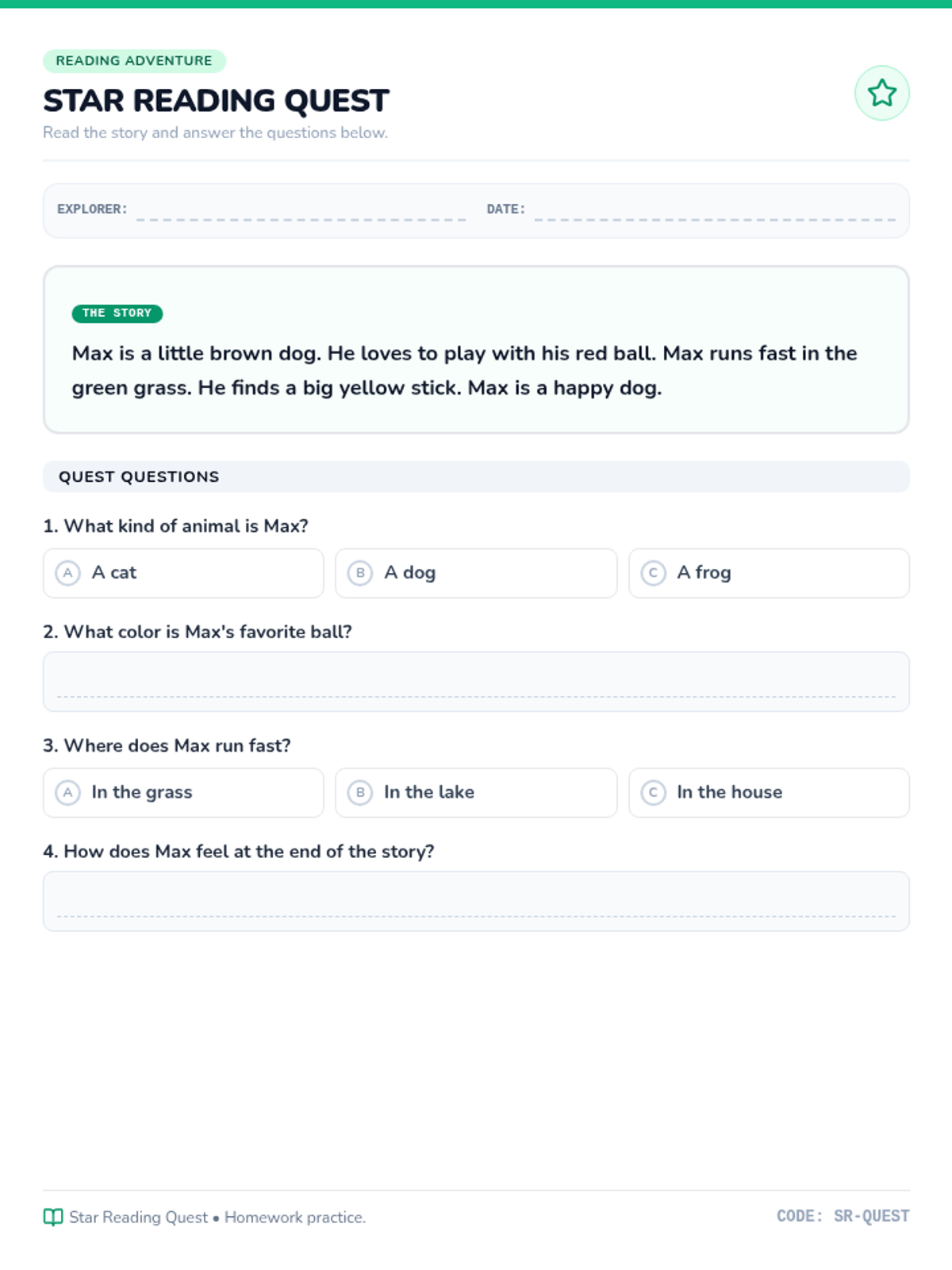
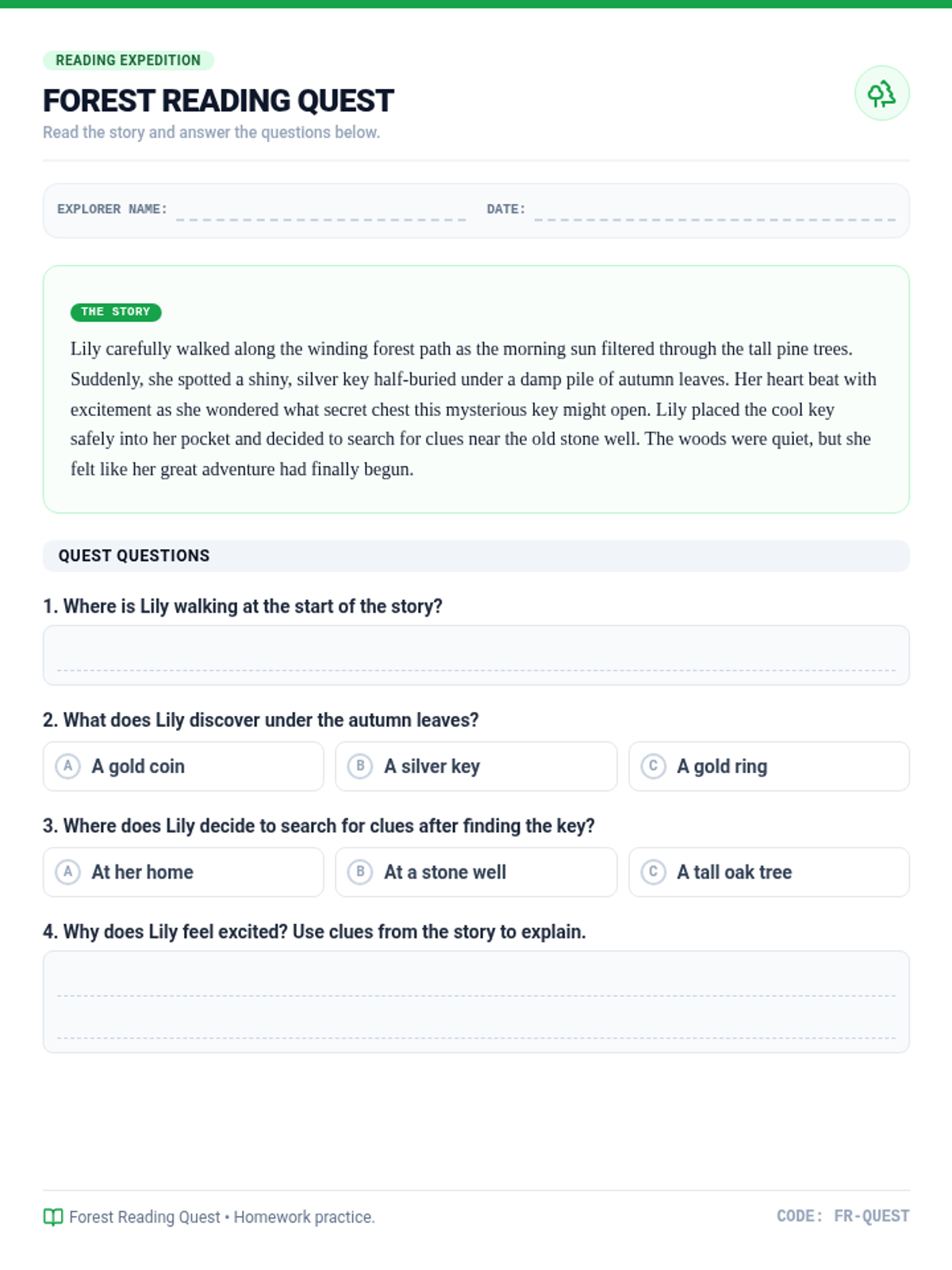
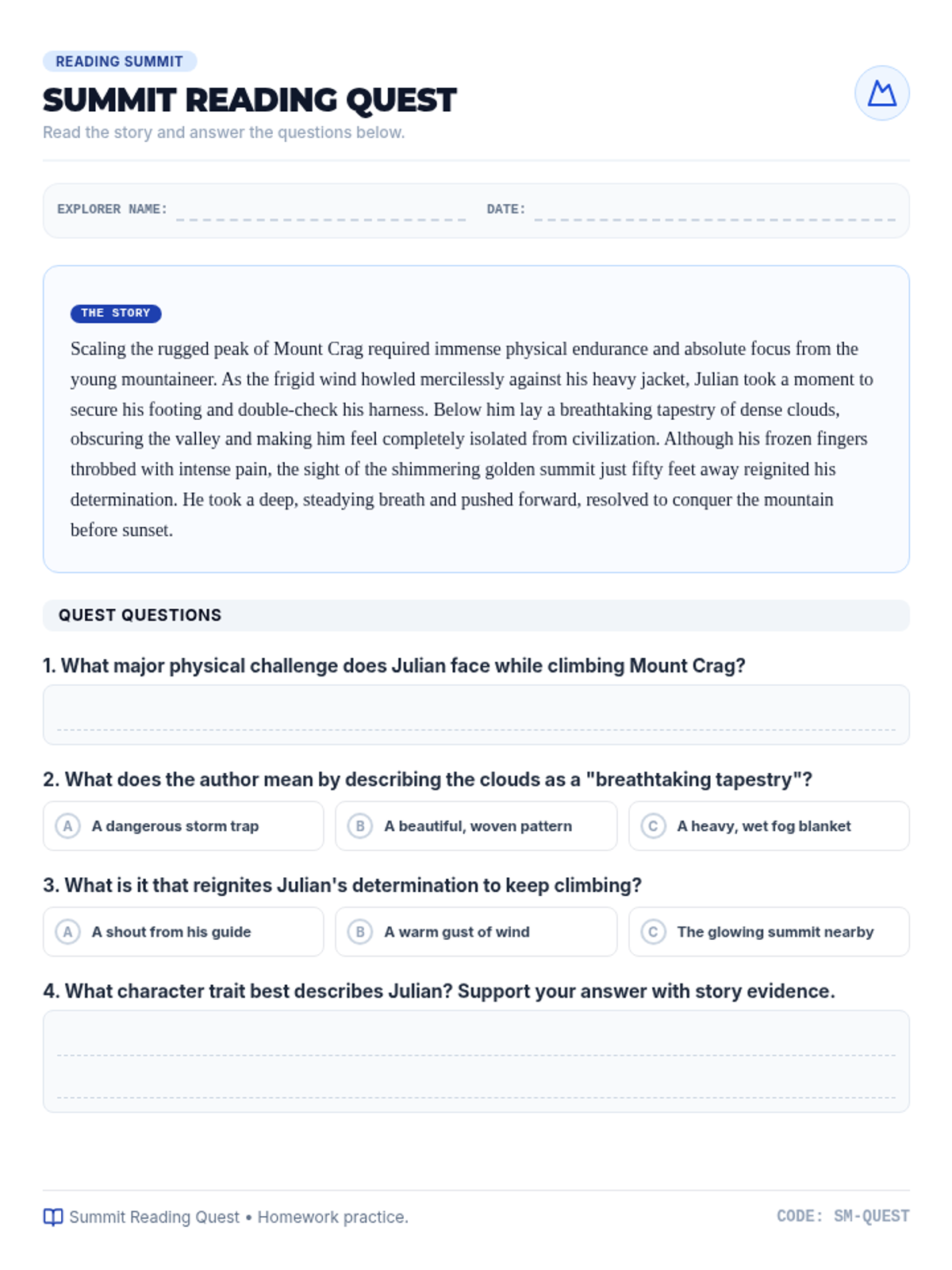
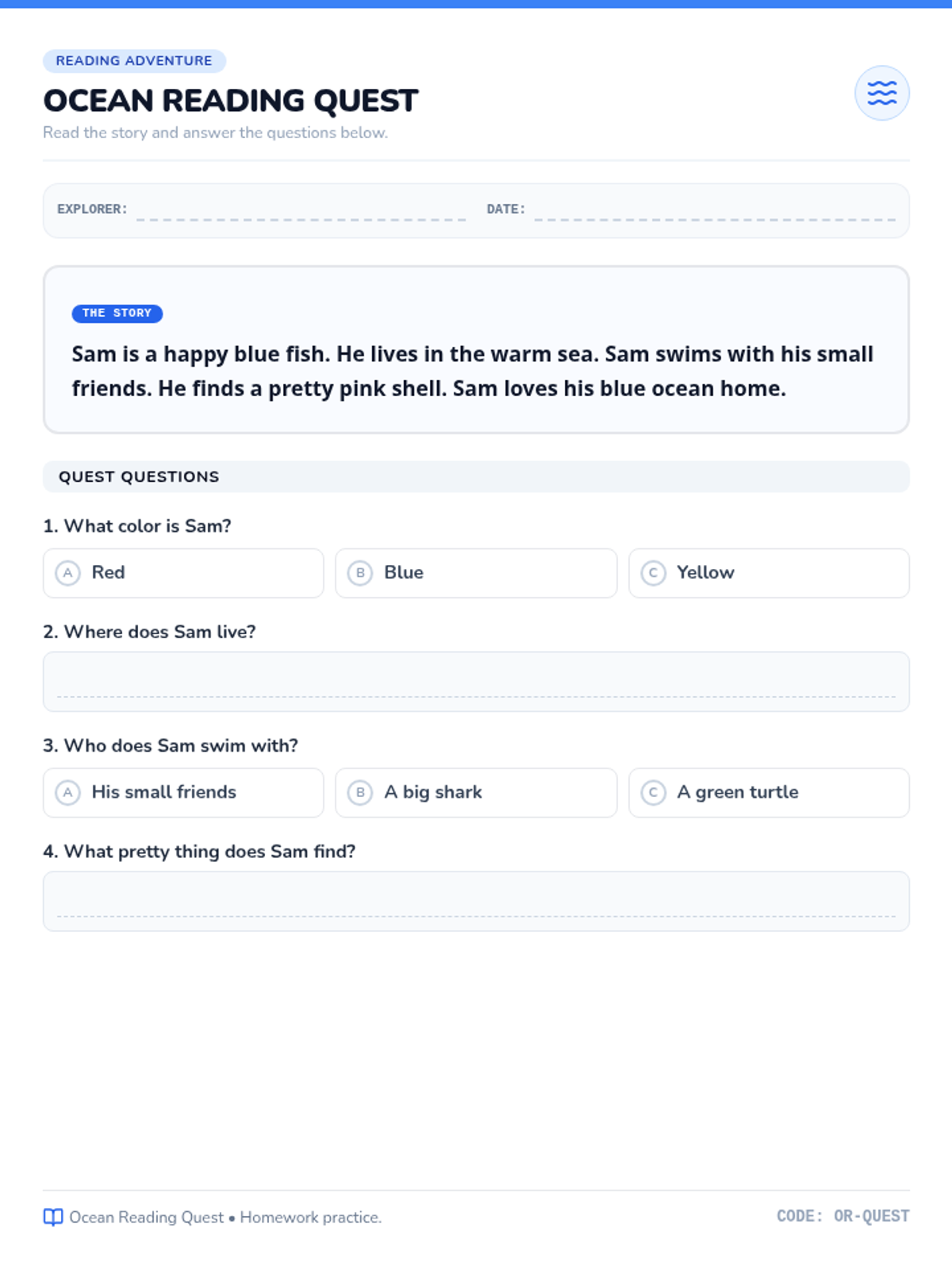
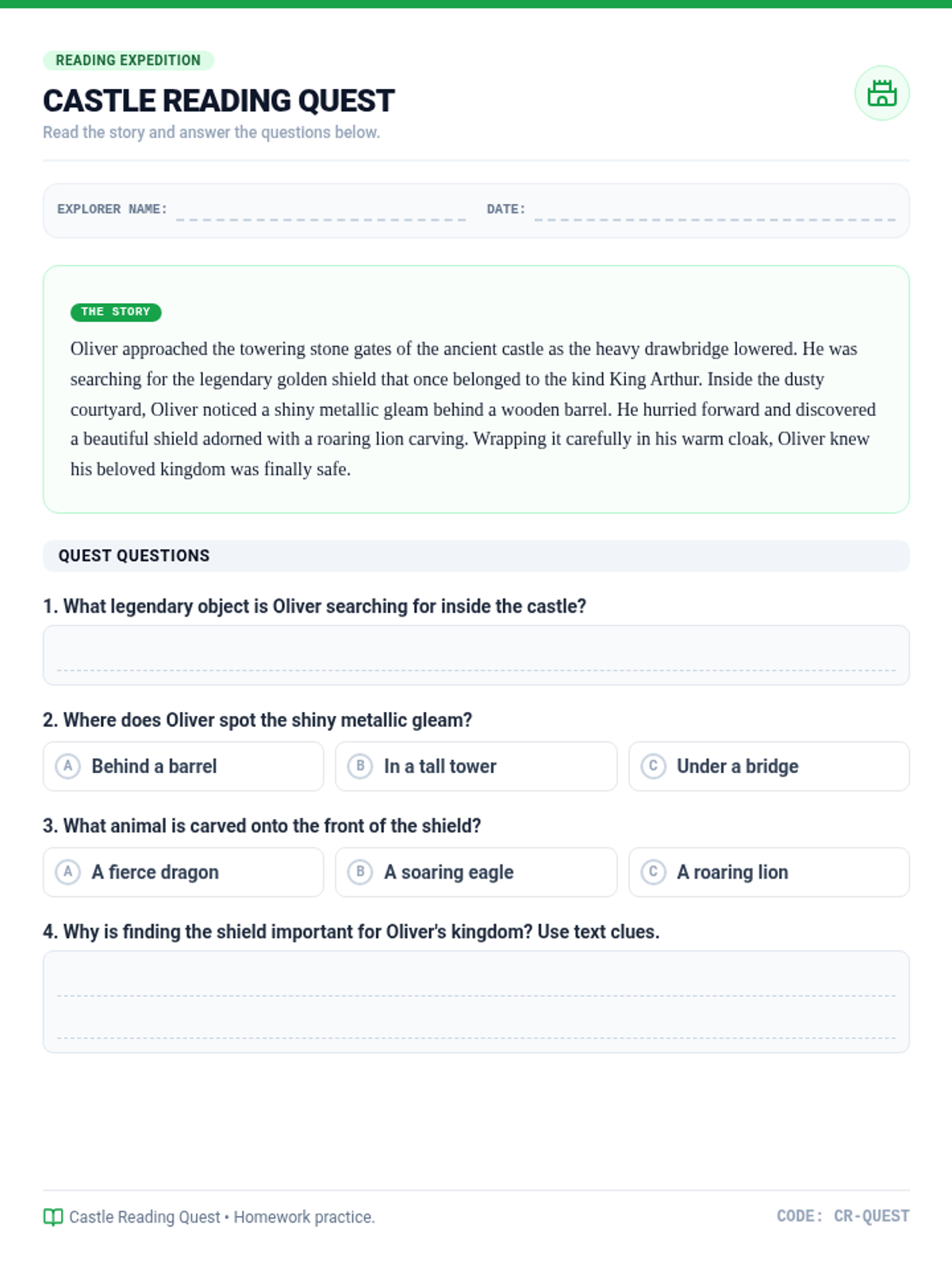
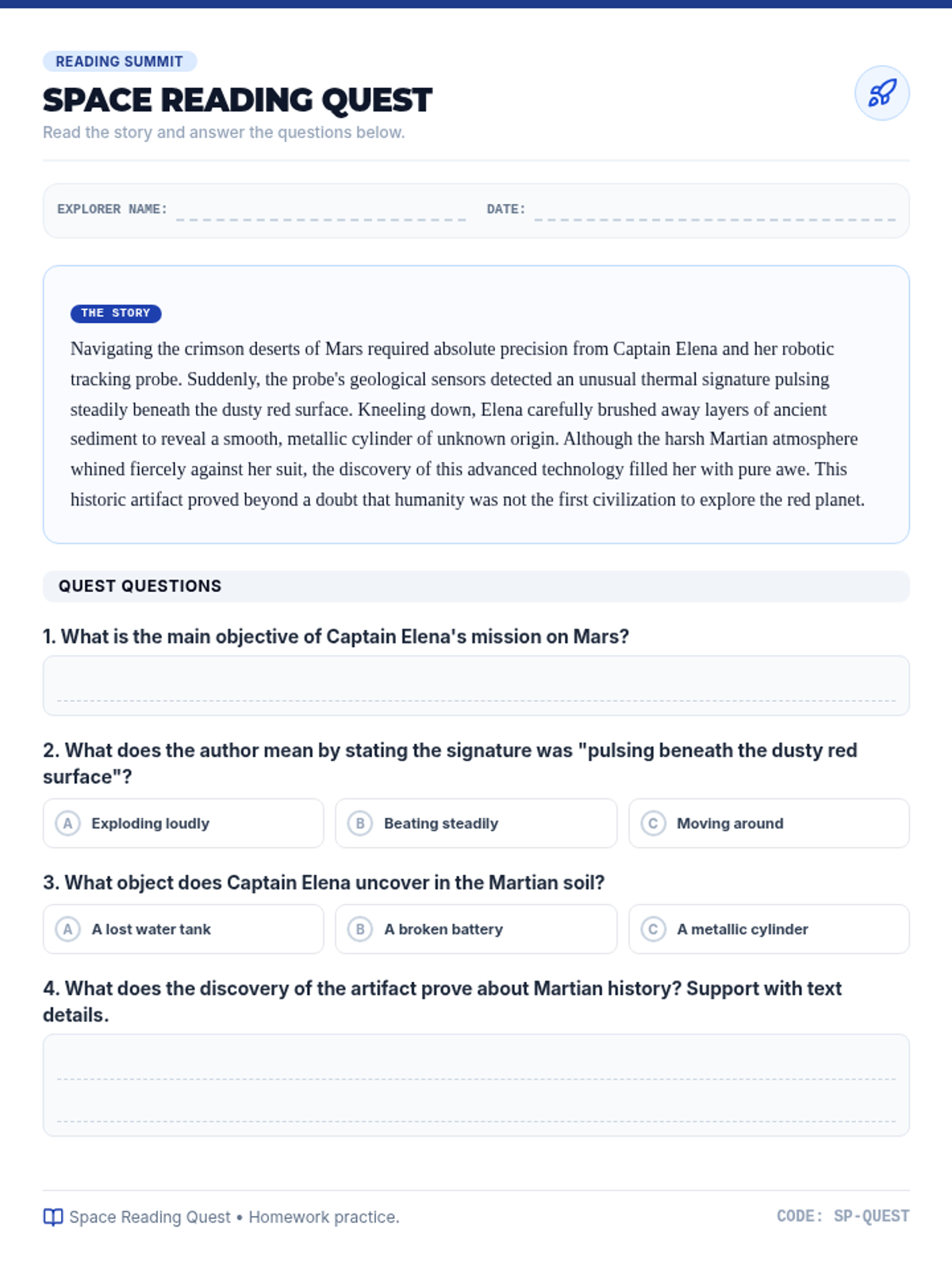
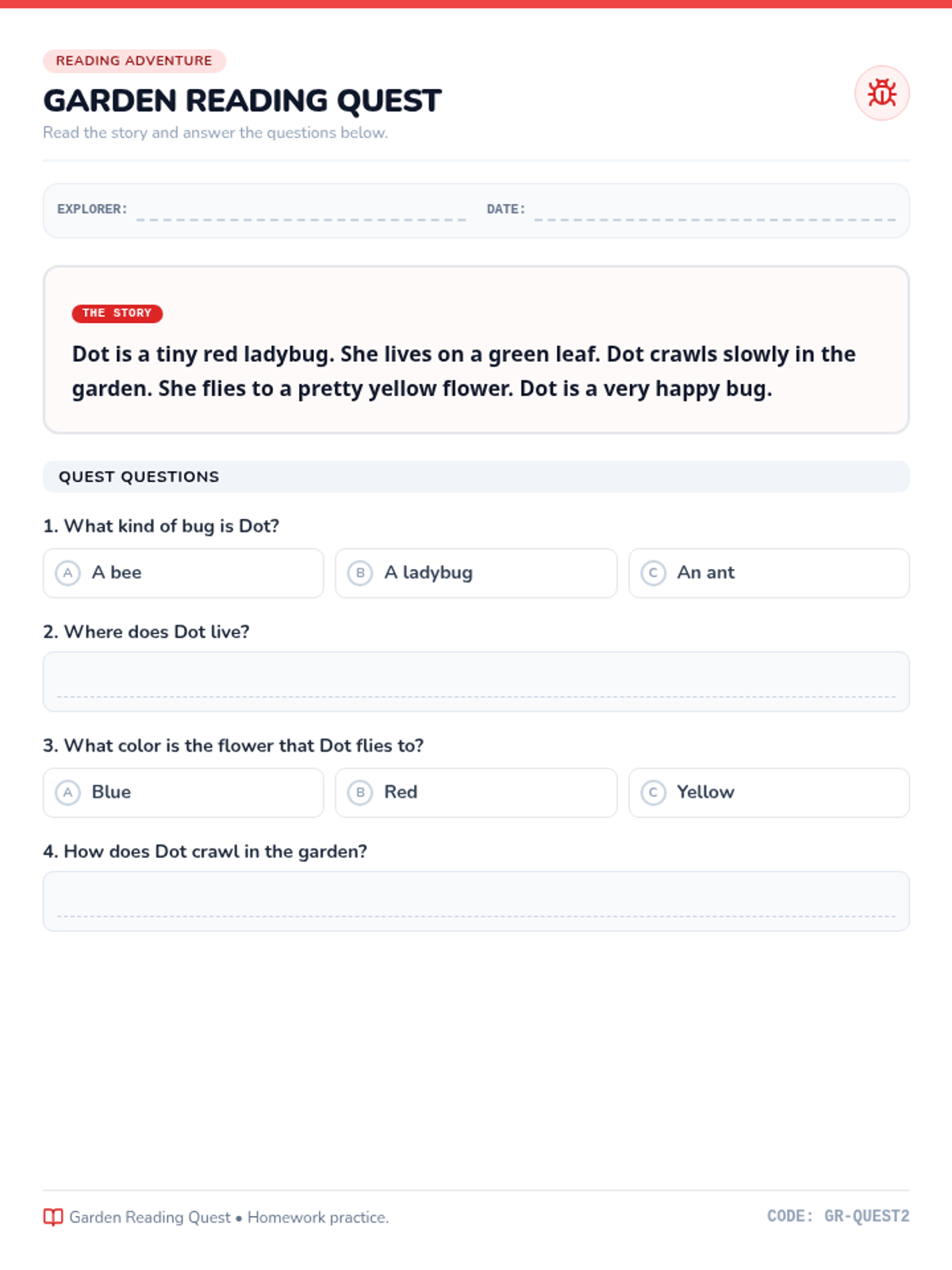
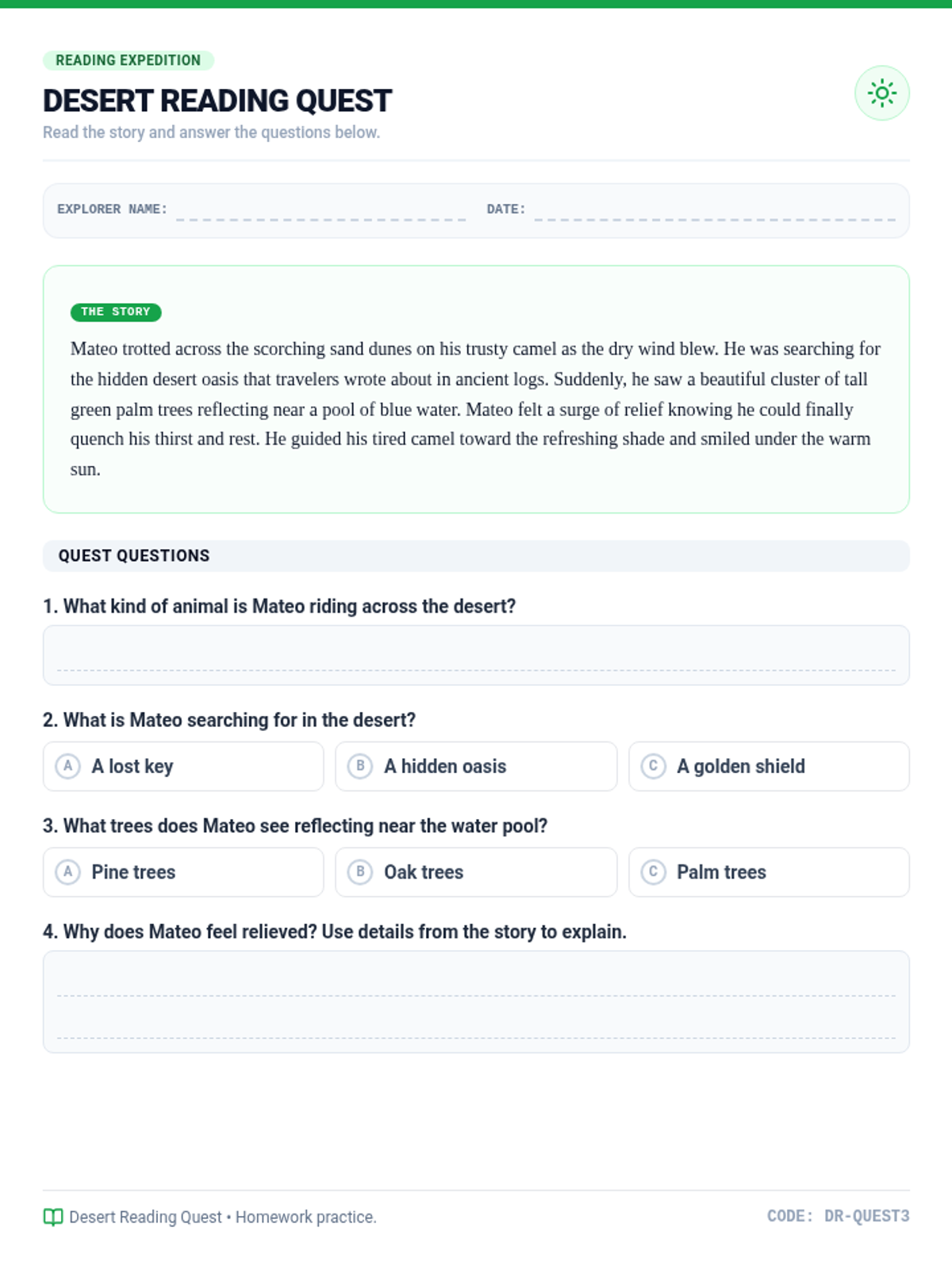
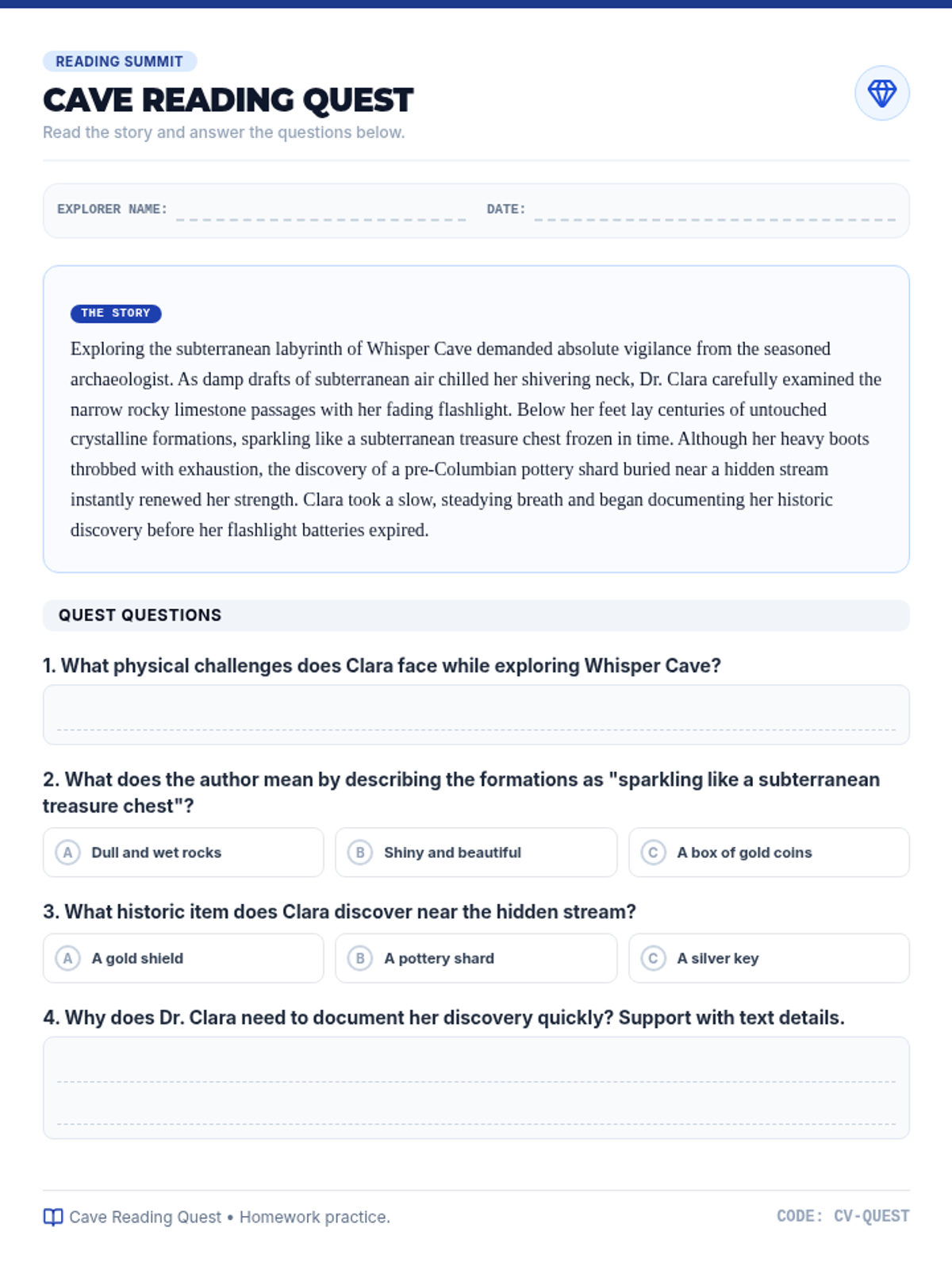
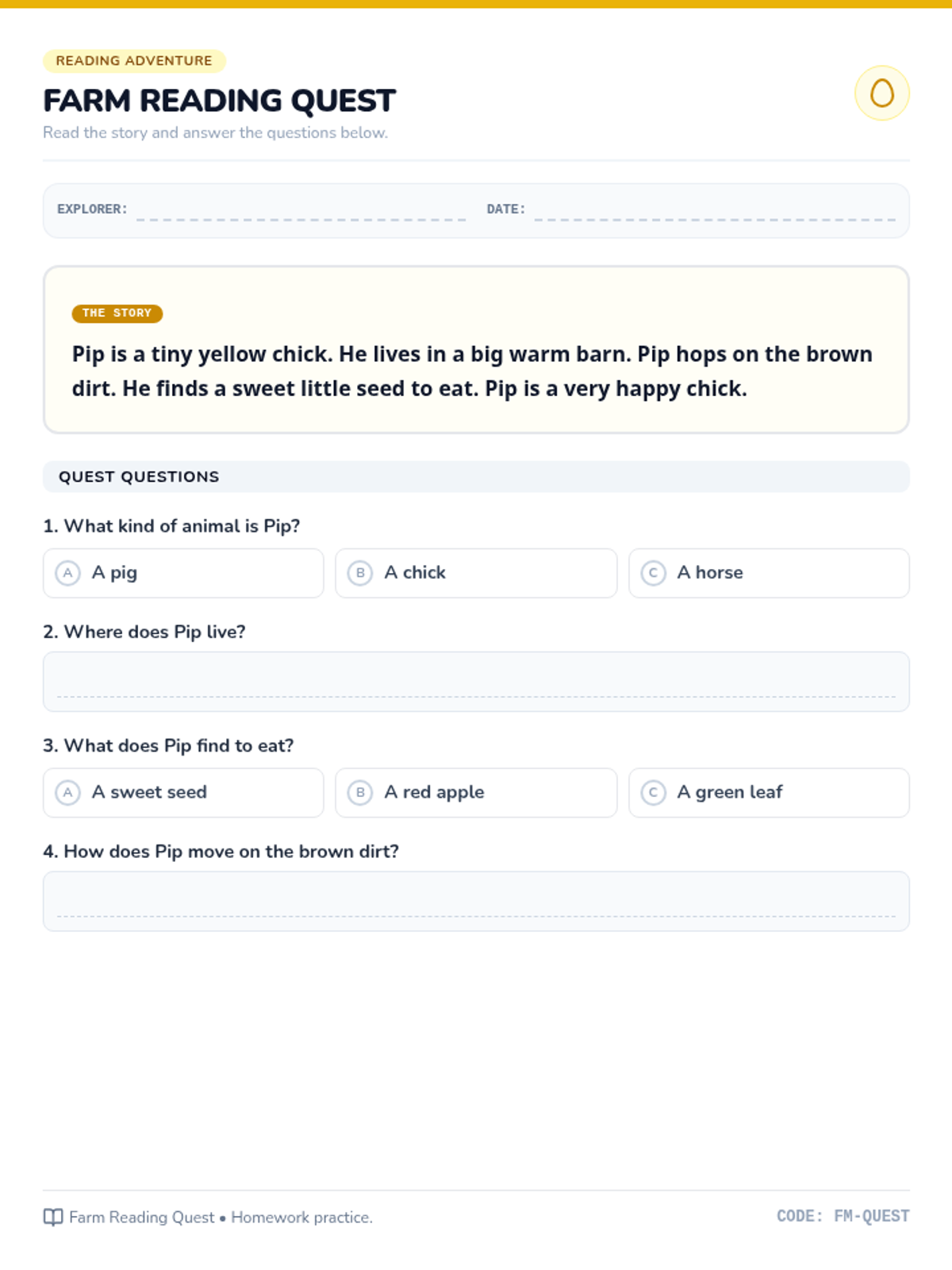
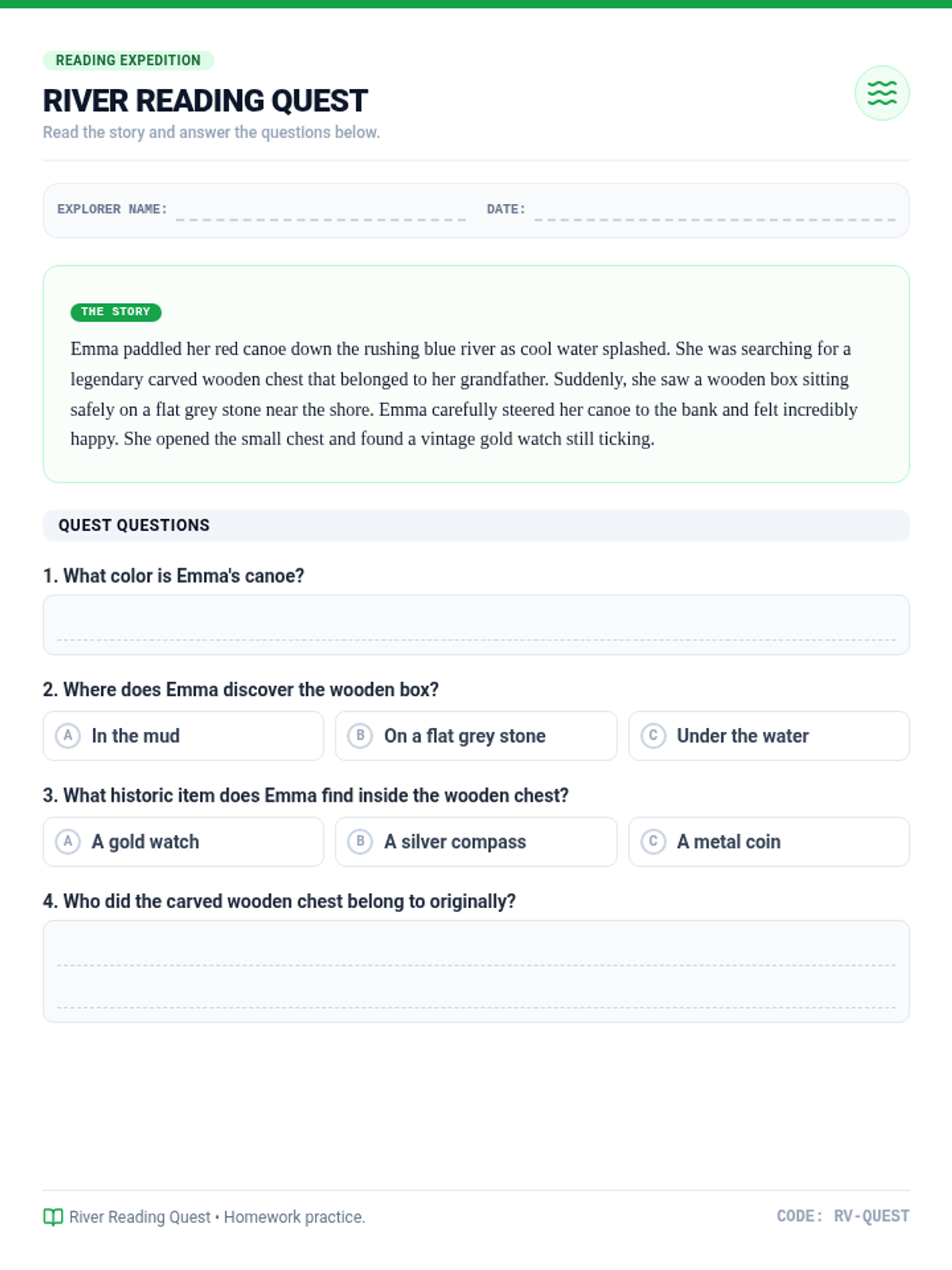
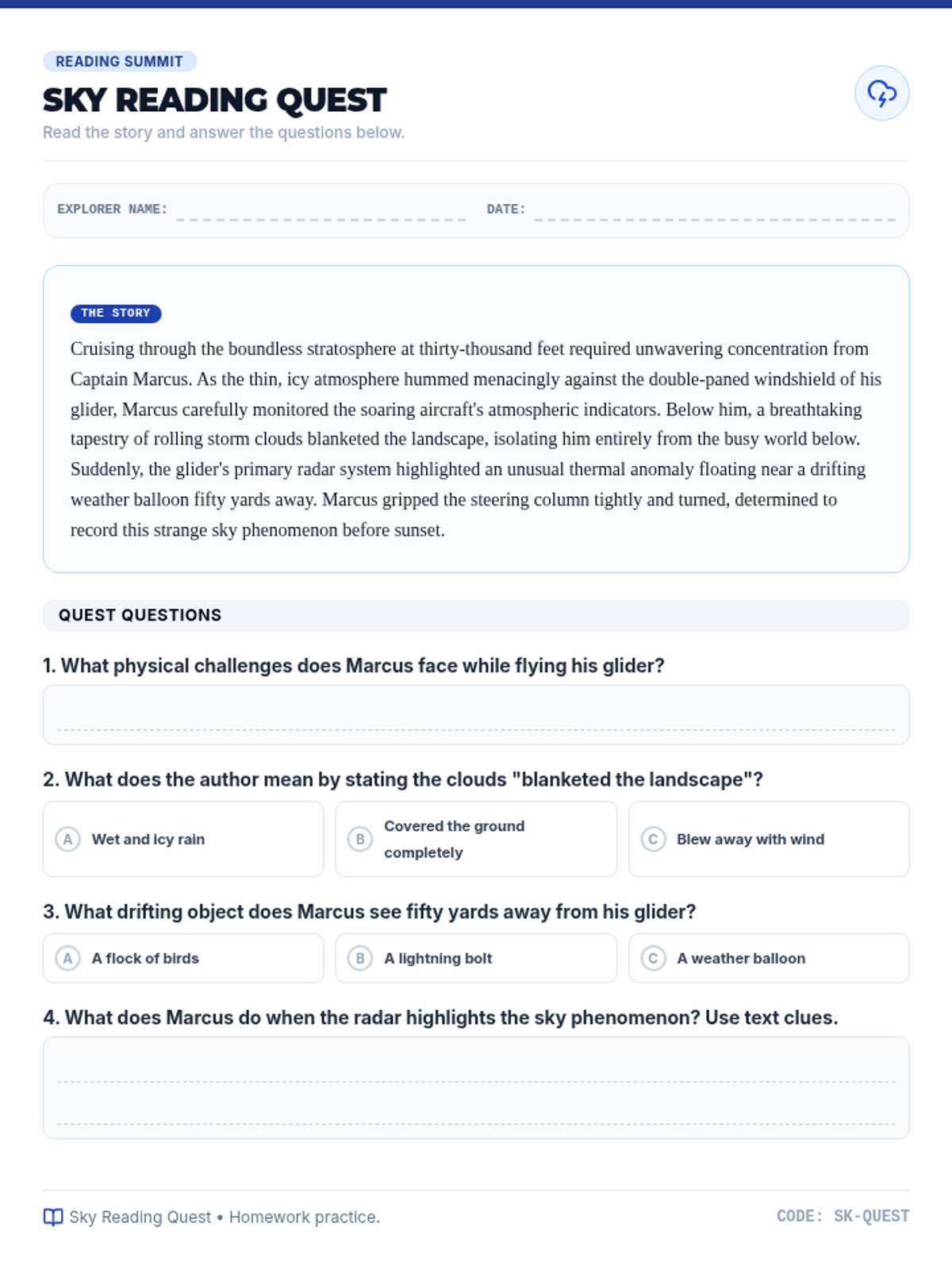
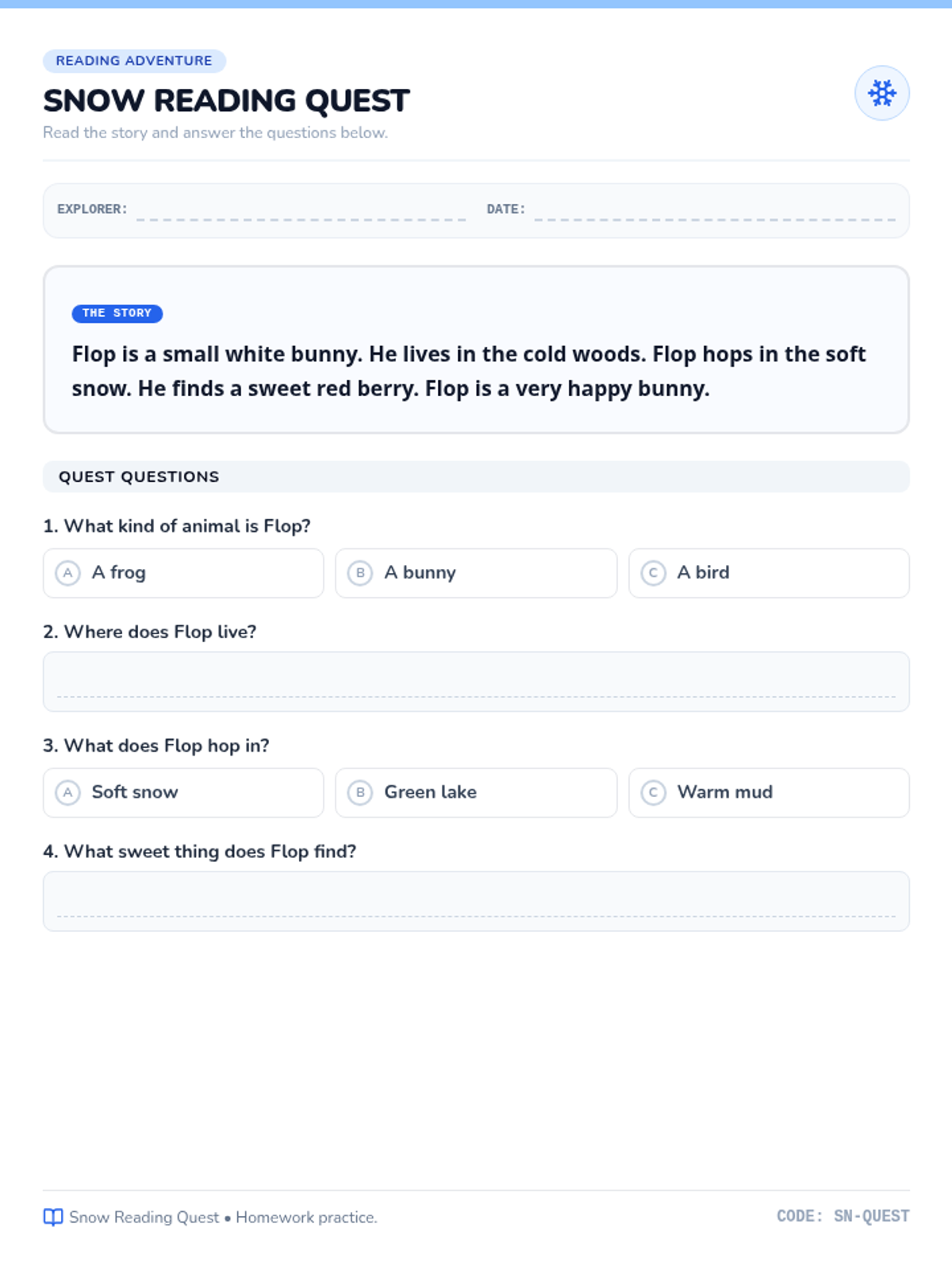
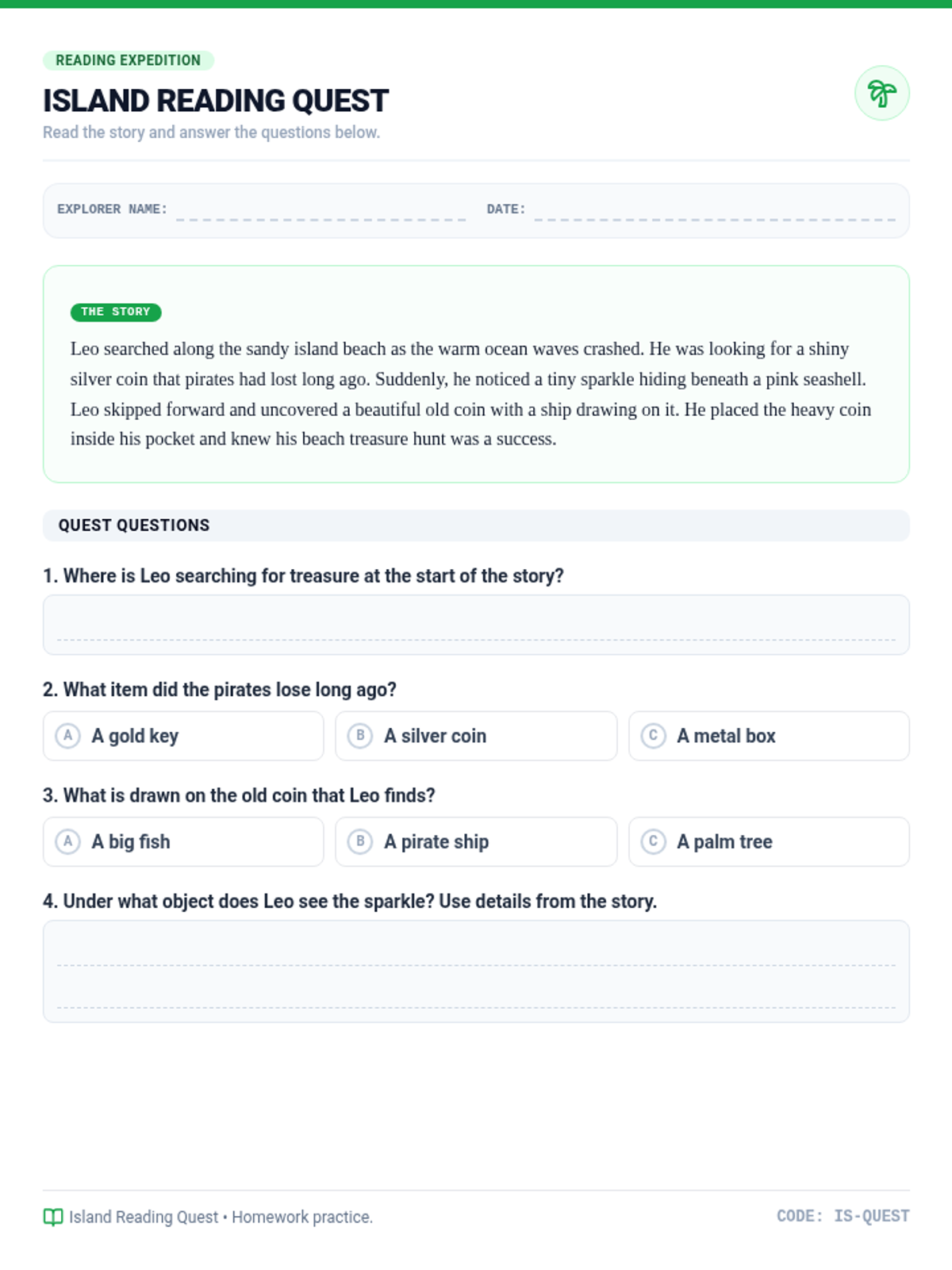
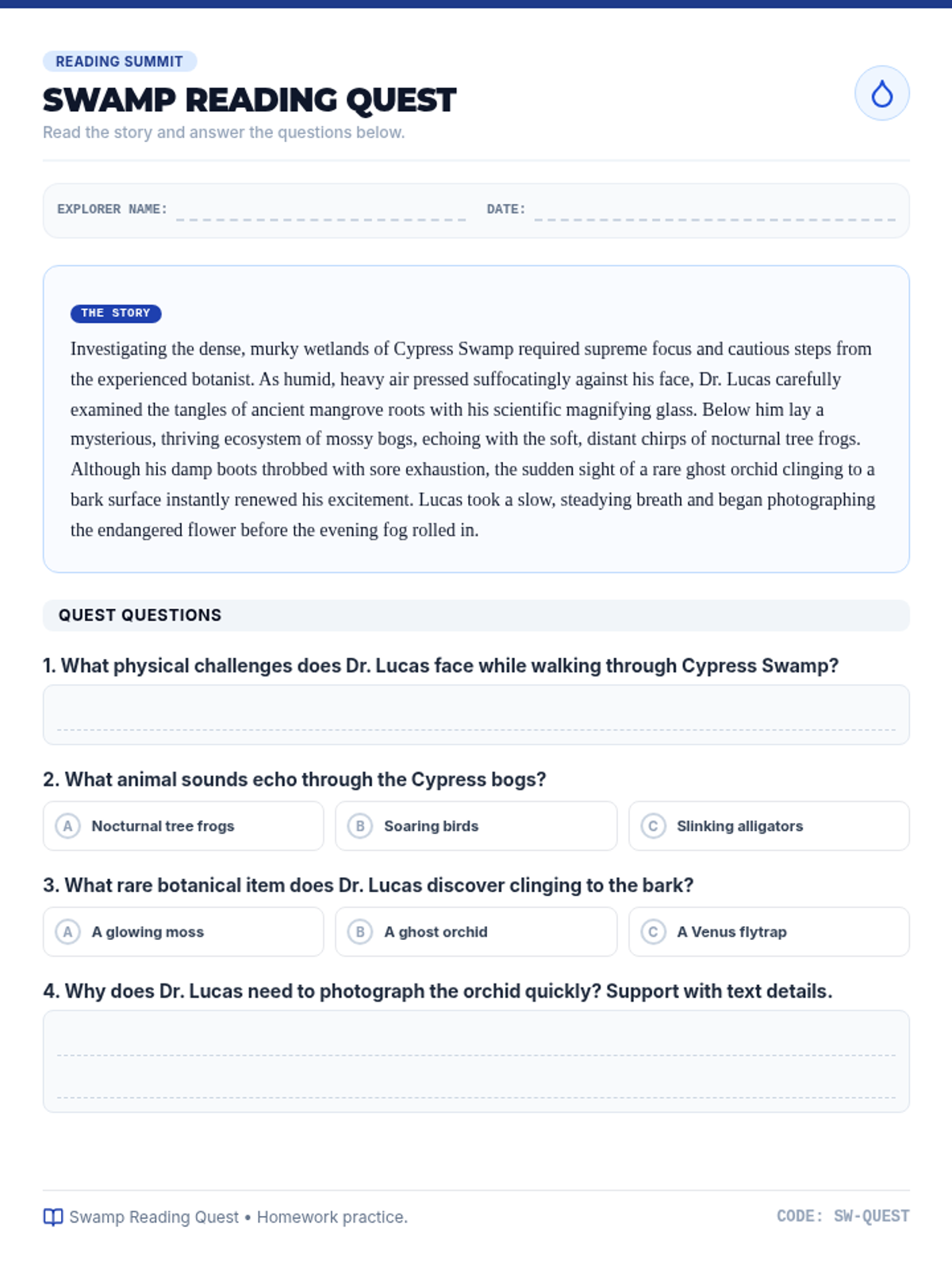
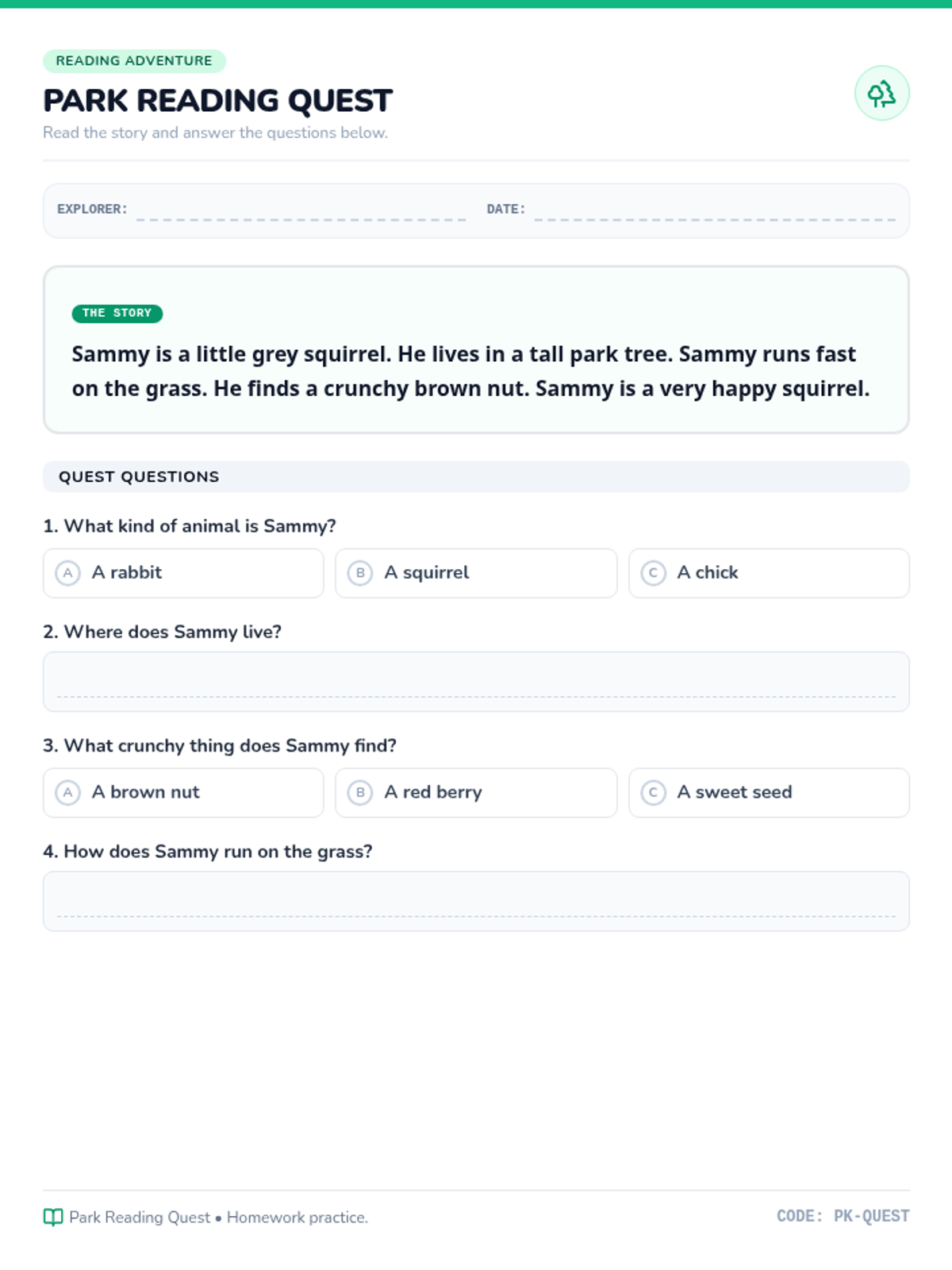
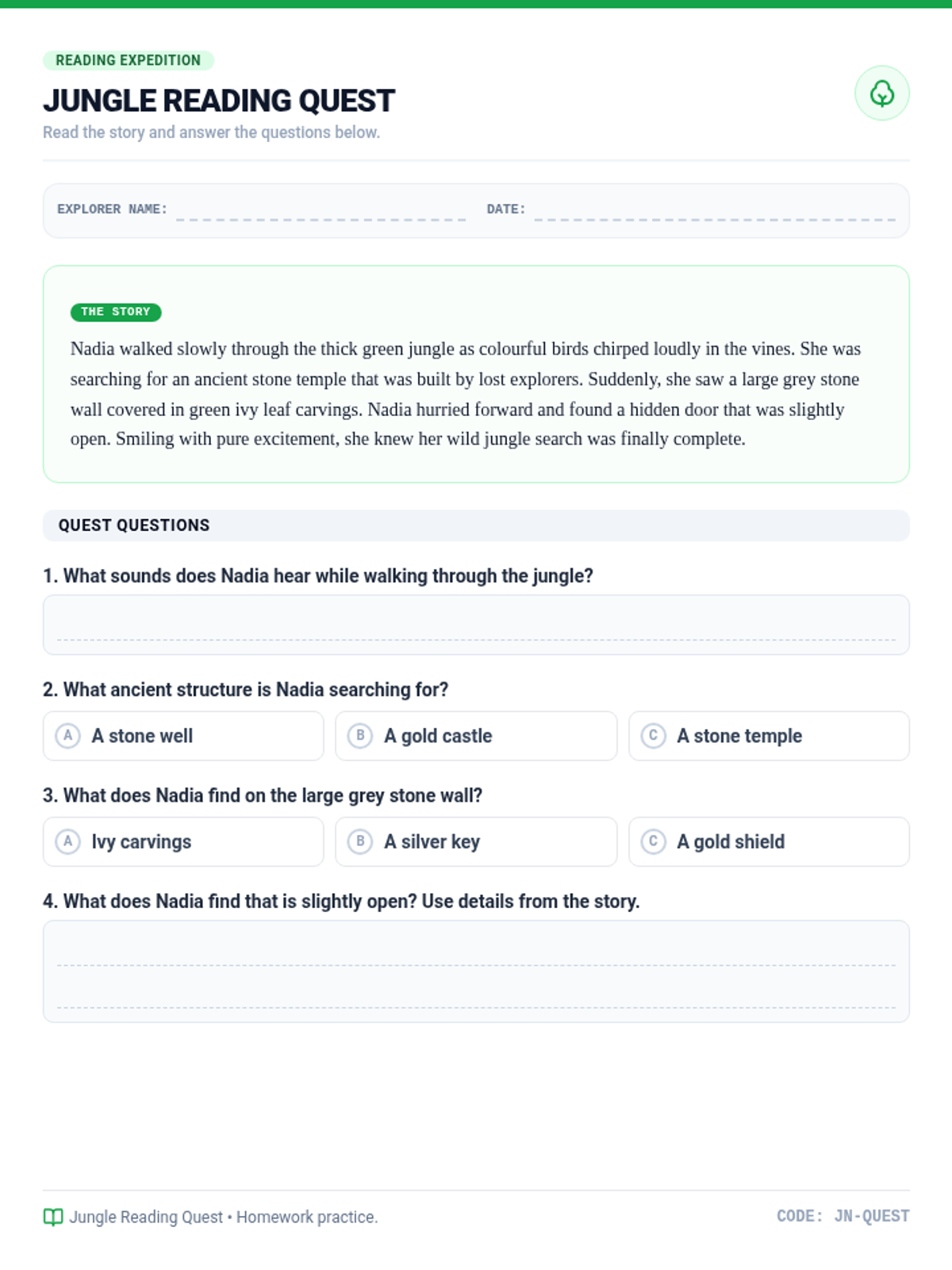
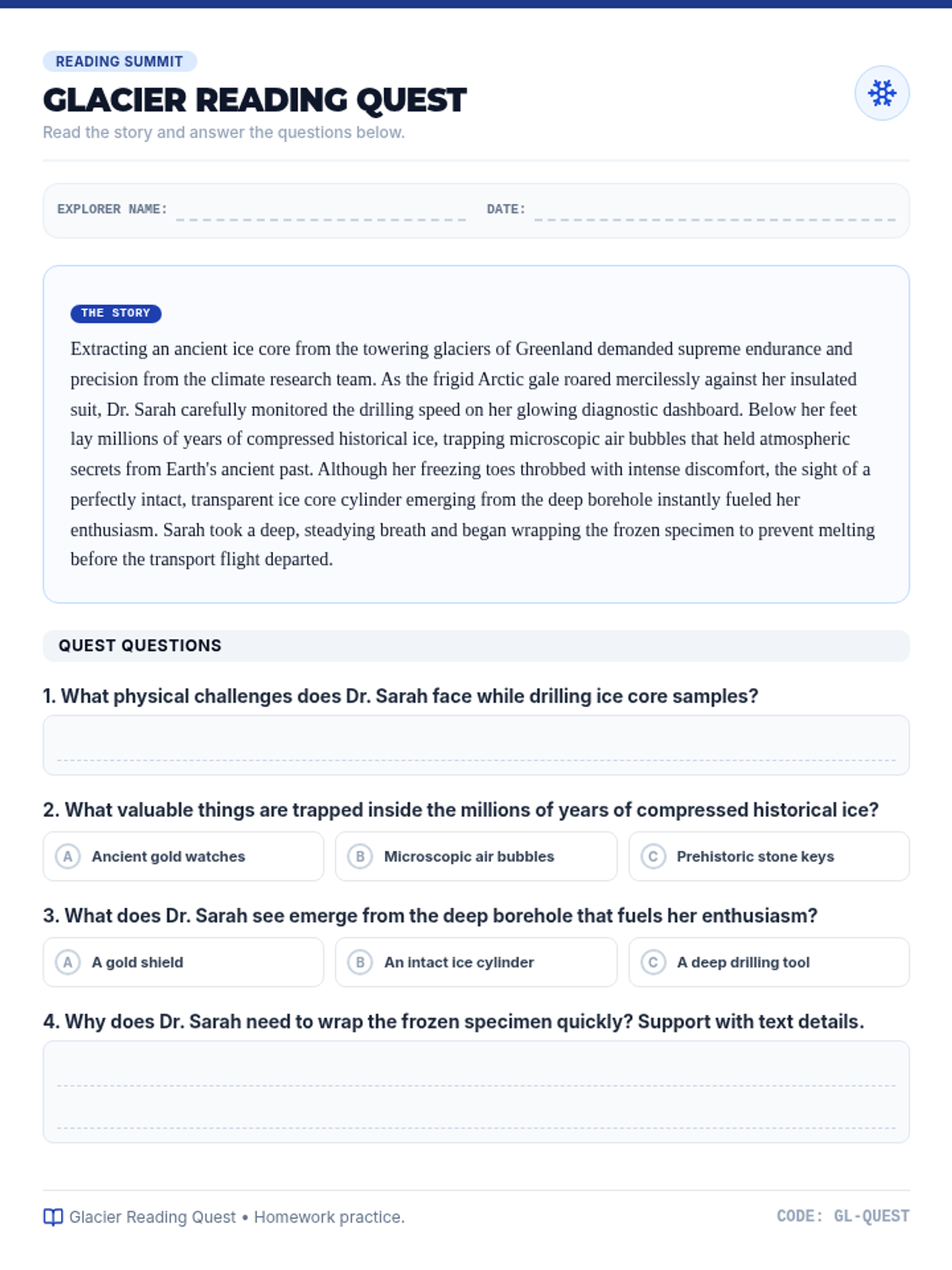
A collection of targeted reading comprehension homework assignments designed for different reading levels, featuring short stories and custom questions.
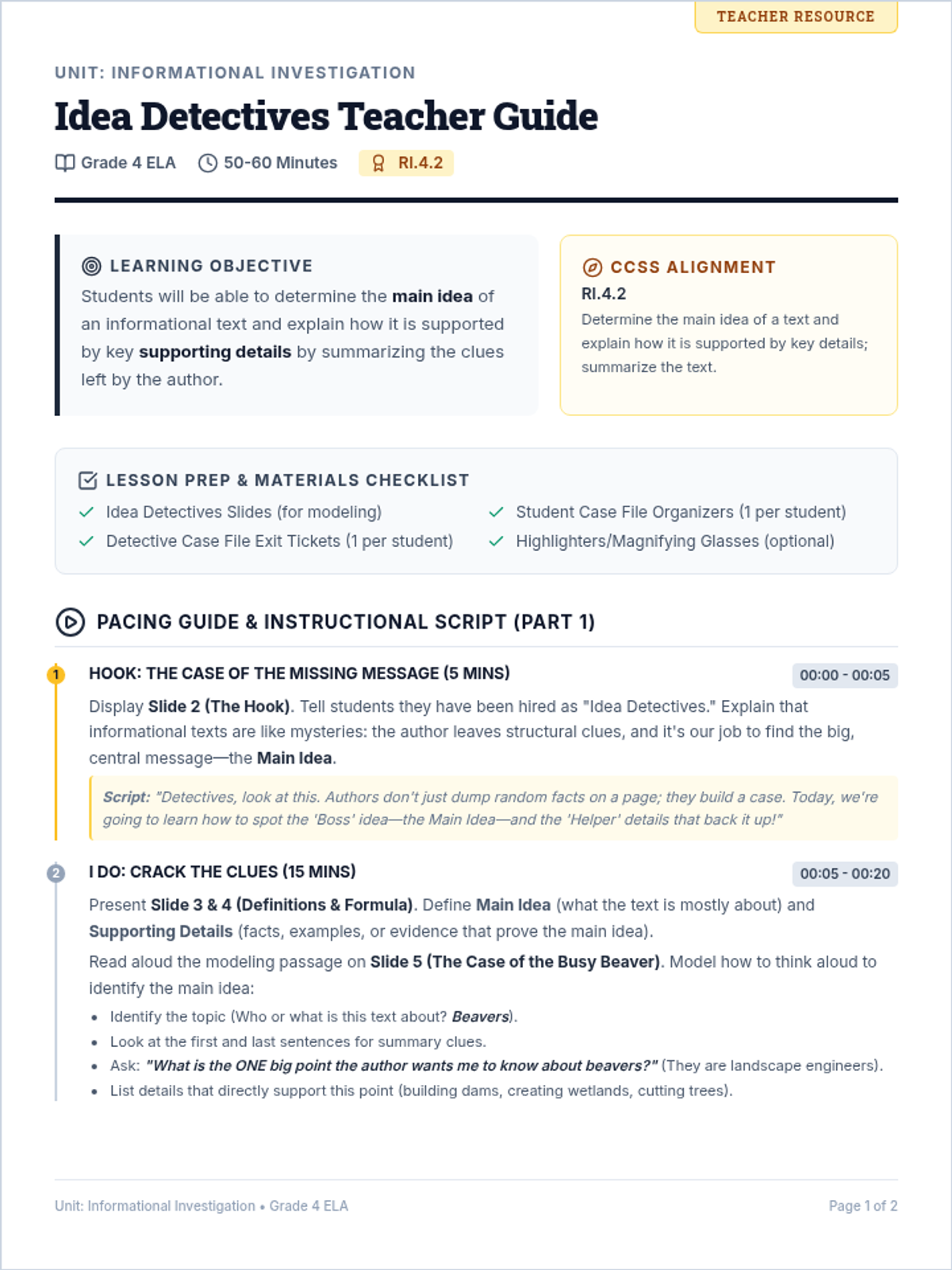
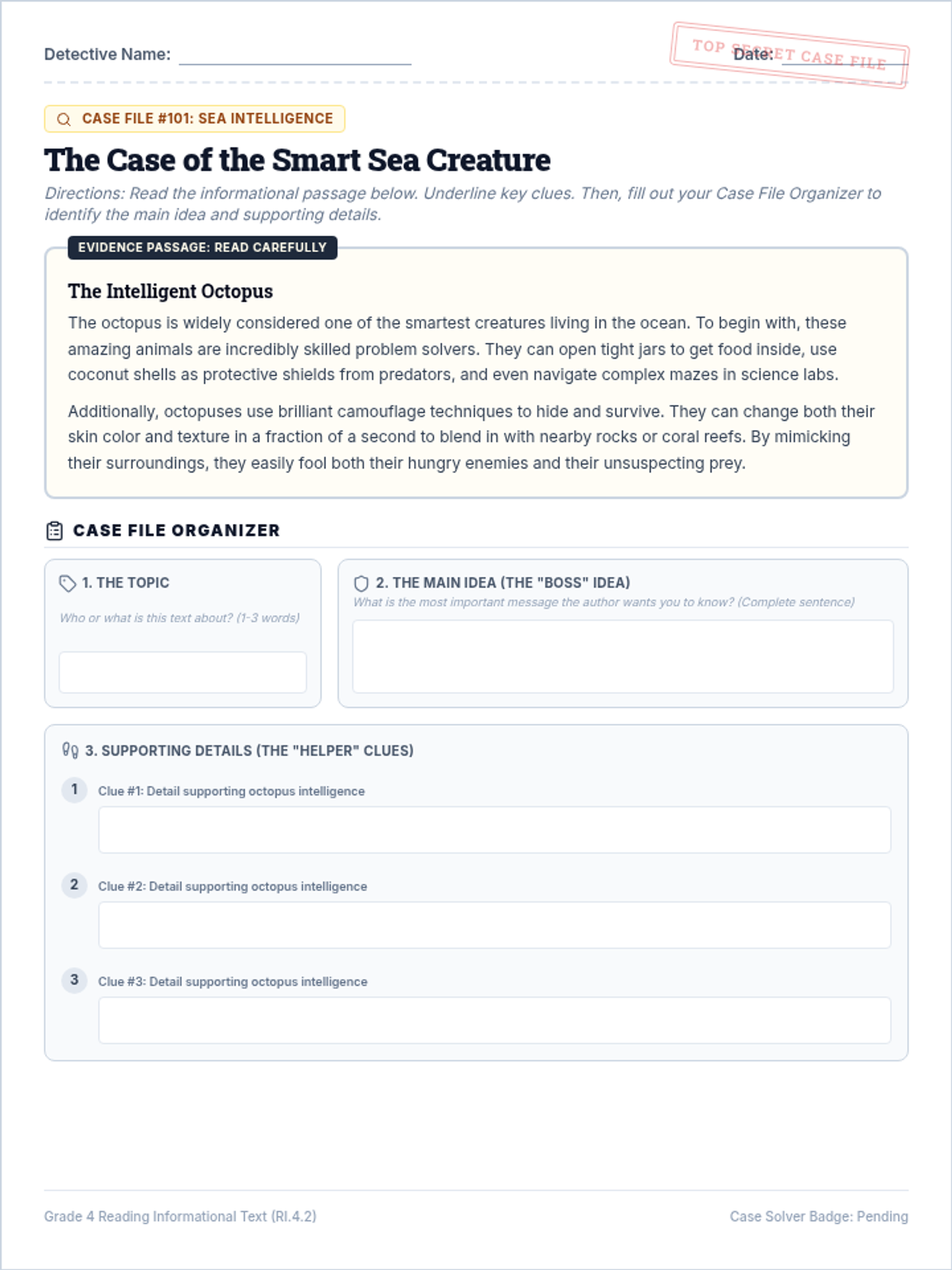
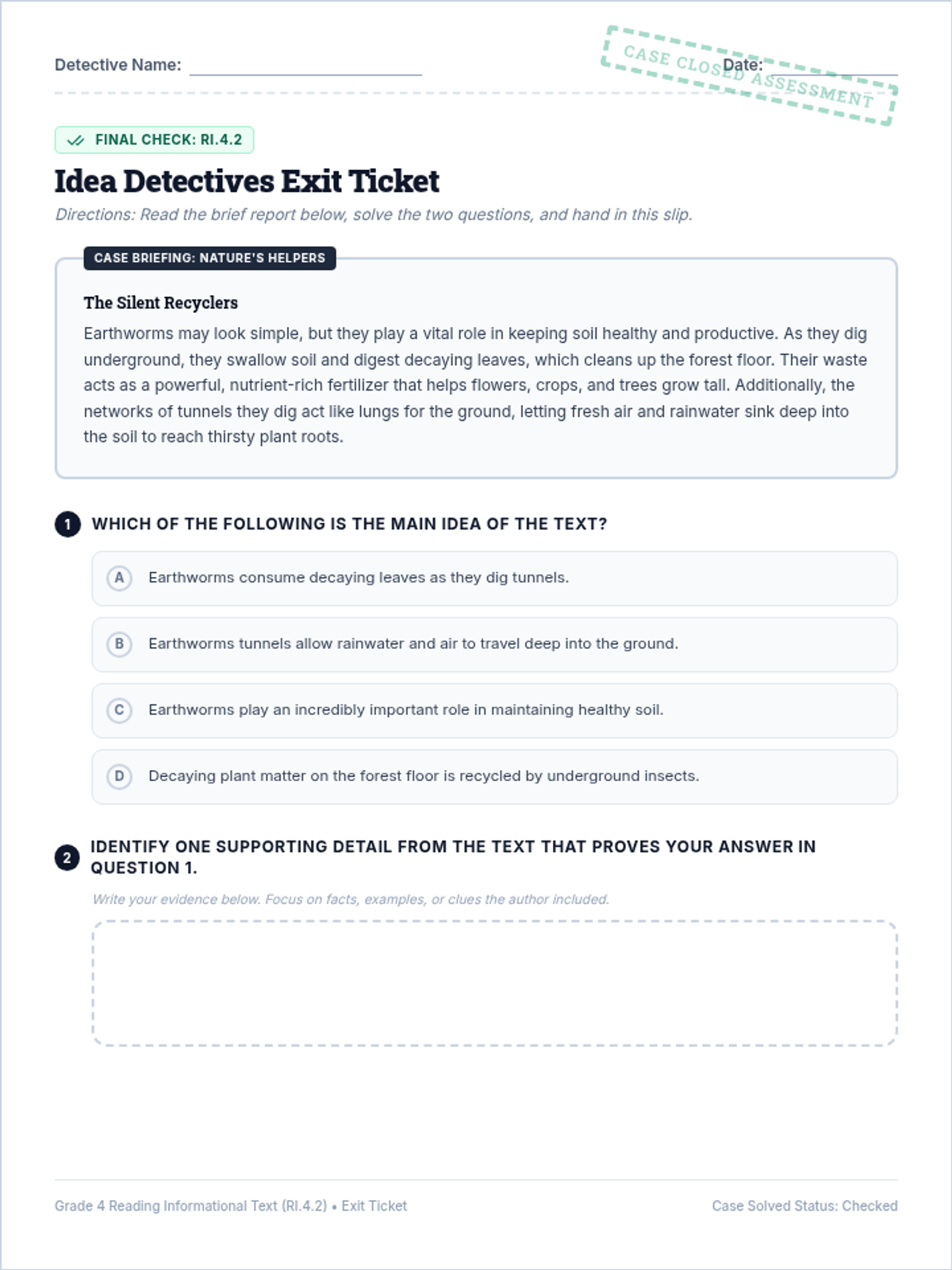
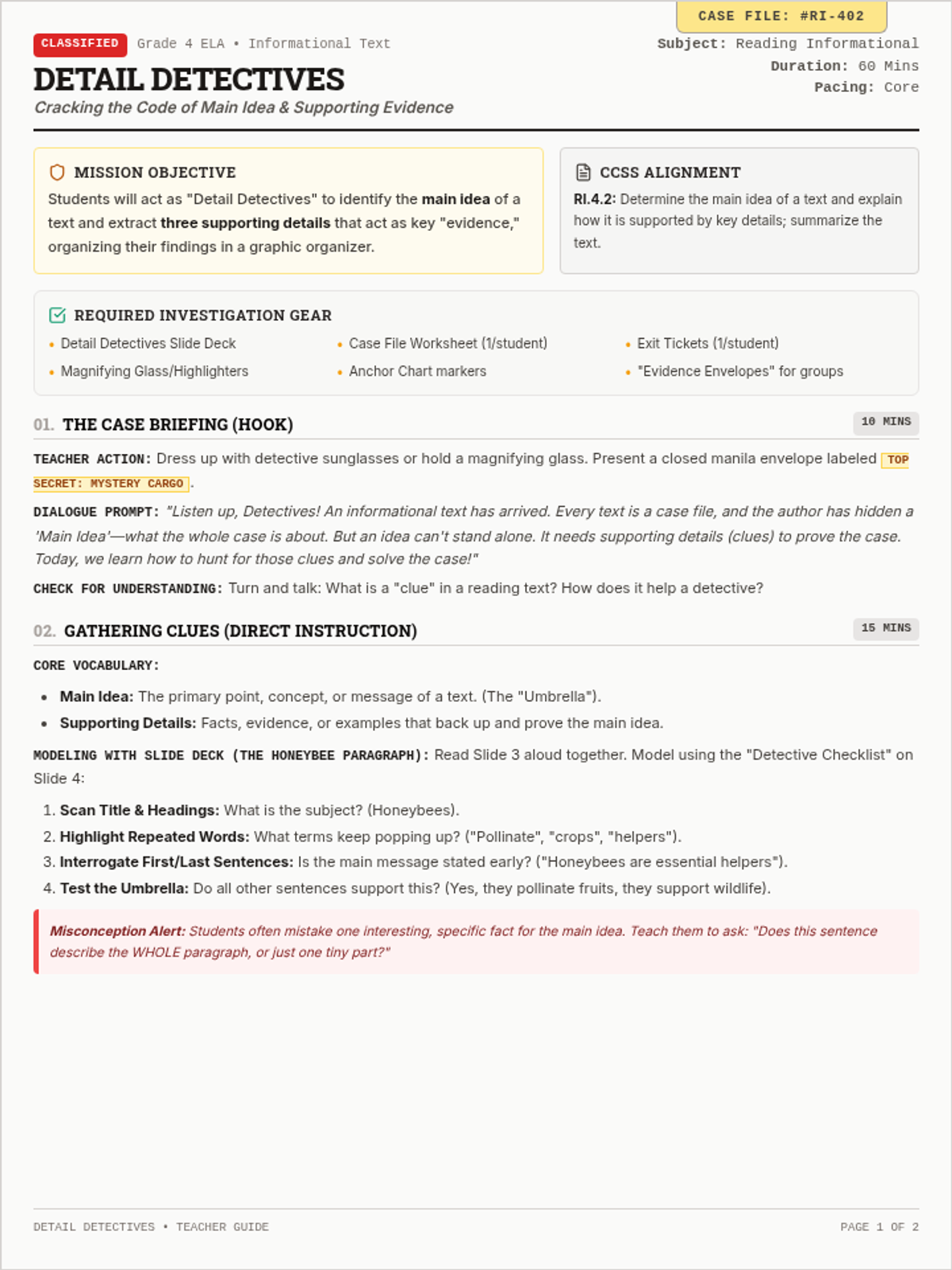
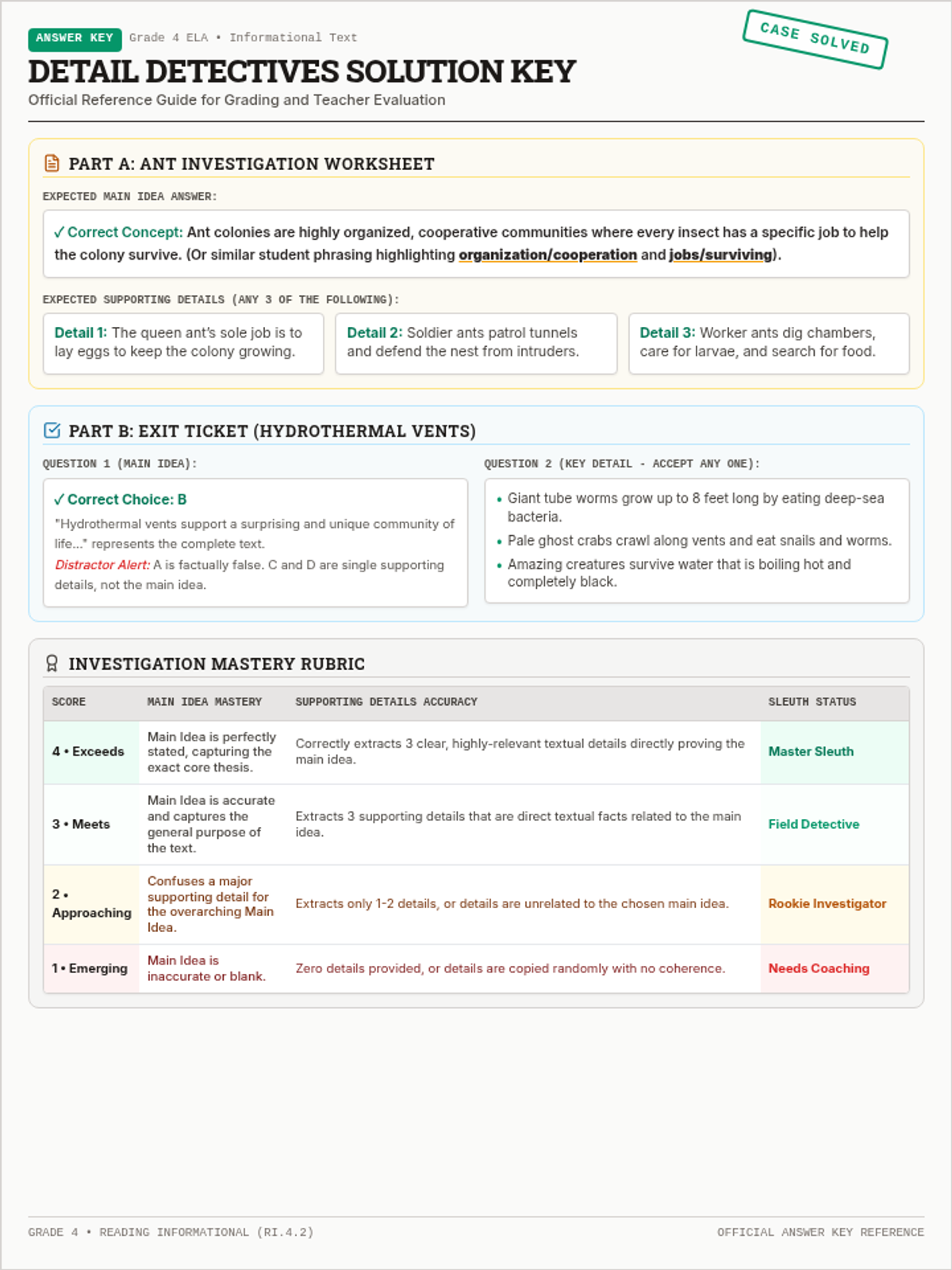
A 4th-grade ELA lesson focused on identifying the main idea and supporting details in informational text (RI.4.2). Students act as 'Idea Detectives' to separate key takeaways from supporting evidence using high-interest science and nature passages.
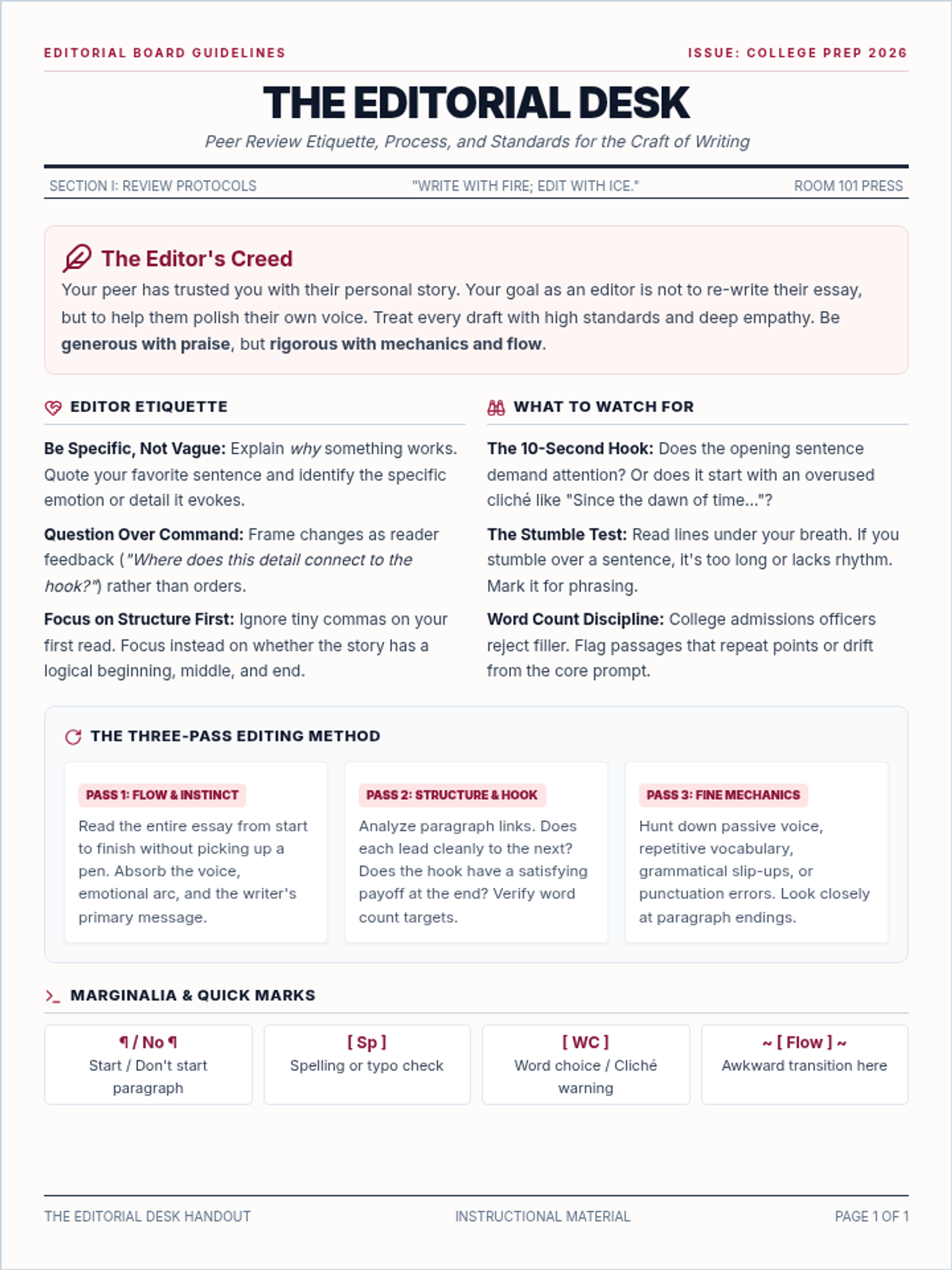
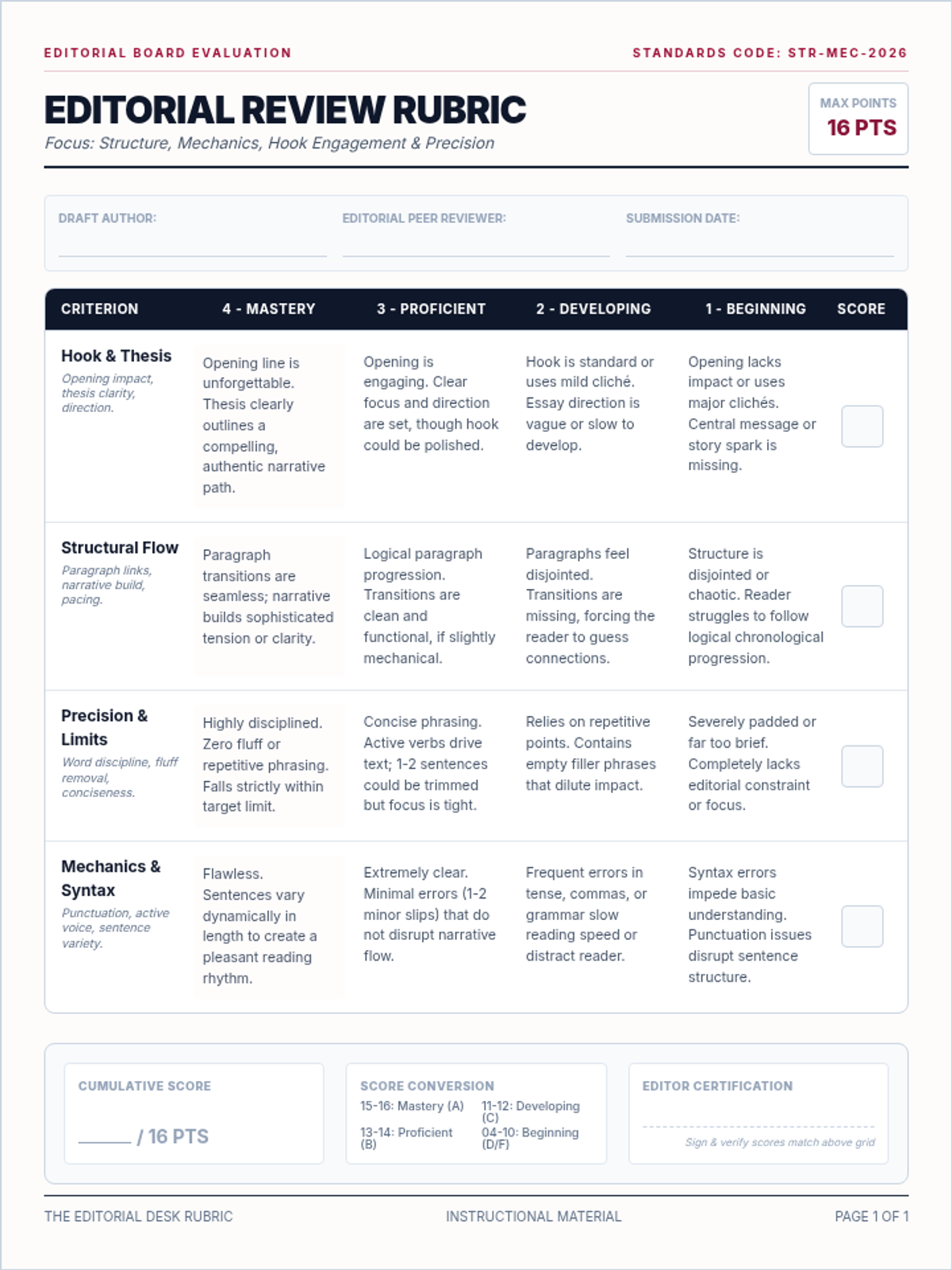
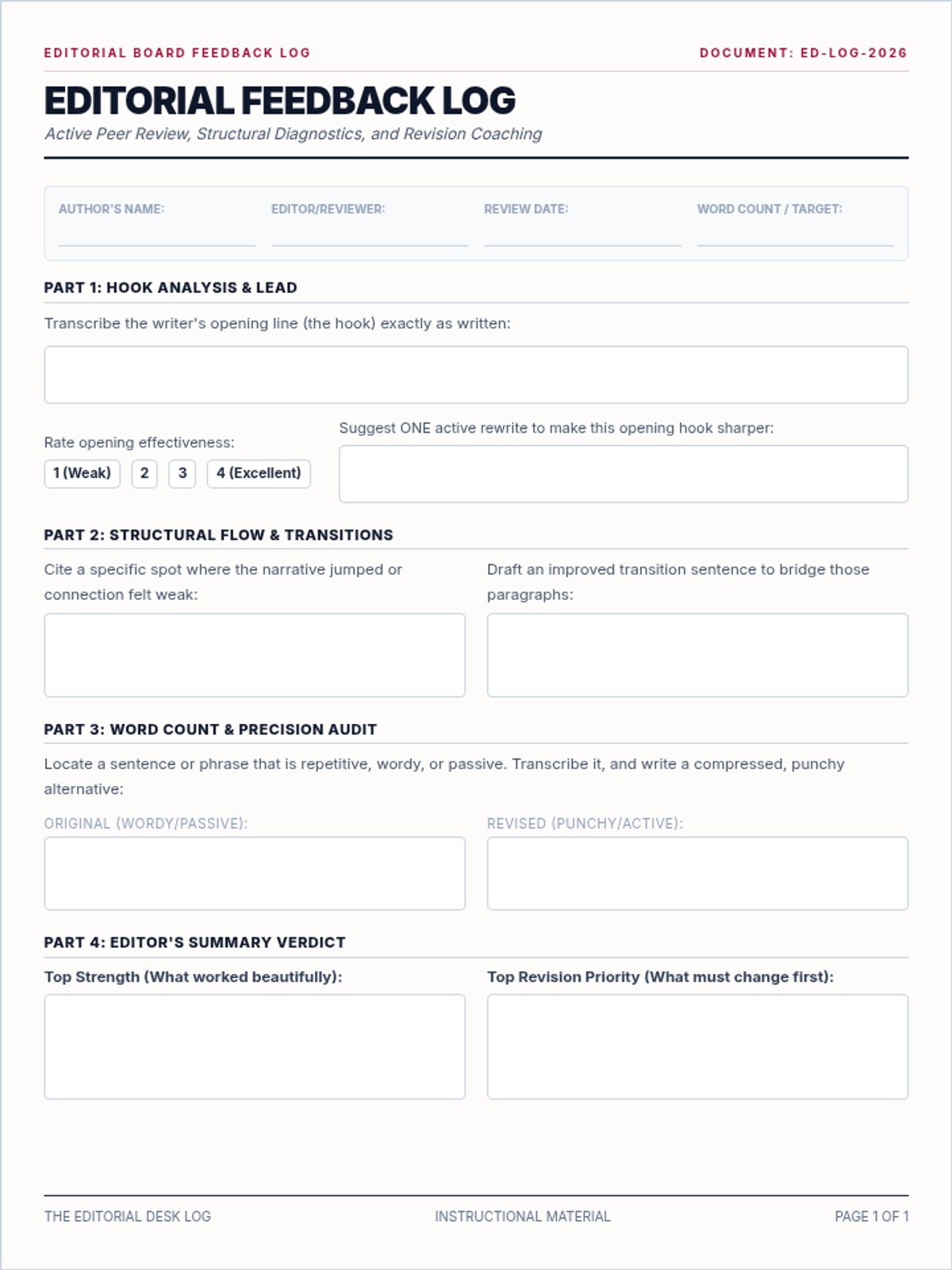
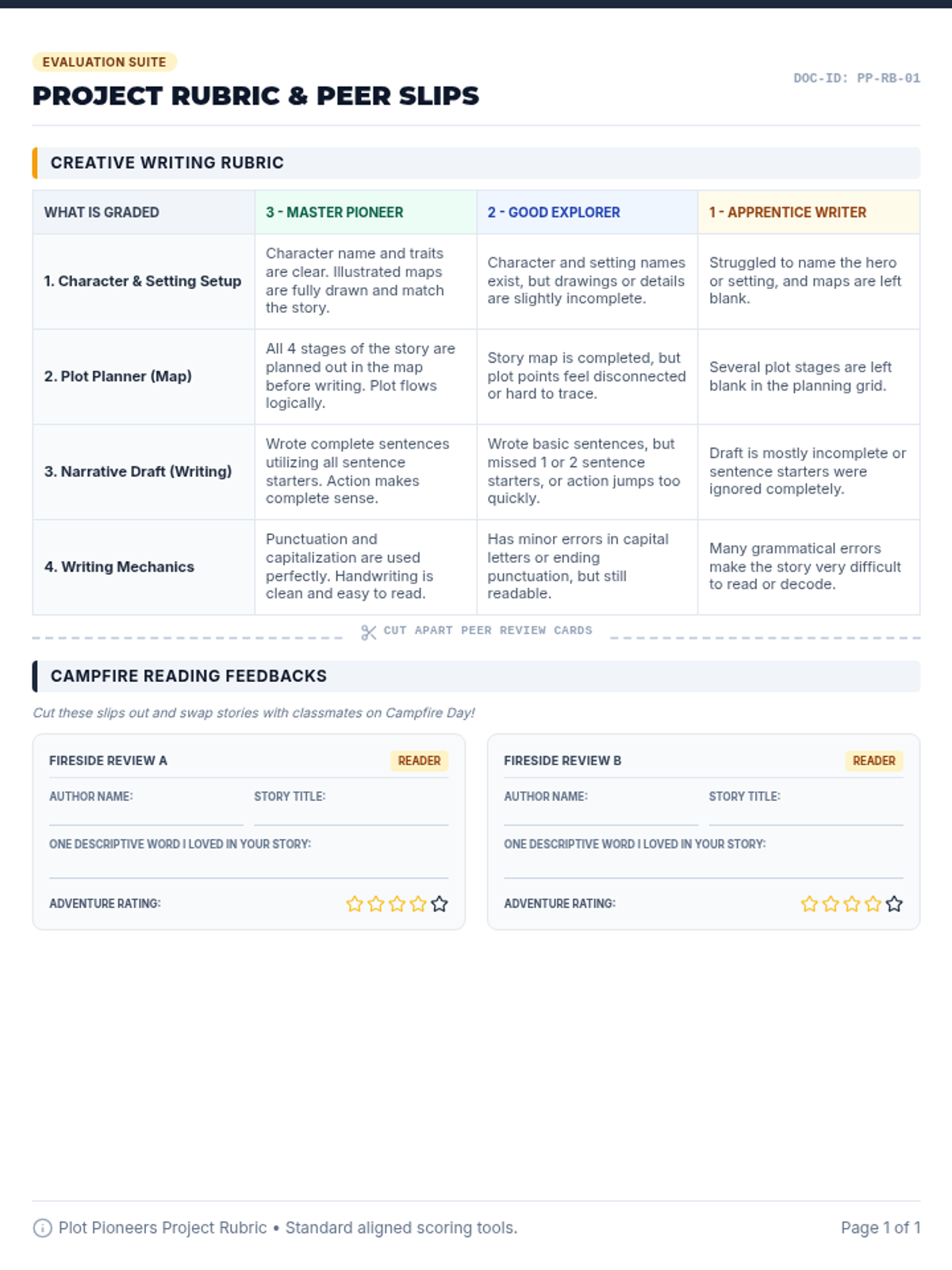
A college essay peer-review lesson focused on structure and mechanics, utilizing an 'Editorial Newsroom' theme. It includes feedback guidelines, a clear four-criterion rubric, and a reviewer response worksheet.
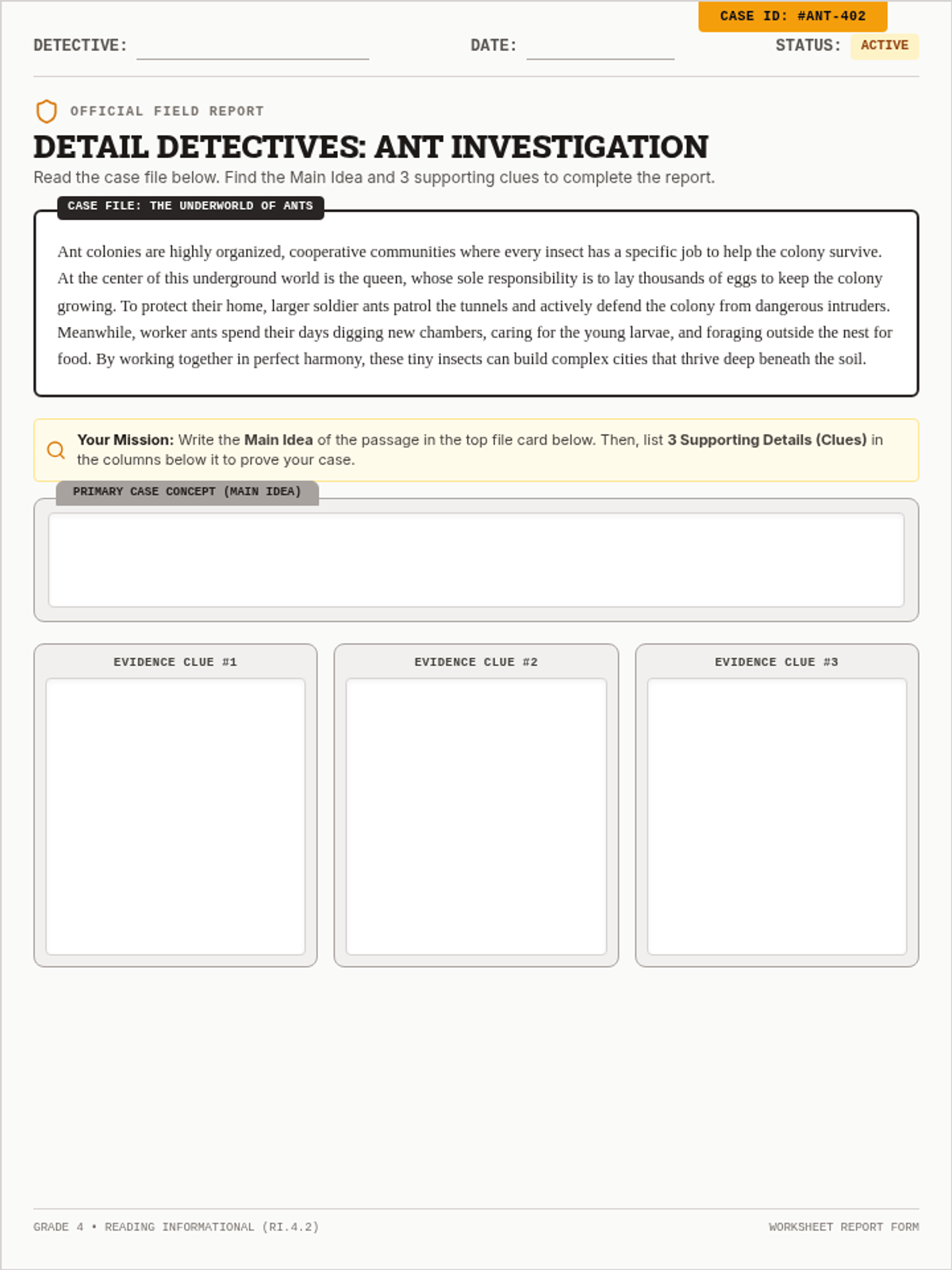
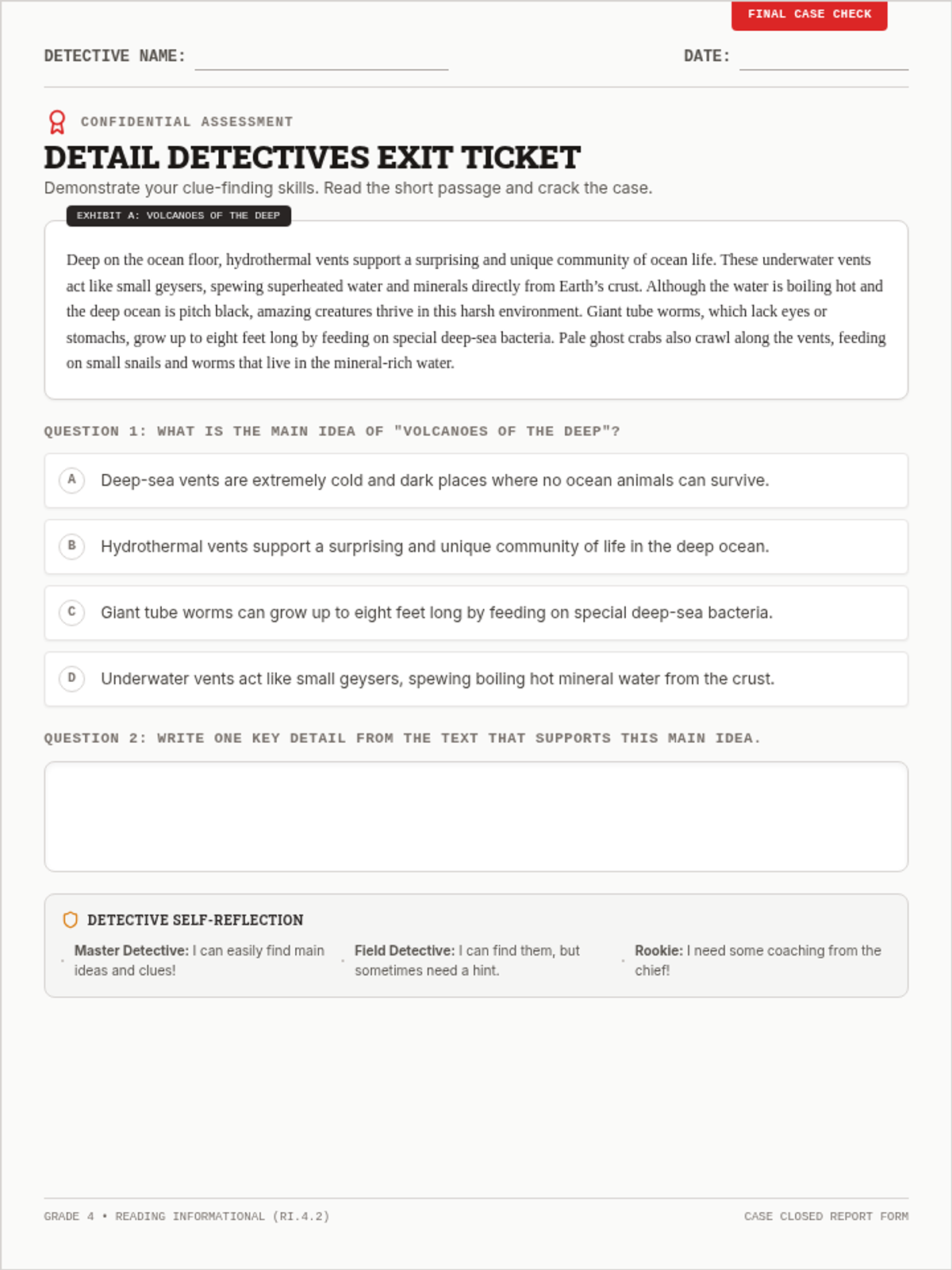
A 4th-grade ELA lesson focused on identifying the main idea and supporting details in informational texts using a detective investigation theme. Includes a comprehensive lesson plan, an interactive slide deck, a main idea graphic organizer worksheet, and a targeted exit ticket with differentiation.
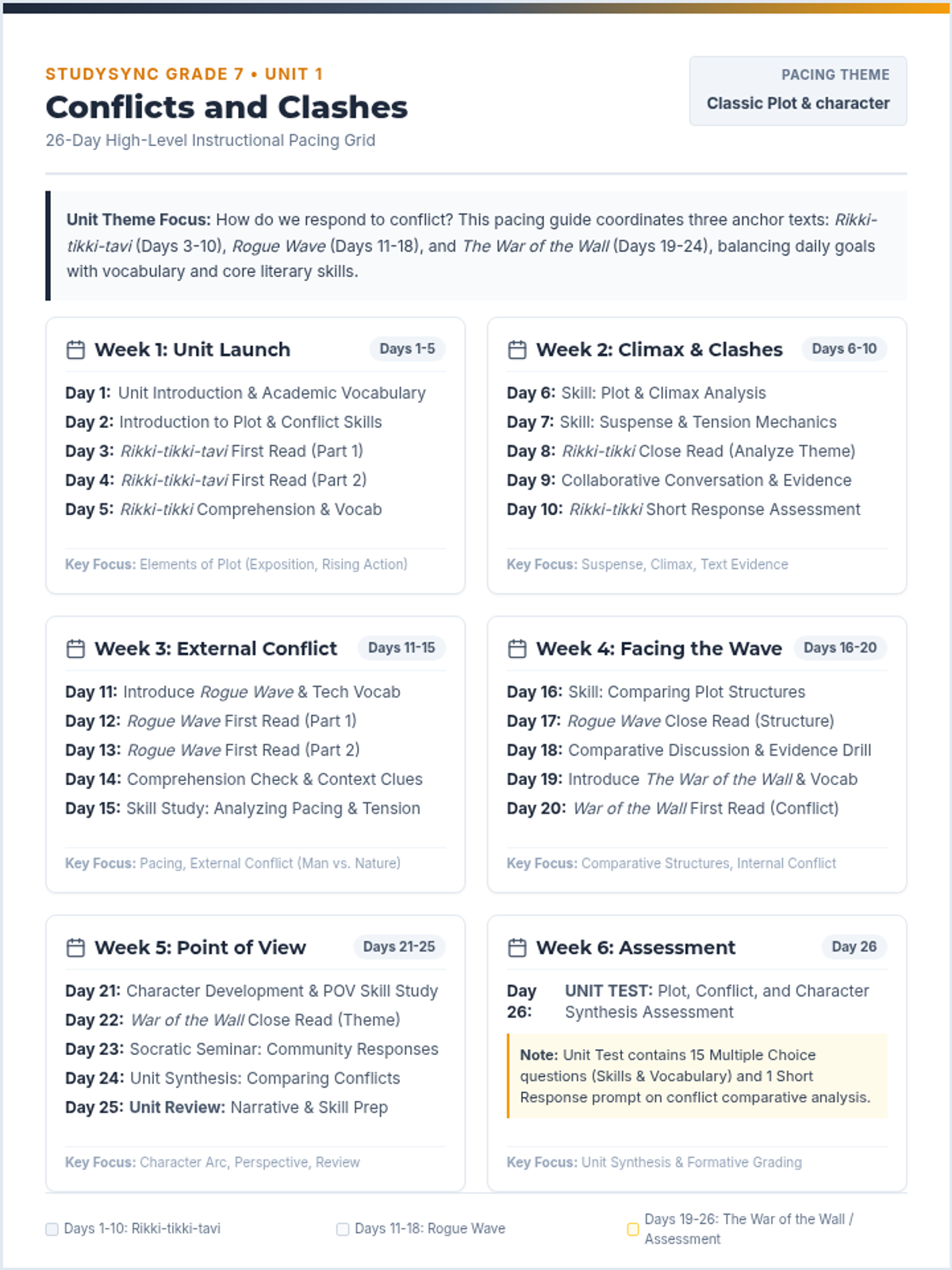
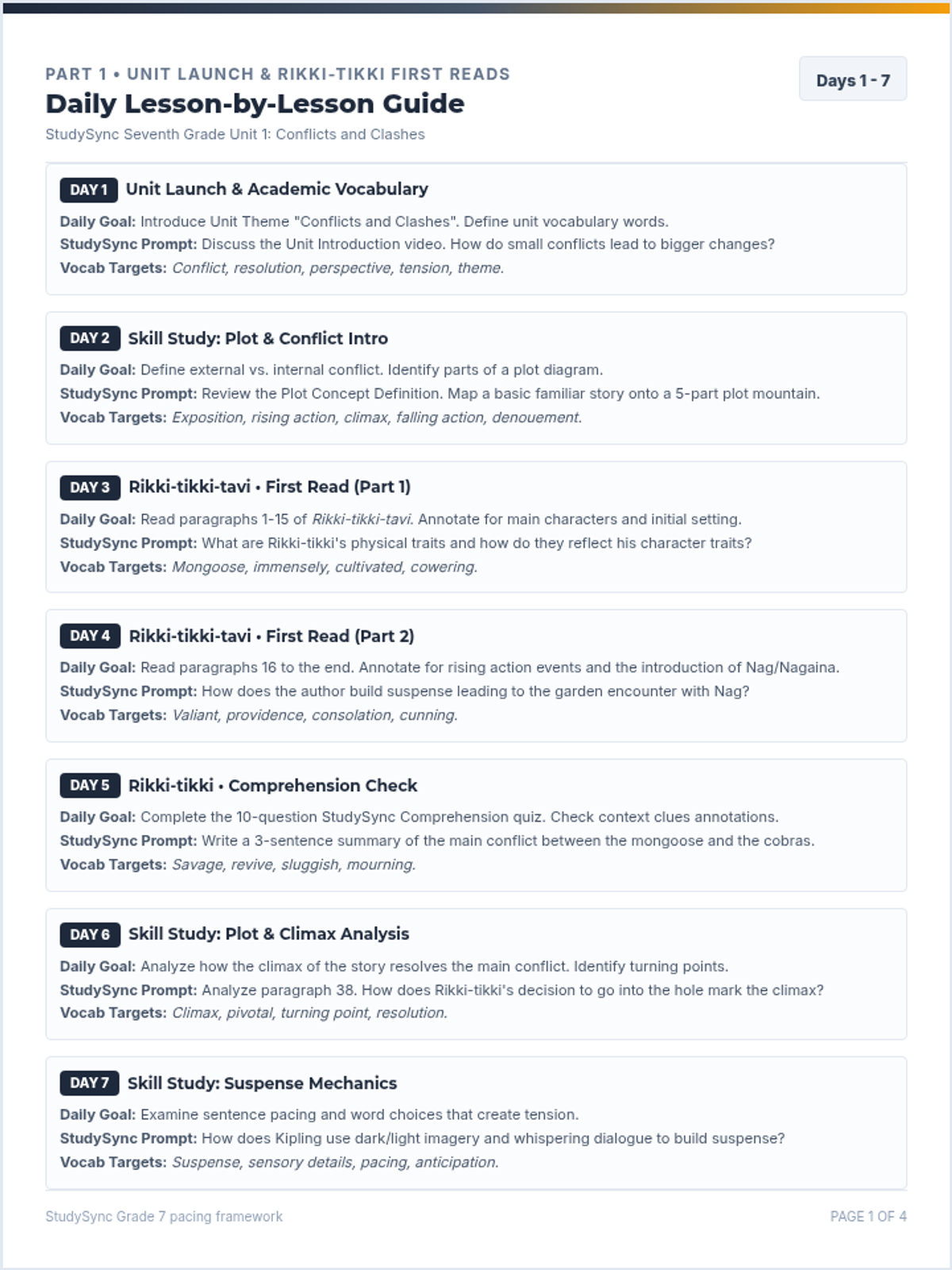
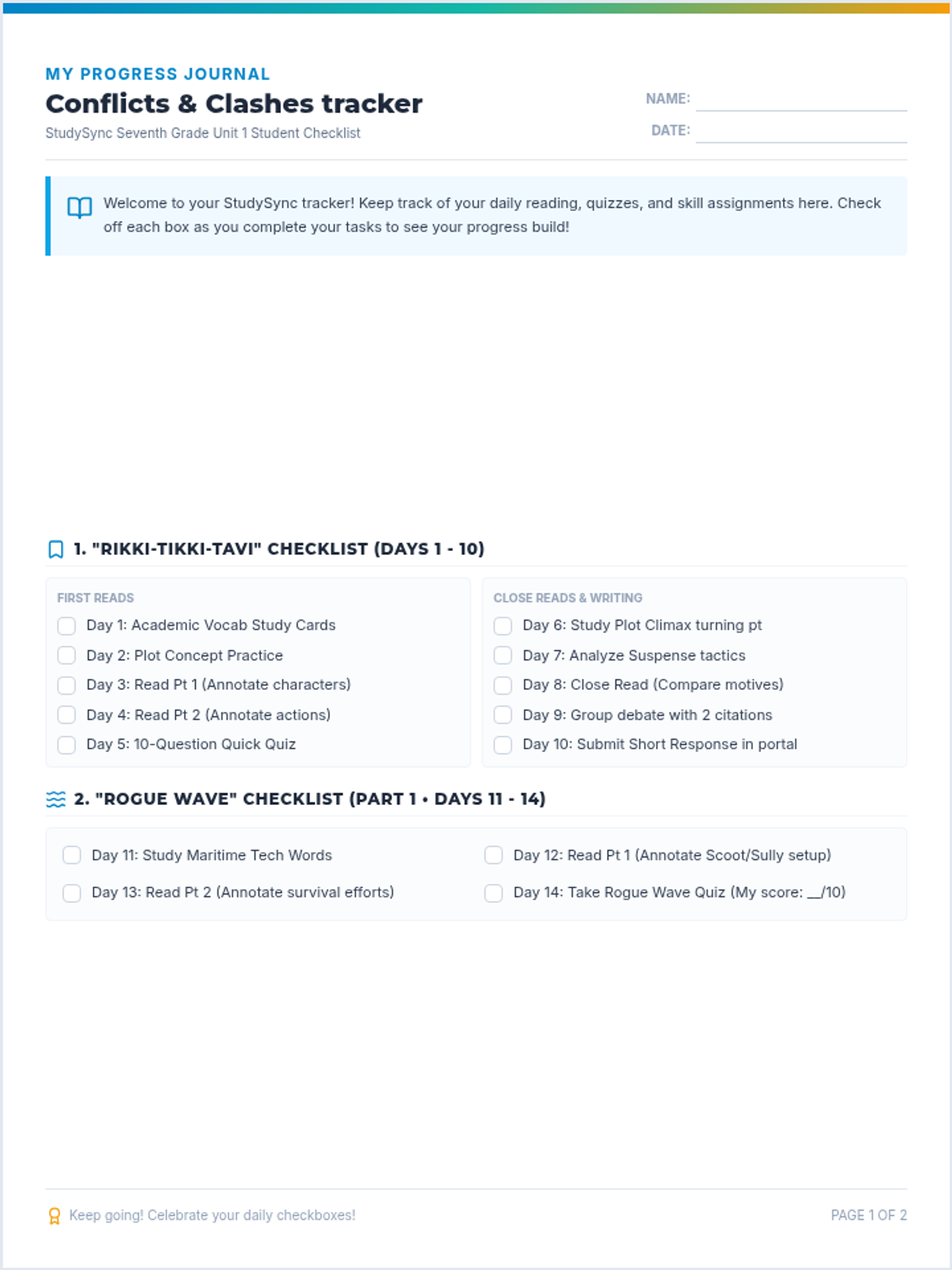
A 26-day instructional pacing guide and support materials for StudySync Grade 7 Unit 1: Conflicts and Clashes. This includes a high-level weekly pacing grid, a detailed day-by-day teacher planning calendar, and a student checklist for tracking readings, vocabulary, and assessments.
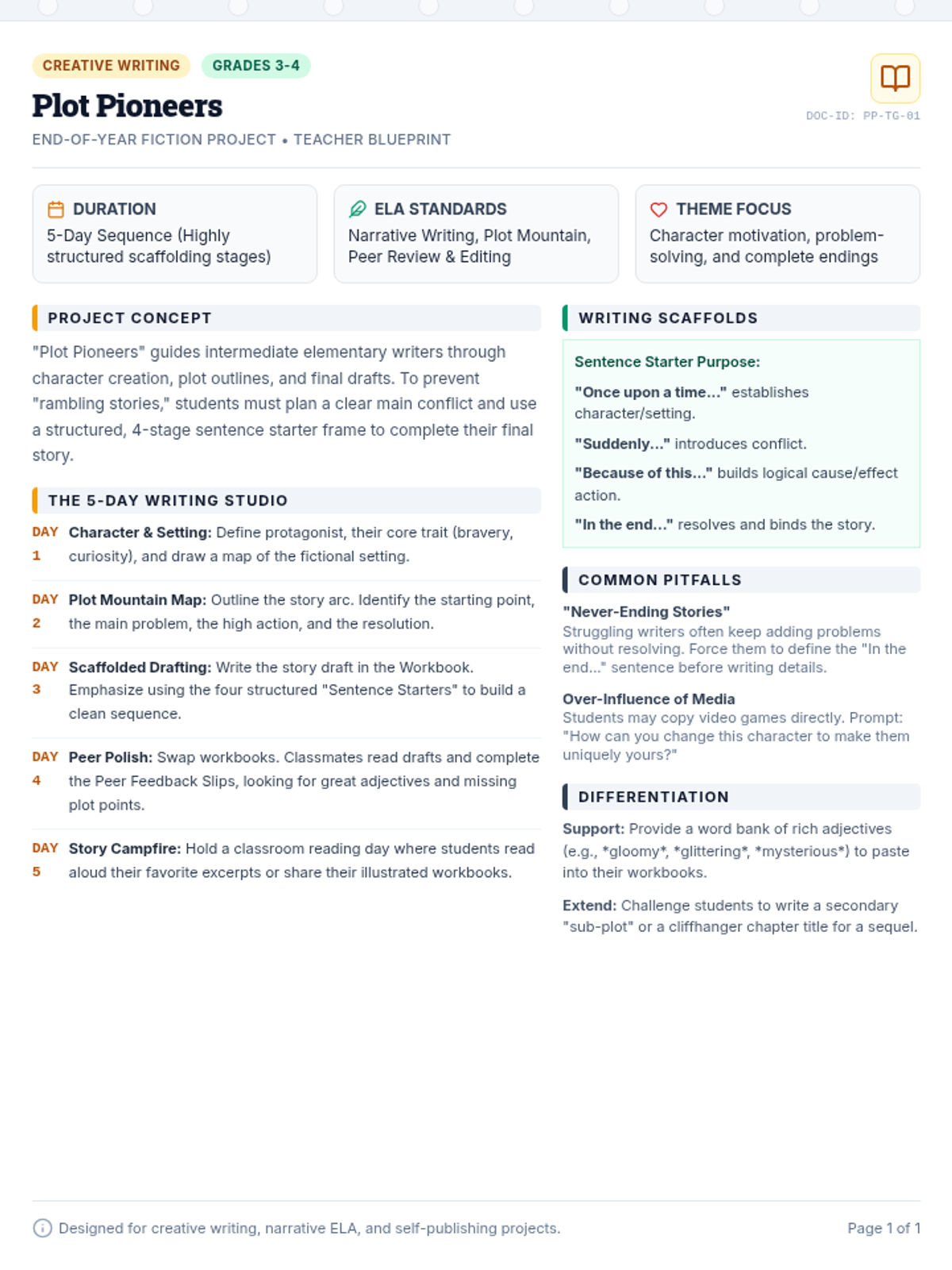
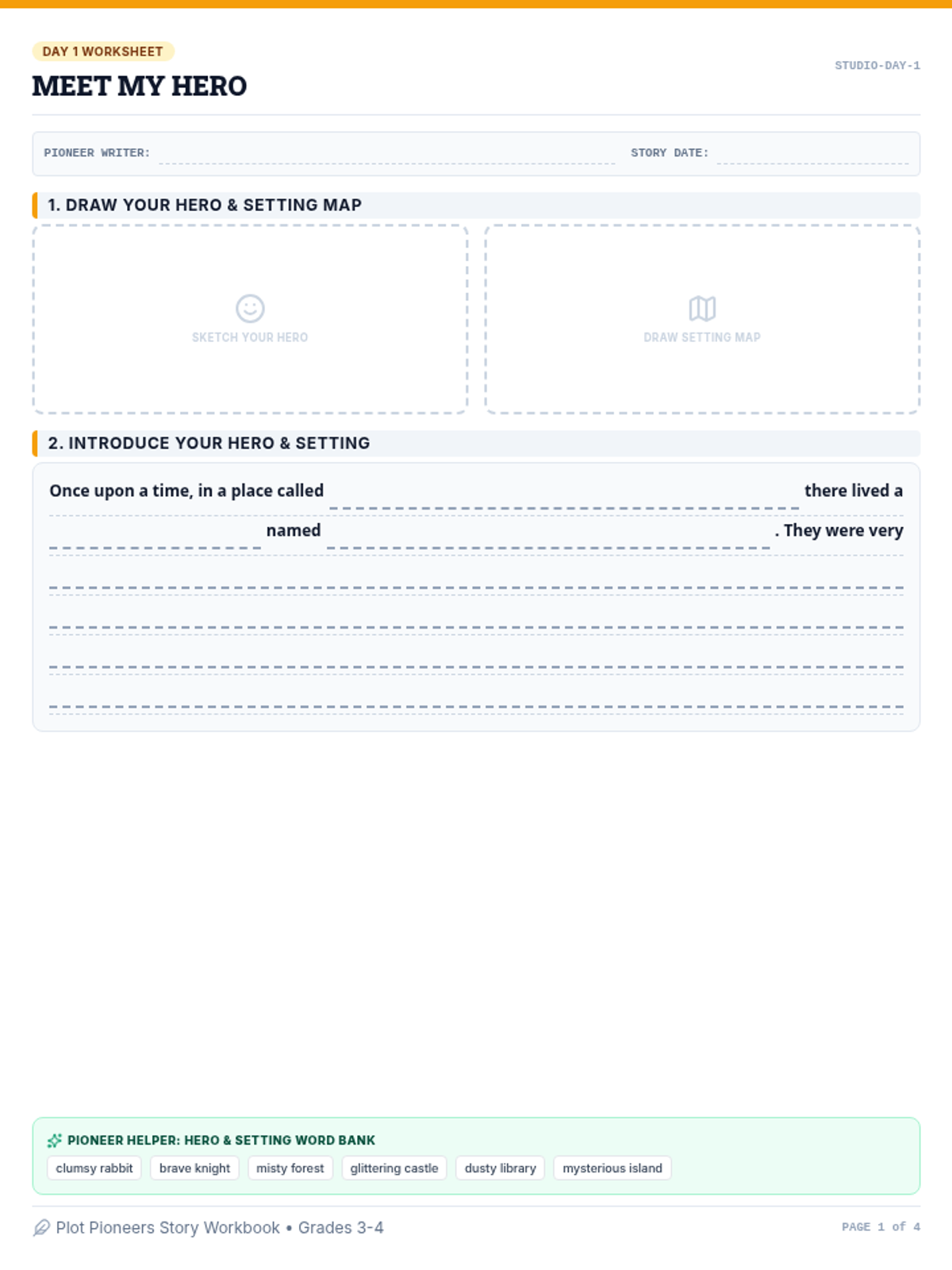
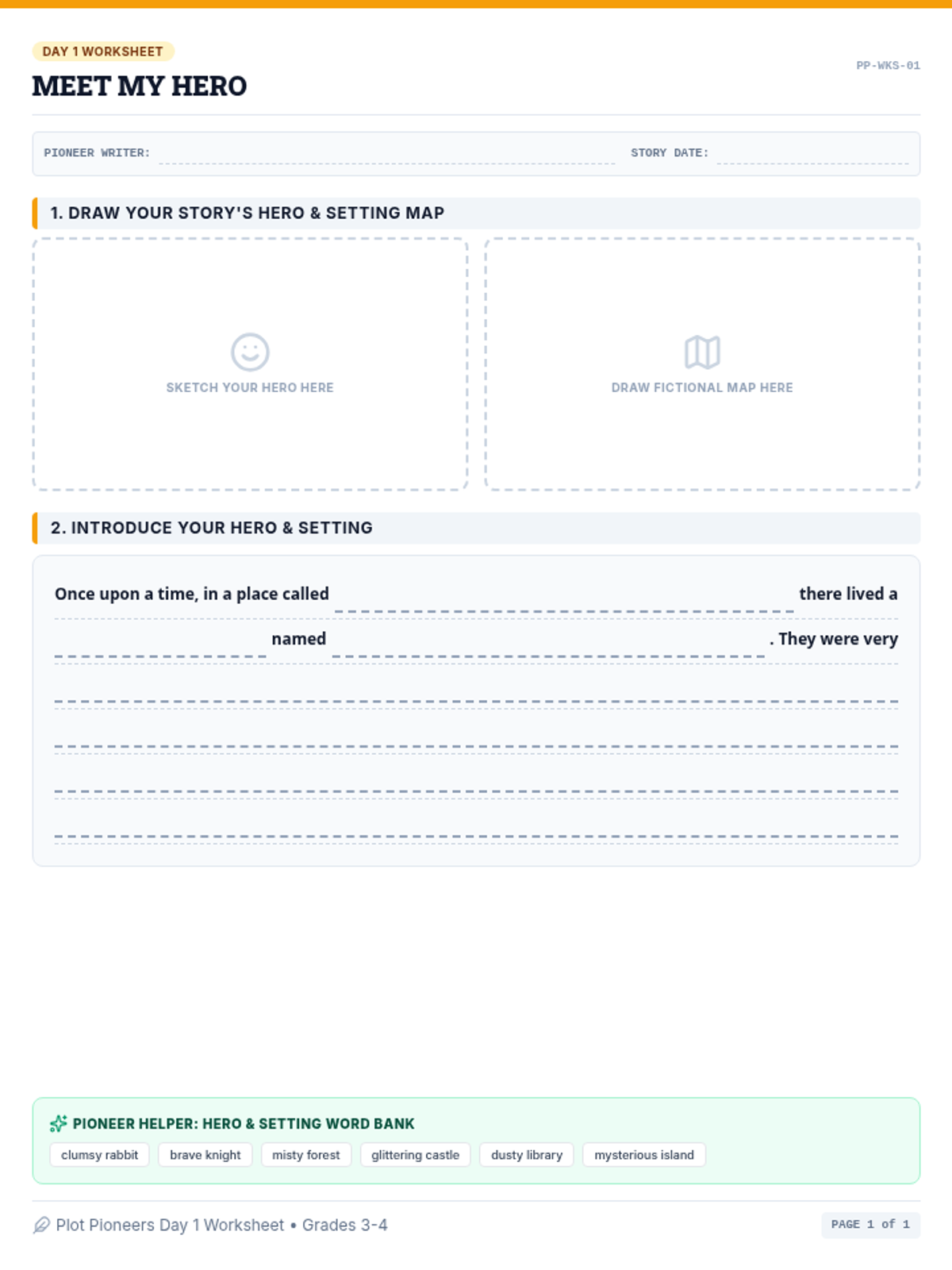
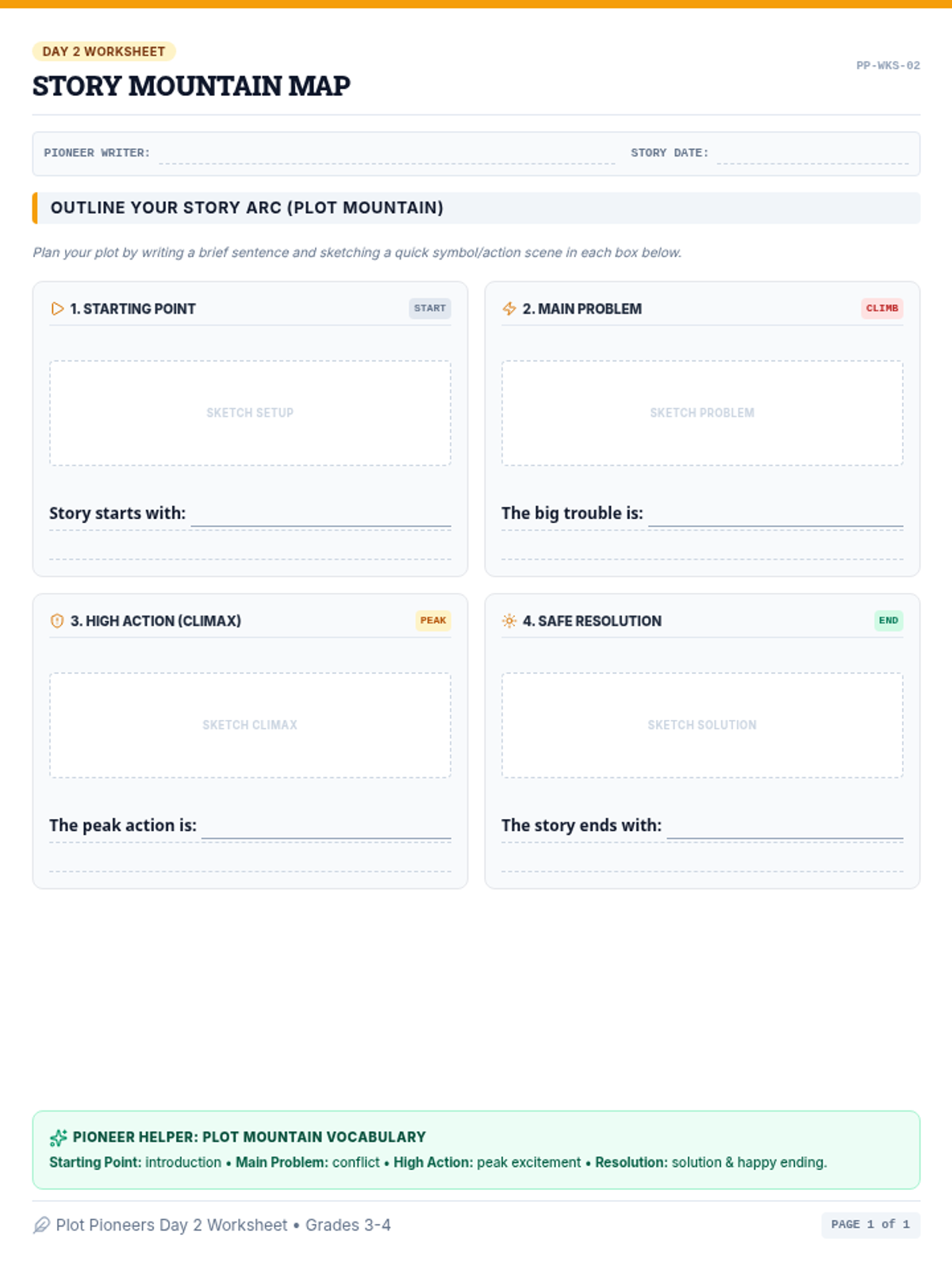
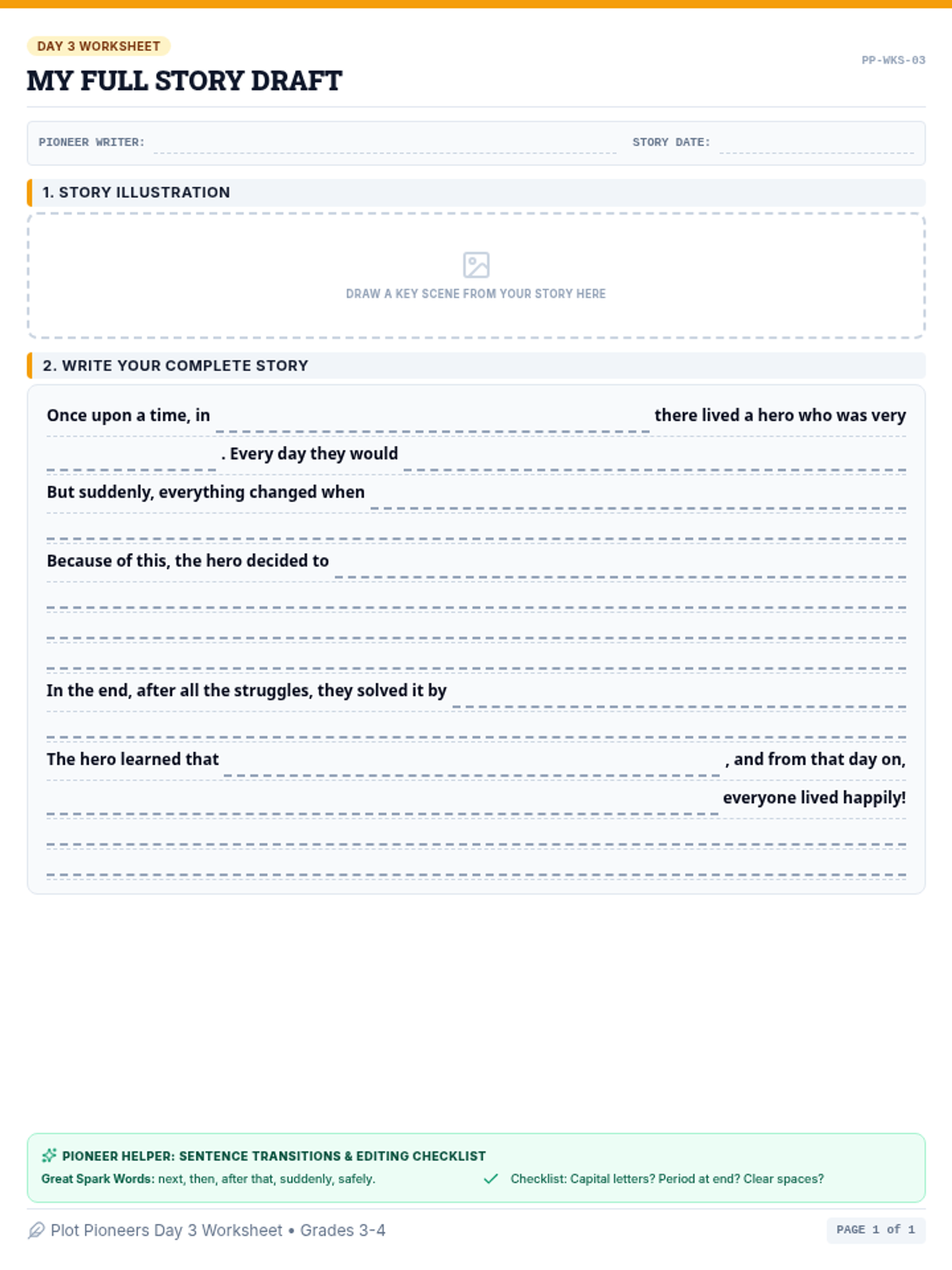
An end-of-year ELA creative writing project where students act as narrative architects to outline, scaffold with sentence starters, and draft their very own original story.
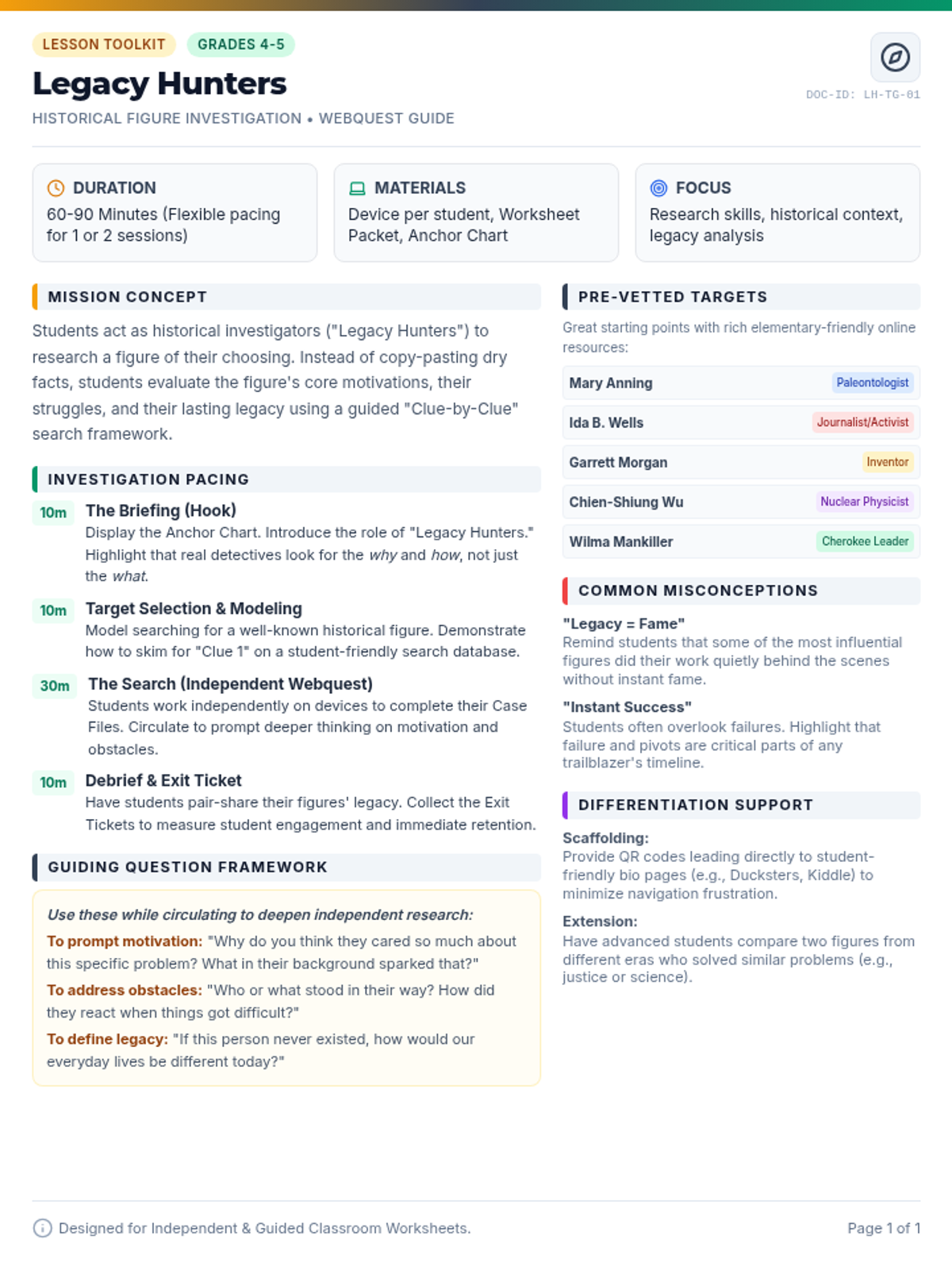
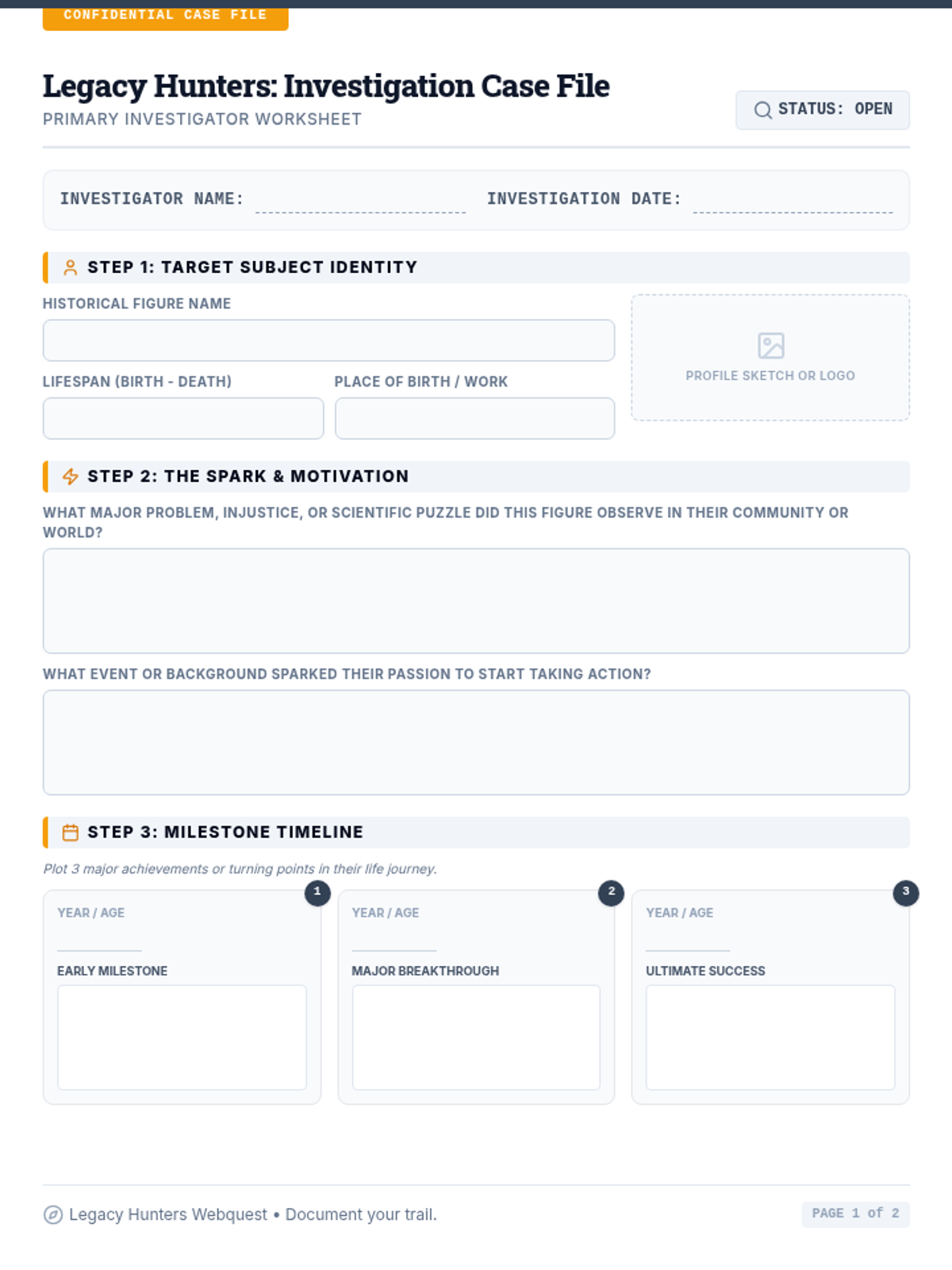
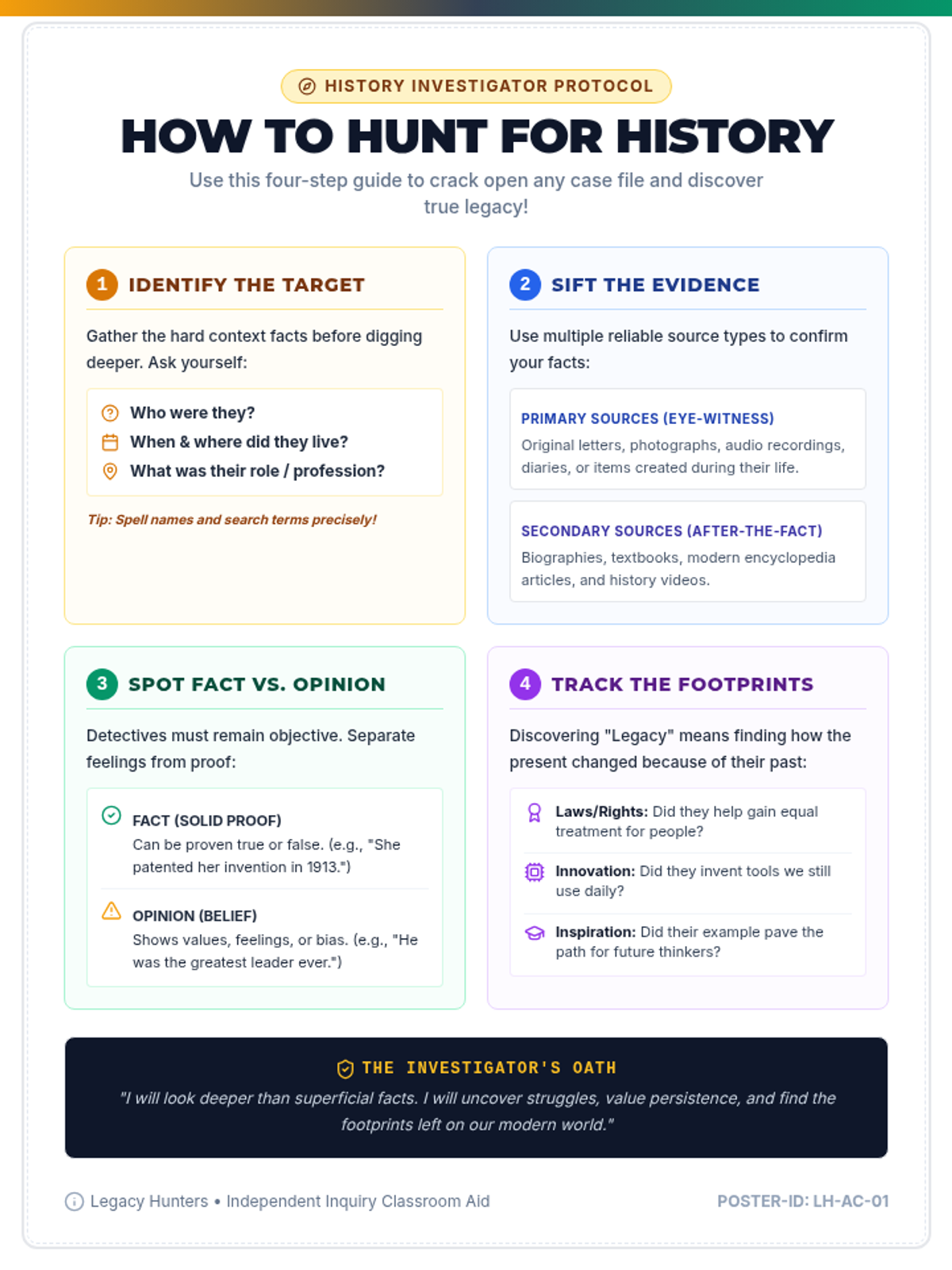
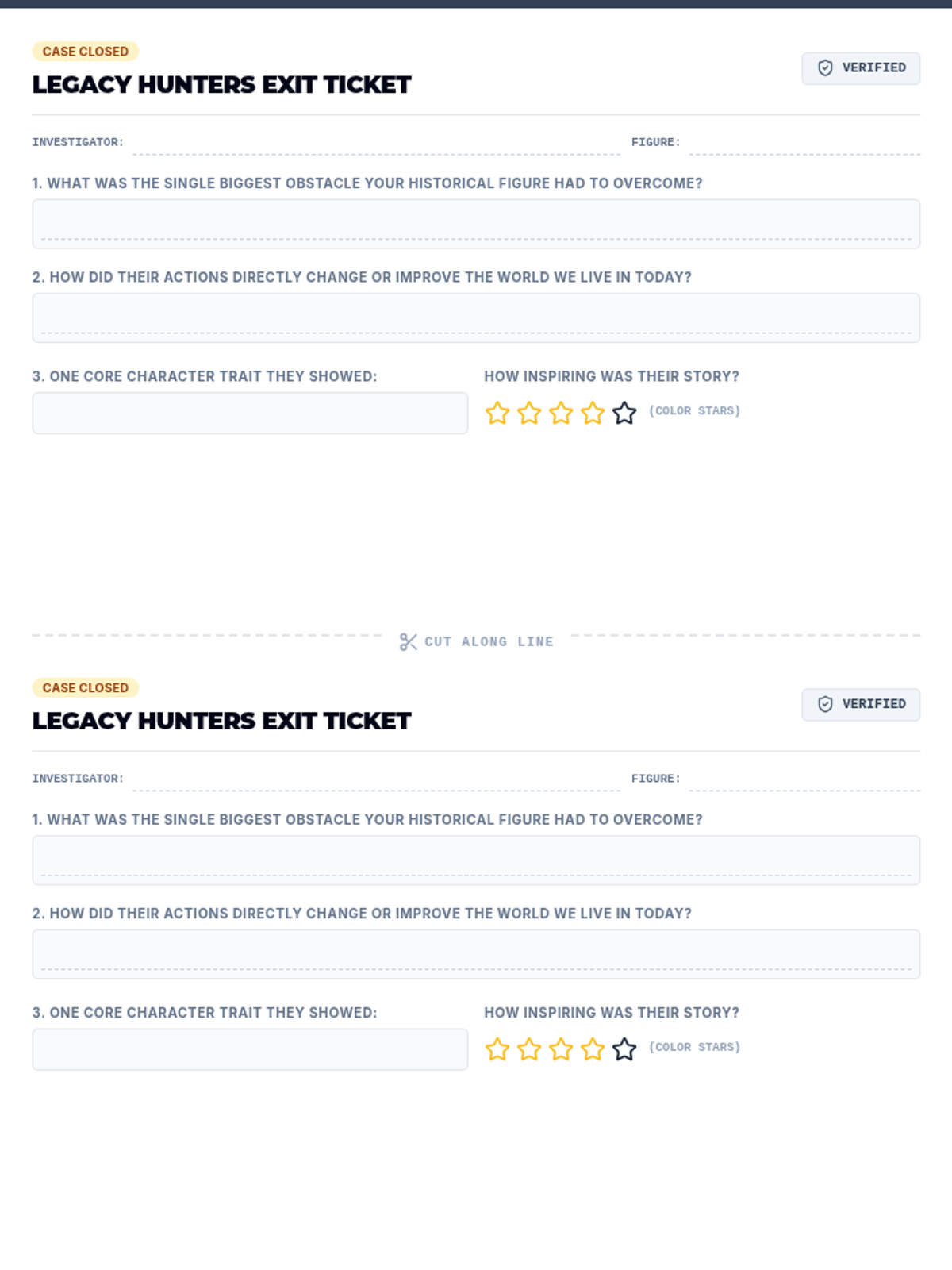
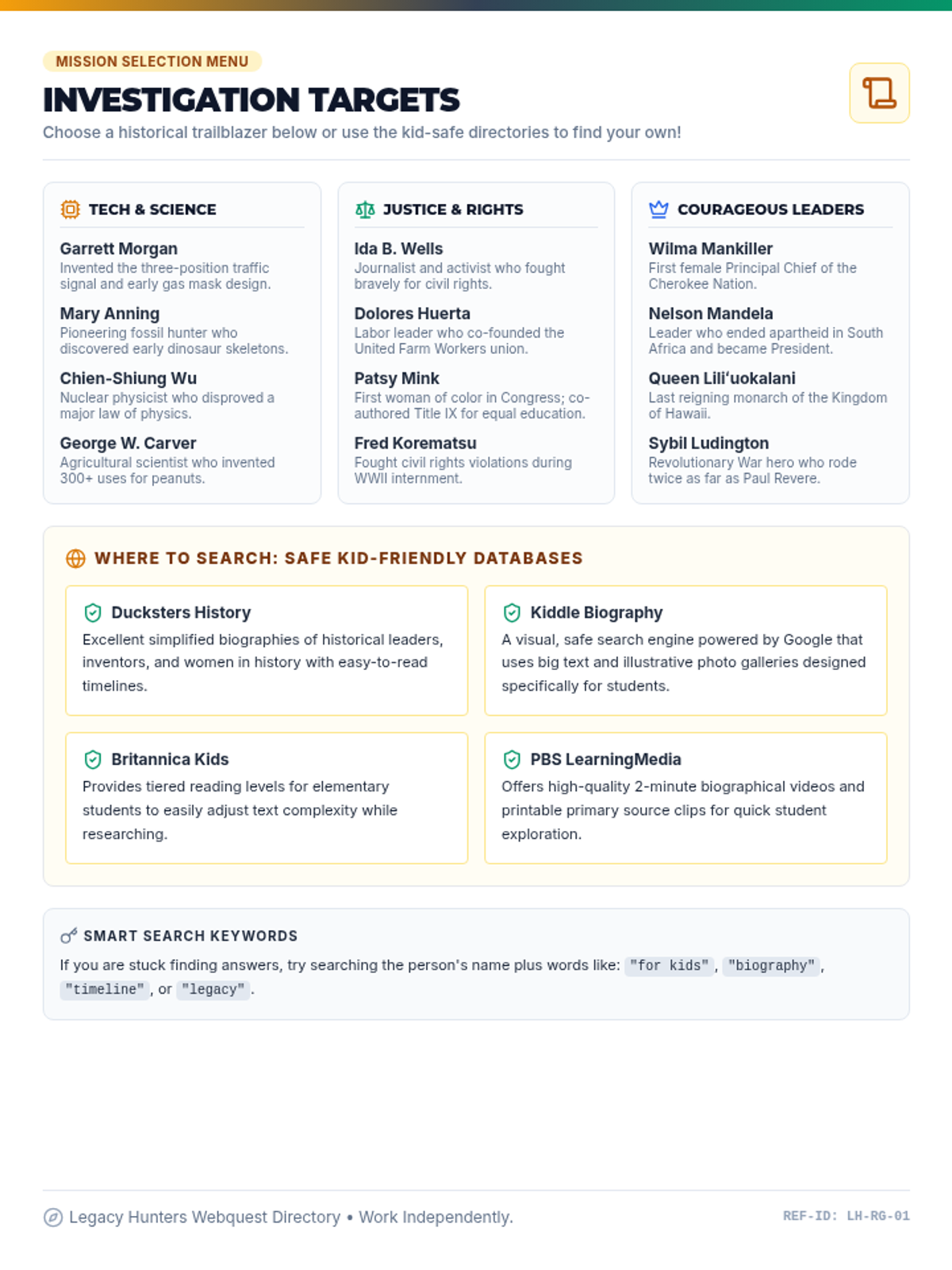
A complete history webquest lesson bundle designed for late elementary students to independently research diverse historical figures. Students act as research detectives to discover the lives, struggles, and lasting legacies of inventors, activists, and leaders.
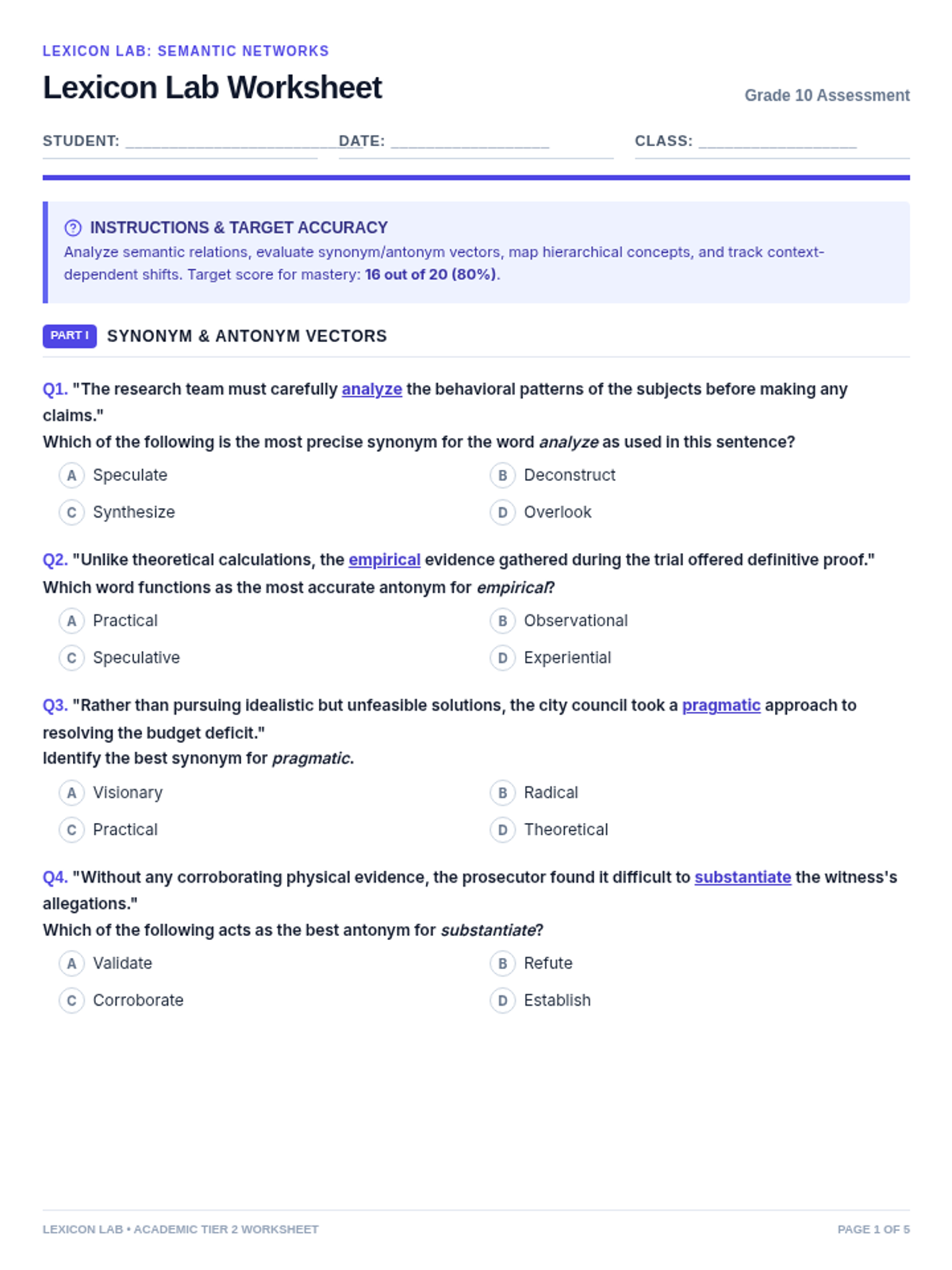
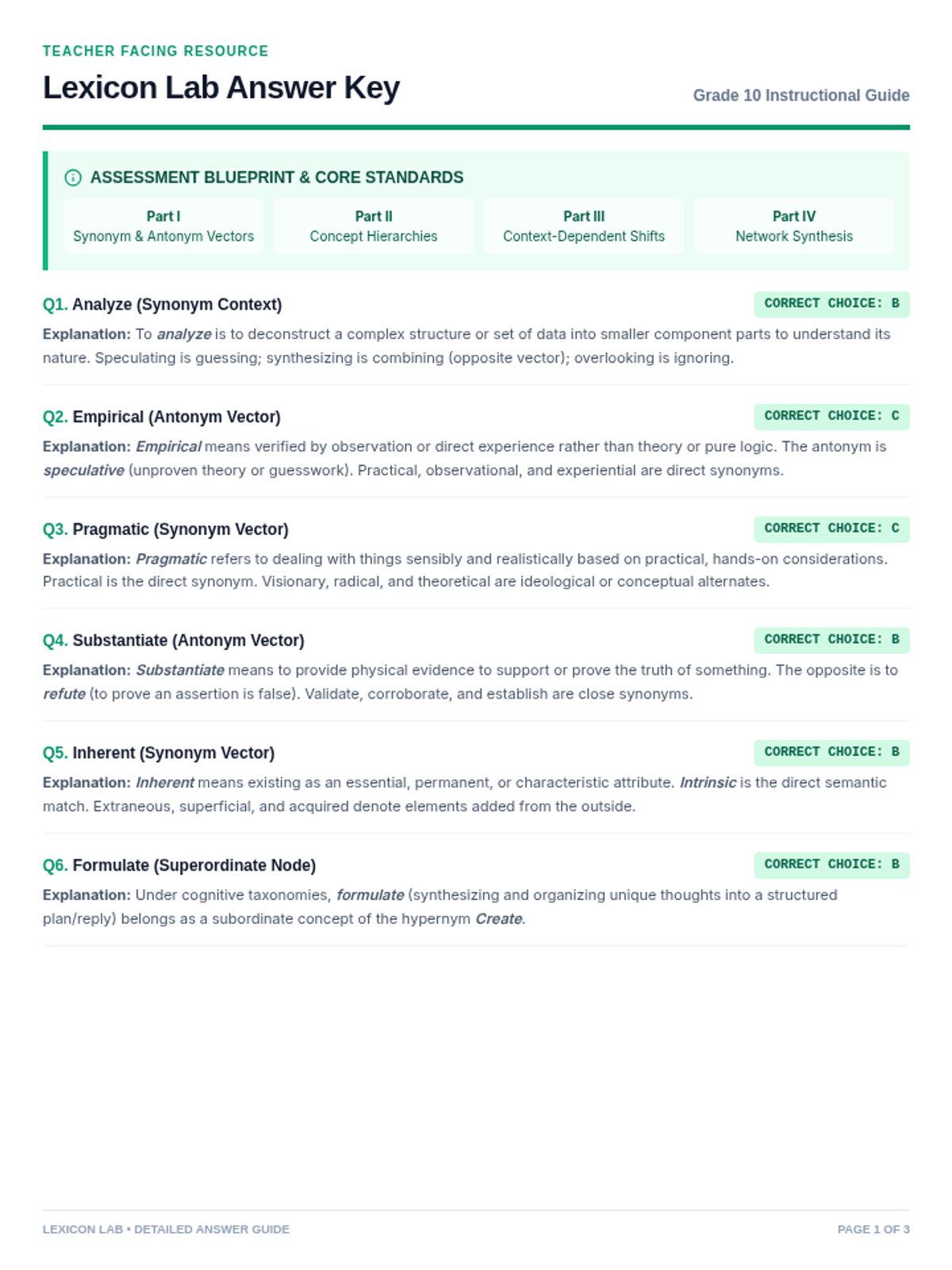
A high-utility Academic Tier 2 vocabulary unit focused on semantic relationships, synonym/antonym analysis, hierarchical concepts, and context-dependent word meanings for 10th-grade students.
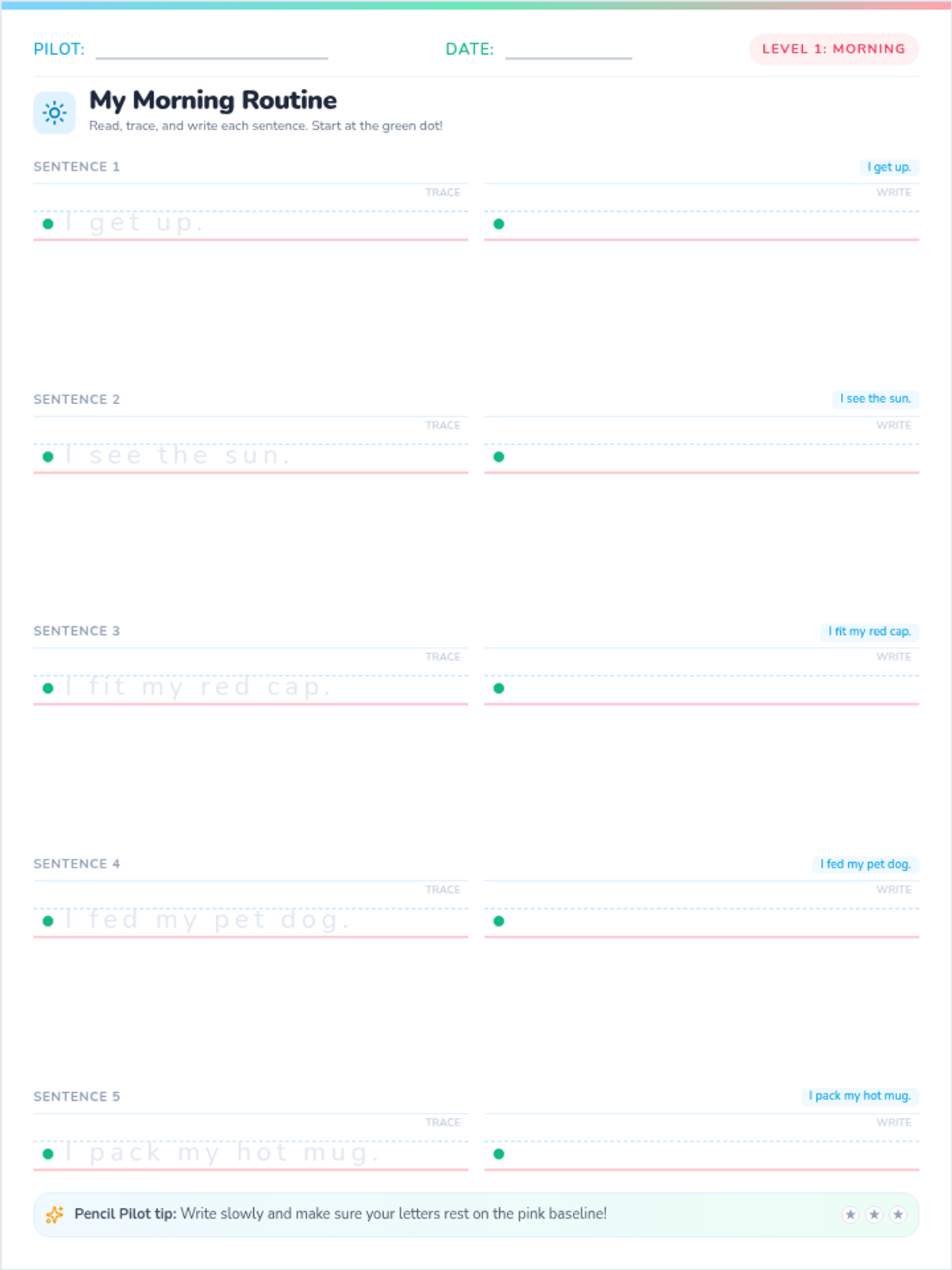
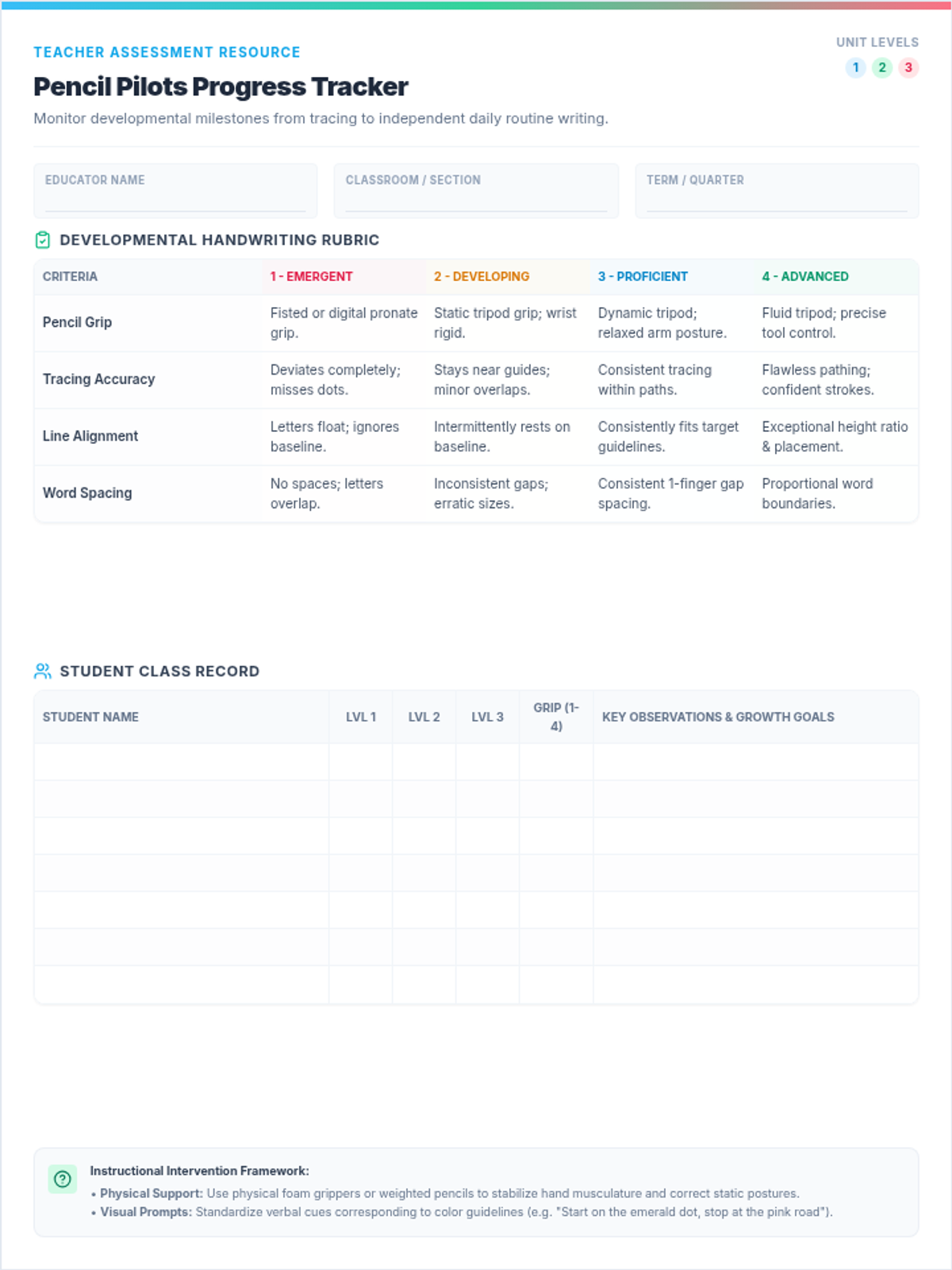
A developmental handwriting and sentence building unit focusing on tracing and writing simple daily routine sentences. The resources use phonics-controlled CVC and CCVC words with starting dots, tracing lines, and spacious writing practice grids.
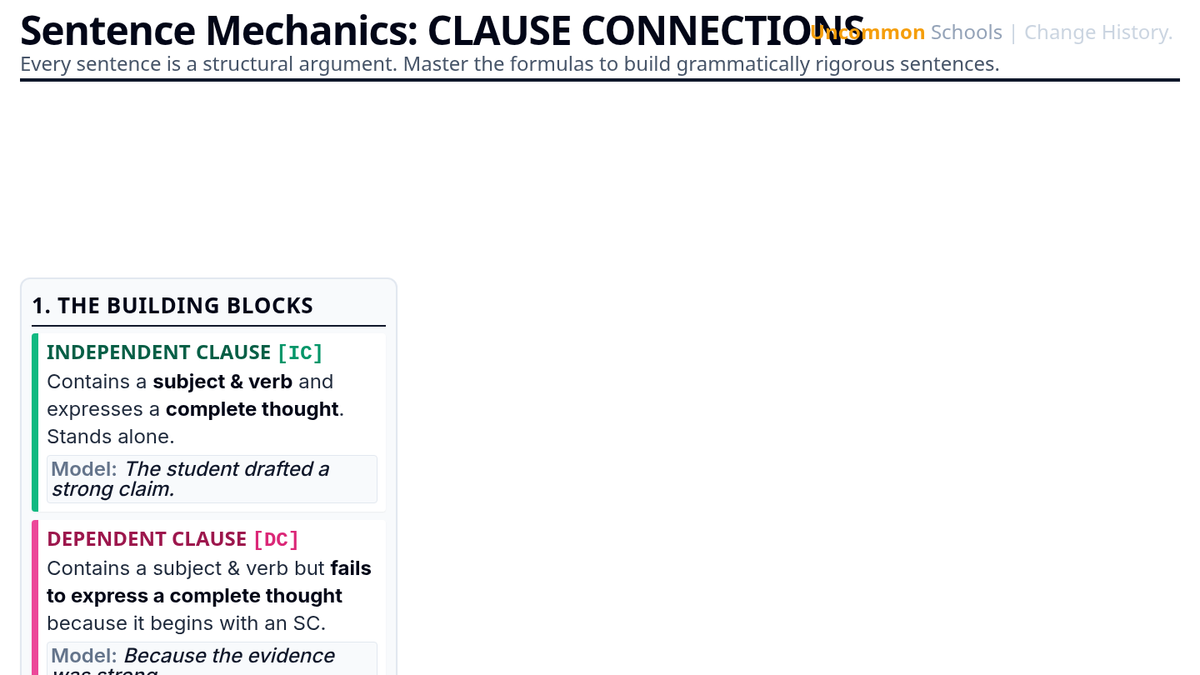
A masterclass introducing students to sentence structure and the mechanics of joining independent and dependent clauses using coordinating and subordinating conjunctions.
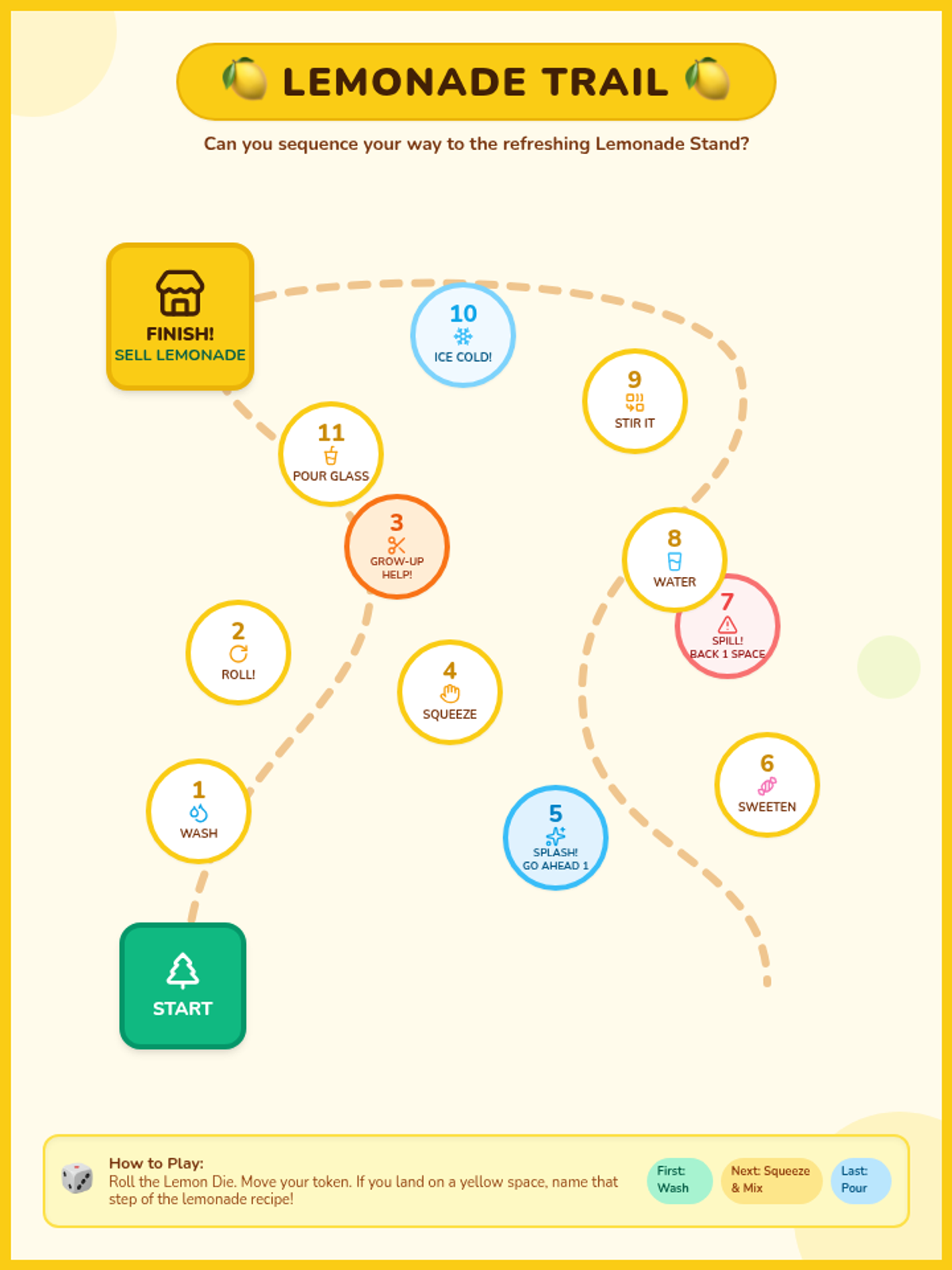
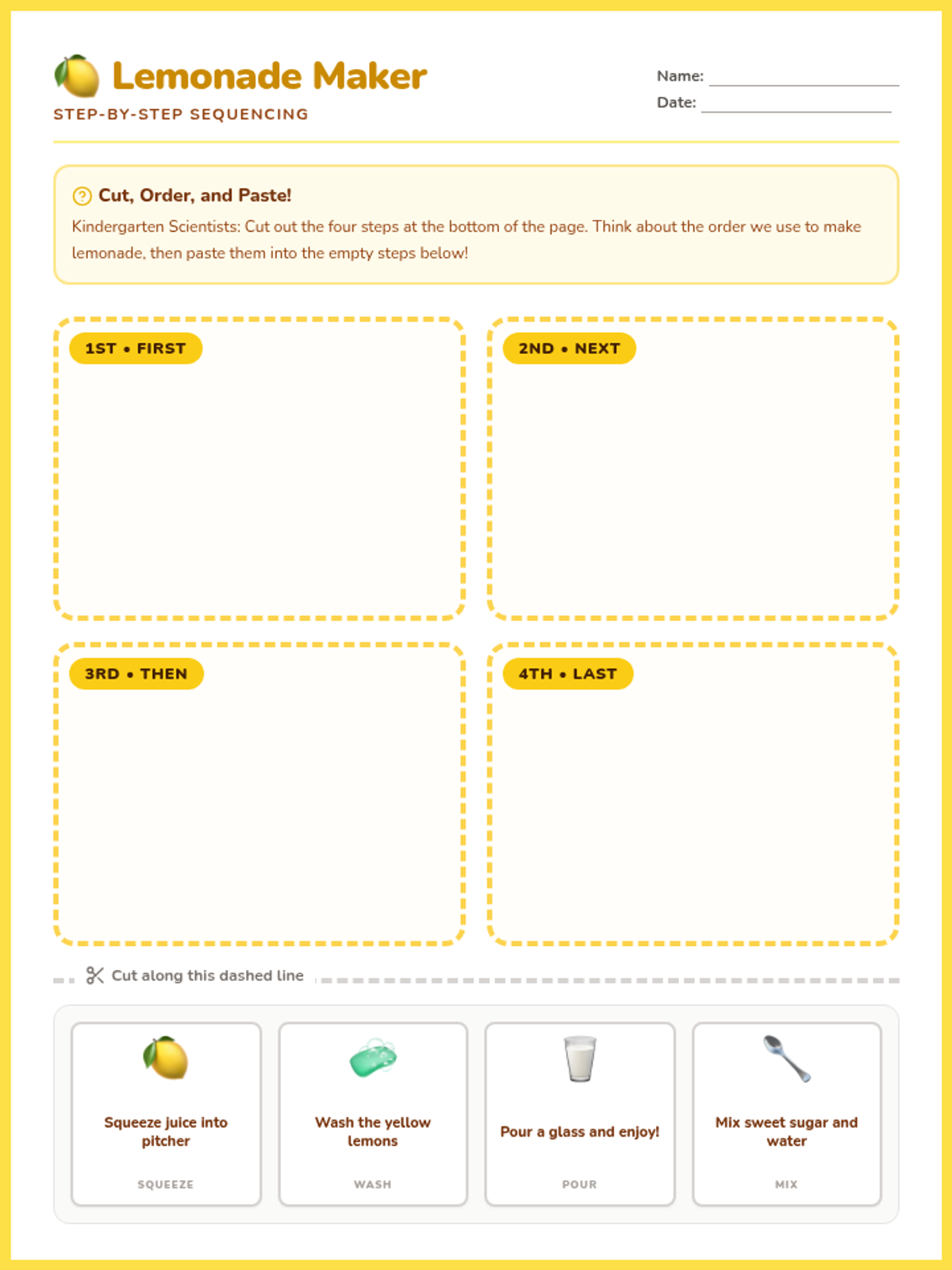
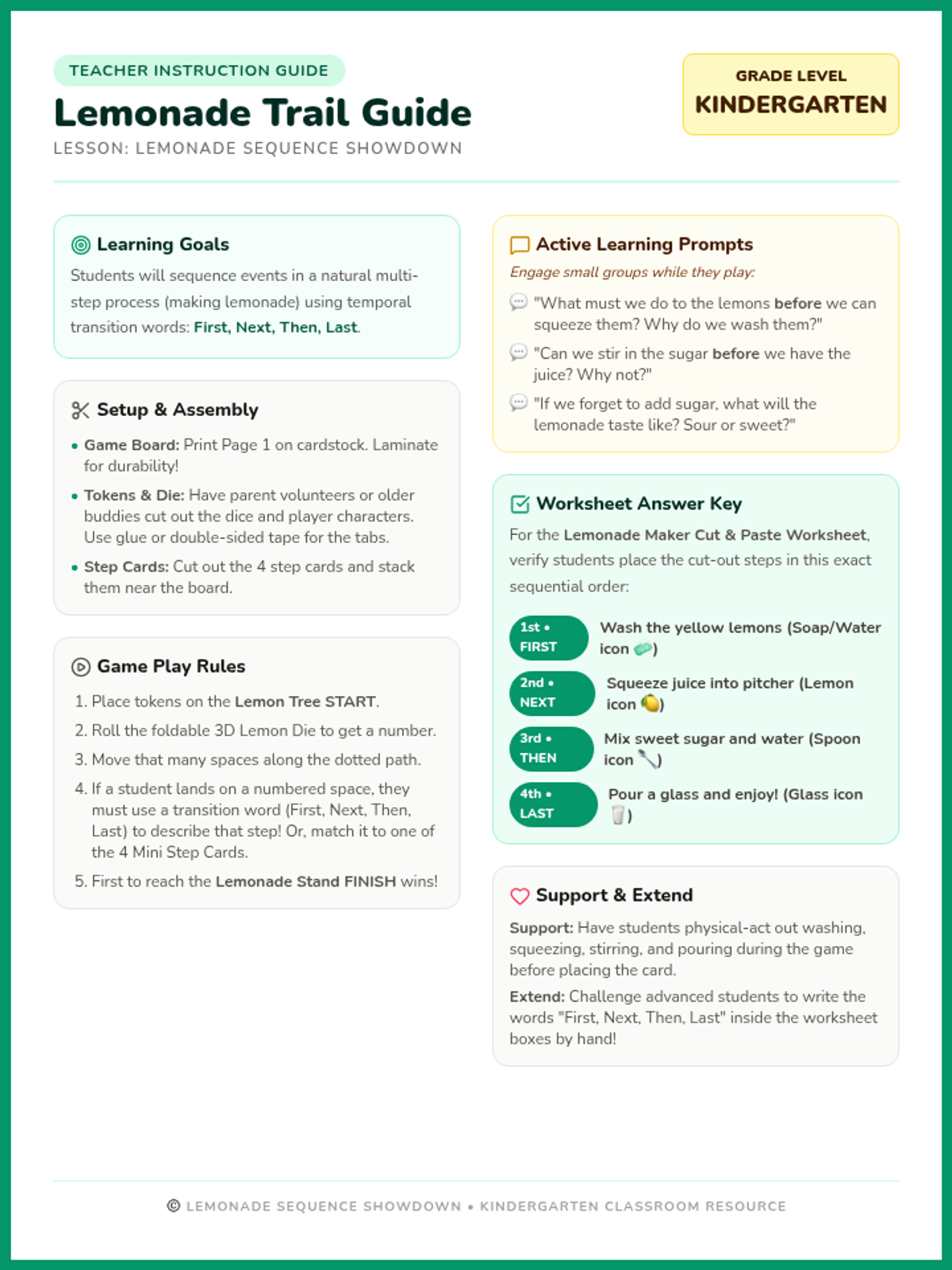
A hands-on kindergarten lesson focused on step-by-step sequencing. Students learn the sequential order of making lemonade through a printable board game, interactive pieces, and a cut-and-paste sequencing worksheet.
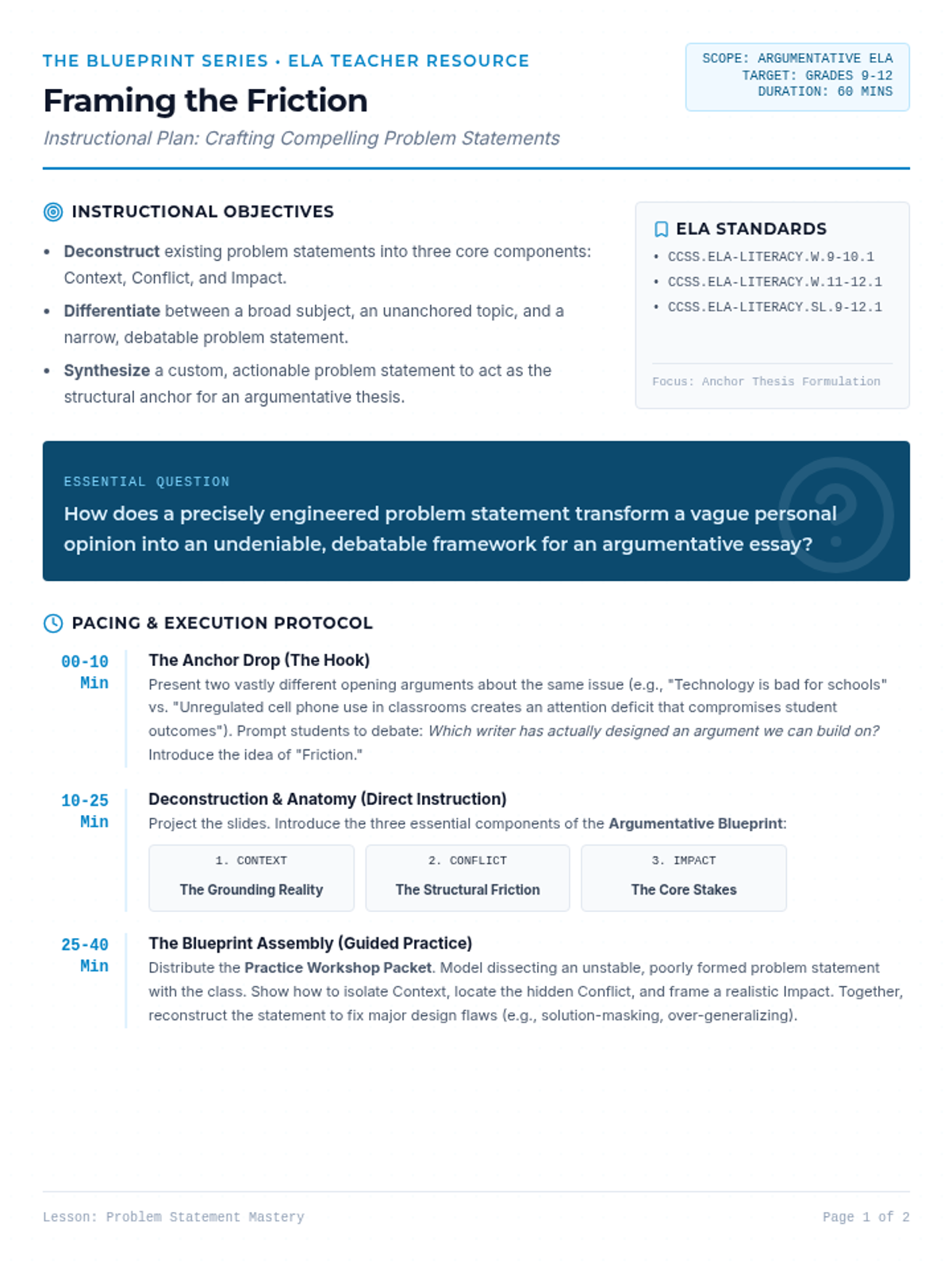
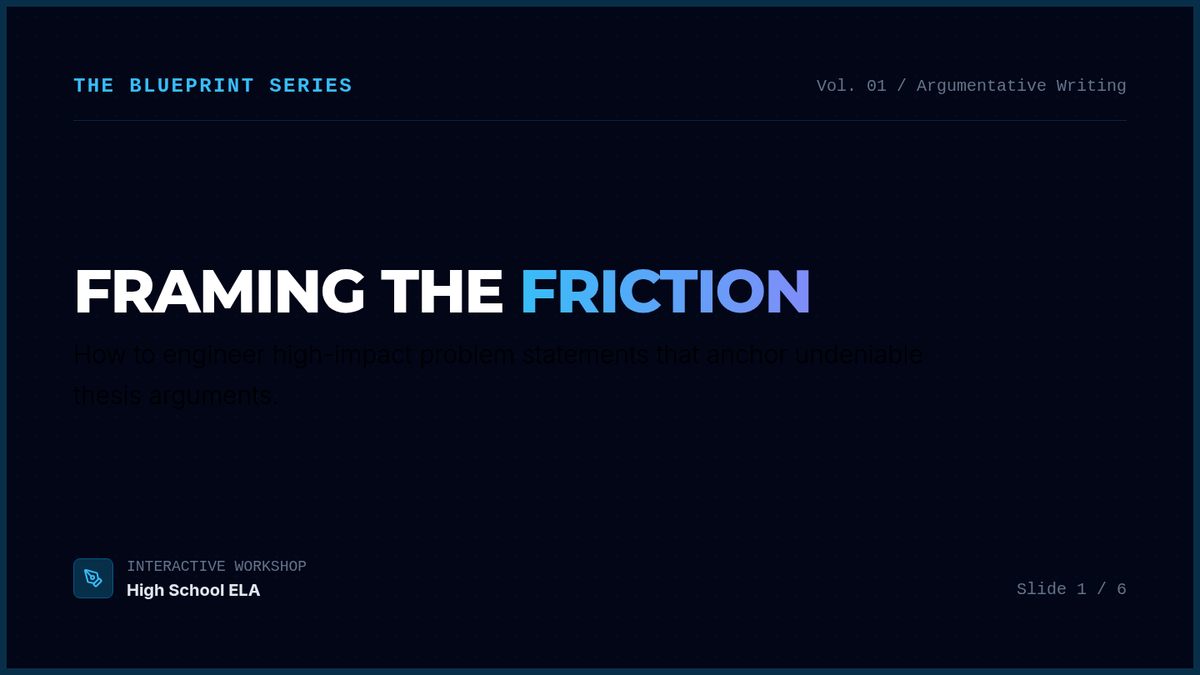
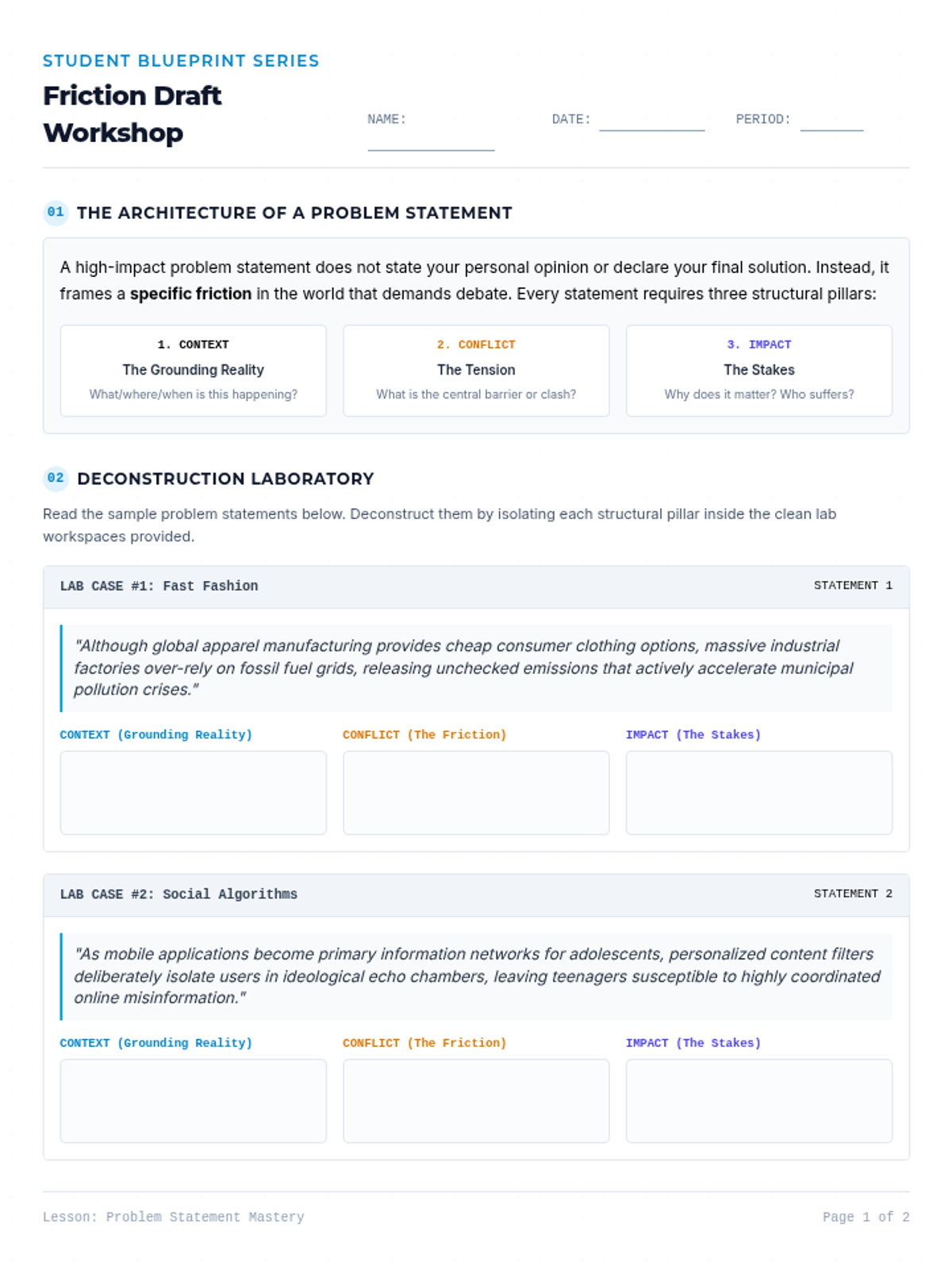
A comprehensive lesson bundle on crafting powerful problem statements to frame thesis statements for argumentative essays. Designed for high school ELA students, this lesson focuses on structuring the context, conflict, and impact of an issue to build compelling arguments.
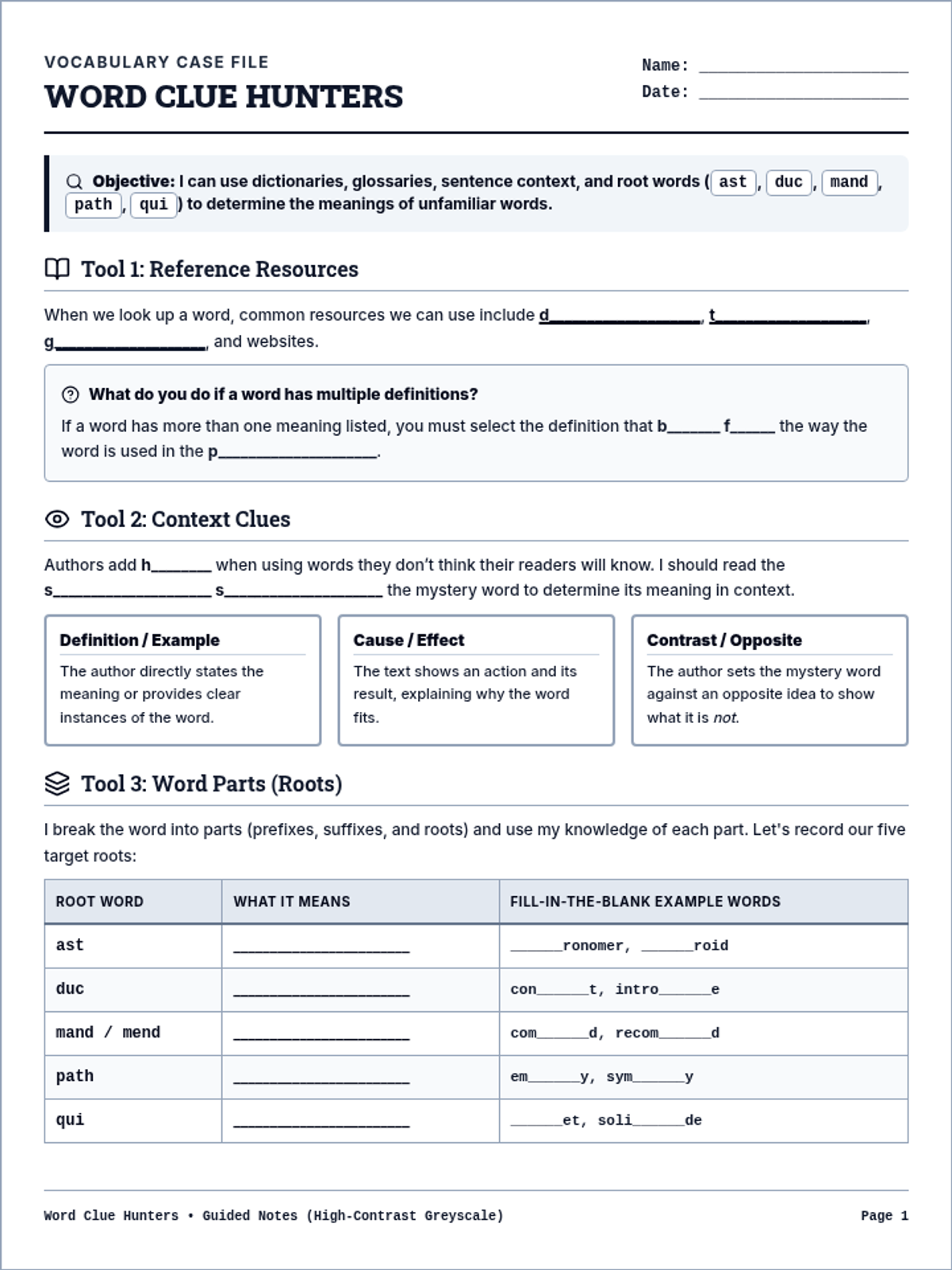
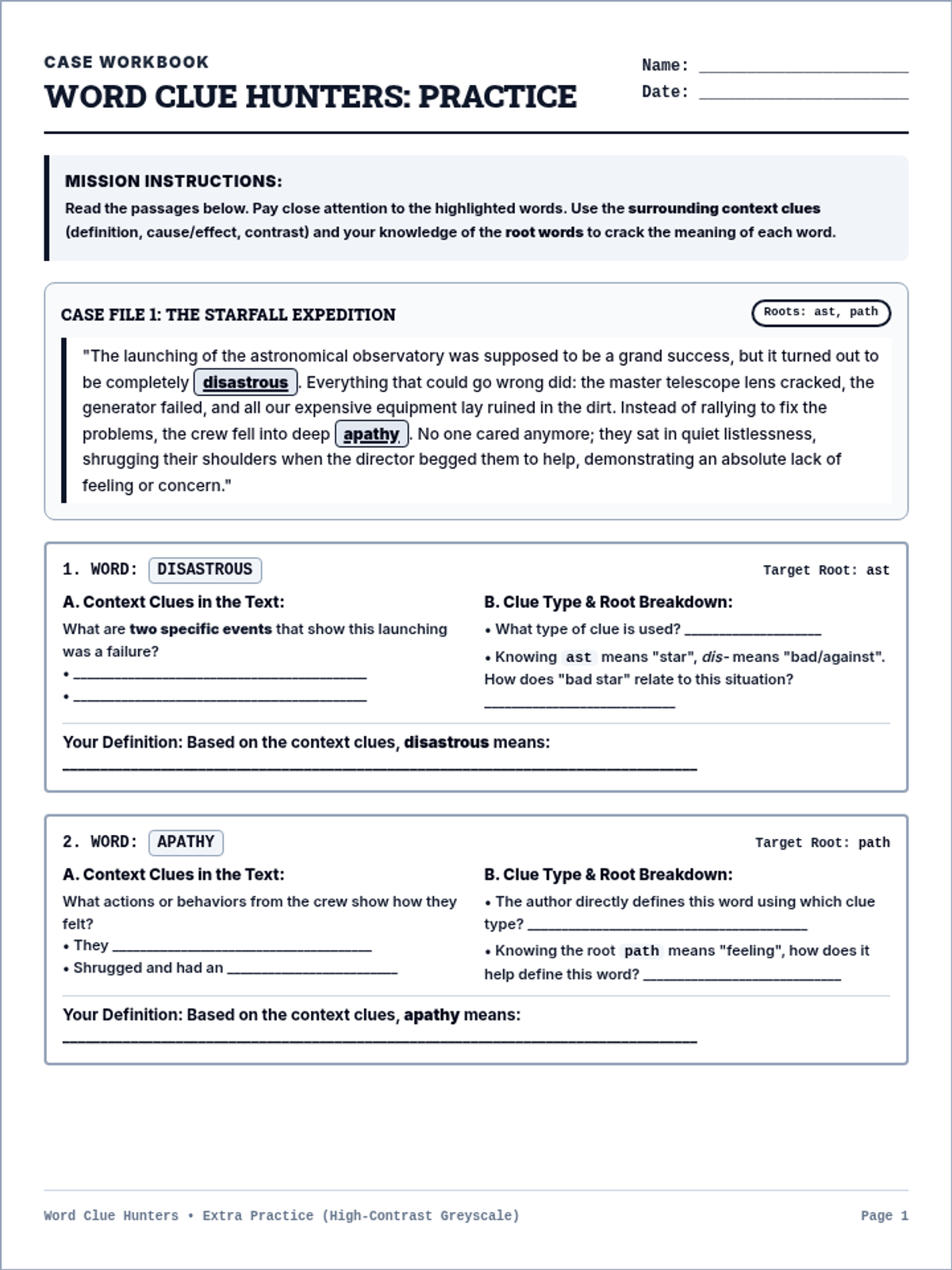
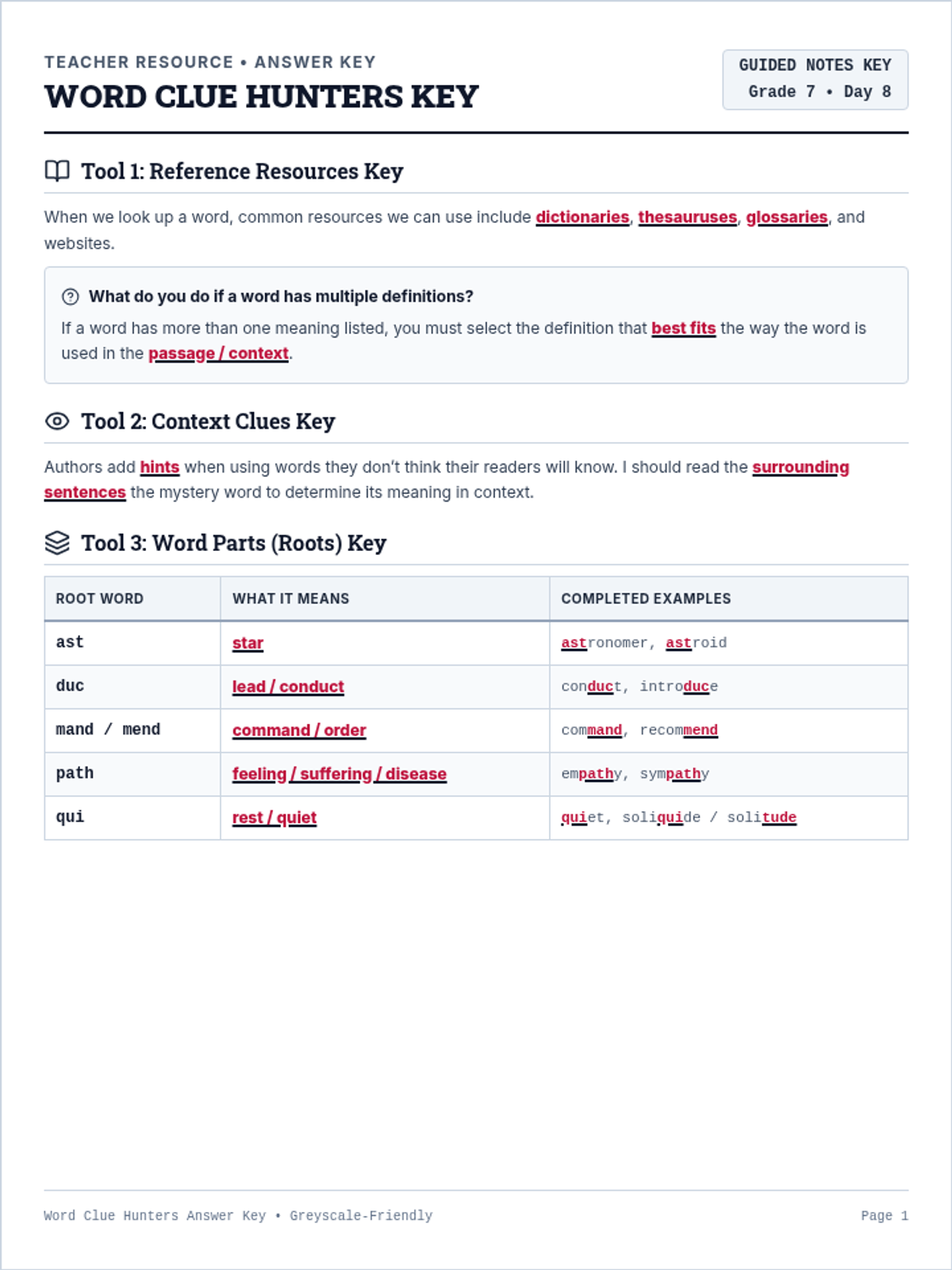
A comprehensive vocabulary lesson targeting context clues, resource usage, and five core root words (ast, duc, mand, path, qui) with interactive guided notes and rigorous practice worksheets.
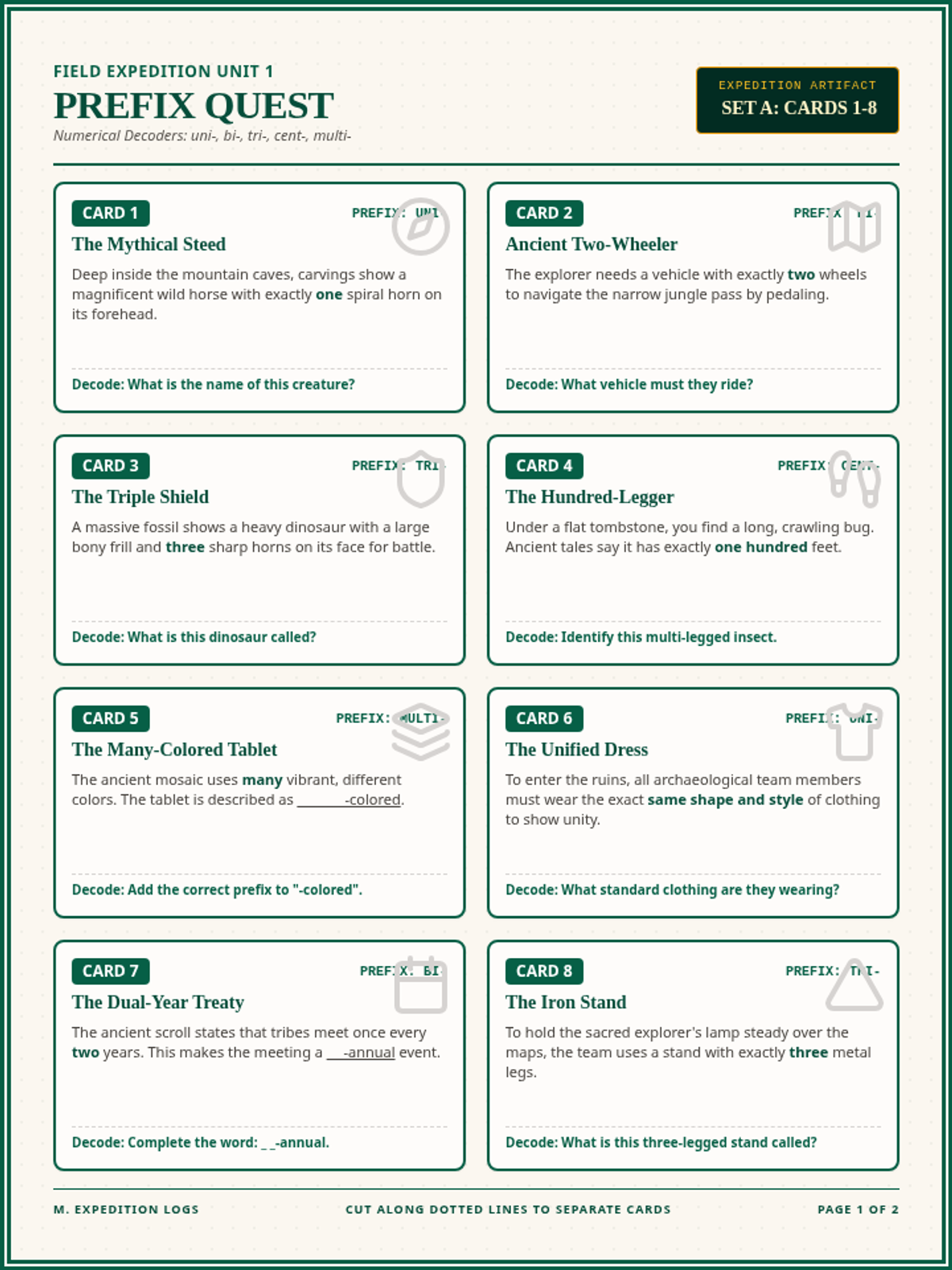
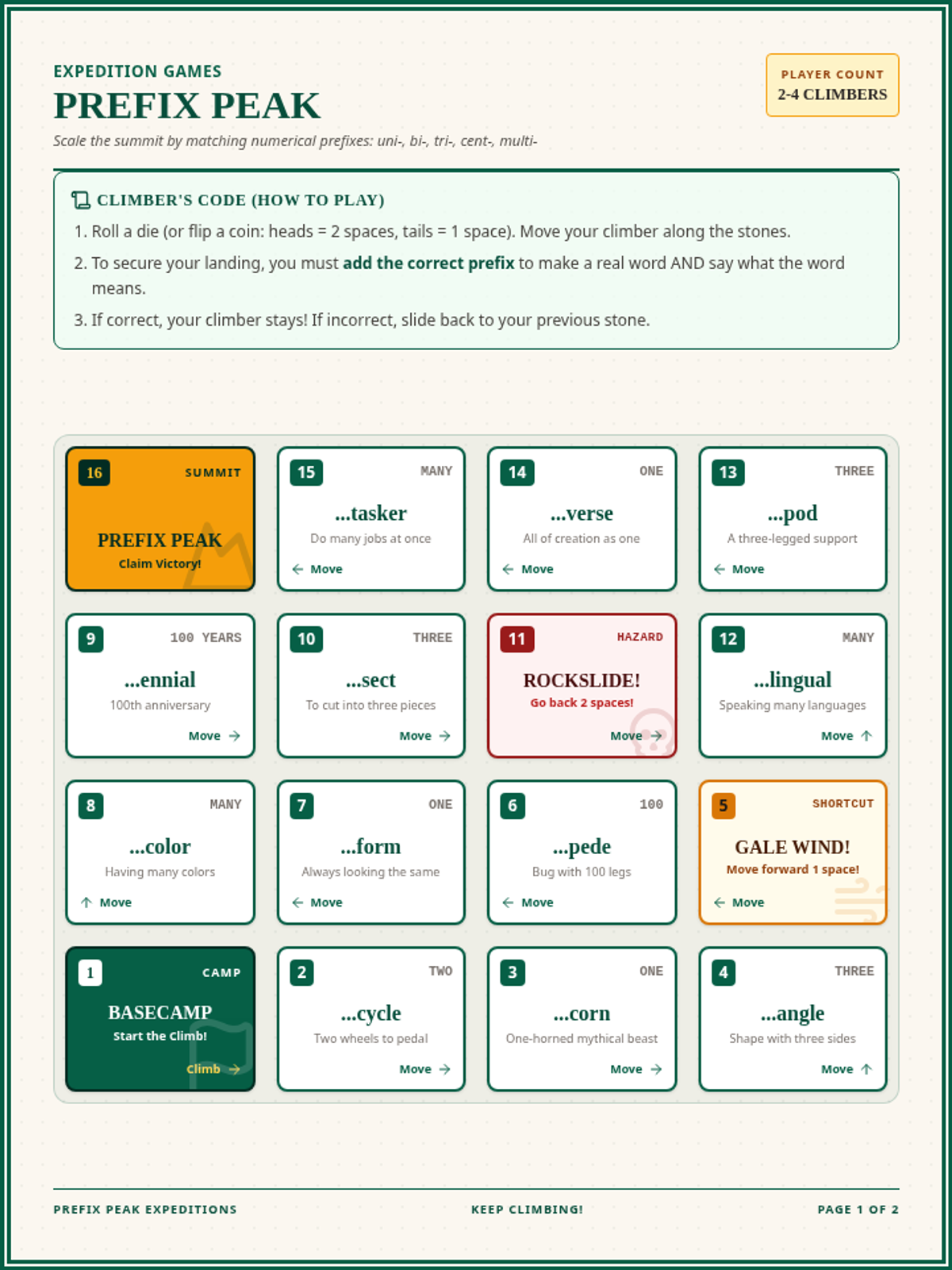
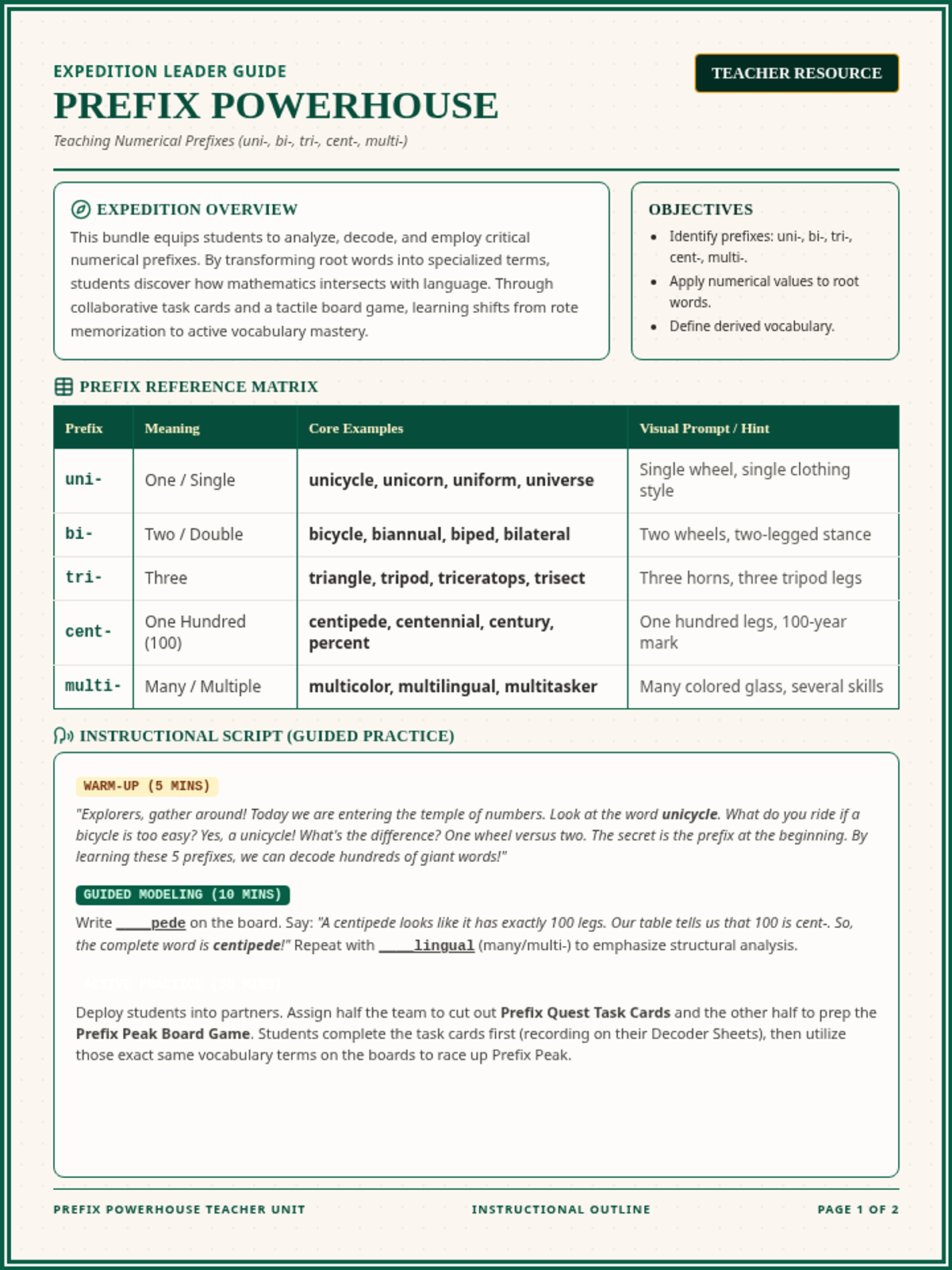
A dynamic activity bundle introducing the numerical prefixes uni-, bi-, tri-, cent-, and multi- through highly engaging partner games and interactive task cards designed for vocabulary expansion.
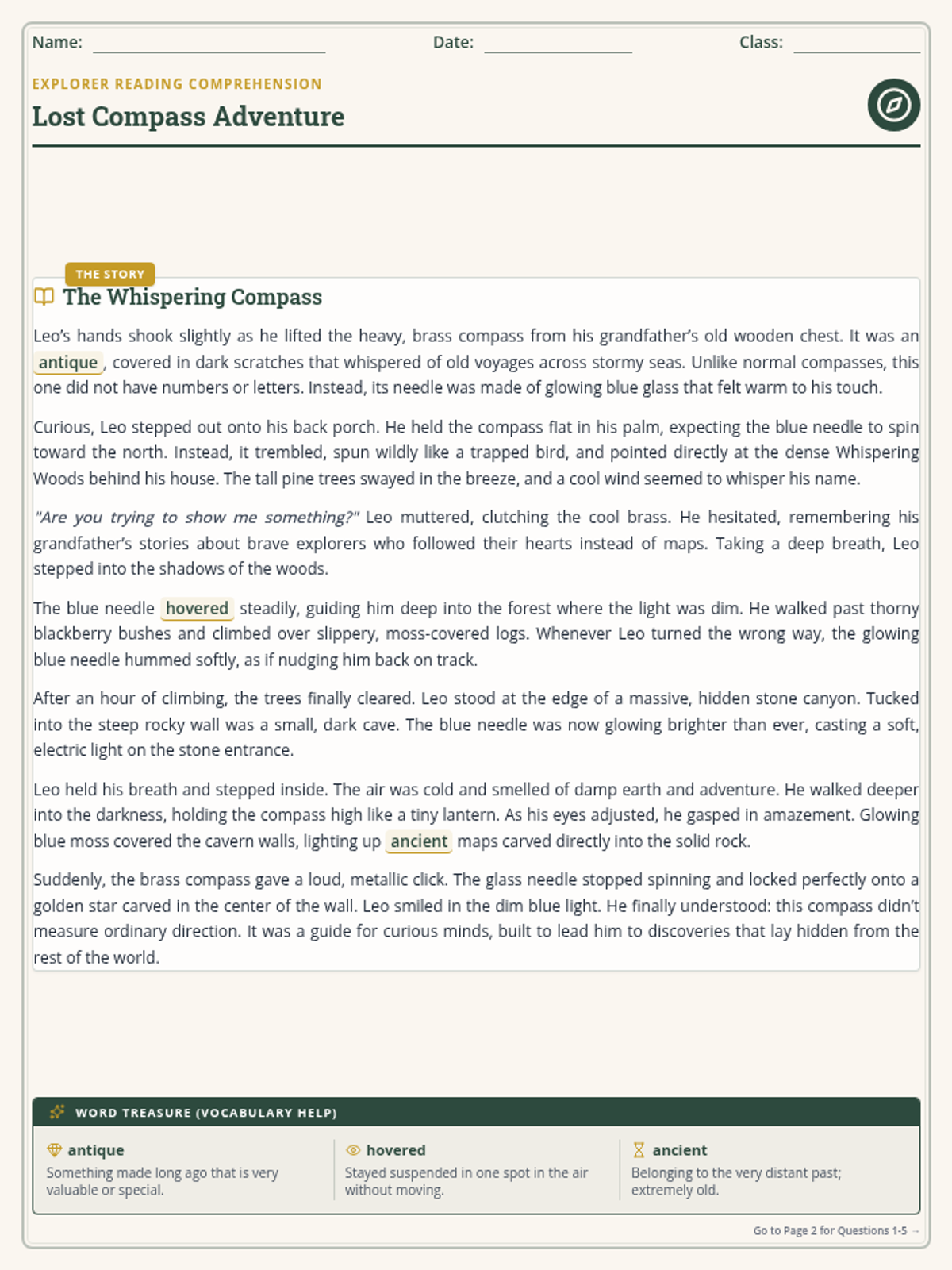
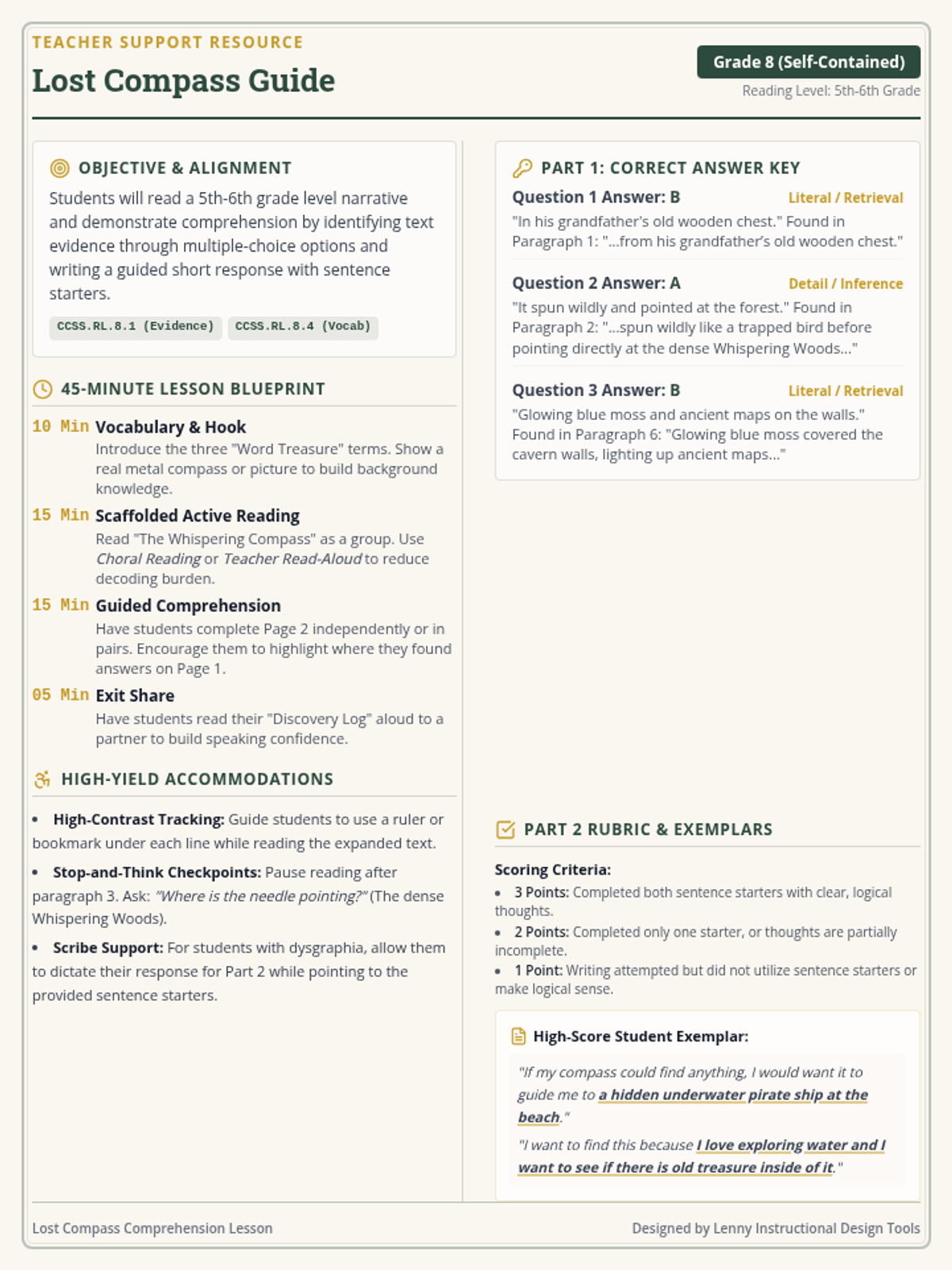
A reading comprehension lesson designed for 8th-grade self-contained ELA students reading at a 5th-6th grade level. It includes a scaffolded student worksheet with visual multiple-choice options and a teacher guide with pacing and strategies.
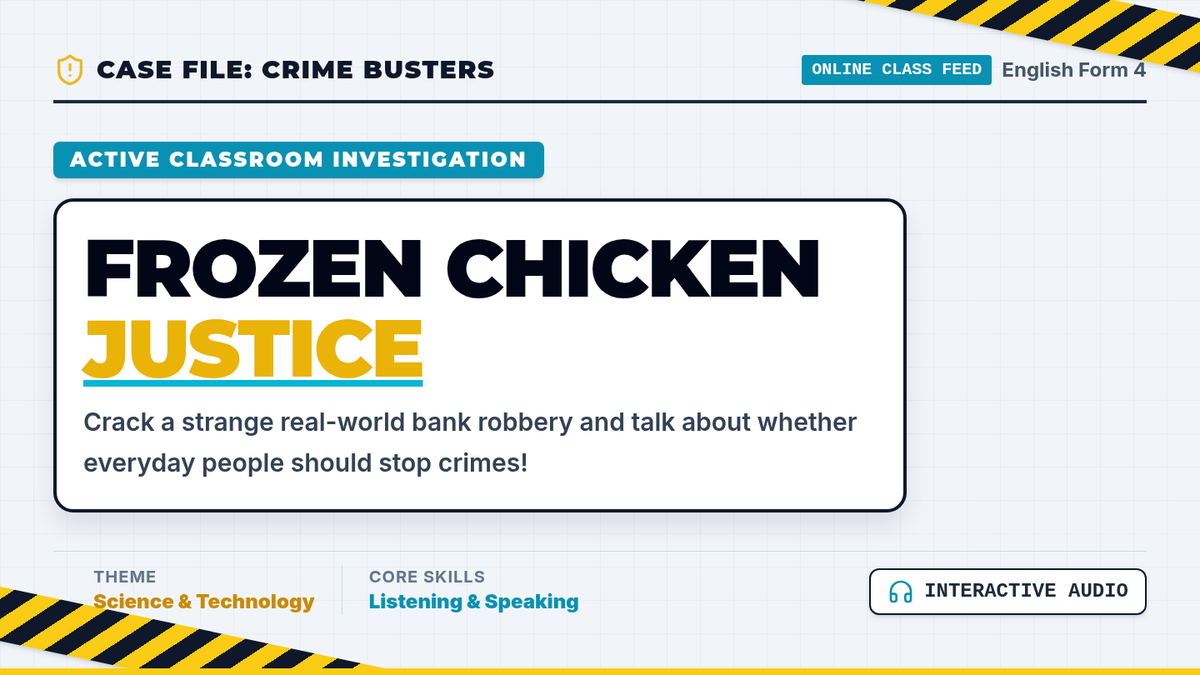
An English listening and speaking lesson where students analyze a crime news broadcast, practice using past simple and past continuous, and debate the ethics of citizen intervention.
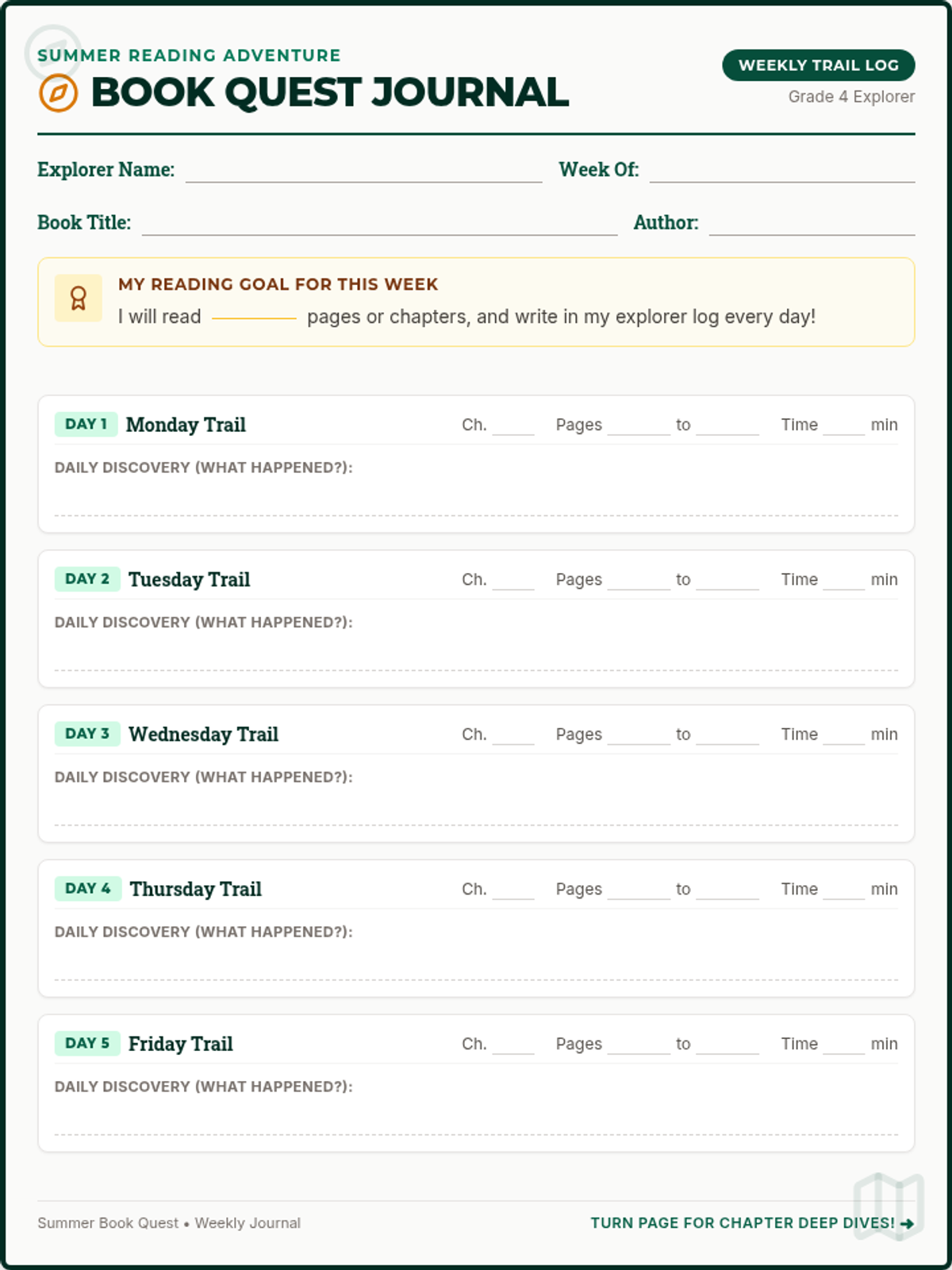
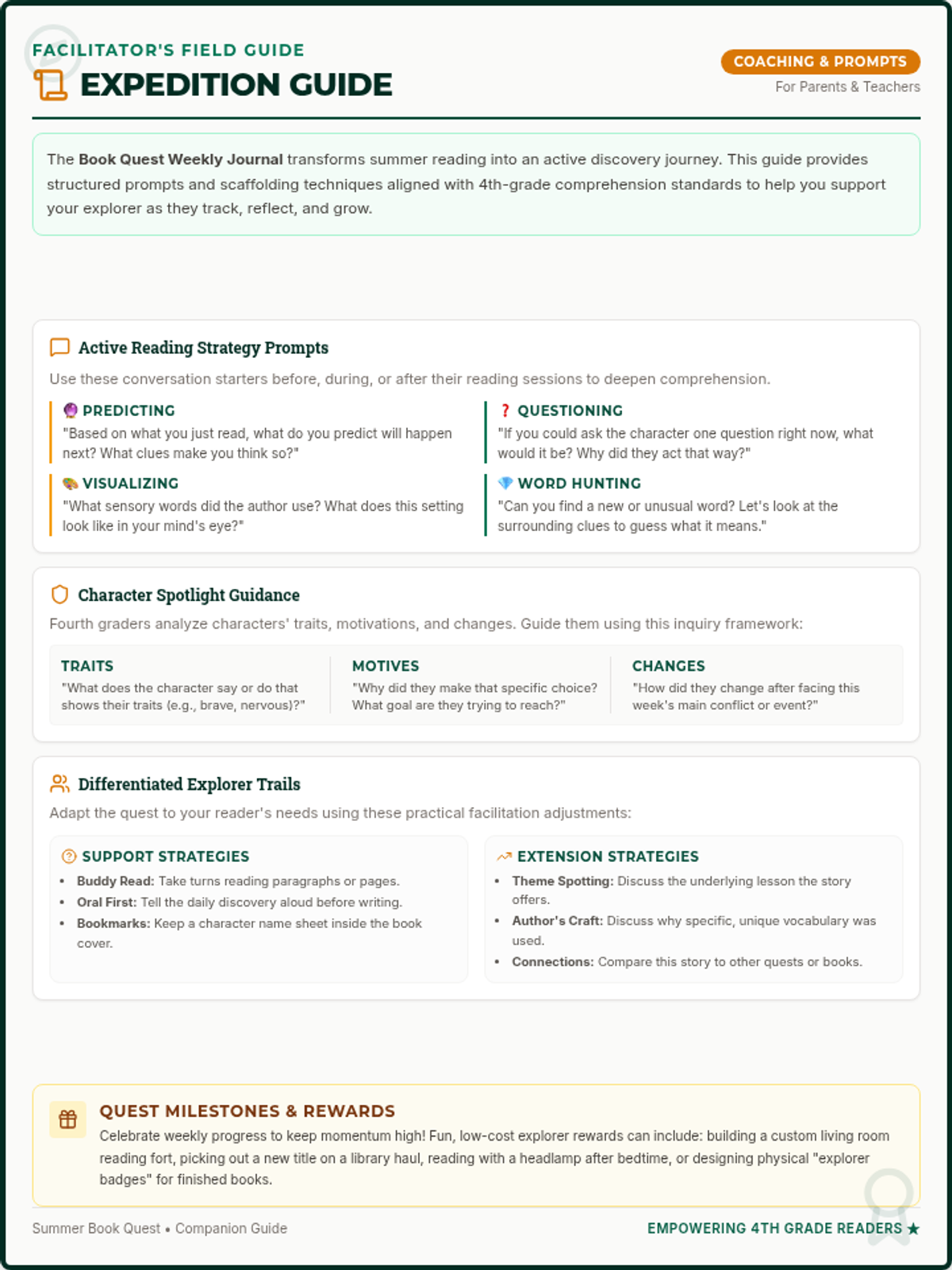
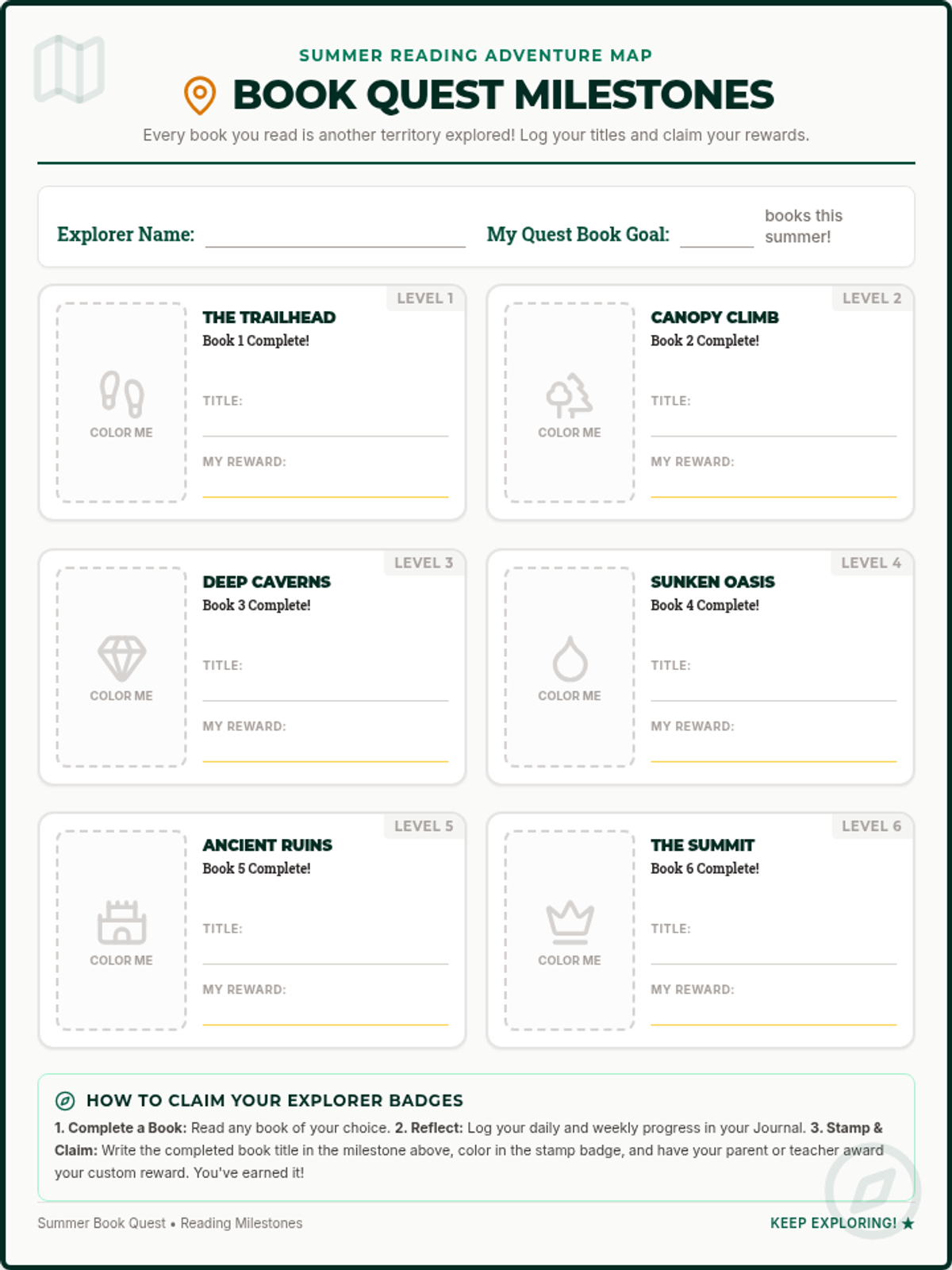
A summer reading program designed for 4th graders, structured as an adventure field guide to track books, analyze chapters, and practice active reading strategies.
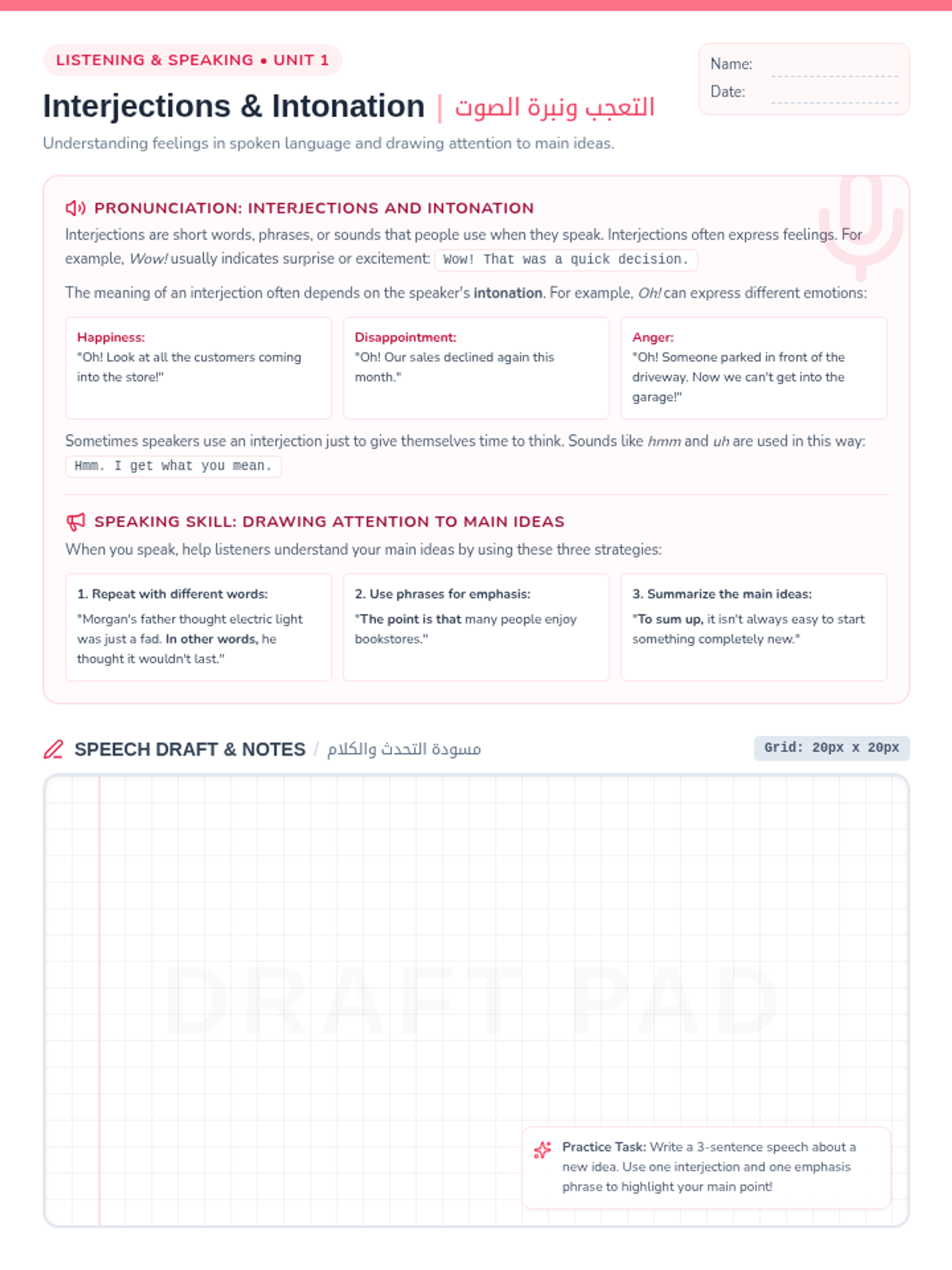
A premium, student-facing draft and rule booklet for English Listening and Speaking (L&S) across 8 core units of pronunciation and speech skills.