Students will learn to represent and interpret data on line plots using mixed numbers. The lesson includes a shoe size analysis activity where students convert fractions to common denominators, create frequency tables, and draw line plots.
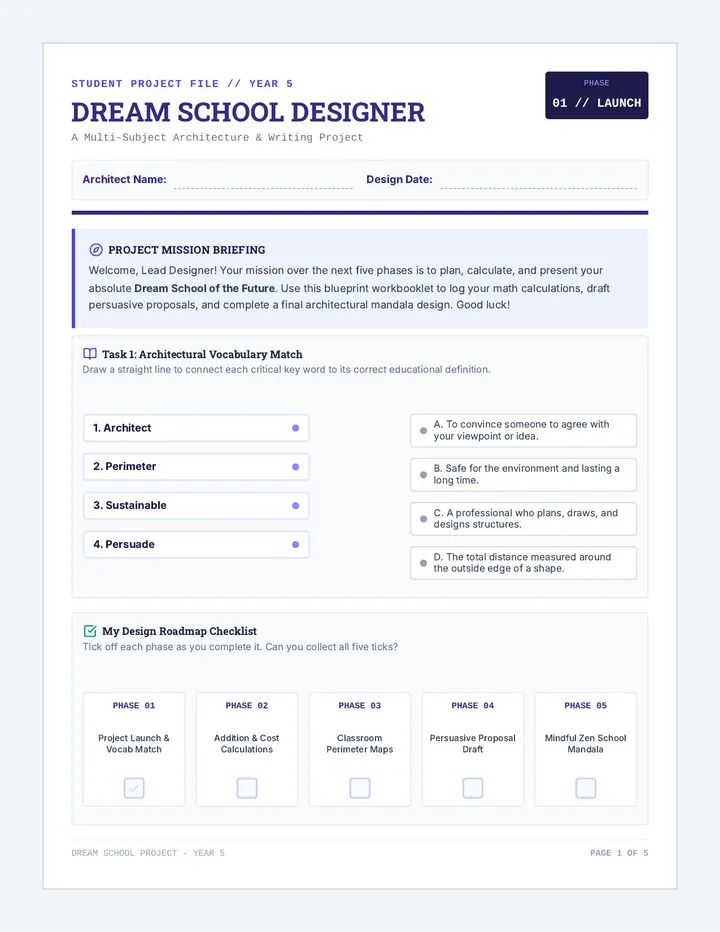
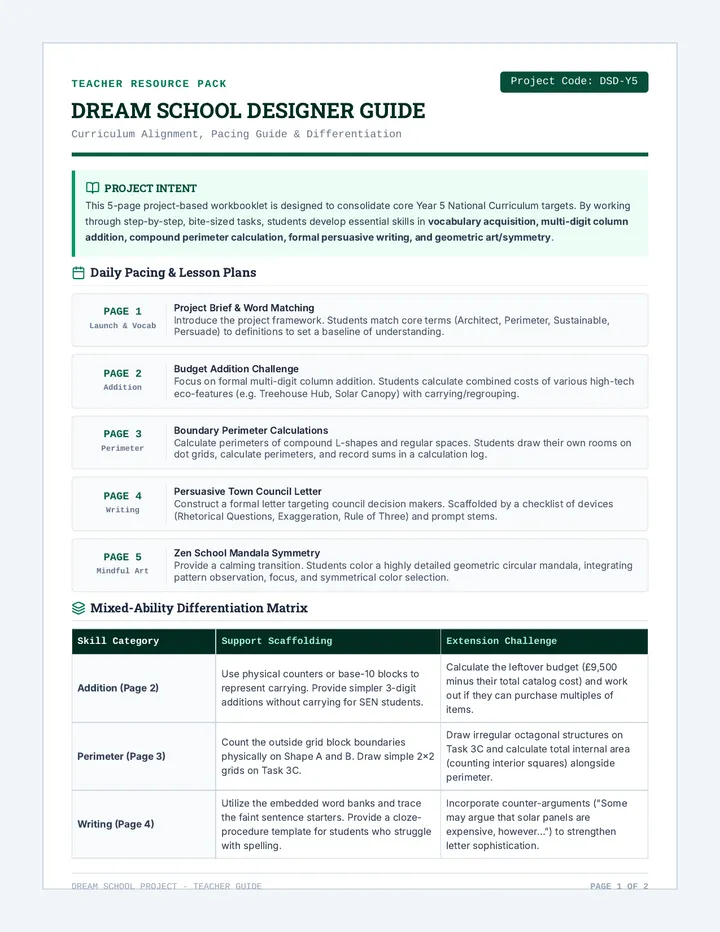
A project-based workbooklet and guide where Year 5 students design their ultimate future school. The project is broken down into structured, bite-sized daily steps integrating English, Maths, Science, Geography, and Art.
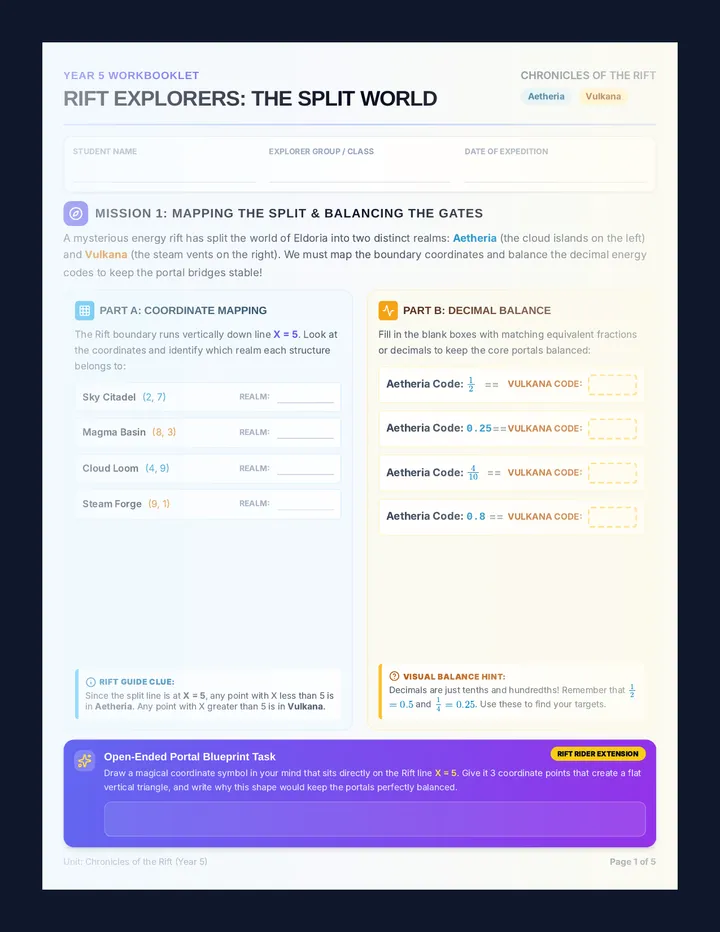
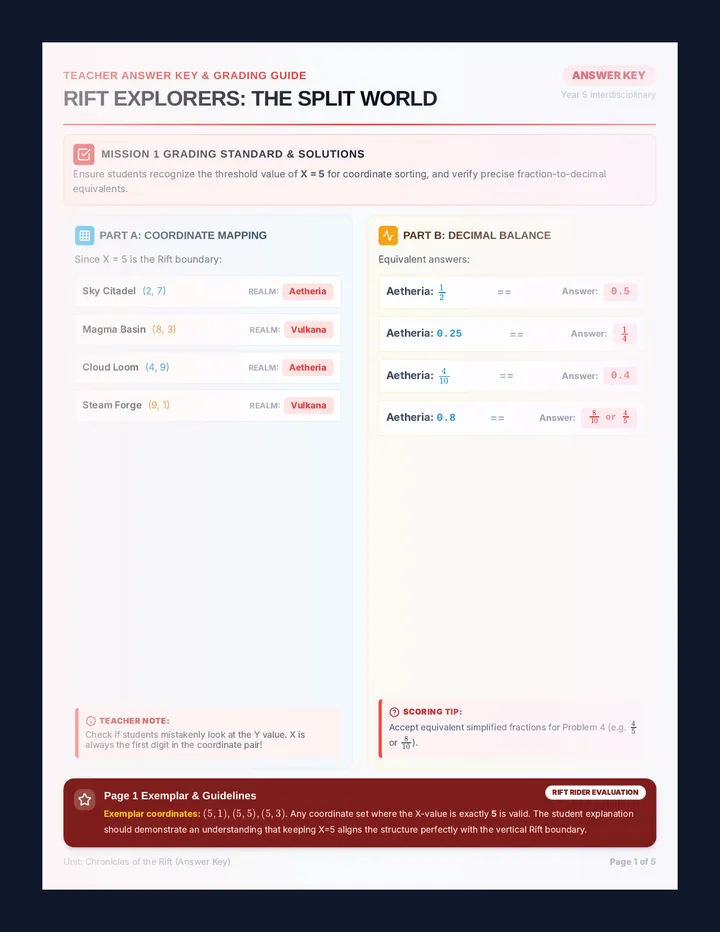
An immersive, five-part interdisciplinary workbook series where Year 5 students explore a world split in two. This booklet integrates mathematics, vocabulary, data handling, and science into a thrilling parallel-world narrative.
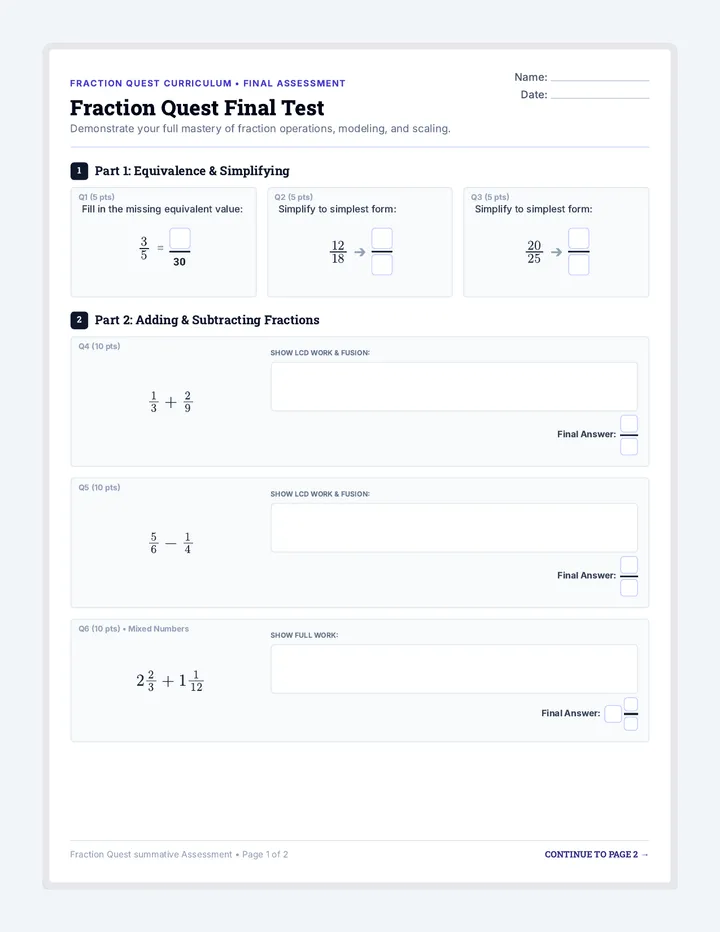
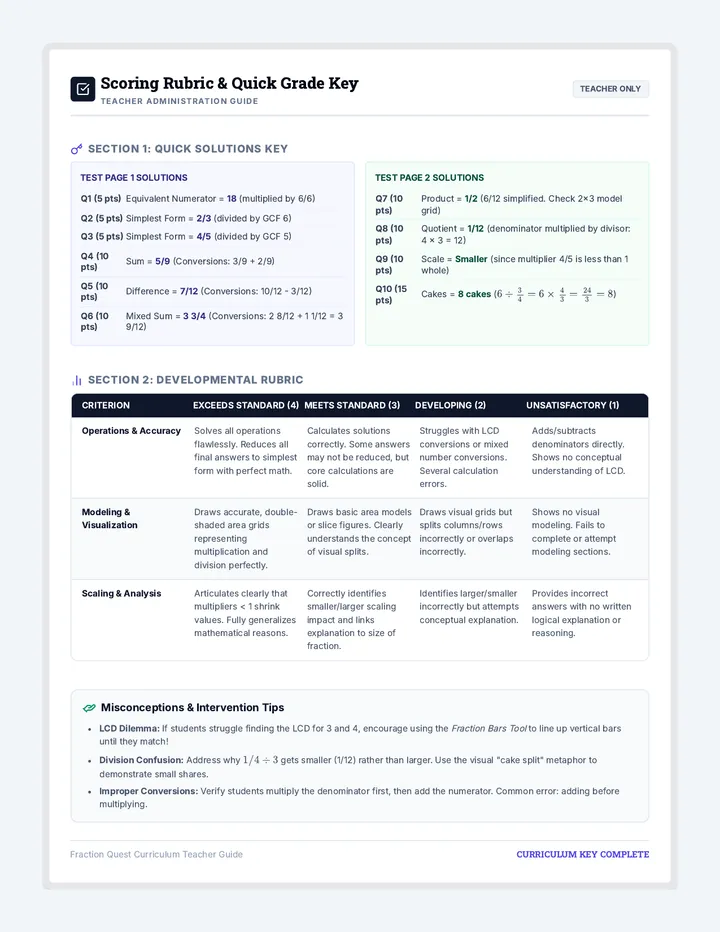
A comprehensive review and assessment of all four fraction operations. Students demonstrate their mastery through an interactive review, final unit assessment, and student reflection.
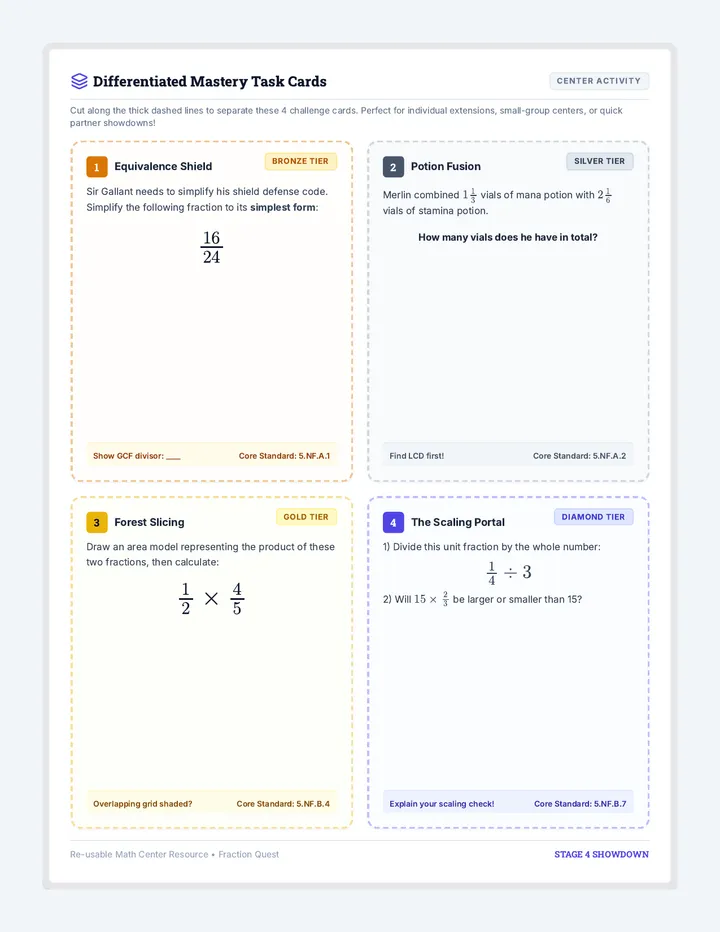
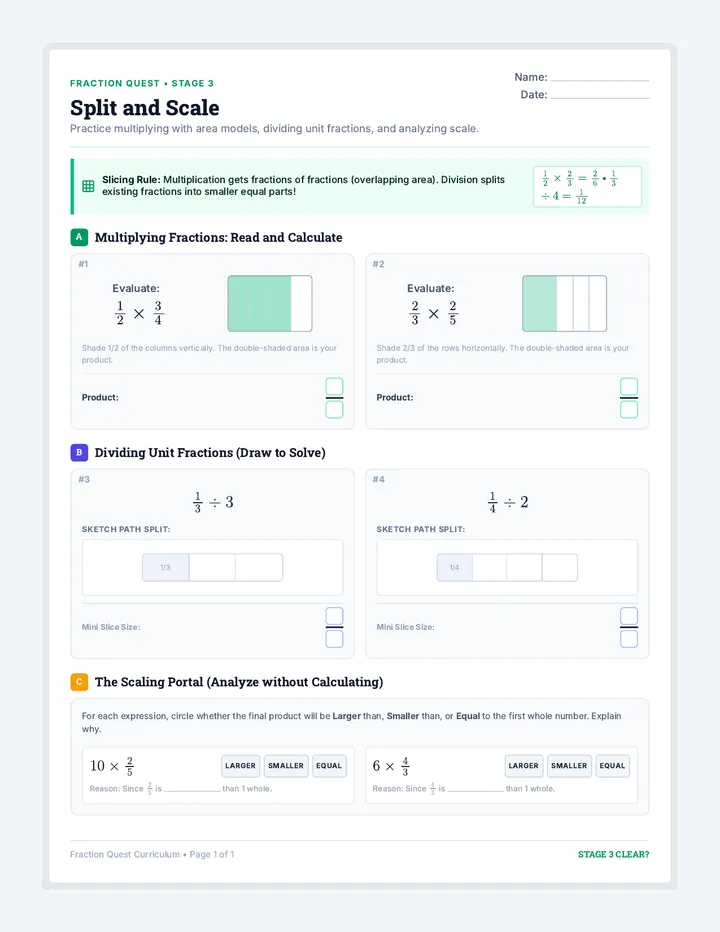
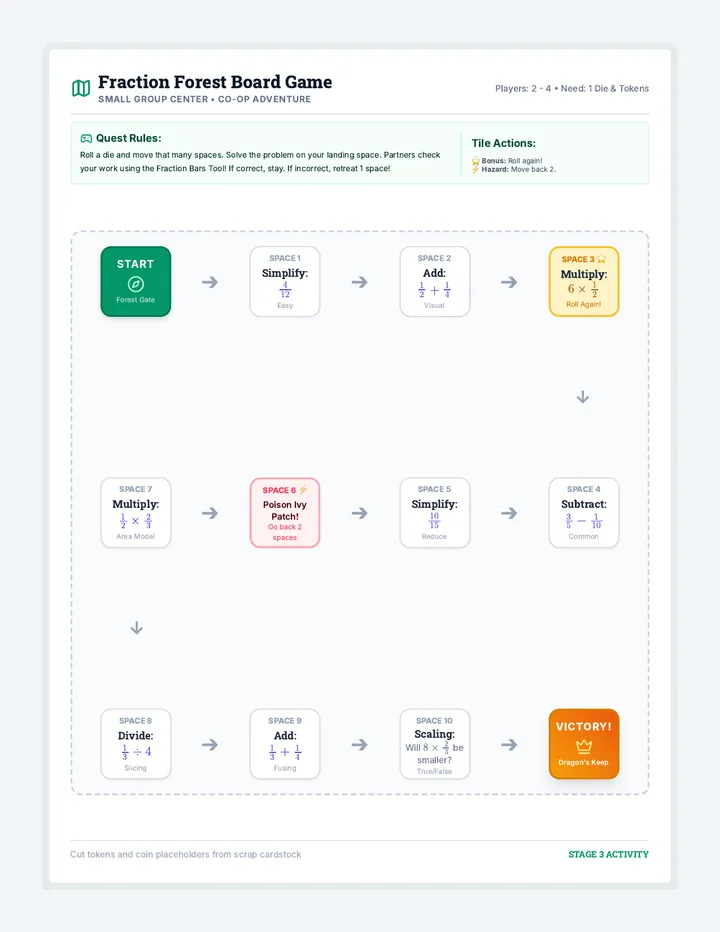
Multiplying and dividing fractions using area models, understanding scaling, and dividing unit fractions by whole numbers. Visual models help conceptualize these concepts.
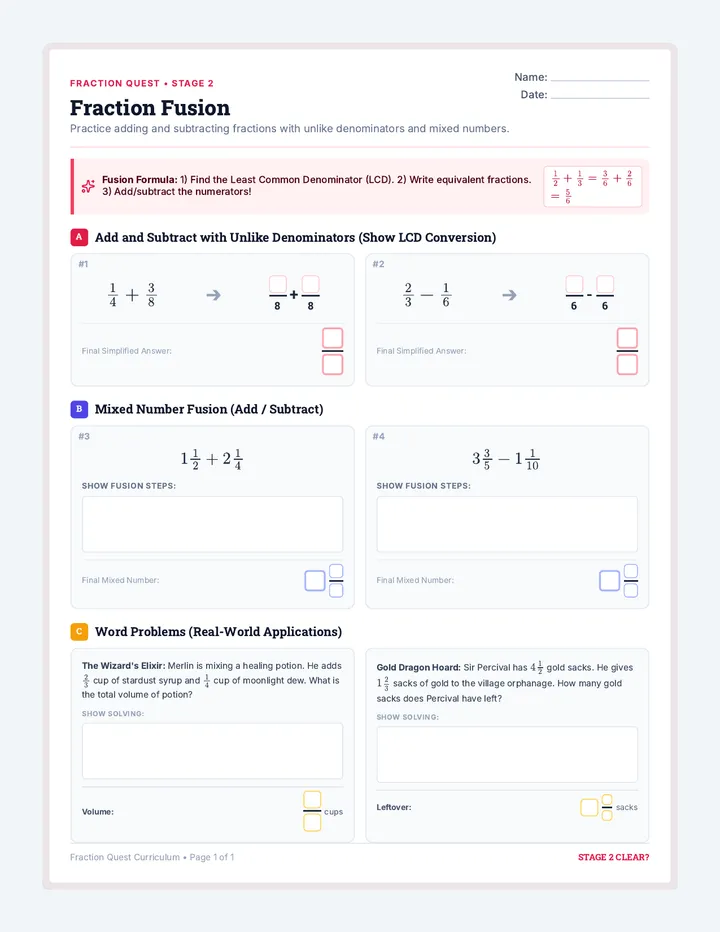
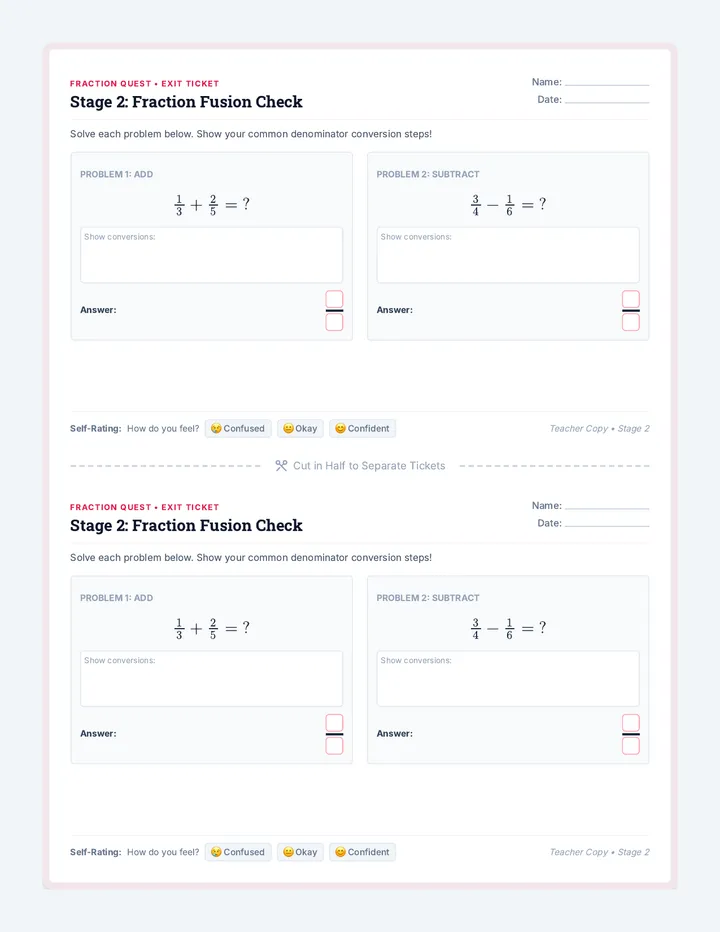
Adding and subtracting fractions with unlike denominators, including mixed numbers and standard real-world word problems. Students learn to find equivalent fractions with common denominators to add and subtract.
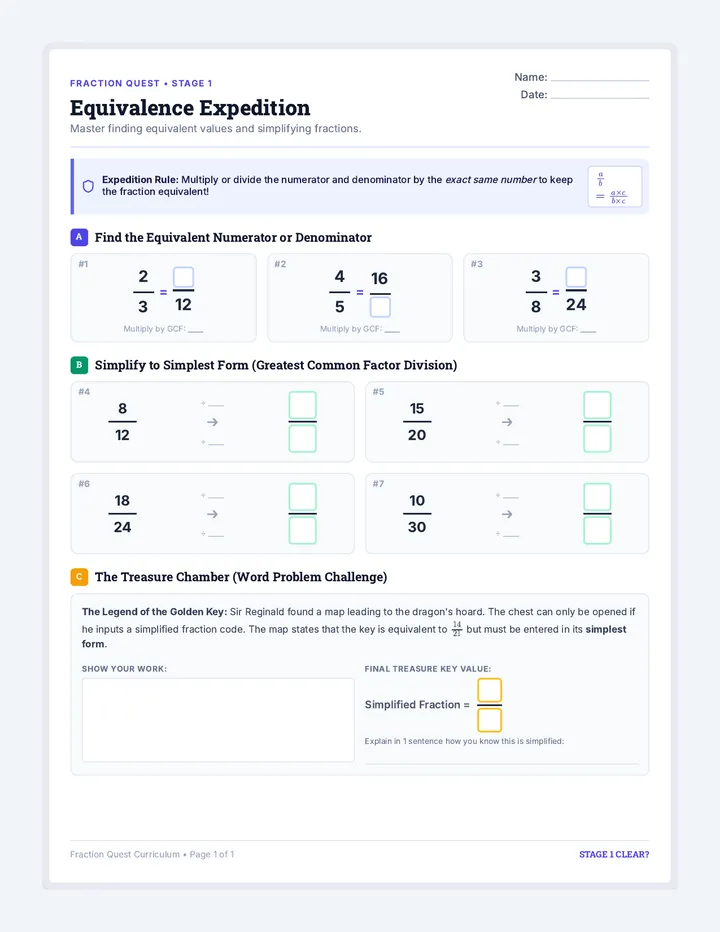
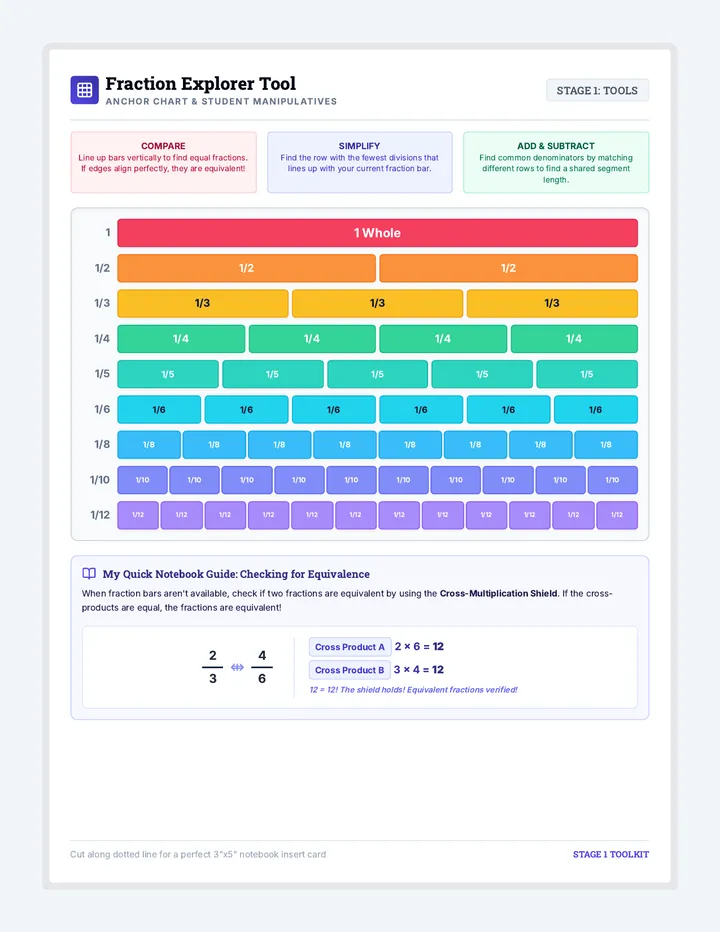
Mastering equivalent fractions and simplifying. Students discover visual equivalencies, identify common denominators, and reduce fractions to their simplest form using step-by-step mathematical reasoning.
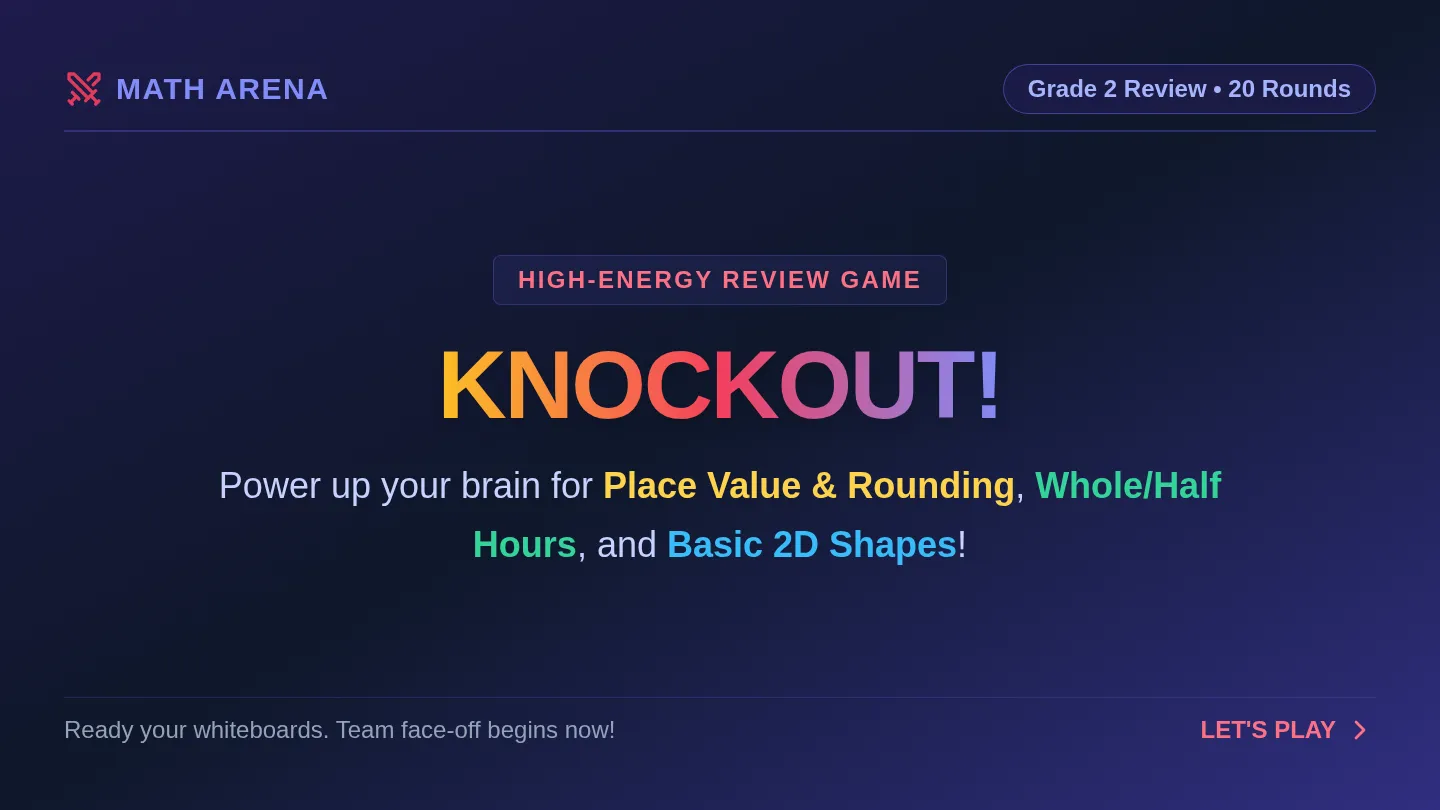
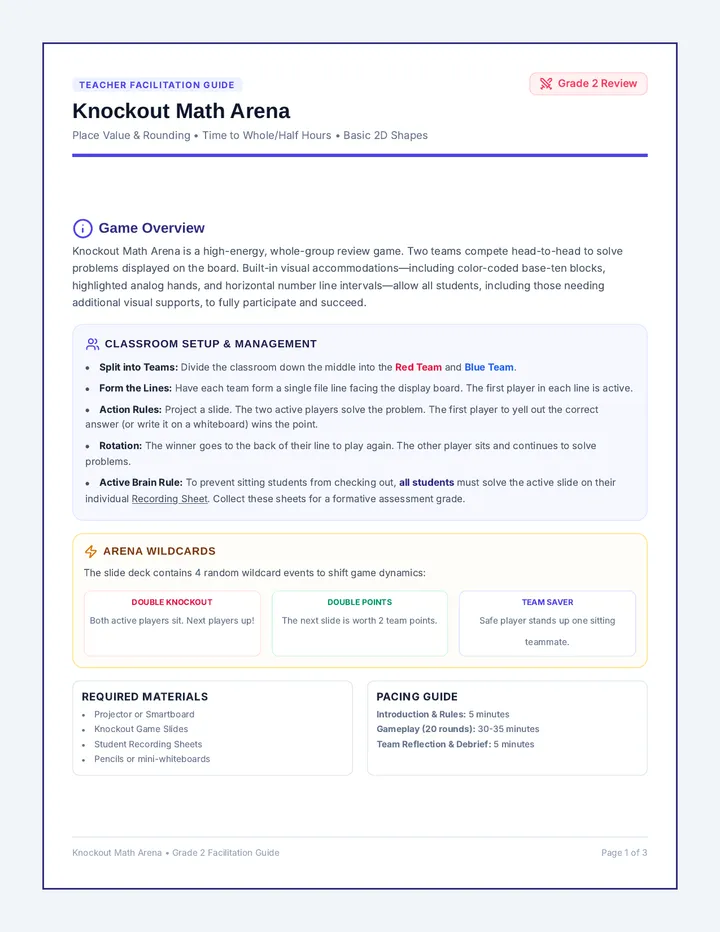
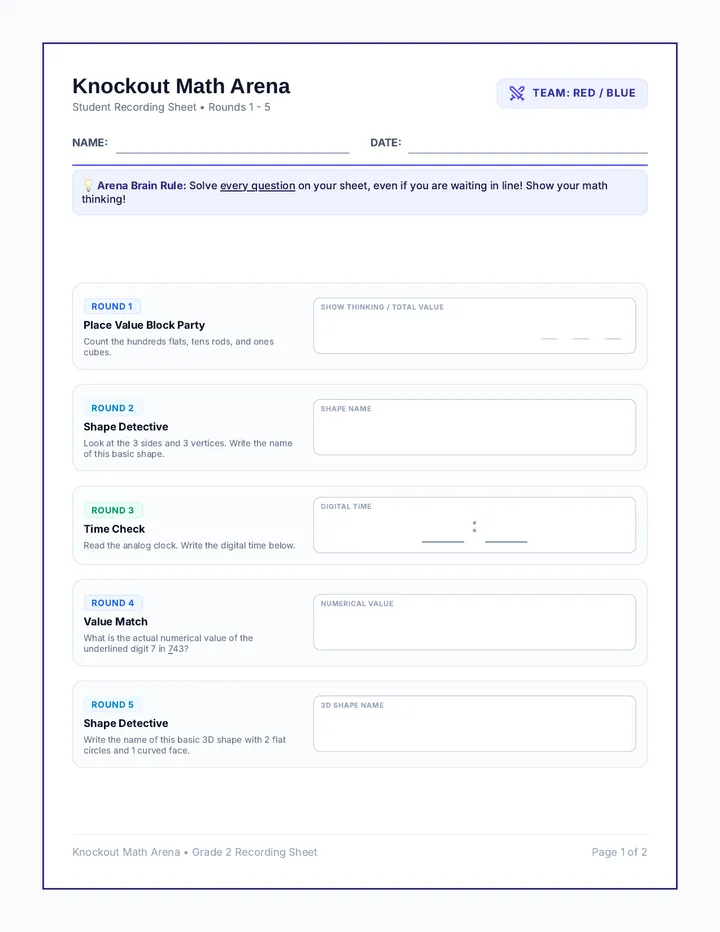
A high-energy, fast-paced review game targeting 2nd-grade place value, time, and geometric shape attributes. Includes a colorful slide deck, a comprehensive facilitation guide, and student recording sheets to keep the whole class engaged.
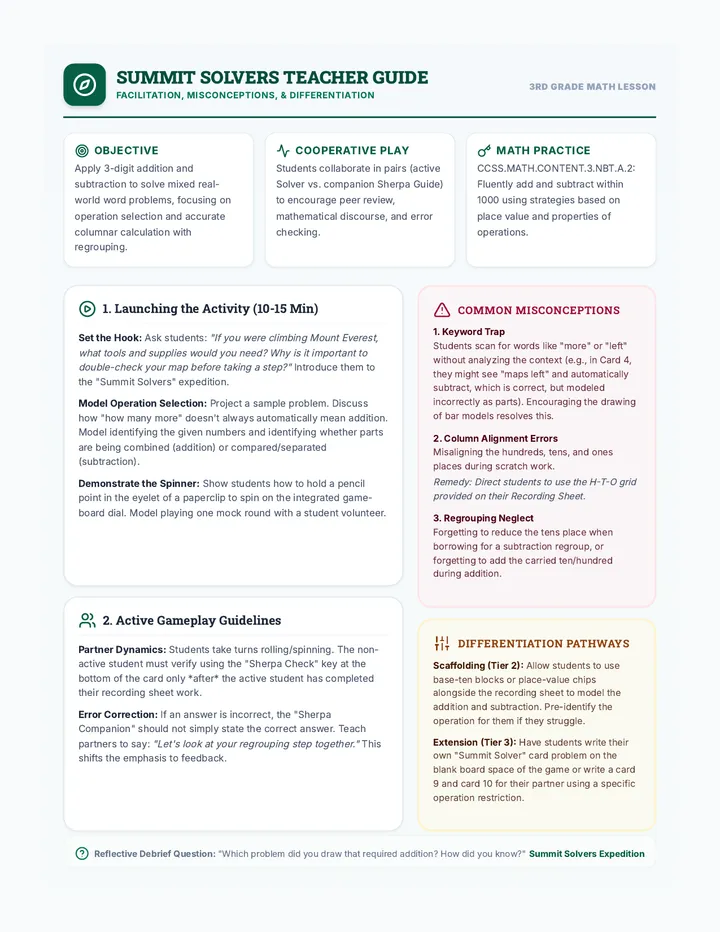
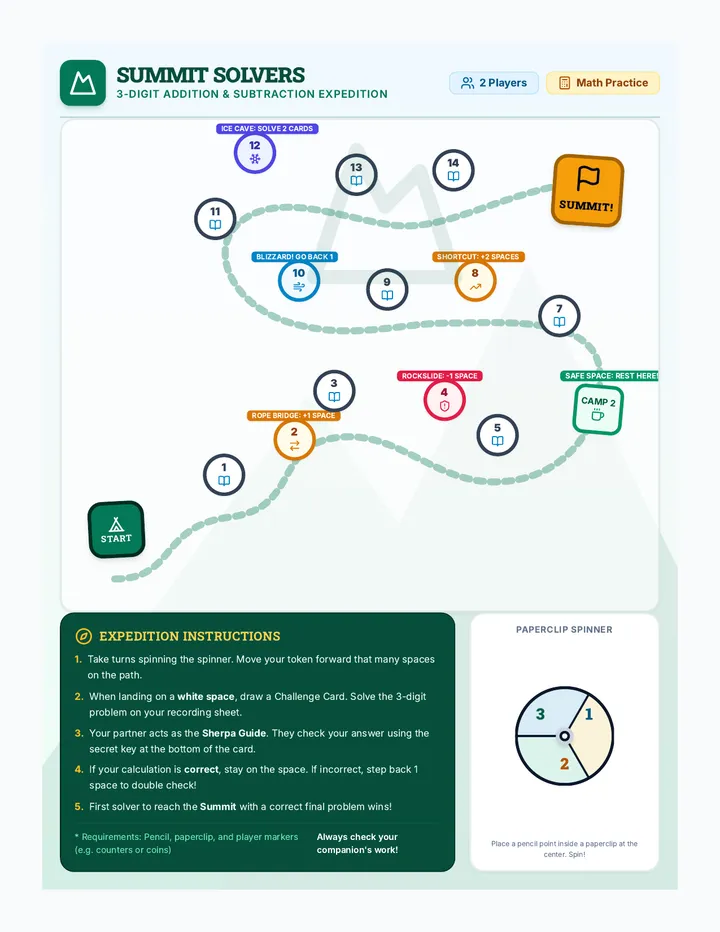
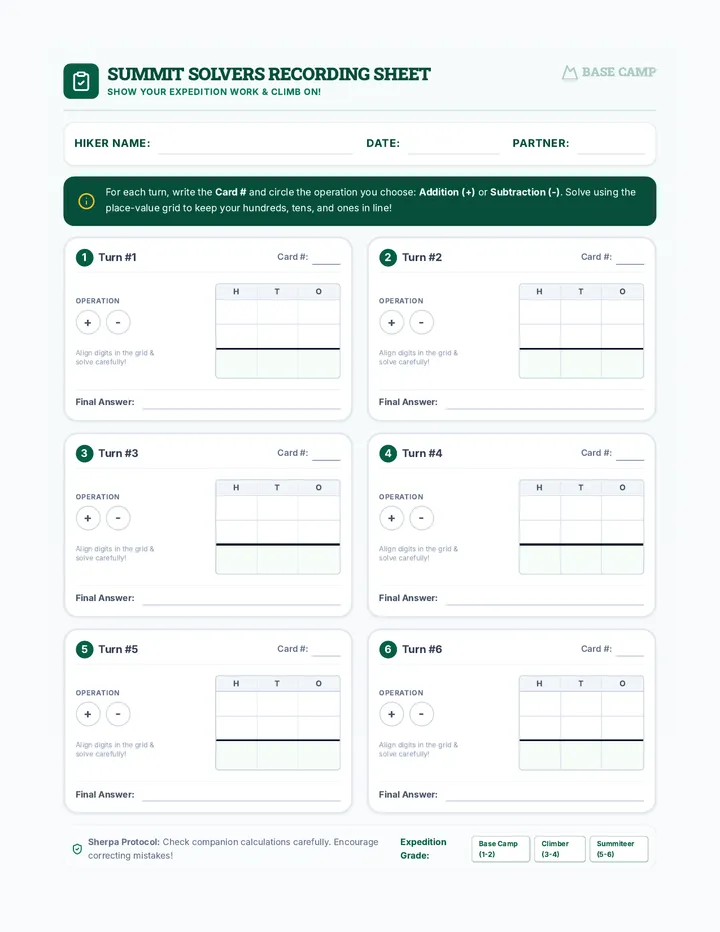
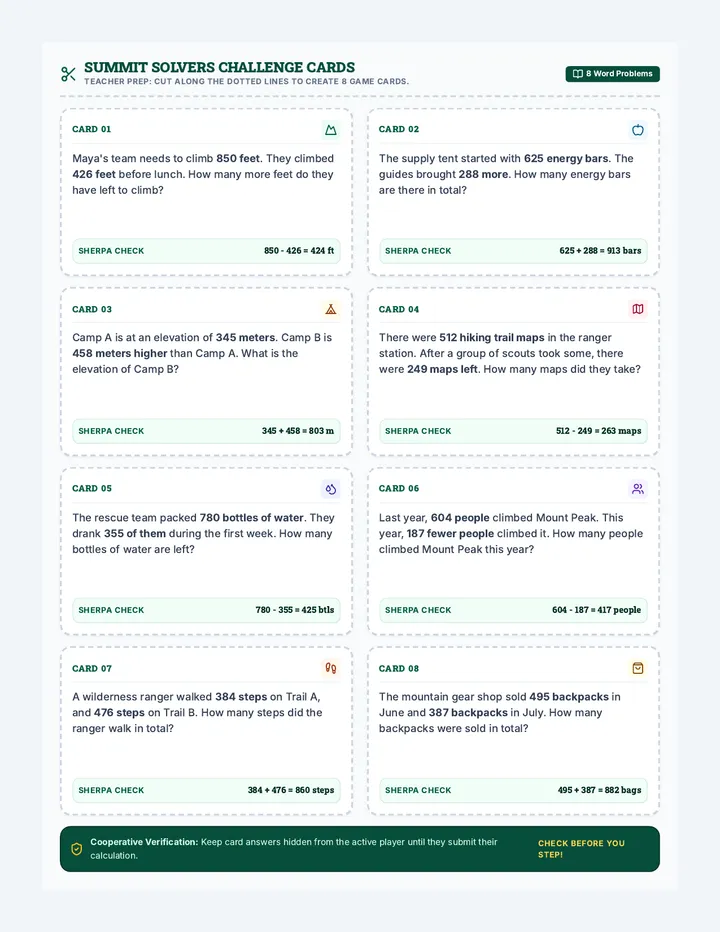
A collaborative third-grade board game focused on solving 3-digit addition and subtraction mixed word problems. Students climb a mountain by selecting correct operation, calculating precisely, and verifying answers with peer-checking challenge cards.
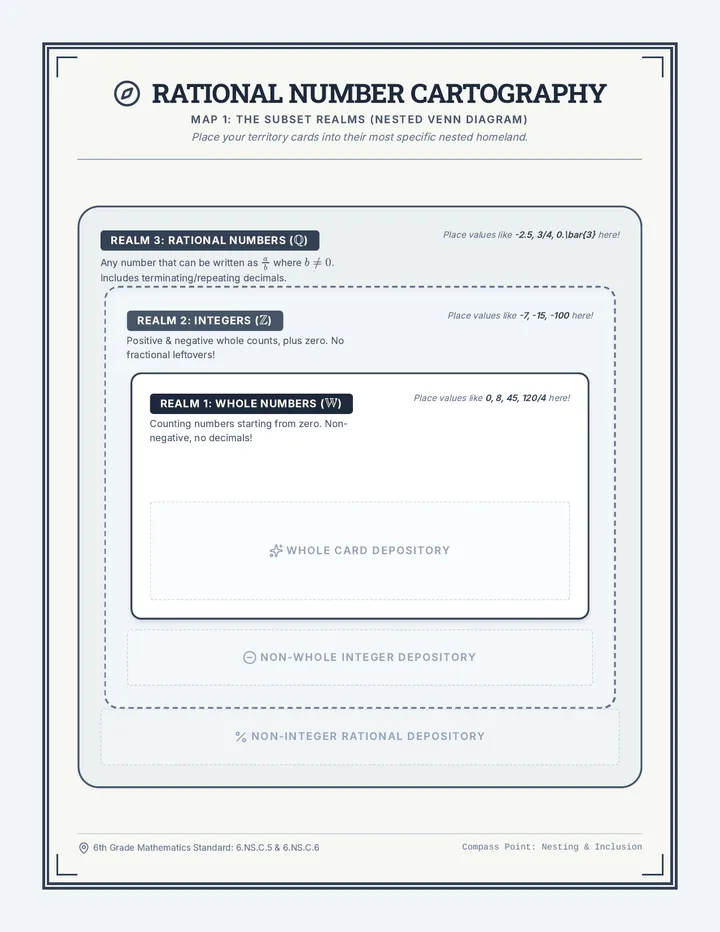
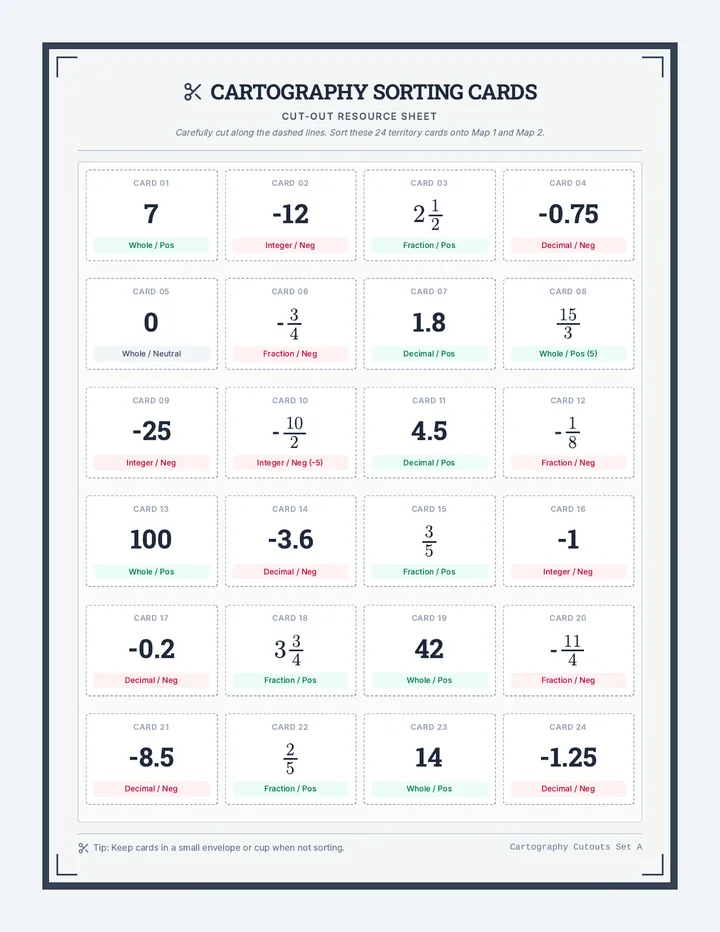
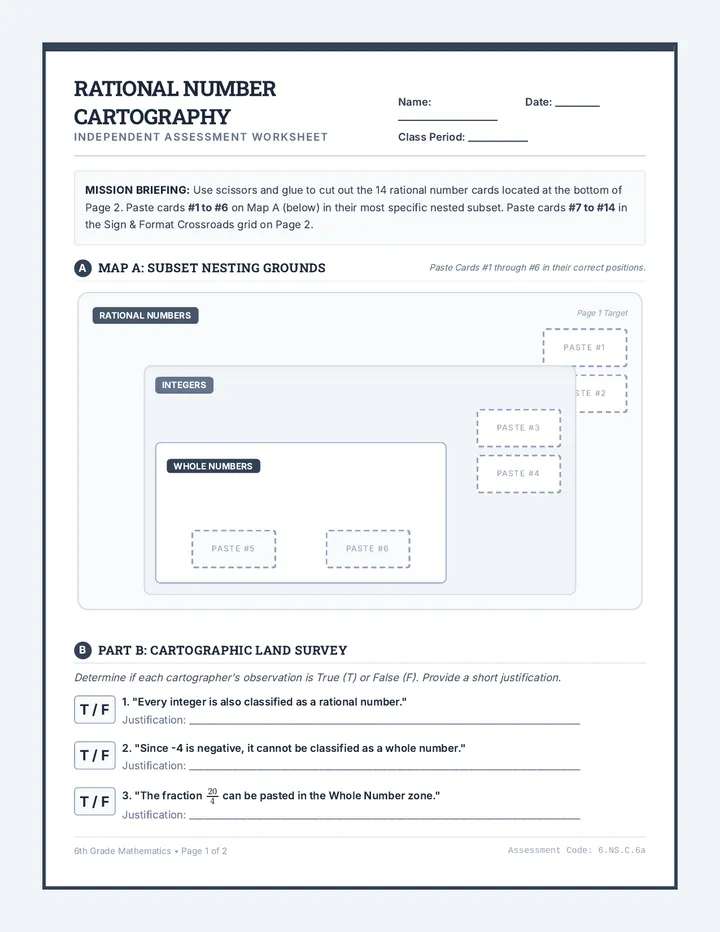
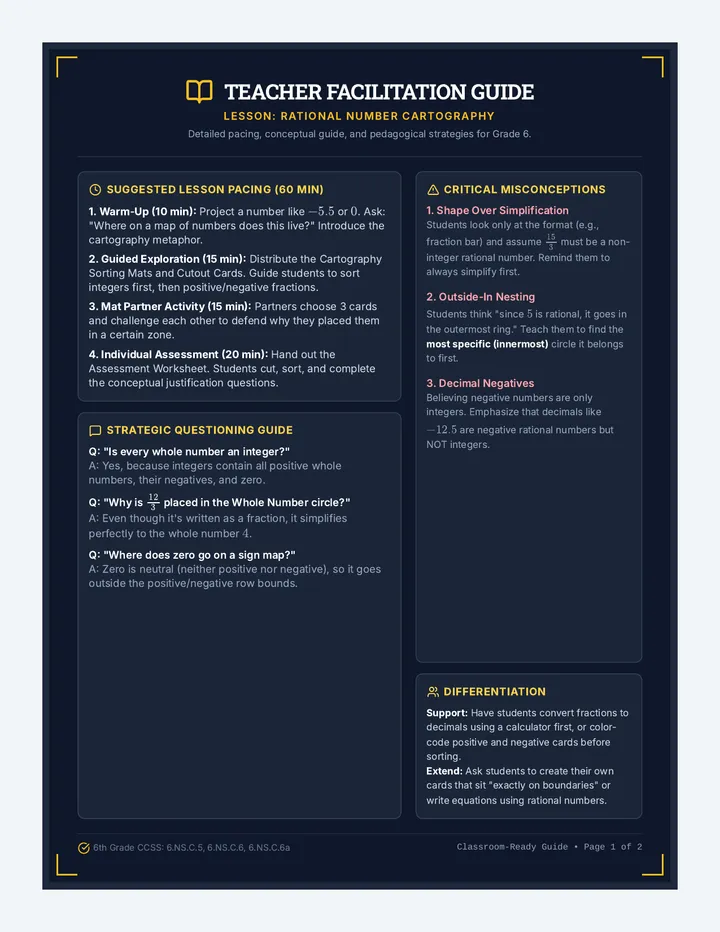
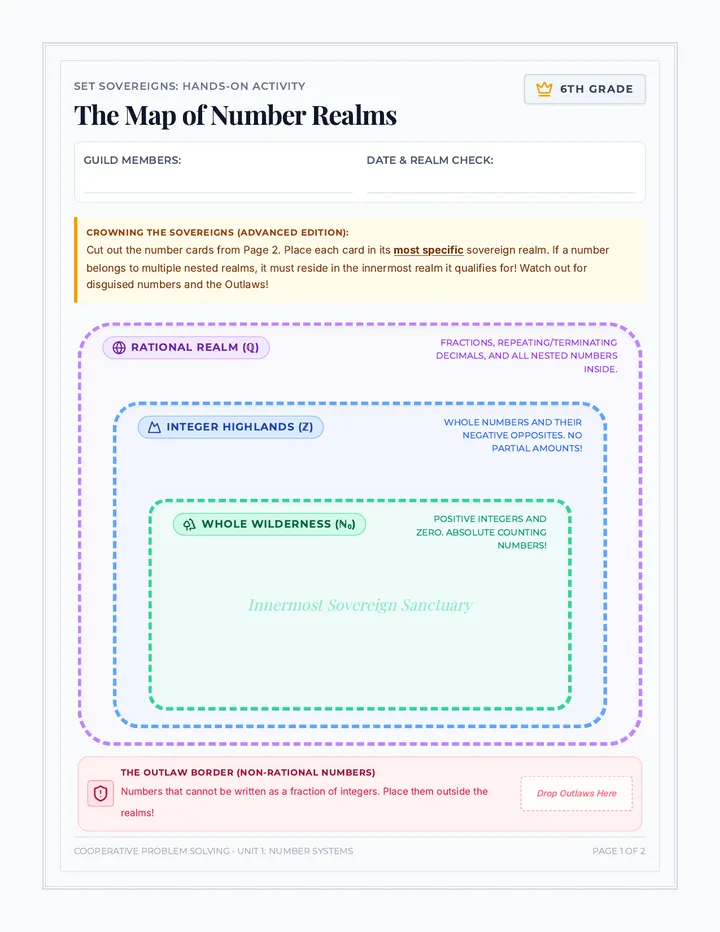
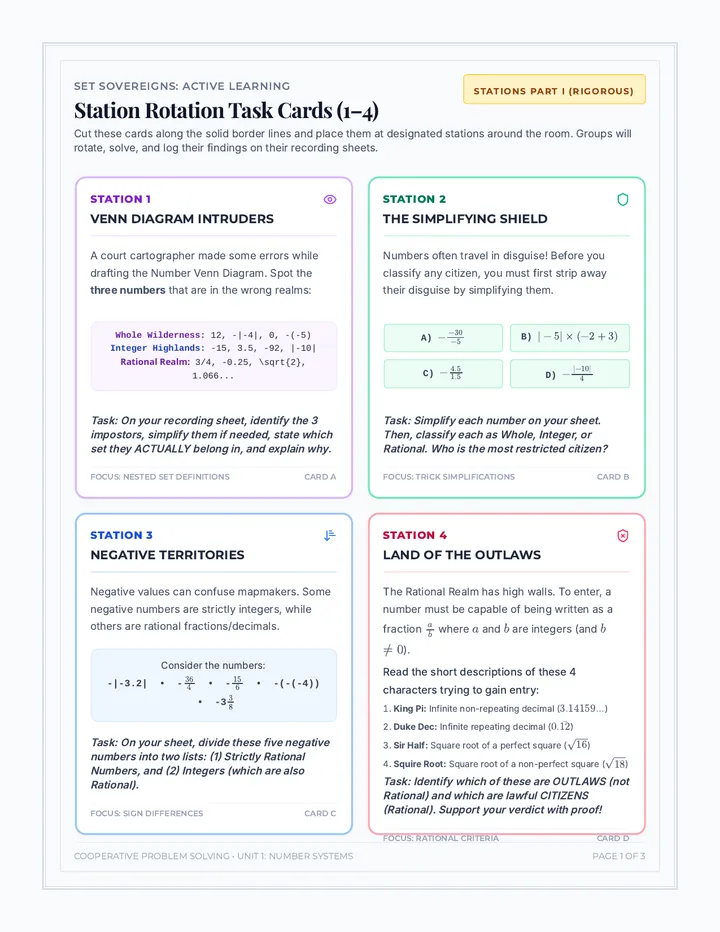
A hands-on, highly visual lesson where 6th-grade students explore the realm of rational numbers. Students use sorting mats, custom cut-out cards, and independent worksheets to classify numbers into nested subsets (Whole, Integers, Rational) and organize them by format and sign.
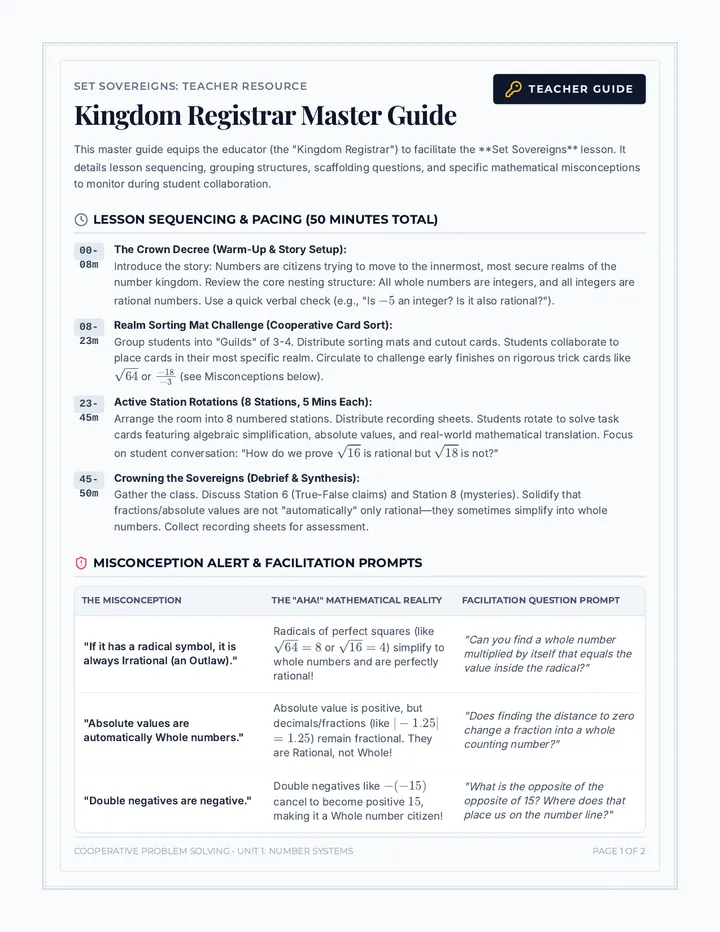
A hands-on, collaborative lesson where 6th-grade students master the nested relationships of the rational number system. Students explore whole numbers, integers, and rational numbers through an interactive card sort and active station rotation challenge.
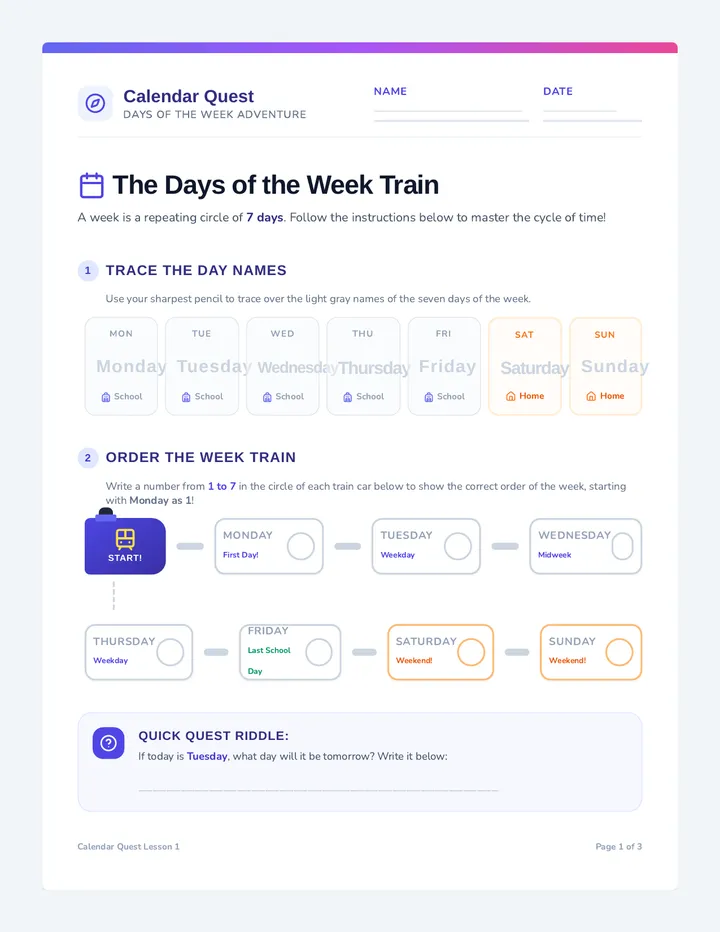
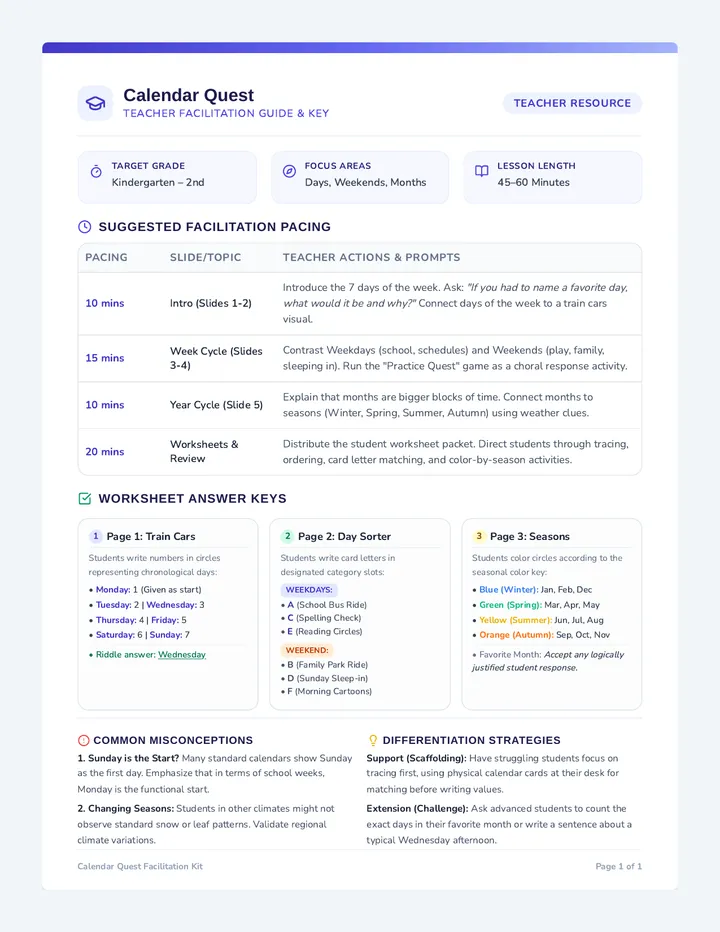
A foundational lesson introducing early elementary students to calendar concepts, including days of the week, weekdays versus weekends, and the twelve months of the year, contextualized with real-world school, home, and seasonal scenarios.
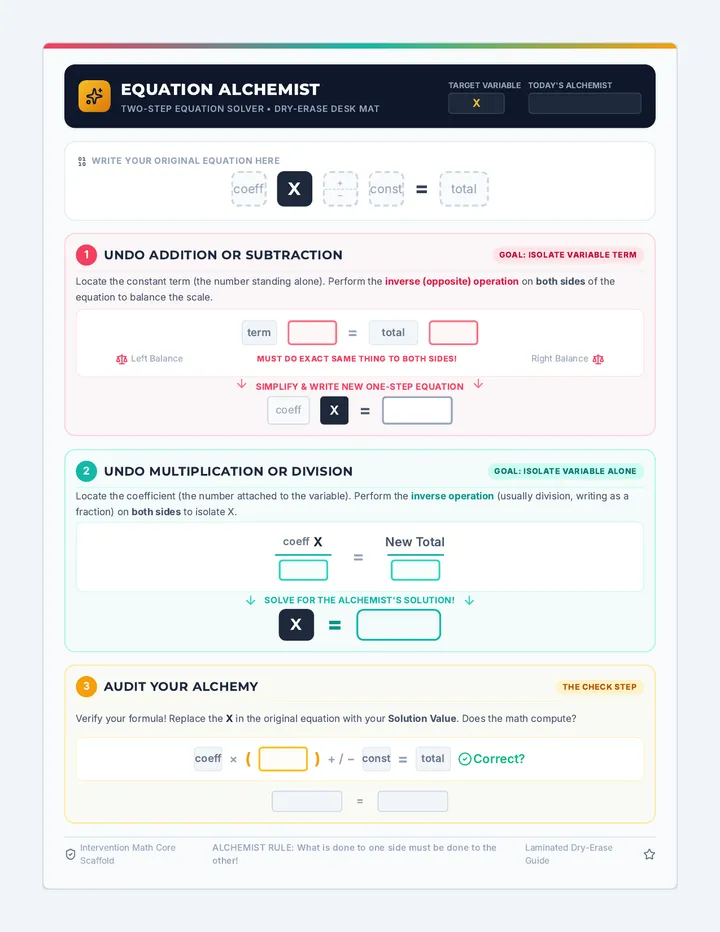
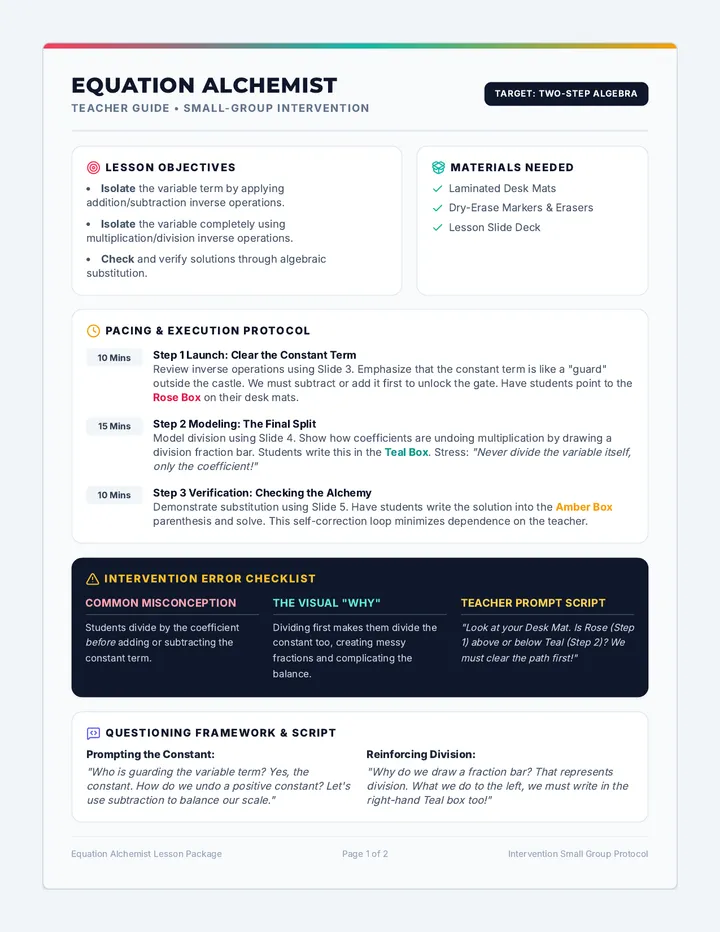
A comprehensive math intervention lesson targeting two-step algebraic equations. Features a color-coded step-by-step visual organizer that guides students through undoing addition/subtraction first, followed by multiplication/division to isolate the variable.
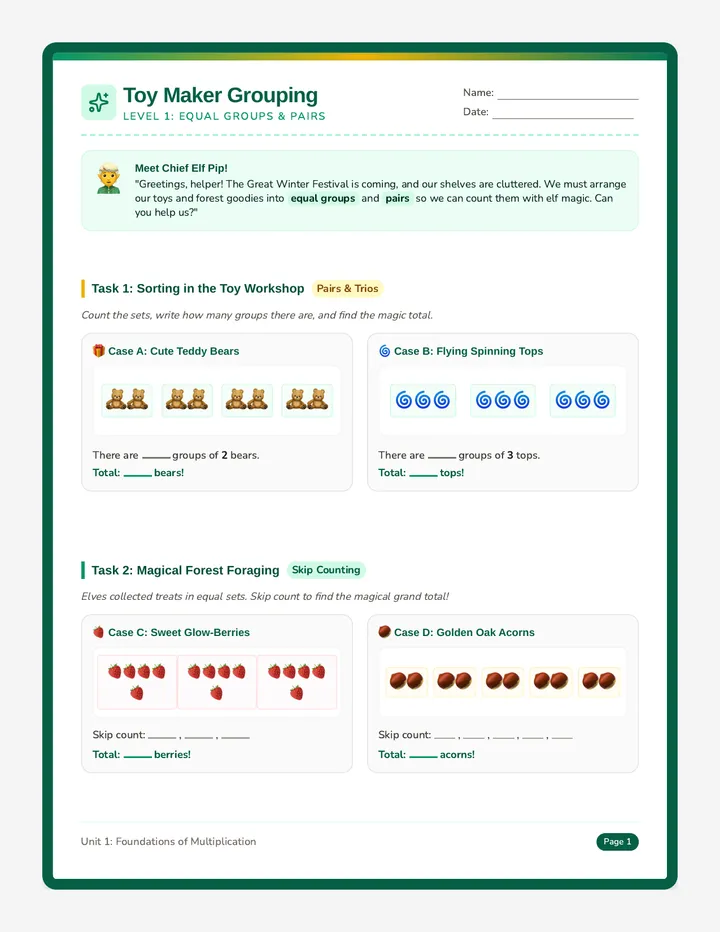
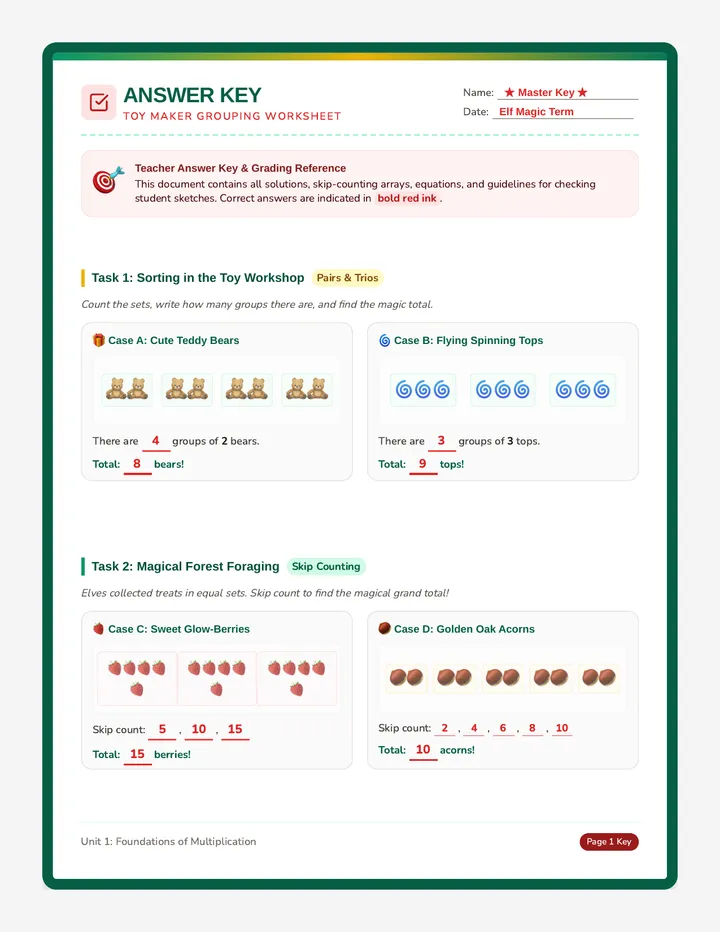
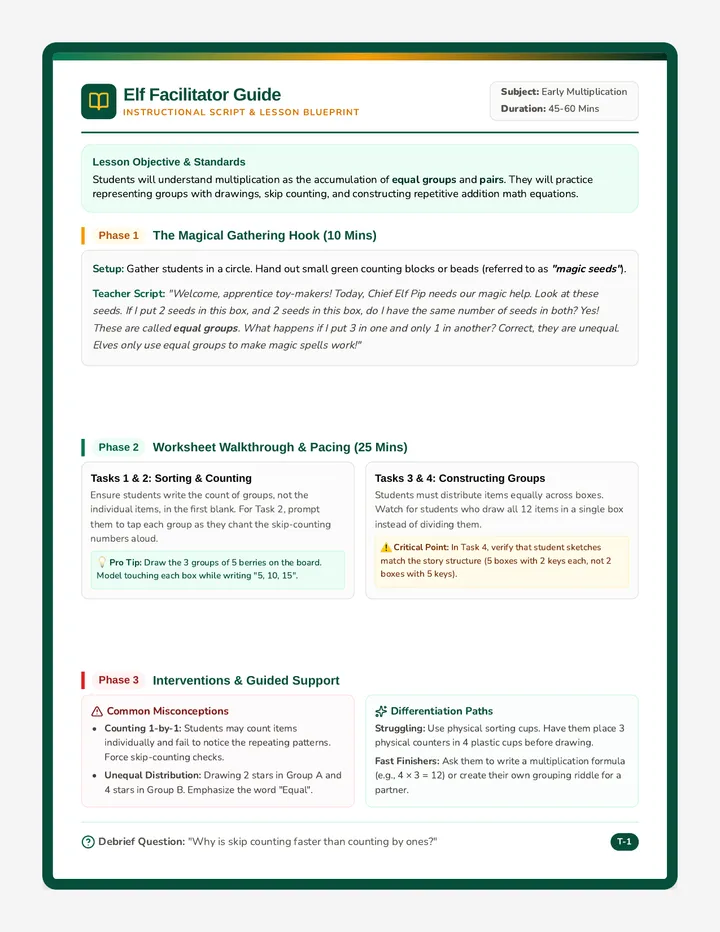
An introductory lesson on multiplication using equal groups and pairs, themed around magical elves making toys, foraging in the forest, and packing items. Students transition from concrete counting to skip counting and basic multiplication concepts.
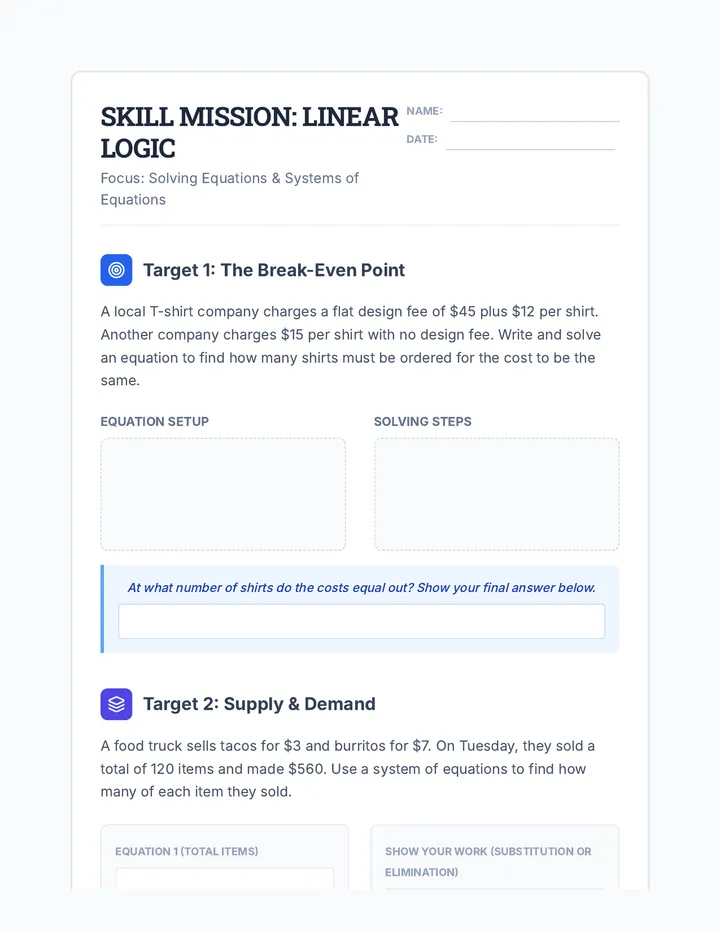
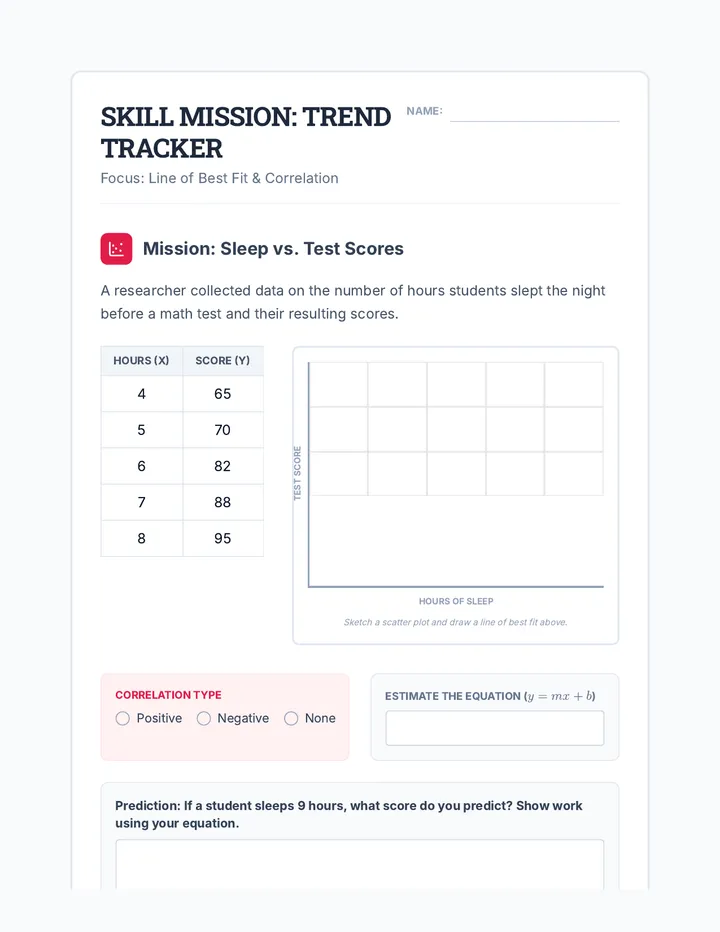
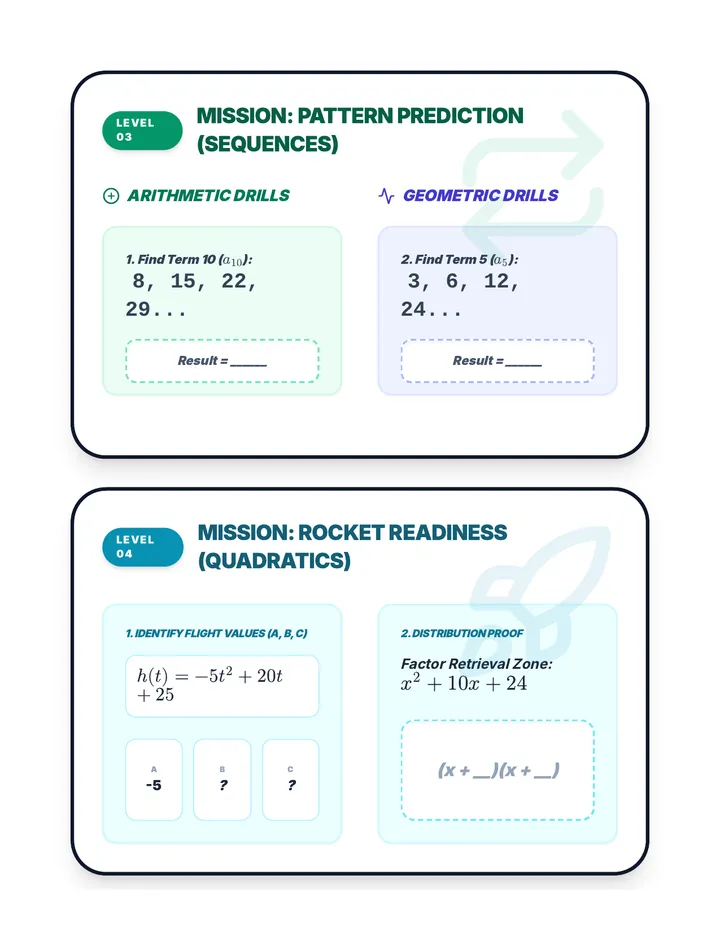
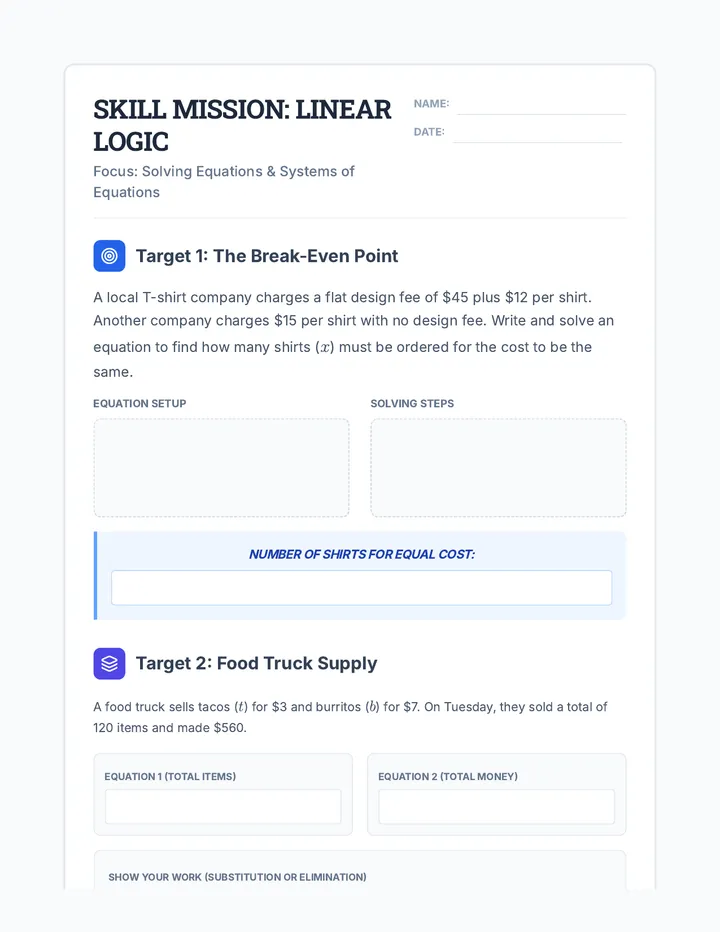
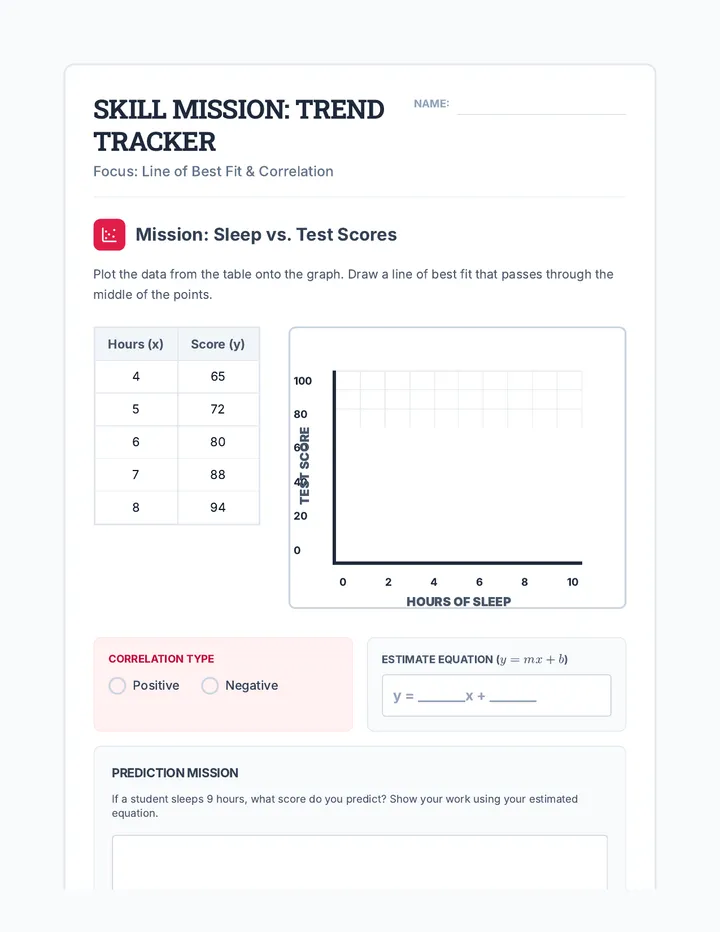
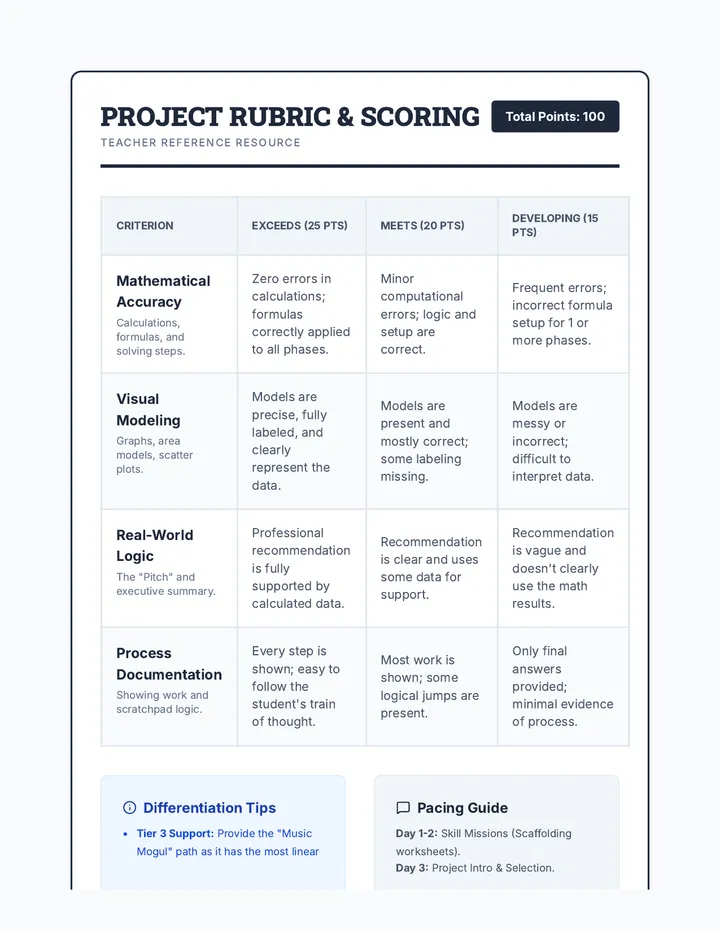
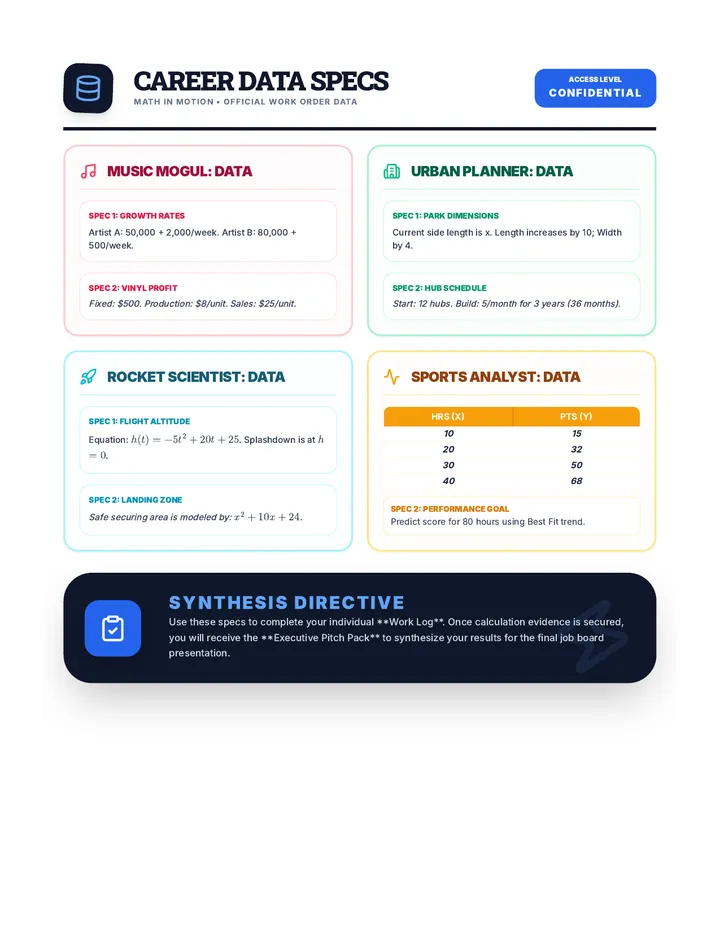
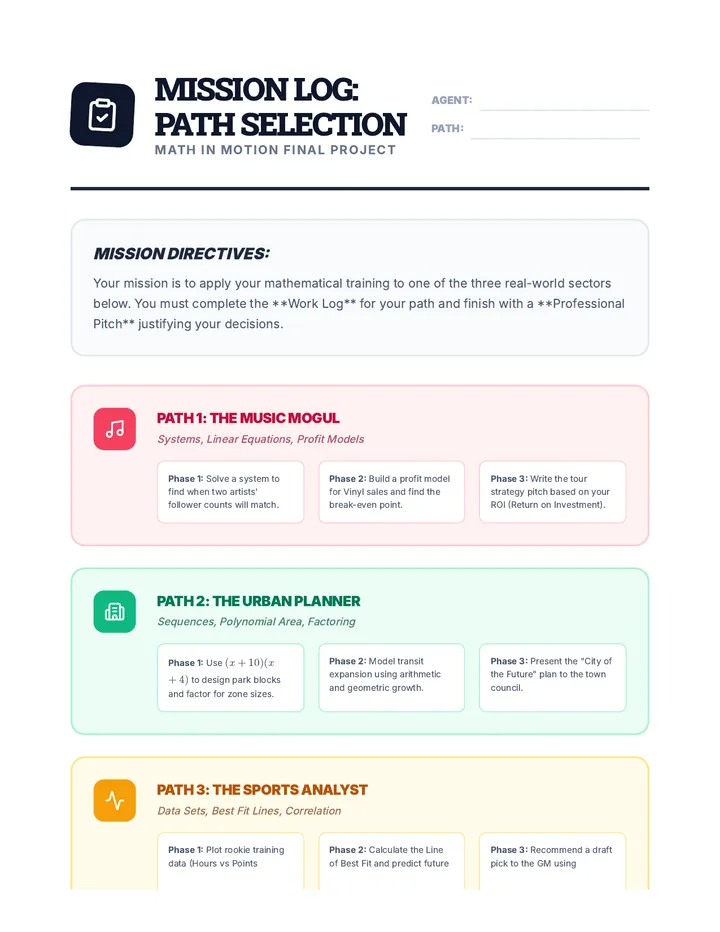
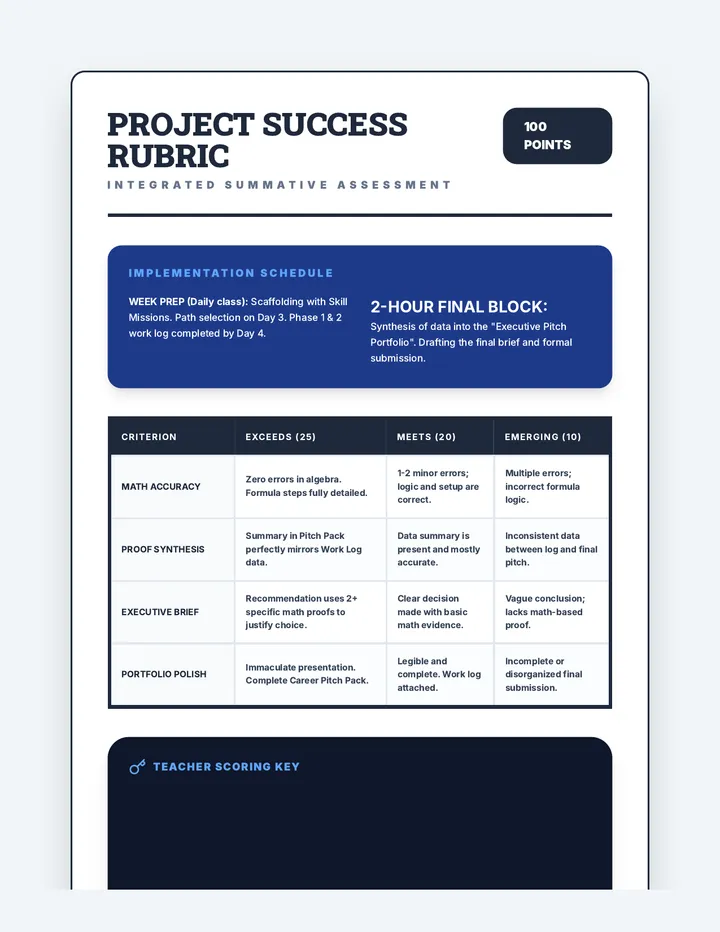
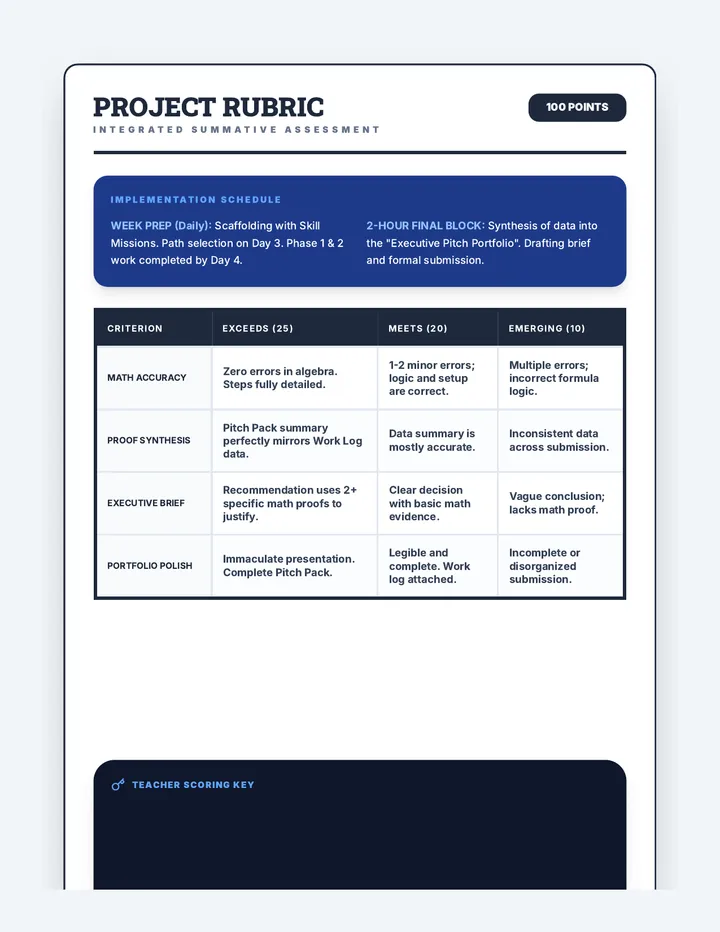
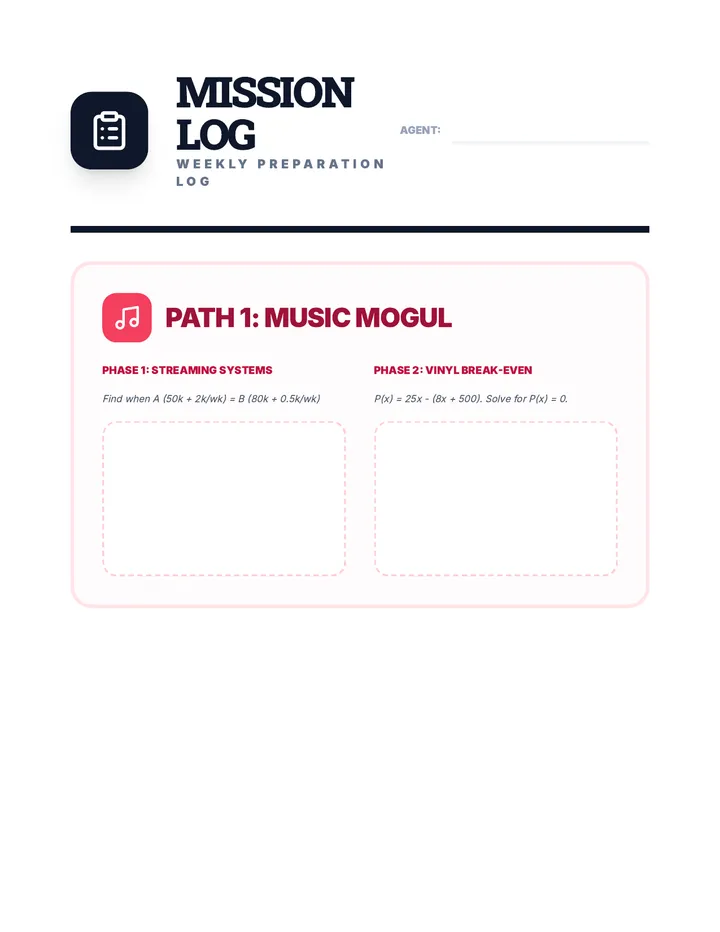
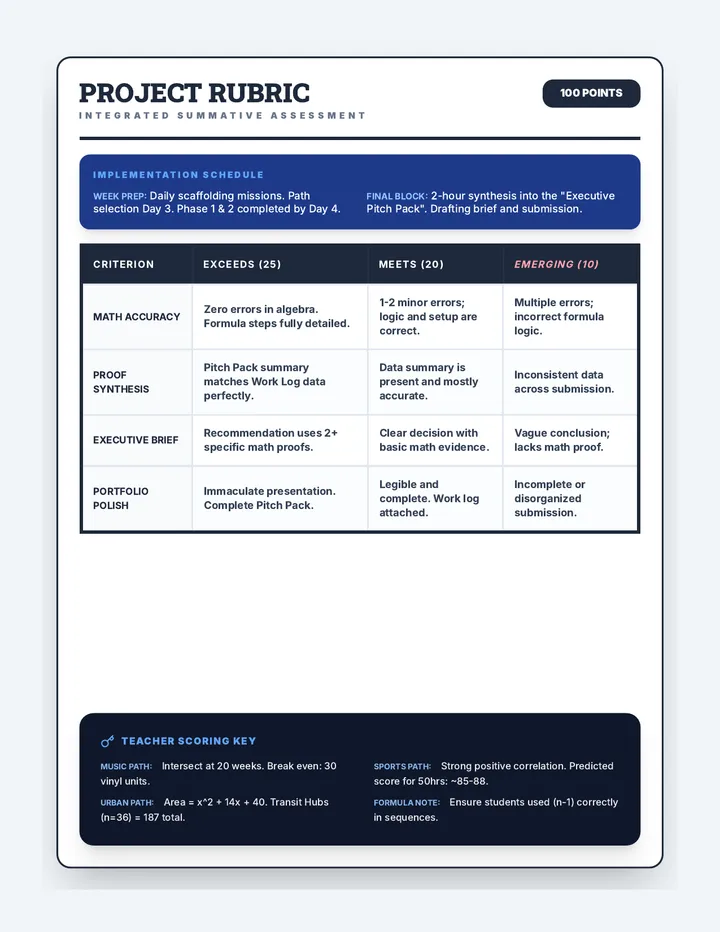
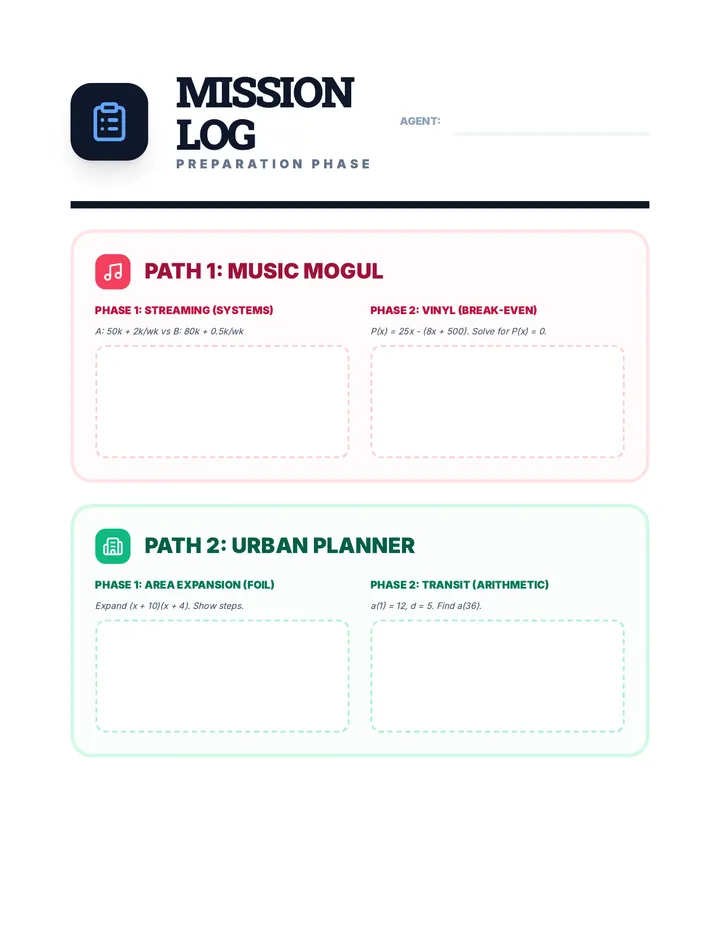
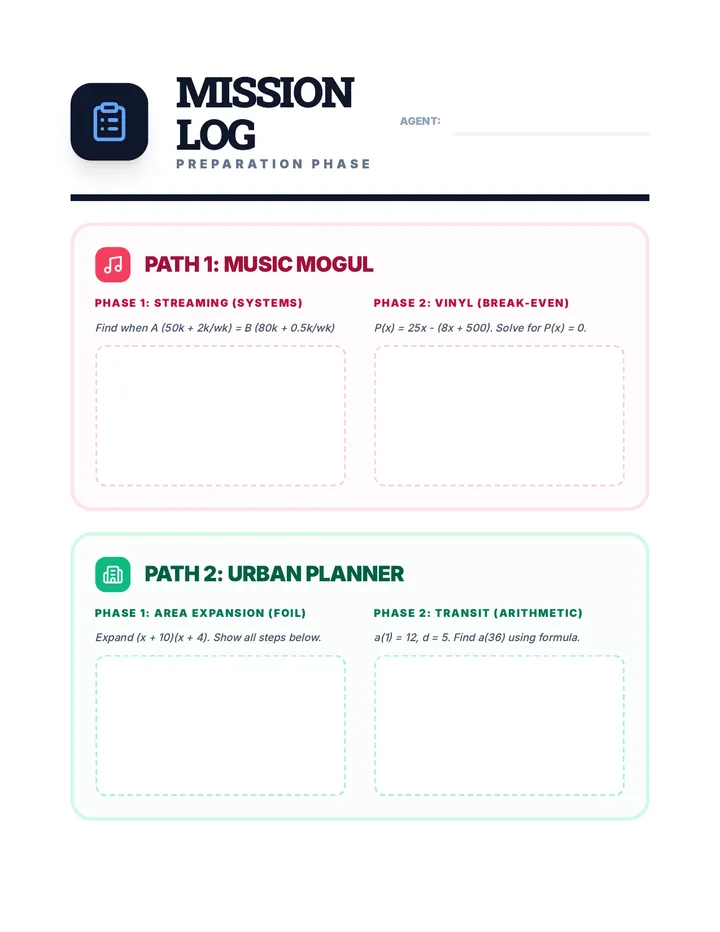
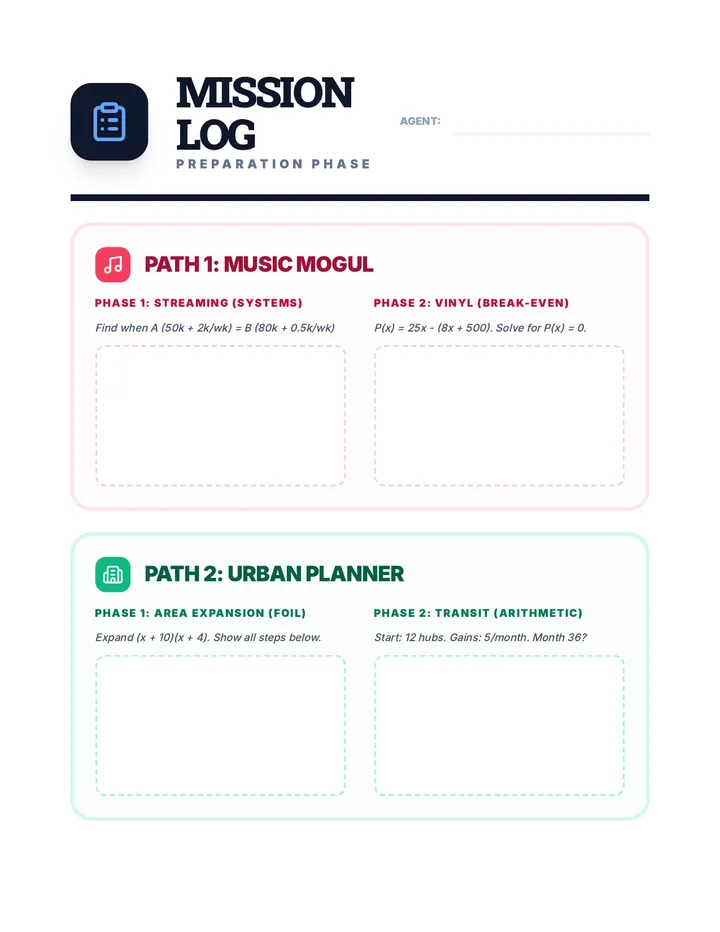
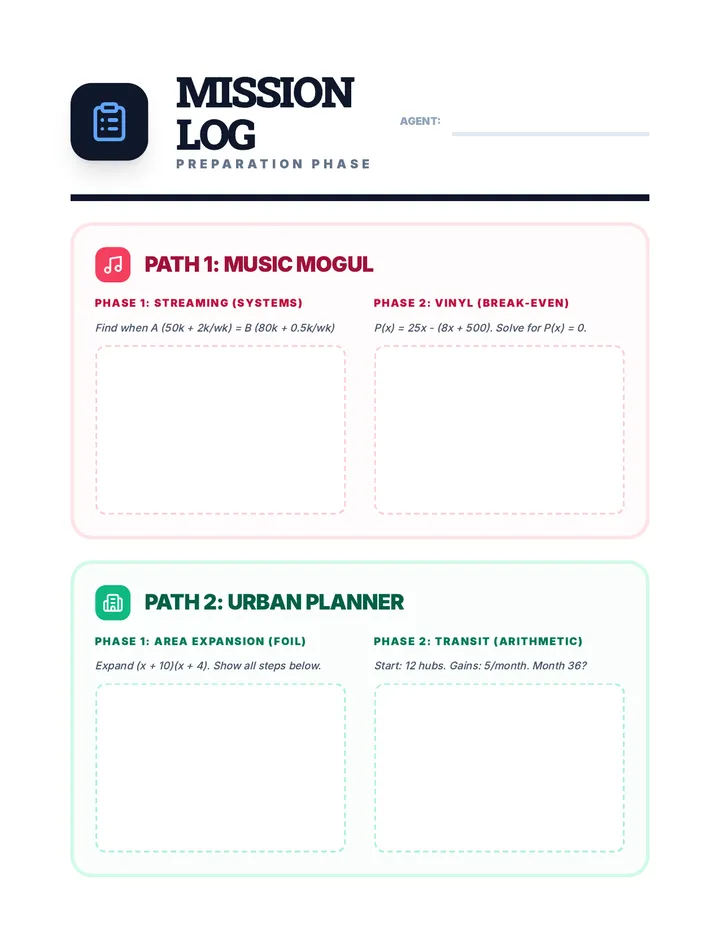
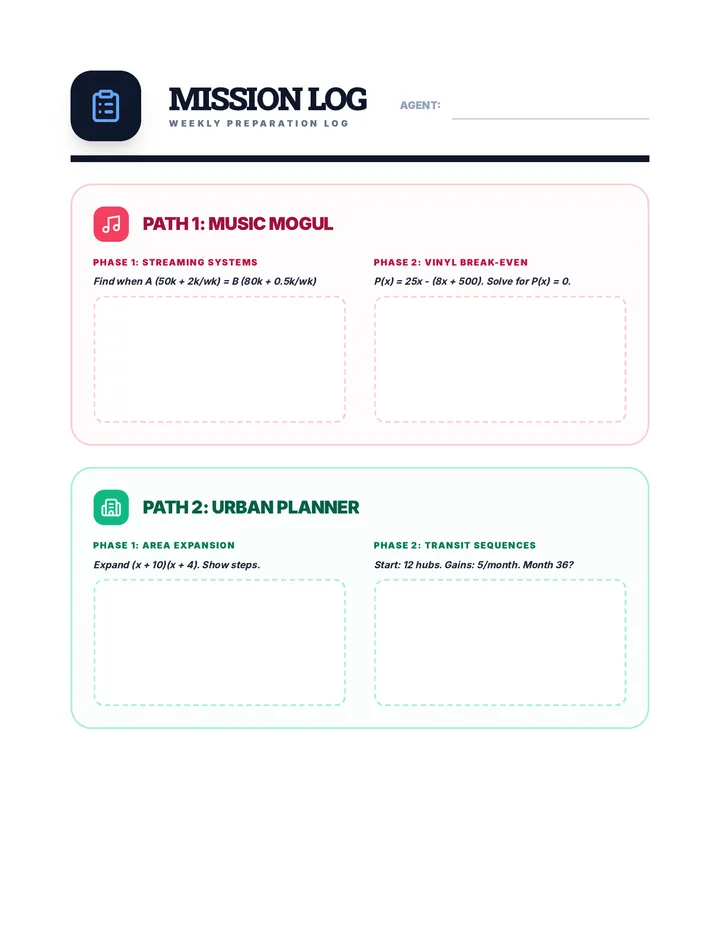
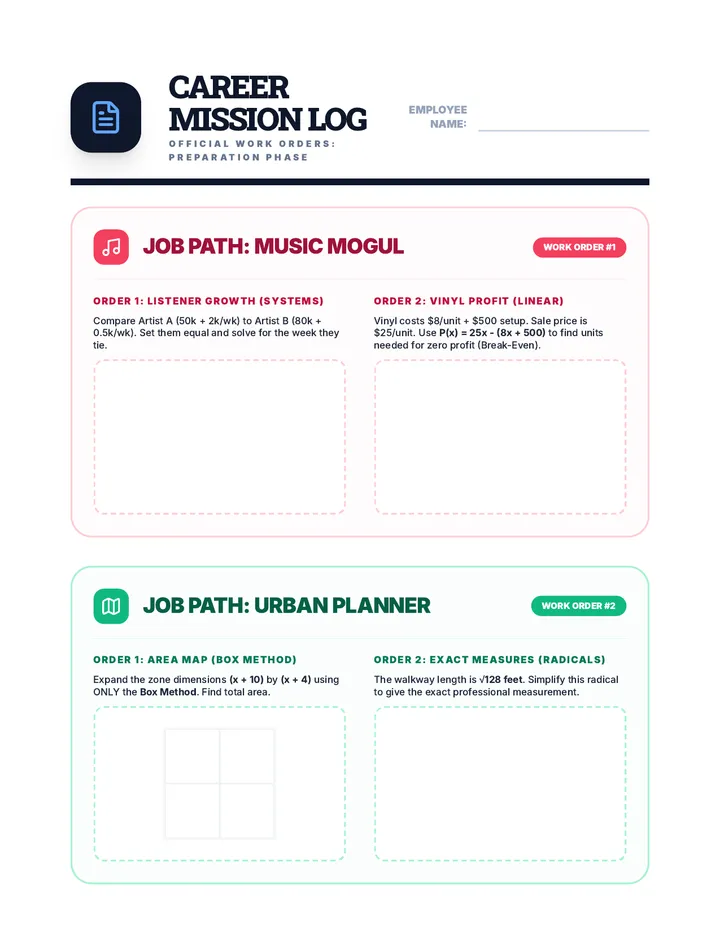
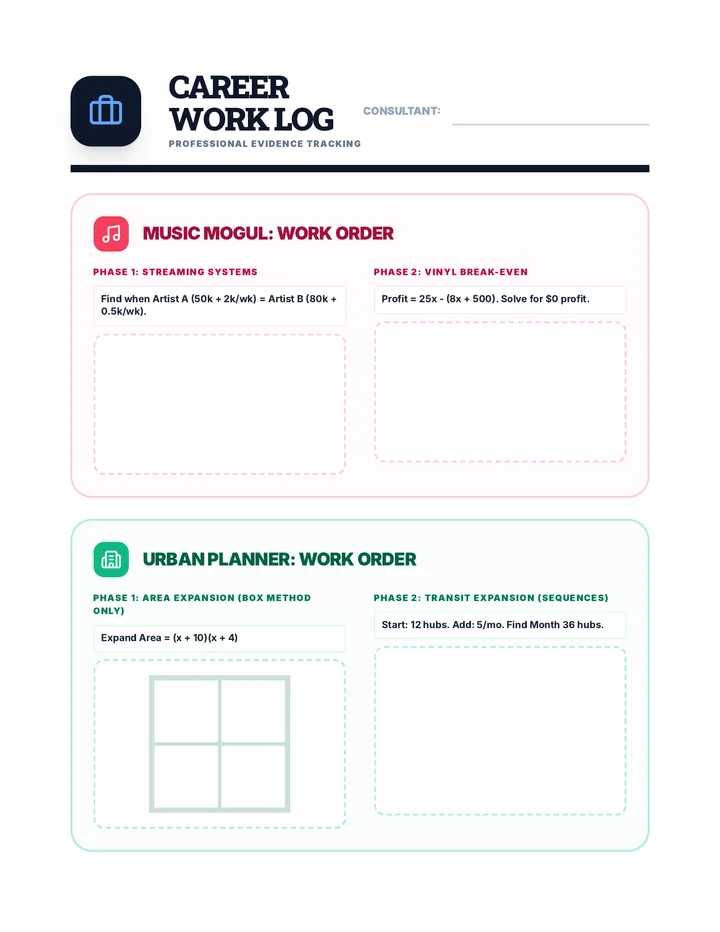
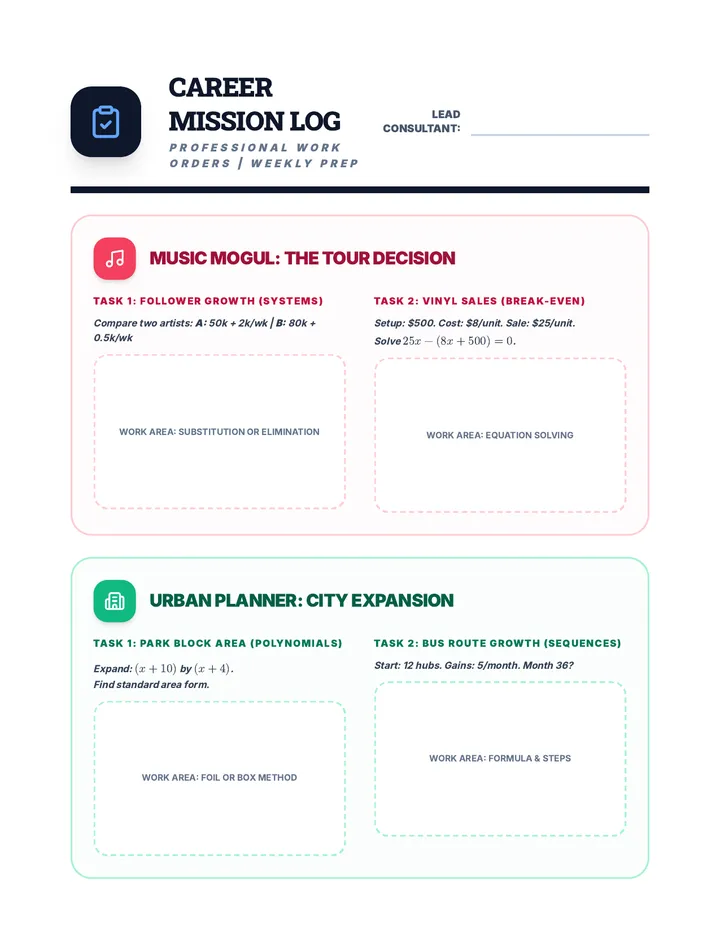
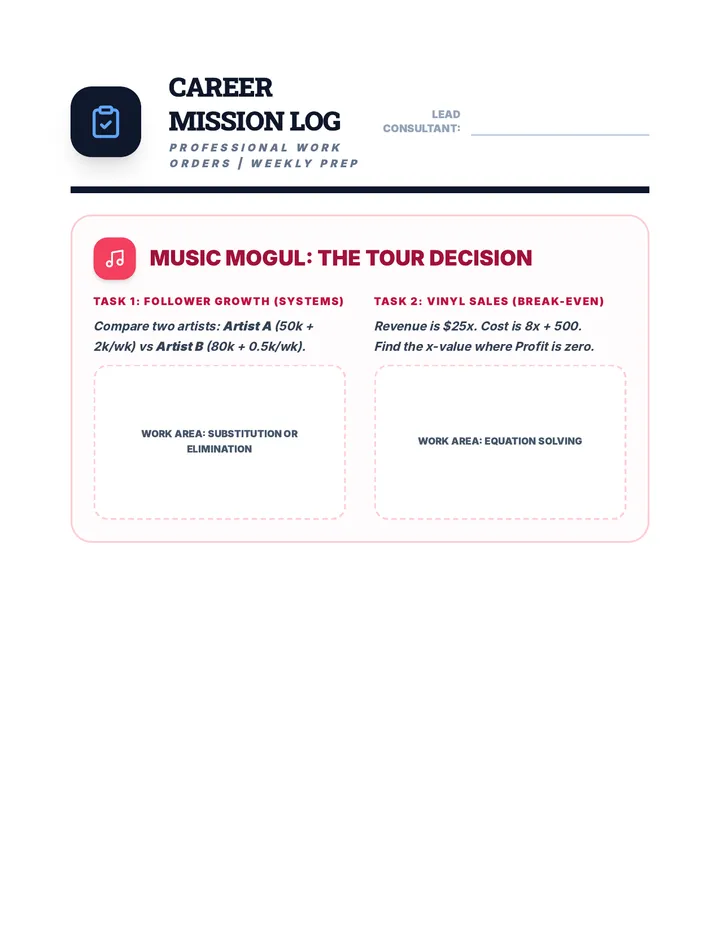
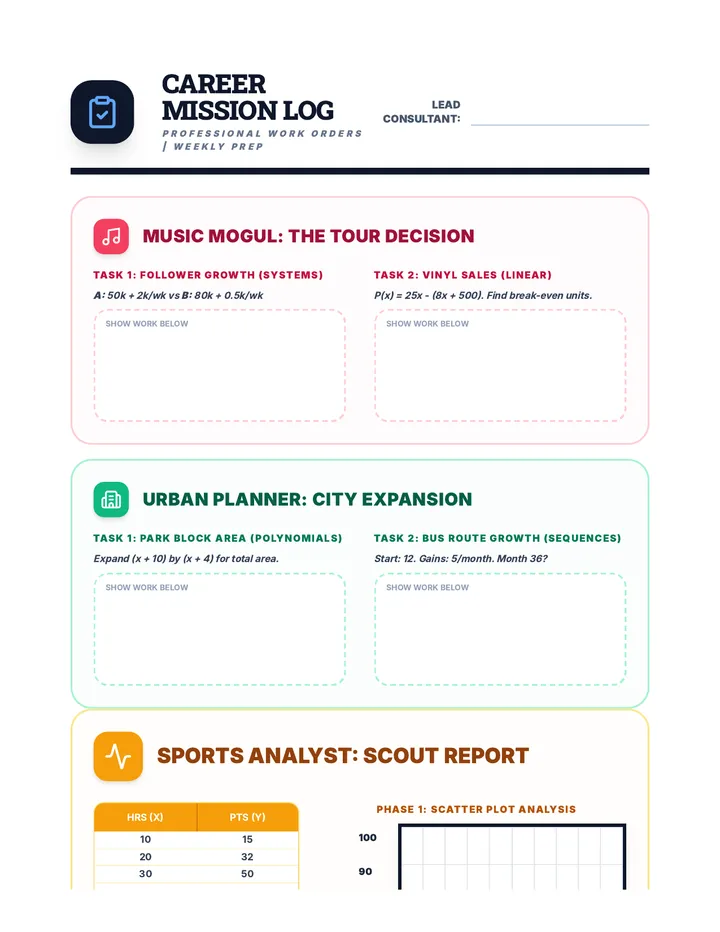
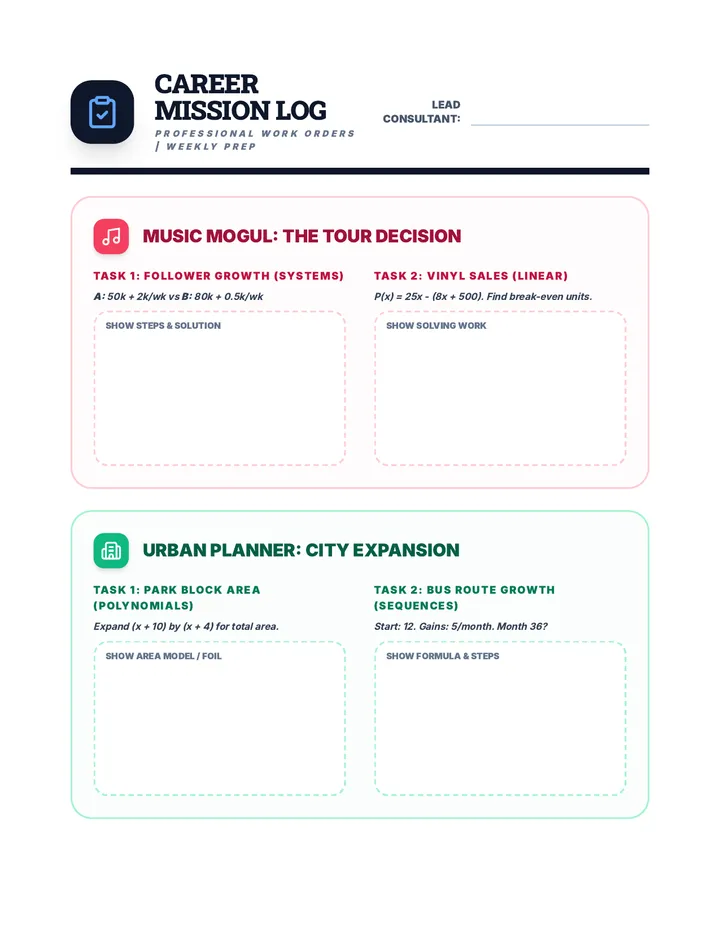
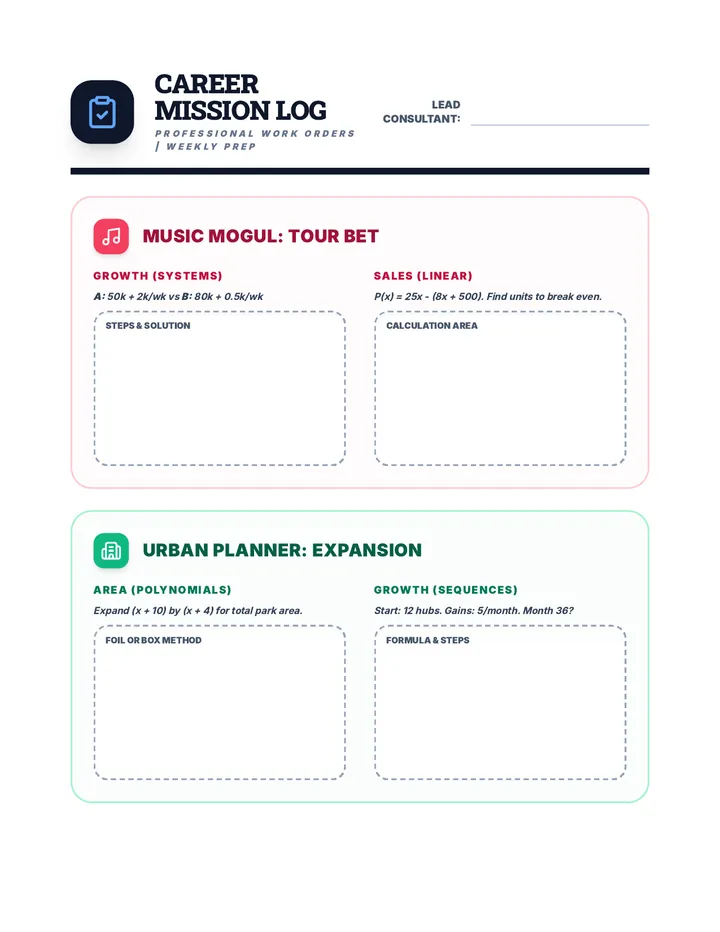
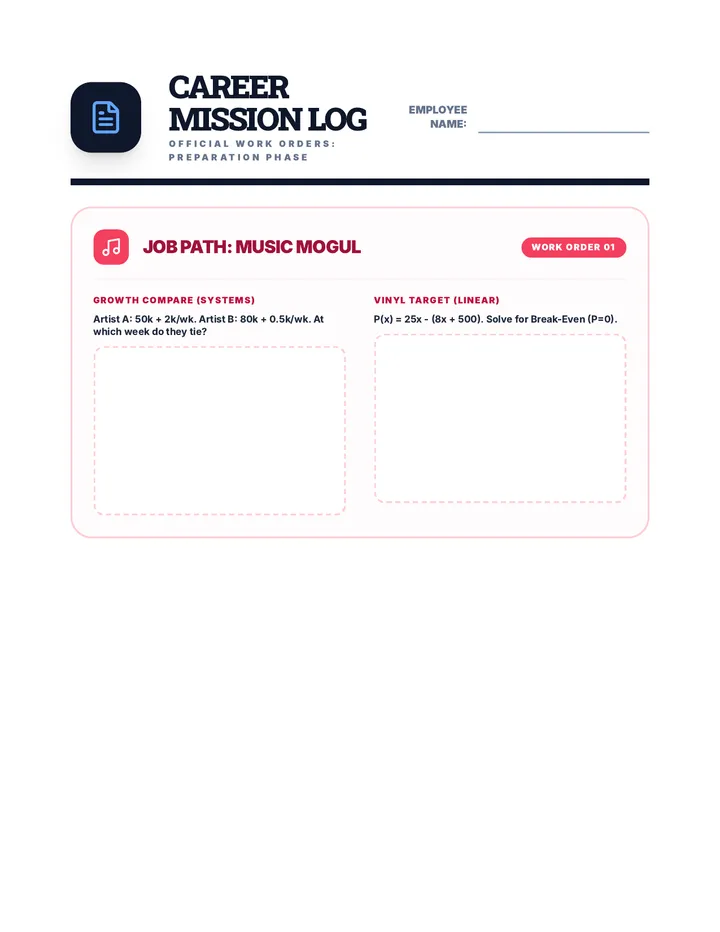
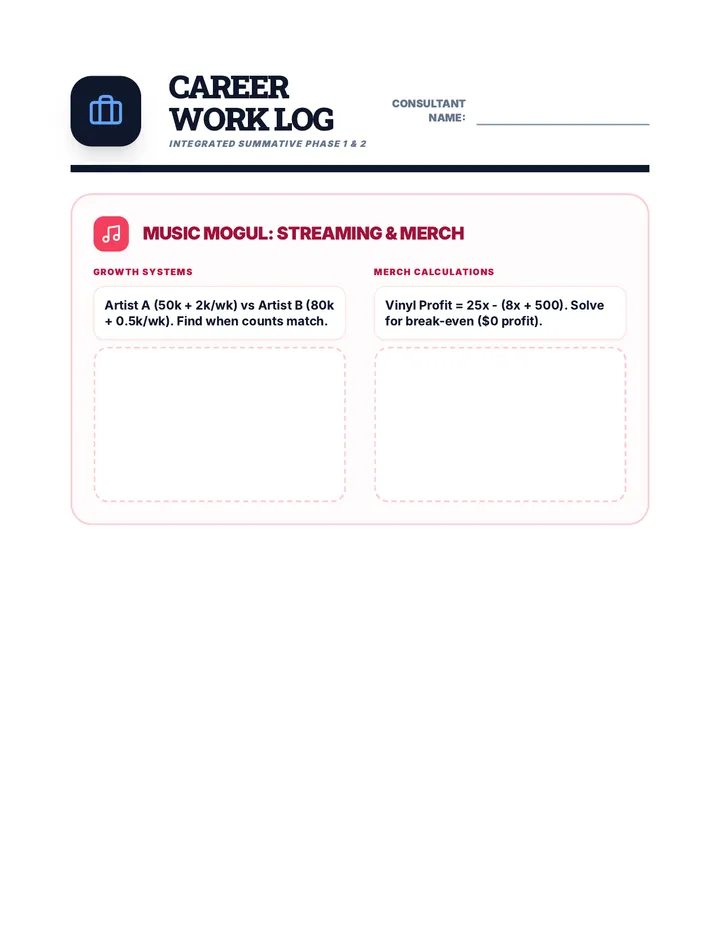
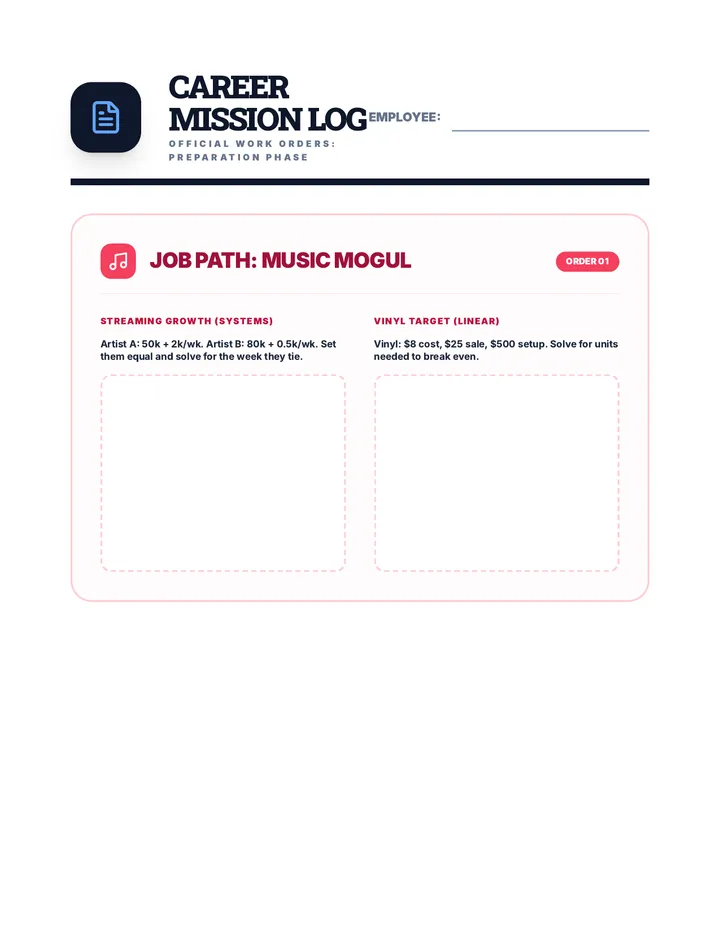
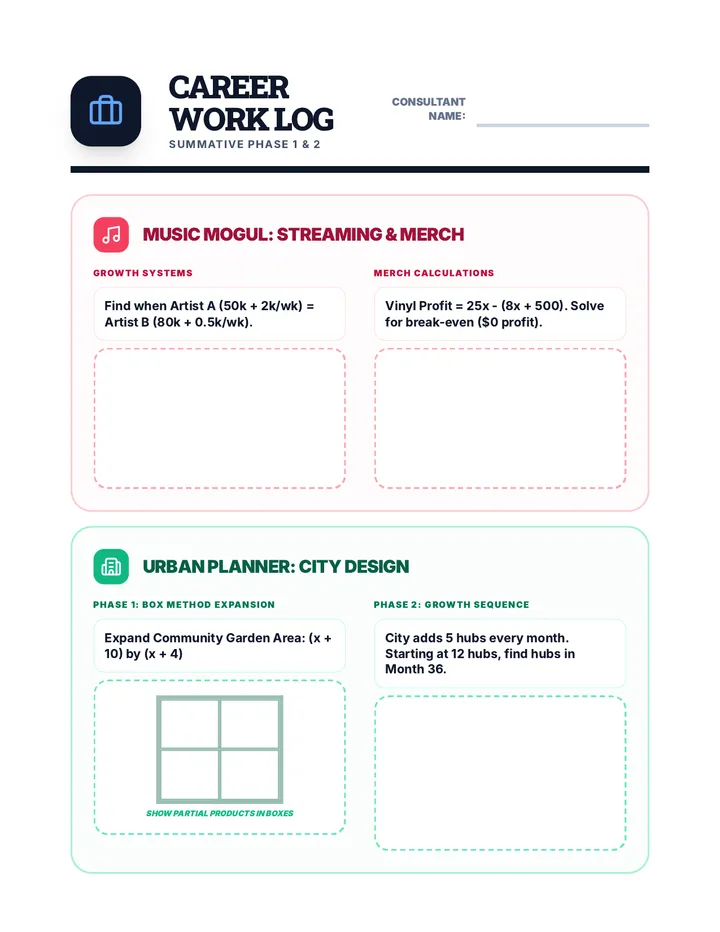
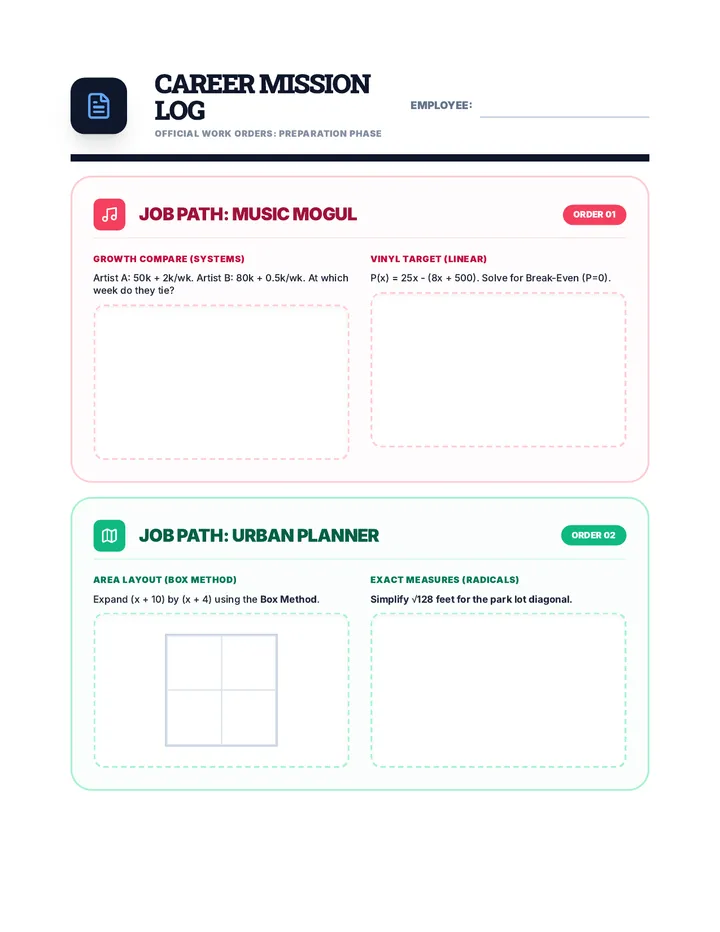
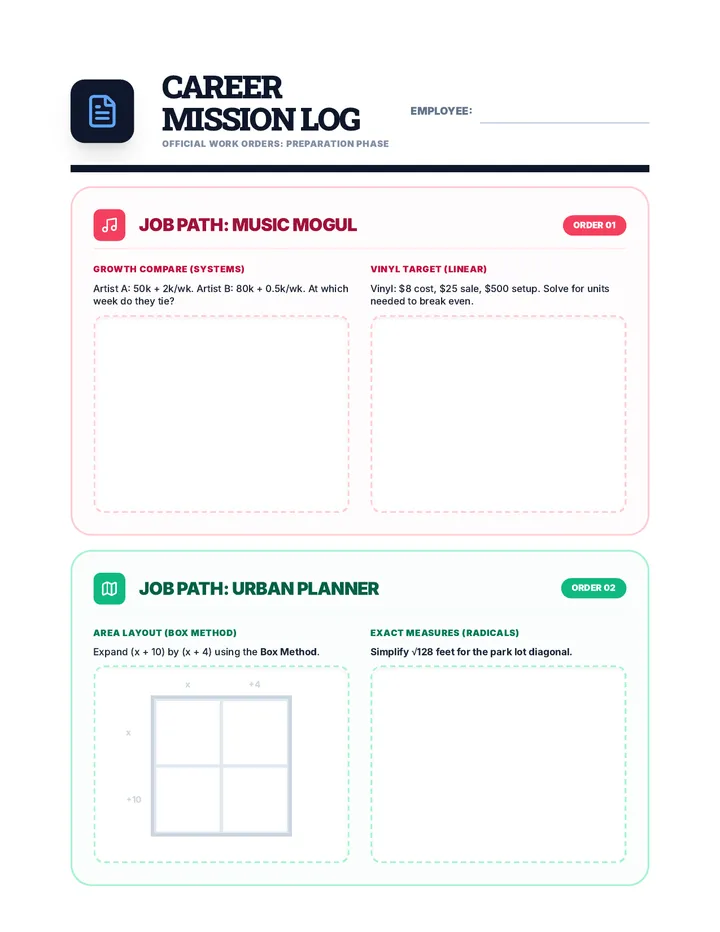
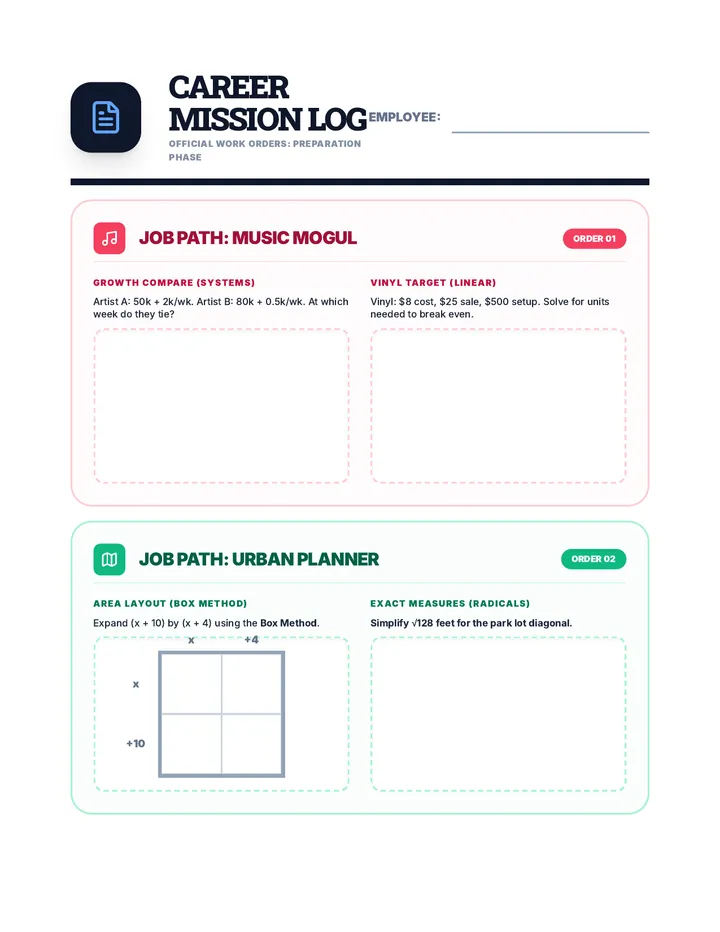
Scaffolded practice activities ('Skill Missions') that review key concepts: linear equations, systems, sequences, lines of best fit, and factoring. These activities ensure students have the foundational skills needed for their final project.
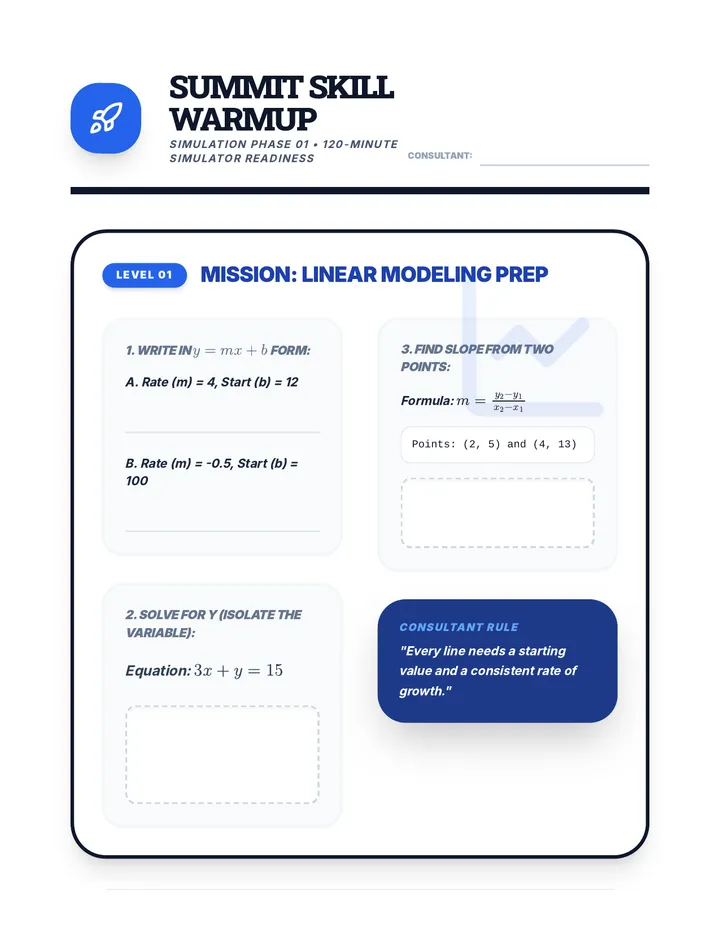
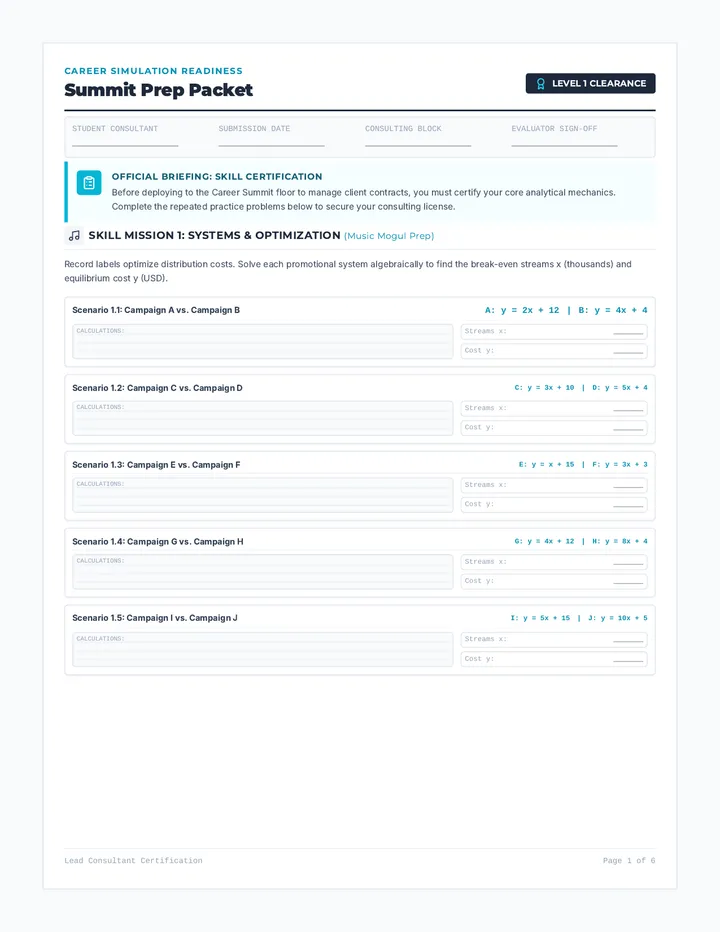
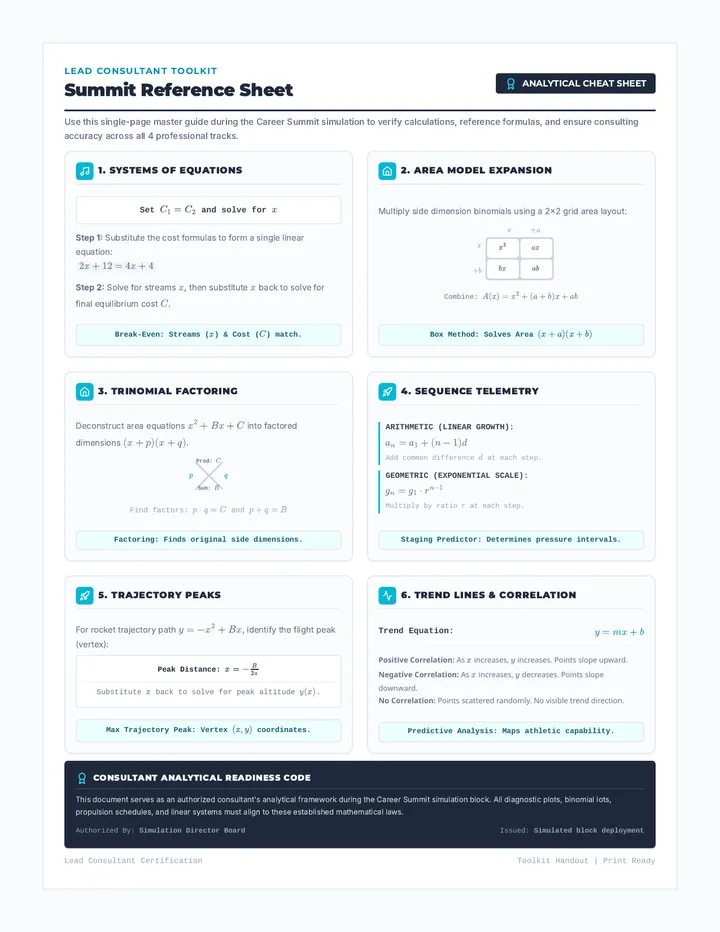
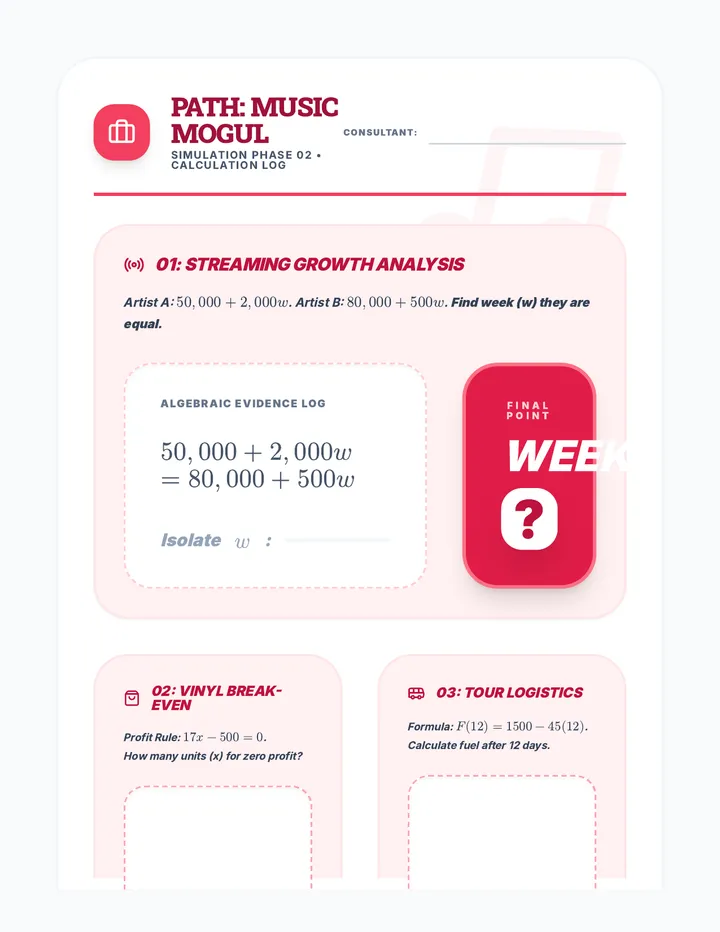
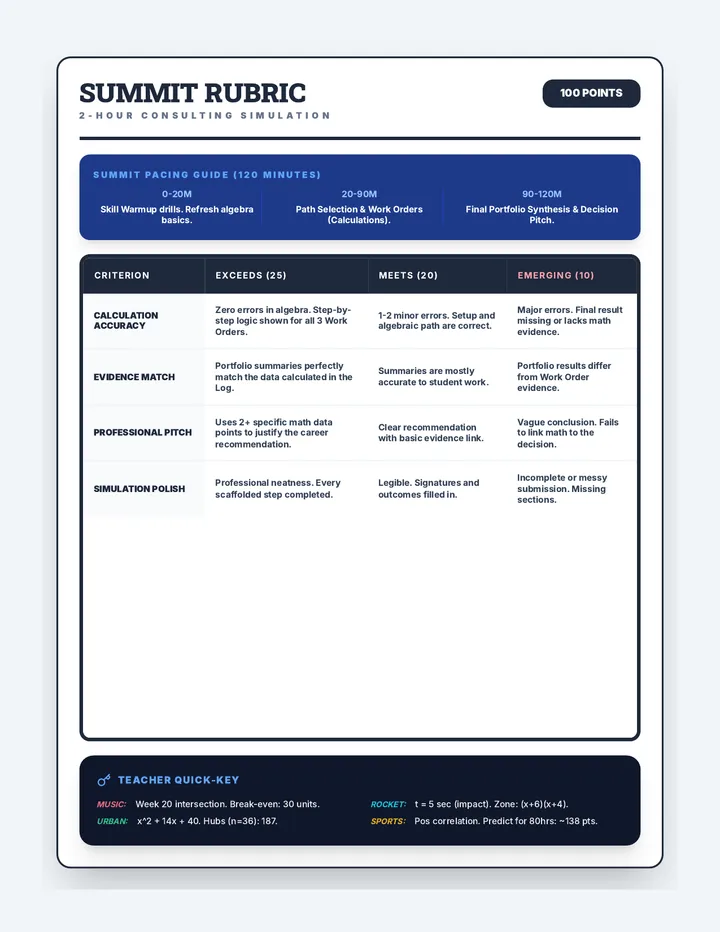
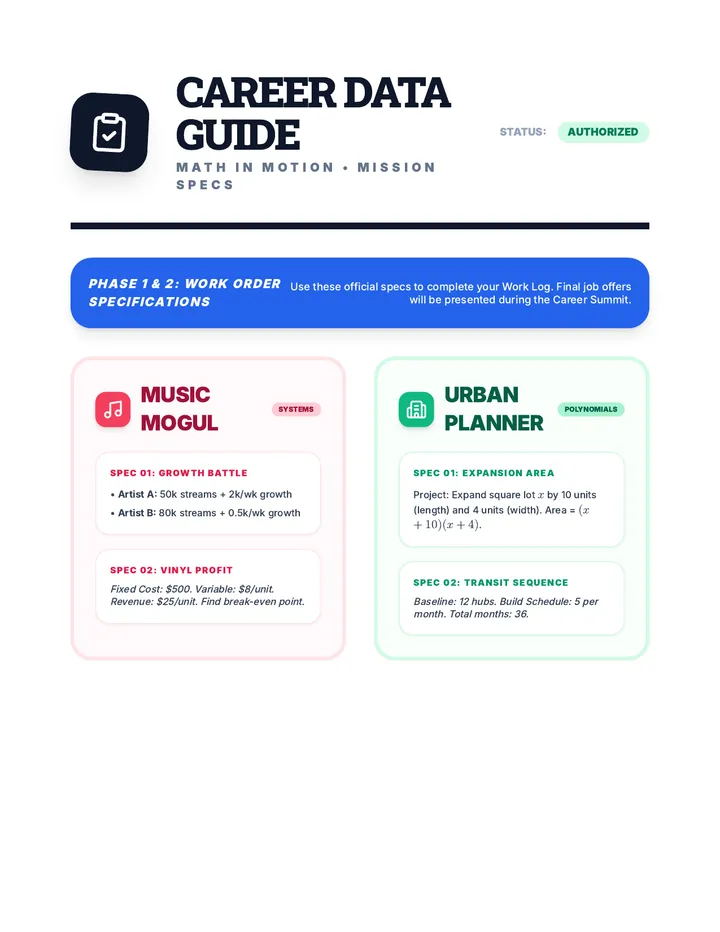
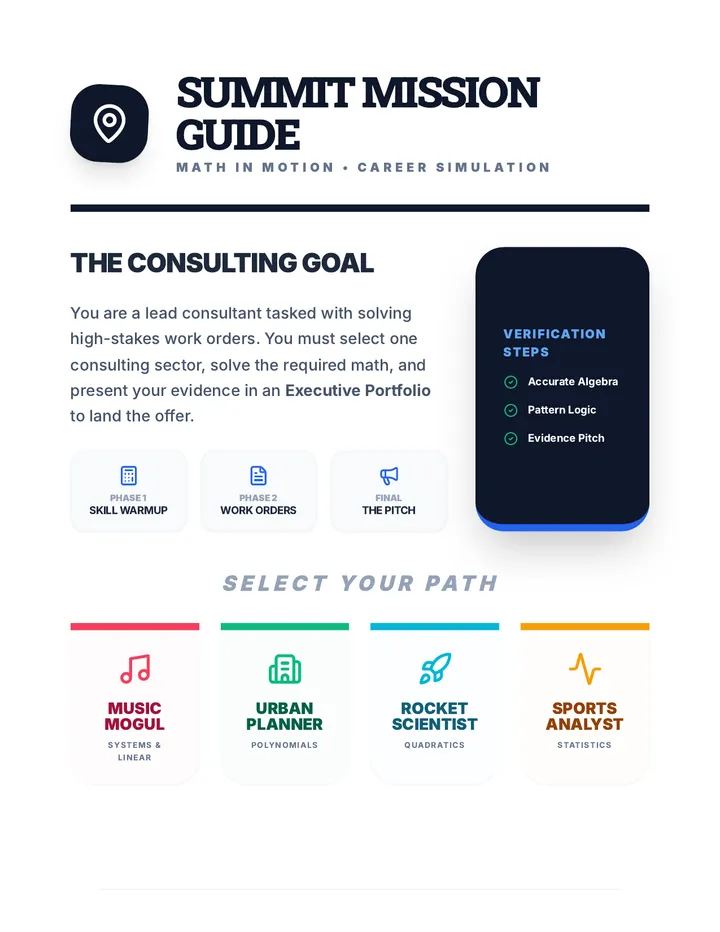
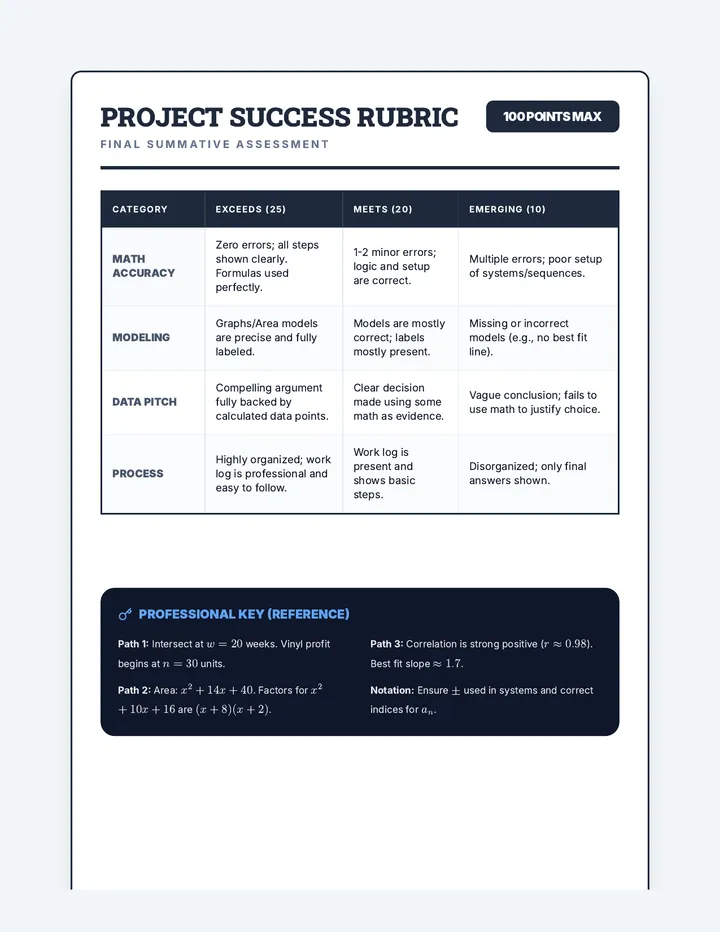
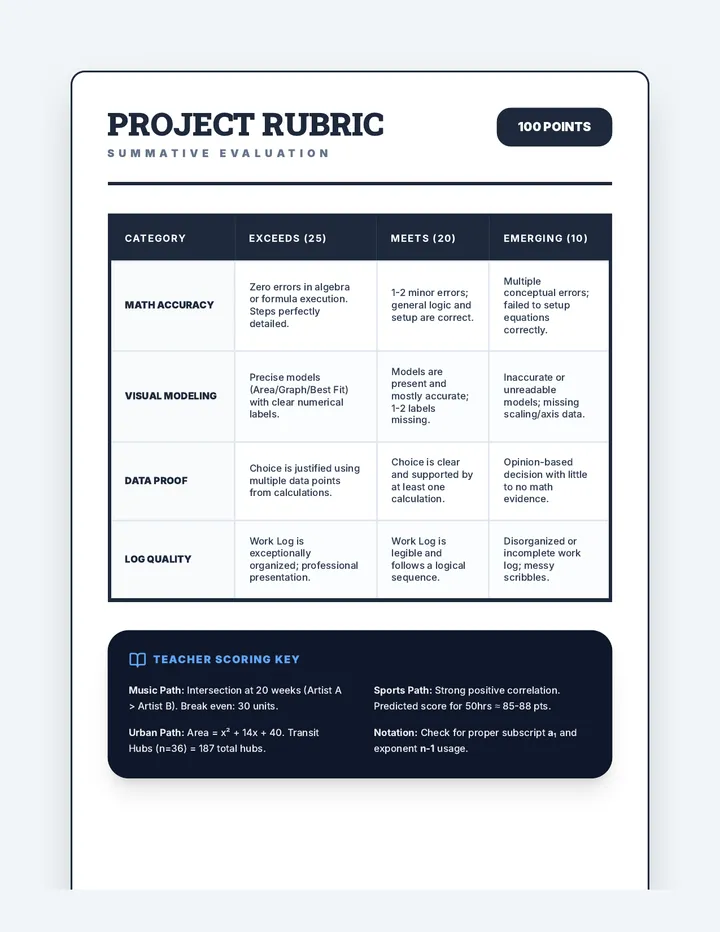
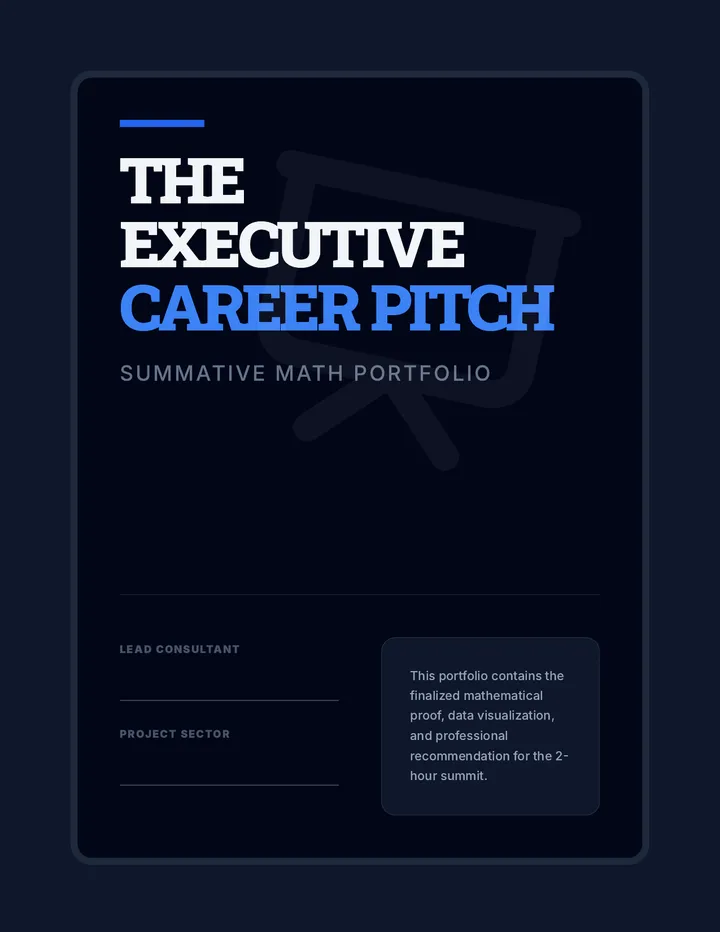
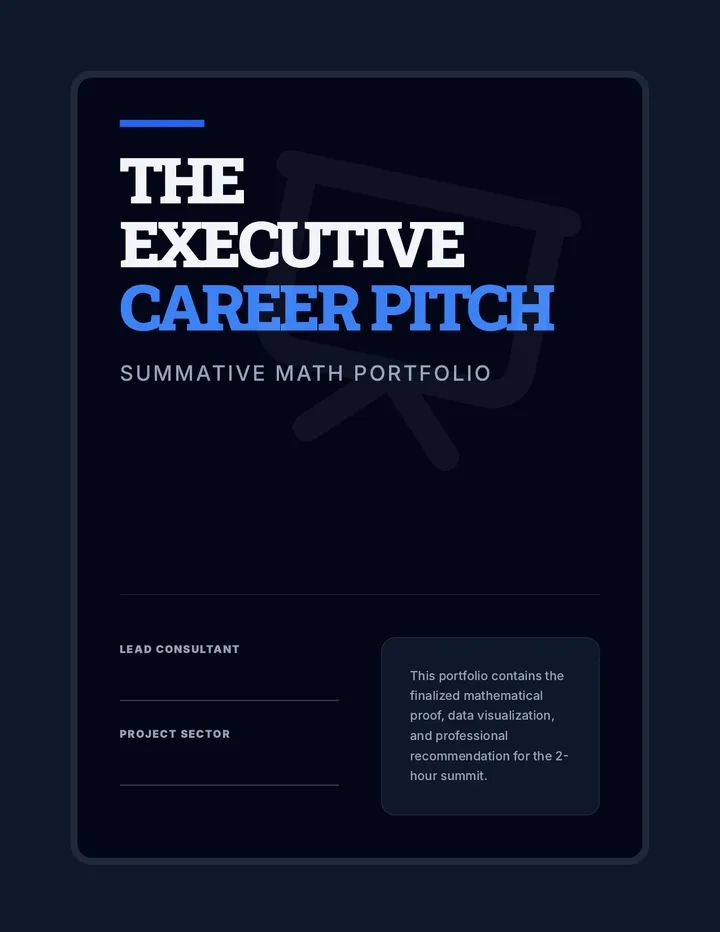
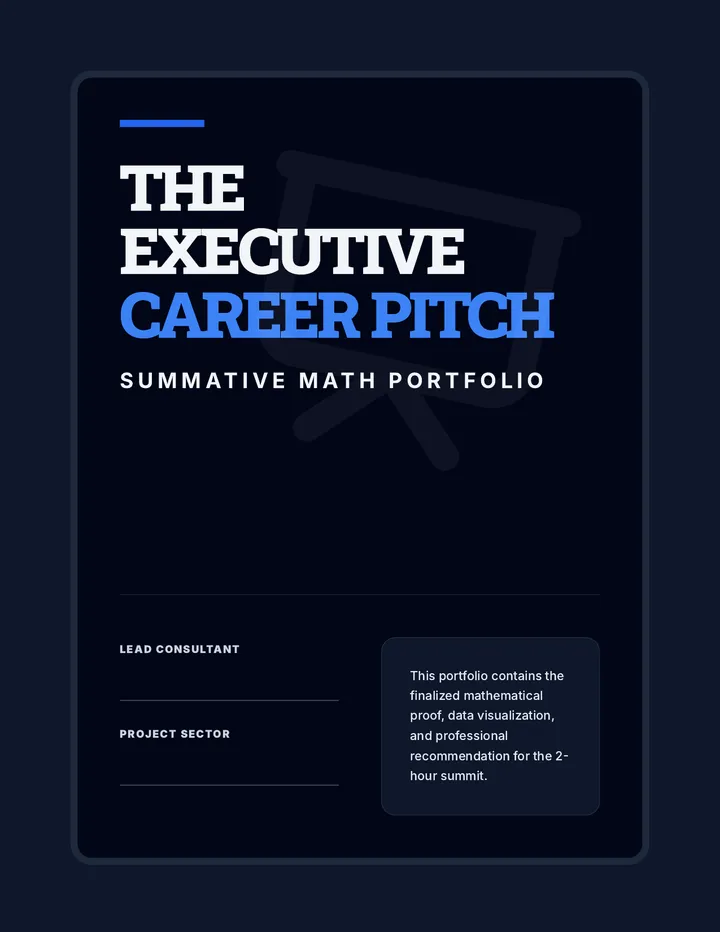
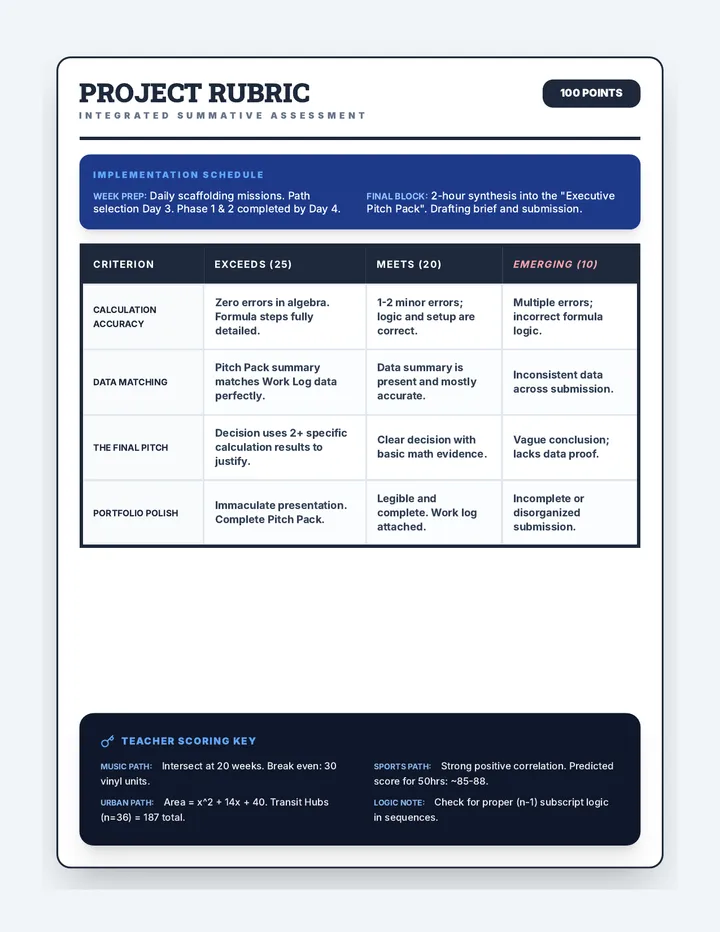
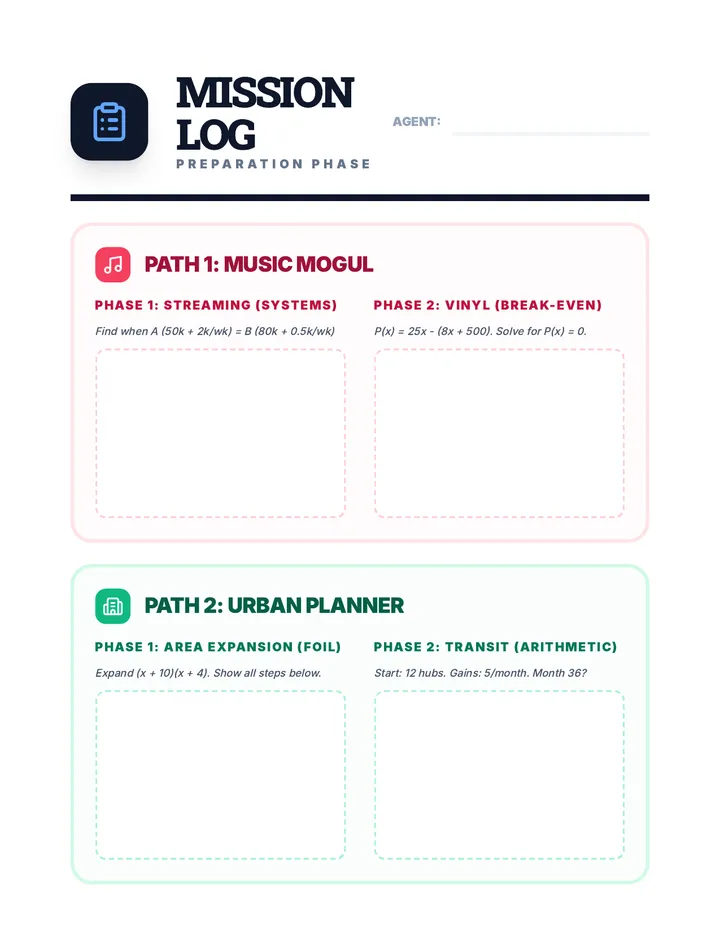
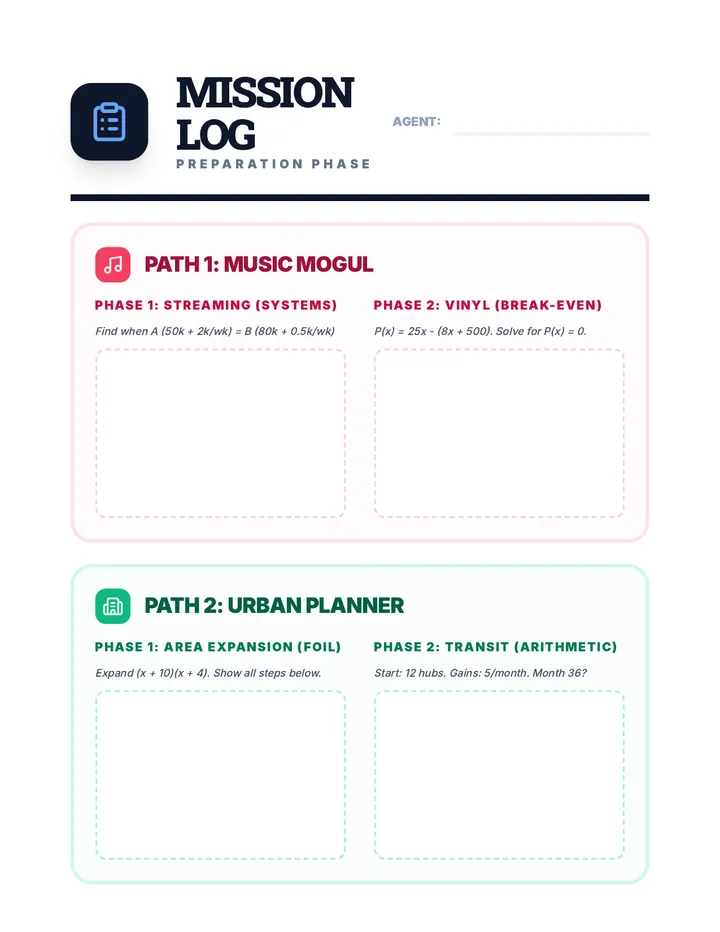
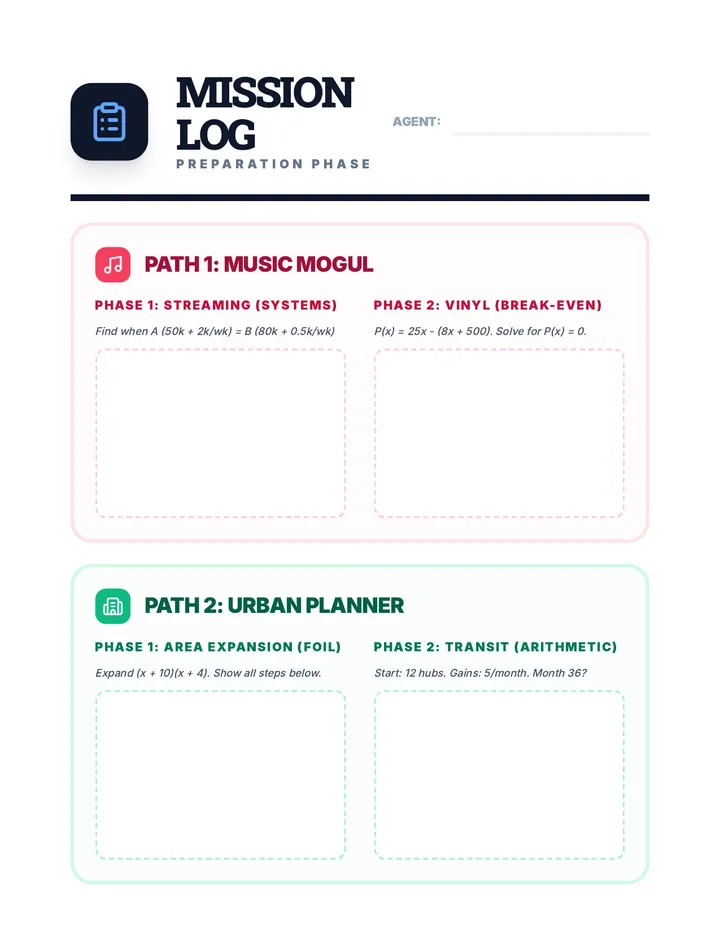
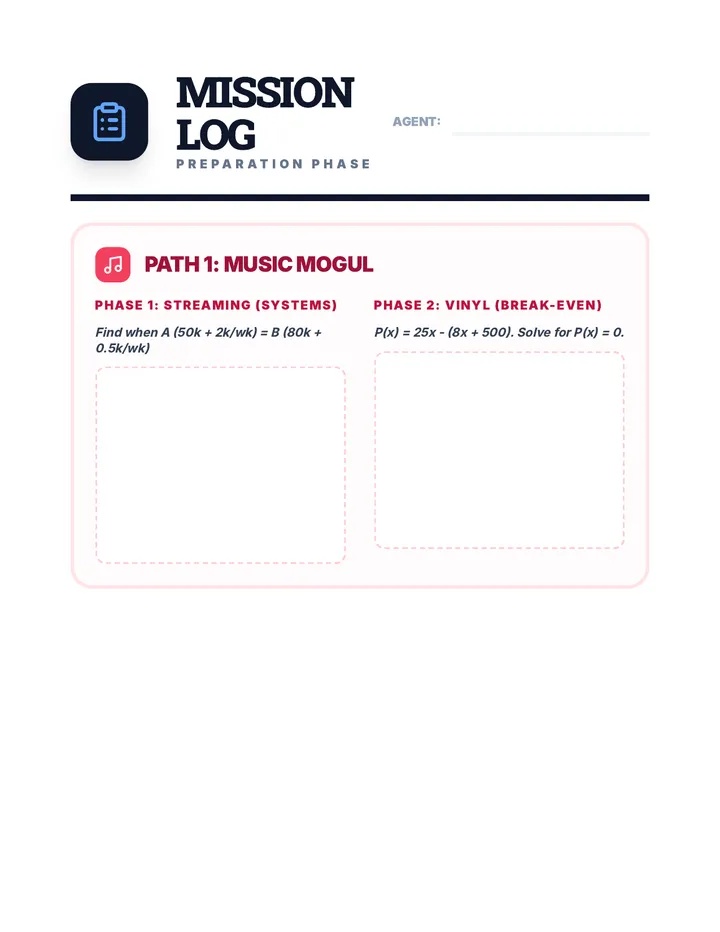
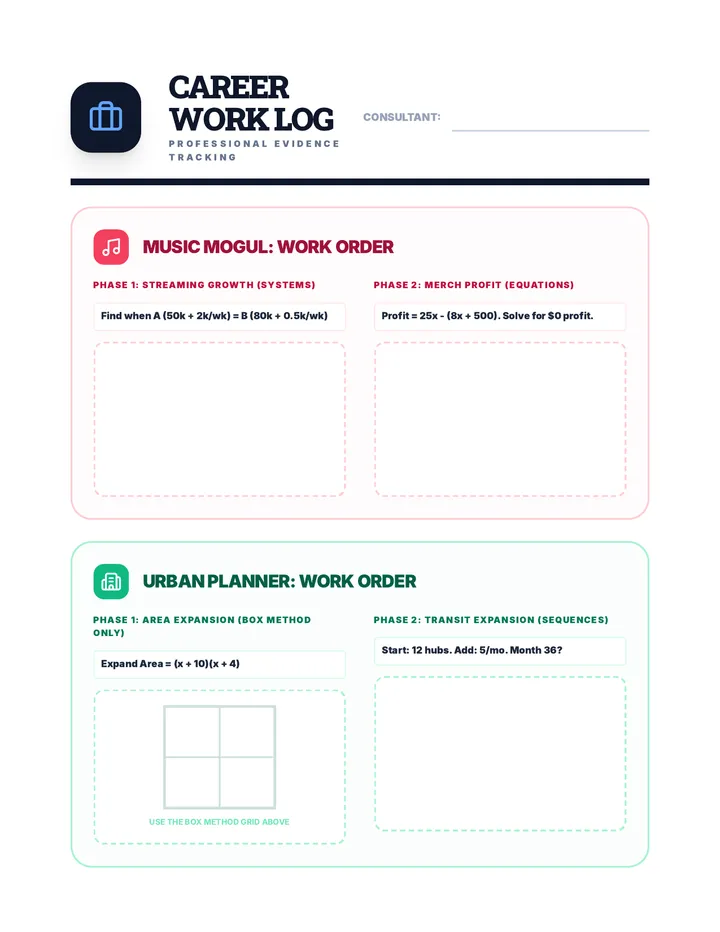
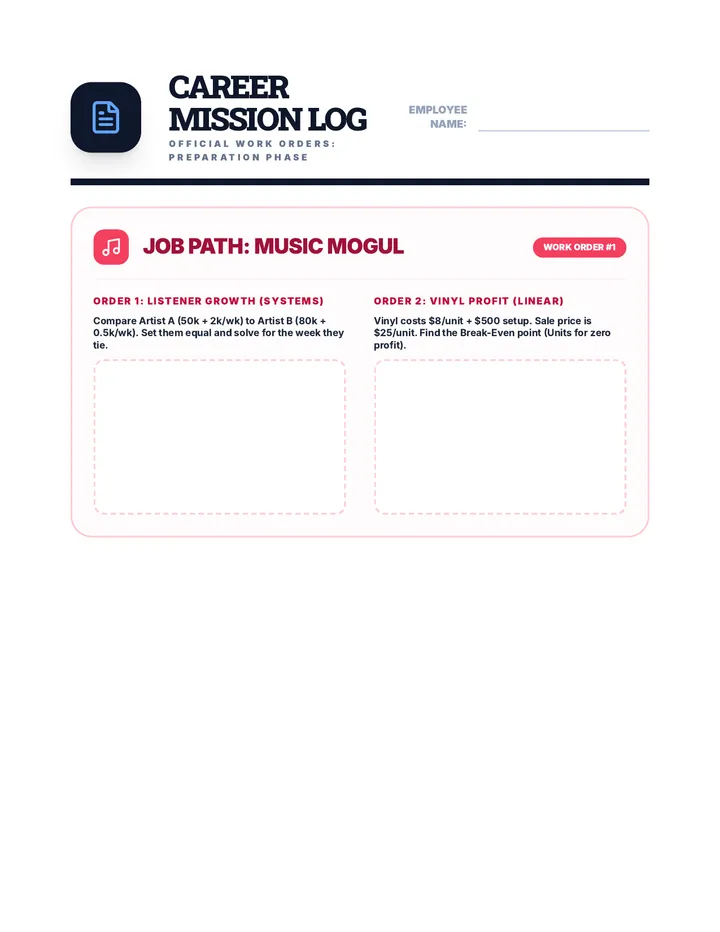
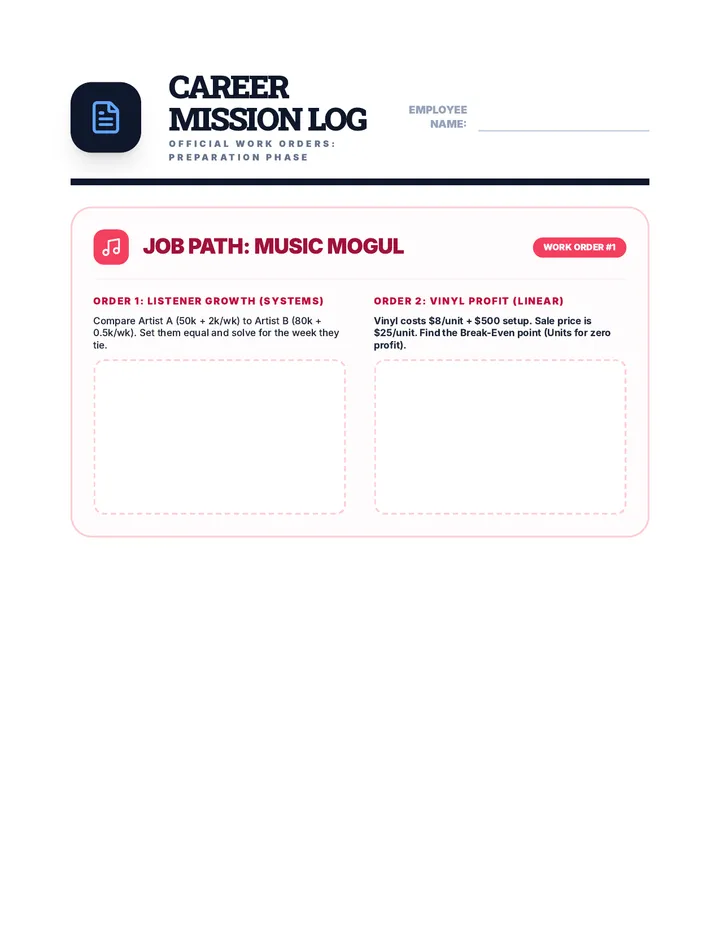
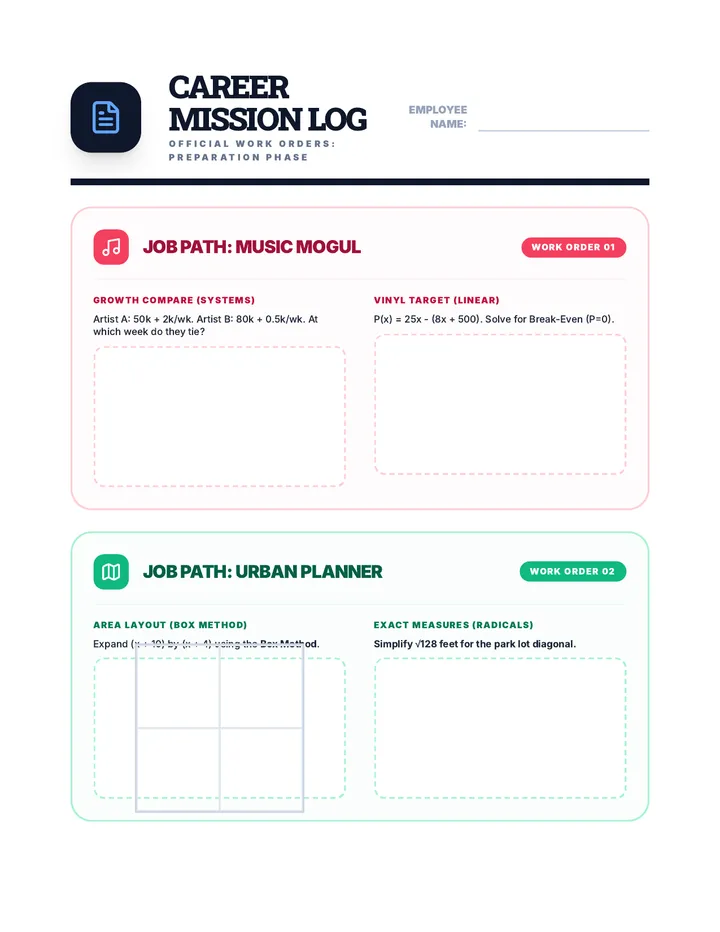
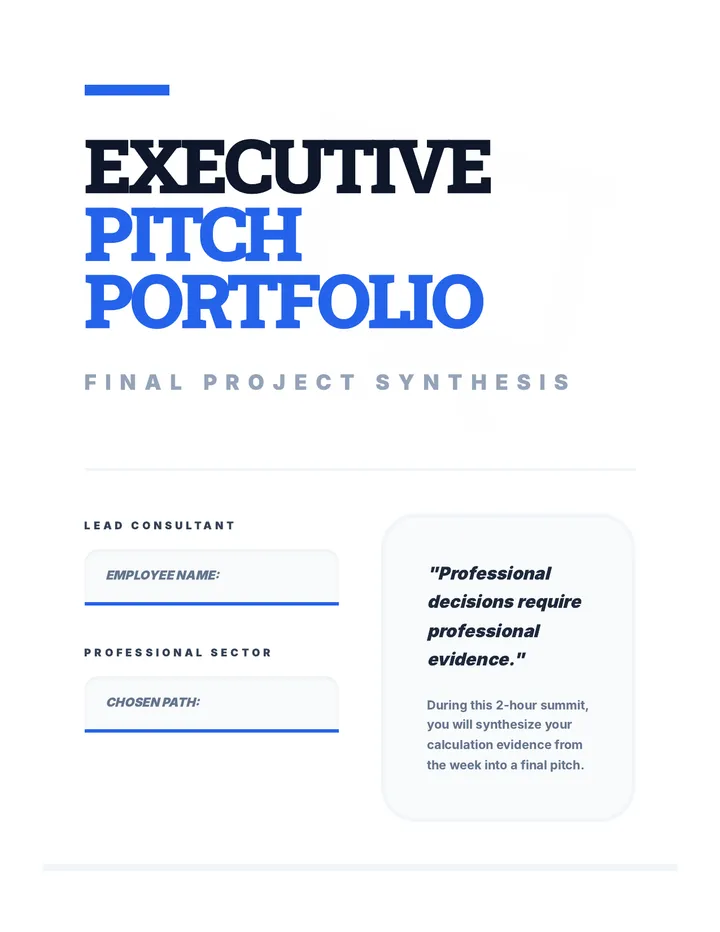
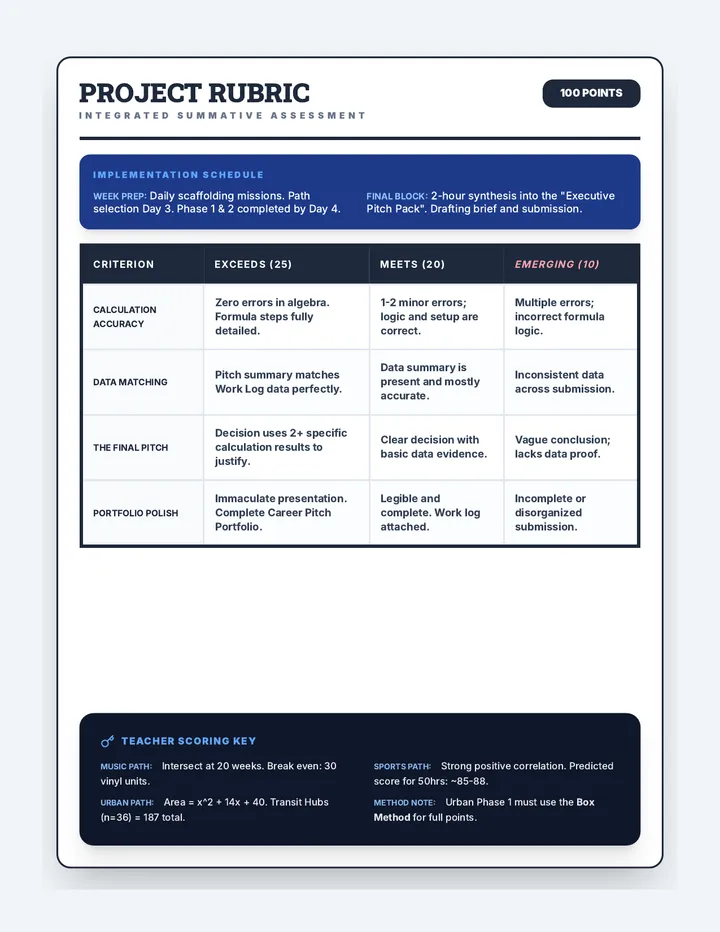
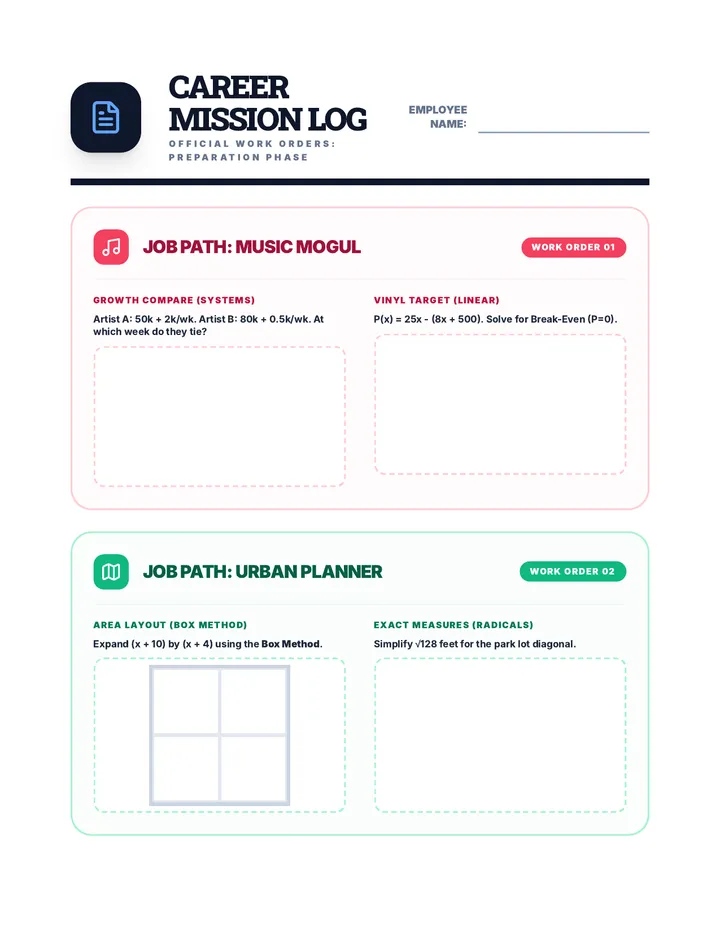
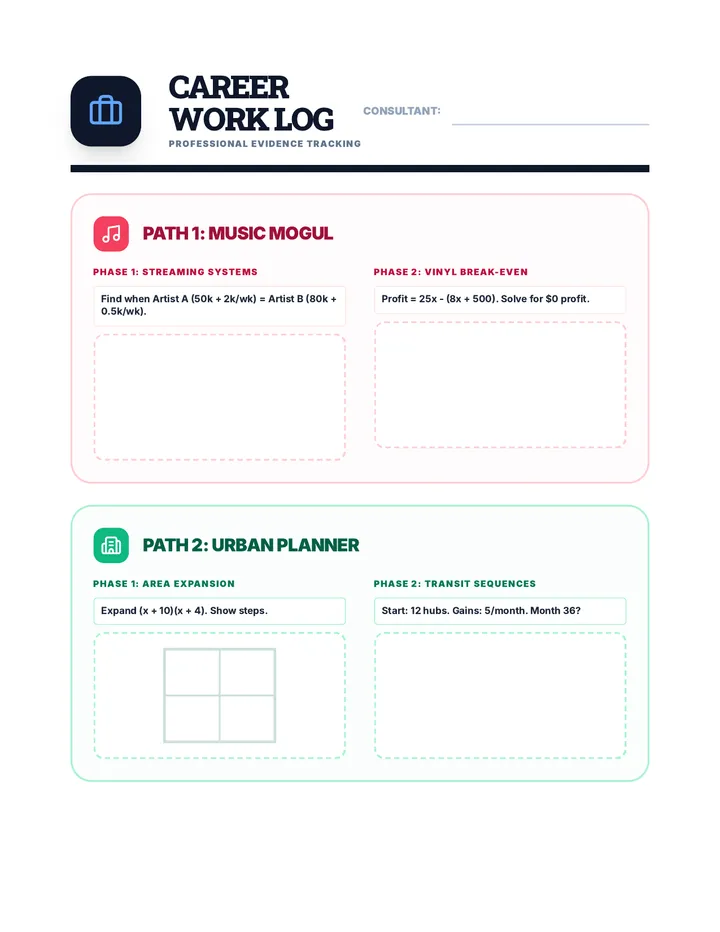
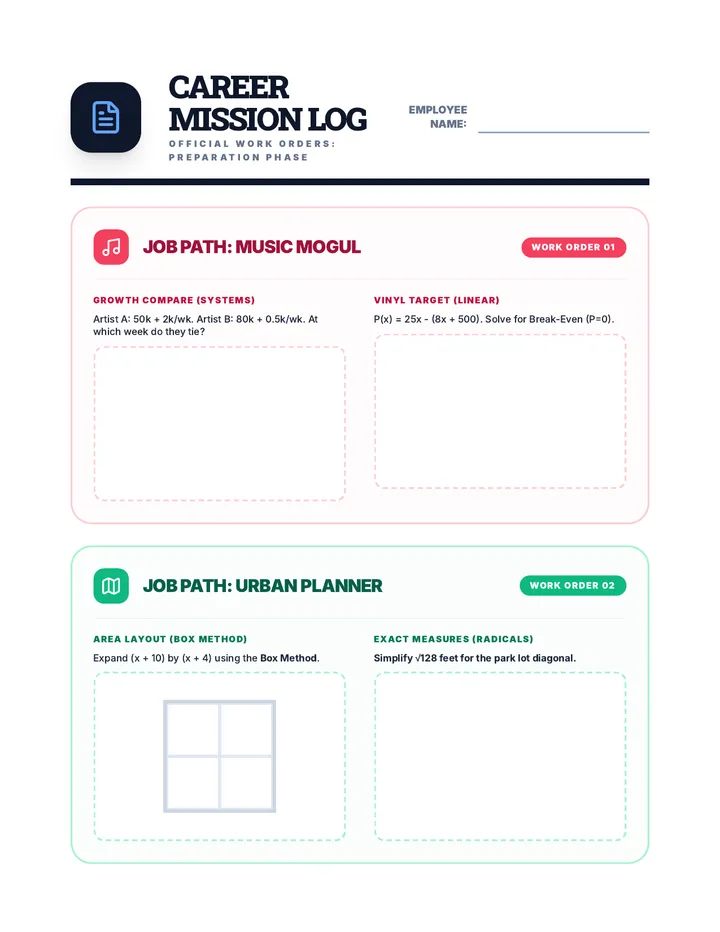
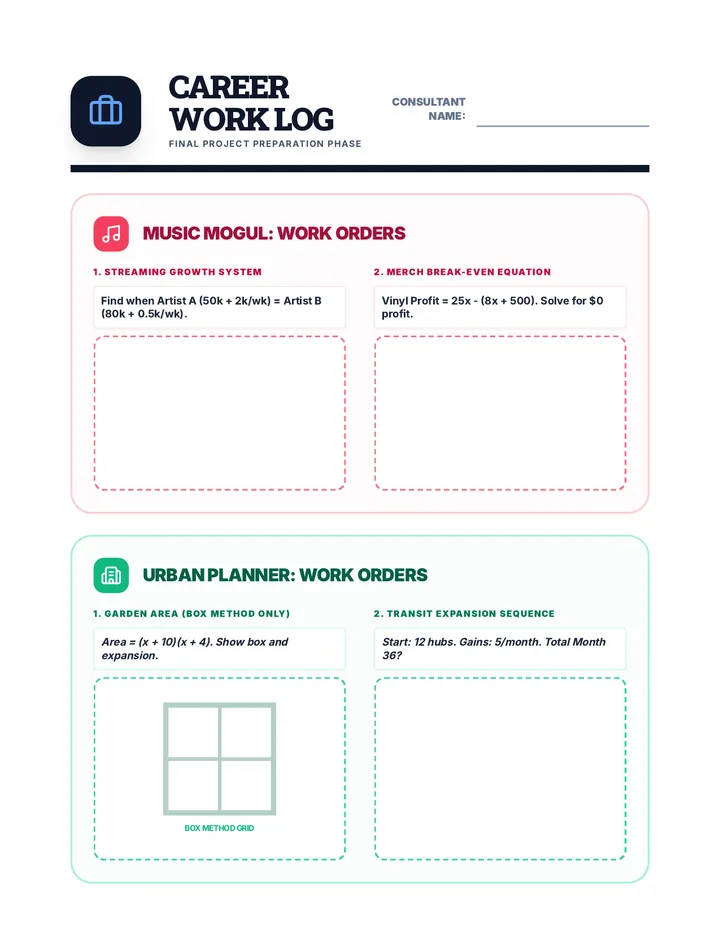
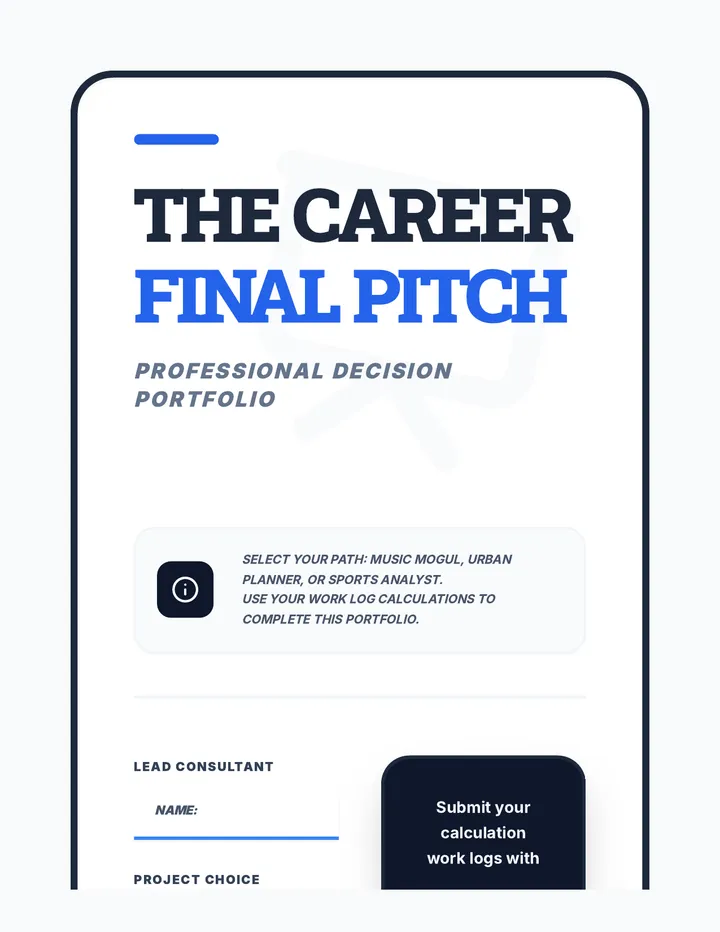
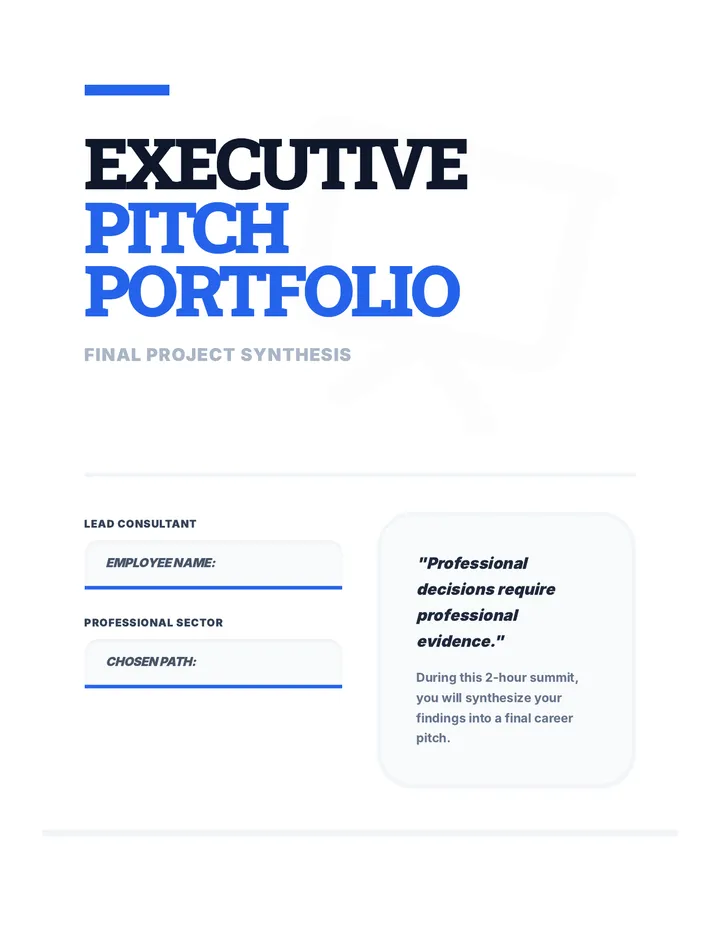
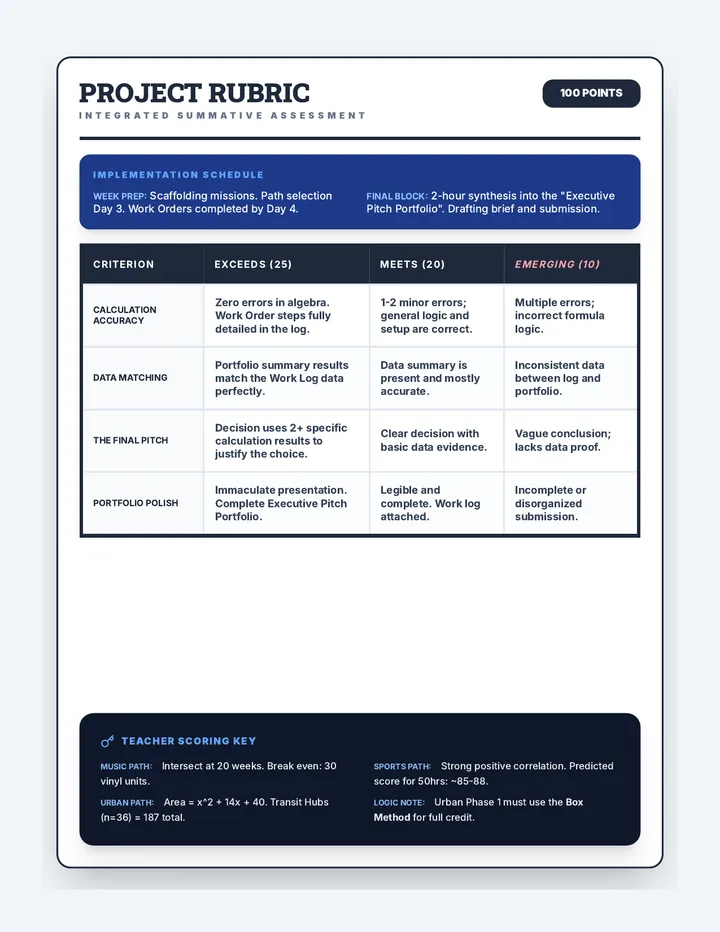
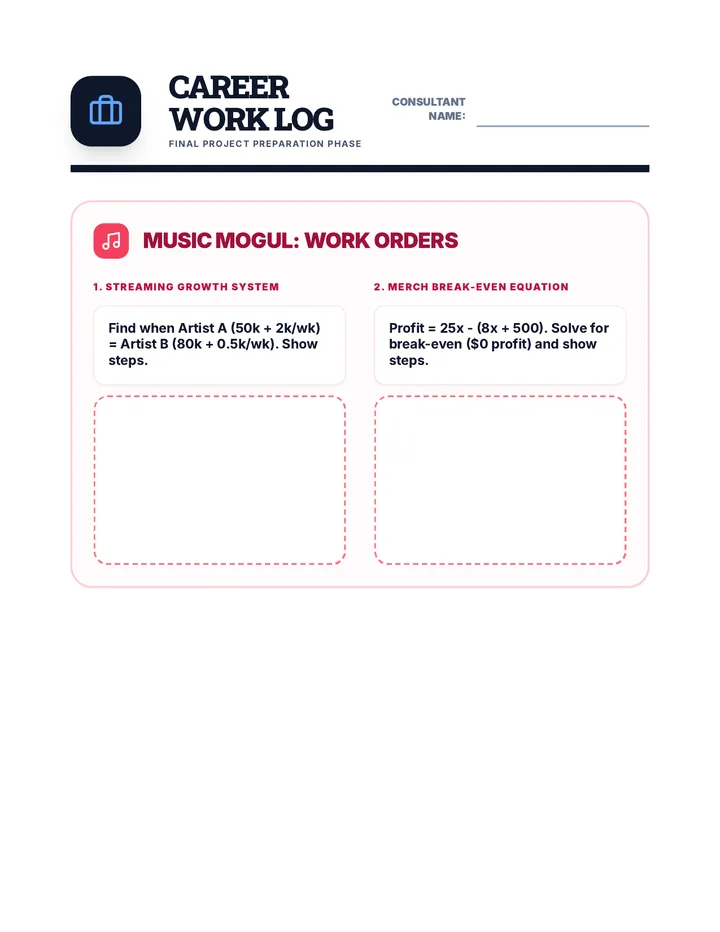
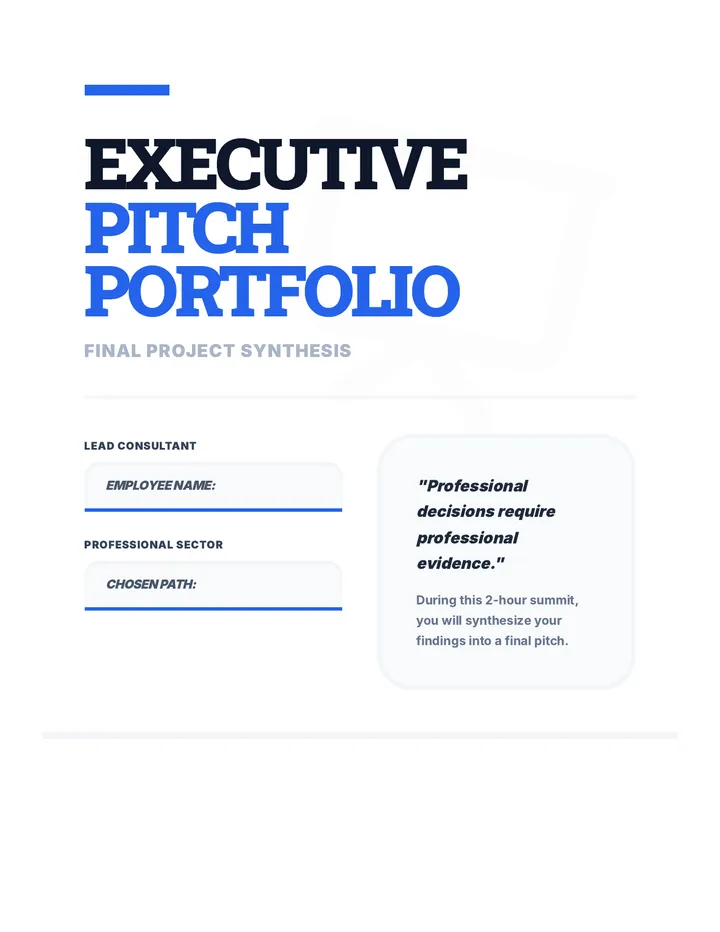
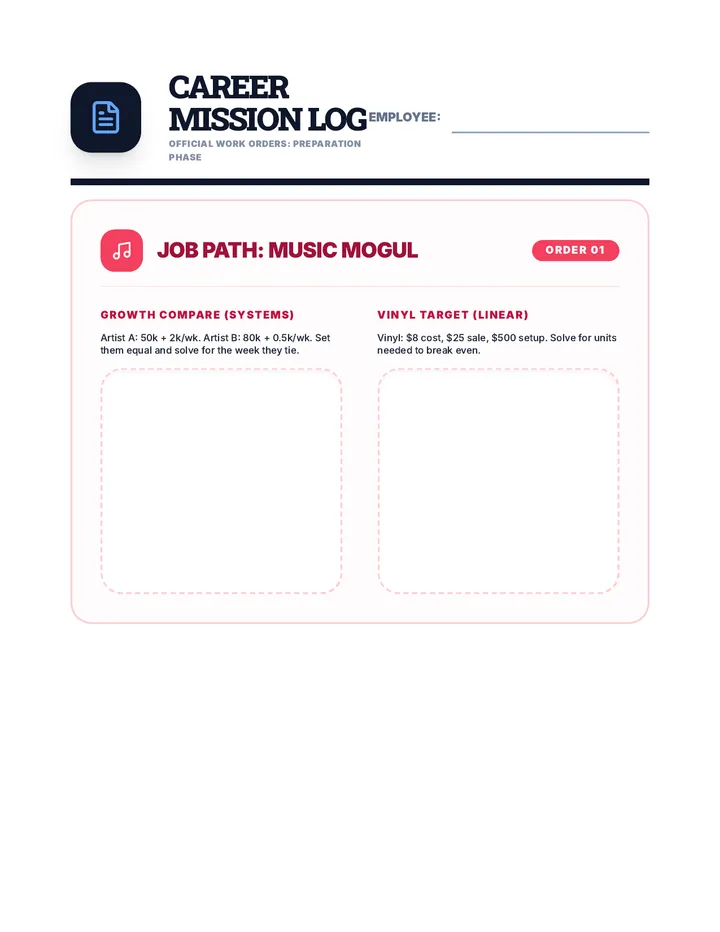
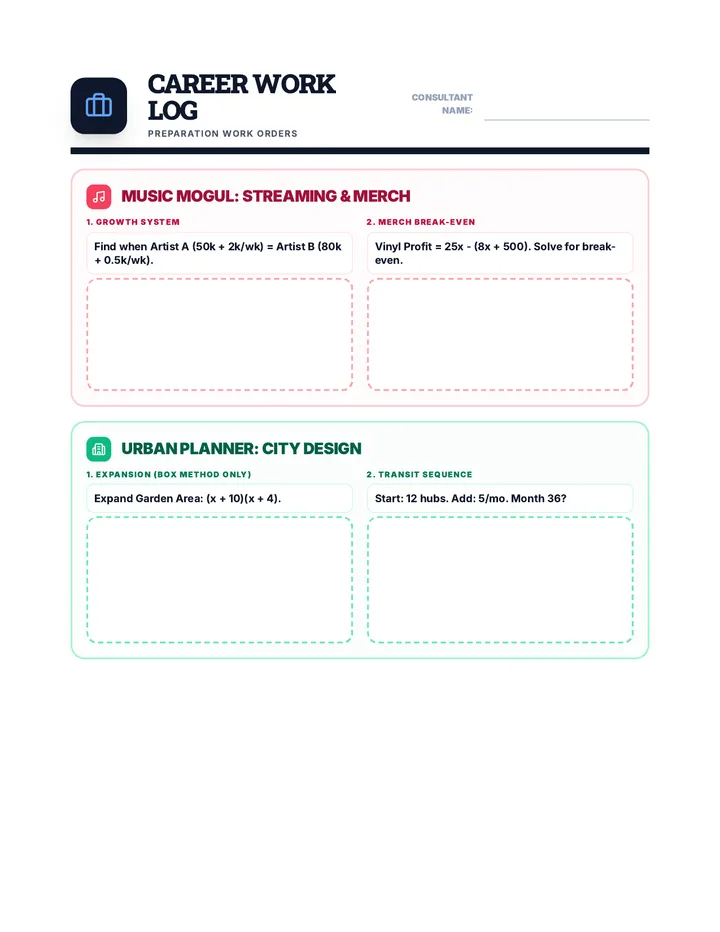
A high-intensity, 2-hour math simulation where students act as lead consultants. They complete a scaffolded Skill Warmup before choosing one of four career paths (Music, Urban, Rocket, or Sports) to solve real-world "Work Orders" and delivering an Executive Pitch.
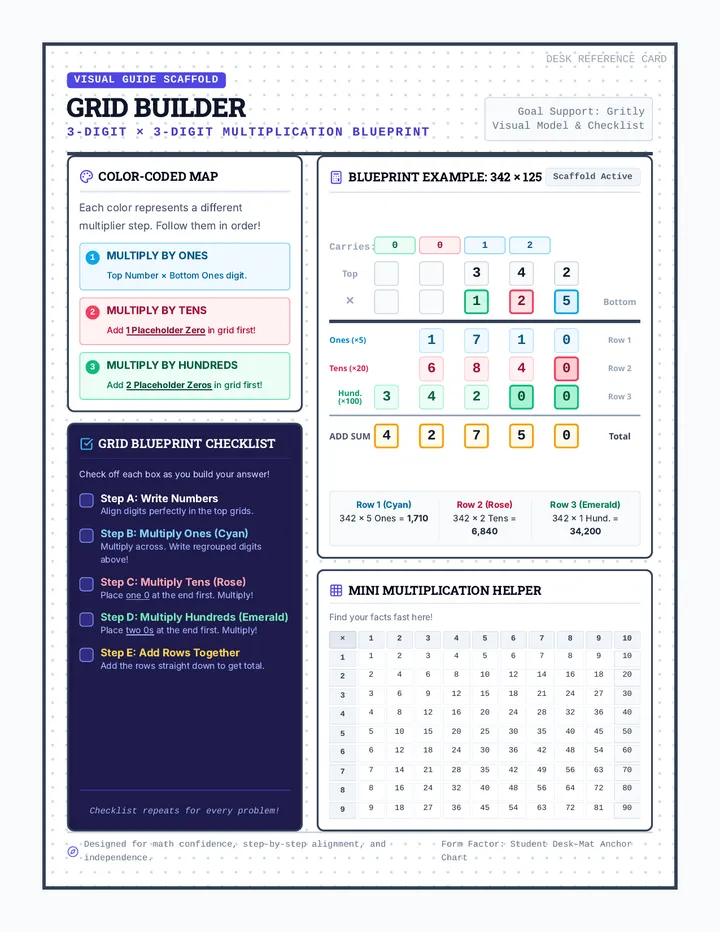
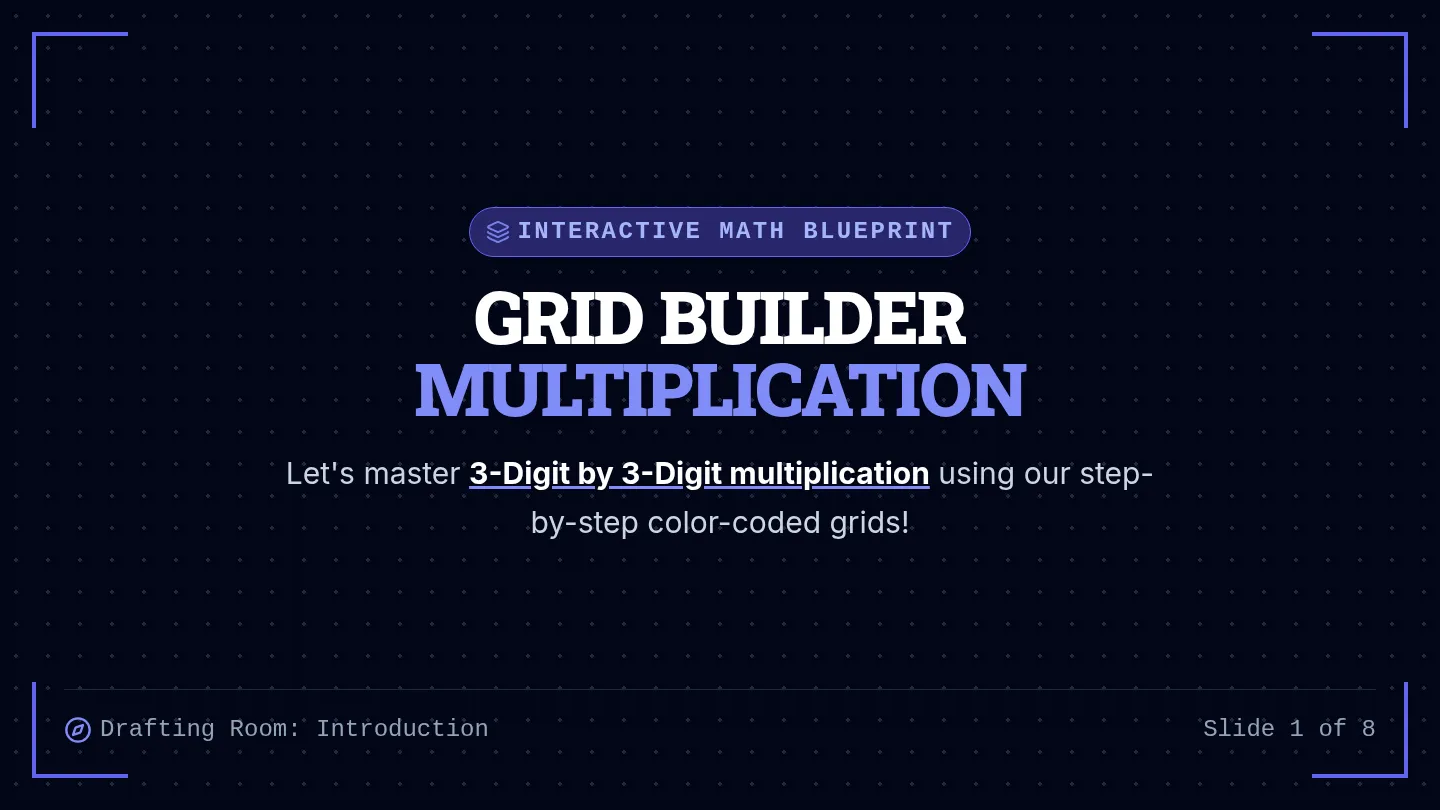
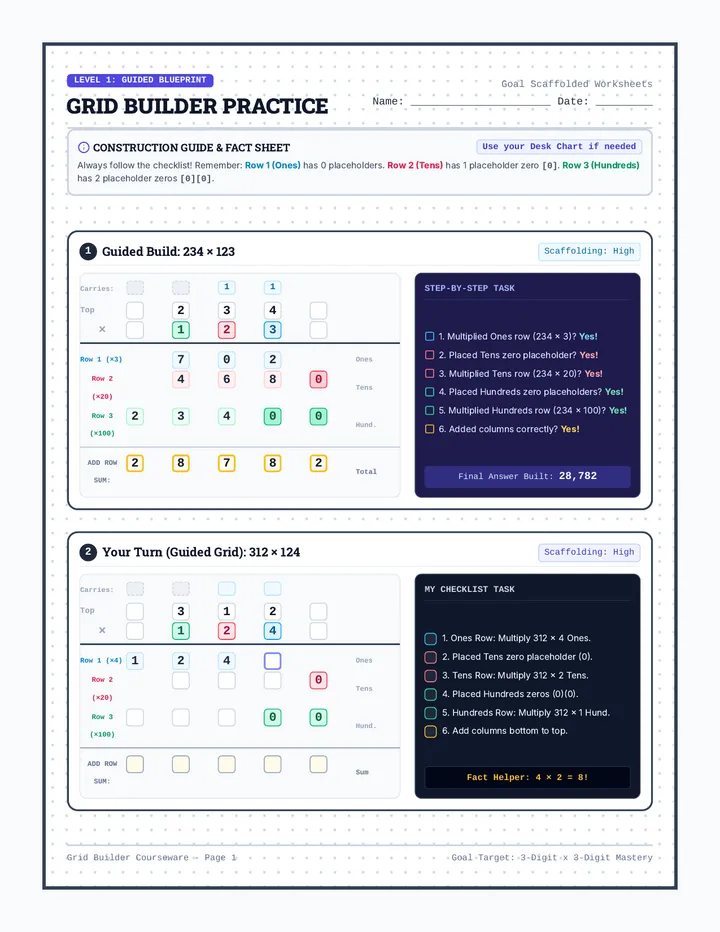
A highly structured, scaffolded lesson designed to help students master three-digit by three-digit multiplication using color-coded grids, a step-by-step task-analysis checklist, and sequential progress monitoring.
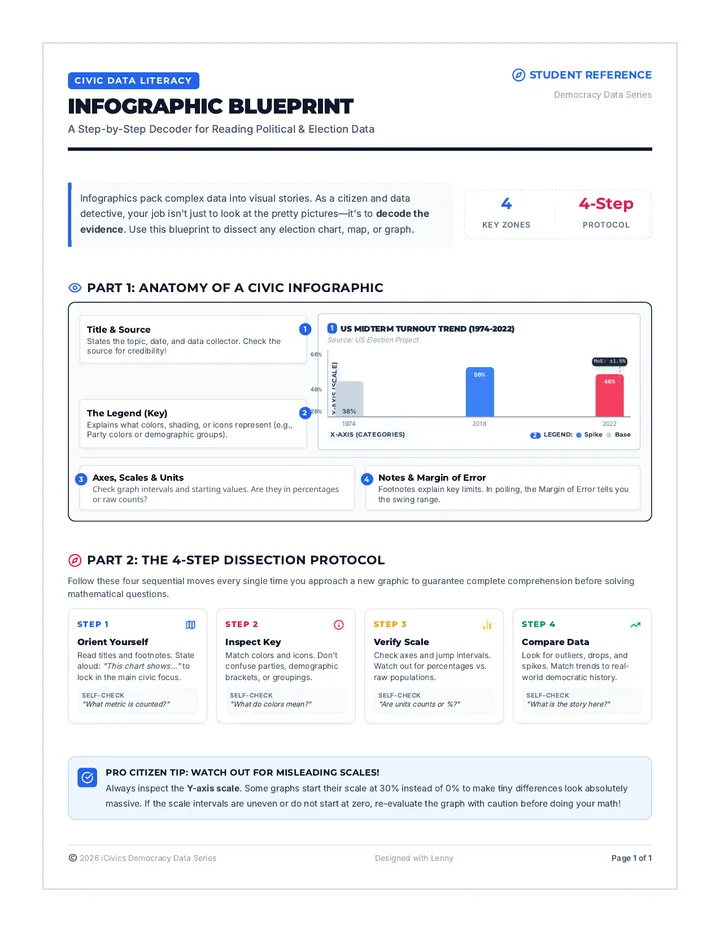
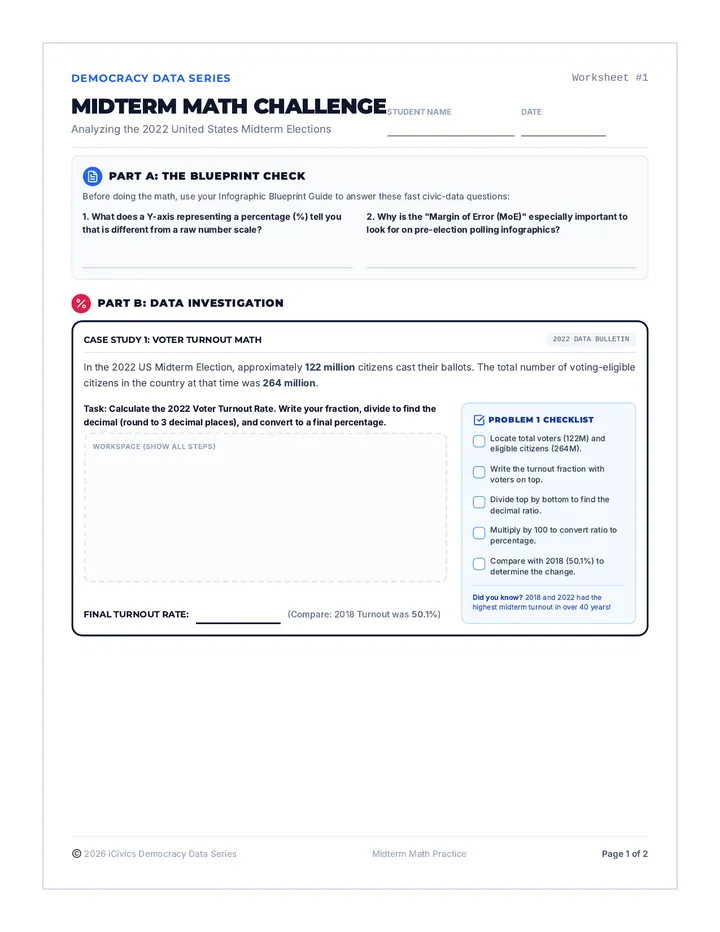
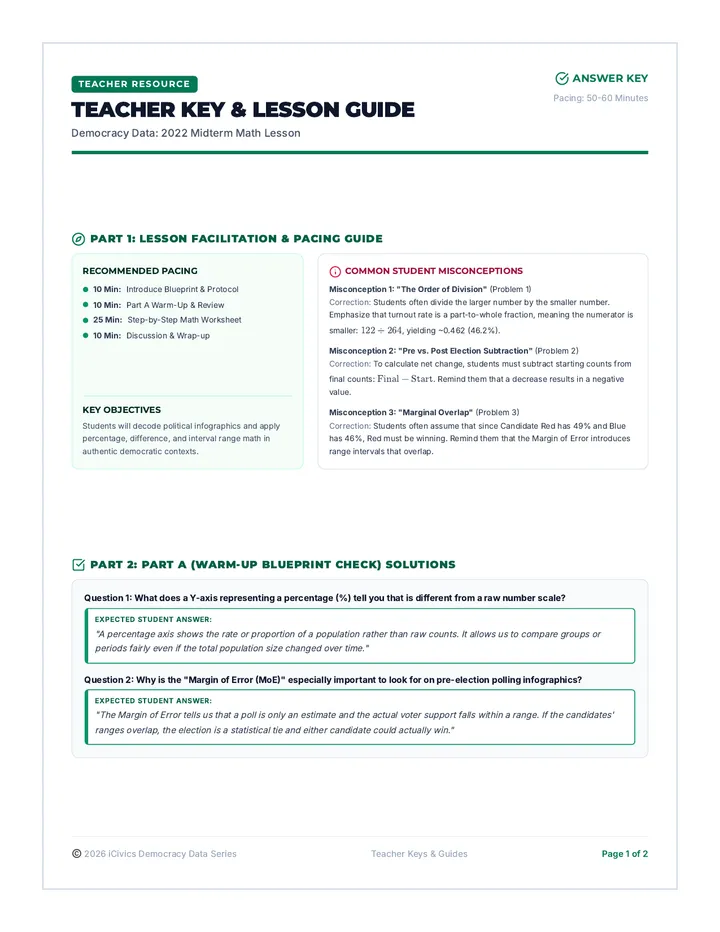
A civic-minded math lesson where students analyze real-world data from the 2022 midterm elections. Students learn to navigate complex infographics using structured reading strategies and tackle data-driven math questions with supportive step-by-step checklists.
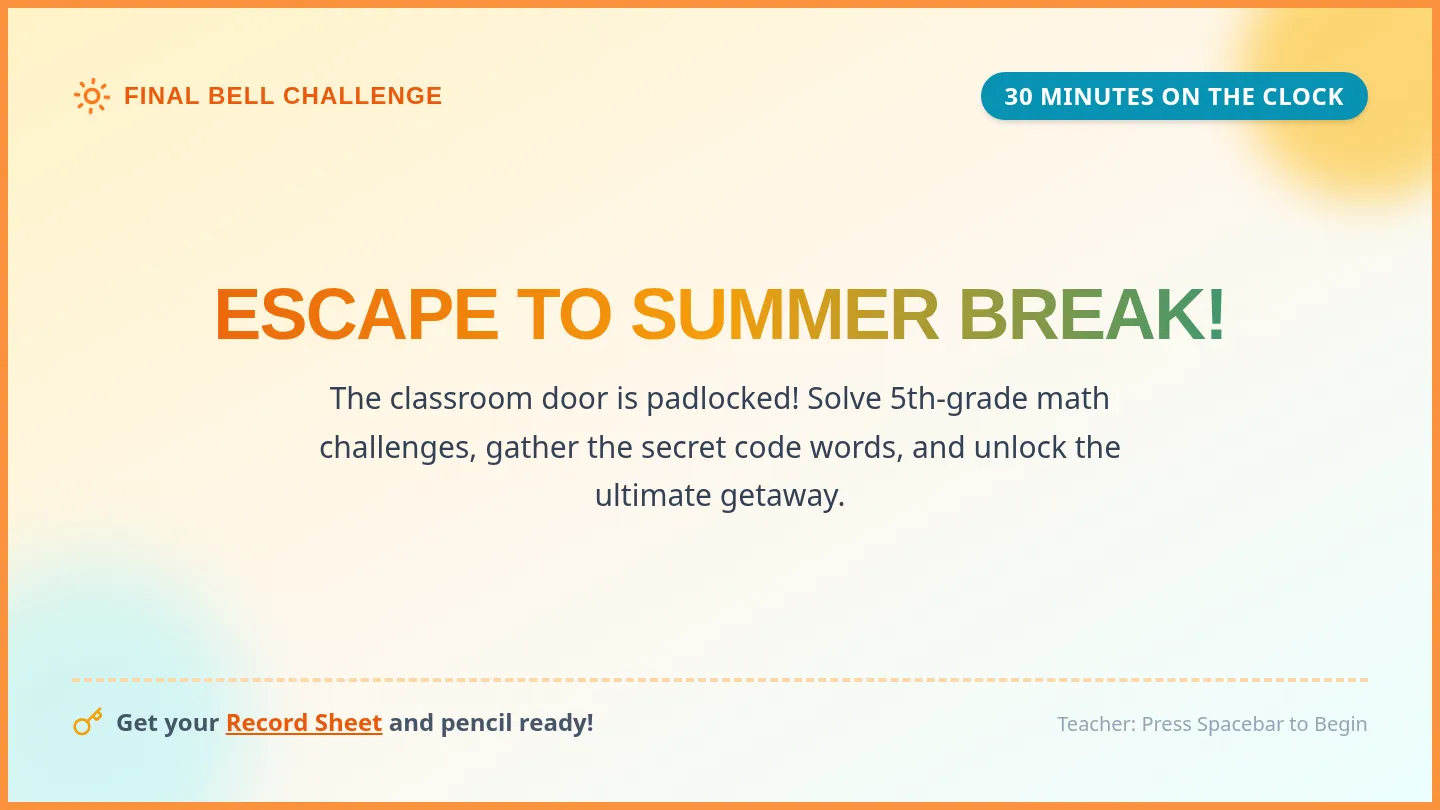
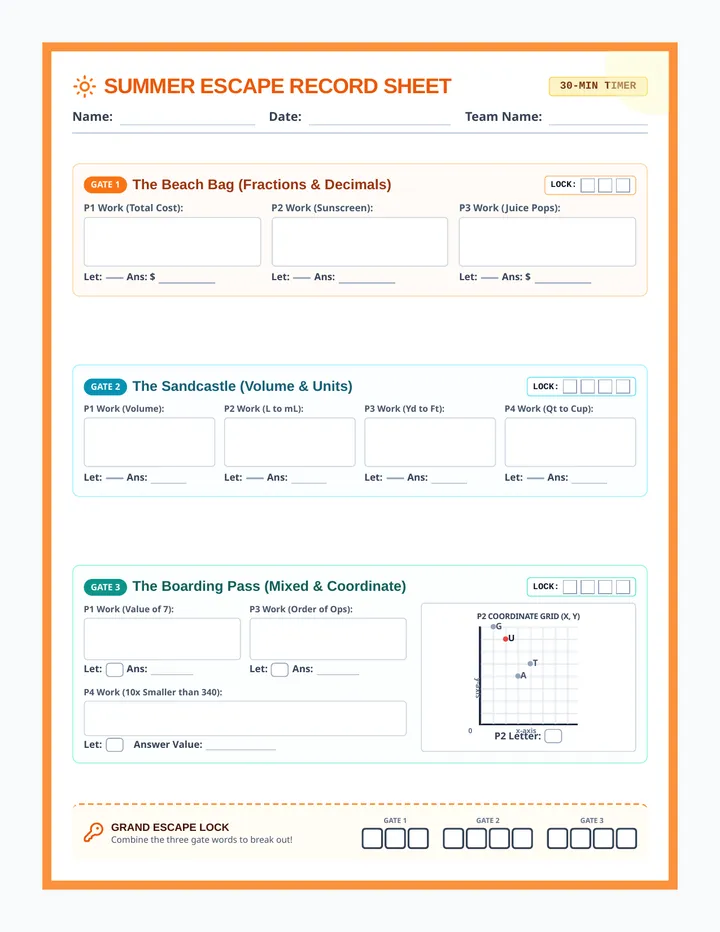
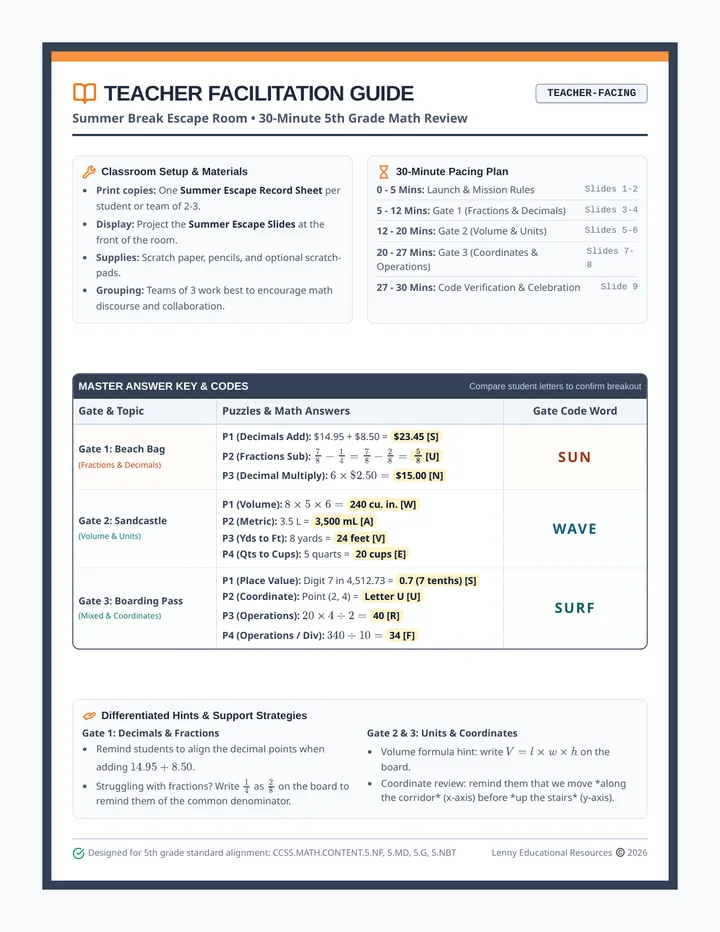
A 30-minute interactive math escape room lesson designed for 5th graders to review fractions, decimals, volume, measurement conversions, and coordinate graphing while racing against the clock to unlock 'Summer Break'.
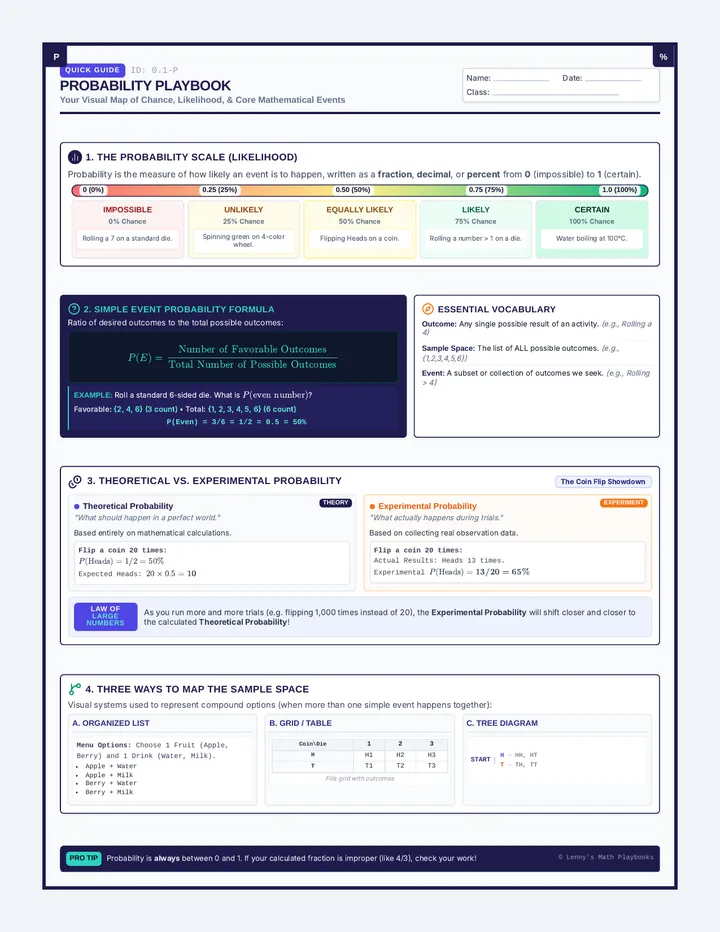
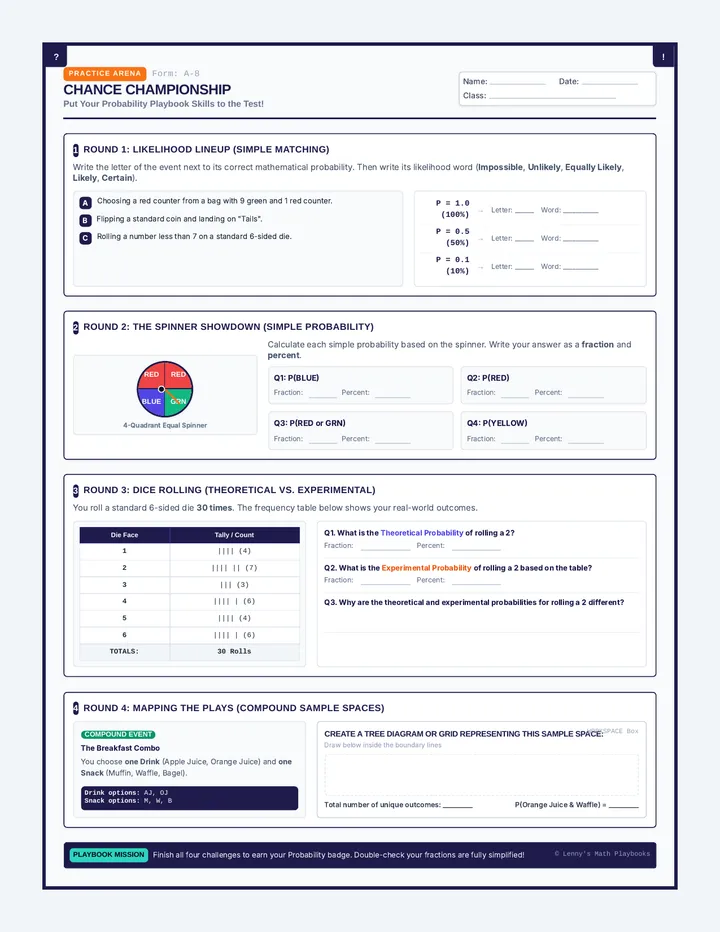
A foundational lesson block designed for middle school students to master probability concepts, covering simple events, sample spaces, likelihood, and experimental versus theoretical probability.
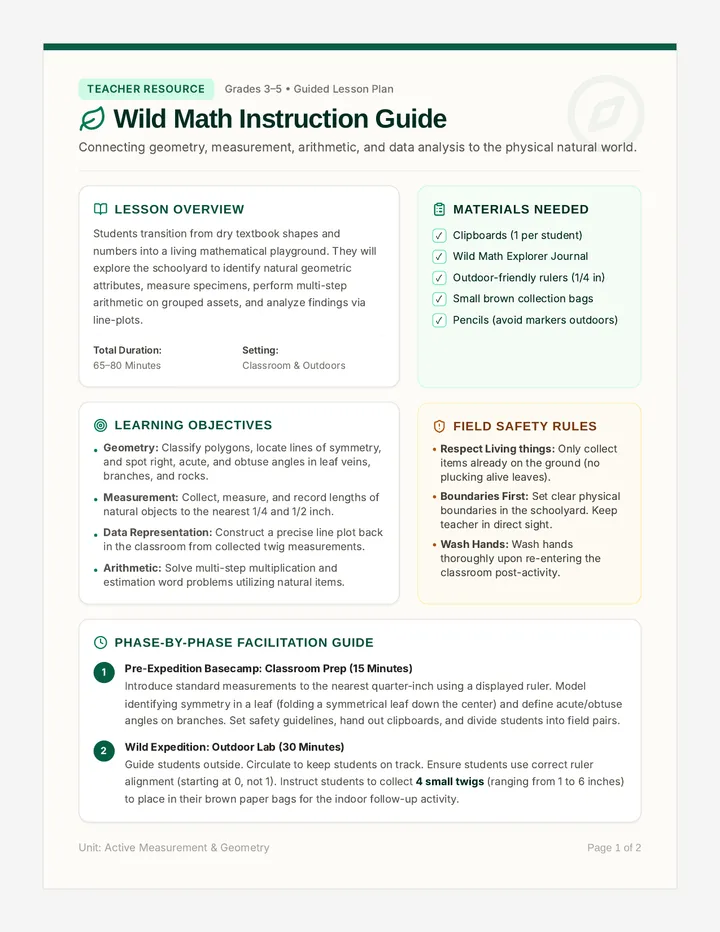
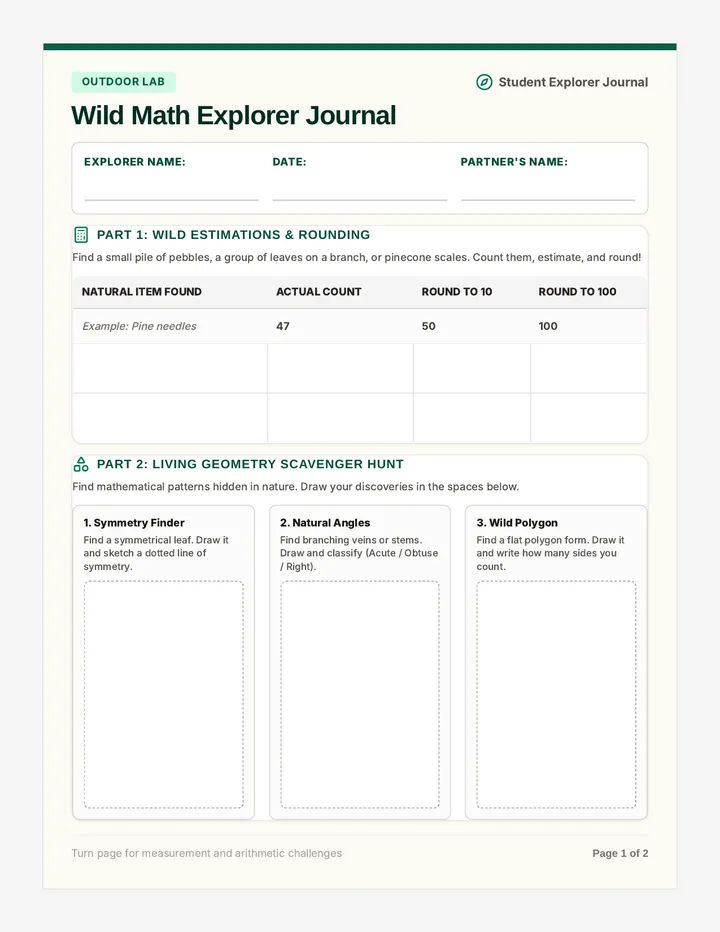
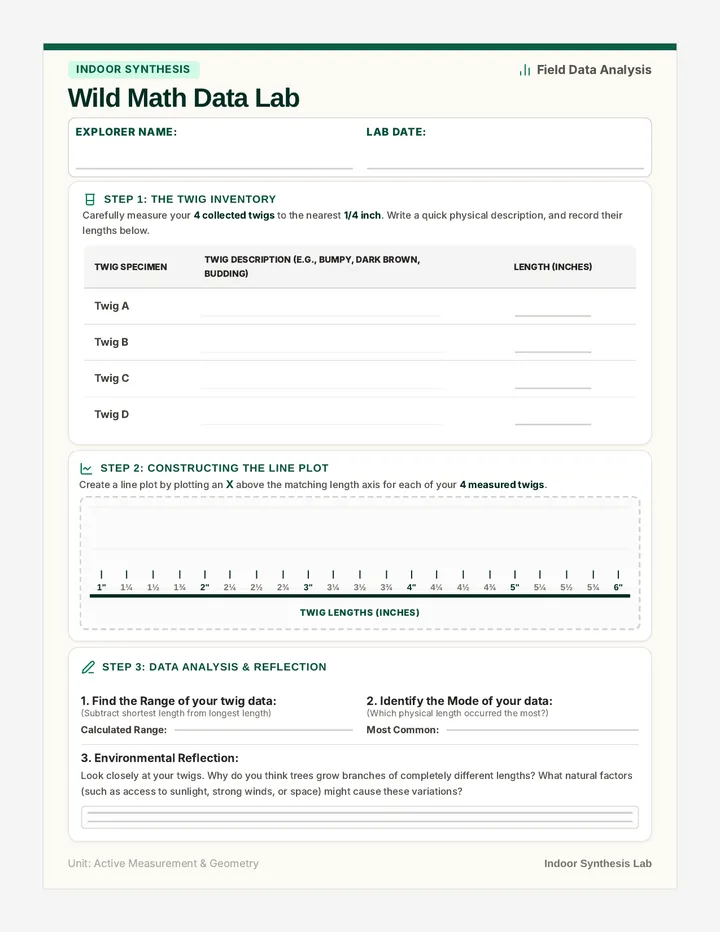
A complete outdoor learning experience where students explore mathematical concepts in the natural world. This lesson bundle connects geometry, measurement, estimation, and word problems directly to physical nature finds, followed by an indoor data-analysis session.
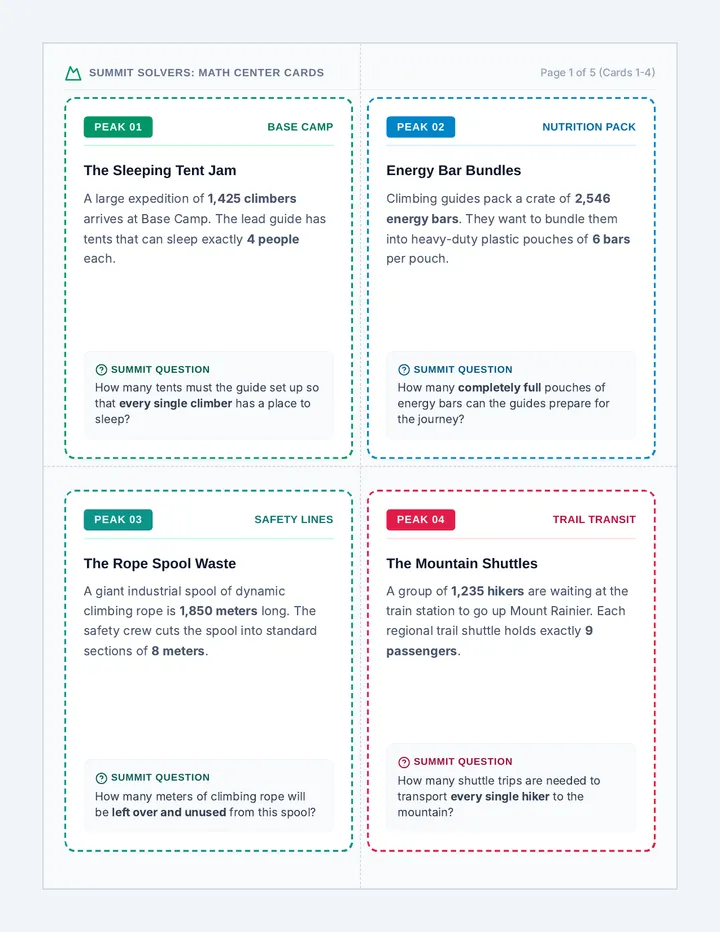
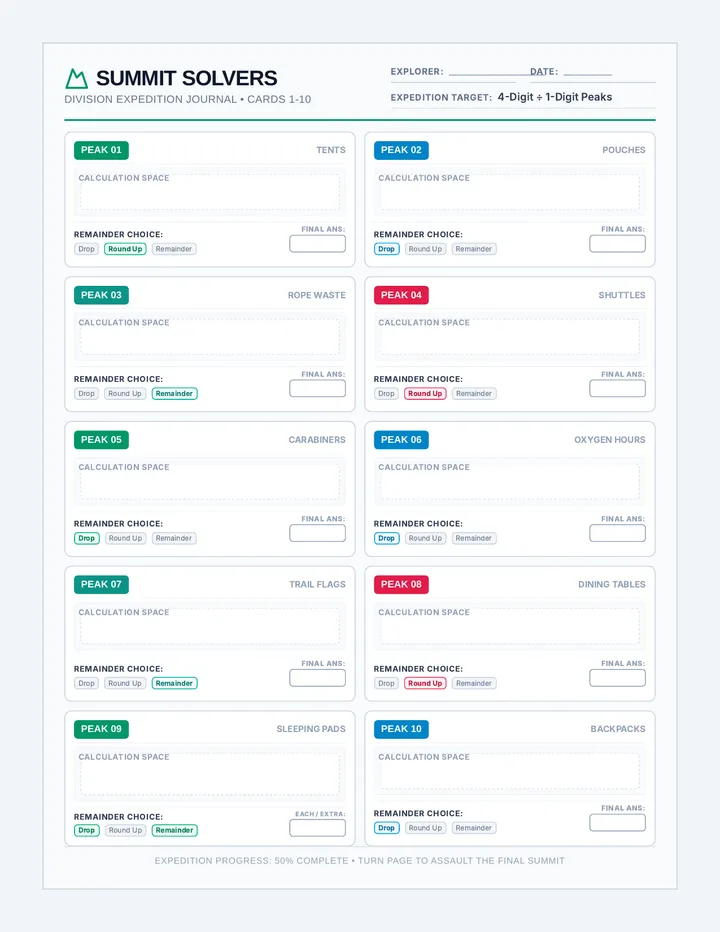
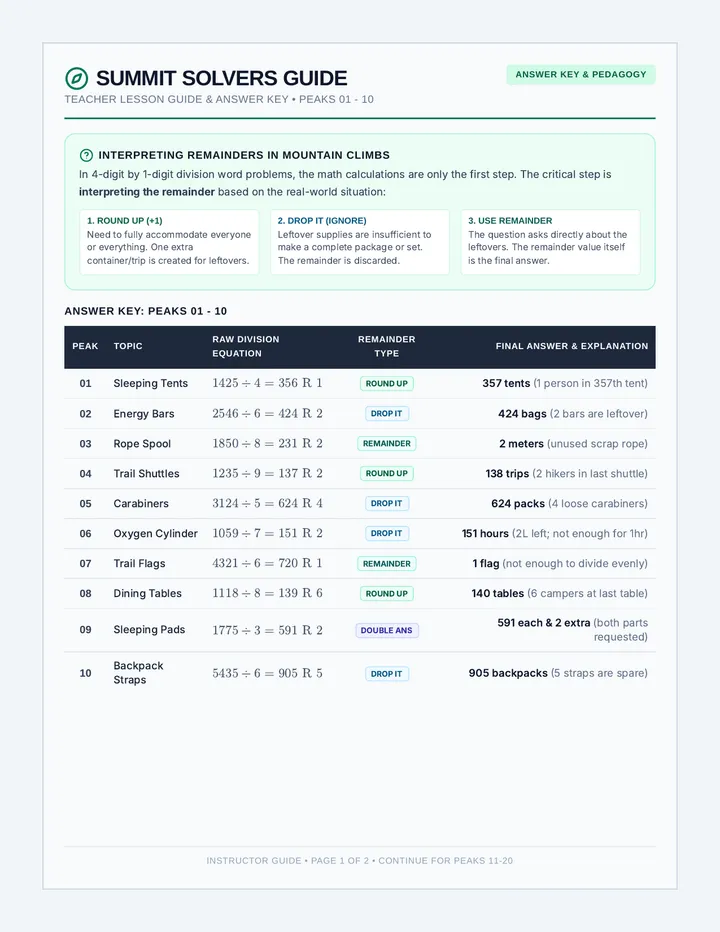
A math lesson focused on solving and interpreting 4-digit by 1-digit division word problems with remainders in a mountain climbing theme. Includes task cards, a recording sheet, and a detailed teacher answer guide.
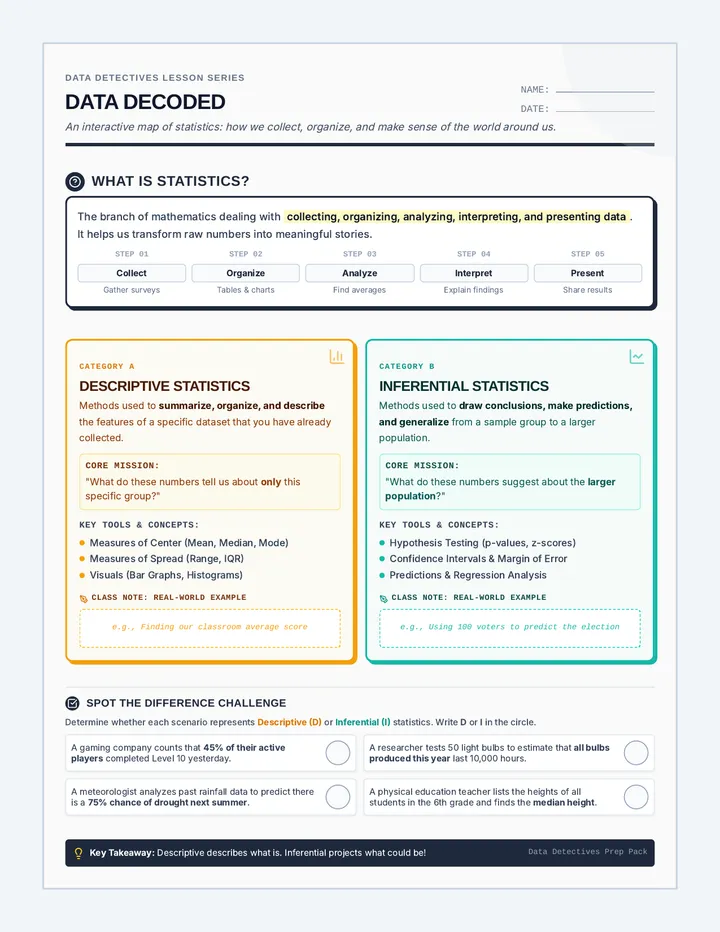
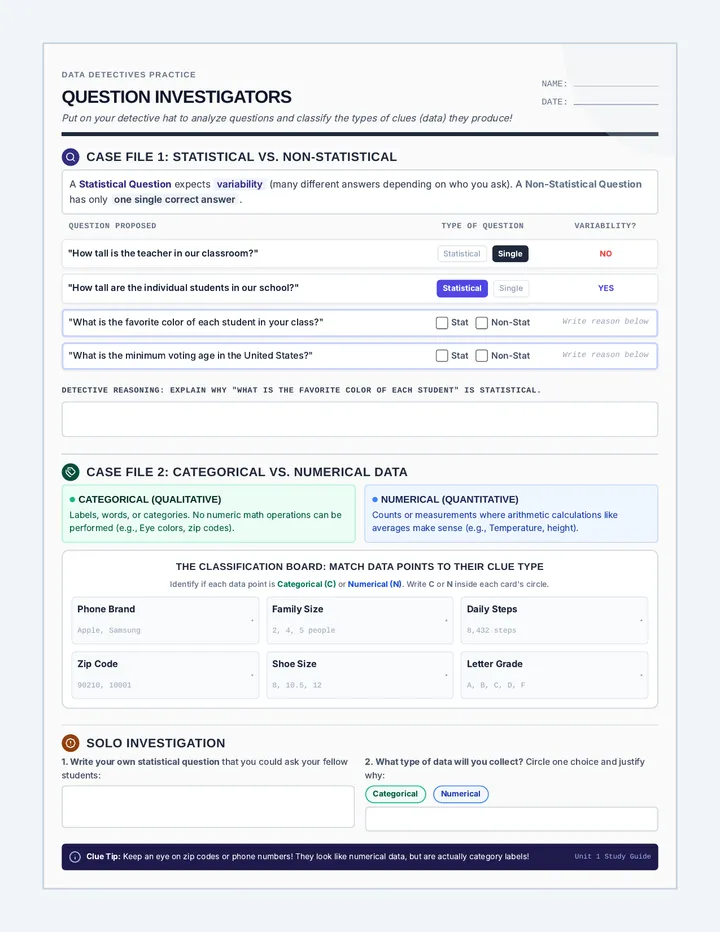
An introductory lesson to understanding what statistics is, exploring the difference between descriptive and inferential statistics, and engaging with data concepts.
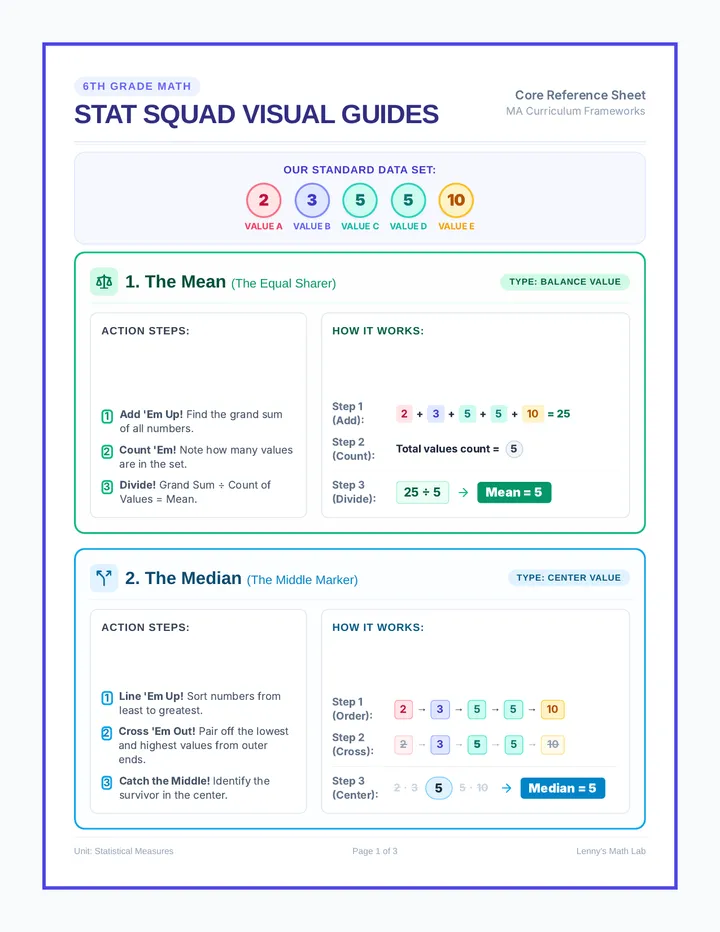
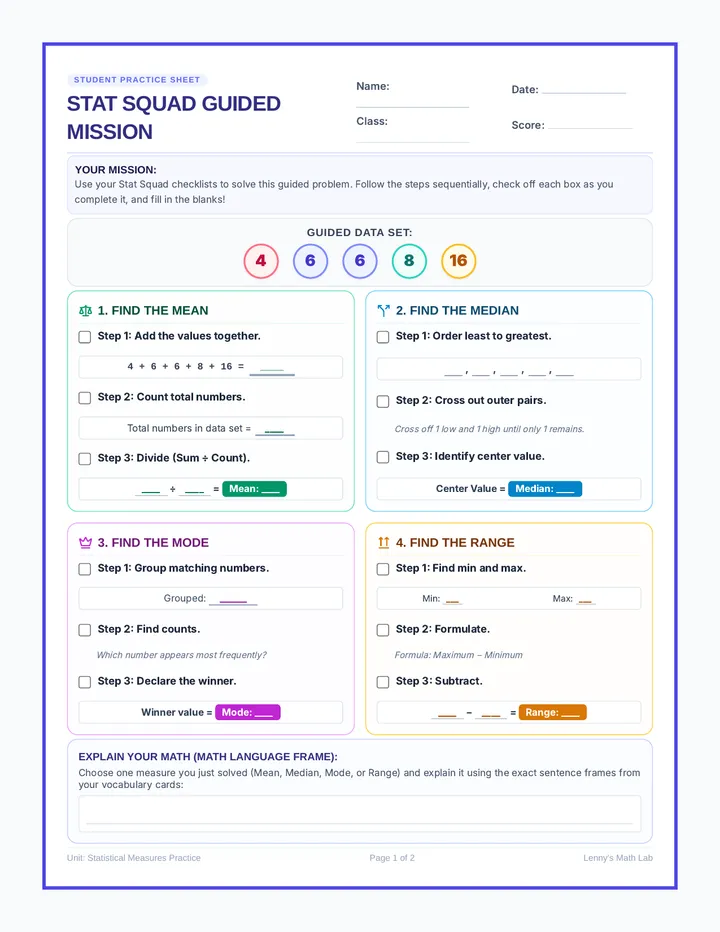
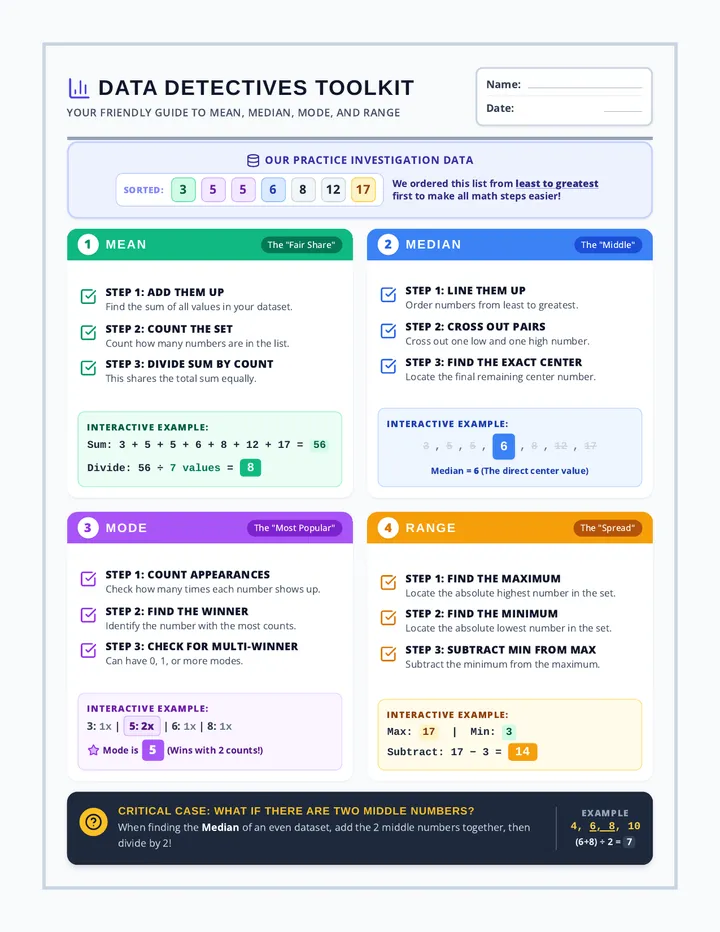
A visual, color-coded introduction to mean, median, mode, and range for 6th grade math. This lesson includes comprehensive, highly accessible anchor charts and structured practice guides with checklists and vocabulary focus cards.
A foundational lesson introducing 6th grade statistics concepts including measures of center (mean, median, mode) and variation (range) with visually accessible reference materials.