A 35-minute session designed to help students in grades 4-8 build reading endurance and focus. It includes mindfulness techniques, practical re-engagement strategies, and a guided reading exercise to prepare for extended literacy tasks.
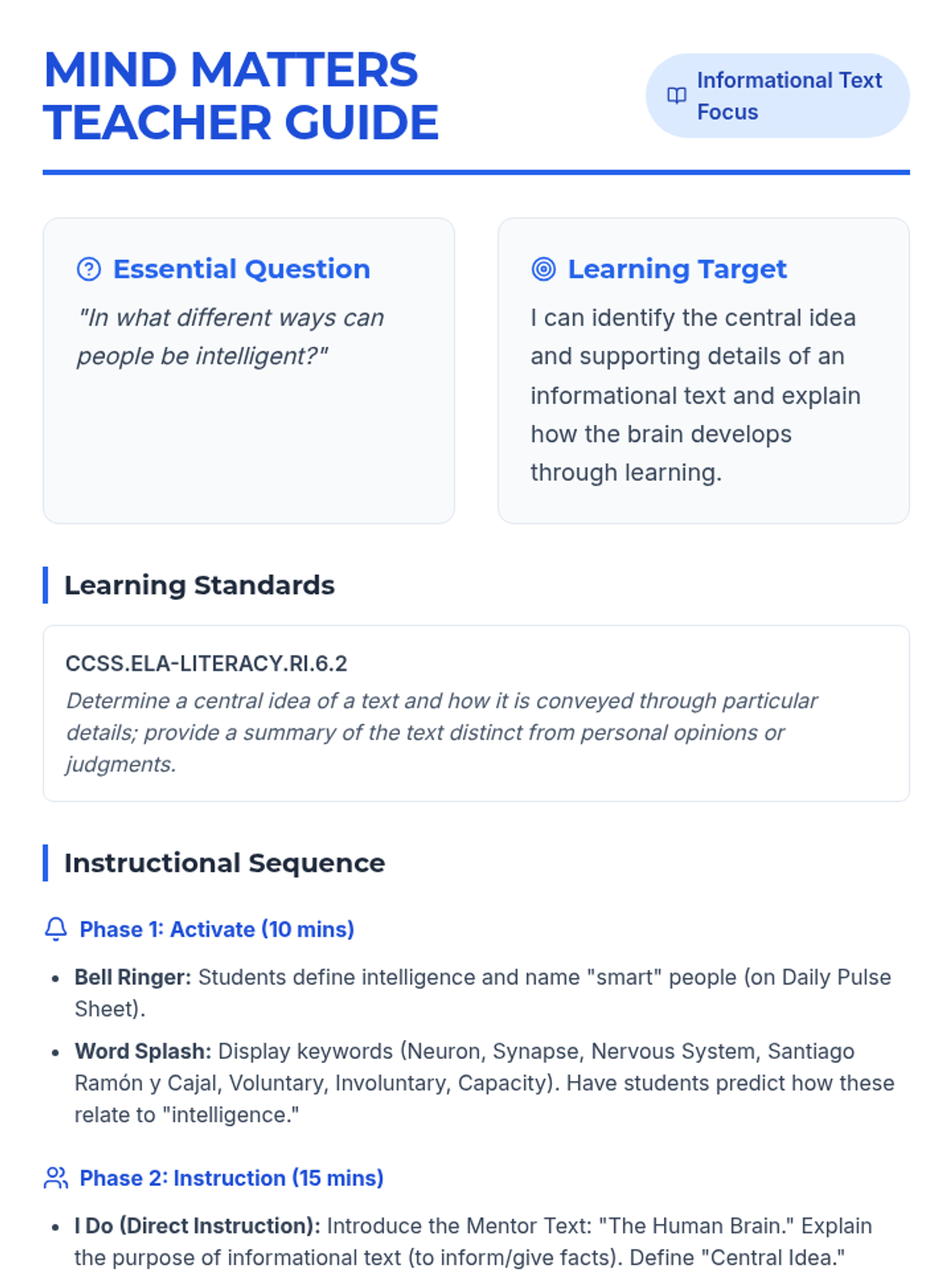
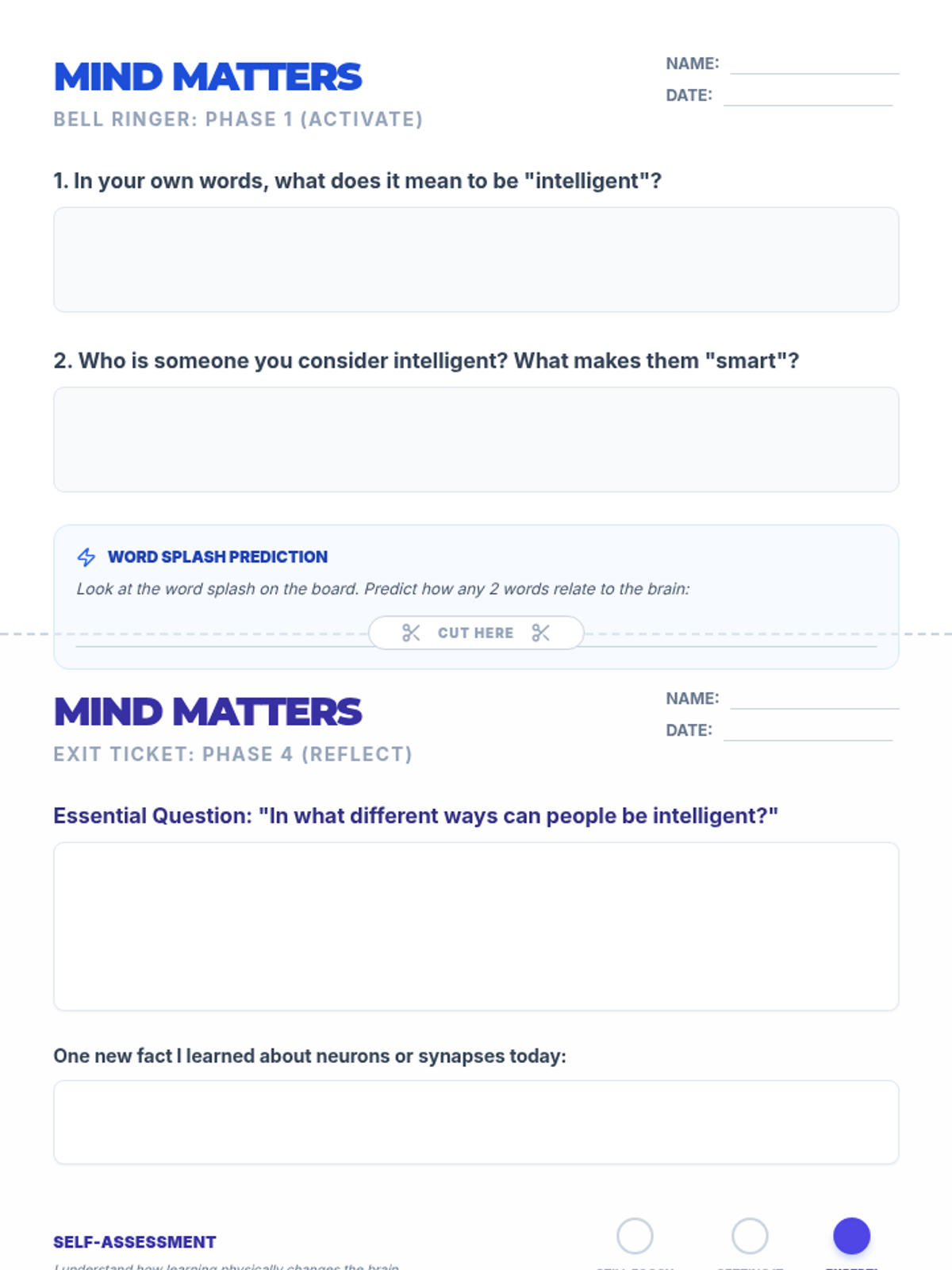
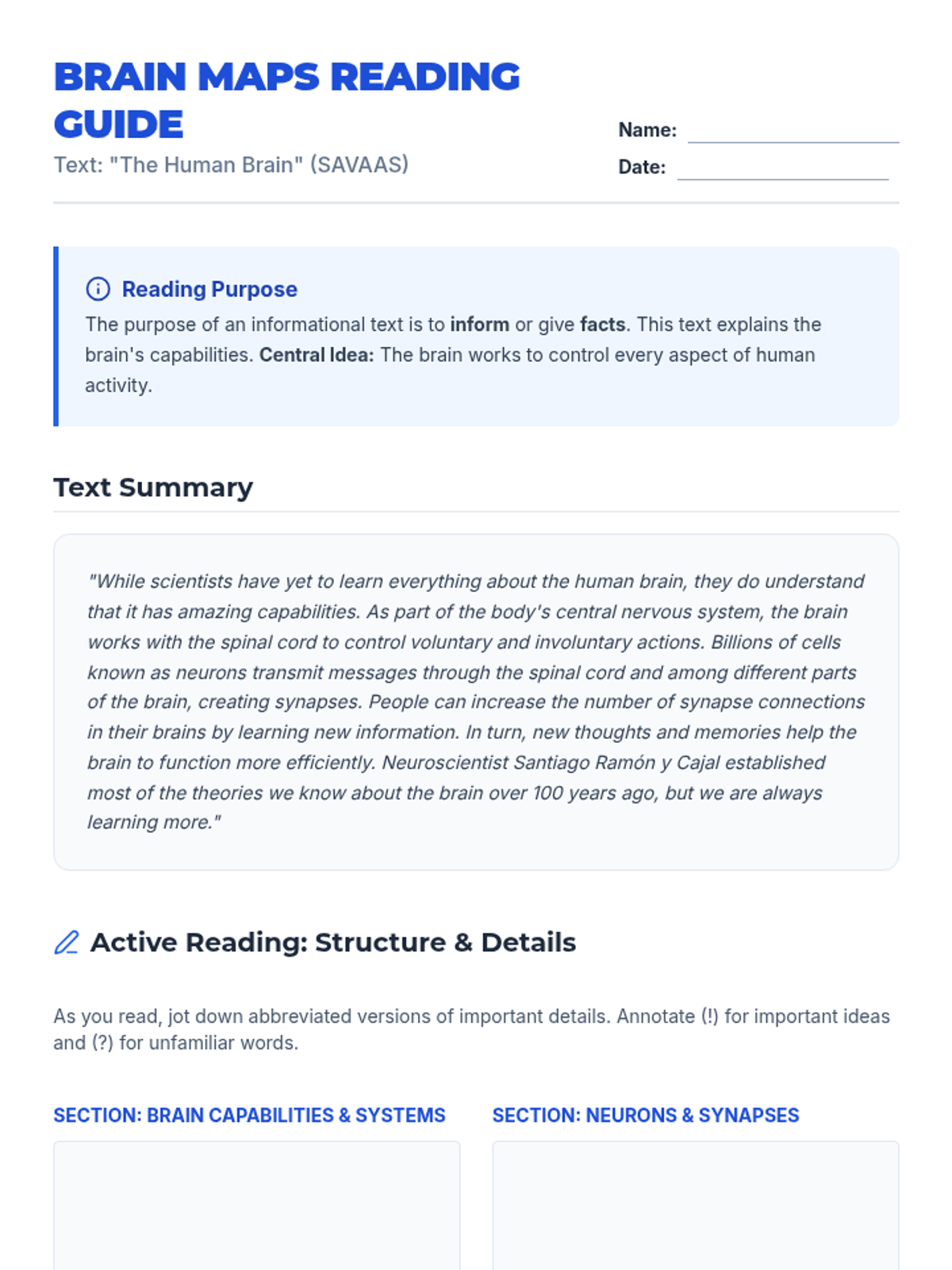
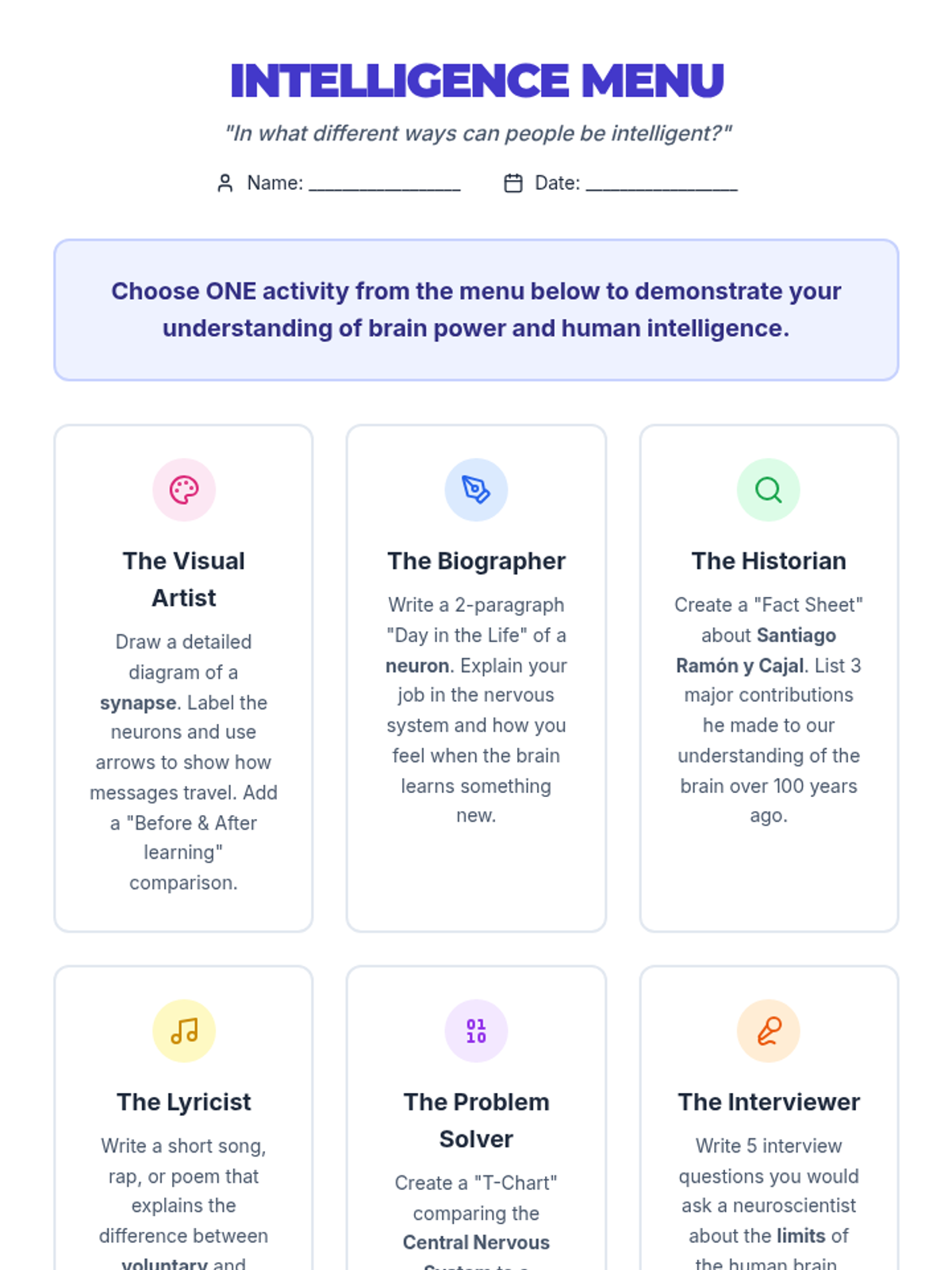
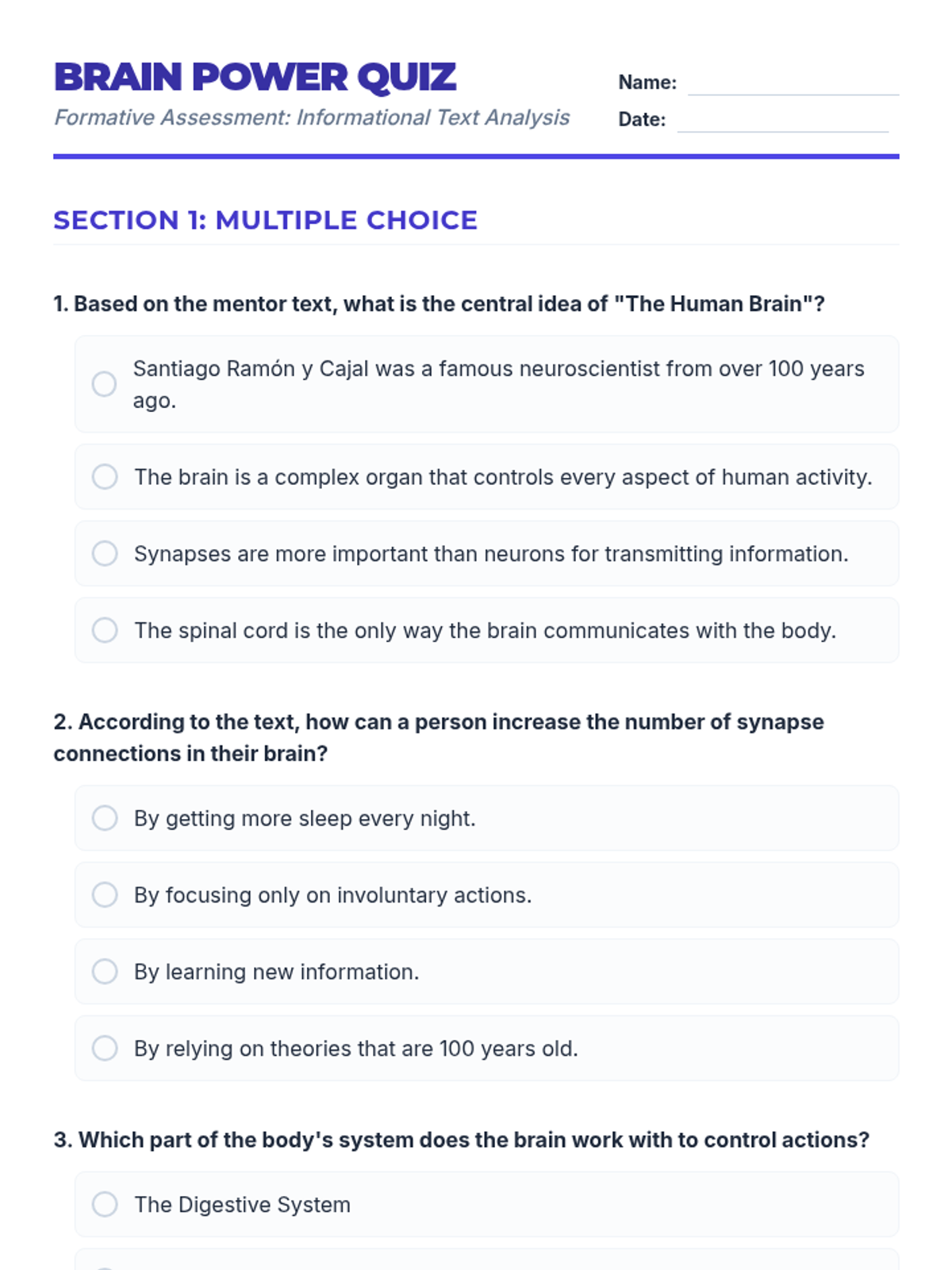
A comprehensive lesson exploring the human brain's capabilities and the nature of intelligence, featuring an informational text analysis and a multiple intelligences choice board.
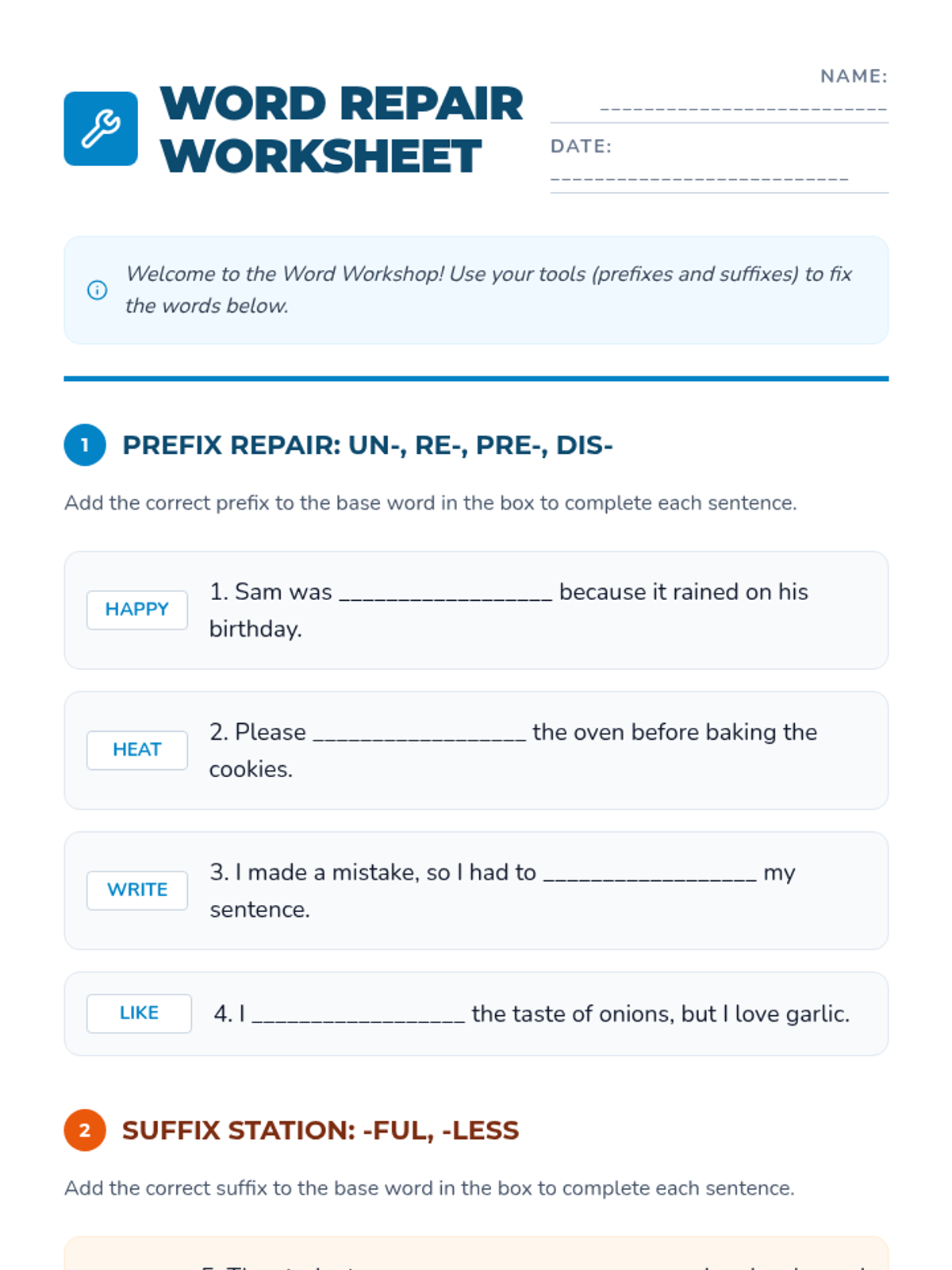
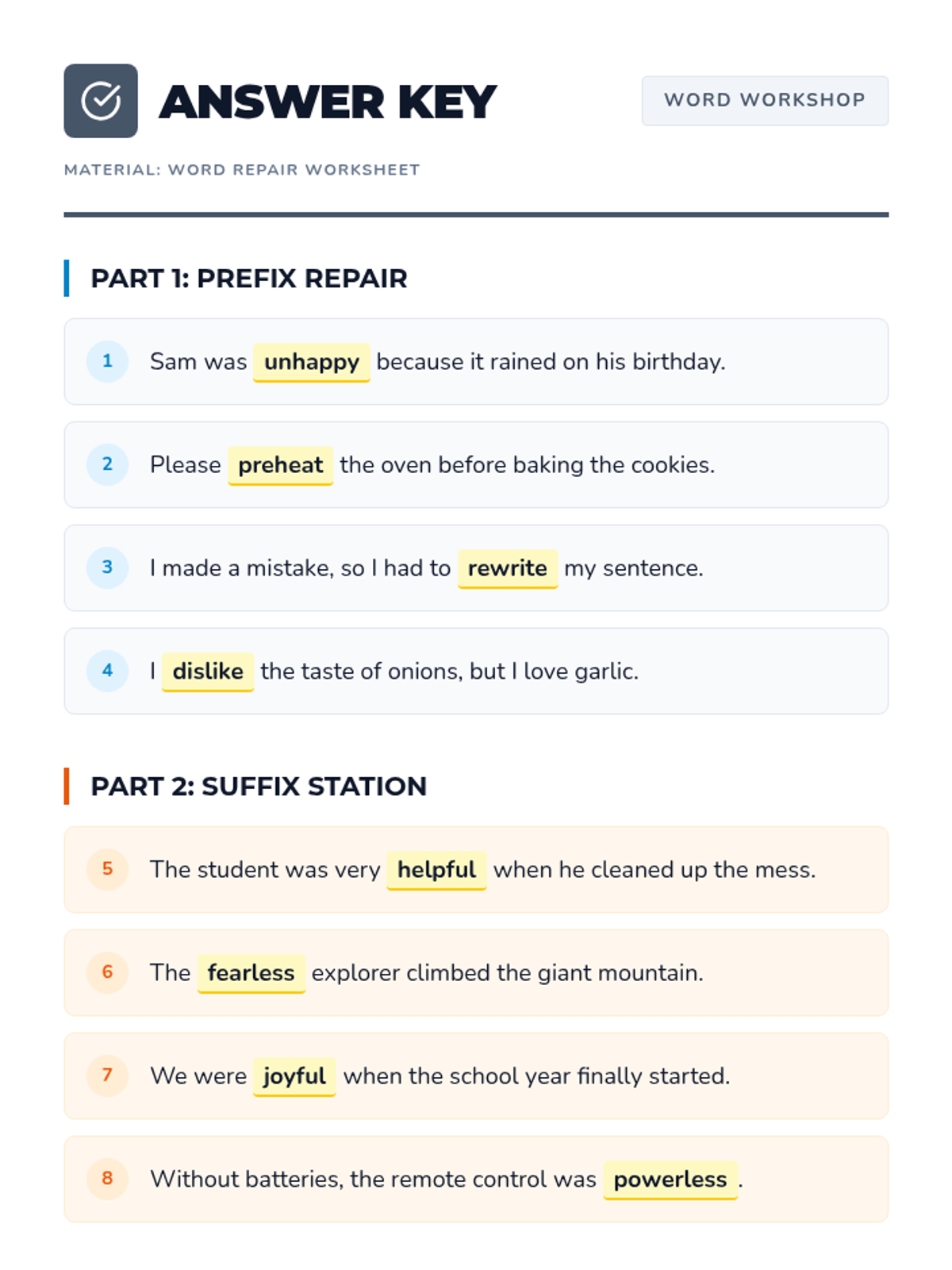
A lesson focused on common prefixes (un-, re-, pre-, dis-) and suffixes (-ful, -less, -er, -ly) using a 'Word Workshop' theme to help students understand how word parts change meanings.
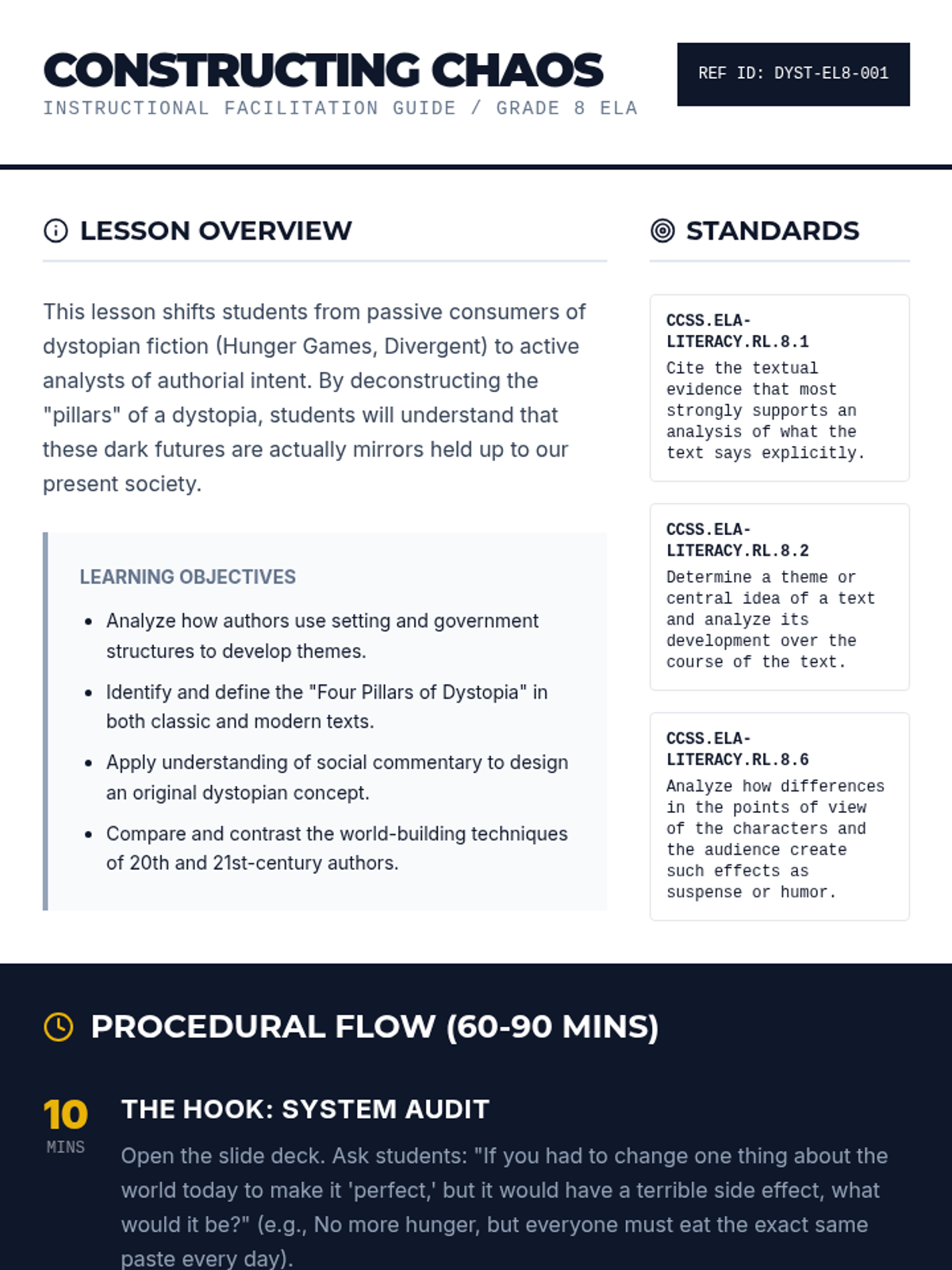
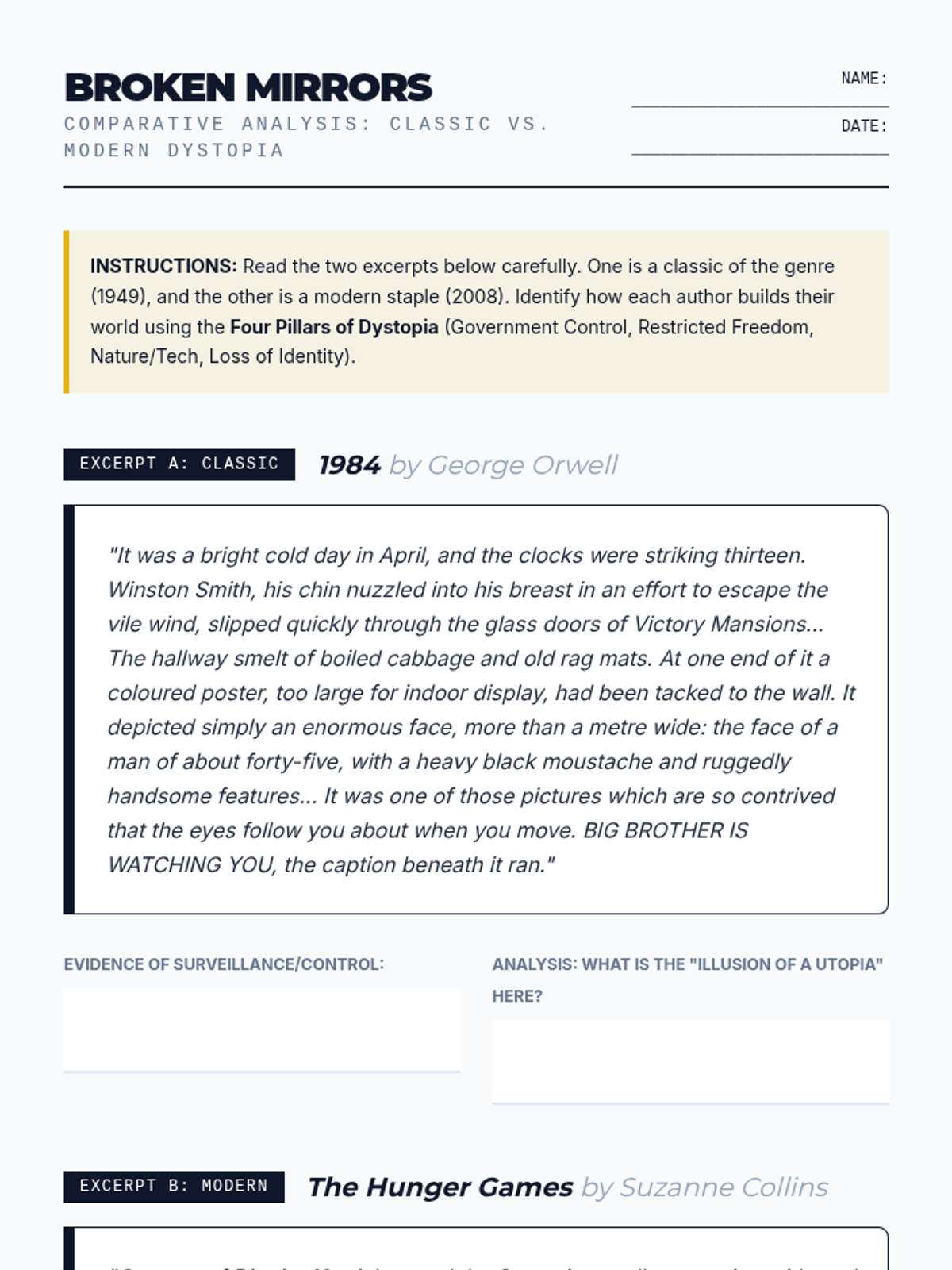
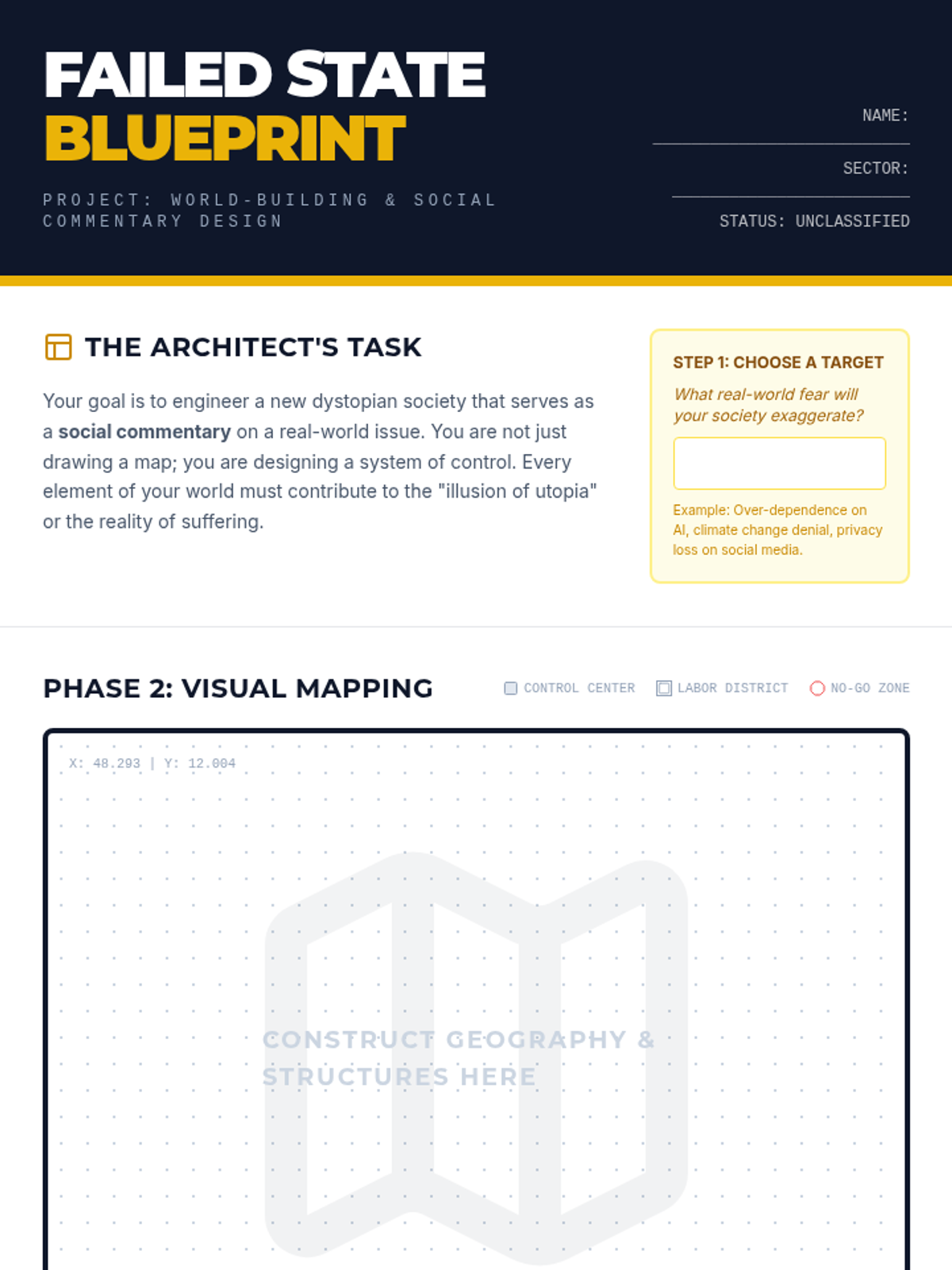
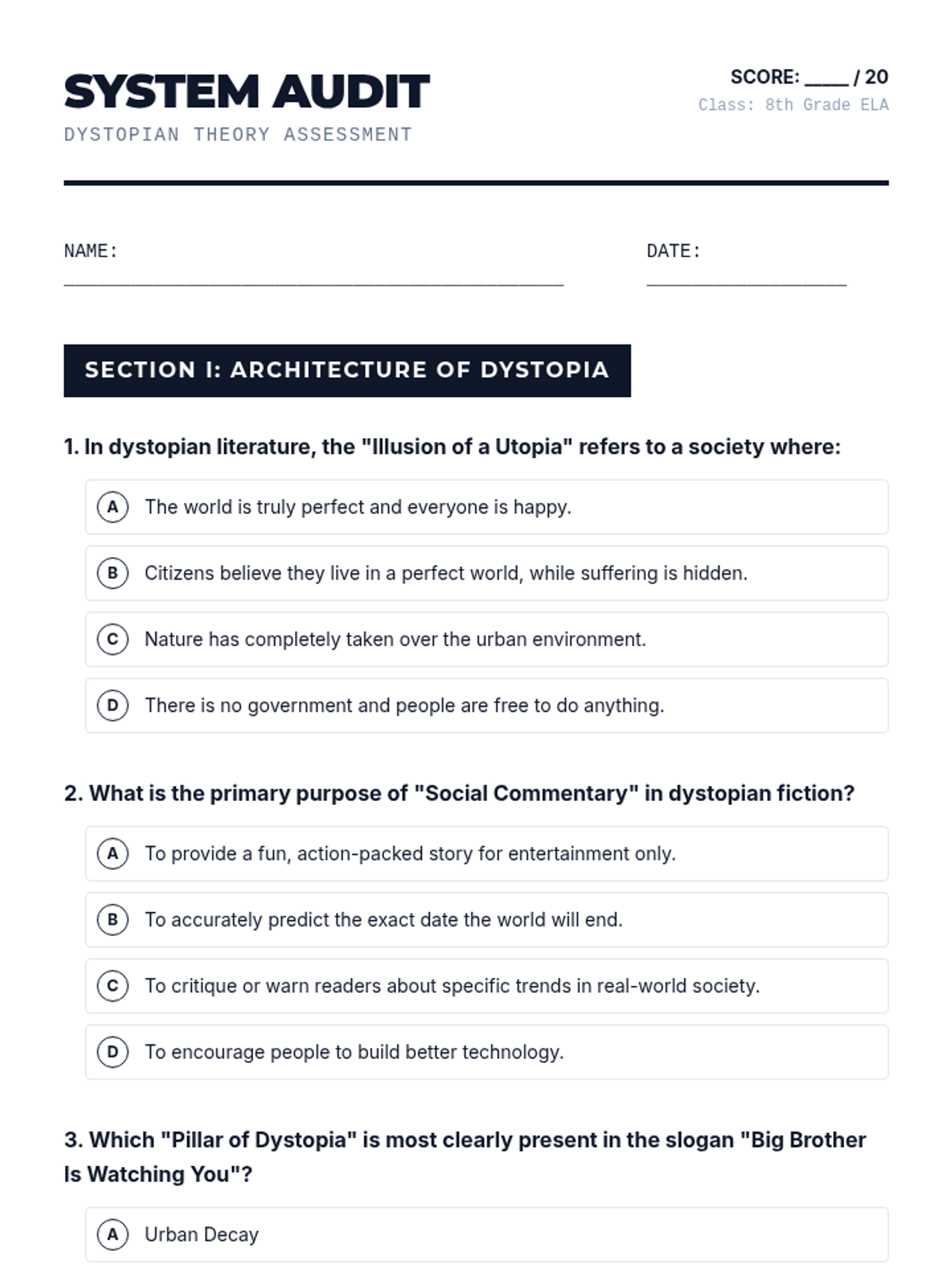
This lesson explores the structural elements of dystopian fiction, focusing on how authors use world-building to critique contemporary society. Students analyze classic and modern excerpts before designing their own symbolic 'failed society' map.
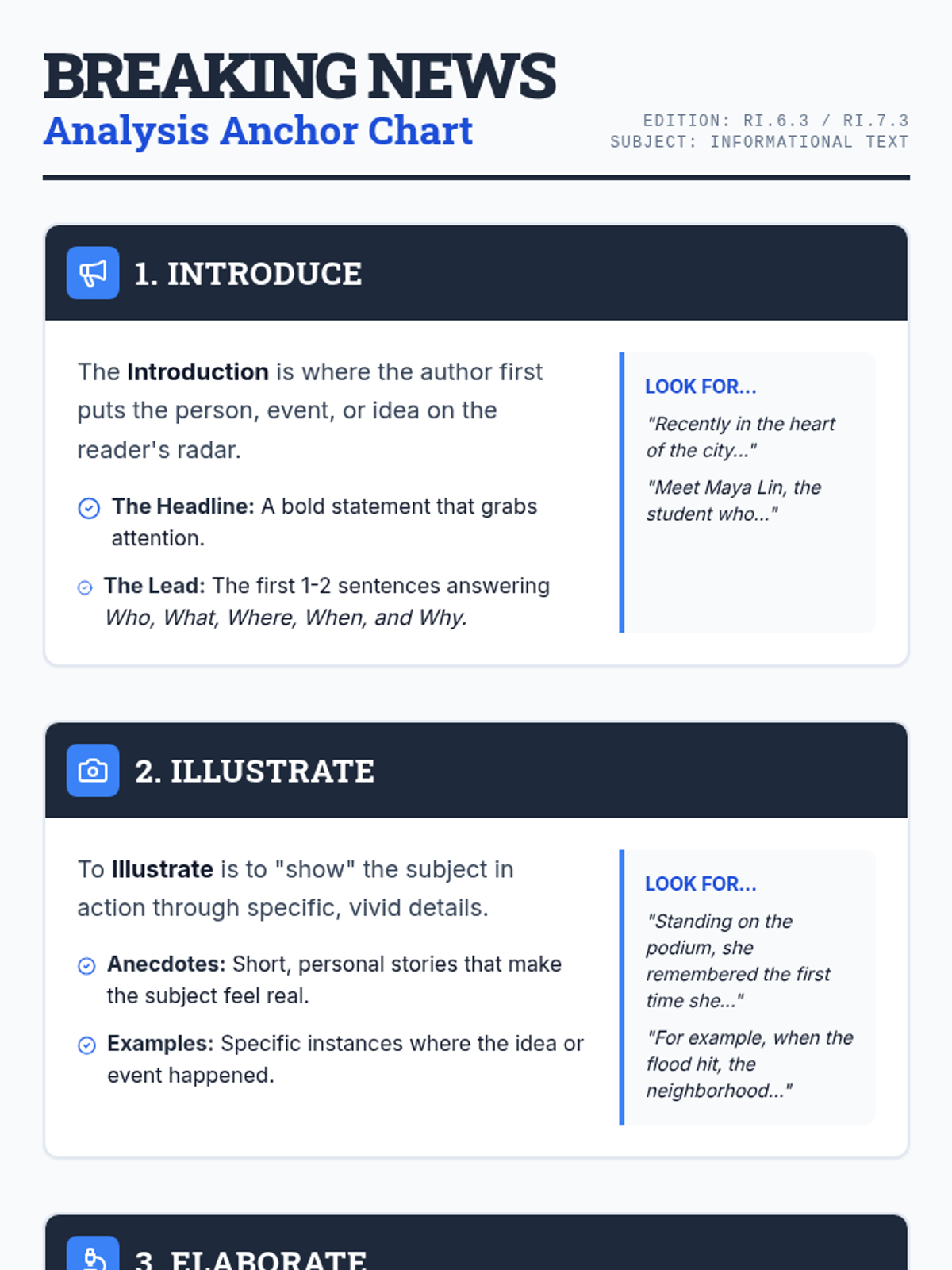
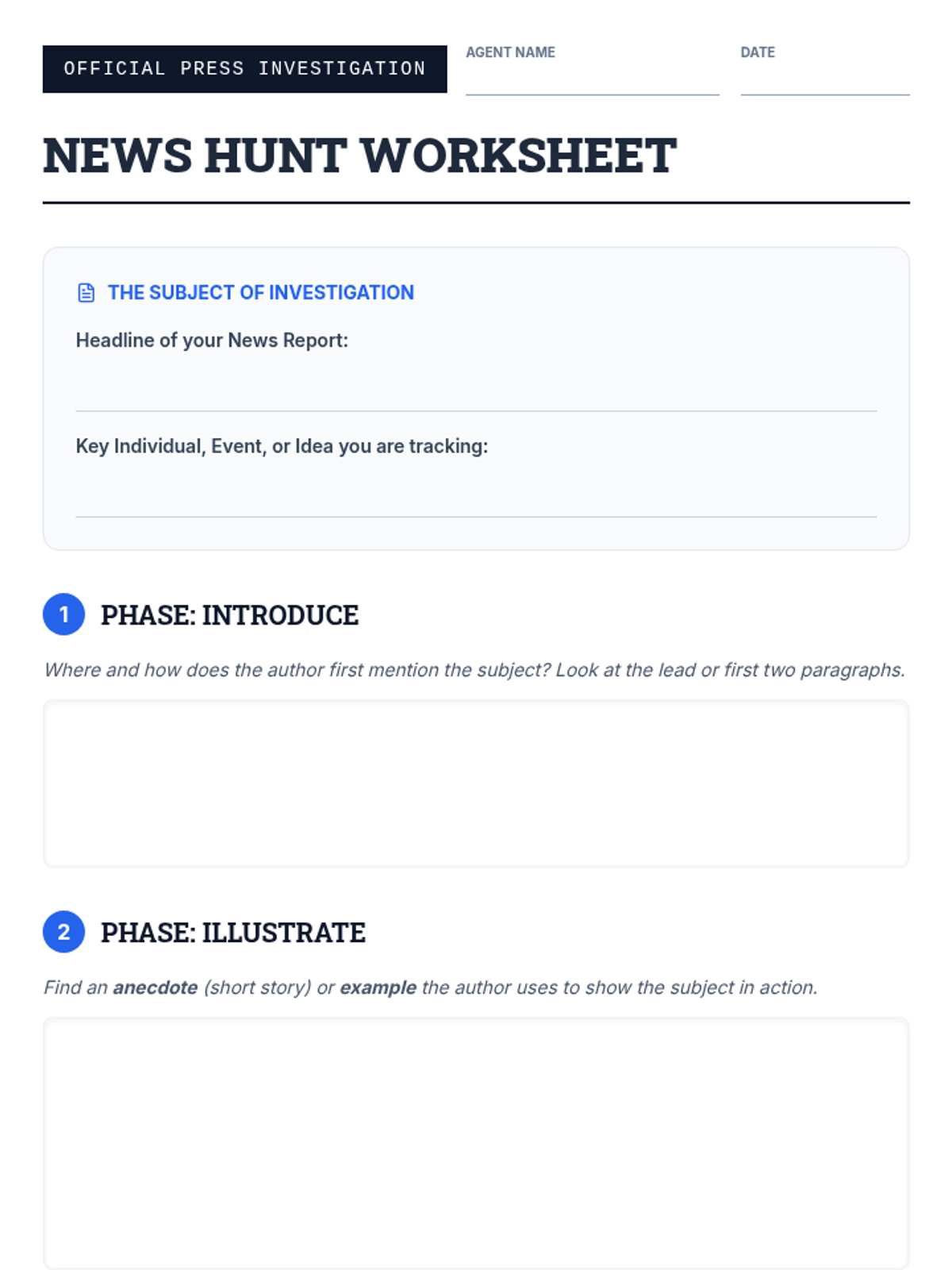
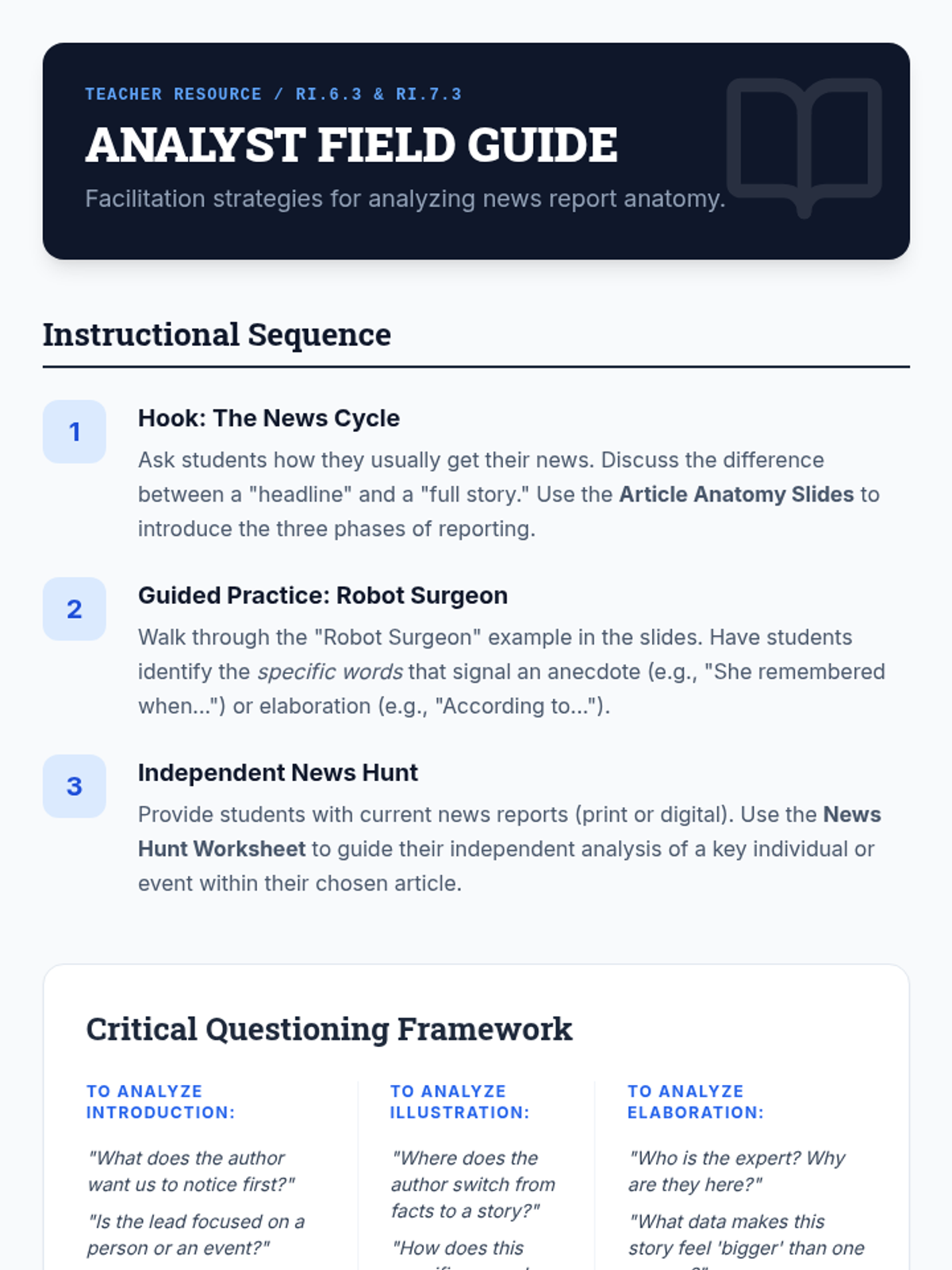
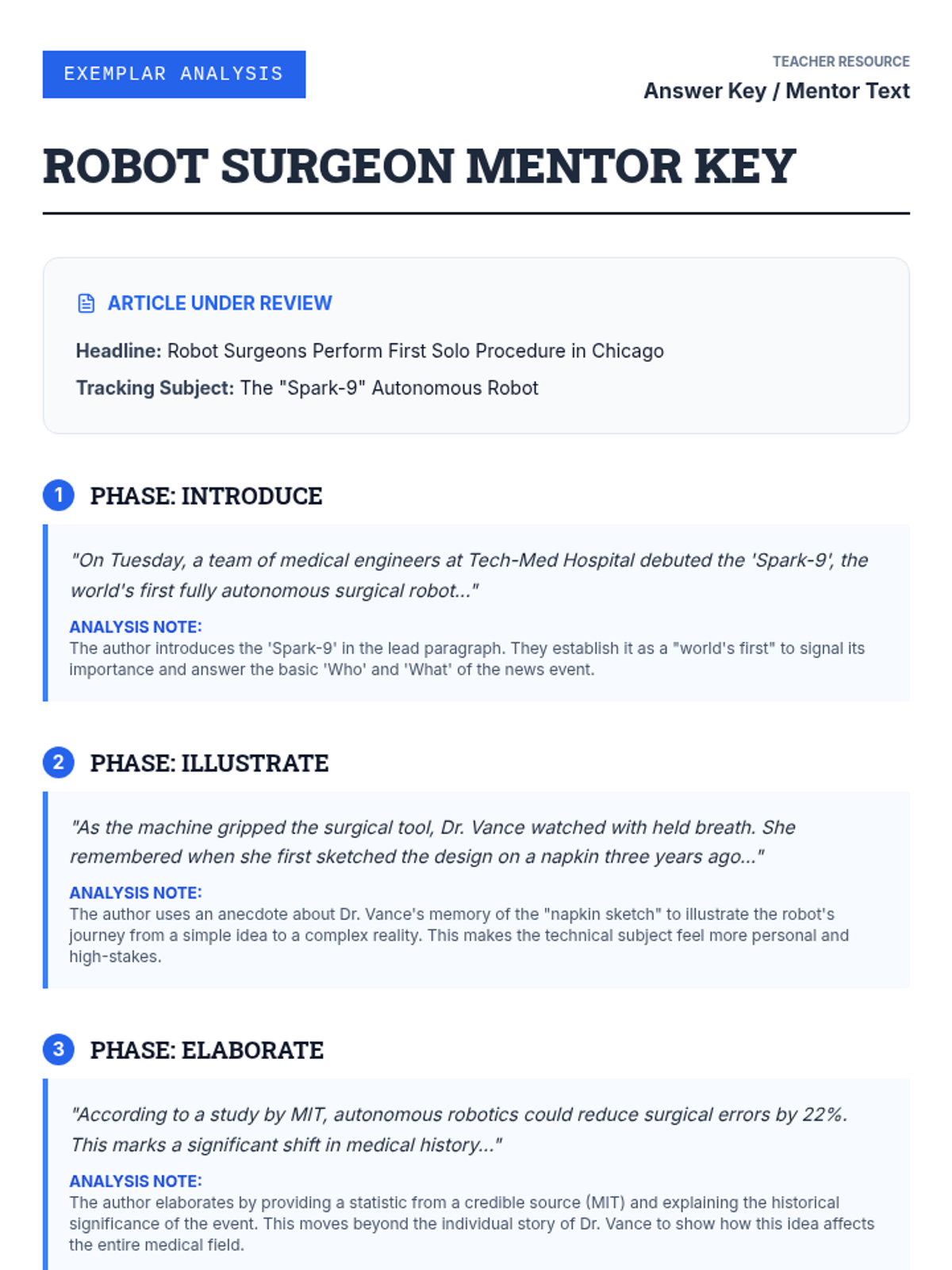
This lesson teaches students to analyze how news reports introduce, illustrate, and elaborate on key individuals, events, or ideas using specific examples and anecdotes.
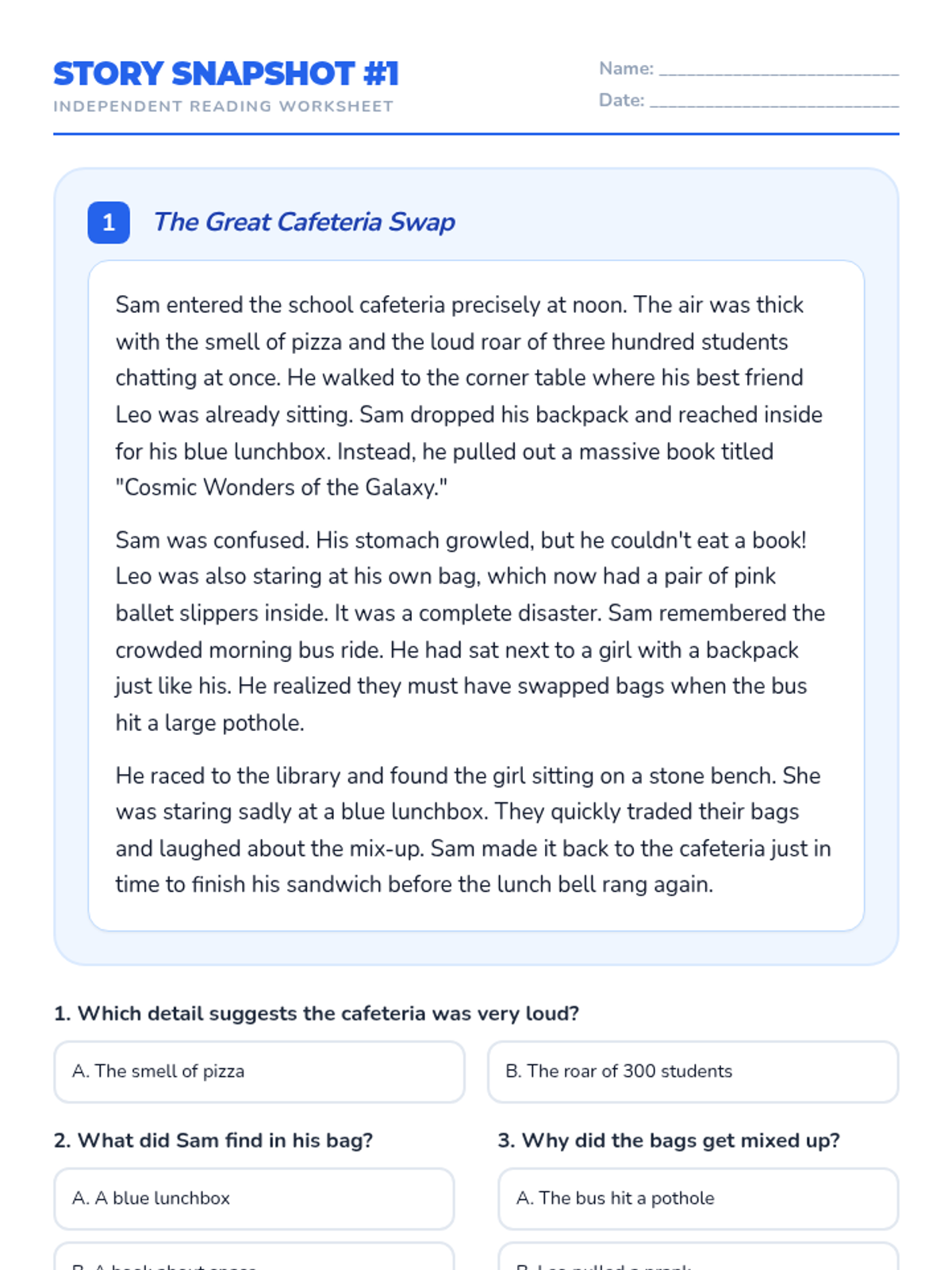
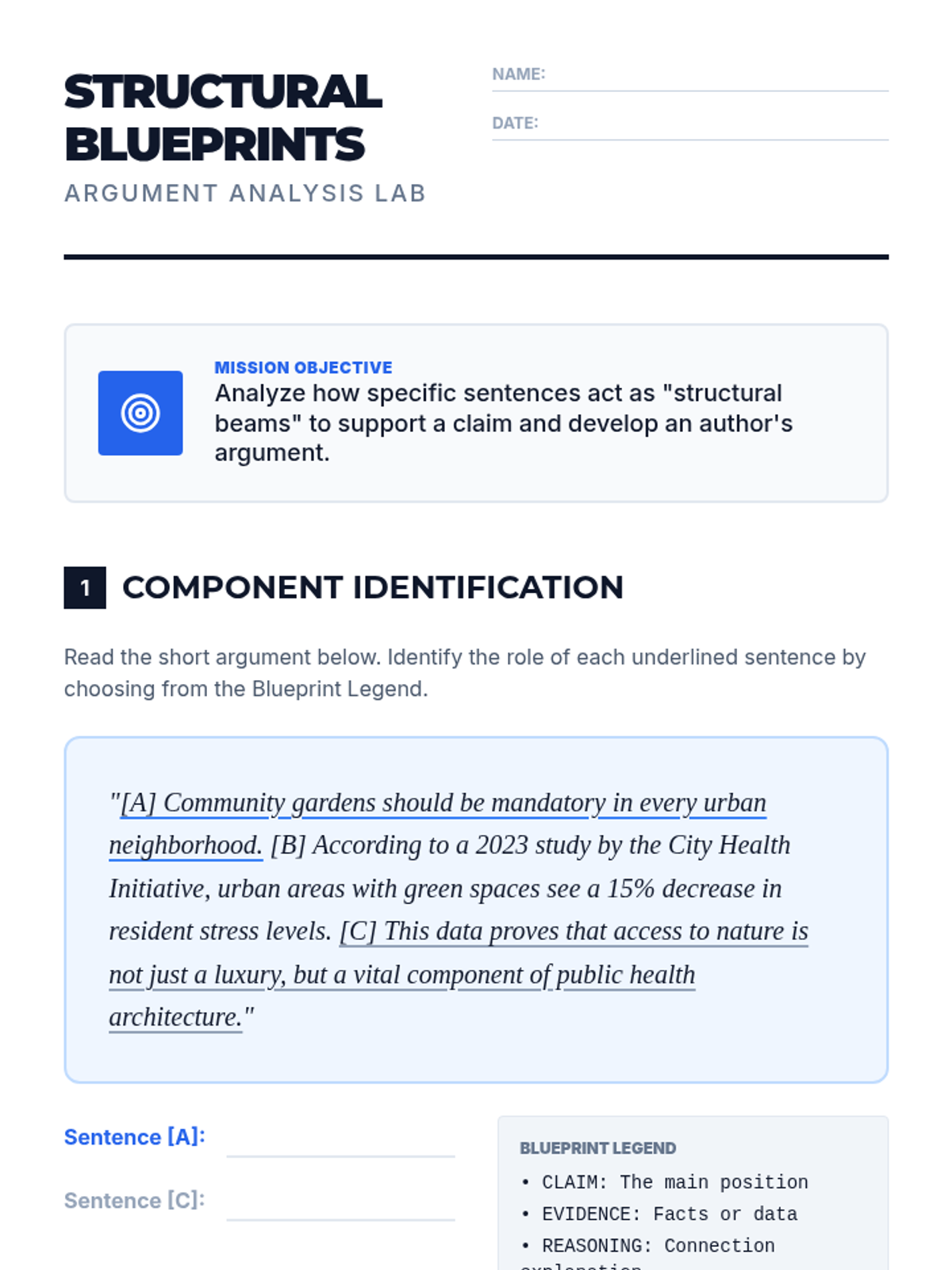
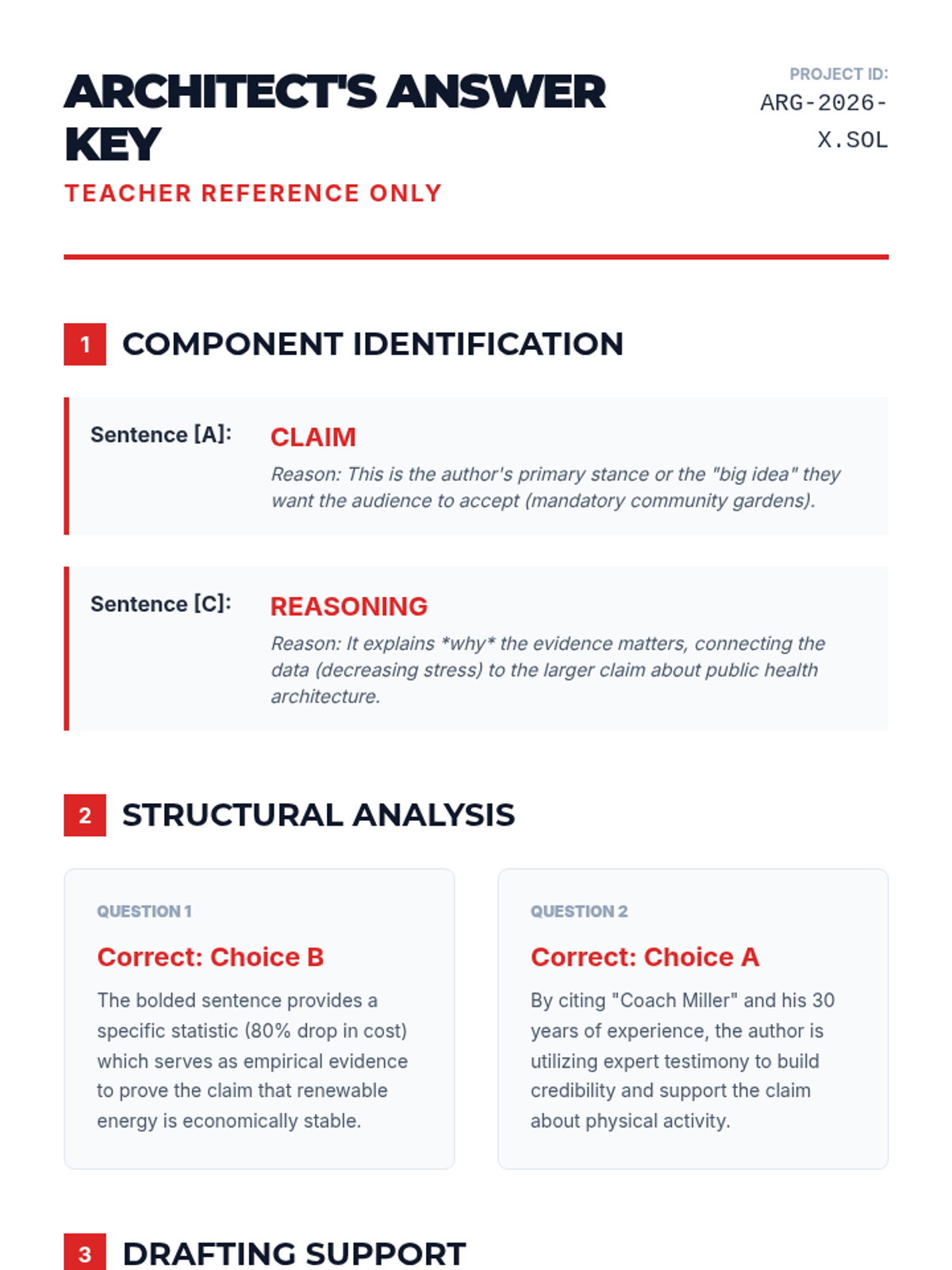
A lesson focused on analyzing how specific parts of a text contribute to the overall structure and the development of an argument through evidence. Students learn to see texts as 'blueprints' where every sentence serves a structural purpose.
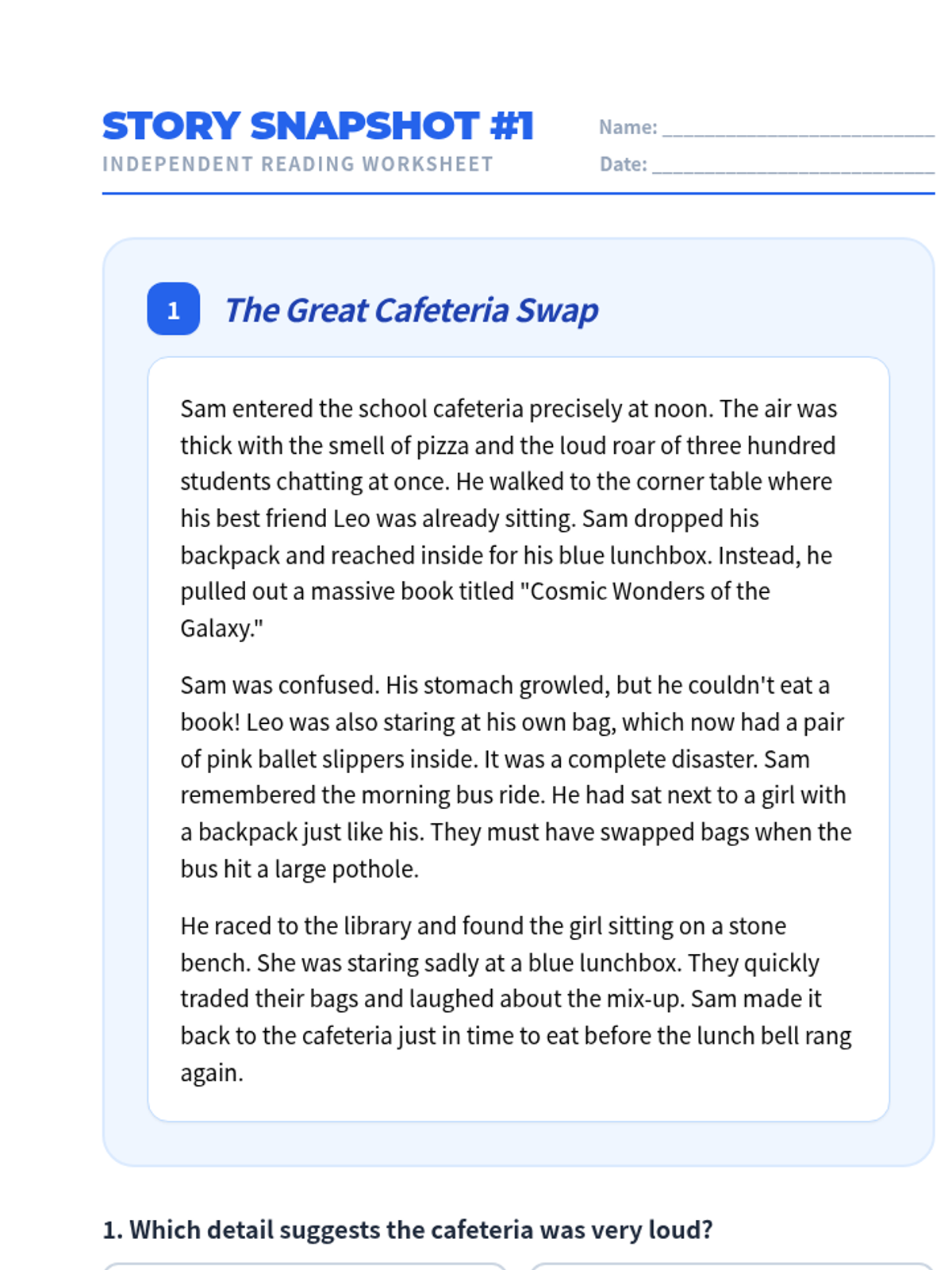
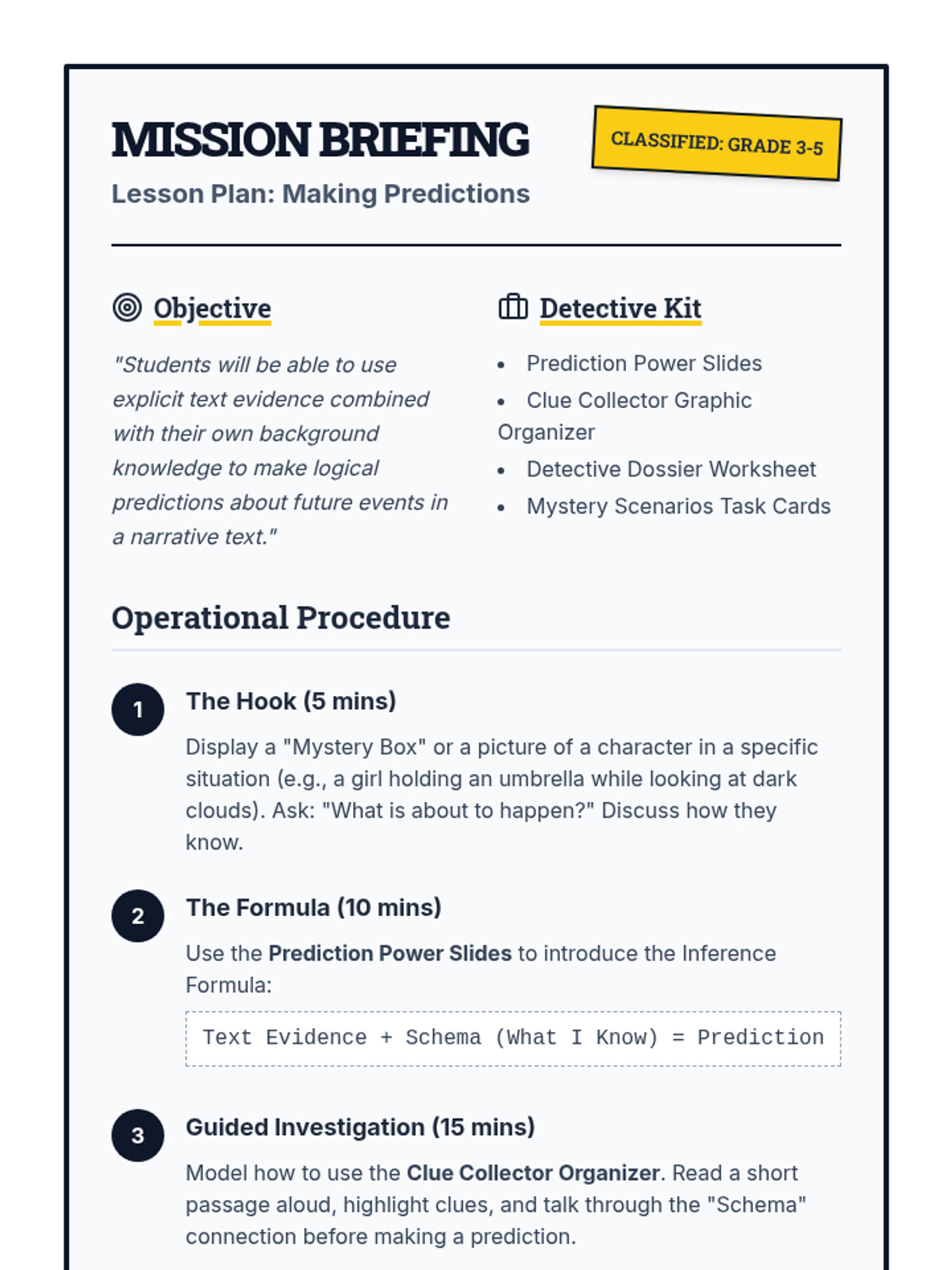
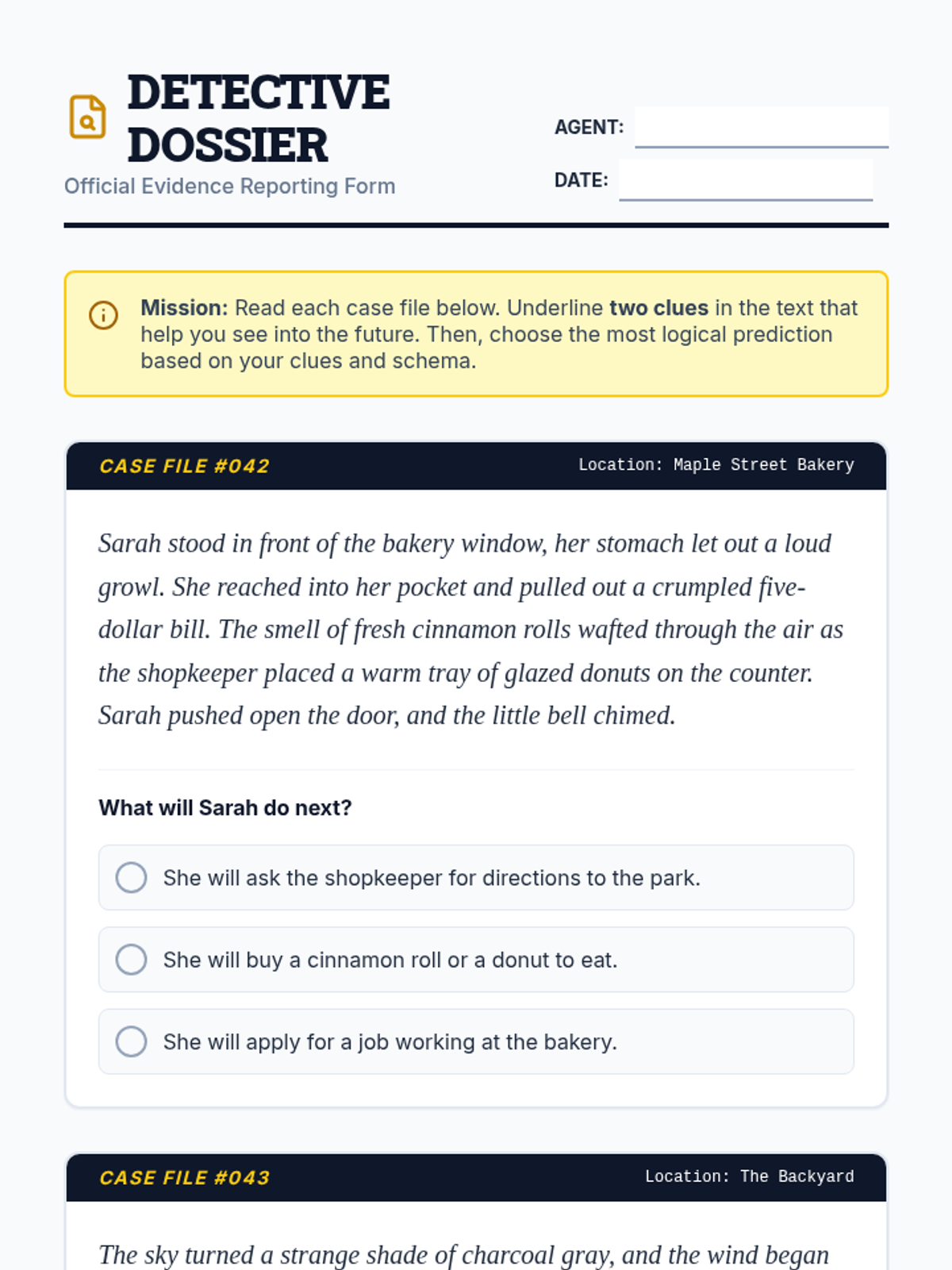
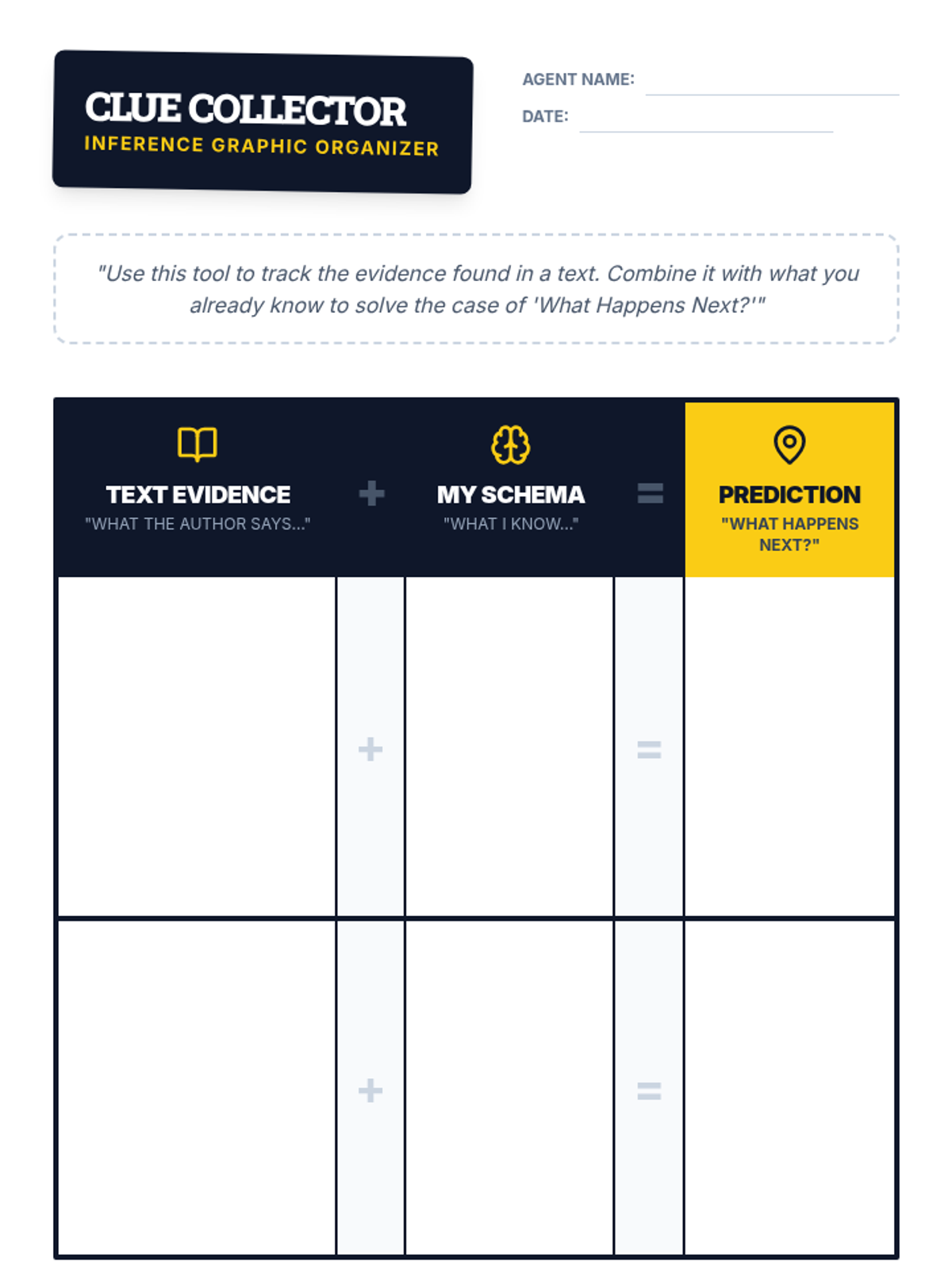
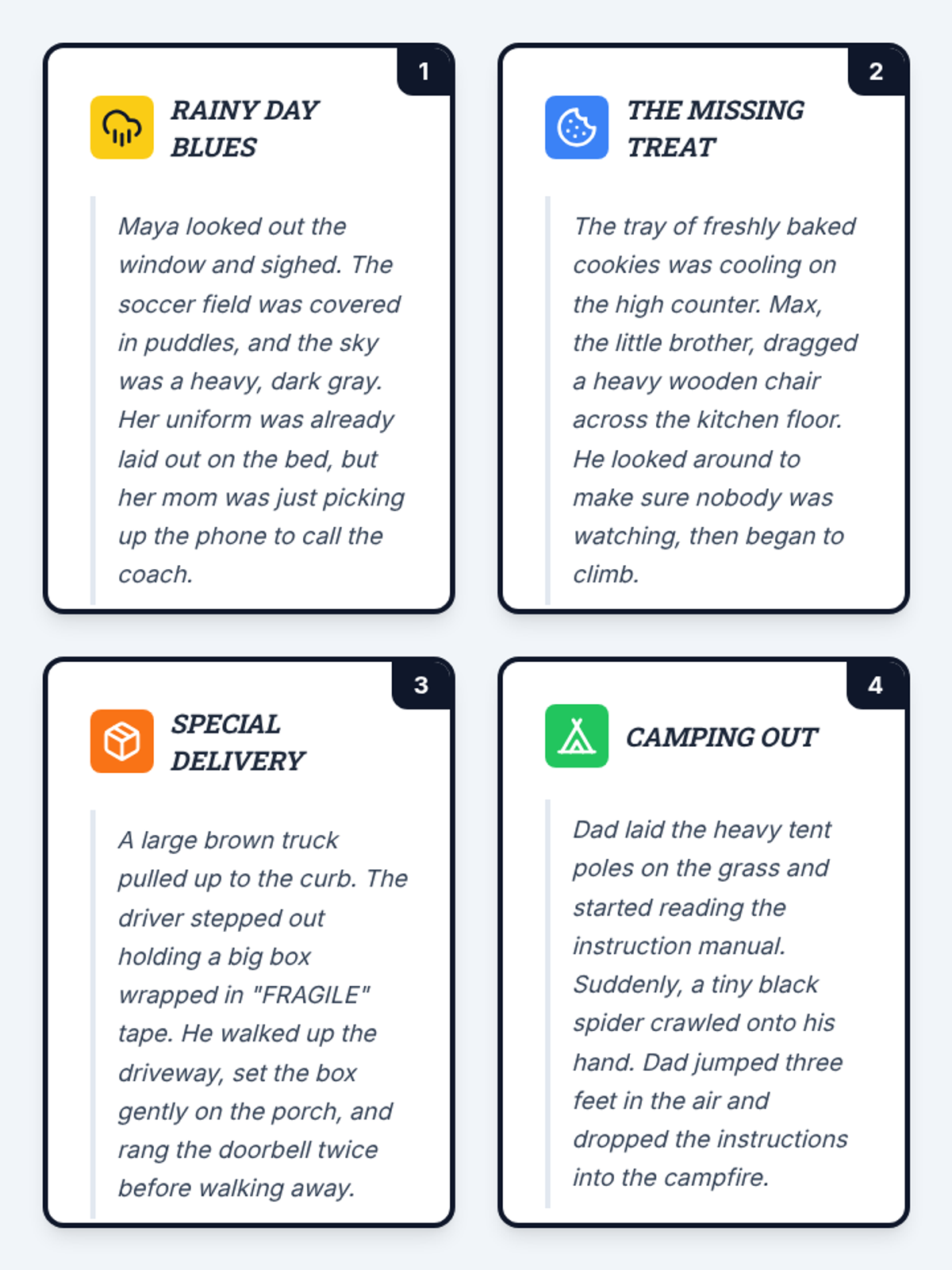
A comprehensive lesson where students learn to use text evidence and background knowledge to make logical predictions about what will happen next in a story.
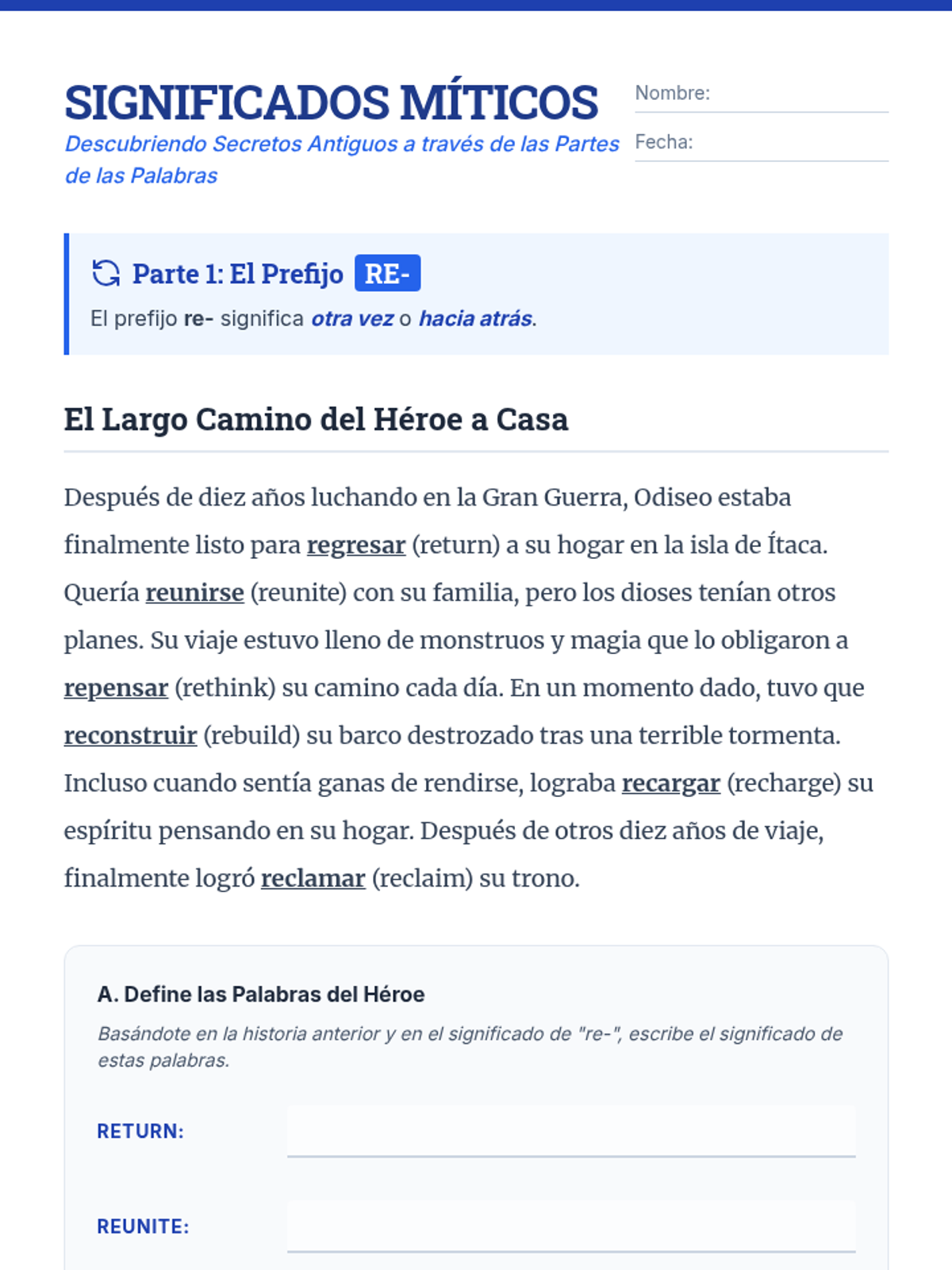
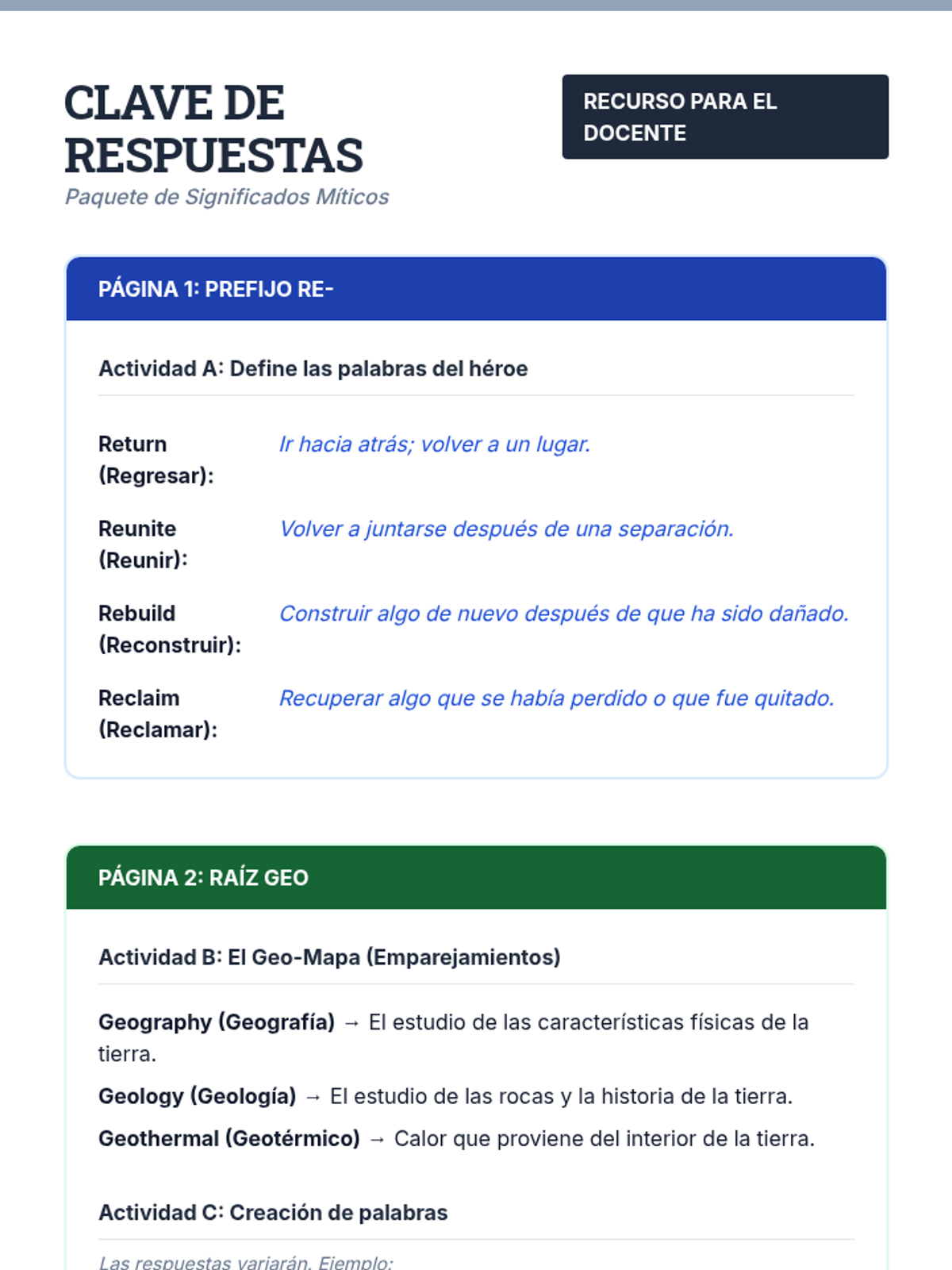
A focused study on the prefix 'RE-', the root 'GEO', and the suffix '-LESS' through the lens of Greek and Roman mythology. Students will read myth-inspired stories and complete activities to master these common word parts.
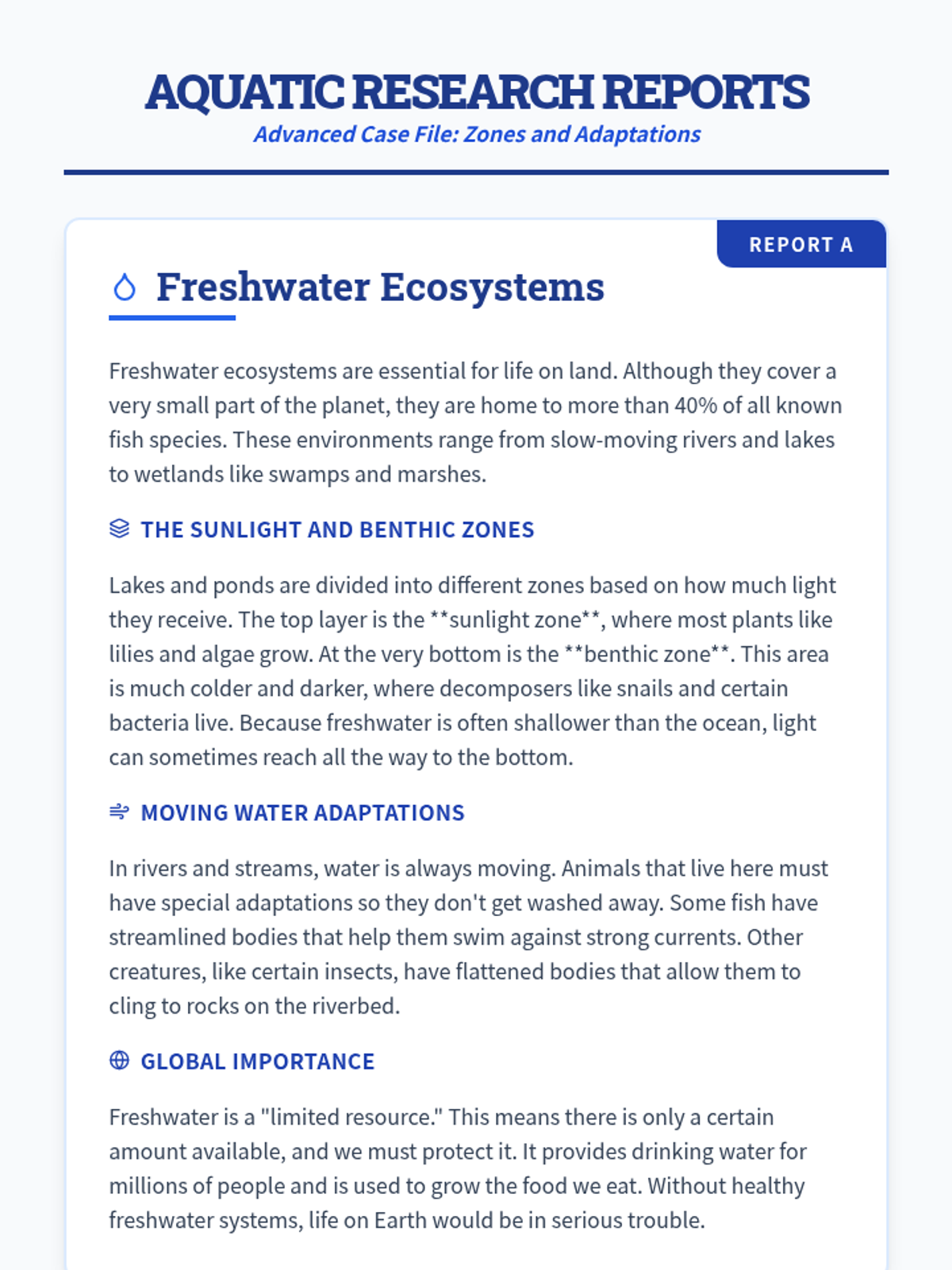
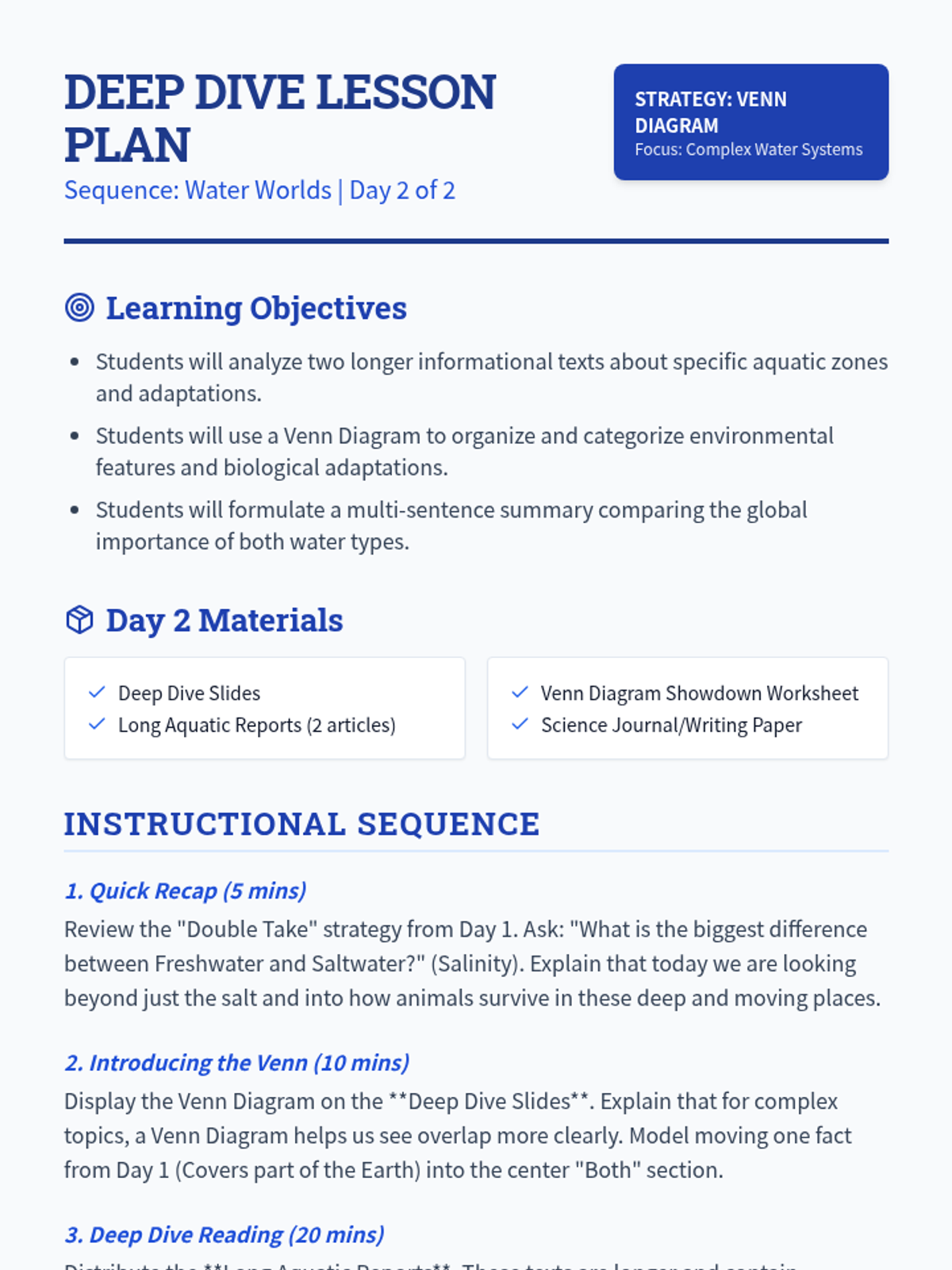
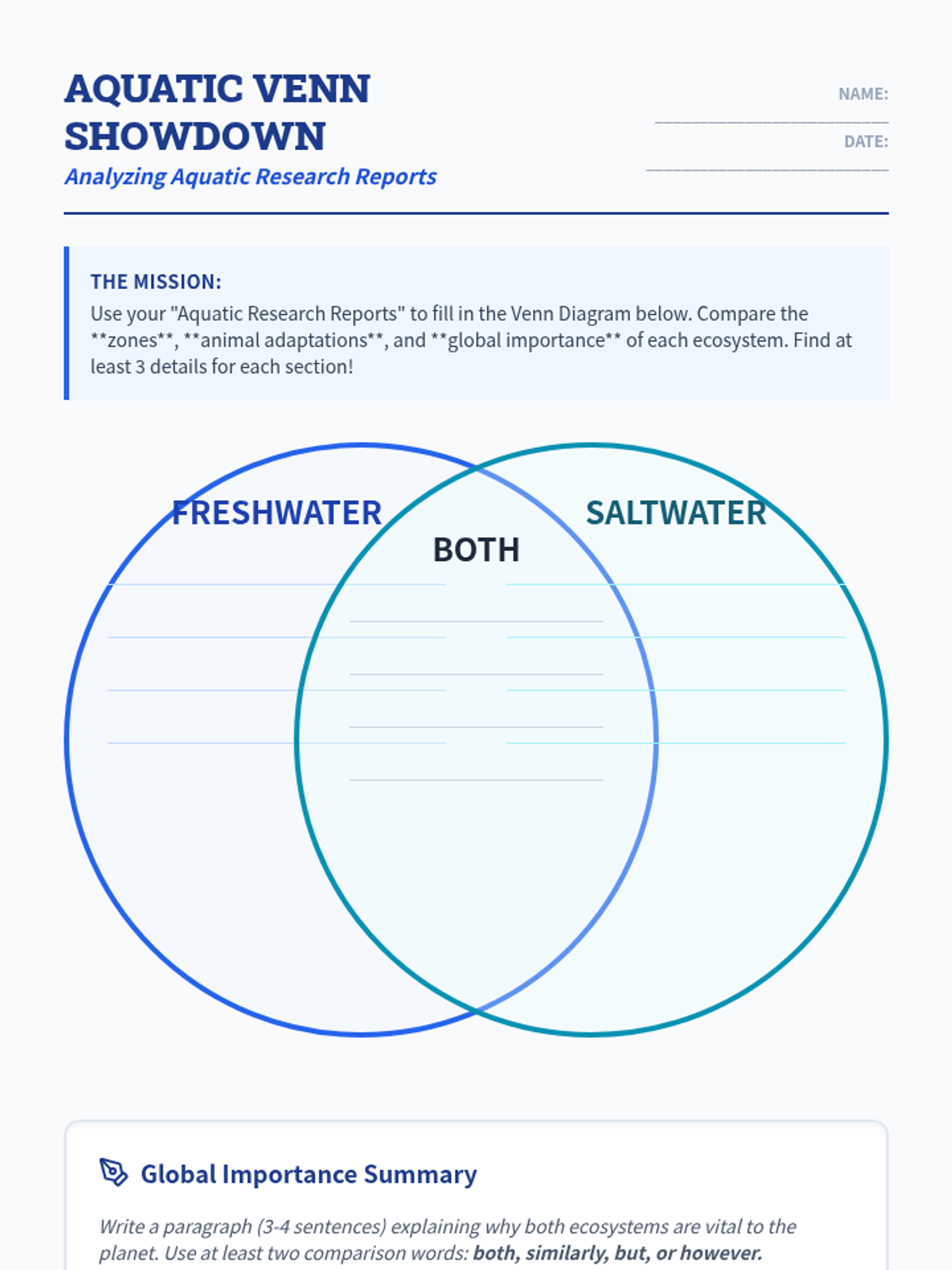
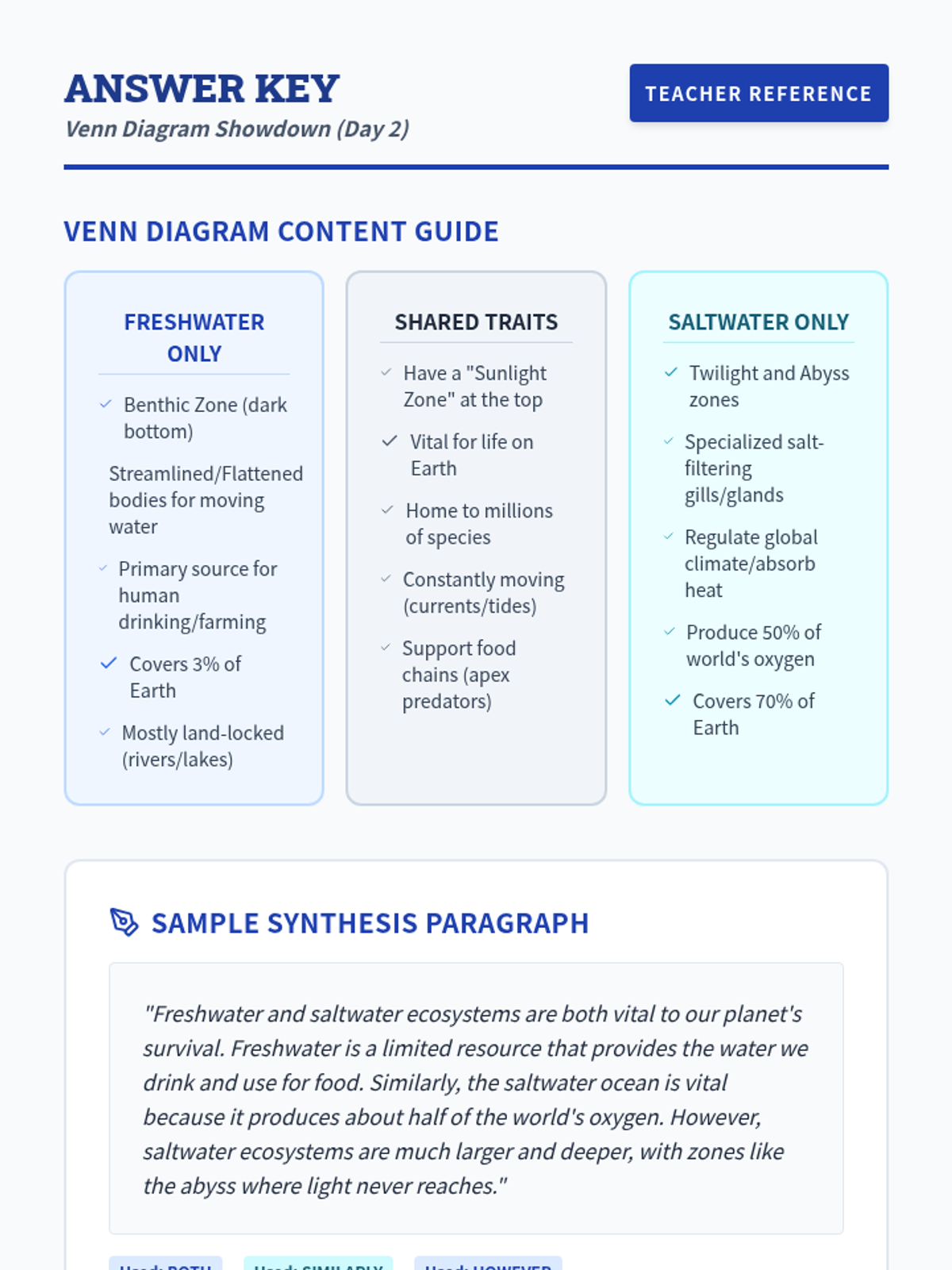
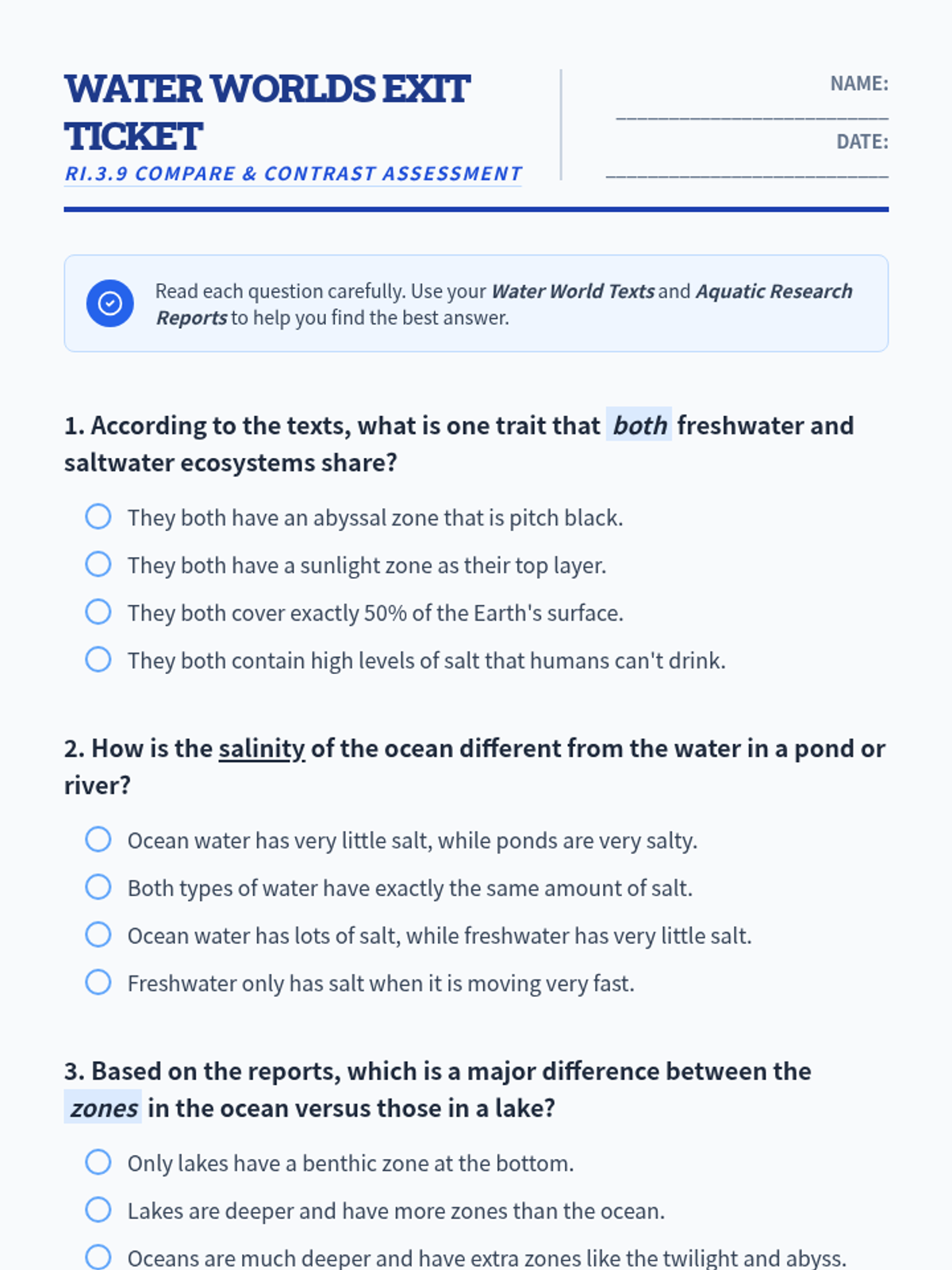
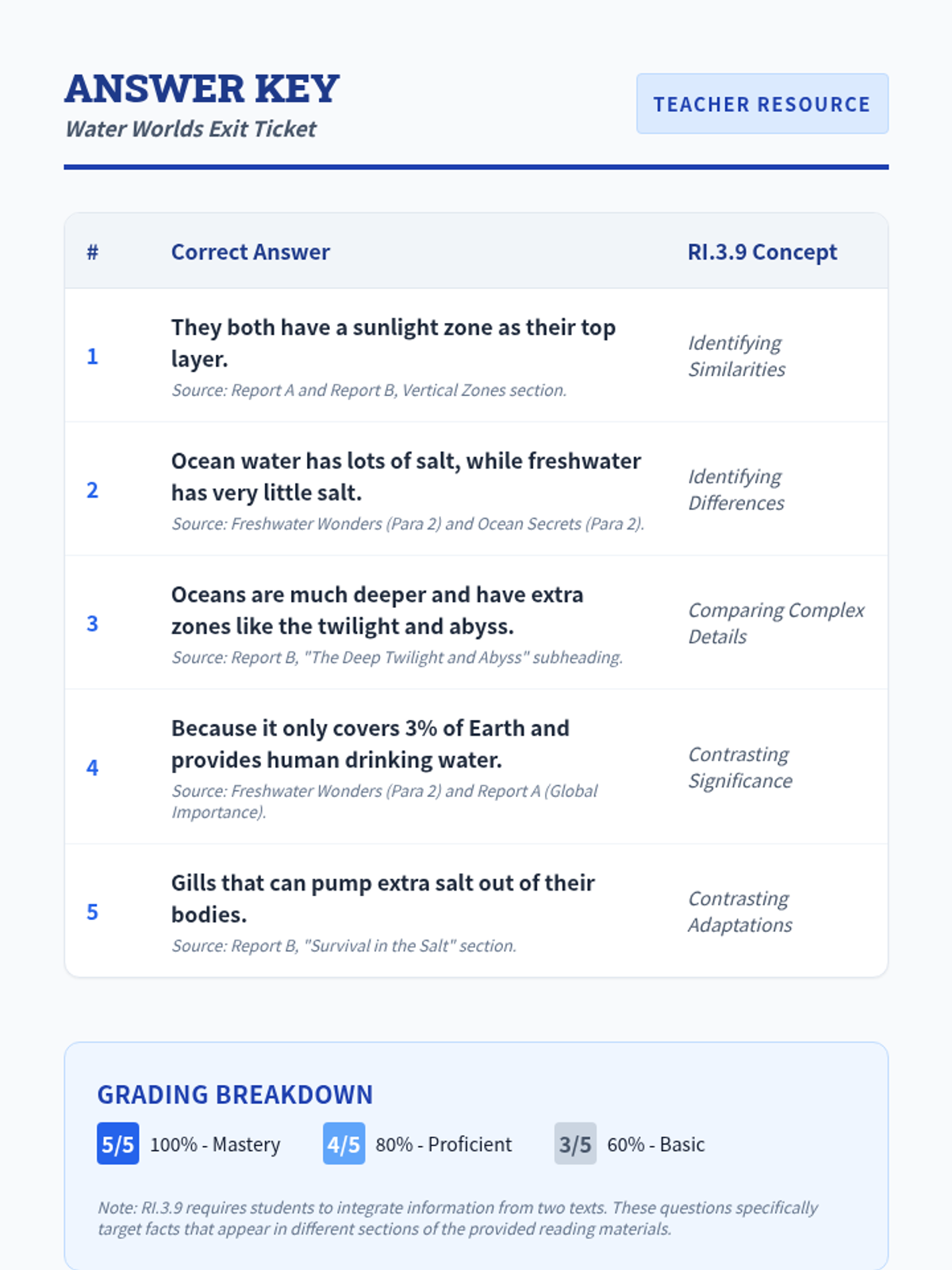
Day 2 of the Water Worlds unit. Students tackle longer informational texts and transition to using a Venn Diagram strategy to categorize similarities and differences in environmental zones, animal adaptations, and global importance.
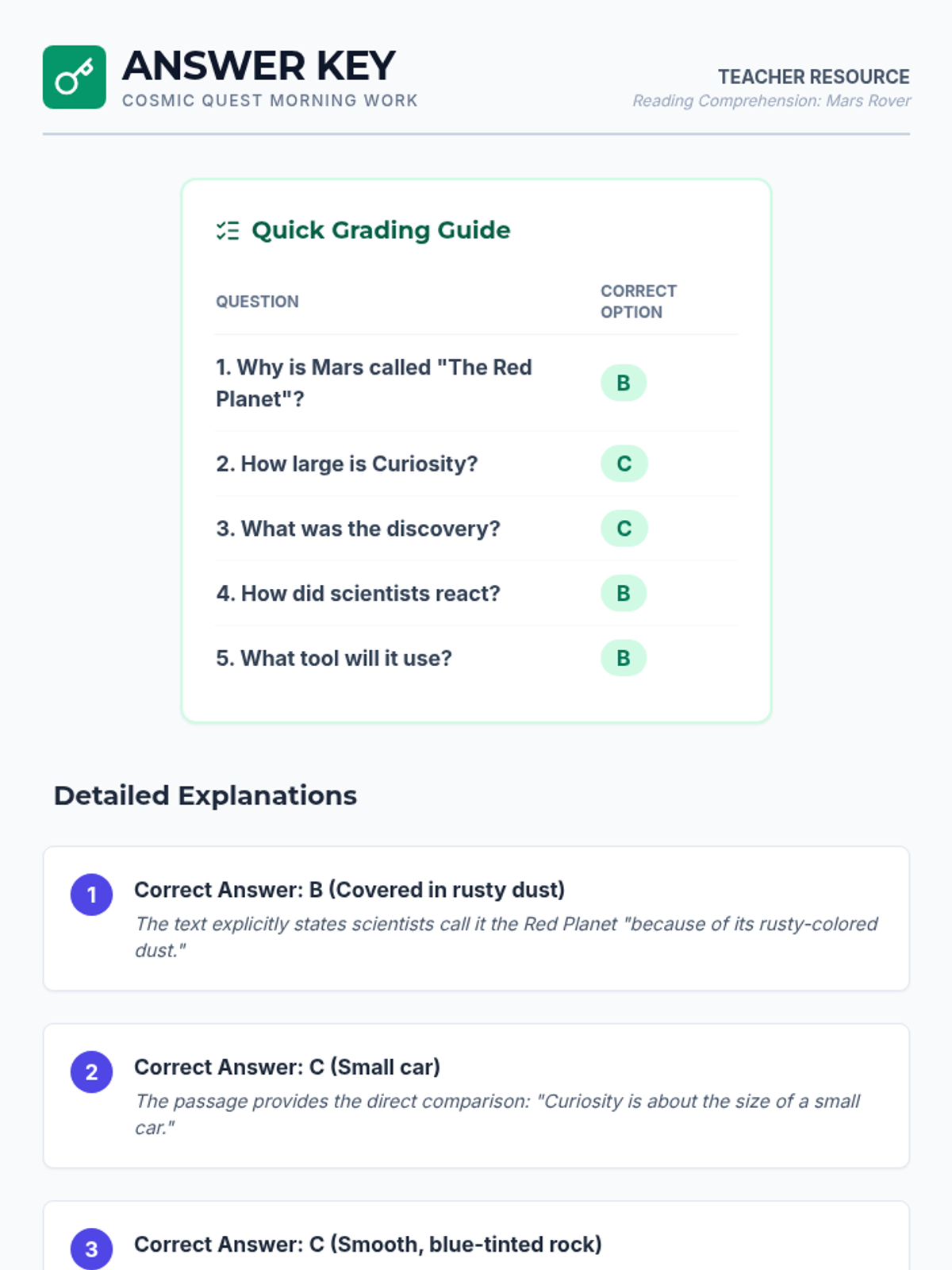
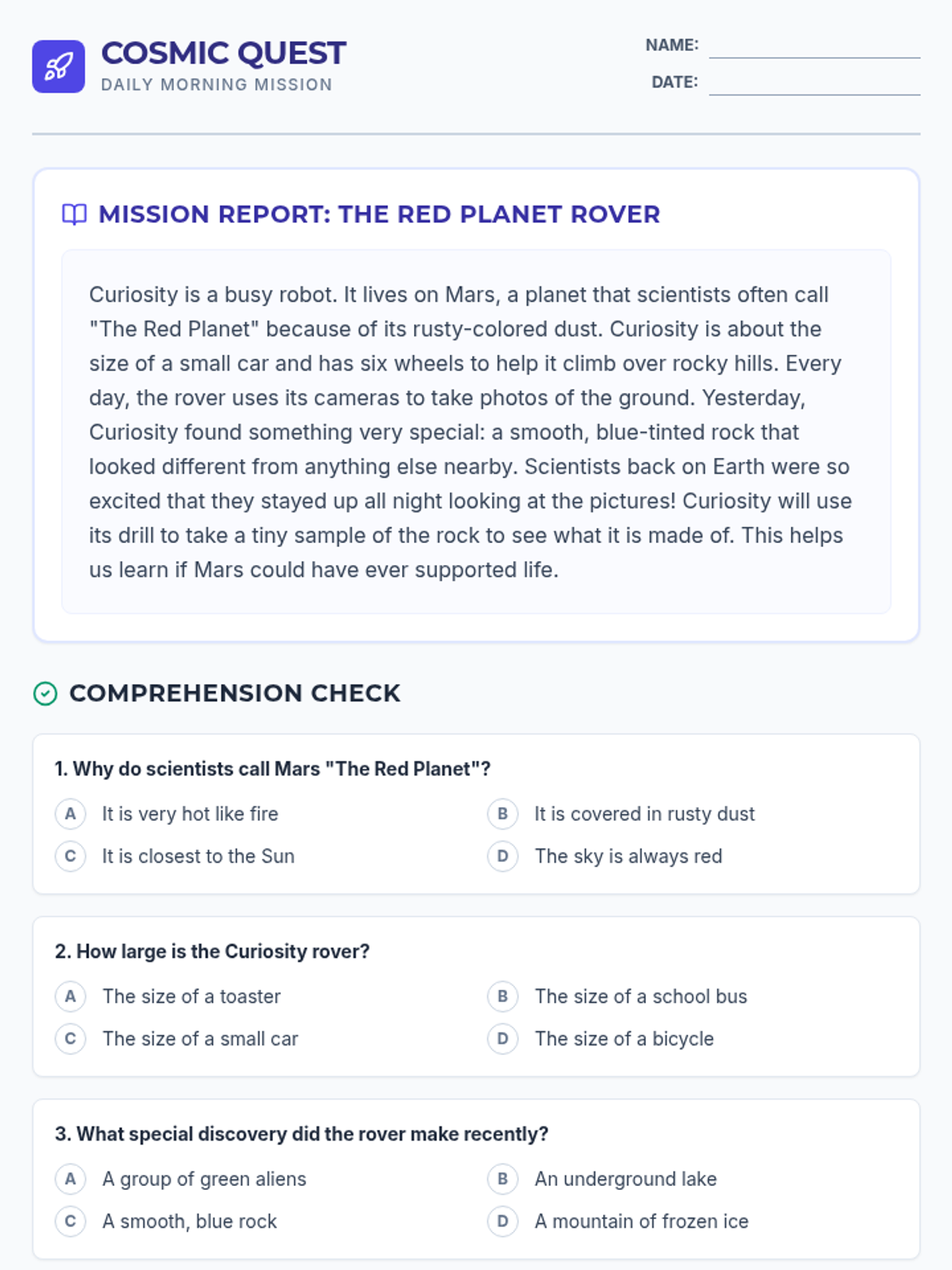
A morning work resource focused on reading comprehension and multiple-choice practice within a space exploration theme.
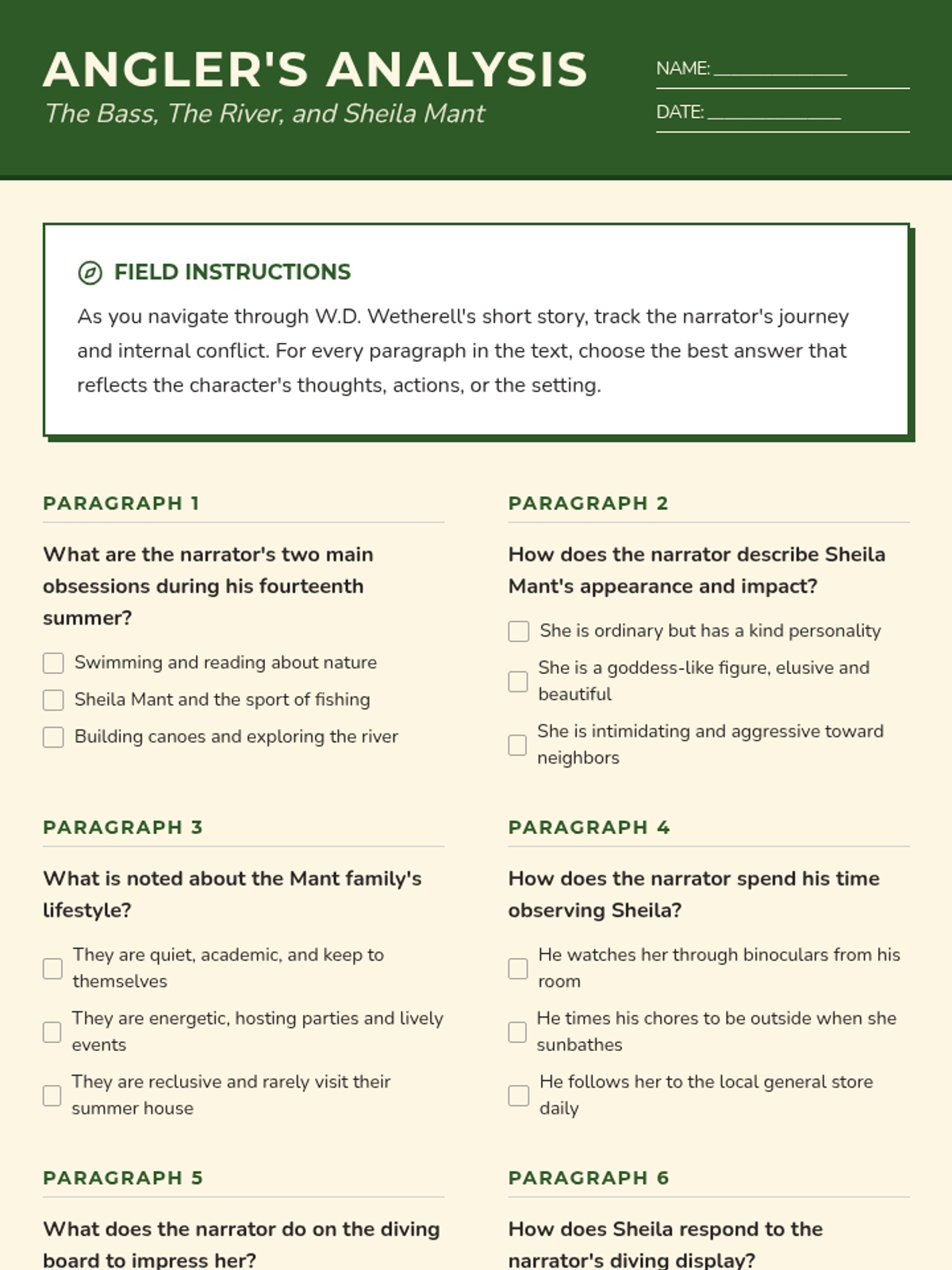
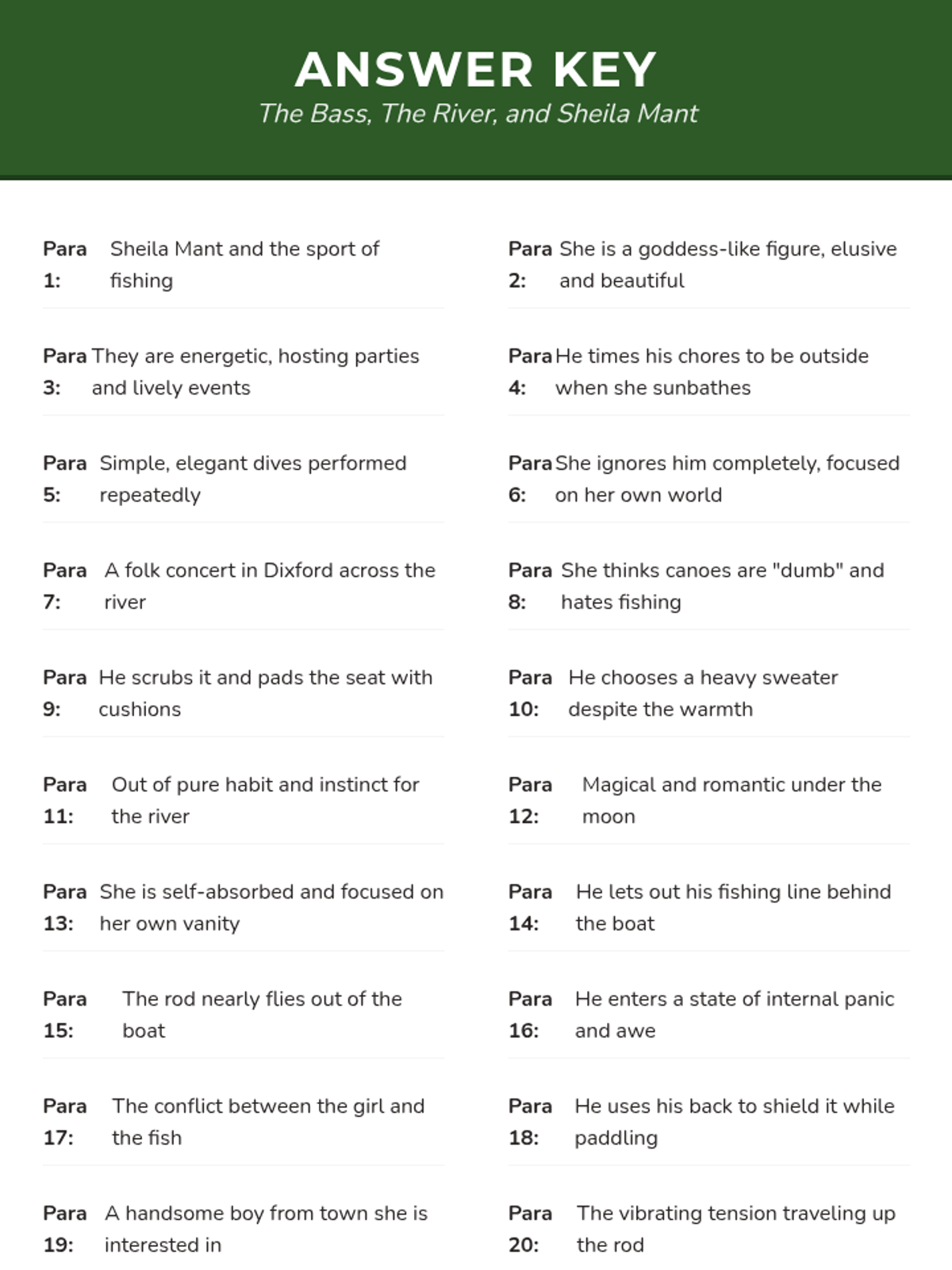
A focused study of W.D. Wetherell's short story 'The Bass, The River, and Sheila Mant,' examining character motivation and internal conflict through a paragraph-by-paragraph analysis.
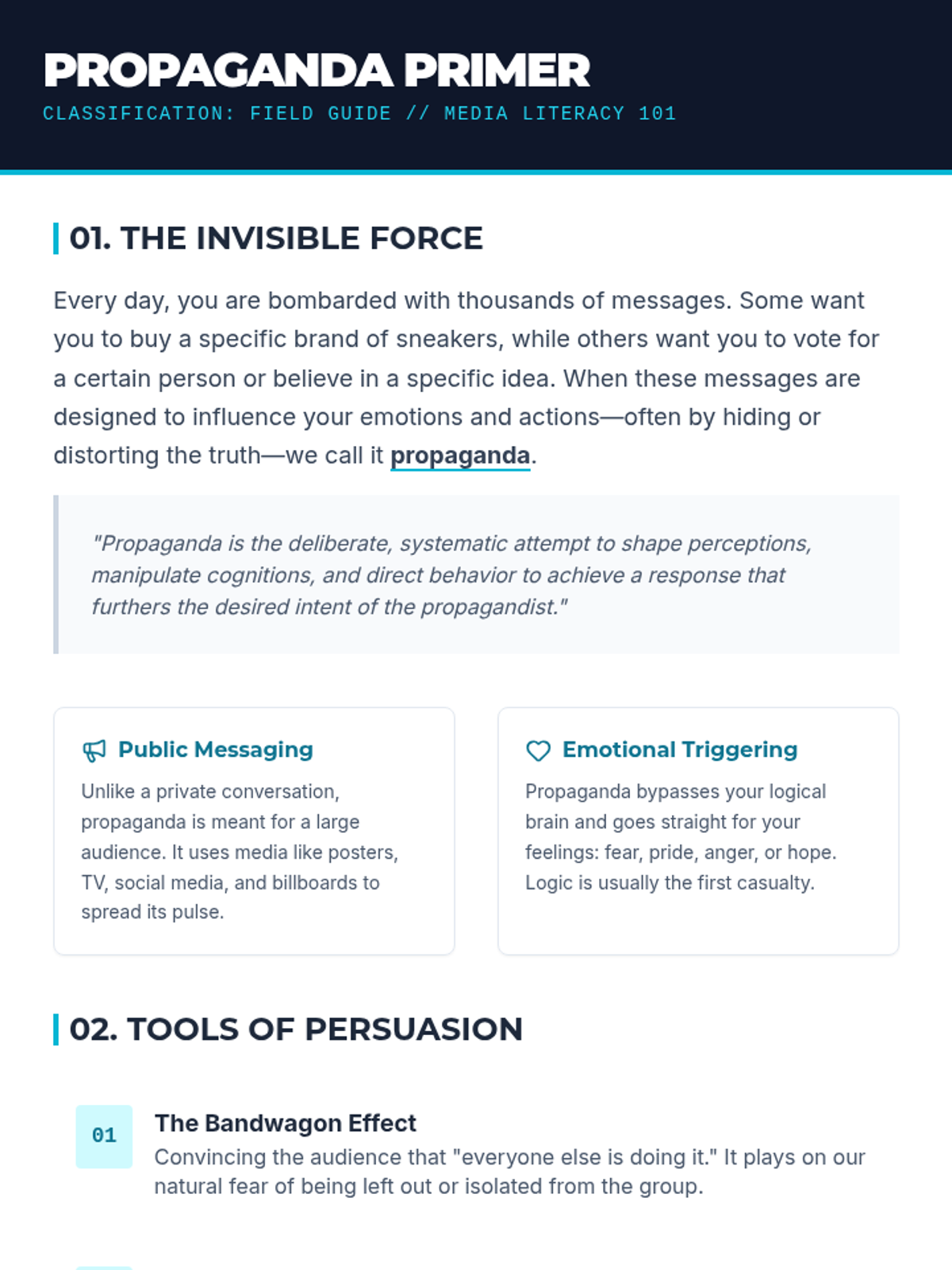
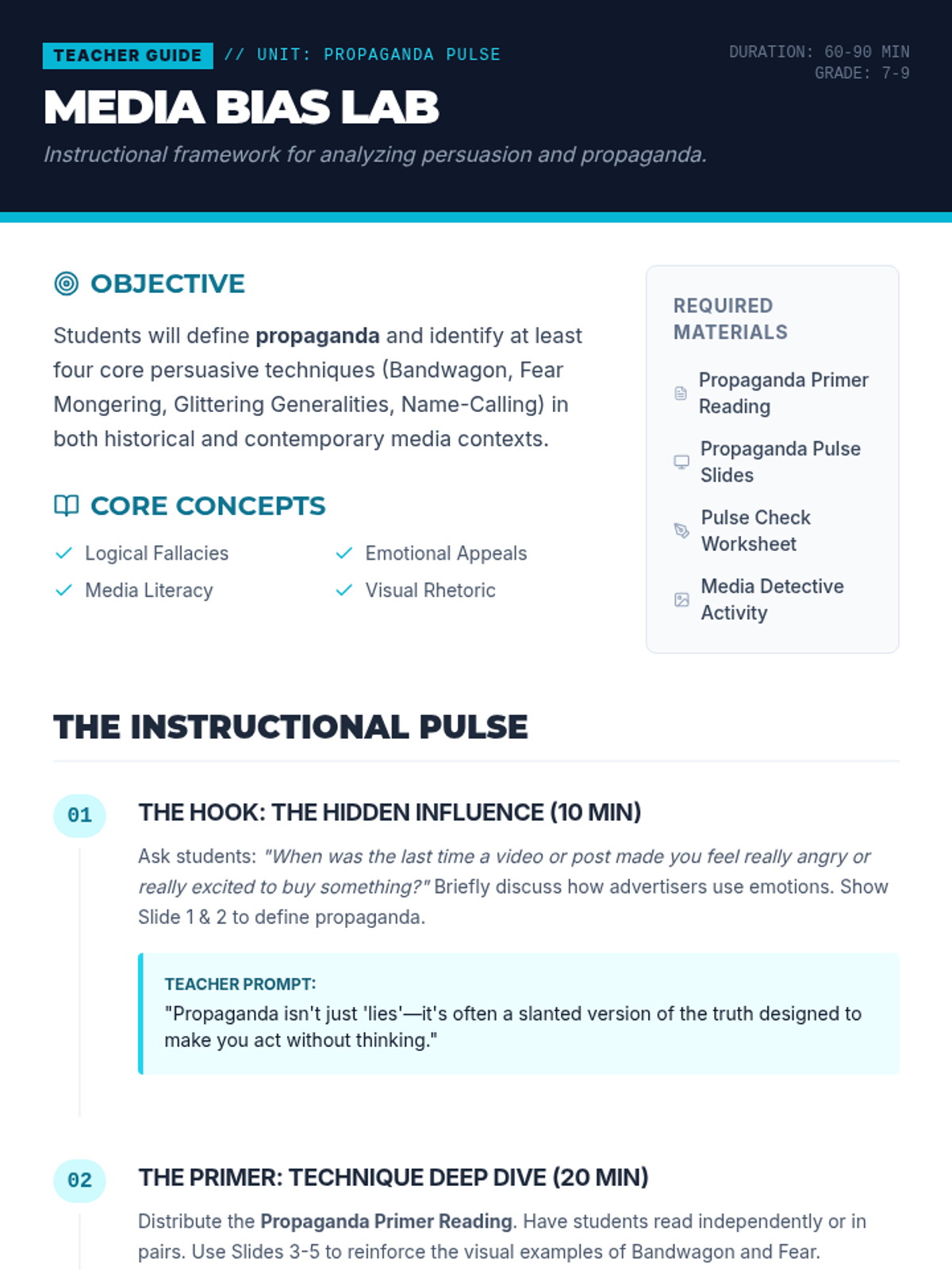
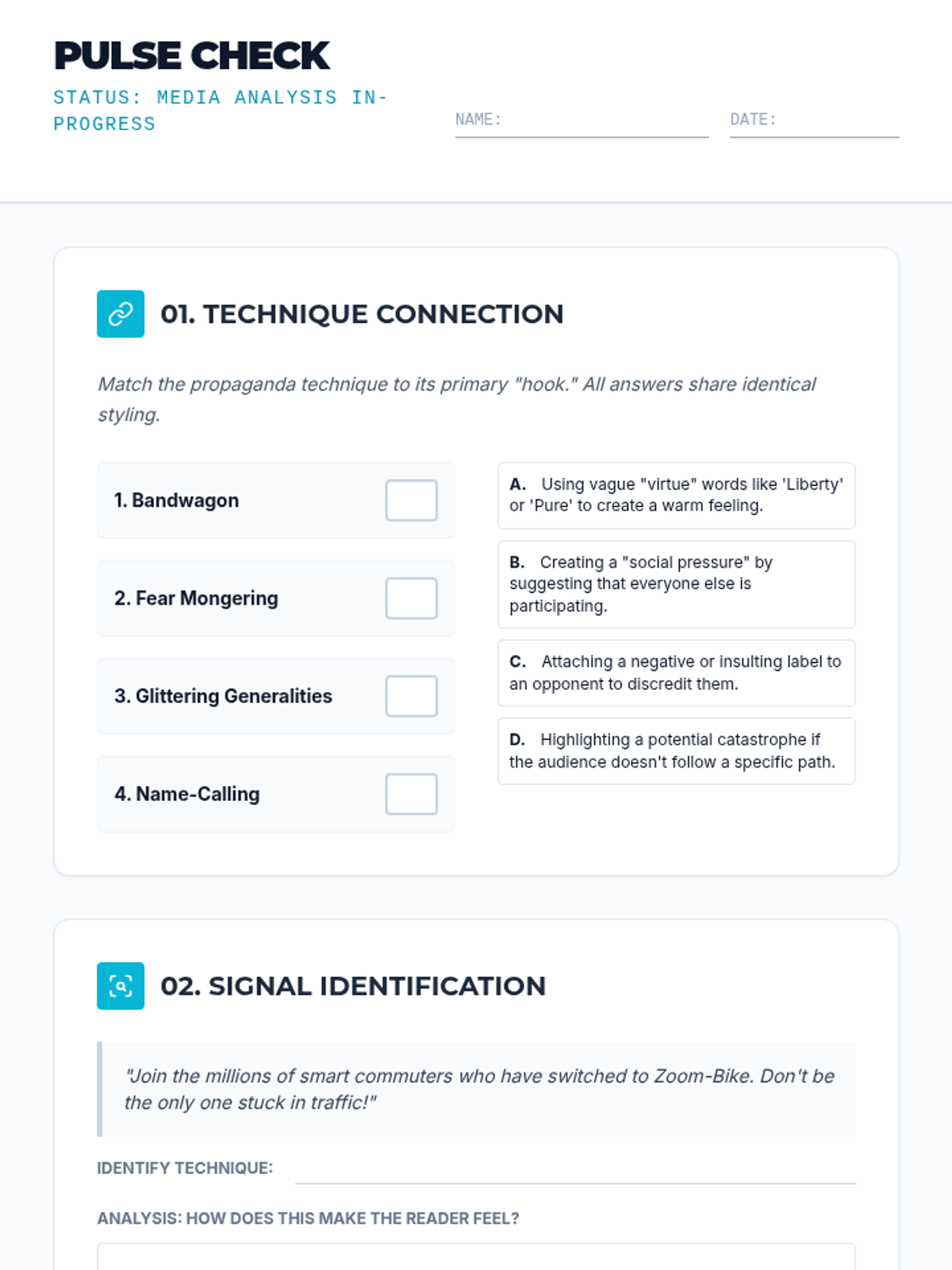
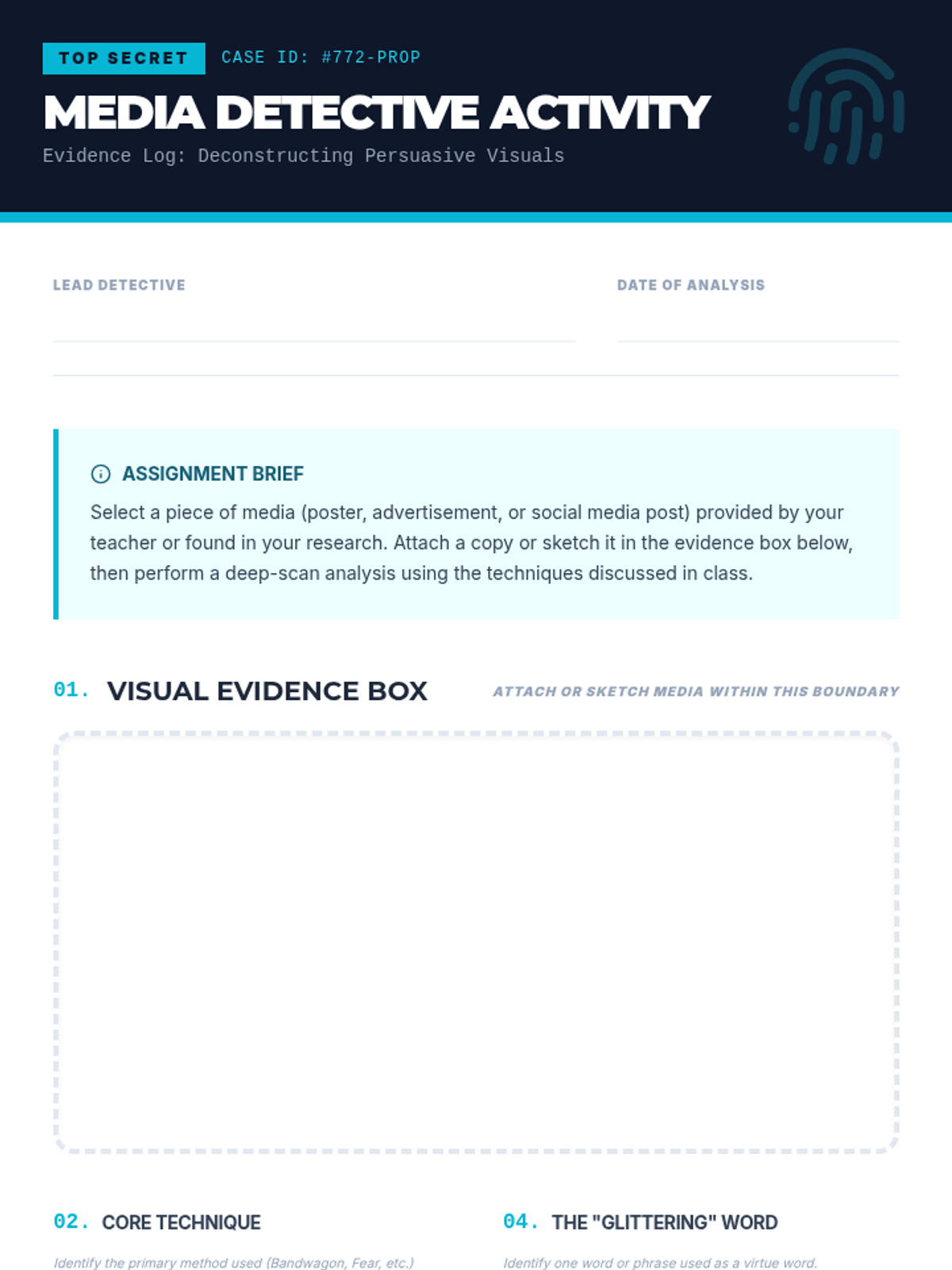
An introductory exploration into the world of propaganda, teaching students to identify bias and persuasive techniques in historical and modern media.
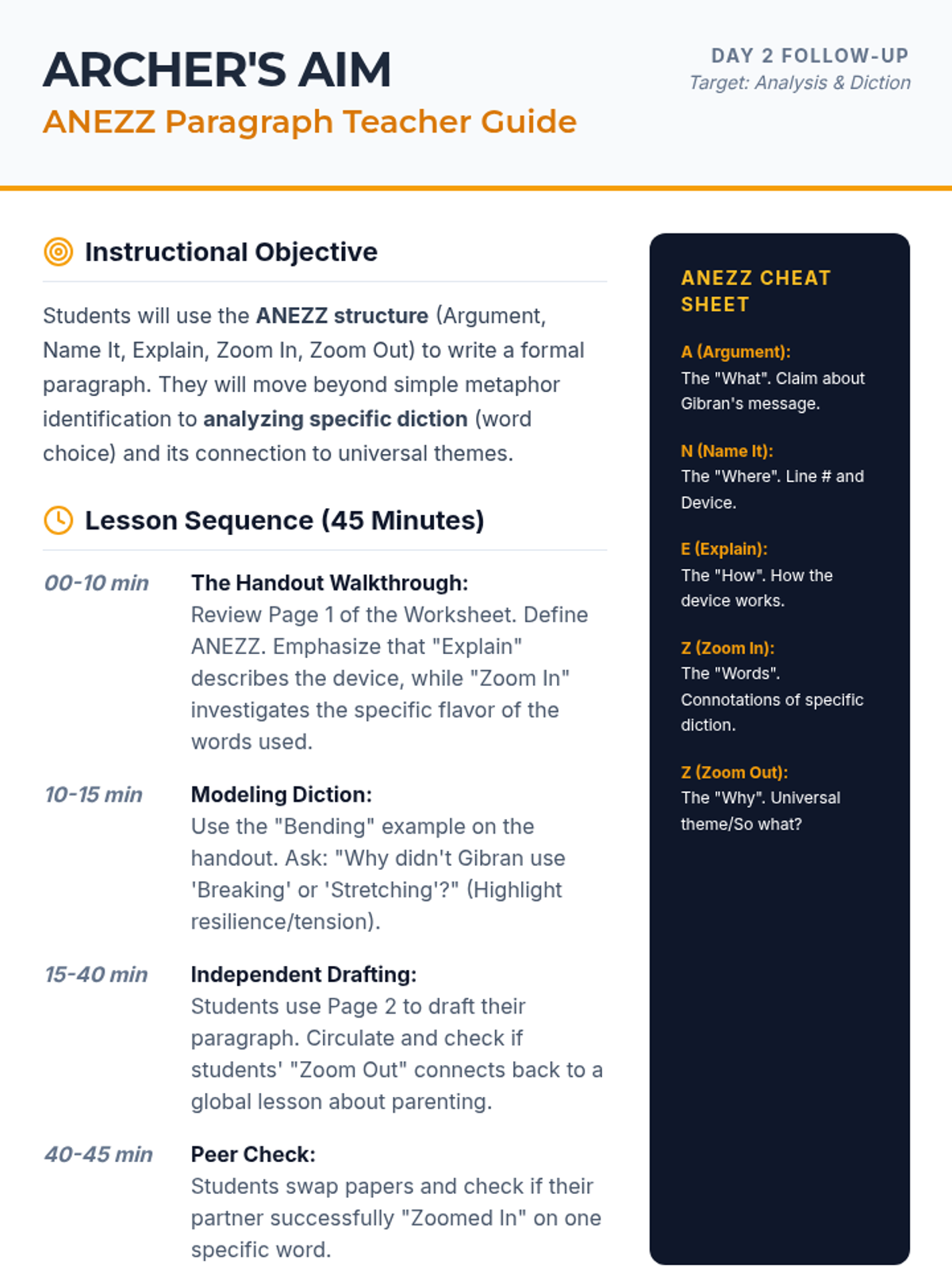
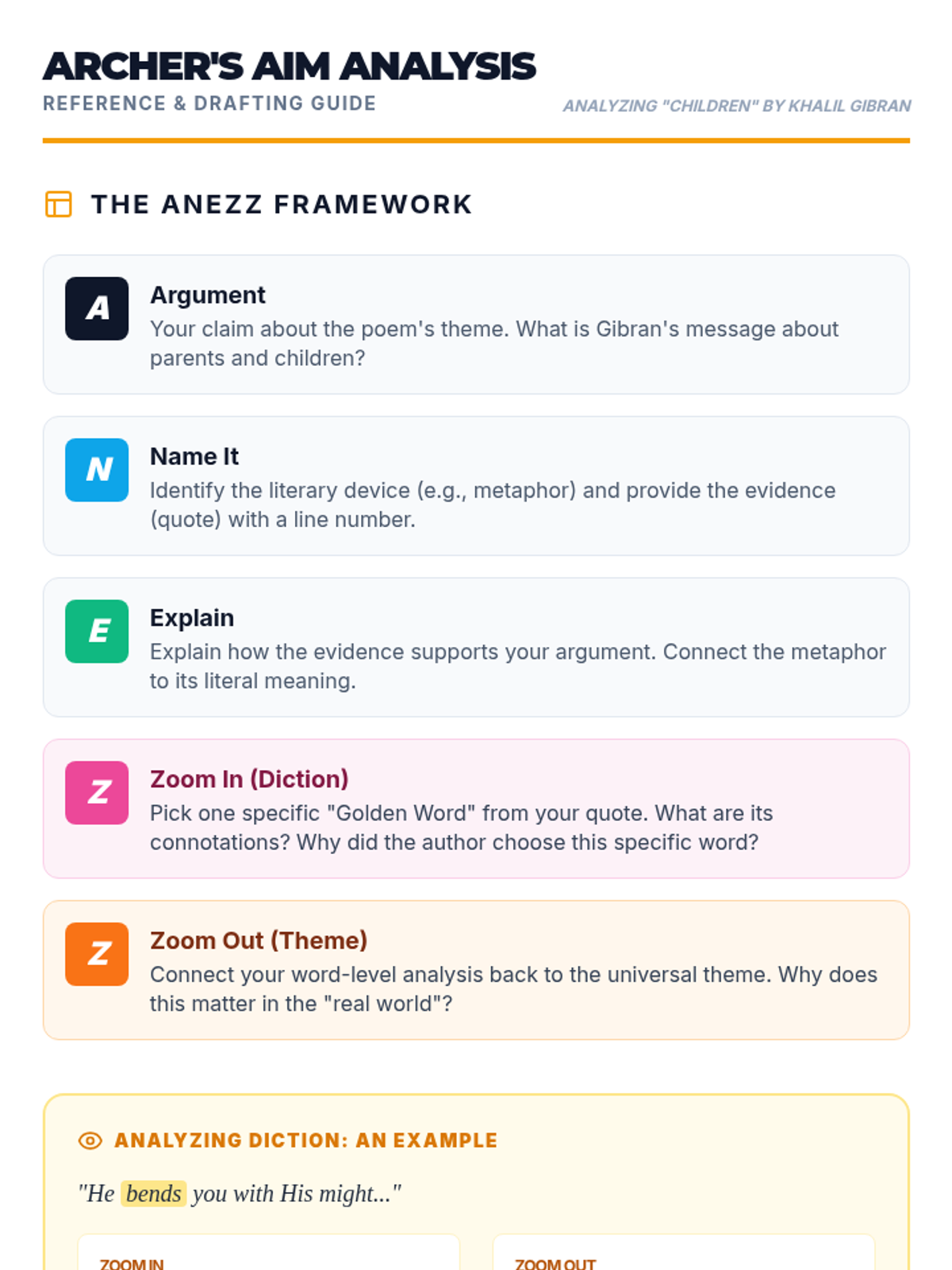
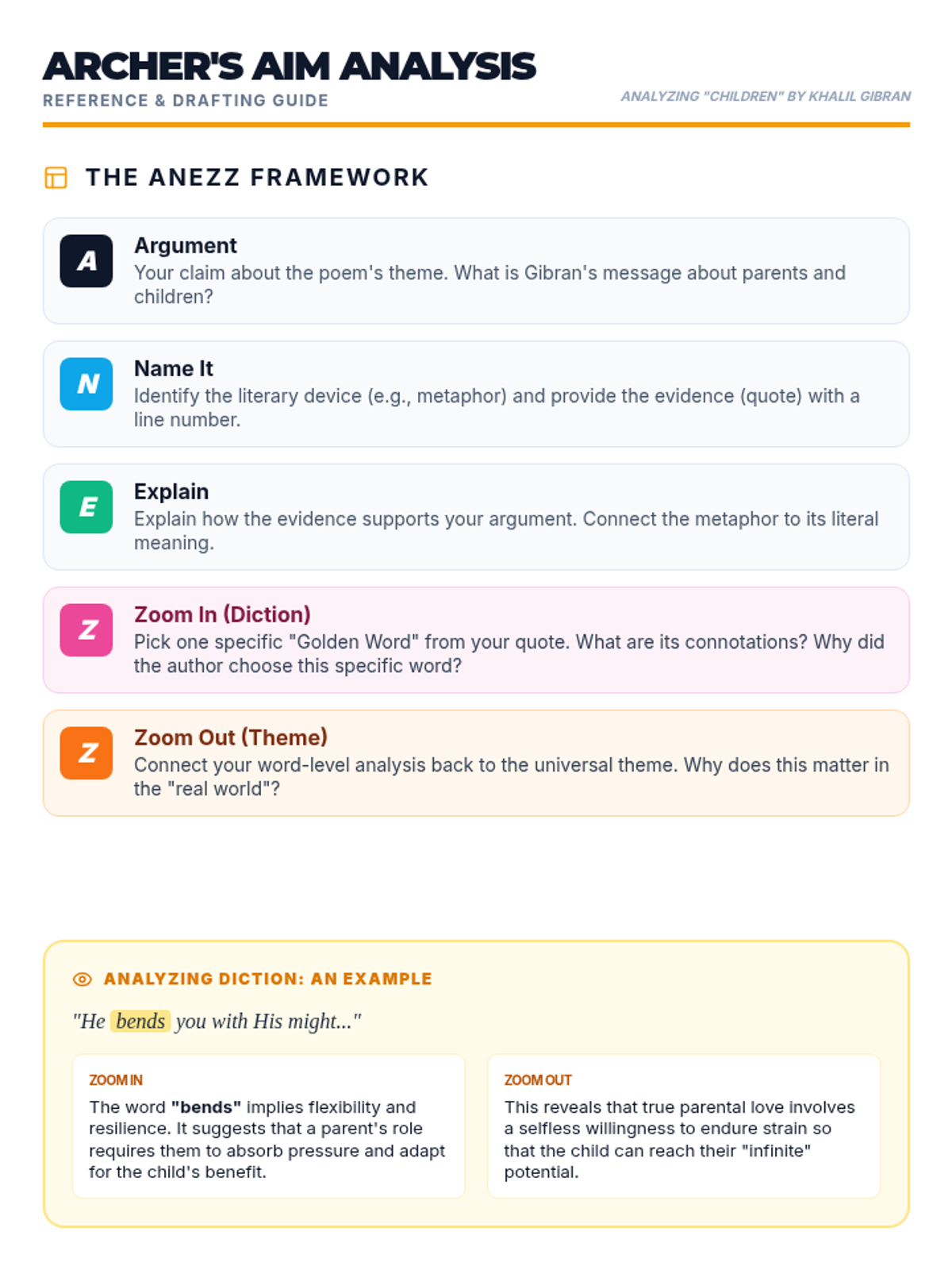
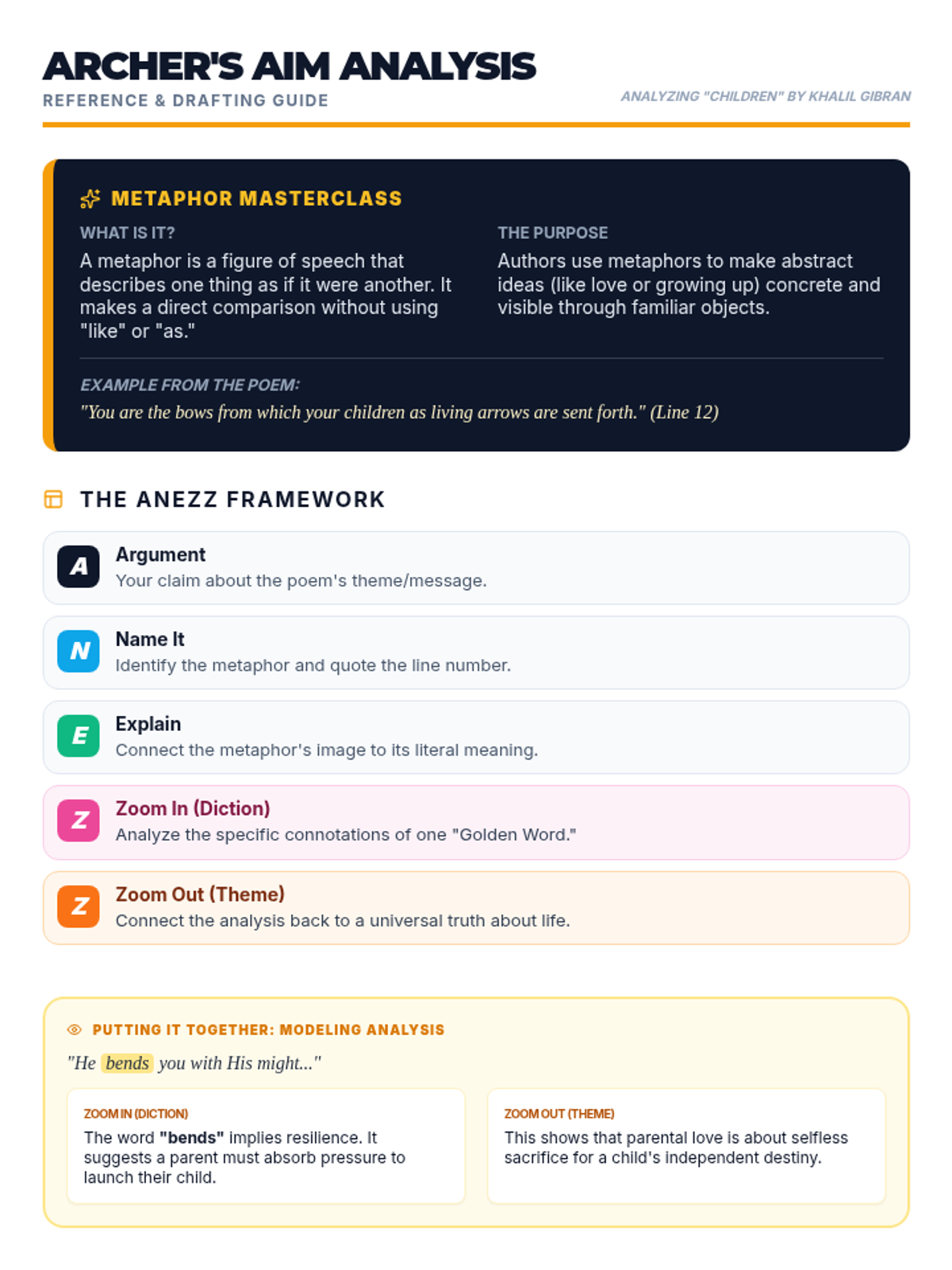
A follow-up lesson focused on mastering literary analysis through the ANEZZ paragraph structure, using Khalil Gibran's 'Children' to explore figurative language and theme.
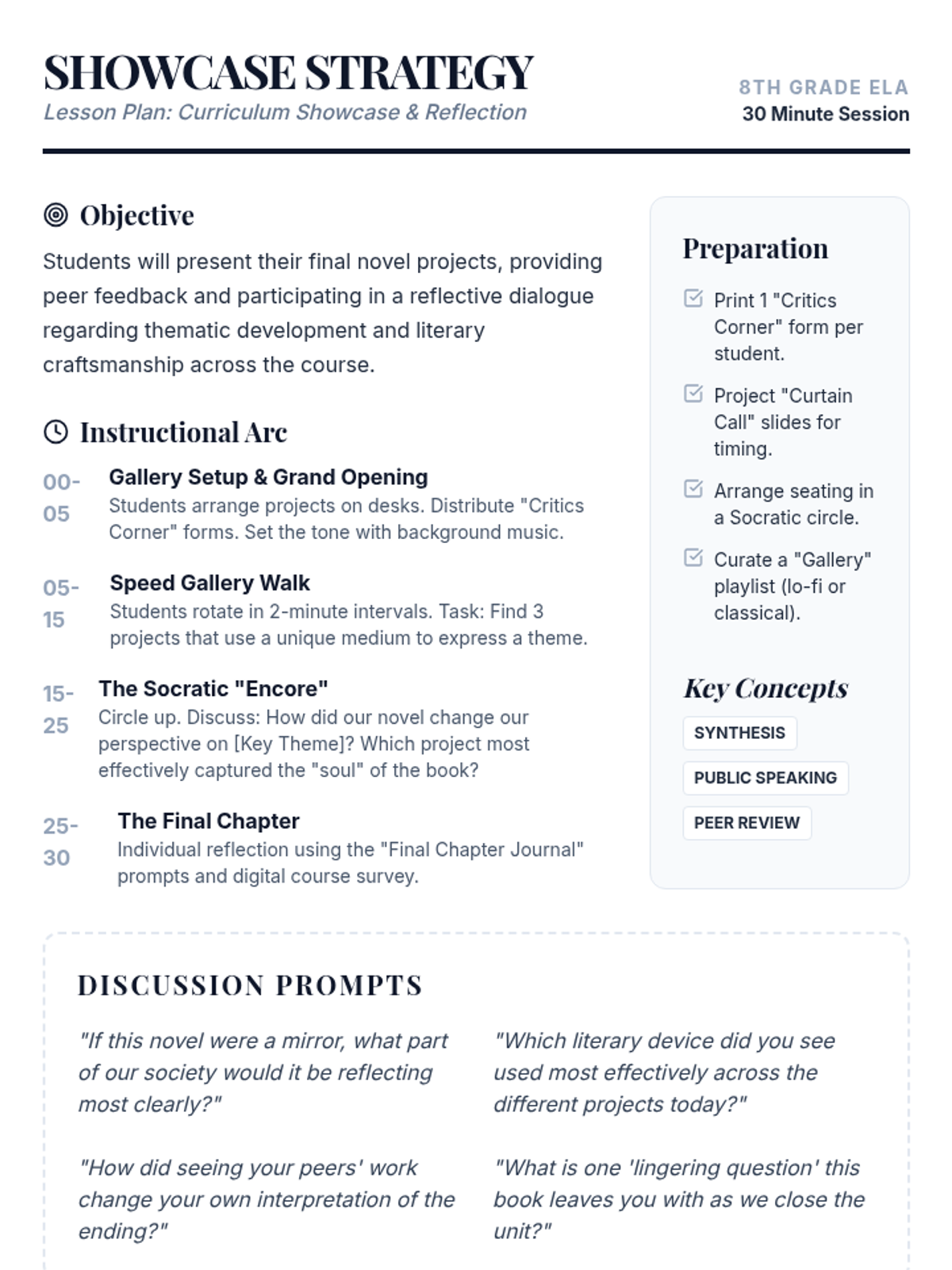
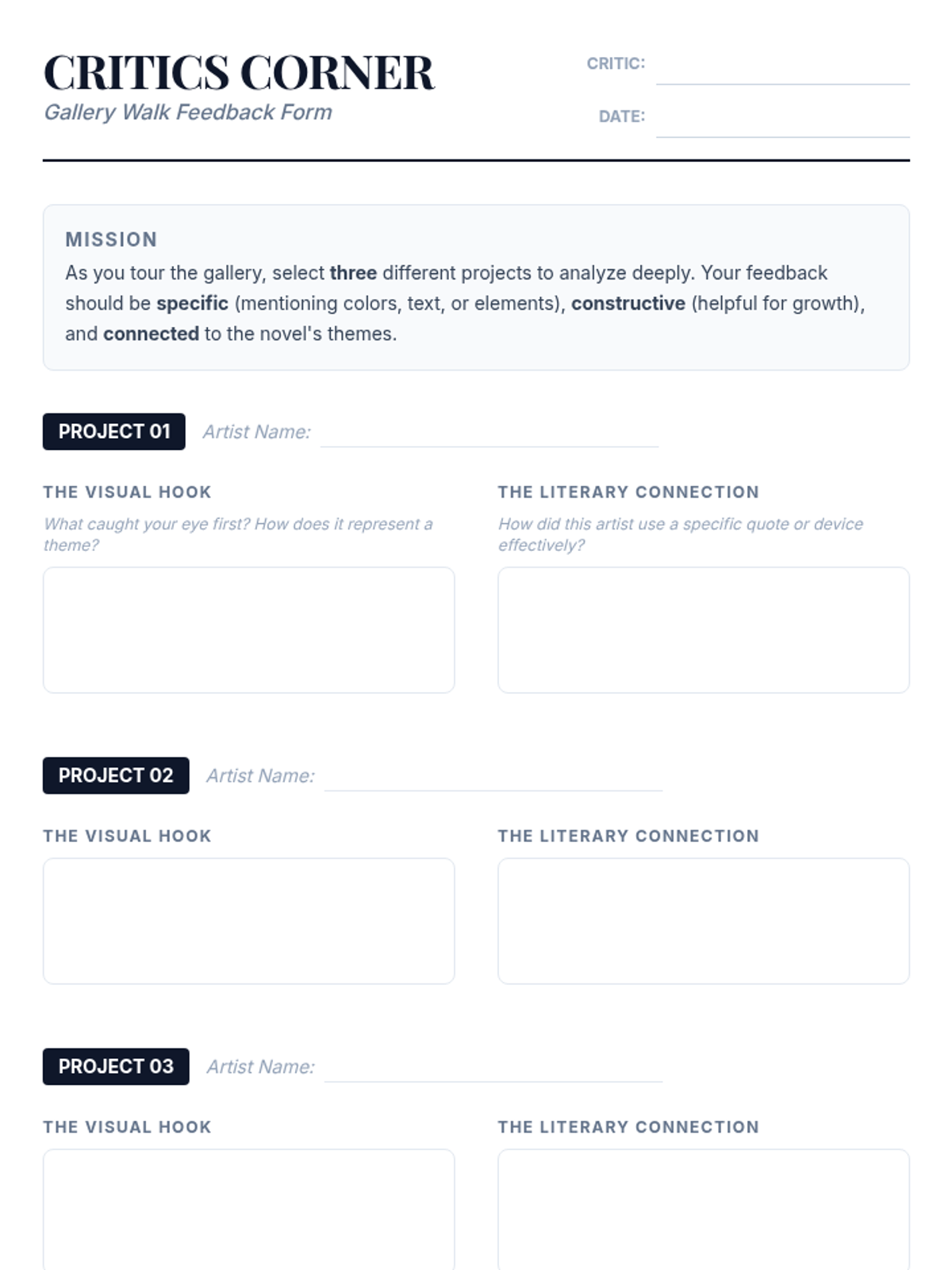
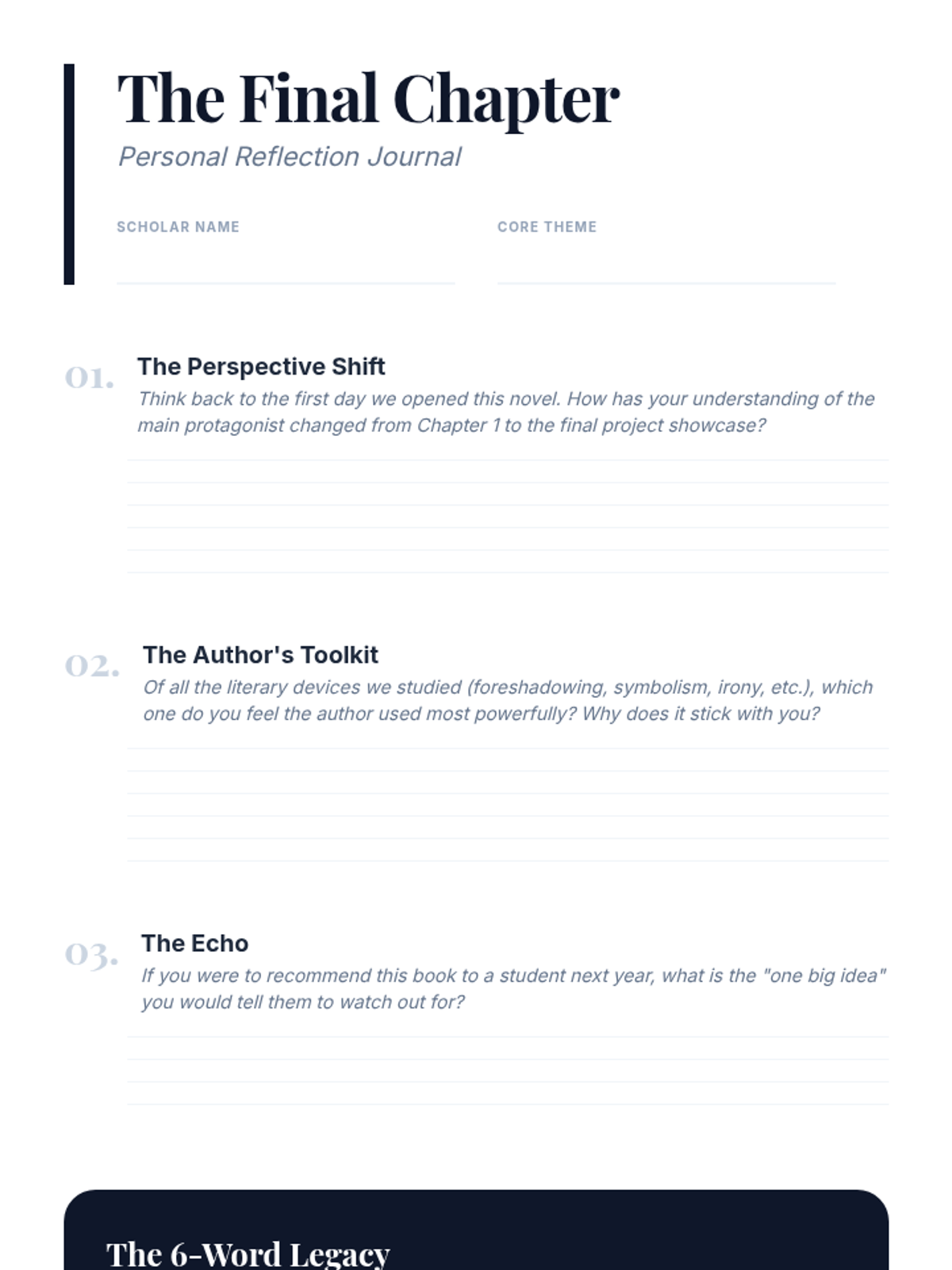
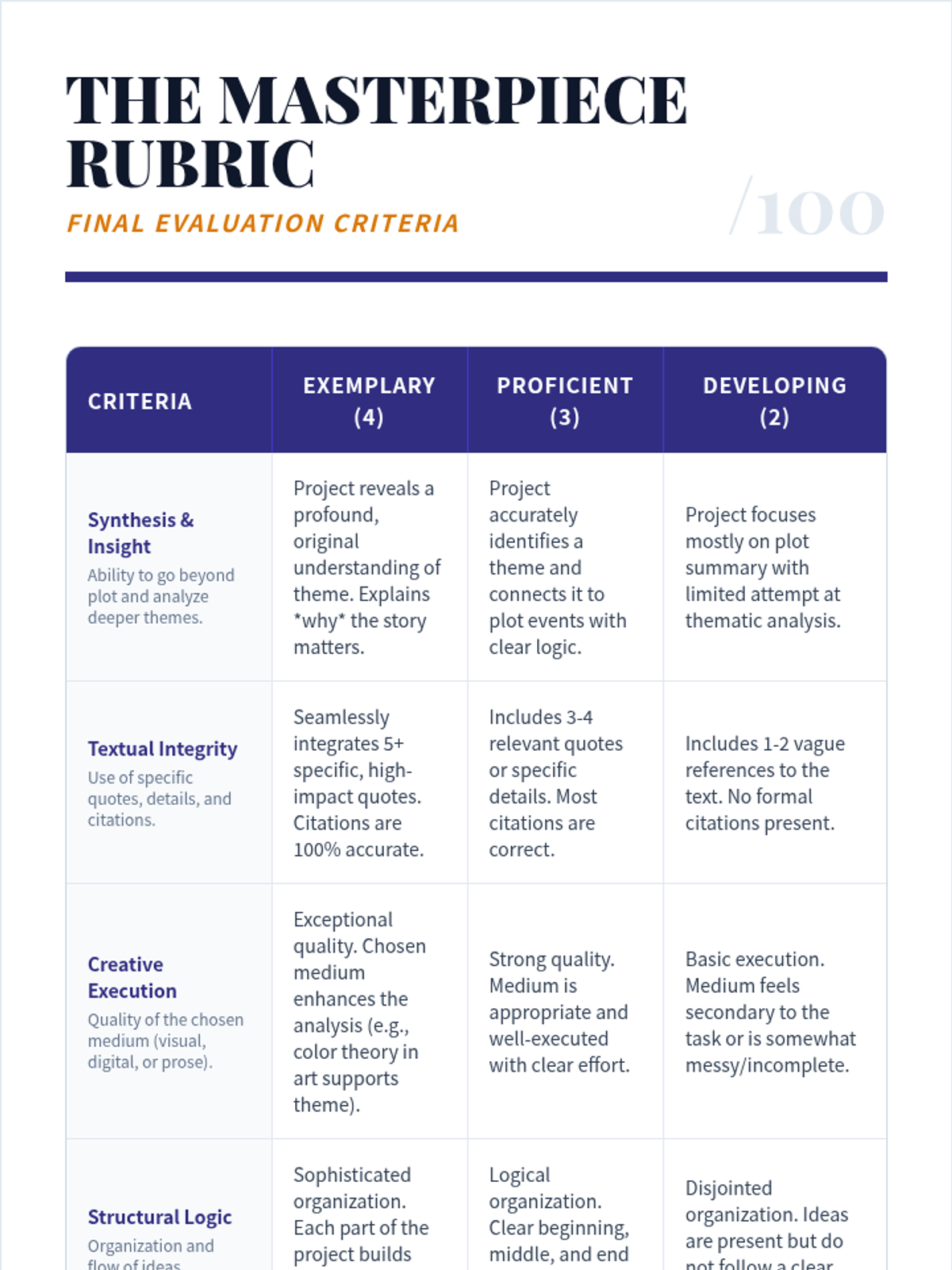
A high-energy, 30-minute capstone lesson where 8th-grade students present their final novel projects, engage in peer review, and reflect on their literary journey through a Socratic Seminar and personal journaling.
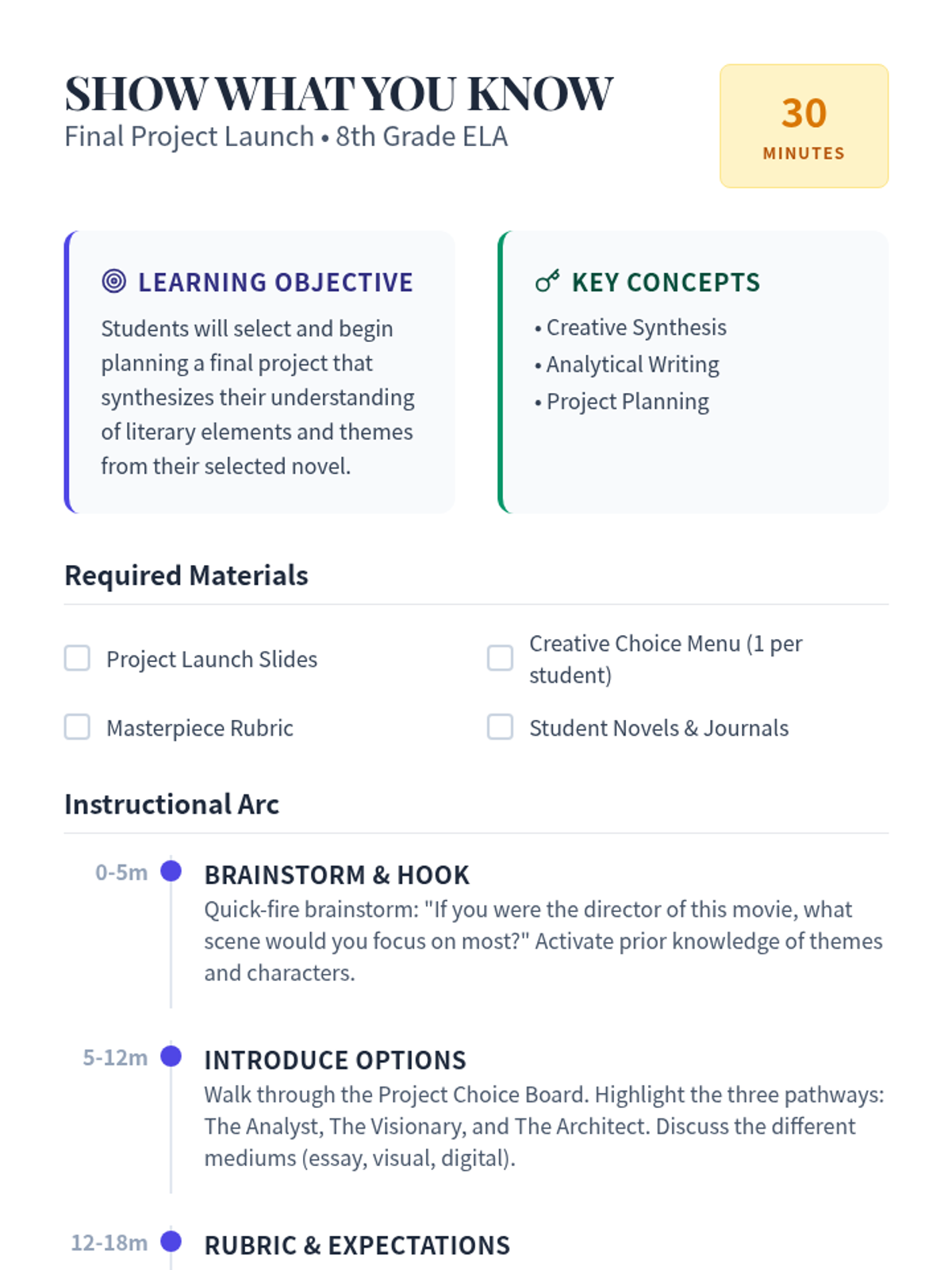
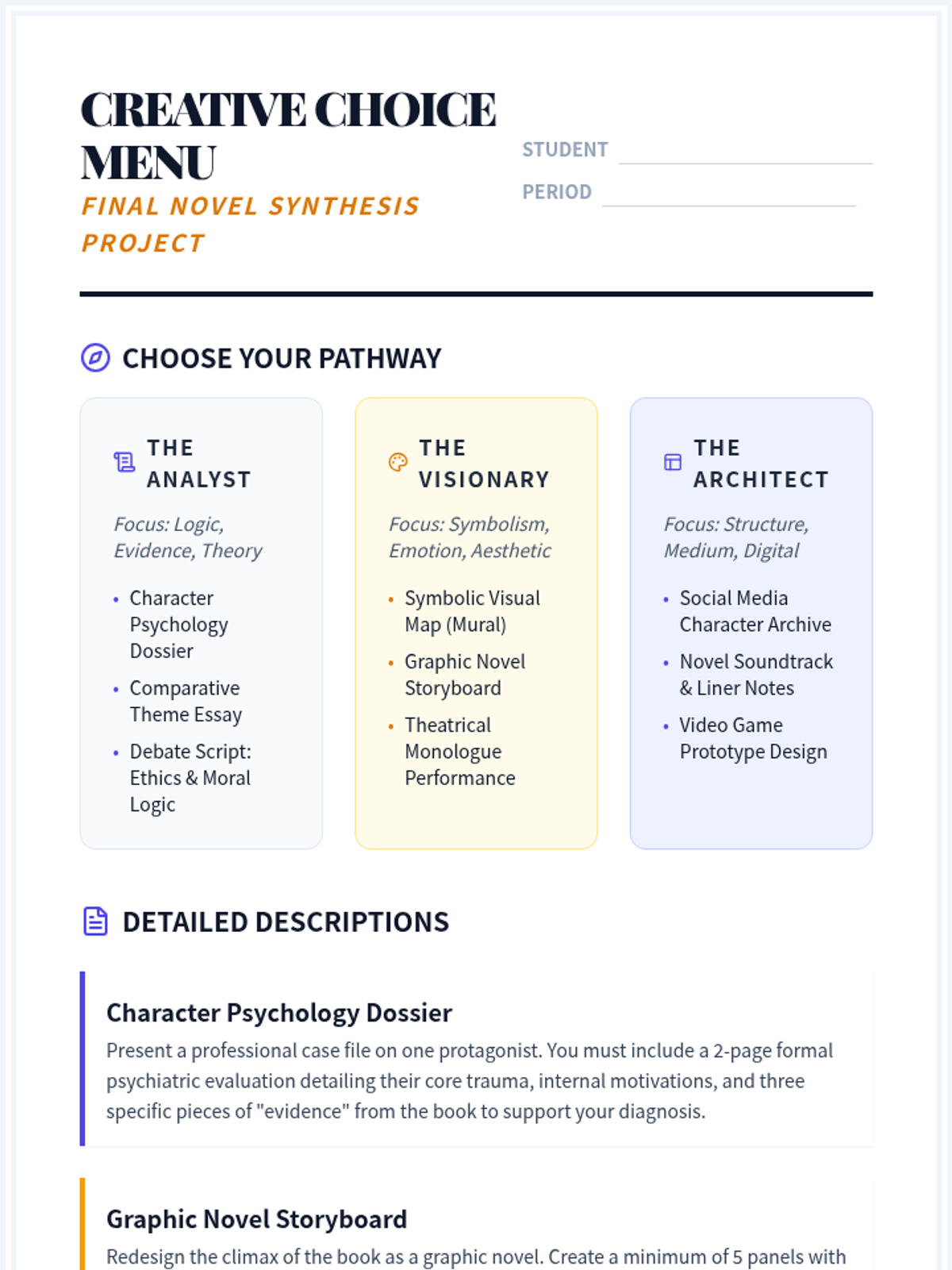
A 30-minute introductory session for 8th-grade students to select and begin planning their final novel study project, focusing on creative synthesis and literary analysis.
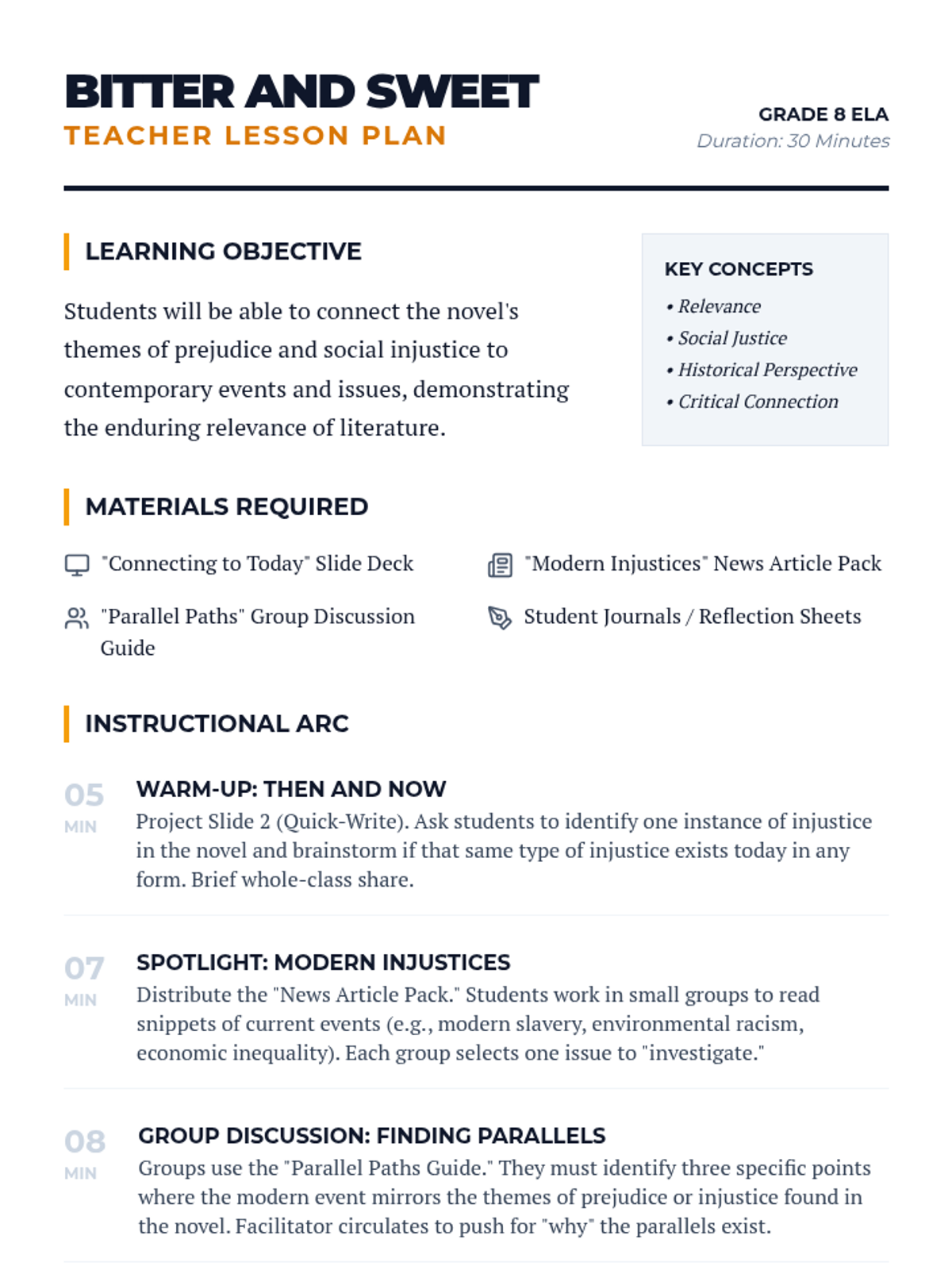
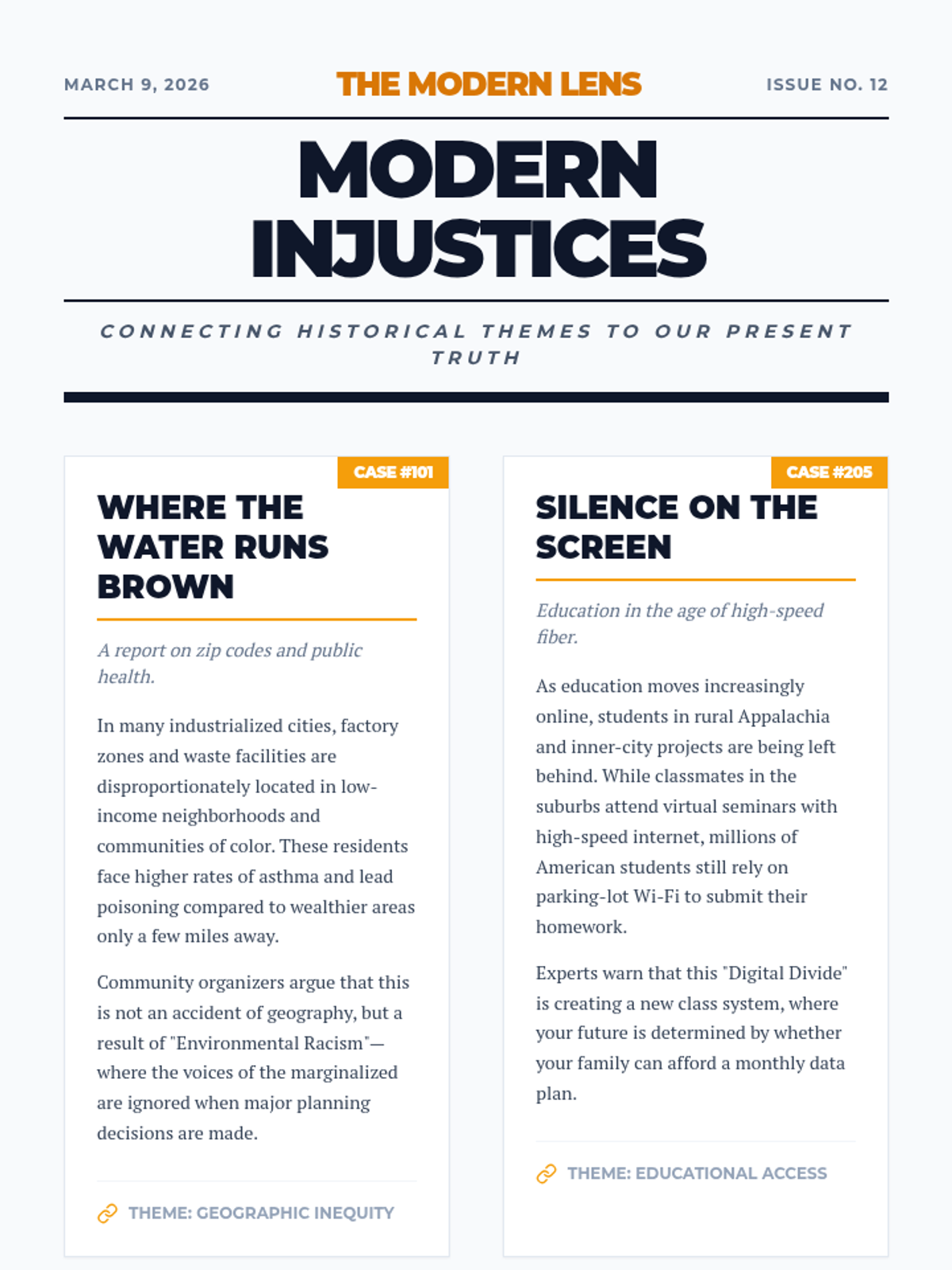
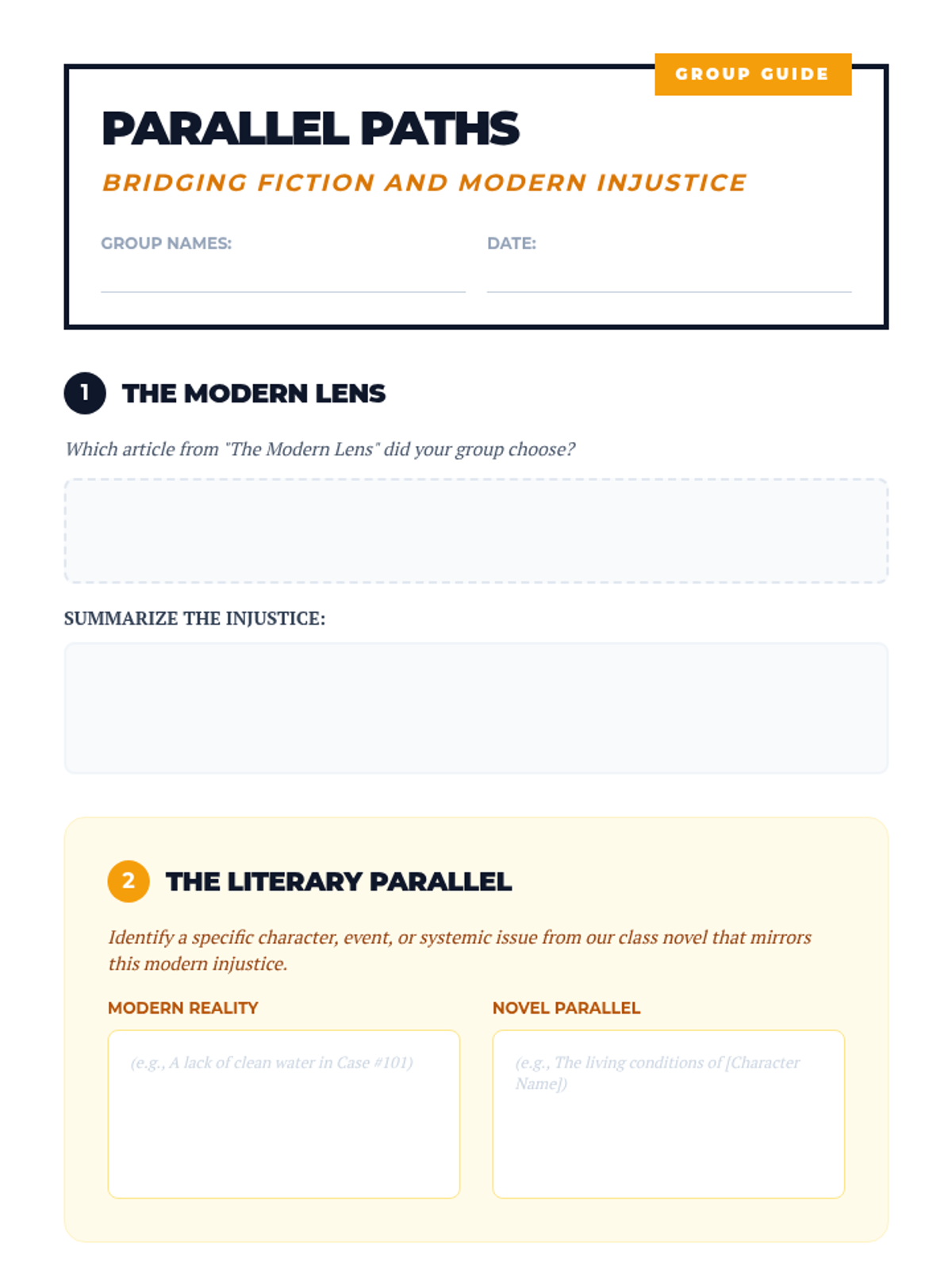
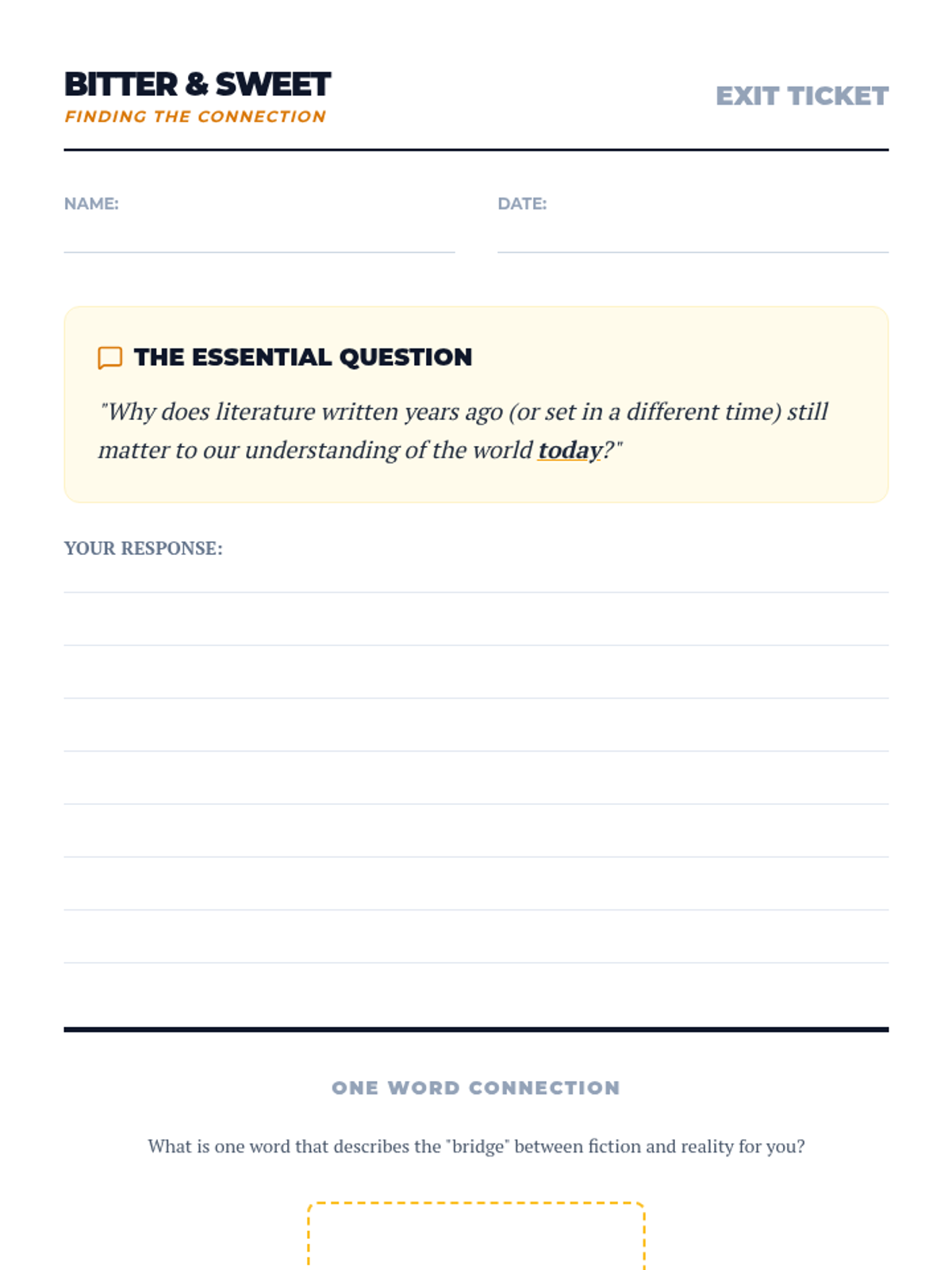
An 8th-grade ELA lesson connecting literary themes of prejudice and social injustice from a class novel to modern-day social issues. Students will research contemporary injustices and discuss parallels between historical/fictional contexts and the world today.
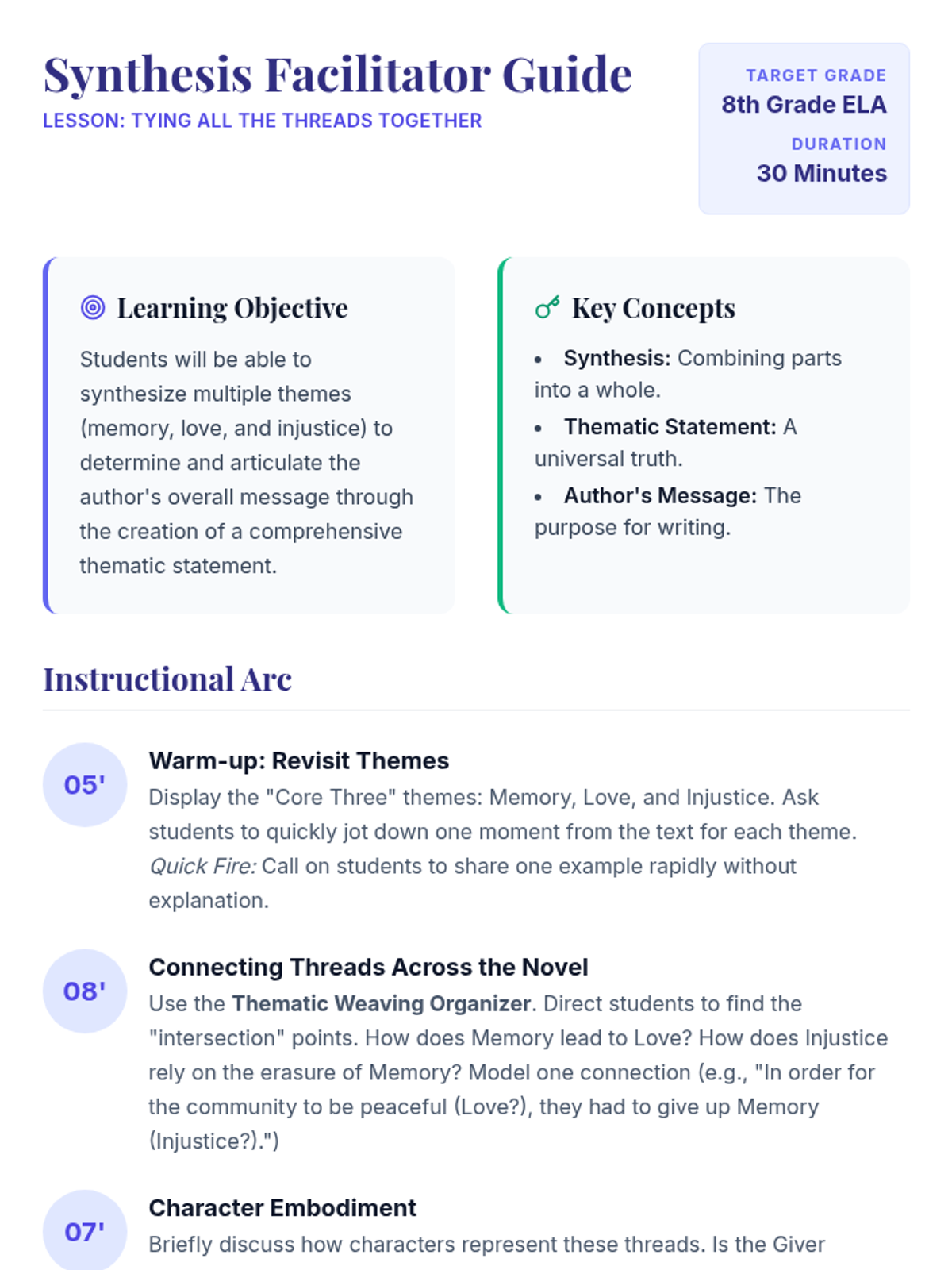
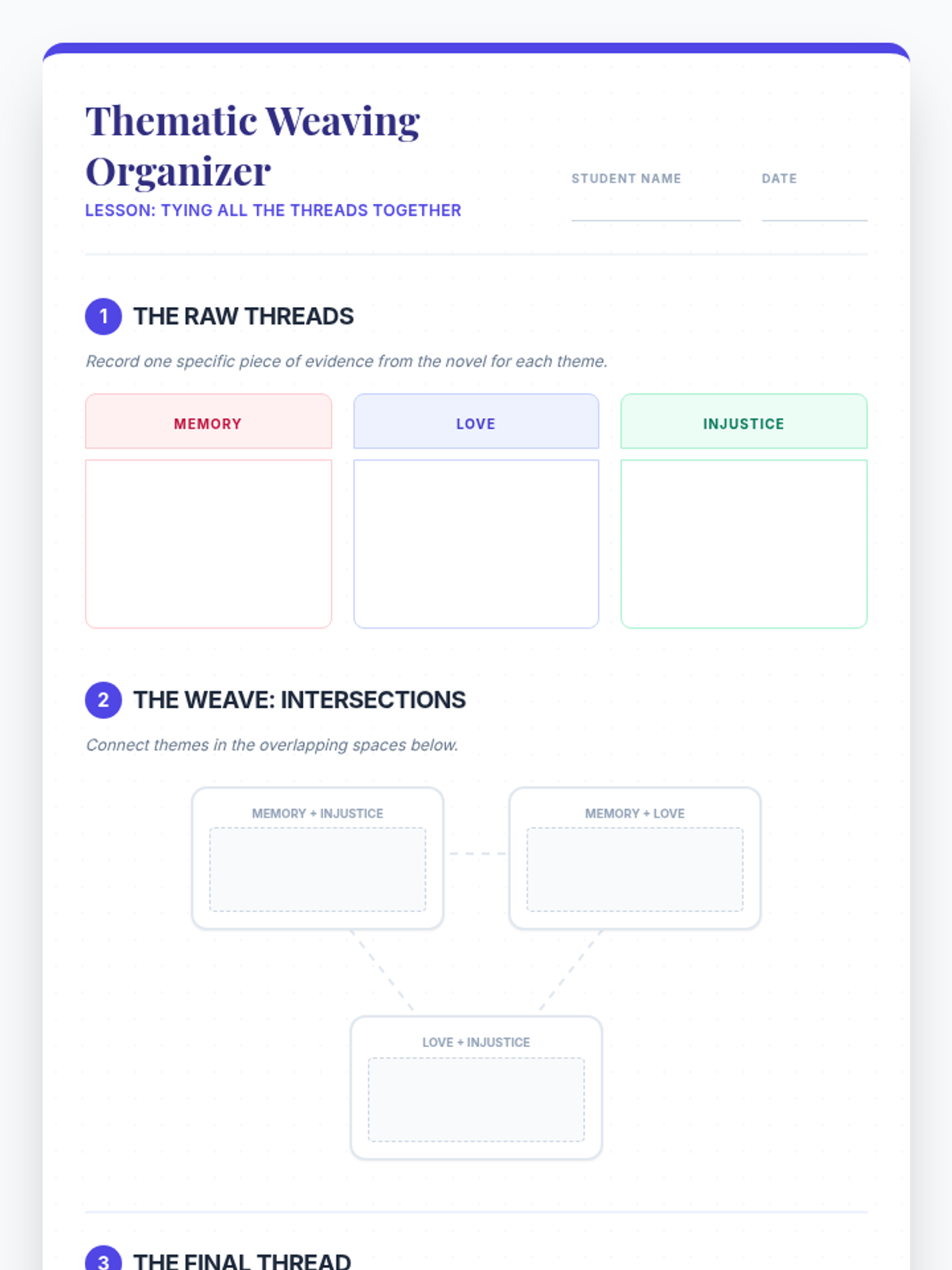
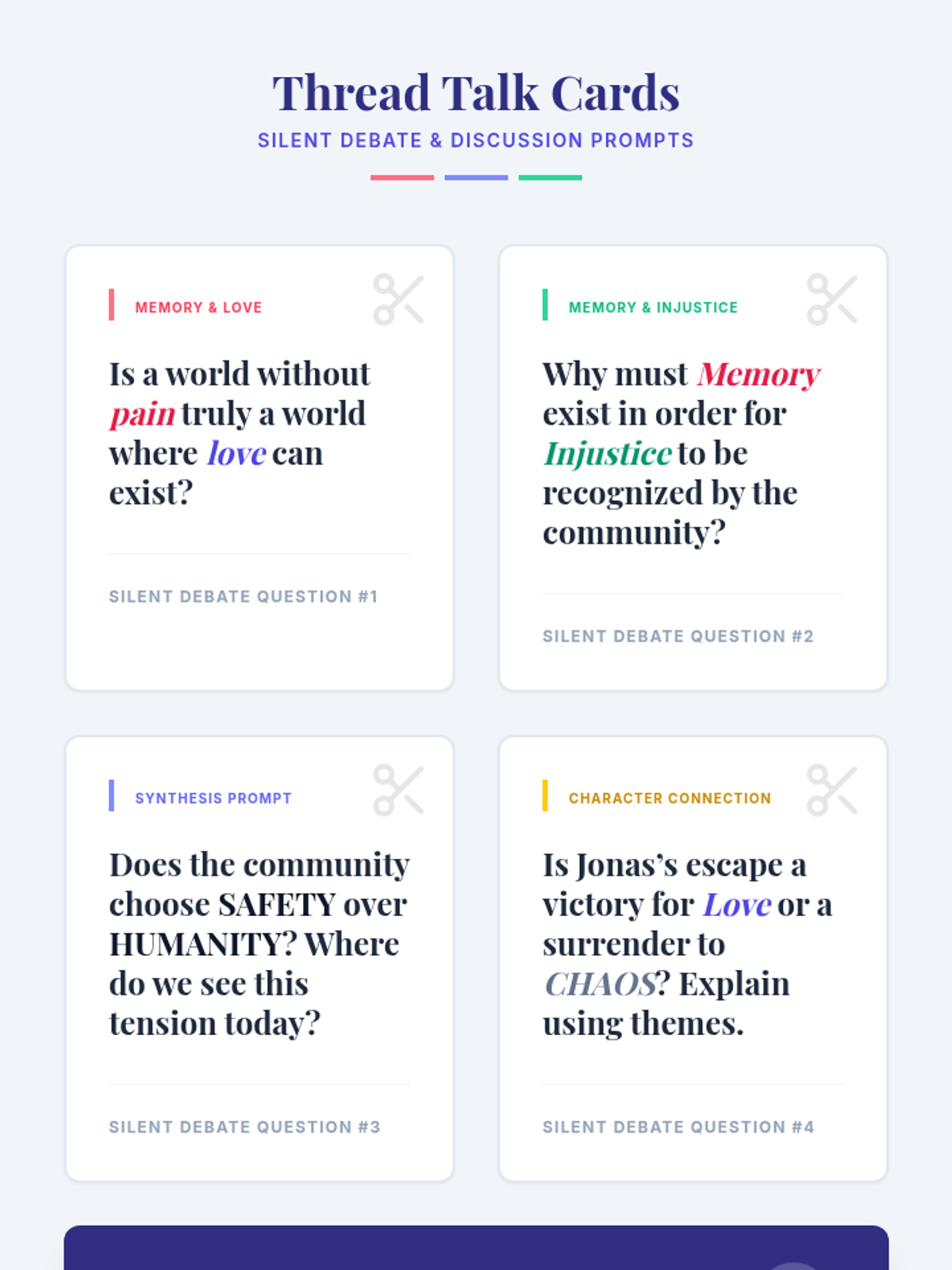
An 8th-grade ELA lesson focused on synthesizing themes of memory, love, and injustice to uncover a novel's deeper message. Students use a 'weaving' metaphor to connect disparate narrative threads into a cohesive thematic statement.
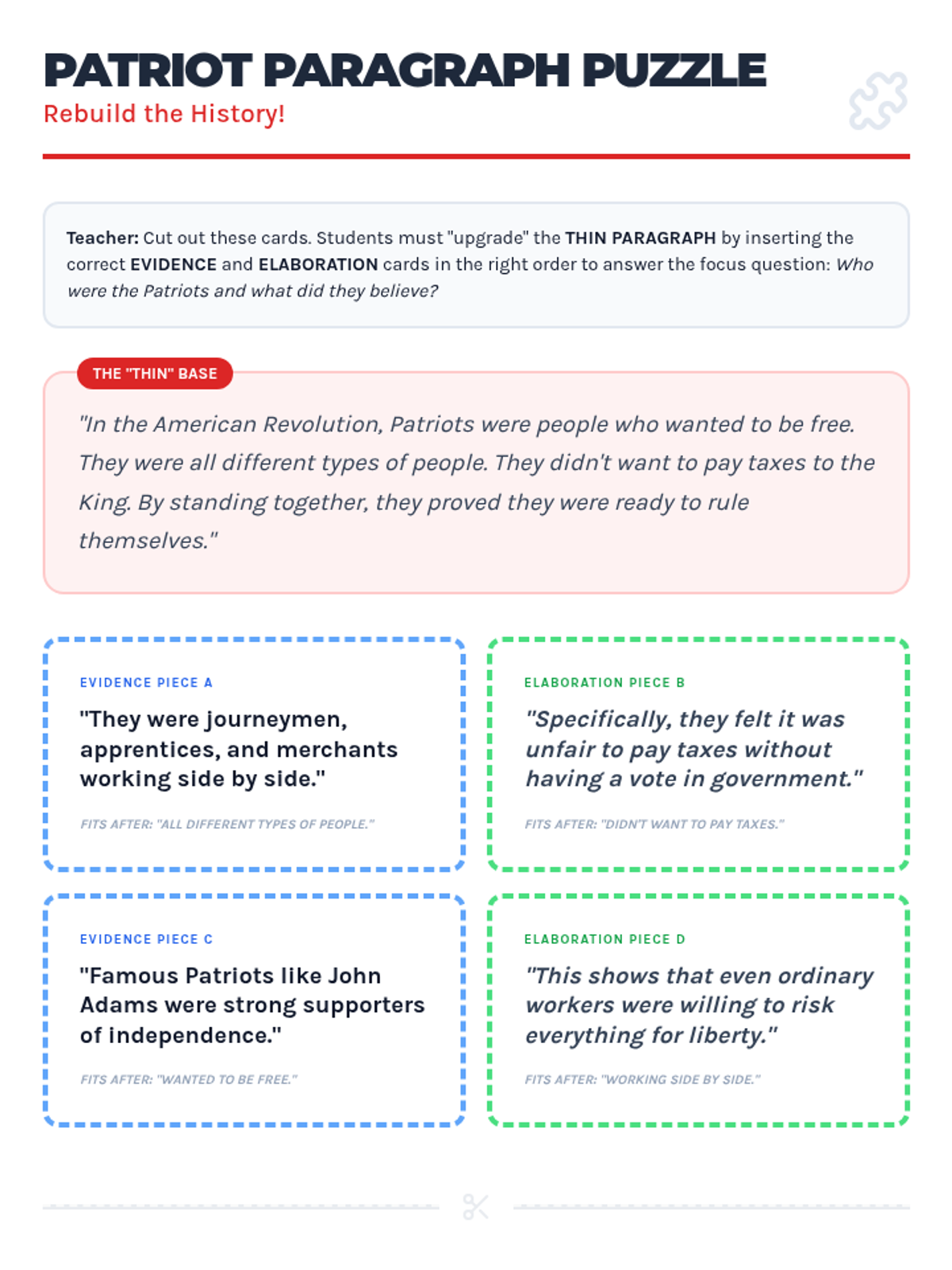
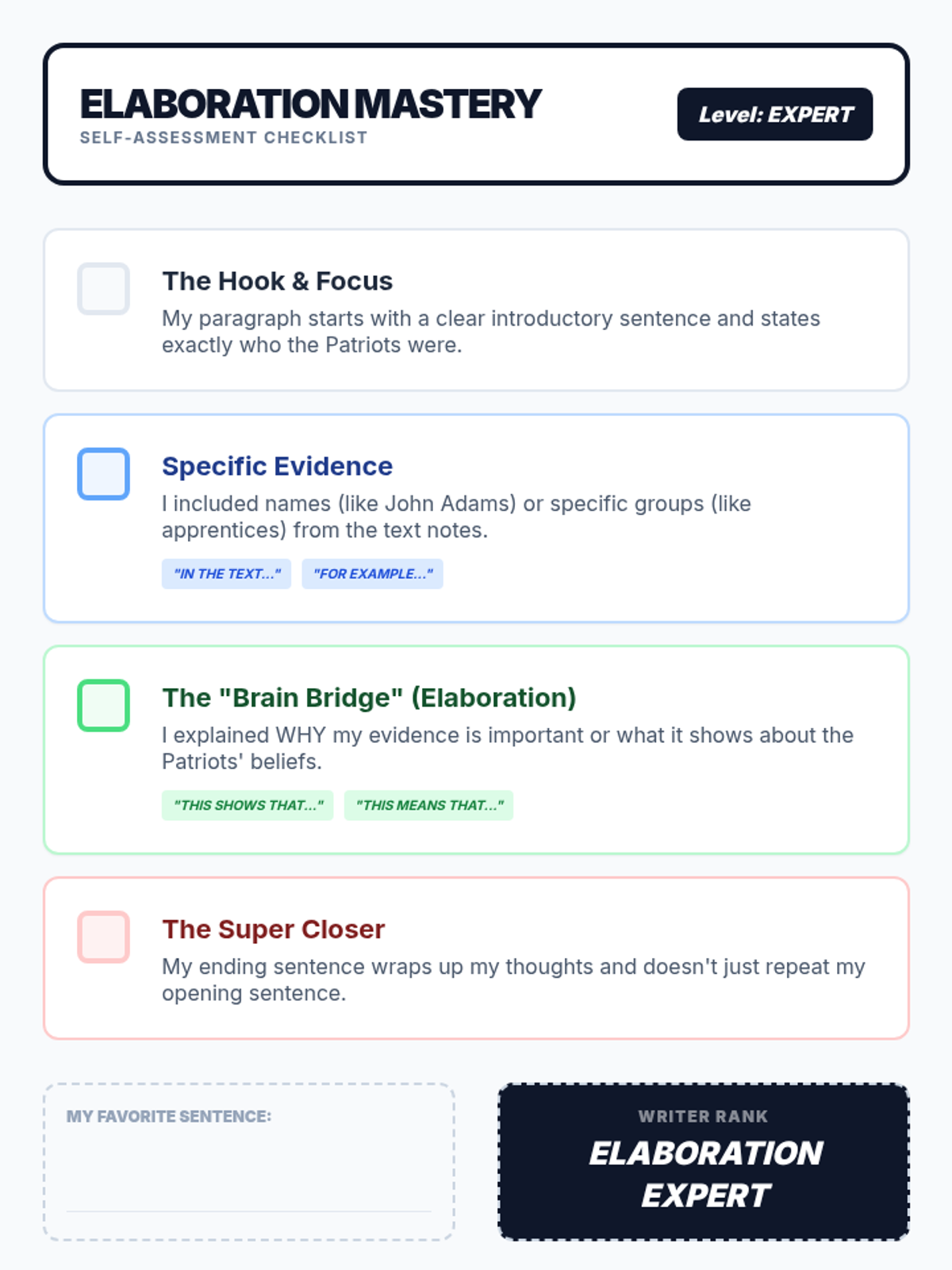
A final capstone lesson for the elaboration intervention. Students return to their Revolutionary War topic to apply 'Draft Doctor' and 'Build-the-Bridge' techniques to their own writing. Includes a hands-on 'Paragraph Puzzle' and a final drafting 'Power-Up' worksheet.
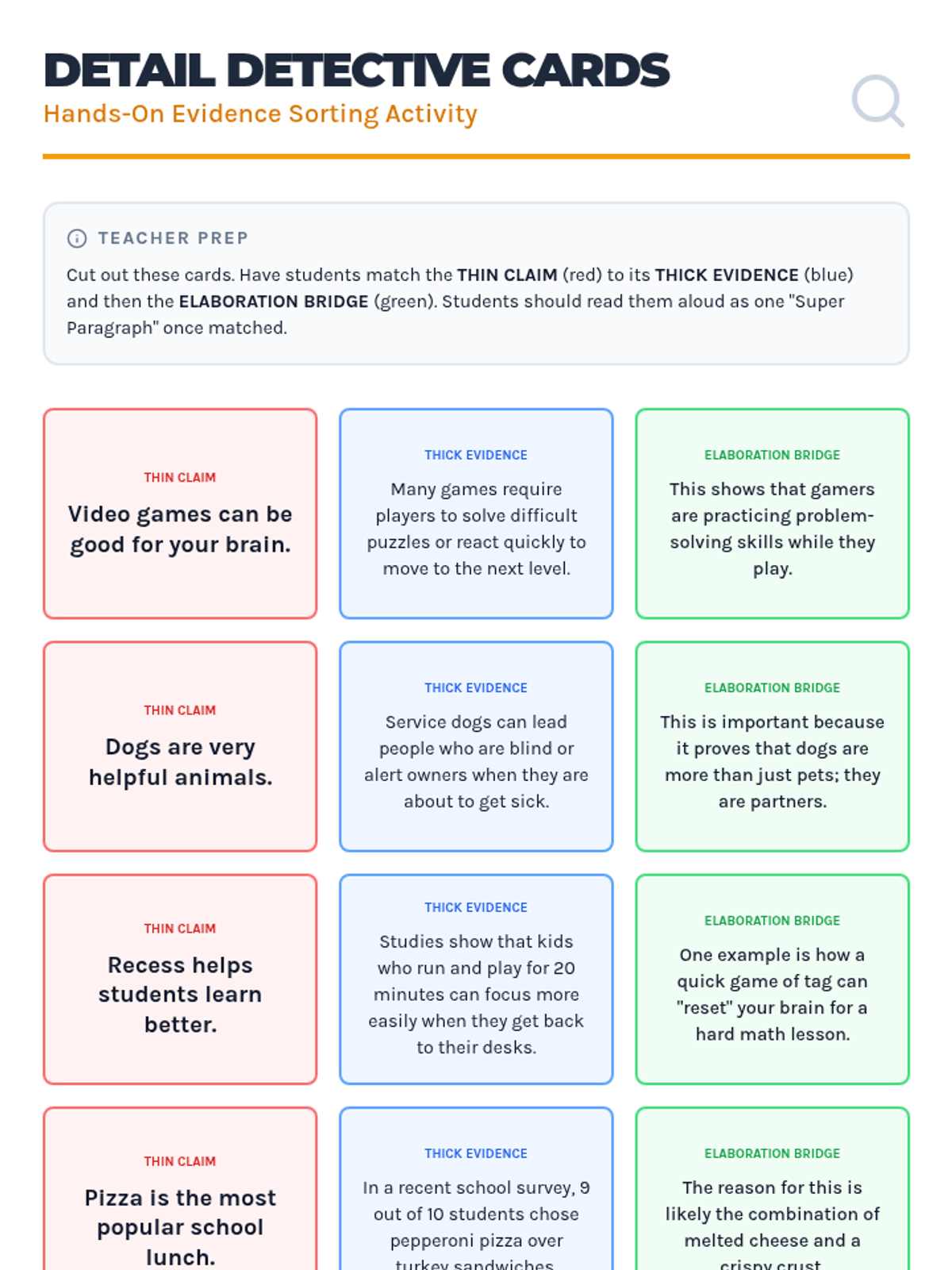
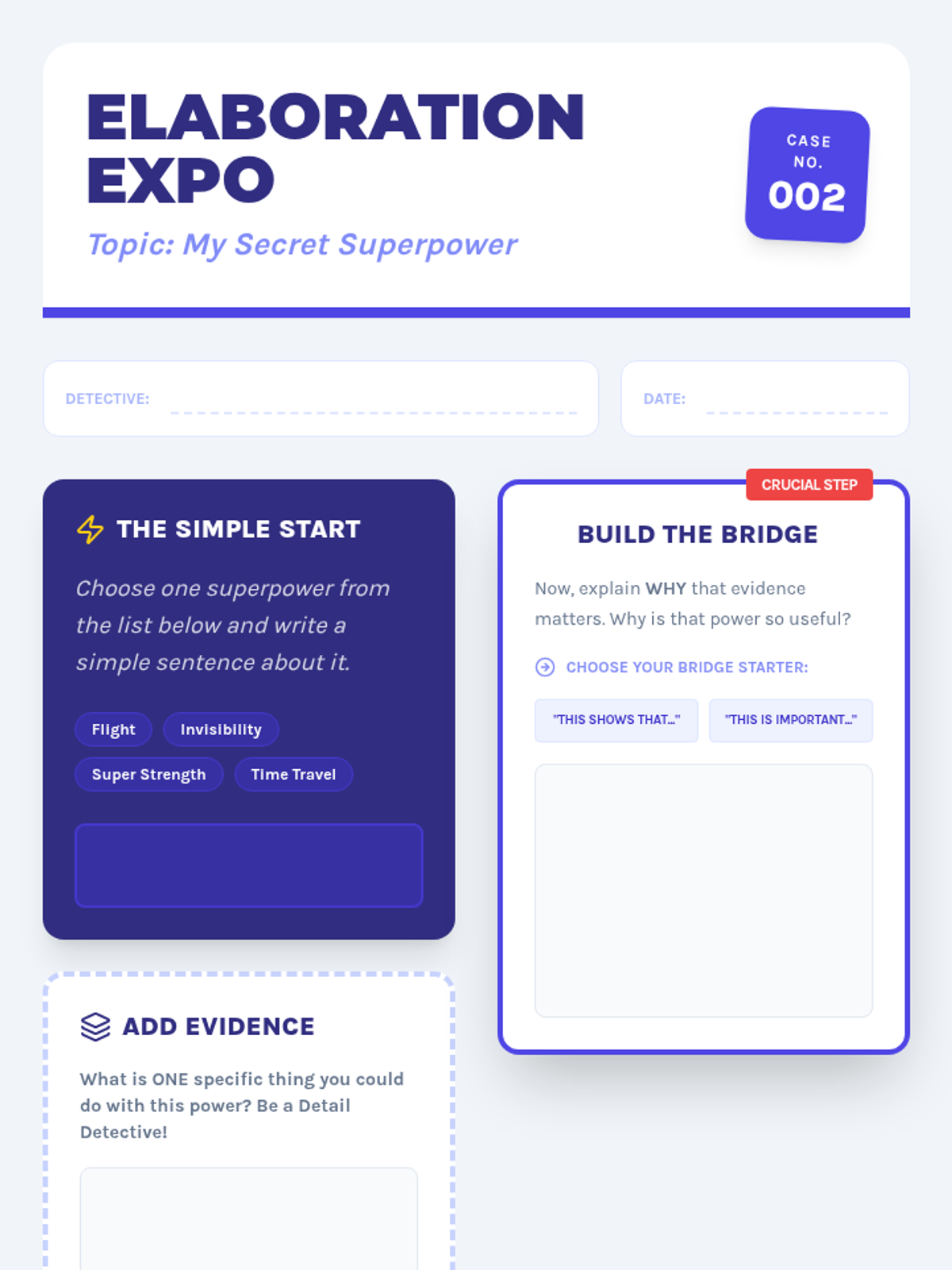
A fast-paced, hands-on intervention lesson where students apply elaboration techniques to familiar, everyday topics like sports, food, and hobbies. Using a 'Detective' theme, students practice matching thin claims to thick evidence and explanations to build engagement and fluency.
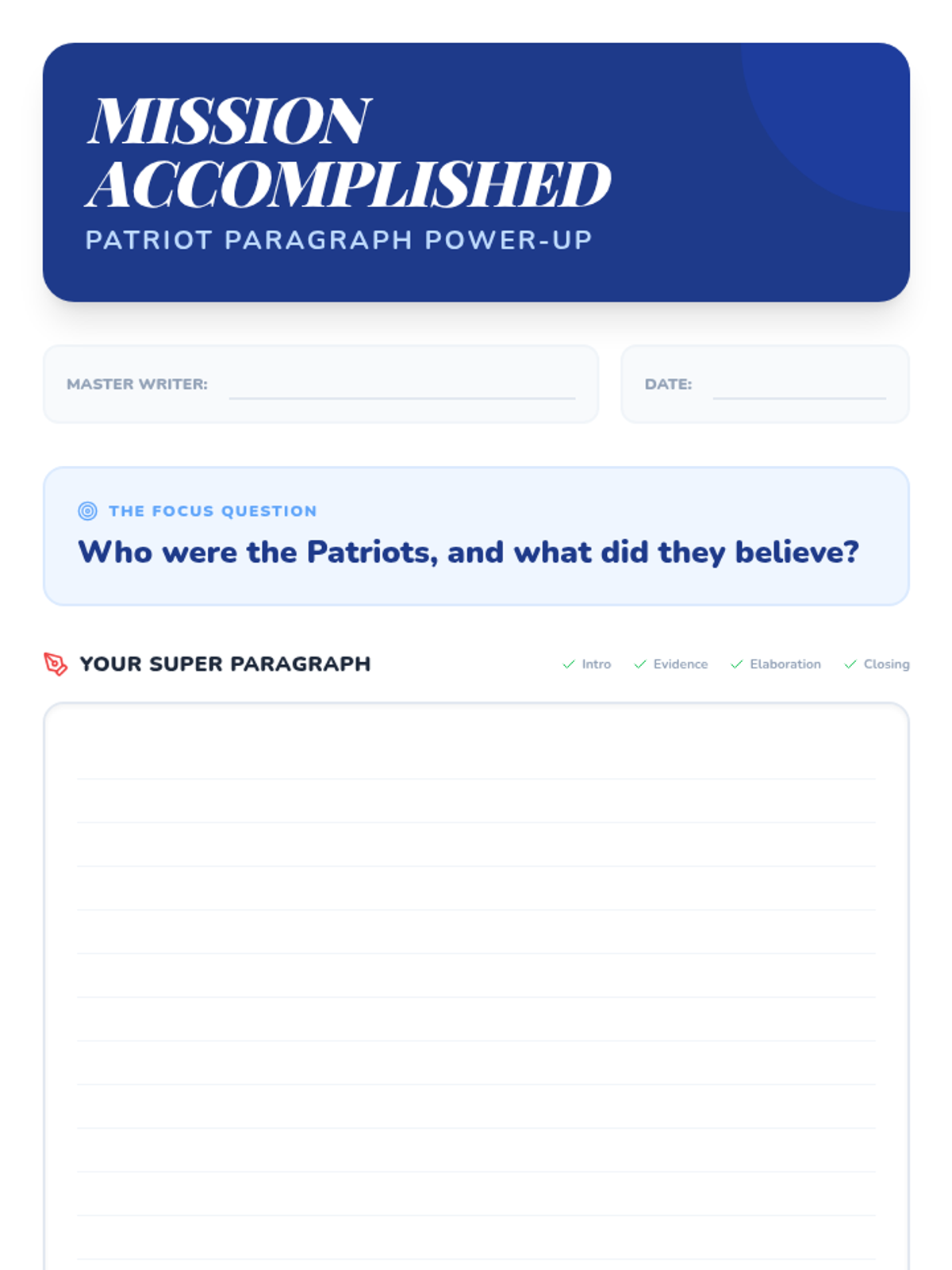
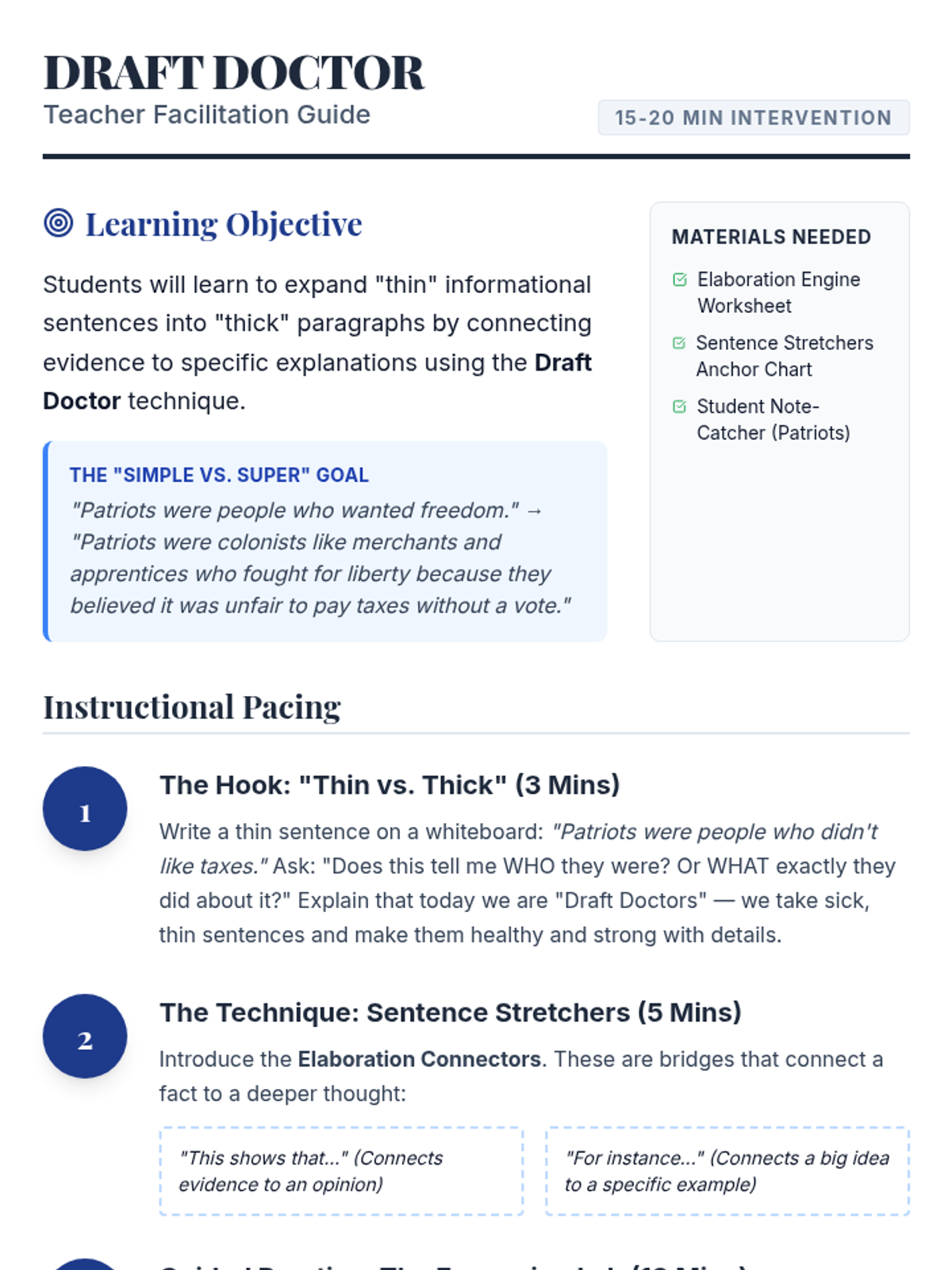
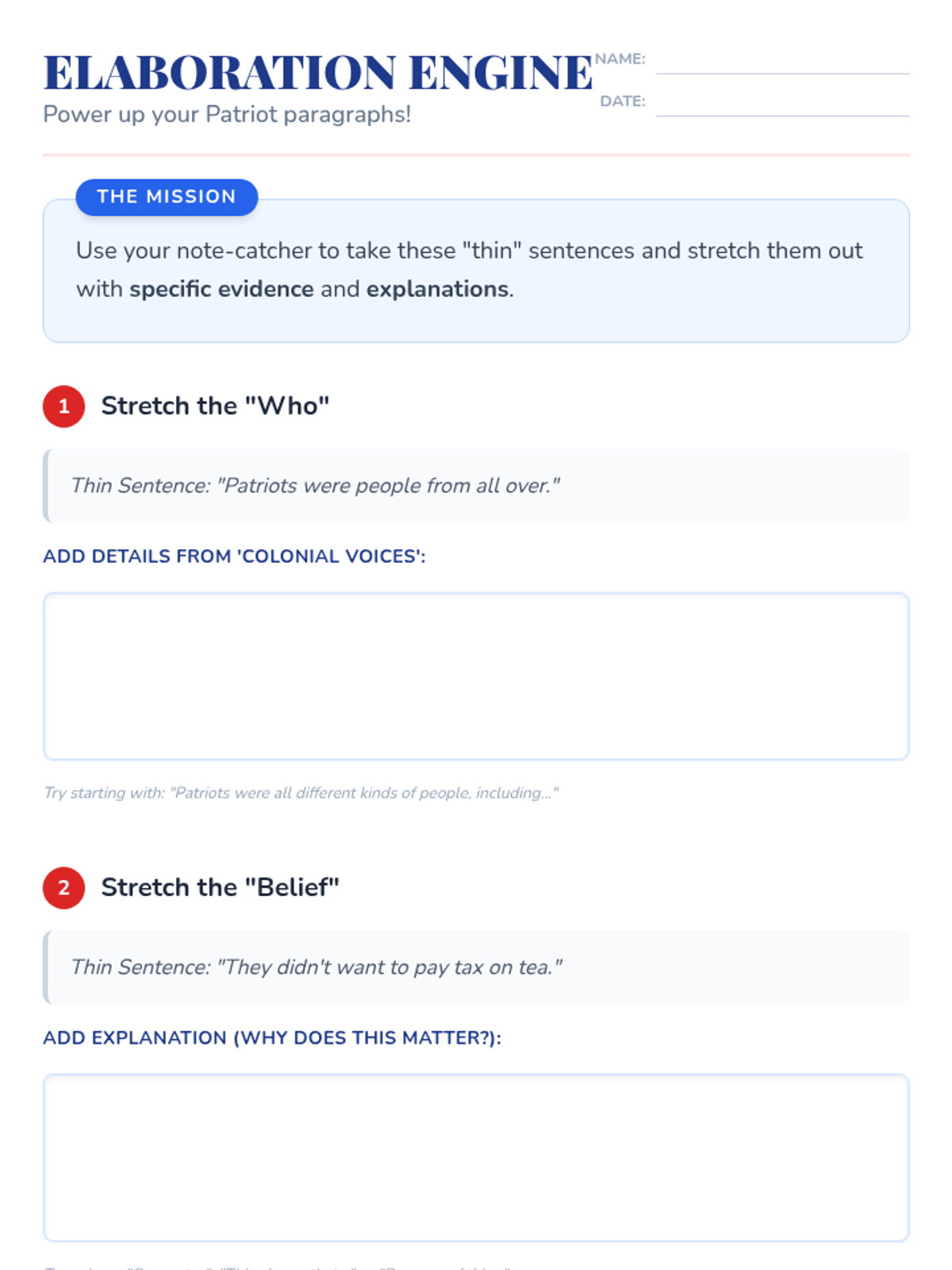
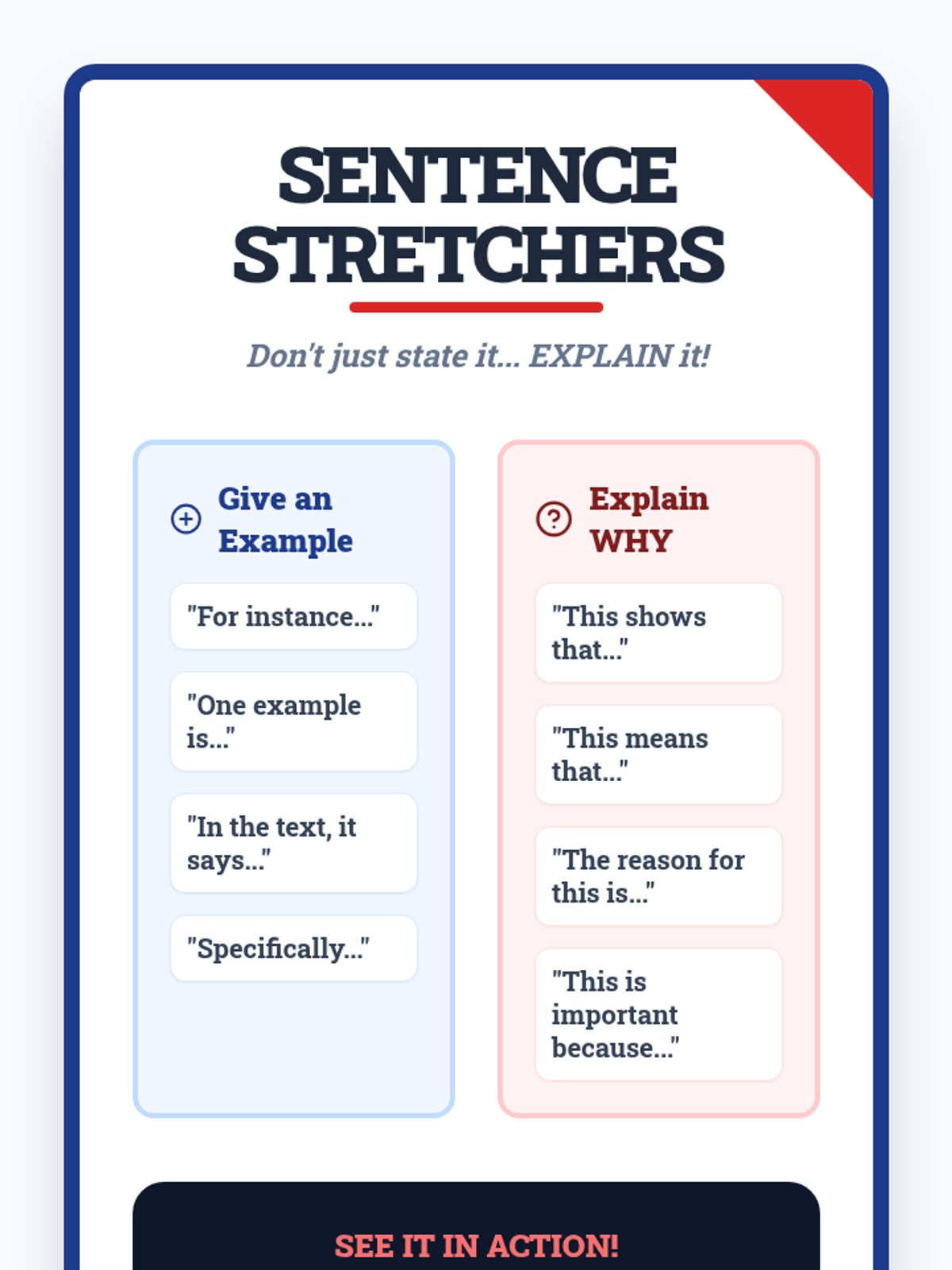
A set of materials designed for small-group intervention focused on helping 4th-grade students elaborate on their informational writing about Revolutionary War Patriots. The lesson introduces the 'Draft Doctor' technique to expand simple sentences into detailed paragraphs using specific evidence and explanation starters.
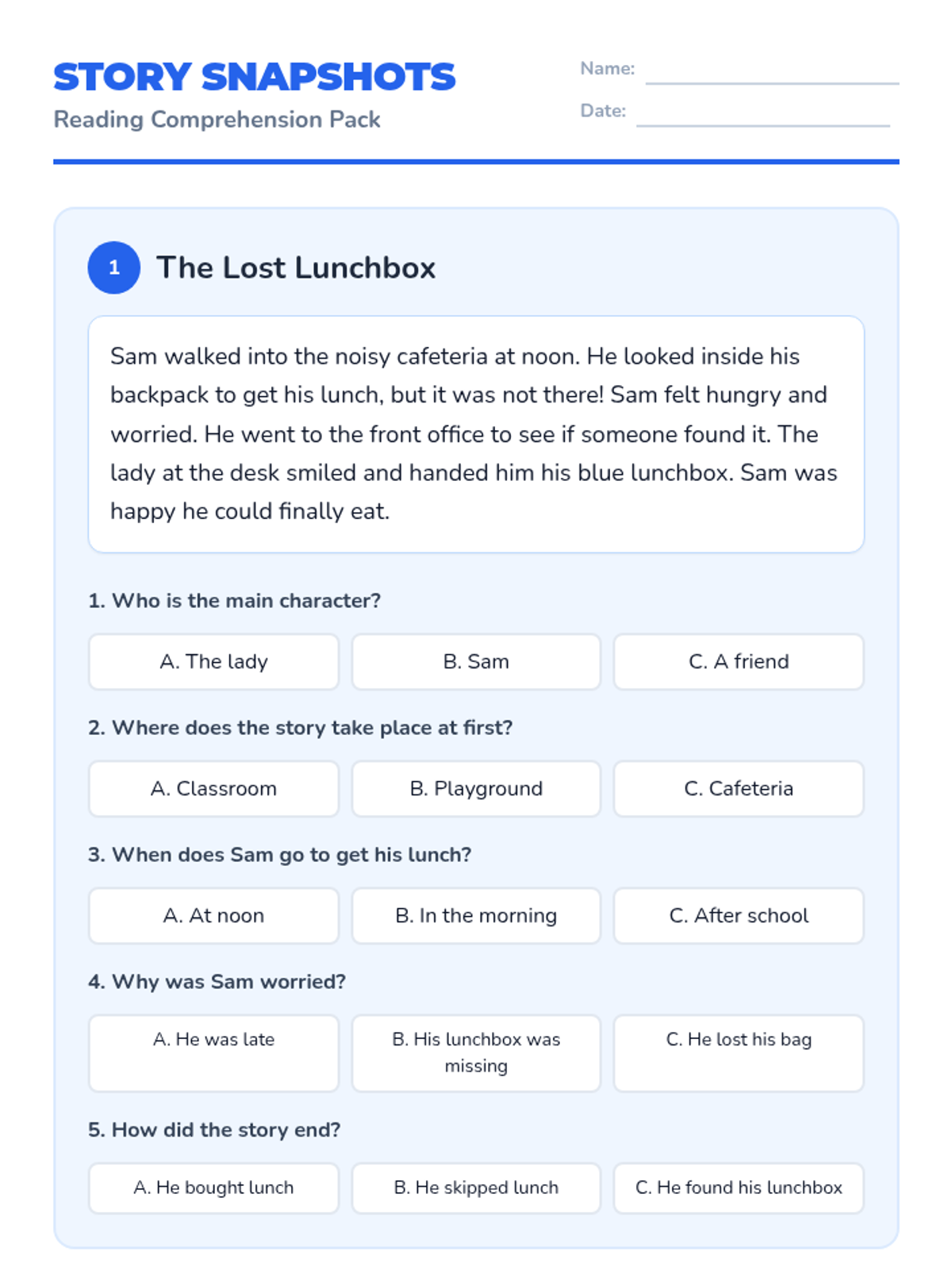
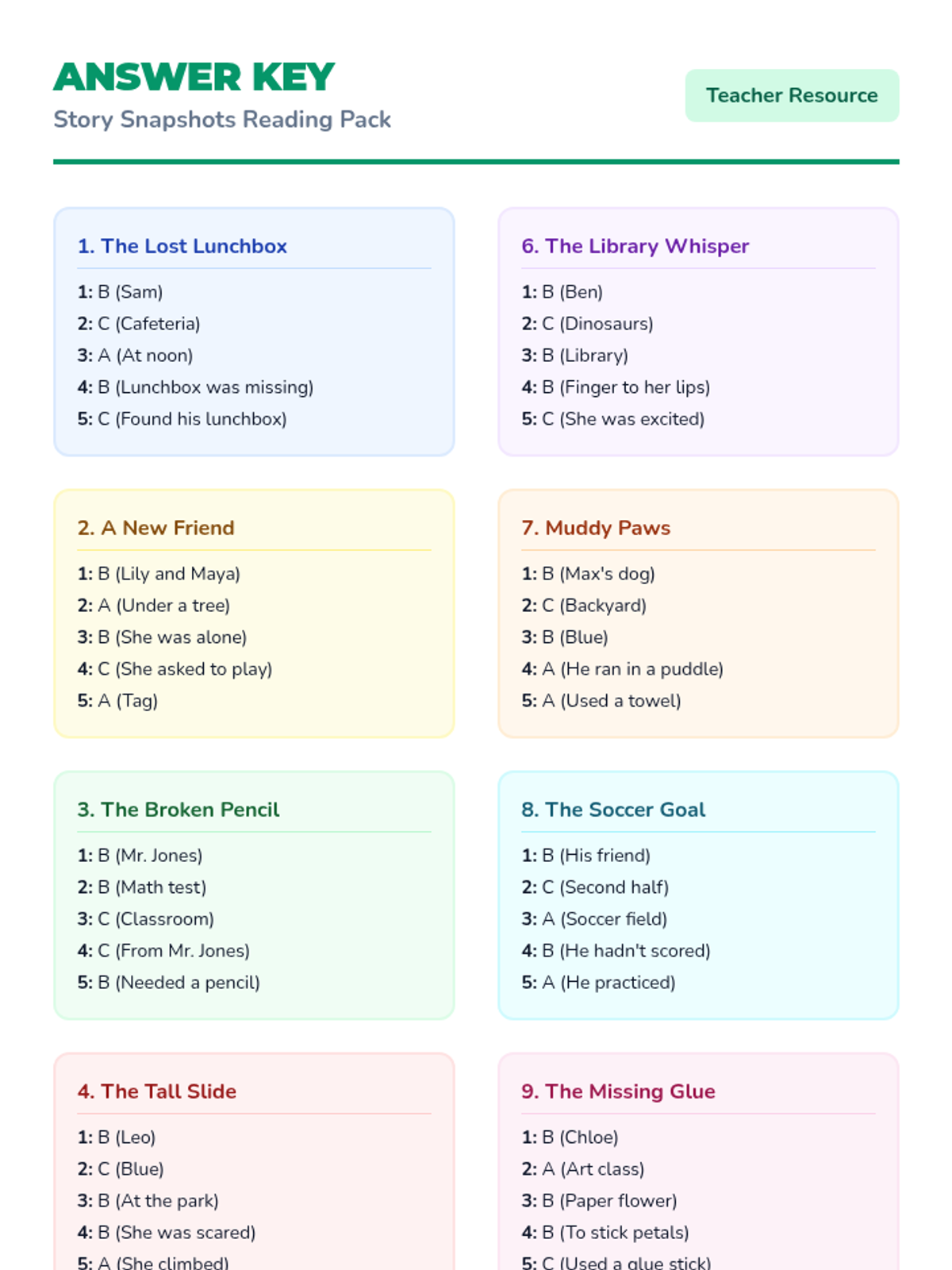
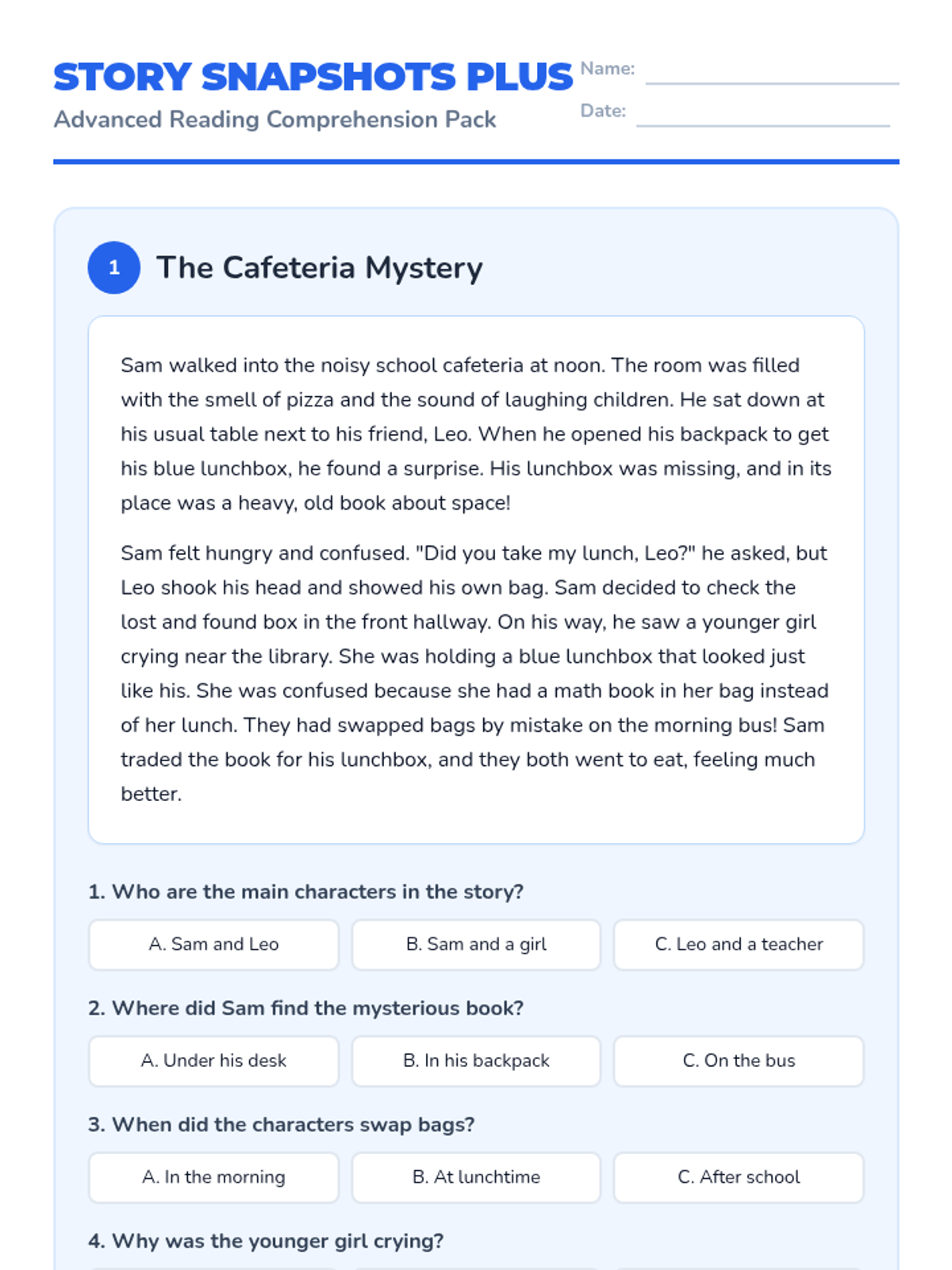
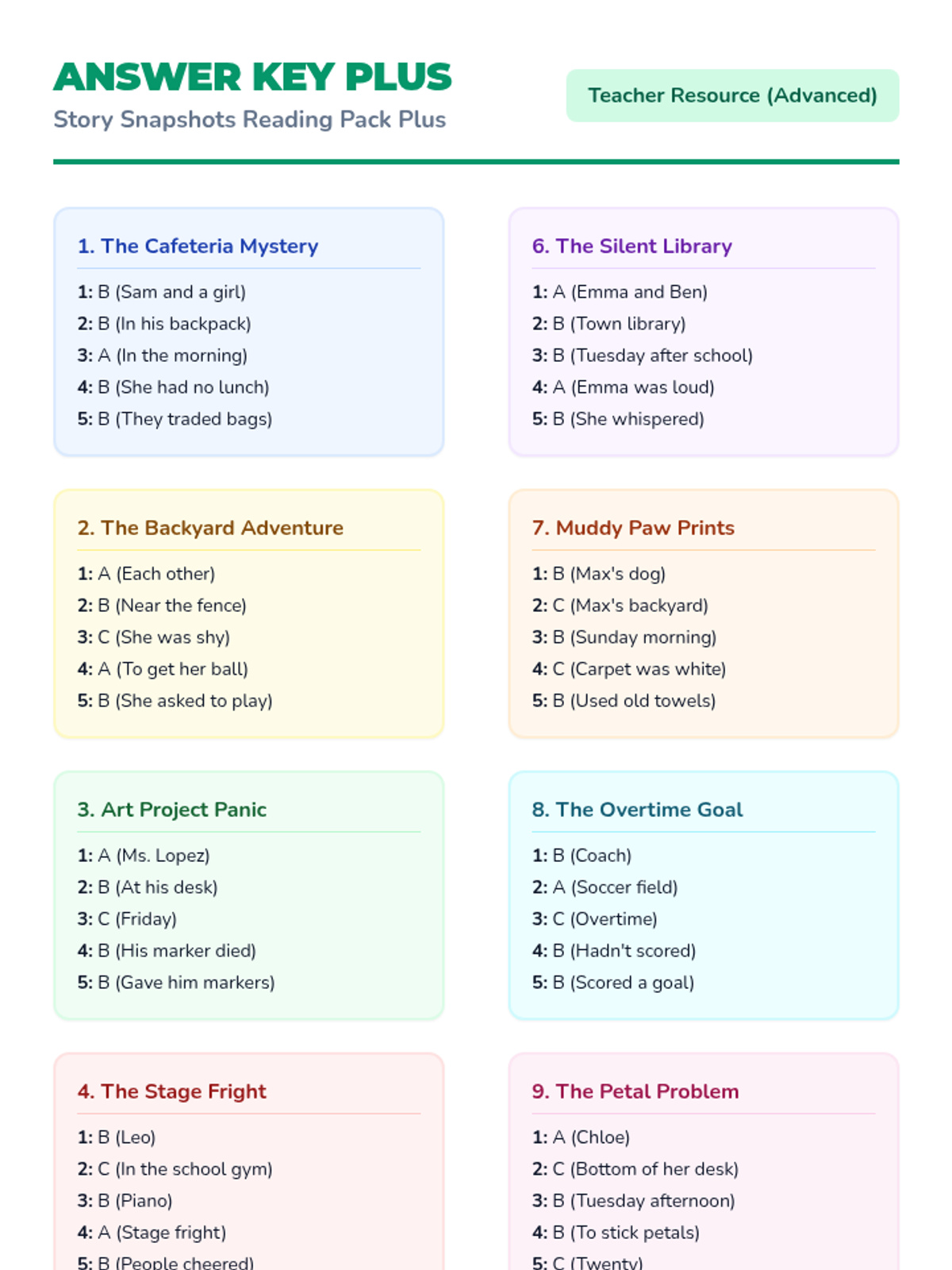
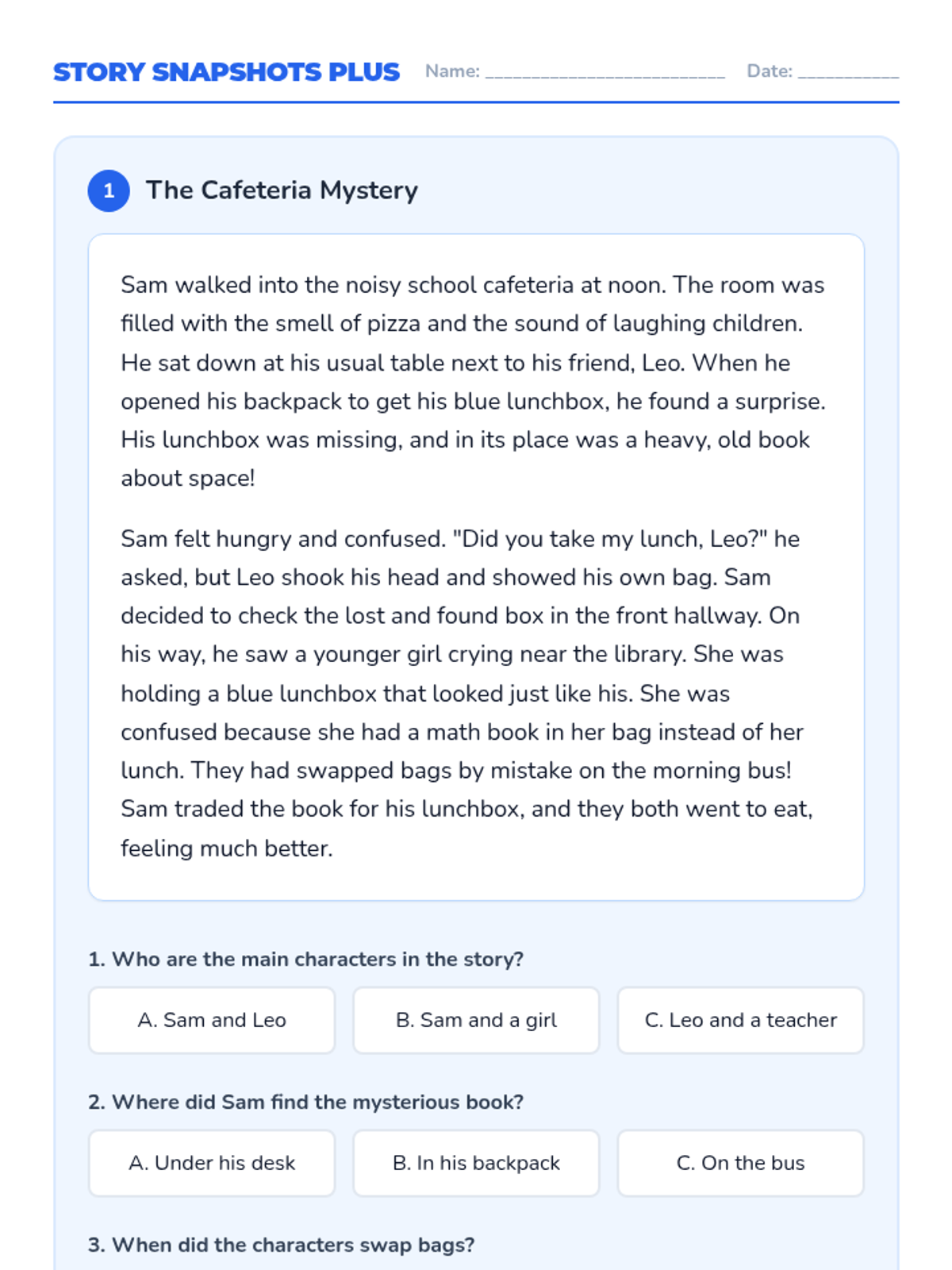
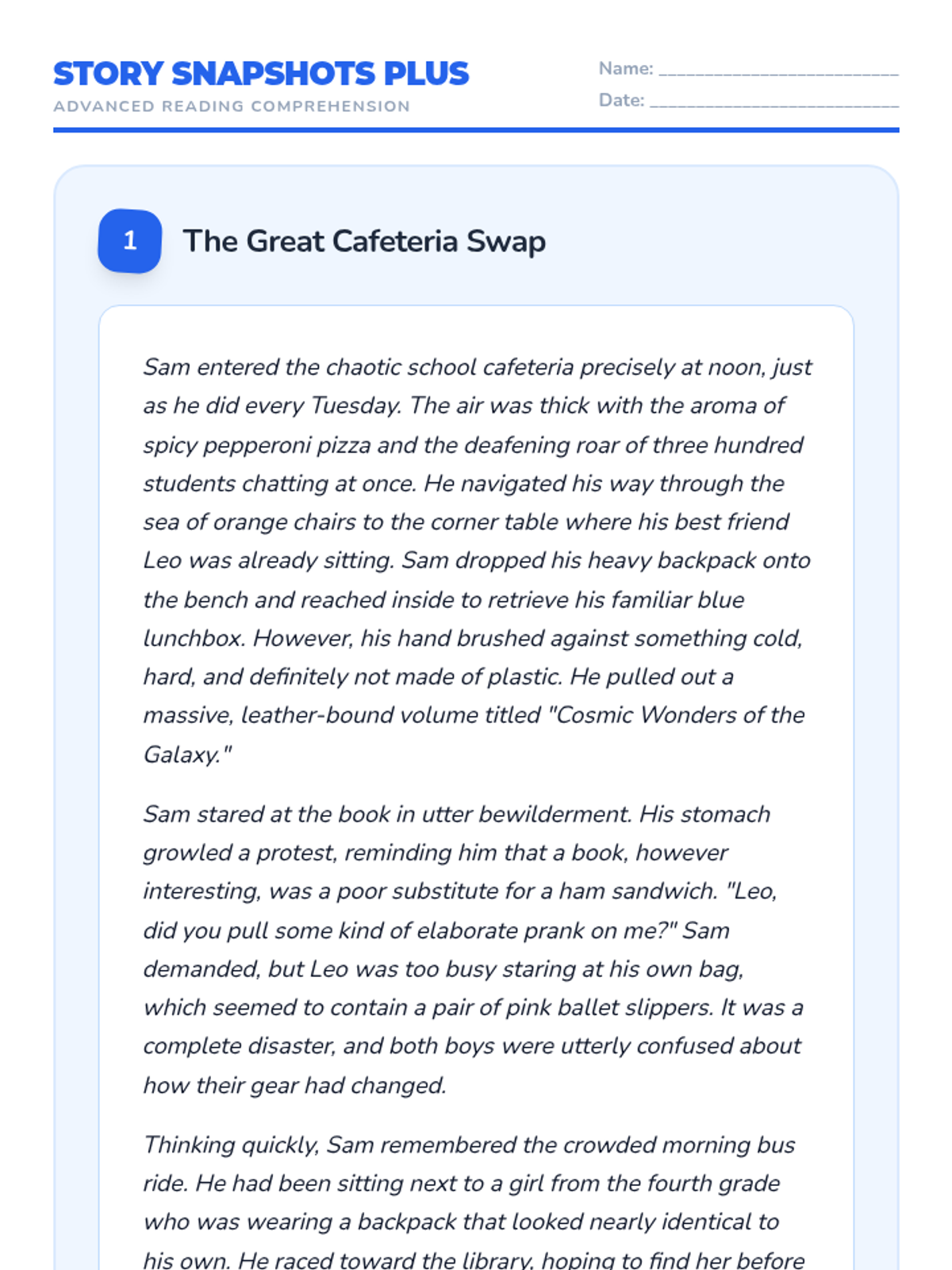
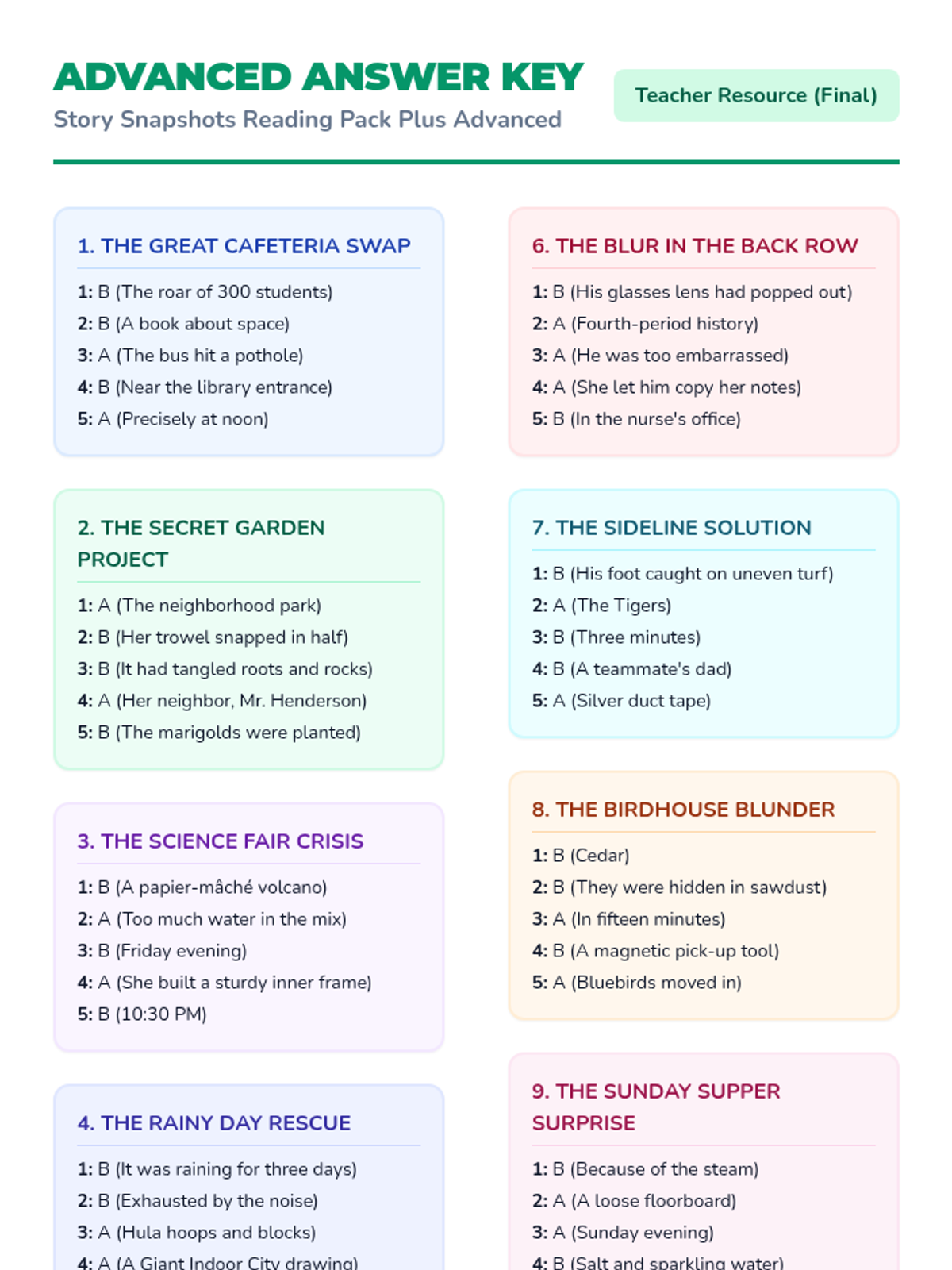
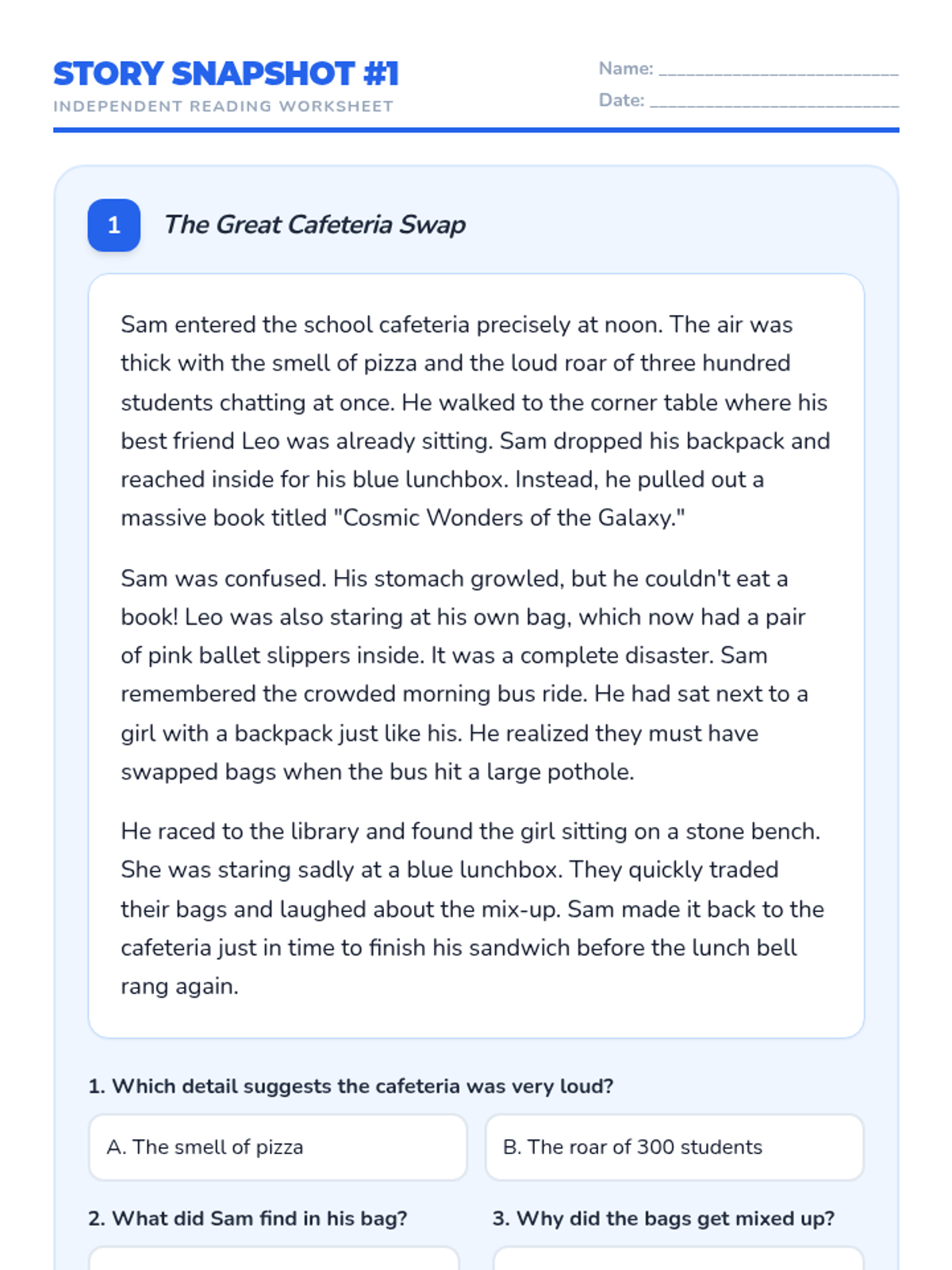
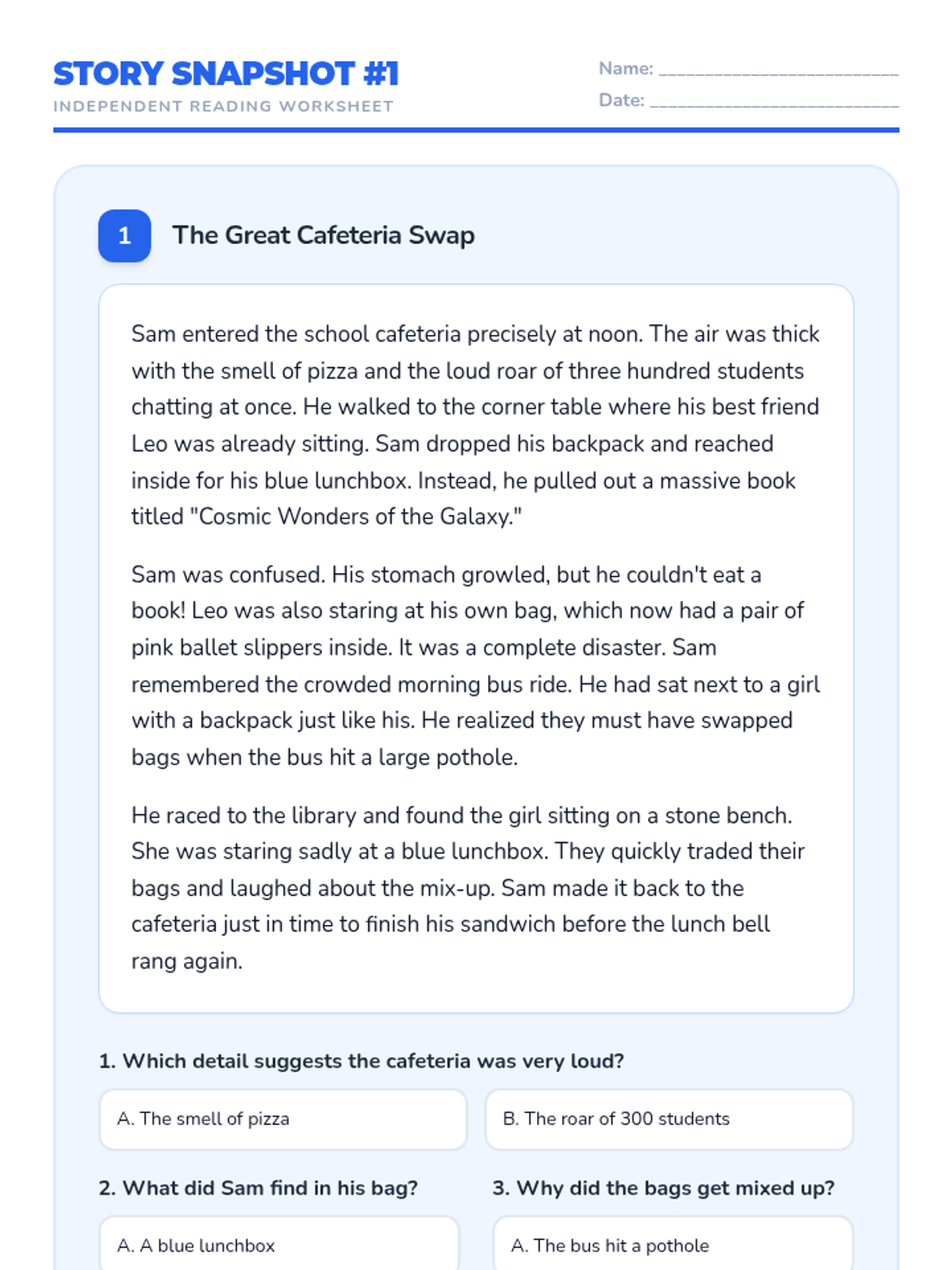
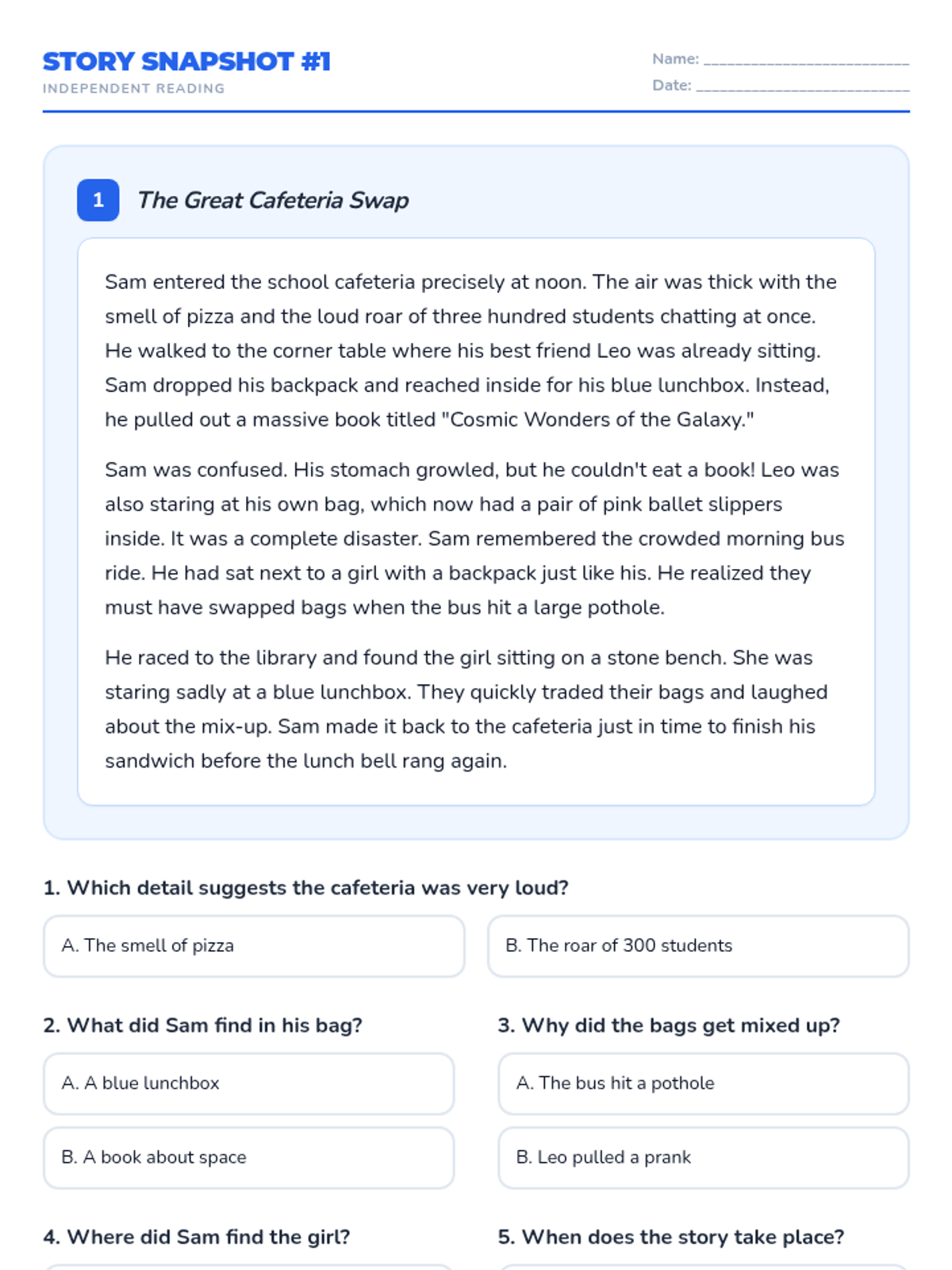
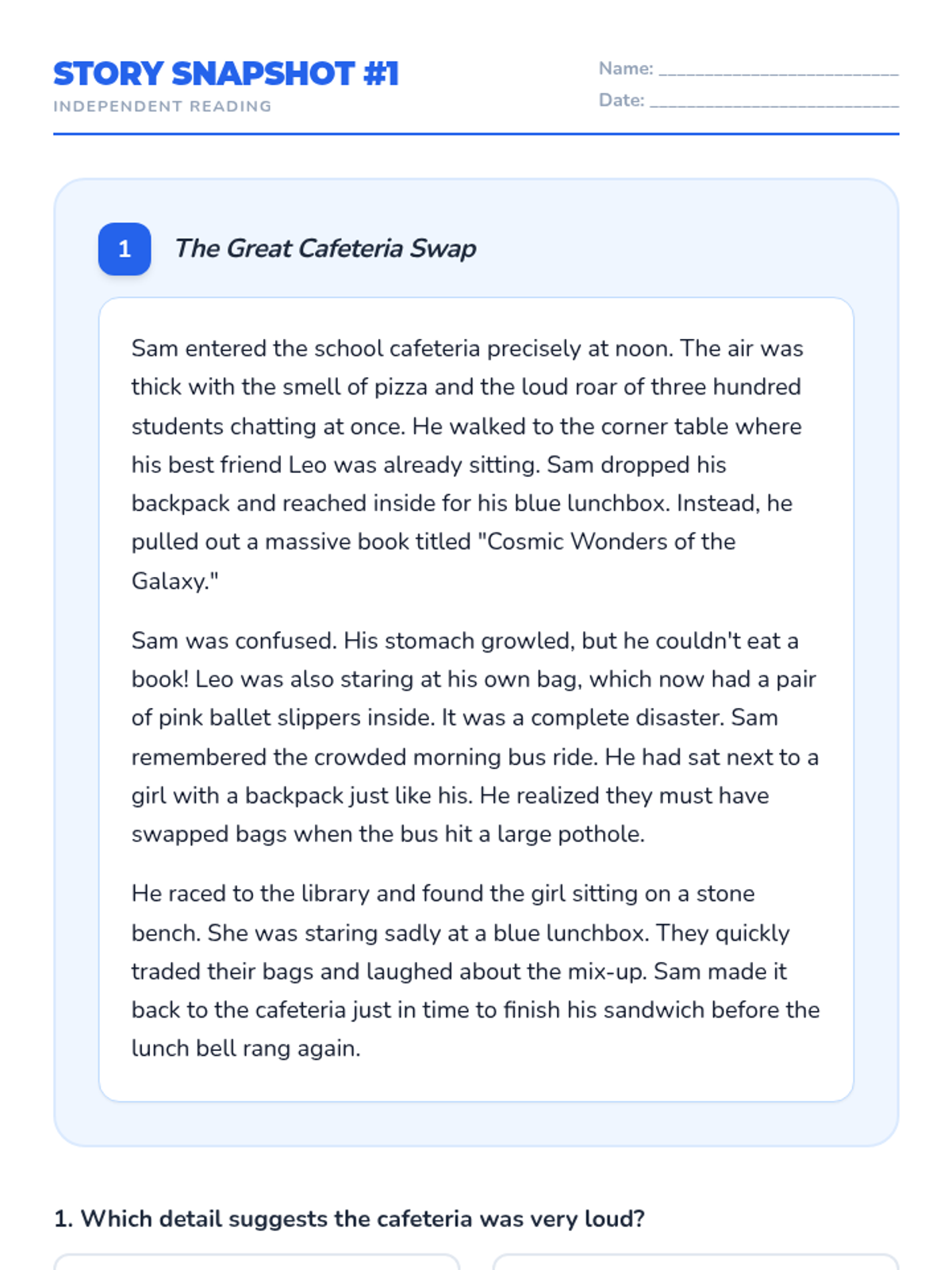
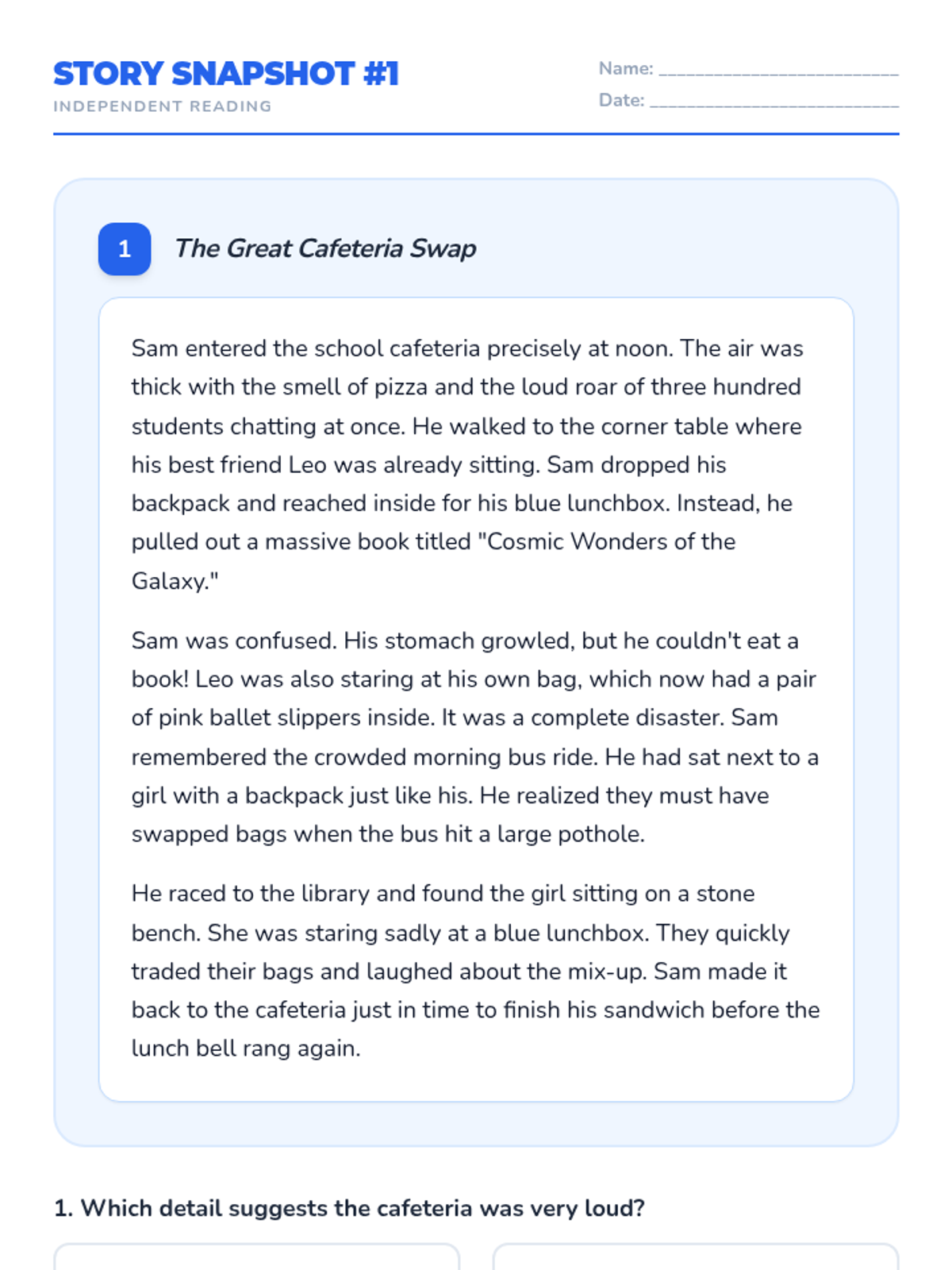
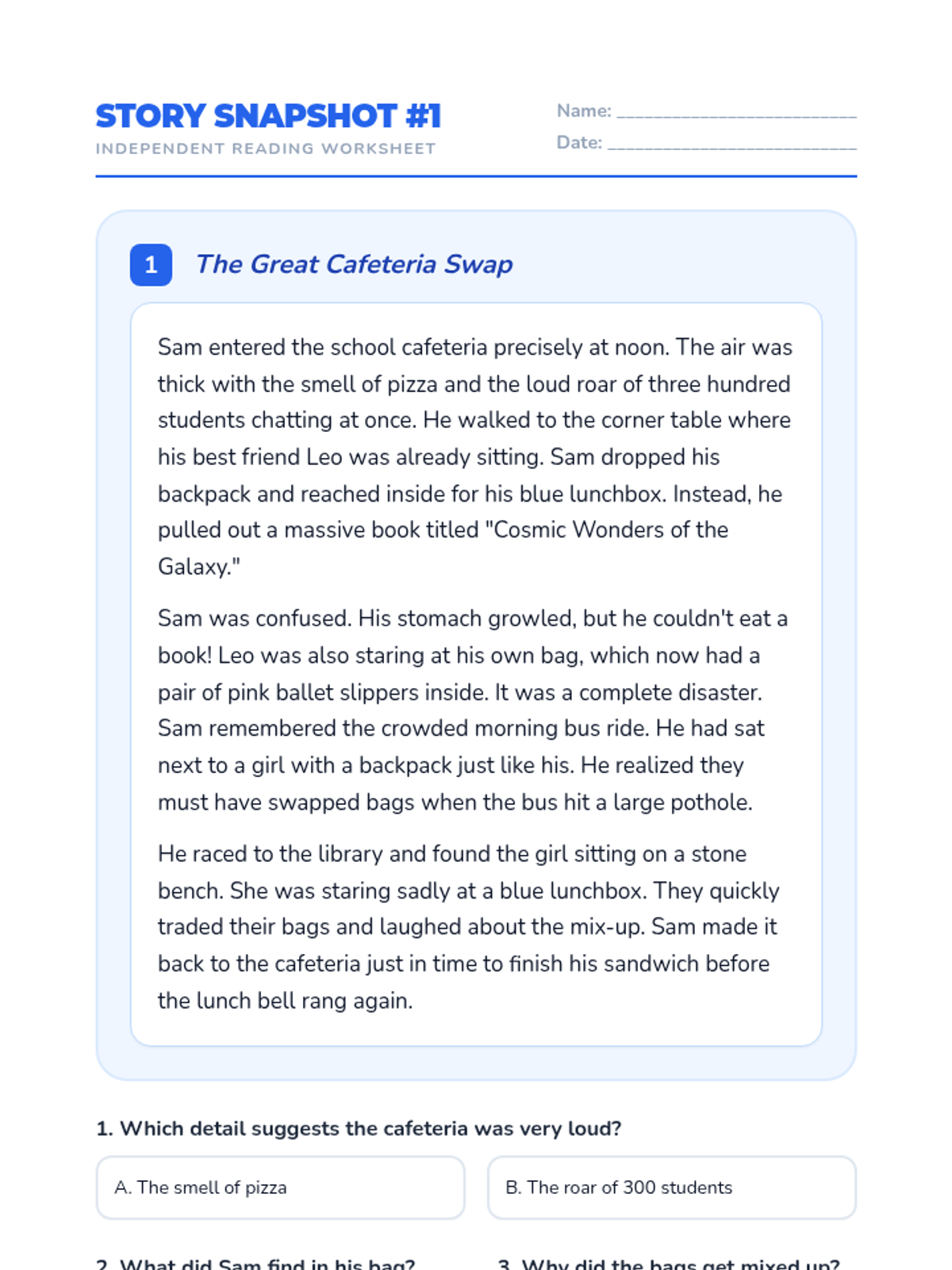
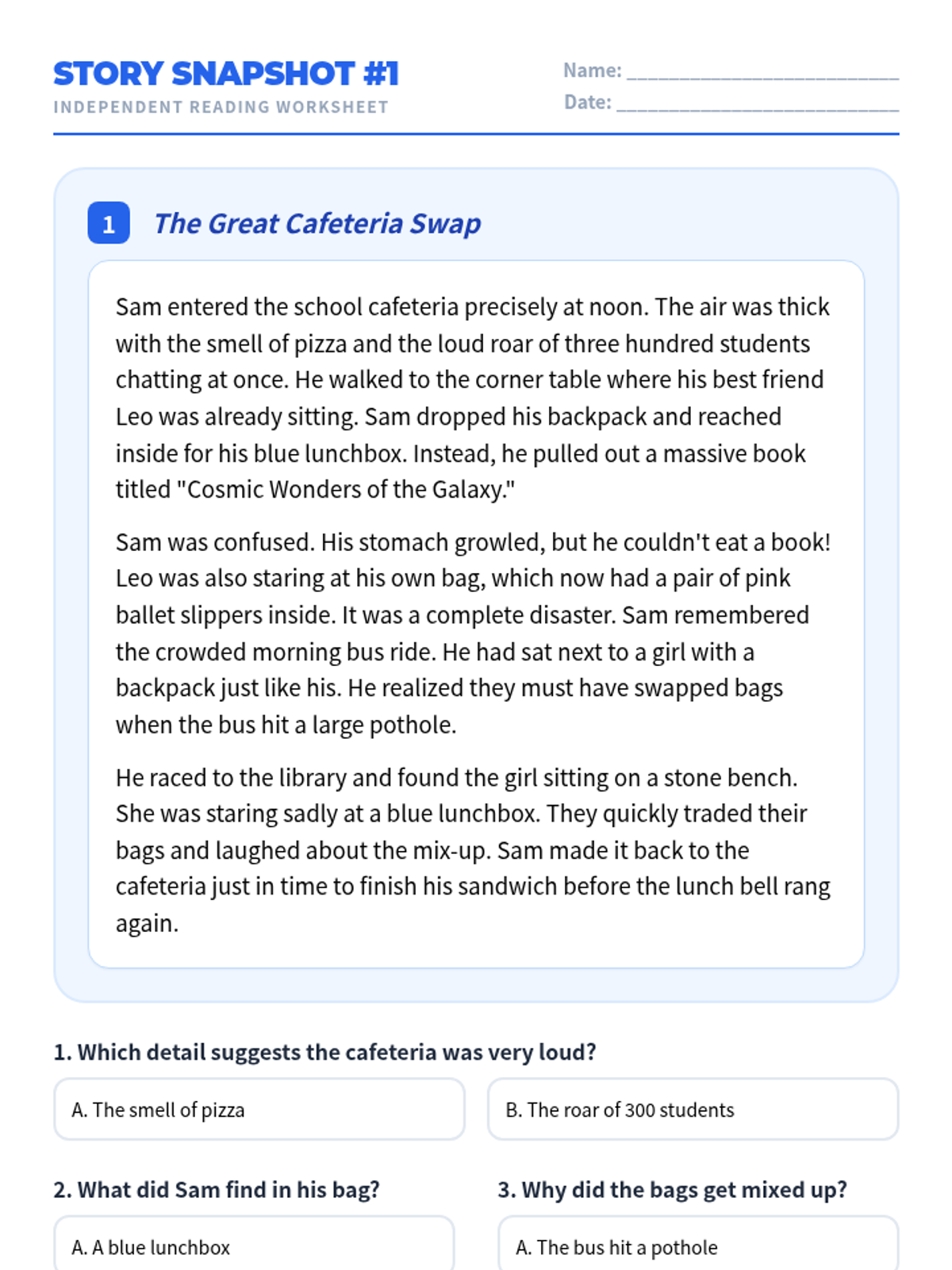
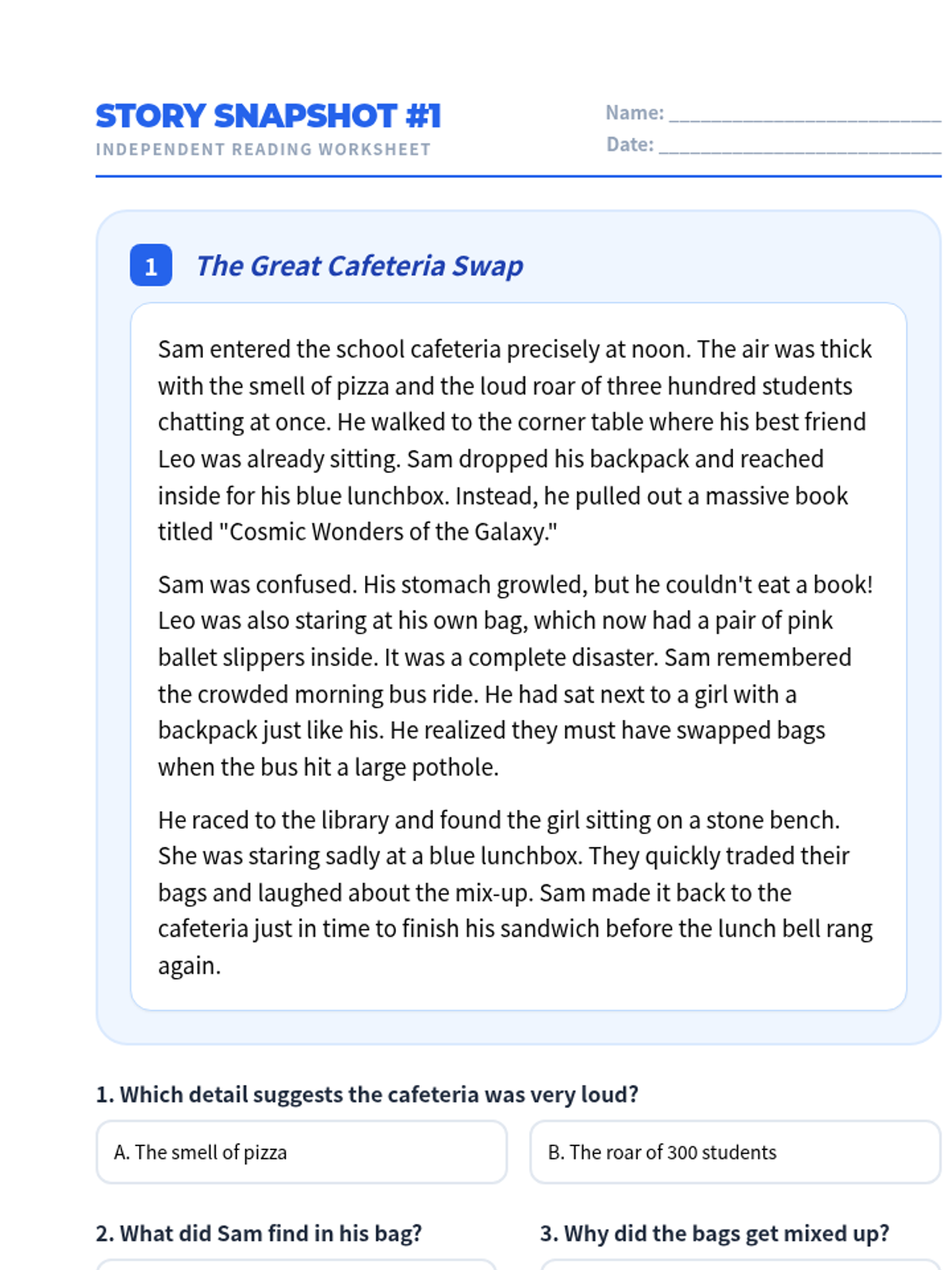
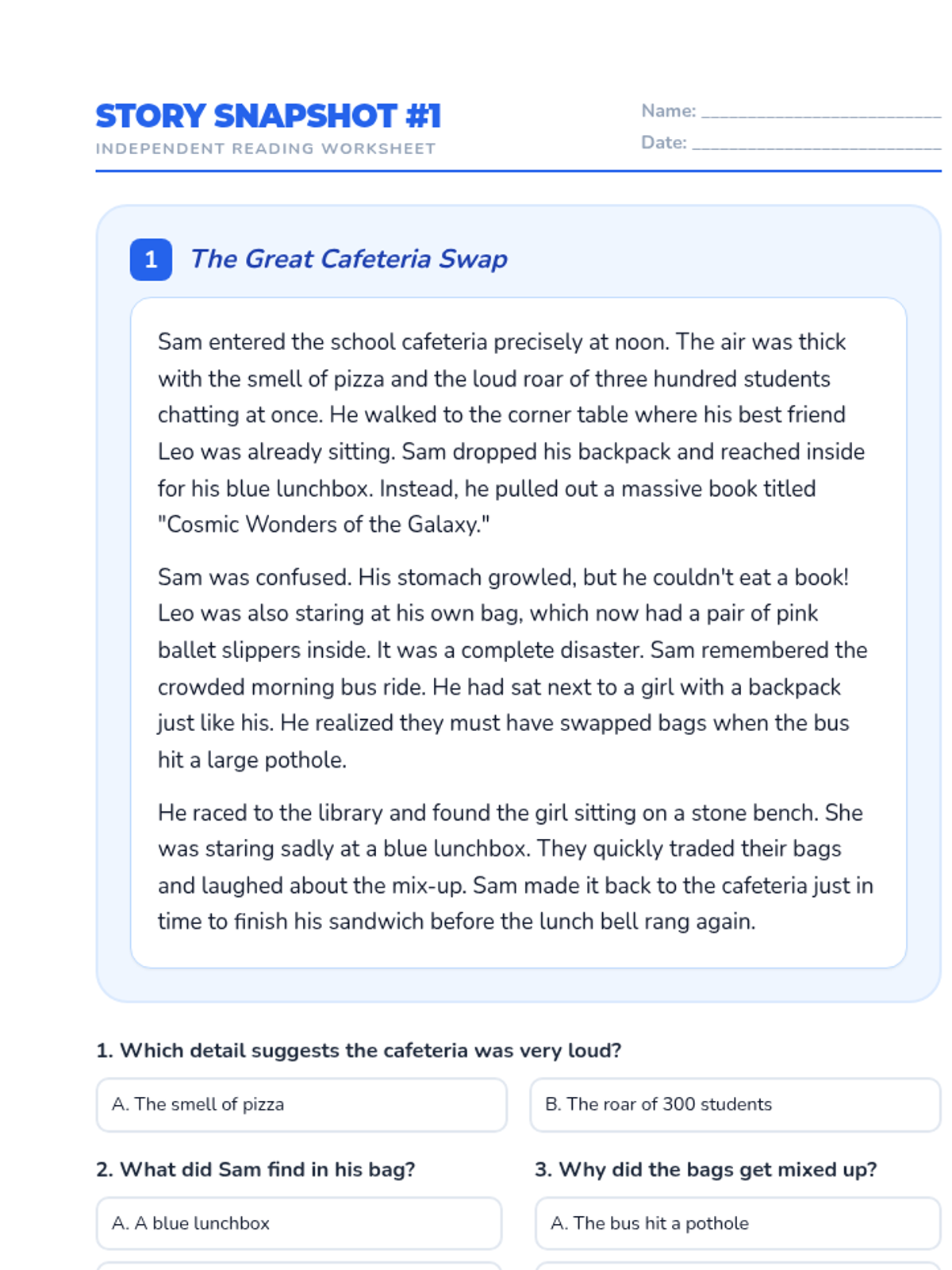
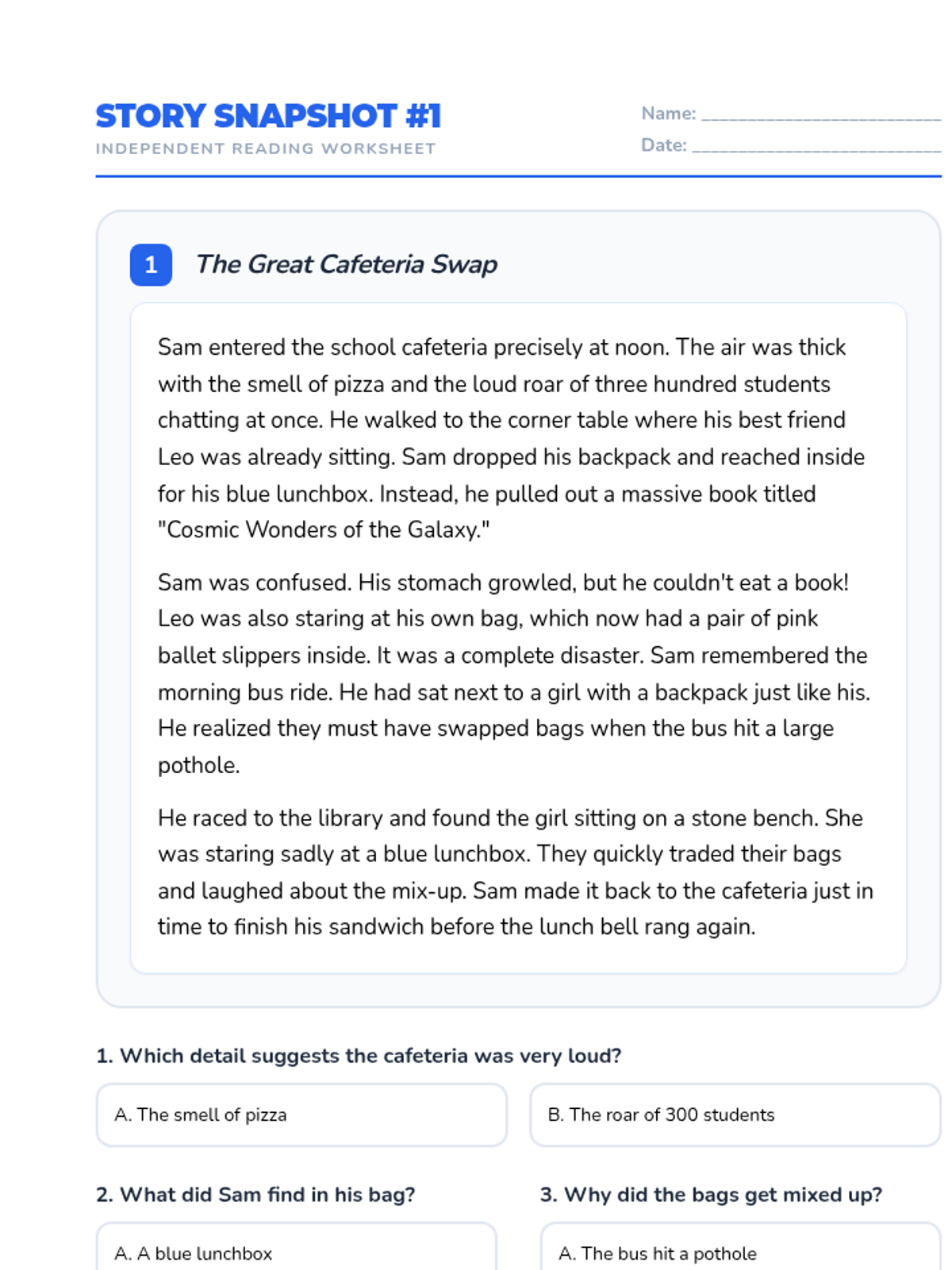
A collection of 10 longer, more complex short stories designed for 3th-4th grade level readers. Focuses on identifying character, setting, and plot elements through multi-paragraph narratives and literal comprehension questions.
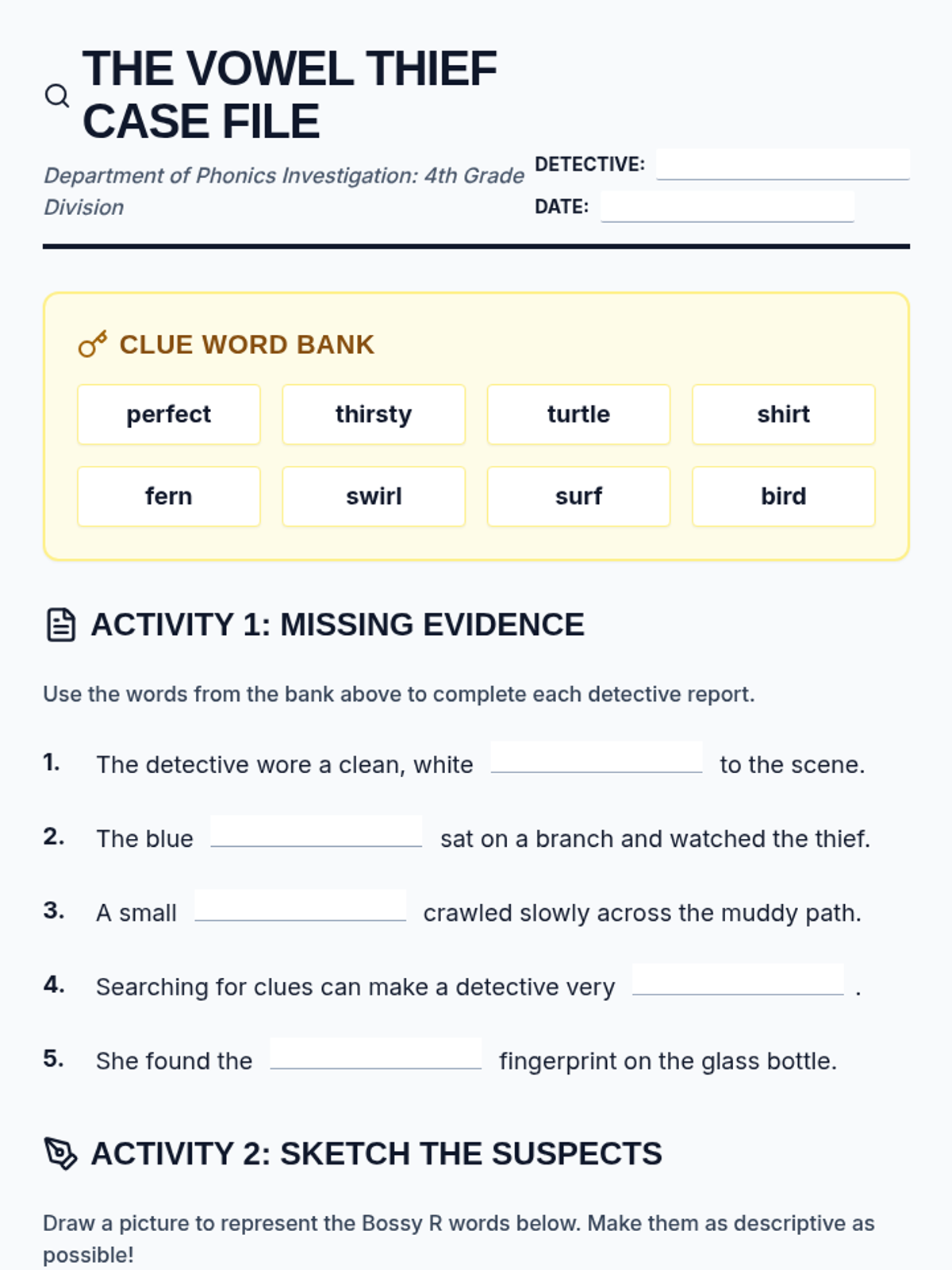
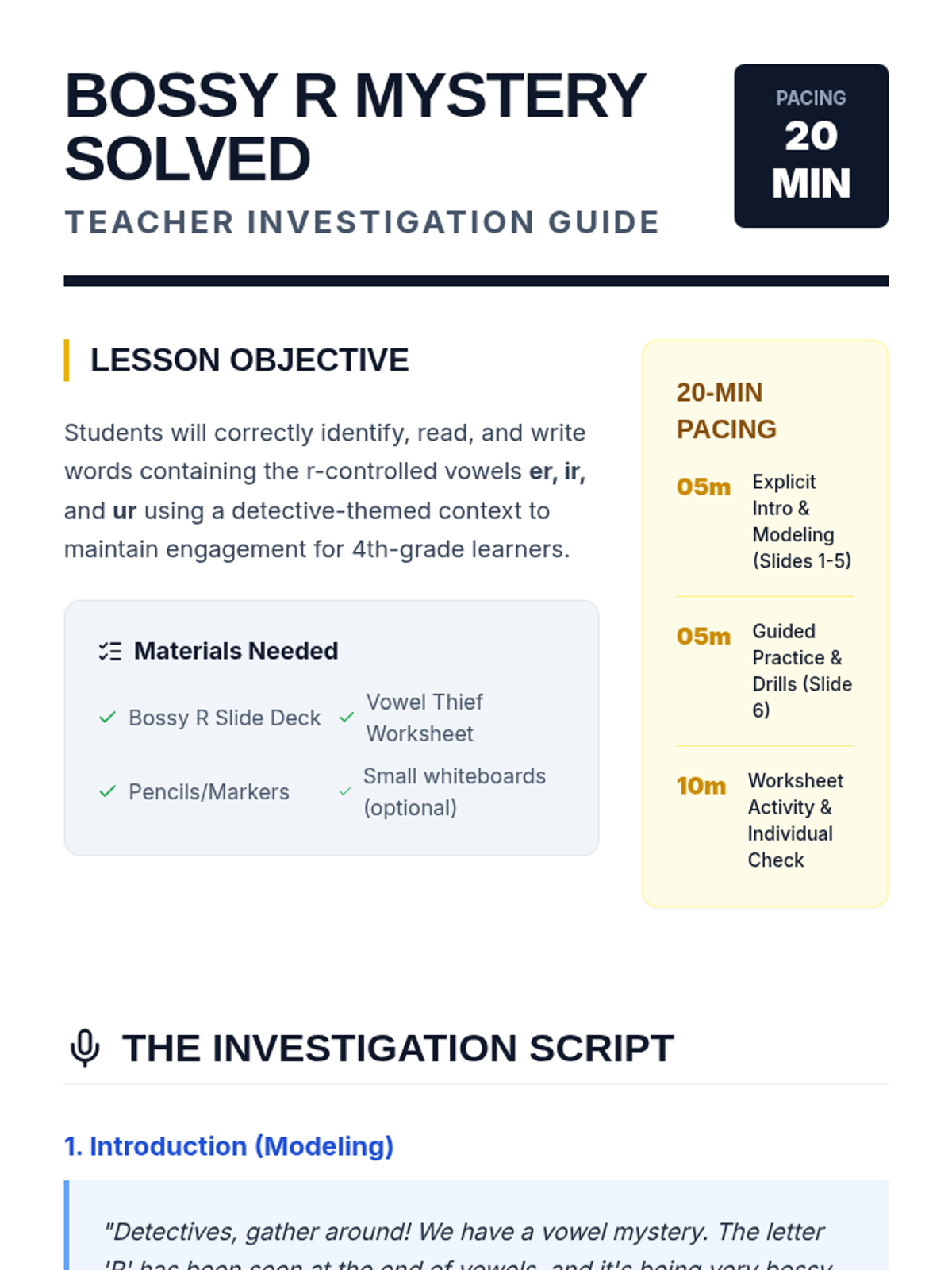
An explicit phonics lesson for 4th graders focusing on the r-controlled vowels er, ir, and ur through a detective-themed investigation.
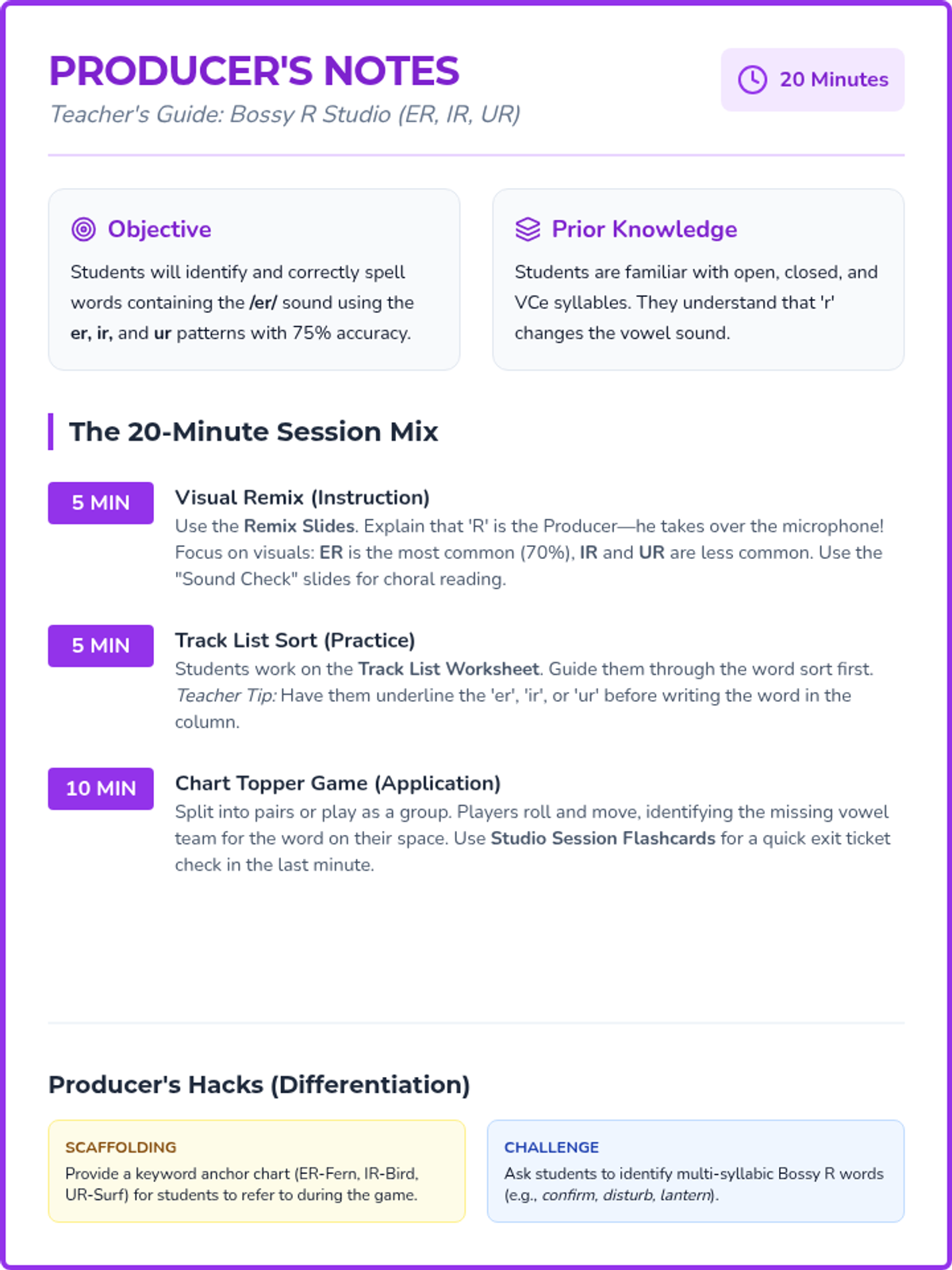
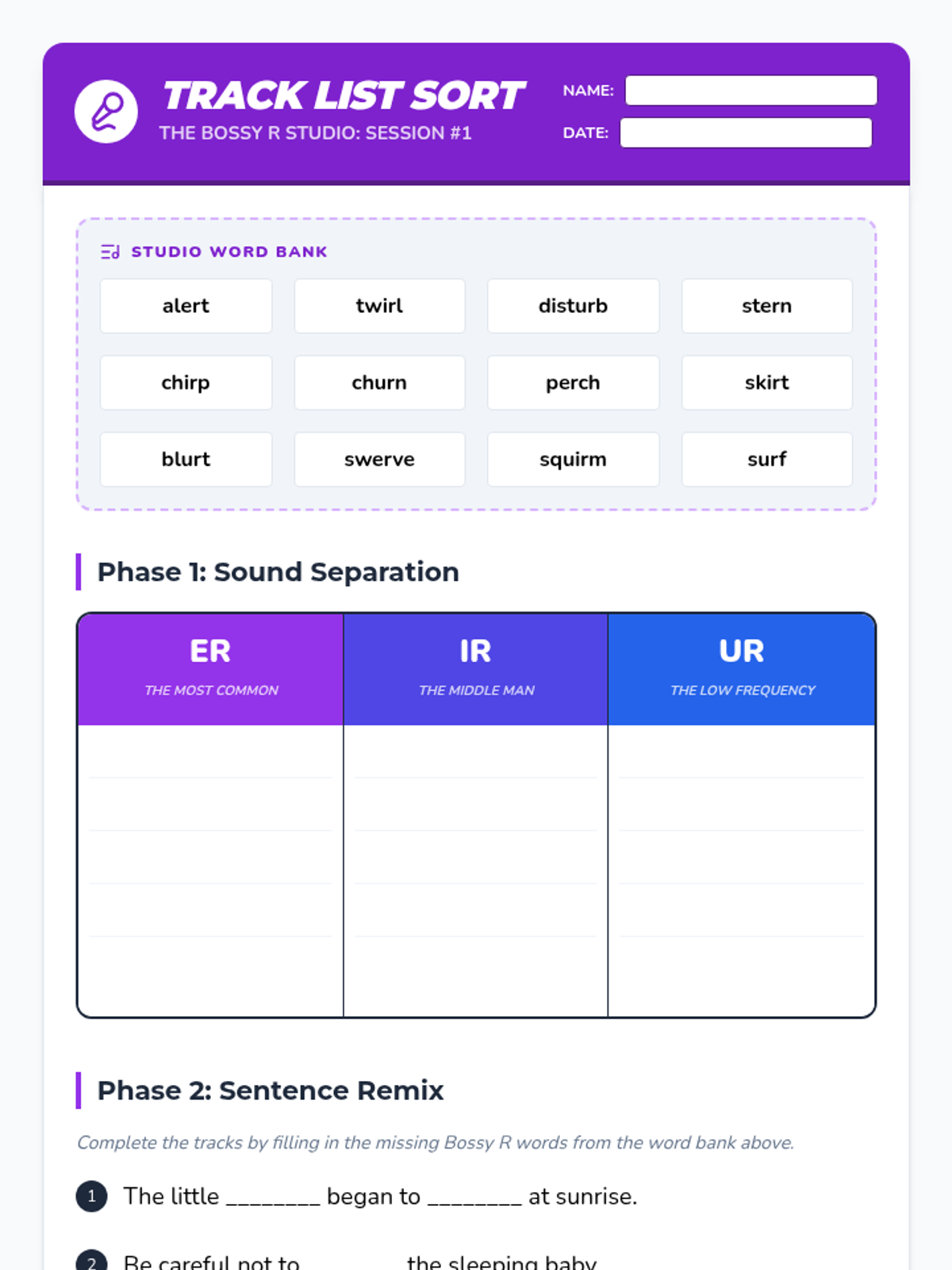
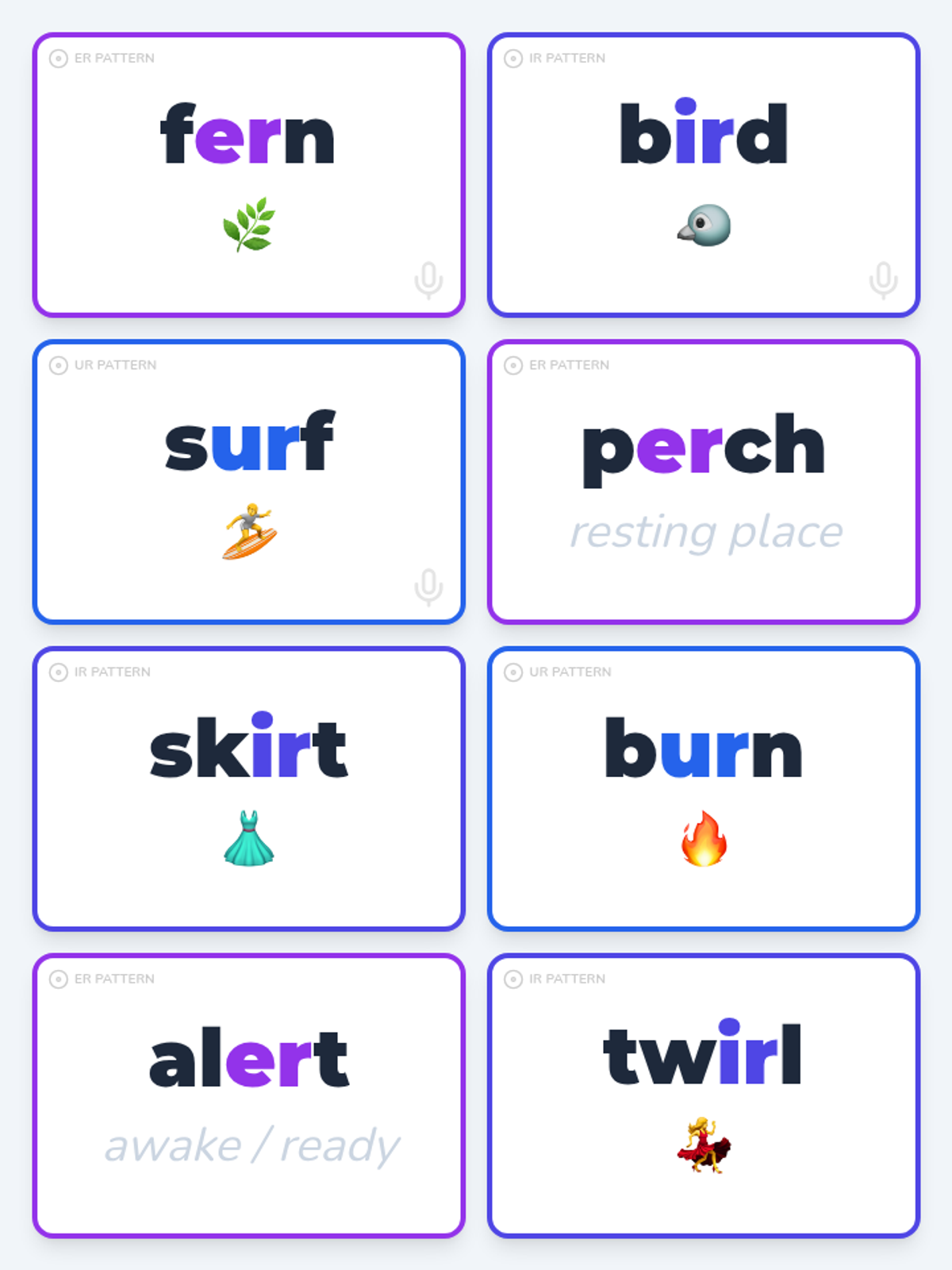
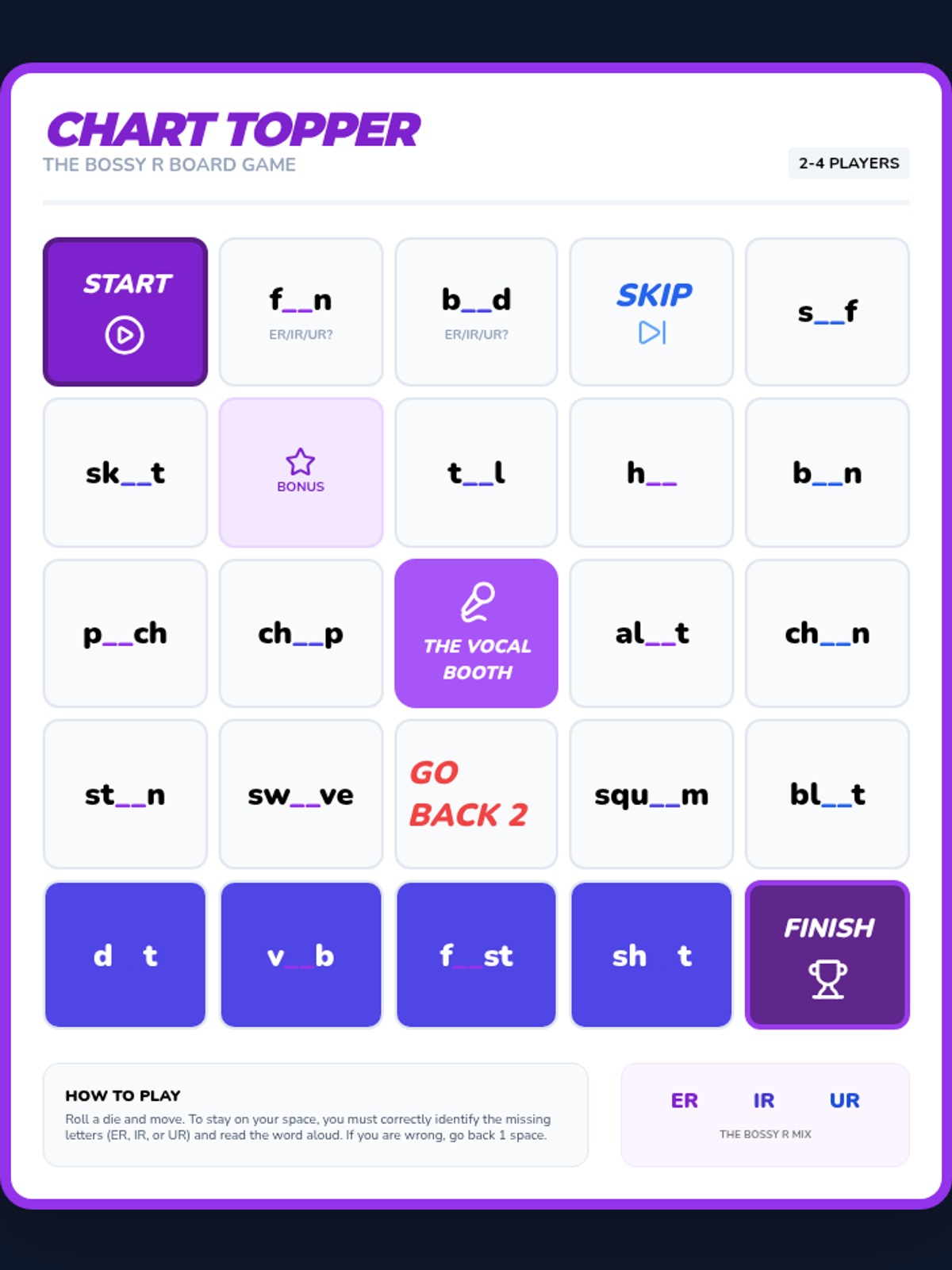
An intensive 20-minute small group session focusing on the /er/ sound created by the 'Bossy R' (er, ir, ur) through studio-themed visuals, sorting, and gameplay.
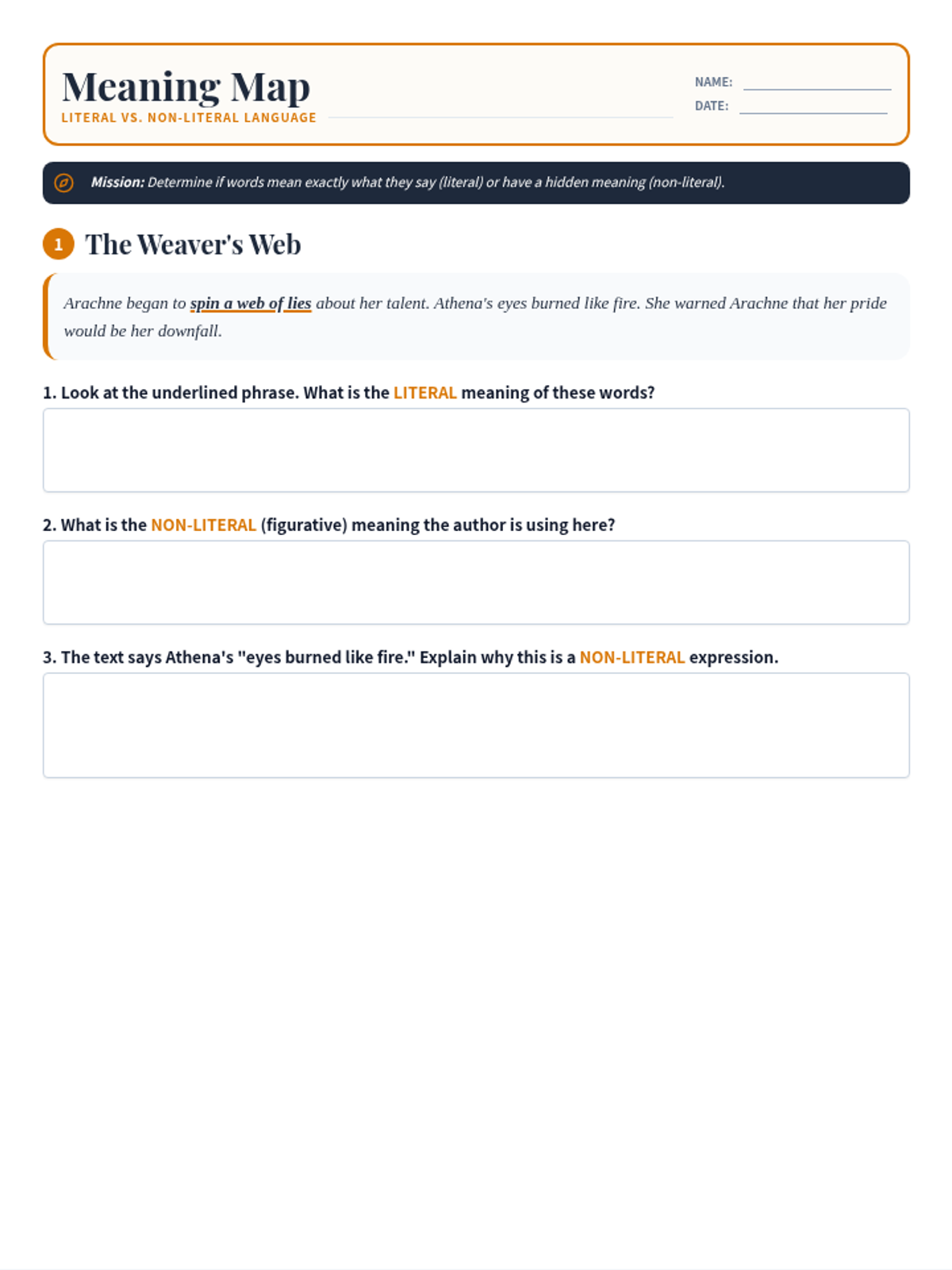
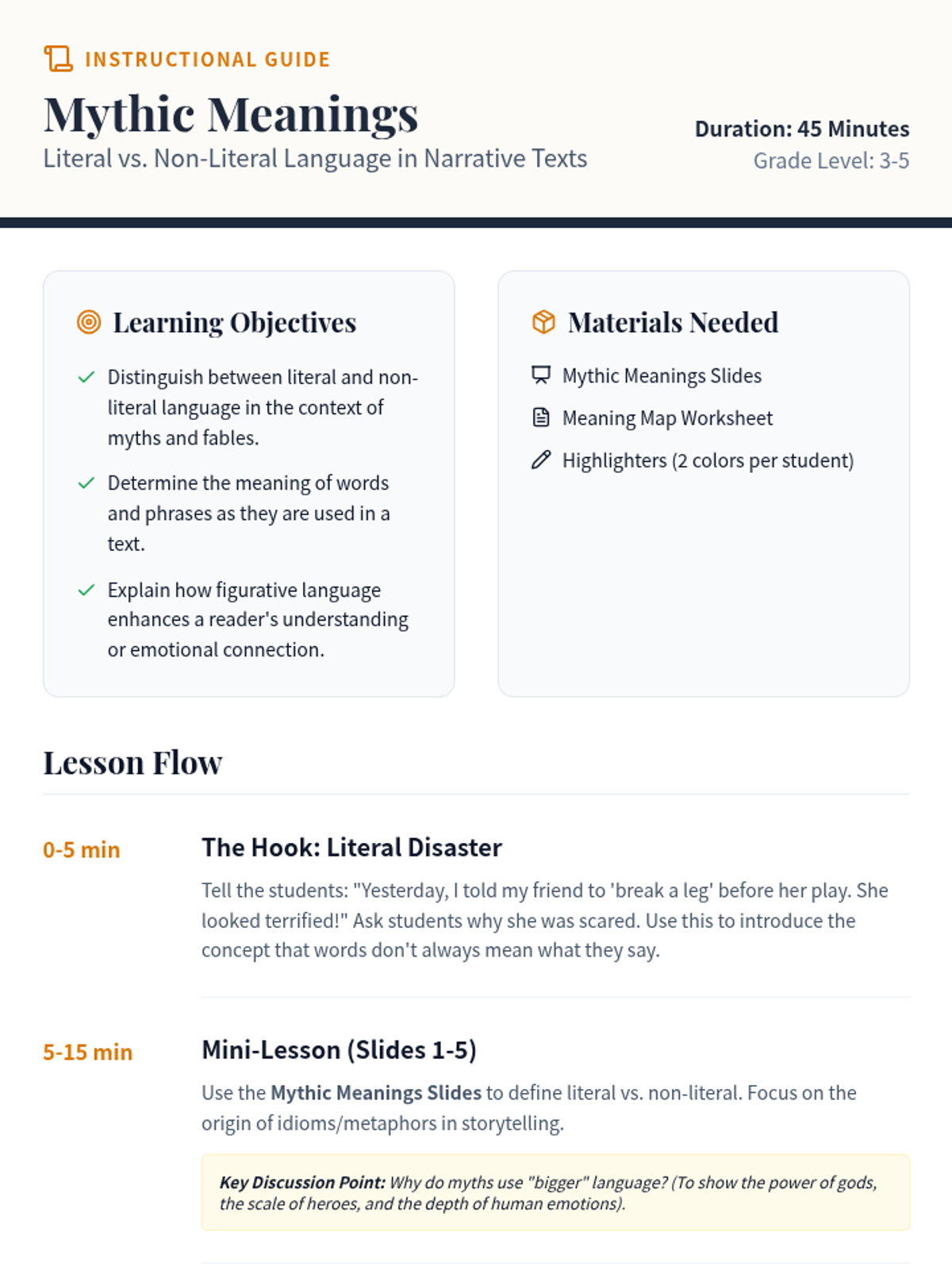
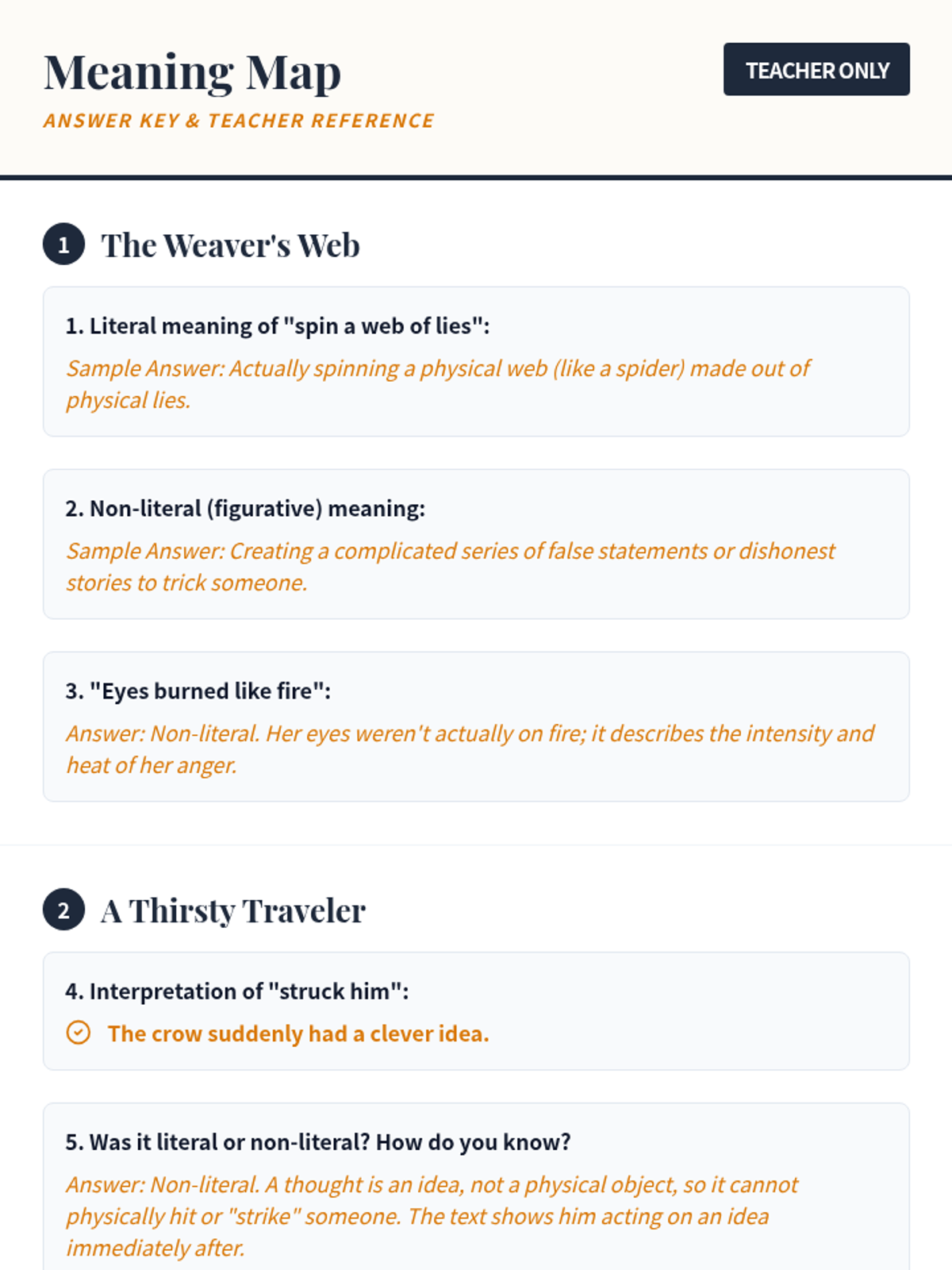
A 45-minute lesson exploring the difference between literal and non-literal language through the lens of ancient myths and classic fables. Students will practice identifying and interpreting figurative expressions within narrative texts.
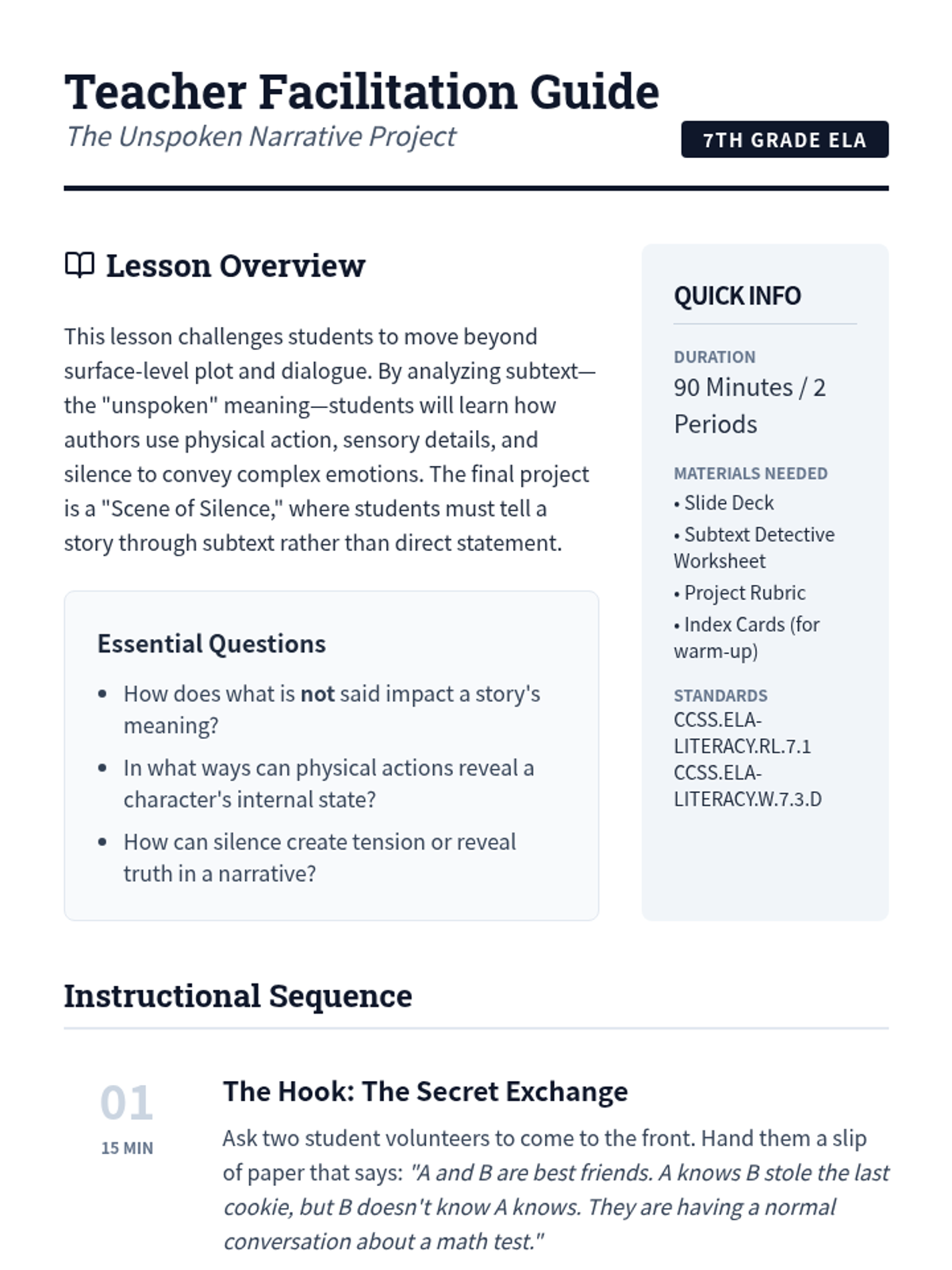
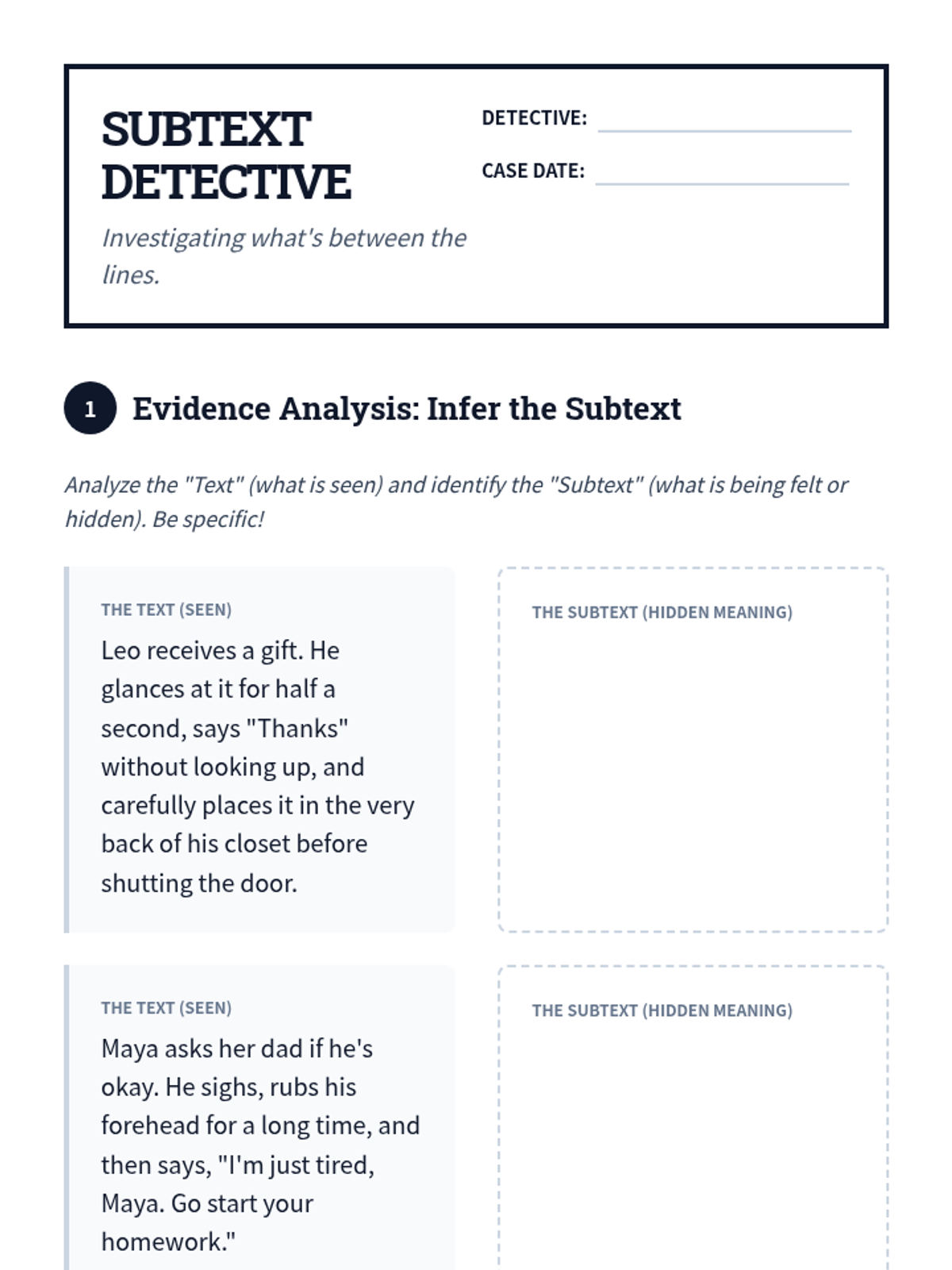
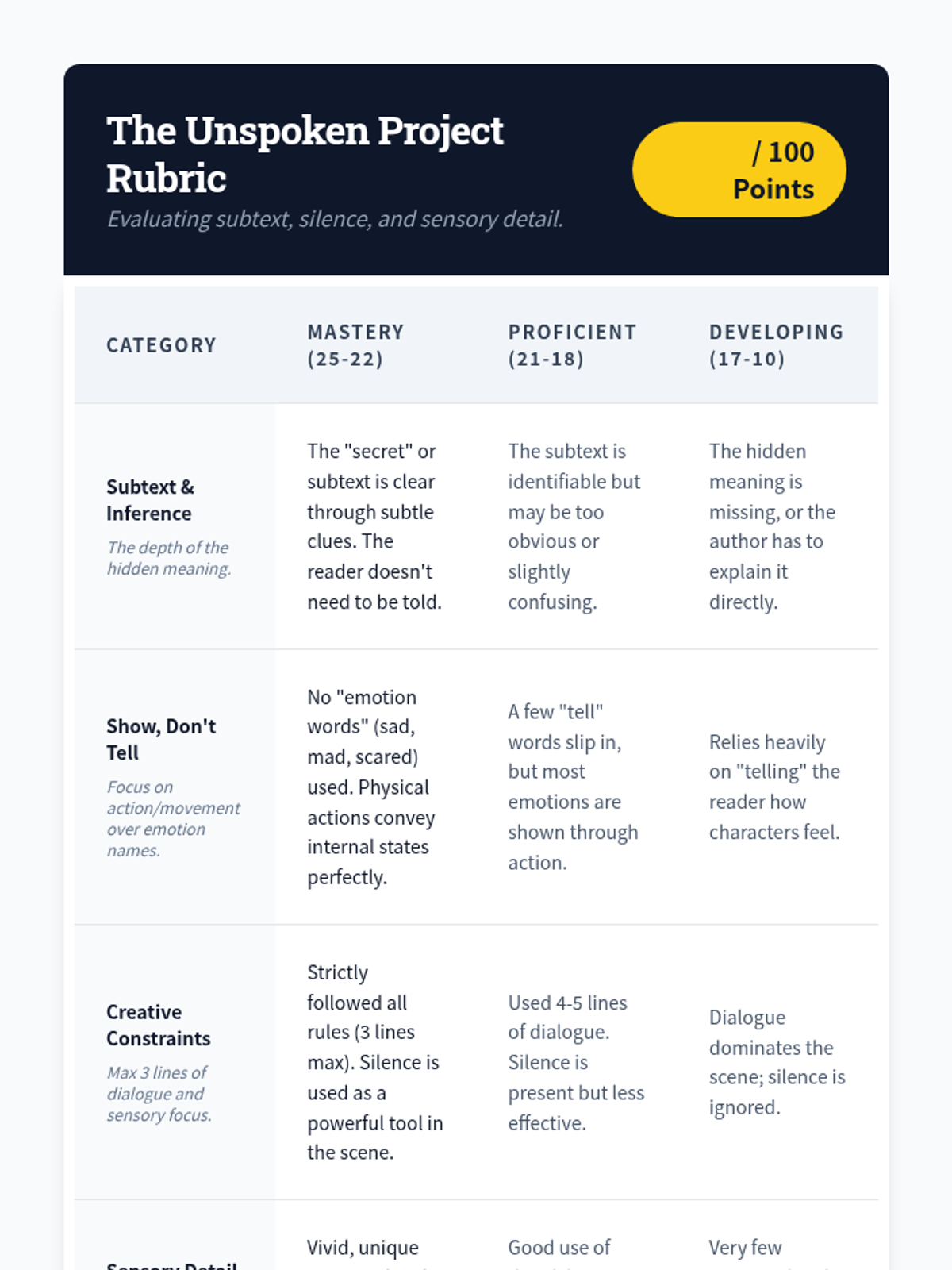
A comprehensive lesson for 7th graders on subtext and the 'show, don't tell' technique. Students learn to analyze what is left unsaid in narratives and apply these techniques to their own creative writing project.
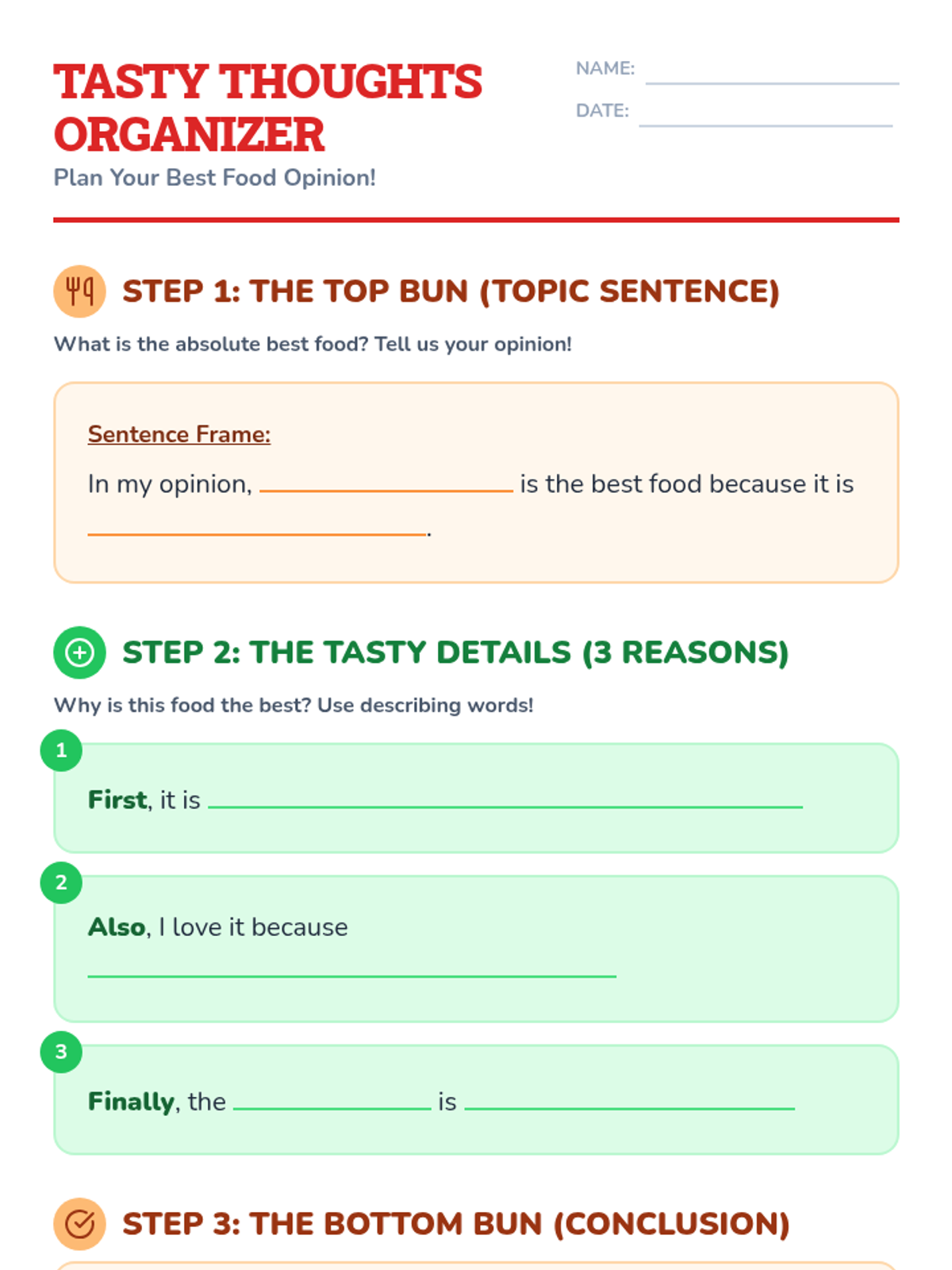
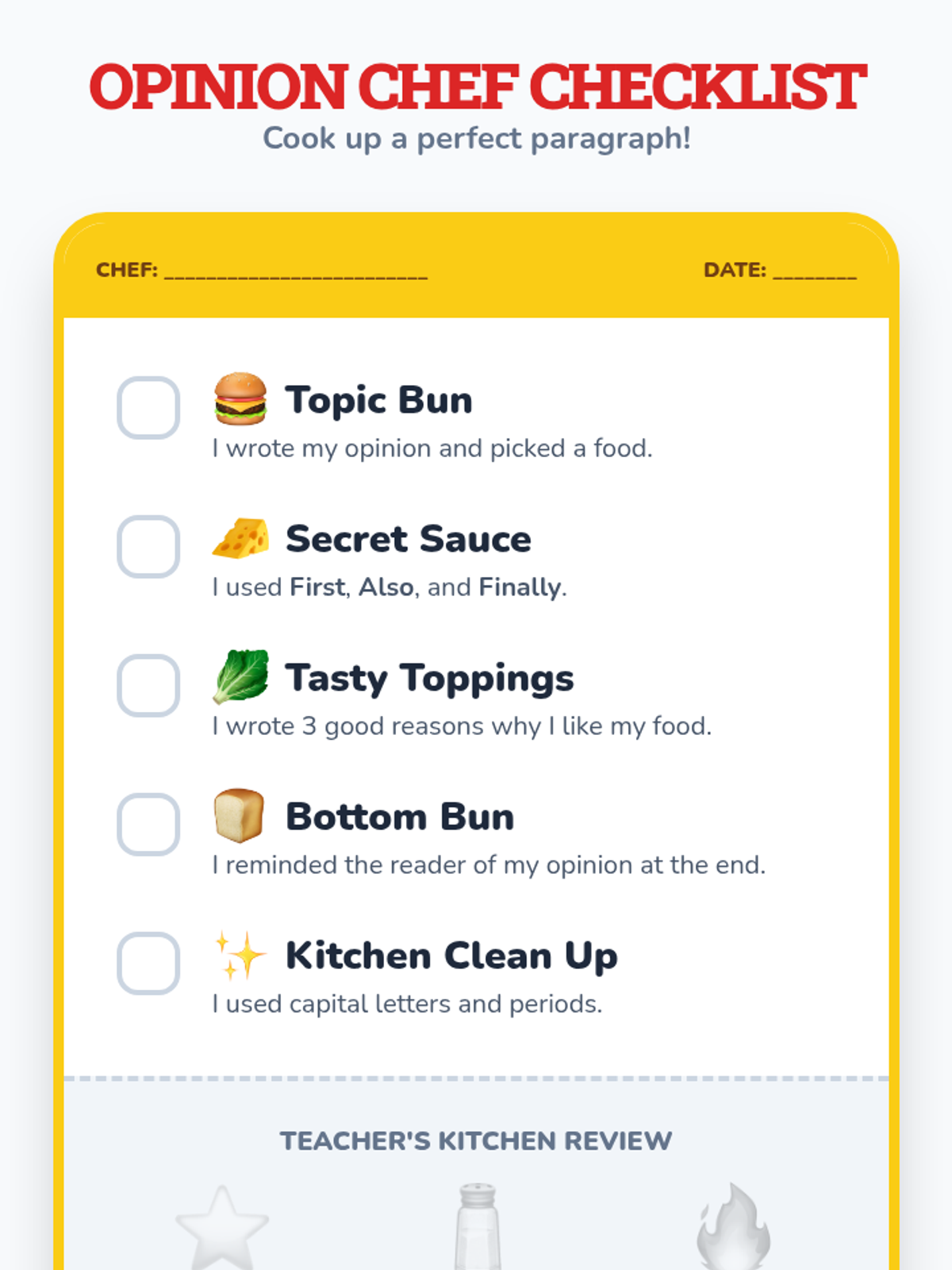
A comprehensive lesson on writing opinion pieces about favorite foods, designed for 4th-grade special education students with heavy scaffolding and visual supports.
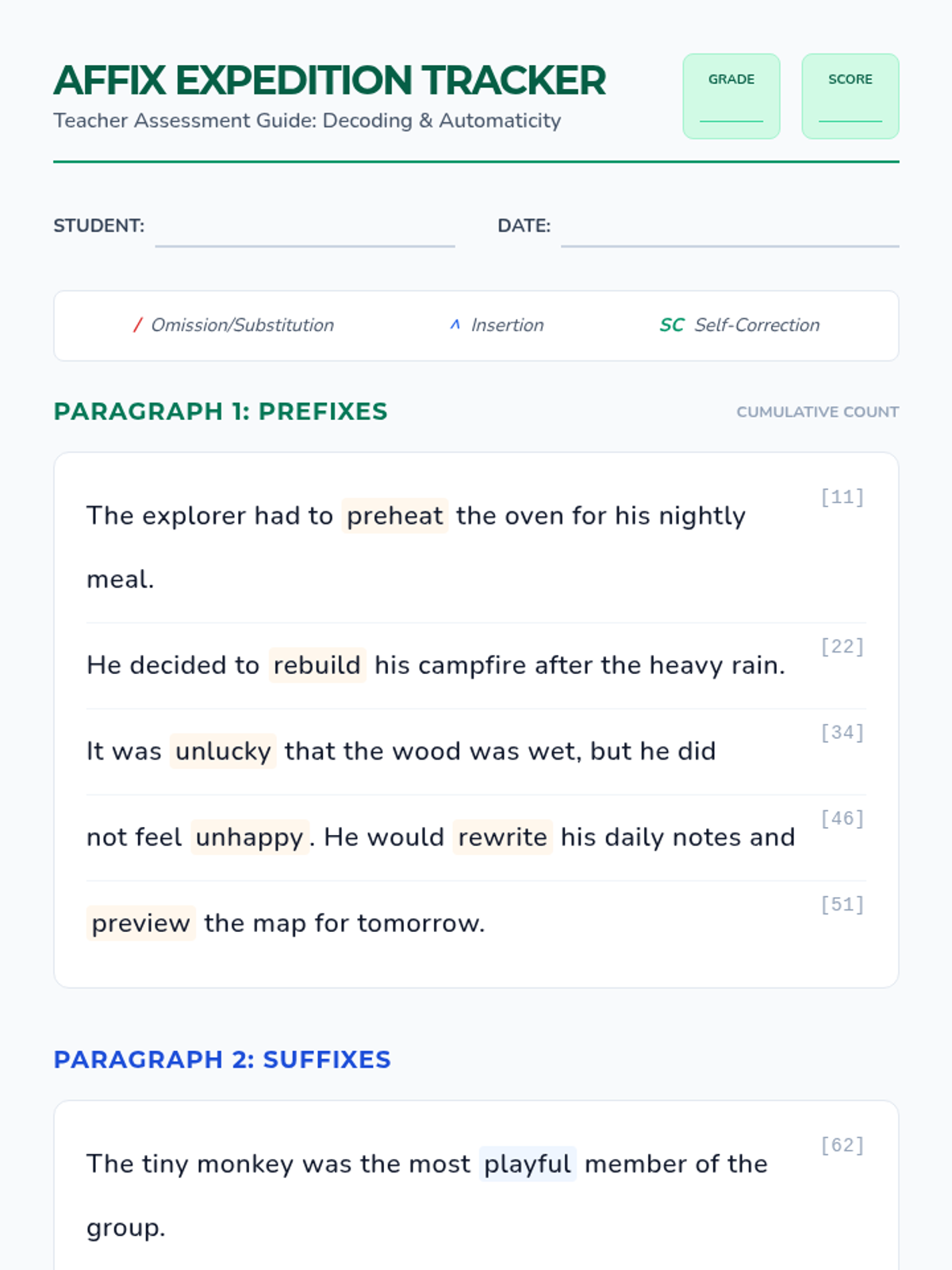
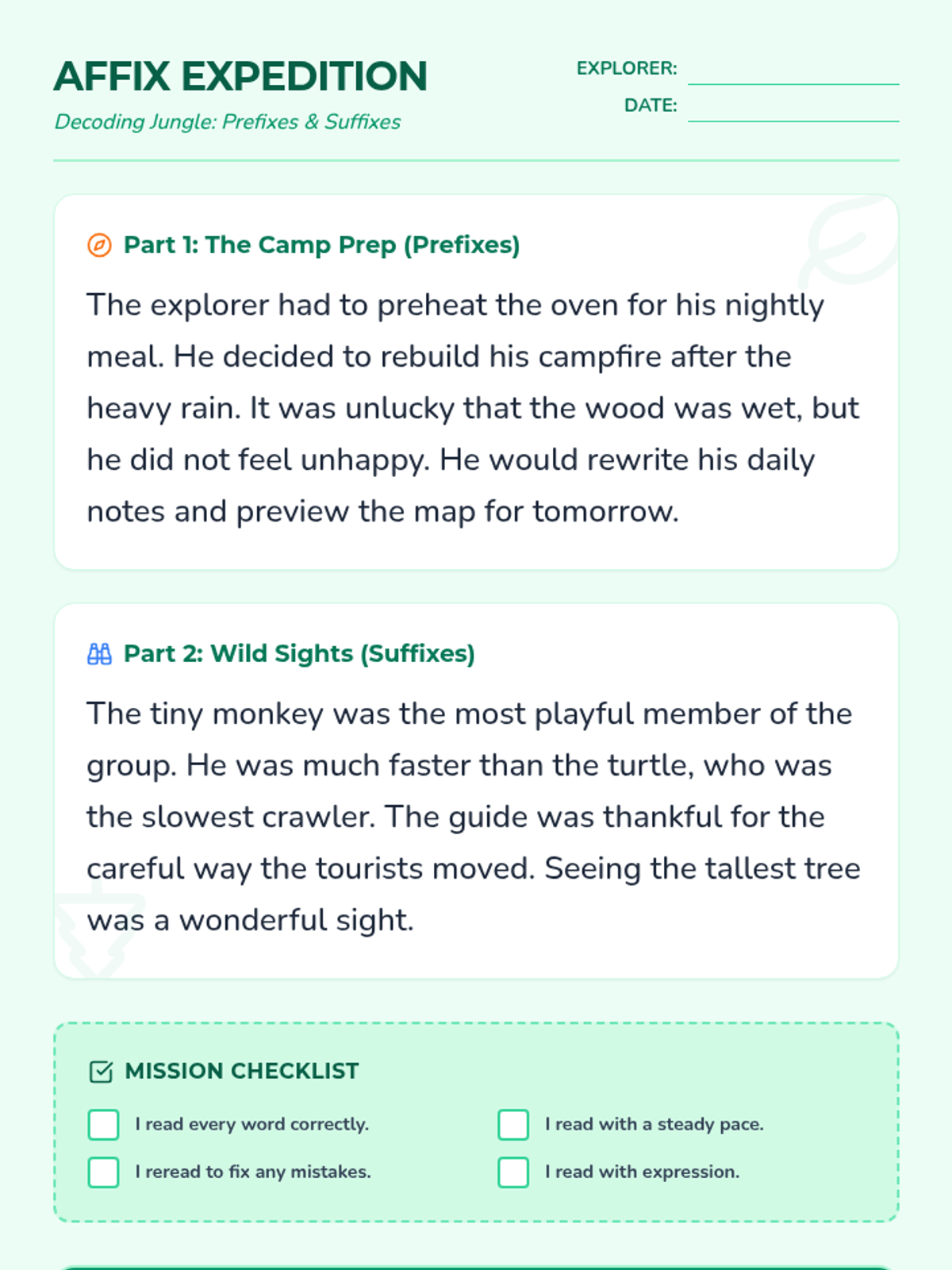
A foundational lesson on decoding 2-3 syllable words with common prefixes (pre-, re-, un-) and suffixes (-er, -est, -ful) through a jungle expedition theme. Students will practice reading for automaticity and accuracy.
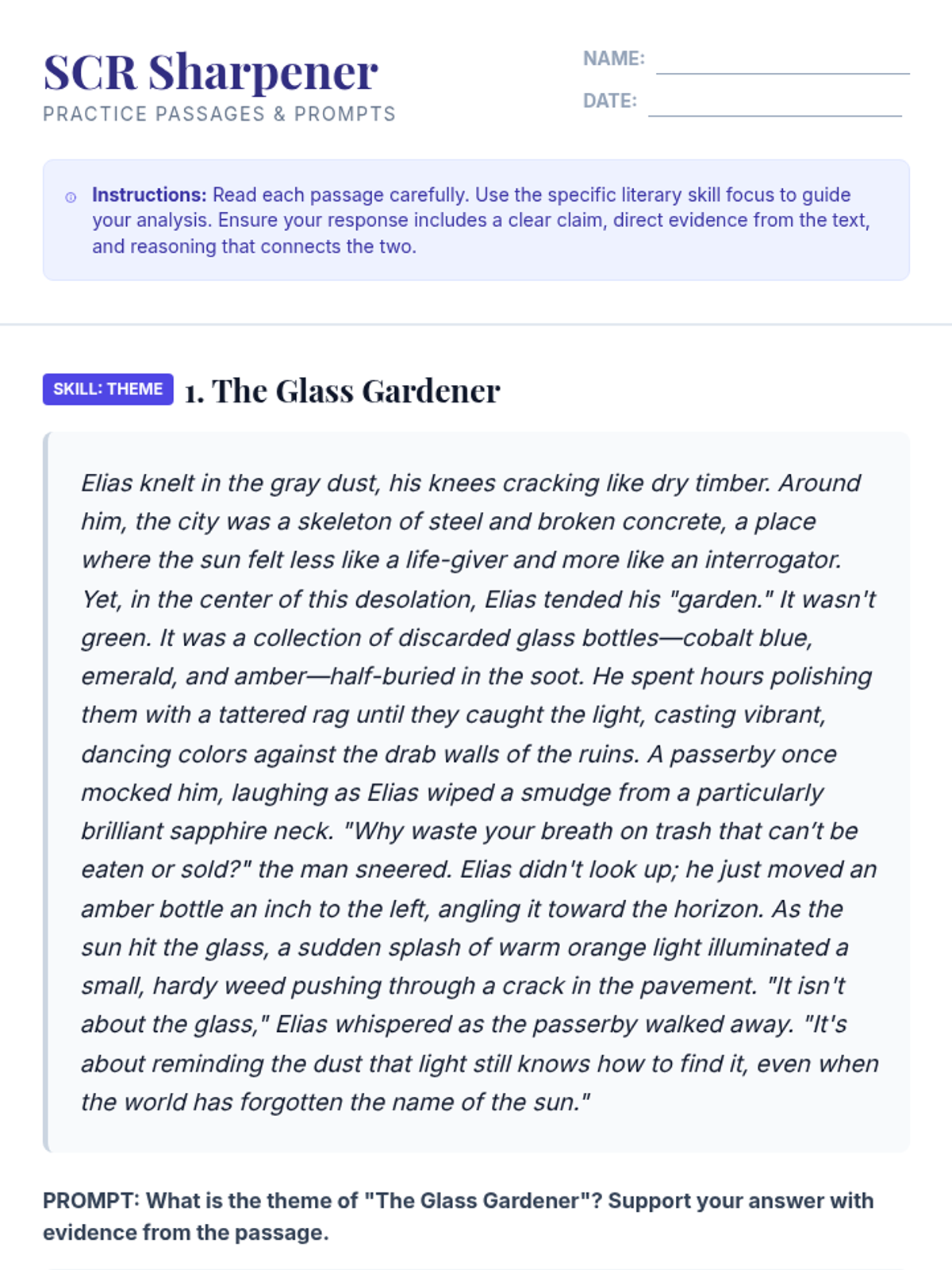
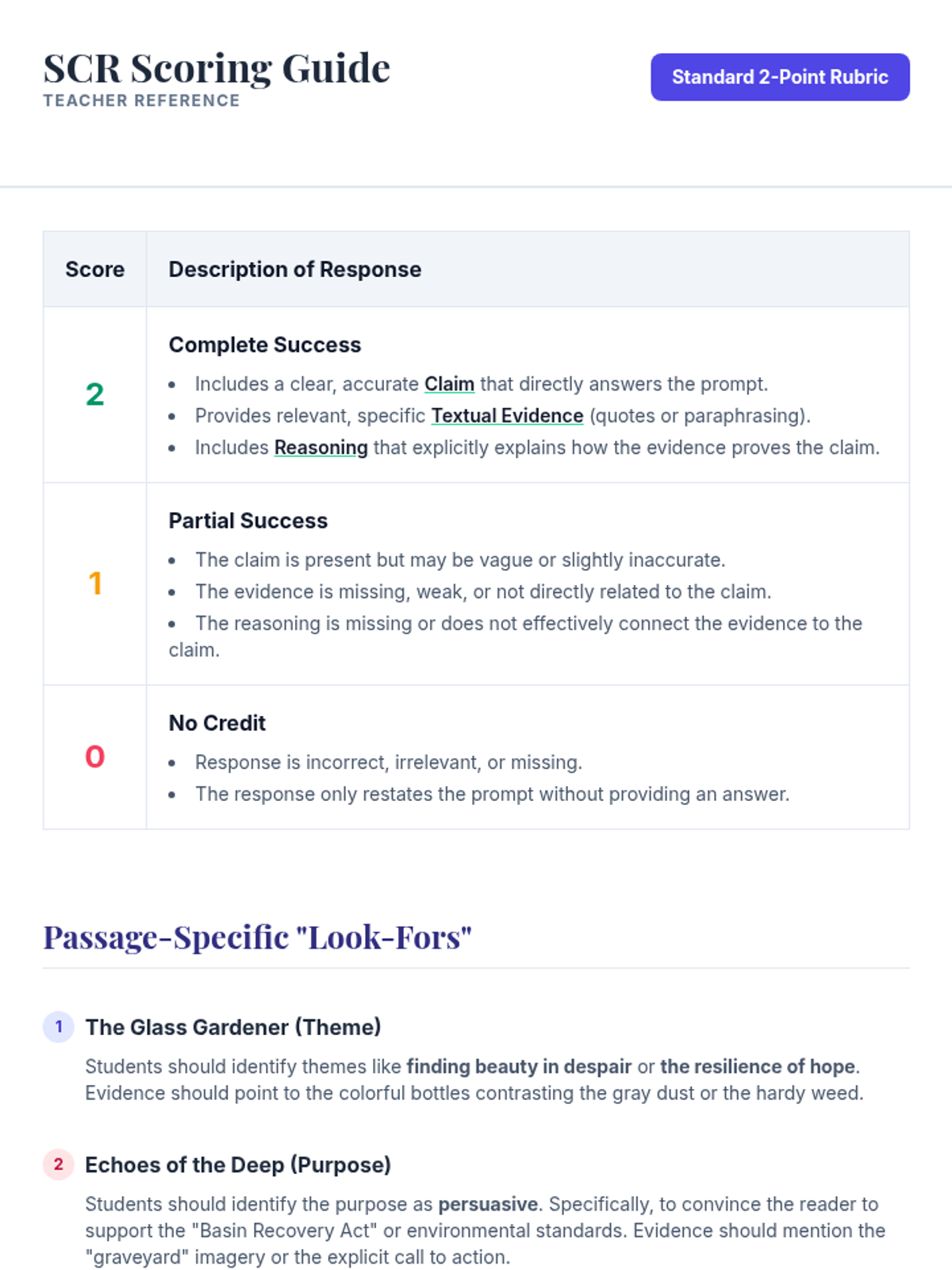
A focused workshop for mastering Short Constructed Responses (SCR), featuring five evidence-rich passages that target theme, purpose, diction, and synthesis skills.
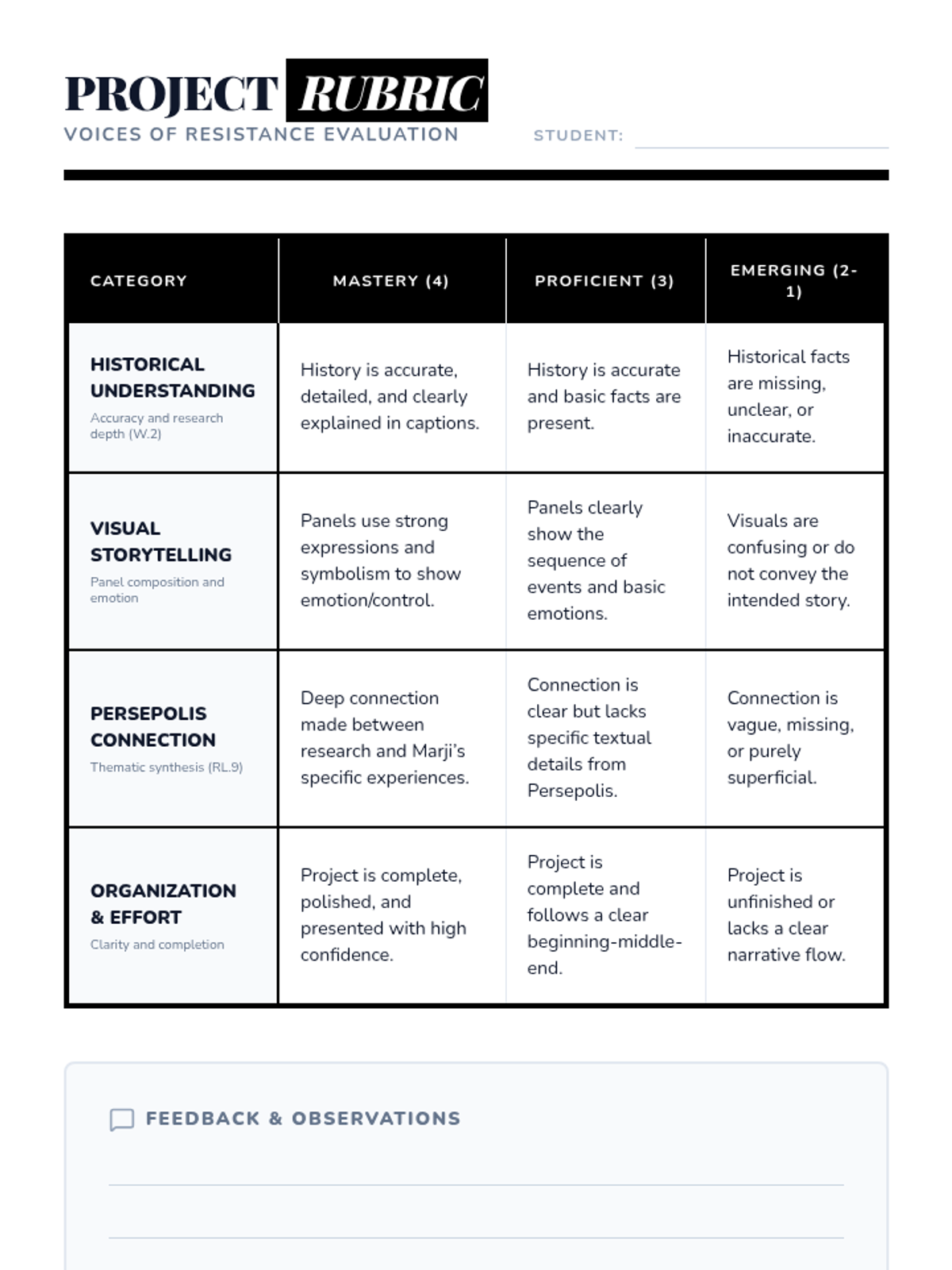
Students present their graphic stories and historical research to the class, explaining the themes of oppression and their connections to Persepolis.