A reading comprehension lesson focused on active sports-themed stories, teaching beginning fourth graders how to identify and analyze cause-and-effect relationships with visual scaffolds and text-based evidence.
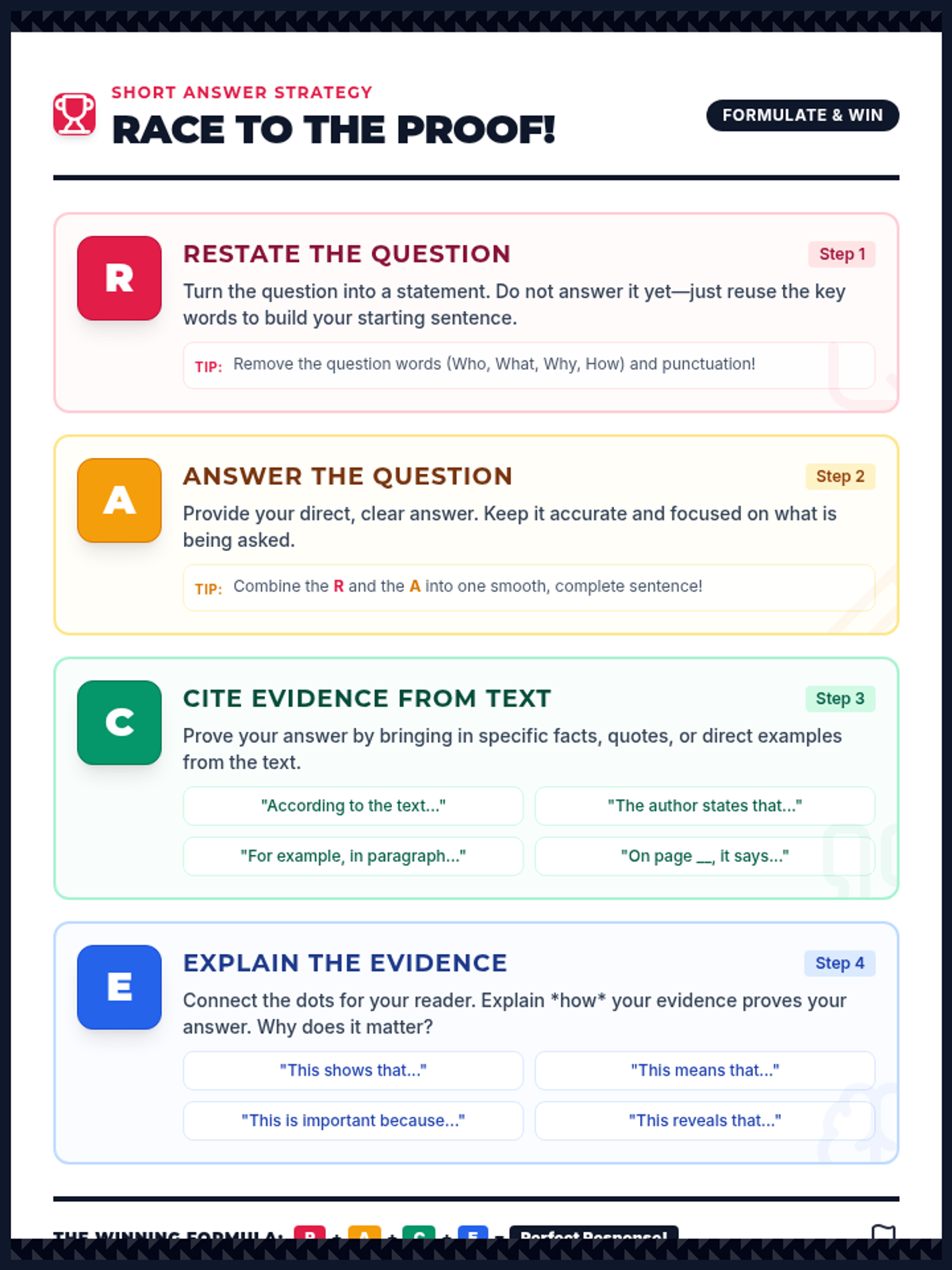
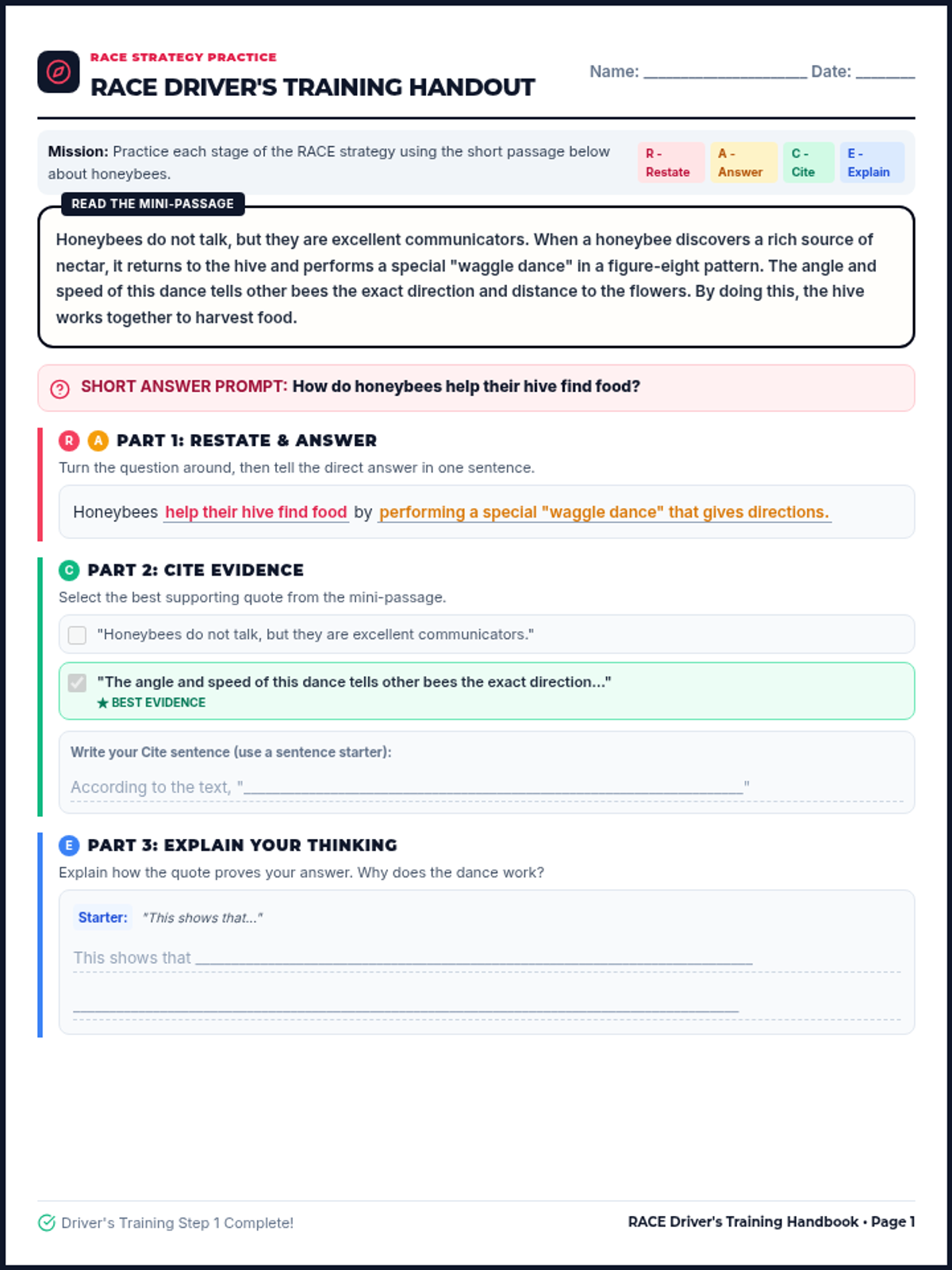
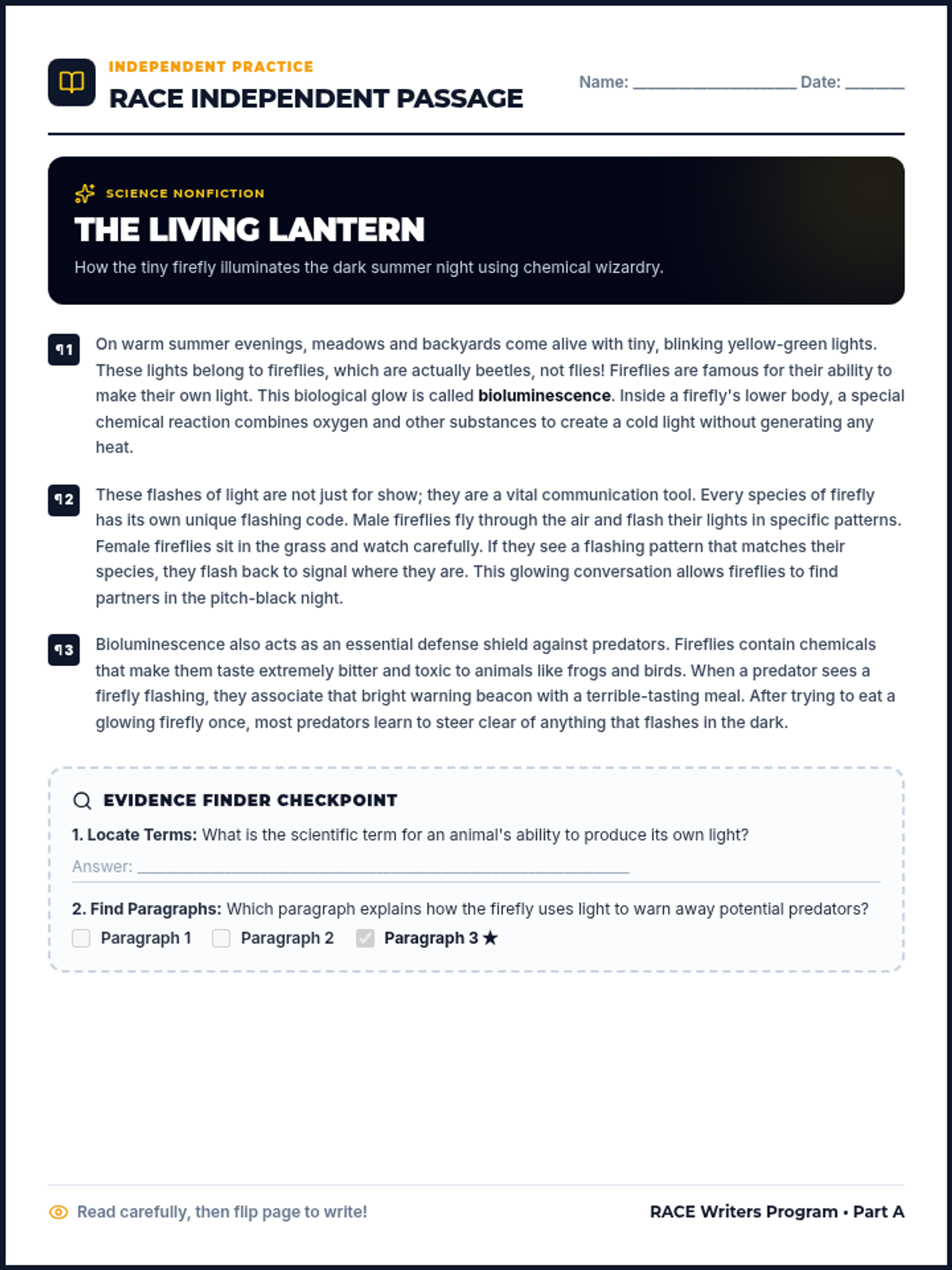
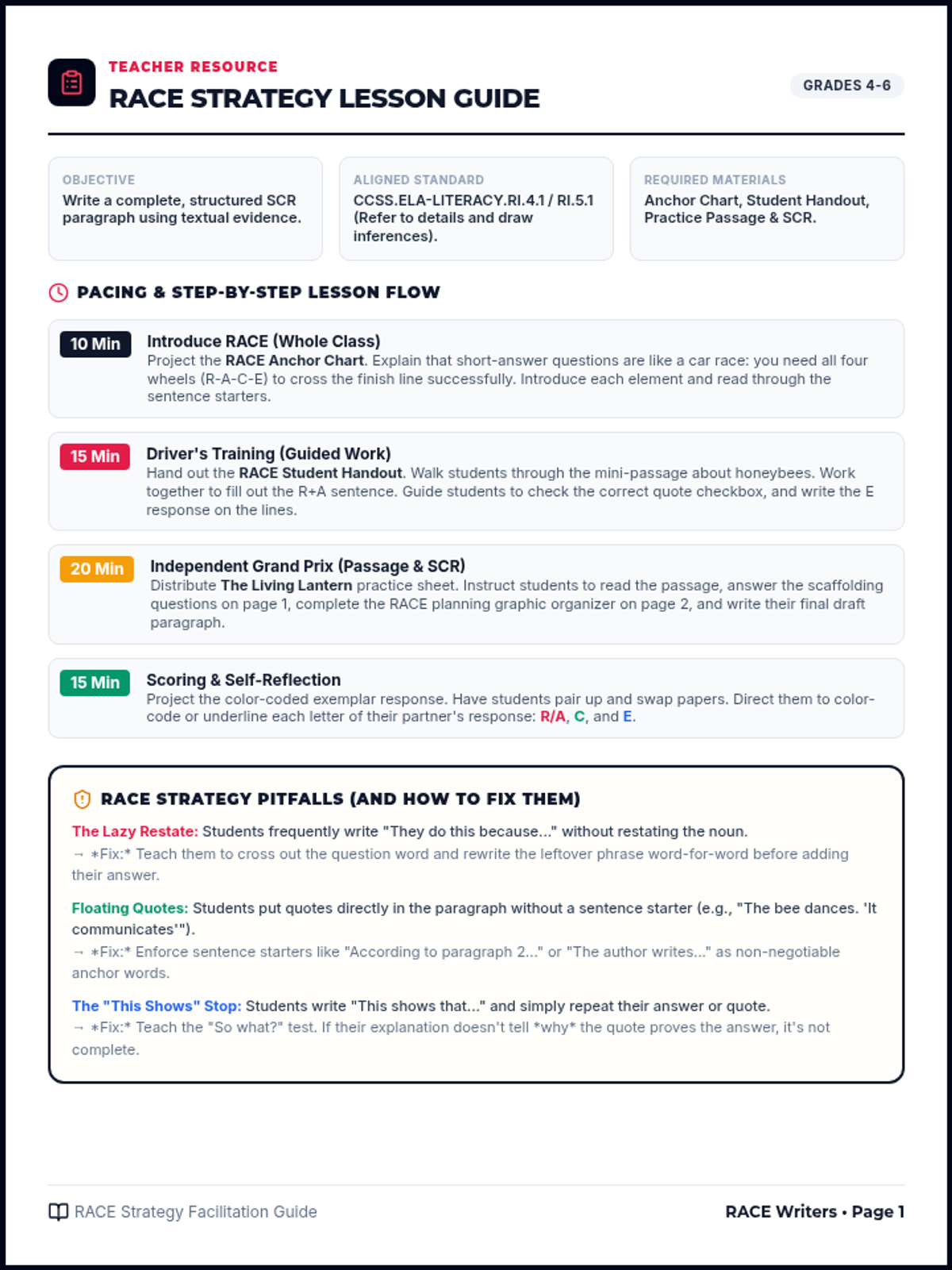
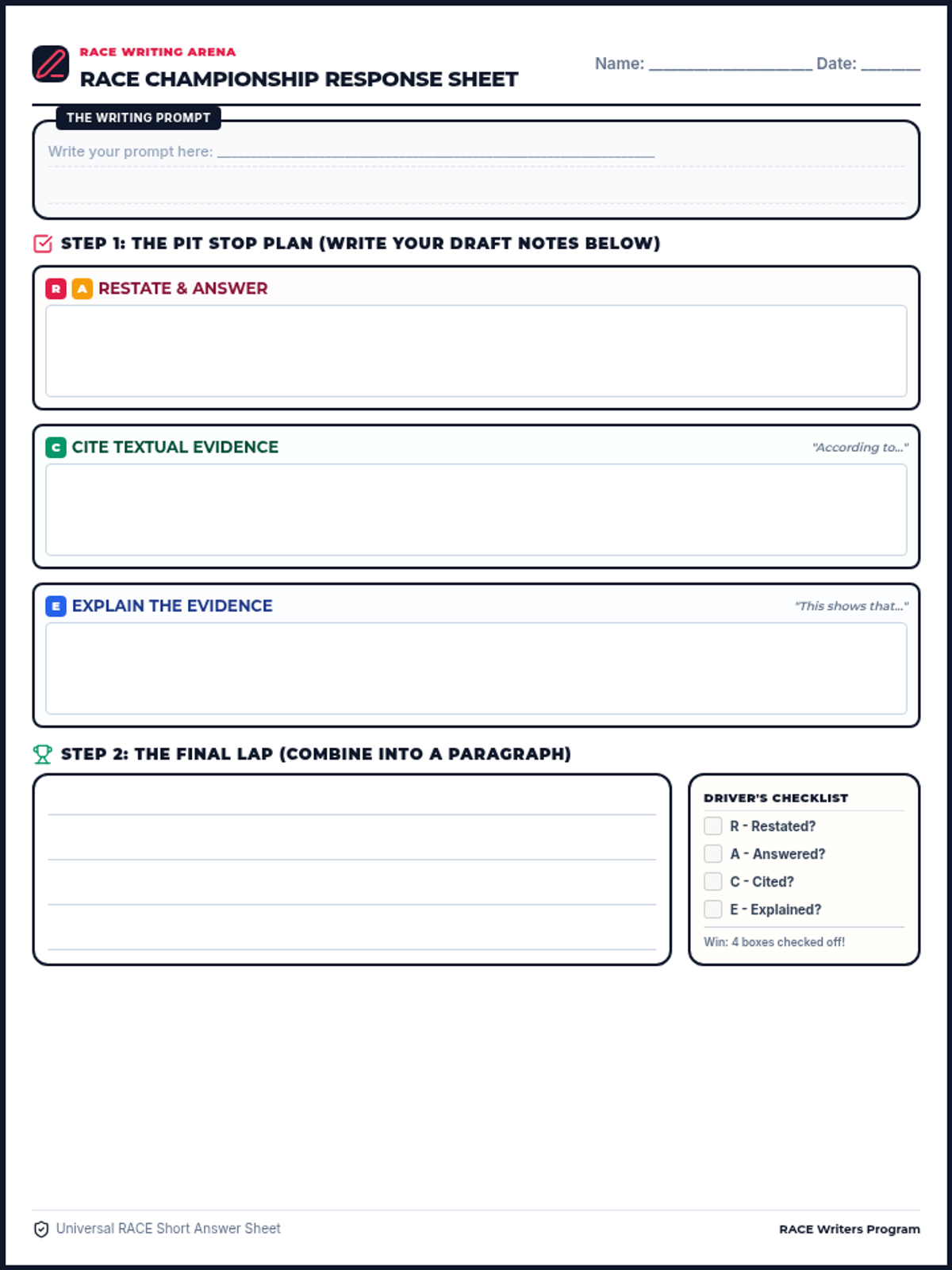
An introductory lesson bundle that teaches students how to write strong Short Constructed Responses (SCR) using the RACE strategy. Includes a comprehensive teacher guide, anchor chart, guided student handouts, and a high-interest nonfiction practice passage with writing organizers.
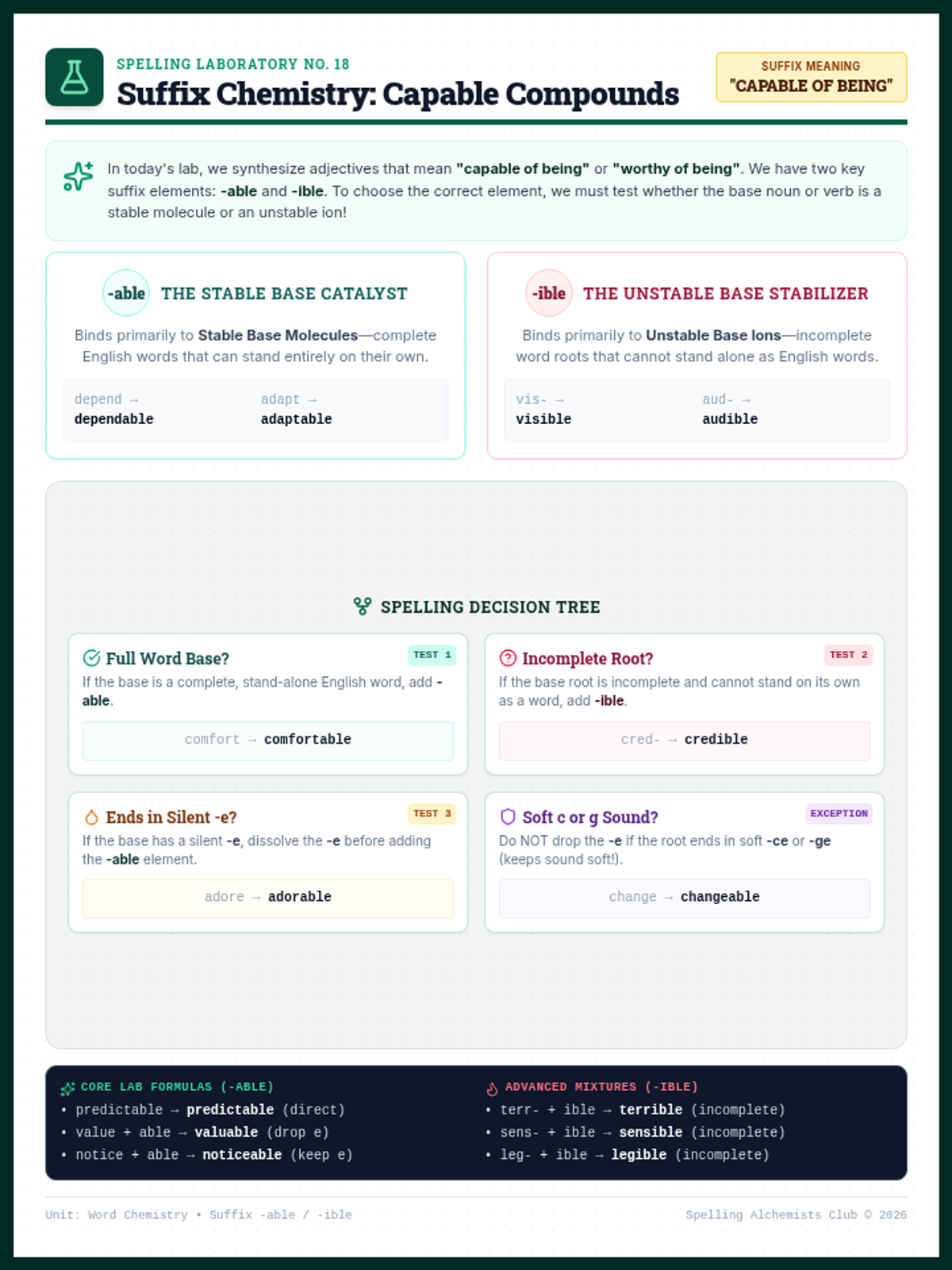
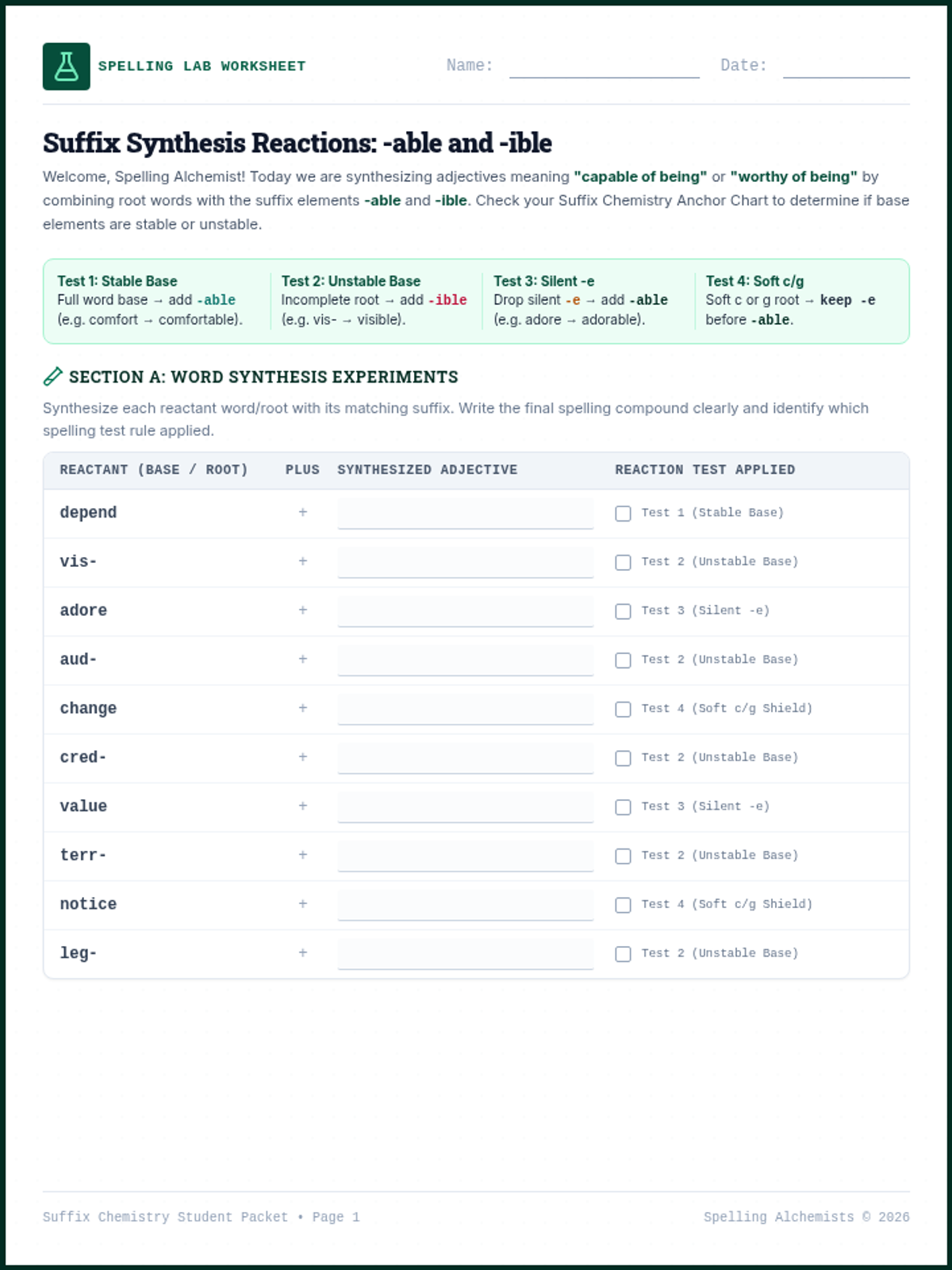
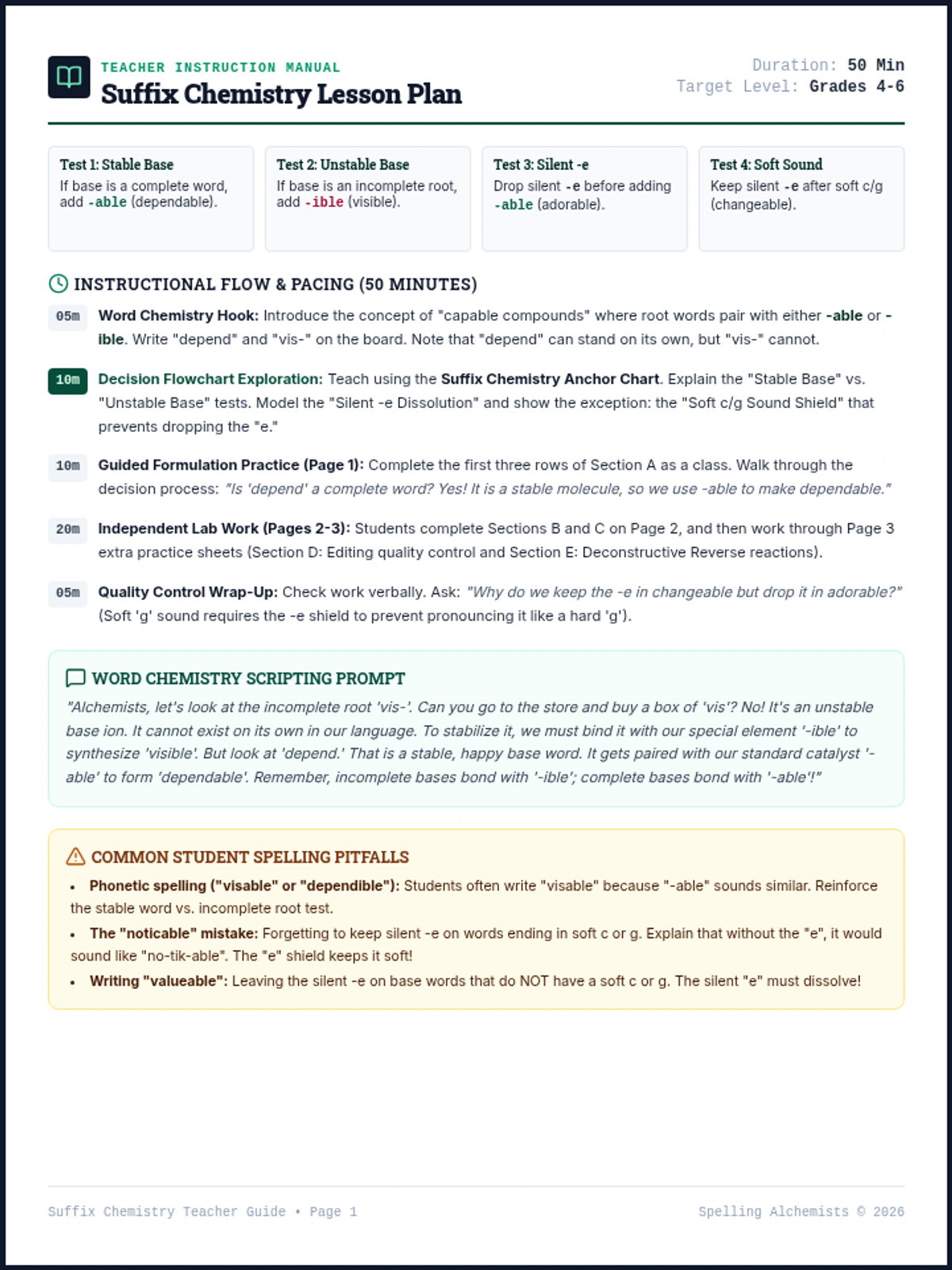
An advanced spelling lesson exploring the complex 'capable of being' suffixes: -able and -ible. Students learn rule-based decision paths to master these high-frequency adjectives, supported by a 50-minute pacing guide and extra practice sheets.
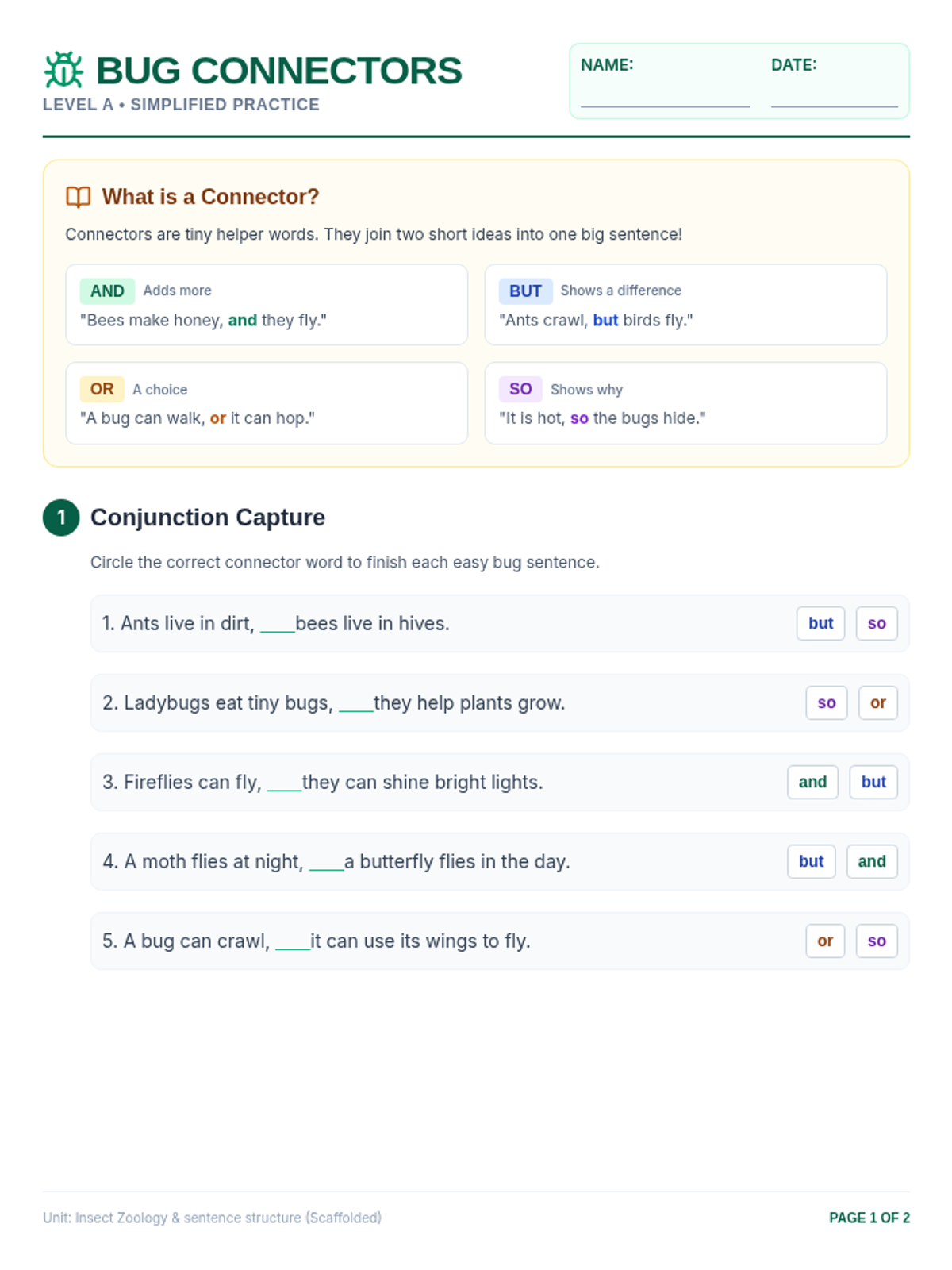
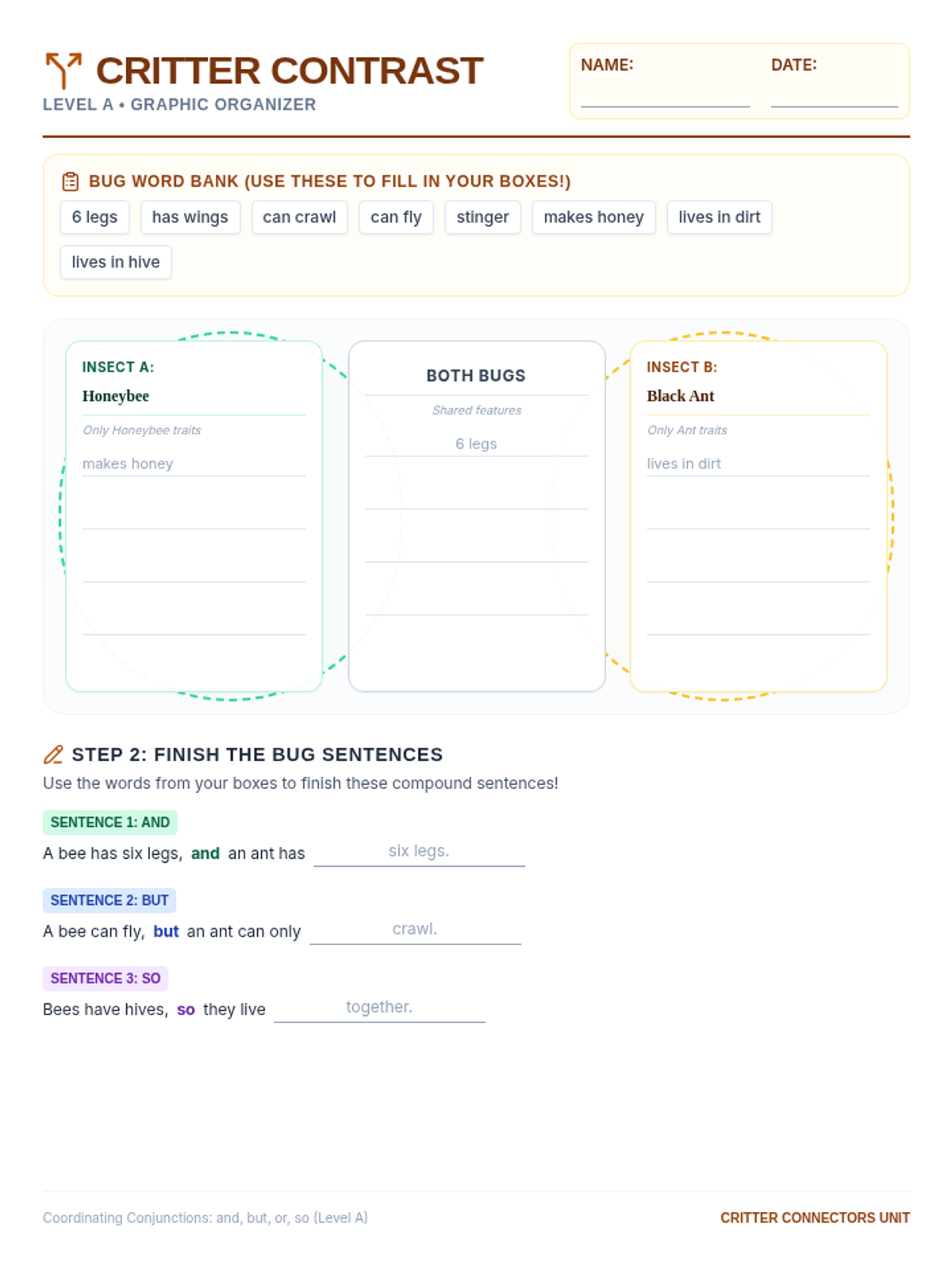
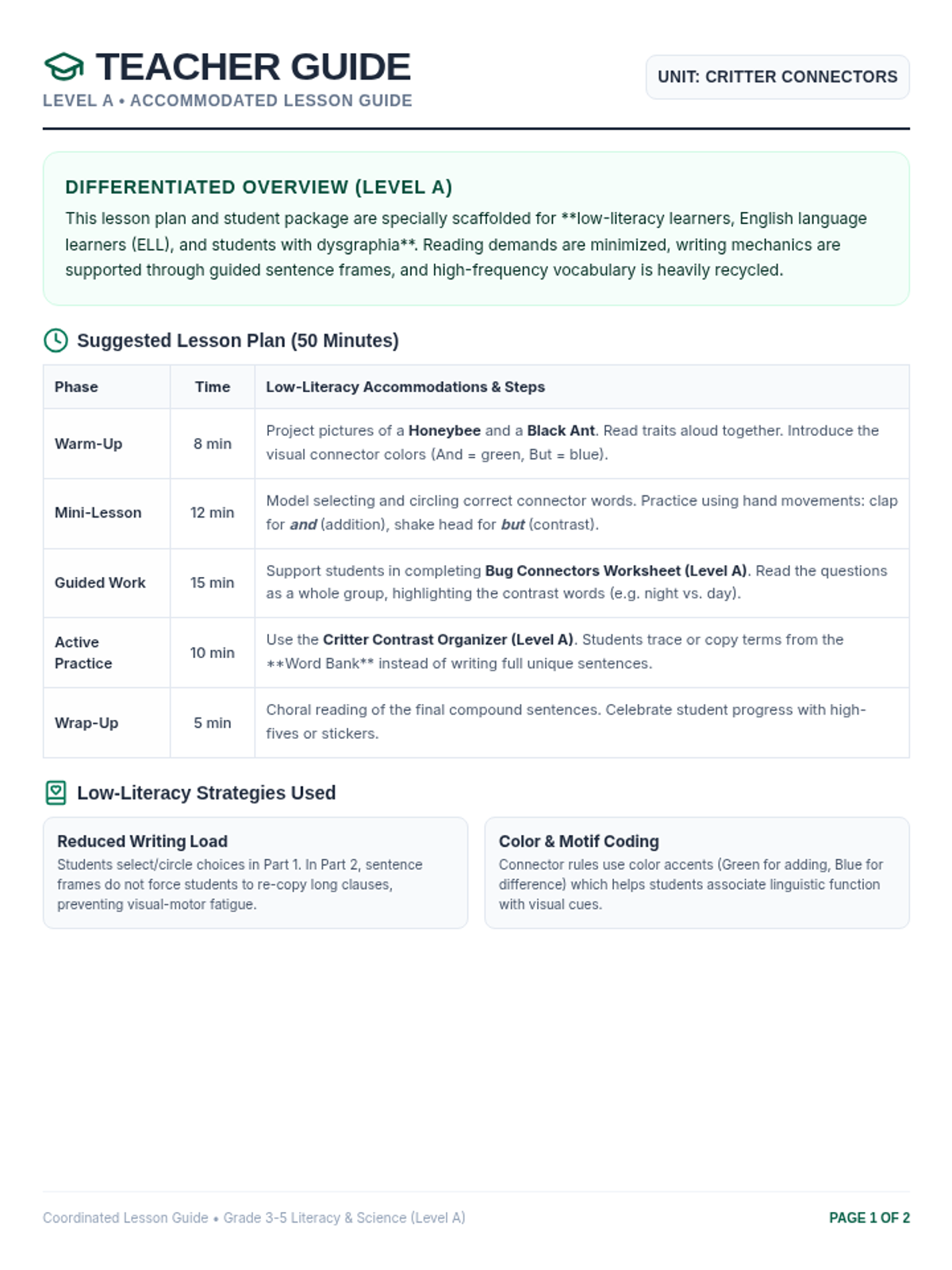
A lesson exploring coordinating conjunctions (and, but, or, so) through the lens of entomology. Students compare and contrast insects while building complete, compound sentences.
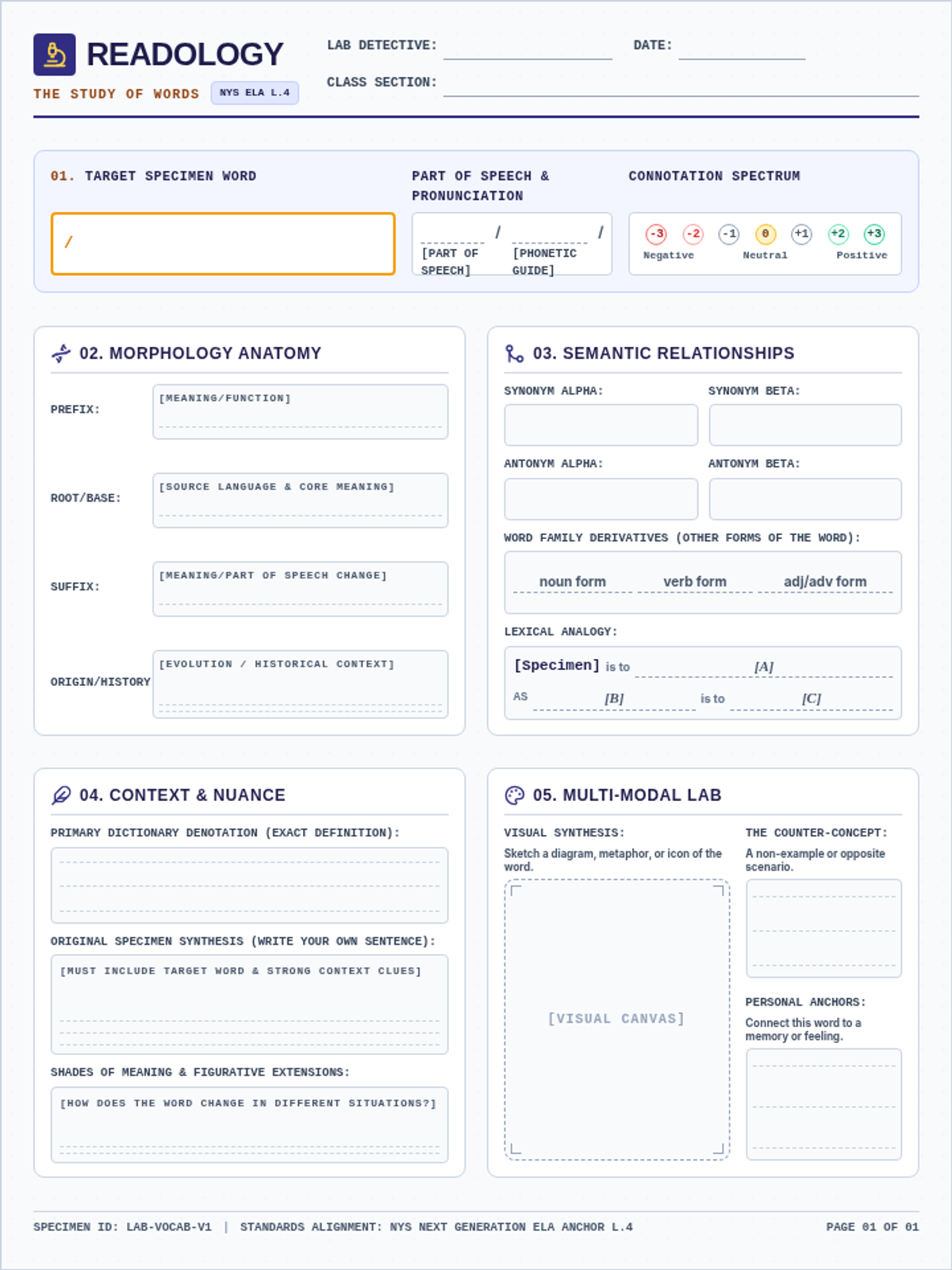
A lesson dedicated to breaking down words into their root structures, semantic relationships, and contextual nuances to build deep, permanent vocabulary comprehension.
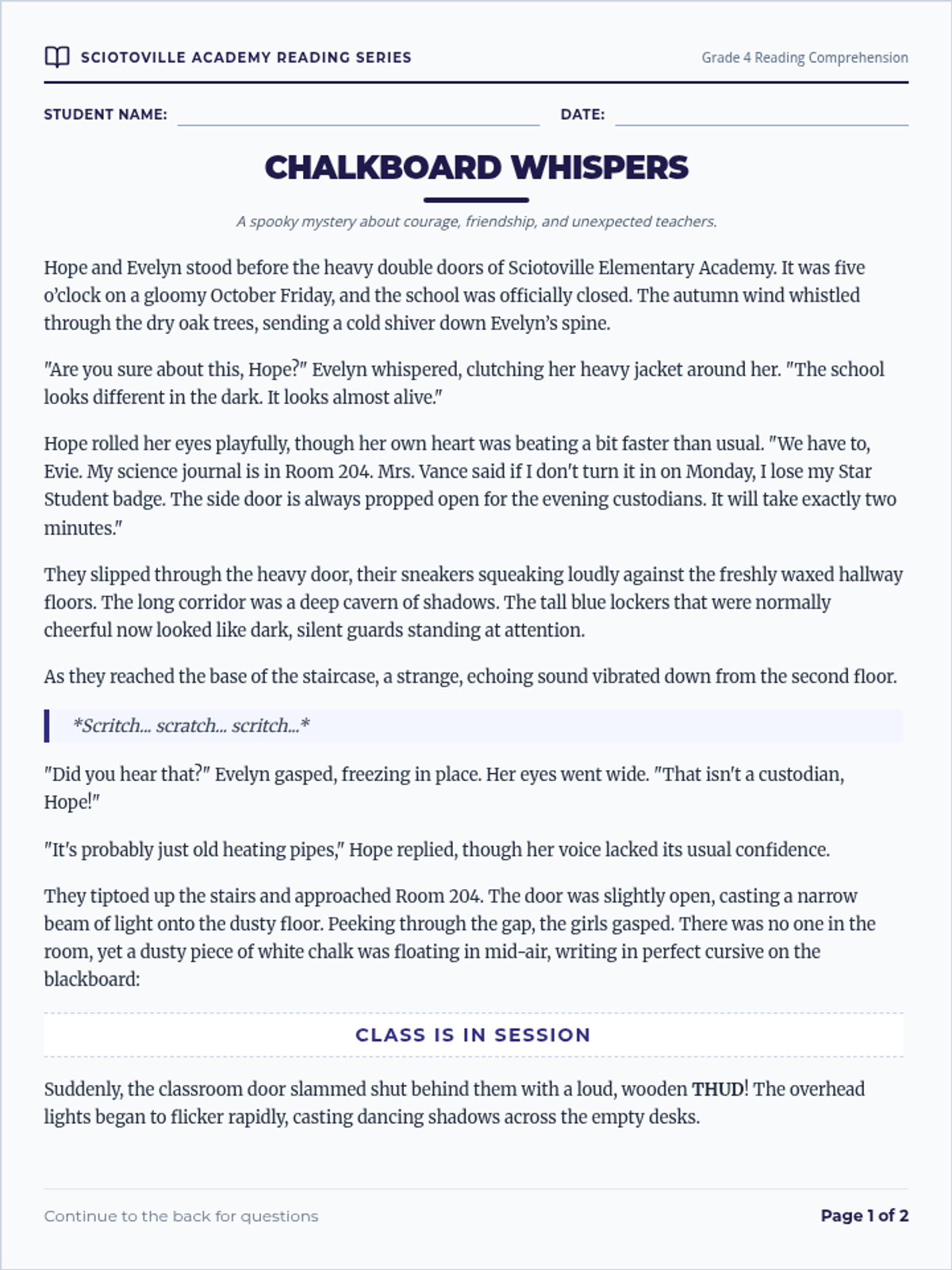
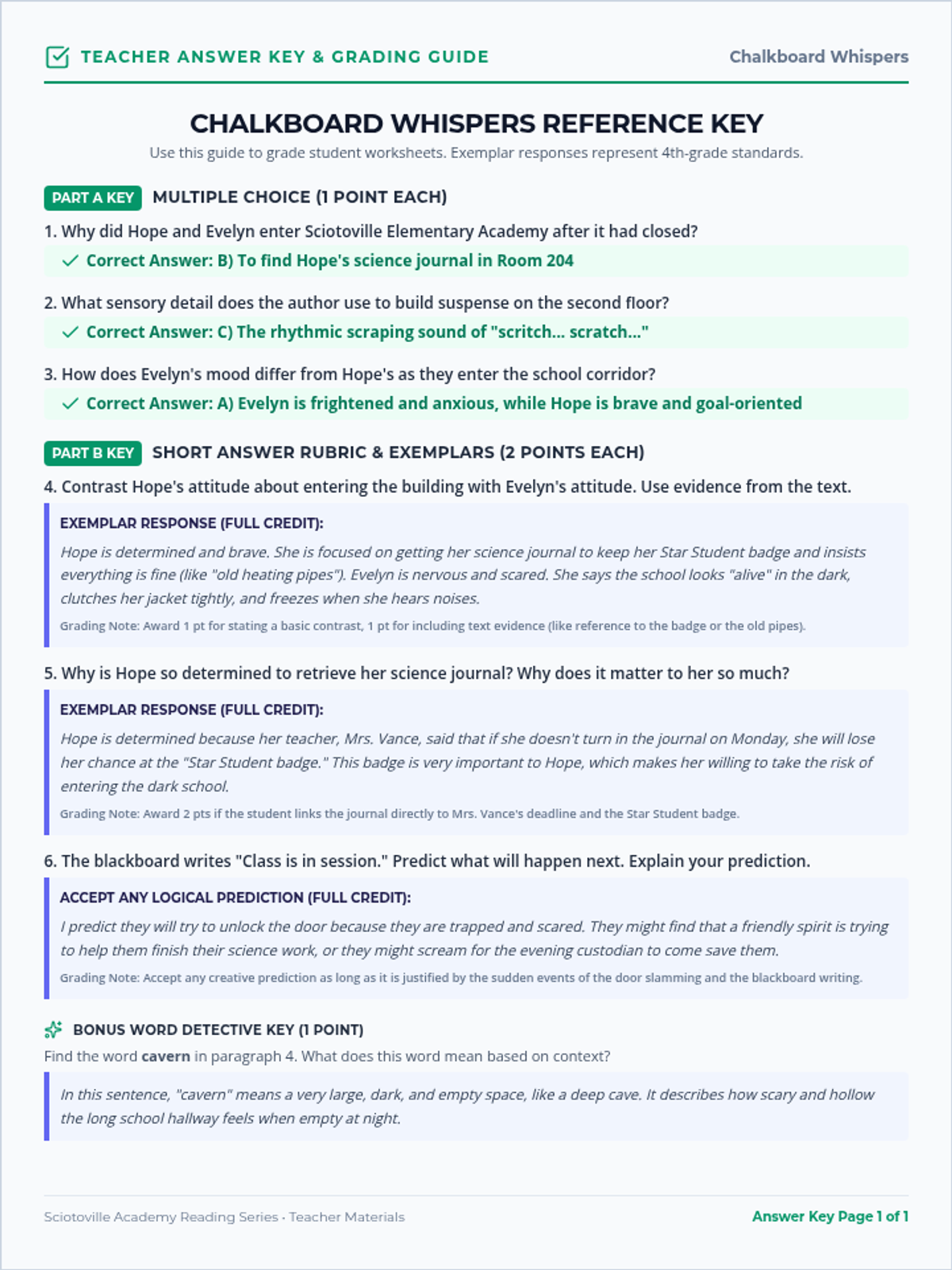
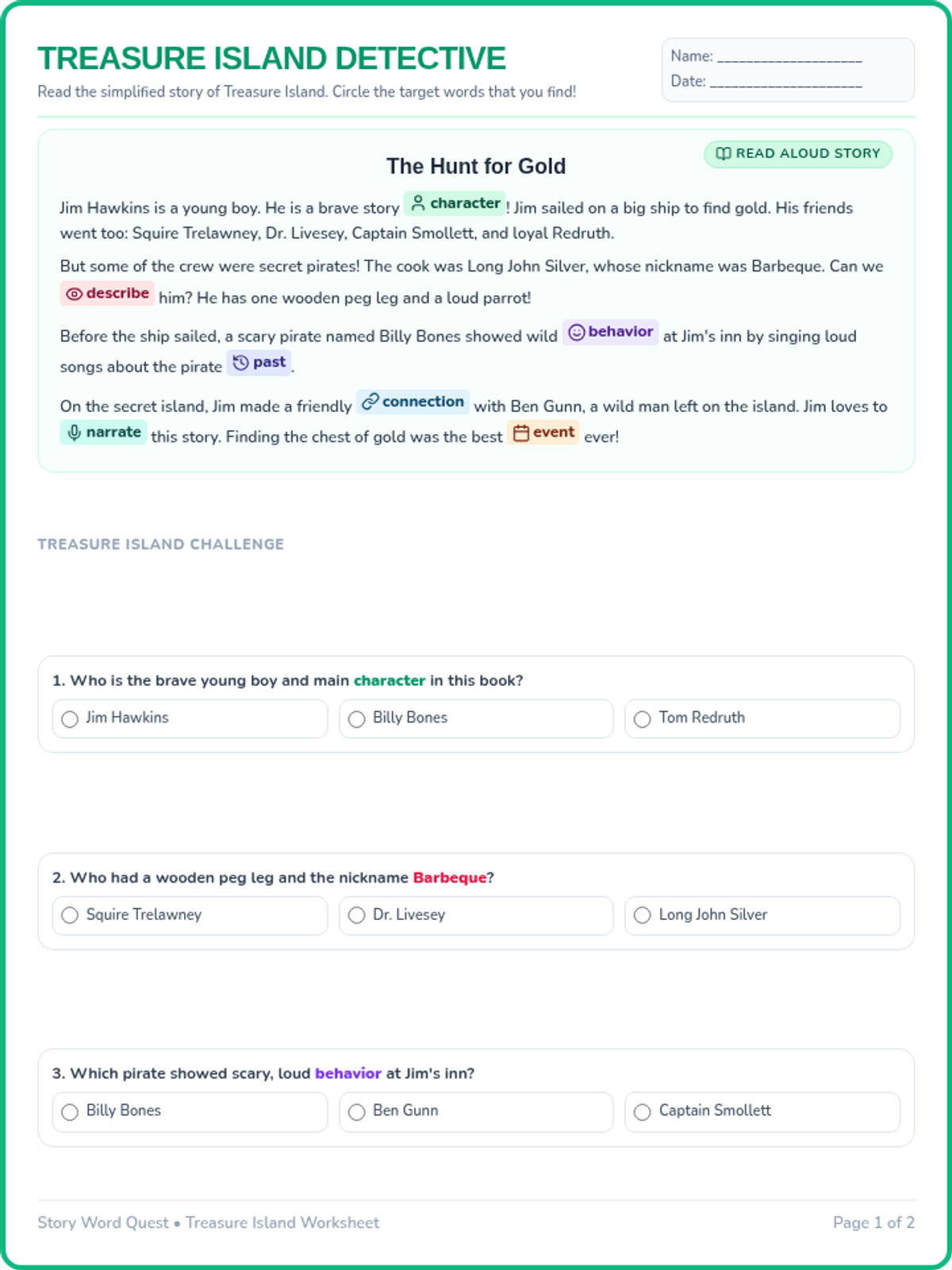
A reading comprehension lesson centered on a spooky, engaging story about two friends exploring their school after dark. Students practice reading fluency, literal comprehension, and inferential analysis.
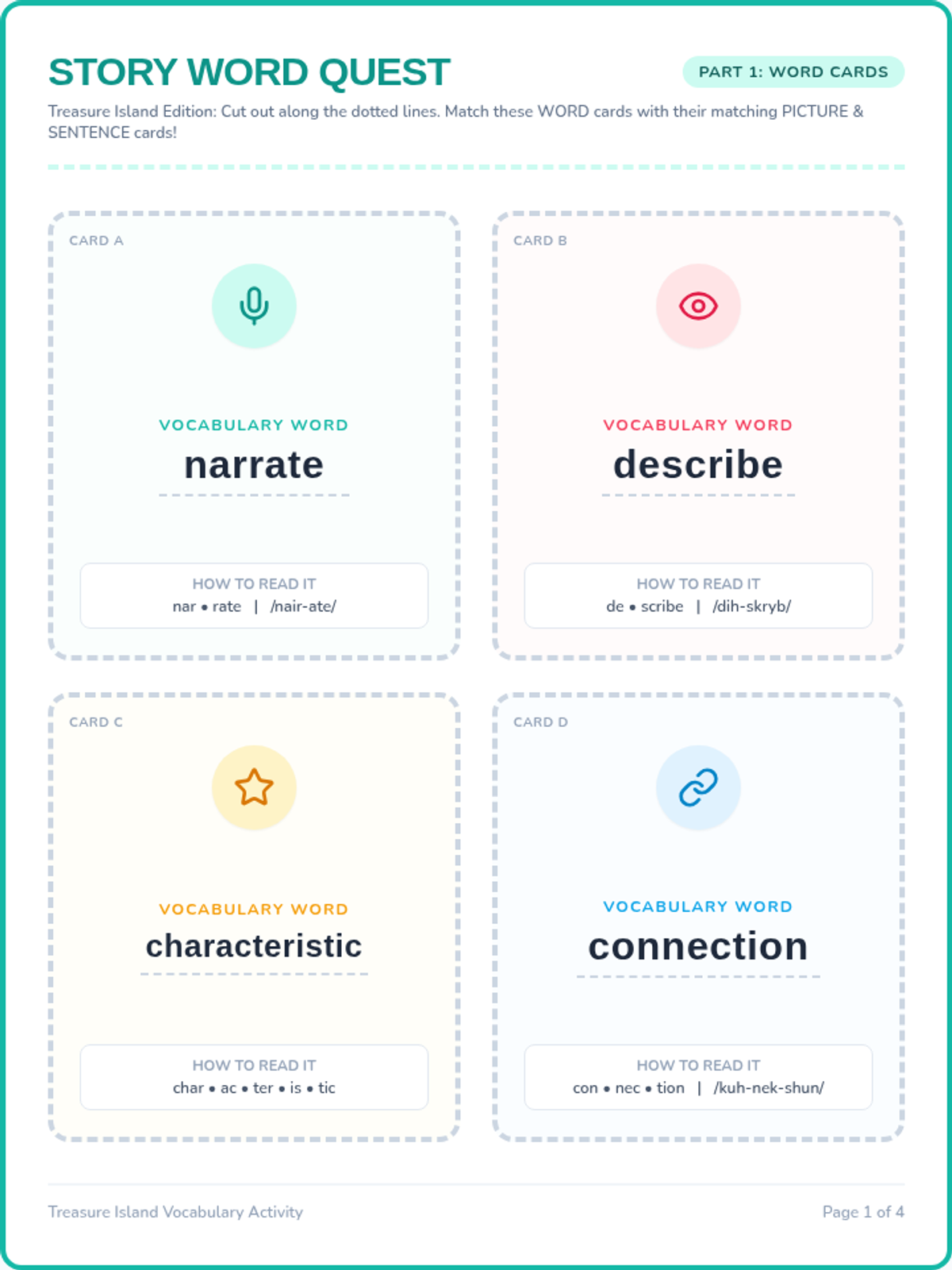
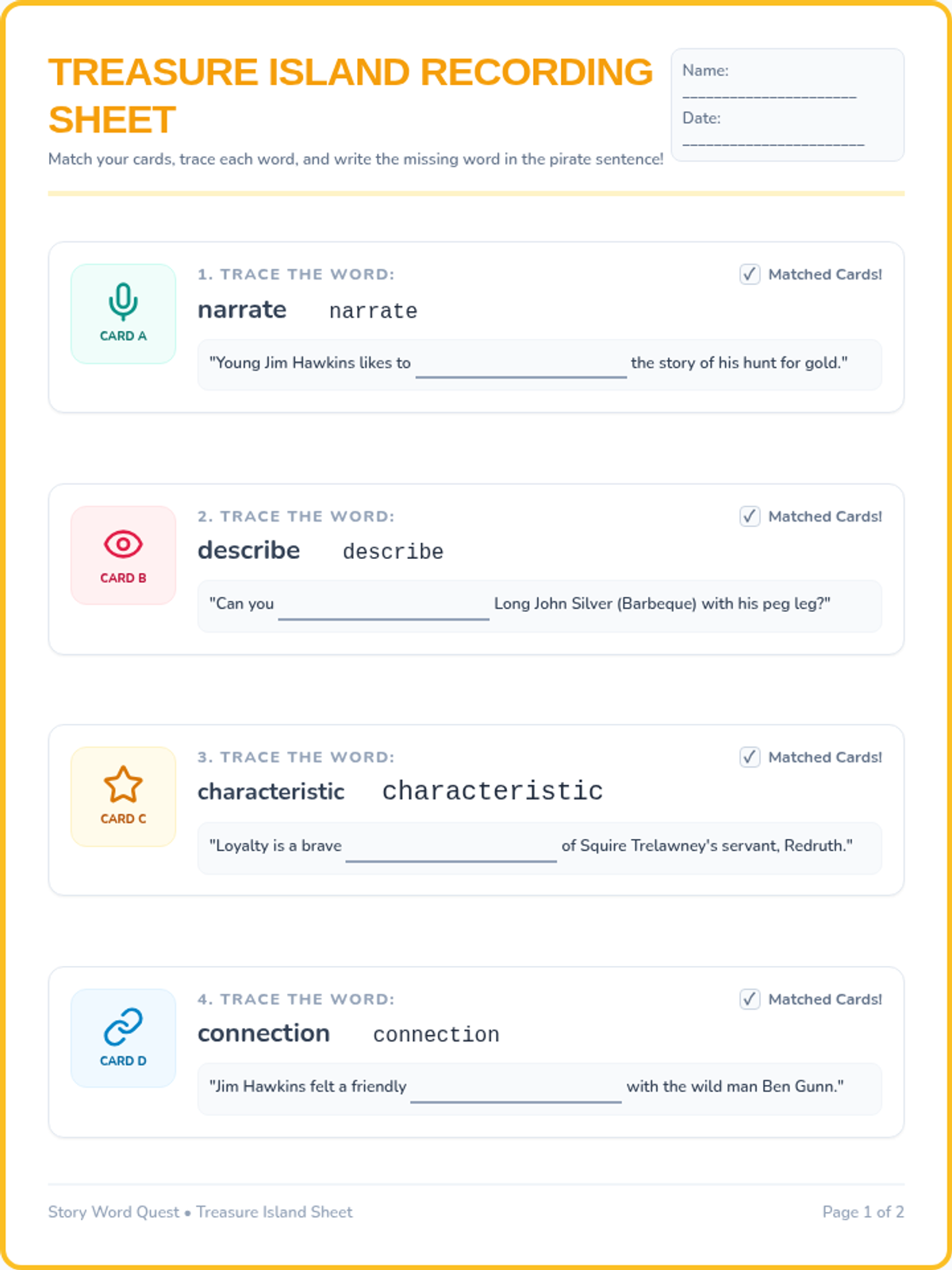
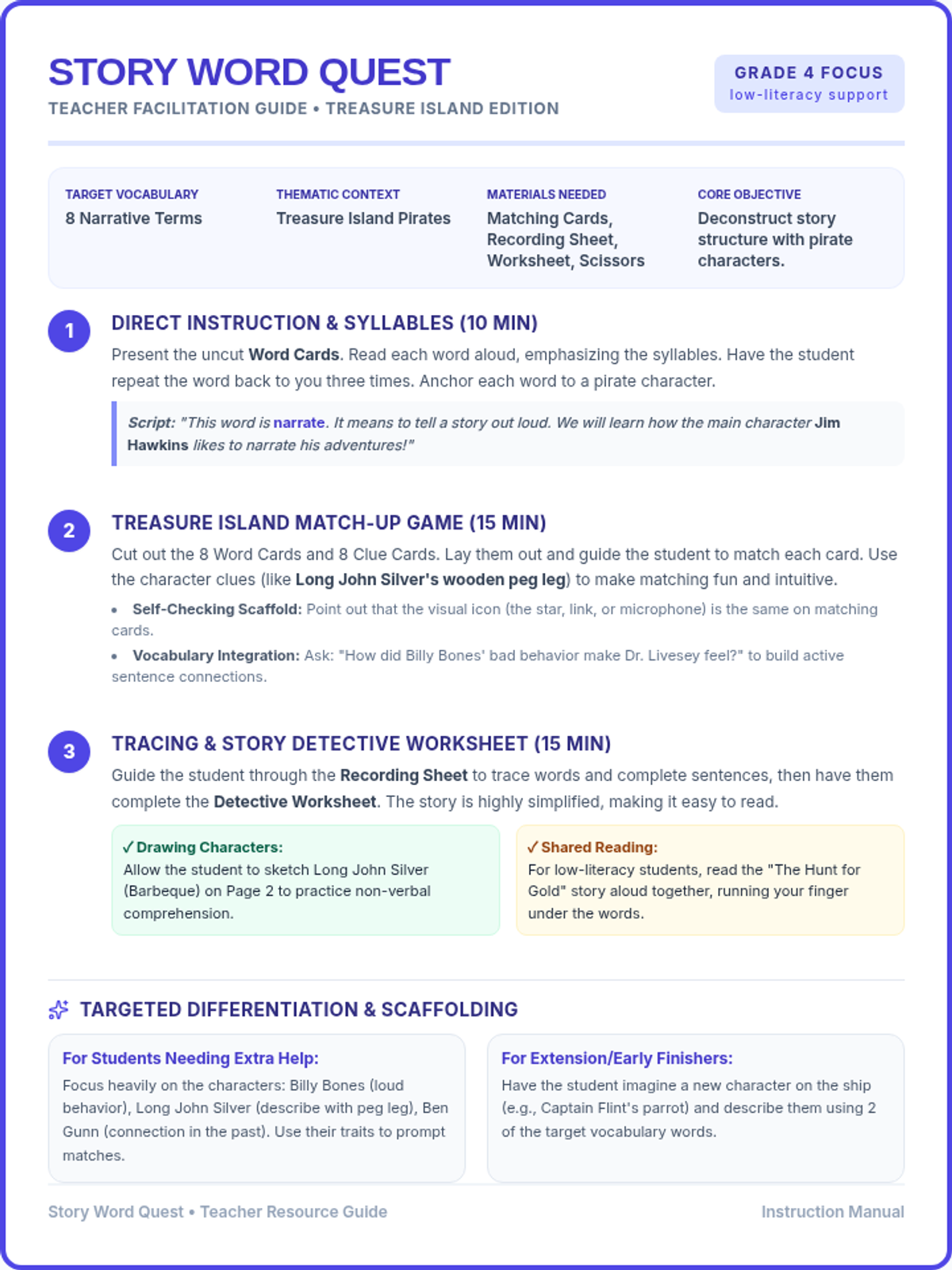
A targeted narrative vocabulary lesson designed for 4th-grade students with low literacy. This lesson features visual matching cards, a sentence-completion recording sheet, and a detailed teacher facilitation guide focusing on eight core narrative academic terms.
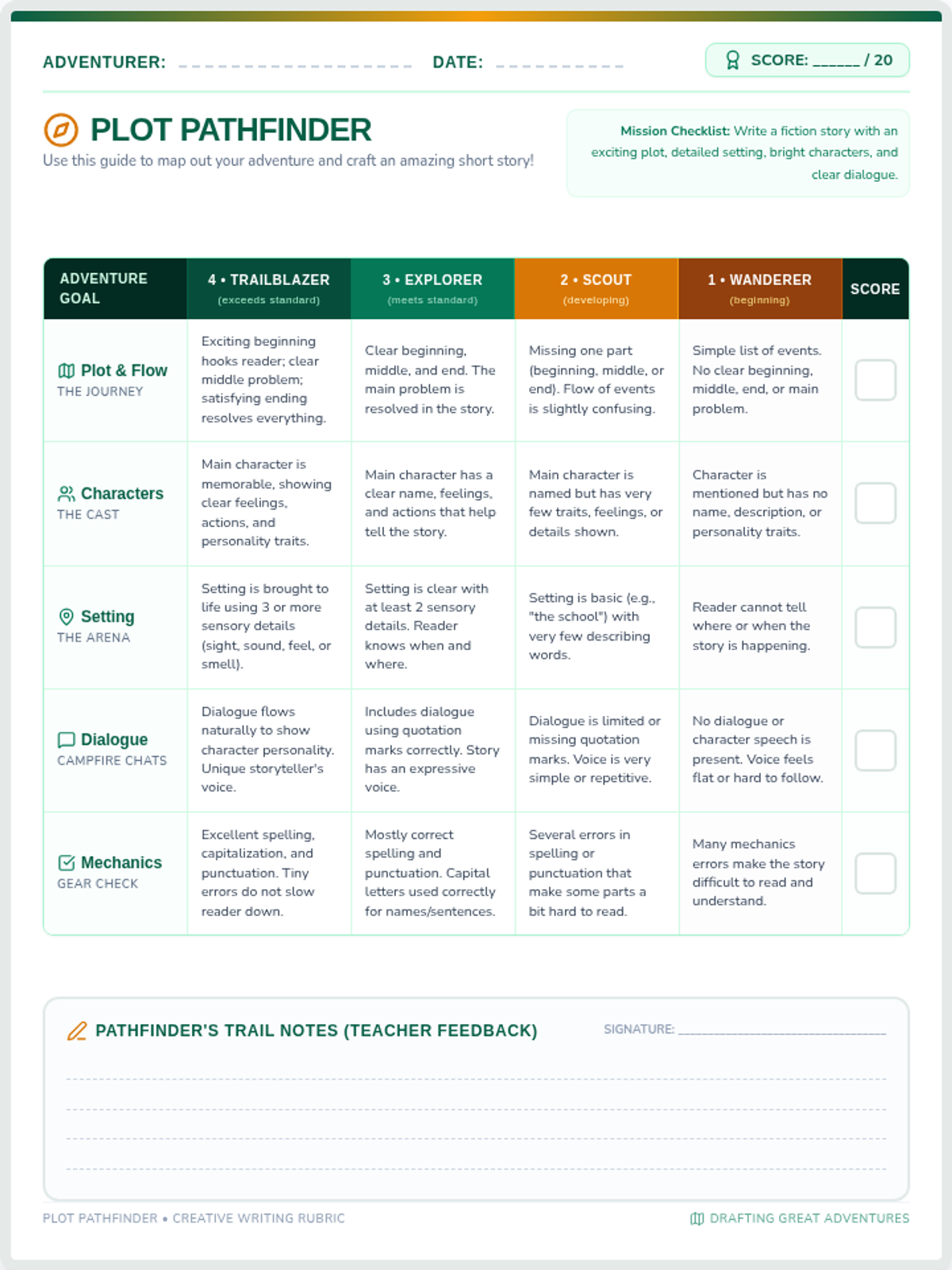
A foundational unit introducing elementary students to the elements of narrative writing, including character creation, setting development, plot structuring, and standard mechanics.
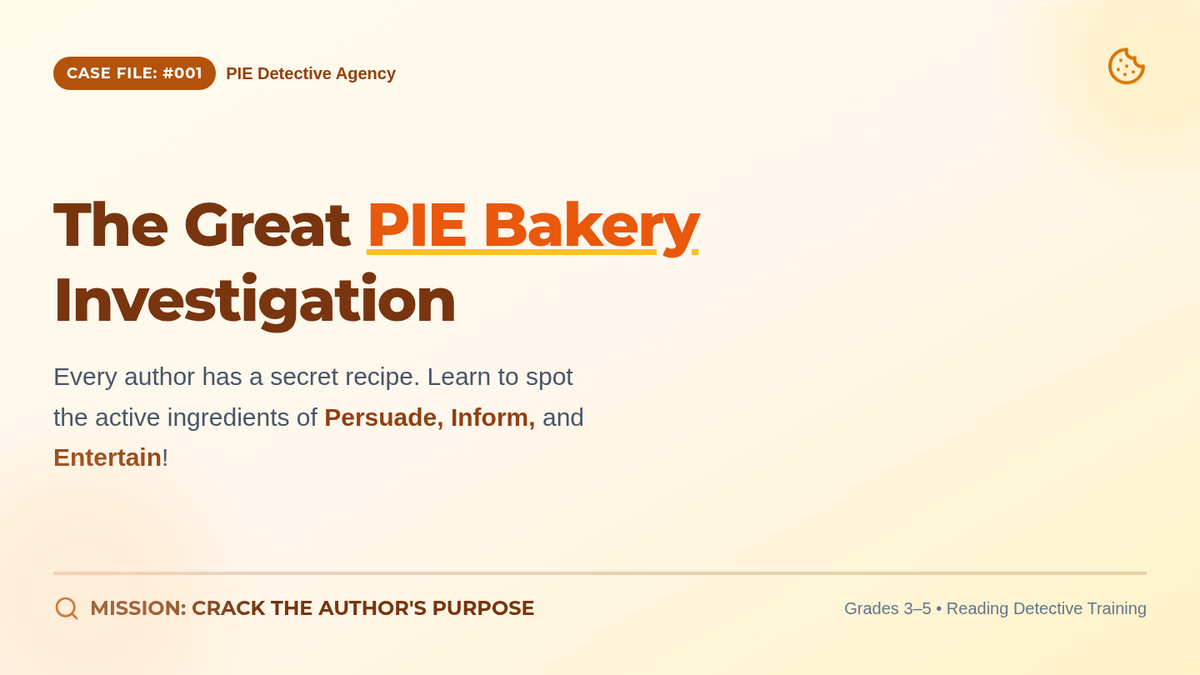
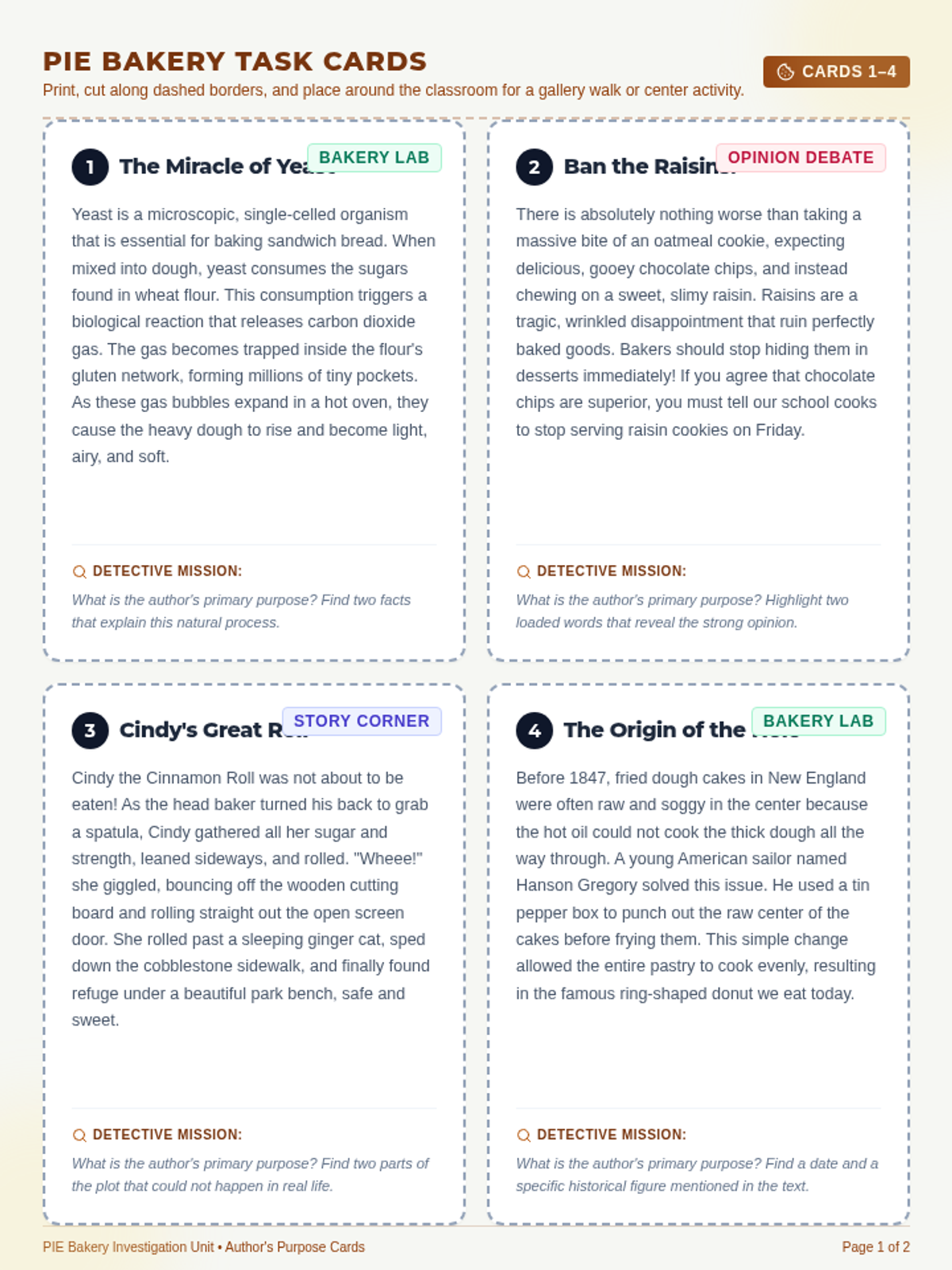
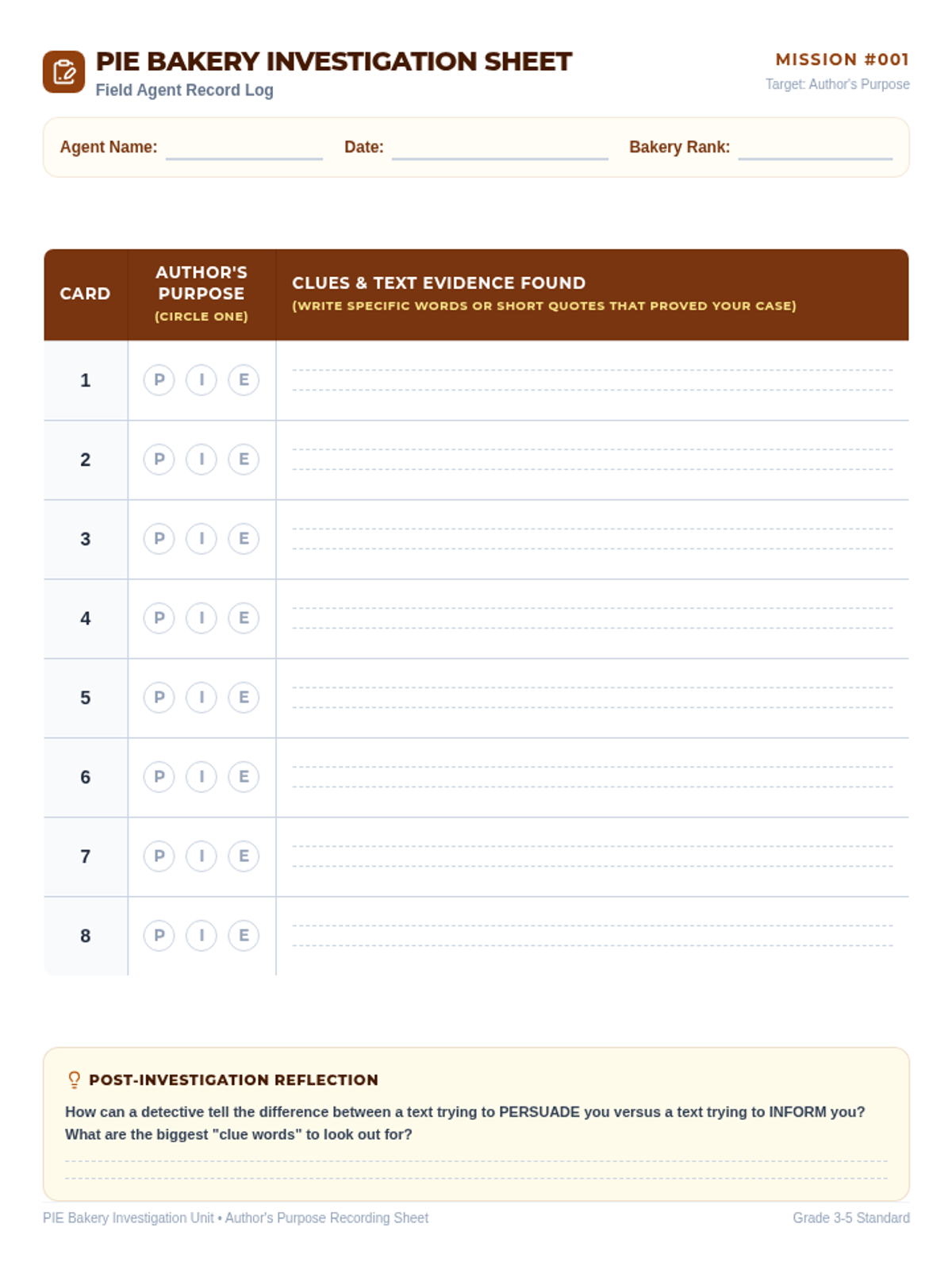
A delicious lesson on Author's Purpose (Persuade, Inform, Entertain) for Grades 3-5, featuring interactive slides, hands-on task cards, and evidence-hunting activity sheets.
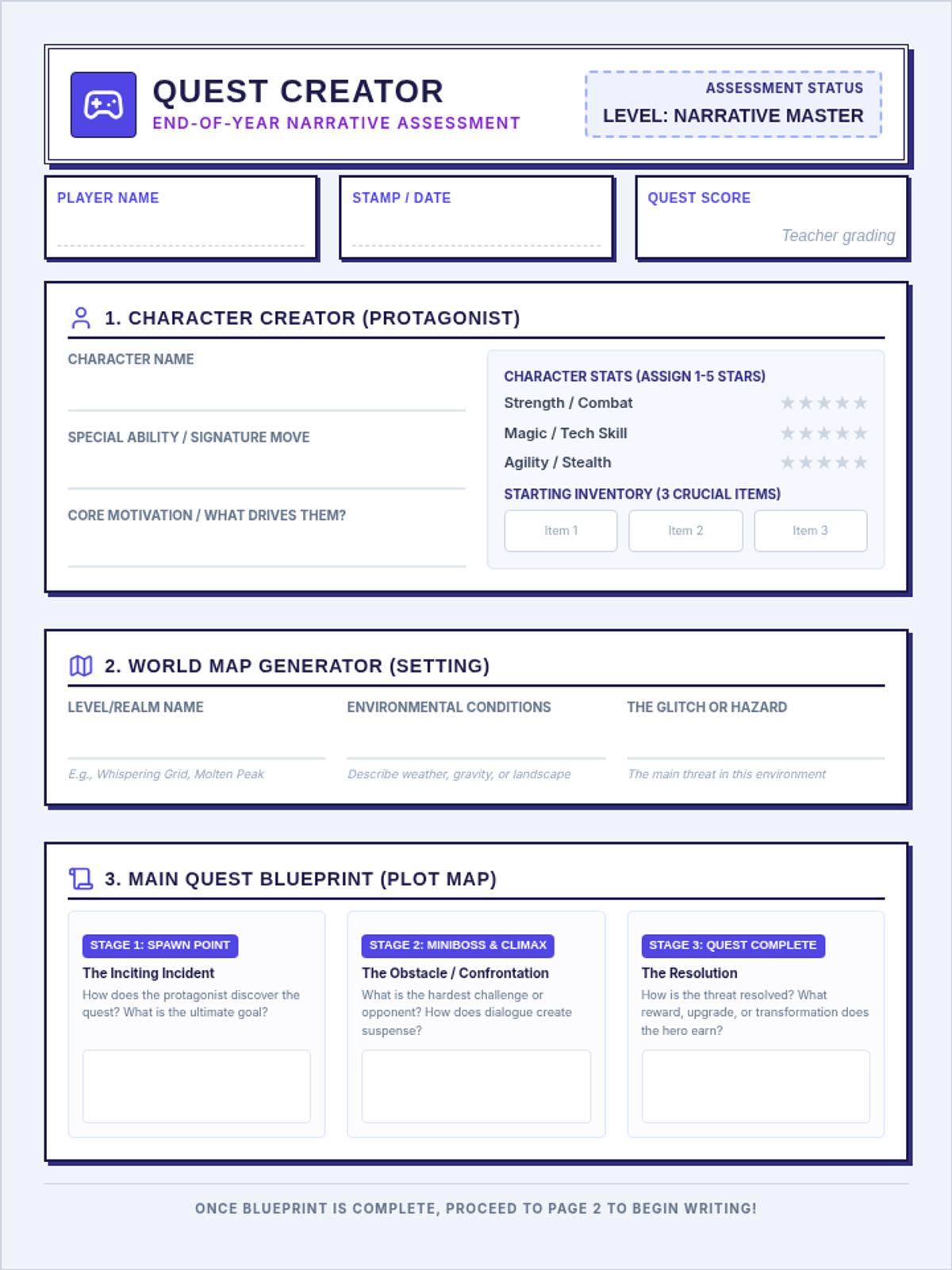
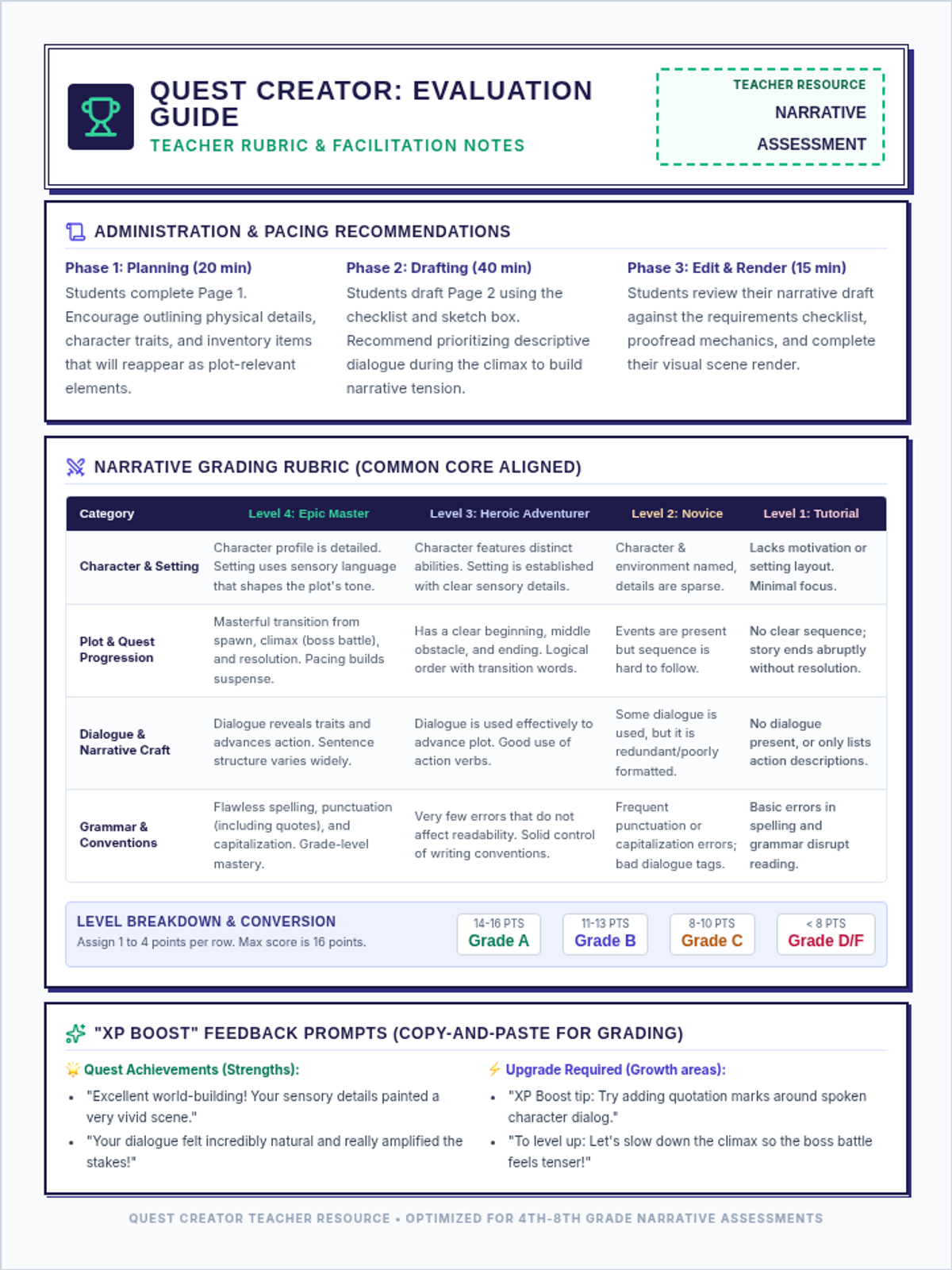
An end-of-year narrative writing assessment where students design their own video game character, setting, and quest, then write an engaging adventure story based on their creation.
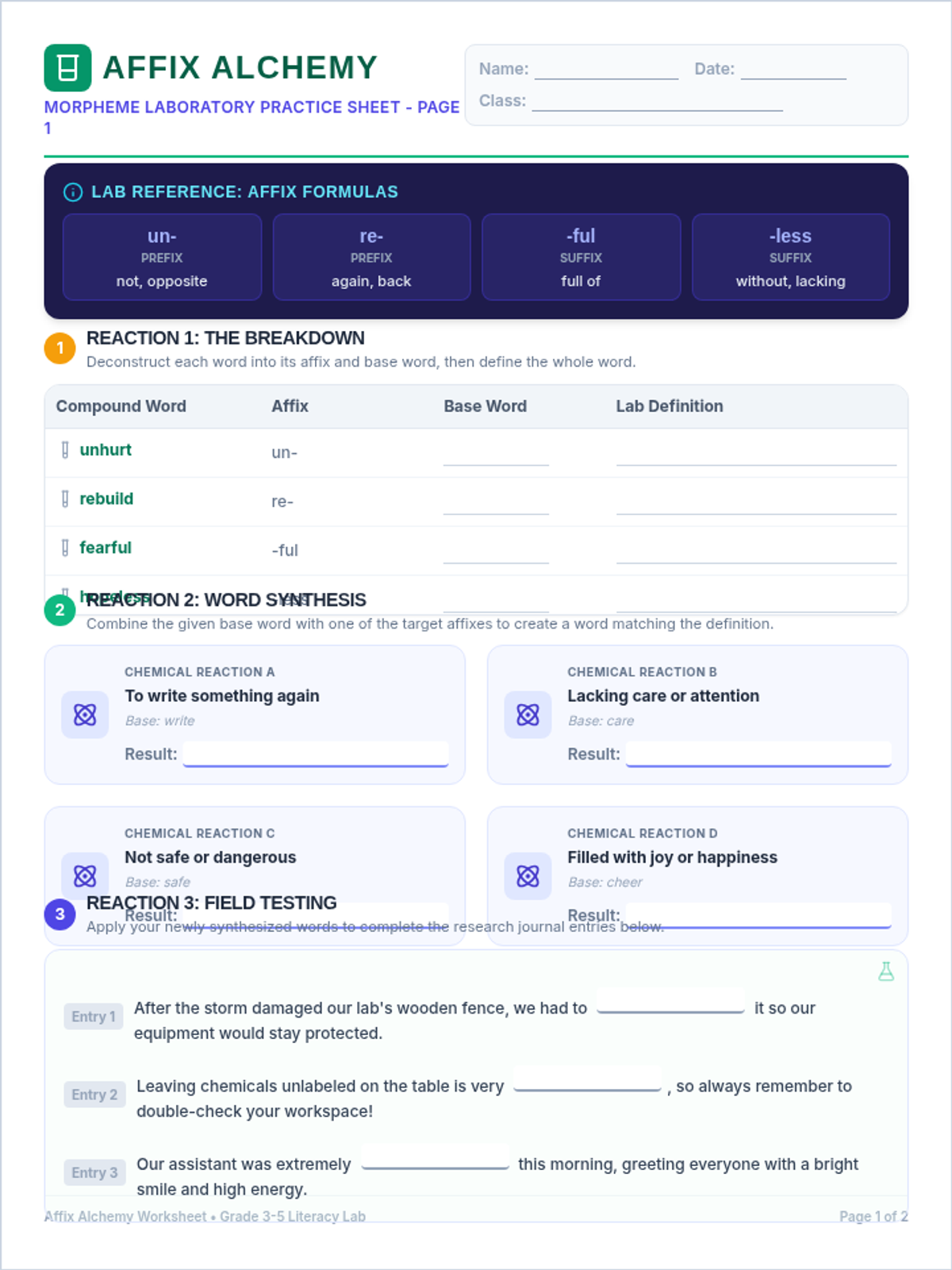
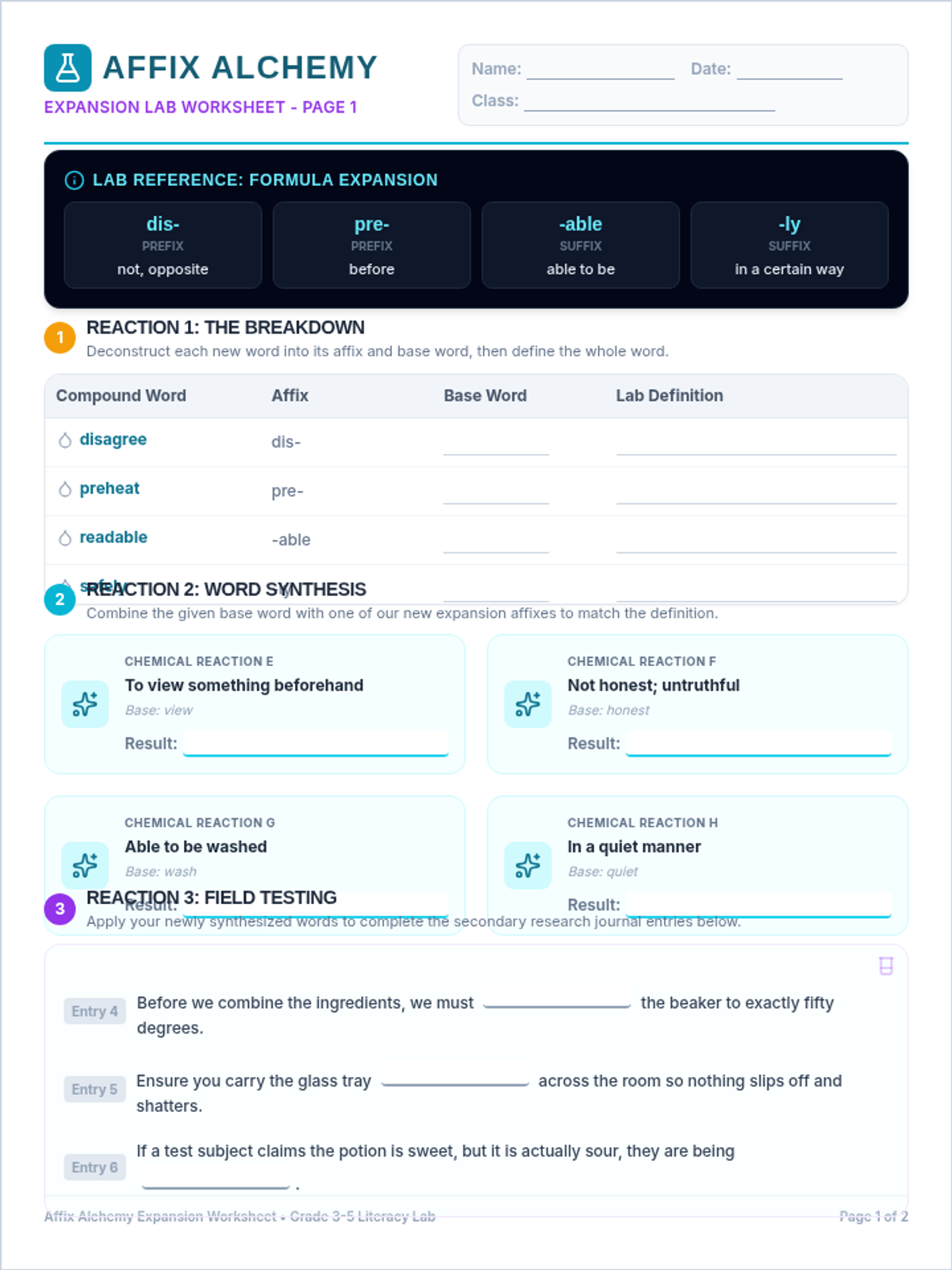
A comprehensive lesson on high-frequency prefixes and suffixes (un-, re-, -ful, -less) designed as a Word Chemistry Lab, helping students master morpheme breakdown, synthesis, and contextual application.
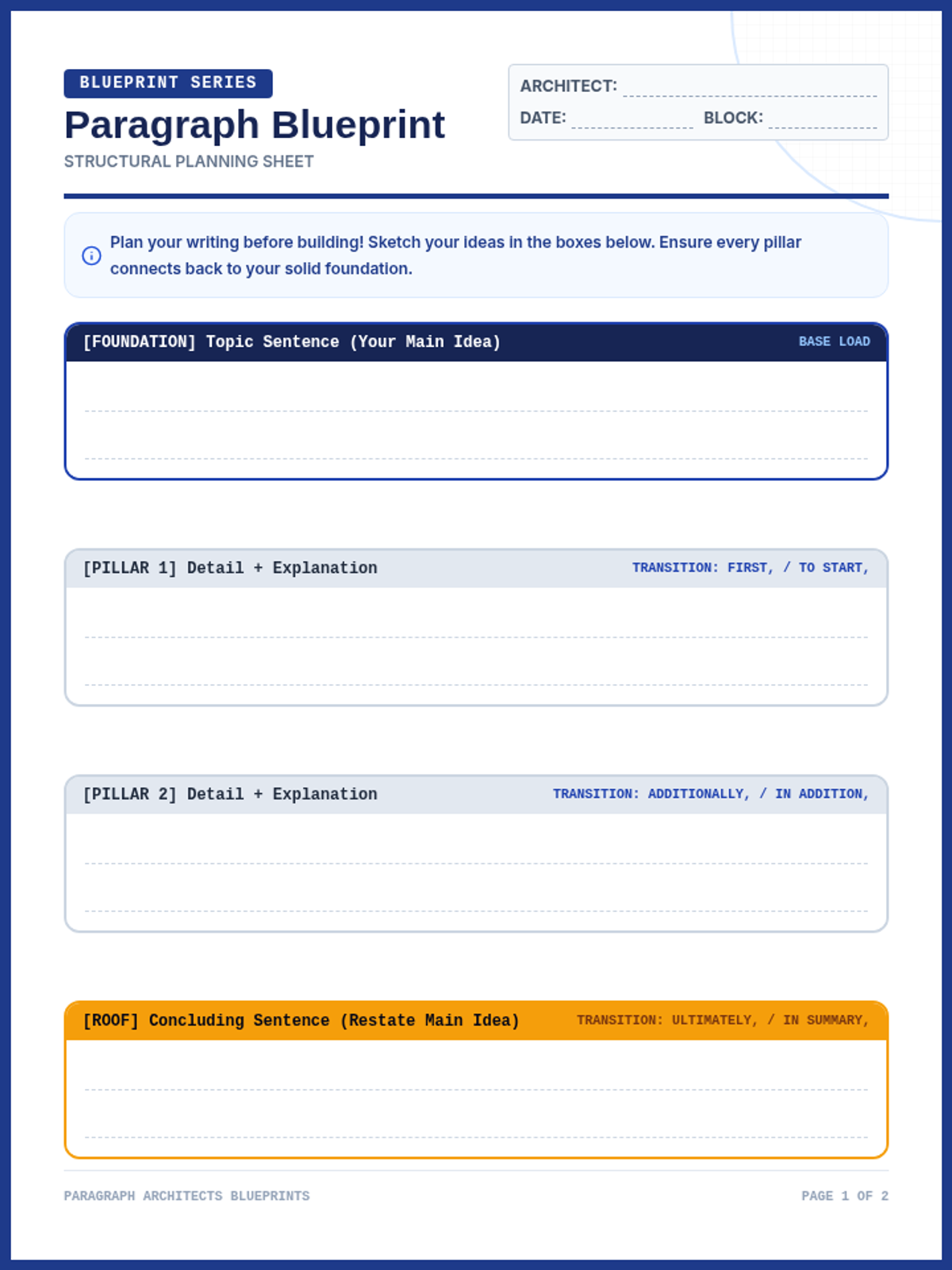
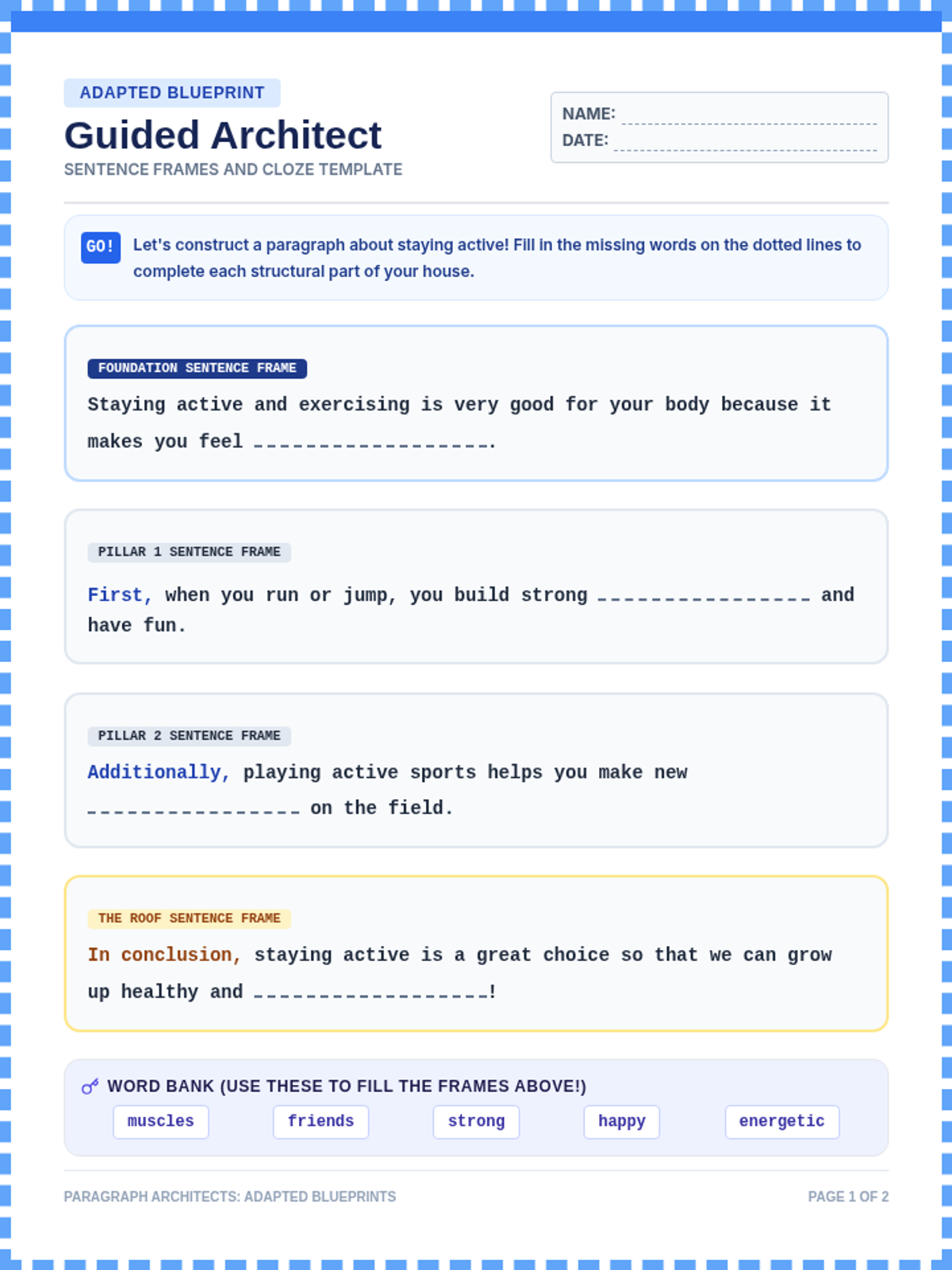
A structural writing lesson guiding students to build organized, cohesive paragraphs with topic sentences, concrete evidence, and transitions.
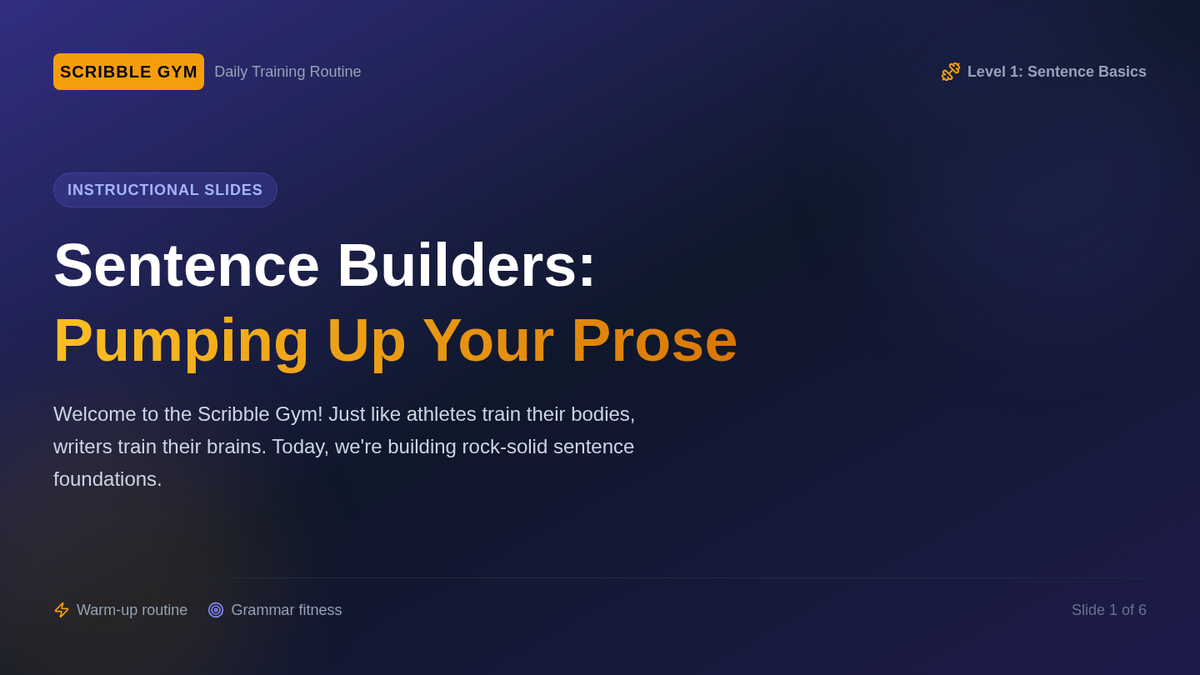
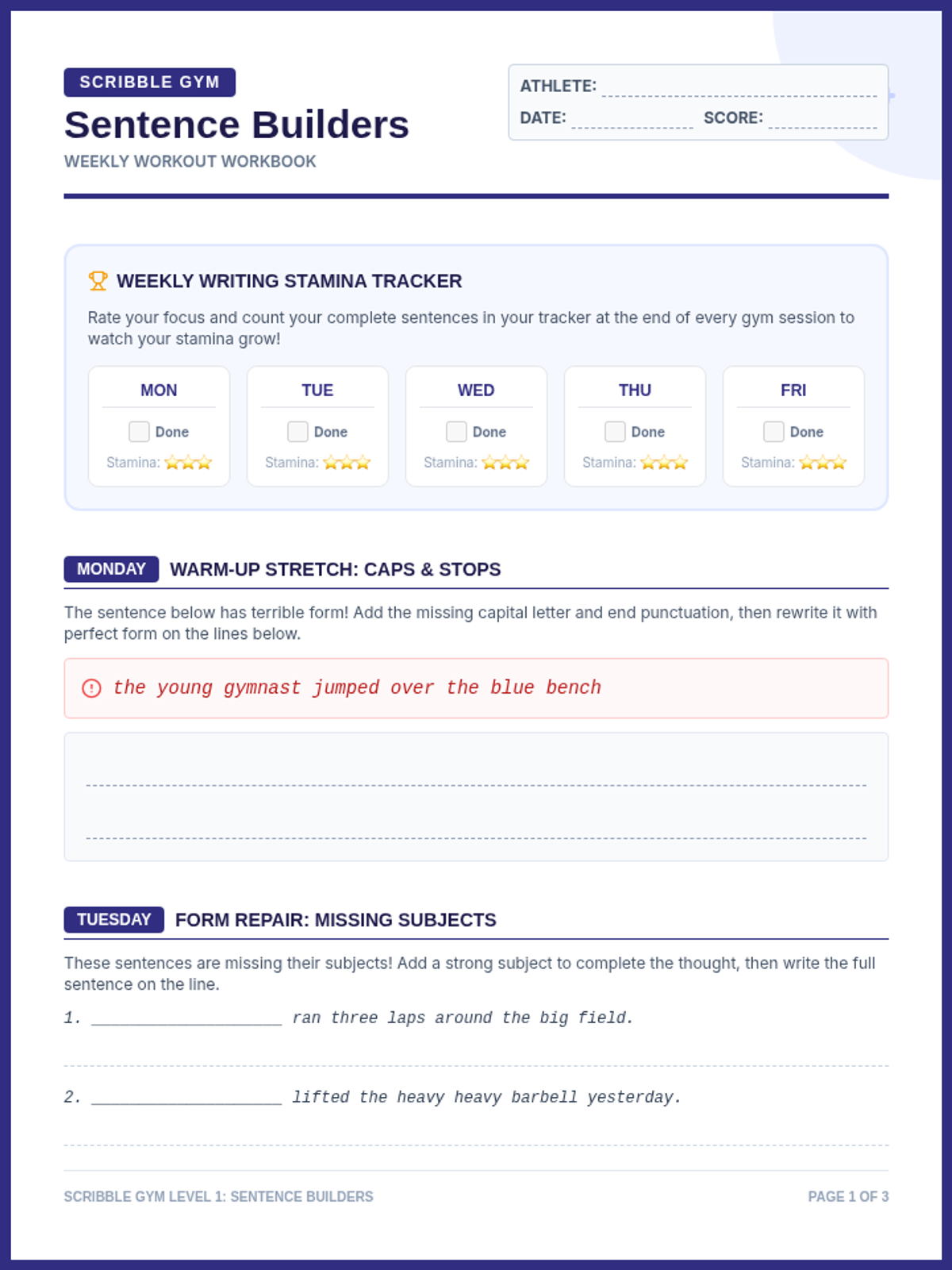
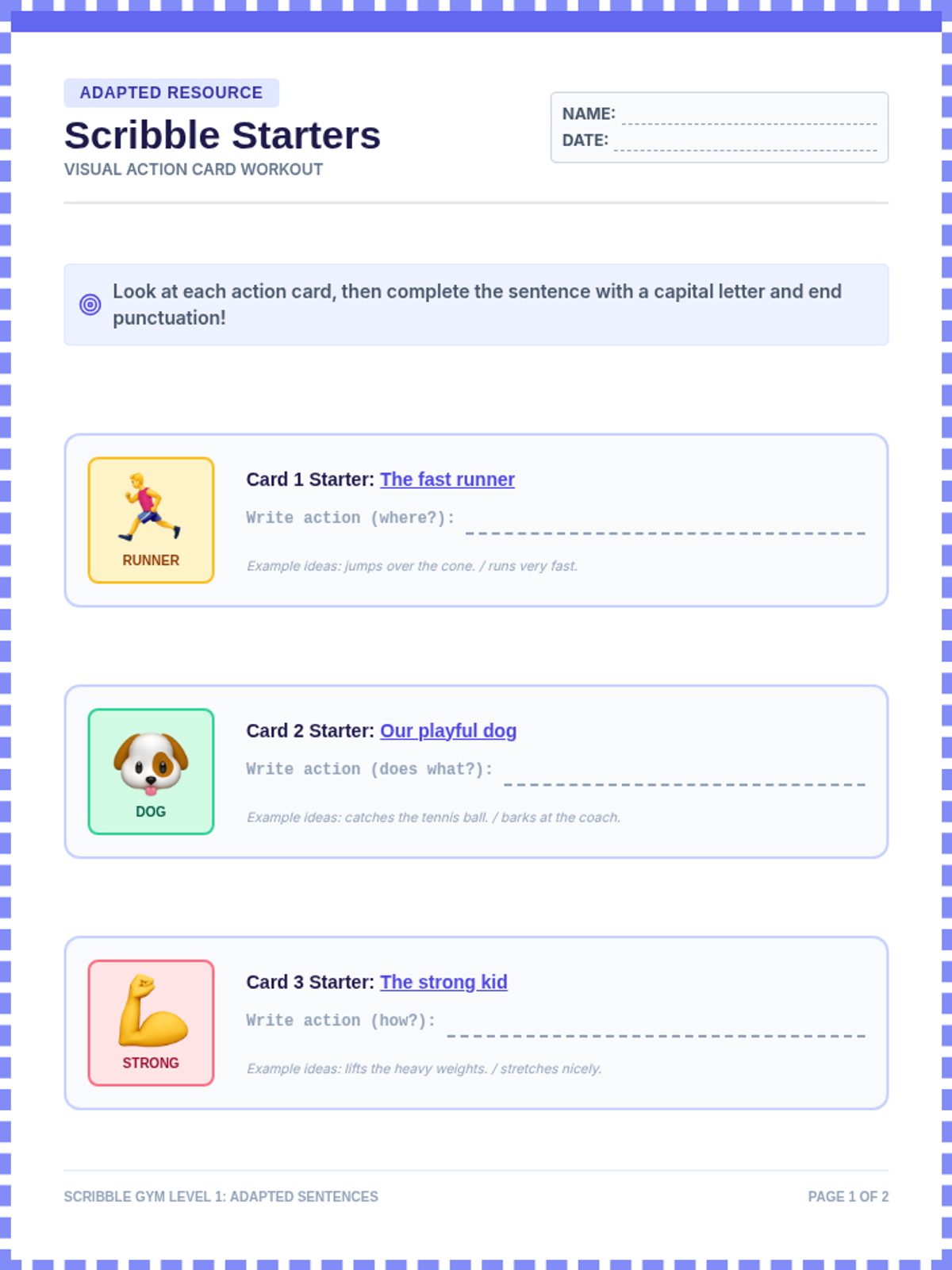
A foundational lesson focused on mastering capitalization, punctuation, and constructing complete simple and compound sentences.
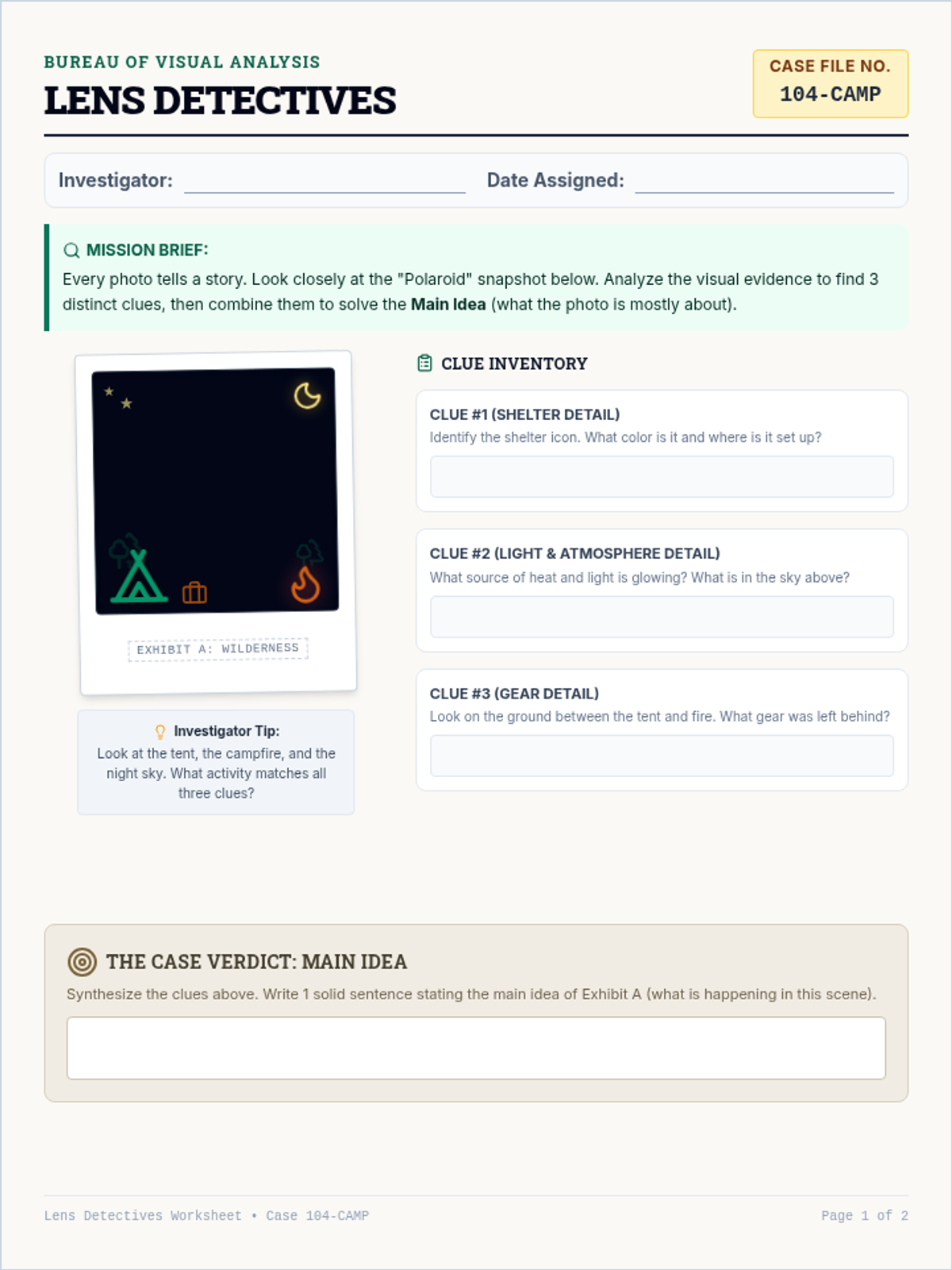
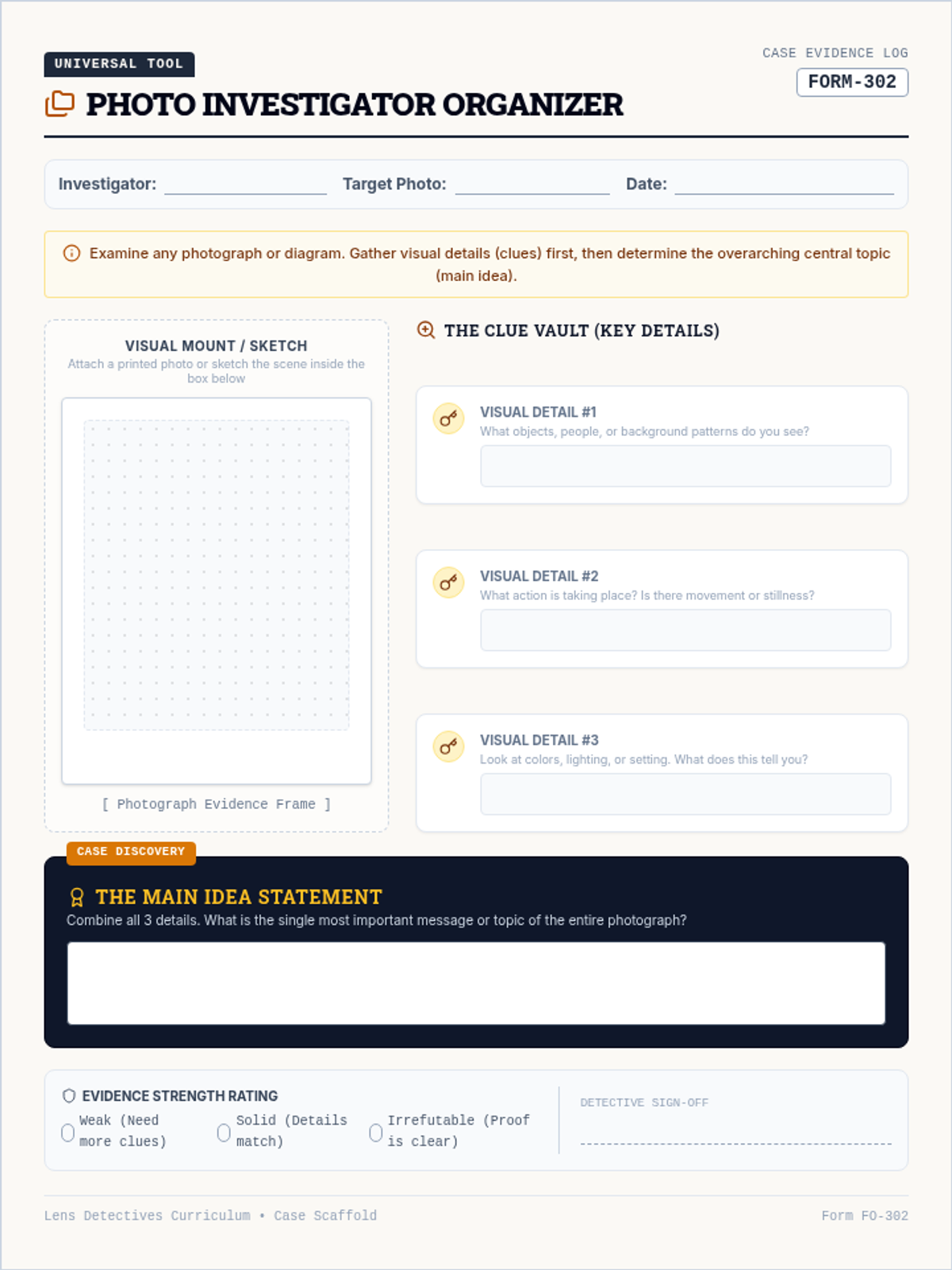
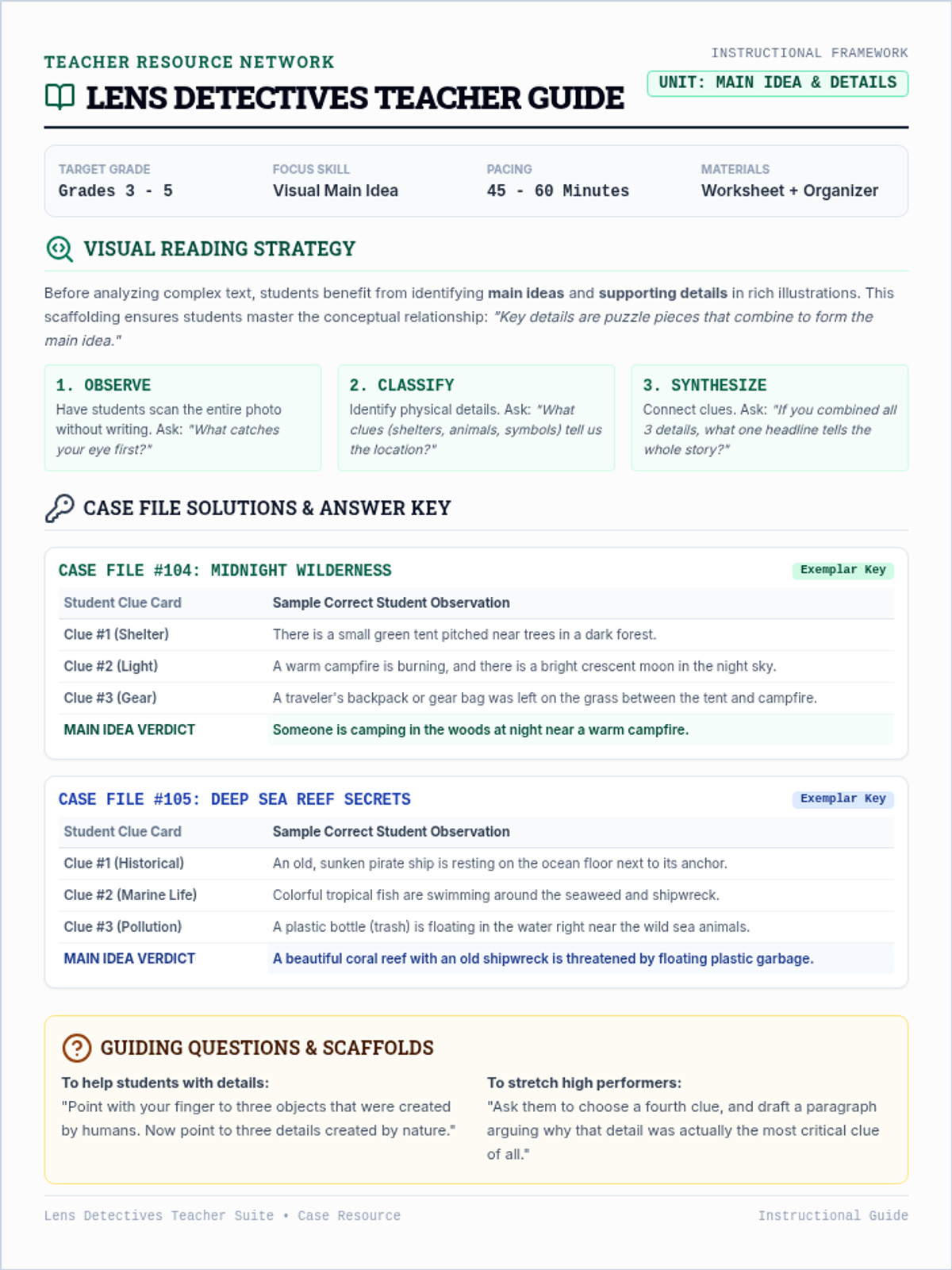
A structured resource pack focusing on Main Idea and Key Details. Students become 'Lens Detectives', analyzing highly detailed visual scenes (styled as polaroid photos) to gather clues, identify the central topic, and draft structured paragraphs using deductive writing scaffolds.
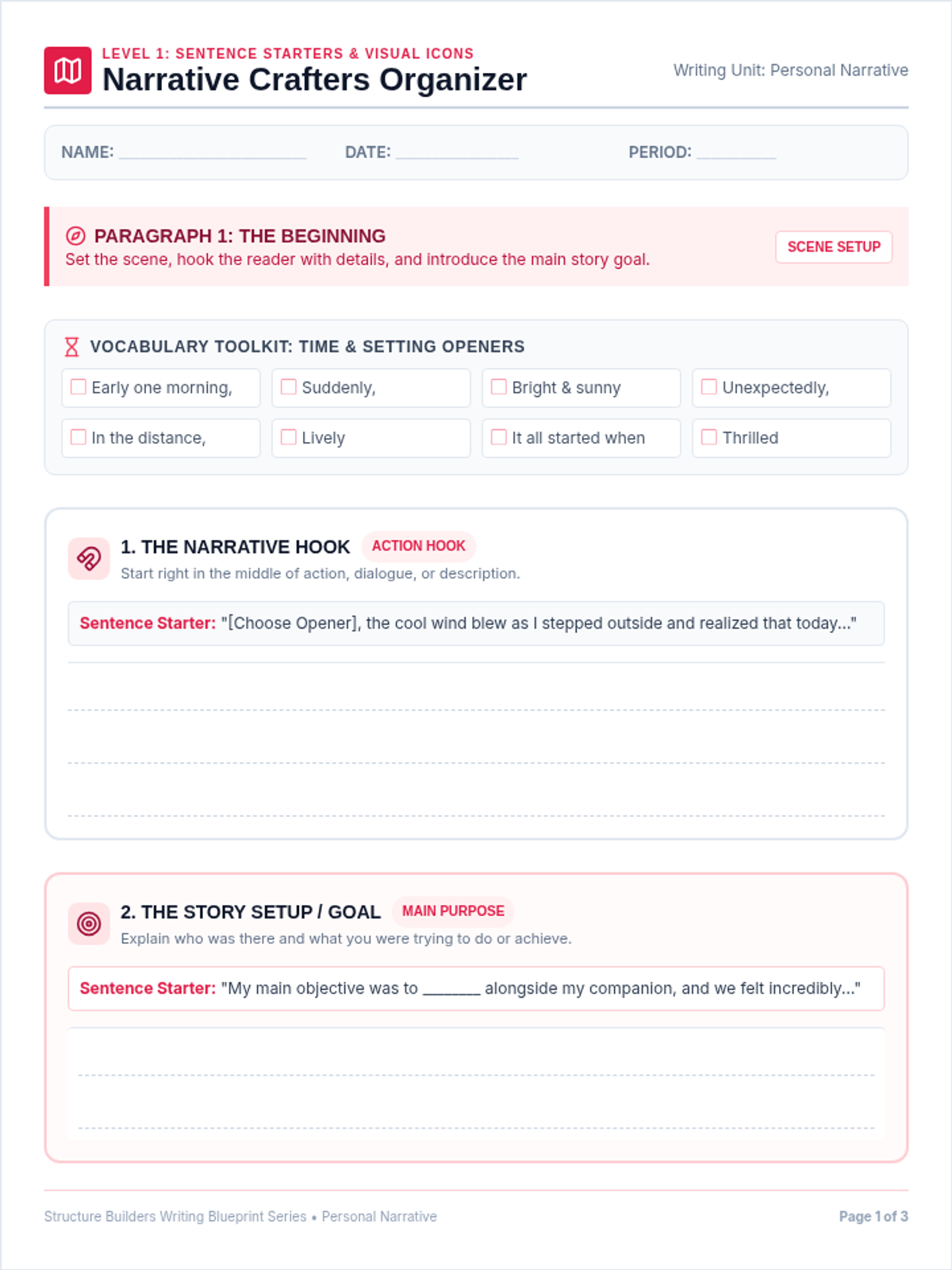
A structured approach to writing a three-paragraph personal narrative. Students develop a clear beginning, middle, and end, using sensory details, transition words, and self-assessment checklists.
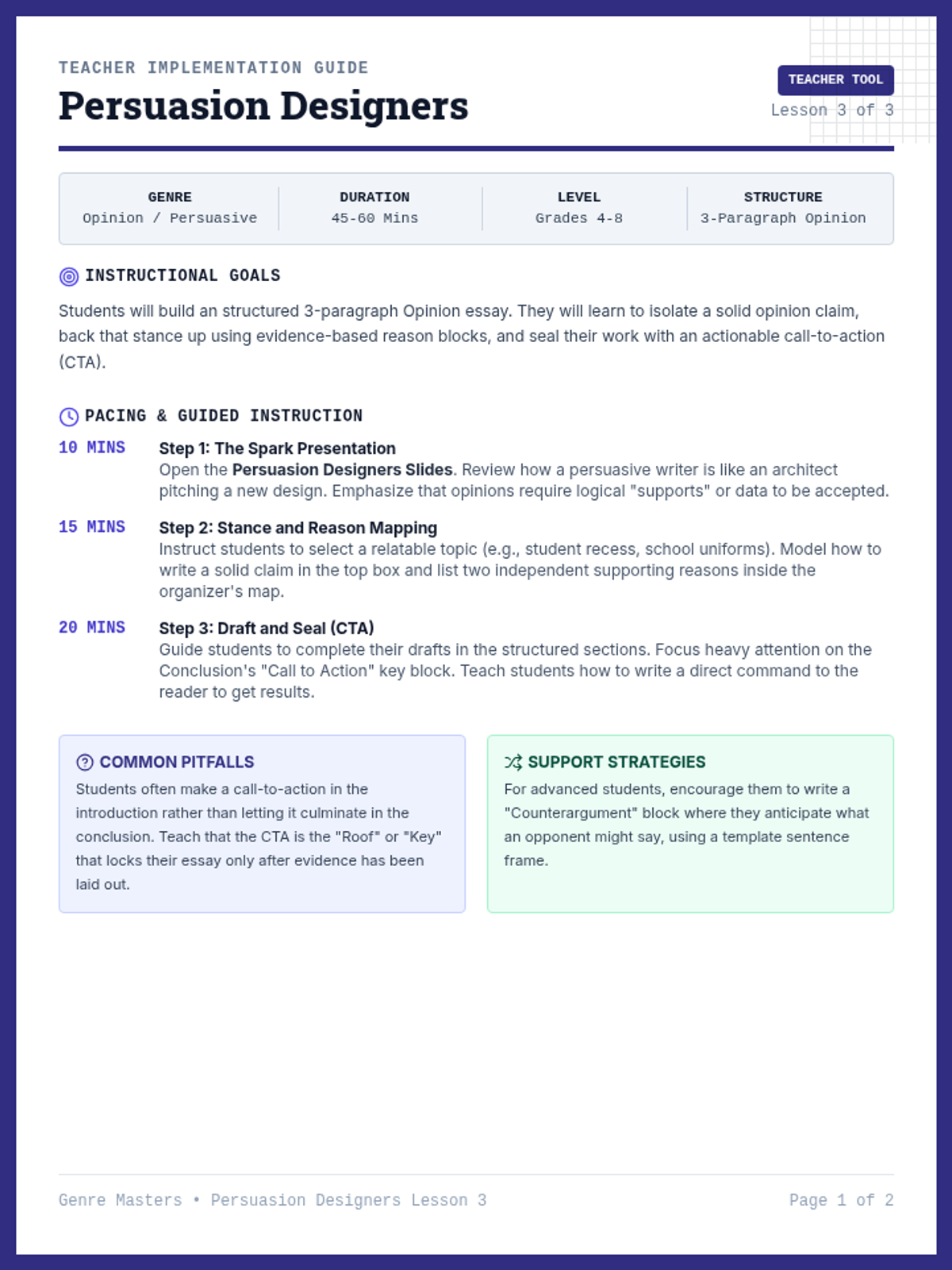
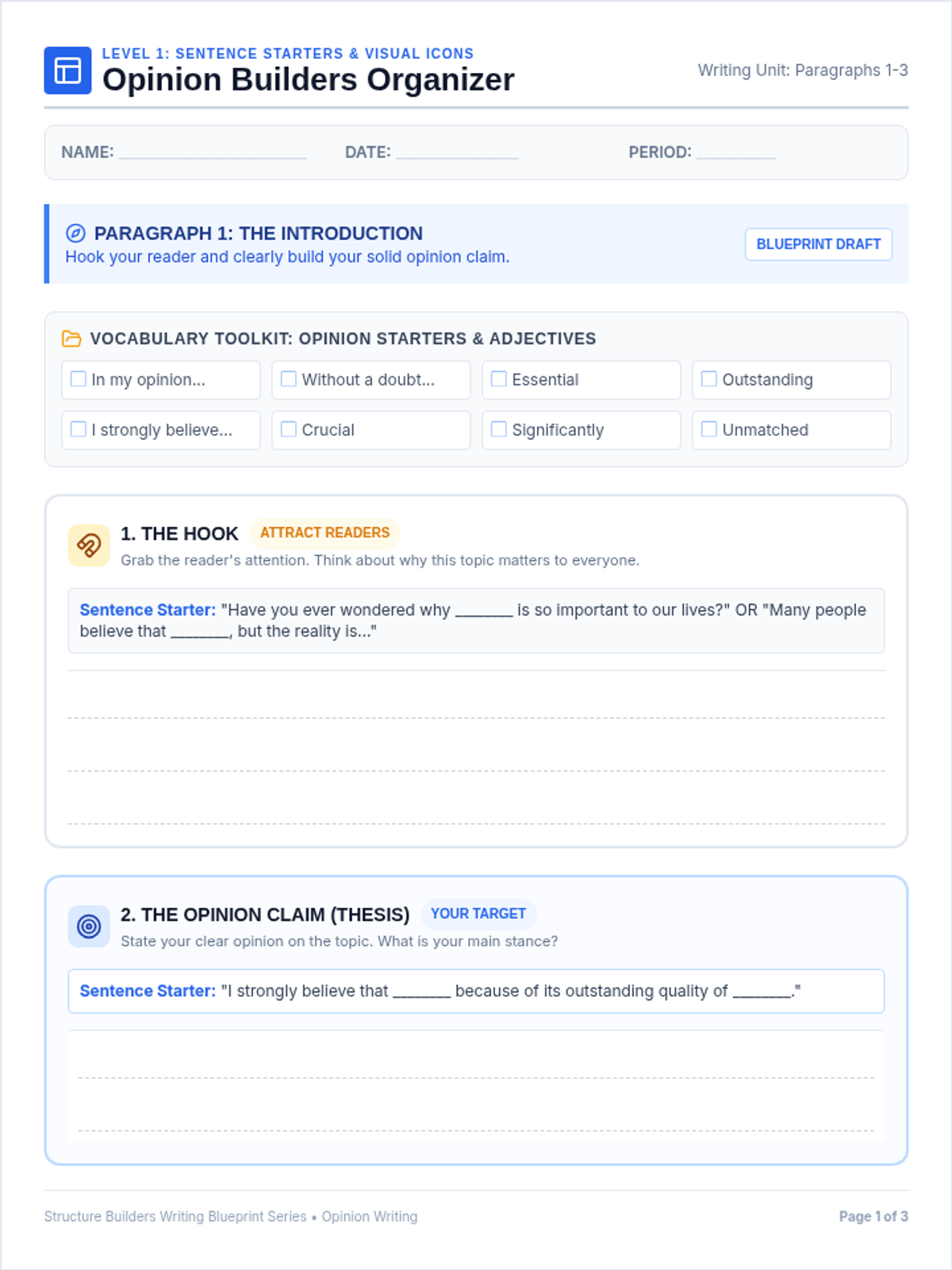
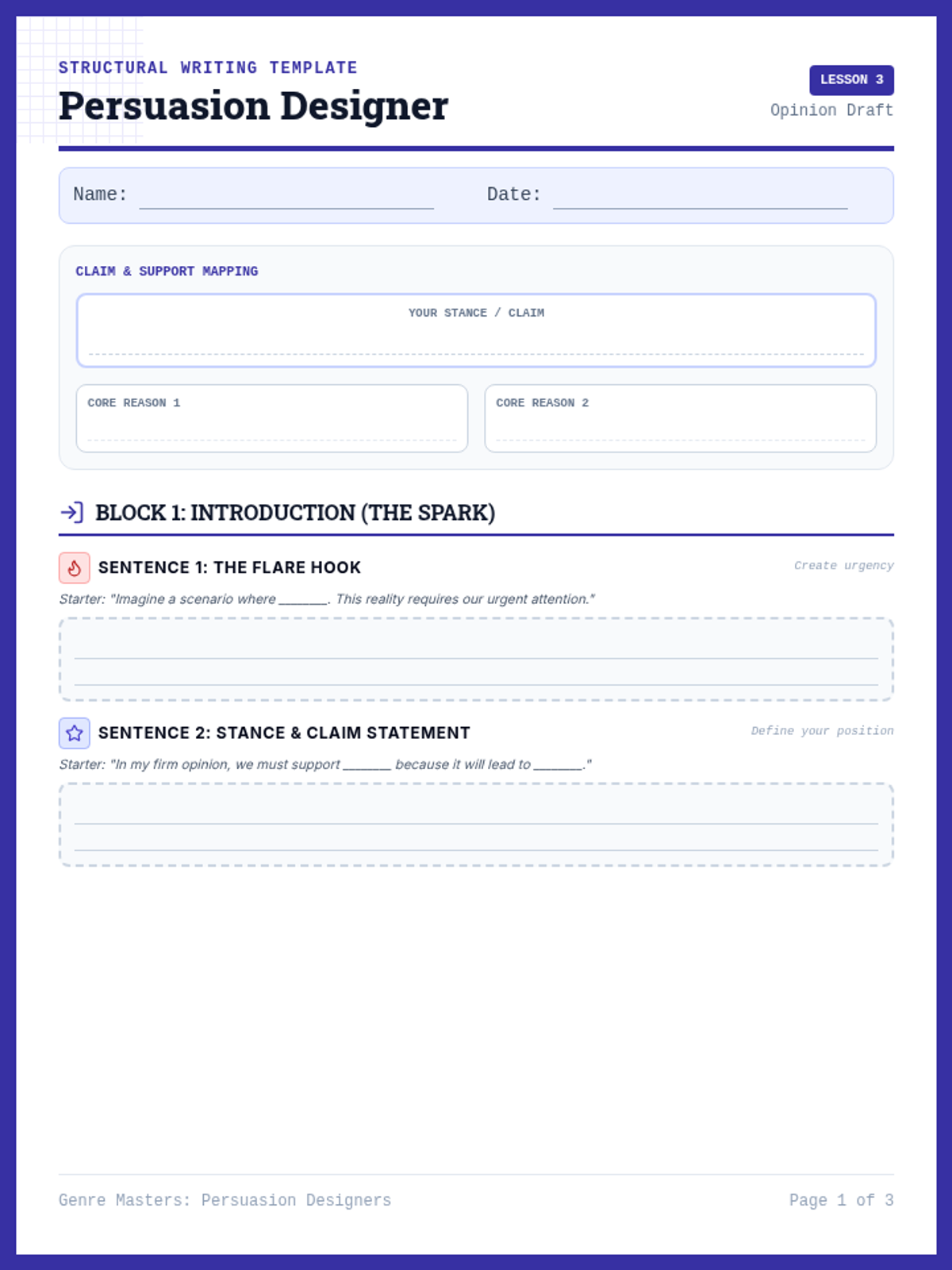
Students structure powerful opinions using a 3-paragraph template. They leverage strong emotional hooks, evidence-based reason body blocks, and persuasive call-to-action conclusions.
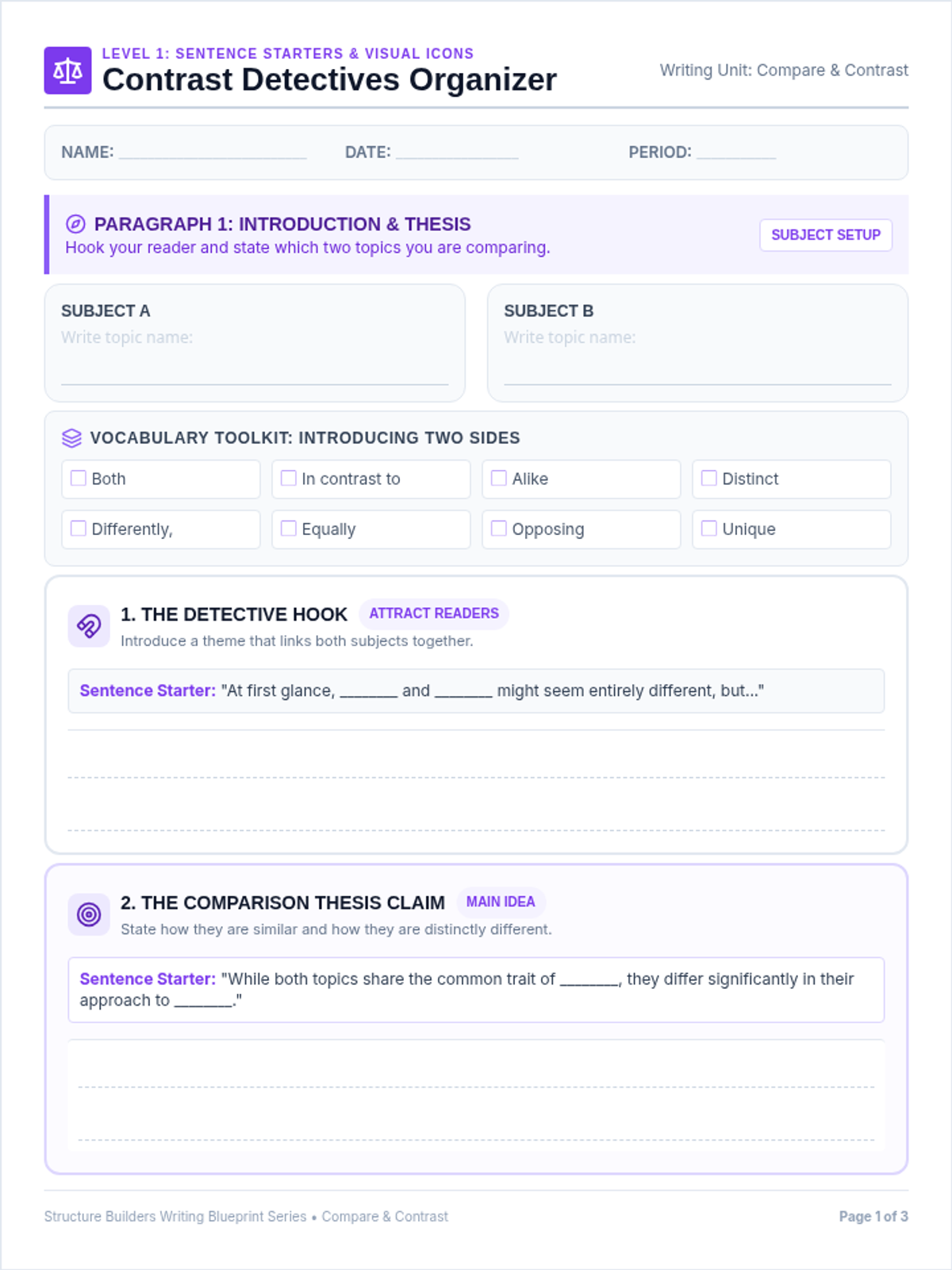
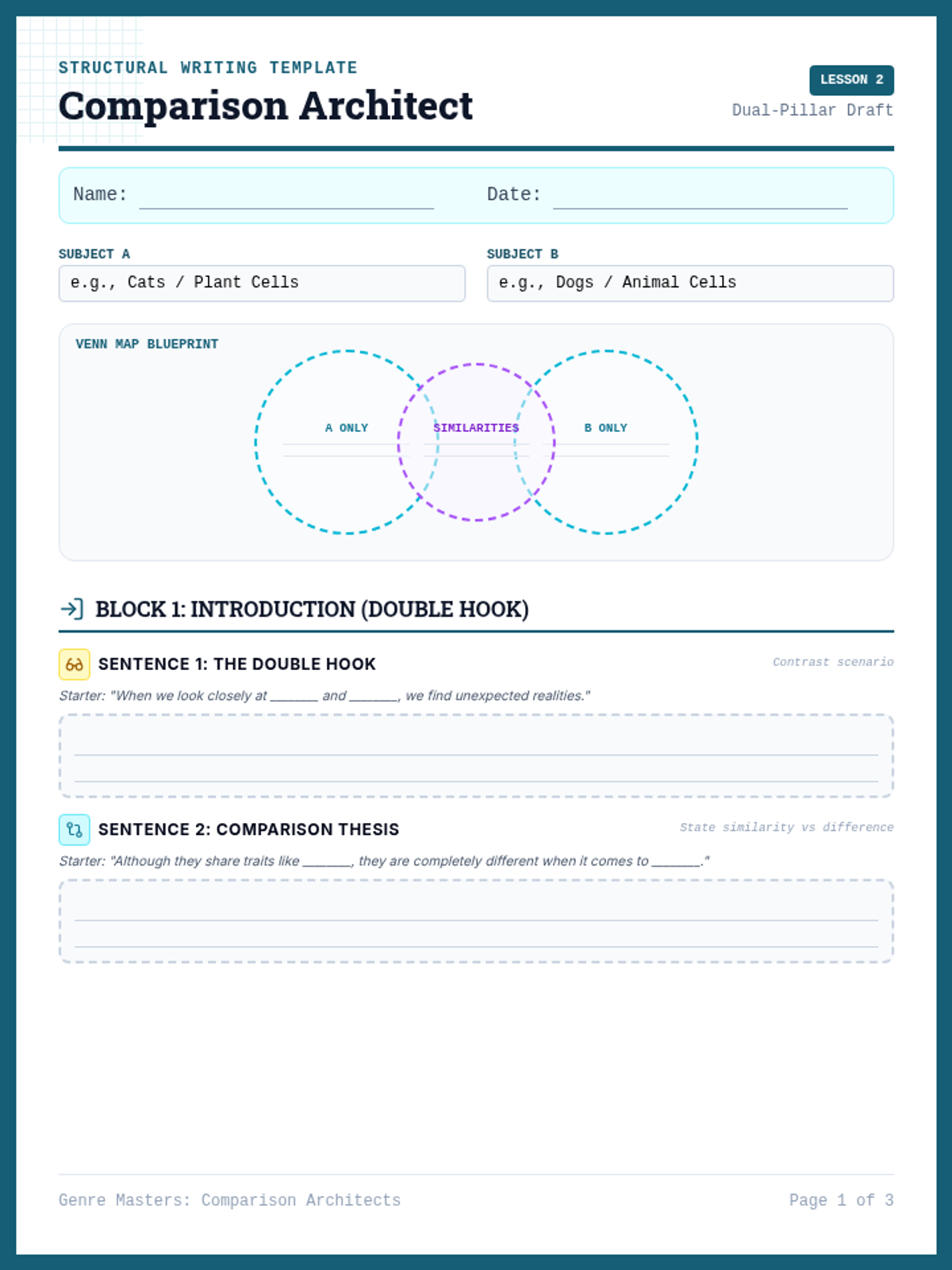
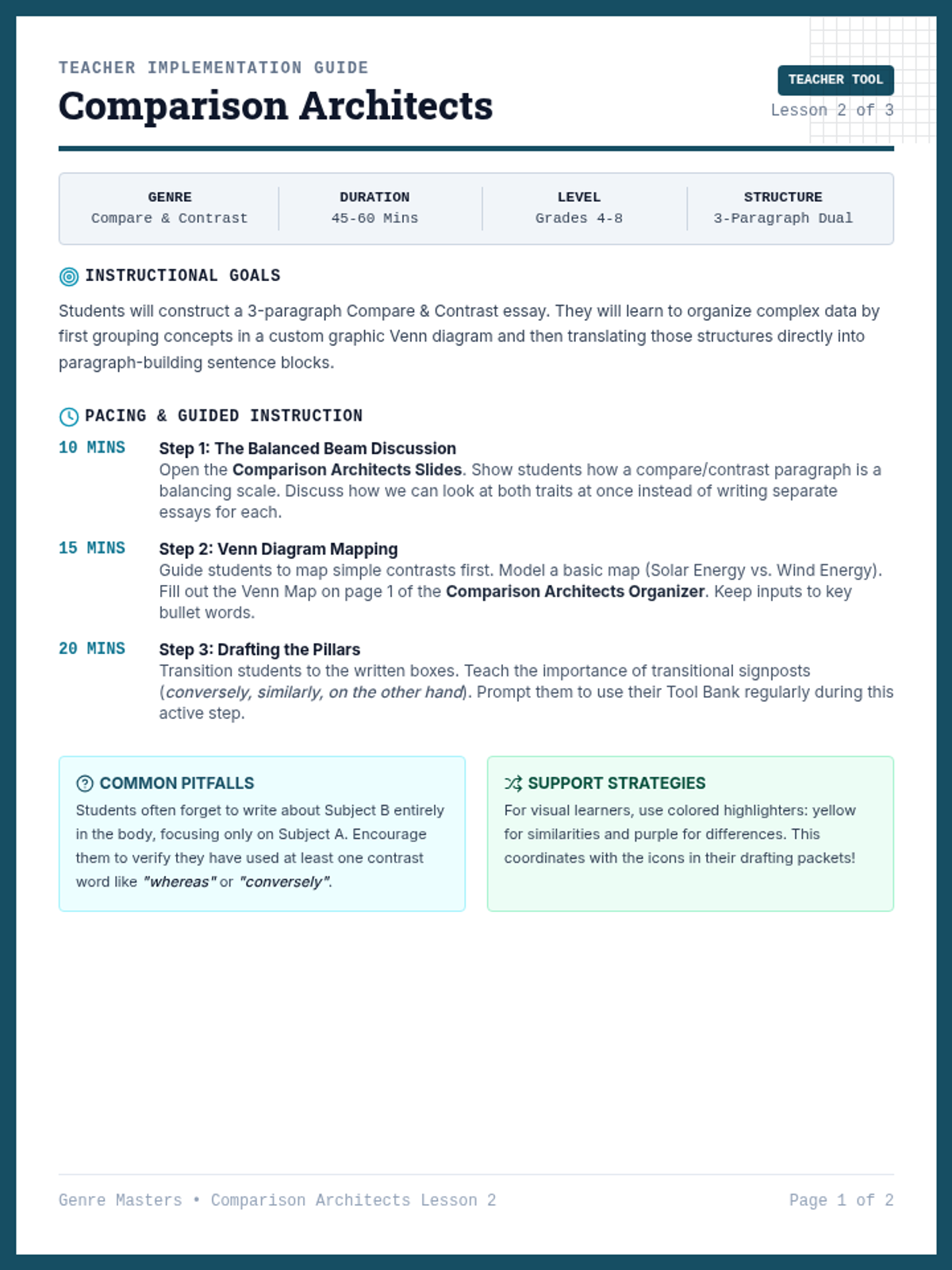
A step-by-step lesson for comparing and contrasting two topics in a three-paragraph format. Students utilize customized sentence frames, comparative word banks, and structured organizers with visual prompts.
Students learn to contrast and compare two topics using a structured 3-paragraph format. A dual-column layout, custom Venn diagrams, and comparison word banks guide them through similarities and differences.
A guided lesson focusing on drafting a three-paragraph opinion essay. Students learn to express a clear claim, back it up with evidence, and write a strong concluding summary using custom sentence frames, interactive word banks, and visual icon prompts.
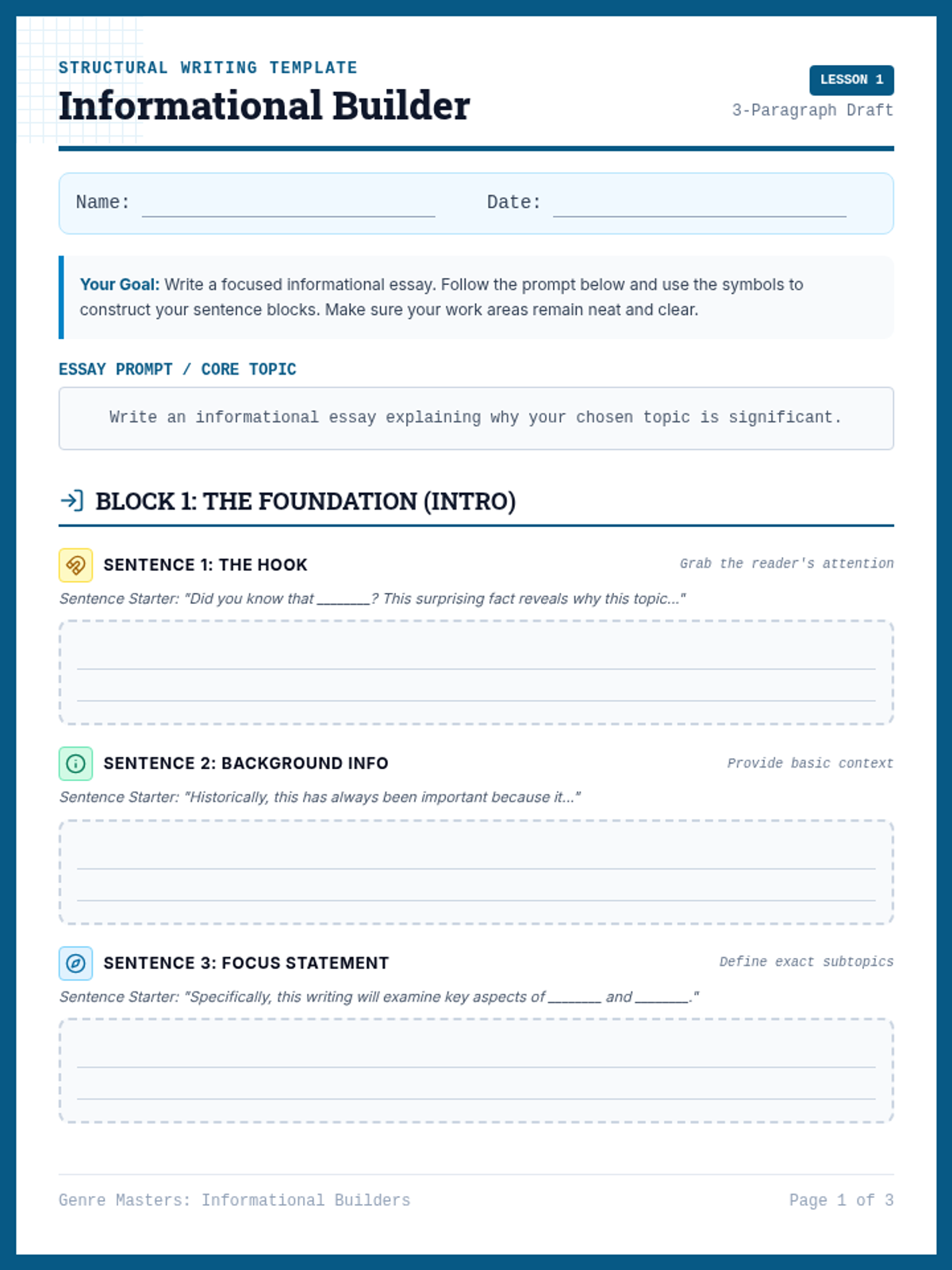
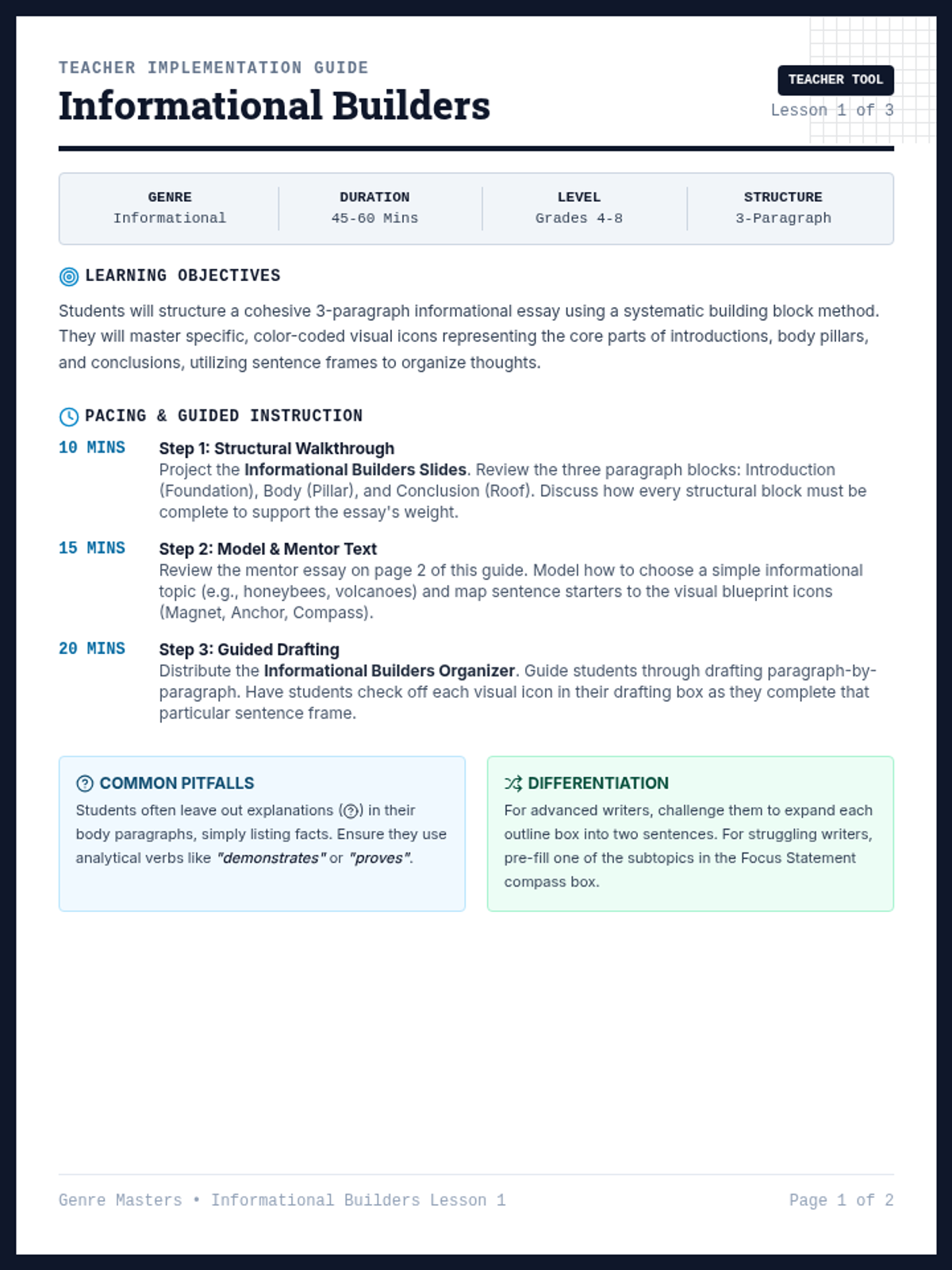
Students master the highly structured 3-paragraph informational essay. They use visual icons, word banks, and fill-in-the-blank sentence starters to build a rock-solid introduction, body, and conclusion paragraph.
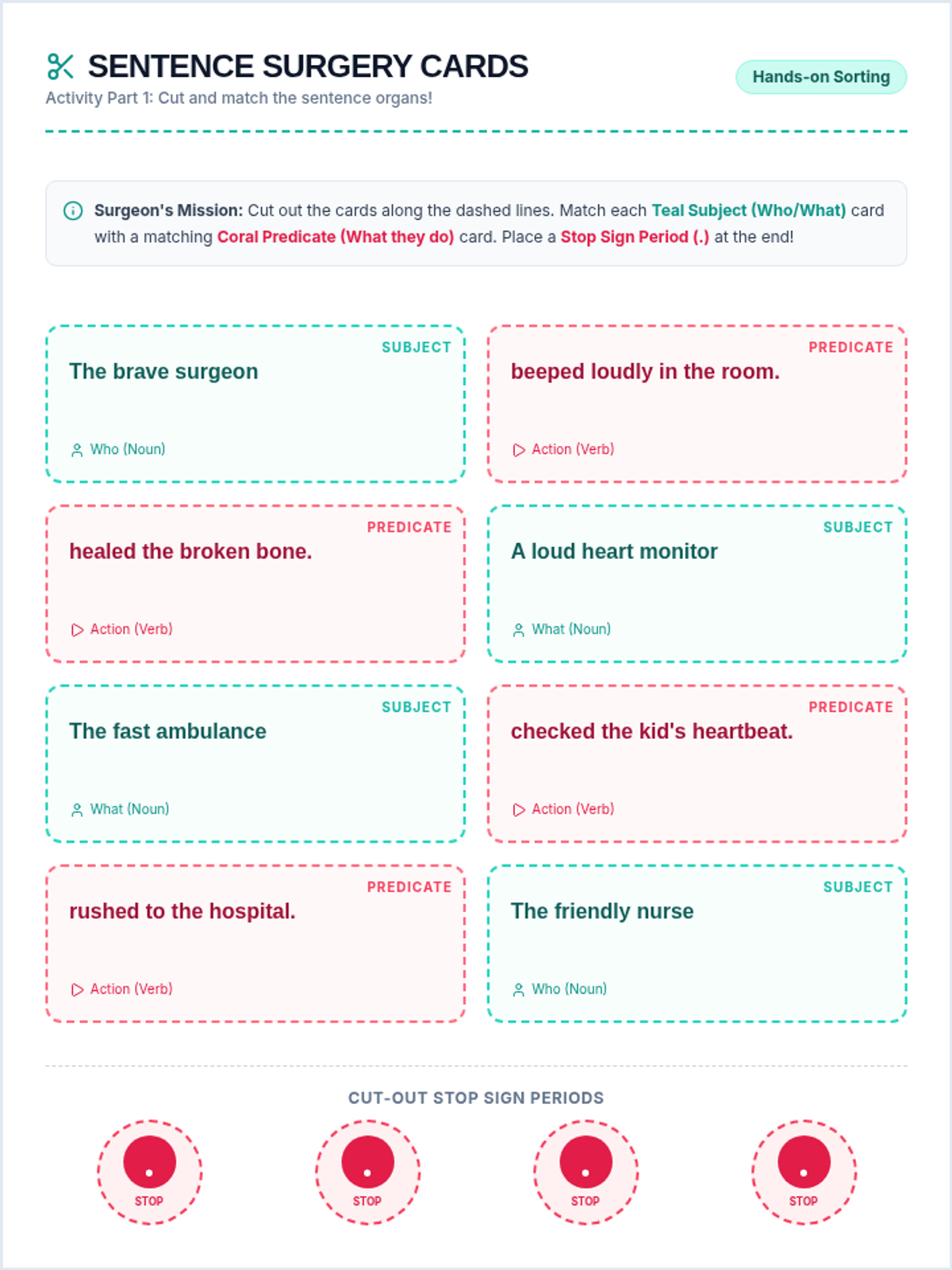
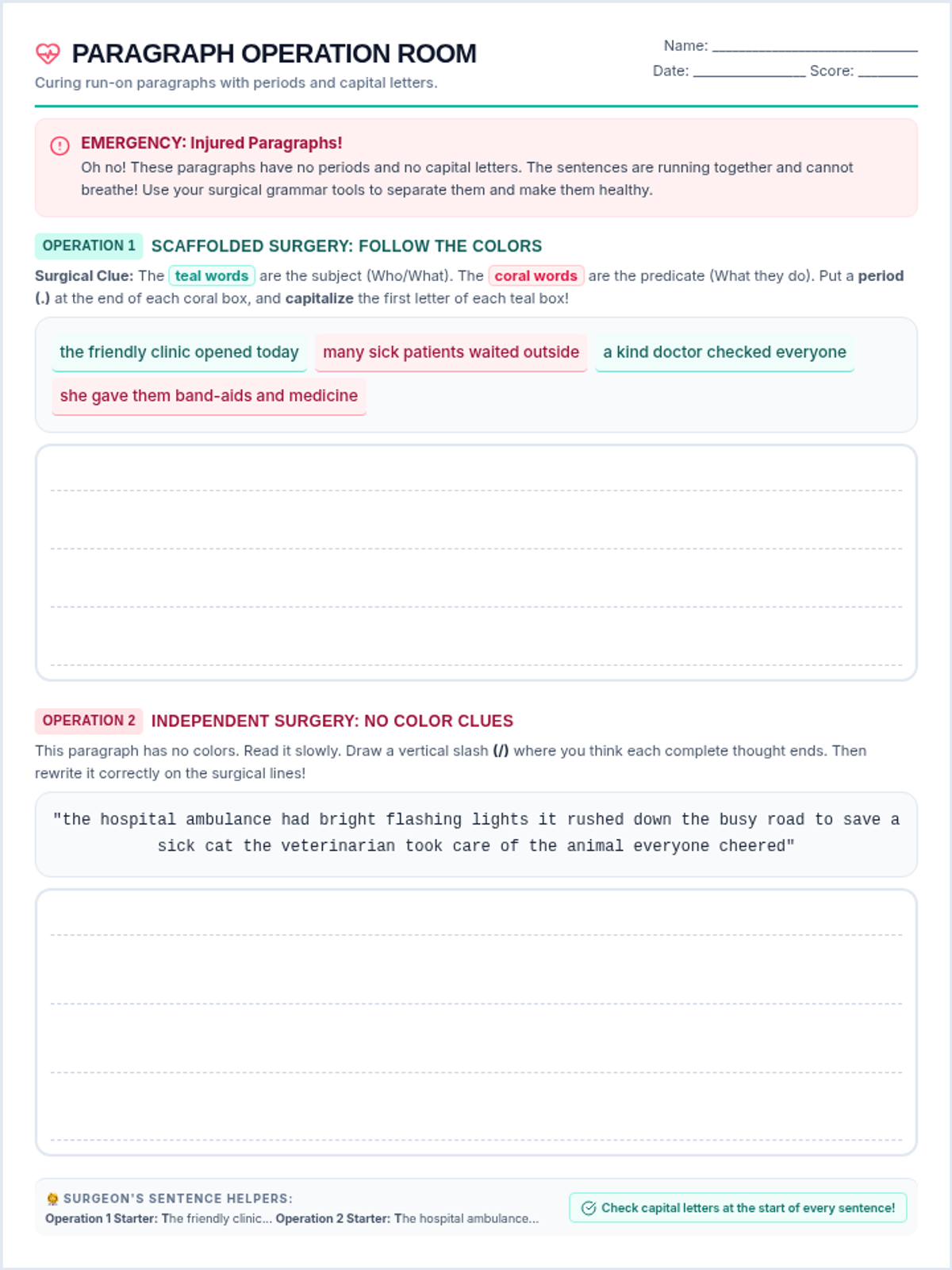
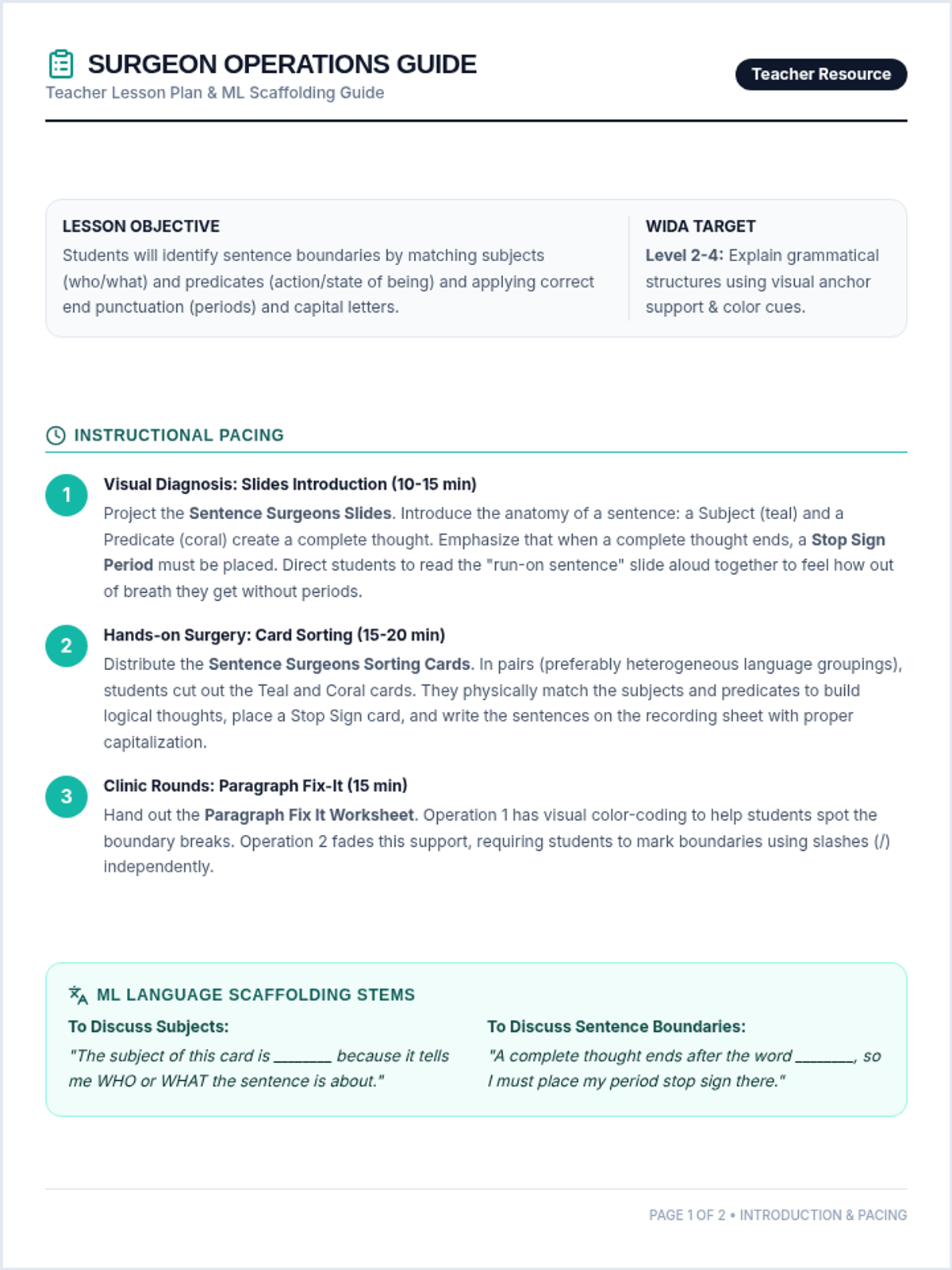
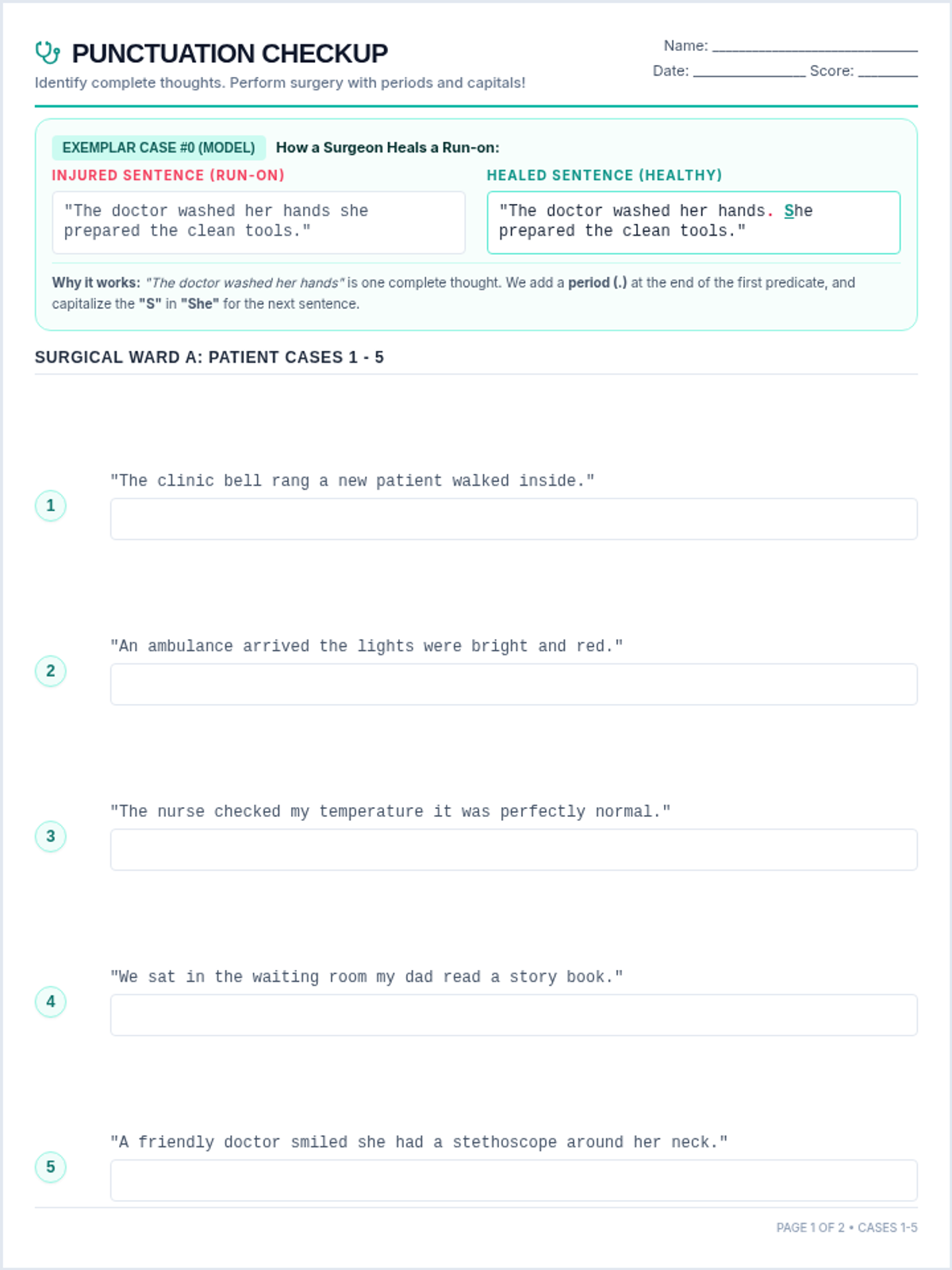
An interactive grammar lesson designed for multilingual fourth graders to master sentence boundaries. Students use color-coded subject and predicate clues, sorting cards, and paragraph operations to identify where sentences end and periods are required.
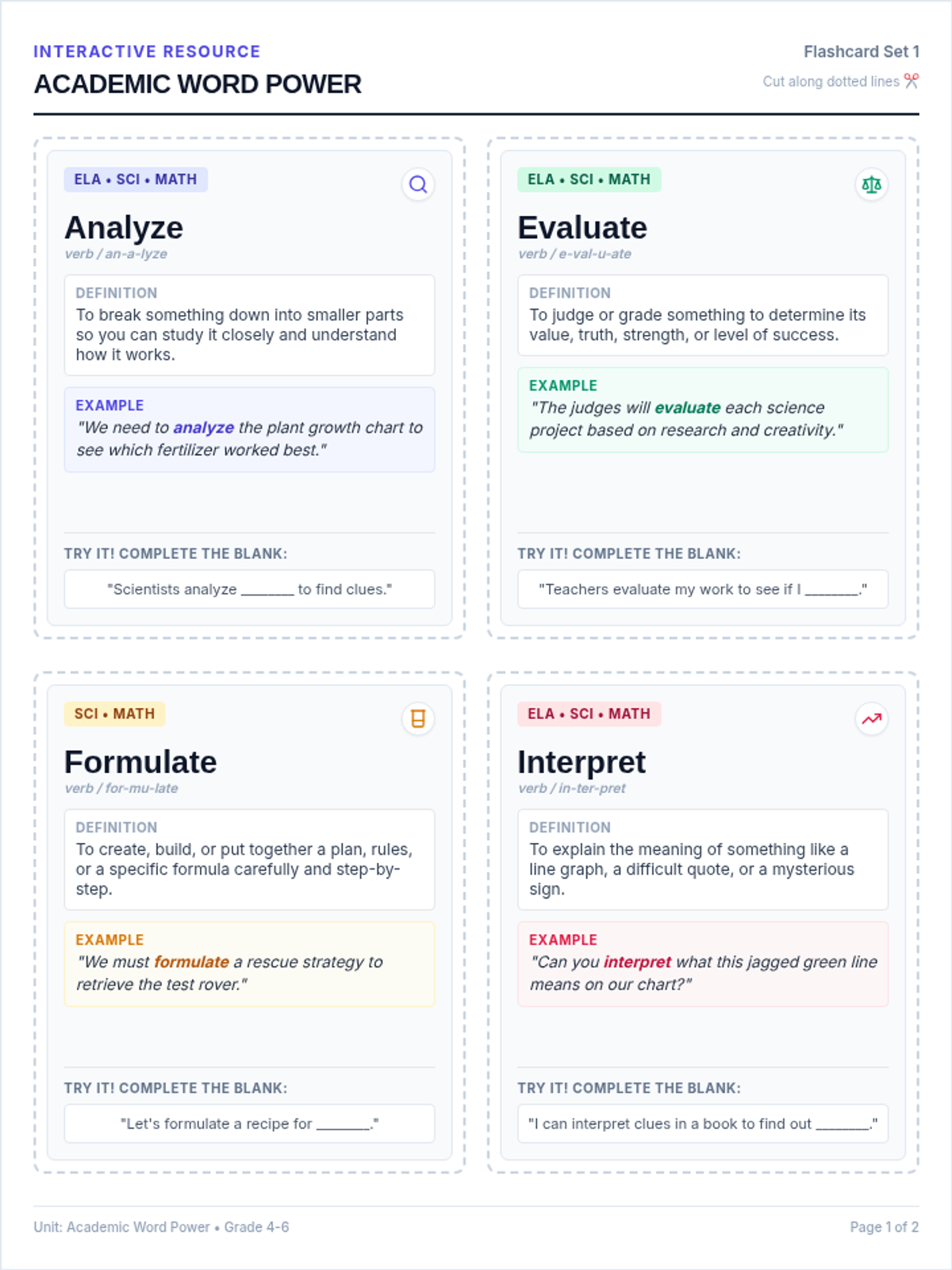
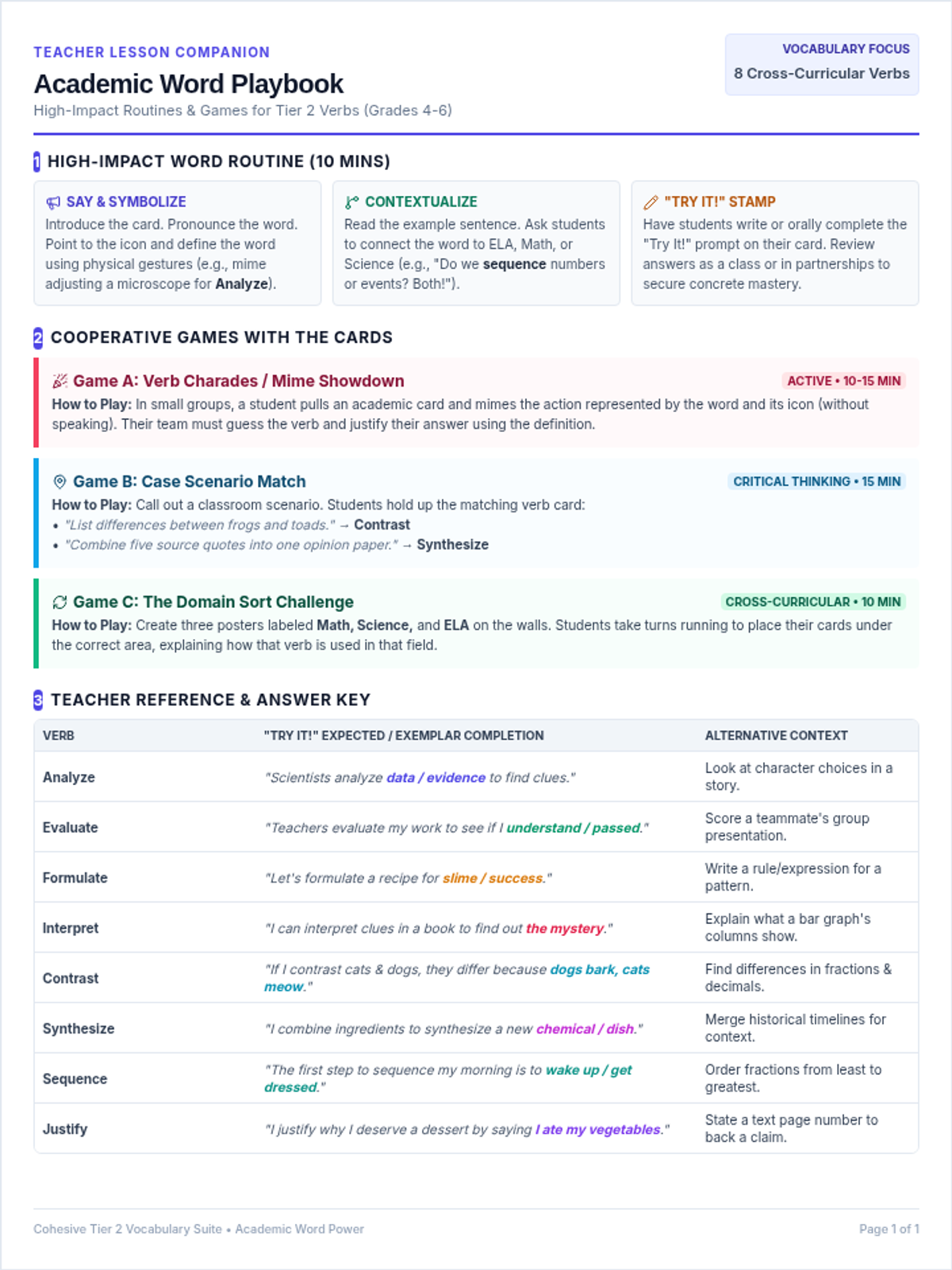
A high-impact Tier 2 vocabulary lesson teaching critical academic verbs used across ELA, Math, and Science, supported by simplified visual symbols.
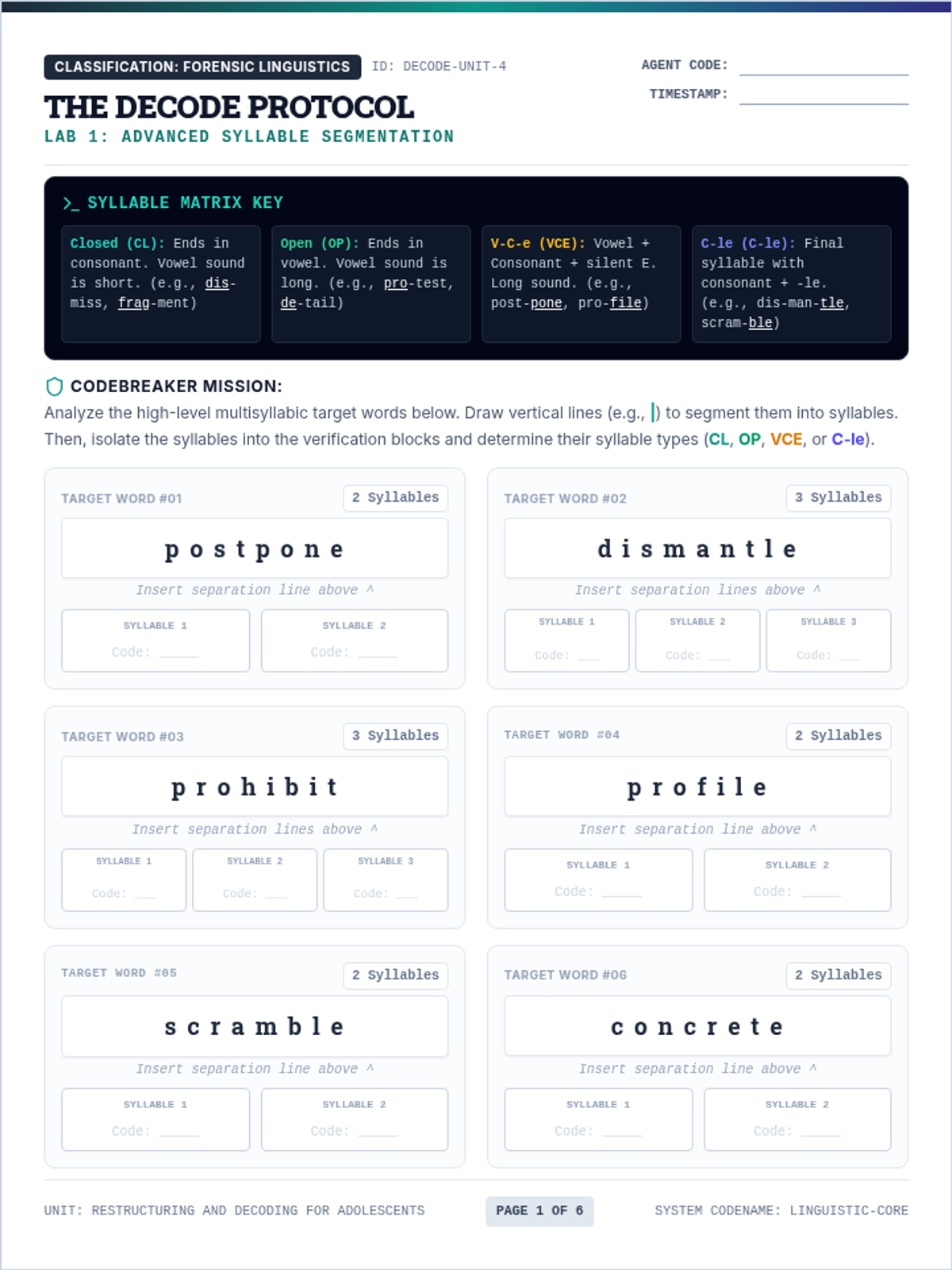
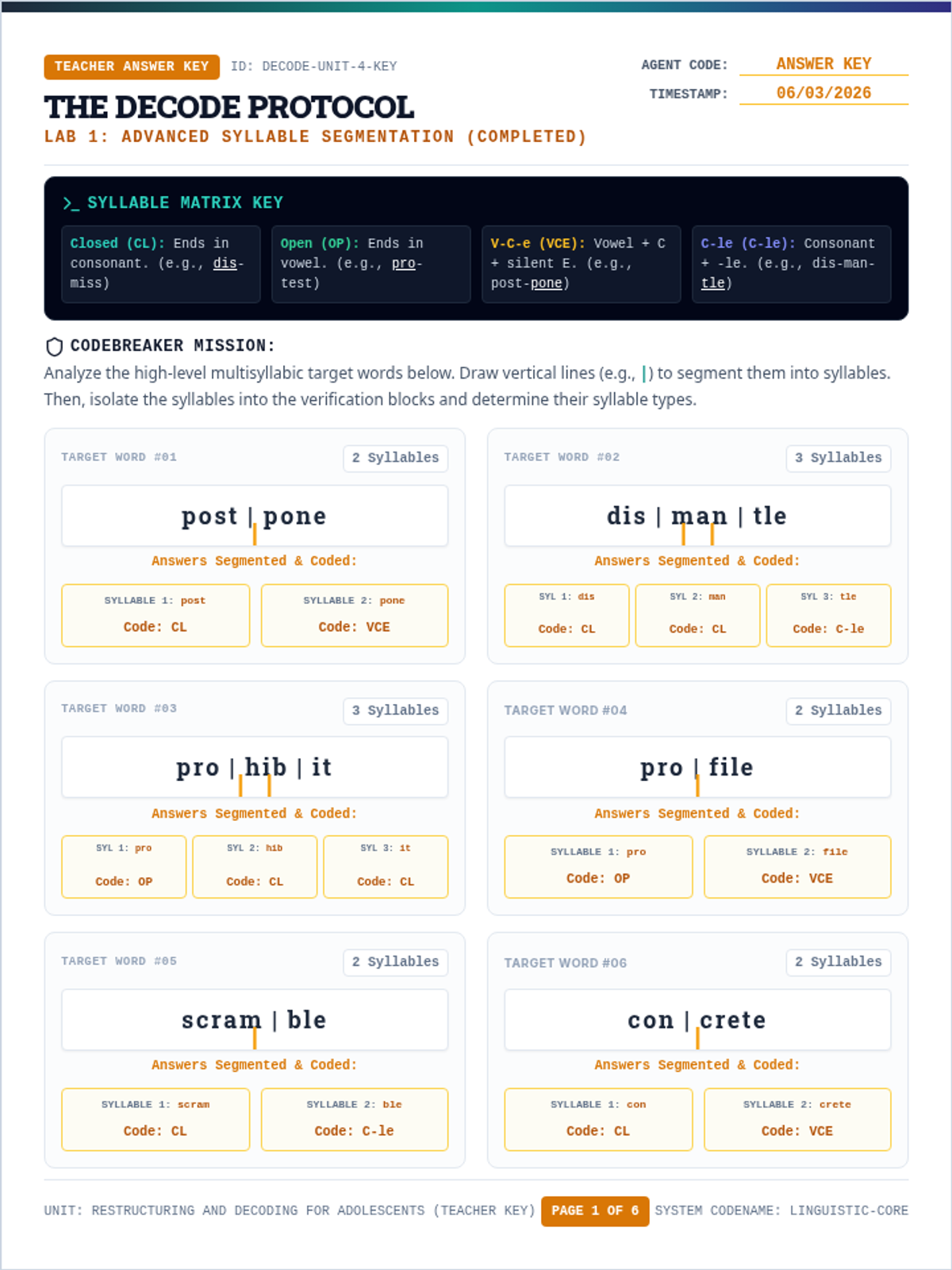
A comprehensive phonics and syllable review unit focusing on vowel teams, r-controlled vowels, syllable division, and affix-based word building. Includes a multi-page student review packet and a corresponding teacher answer key.
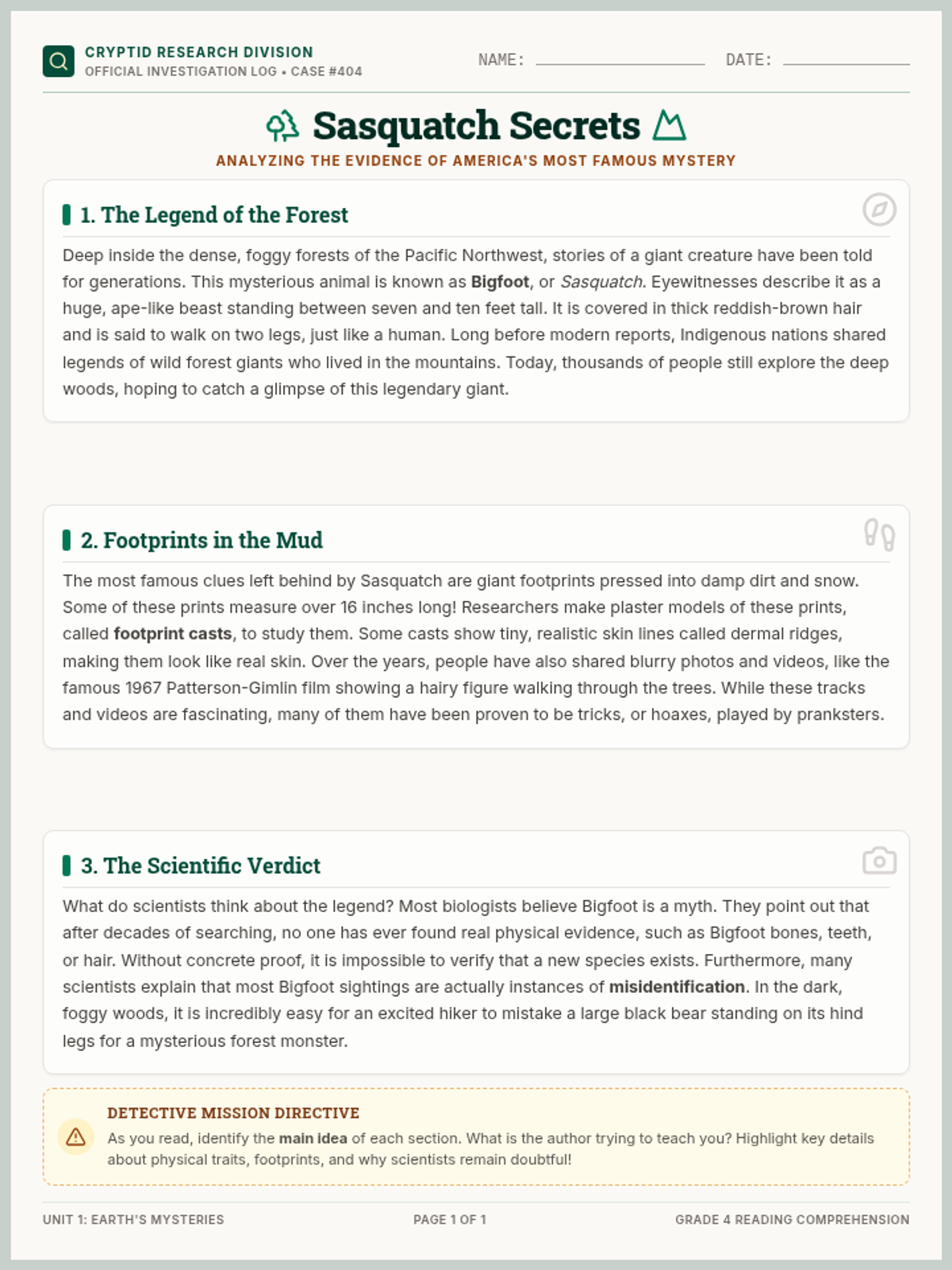
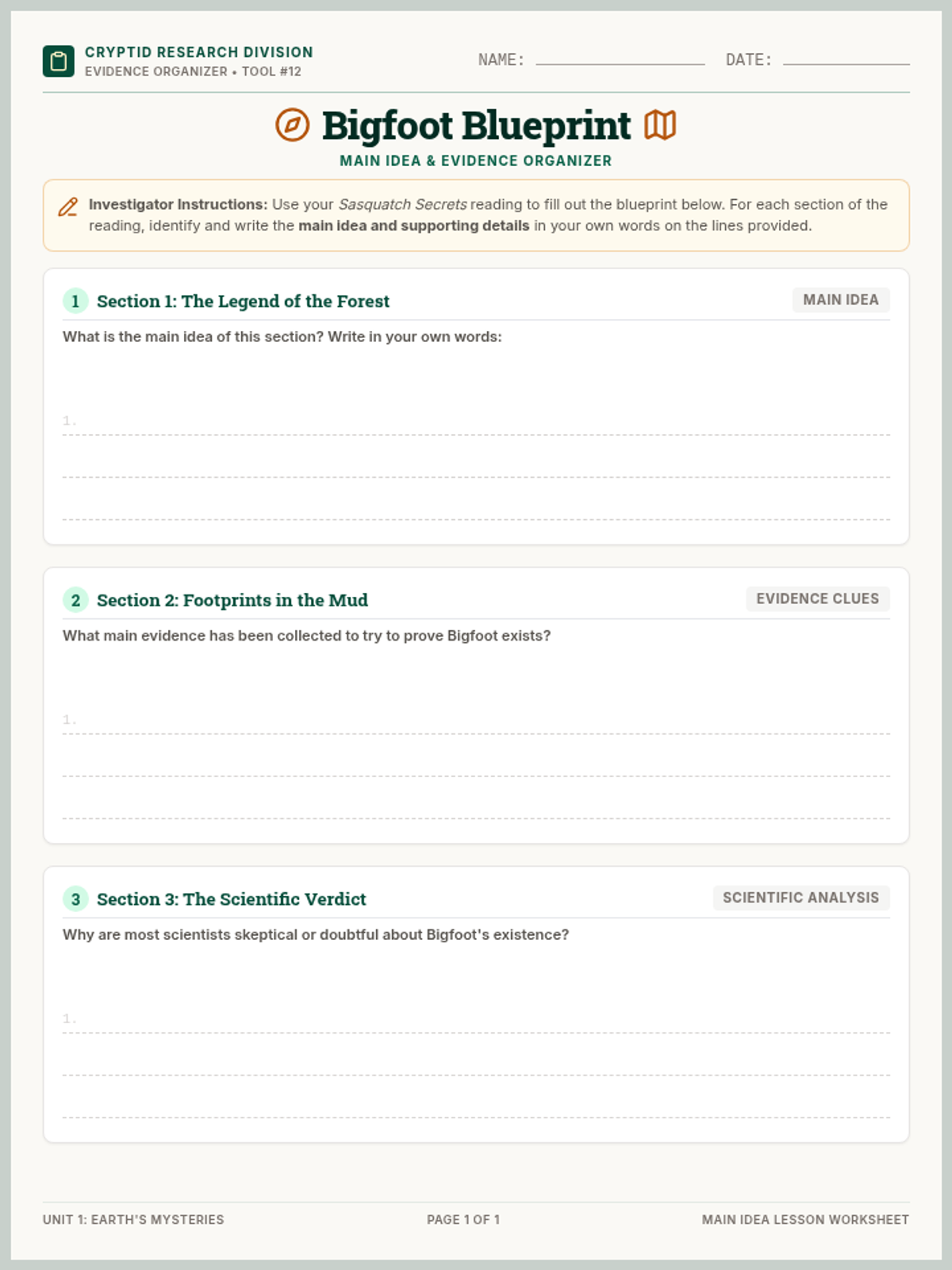
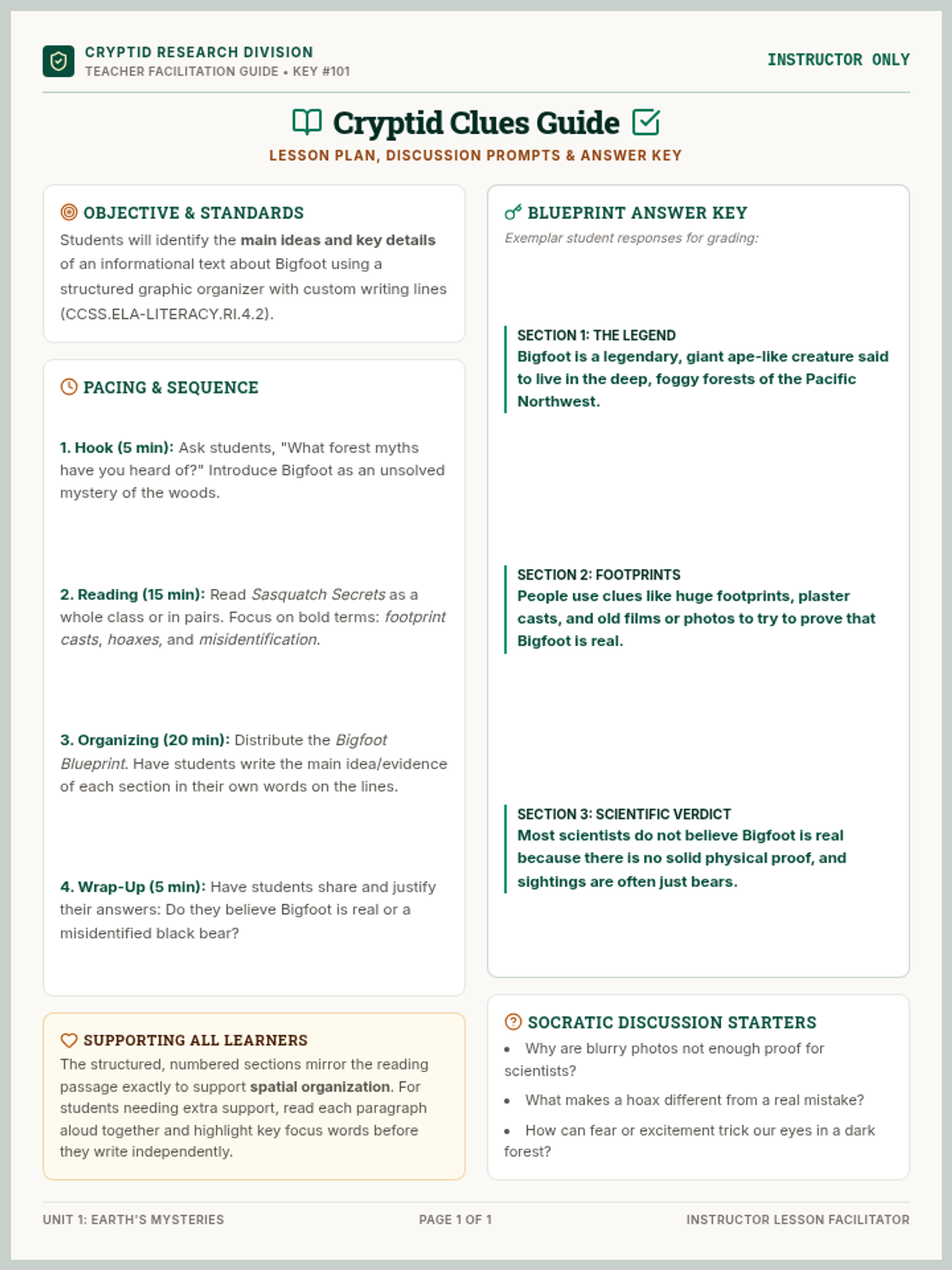
An engaging 4th-grade lesson exploring the mystery of Bigfoot through informational reading, evidence analysis, and main-idea graphic organizers. This lesson includes scaffolded writing prompts and sentence starters for diverse learners.
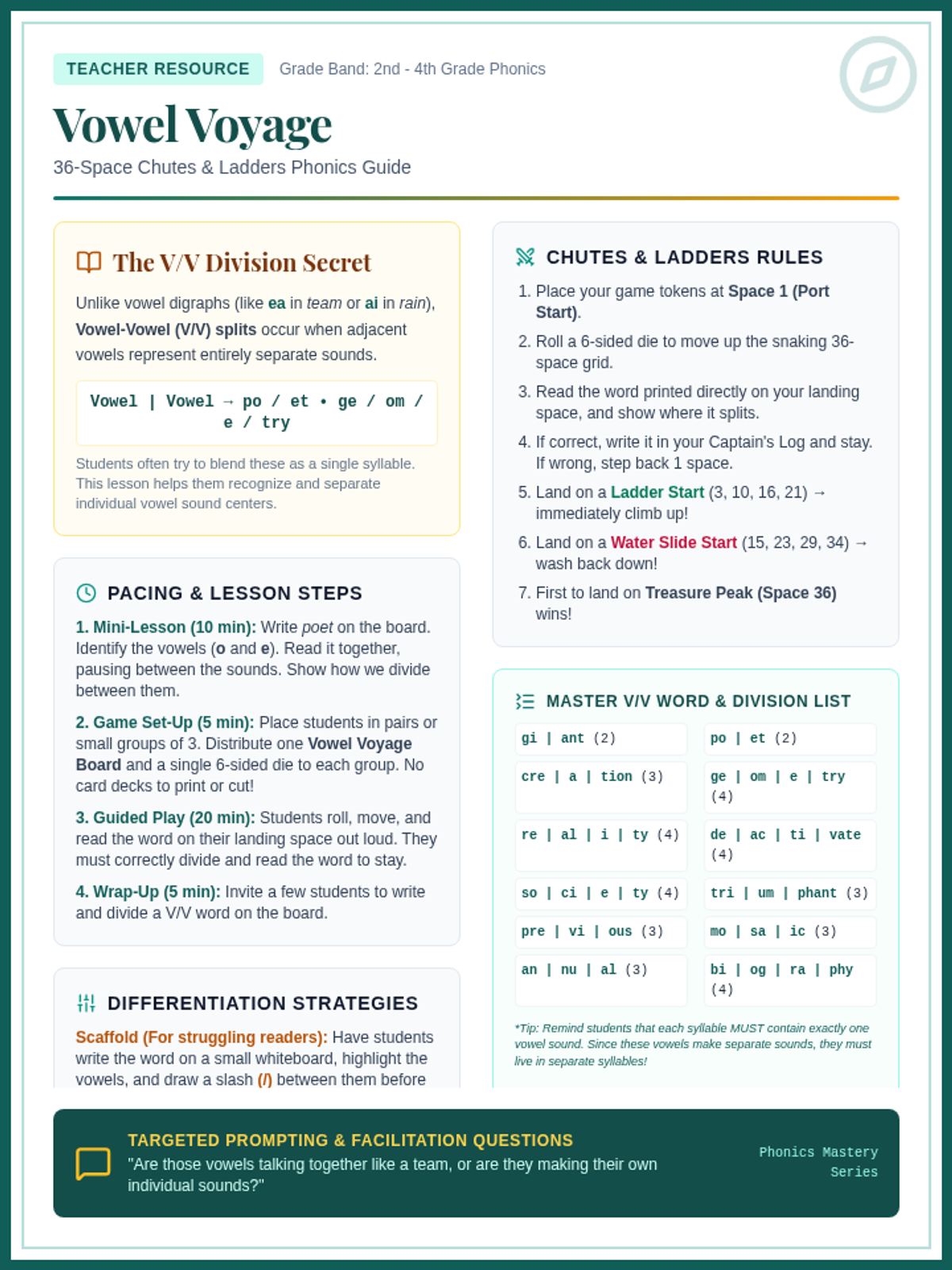
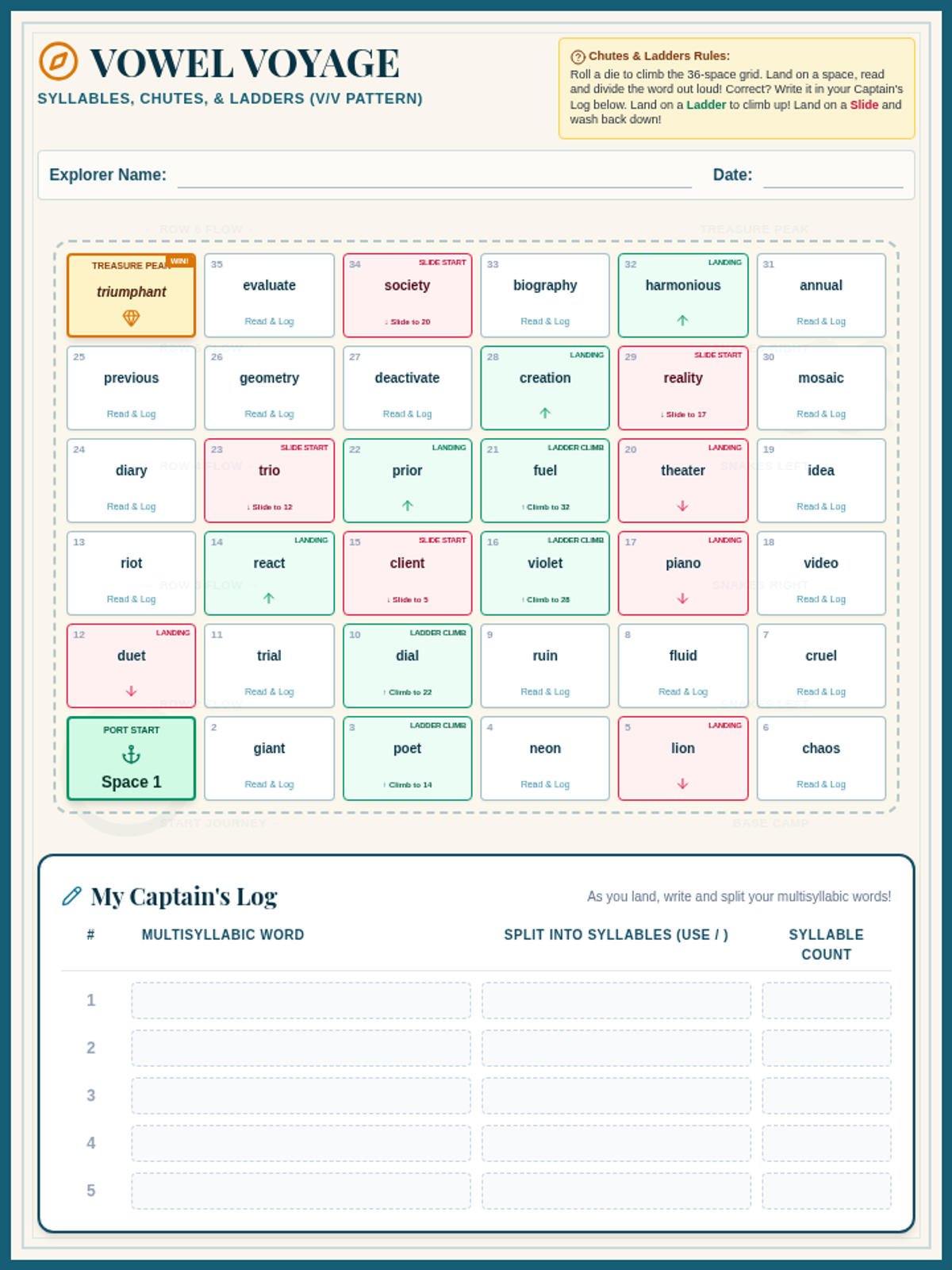
A lesson centered around a printable phonics board game called Vowel Voyage. Students practice dividing and reading multisyllabic words with Vowel-Vowel (VV) splits (e.g., giant, poet, neon, chaos) as they navigate an explorer-themed island path.
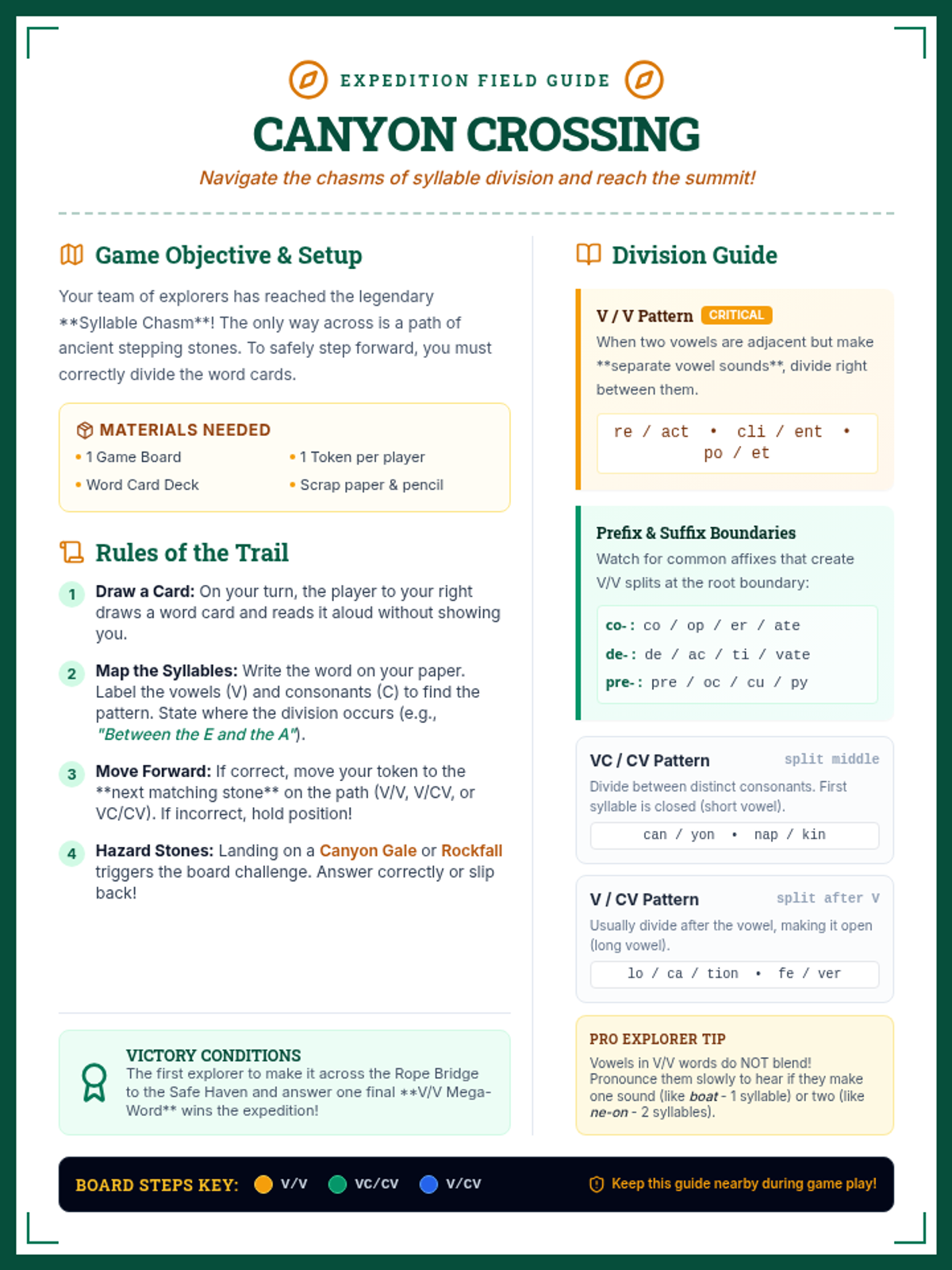
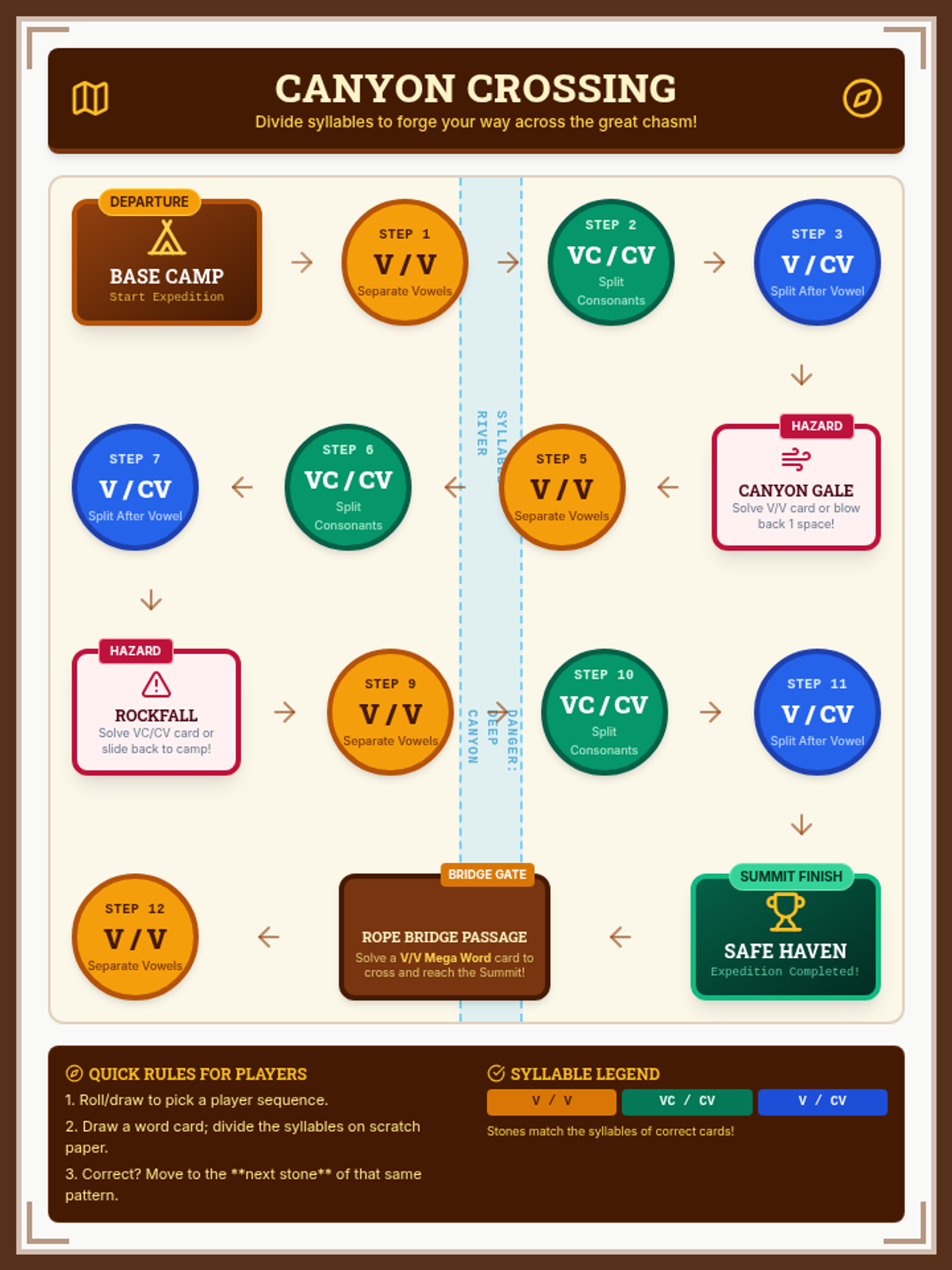
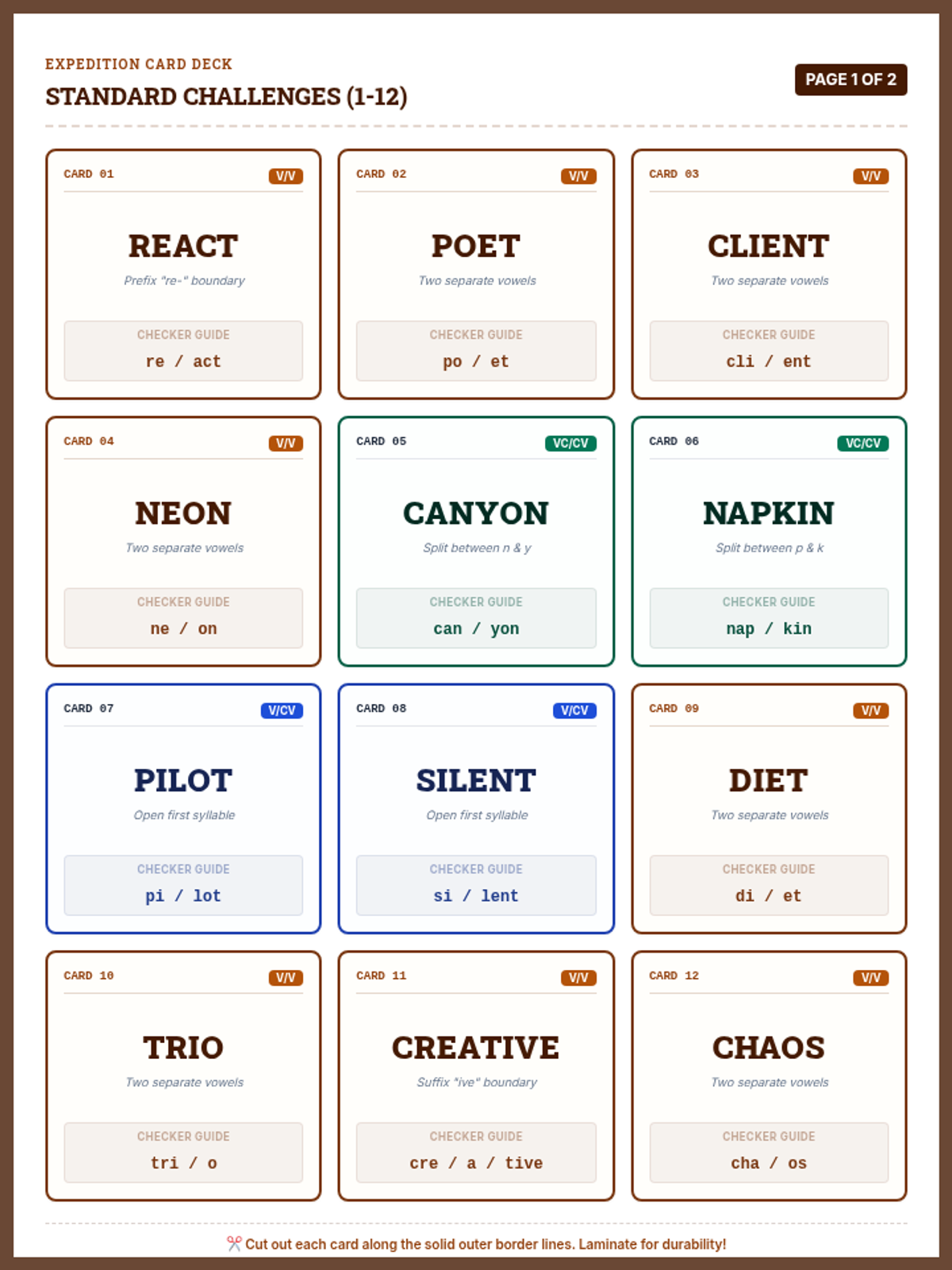
A cooperative and competitive educational board game designed to help students master multisyllabic syllable division. Students navigate a canyon crossing path by correctly dividing words with V/V, VC/CV, and V/CV patterns, with a special focus on prefix/suffix boundaries.
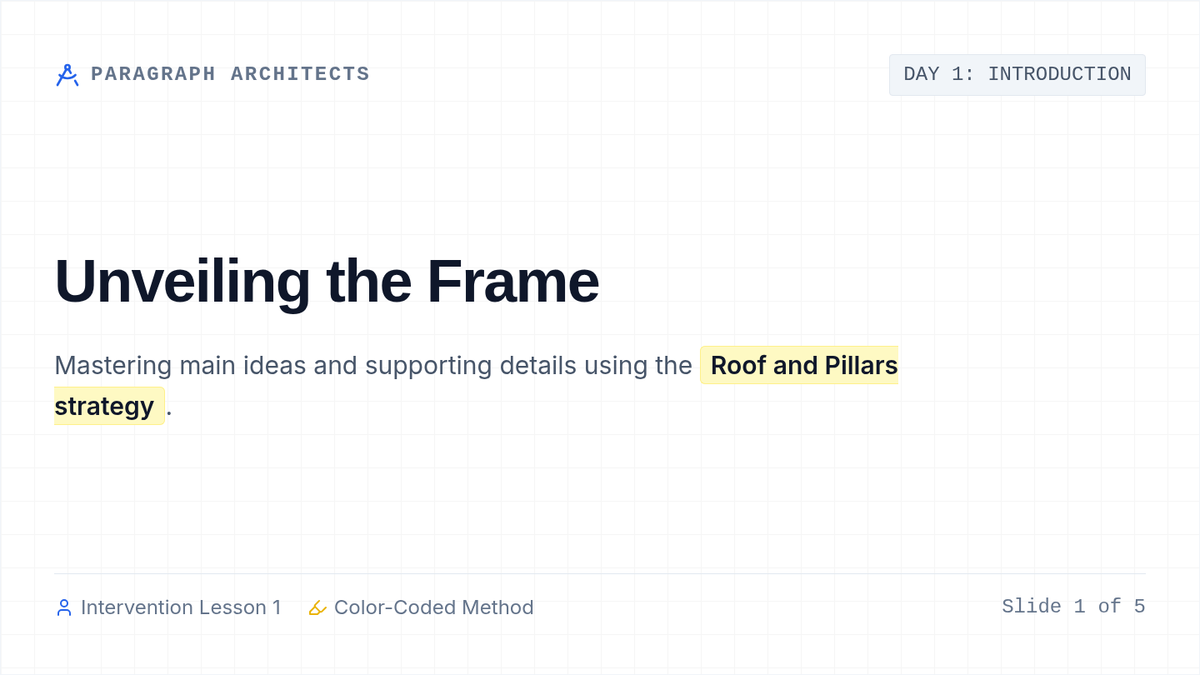
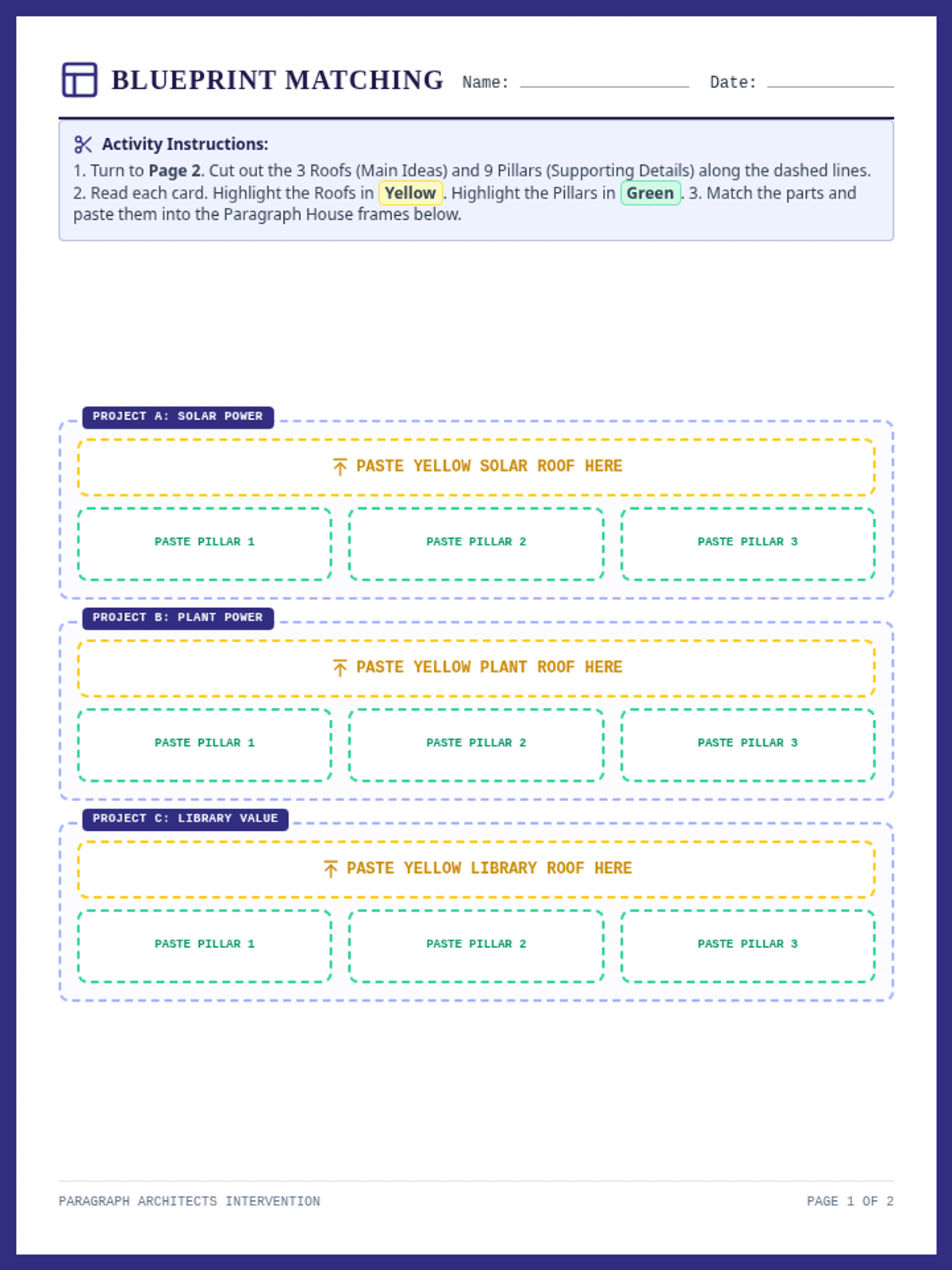
An explicit modeling lesson focusing on introducing the 'Roof' (Main Idea) and 'Pillars' (Supporting Details) concept. Students learn paragraph structure and watch live highlighting demonstrations.
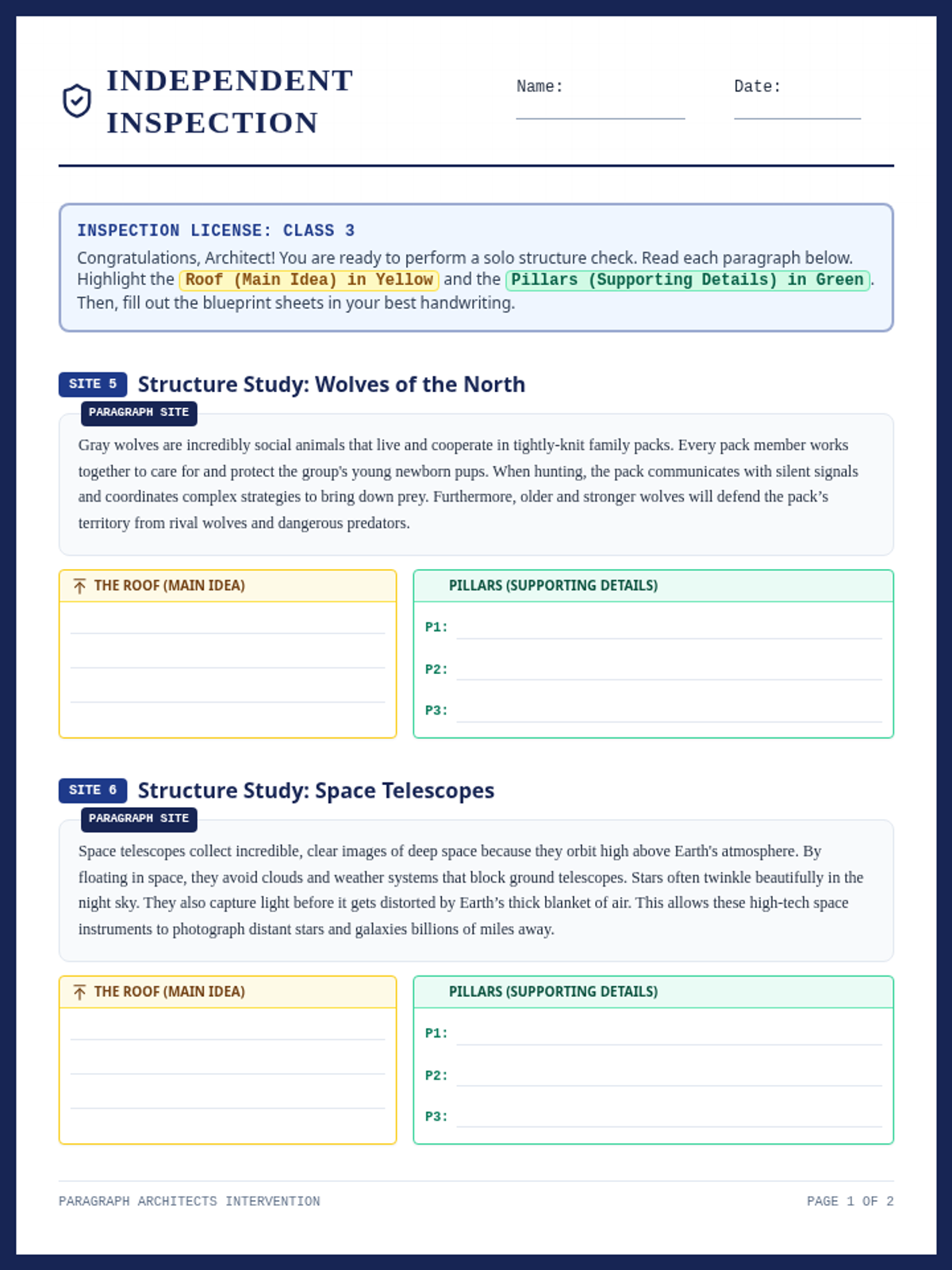
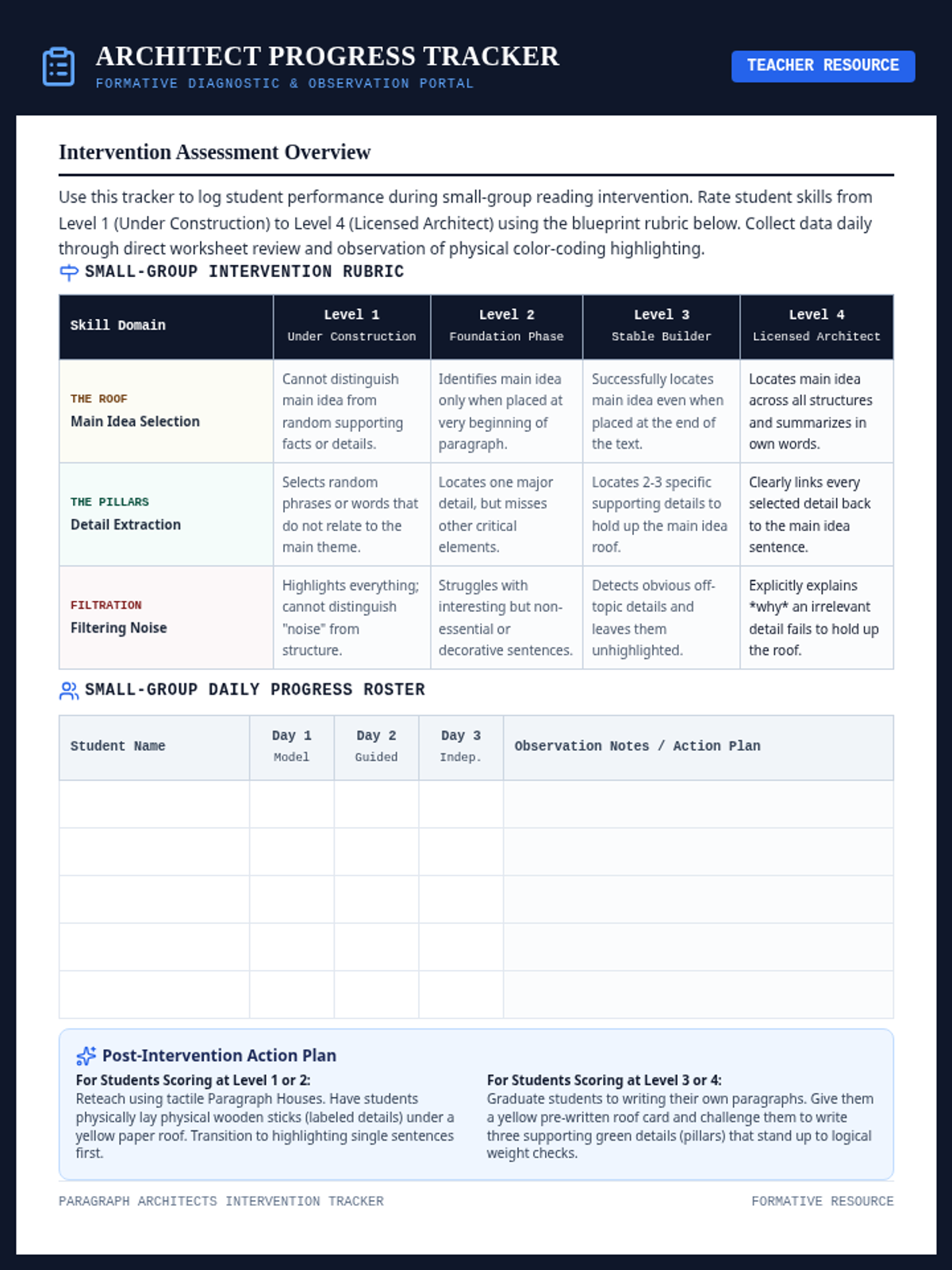
Day 3 focuses on independent execution and performance monitoring. Students independently read, highlight, and analyze paragraph structures to demonstrate mastery, followed by a collaborative review.
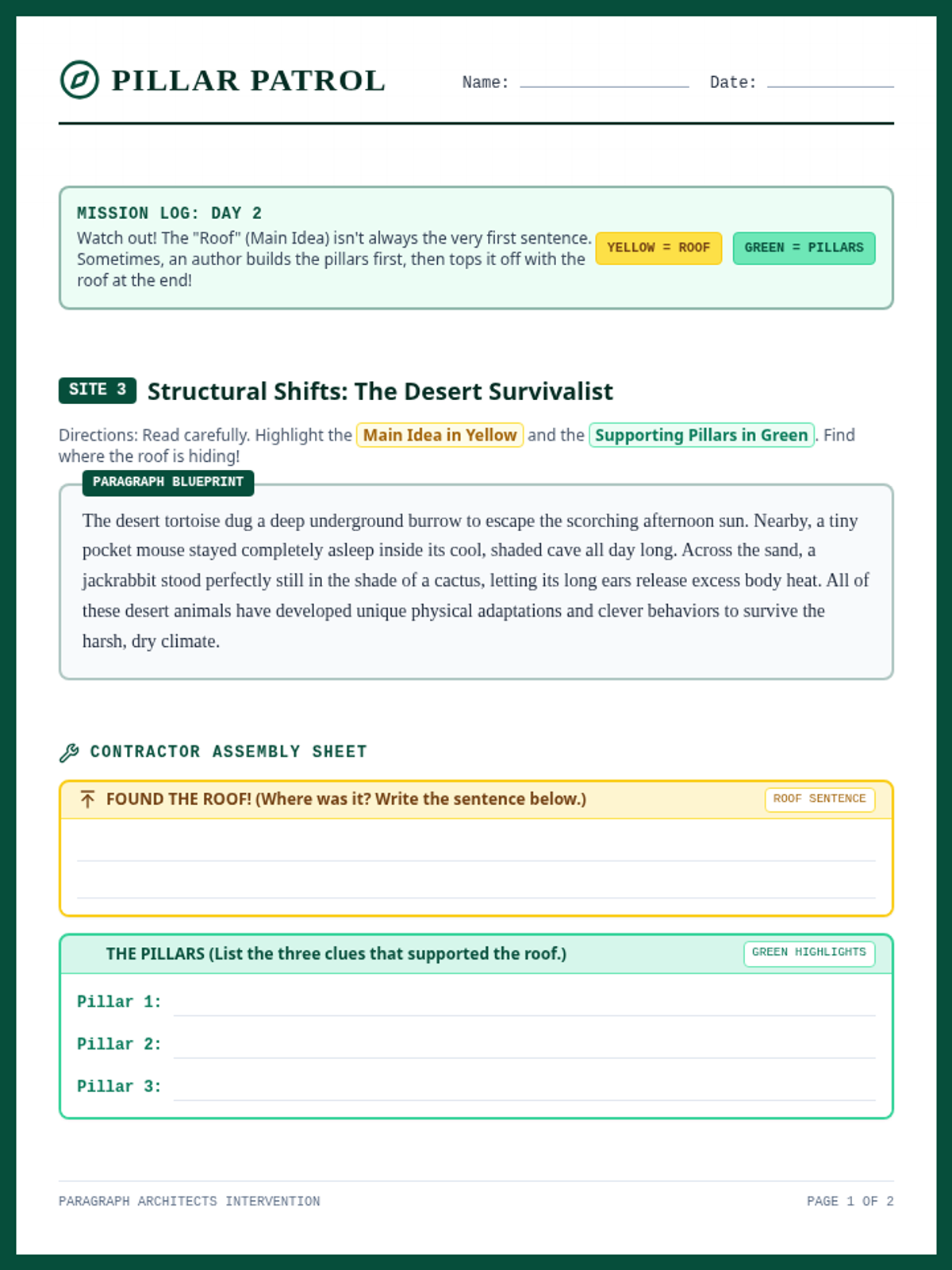
Day 2 transitions to guided practice with fading scaffolds. Students collaborate to highlight and unpack paragraphs, learning to distinguish between critical supporting details and interesting but non-essential information.