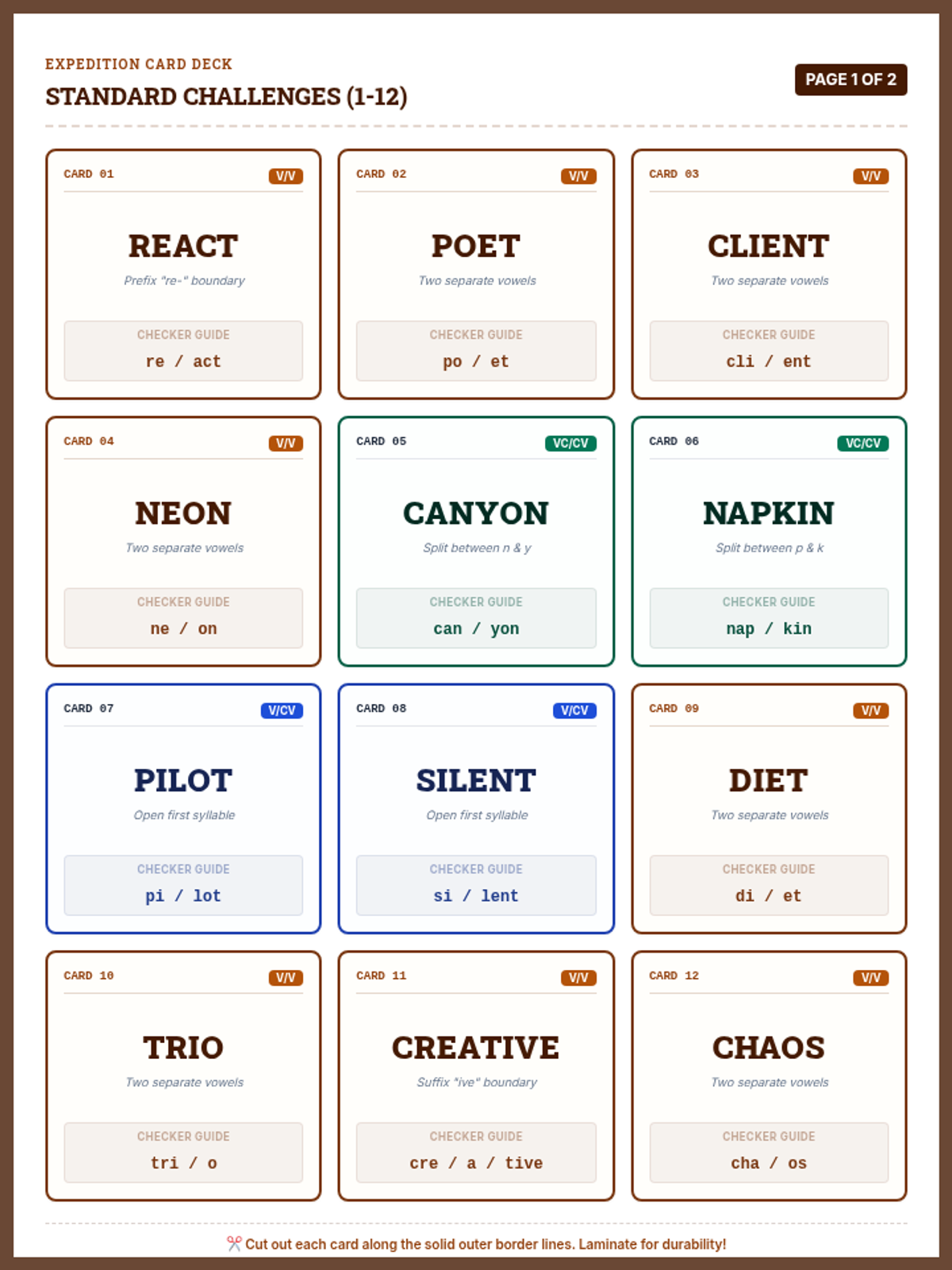
A lesson centered around a printable phonics board game called Vowel Voyage. Students practice dividing and reading multisyllabic words with Vowel-Vowel (VV) splits (e.g., giant, poet, neon, chaos) as they navigate an explorer-themed island path.
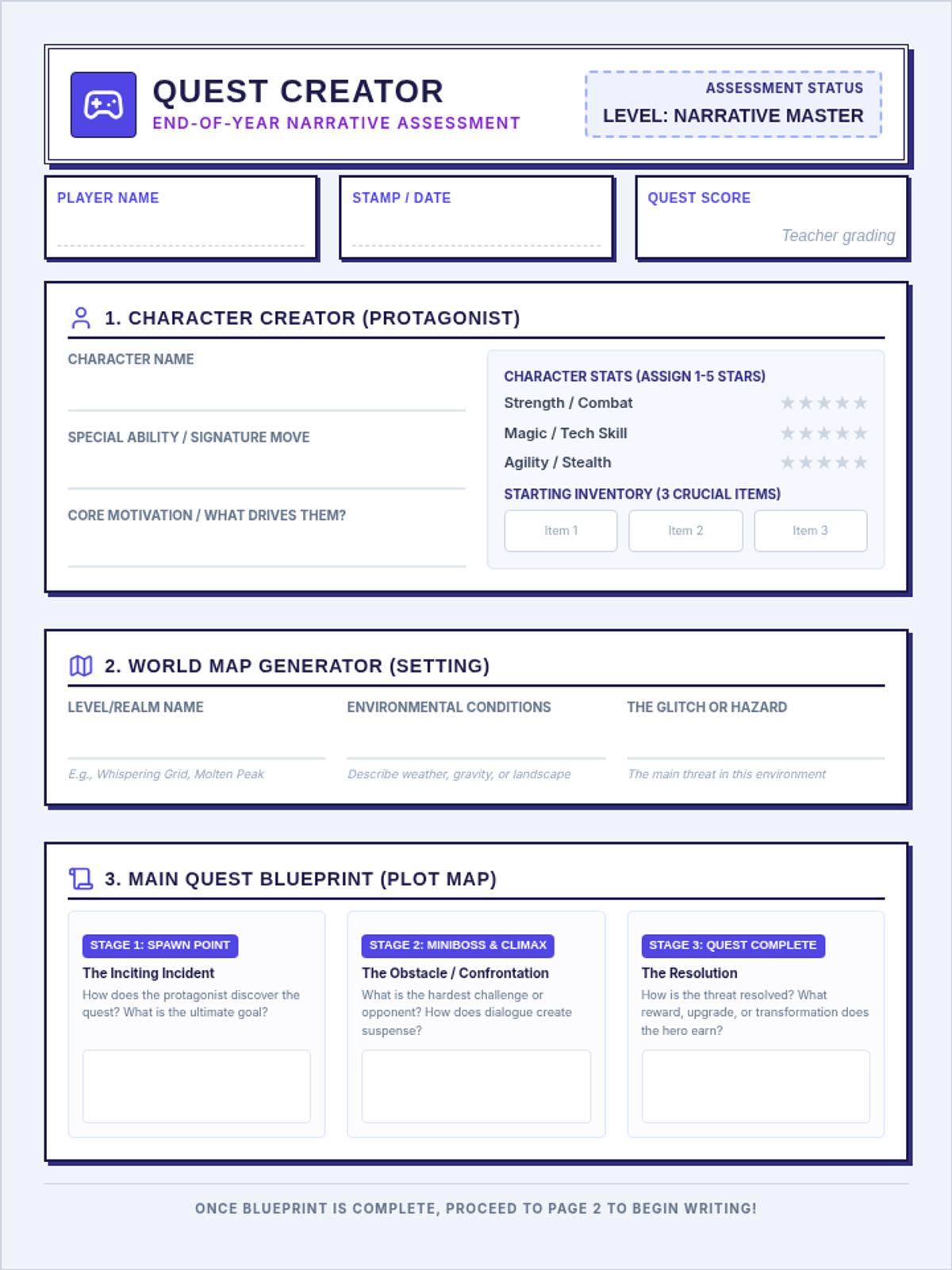
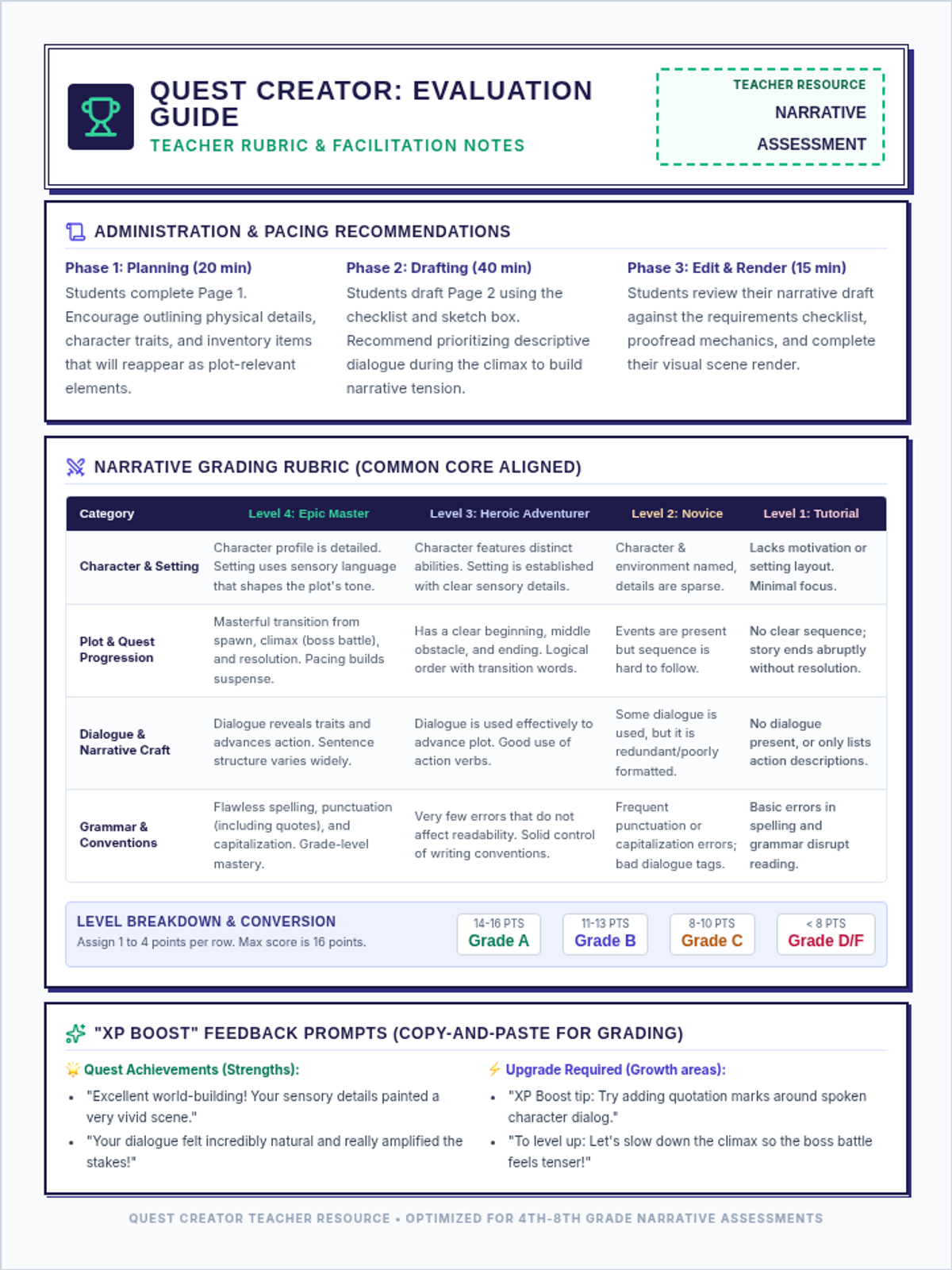
An end-of-year narrative writing assessment where students design their own video game character, setting, and quest, then write an engaging adventure story based on their creation.
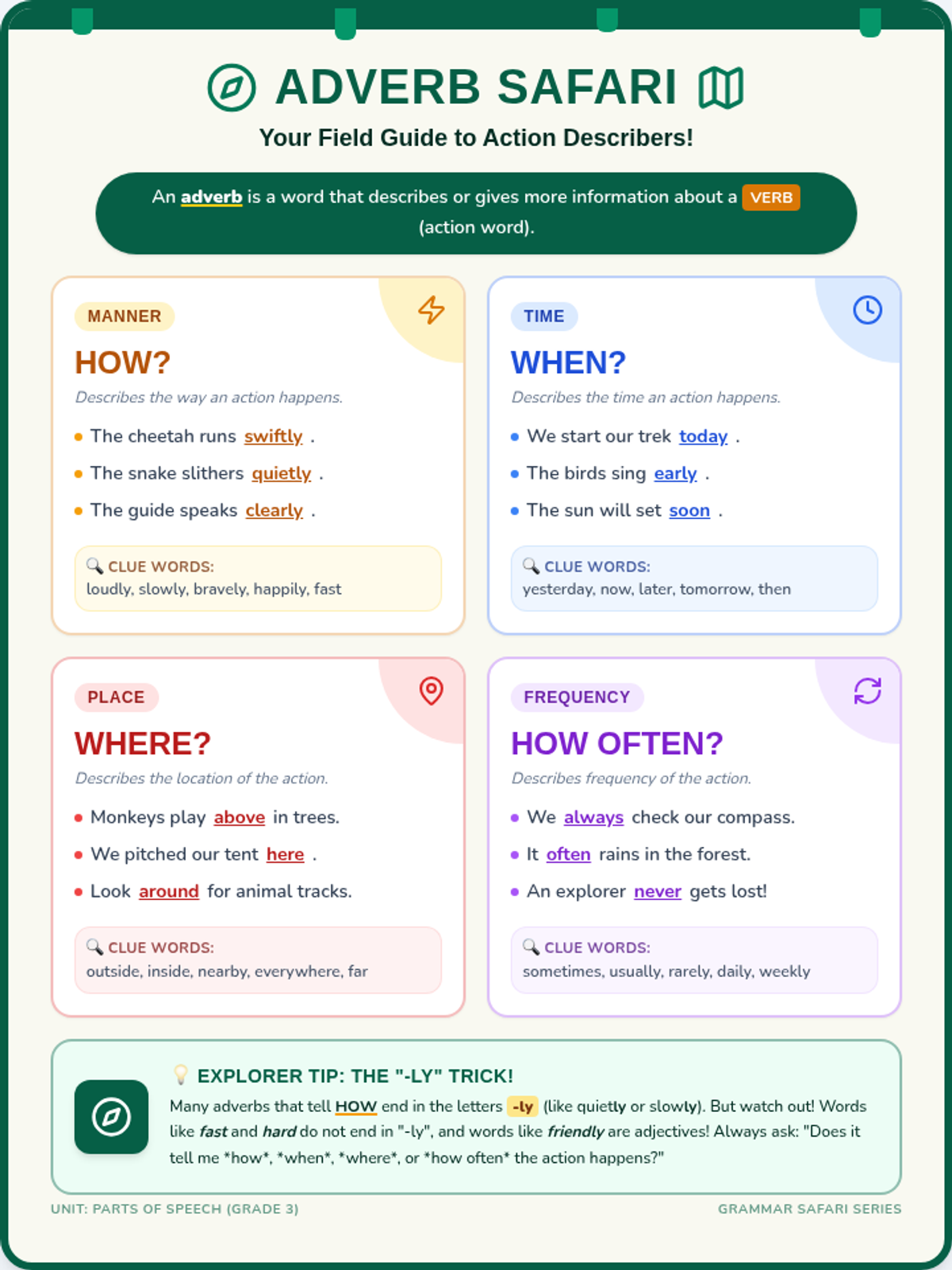
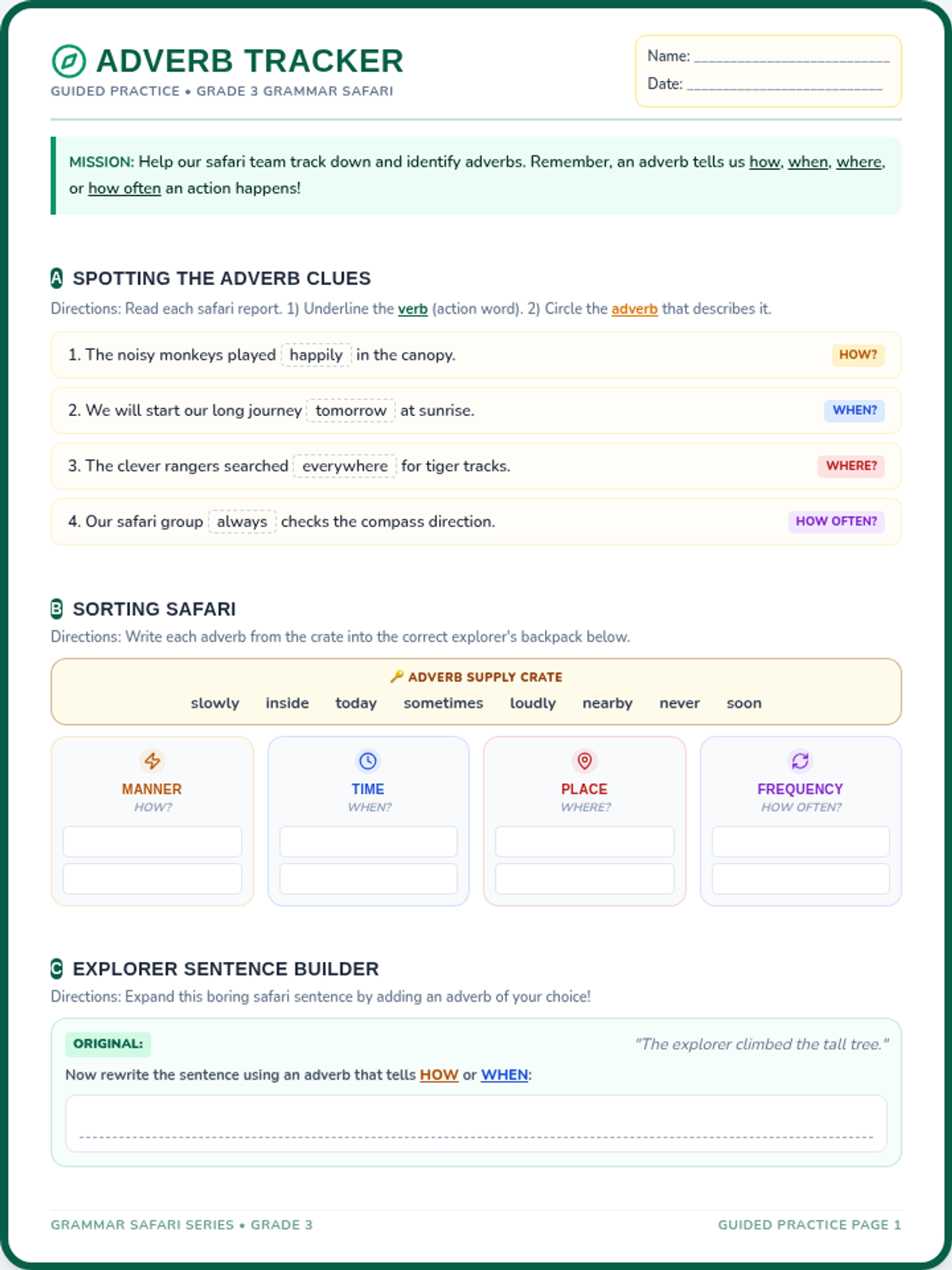
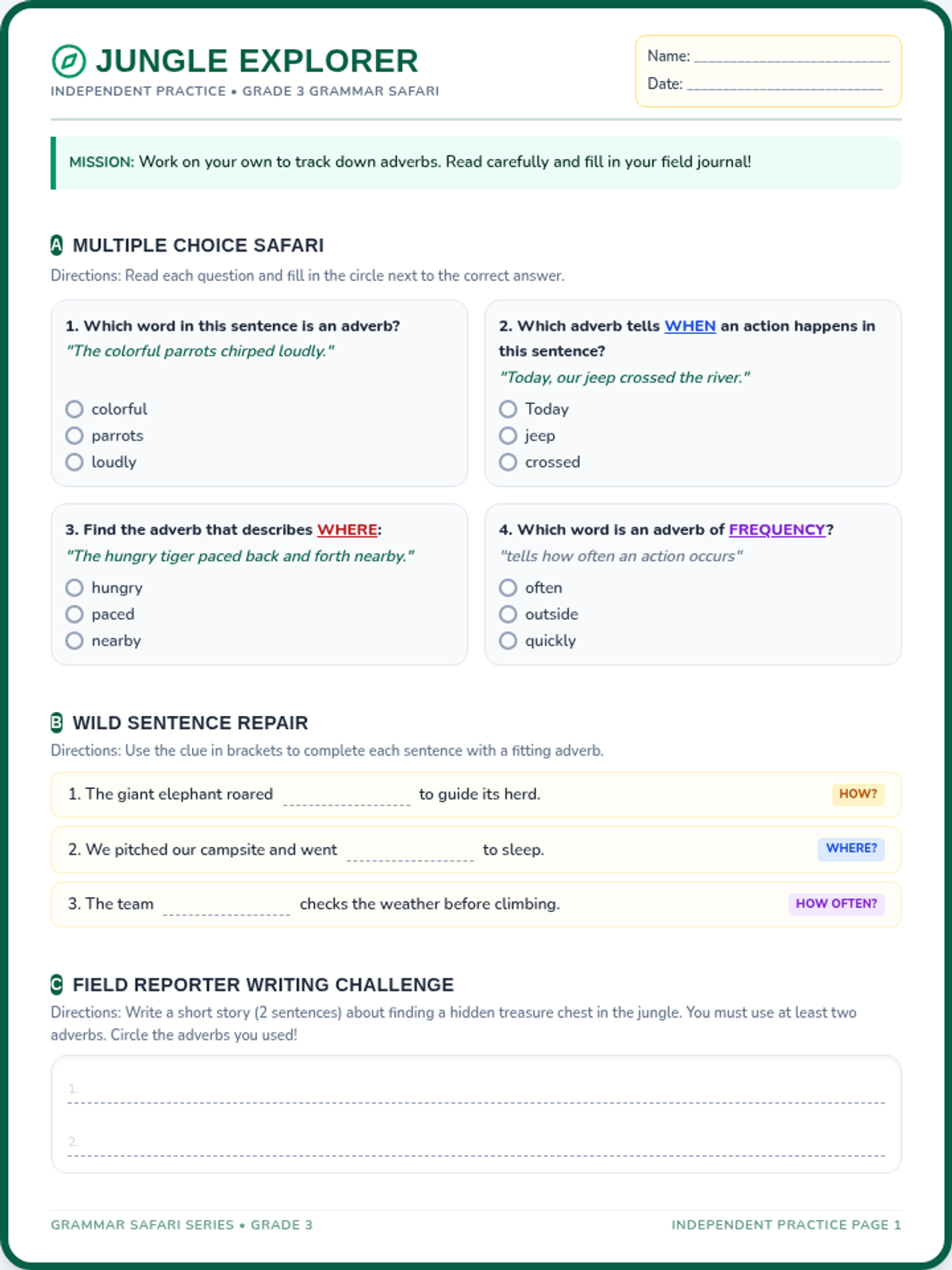
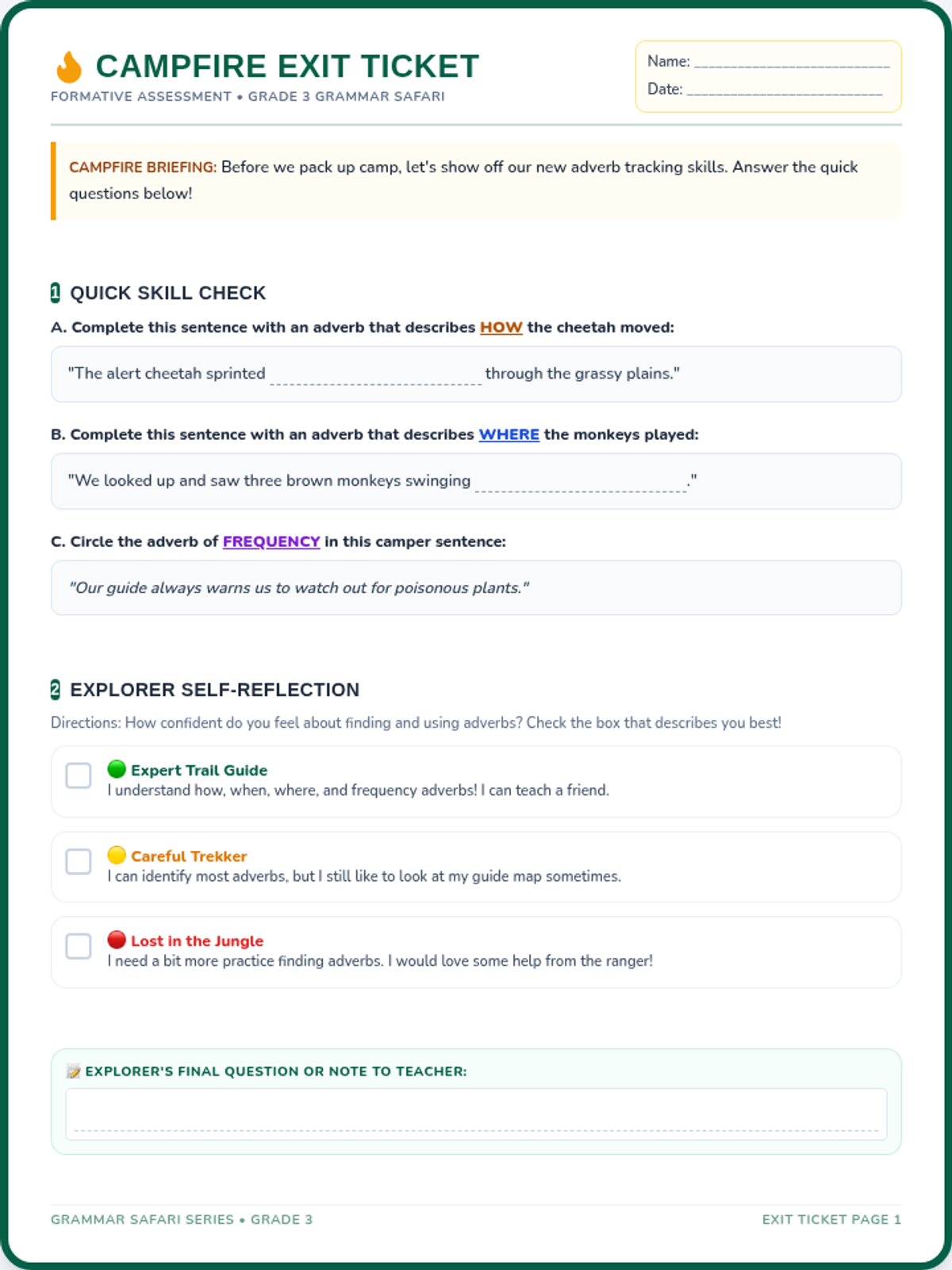
A comprehensive third-grade grammar lesson on adverbs of how, when, where, and how often, featuring interactive practice and assessment in an engaging safari theme.
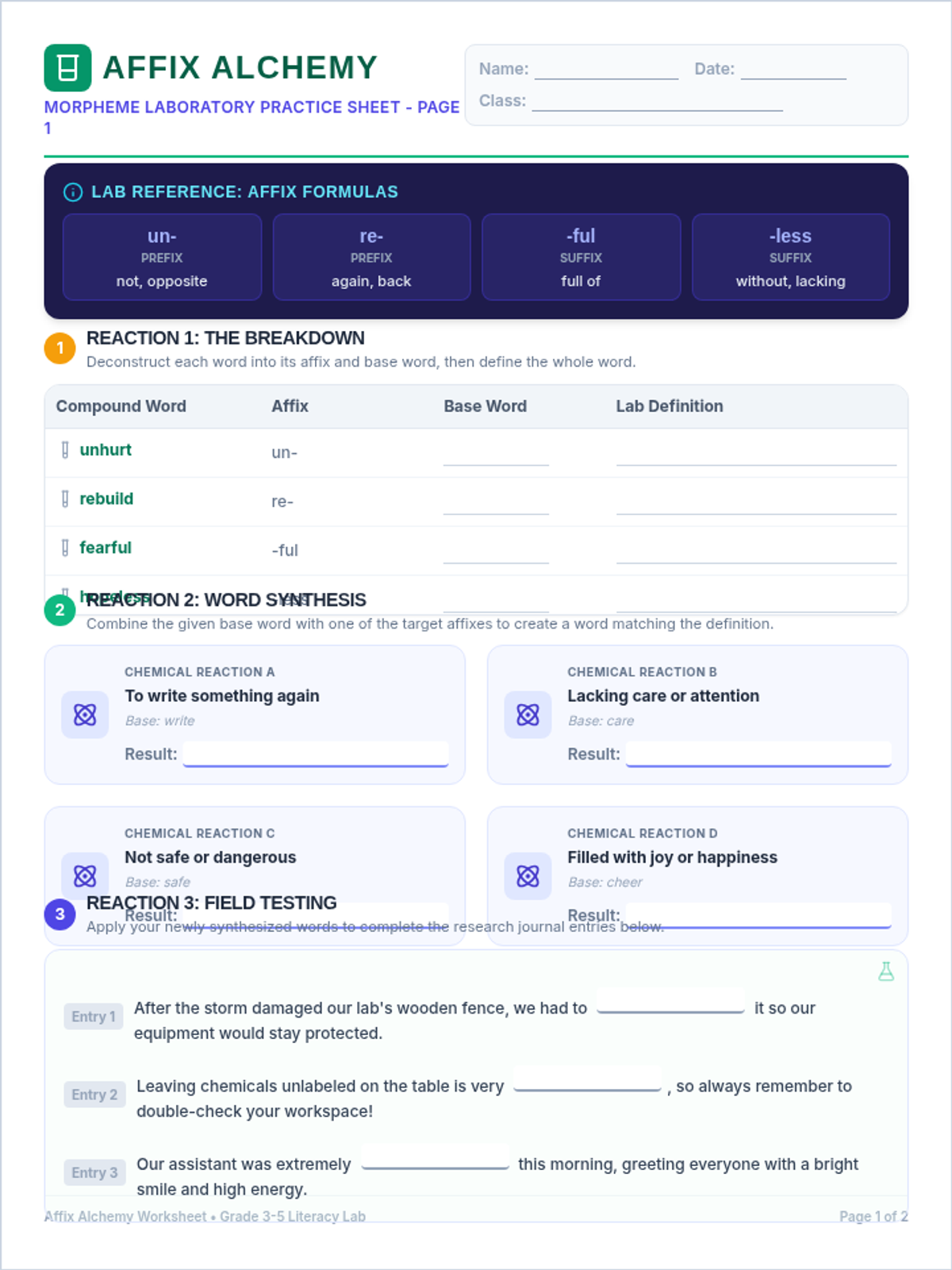
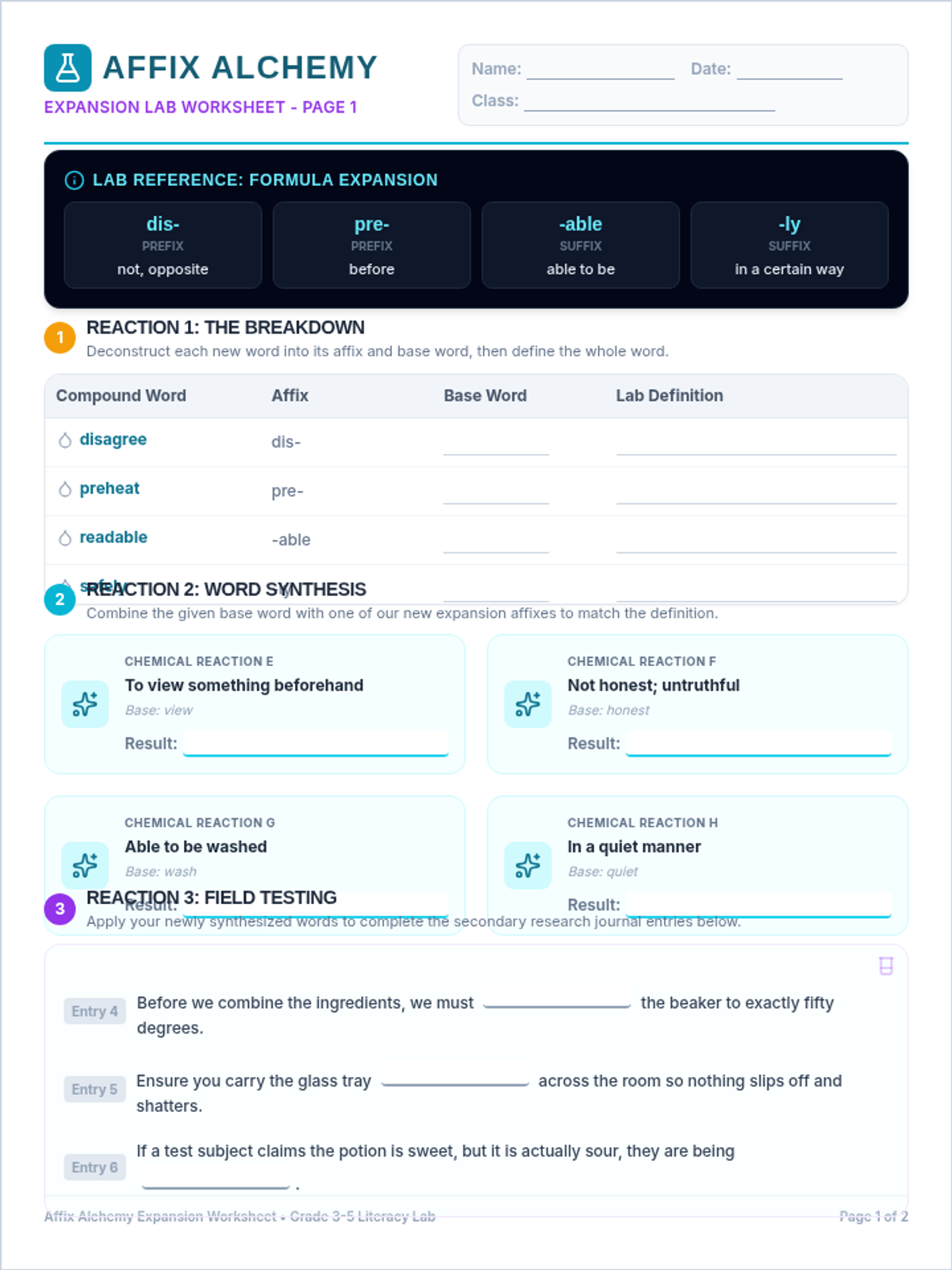
A comprehensive lesson on high-frequency prefixes and suffixes (un-, re-, -ful, -less) designed as a Word Chemistry Lab, helping students master morpheme breakdown, synthesis, and contextual application.
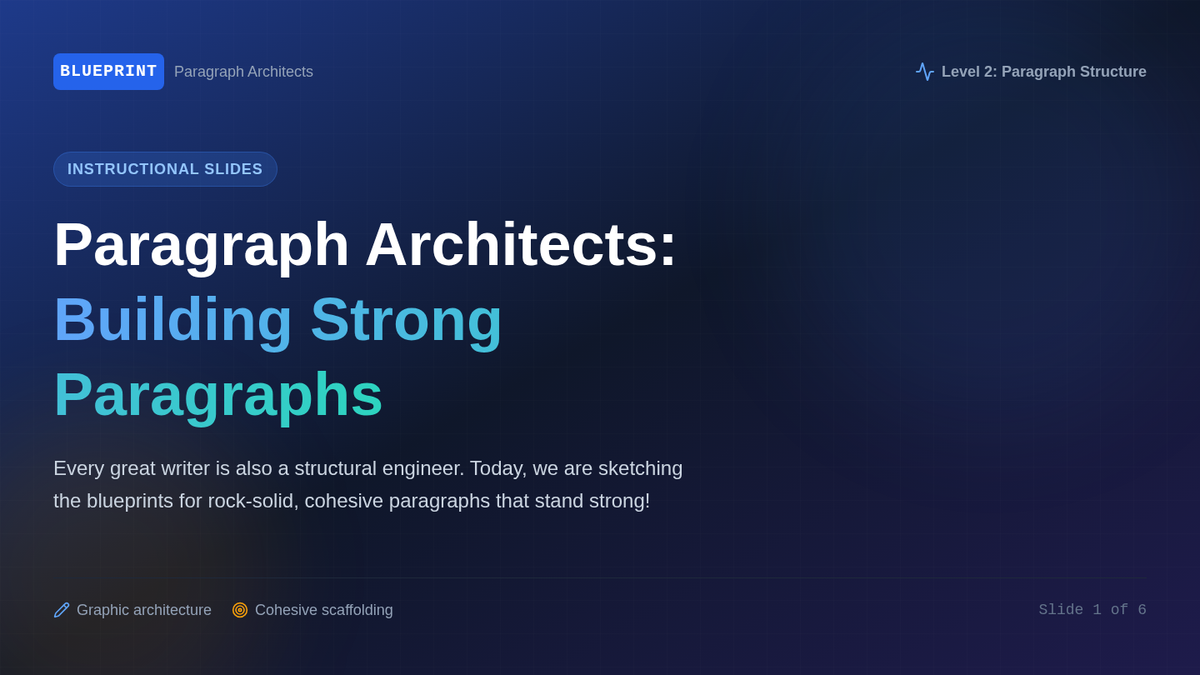
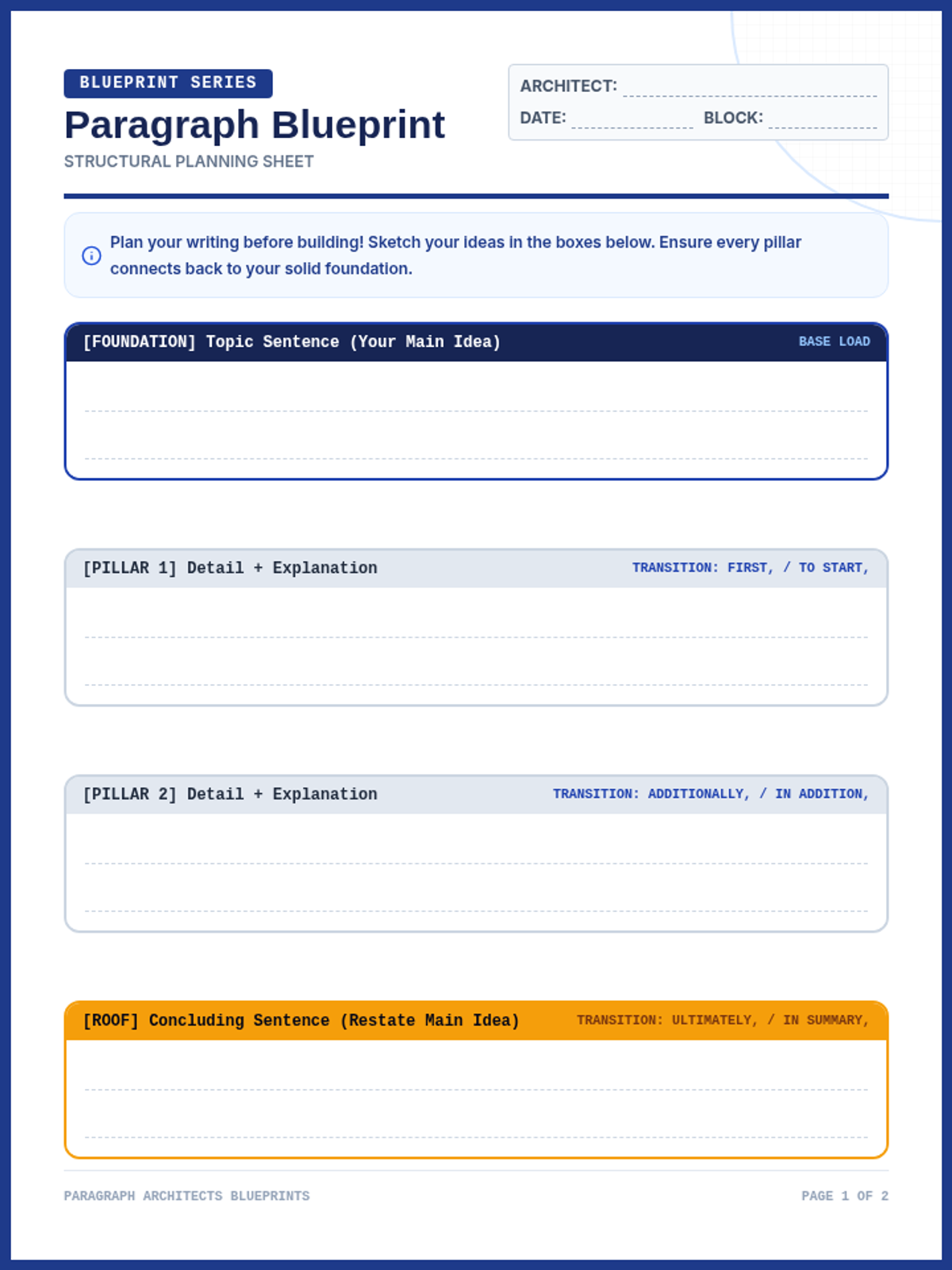
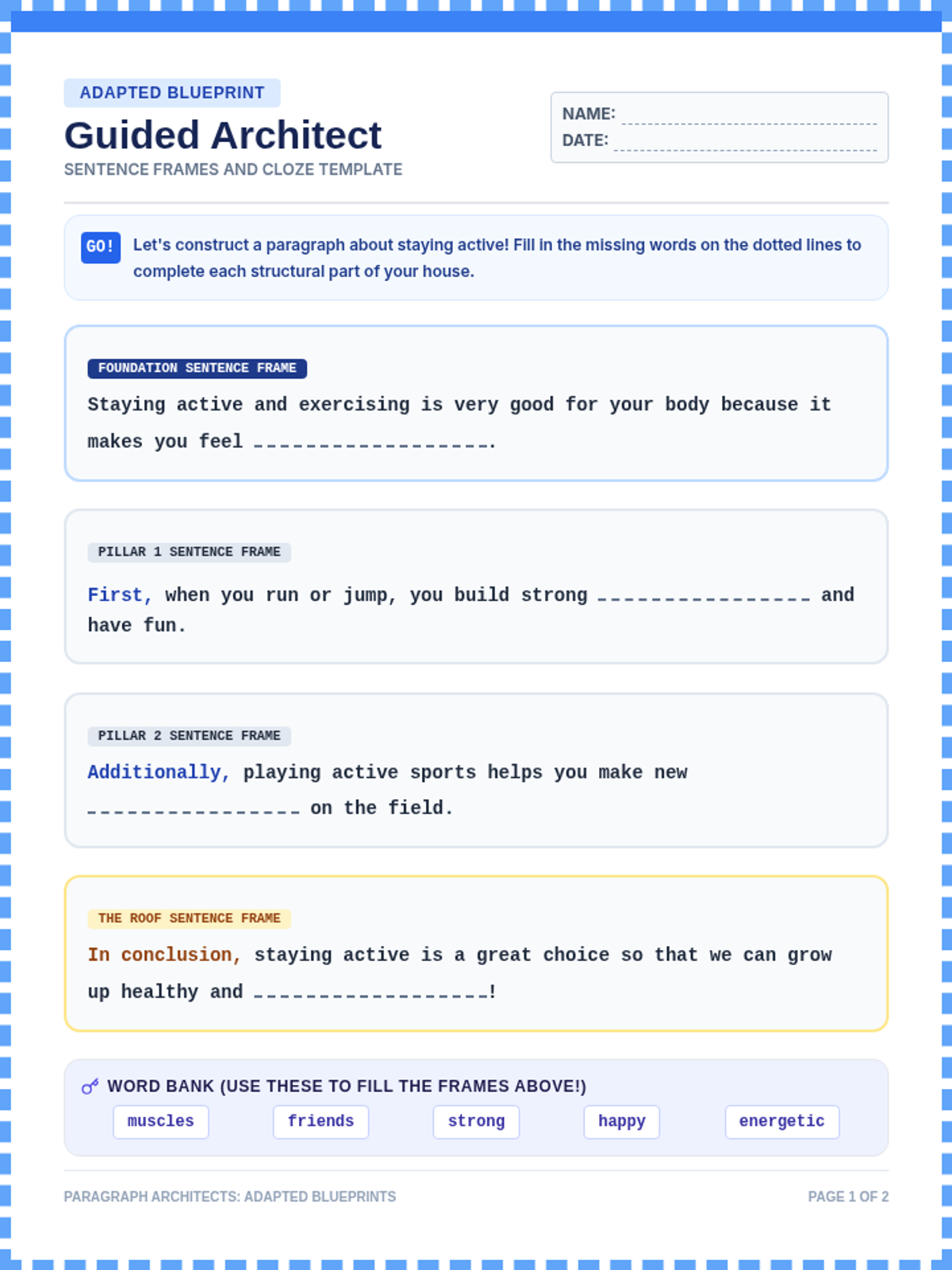
A structural writing lesson guiding students to build organized, cohesive paragraphs with topic sentences, concrete evidence, and transitions.
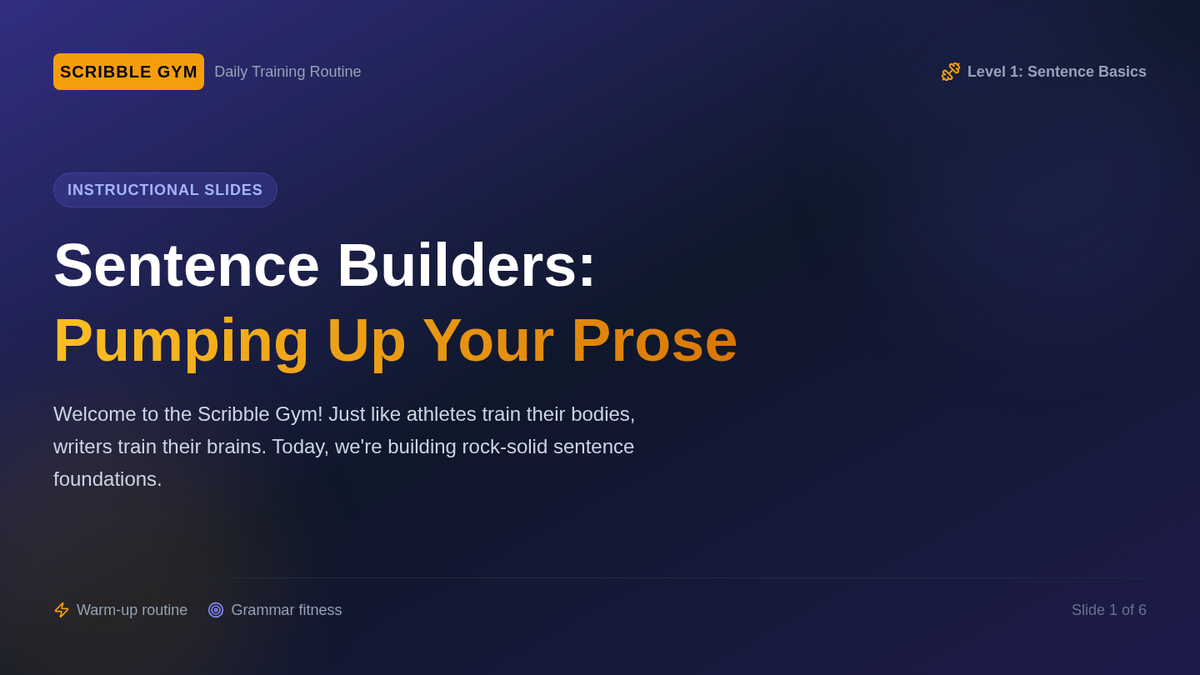
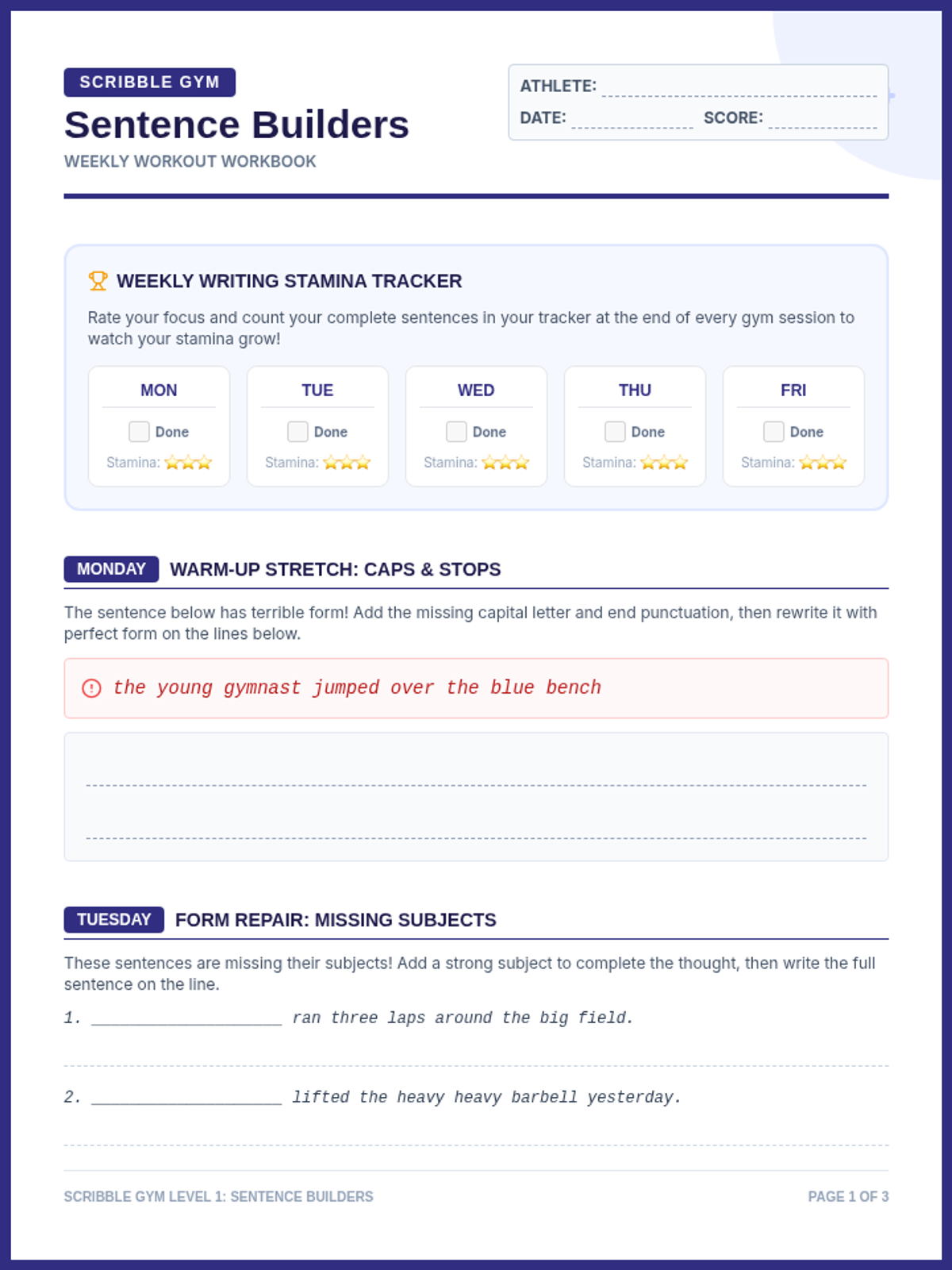
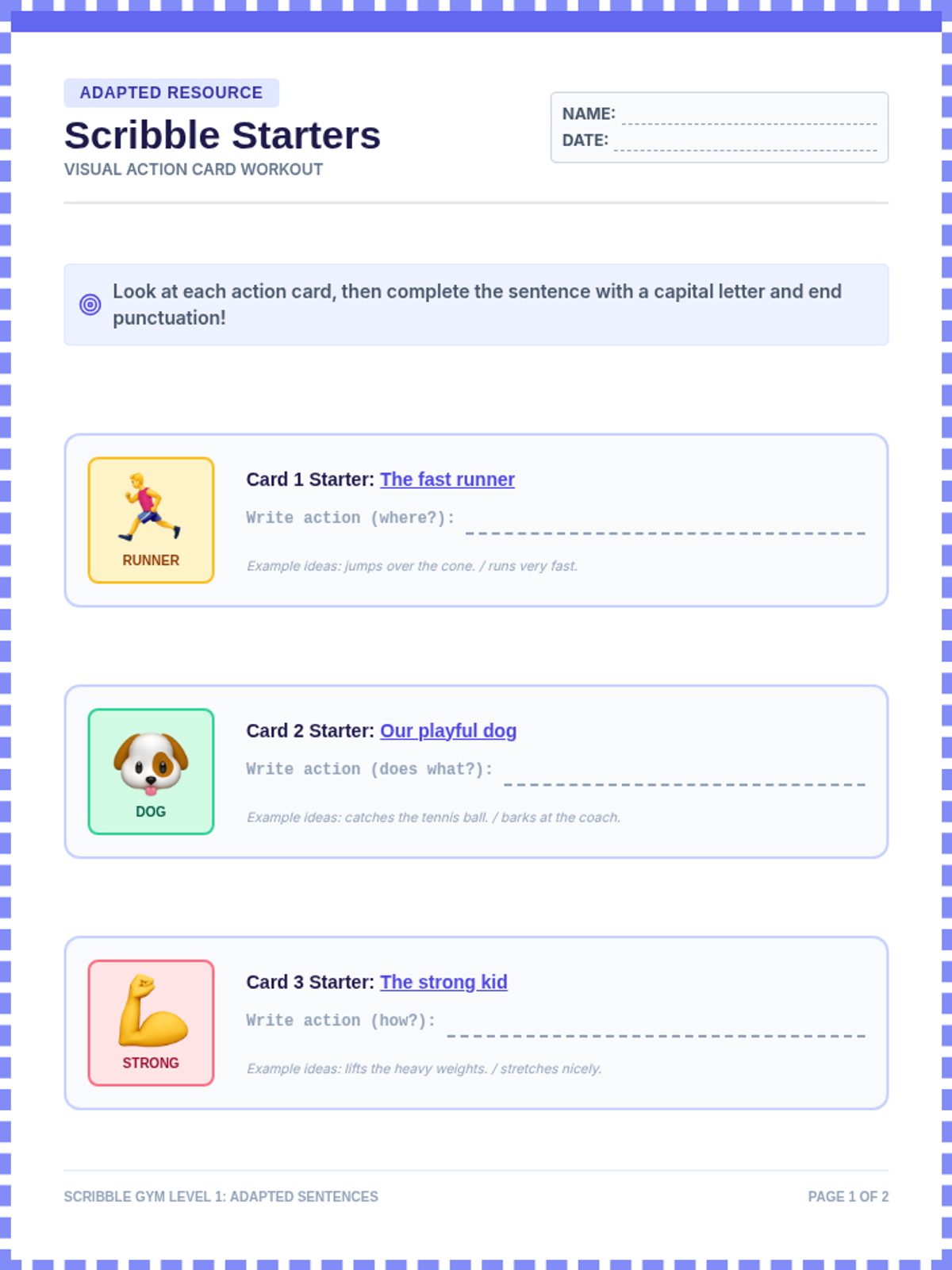
A foundational lesson focused on mastering capitalization, punctuation, and constructing complete simple and compound sentences.
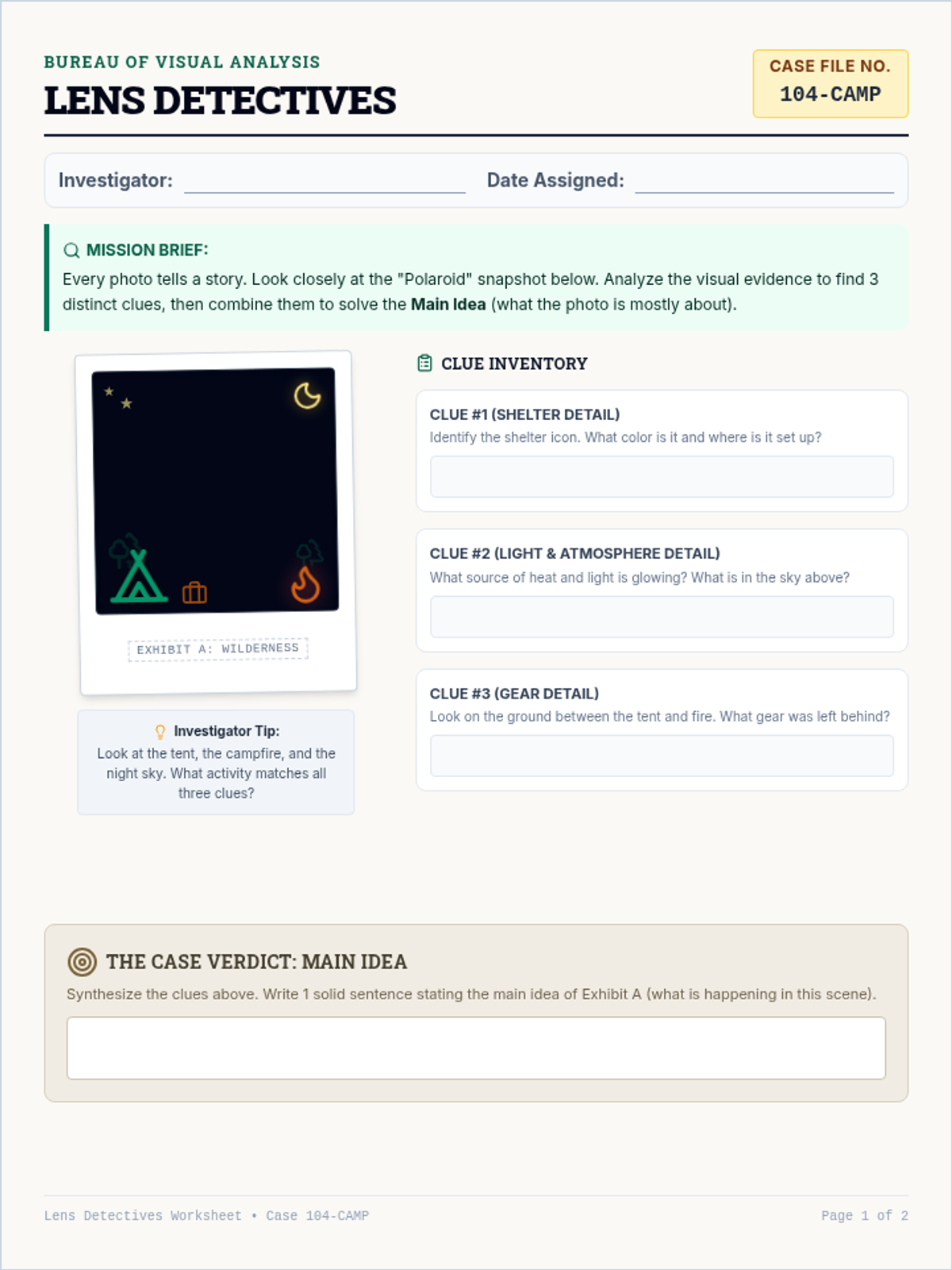
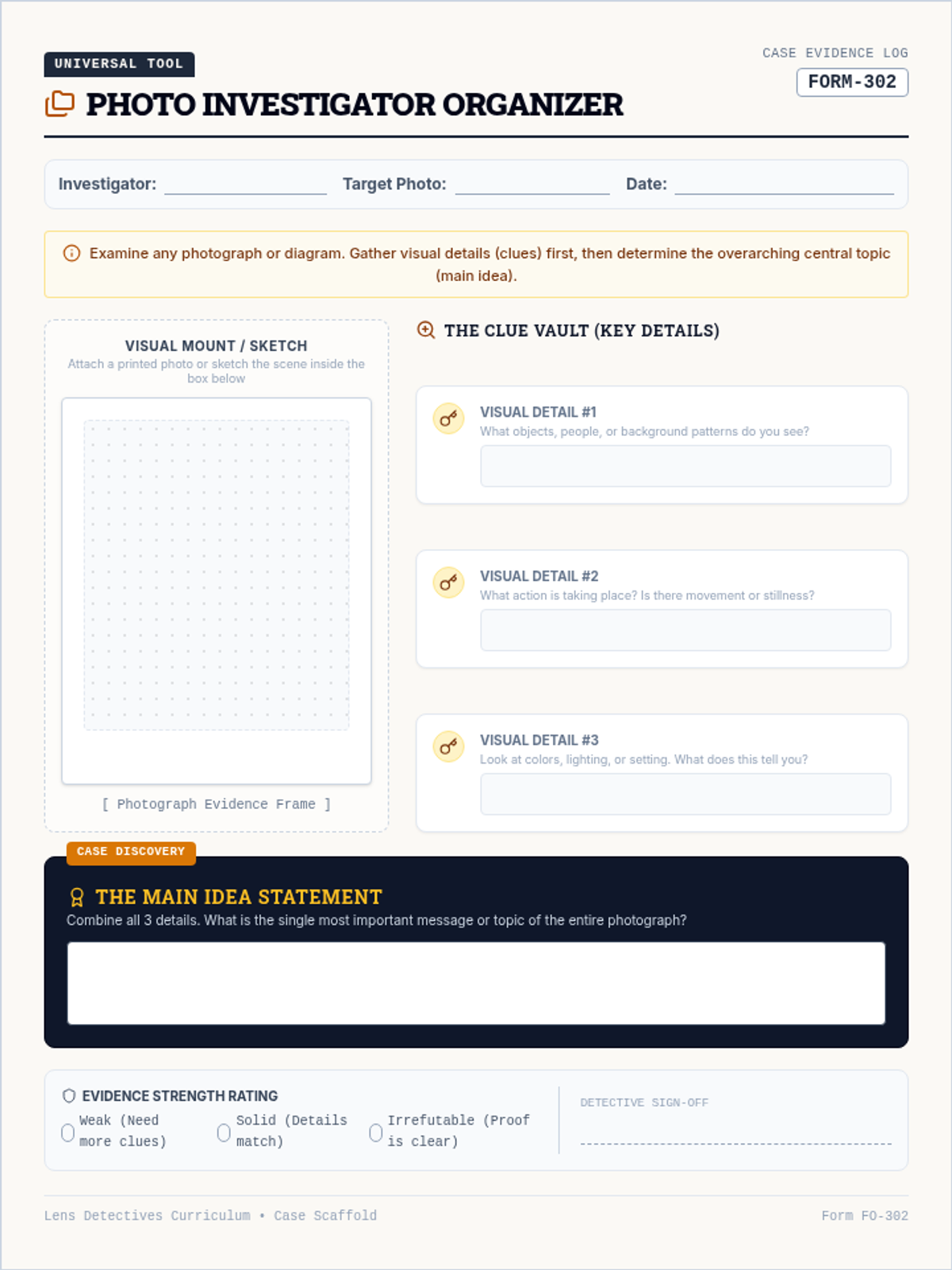
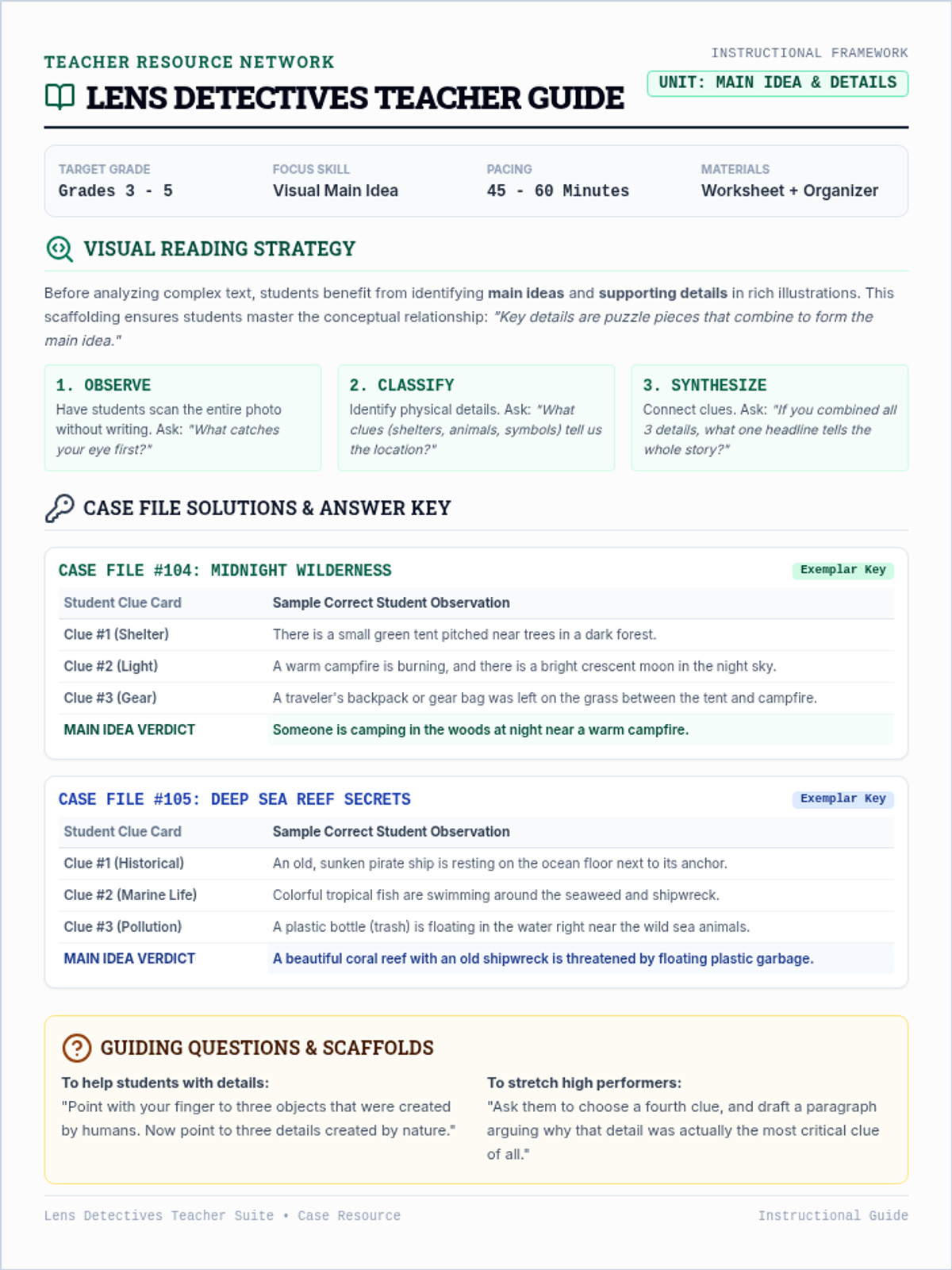
A structured resource pack focusing on Main Idea and Key Details. Students become 'Lens Detectives', analyzing highly detailed visual scenes (styled as polaroid photos) to gather clues, identify the central topic, and draft structured paragraphs using deductive writing scaffolds.
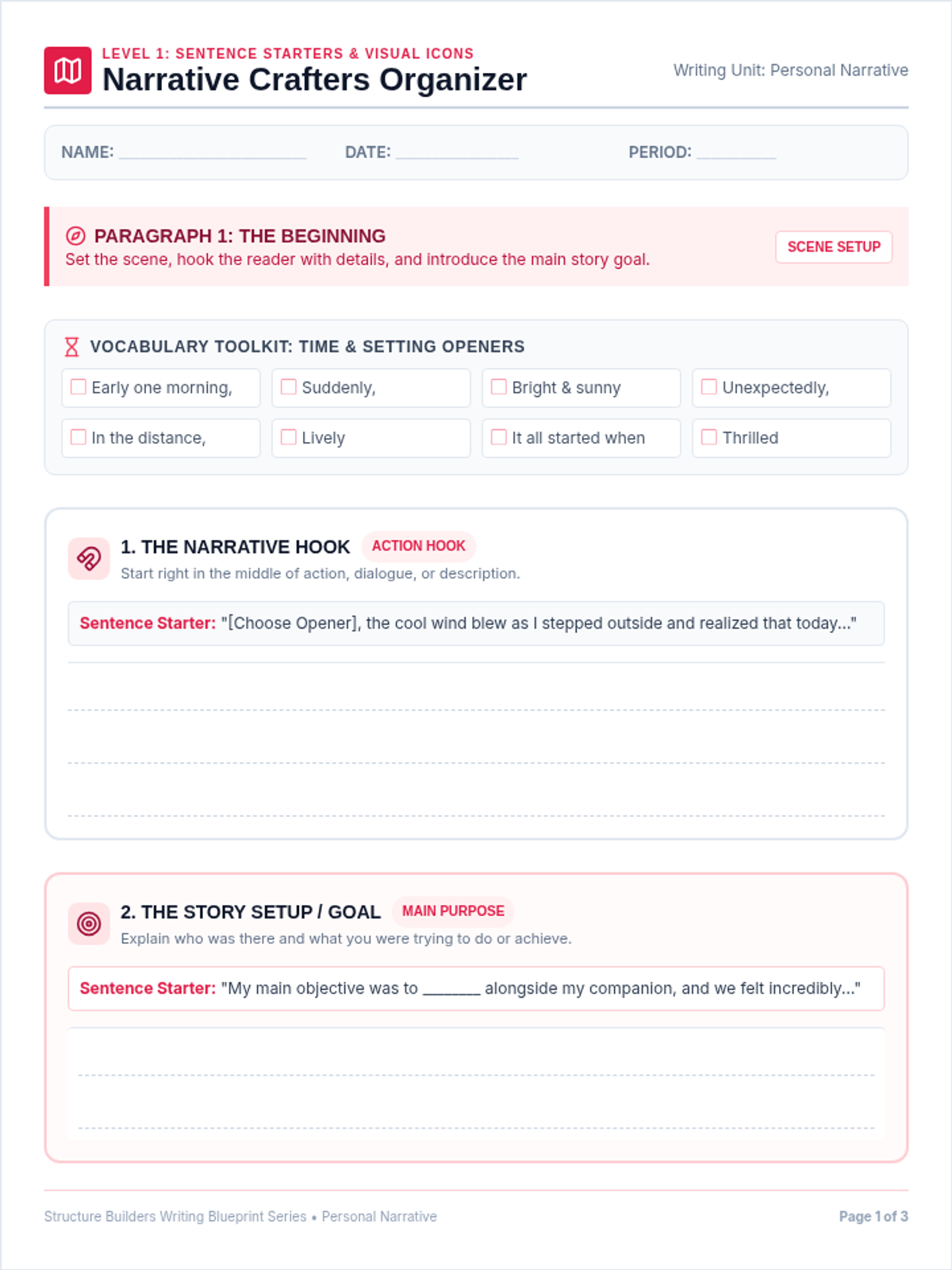
A structured approach to writing a three-paragraph personal narrative. Students develop a clear beginning, middle, and end, using sensory details, transition words, and self-assessment checklists.
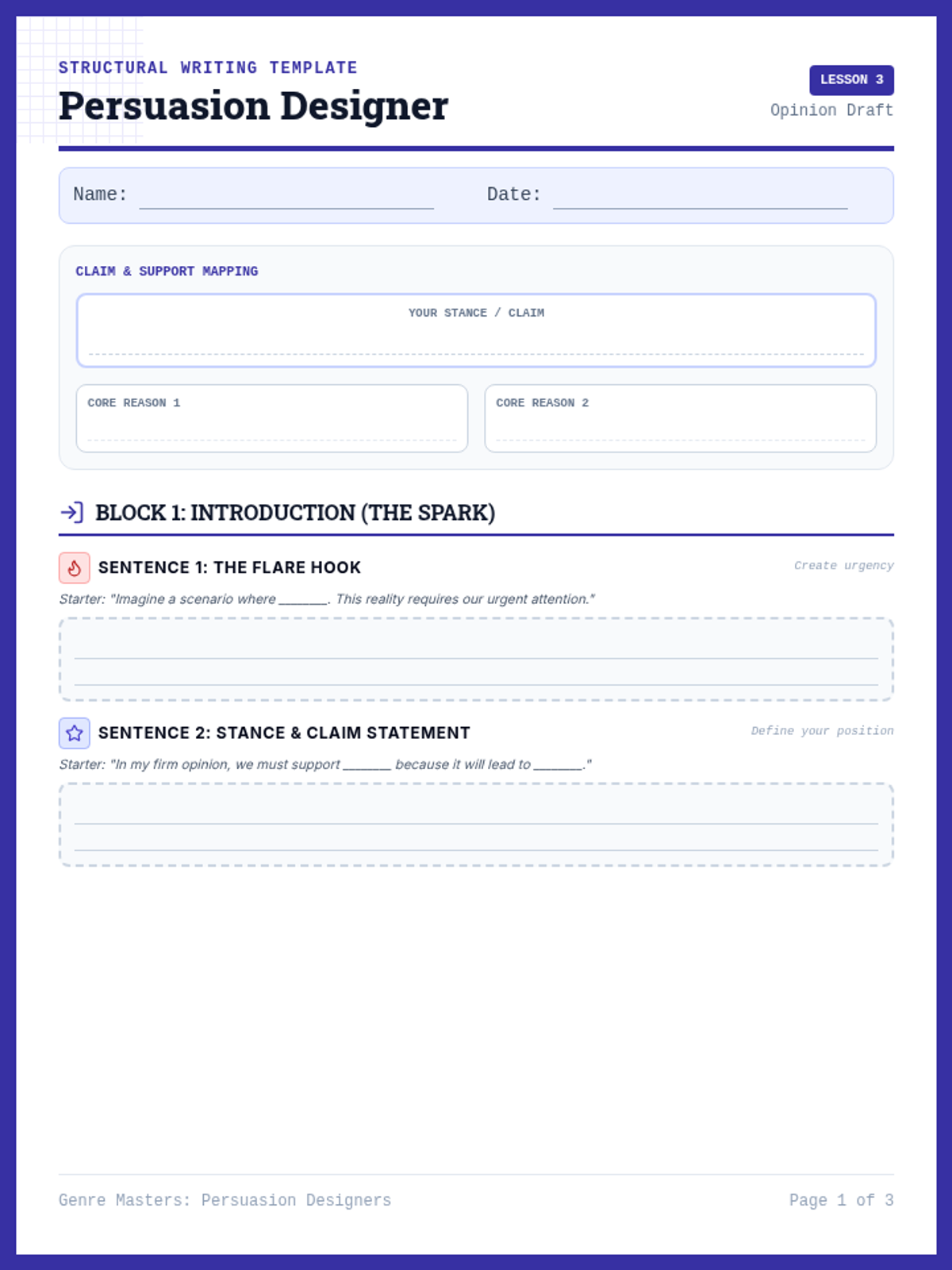
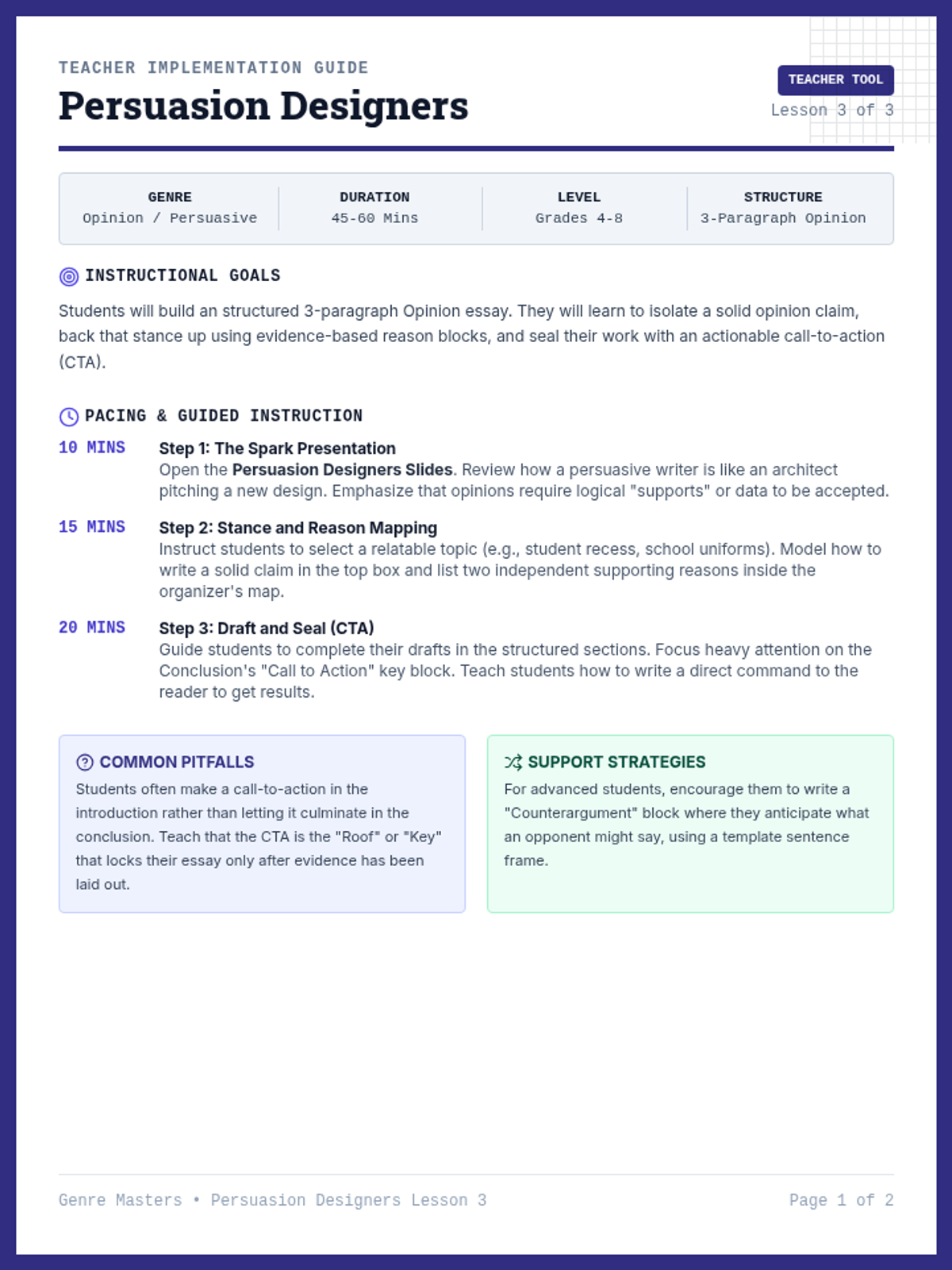
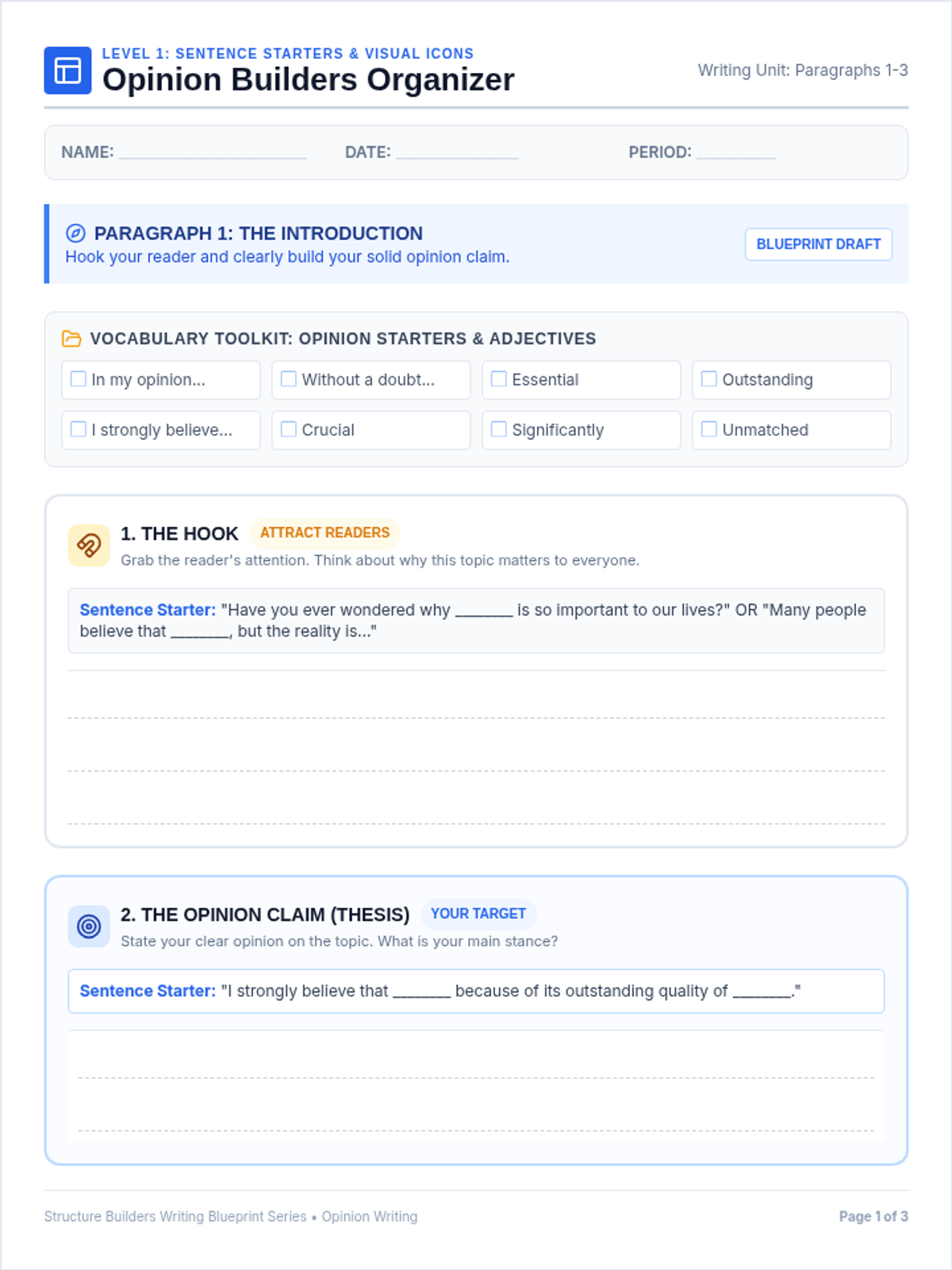
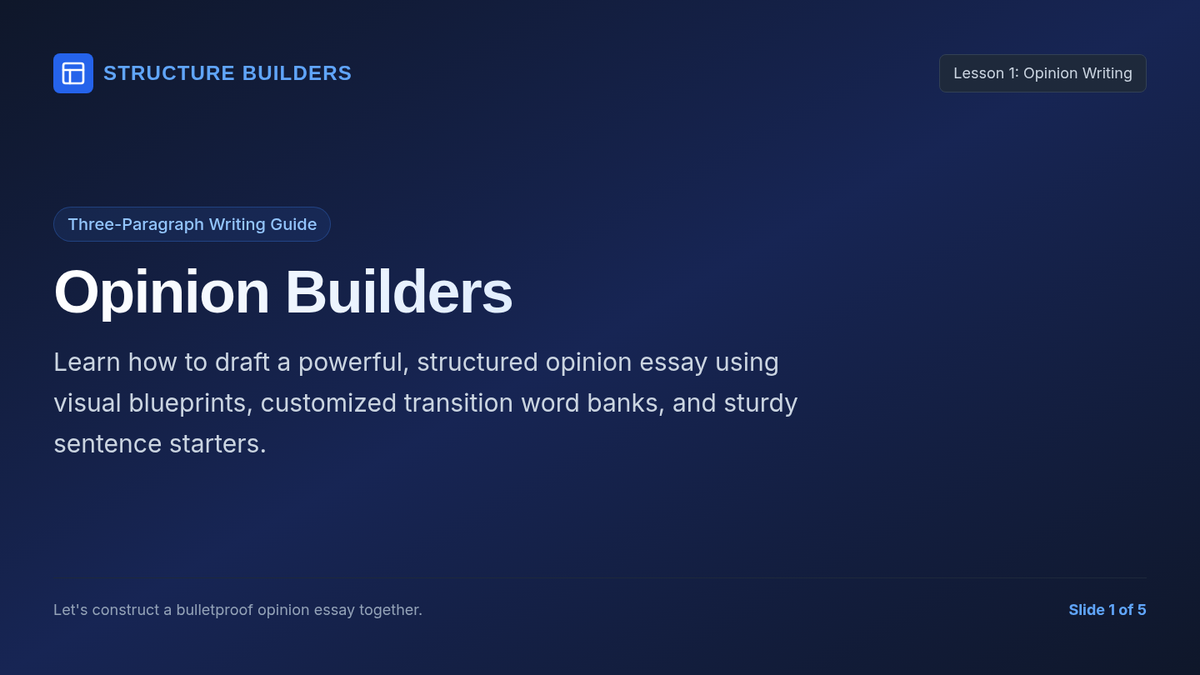
Students structure powerful opinions using a 3-paragraph template. They leverage strong emotional hooks, evidence-based reason body blocks, and persuasive call-to-action conclusions.
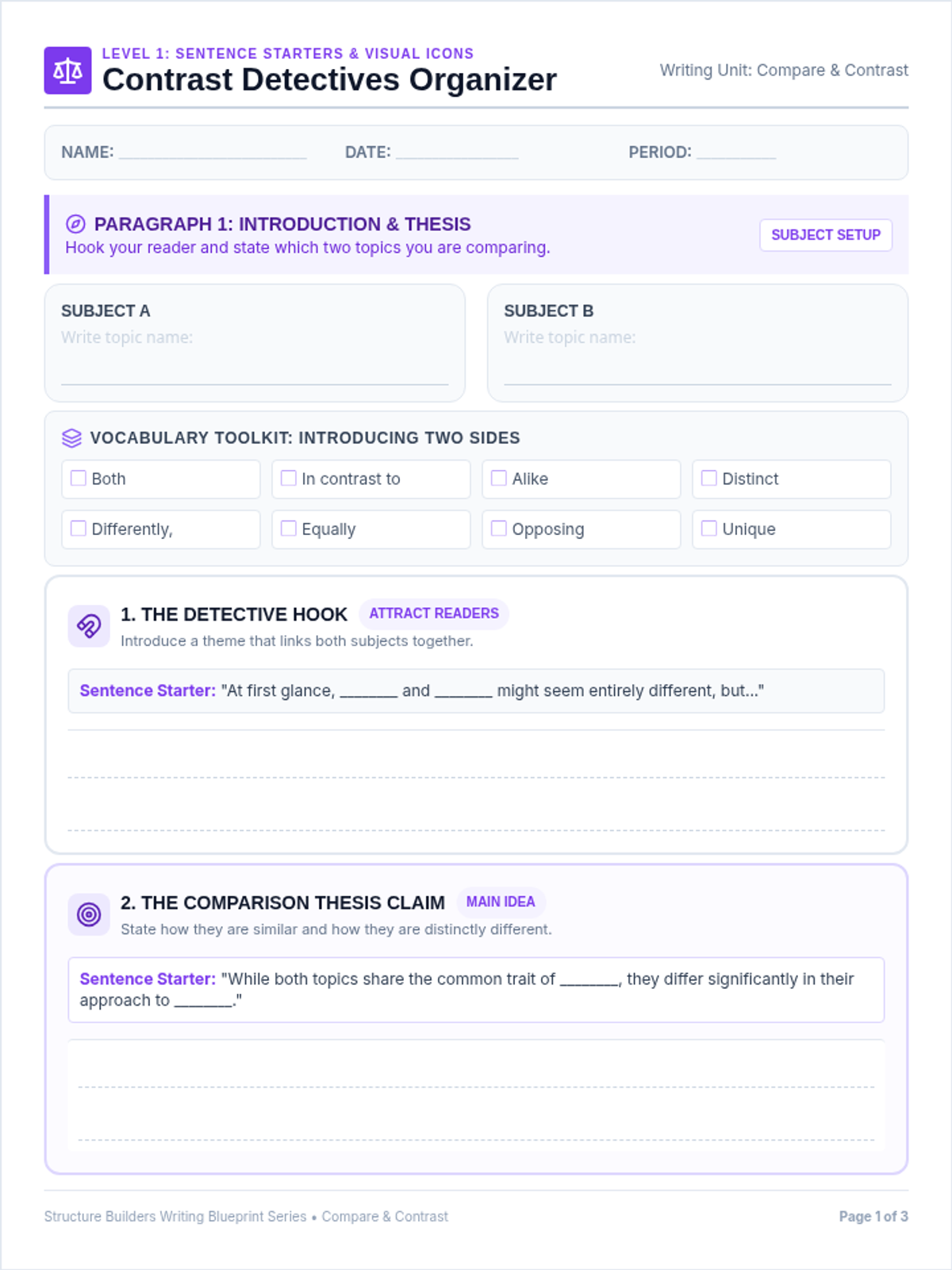
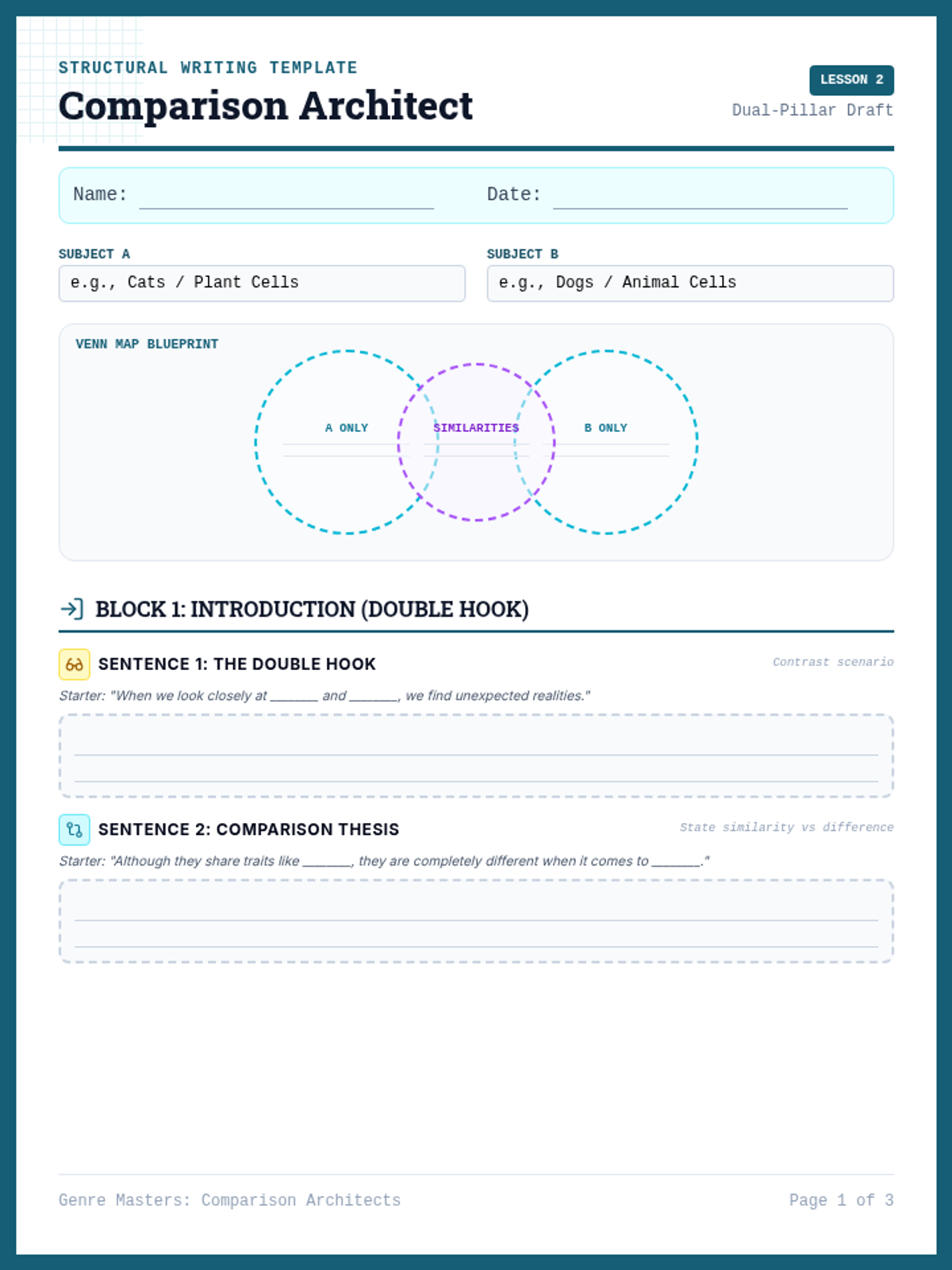
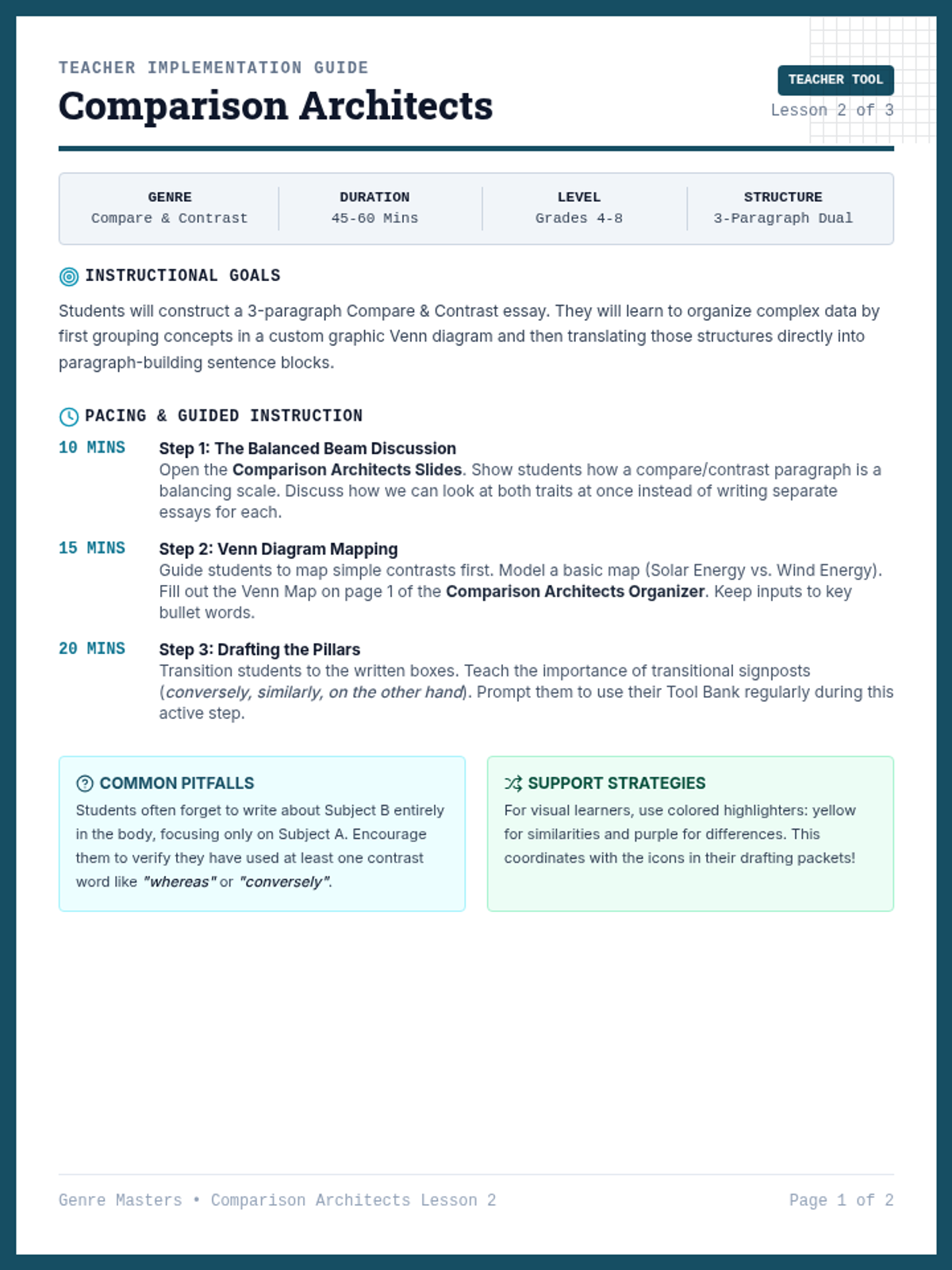
A step-by-step lesson for comparing and contrasting two topics in a three-paragraph format. Students utilize customized sentence frames, comparative word banks, and structured organizers with visual prompts.
Students learn to contrast and compare two topics using a structured 3-paragraph format. A dual-column layout, custom Venn diagrams, and comparison word banks guide them through similarities and differences.
A guided lesson focusing on drafting a three-paragraph opinion essay. Students learn to express a clear claim, back it up with evidence, and write a strong concluding summary using custom sentence frames, interactive word banks, and visual icon prompts.
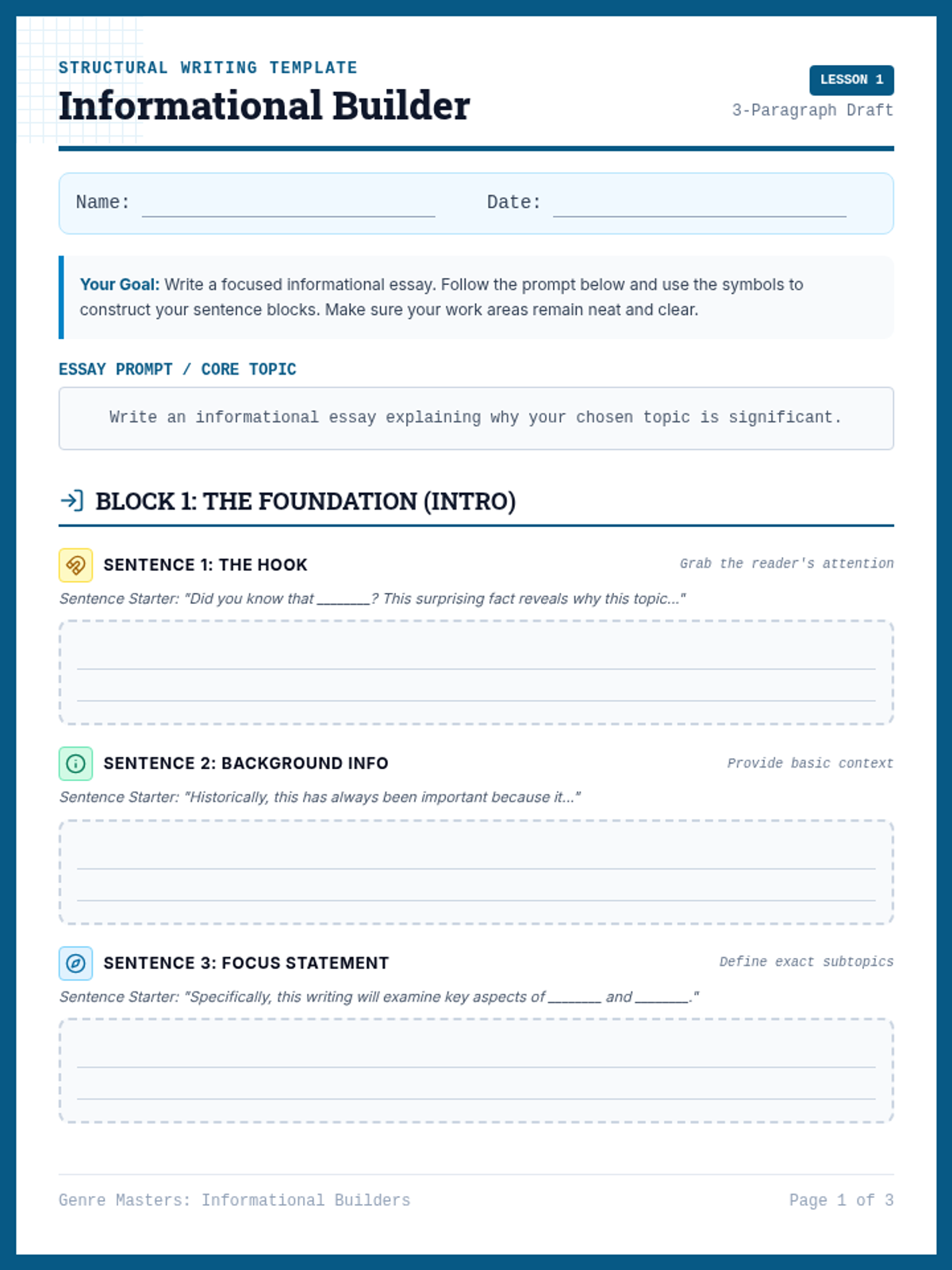
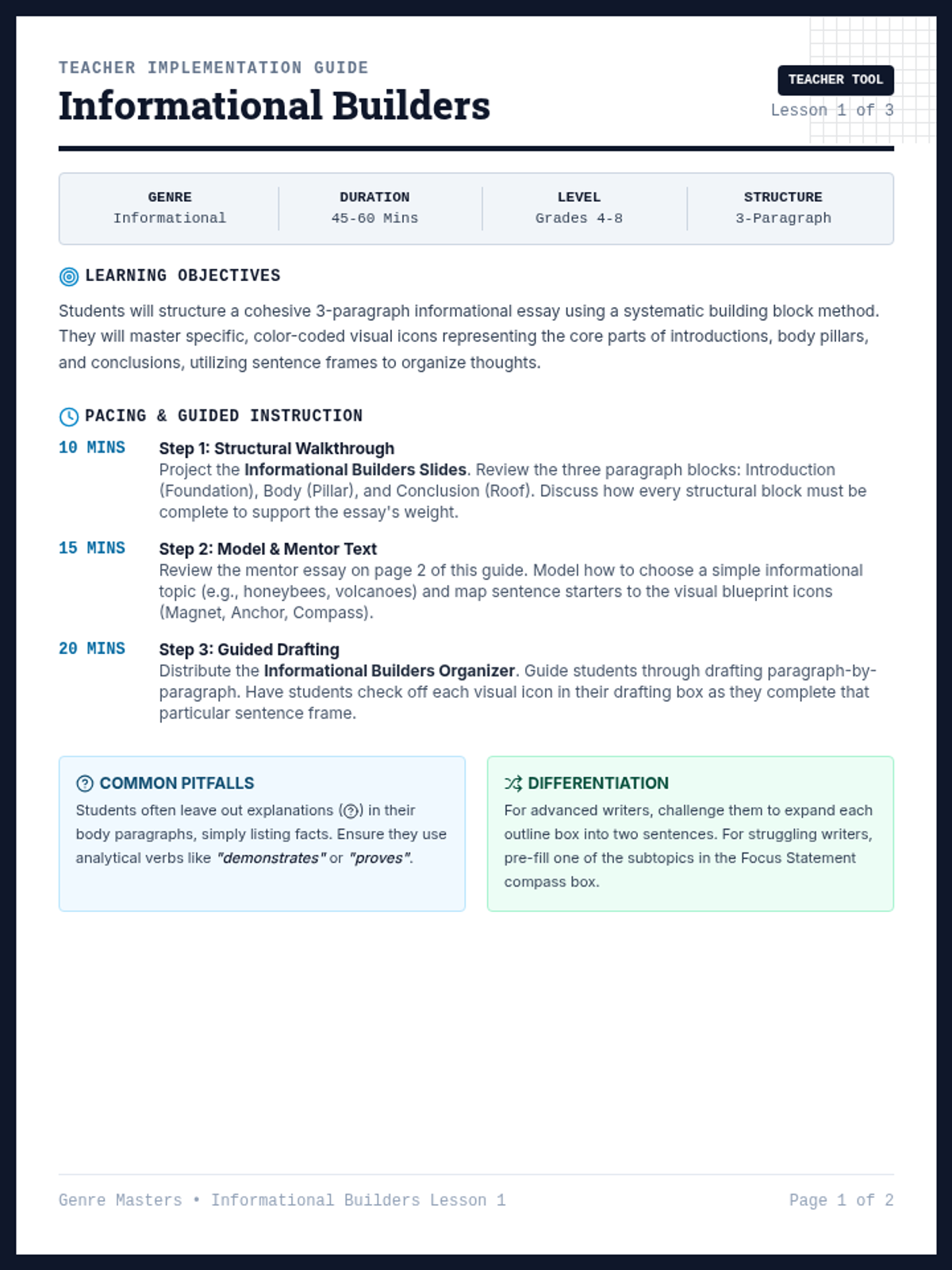
Students master the highly structured 3-paragraph informational essay. They use visual icons, word banks, and fill-in-the-blank sentence starters to build a rock-solid introduction, body, and conclusion paragraph.
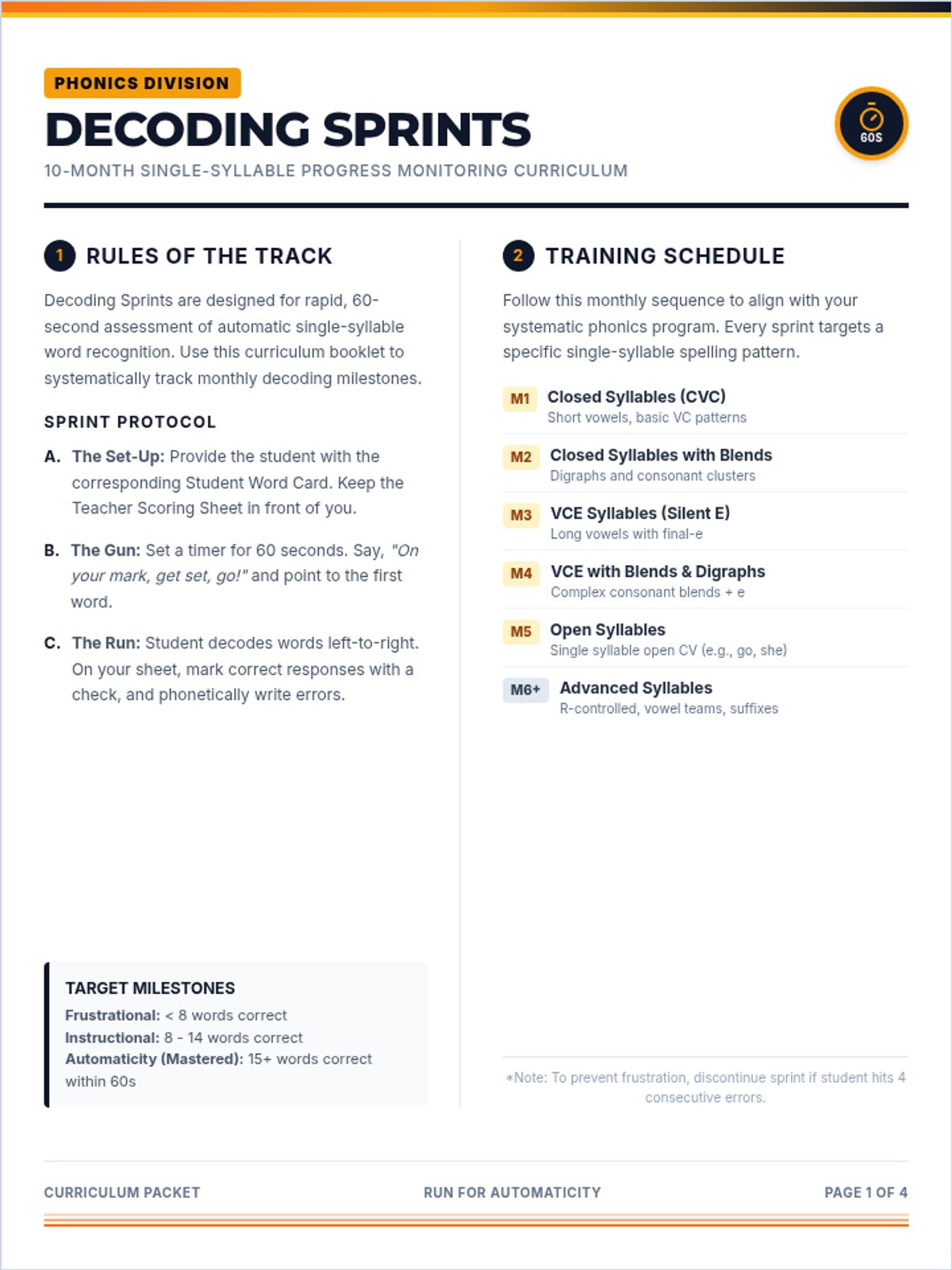
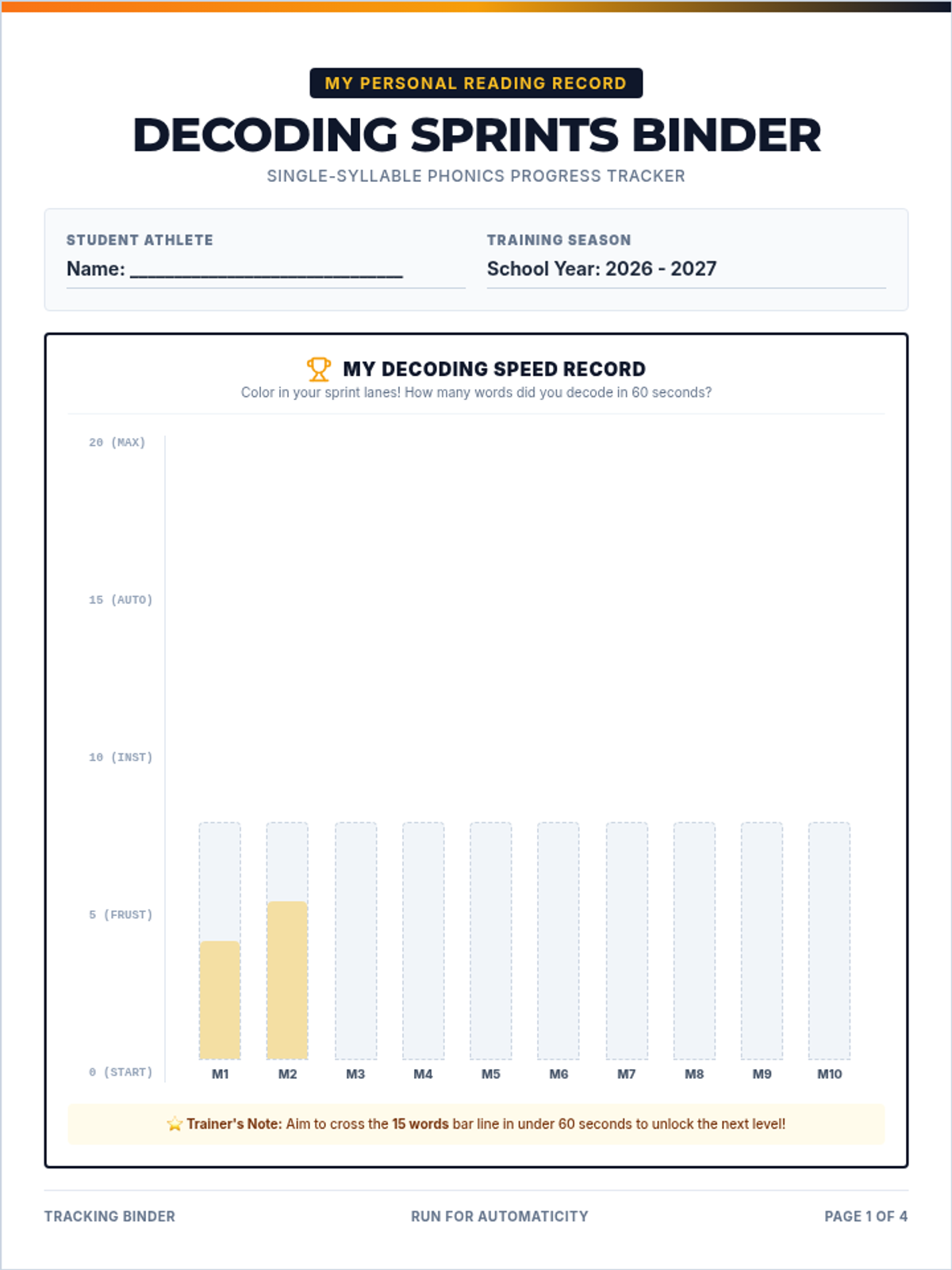
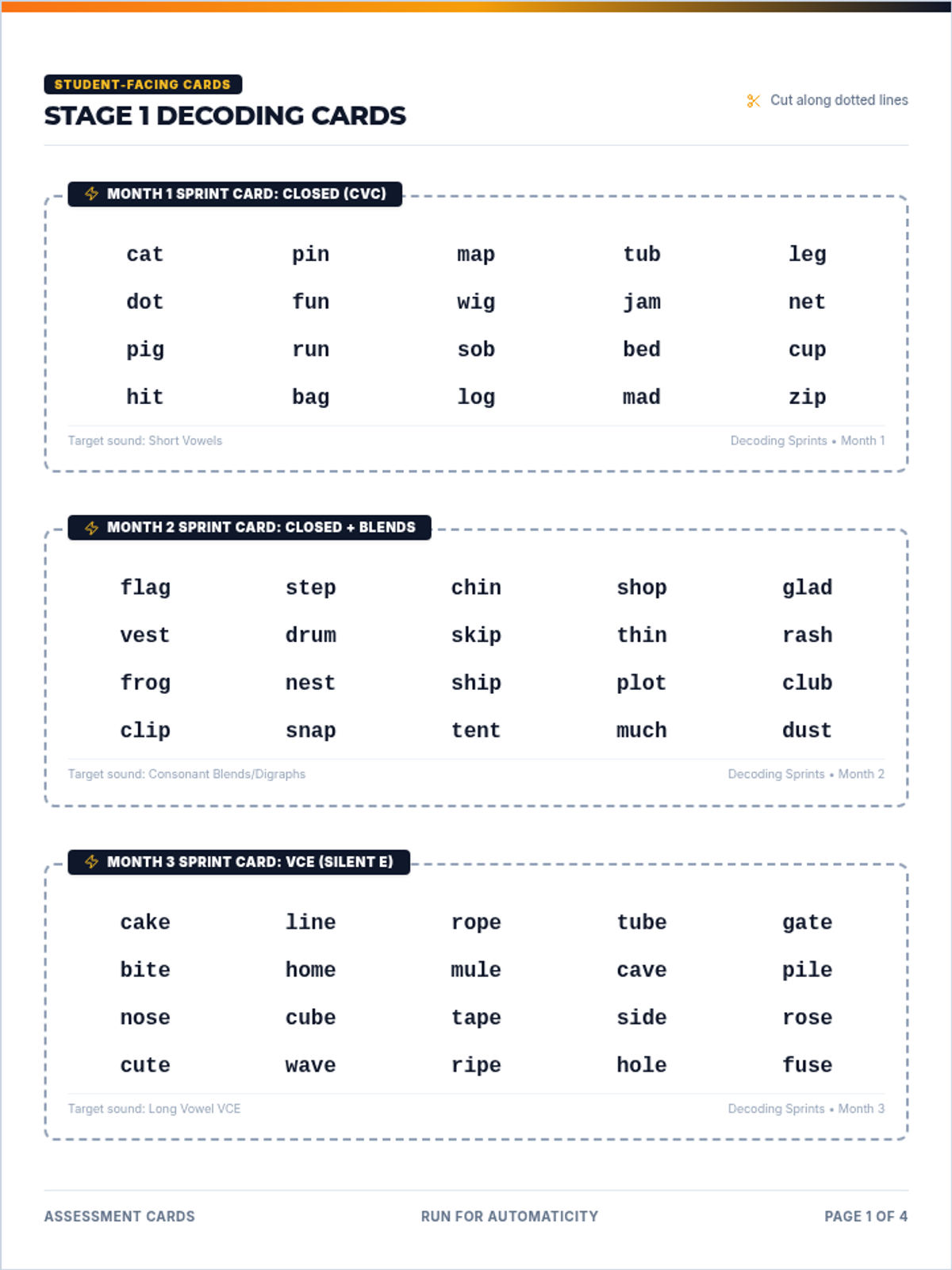
A comprehensive, 10-month progress-monitoring curriculum designed for rapid decoding trials. This lesson contains a student tracking binder, weekly assessment cards, and a complete curriculum booklet focusing on single-syllable phonics patterns.
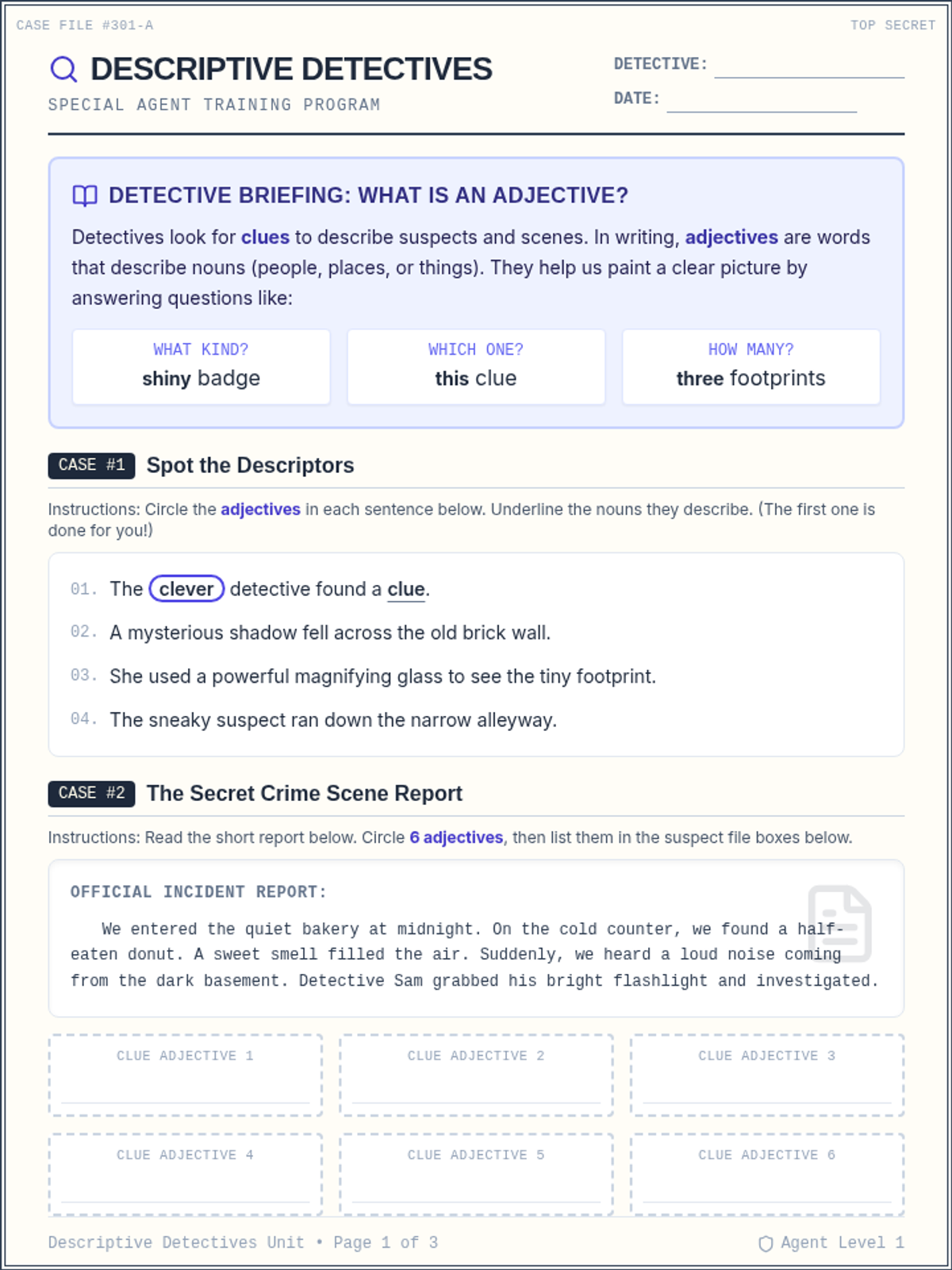
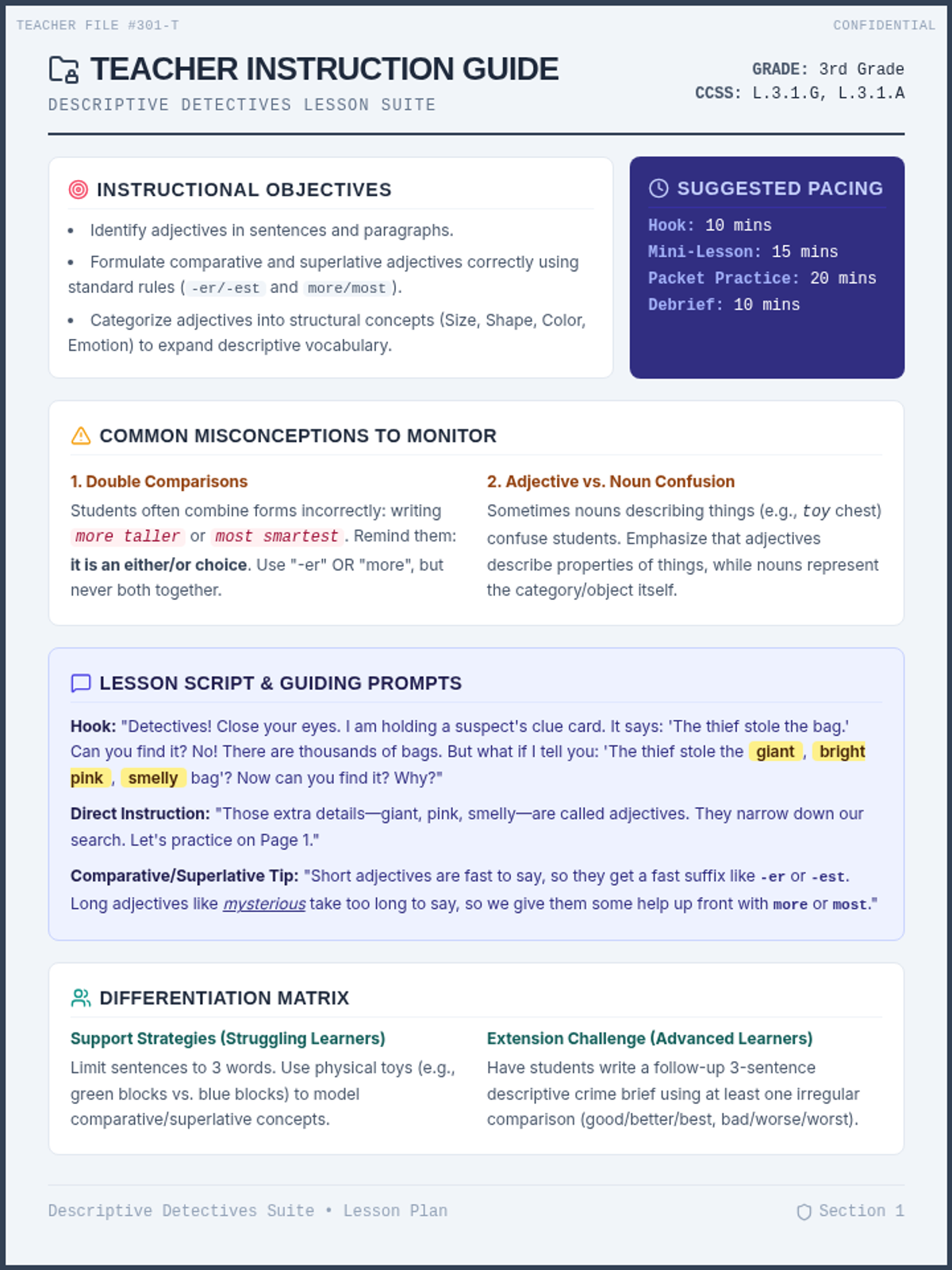
A comprehensive and engaging unit/lesson introducing 3rd graders to adjectives. Students act as 'Descriptive Detectives' to identify, compare, and categorize adjectives through a structured work packet and structured visual guide.
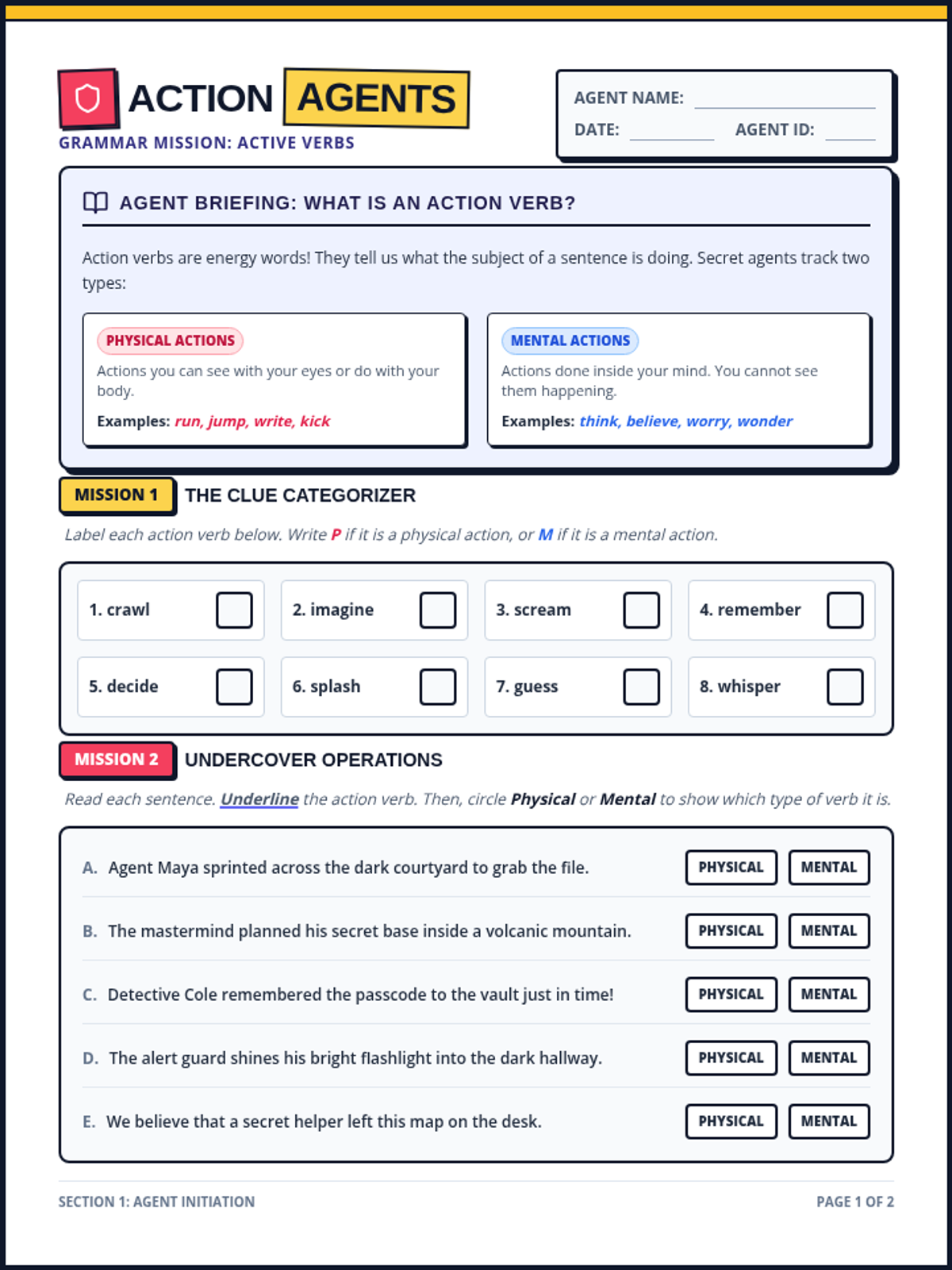
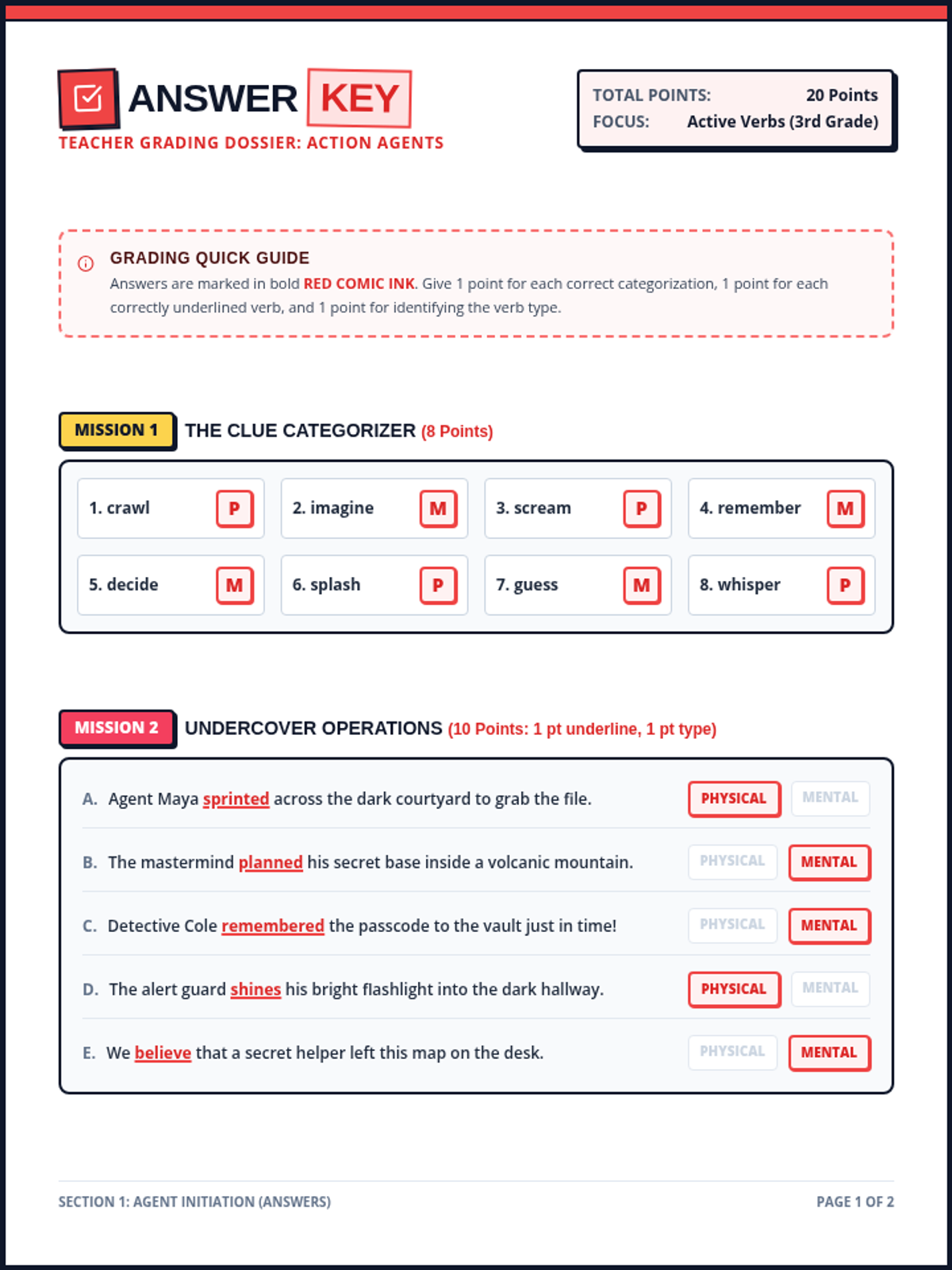
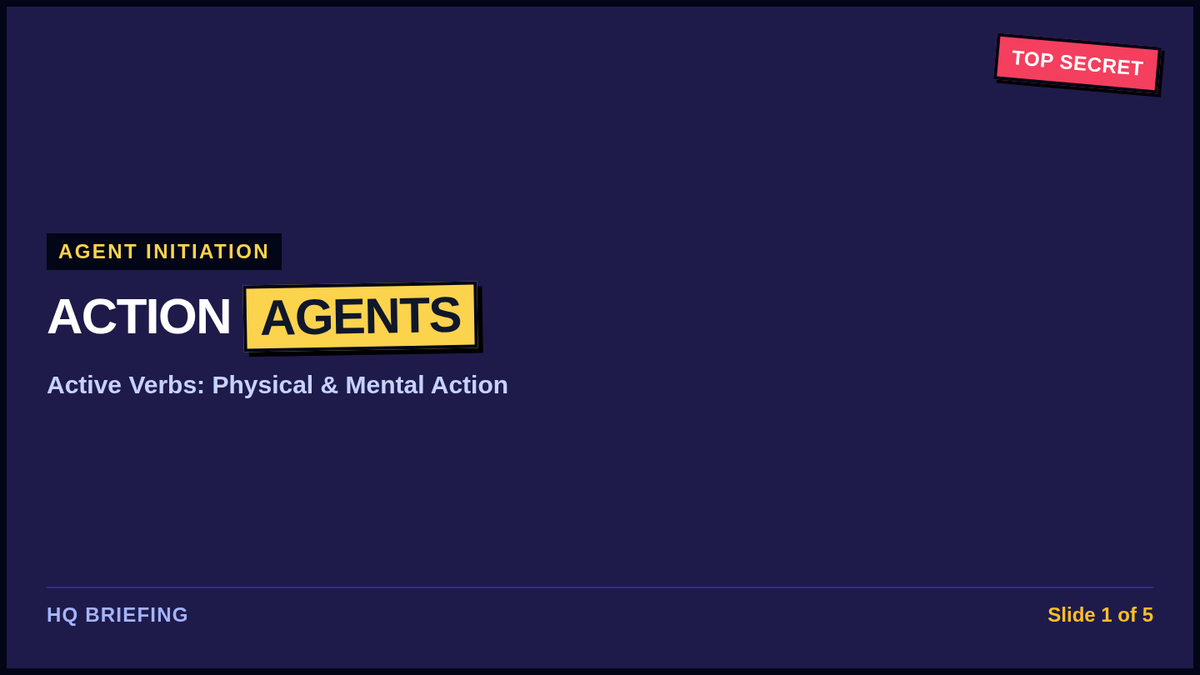
A dynamic 3rd-grade grammar lesson where students become 'Action Agents' to track down, identify, and deploy physical and mental action verbs. Includes a comic-themed visual slide deck, a comprehensive two-page practice worksheet, and a teacher answer key.
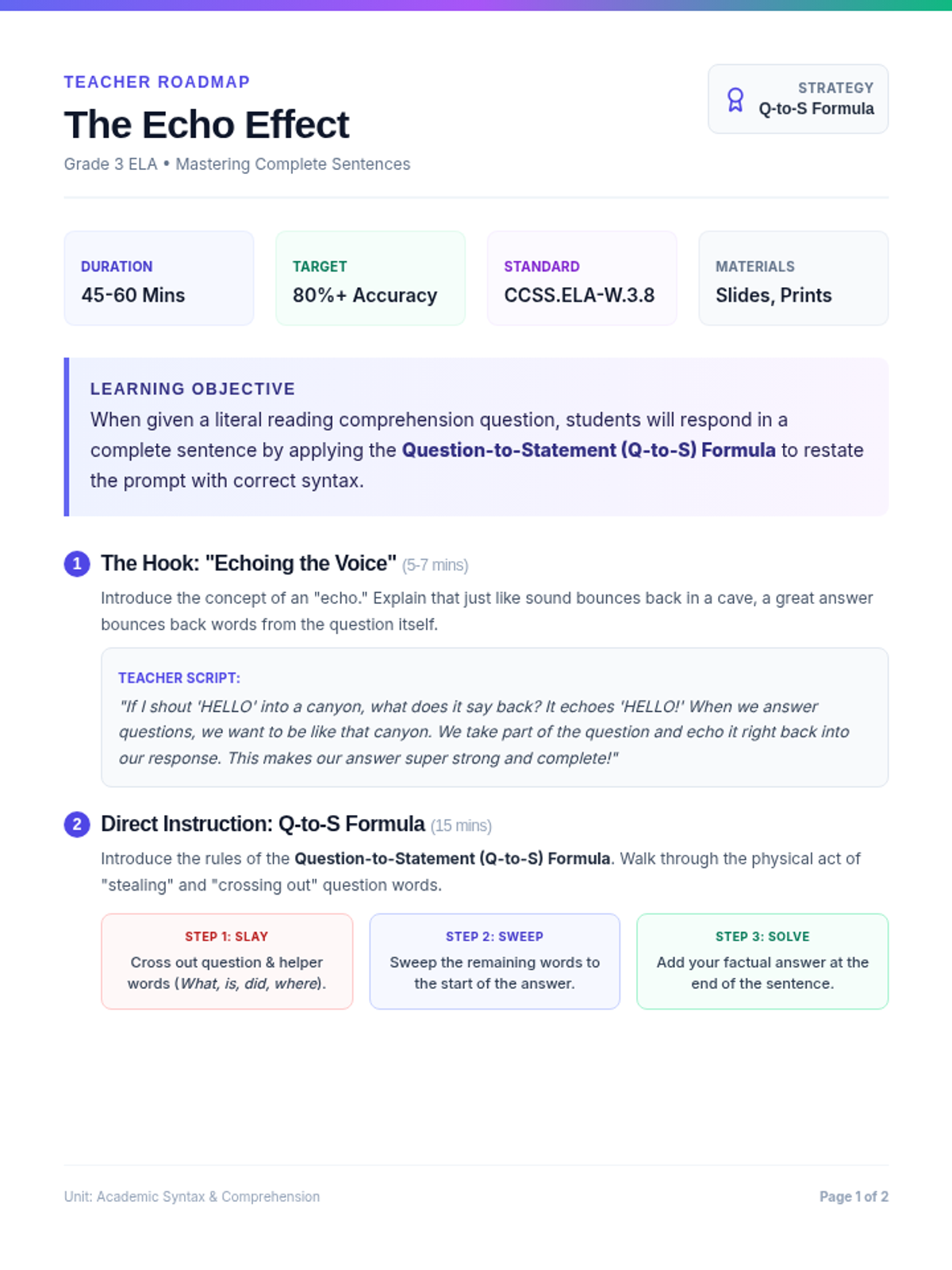
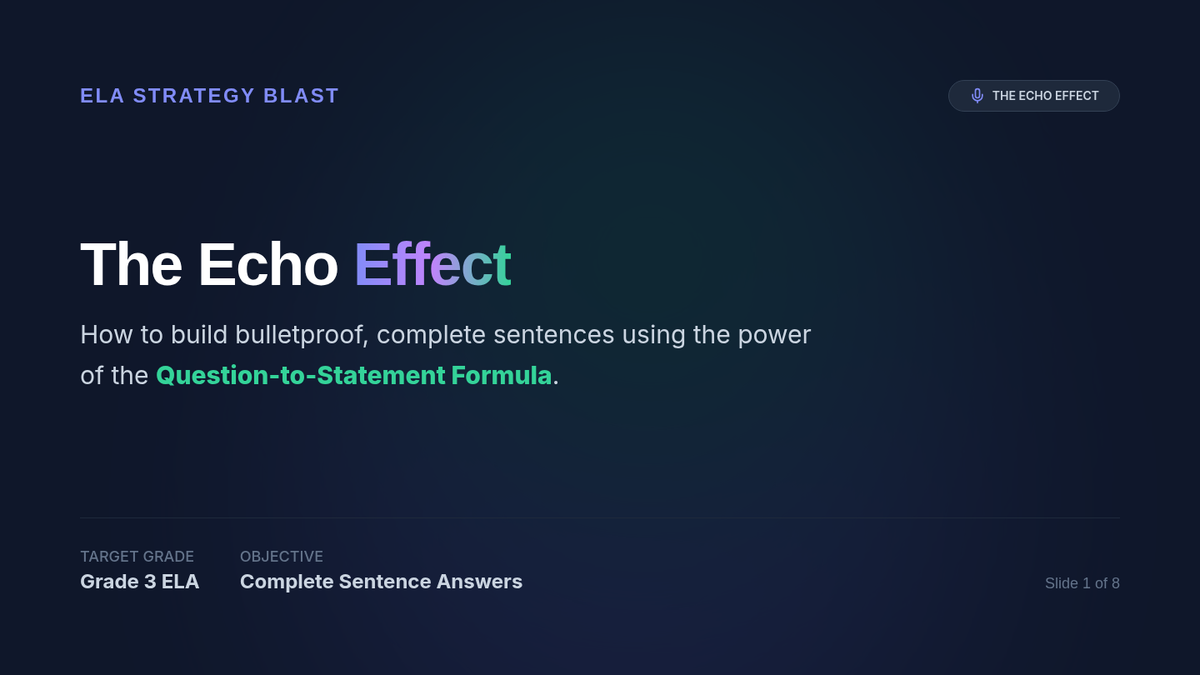
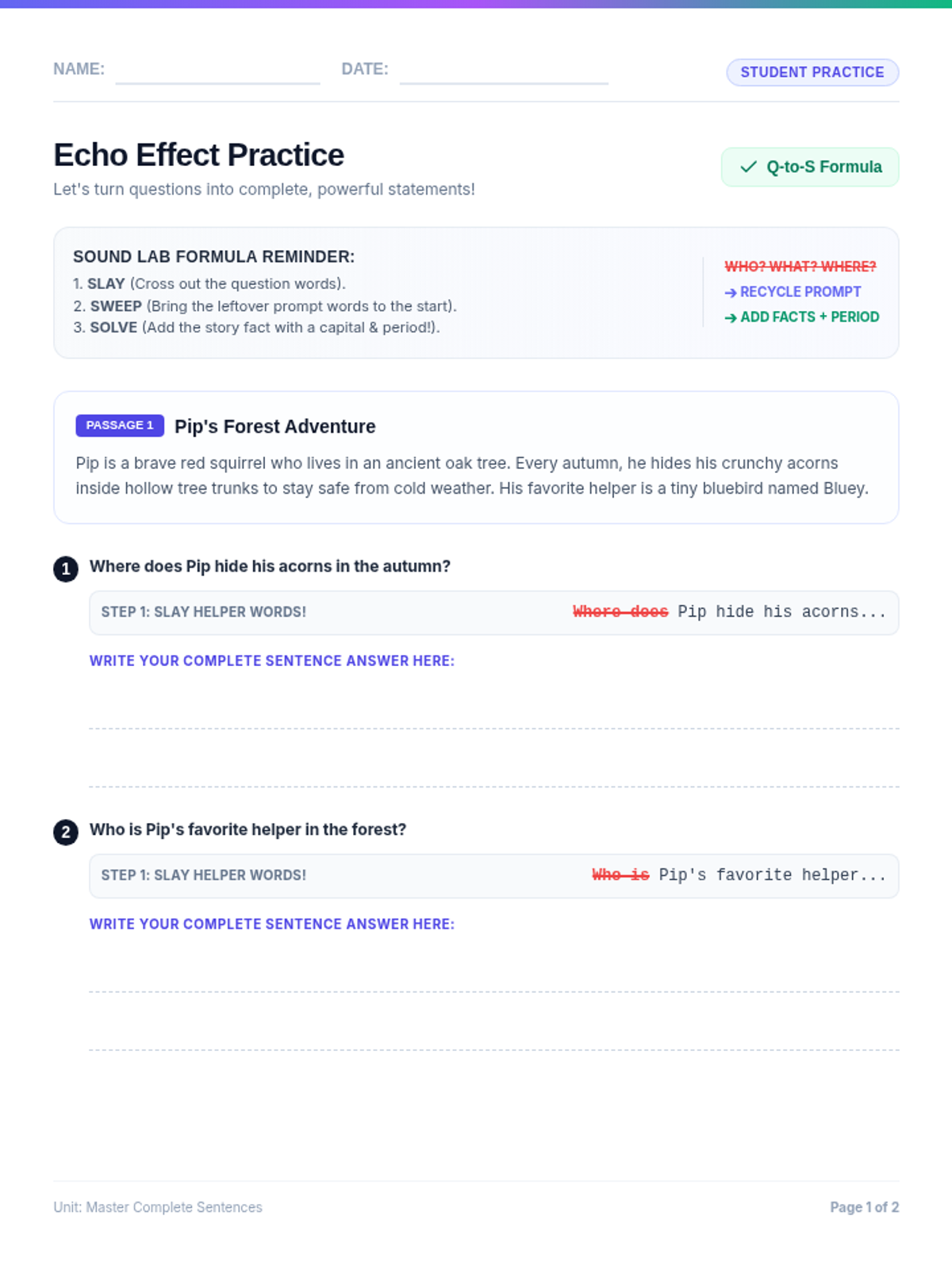
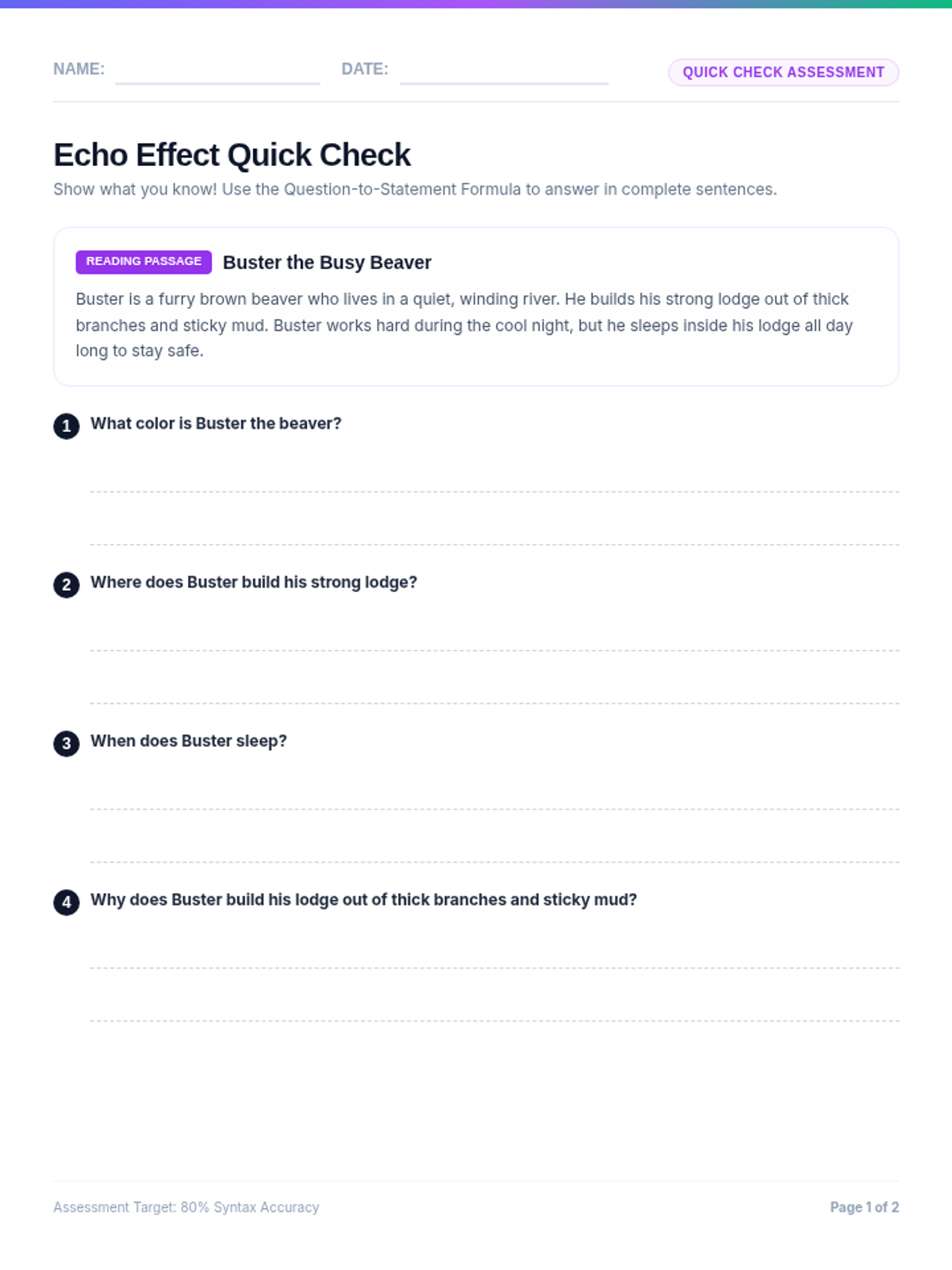
A complete third-grade ELA lesson designed to help students master answering literal comprehension questions in complete sentences. Features the 'Question-to-Statement Formula' to systematically teach students how to cross out question words, recycle the prompt, and formulate high-quality responses.
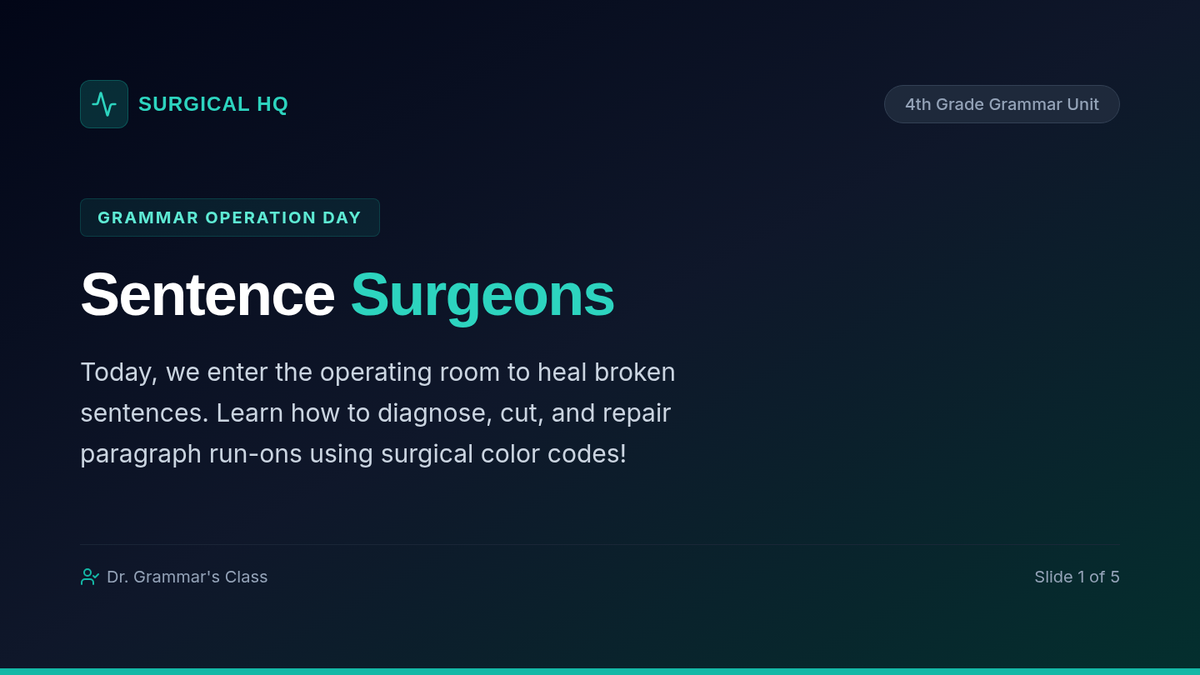
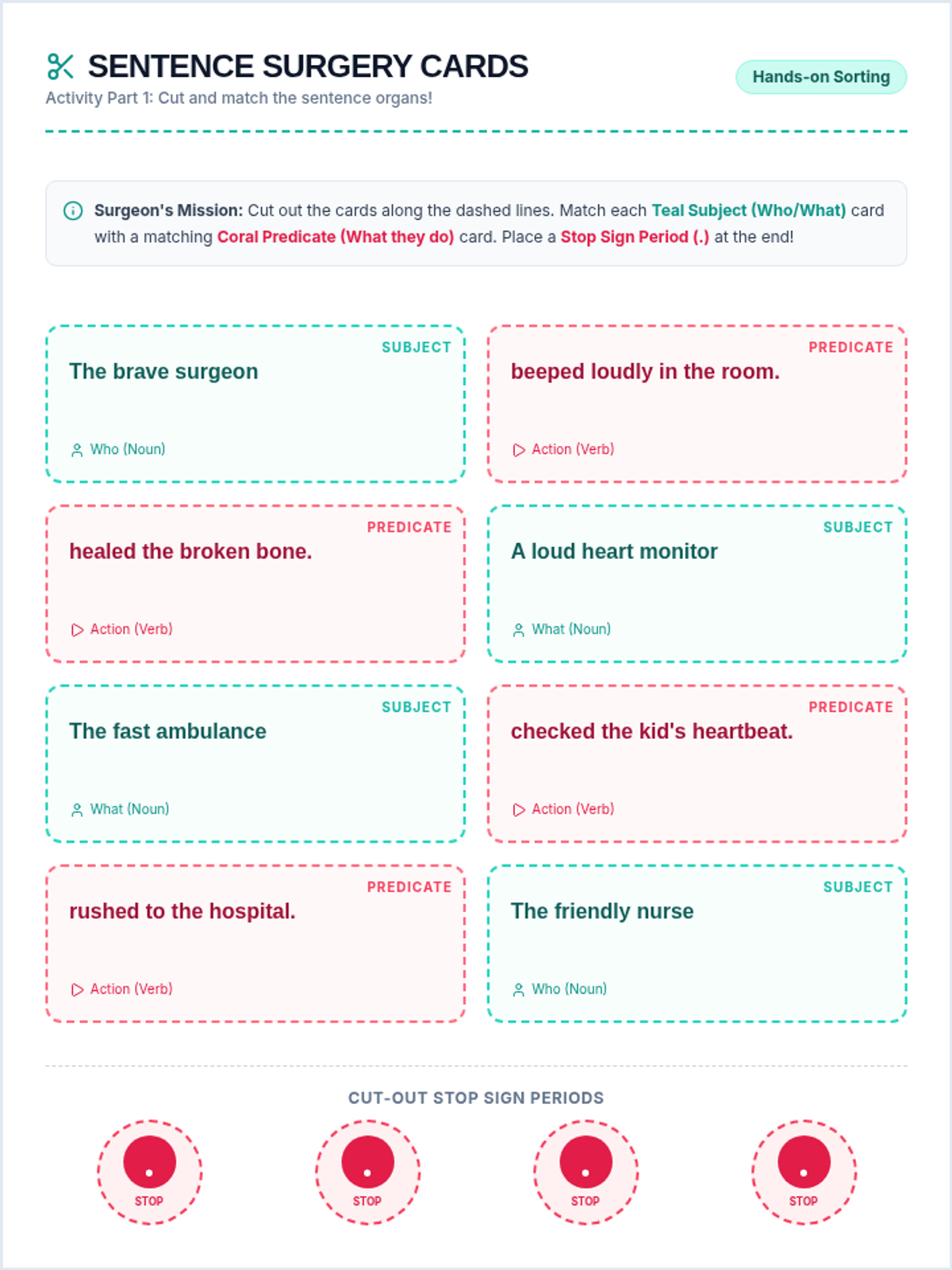
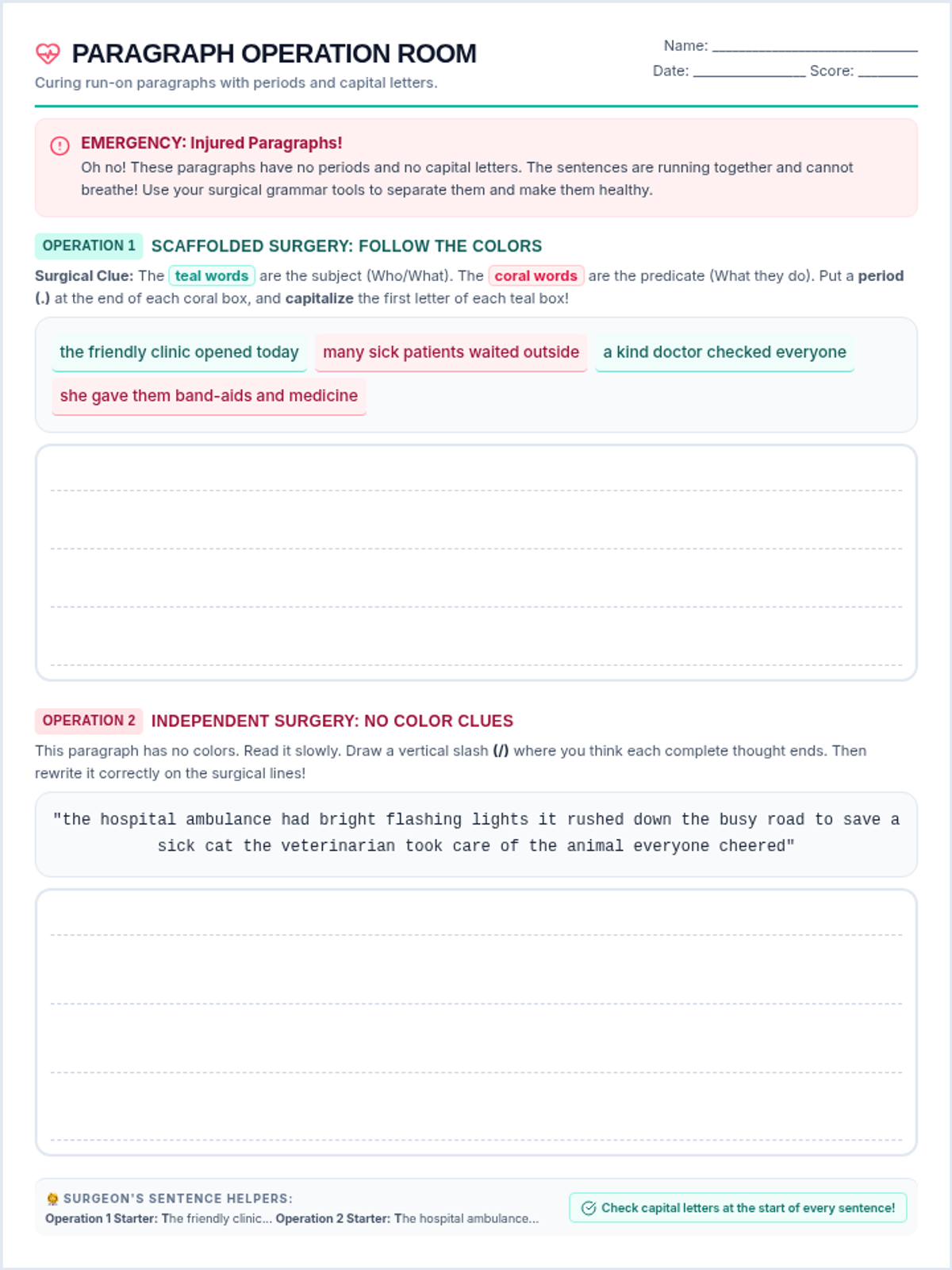
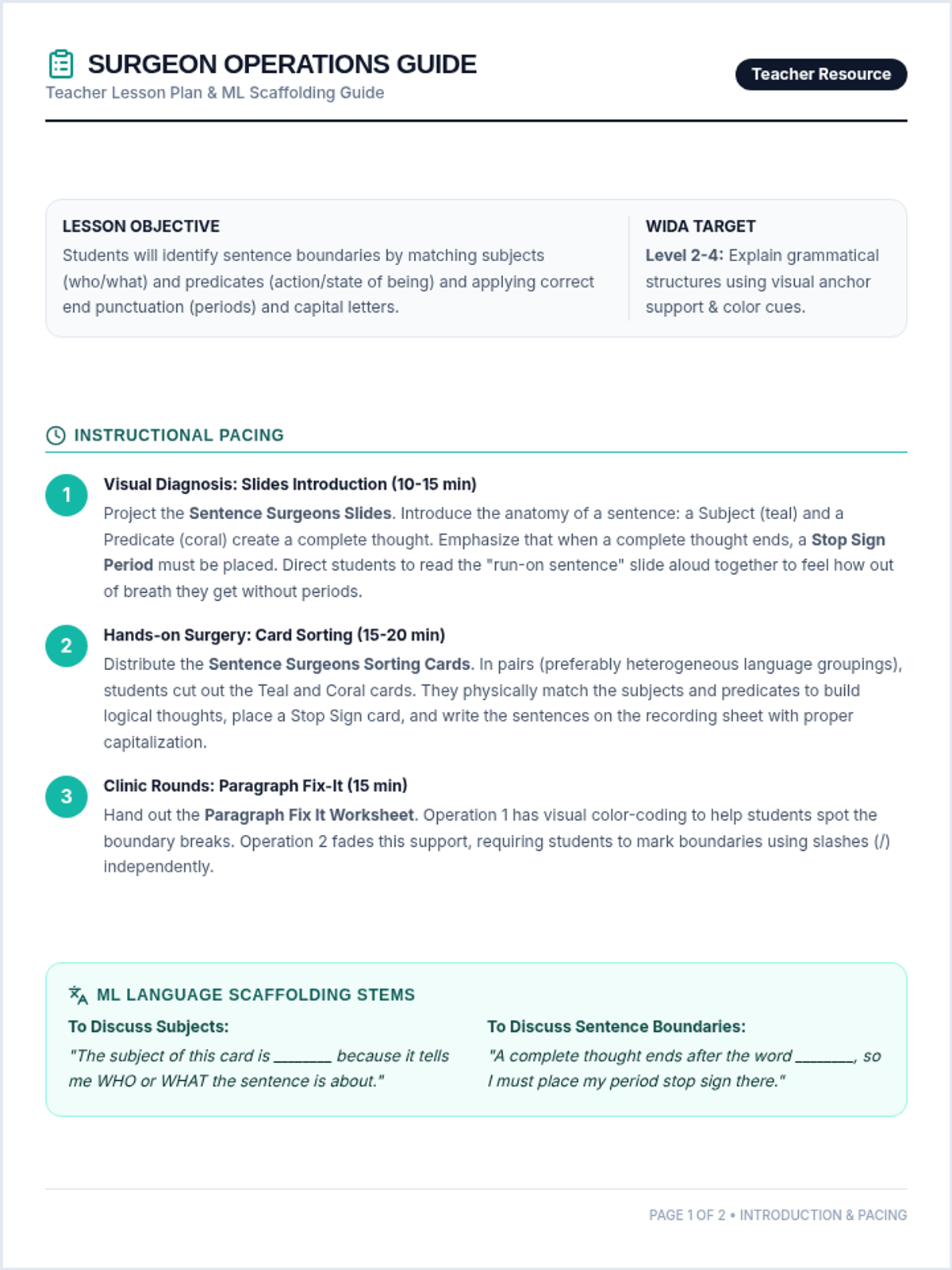
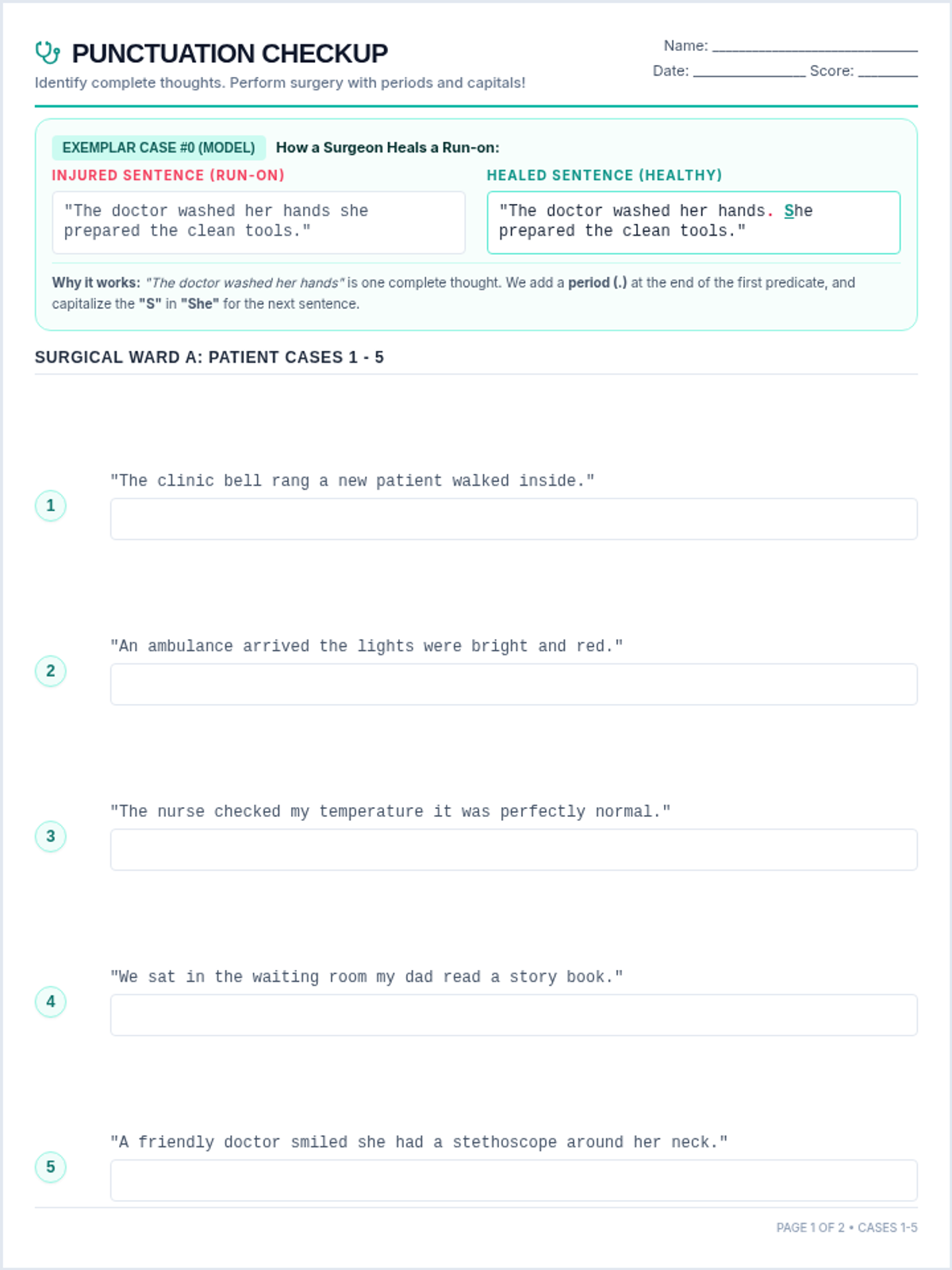
An interactive grammar lesson designed for multilingual fourth graders to master sentence boundaries. Students use color-coded subject and predicate clues, sorting cards, and paragraph operations to identify where sentences end and periods are required.
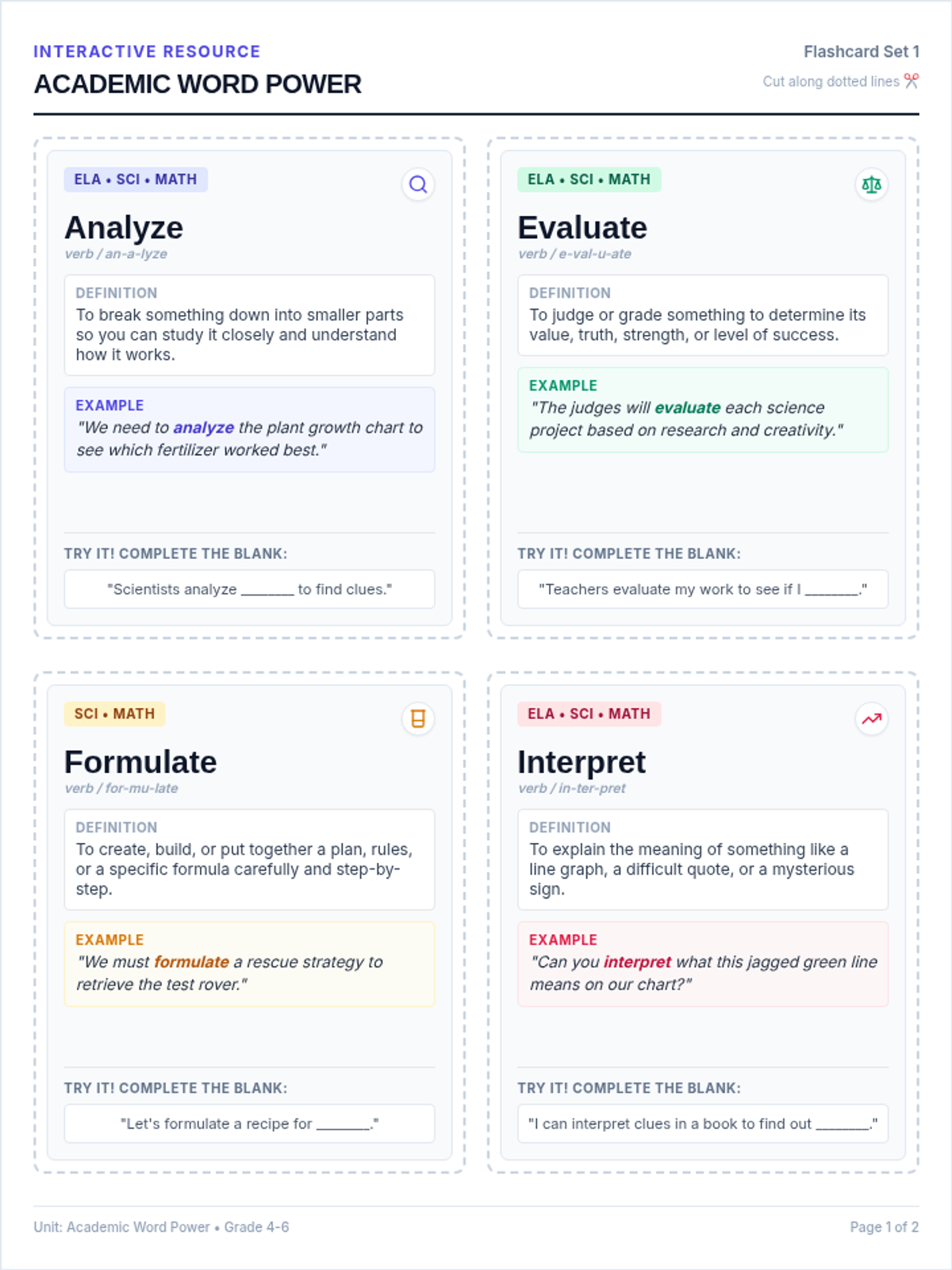
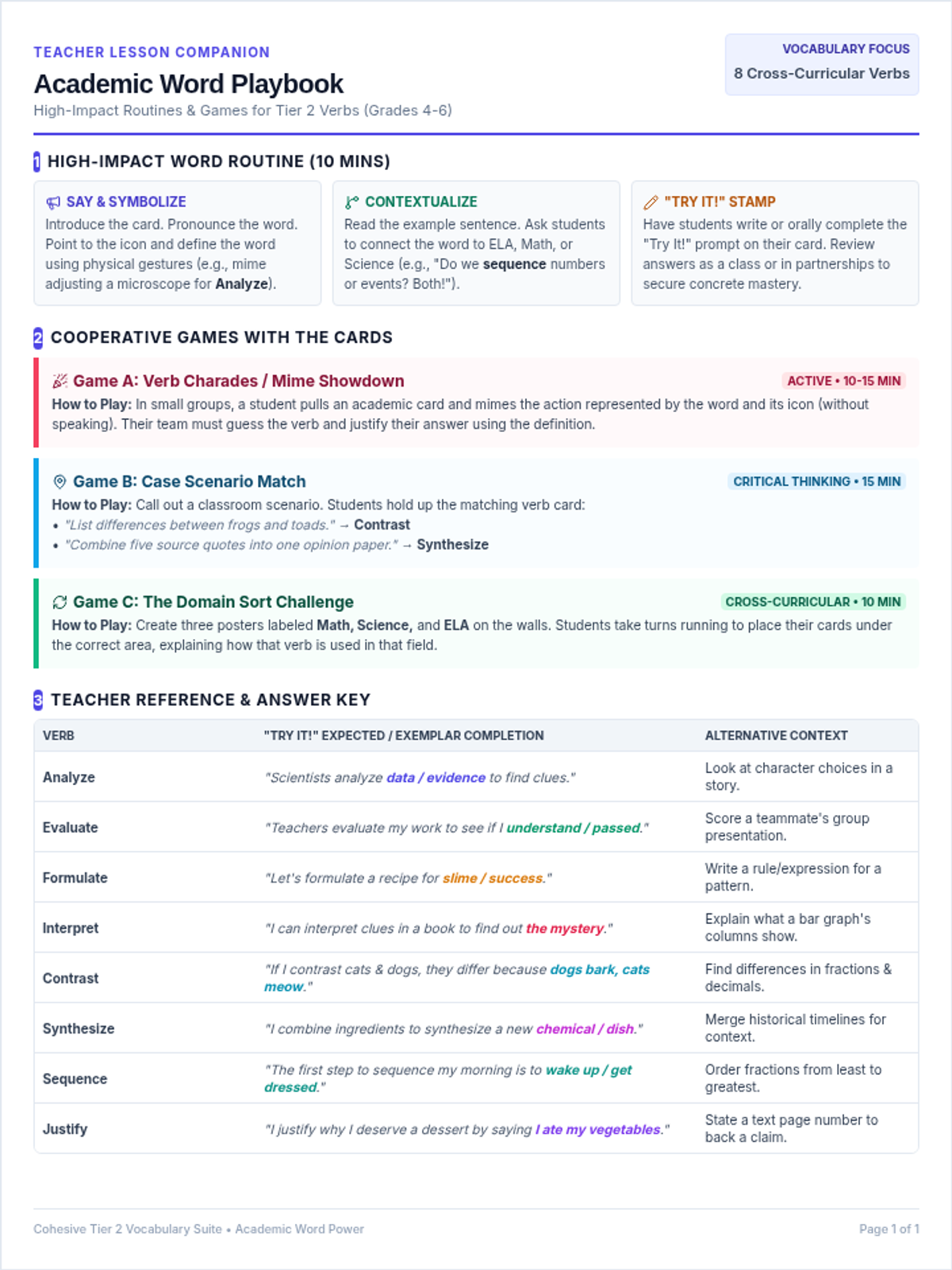
A high-impact Tier 2 vocabulary lesson teaching critical academic verbs used across ELA, Math, and Science, supported by simplified visual symbols.
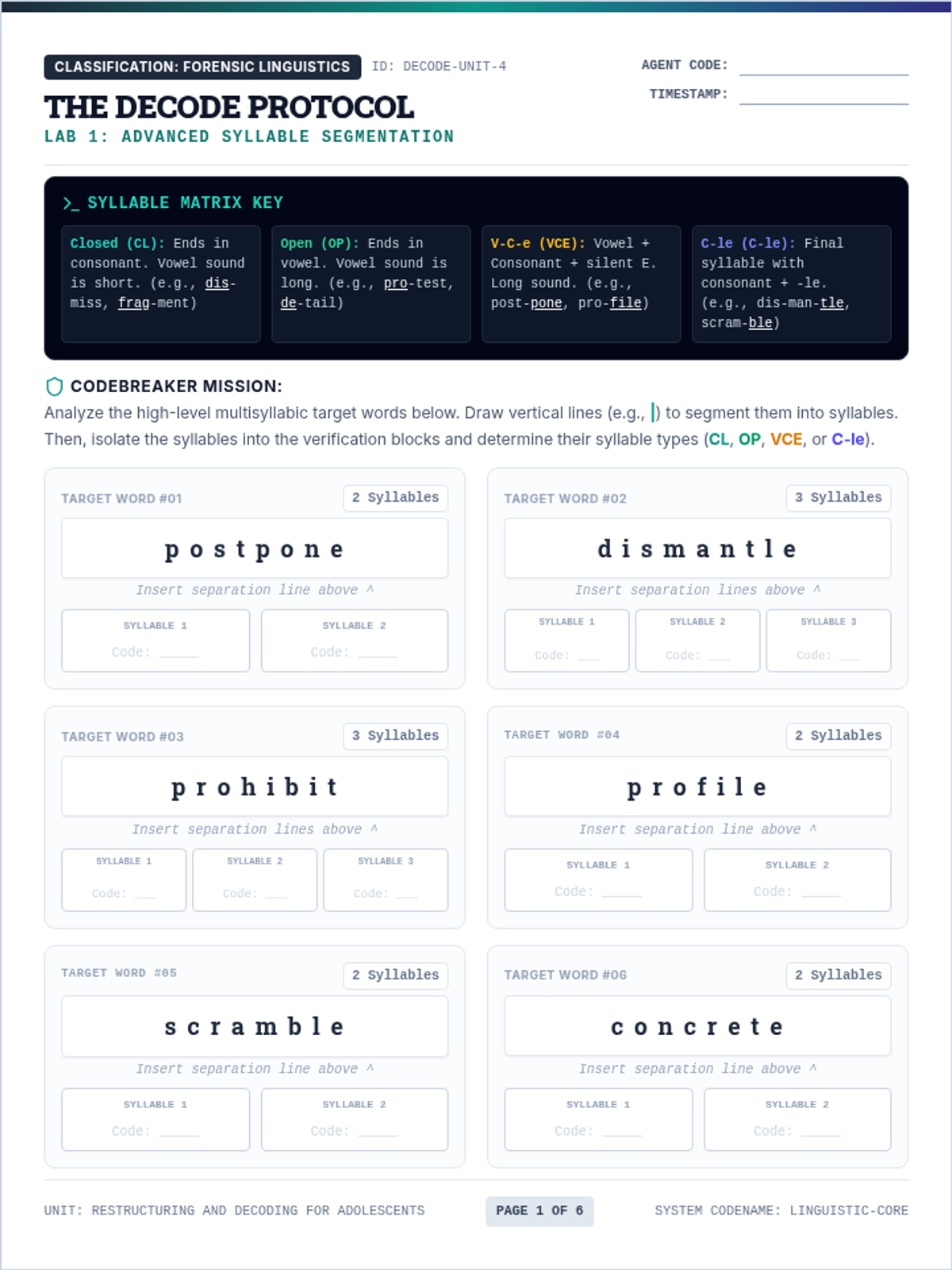
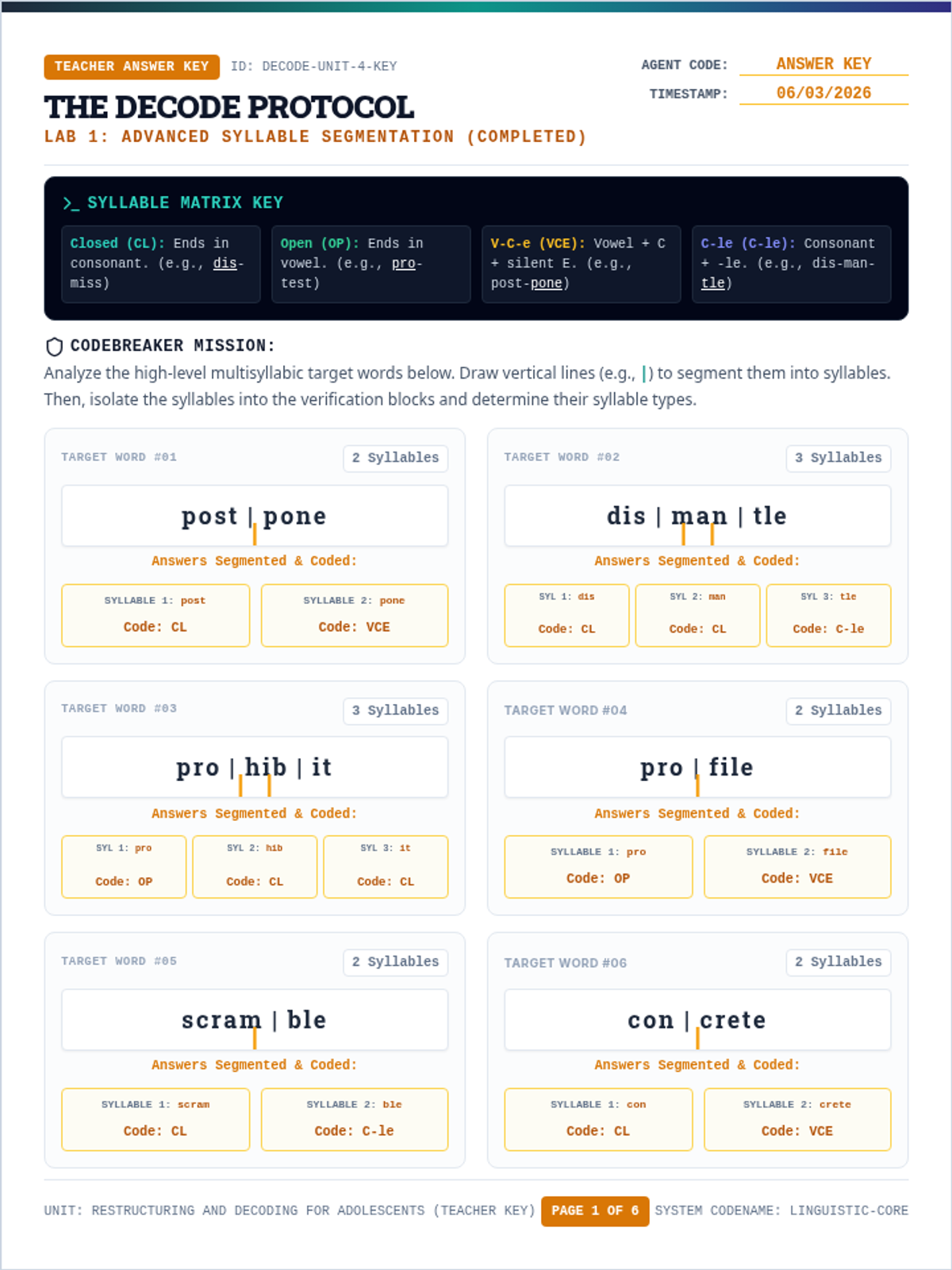
A comprehensive phonics and syllable review unit focusing on vowel teams, r-controlled vowels, syllable division, and affix-based word building. Includes a multi-page student review packet and a corresponding teacher answer key.
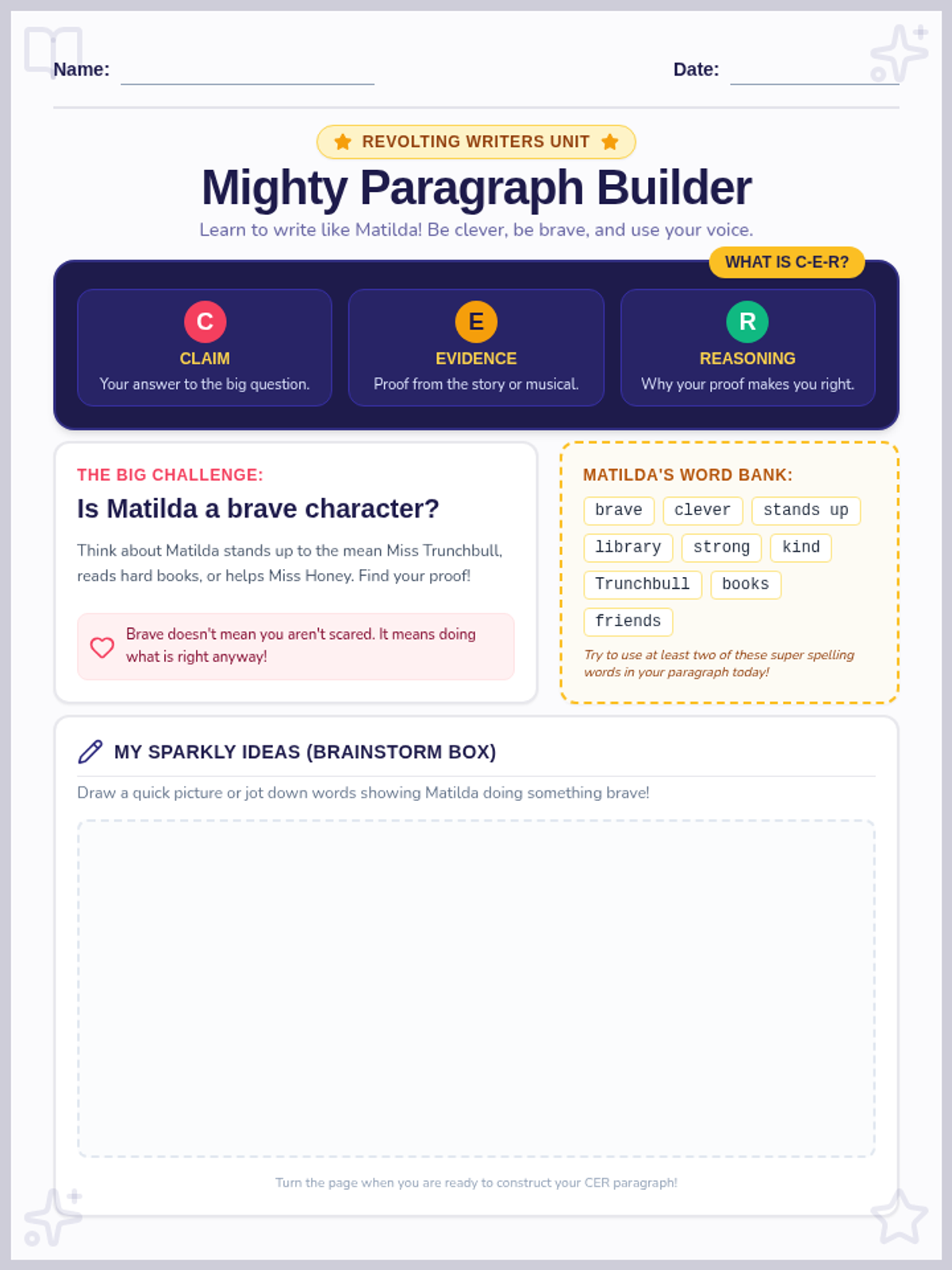
A primary writing lesson themed around Matilda the Musical, teaching young students how to construct strong arguments using the Claim, Evidence, Reasoning (CER) model with friendly scaffolding.
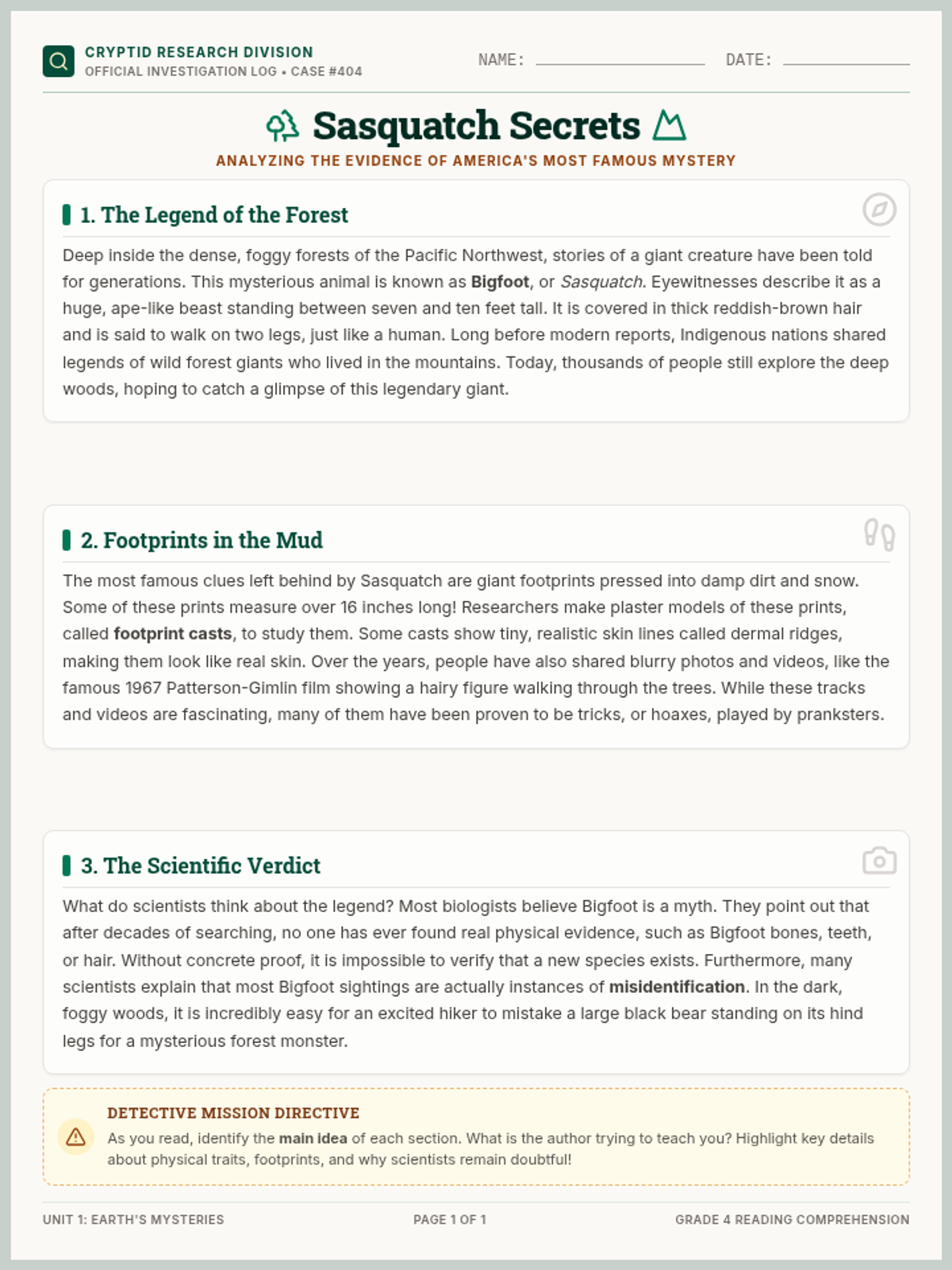
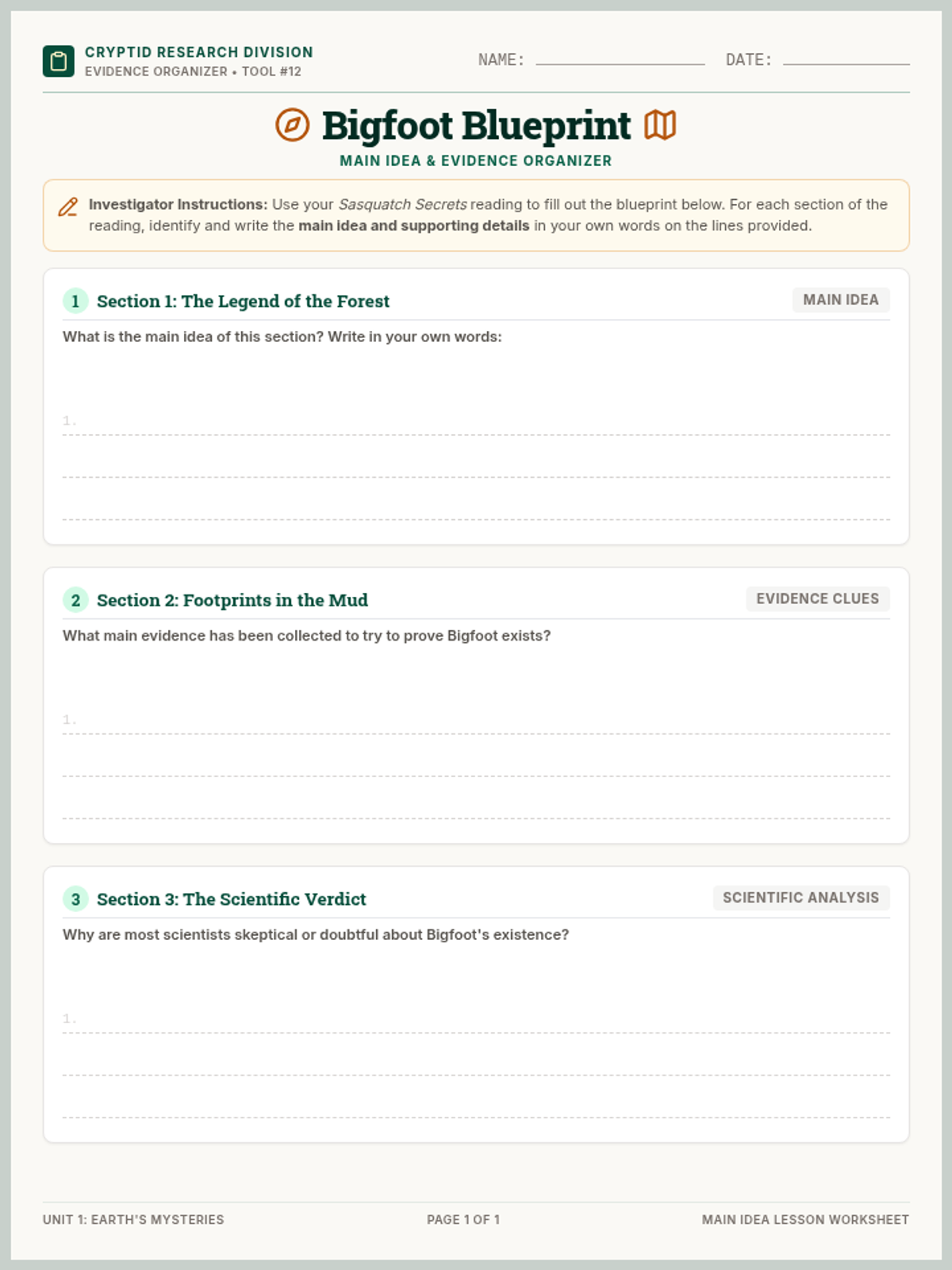
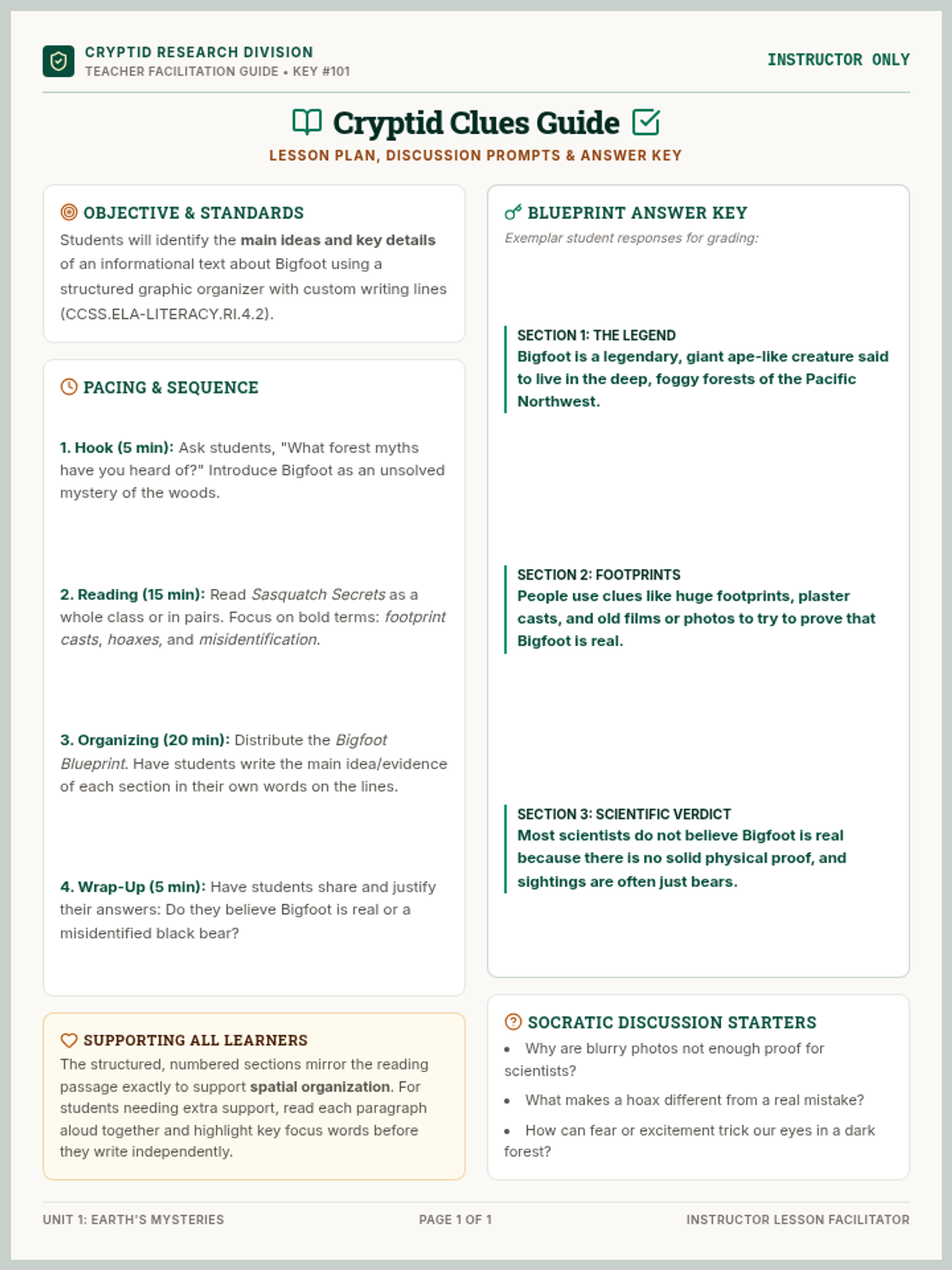
An engaging 4th-grade lesson exploring the mystery of Bigfoot through informational reading, evidence analysis, and main-idea graphic organizers. This lesson includes scaffolded writing prompts and sentence starters for diverse learners.
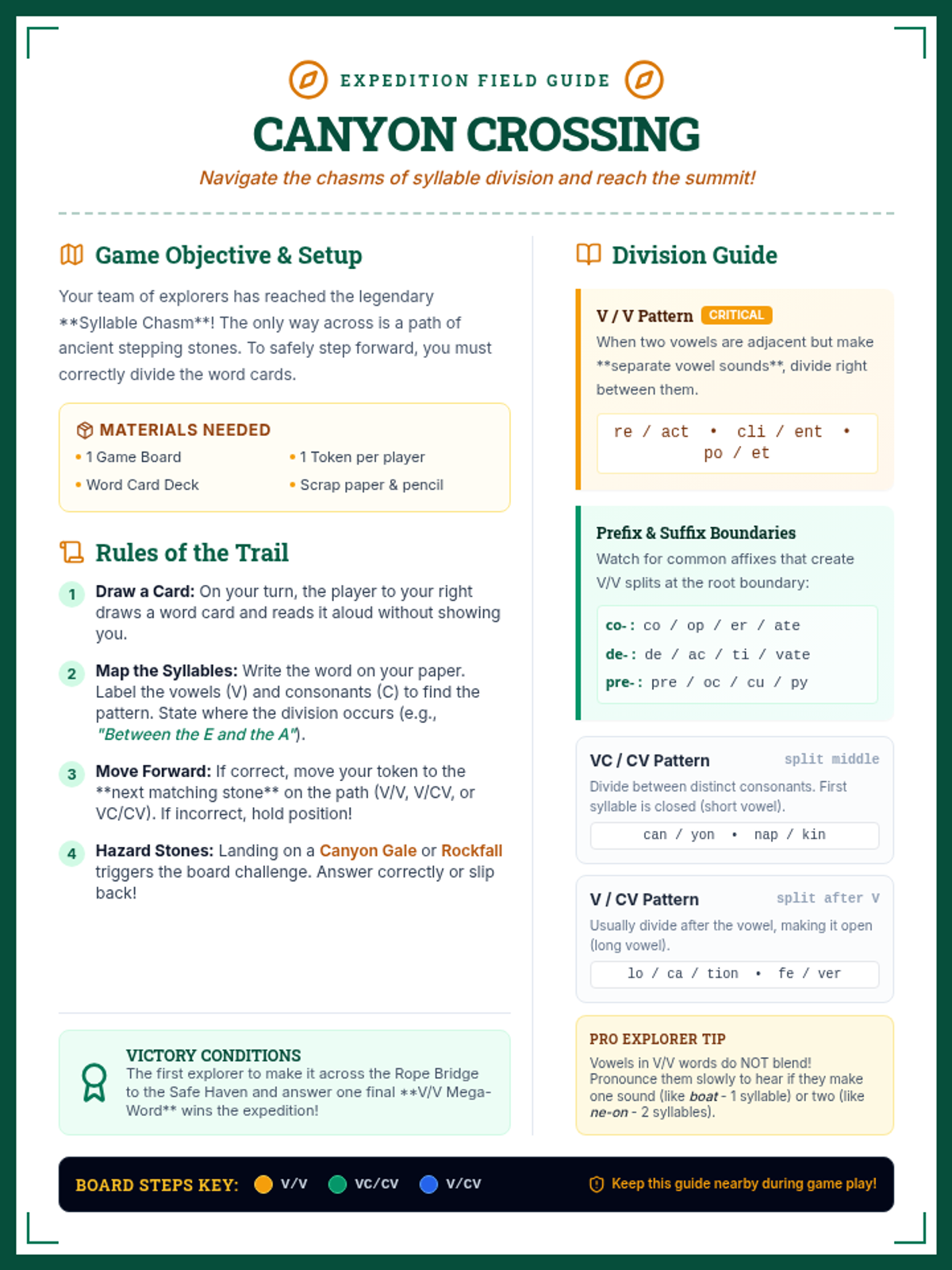
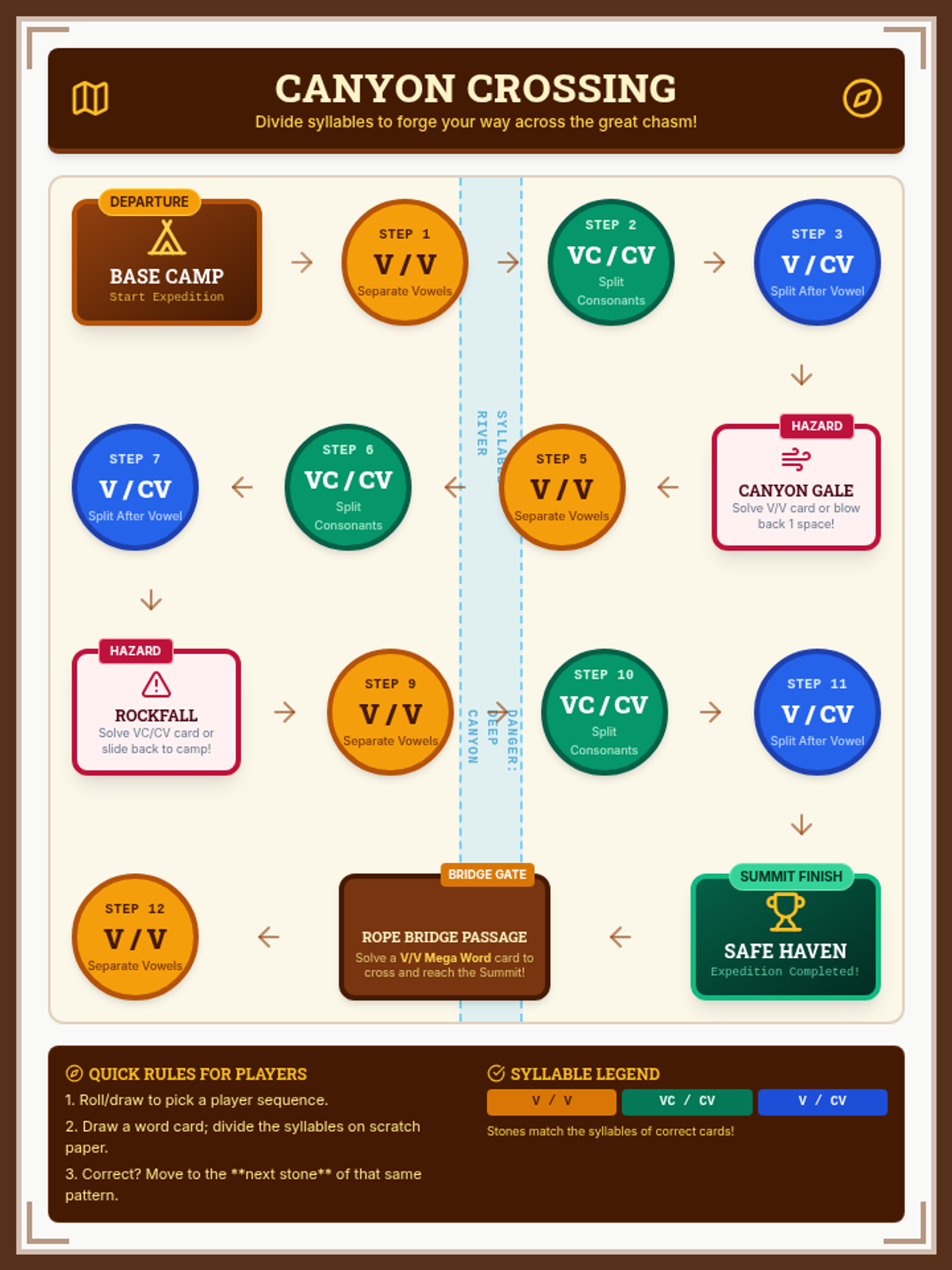
A cooperative and competitive educational board game designed to help students master multisyllabic syllable division. Students navigate a canyon crossing path by correctly dividing words with V/V, VC/CV, and V/CV patterns, with a special focus on prefix/suffix boundaries.
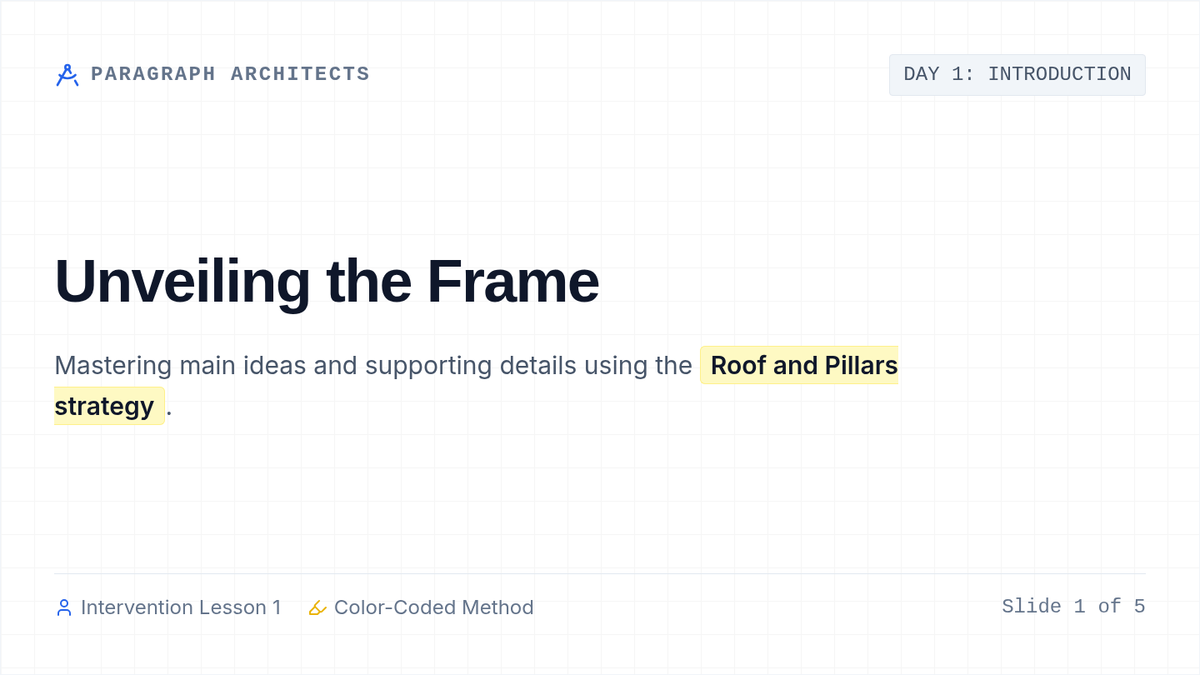
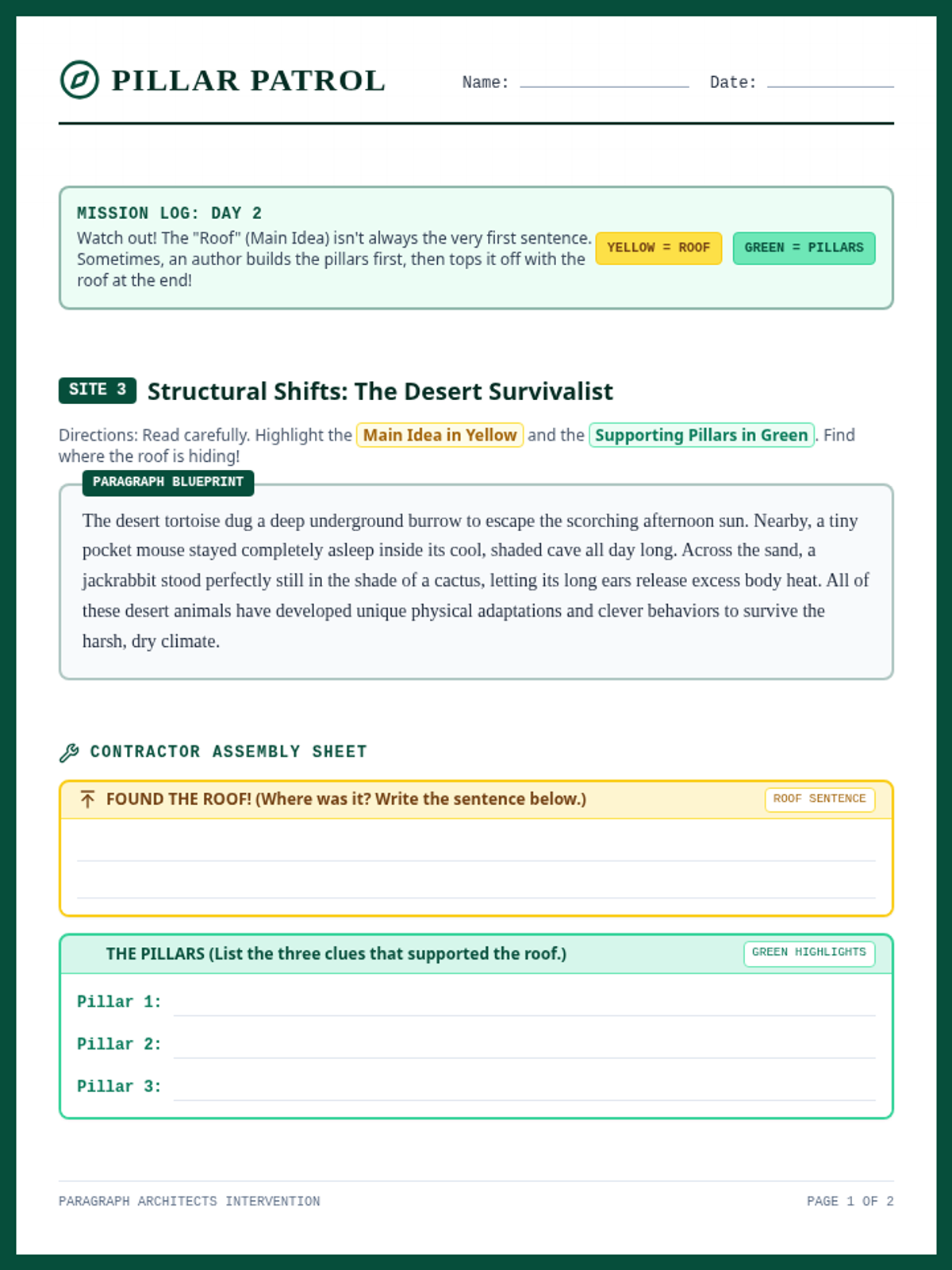
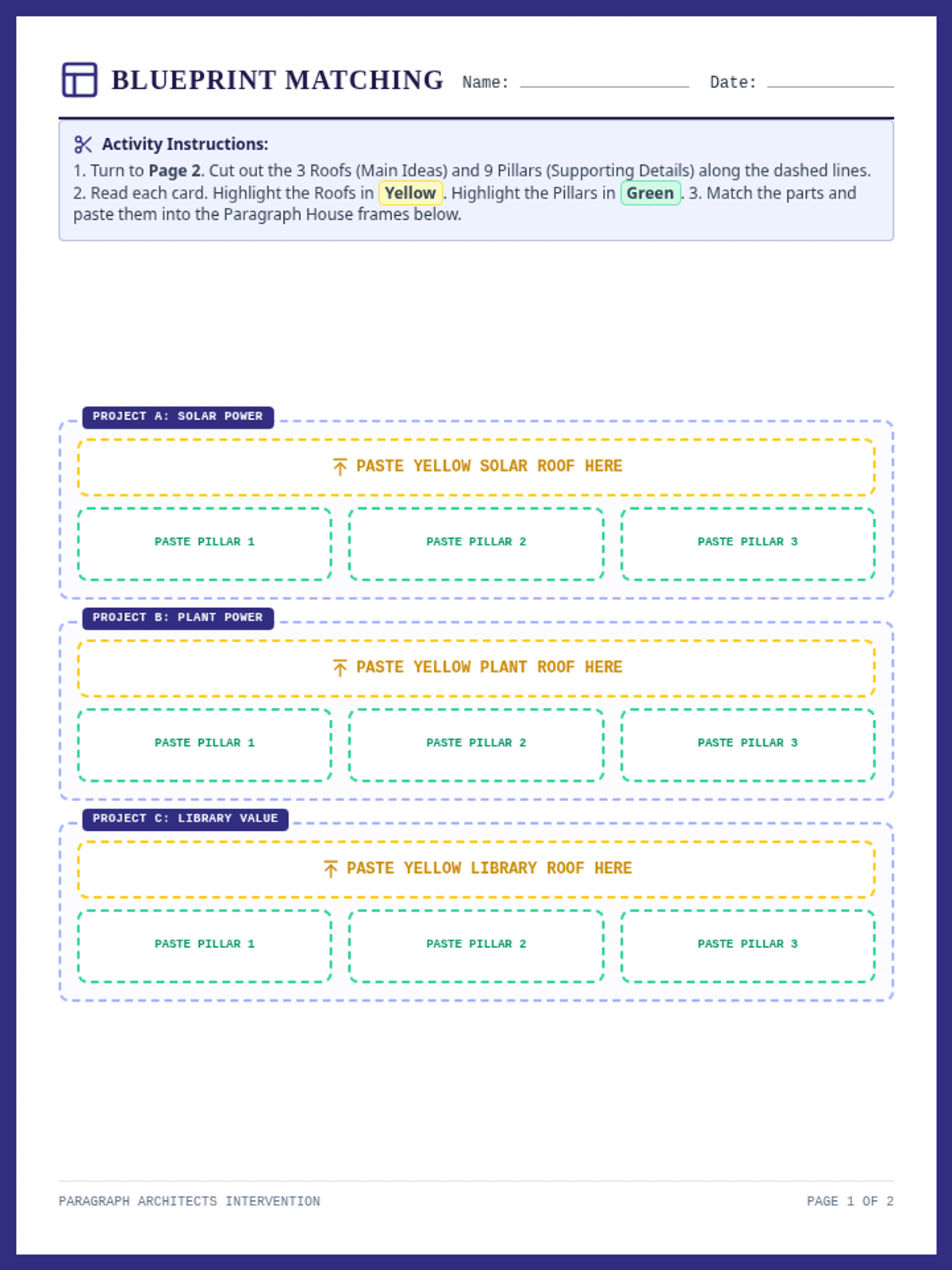
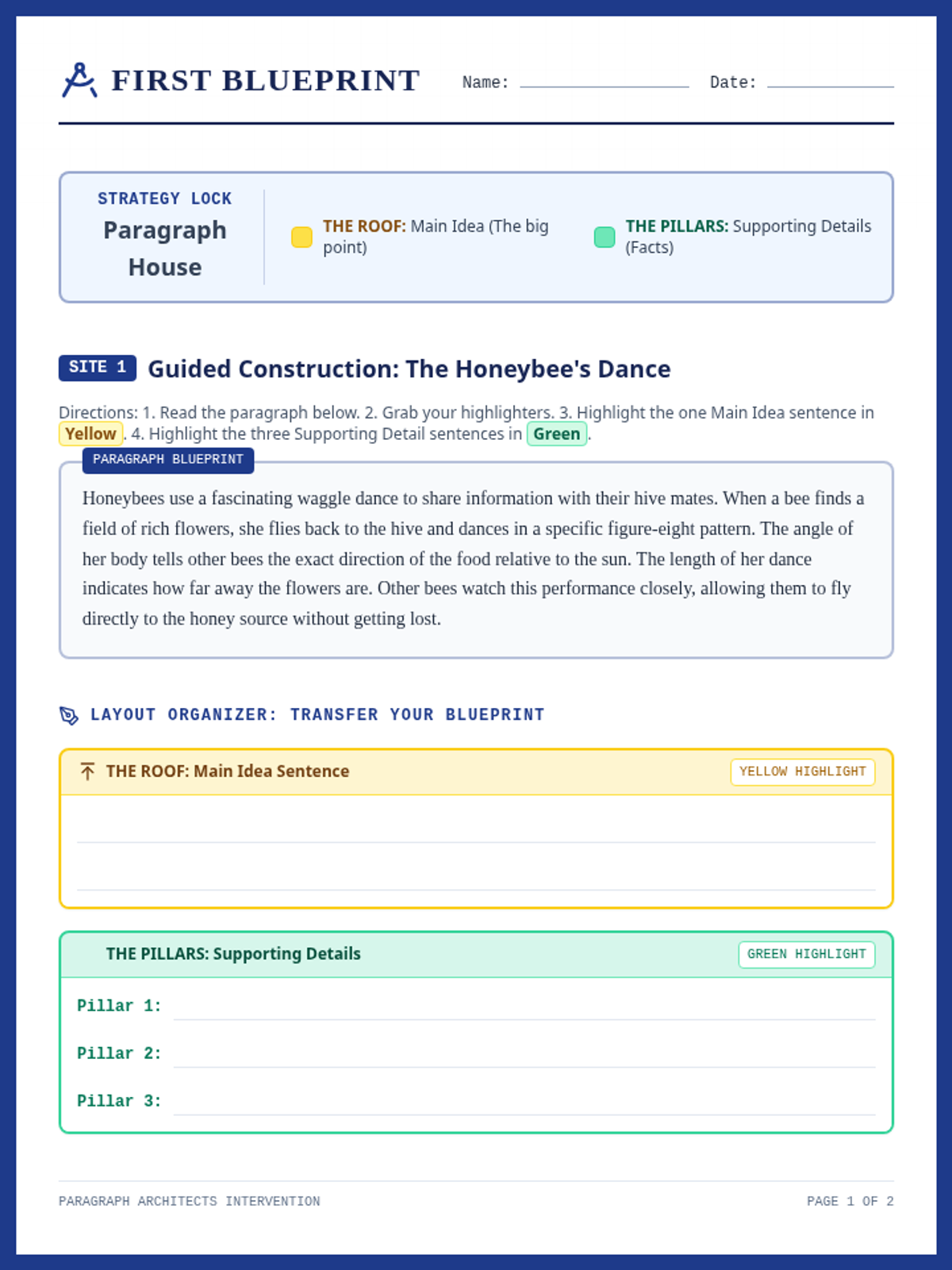
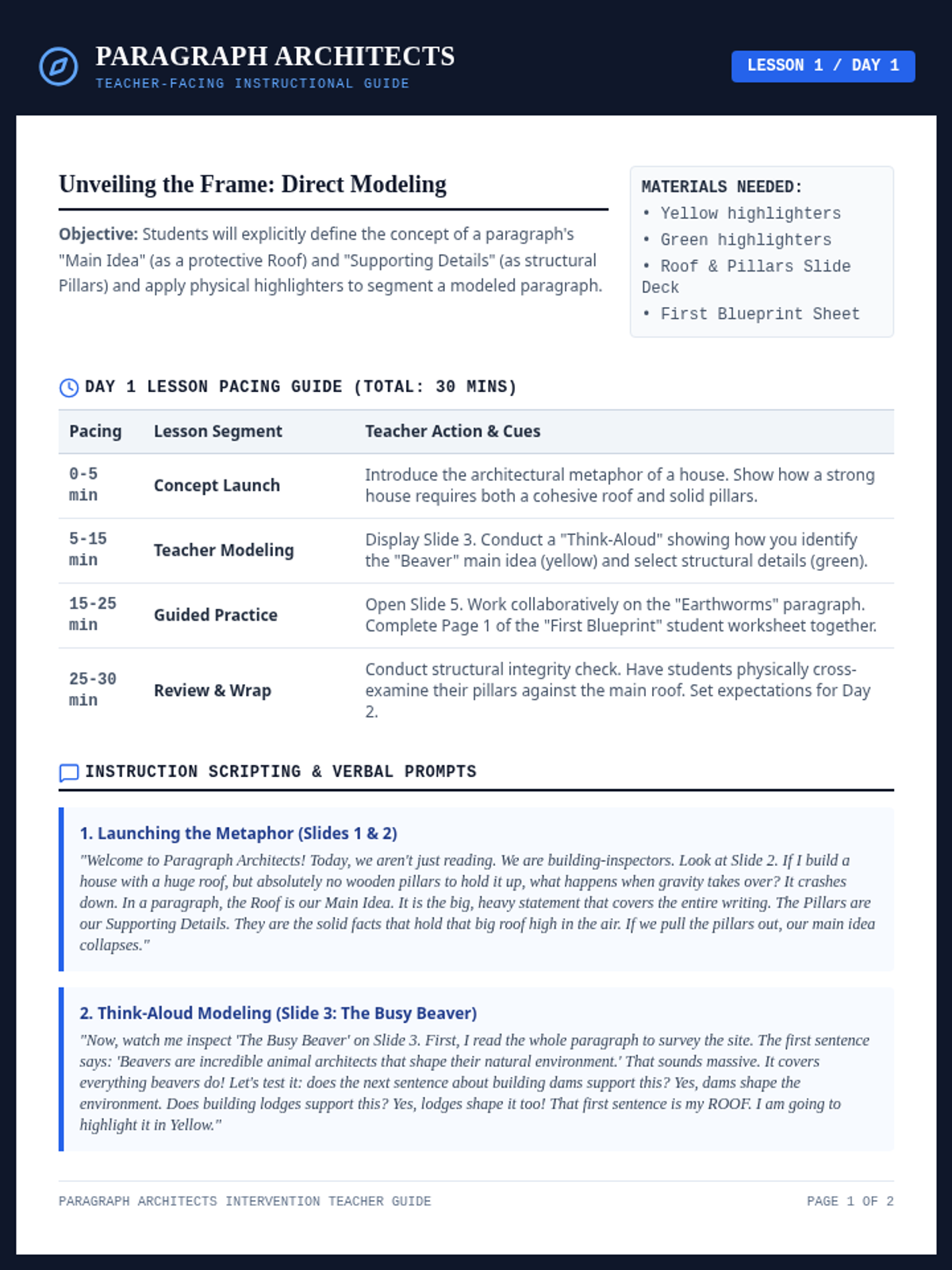
An explicit modeling lesson focusing on introducing the 'Roof' (Main Idea) and 'Pillars' (Supporting Details) concept. Students learn paragraph structure and watch live highlighting demonstrations.
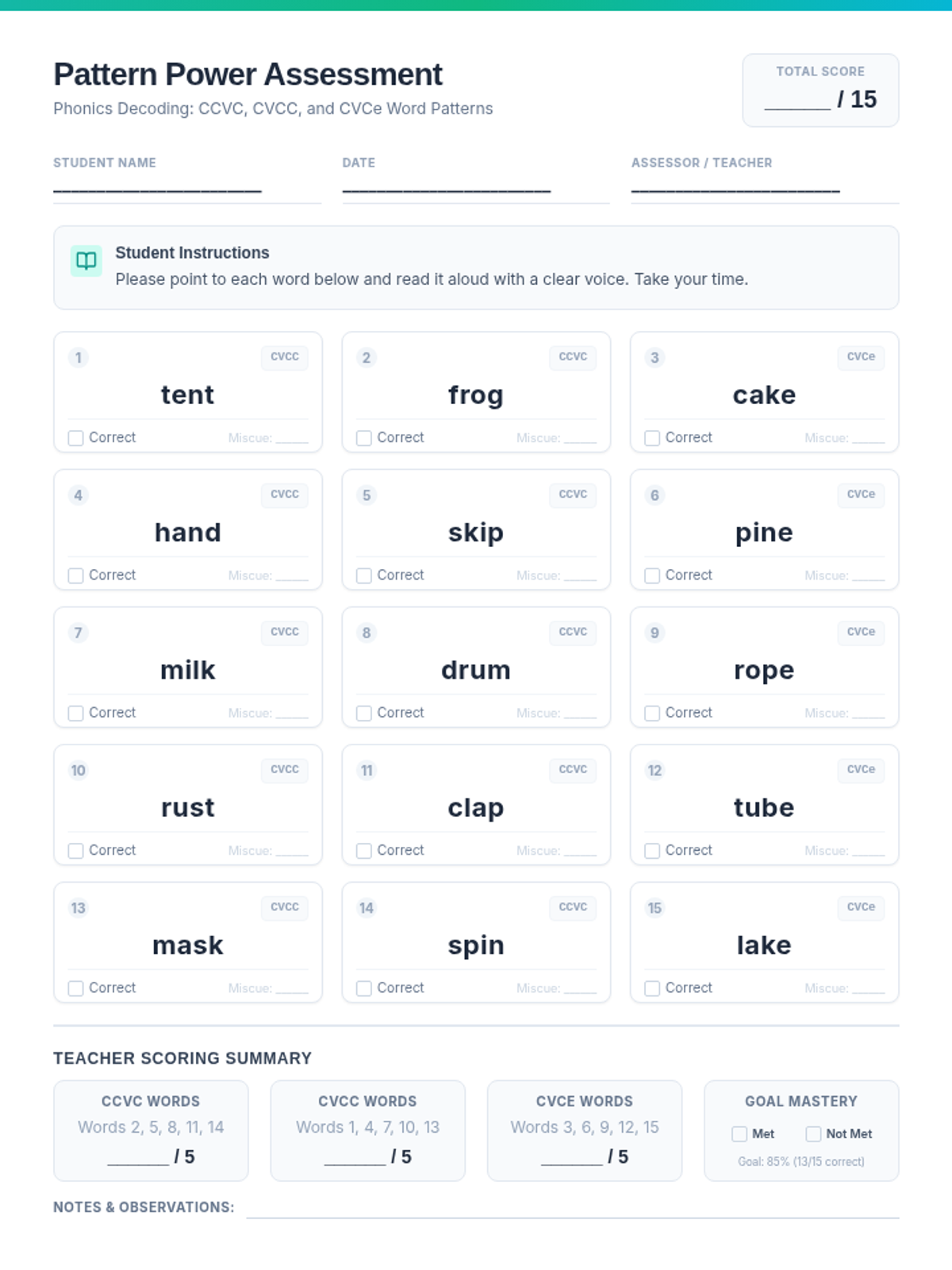
A clean, focused phonic assessment lesson designed to test CCVC, CVCC, and CVCe word pattern decoding without scaffolds.
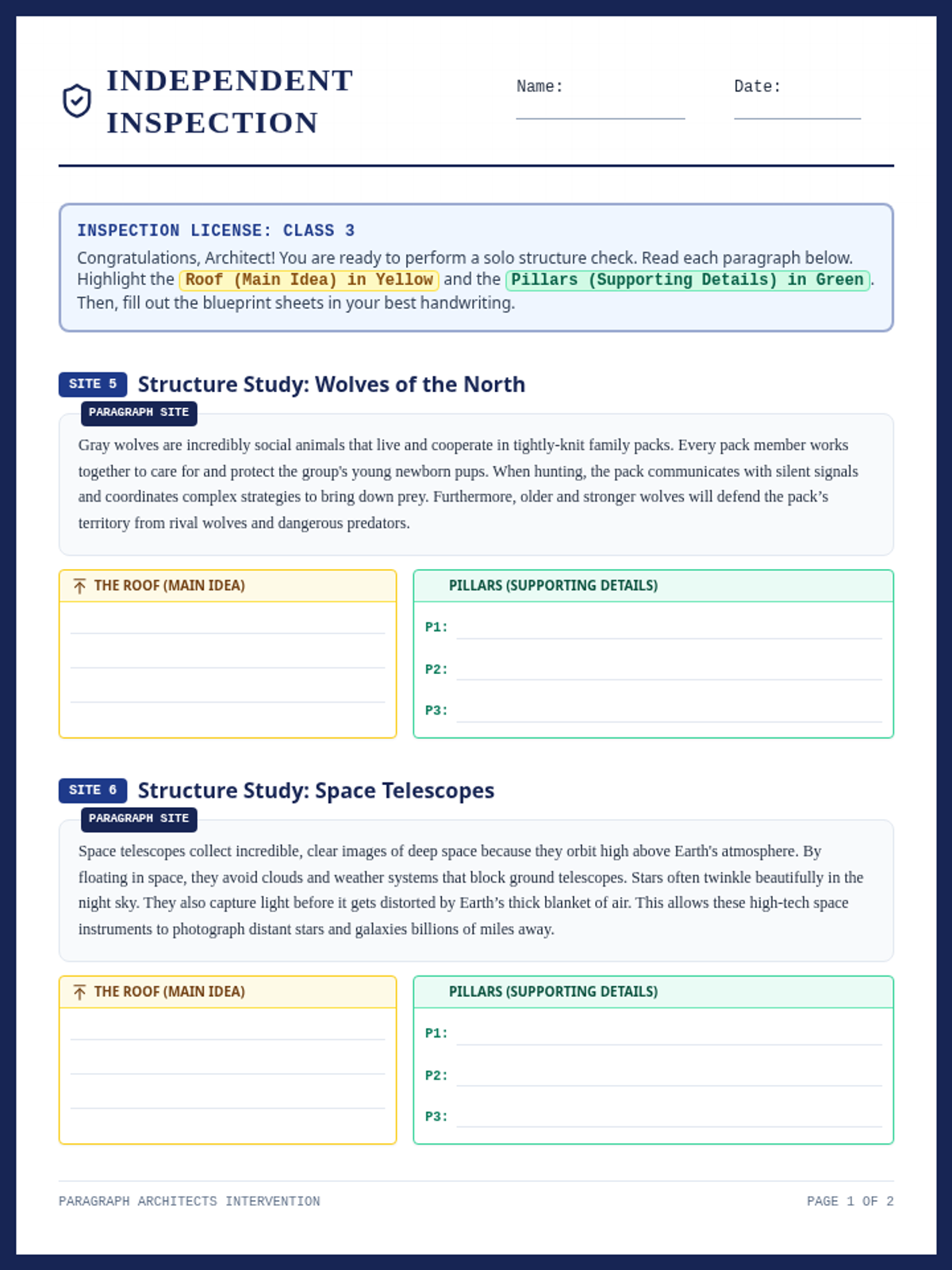
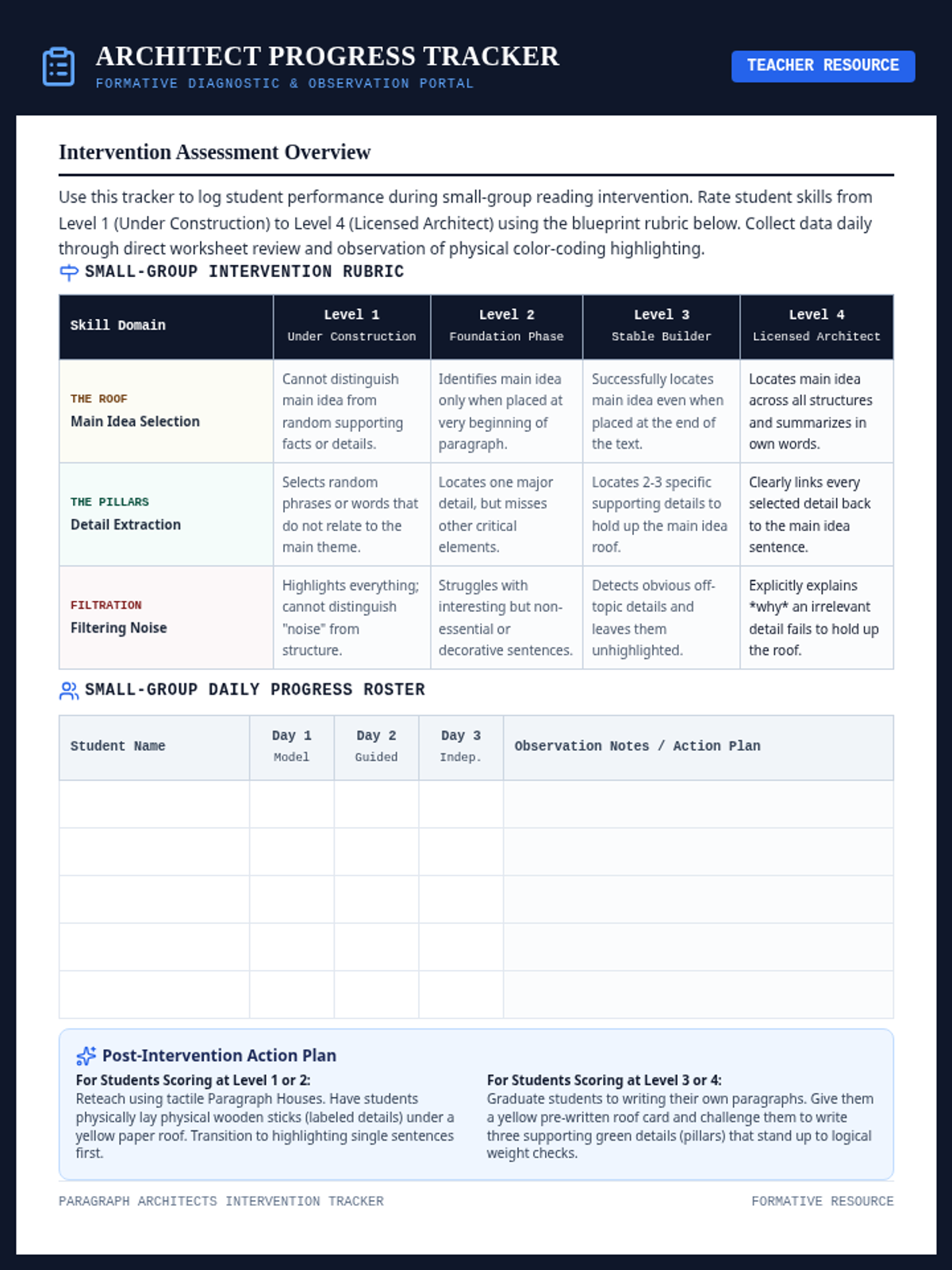
Day 3 focuses on independent execution and performance monitoring. Students independently read, highlight, and analyze paragraph structures to demonstrate mastery, followed by a collaborative review.
Day 2 transitions to guided practice with fading scaffolds. Students collaborate to highlight and unpack paragraphs, learning to distinguish between critical supporting details and interesting but non-essential information.
Day 1 of the intervention focuses on explicit teacher modeling of the 'Roof' (Main Idea) and 'Pillars' (Supporting Details) concept. Students learn how a paragraph is built, watch a live highlighting demonstration, and participate in highly guided practice using physical highlighters.
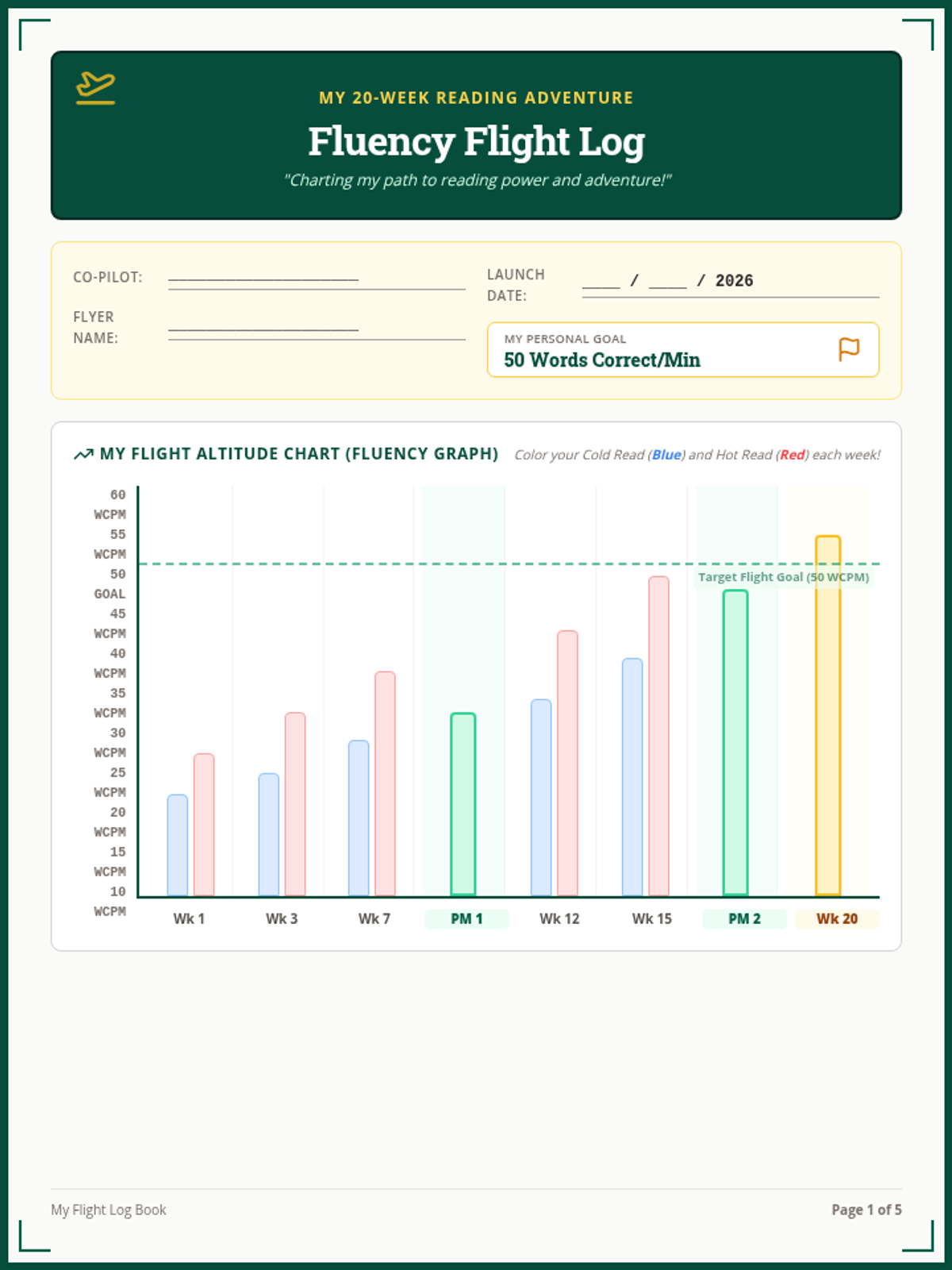
Comprehensive student-facing reading booklet containing the graded passages, systematic phonics warm-ups, progress monitoring tracking sheets, and cognitive-building DOK questions.
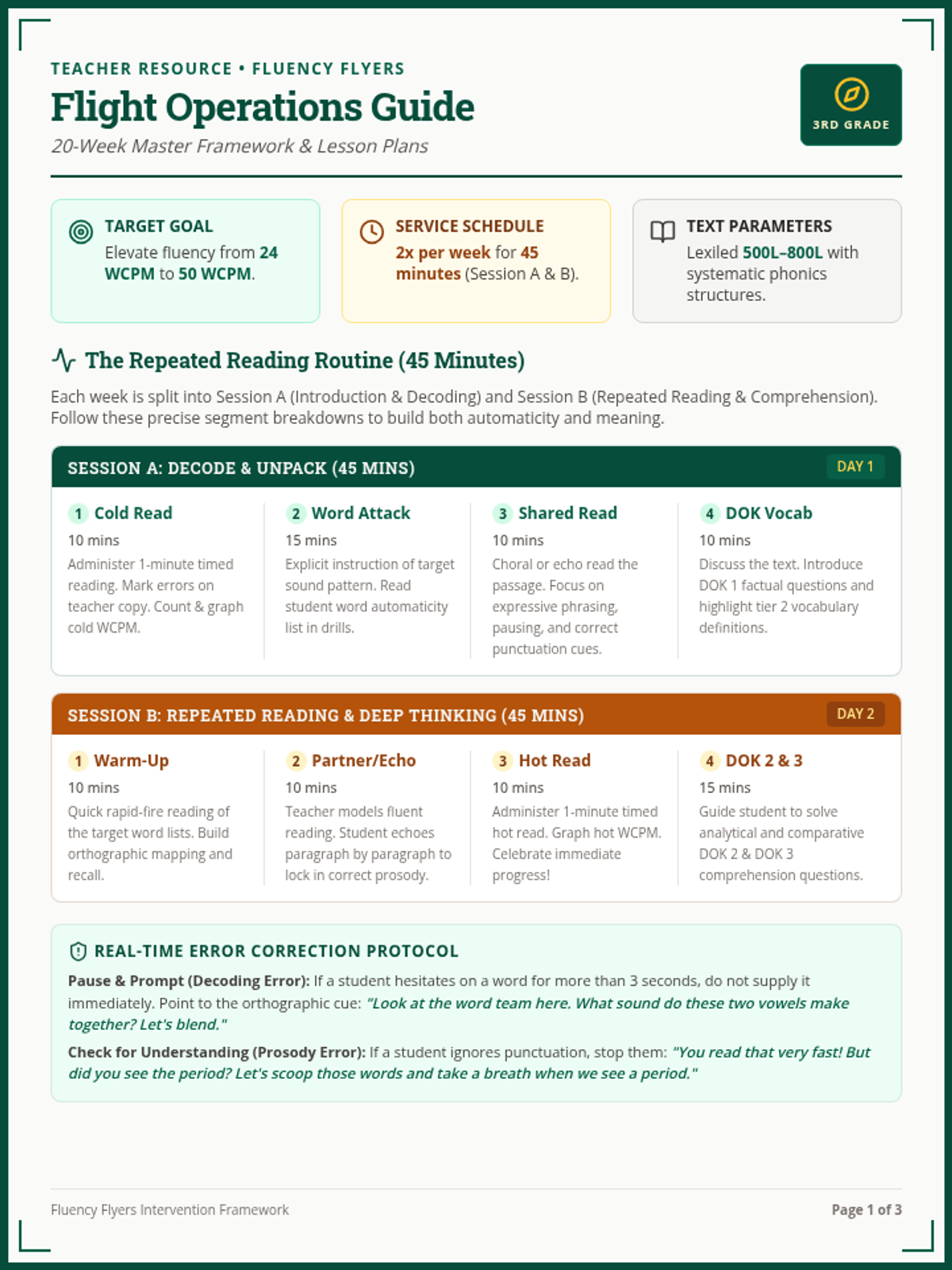
Master instructional framework and weekly lesson plan bundle for the 20-week intervention. Outlines the 45-minute twice-weekly session routines, cold/hot reading protocols, phonics skill schedules, and administrative guidelines for progress monitoring.
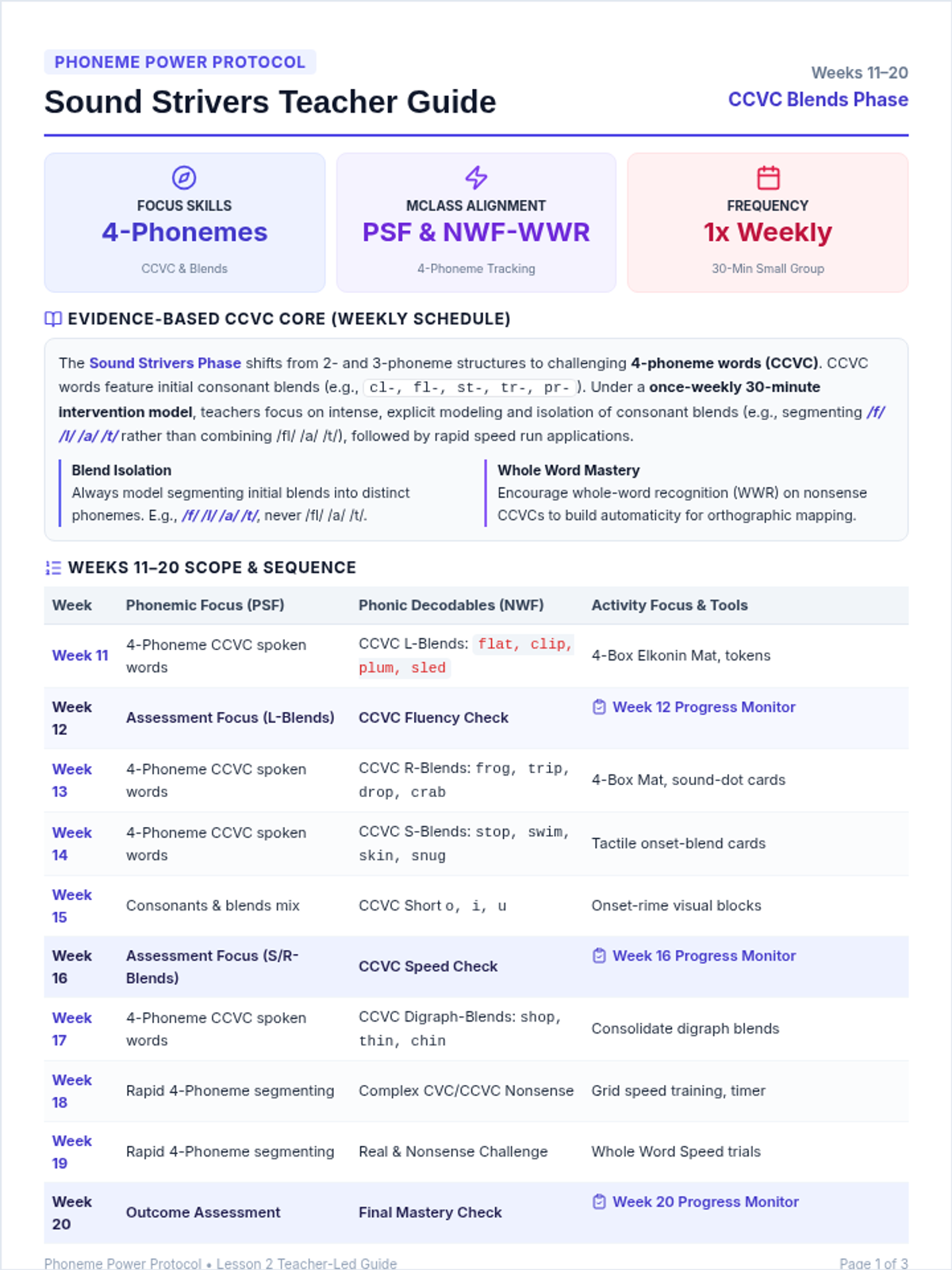
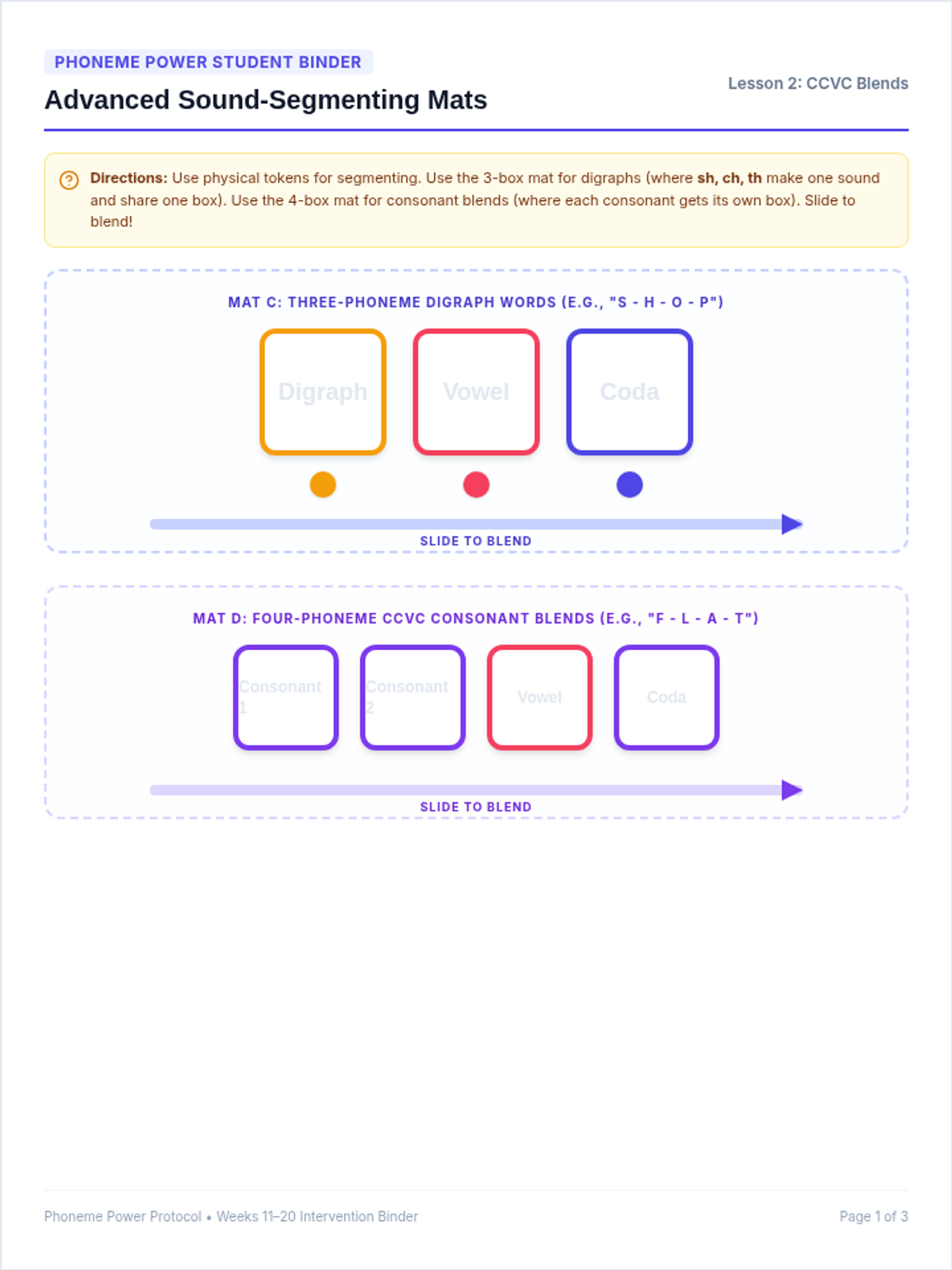
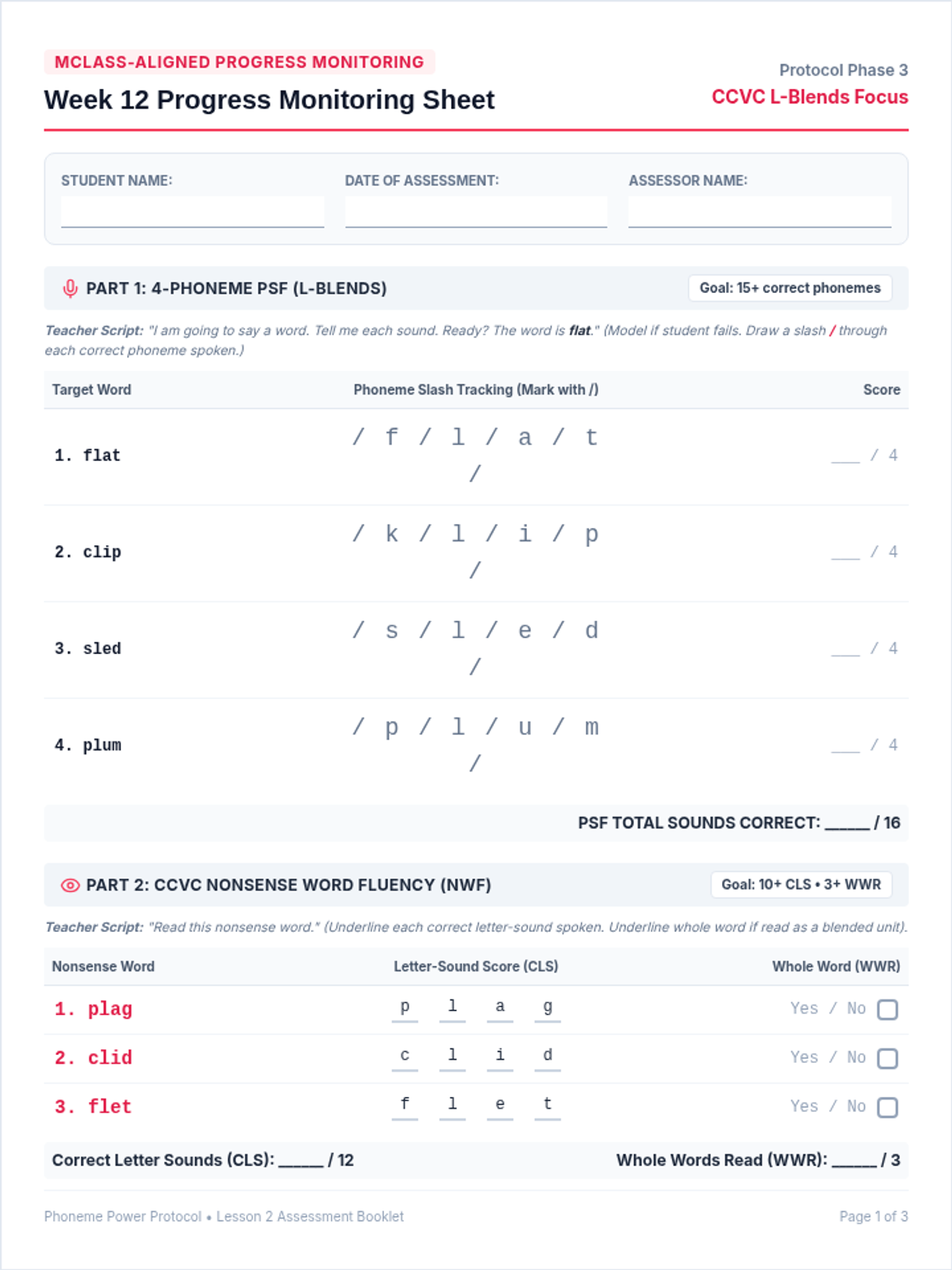
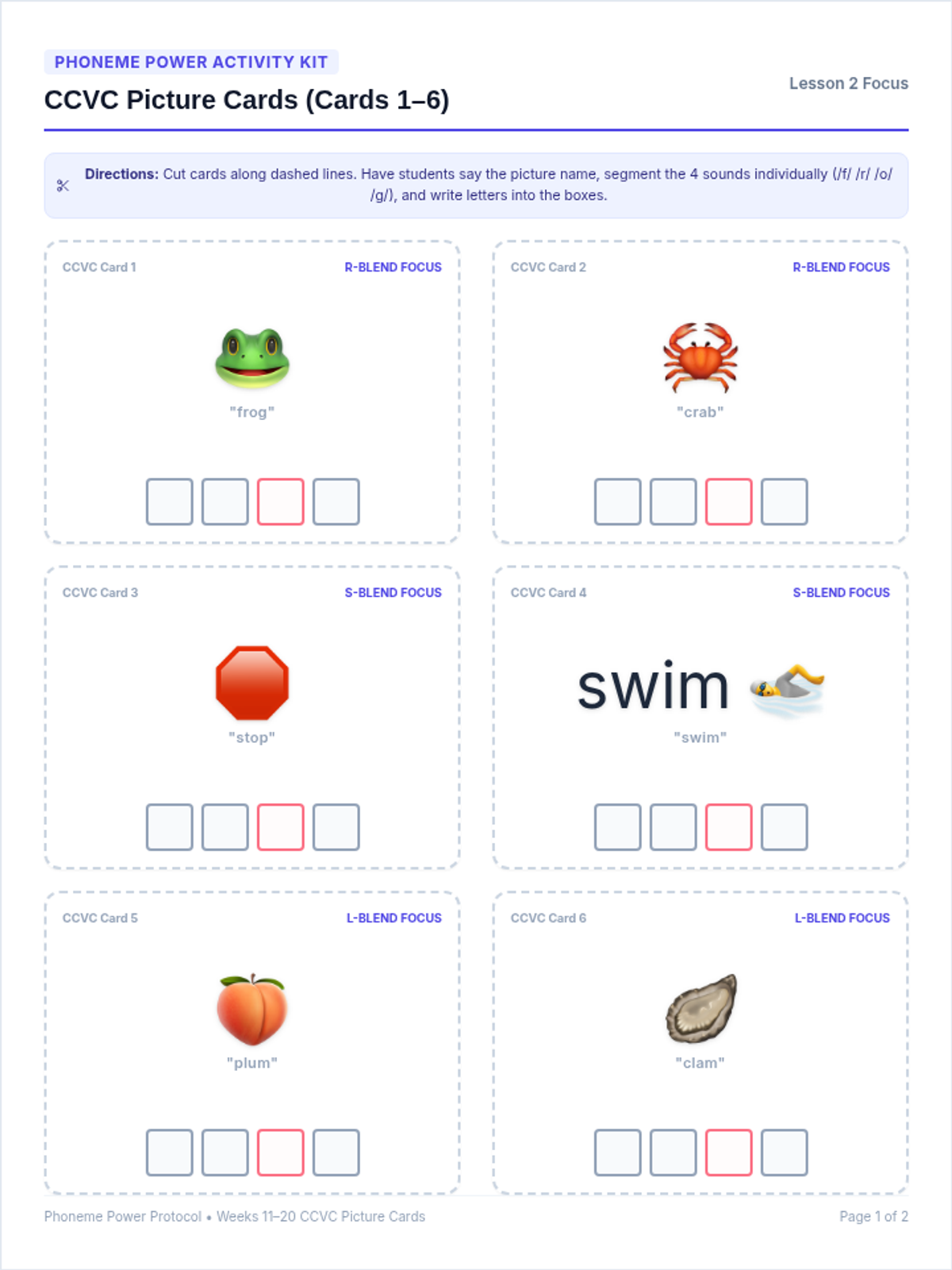
Weeks 11-20 of the Phoneme Power Protocol intervention, focusing on CCVC (consonant blends) and complex CVC words. Includes systematic small-group routines for 4-phoneme words, visual 4-box Elkonin mats, tactile onset-rime blending cards, and progress monitoring scoring sheets for Weeks 12, 16, and 20.