A 1st Grade lesson where students become 'Number Word Detectives' to identify and fix spelling errors in number words 1-10 using a video reference.
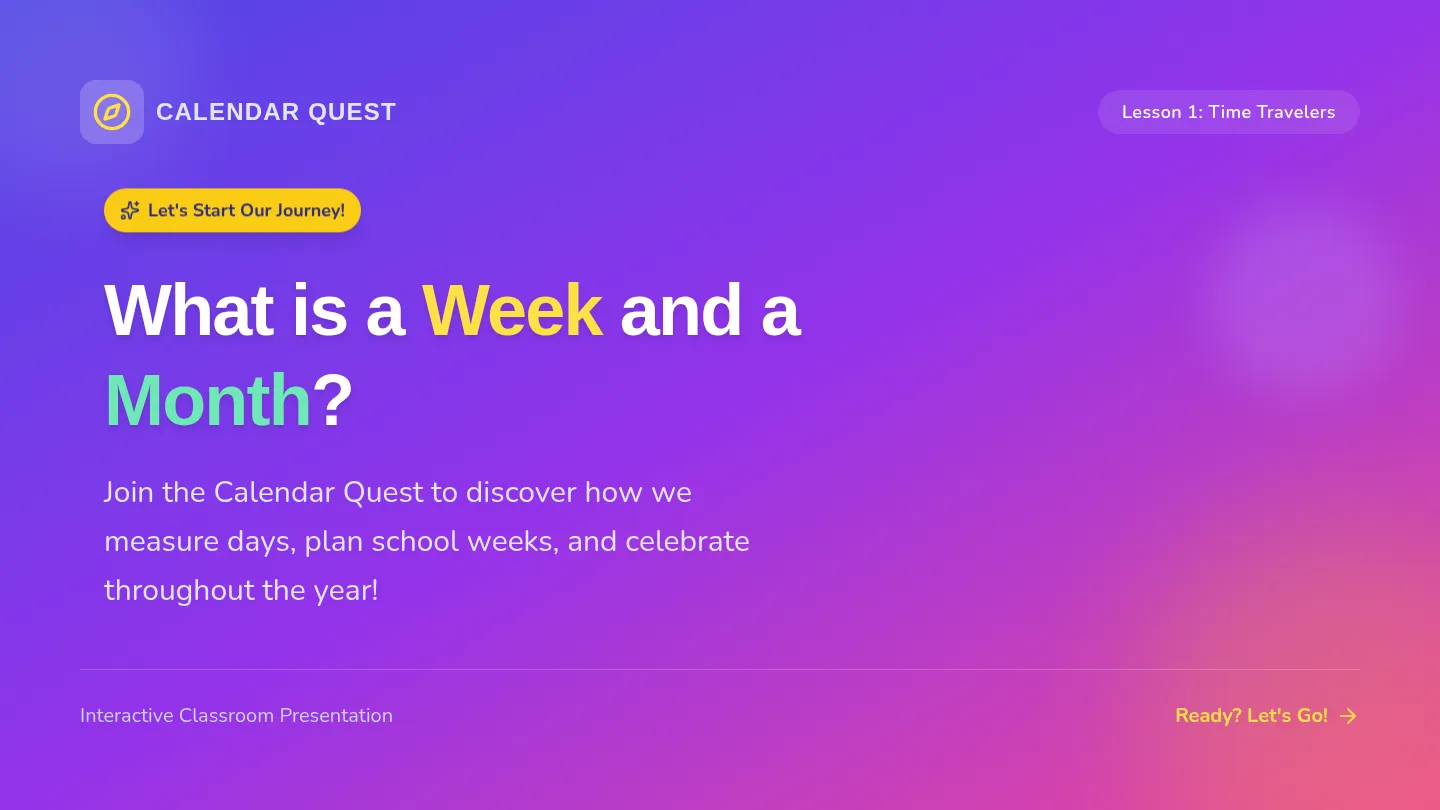
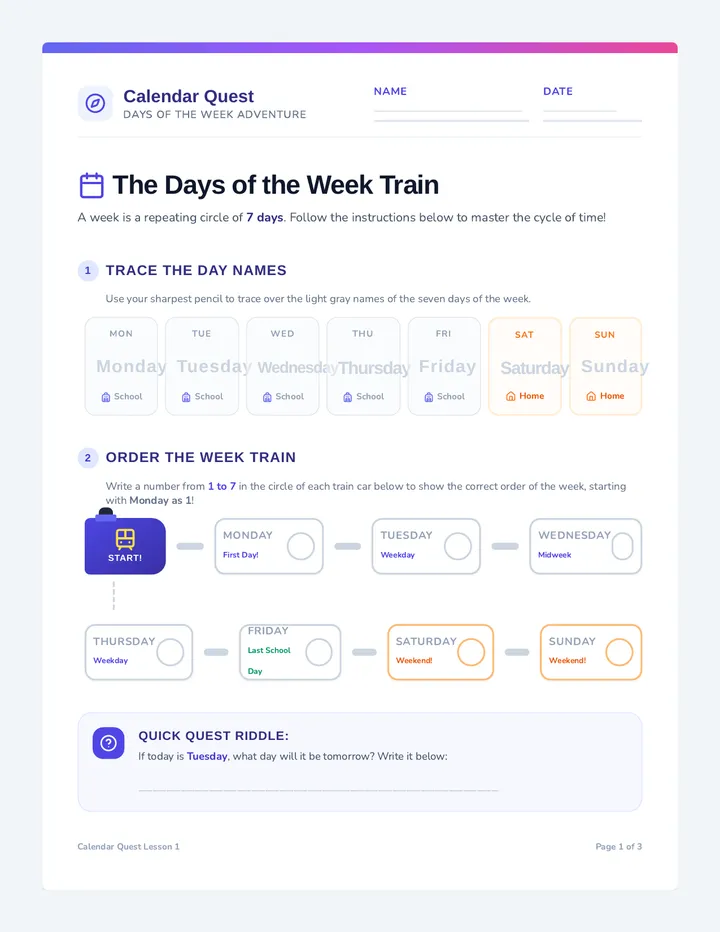
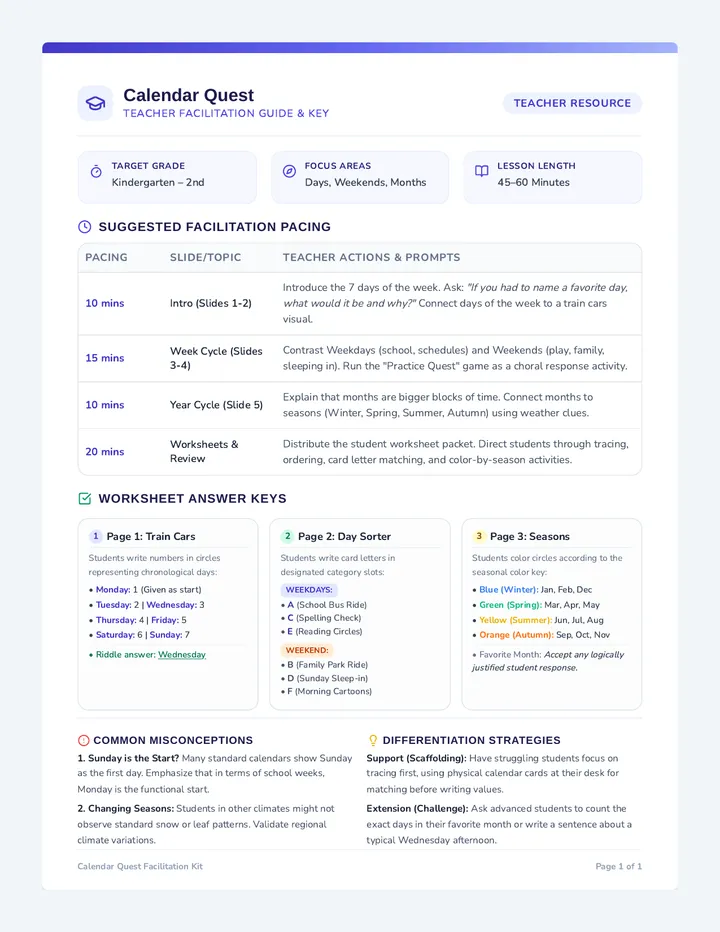
A foundational lesson introducing early elementary students to calendar concepts, including days of the week, weekdays versus weekends, and the twelve months of the year, contextualized with real-world school, home, and seasonal scenarios.
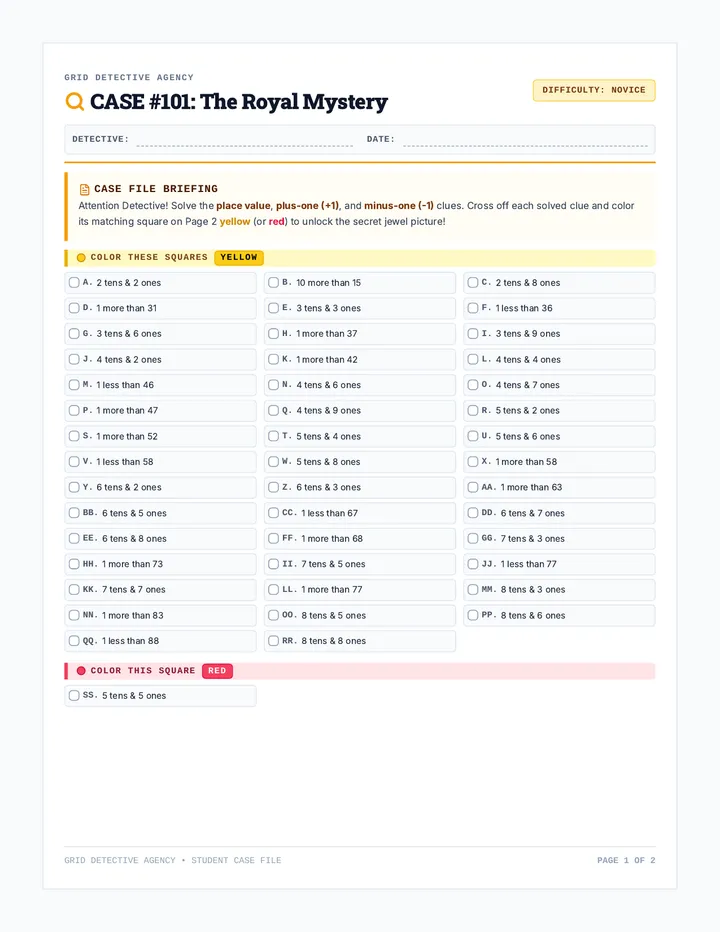
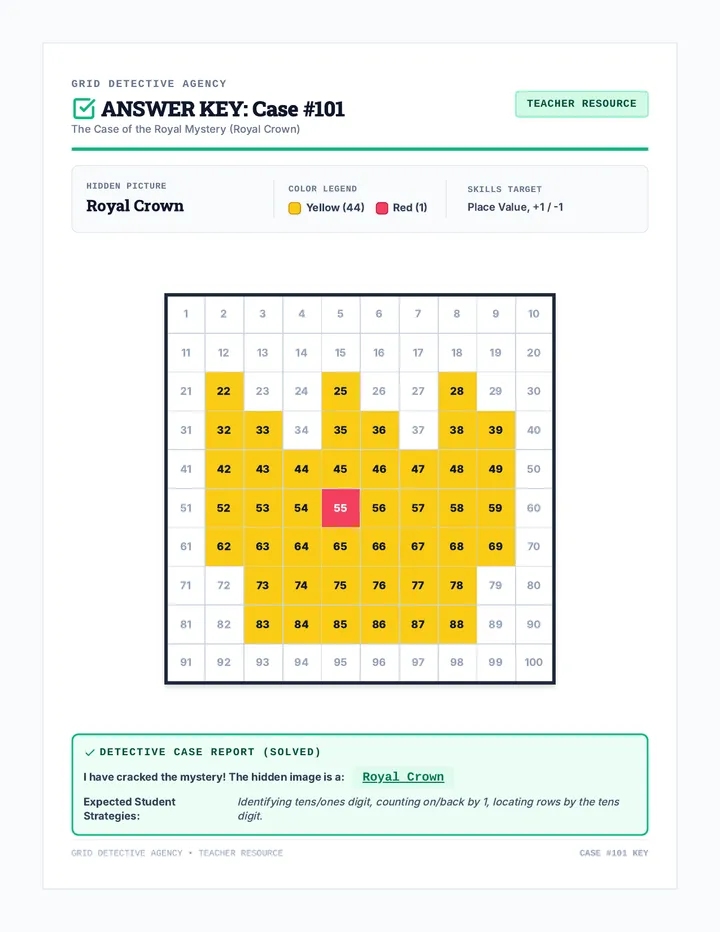
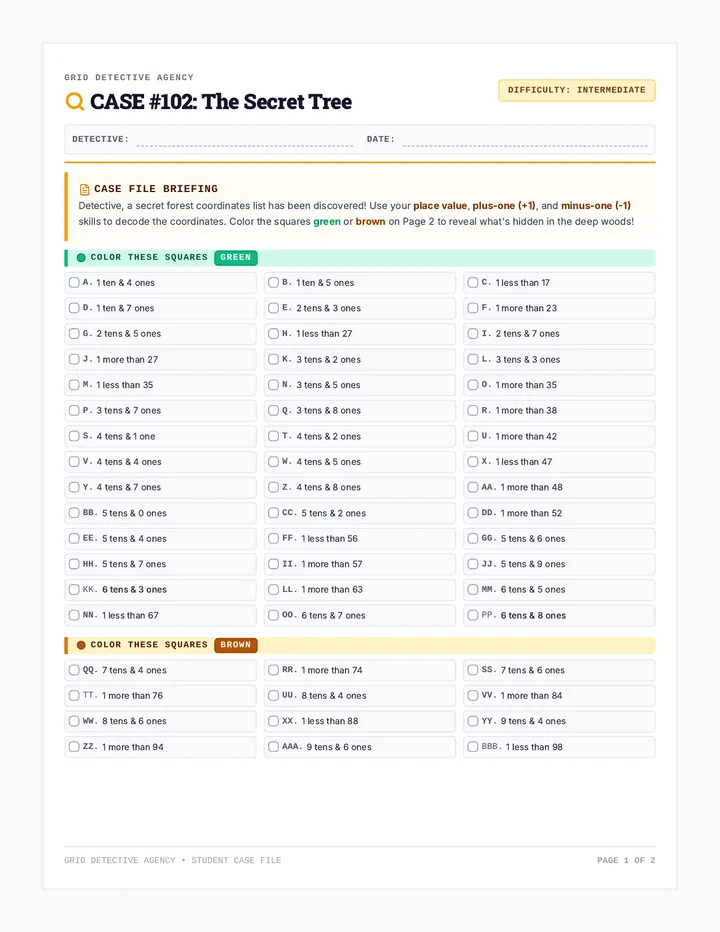
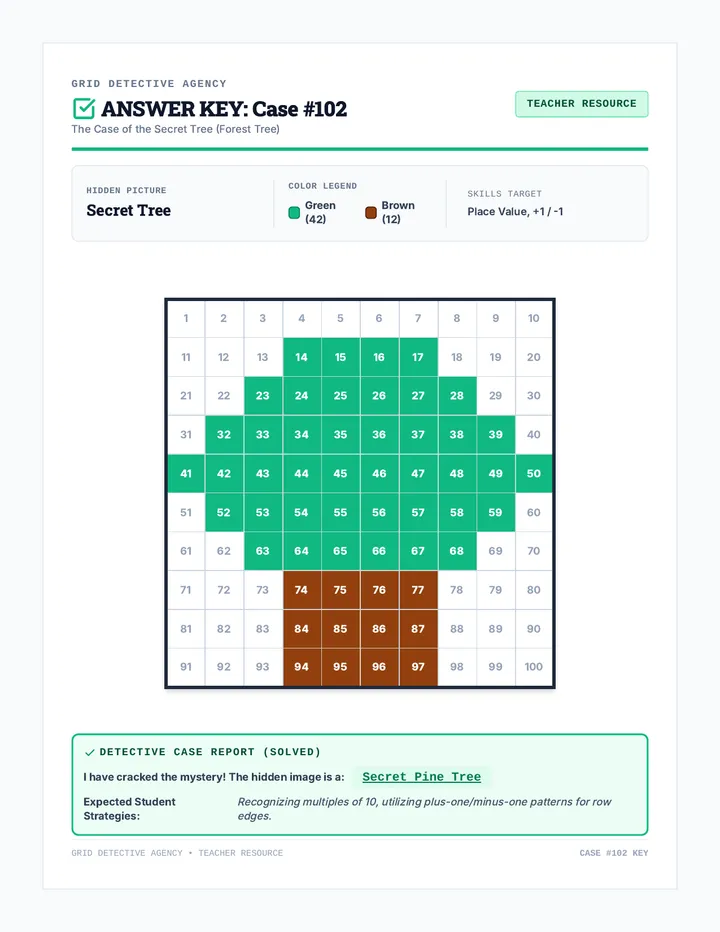
A fun, puzzle-packed math lesson where students become Grid Detectives, using place value clues (tens and ones, plus-one, minus-one) to solve 100-chart mystery pictures and unlock hidden pixel art drawings.
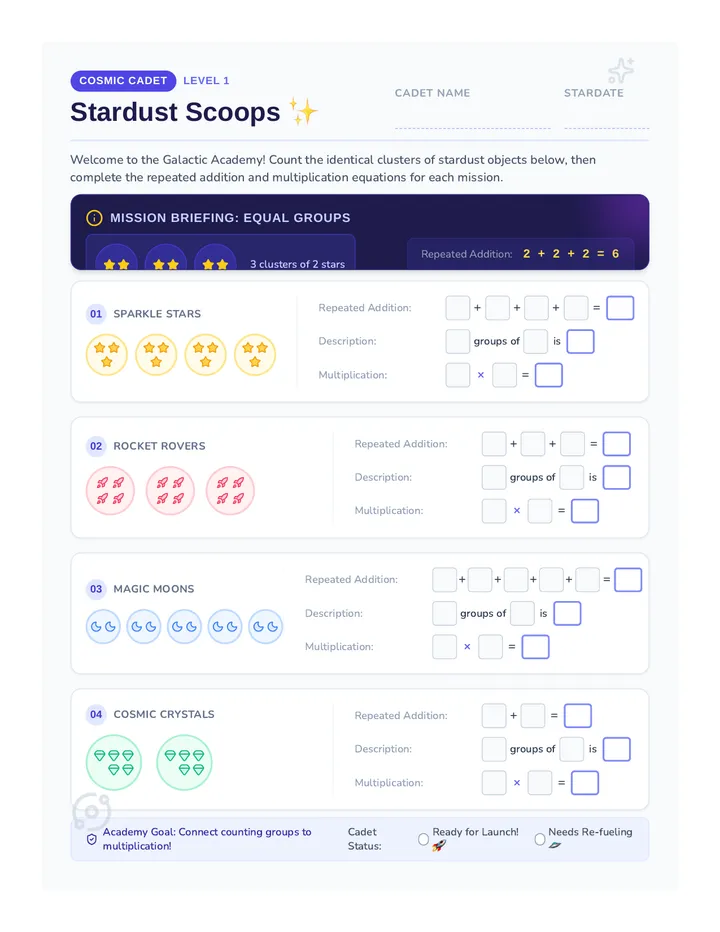
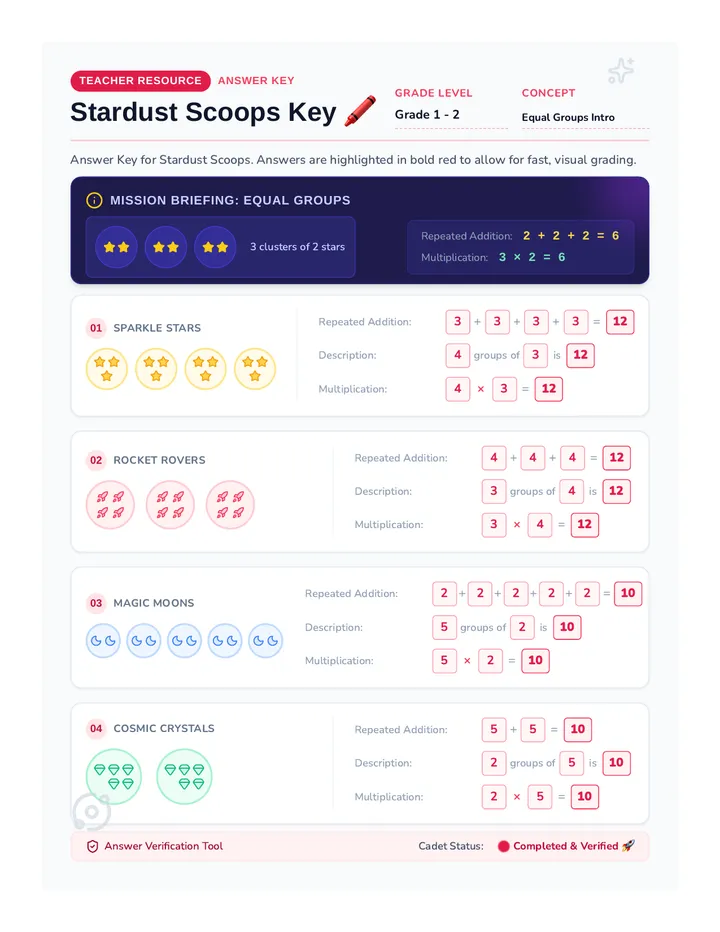
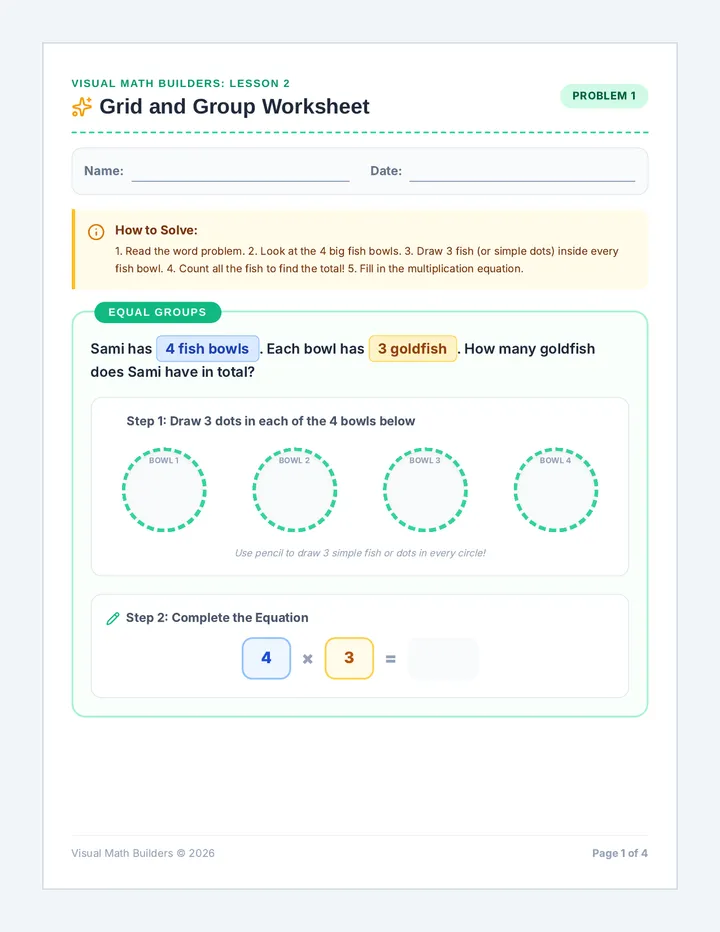
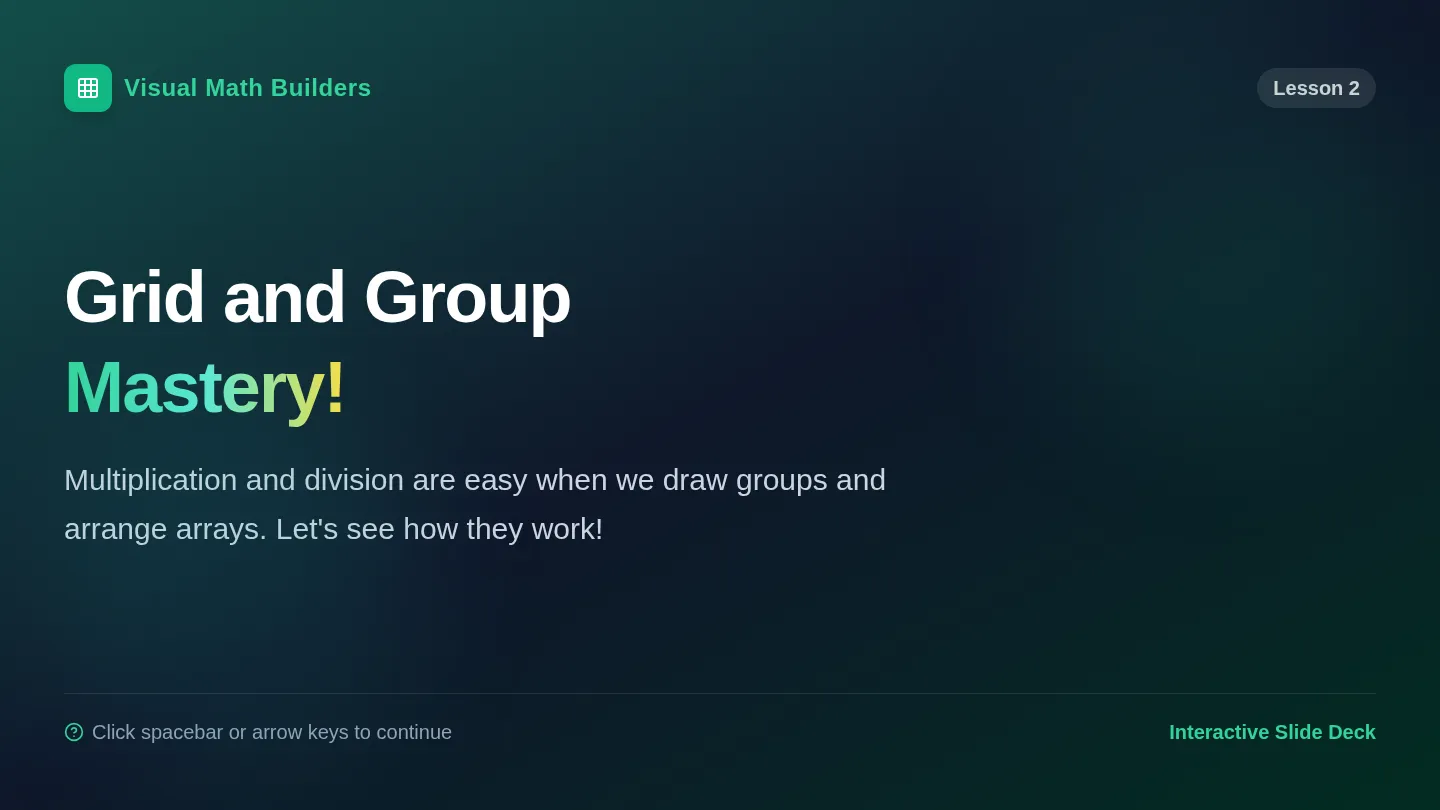
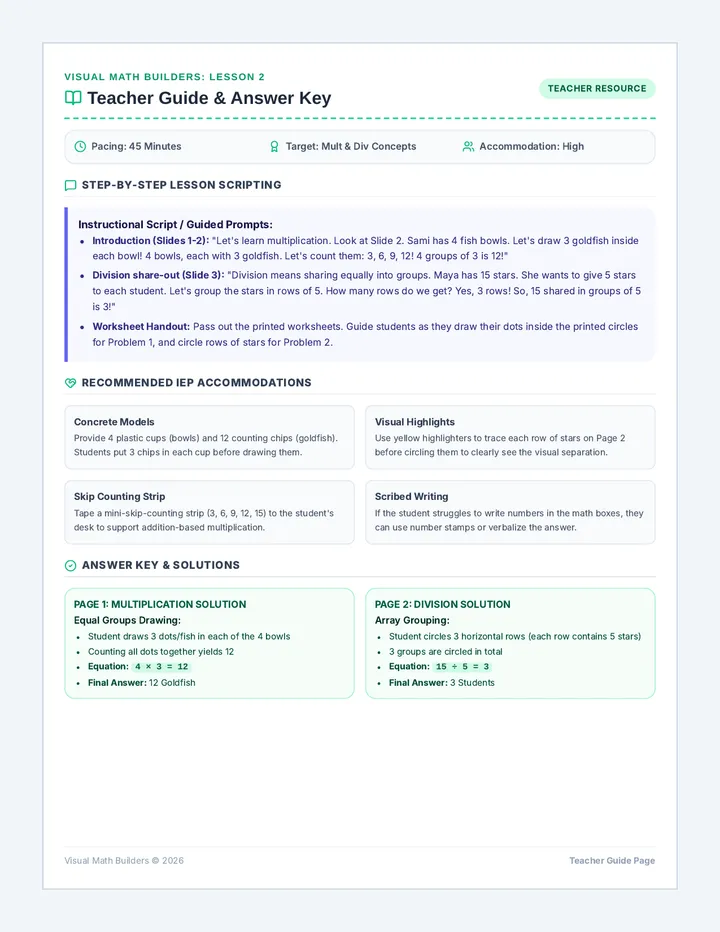
An introductory lesson to multiplication using equal groups and visual representations. Students learn to connect repeated addition to multiplication using starry-themed groups.
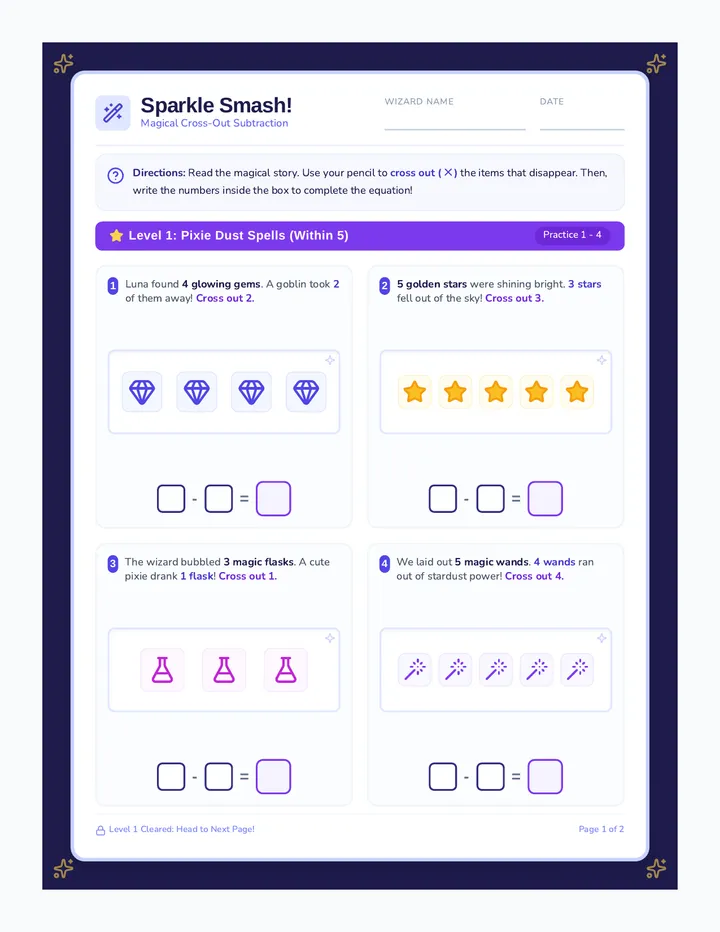
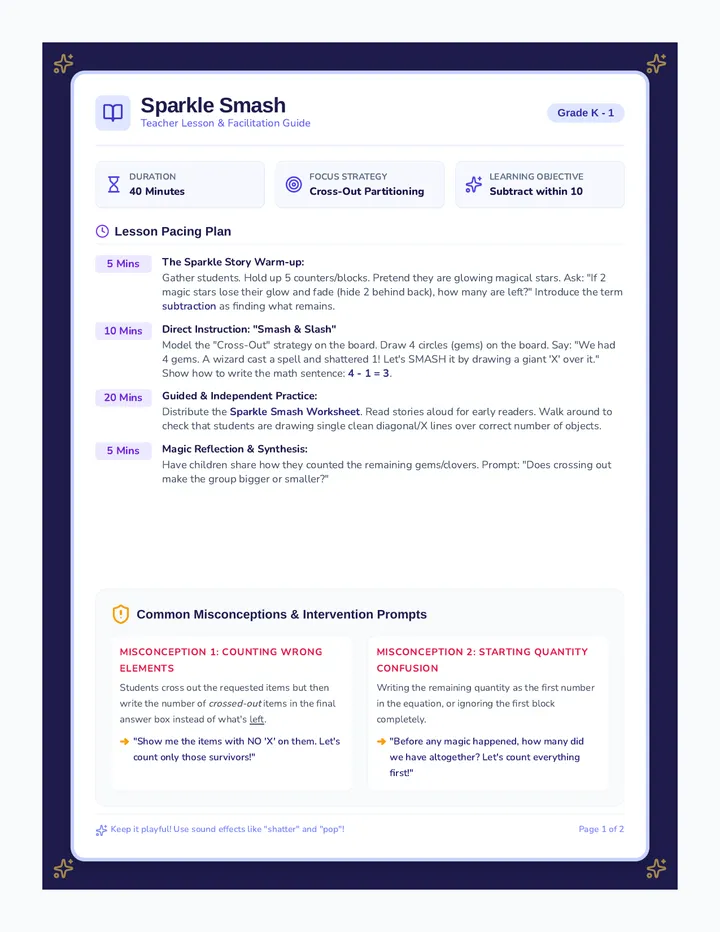
A magical introduction to subtraction within 10 using cross-out strategies with glowing stars, pixie dust, and magical gems.
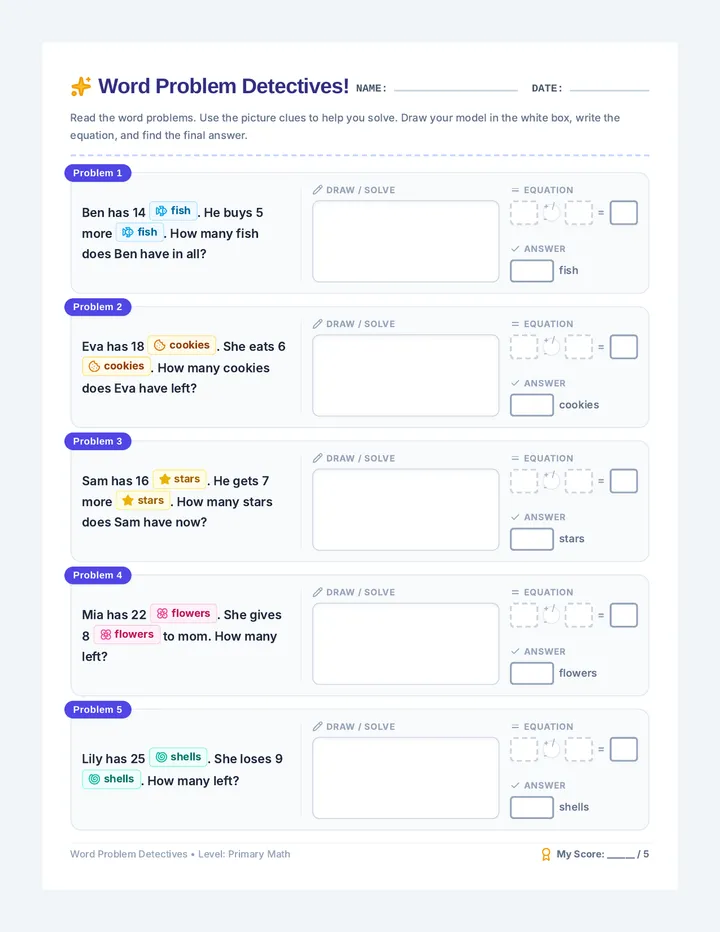
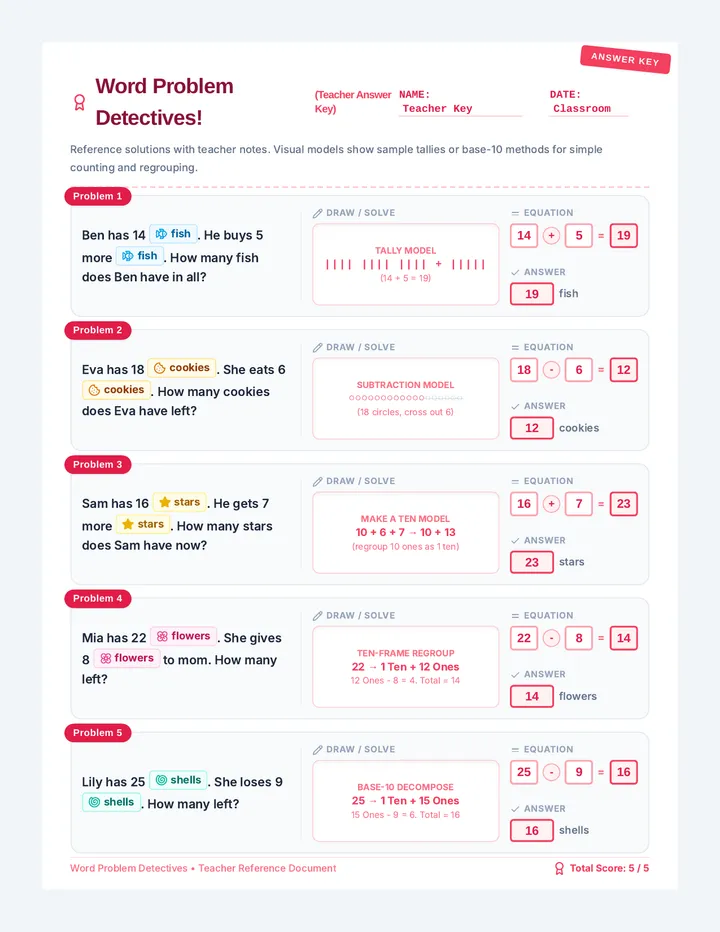
A lesson focused on solving one-step word problems involving addition and subtraction. Students practice recognizing active language cues, modeling their thinking, and writing equations.
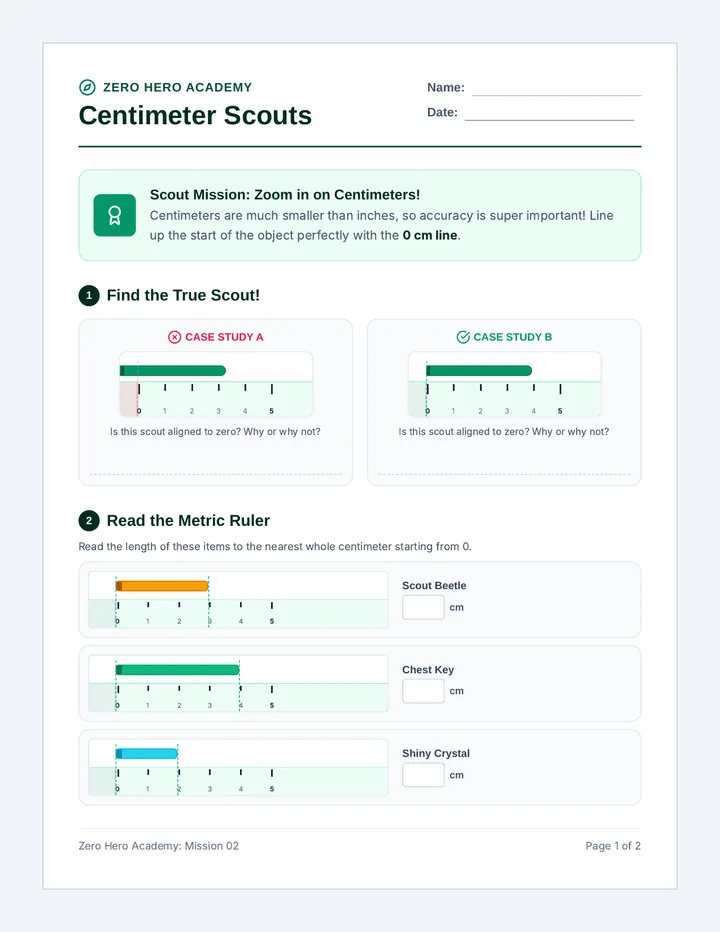
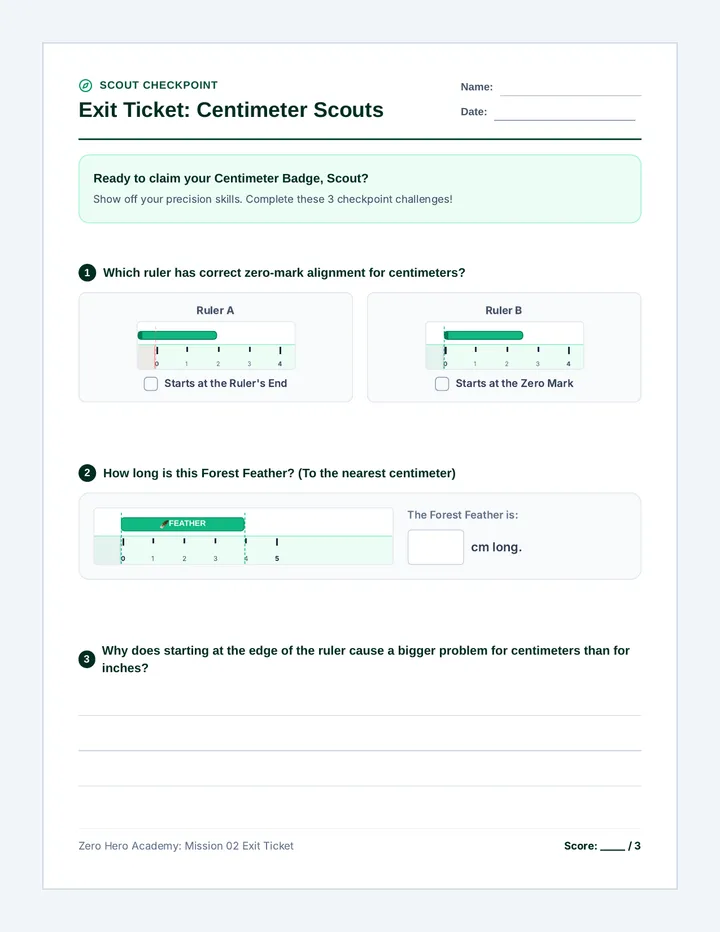
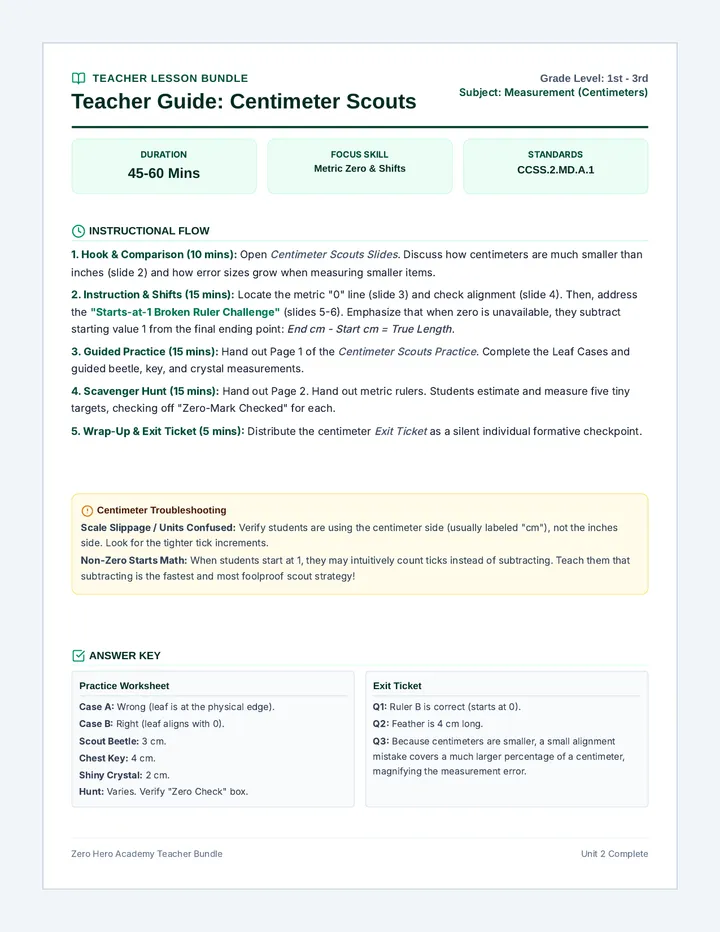
Students apply their measurement skills to the metric system, learning about centimeters and practicing precise measurement starting at the zero mark.
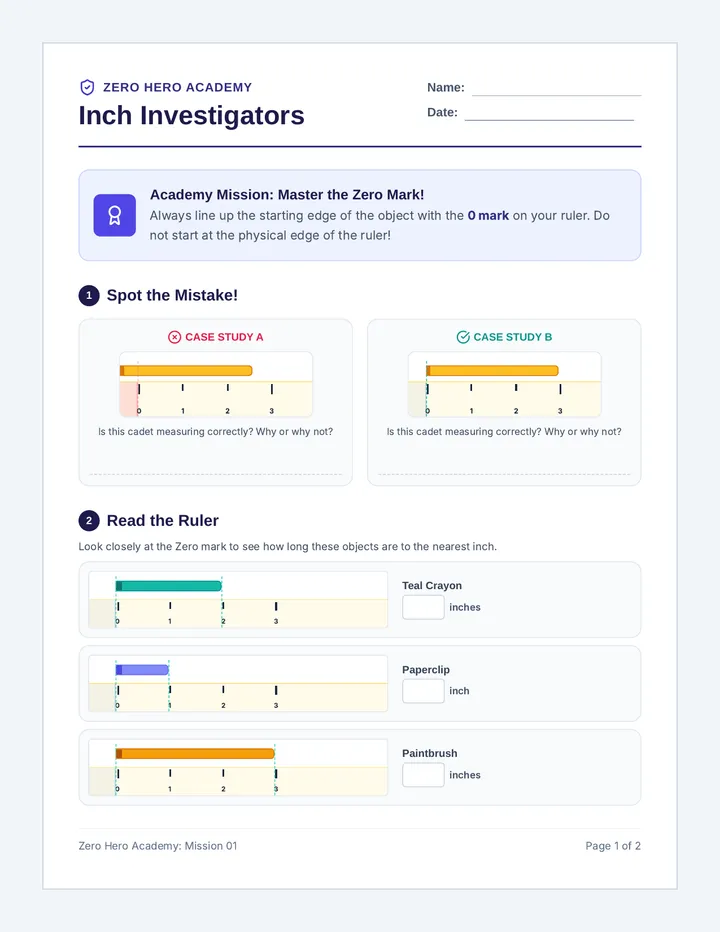
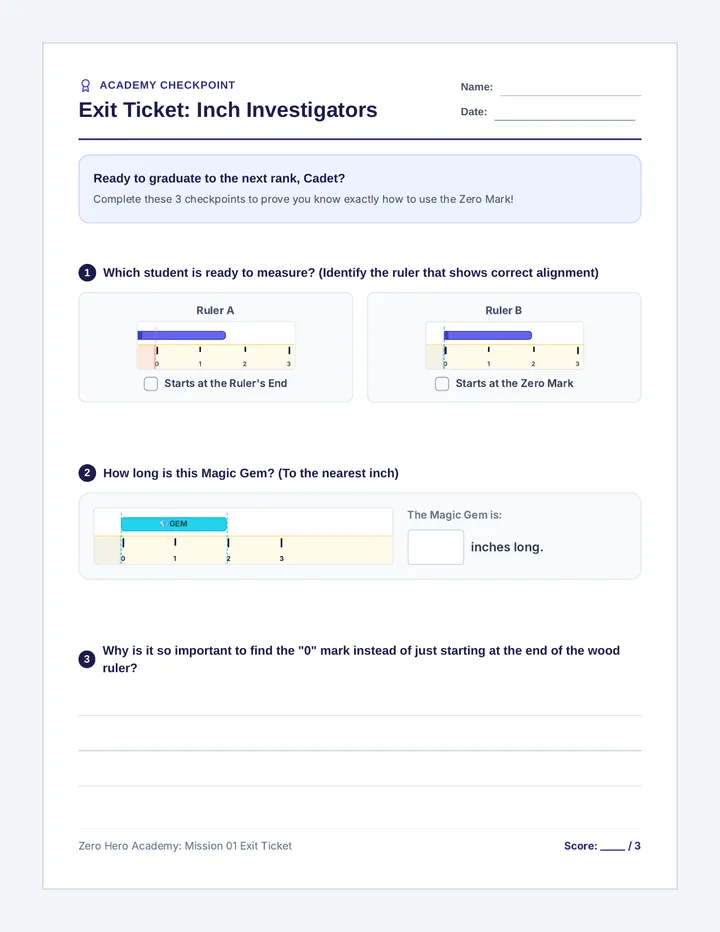
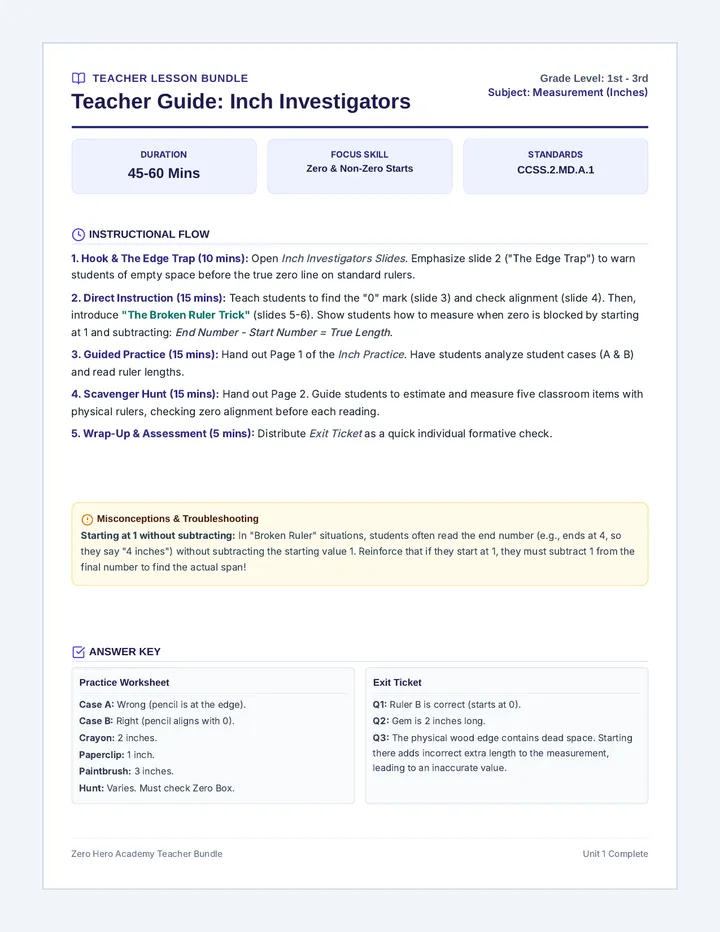
Students learn to measure to the nearest inch using custom visual rulers. The lesson emphasizes locating the true starting zero mark instead of starting at the physical edge of the ruler.
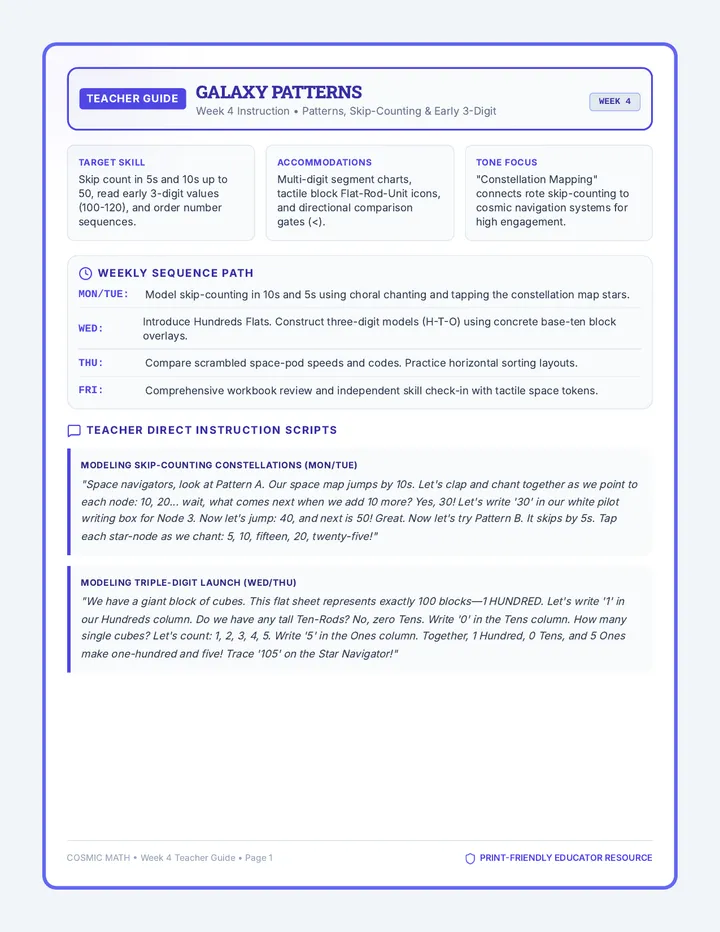
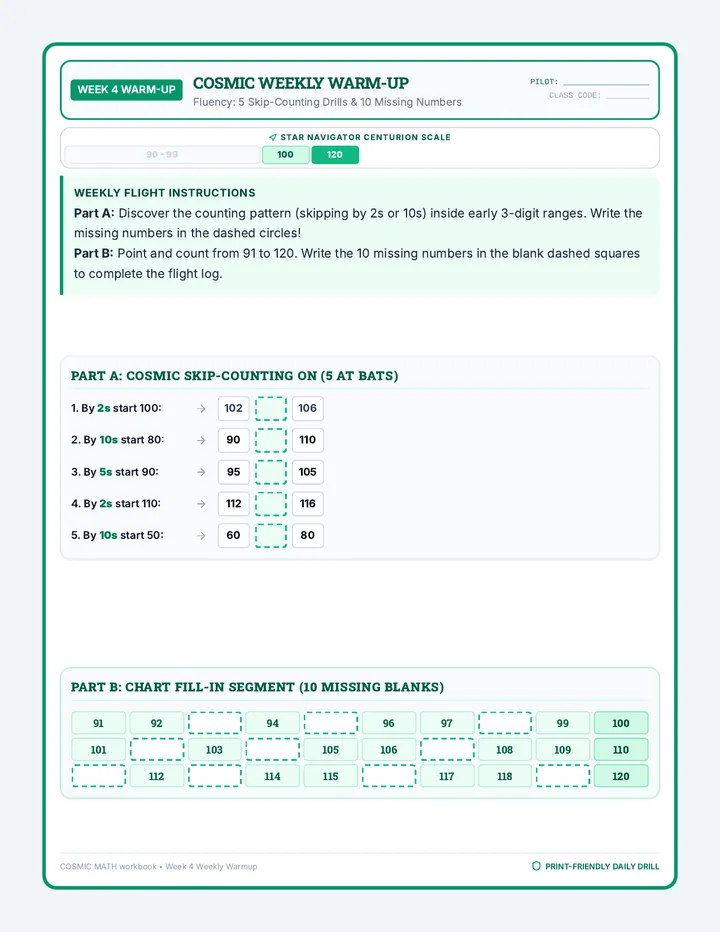
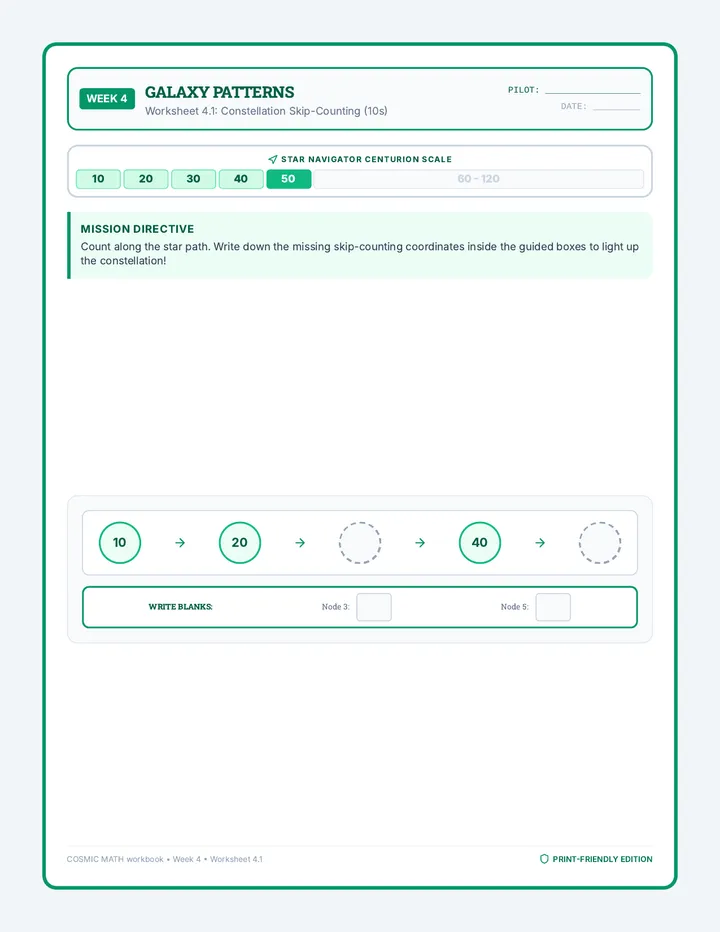
Introduces early 3-digit numbers (100-120), visual skip-counting (2s, 5s, 10s) using constellation maps, and ordering cosmic objects to build sequential logic.
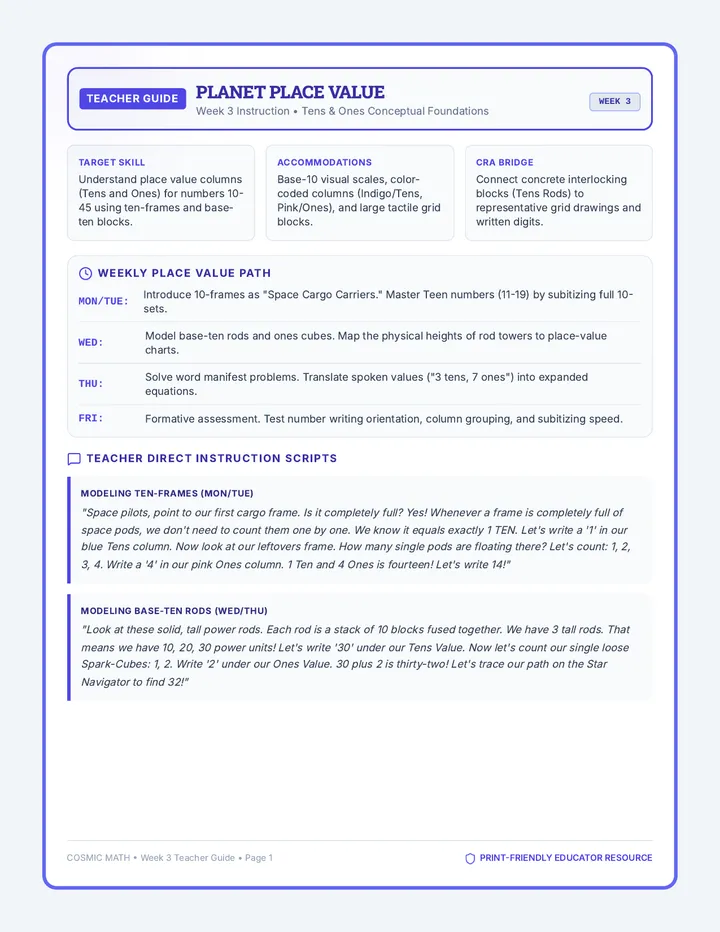
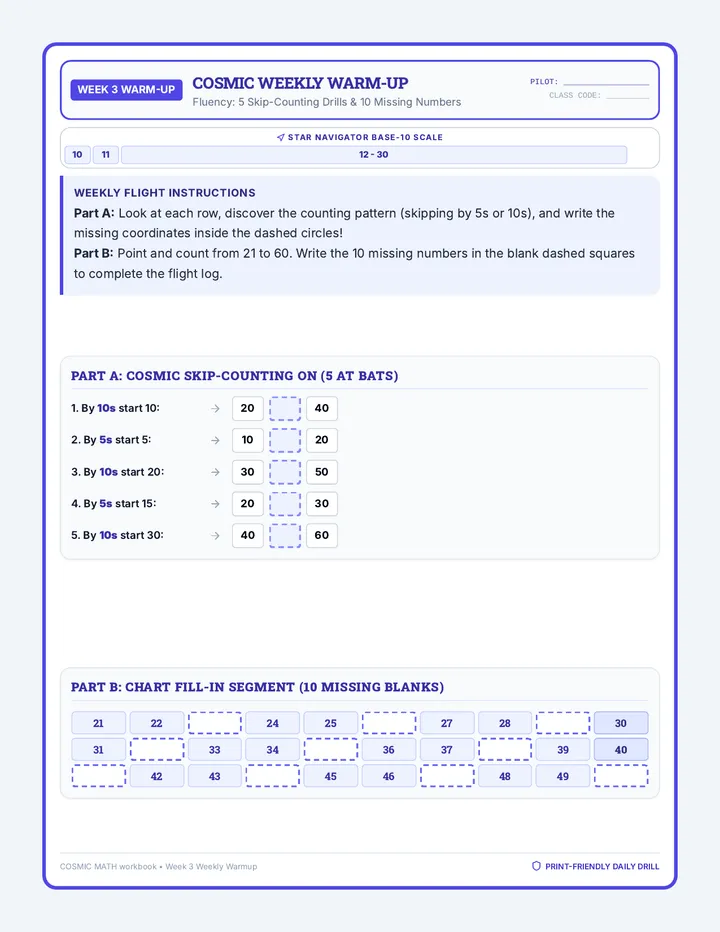
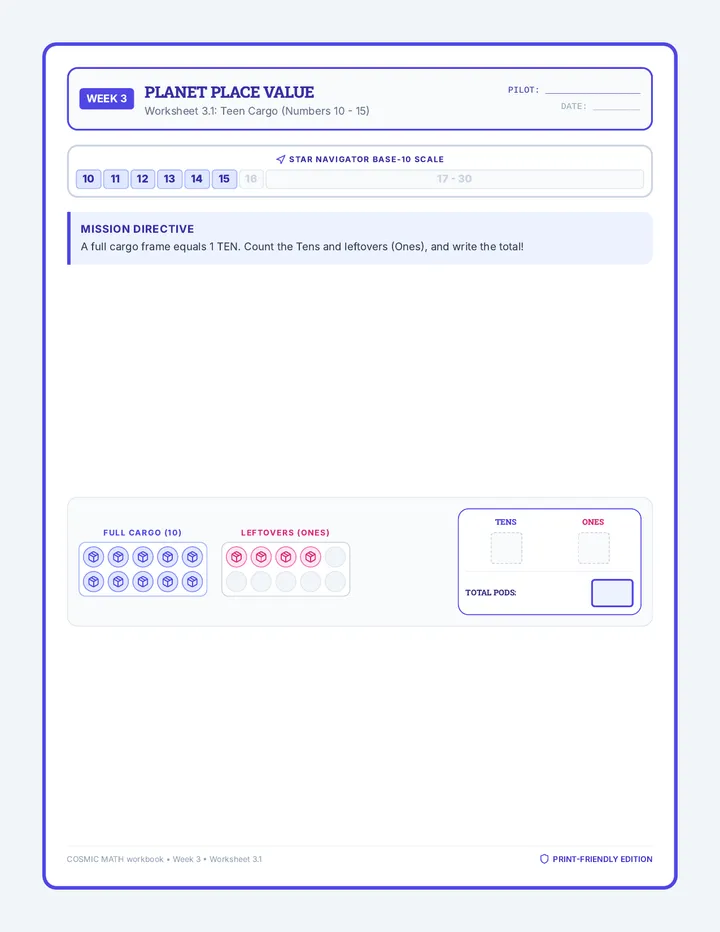
Focuses on identifying double-digit numbers (10-99), representing them using ten-frames and printable base-ten icons, and writing numbers in expanded place value charts (tens and ones) with clear physical boundaries.
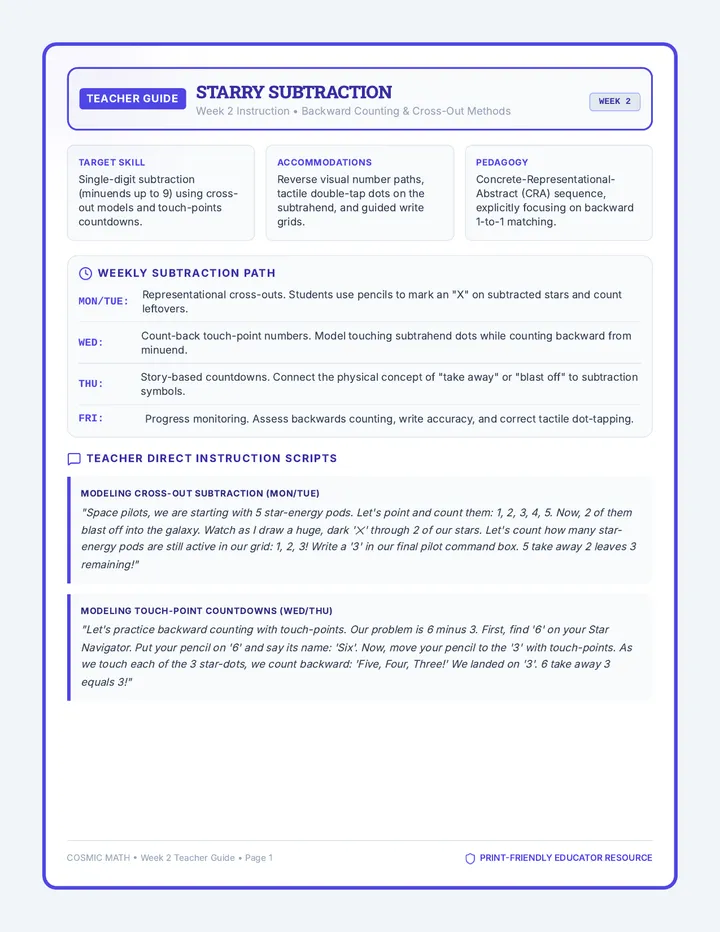
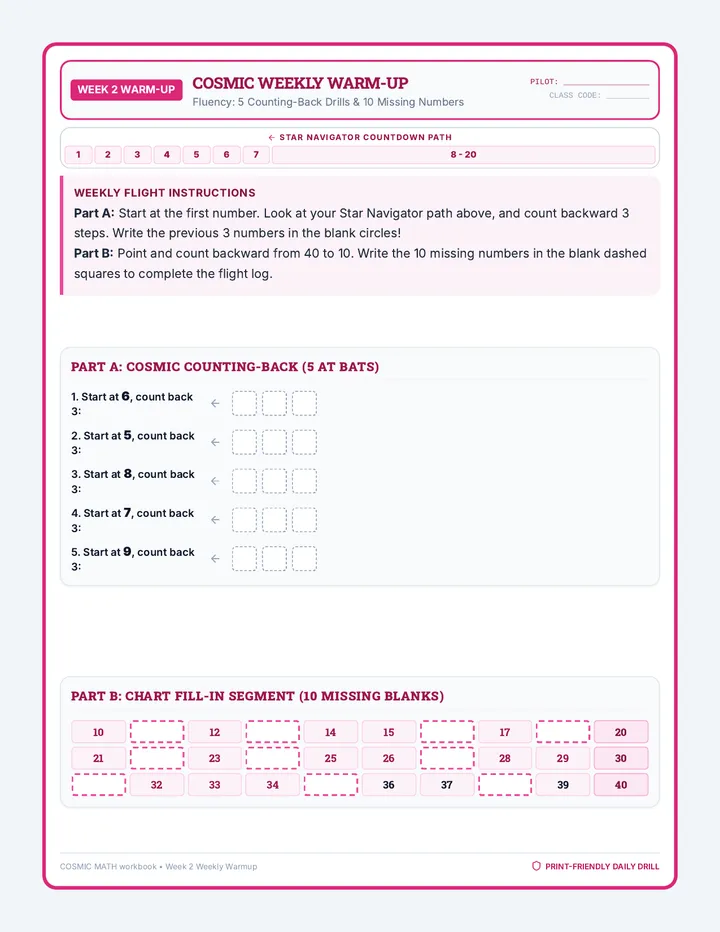
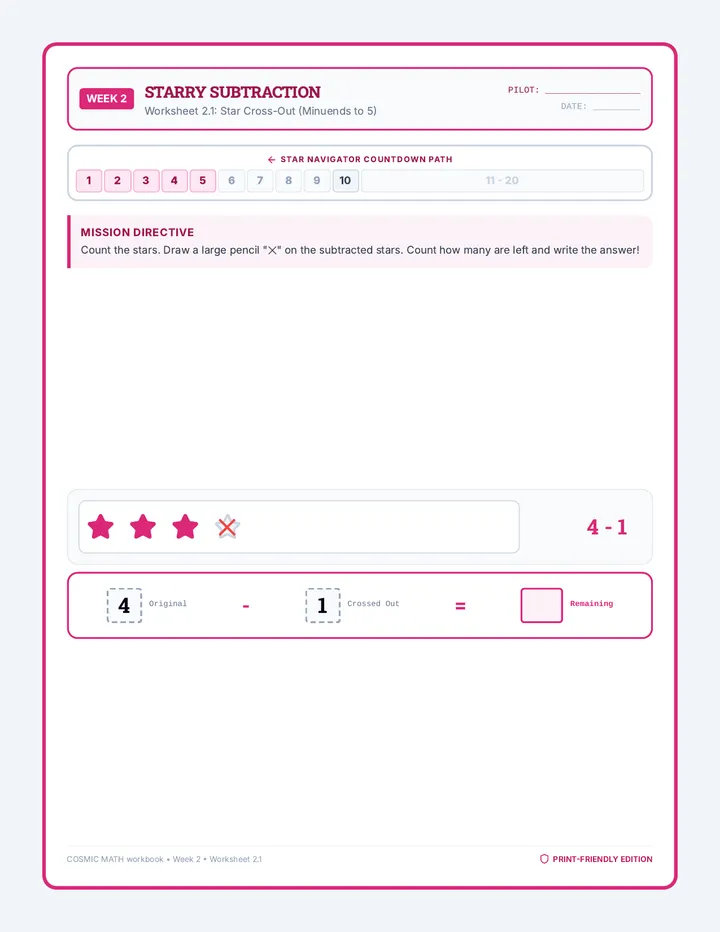
Covers single-digit subtraction (1-9) with cosmic countdowns, crossing-out stars or rocket fuel cells, embedded touch-points for backwards counting, and structured workspace templates.
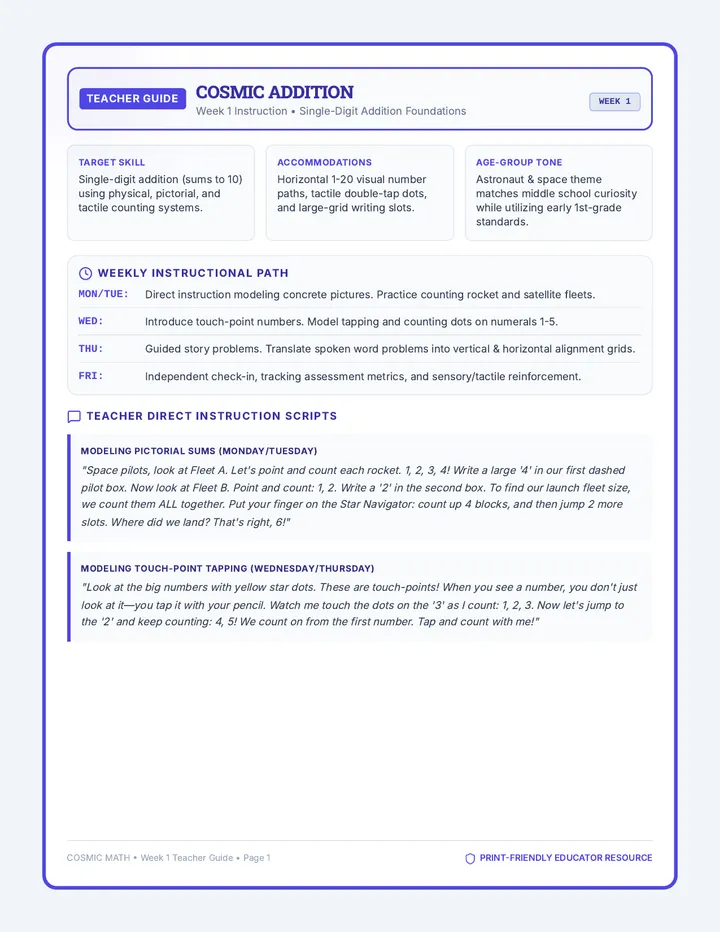
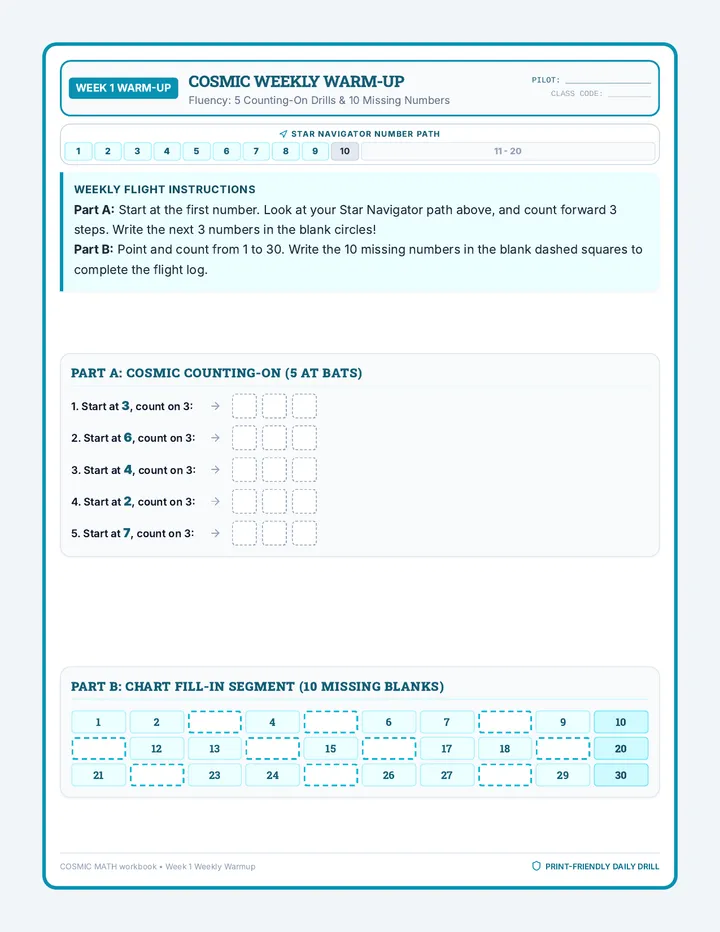
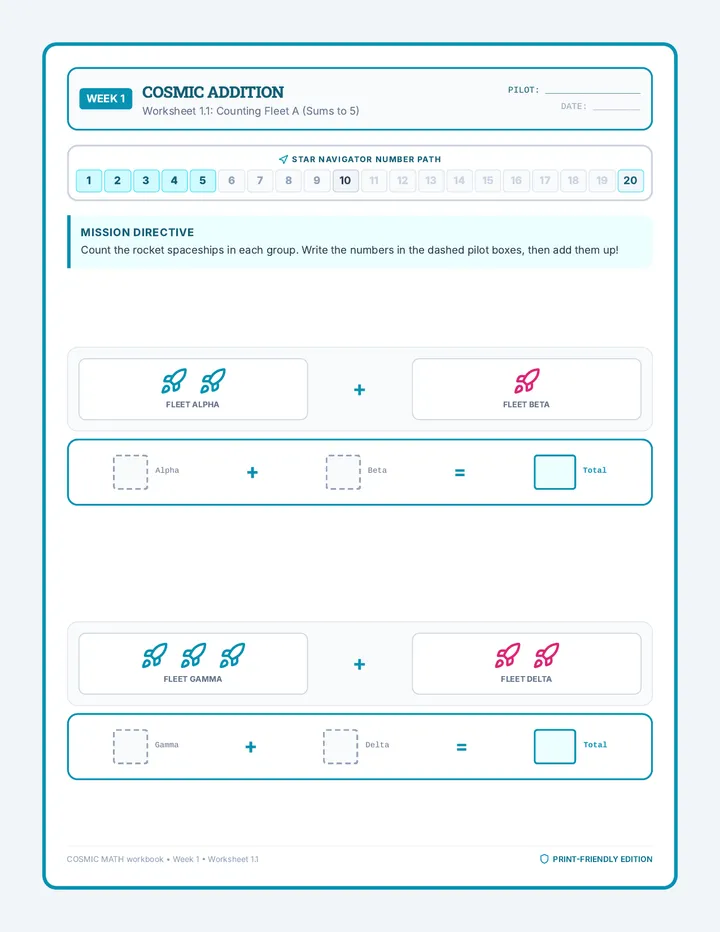
Focuses on single-digit addition (1-9) using embedded touch-point numbers, pictorial representations of spaceships and stars, a persistent 1-20 number path, and large guided workspace boxes for physical alignment.
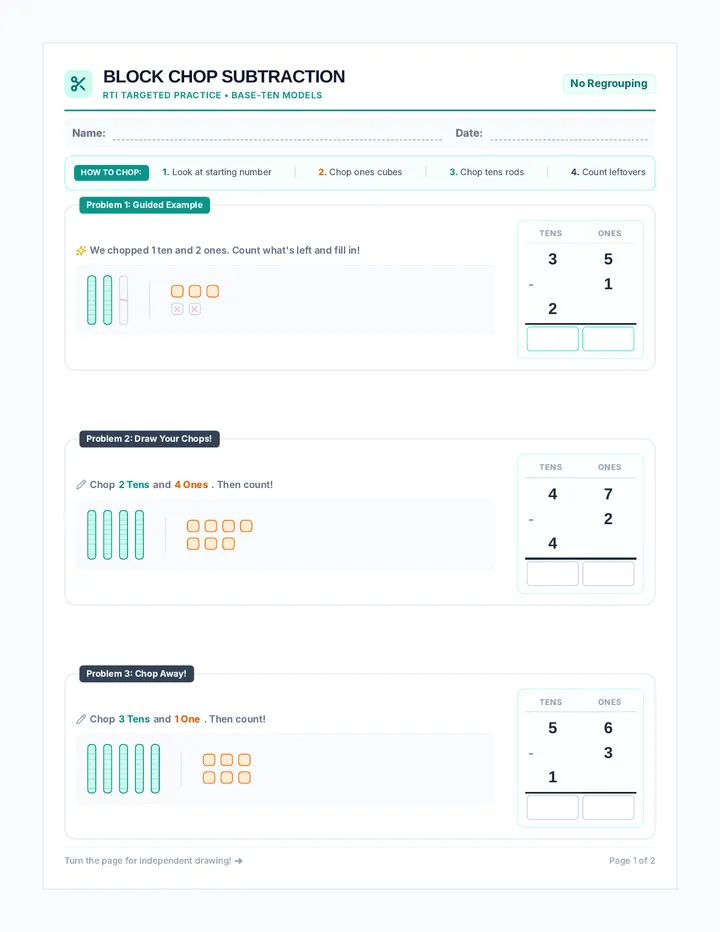
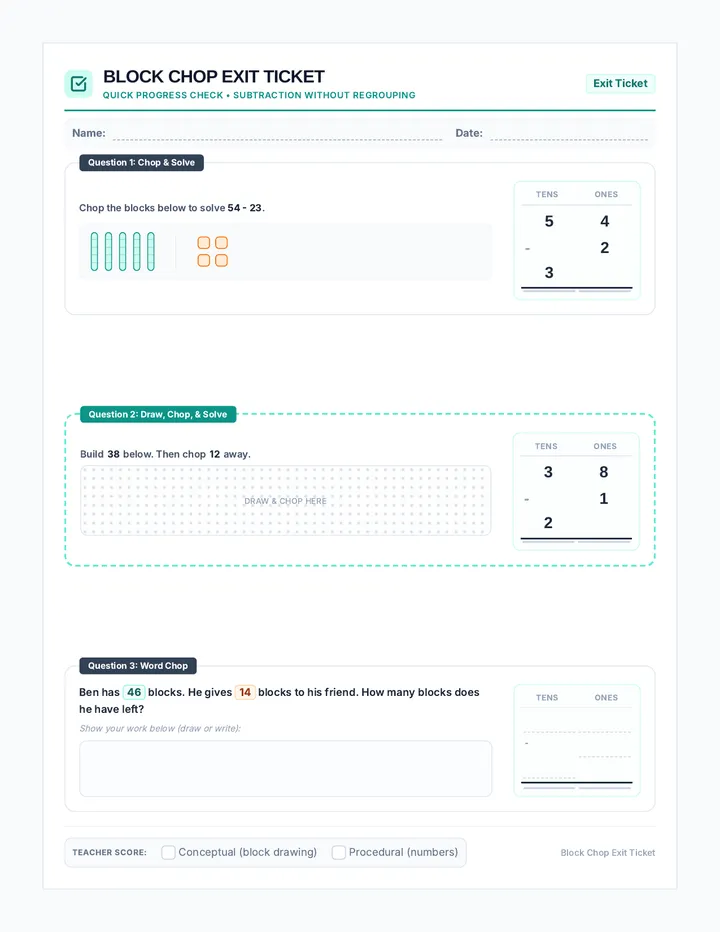
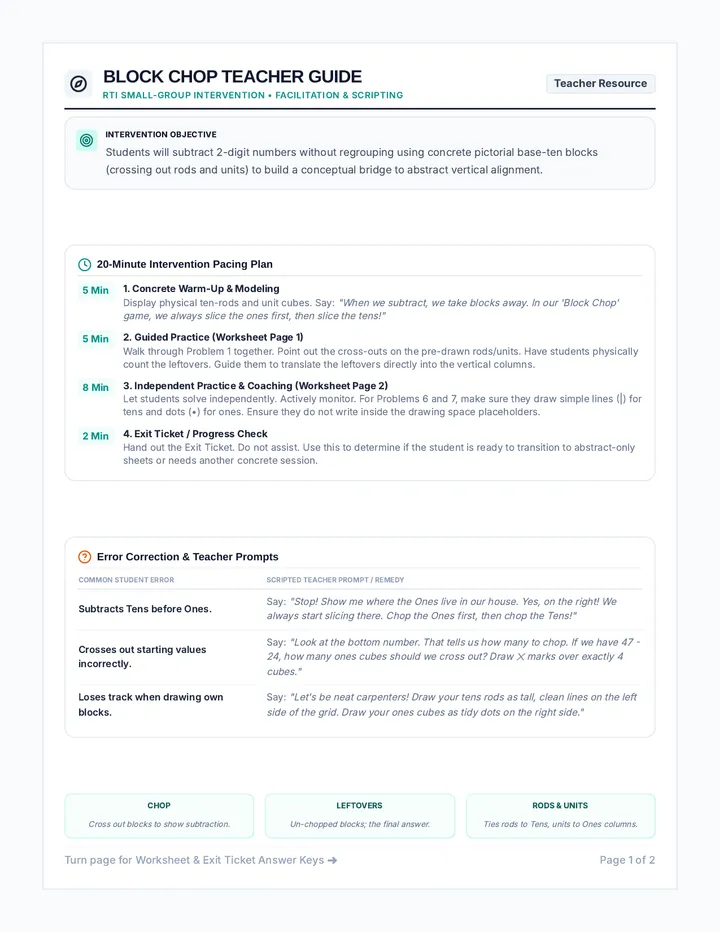
A targeted subtraction without regrouping intervention lesson using base-ten block pictorial representations. Designed for RTI small groups to build conceptual understanding by physically crossing out represented tens and ones before moving to abstract vertical subtraction.
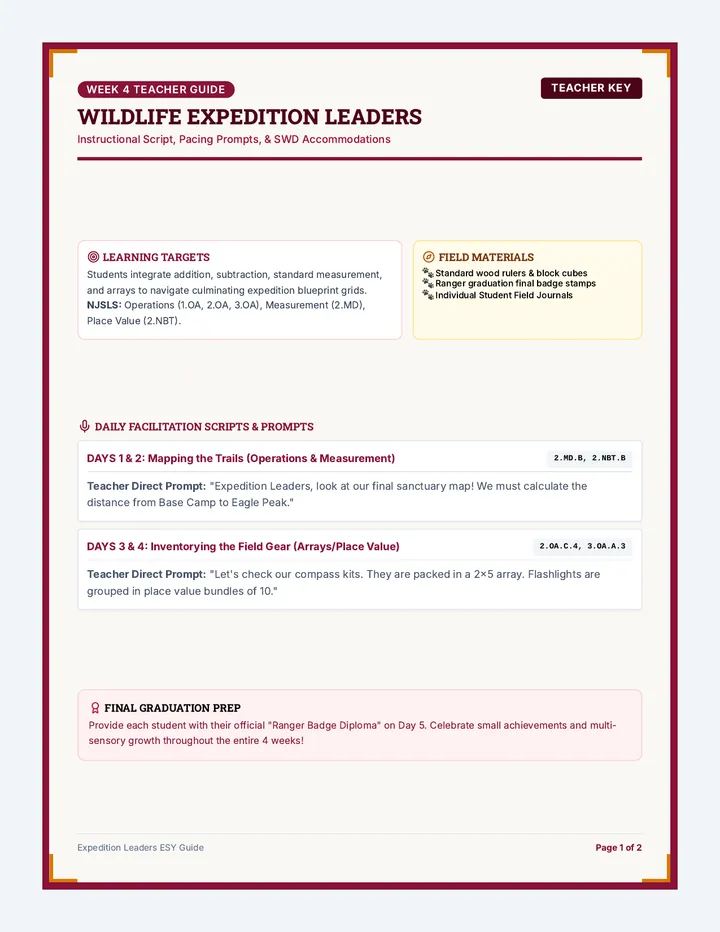
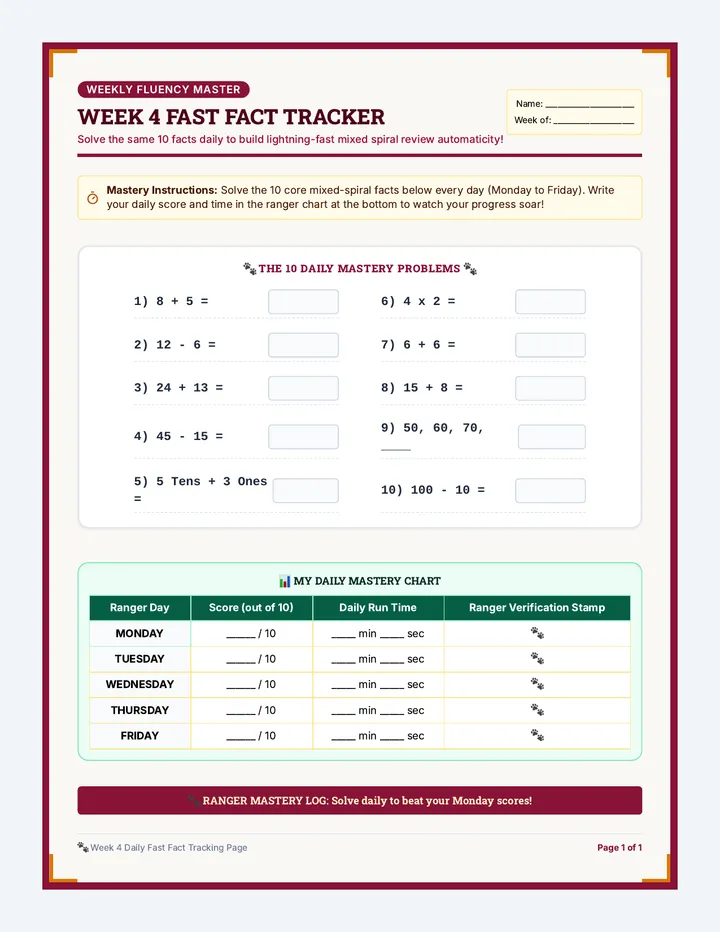
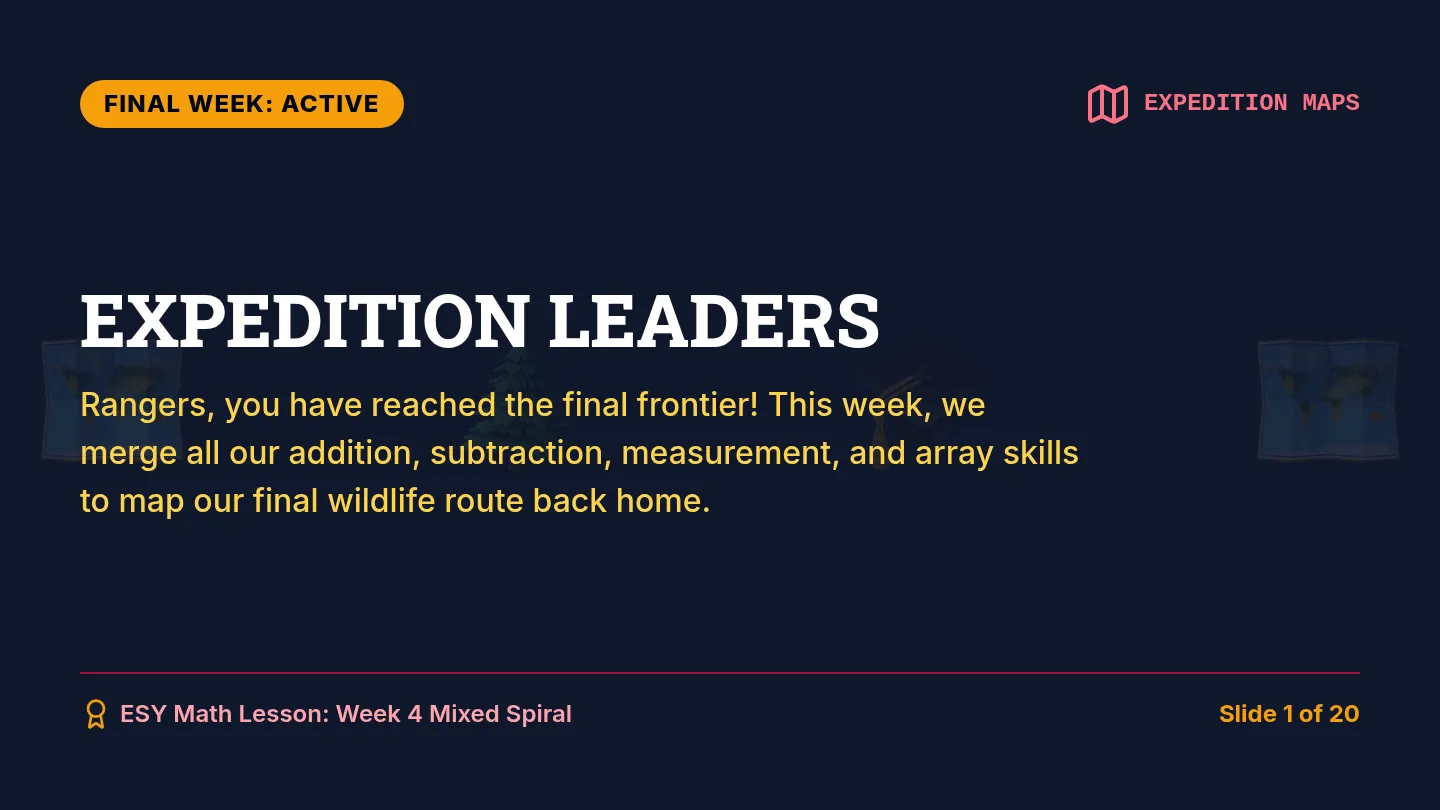
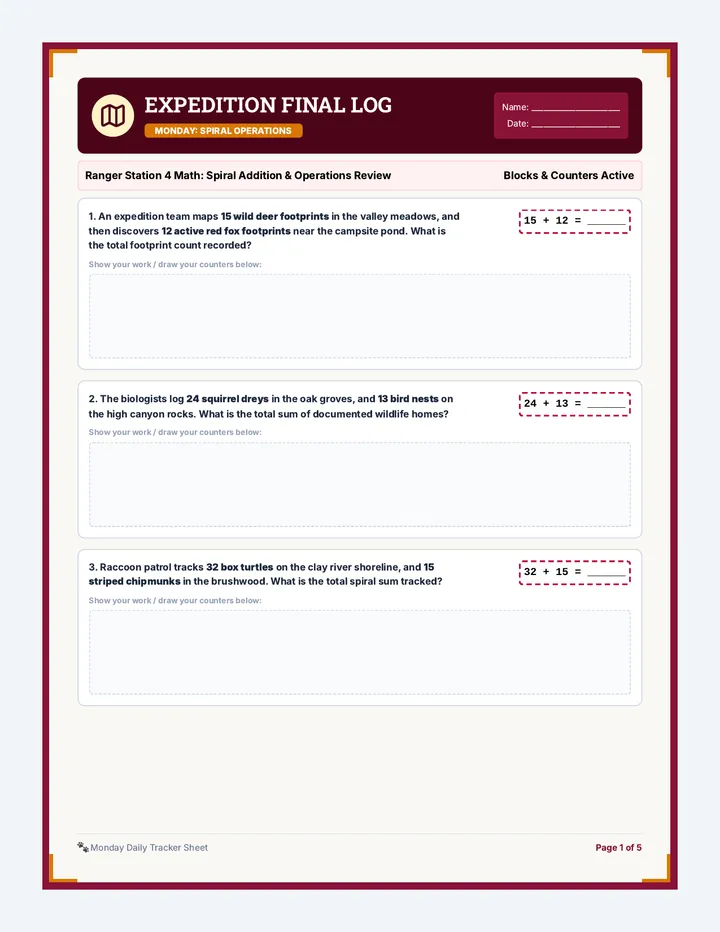
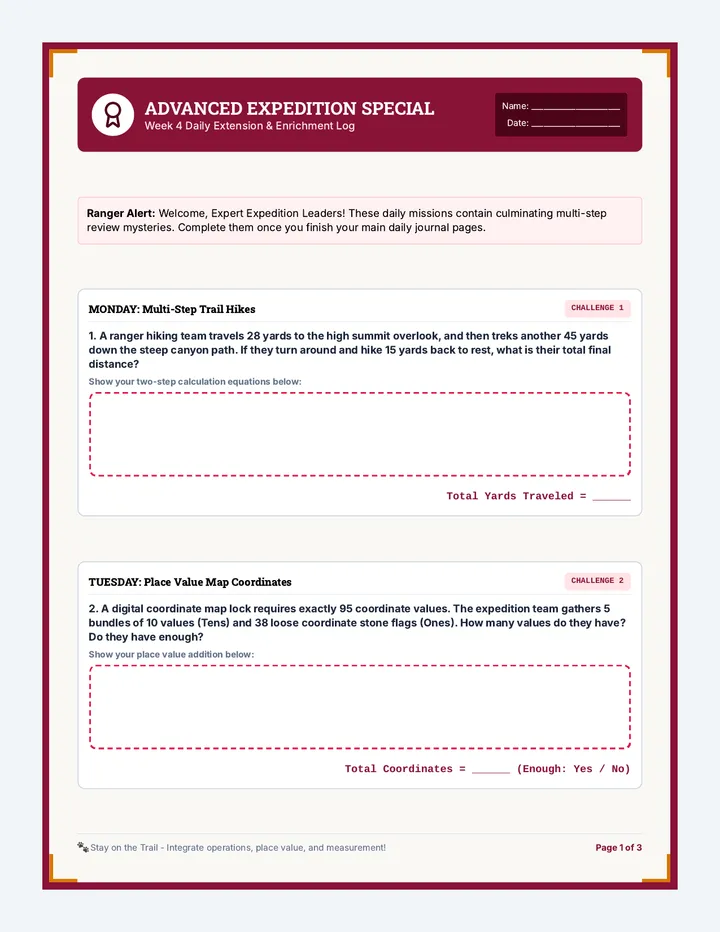
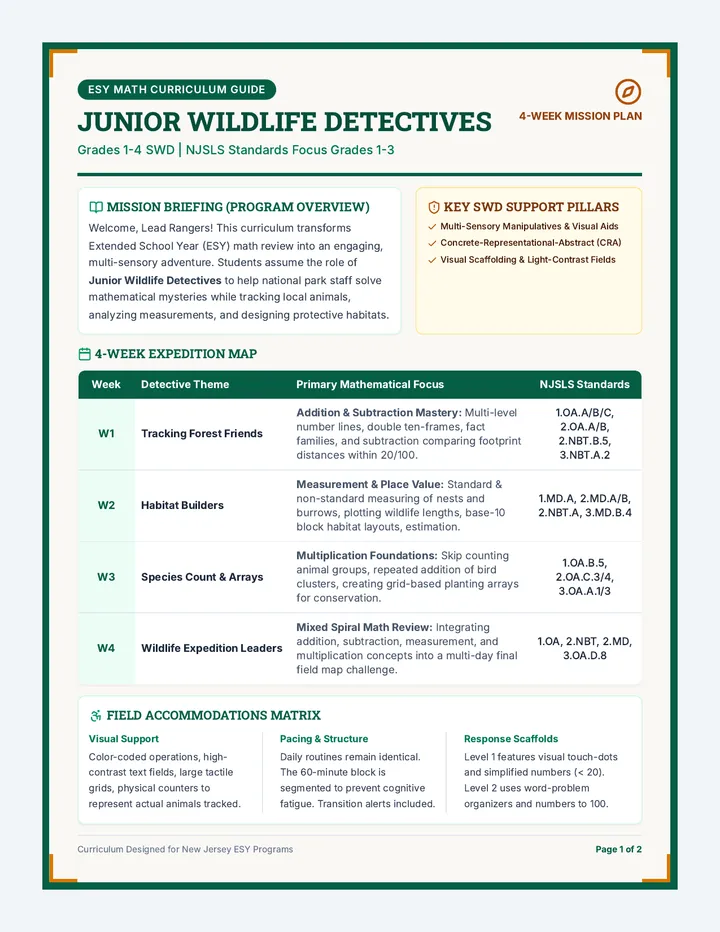
Week 4 of the ESY Wildlife Detective curriculum. Focuses on a comprehensive mixed spiral math review (NJSLS operations, place value, and measurement) through a culminating multi-day outdoor expedition challenge.
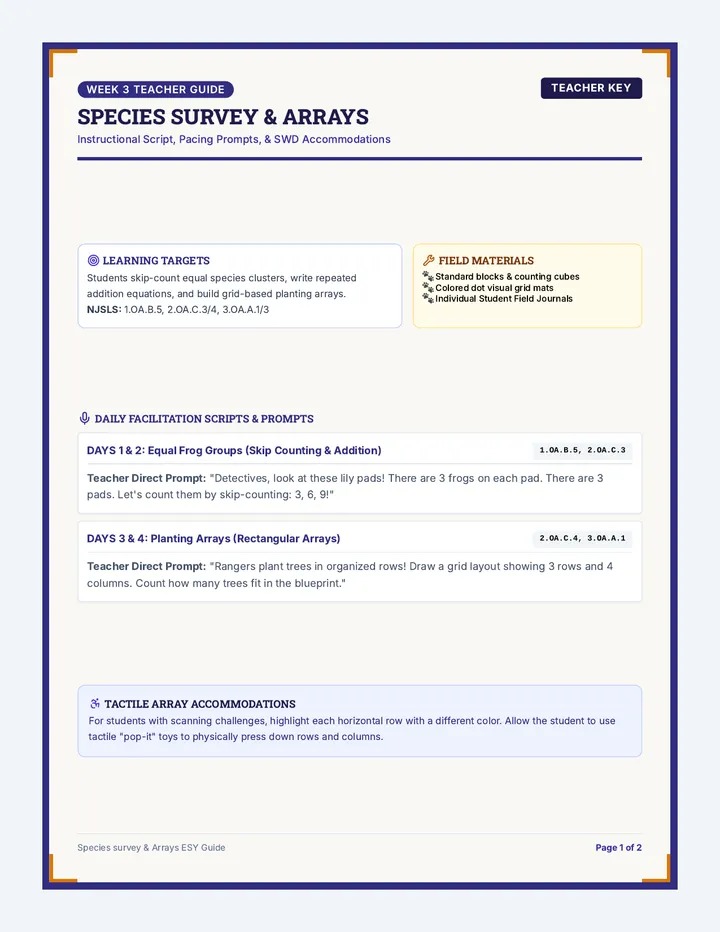
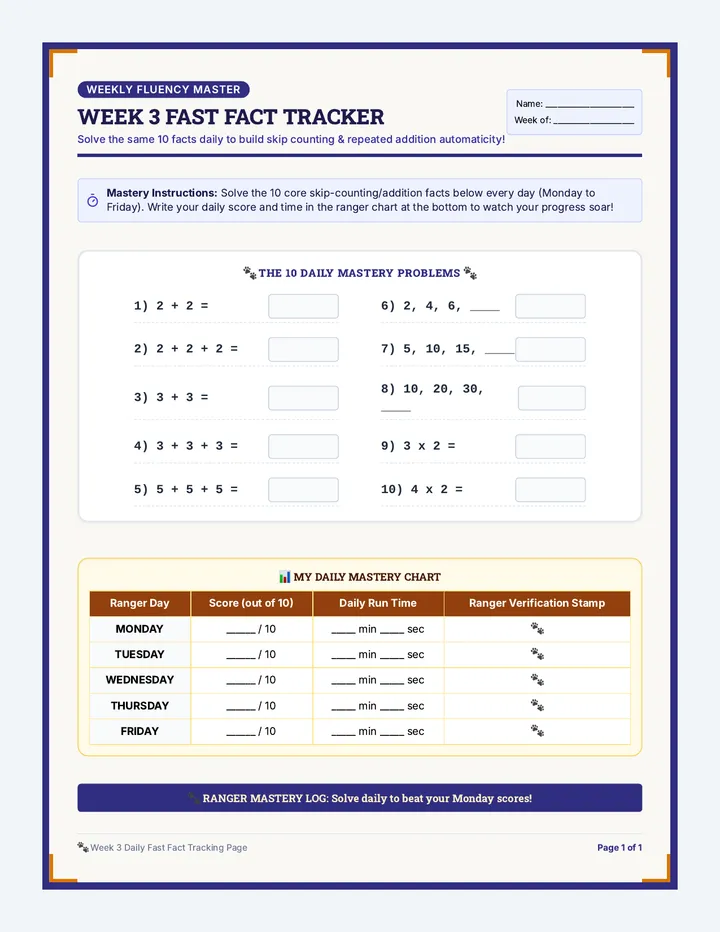
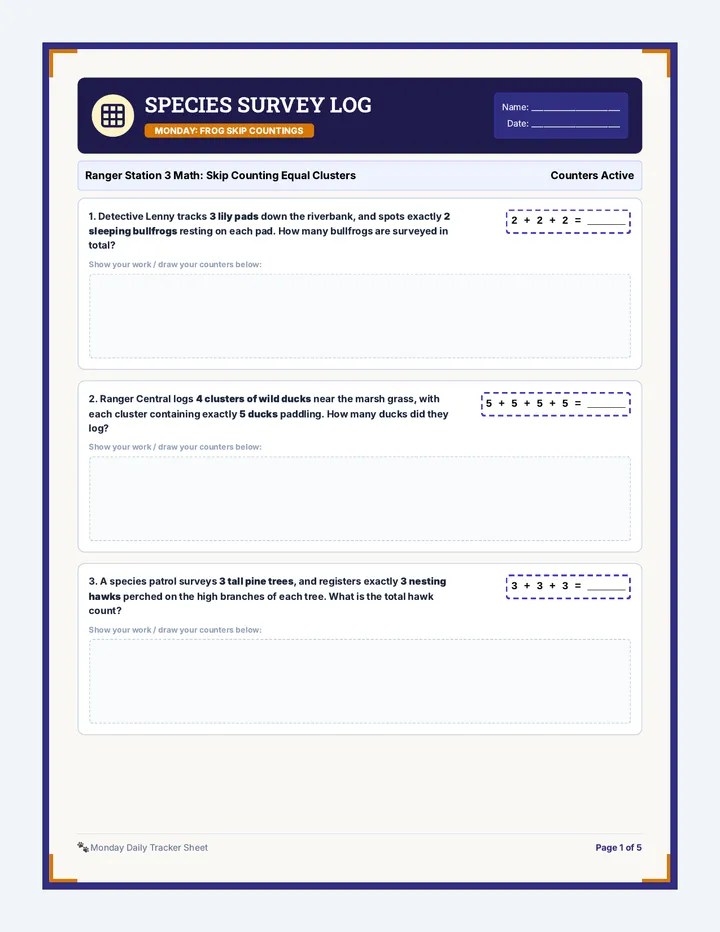
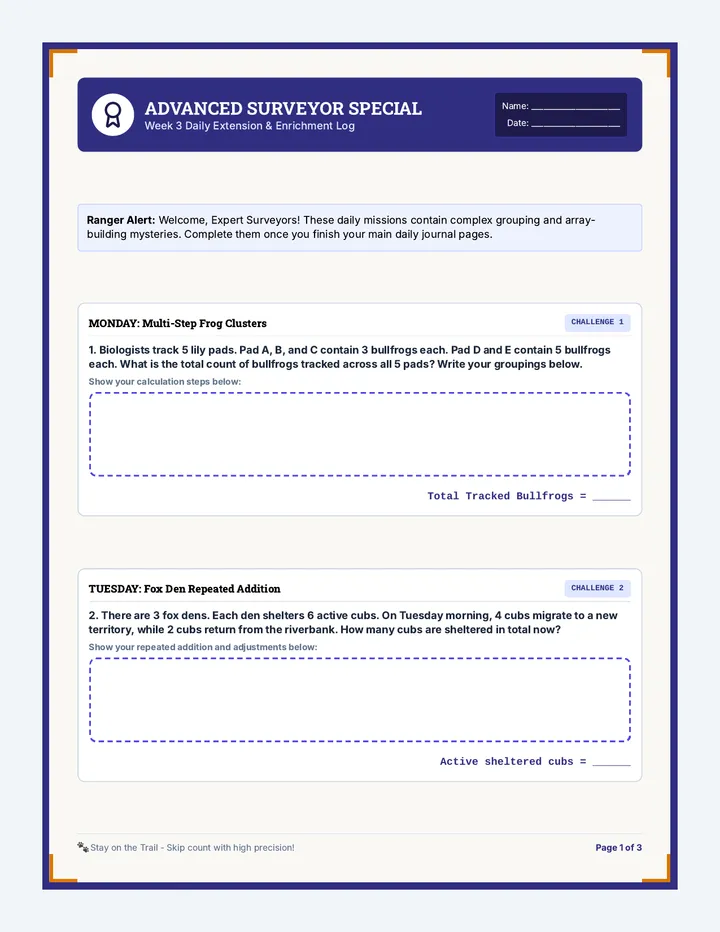
Week 3 of the ESY Wildlife Detective curriculum. Focuses on the foundations of multiplication (NJSLS 2.OA, 3.OA) through repeated addition, skip-counting animal clusters, and creating grid-based habitat arrays.
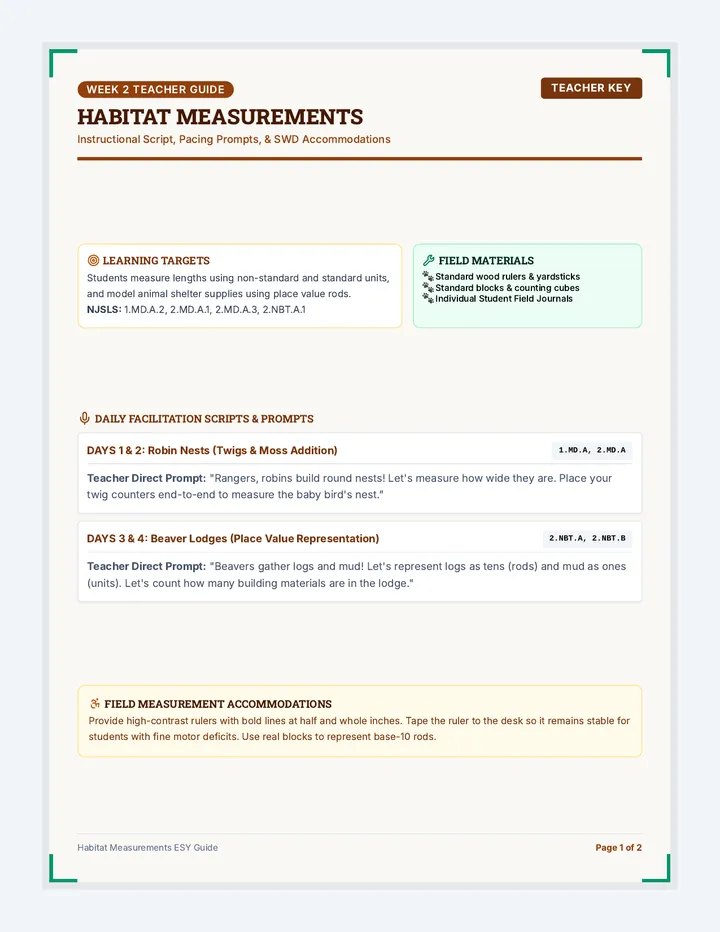
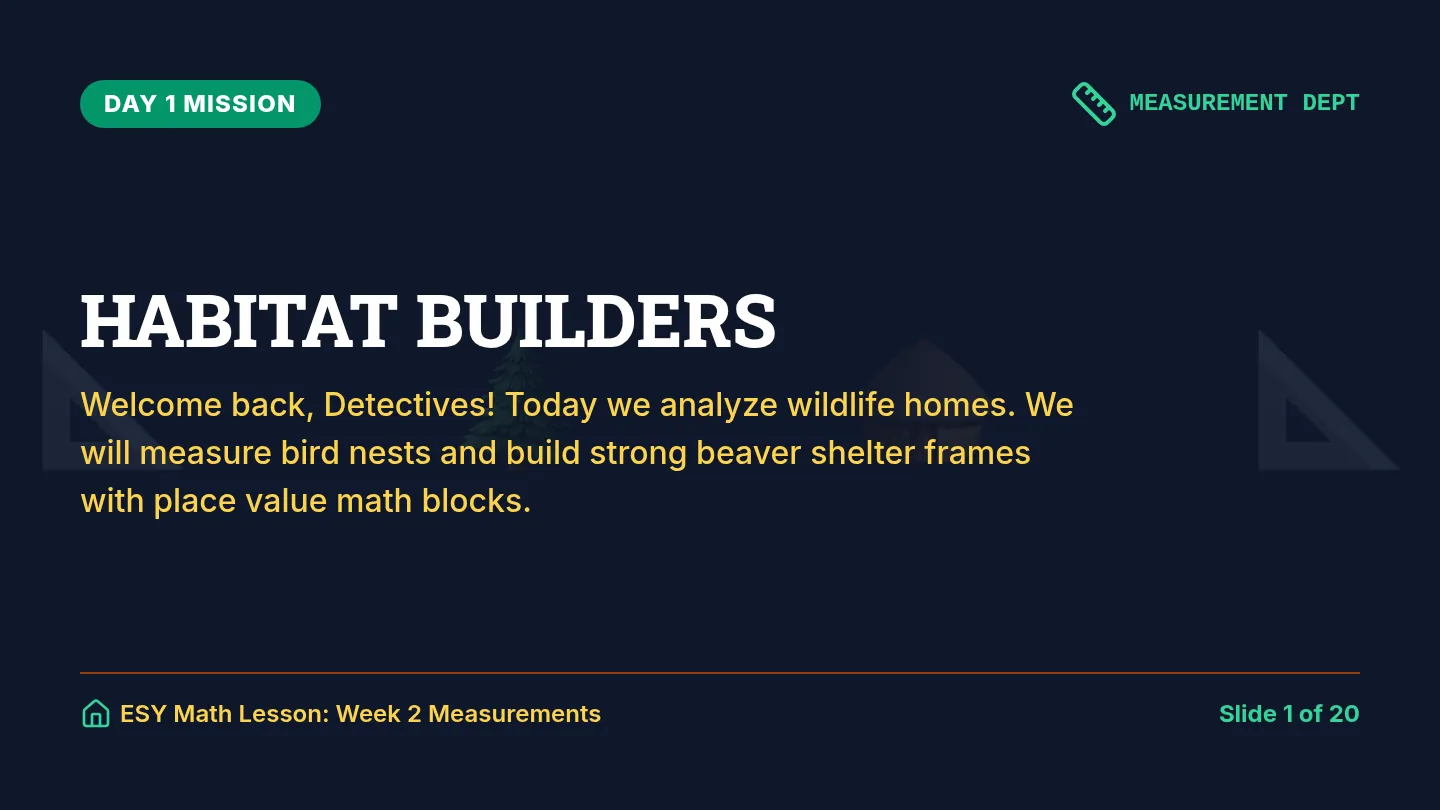
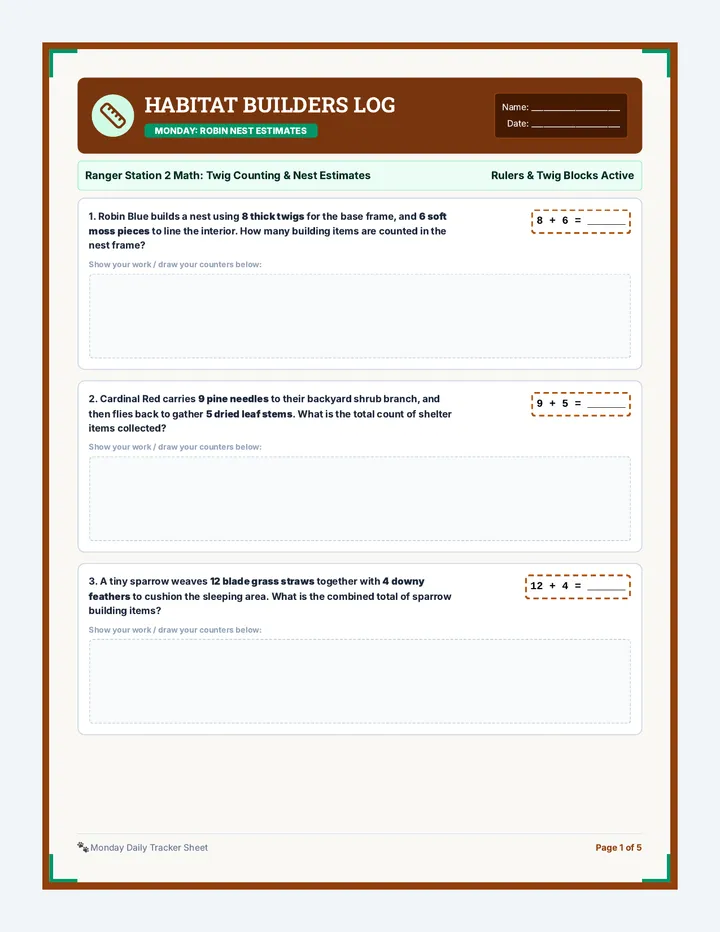
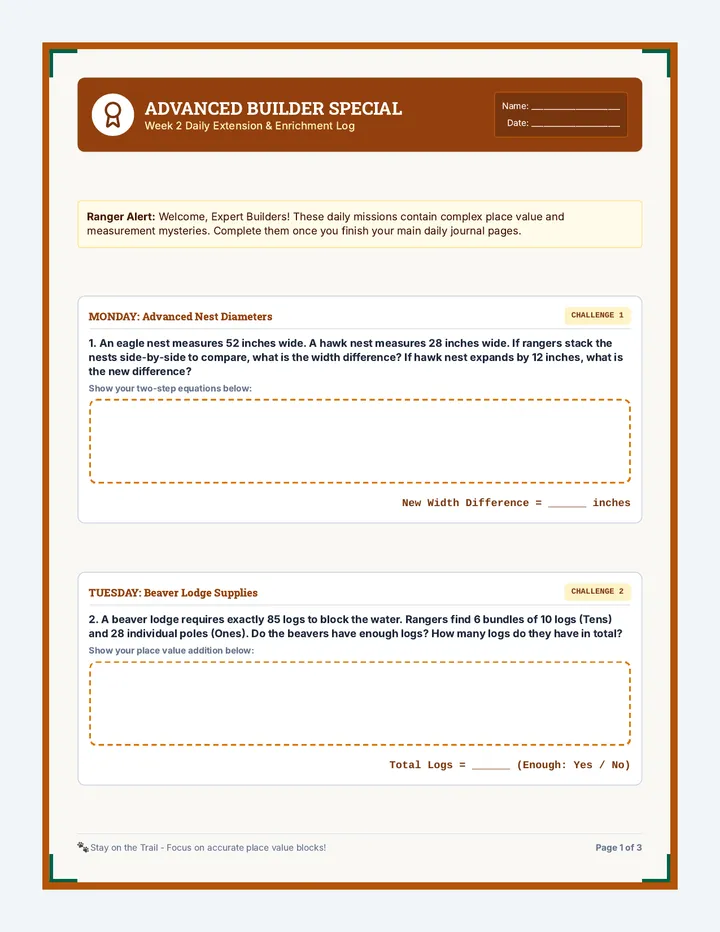
Week 2 of the ESY Wildlife Detective curriculum. Focuses on place value, estimation, and measurement (NJSLS 1.MD, 2.MD, 3.MD) by measuring nest diameters, estimating burrow lengths, and understanding animal sizes.
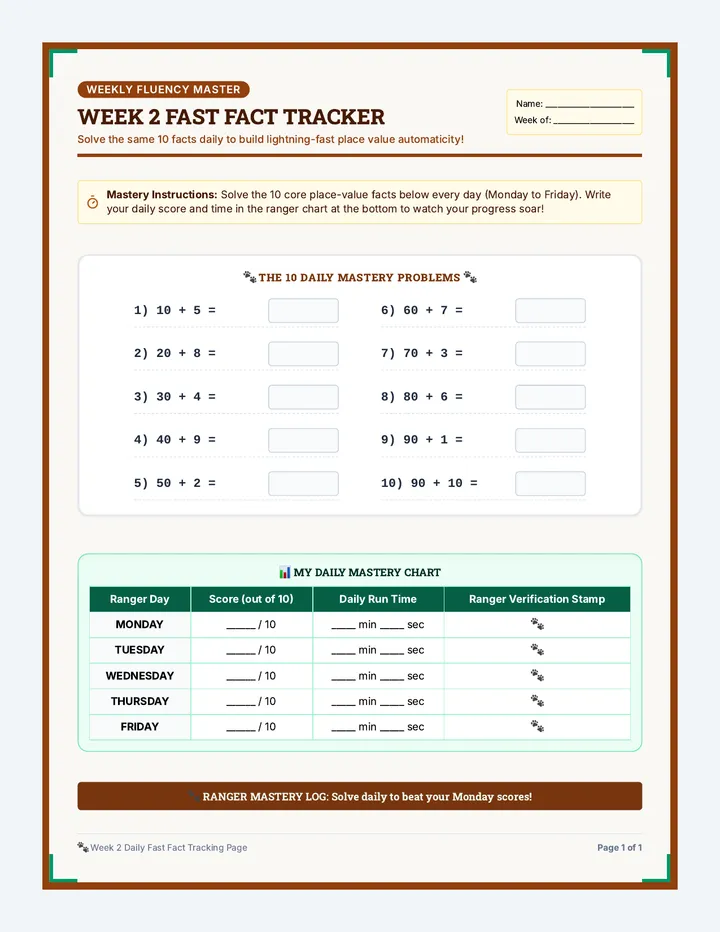
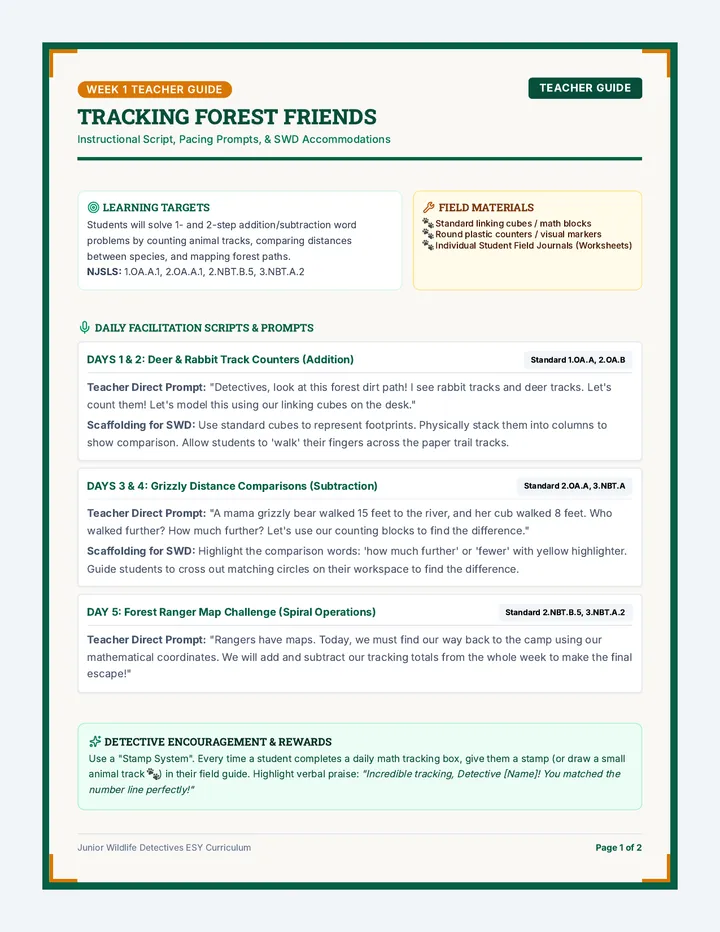
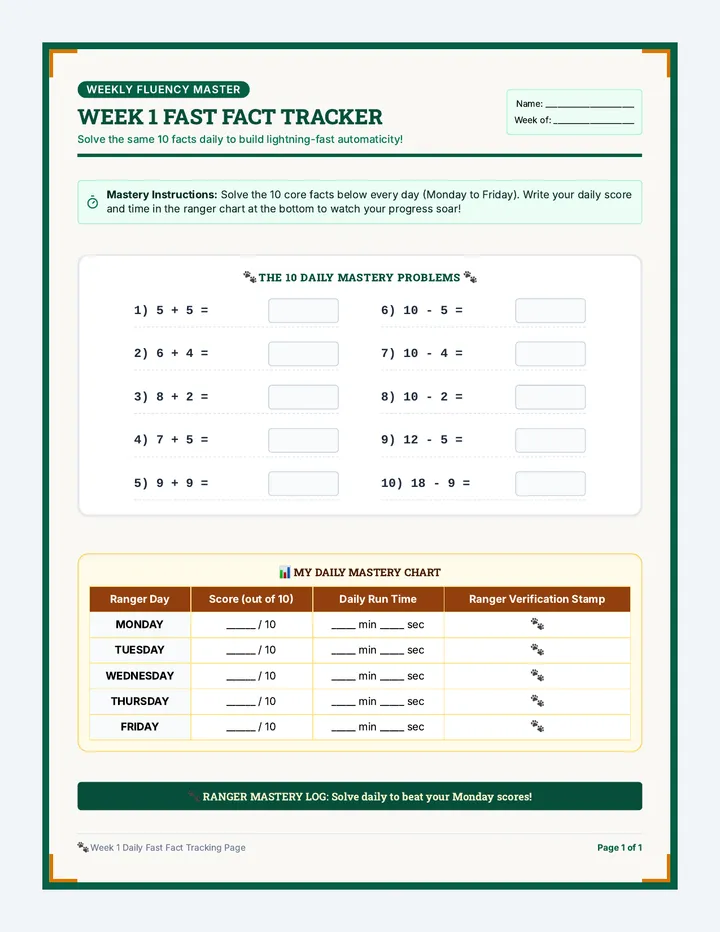
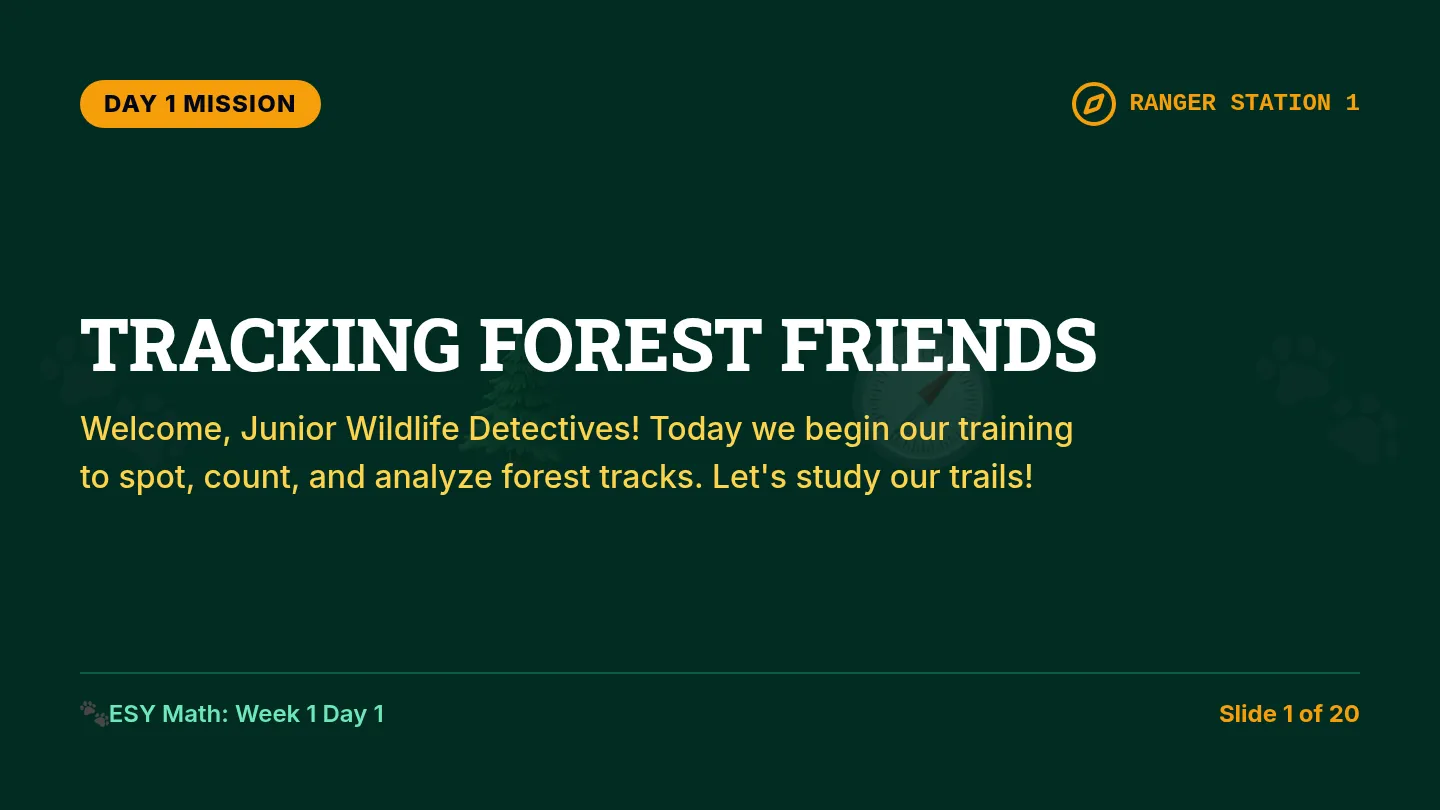
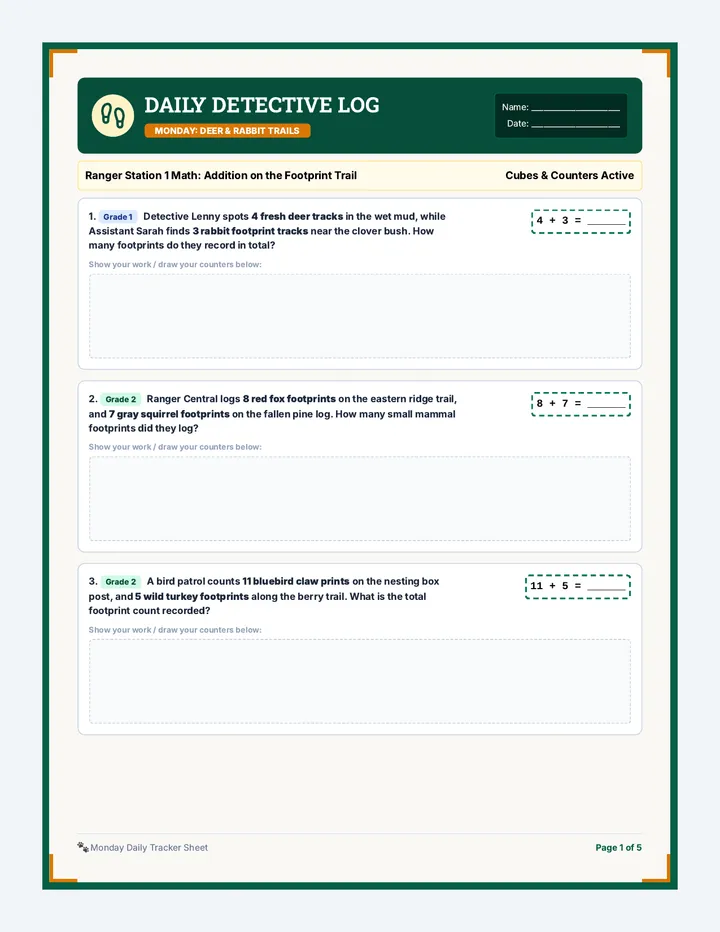
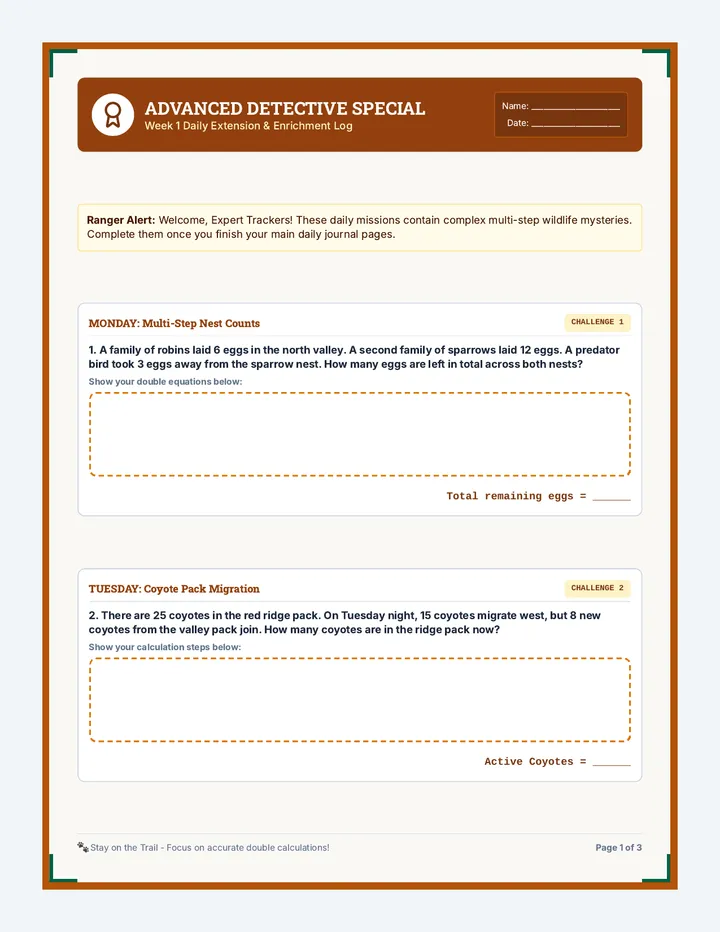
Week 1 of the ESY Wildlife Detective curriculum. Focuses on addition and subtraction mastery within 20 and 100 by tracking animal footprints, counting steps, and analyzing forest trail data. Scaffolded for grades 1-4.
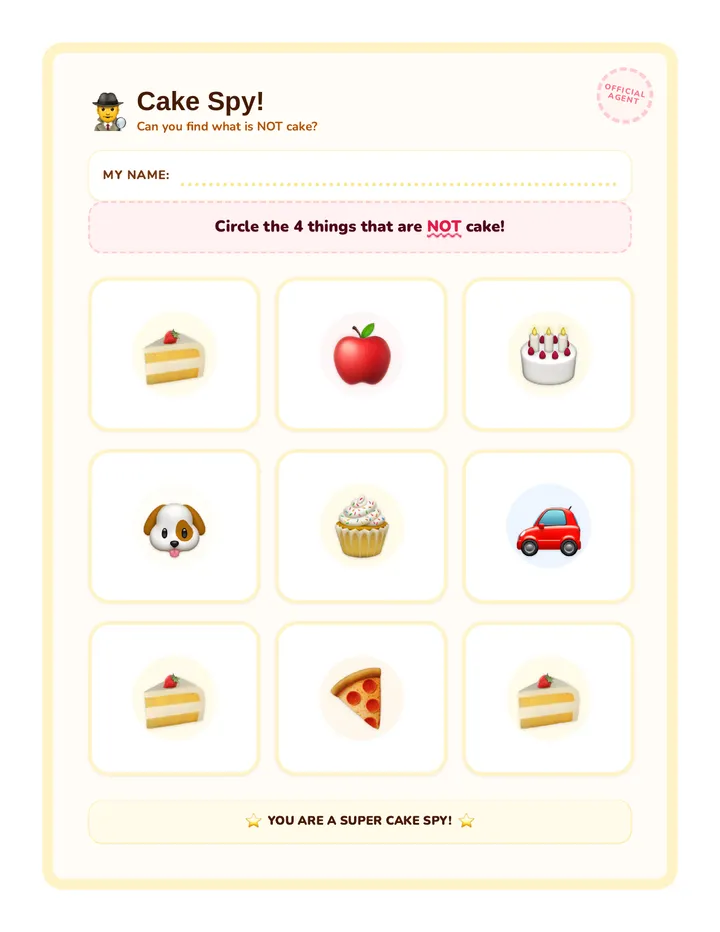
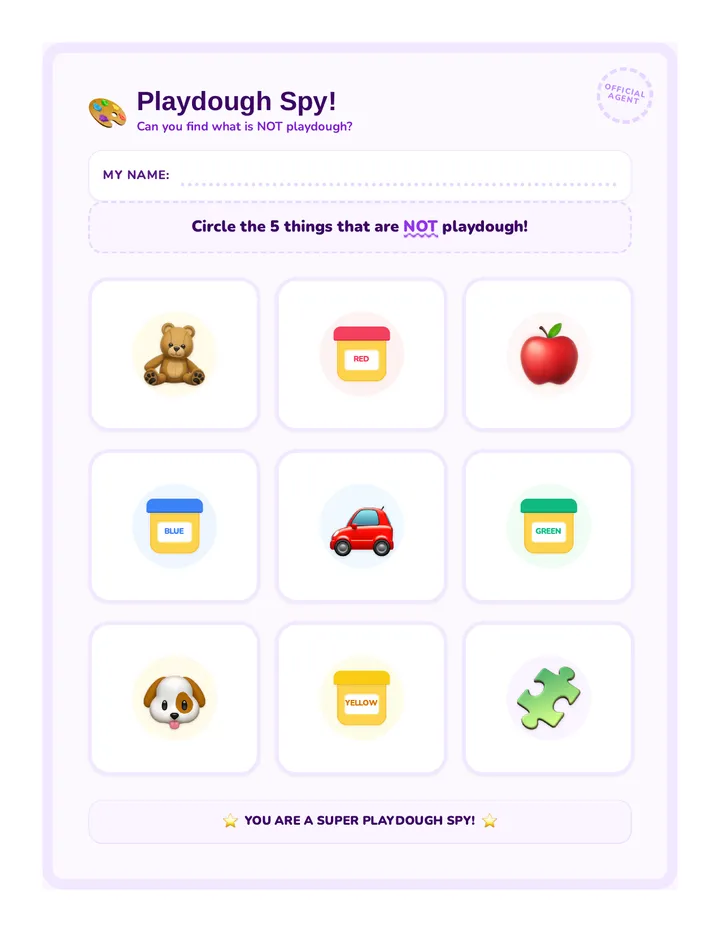
A foundational language and logic lesson for first graders to master the concept of negation ('not') through playful categorization activities.
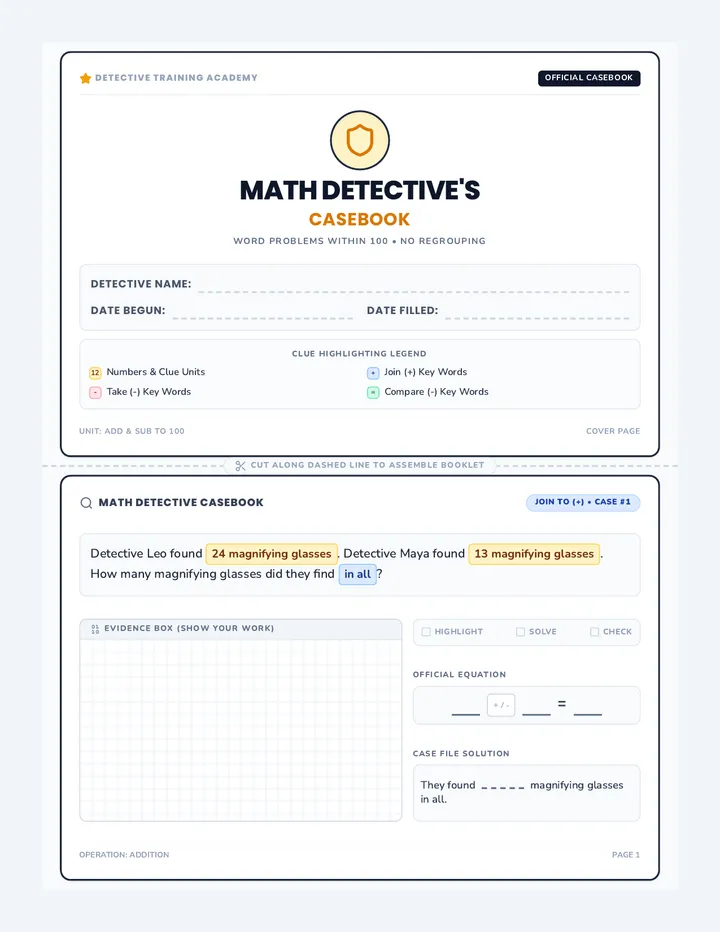
A lesson focused on solving addition and subtraction word problems within 100 without regrouping, featuring join to, take from, and comparison scenarios.
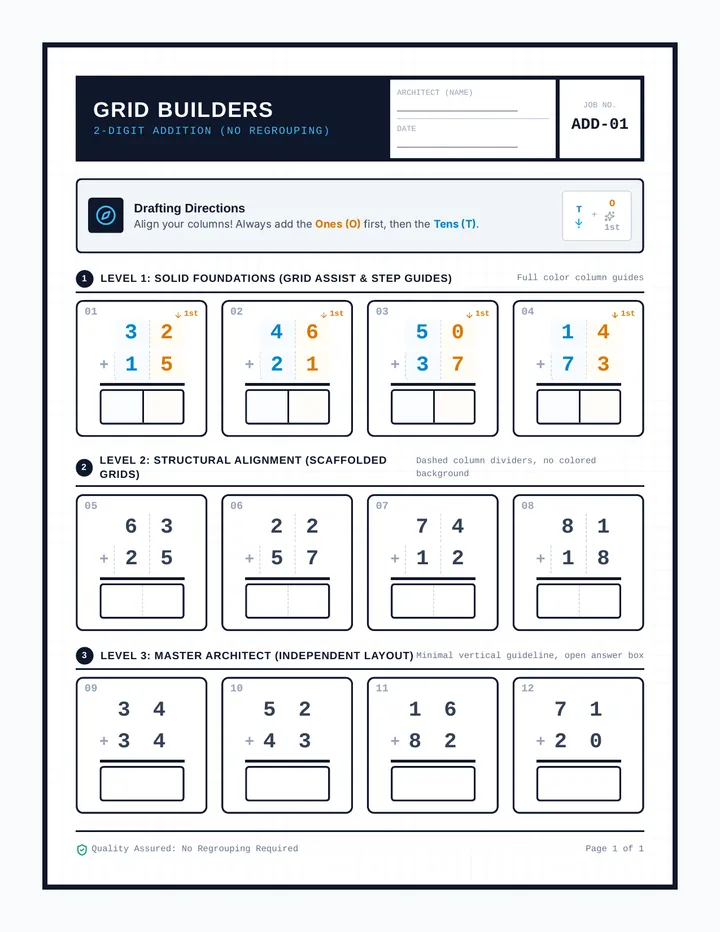
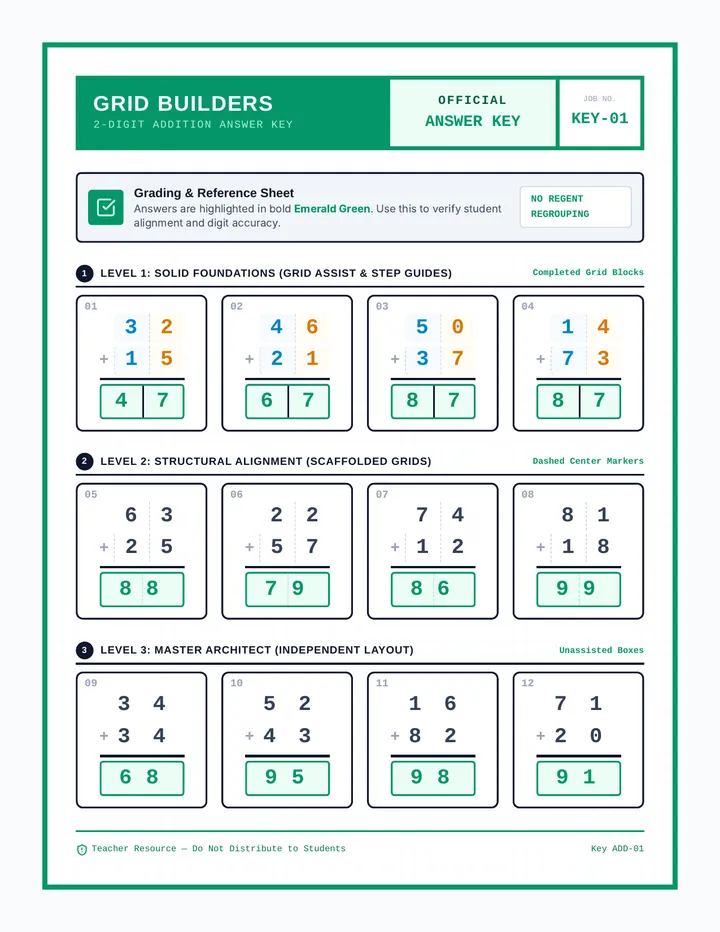
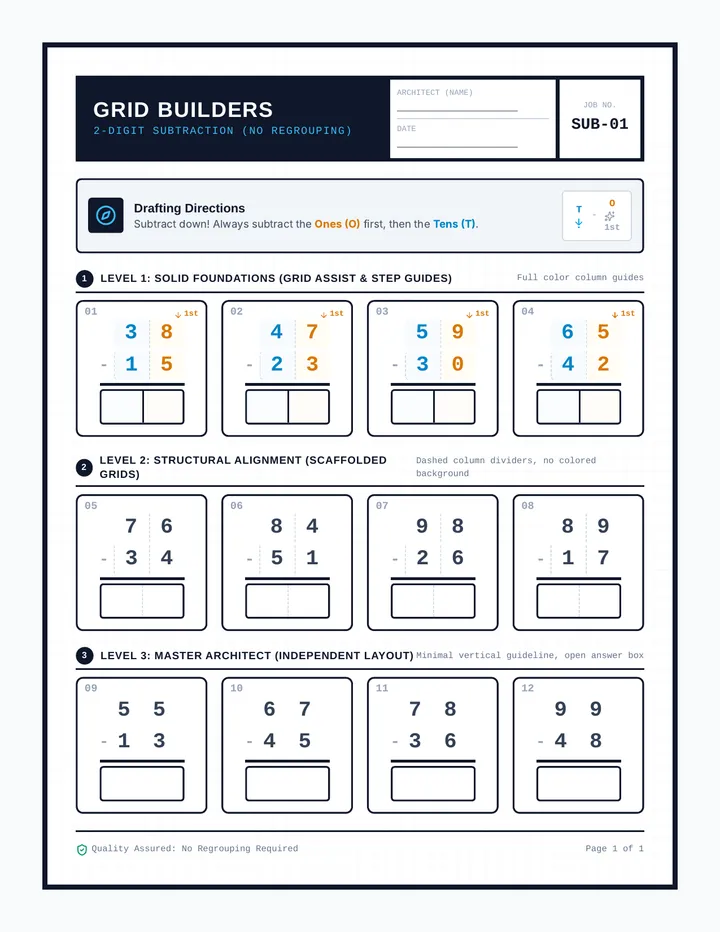
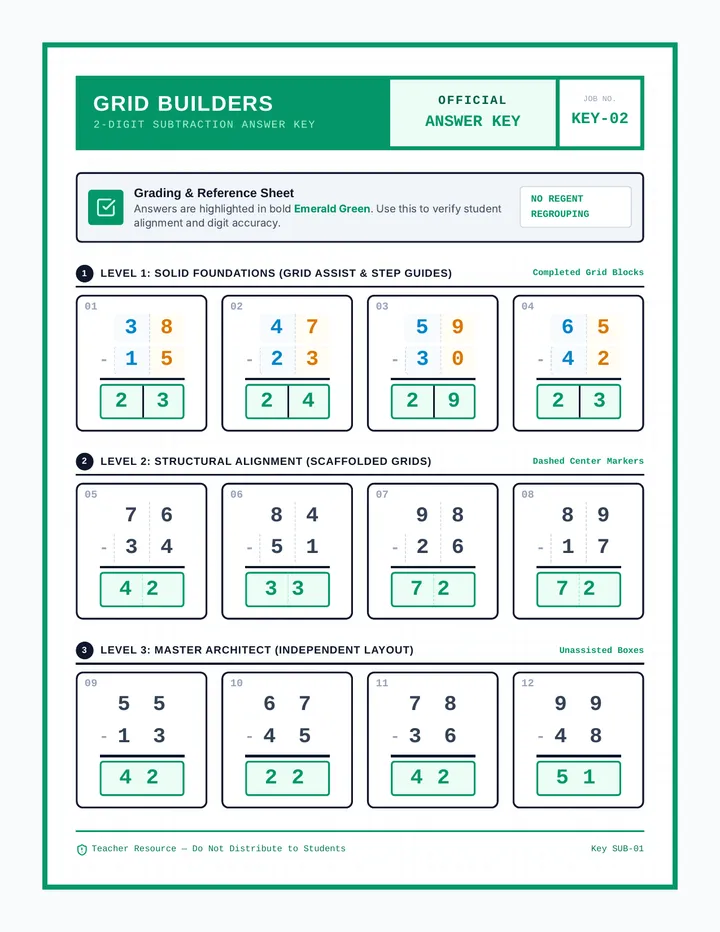
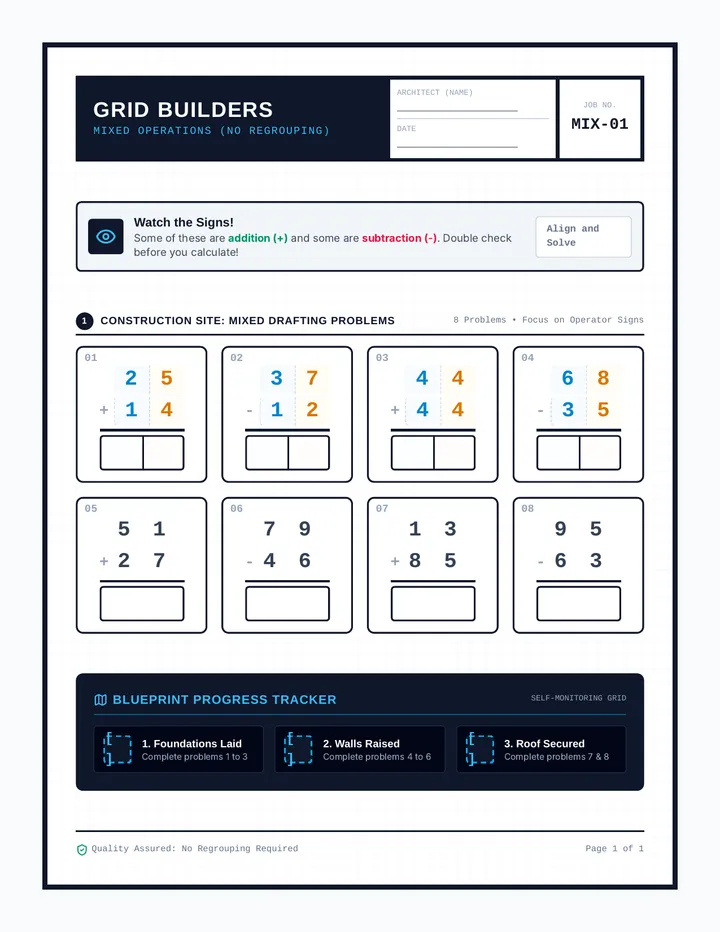
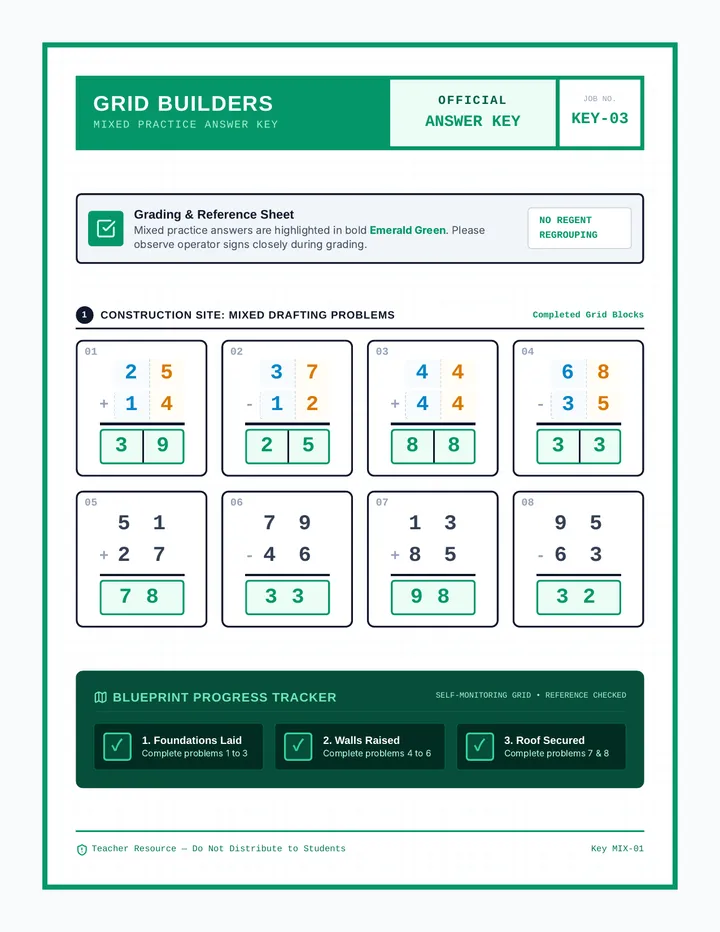
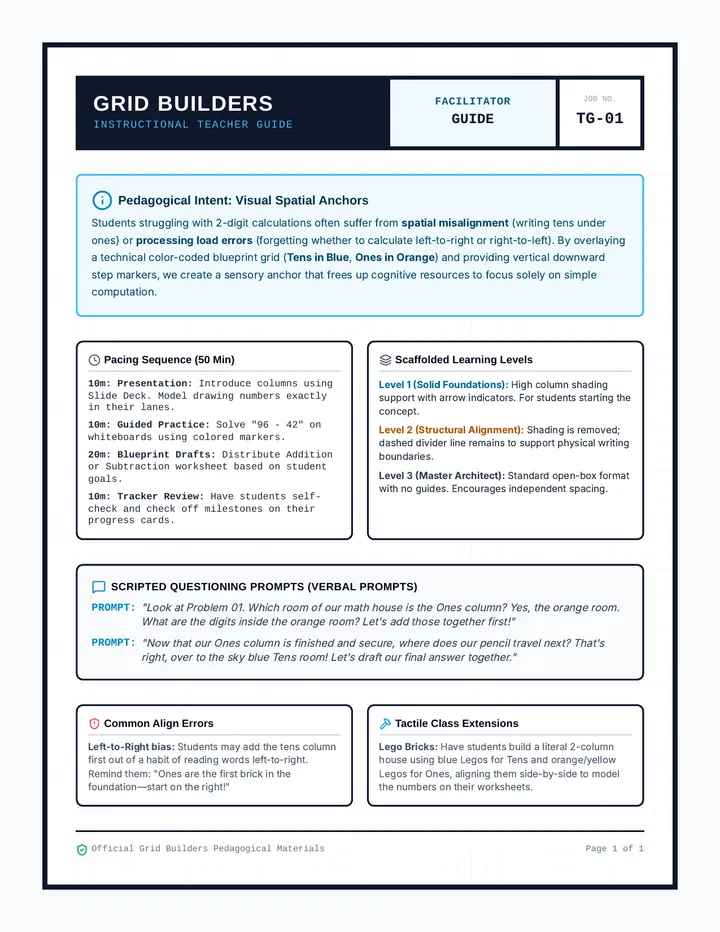
A structured 2-digit addition and subtraction lesson featuring highly supportive blueprint-style grids. Color-coded columns and visual step indicators help students master math alignment without regrouping.
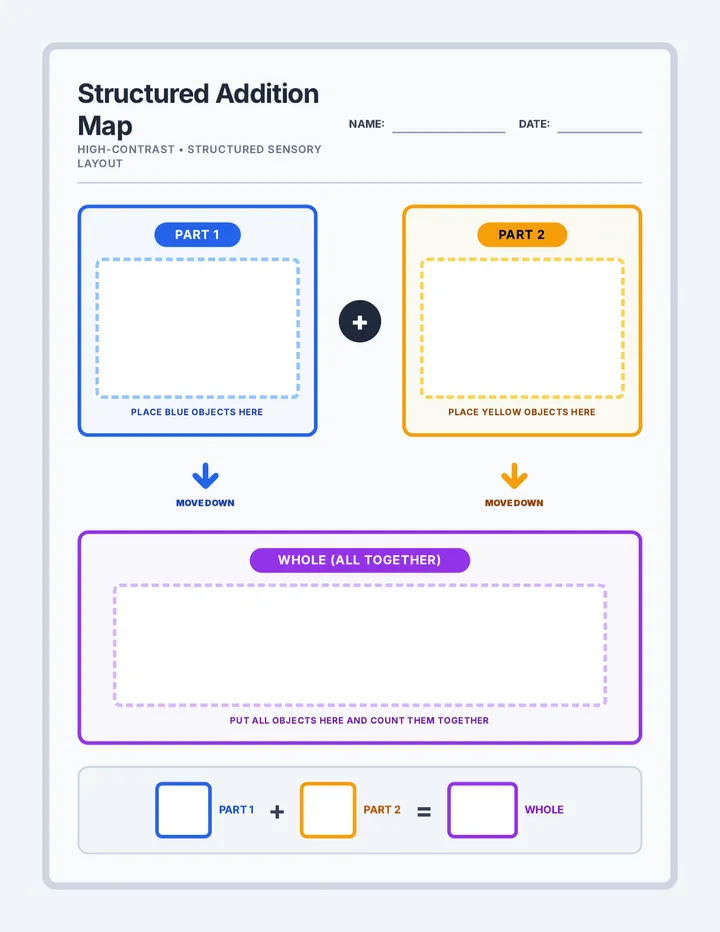
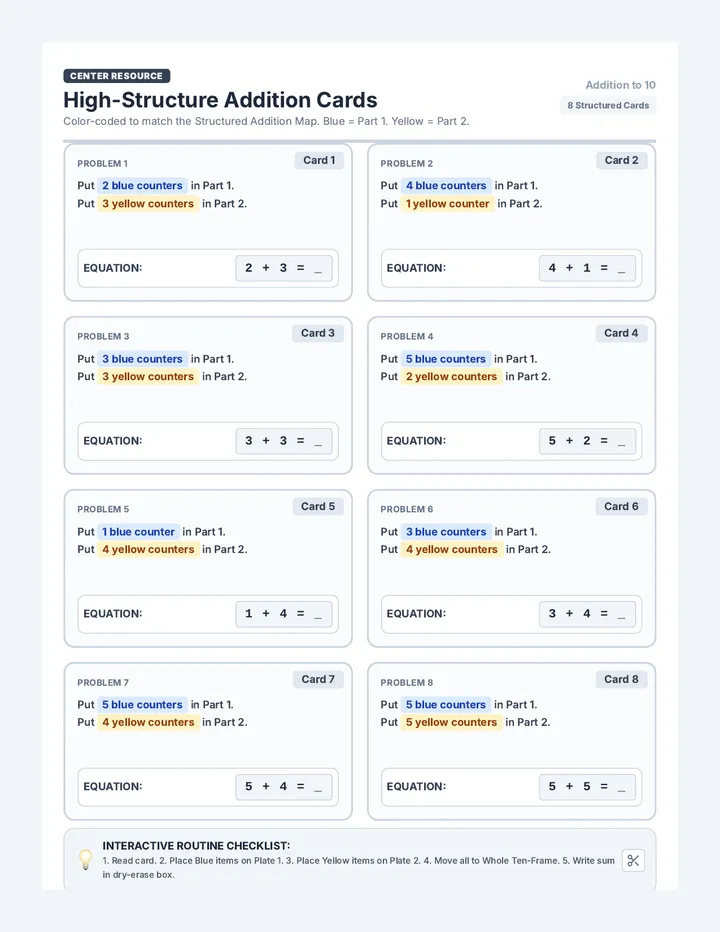
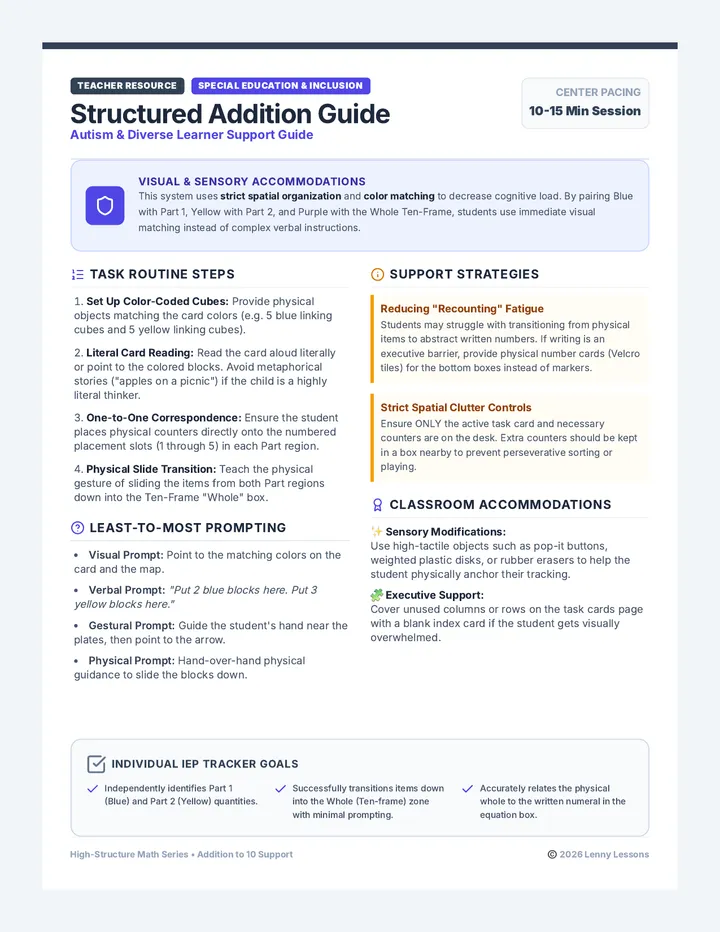
An autism-friendly, high-structure math center featuring a distraction-free Part-Part-Whole Mat with solid, clean workspaces and color-coded task cards for structured physical addition.
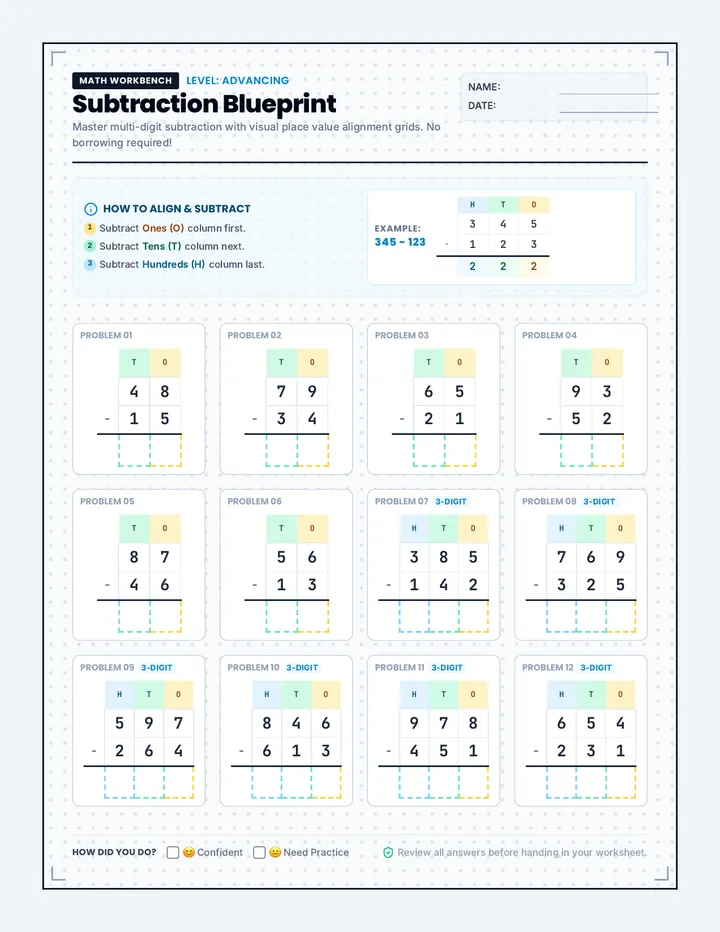
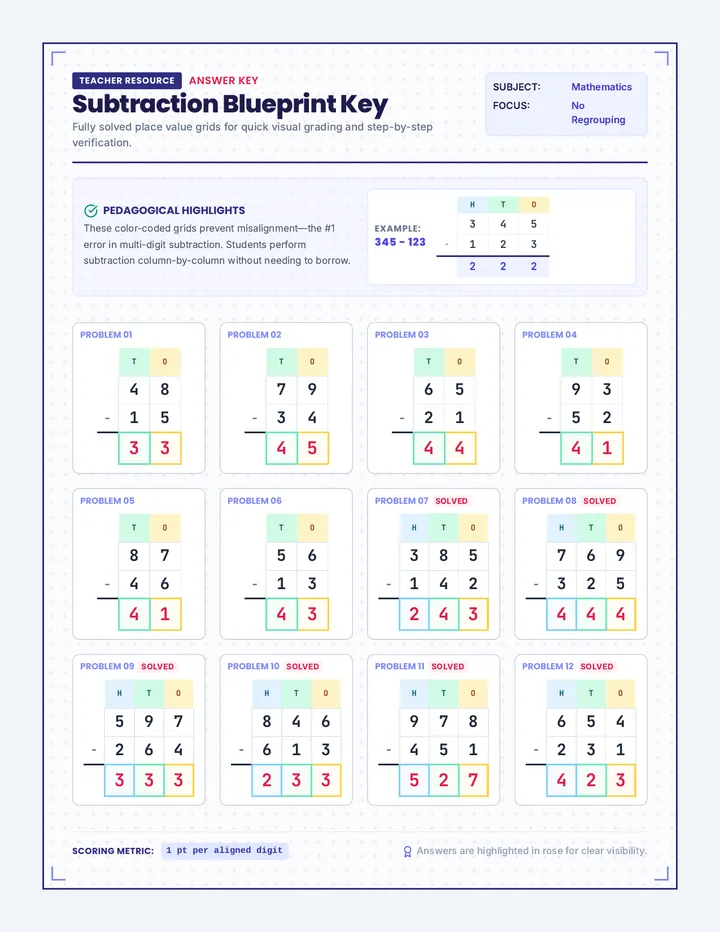
A lesson introducing subtraction without borrowing using color-coded grids and place value alignment. Students practice aligning digits in tens and ones columns before expanding to hundreds.
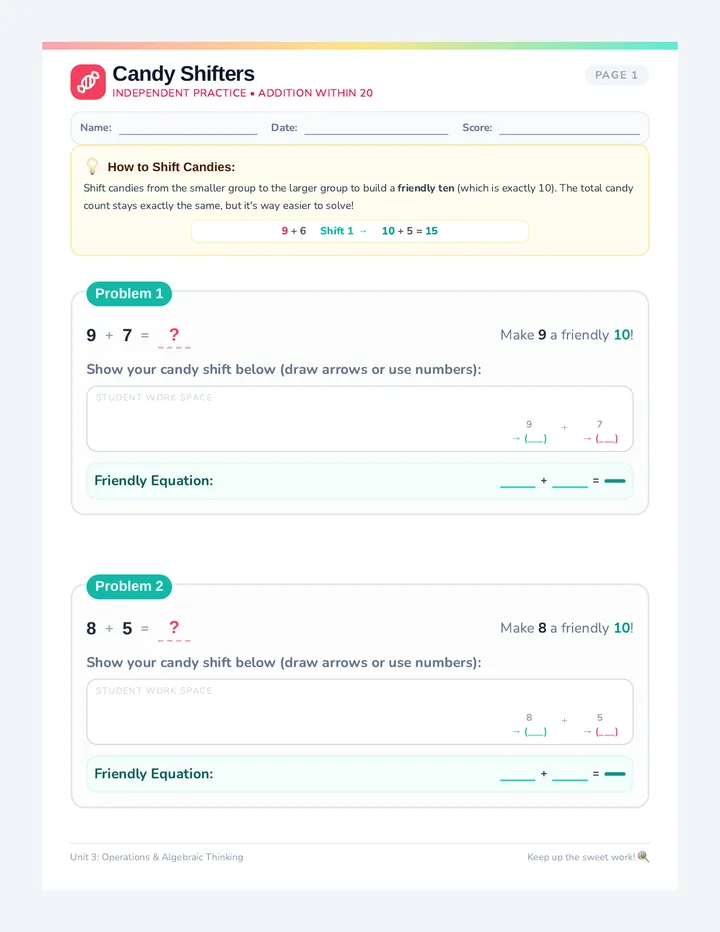
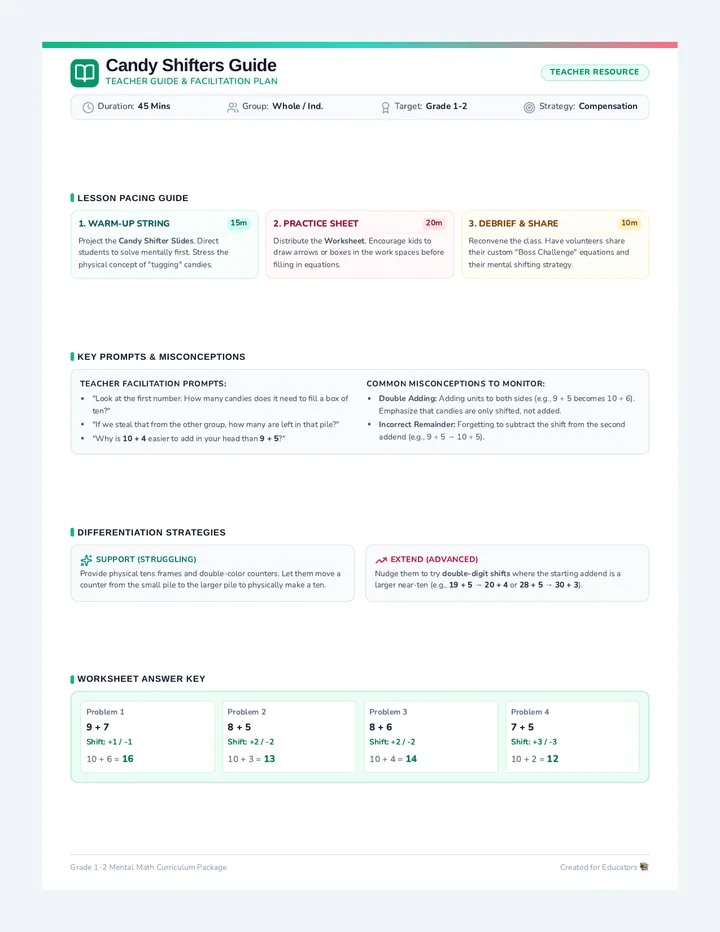
A mental math lesson introducing the compensation strategy for addition within 20 using a playful candy shop theme. Students shift amounts between addends to create 'friendly tens' (e.g., 9 + 5 becomes 10 + 4), practicing this mentally during a slide-guided warm-up and on paper with a themed student worksheet.
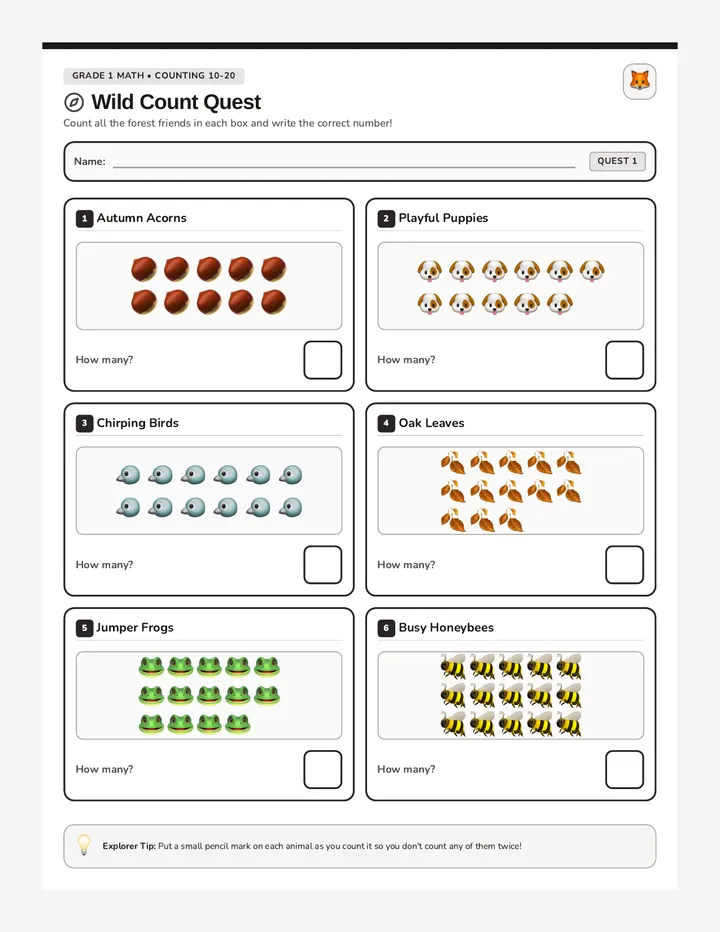
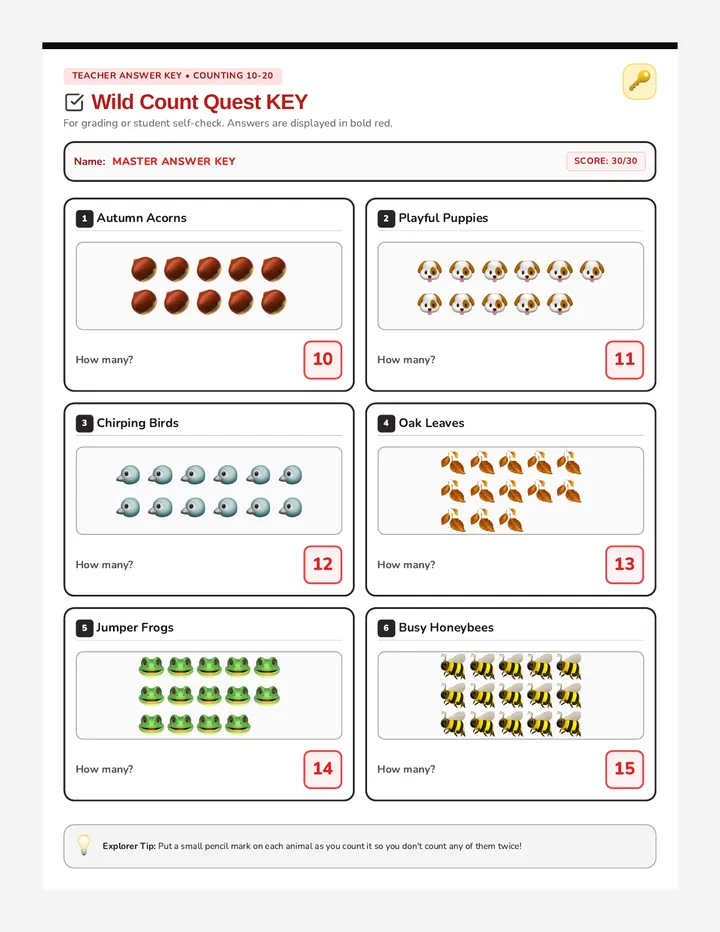
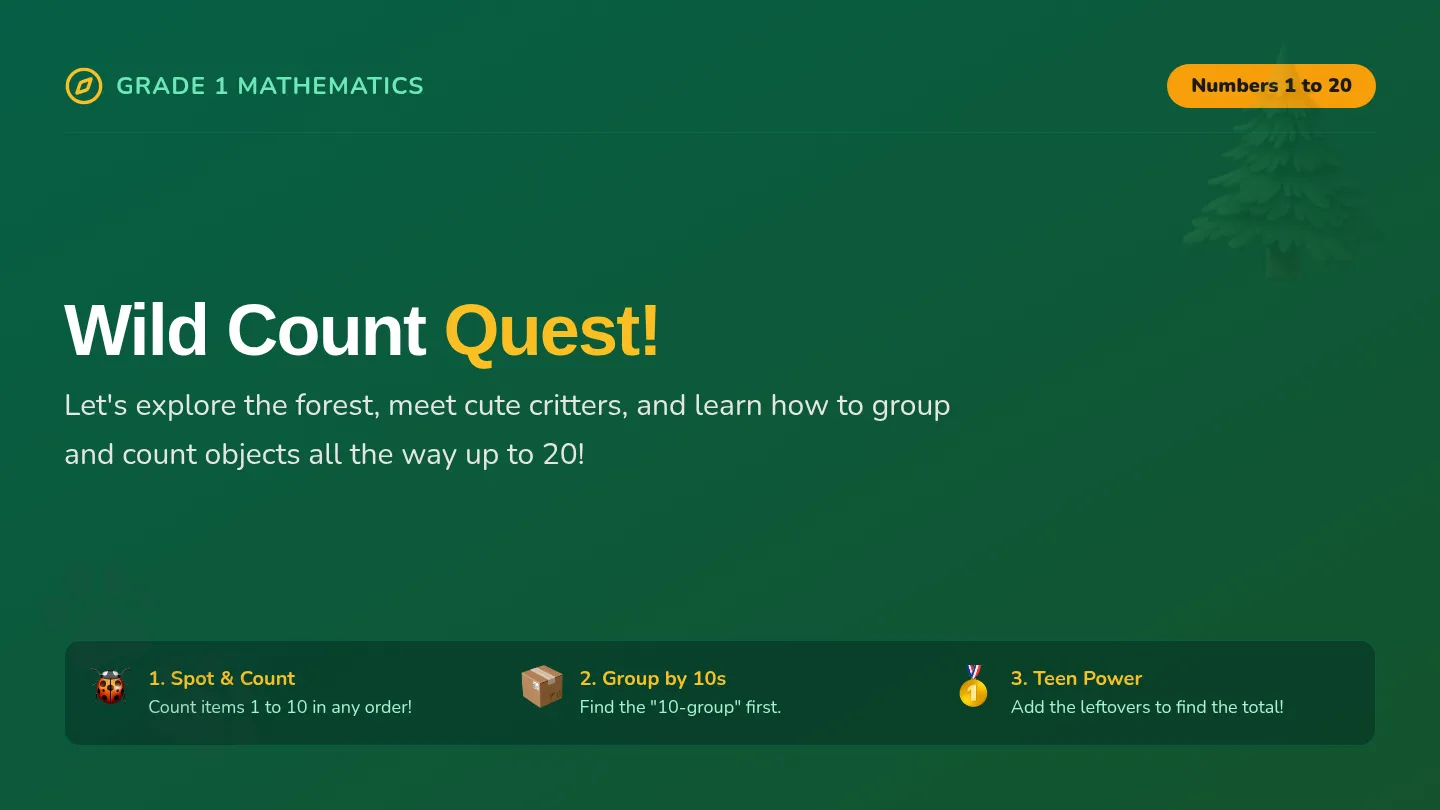
An engaging first-grade math lesson focusing on counting objects from 1 to 20. Students learn to count structured and unstructured groups of nature items, bugs, and pets, with a special emphasis on grouping teen numbers into ten-frames and base-ten concepts.
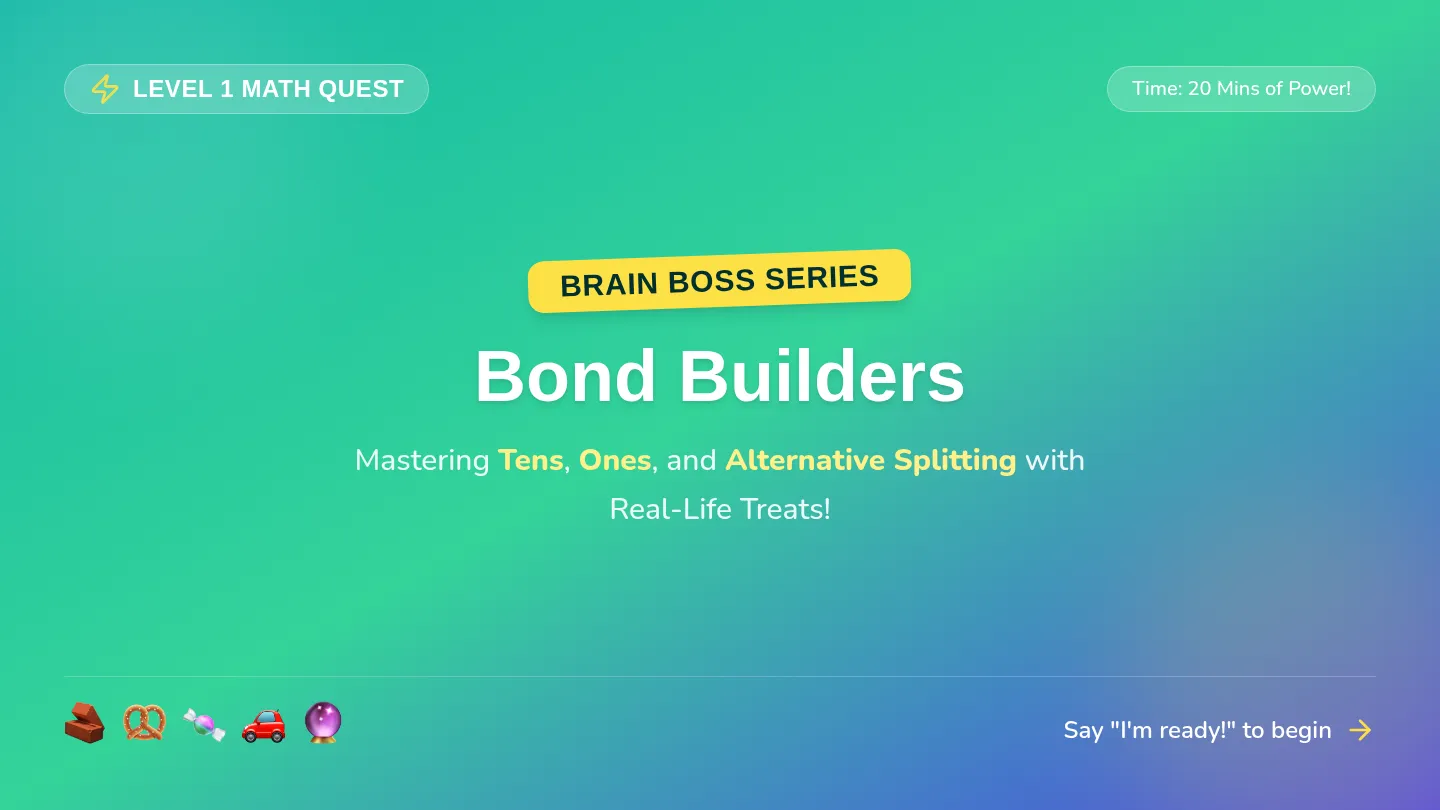
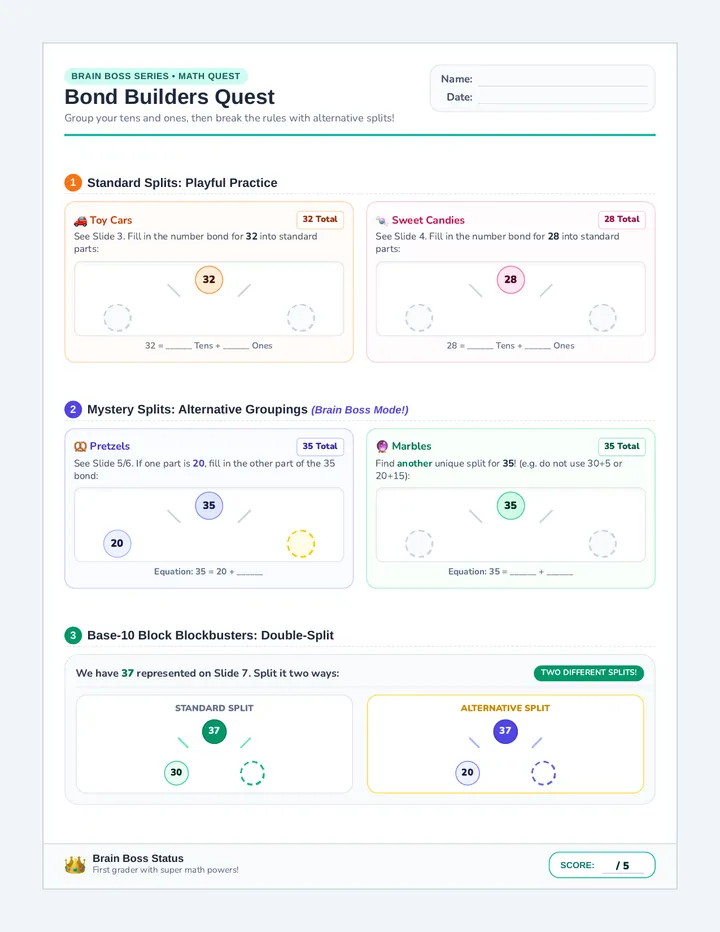
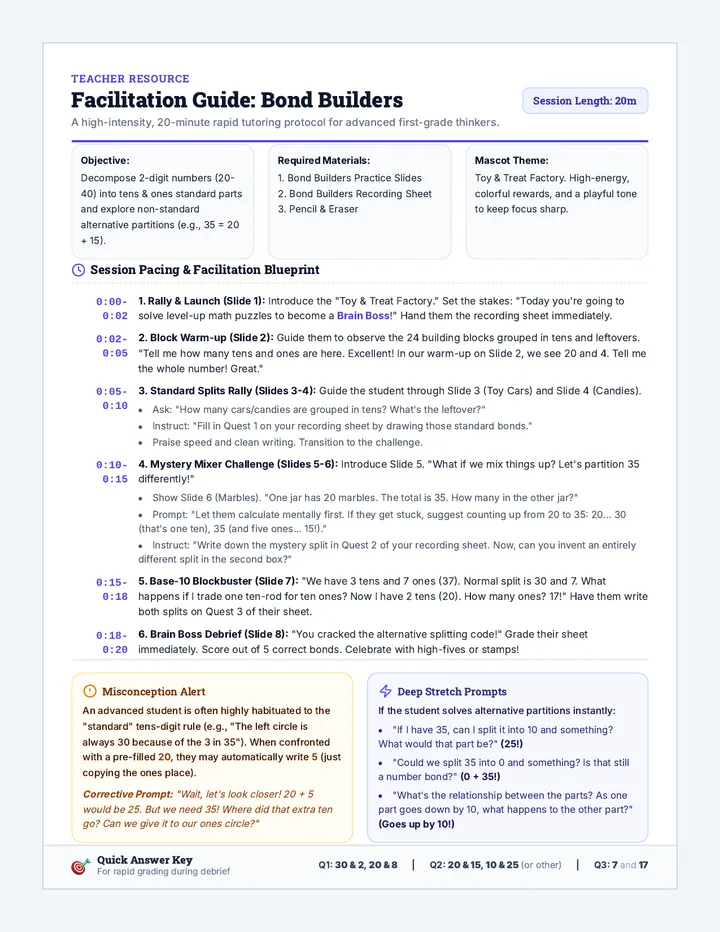
A high-energy, 20-minute practice session for an advanced 1st grader focused on representing numbers 20-40 with tens and ones using real-world objects and base-10 blocks. Introduces alternative partitioning challenges (e.g., 35 into 20 + 15) to stretch critical thinking.
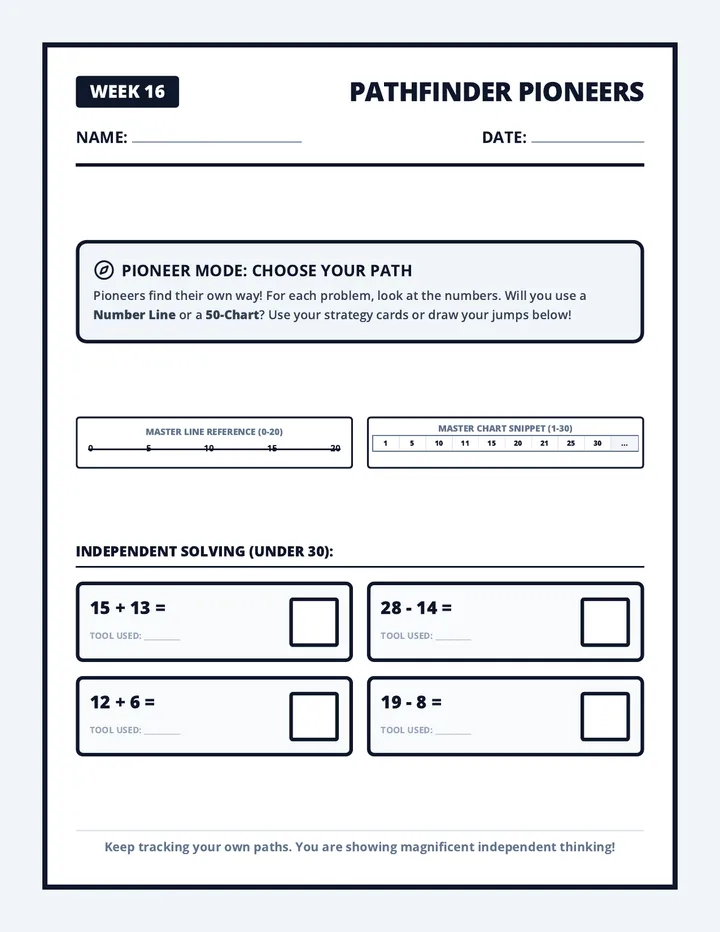
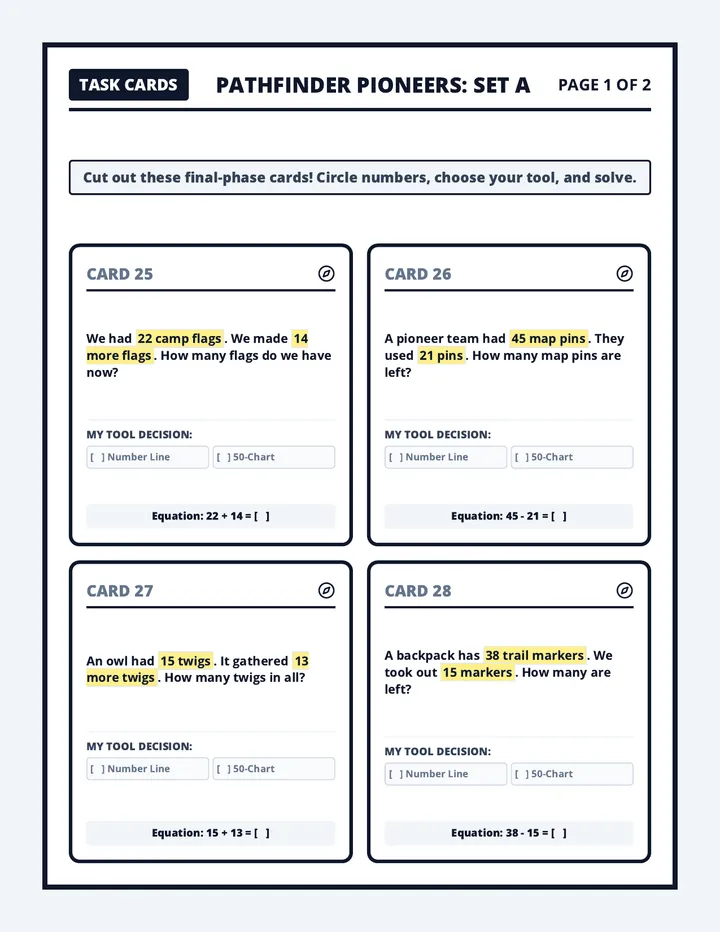
Weeks 16 to 20 integrating both number line and 50-chart strategies to solve complex, single-step word problems independently with minimalist prompts.
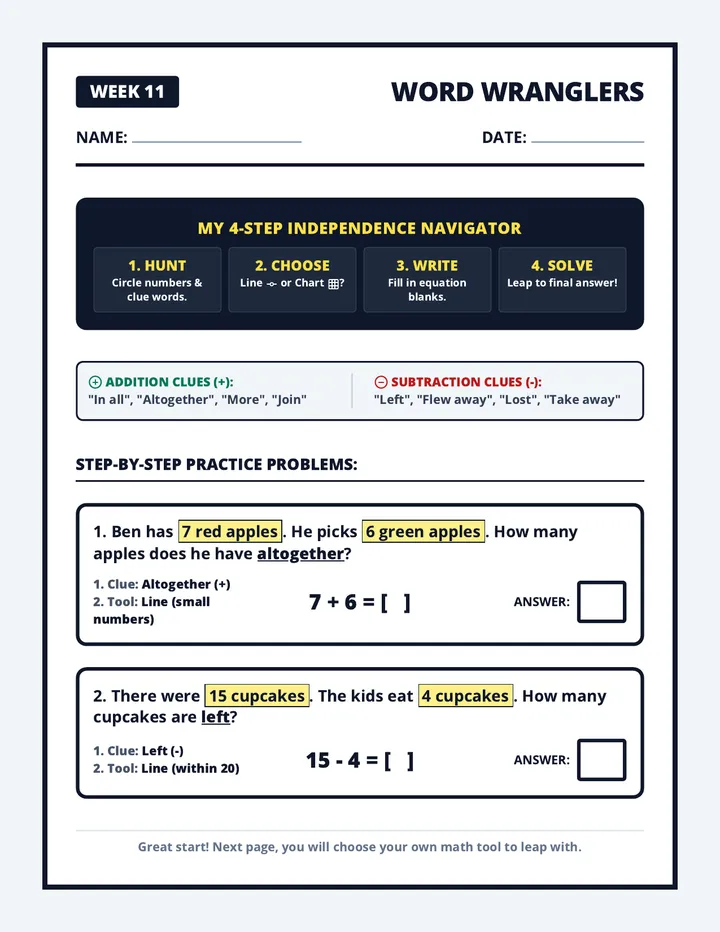
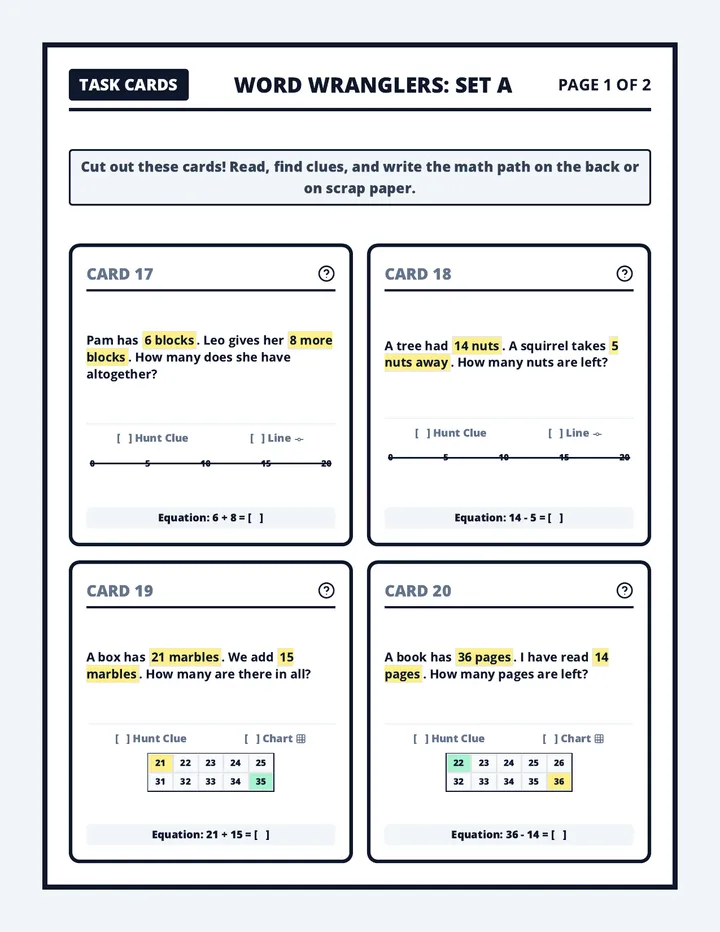
Weeks 11 to 15 applying chart and number line strategies to solve single-step word problems with guided, step-by-step scaffolds.
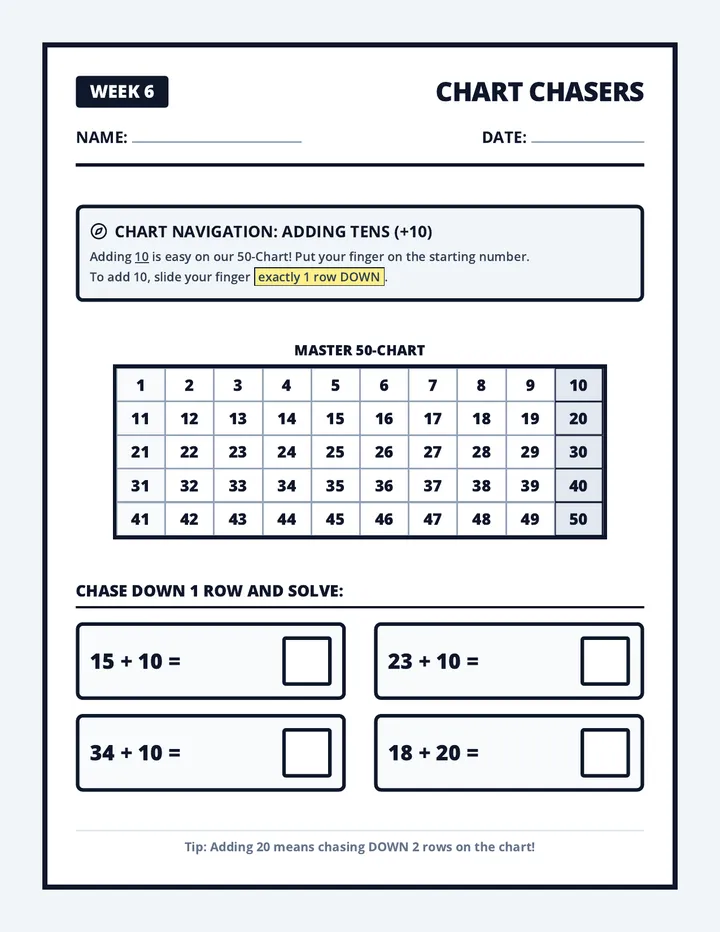
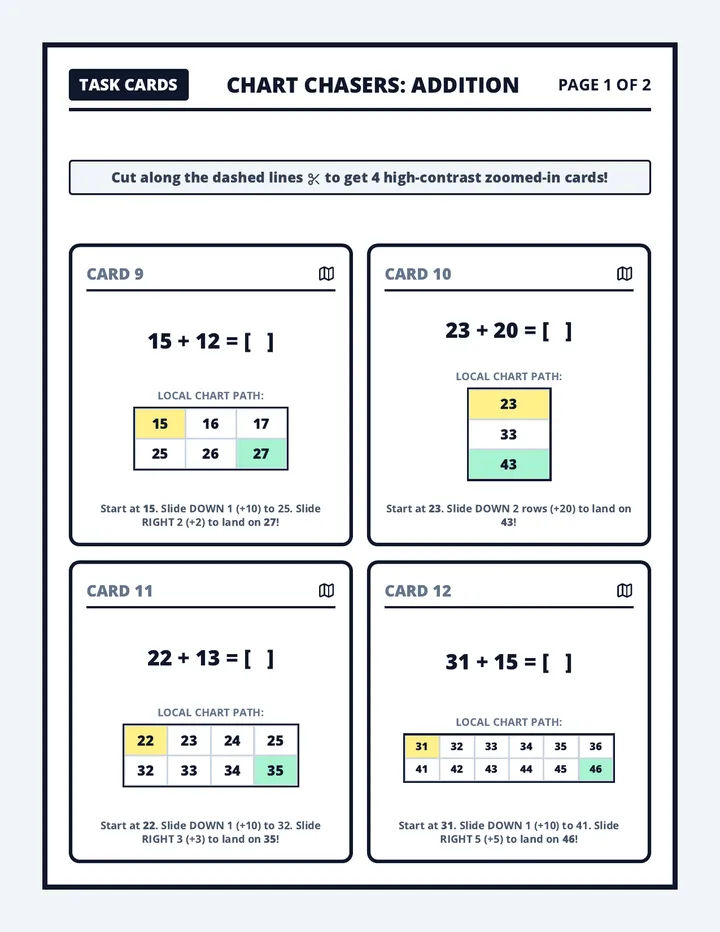
Weeks 6 to 10 introducing the 50-chart to navigate double-digit addition and subtraction up to 50 without regrouping.
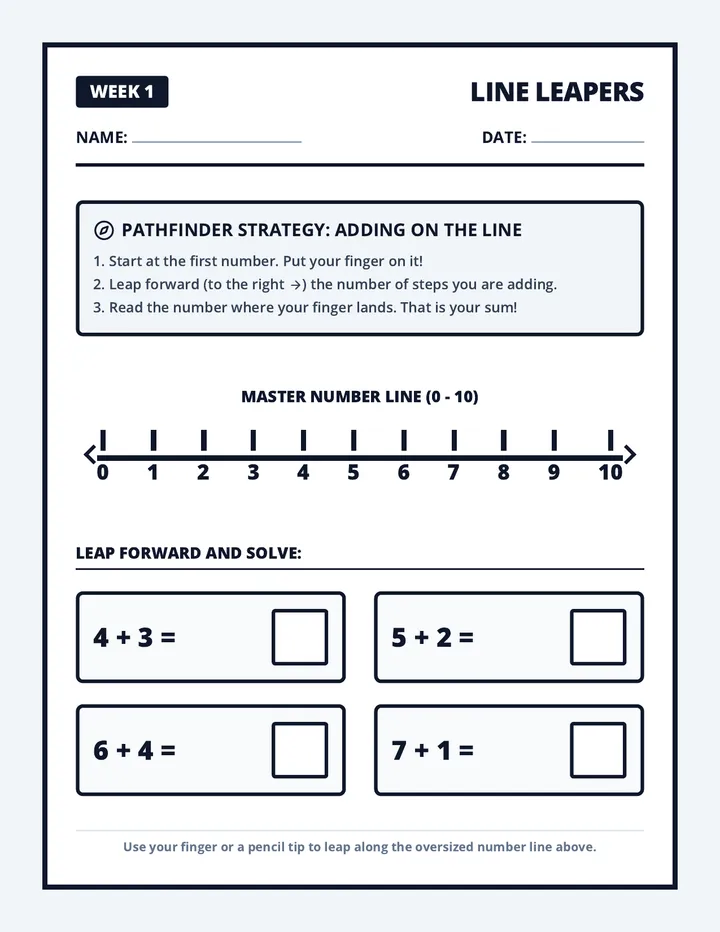
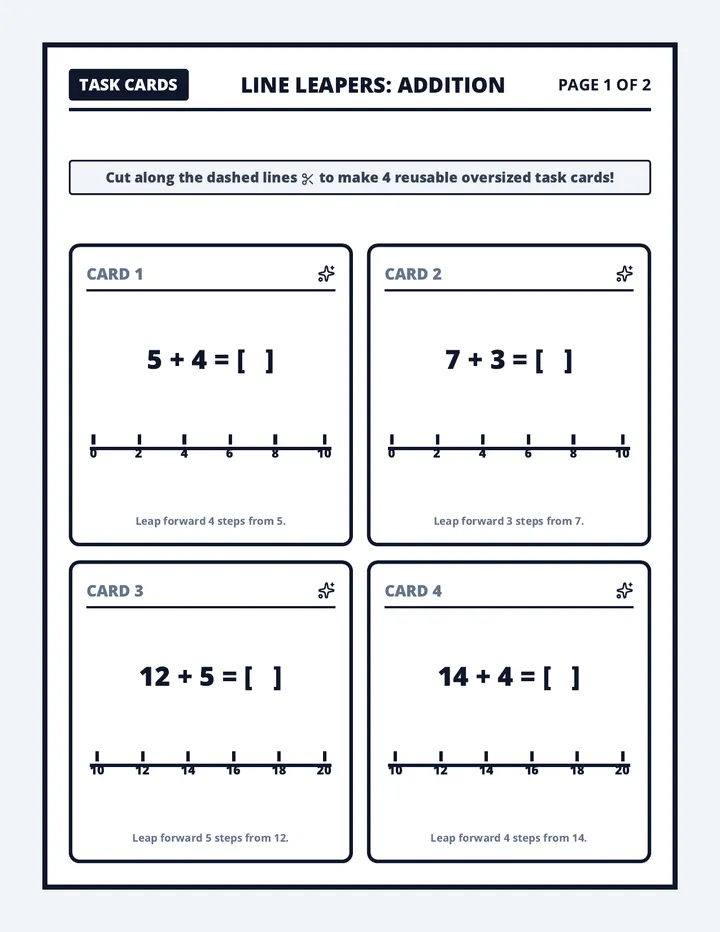
Weeks 1 to 5 focusing on building foundational addition and subtraction skills within 20 using an interactive, high-contrast number line.
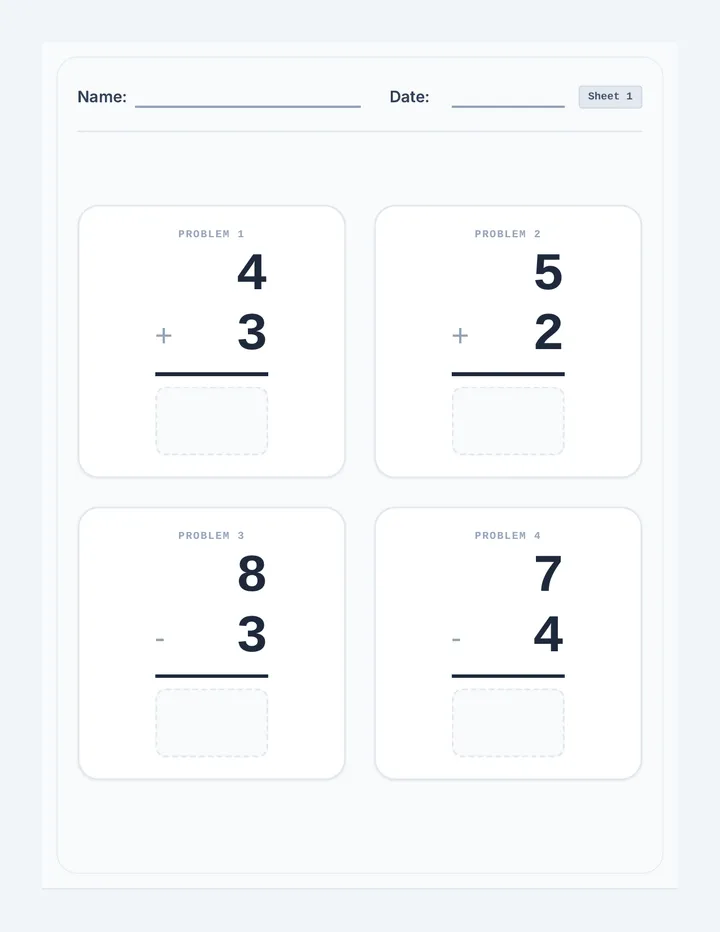
A collection of 20 high-frequency printable math worksheets designed to build addition and subtraction fluency within 20, containing standard vertical algorithm problems.
A foundational lesson exploring how objects, animals, and helpers in our world connect. Students learn to identify associations and explain the logical relationships between paired items through interactive slides, drawing lines, and cut-and-paste worksheets.
A comprehensive lesson on identifying and understanding US coins and bills, their values, and their key visual features.
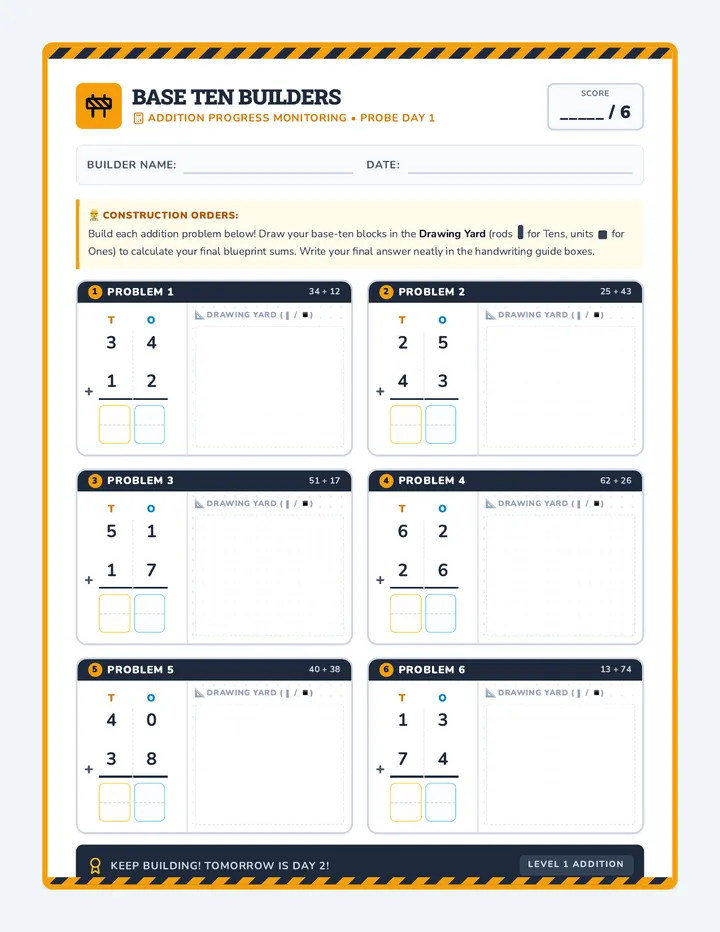
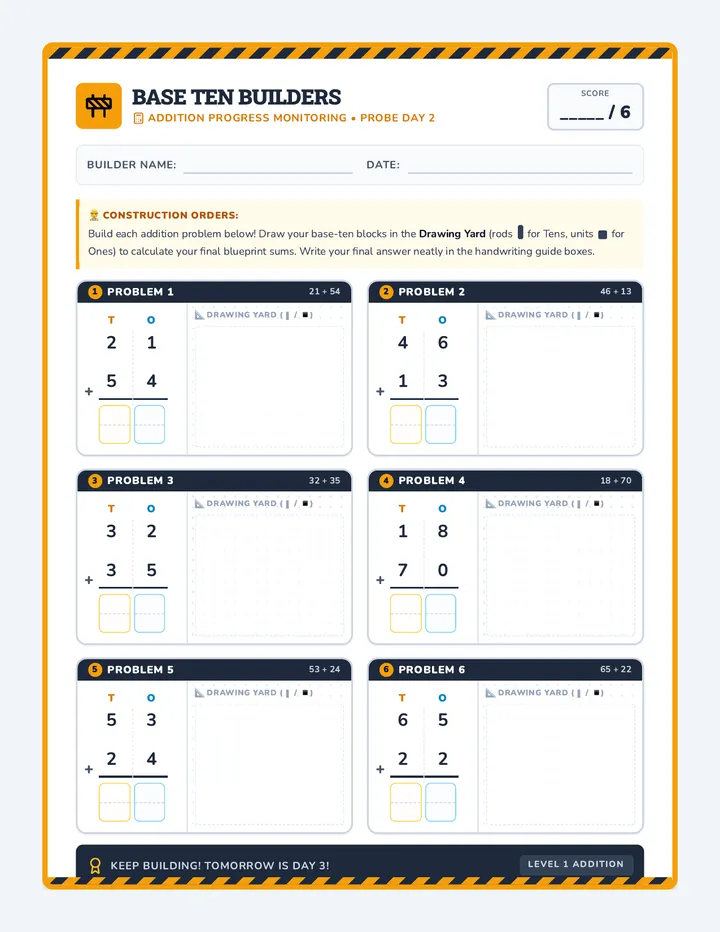
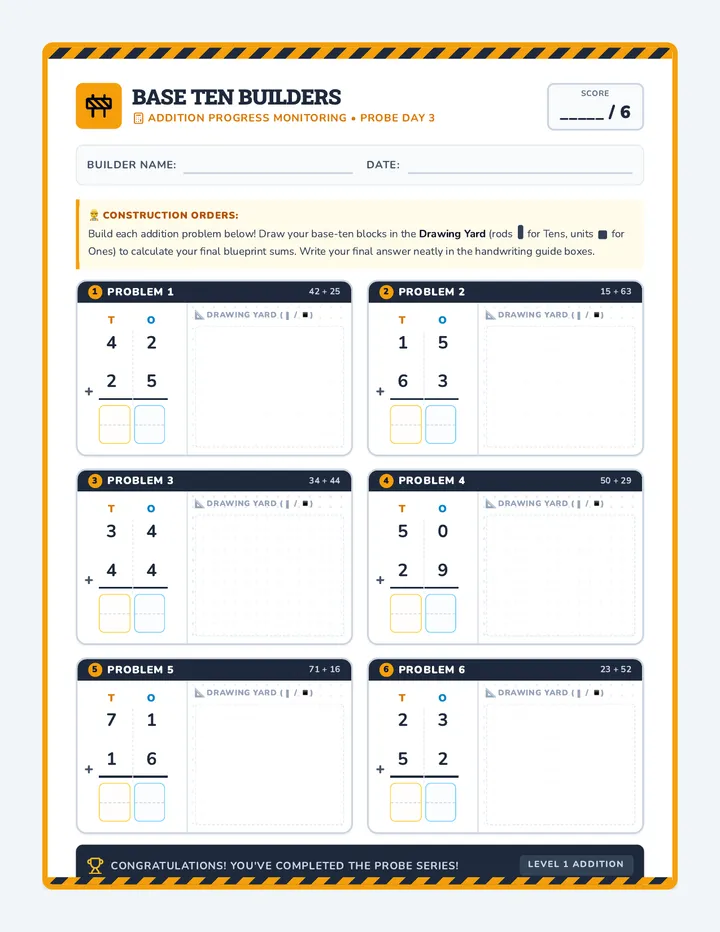
A progress monitoring set of three double-digit addition probes (within 100, no regrouping) featuring strict place value column labels, spacious builder-themed drawing yards for drawing base-ten blocks, and dotted visual handwriting guides.
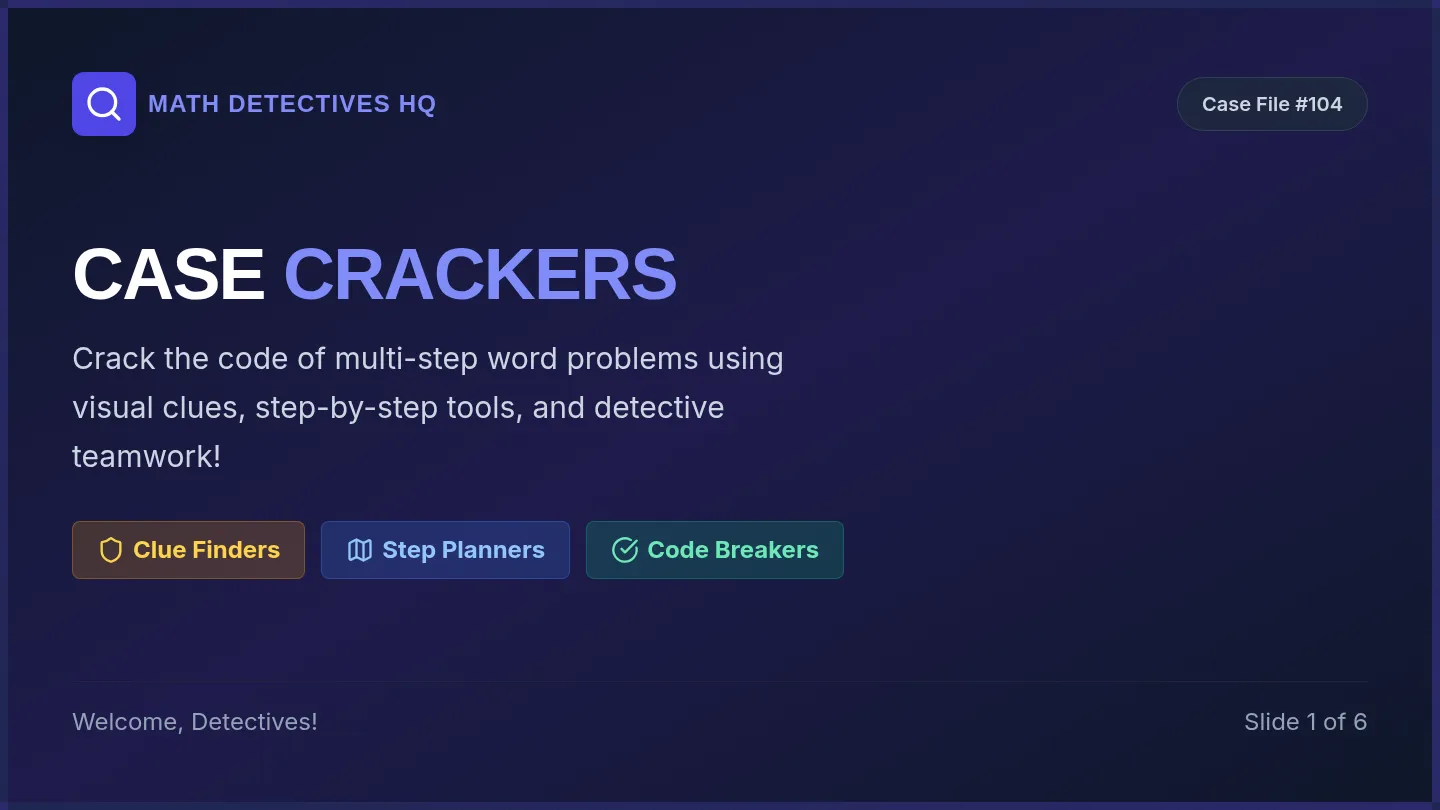
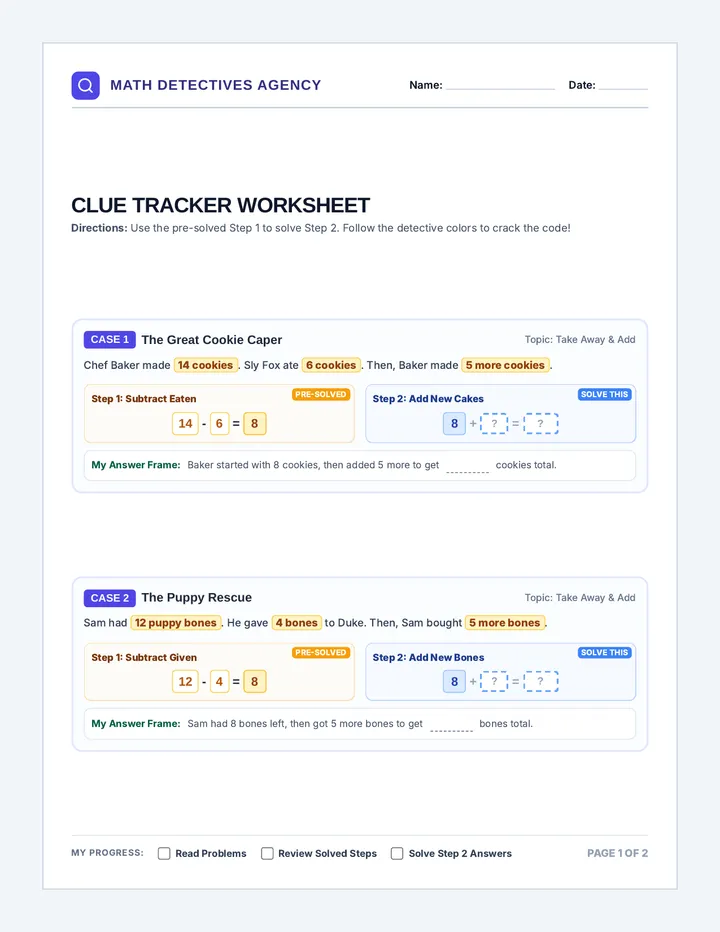
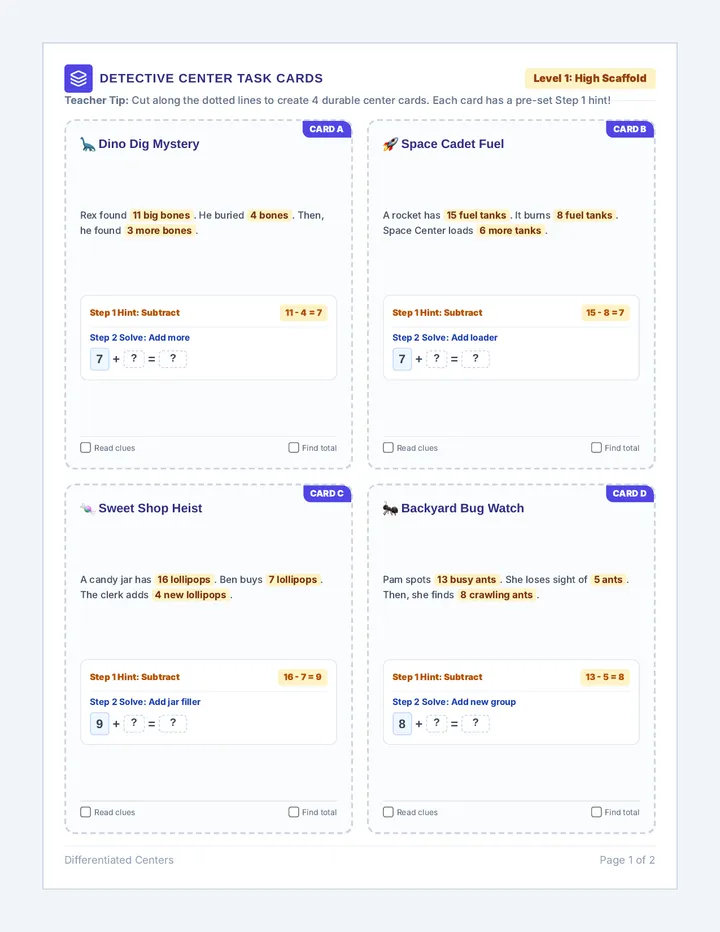
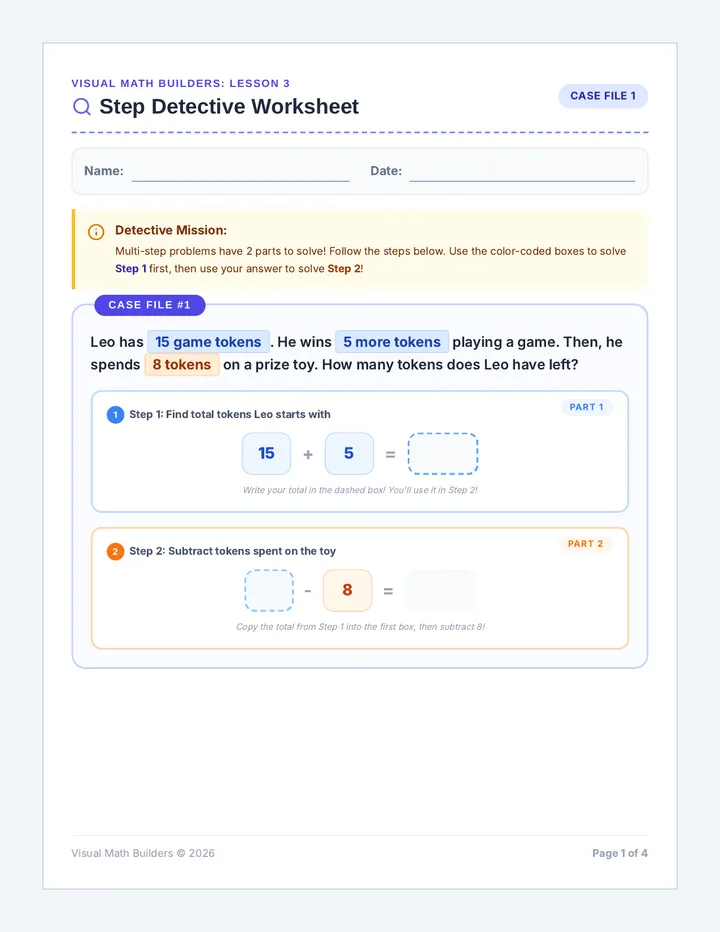
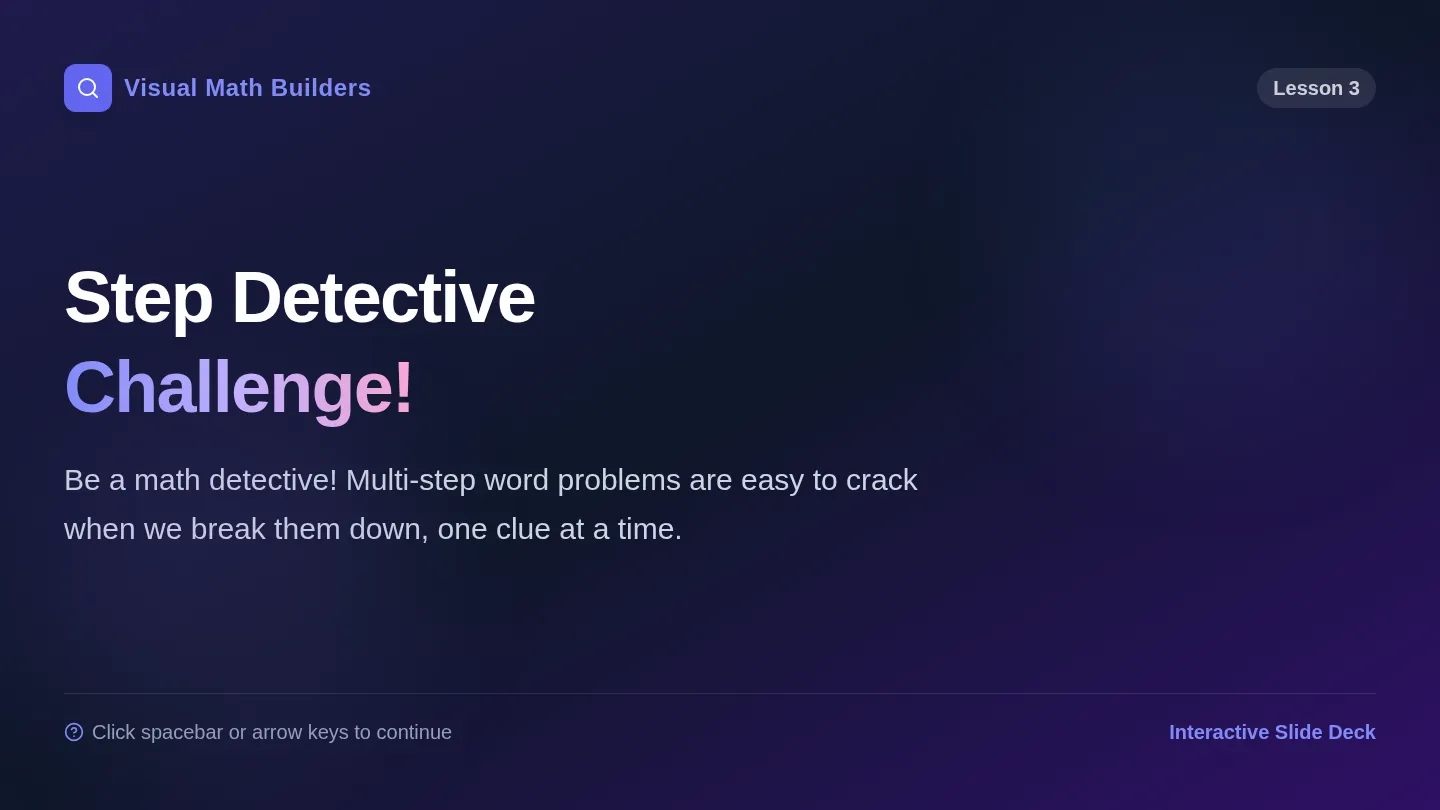
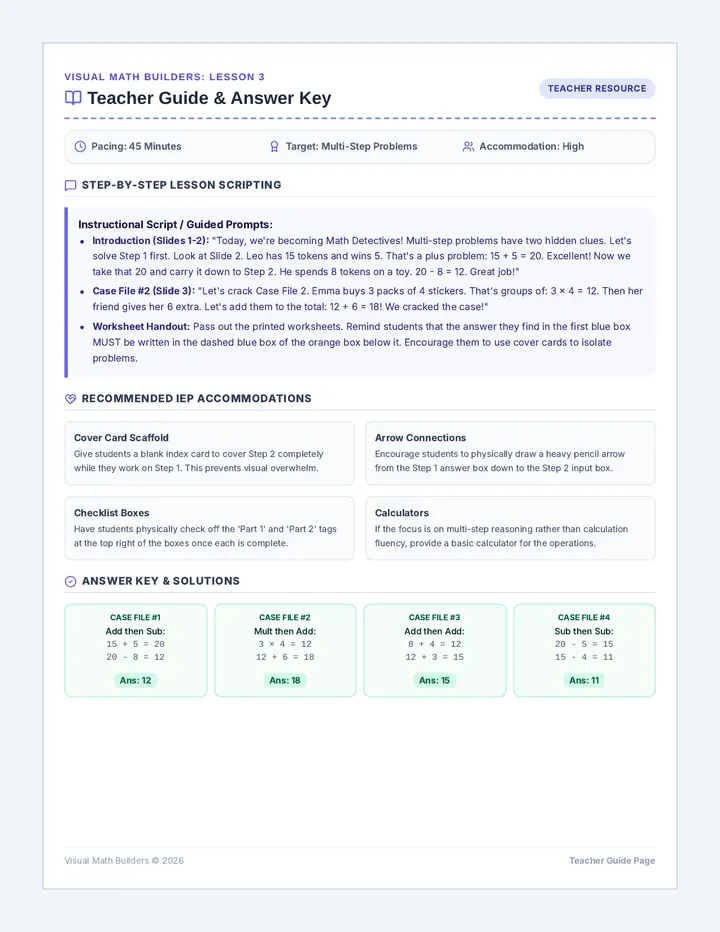
A structured lesson designed for IEP students to master multi-step word problems using a 'Math Detectives' theme. Includes visual guides, color-coded step-by-step scaffolds, sentence frames, and partially-completed templates.
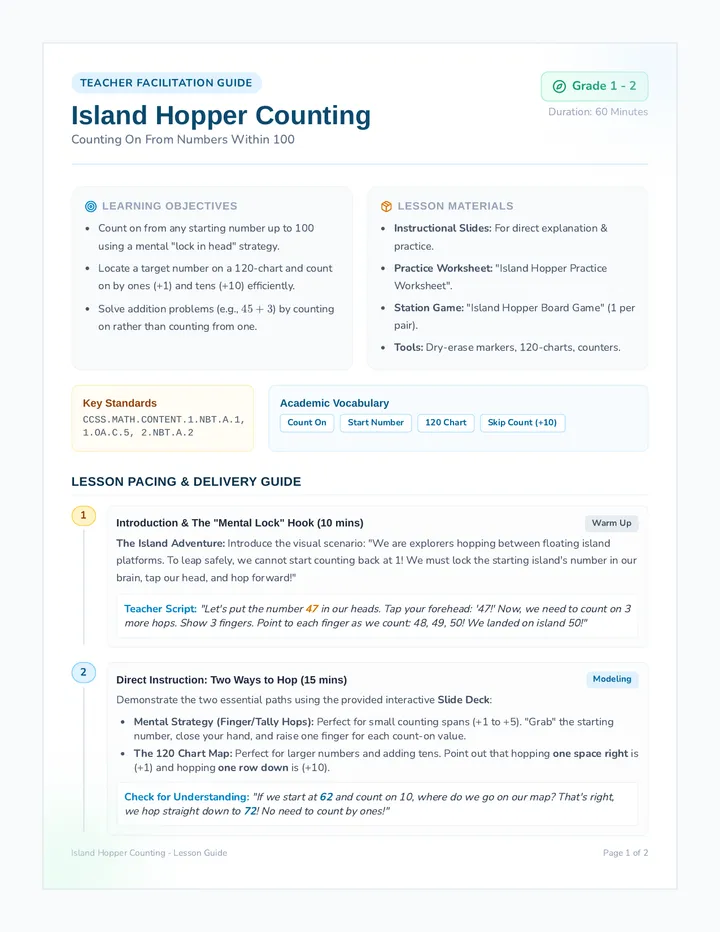
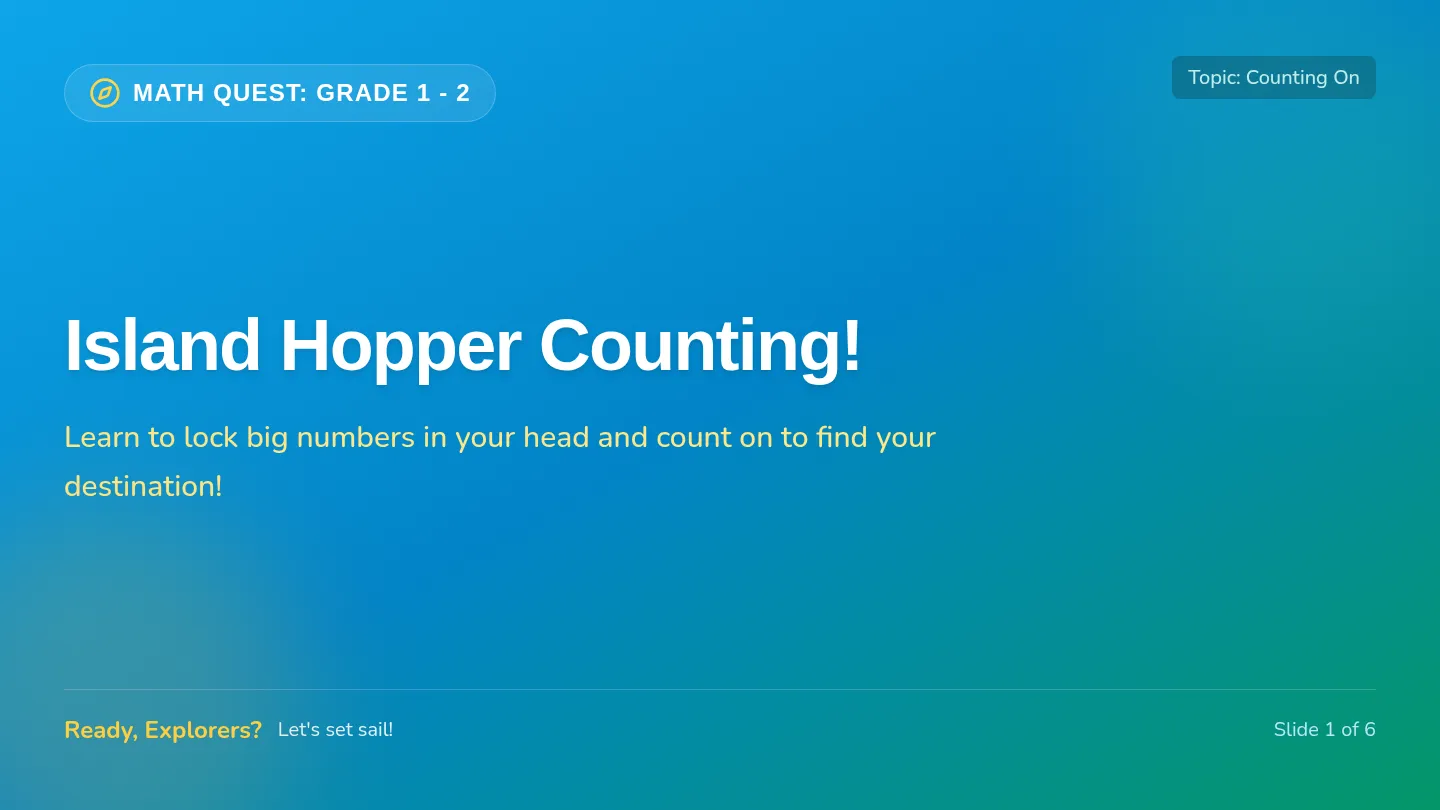
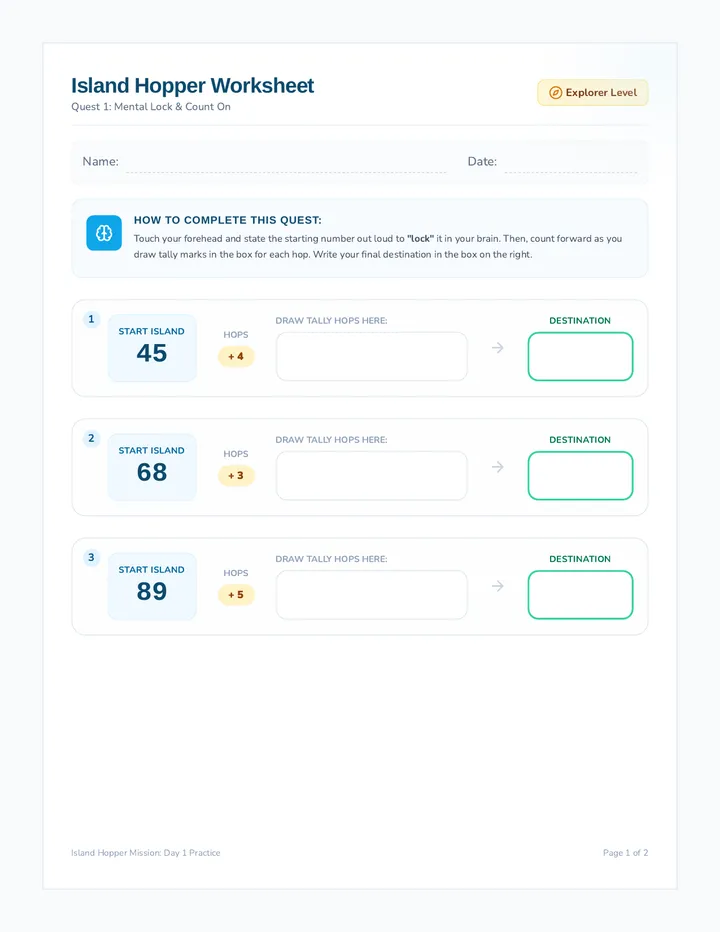
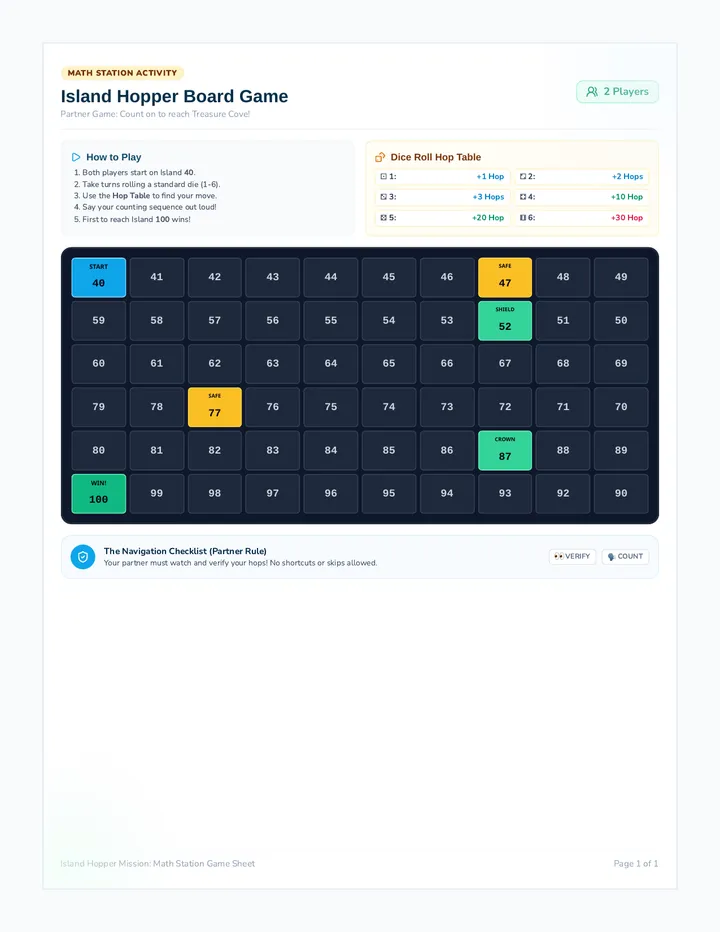
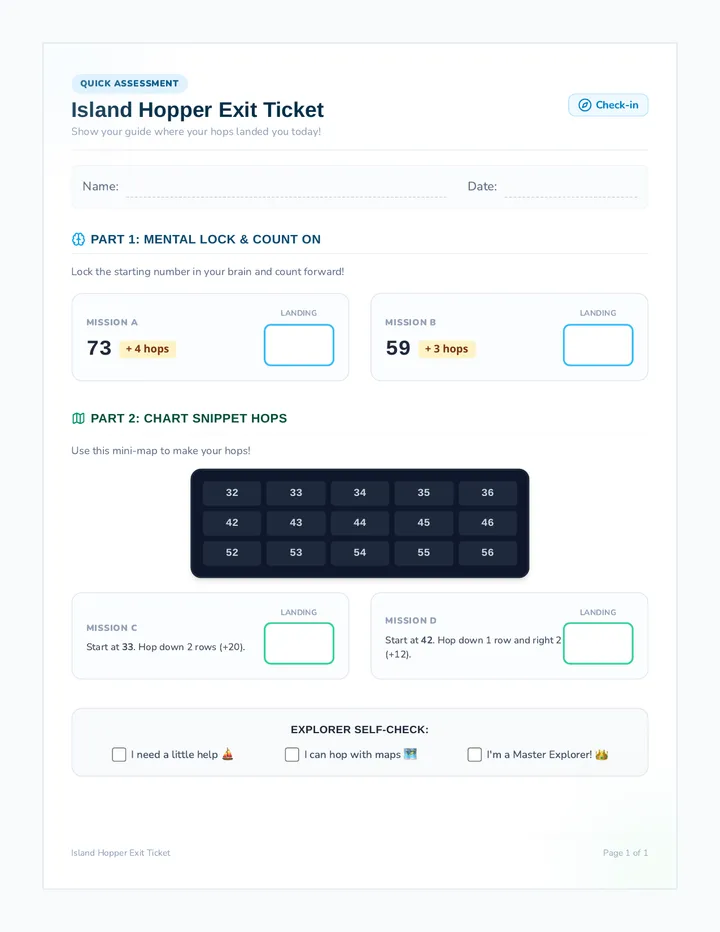
A complete, active math lesson bundle focused on counting on from numbers within 100. Students learn mental math strategies (holding a number in their head) and how to navigate a 120-chart to count on by ones and tens. Includes a comprehensive lesson plan, interactive teaching slides, student worksheets, a partner board game, and an exit ticket.
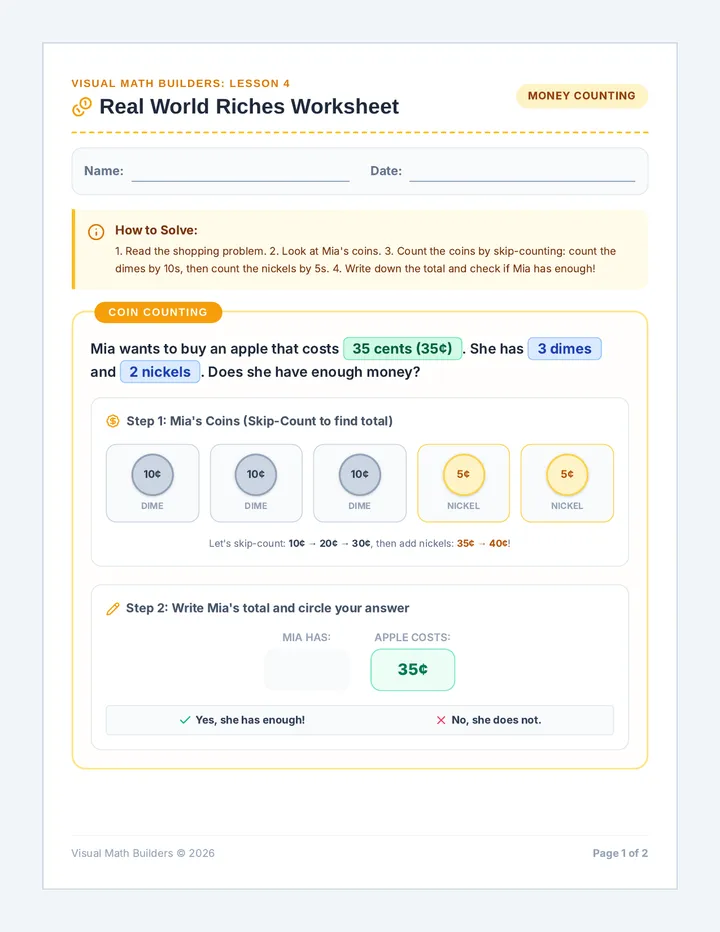
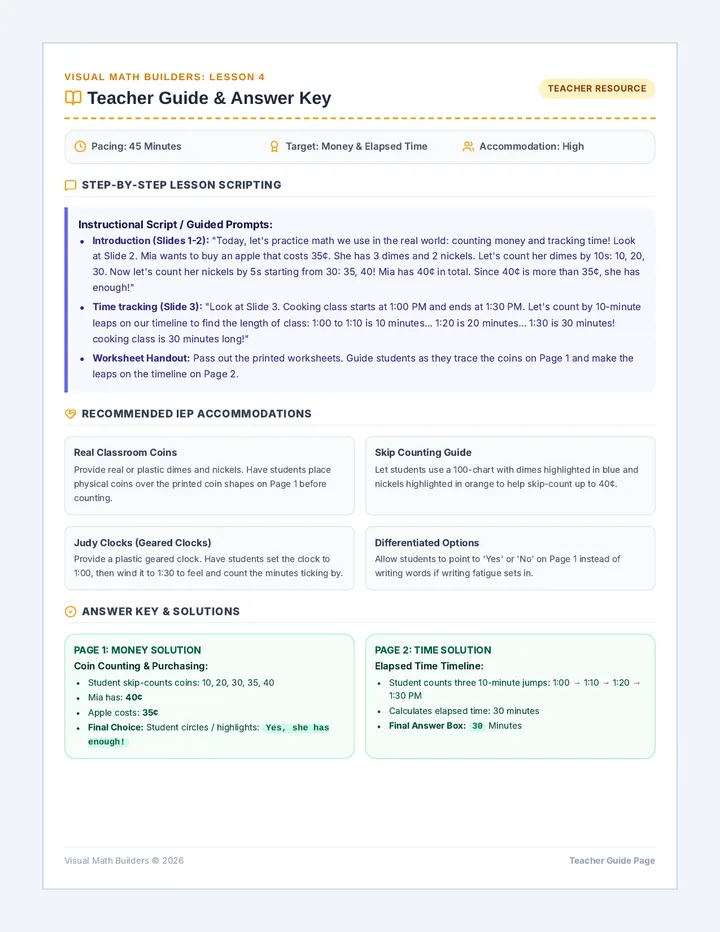
Targets practical, real-world application of math with highly visual scaffolding for coin counting, purchasing decisions, and elapsed time scenarios.
Breaks down multi-step math word problems into bite-sized, color-coded, sequentially numbered parts, helping students systematically parse and solve equations without visual overload.
Covers multiplication and division word problems utilizing visual aids such as equal group drawings, array grids, and visual modeling templates to scaffold core concepts.
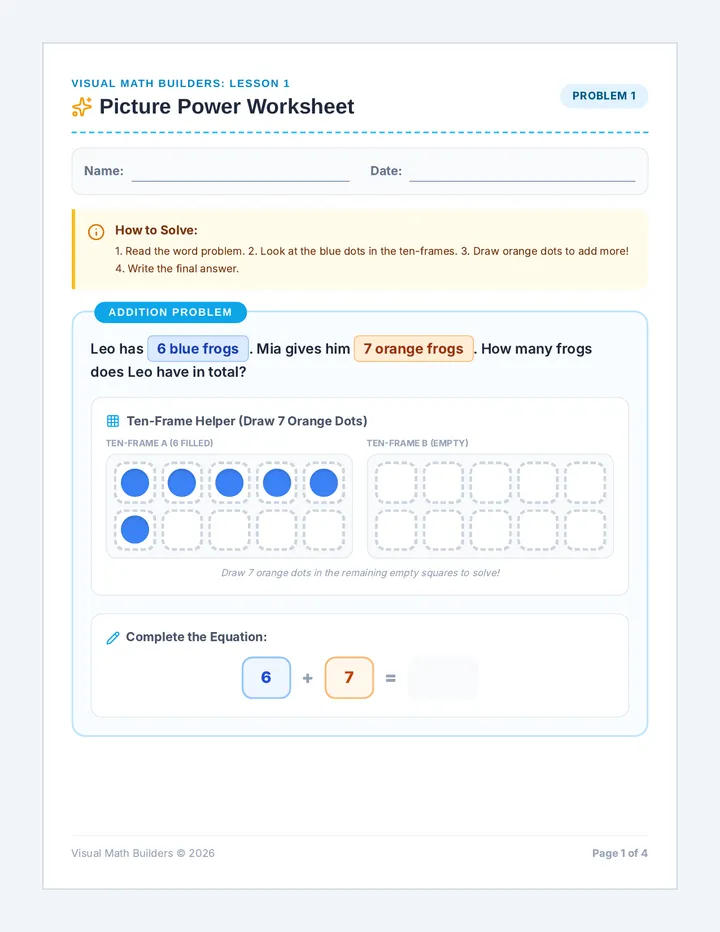
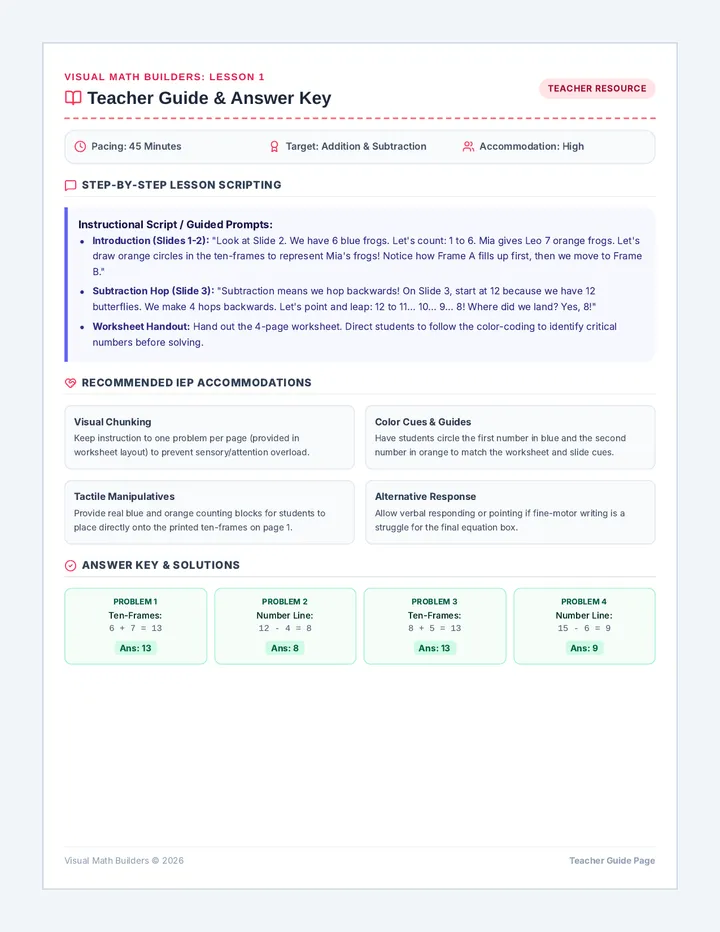
Focuses on addition and subtraction word problems with visual aids including built-in picture representations, ten-frames, and number lines to support student conceptual understanding.