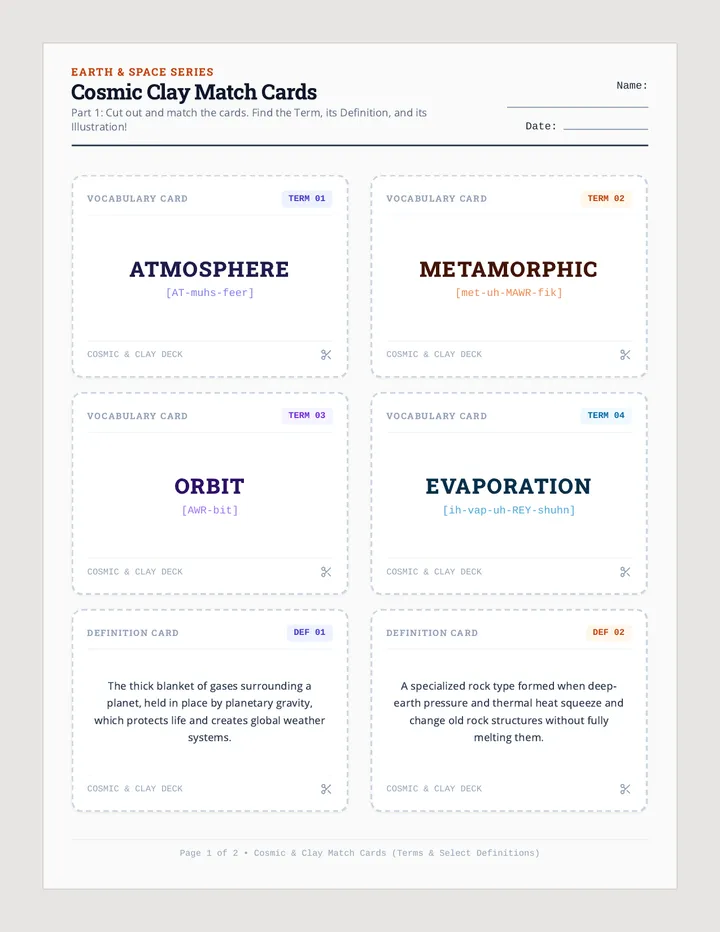
A fun pair of activities for third graders to reinforce vocabulary related to the planets and celestial bodies in our solar system.
A comprehensive assessment suite covering continental drift, Pangea, and geological evidence through visual labeling, simplified quizzes, and short-answer prompts.
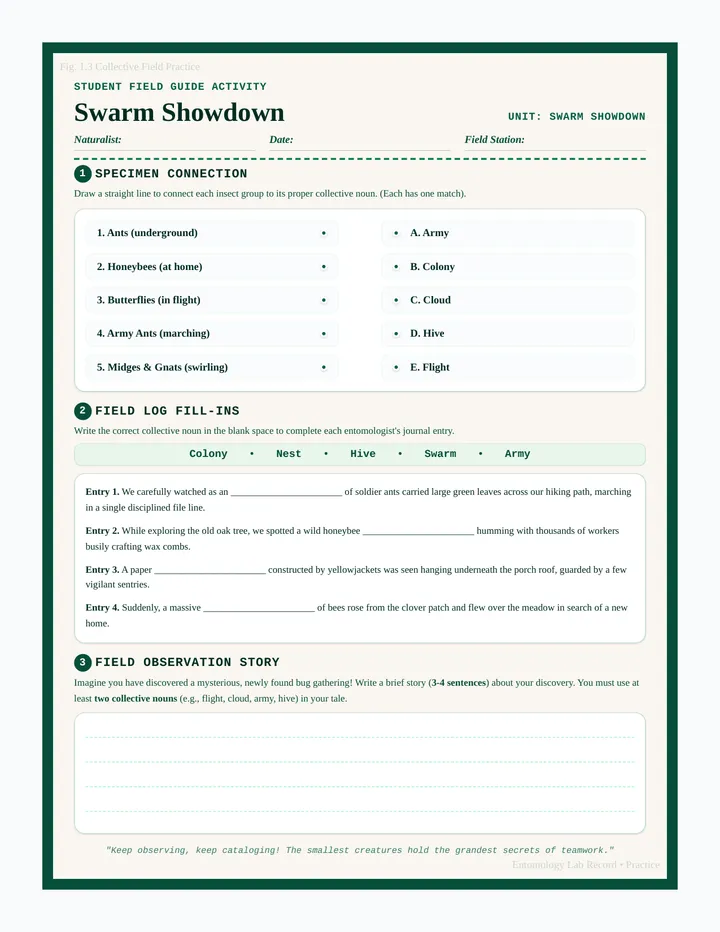
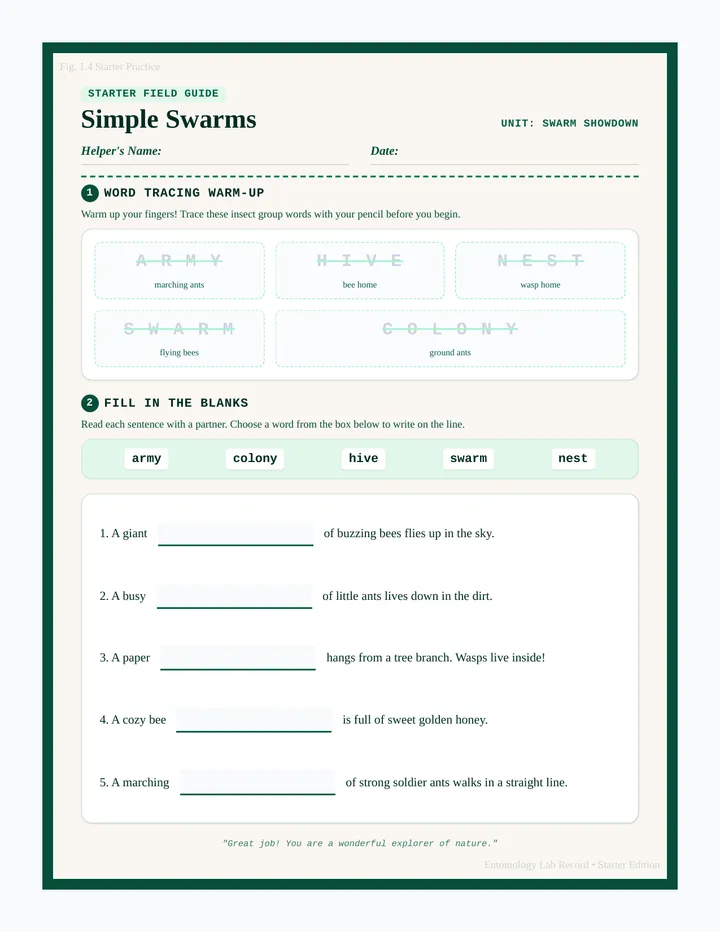
An introductory lesson on honeybees featuring differentiated reading passages and activities tailored for 1st-6th grade reading levels.
A fun, interactive lesson introducing elementary students to the four seasons through observation and play. Students will identify key characteristics of spring, summer, autumn, and winter using visual cues and interactive bingo.
Students will explore the impact of boating on manatees in the Everglades, focusing on conservation efforts and the importance of following waterway safety signs. This lesson integrates science with social skills by emphasizing rule-following for the safety of ourselves and wildlife.
Students explore variables and loops through dance game scoring systems, combo streaks, and repeating choreography patterns.
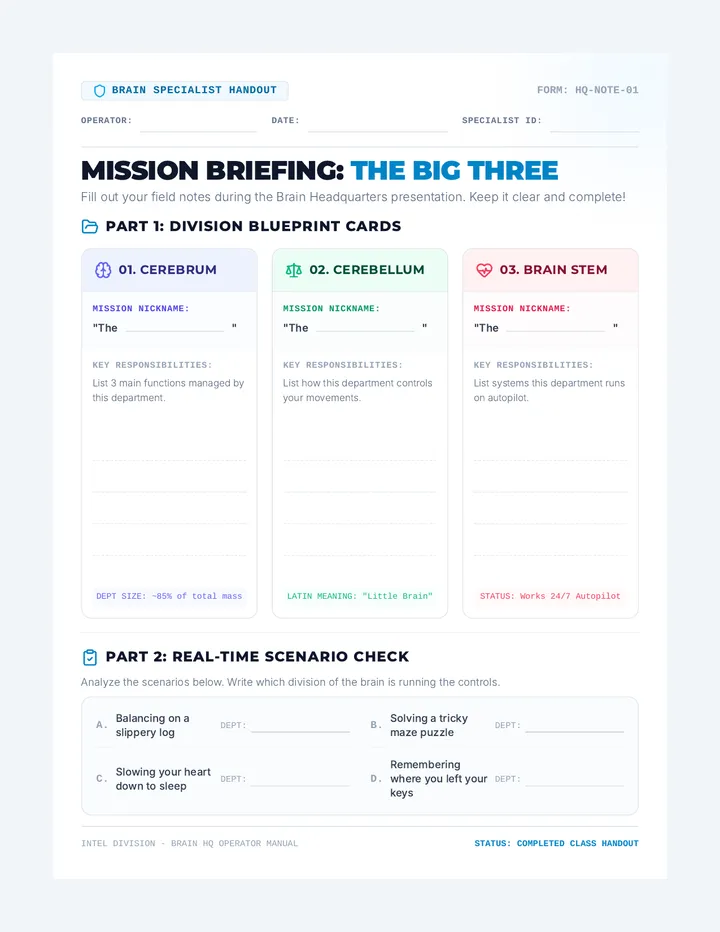
Students learn the basics of computational thinking, focusing on algorithms and sequencing by designing dance routines and step sequences.
A 3rd-grade science lesson exploring how plants inherit traits from their parents and how the environment can influence their growth, based on a real-world forestry scenario.
A lesson exploring how natural resources like water, soil, and forests support the needs and economy of a community. Students will learn to distinguish between claims about resource importance and the evidence that supports them.
This lesson uses the familiar concept of Pokémon evolution to teach special education students about biological adaptations and natural selection. Students will explore how traits help organisms survive in different environments and design their own adapted creatures.
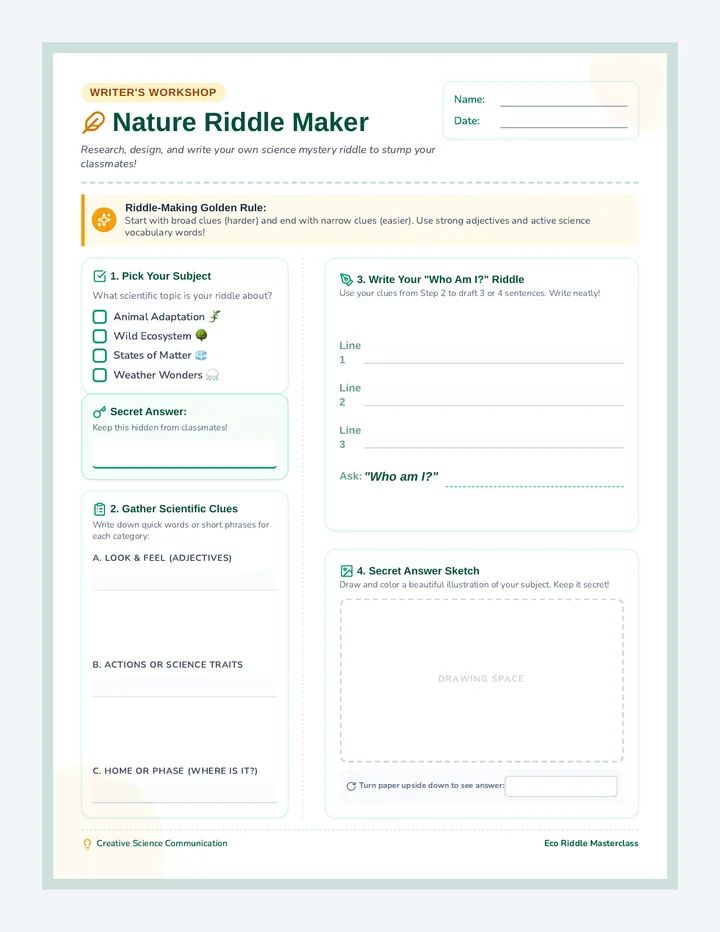
A lesson focused on animal characteristics and habitats, helping students build descriptive vocabulary.
A hands-on exploration of surface tension using paperclips and water. Students challenge the law of gravity by making metal float and then investigate what breaks the 'skin' of water.
A focused exploration of human skin anatomy, teaching students to identify and describe the three primary layers: epidermis, dermis, and hypodermis. Students will investigate the unique functions and structures within each layer through visual aids and matching activities.
A culminating session of light-based games and challenges designed to reinforce concepts of illumination and shadow in a fun, active format.
Students apply their knowledge of shadows to create shadow puppets and perform short group stories using light as a medium.
An exploration of shadow formation where students use flashlights to manipulate the size and shape of shadows by moving light sources.
Students explore the concept of illumination using glowsticks to discover how light makes the invisible visible in a dark classroom environment.
A focused lesson on erosion for 2nd graders, exploring what it is, its causes (water, wind, ice), and the materials it shapes like dirt and rock.
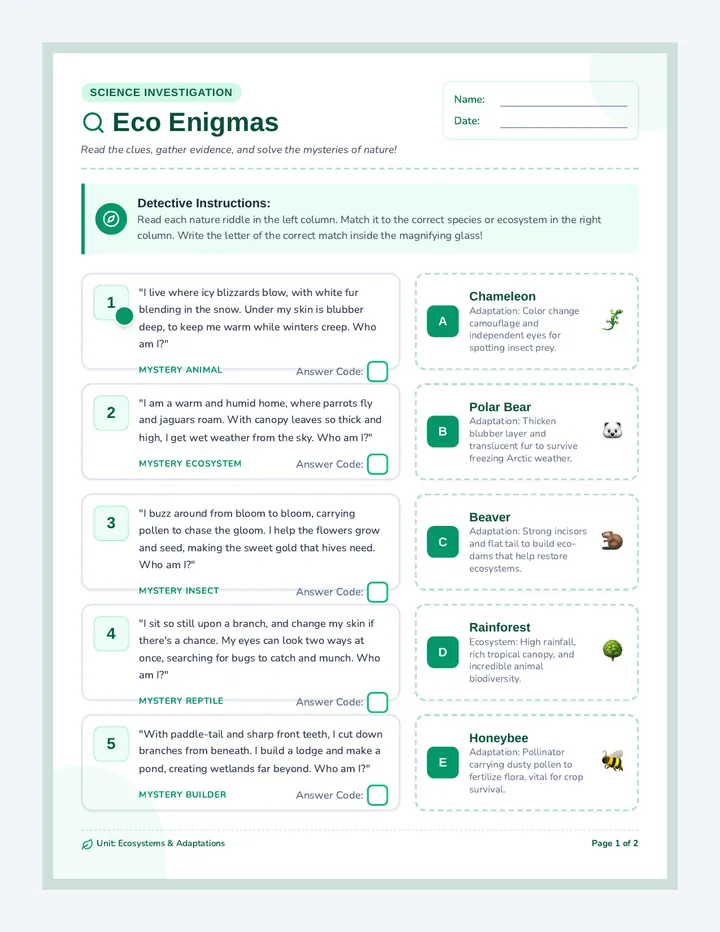
An engaging 'Guess Who' style game where students use descriptive language and biological traits to identify mystery animals. Focuses on classification, habitats, and physical characteristics.
An informative unit for 5th graders exploring the history and physics of roller coasters, from early Russian ice slides to modern g-force engineering.
An informative unit for 5th graders exploring the growing problem of space junk, the science of orbital mechanics, and innovative solutions for cleaning up Earth's orbit.
An informative unit for 5th graders exploring the history of chocolate from ancient Mayan rituals to the modern candy industry, featuring a creative design task and a research essay.
An informative lesson for 5th graders exploring the engineering mysteries and archaeological discoveries of the Great Pyramid of Giza, featuring modern scanning technology and ancient construction theories.
An informative unit for 5th graders tracing the history of video games from simple arcade pixels to immersive modern worlds, with a focus on technical innovation and cultural impact.
An informative lesson for 5th graders exploring the production, themes, and 1980s cultural influences of the hit show 'Stranger Things', accompanied by a creative character design activity.
An informative lesson for 5th graders exploring the history, science, and cultural impact of LEGO bricks, accompanied by a creative blueprint activity.
A phonics-focused lesson targeting the vowel-consonant-e (V-e) syllable type, featuring one-syllable words and two-syllable words that combine closed and V-e syllables.
A phonics-focused lesson for first graders targeting the glued sounds 'an', 'am', and 'all' through a narrative story and fluency exercises.
A phonics-focused lesson for first graders targeting glued sounds (all, am, an, ang, ing, ong, ung, ank, ink, onk, unk) through a narrative story and fluency exercises.