A quick-fire writing lesson focused on 'zooming in' from broad topics to specific personal narrative moments using the watermelon vs. seed analogy. Students will use visual organizers and word banks to develop a single 'snapshot' memory.
A second-grade vocabulary lesson introducing the word 'constant' through everyday examples in science, nature, math, and daily routines. Students engage with pocket-chart visual matching cards and an interactive sorting worksheet.
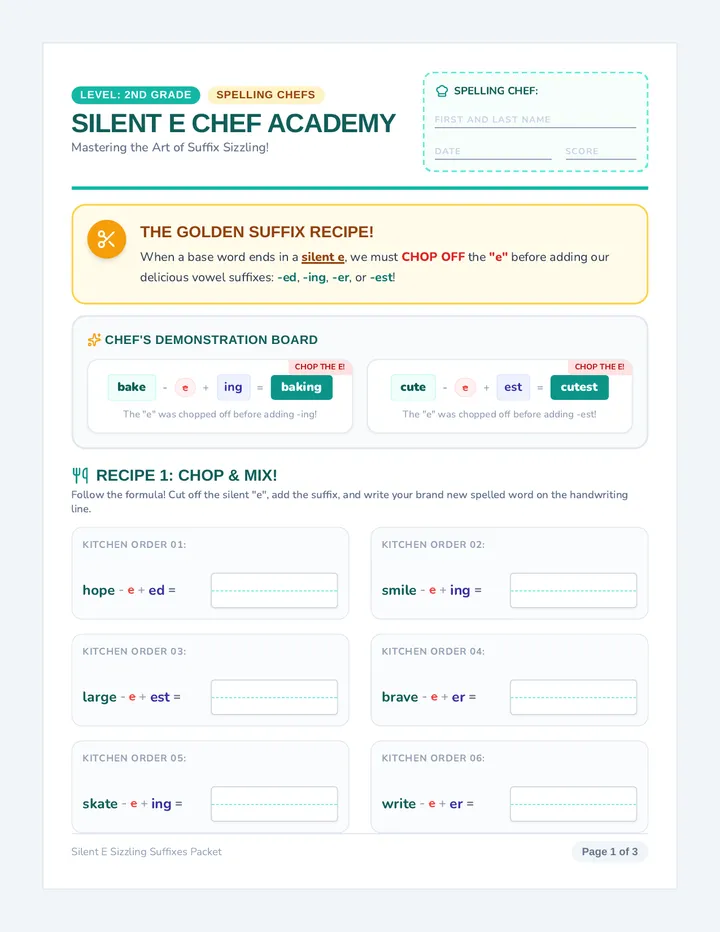
A spelling lesson for second graders focused on dropping the final silent 'e' before adding vowel suffixes (-er, -est, -ed, -ing) using a fun kitchen/chef theme.
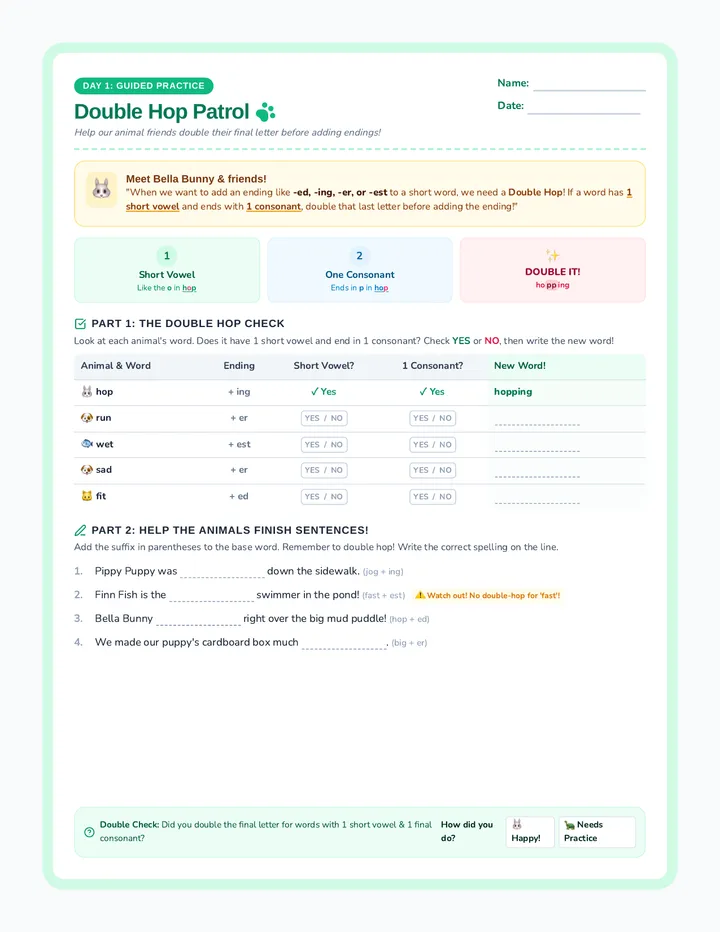
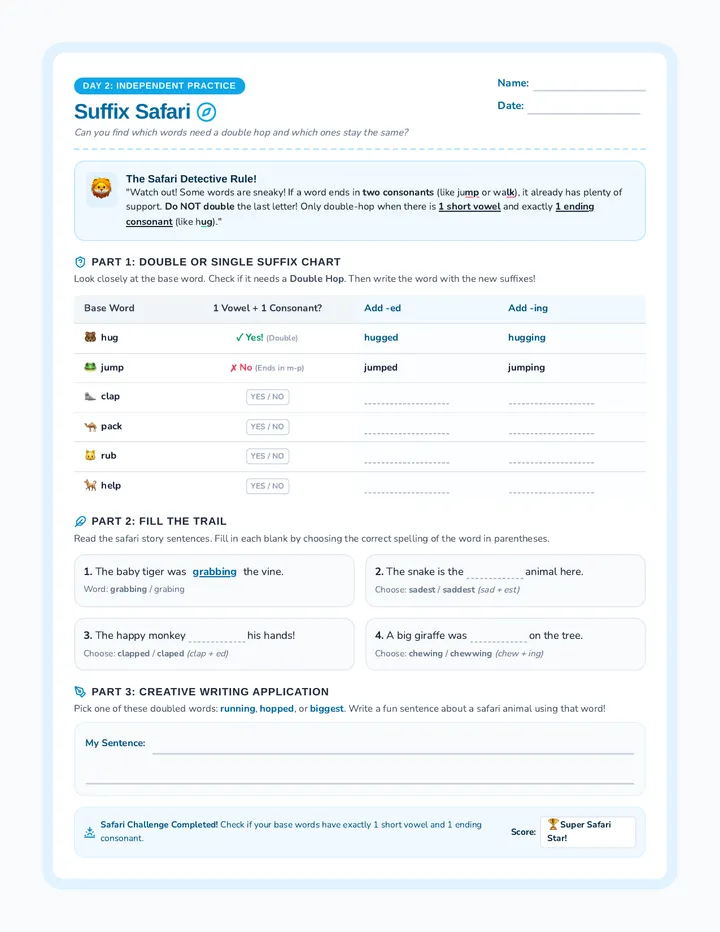
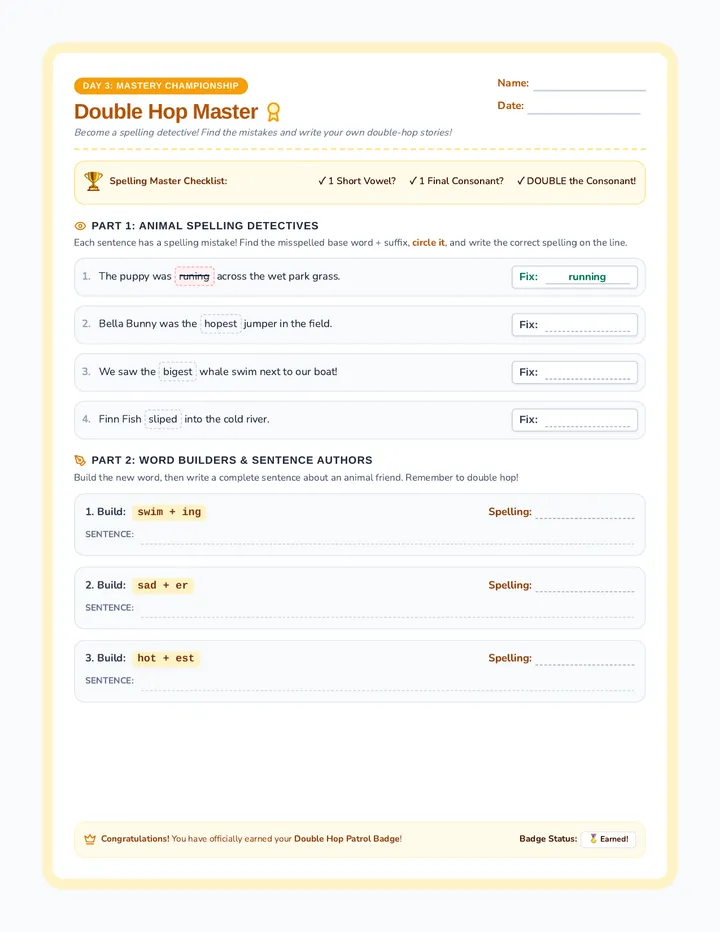
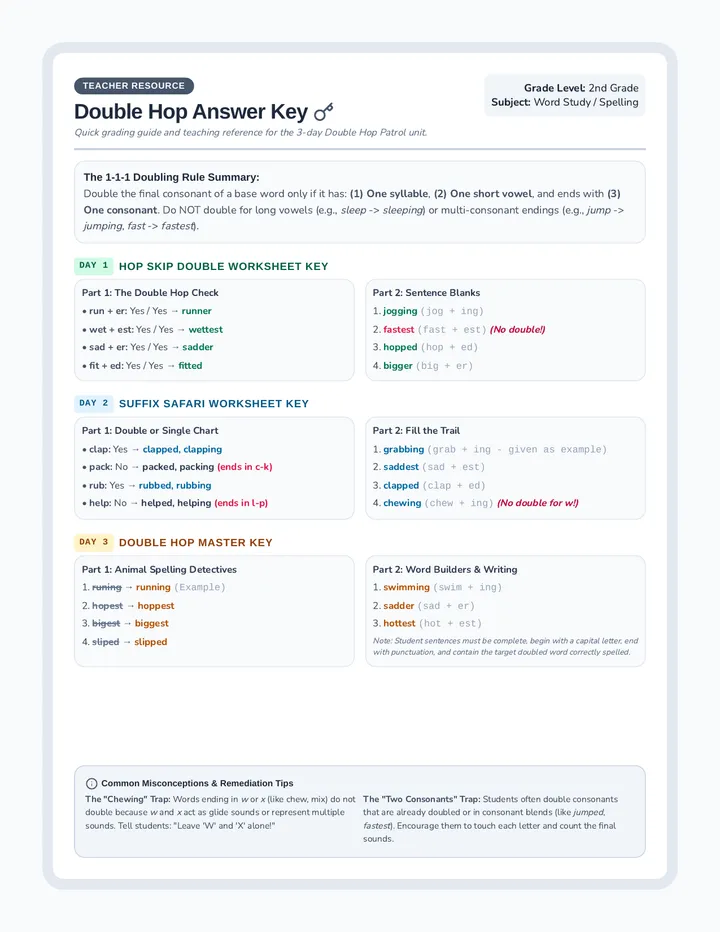
A multi-day 2nd-grade spelling and word study unit focused on the consonant-doubling rule when adding suffixes -er, -est, -ed, and -ing. Features an engaging 'Animal Adventures' theme with hopping bunnies, running puppies, and swimming fish to help students master the spelling rules through guided and independent practice.
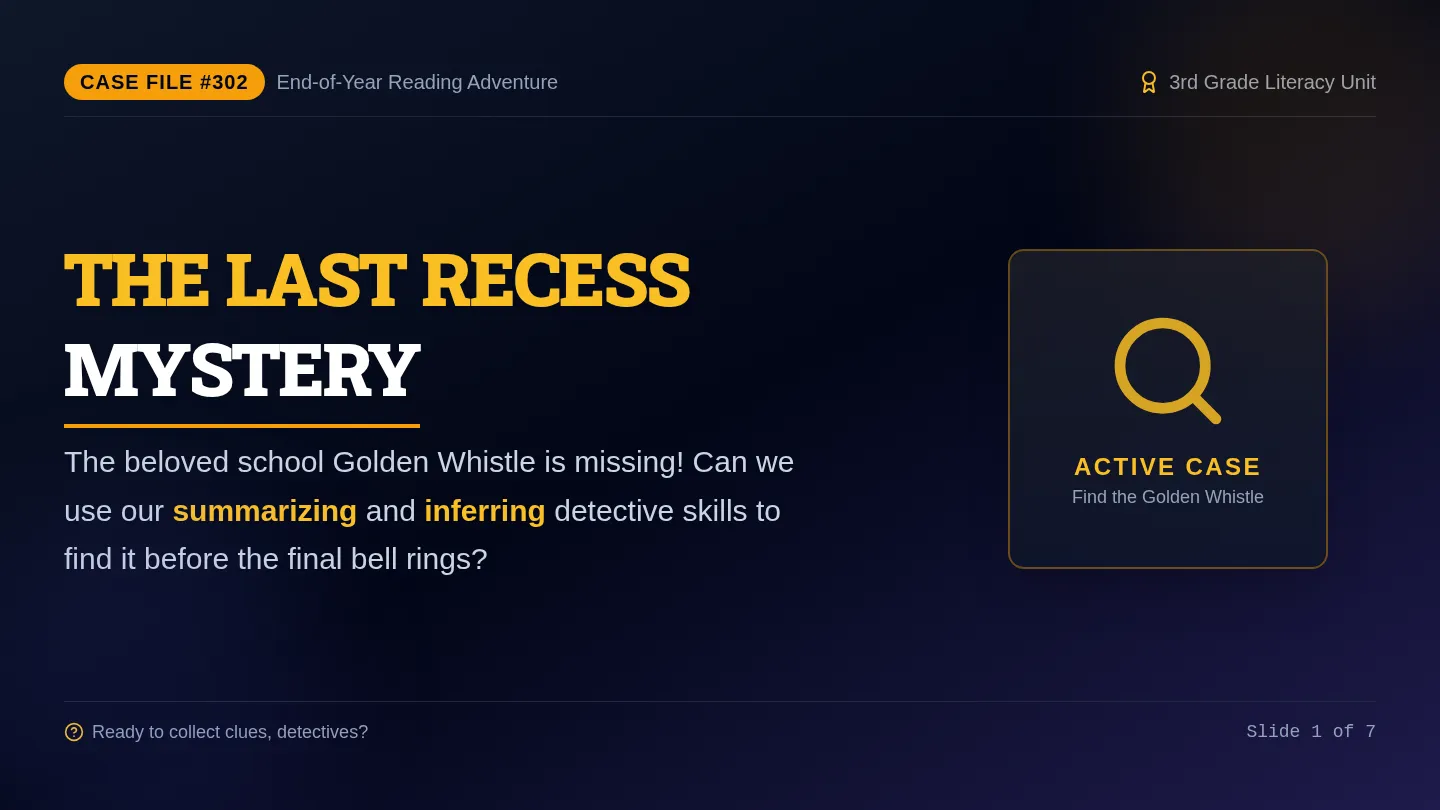
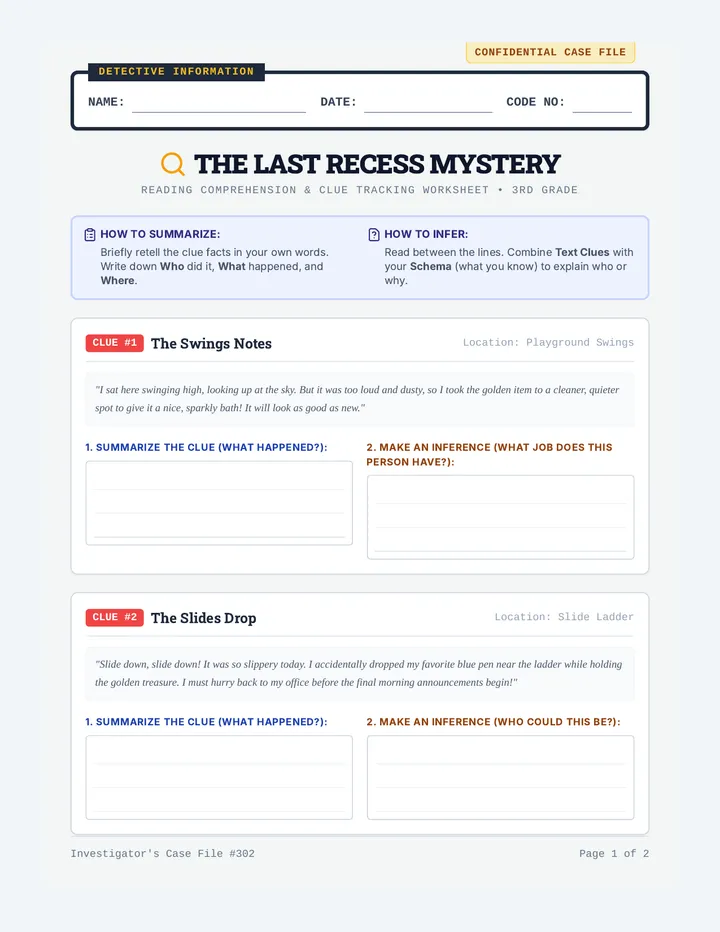
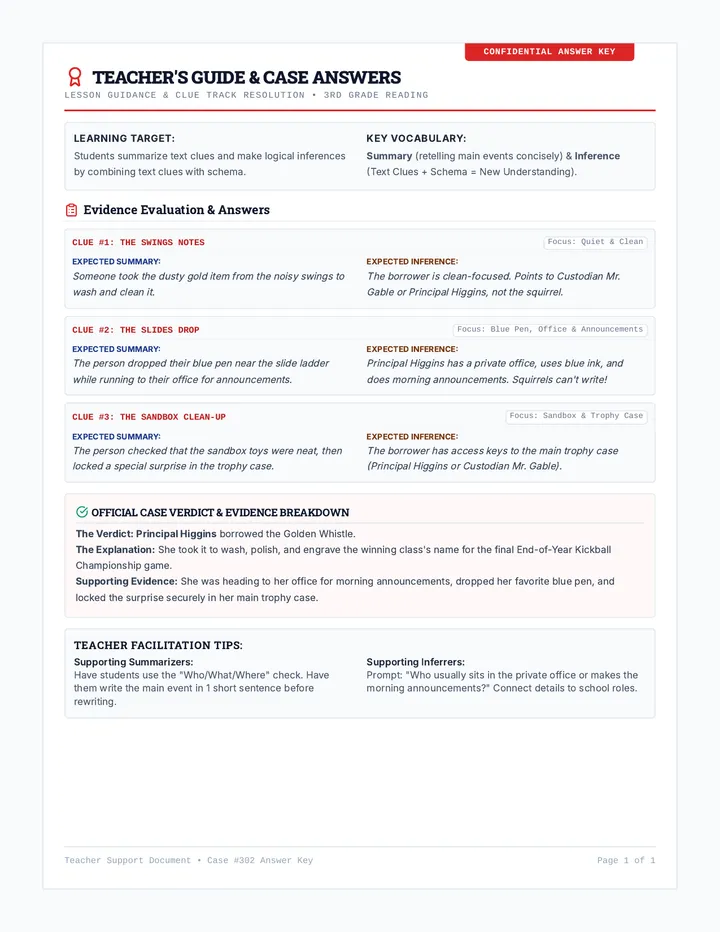
A third-grade reading lesson centered on an end-of-year mystery. Students learn and practice summarizing and making inferences by examining clues around the playground to locate a missing playground item before the last recess ends.
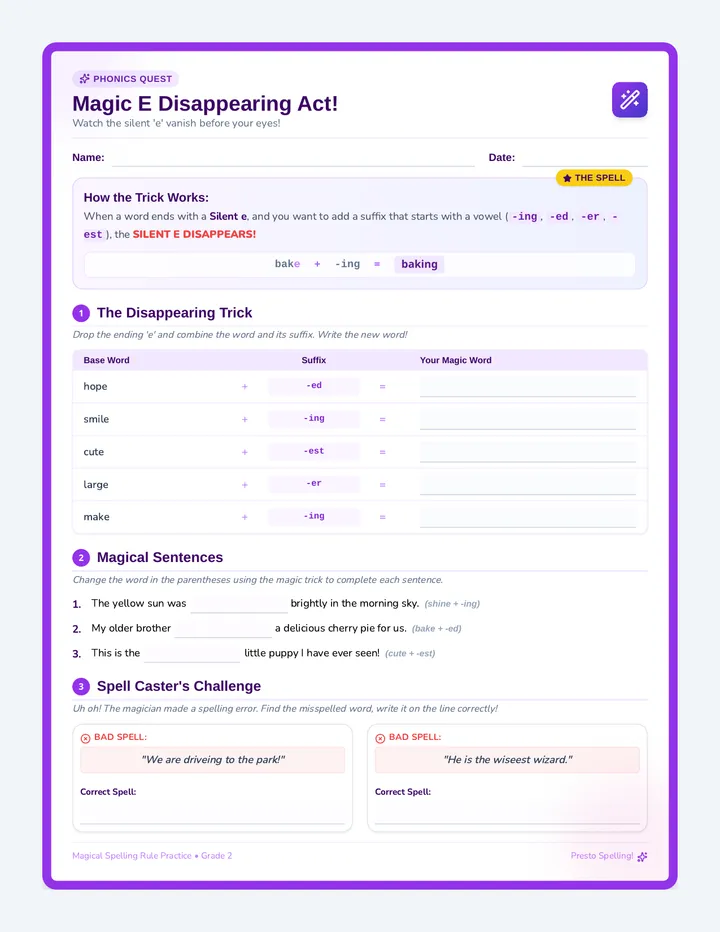
A 2nd grade phonics lesson focused on the spelling rule of dropping the silent 'e' before adding vowel suffixes (-ing, -ed, -er, -est). The lesson includes a high-engagement magical-themed worksheet and a corresponding teacher answer key.
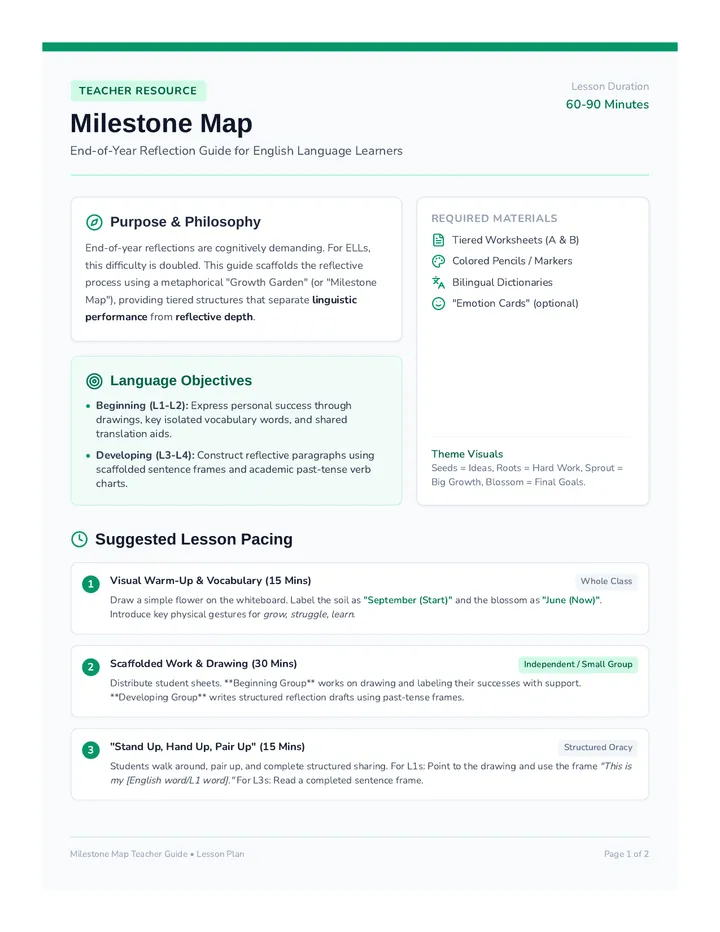
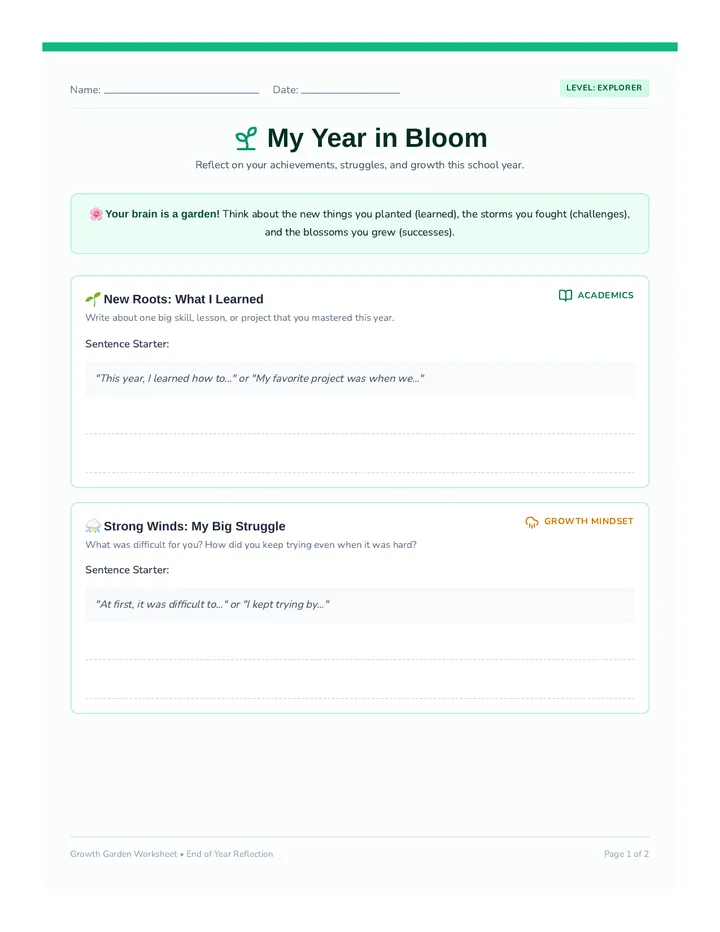
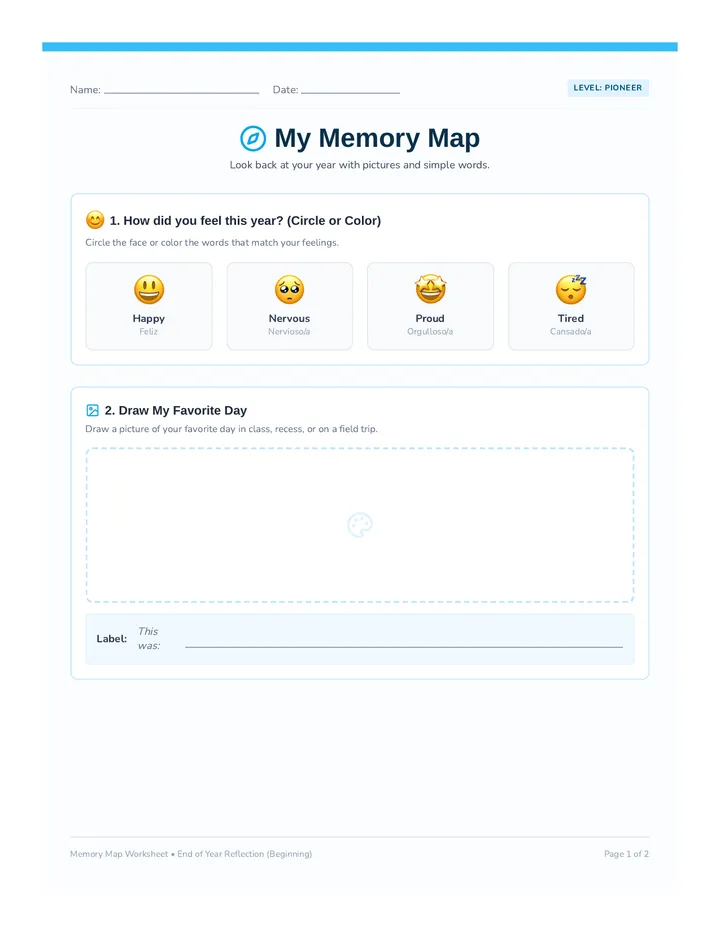
An end-of-year reflection lesson designed specifically for English Language Learners, featuring tiered worksheets for Beginning/Entering and Developing/Expanding levels, supported by a detailed facilitator guide.
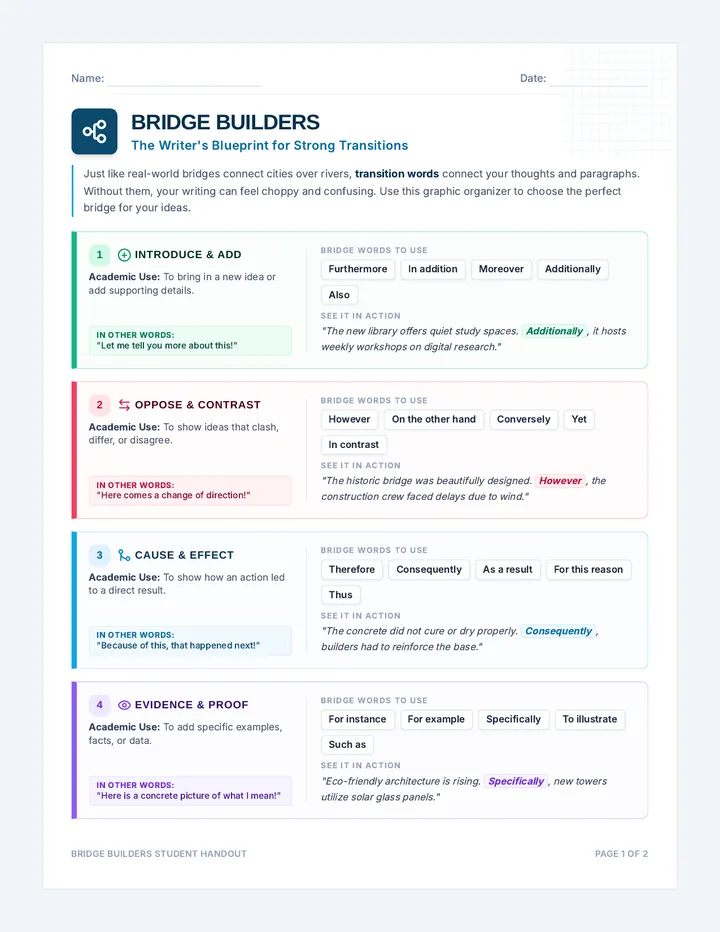
A comprehensive lesson focused on understanding and applying transition words to build logical, smooth connections between ideas in writing.
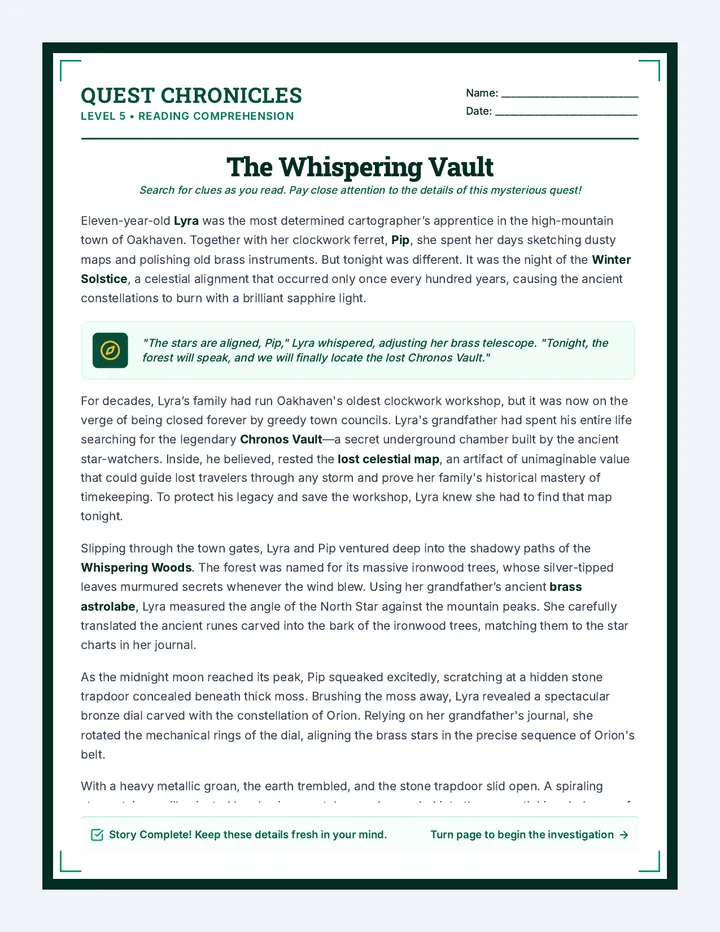
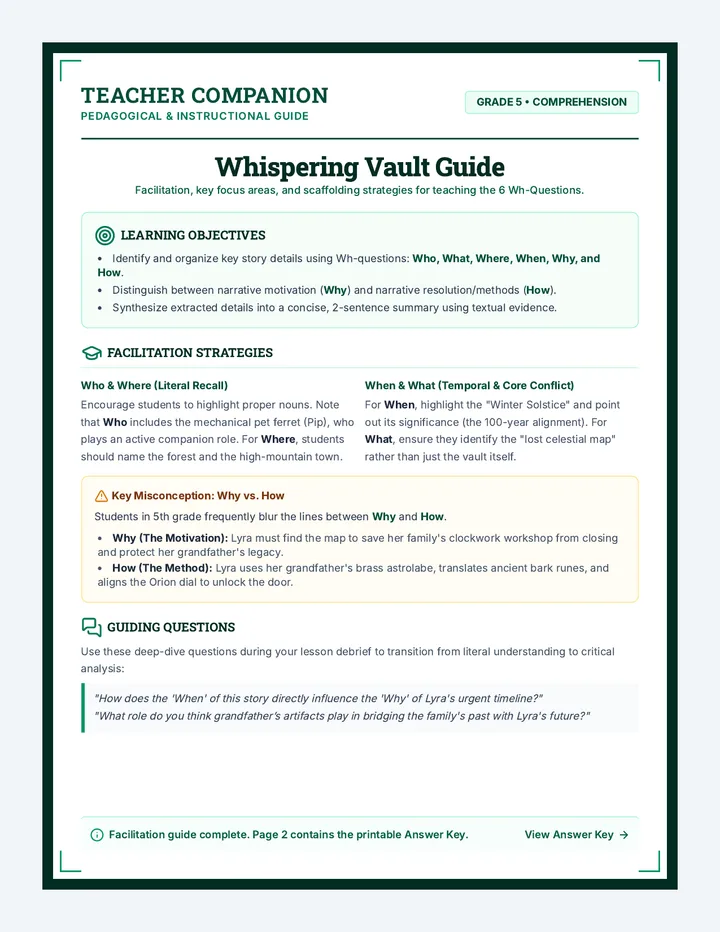
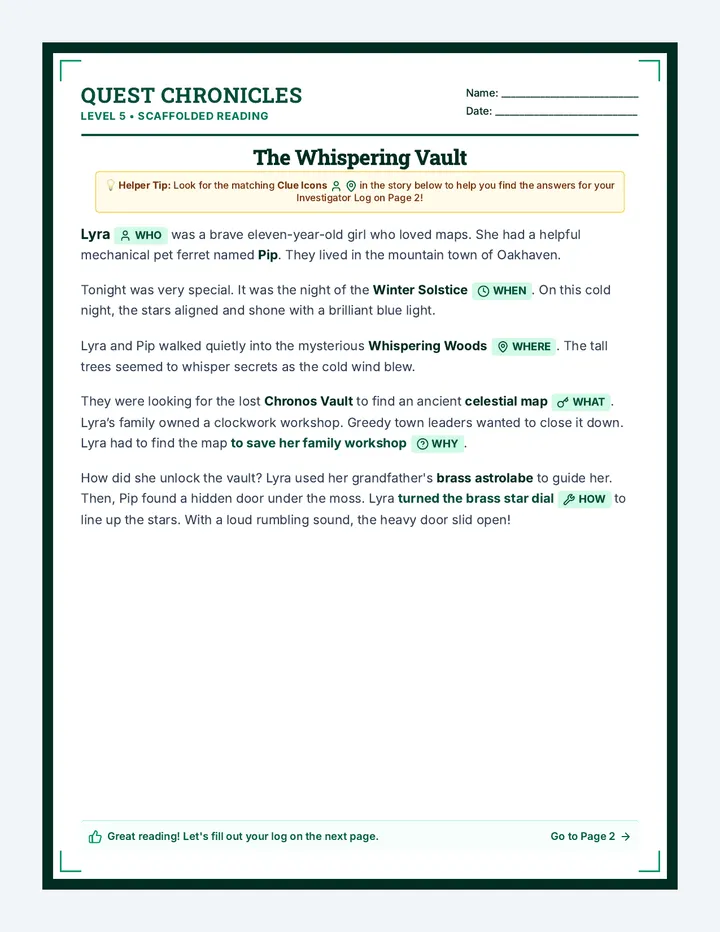
A 5th-grade comprehension lesson focused on identifying key story elements using Wh-questions (Who, What, Where, When, Why, How) within an engaging fantasy-adventure narrative.
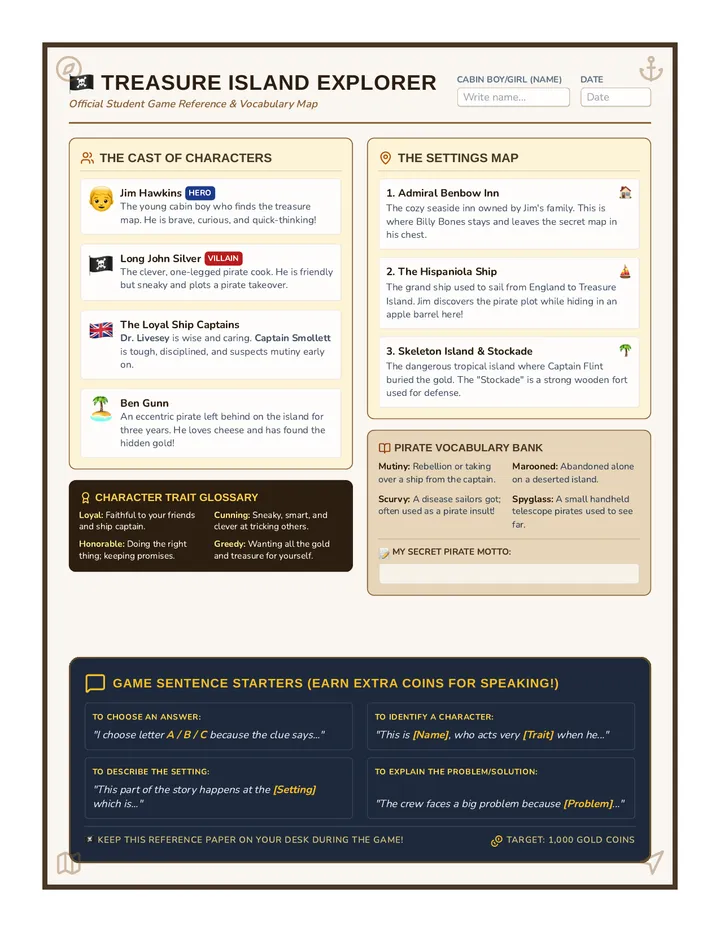
A high-engagement, Jeopardy-style review game designed for 4th-grade English Language Learners to master the characters, settings, key events, and plot structure of Treasure Island. Includes visual clues, multiple-choice options, sentence frames, and a vocabulary explorer handout to scaffold oral and written responses.
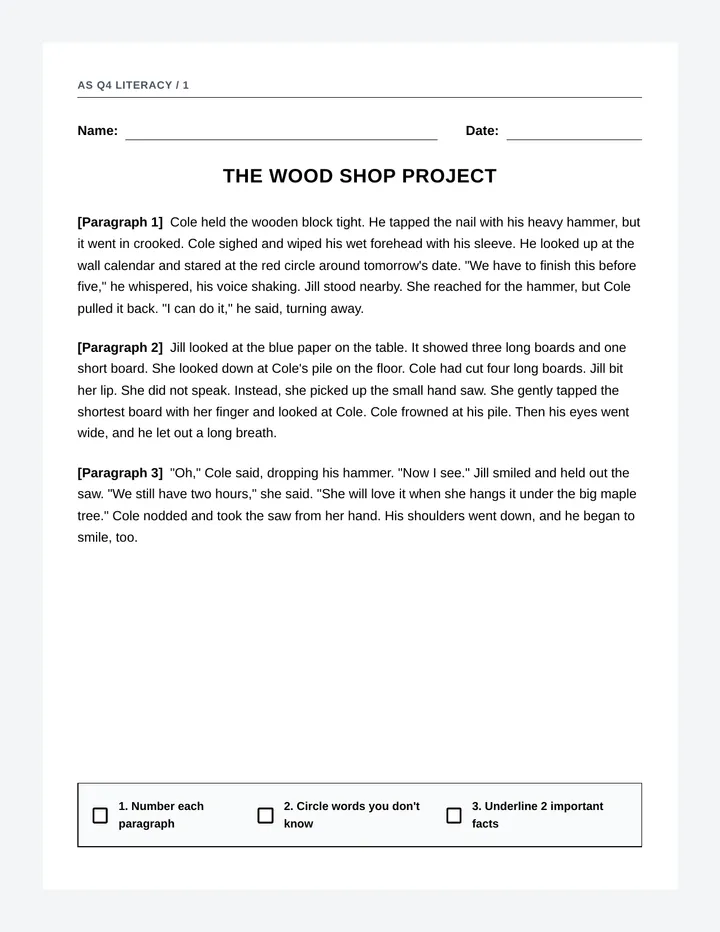
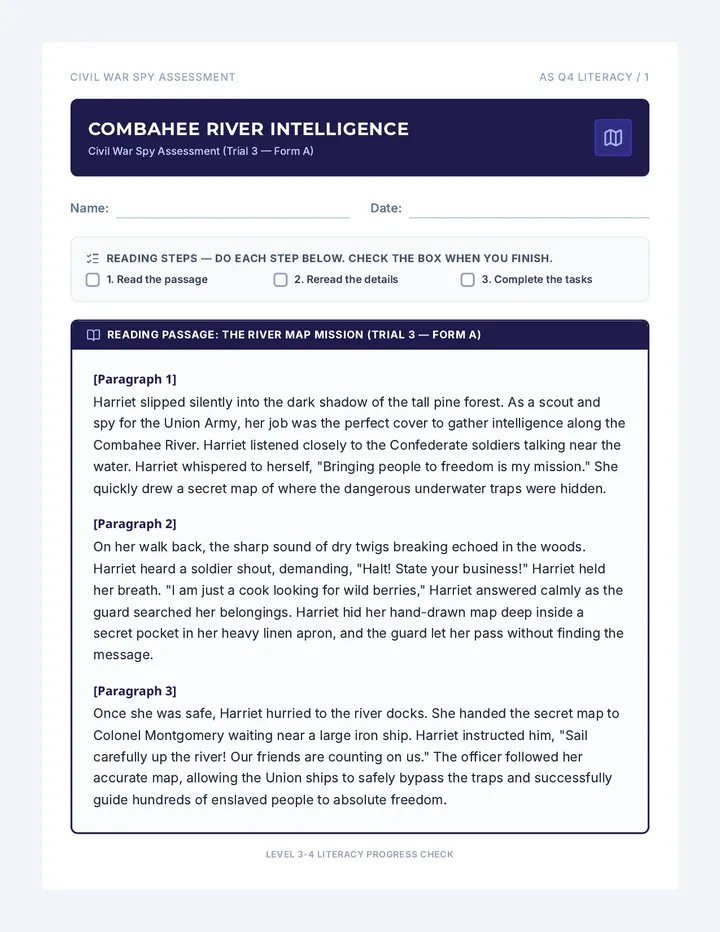
A grade 3-4 literacy assessment lesson that includes a comprehensive, multi-page student progress assessment covering reading passage comprehension, retelling, inferential analysis, writing, and editing.
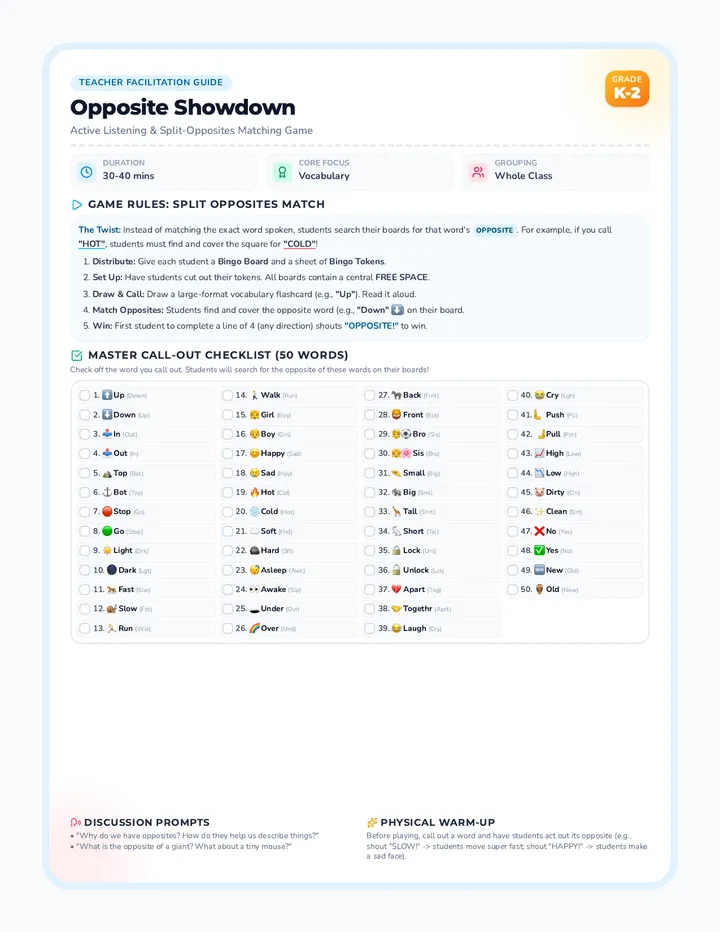
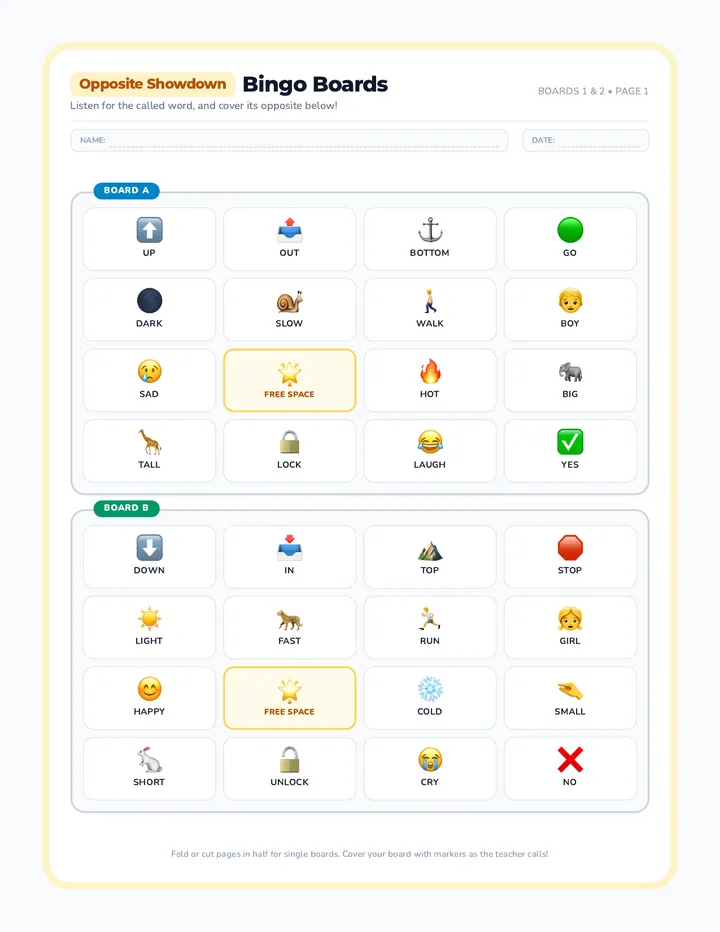
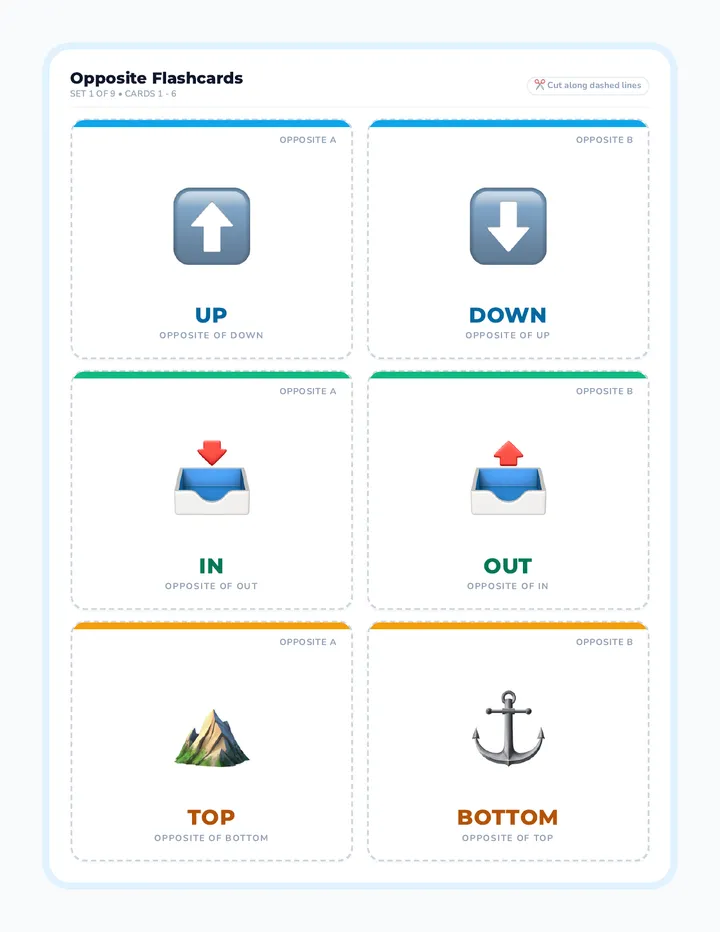
An interactive lesson package centered on teaching opposites through 'Split Opposites Matching' Bingo, featuring illustrated playing boards, large-format vocabulary cards, and a comprehensive activity guide.
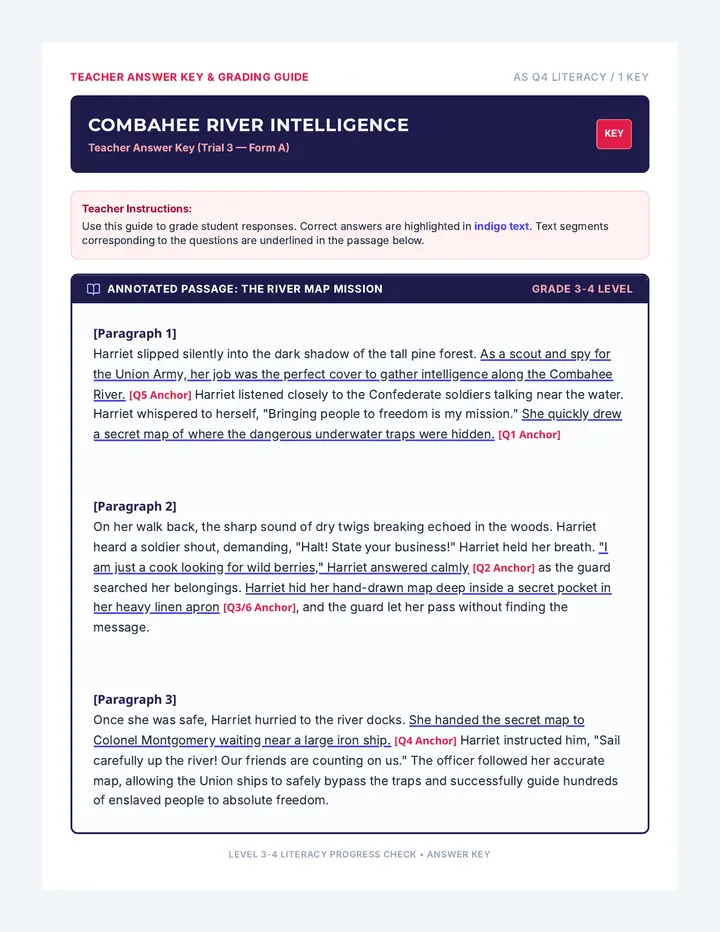
A reading comprehension and writing assessment themed around Harriet Tubman's Union spy missions during the Civil War. Designed for 3rd and 4th-grade students with simplified questions, guided text retelling, and editing practice.
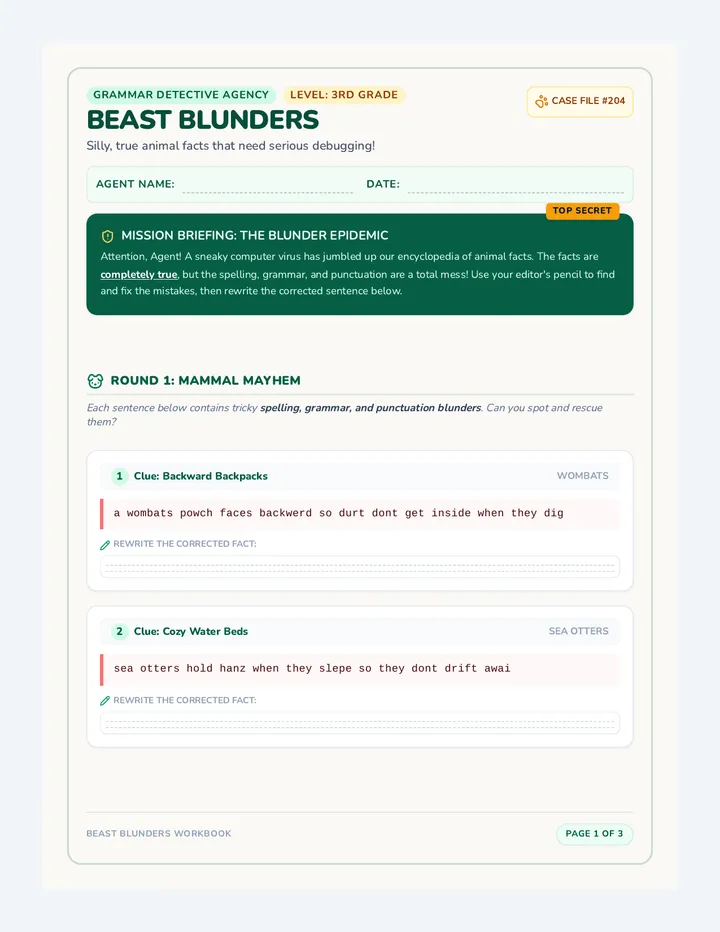
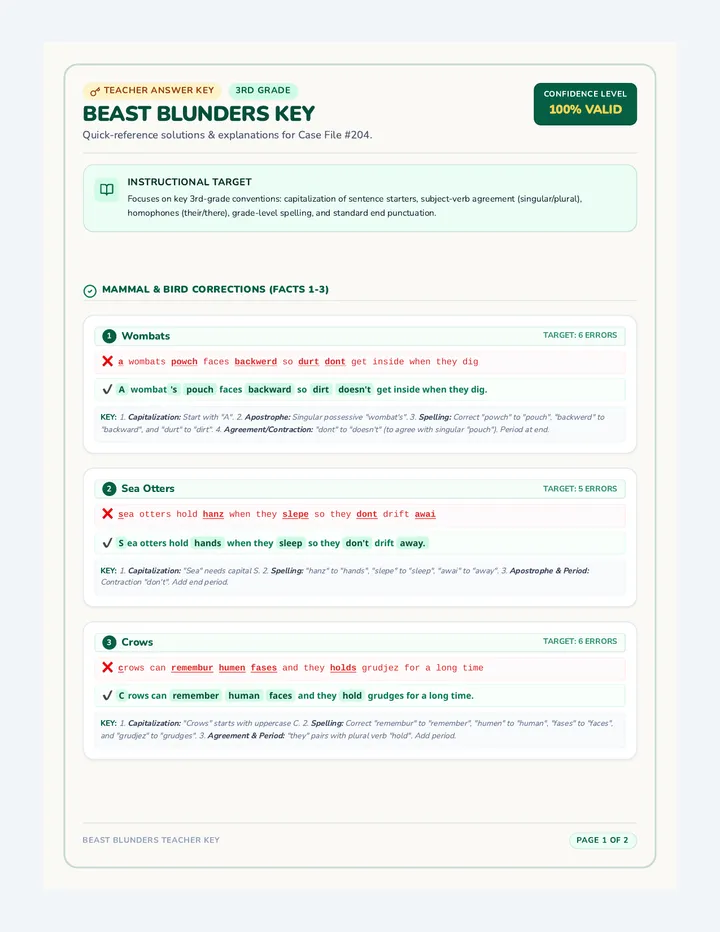
A humorous, grammar-editing lesson where third-grade students debug silly but true animal facts. Includes a multi-page student worksheet and a teacher answer key.
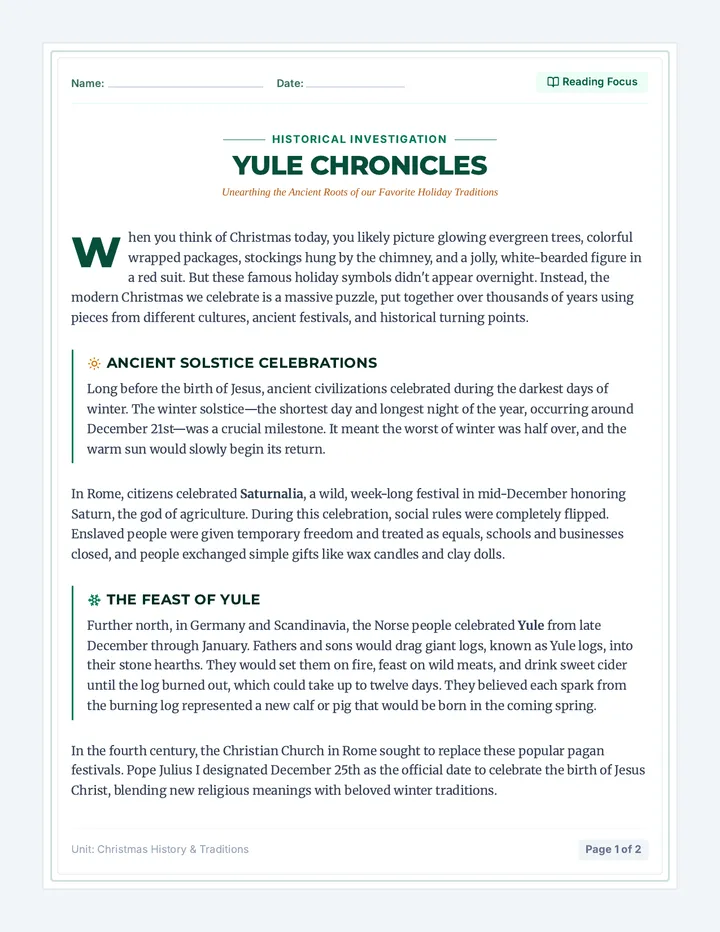
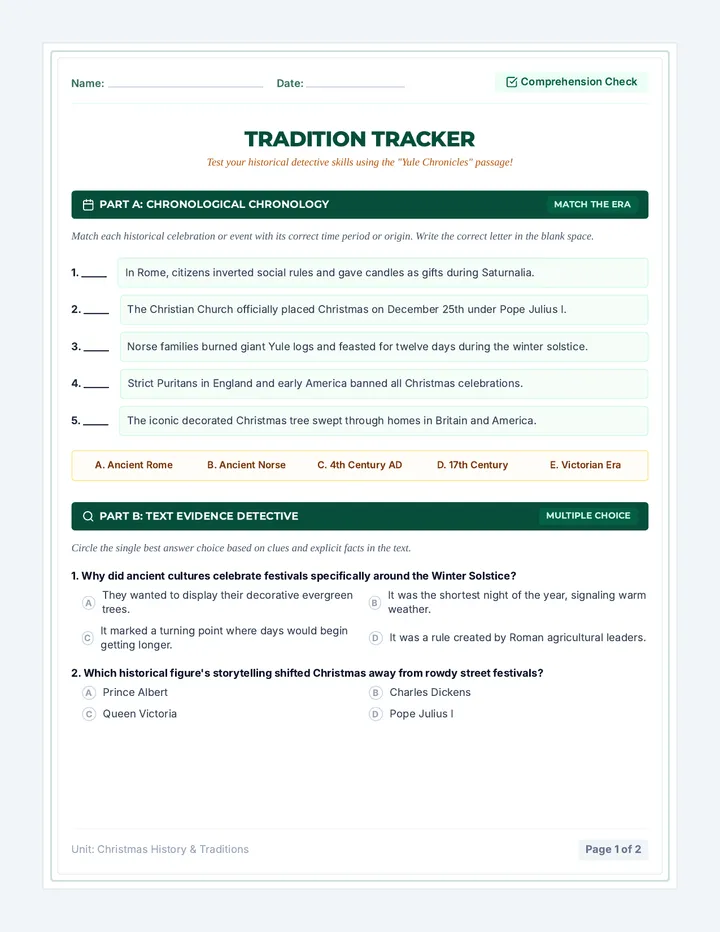
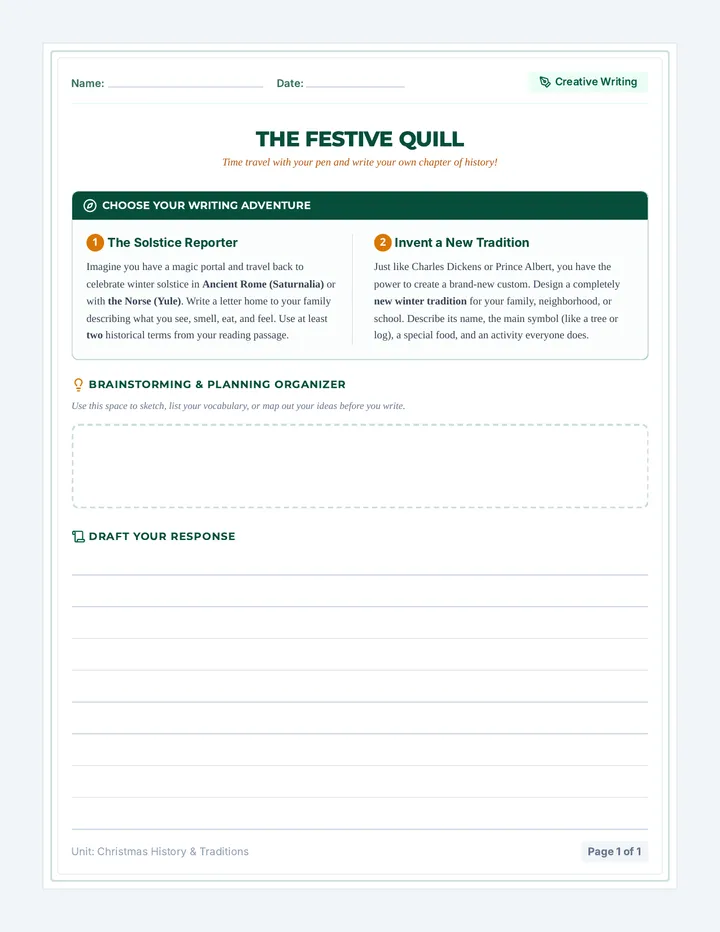
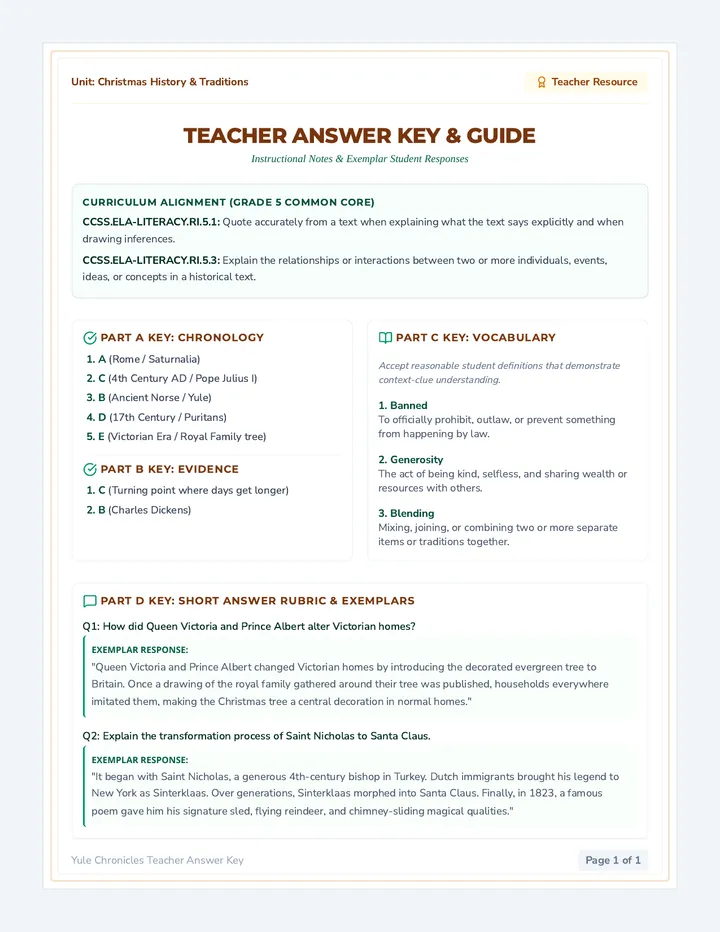
A comprehensive 5th-grade ELA lesson exploring the historical roots, evolution, and cultural symbols of modern Christmas traditions. It includes a historical reading passage, comprehension and vocabulary worksheets, and a creative writing extension.