A 9th-grade Algebra I lesson exploring how the slope of a linear graph functions as a conversion factor. Students will apply dimensional analysis to solve real-world problems using unit rates derived from graphs.
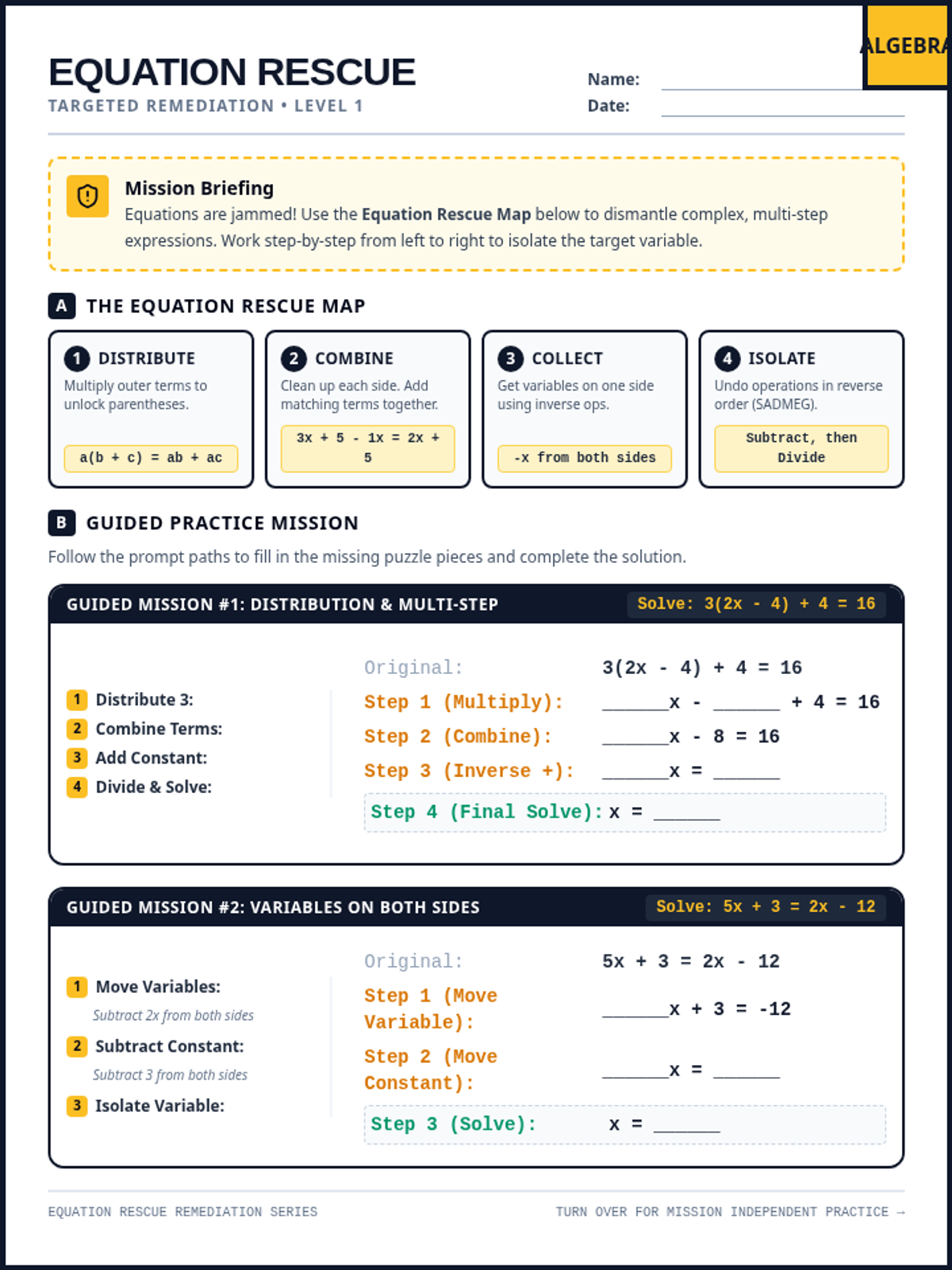
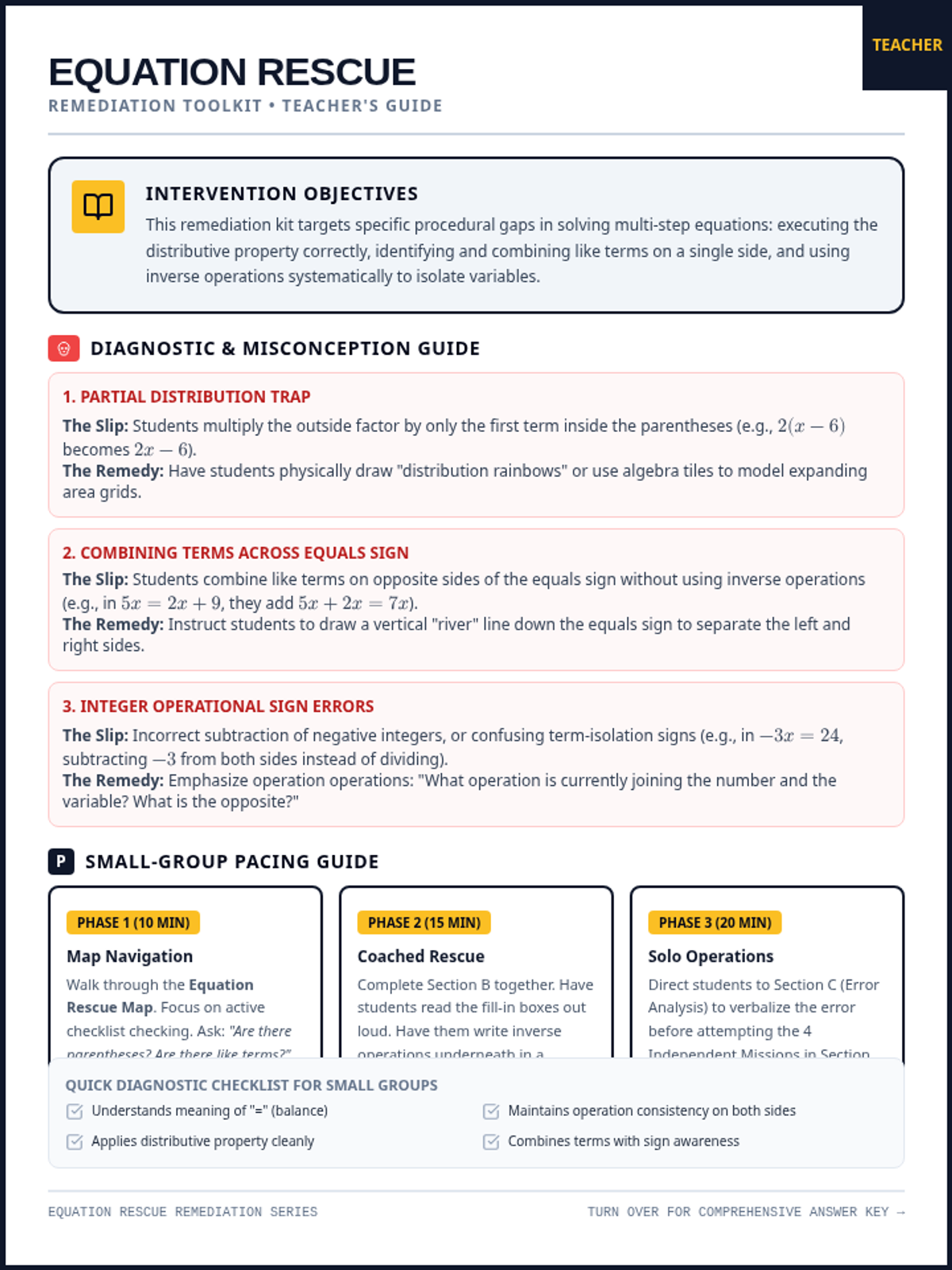
A targeted remediation lesson designed to help high school algebra students master multi-step linear equations involving distribution, combining like terms, and variables on both sides. Features a visual flowchart, scaffolded guided practice, error analysis, and targeted practice problems.
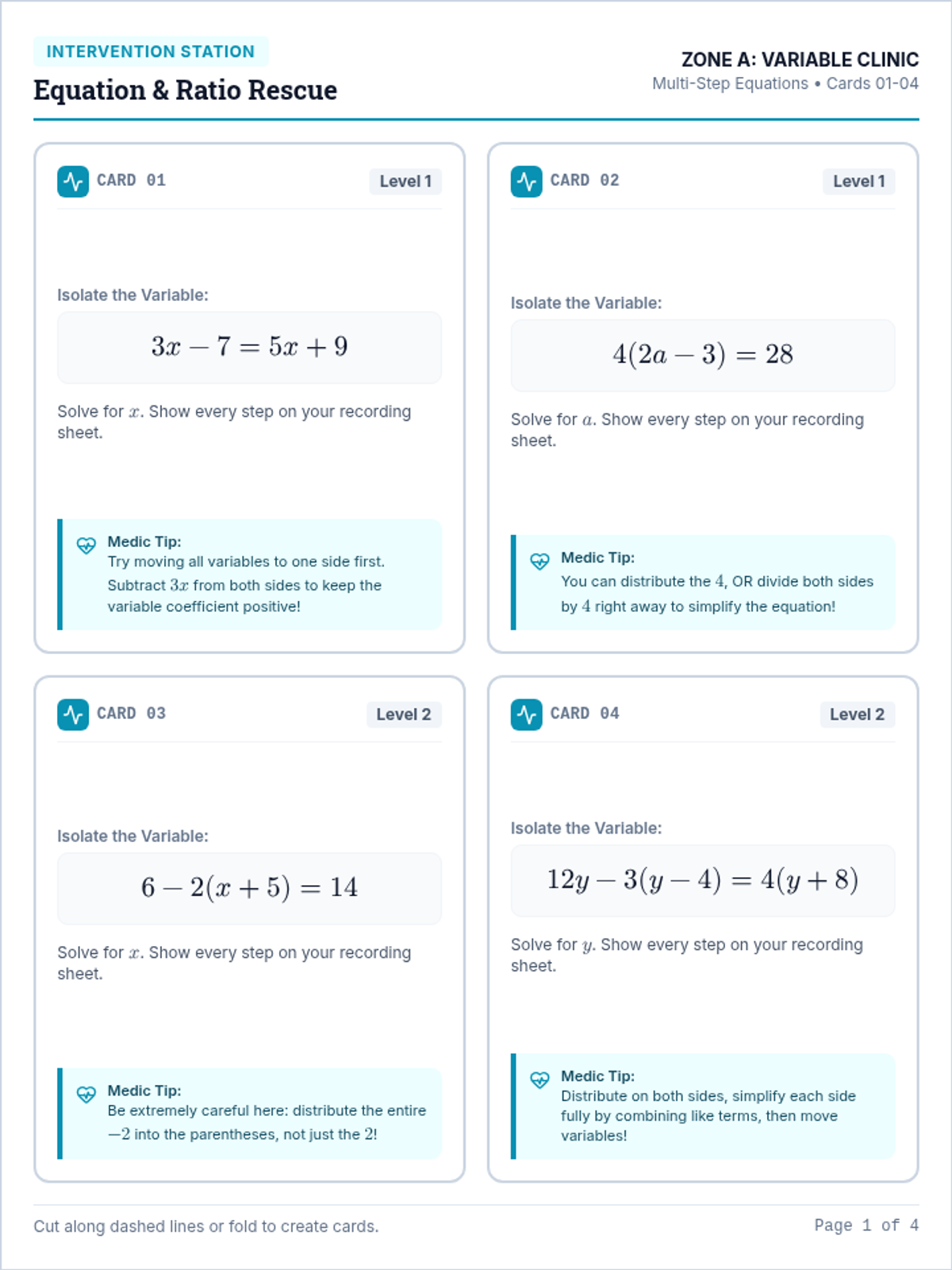
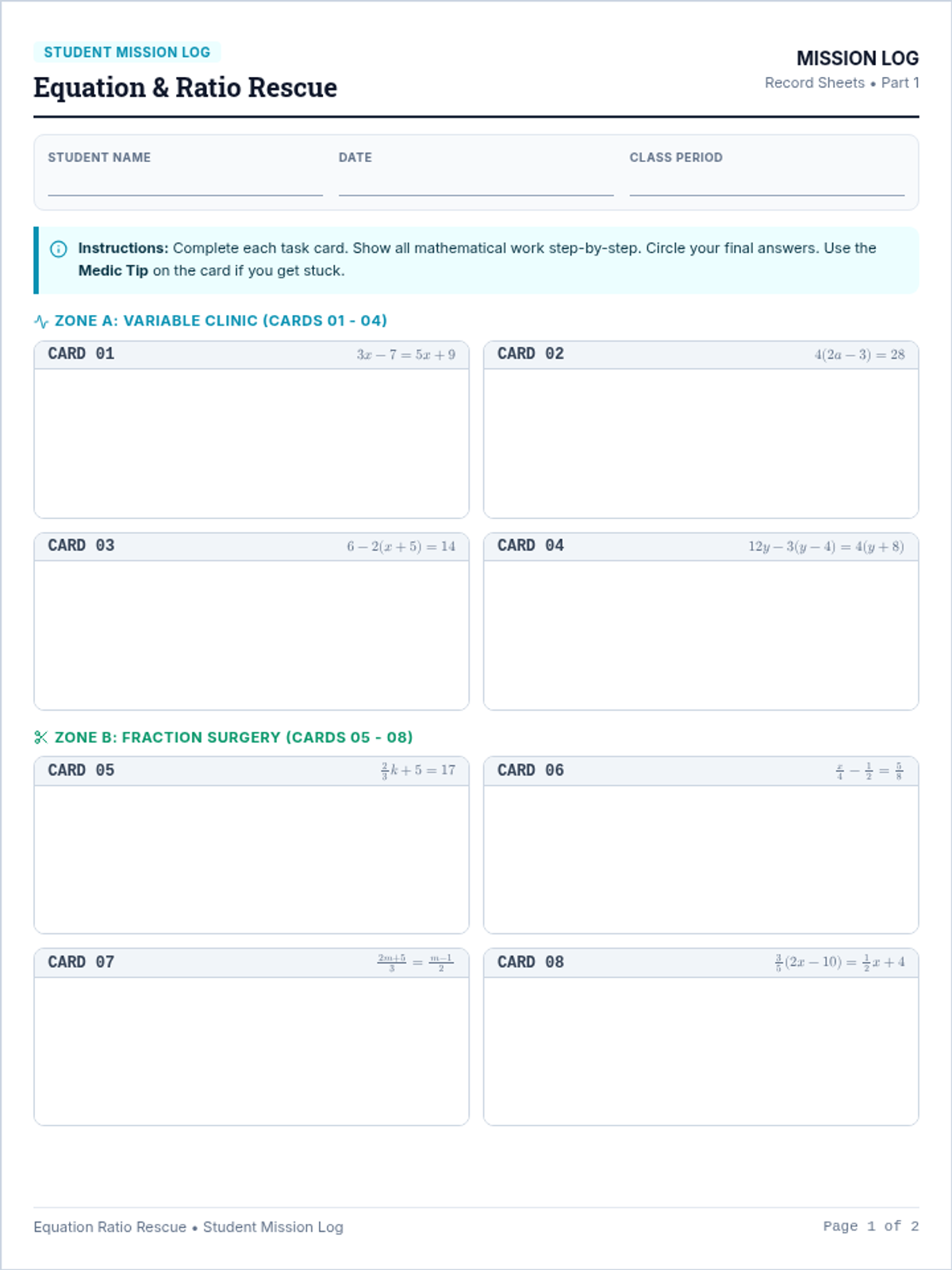
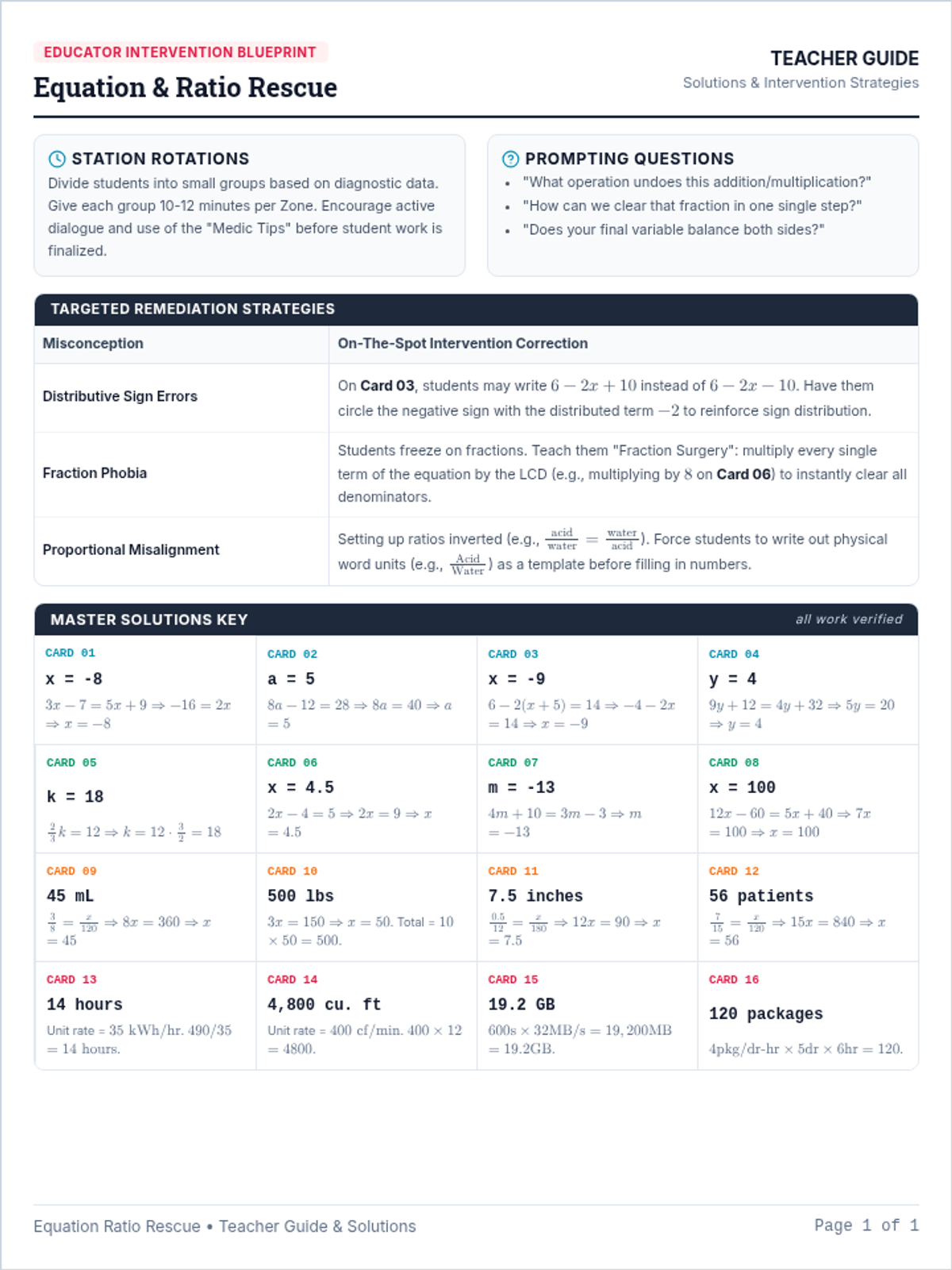
A high school math skills intervention lesson focusing on multi-step linear equations, variable isolation, and proportional reasoning. Includes 16 targeted task cards, a student recording sheet, and a teacher intervention guide.
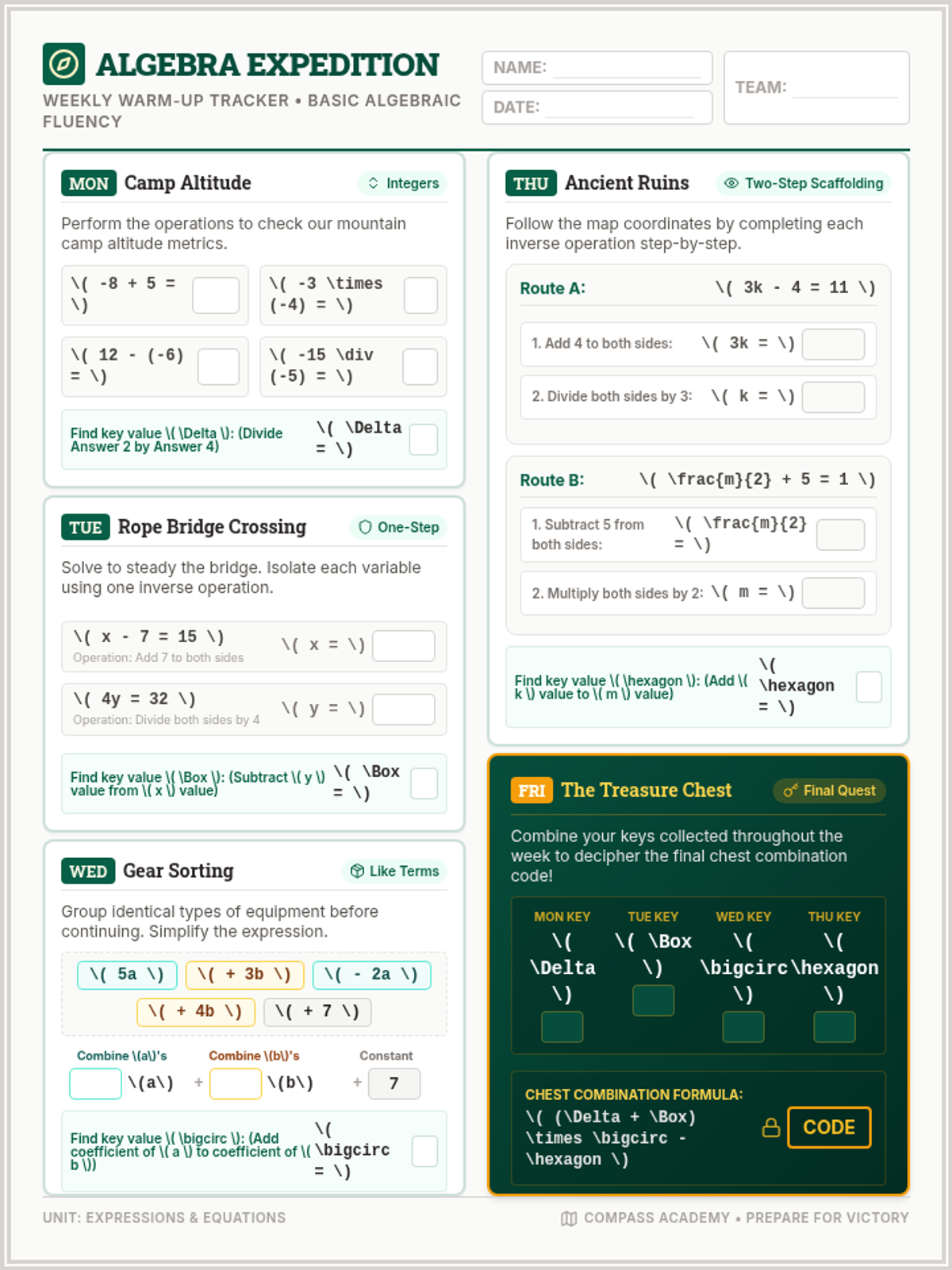
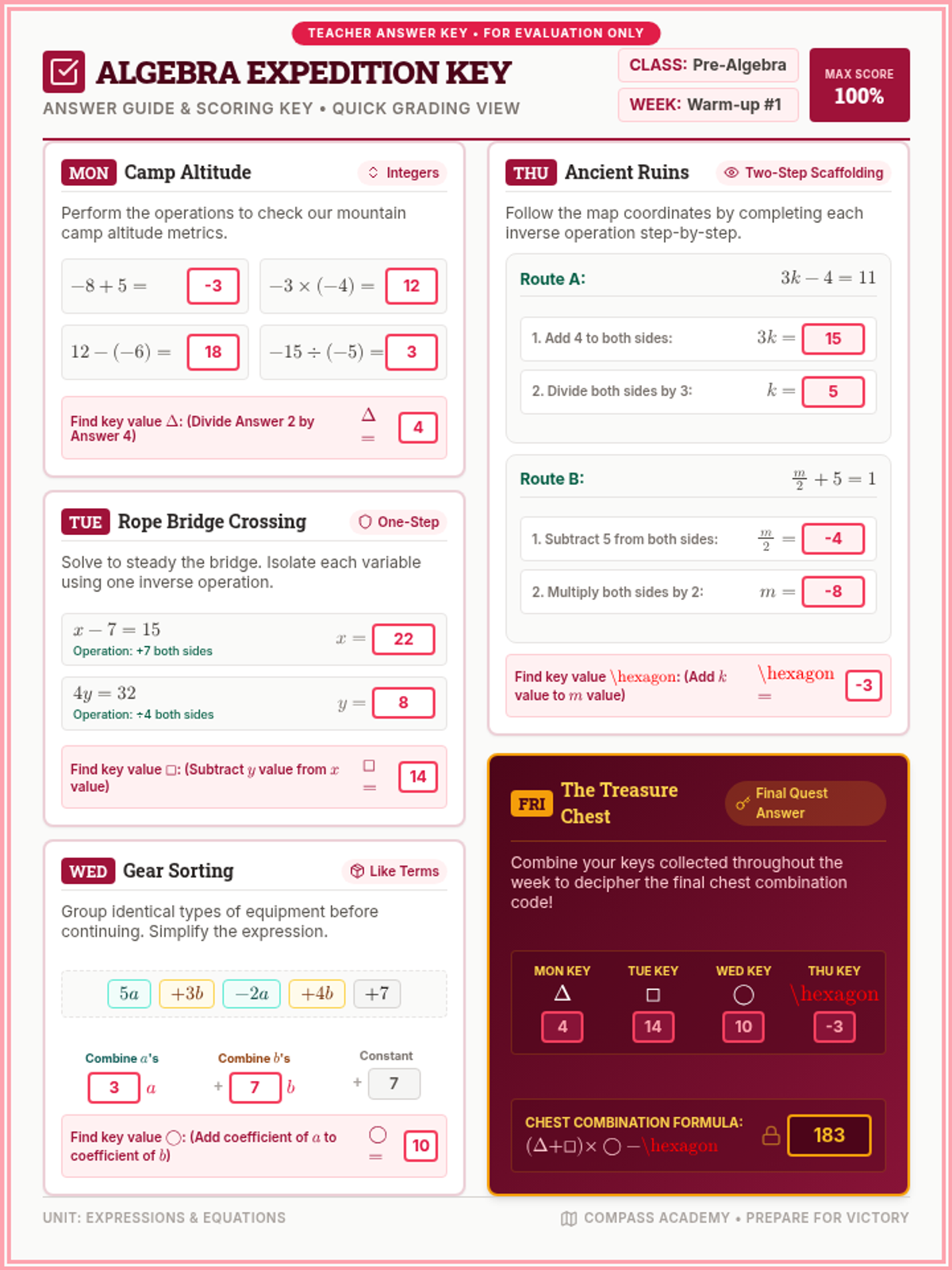
A collection of daily warm-up activities designed to build algebraic fluency. Over five days, students tackle integer operations, one-step equations, combining like terms, and scaffolded two-step equations to prepare for algebraic mastery.
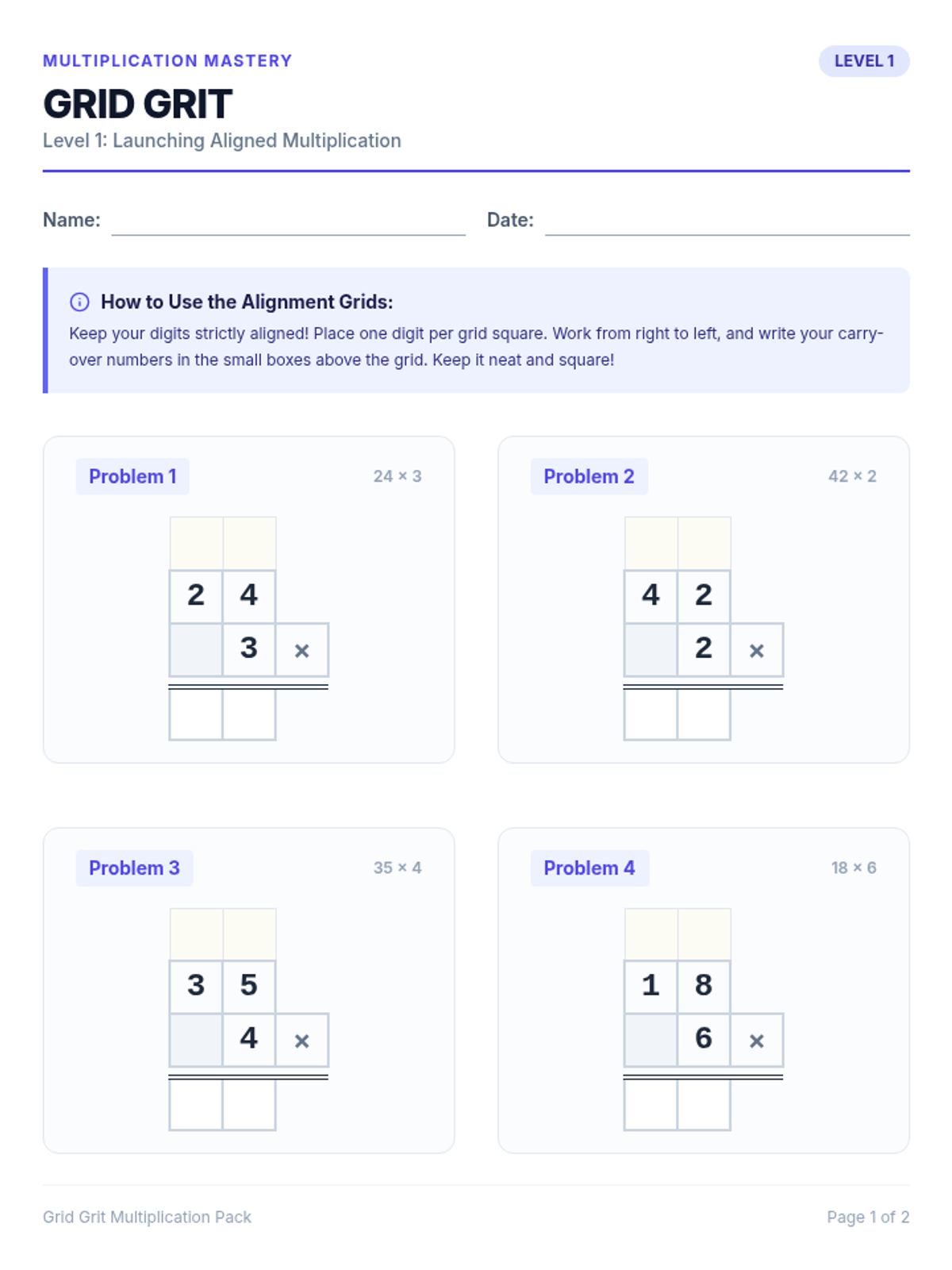
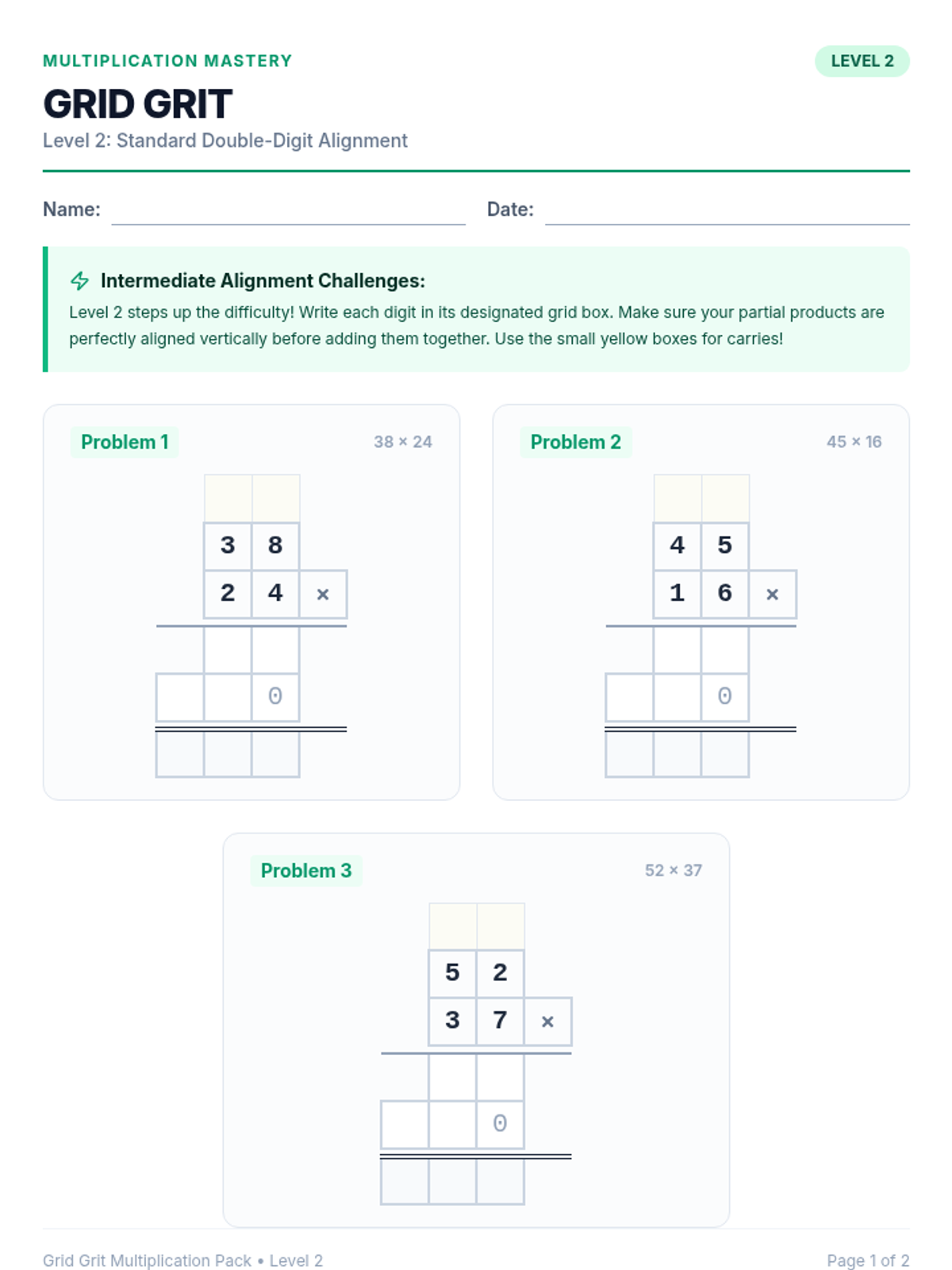
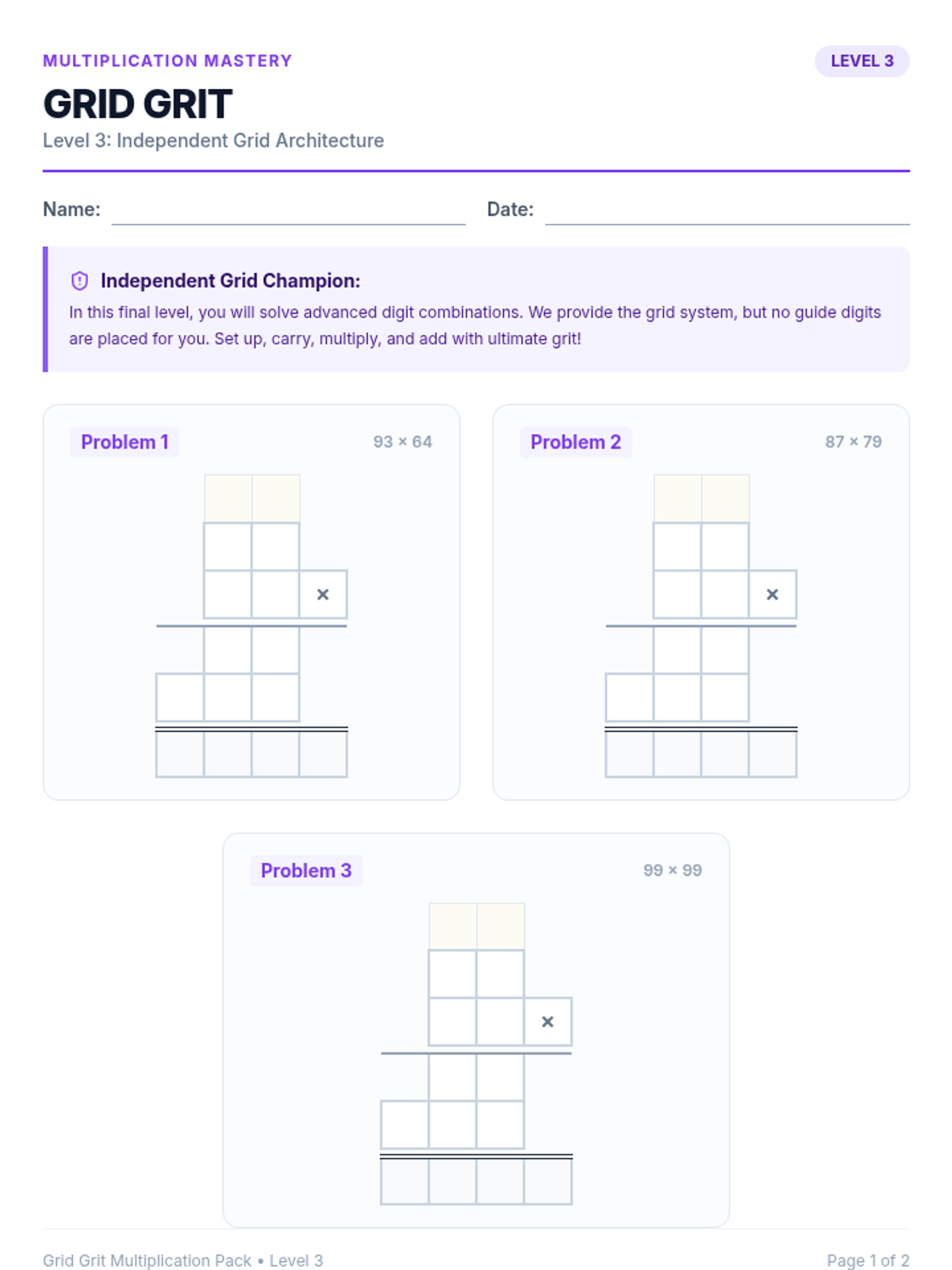
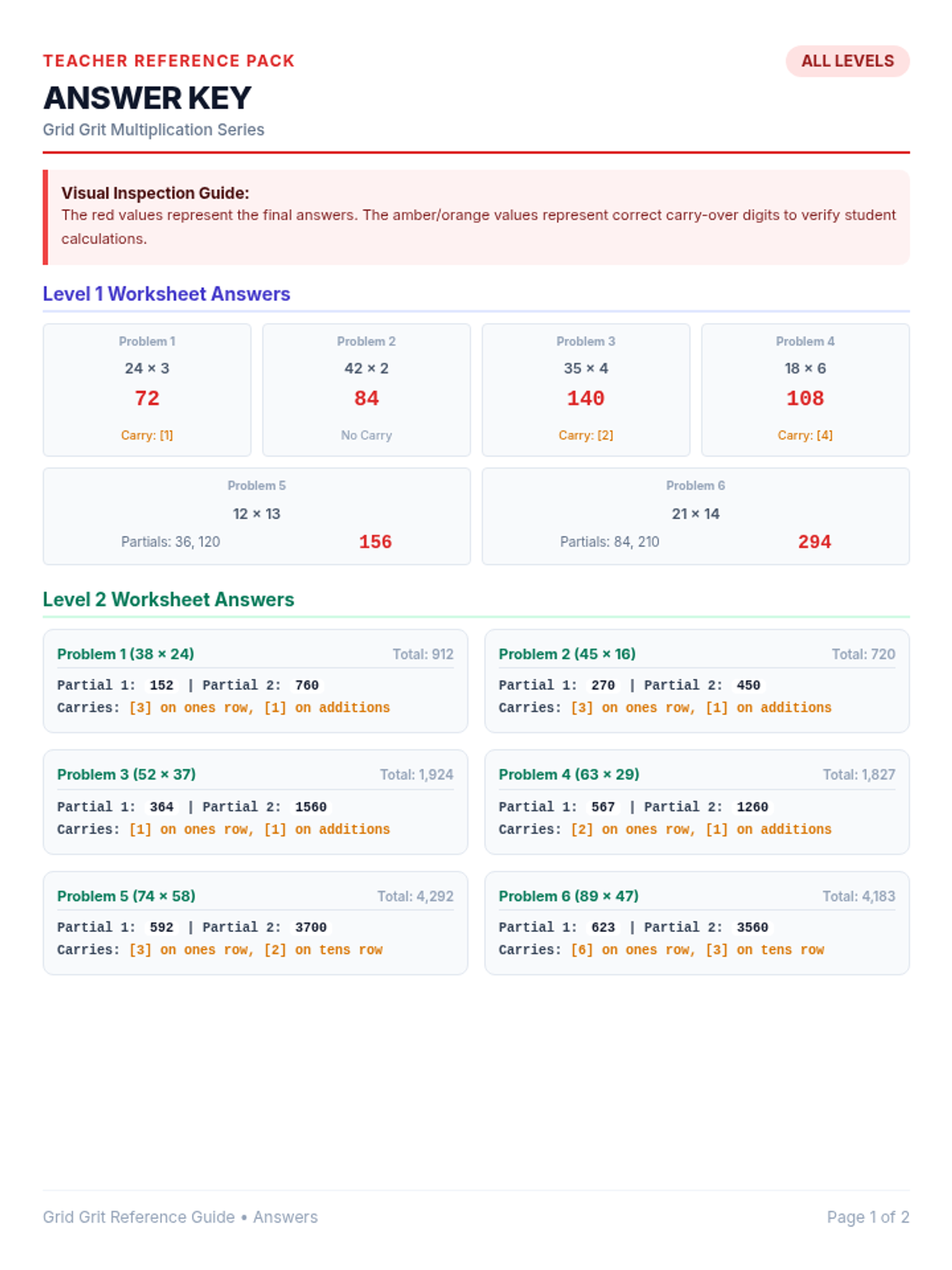
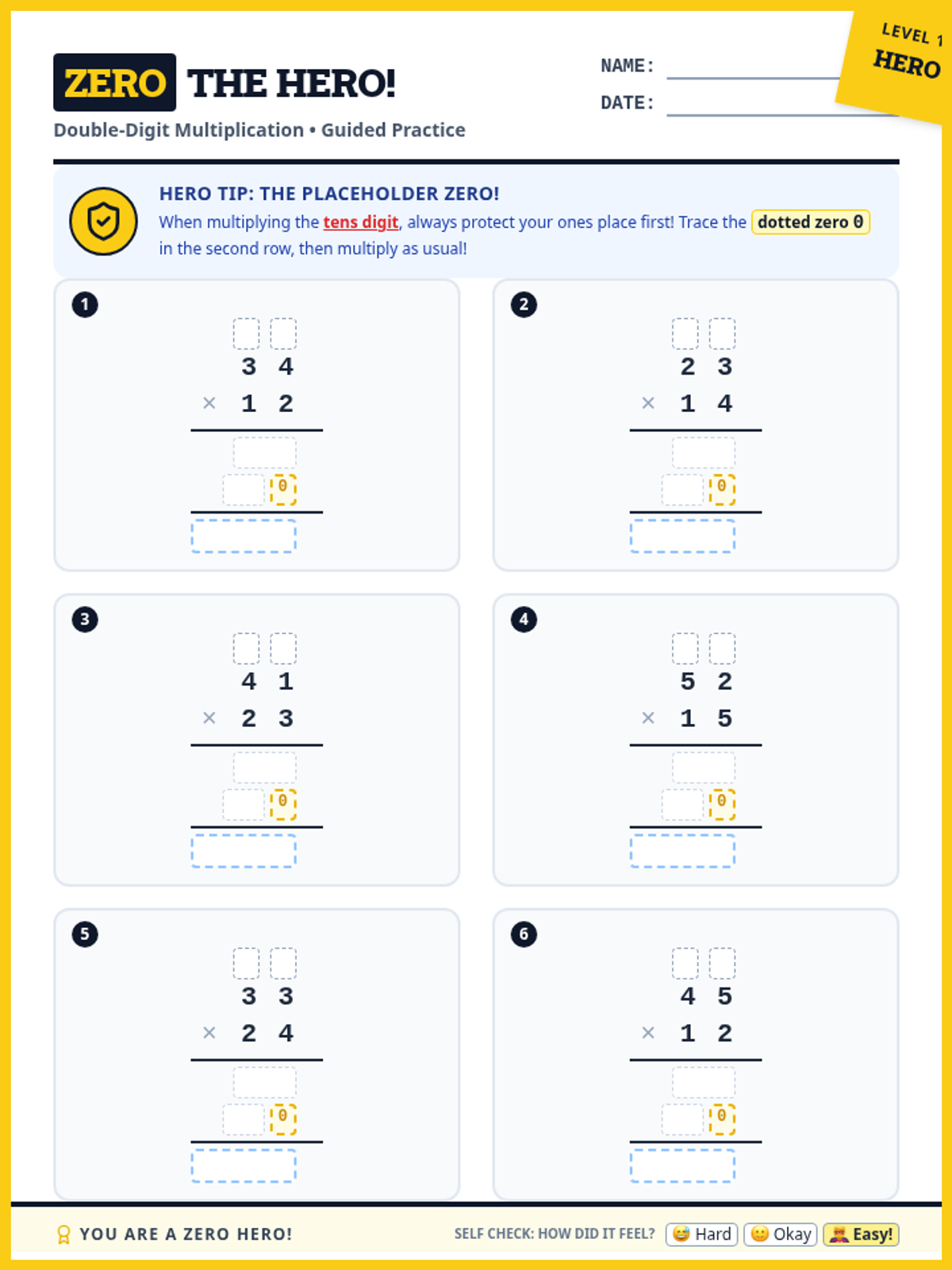
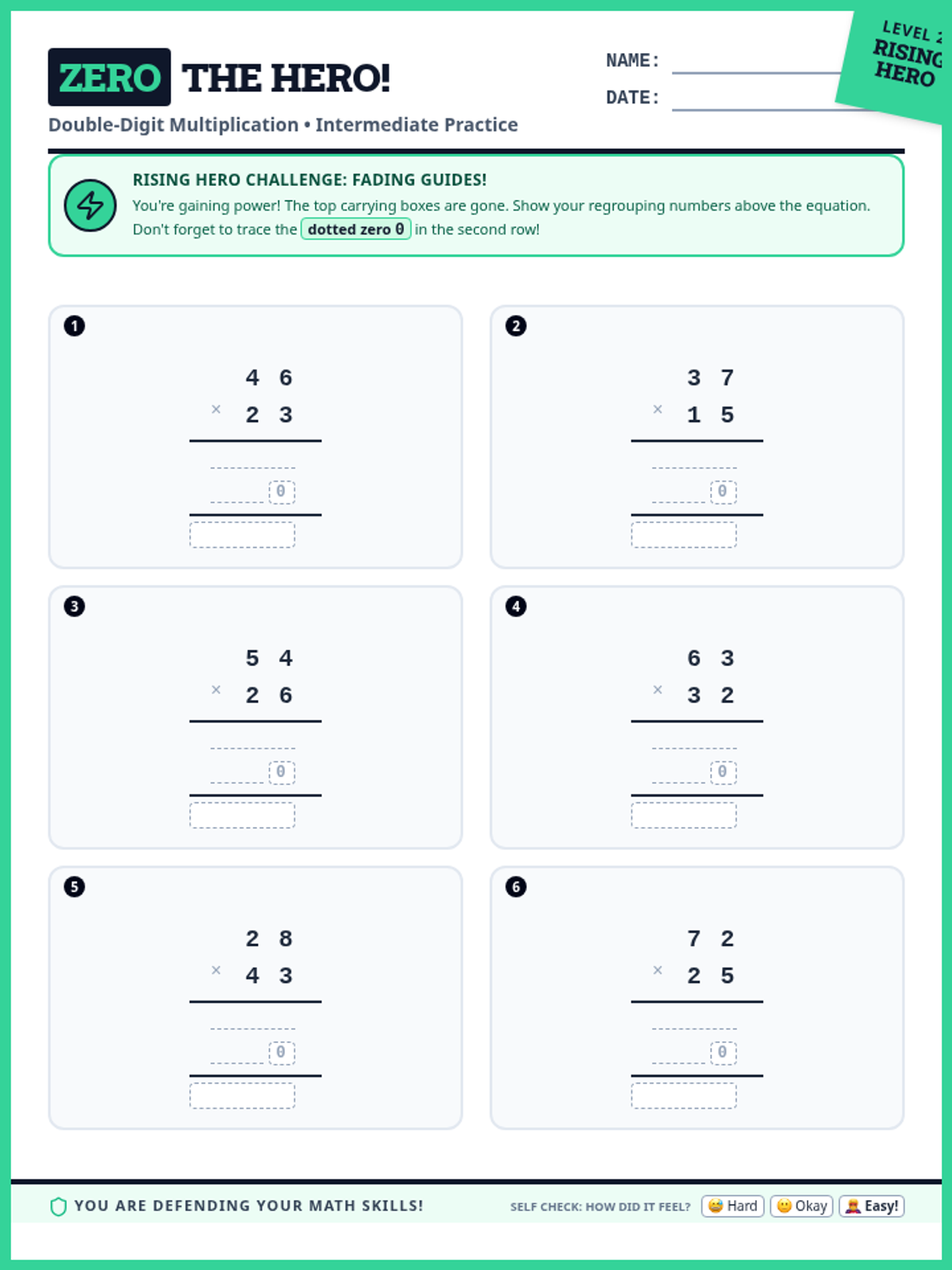
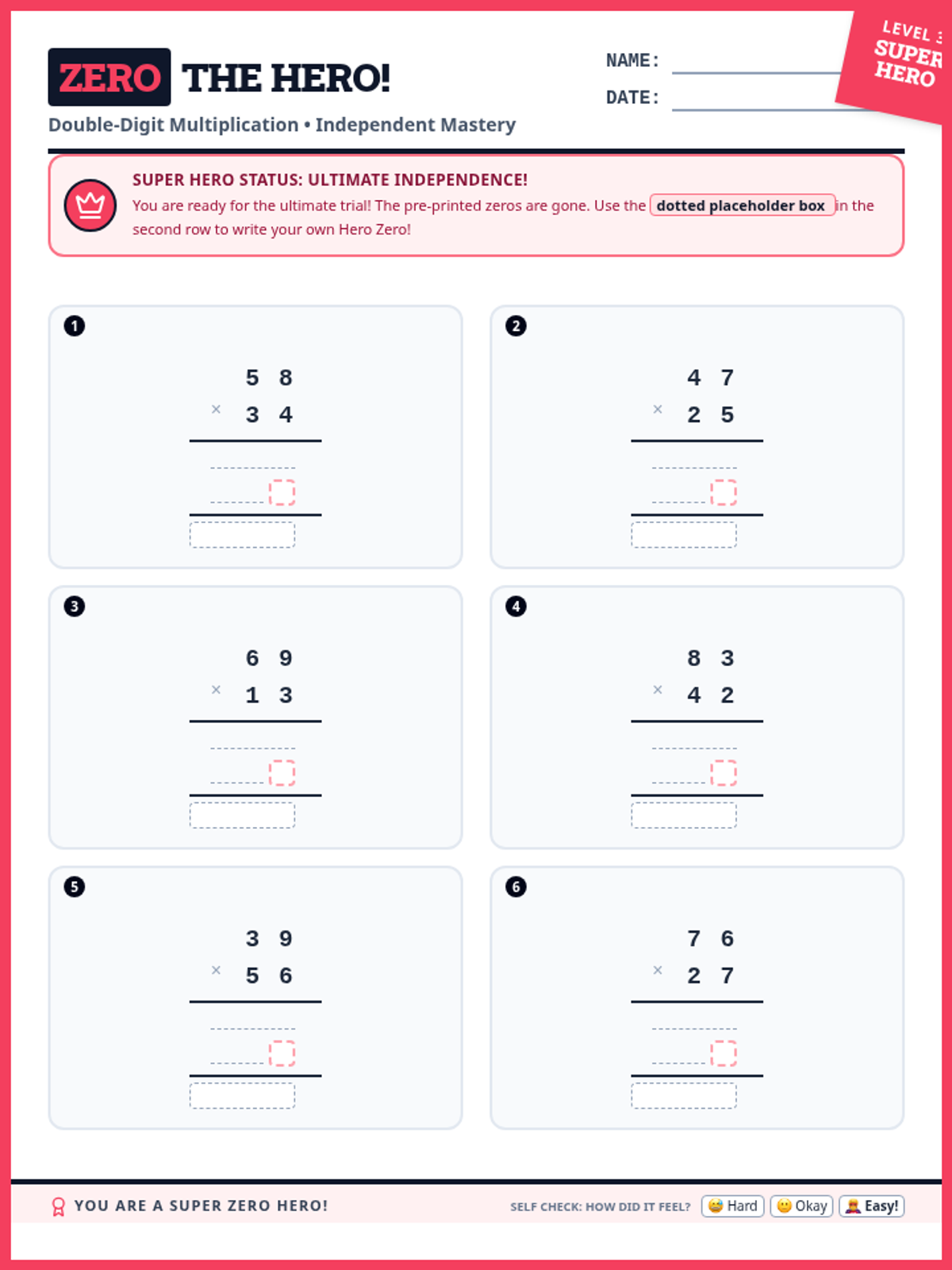
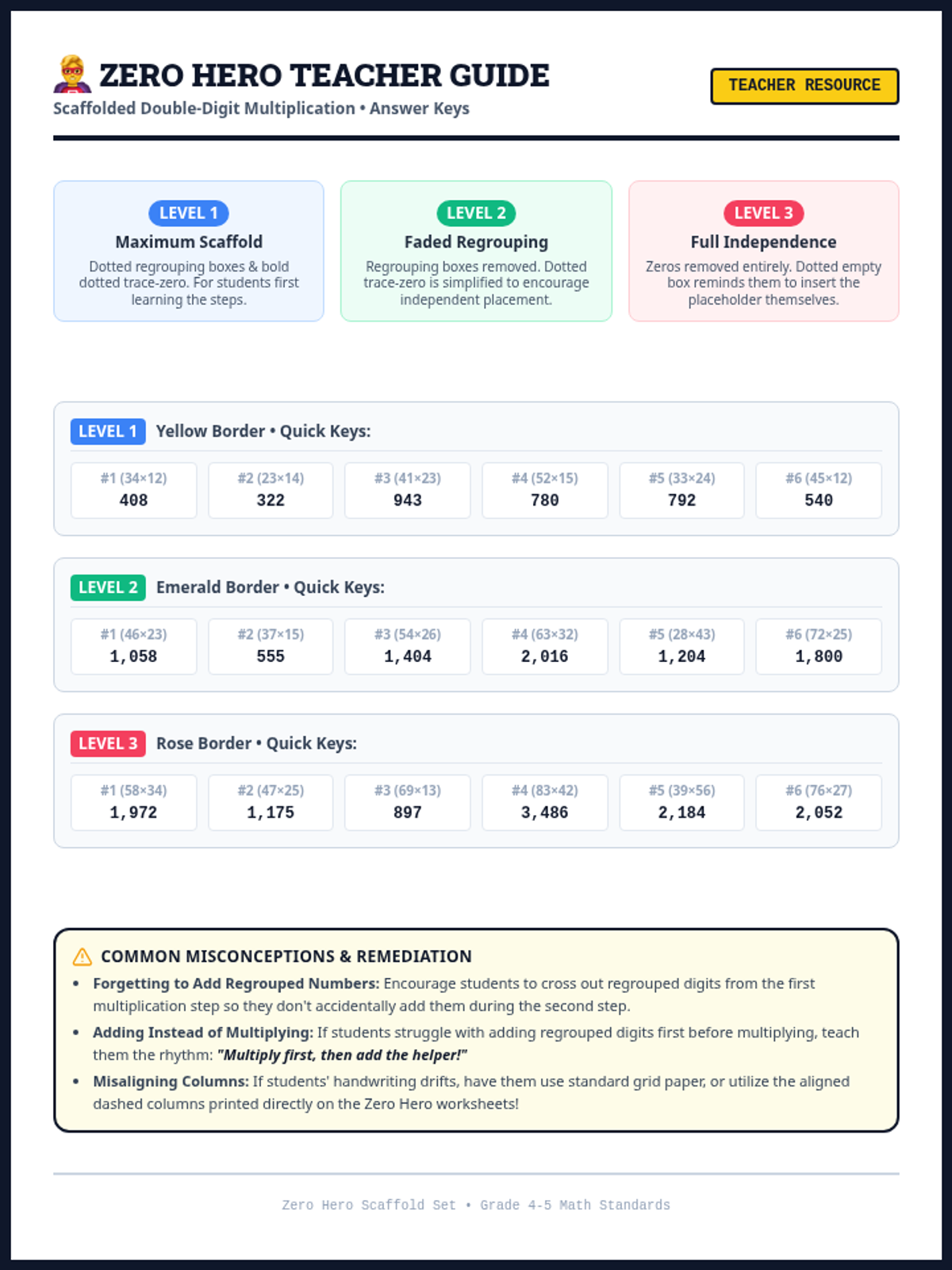
A progressive multi-level worksheet pack designed to master double-digit multiplication using custom, enlarged alignment grids to support spatial organization and focus.
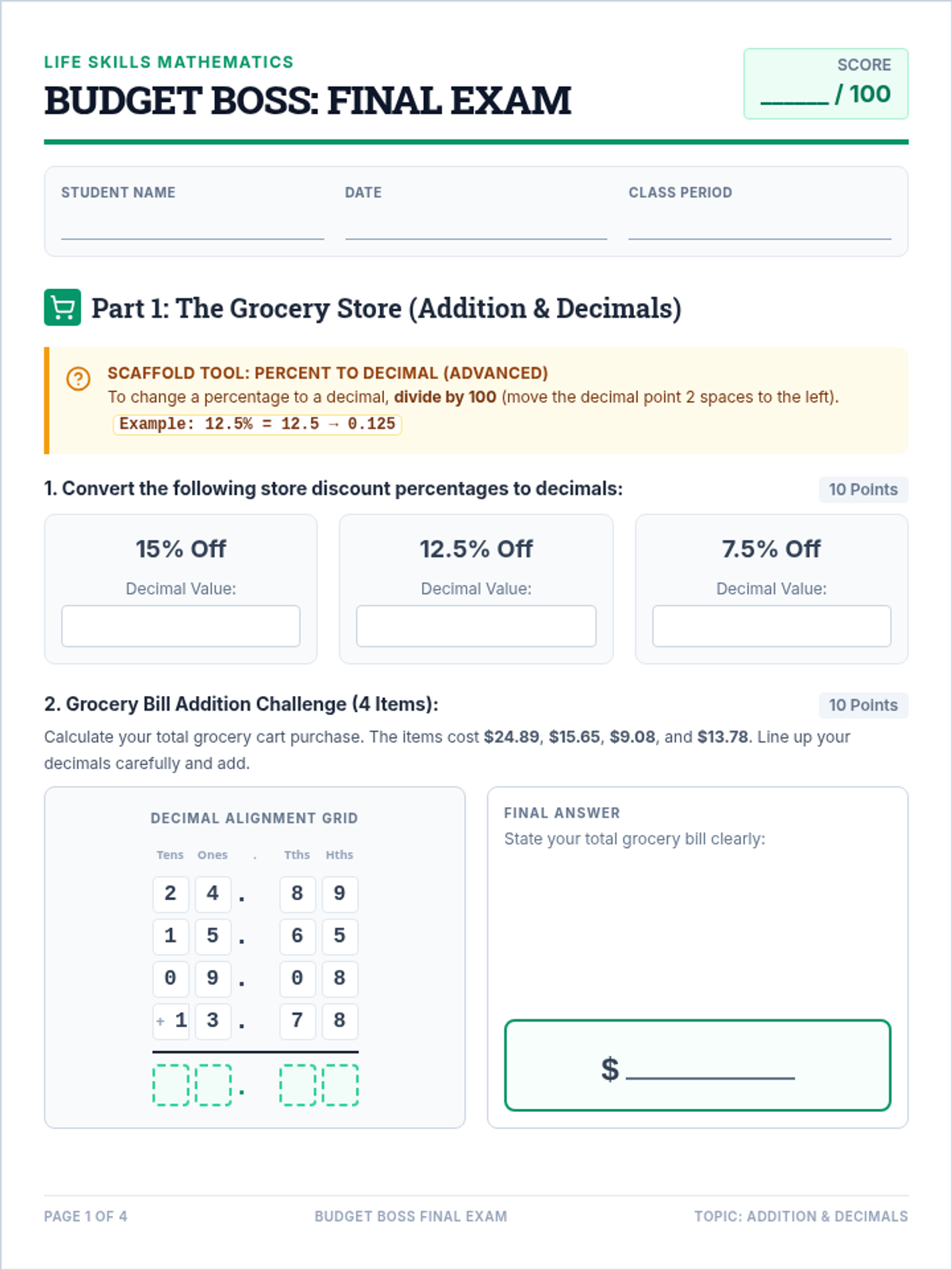
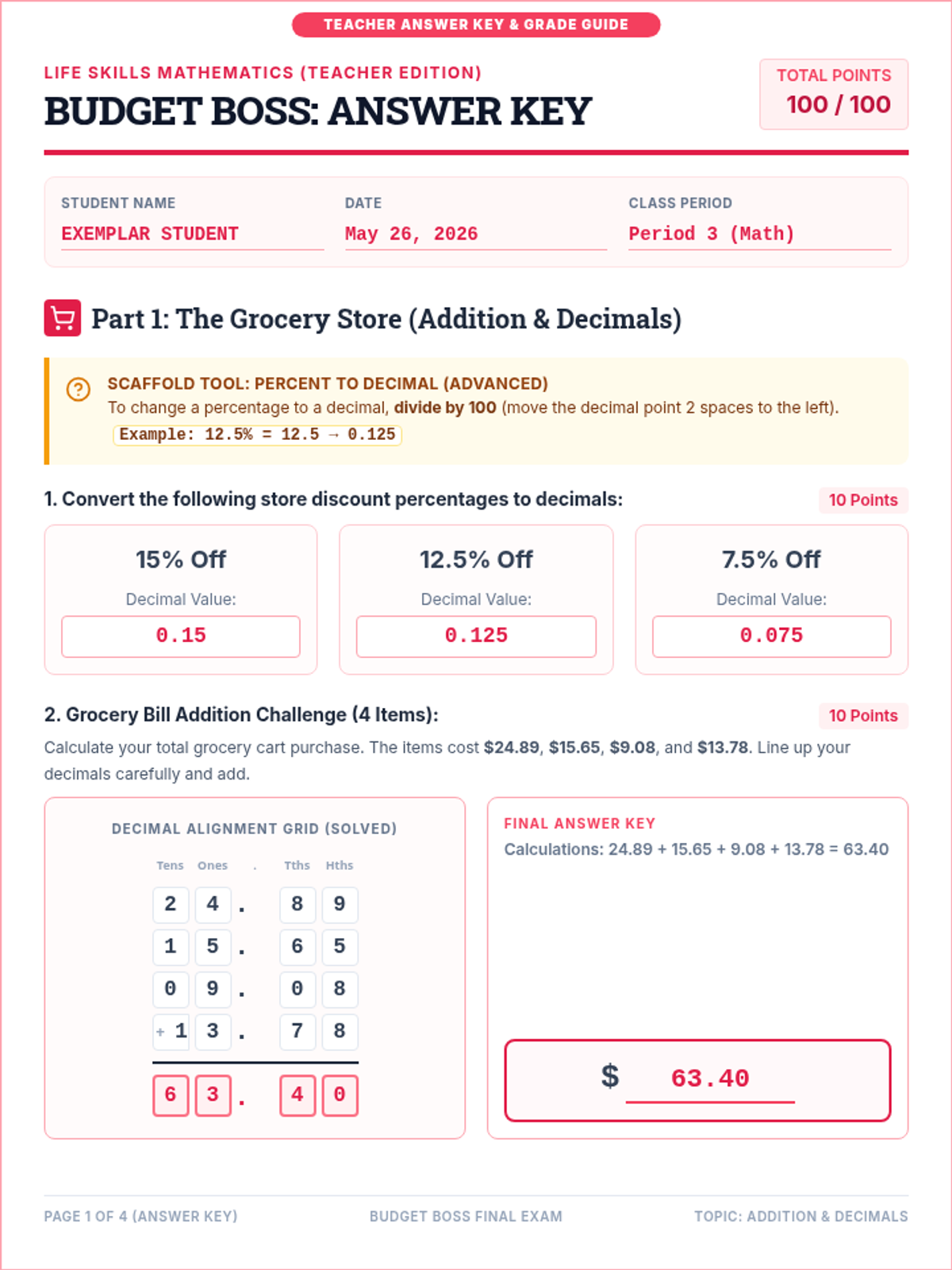
A comprehensive, real-world math exam and answer key assessing student mastery of addition, division, percentage-to-decimal conversions, and multi-step word problems through grocery shopping, vocational wages, and budgeting scenarios.
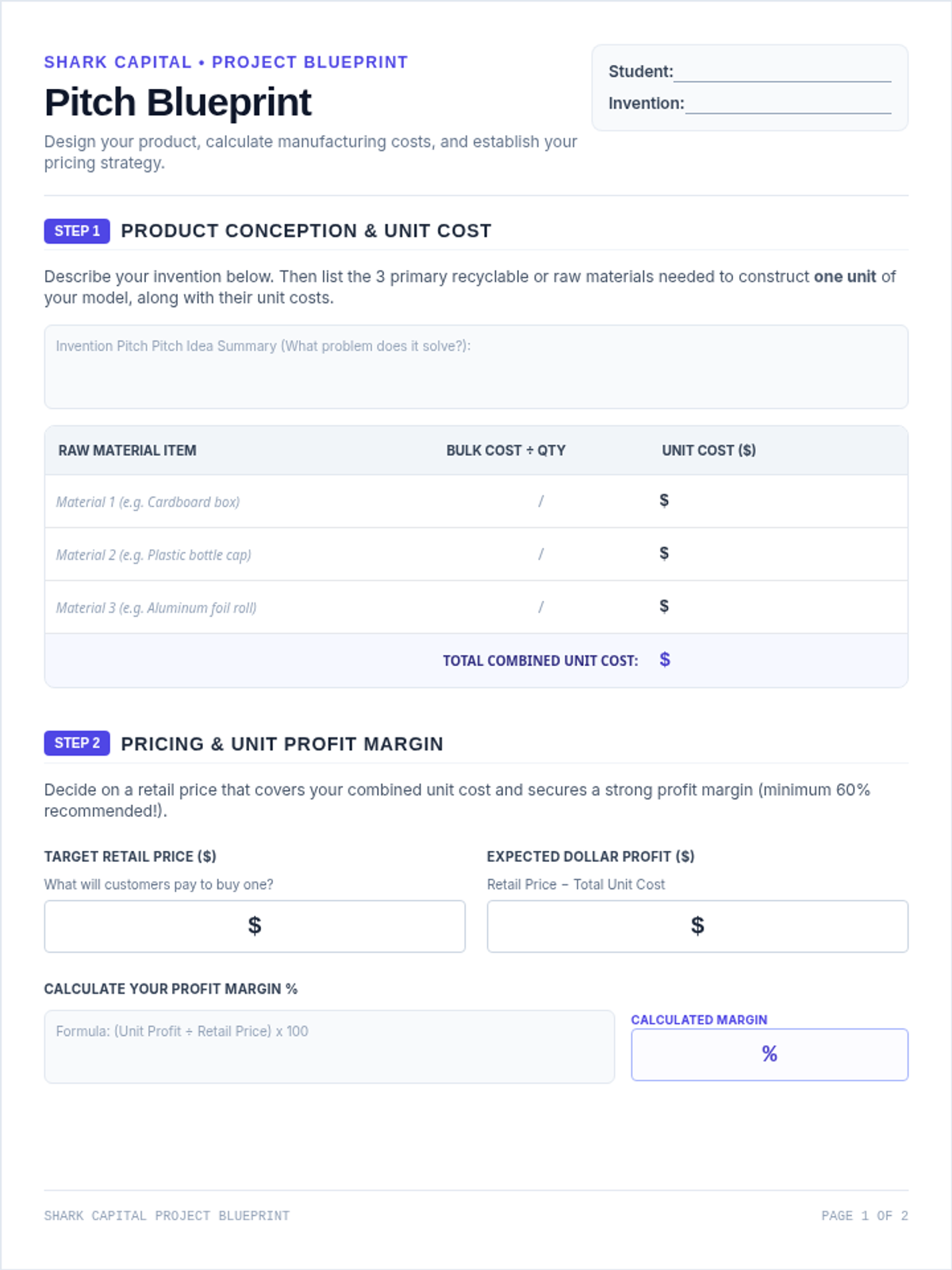
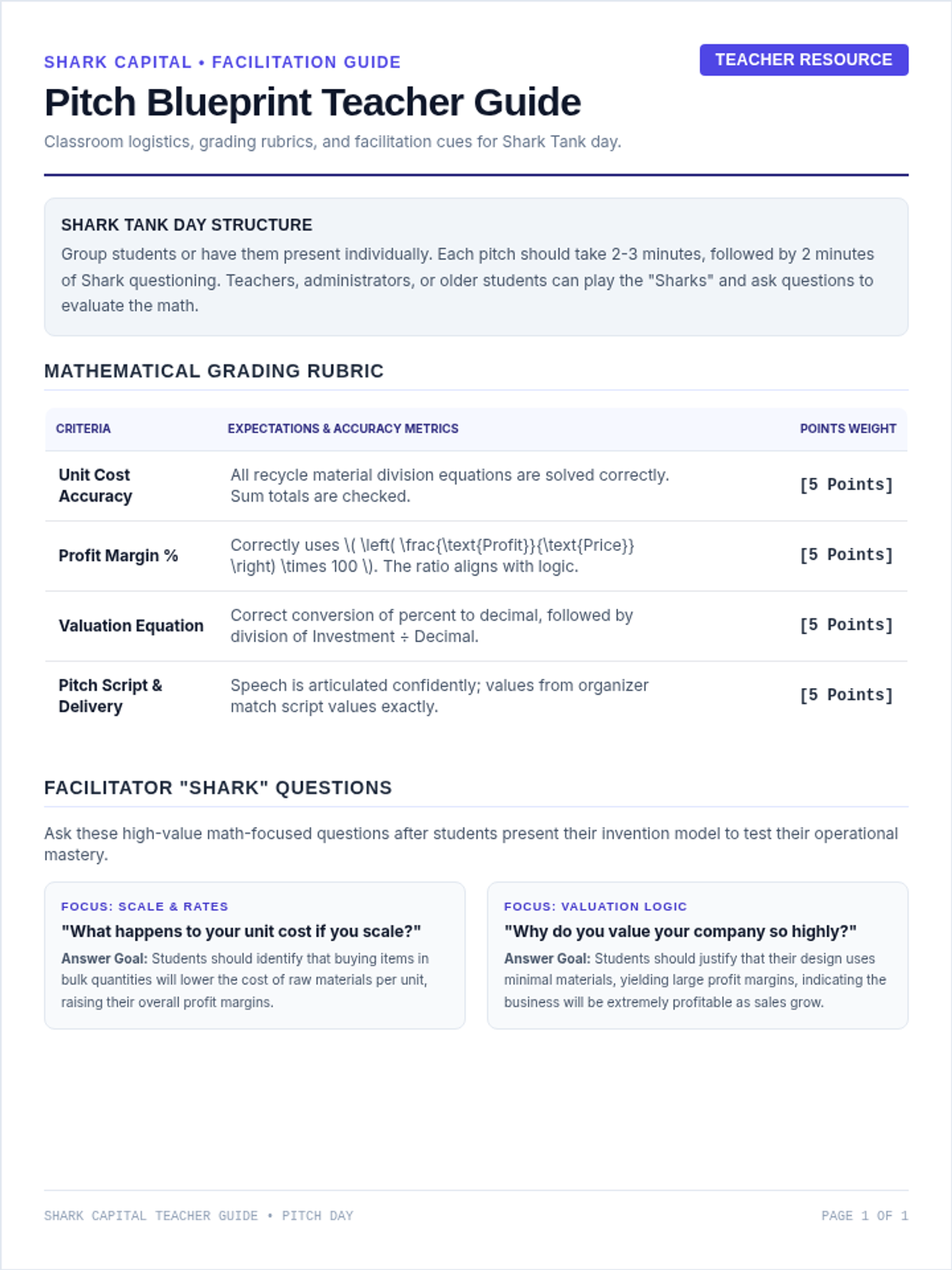
Students apply their mathematical knowledge to their own inventions. They calculate their product costs, set their retail price, determine their company valuation, and write the math portion of their pitch speech.
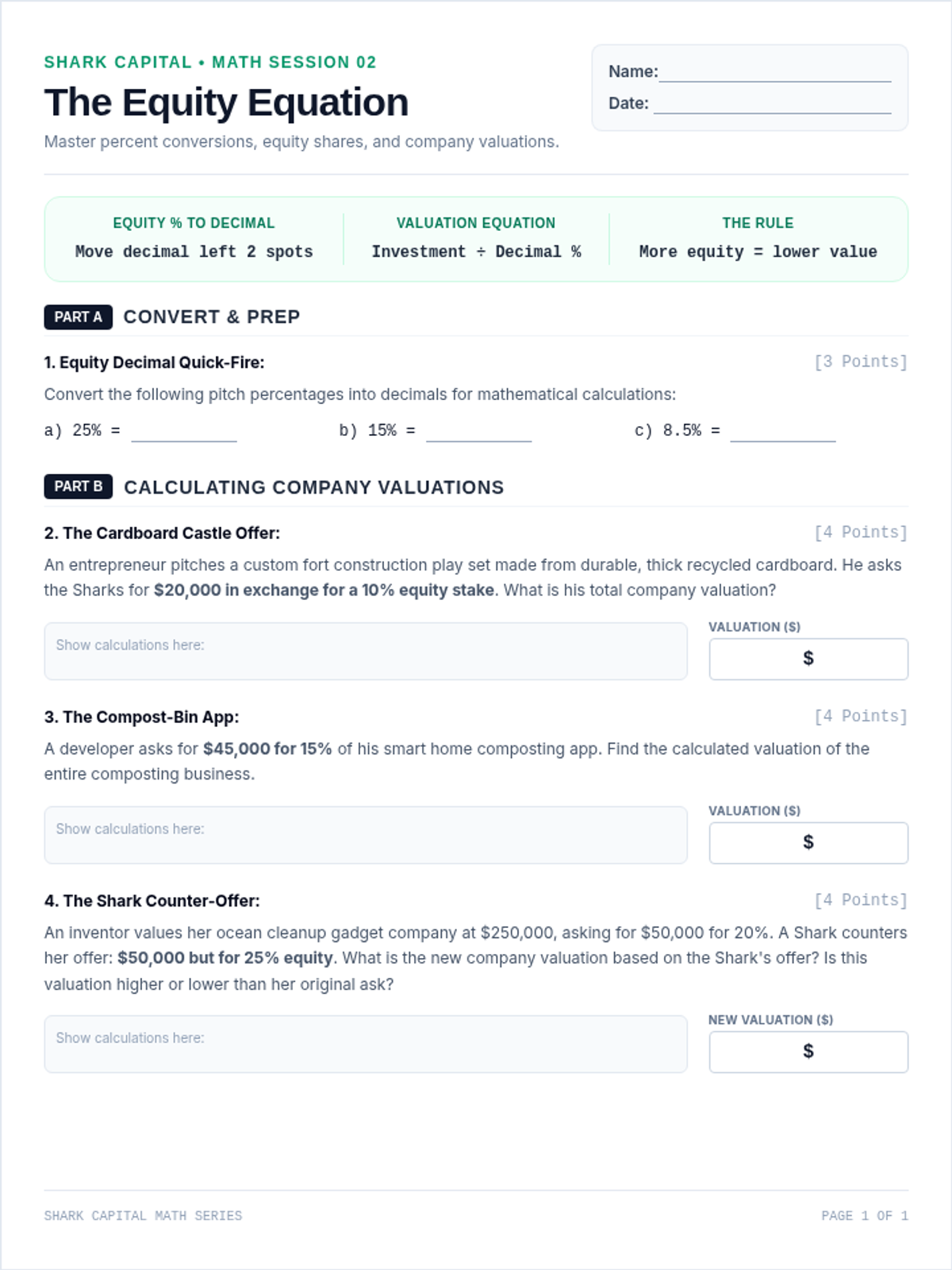
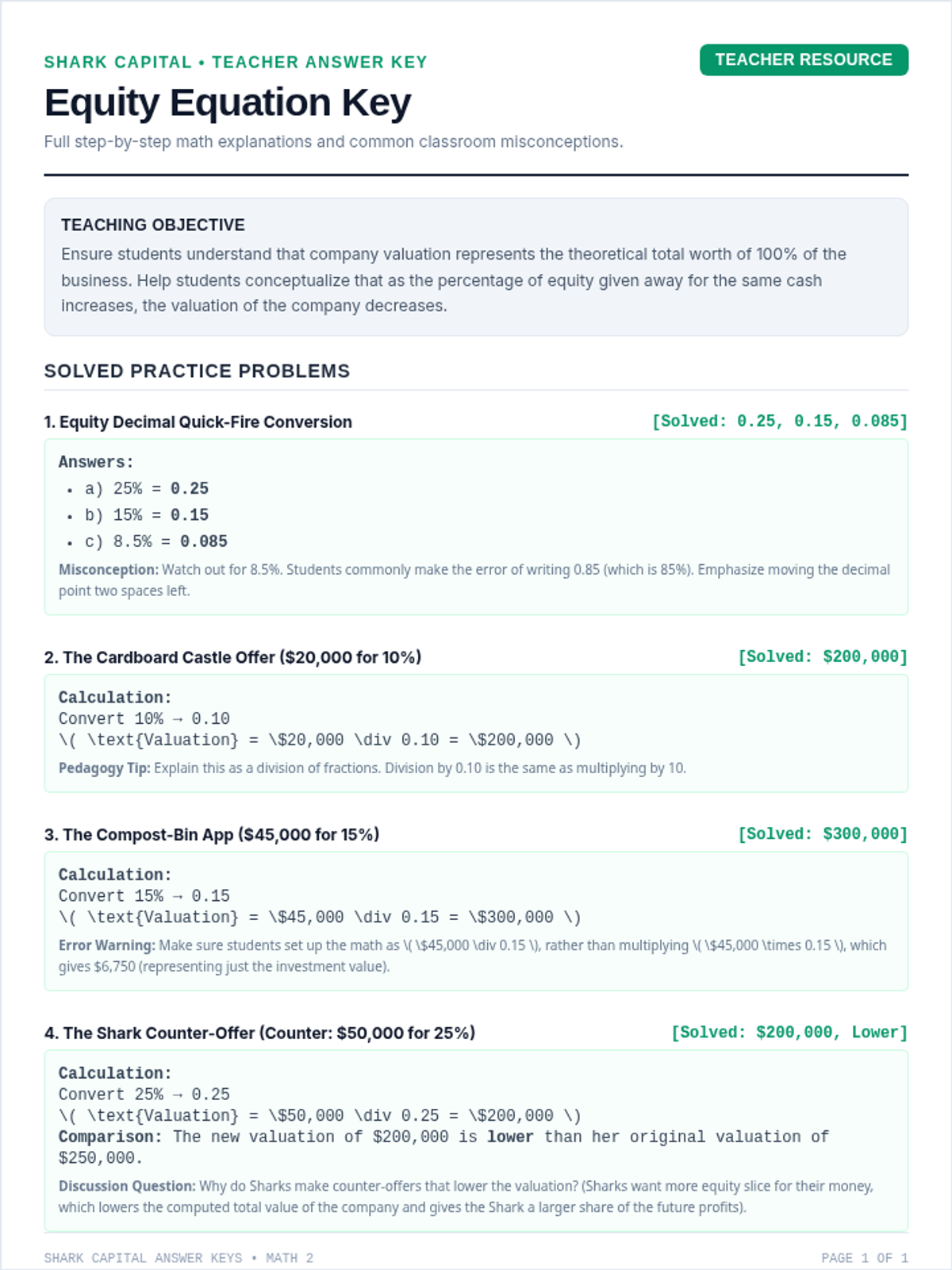
Students tackle company valuations, percentage offers, and equity calculations. They learn the math behind asking for investment and determining what percentage of their company to sell.
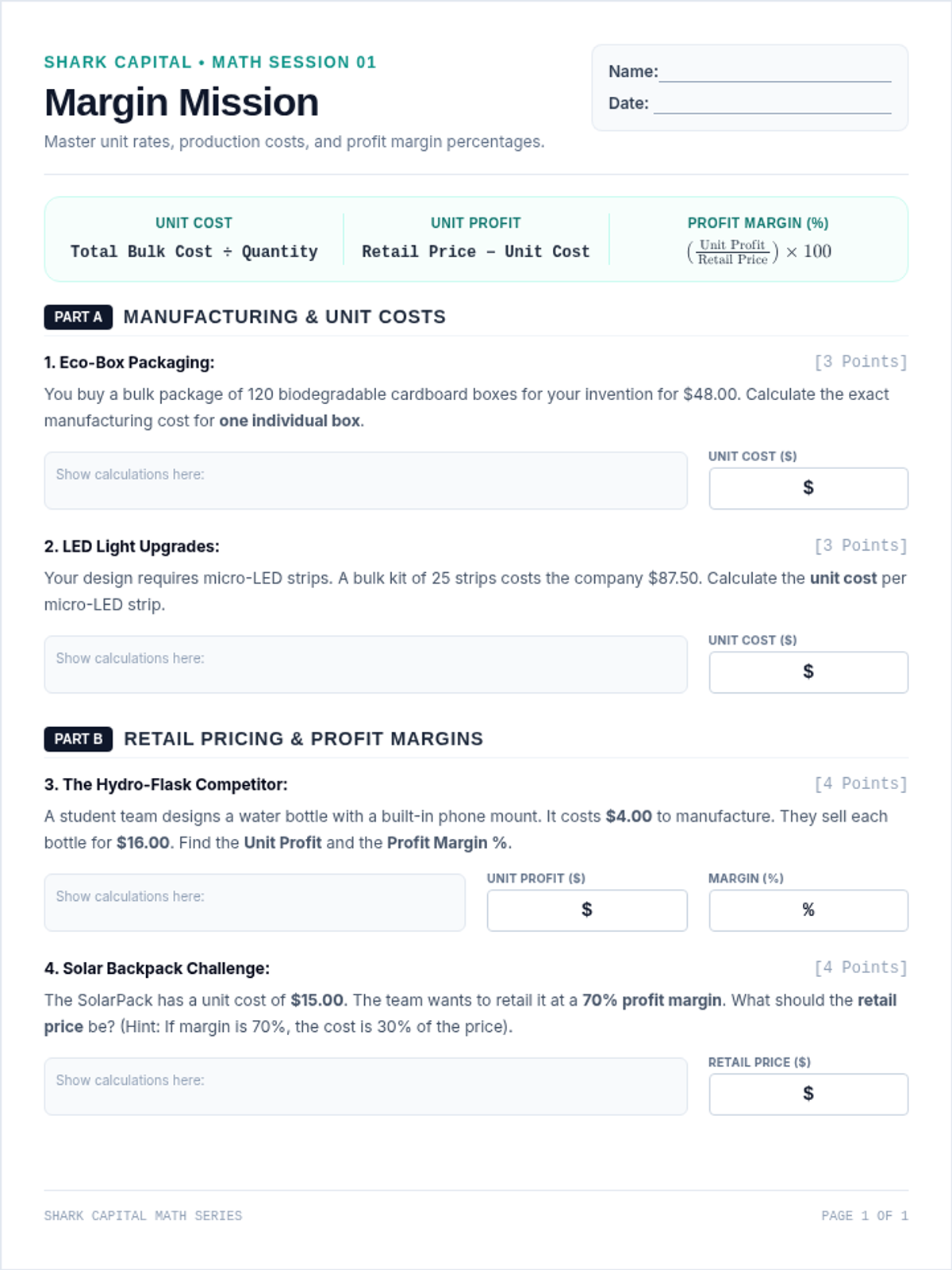
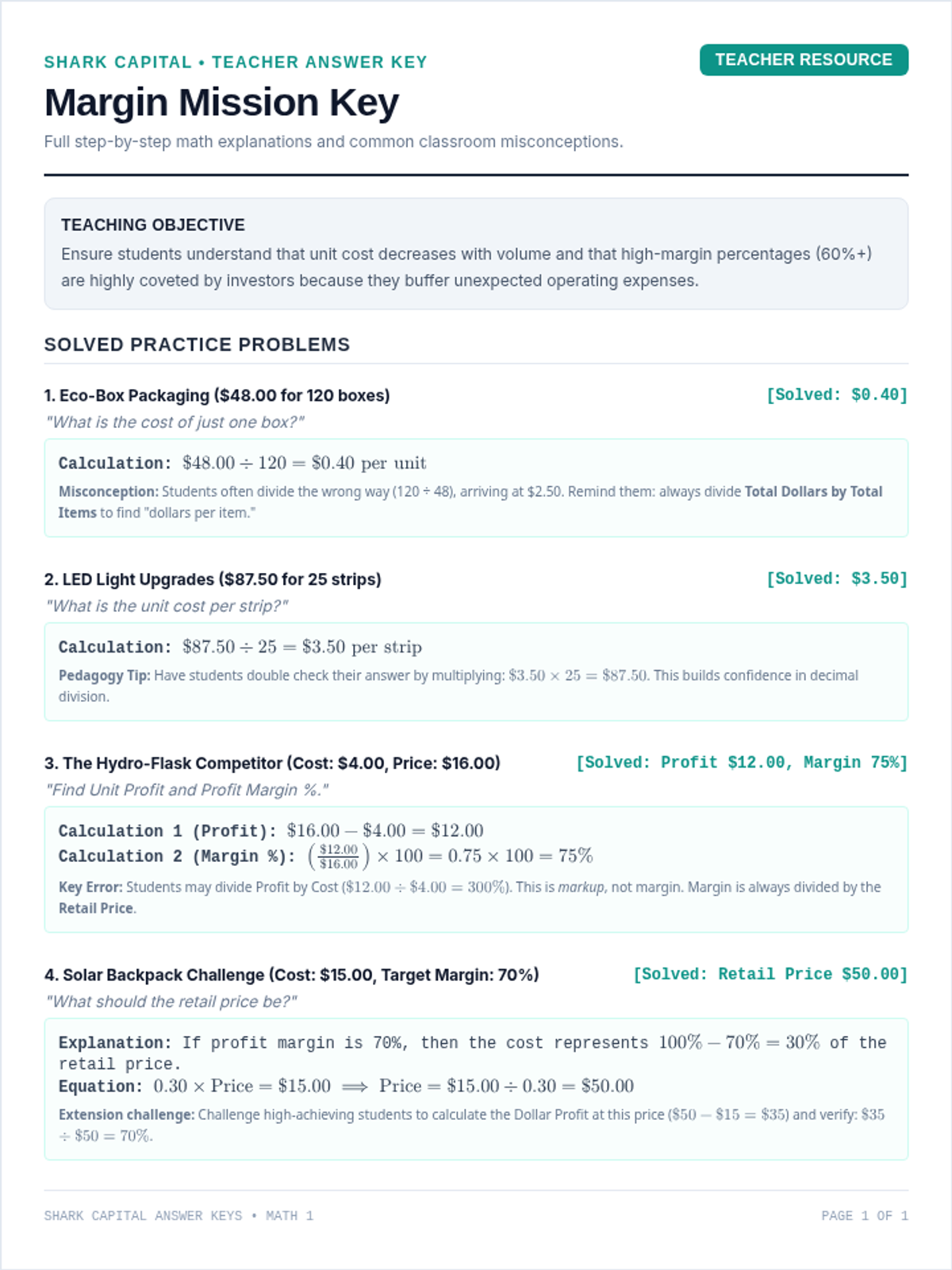
Students master unit rates, production costs, retail pricing, and profit margin percentages. They learn how to analyze whether an invention is financially viable on a unit level.
A three-level differentiated worksheet set teaching double-digit multiplication. Each worksheet utilizes a 'dotted placeholder zero' method with progressive prompt fading to support students as they master the multi-step algorithm.
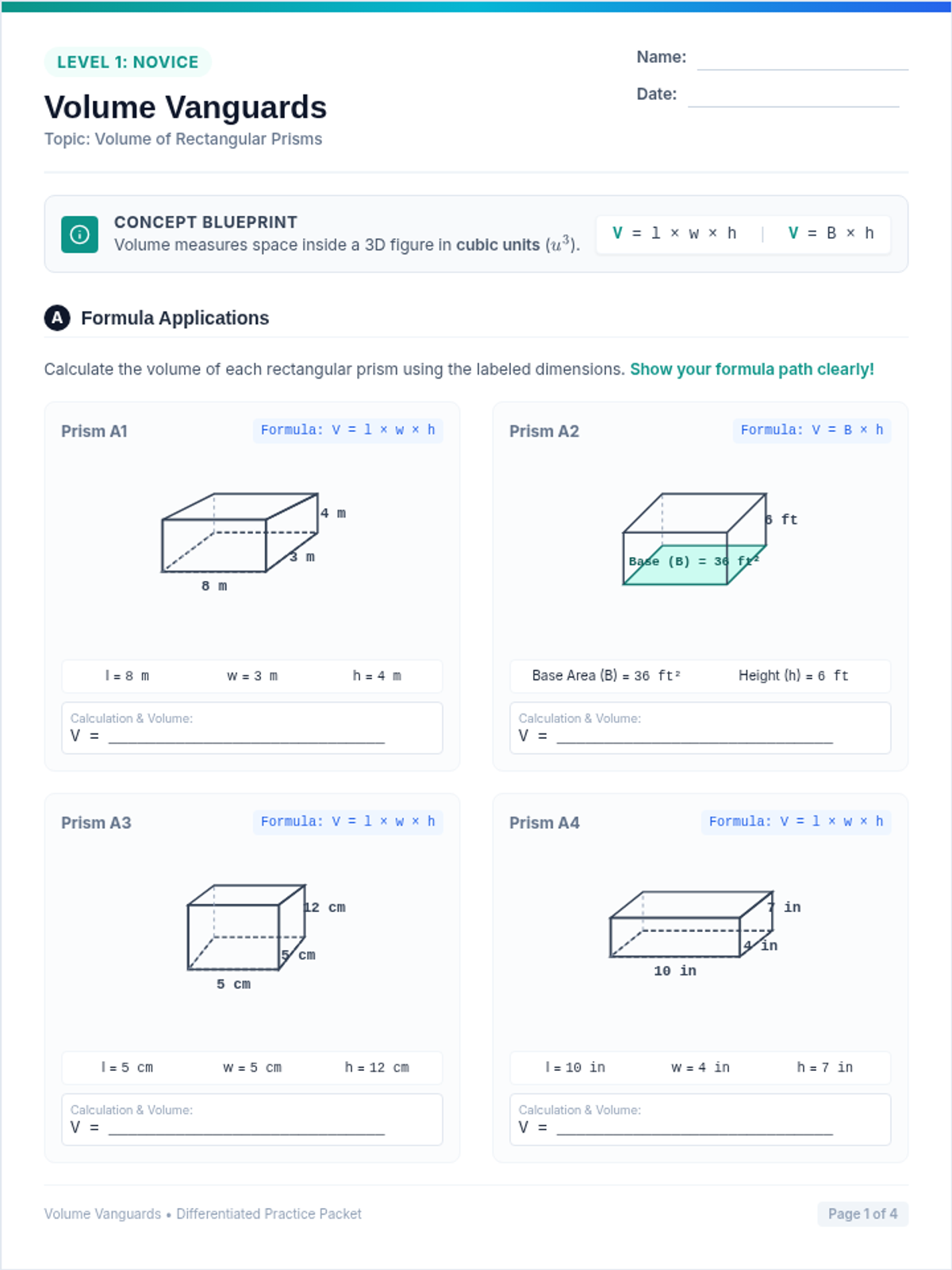
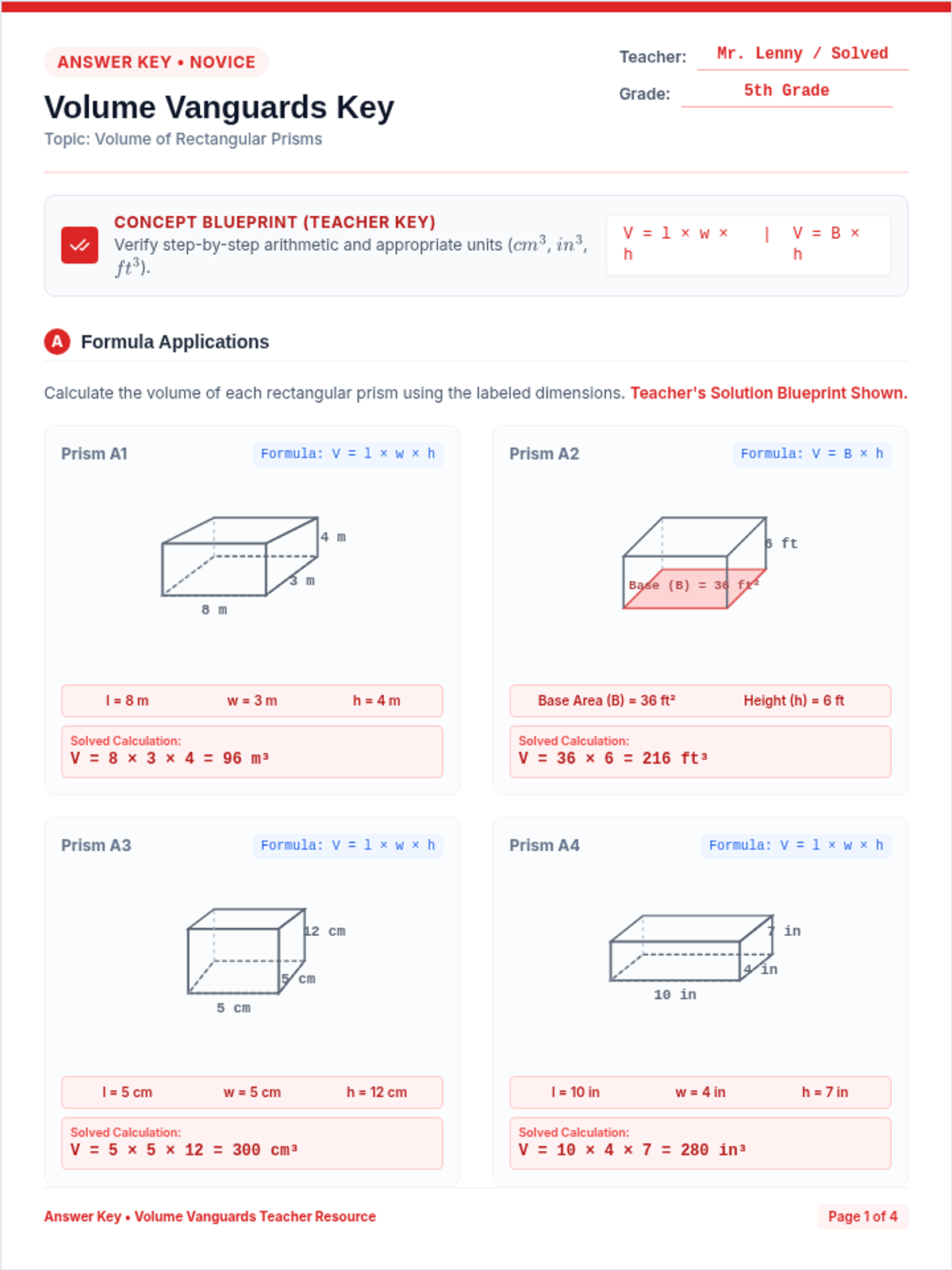
A comprehensive 5th-grade lesson on calculating the volume of rectangular prisms and composite/irregular 3D shapes. Students progress from counting unit cubes to applying formulas and decomposing irregular figures to find additive volume.
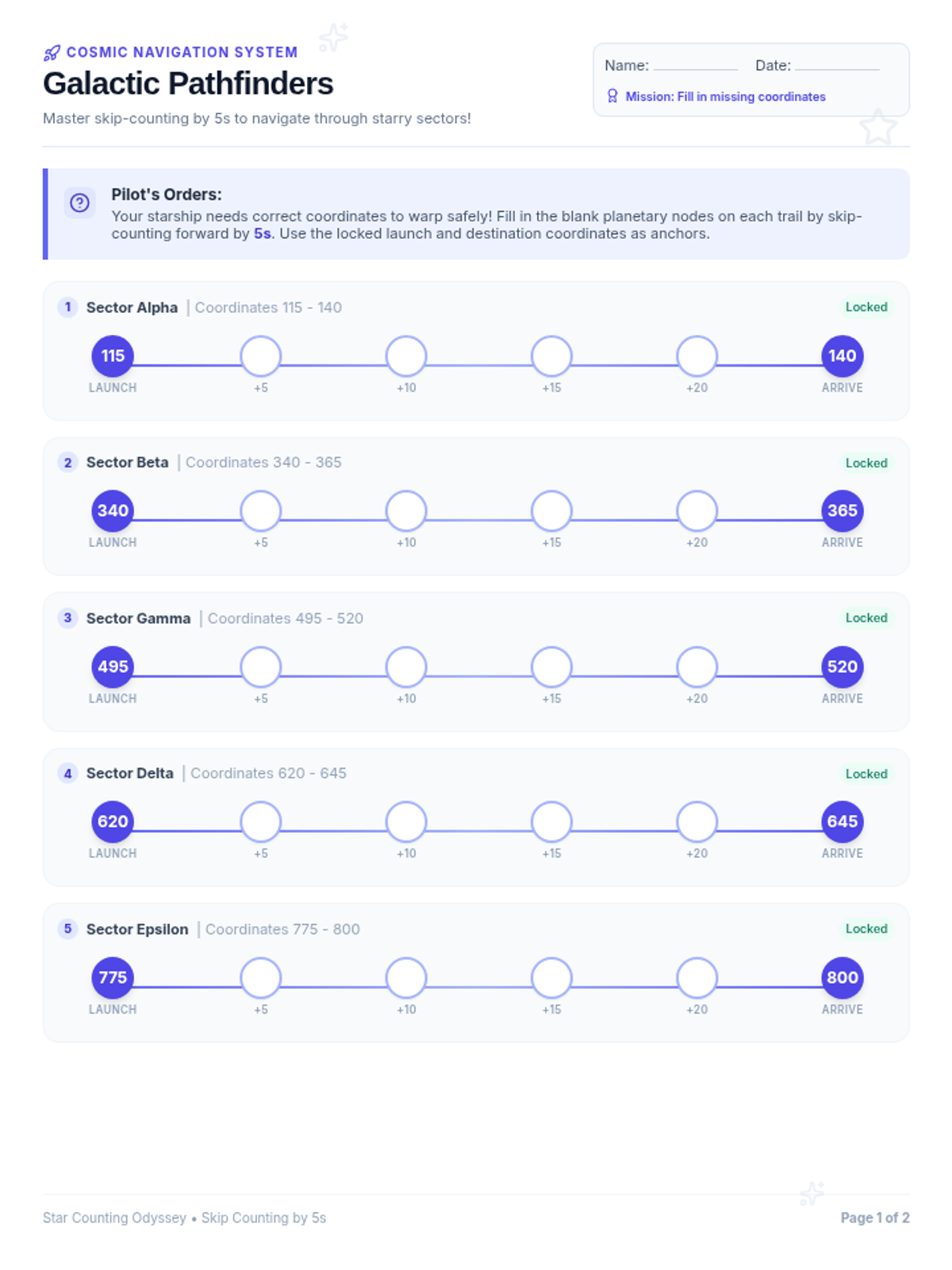
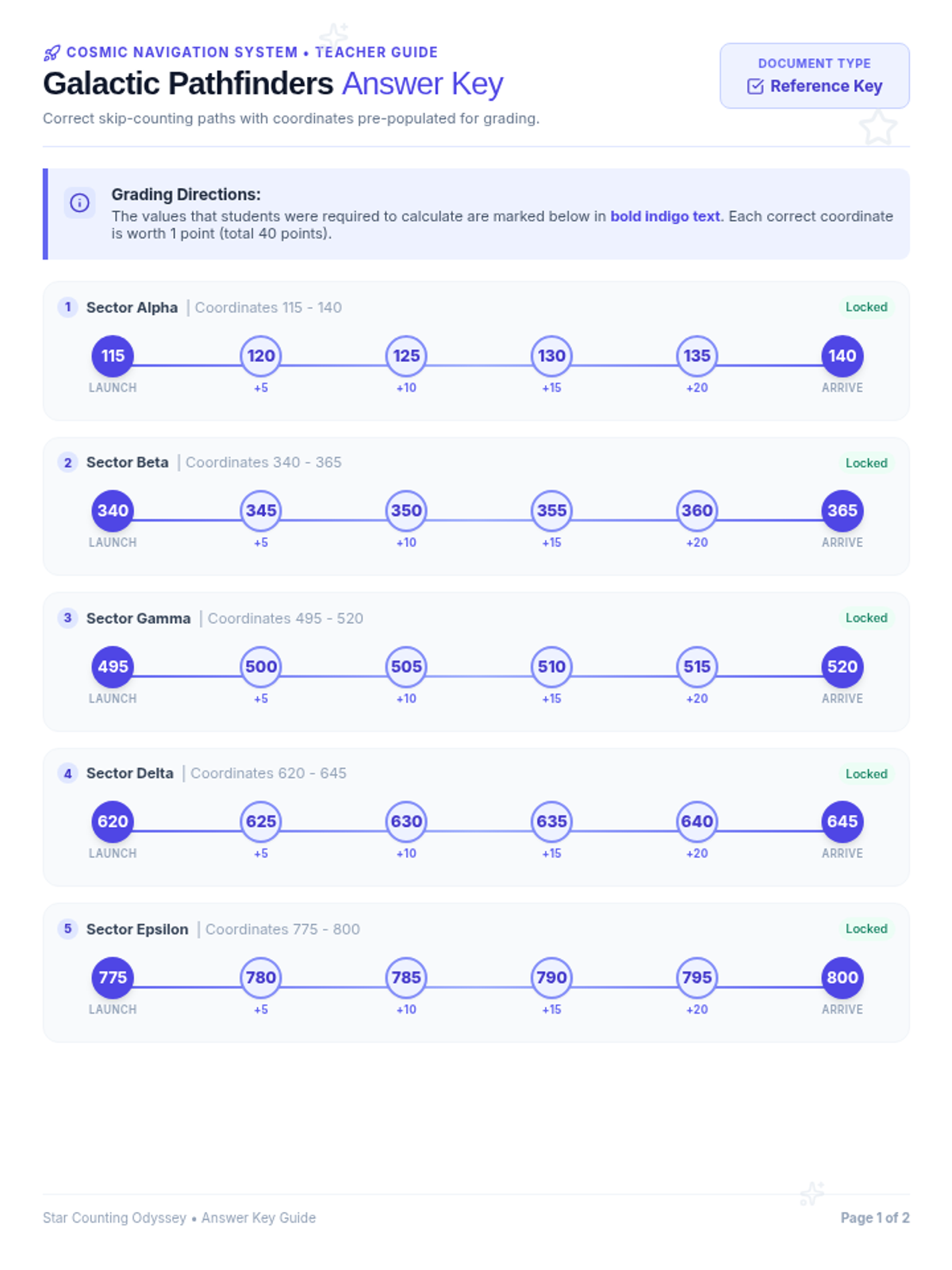
A space-themed skip counting lesson where students master counting by 5s to 1000. Using visual cosmic pathways (number lines), students apply moderate-support scaffolding to guide their spaceship through starry quadrants.
An Algebra 1 lesson introducing projectile motion through the lens of launching rockets. Students learn to identify key features of quadratic graphs—specifically the vertex as maximum height and x-intercepts as landing times—and evaluate quadratic functions to find heights at specific seconds.
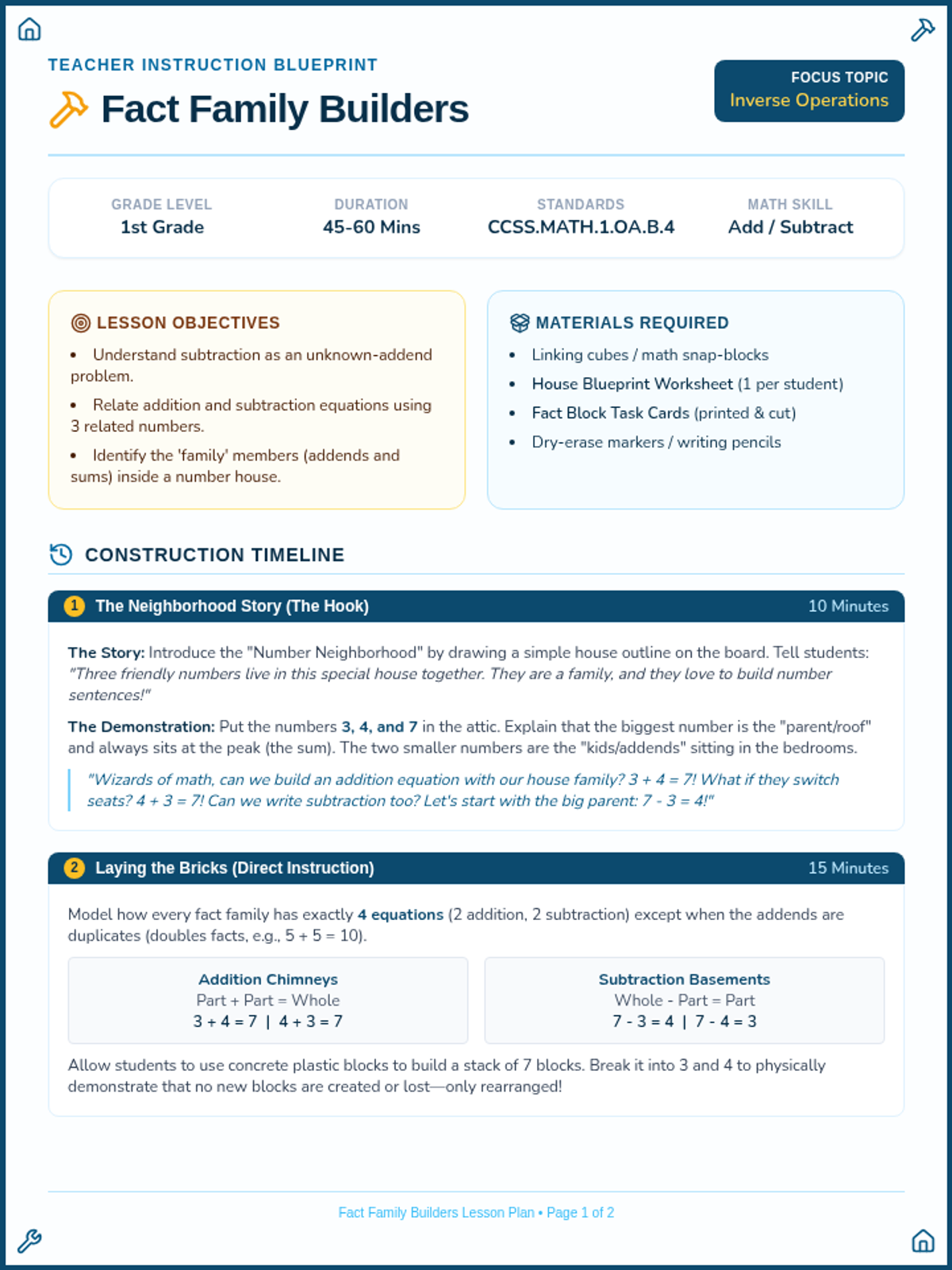
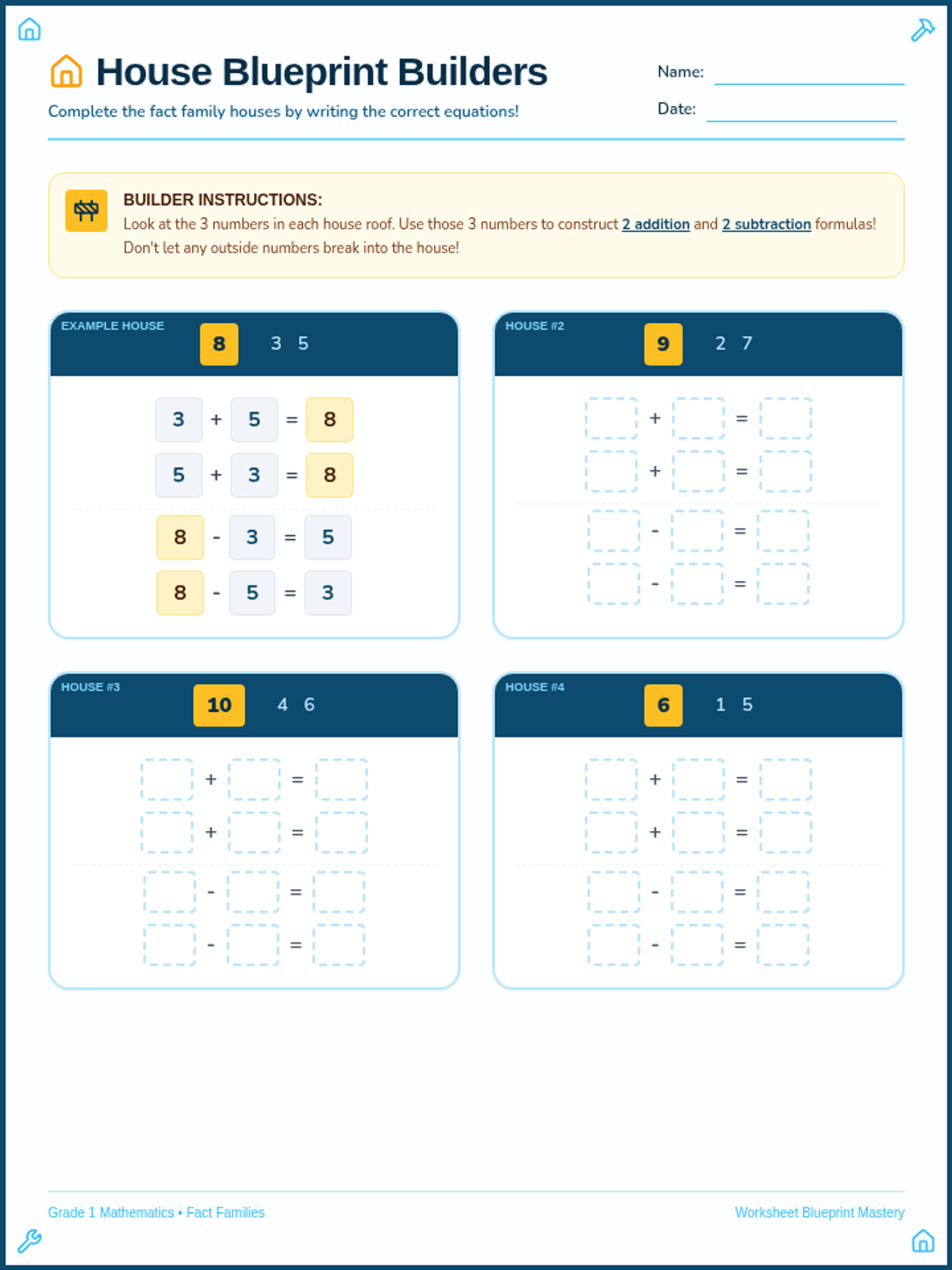
An engaging first-grade math lesson that teaches addition and subtraction relationships using cute, interactive fact family houses.
An engaging first-grade ELA reading comprehension lesson focused on identifying characters, settings, and main events using a fun detective theme.
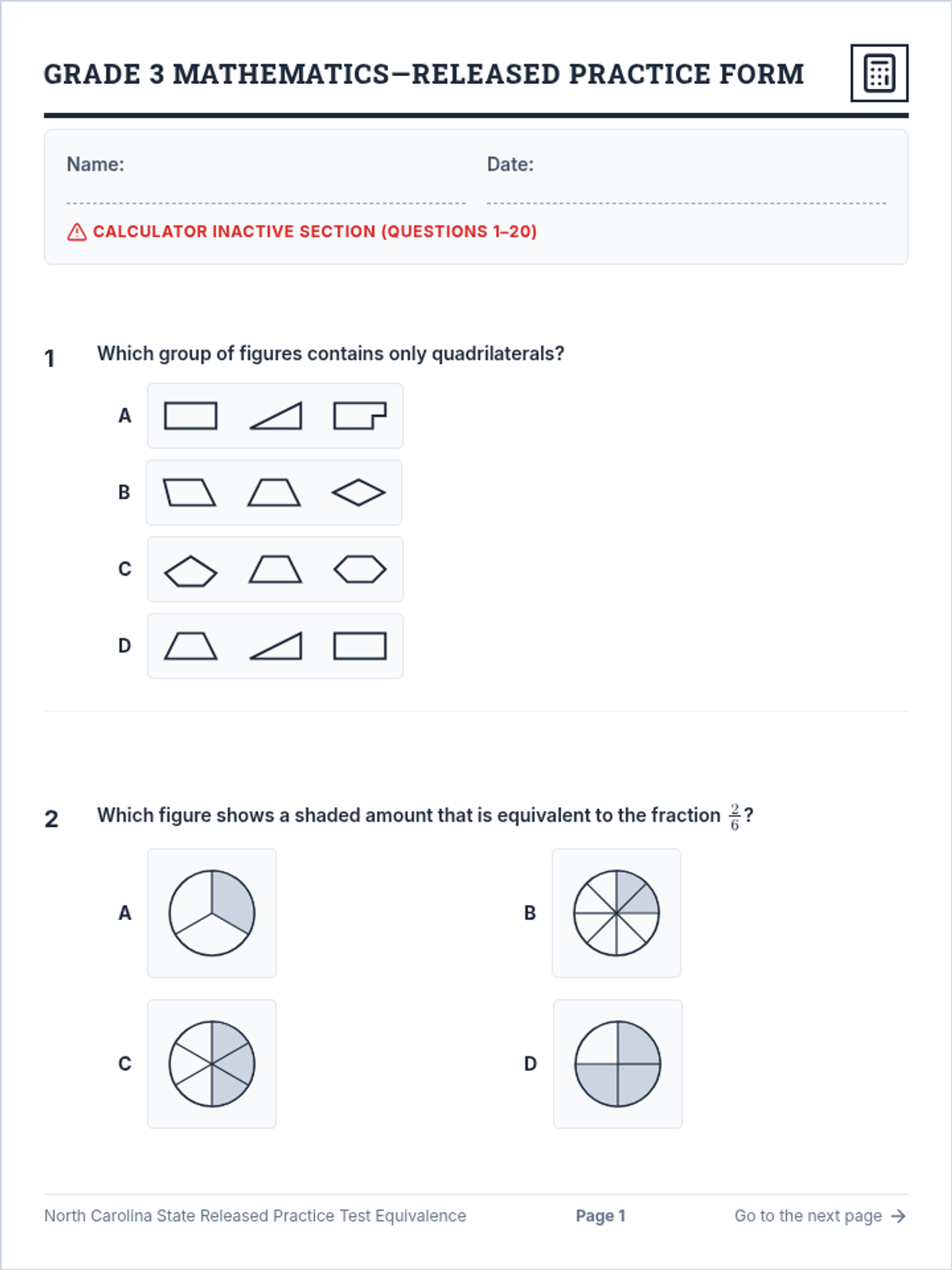
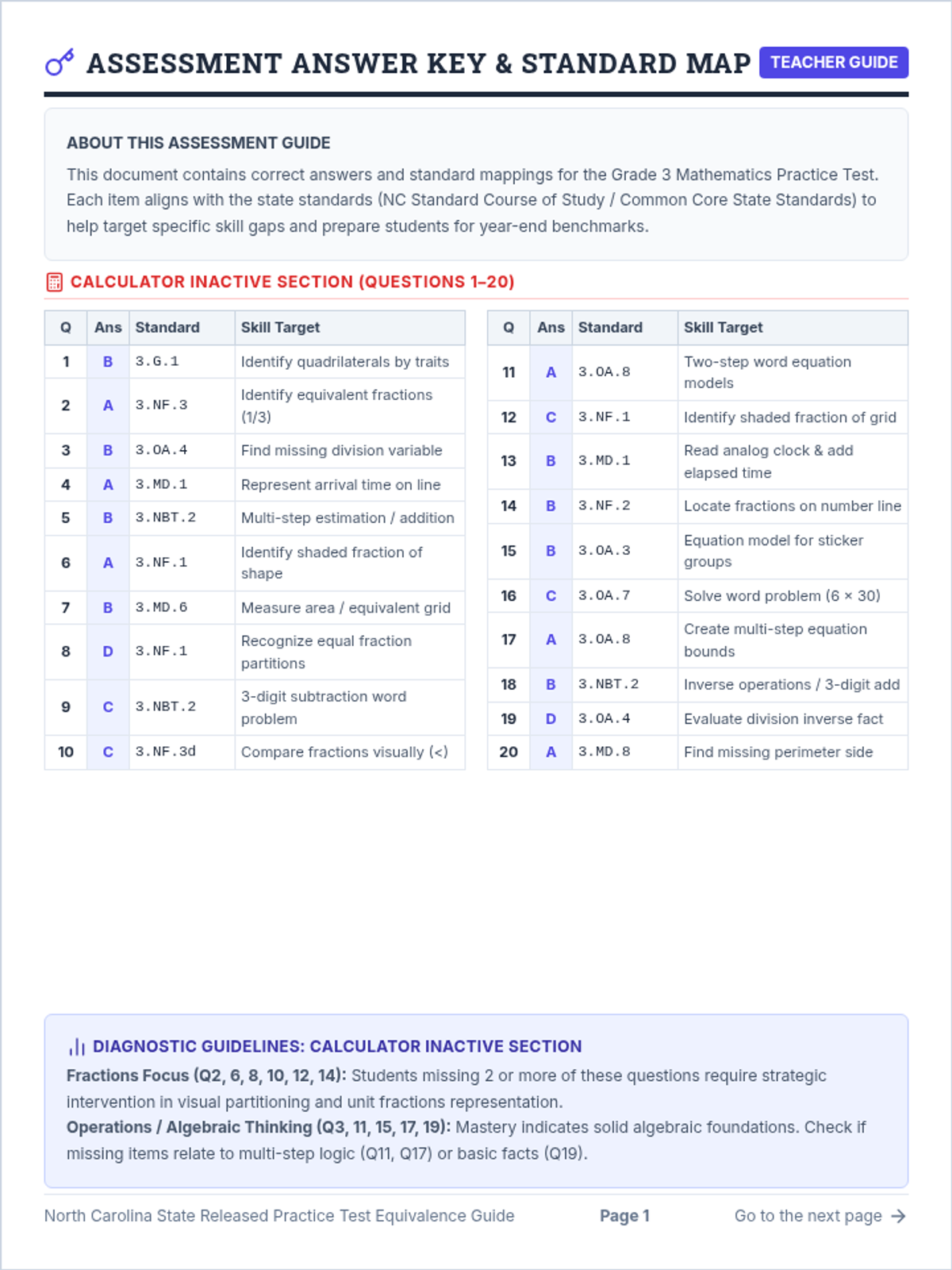
A comprehensive 3rd-grade mathematics practice exam modeled after the released state test, complete with exactly 40 standard-aligned questions divided into calculator-inactive and calculator-active sections, and an accompanying answer key and standards map.
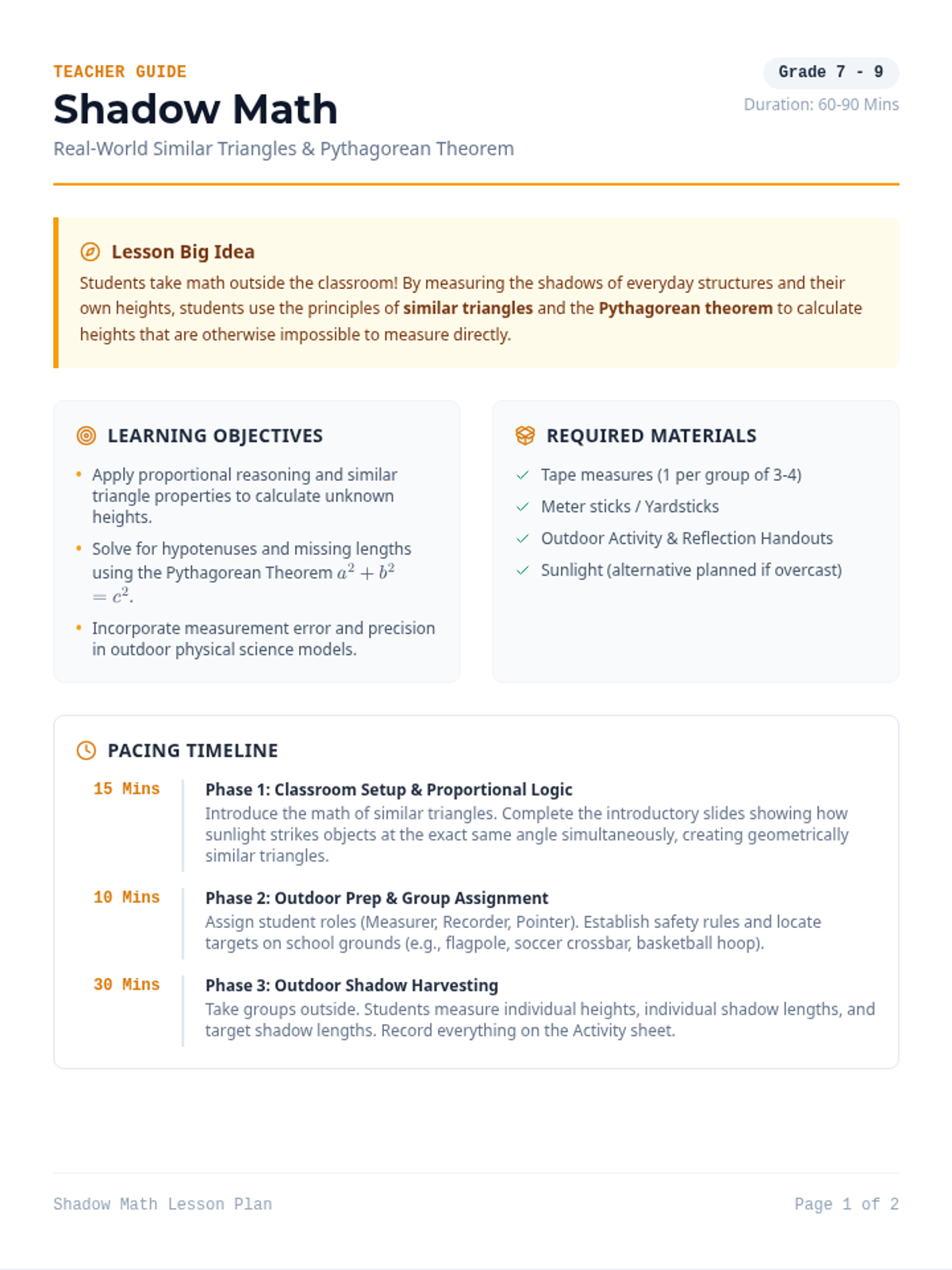
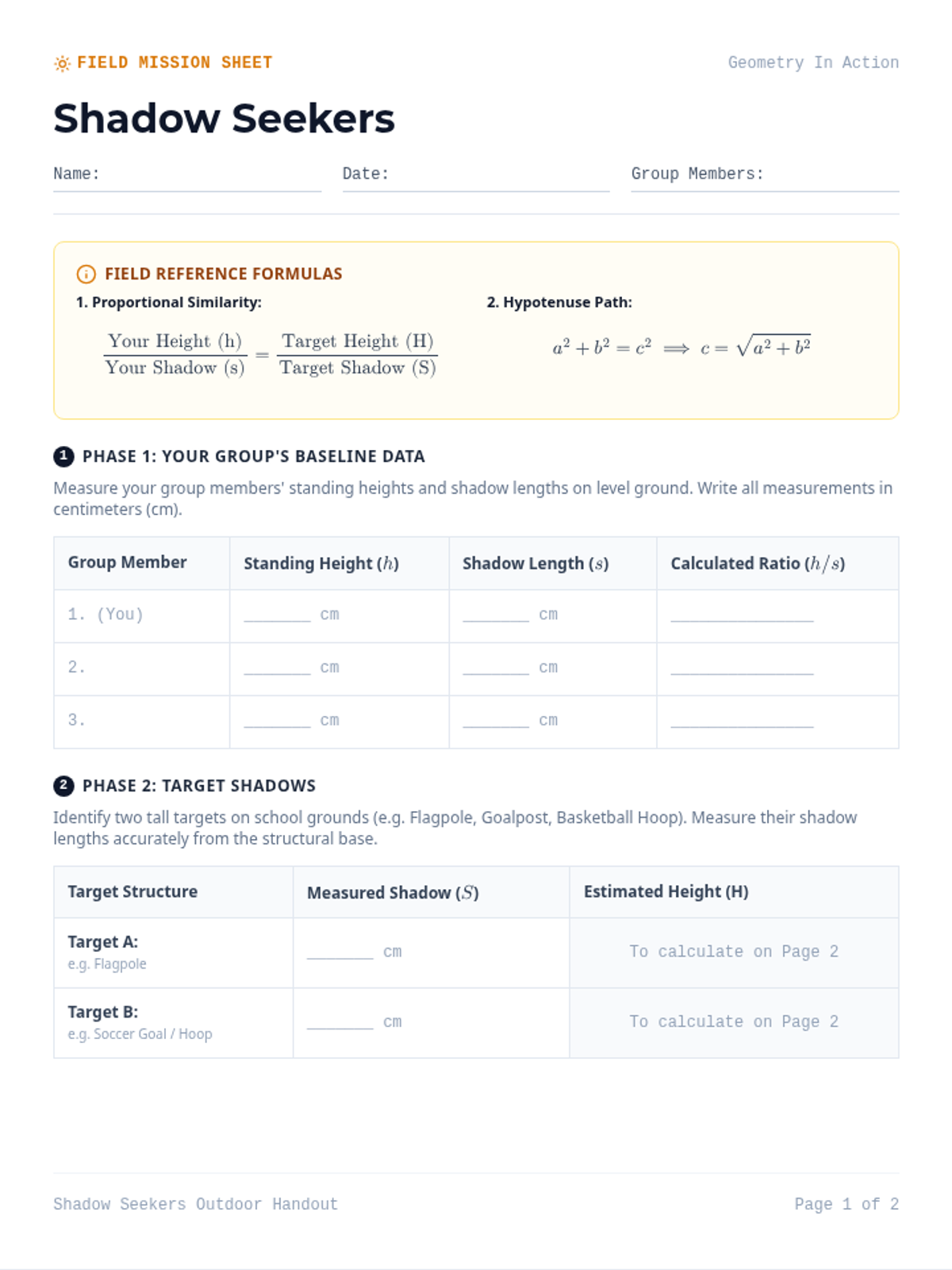
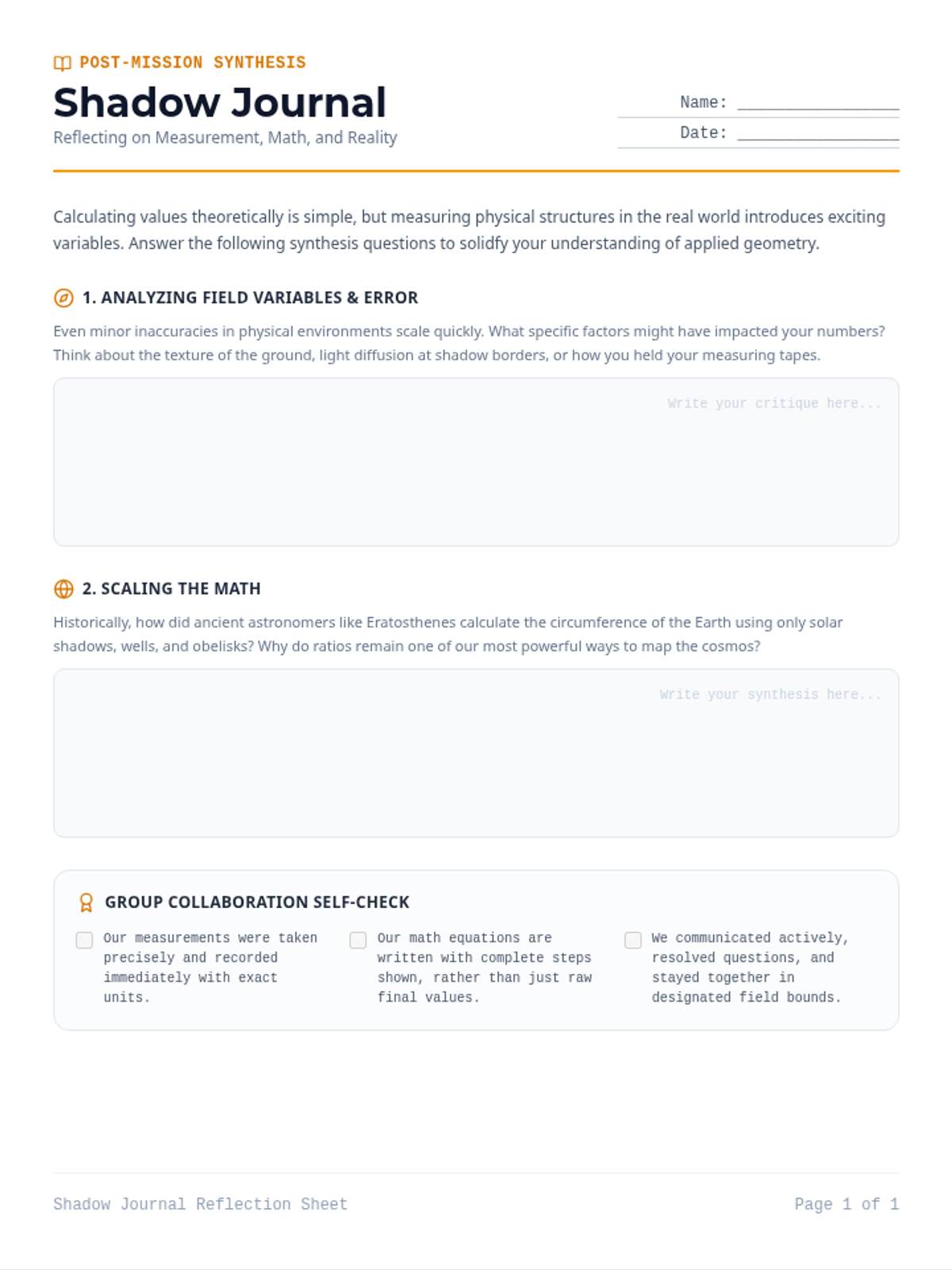
A hands-on geometry lesson where students head outdoors to measure shadows and use the Pythagorean theorem and geometric ratios to calculate the height of school structures. Includes a lesson plan, slide deck, outdoor activity guide, and reflection journal.
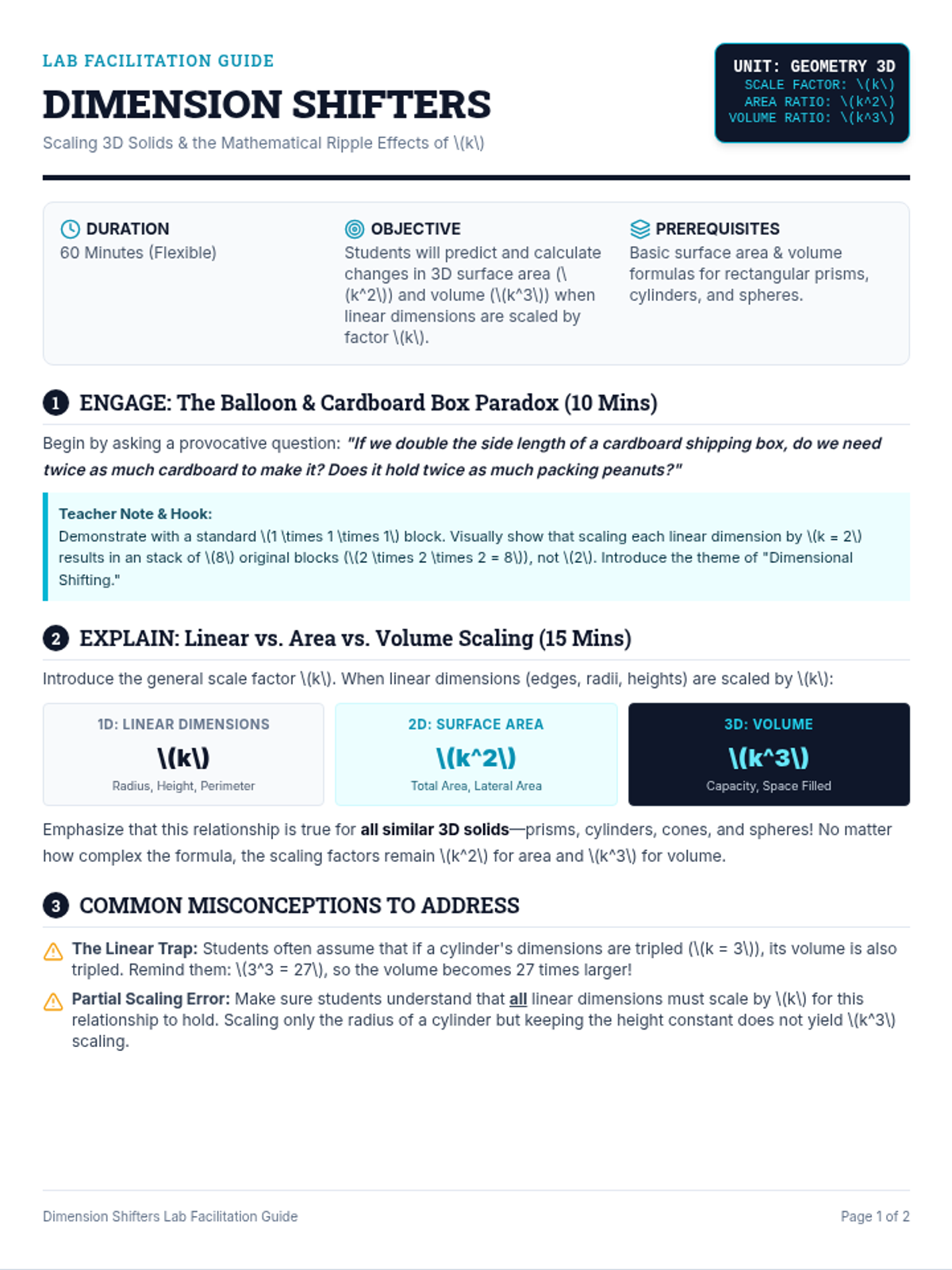
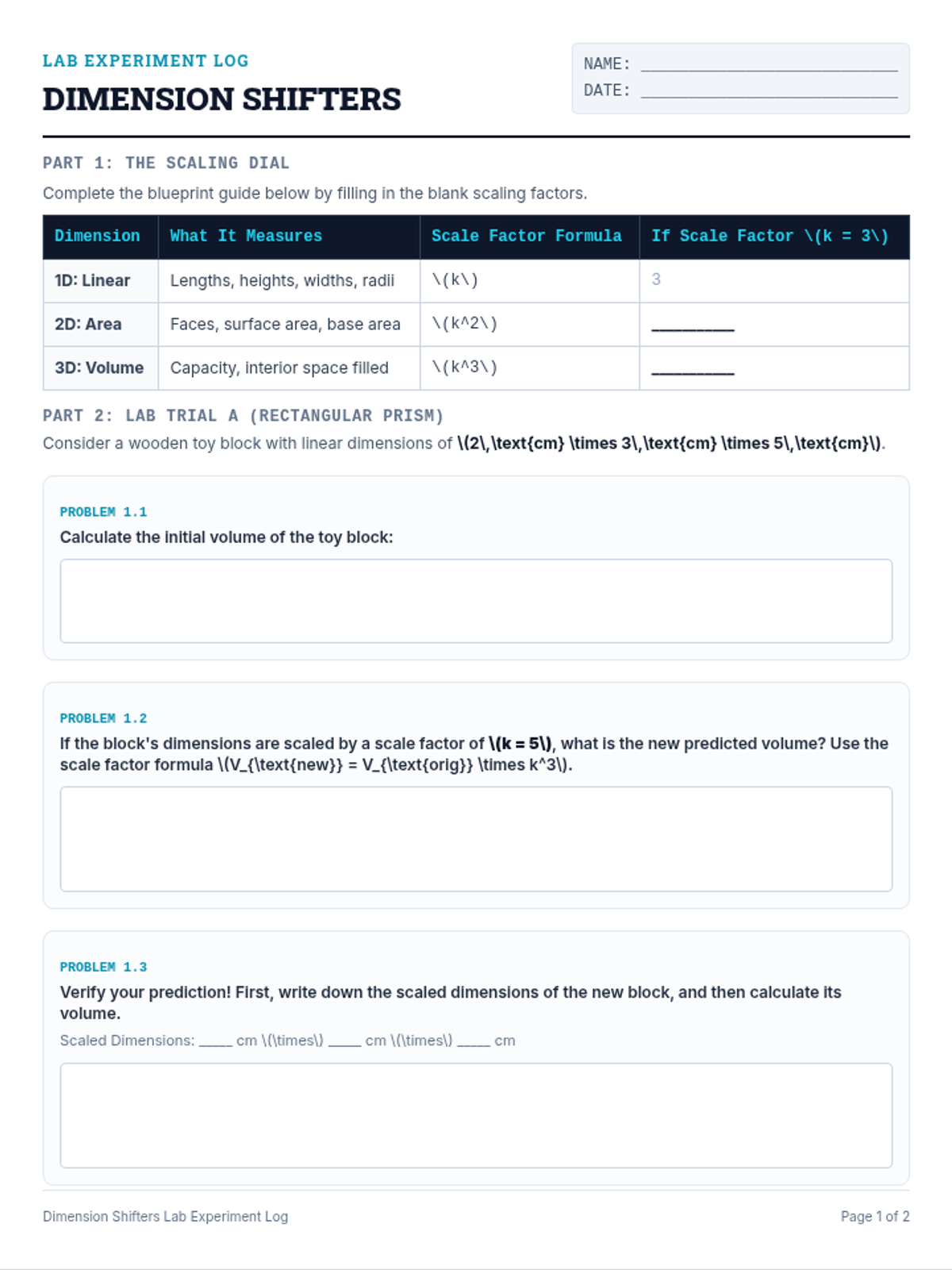
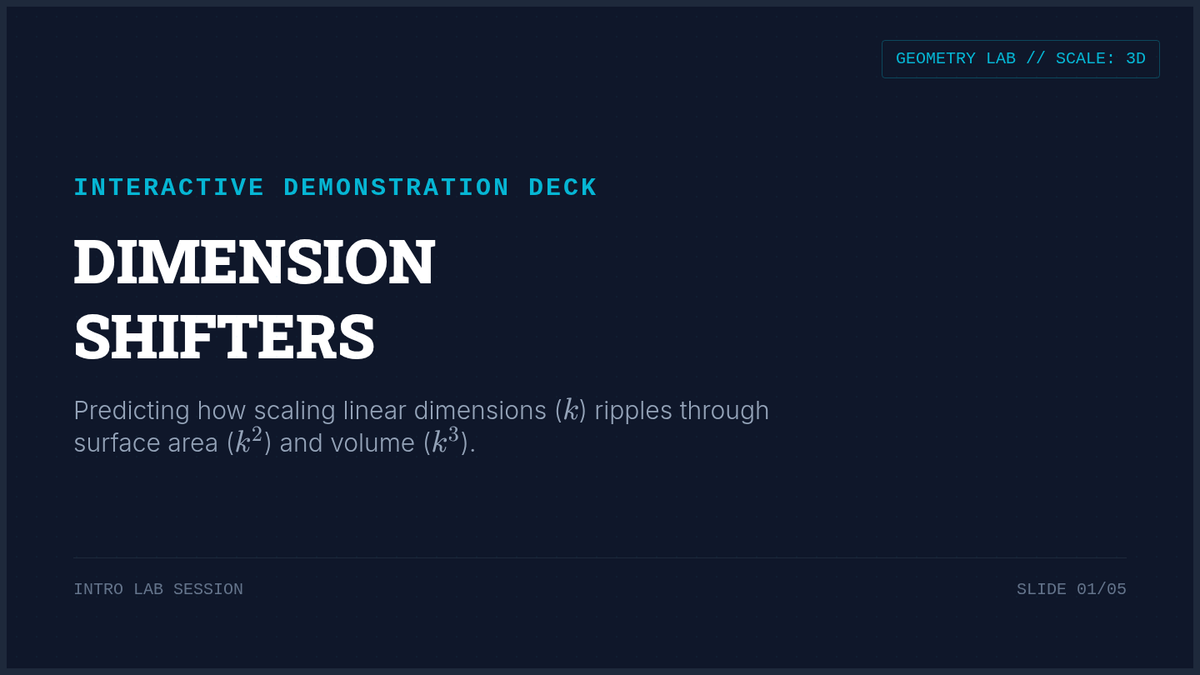
A hands-on geometry lesson exploring how scaling the linear dimensions of 3D solids by a scale factor k impacts their total surface area (by k²) and volume (by k³). Features interactive model-scaling examples, a vocabulary challenge, and guided practice.
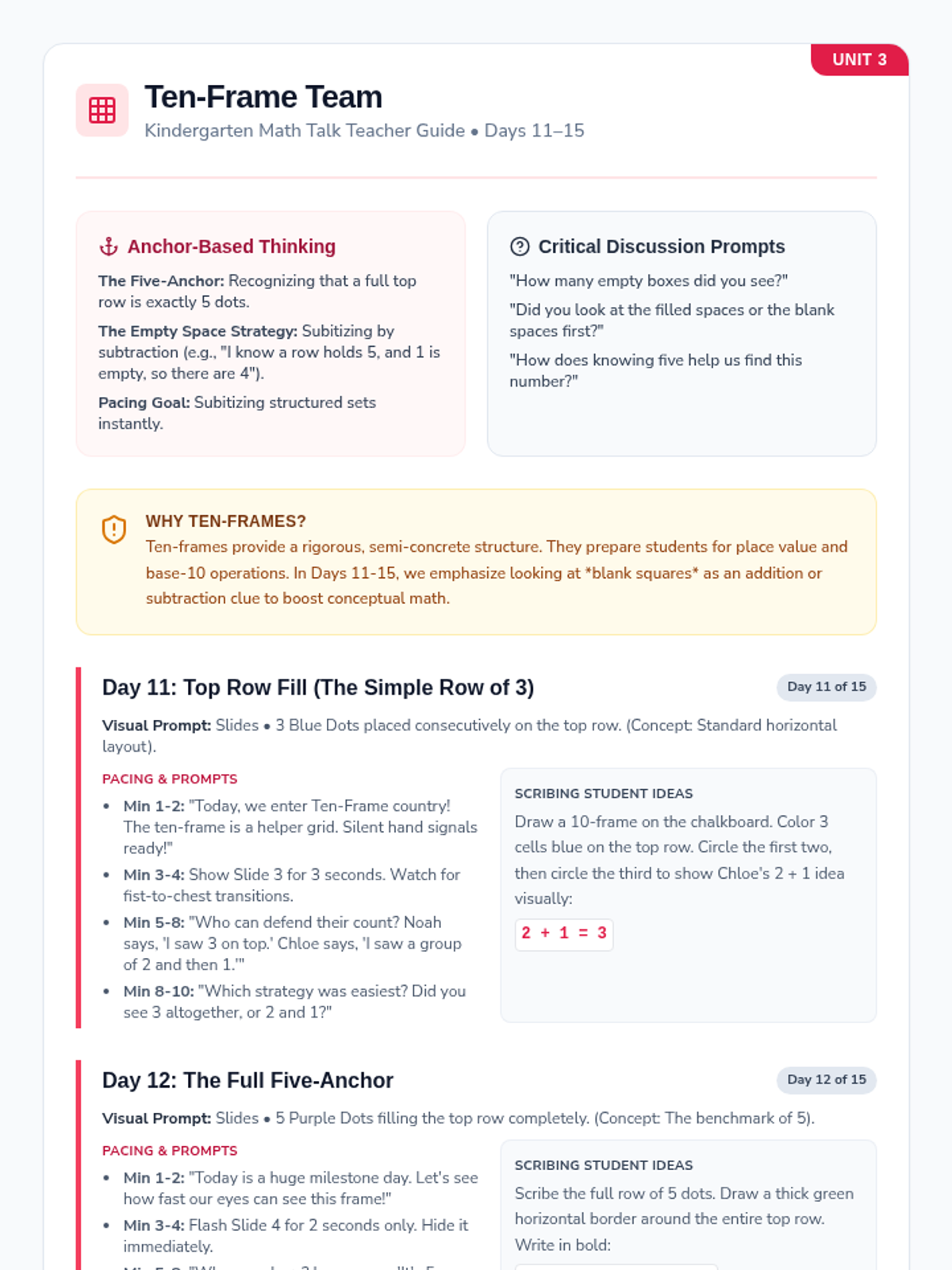
Explores subitizing numbers 1-5 within a ten-frame structure, helping students visualize numbers relative to five- and ten-anchors over Days 11-15.
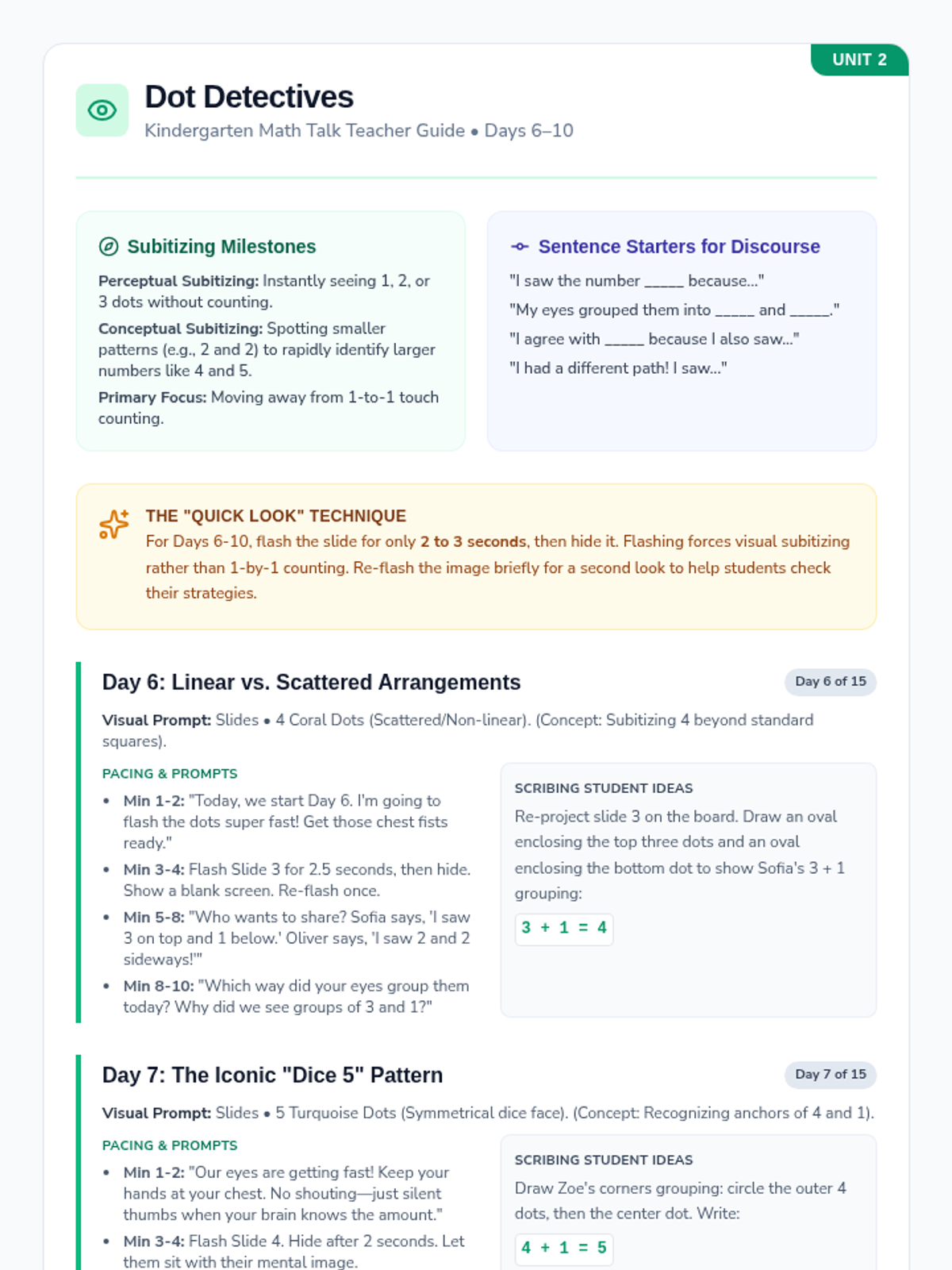
Develops rapid subitizing and spatial awareness for numbers 1 to 5 using varied dot configurations (dice, linear, and scattered) over Days 6-10.
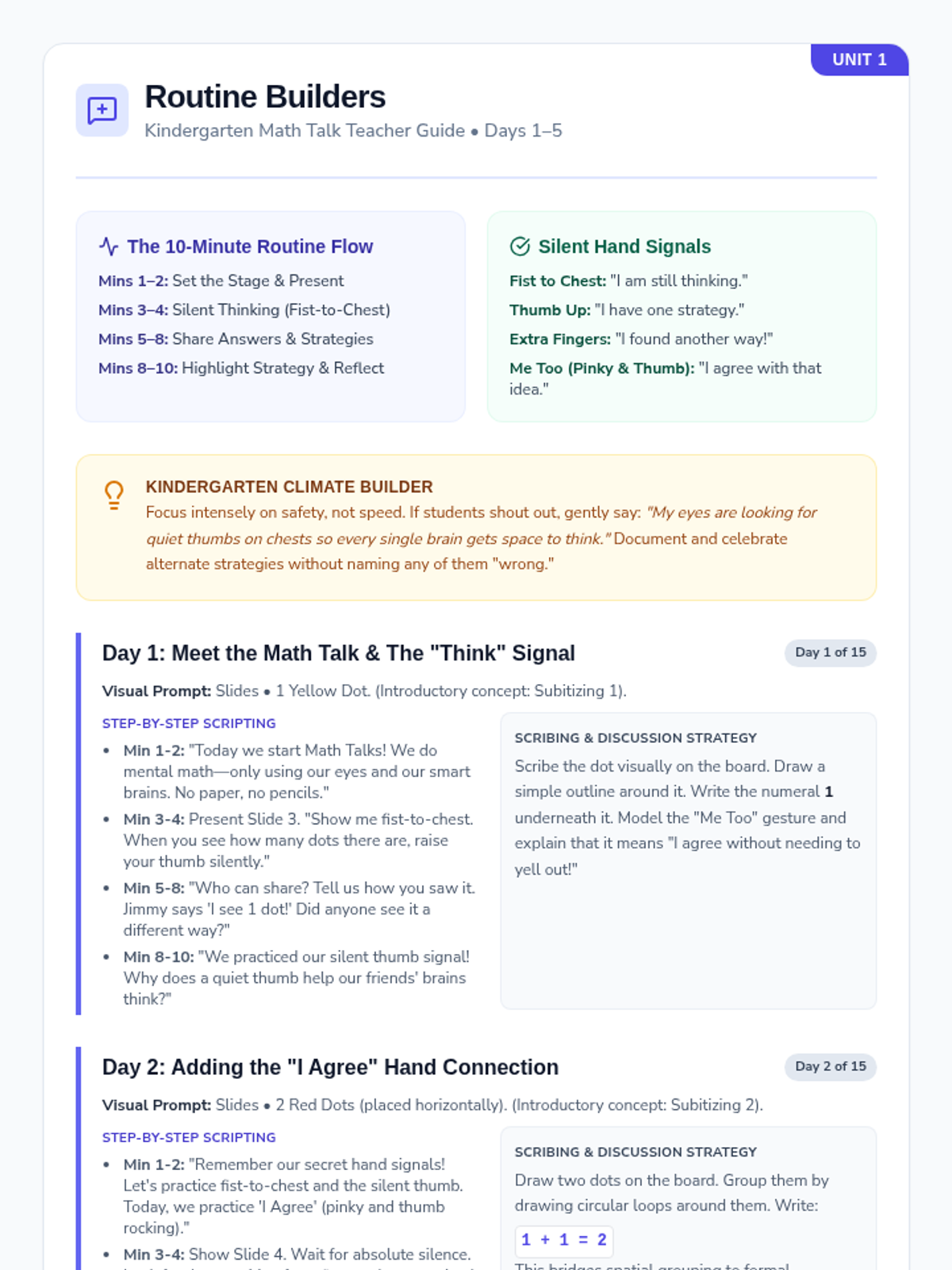
Introduces the foundational mental math protocols, silent hand signals, and first simple visual count talks (dots/fingers) over Days 1-5 to build classroom safety.
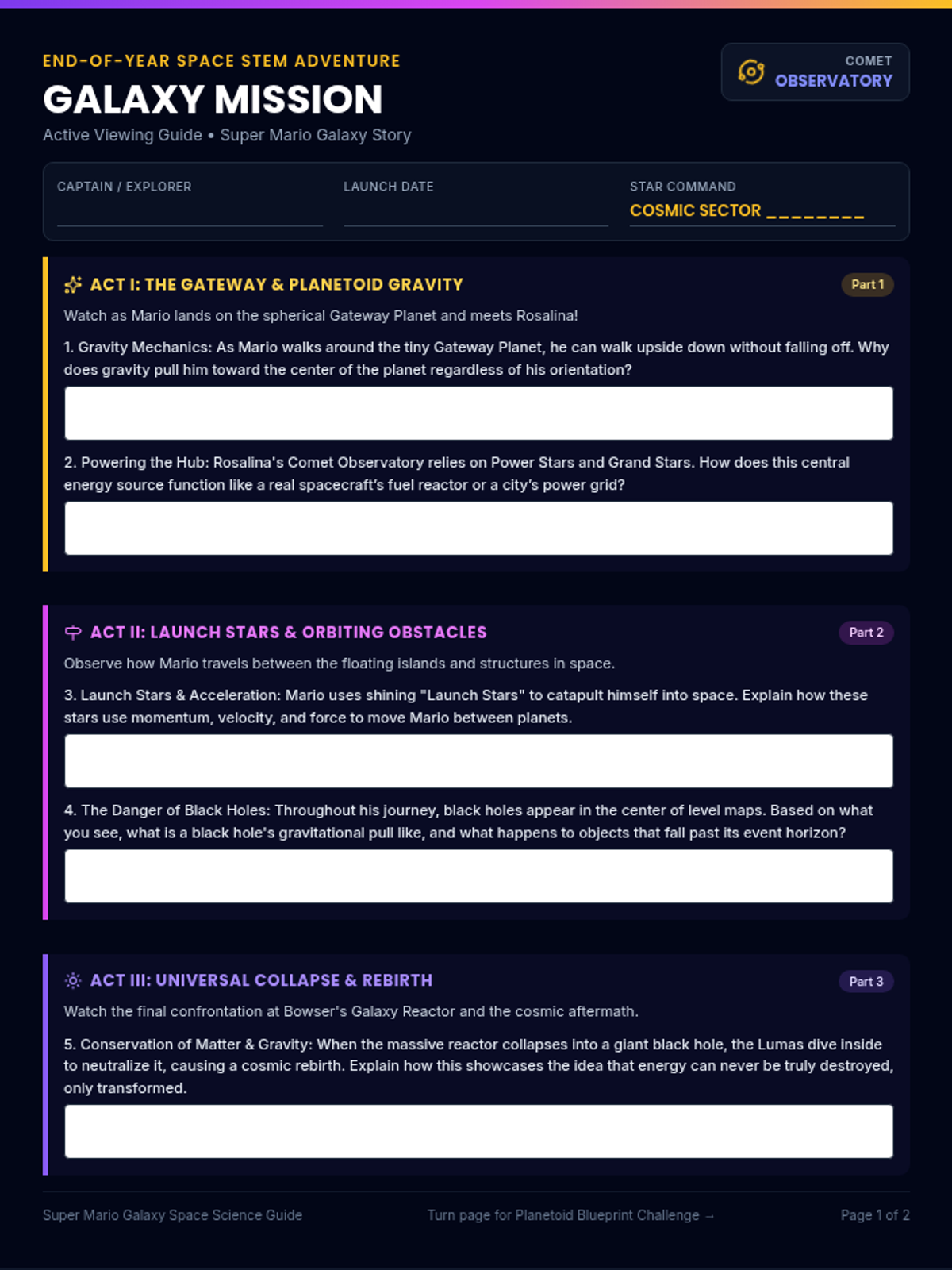
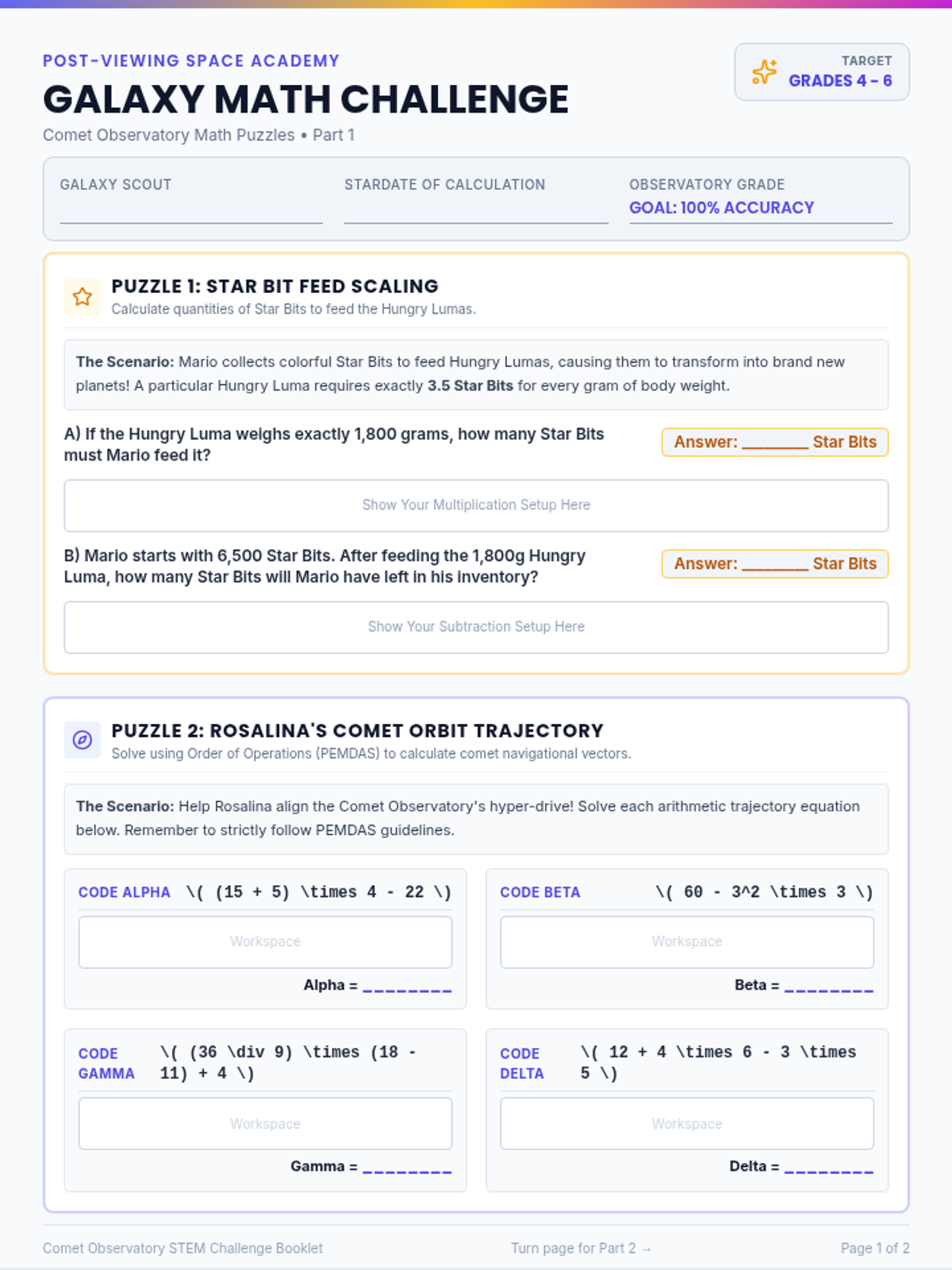
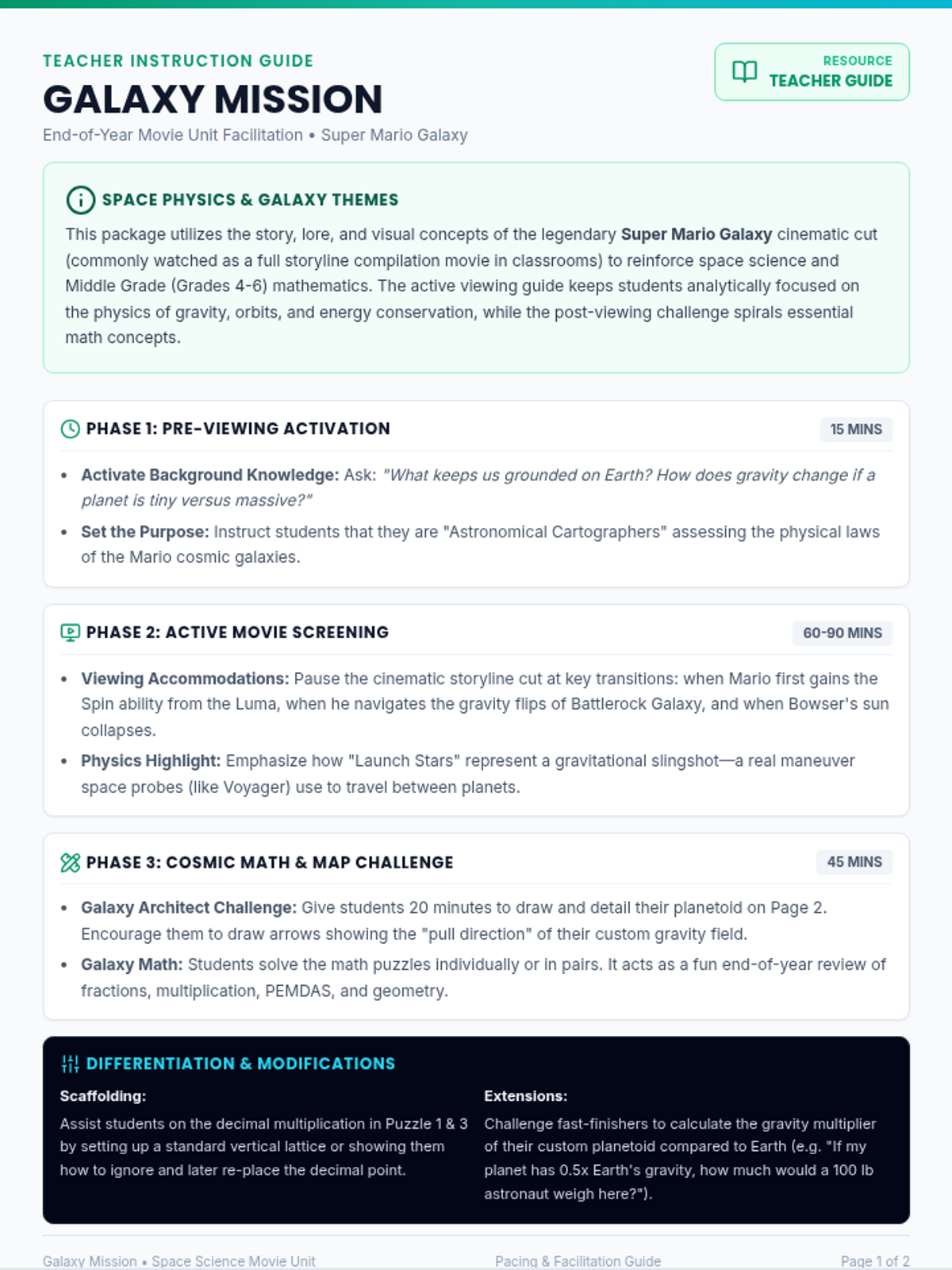
An end-of-year educational movie unit and math workbook based on the story of Super Mario Galaxy. Students explore gravity, orbits, and space physics through active viewing, followed by high-energy space-themed math puzzles.