A diagnostic mini-assessment covering North Carolina Grade 3 standards for Geometry (NC.3.G) and Measurement and Data (NC.3.MD). Students will identify shape attributes, calculate area and perimeter, and solve measurement word problems.
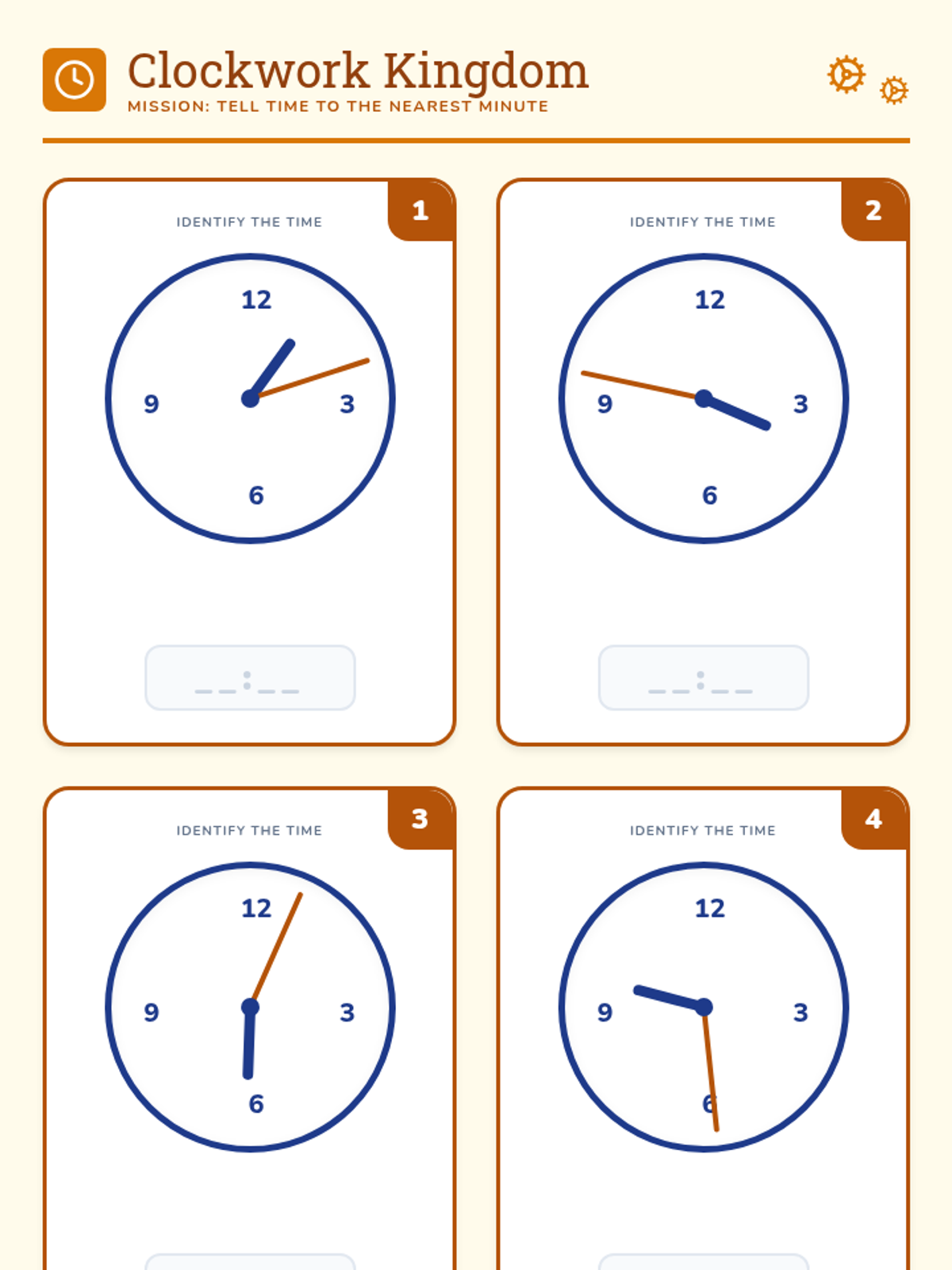
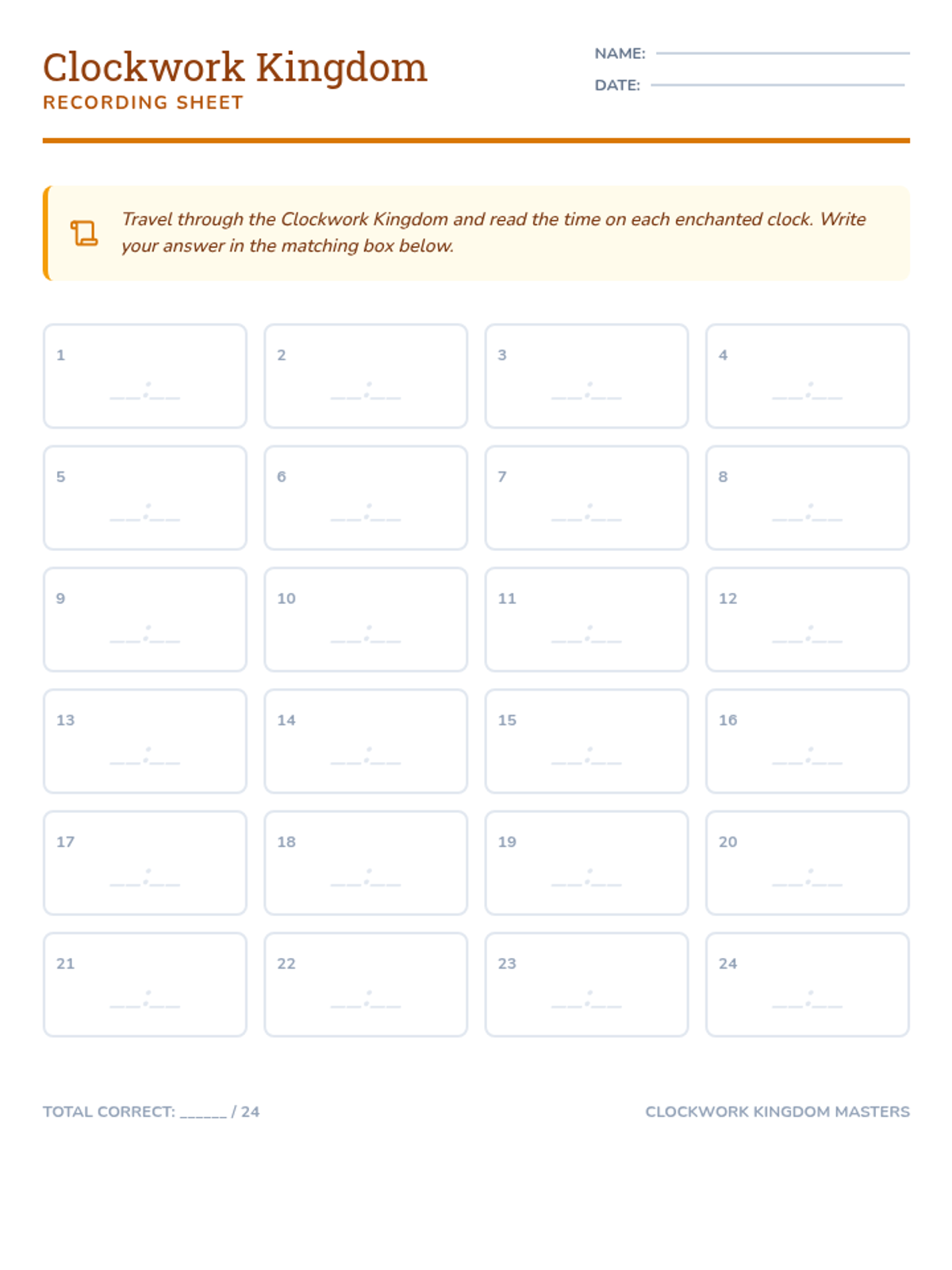
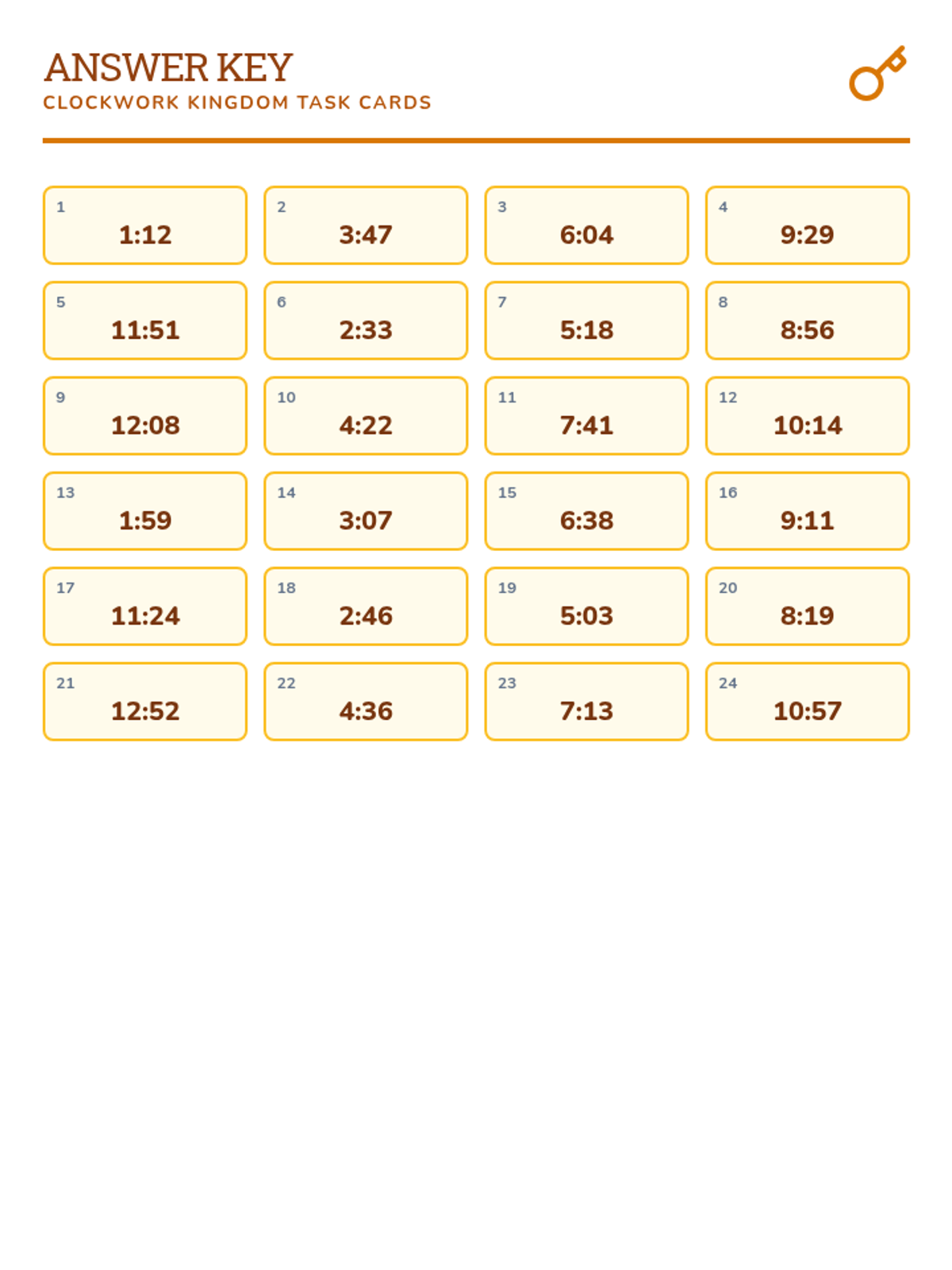
A set of resources for third graders to master telling time to the nearest minute using analog clocks, featuring a whimsical Clockwork Kingdom theme.
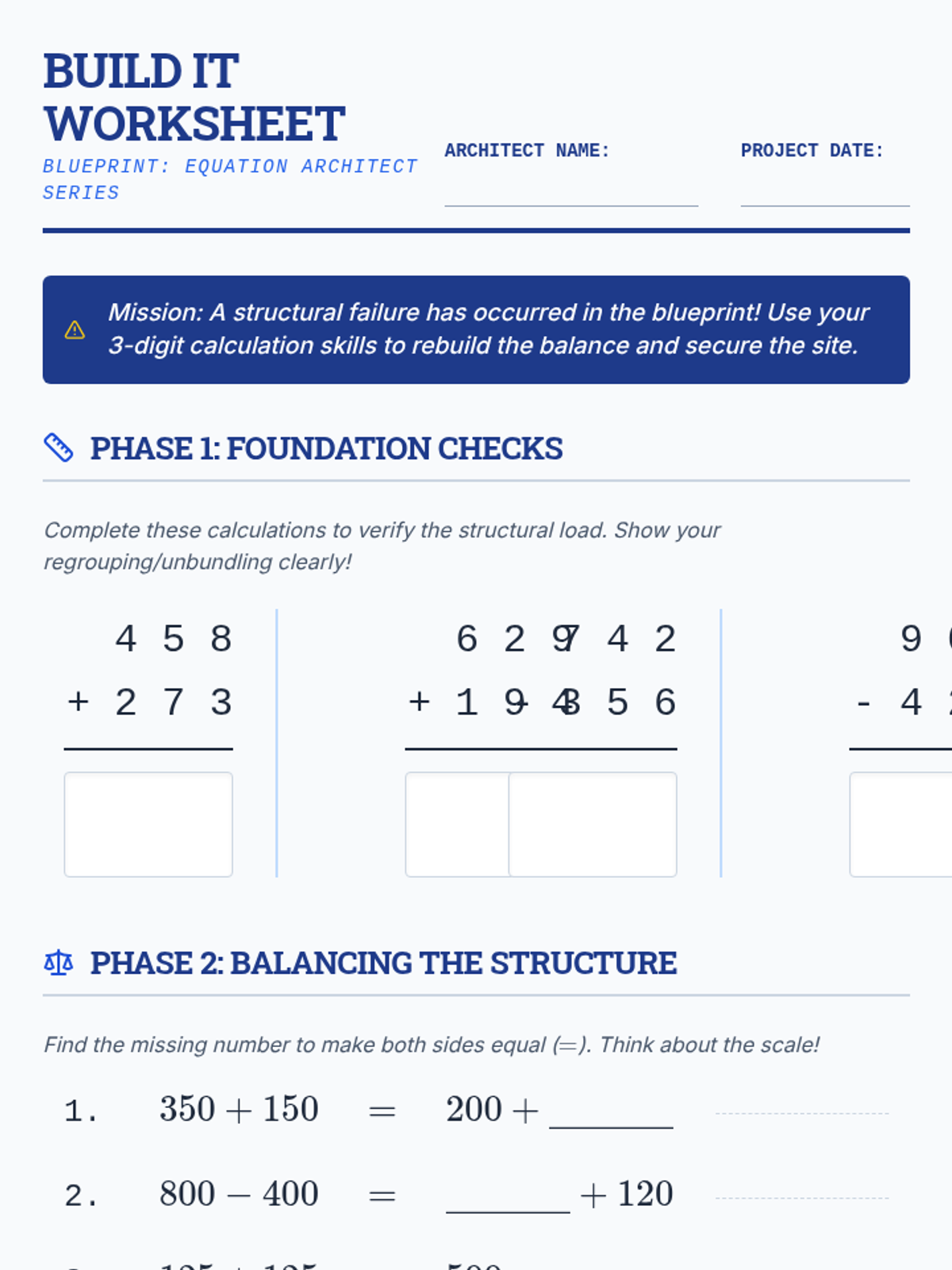
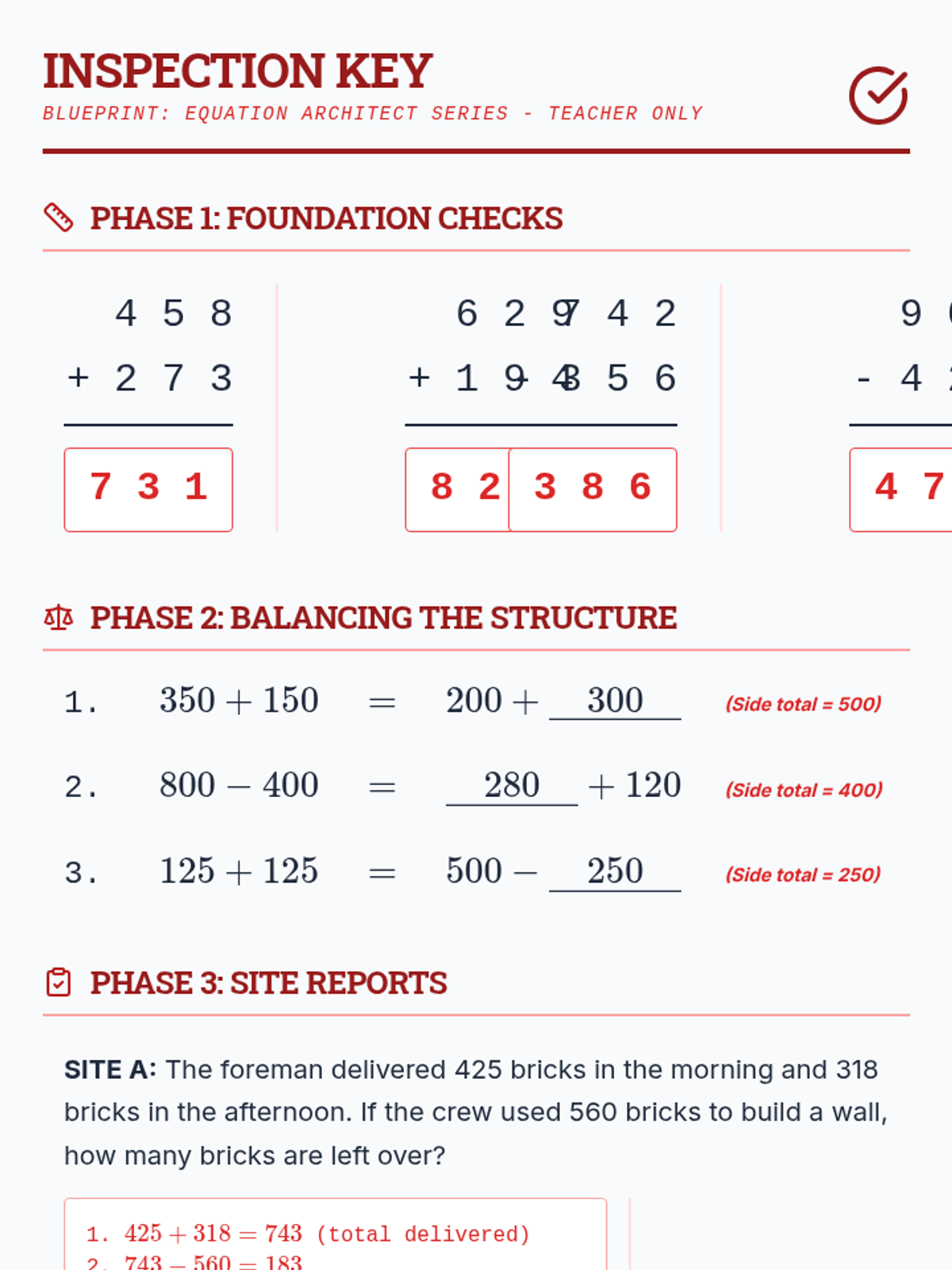
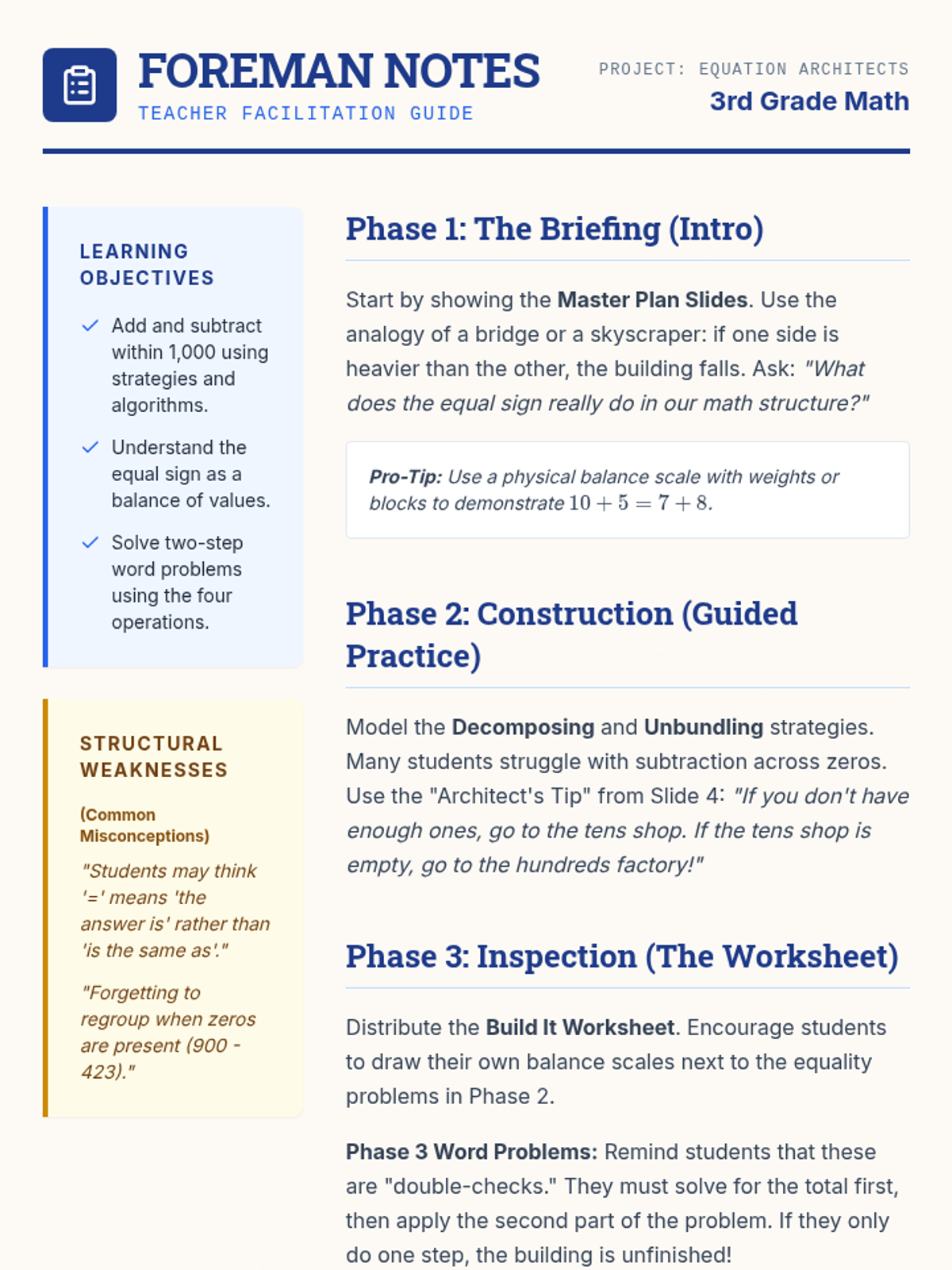
In this lesson, students will master 3-digit addition and subtraction while exploring the concept of equality as a balance. They will use 'blueprint' strategies to decompose numbers and solve two-step word problems within 1,000.
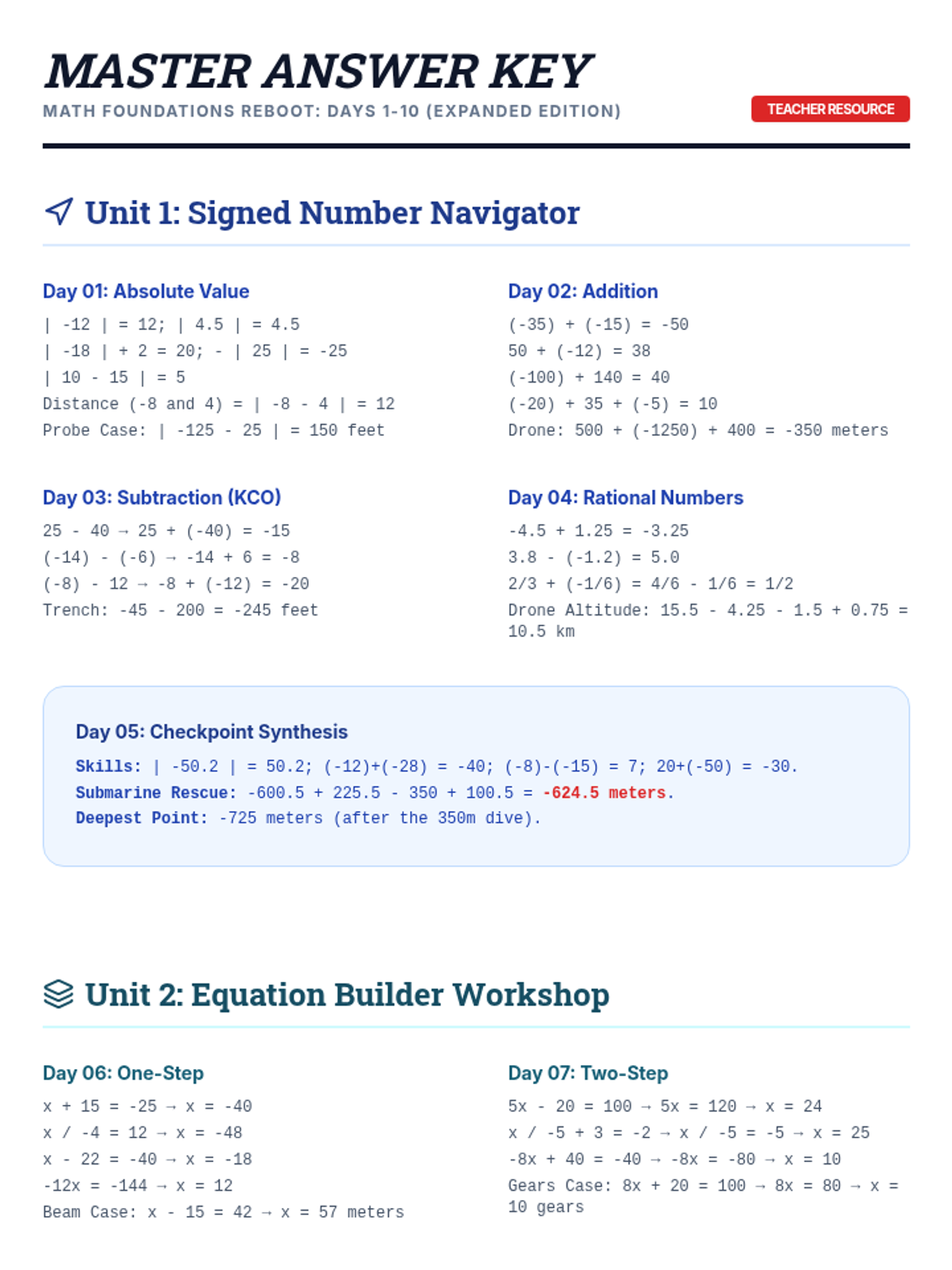
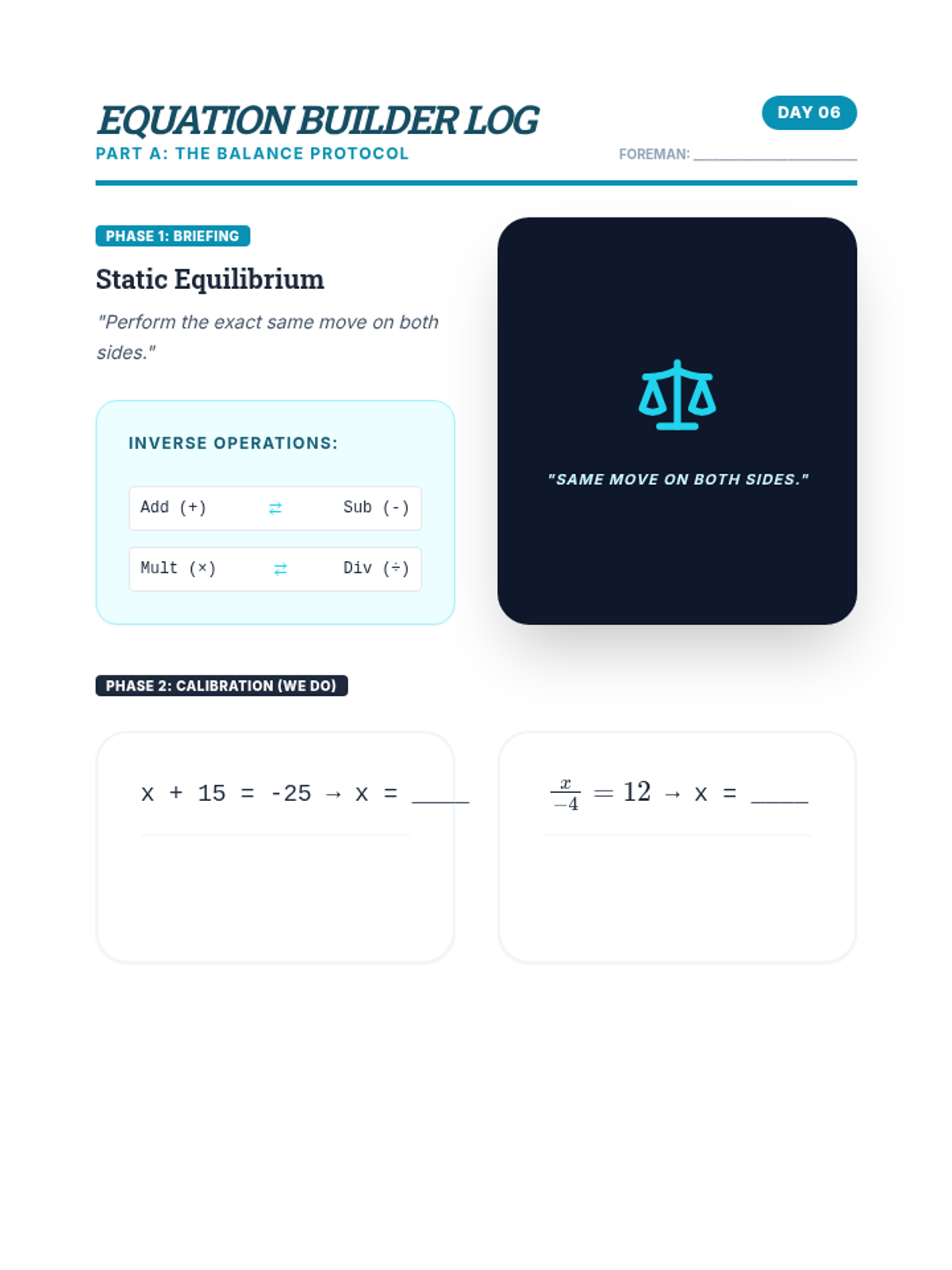
Introduces strategies for balancing and solving one-, two-, and multi-step linear equations using inverse operations.
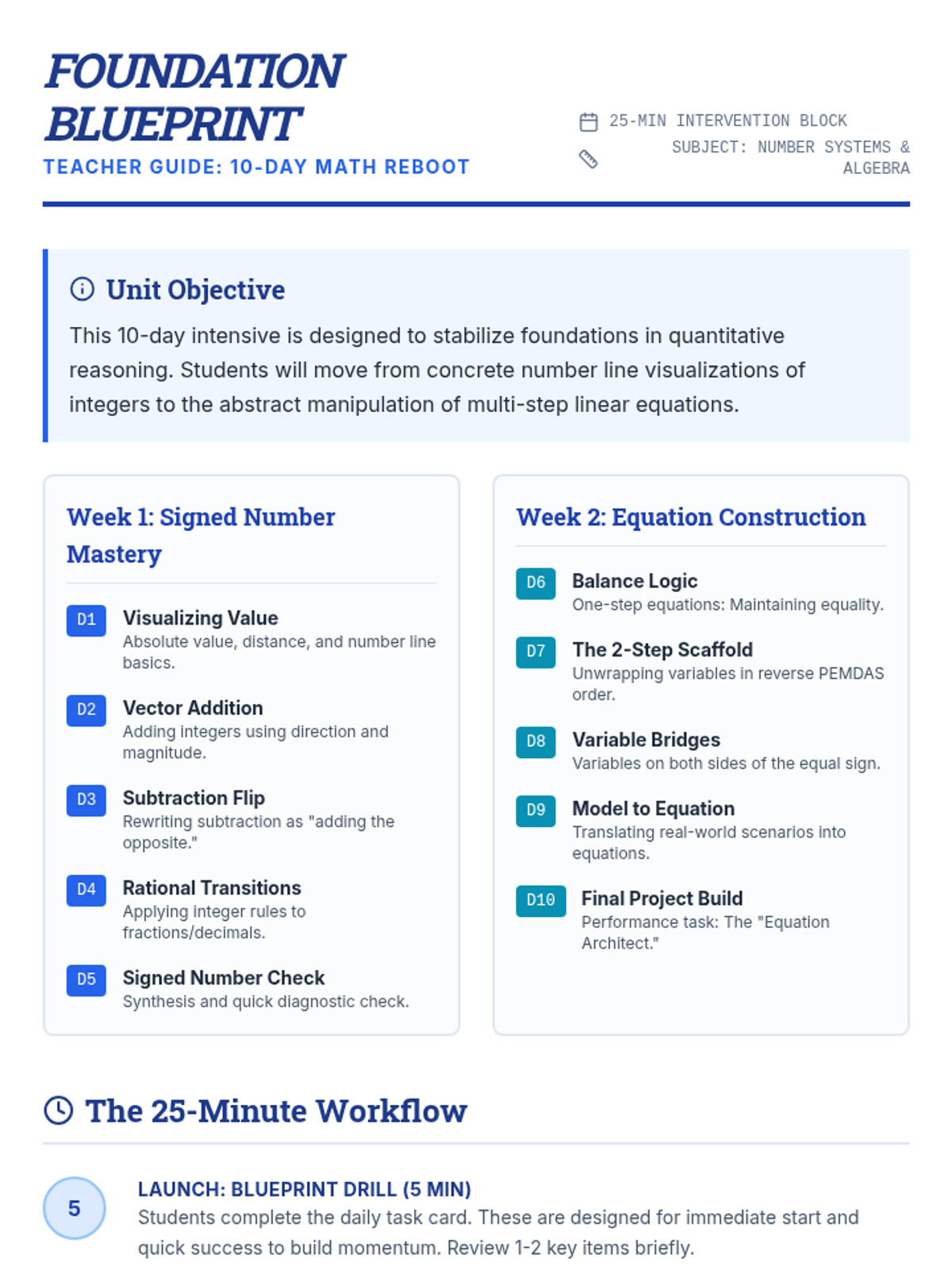
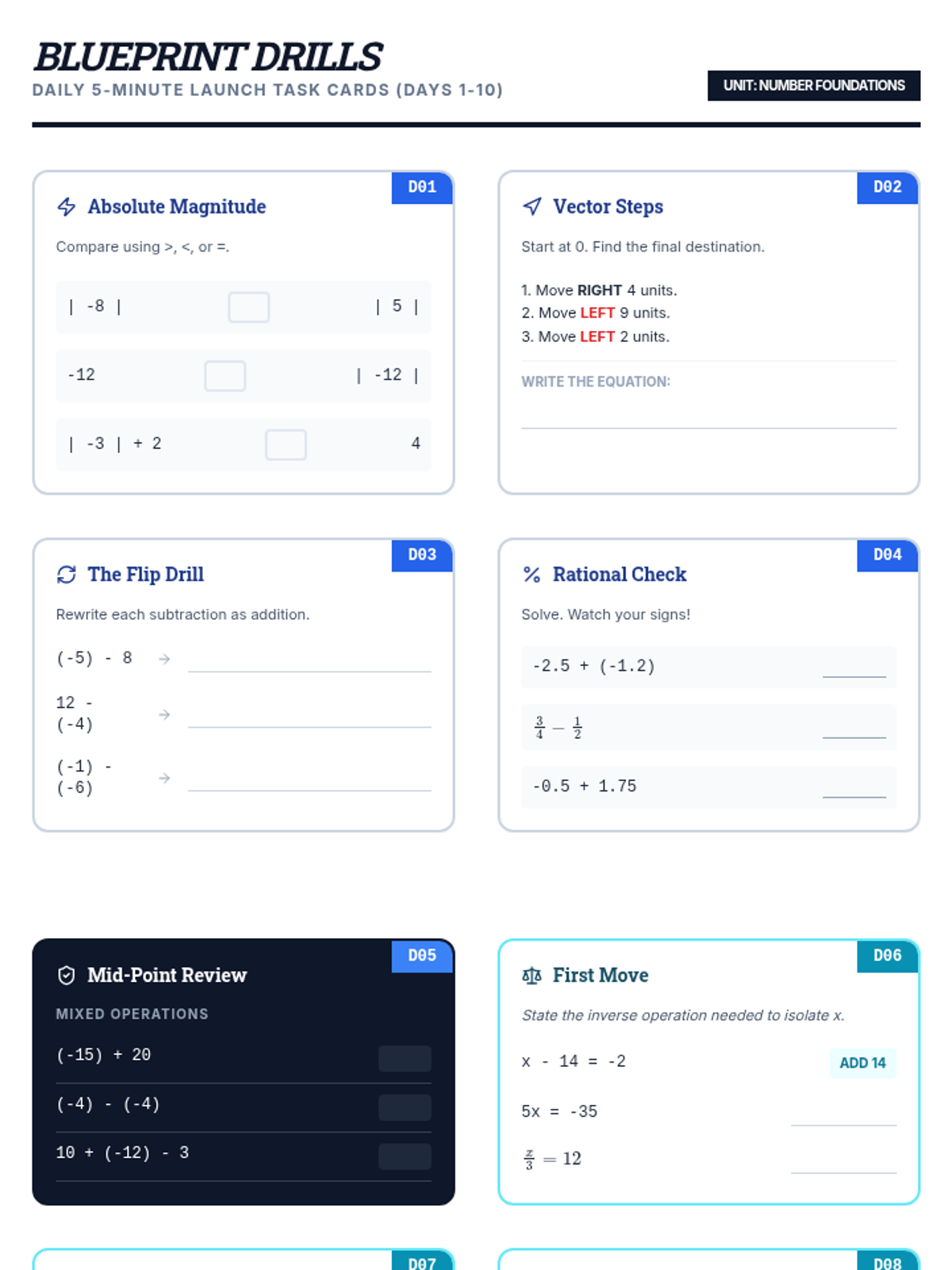
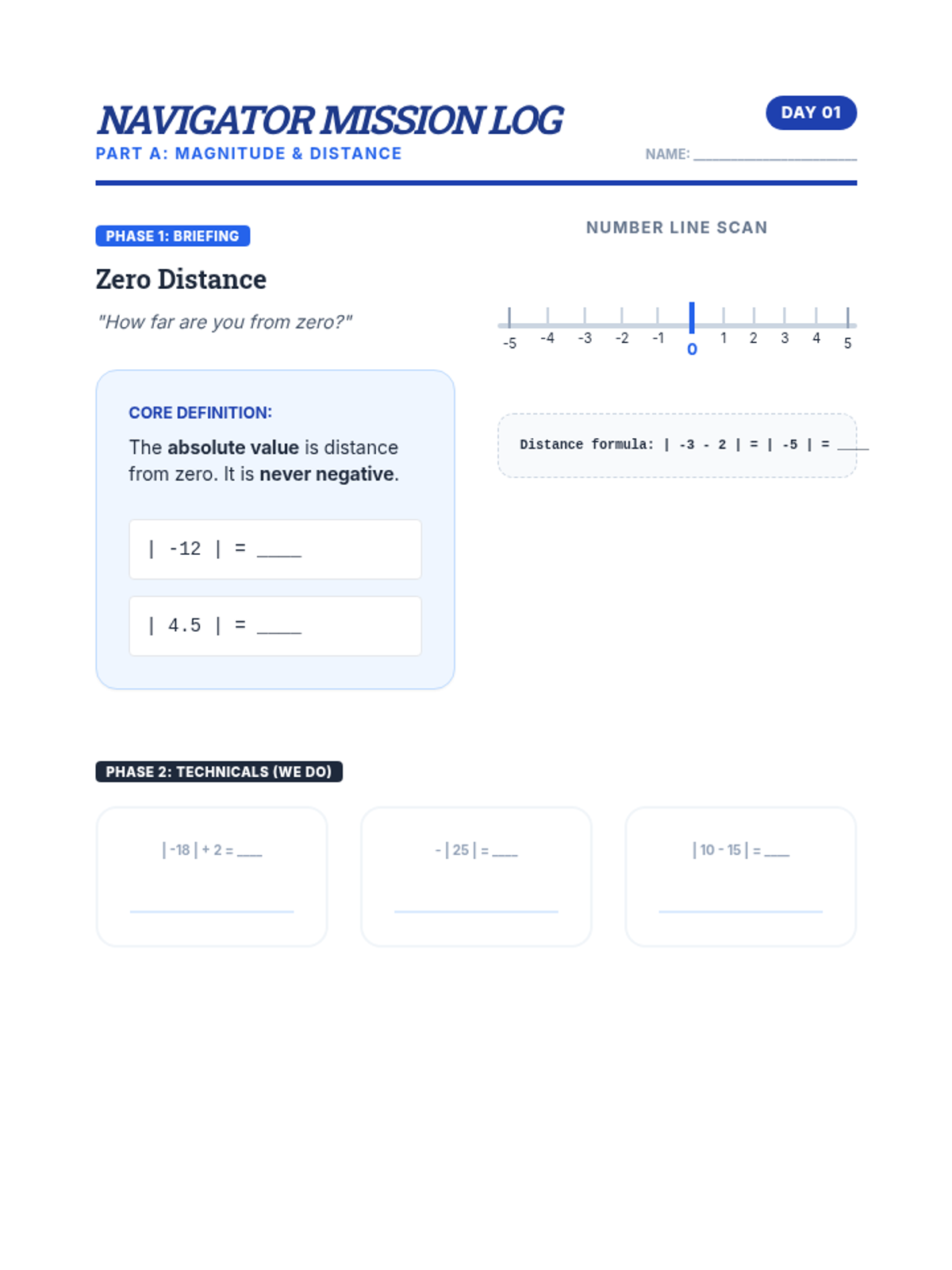
Focuses on mastery of integer operations, absolute value, and rational number properties through visual number line navigation.
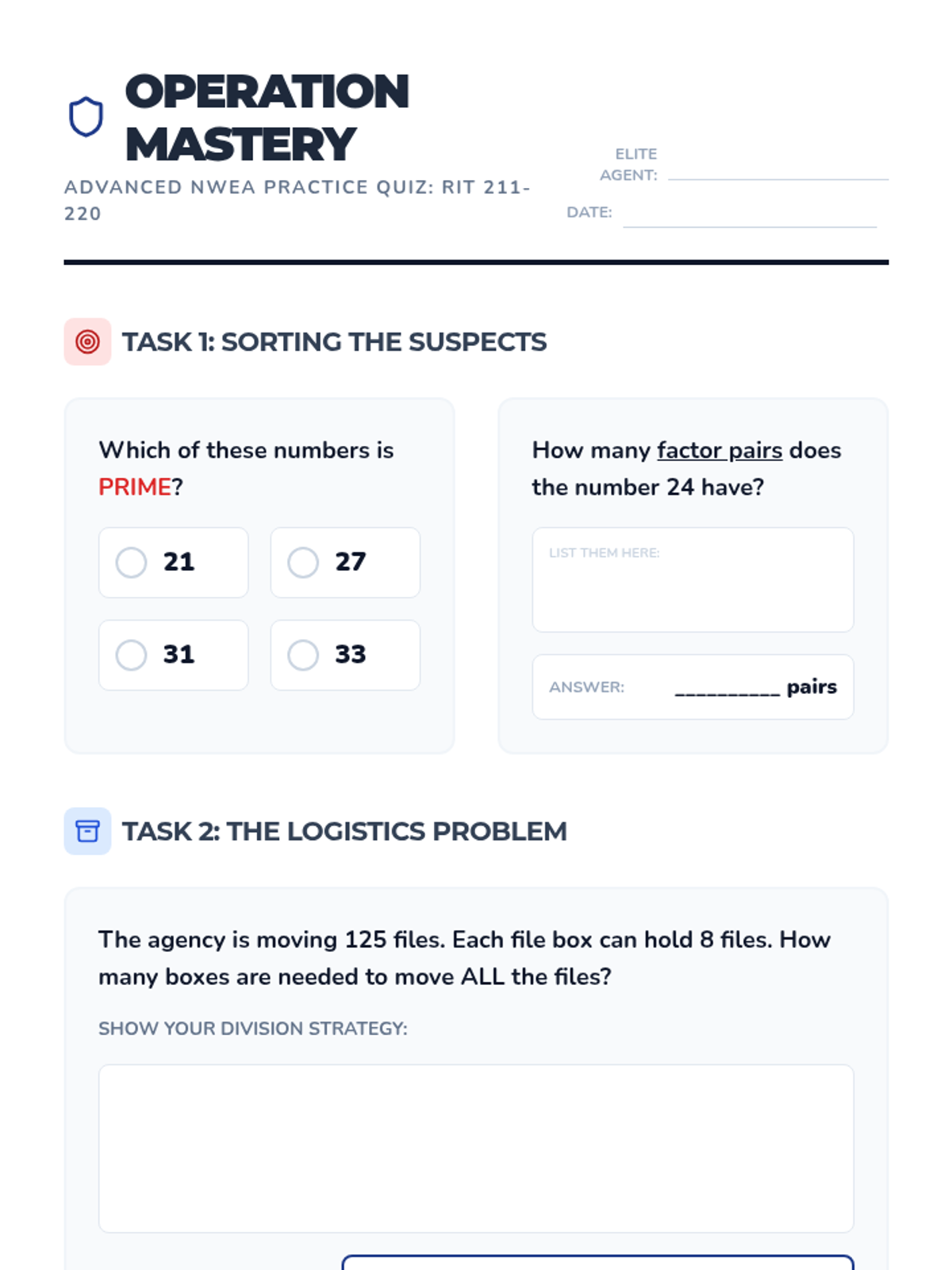
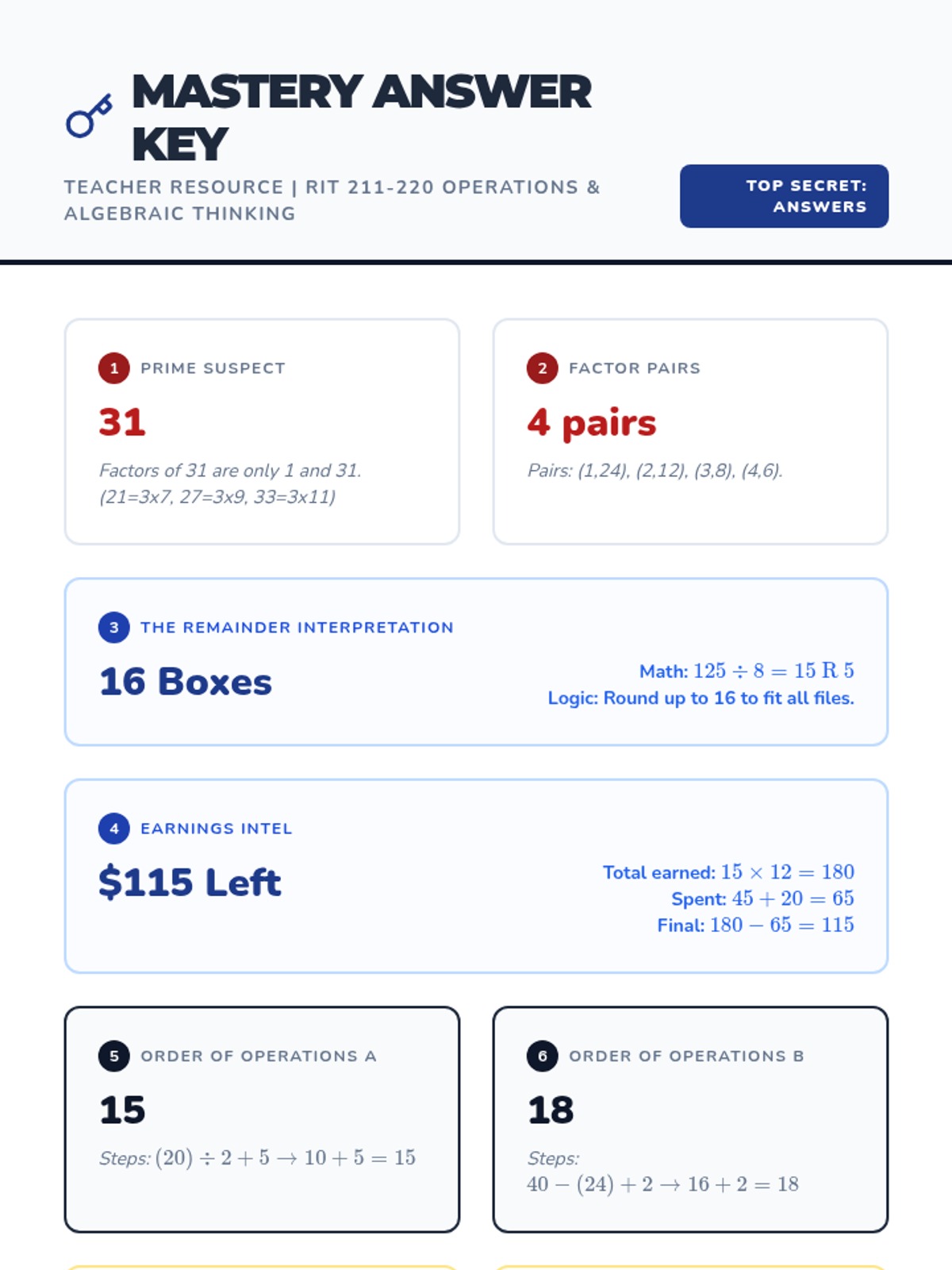
Advanced operations and algebraic thinking for the RIT 211-220 range, covering factors, multiples, prime/composite numbers, and multi-step word problems with remainders.
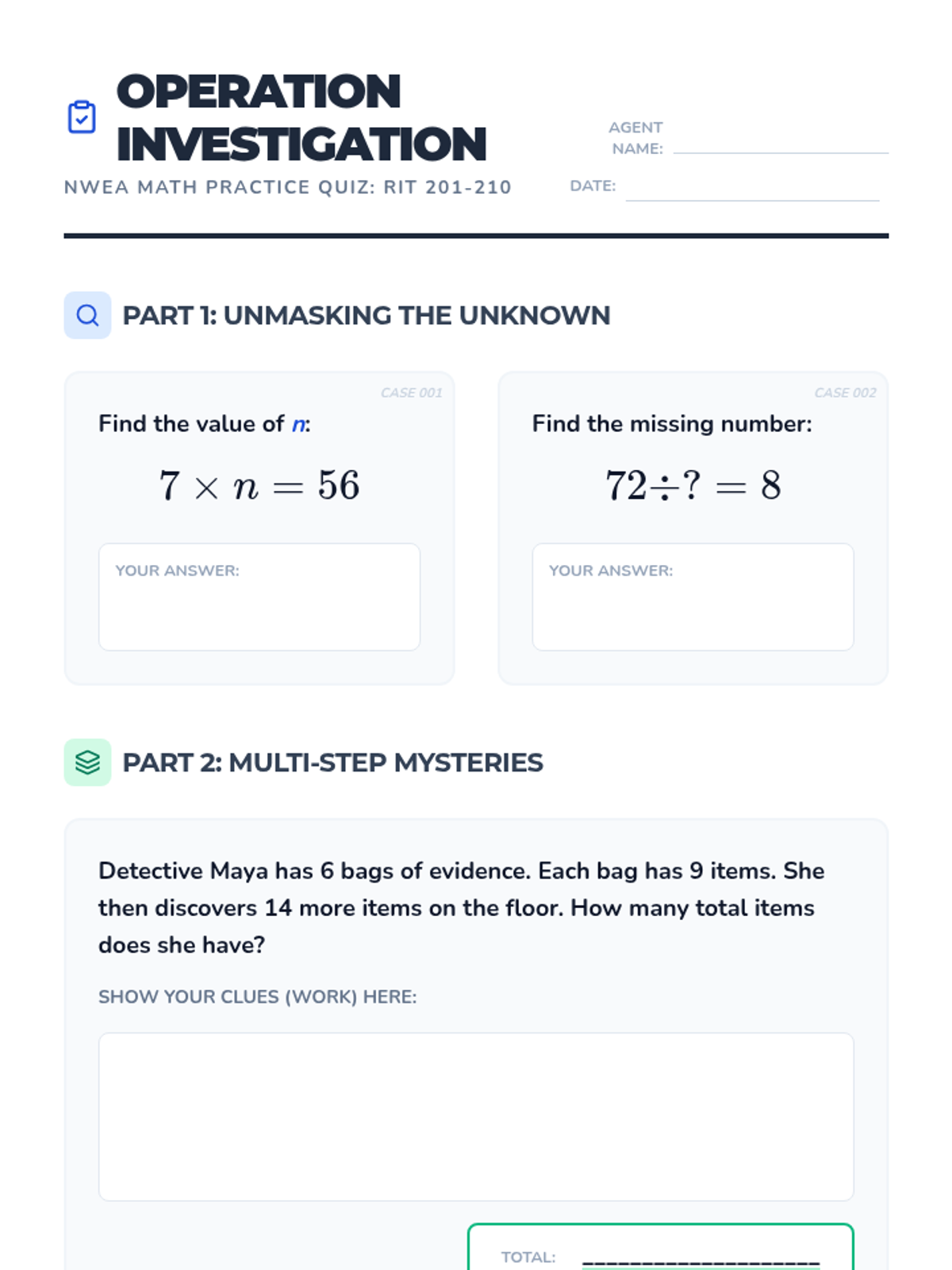
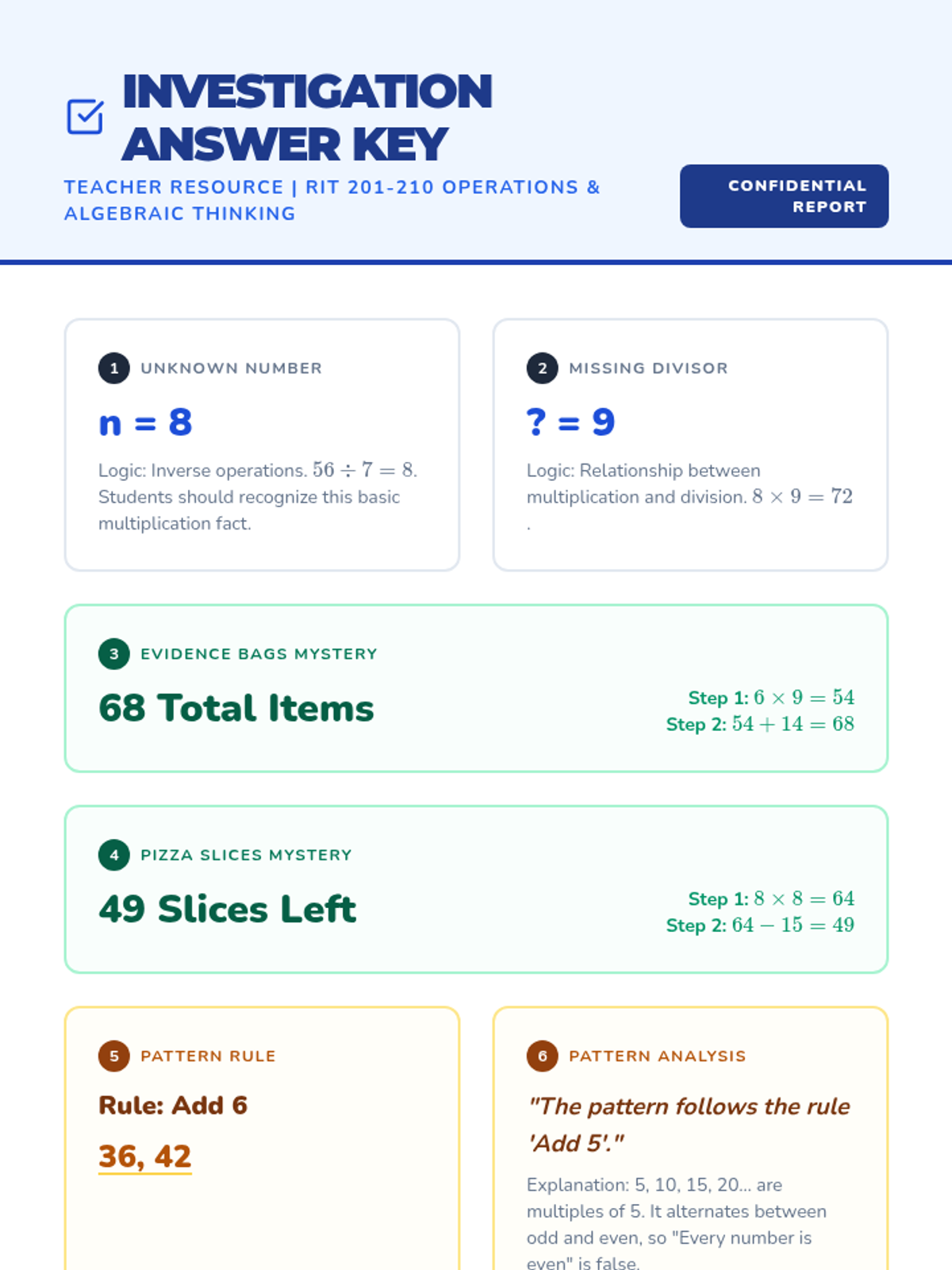
A targeted practice session focusing on Operations and Algebraic Thinking for students in the RIT 201-210 range, featuring multi-step word problems, patterns, and algebraic properties.
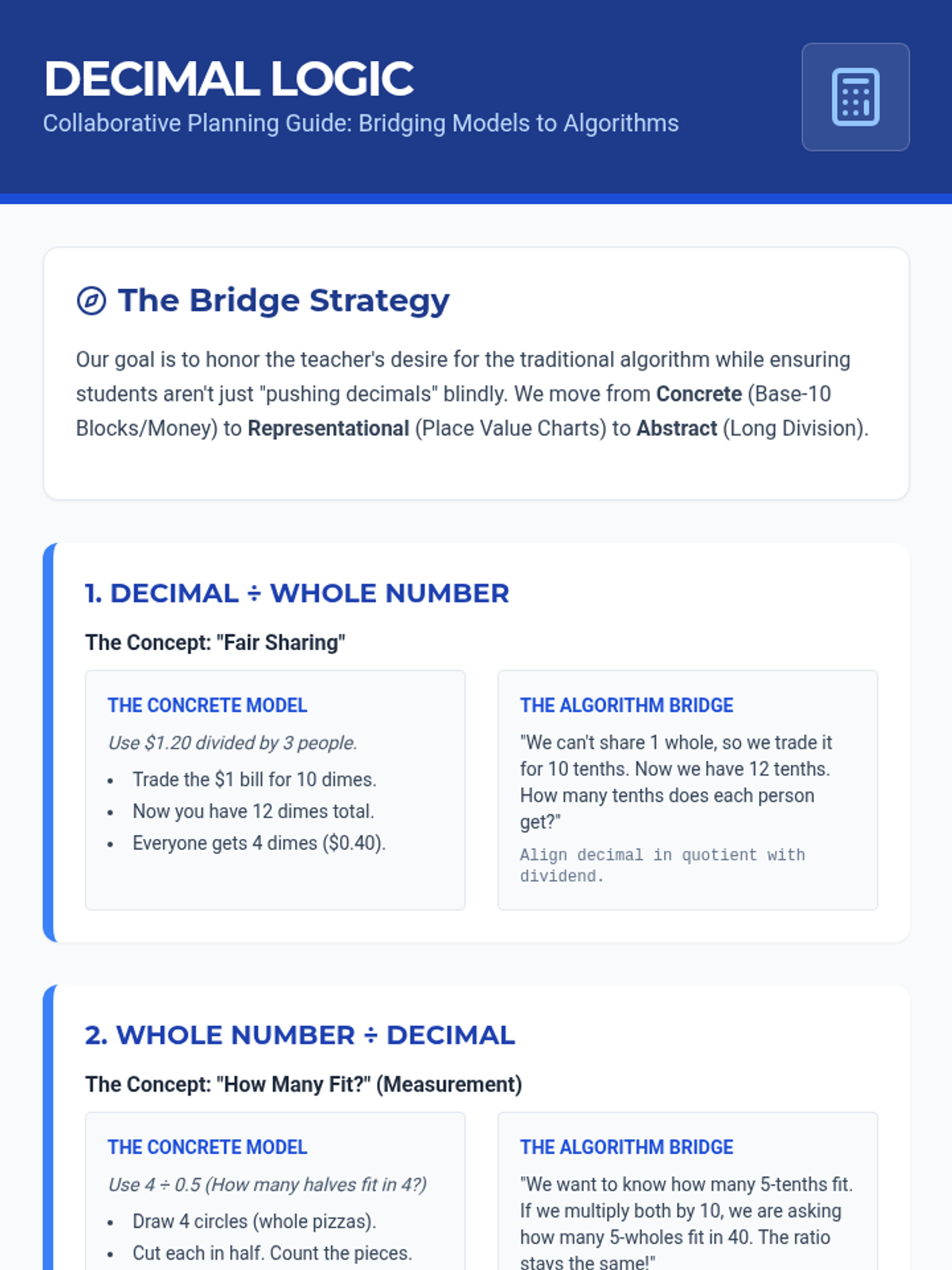
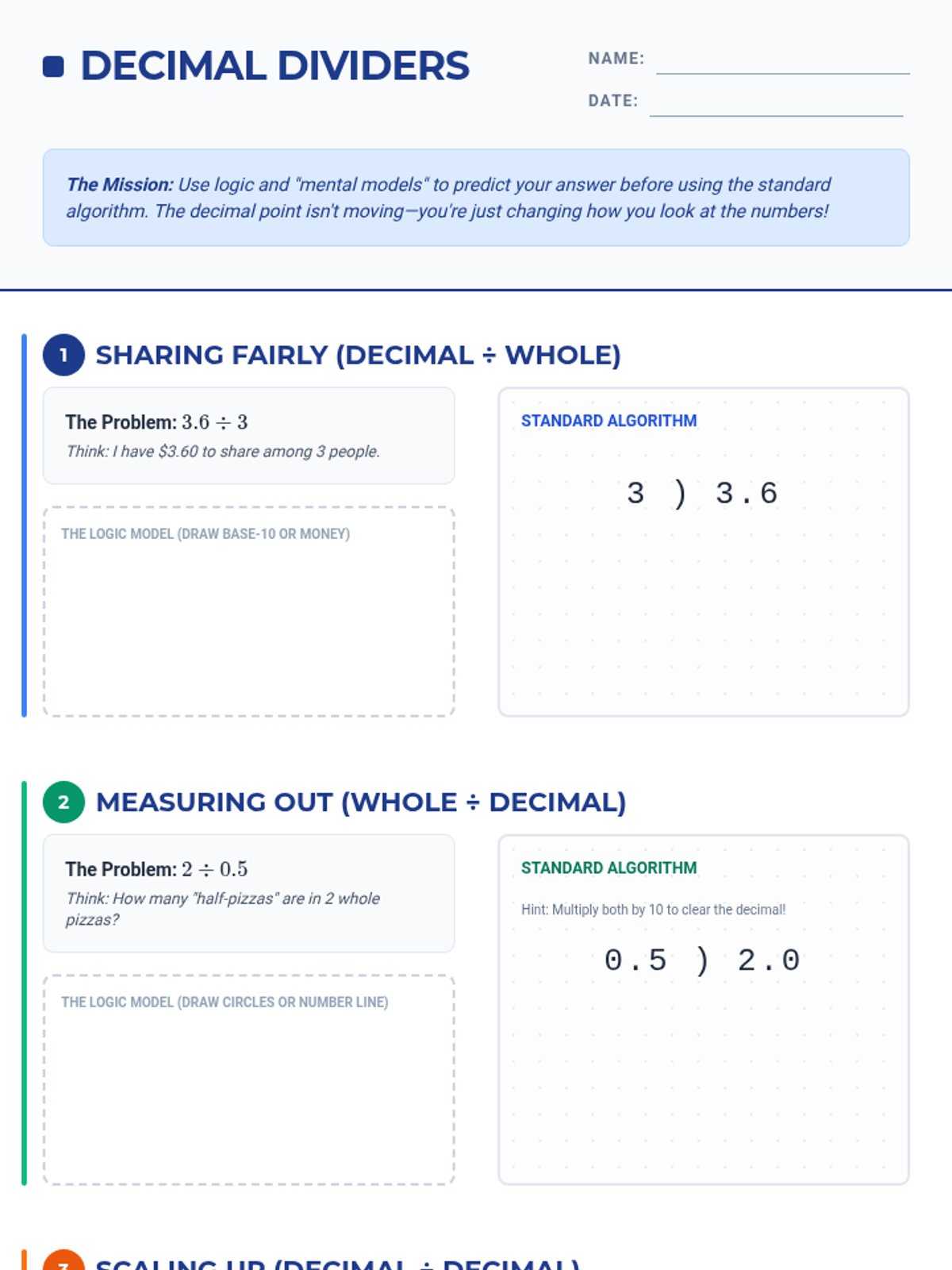
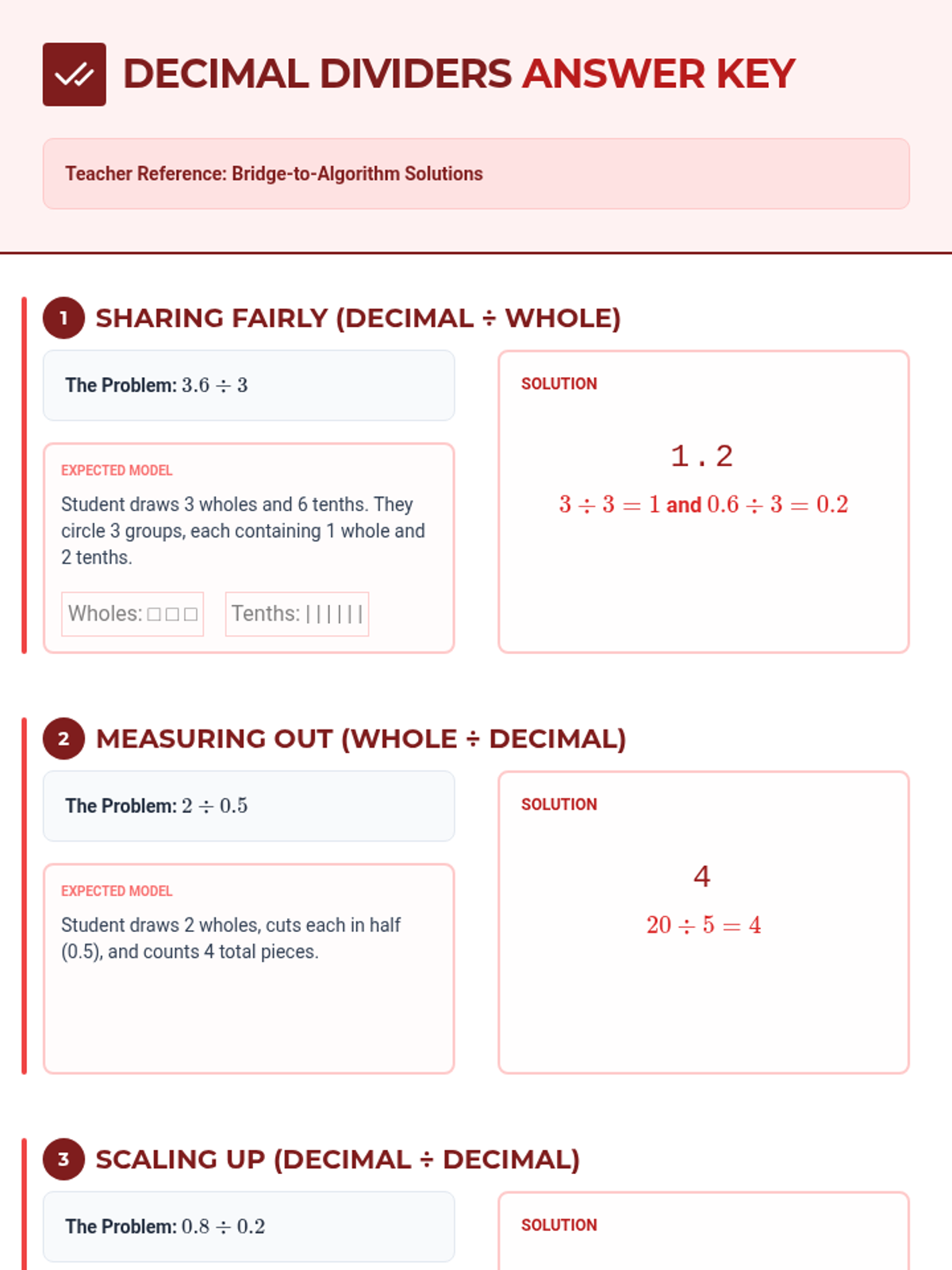
A lesson focused on bridging the conceptual understanding of decimal division with the standard algorithm, covering three key scenarios: decimal by whole number, whole number by decimal, and decimal by decimal.
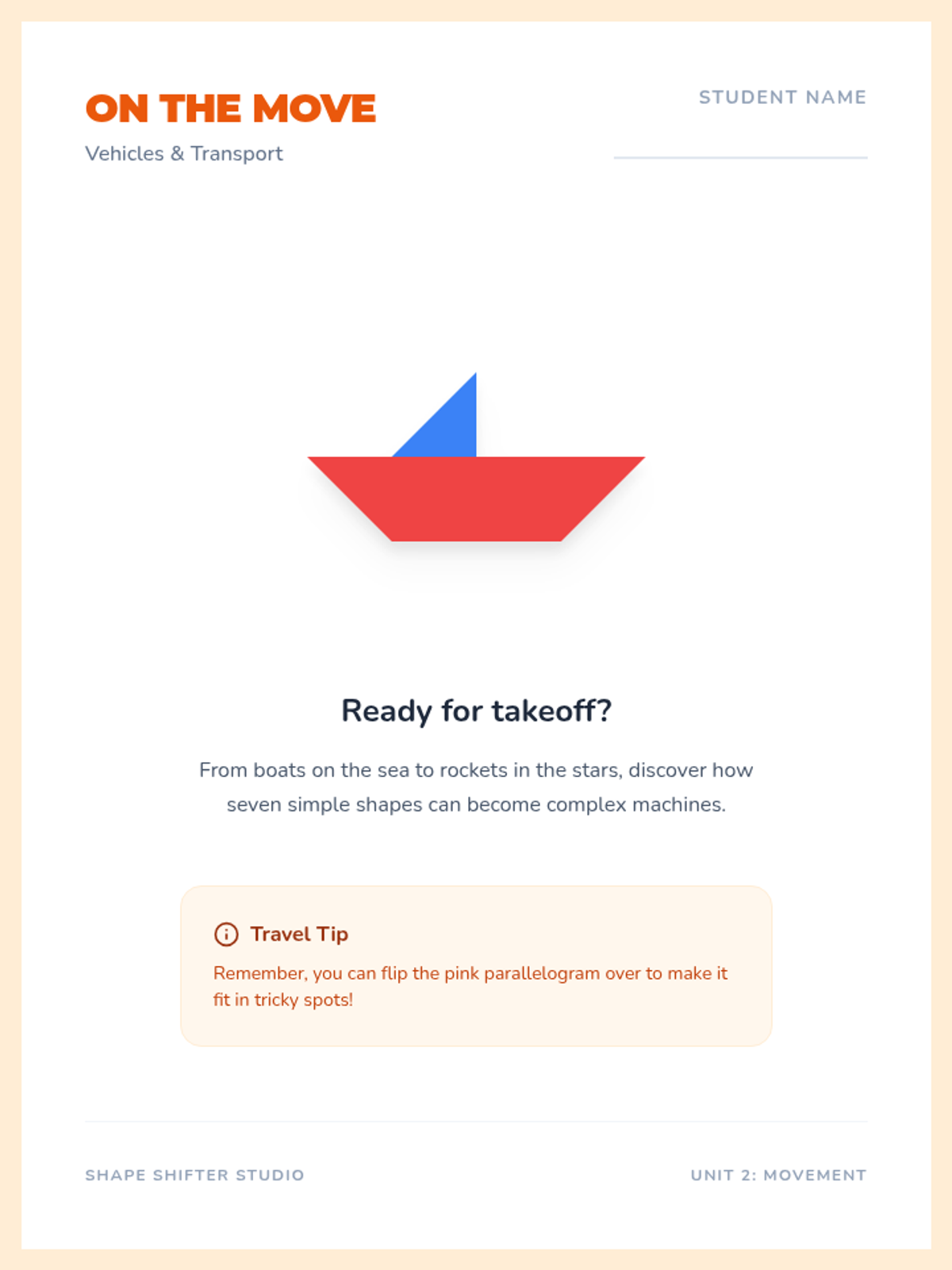
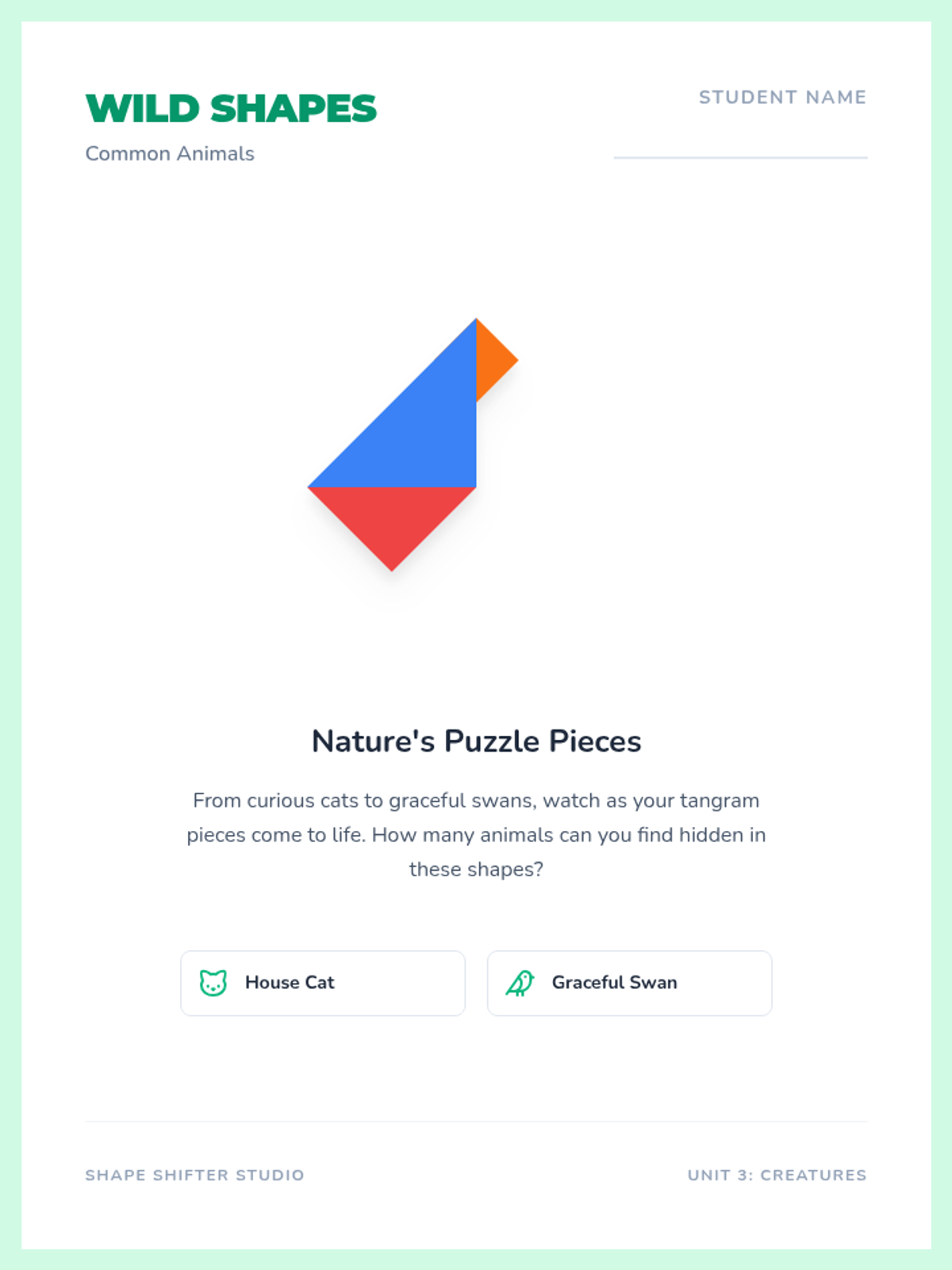
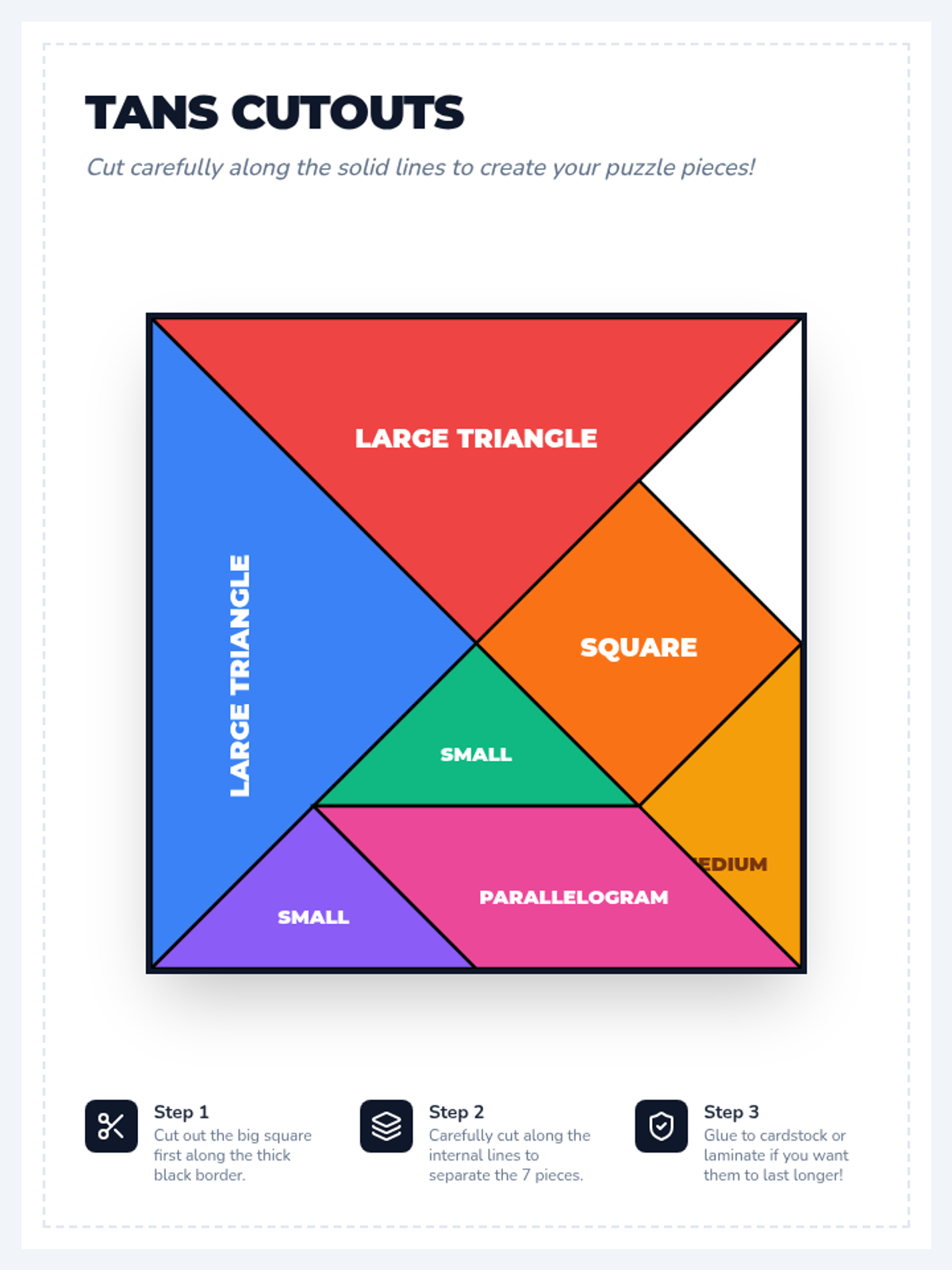
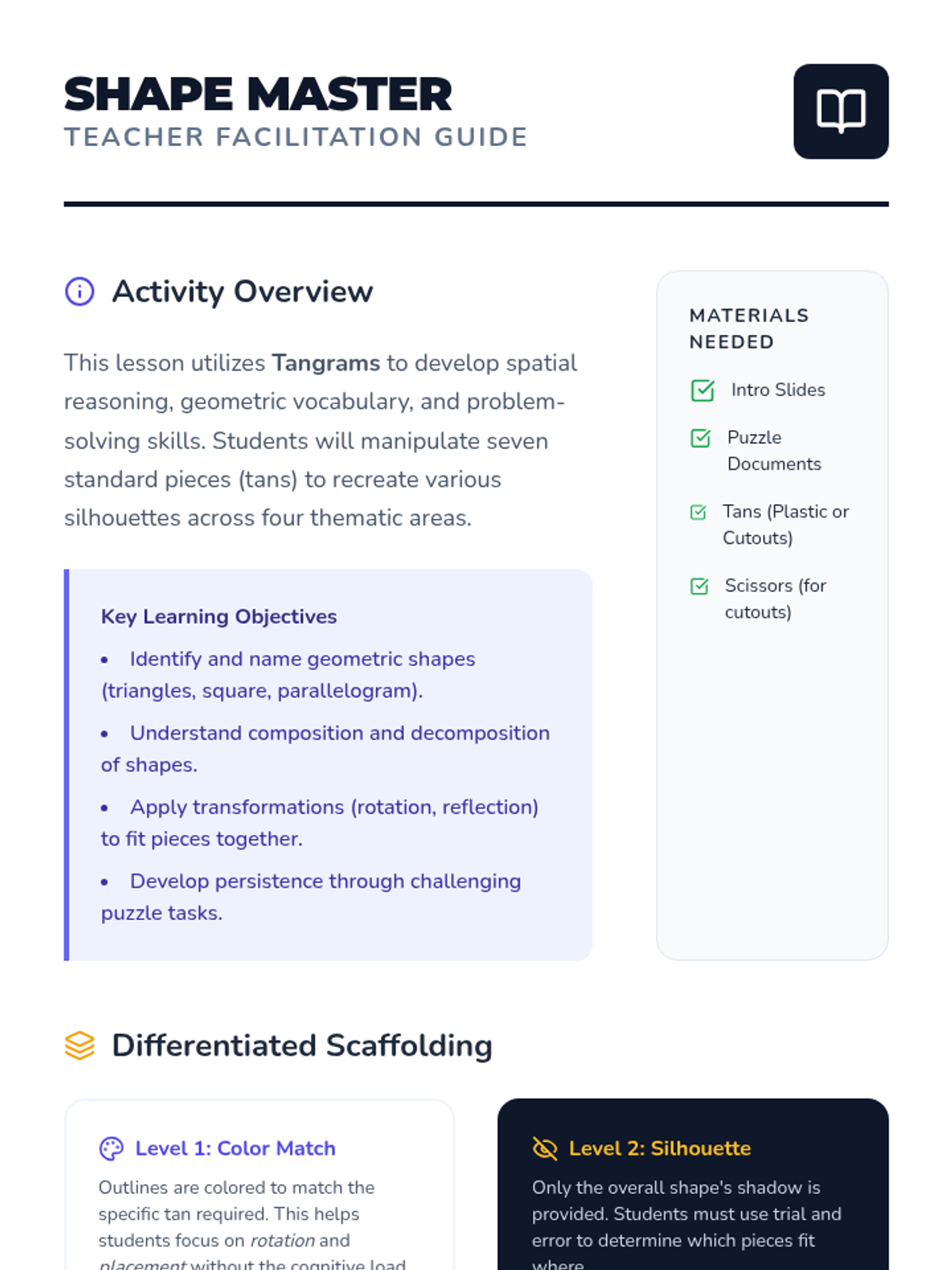
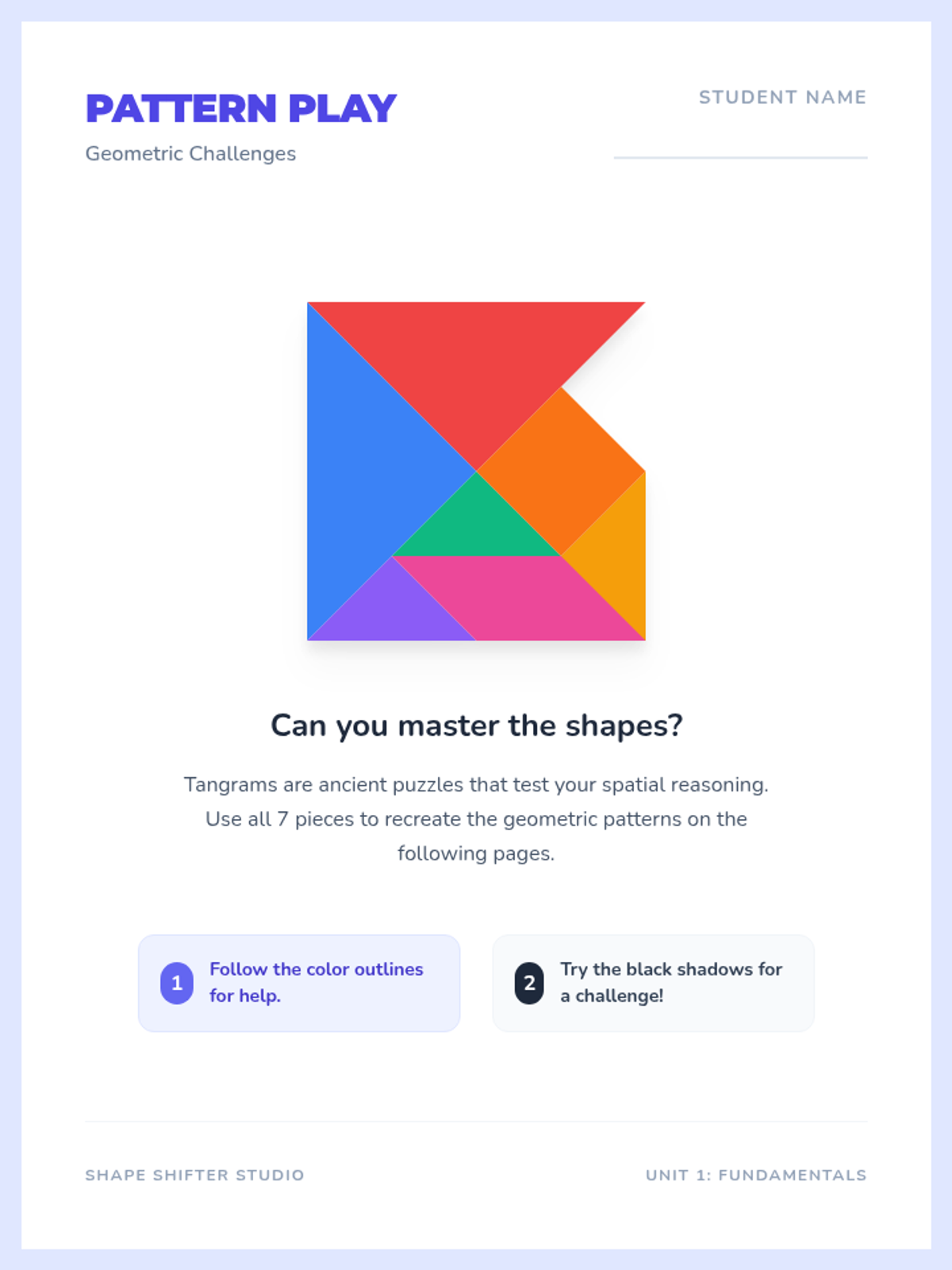
A hands-on exploration of geometry and spatial reasoning using tangrams, featuring puzzles across four diverse themes with varying difficulty levels.
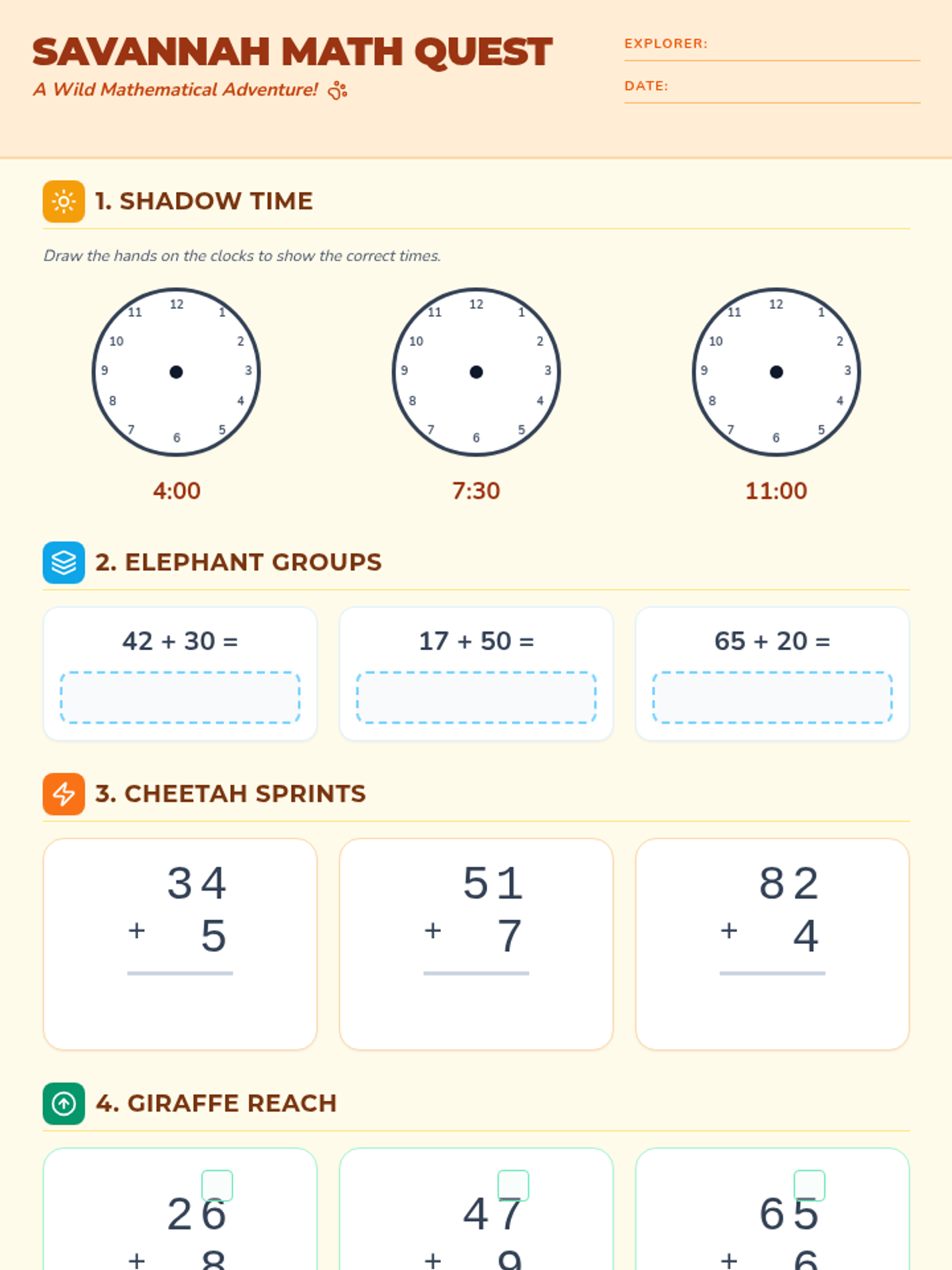
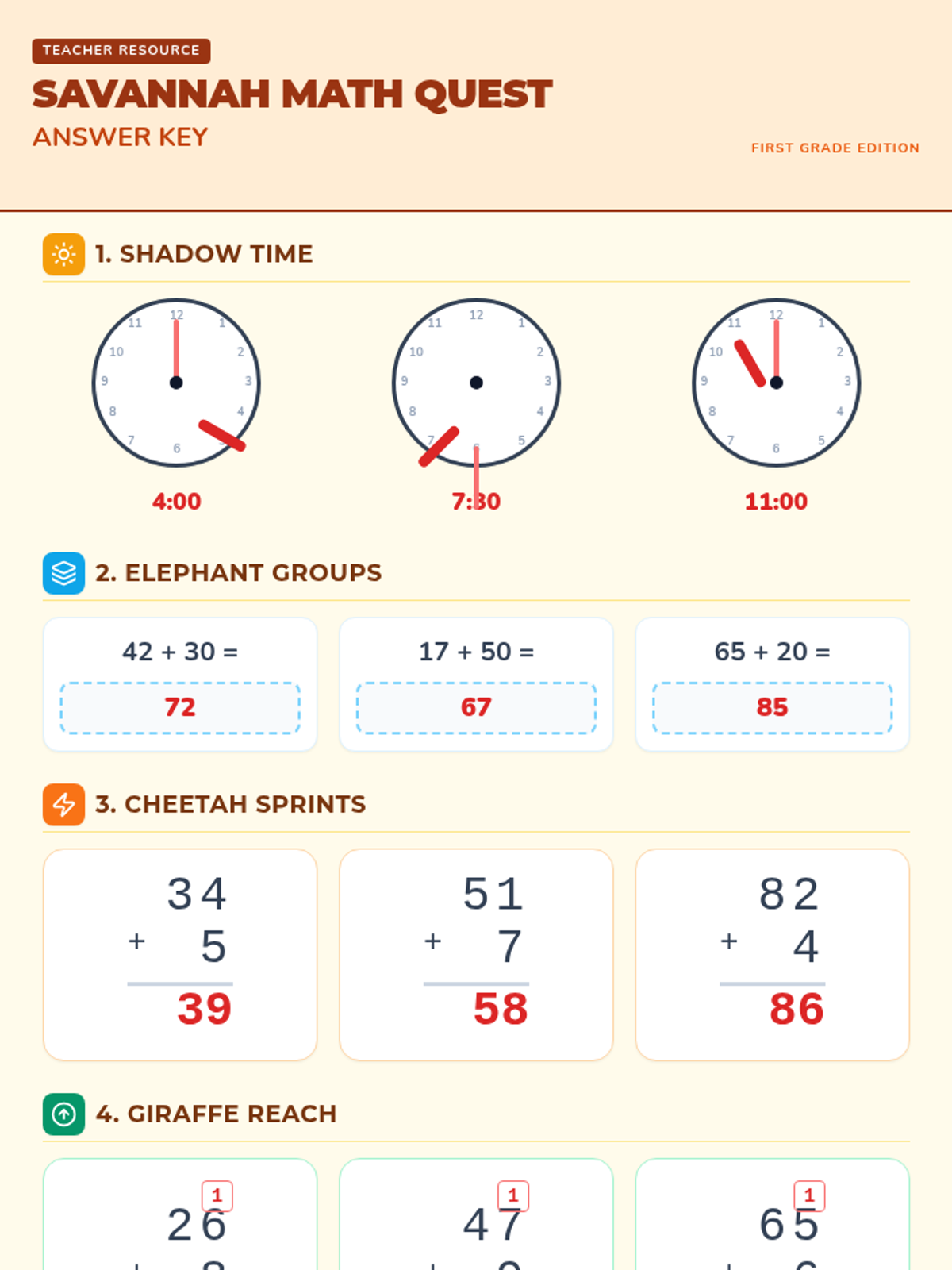
A math practice lesson focused on first-grade addition and time-telling skills, themed around the animals of the African savannah.
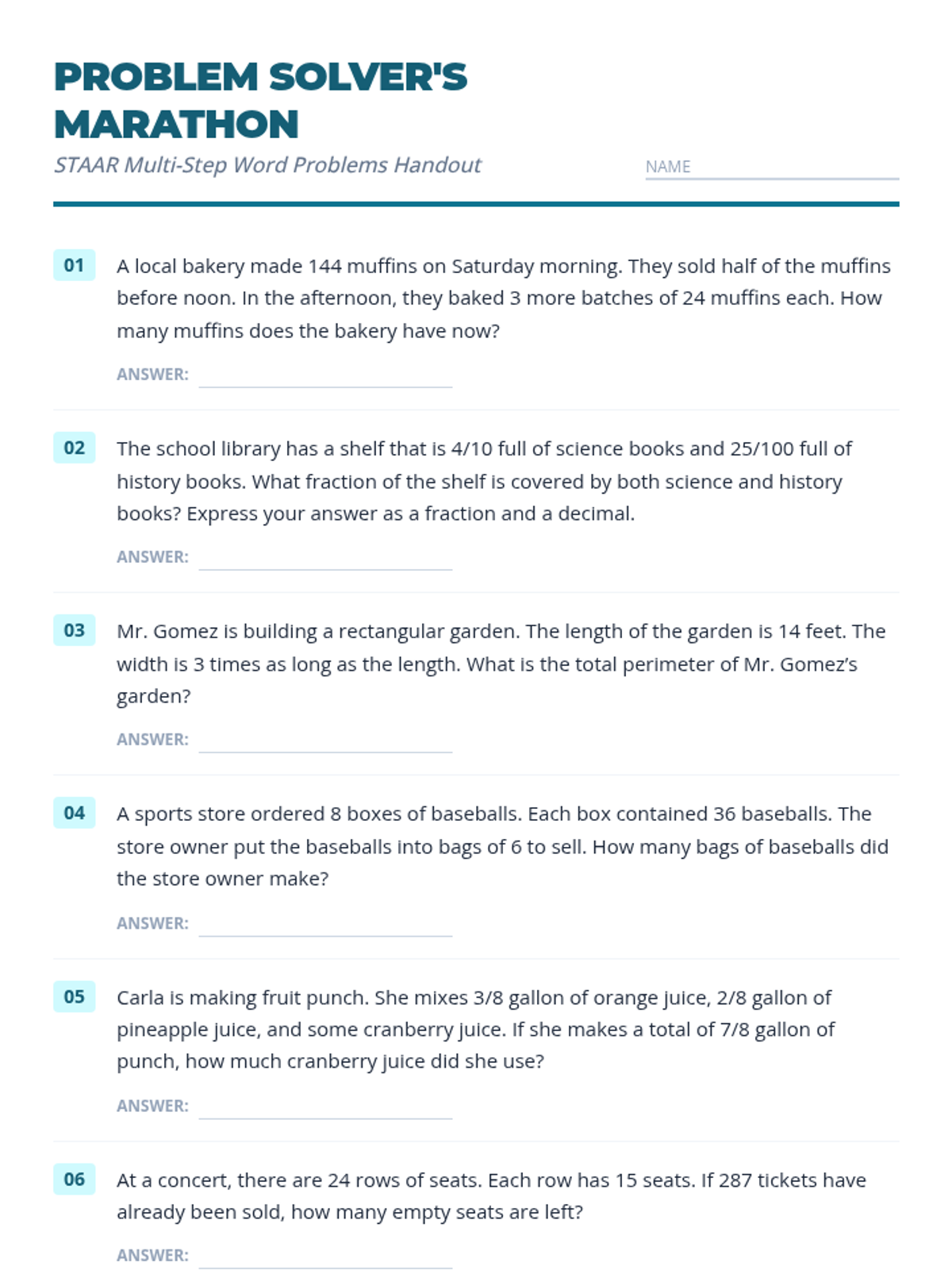
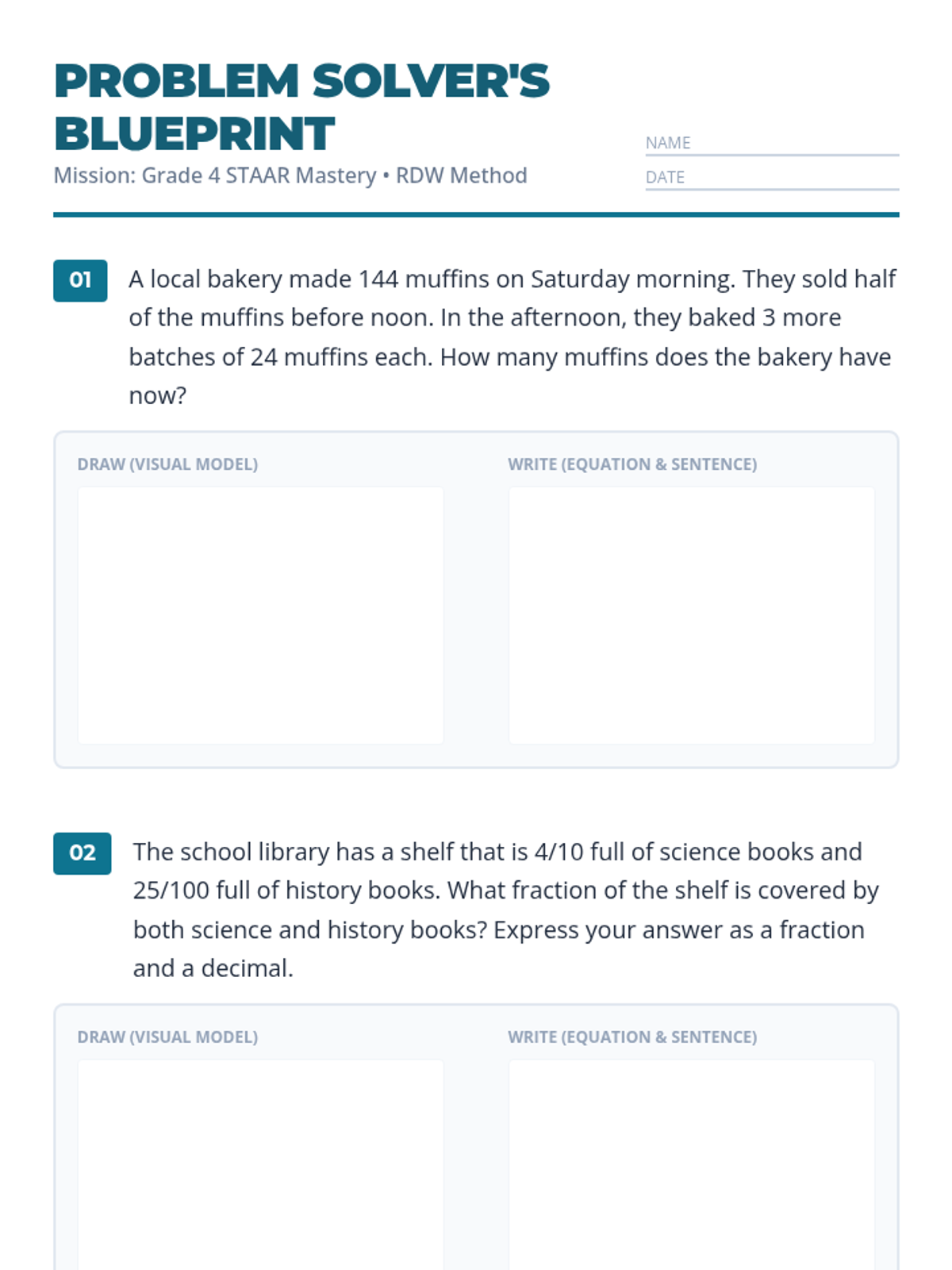
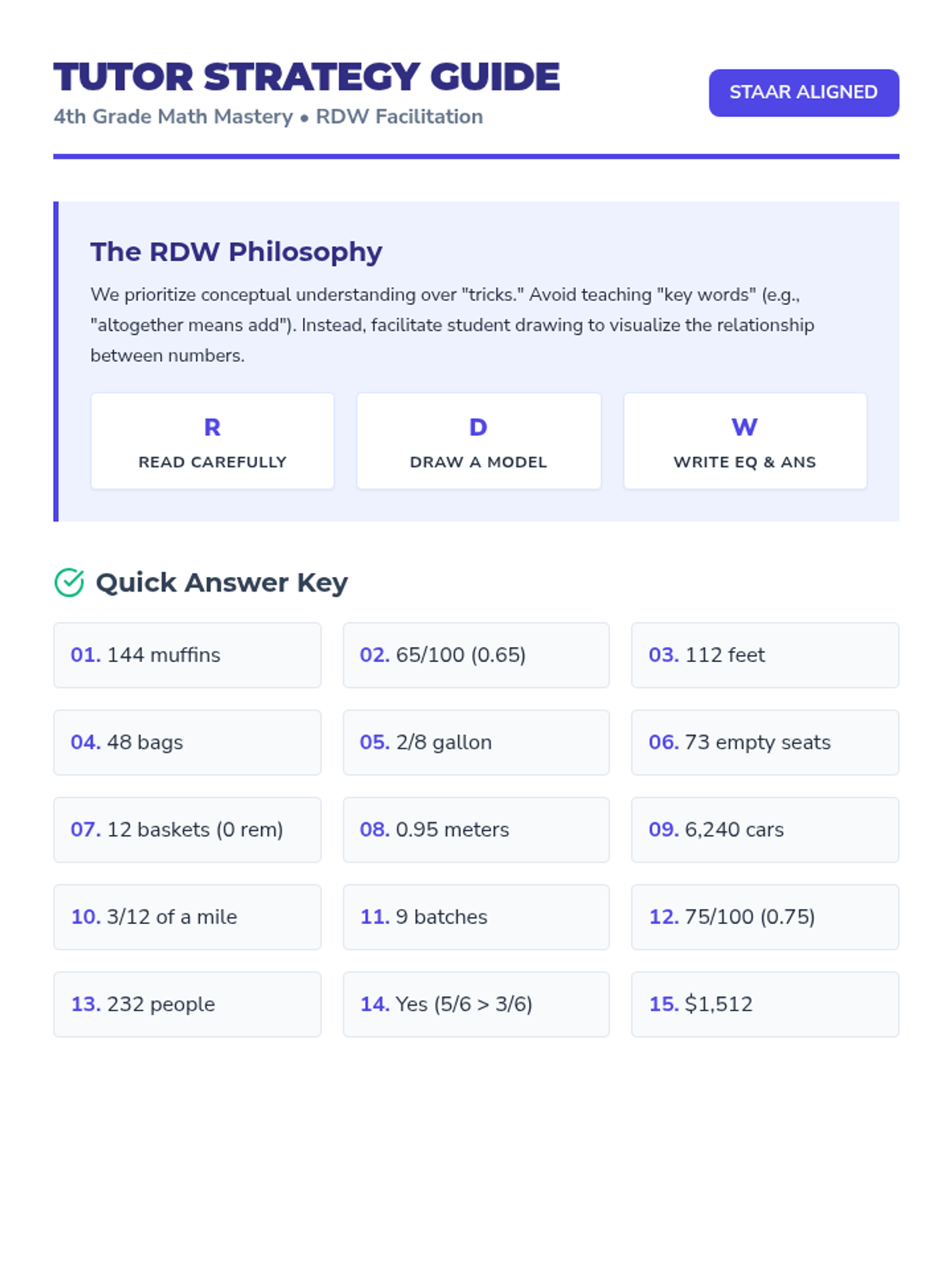
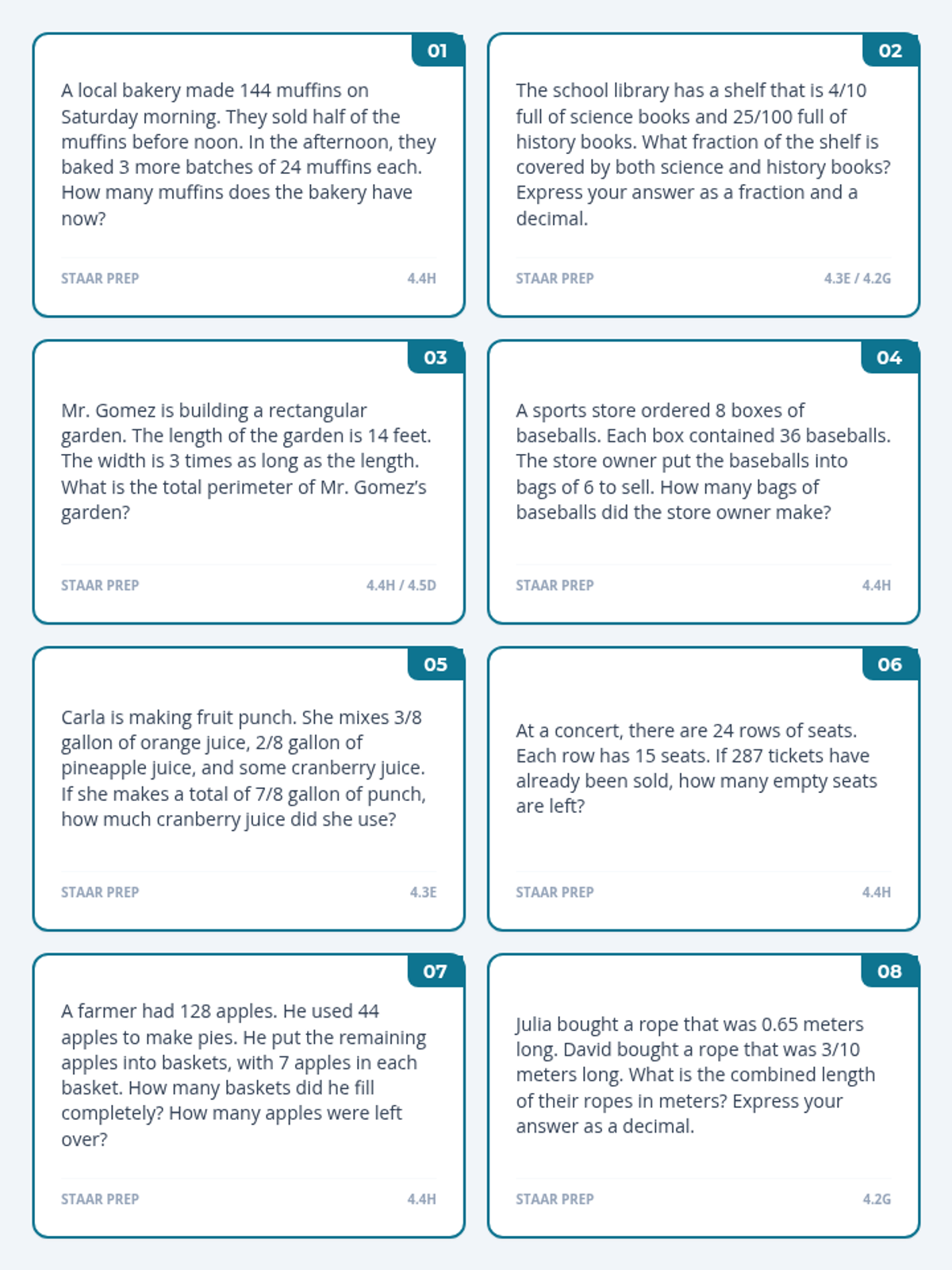
A collection of STAAR-aligned multi-step word problems for 4th-grade math, focusing on multiplication, division, fractions, and decimals using the RDW (Read, Draw, Write) strategy.
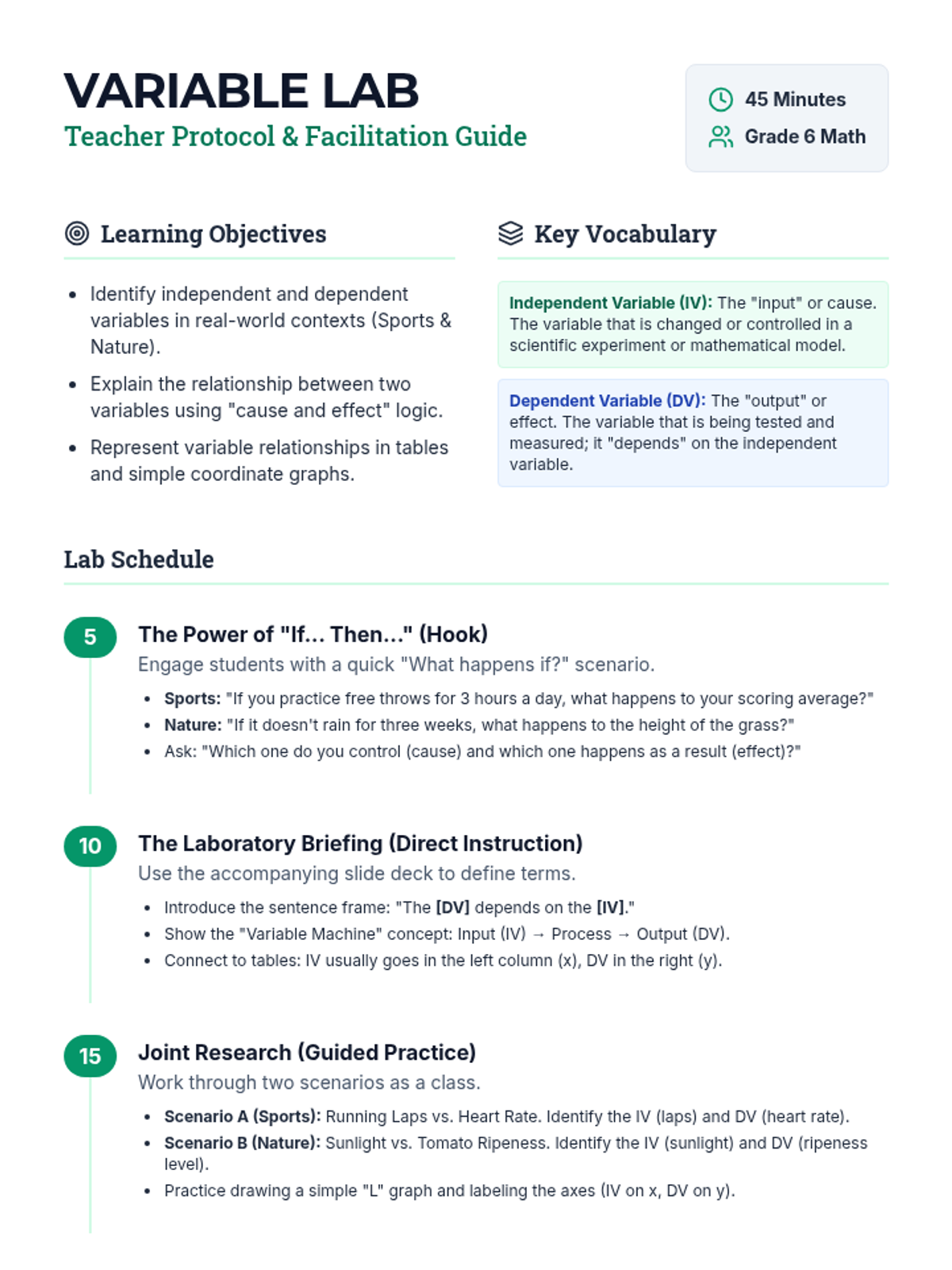
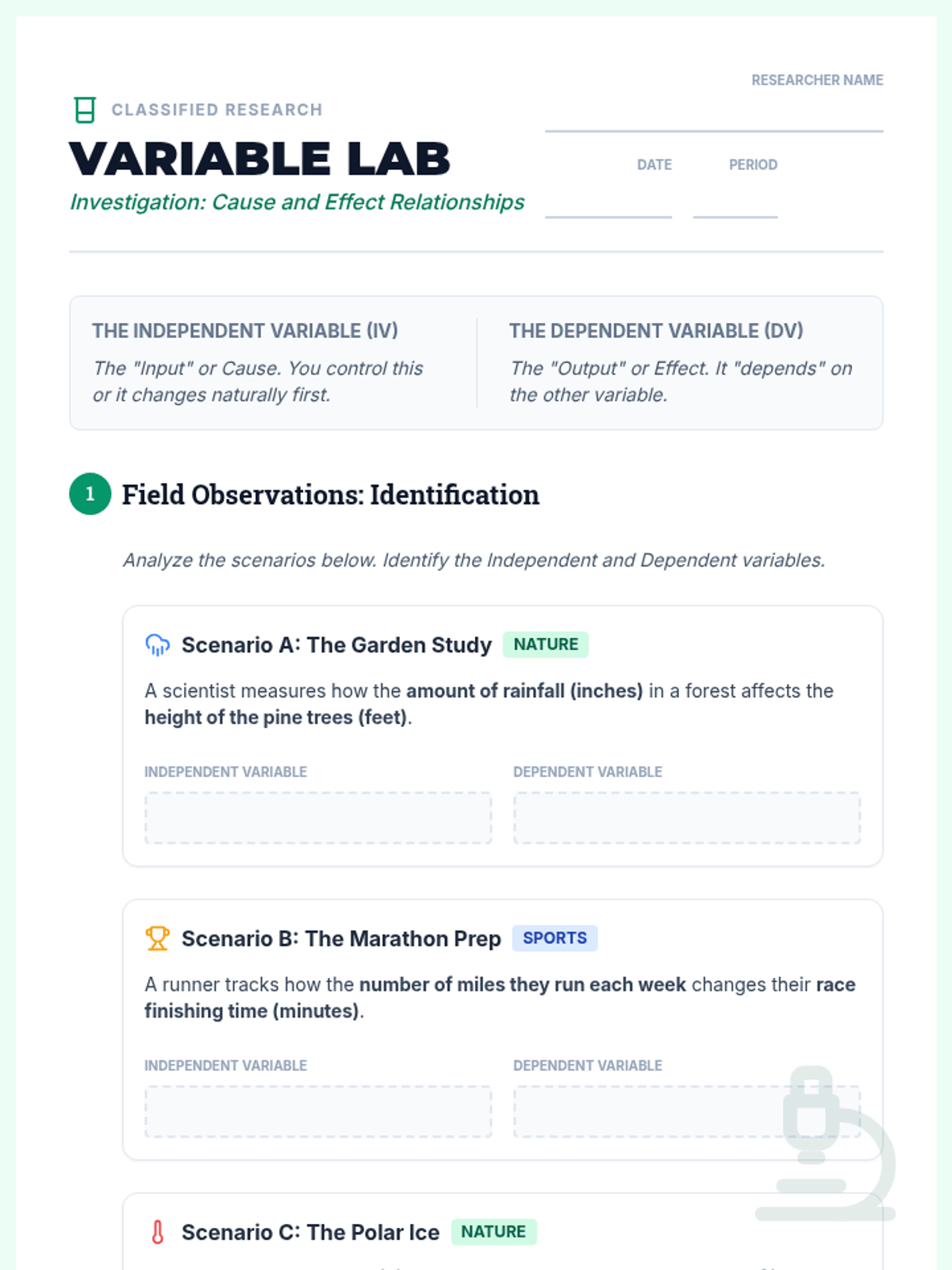
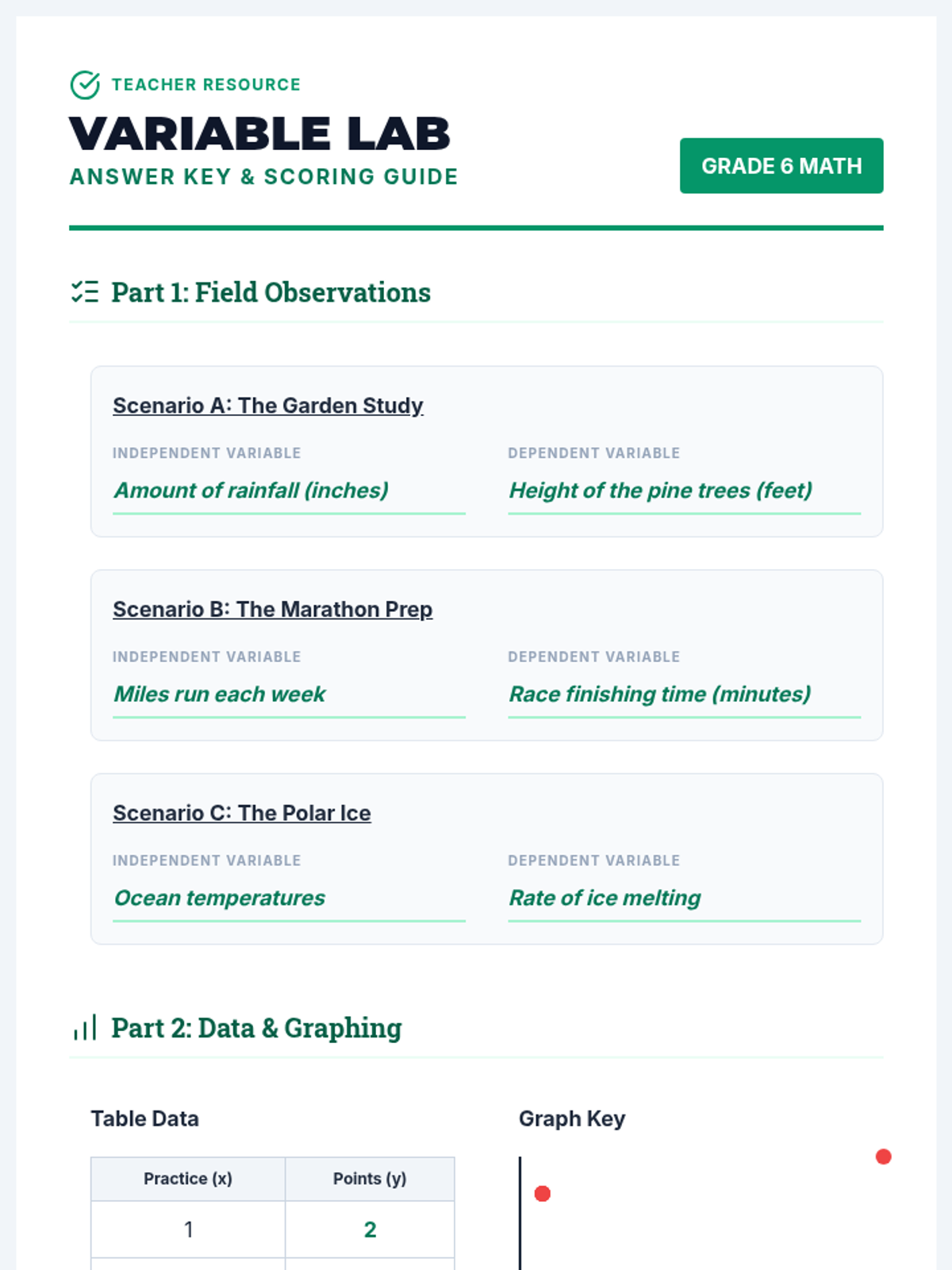
A 45-minute introductory lesson on independent and dependent variables using sports and nature contexts. Students will learn to identify variables, understand cause-and-effect relationships, and represent them in tables and graphs.
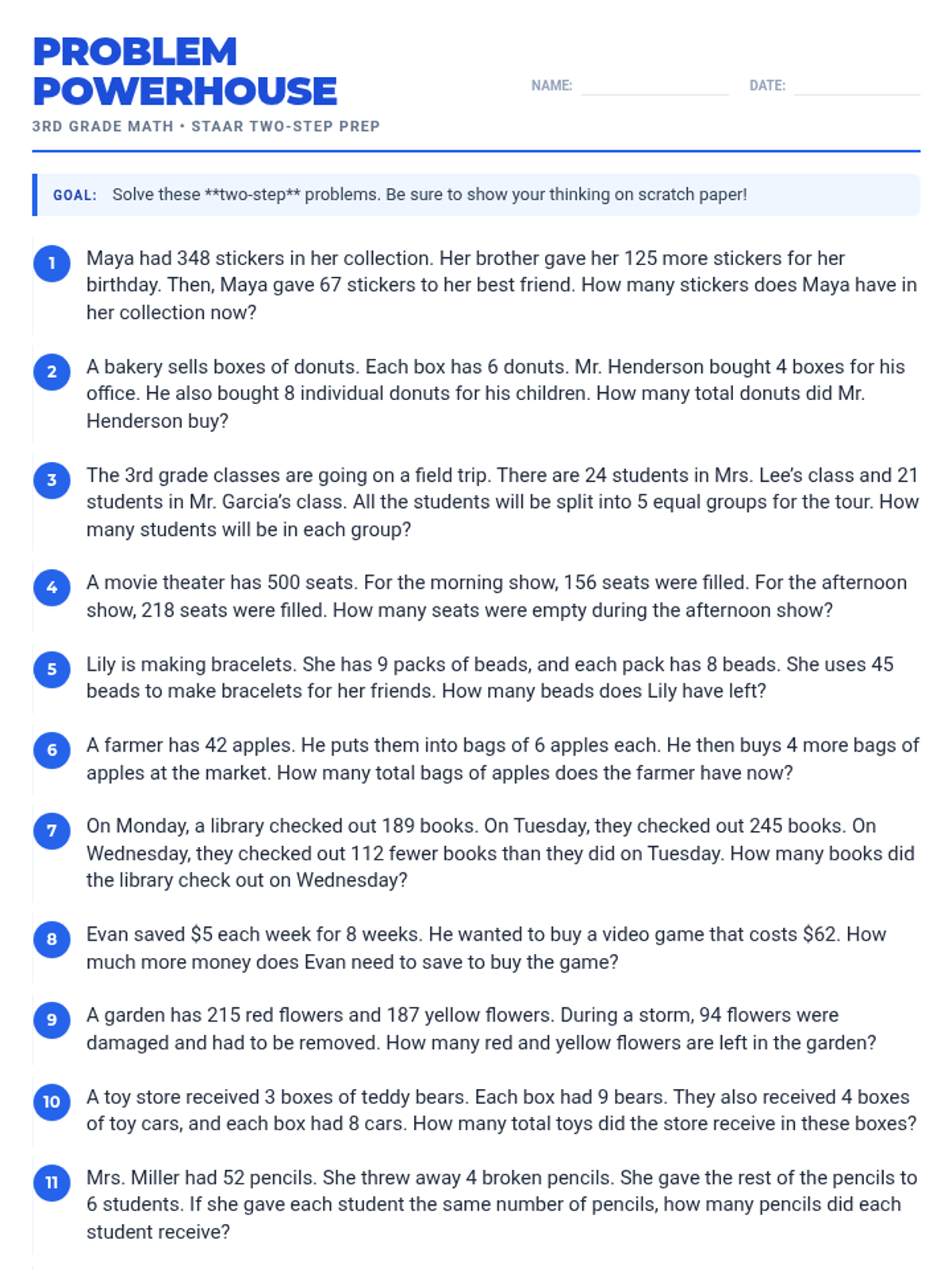
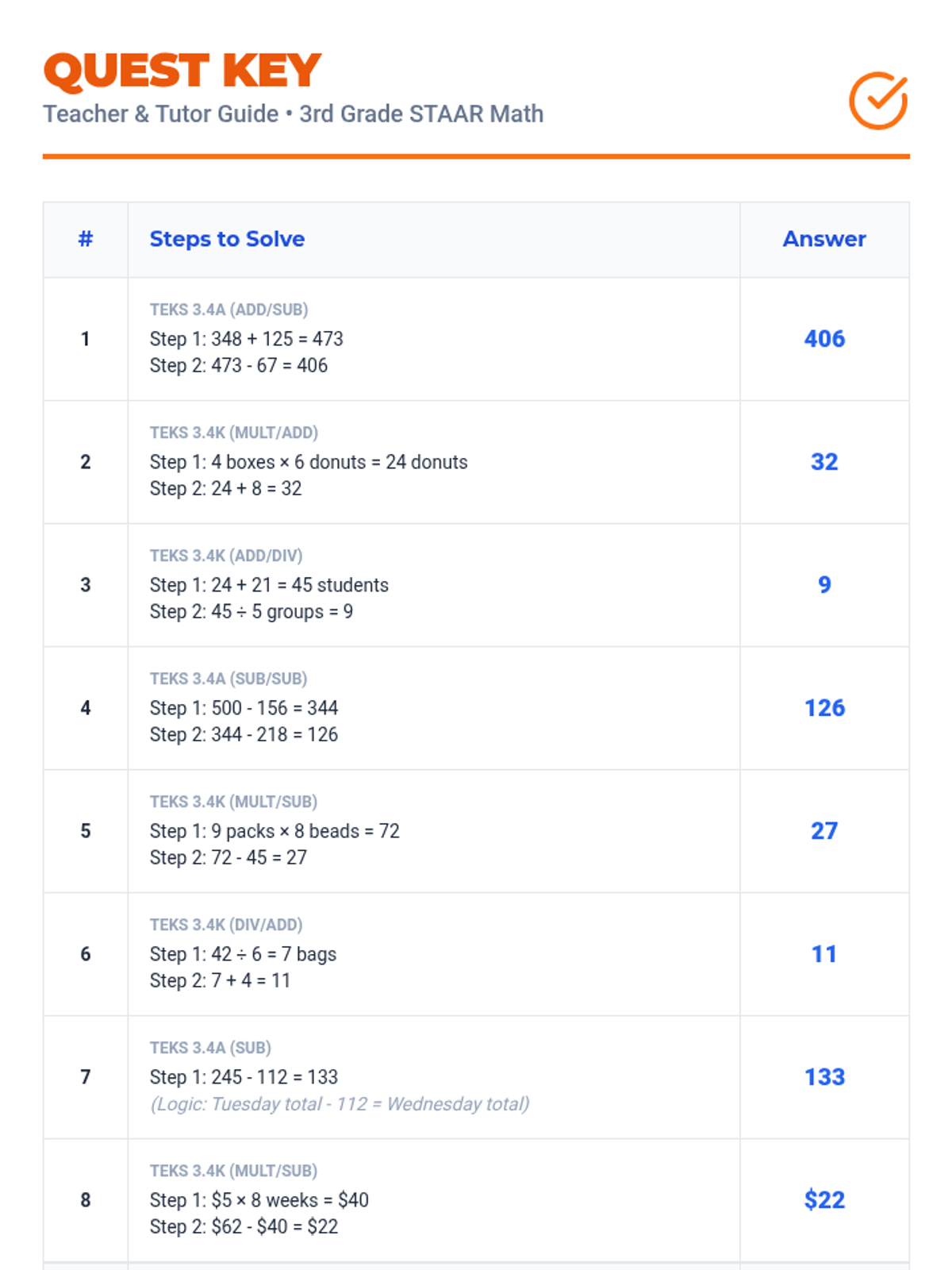
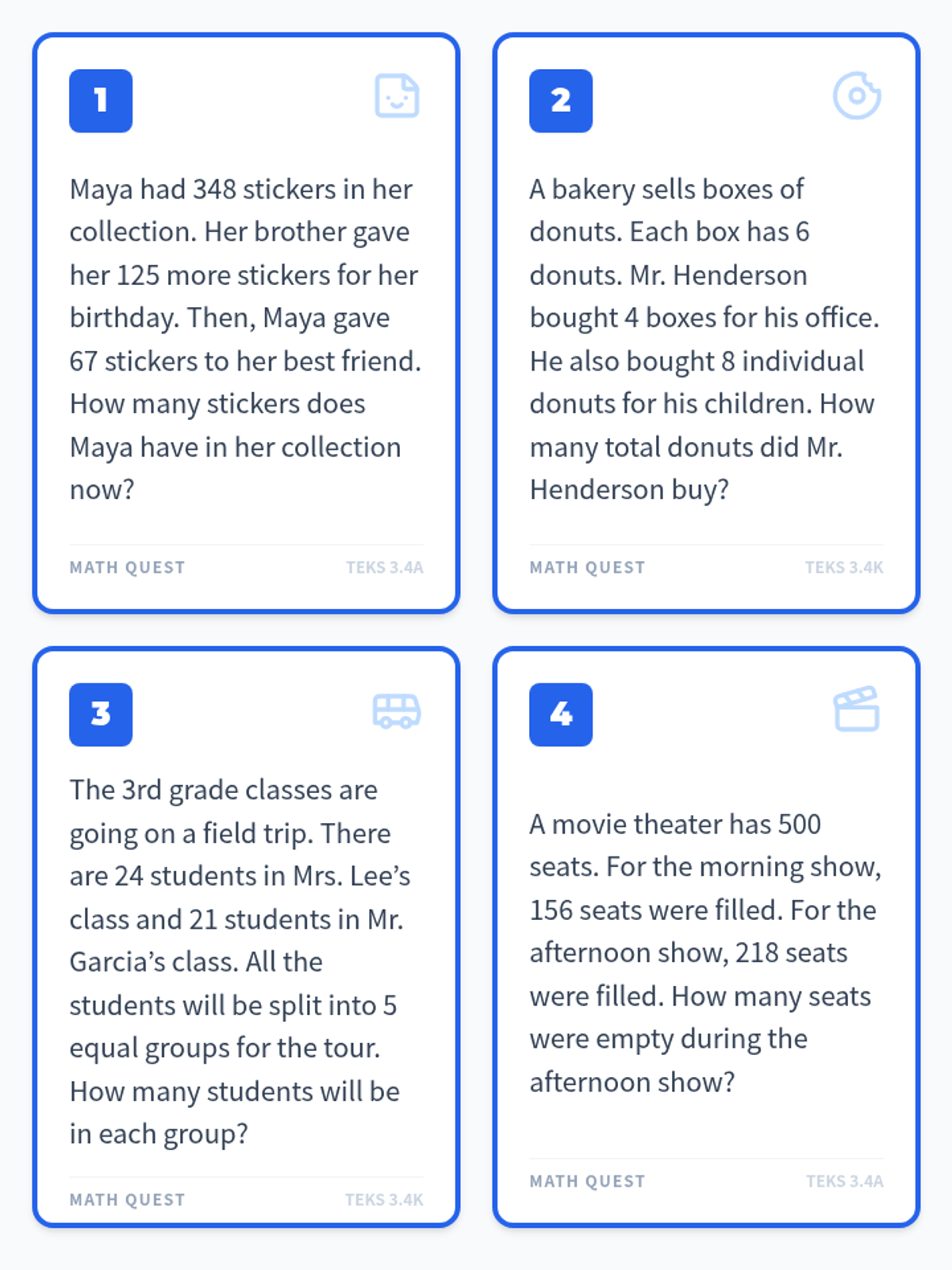
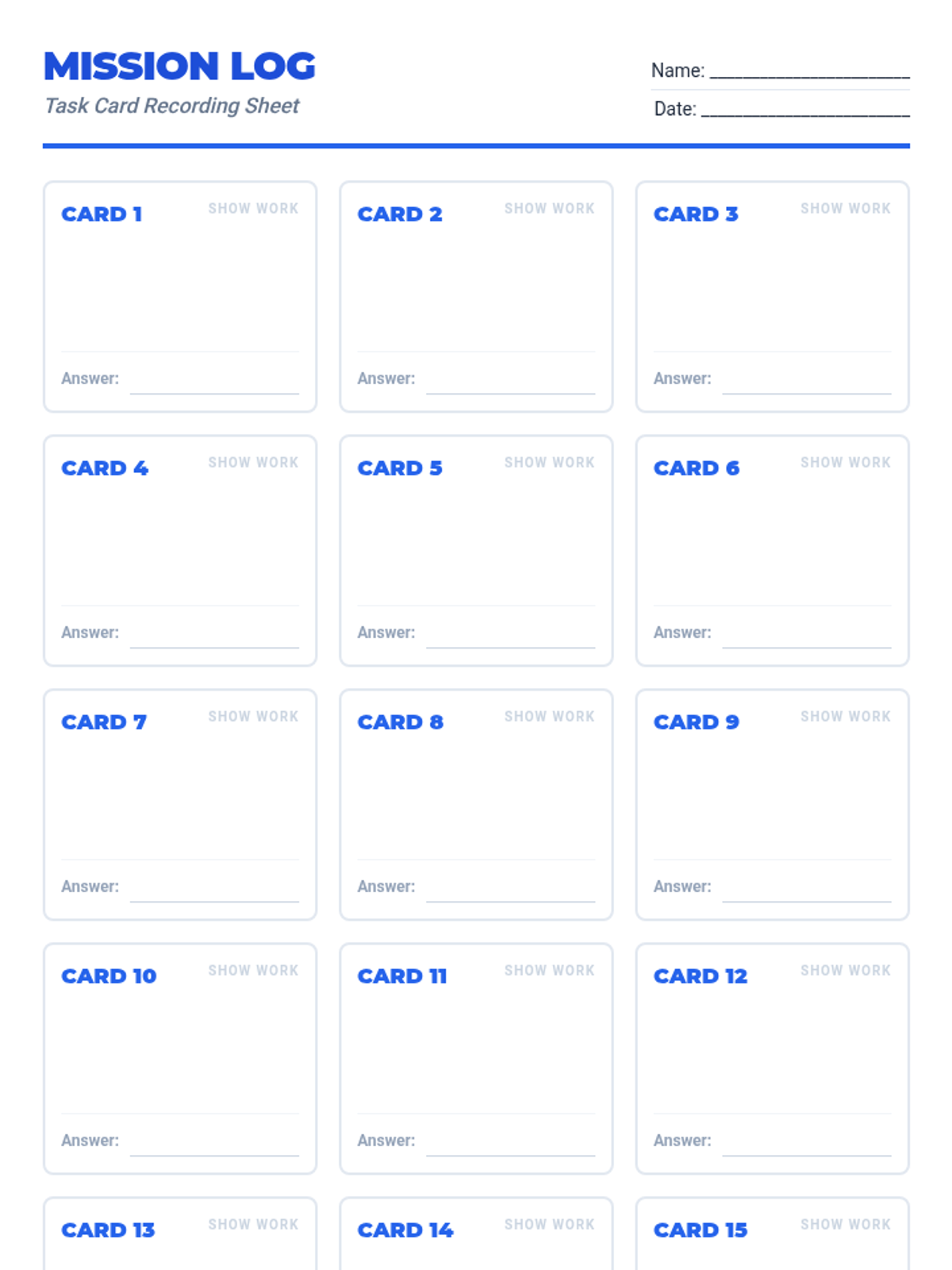
A collection of STAAR-aligned two-step word problems designed for 3rd-grade math mastery. This lesson focuses on problem-solving strategies for addition, subtraction, multiplication, and division scenarios commonly found on the Texas state assessment.
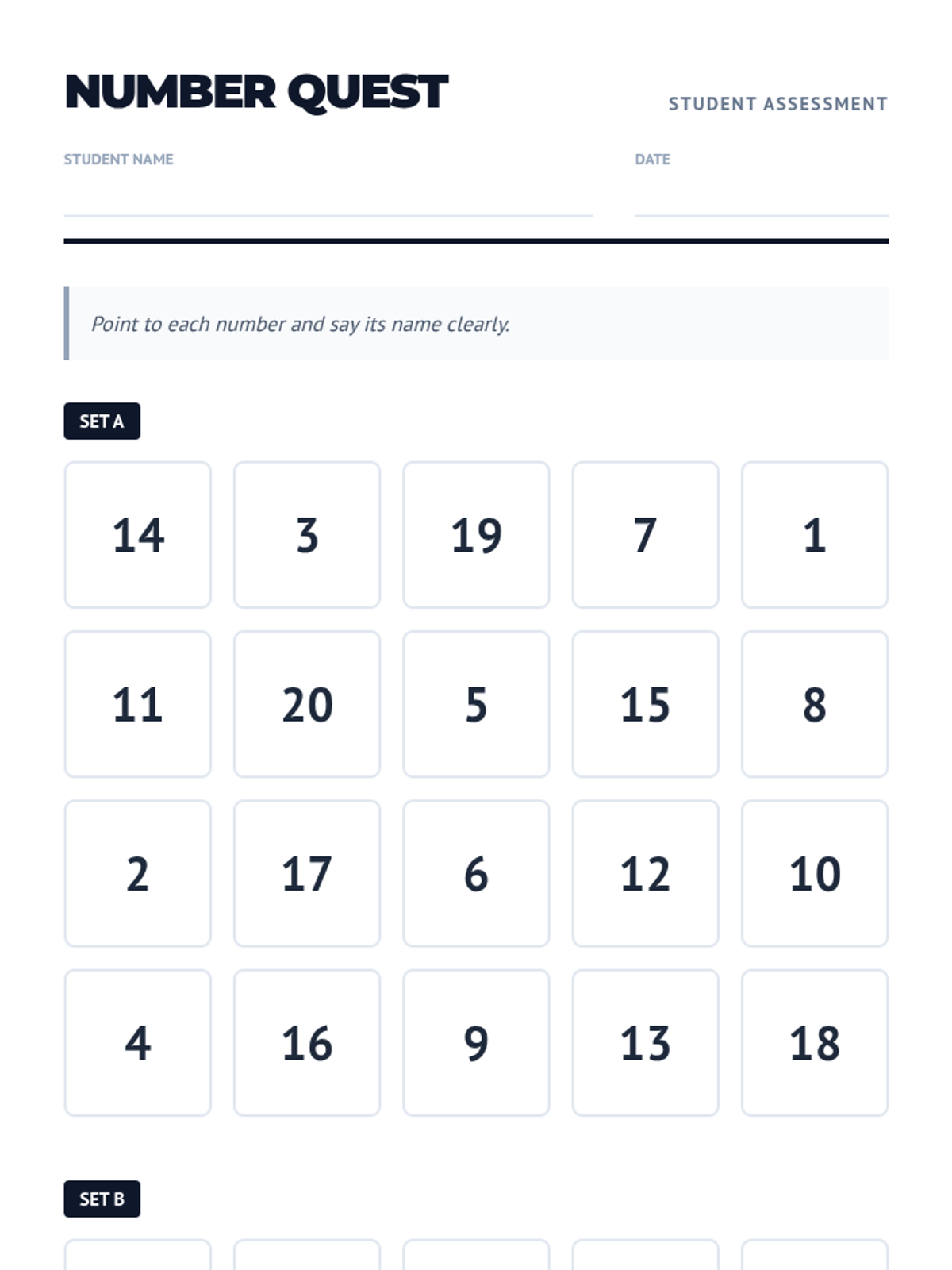
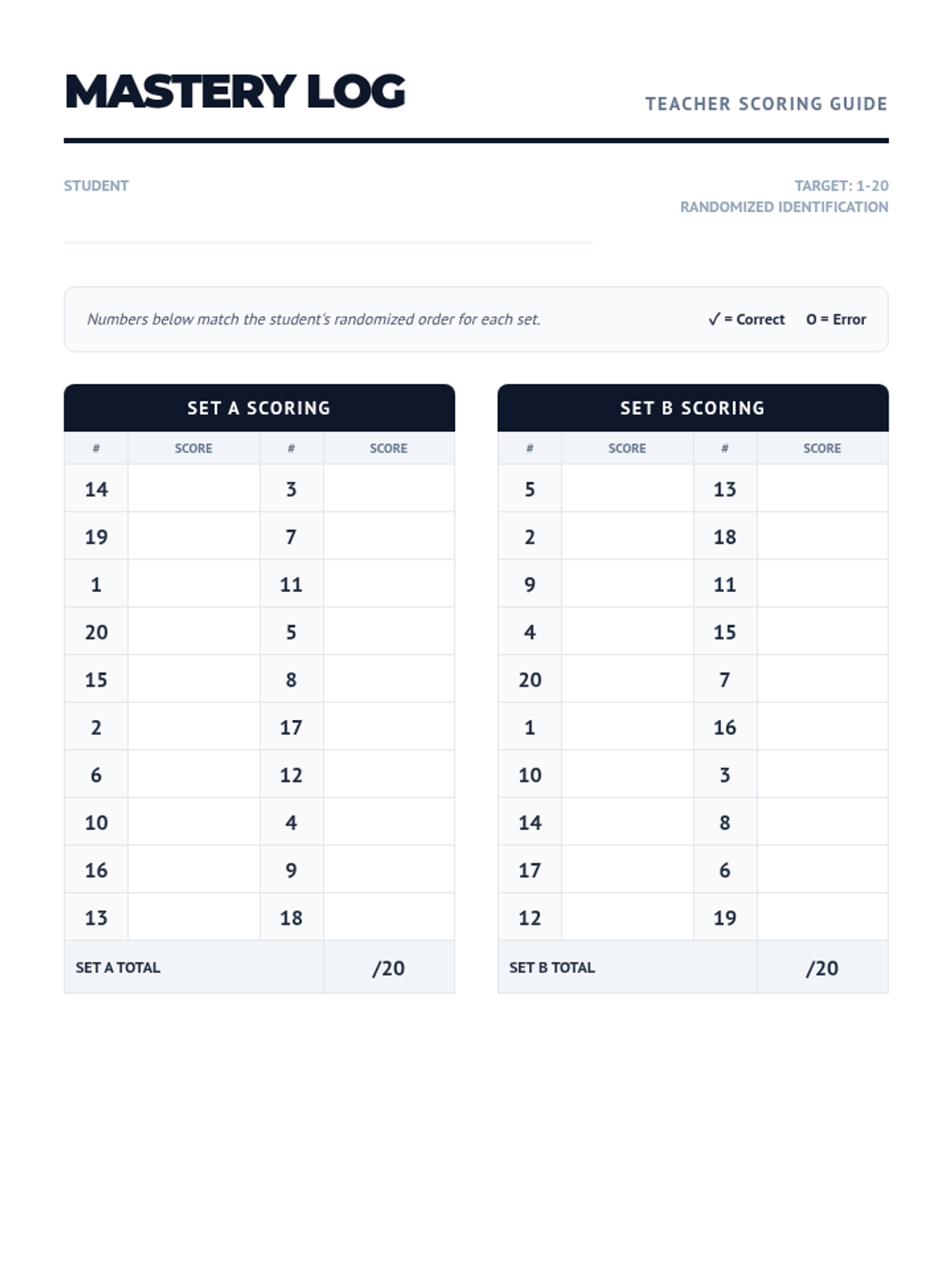
A comprehensive set of tools for assessing and tracking a student's ability to identify numbers 1 through 20 in randomized order.
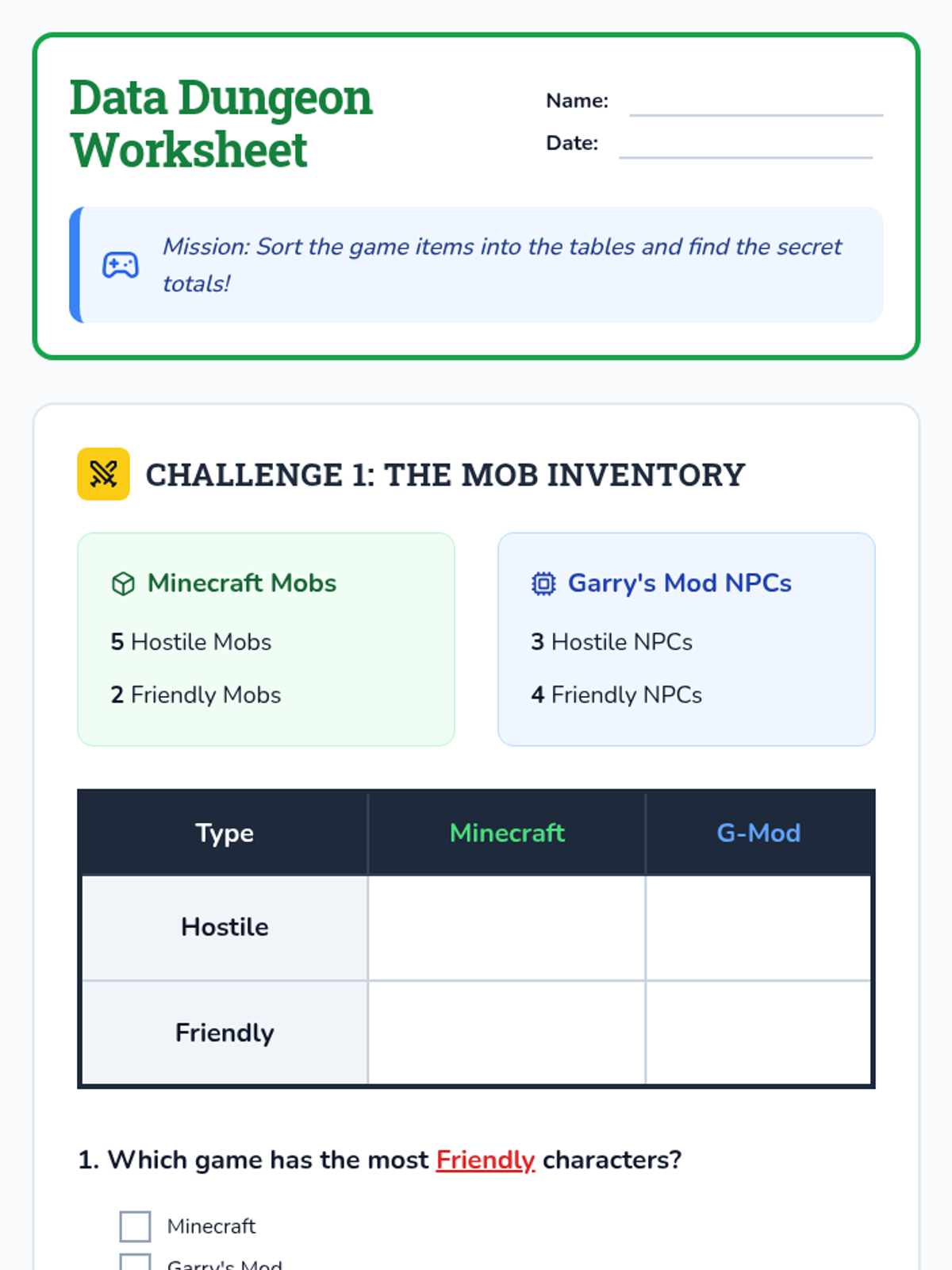
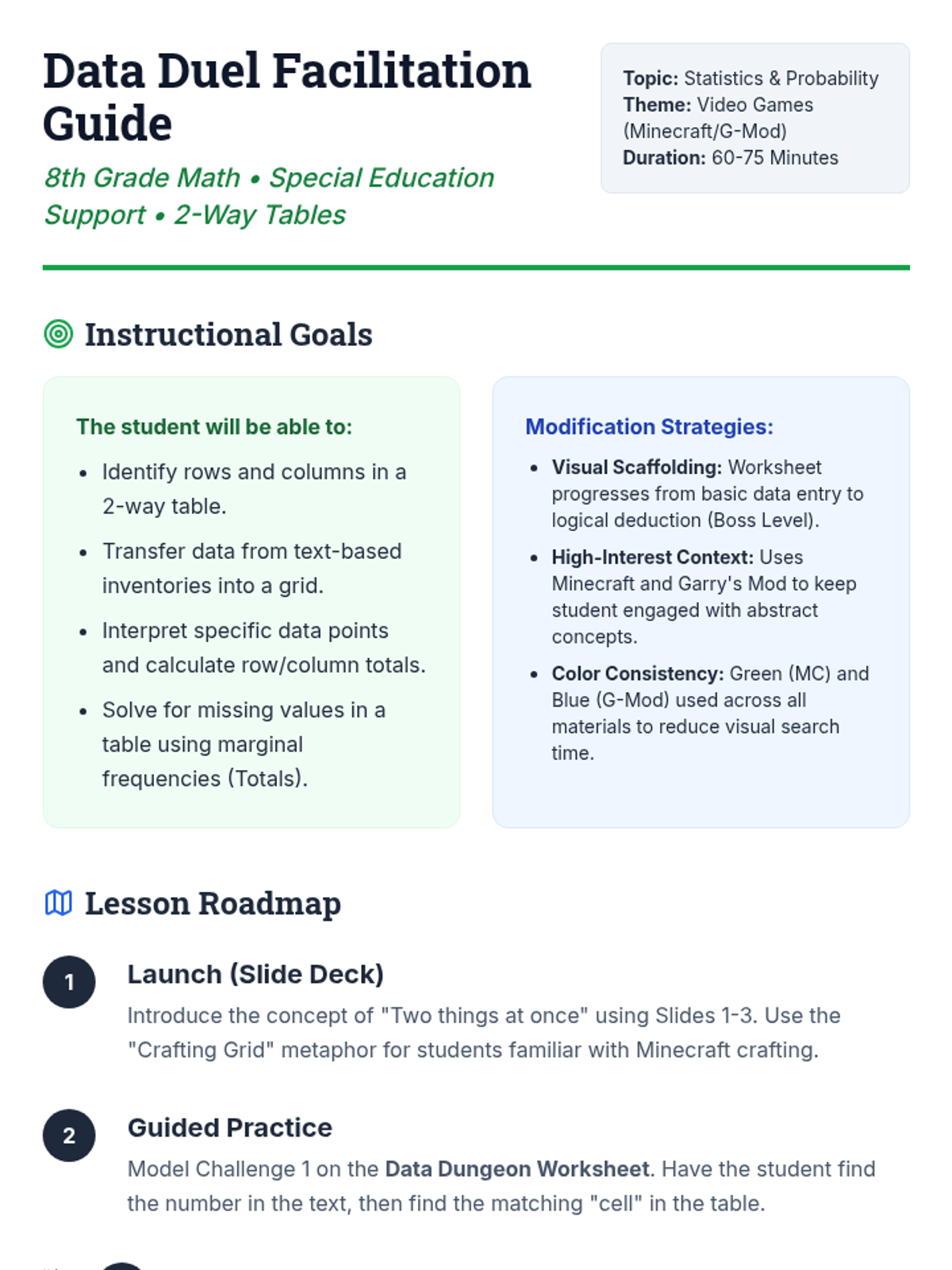
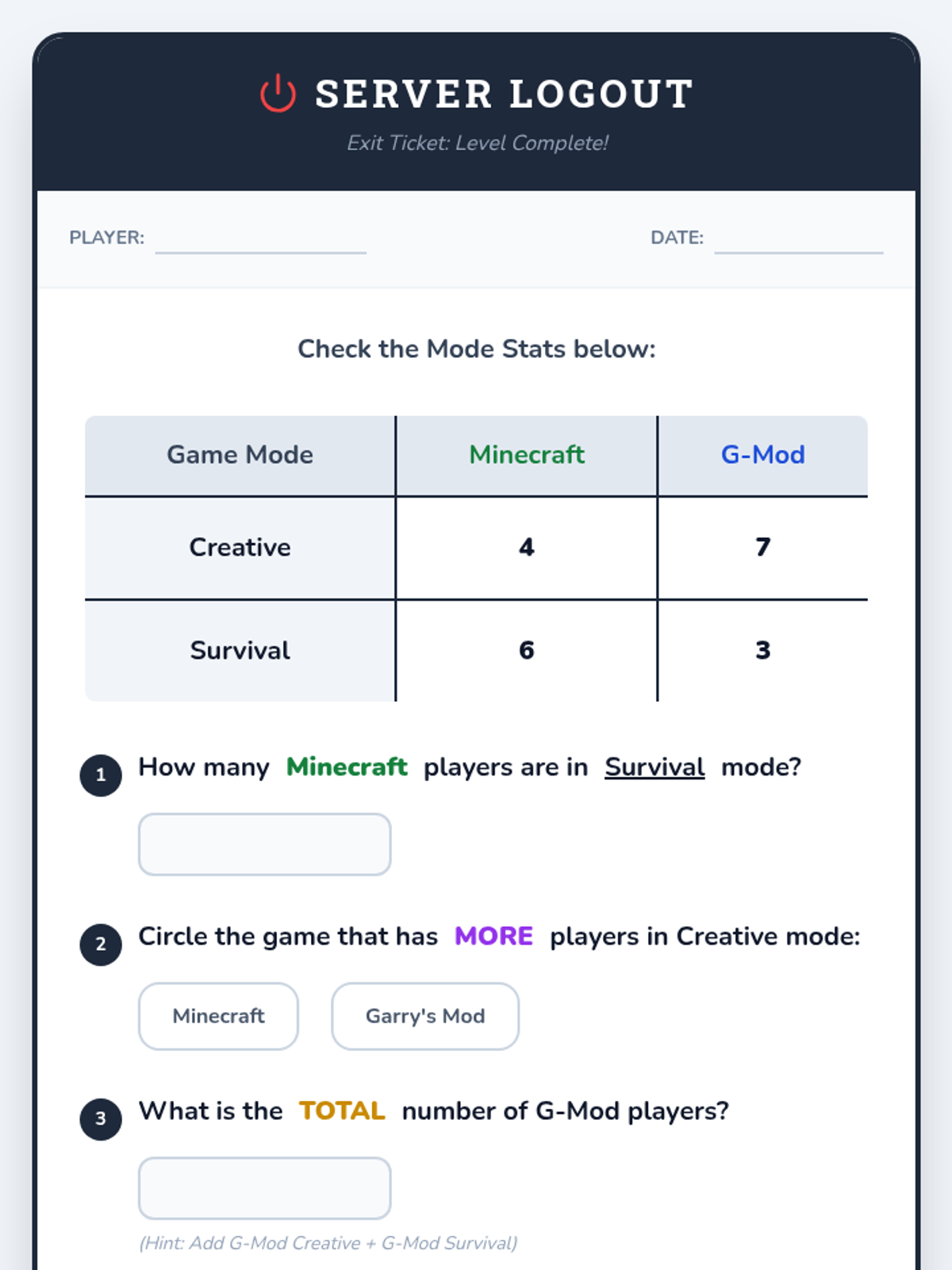
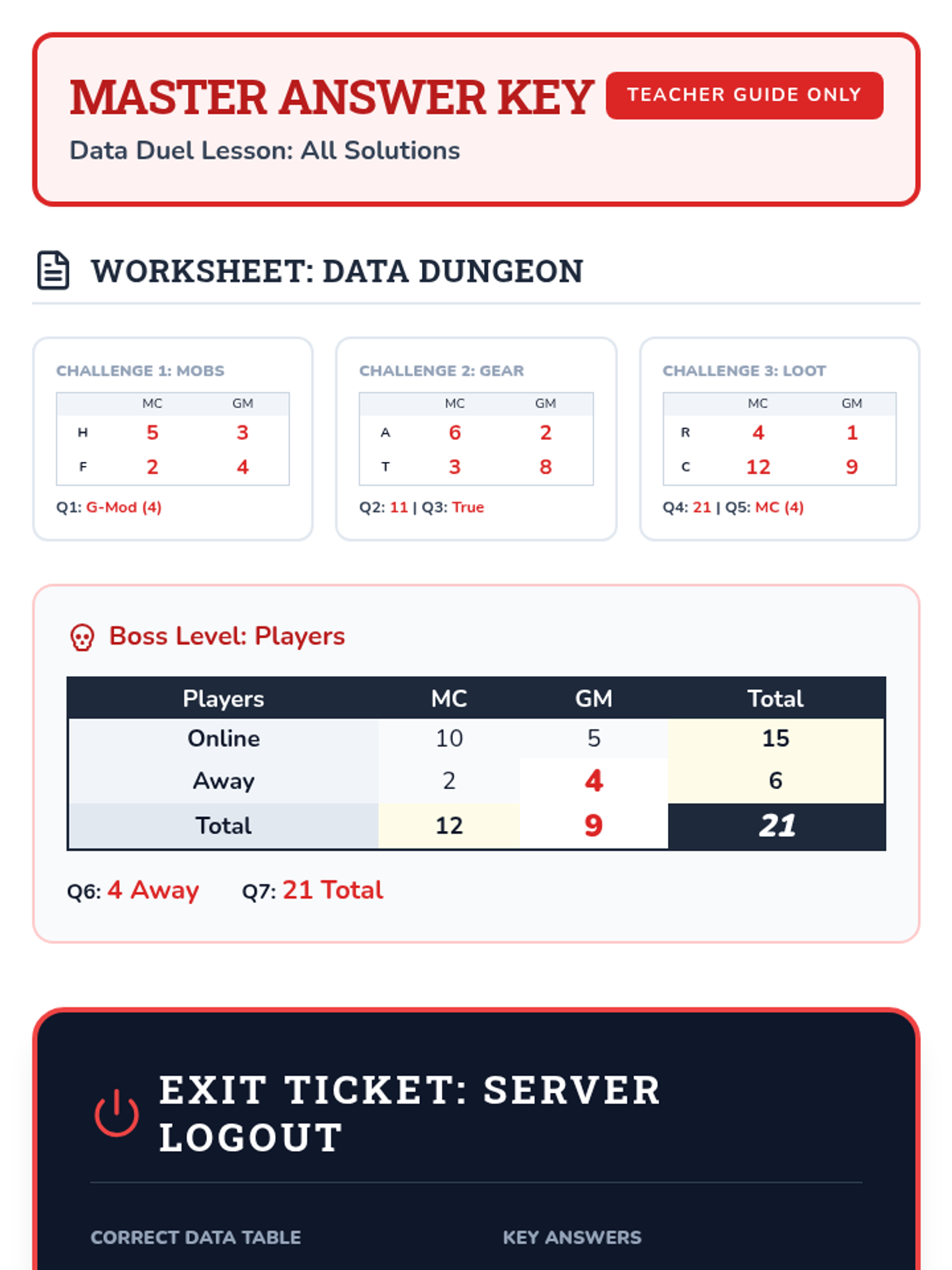
A visual, video-game themed lesson on two-way frequency tables designed for 8th-grade special education students using Minecraft and Garry's Mod examples.
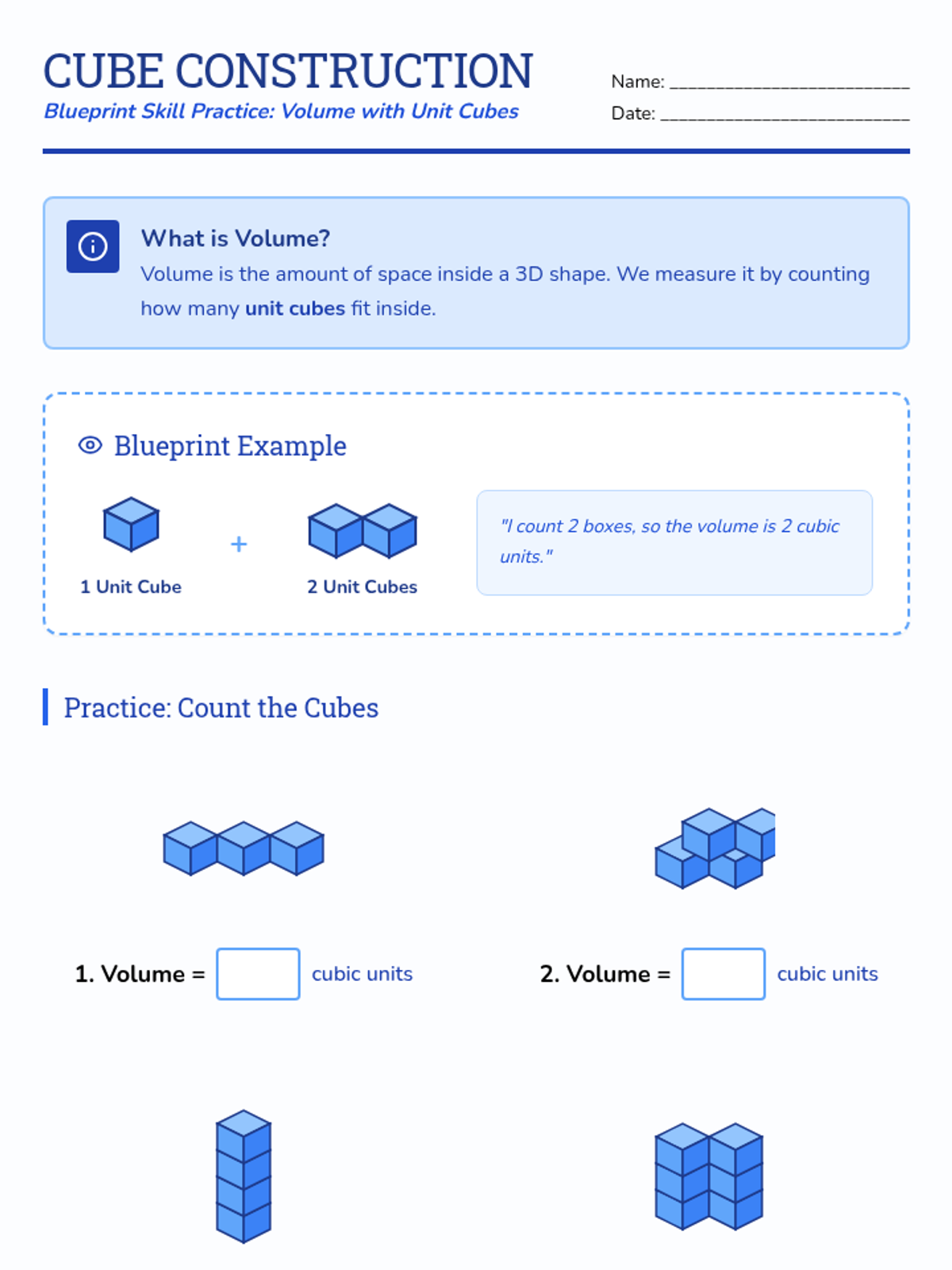
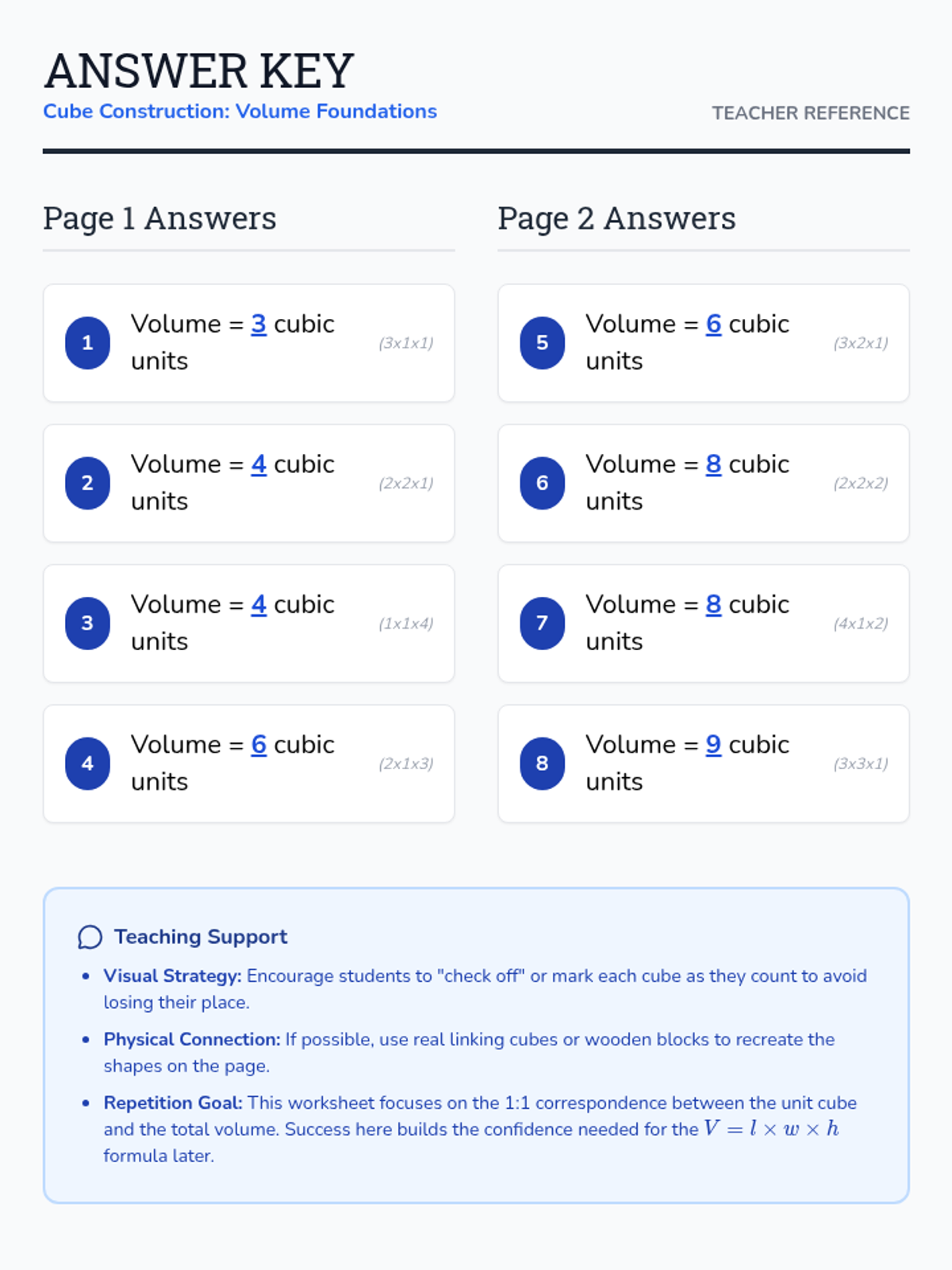
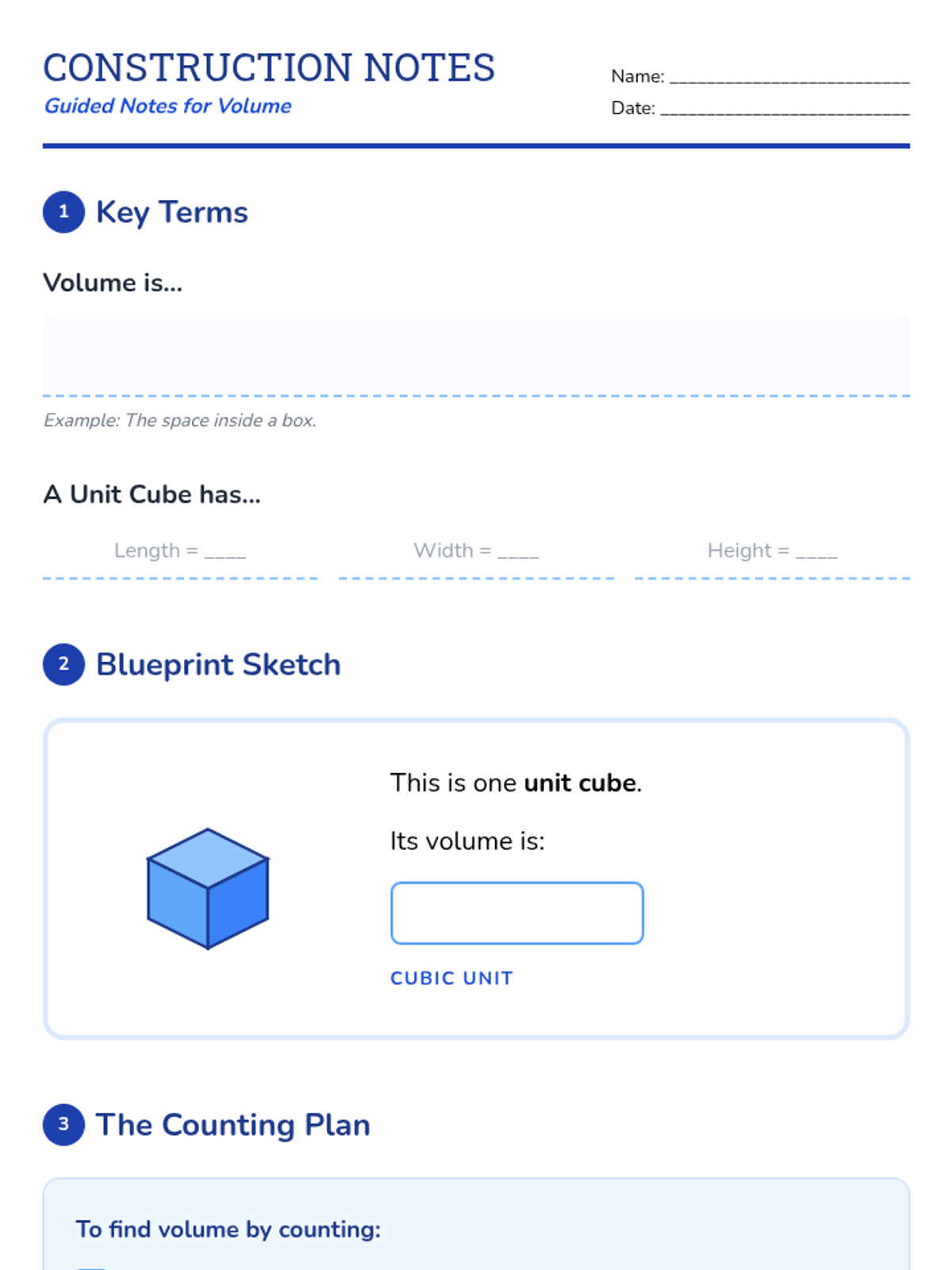
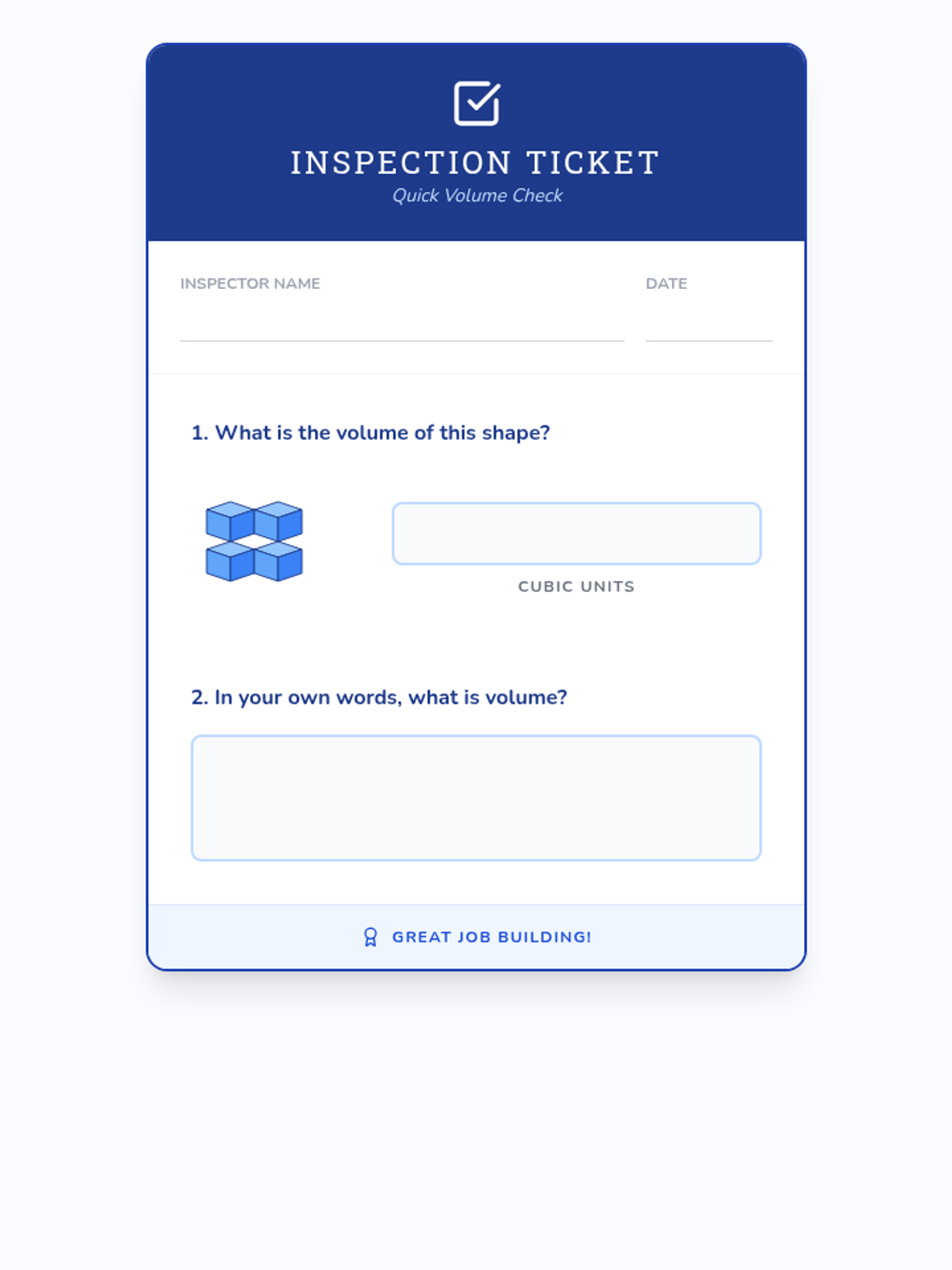
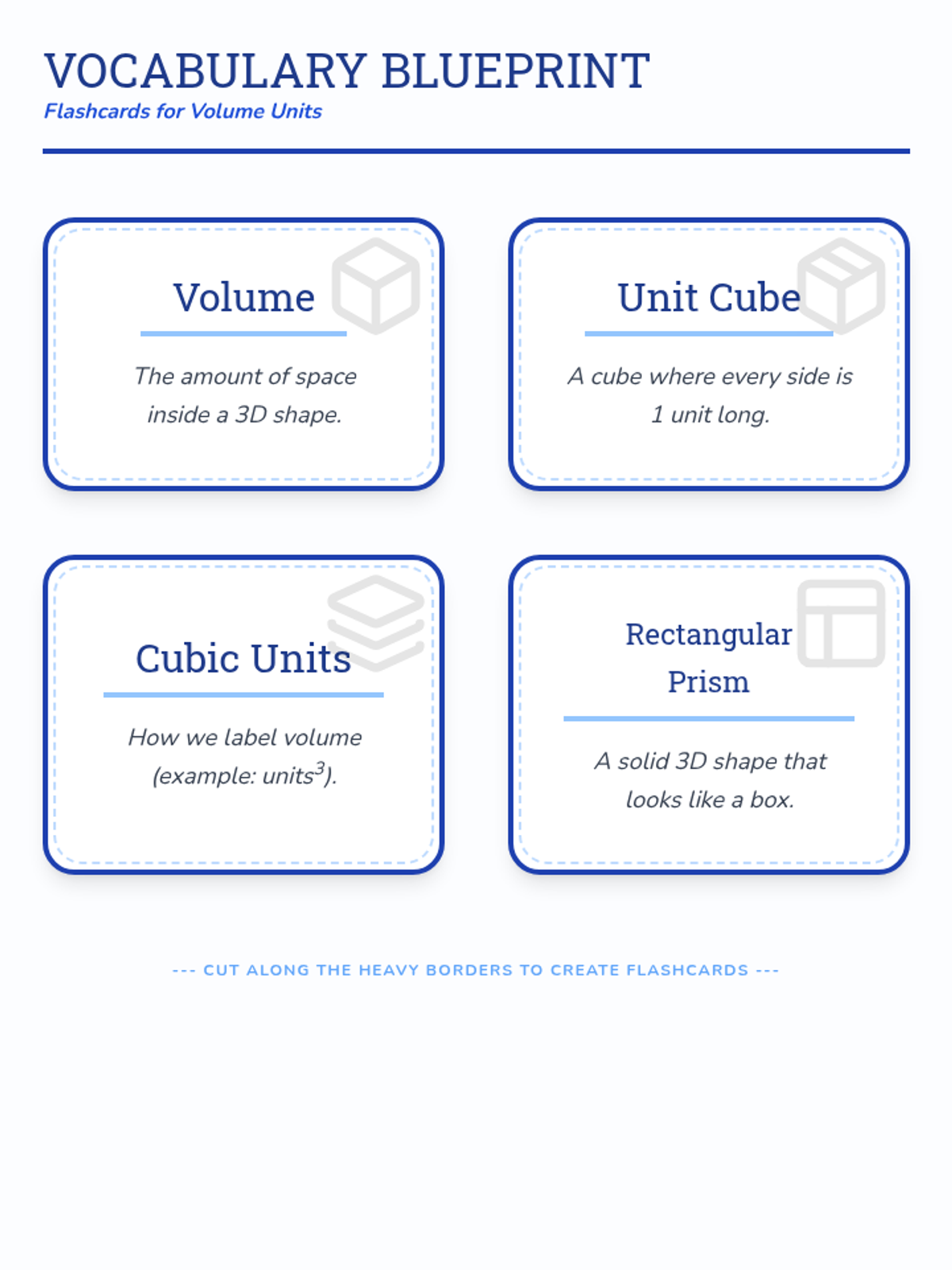
A lesson focused on developing a foundational understanding of volume by counting unit cubes within rectangular prisms, designed for students needing repetitive skill practice and clear visual support.
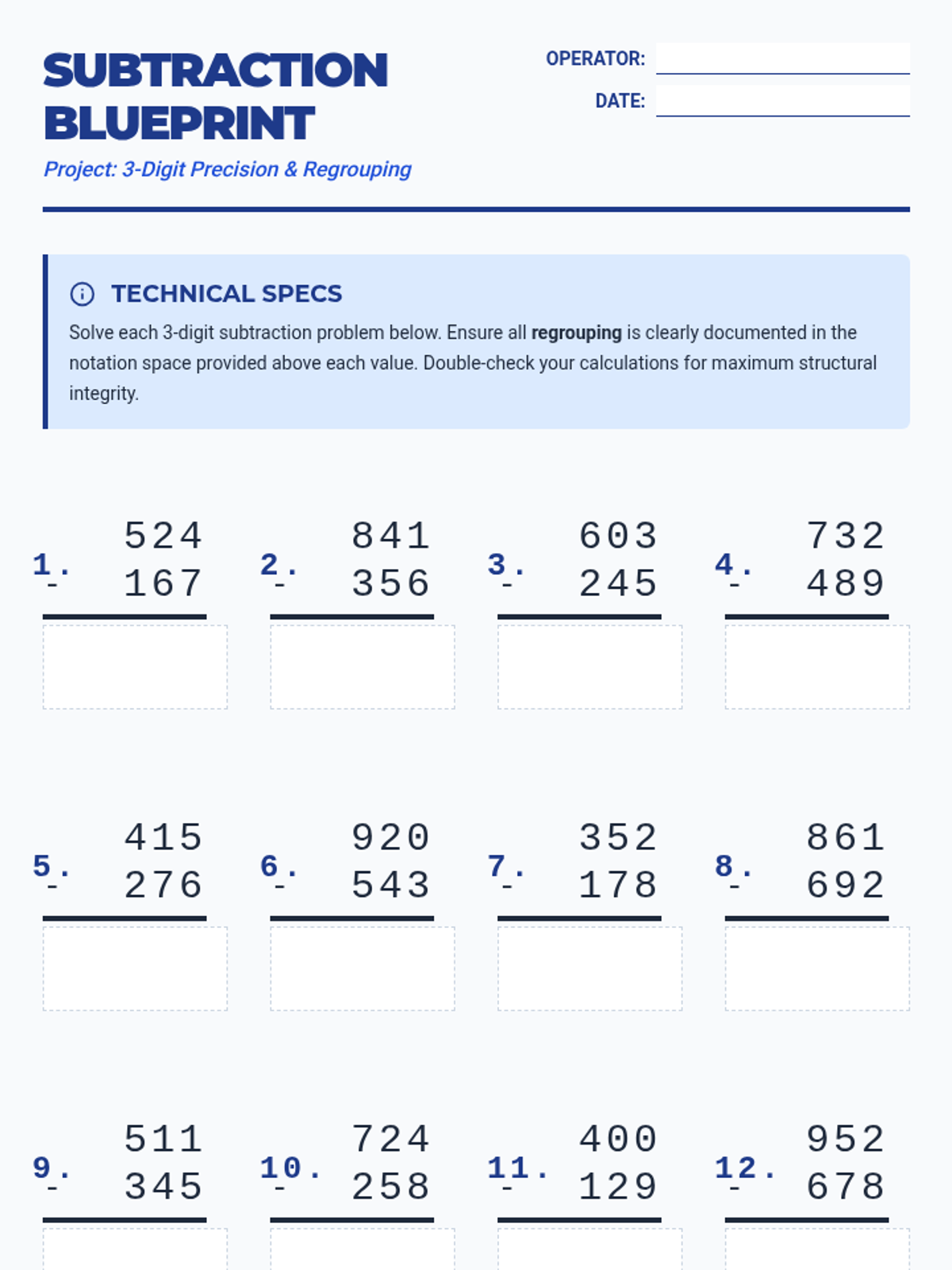
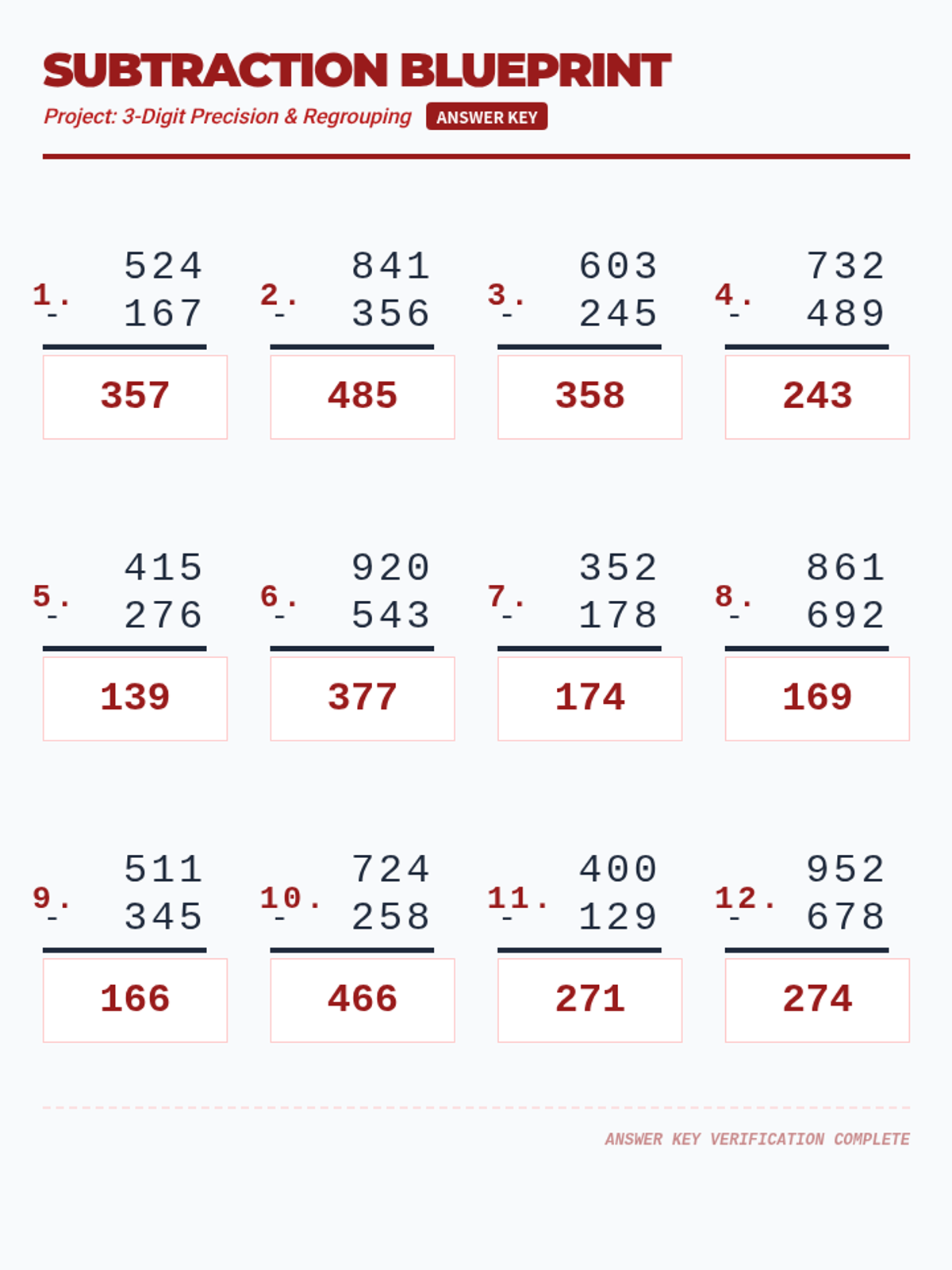
Students practice and master 3-digit subtraction with regrouping through targeted drill exercises.
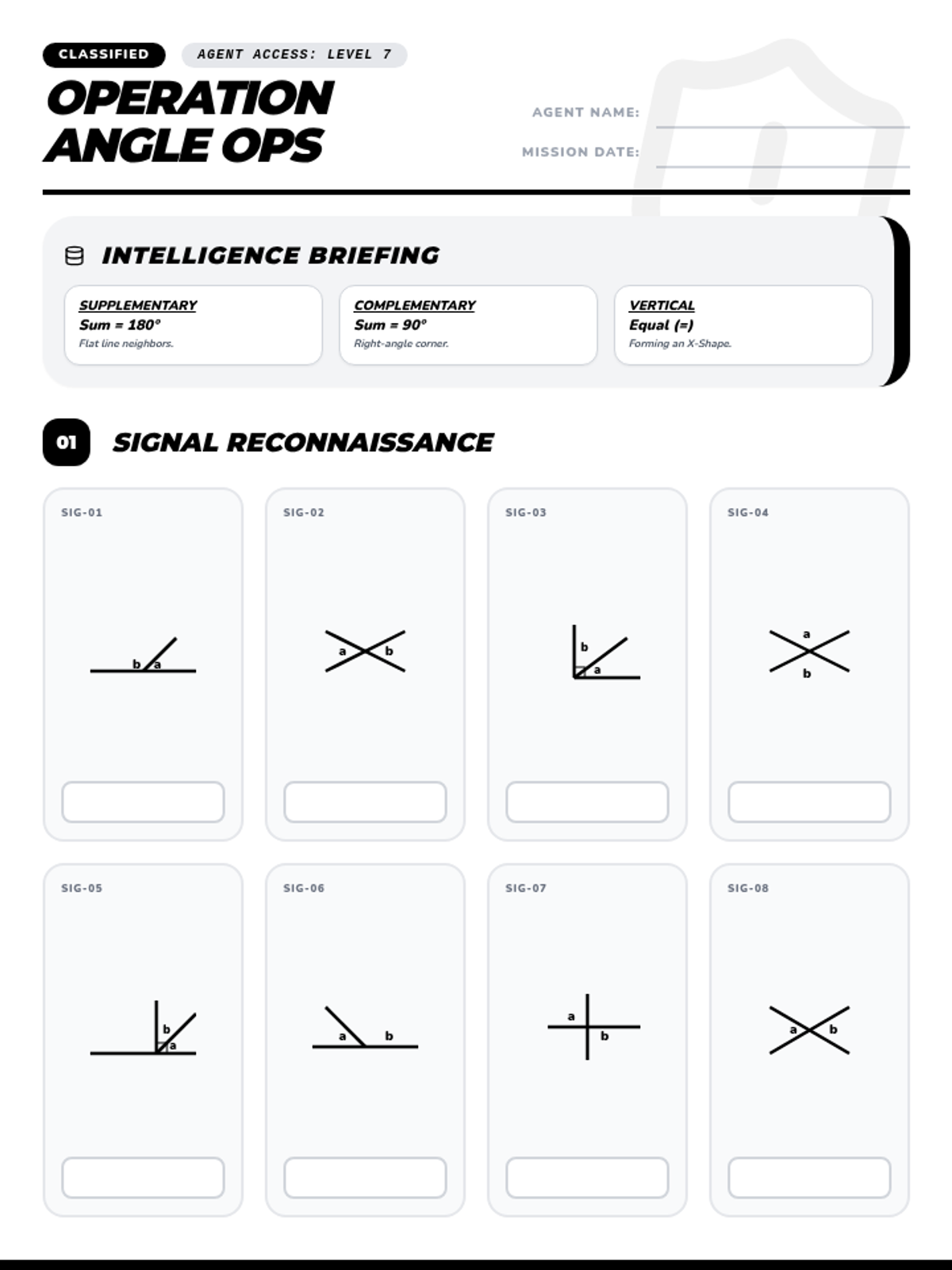
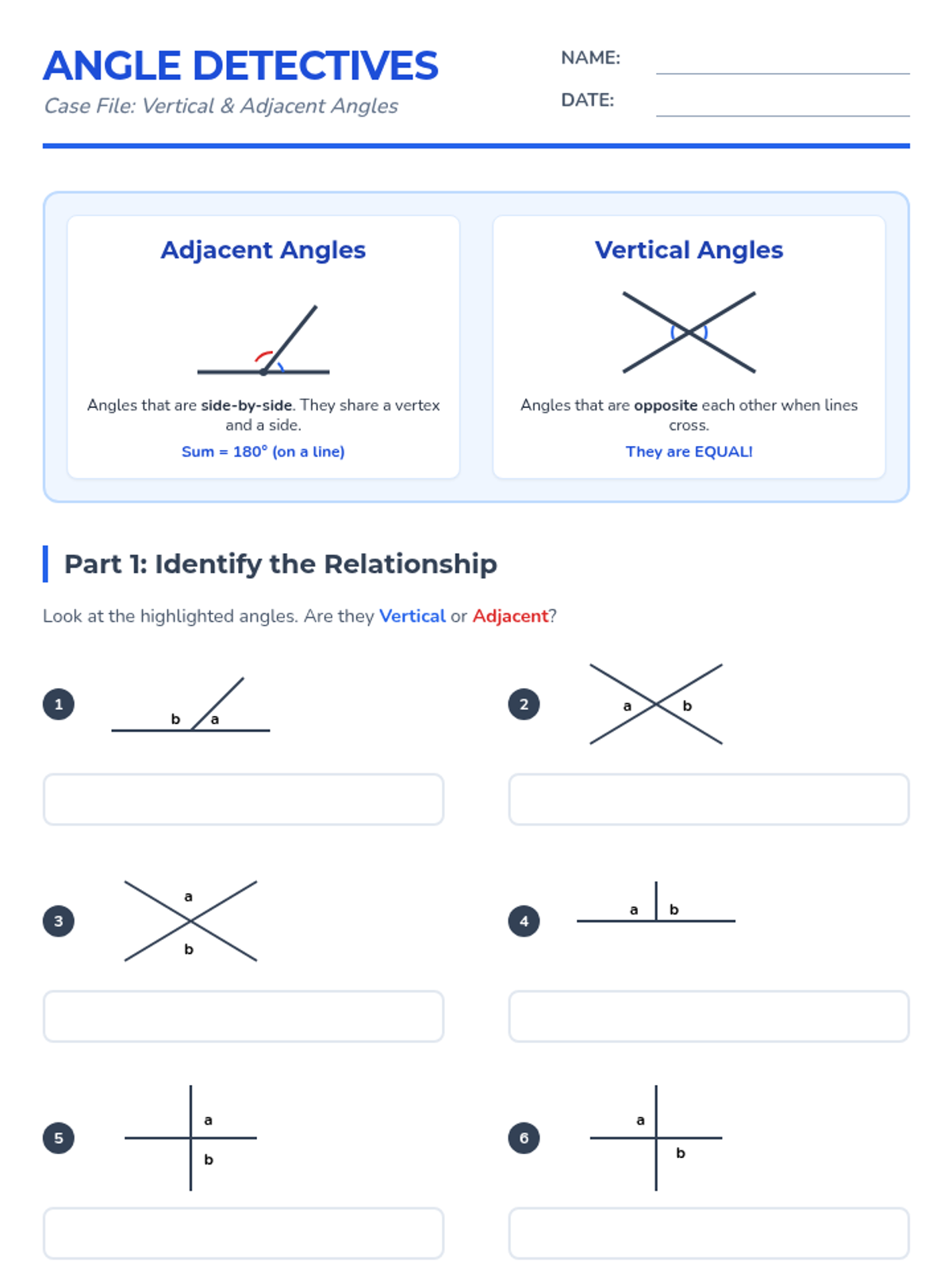
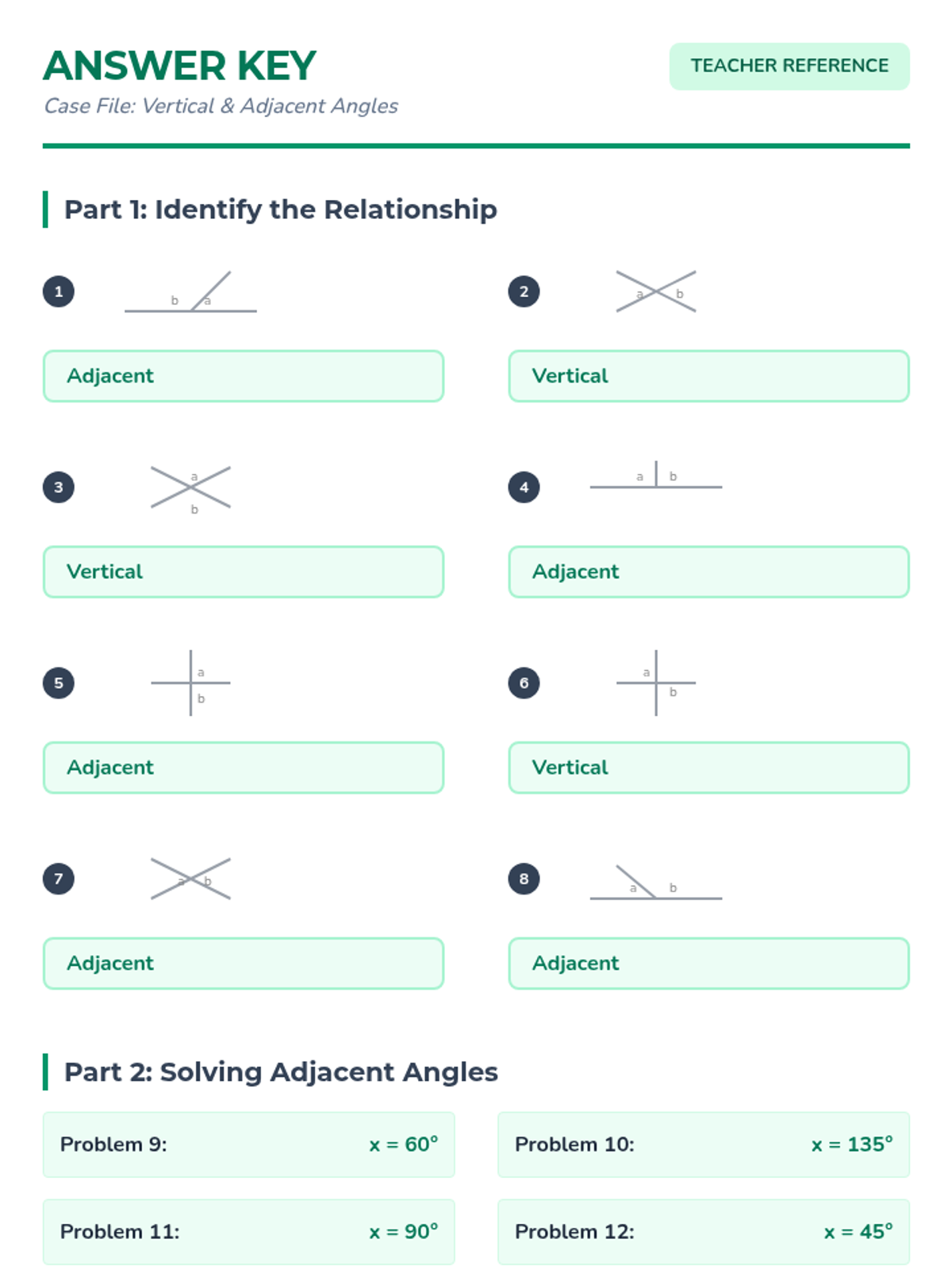
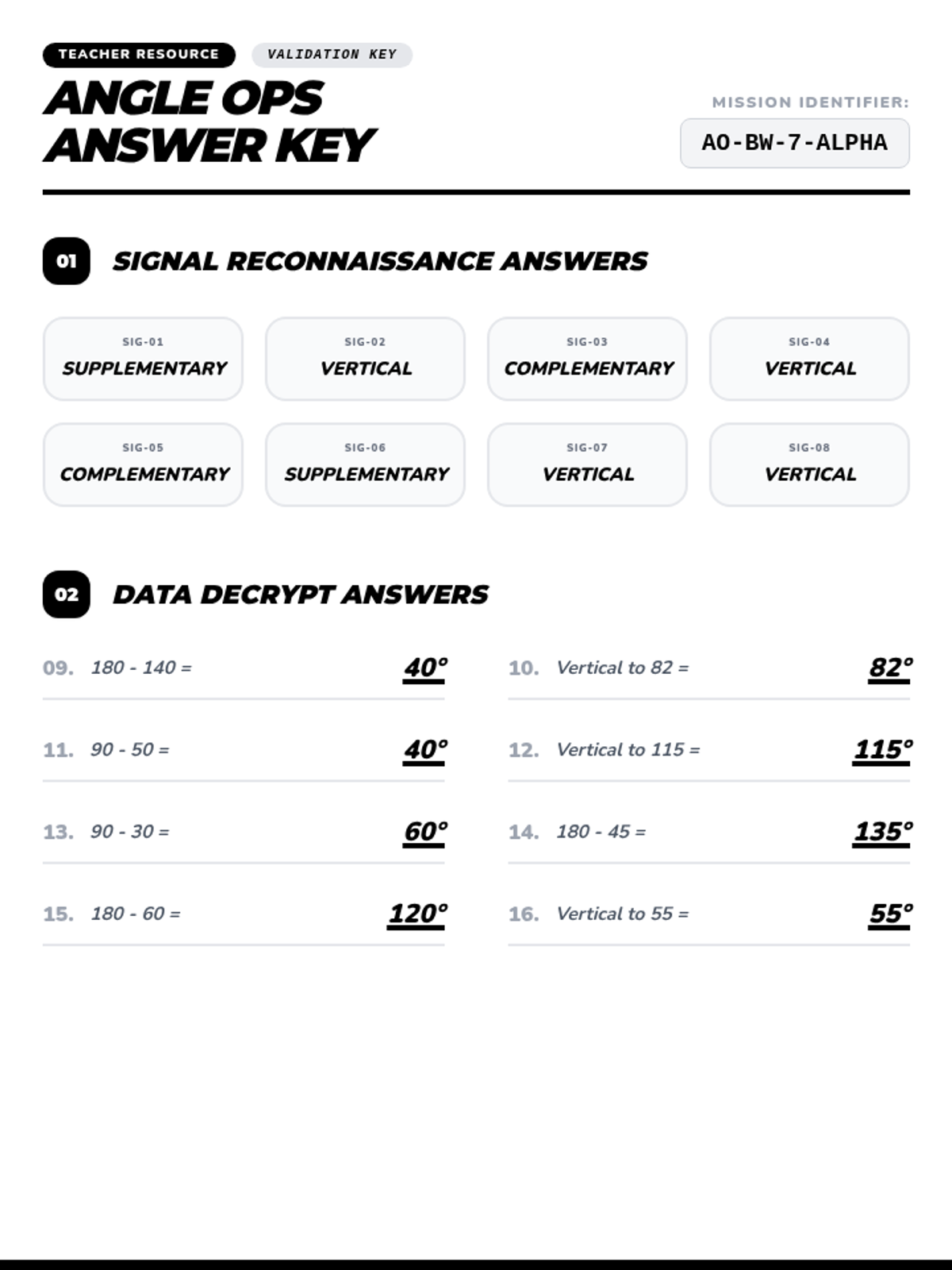
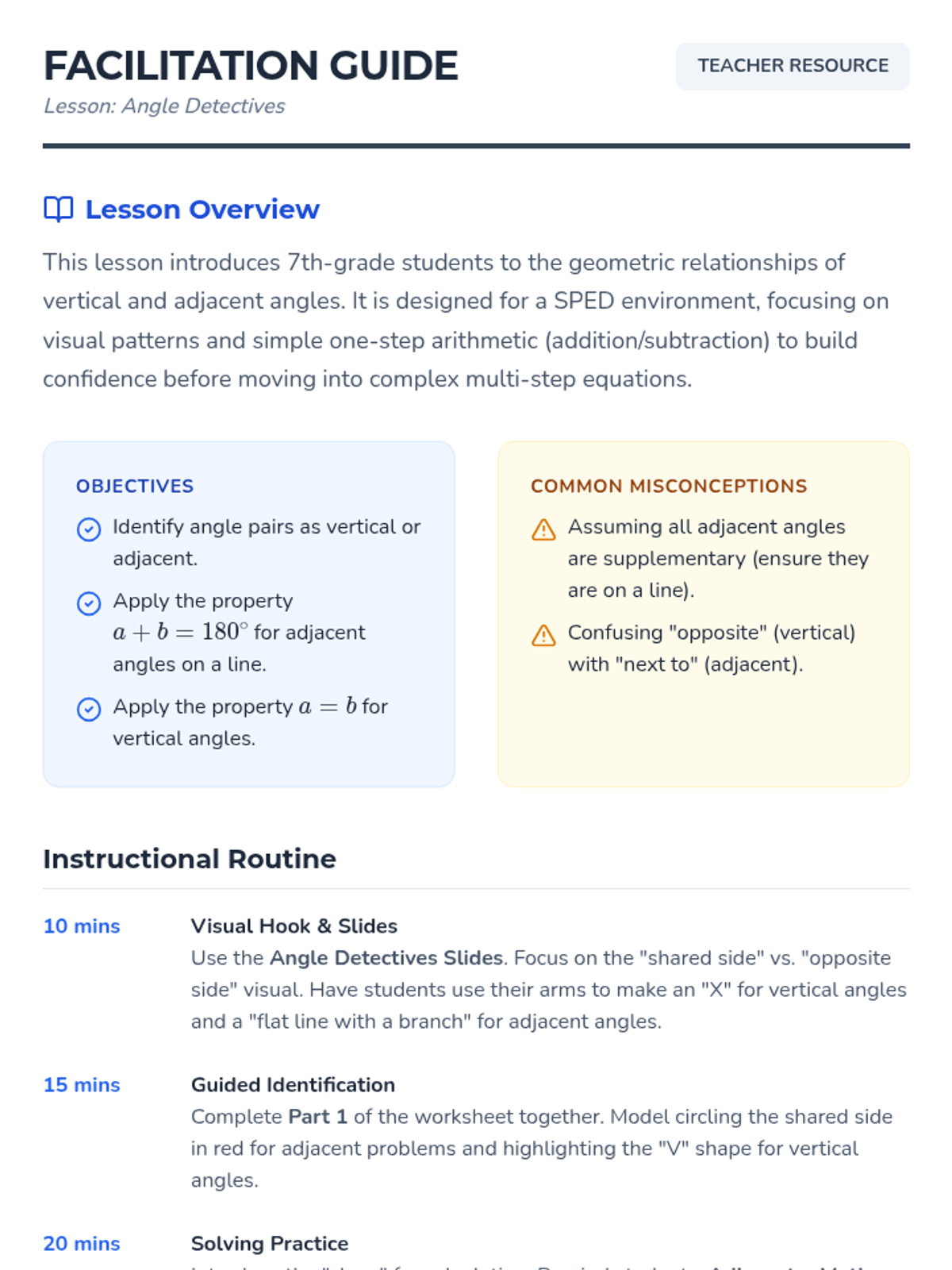
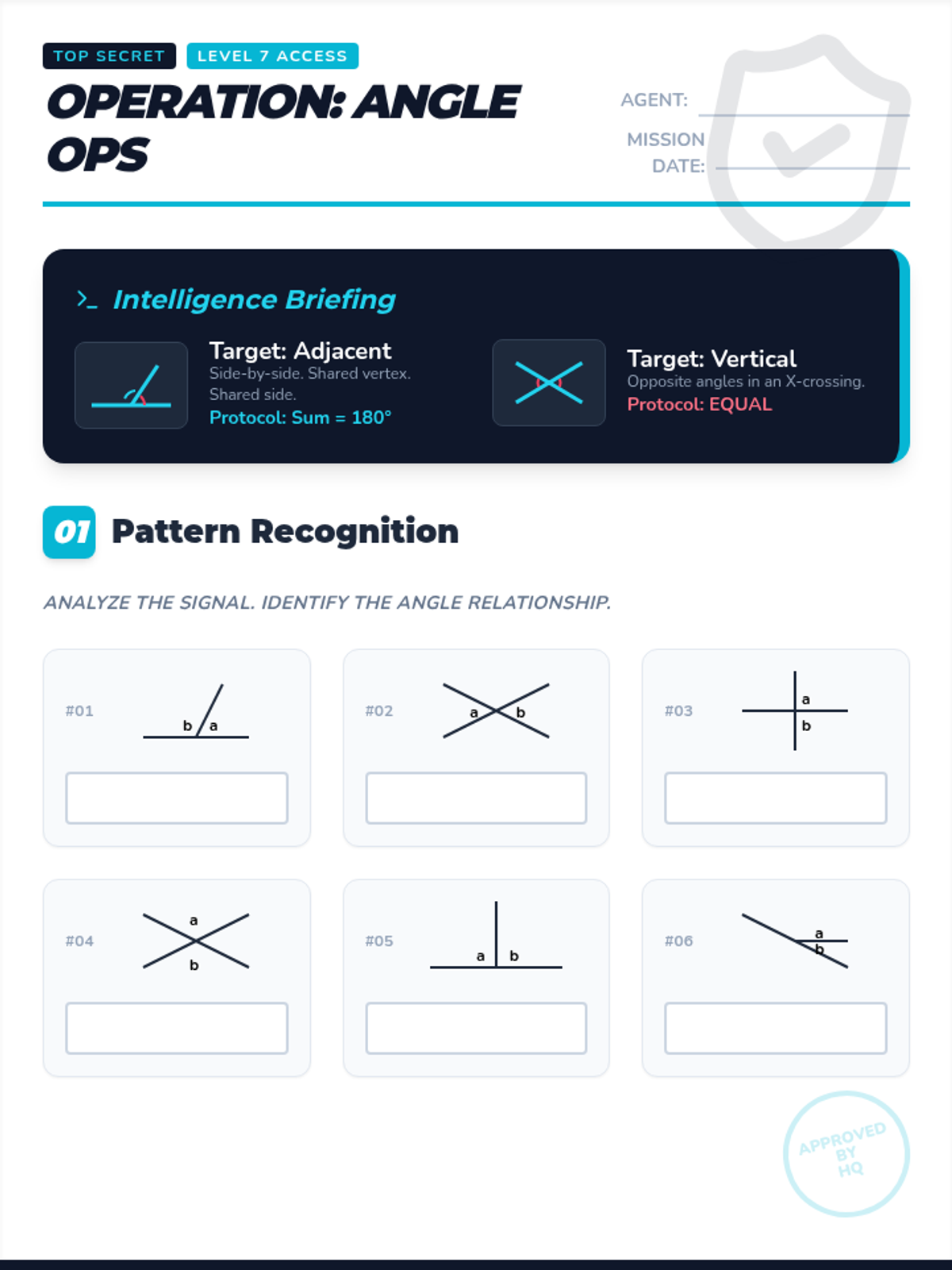
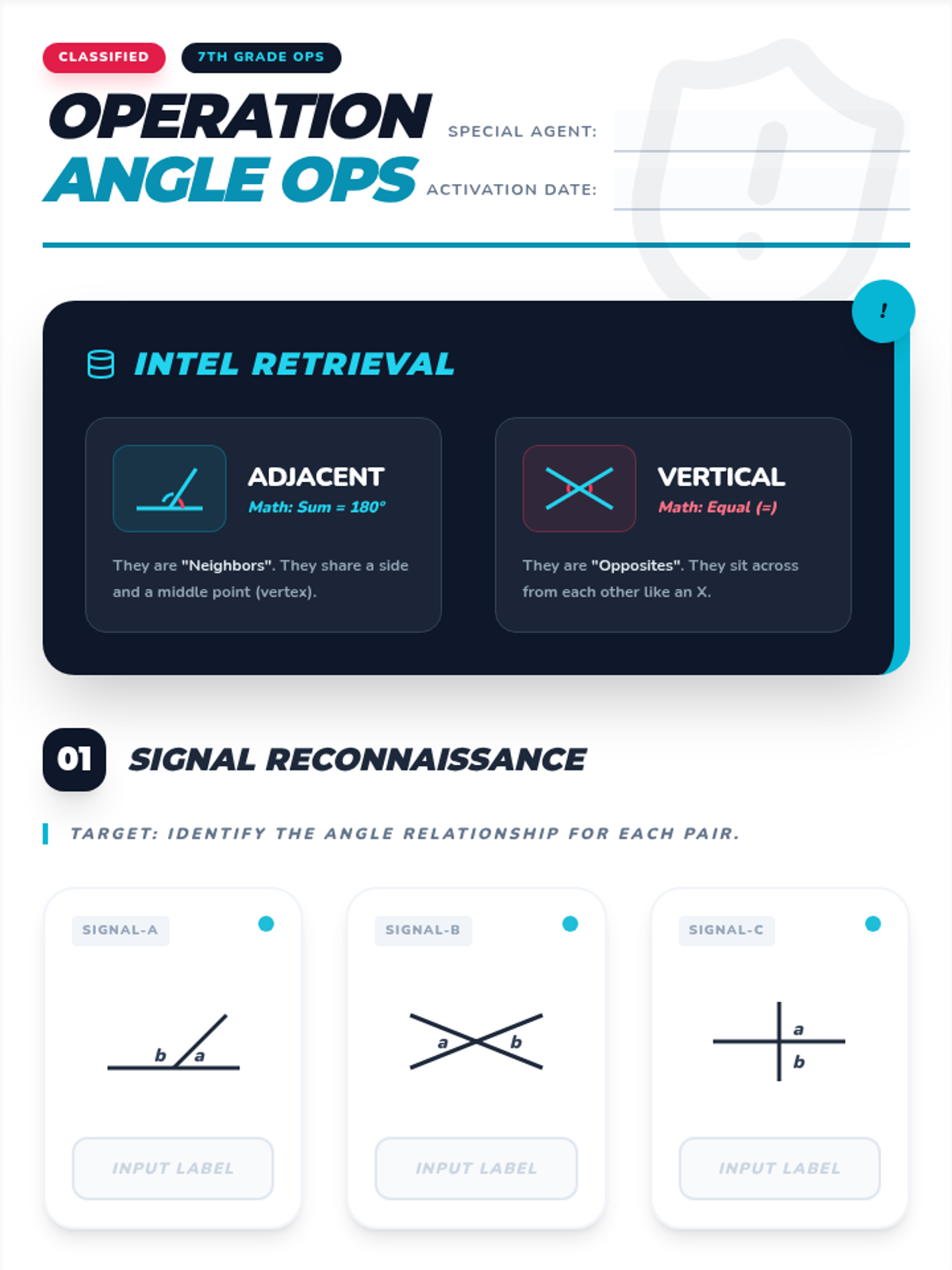
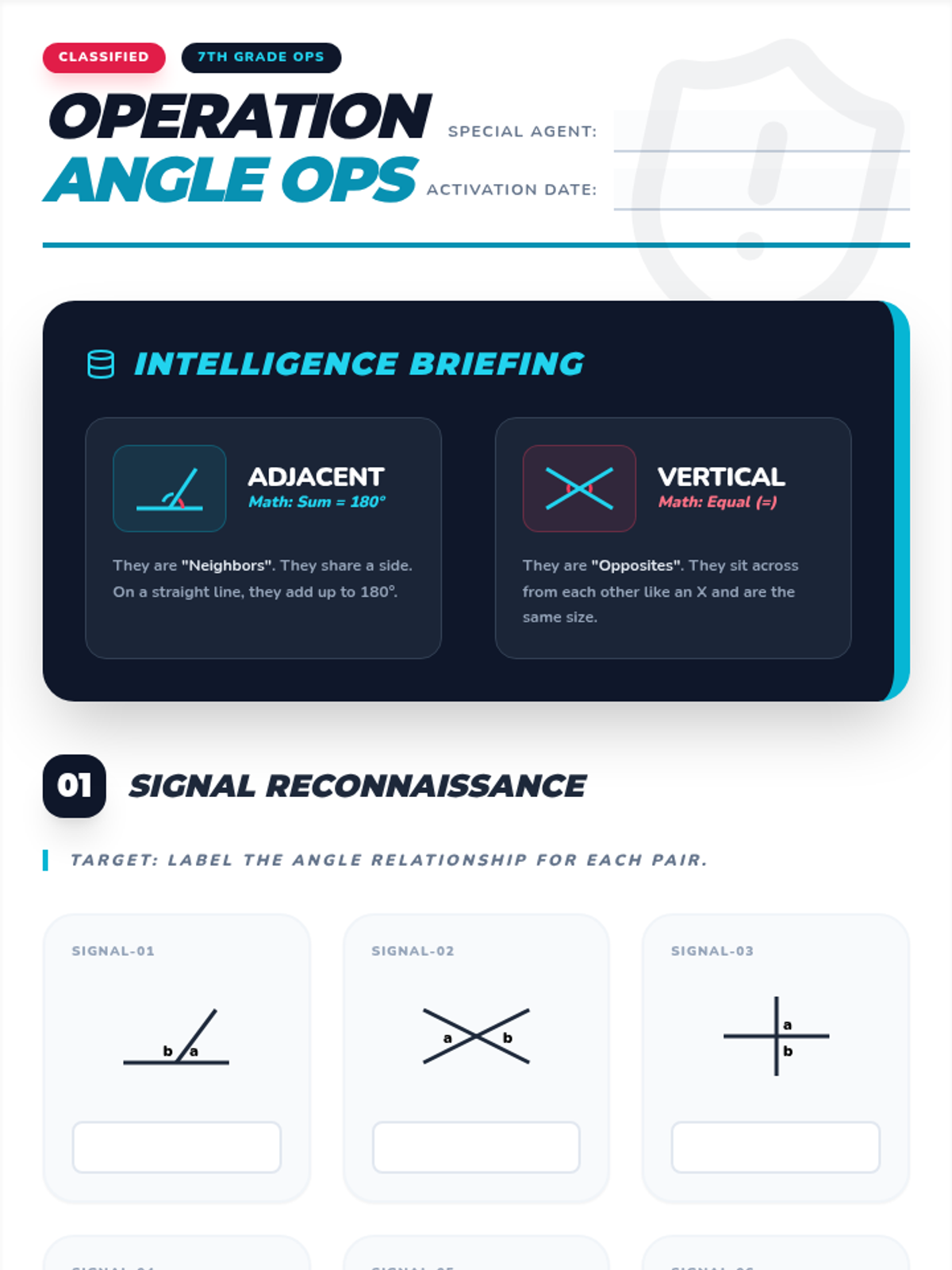
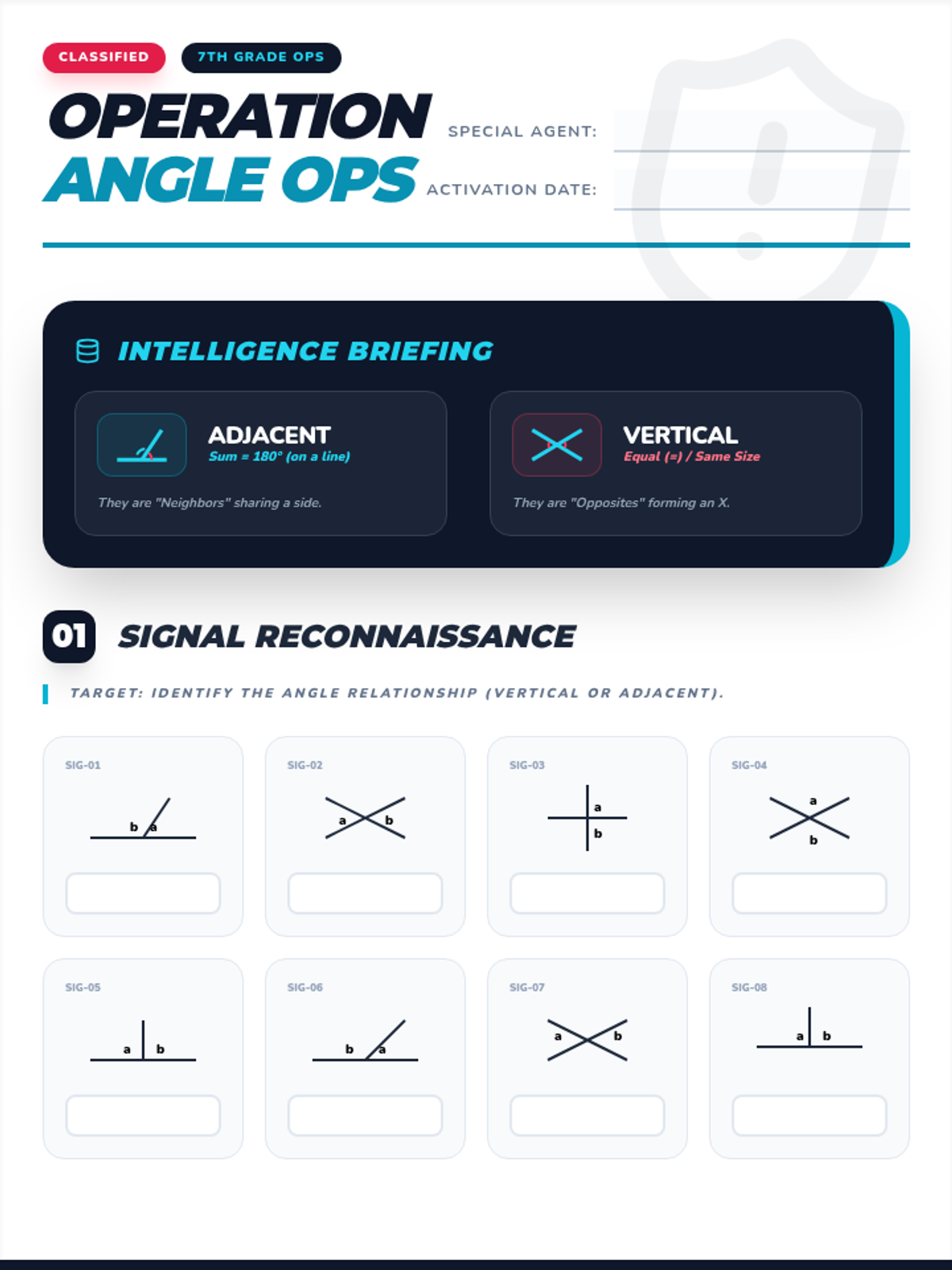
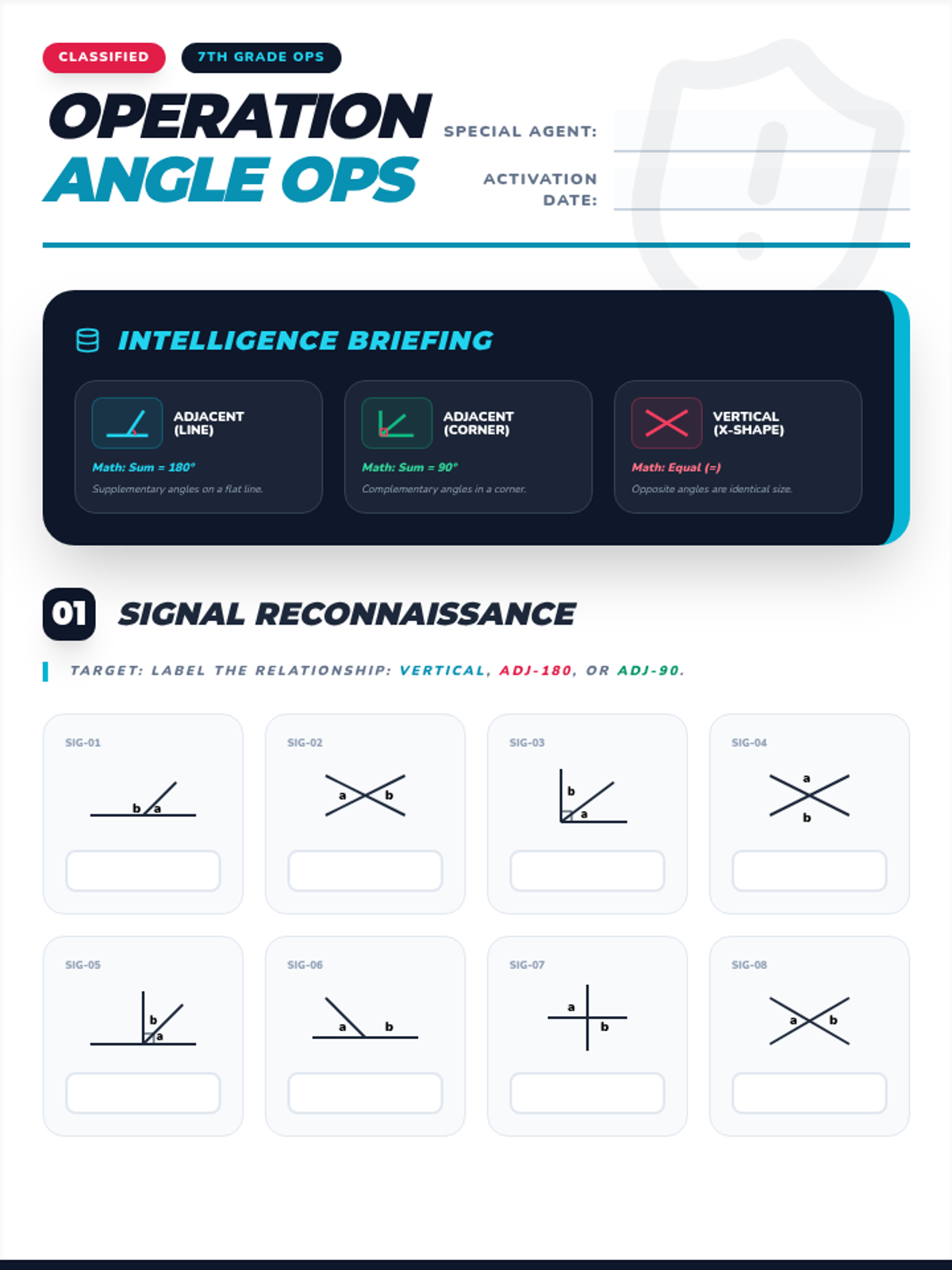
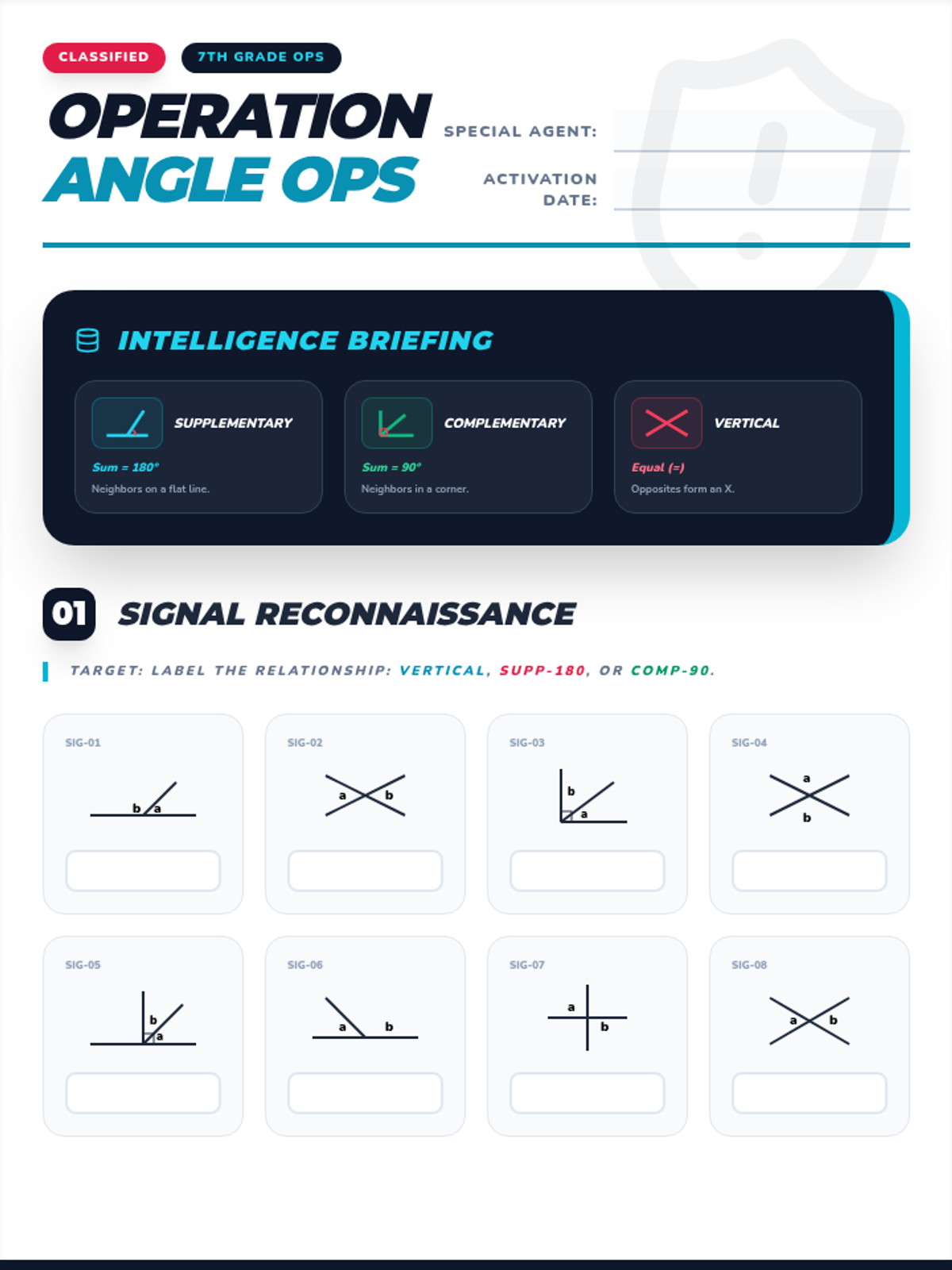
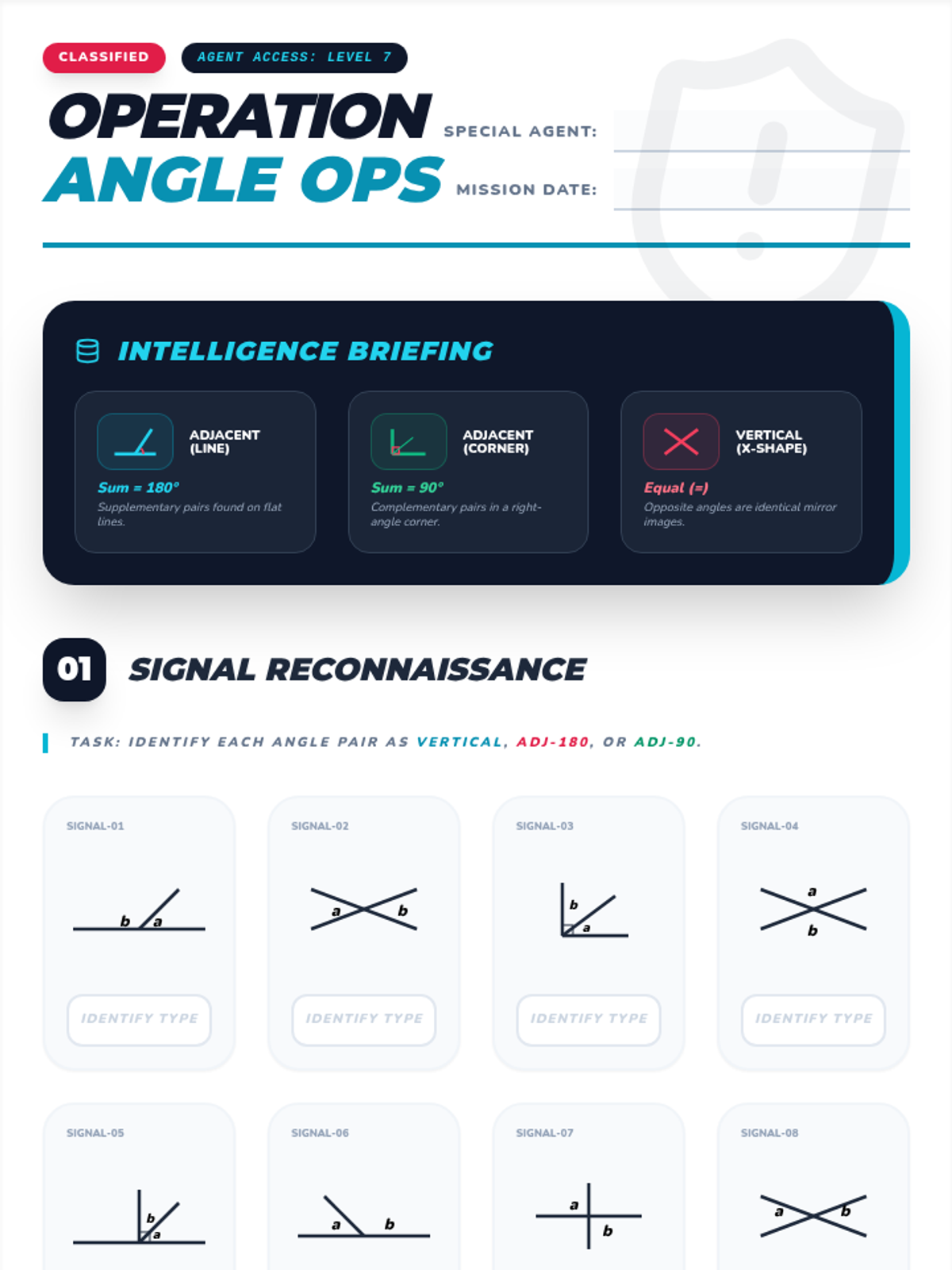
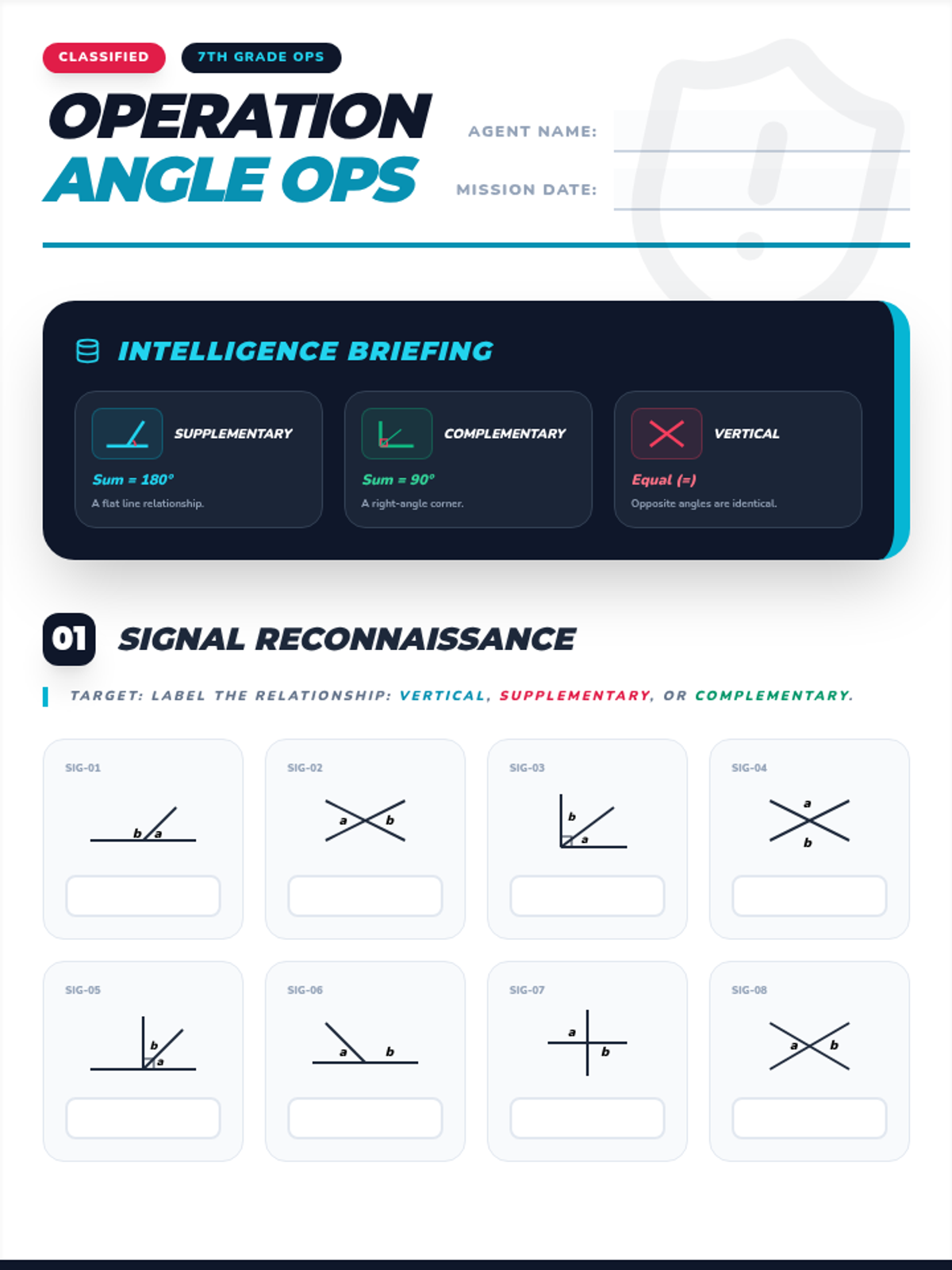
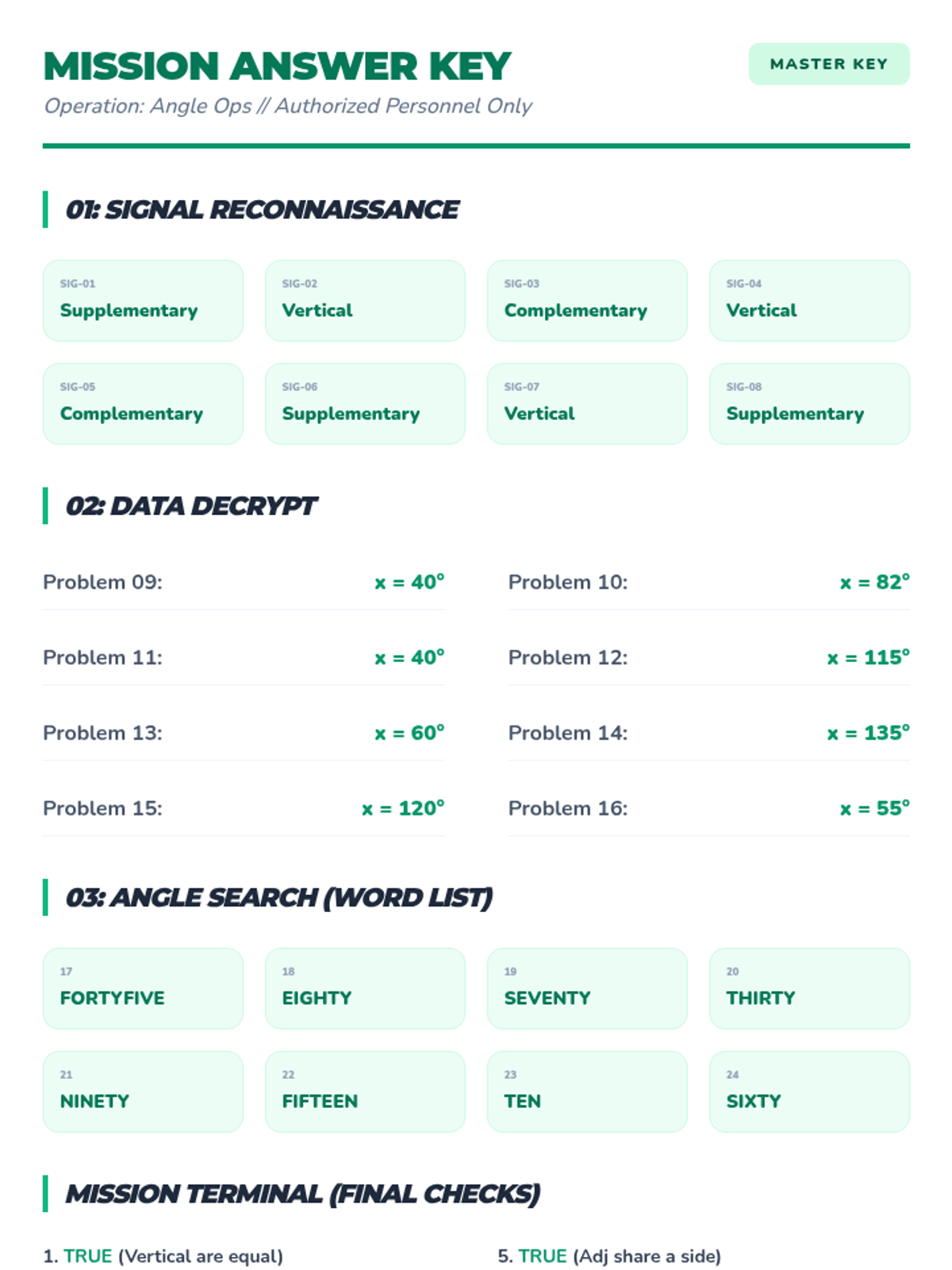
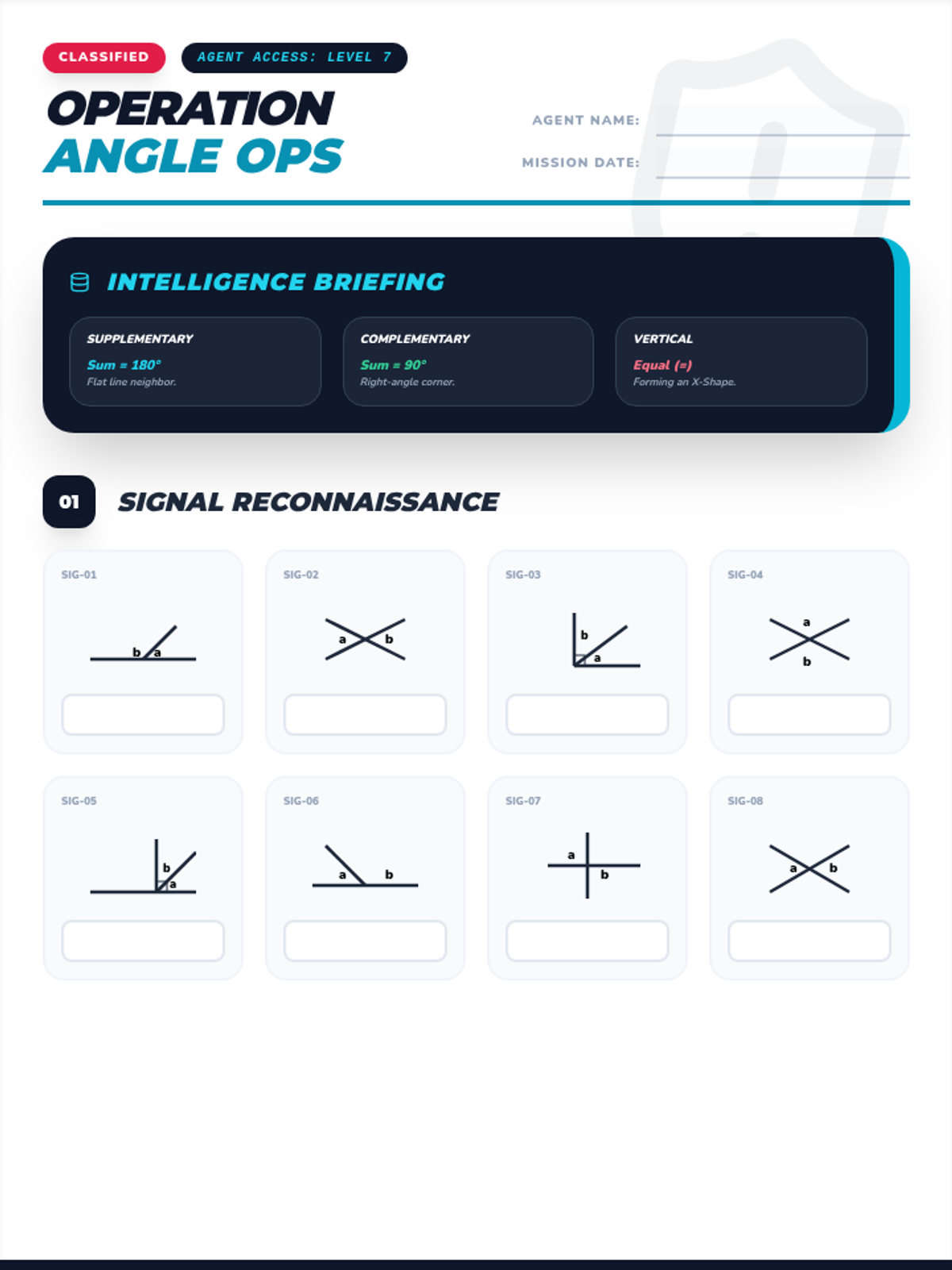
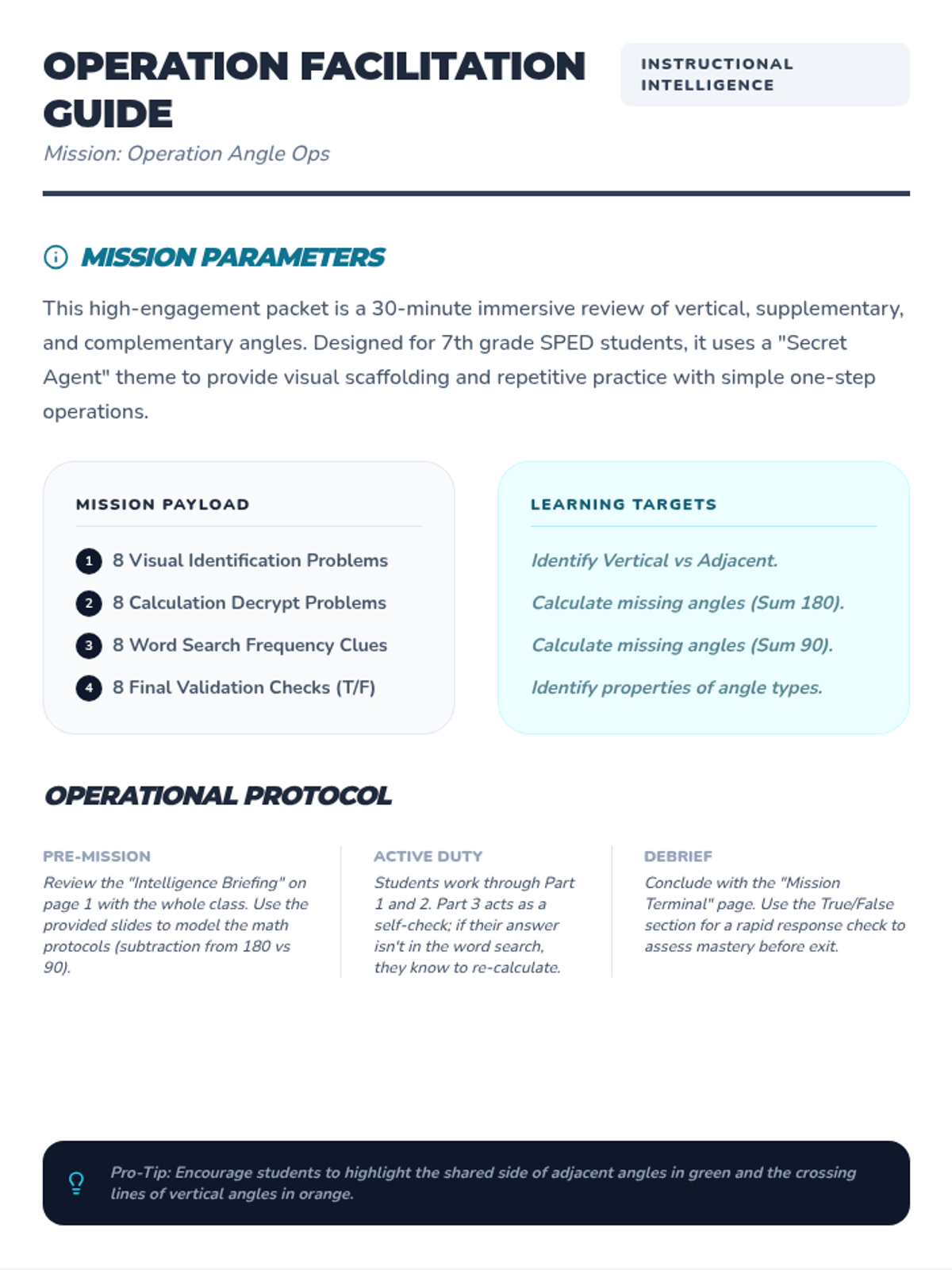
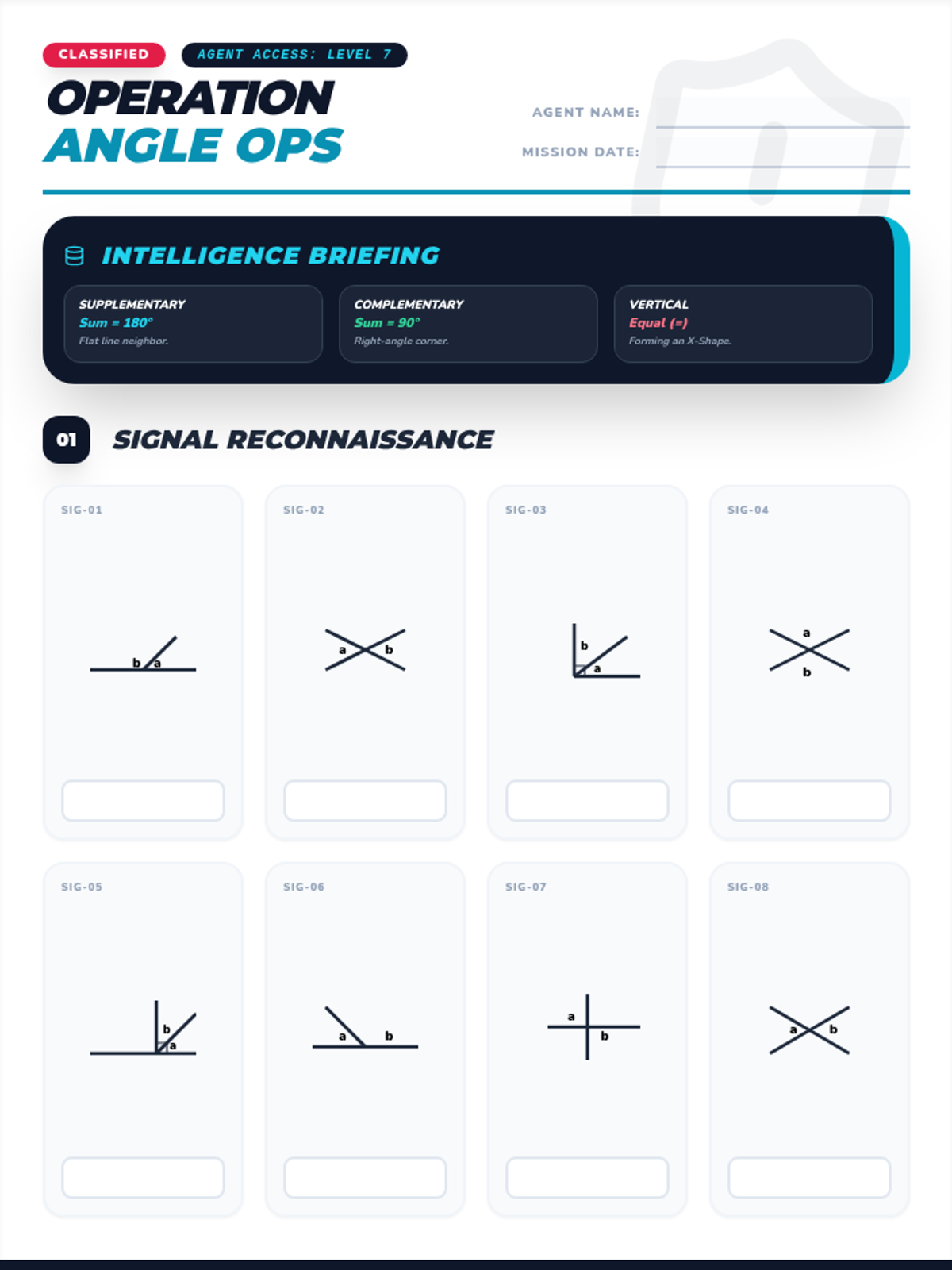
This lesson focuses on identifying and calculating measures for vertical and adjacent angles using simple one-step equations, designed specifically for learners who benefit from clear visual scaffolding.
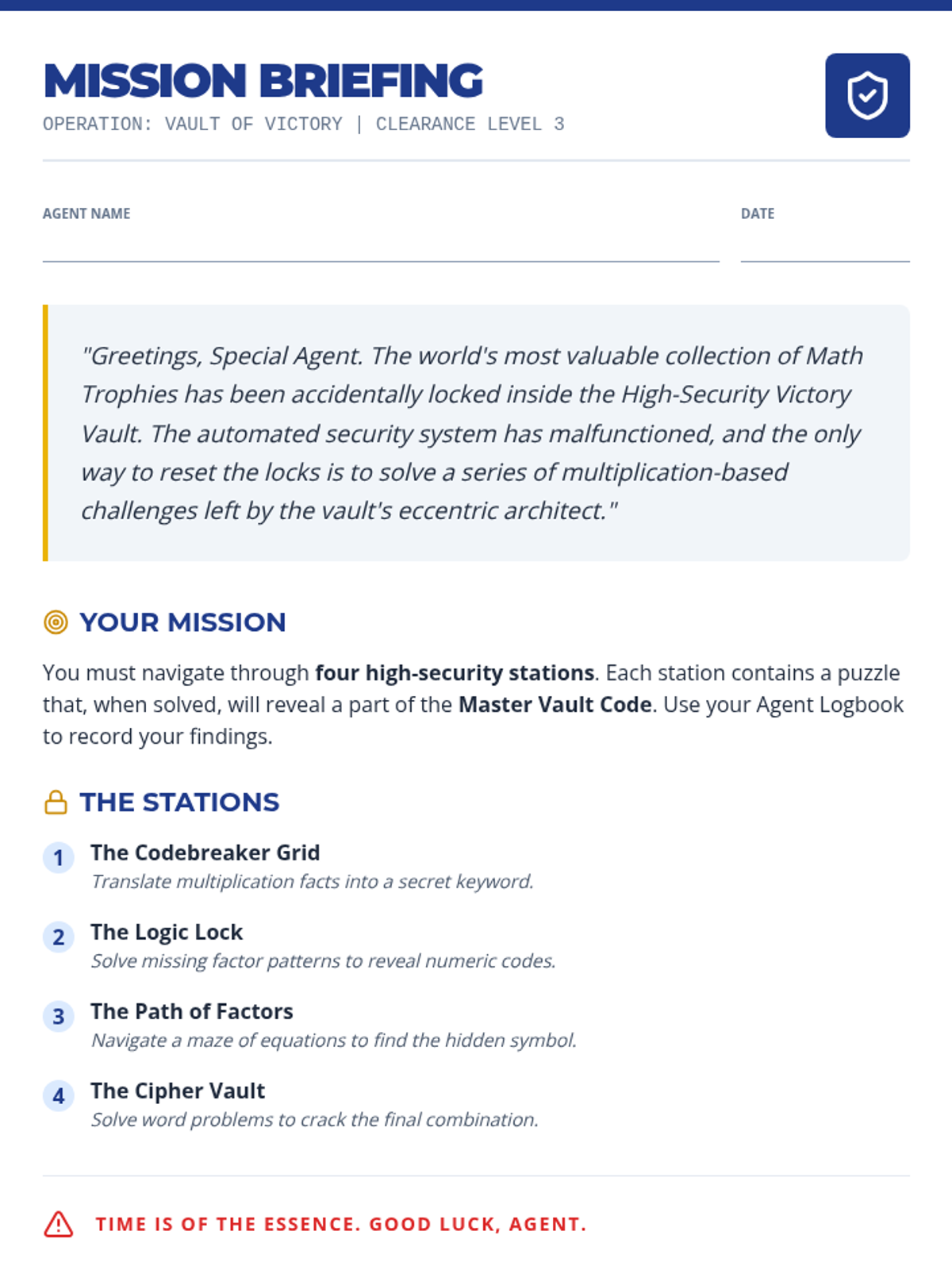
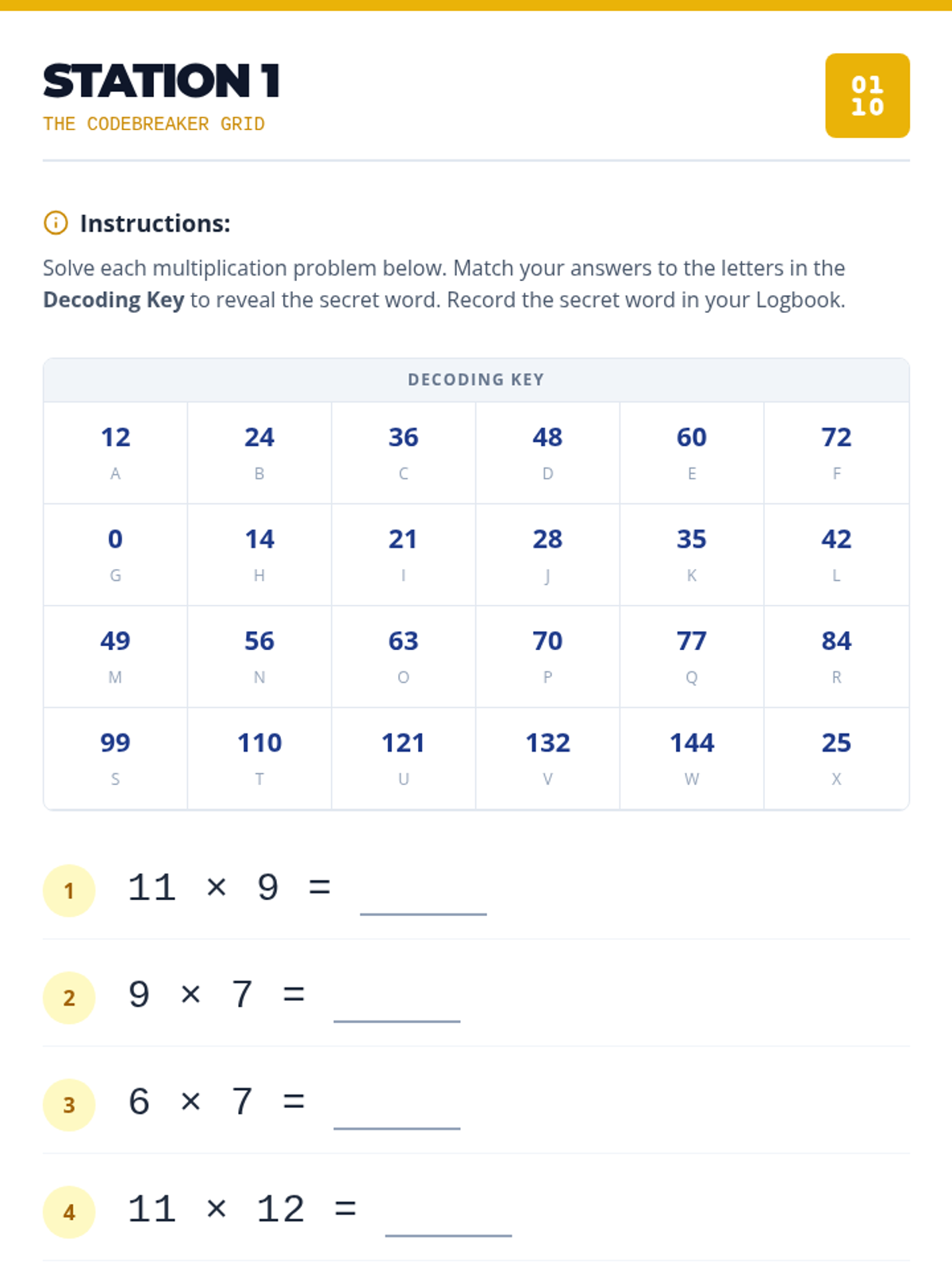
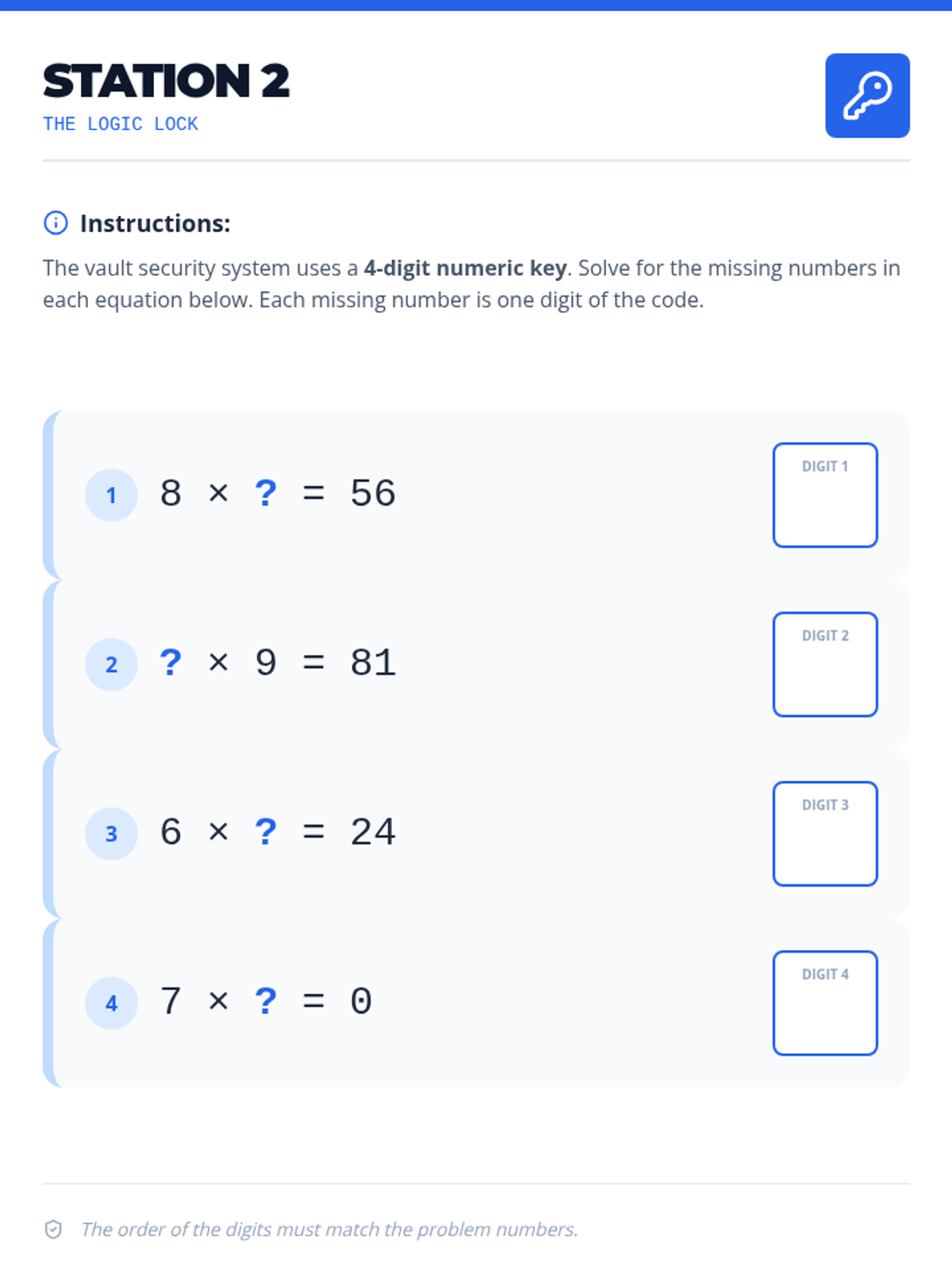
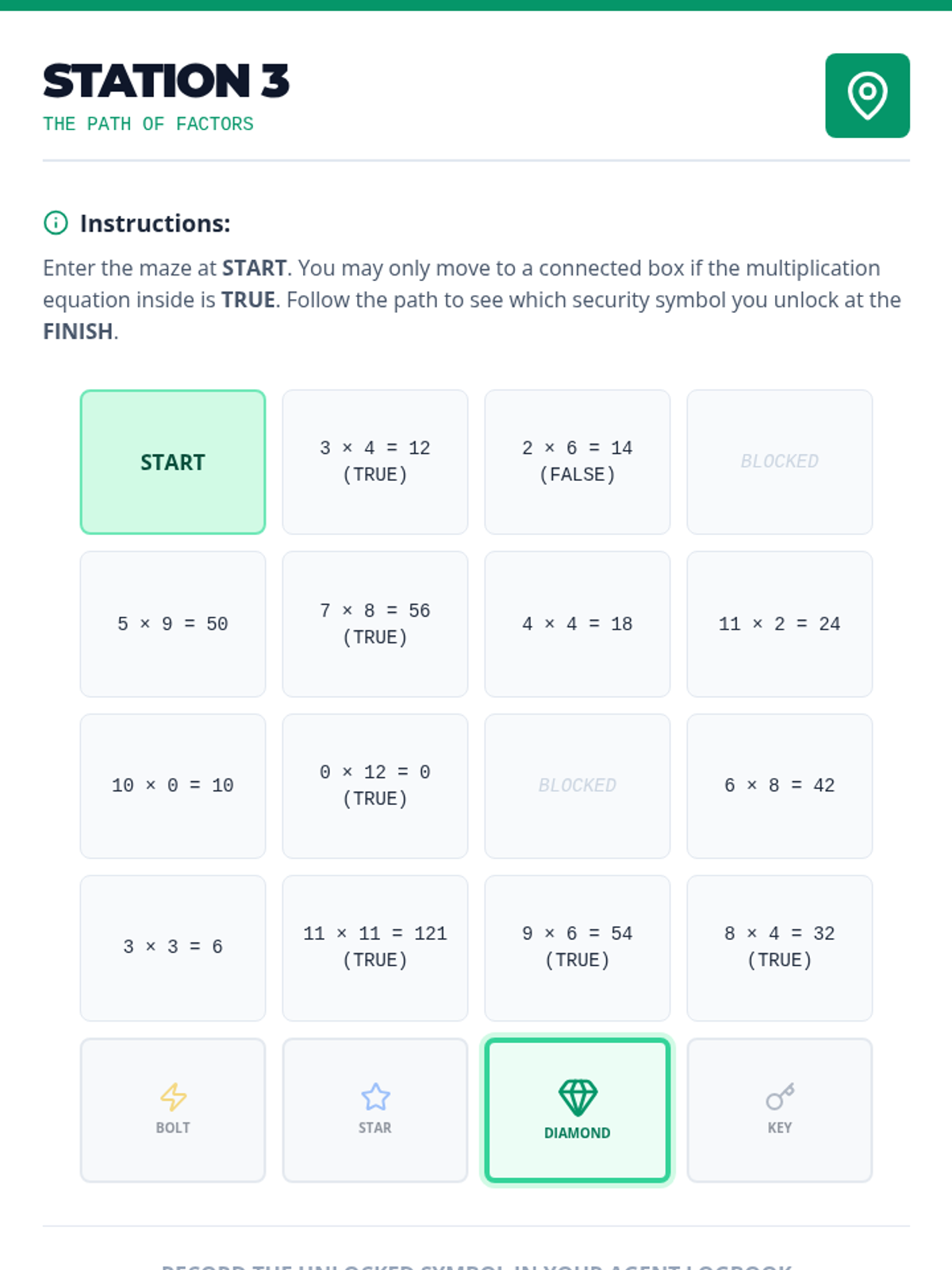
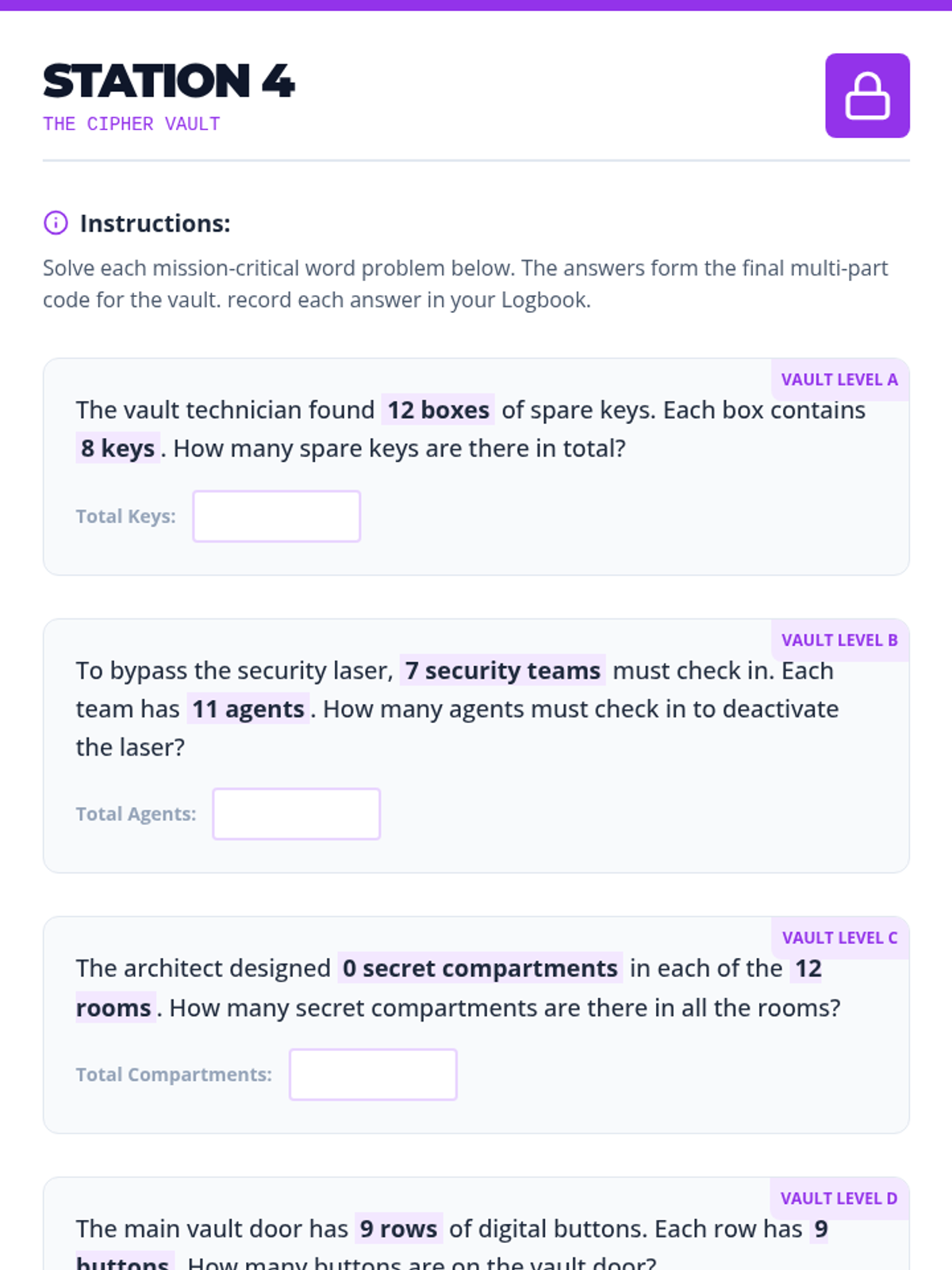
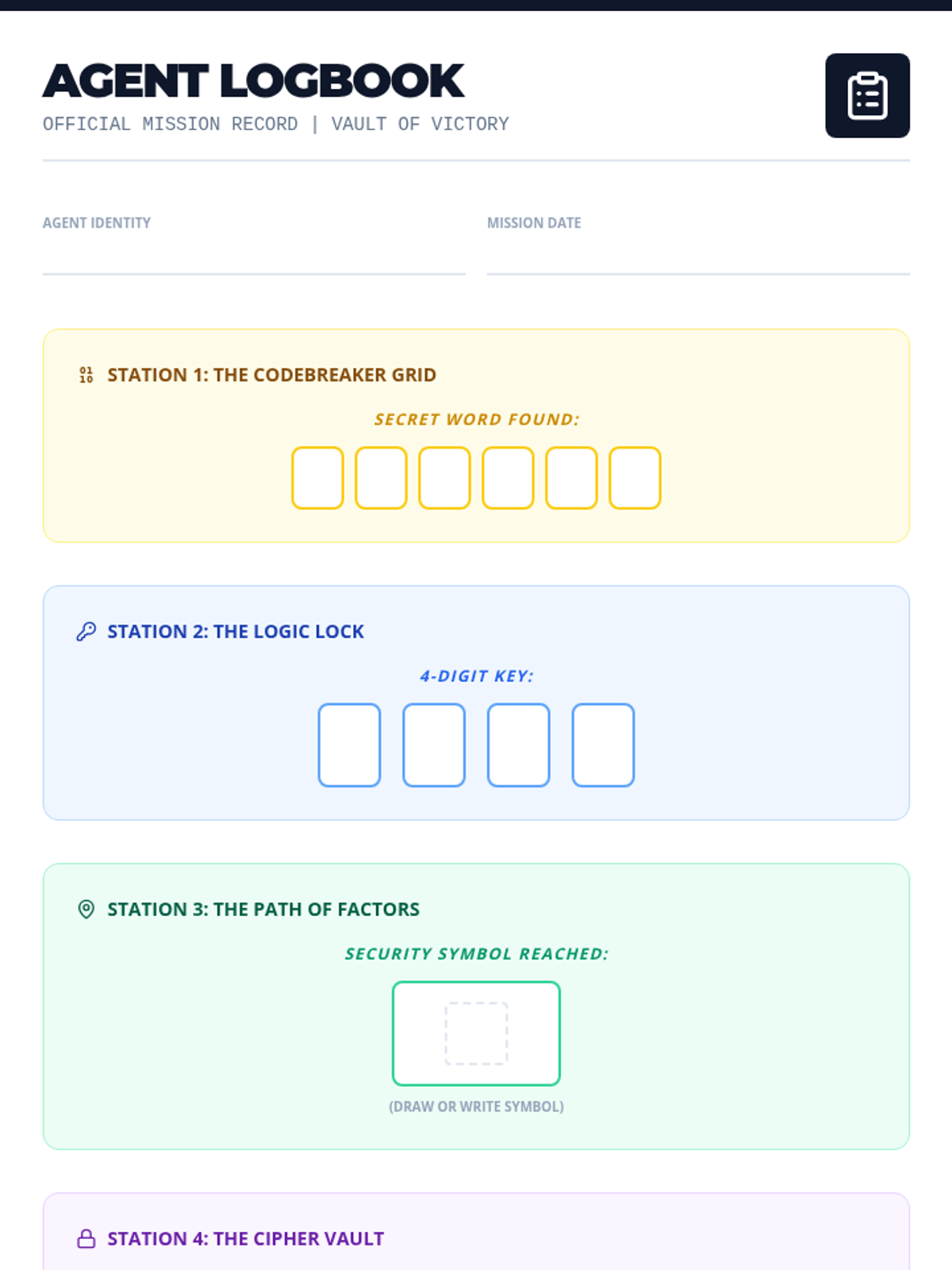
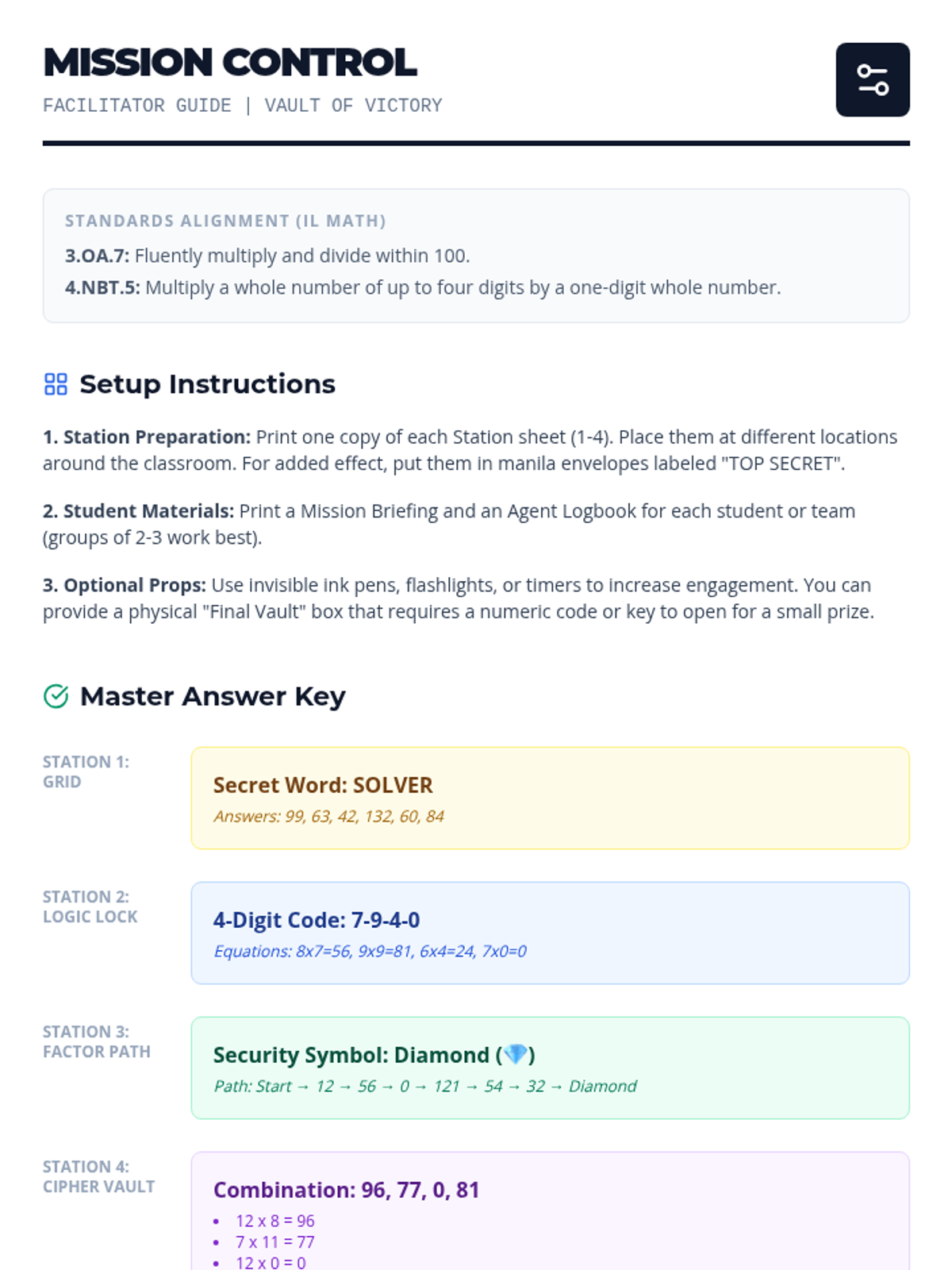
An immersive multiplication-themed escape room where students solve puzzles involving factors 0-12 to unlock a high-security vault. Designed for 3rd and 4th grade Illinois Learning Standards for Math.
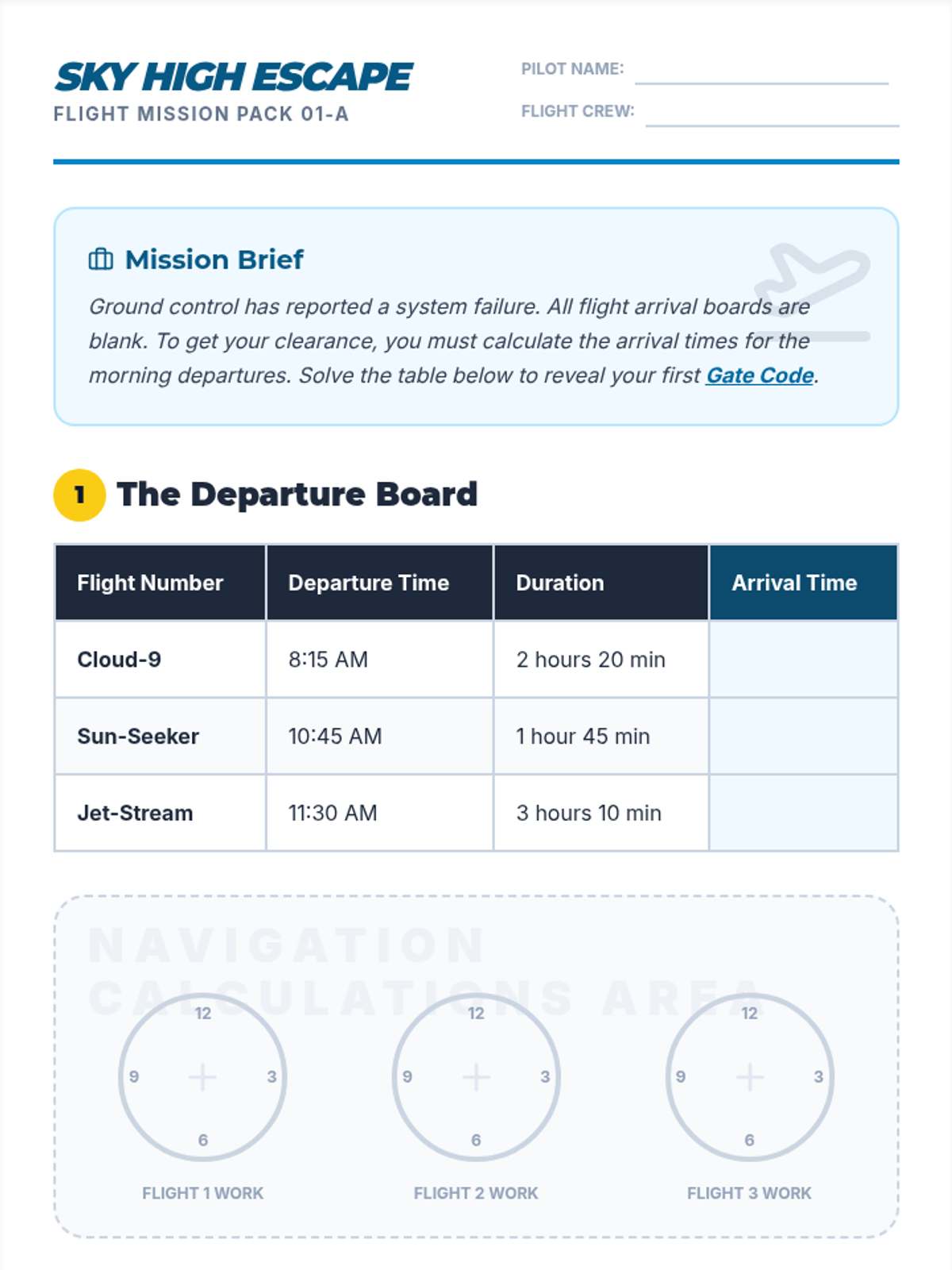
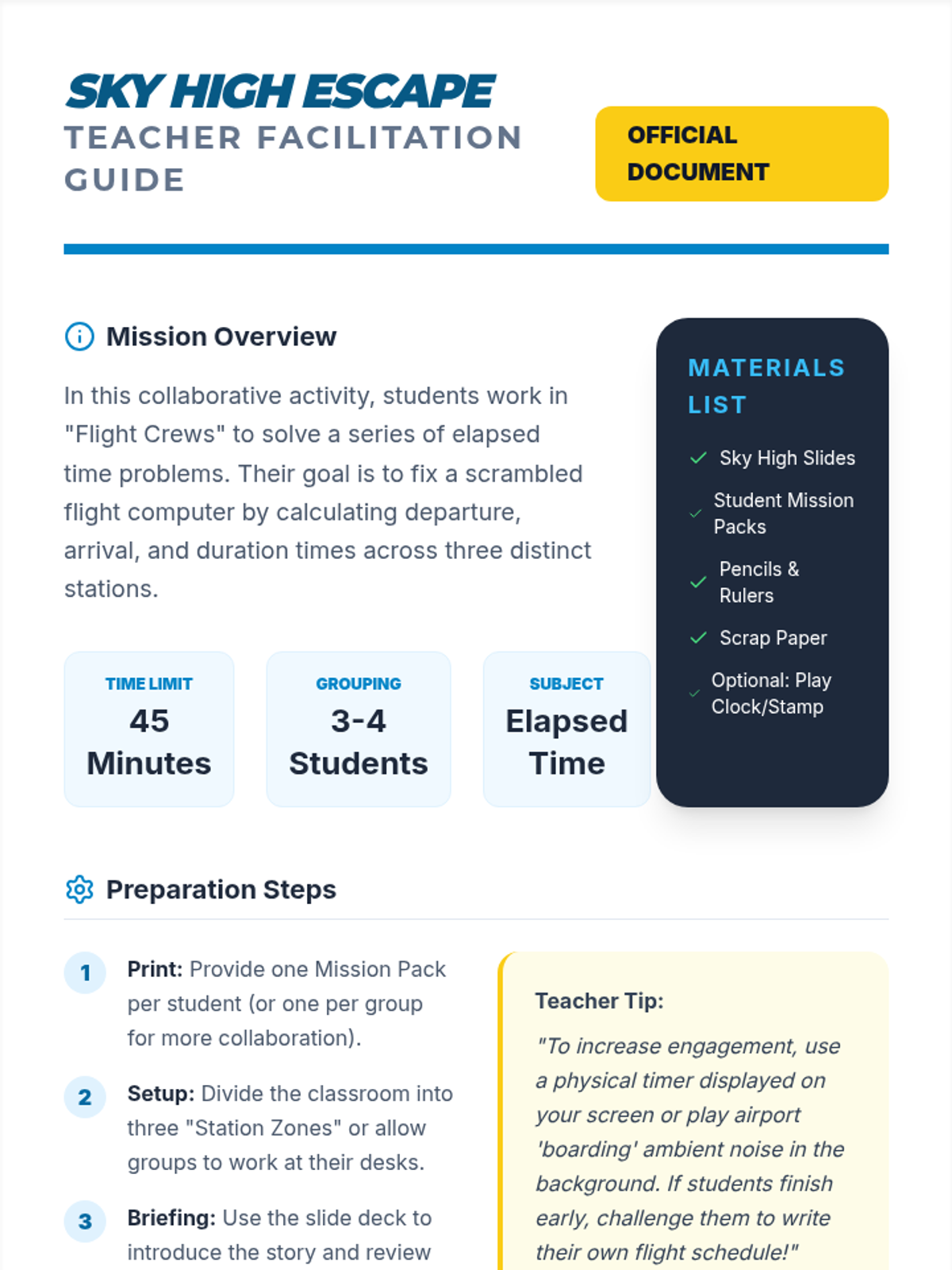
A collaborative escape room activity where students solve elapsed time puzzles themed around air travel and flight schedules to 'unlock' their grounded plane.
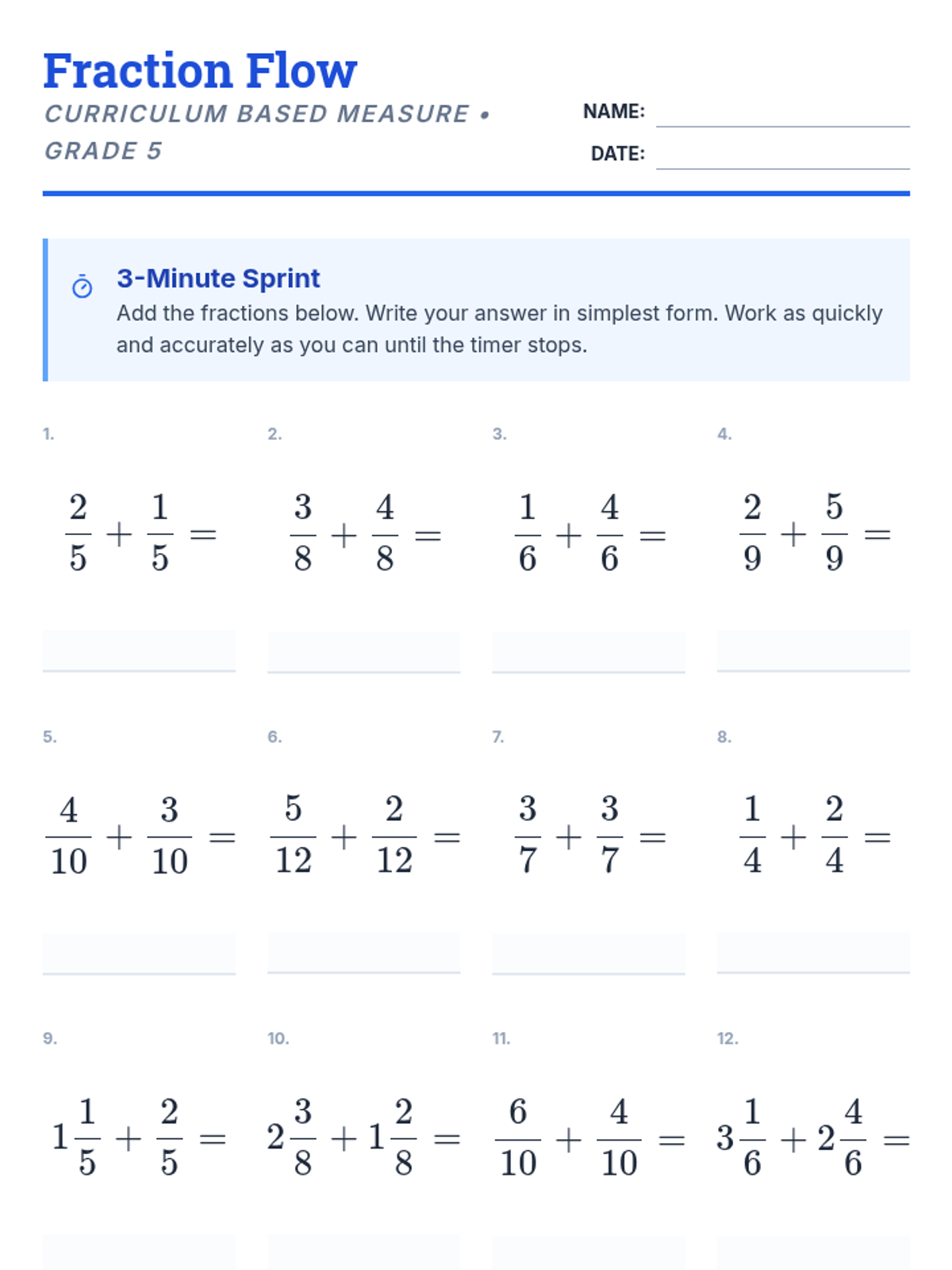
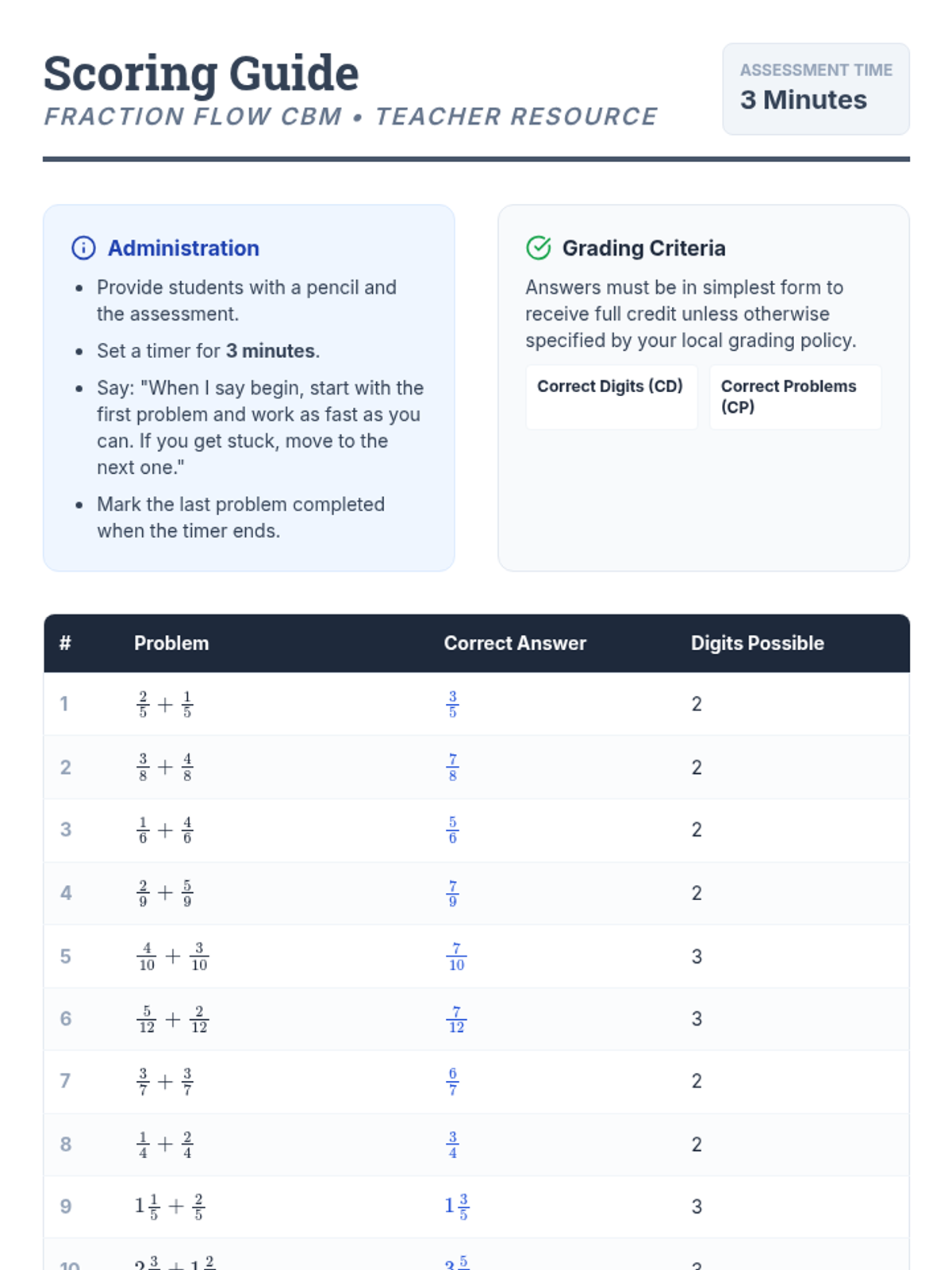
A 3-minute curriculum-based measure designed for 5th-grade students to assess fluency and accuracy when adding fractions with common denominators, including computation and word problems.
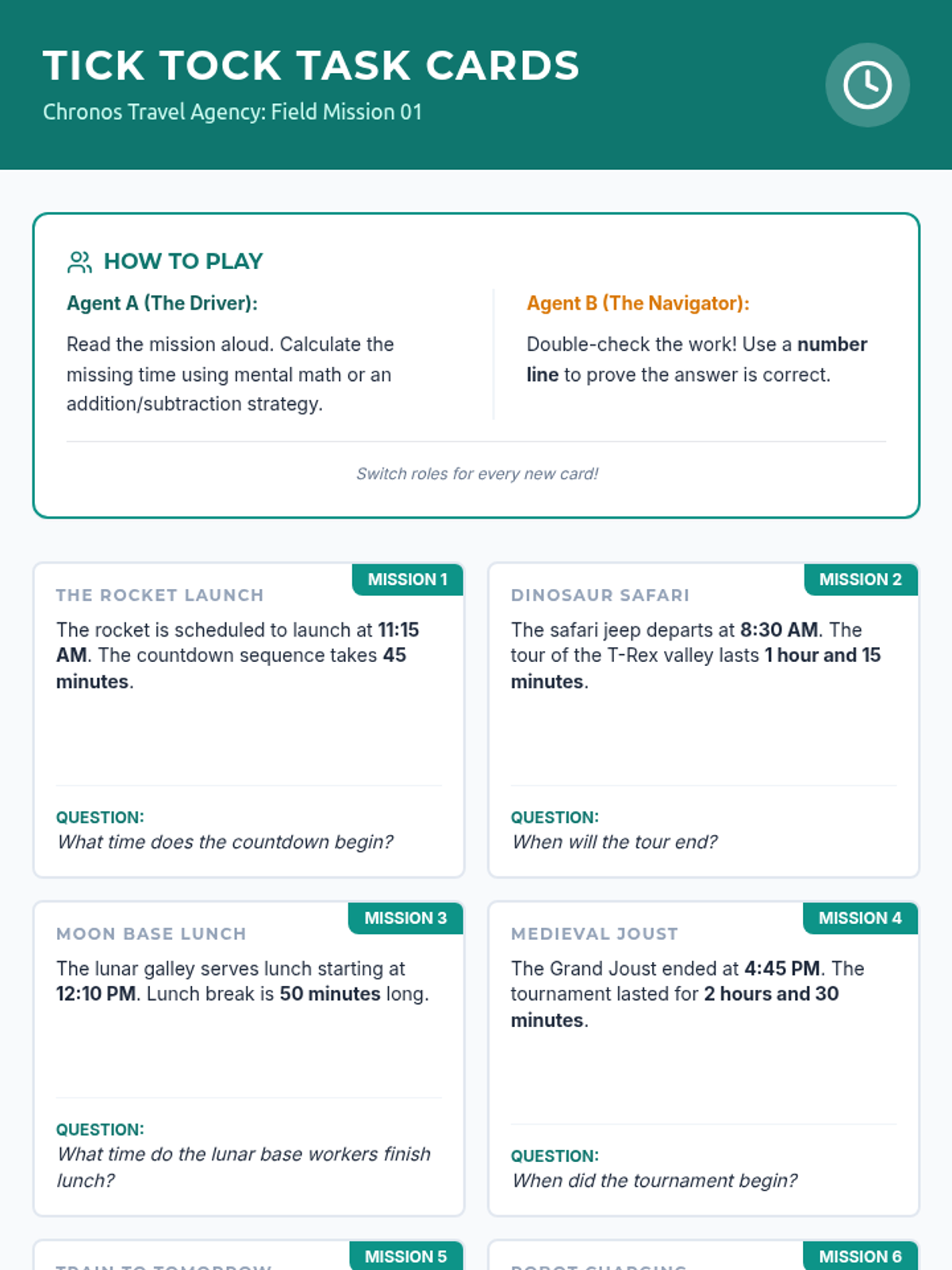
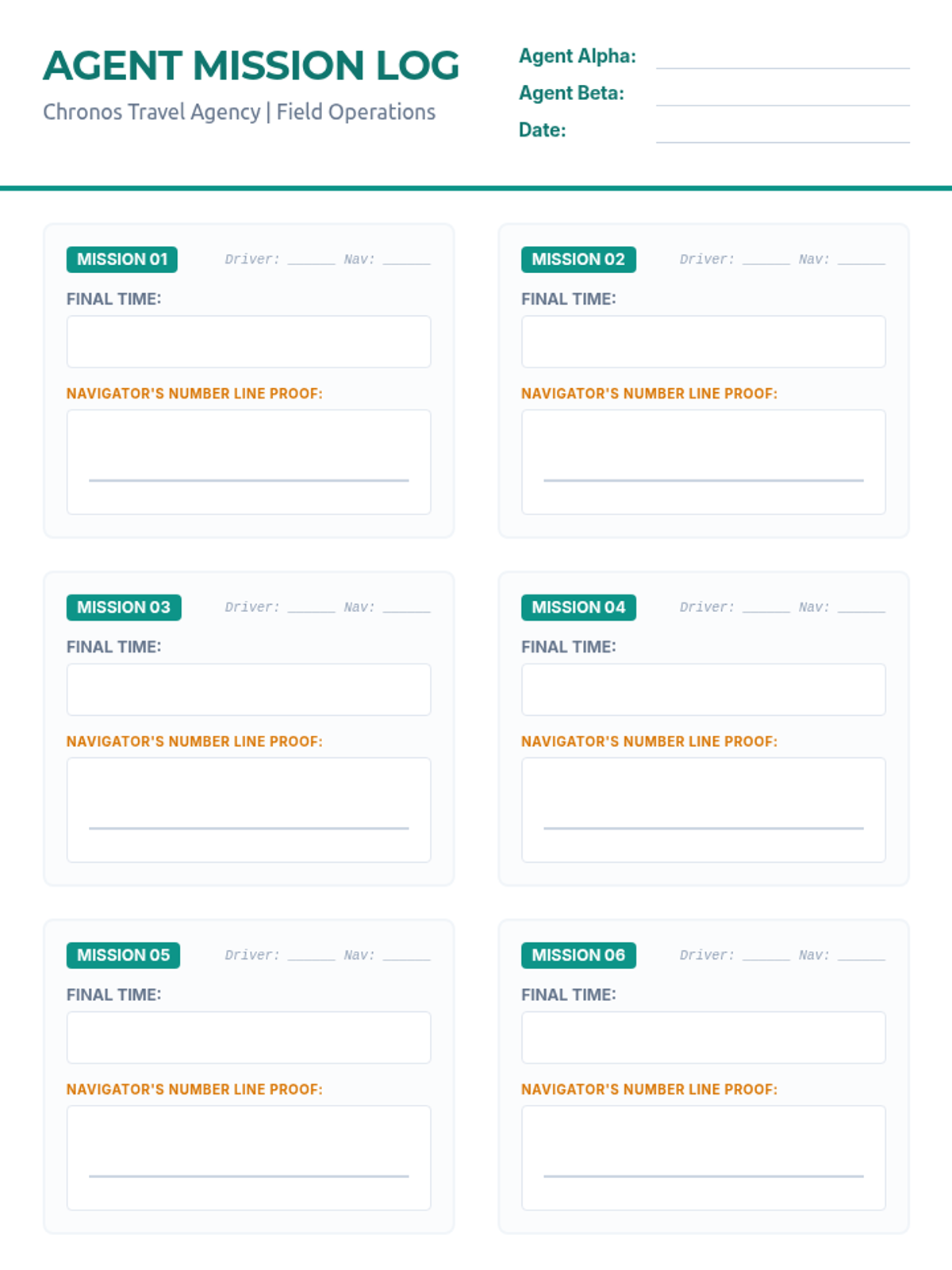
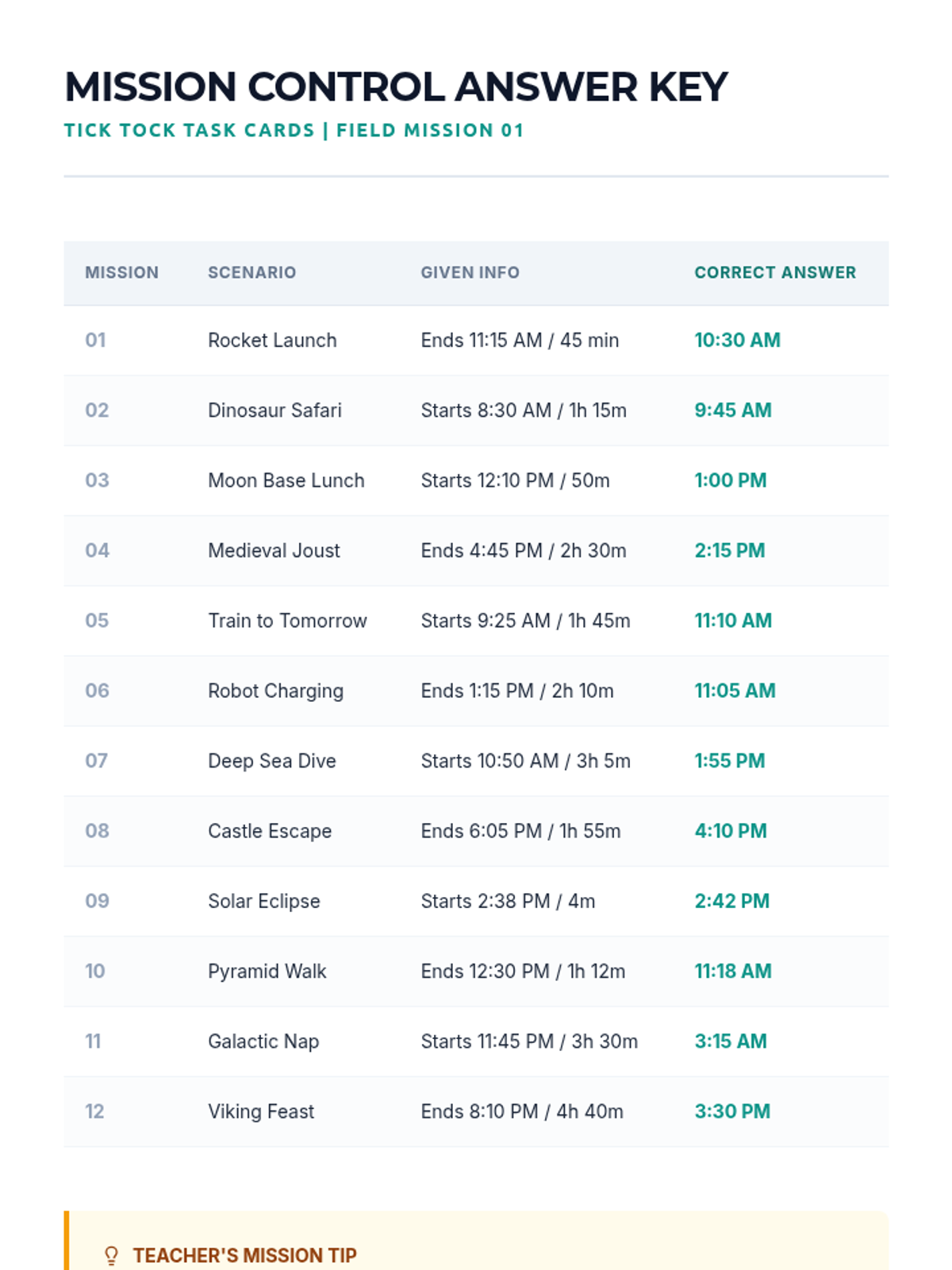
Students explore elapsed time by calculating start and end times through collaborative partner tasks. Using a time travel agency theme, they practice mental math and number line strategies to solve real-world duration problems.