A lesson focused on developing a foundational understanding of volume by counting unit cubes within rectangular prisms, designed for students needing repetitive skill practice and clear visual support.
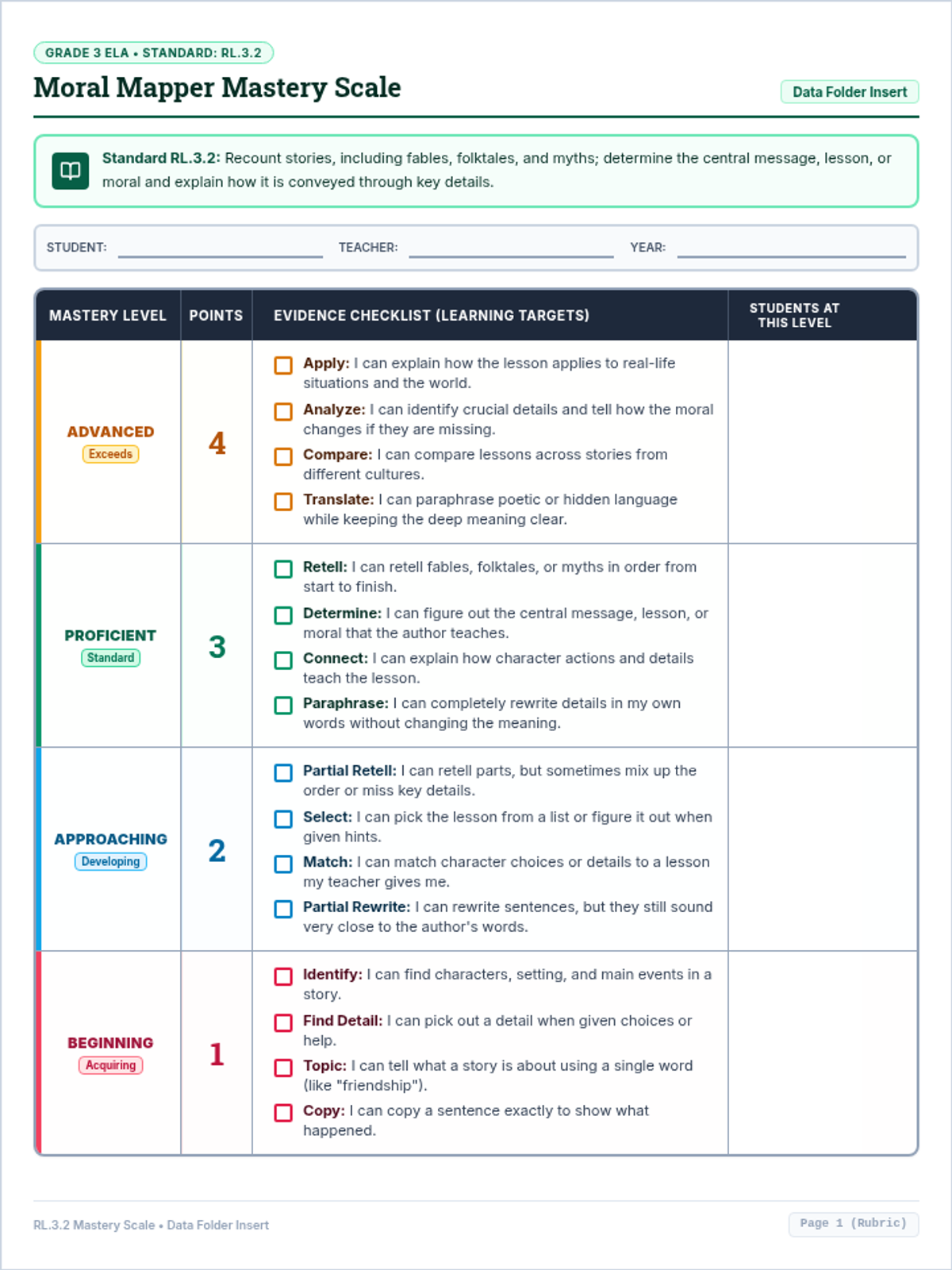
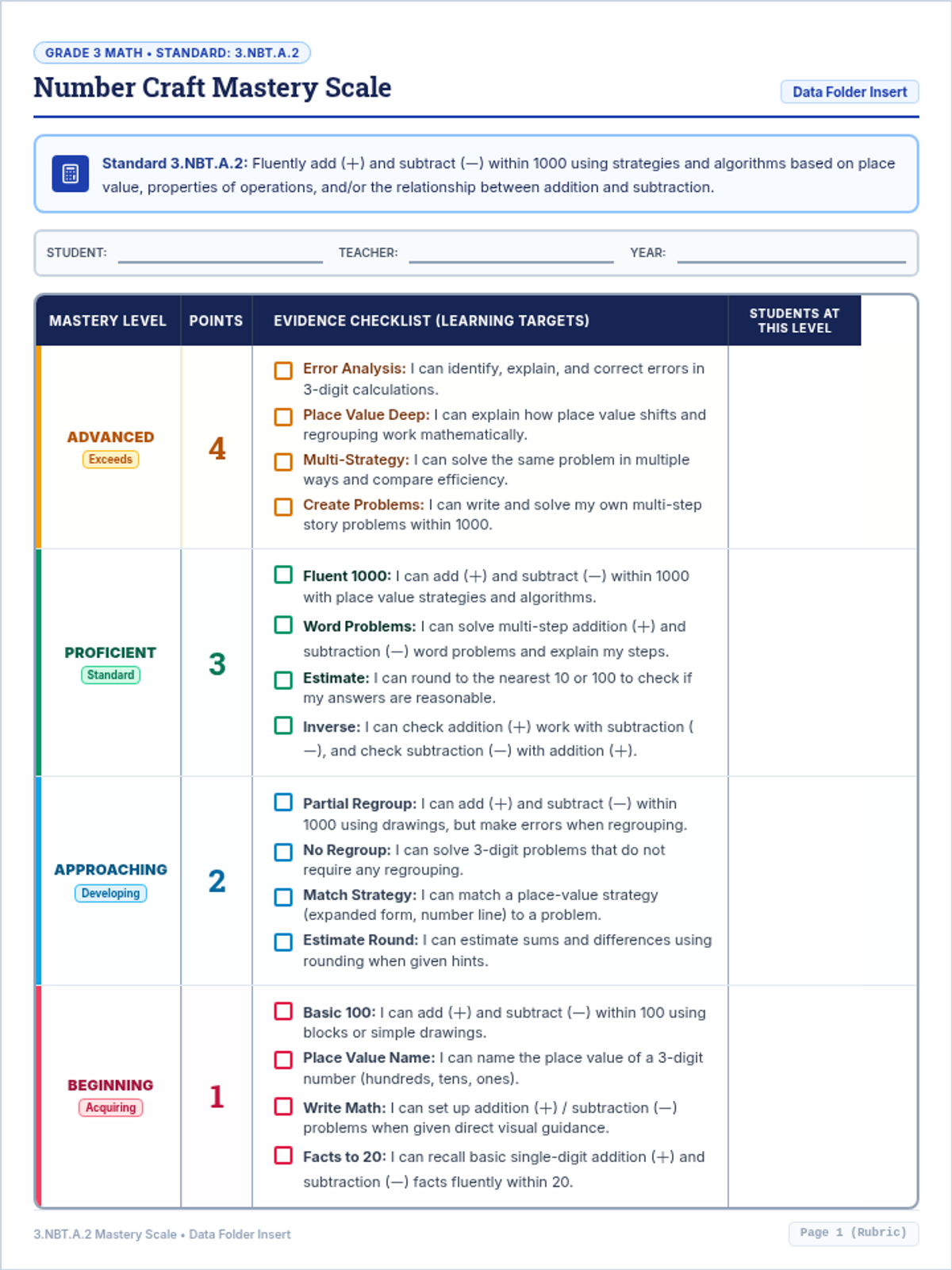
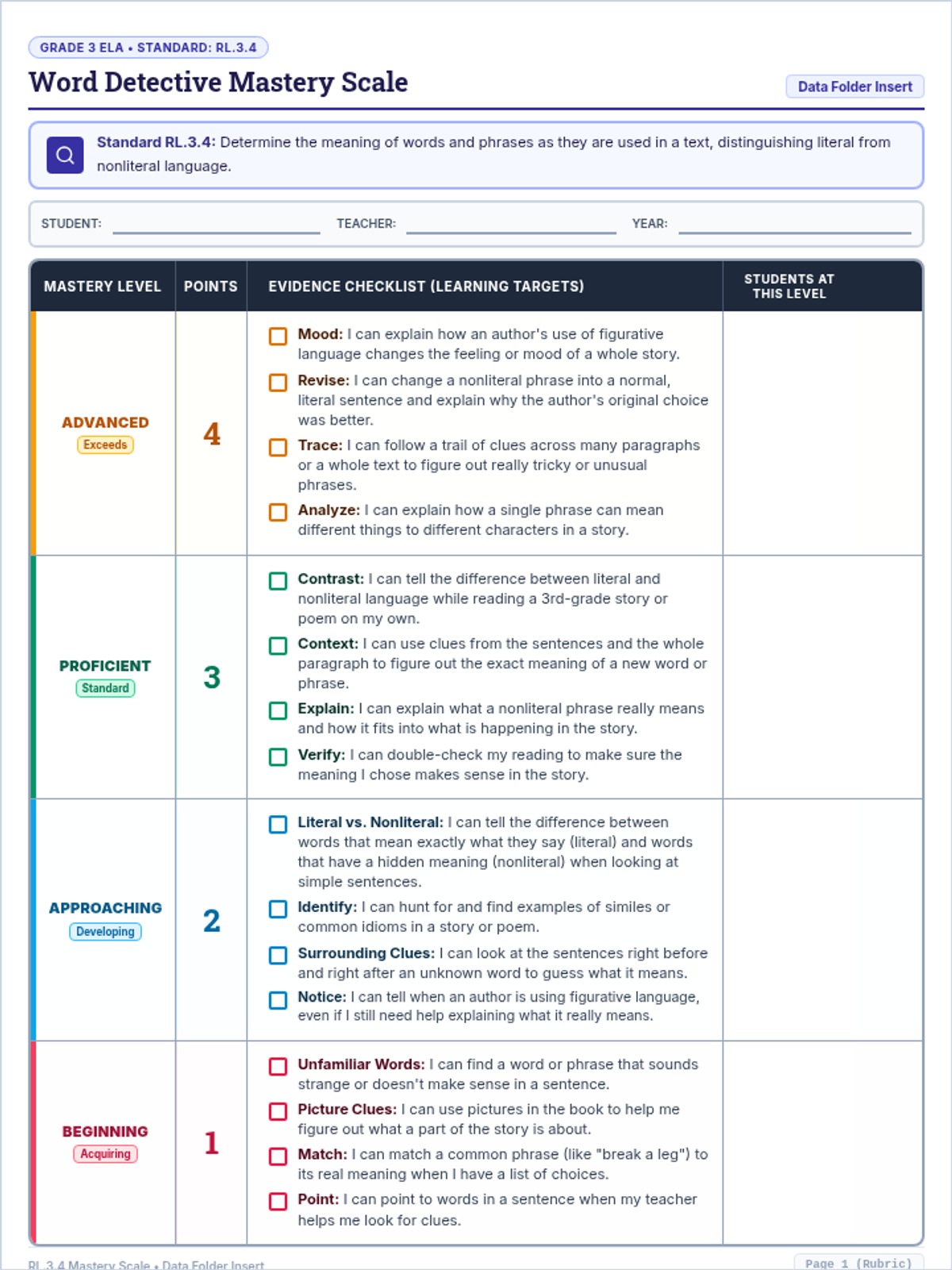
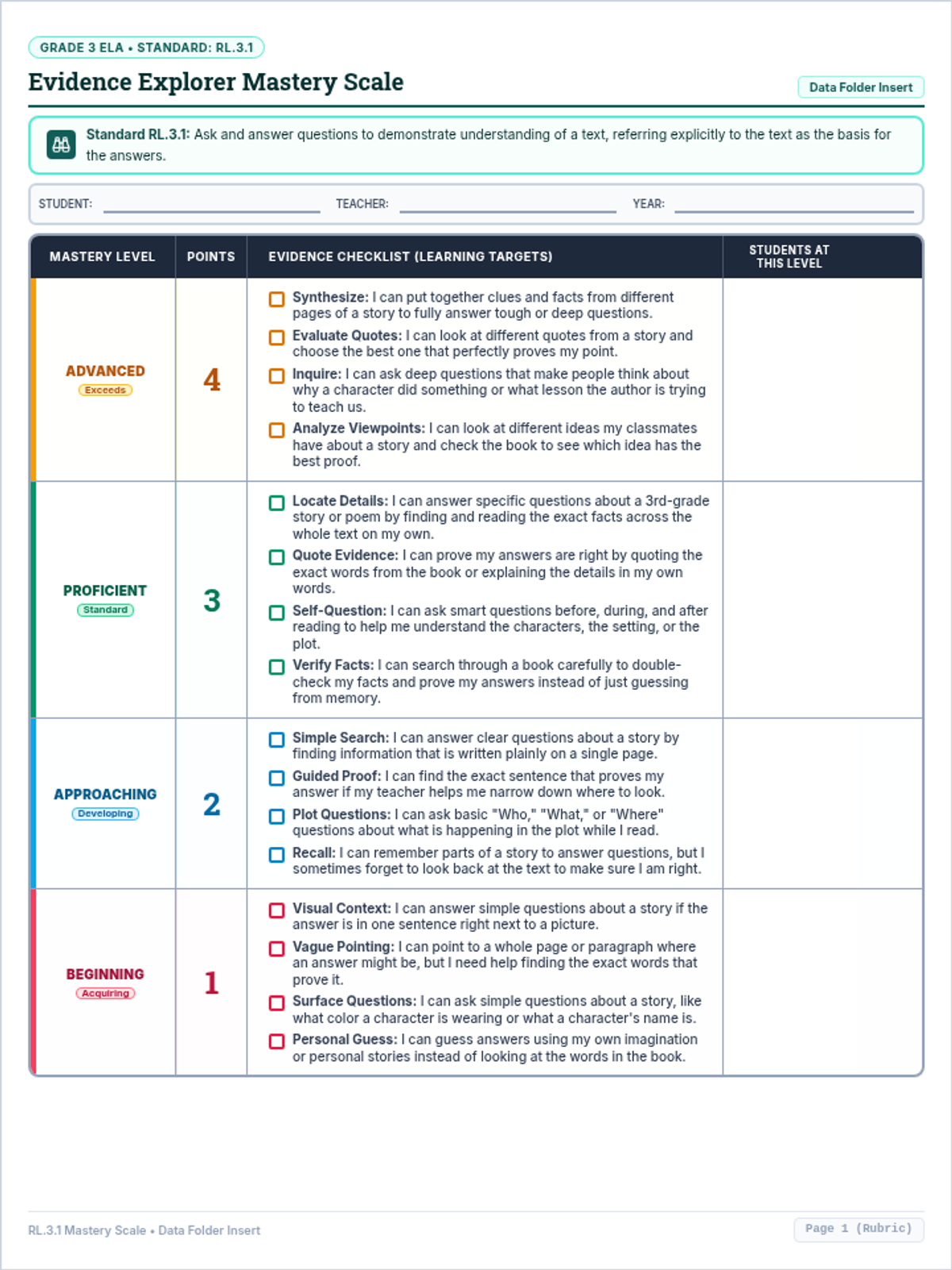
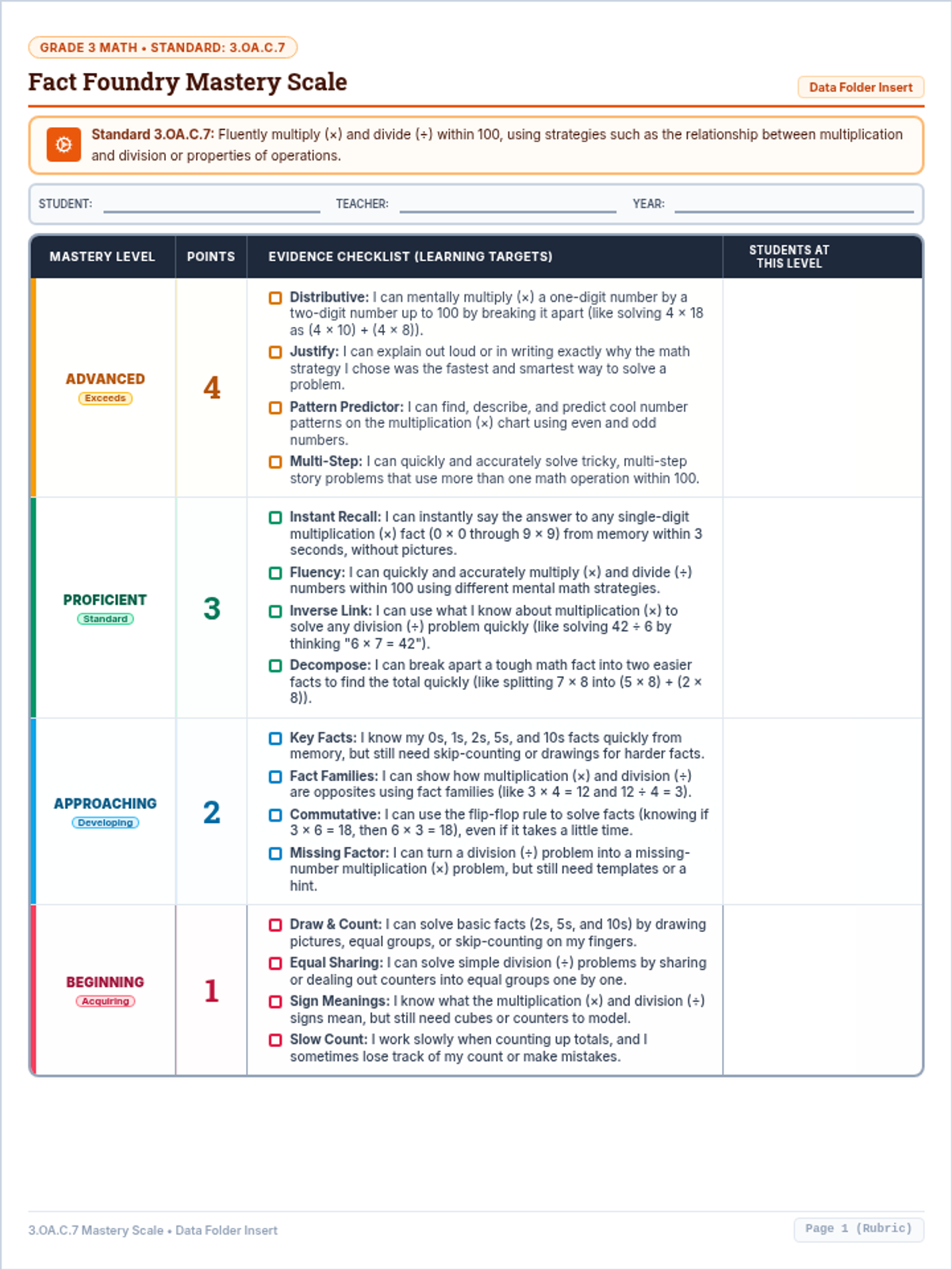
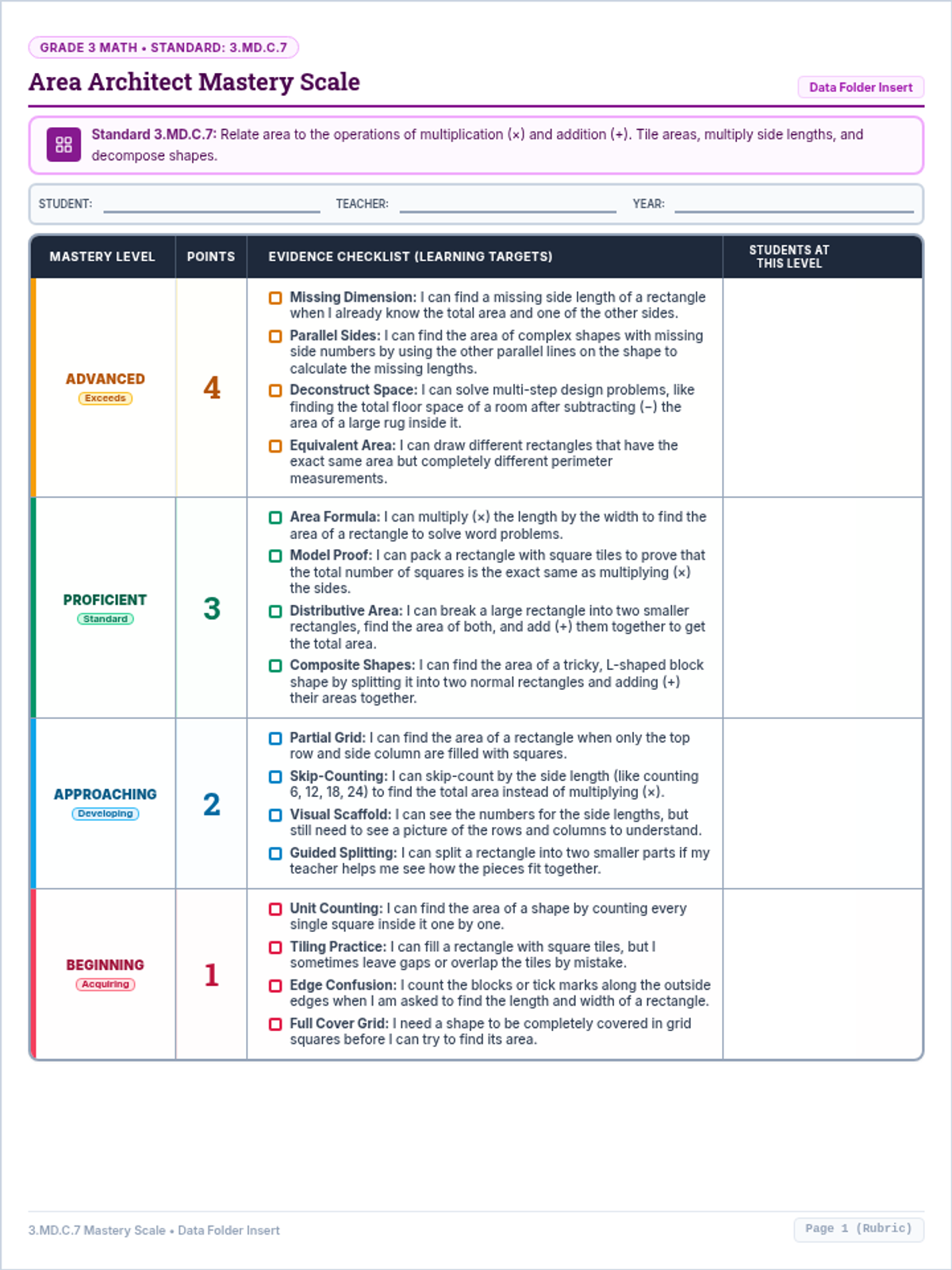
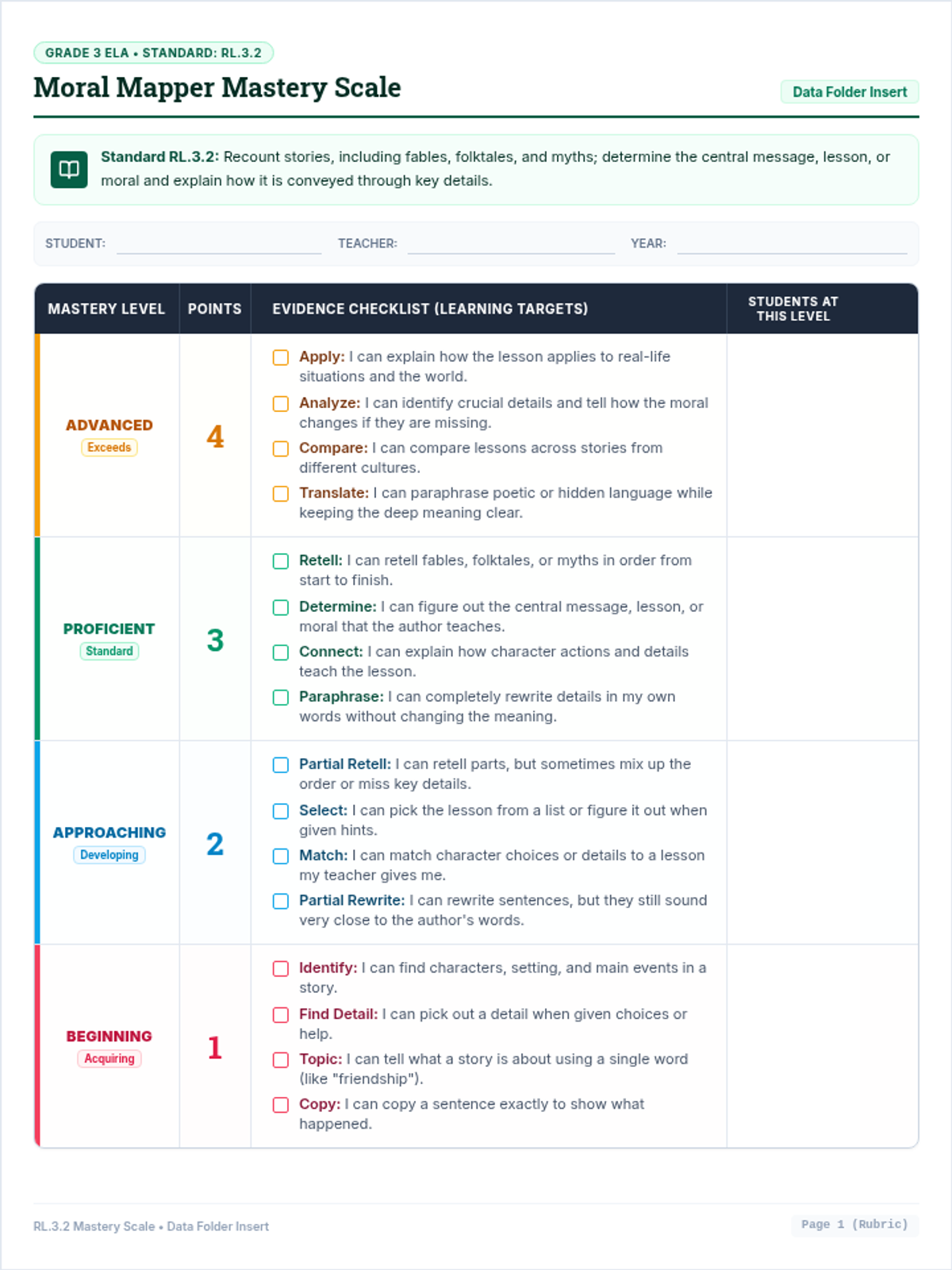
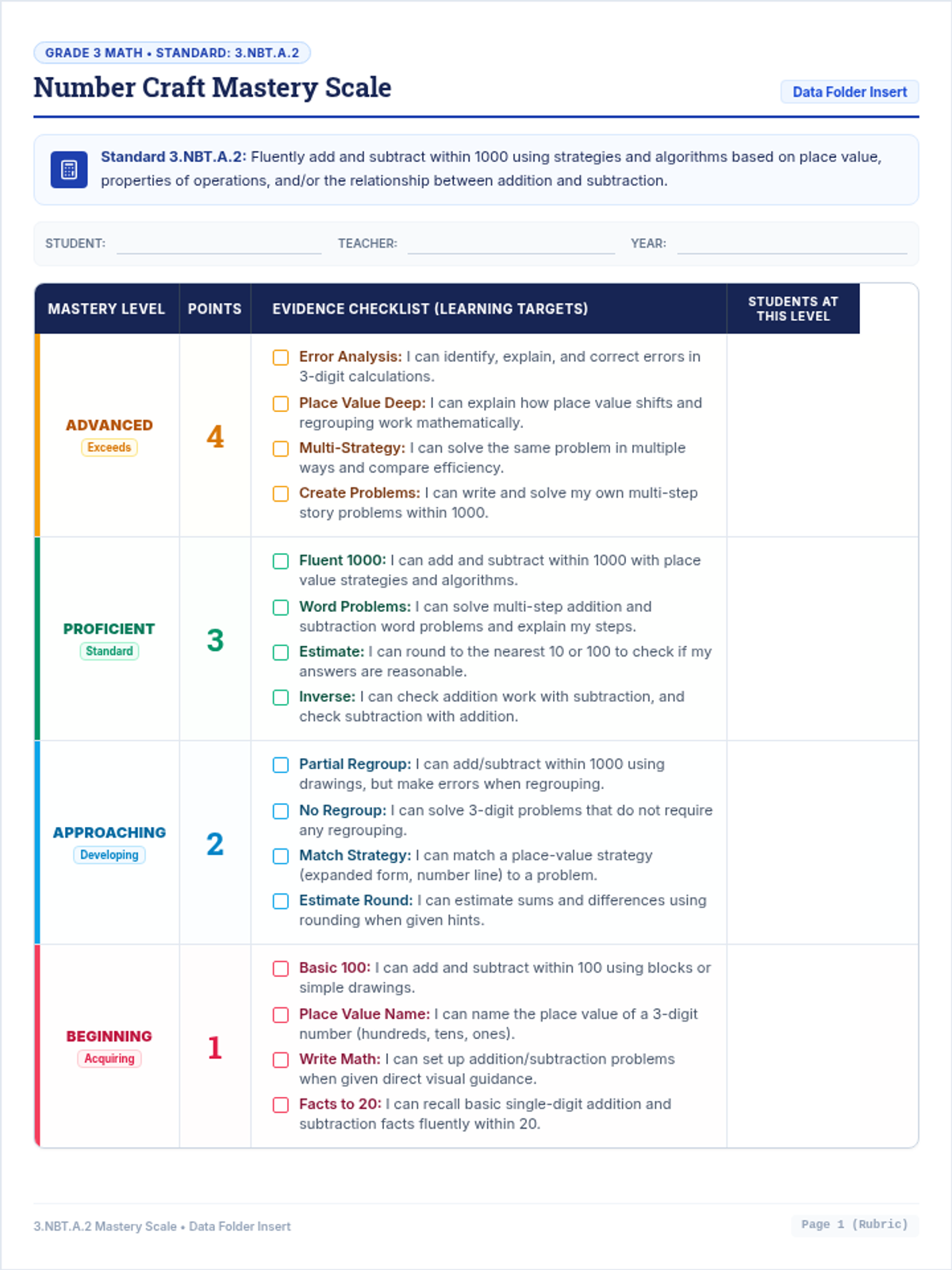
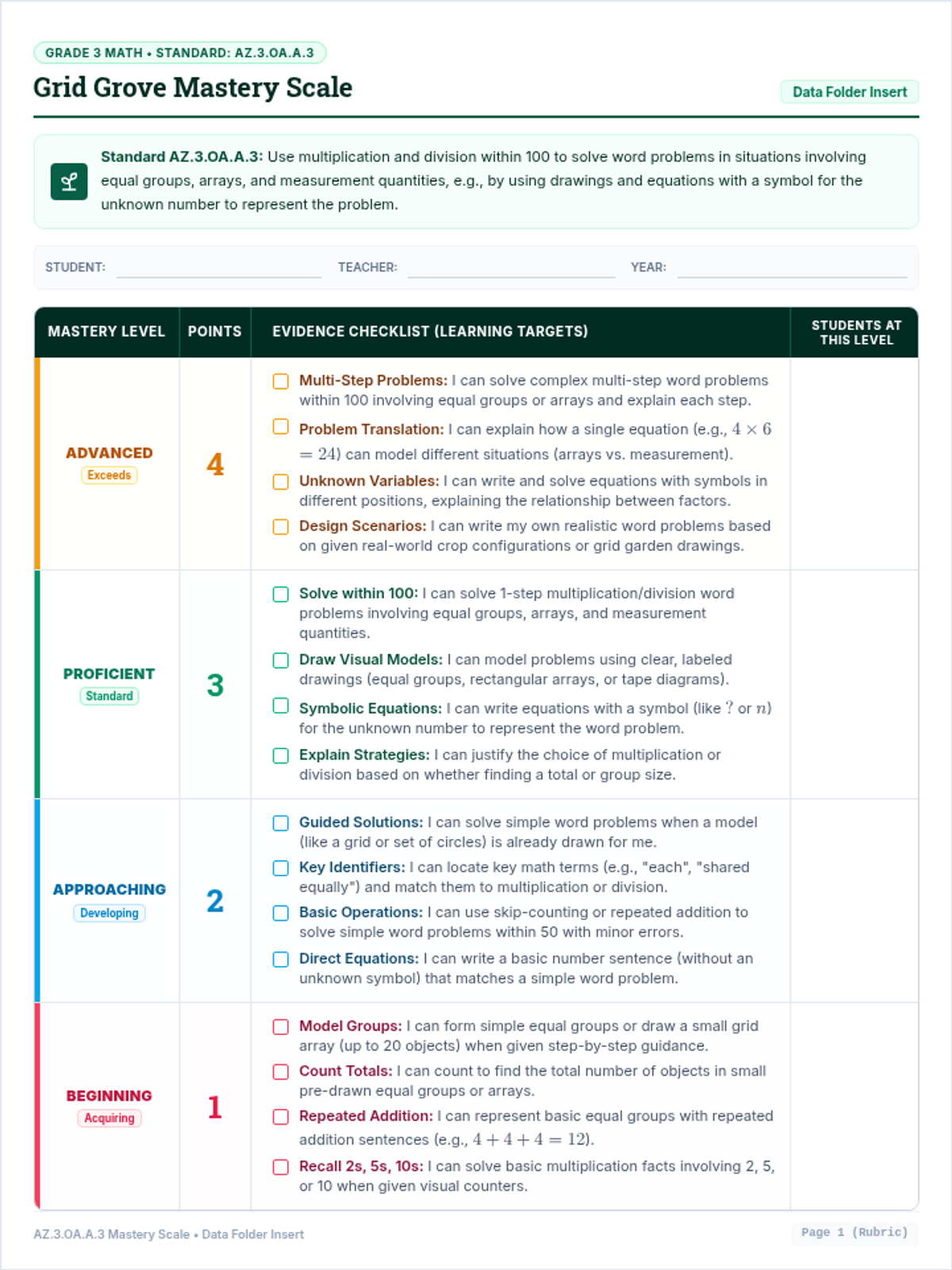
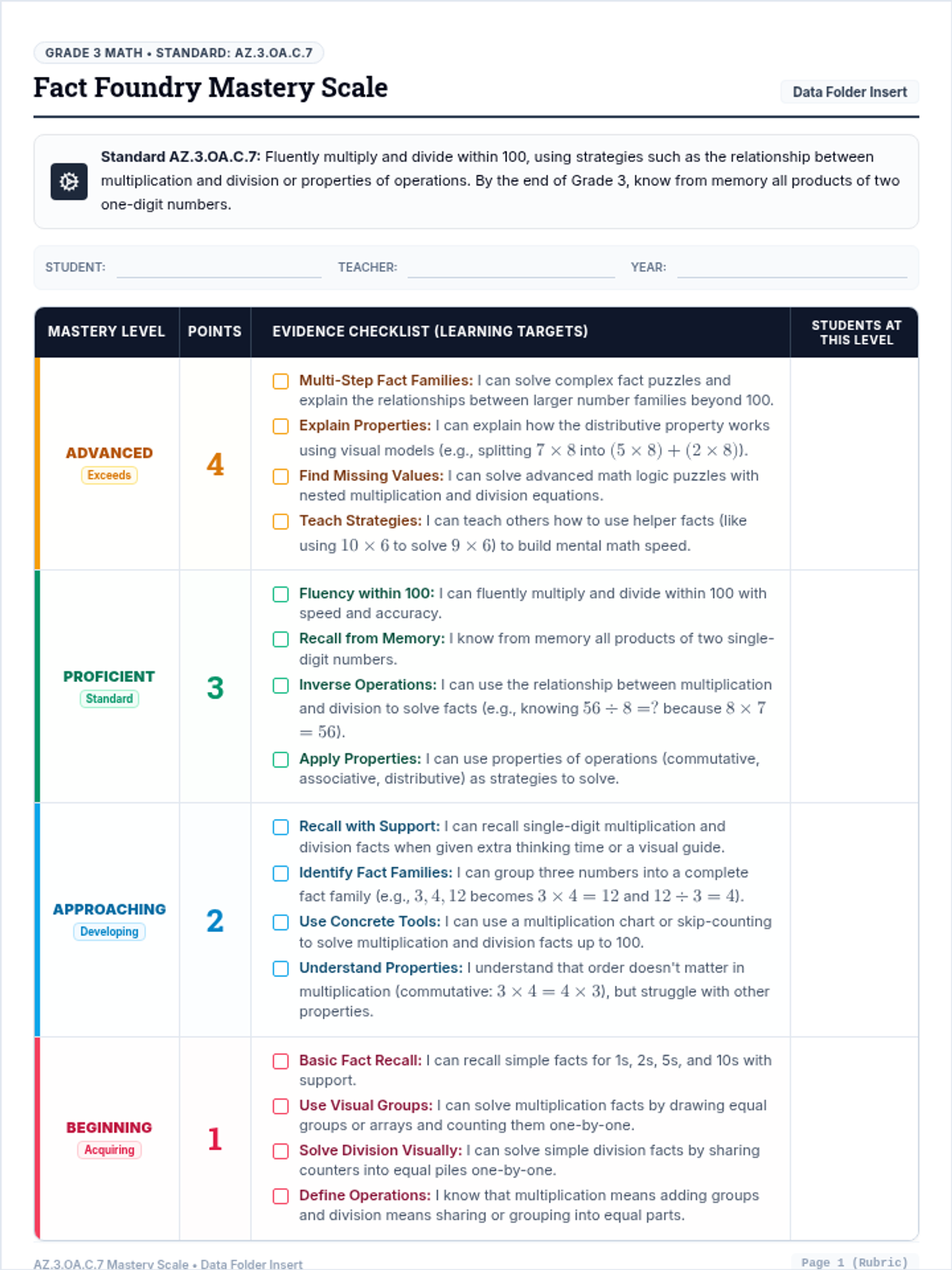
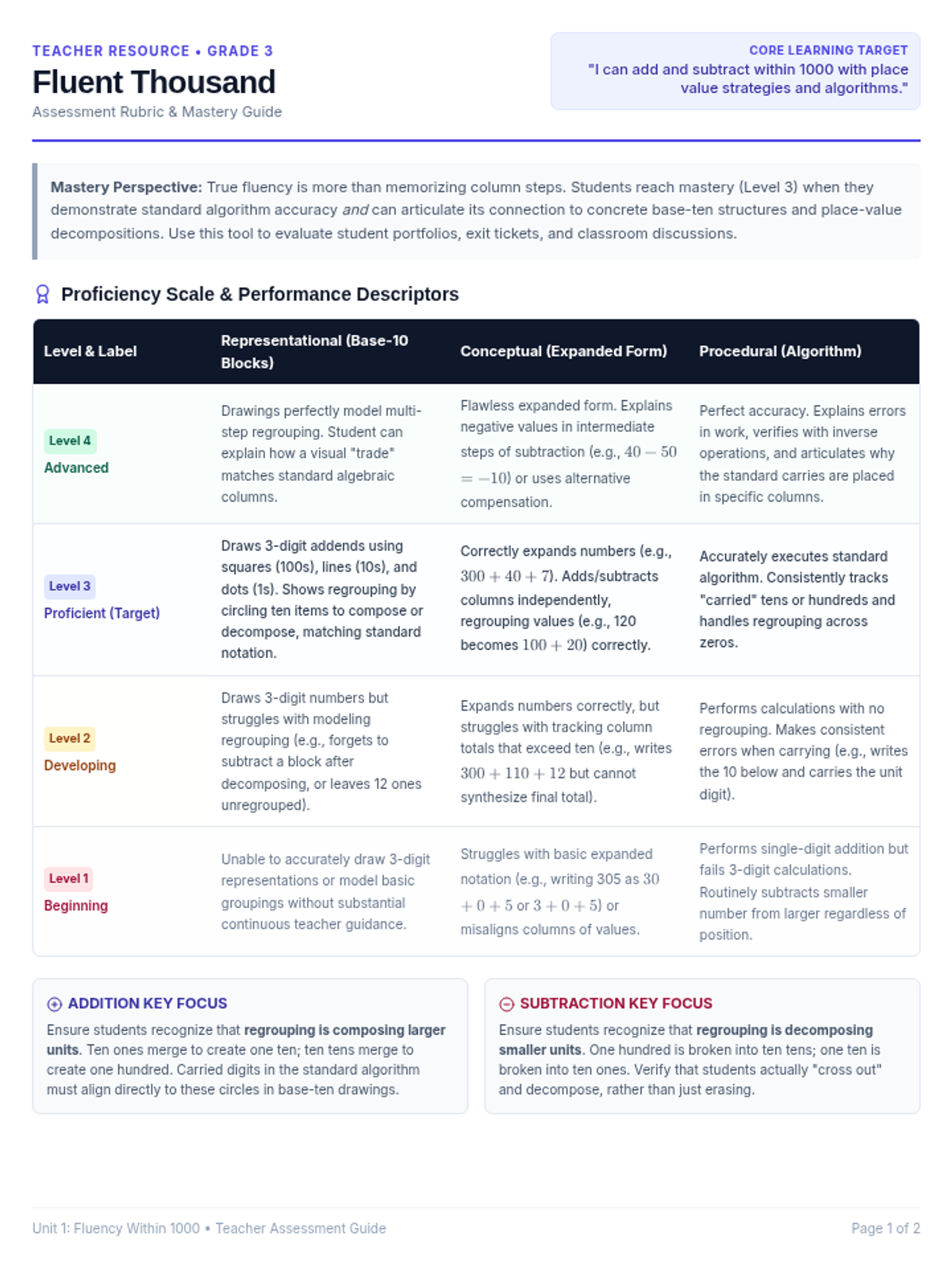
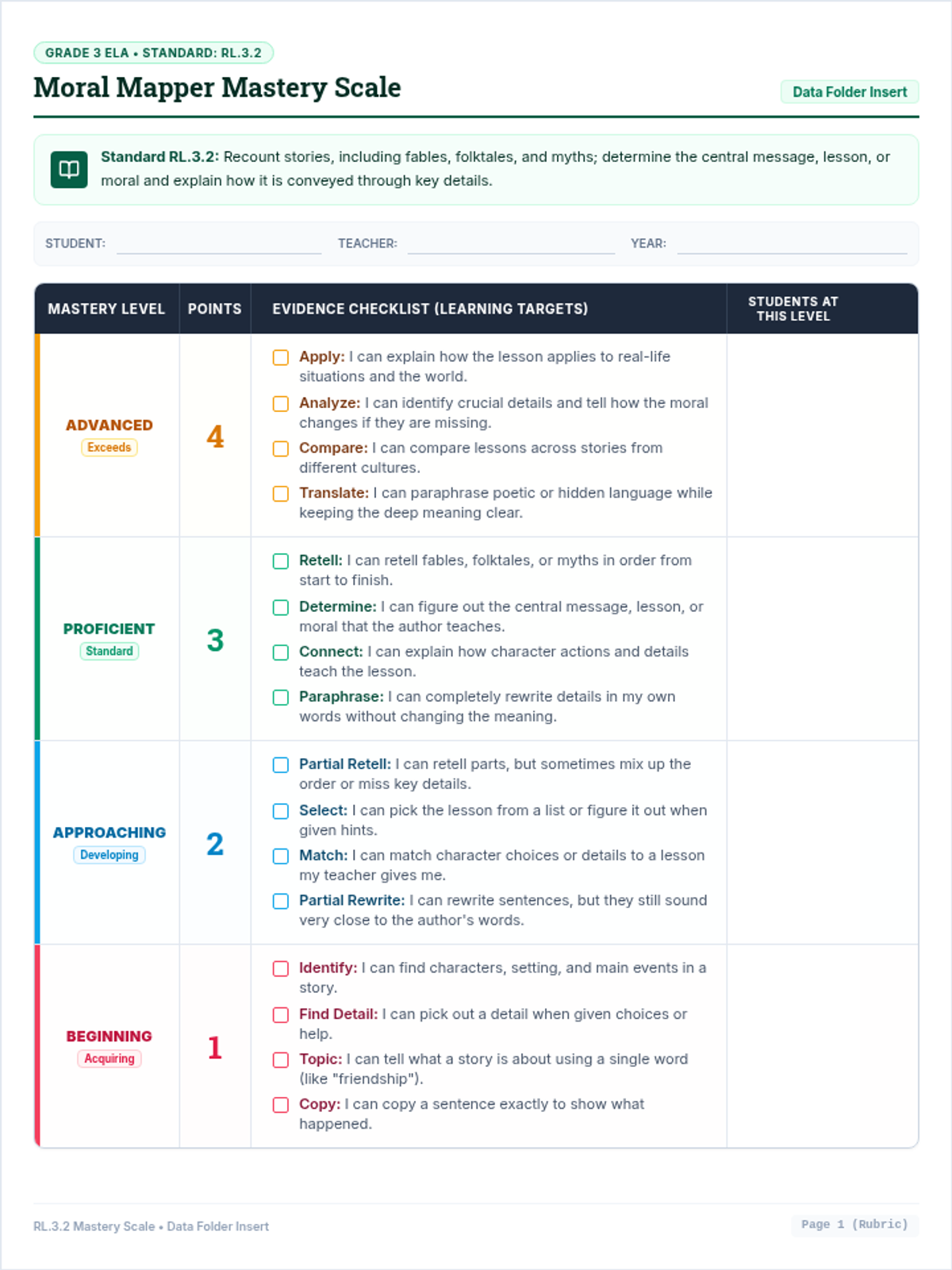
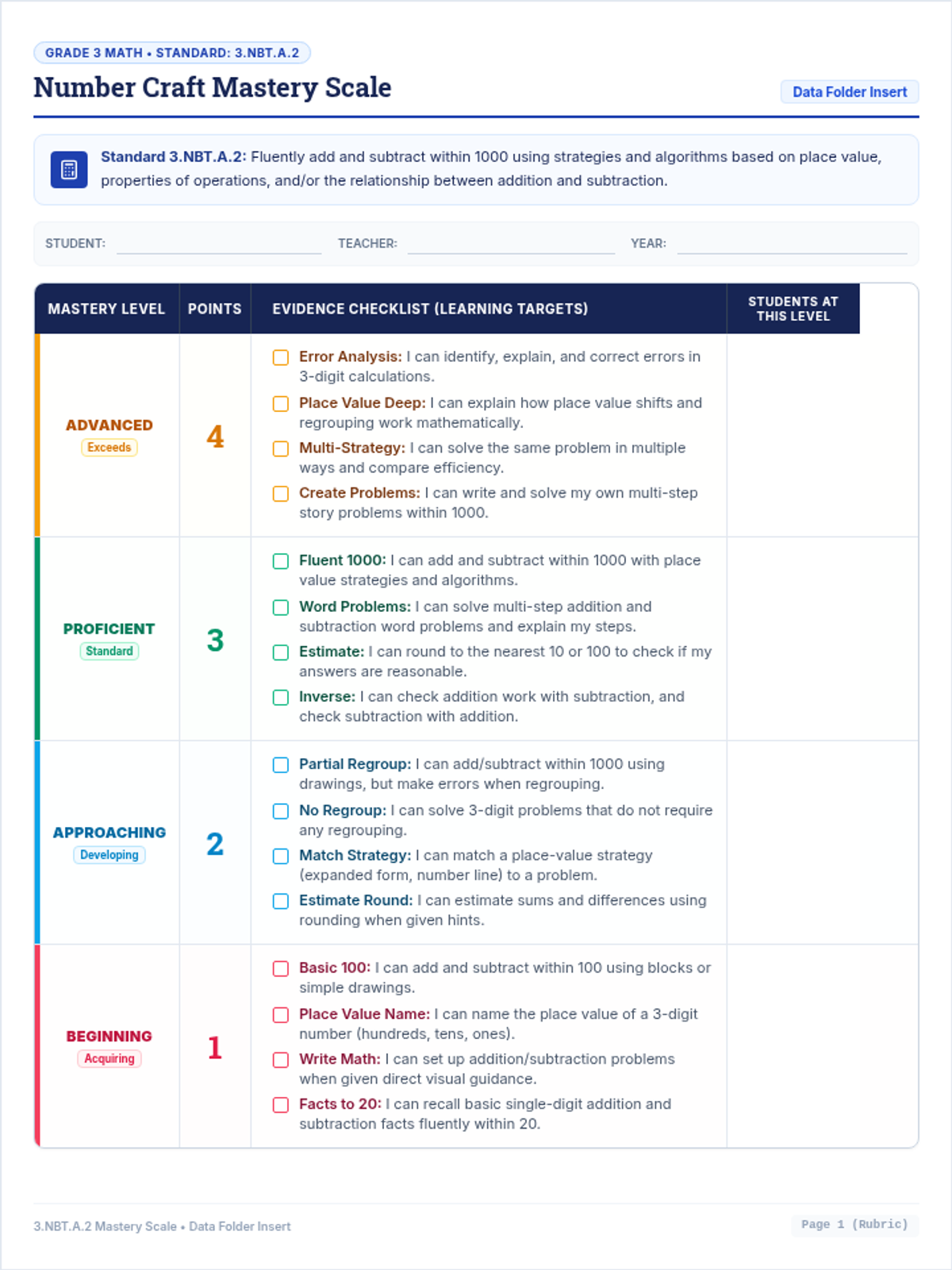
A collection of beautifully designed, compact data folder inserts featuring proficiency scale charts and progress tracking logs for Grade 3 standards.
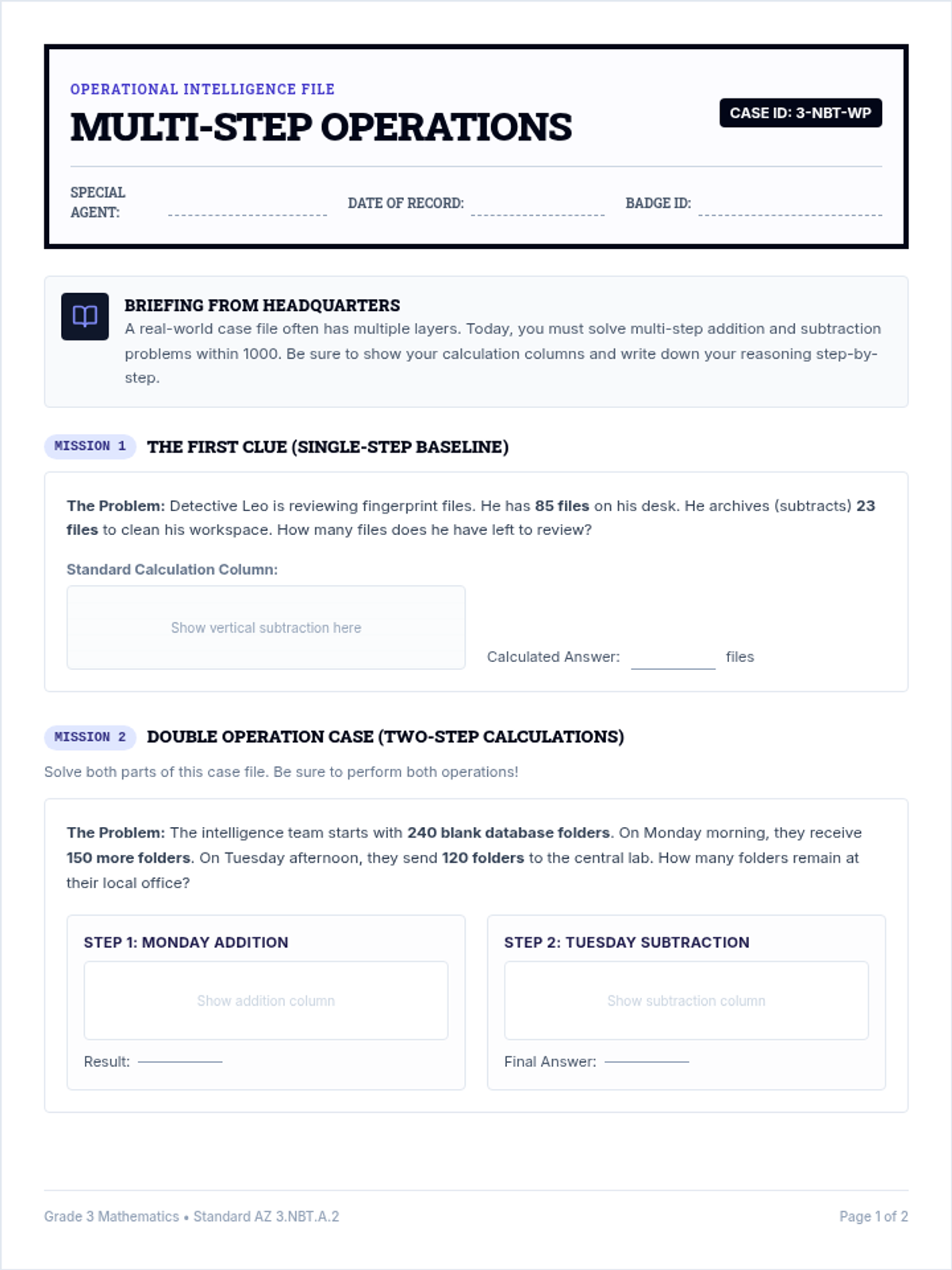
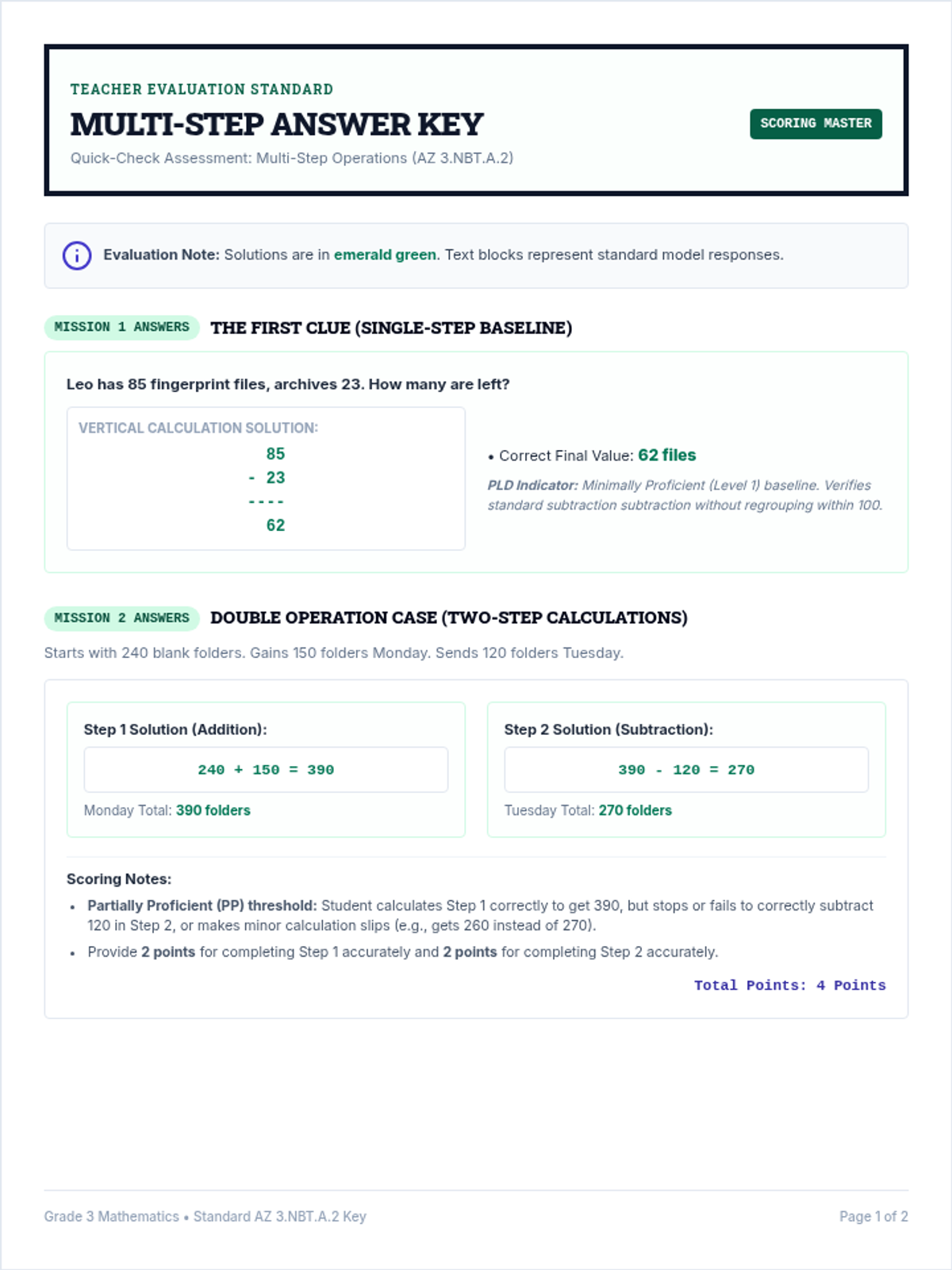
A targeted lesson focused on unpacking, solving, and explaining multi-step addition and subtraction word problems within 1,000 using tape diagrams, number lines, and standard algorithms.
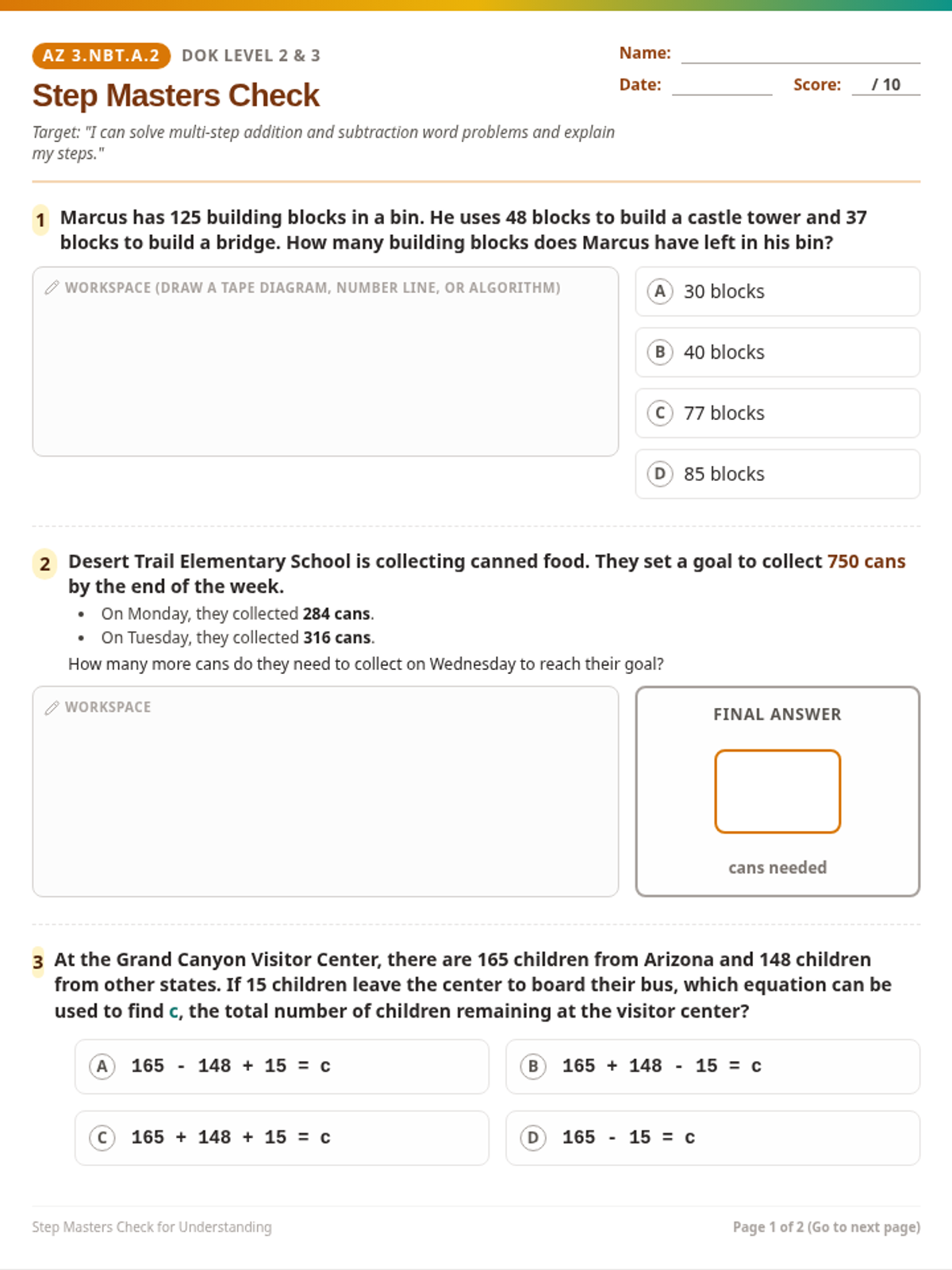
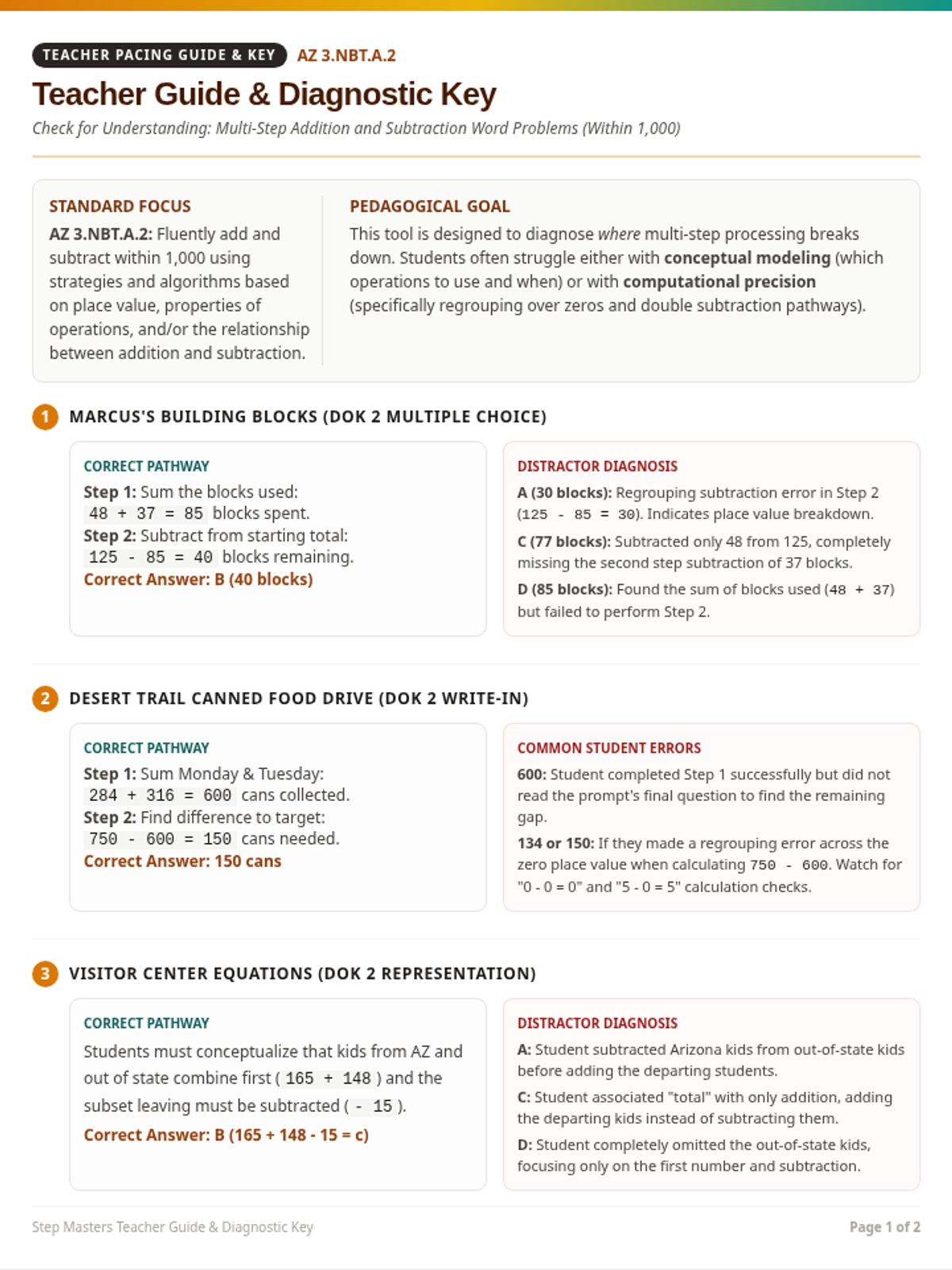
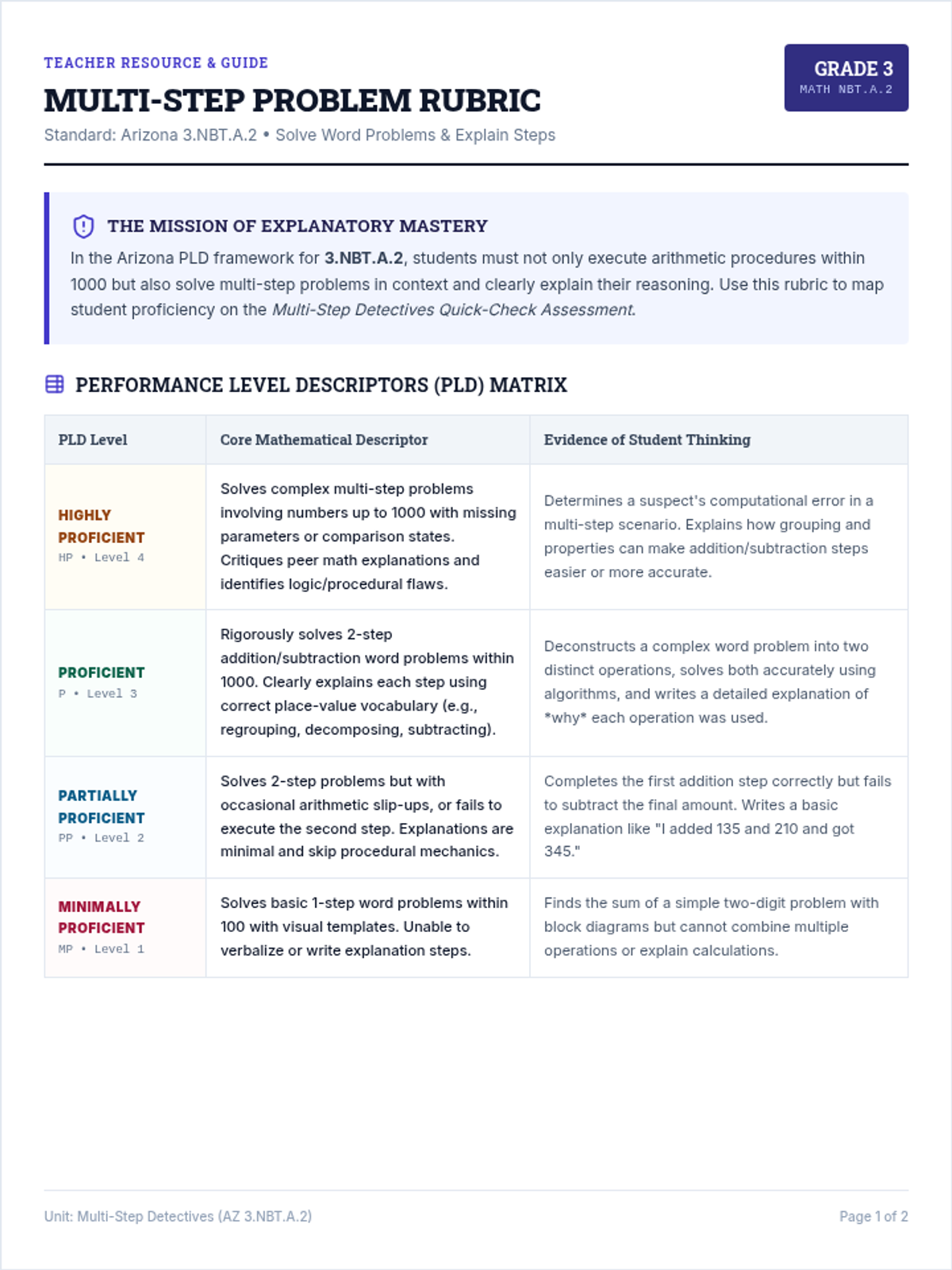
A focused diagnostic and instructional lesson designed to teach and assess solving multi-step addition and subtraction word problems within 1000 and writing clear explanatory steps, aligned to the Arizona PLD framework for 3.NBT.A.2.
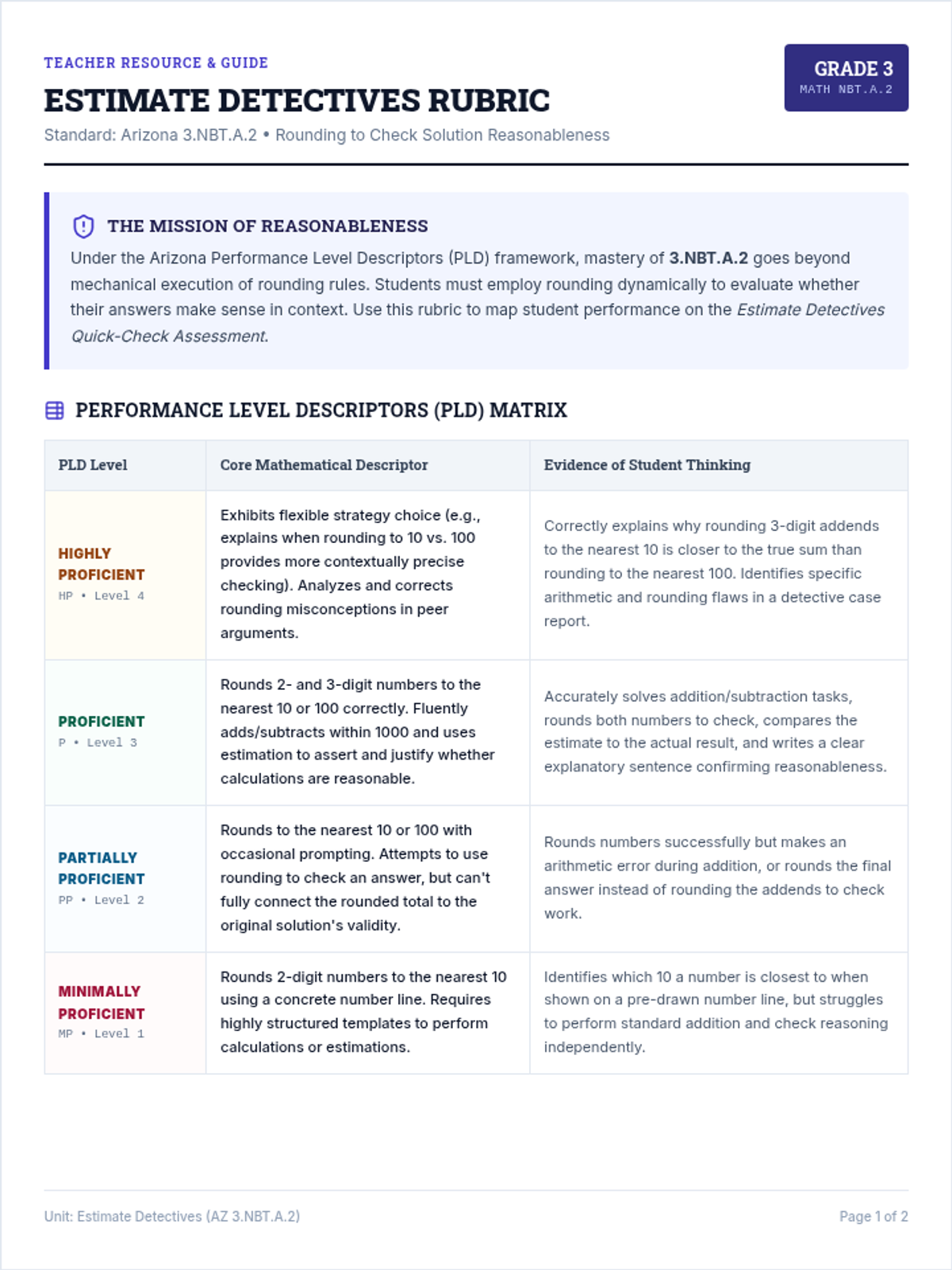
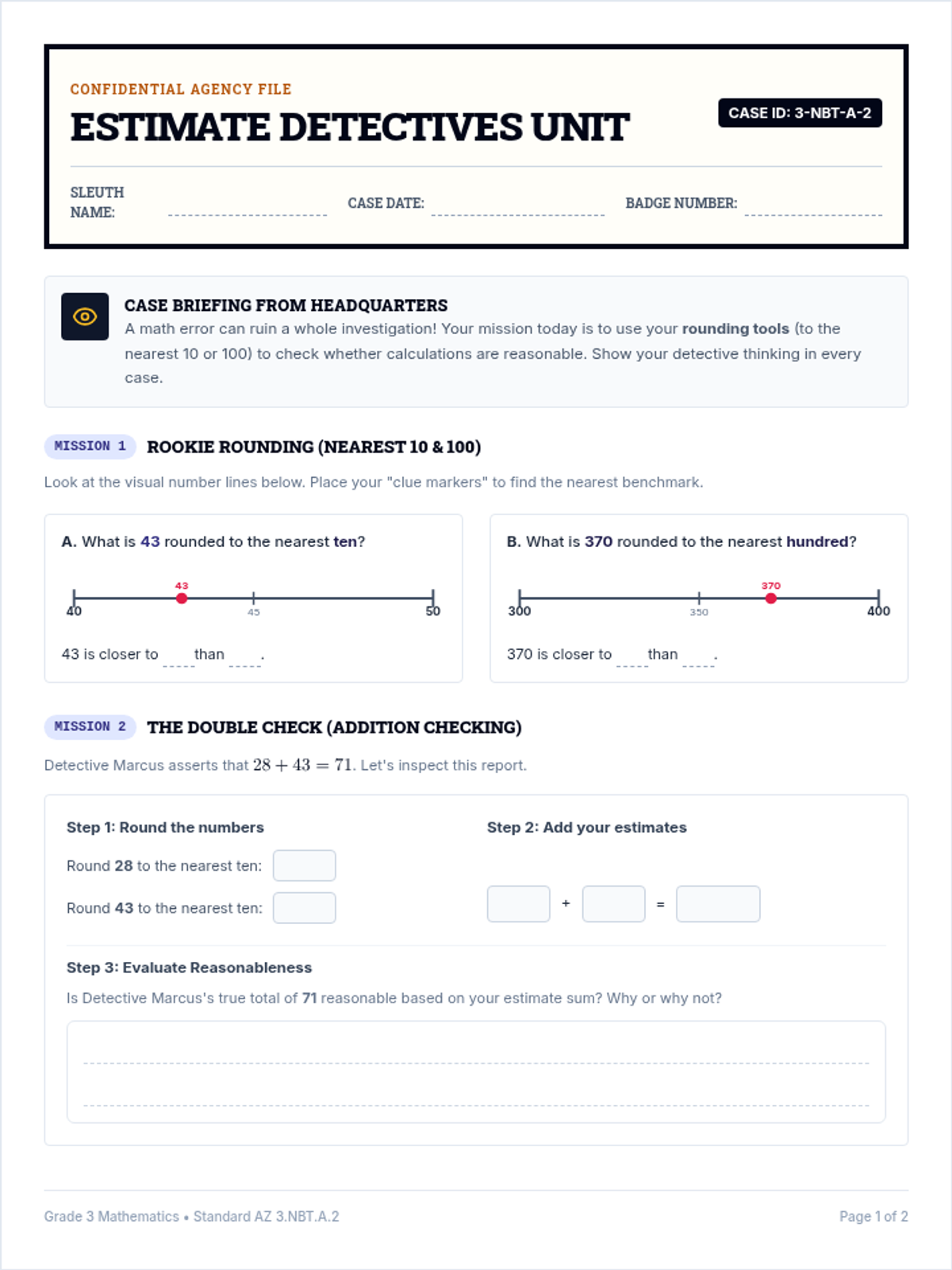
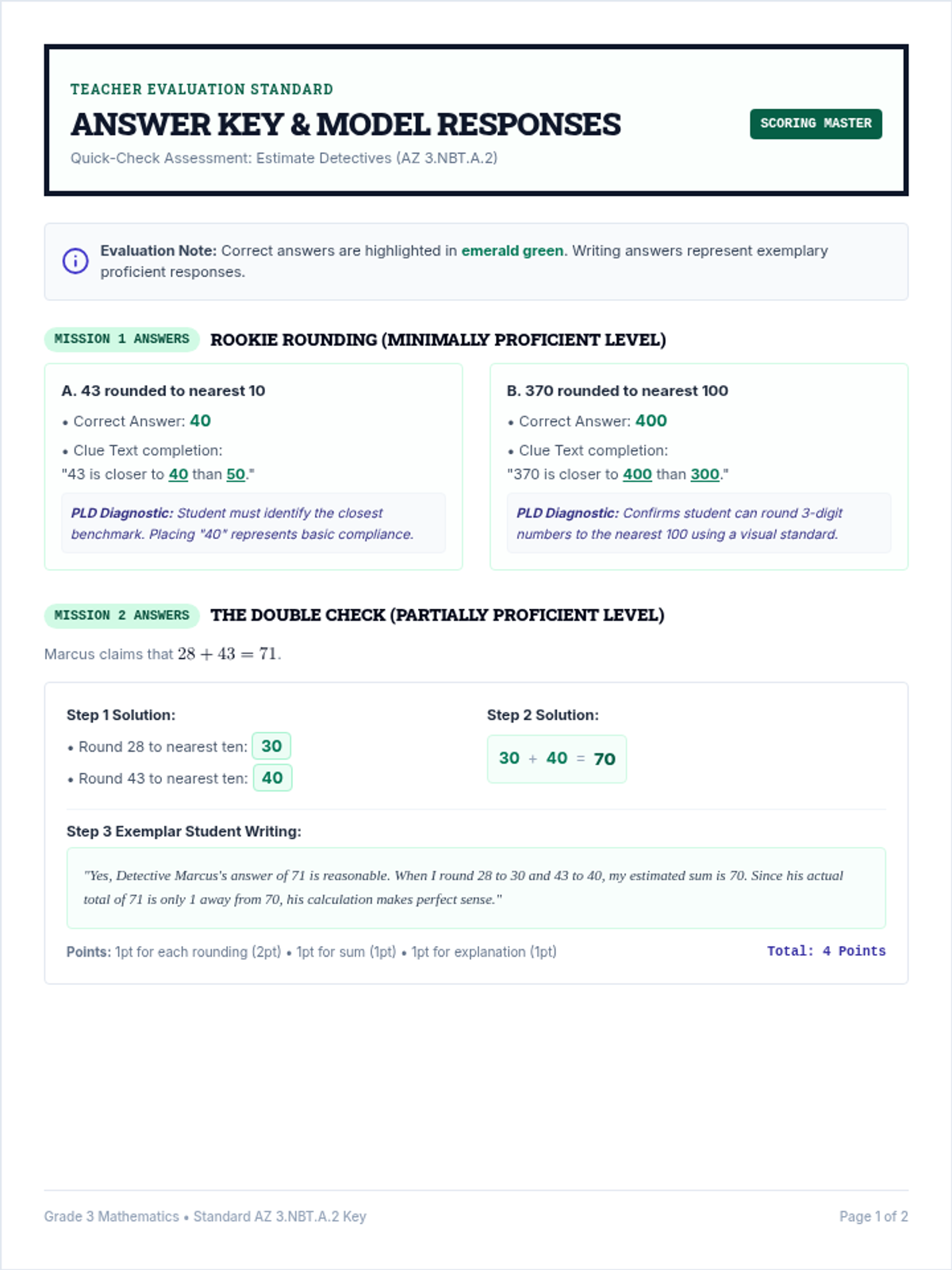
A comprehensive diagnostic and assessment unit focused on rounding to the nearest 10 or 100 to check solution reasonableness, aligned to the Arizona PLD framework for 3.NBT.A.2.
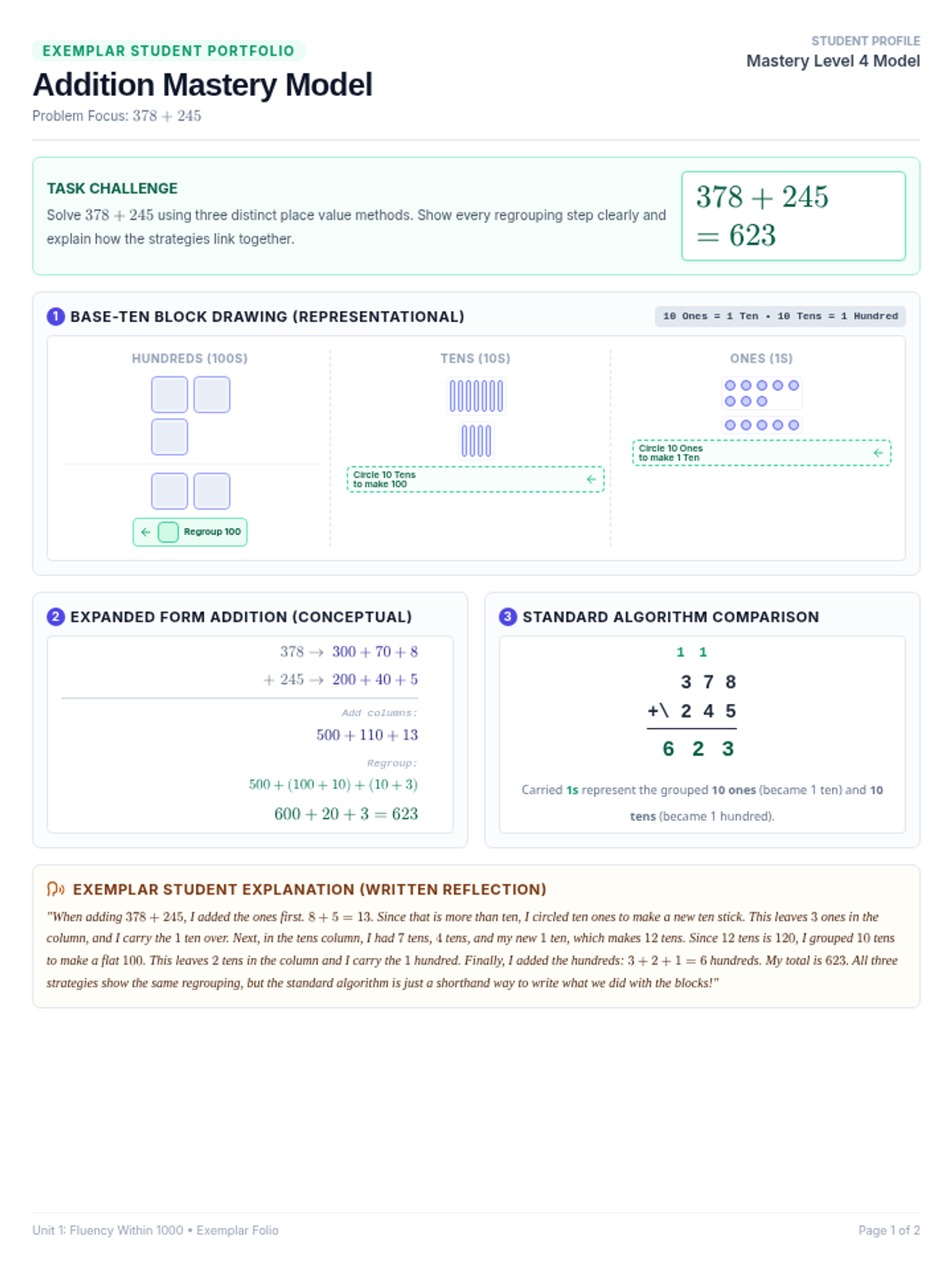
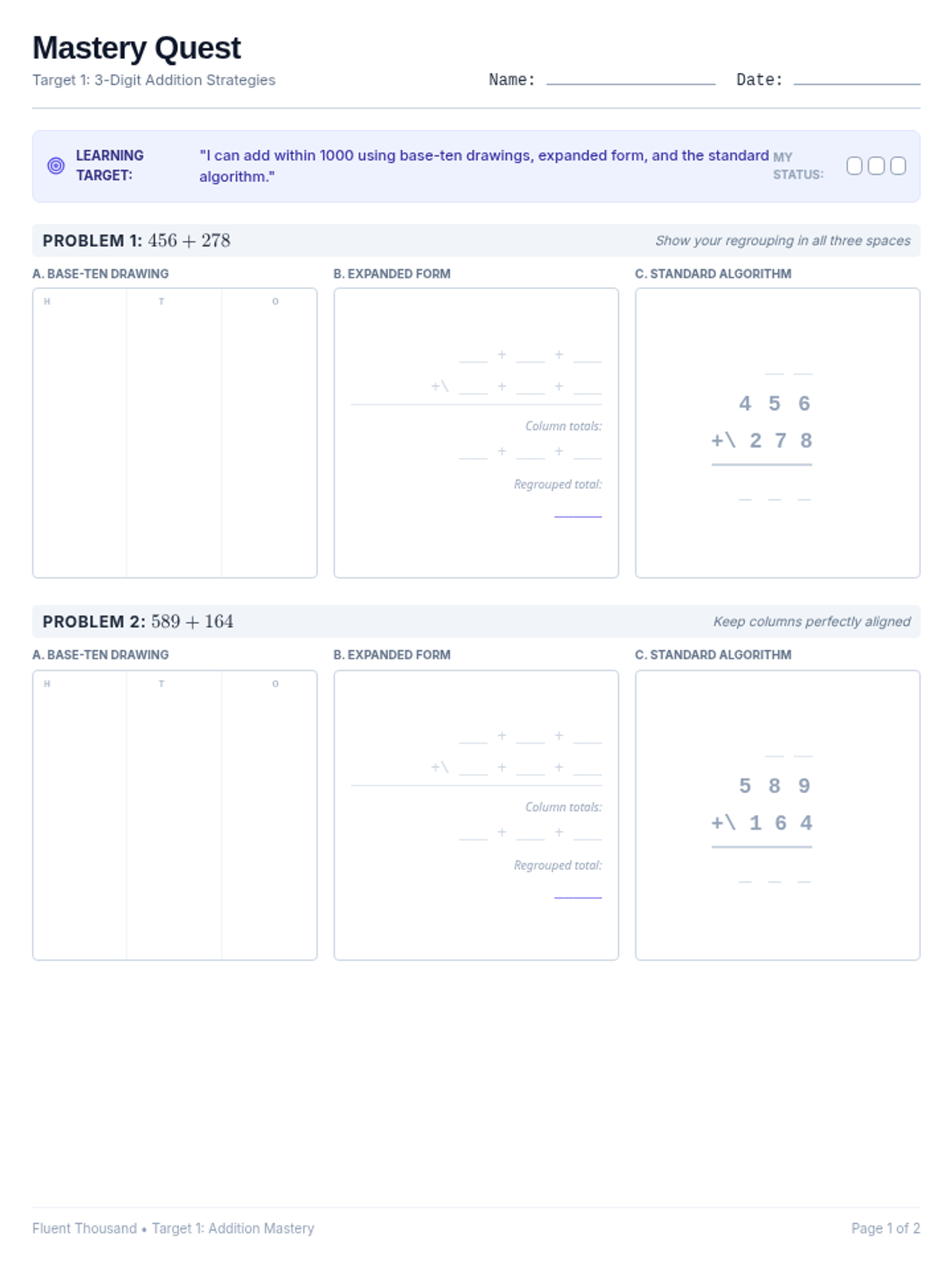
A mastery-focused lesson pack designed to teach, assess, and practice 3-digit addition and subtraction using base-ten drawings, expanded form, and the standard algorithm. Includes a comprehensive rubric, student exemplar exemplars, and a multi-strategy practice worksheet.
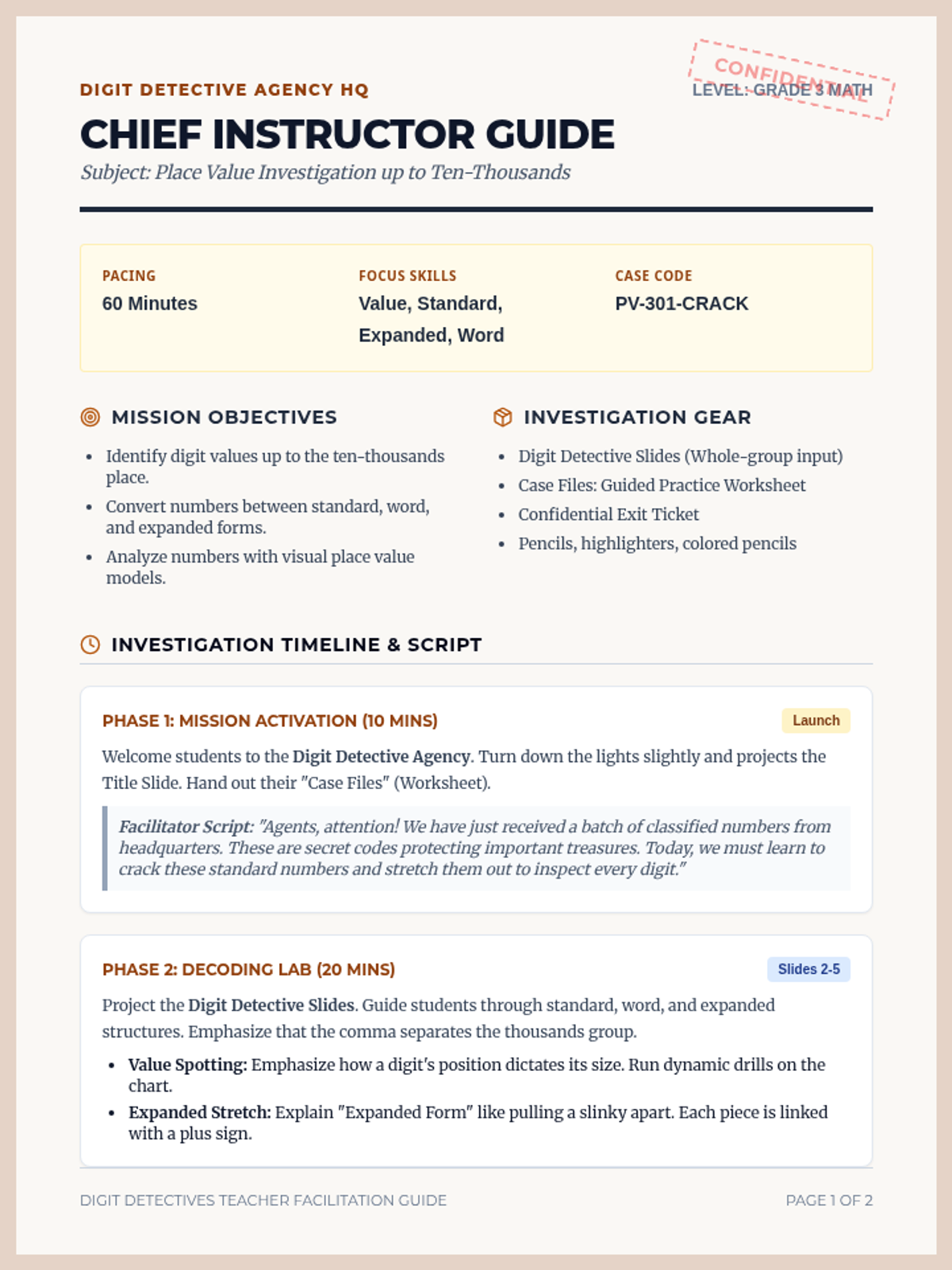
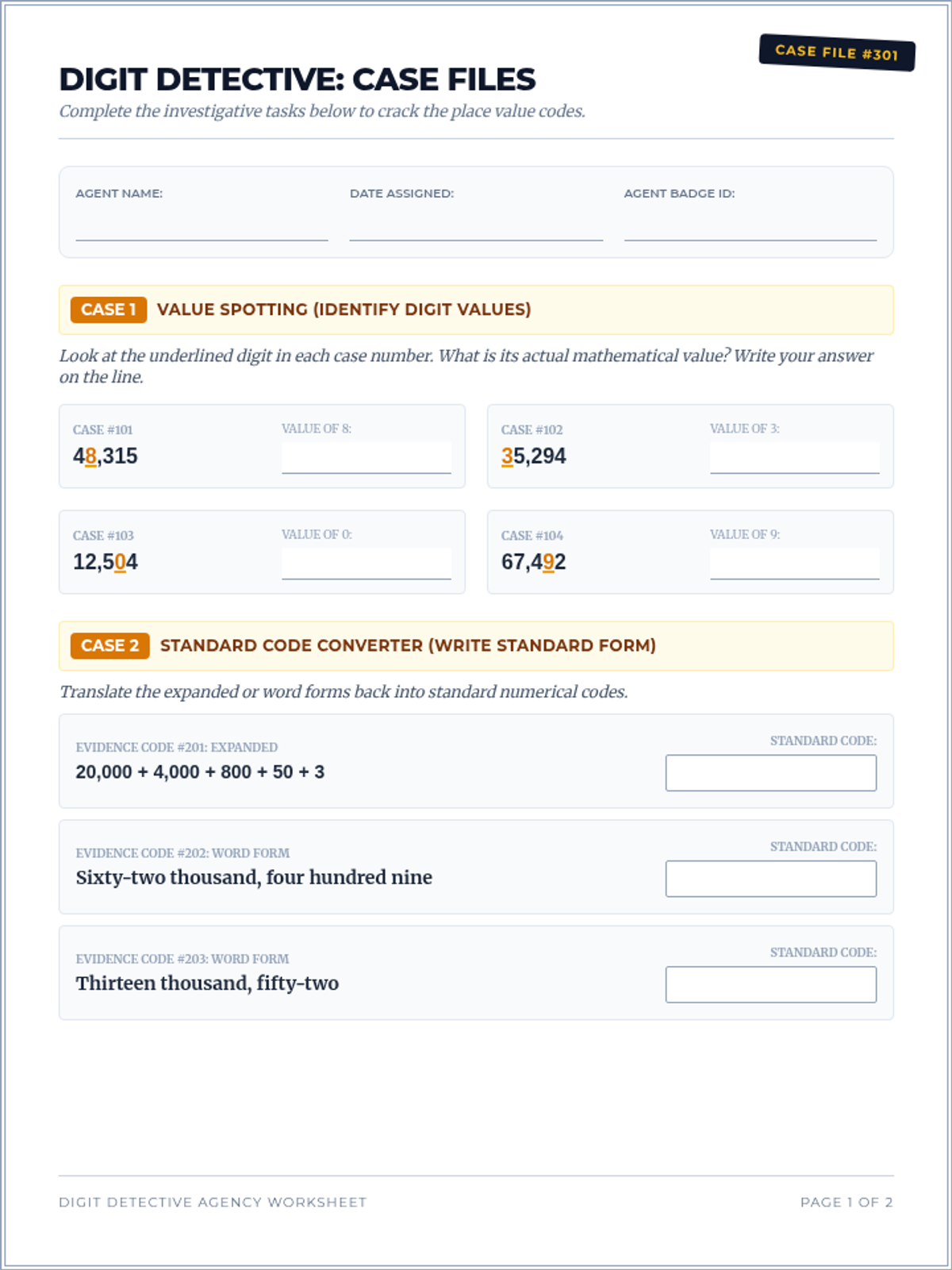
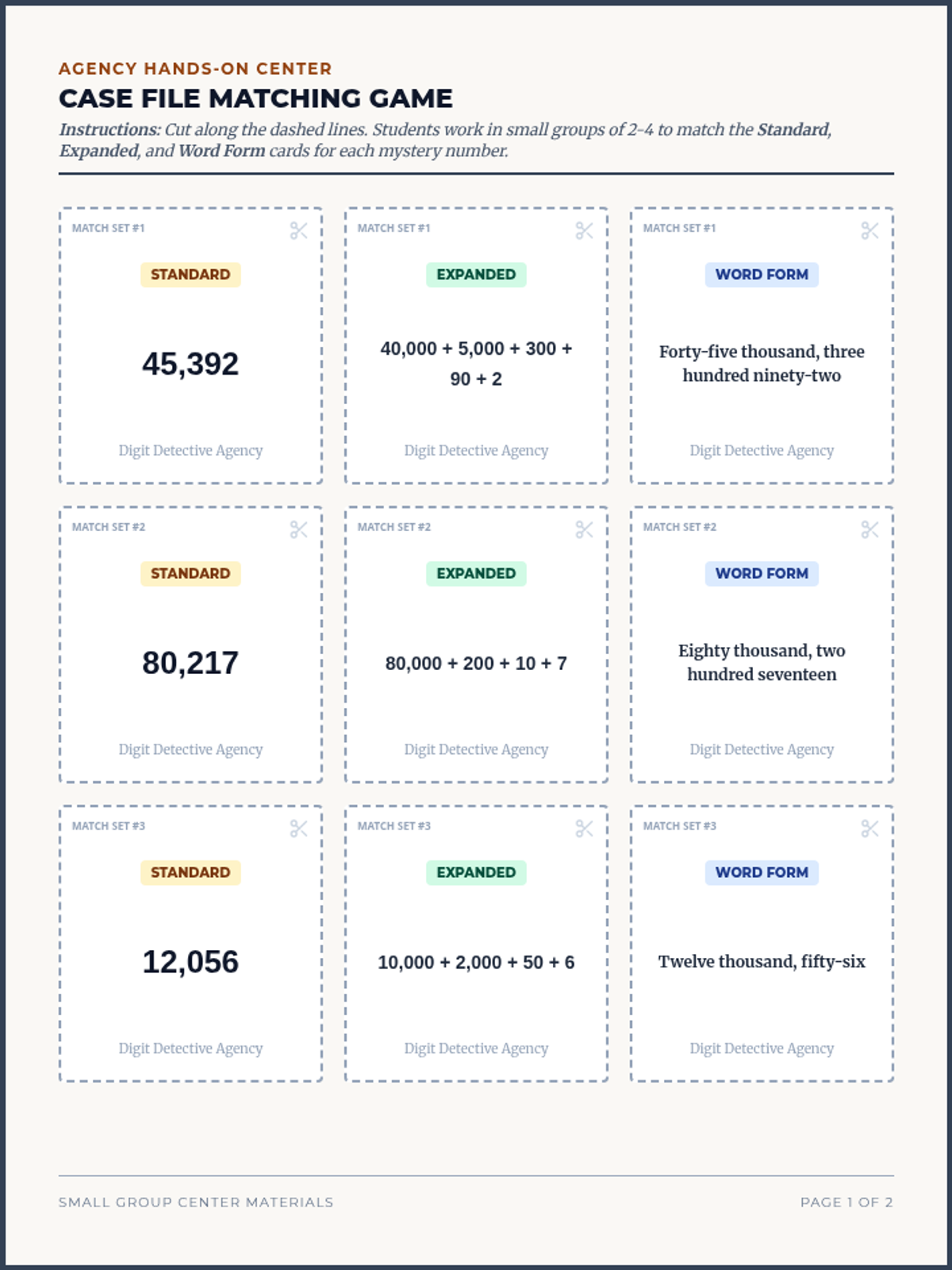
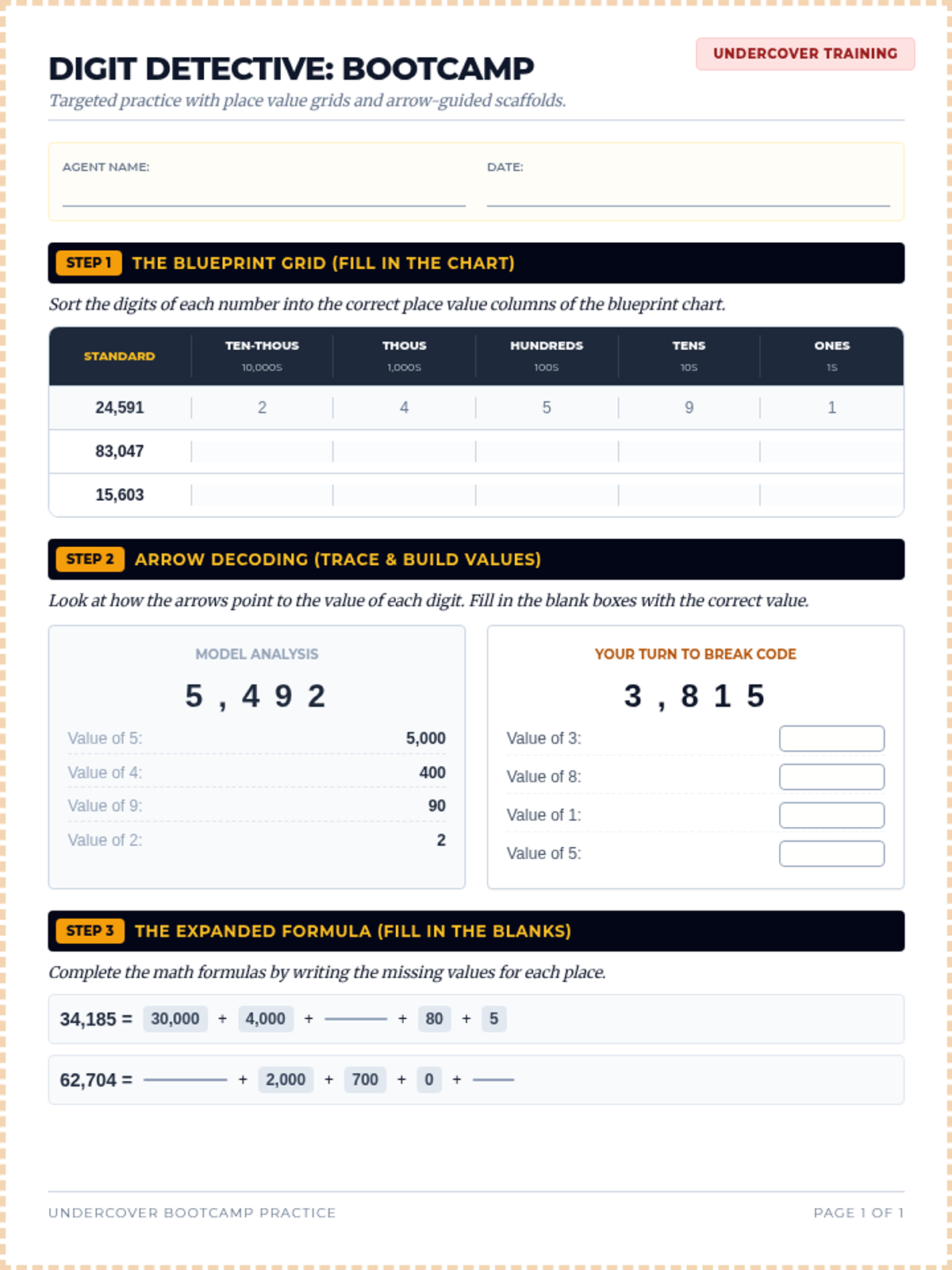
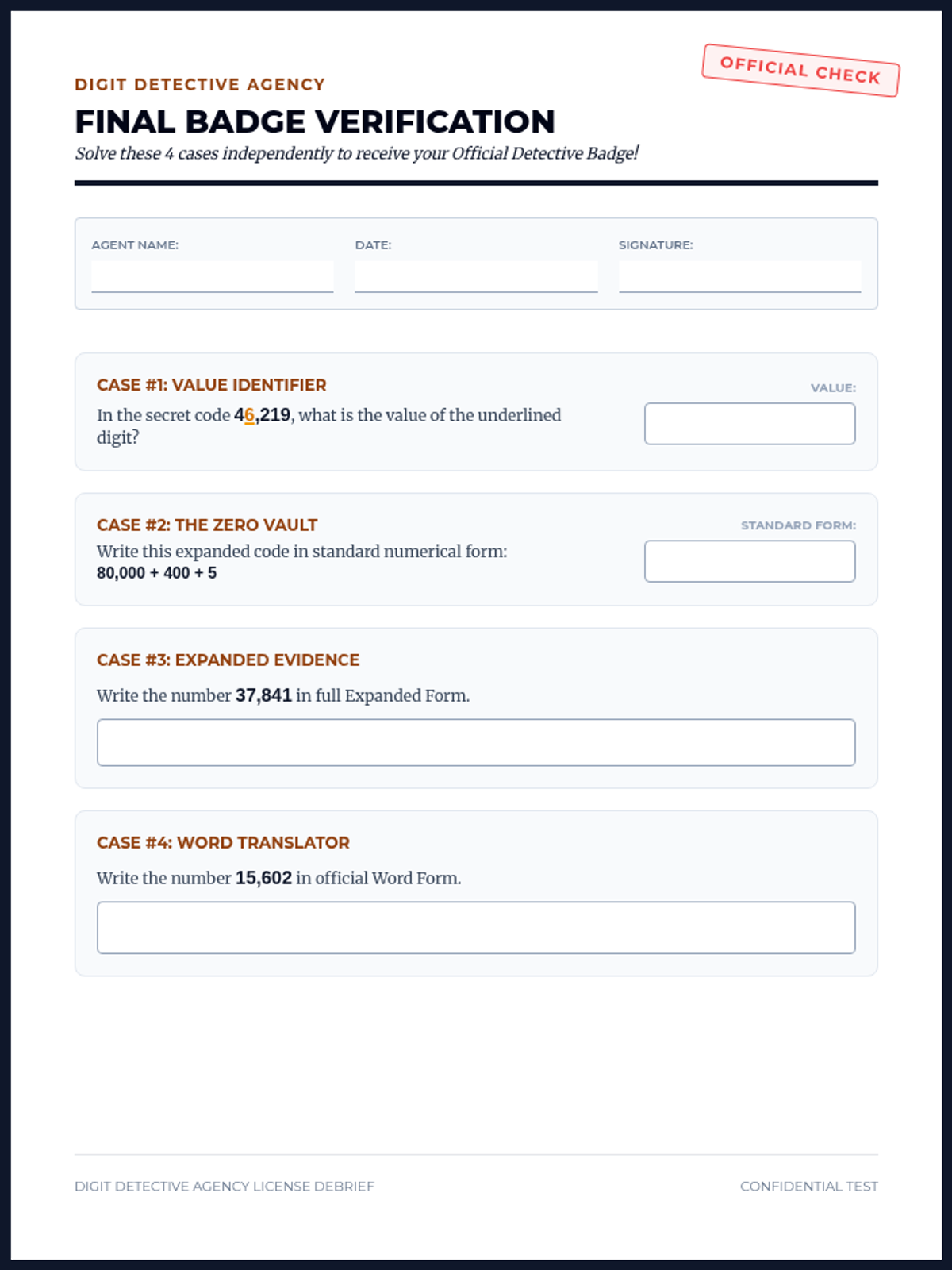
A comprehensive 3rd grade math lesson themed around a detective agency where students solve place value cases. The lesson covers identifying digit values up to ten-thousands, and converting numbers between standard, word, and expanded forms.
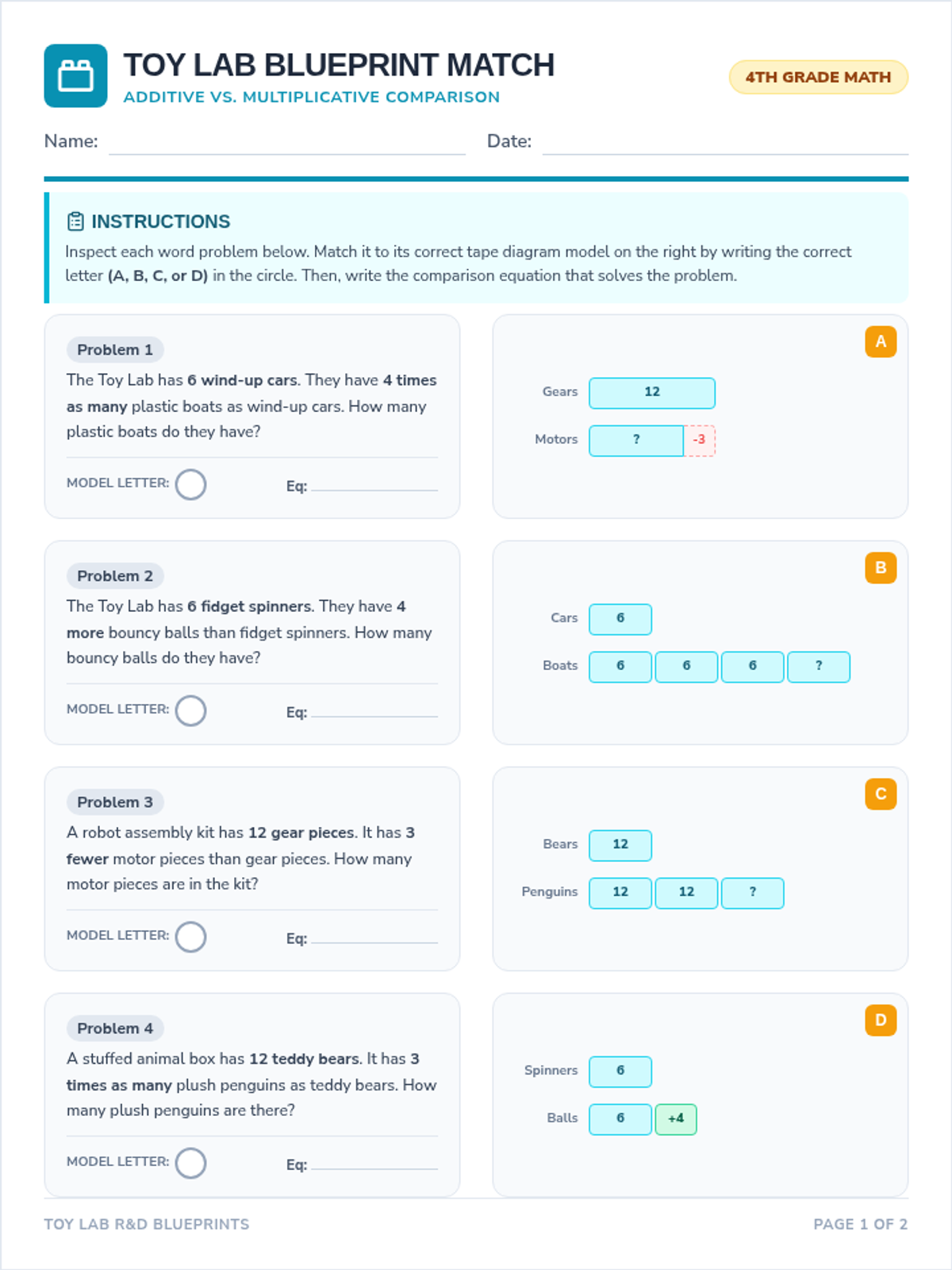
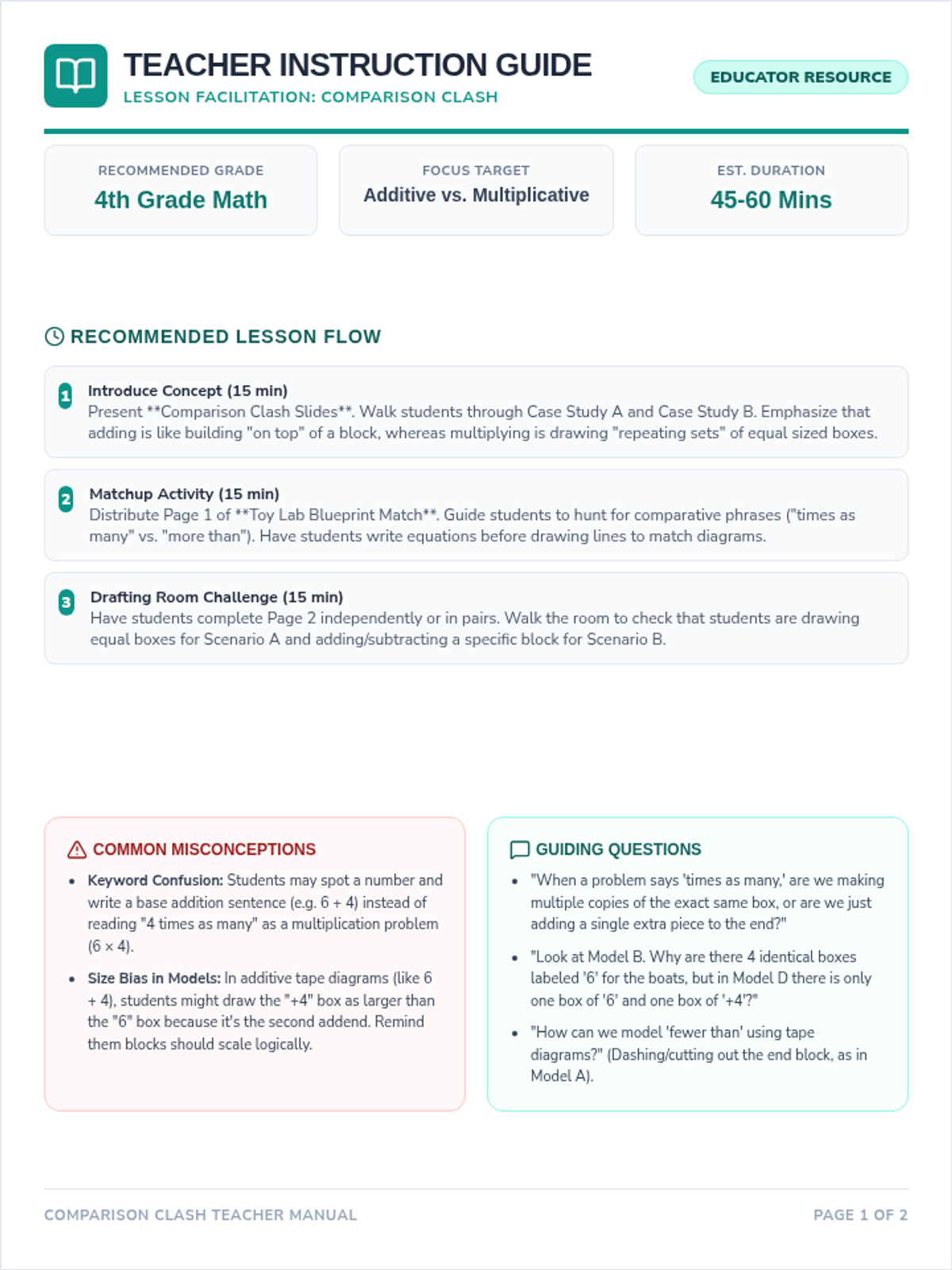
A hands-on, high-engagement lesson where 4th-grade students distinguish between additive and multiplicative comparison using visual models, tape diagrams, and real-world toy factory scenarios. This lesson includes interactive presentation slides, a student matching activity, and a comprehensive teacher guide.
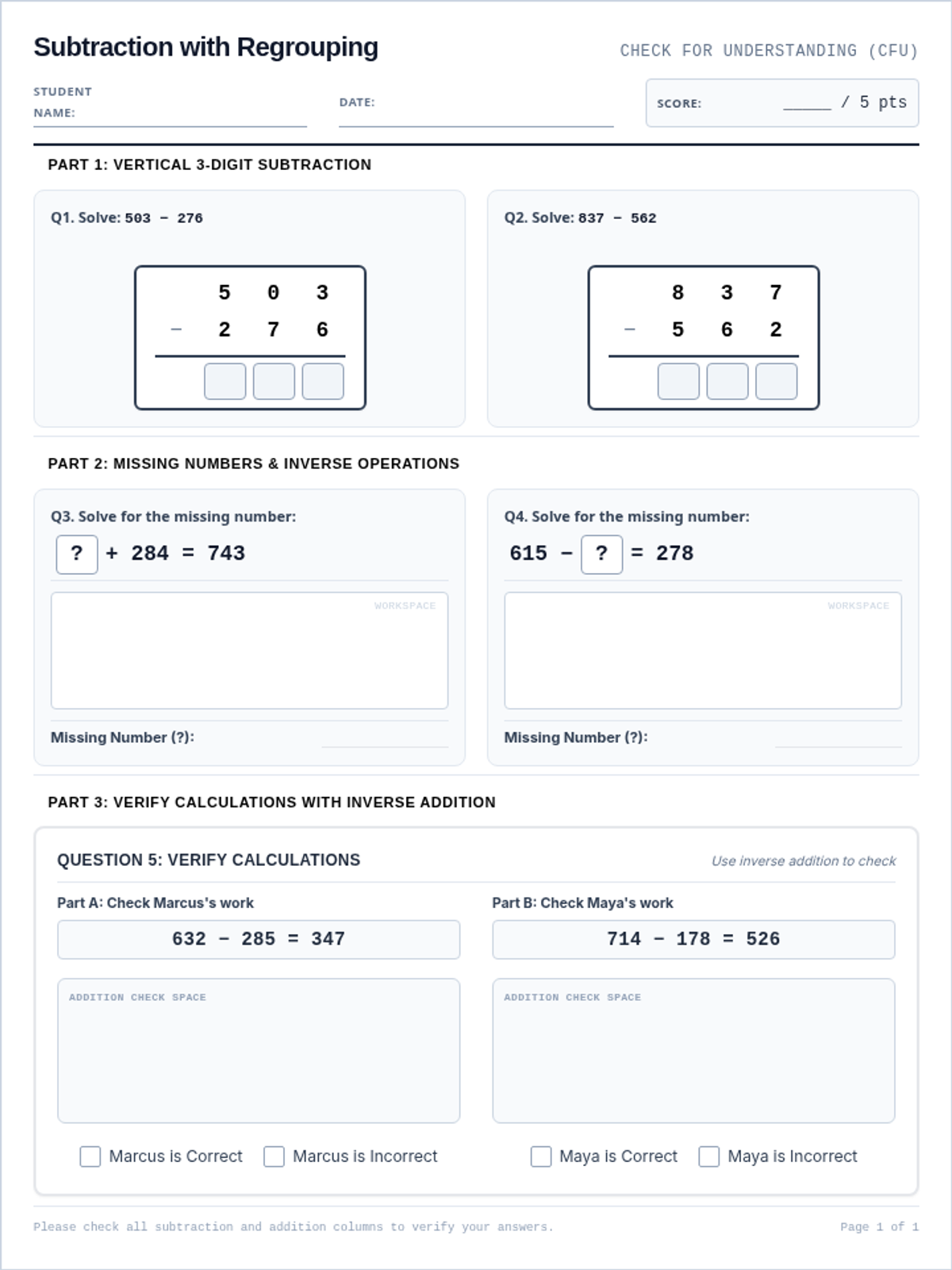
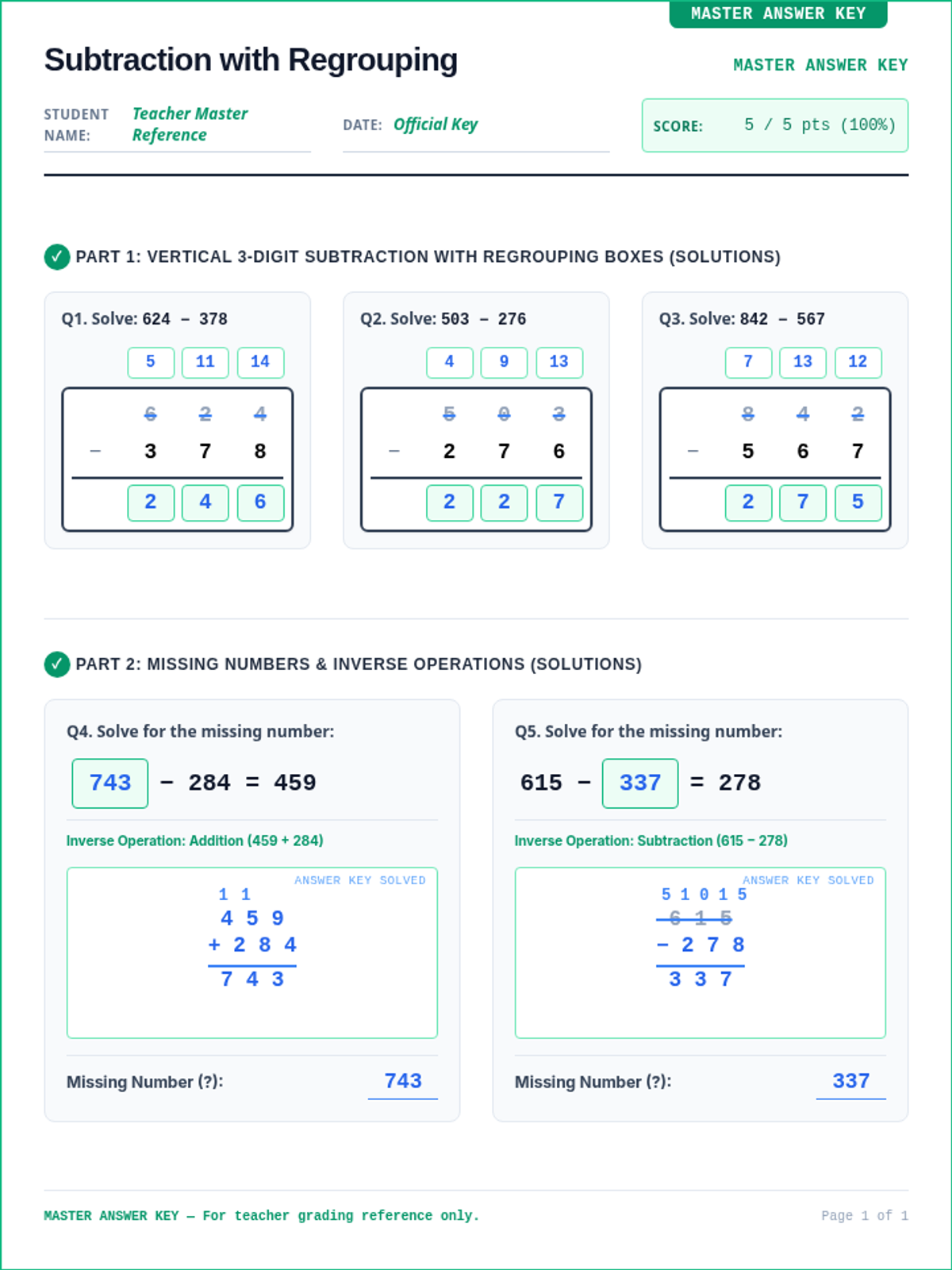
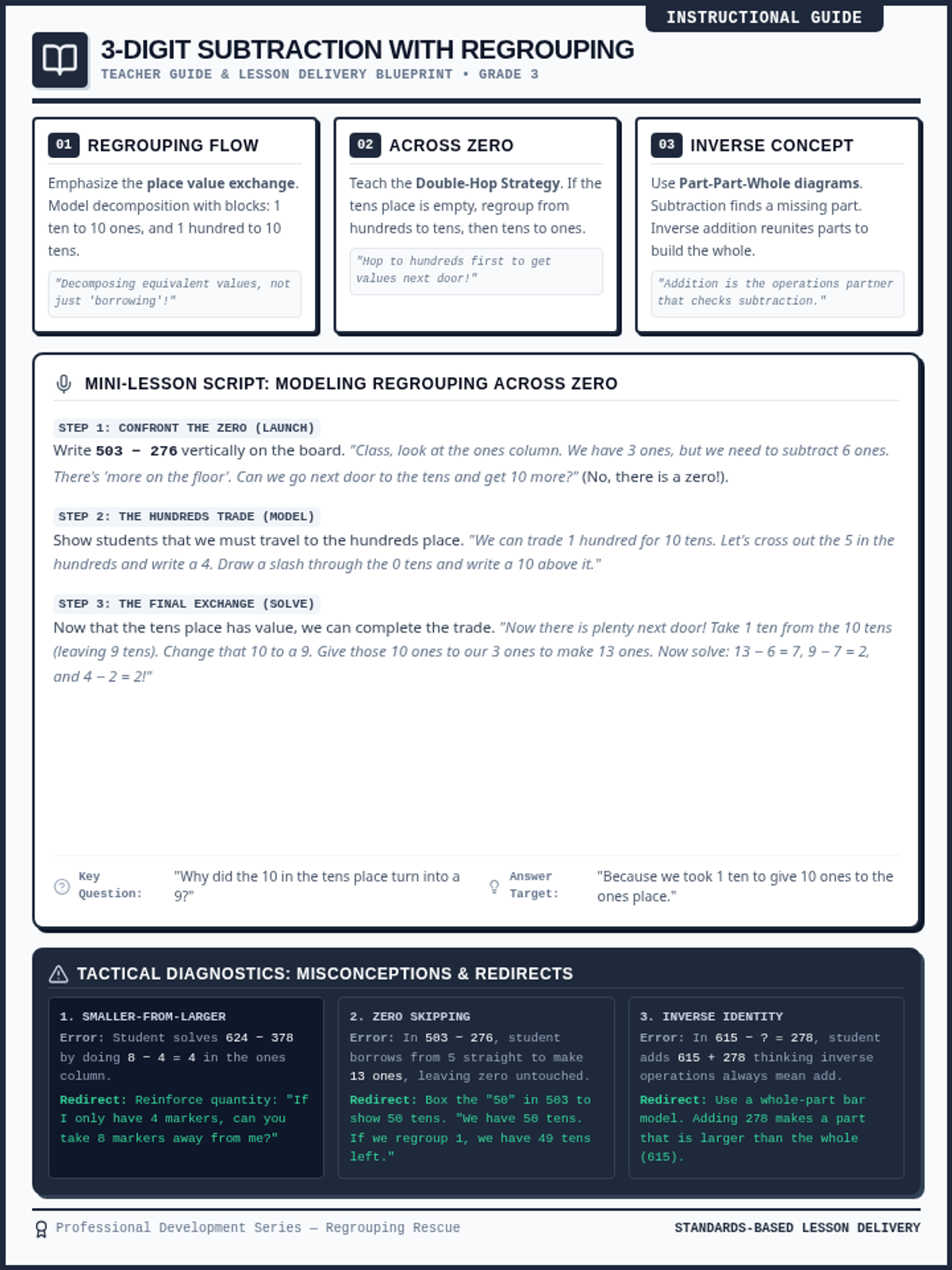
A focused check-for-understanding assessment on 3-digit subtraction with regrouping, including subtracting across zeros and solving for missing numbers using inverse operations.
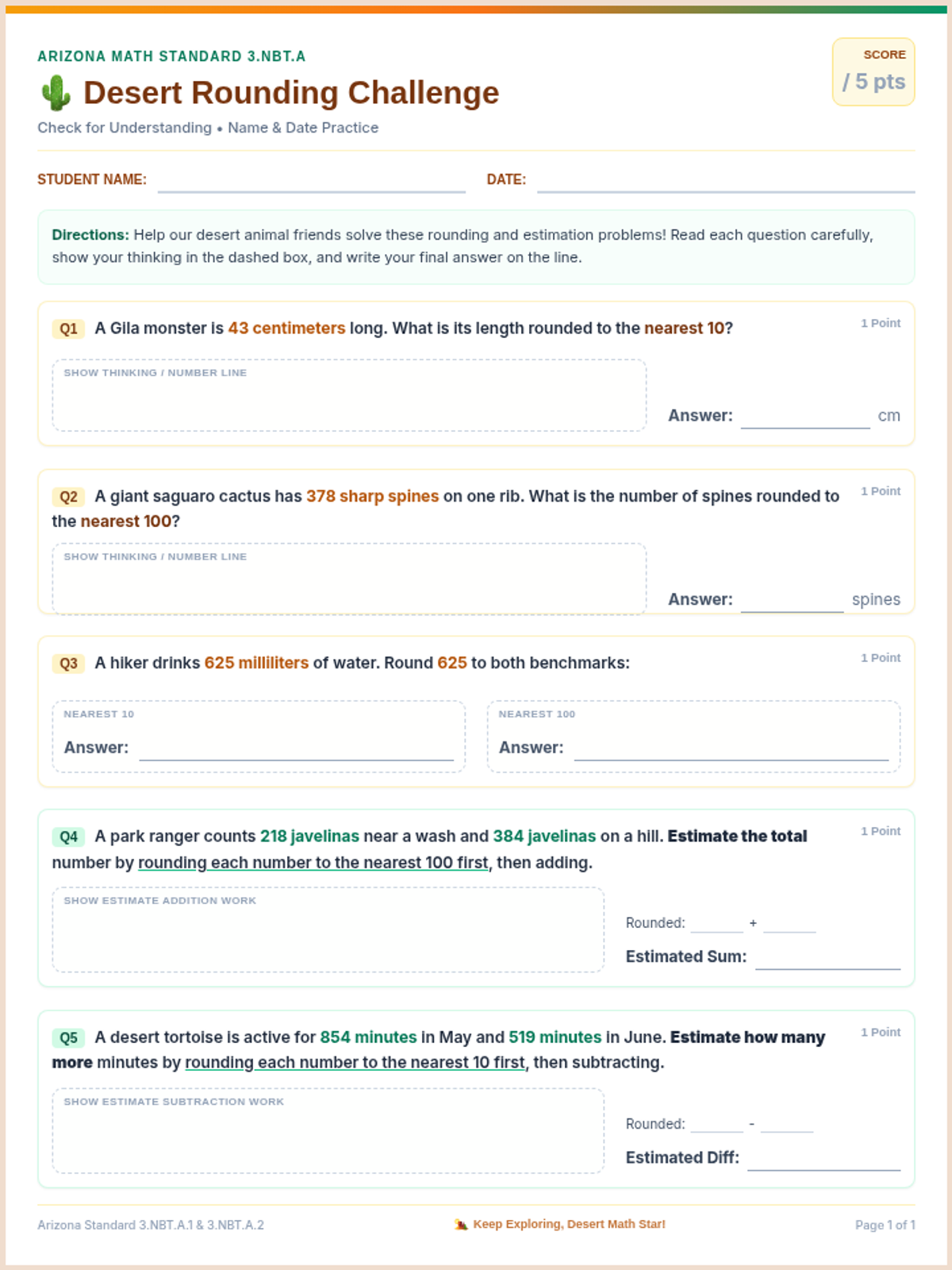
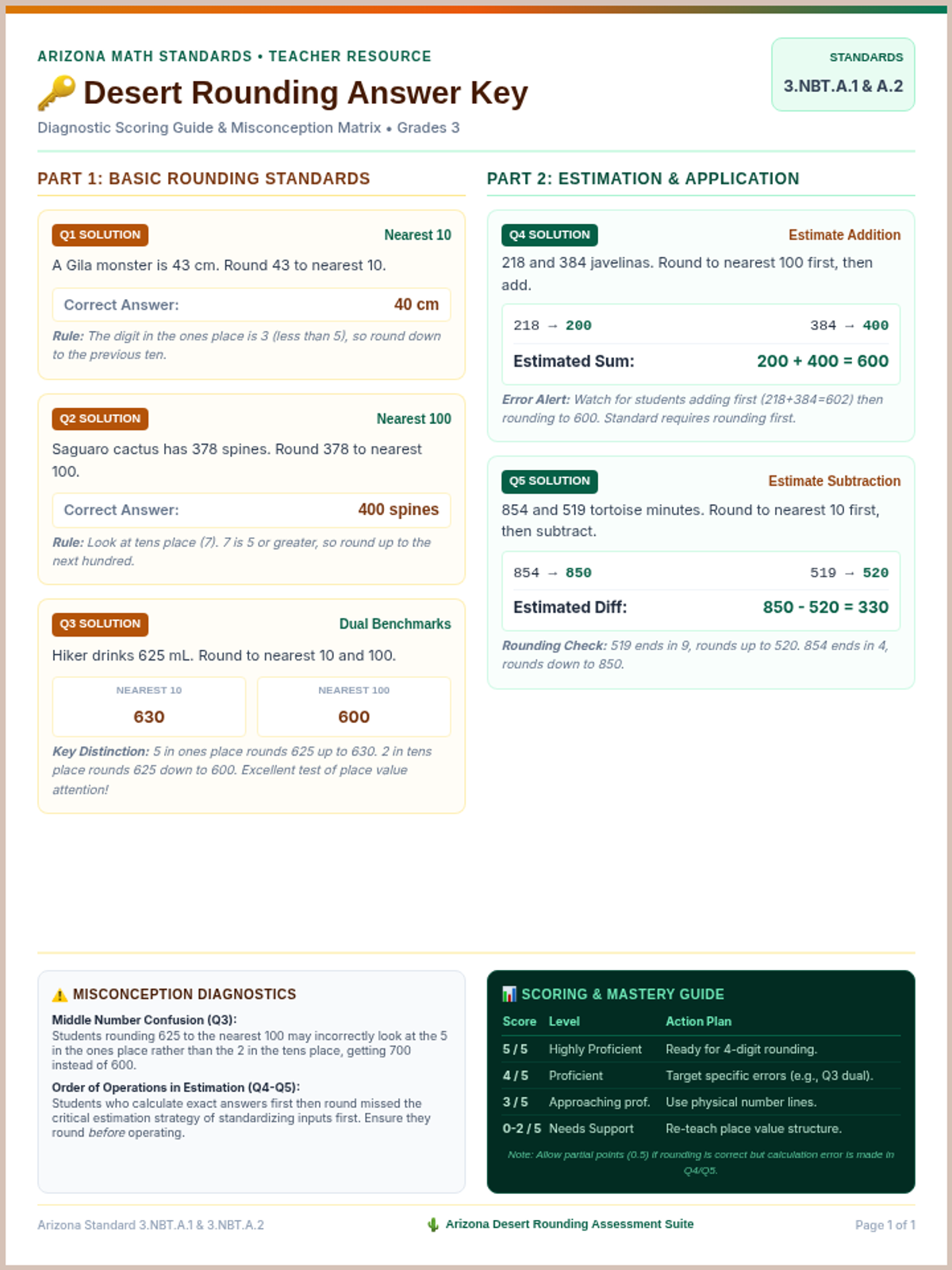
A 3rd-grade assessment focusing on Arizona standards 3.NBT.A.1 and 3.NBT.A.2, checking student proficiency in rounding numbers to the nearest 10 and 100 within 1,000, and using rounding to estimate solutions.
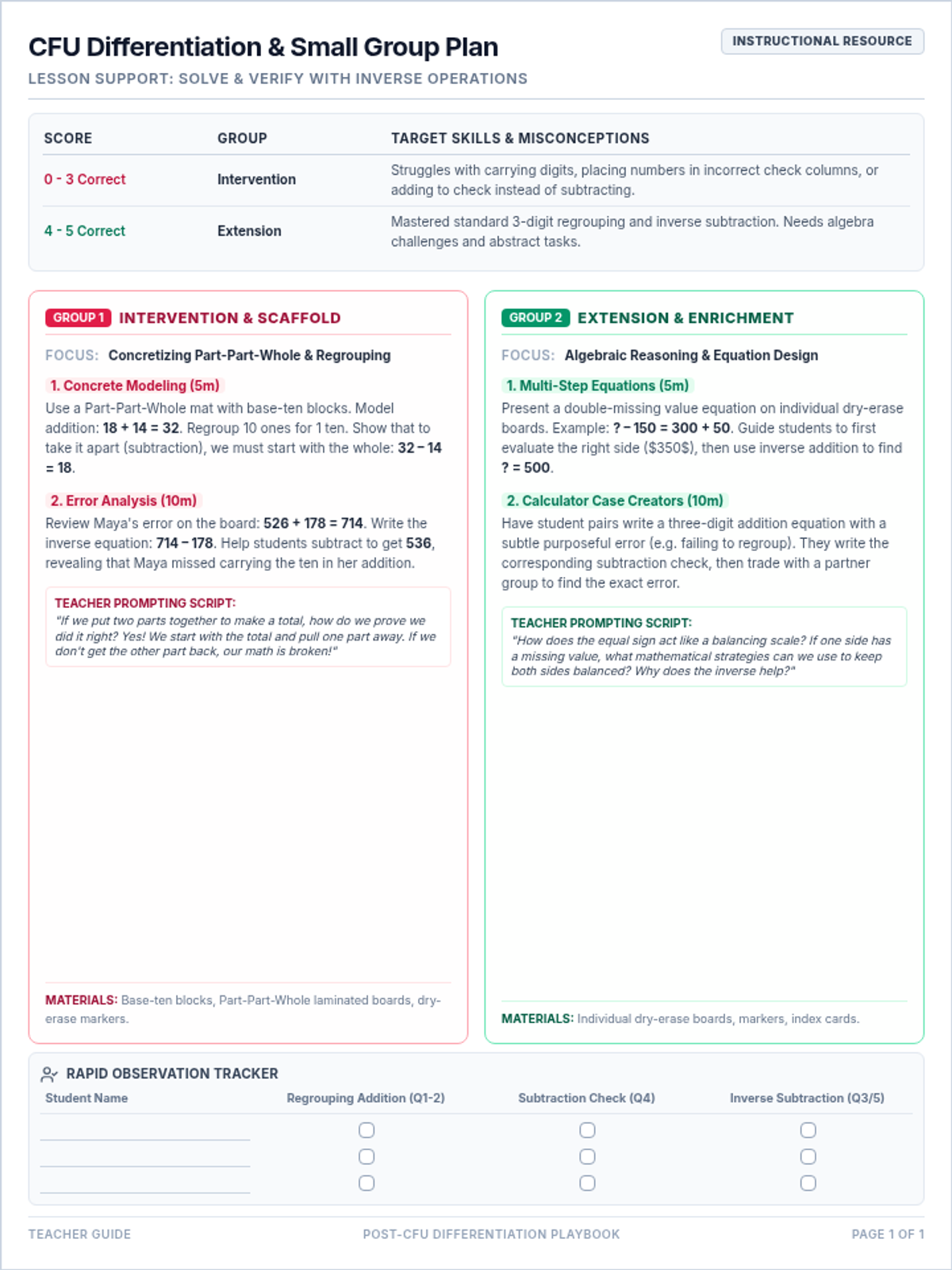
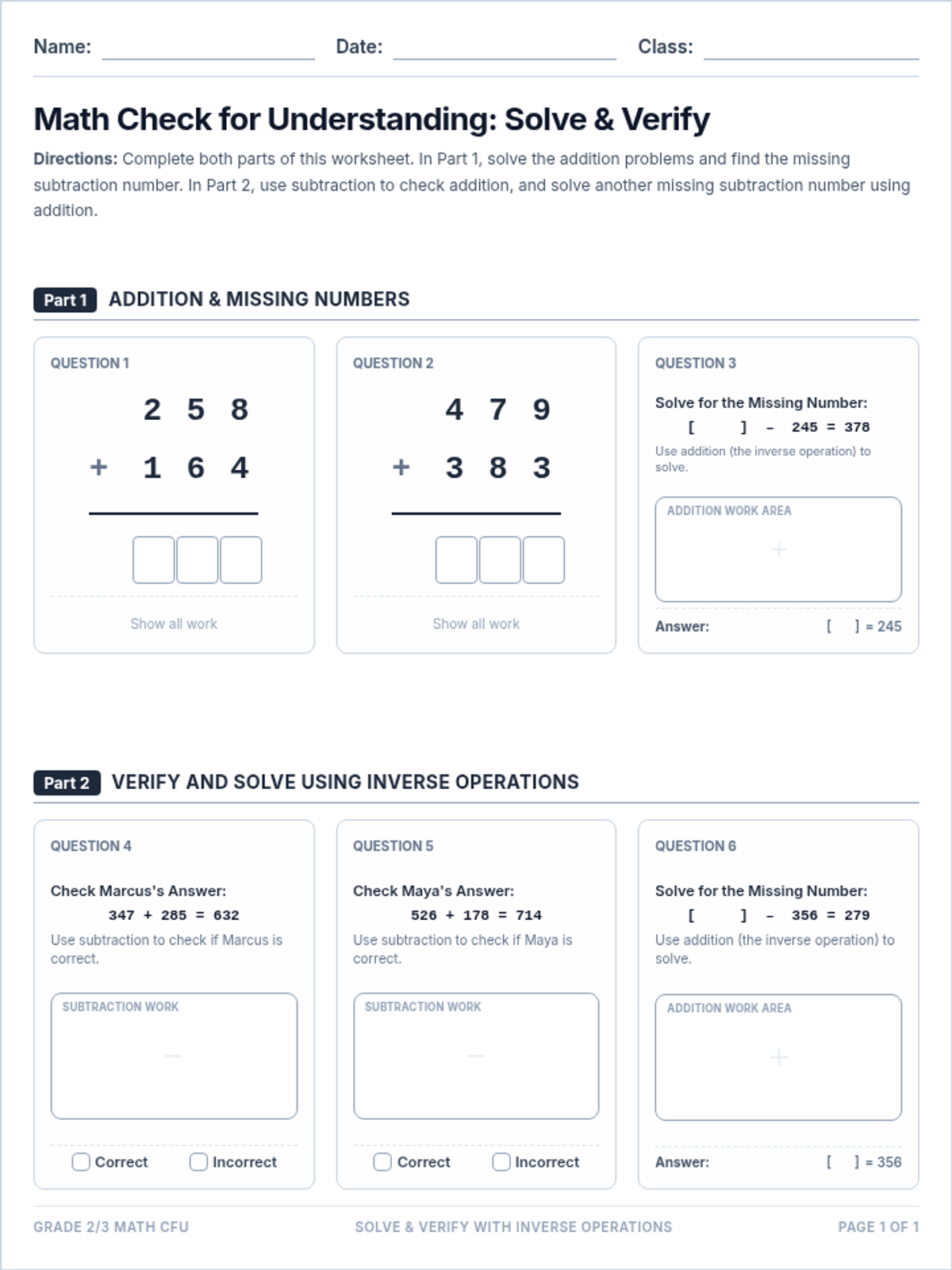
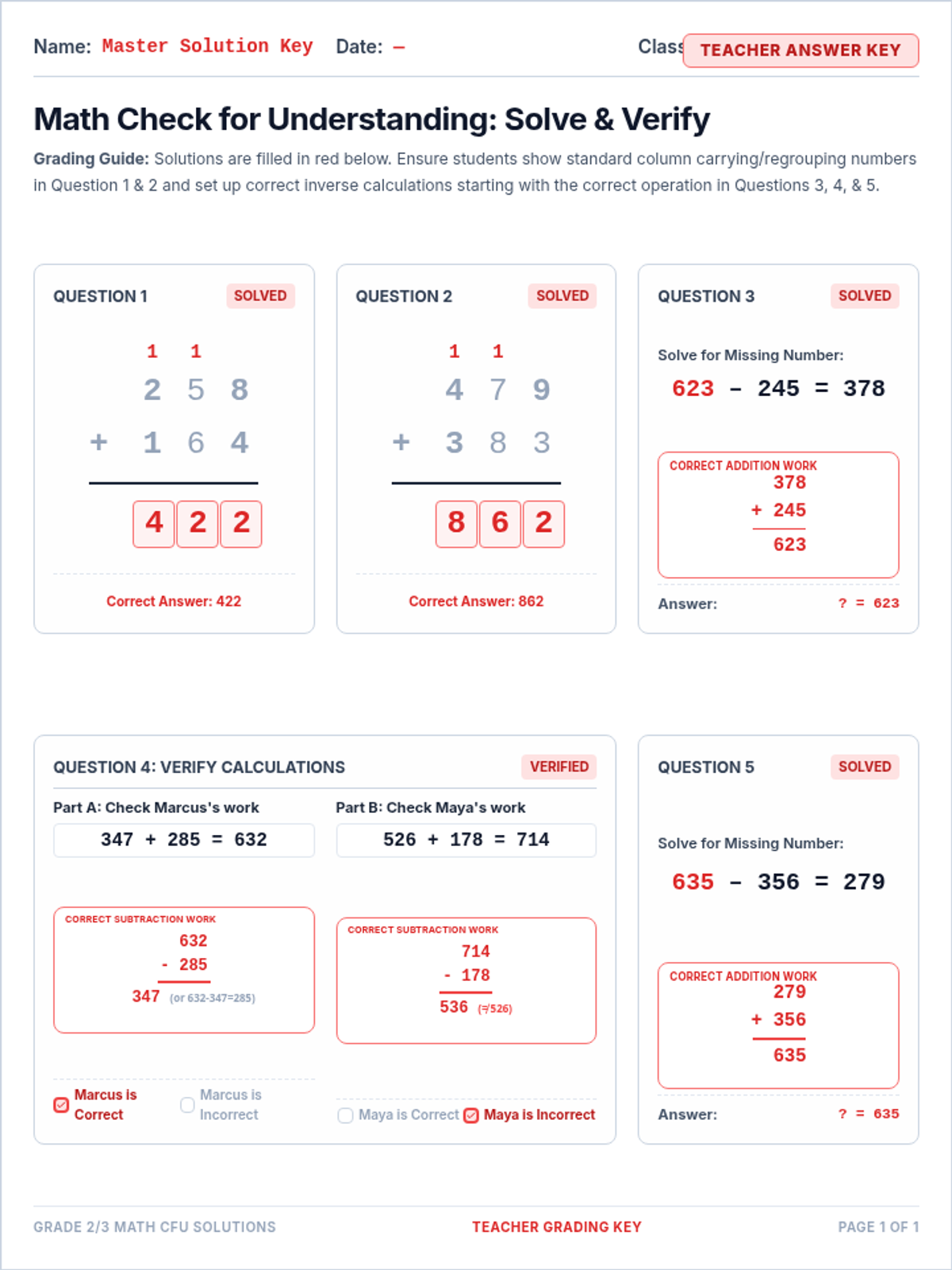
An engaging math lesson where students act as detectives to solve addition problems with regrouping and verify calculations using inverse operations.
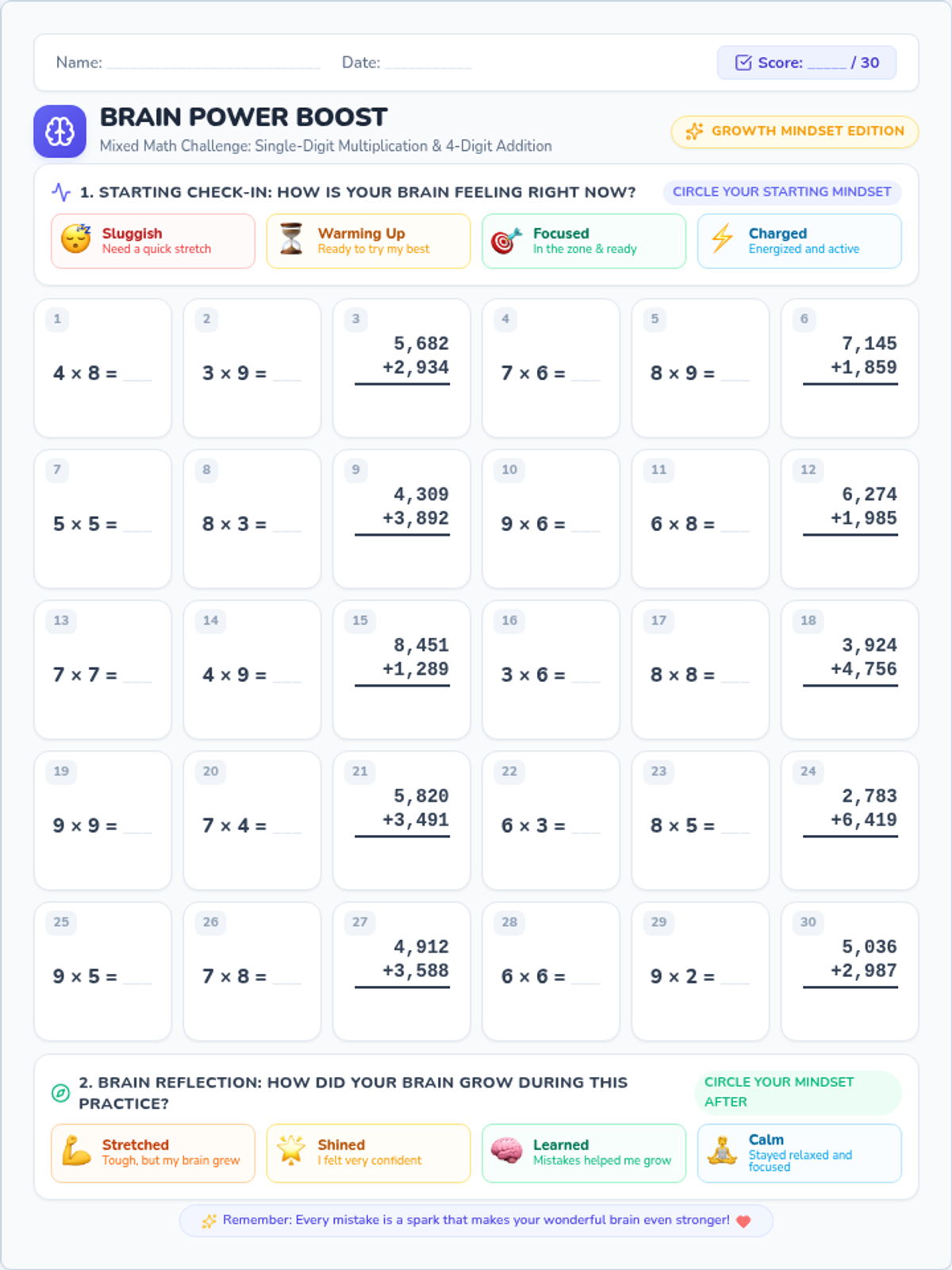
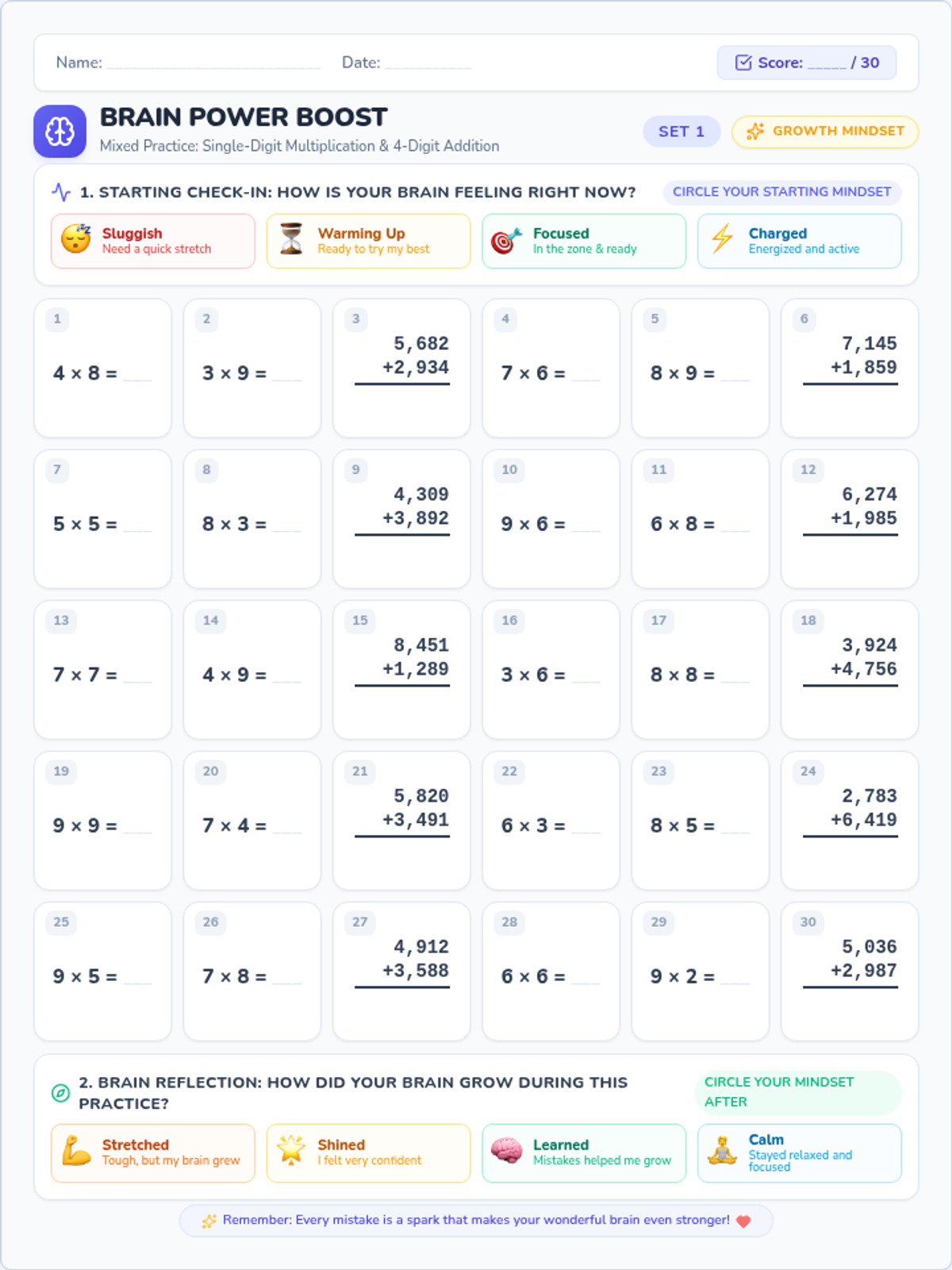
A math lesson focused on building single-digit multiplication and four-digit addition fluency while integrating self-regulation check-ins to foster a growth mindset.
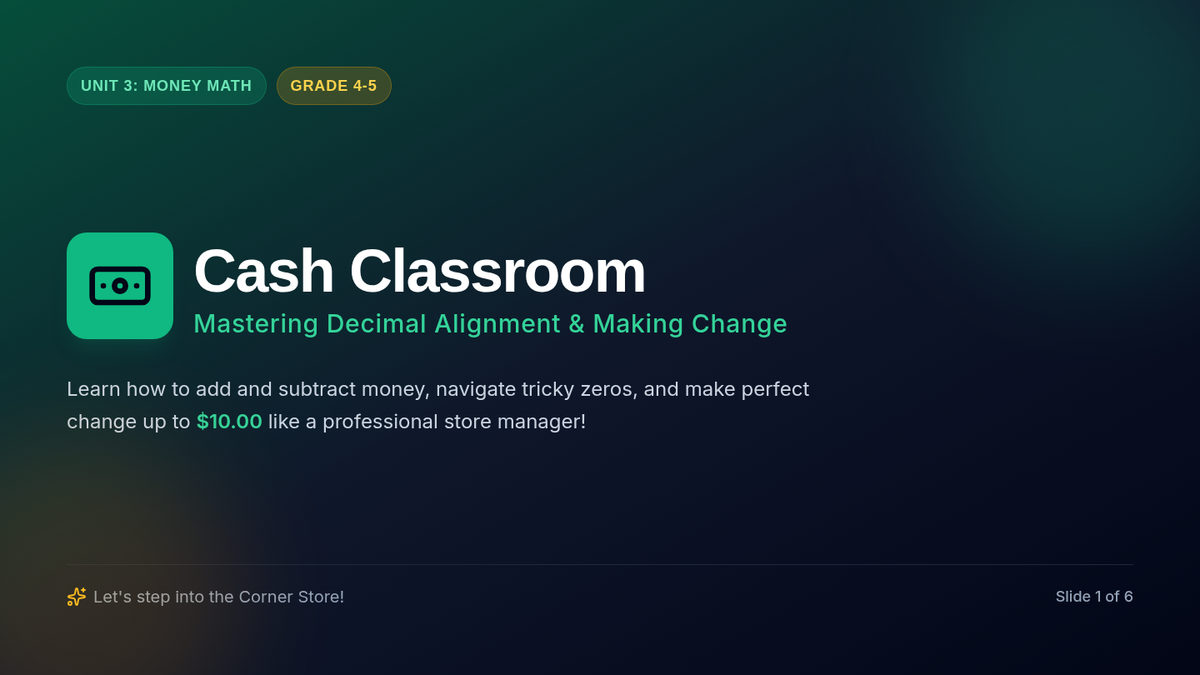
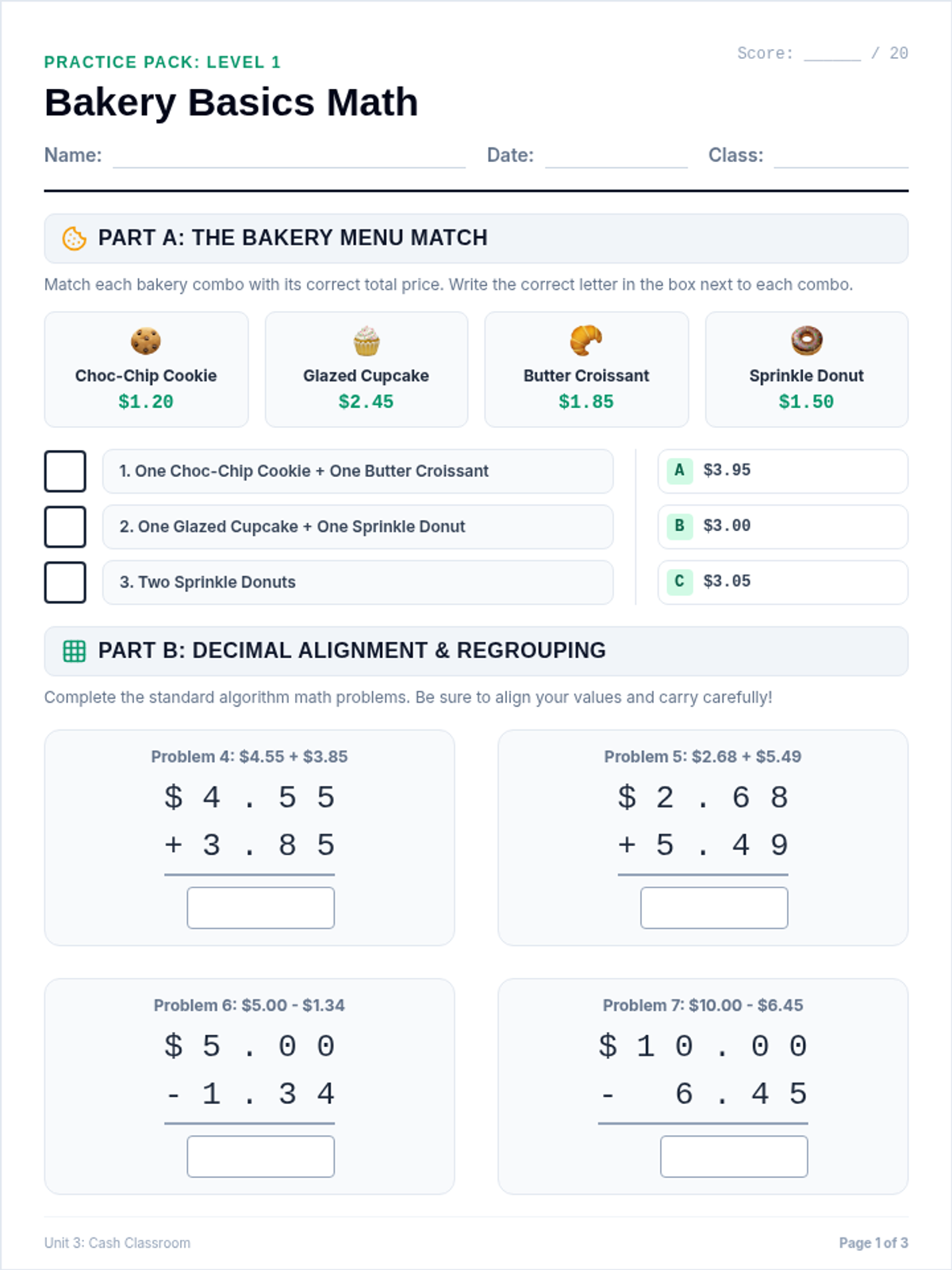
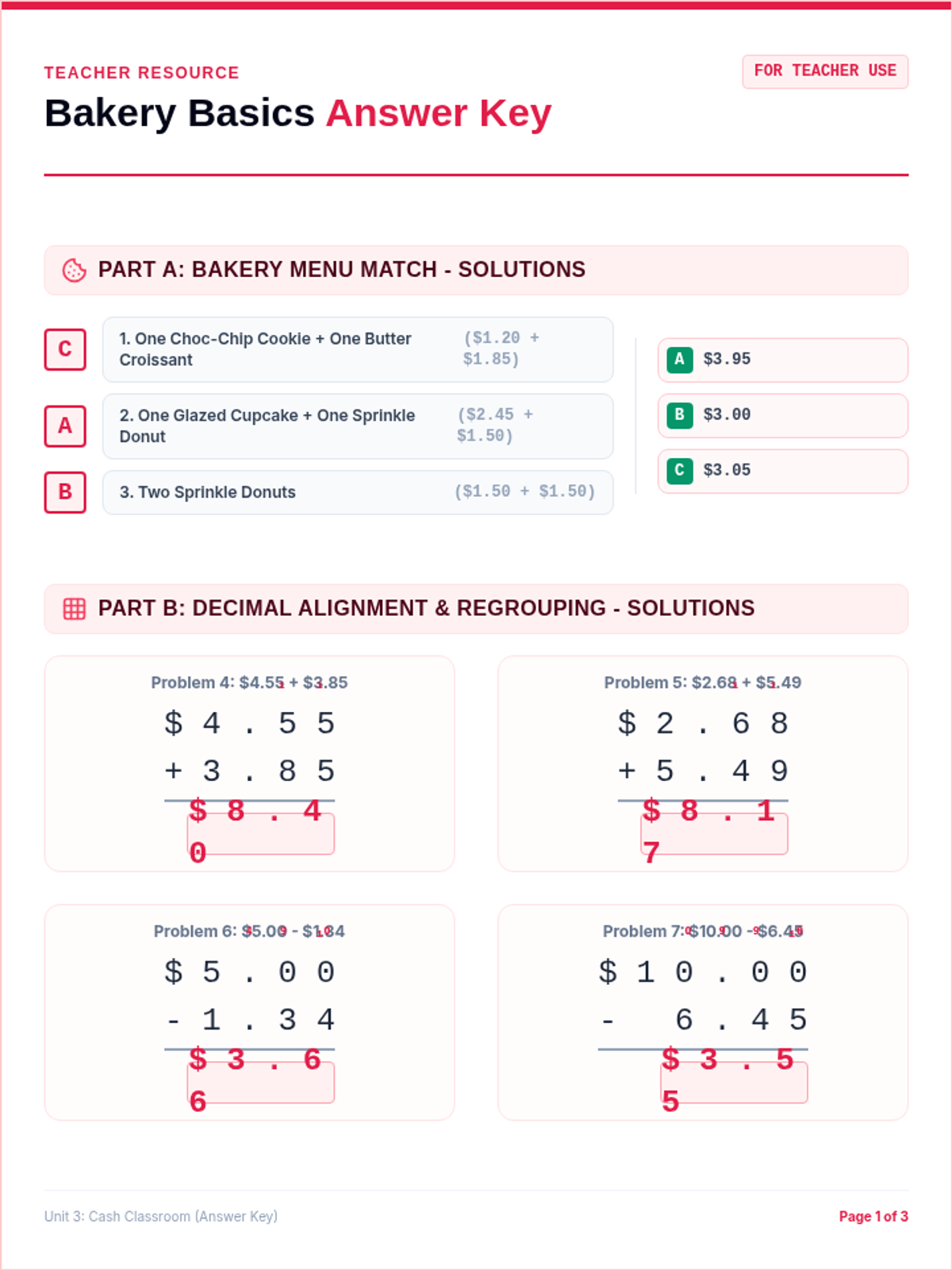
An engaging elementary math lesson focused on adding and subtracting money, lining up decimals, regrouping across zeros, and solving real-world shopping word problems up to $10.00.
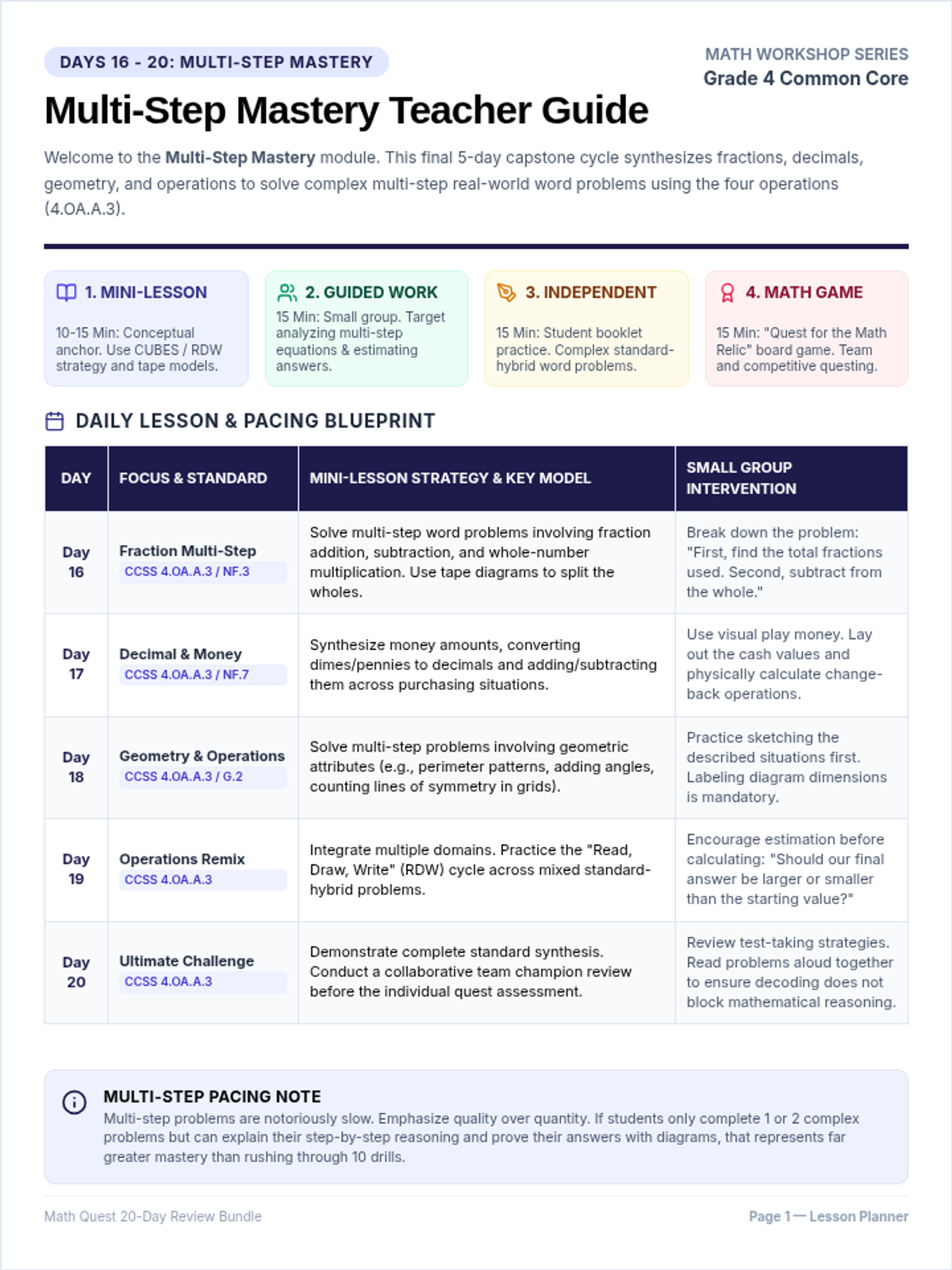
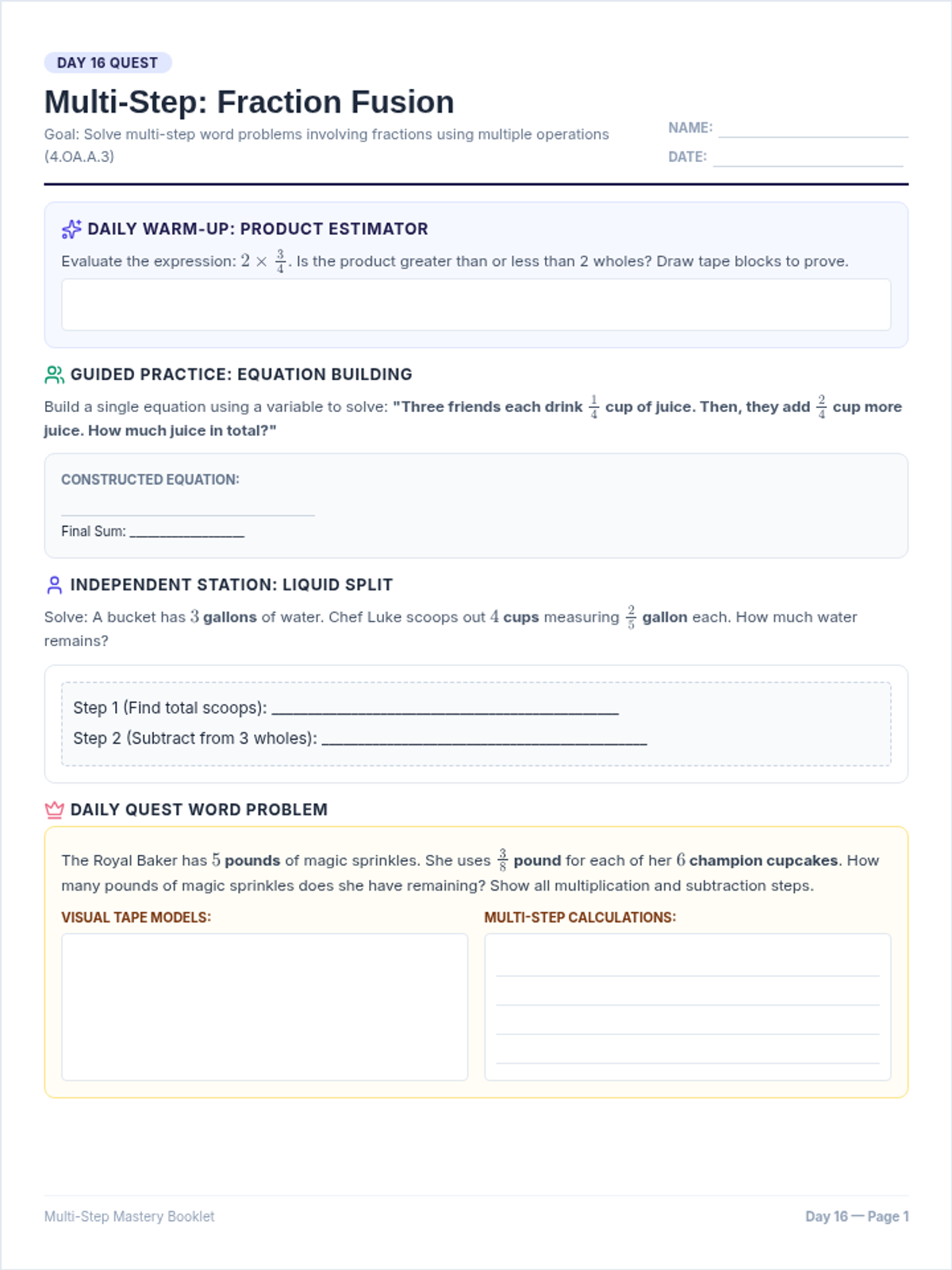
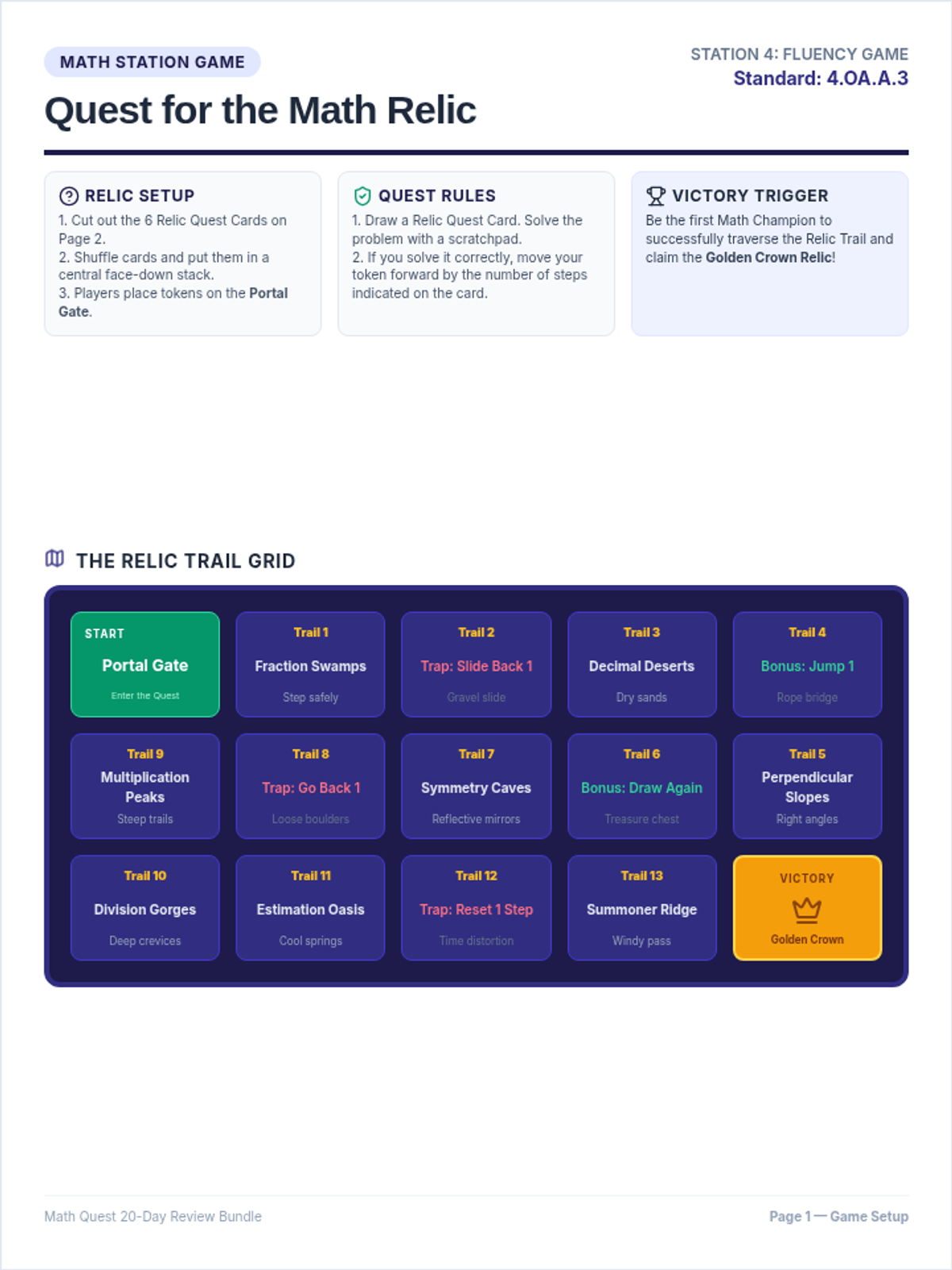
Days 16-20 of the review, focusing on integrating operations, fractions, decimals, and geometry to solve complex multi-step real-world word problems (OA.3).
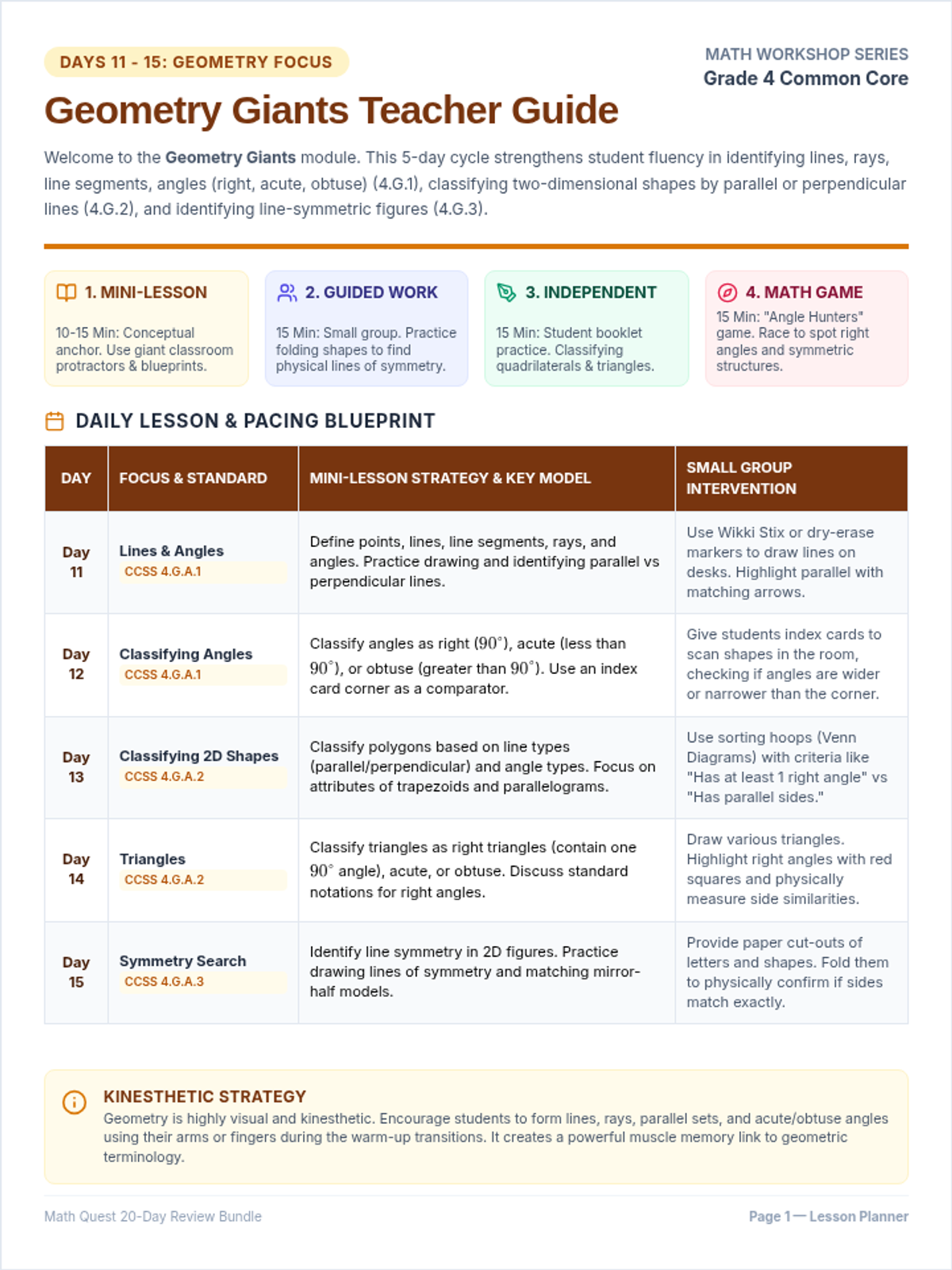
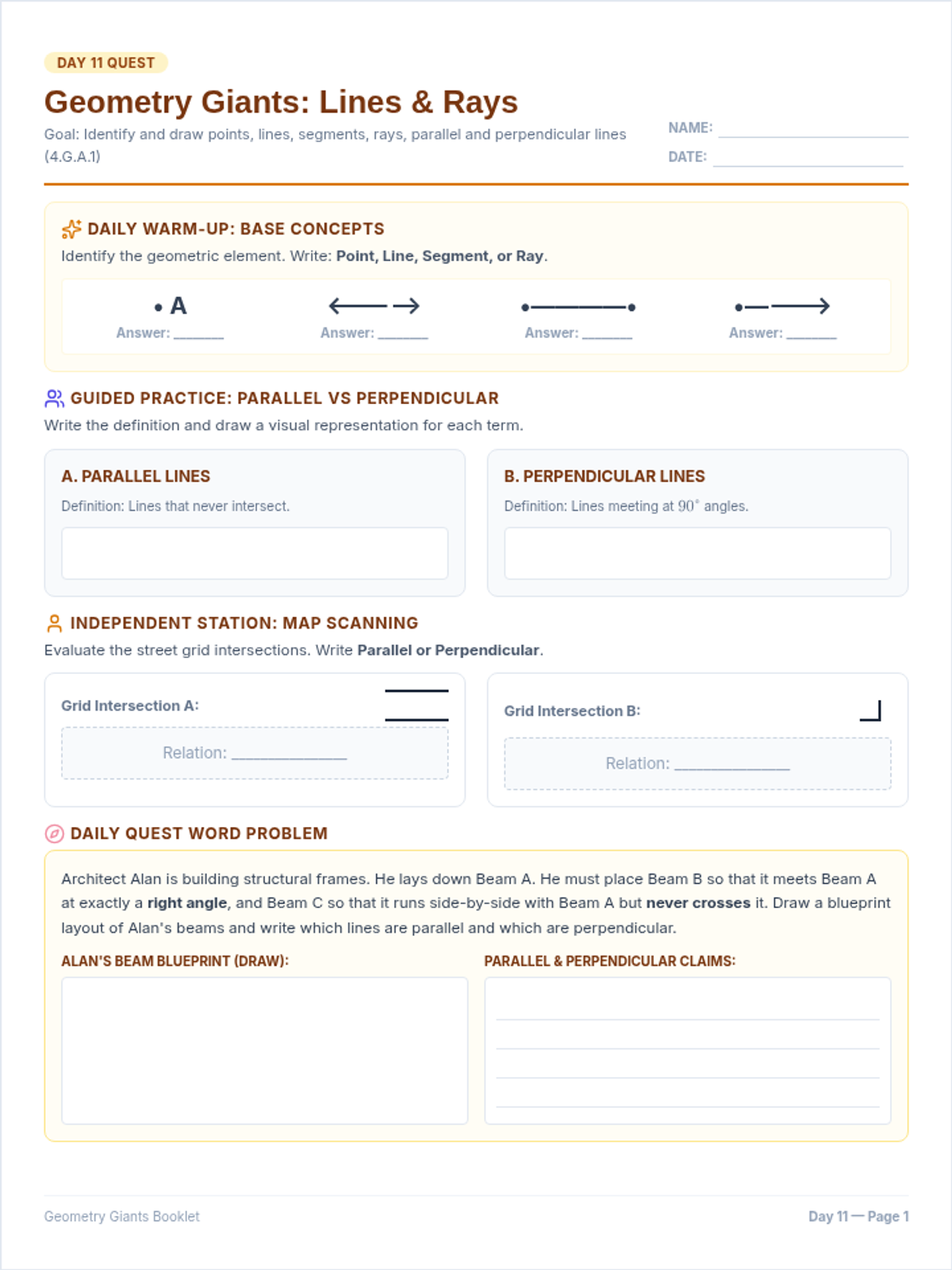
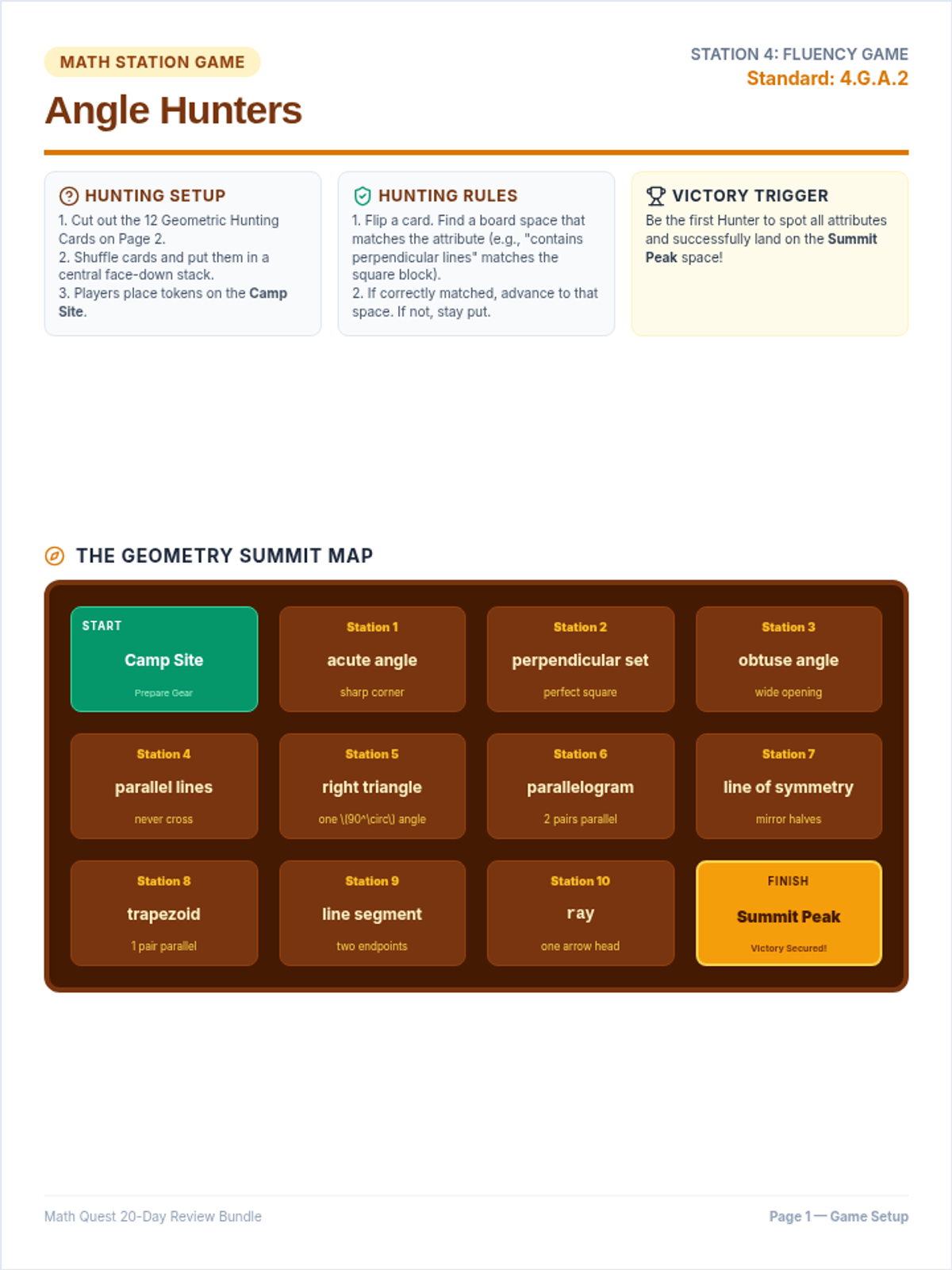
Days 11-15 of the review, focusing on identifying geometric attributes, lines, angles, 2D shapes, and line symmetry (G.1 through G.3).
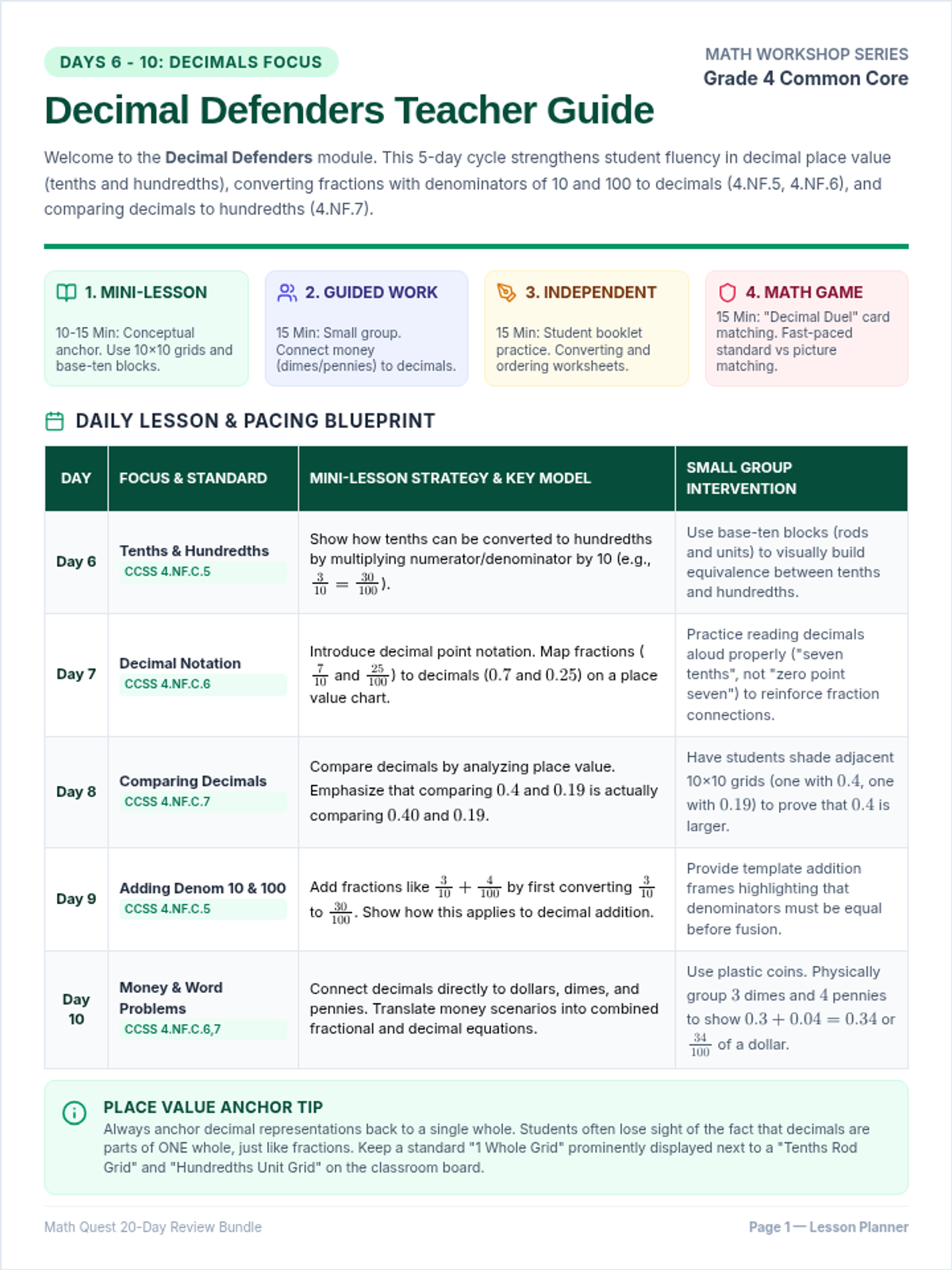
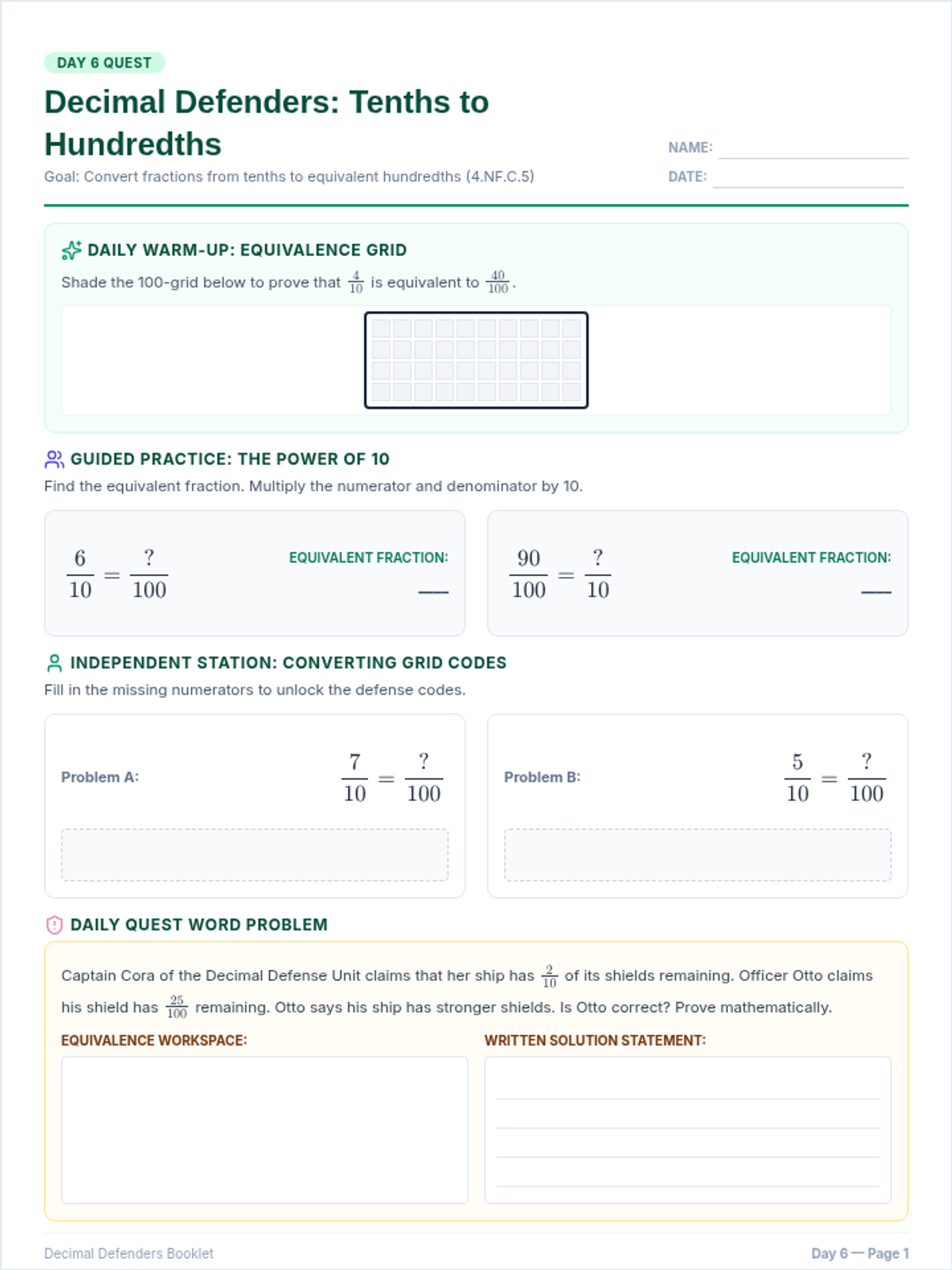
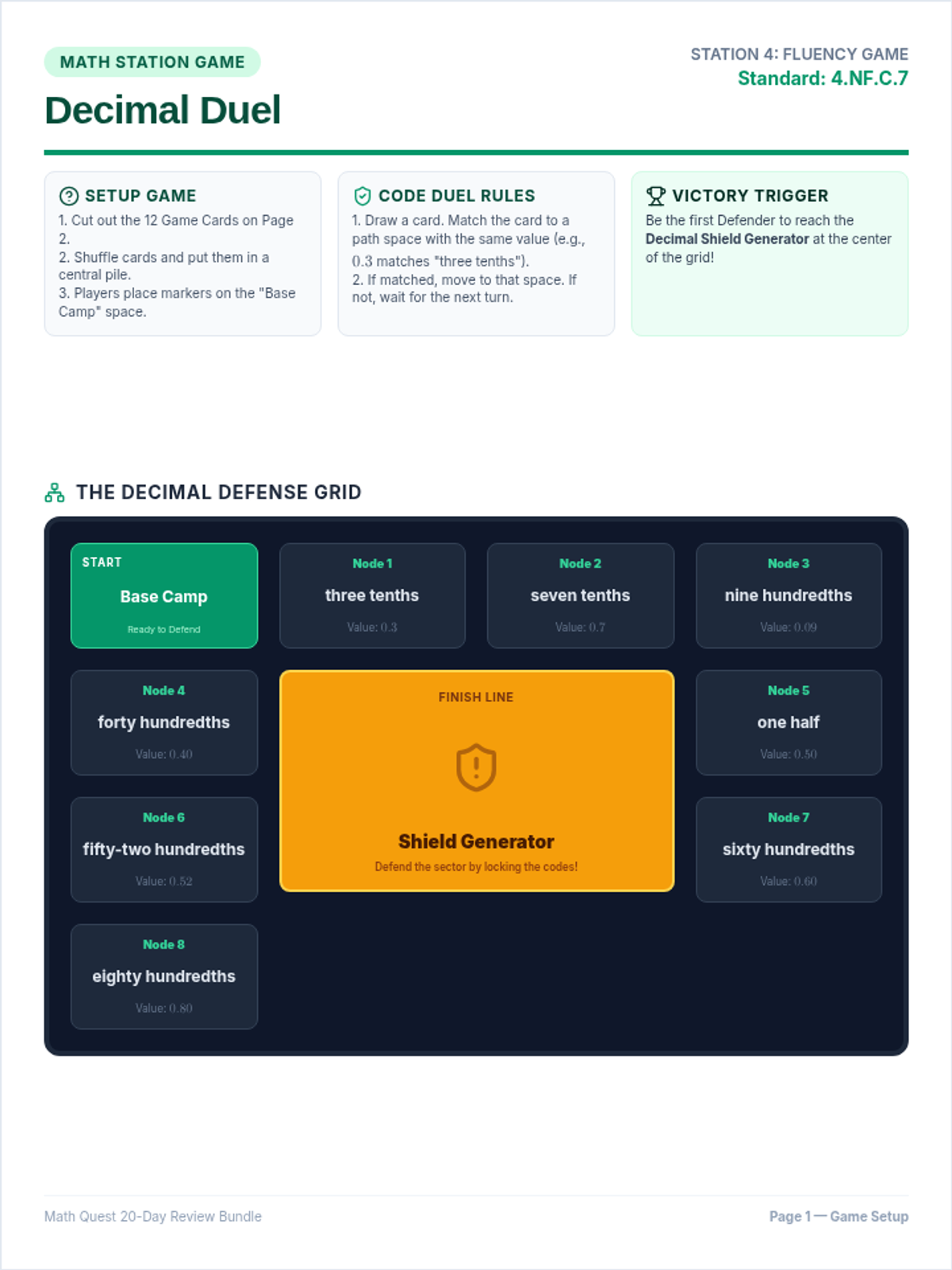
Days 6-10 of the review, focusing on Decimal notation, fraction equivalence with tenths and hundredths, and comparing decimals (NF.5 through NF.7).
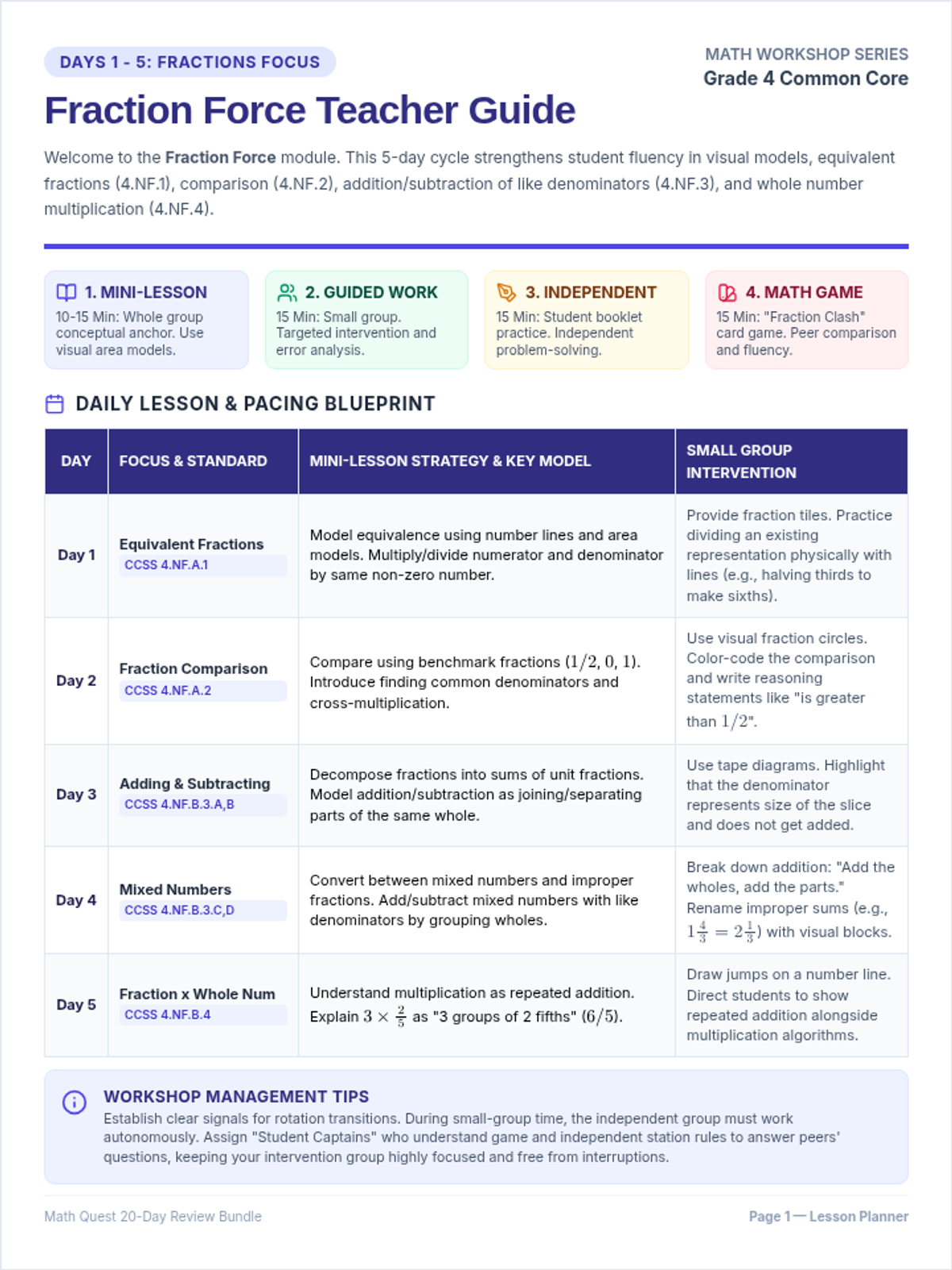
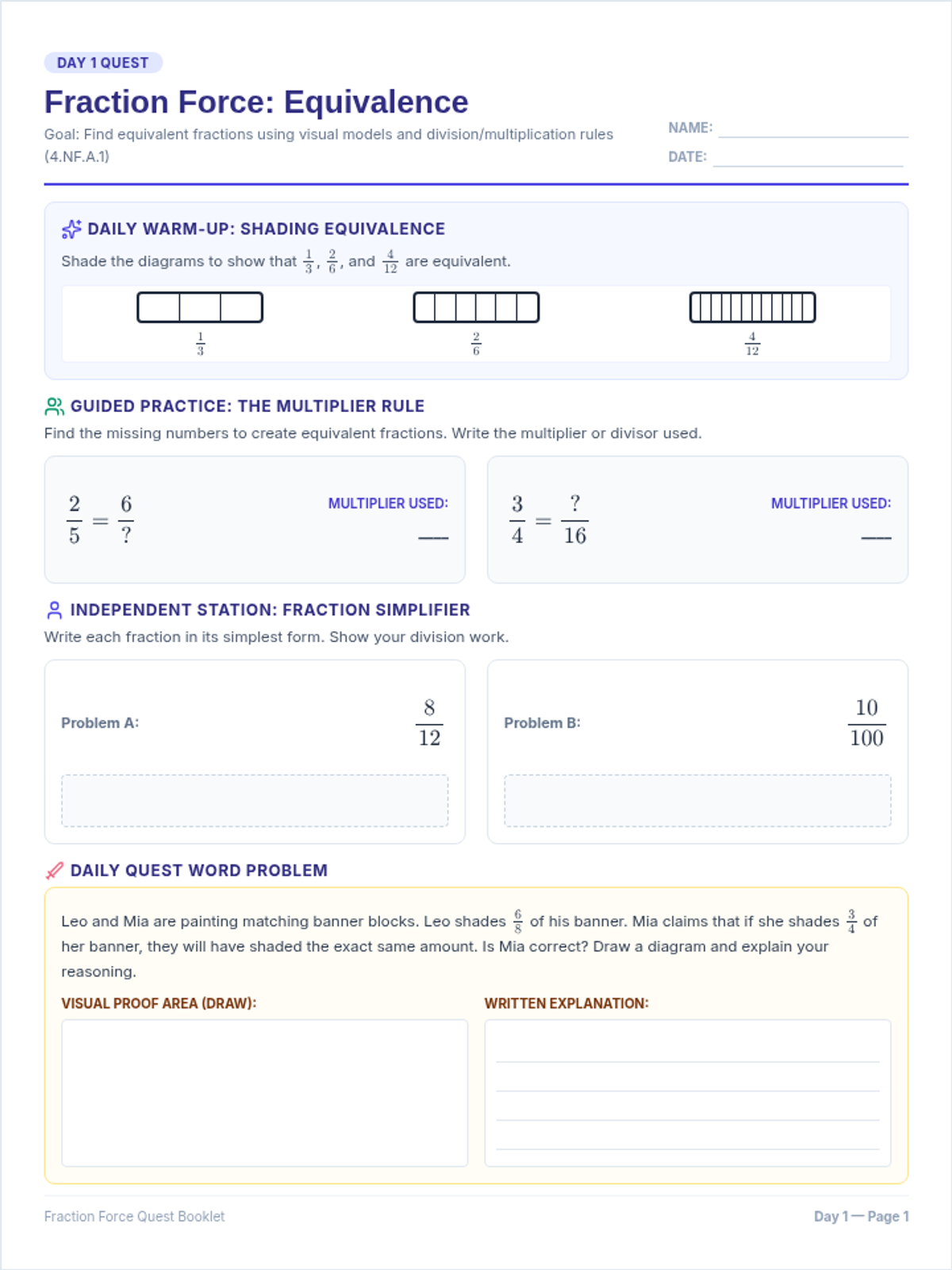
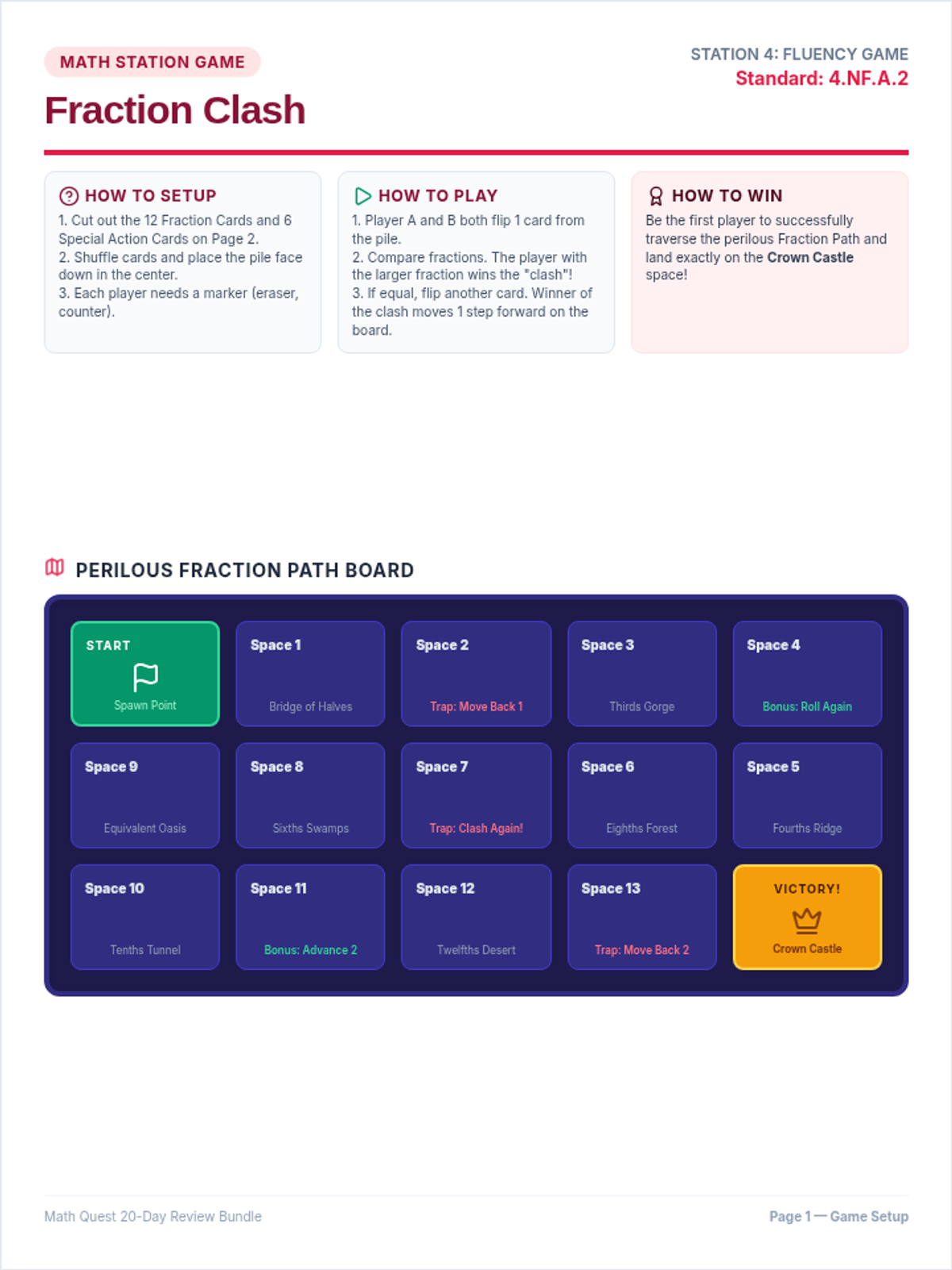
Days 1-5 of the review, focusing on Fraction equivalence, comparing, addition, subtraction, and multiplication of fractions (NF.1 through NF.4) through workshop rotations.
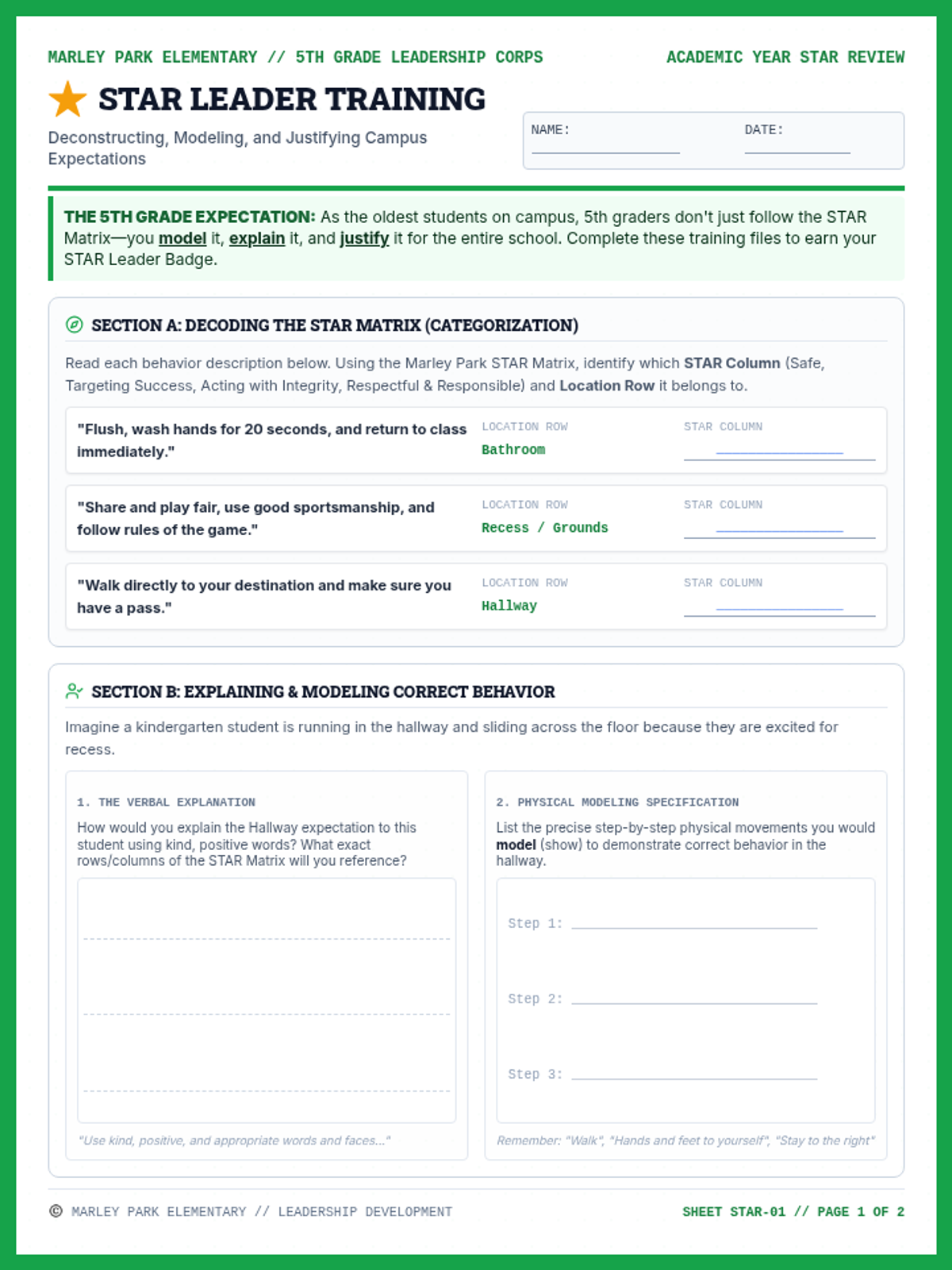
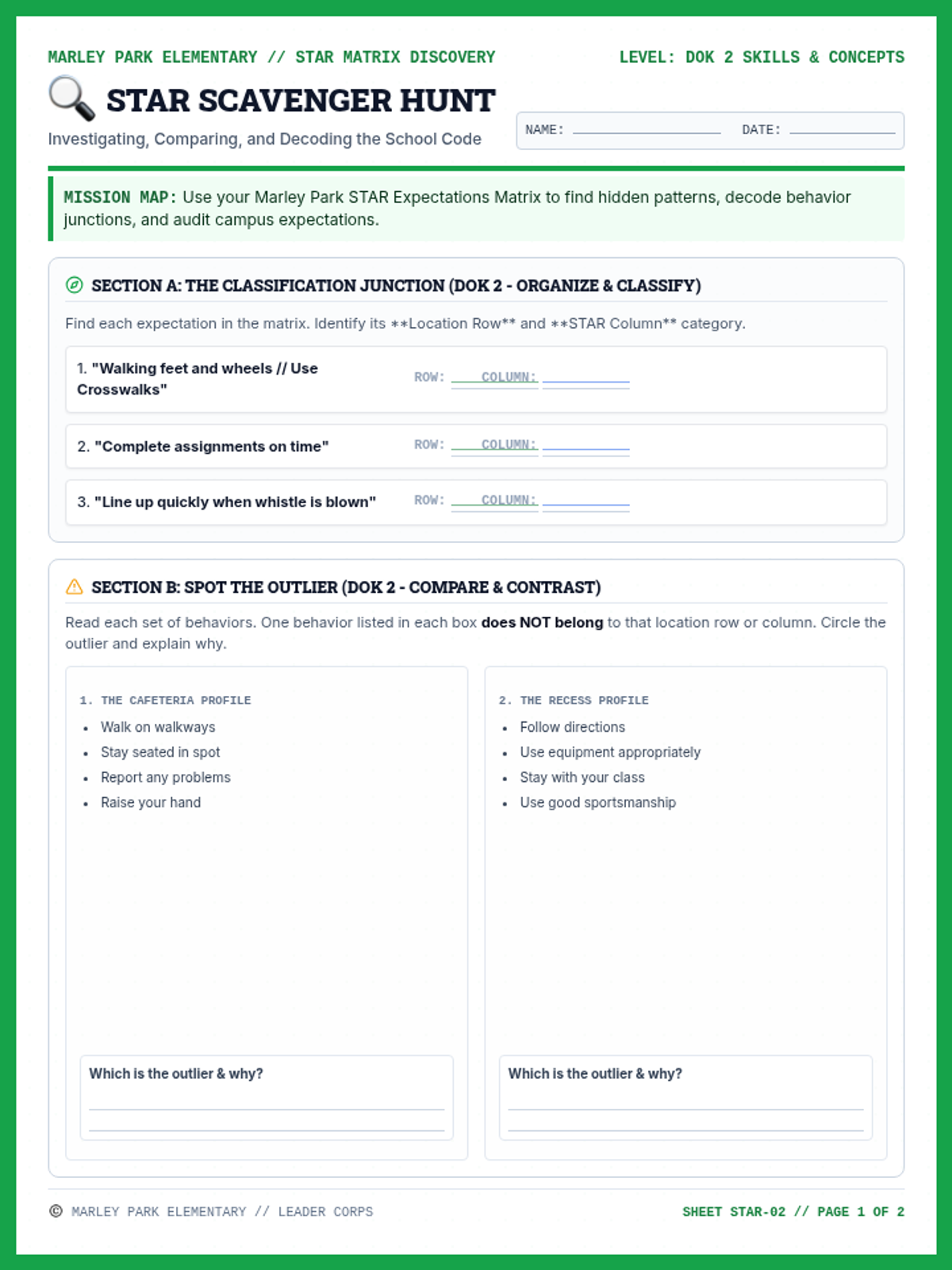
Students explore and master the Marley Park Elementary STAR expectations for 5th-grade leaders. Through scenario analysis, modeling, and justifying correct and incorrect behaviors, they prepare to set a positive example for the school.
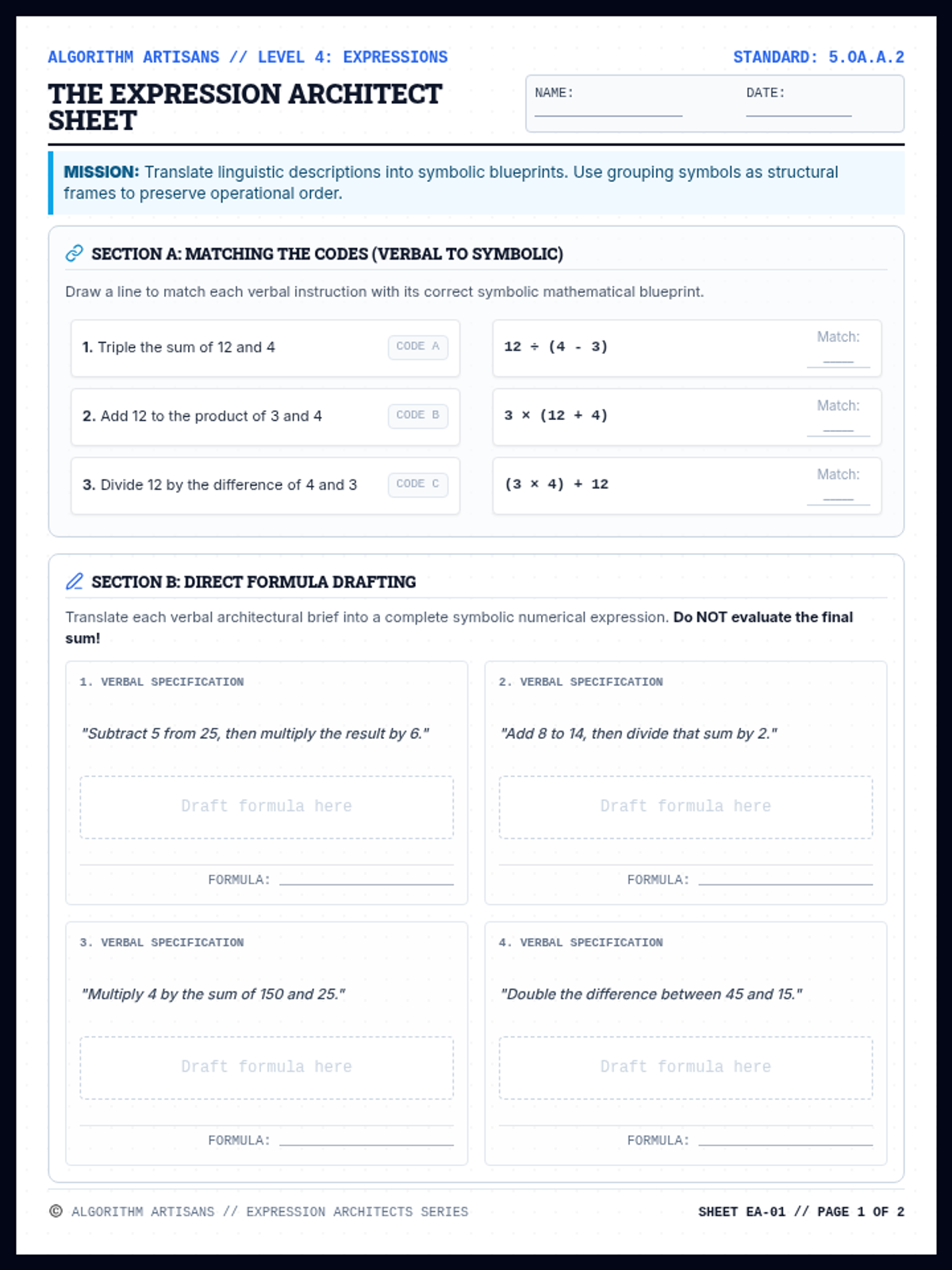
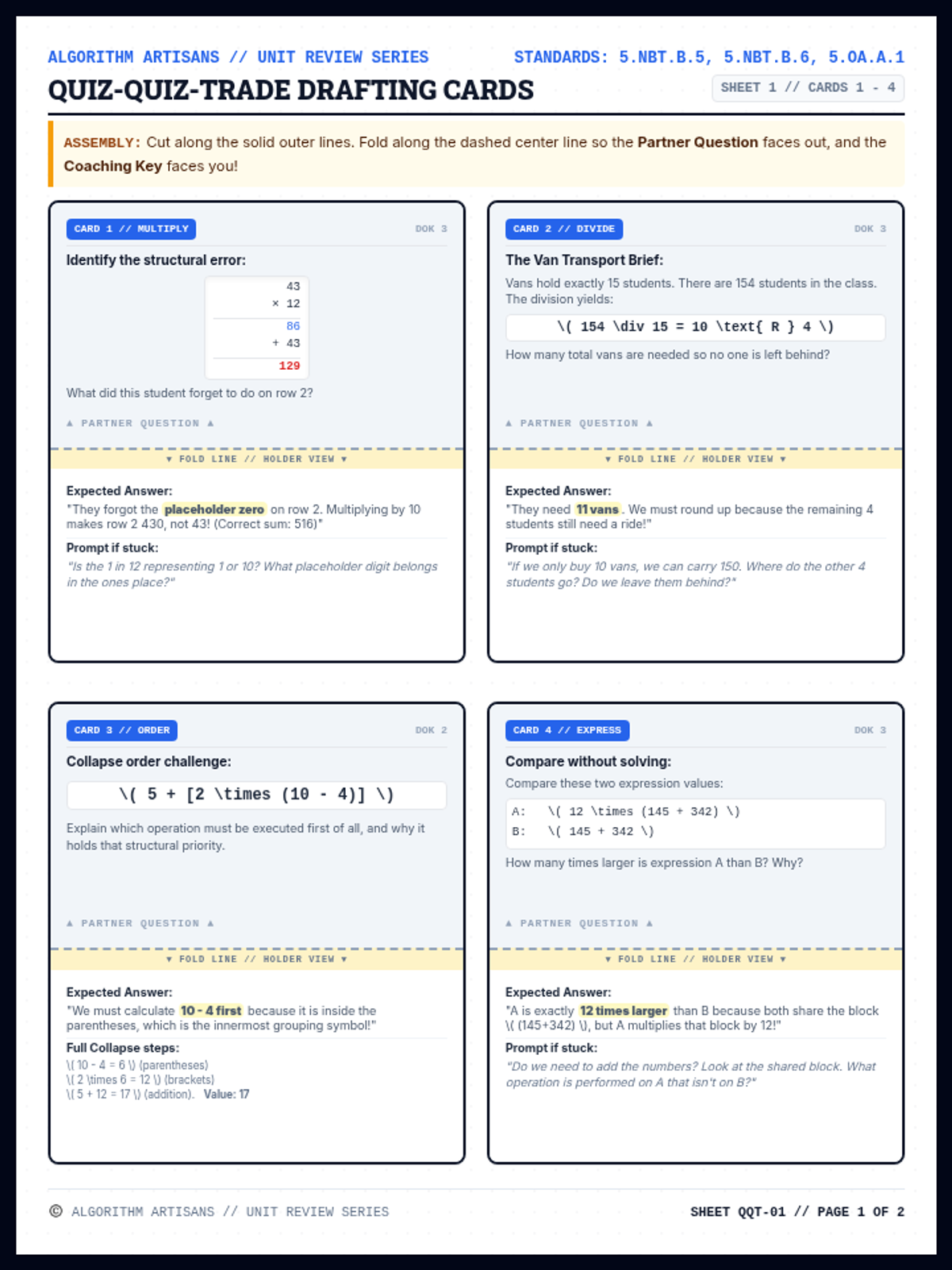
Students learn to translate word phrases into numerical expressions and interpret expressions without evaluating them, building critical algebraic reasoning skills for subsequent grades.
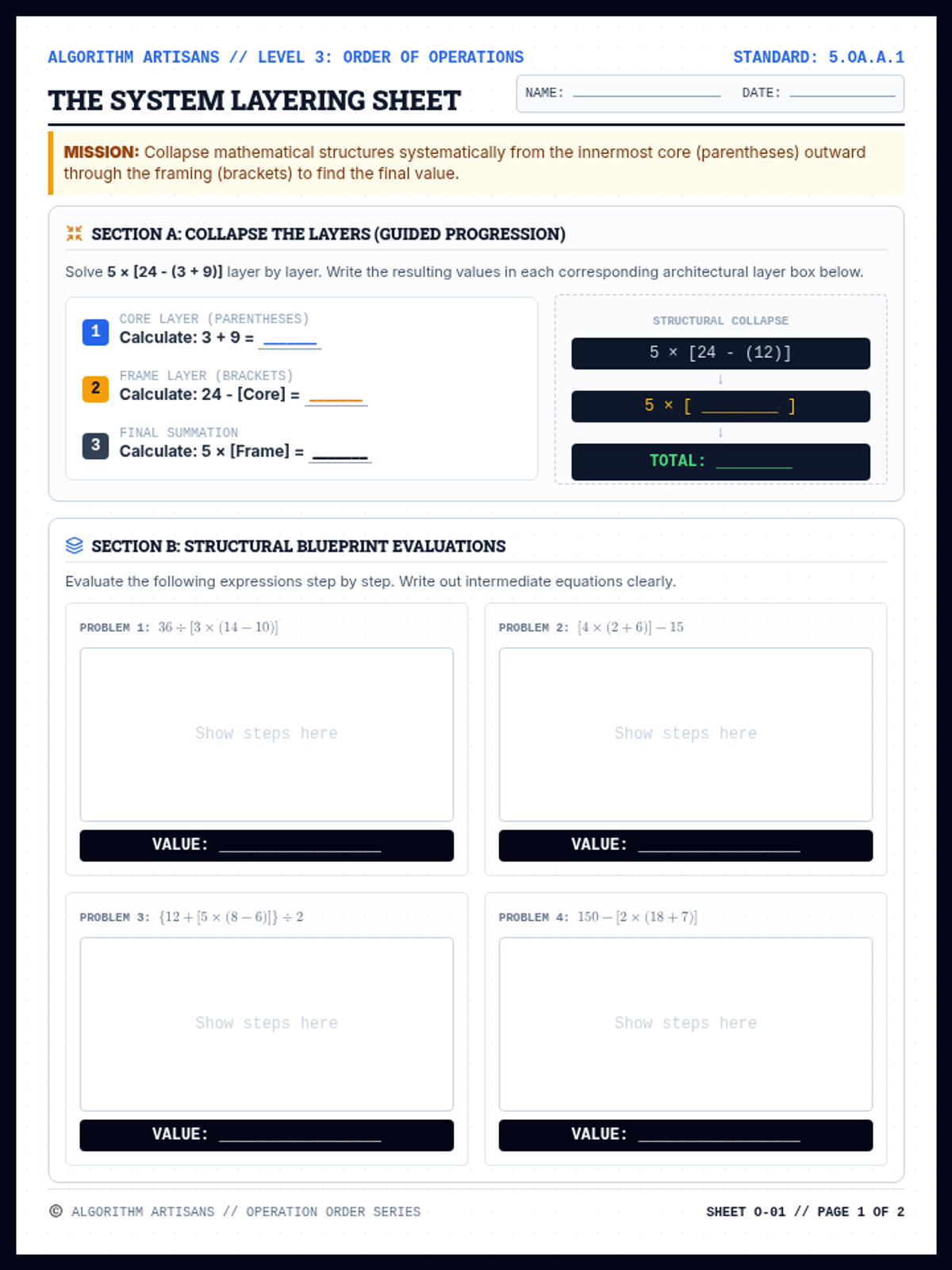
Students master the order of operations, including parentheses, brackets, and braces. They learn to evaluate numerical expressions systematically, modeling calculations like structural blueprints.
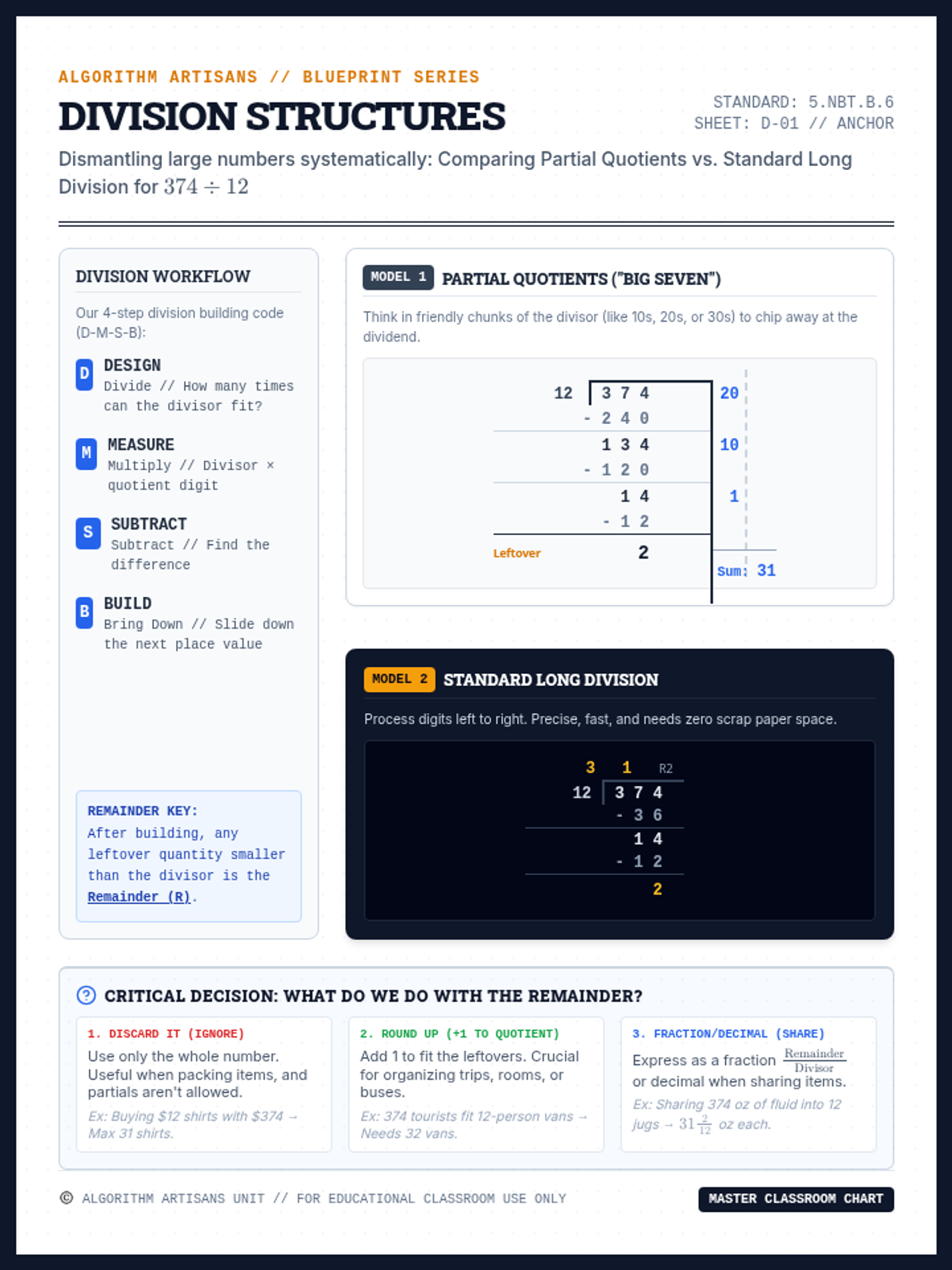
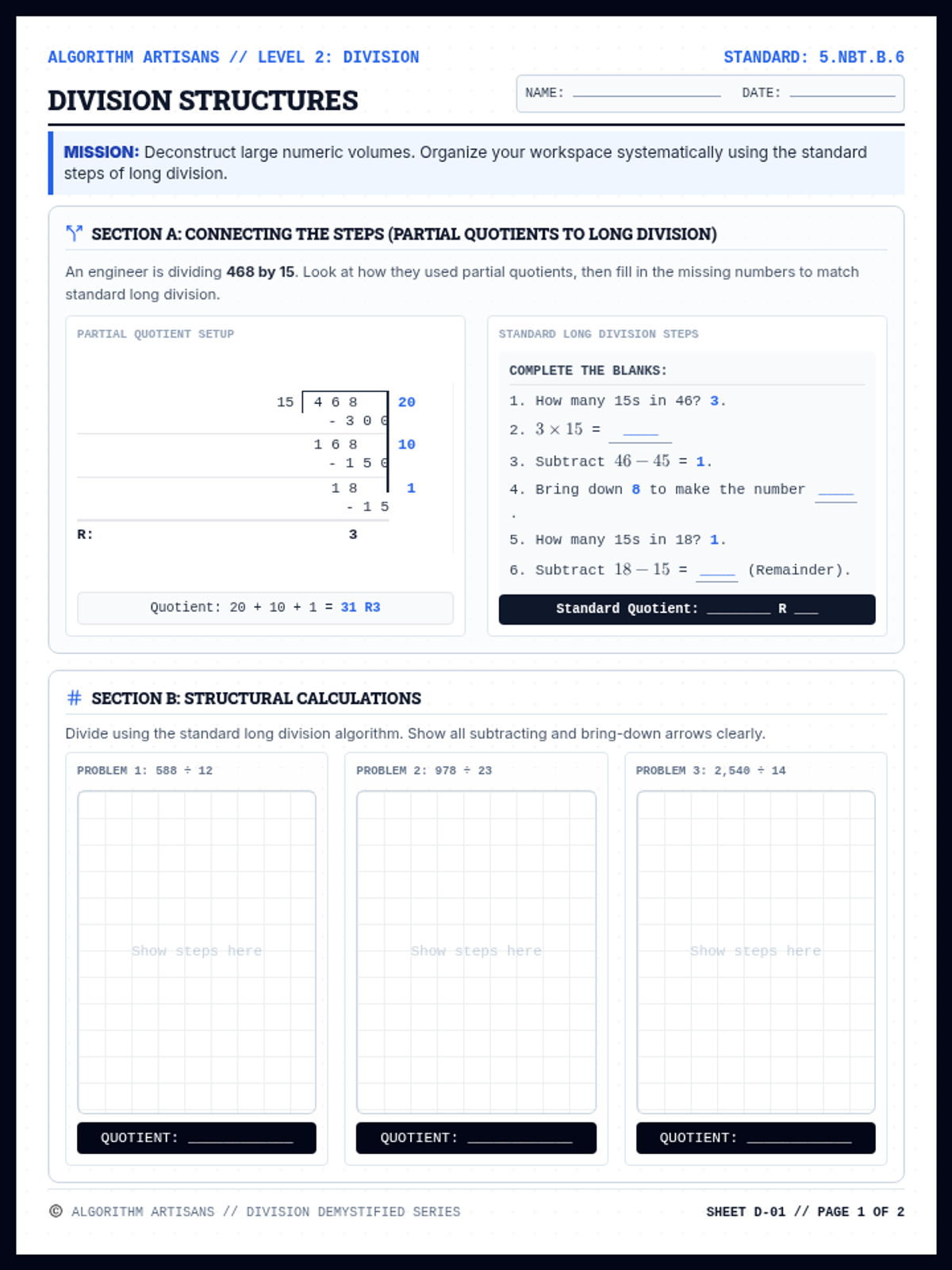
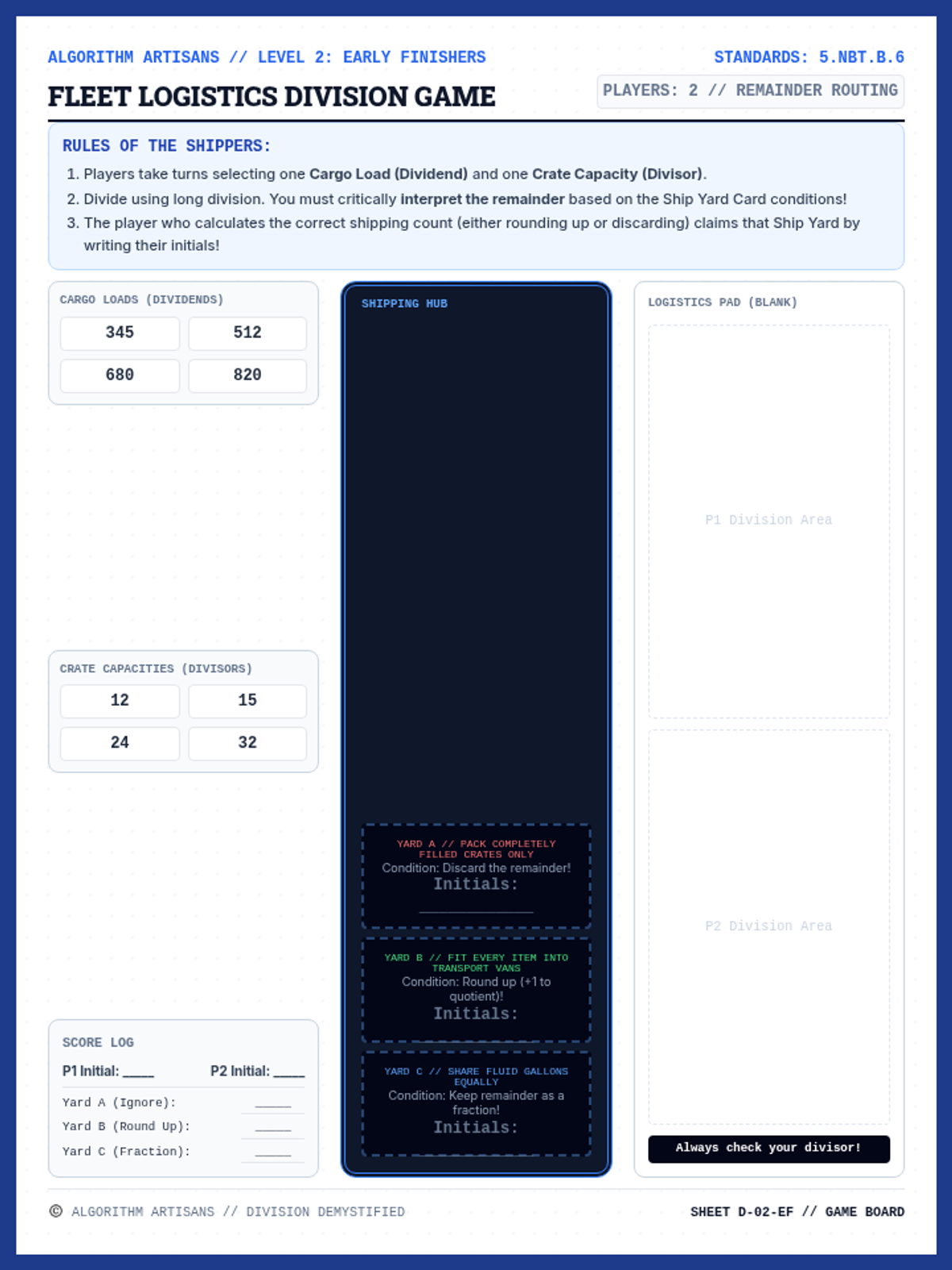
Students transition from concrete partial quotients to standard long division steps, solving problems with up to four-digit dividends and two-digit divisors. Emphasizes interpreting remainders in real-world contexts and debugging calculation steps.
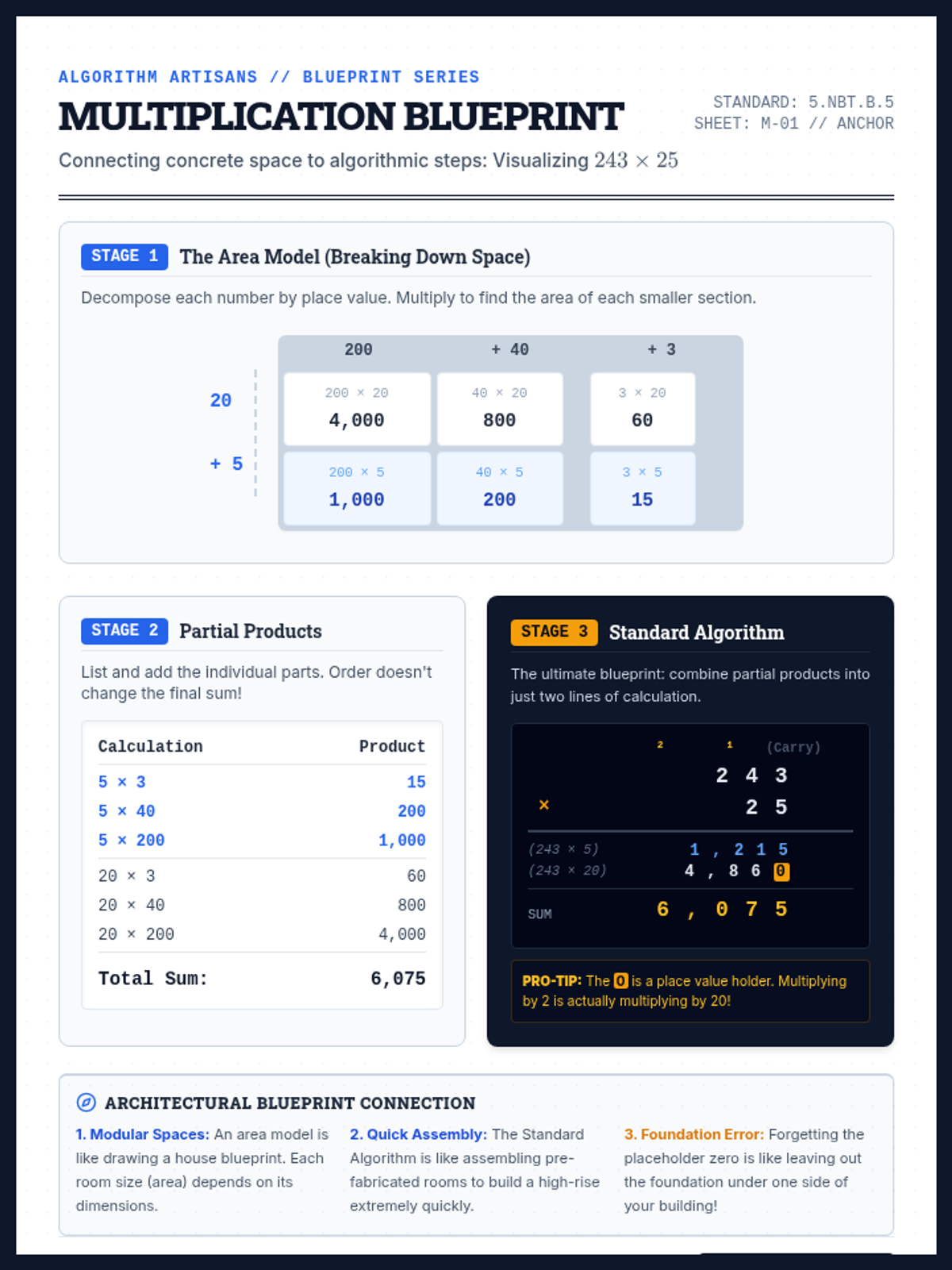
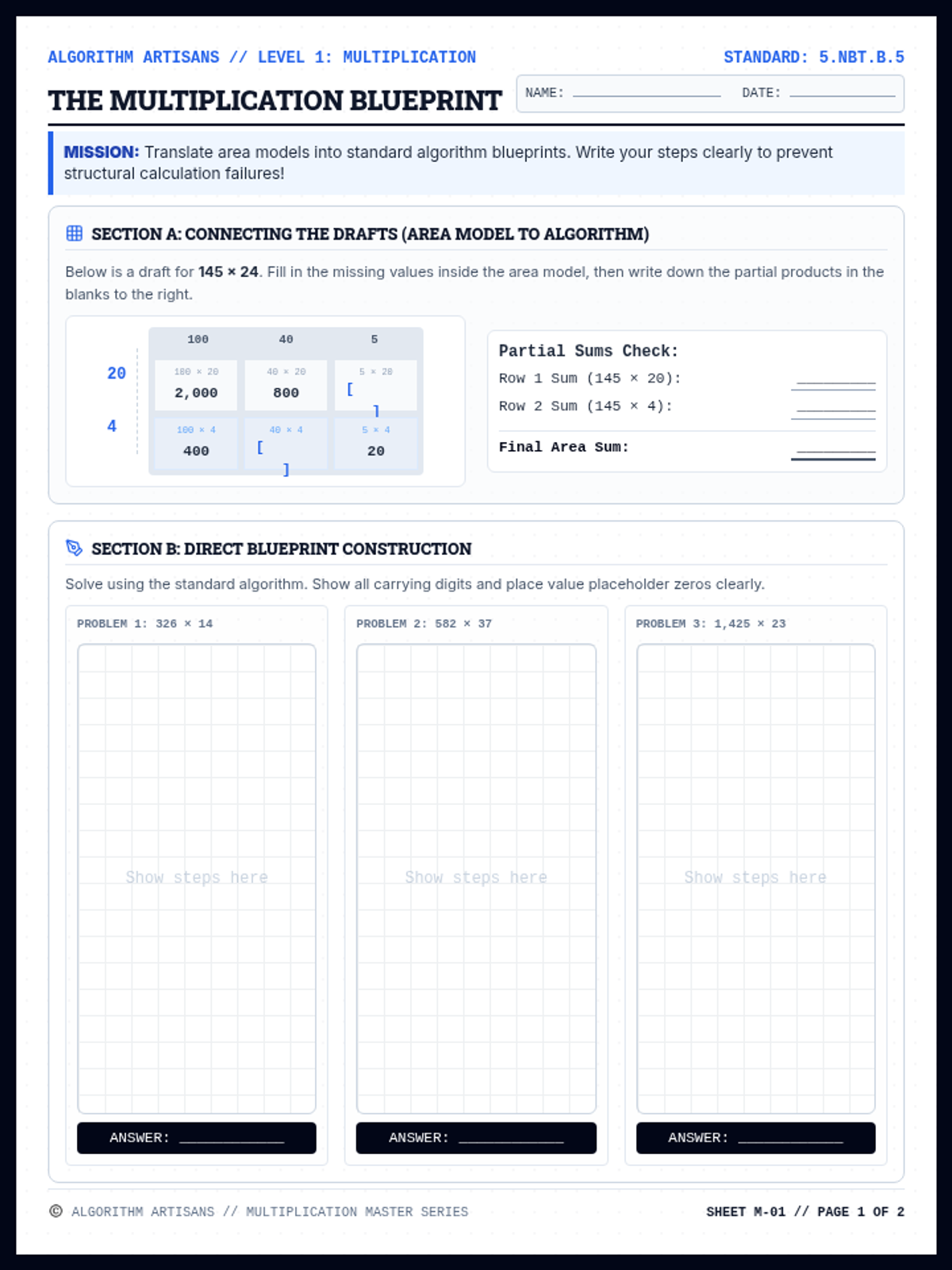
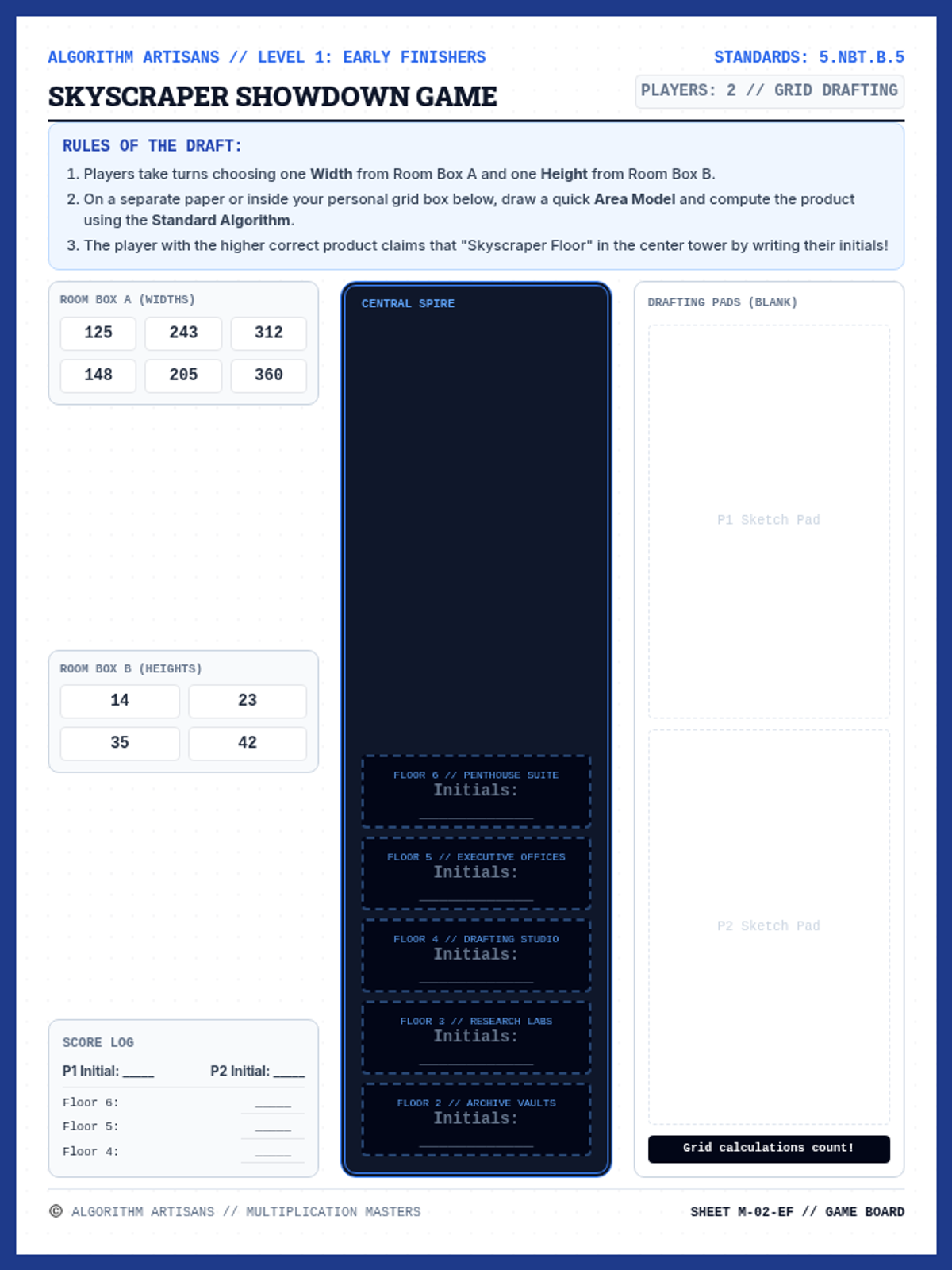
Students connect conceptual area models to standard multi-digit multiplication, developing procedural fluency with the standard algorithm while maintaining strong place value understanding. Includes error analysis and architectural design challenges.
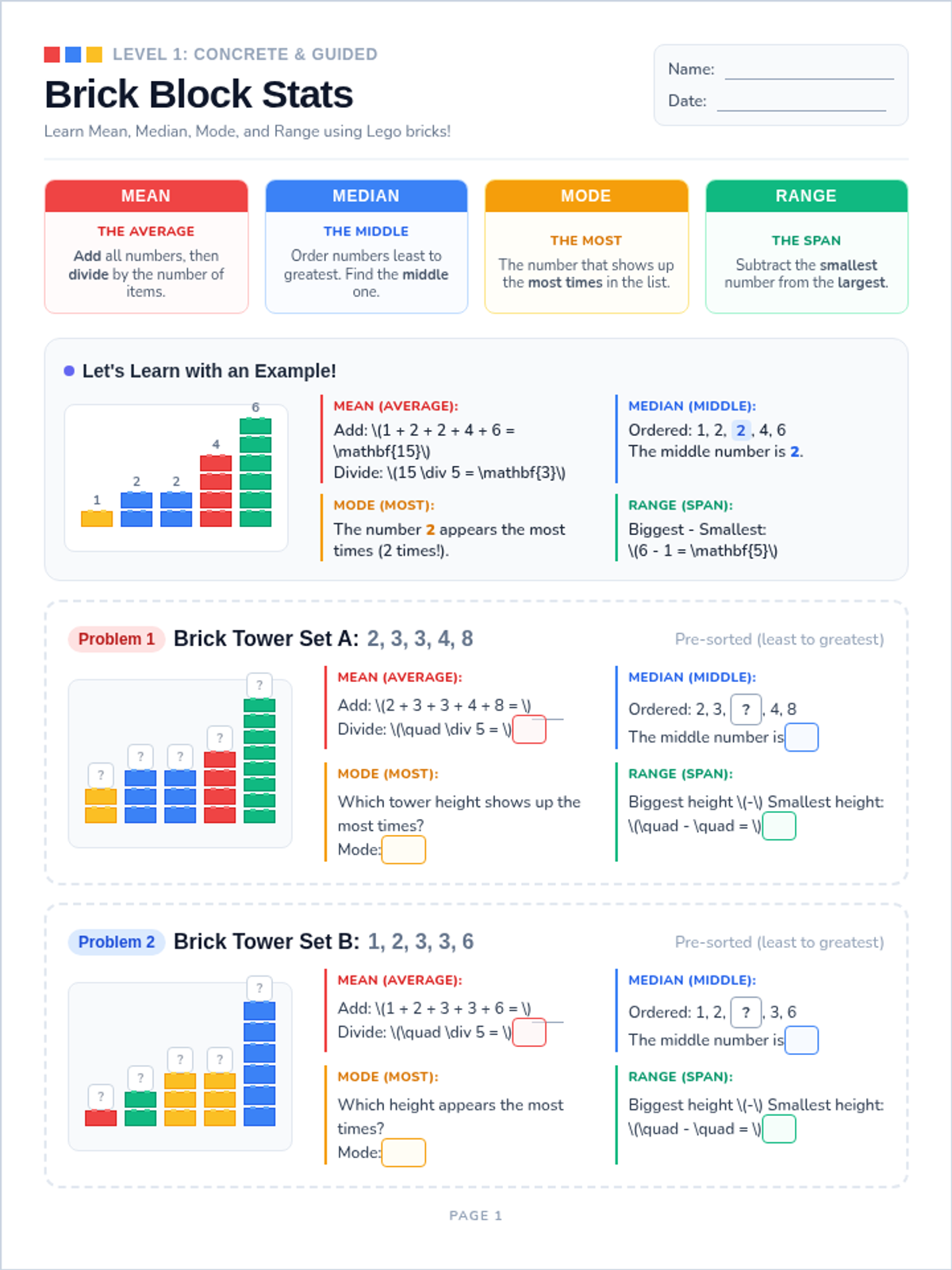
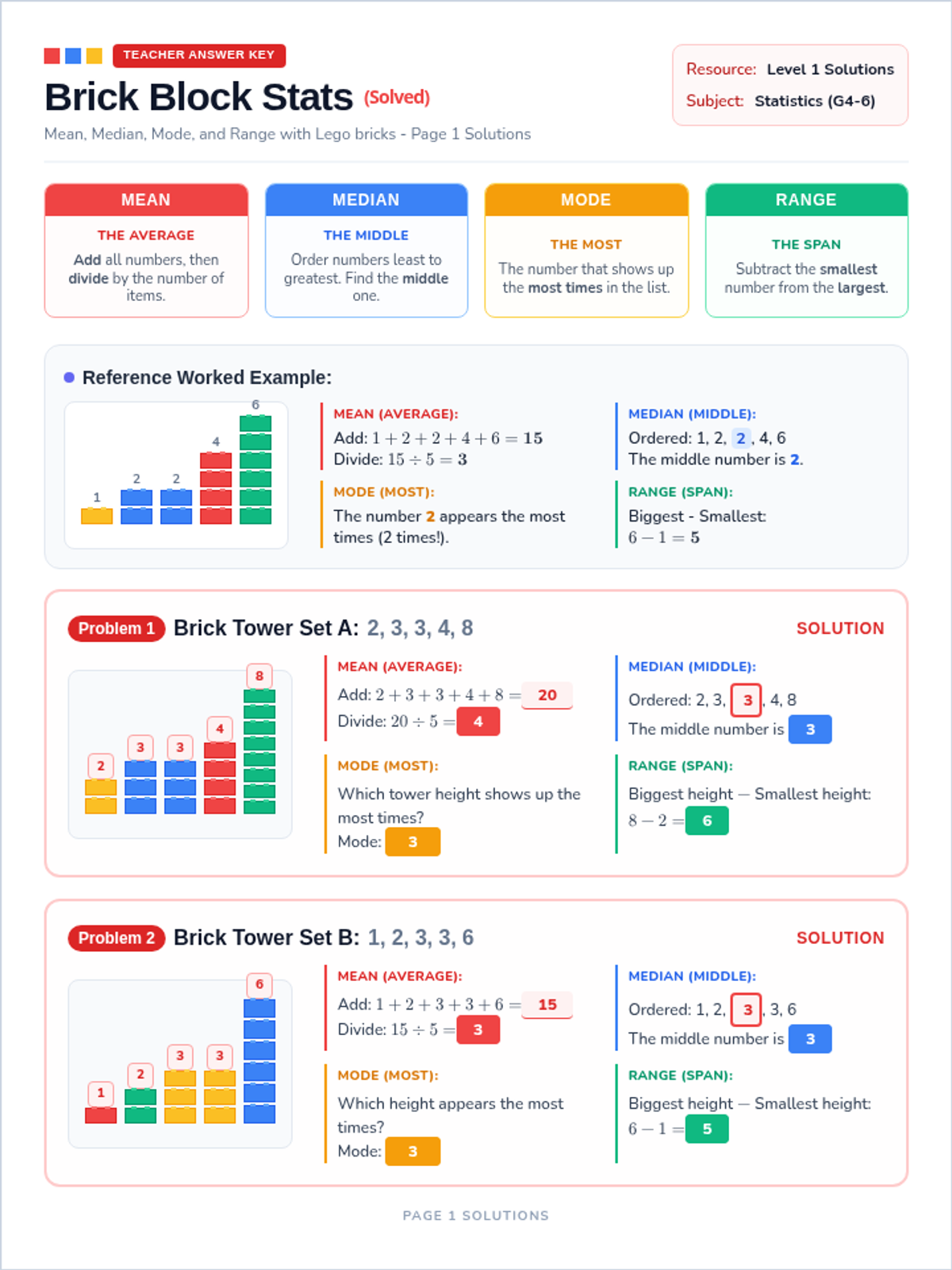
A scaffolded statistics lesson using Lego bricks to teach mean, median, mode, and range. Designed with concrete visual aids, color-coded formulas, and pre-sorted datasets to support diverse learners.
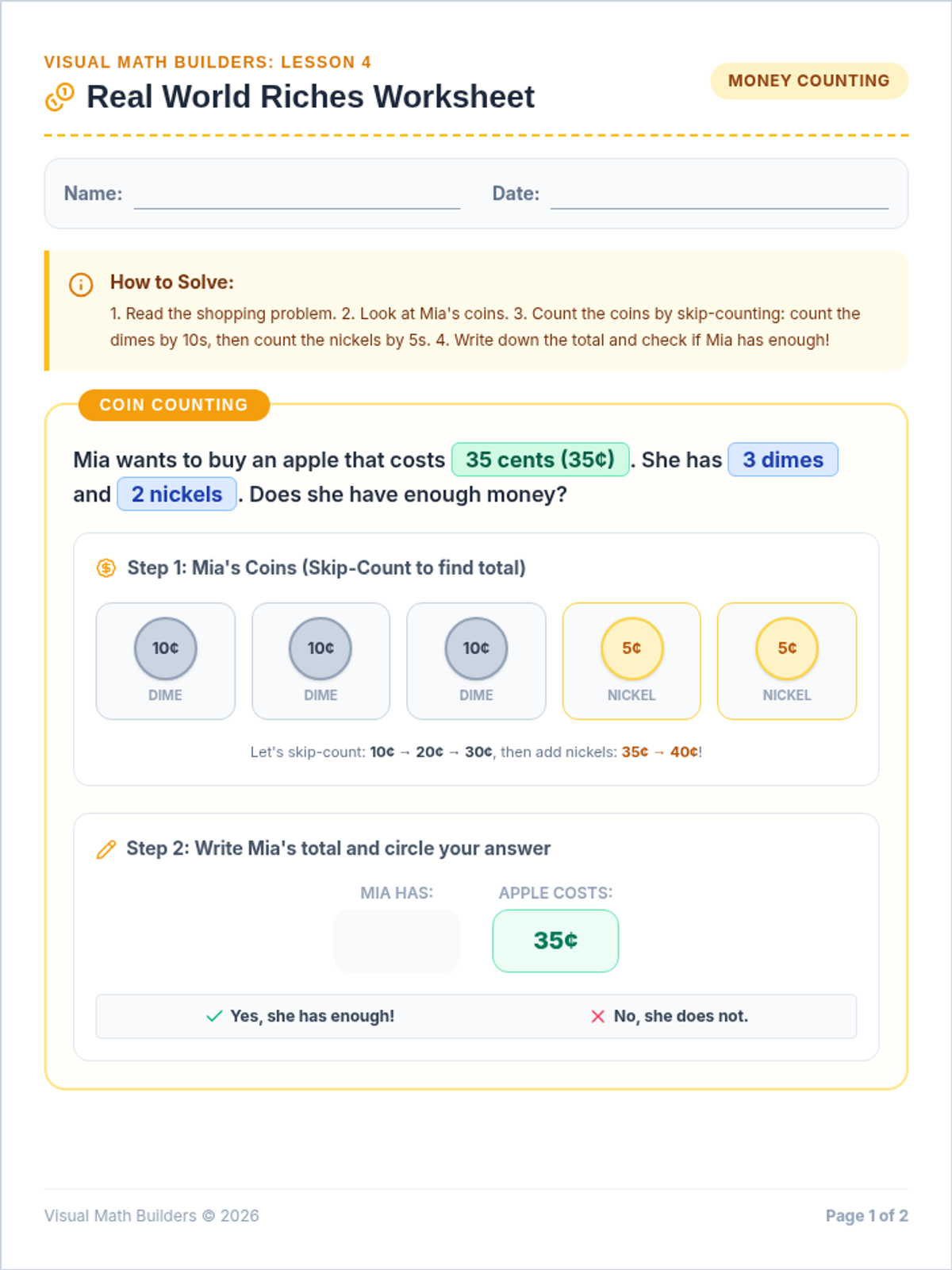
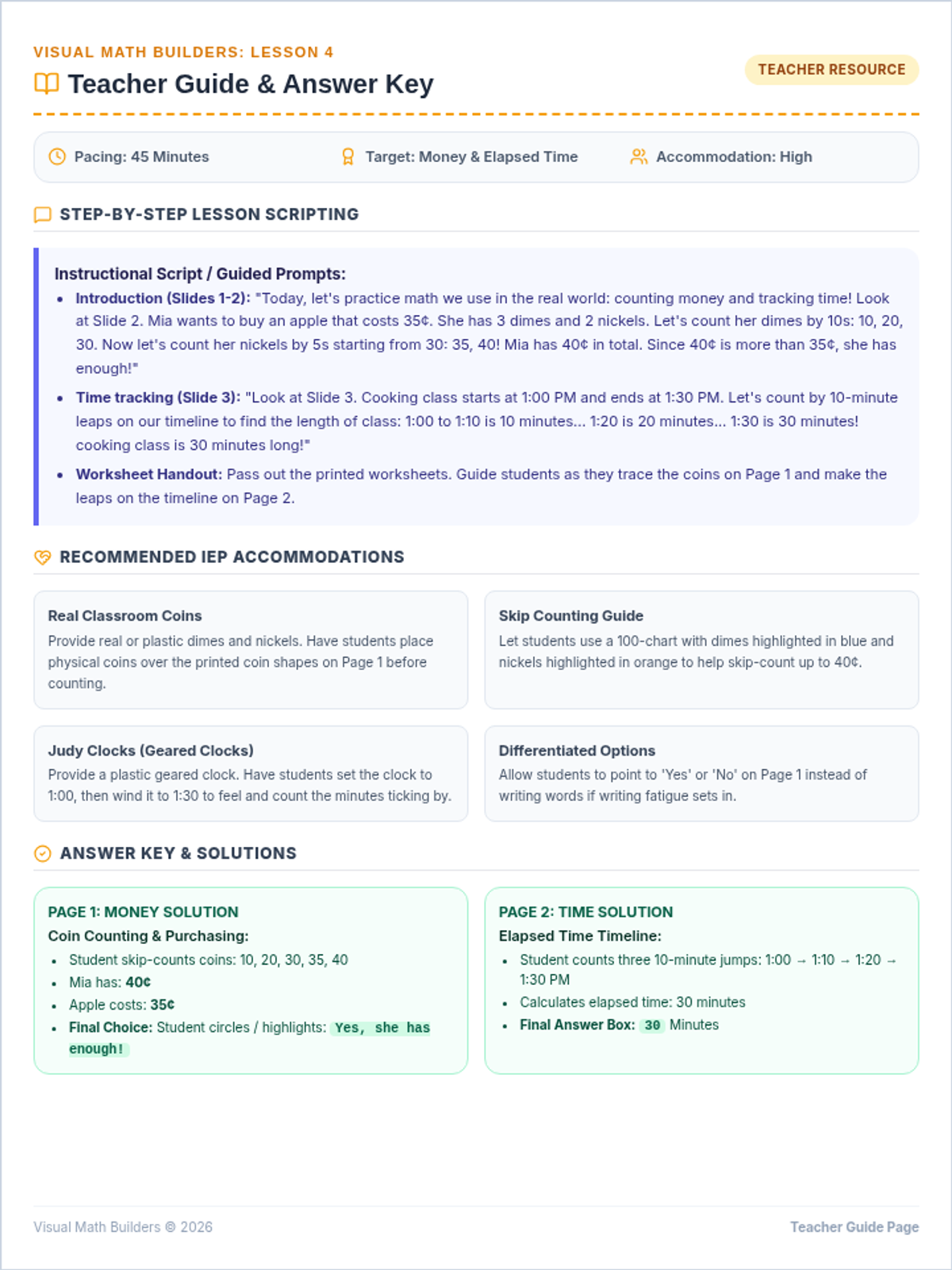
Targets practical, real-world application of math with highly visual scaffolding for coin counting, purchasing decisions, and elapsed time scenarios.
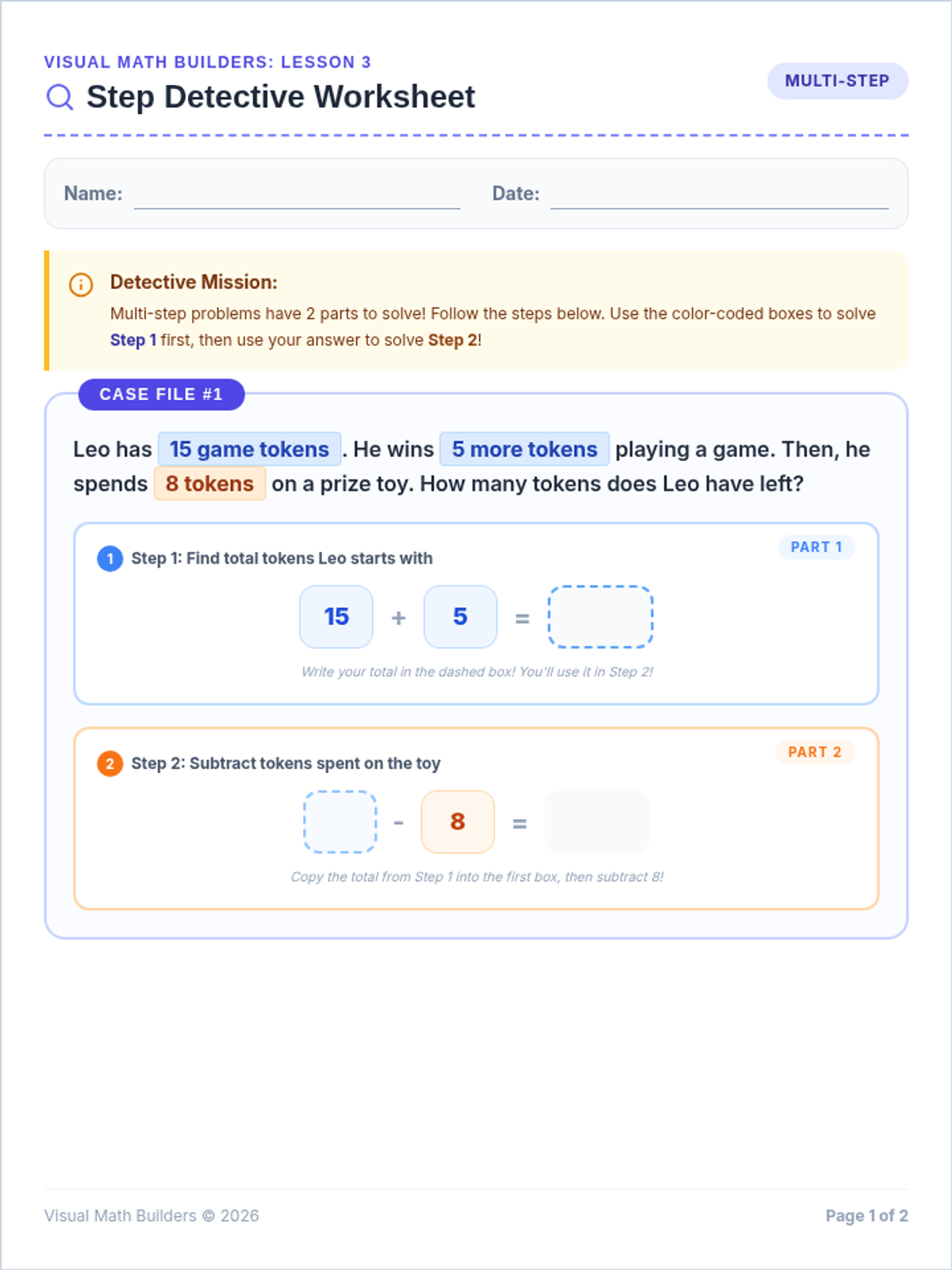
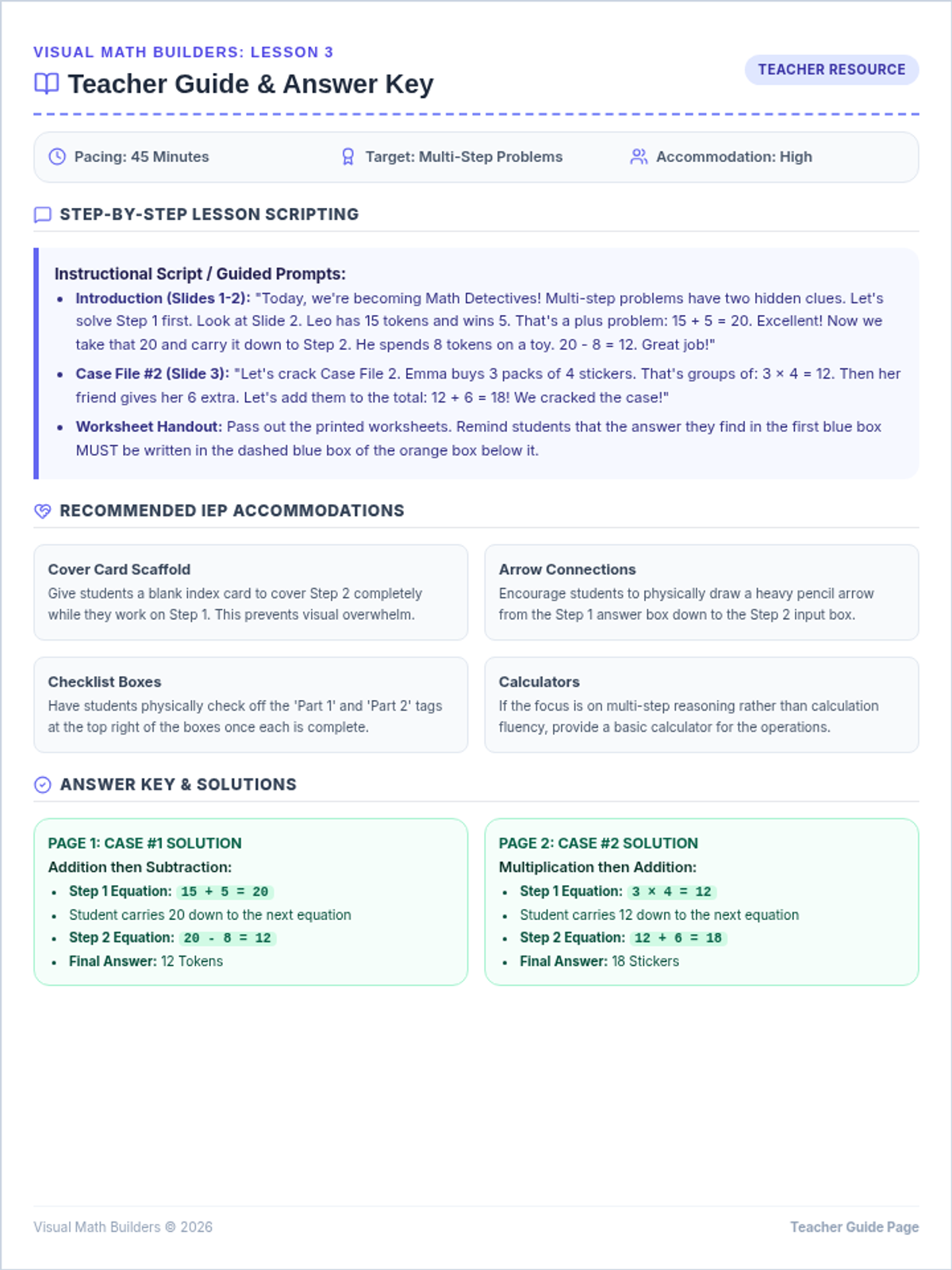
Breaks down multi-step math word problems into bite-sized, color-coded, sequentially numbered parts, helping students systematically parse and solve equations without visual overload.
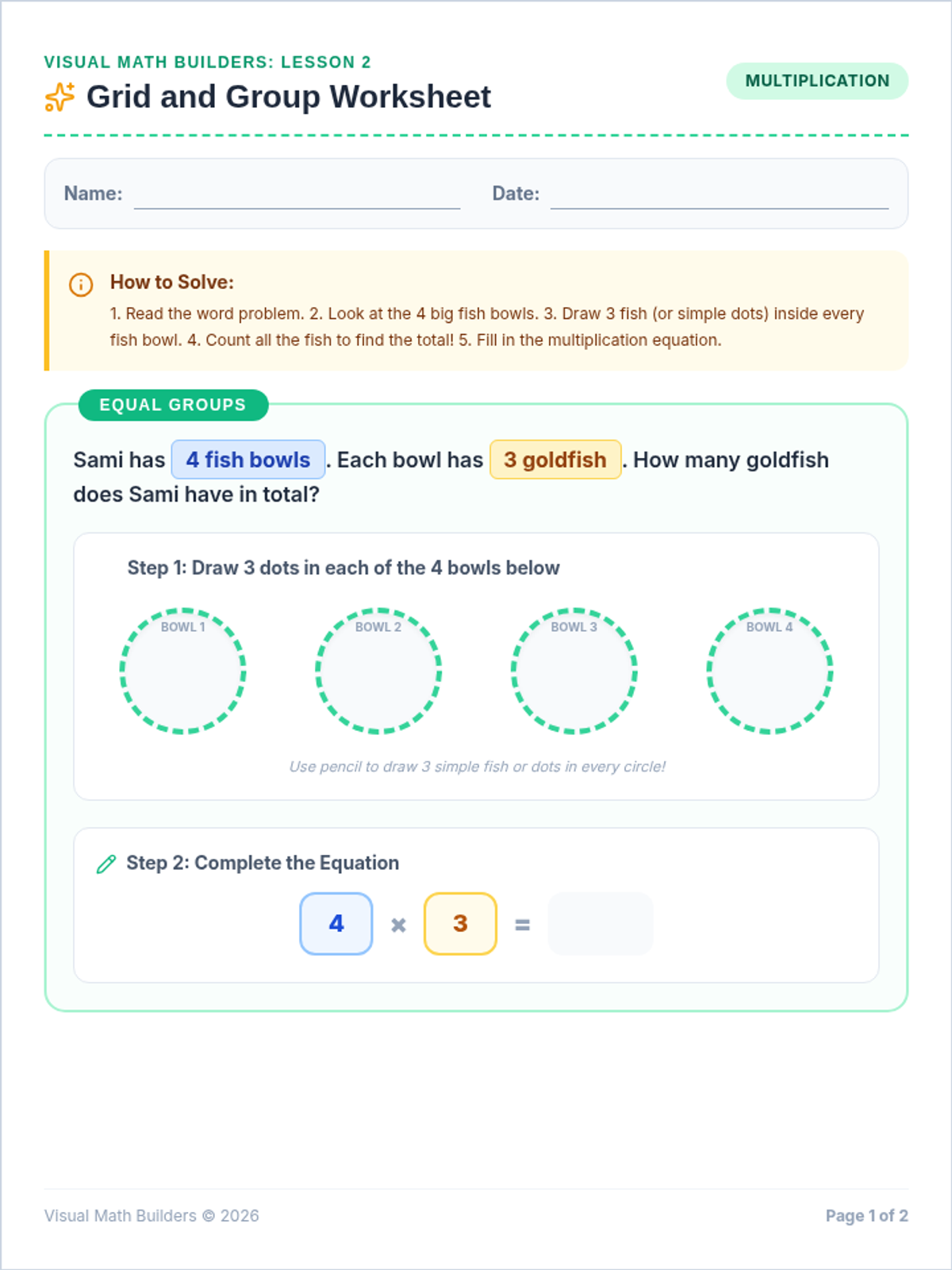
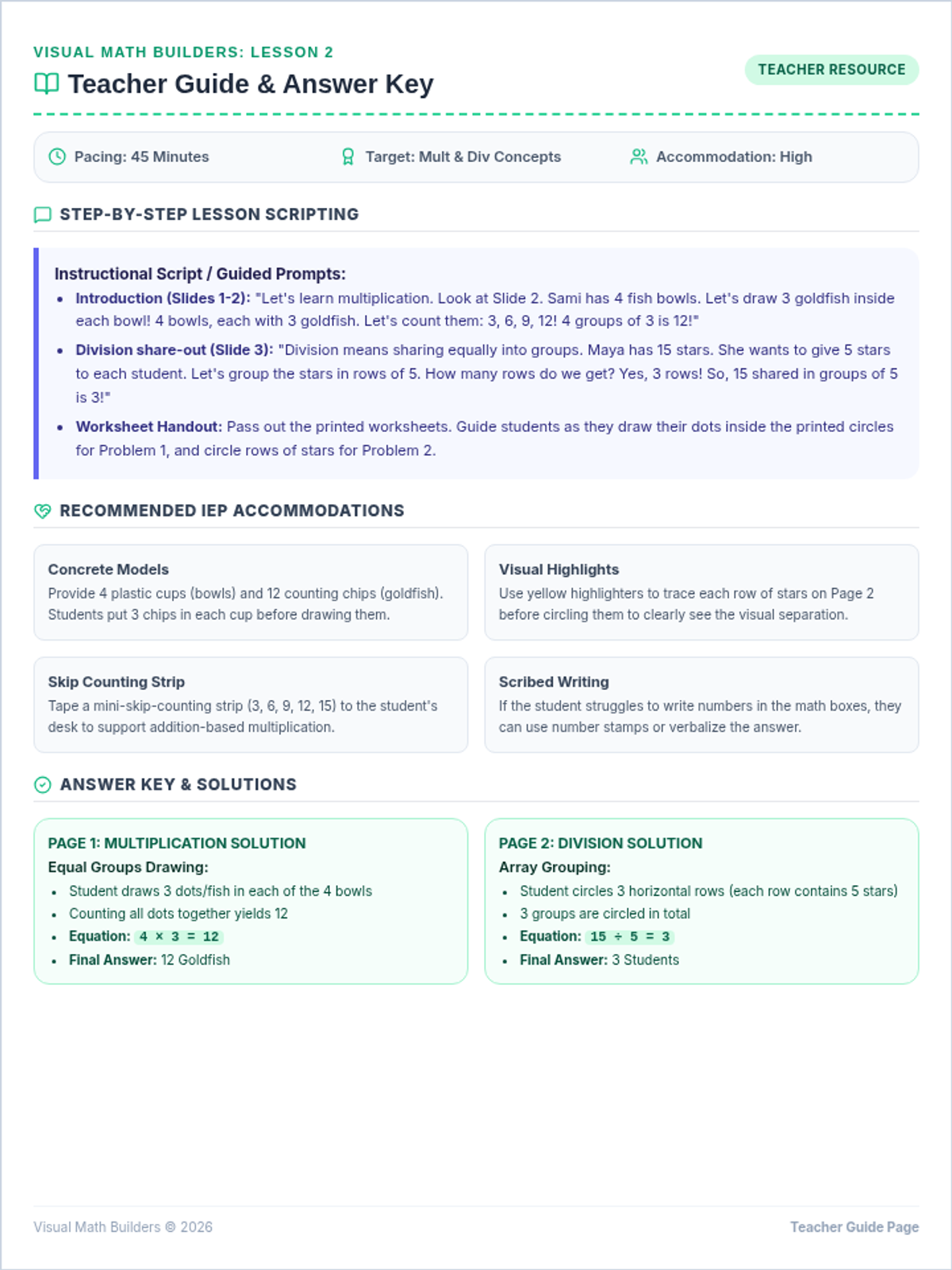
Covers multiplication and division word problems utilizing visual aids such as equal group drawings, array grids, and visual modeling templates to scaffold core concepts.
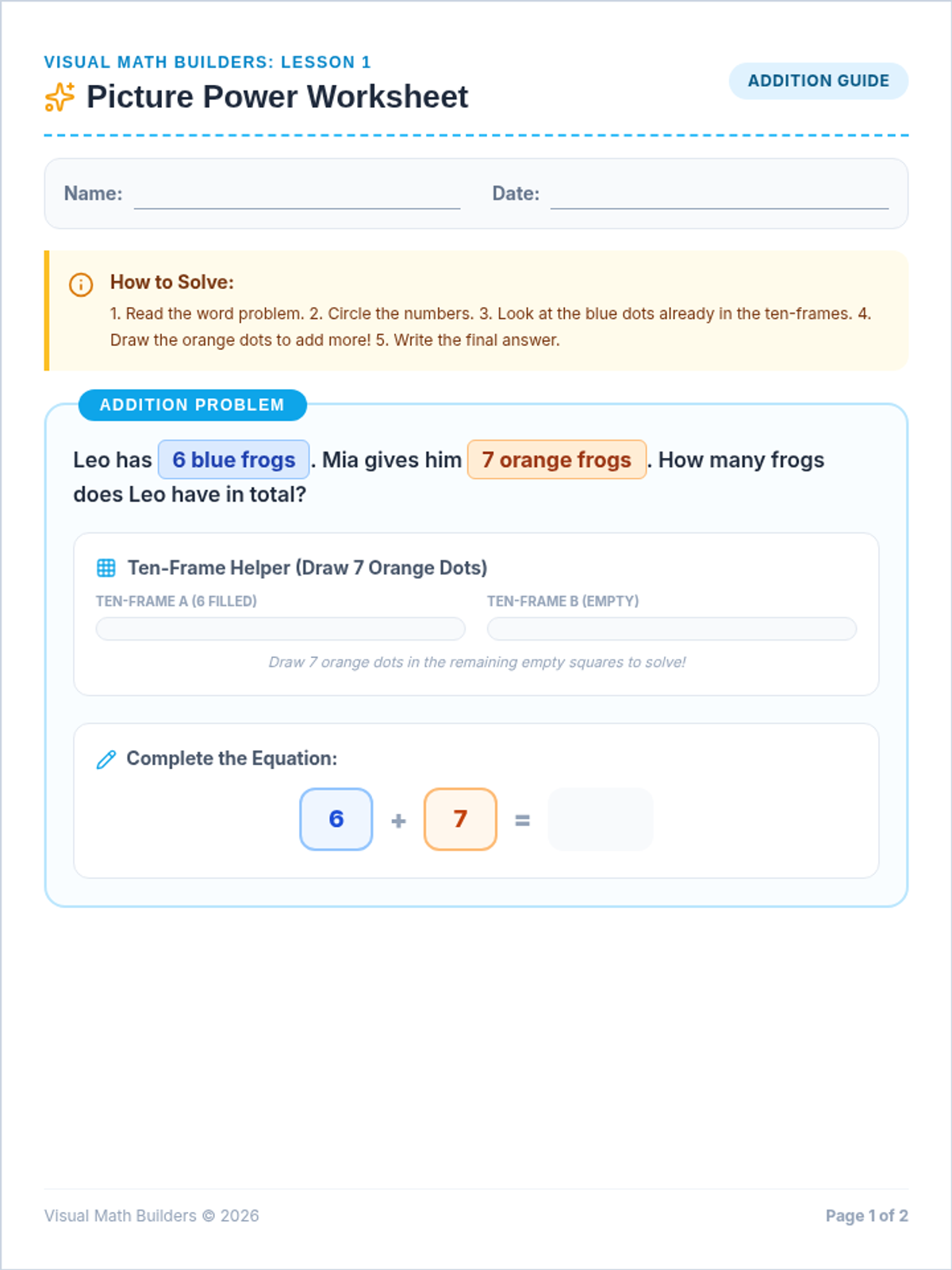
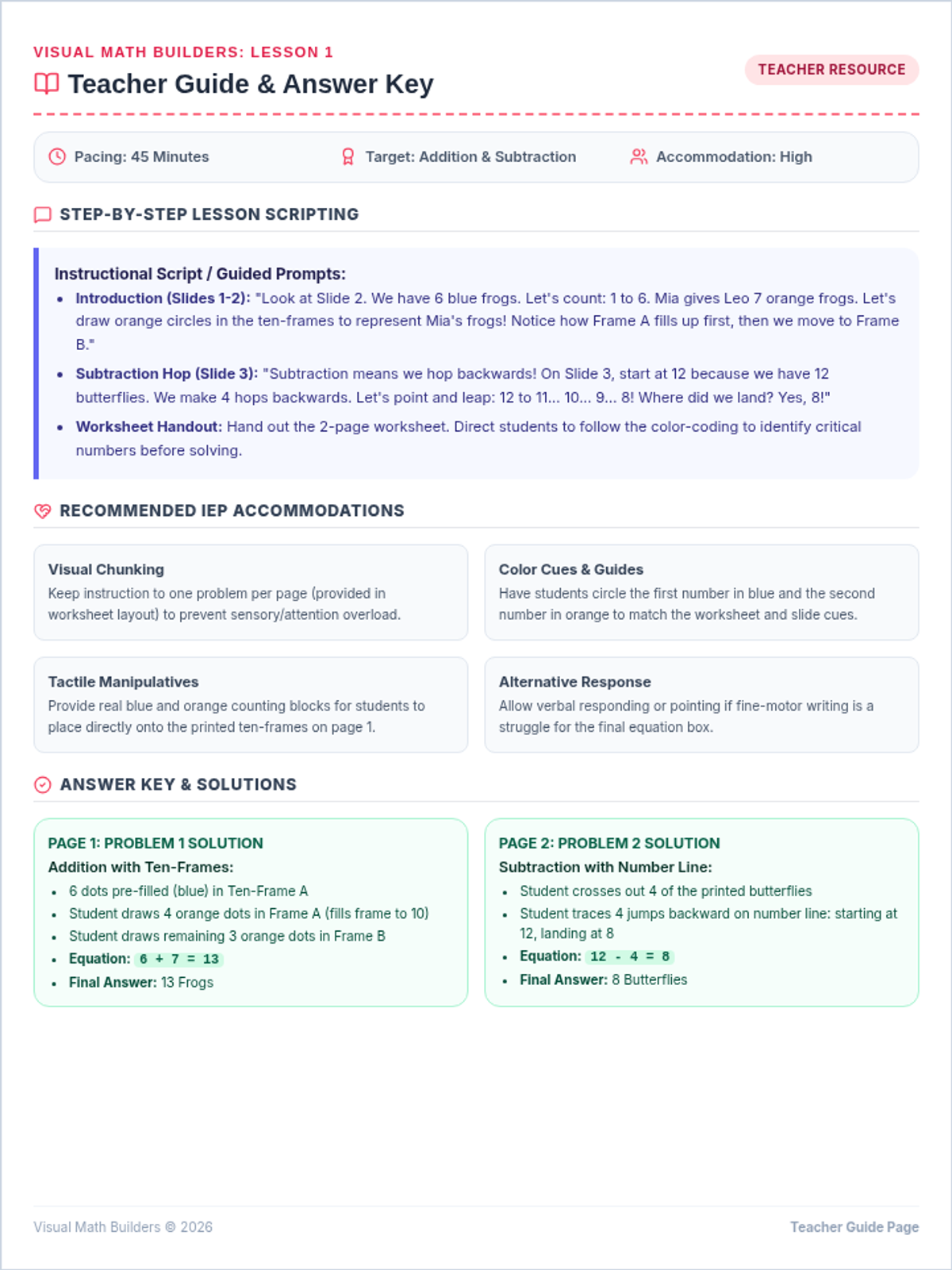
Focuses on addition and subtraction word problems with visual aids including built-in picture representations, ten-frames, and number lines to support student conceptual understanding.
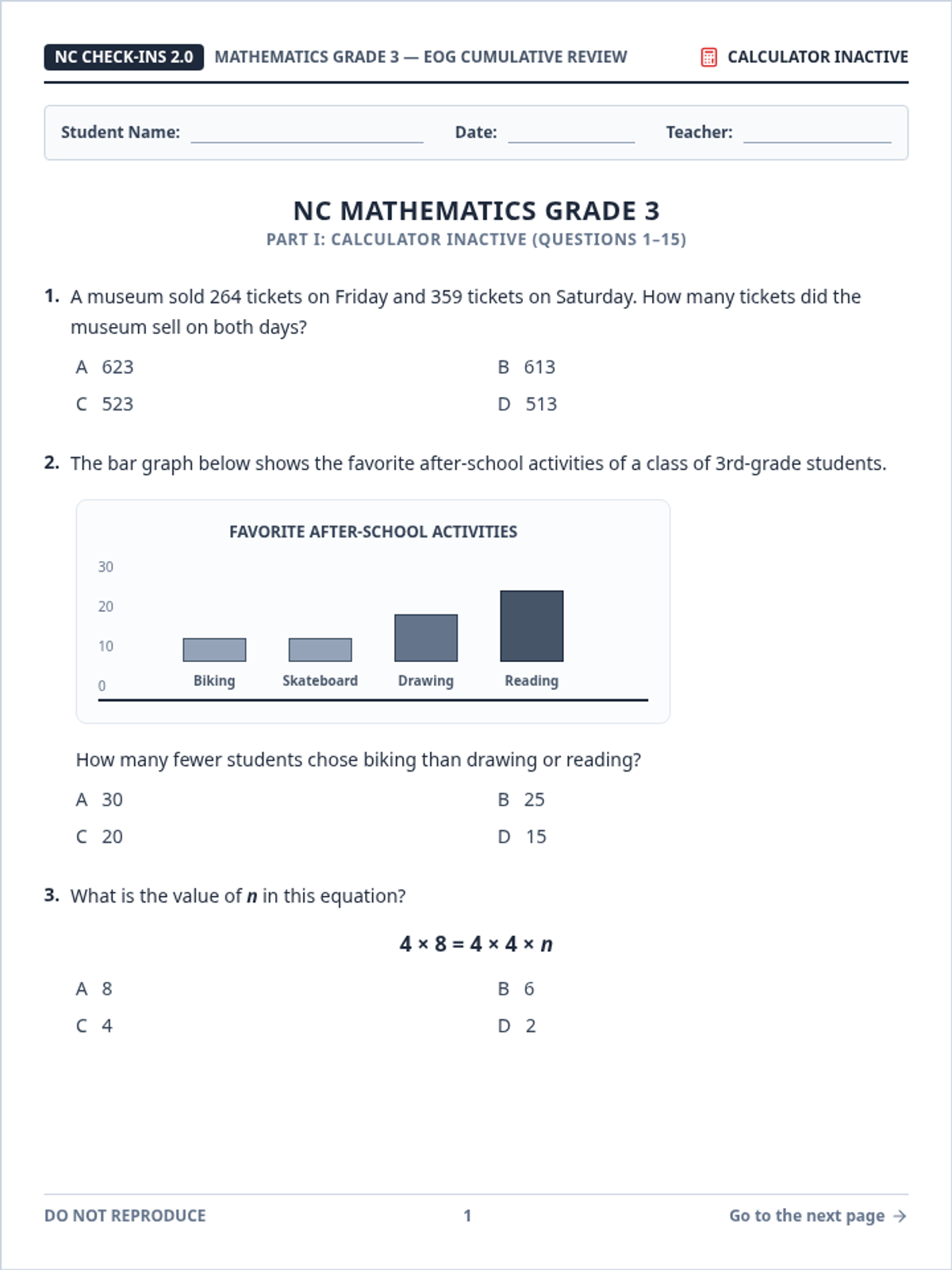
A comprehensive 48-question cumulative review designed to prepare Grade 3 students for the NC Mathematics End-of-Grade assessment, combining Calculator Inactive and Calculator Active parts with an Answer Key.
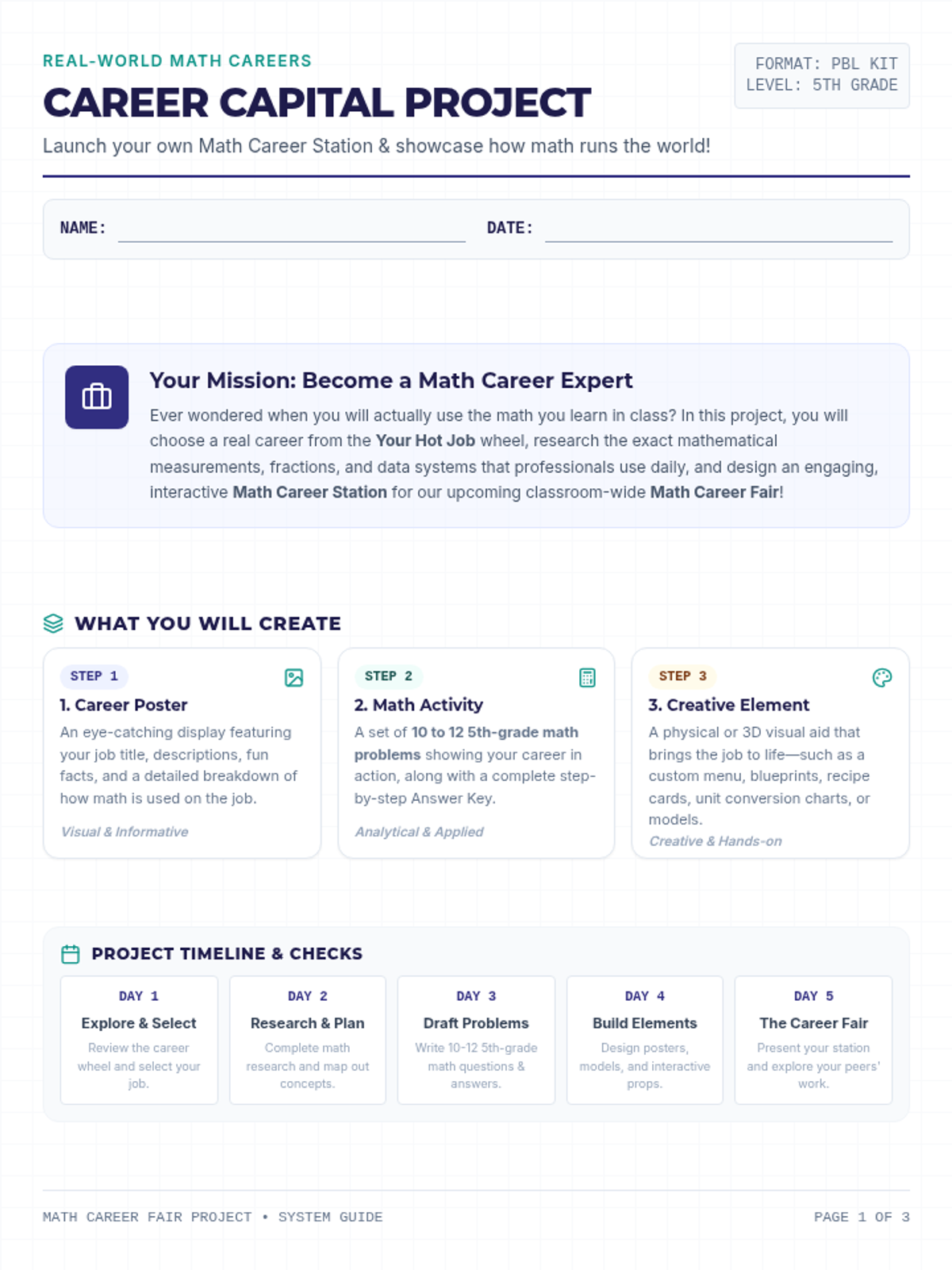
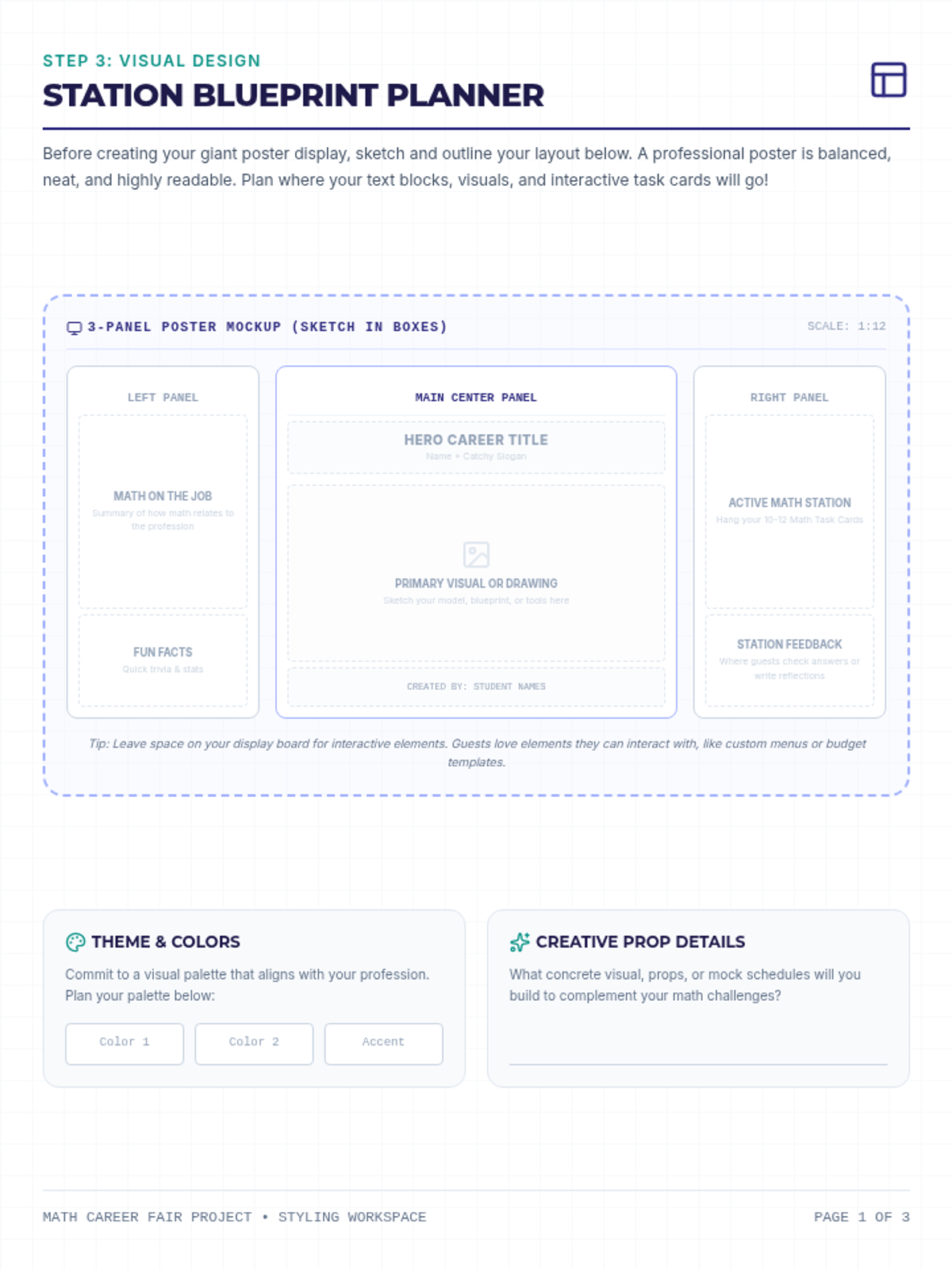
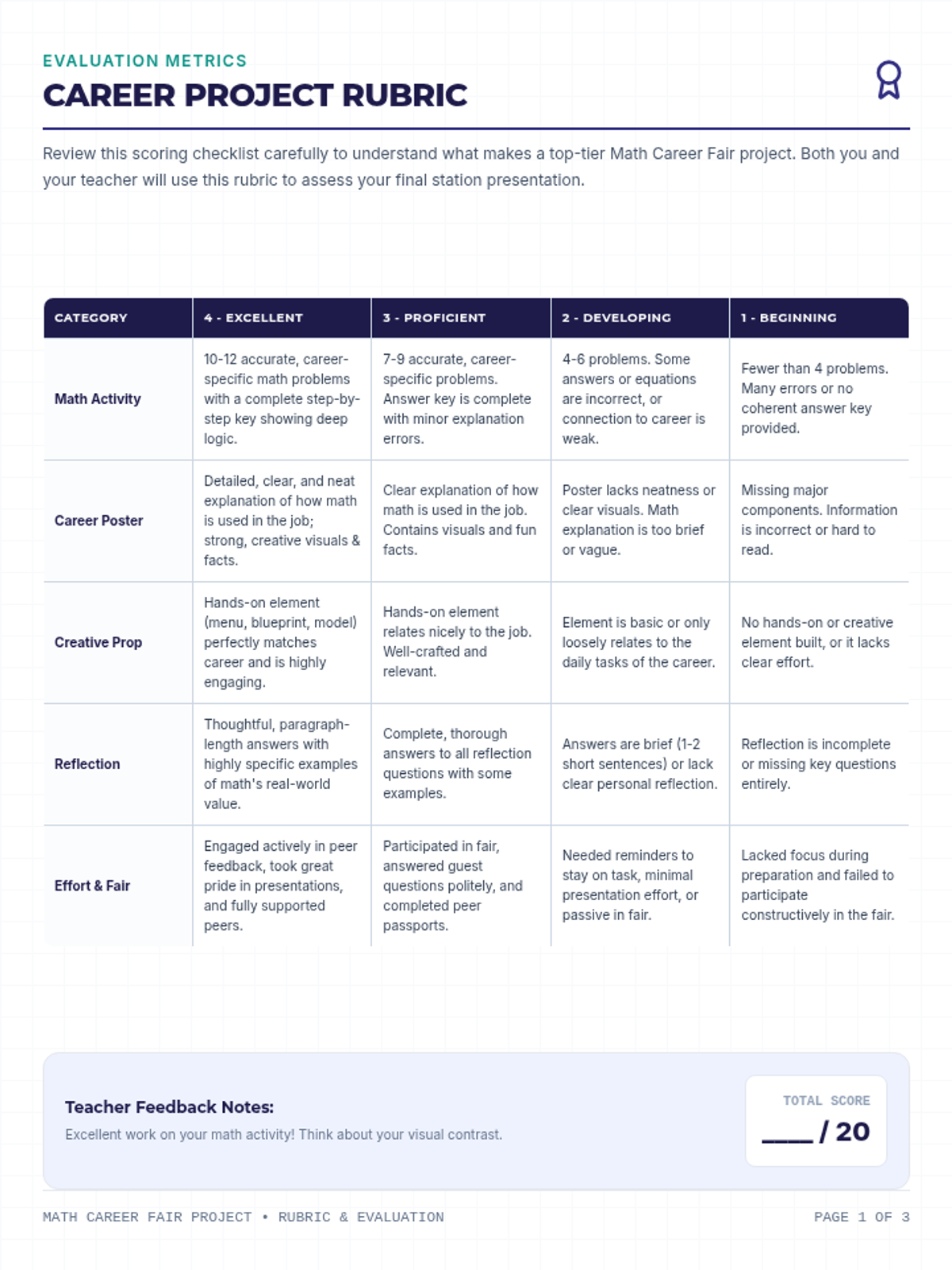
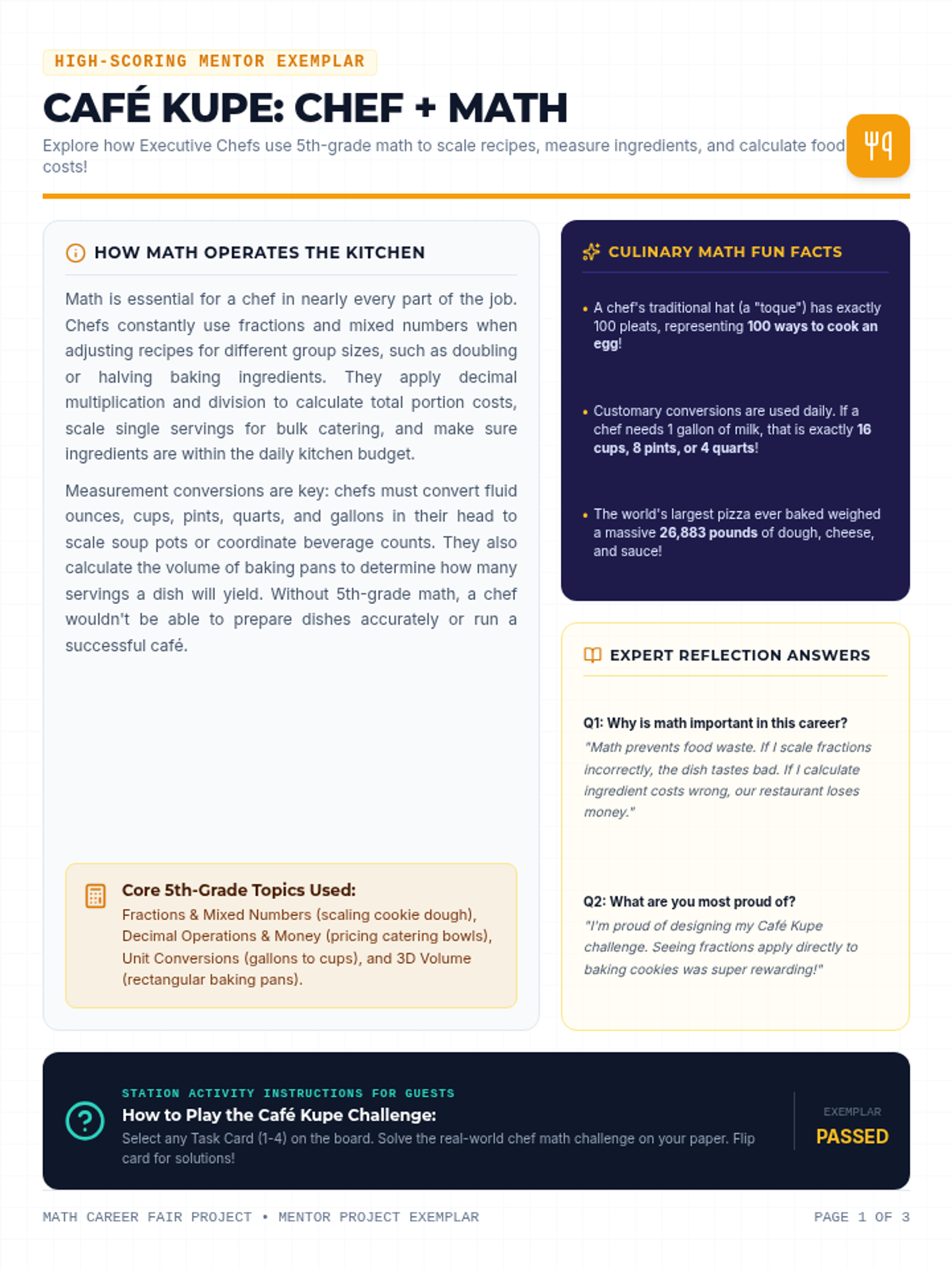
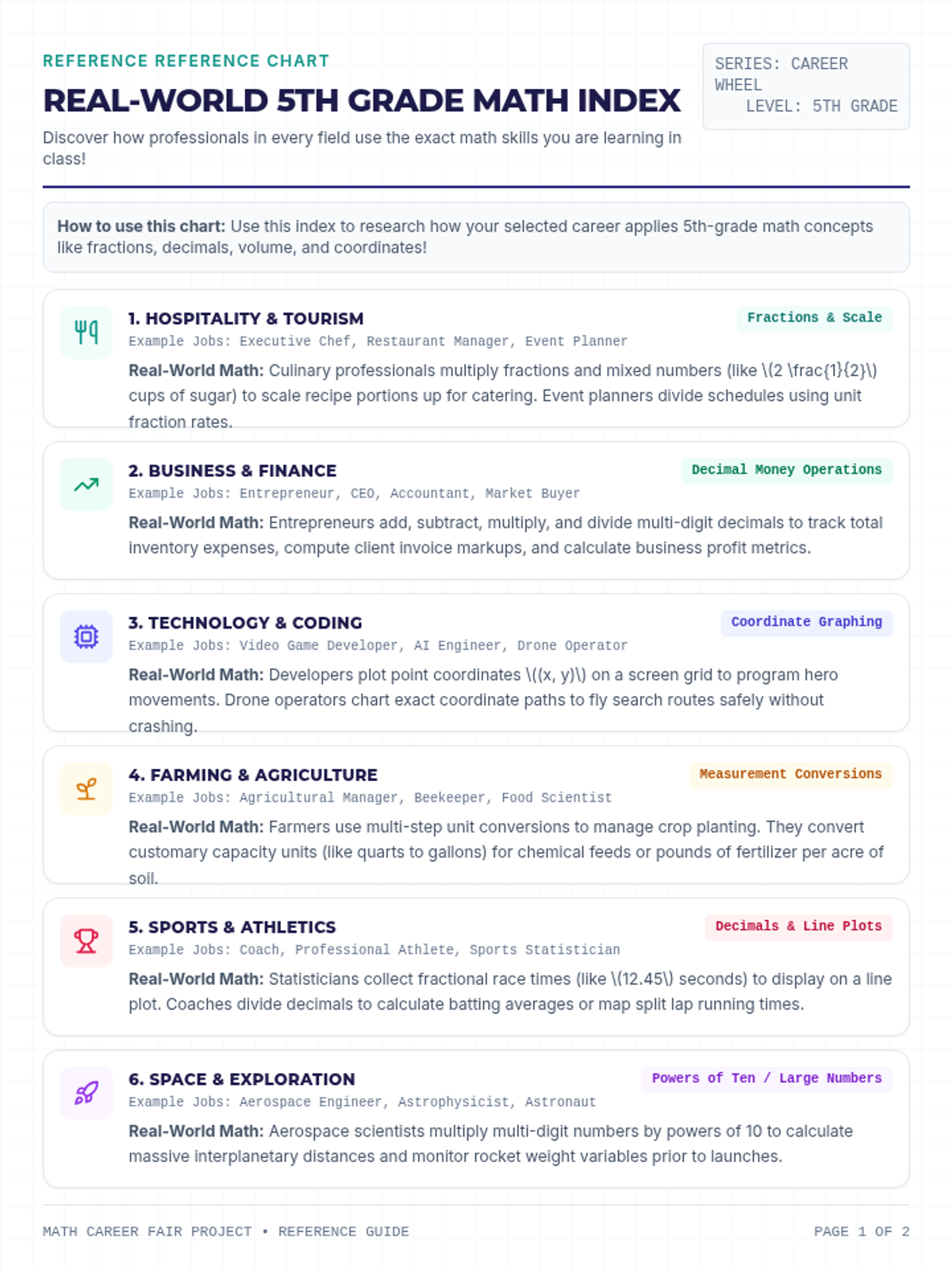
A complete project-based lesson where students research real-world math applications for their chosen career, create a station poster, build an original math activity, and share their creations in a classroom-wide Math Career Fair.
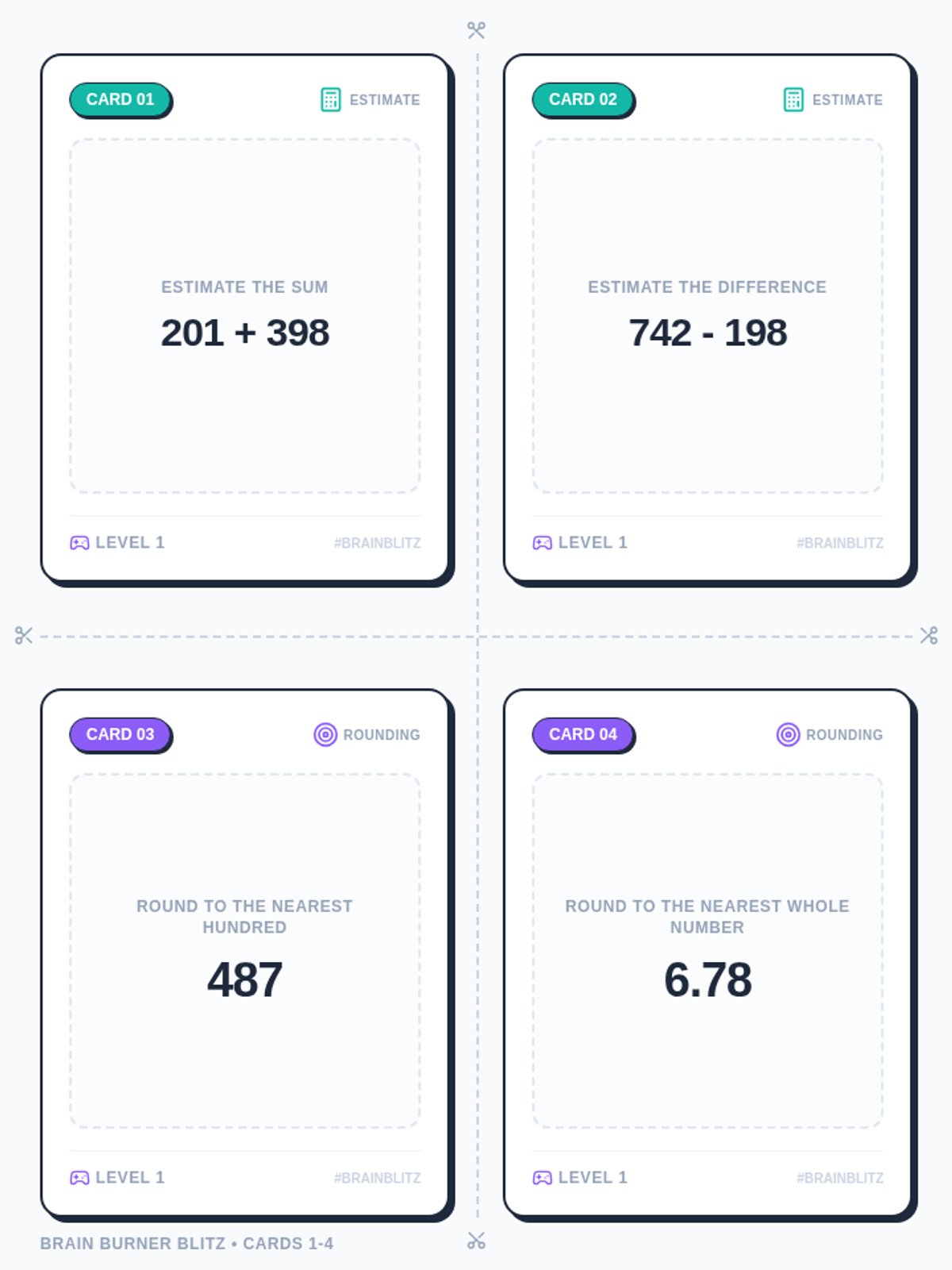
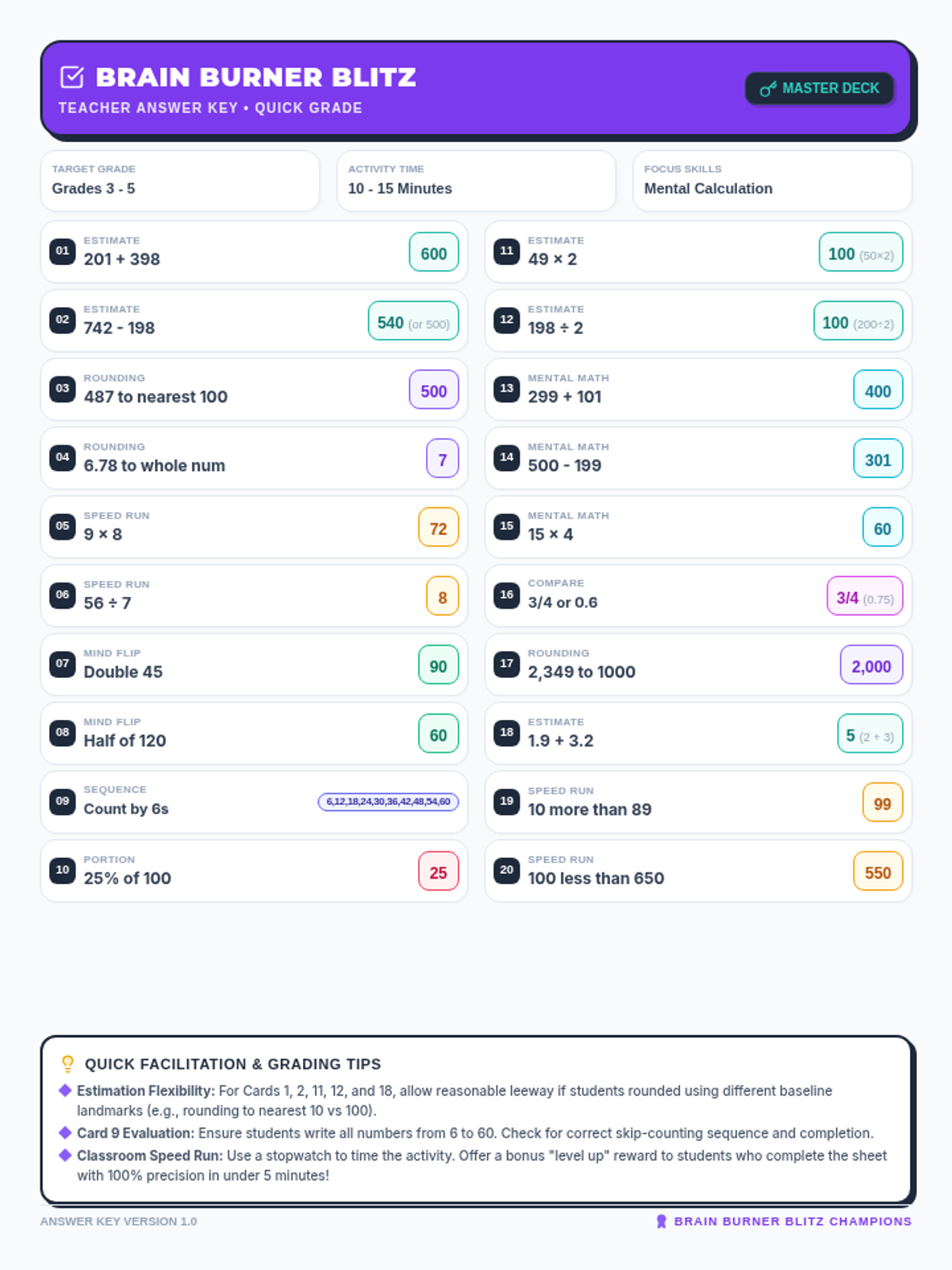
A high-energy mental math activity utilizing task cards to build estimation, rounding, and rapid calculation skills.
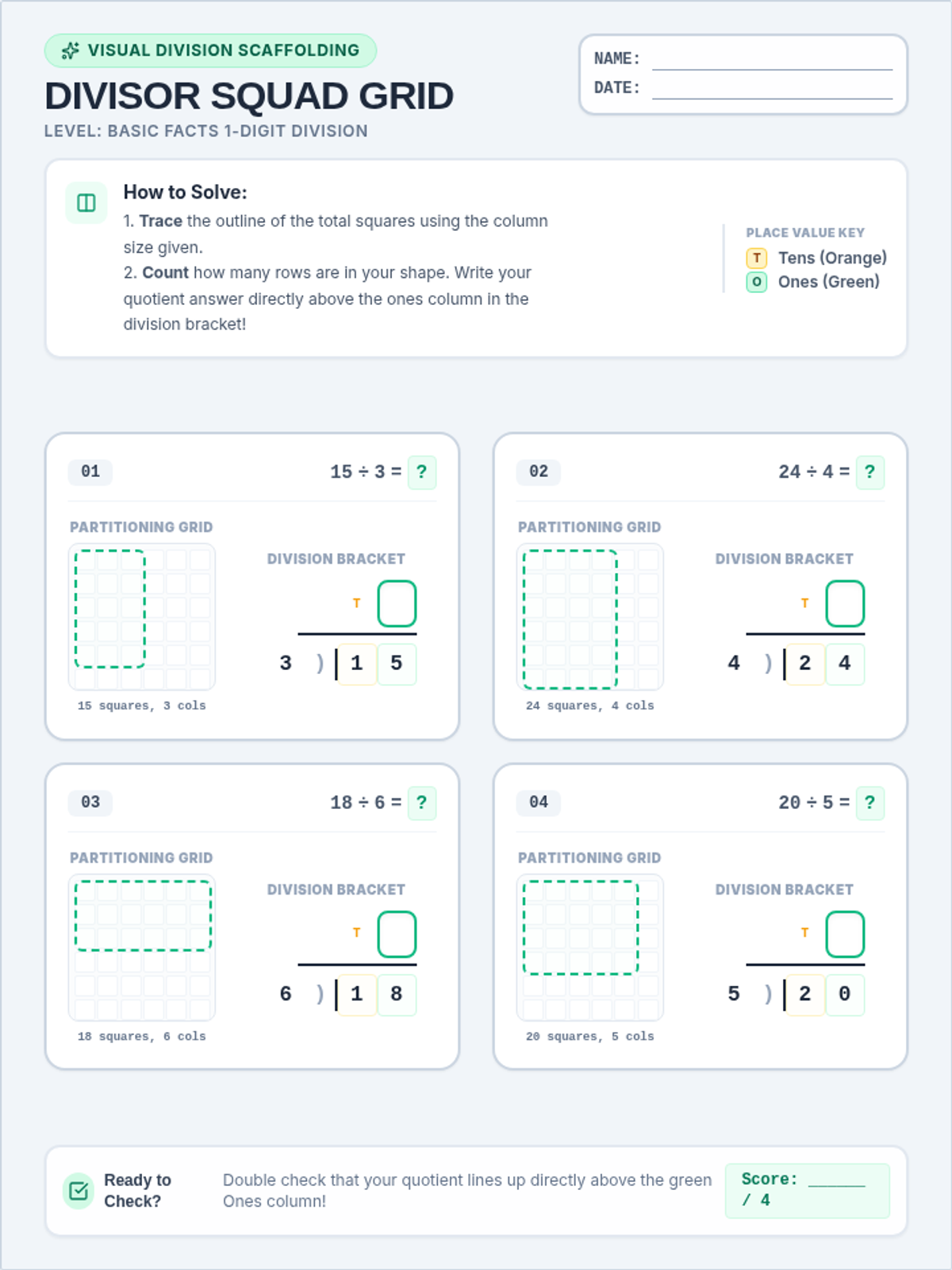
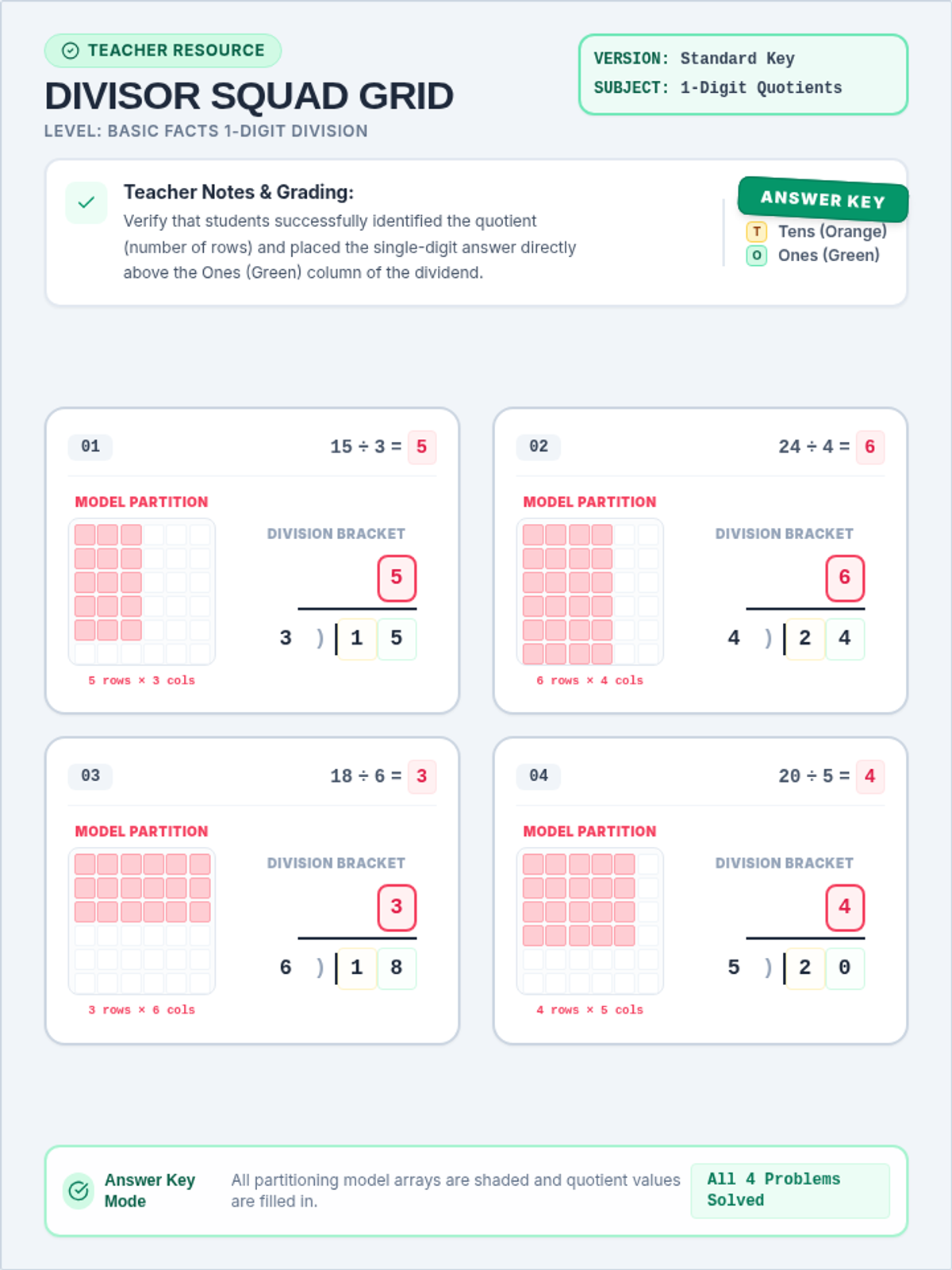
A basic division lesson focused on partitioning total values into equal rows and columns using visual grids. Students trace arrays to solve 1-digit quotient division facts with confidence.
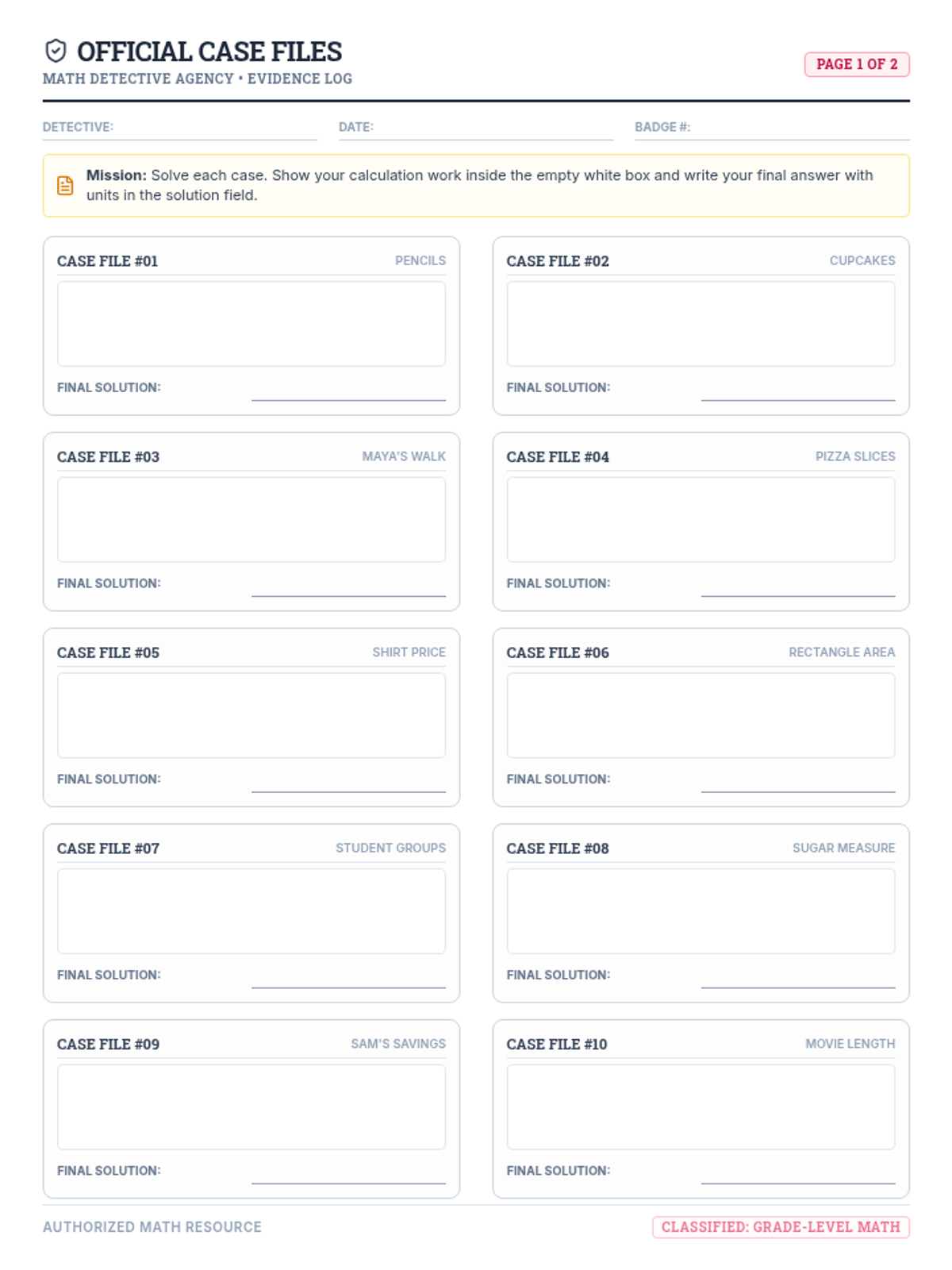
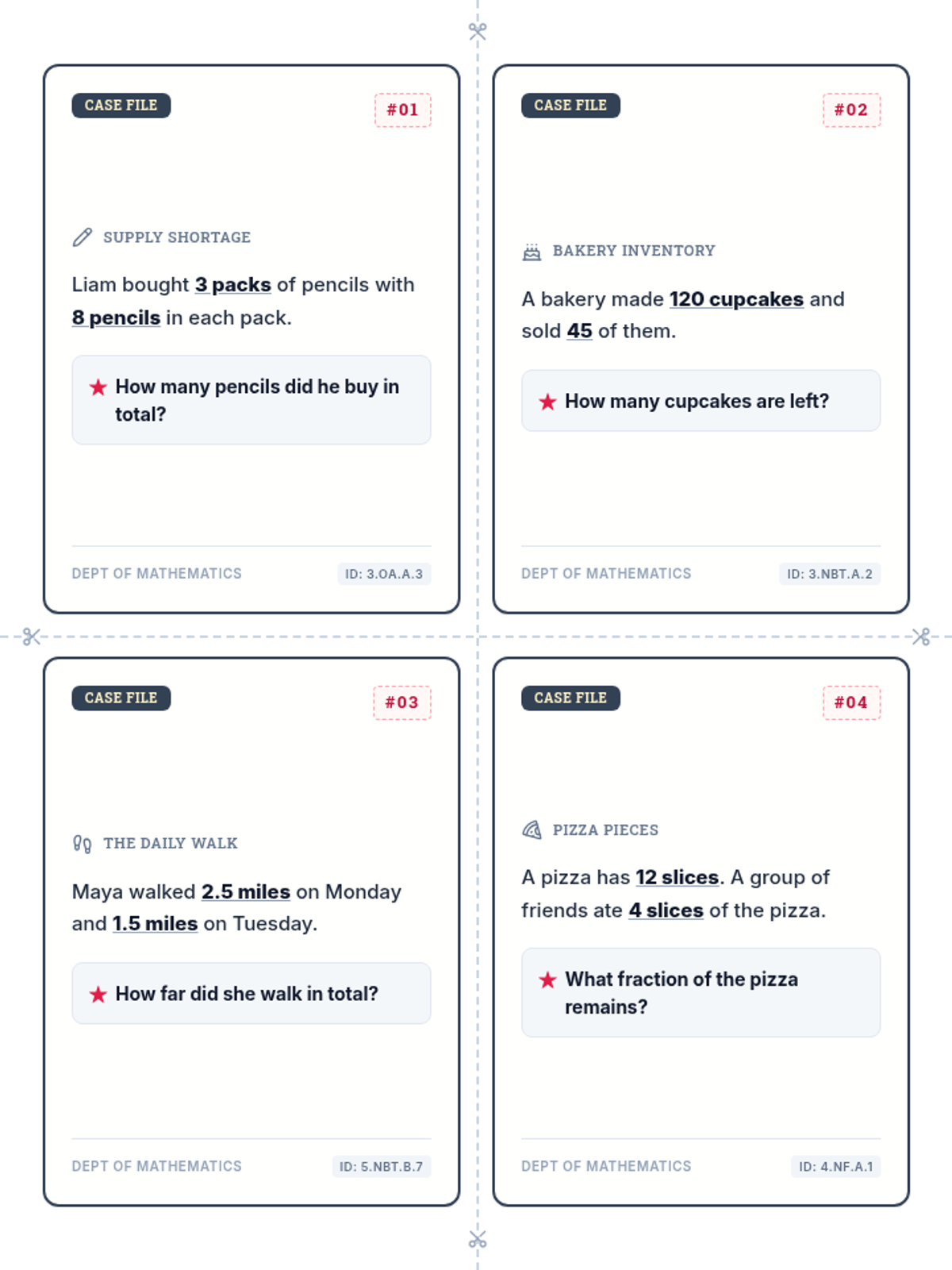
A high-engagement math activity set where students solve 20 distinct word problems structured as 'Case Files'. Perfect for independent practice, centers, or cooperative learning stations.