A remediation lesson for 10th-11th graders focusing on multiplying radicals with different indices by converting to fractional exponents and finding common denominators. Students analyze common errors and act as 'teachers' to correct them.
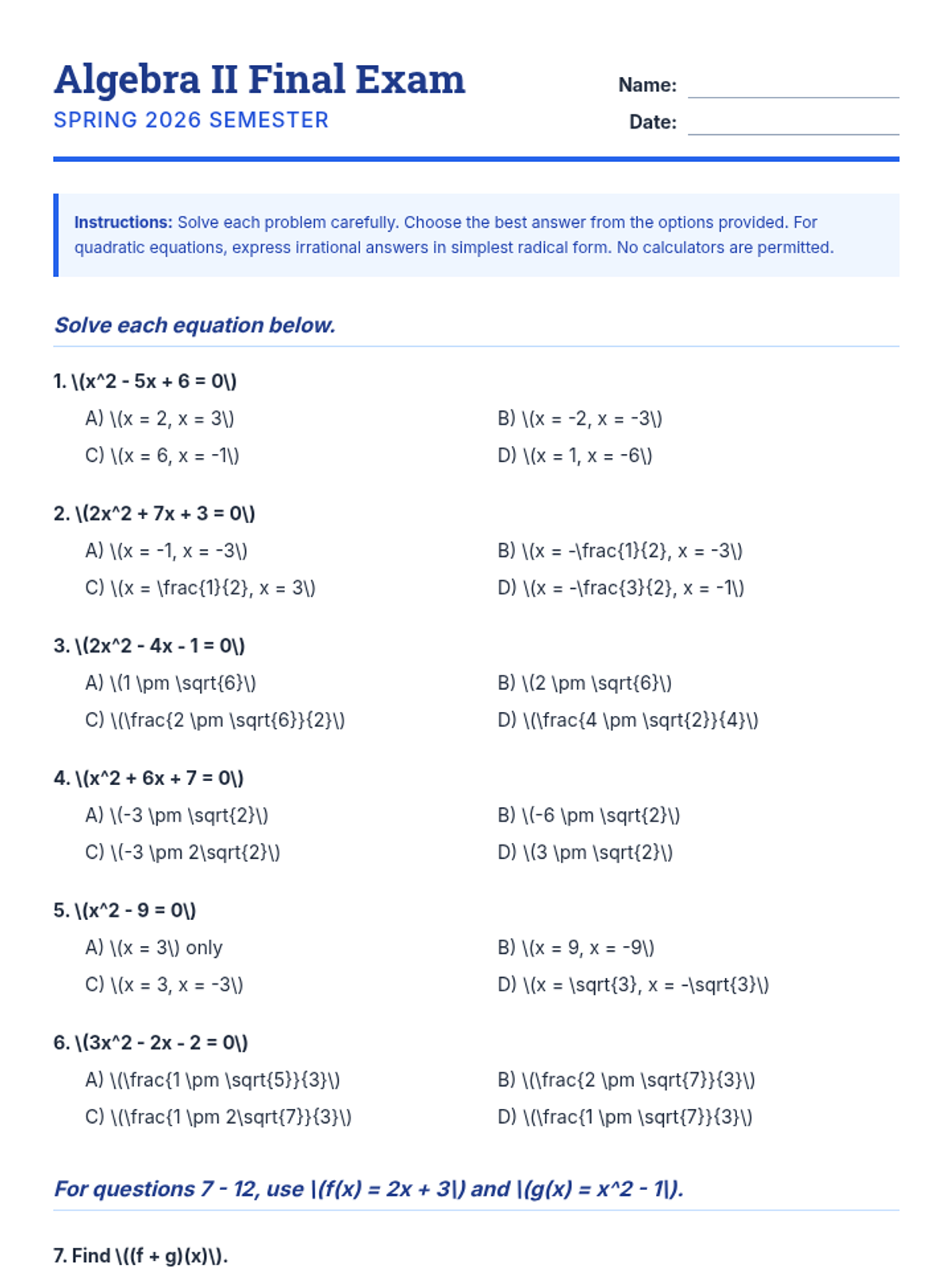
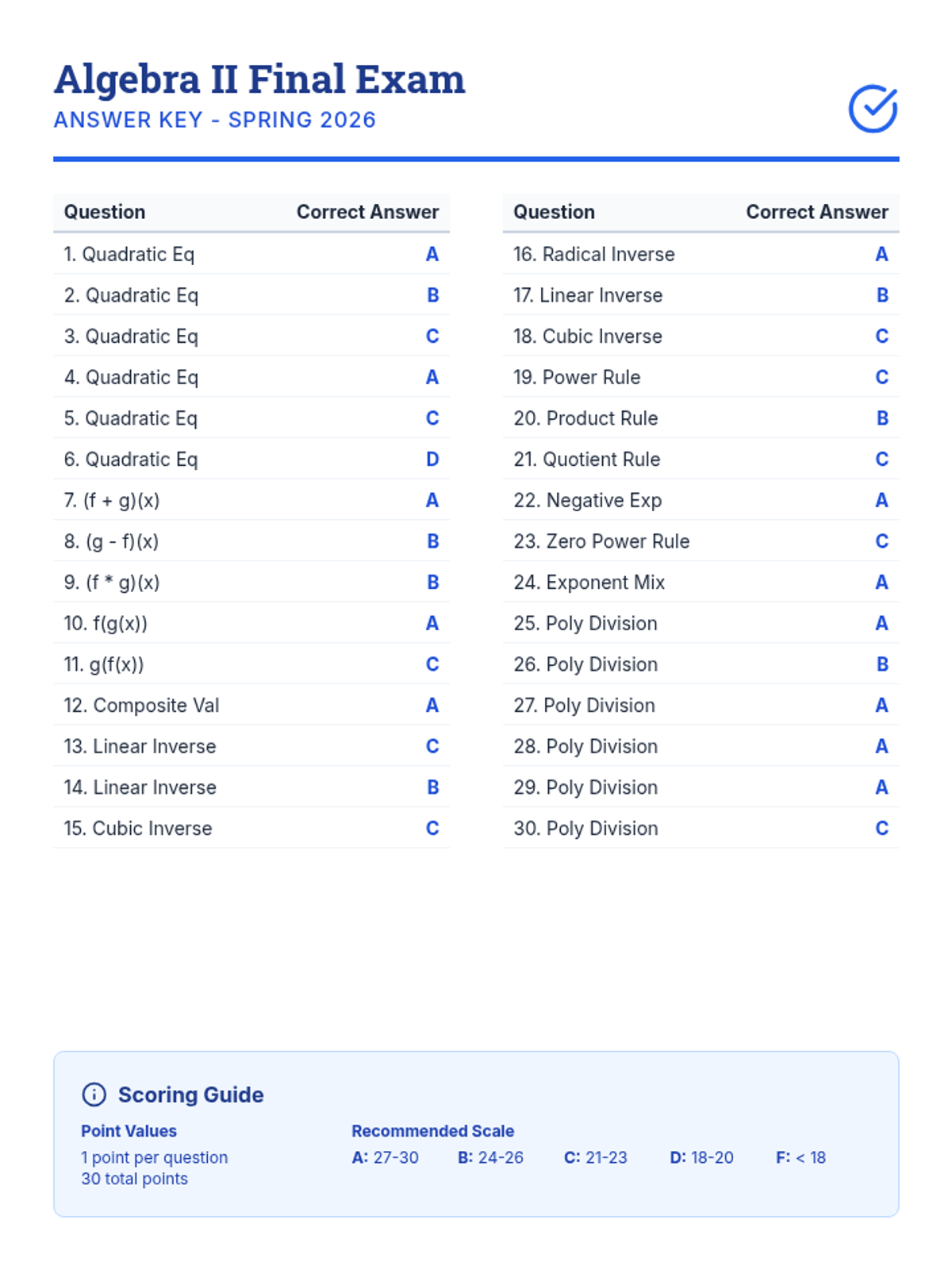
A comprehensive Algebra II final exam covering quadratics, function operations, inverses, exponent rules, and polynomial division.
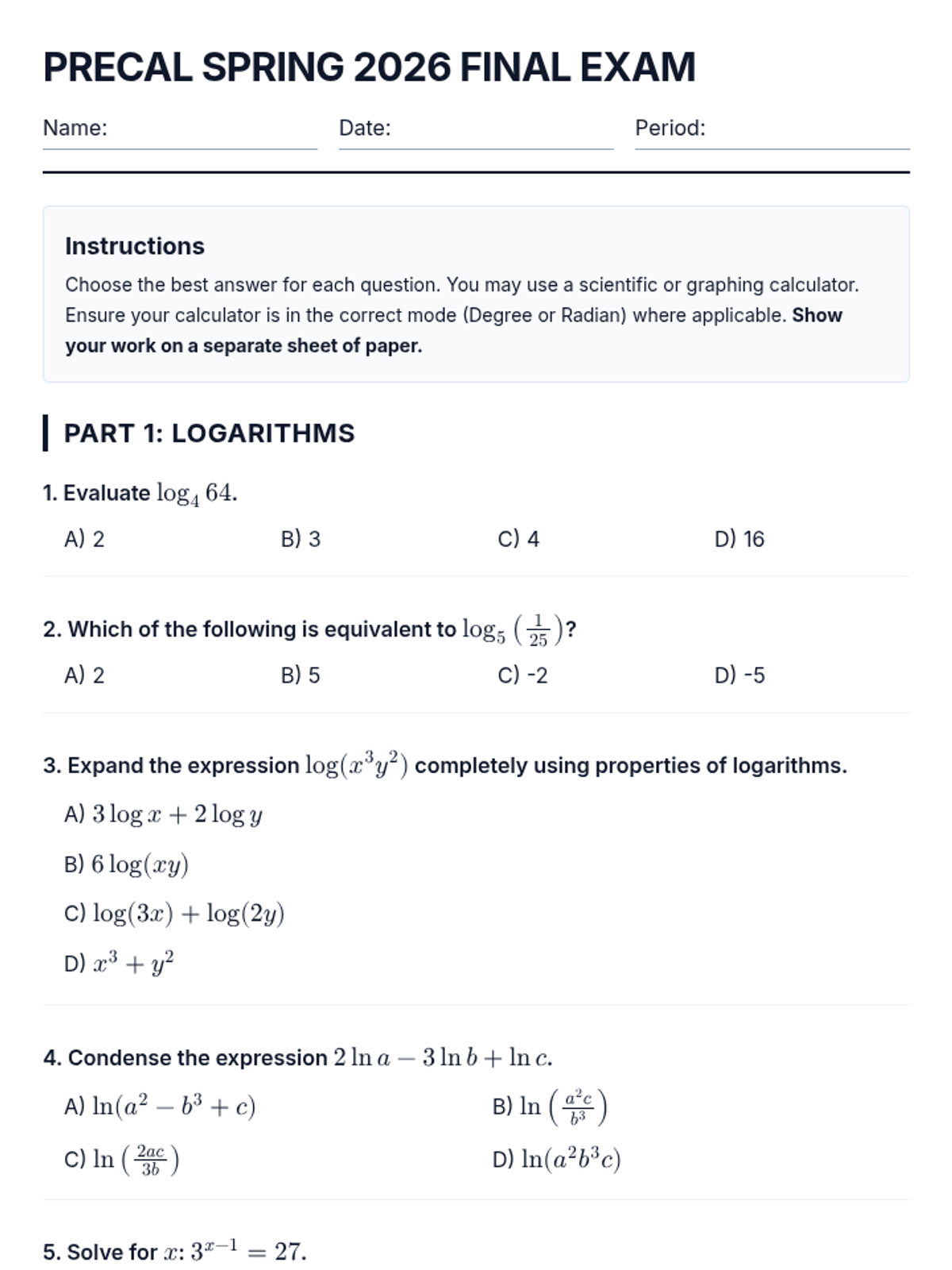
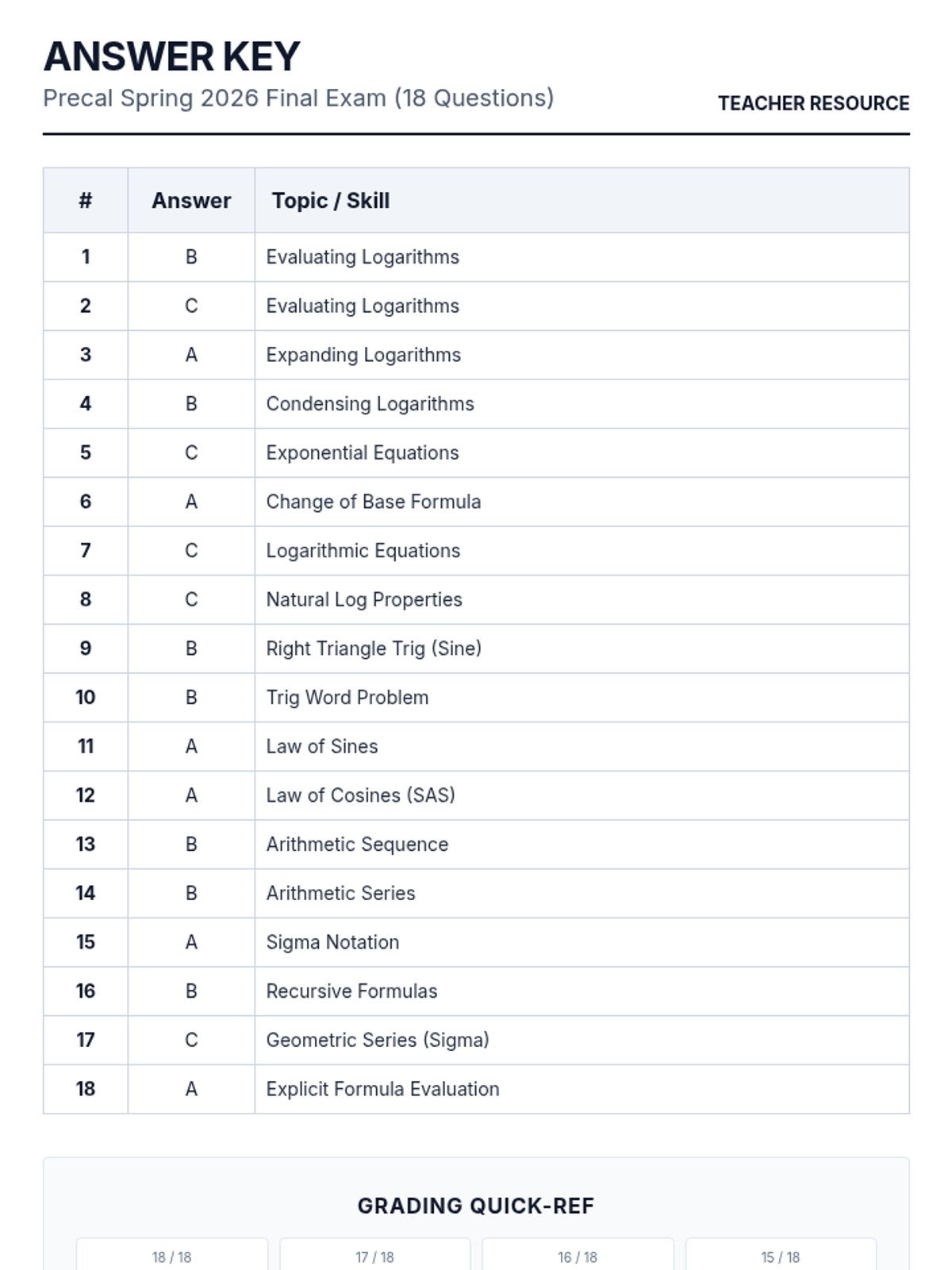
A comprehensive final exam for Spring 2026 covering logarithms, trigonometry of triangles, and sequences and series for a Precalculus course.
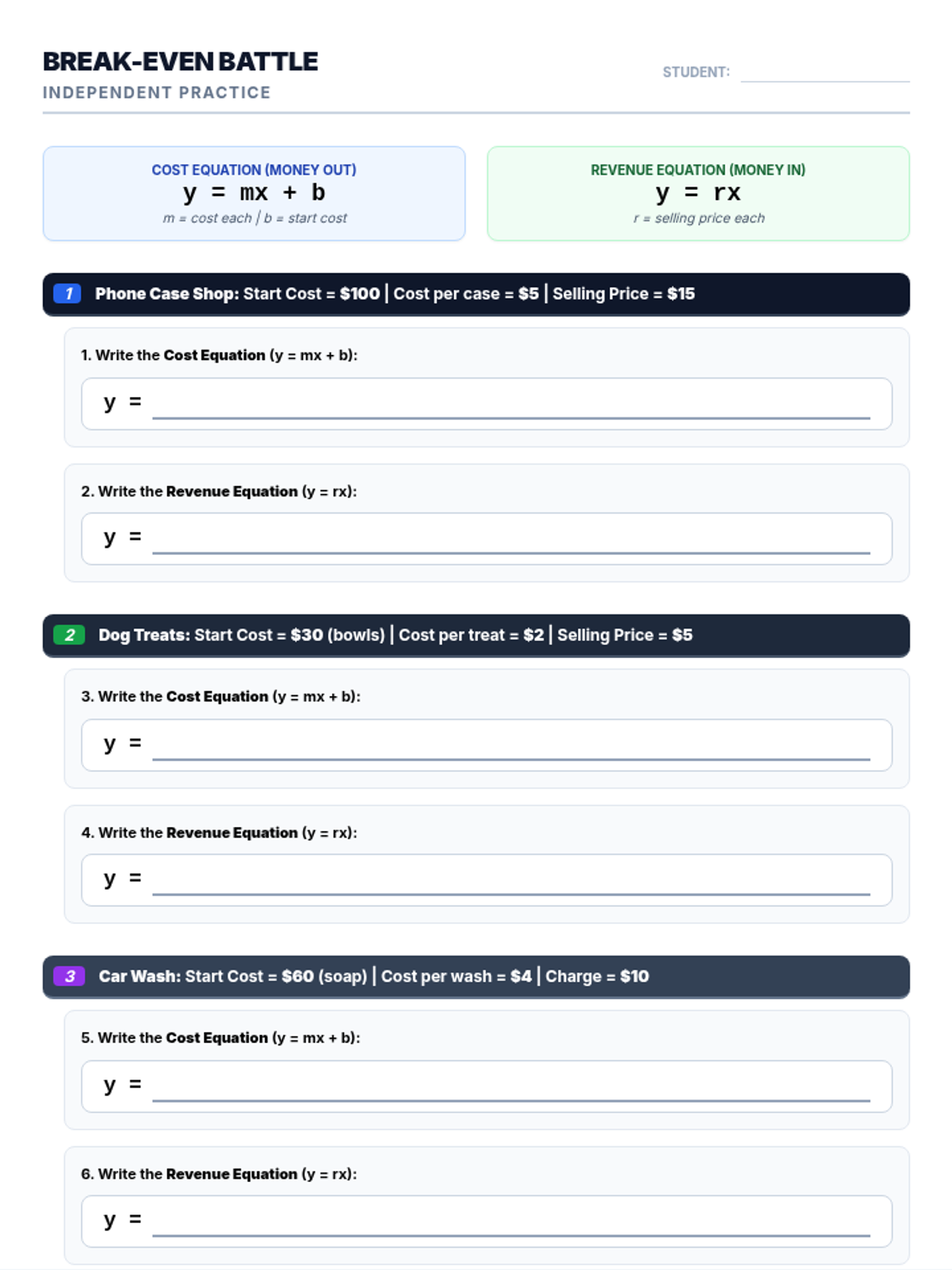
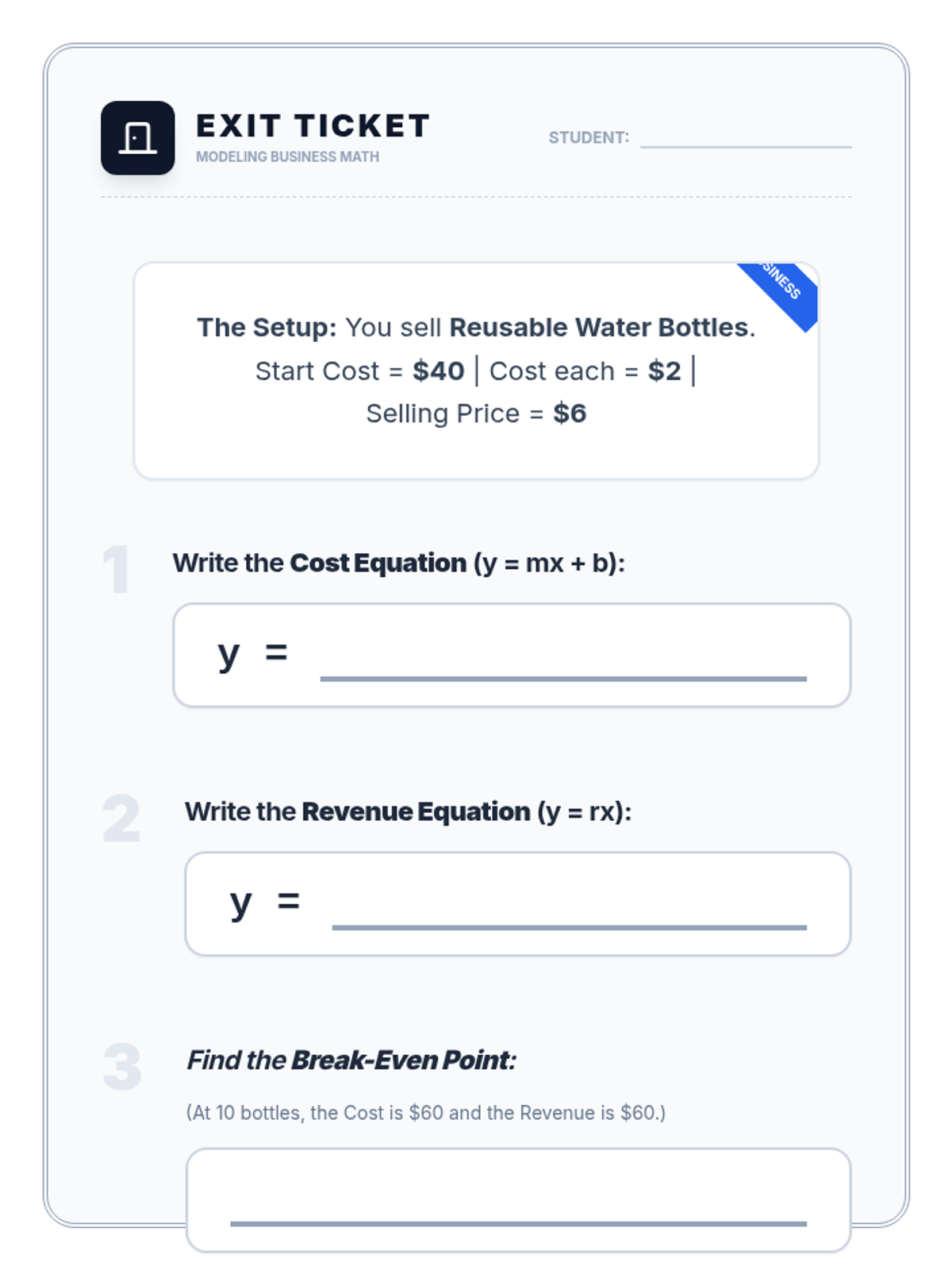
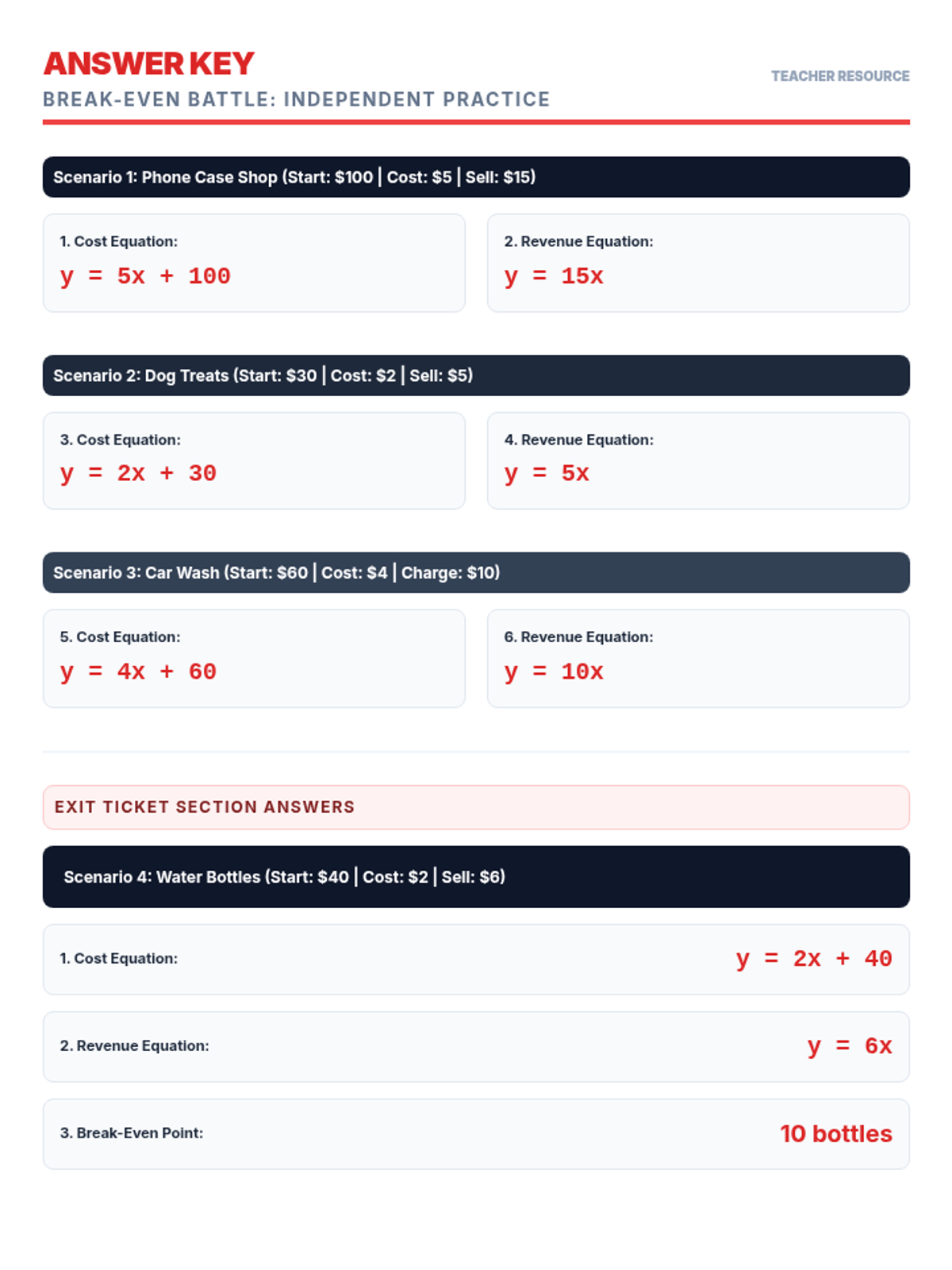
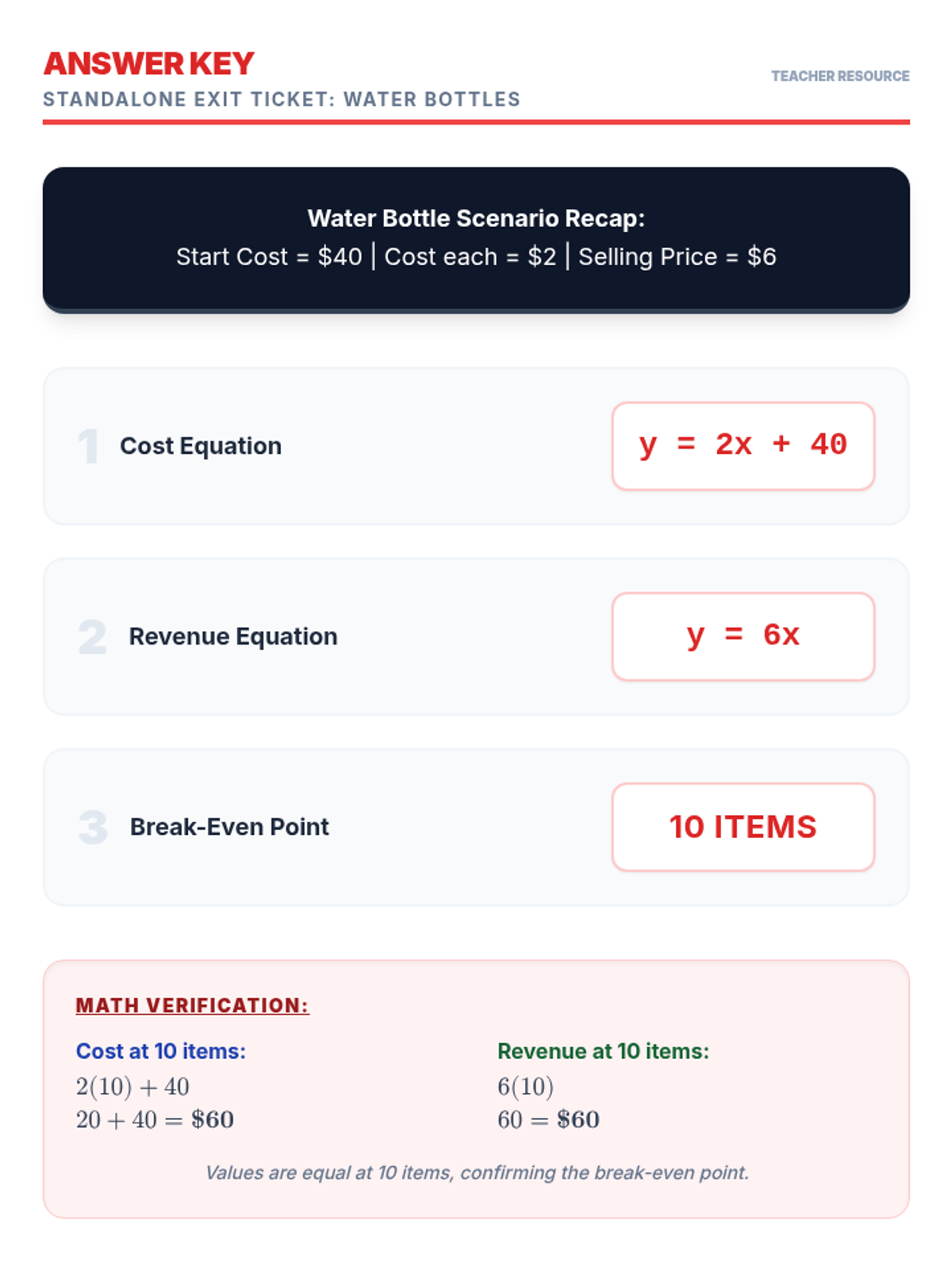
A math lesson focused on modeling real-world business scenarios using linear equations to find the break-even point between cost and revenue.
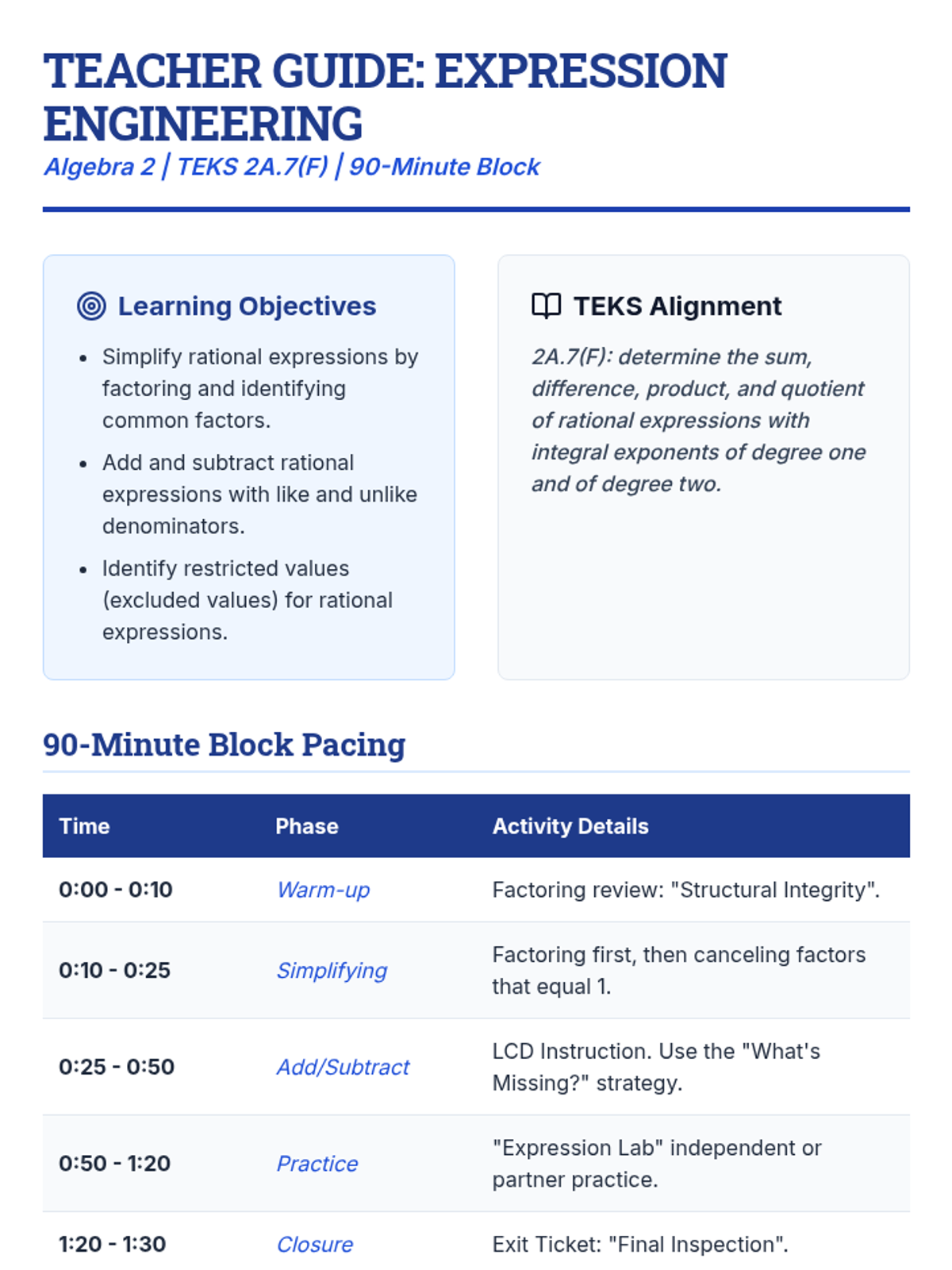
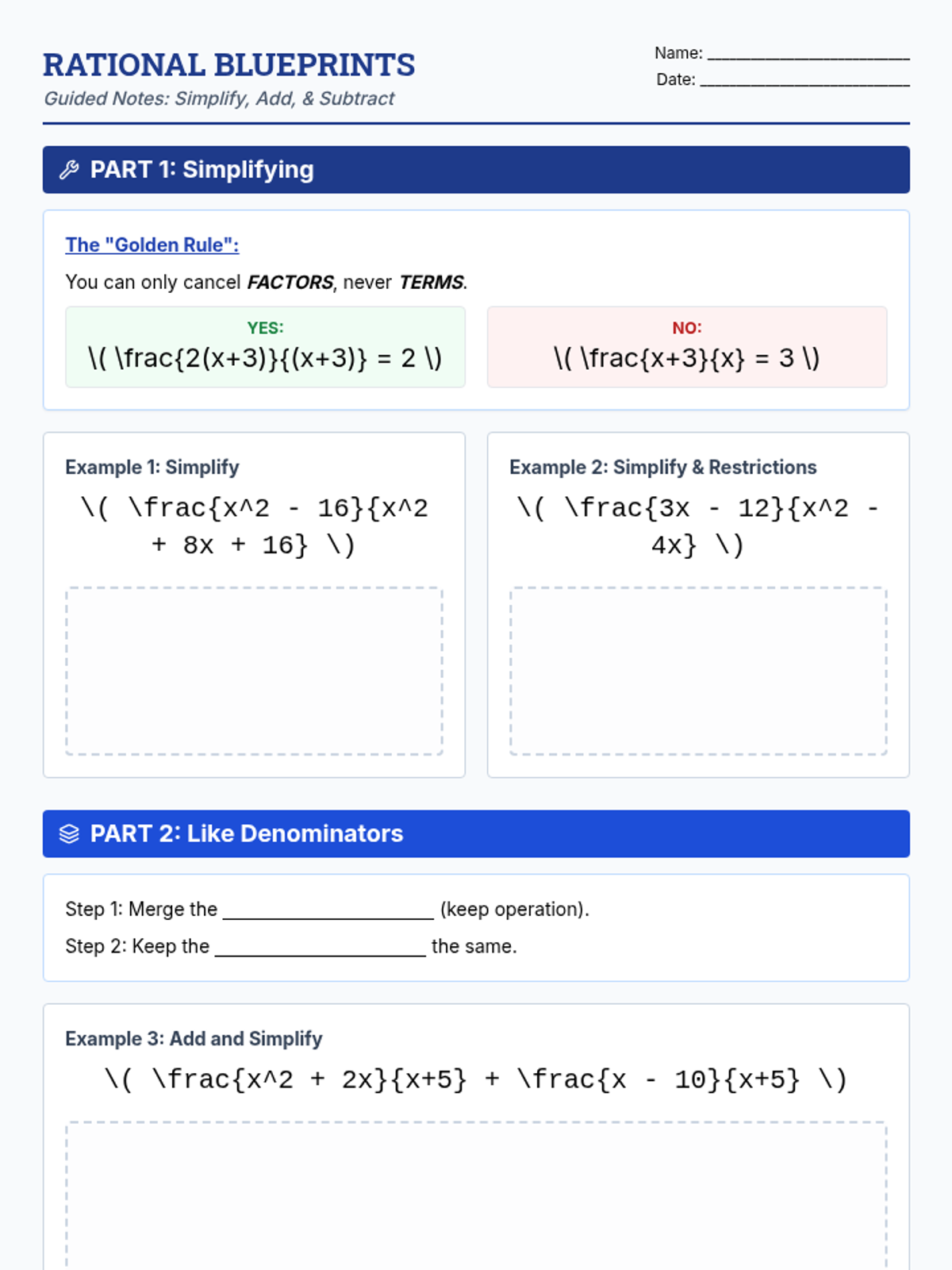
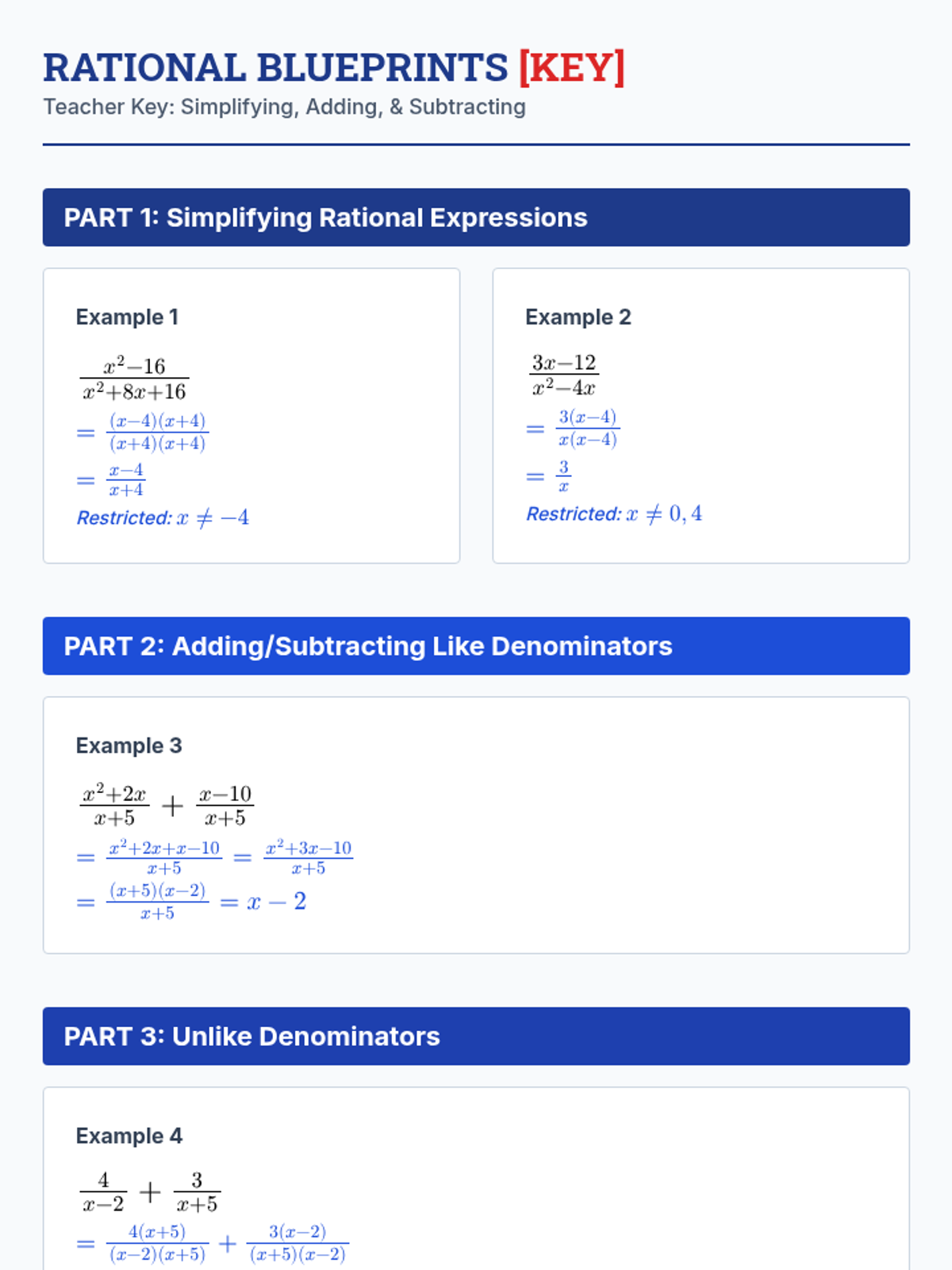
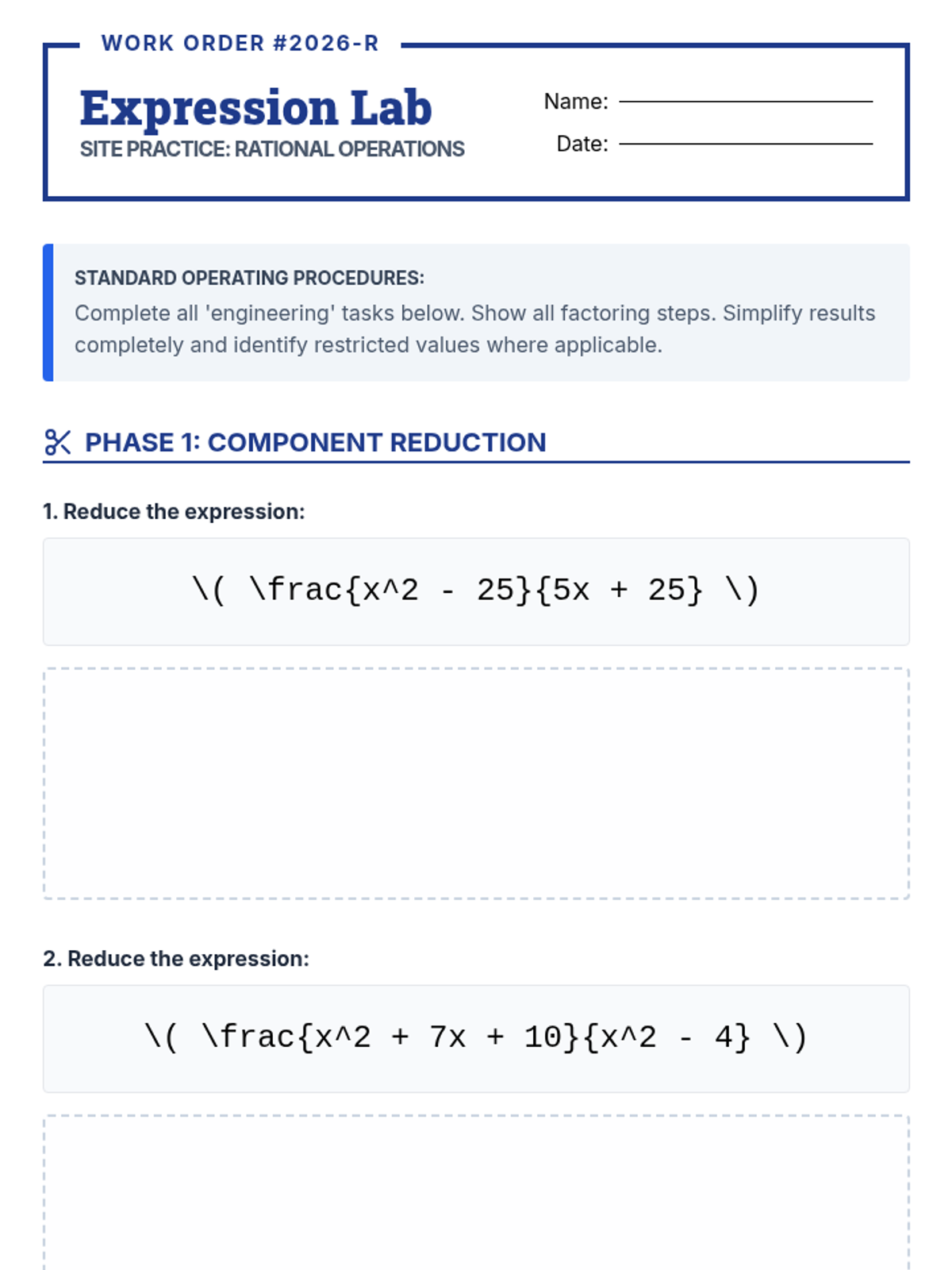
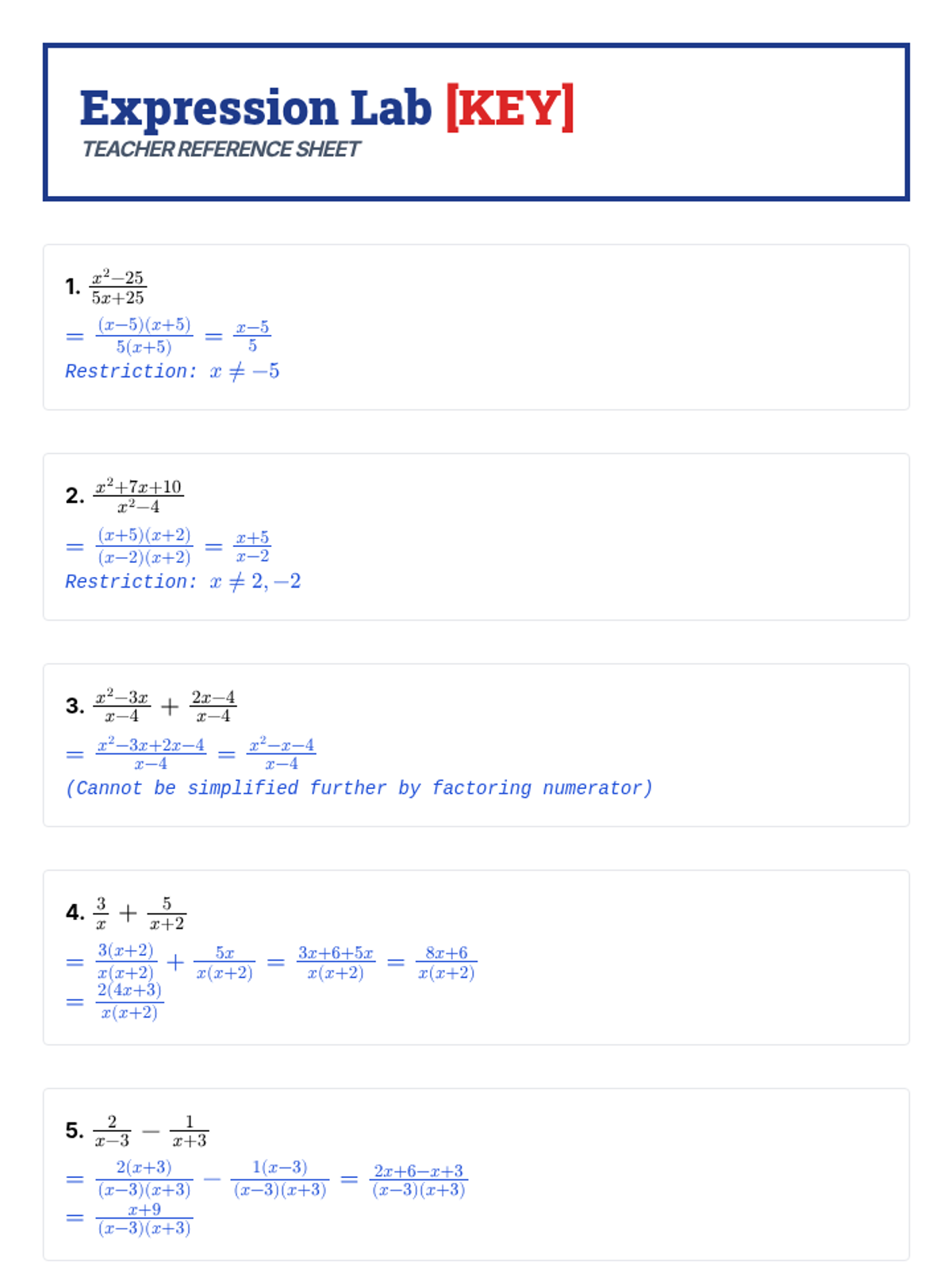
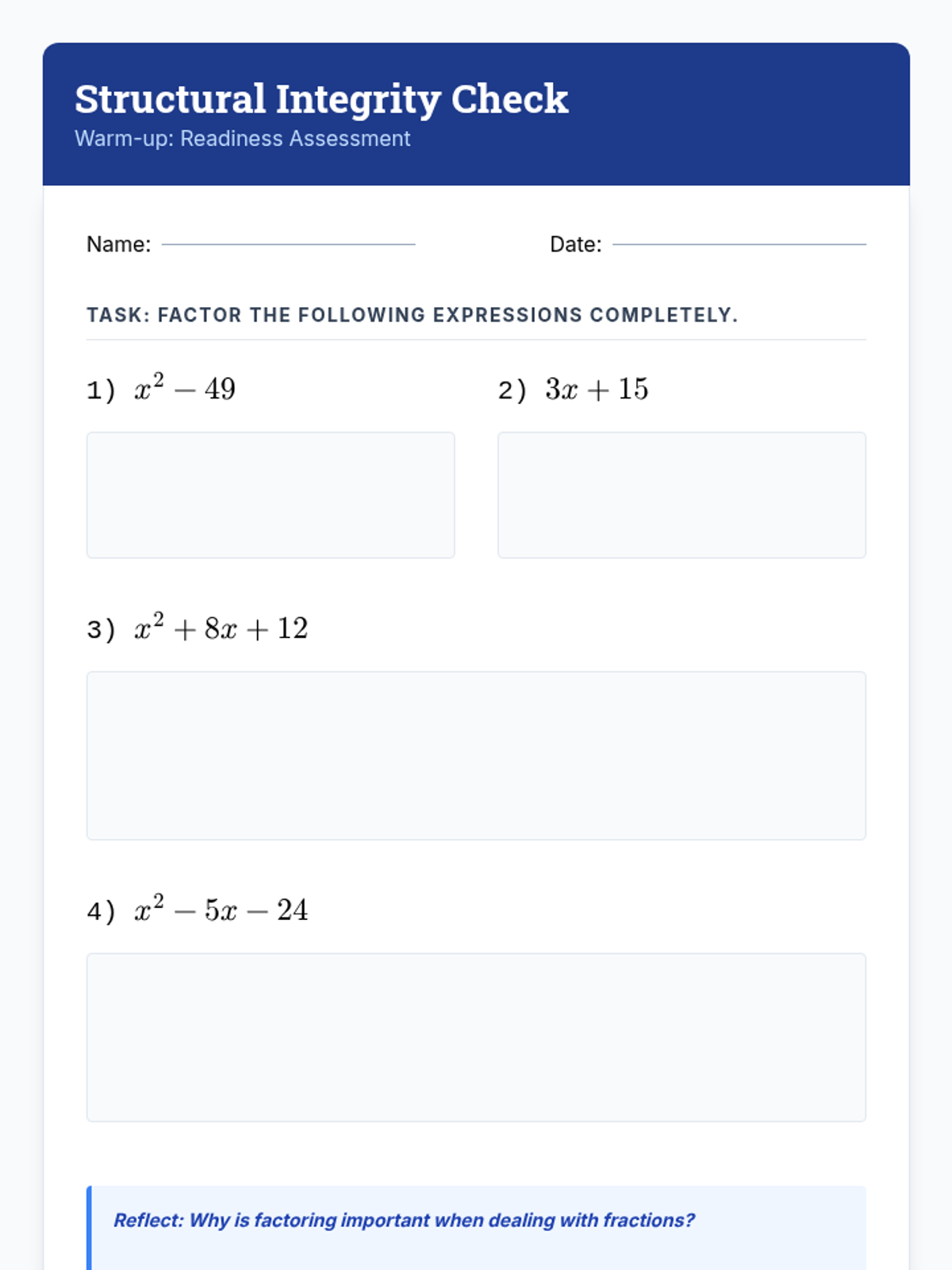
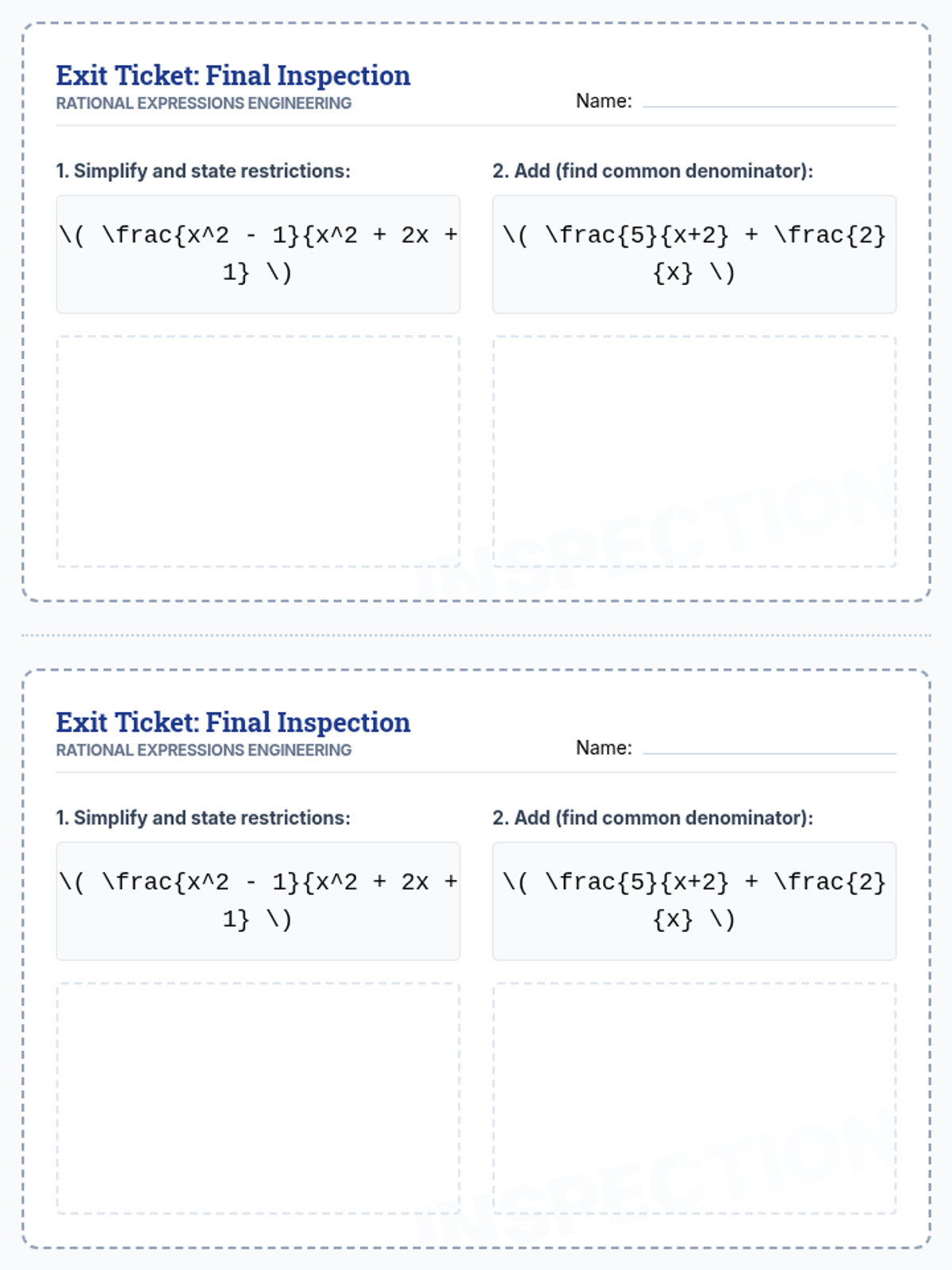
A 90-minute Algebra 2 lesson on simplifying, adding, and subtracting rational expressions, aligned with TEKS 2A.7(F). Students will use factoring techniques to 'engineer' simpler forms and combine complex expressions.
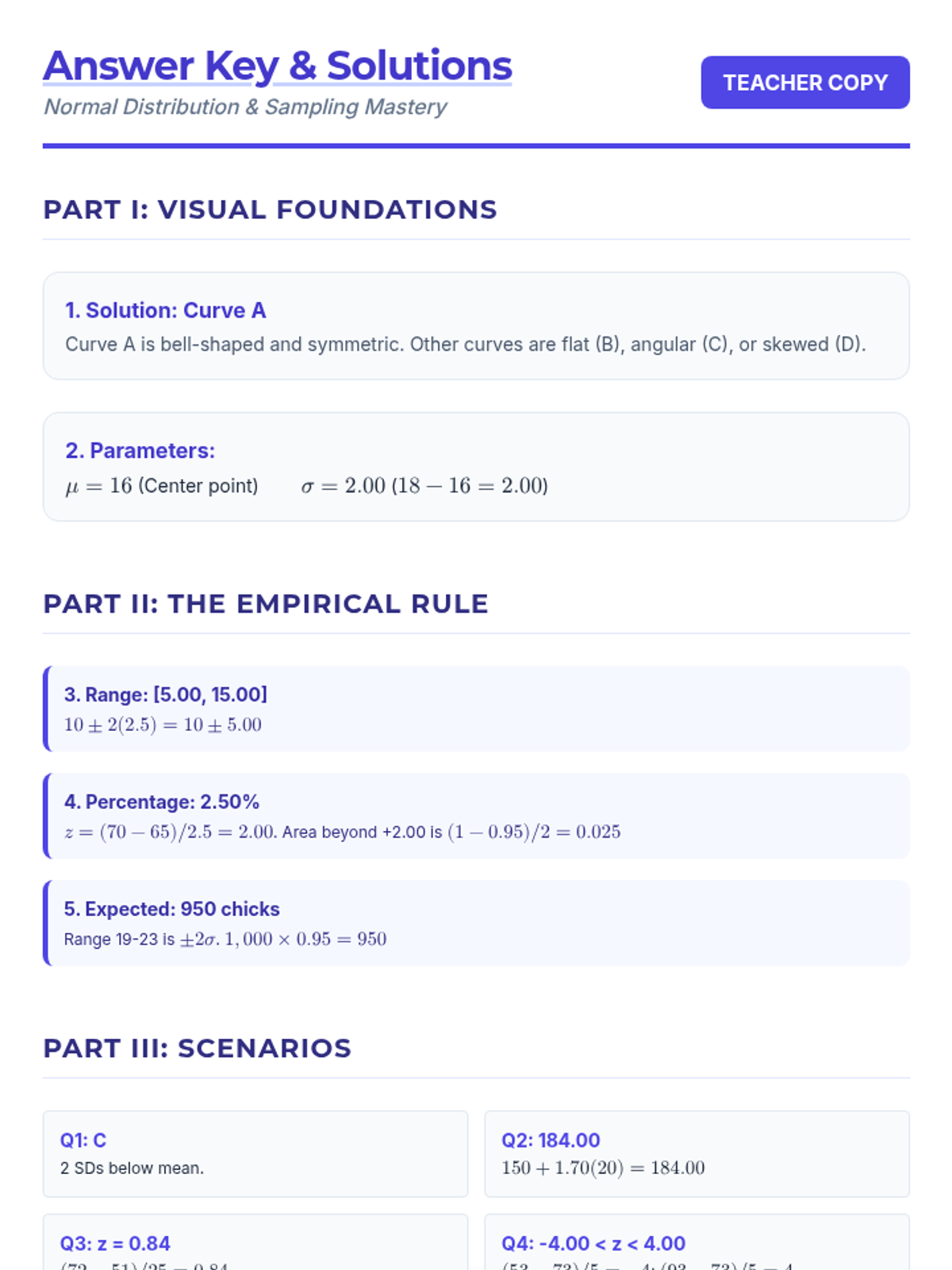
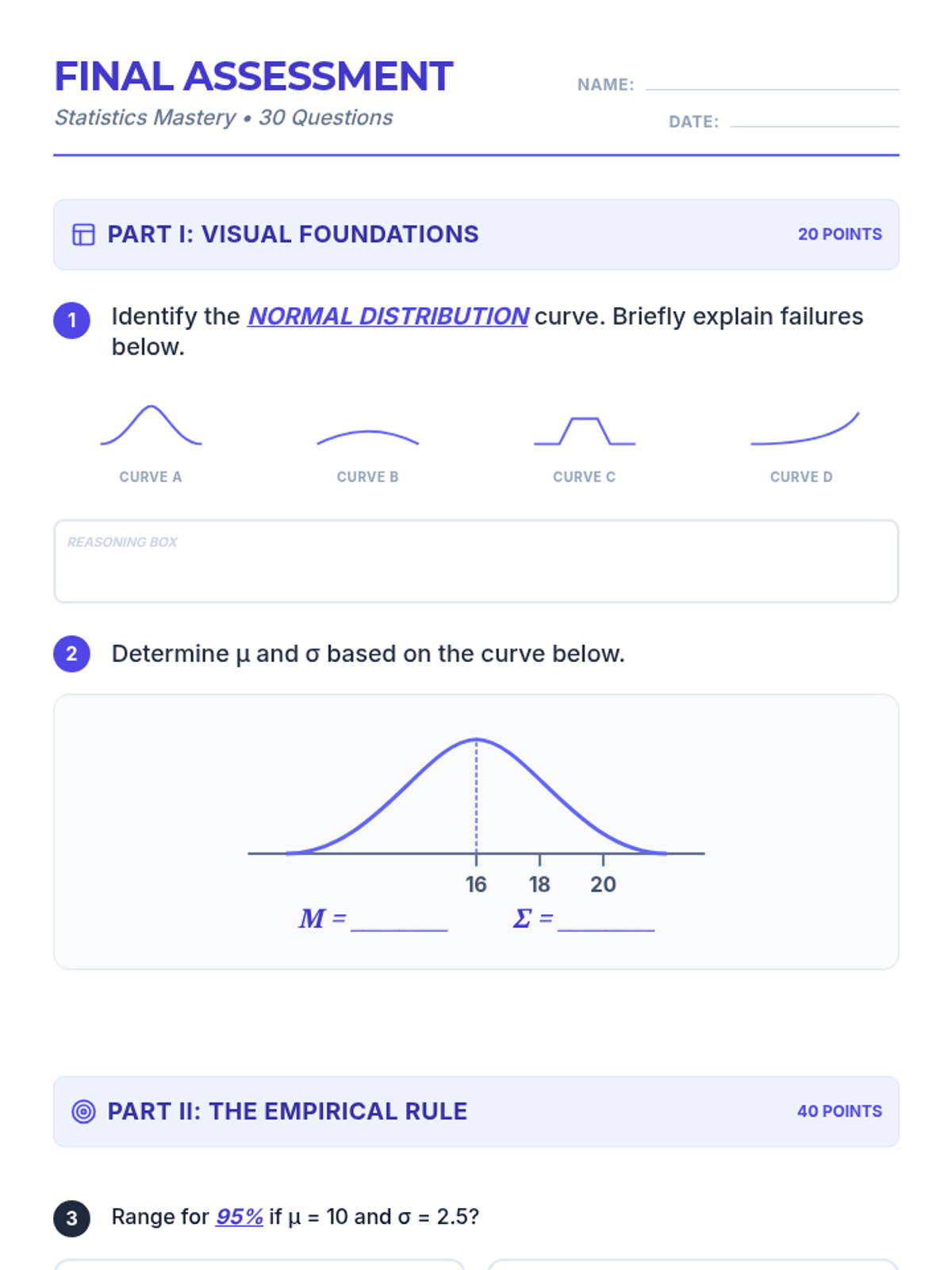
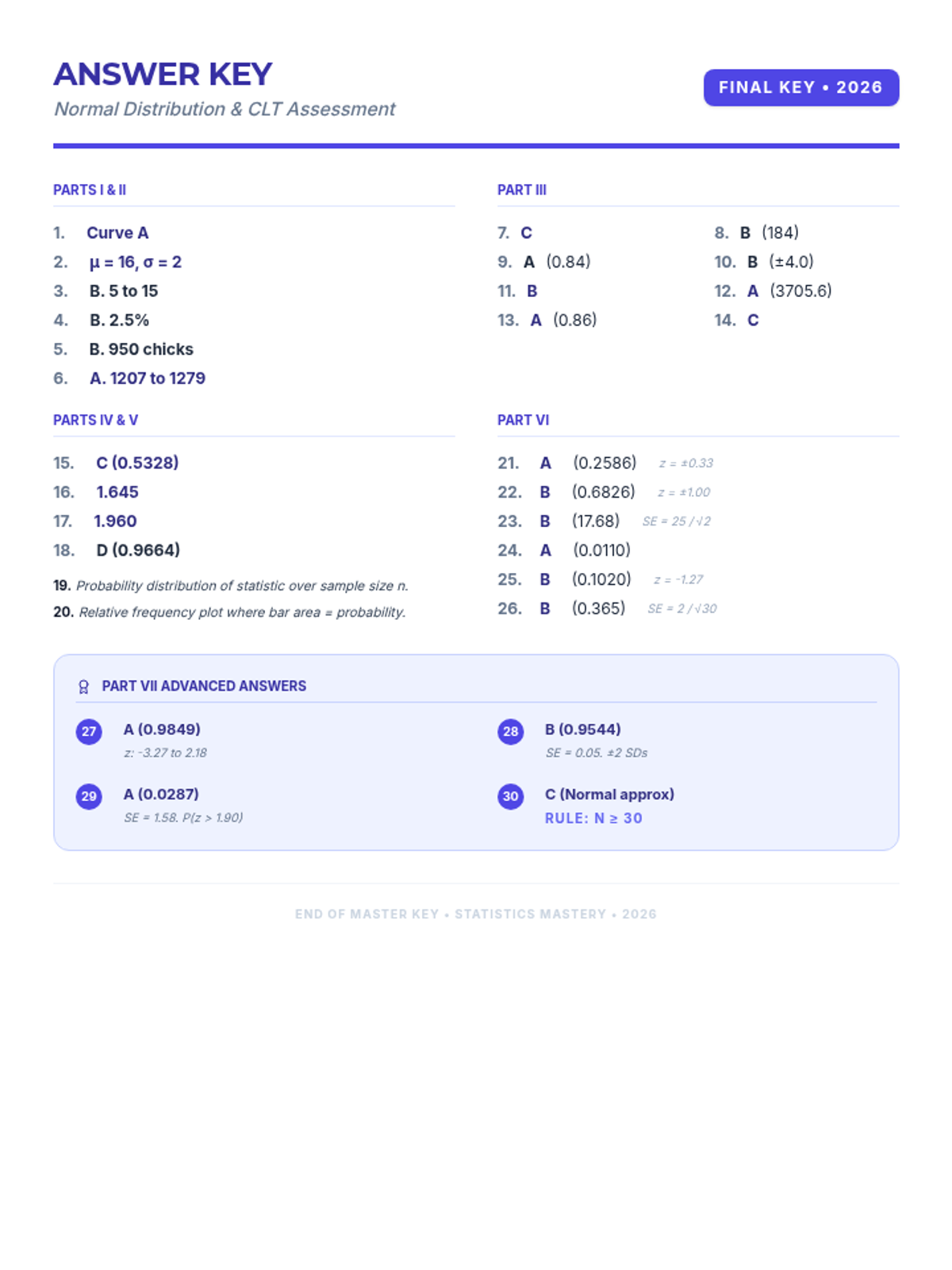
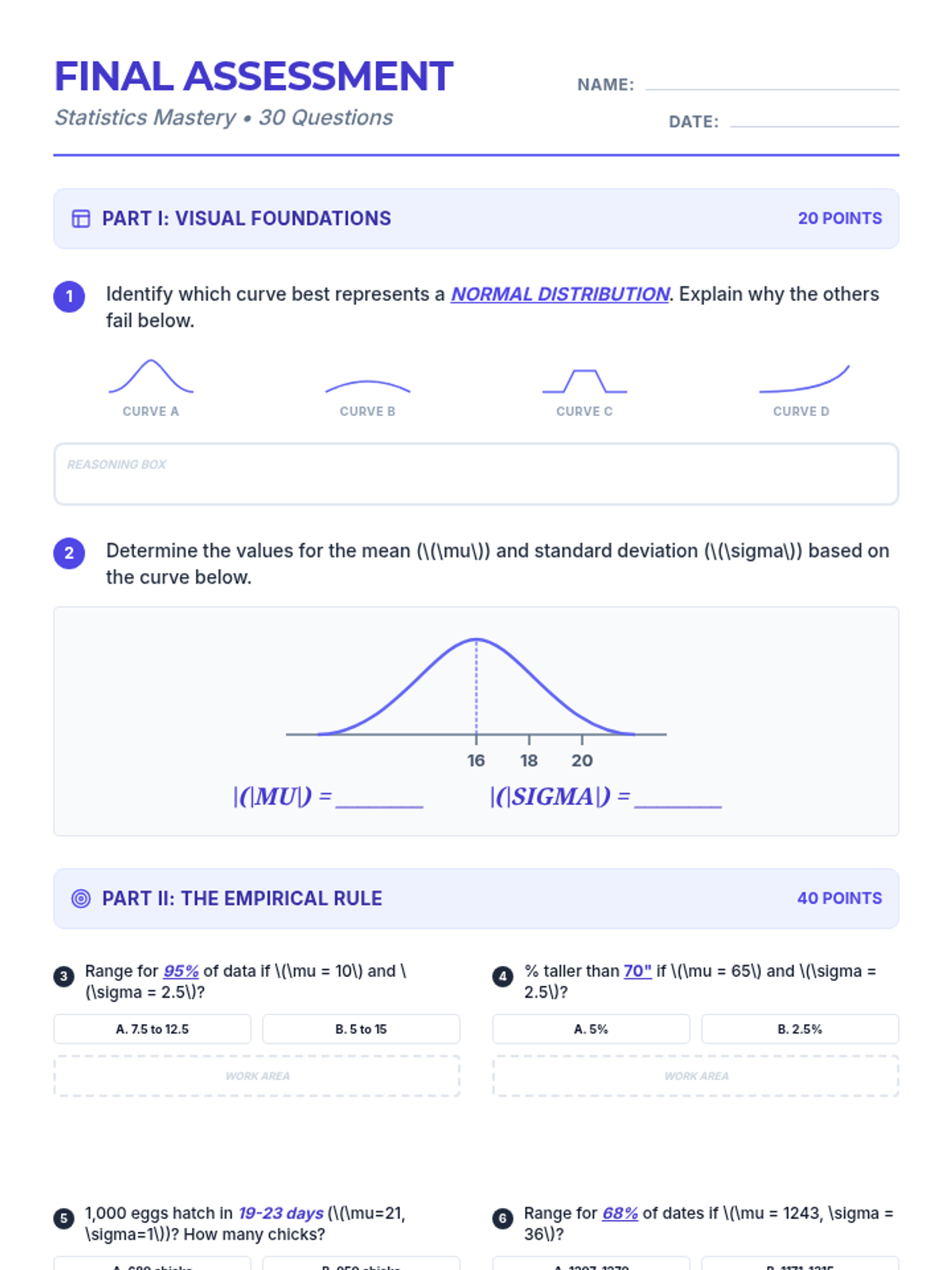
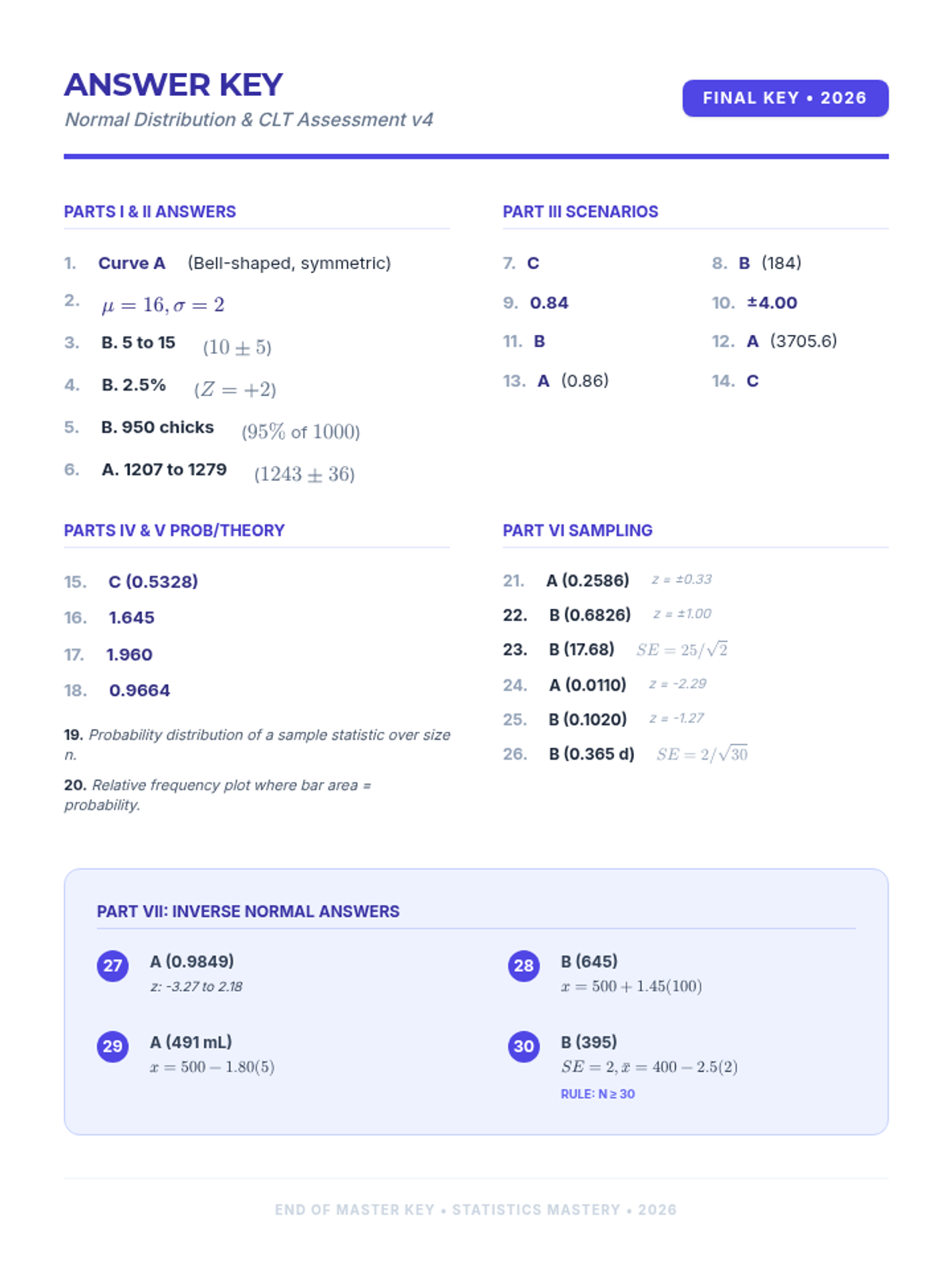
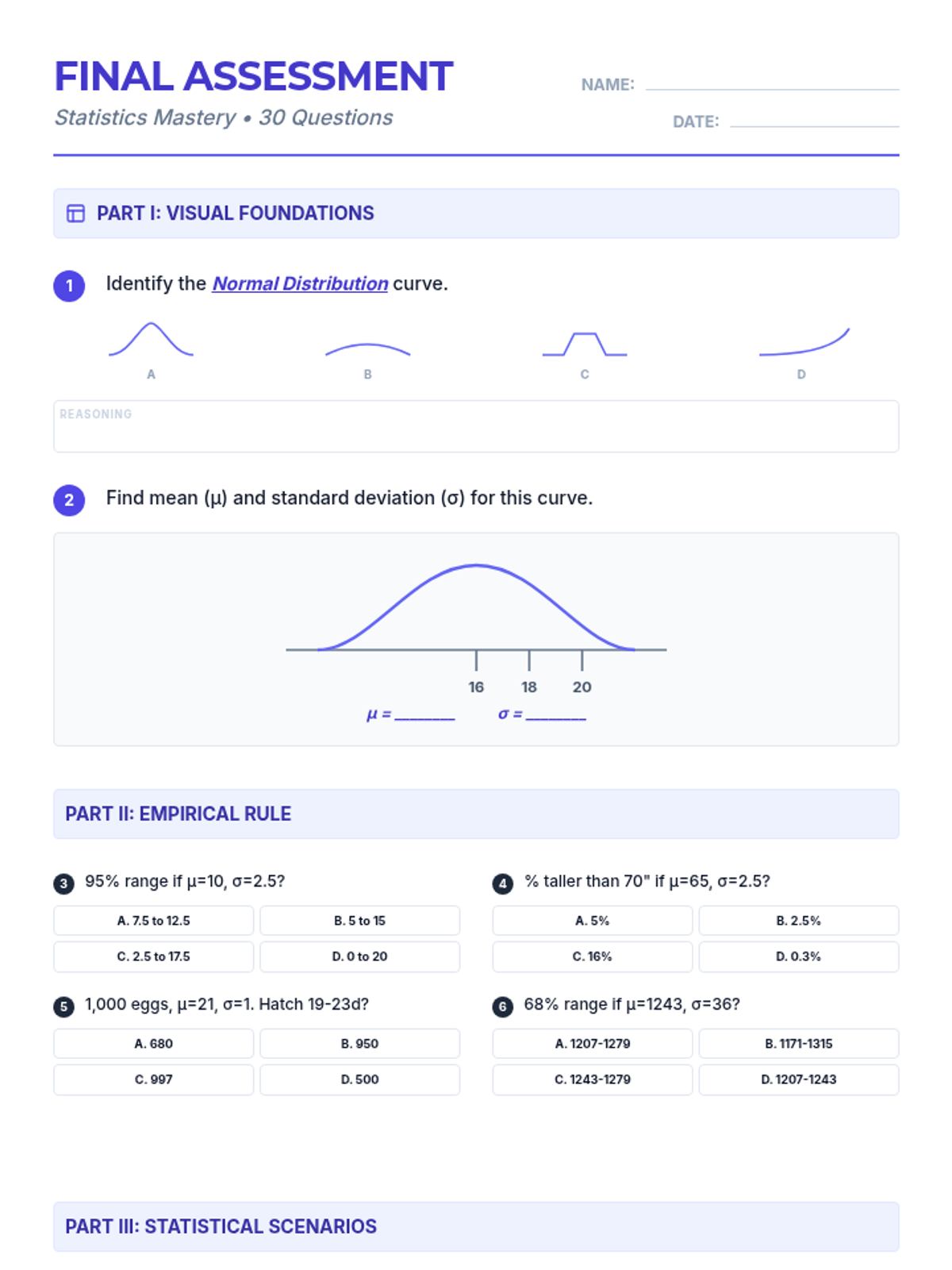
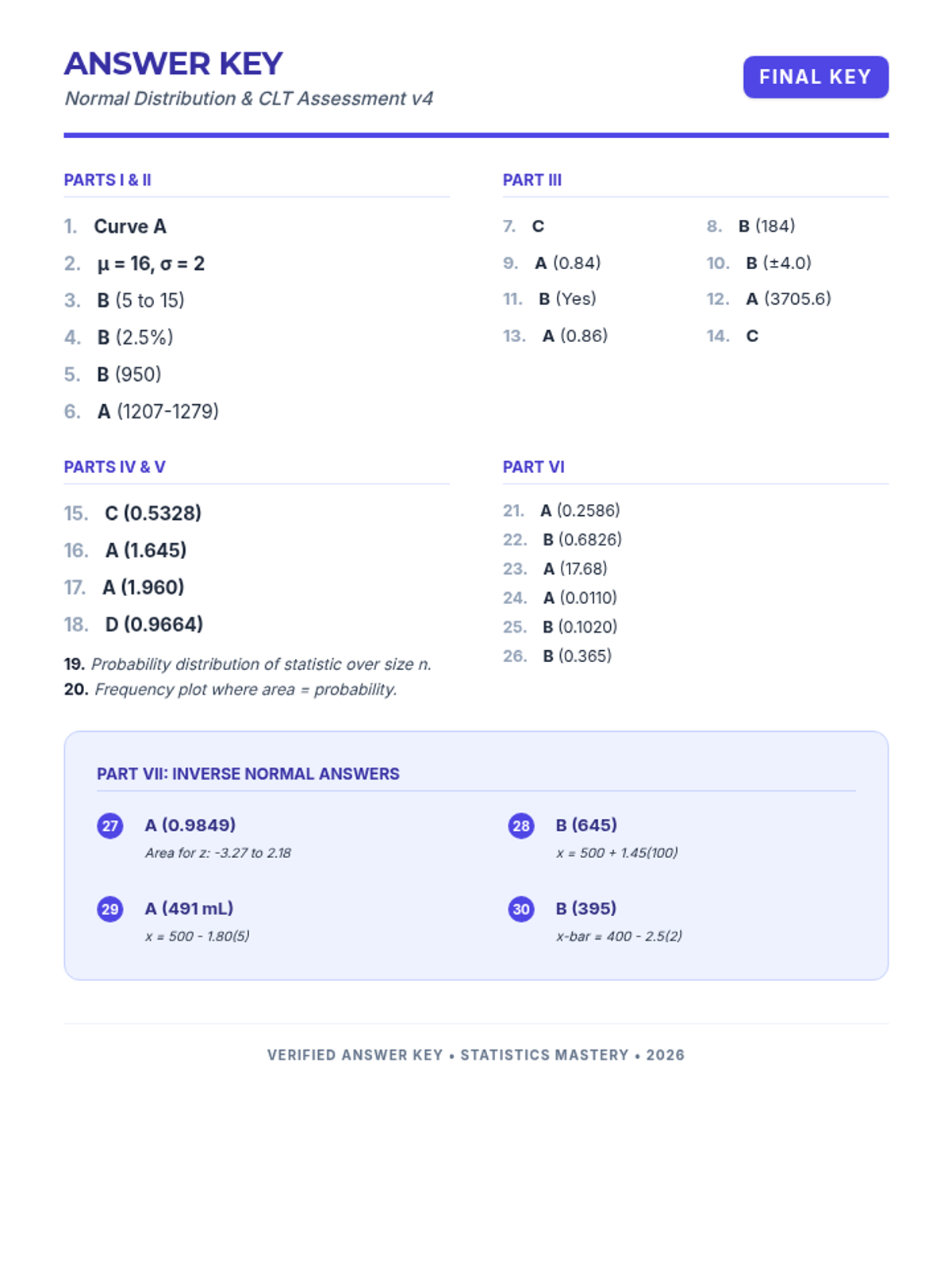
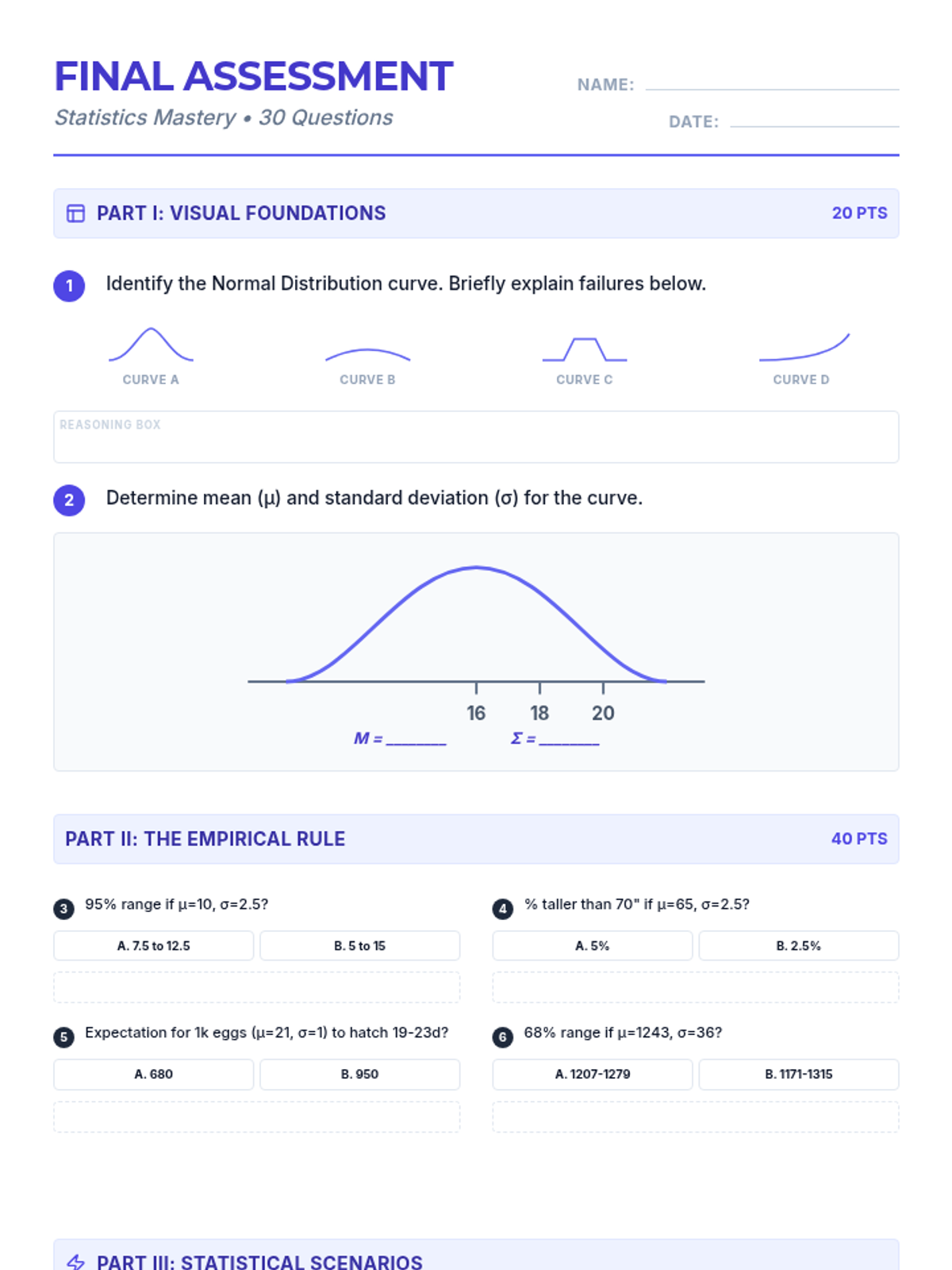
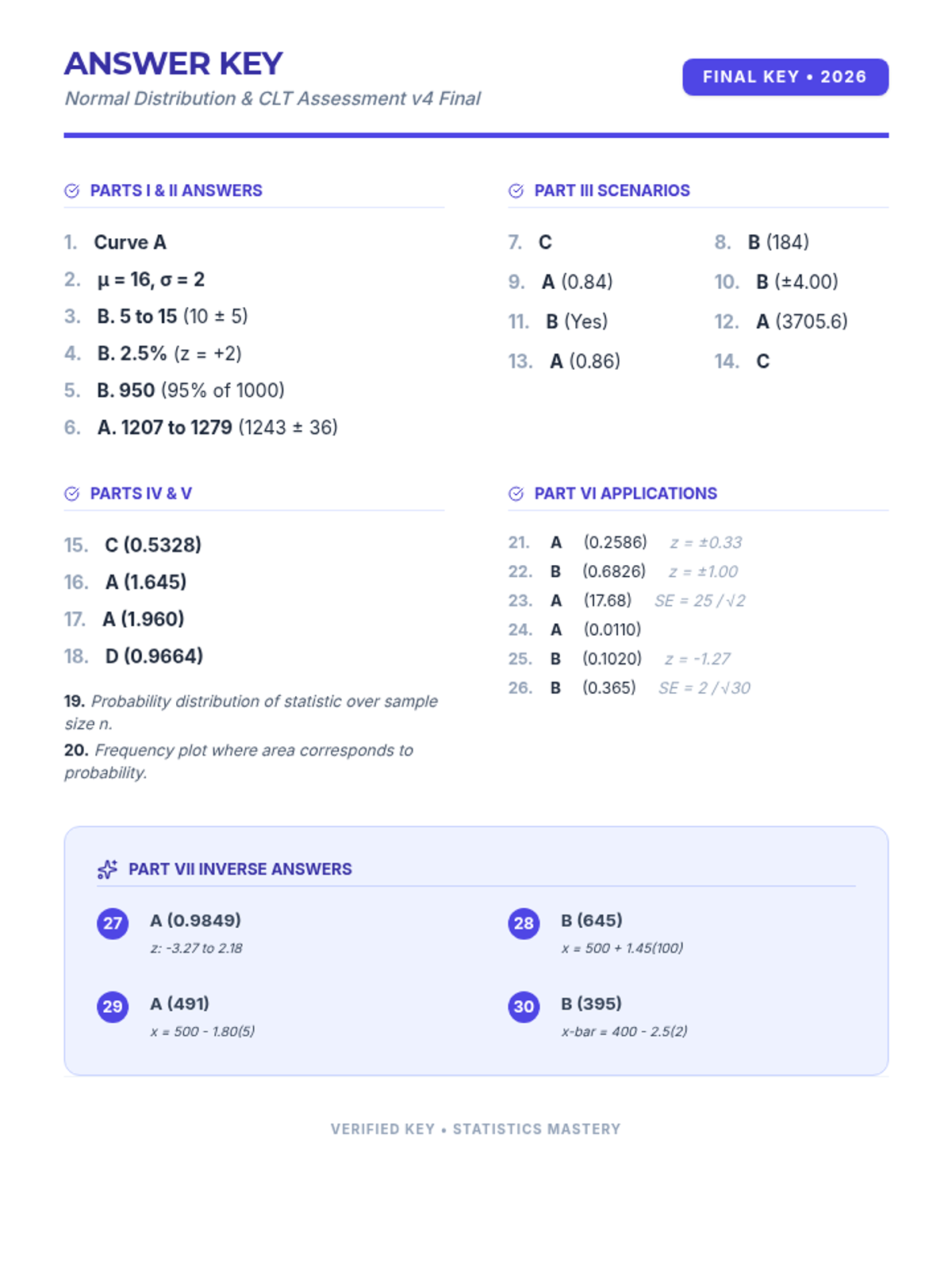
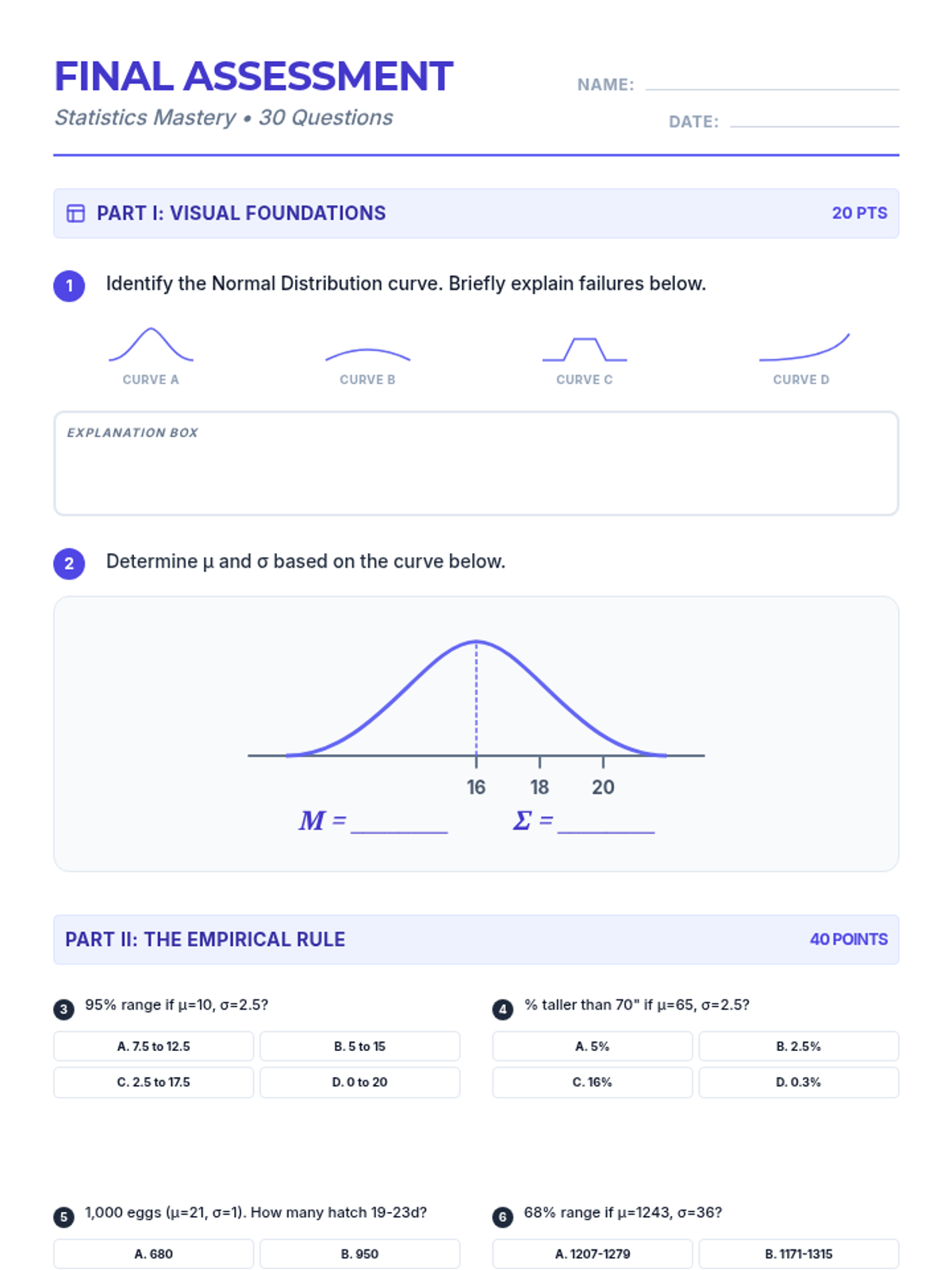
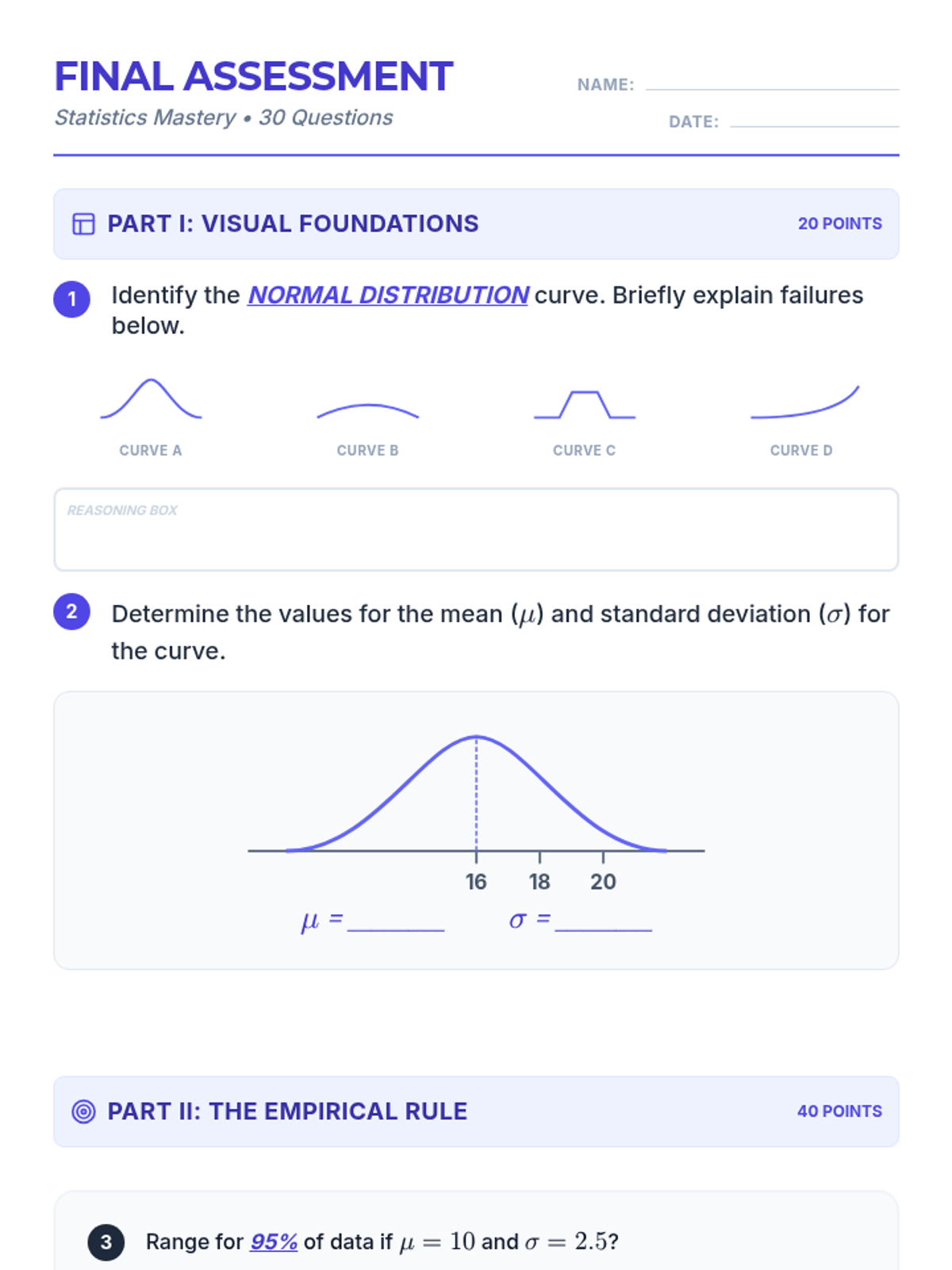
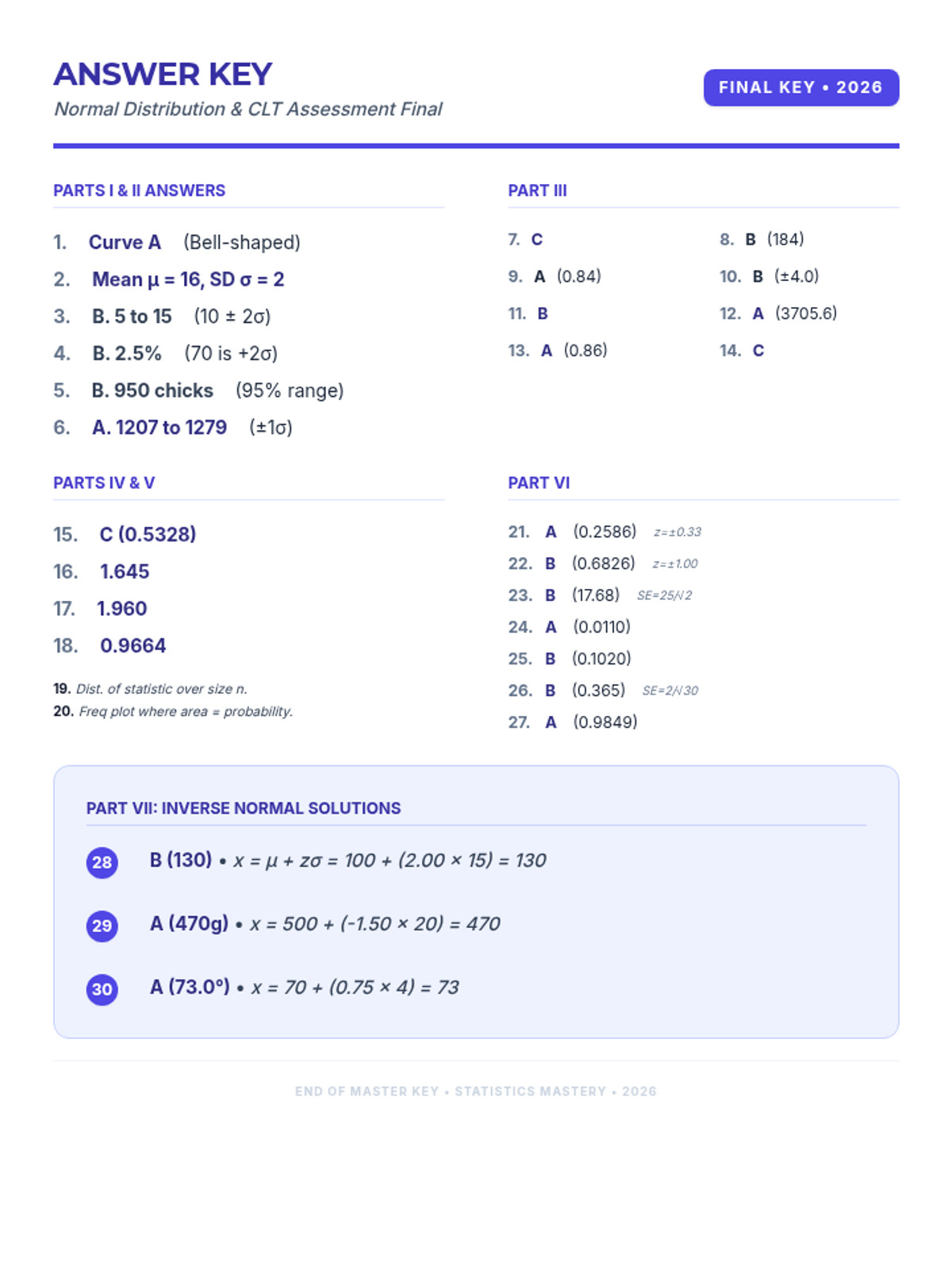
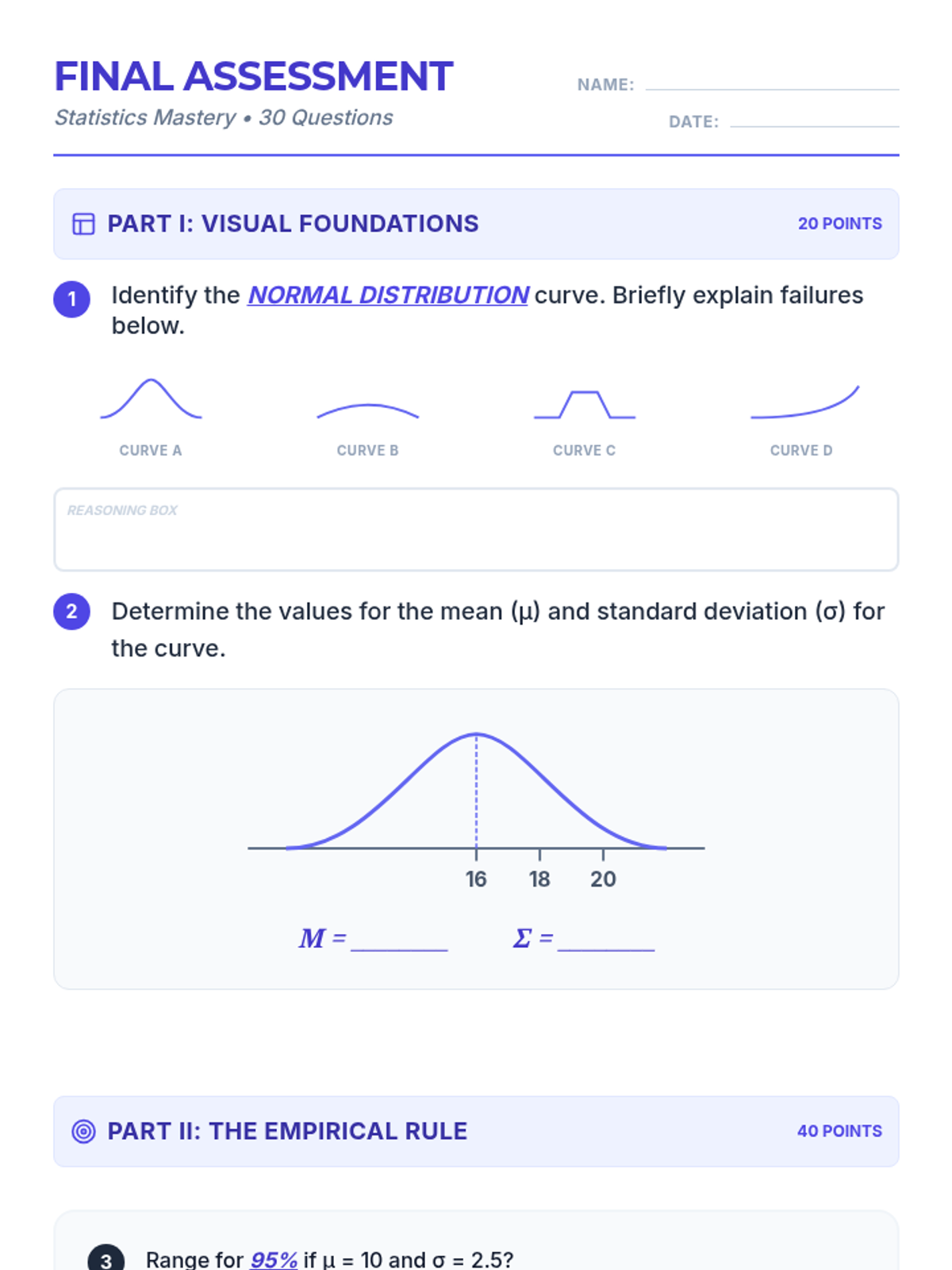
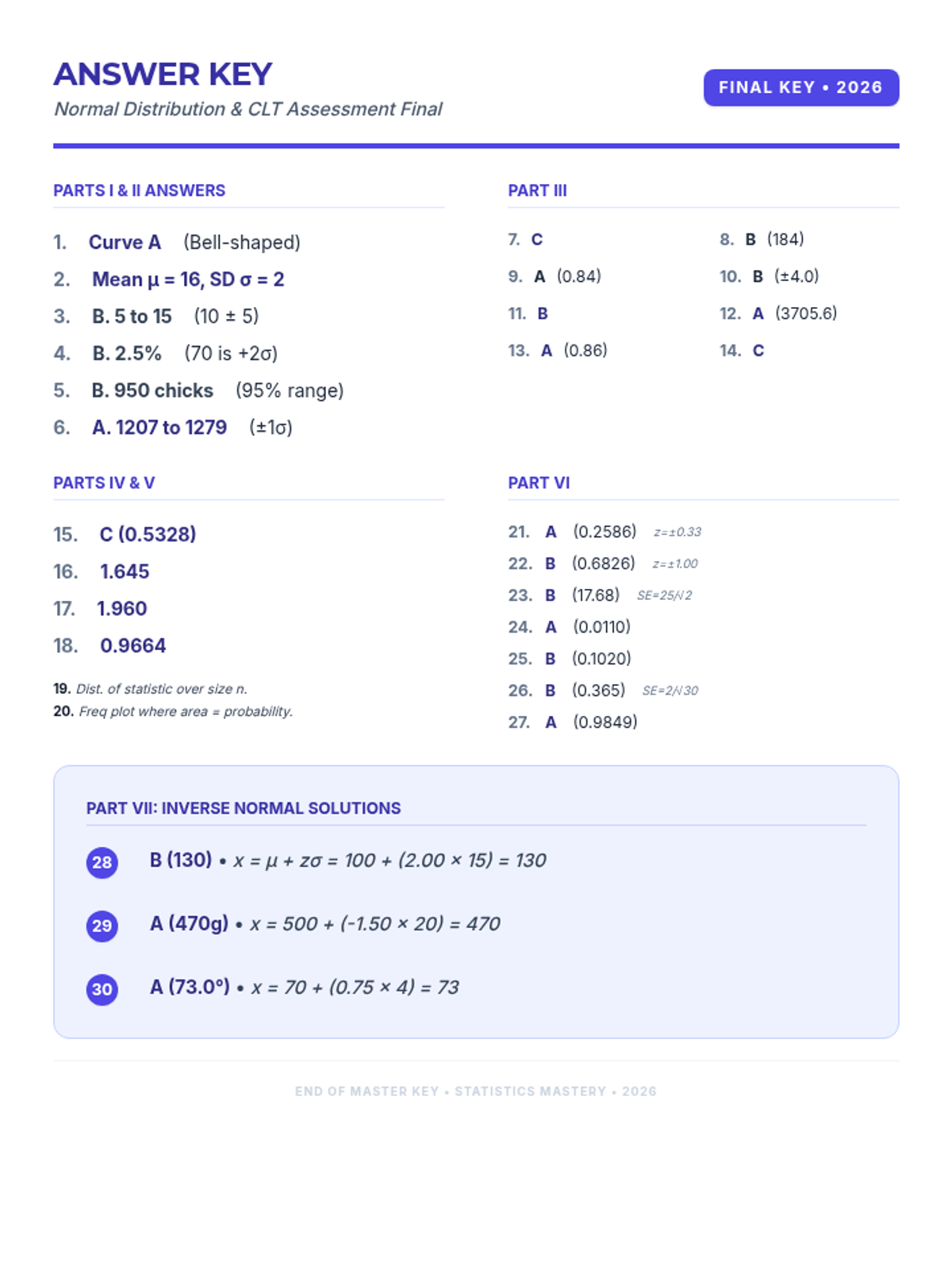
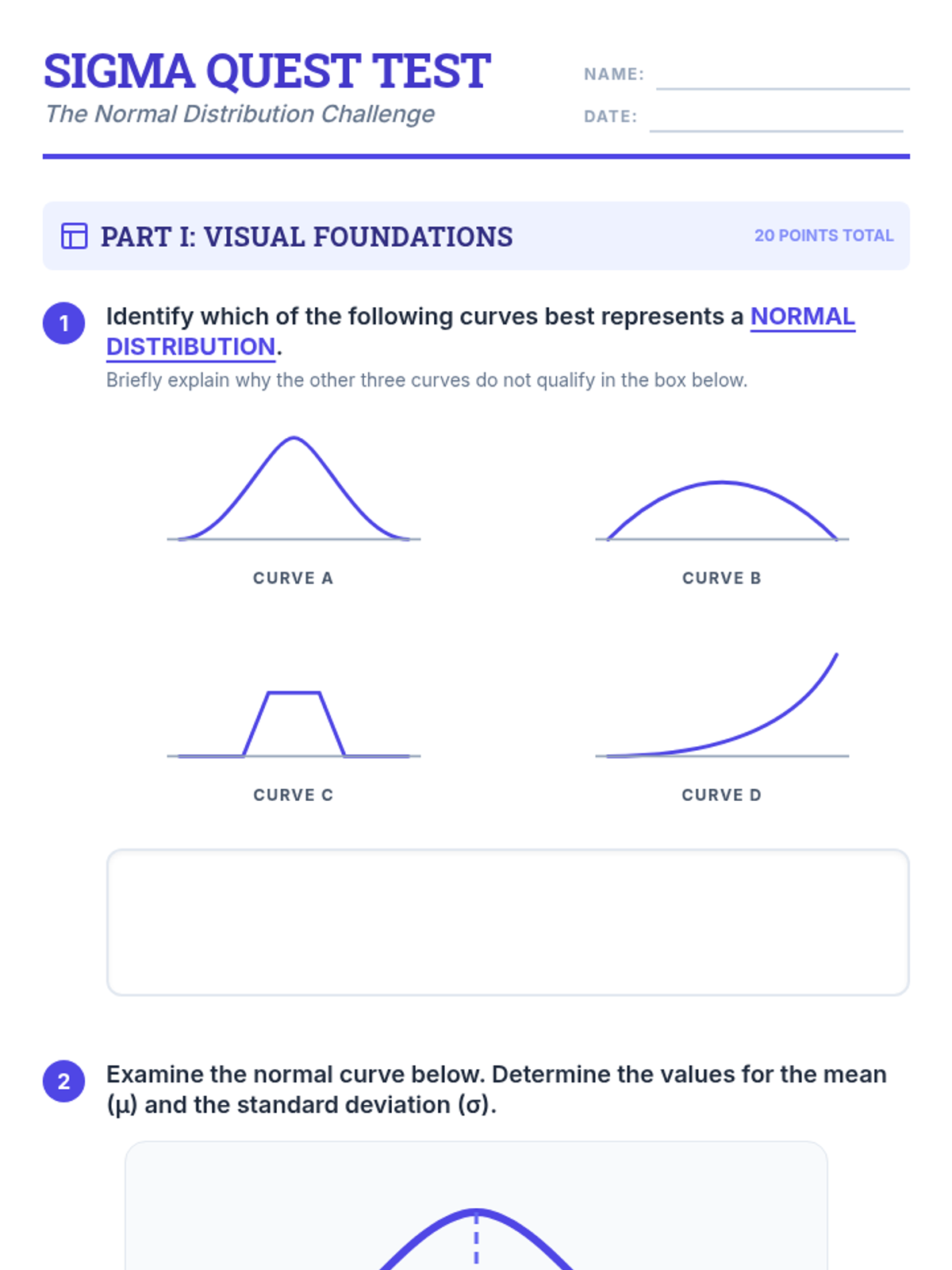
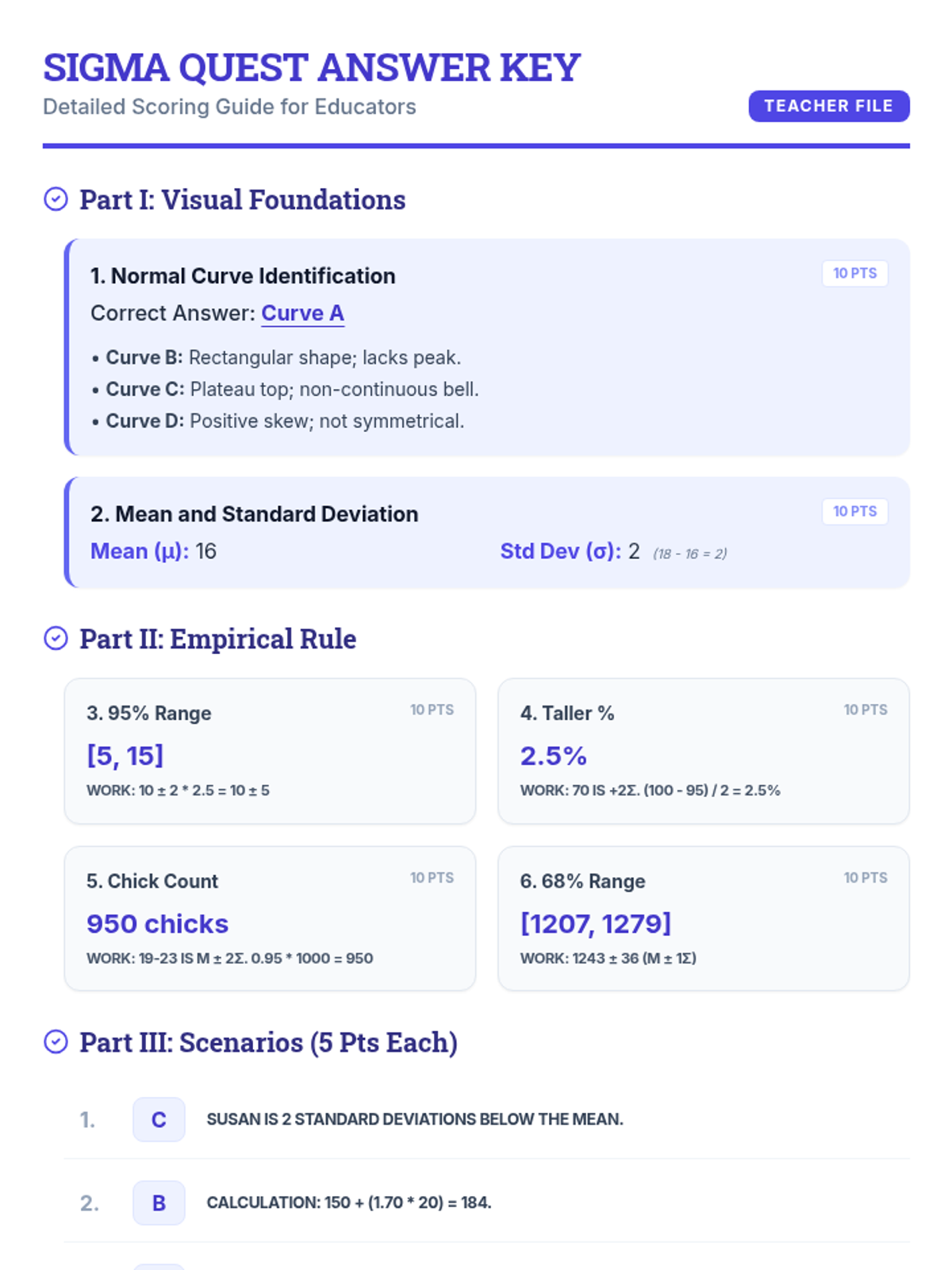
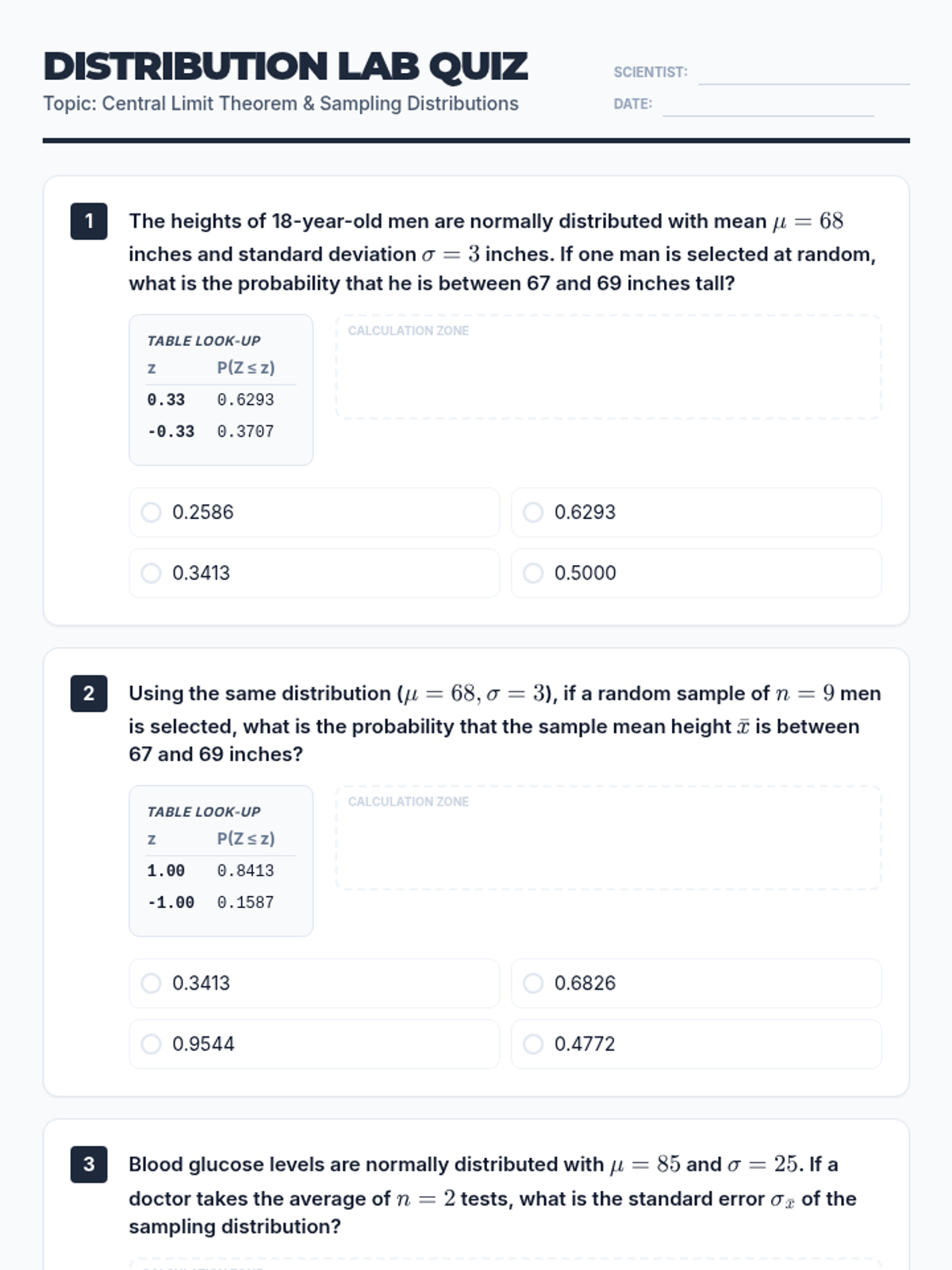
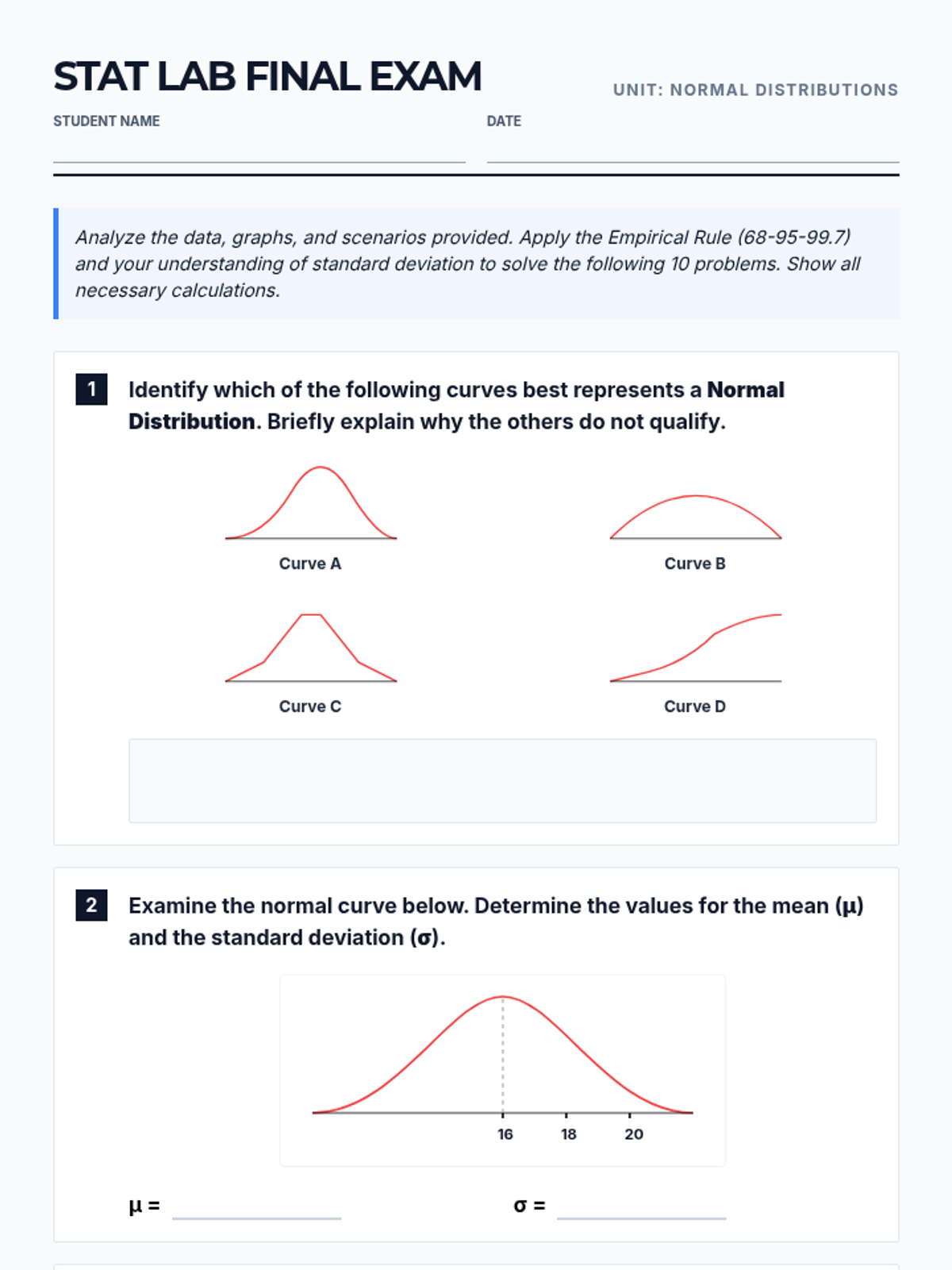
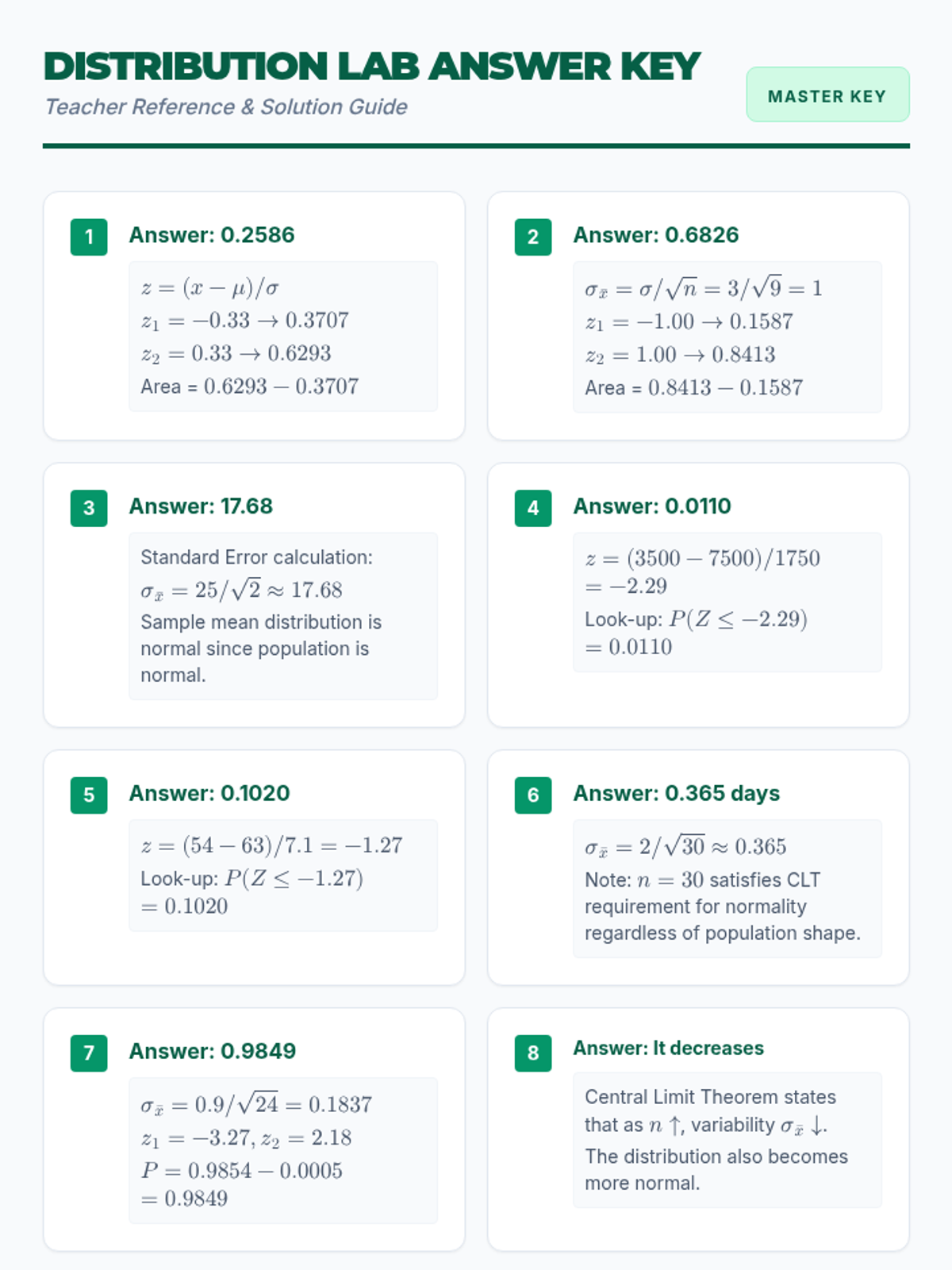
A comprehensive assessment covering normal distributions, the Empirical Rule, z-scores, and sampling distributions. This lesson combines conceptual understanding with complex statistical calculations.
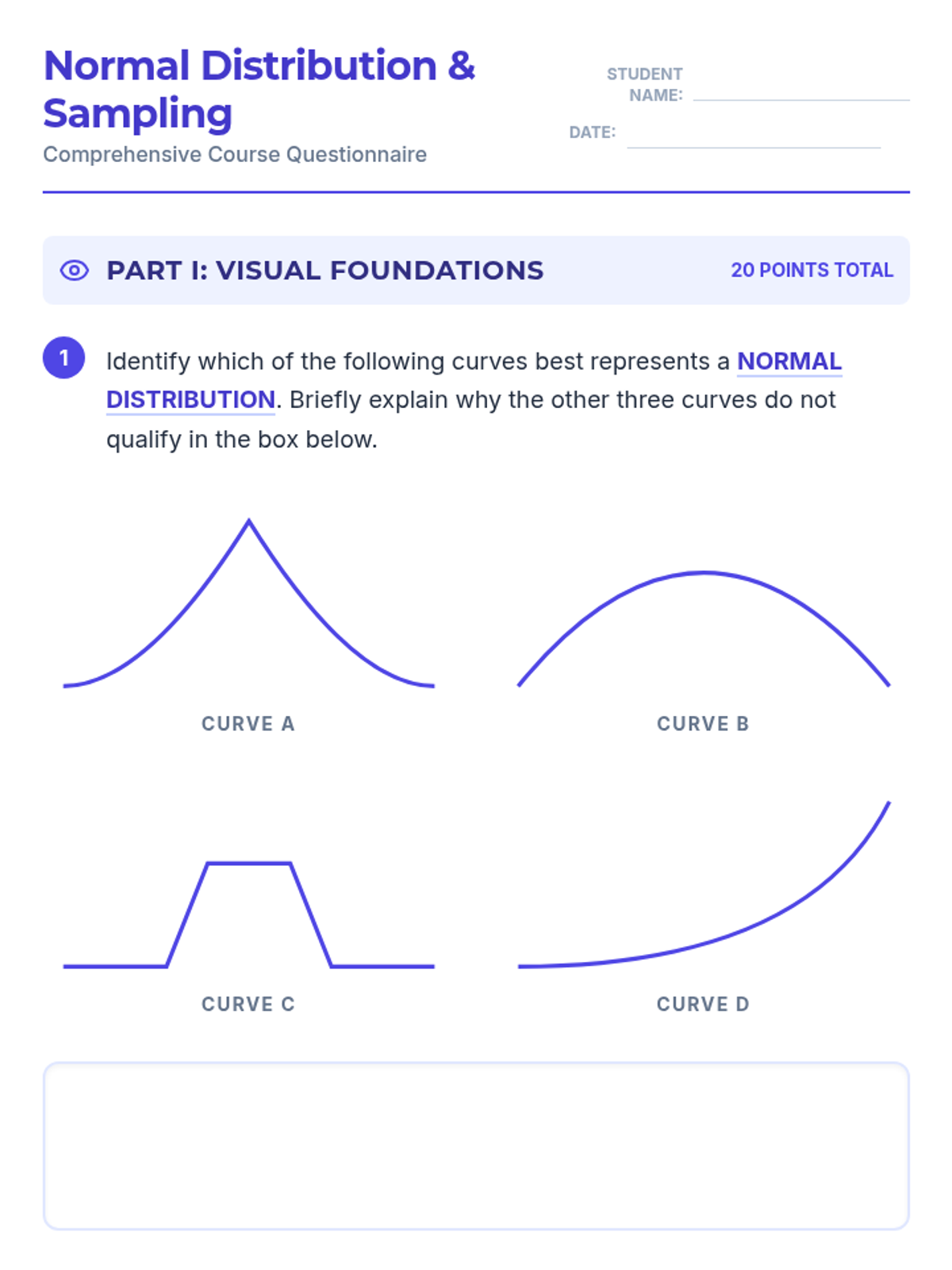
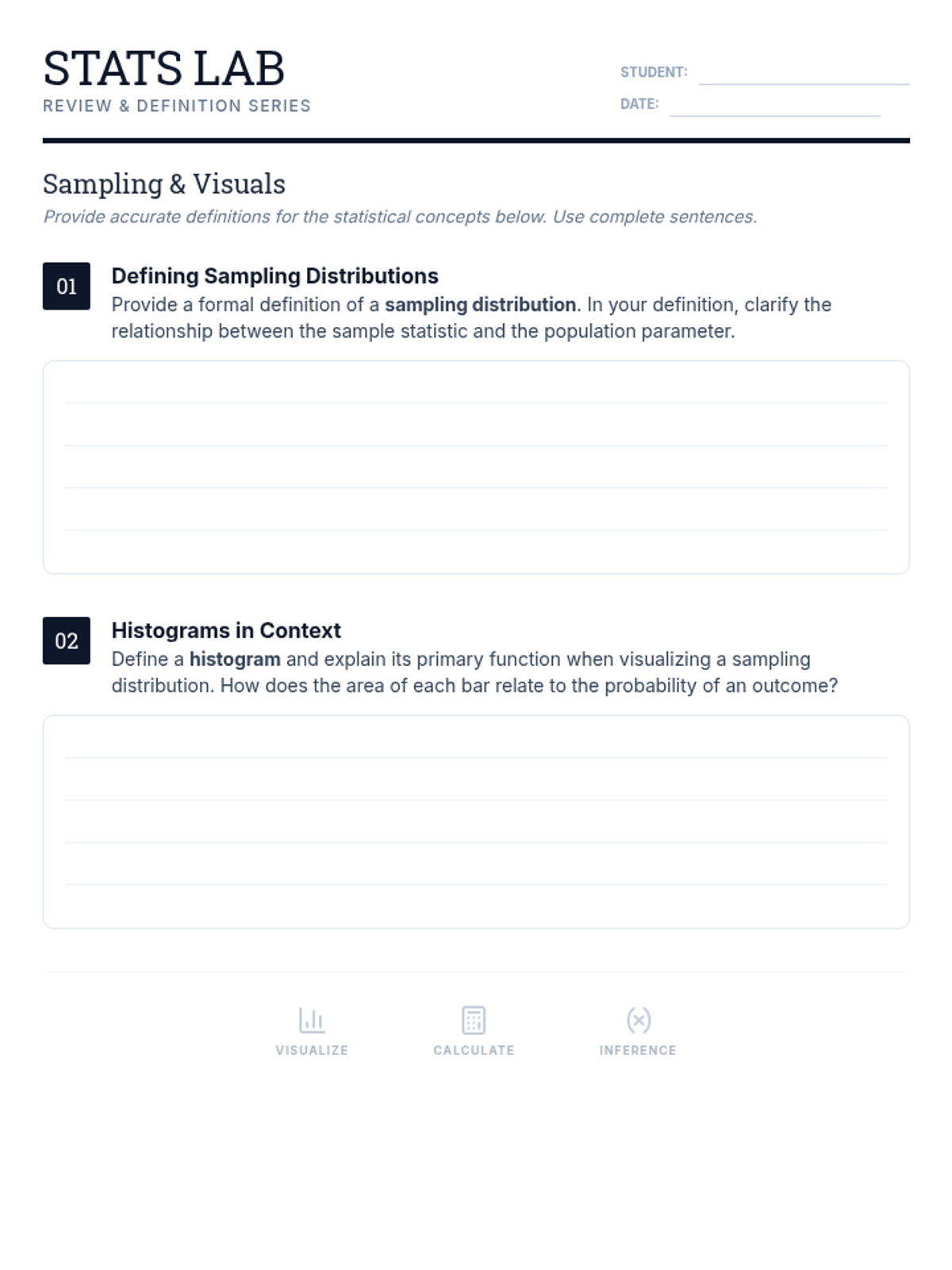
A summative assessment lesson focusing on visual foundations, probability calculations, and the application of the Central Limit Theorem to sampling distributions.
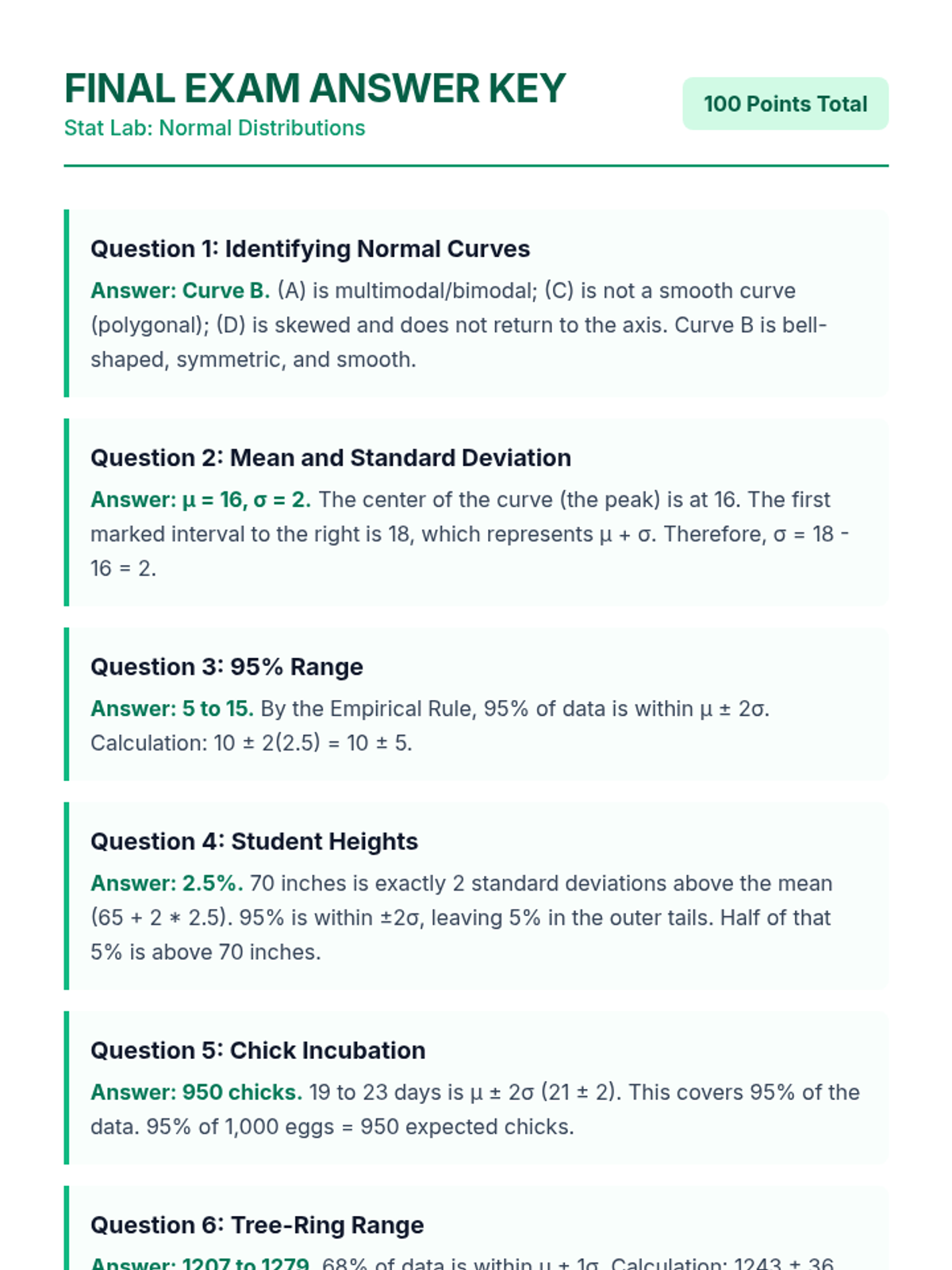
A comprehensive lesson covering the properties of normal distributions, the empirical rule, and z-score calculations through various real-world scenarios.
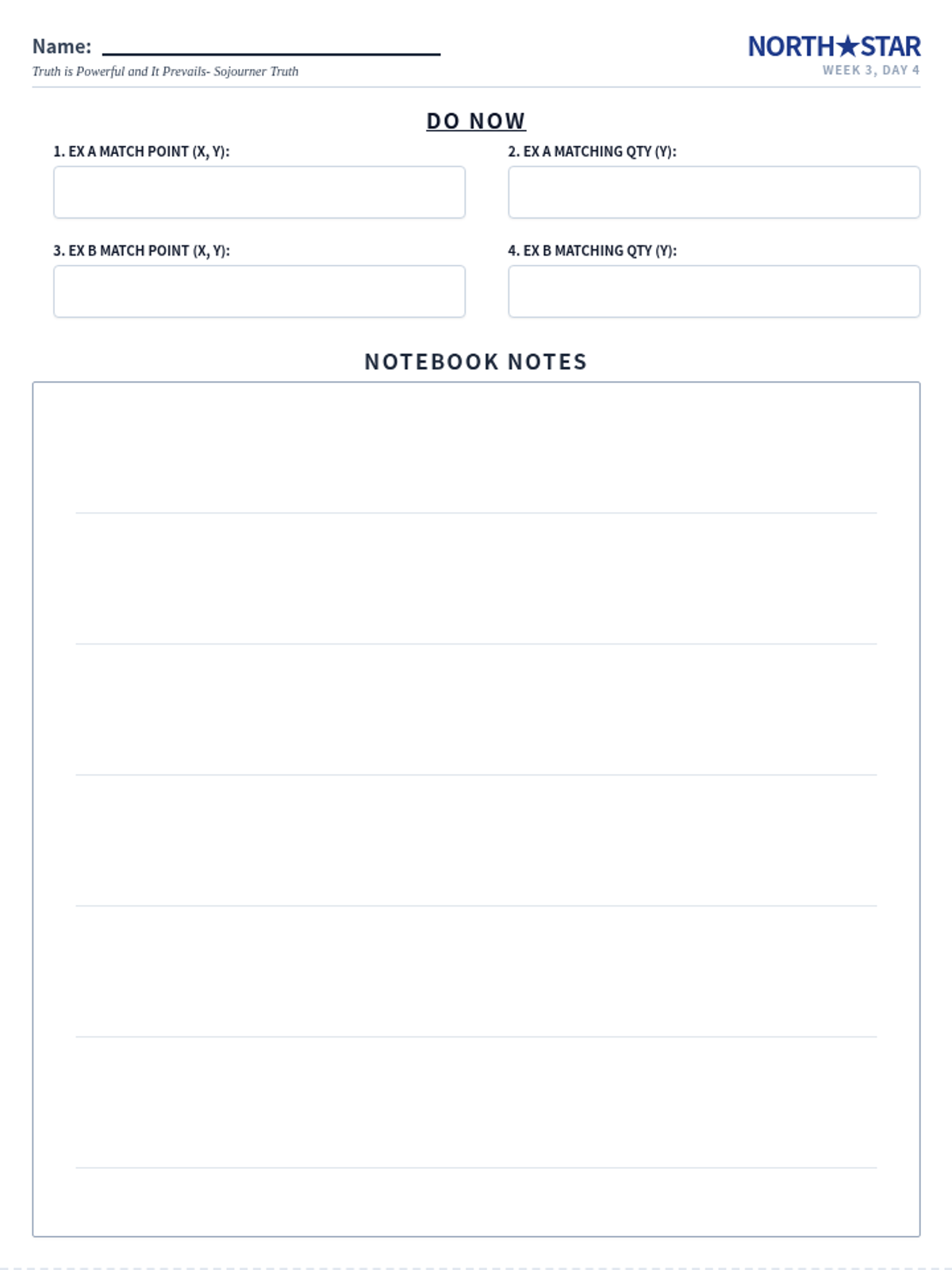
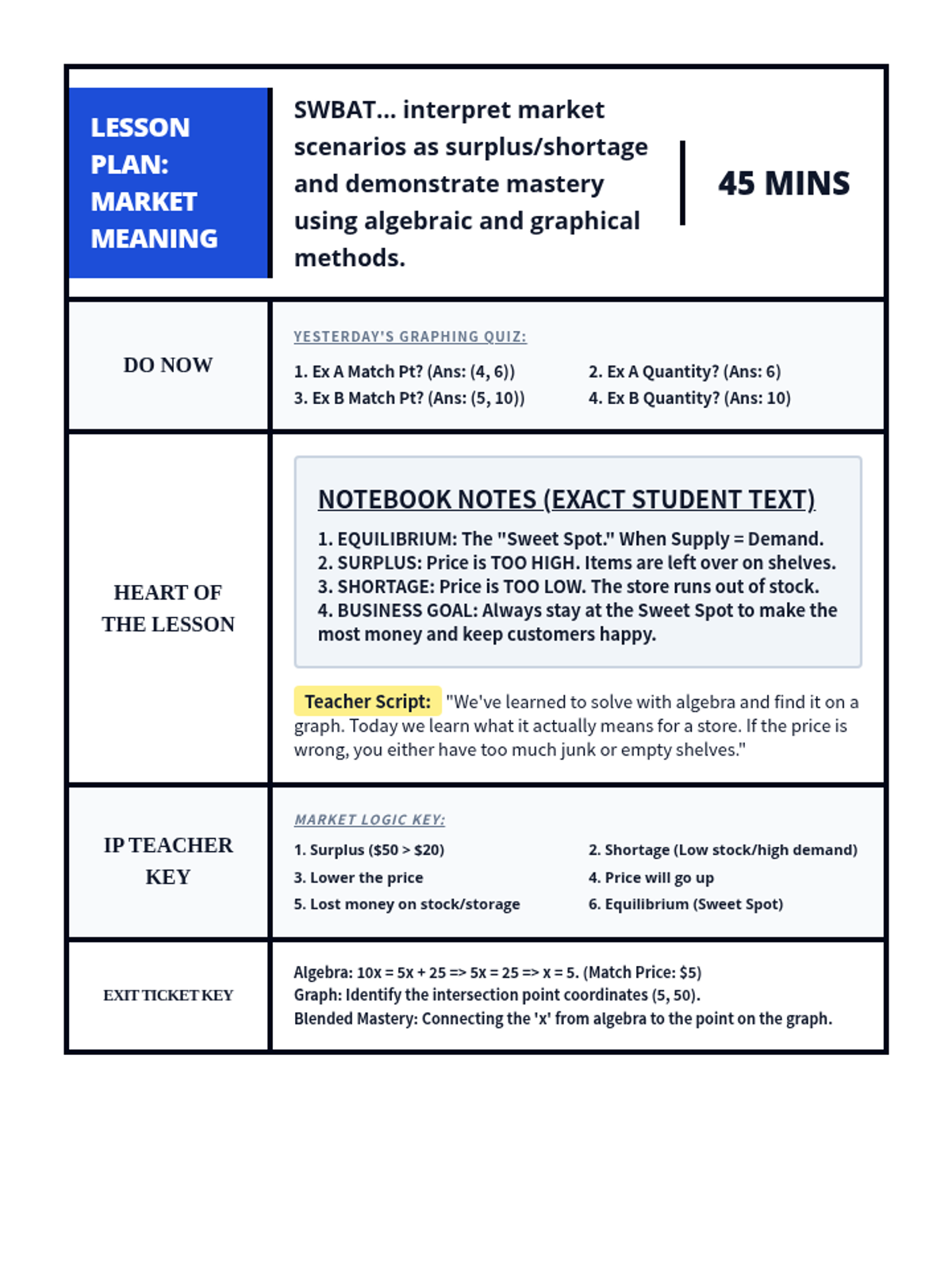
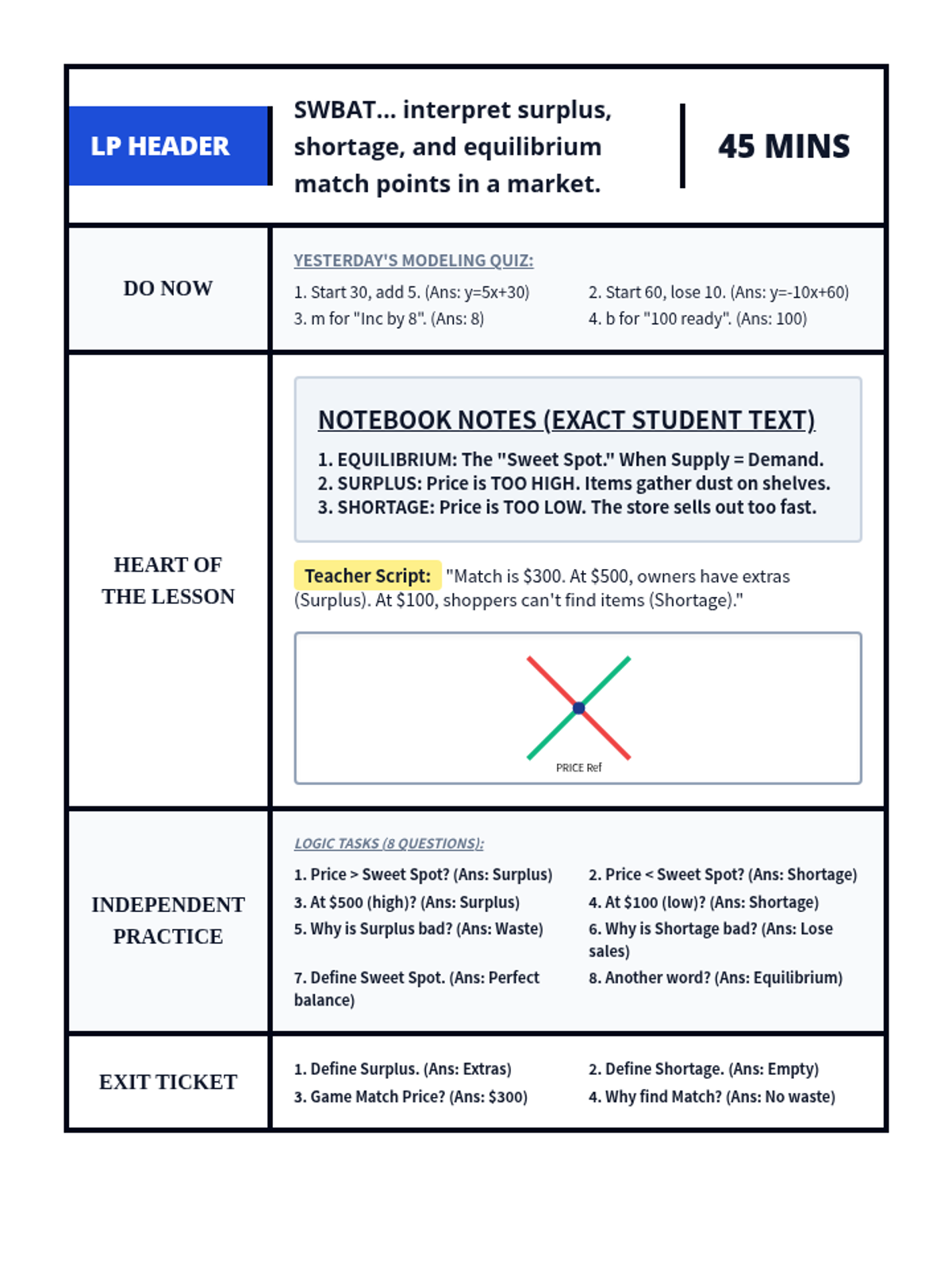
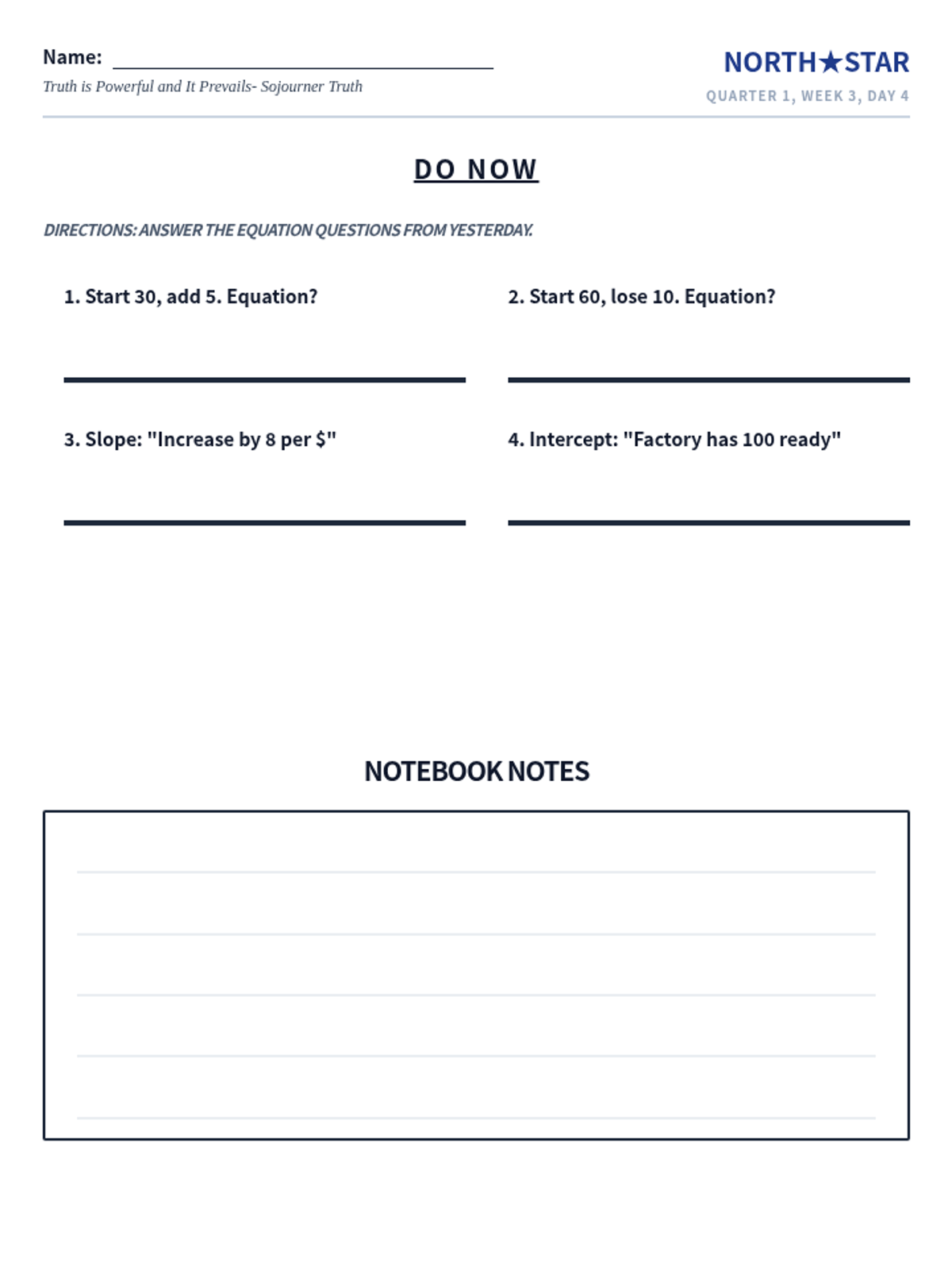
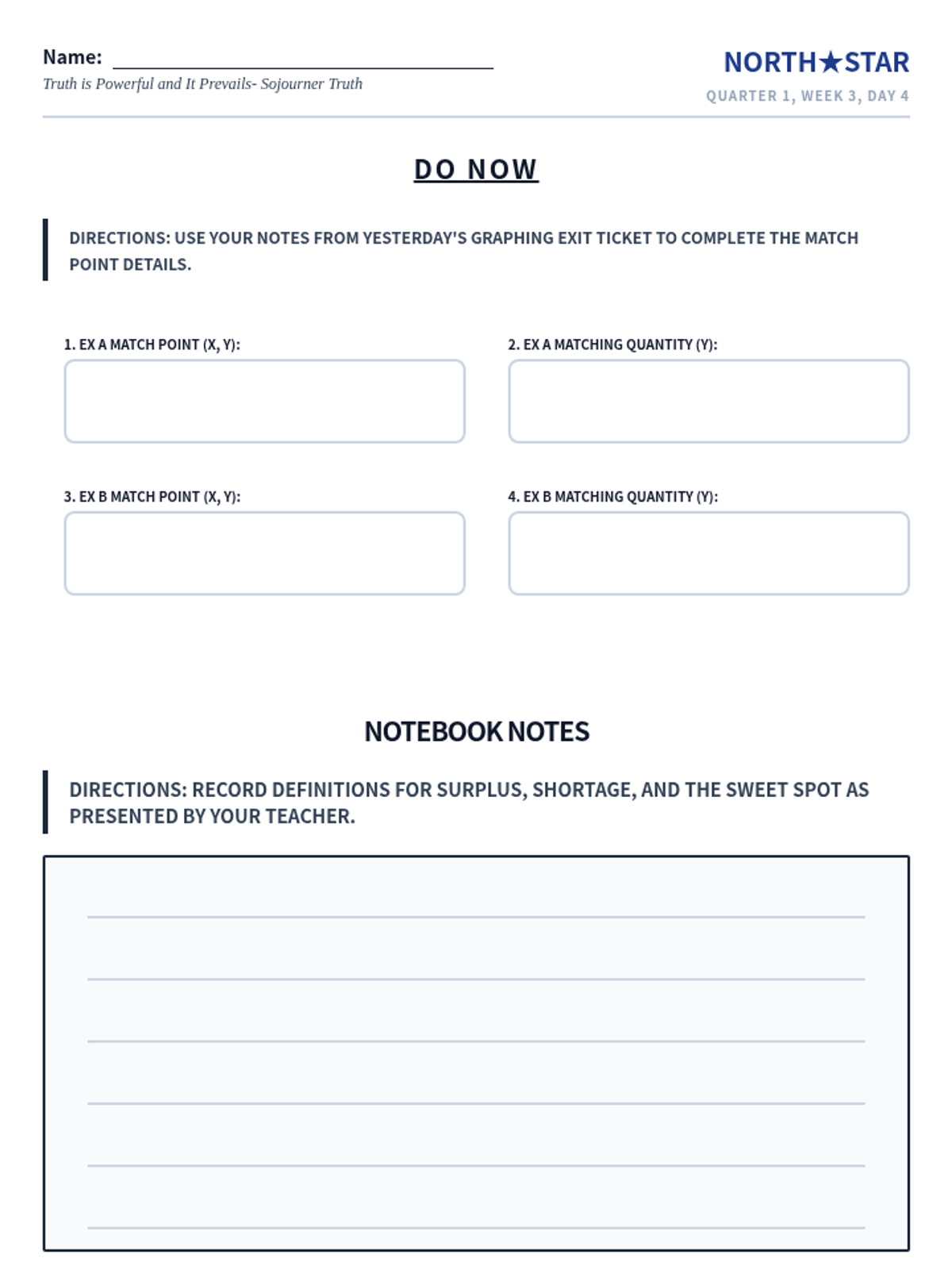
Students interpret the meaning of the point of intersection, surplus, and shortage in the context of a real-world market.
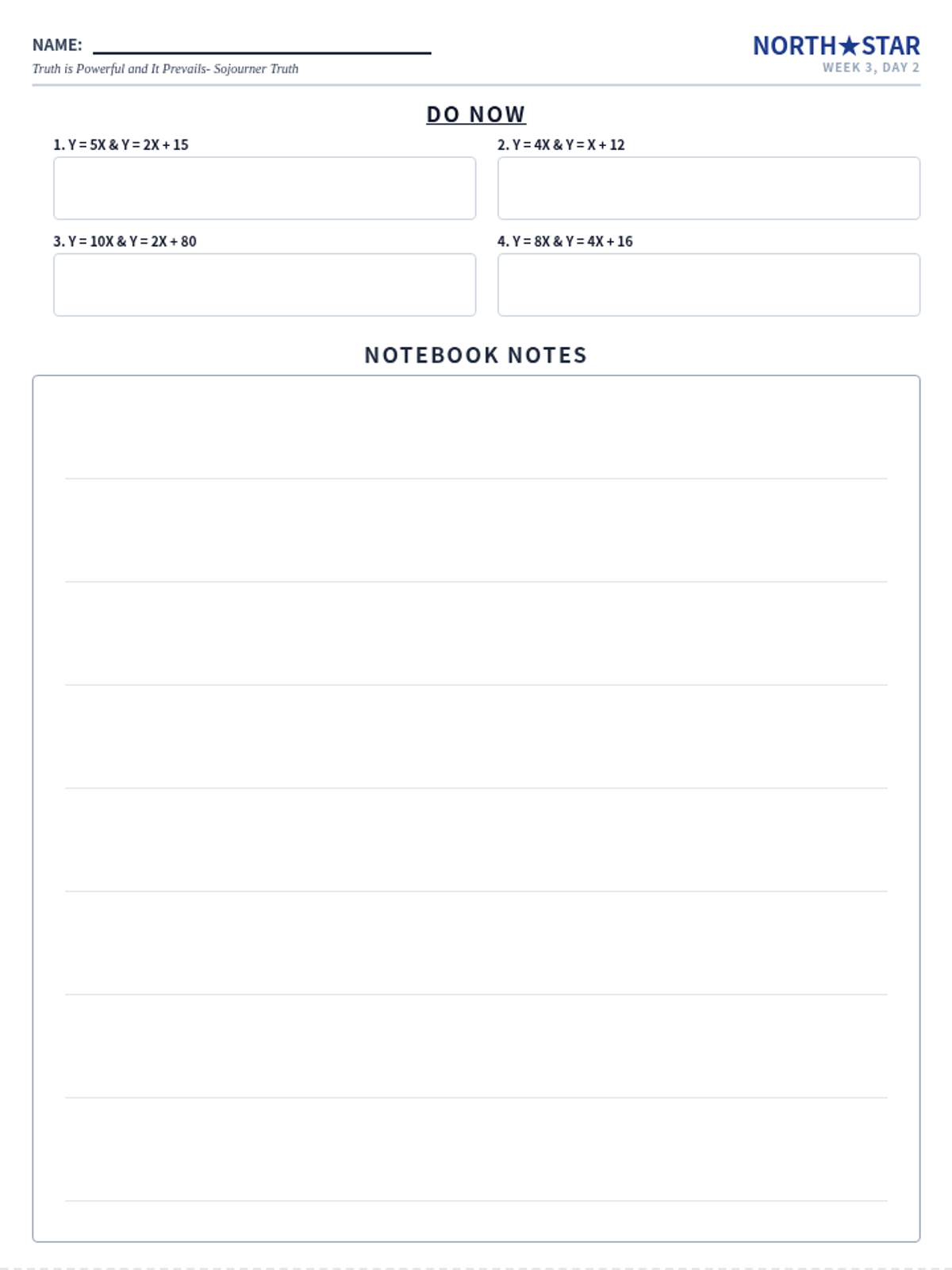
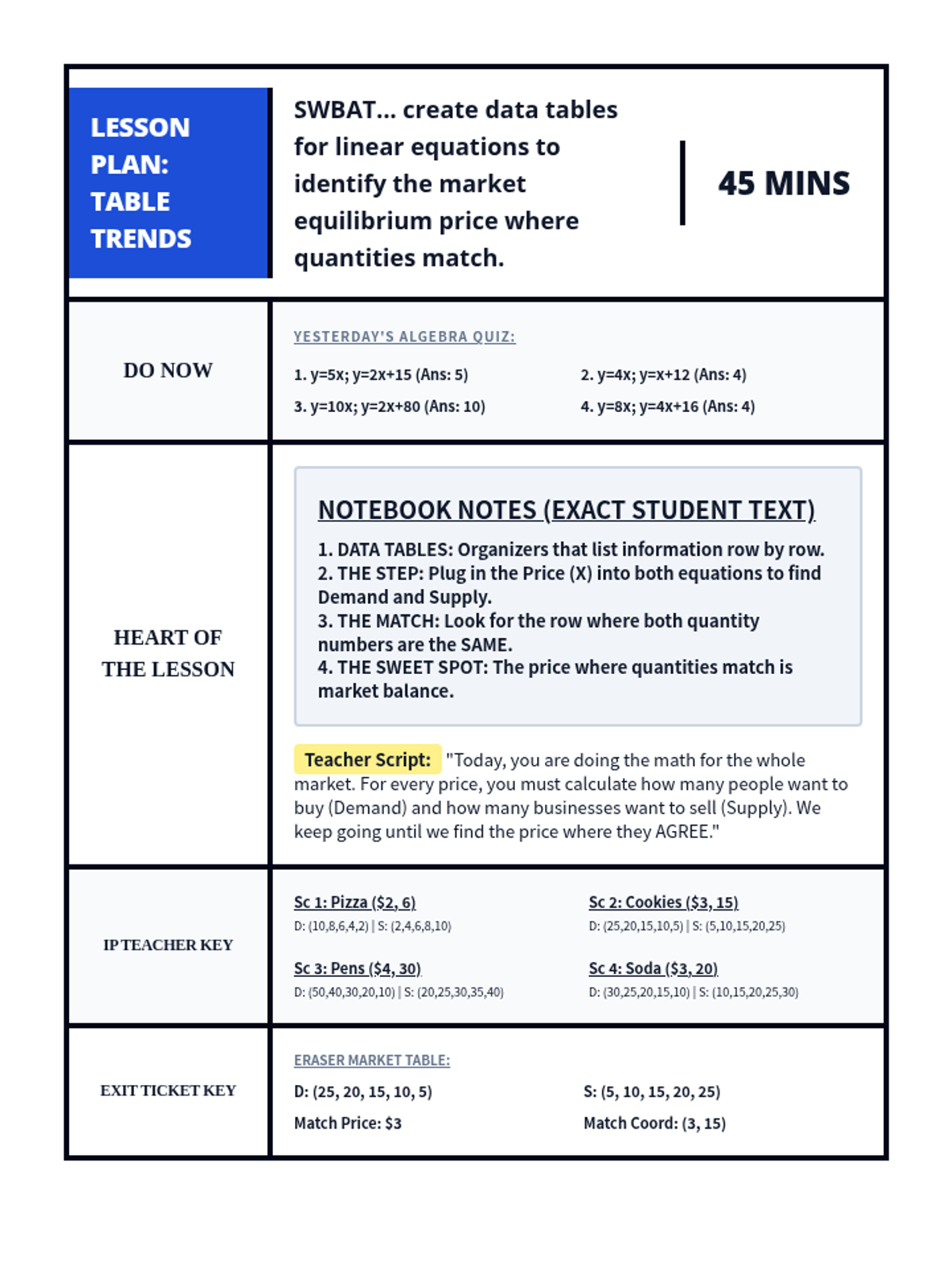
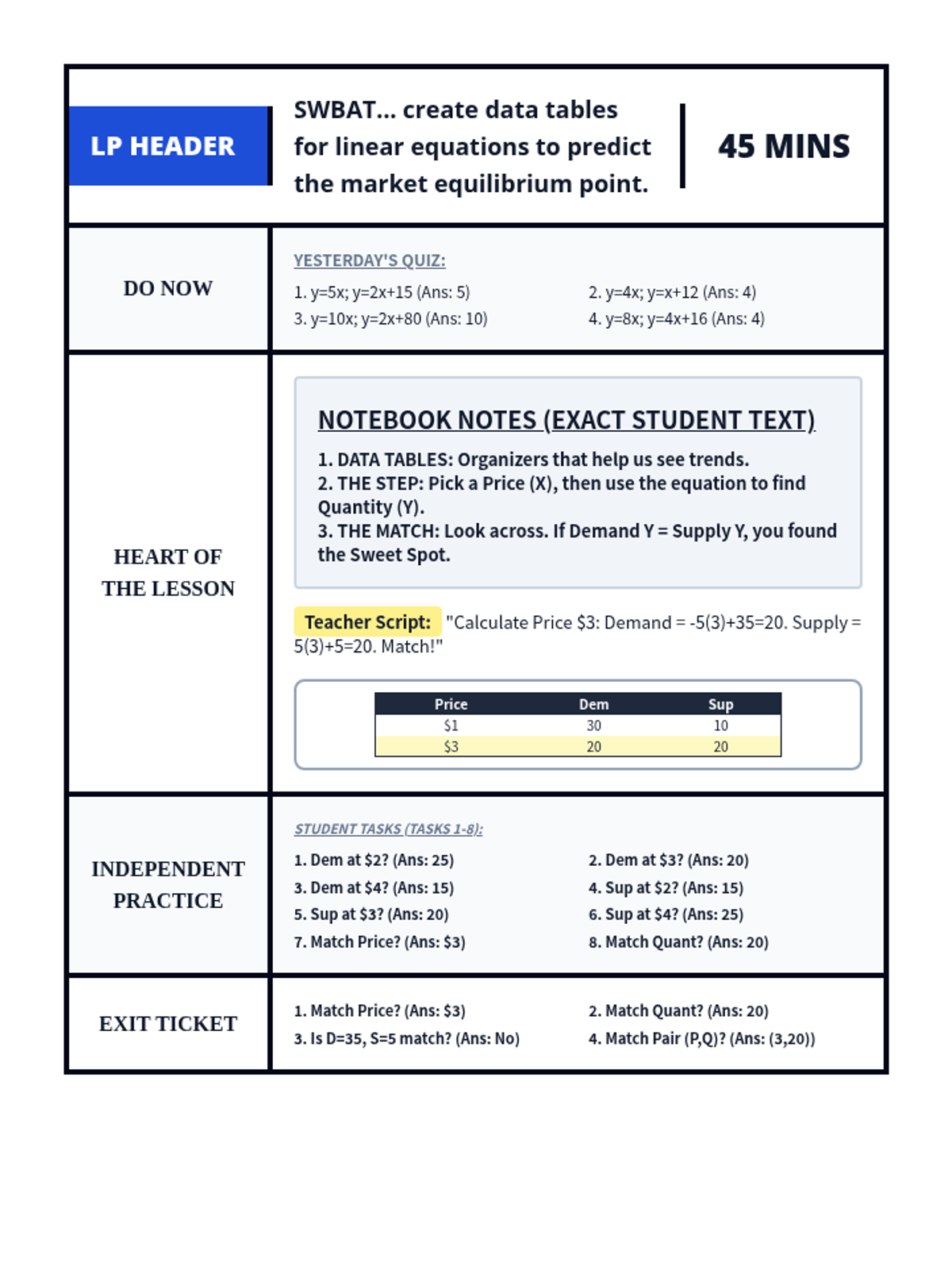
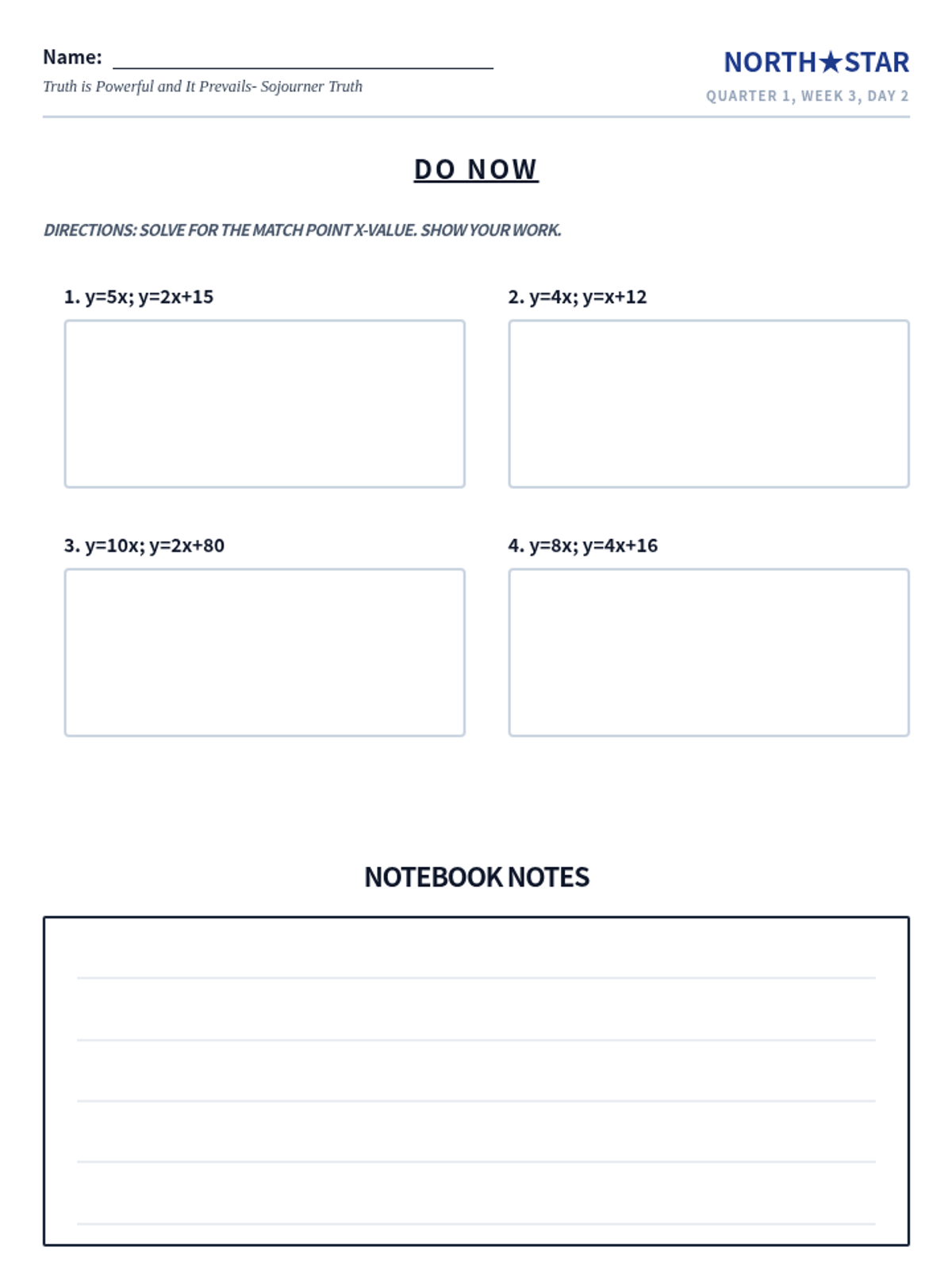
Students create and compare multiple sets of data tables for supply and demand to identify the market equilibrium price where quantities match.
A focused lesson on the Central Limit Theorem (CLT) and its application to real-world datasets. Students practice calculating Z-scores for sample means and using Z-tables to determine probabilities.
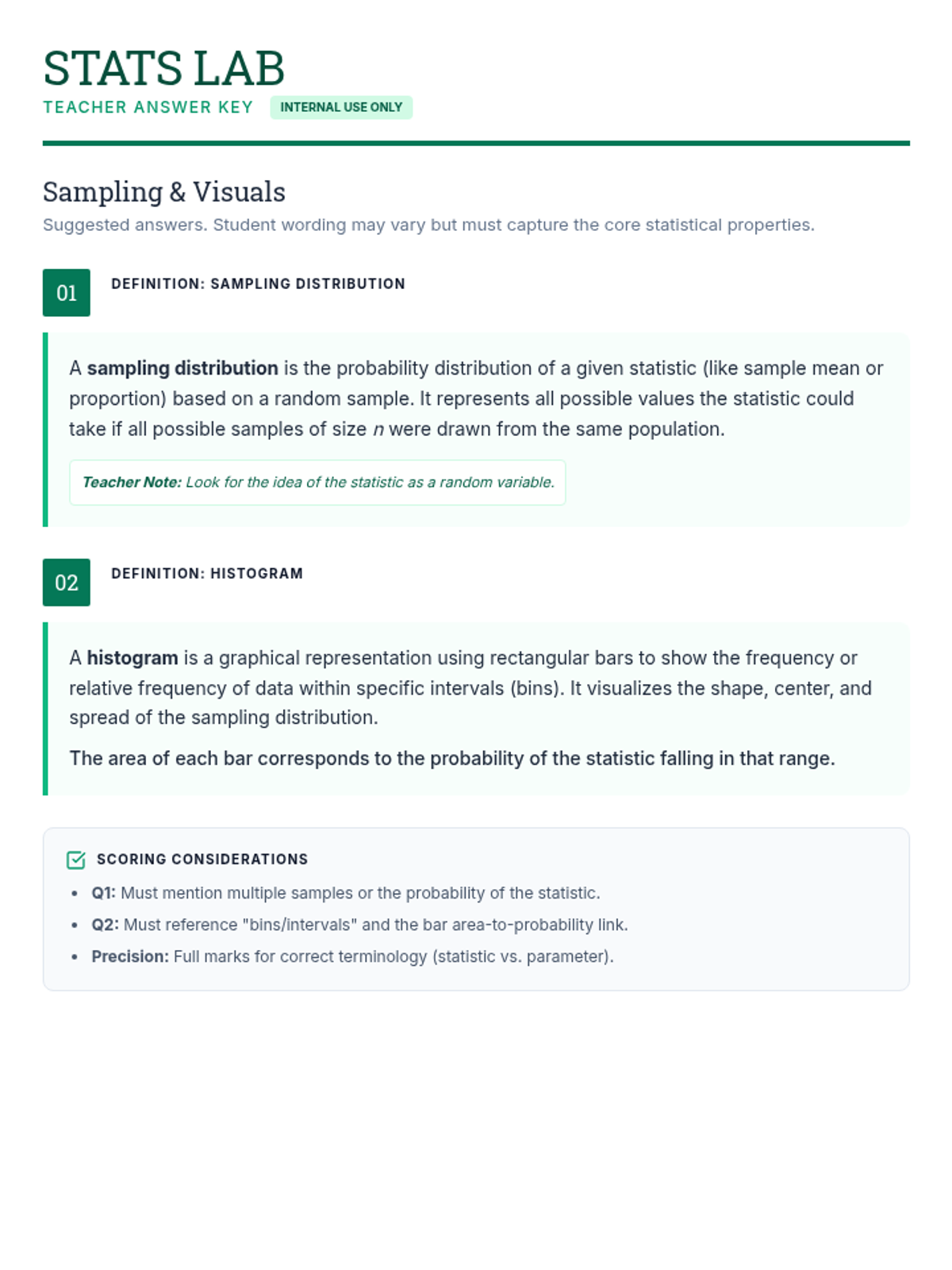
A lesson focused on fundamental statistical concepts including sampling distributions and the visual representation of data using histograms.
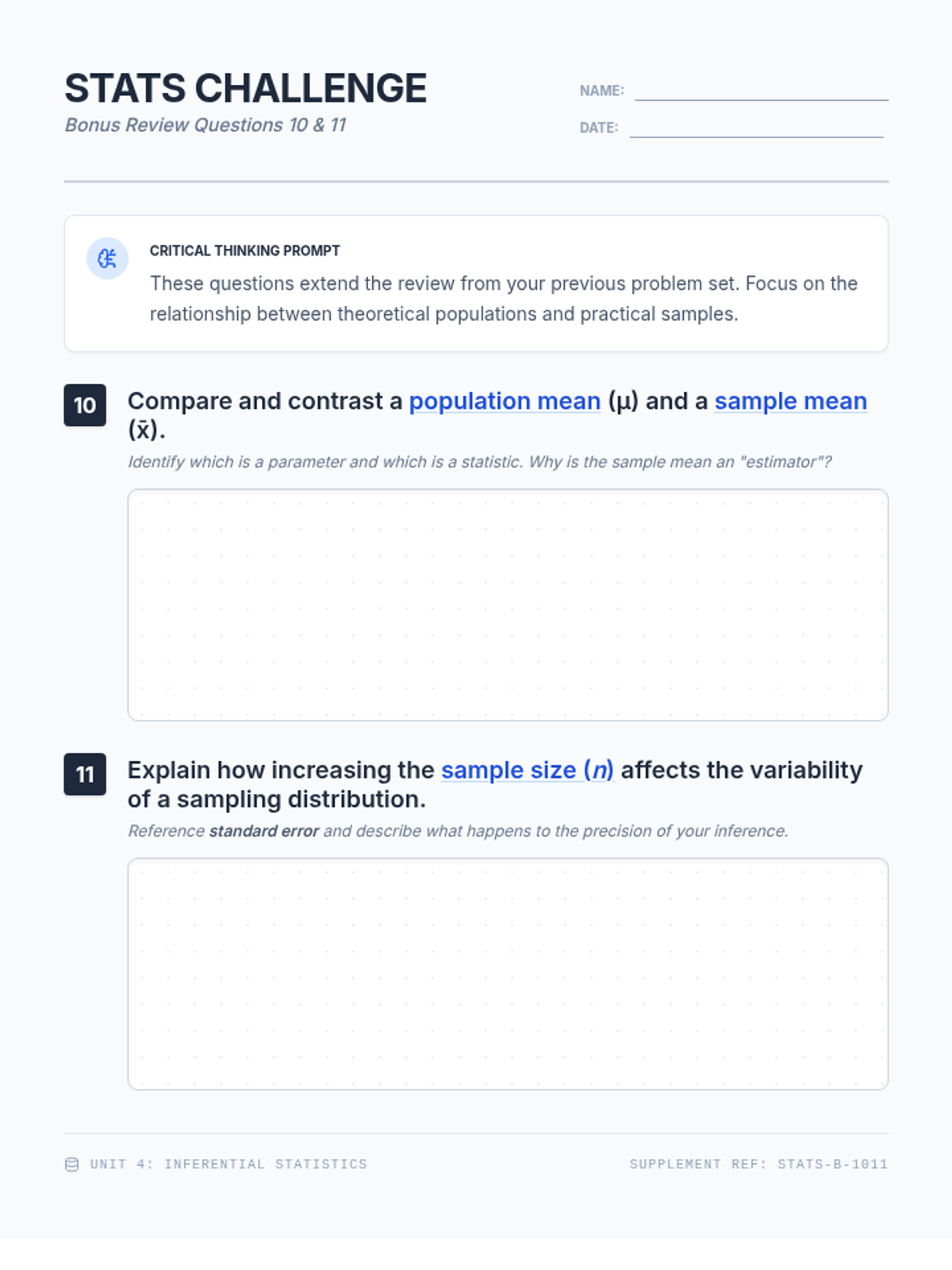
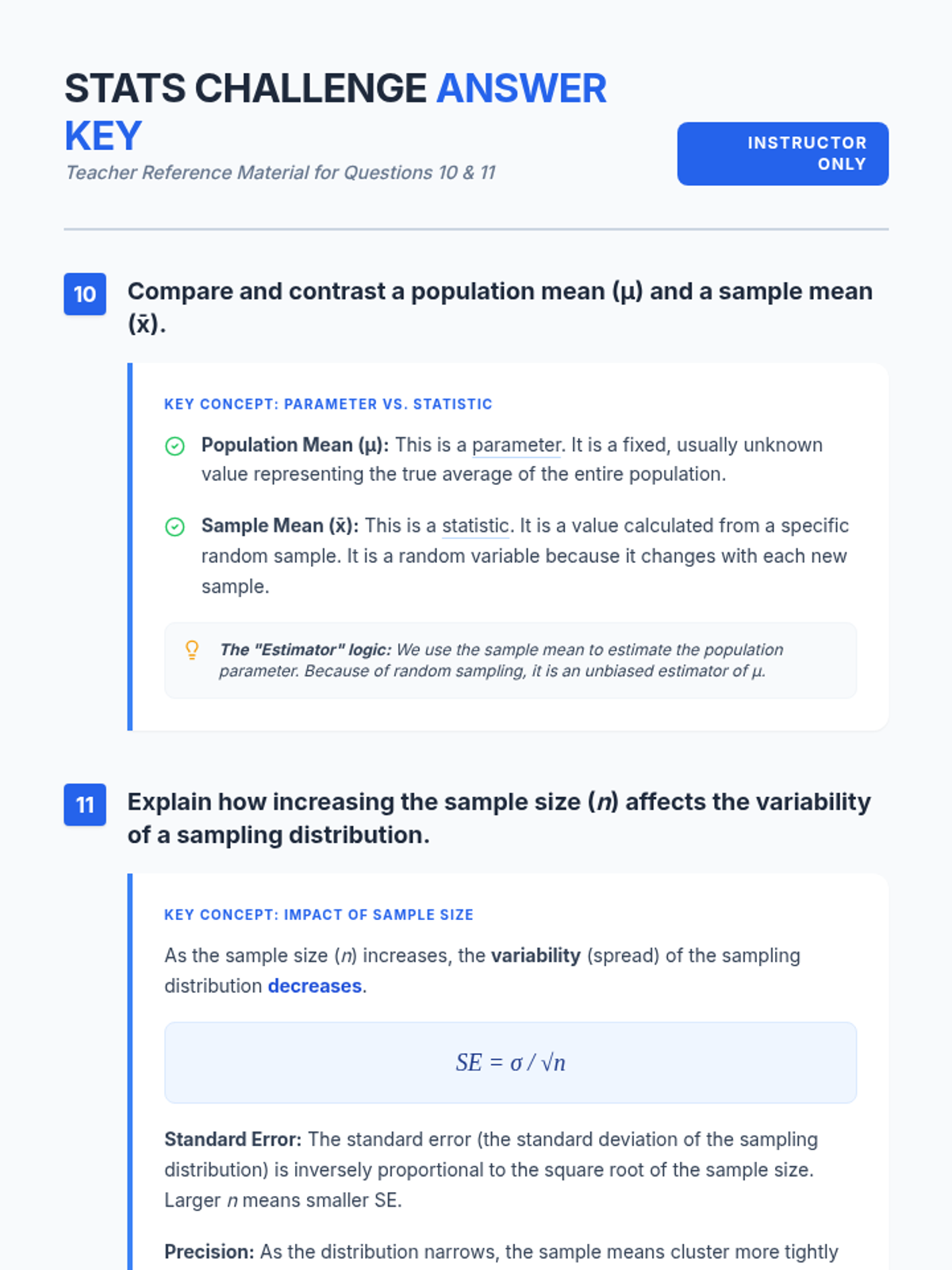
A concise lesson reviewing advanced statistical concepts including population parameters, sample statistics, and the behavior of sampling distributions.
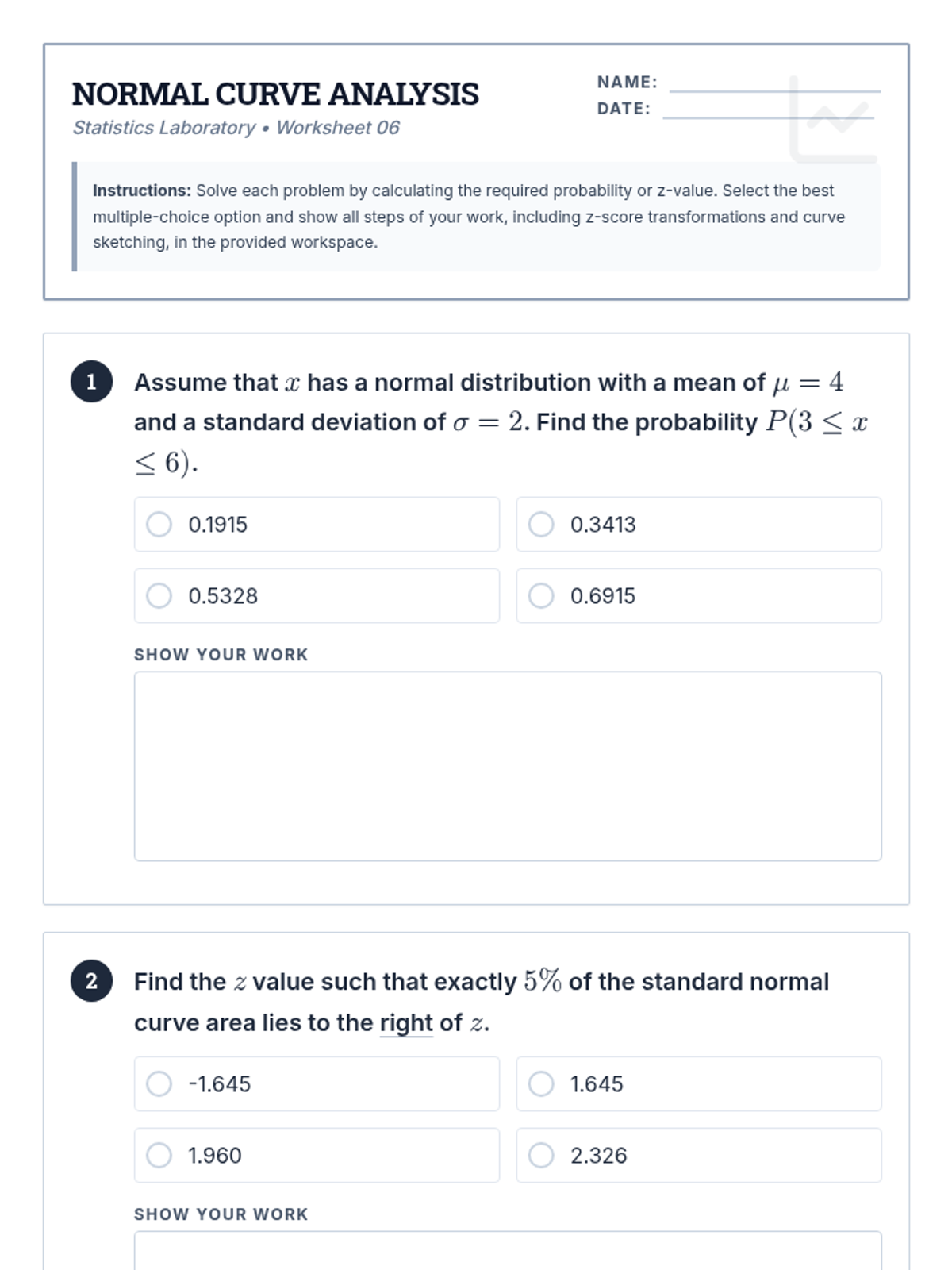
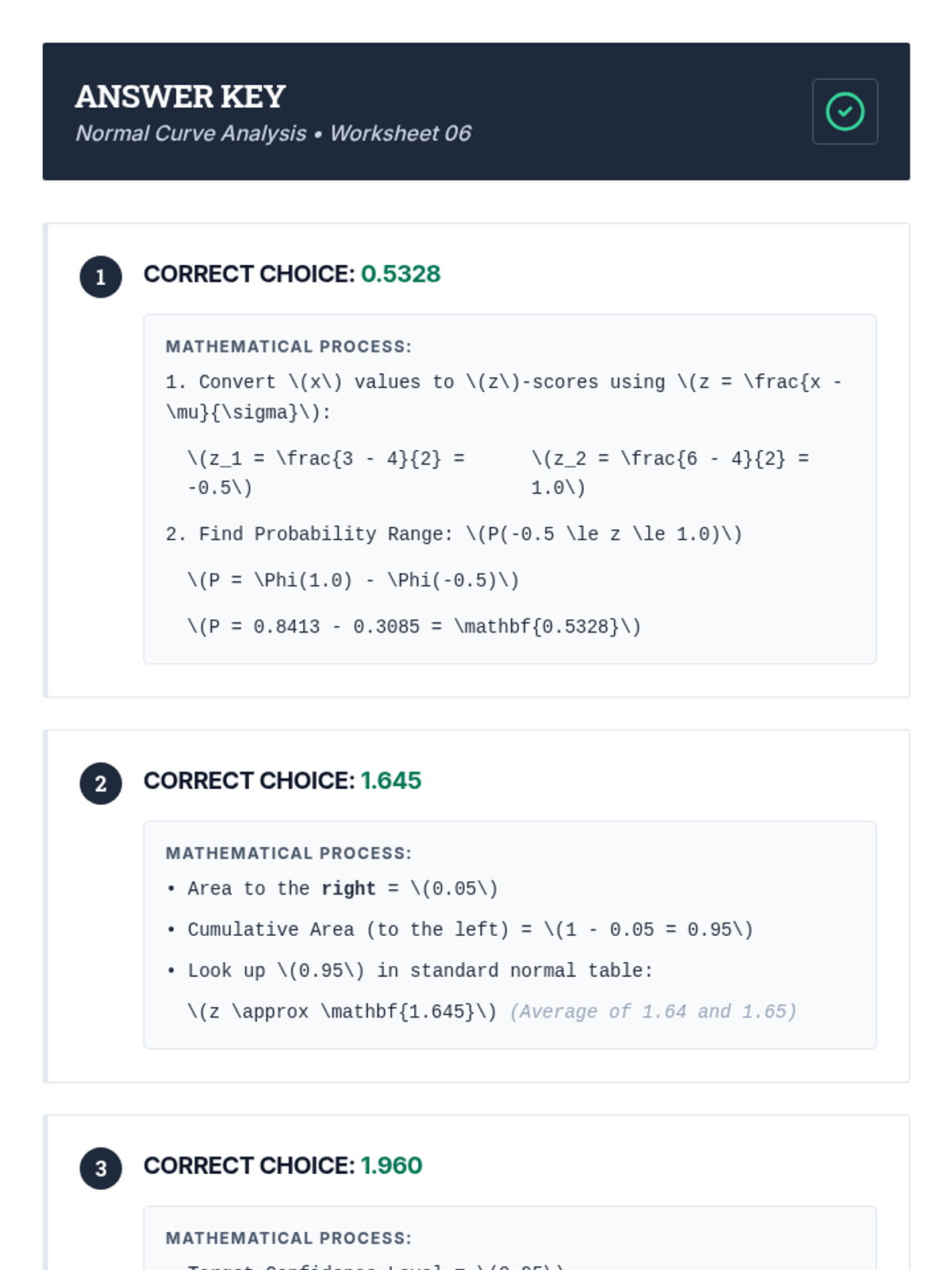
A focused practice session on calculating probabilities and z-values for normal distributions, based on medical and abstract data.
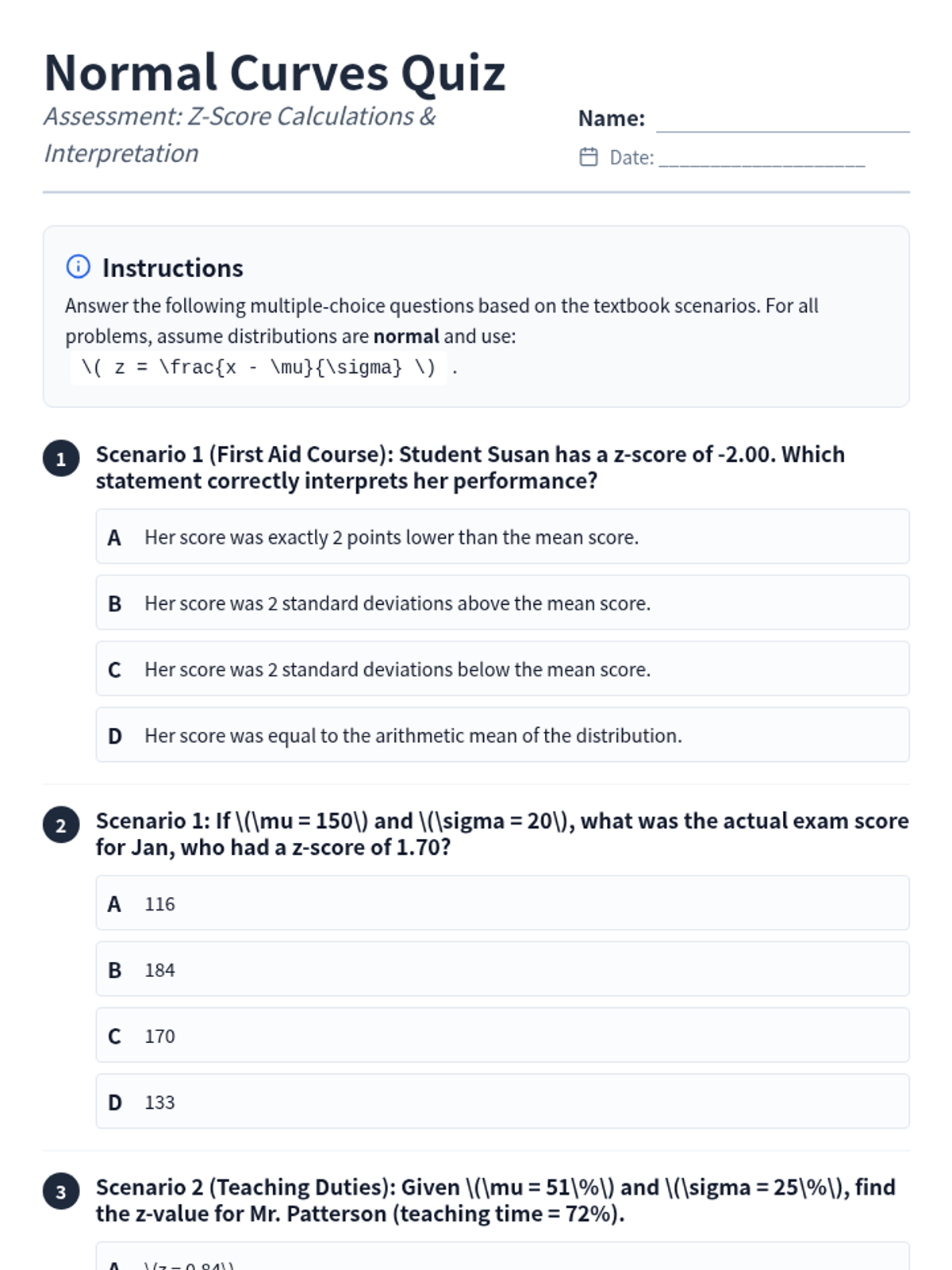
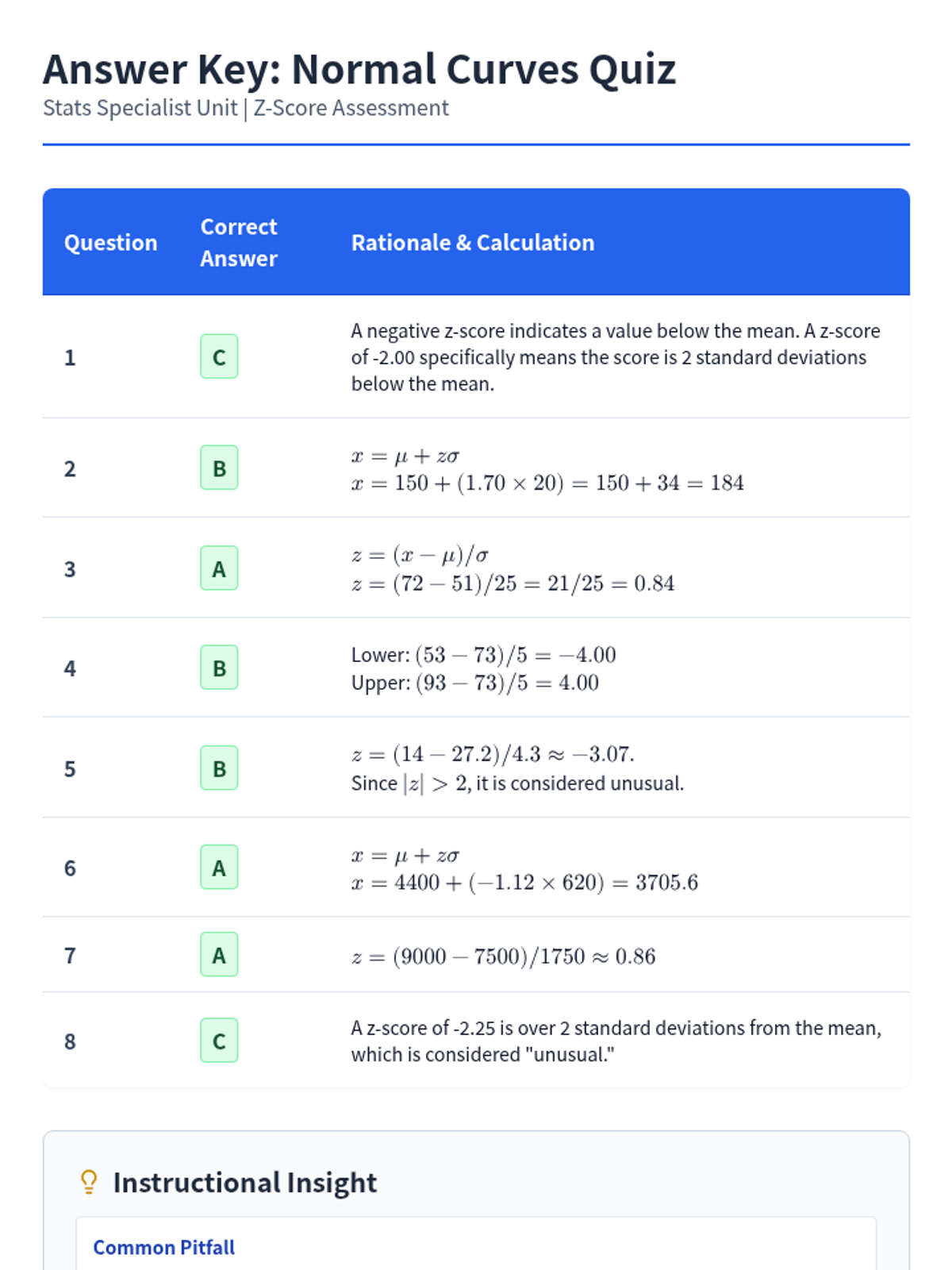
A focused lesson on calculating and interpreting z-scores and normal distributions using real-world scenarios from the textbook. Students will practice converting between raw scores and z-scores and determine the "unusualness" of specific data points.
This lesson covers the fundamentals of normal distributions, including identifying bell curves, applying the empirical rule, and interpreting control charts for real-world data analysis.
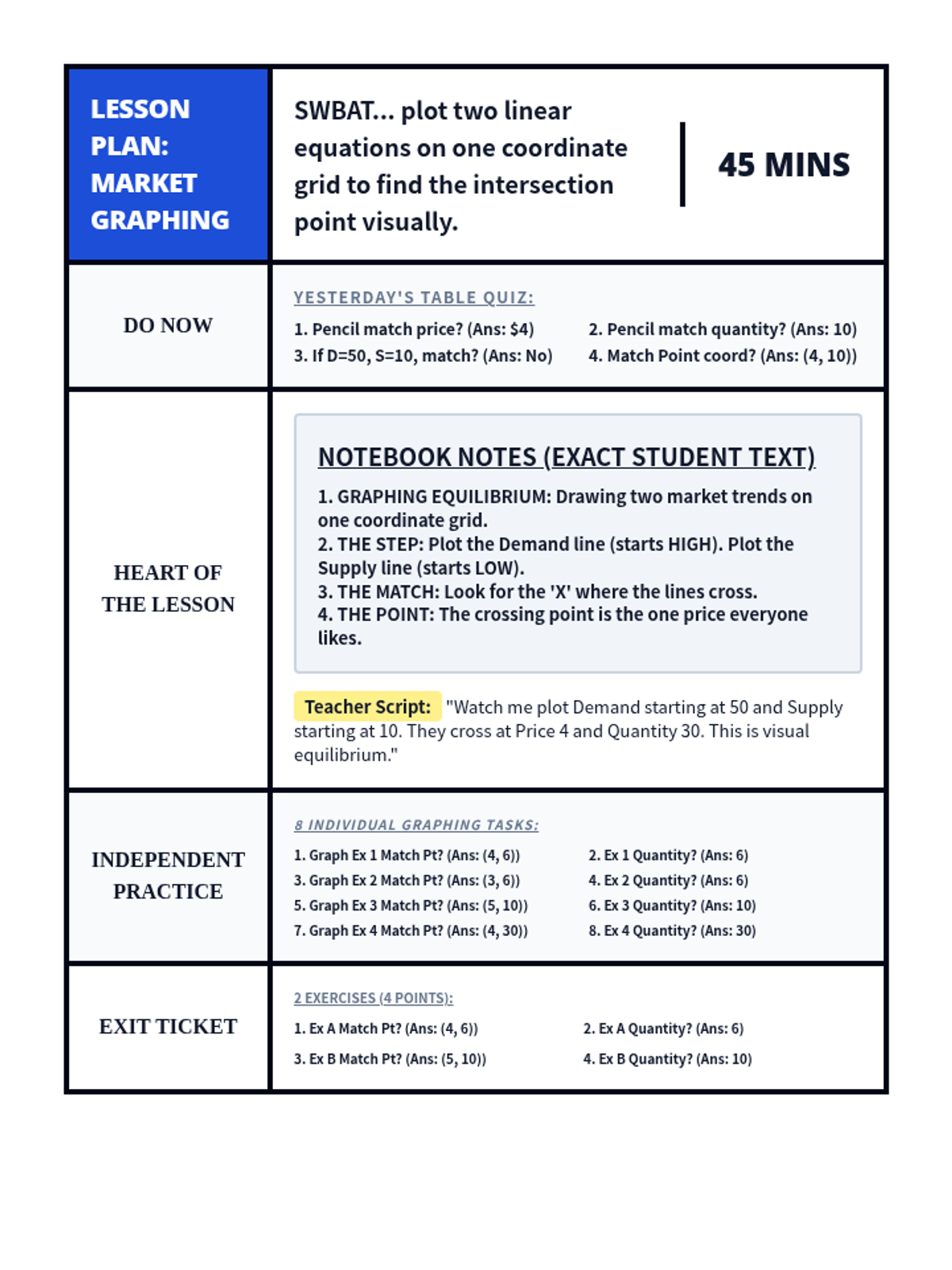
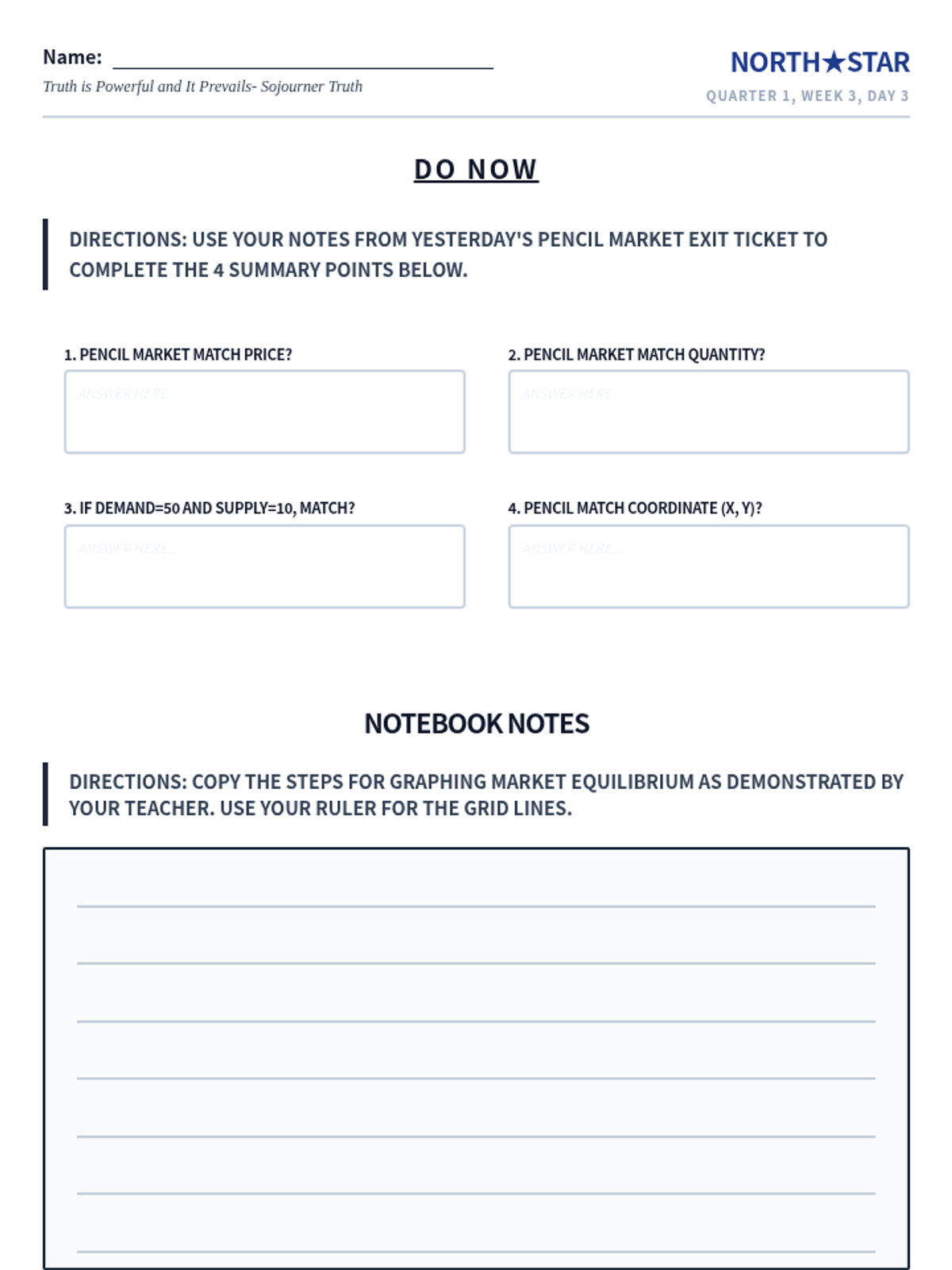
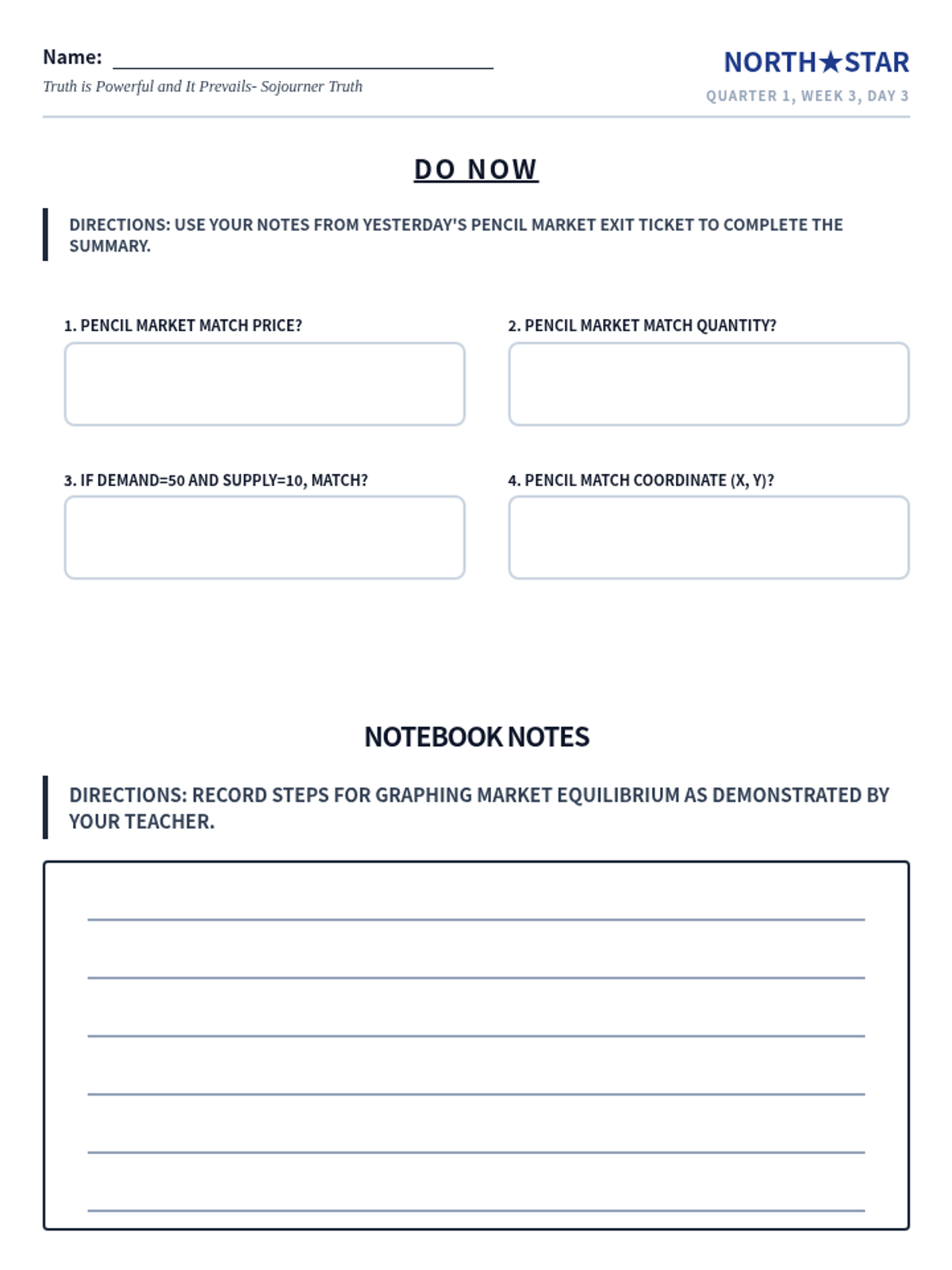
Students plot two linear equations on a single coordinate plane to find the point of intersection and identify the equilibrium price and quantity visually.