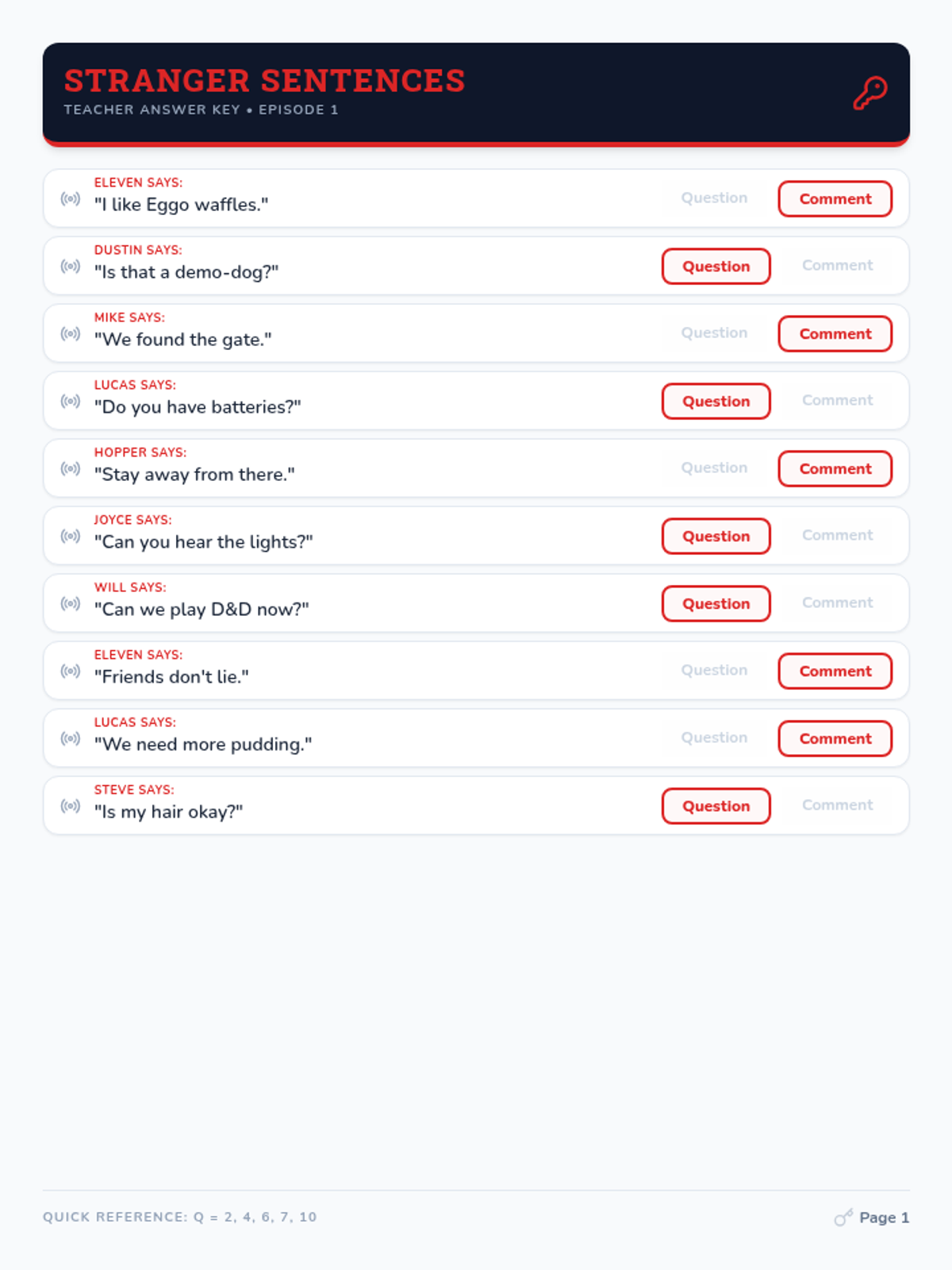
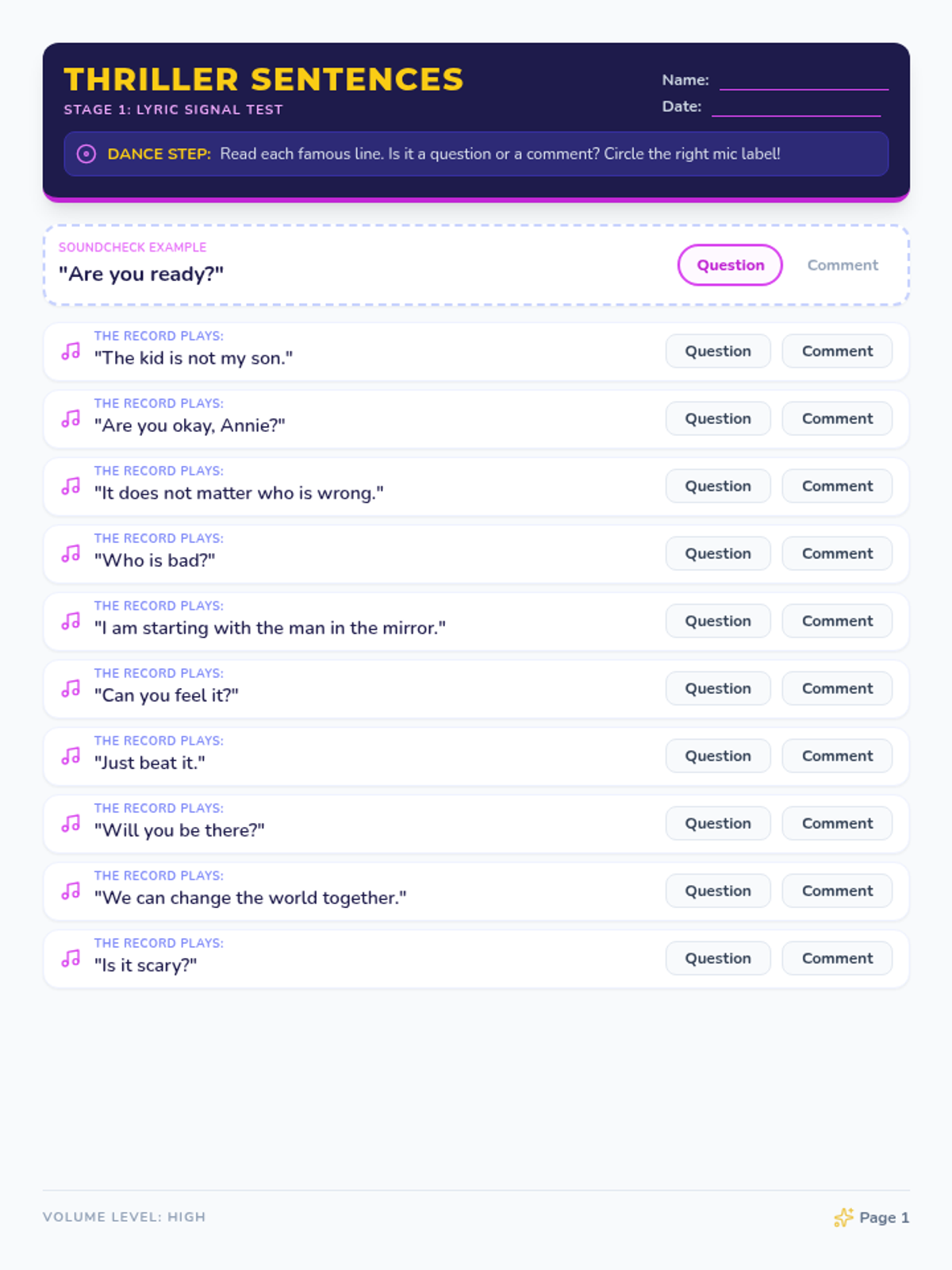
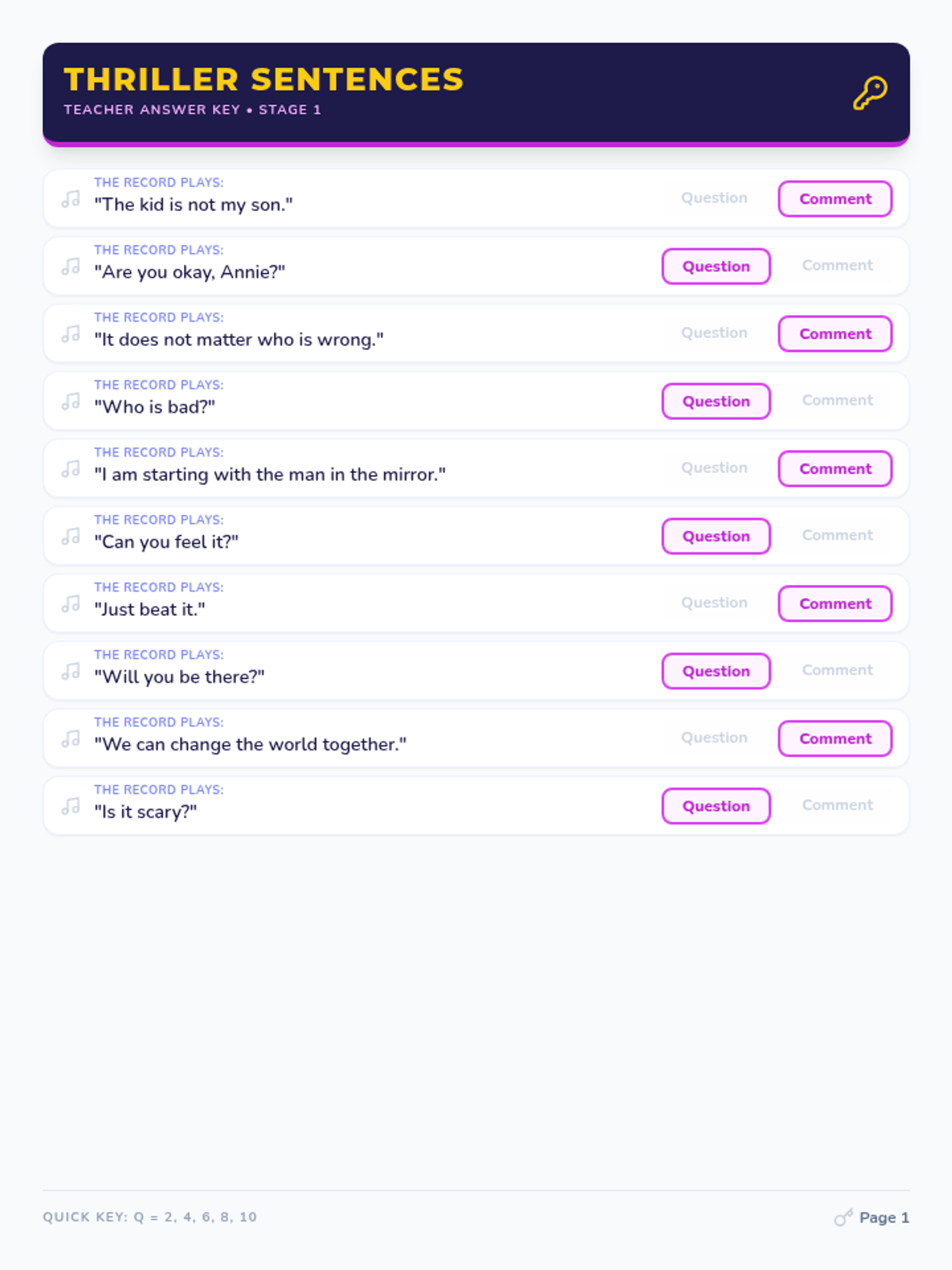
A foundation-building first-grade lesson focused on asking and answering questions about everyday classroom scenarios to promote active listening, curiosity, and peer connection.
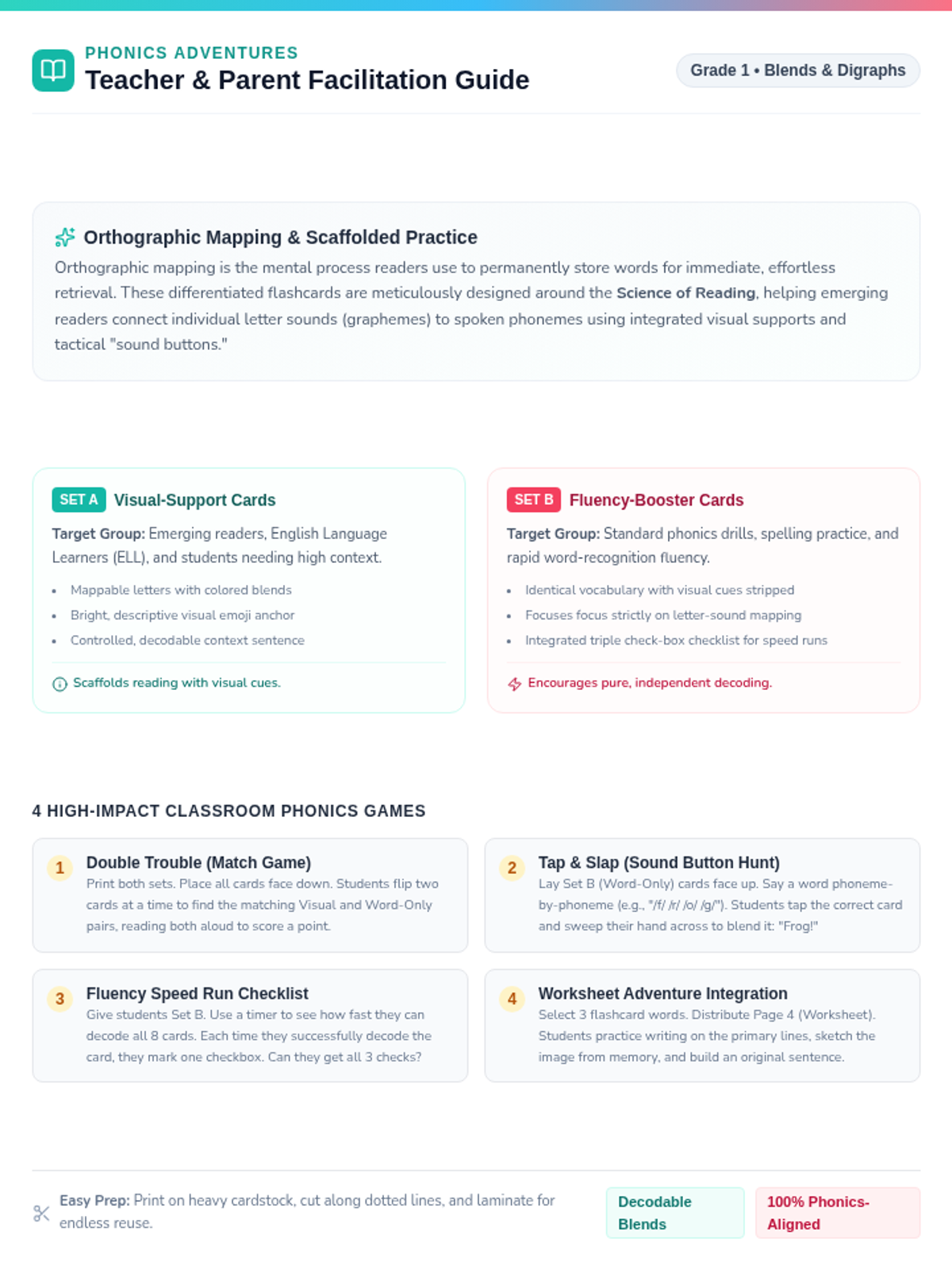
A foundational phonics lesson focusing on reading words with consonant blends and digraphs. This lesson includes differentiated flashcards designed for emerging readers, ELLs, and fluency practice.
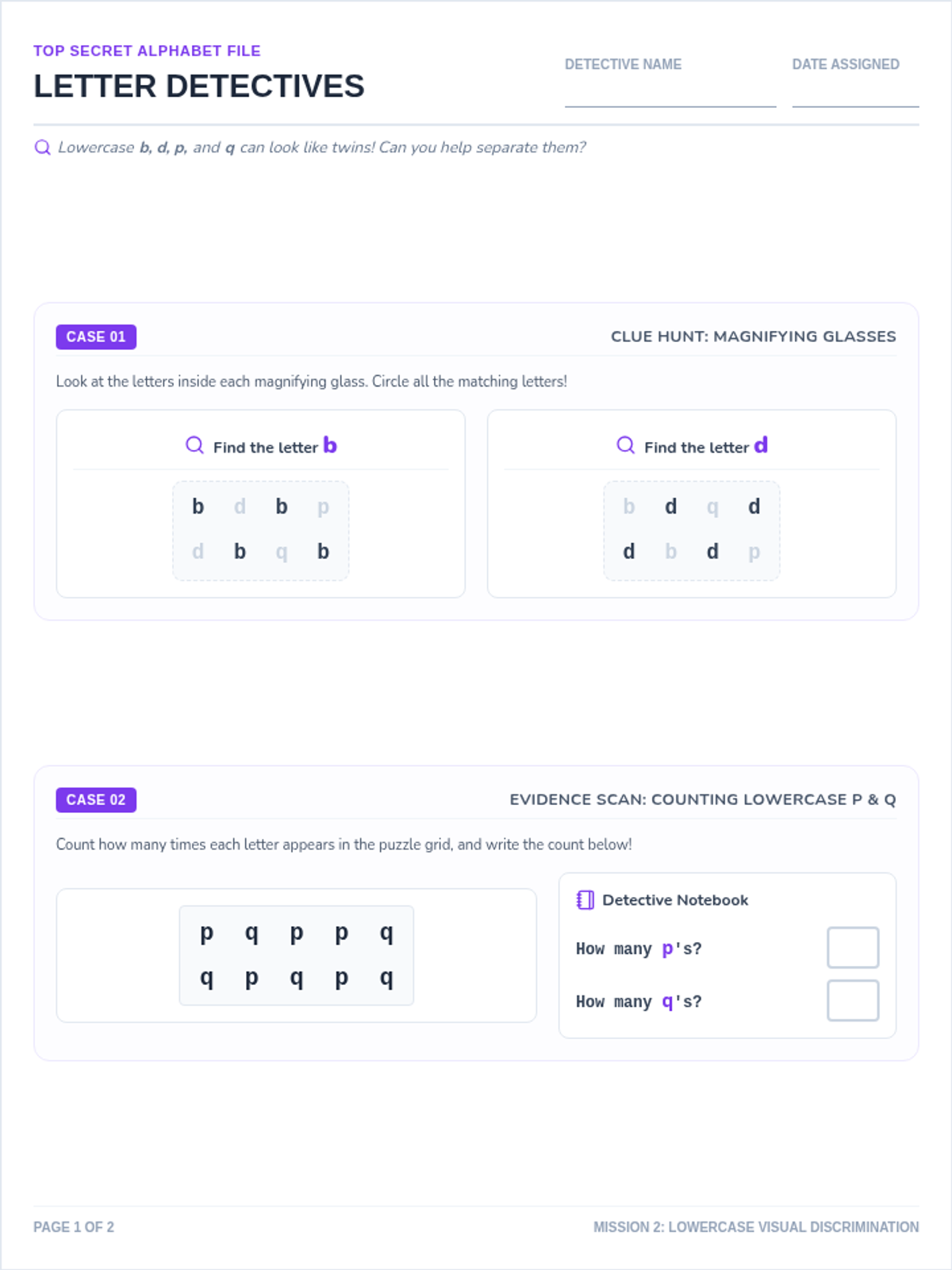
A first-grade letter recognition and formation lesson focusing on identifying uppercase and lowercase letter pairs, distinguishing visually similar letters (like b, d, p, q), and practicing correct stroke pathways.
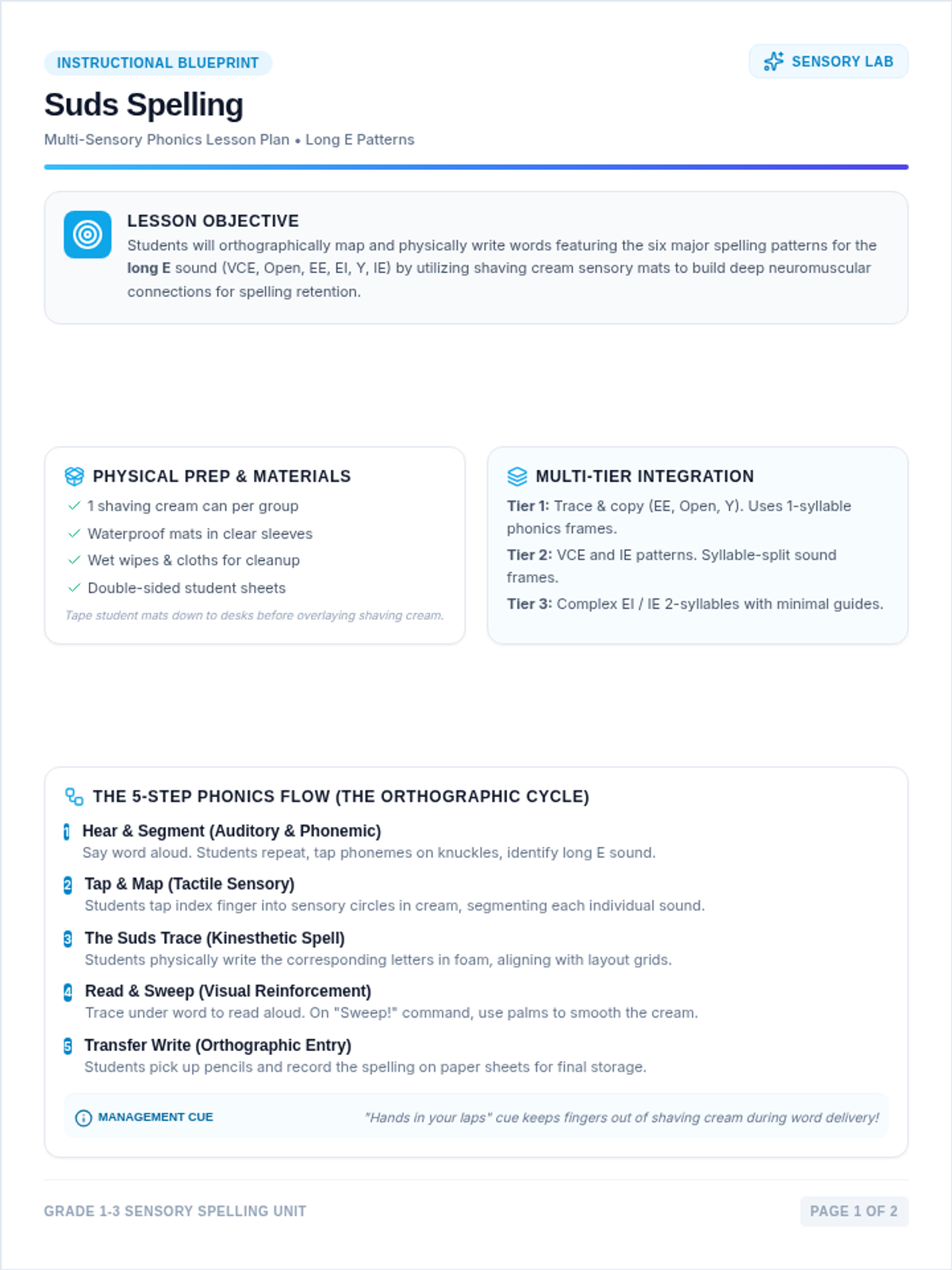
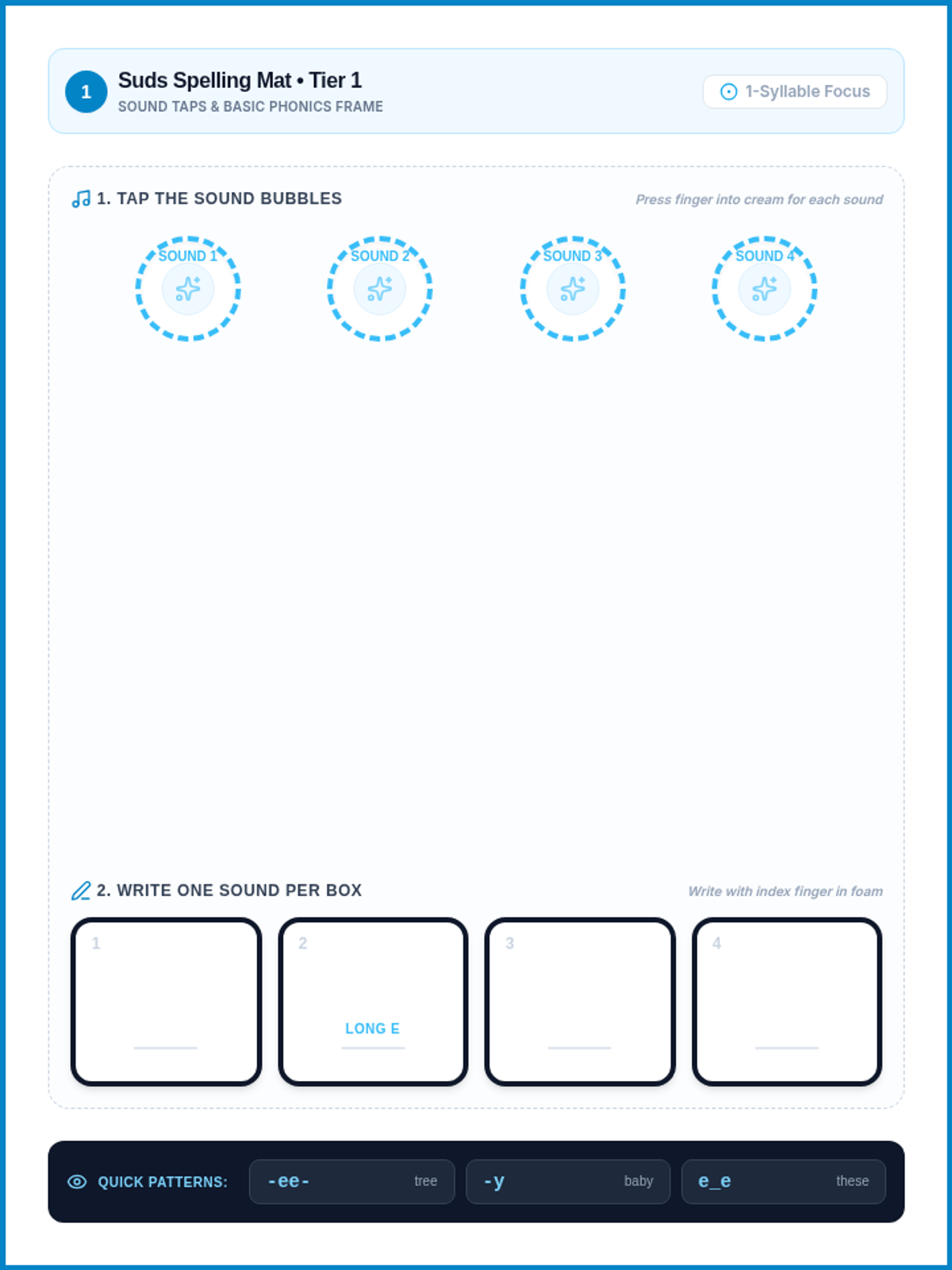
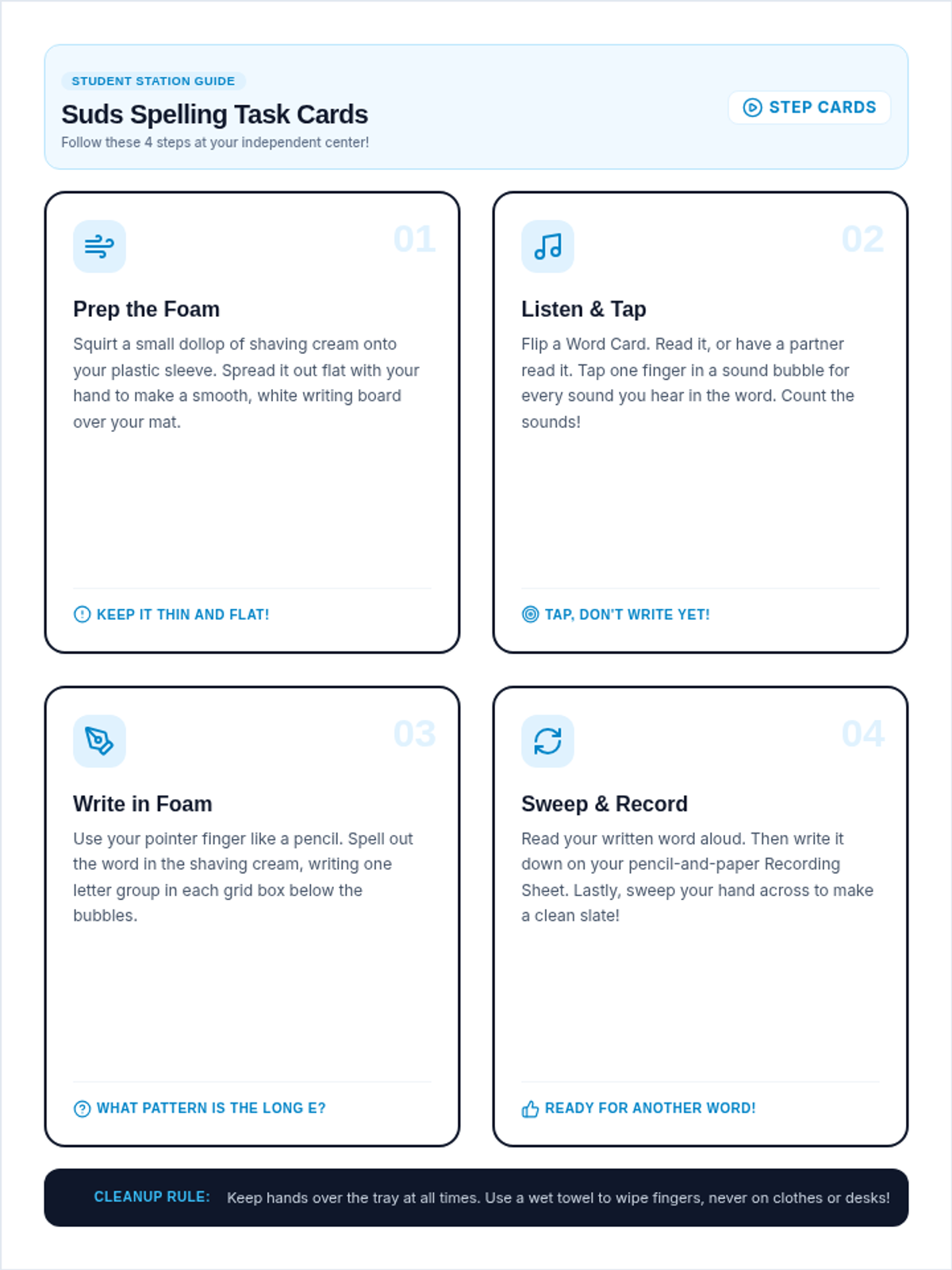
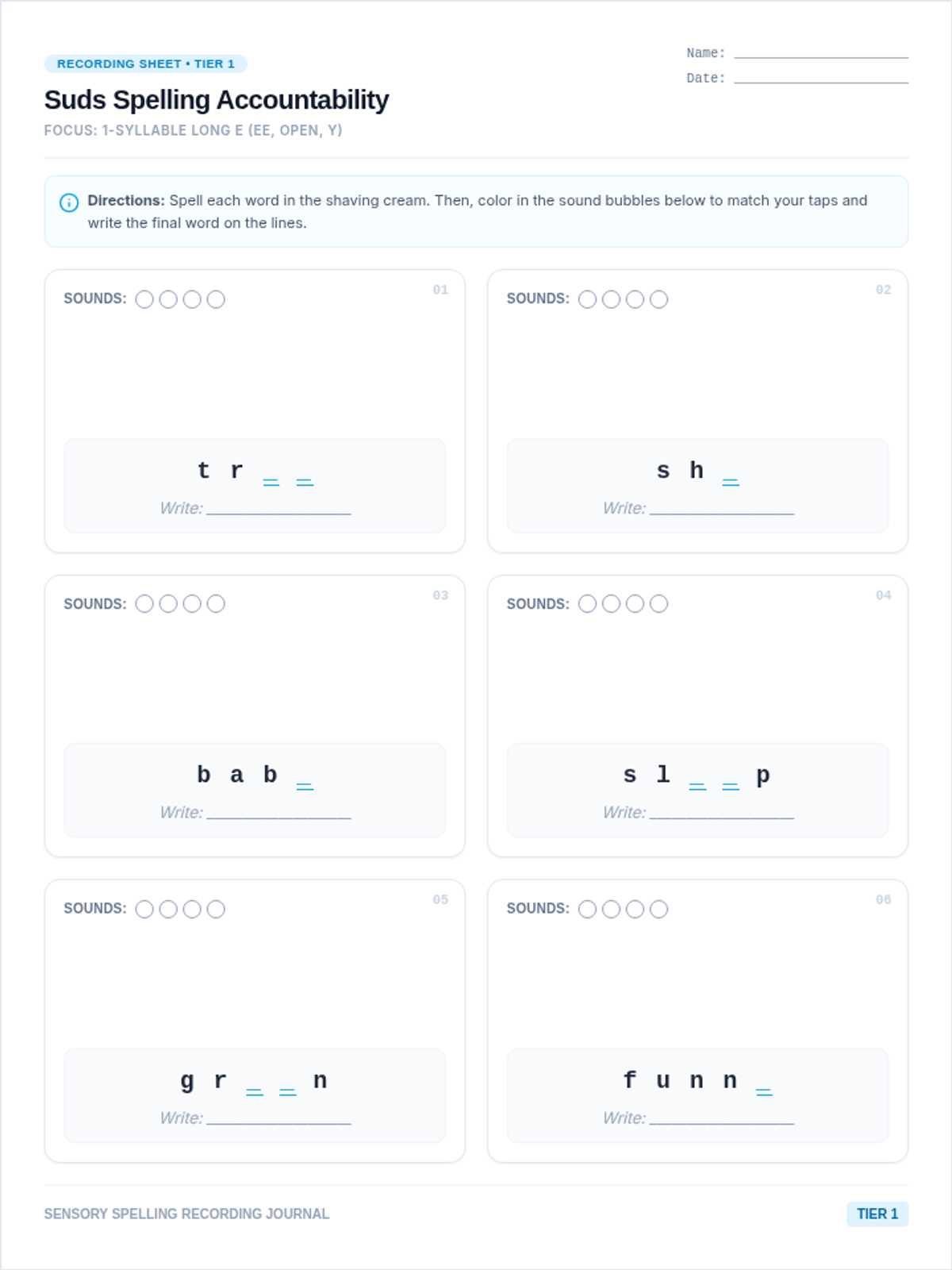
A sensory-rich spelling experience targeting the six primary spelling patterns for the long E sound. Students use shaving cream mats to segment and write words, transitioning tactile memory into written form.
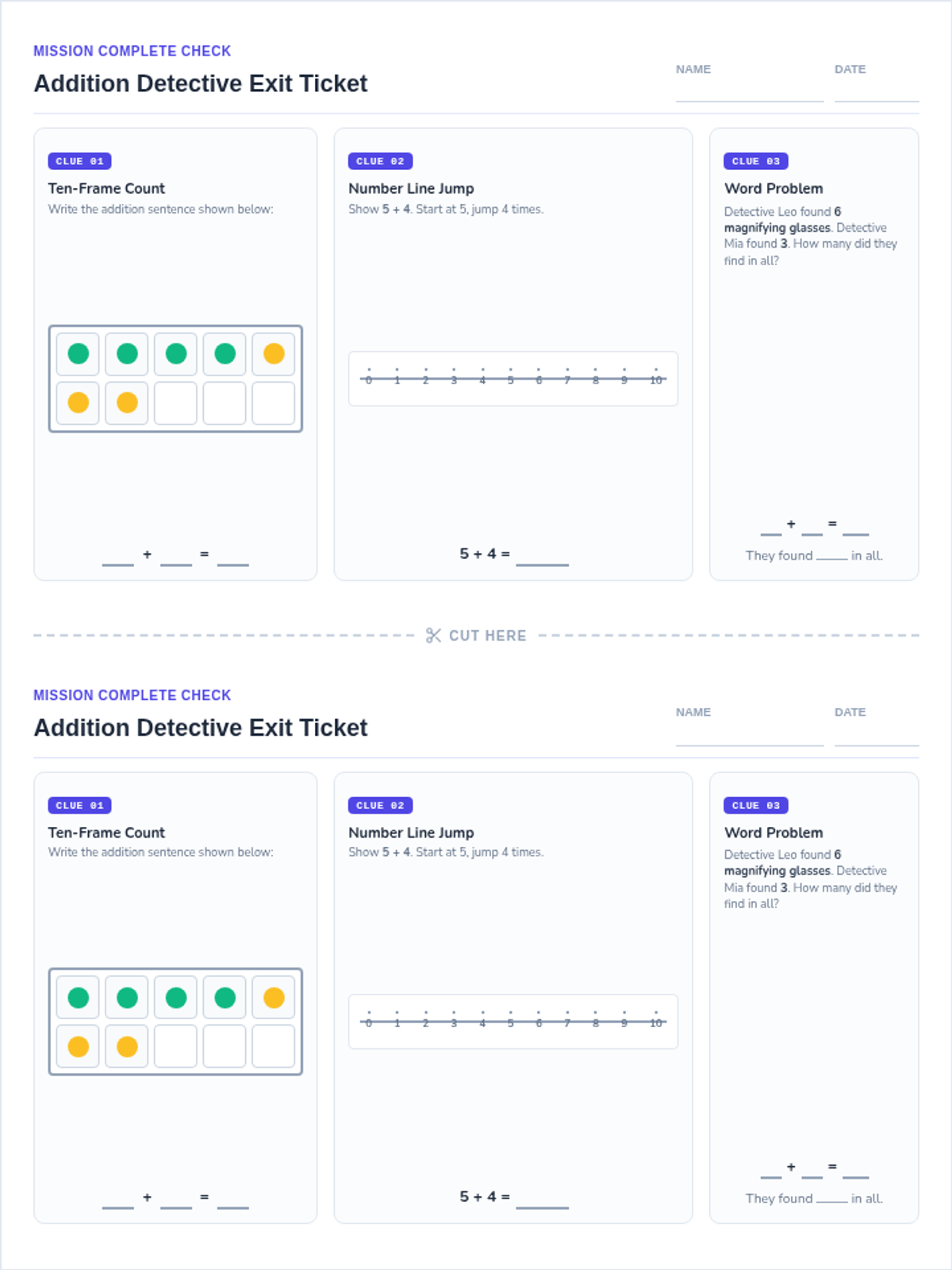
A first-grade addition lesson focusing on visual strategies, concrete models, and counting on to solve addition facts up to 10. Includes student worksheets and formative exit tickets.
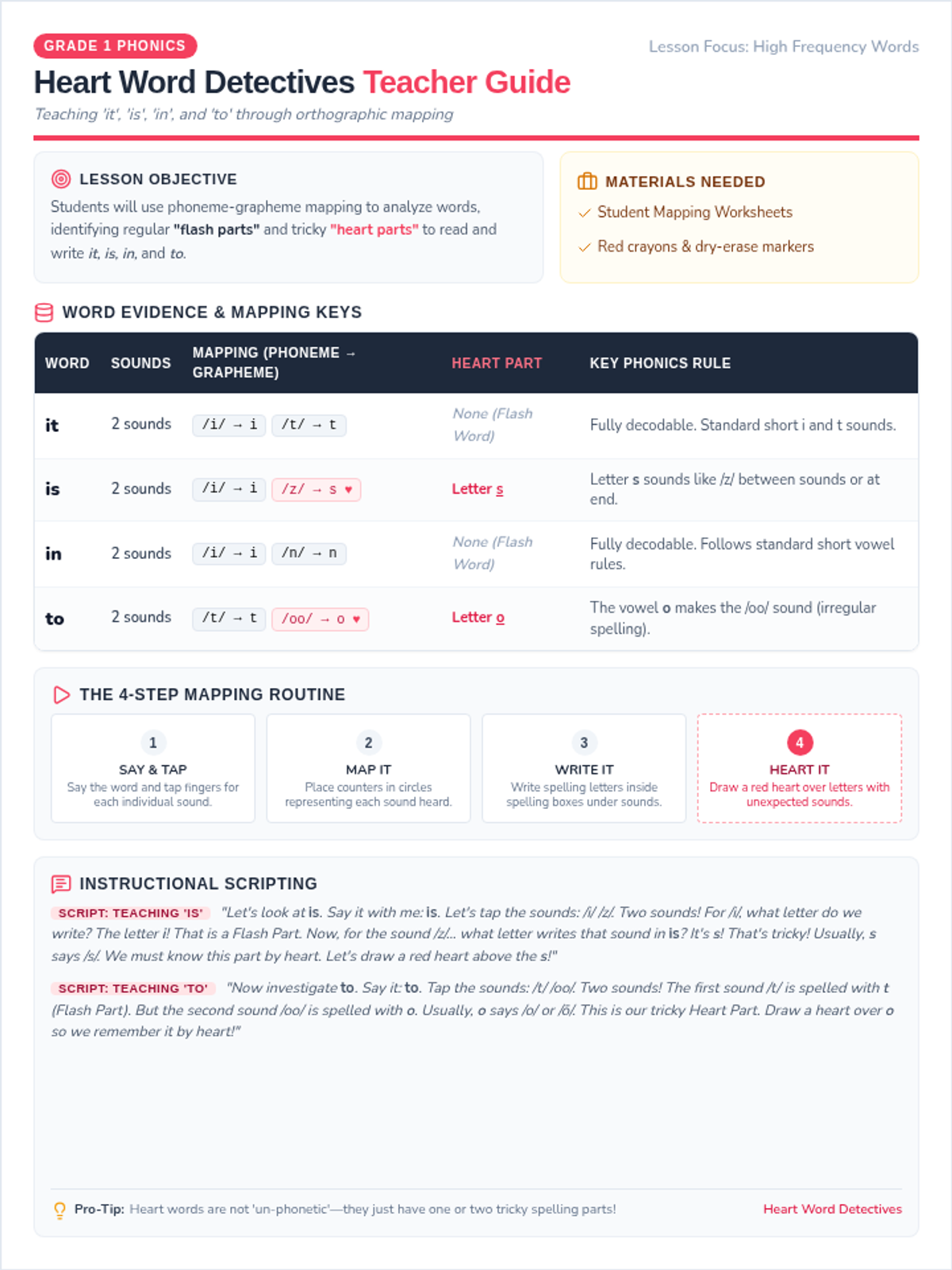
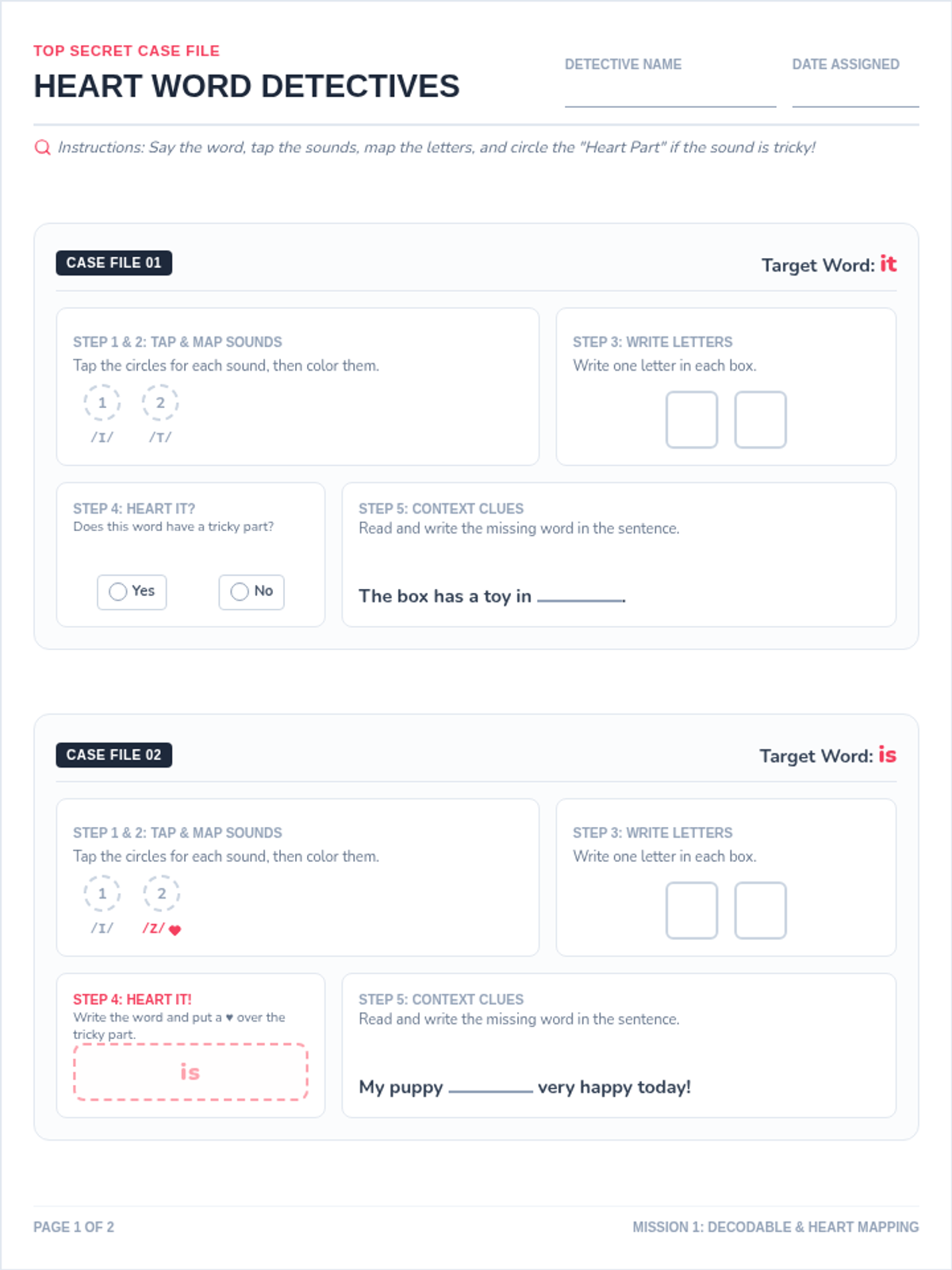
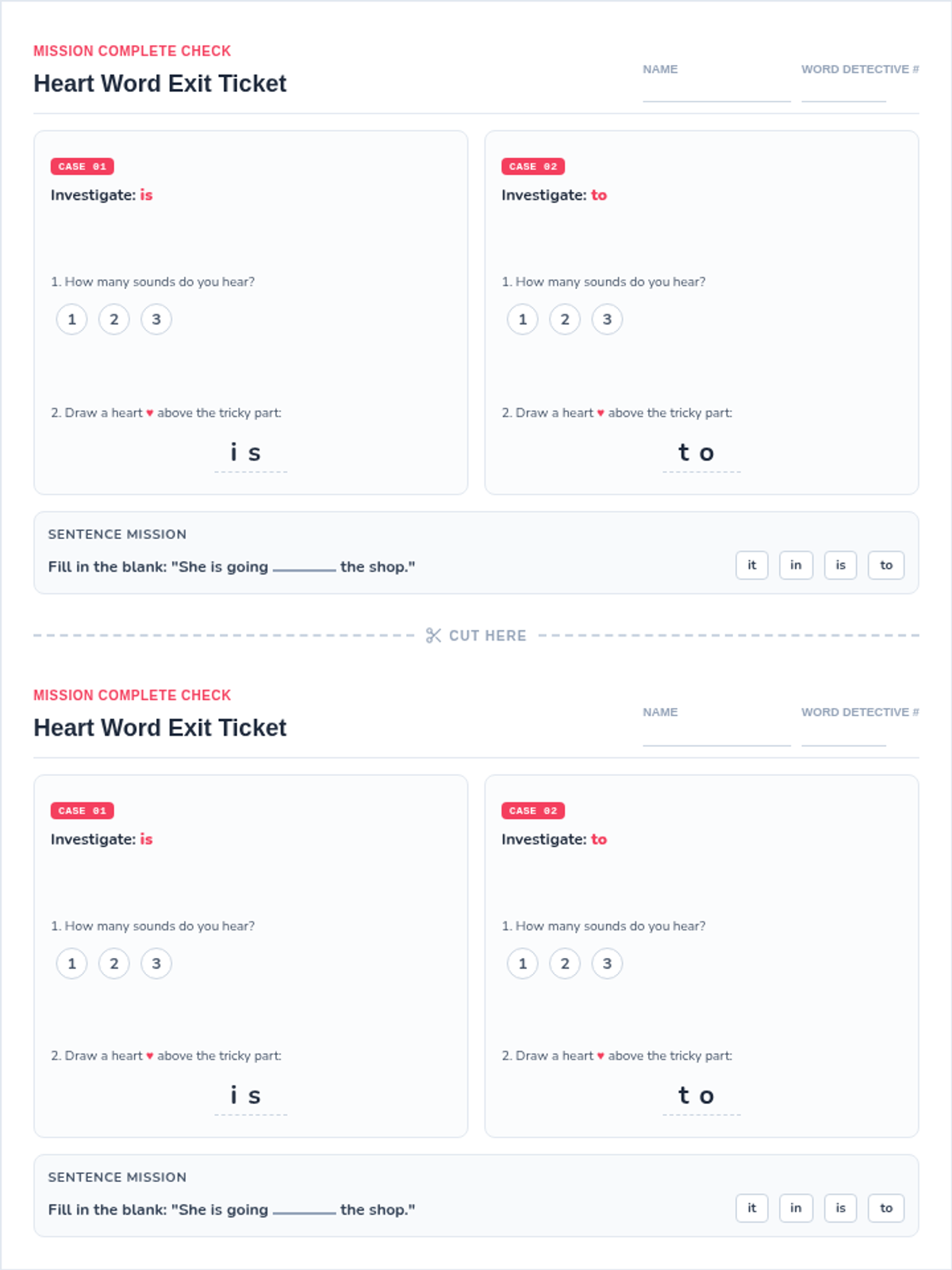
A phonics-based high-frequency word lesson focusing on orthographic mapping and heart-word strategies for 'it', 'is', 'in', and 'to'. Students map phonemes to graphemes and learn to identify regular vs. 'by heart' spelling parts.
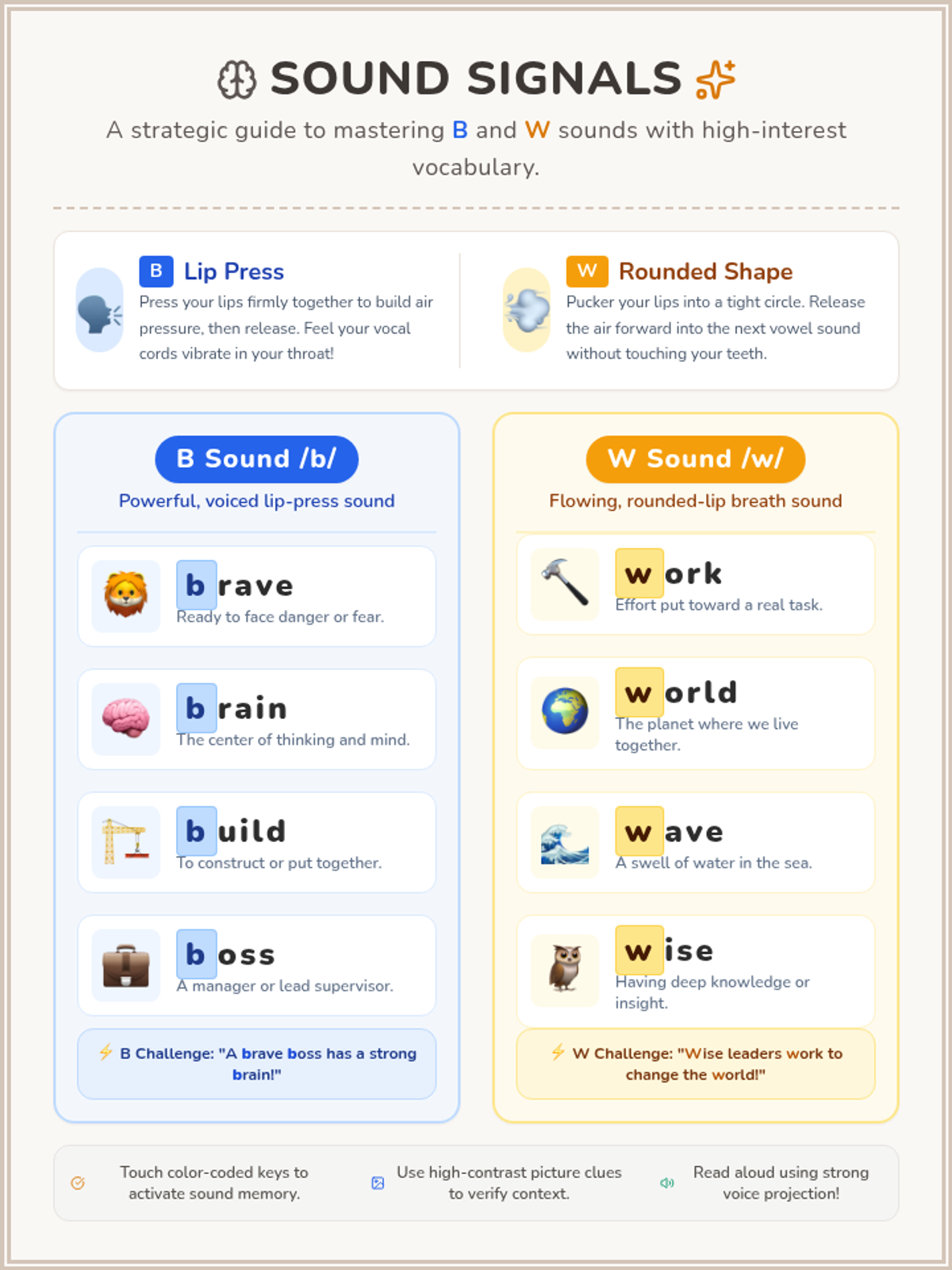
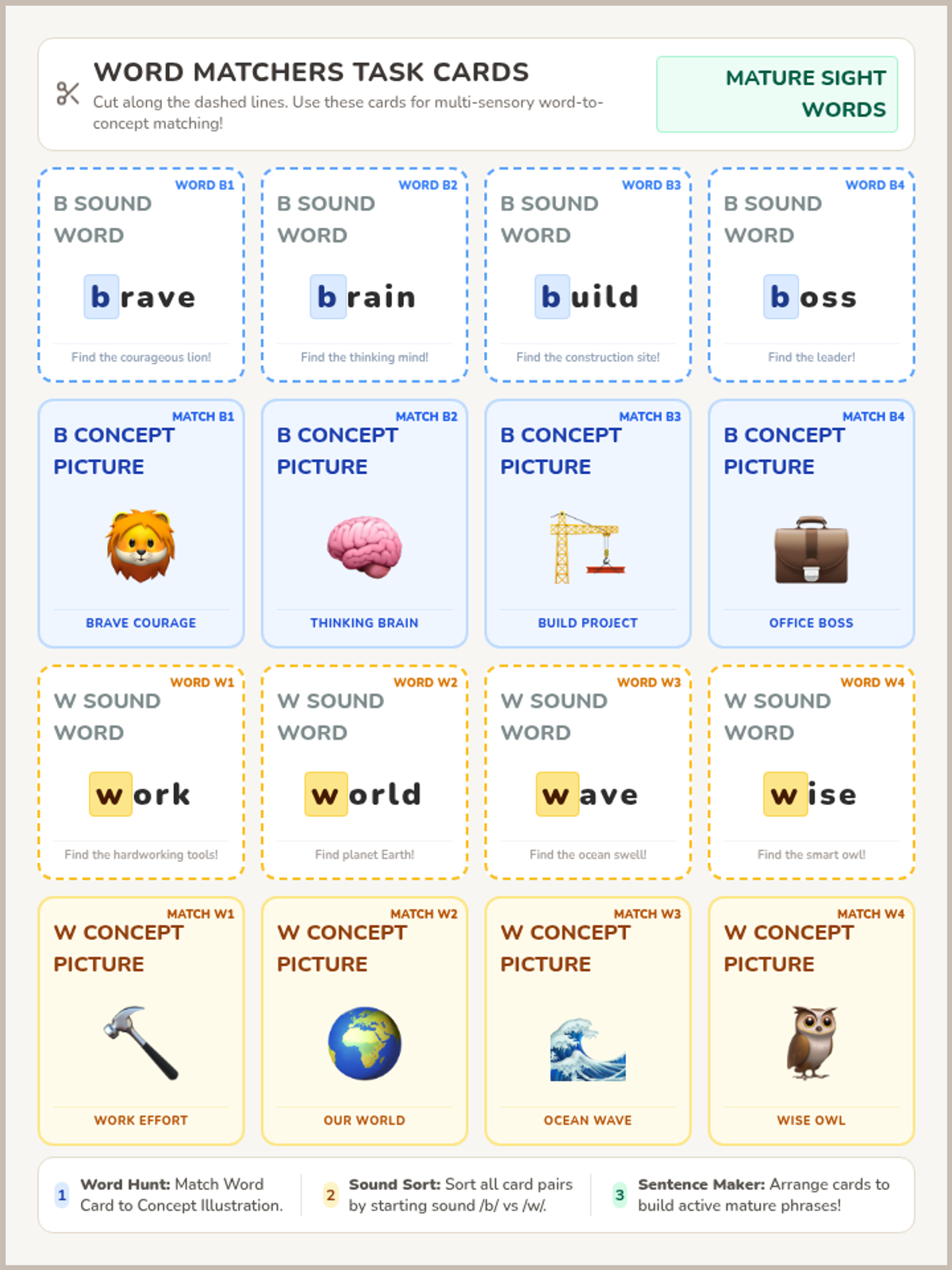
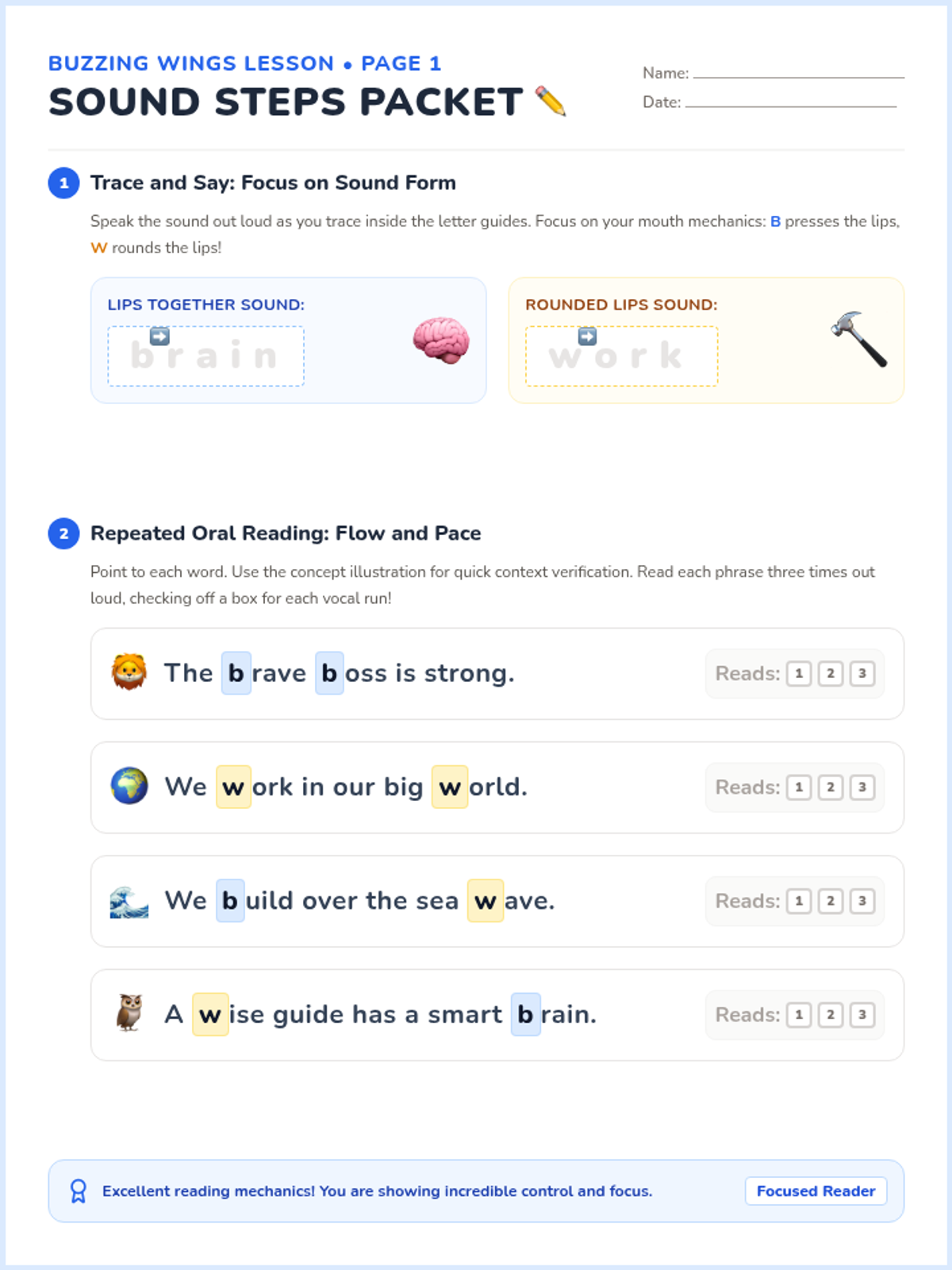
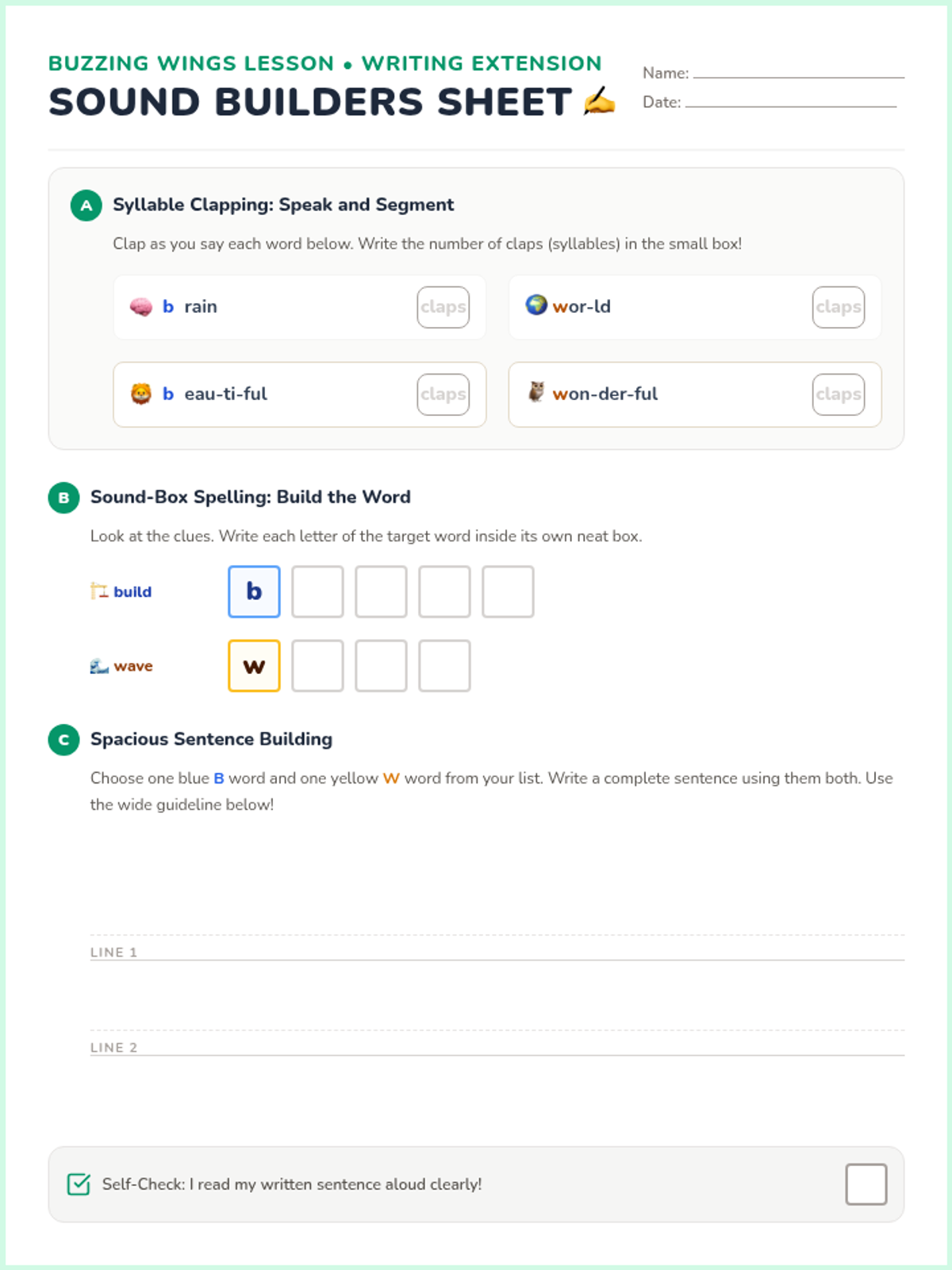
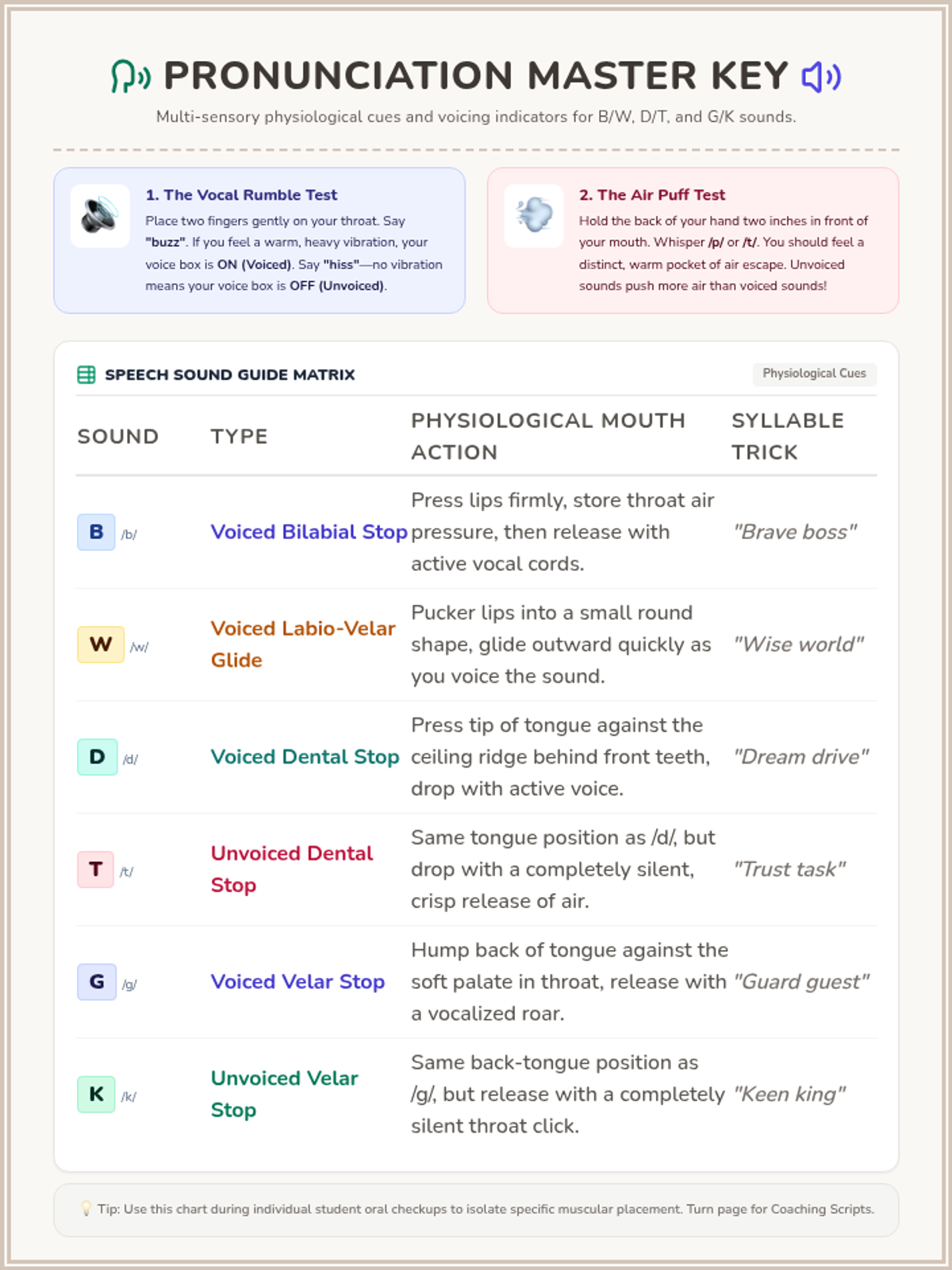
An hour-long structured reading lesson focusing on B and W letter-sound association and common sight words. Designed with dyslexia-friendly spacing, color-coded highlights, and picture scaffolding to support struggling oral readers.
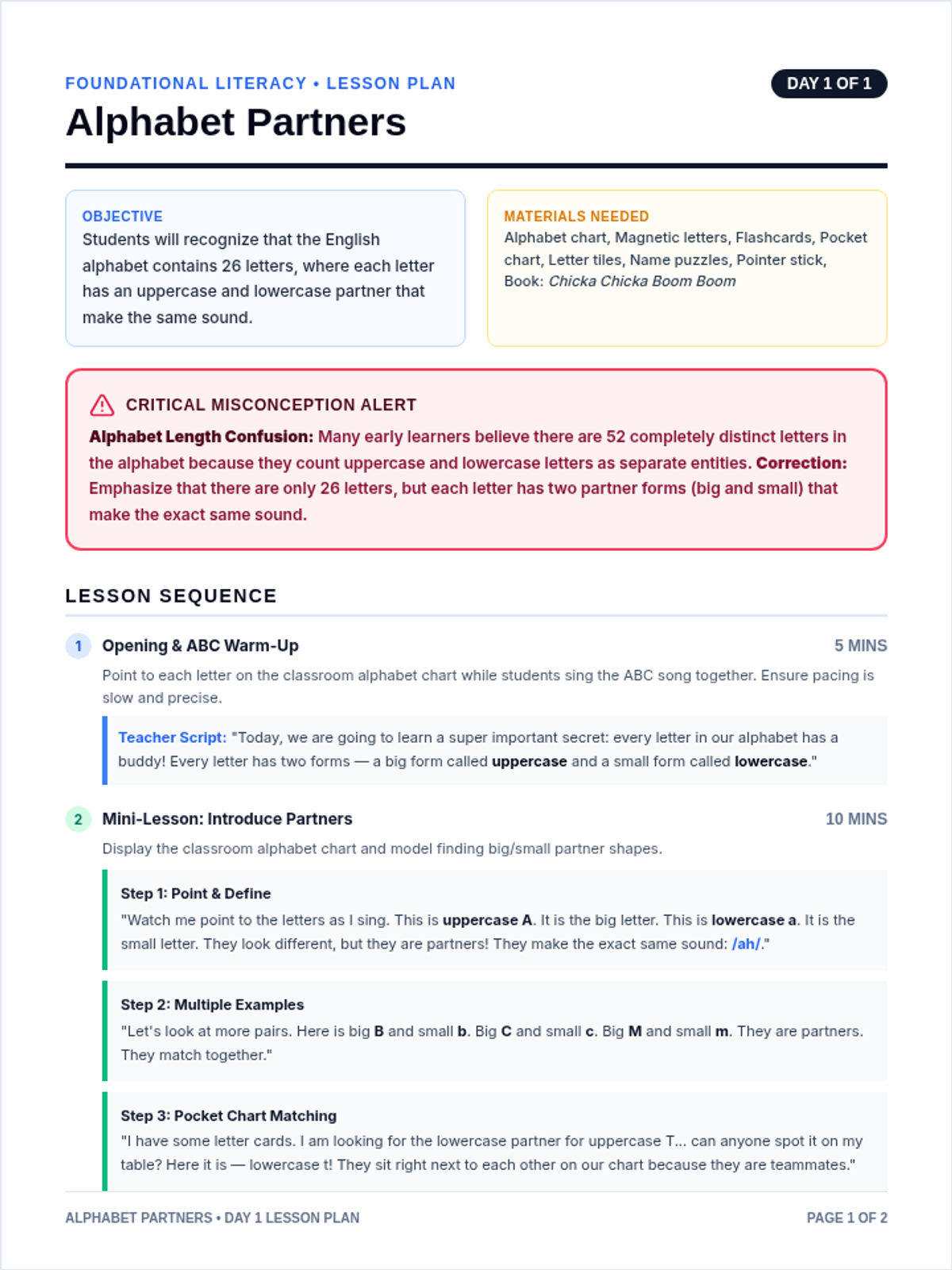
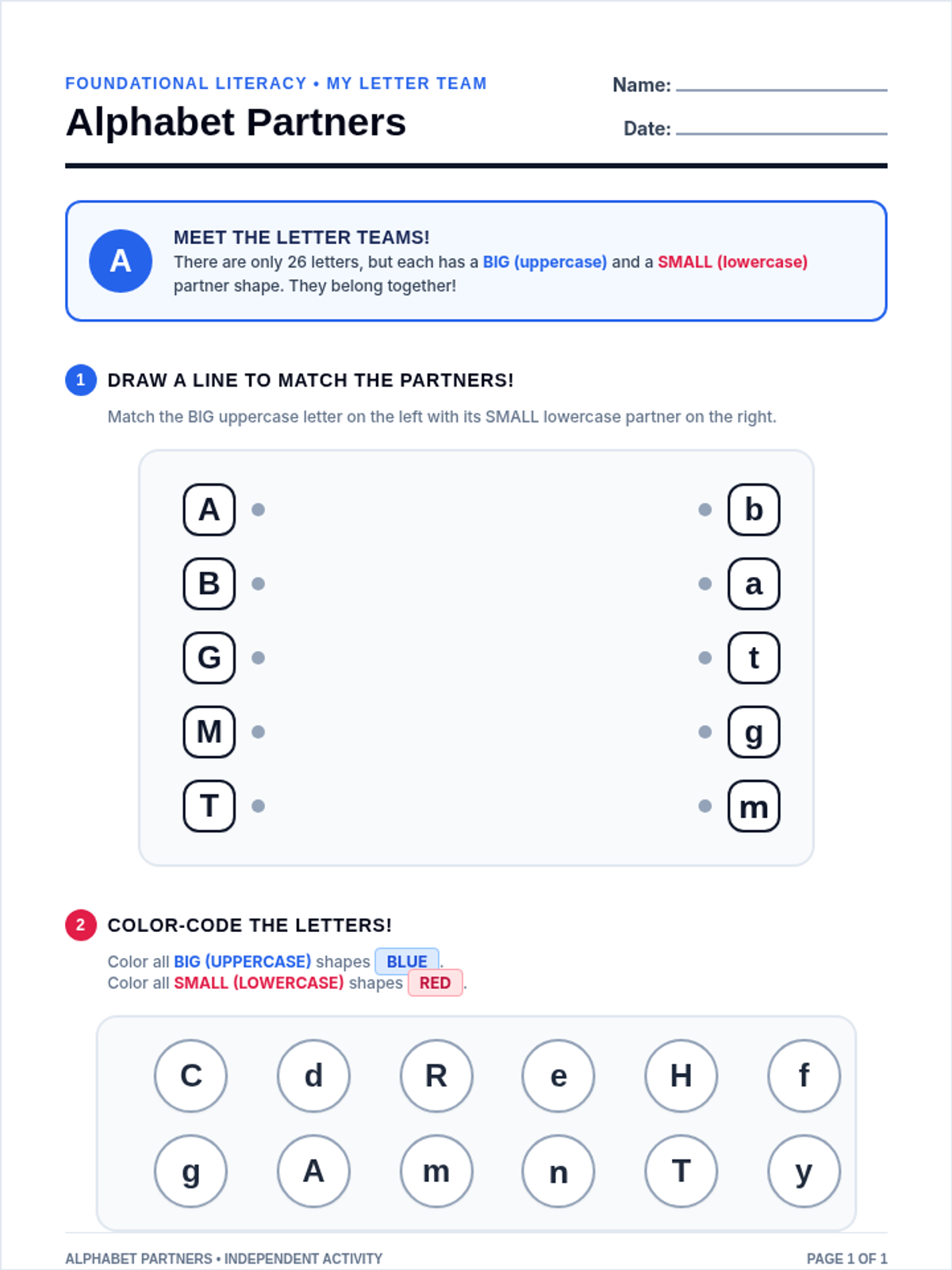
A foundational literacy lesson designed to introduce uppercase and lowercase letter partners, explicitly correcting the common misconception that the alphabet contains 52 completely independent letters by presenting them as 26 matching pairs.
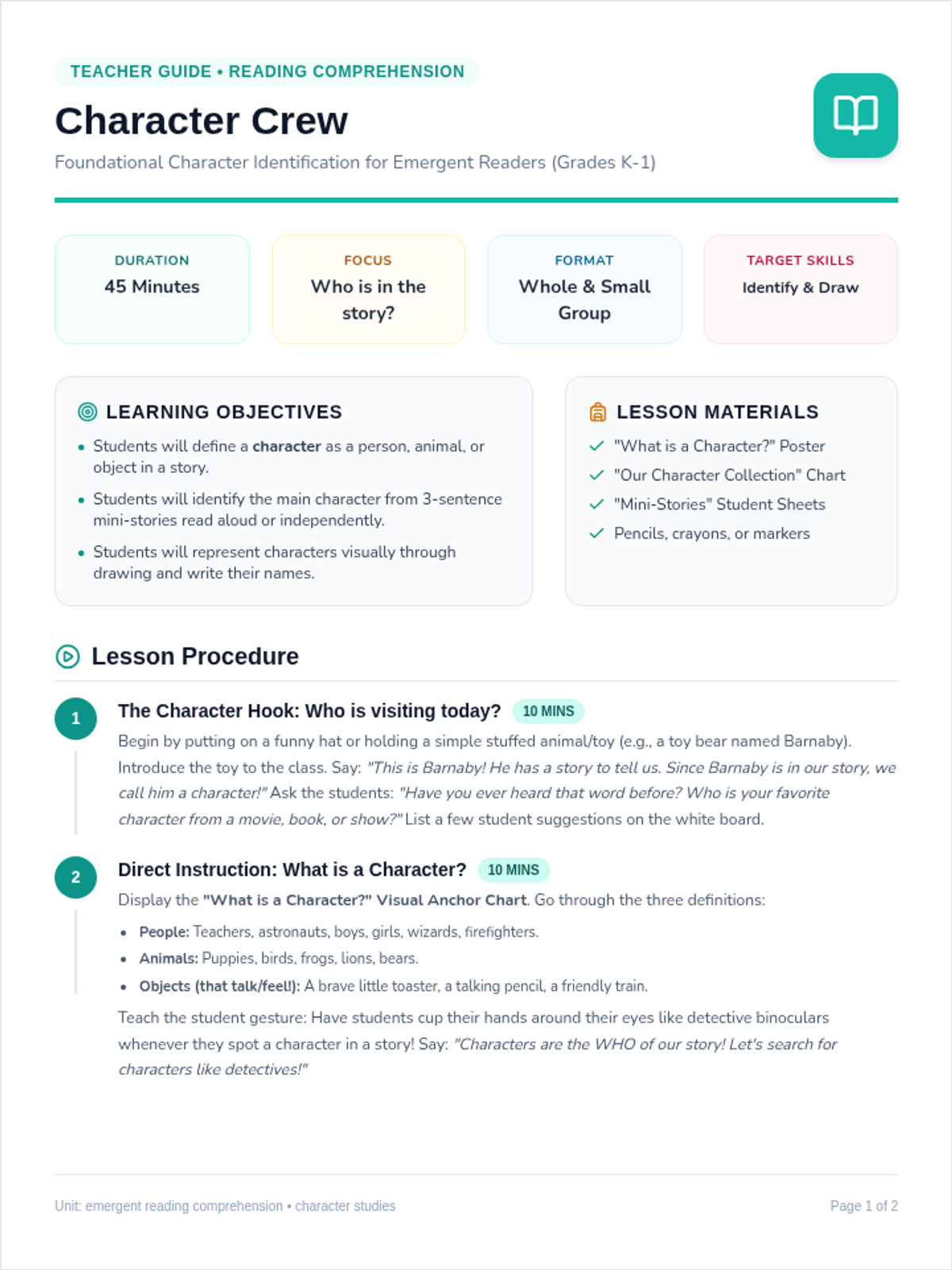
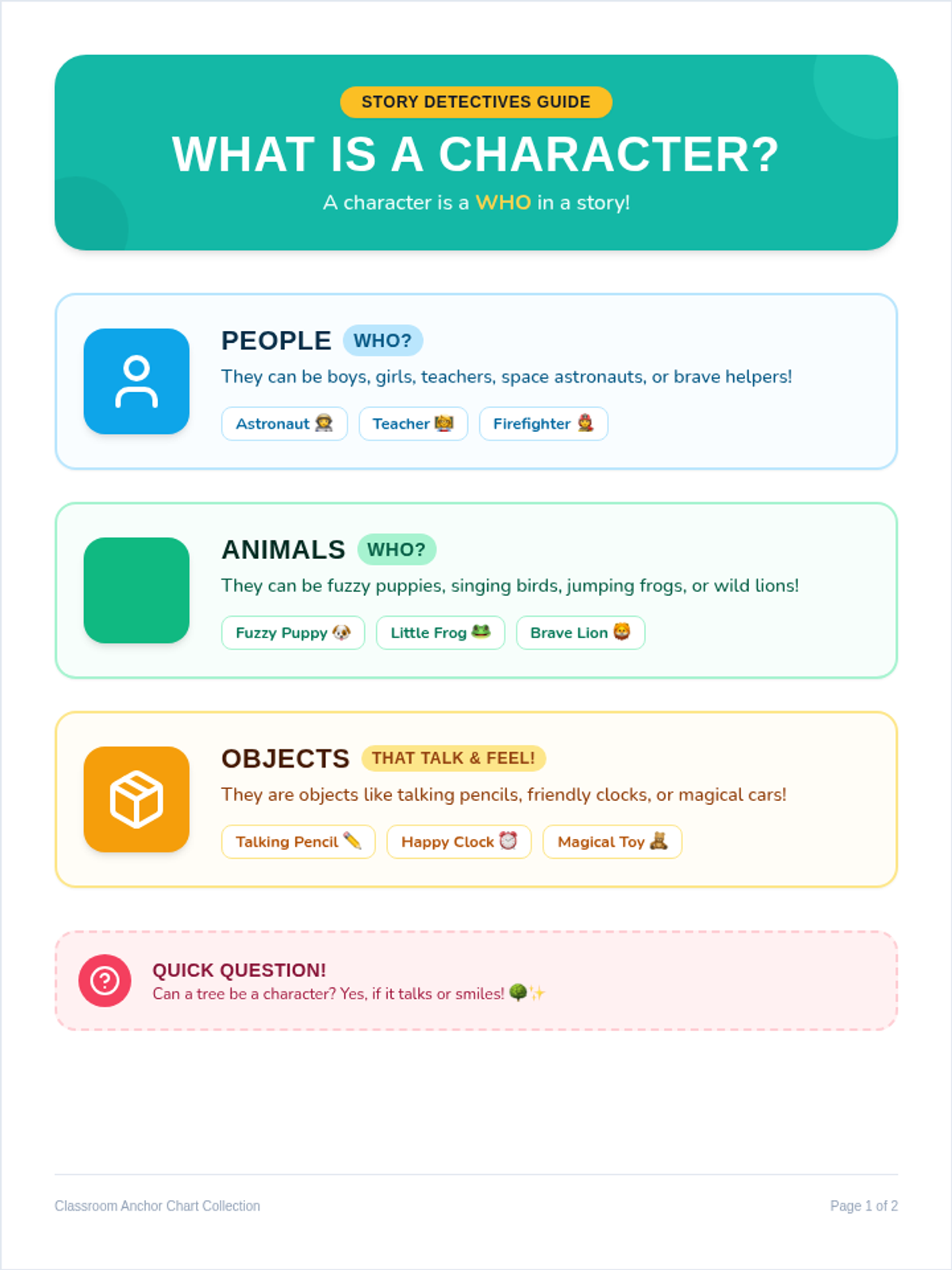
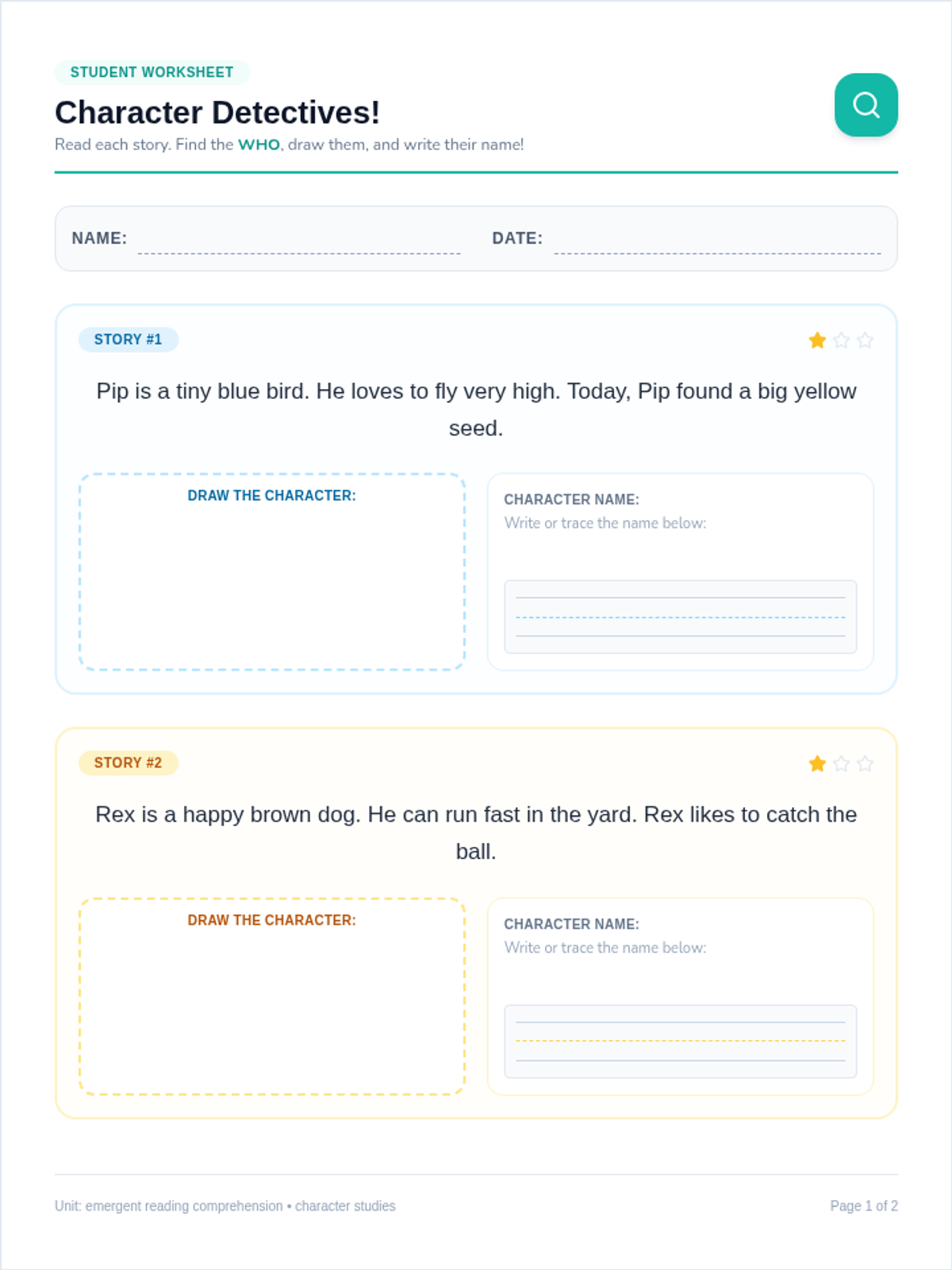
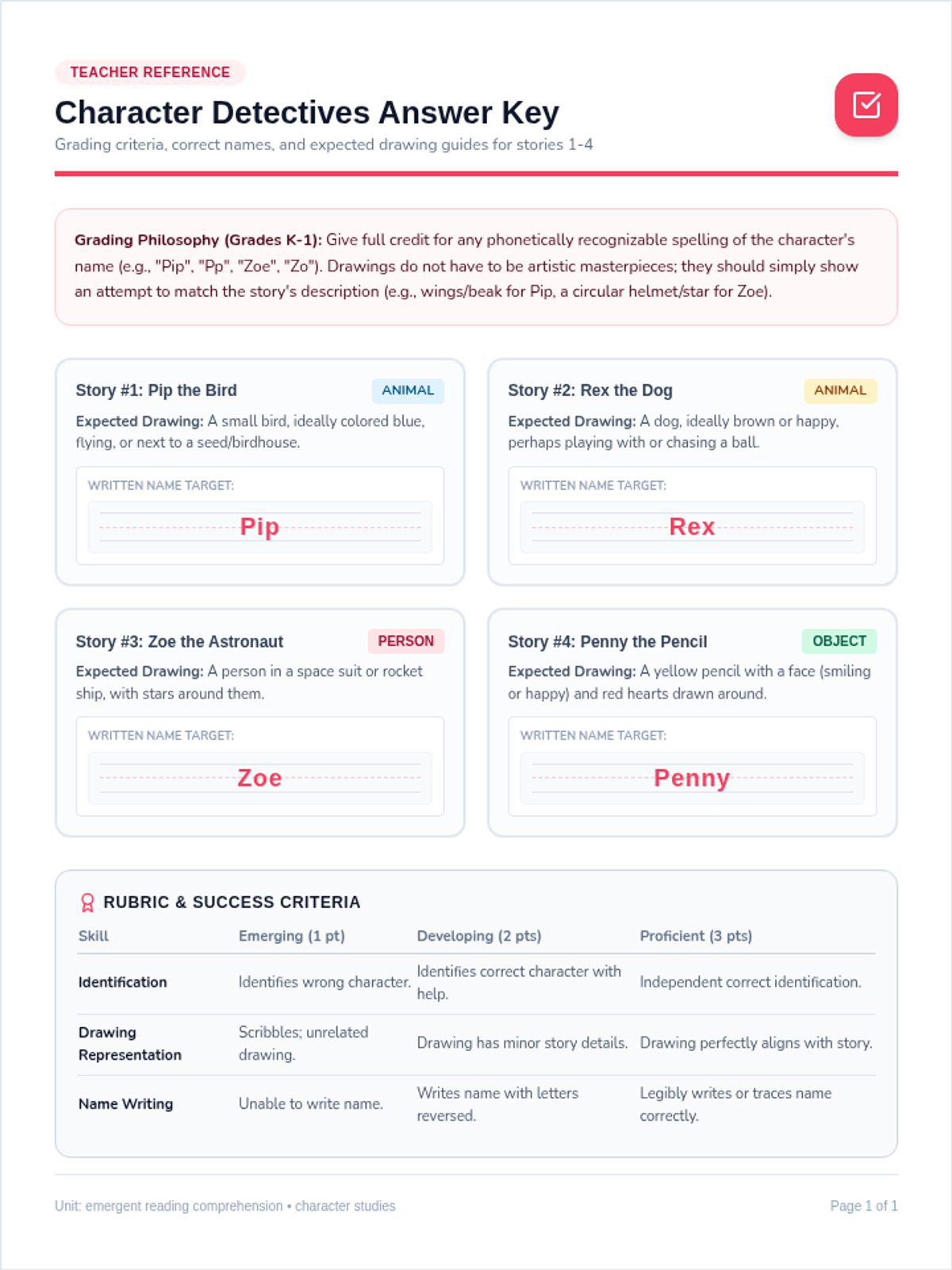
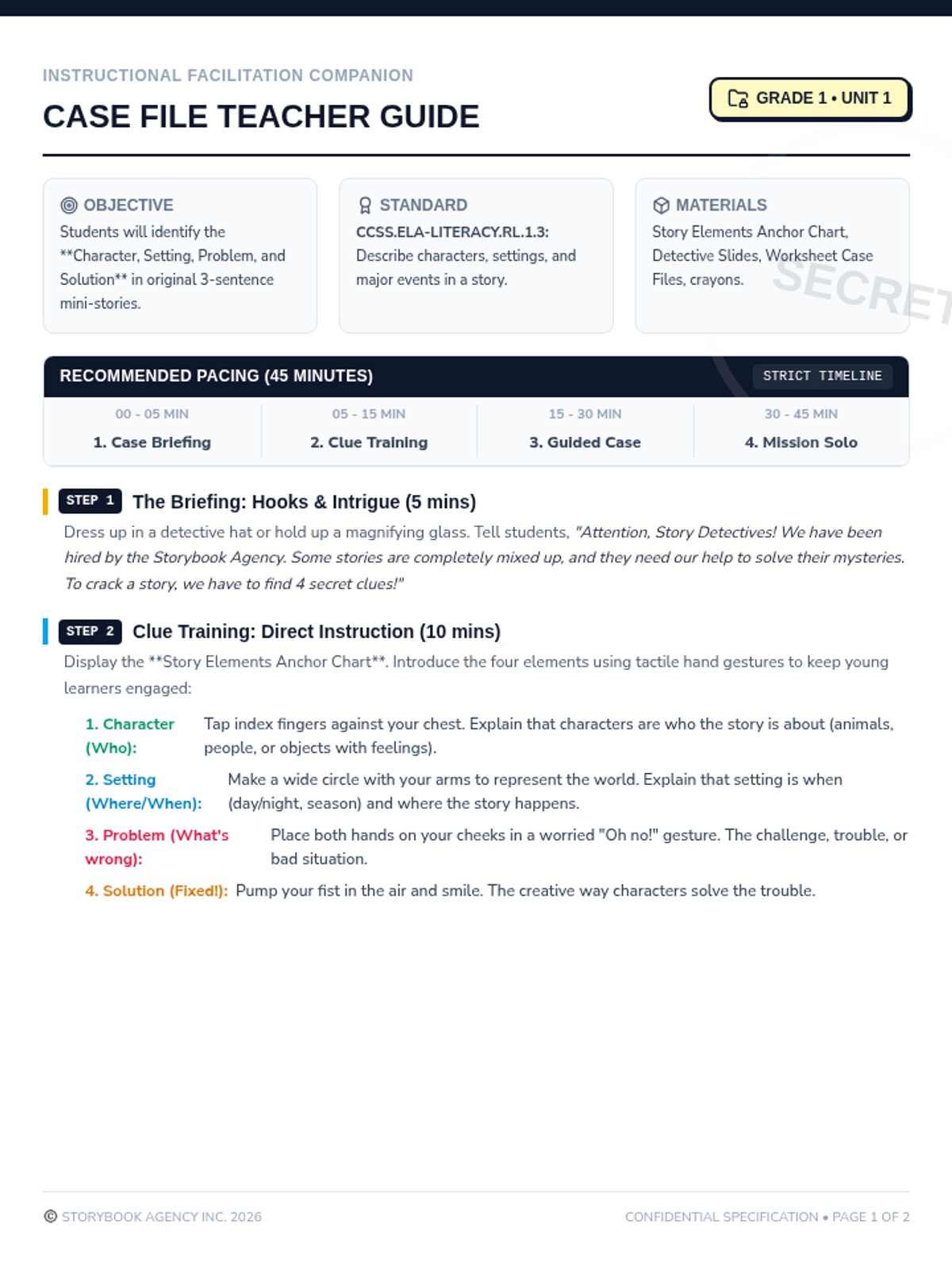
A foundational reading comprehension lesson for emergent readers to identify and track characters. It includes a teacher guide, two colorful anchor charts, a mini-stories student worksheet, and an answer key.
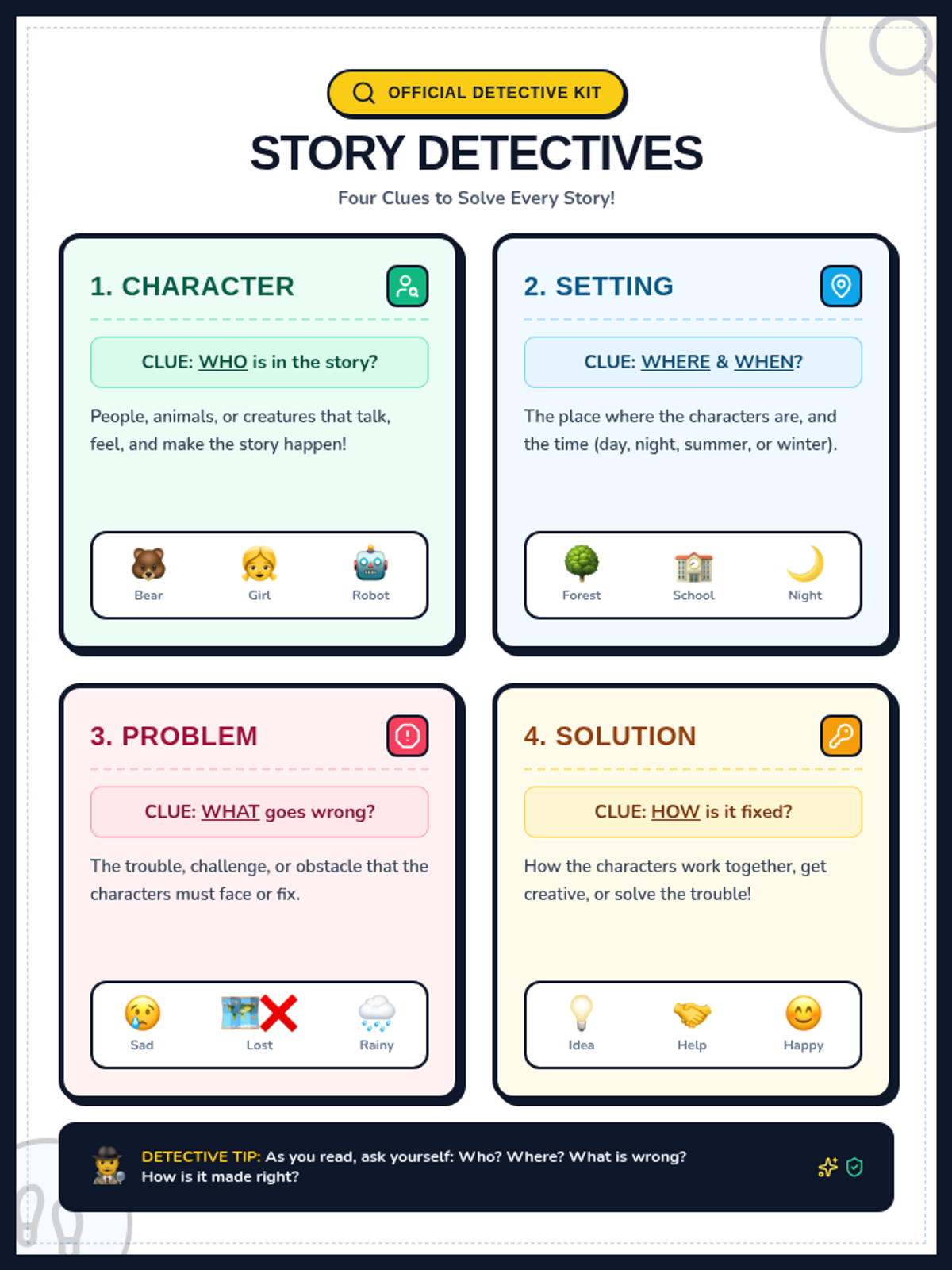
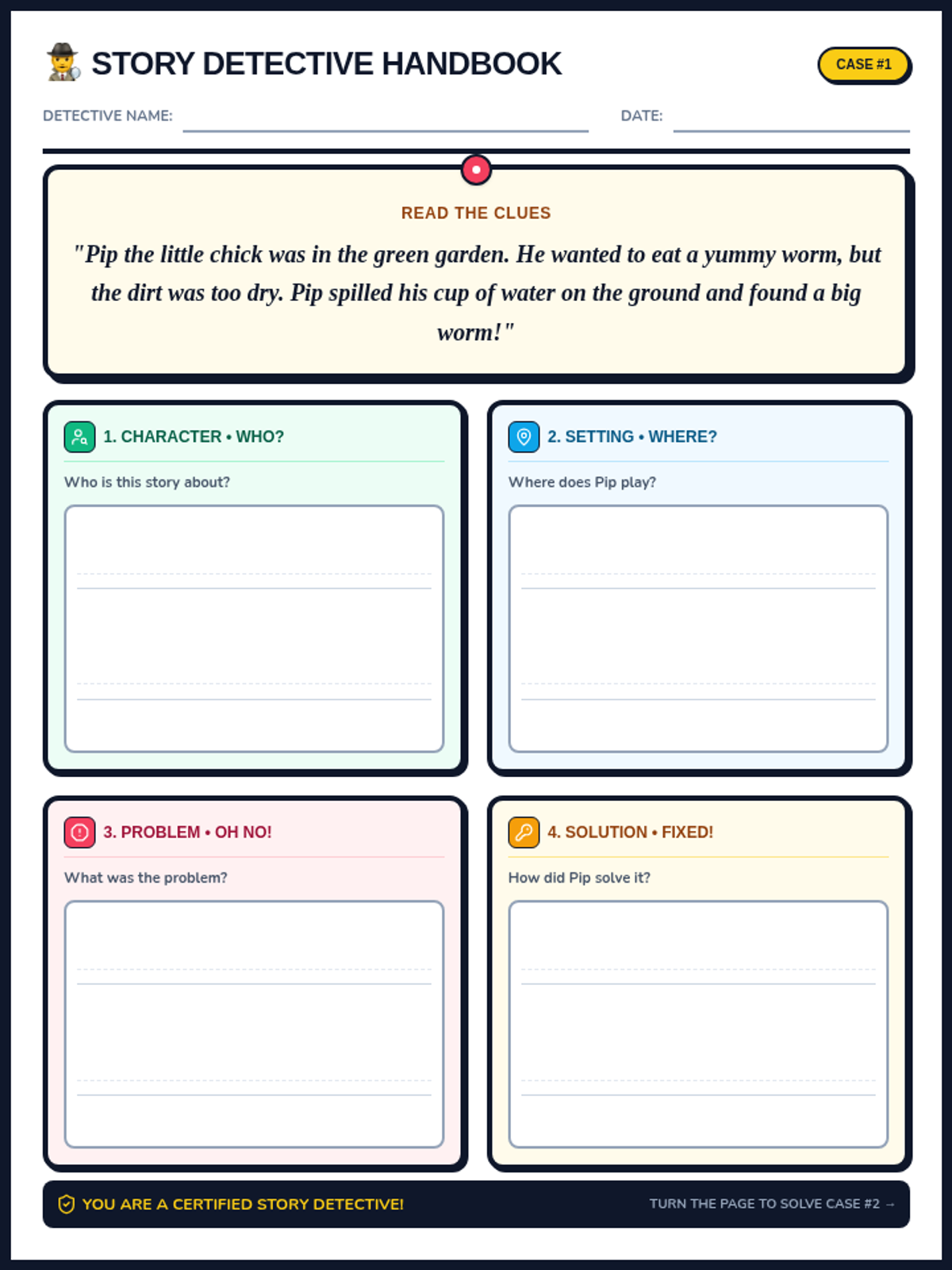
A first-grade lesson that introduces story elements (character, setting, problem, and solution) through a fun detective agency theme. Students use original 3-sentence mini-stories to identify each element and solve literary cases.
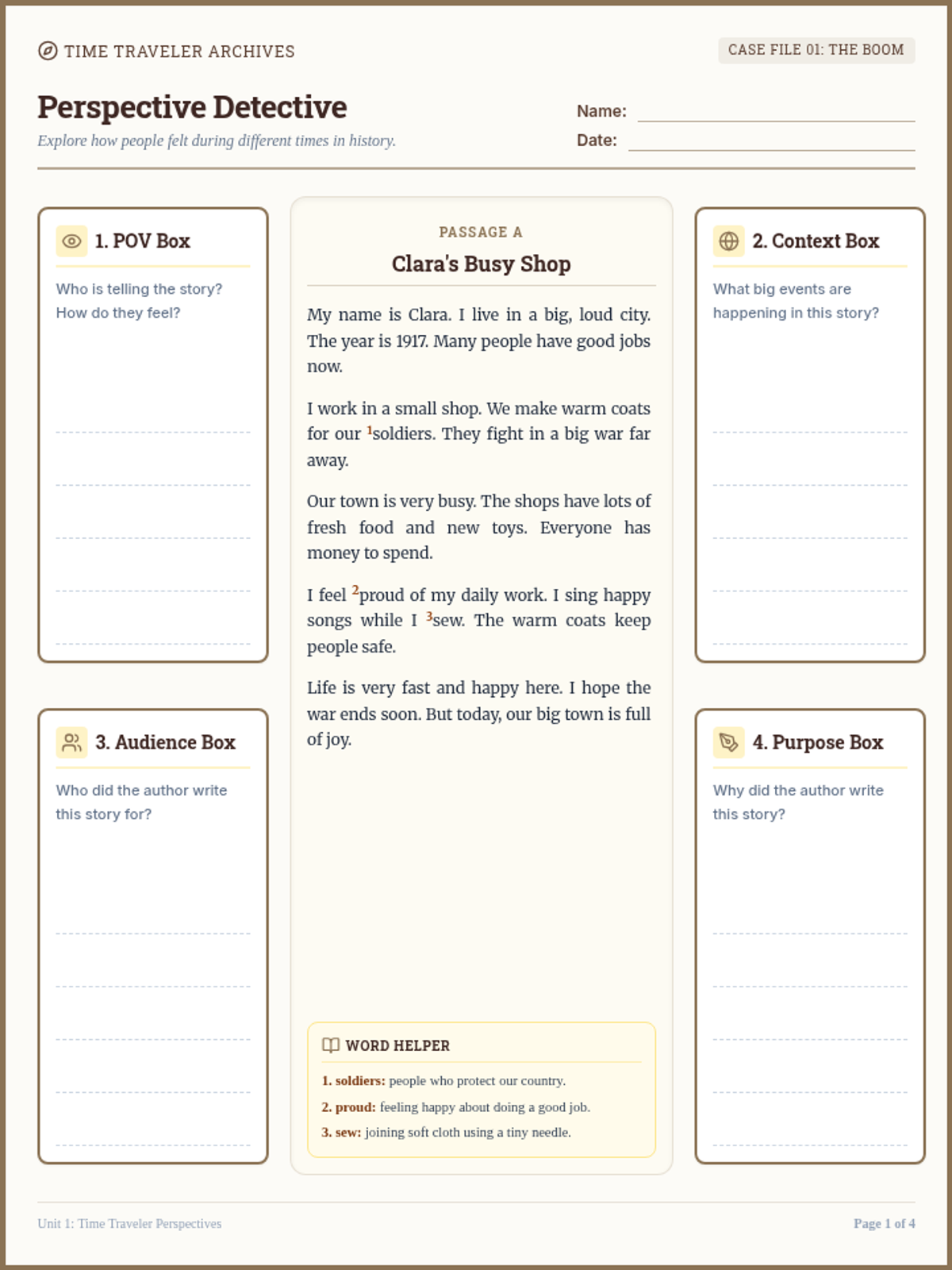
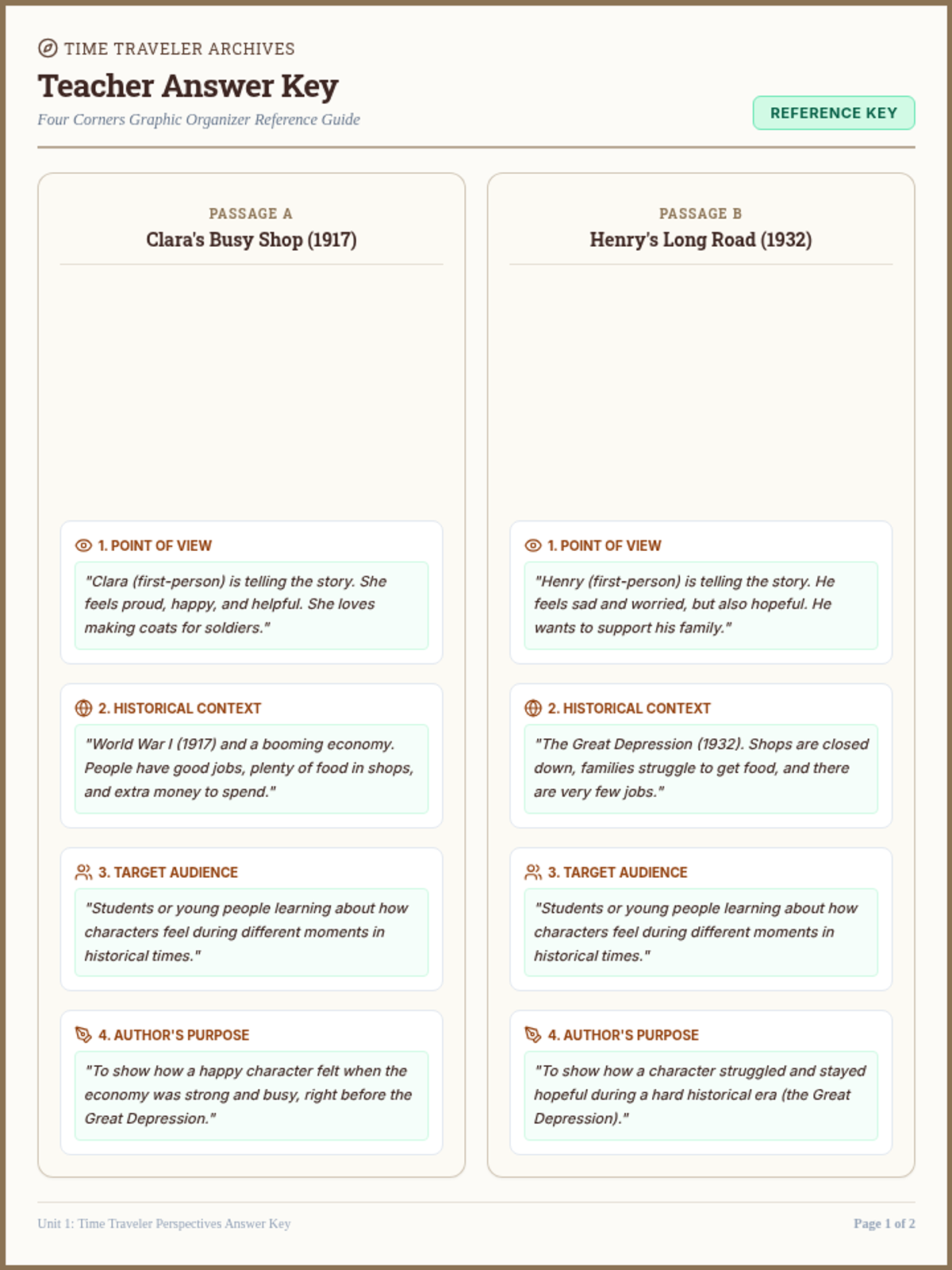
An independent reading unit focusing on perspective and point of view during two contrasting historical eras: World War I and the Great Depression. Students analyze character emotions and historical contexts using a 'four corners' layout.
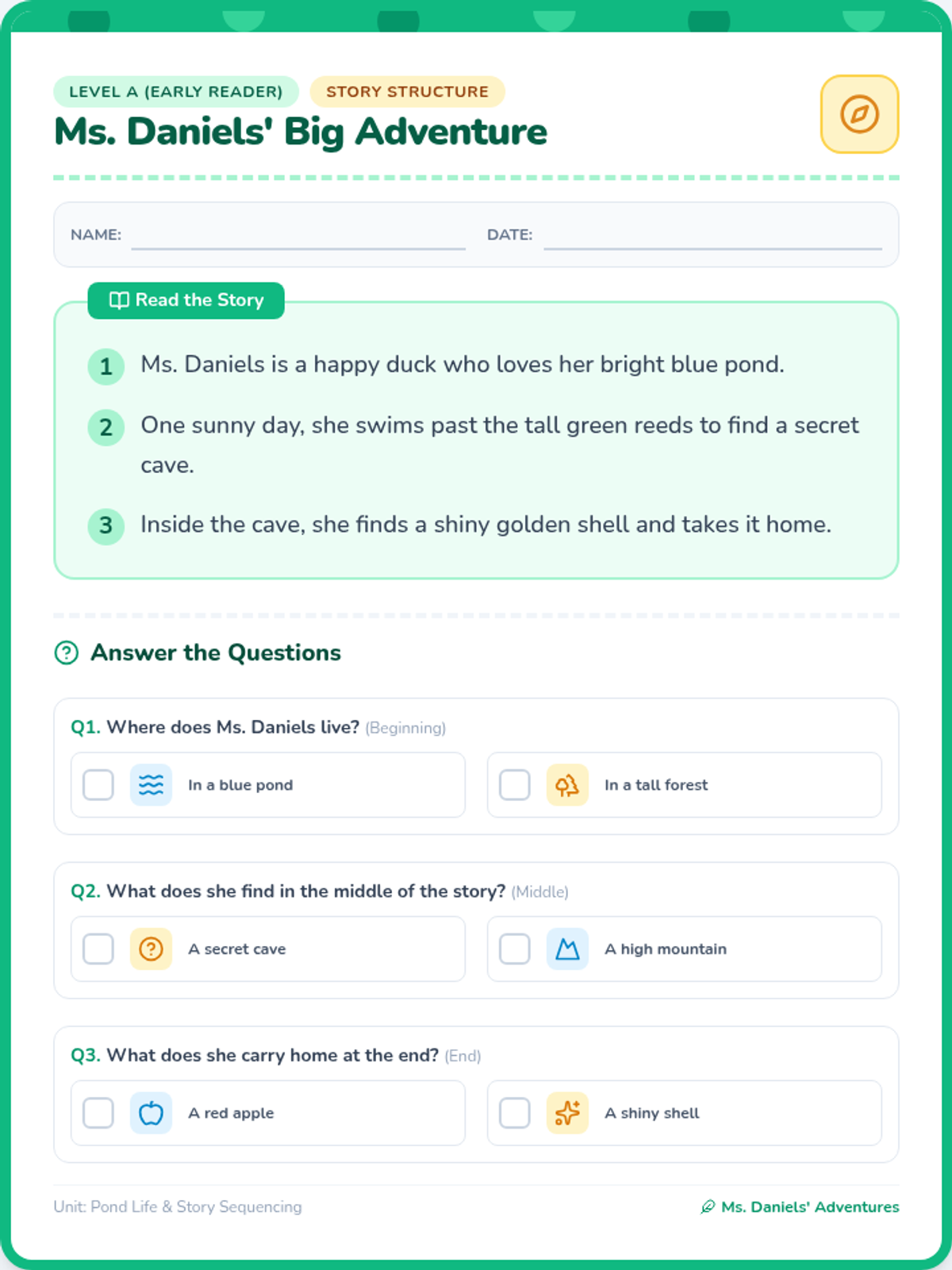
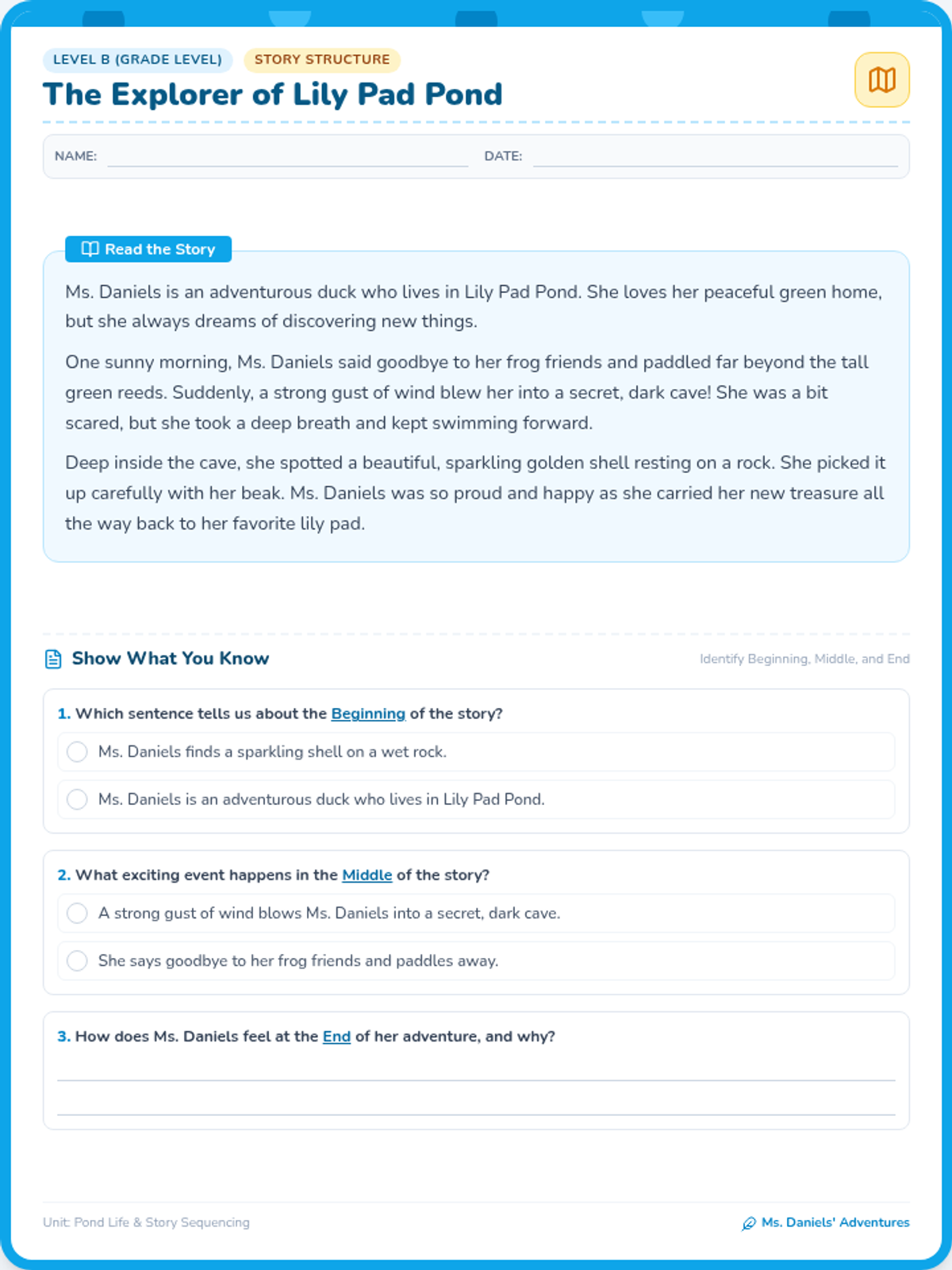
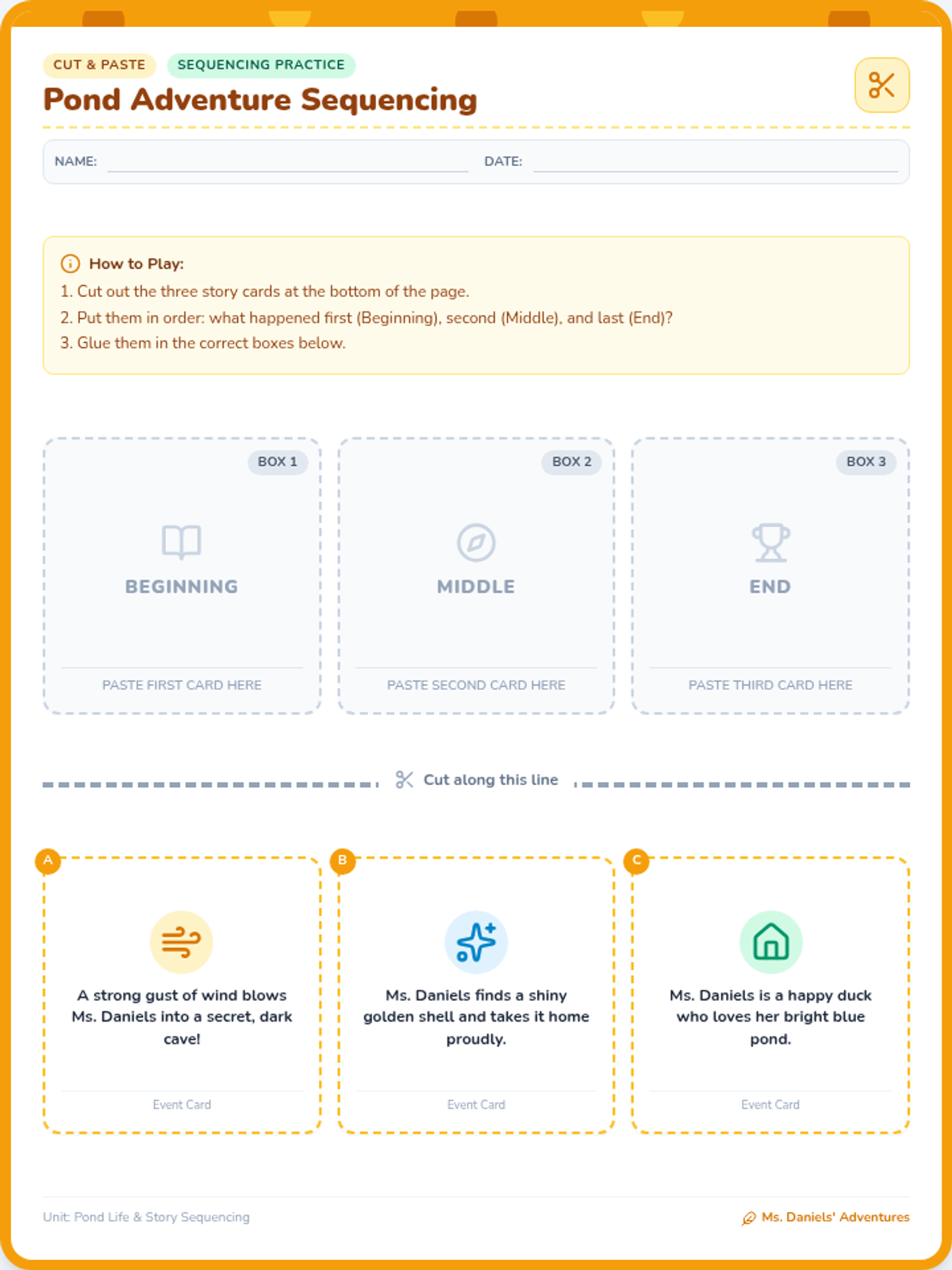
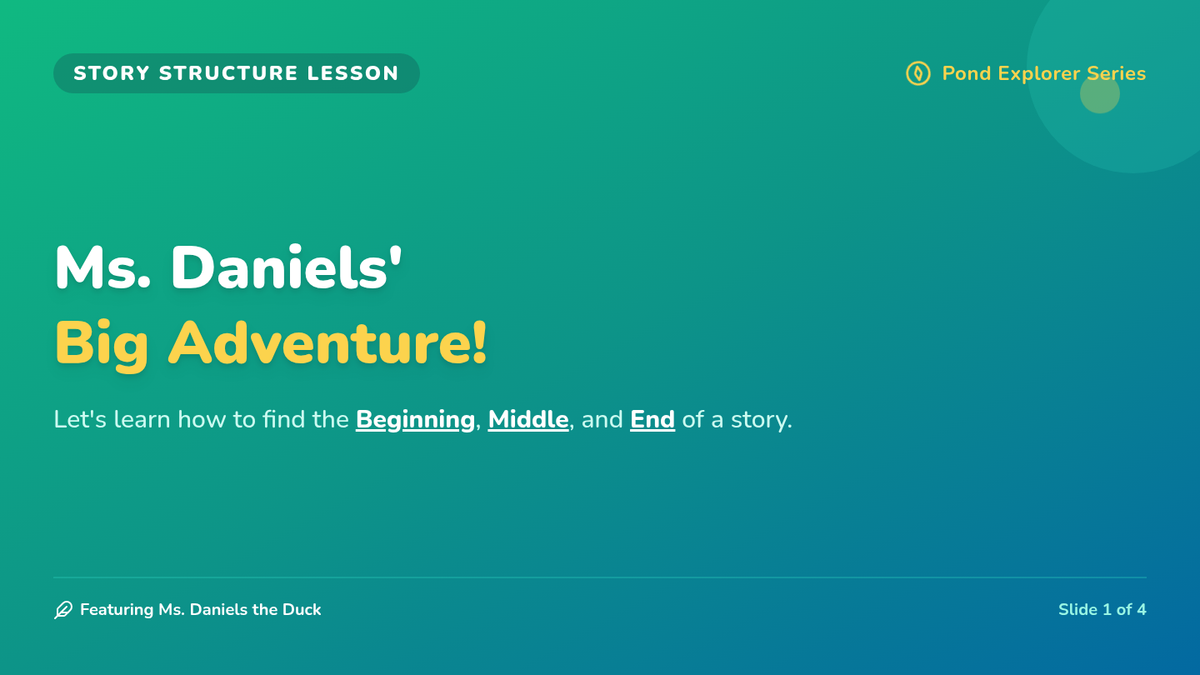
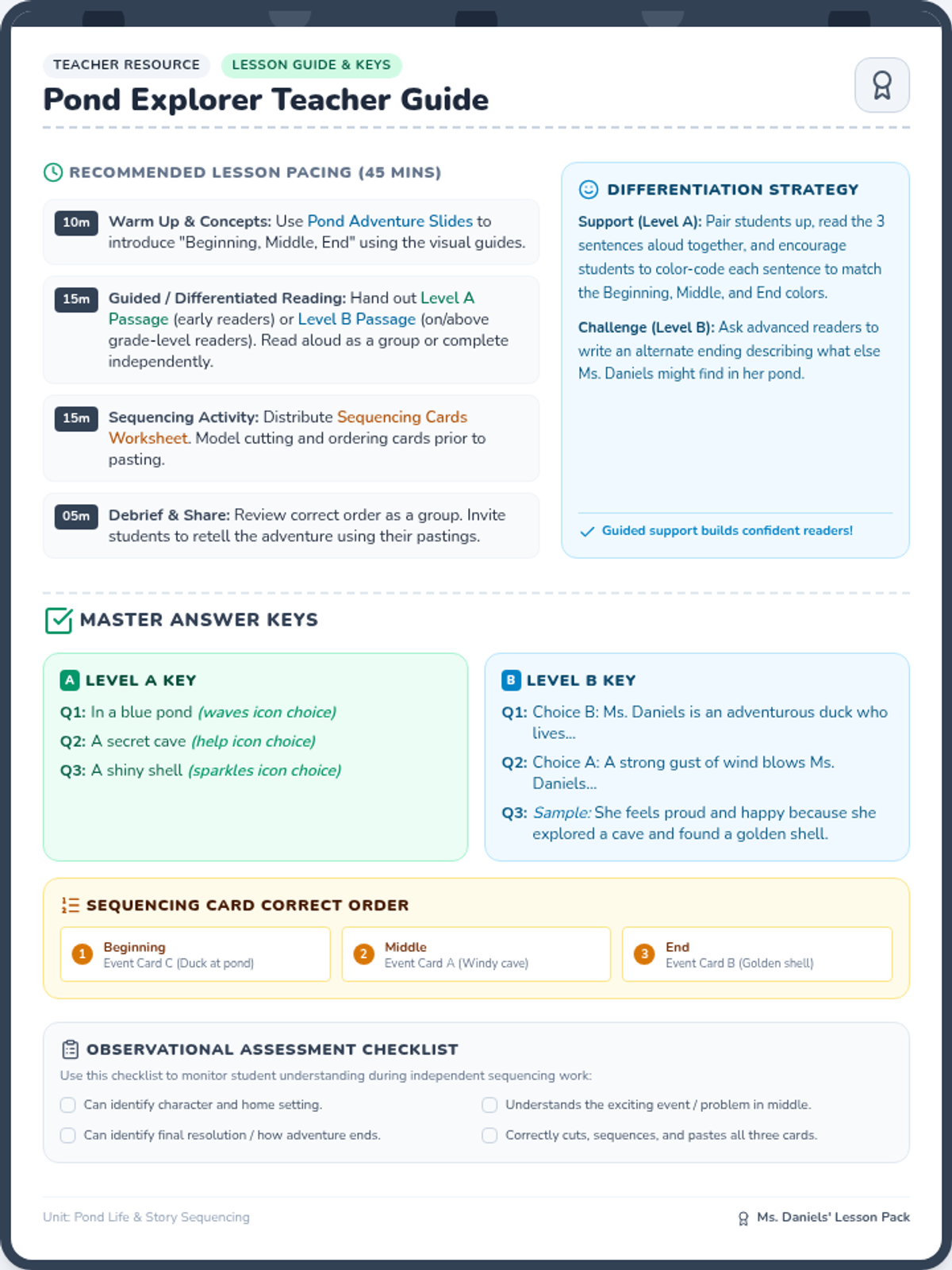
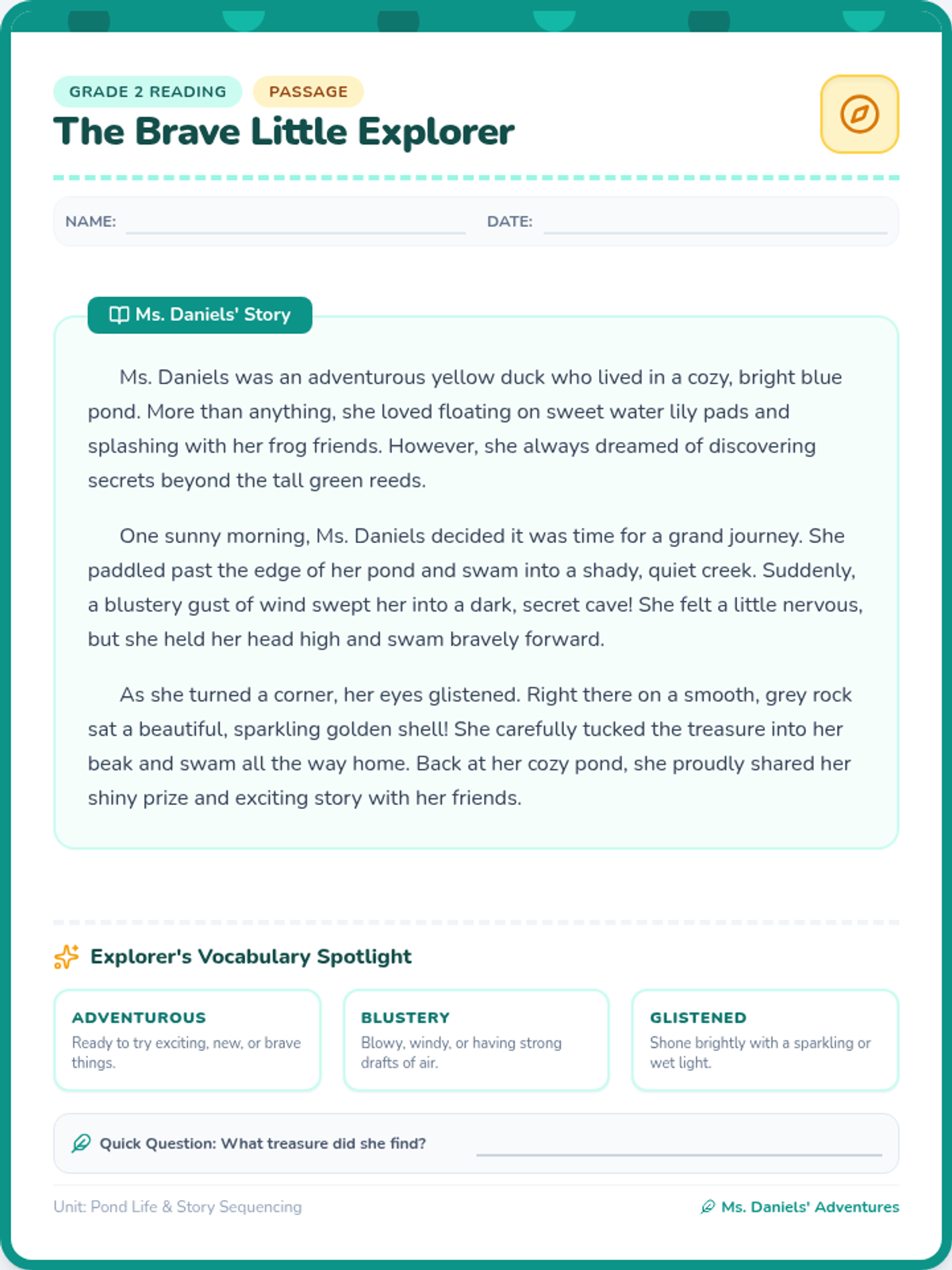
A sequencing and story structure lesson featuring Ms. Daniels, an adventurous duck who loves her pond. Includes differentiated reading passages, picture-supported comprehension questions, and a cut-and-paste sequencing activity.
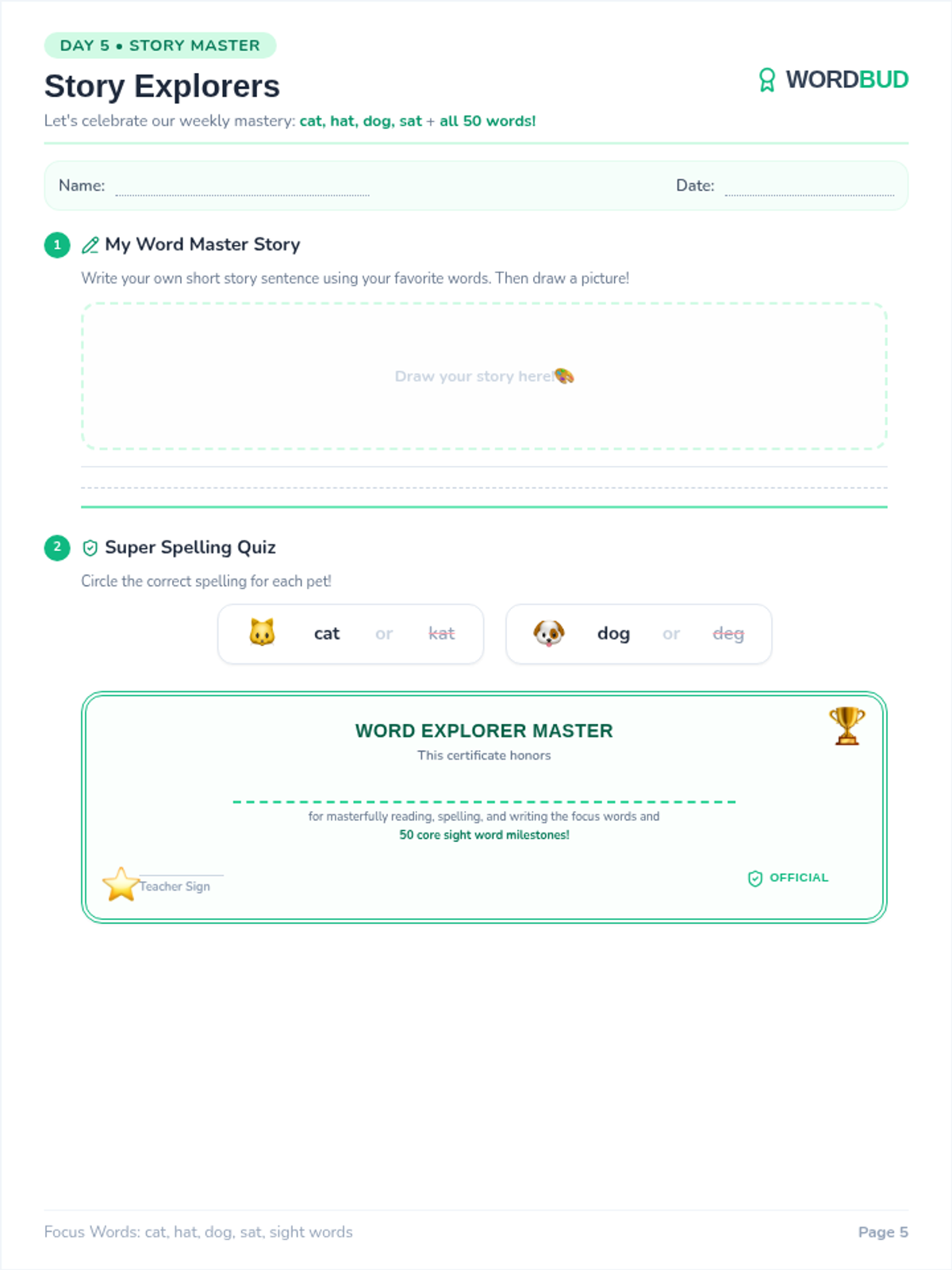
Synthesize the week's learning with simple story writing, custom drawing prompts, and a Certificate of Completion to reward students.
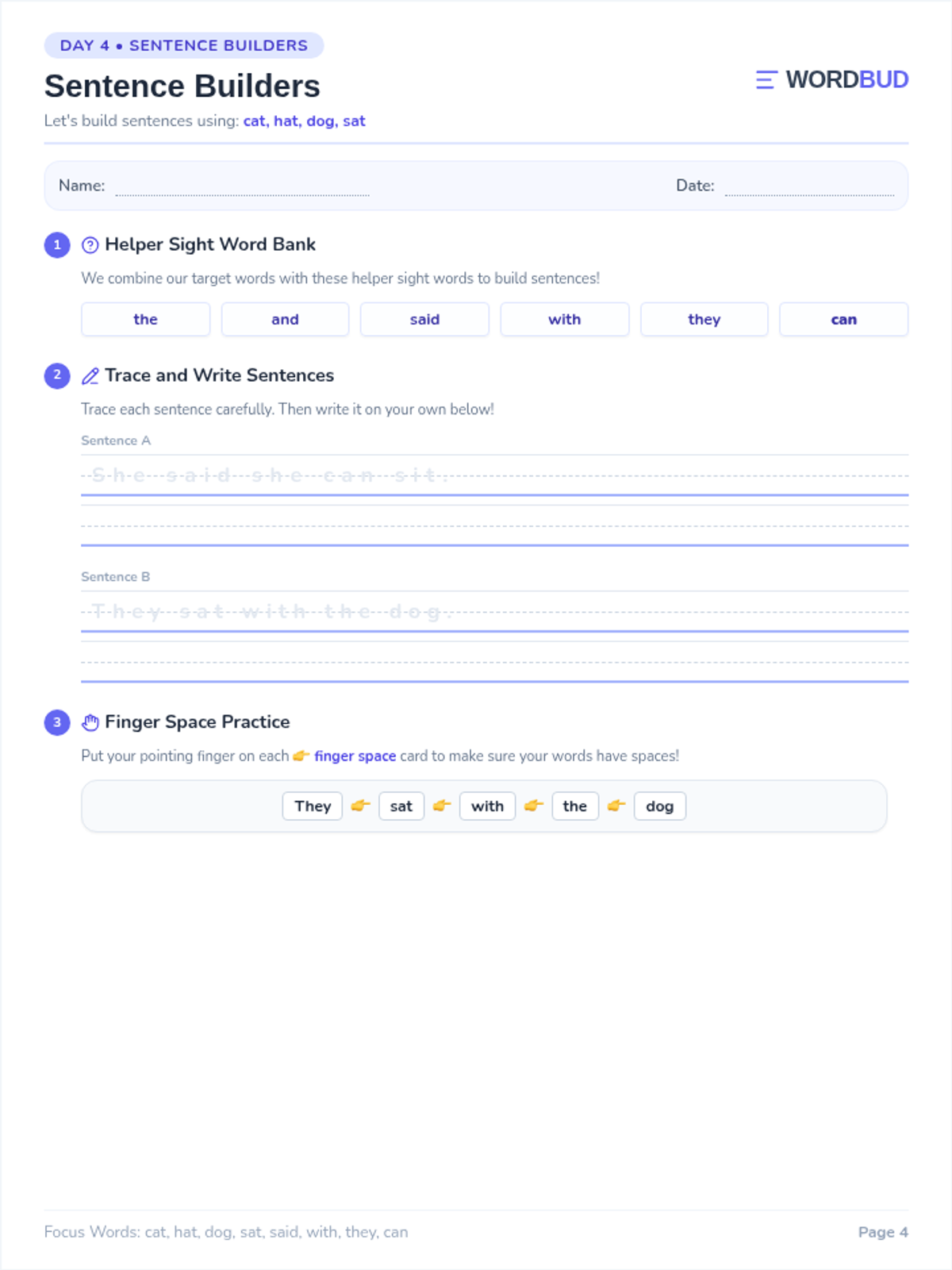
Guide students to construct simple complete sentences with focus words, practicing finger spaces and punctuation.
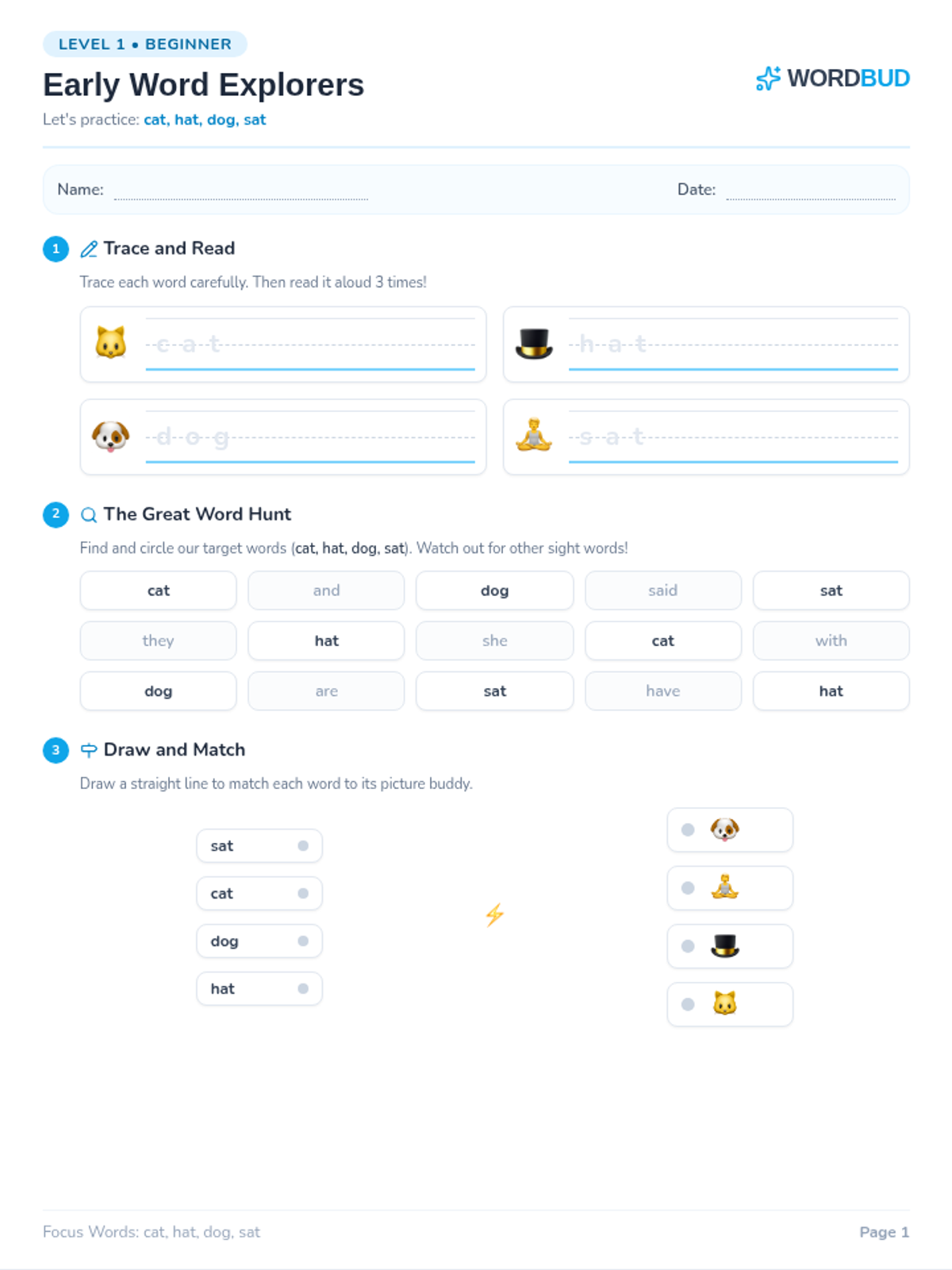
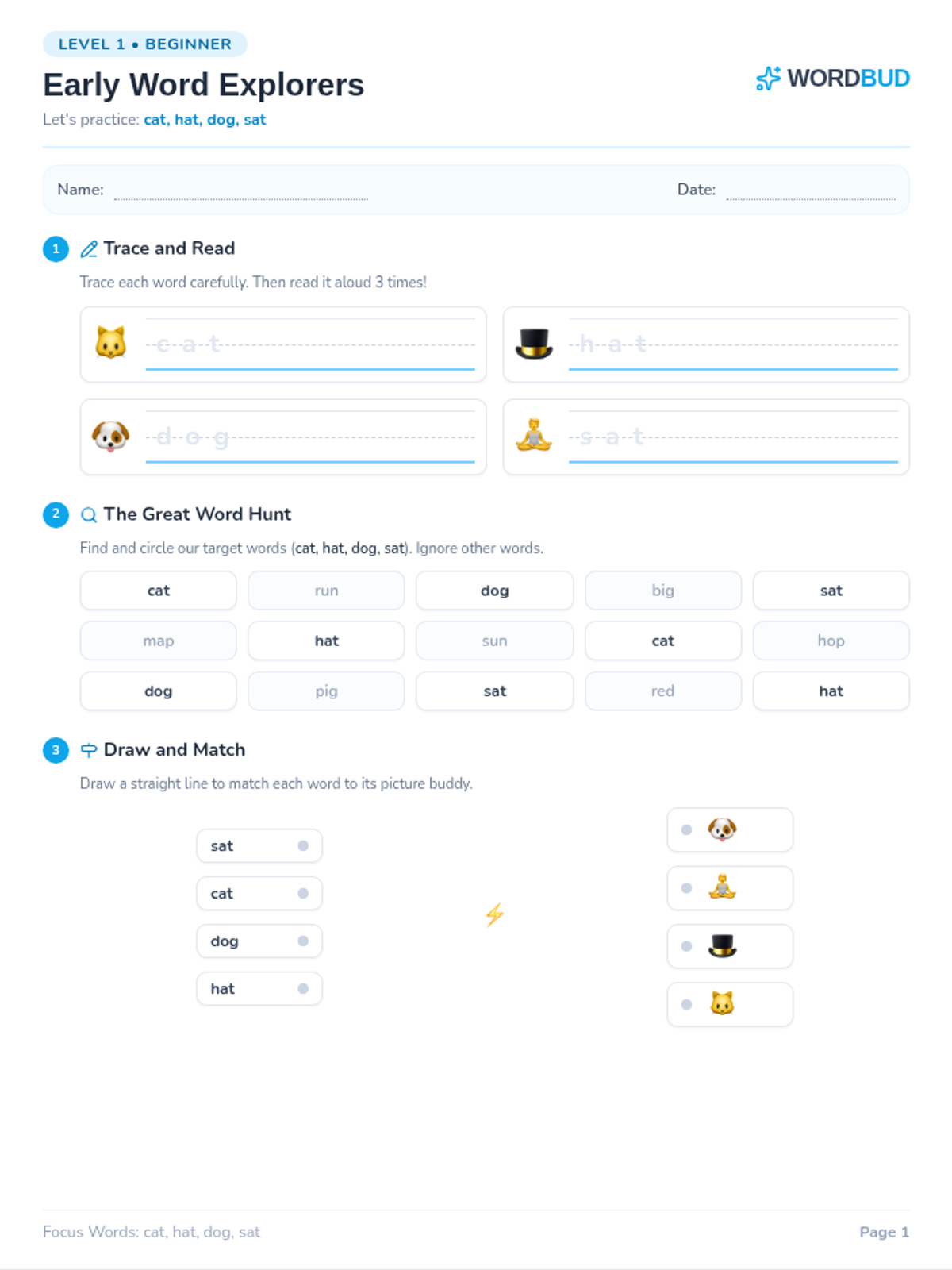
Combine all four focus words (cat, dog, hat, sat) using shape boxes, word banks, and leveled reading tasks.
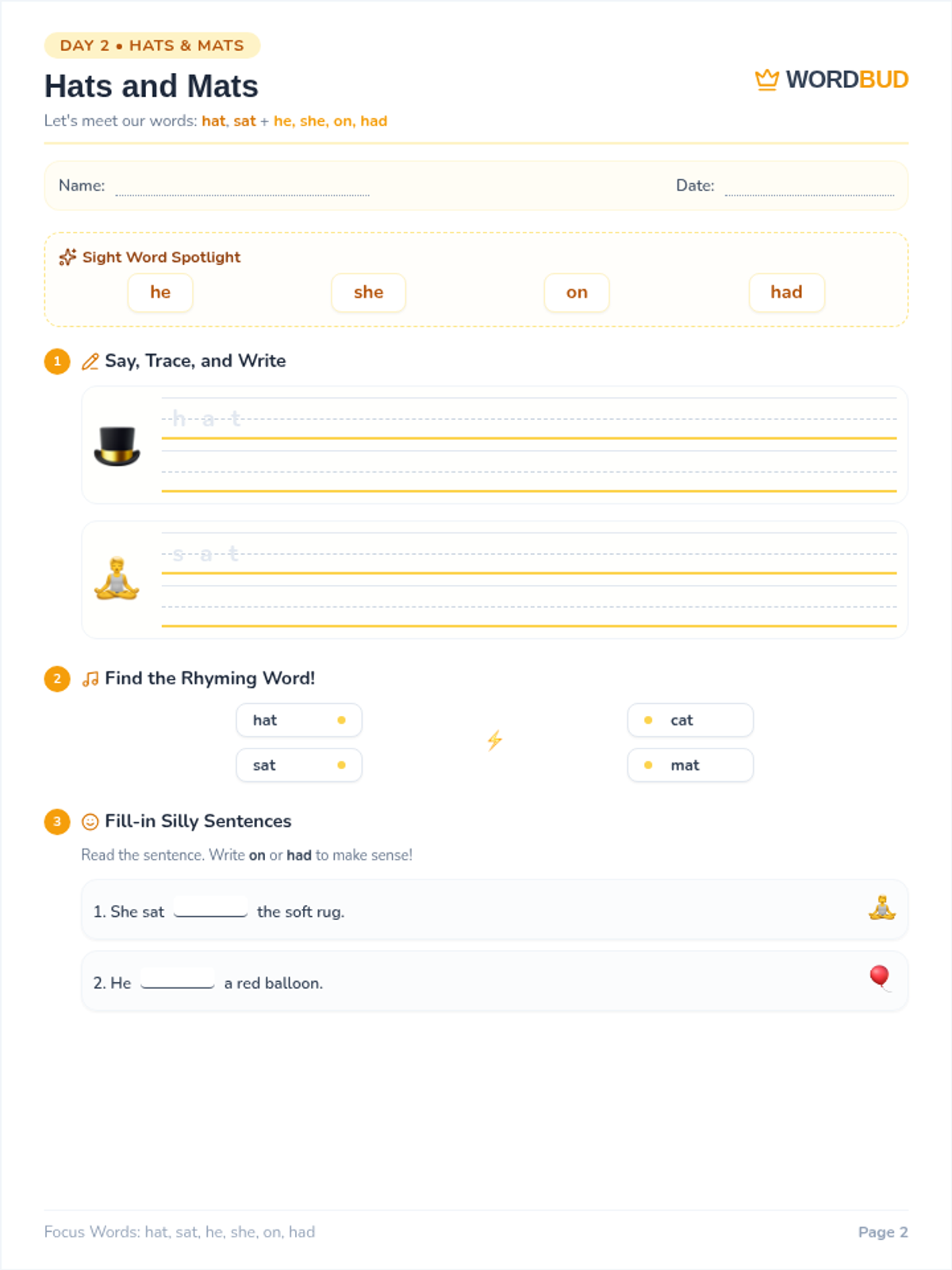
Introduce "hat" and "sat" using matching games, interactive rhyming, and physical motion associations to reinforce spelling patterns.
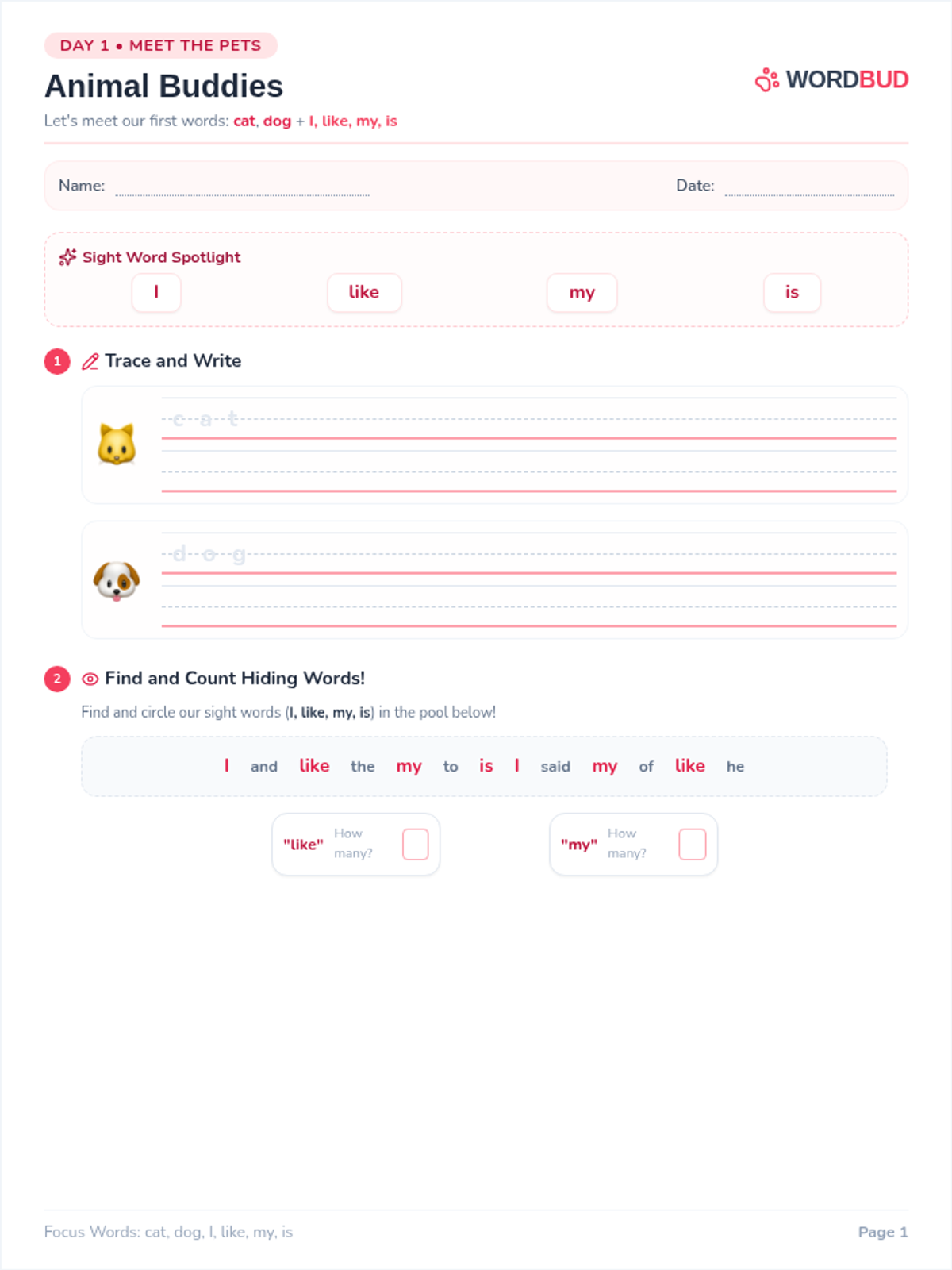
Introduce the animal target words "cat" and "dog" through visual recognition, fine-motor tracing, and simple auditory isolation activities.
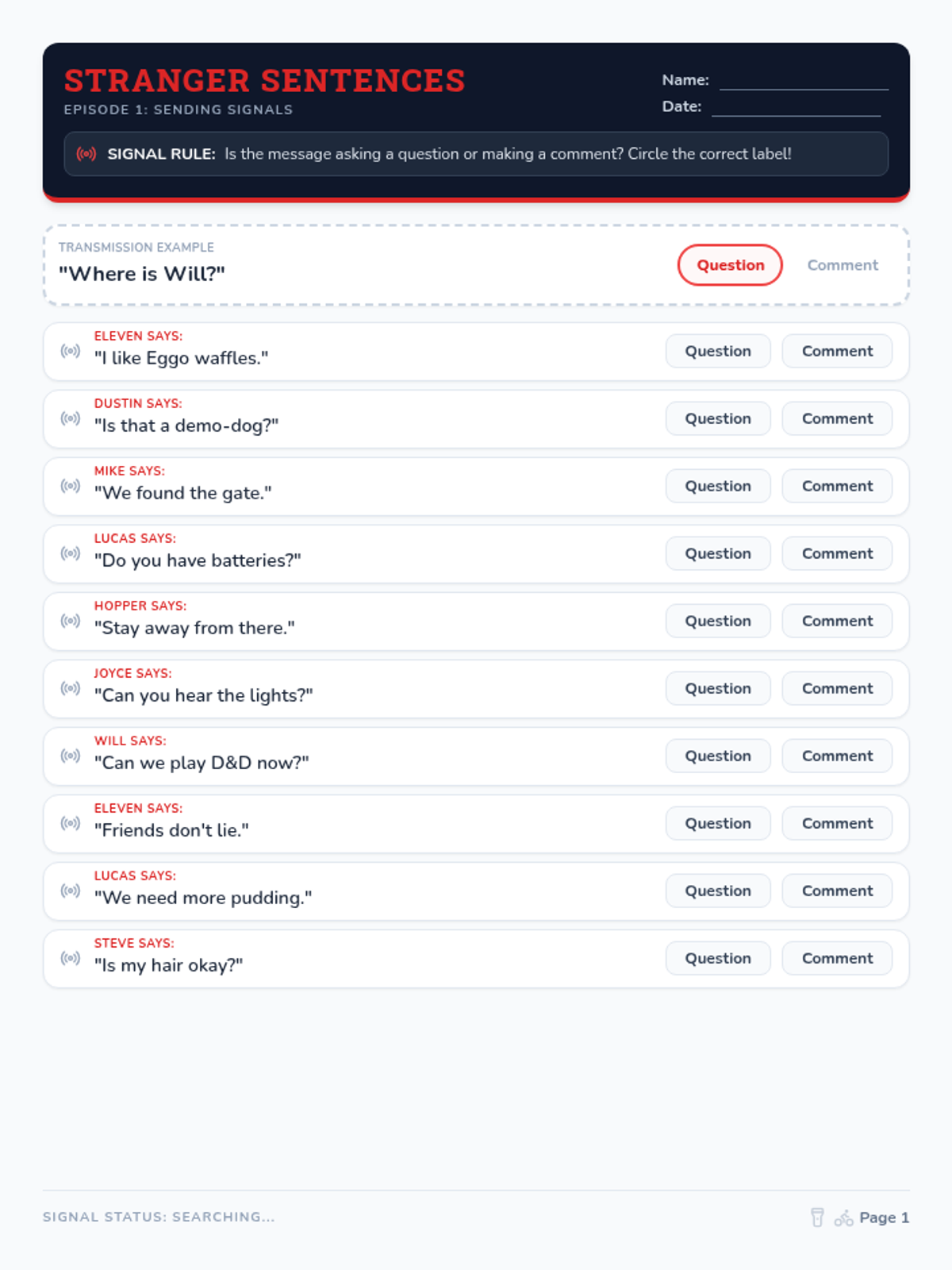
A lesson focused on identifying the difference between questions and comments using dialogue from familiar characters. Students practice punctuation and sentence purpose recognition.
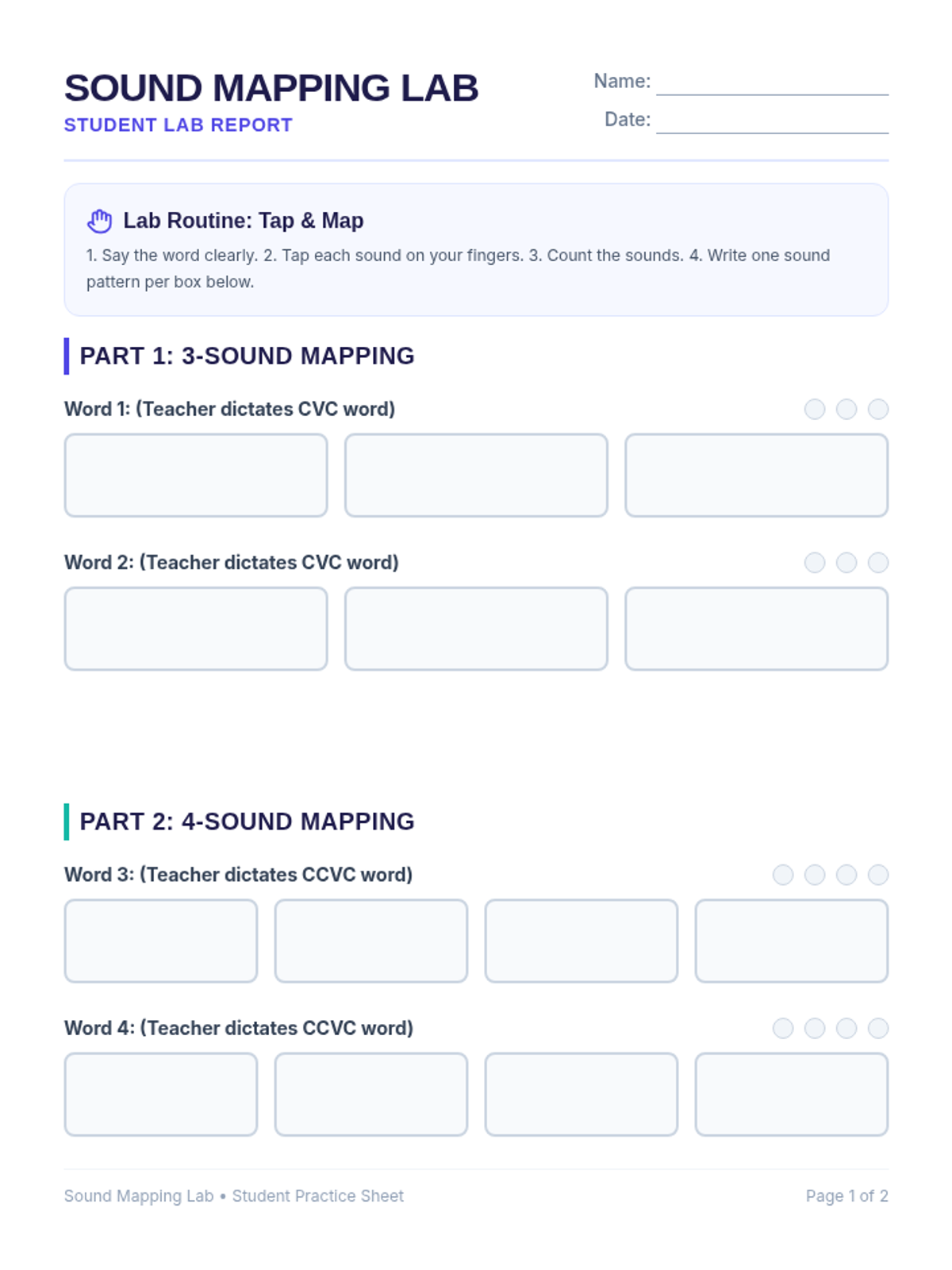
A comprehensive lesson focused on orthographic mapping, integrating phoneme-grapheme mapping, multi-sensory routines, syllable structures, and heart words.
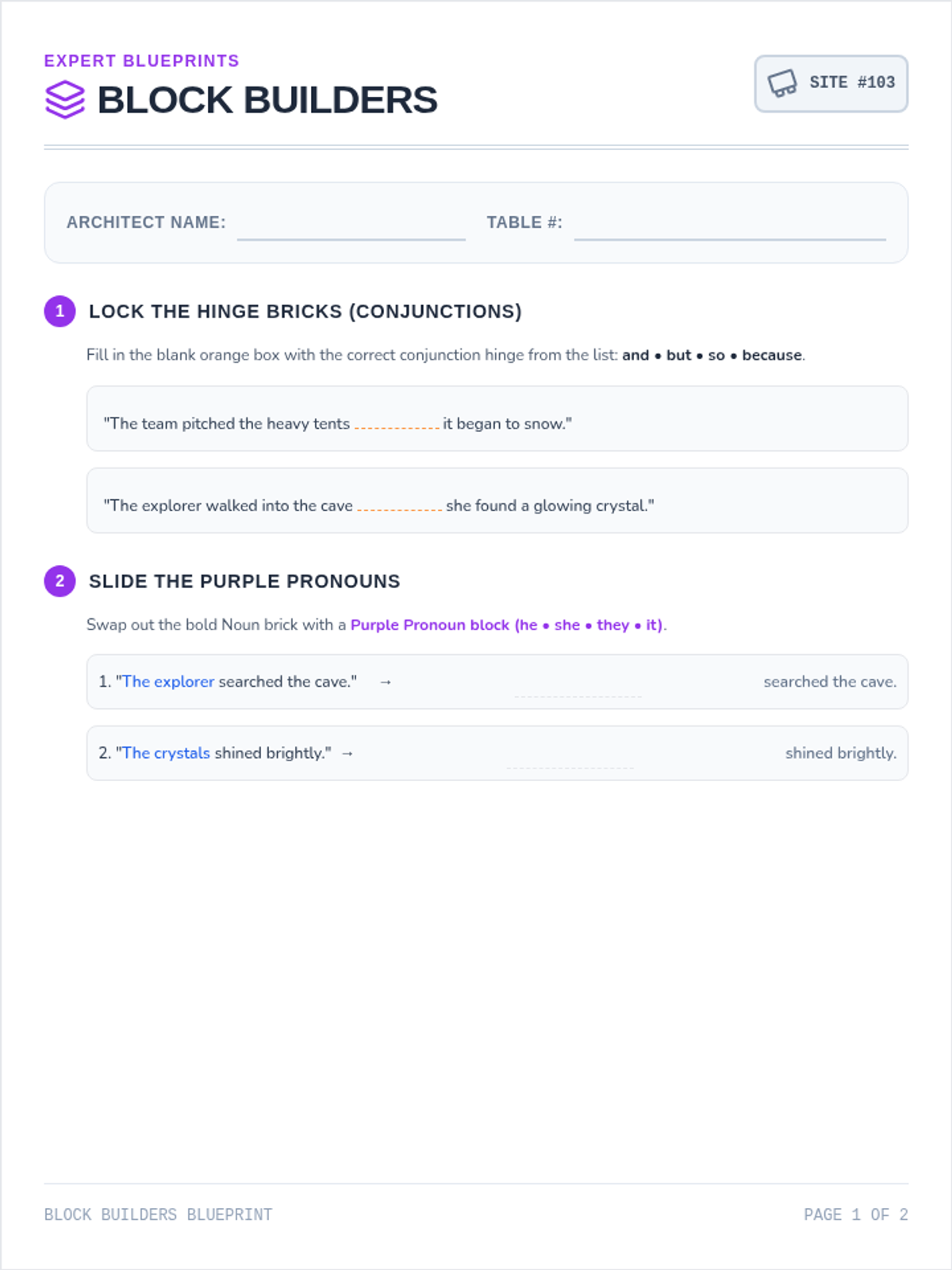
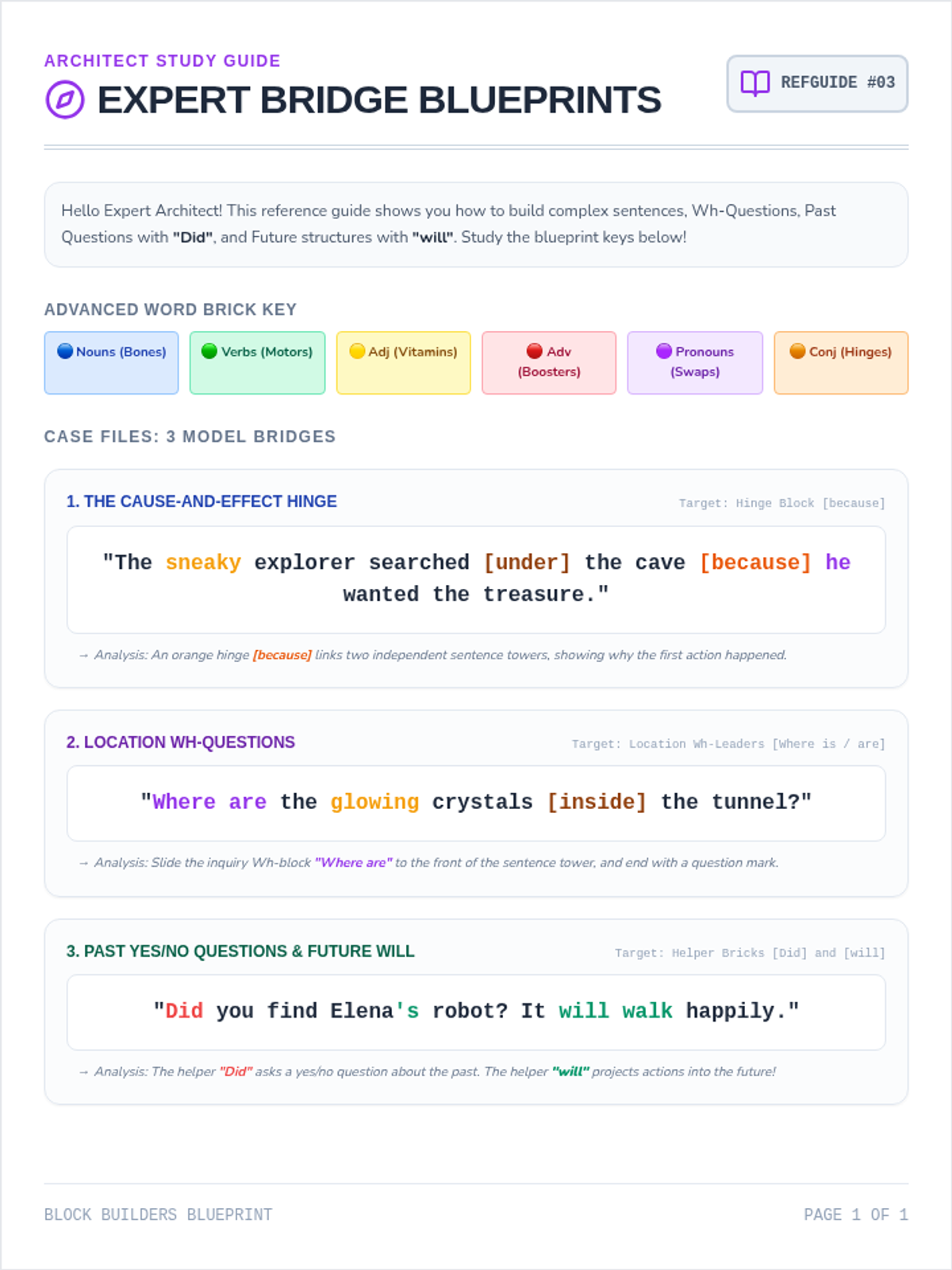
An advanced grammar and syntax lesson for Grades 5-6 introducing compound sentences, prepositions, and conjunctions using complex connector hinges and spacer blocks.