Day 3 covers probability and predictions, teaching students to identify 'more likely' and 'least likely' outcomes based on visual data.
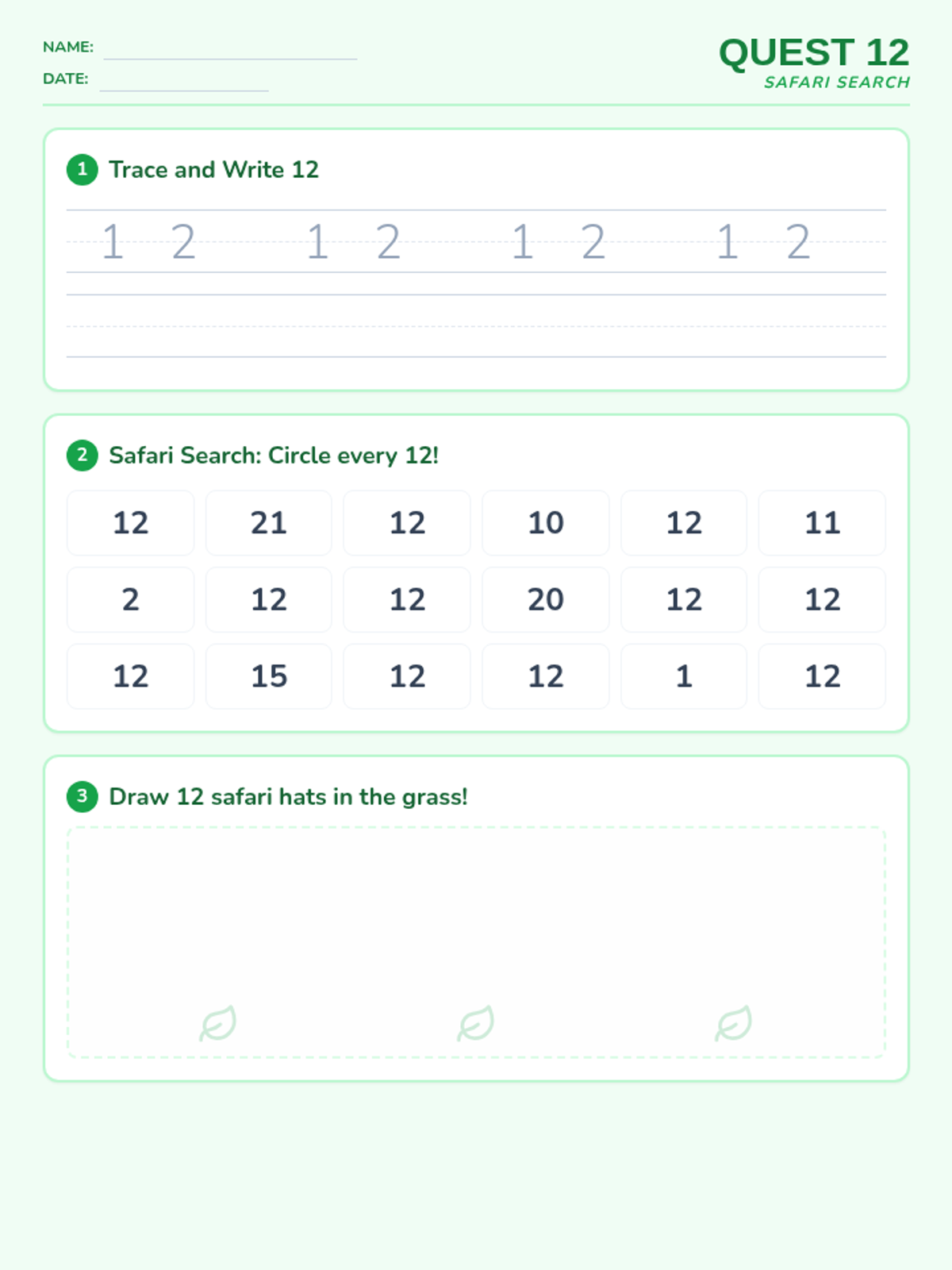
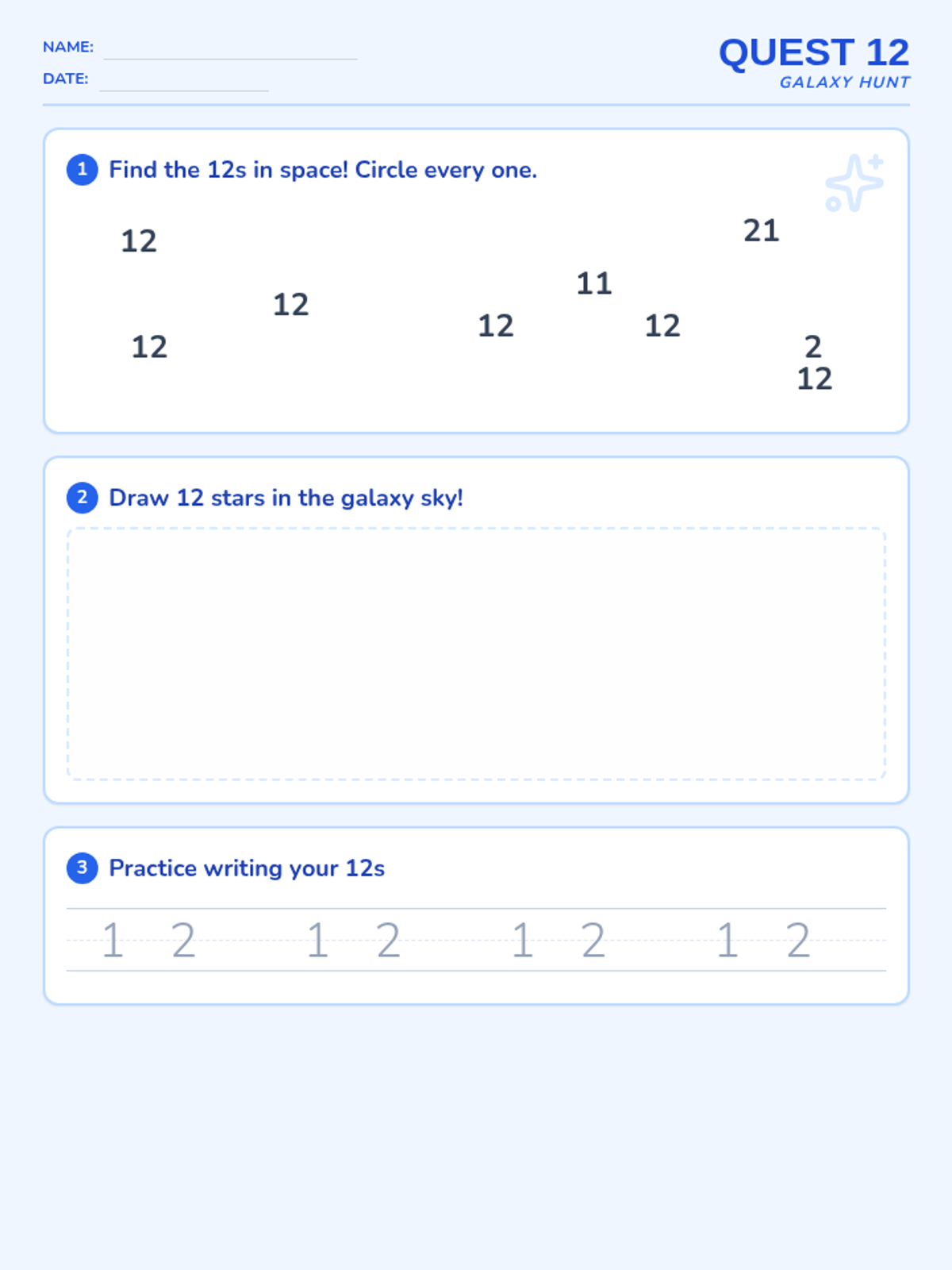
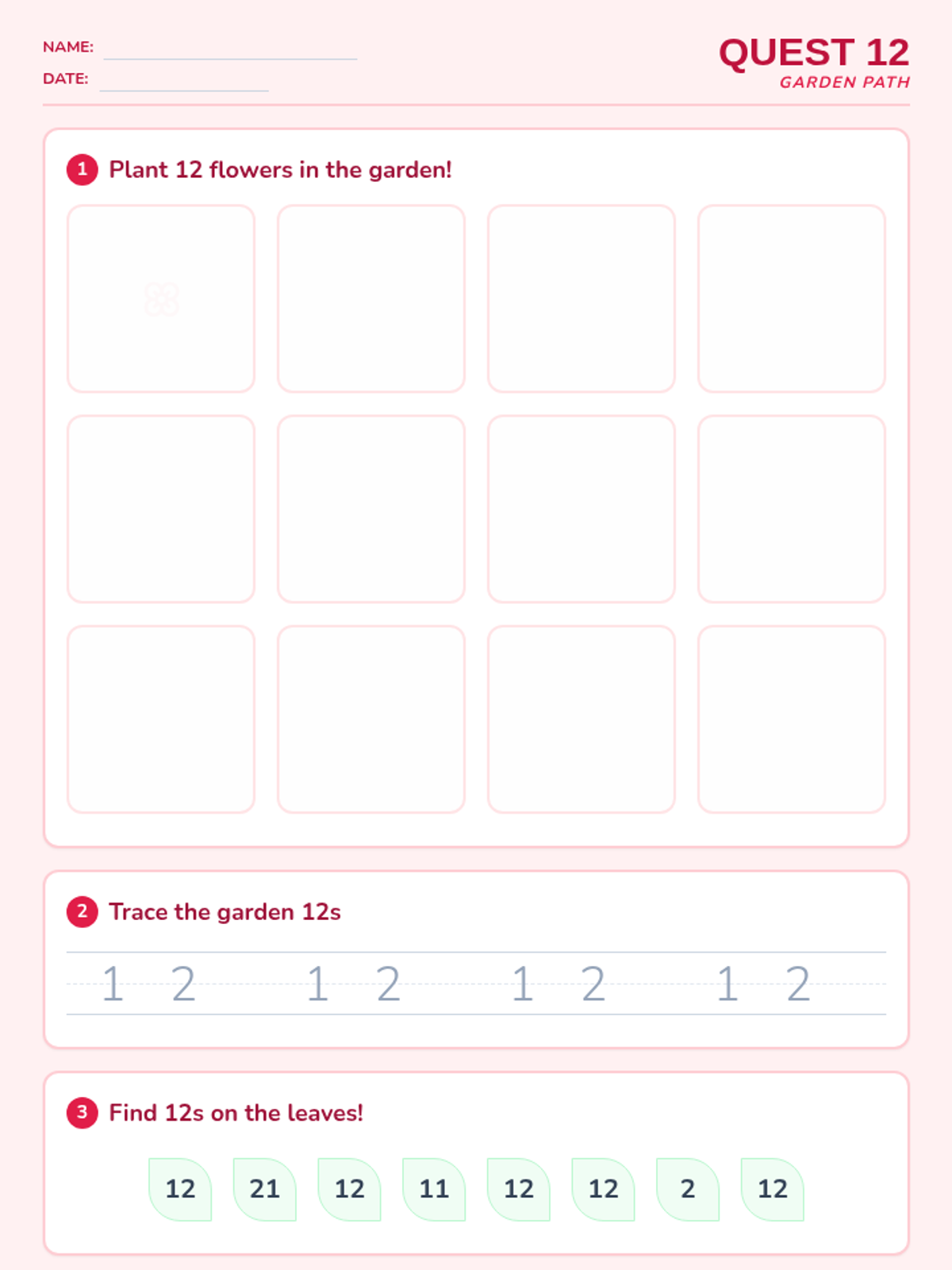
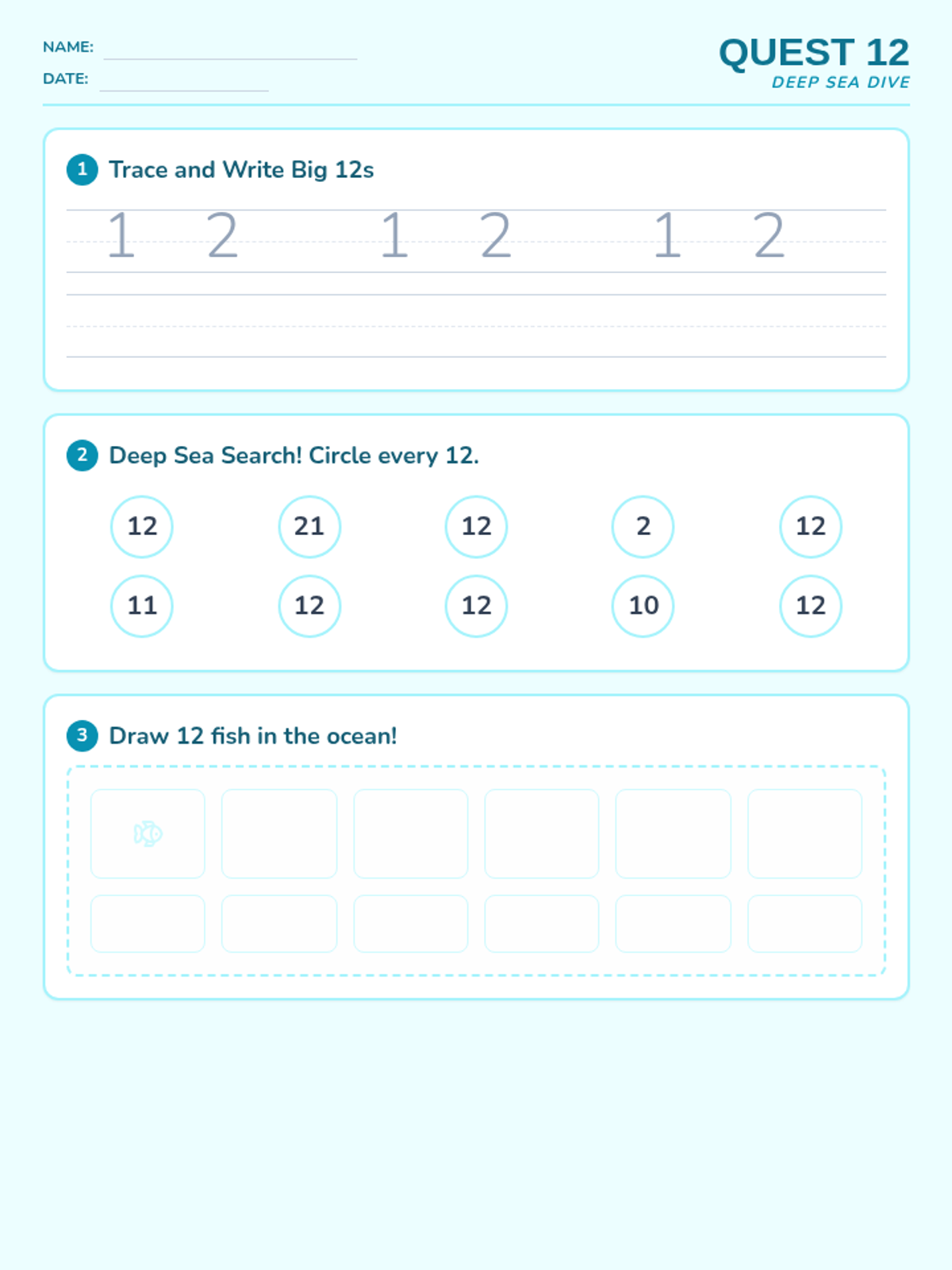
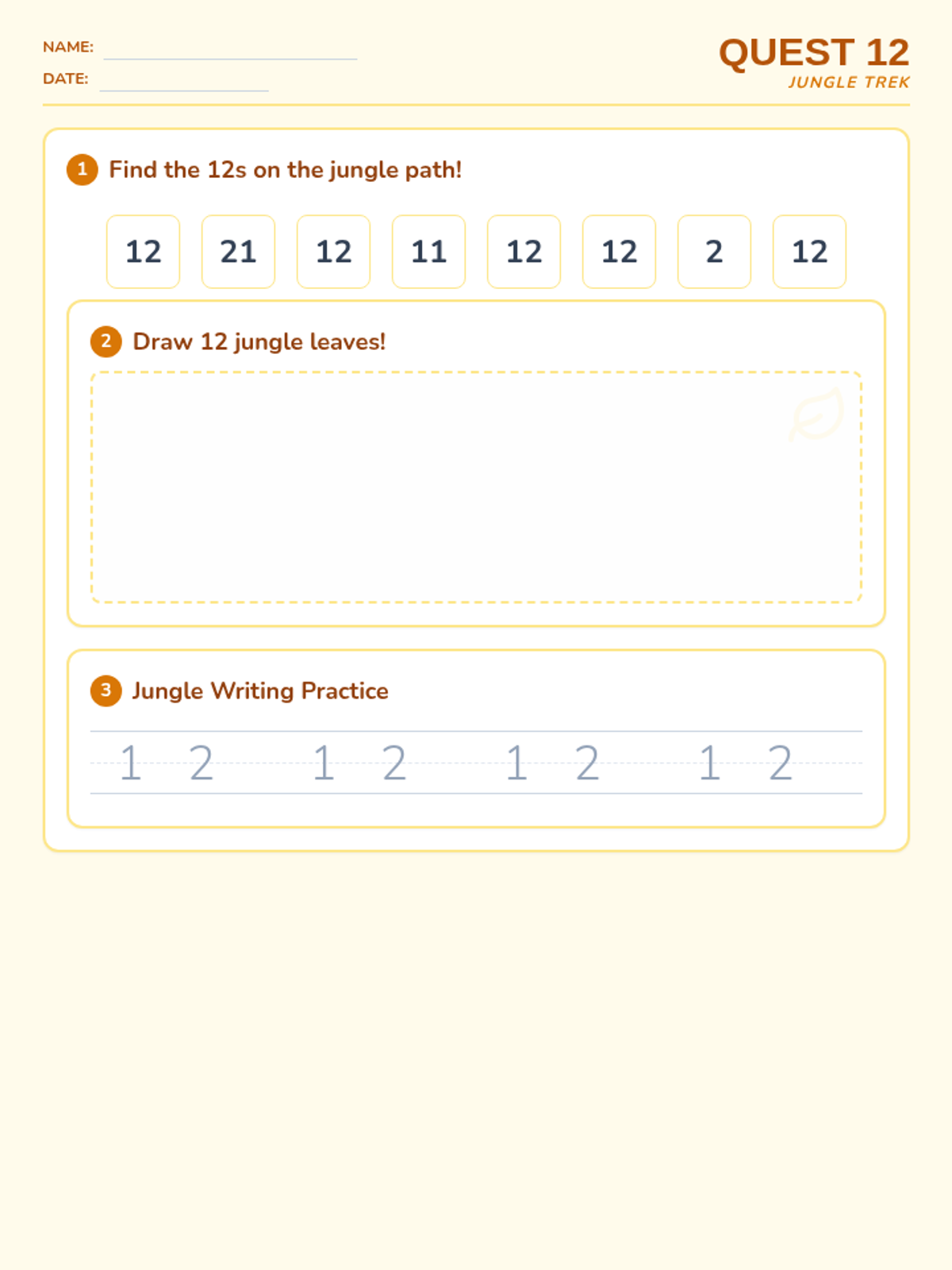
A collection of five varied practice pages designed for kindergarten students to master the number 12 through finding, writing, and drawing. Each page features a unique layout and theme to maintain engagement through repetition.
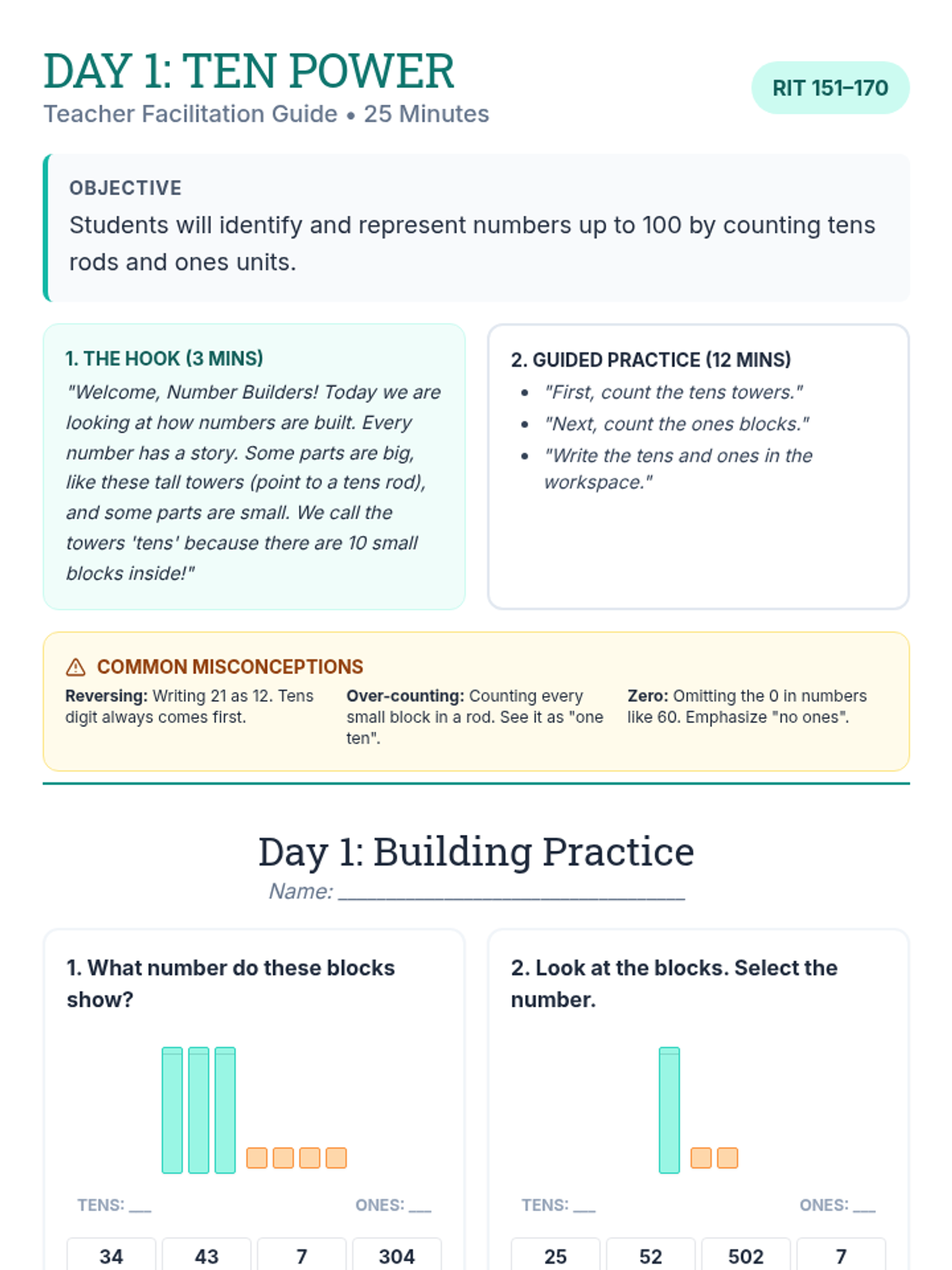
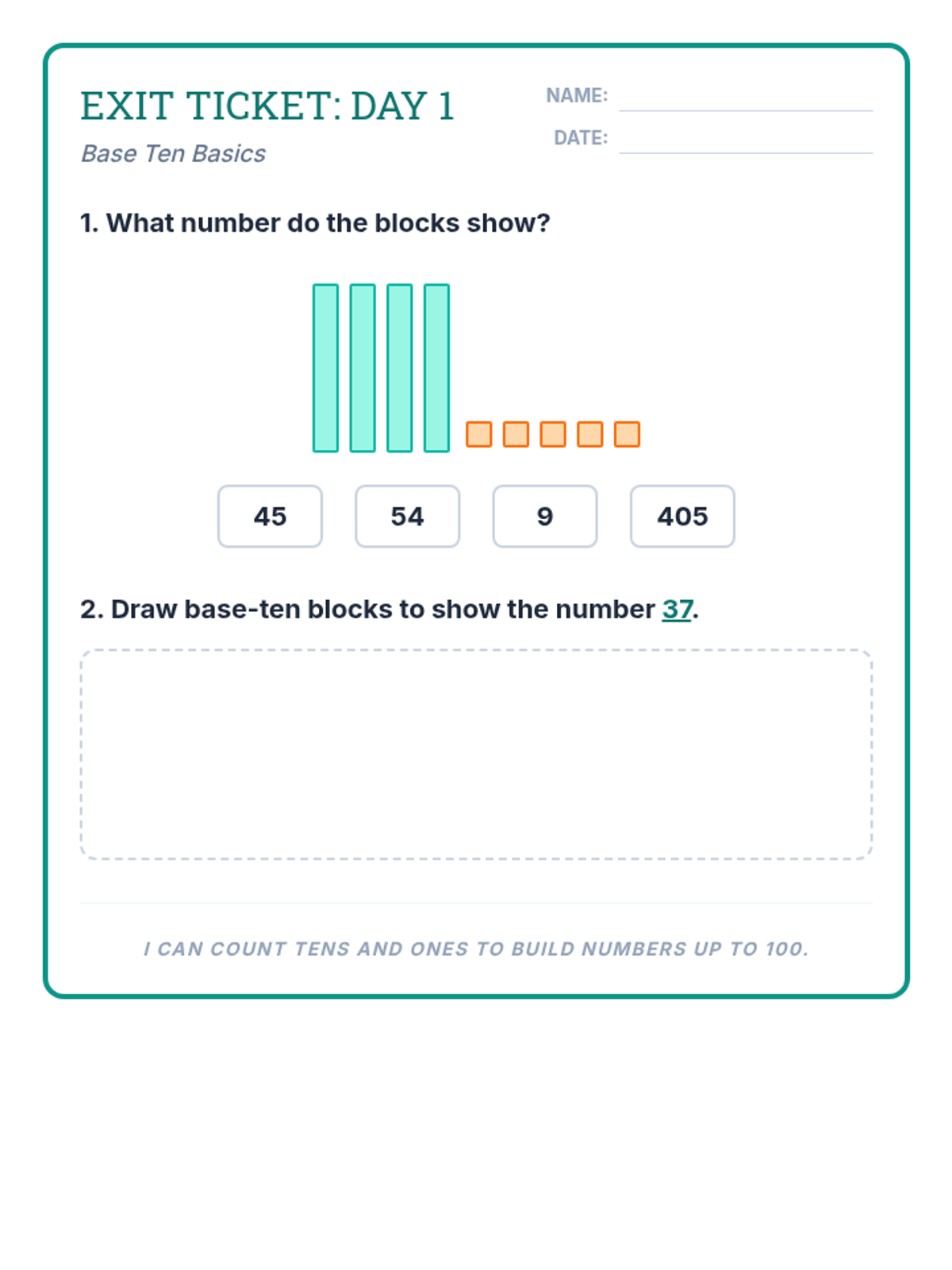
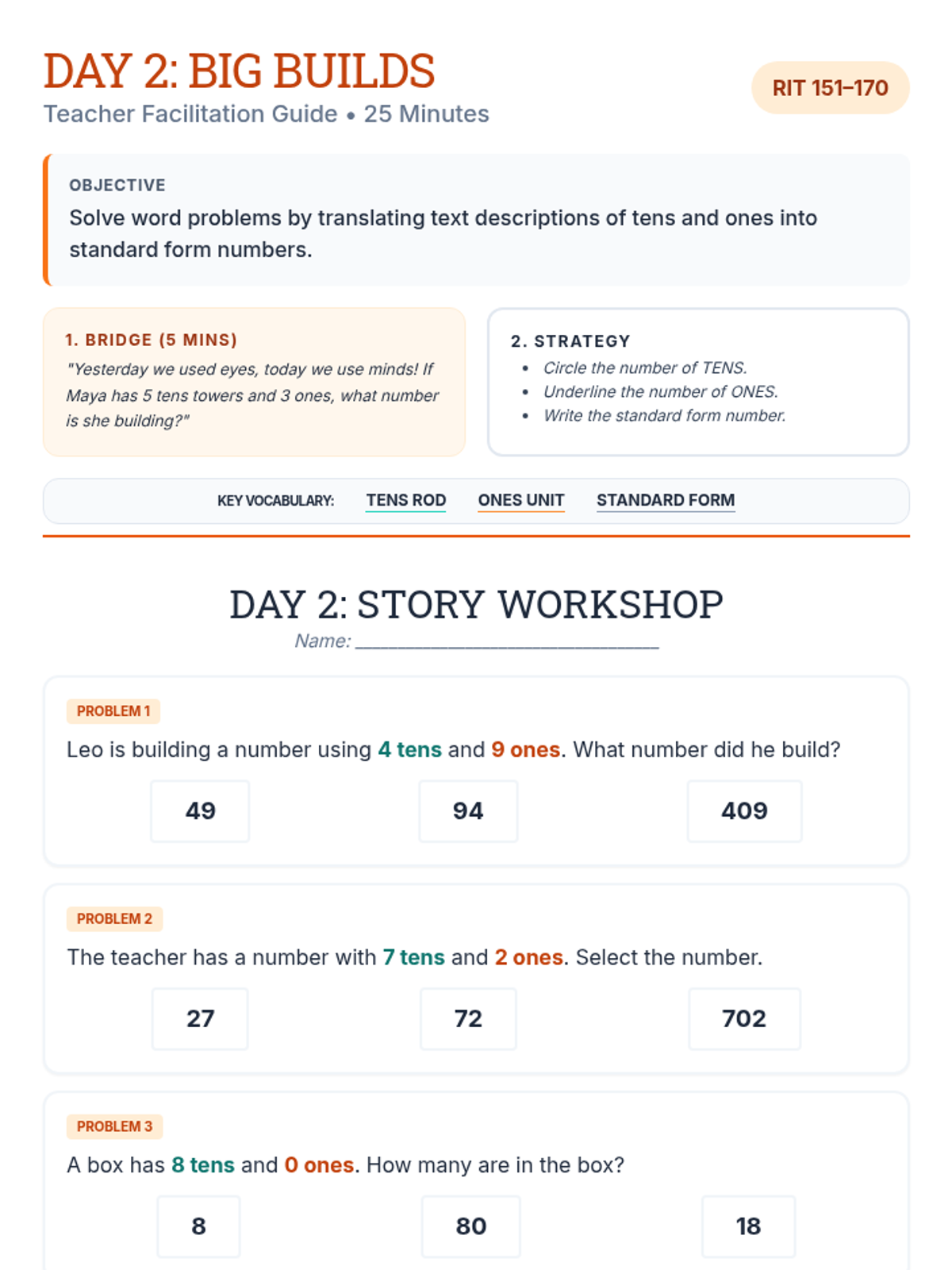
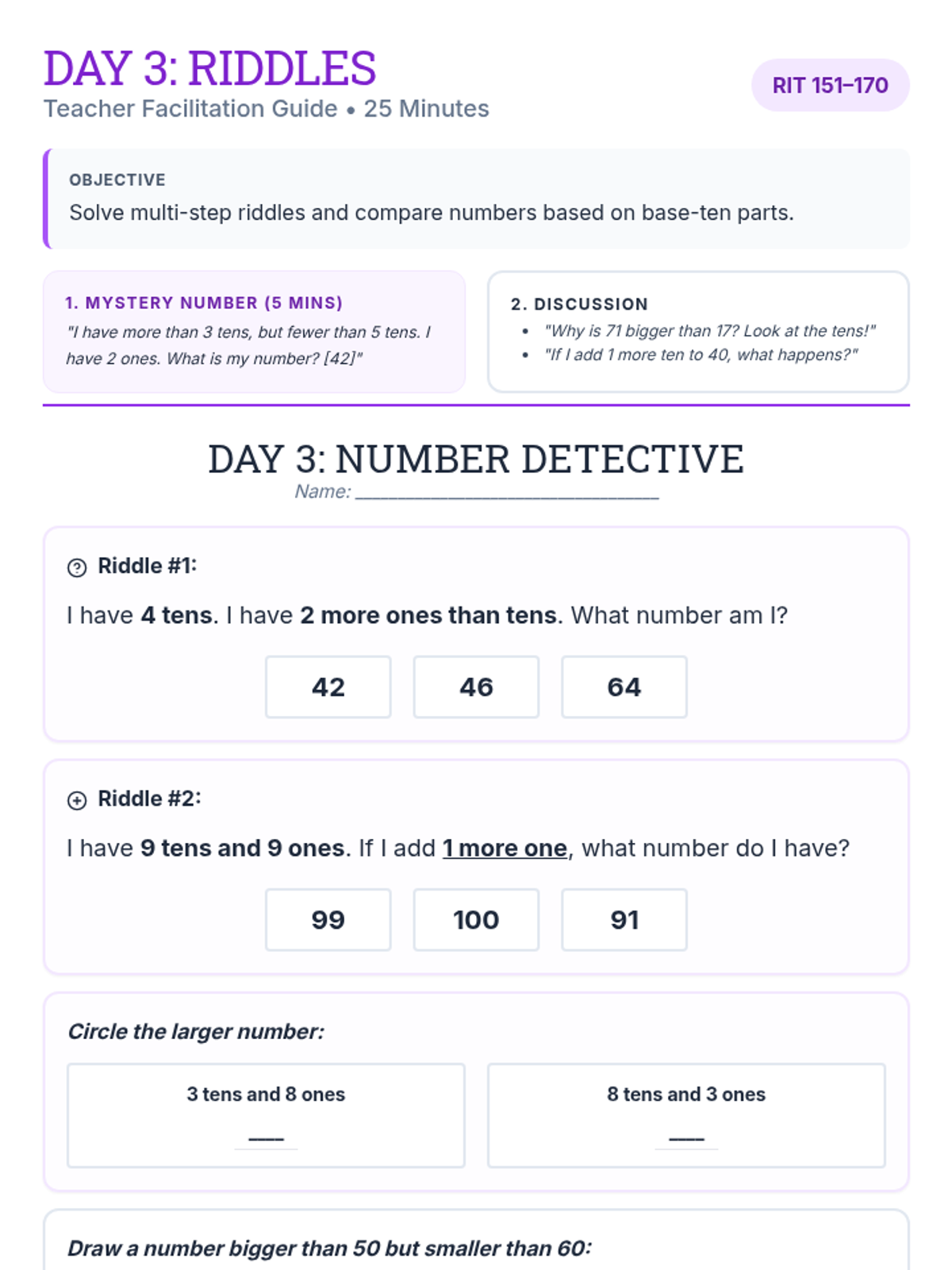
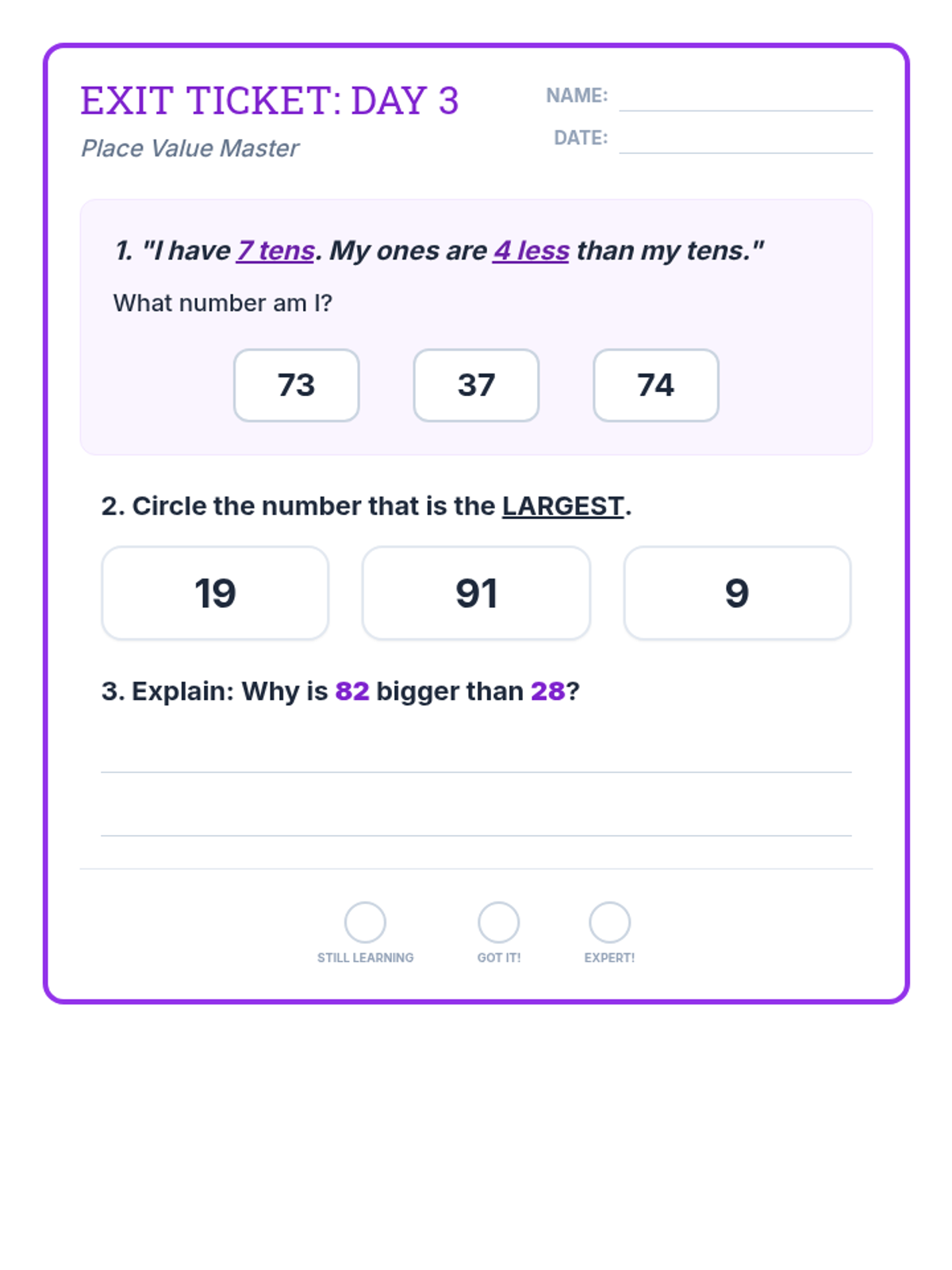
Focuses on identifying and representing numbers 20-100 using visual base-ten models.
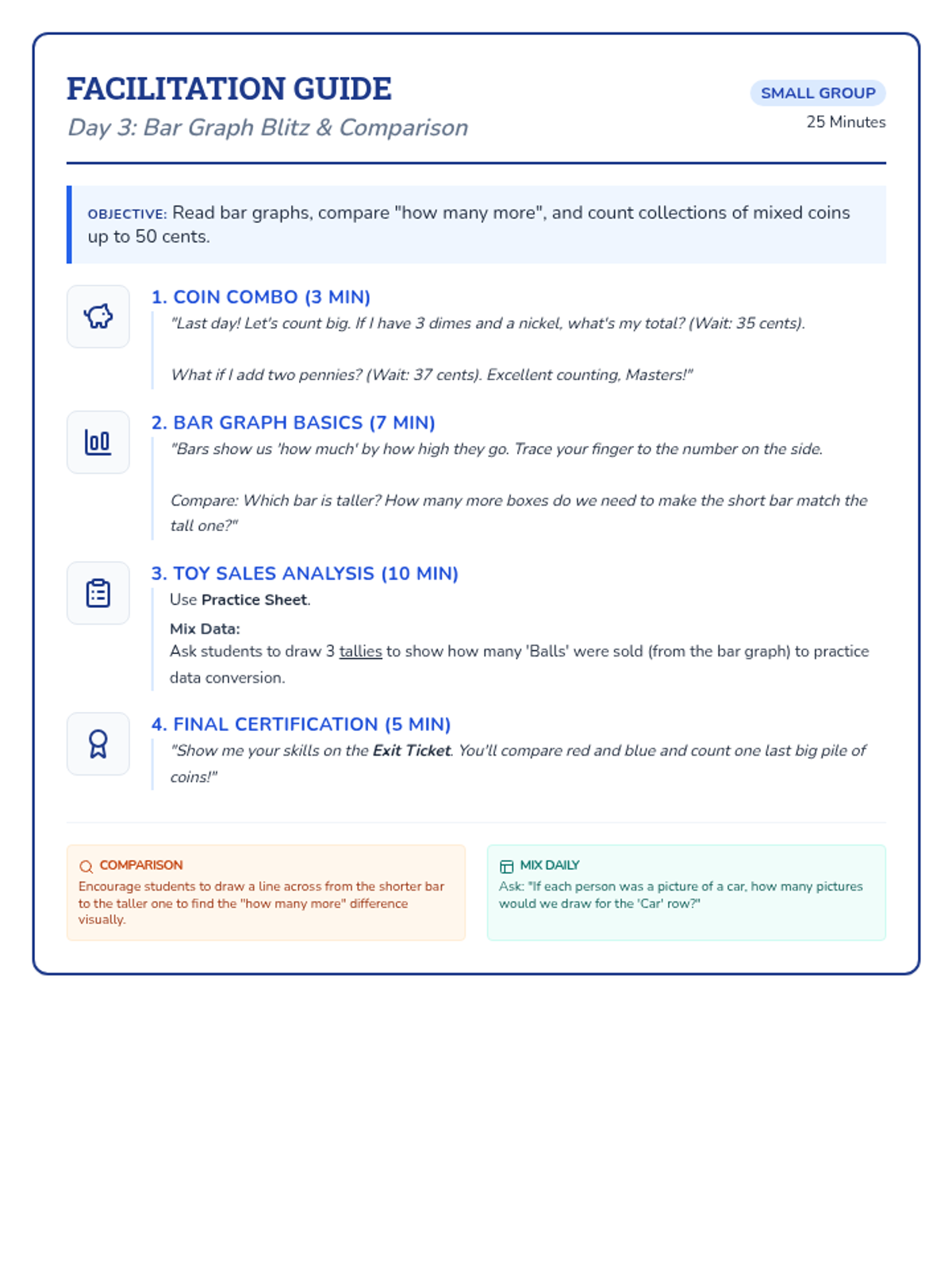
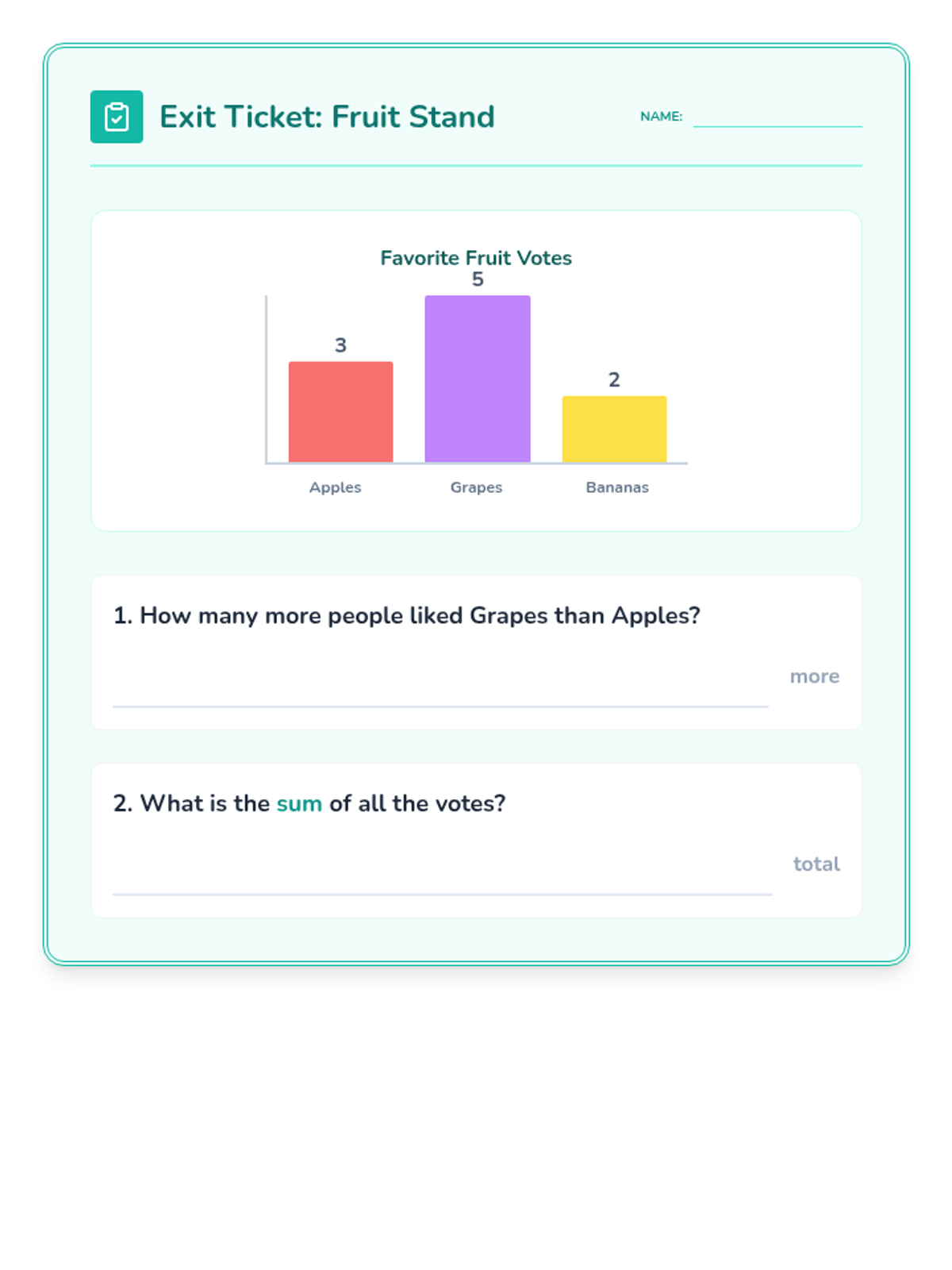
Focuses on bar graphs and comparing data. Students analyze categories and count collections of mixed coins.
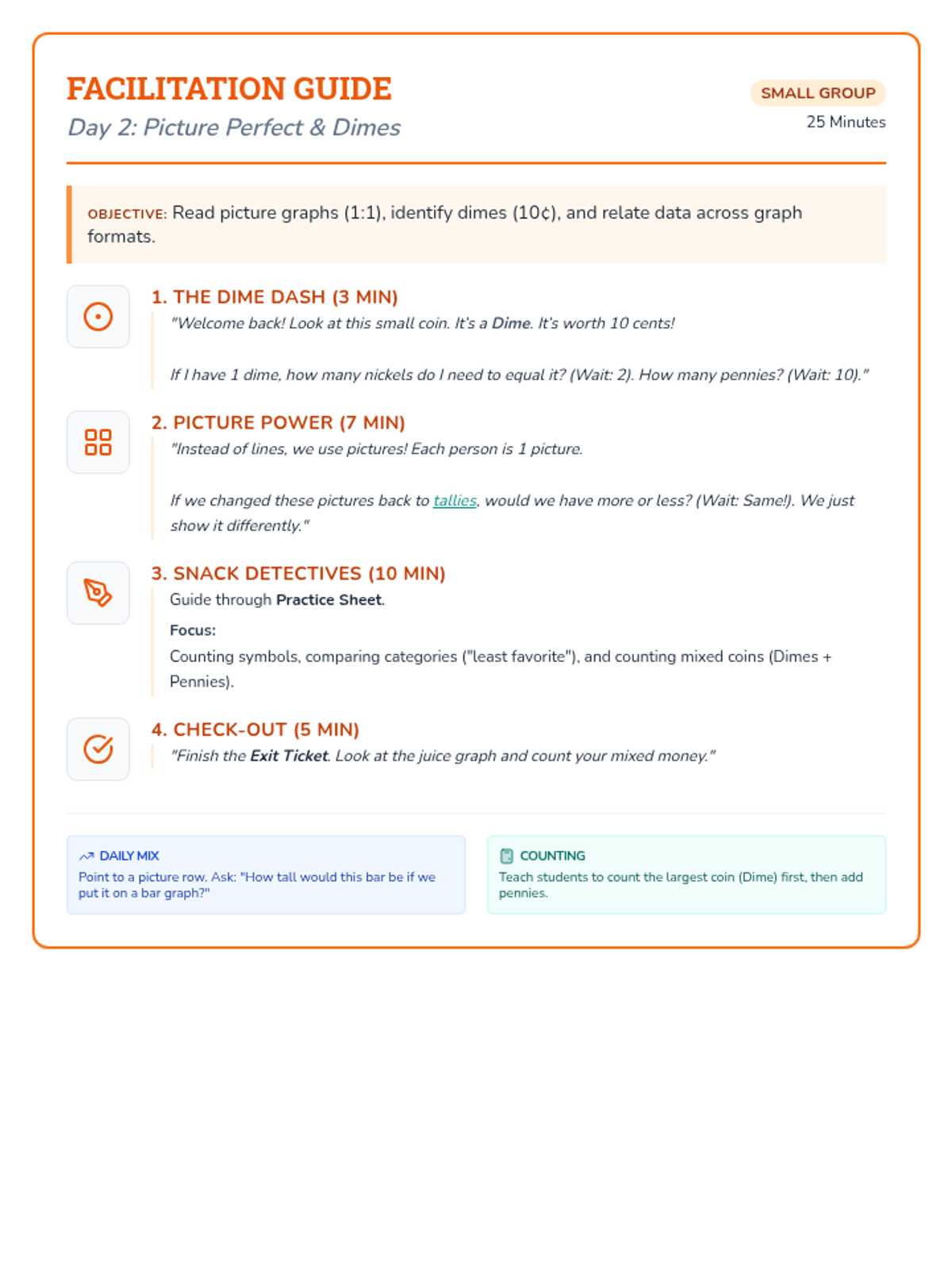
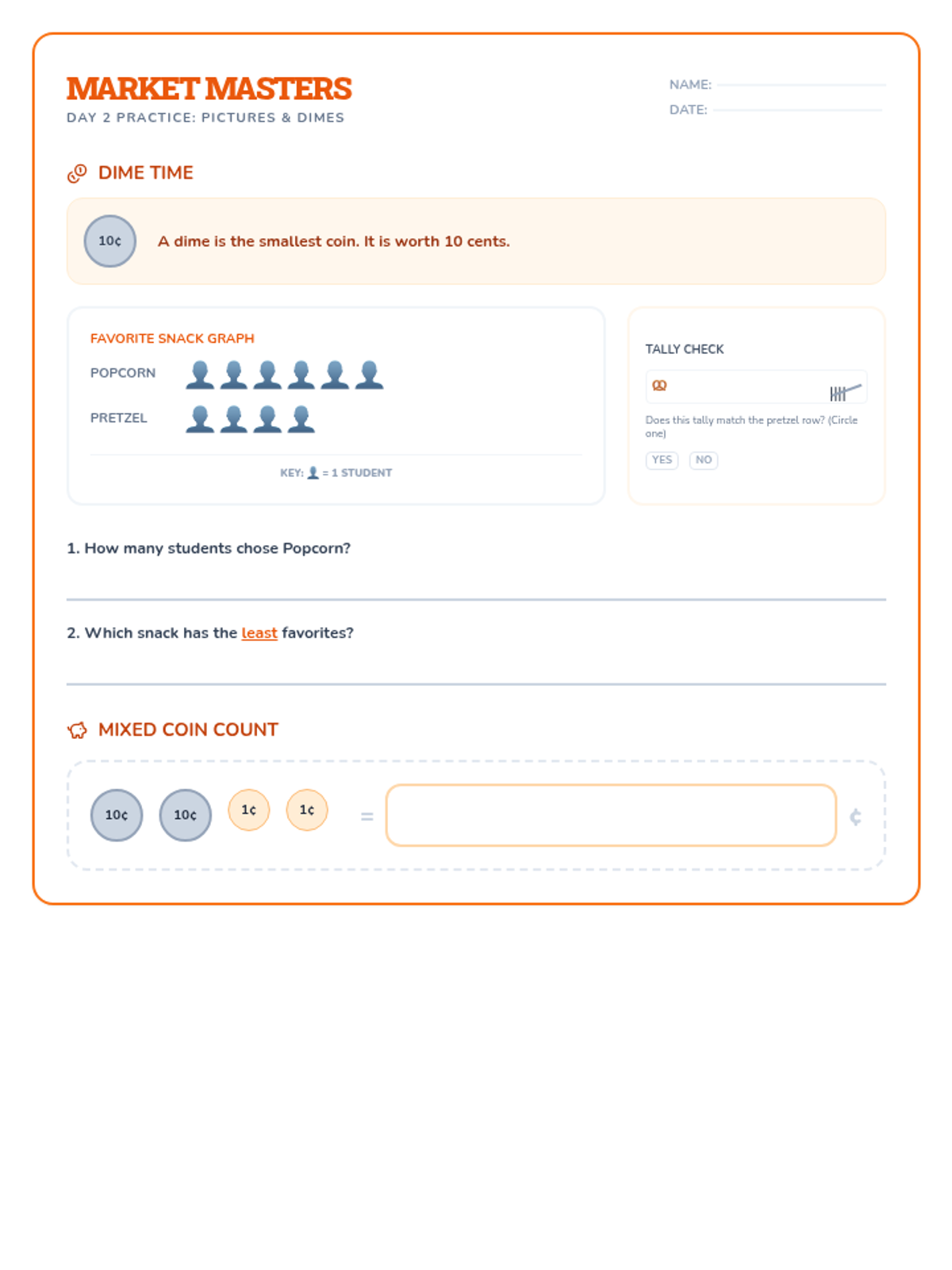
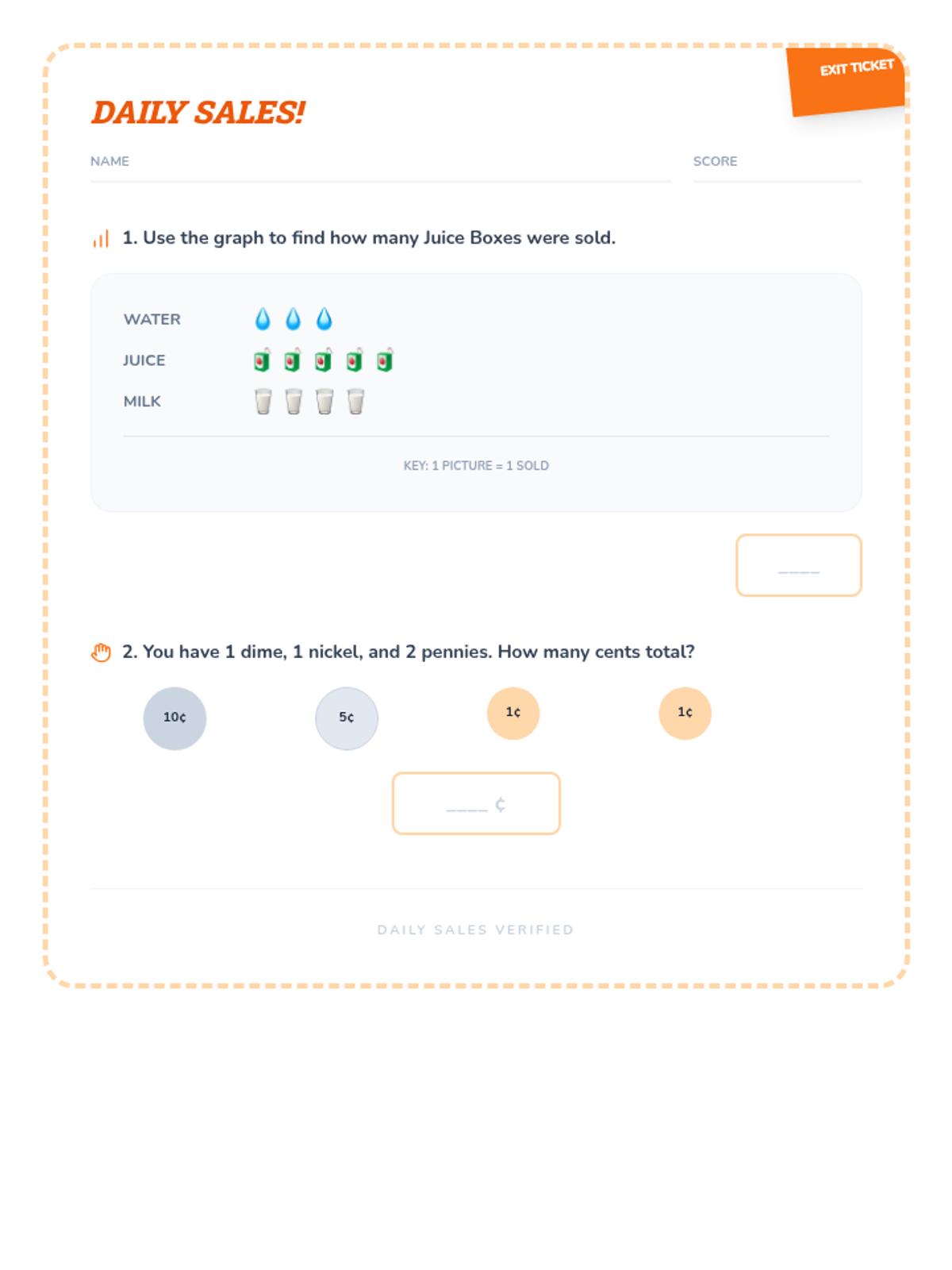
Focuses on picture graphs and dimes. Students interpret data with 1:1 correspondence and count mixed coins.
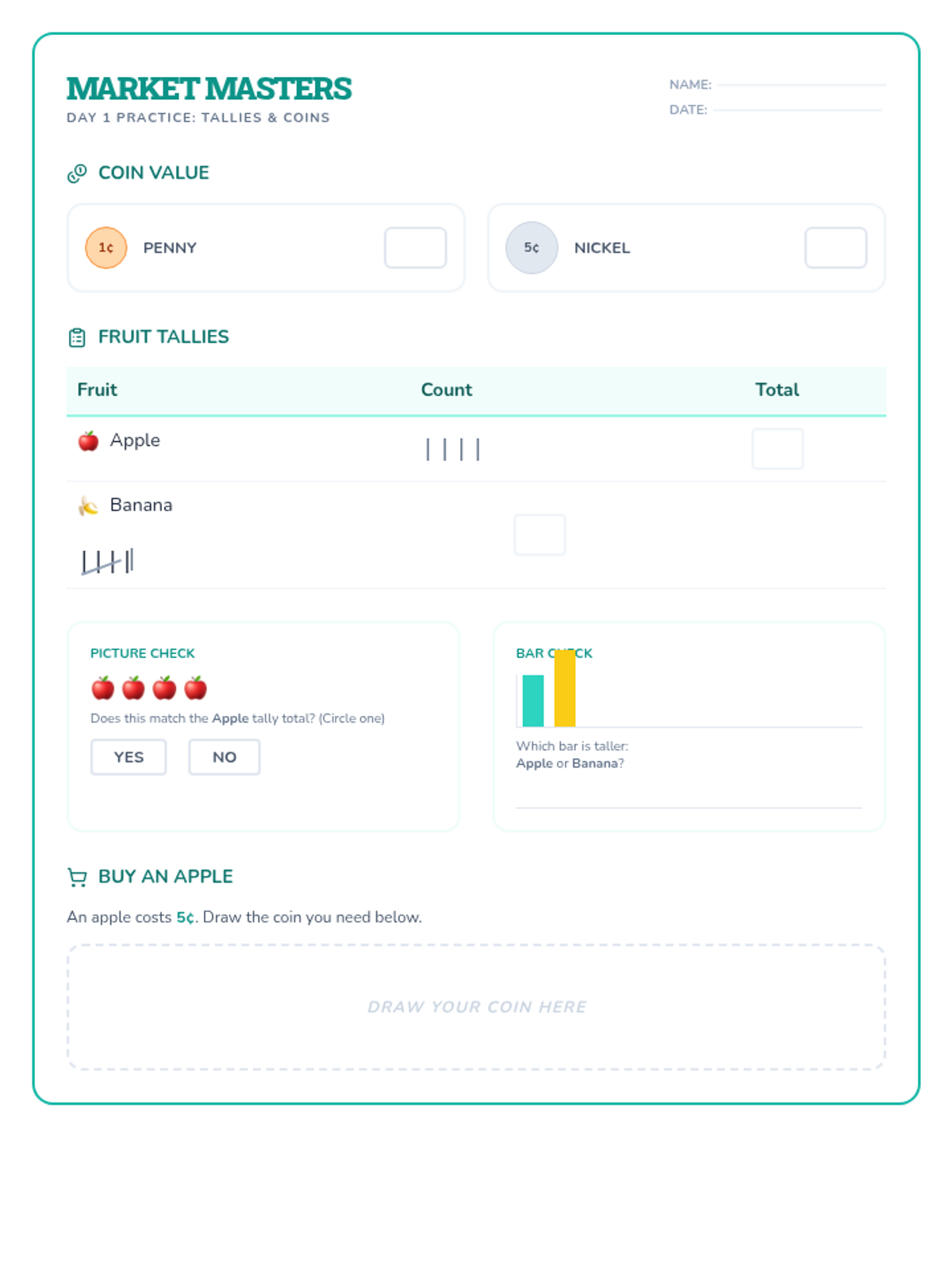
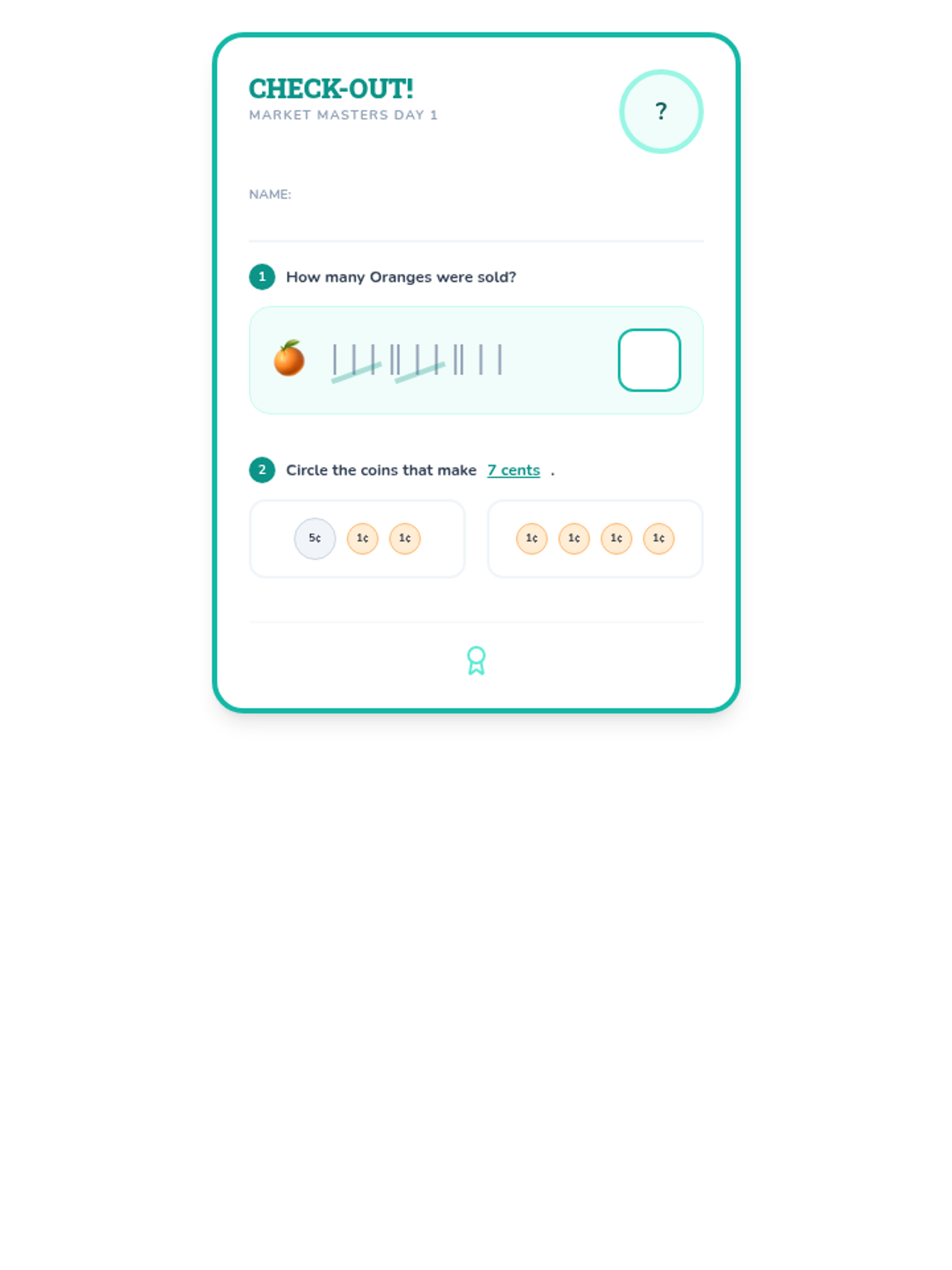
Focuses on tally charts and pennies/nickels. Students learn to read tallies and identify coins to 'buy' items from the market.
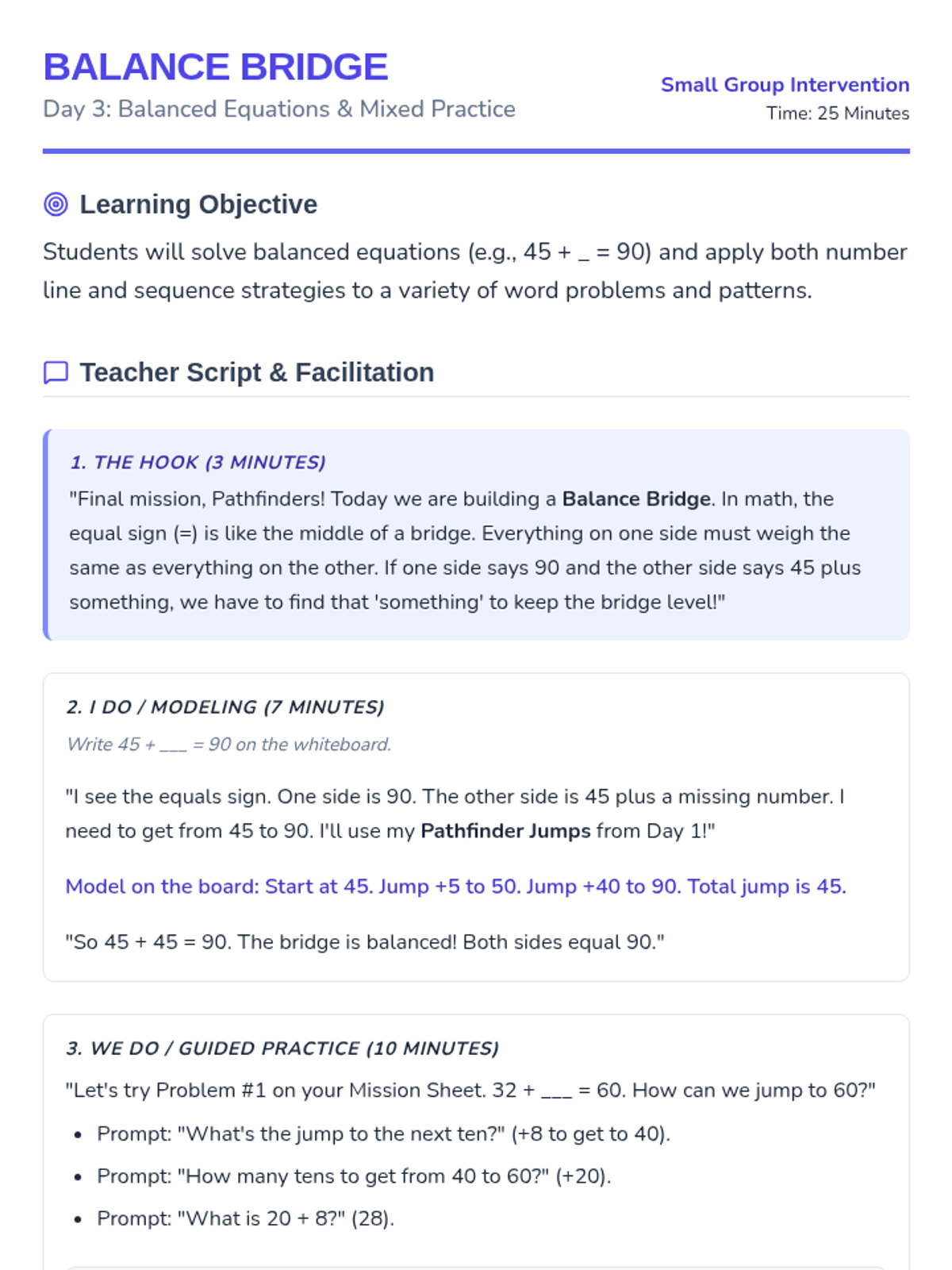
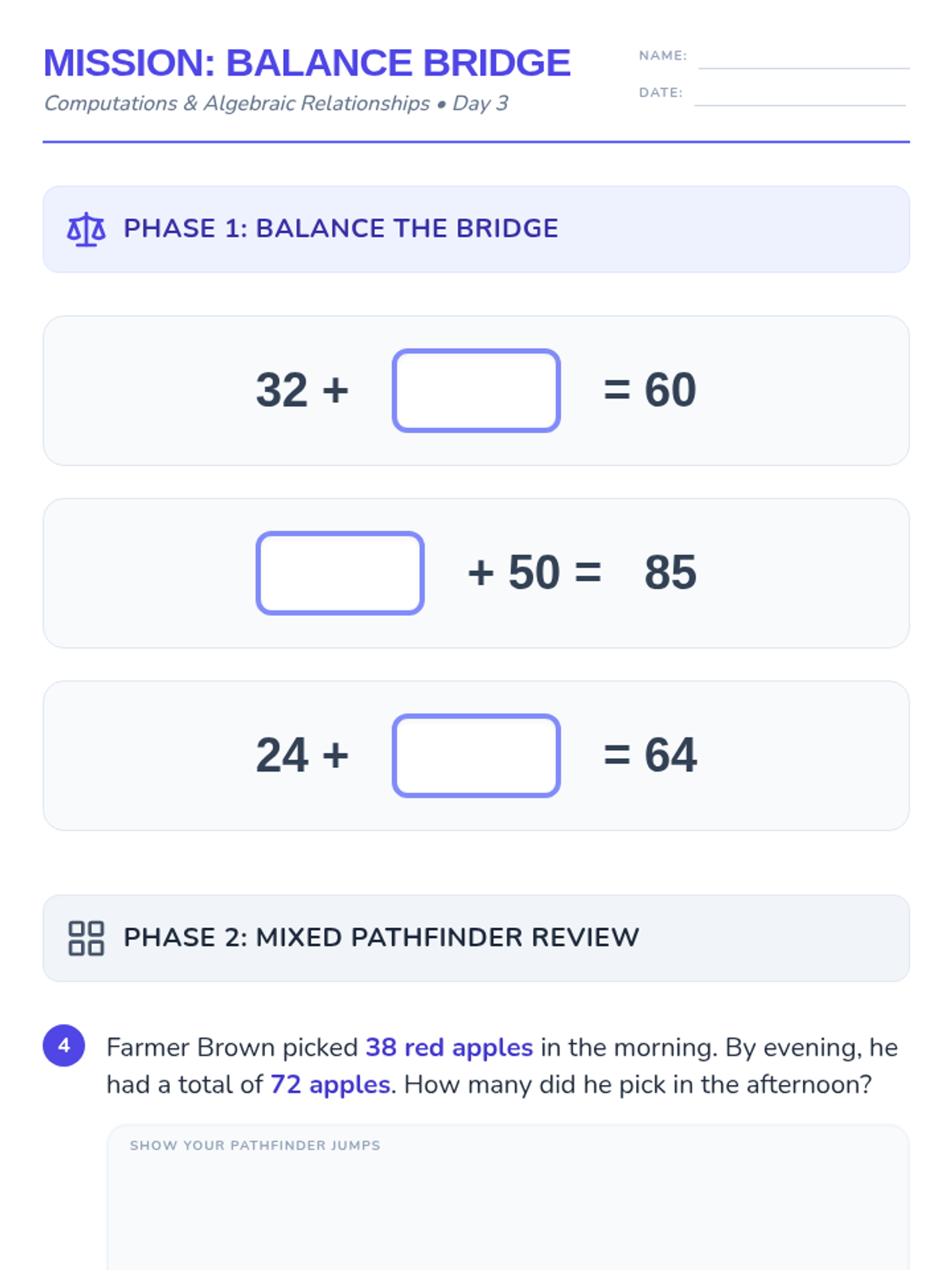
Introduces balanced equations and a cumulative review of word problems and sequences. Students will use their knowledge of part-part-whole relationships to solve equations like 45 + _ = 90.
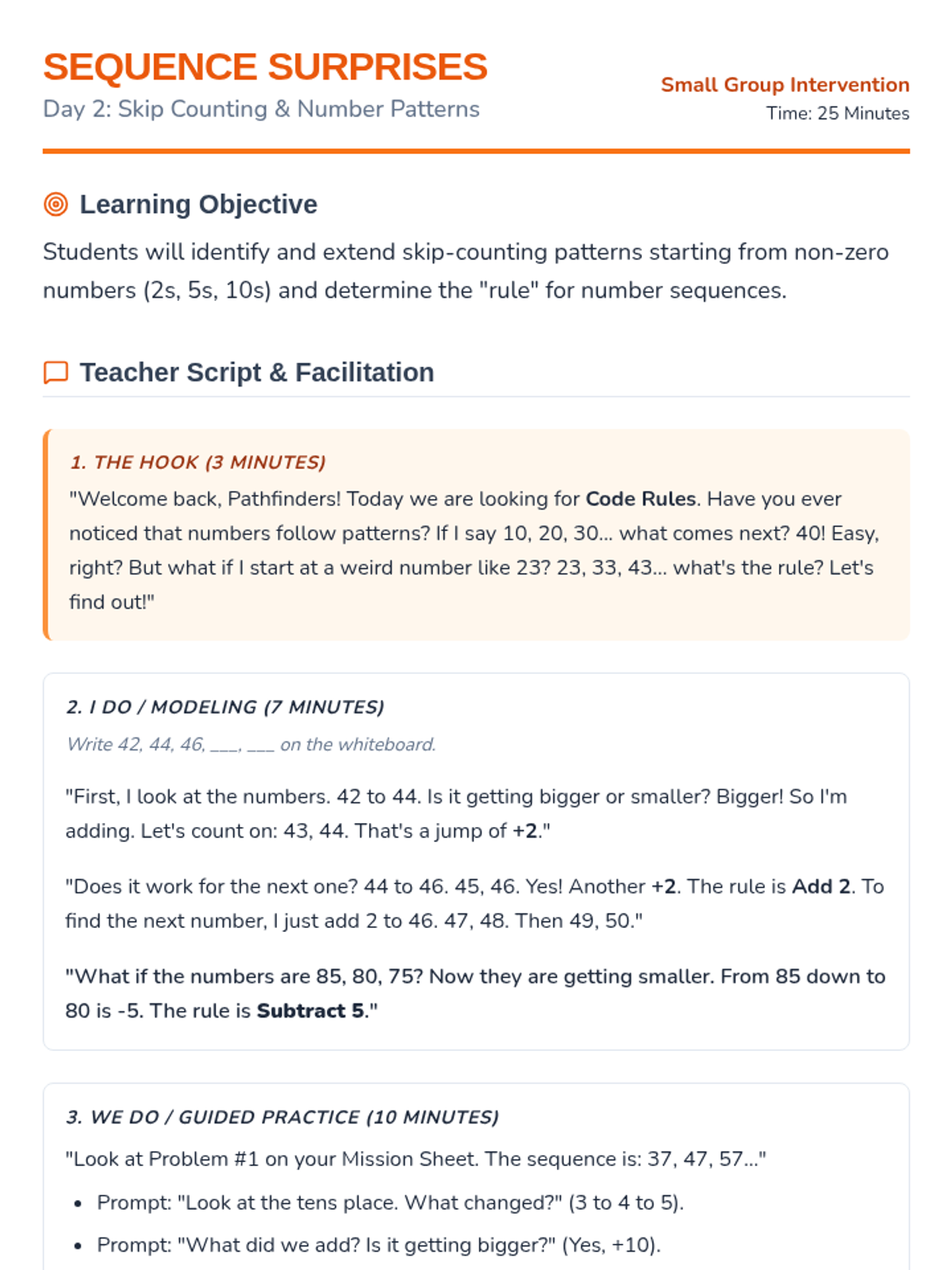
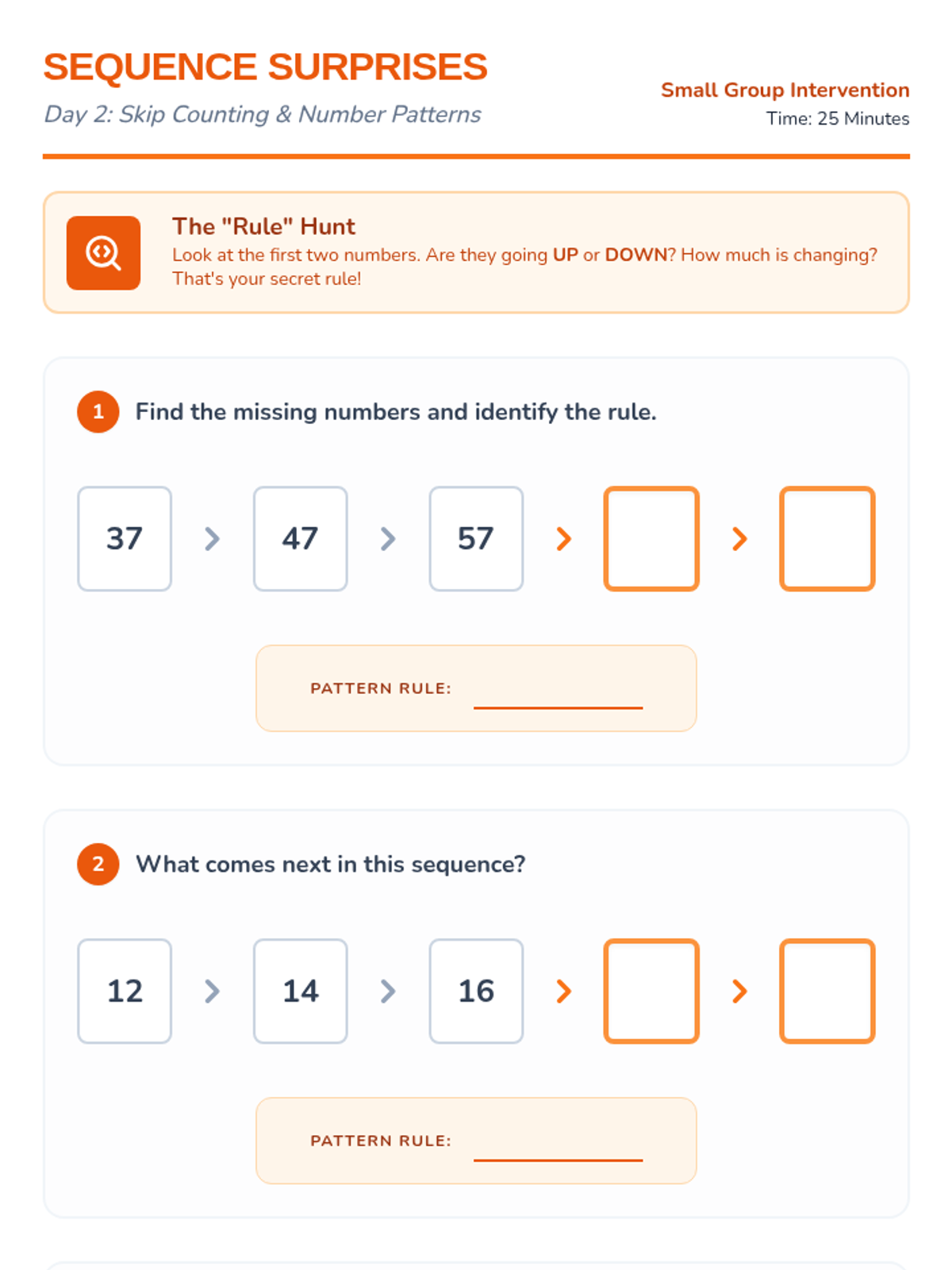
Teaches students to identify and extend number patterns and skip-counting sequences starting from various numbers. Students will learn to determine the 'rule' of a pattern to predict future values.
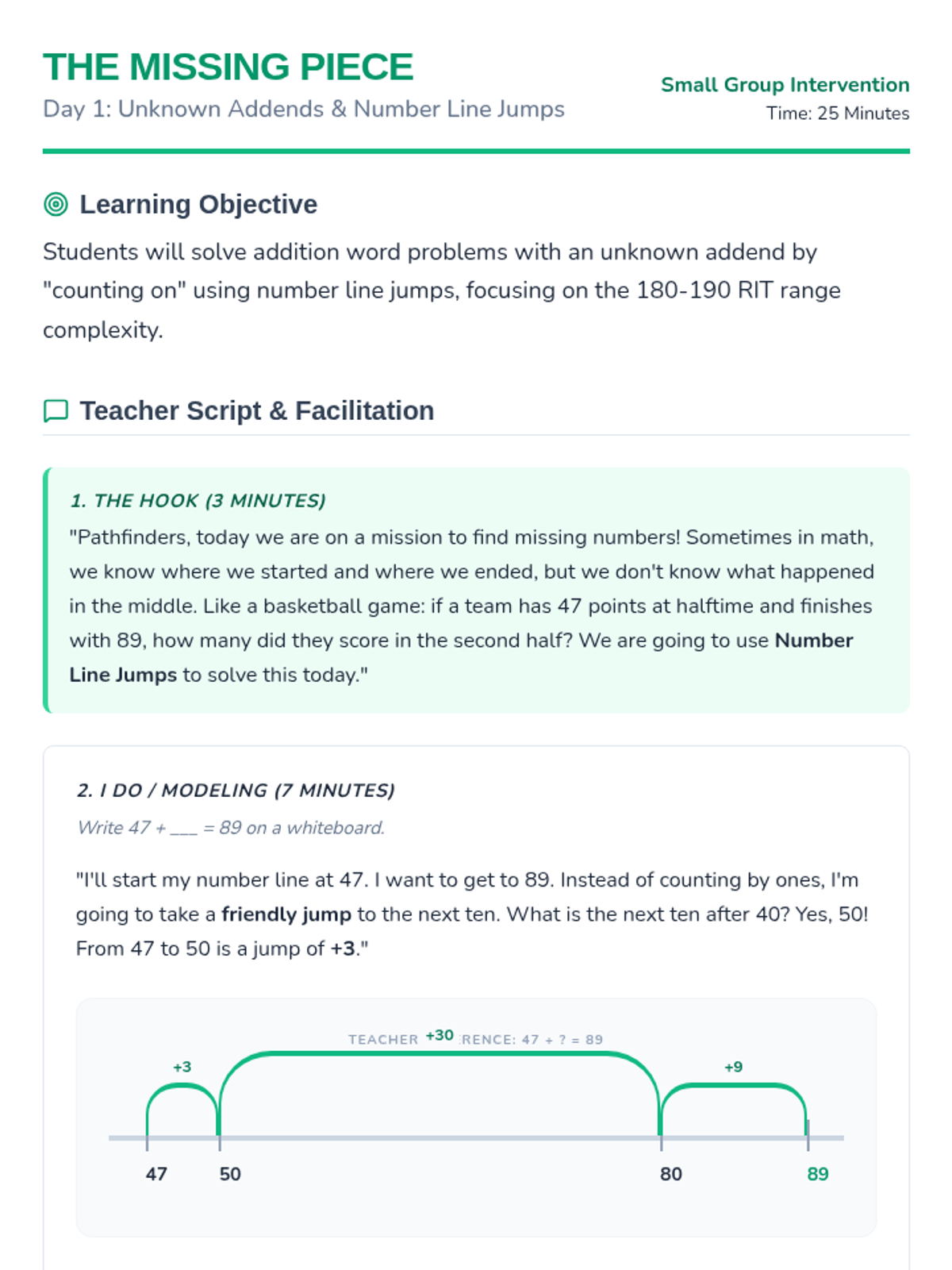
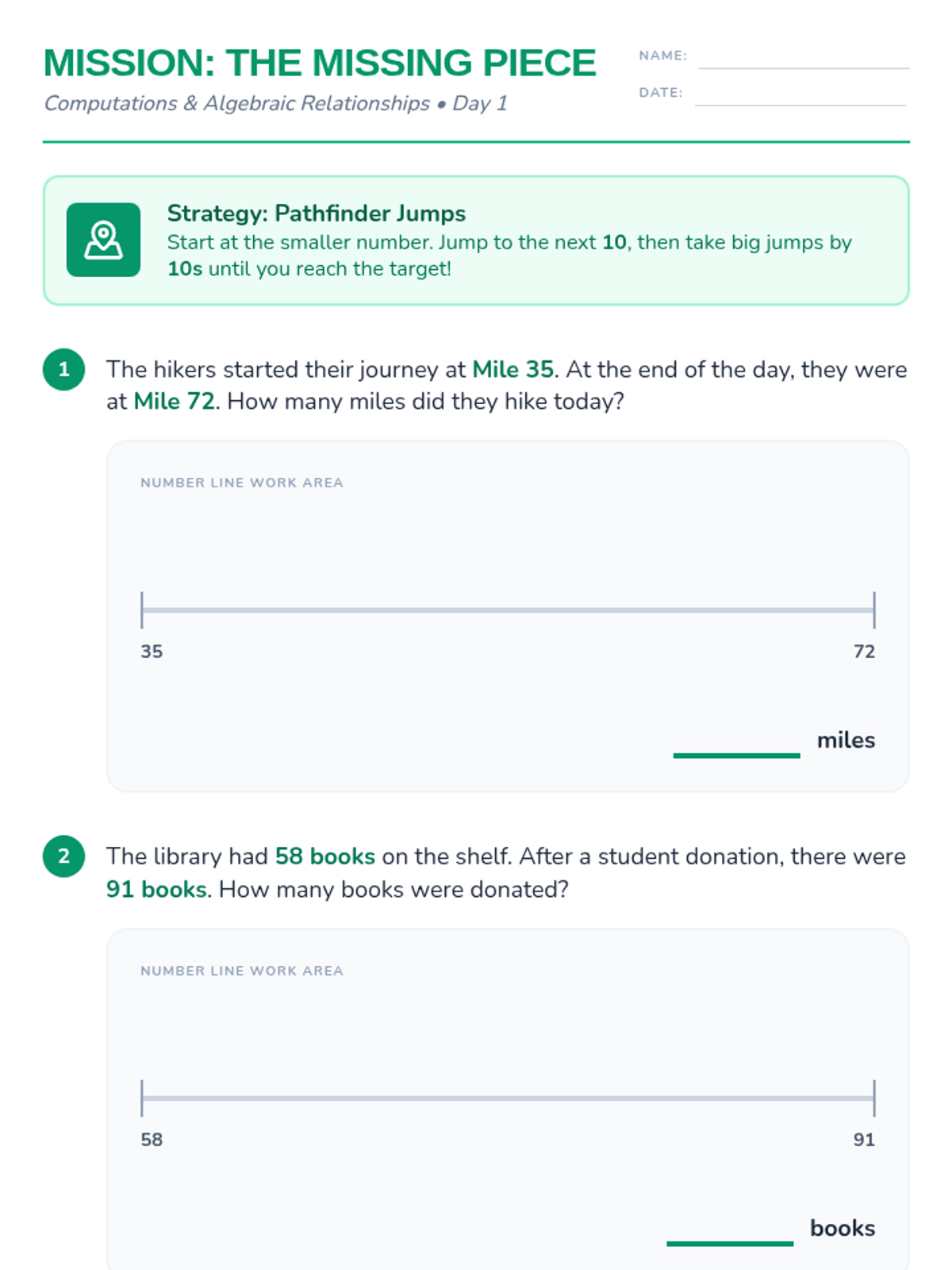
Focuses on finding missing addends in word problems using the 'counting on' strategy and number line jumps. Students will analyze scenarios similar to NWEA assessment items to bridge the 170-190 RIT range.
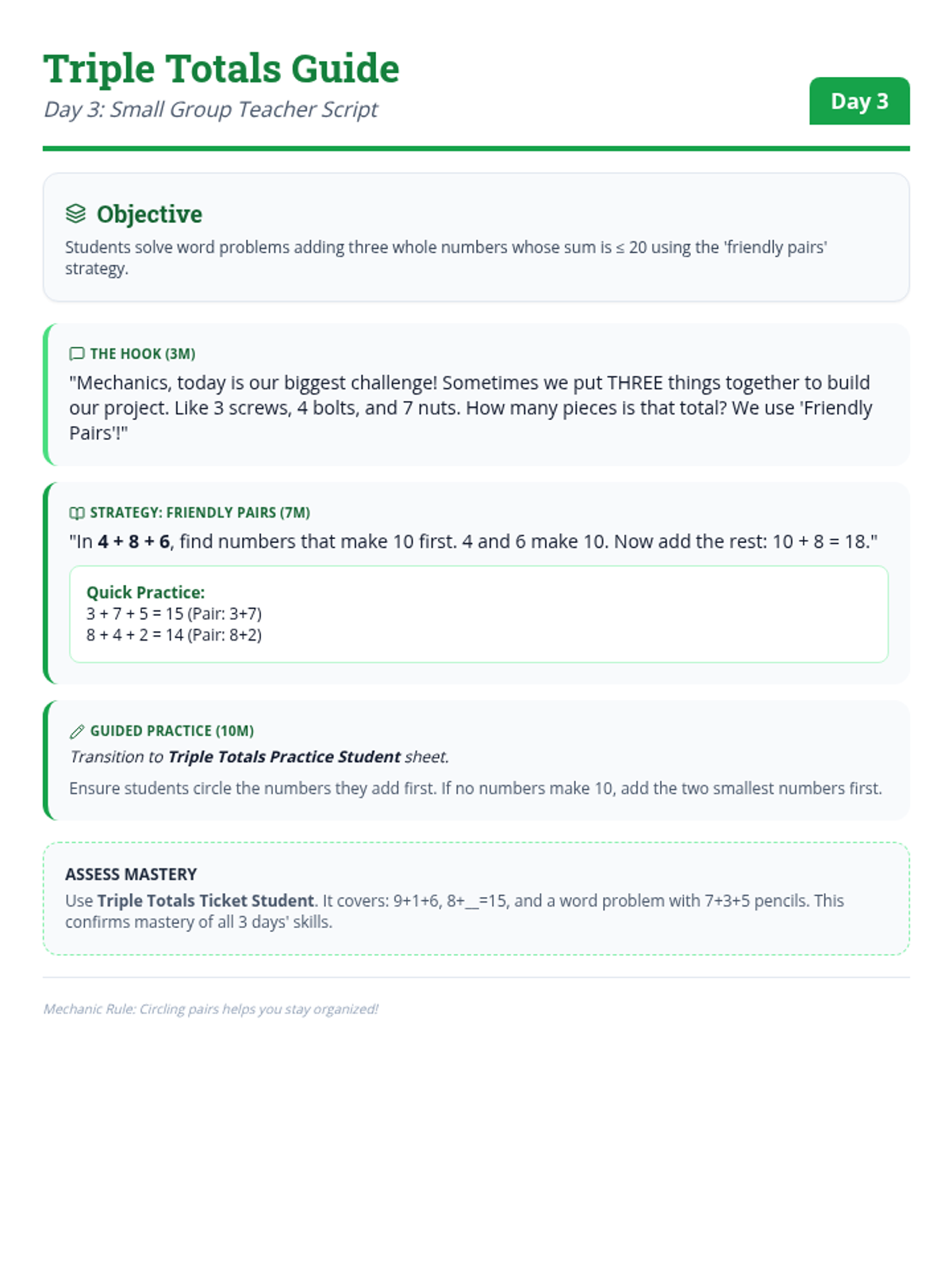
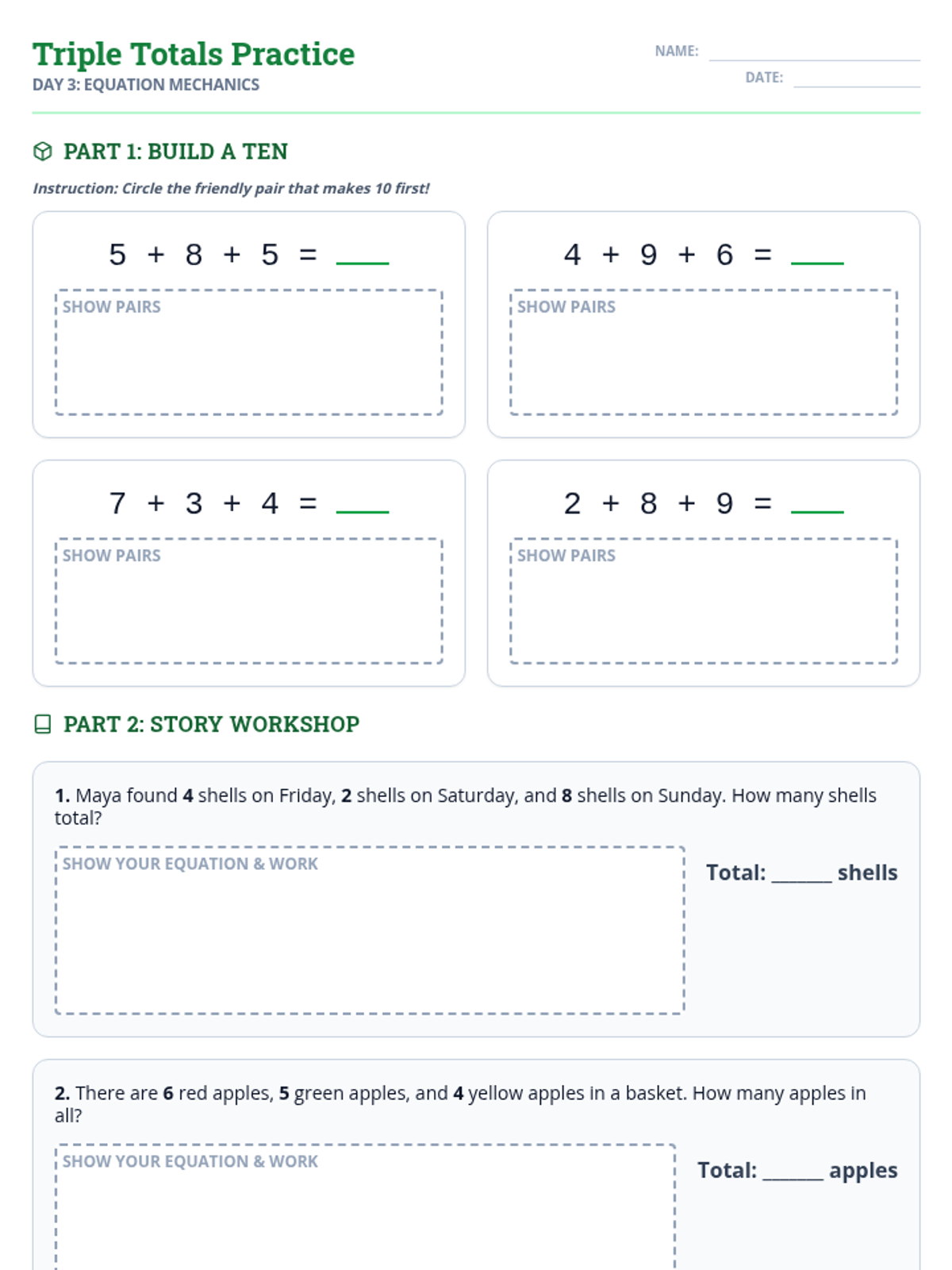
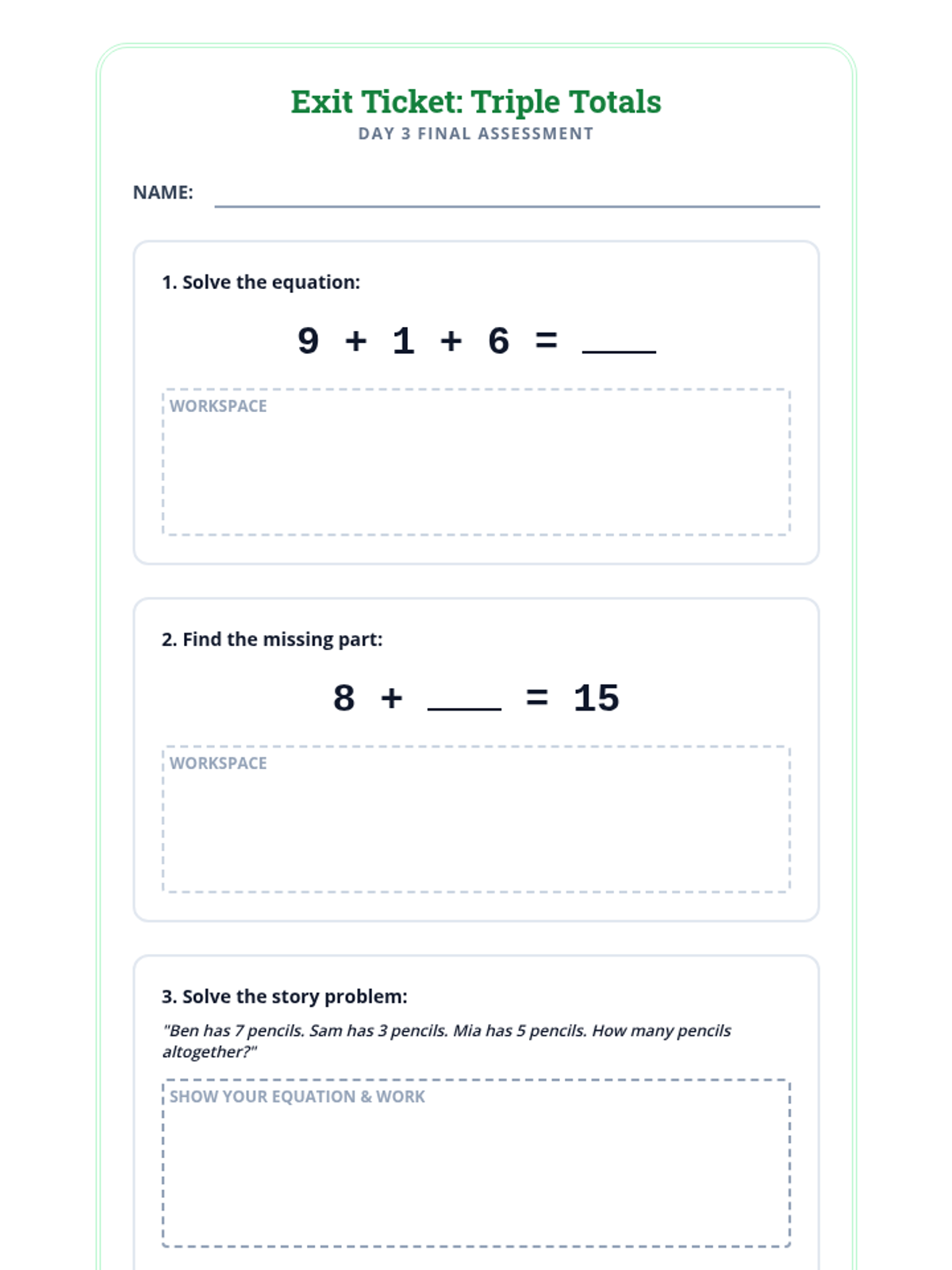
Students will solve word problems involving three addends, focusing on grouping numbers to find 'friendly' sums.
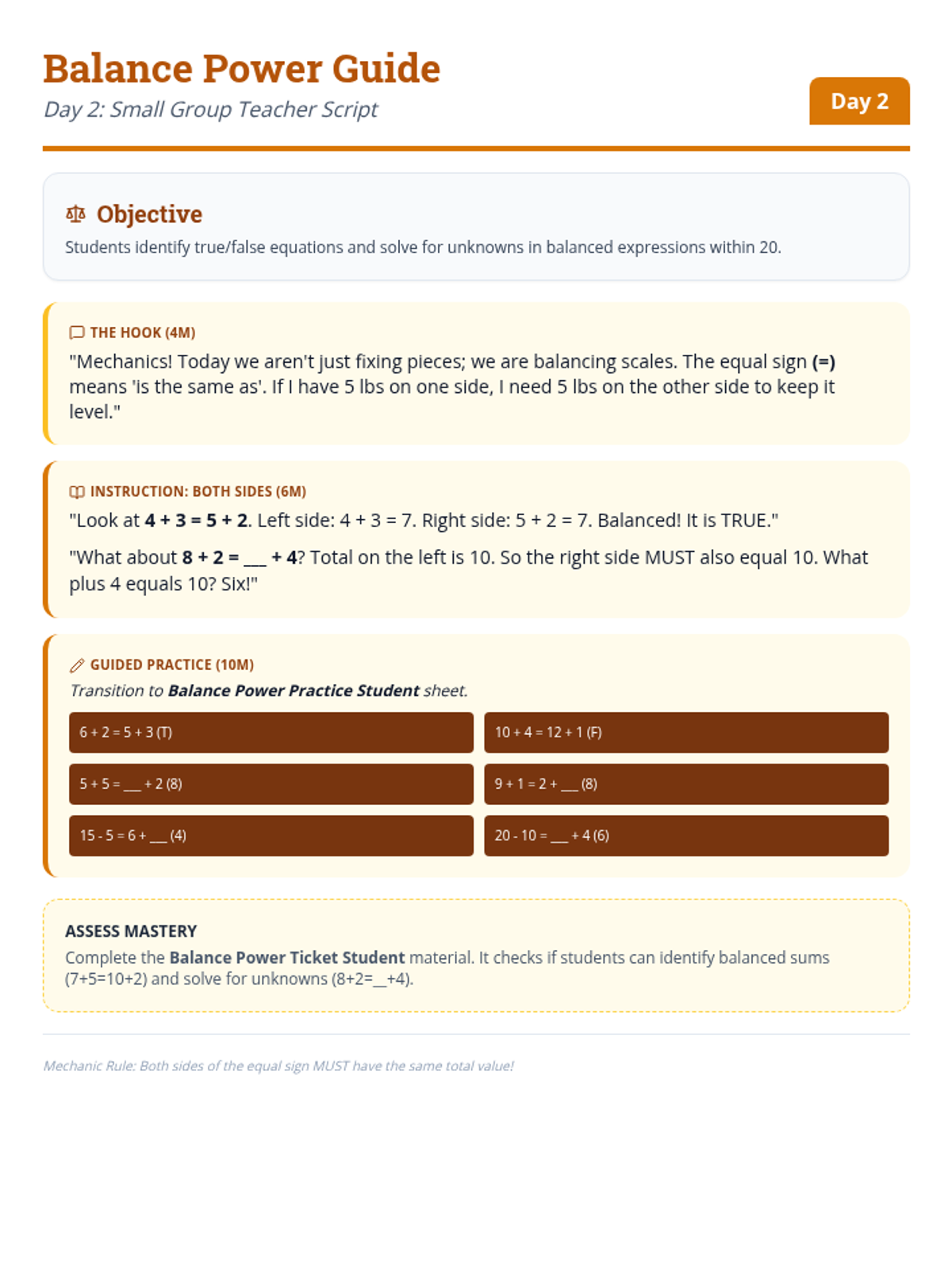
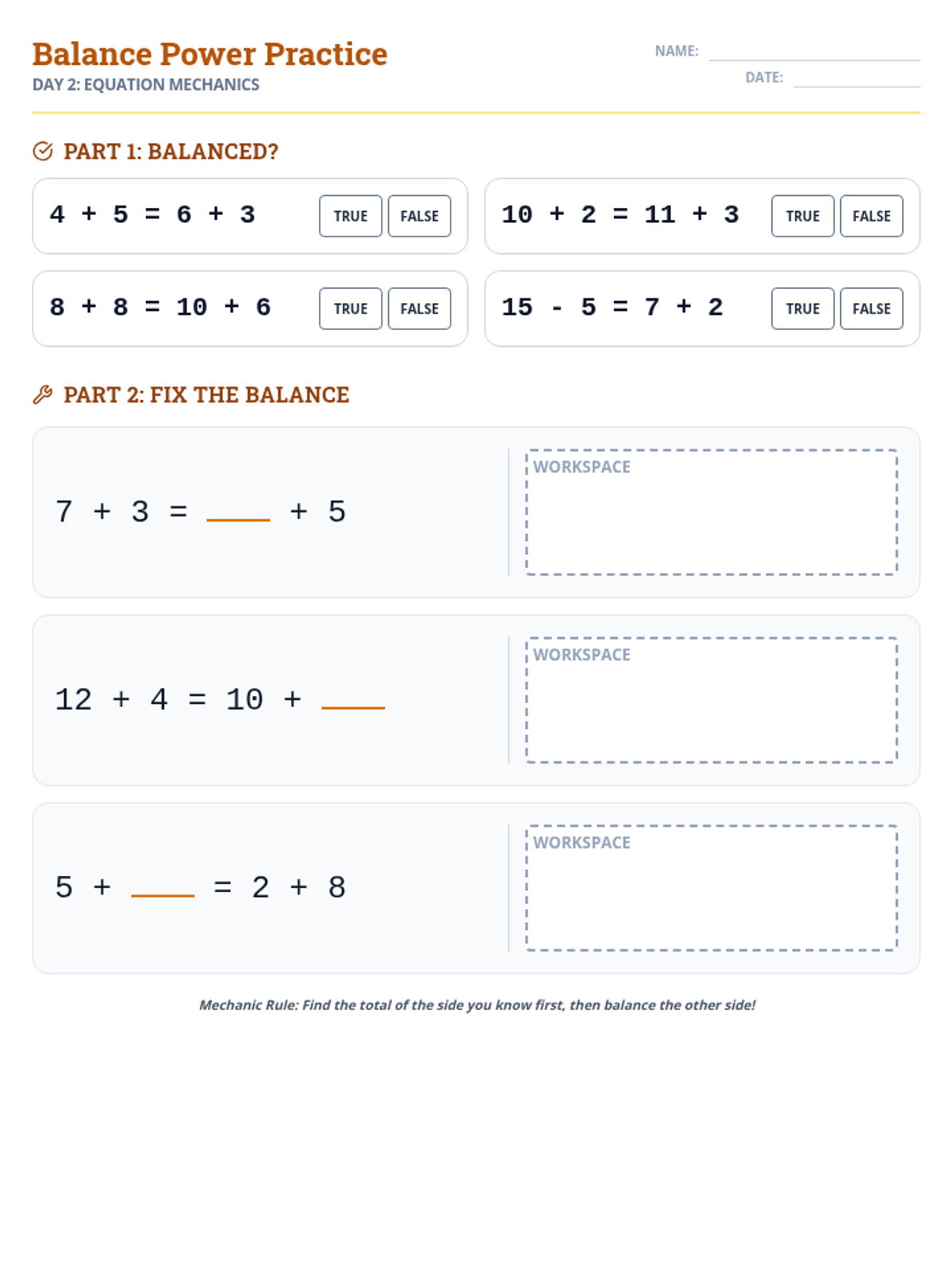
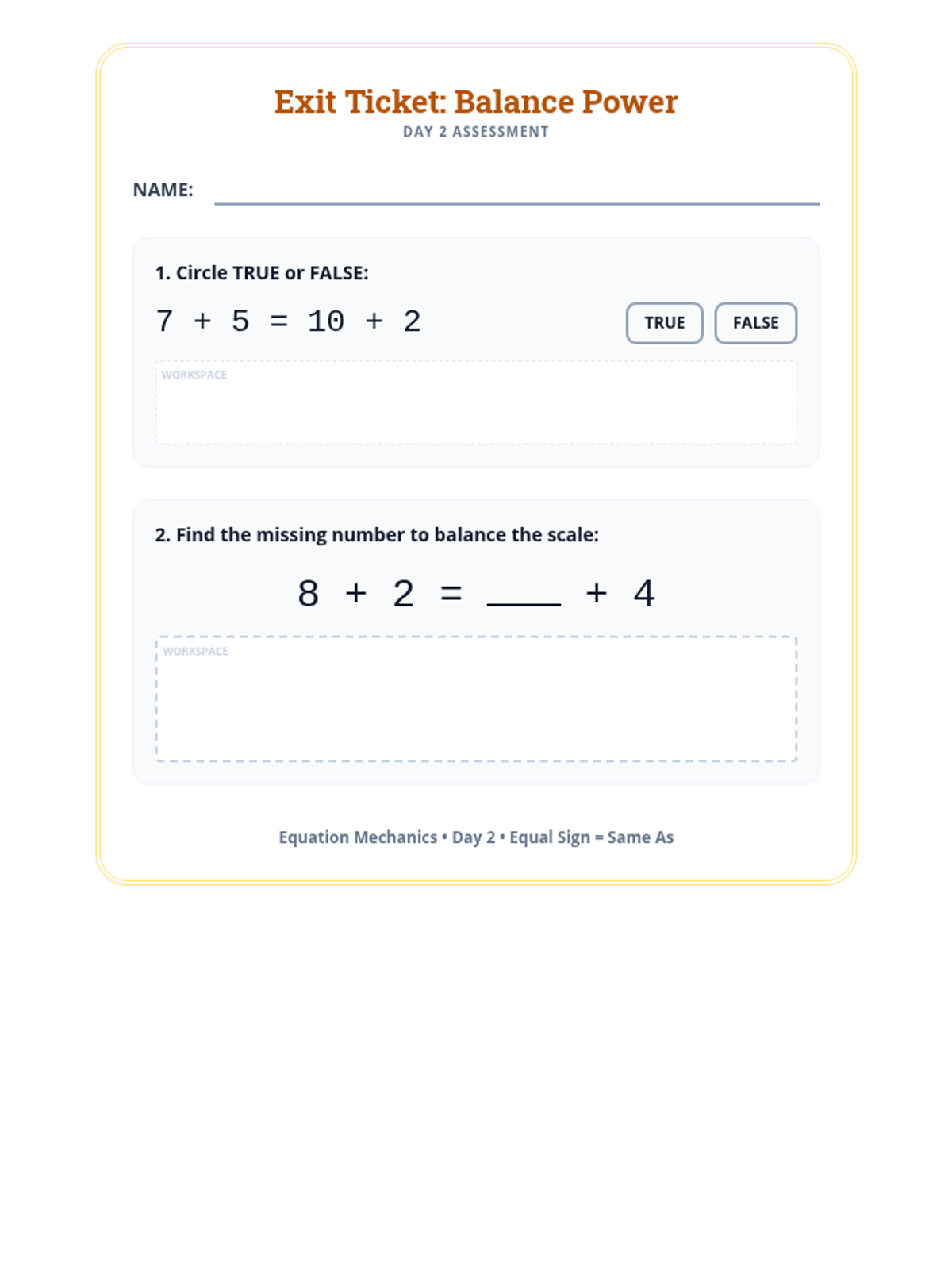
Students will explore the meaning of the equal sign by balancing equations where both sides contain operations.
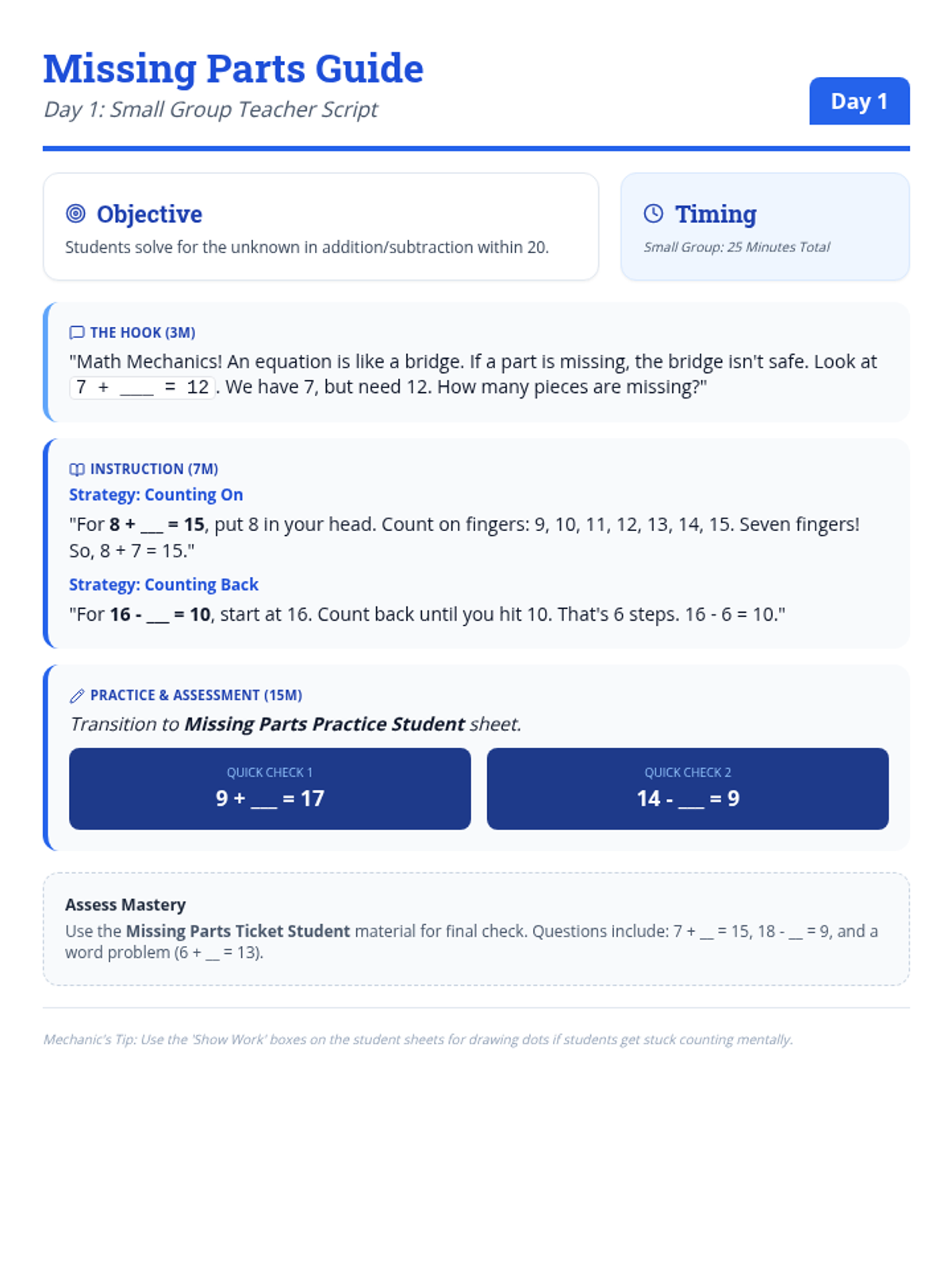
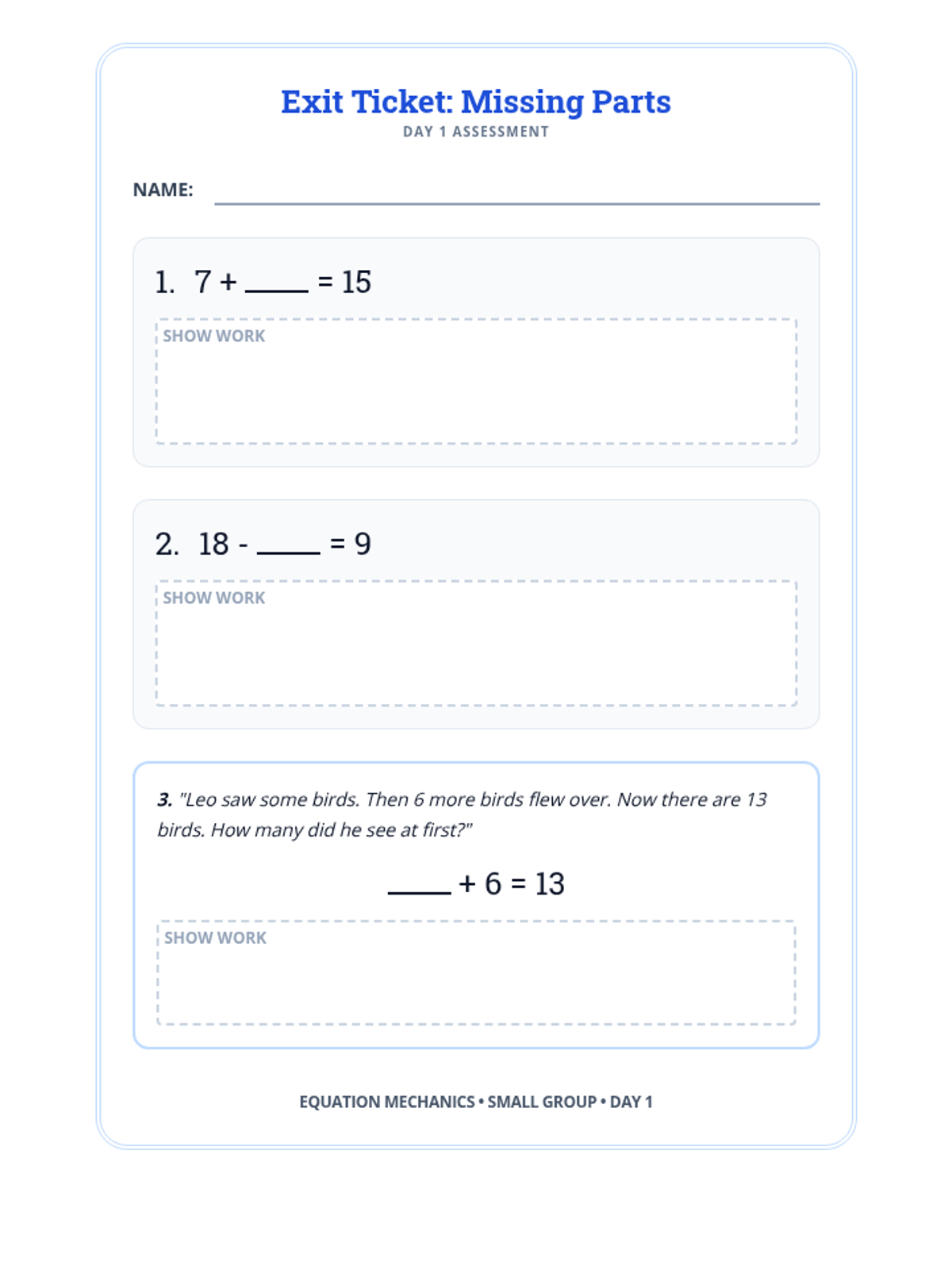
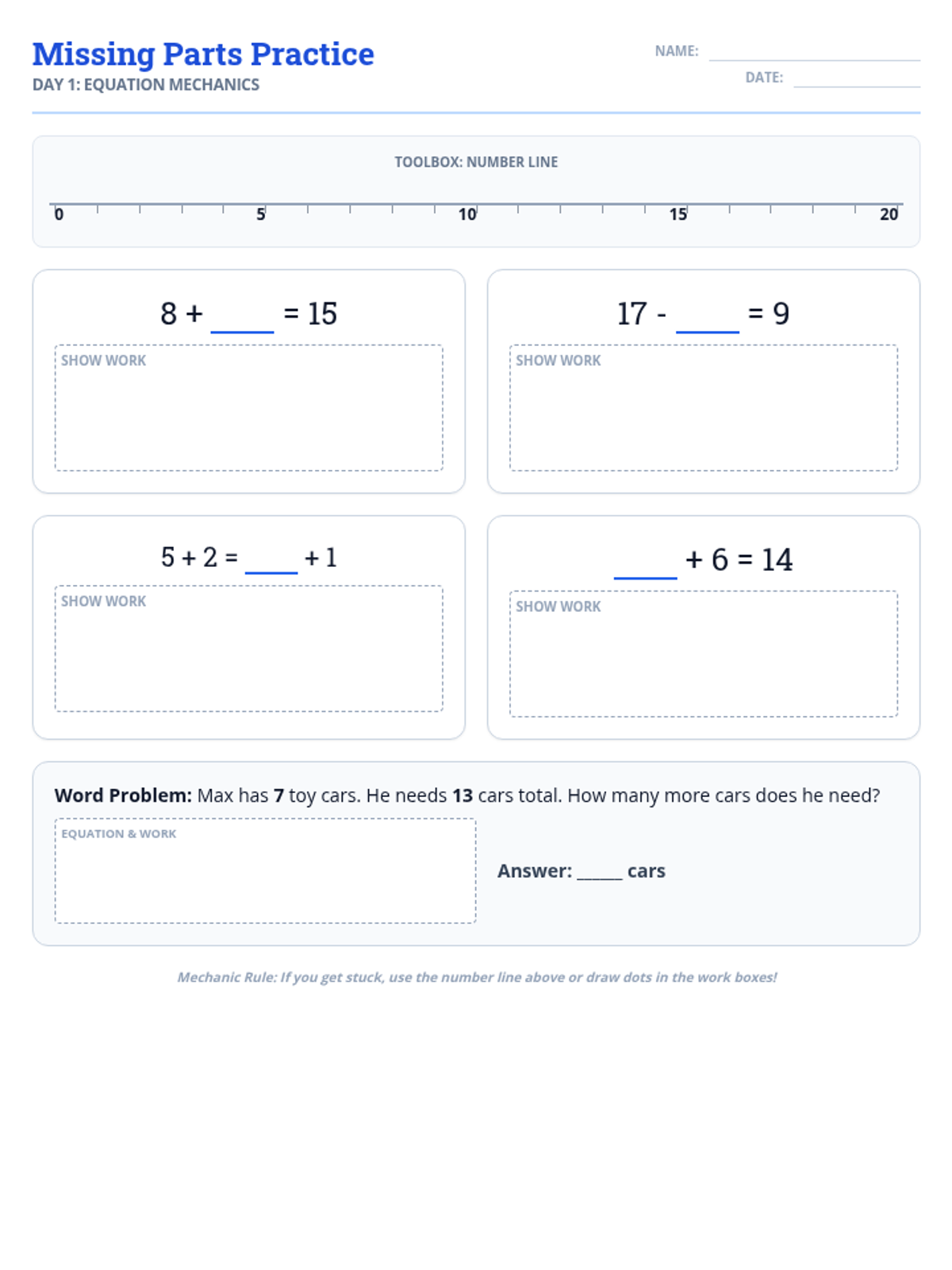
Students will learn to solve for missing addends and subtrahends within 20 using counting-on and related facts strategies.
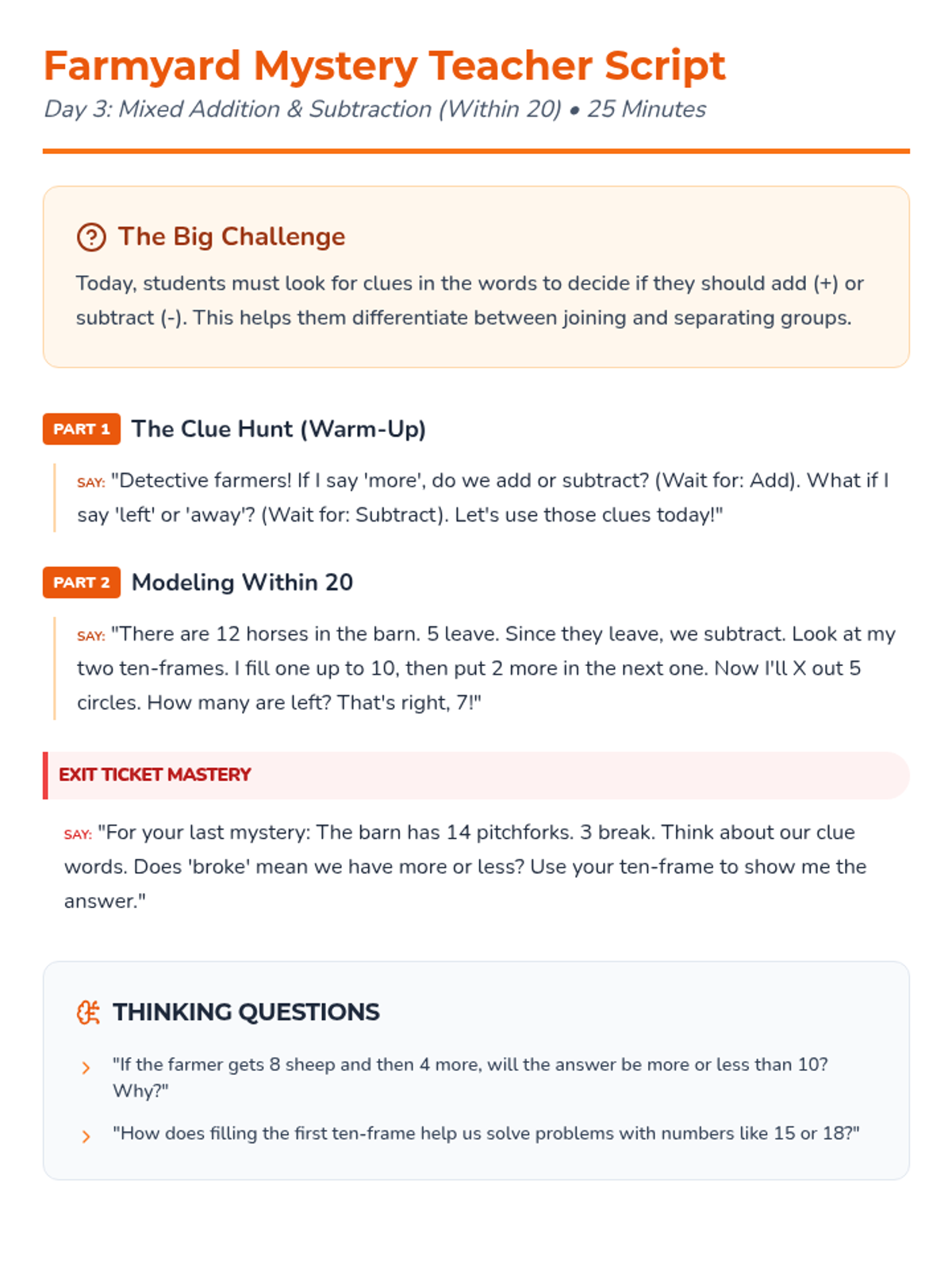
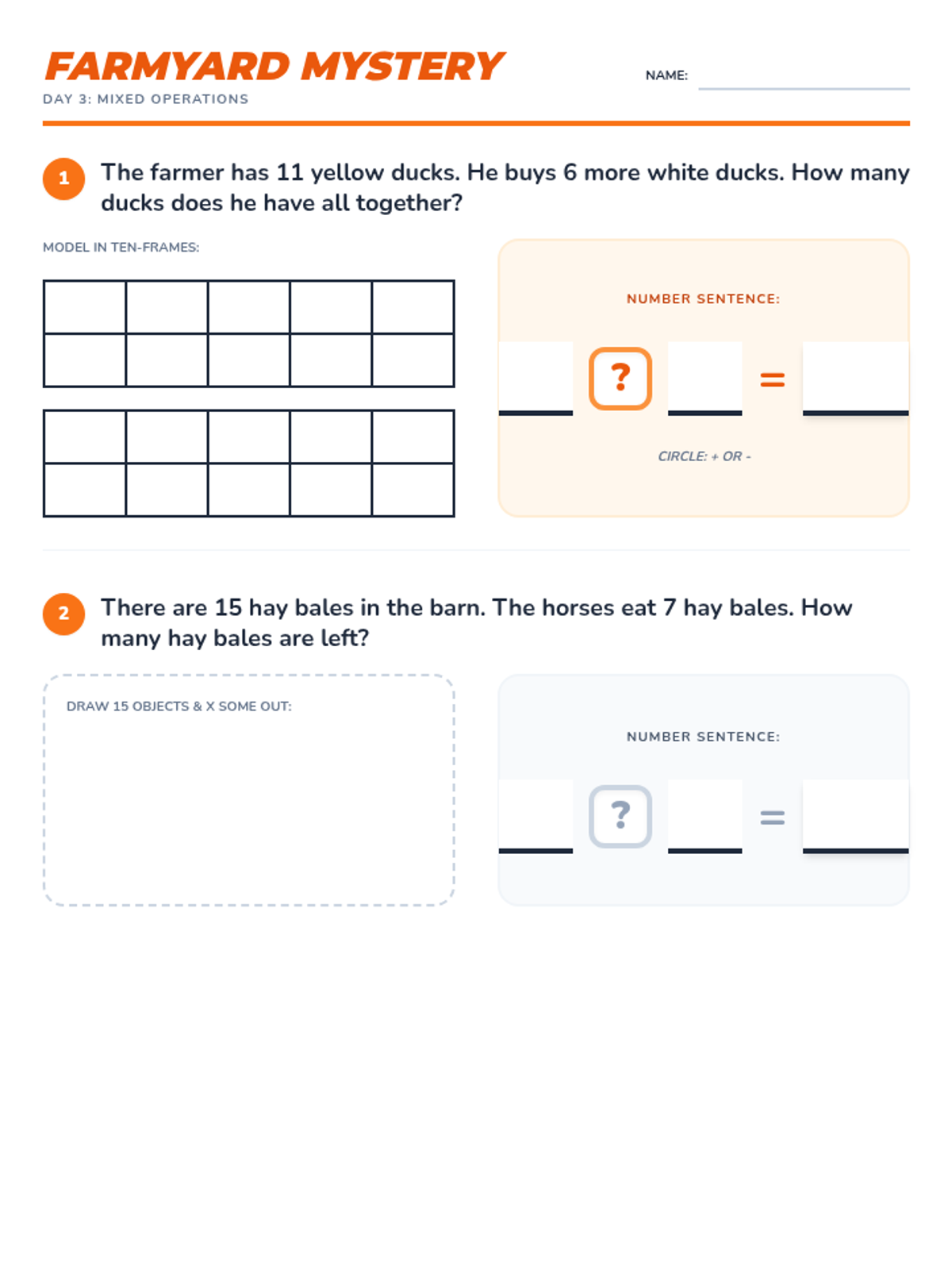
Challenges students to choose the correct operation (addition or subtraction) based on word problem context. Includes problems within 20 and uses ten-frames for modeling.
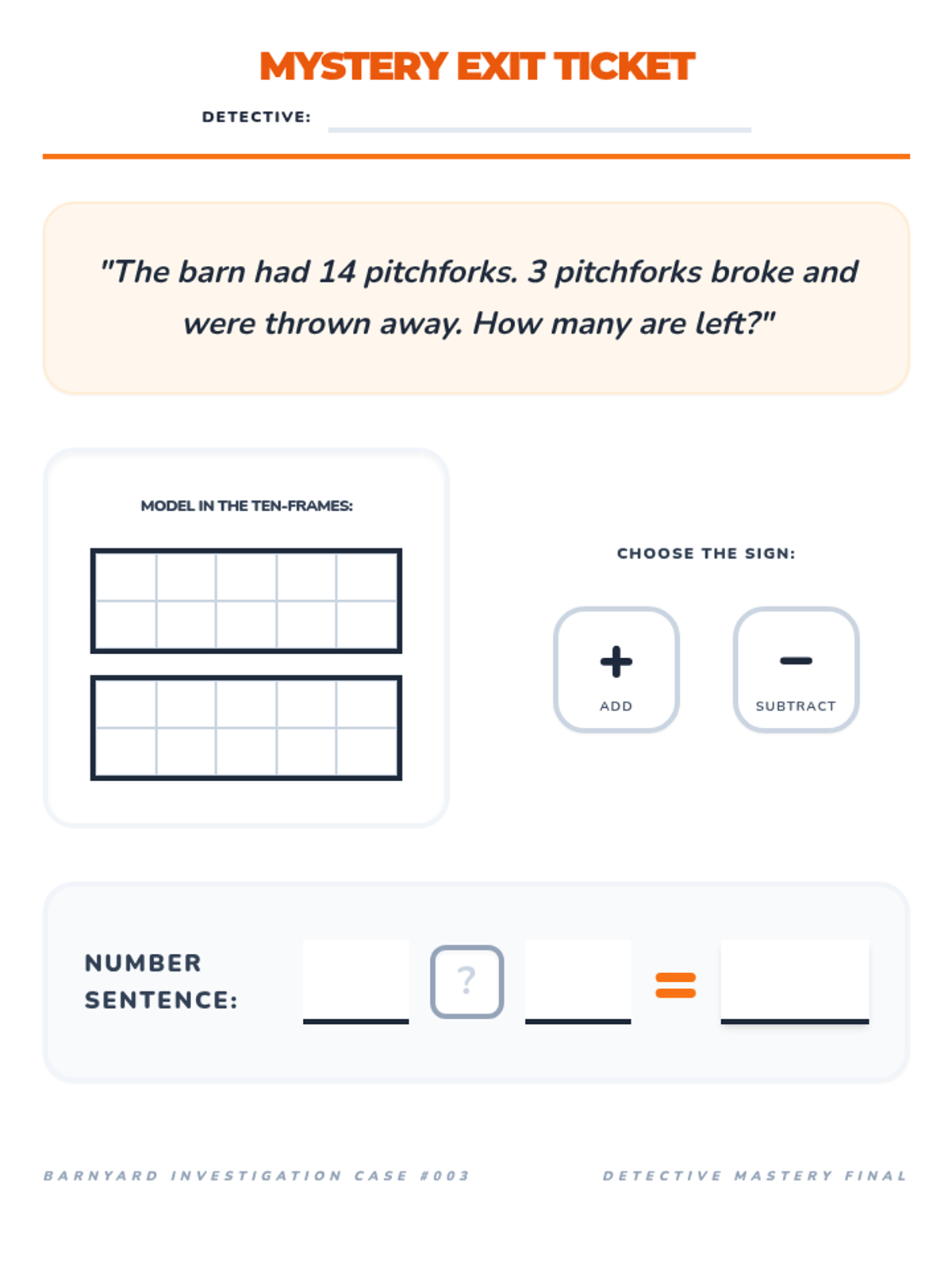
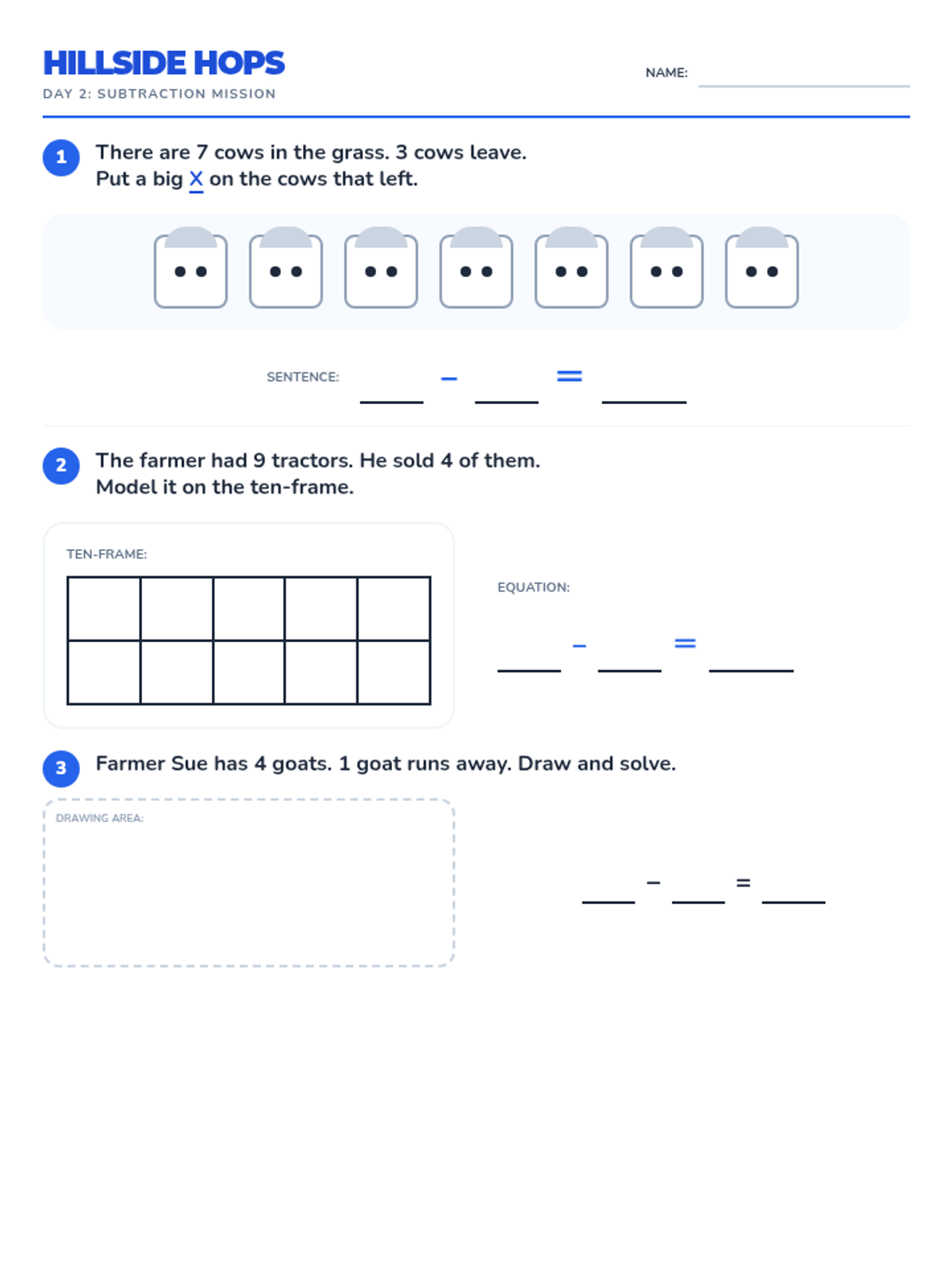
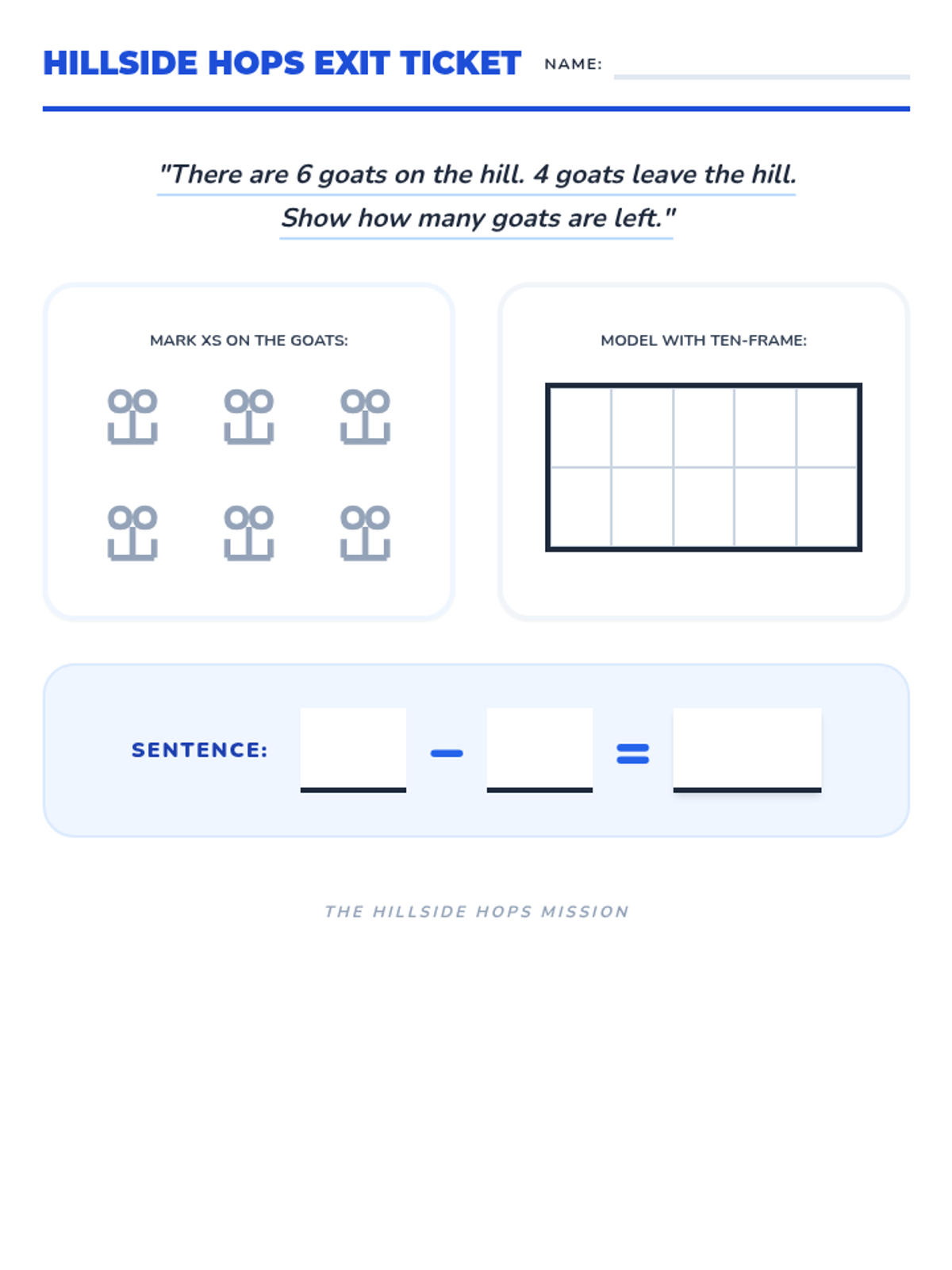
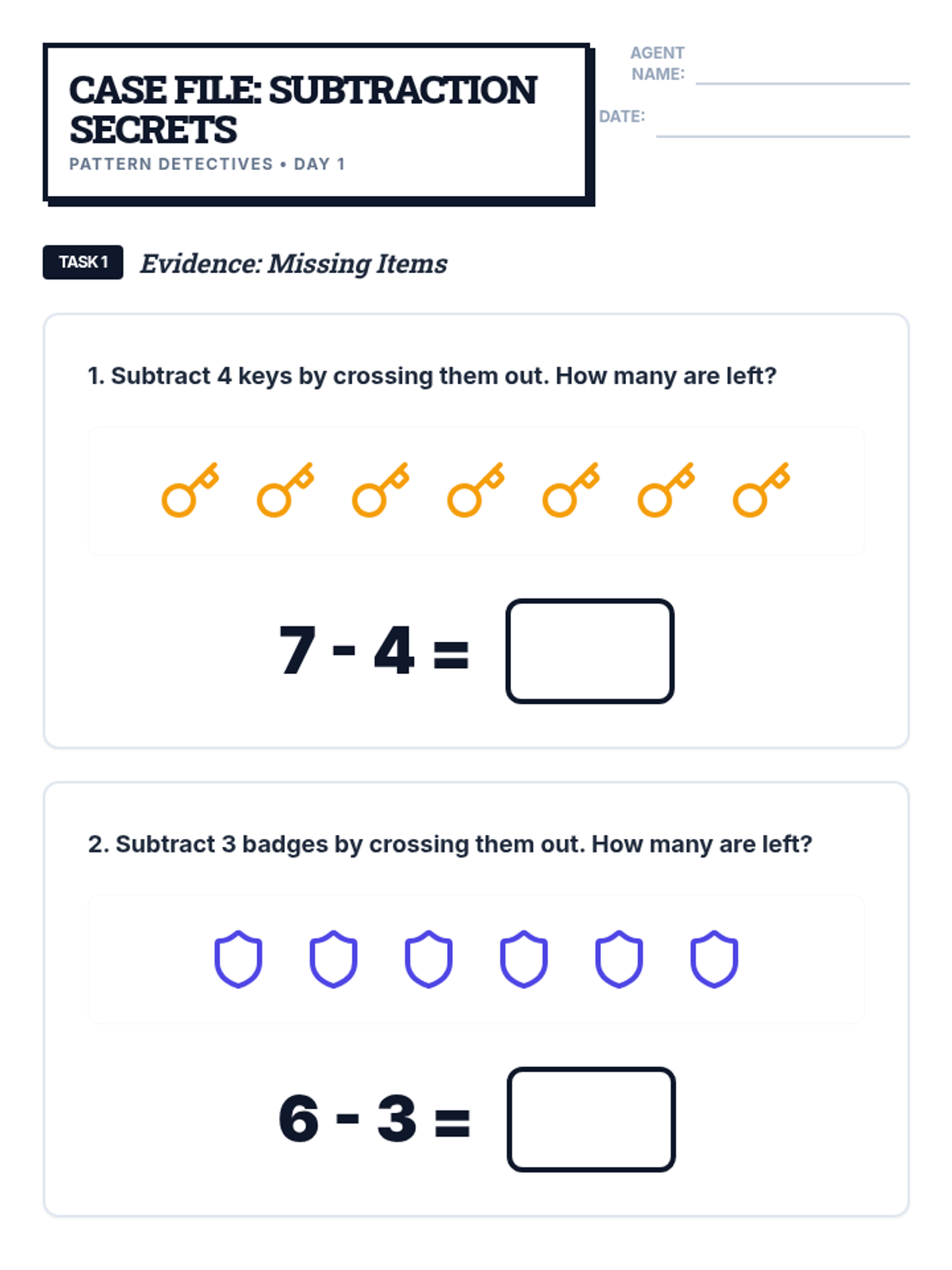
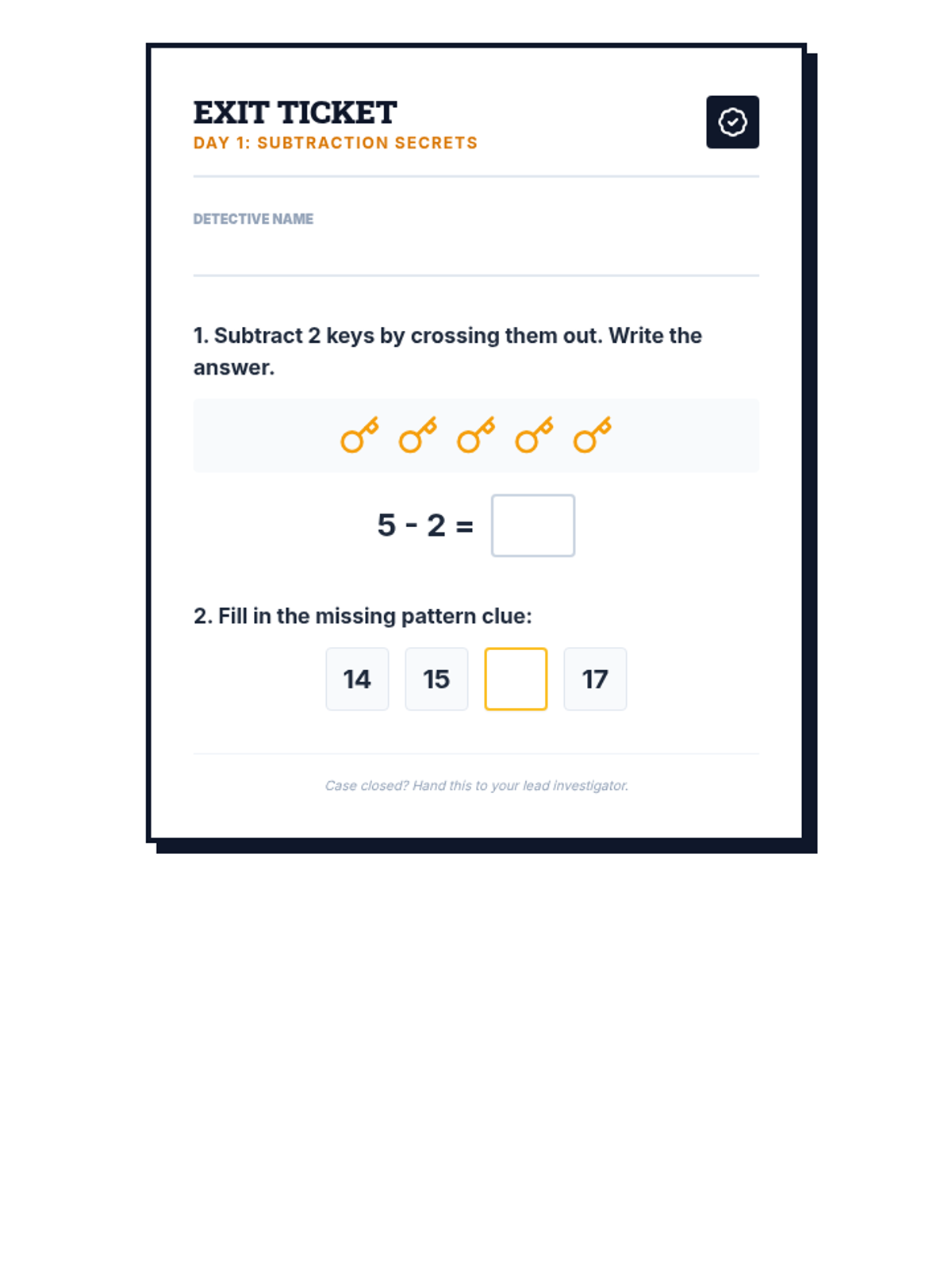
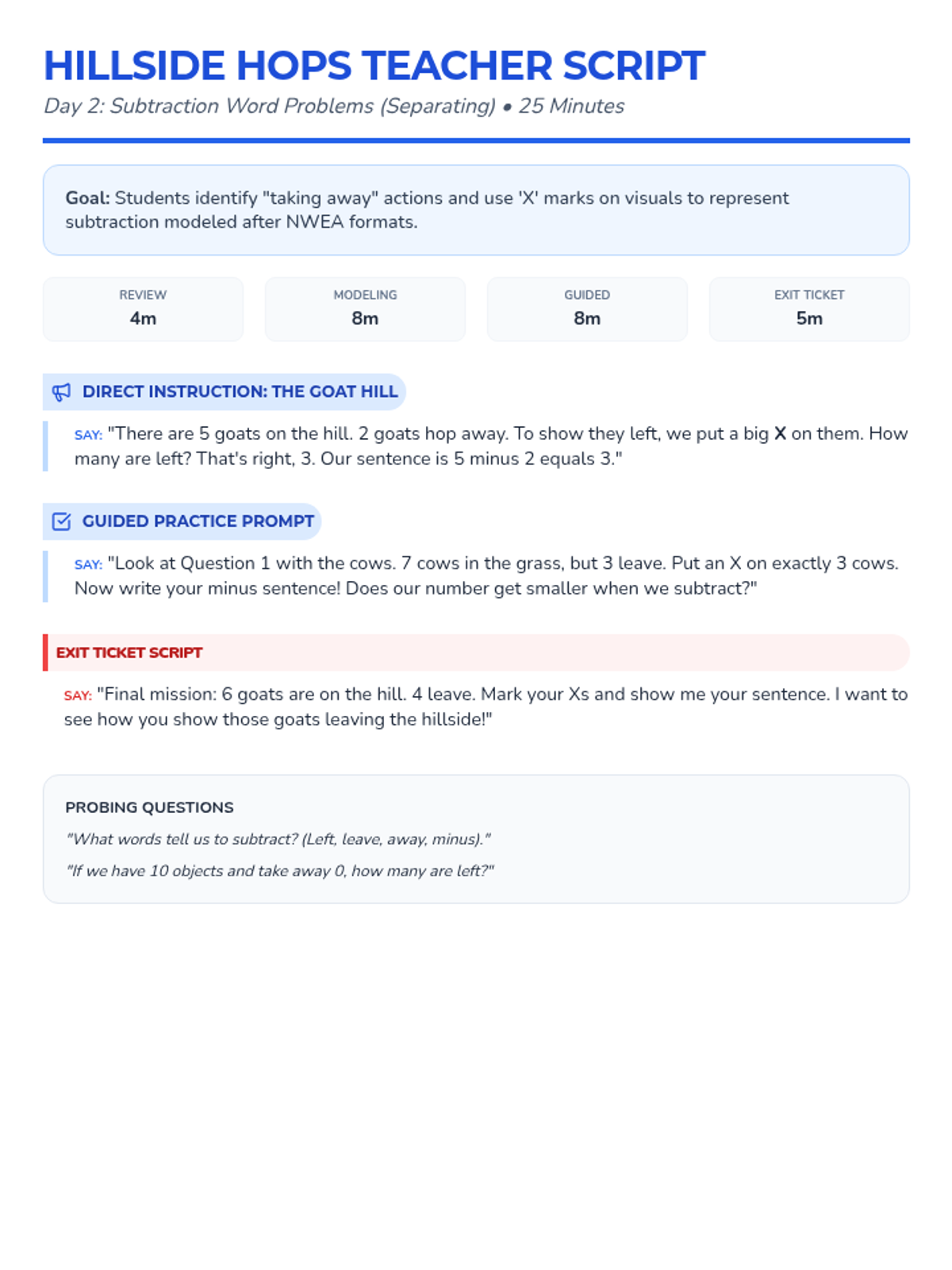
Focuses on subtraction word problems (separating) by marking 'X's on pre-drawn images. Students transition from visual crossing-out to writing subtraction number sentences.
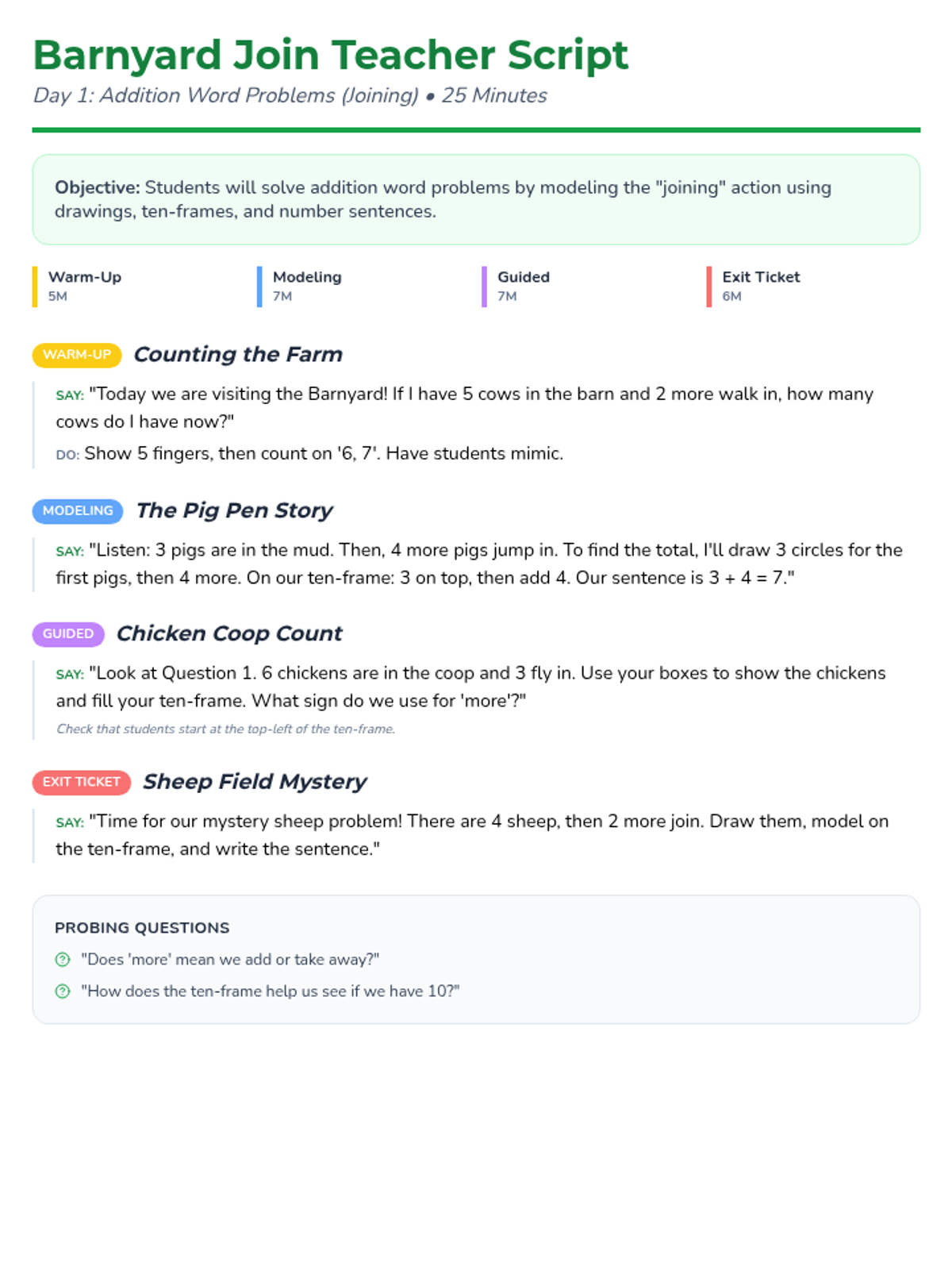
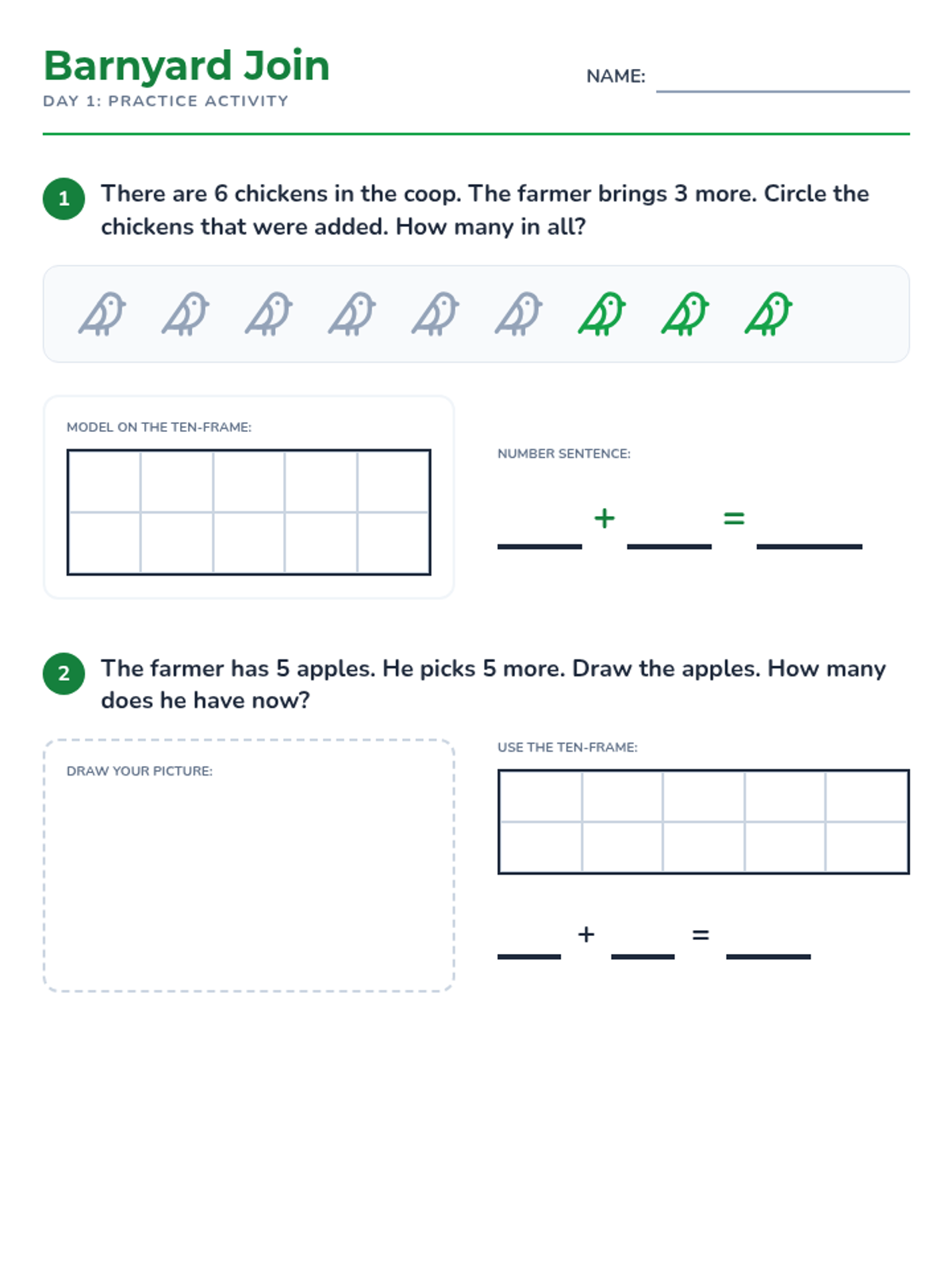
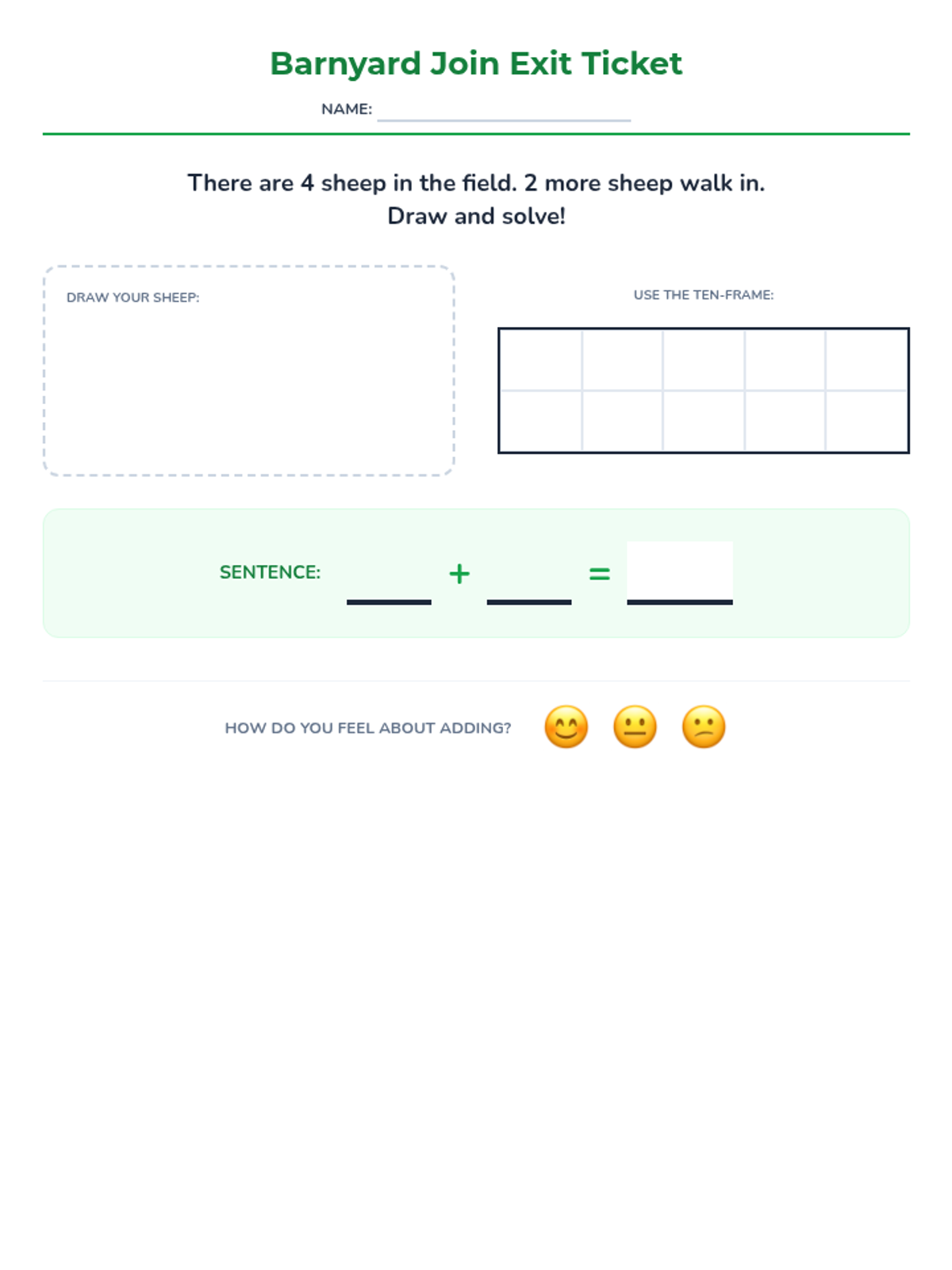
Focuses on addition word problems (joining) using farm-themed stories. Students practice drawing pictures and using ten-frames to represent addition equations.
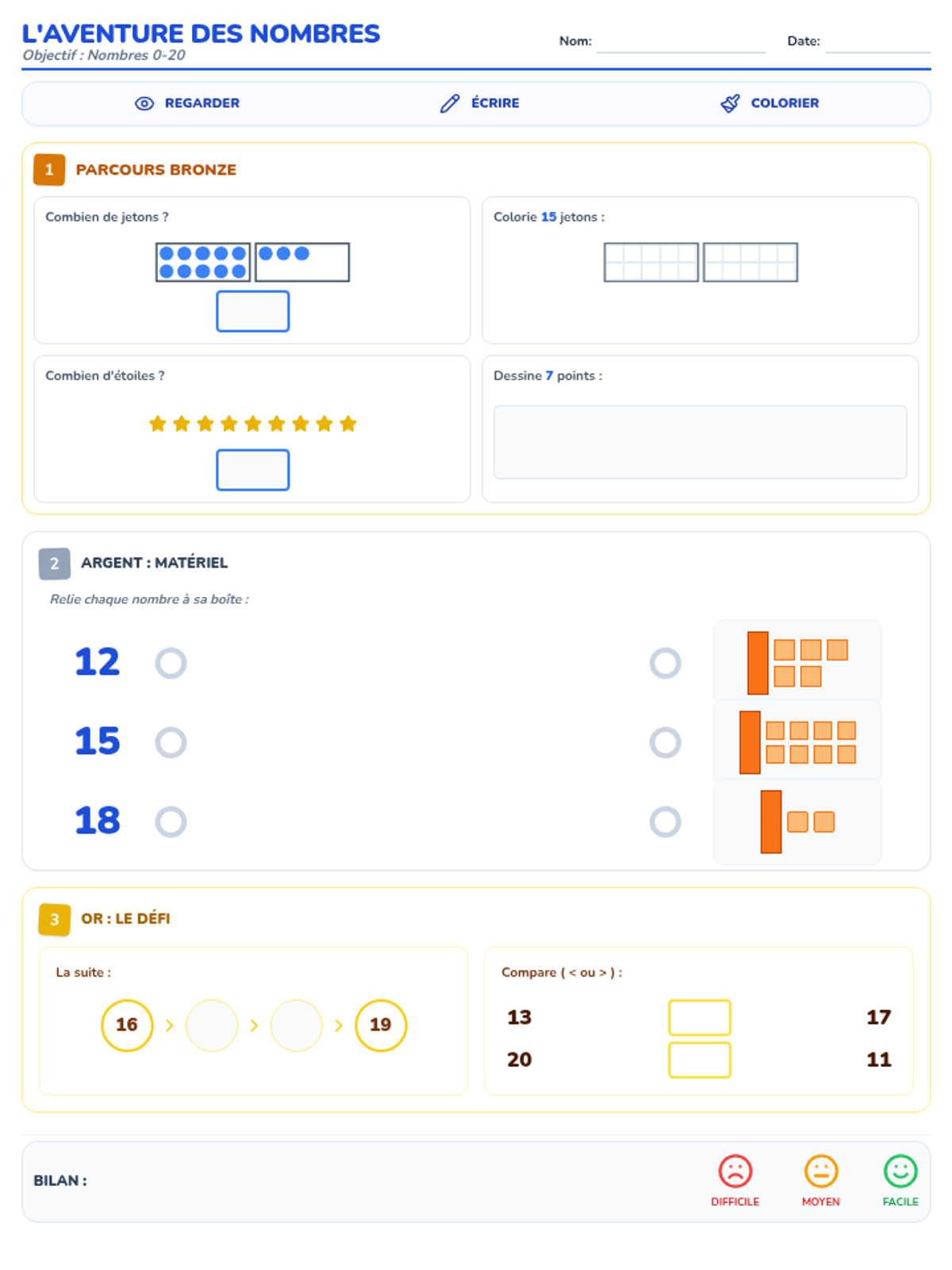
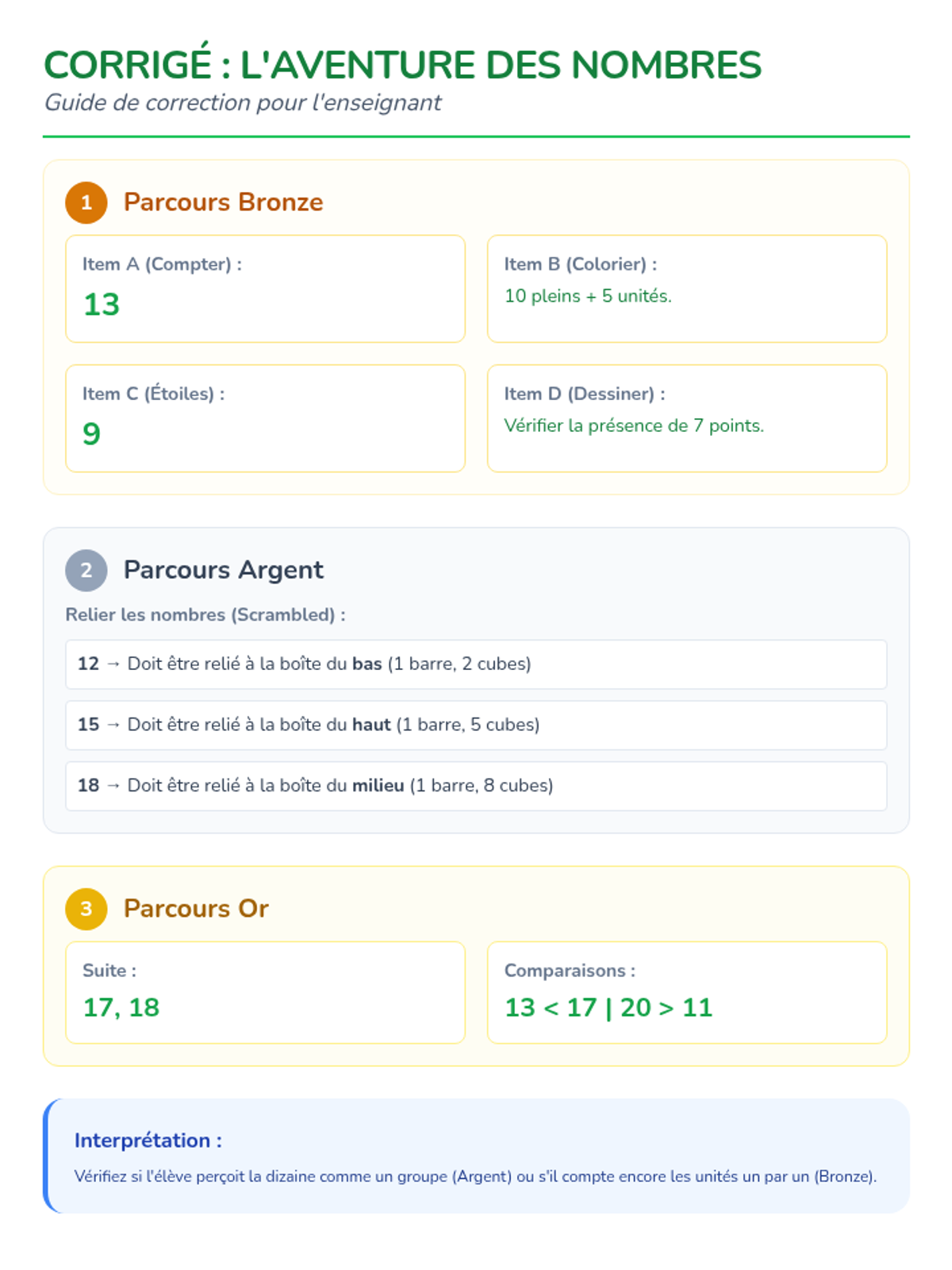
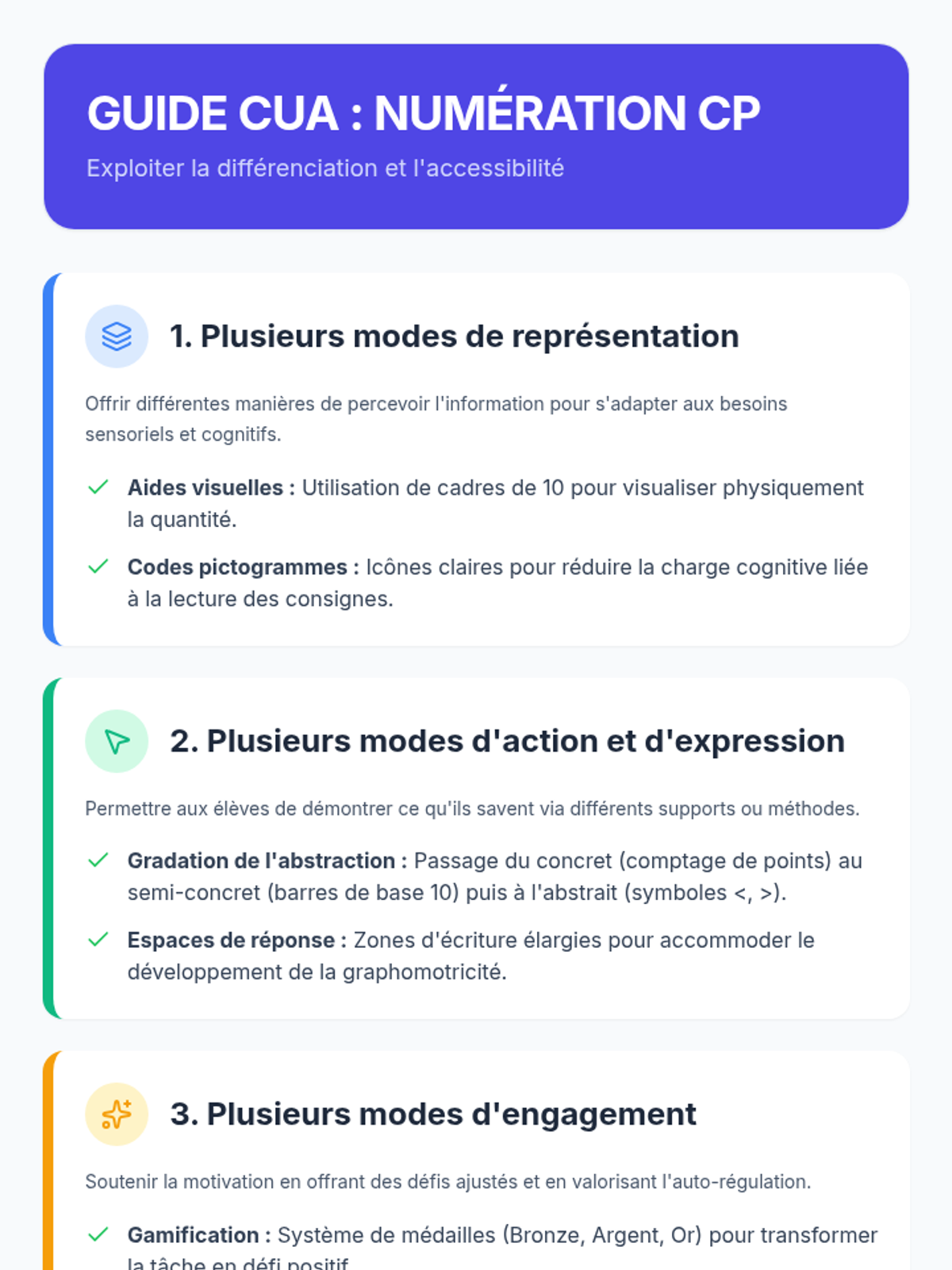
Cette leçon porte sur la compréhension et la manipulation des nombres de 0 à 20 en utilisant les principes de la Conception Universelle de l'Apprentissage (CUA). Elle propose des parcours différenciés pour permettre à chaque élève de progresser à son rythme.
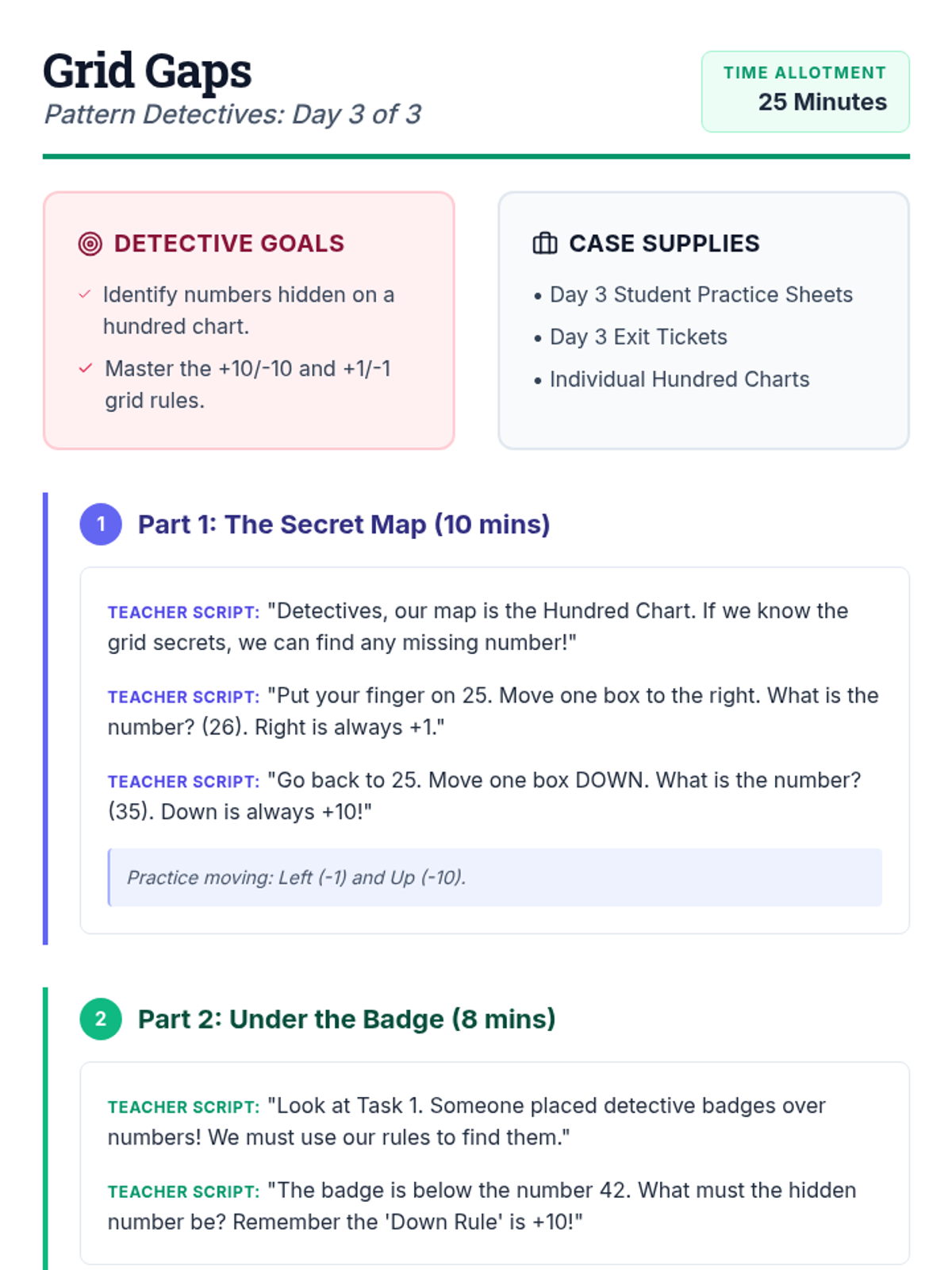
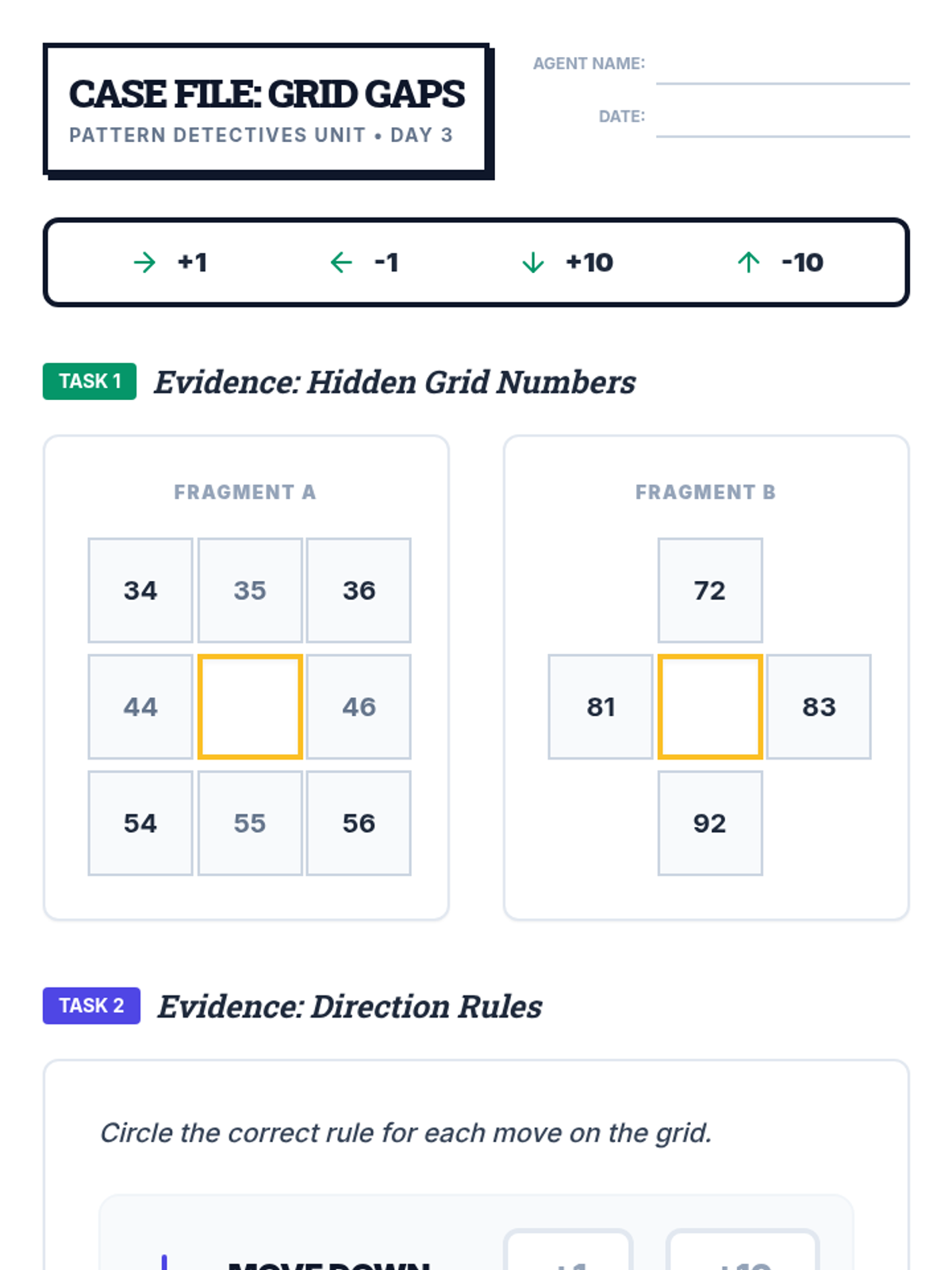
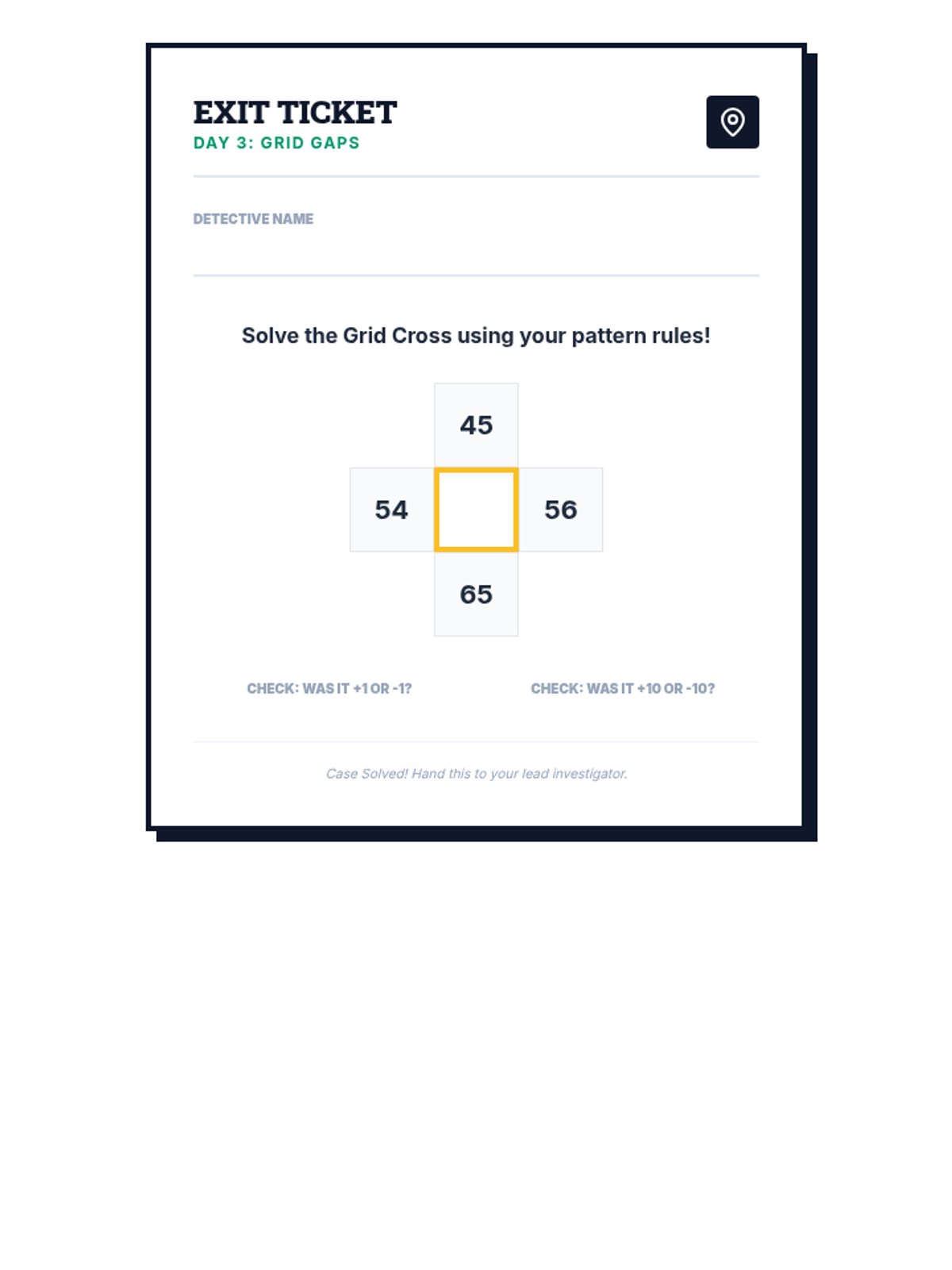
Focuses on hundred chart patterns, specifically identifying +1/-1 and +10/-10 relationships in grid sequences.
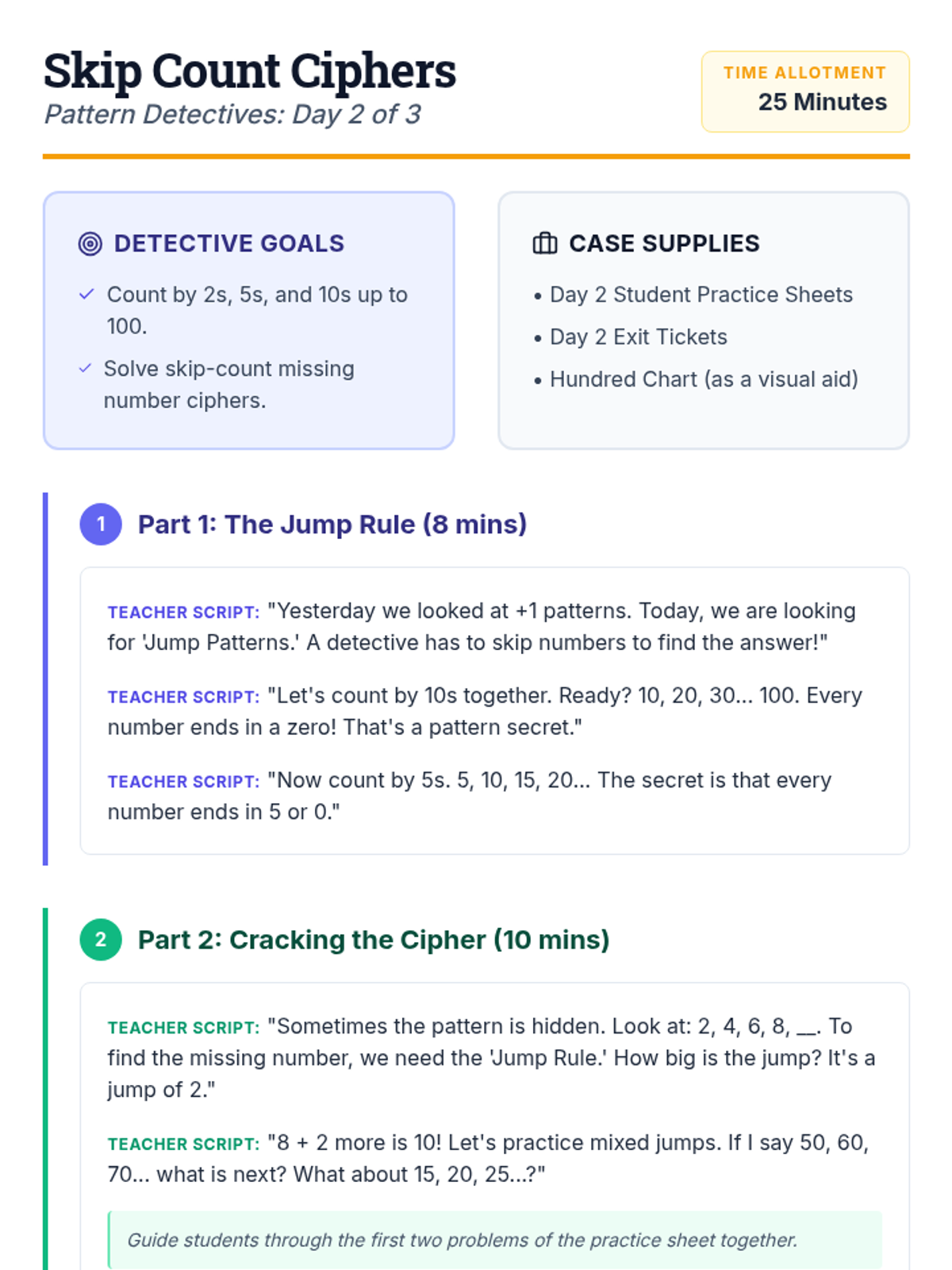
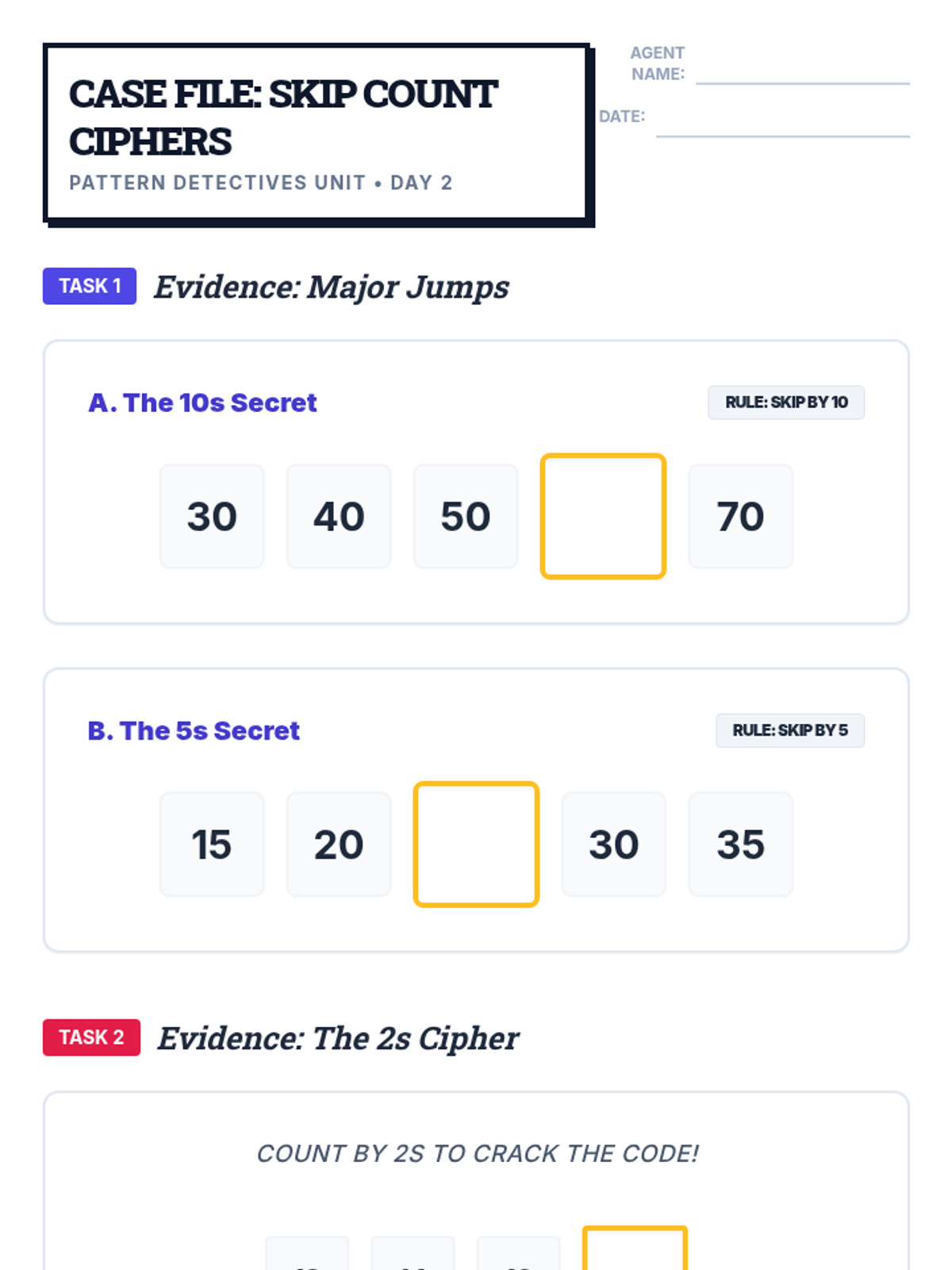
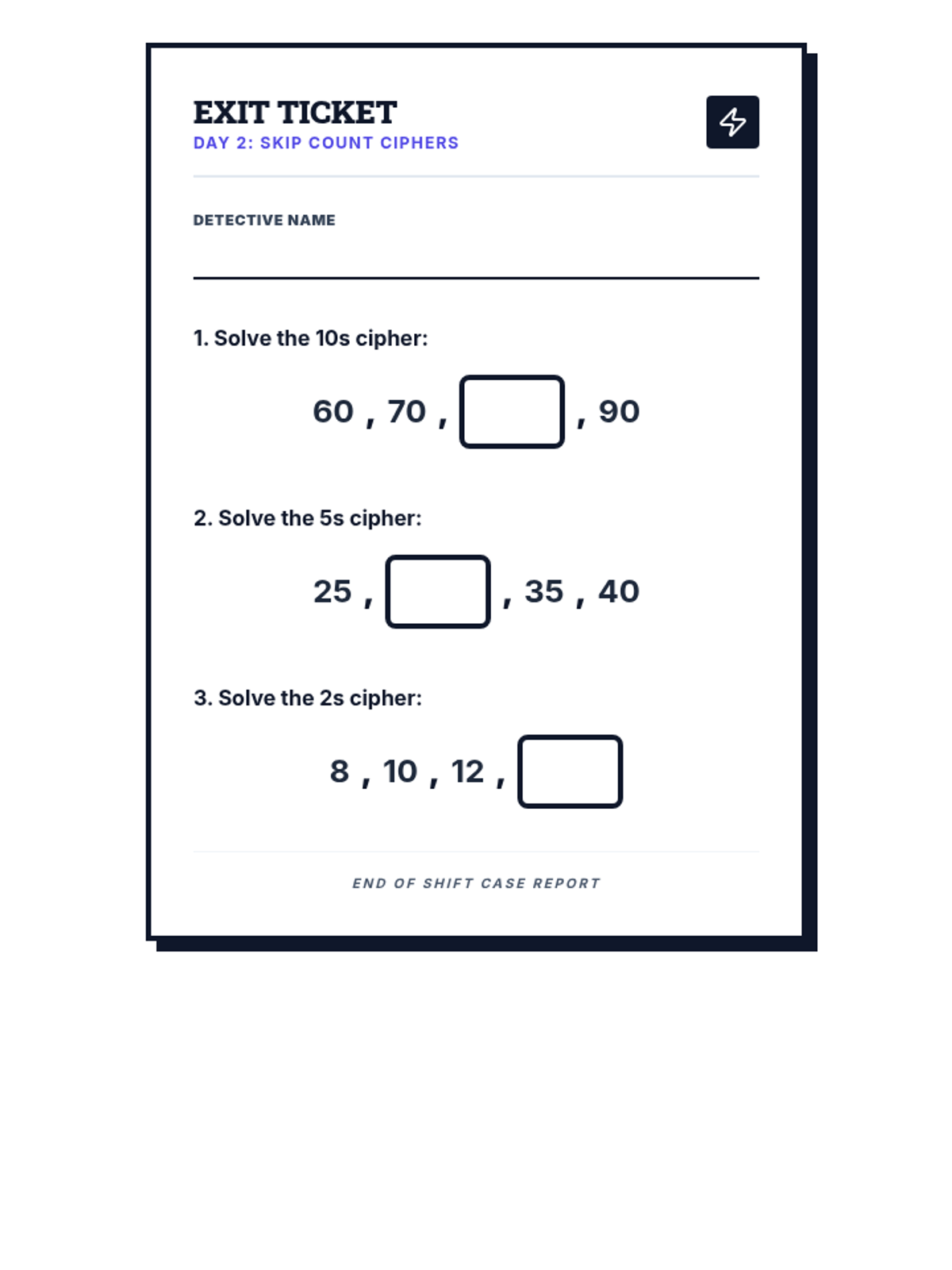
Focuses on skip counting by 2s, 5s, and 10s up to 100 using number series and patterns.
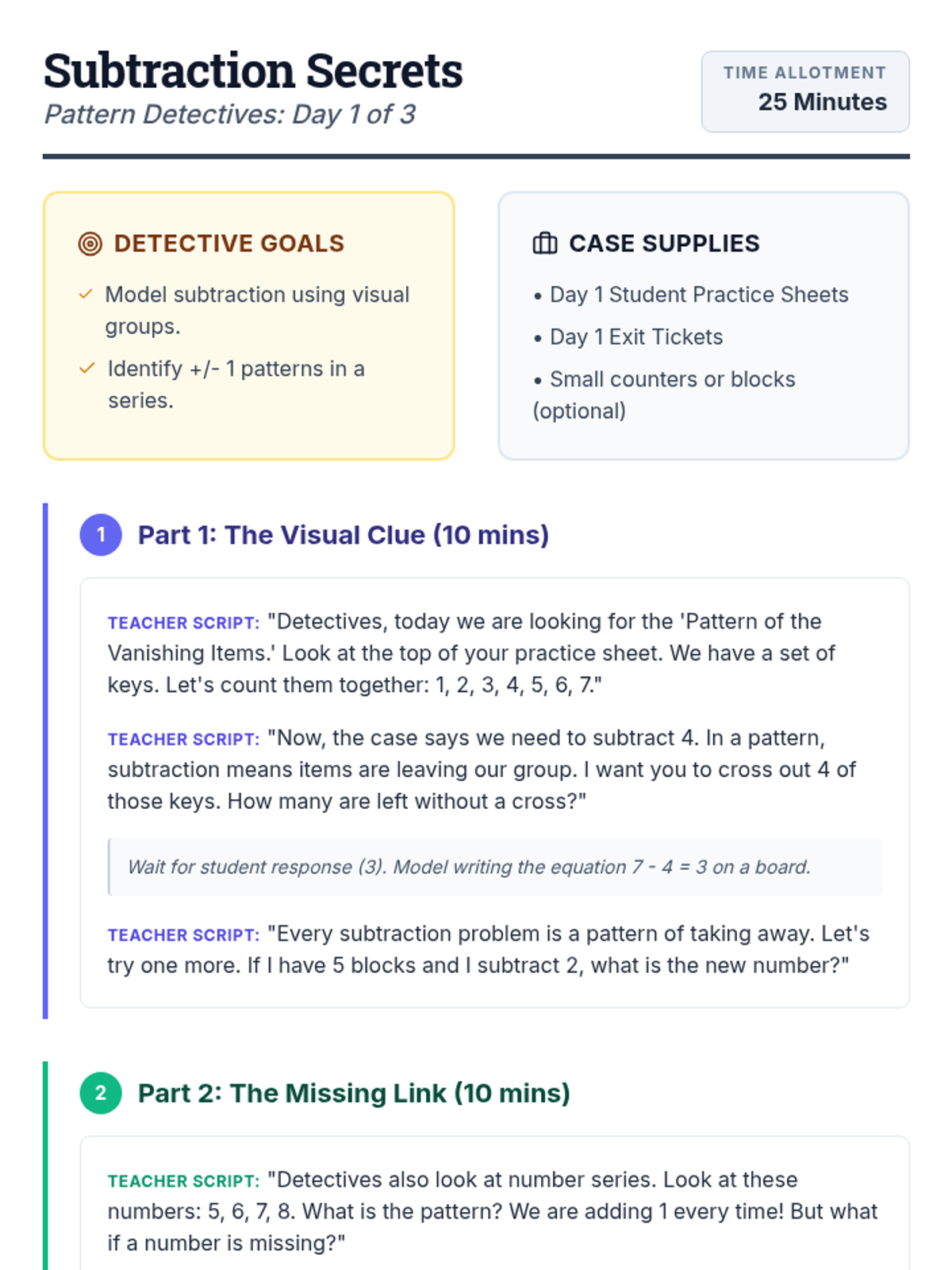
Focuses on visual subtraction models and simple +1/-1 missing number sequences within 20.
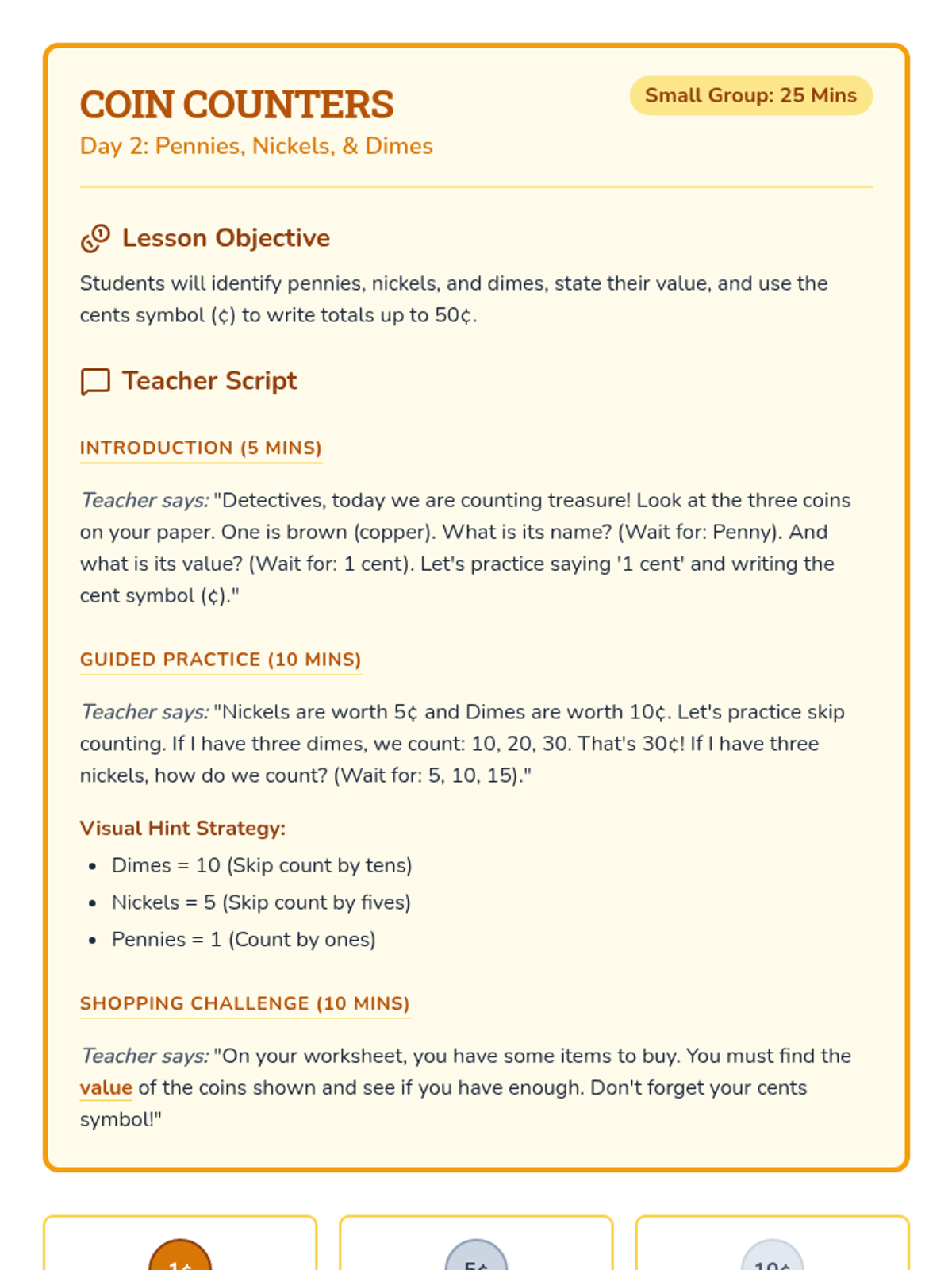
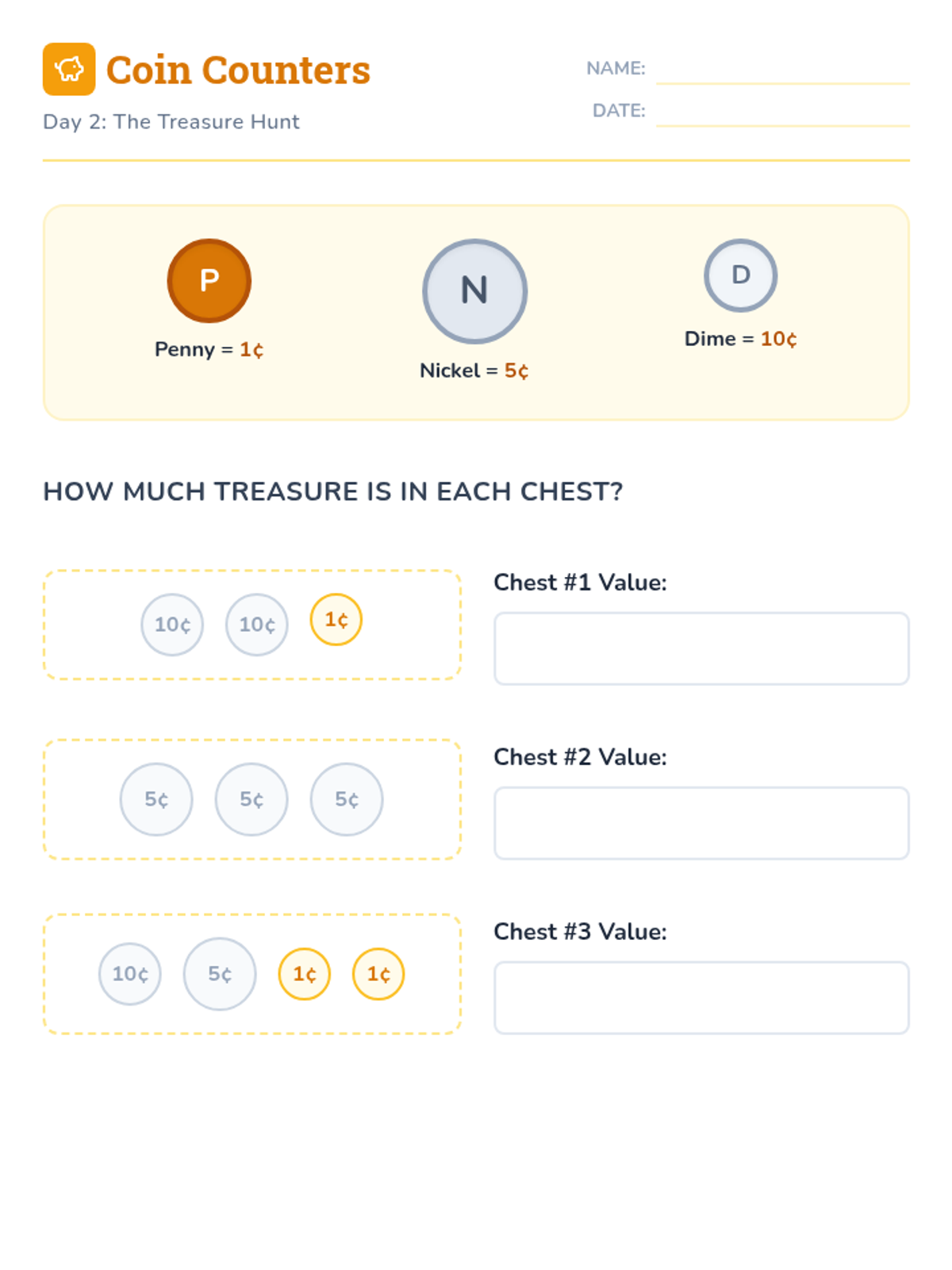
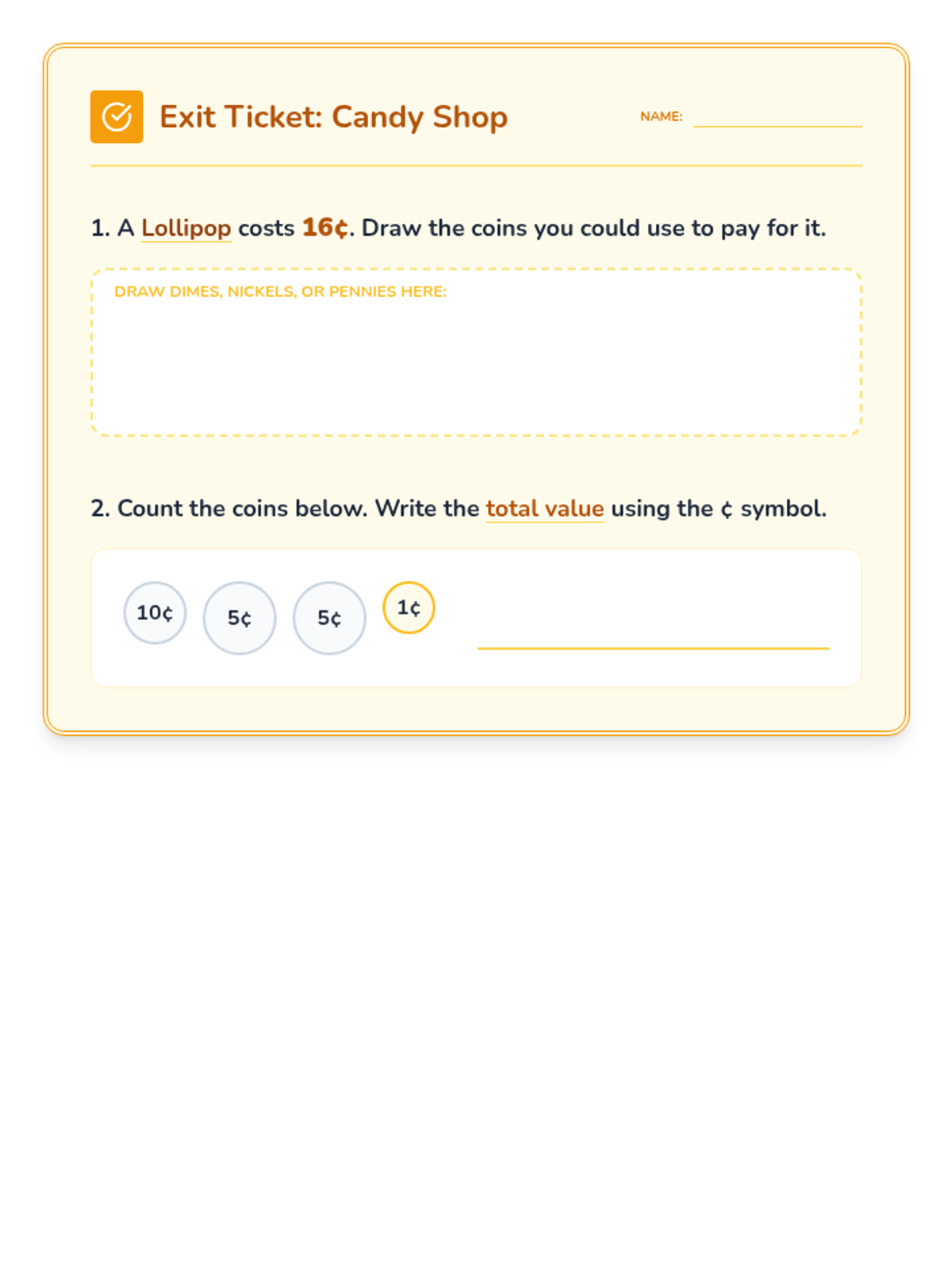
Day 2 introduces pennies, nickels, and dimes, focusing on identifying values, using the cents symbol, and counting mixed coin groups.
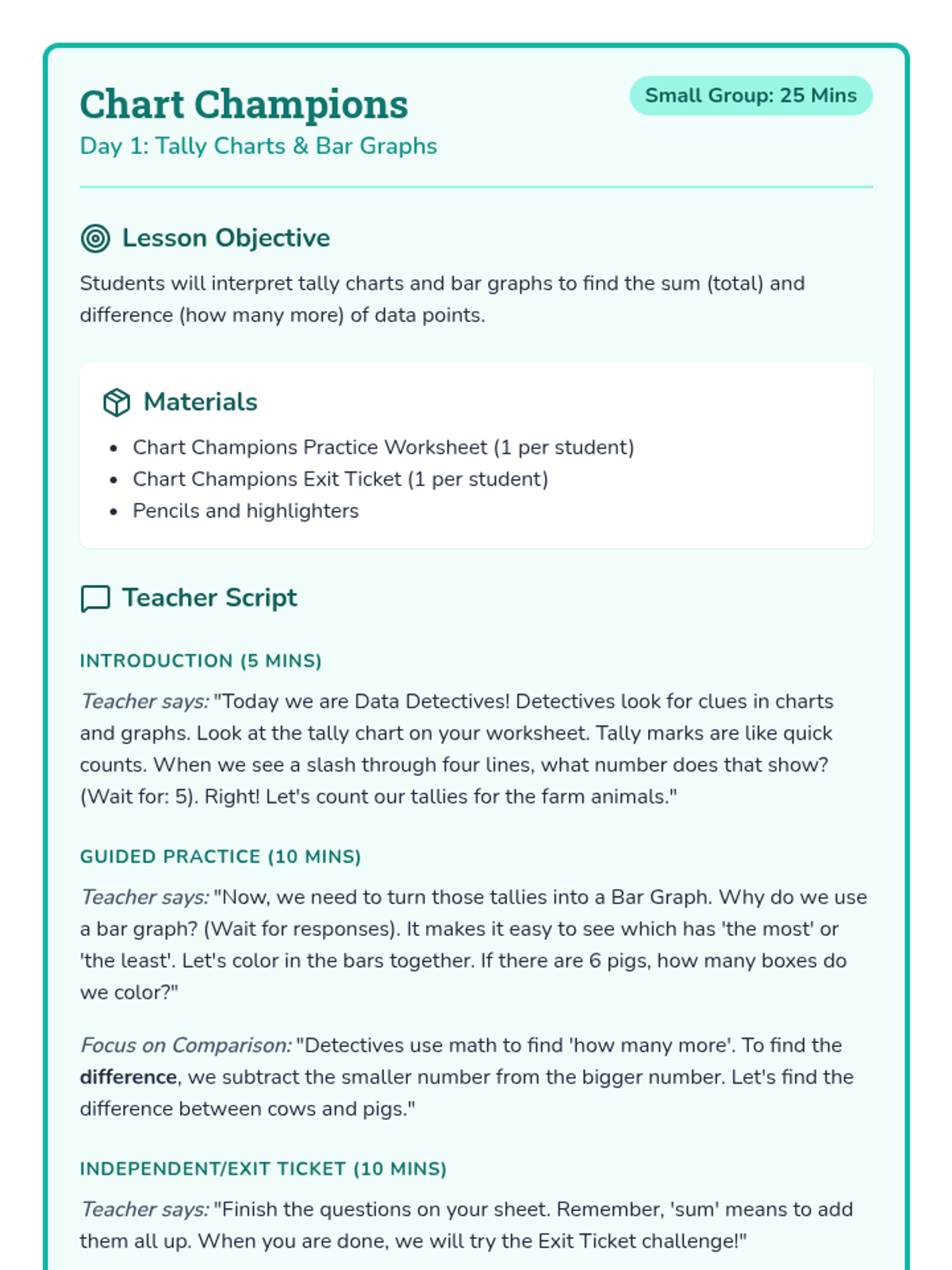
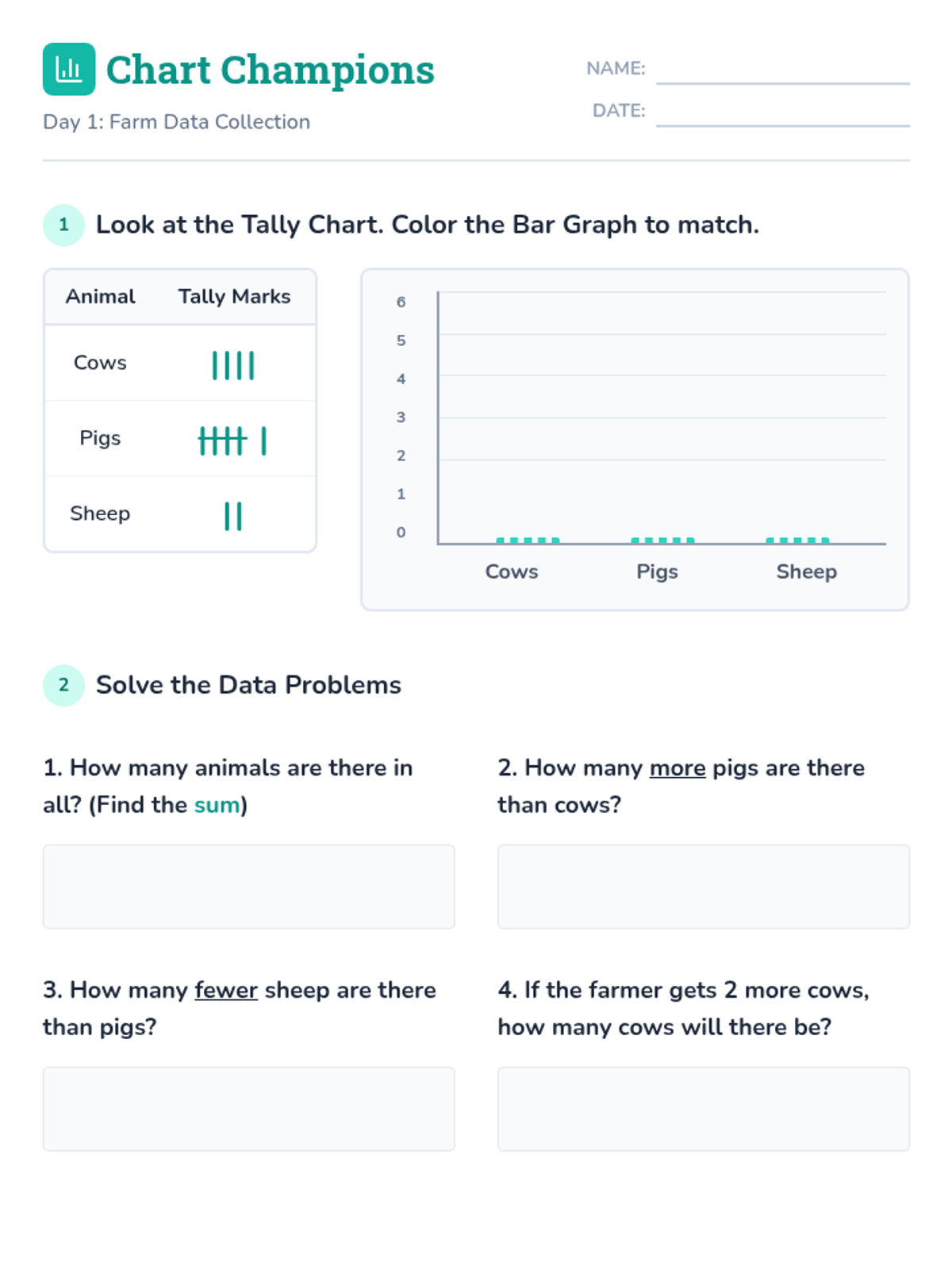
Day 1 focuses on tally charts and bar graphs, emphasizing calculating sums and differences to compare data points.
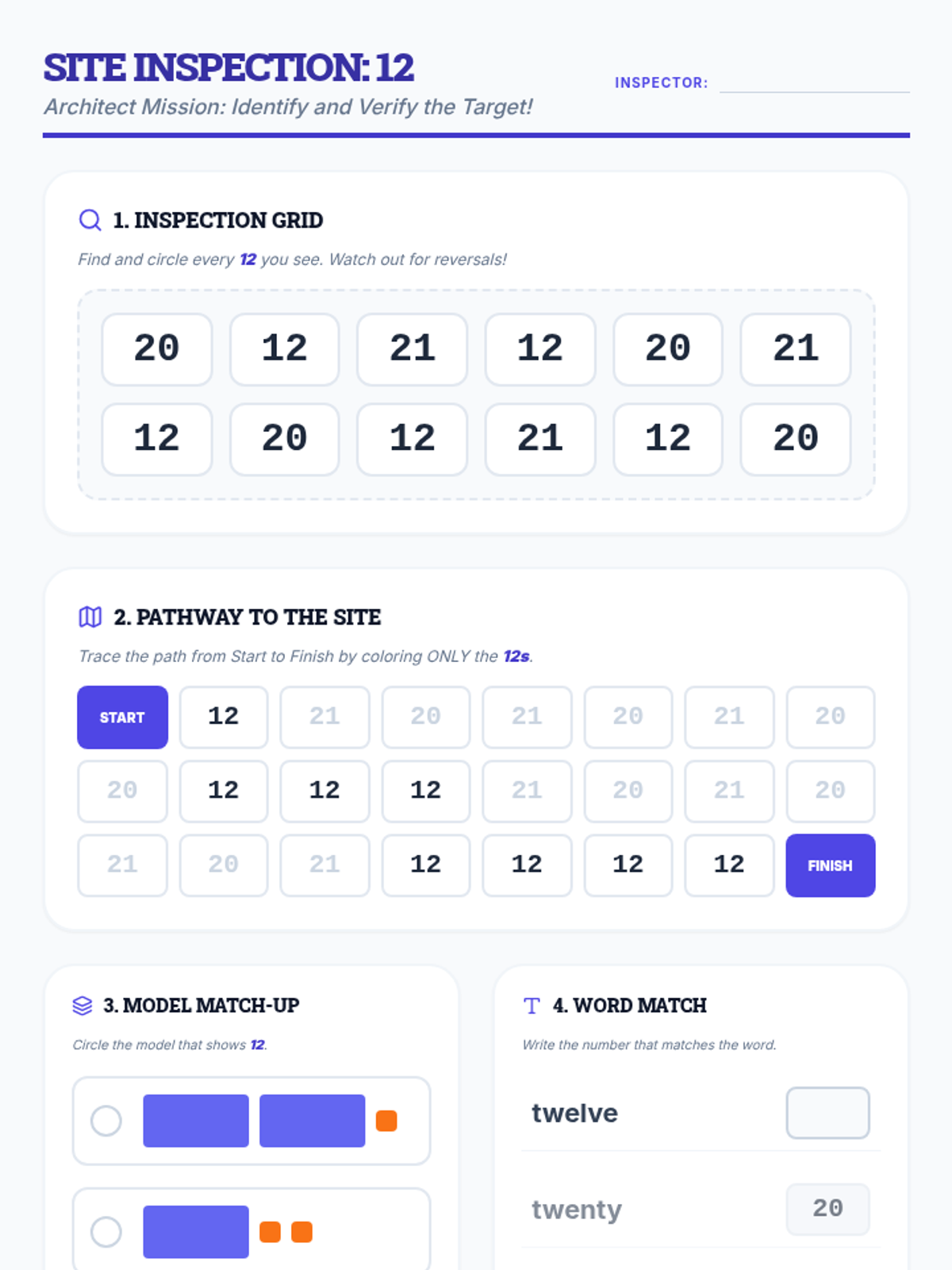
A numeracy lesson helping students distinguish the number 12 from 20 and 21 using place value visualization (one ten, two ones) and 'Architect' inspection strategies.
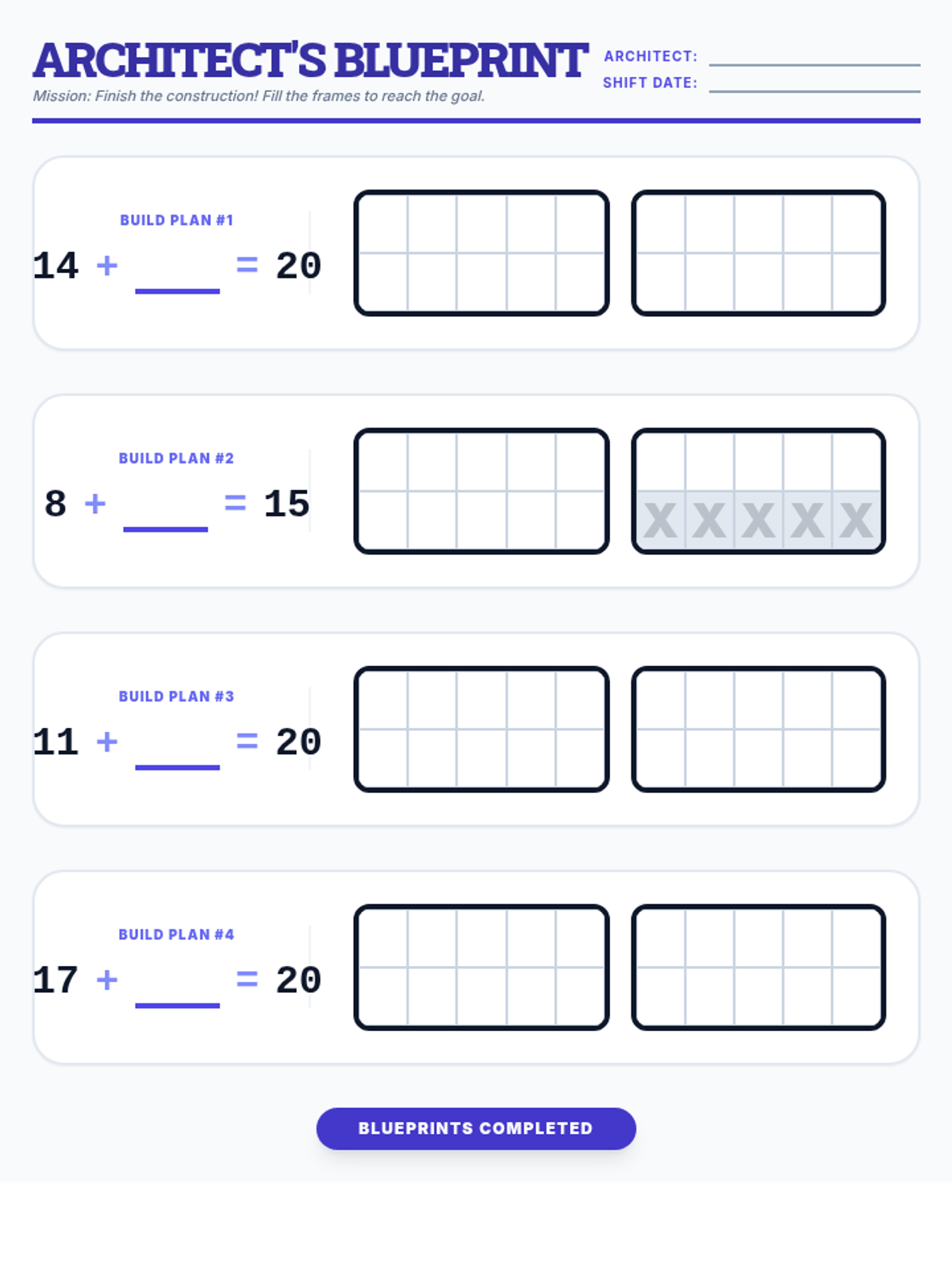
A visual math lesson focused on finding missing addends up to 20 using double ten frames and decomposition strategies. Students act as 'Number Architects' to fill gaps in blueprints.
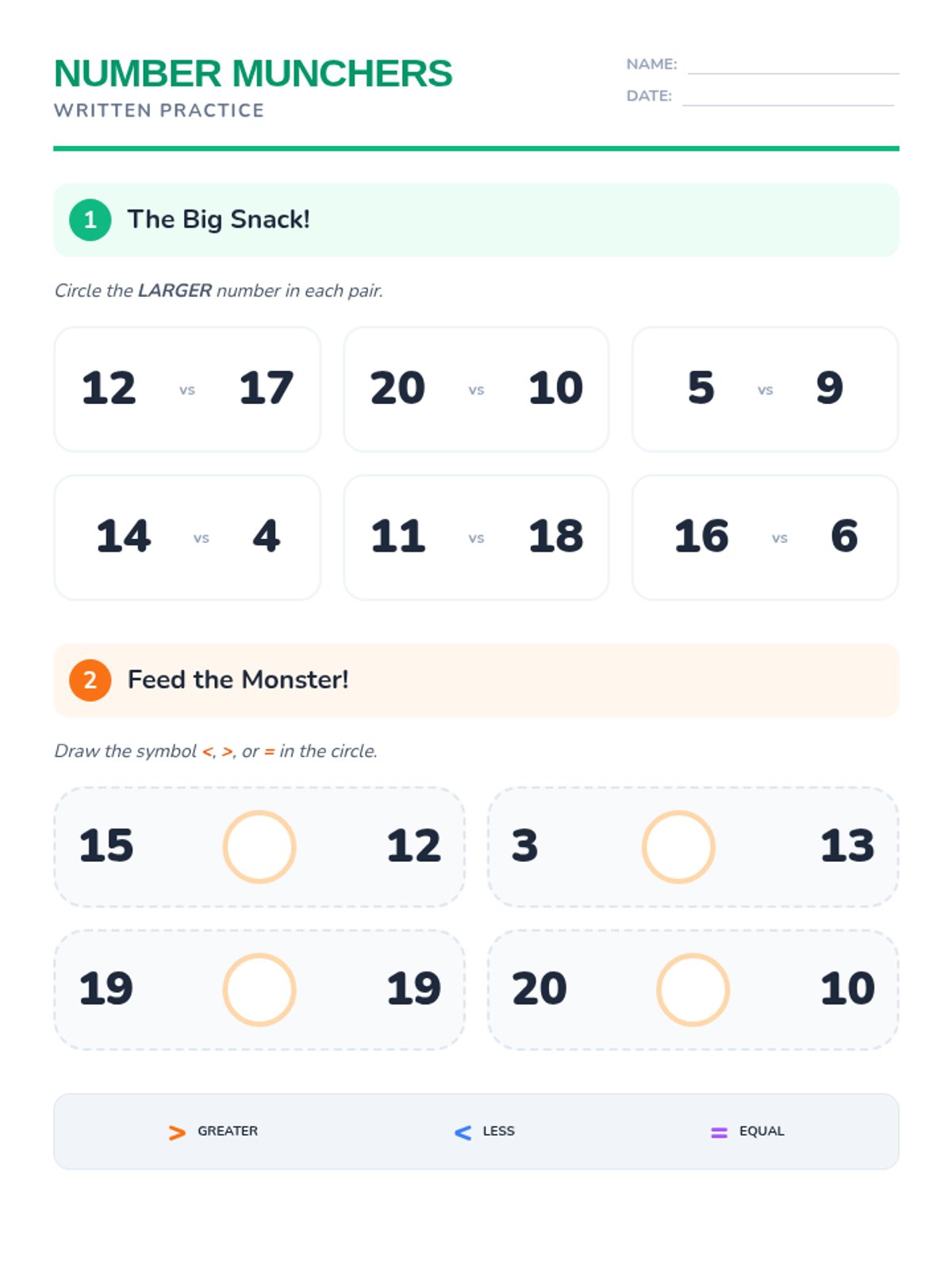
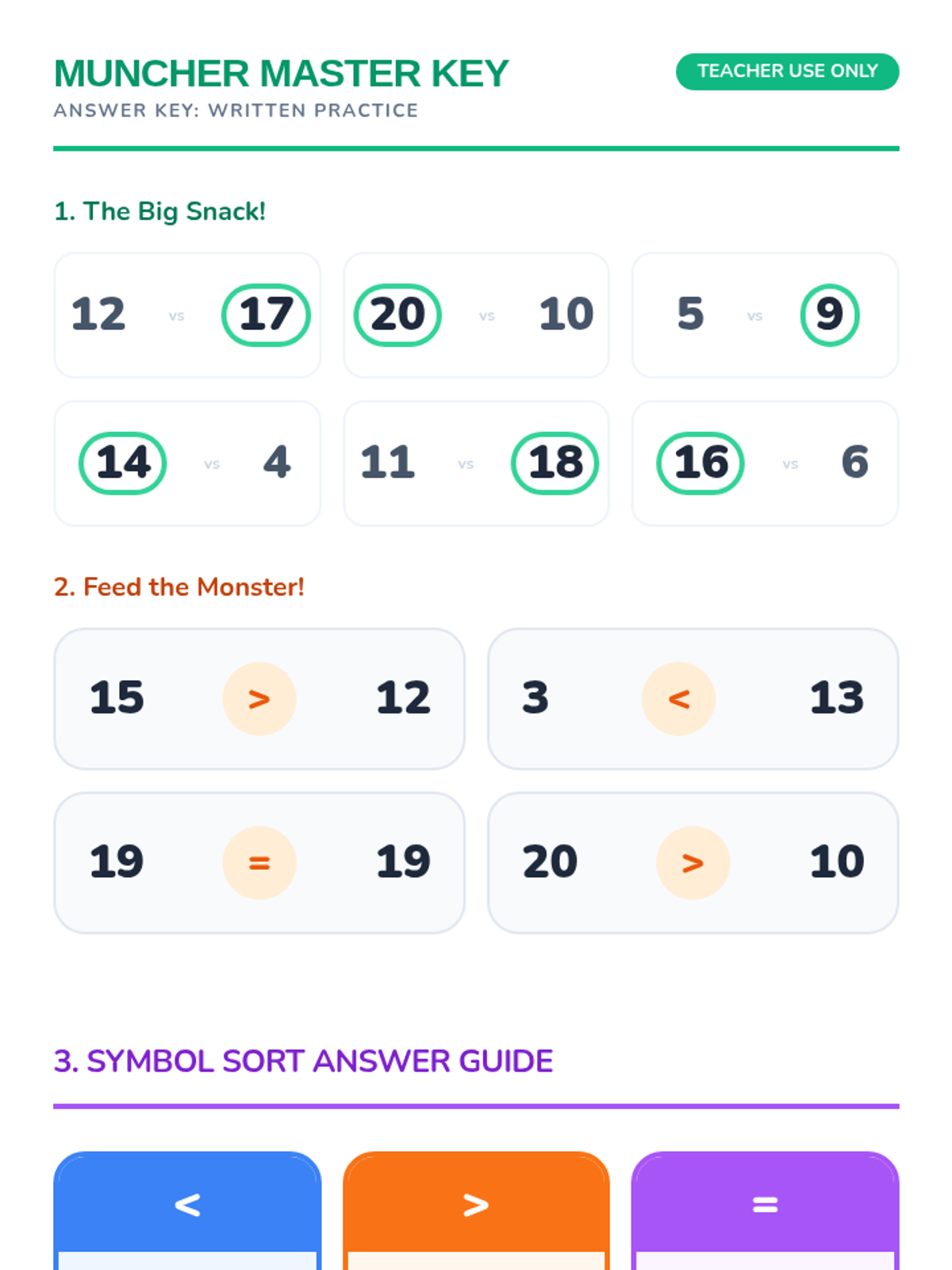
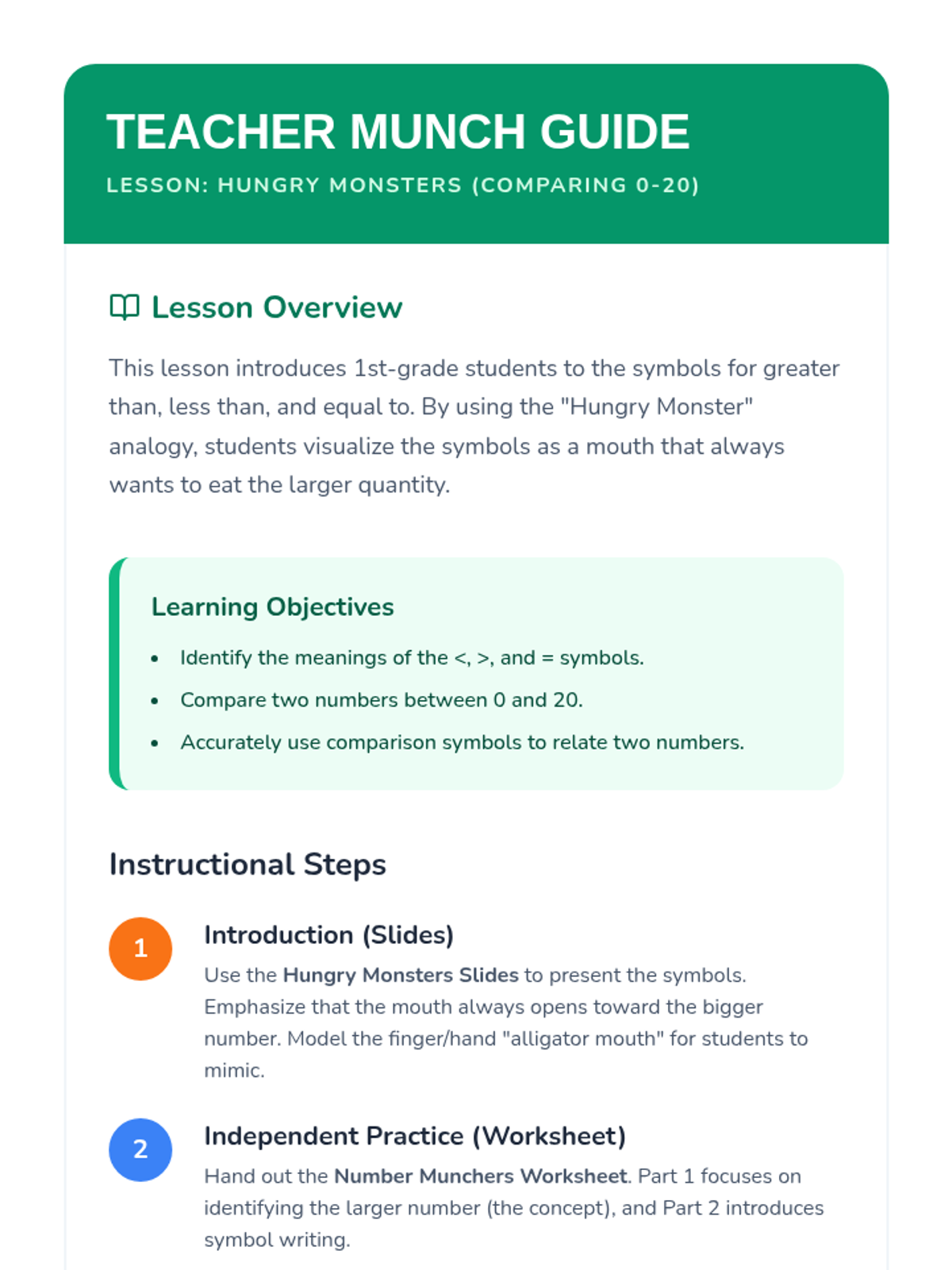
A fun, monster-themed lesson for 1st graders to master comparing numbers 0-20 using the symbols <, >, and =. Students will engage with visual slides, practice circling larger numbers, writing symbols, and a hands-on sorting activity.
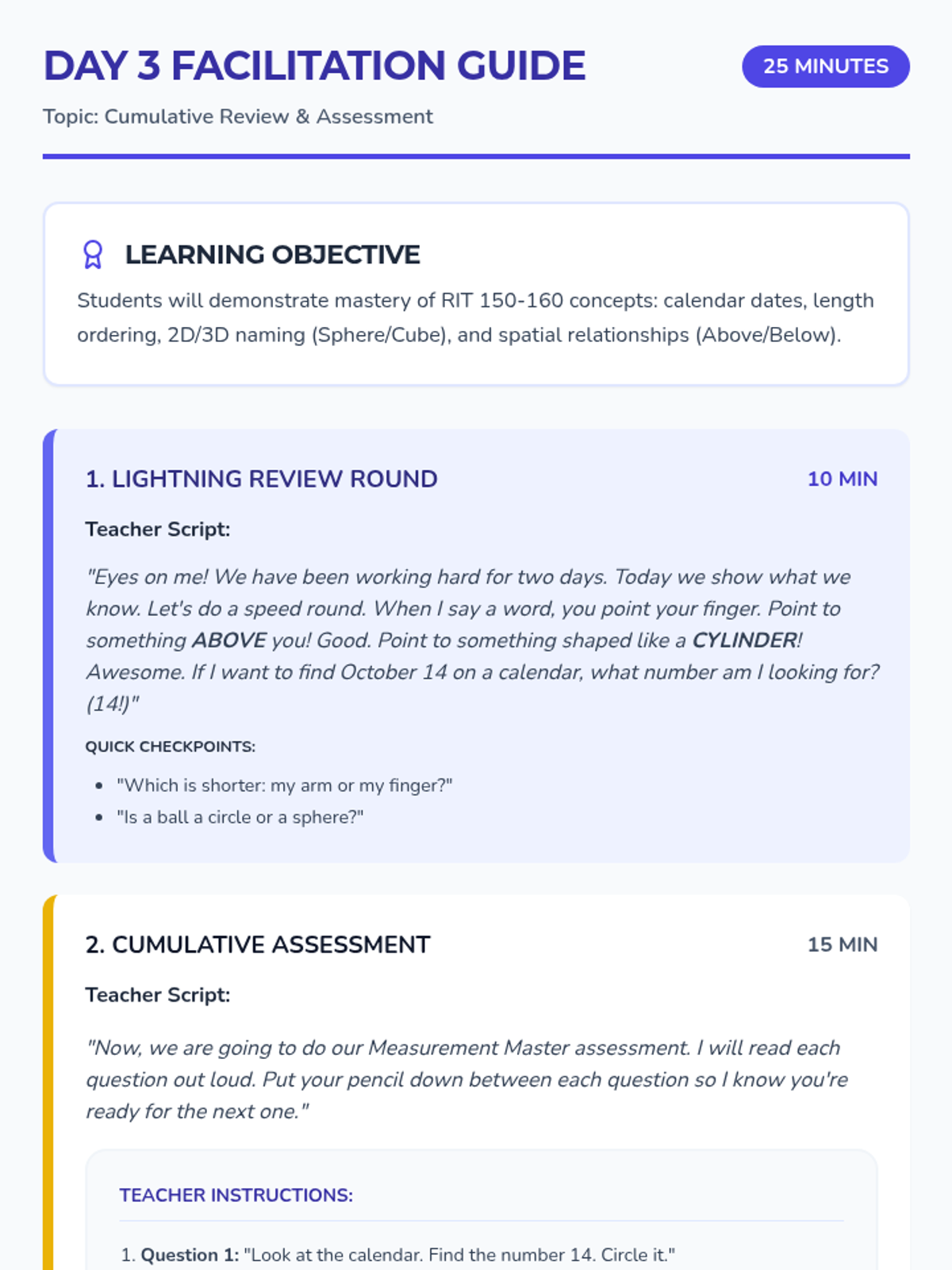
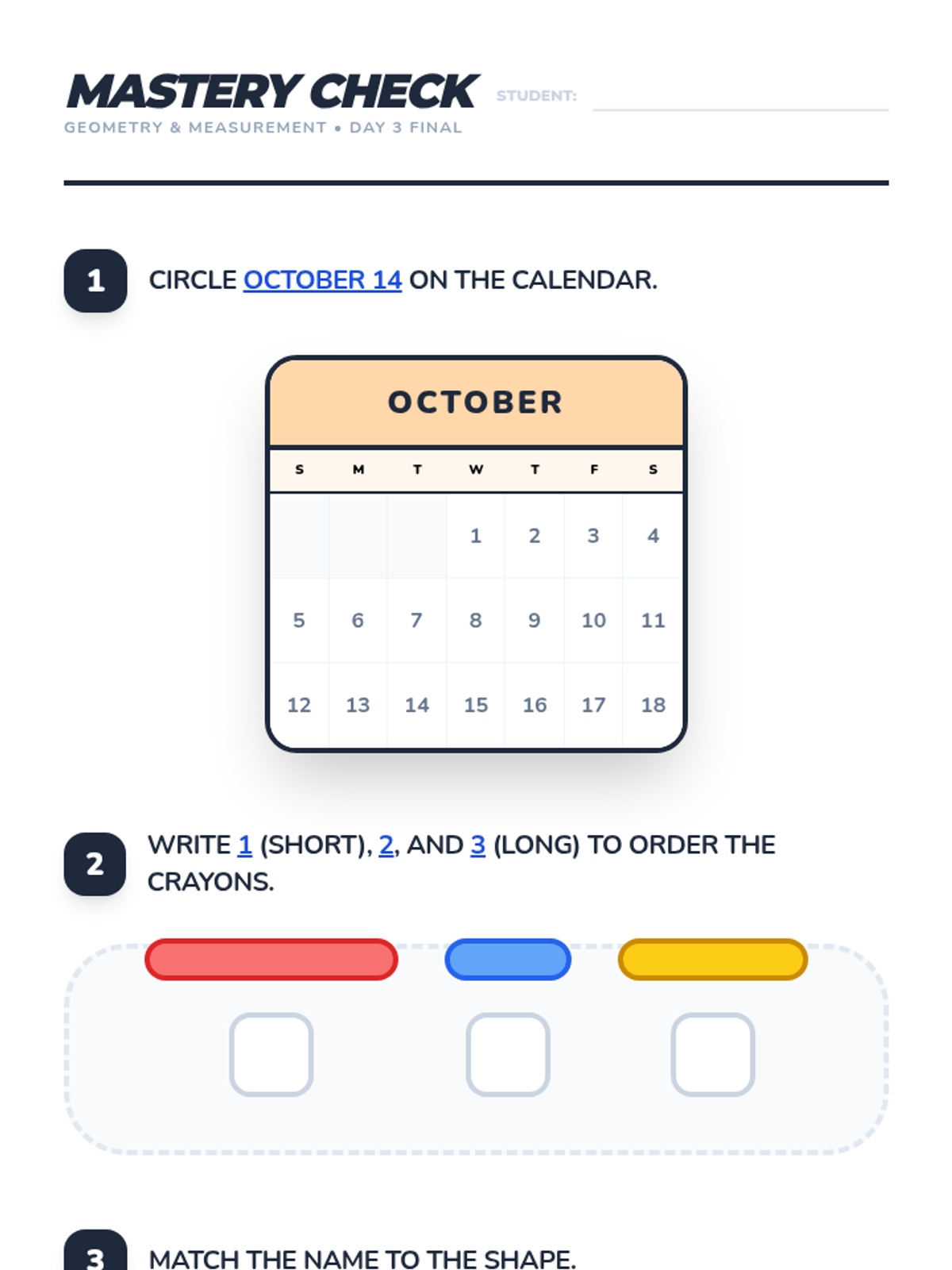
Day 3 provides a comprehensive review of all measurement and geometry concepts from the week, culminating in a cumulative assessment.
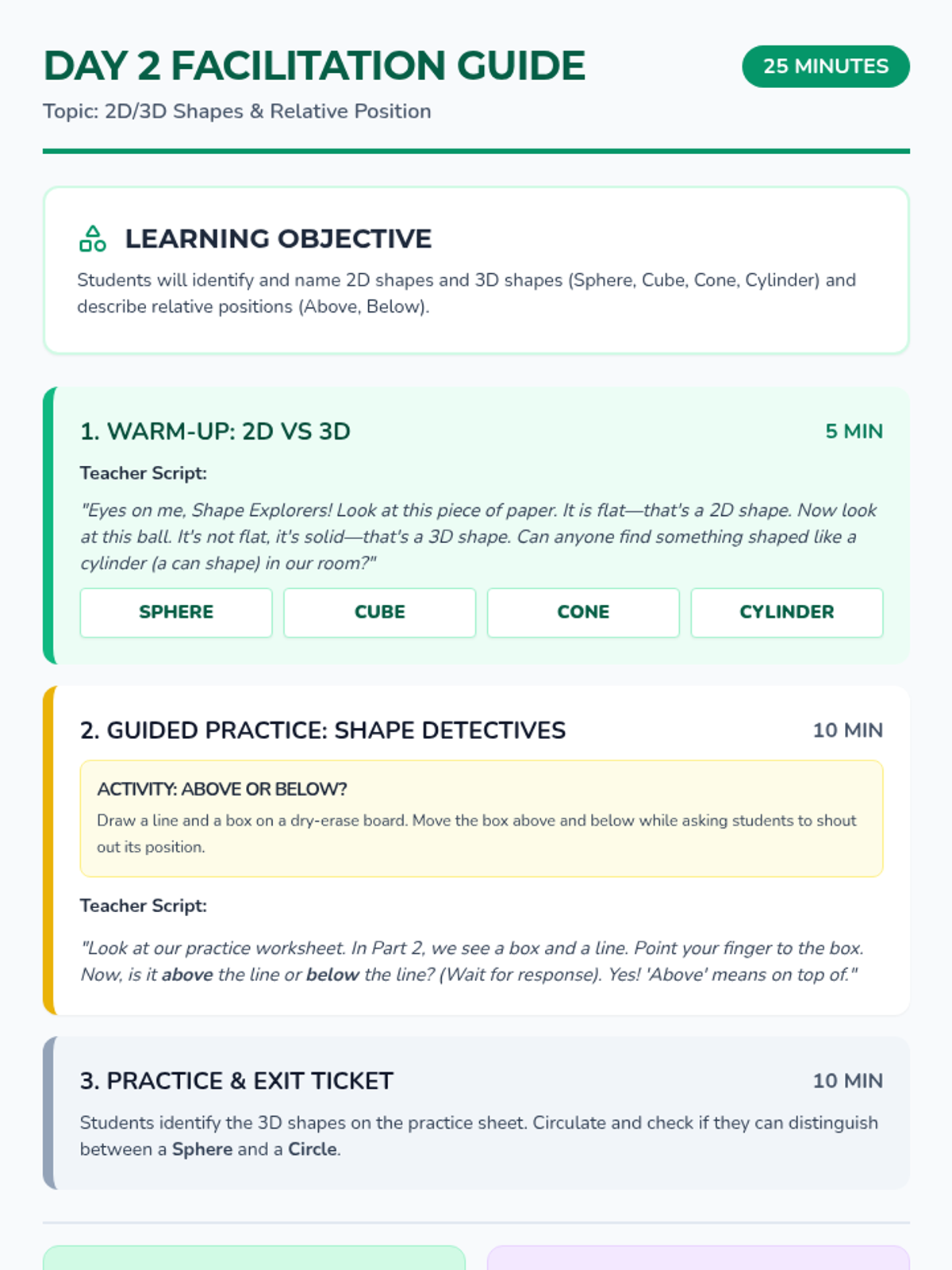
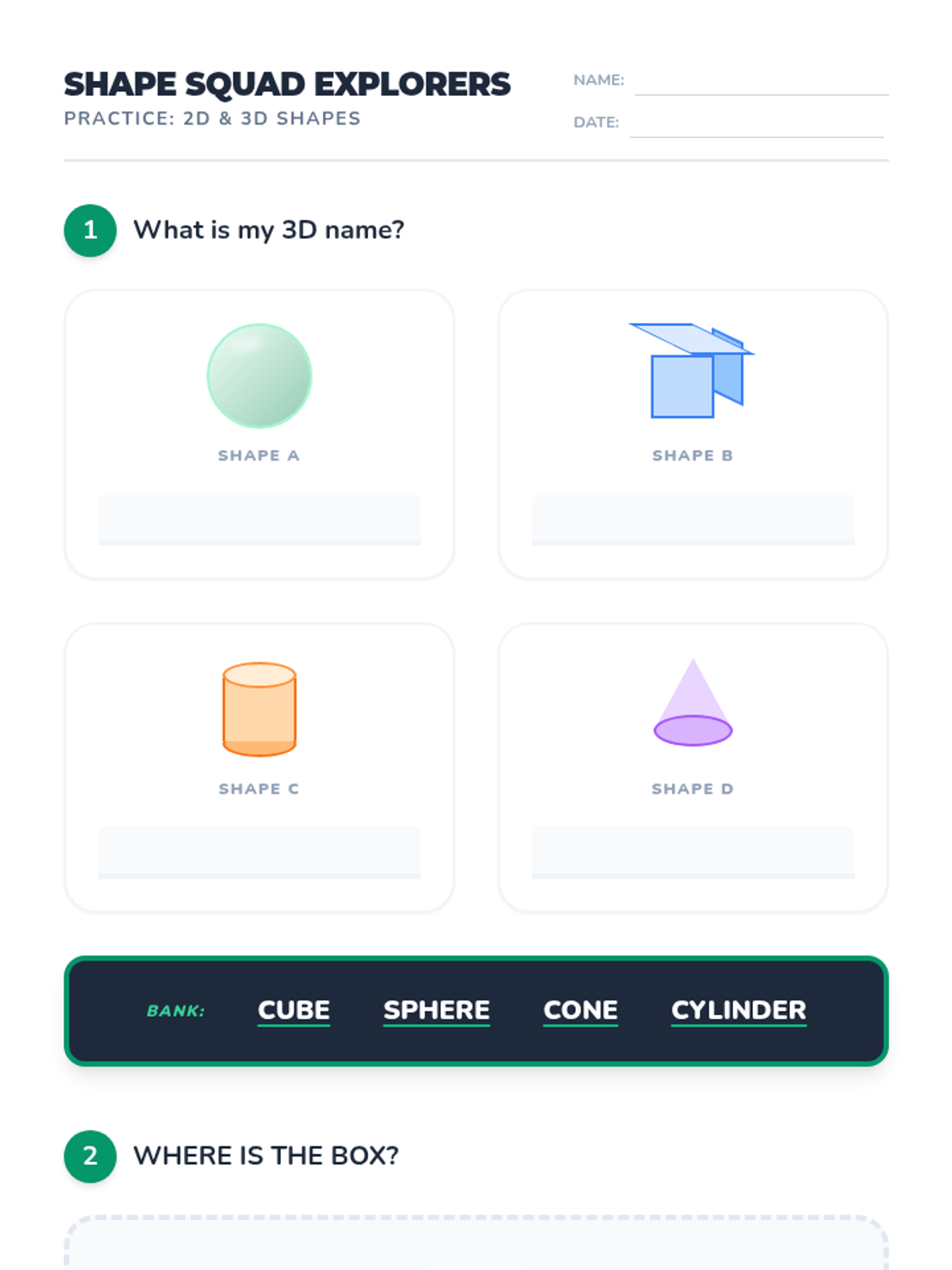
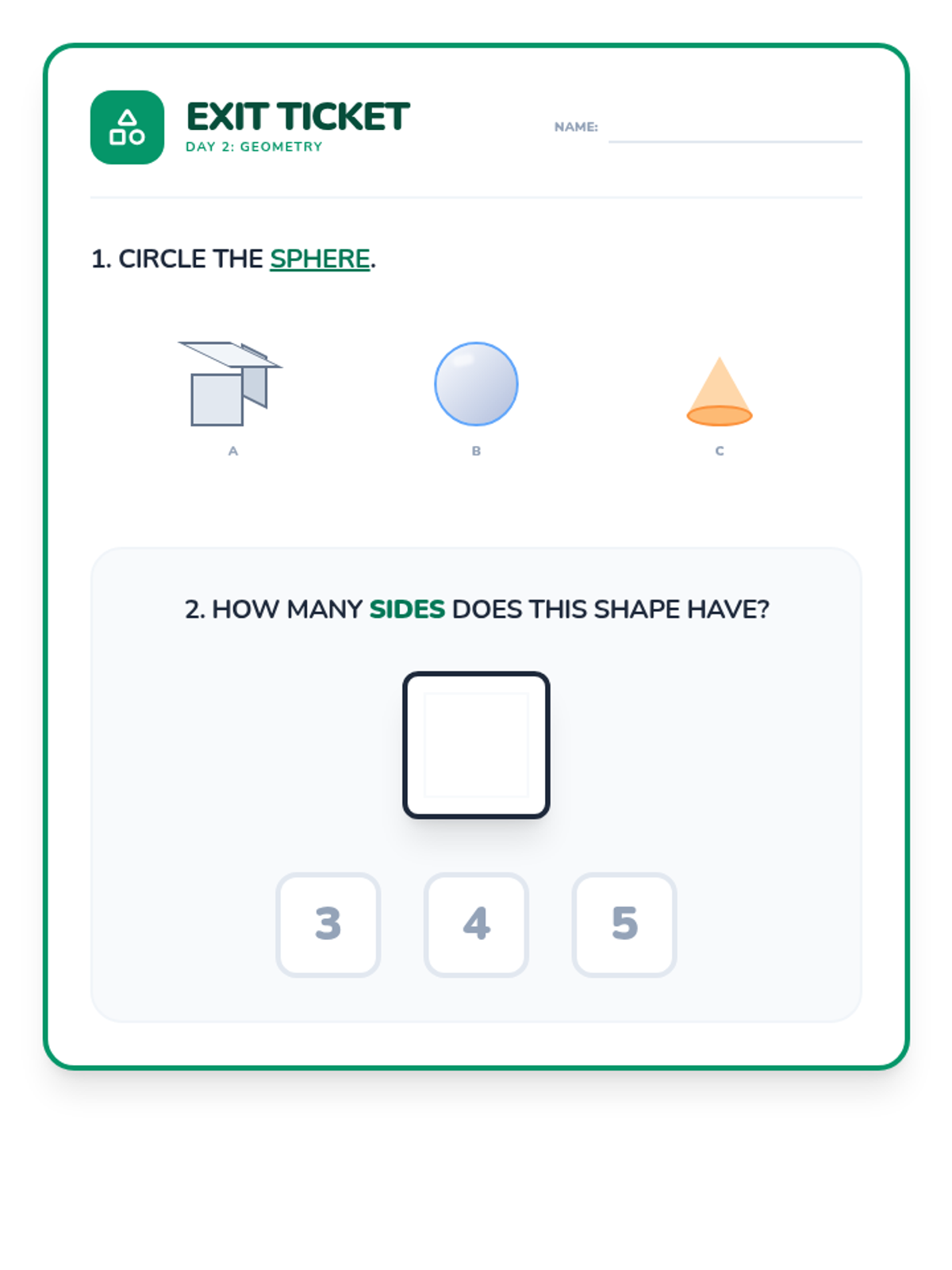
Day 2 covers identifying 2D and 3D shapes by name and attributes, as well as mixed geometry concepts like relative position and composite shapes.