A comprehensive lesson on identifying and classifying acute, right, and obtuse angles within various geometric shapes through visual inspection and detective-themed practice.
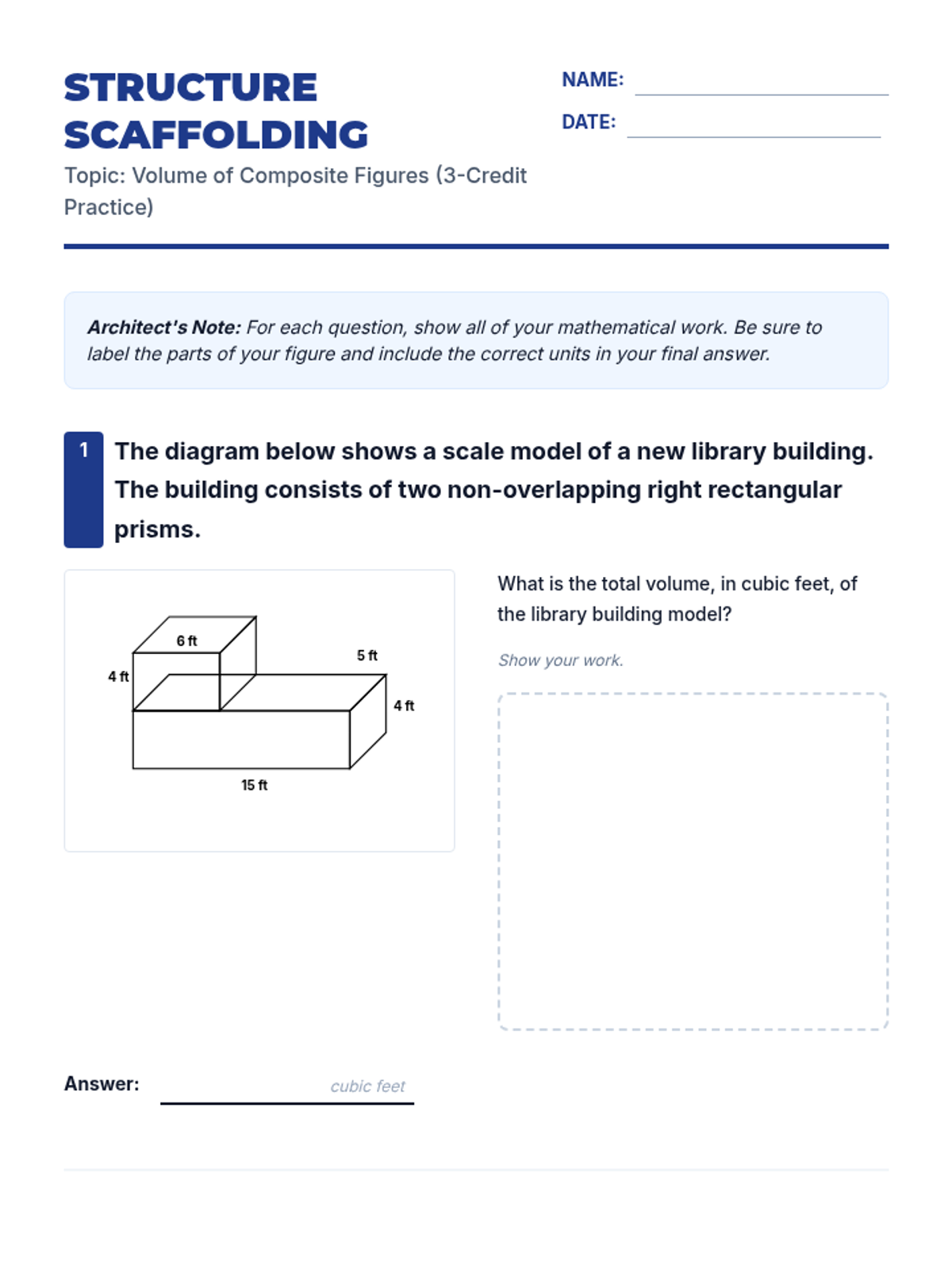
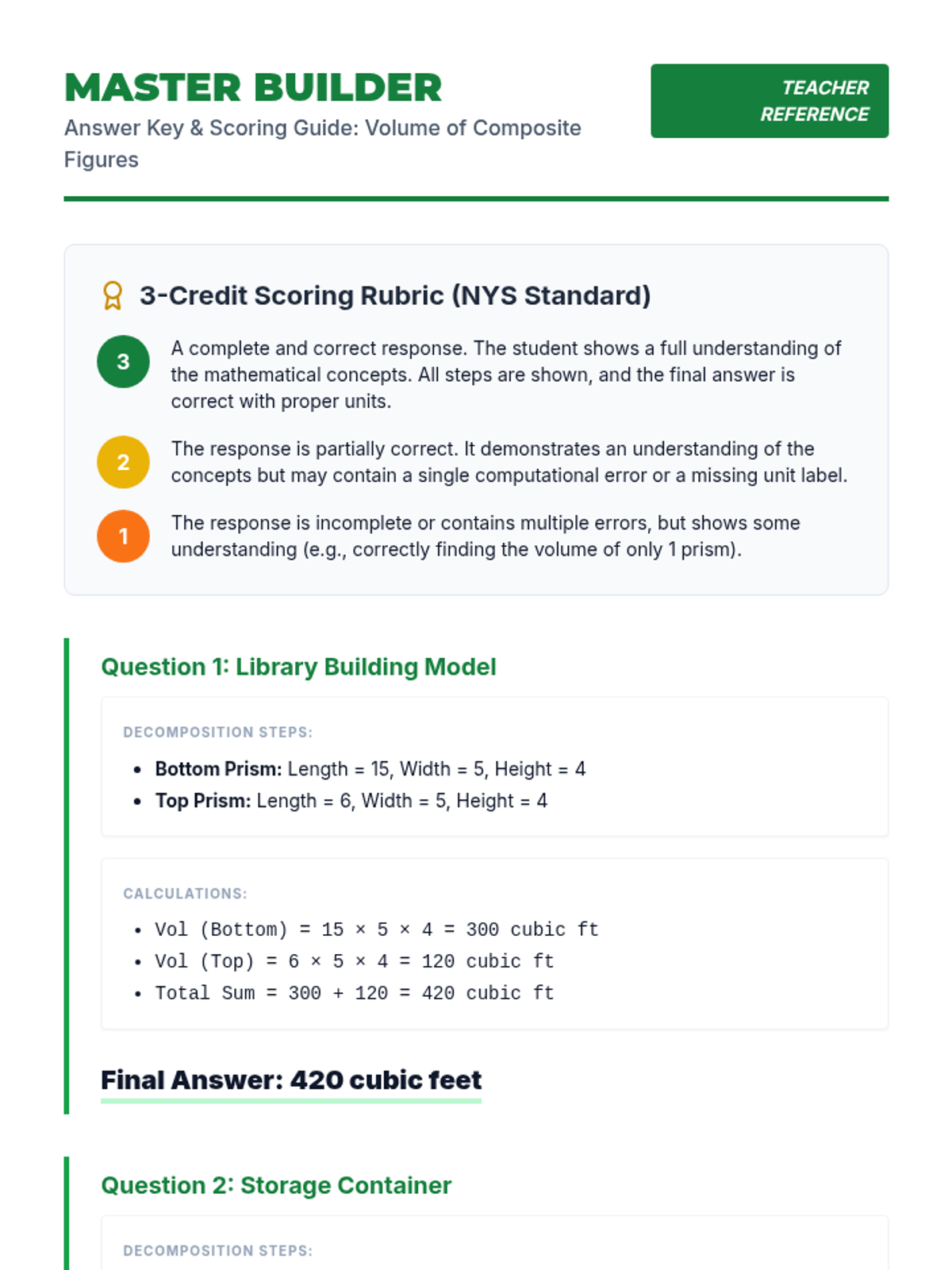
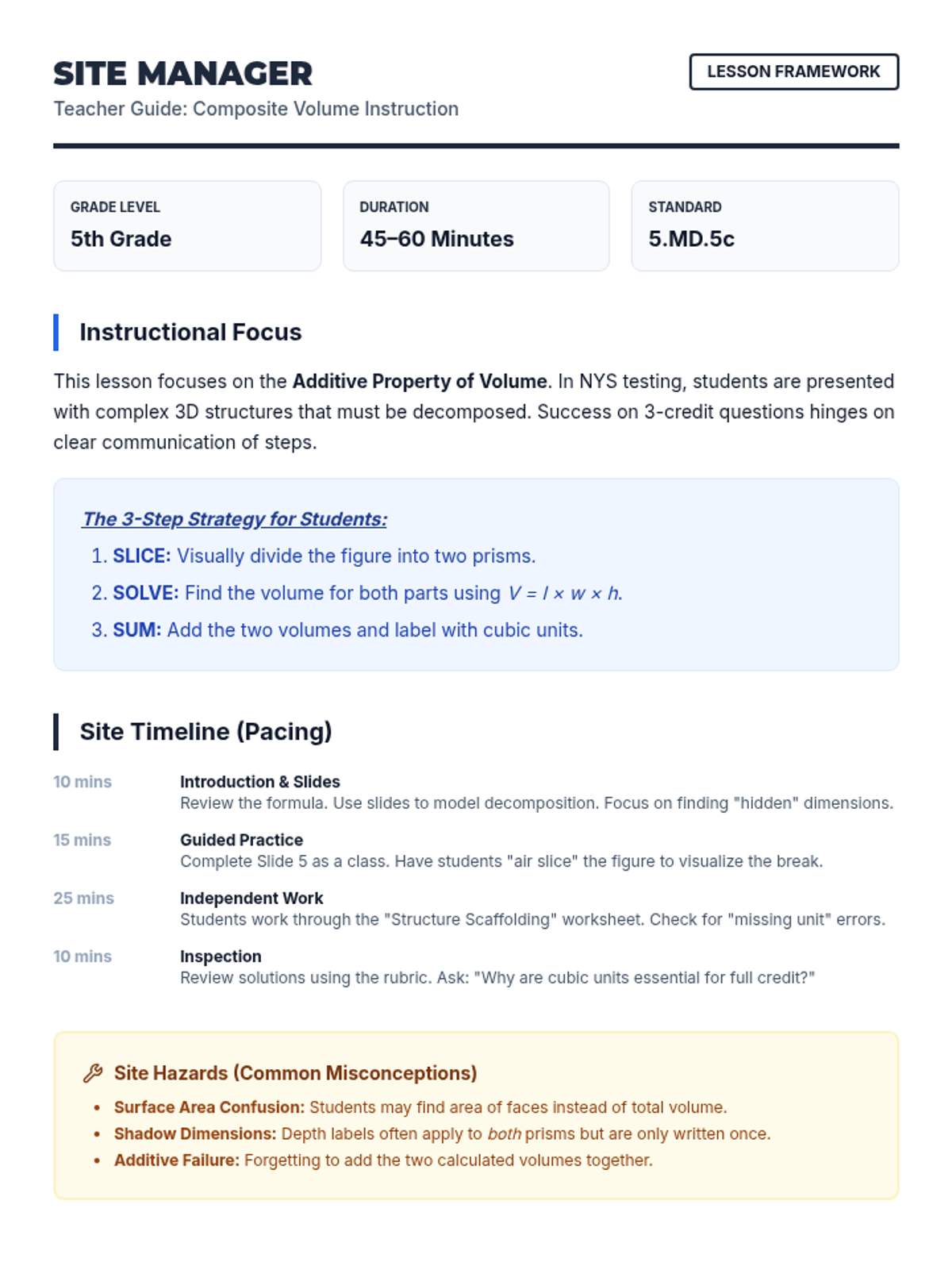
A comprehensive introduction to graphing in the first quadrant and calculating volume through the lens of urban planning and architecture. Students will map out city structures and calculate the space needed for various building designs.
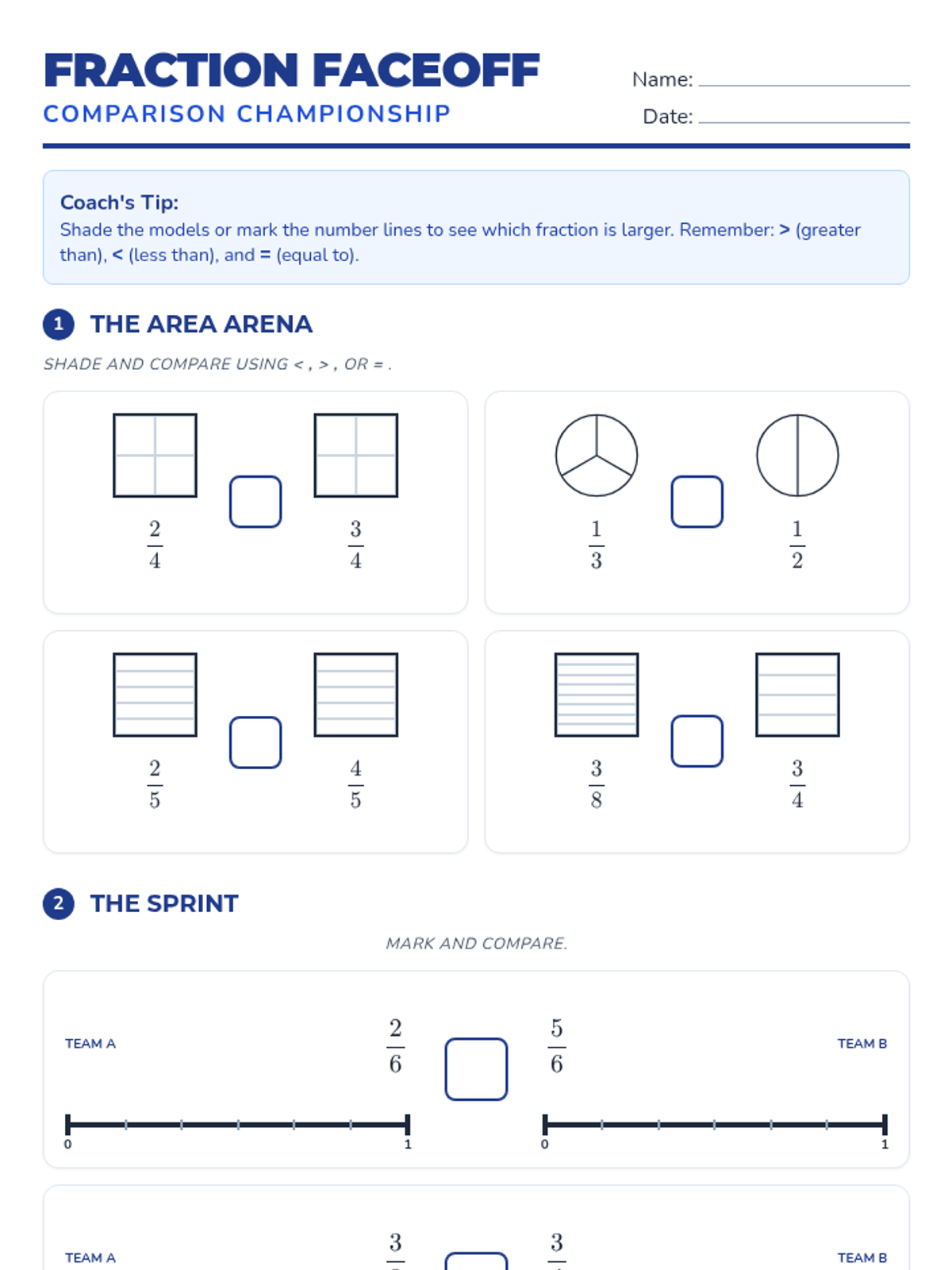
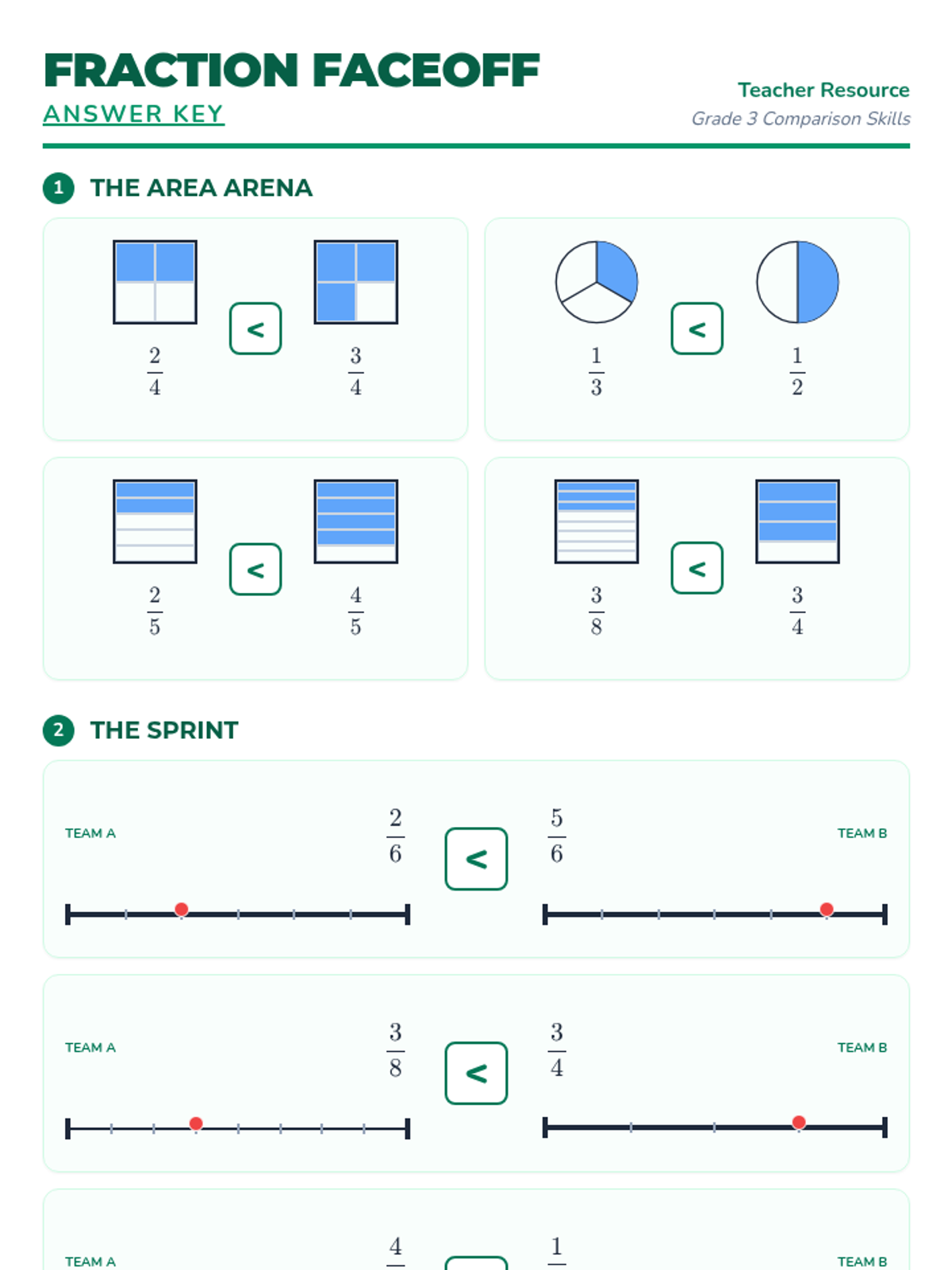
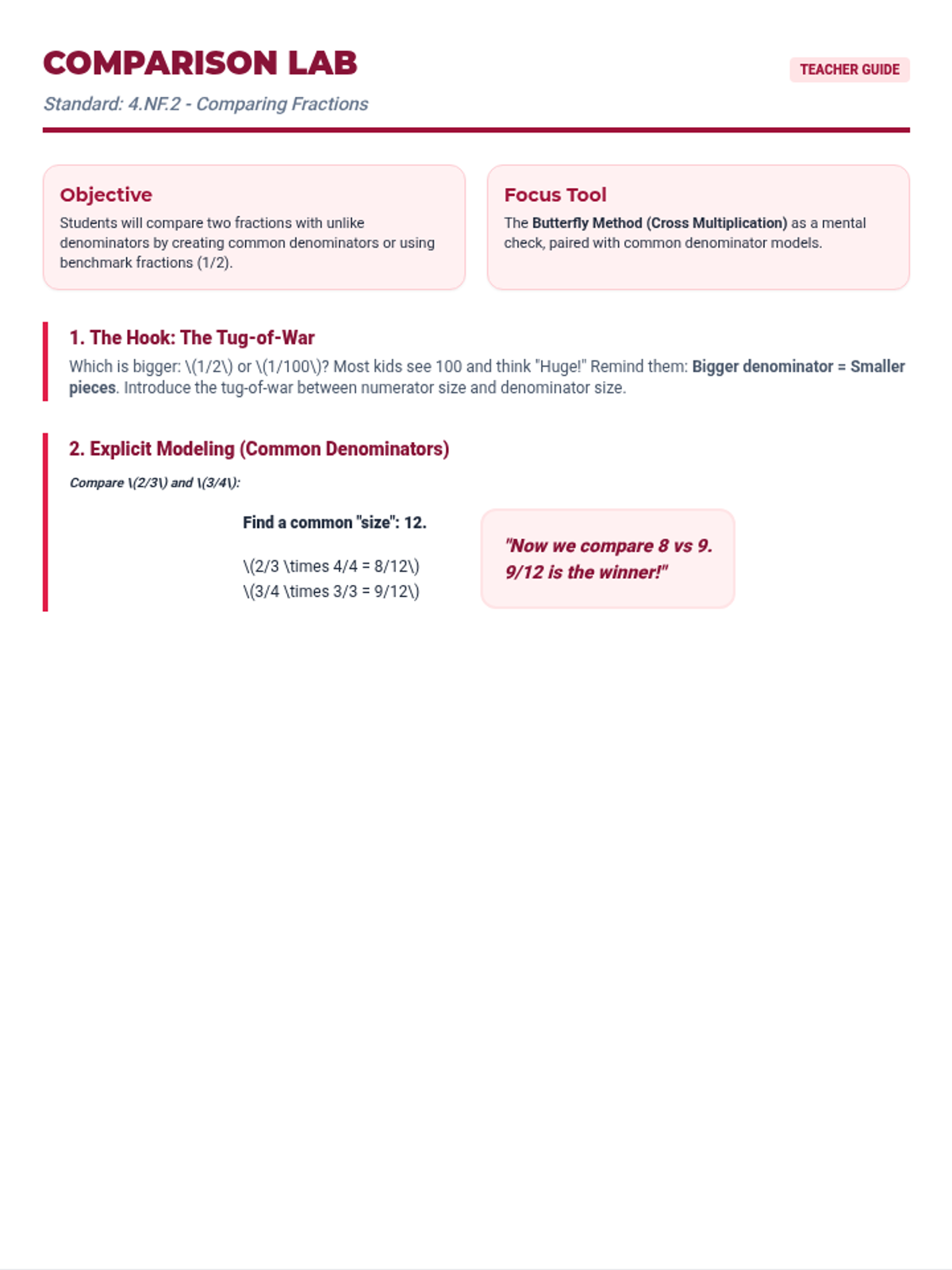
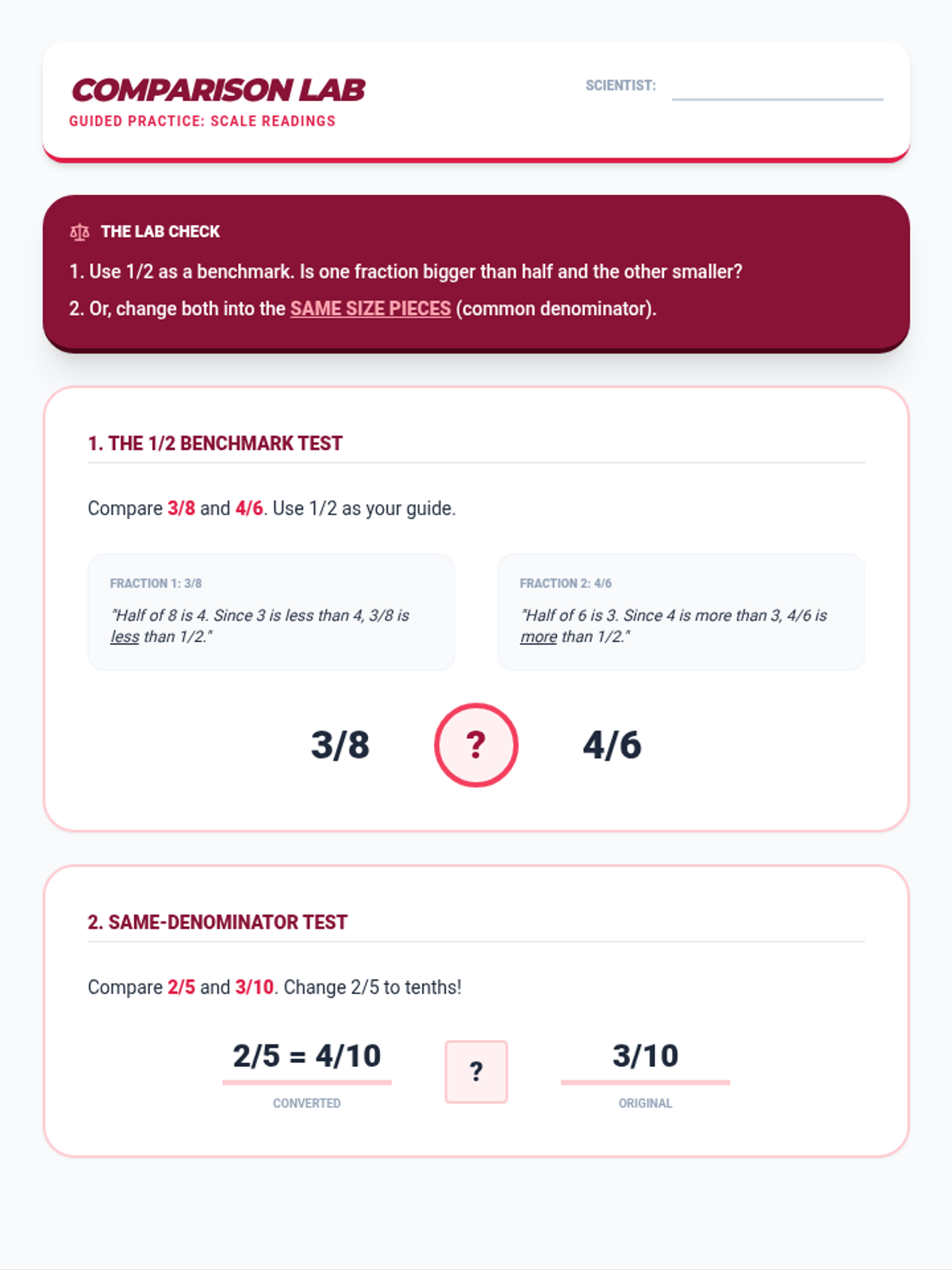
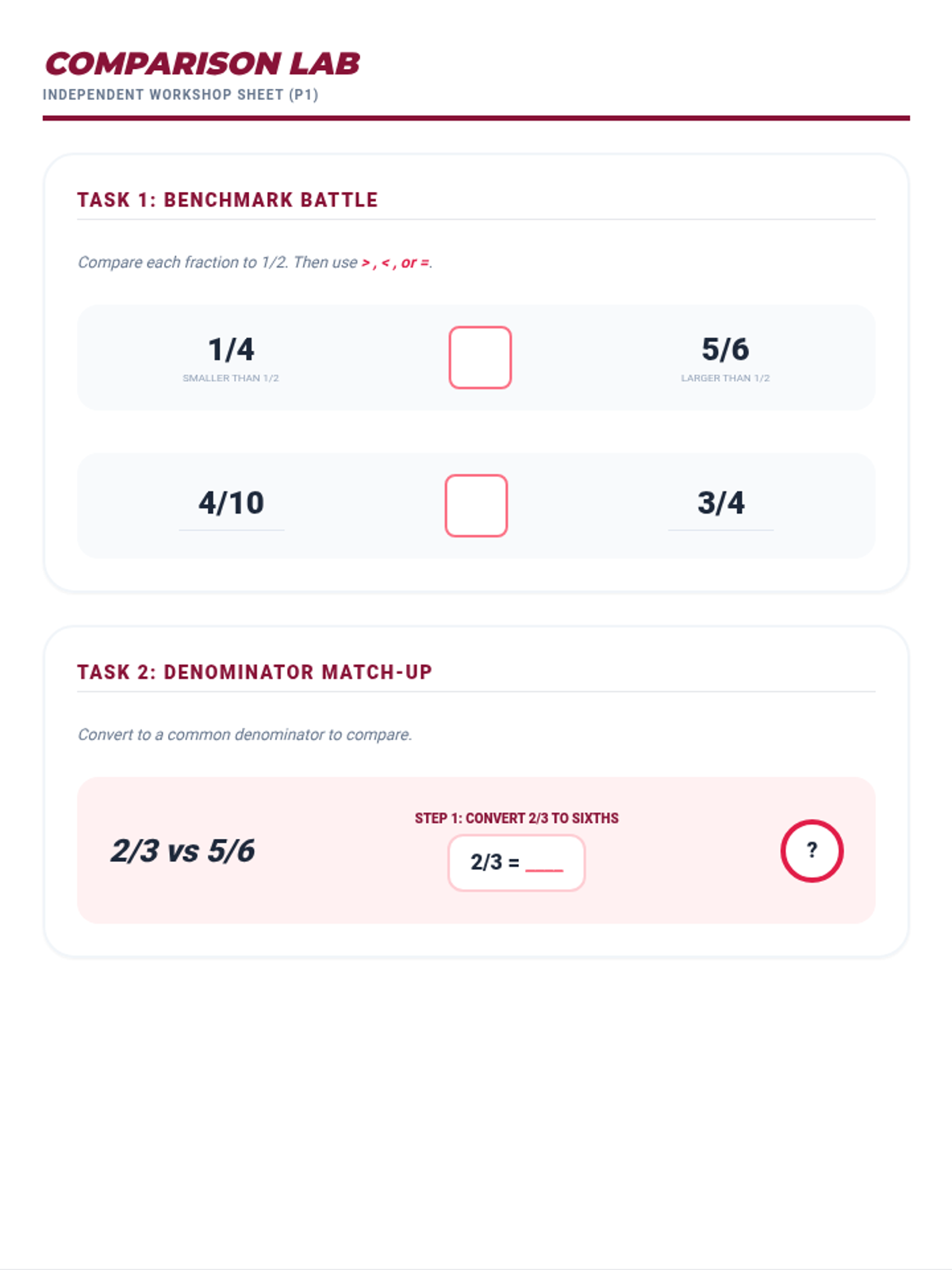
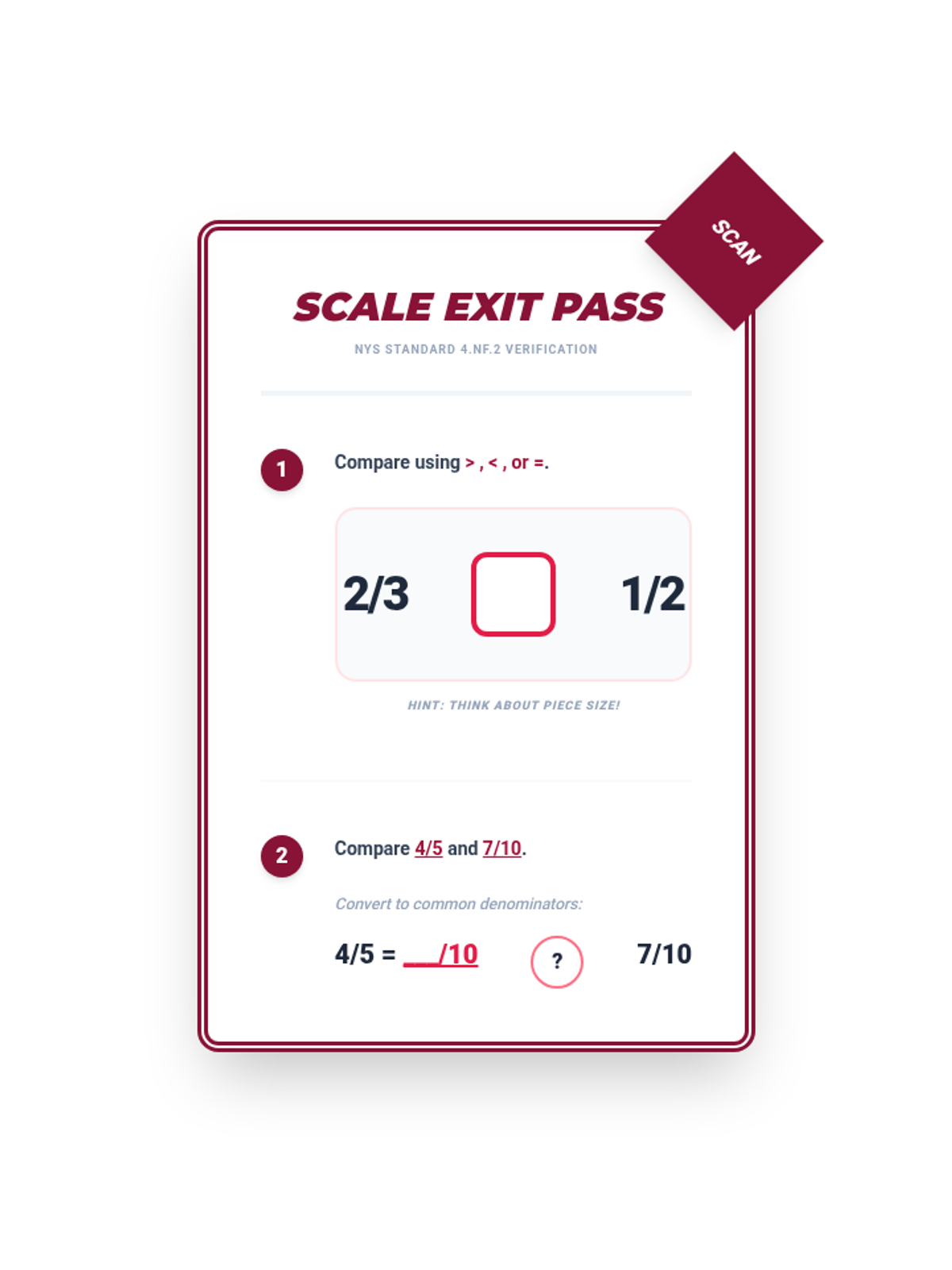
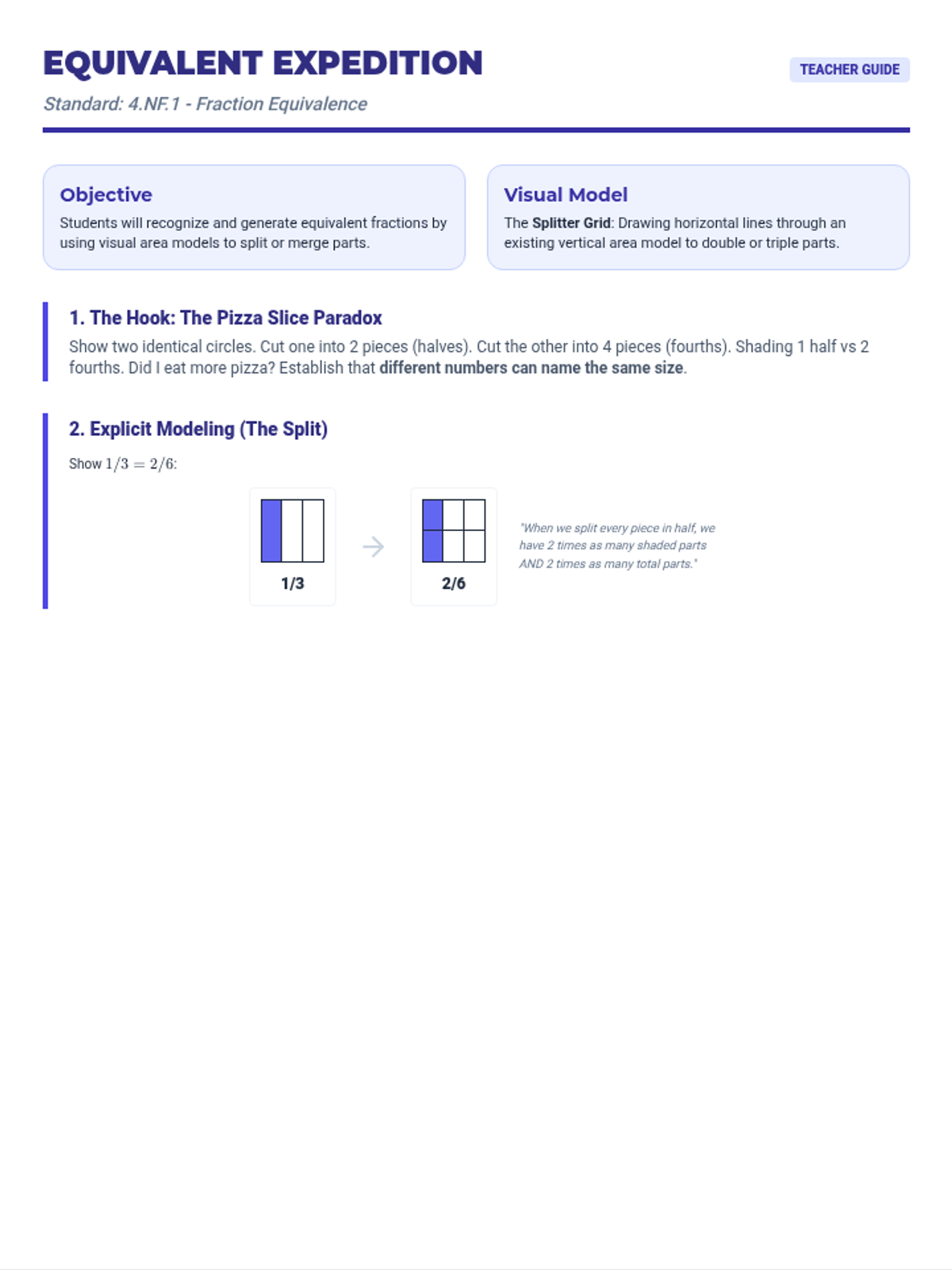
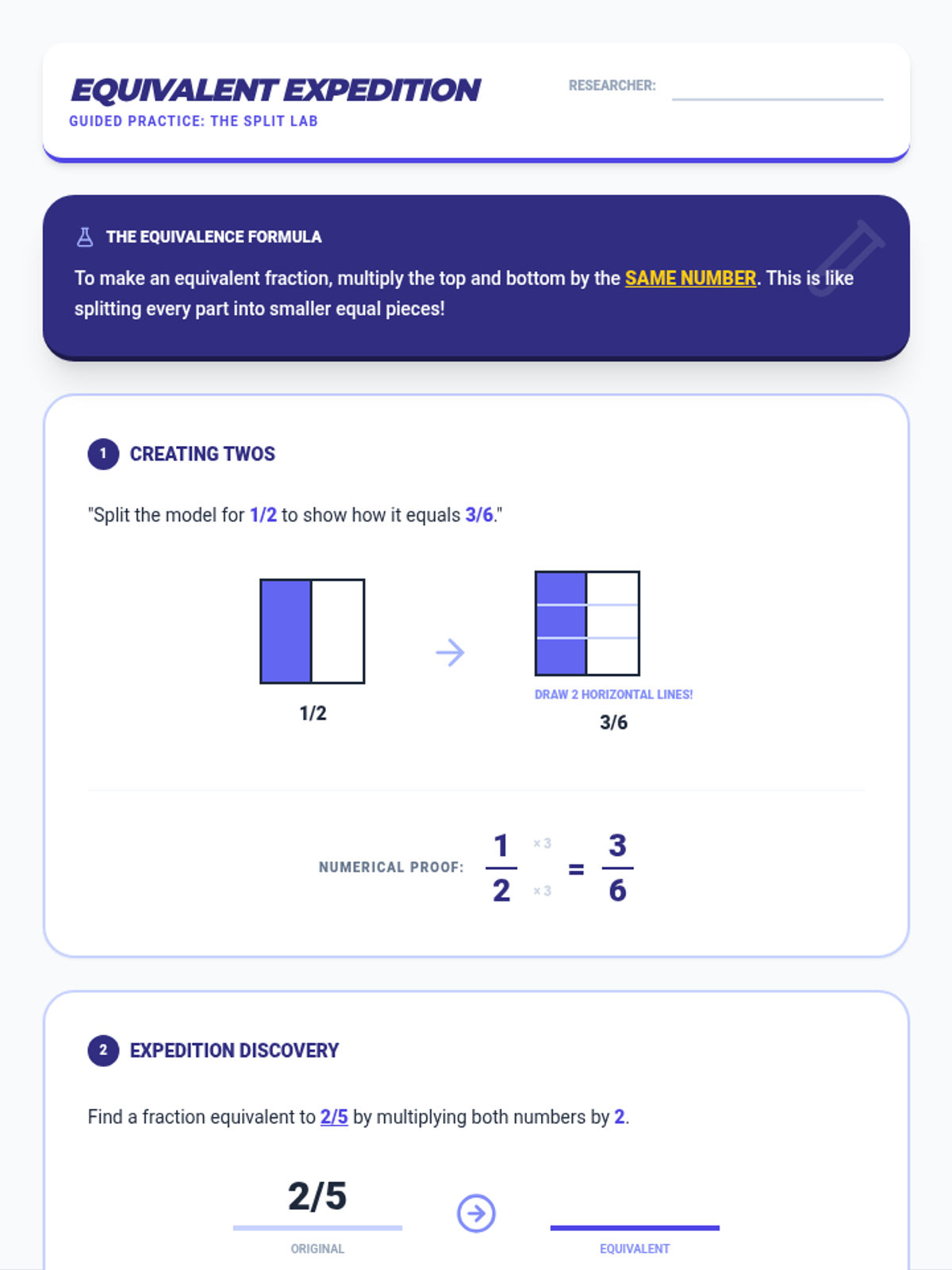
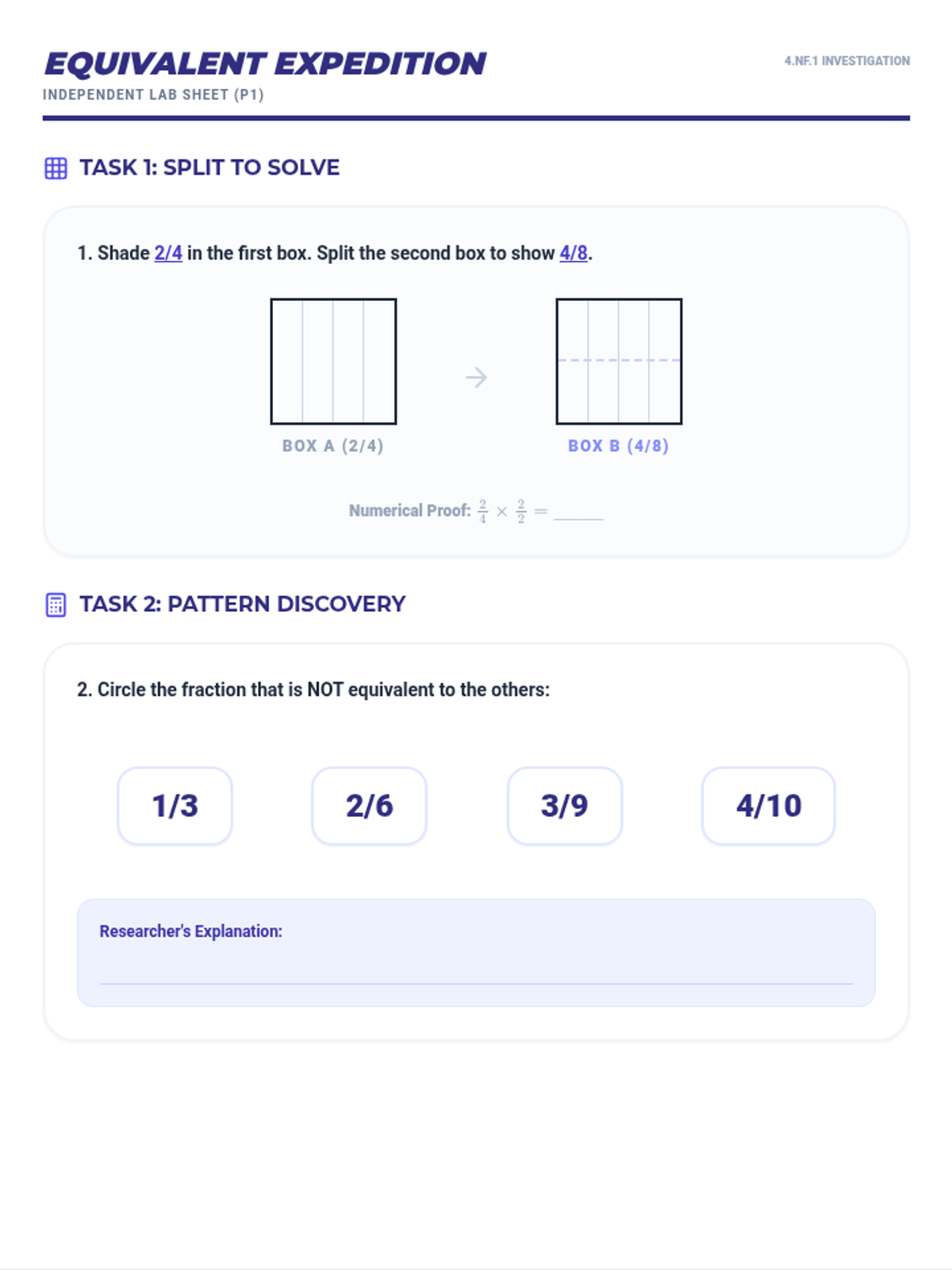
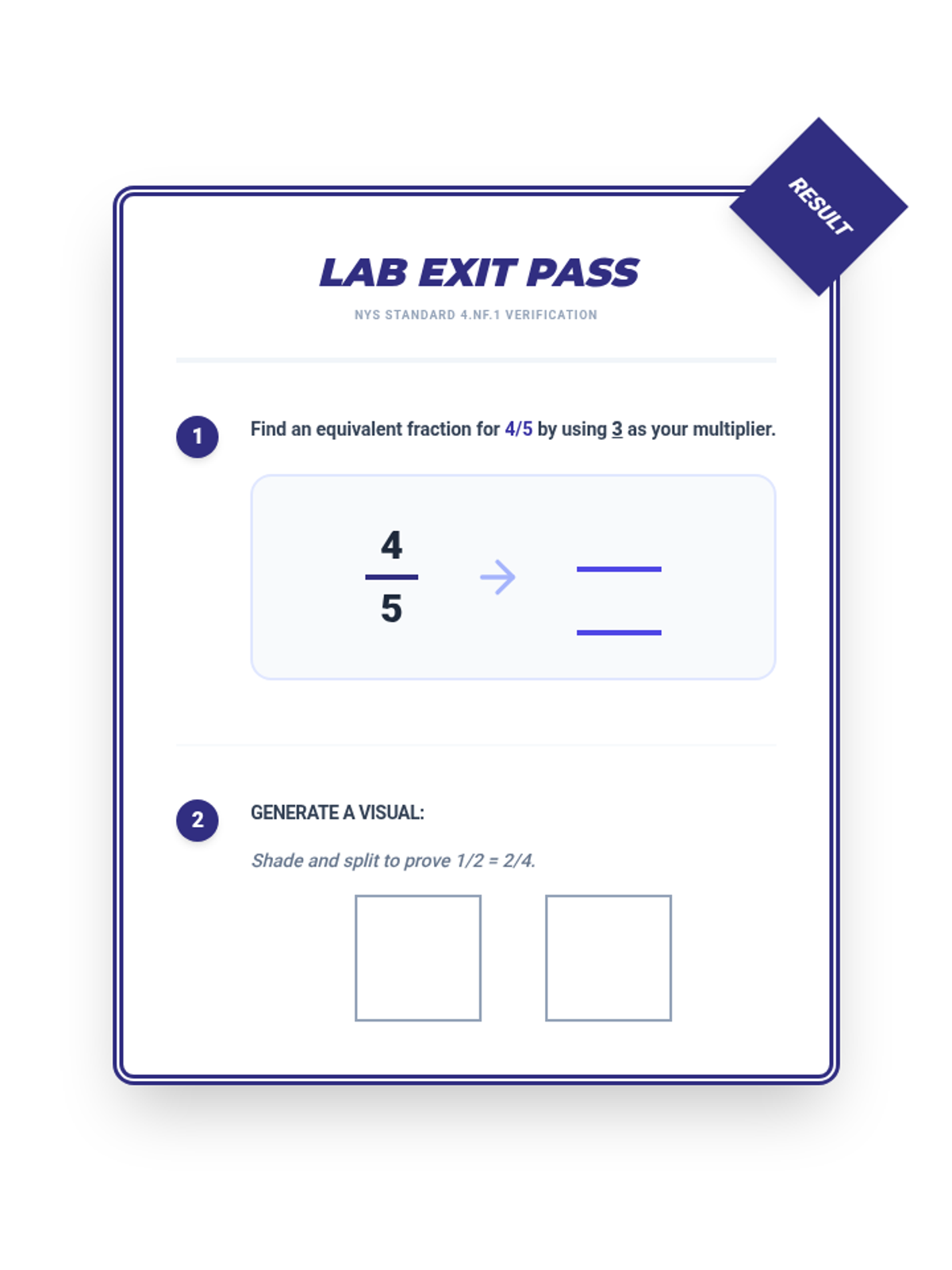
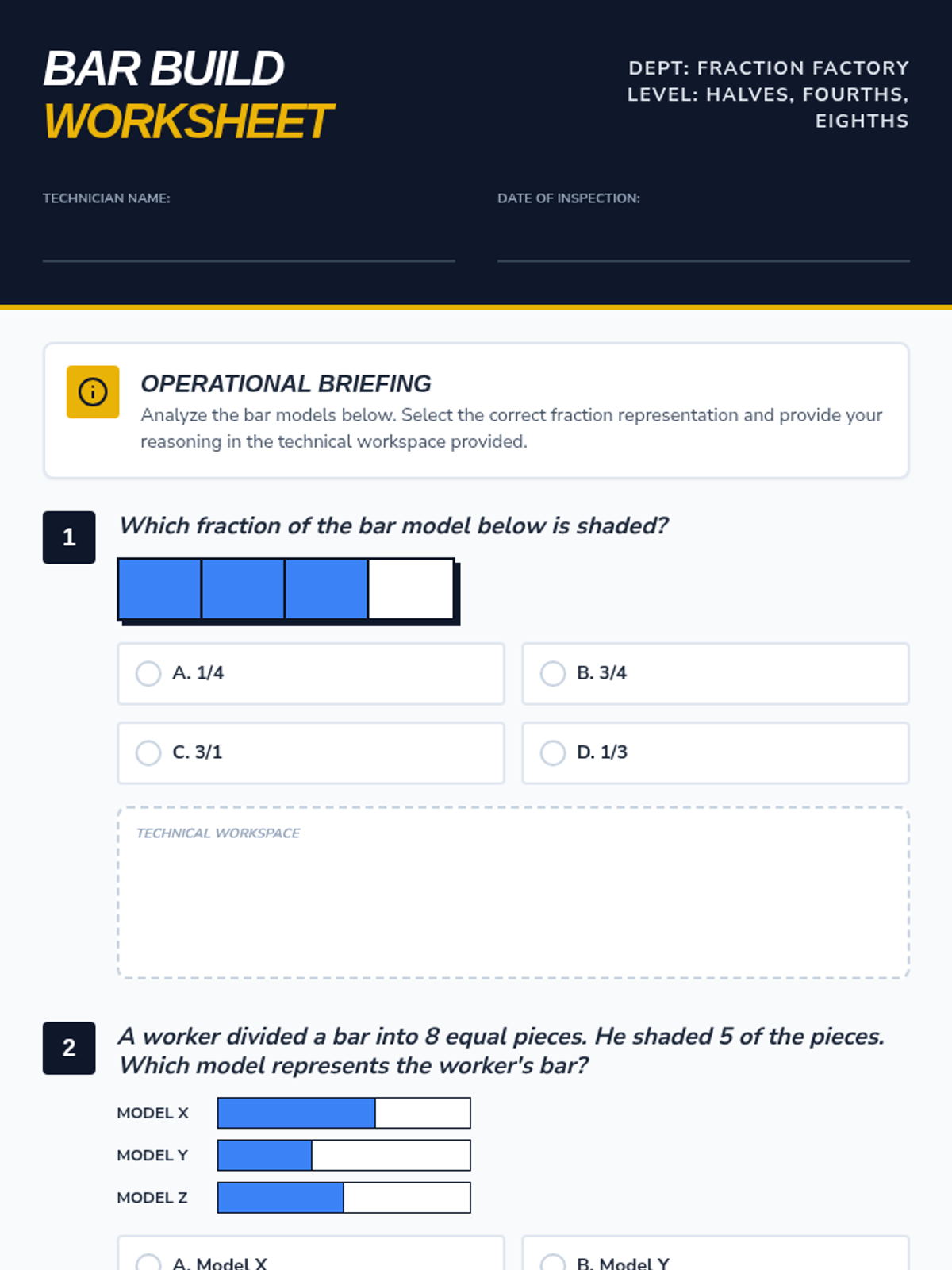
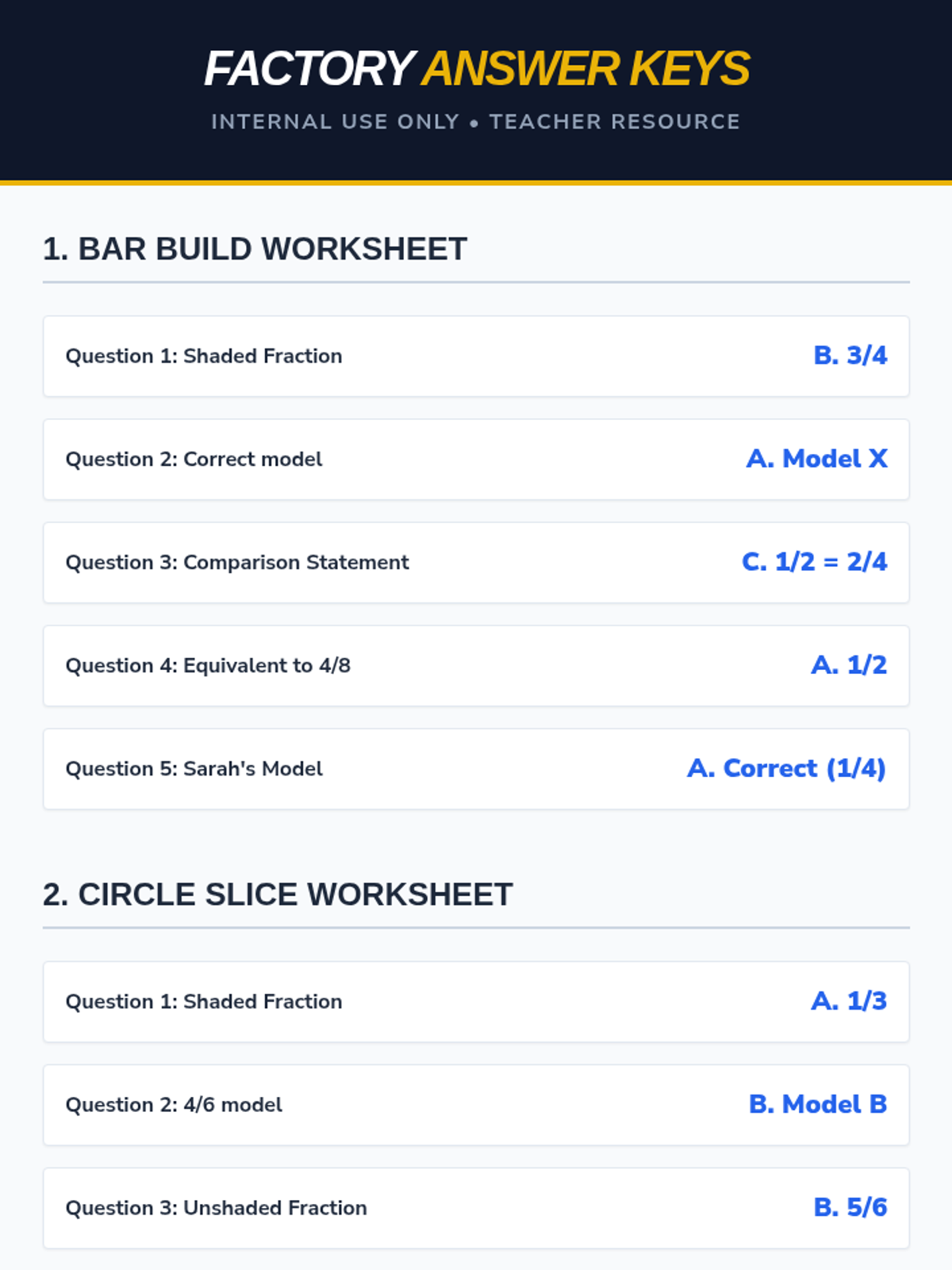
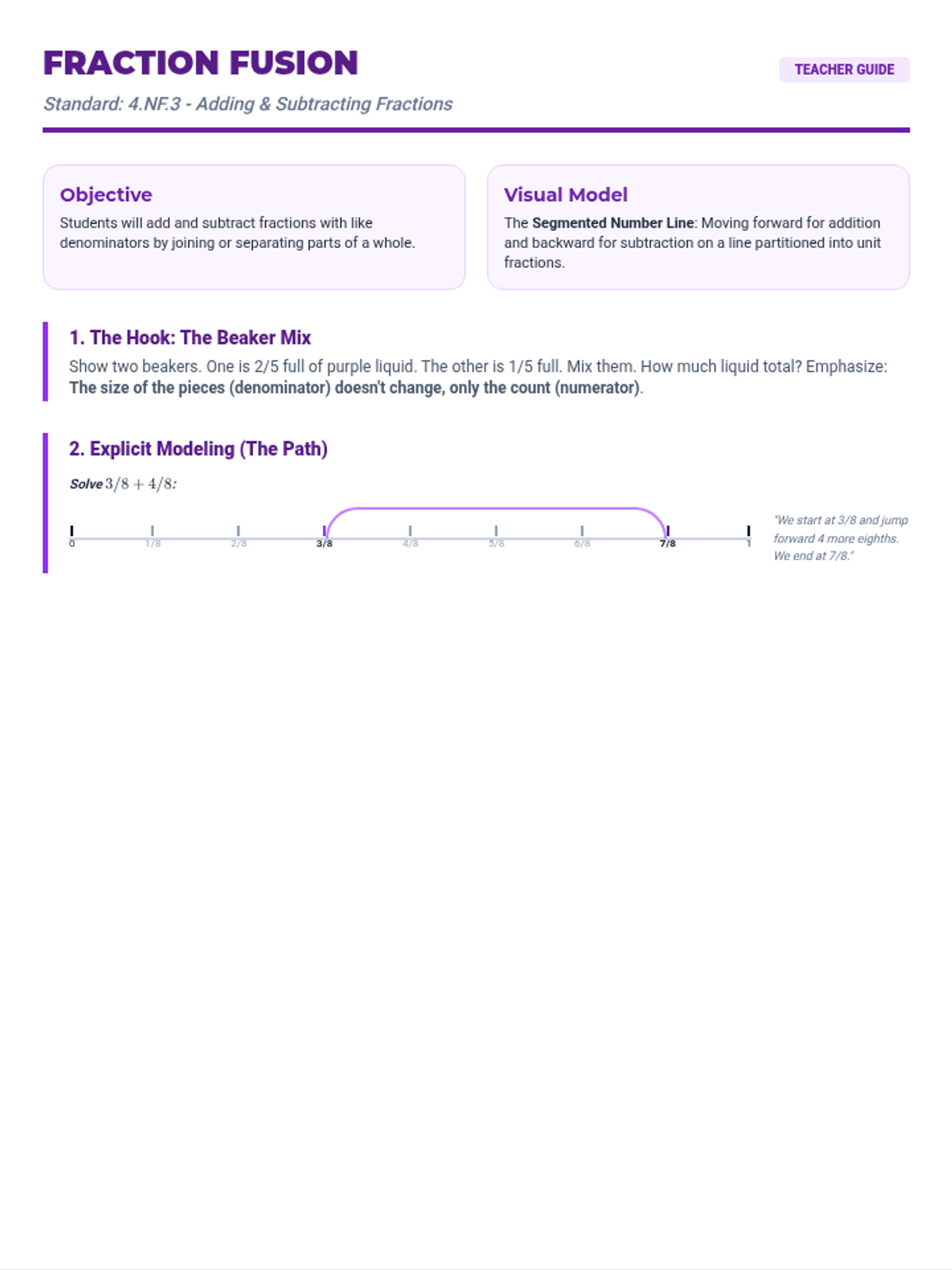
A deep dive into equivalent fractions and comparison strategies using visual models and benchmark fractions.
A comprehensive lesson on third-grade measurement standards, covering elapsed time, area, perimeter, and line plots through a 'Master Builder' architectural theme. Students will solve real-world construction-themed problems.
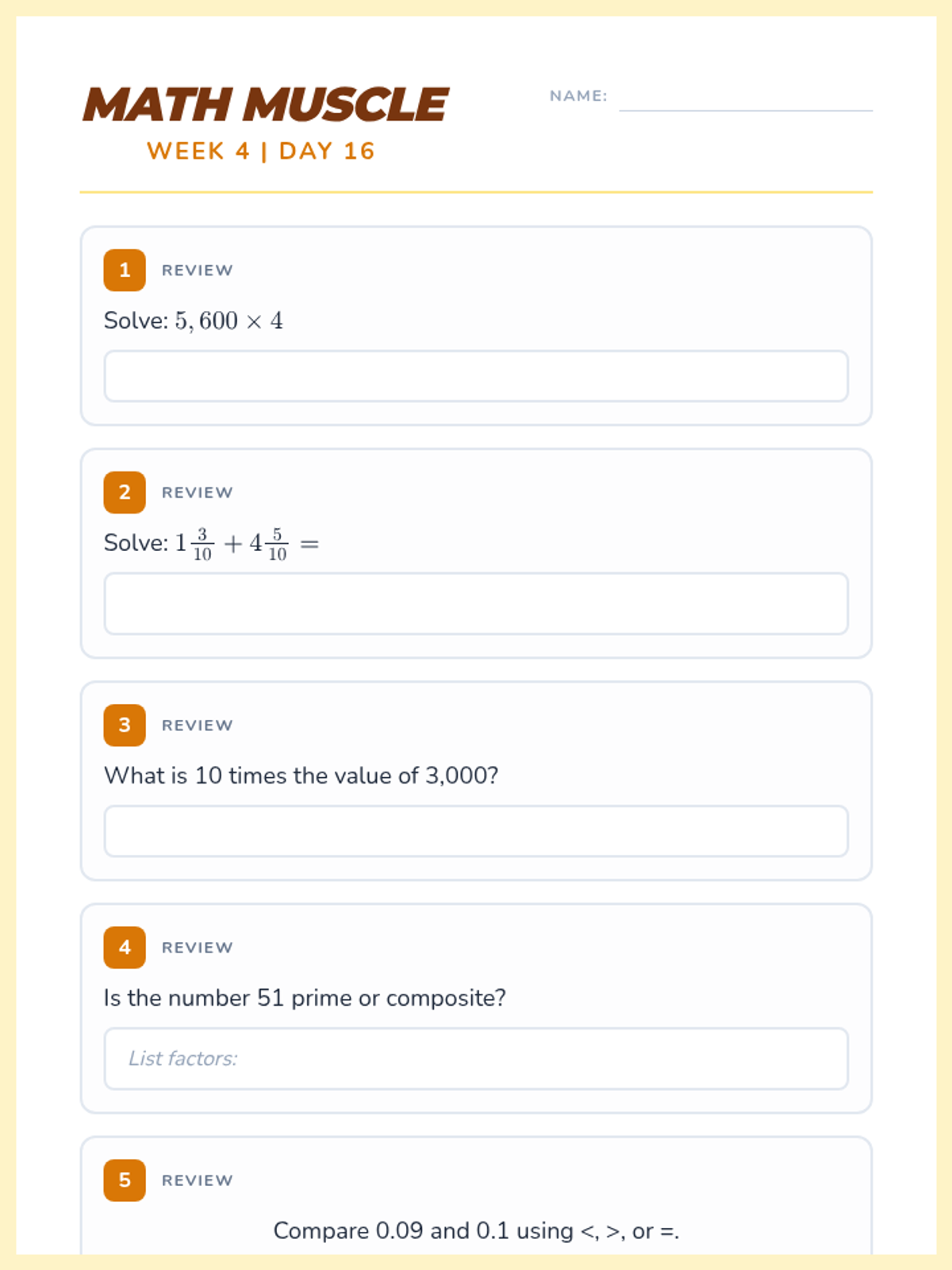
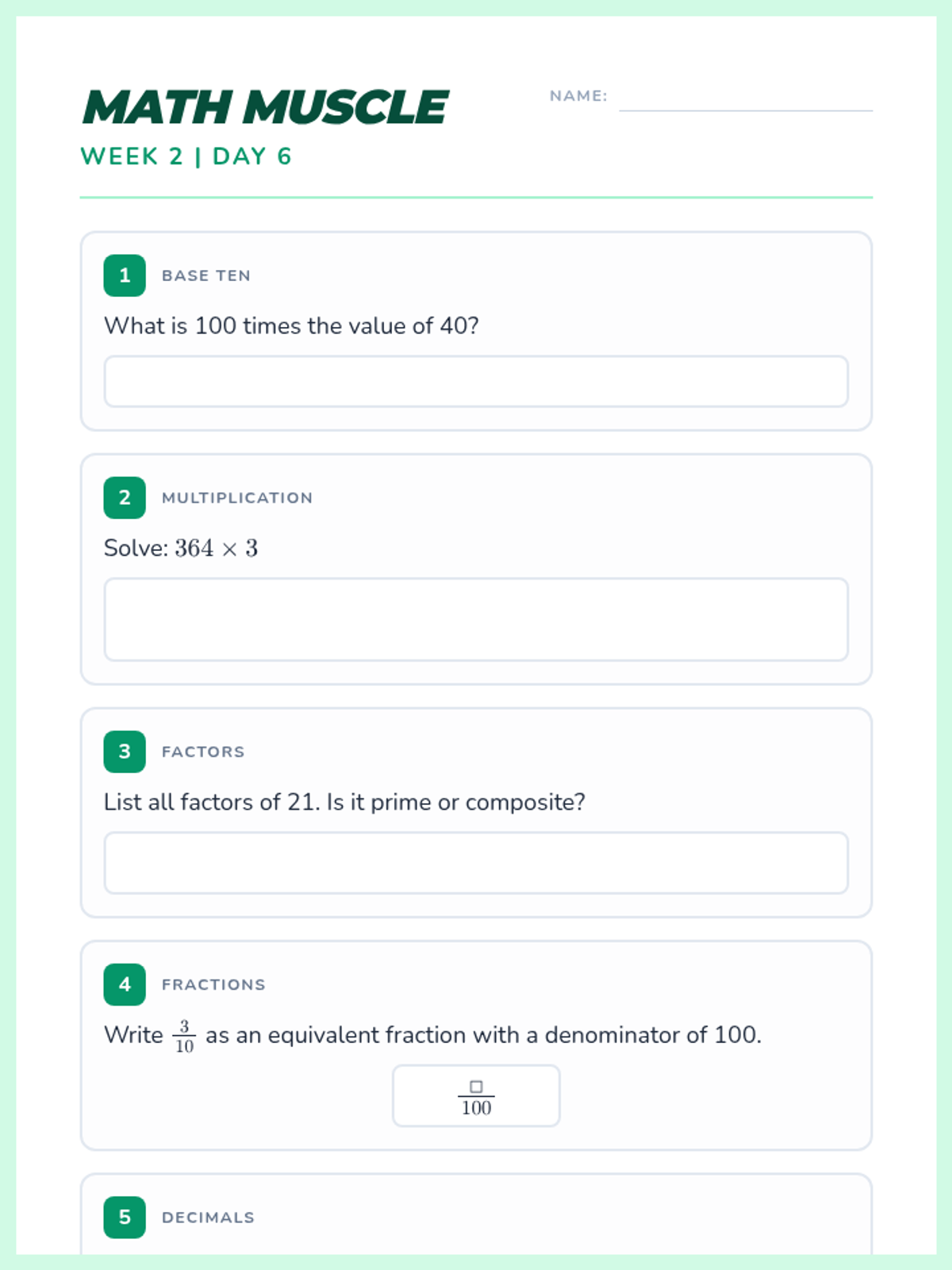
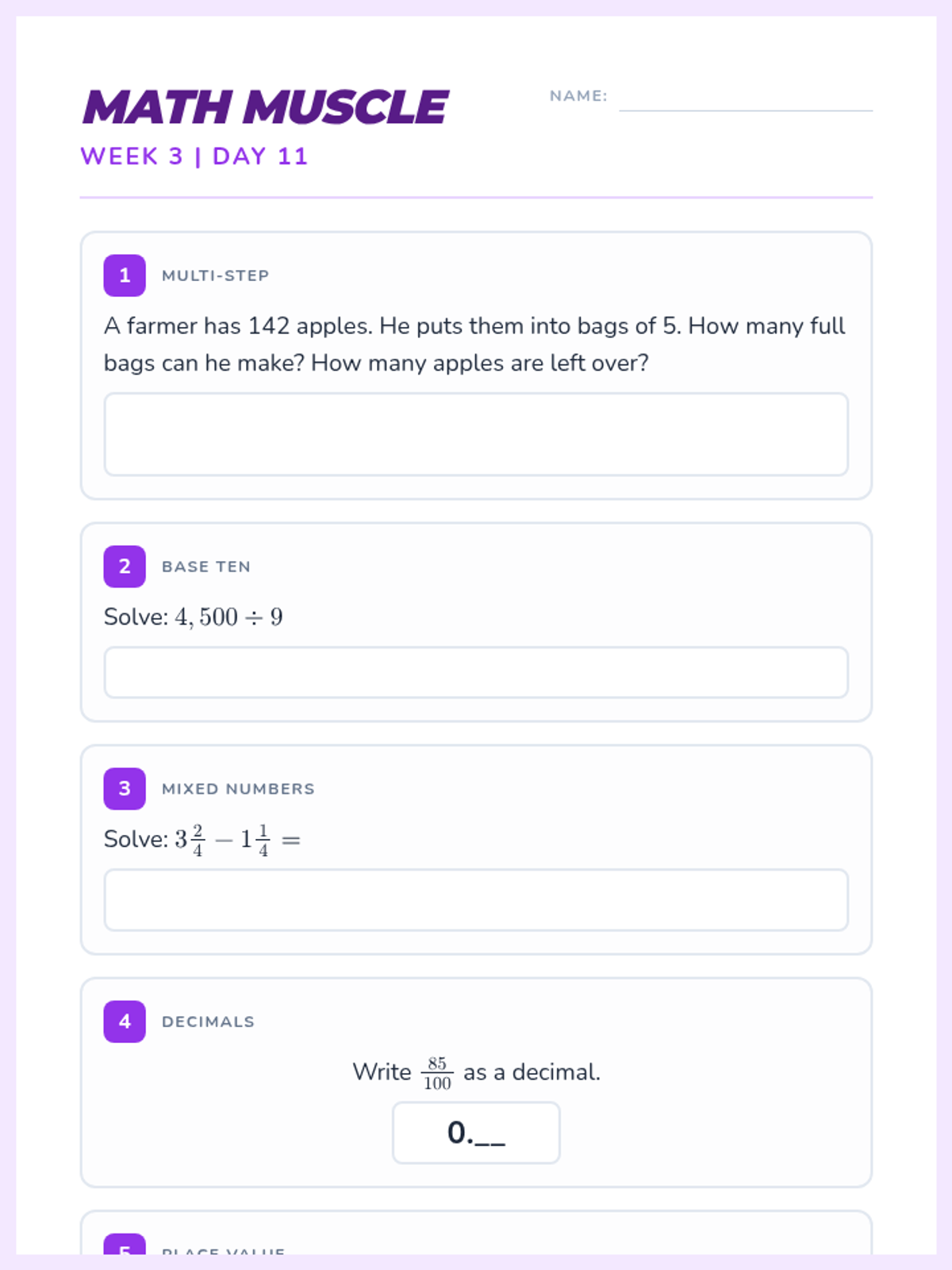
A comprehensive practice session covering prime factorization, percentage conversions, multi-digit operations with regrouping, basic integers, and word problems with built-in scaffolding and visual aids.
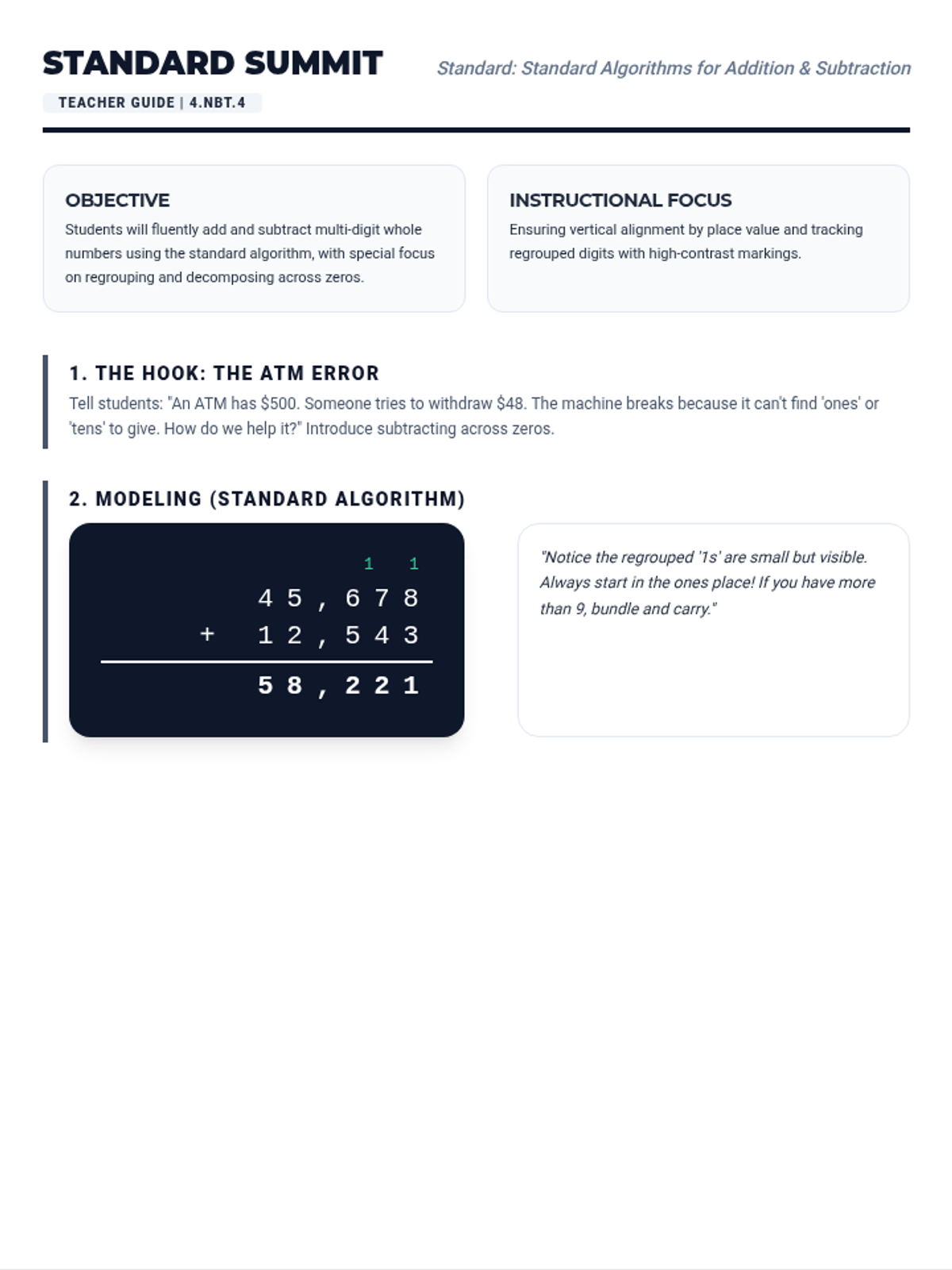
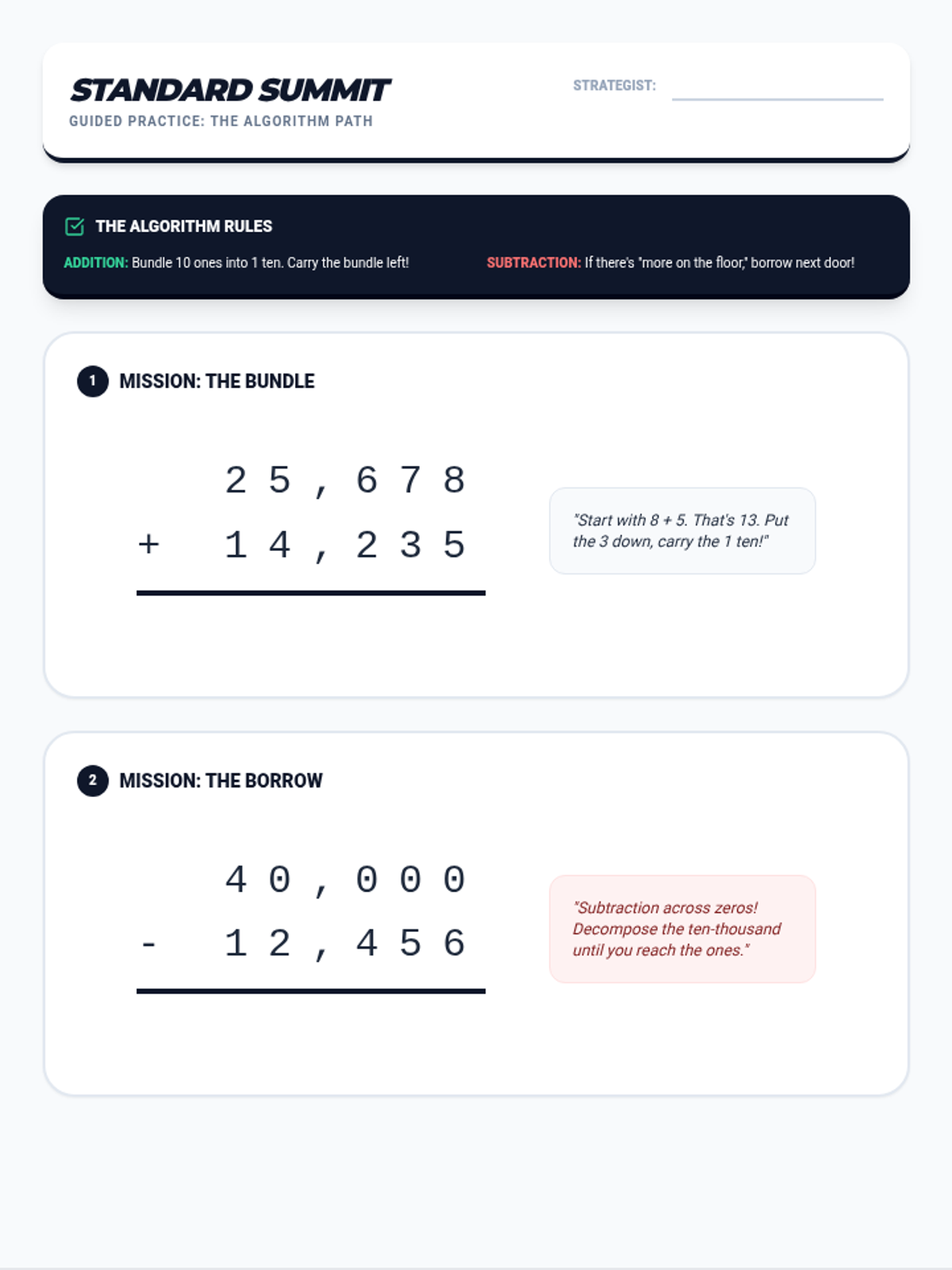
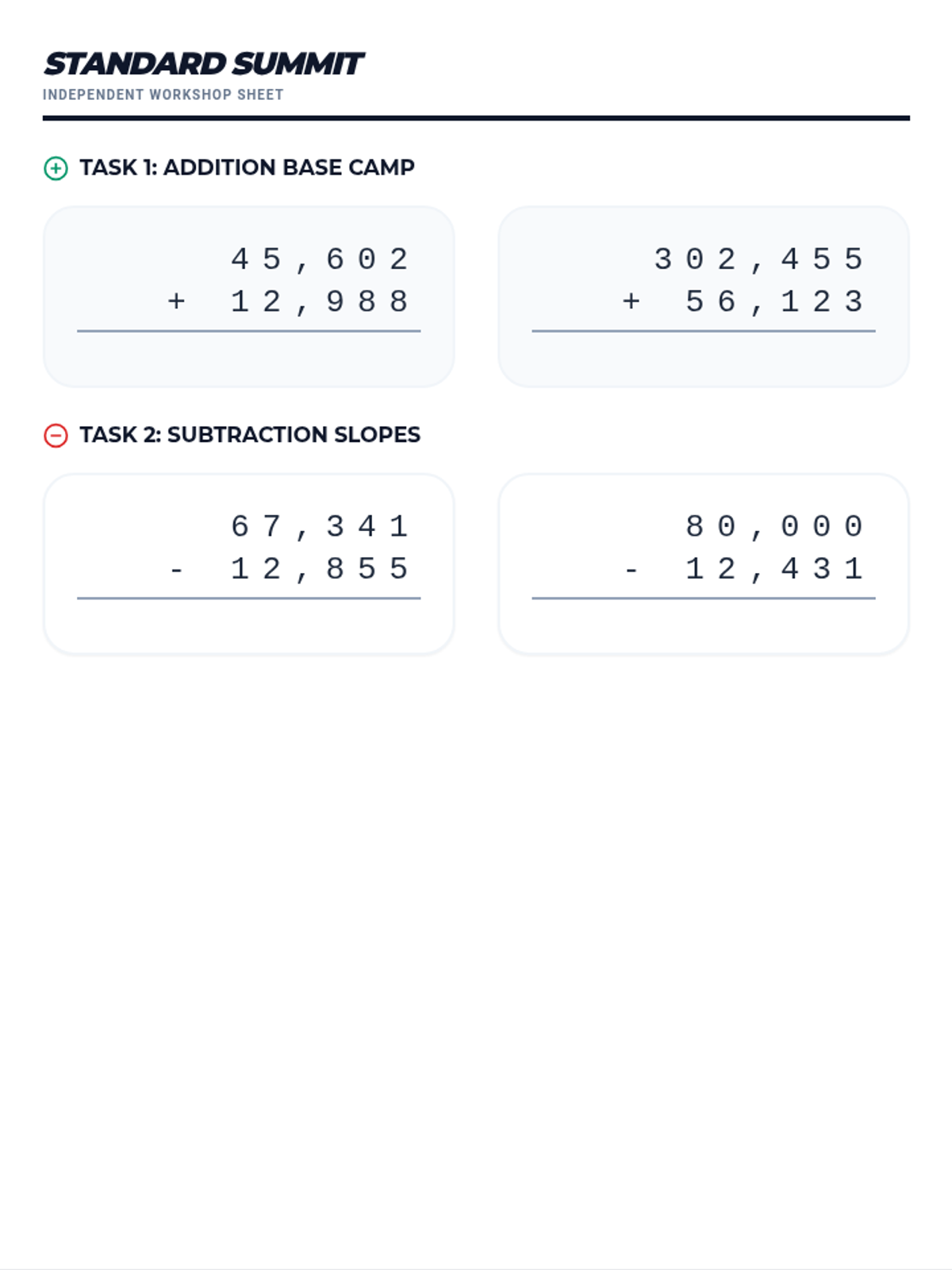
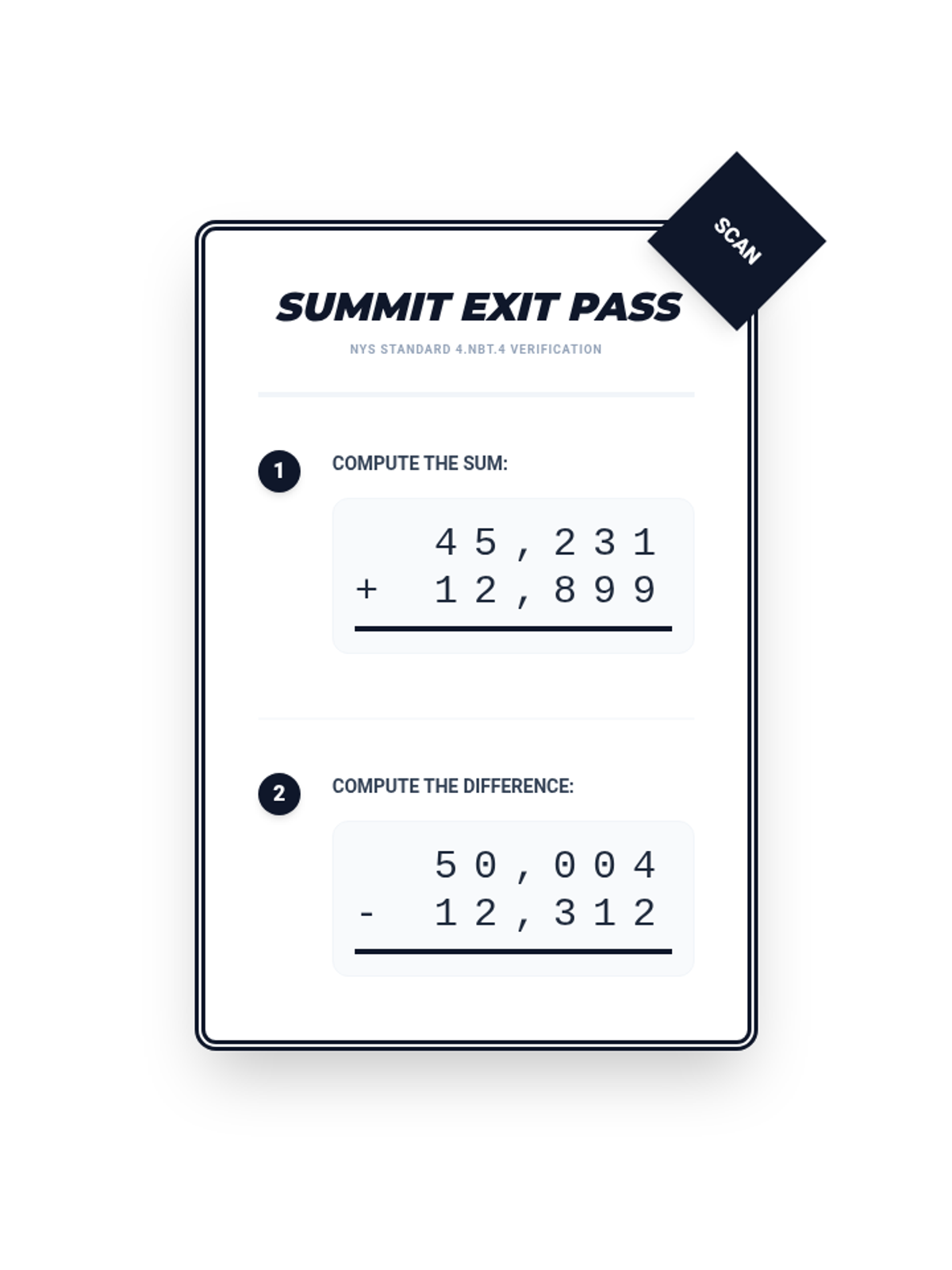
Students will review basic addition and subtraction facts and learn the step-by-step procedures for regrouping in multi-digit problems.
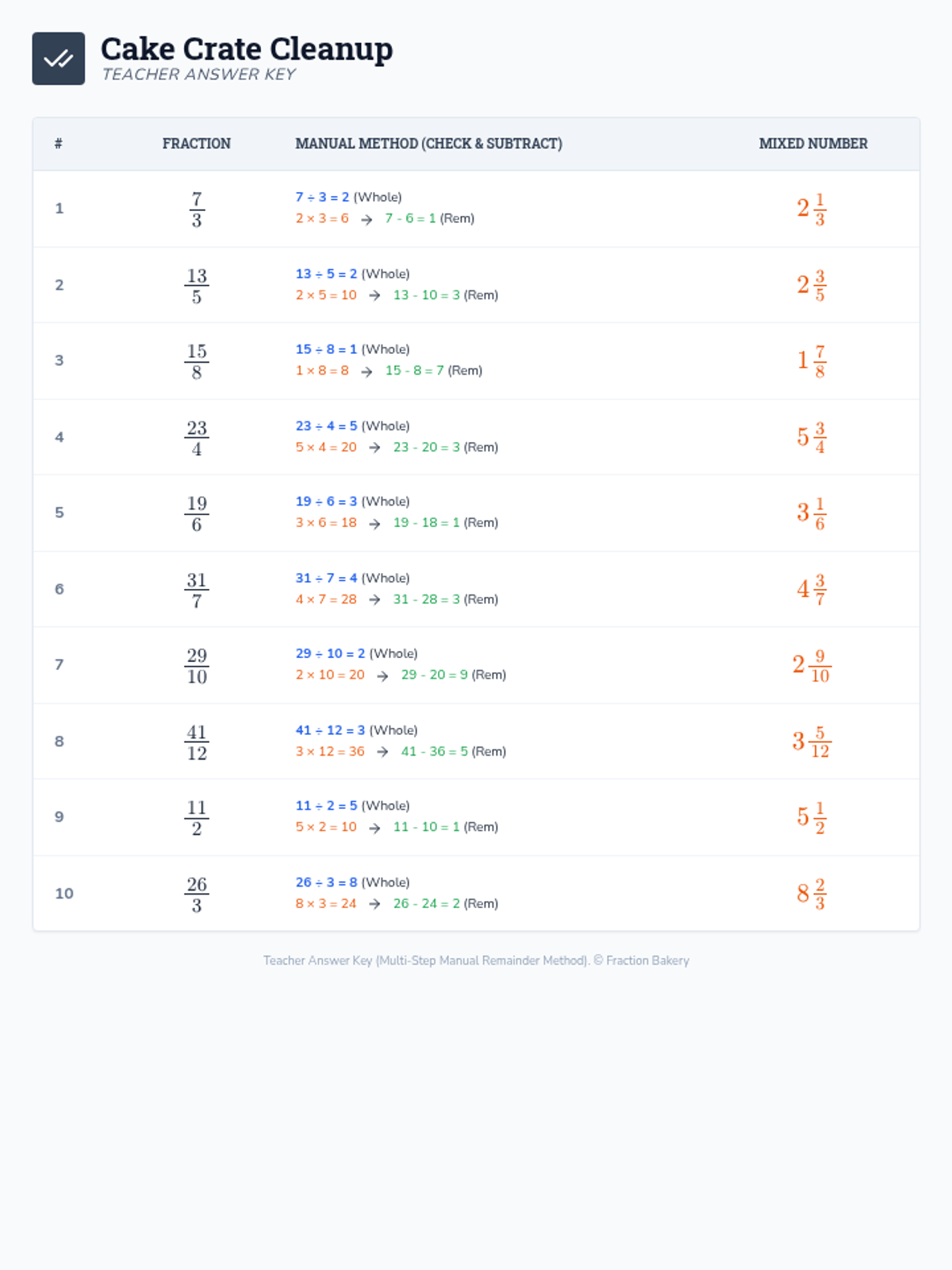
A concise review lesson connecting the concepts of division as equal groups and fractions as equal parts of a whole, including numerator and denominator definitions.
This lesson focuses on solving equal group problems involving decimals, specifically dividing decimals by decimals in real-world money contexts. Students will learn how to shift the decimal point to create whole-number divisors and apply these skills to marketplace scenarios.
Applying the mean to animal data sets, exploring how averages help scientists understand the natural world.
An introduction to the concept of averages using sports statistics, focusing on the 'add then divide' algorithm.
A focused lesson on adding two-digit numbers where regrouping occurs from the ones place to the tens place and from the tens place to the hundreds place.
A comprehensive addition fluency pack for 5th graders, focusing on multi-digit whole numbers, decimals, and logical addition puzzles to build speed and accuracy.
A comprehensive lesson on two-digit addition using the standard algorithm, featuring differentiated practice from basic no-regrouping to mastery level challenges.
A mini-lesson on calculating unit rates to find the best value at the grocery store. Students will learn to divide price by quantity and compare different product sizes.
A comprehensive lesson on identifying and classifying all types of quadrilaterals, from common shapes like squares and rectangles to irregular polygons. Students explore properties through visual identification and true/false logic challenges.
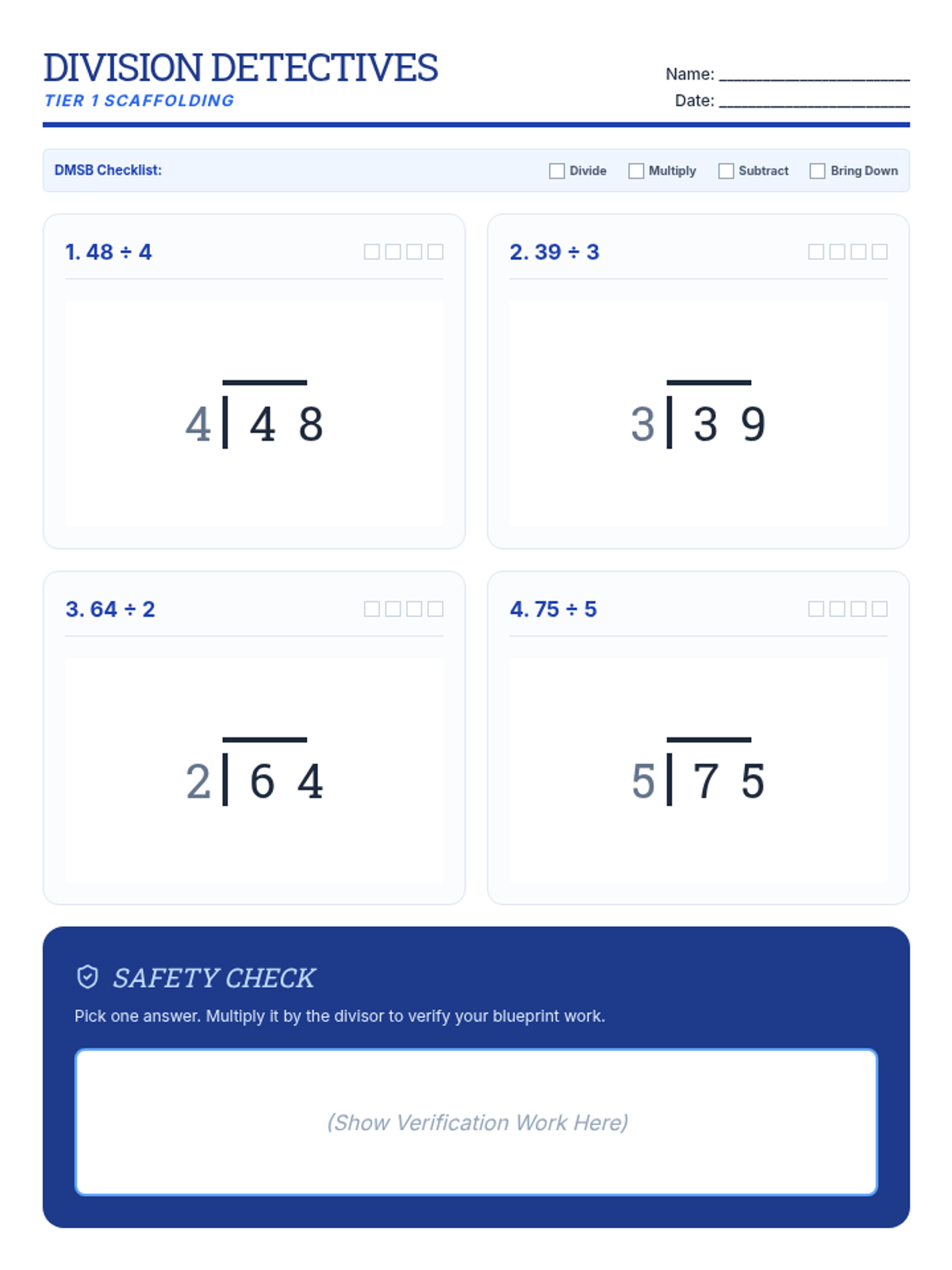
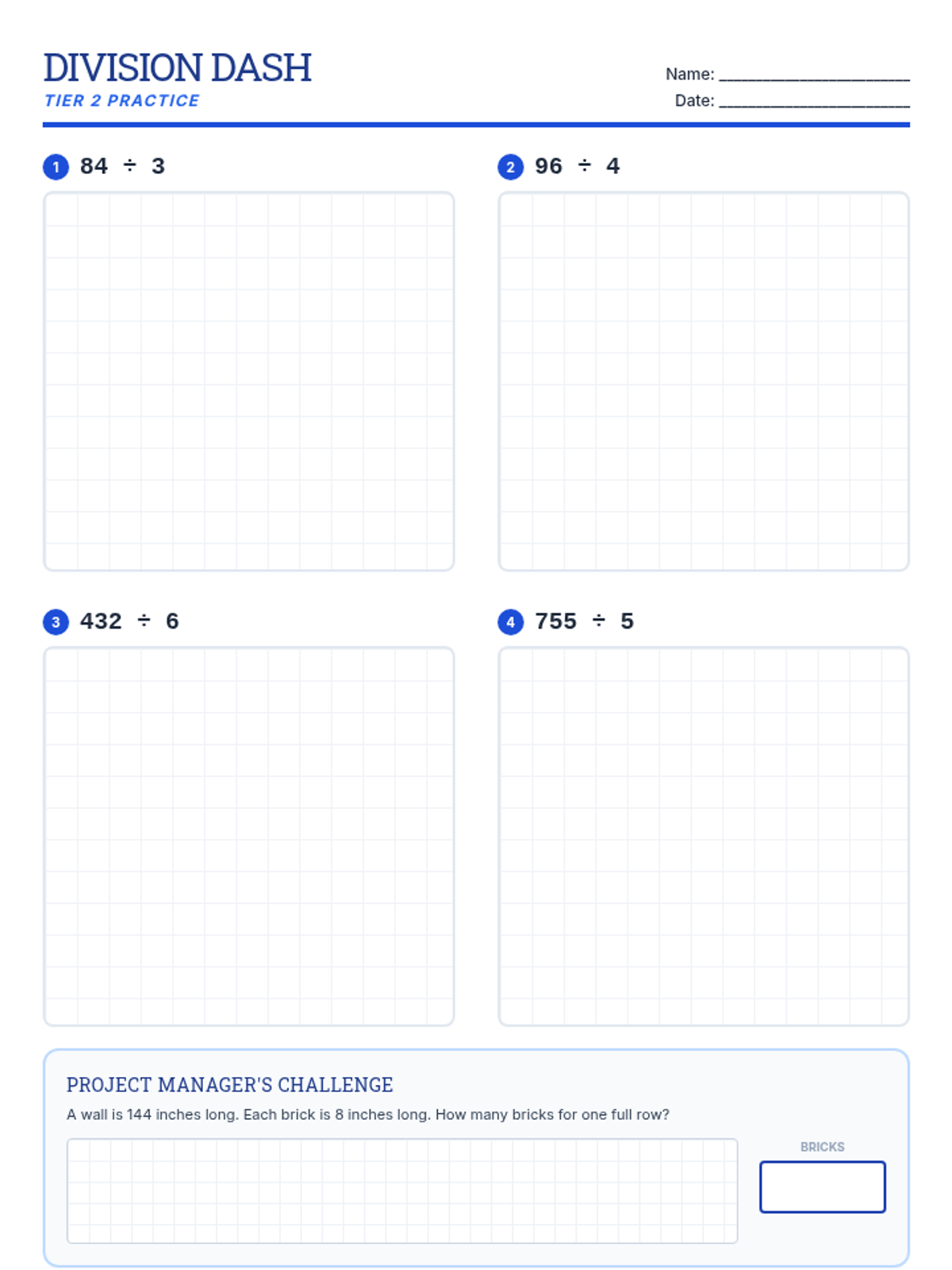
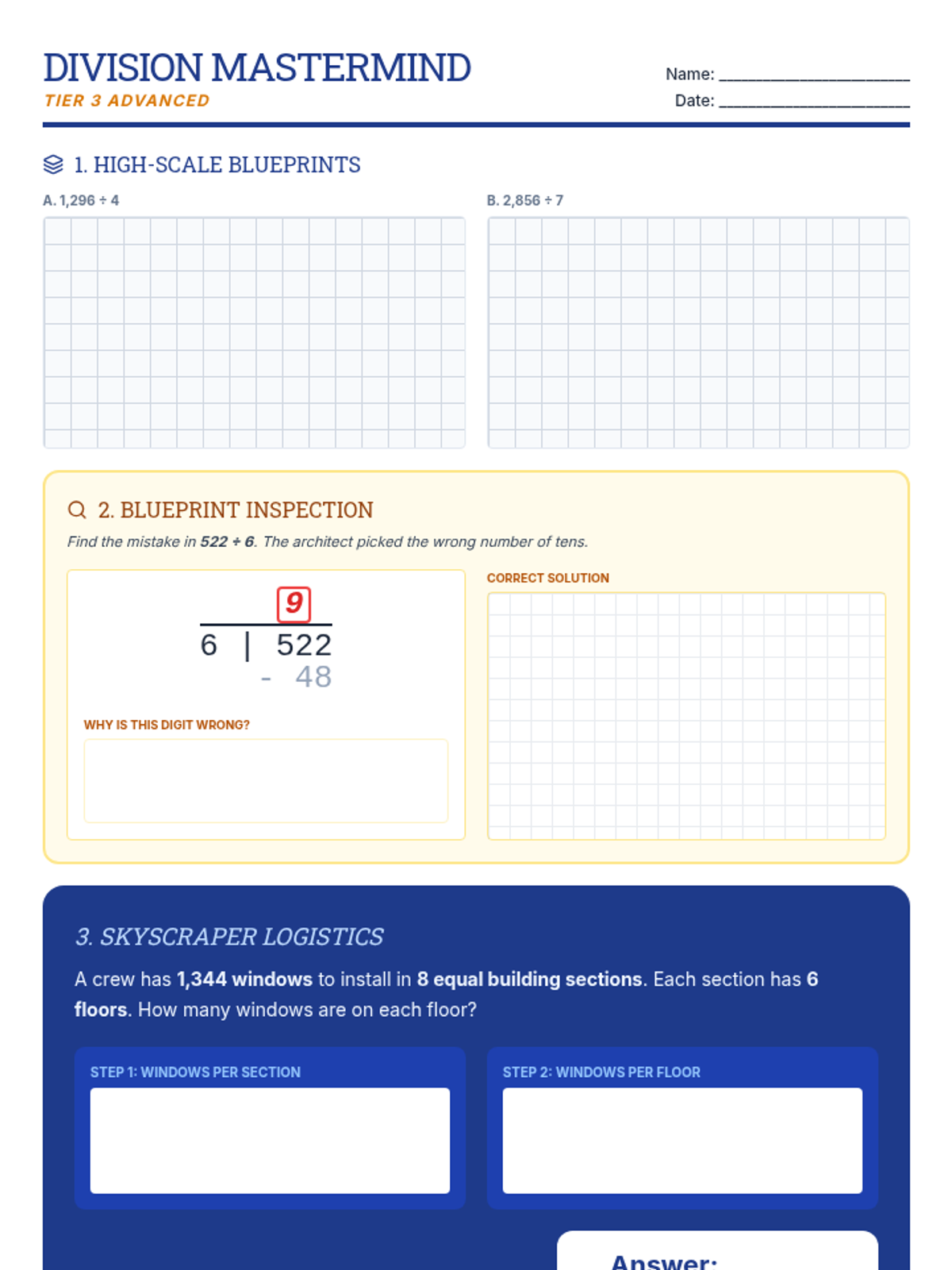
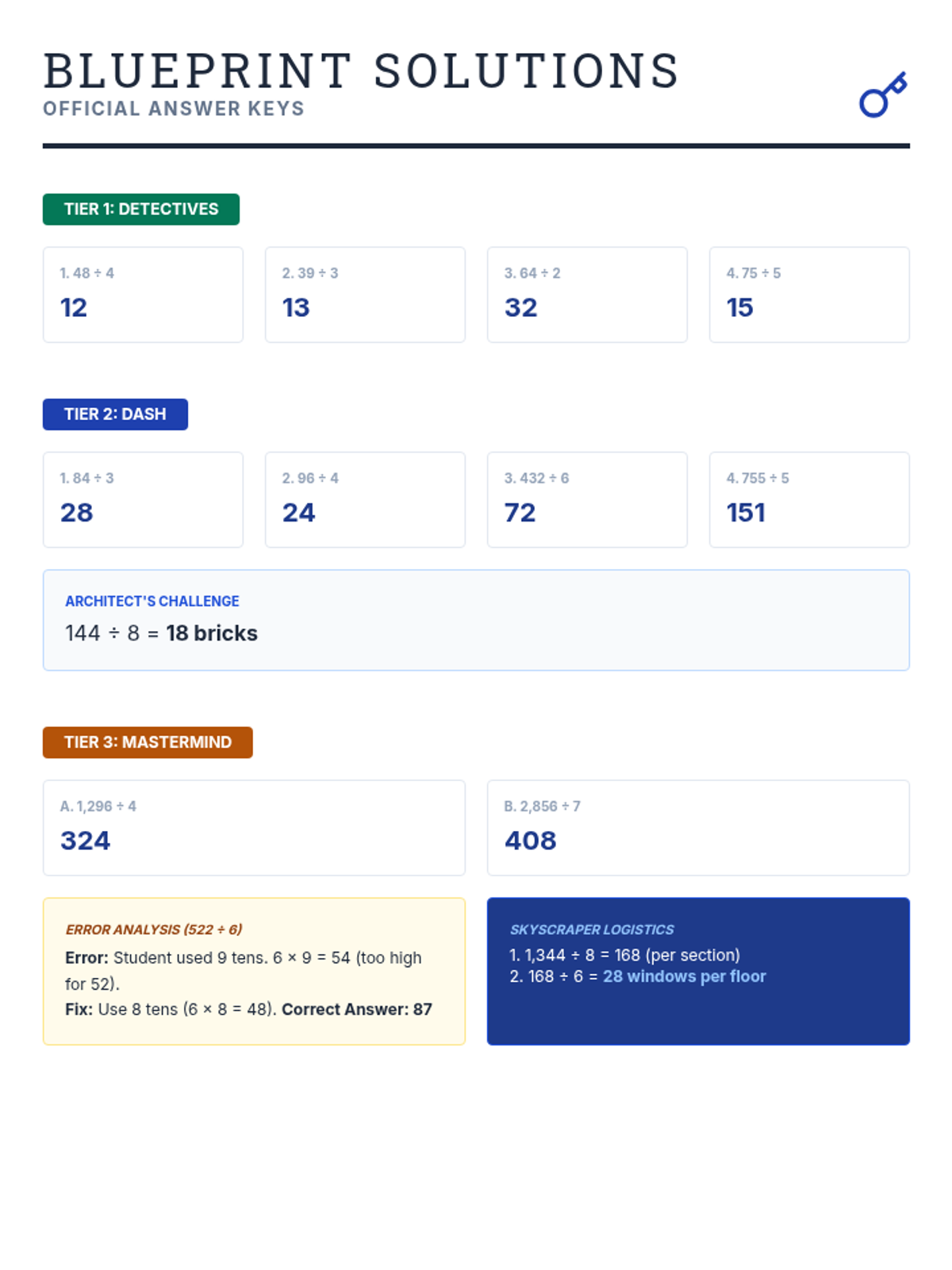
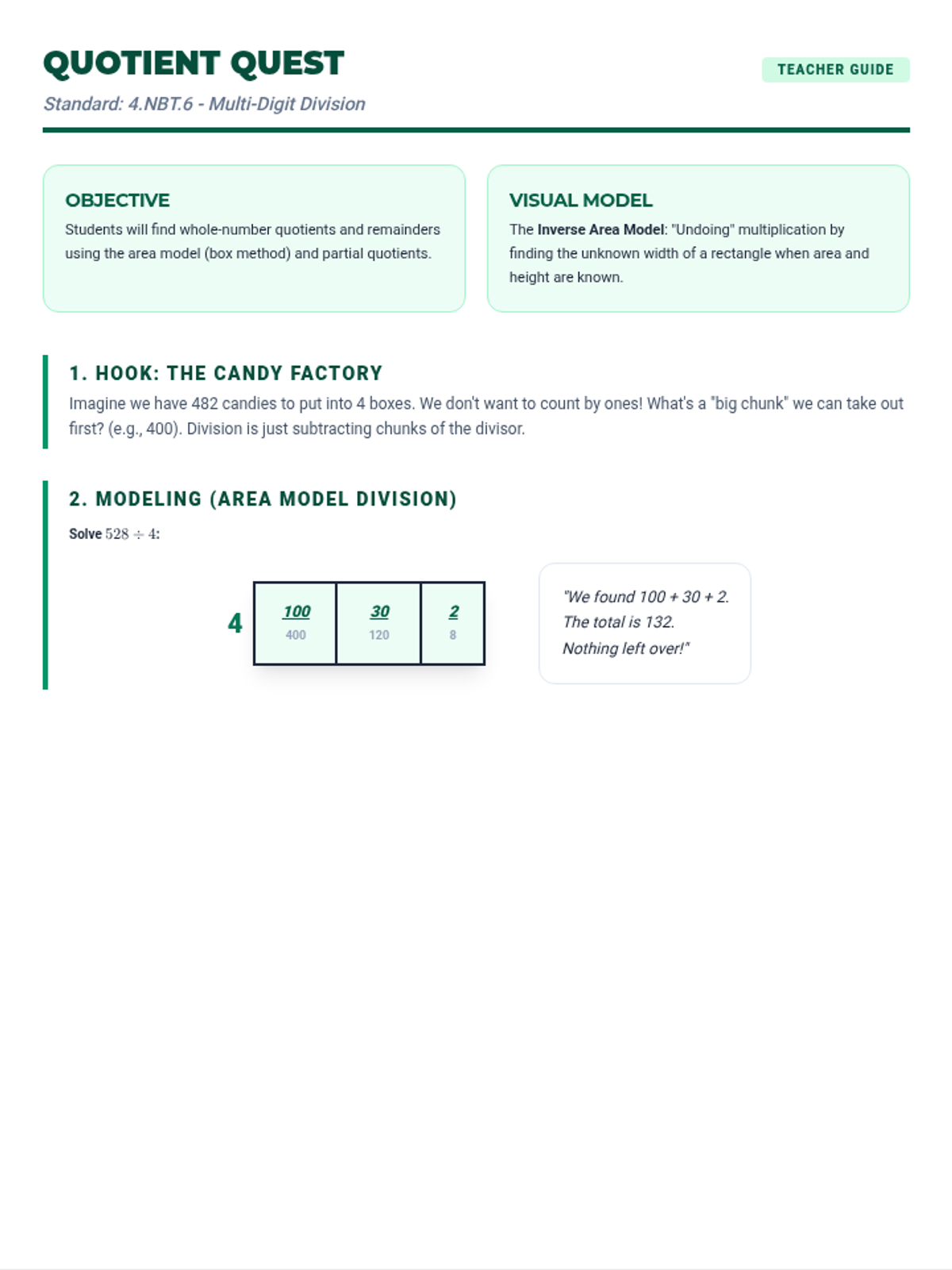
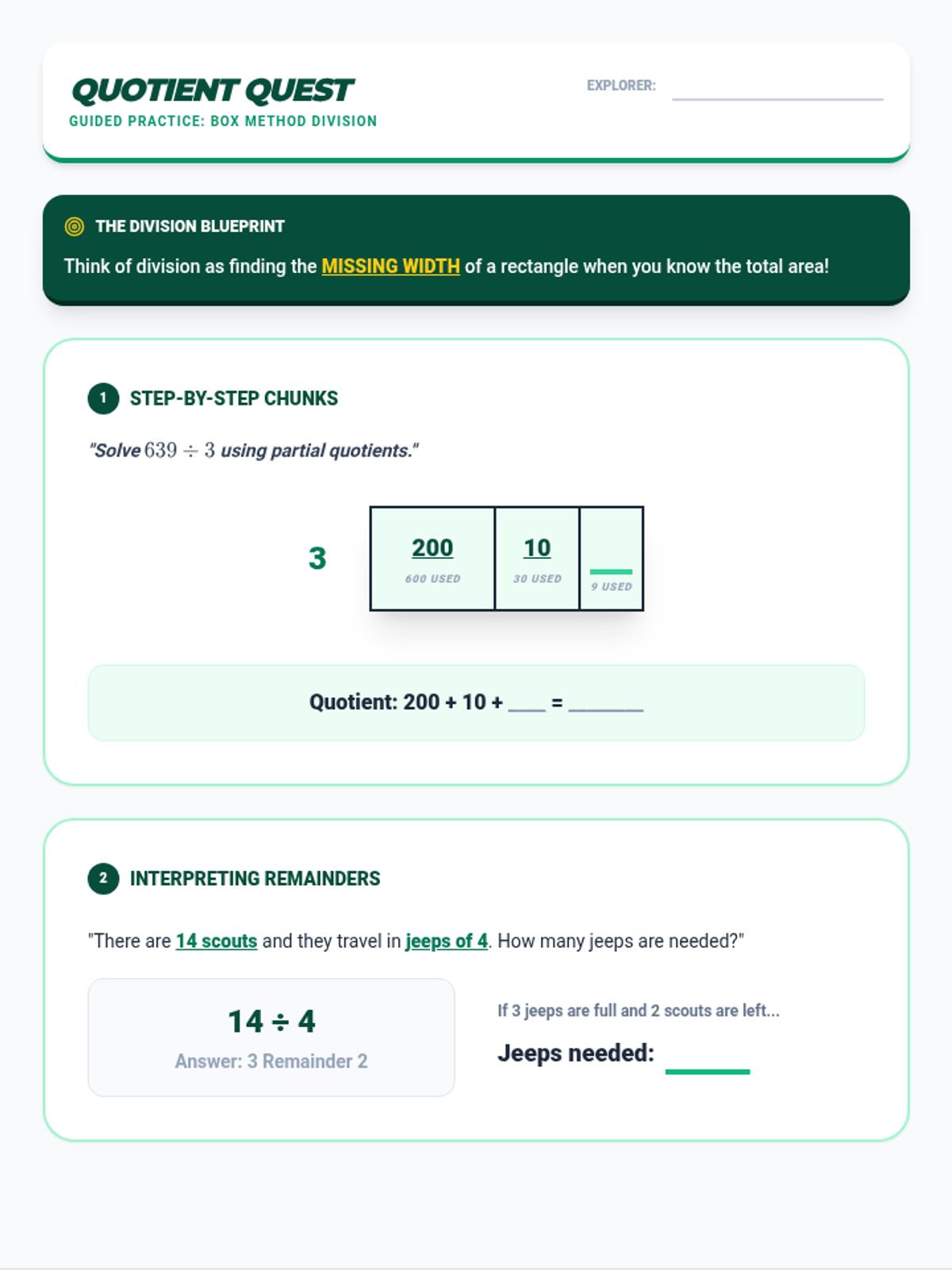
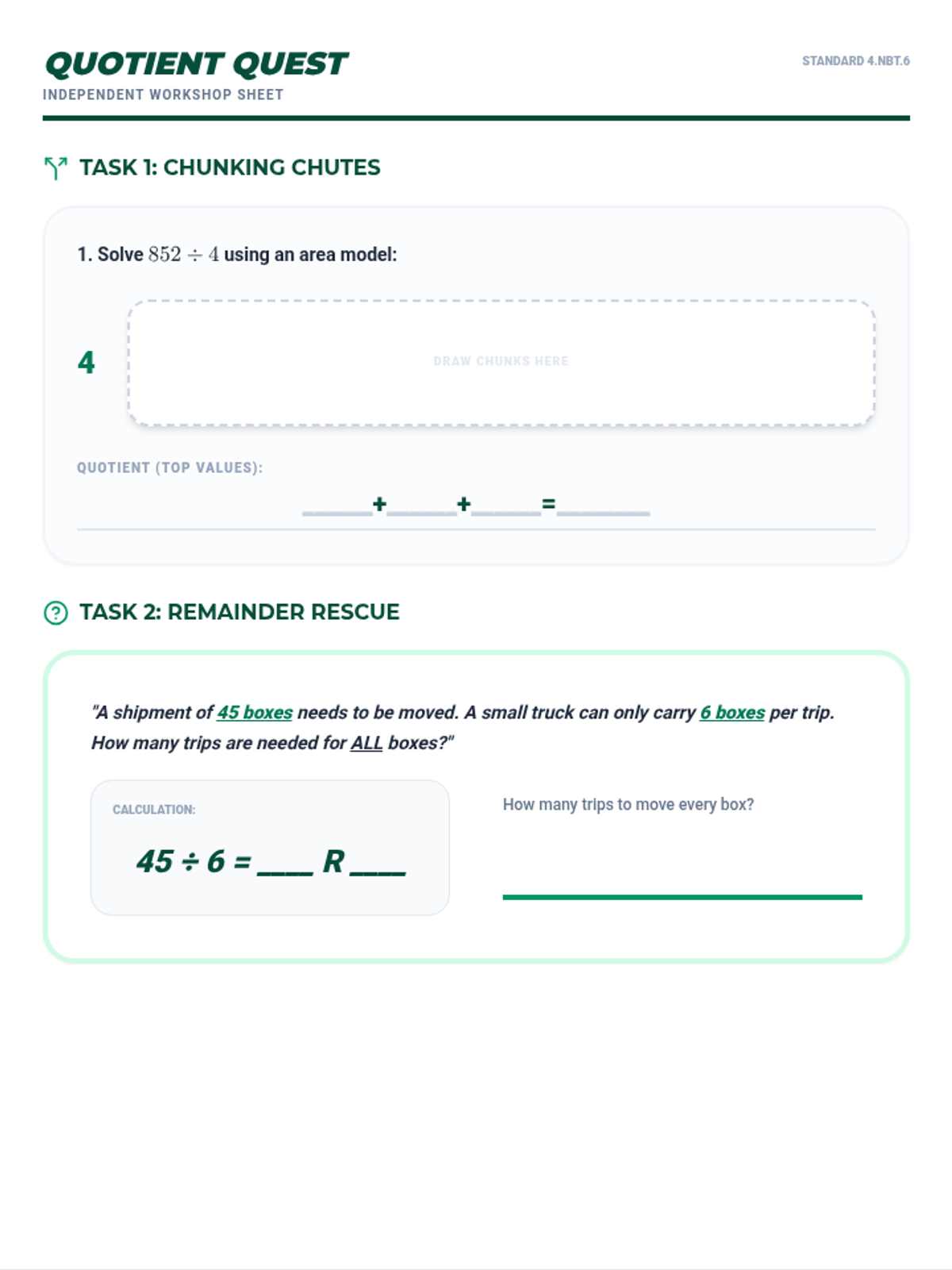
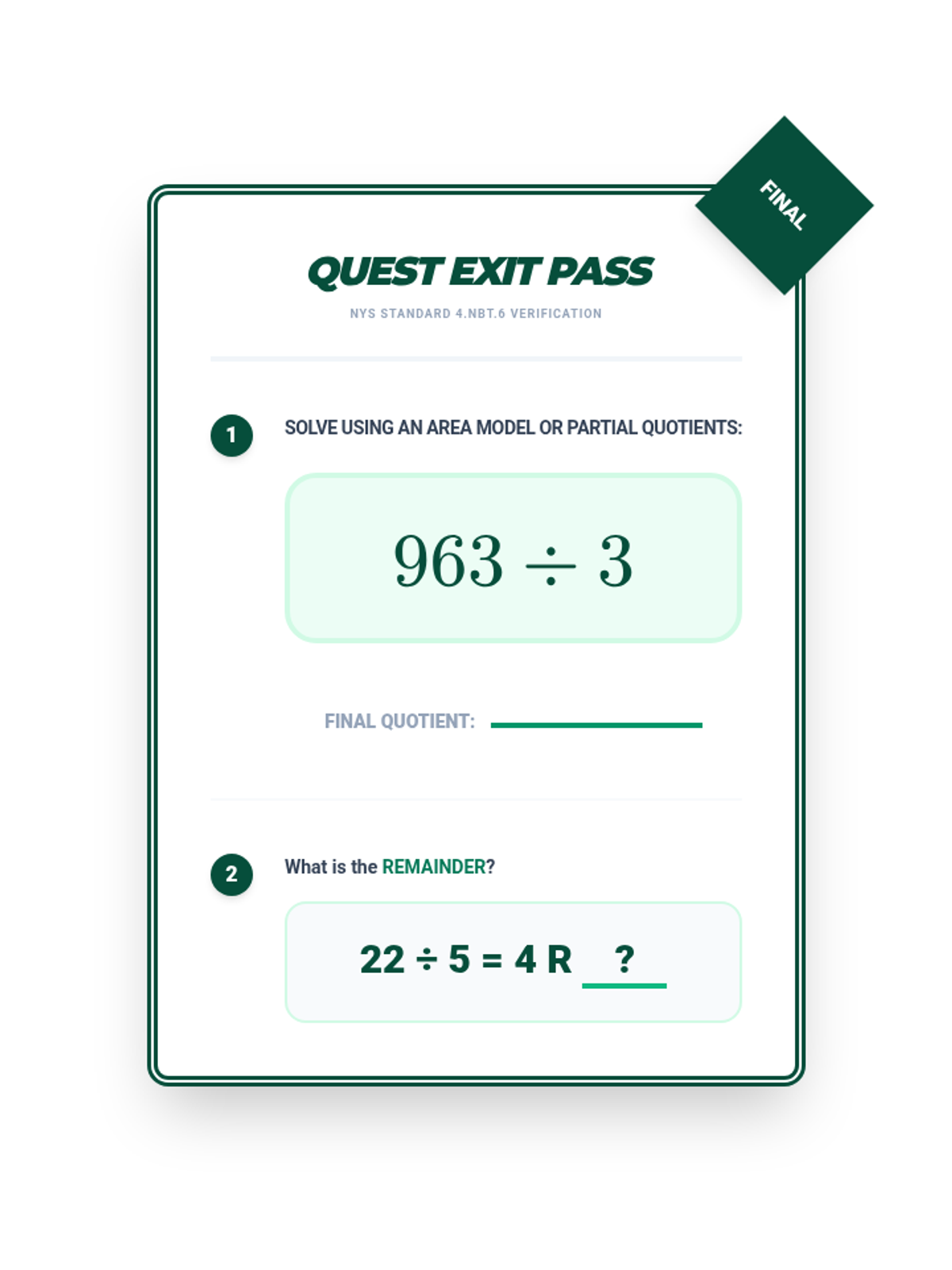
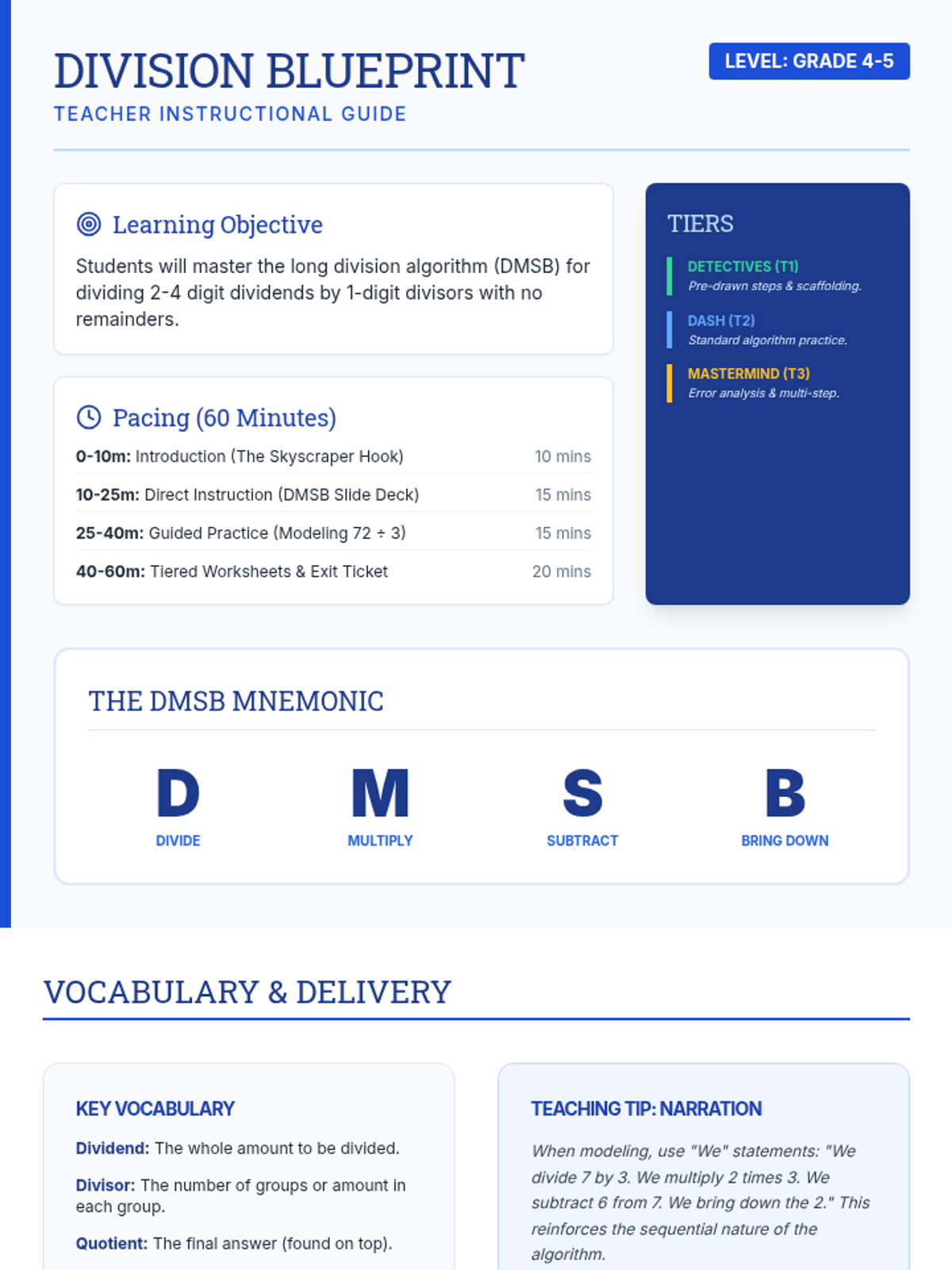
A series of worksheets designed to master long division with single-digit divisors and four-digit dividends, featuring large fonts and ample workspace.
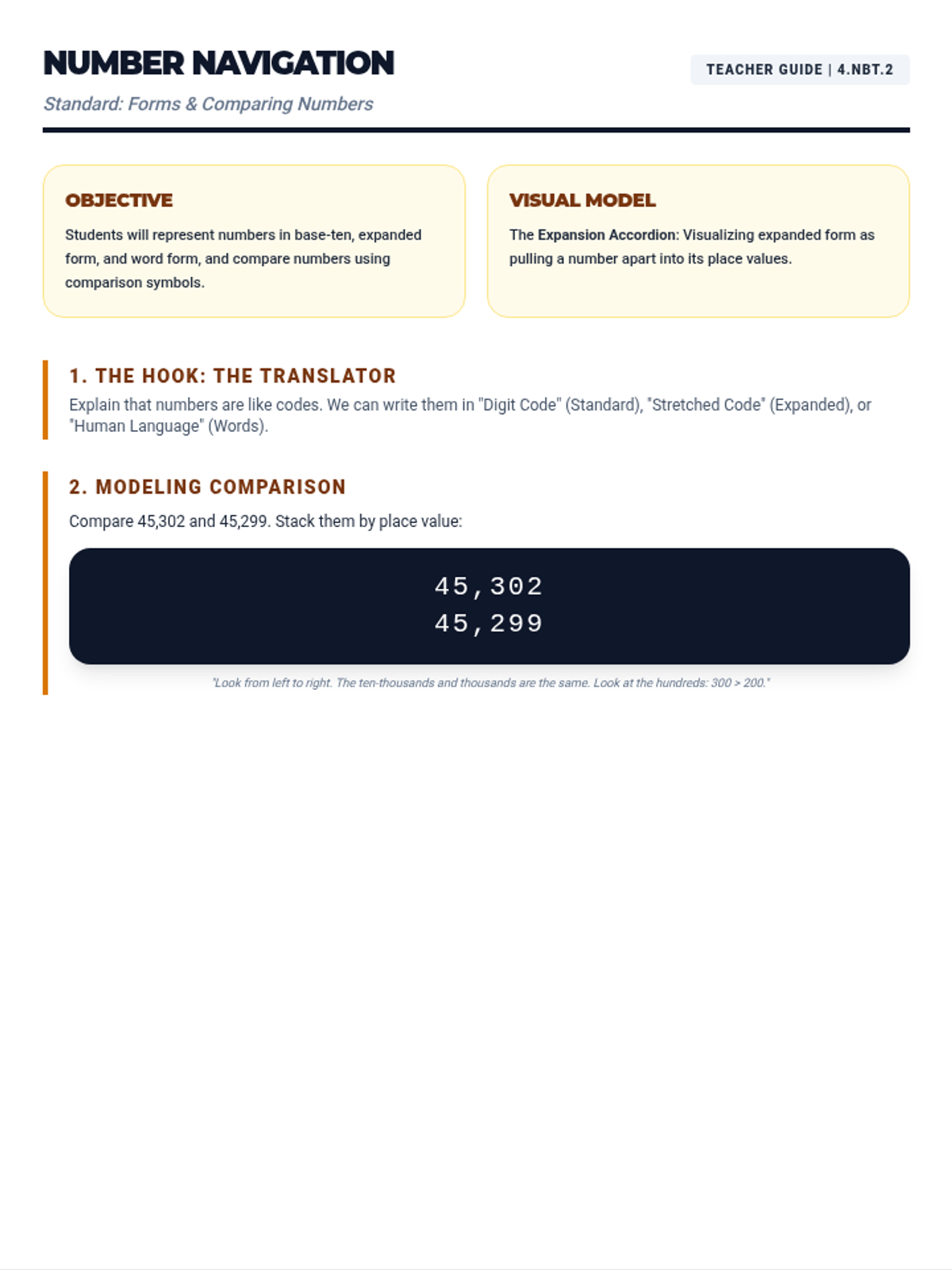
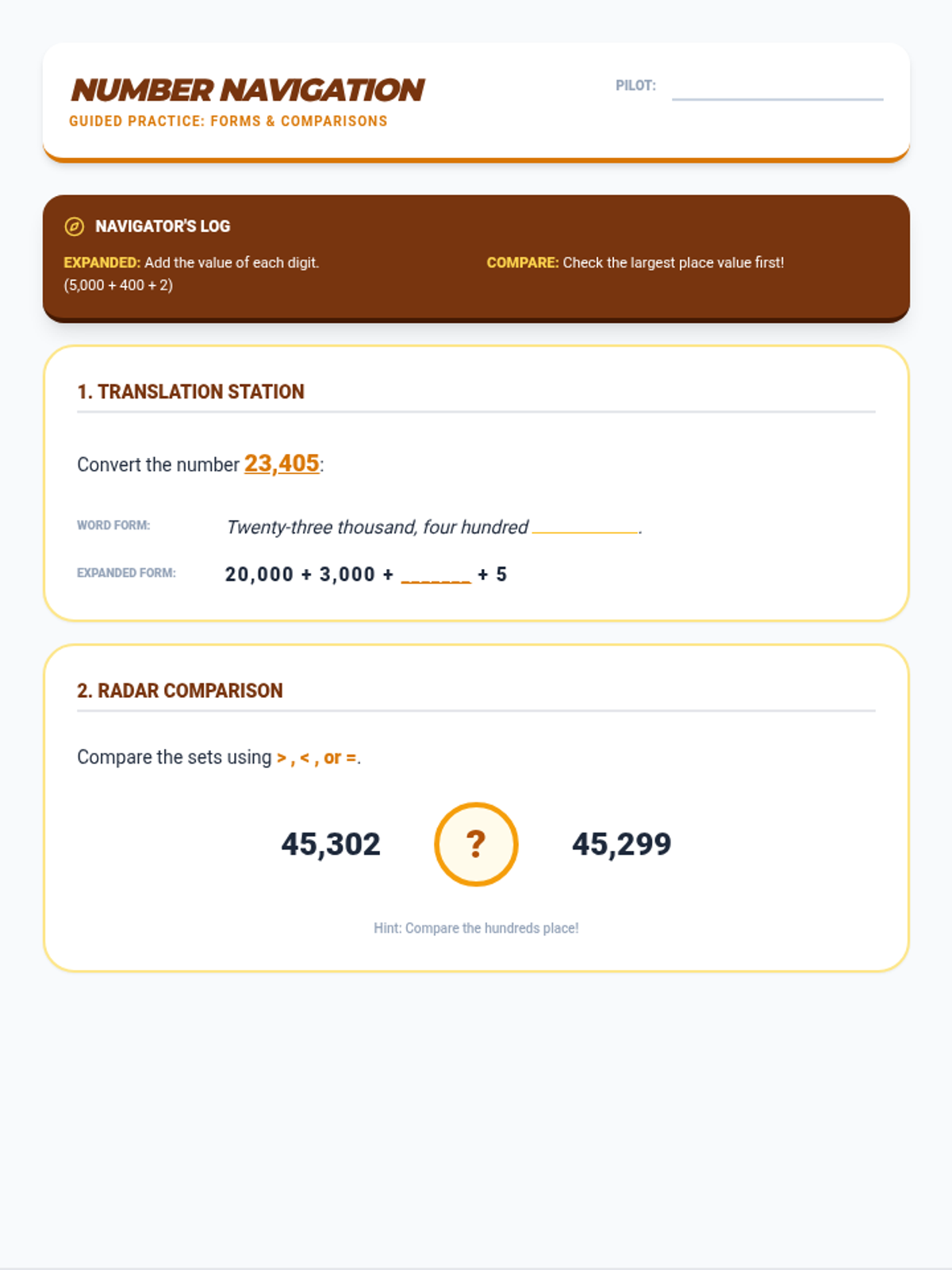
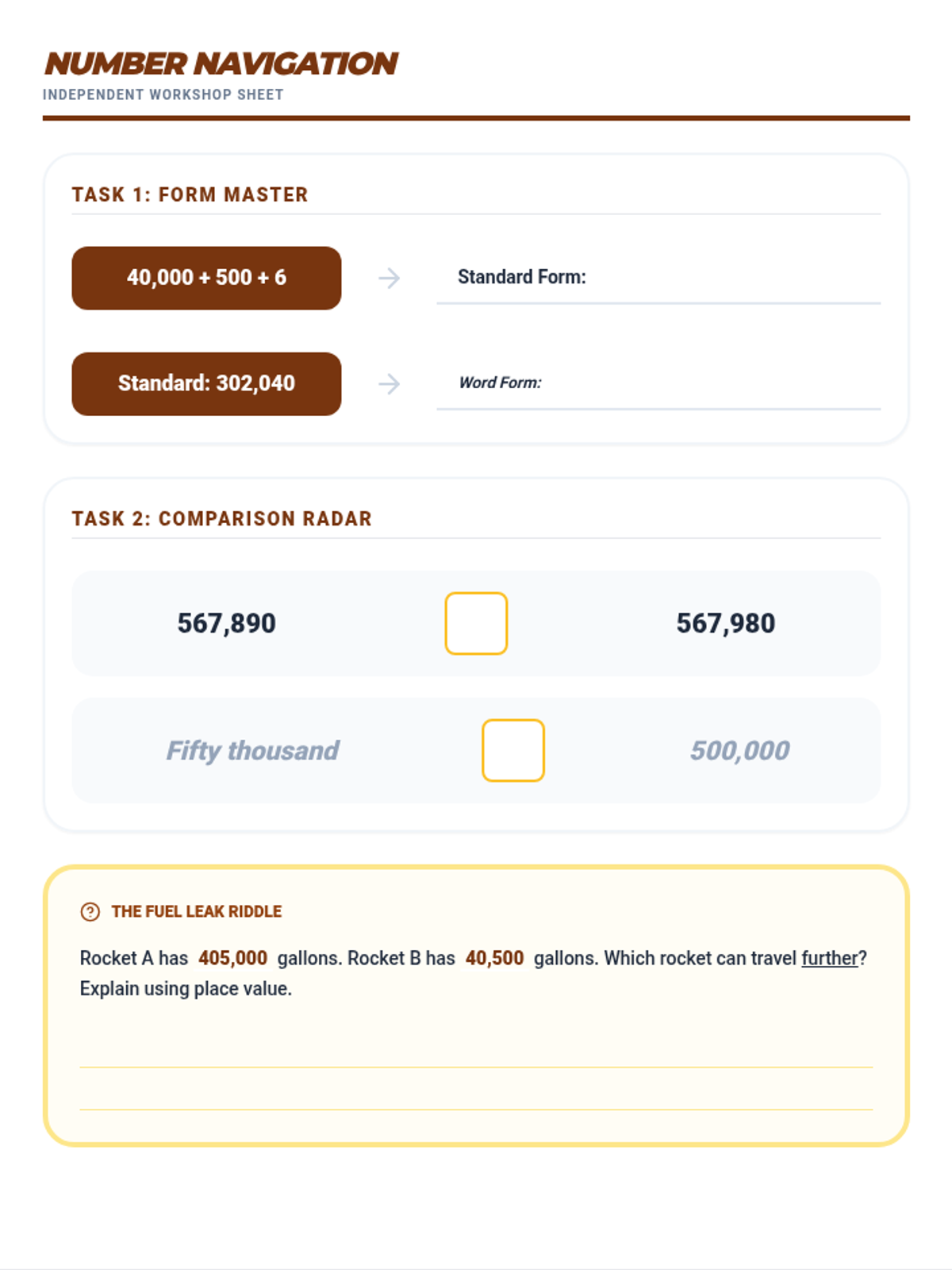
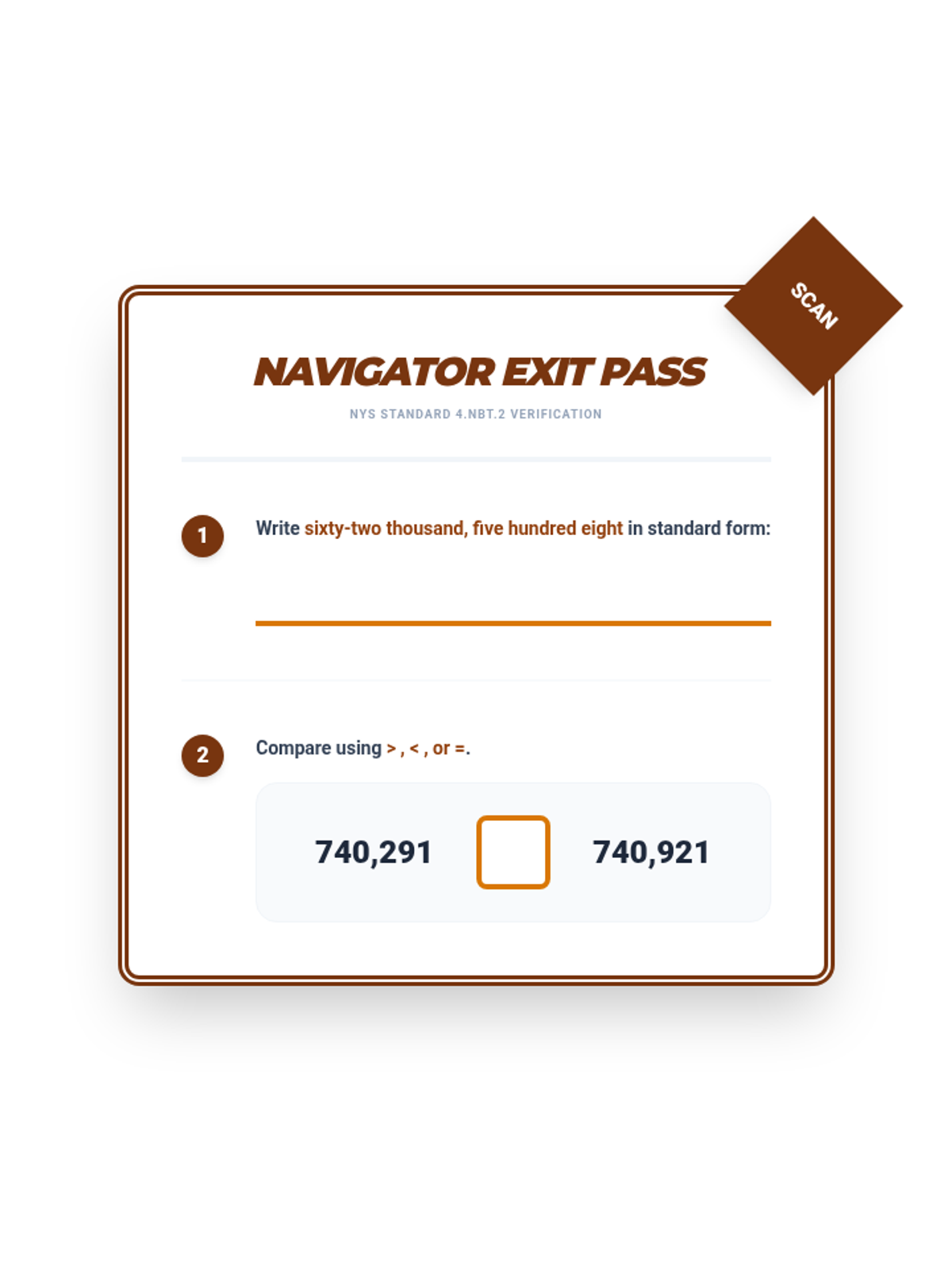
Students learn to compare multi-digit numbers up to the ten-thousands place by decomposing them into expanded form to analyze the value of each digit.
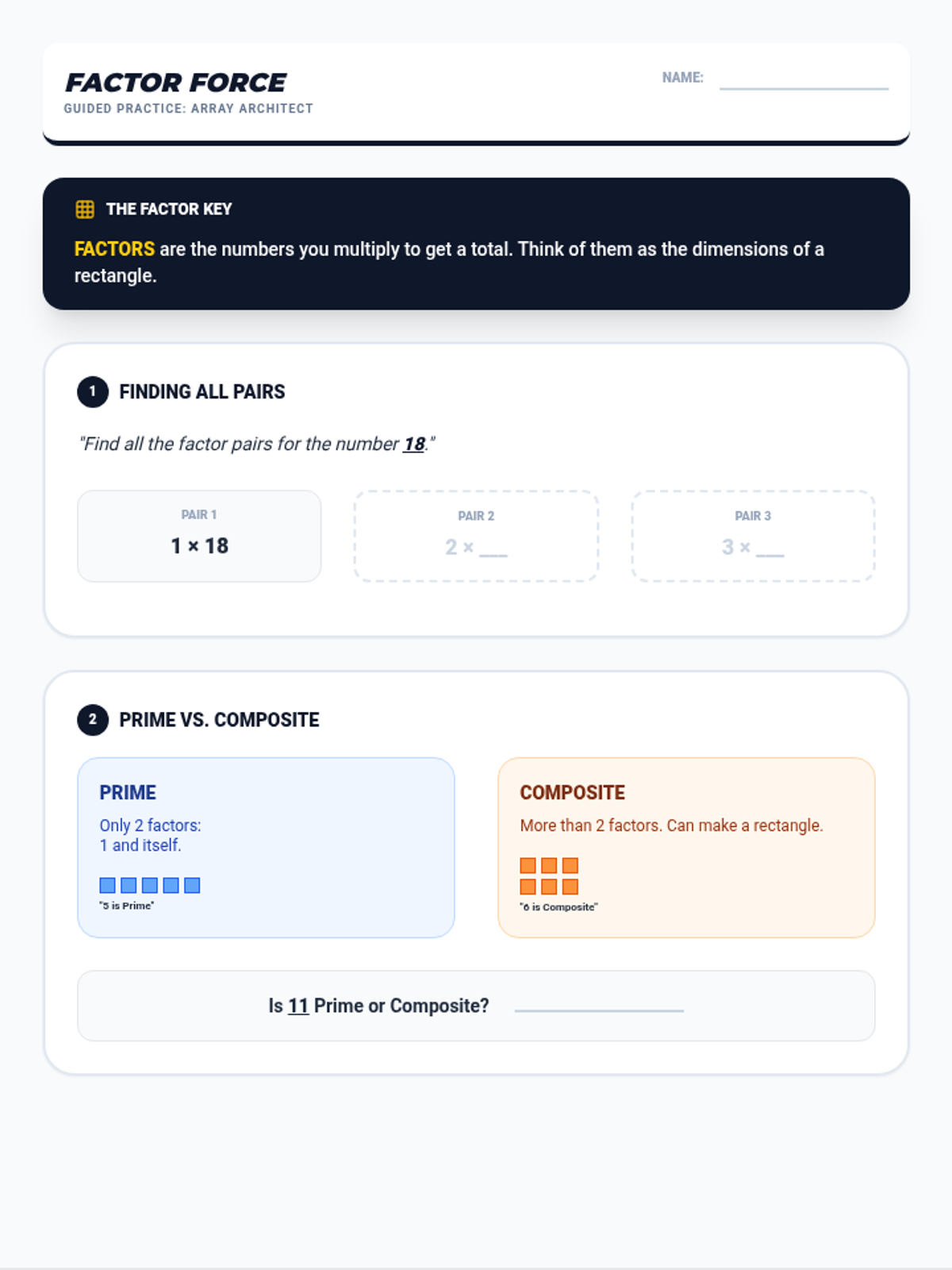
Students will identify and classify prime and composite numbers up to 50 using a color-coding strategy to reveal numerical patterns.
A 30-minute lesson extending coordinate plane skills to all four quadrants, using a full stadium map theme to introduce negative coordinates.
A collection of challenging math problems focusing on number theory, geometry, combinatorics, and algebra, designed for middle school students preparing for GAIM and similar math competitions.
A high-energy 30-minute review of multiplication and division operations involving whole numbers and decimals, designed for 5th-grade mastery.
A 30-minute introductory lesson on the coordinate plane, using a baseball theme to teach students how to identify and plot player positions on the field.
A pair of secret-agent-themed worksheets designed to master the order of operations (GEMDAS) through progressive challenges, error analysis, and code-breaking puzzles.
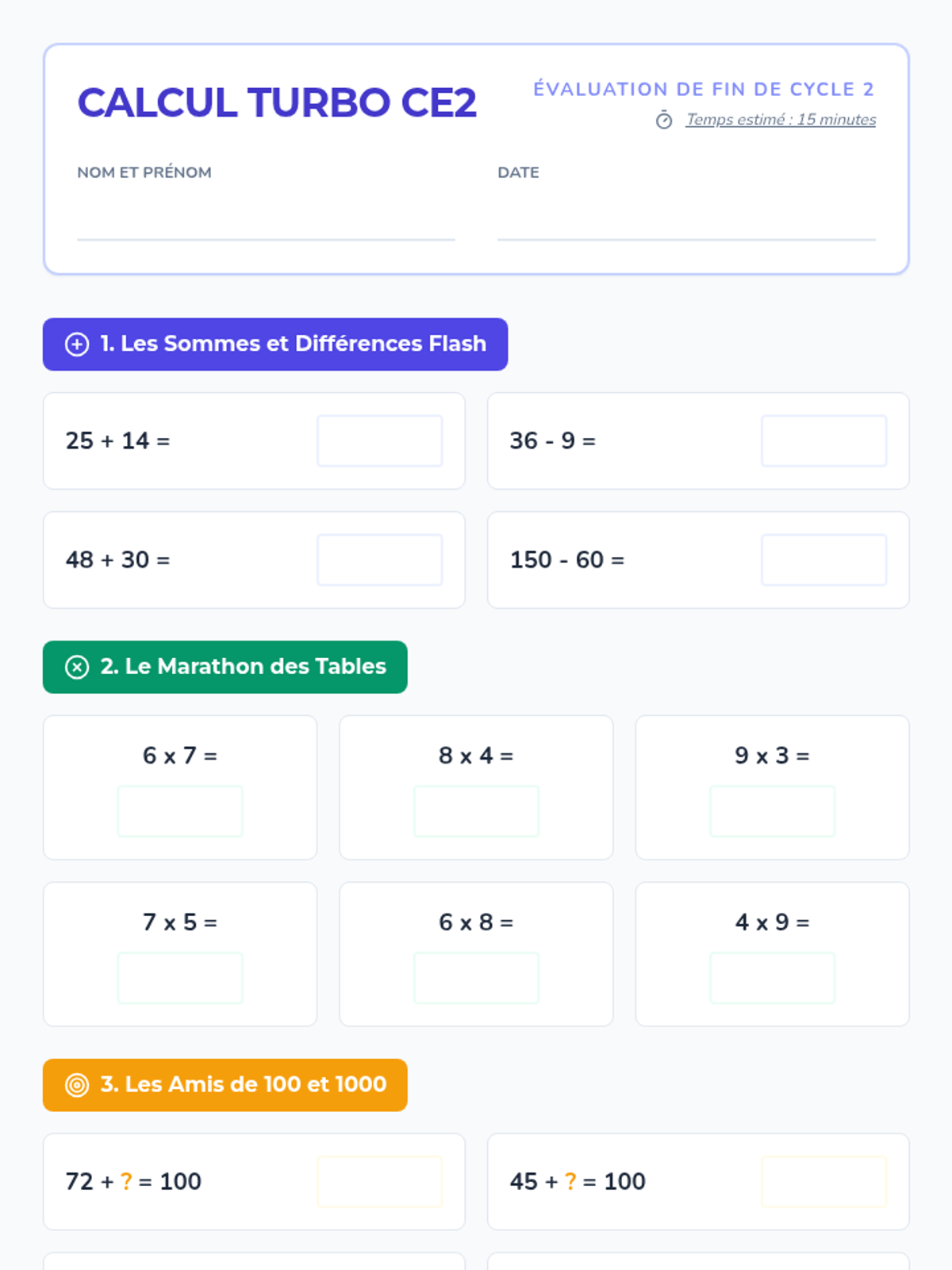
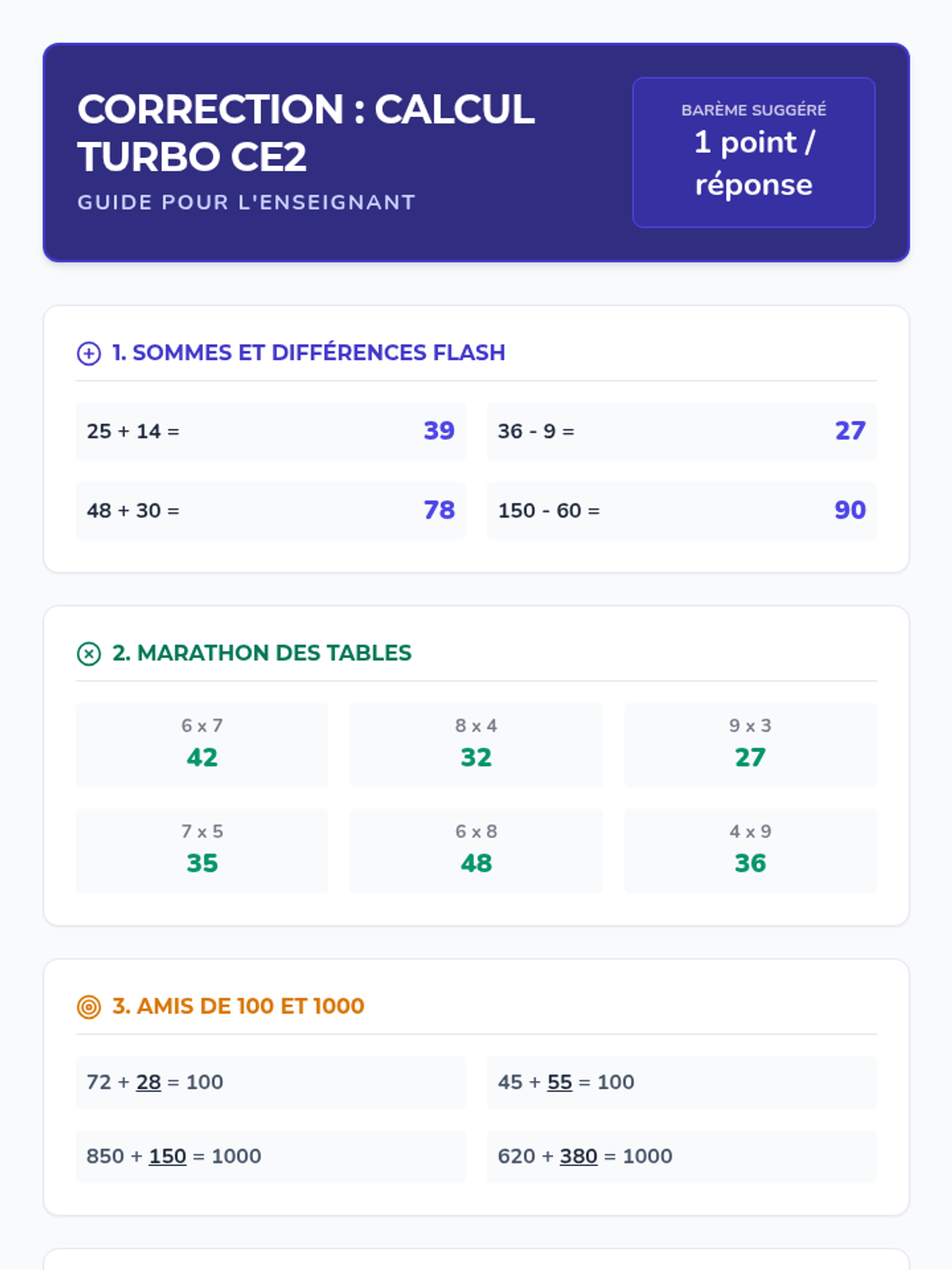
A high-energy lesson focused on building multiplication fact fluency for factors 0 through 10. Students practice speed and accuracy through timed drills and mixed practice.
A simple, hands-on lesson for life skills students exploring fractions through the lens of Pi Day and delicious pies. Students will identify basic fractions (1/2, 1/4) and celebrate the mathematical holiday.
A lesson focused on translating verbal phrases and real-world scenarios into algebraic expressions, featuring a secret agent 'cipher' theme.
A comprehensive lesson on calculating and making change using various denominations and strategies, from small purchases to larger bills and word problems.
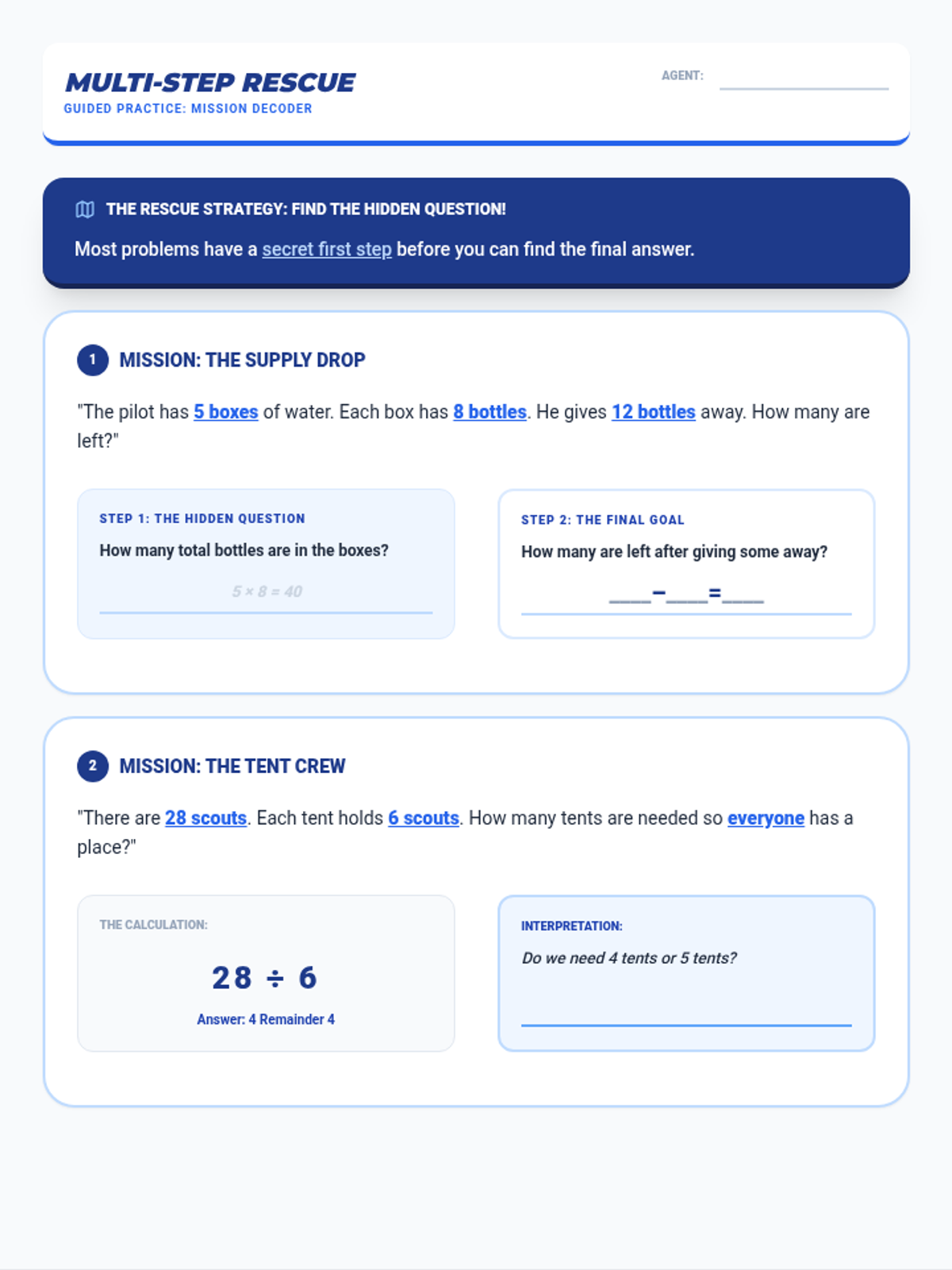
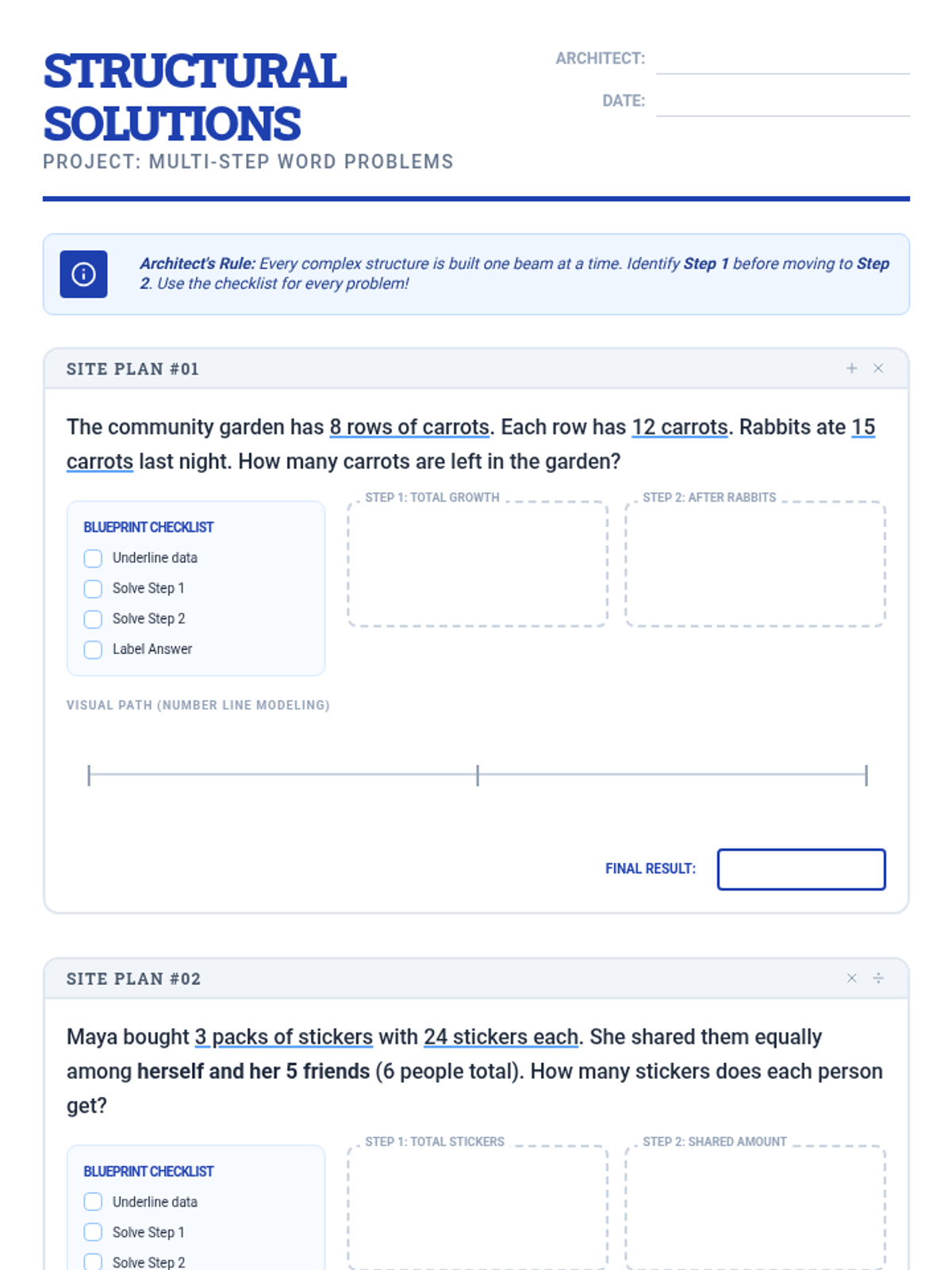
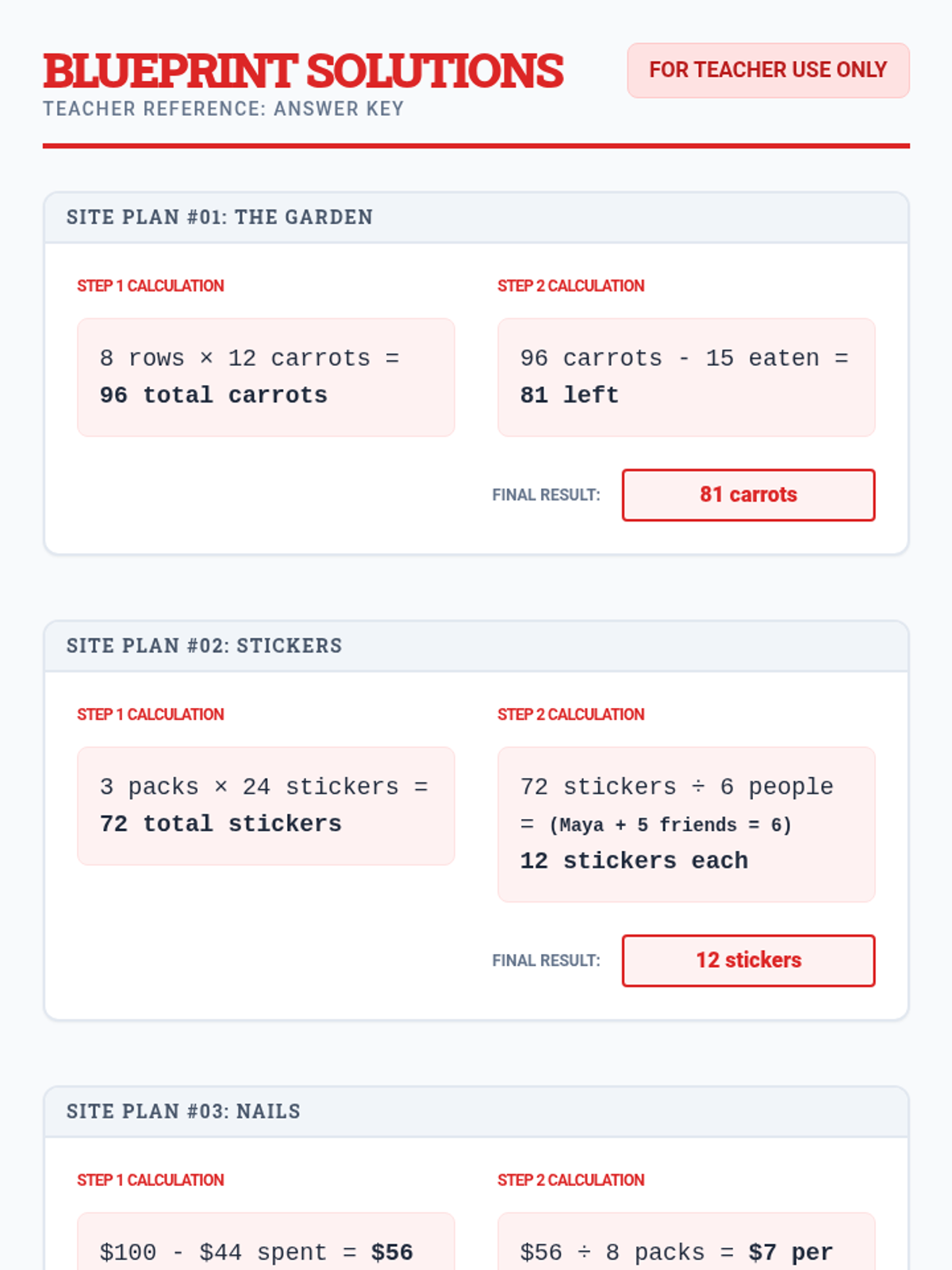
This lesson focuses on breaking down complex two-step word problems into manageable parts using all four operations. Designed with IEP accommodations in mind, it provides structured workspaces and clear visual cues.
A collection of 20 two-step word problems featuring animals, party supplies, world wonders, and dinosaurs, designed specifically for 3rd-grade learners with IEPs. This lesson focuses on breaking down complex problems into manageable steps using all four operations.
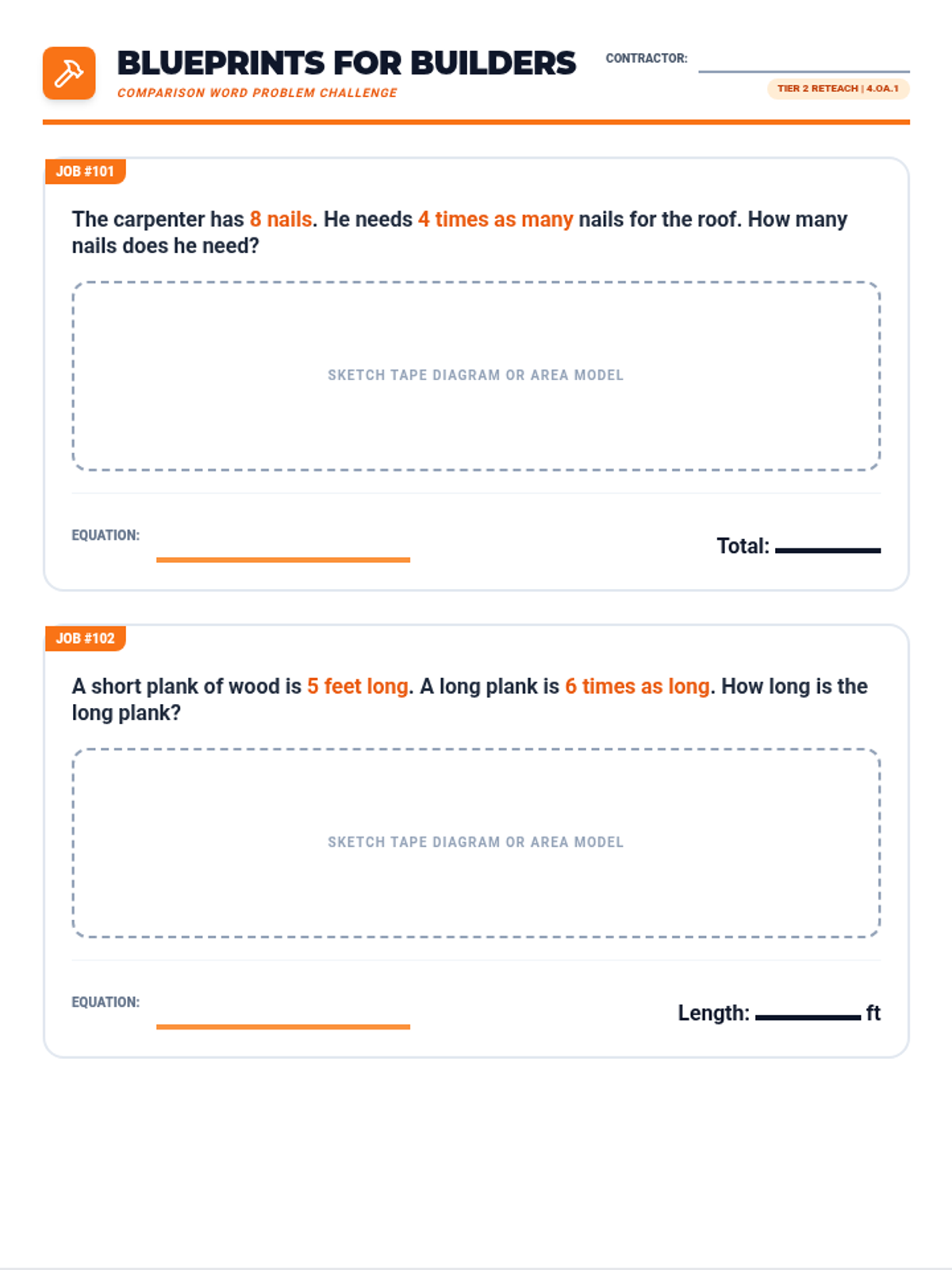
A lesson focused on solving two-step word problems using all four operations, specifically scaffolded for 3rd-grade students who benefit from visual steps and clear structure.
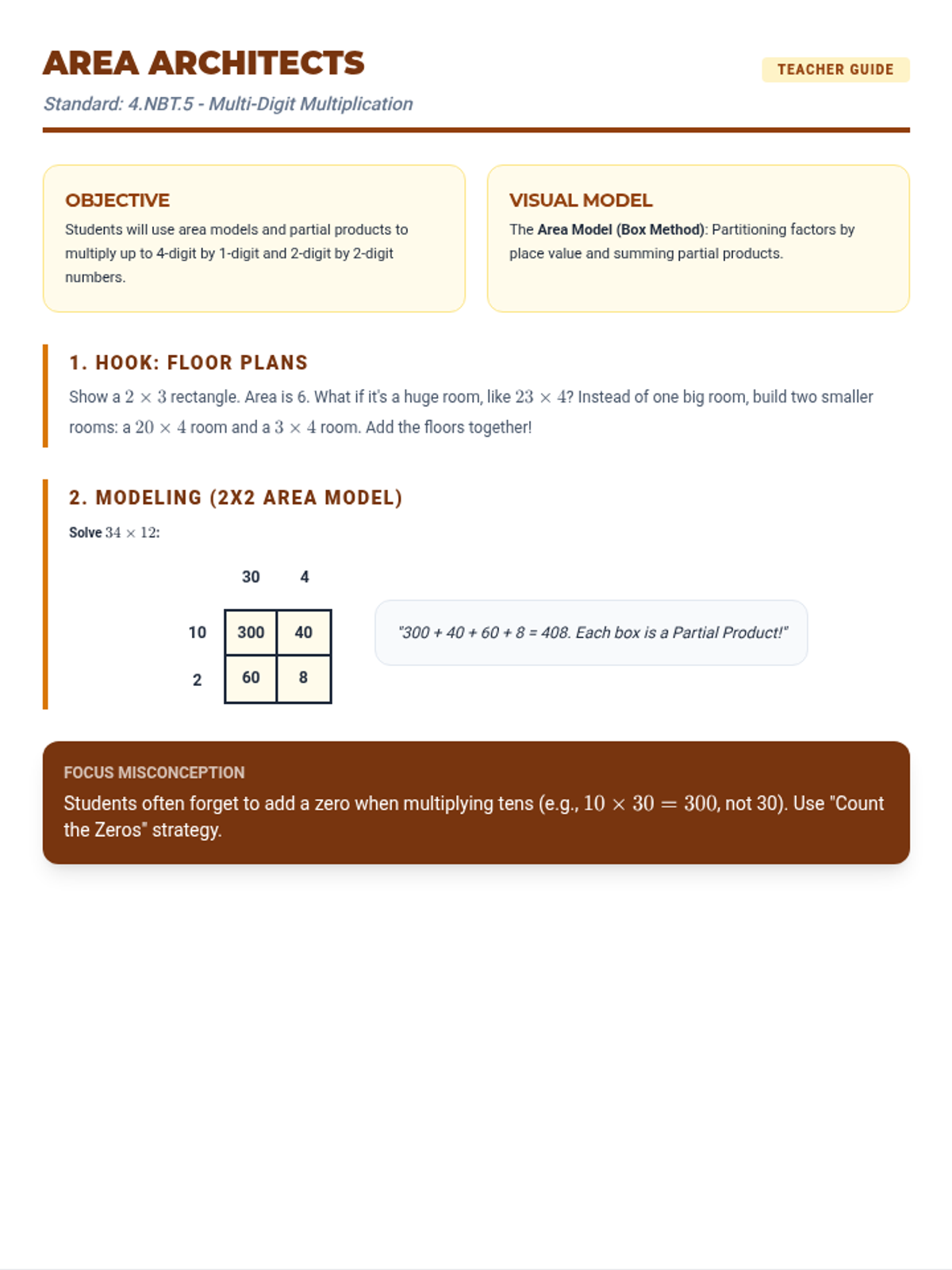
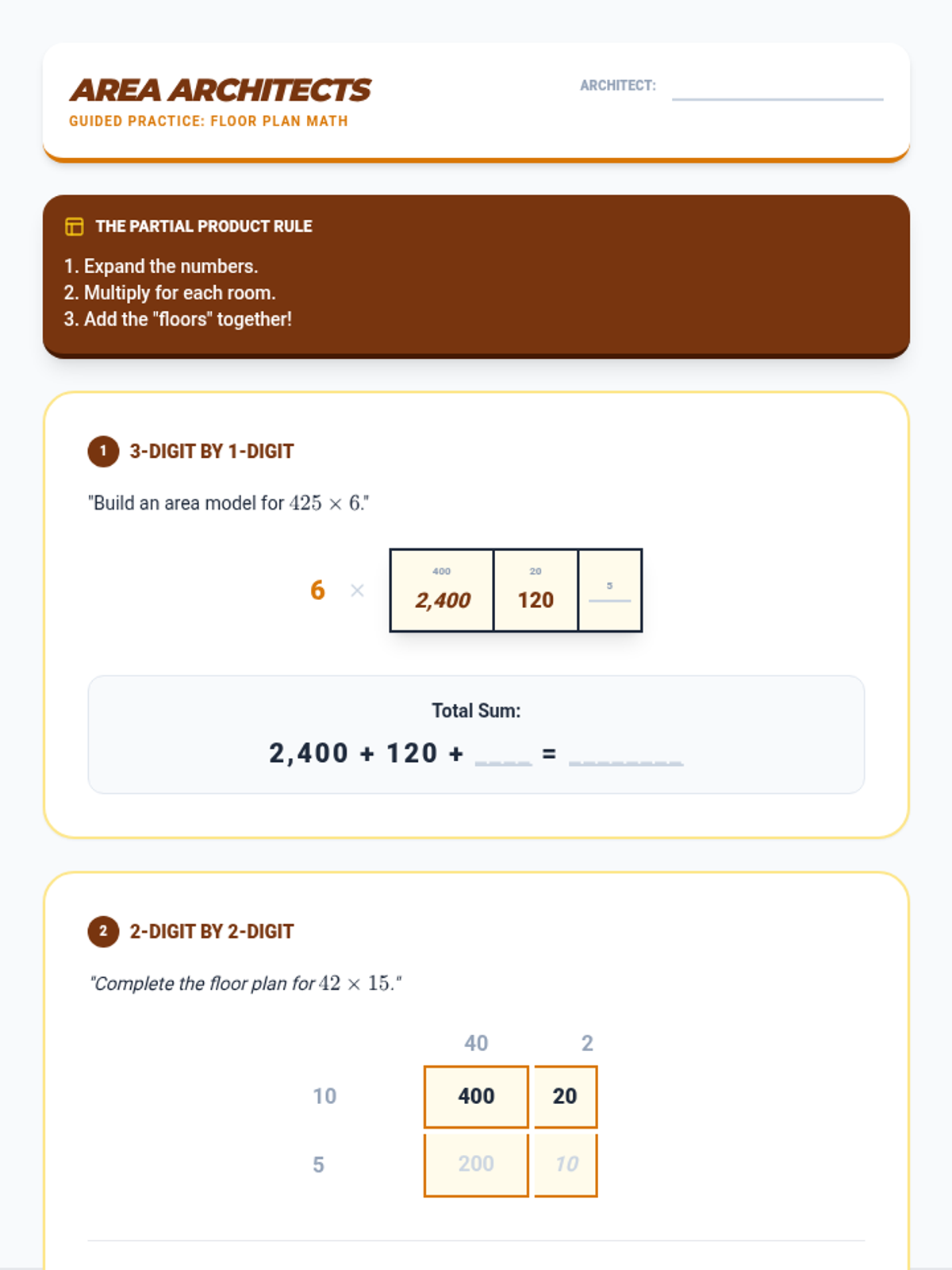
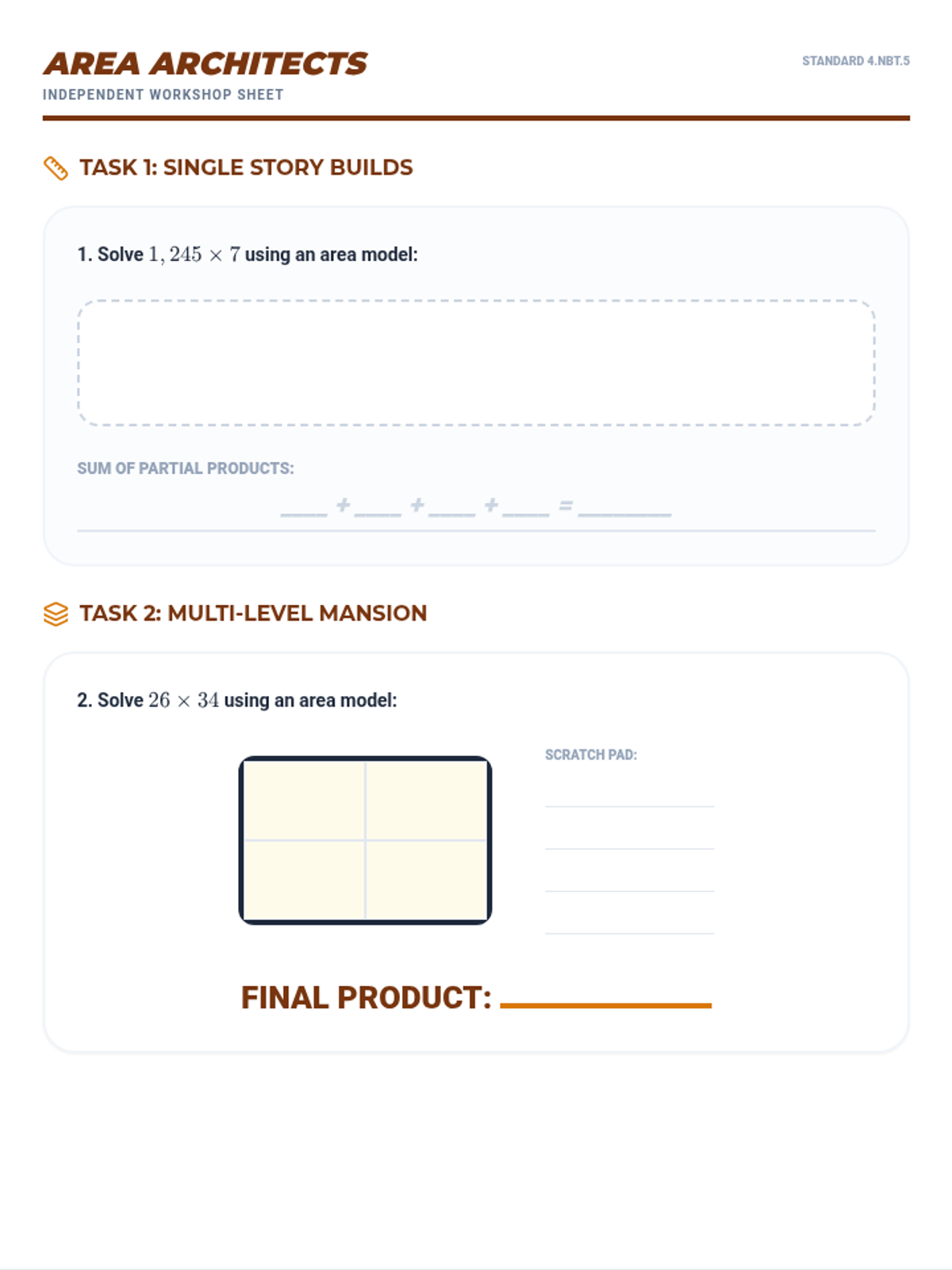
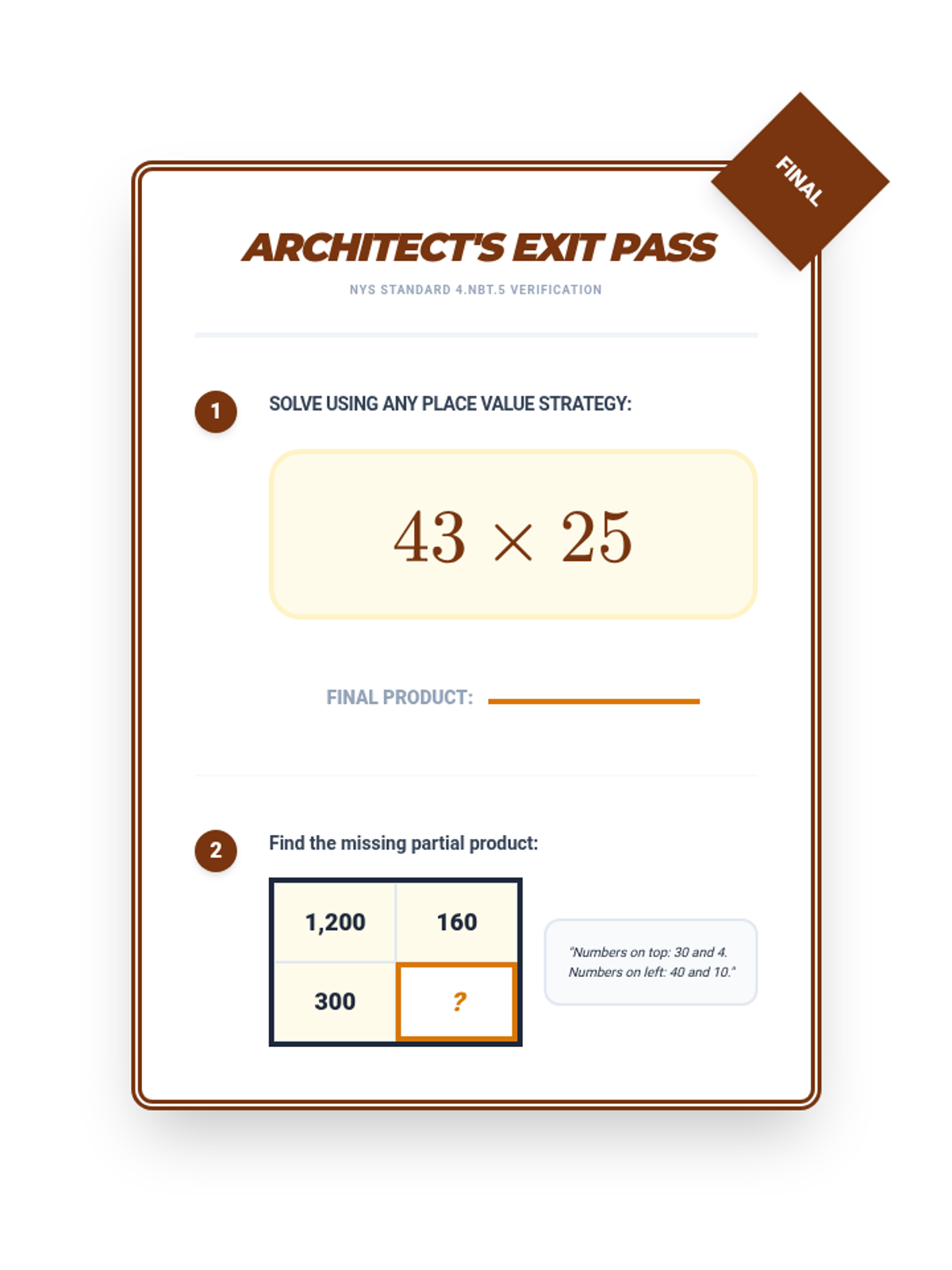
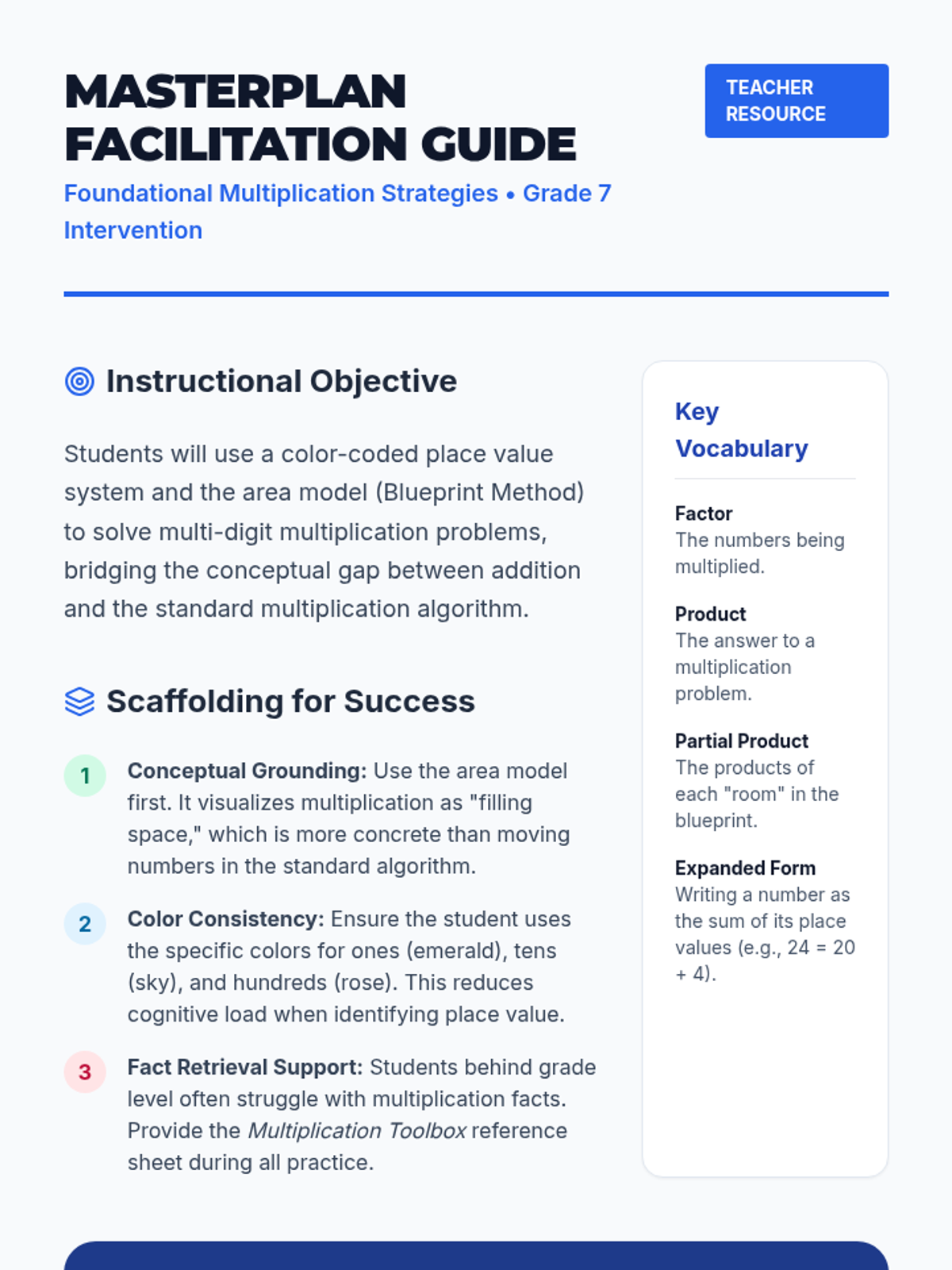
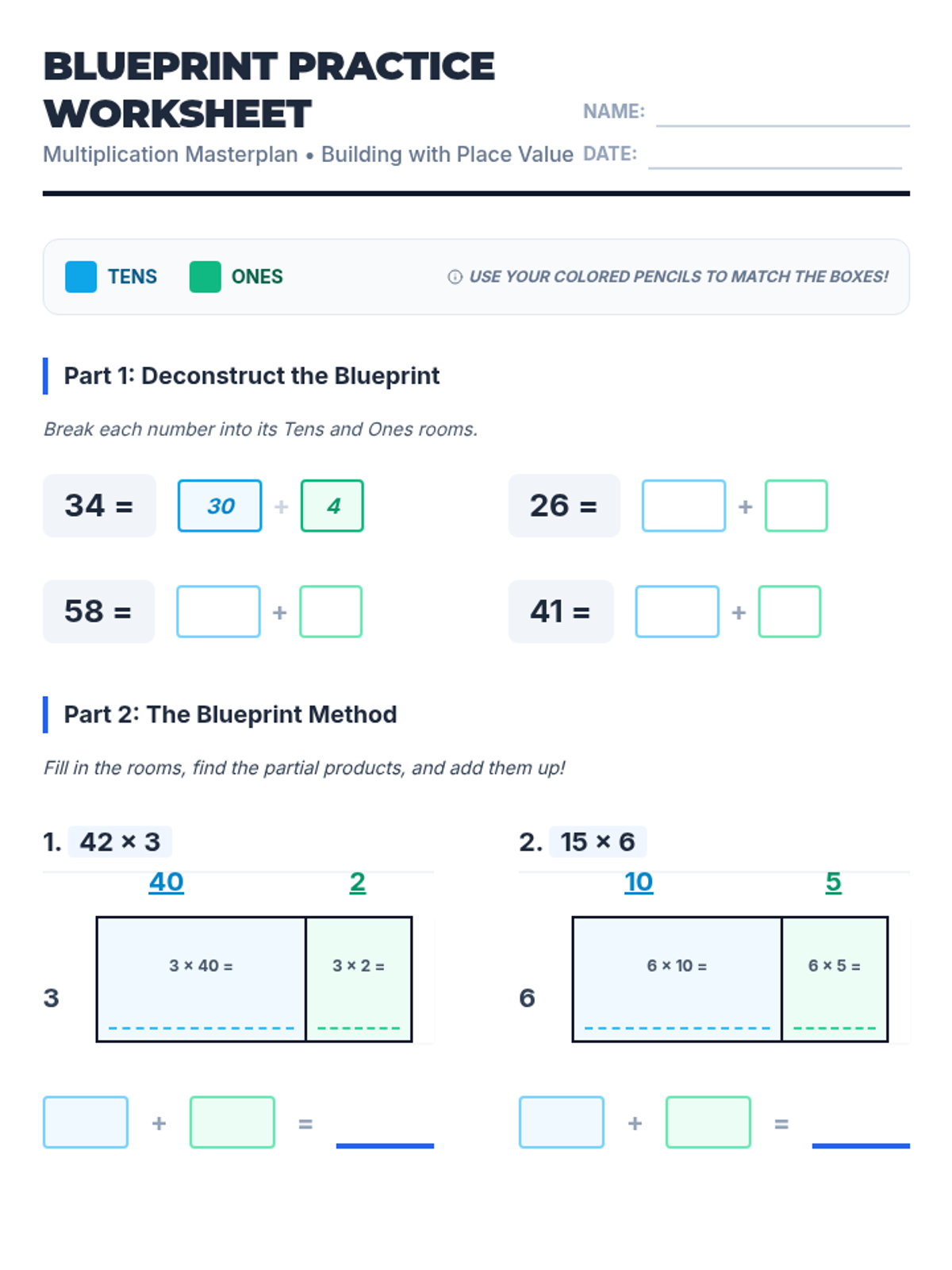
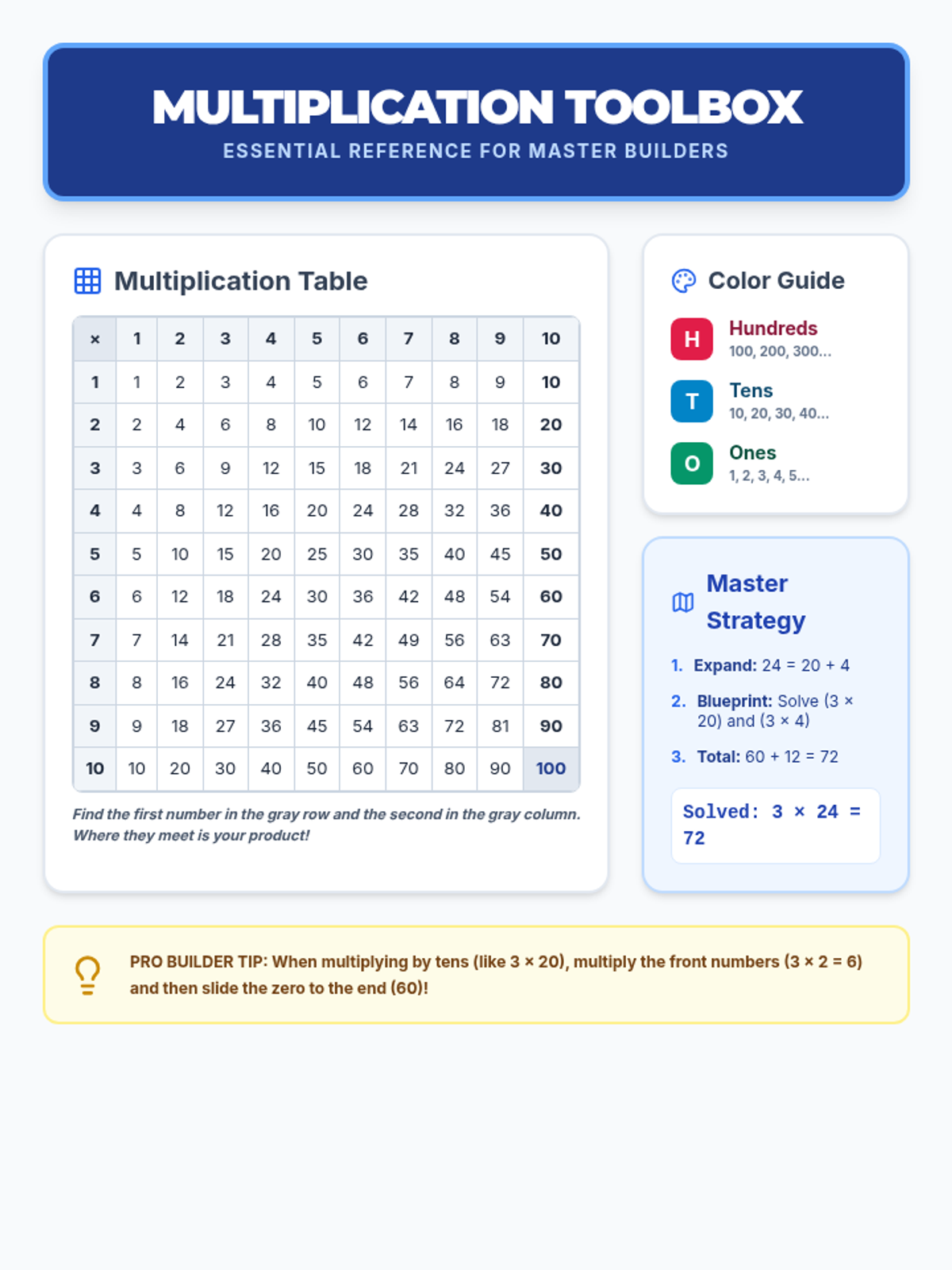
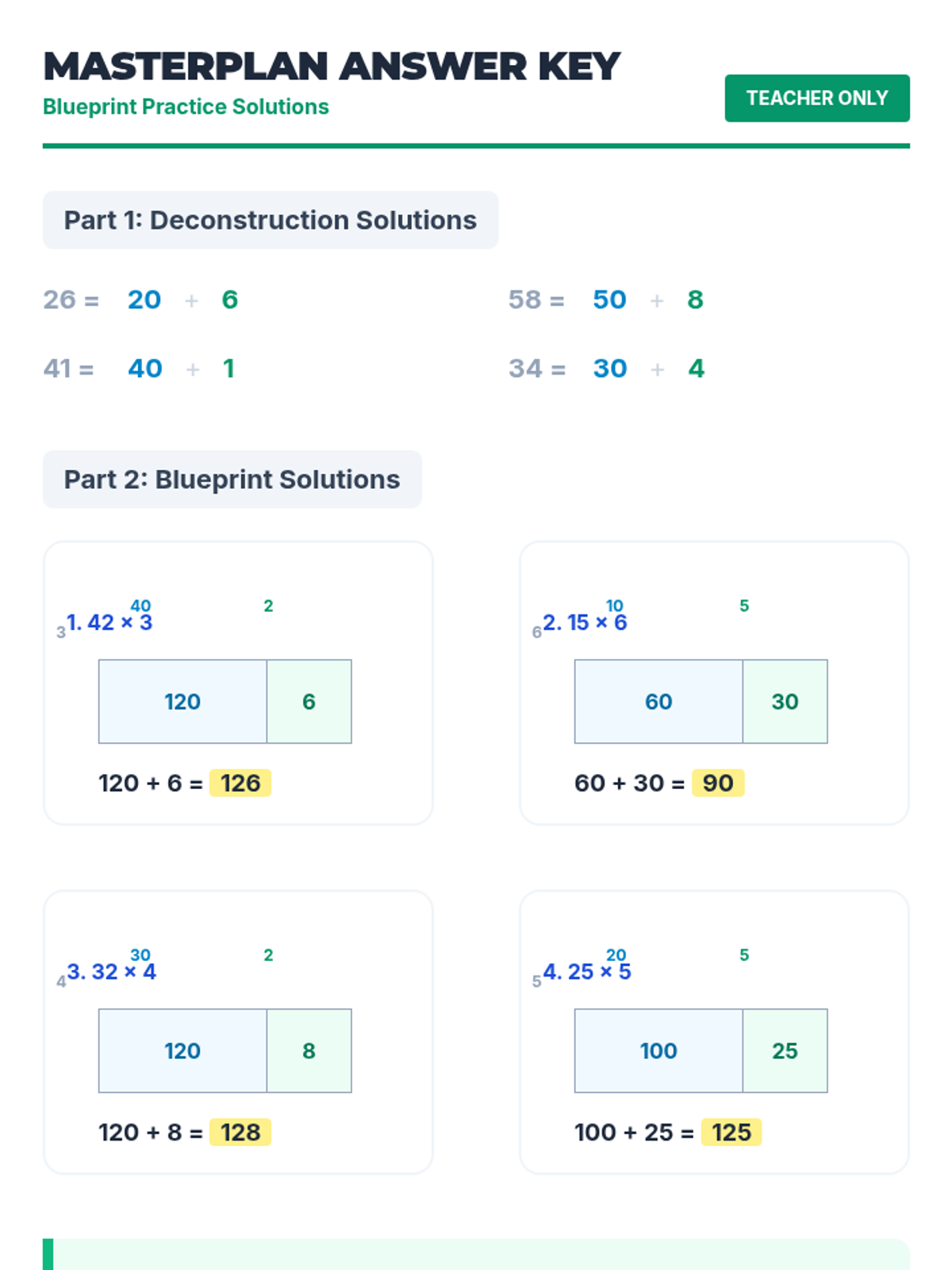
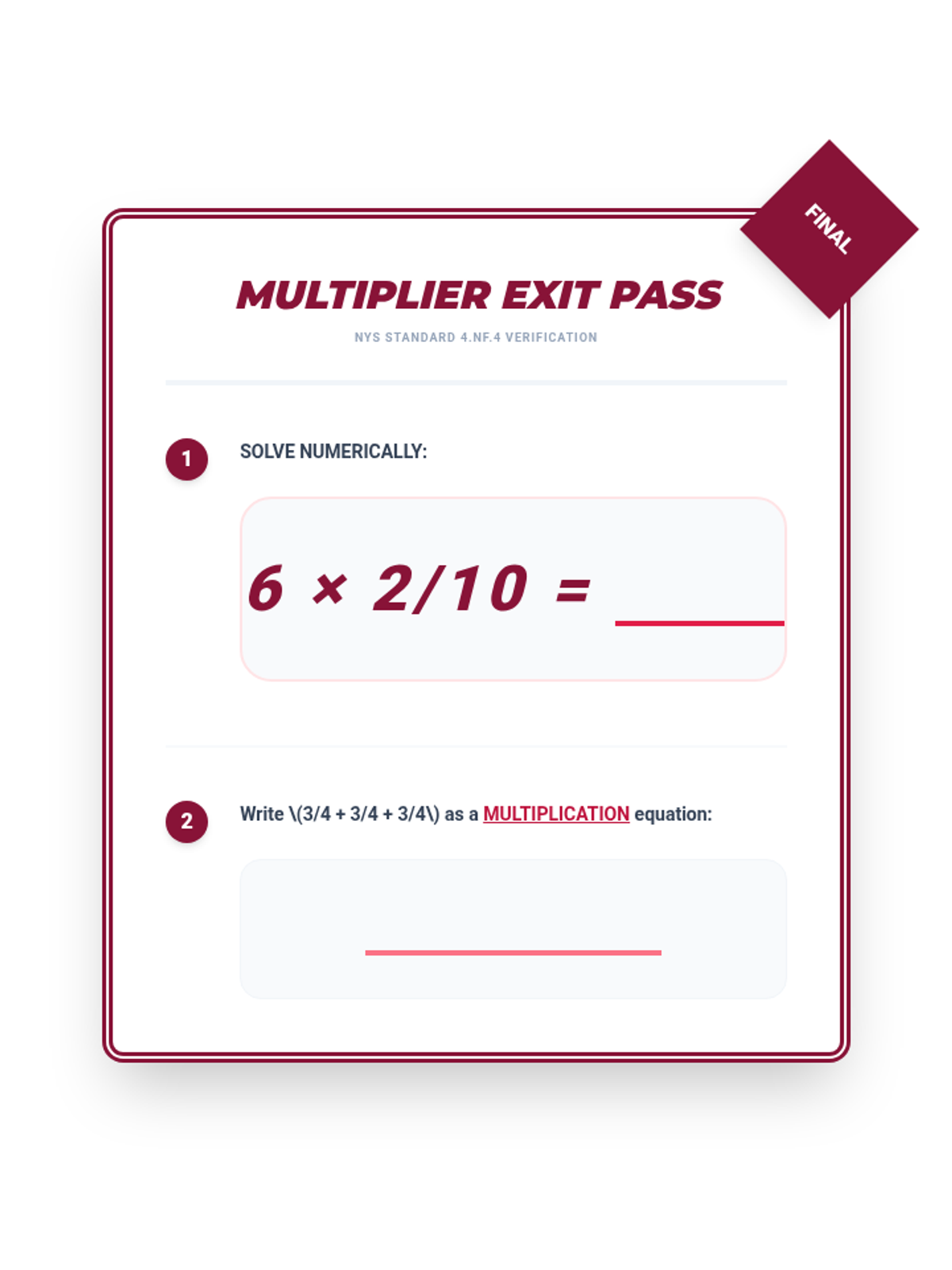
A comprehensive lesson on 2-digit by 2-digit multiplication using the area model and standard algorithm, designed with heavy scaffolding and visual supports for diverse learners.
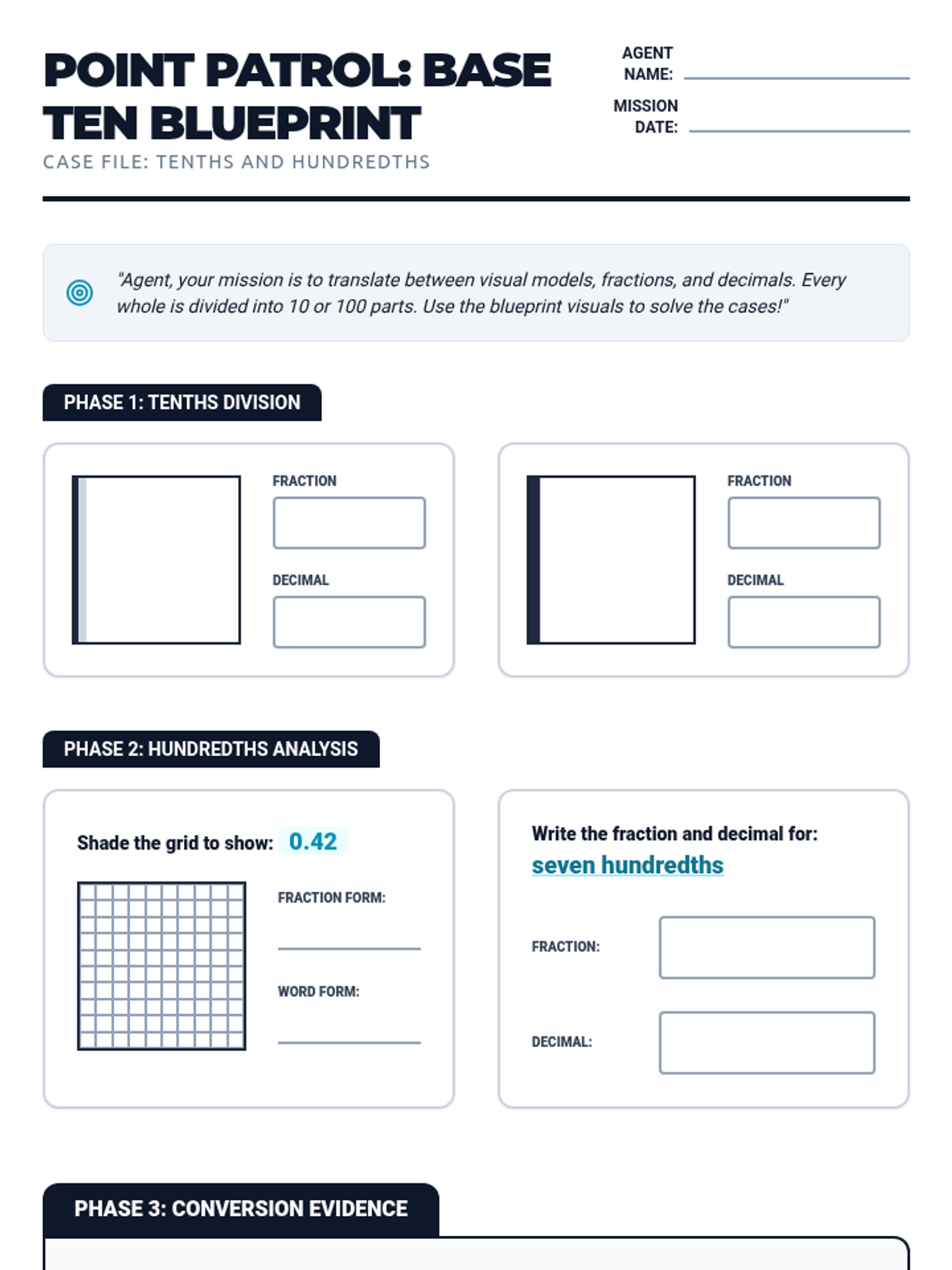
A comprehensive lesson on place value from thousands to thousandths, focusing on the relationship between decimals and fractions with a denominator of 1,000.
Students analyze their data to identify the largest and smallest objects found during their investigation and reflect on their findings.
Students expand their investigation to the school hallways and outdoor spaces, using yardsticks for larger objects.
Introduction to measuring with rulers and yardsticks to the nearest whole inch, followed by an initial investigation of classroom objects.
A collection of math-integrated mindfulness activities that use geometric coloring to practice math skills while promoting emotional regulation and self-awareness.
A collection of teacher-facing resources, including answer keys, teaching guides, and instructional notes for the Time Travelers unit.
Mastering elapsed time with 5-minute intervals and multi-step problems using a combination of all visual tools.
Developing fluency with quarter-hour intervals (15, 30, and 45 minutes) using digital clocks and segmented number lines.
Introduction to elapsed time focusing on whole hours and half-hours using analog clocks and simple number lines.