A research unit focused on the physical characteristics and adaptations of marine animals, designed for K-1 learners to build scientific observation and writing skills.
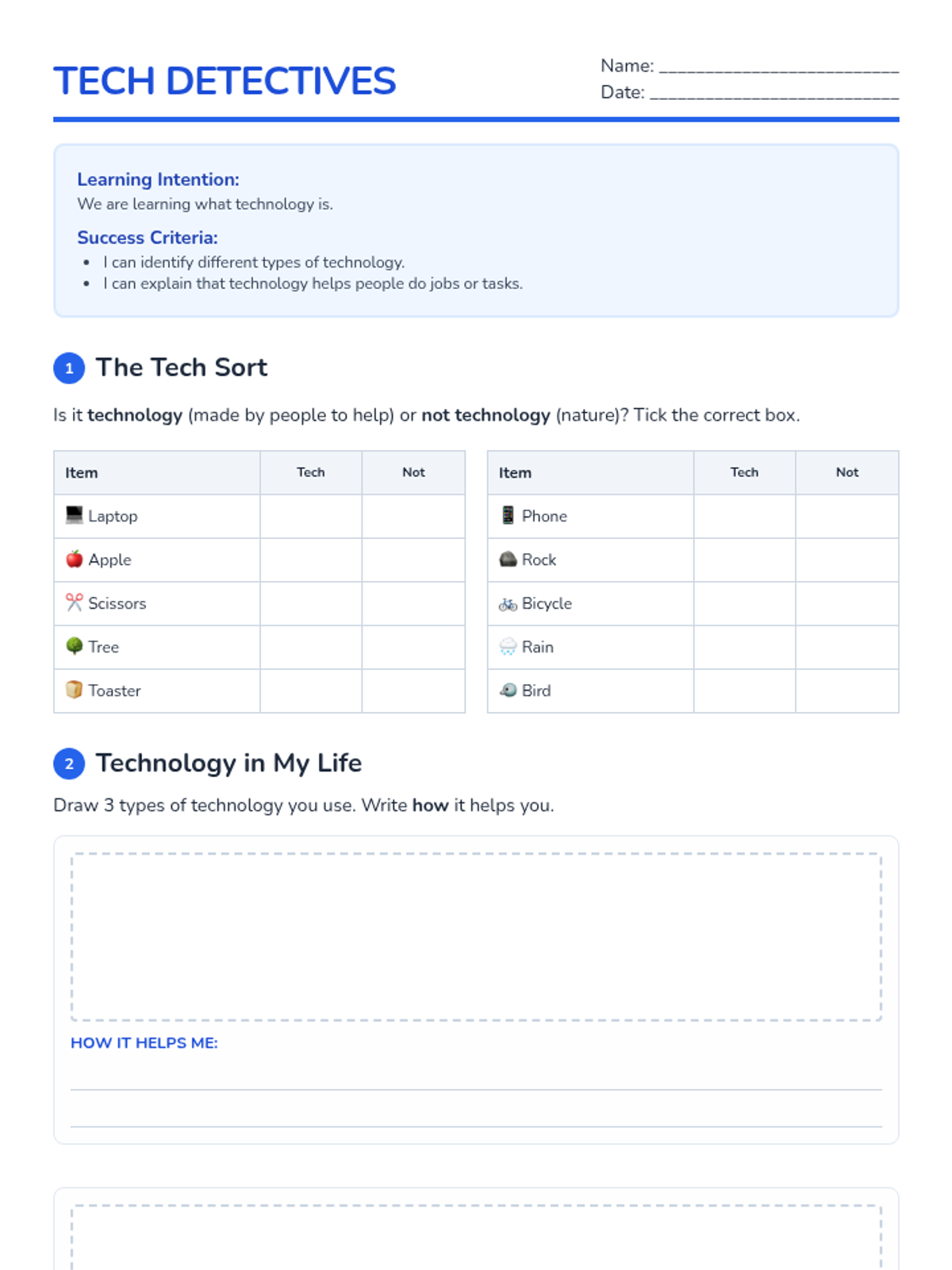
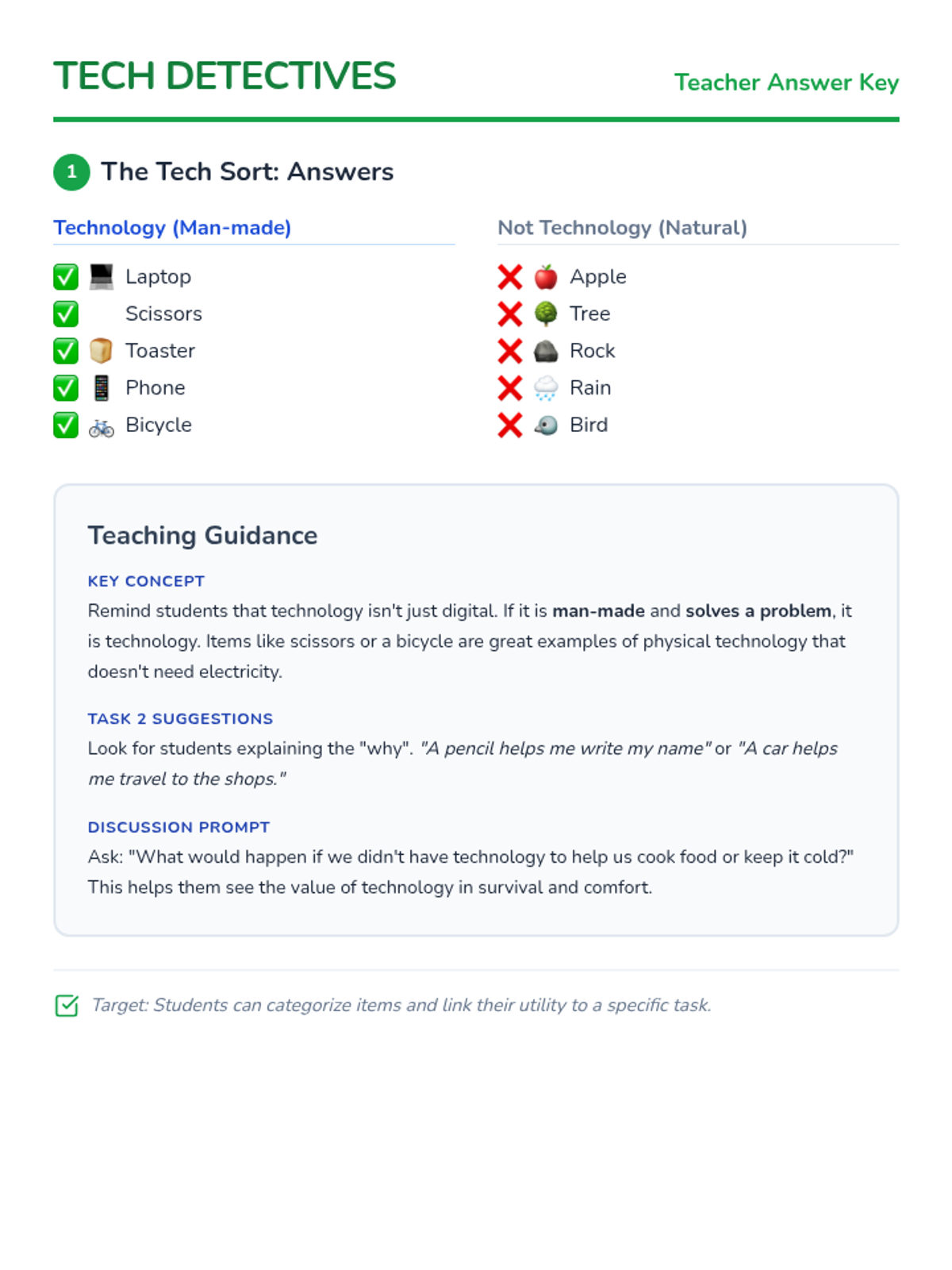
A primary lesson introducing the concept of technology as tools that help people perform tasks, featuring sorting activities and creative drawing.
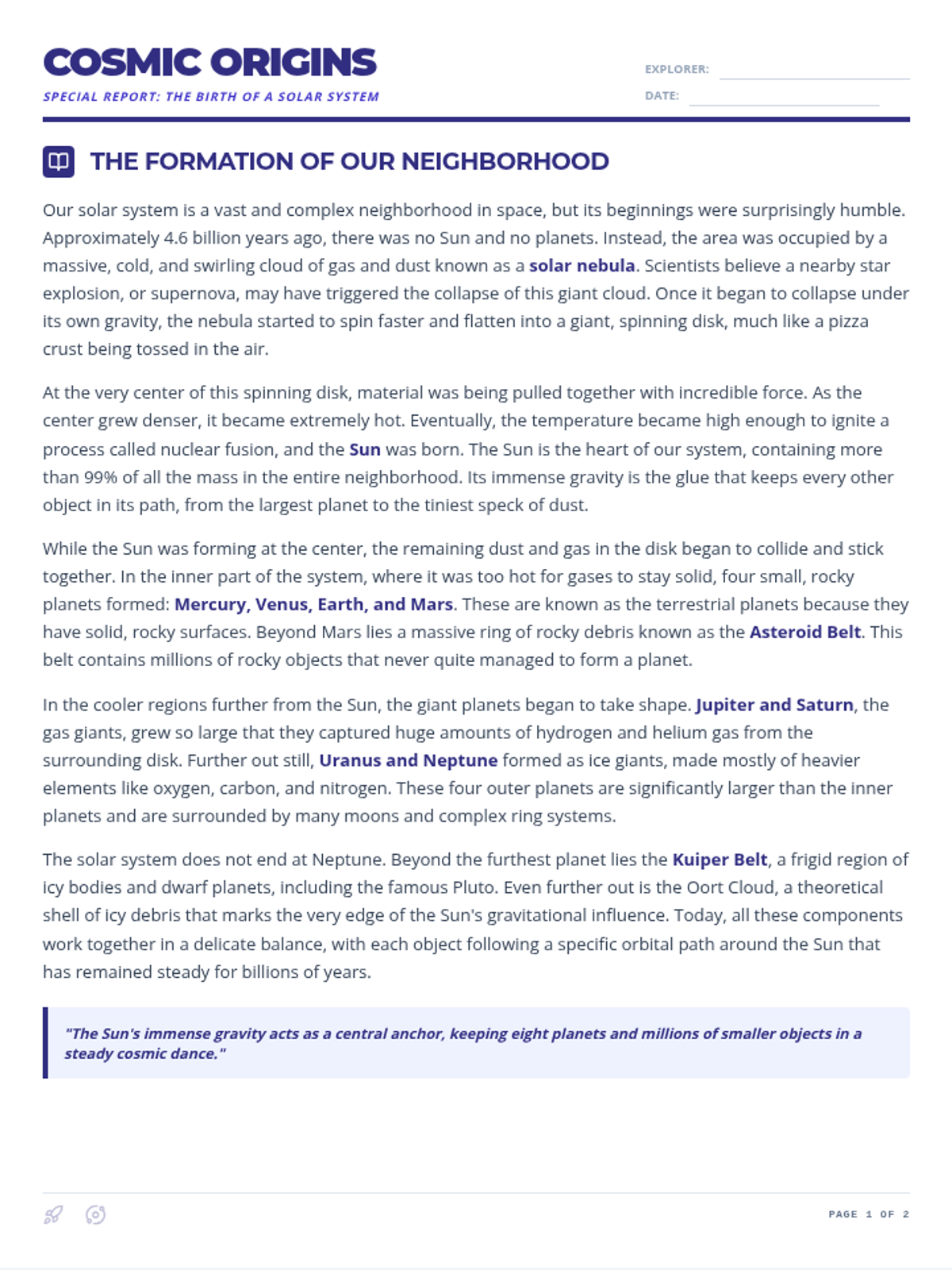
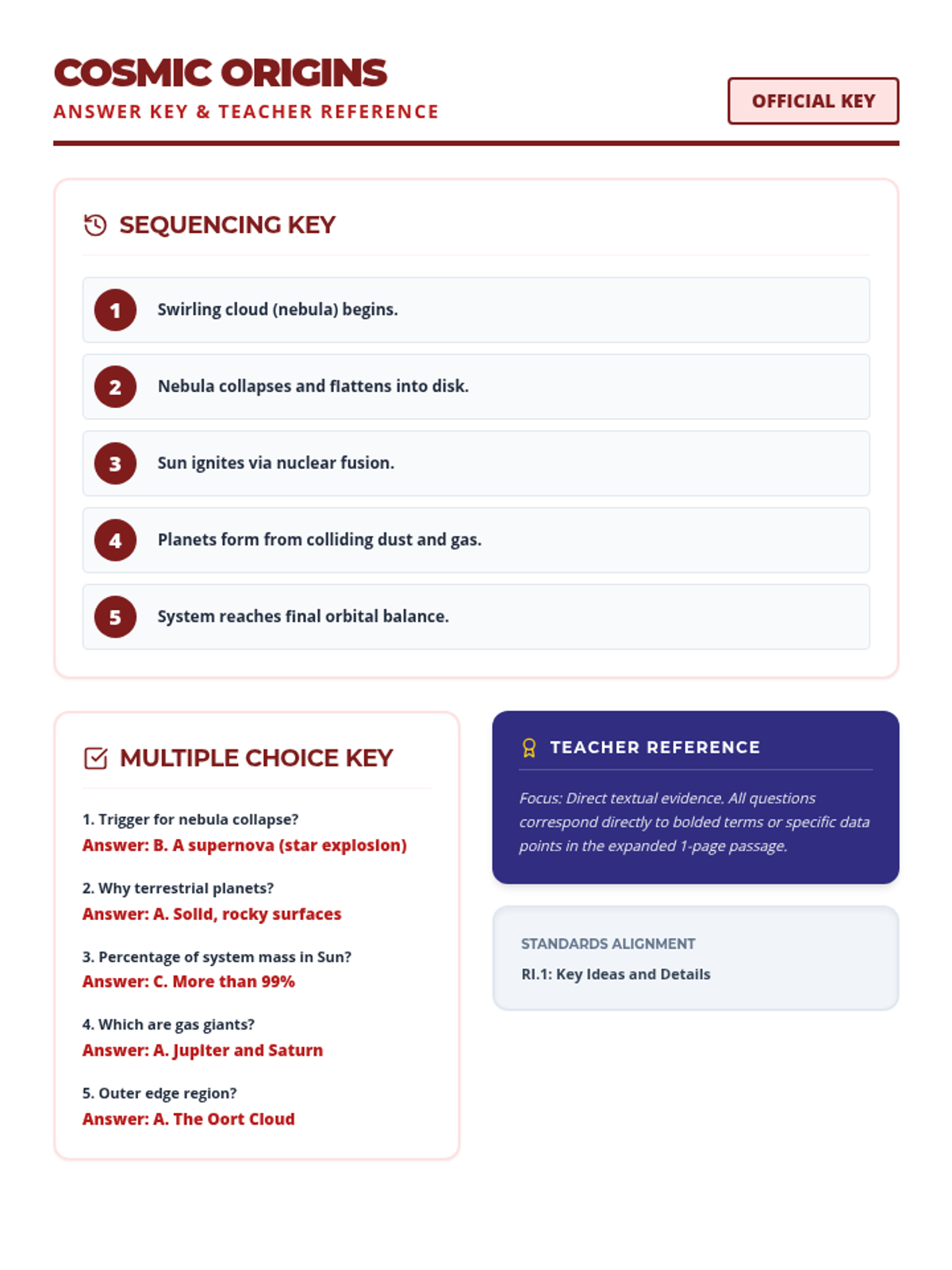
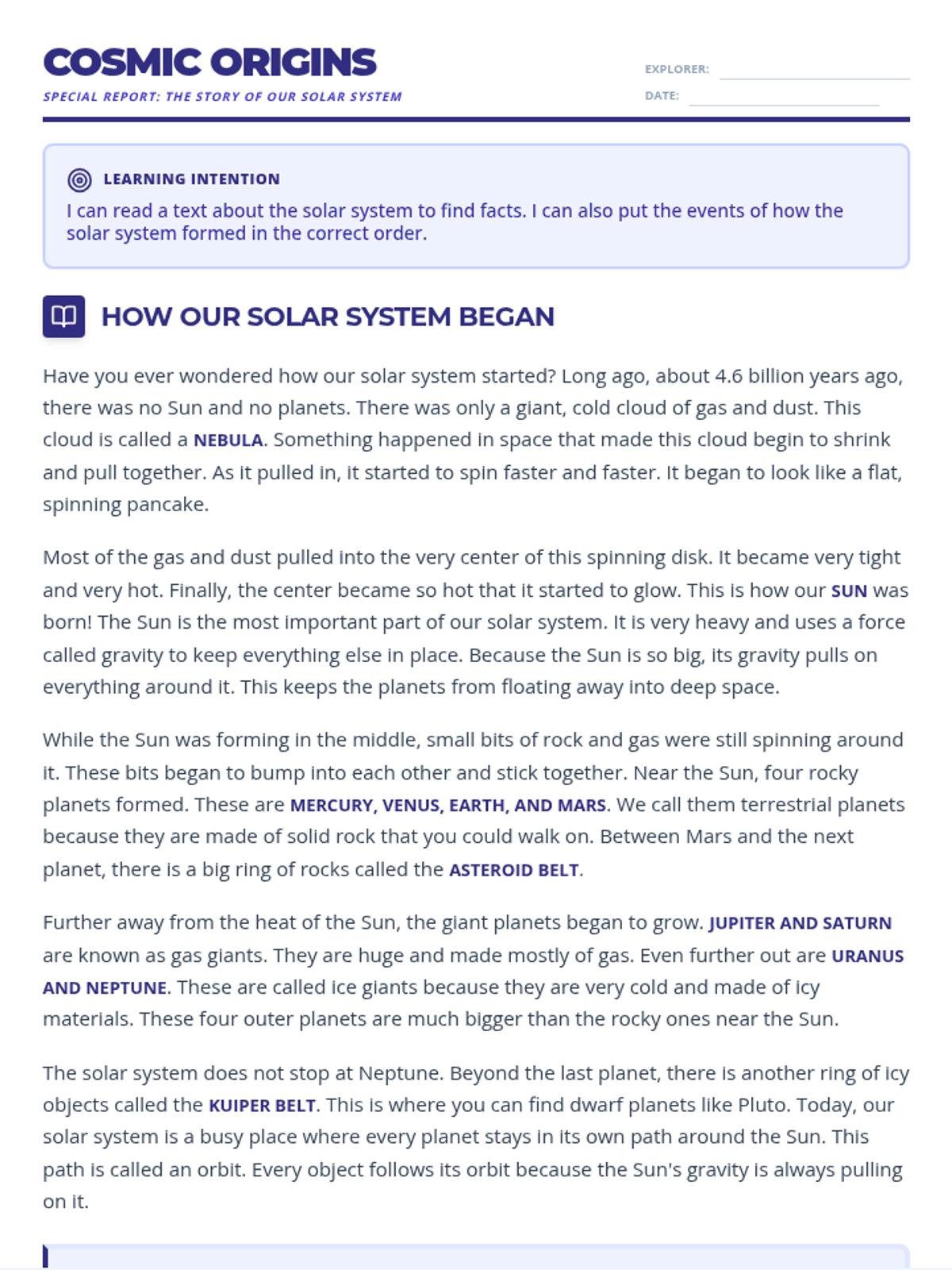
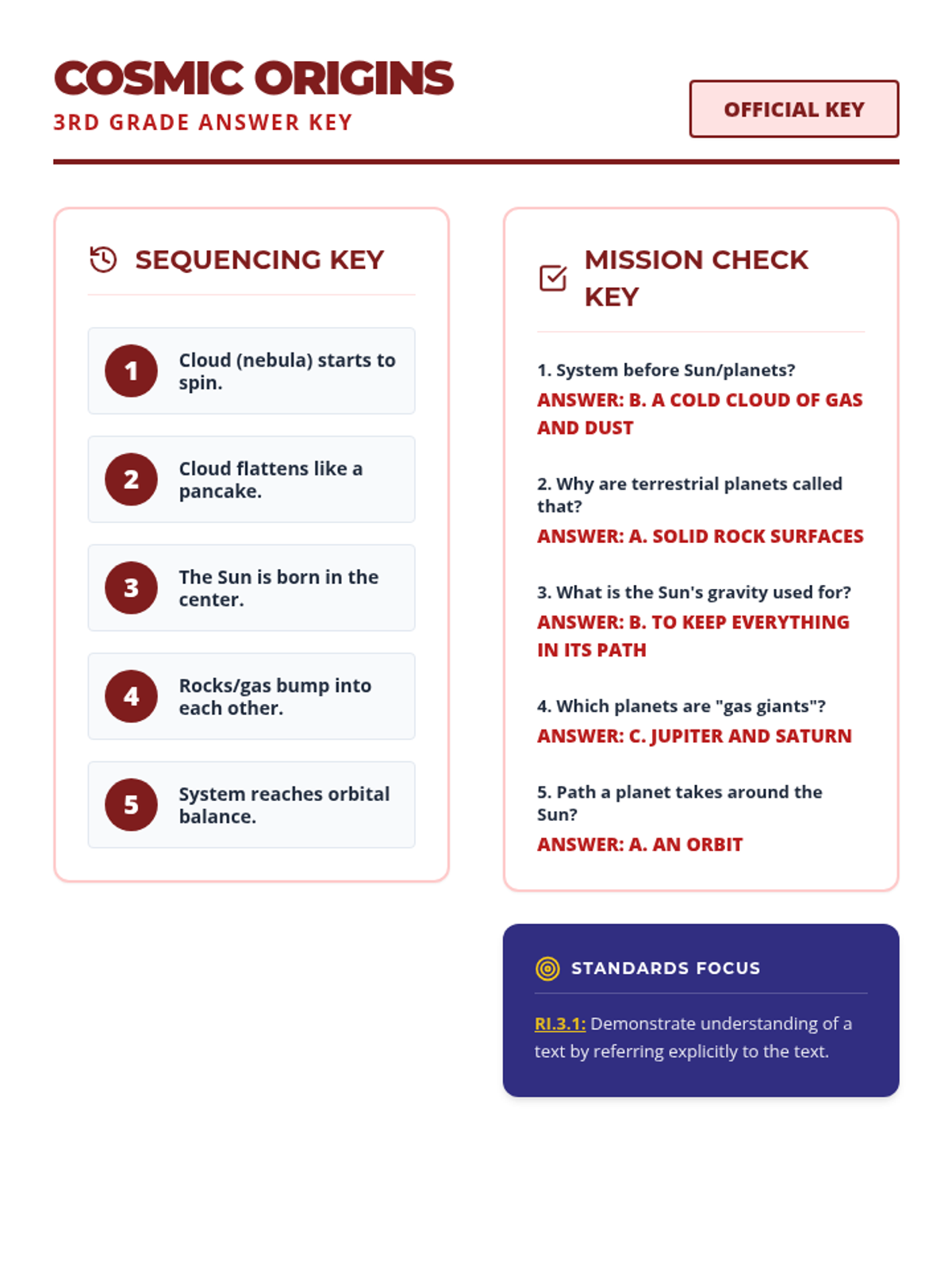
A lesson exploring the components of our solar system, focusing on reading comprehension, sequencing, and identifying key details from informational text.
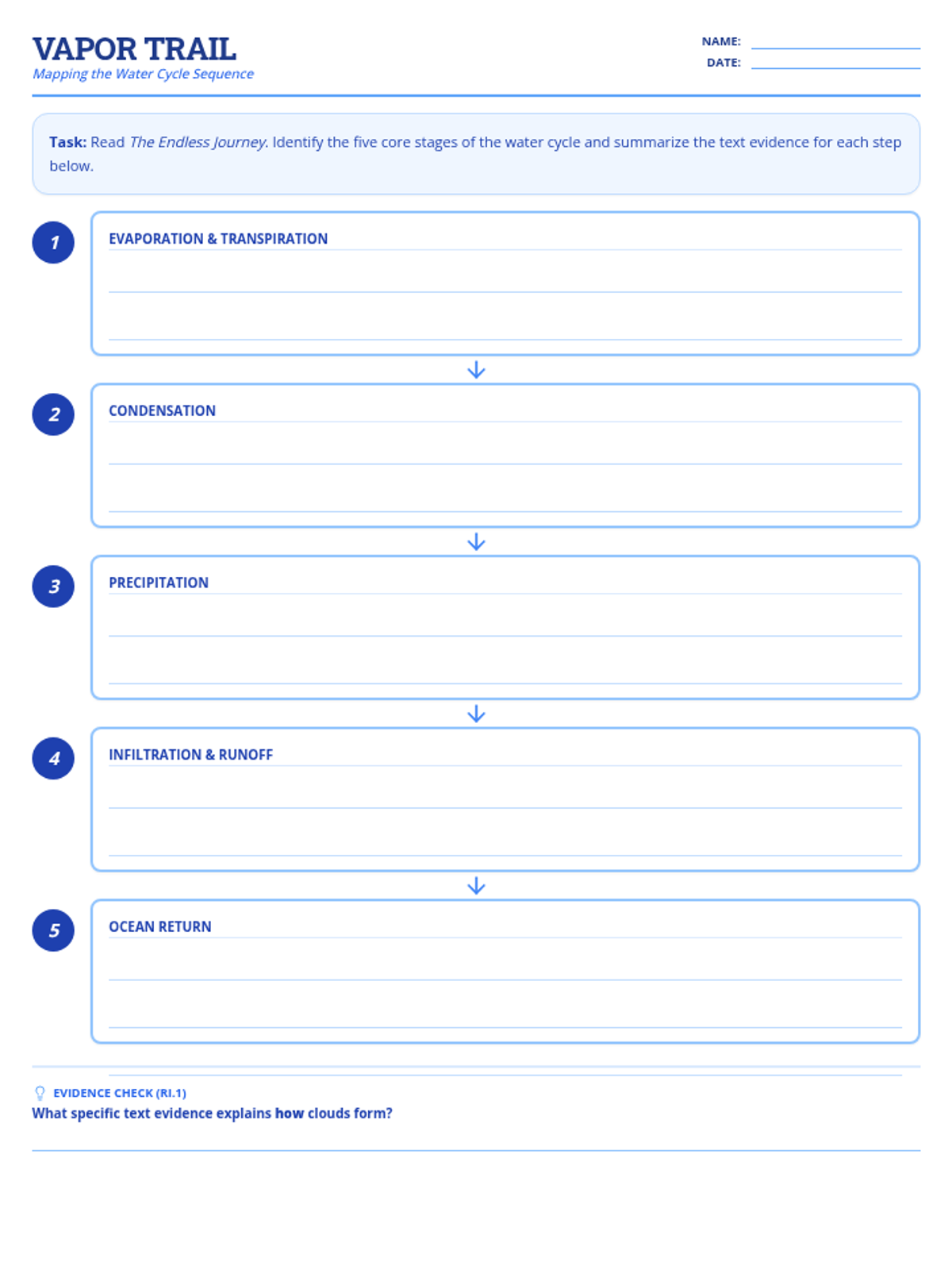
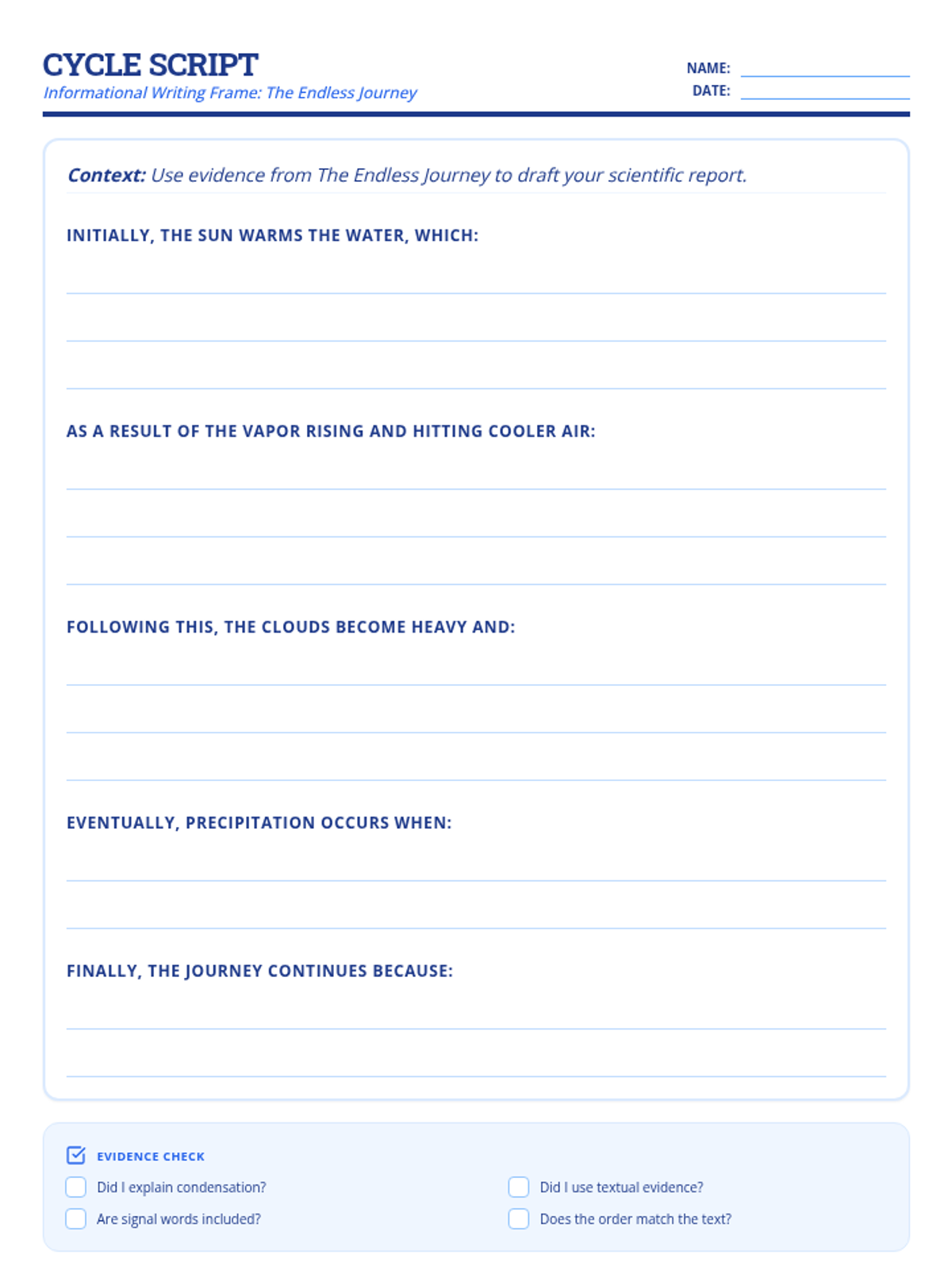
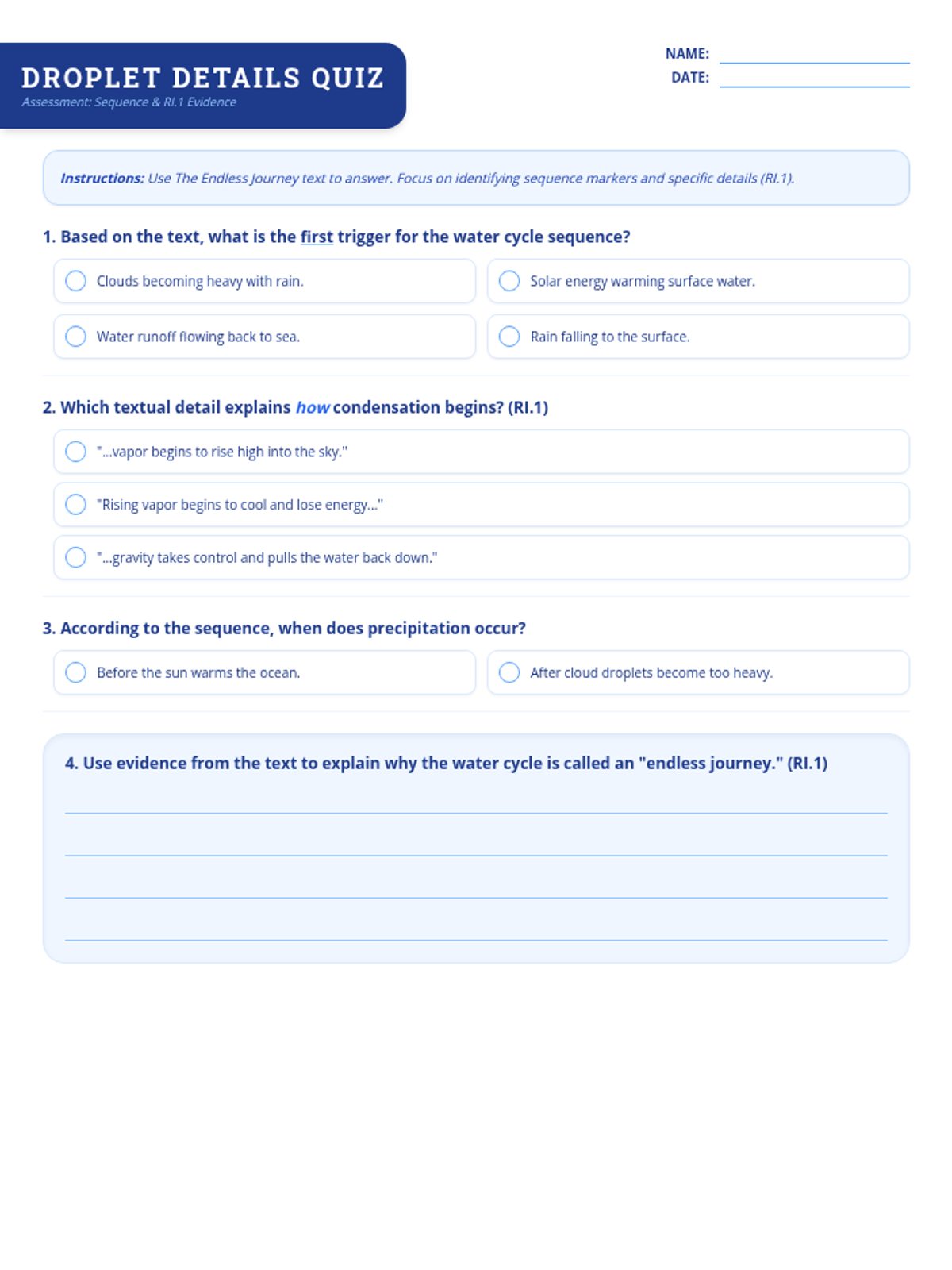
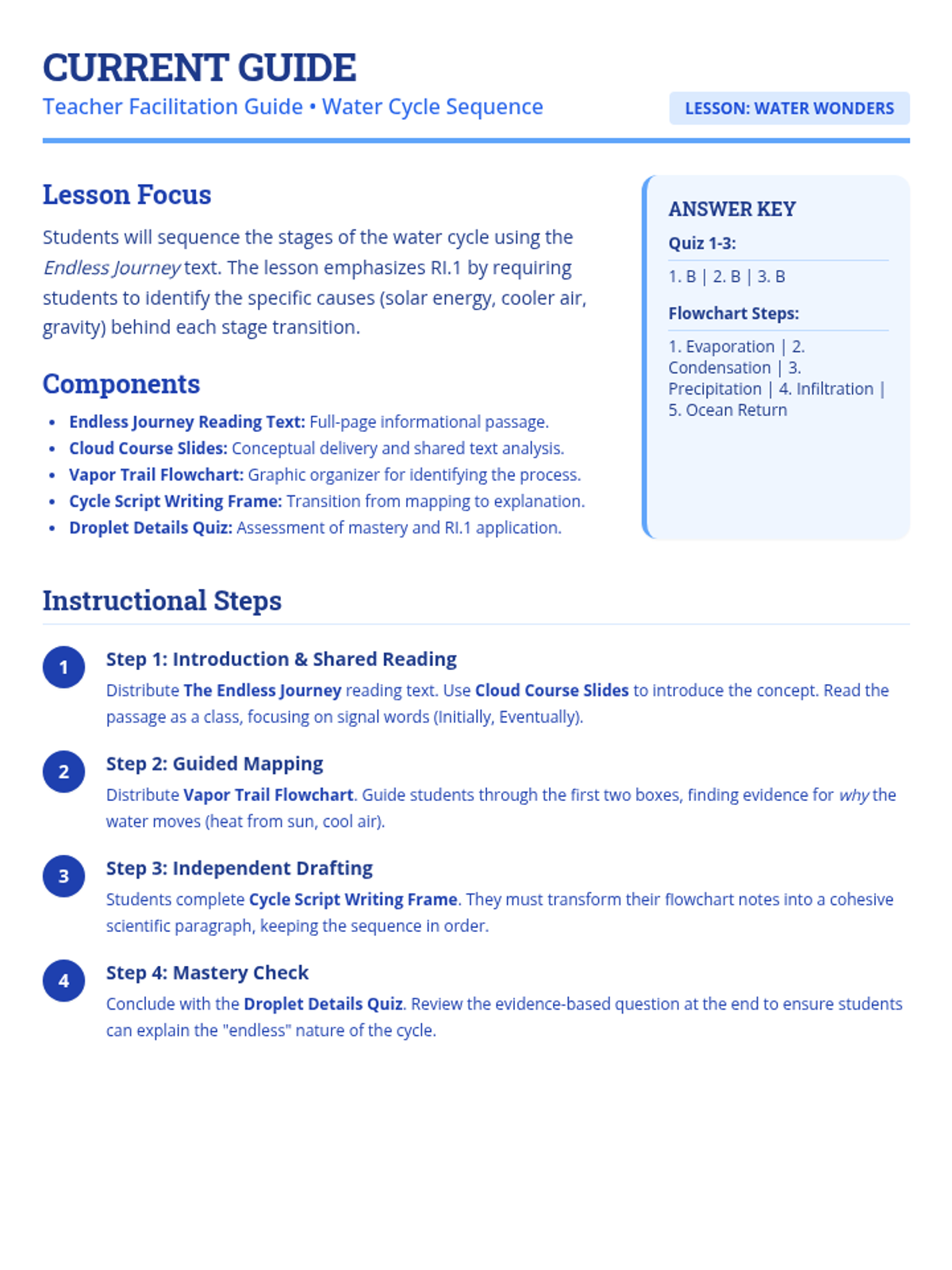
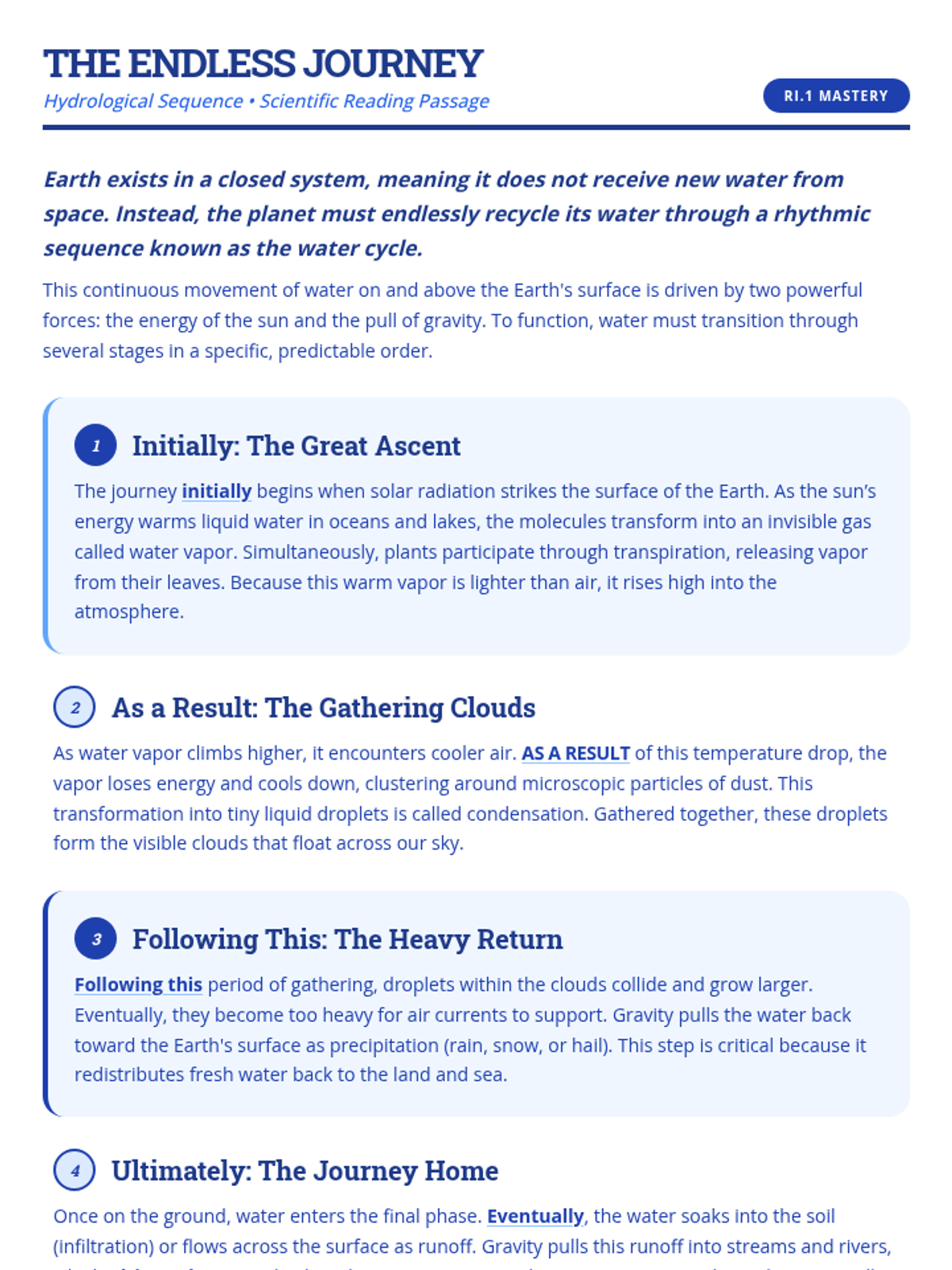
This lesson focuses on sequencing the phases of the water cycle. Students will read an informational text describing the journey of water, identify temporal markers, and use textual evidence to explain the transition between stages.
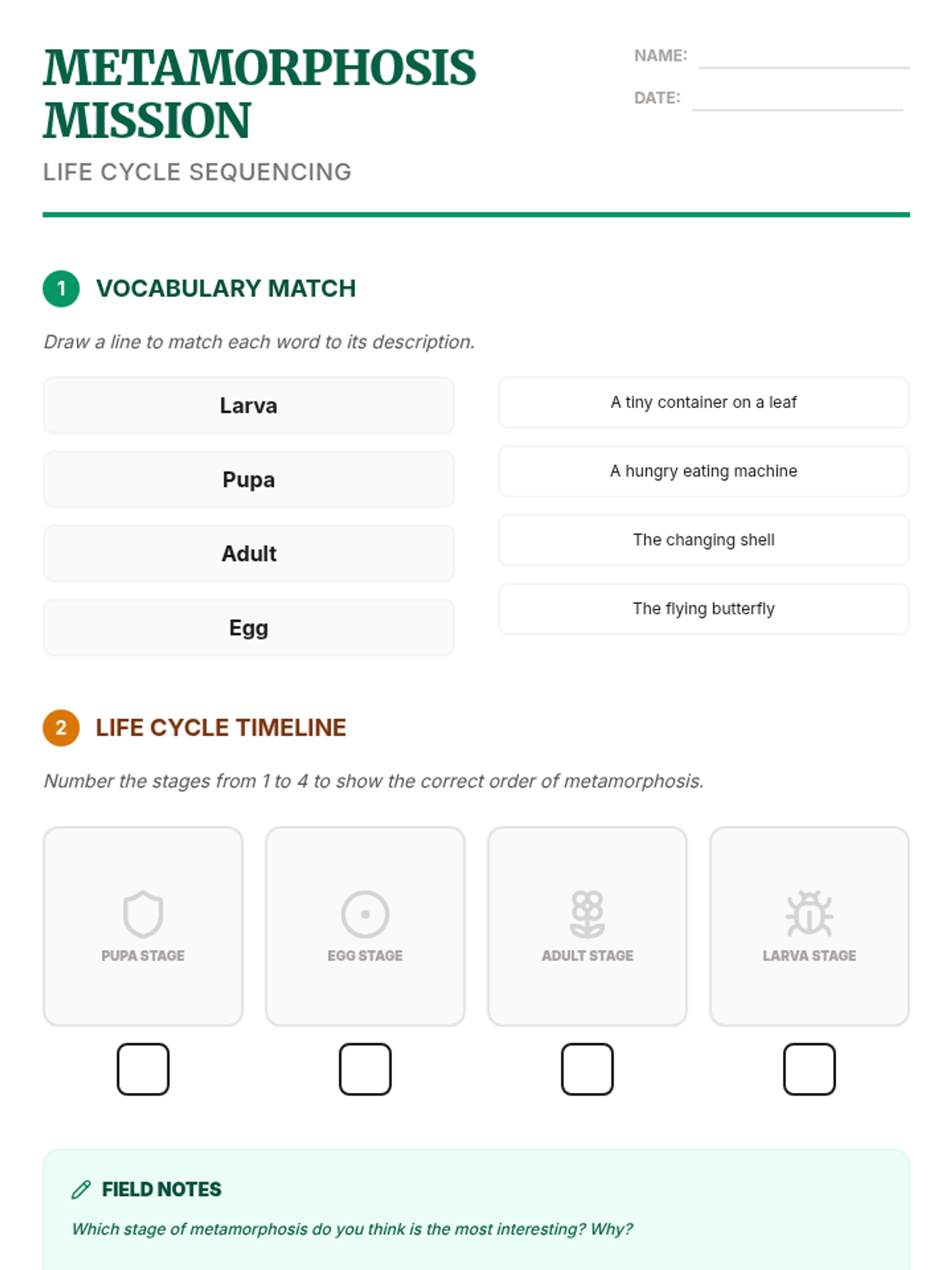
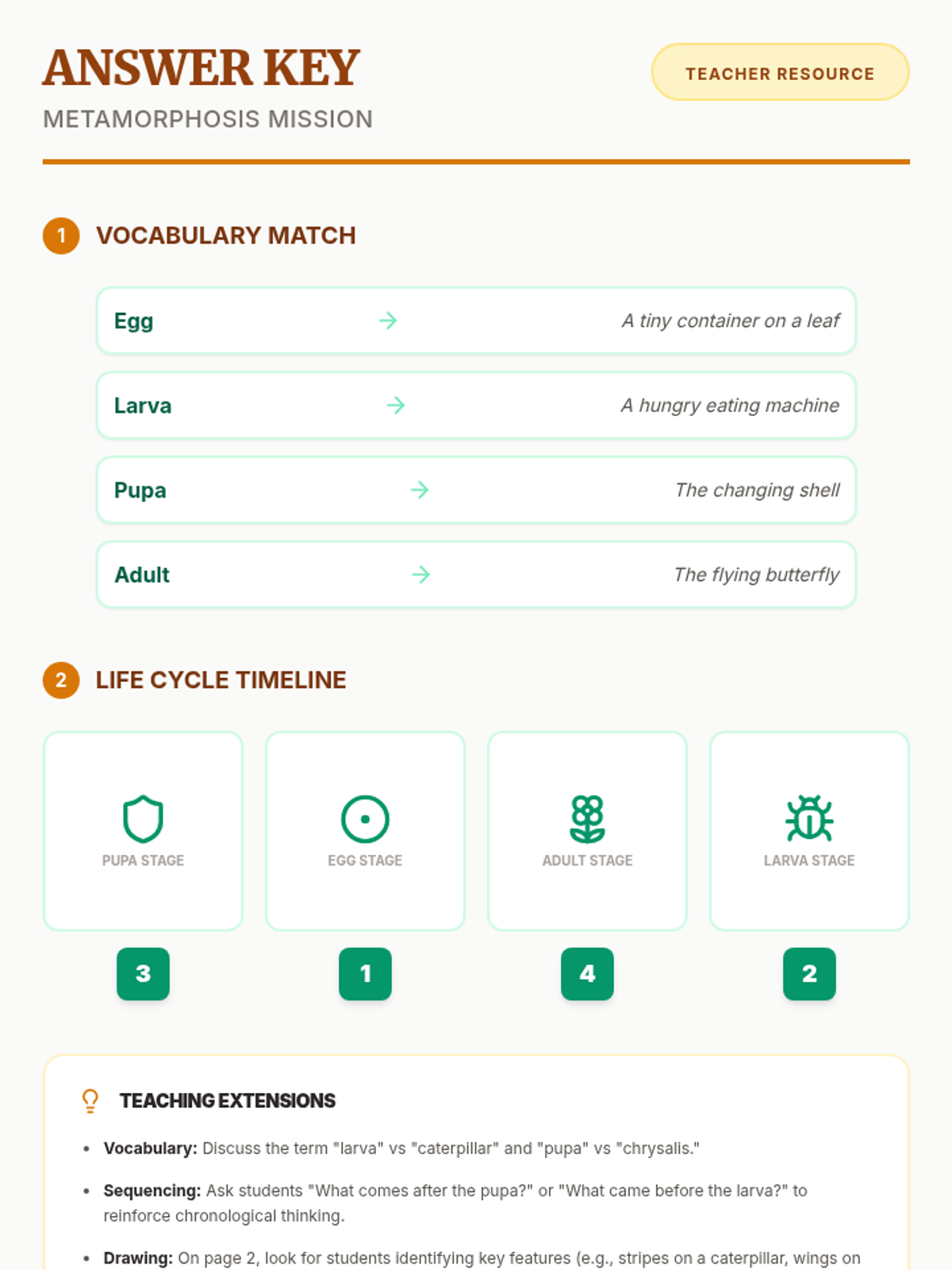
Students will learn the four distinct stages of a butterfly's life cycle and practice sequencing them in the correct chronological order.
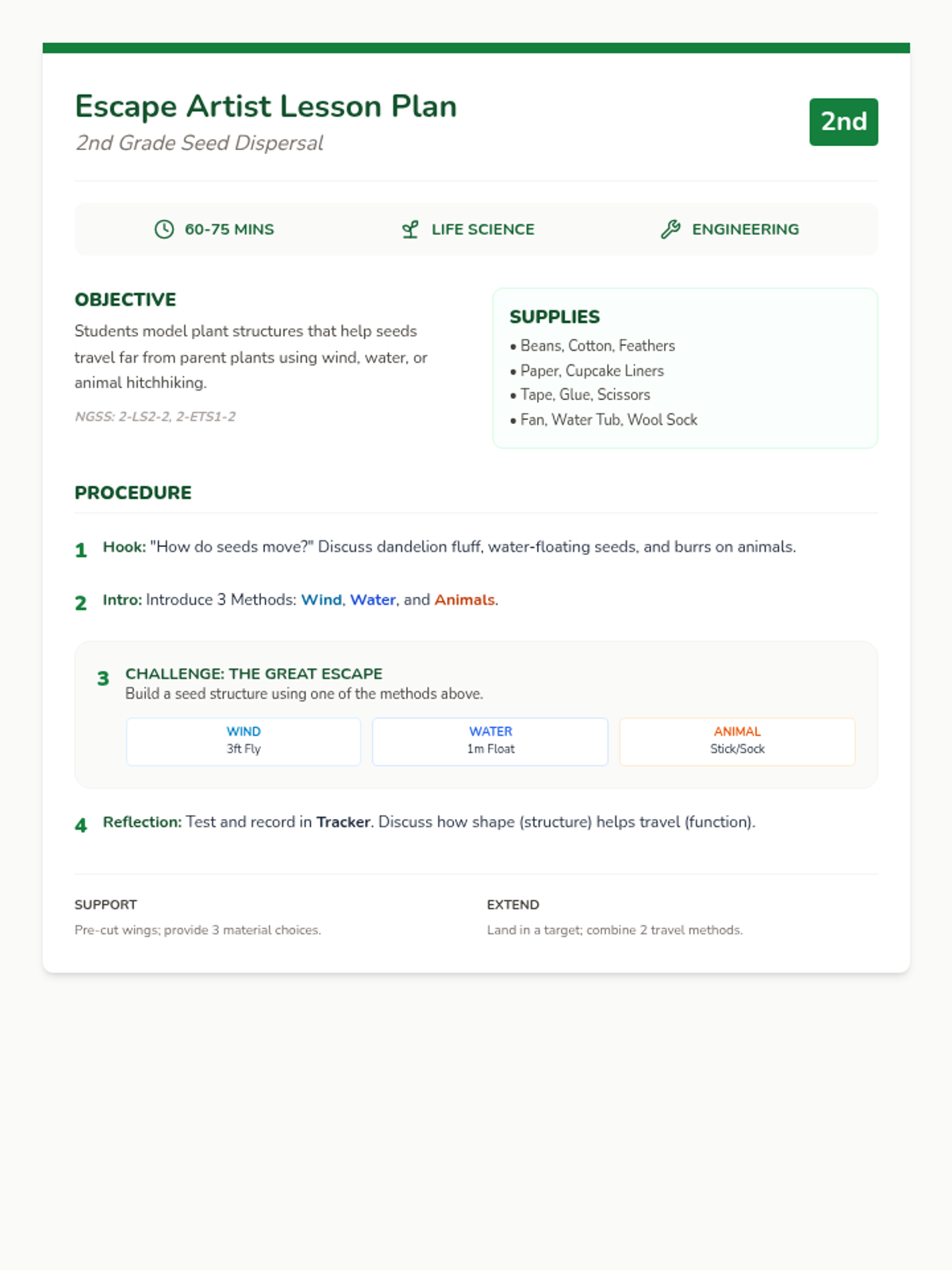
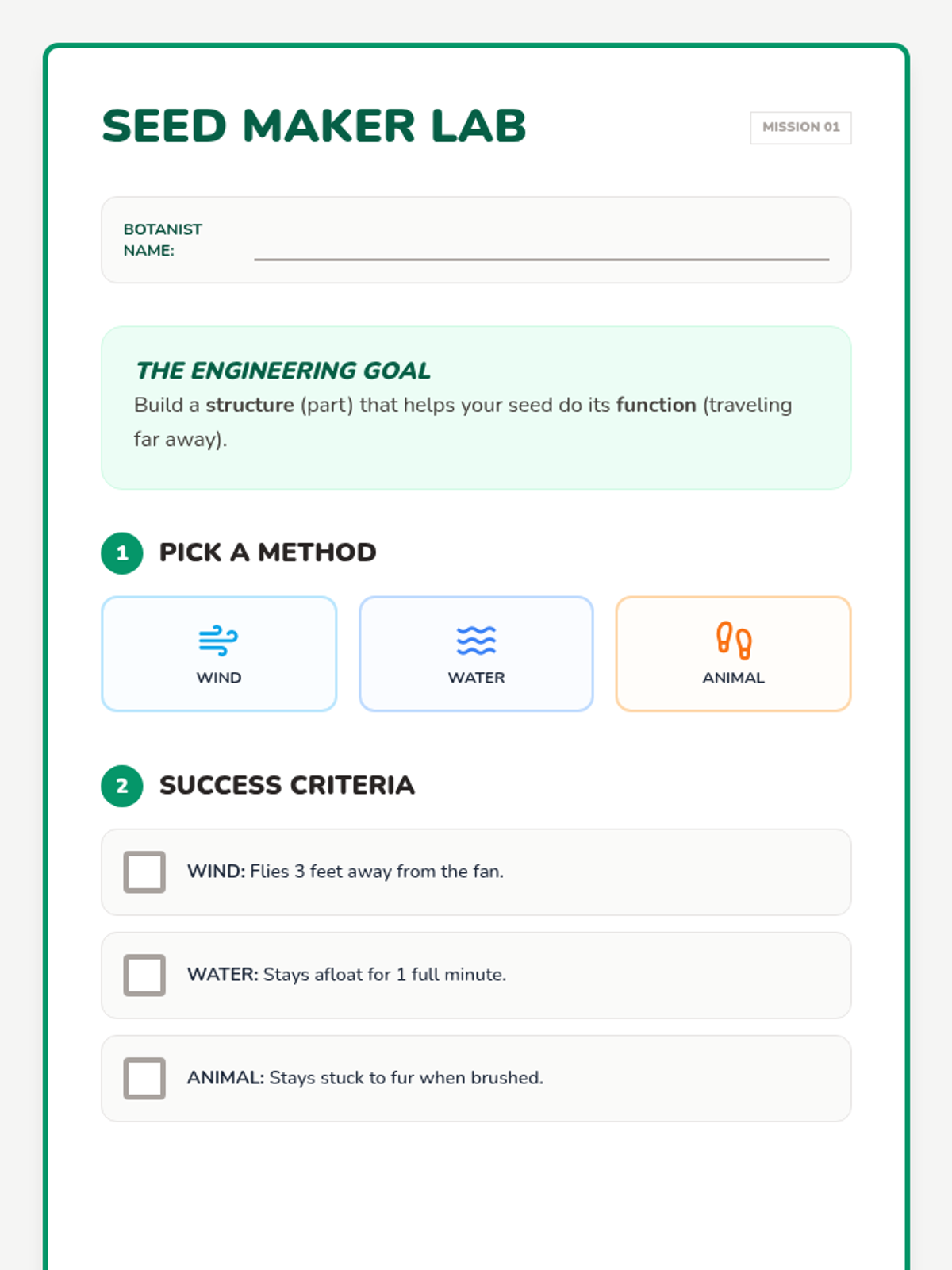
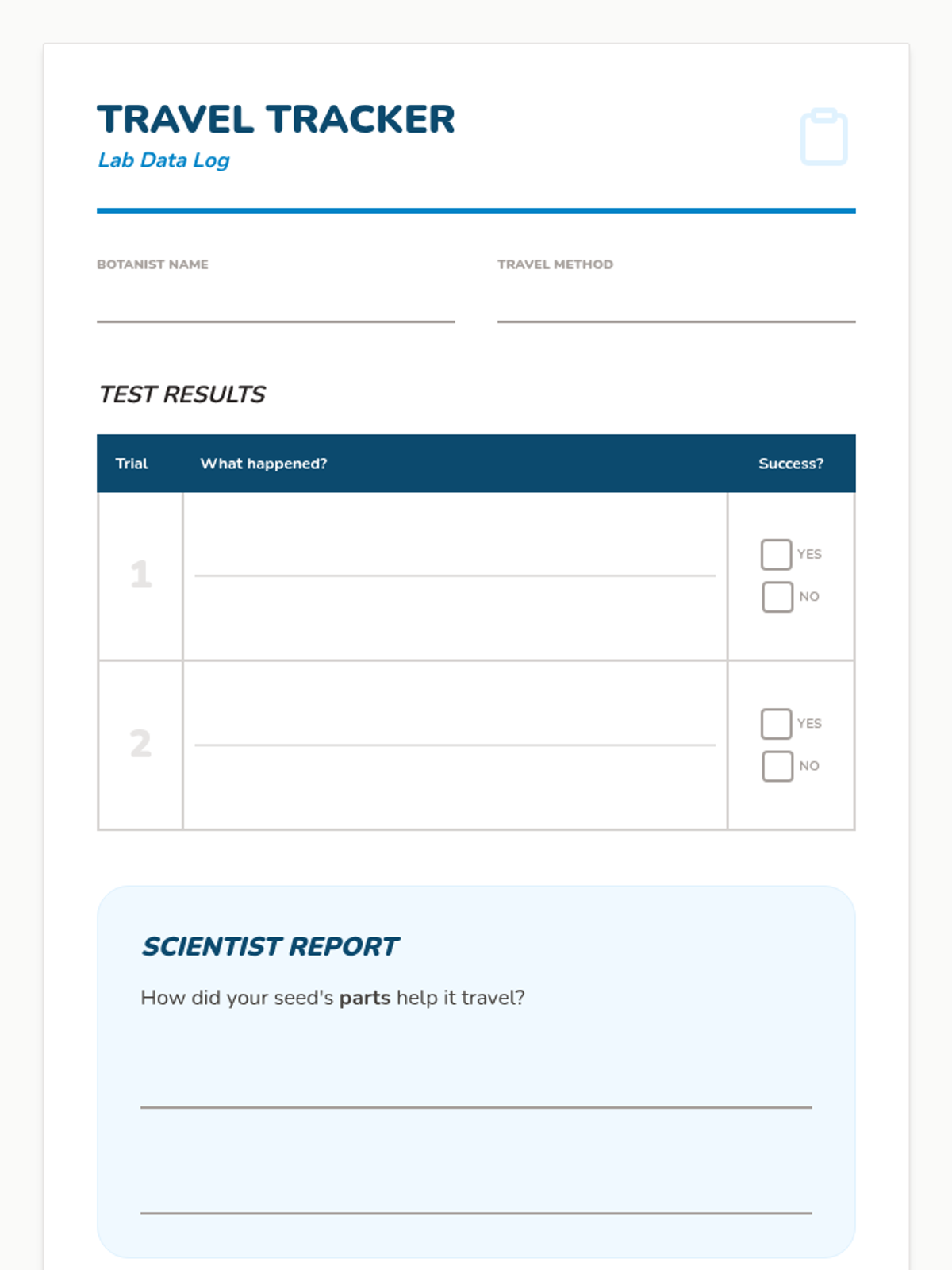
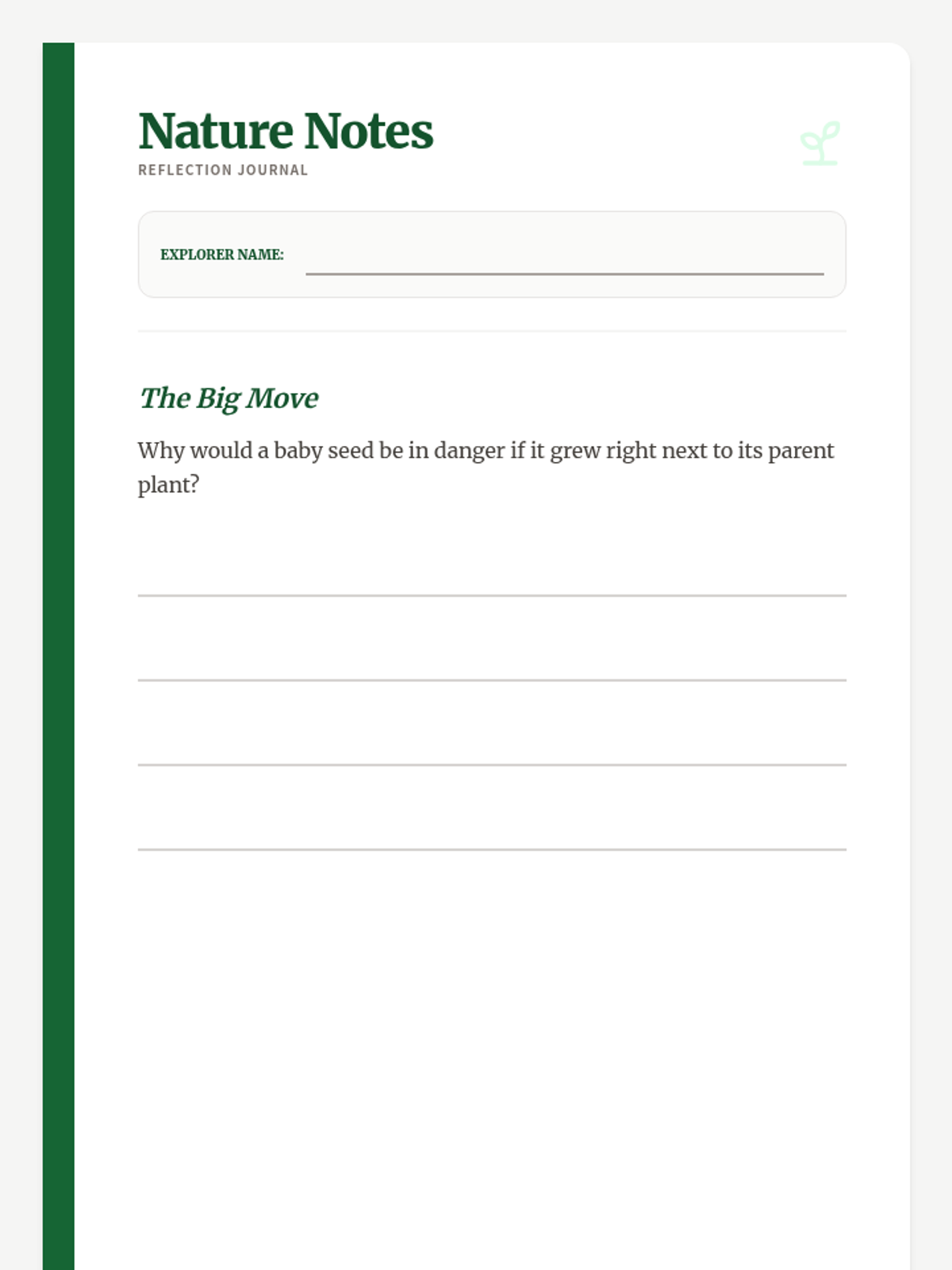
A hands-on engineering lesson where 2nd graders design and test models of seeds to understand how plant structures aid in dispersal through wind, water, and animals.
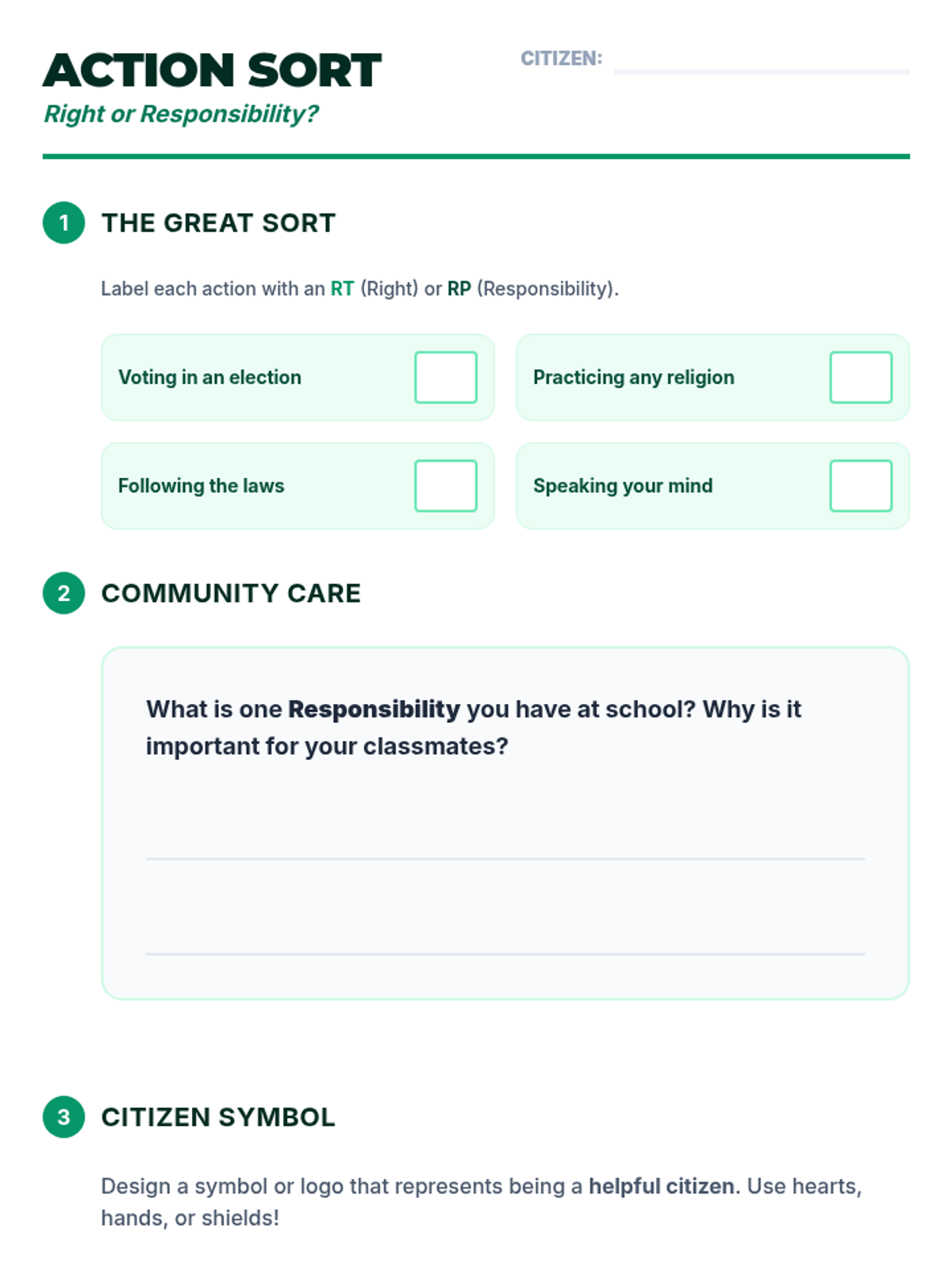
Analyze the distinction between the rights granted to citizens and the responsibilities they hold within a community.
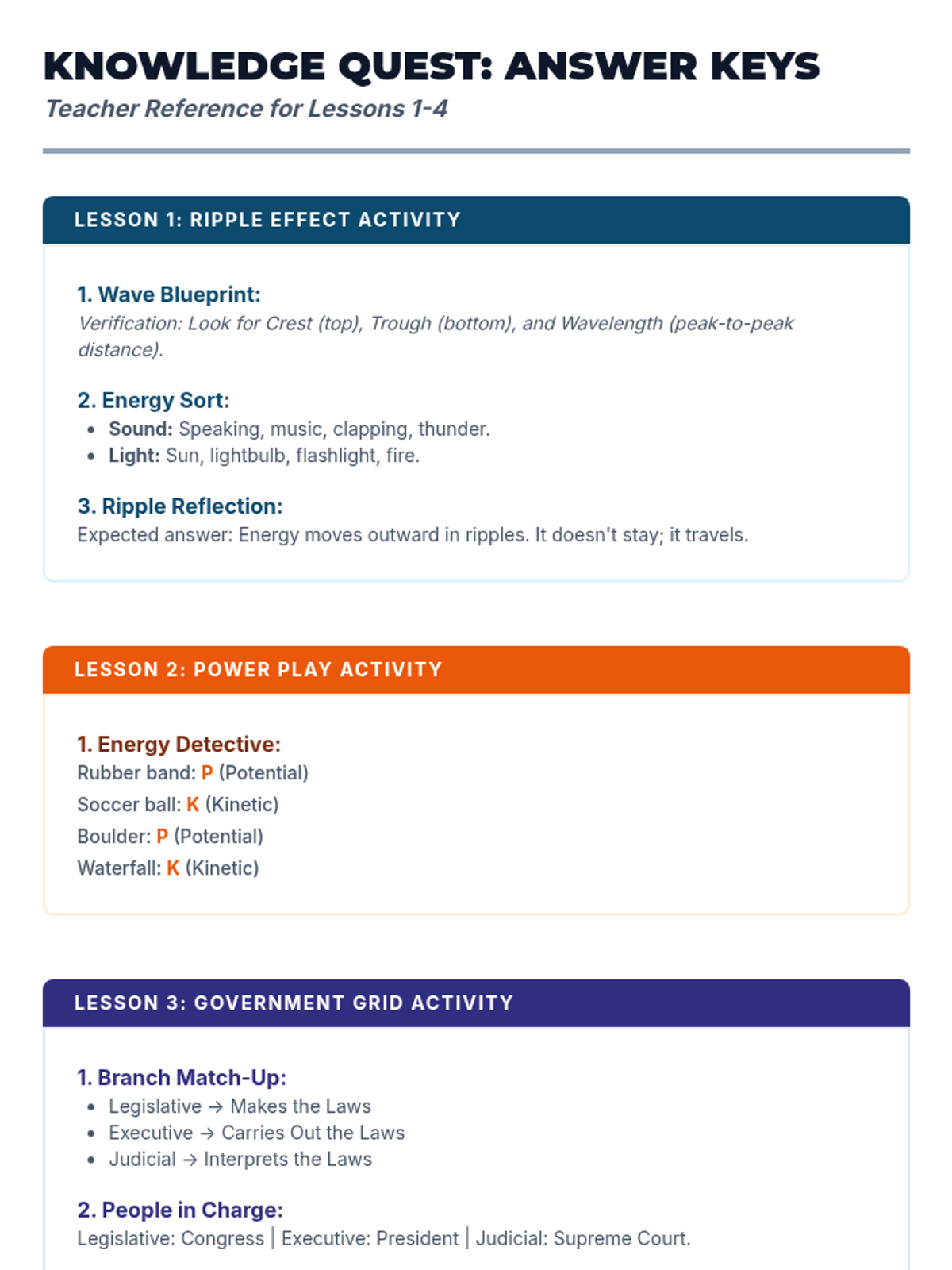
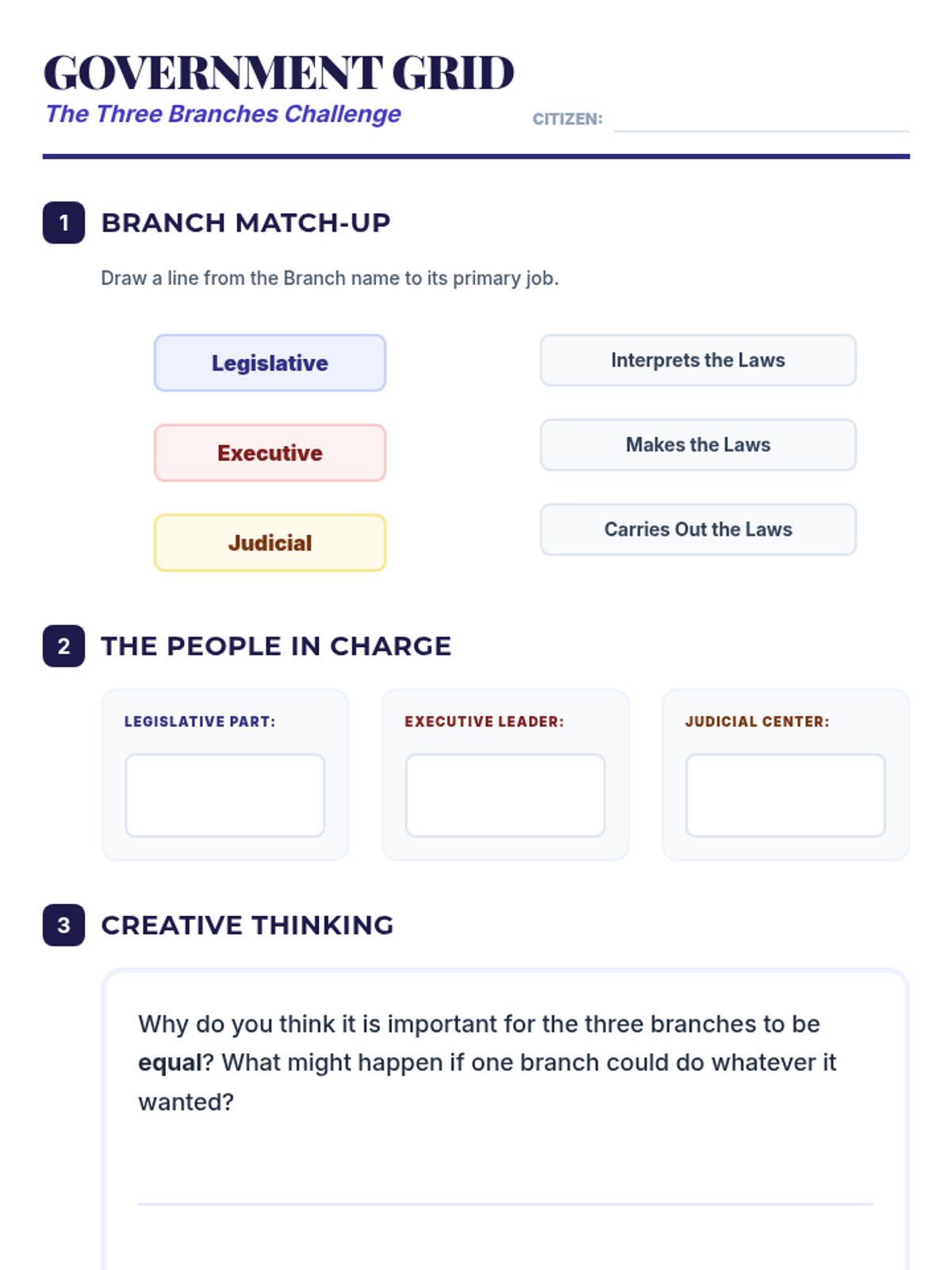
Explore the structure of the U.S. government, focusing on the roles and responsibilities of the Legislative, Executive, and Judicial branches.
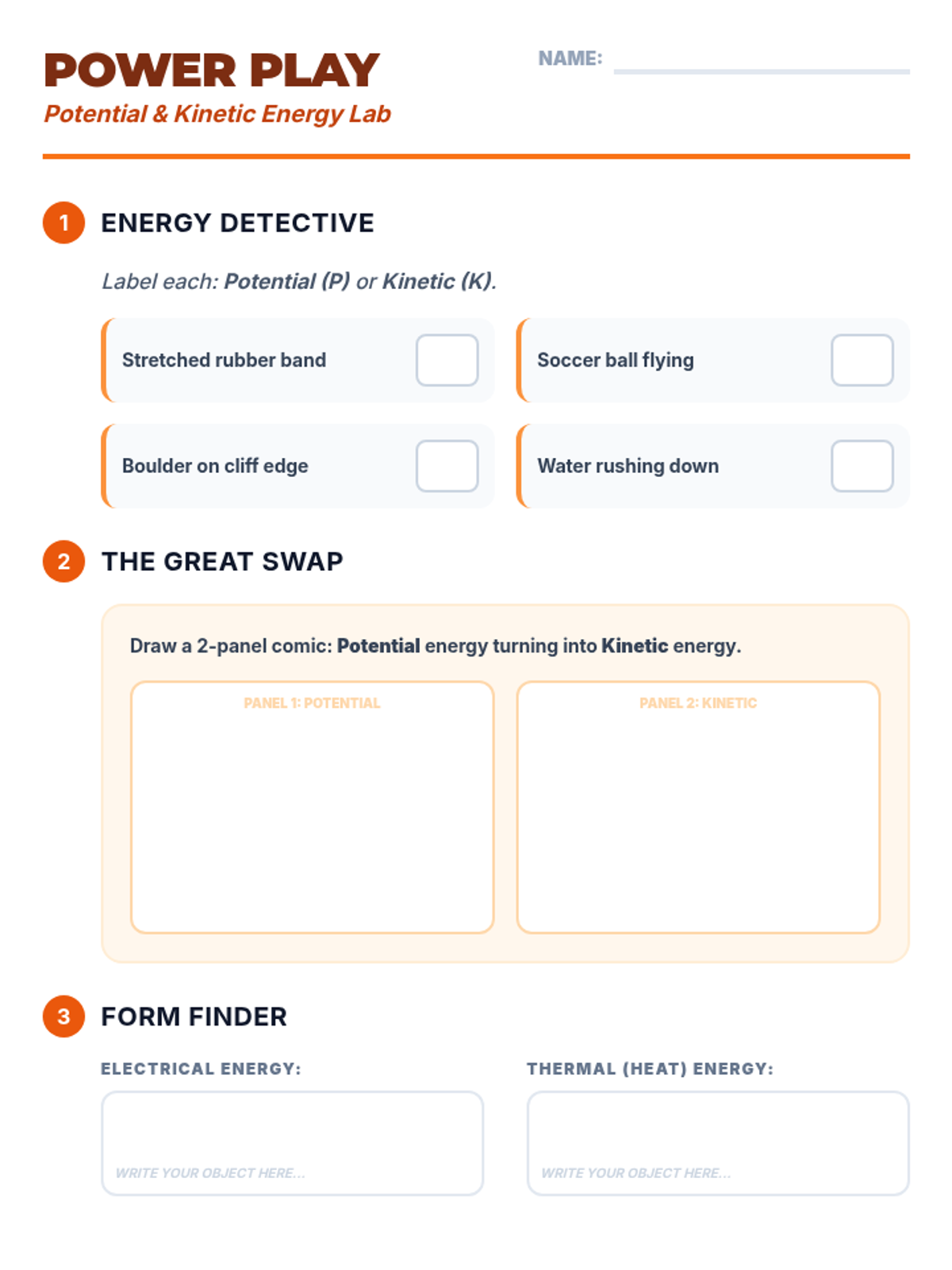
Investigate the different forms of energy and the transition between potential and kinetic energy through real-world examples.
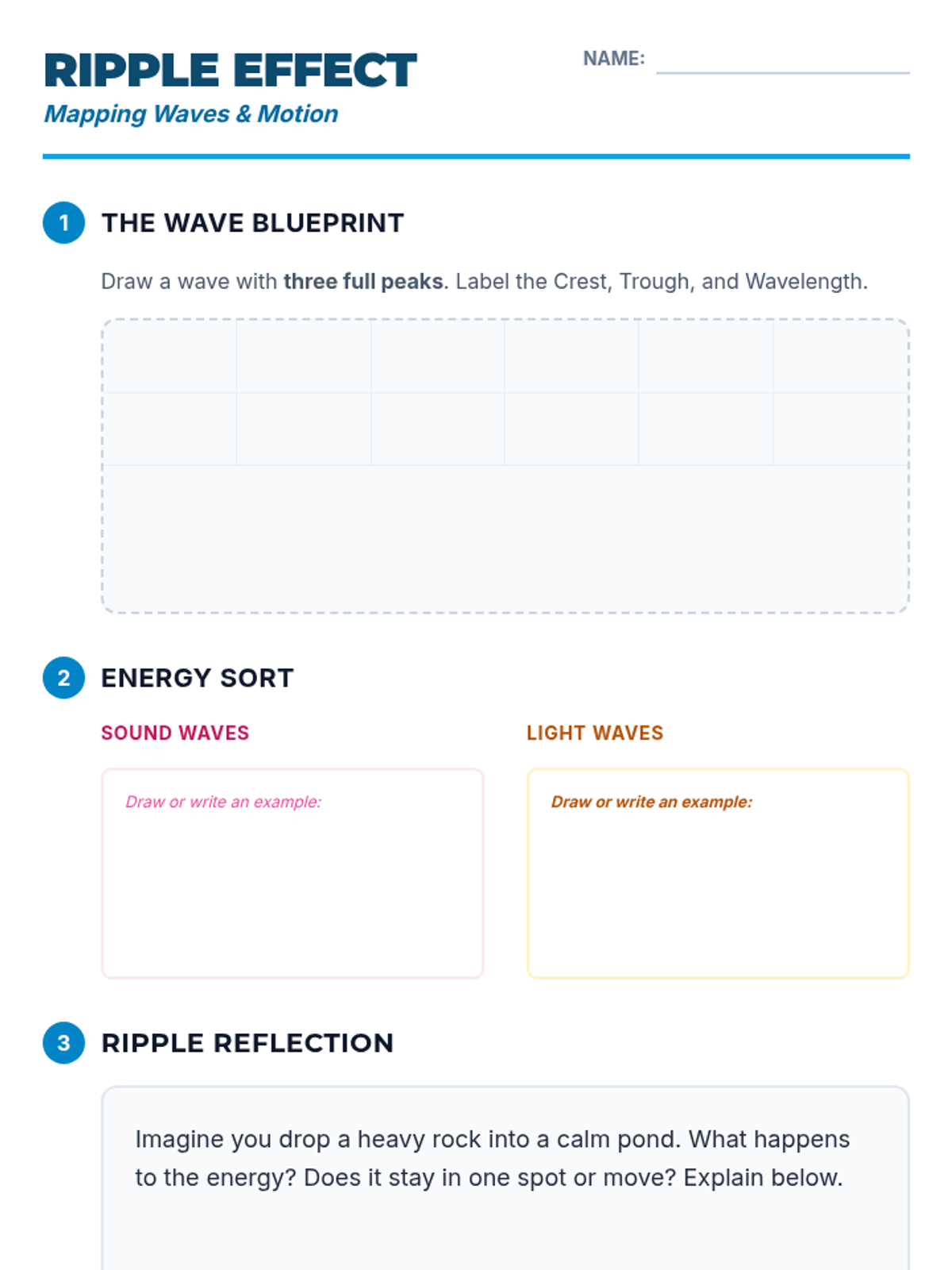
Discover how energy travels through waves, exploring sound, light, and water ripples through visual observations and hands-on mapping.
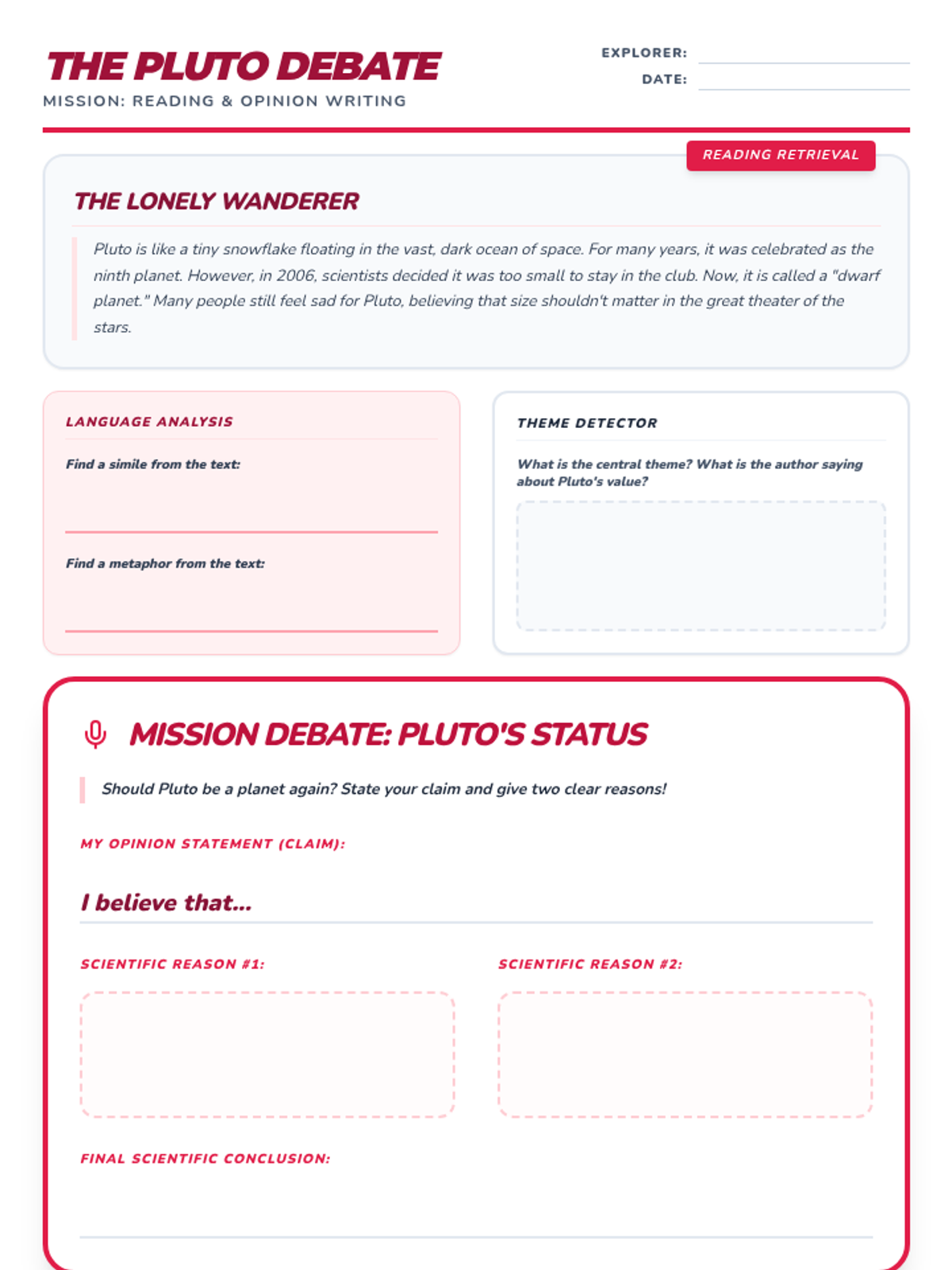
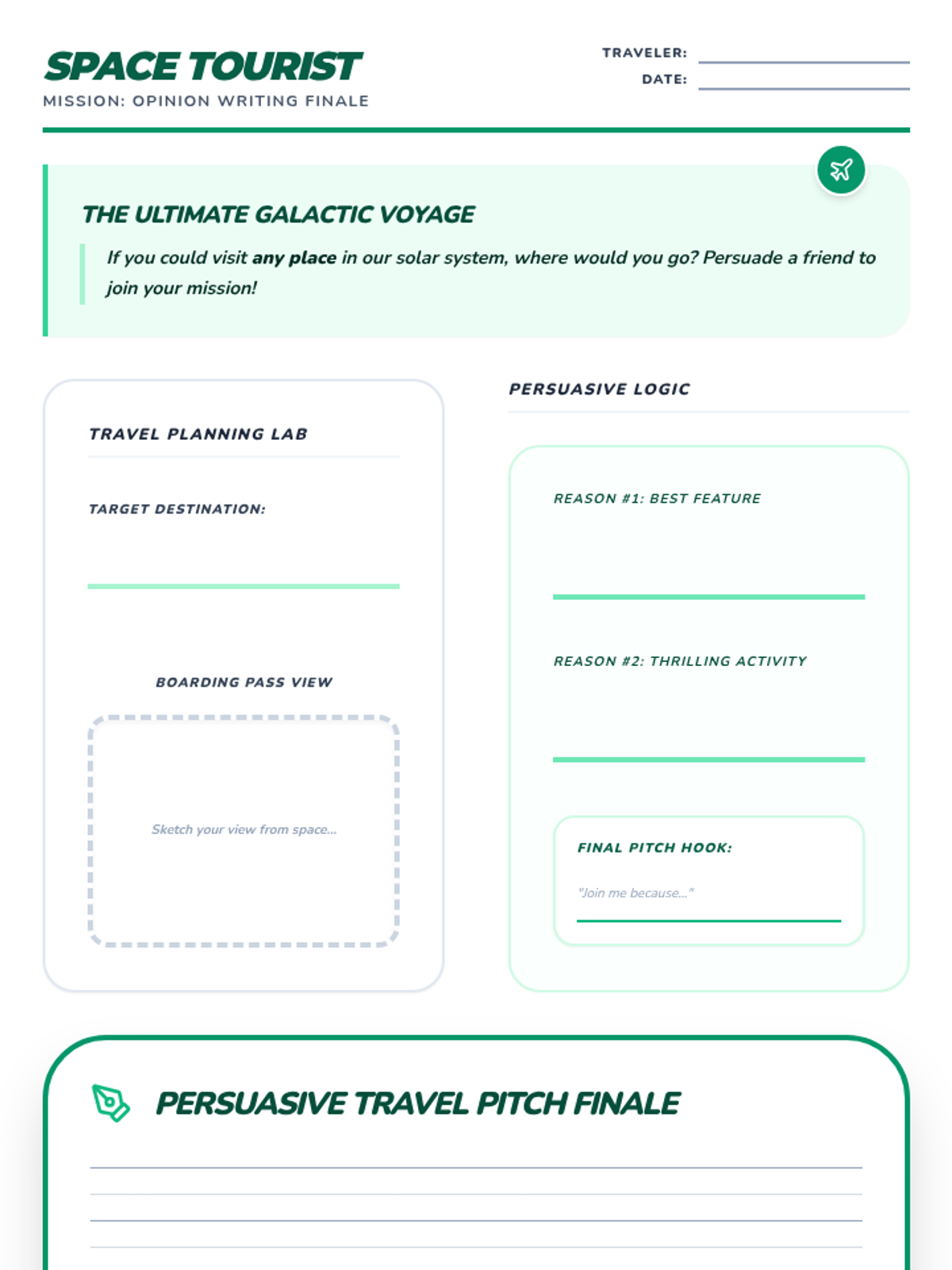
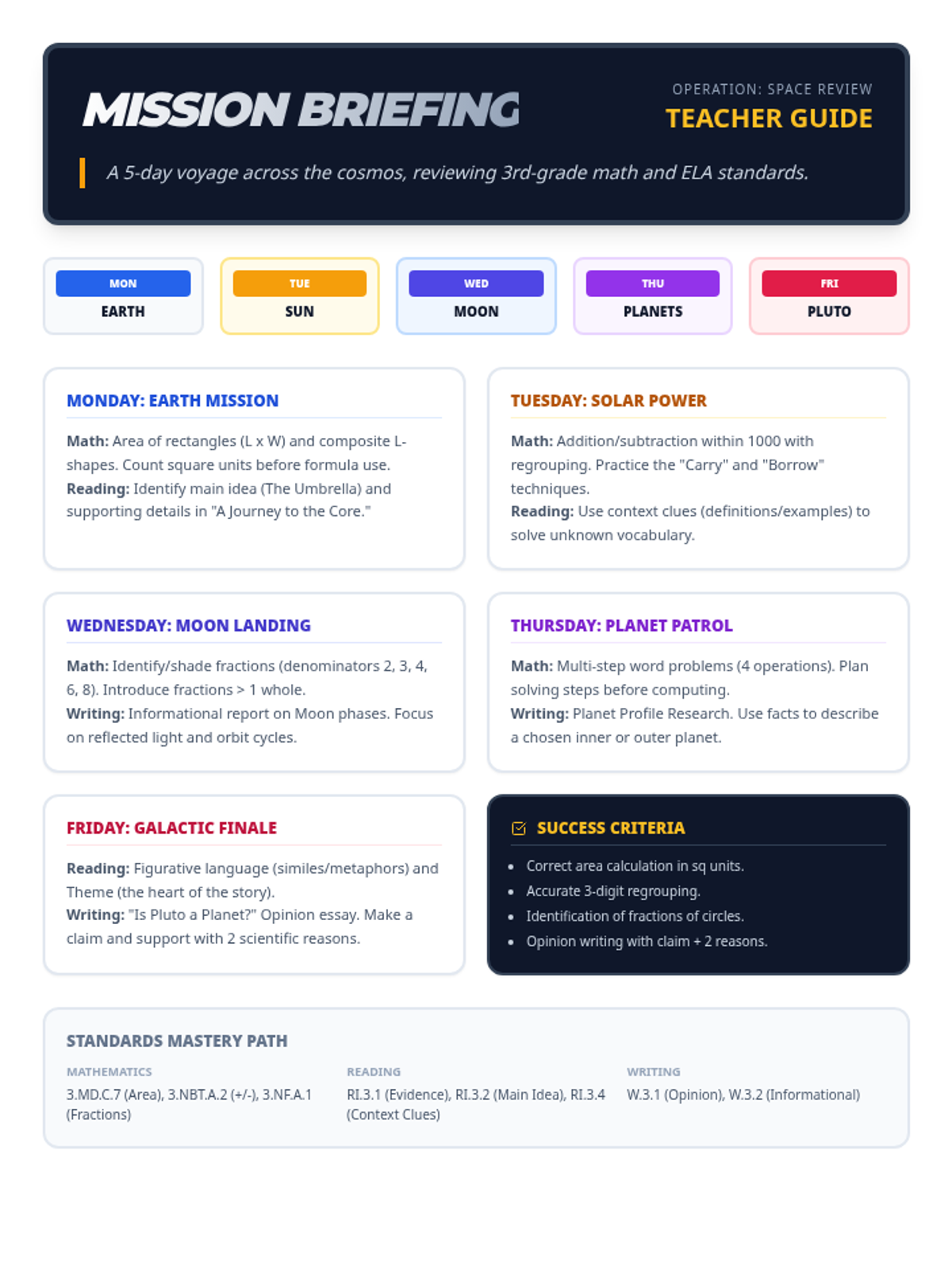
Reviewing the edge of the solar system and wrapping up. Reading: Figurative language and theme. Writing: Opinion writing on Pluto and best planetary destinations.
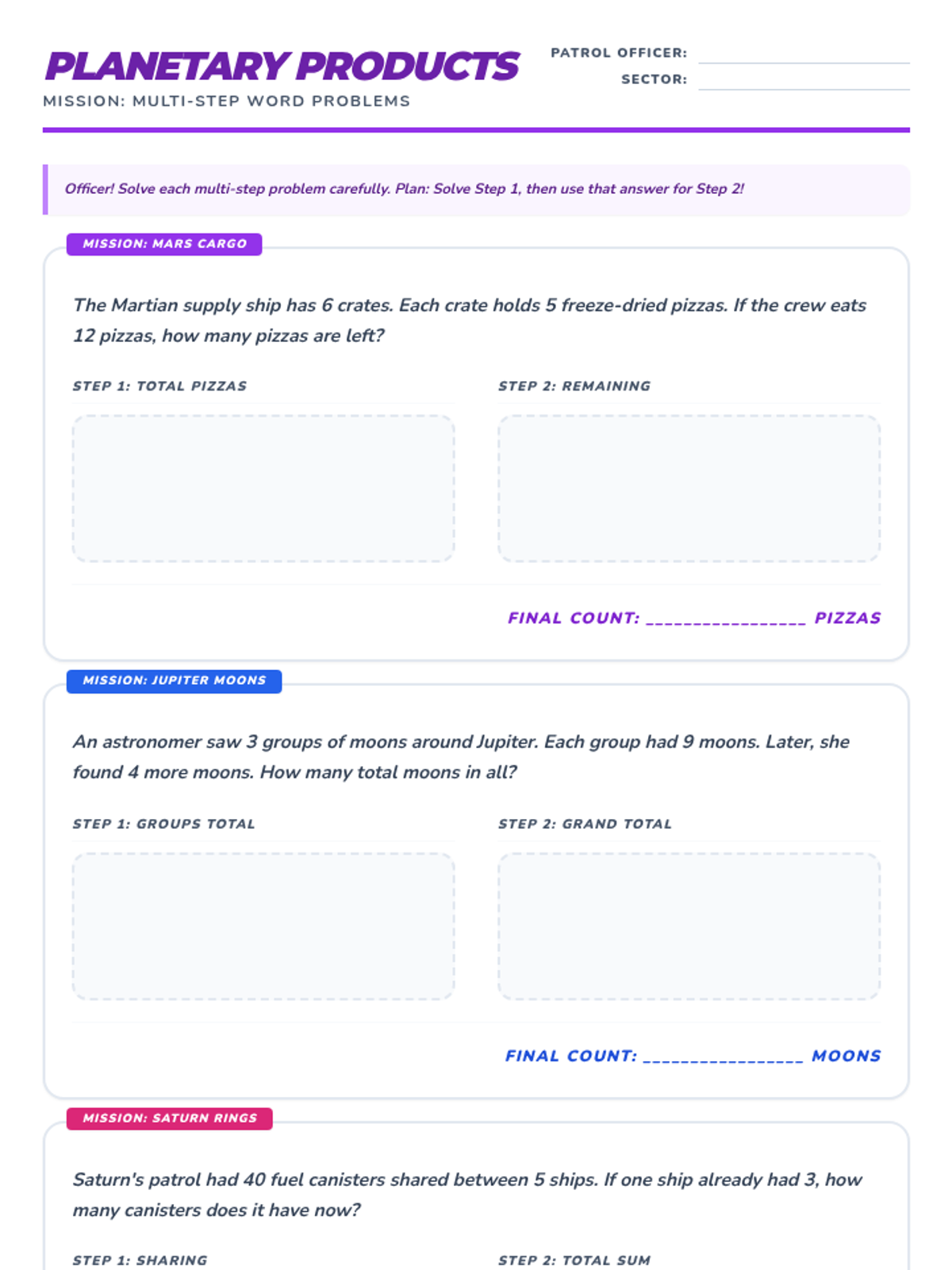
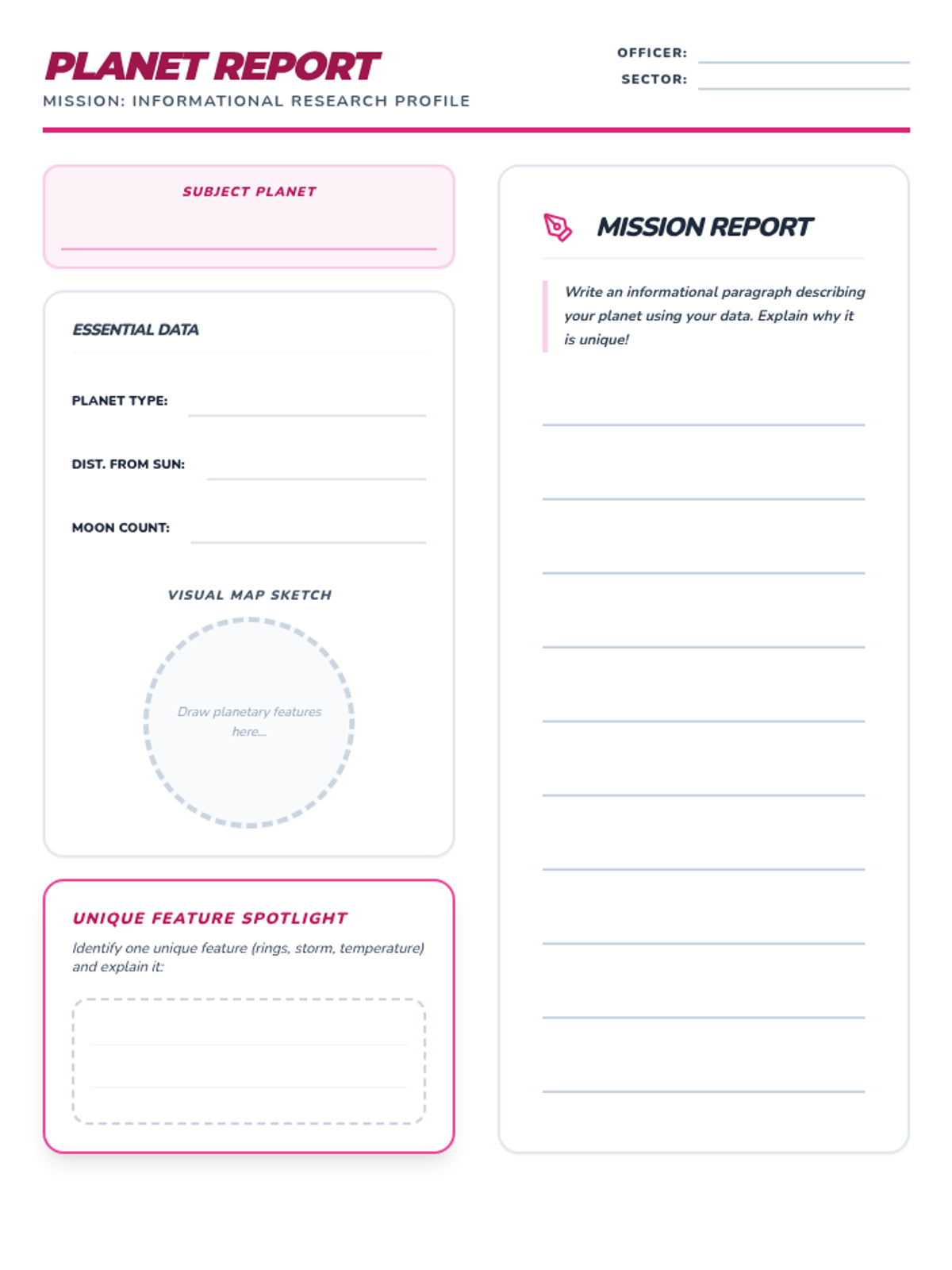
Focusing on the inner and outer planets. Math: Multiplication, division, and multi-step word problems. Writing: Informational planet report.
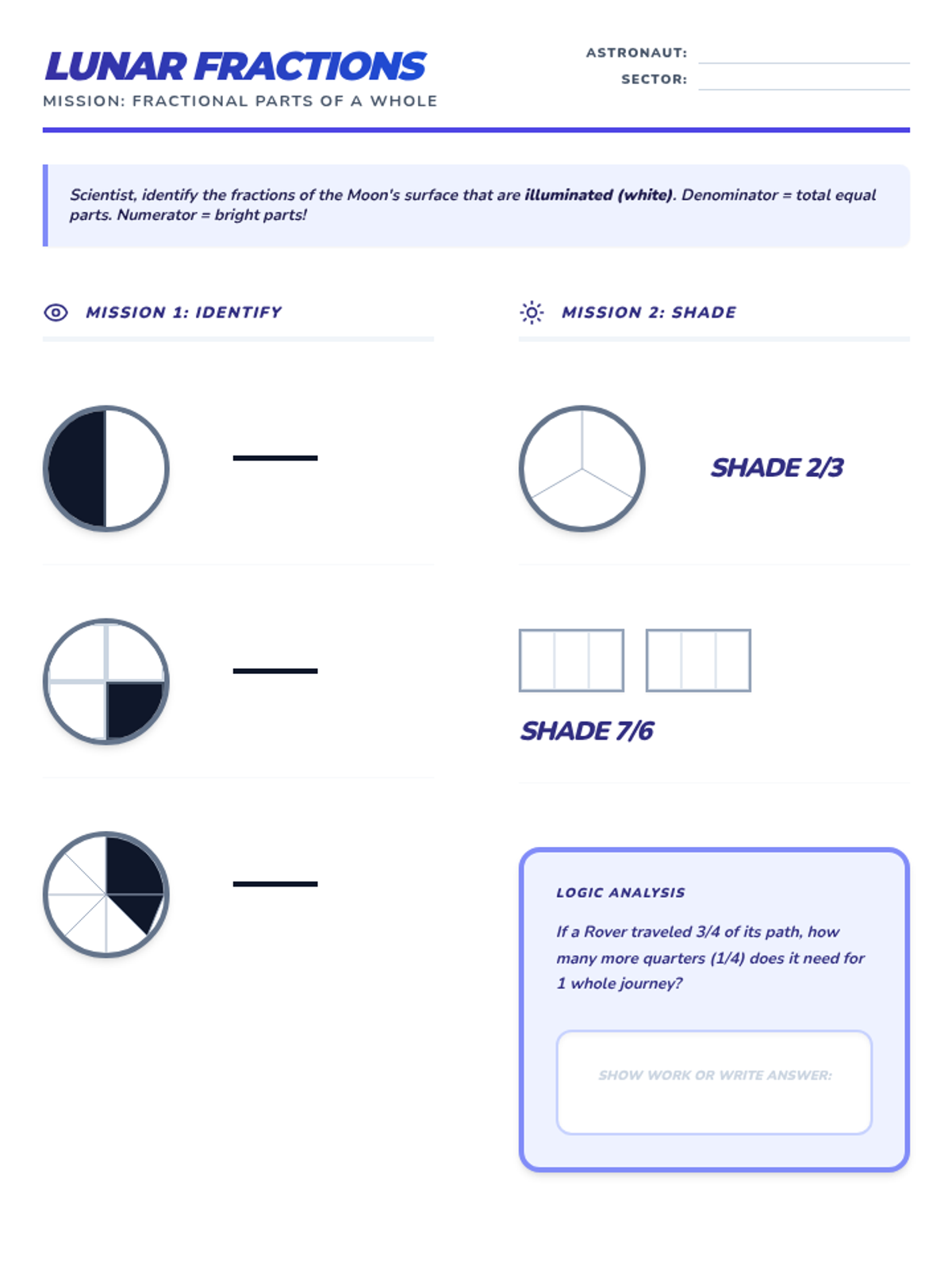
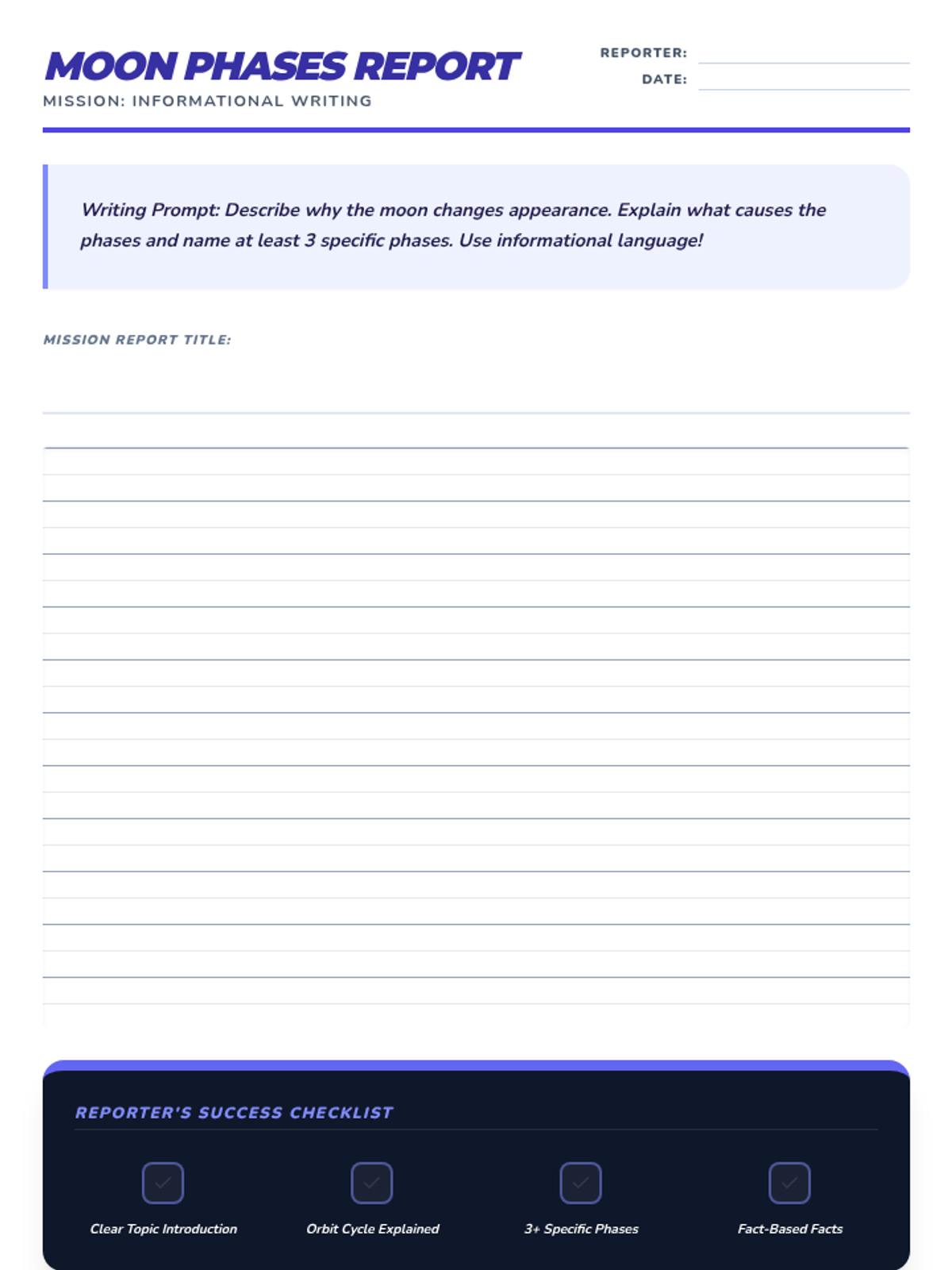
Focusing on the Moon. Math: Fractions (2, 3, 4, 6, 8). Writing: Informational report on Moon phases.
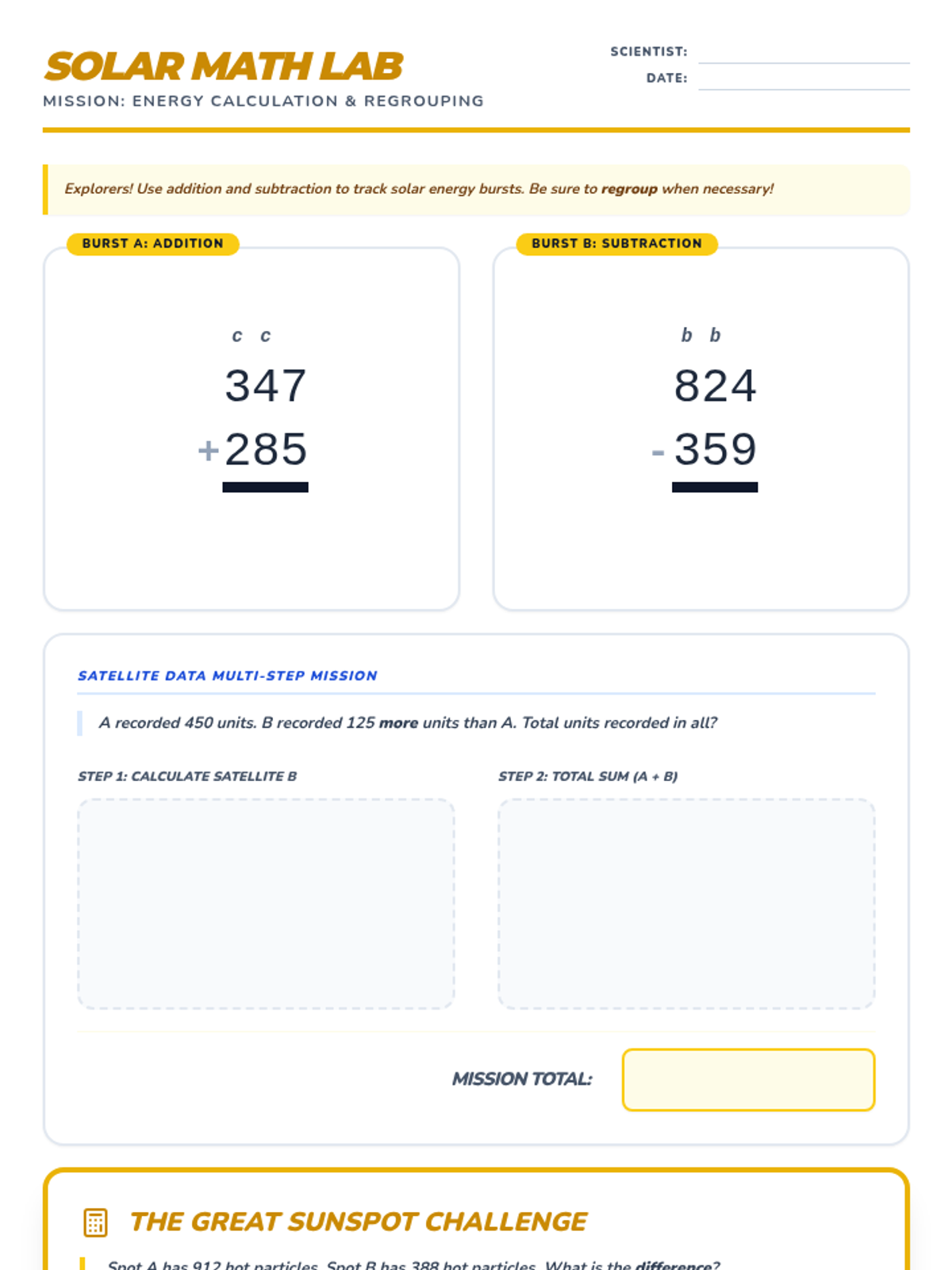
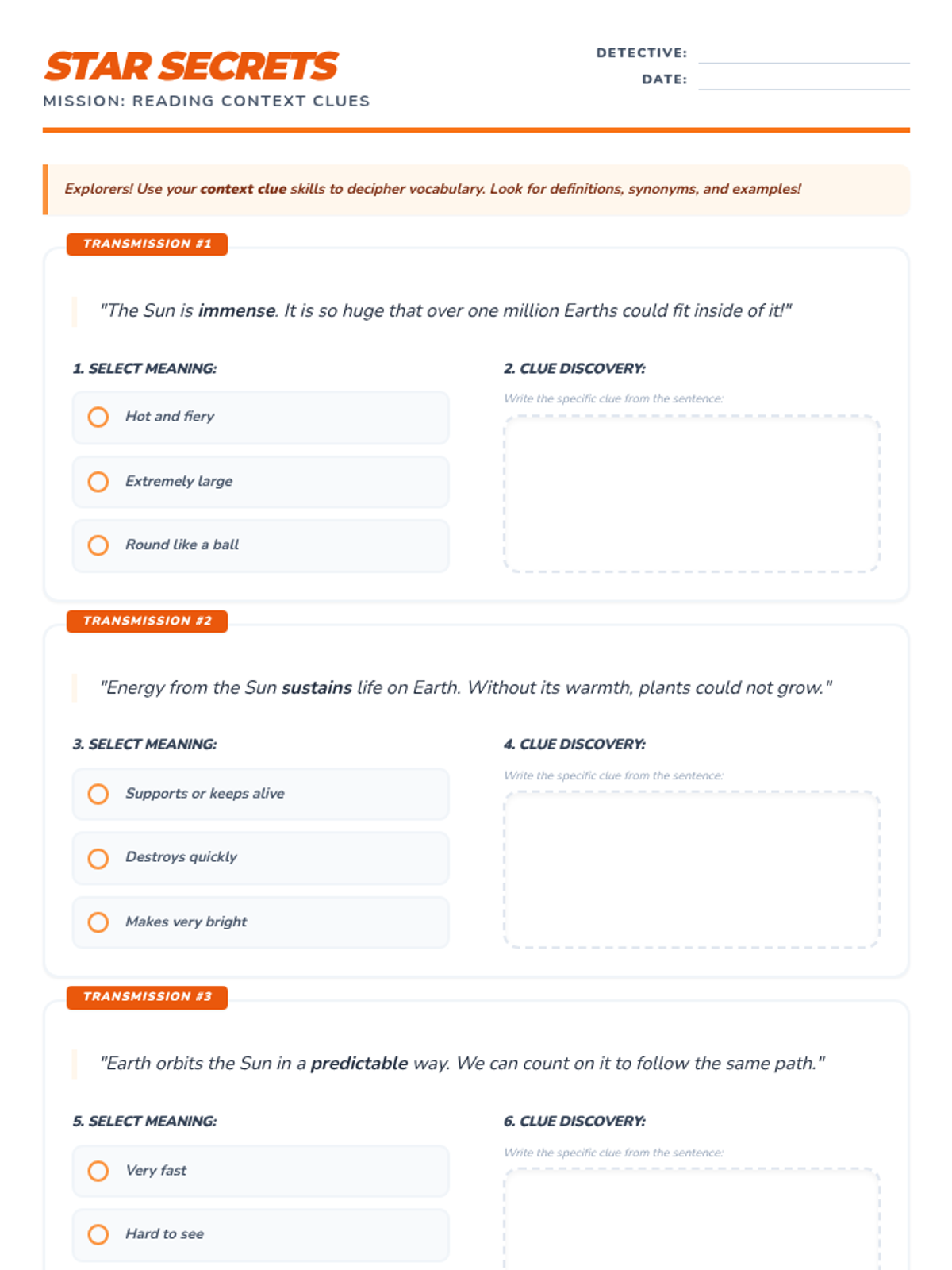
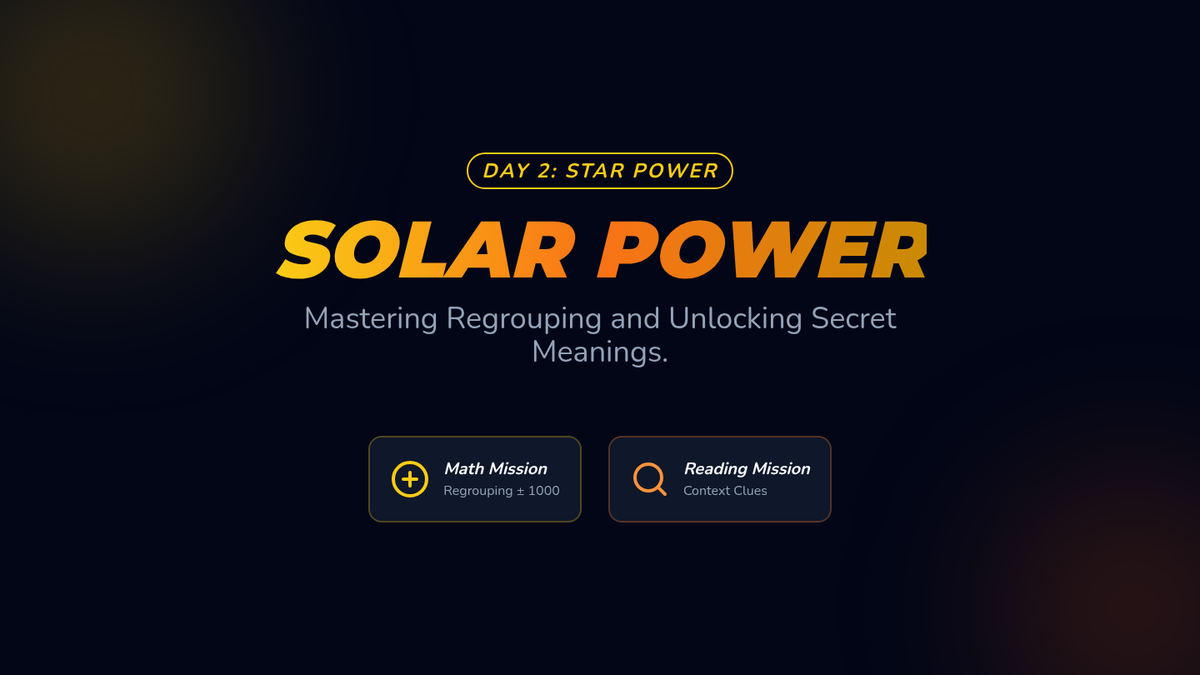
Focusing on the Sun. Math: Addition and subtraction with regrouping within 1000. Reading: Context clues.
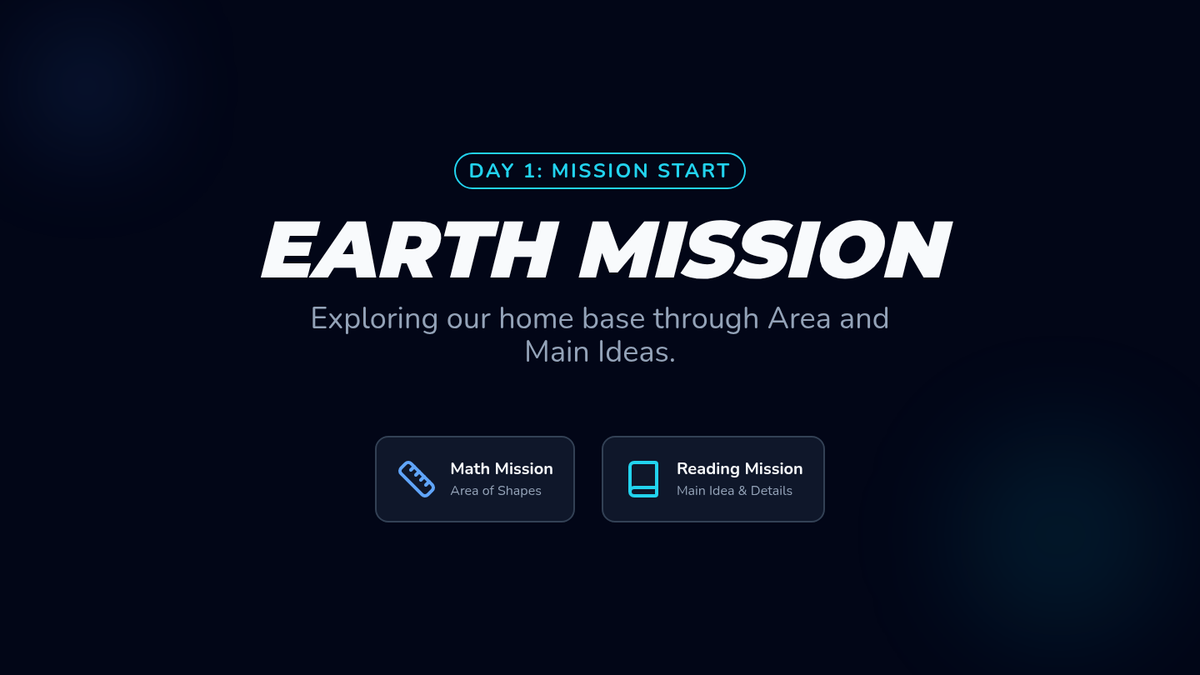
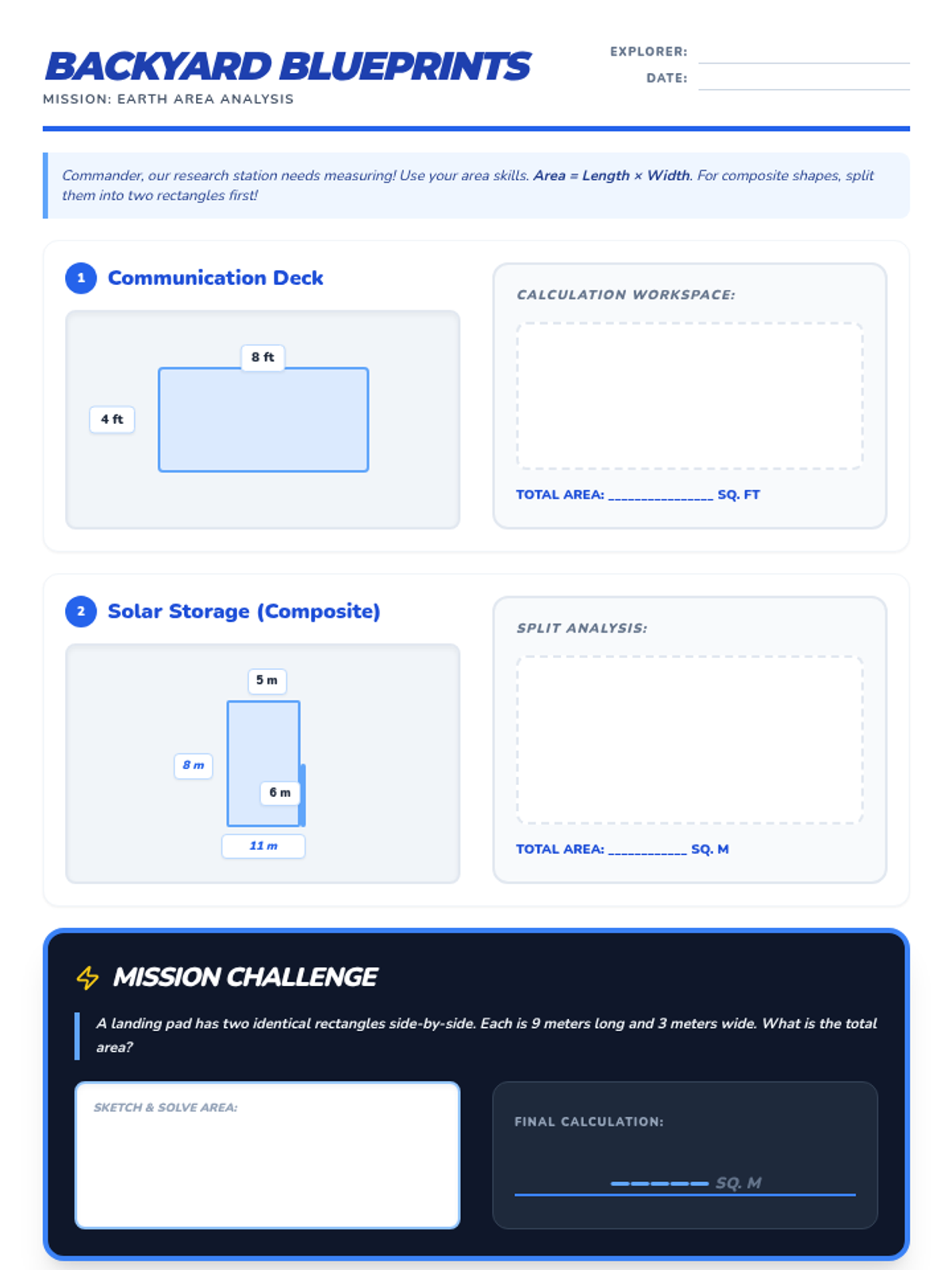
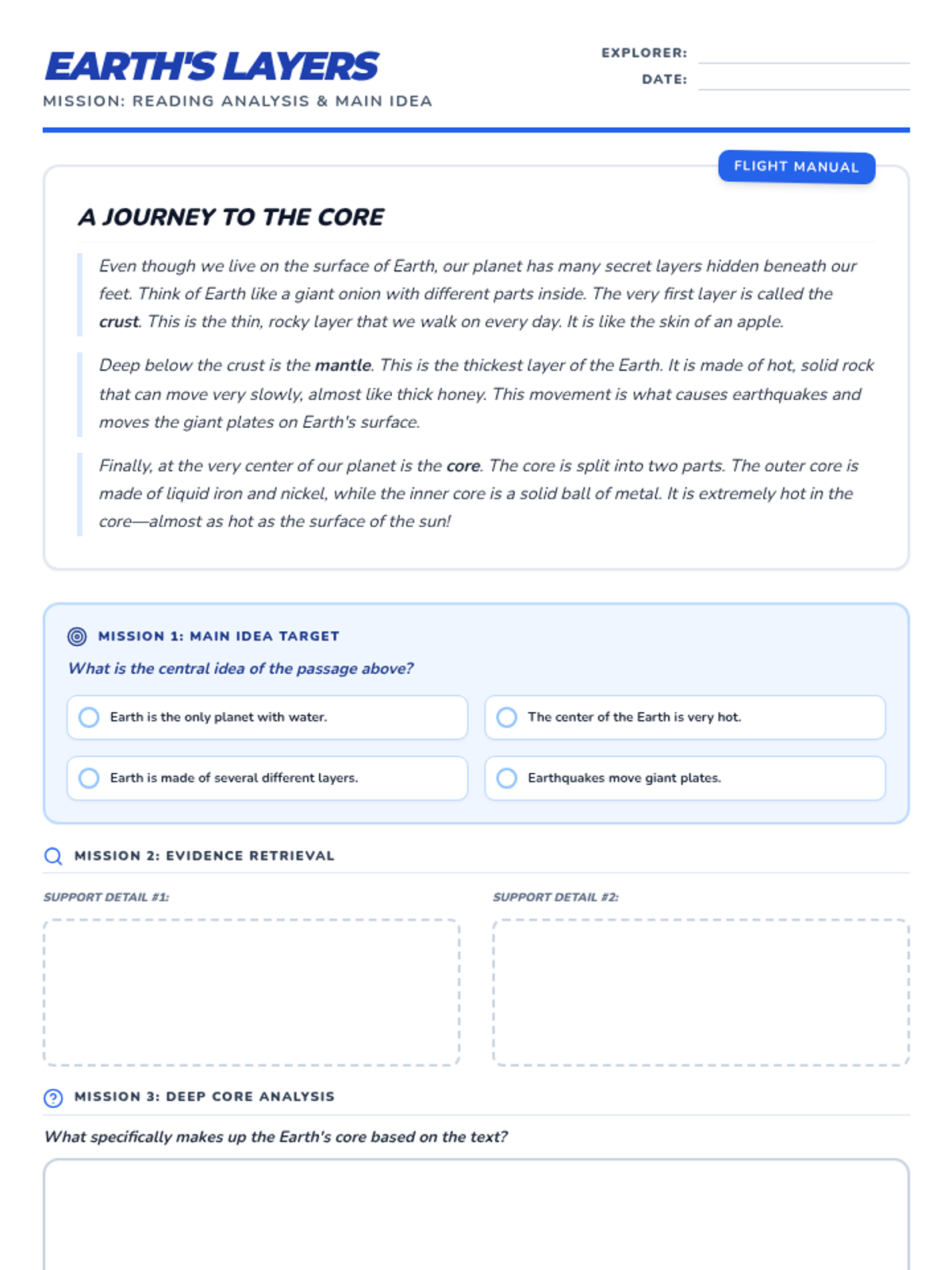
Introduction to the review week focusing on Earth. Math: Area of rectangles and composite figures. Reading: Main idea and details.
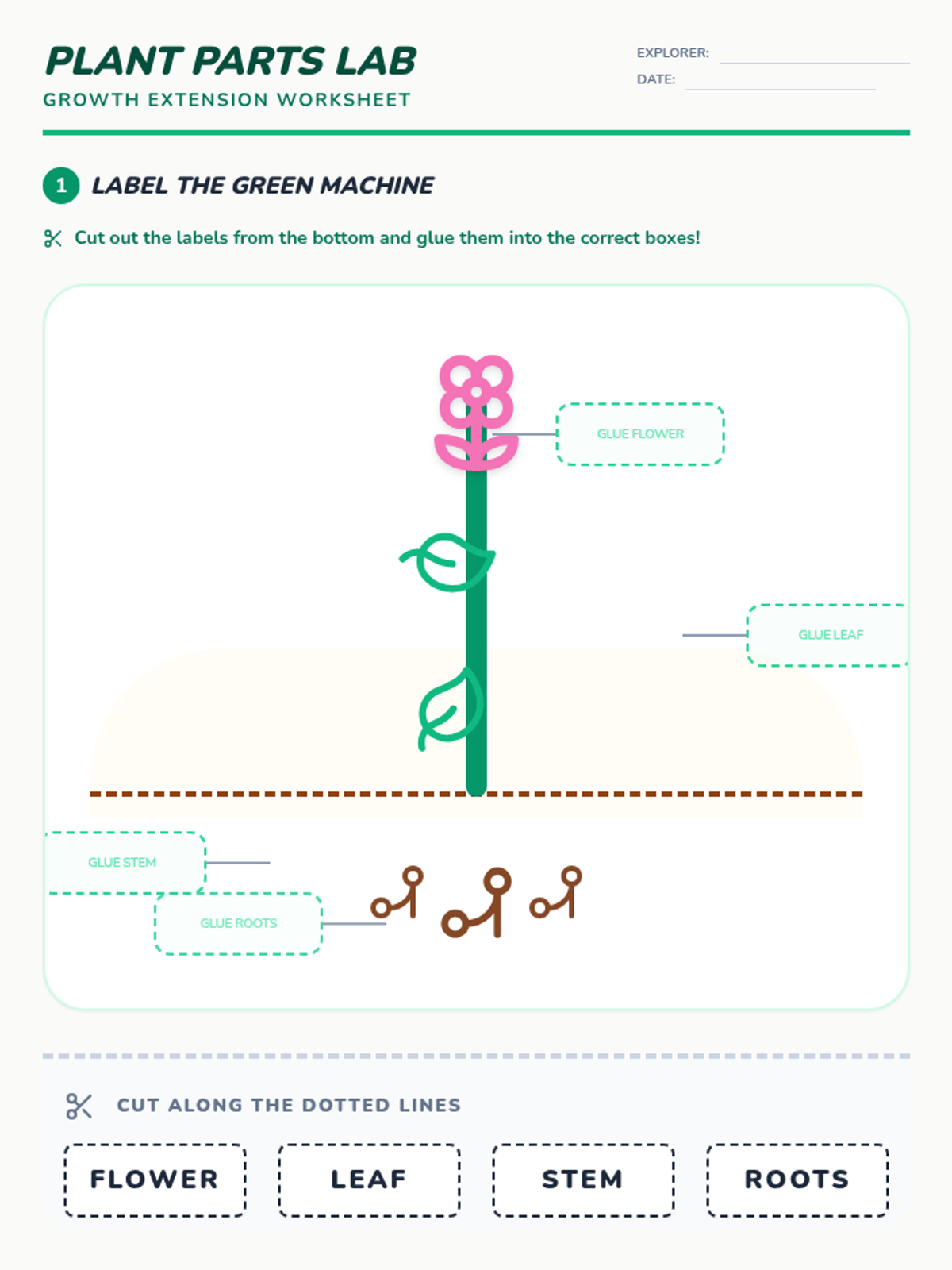
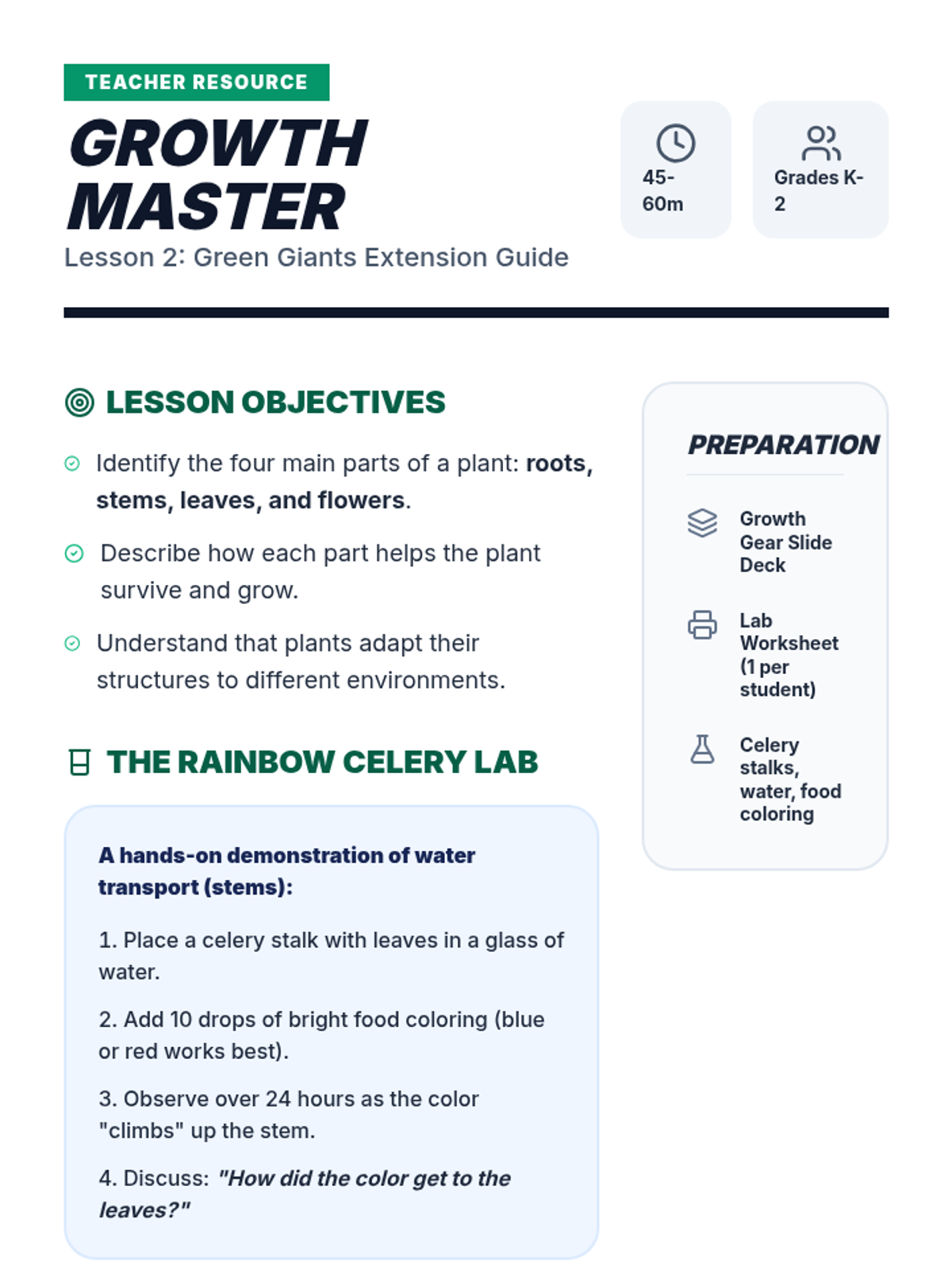
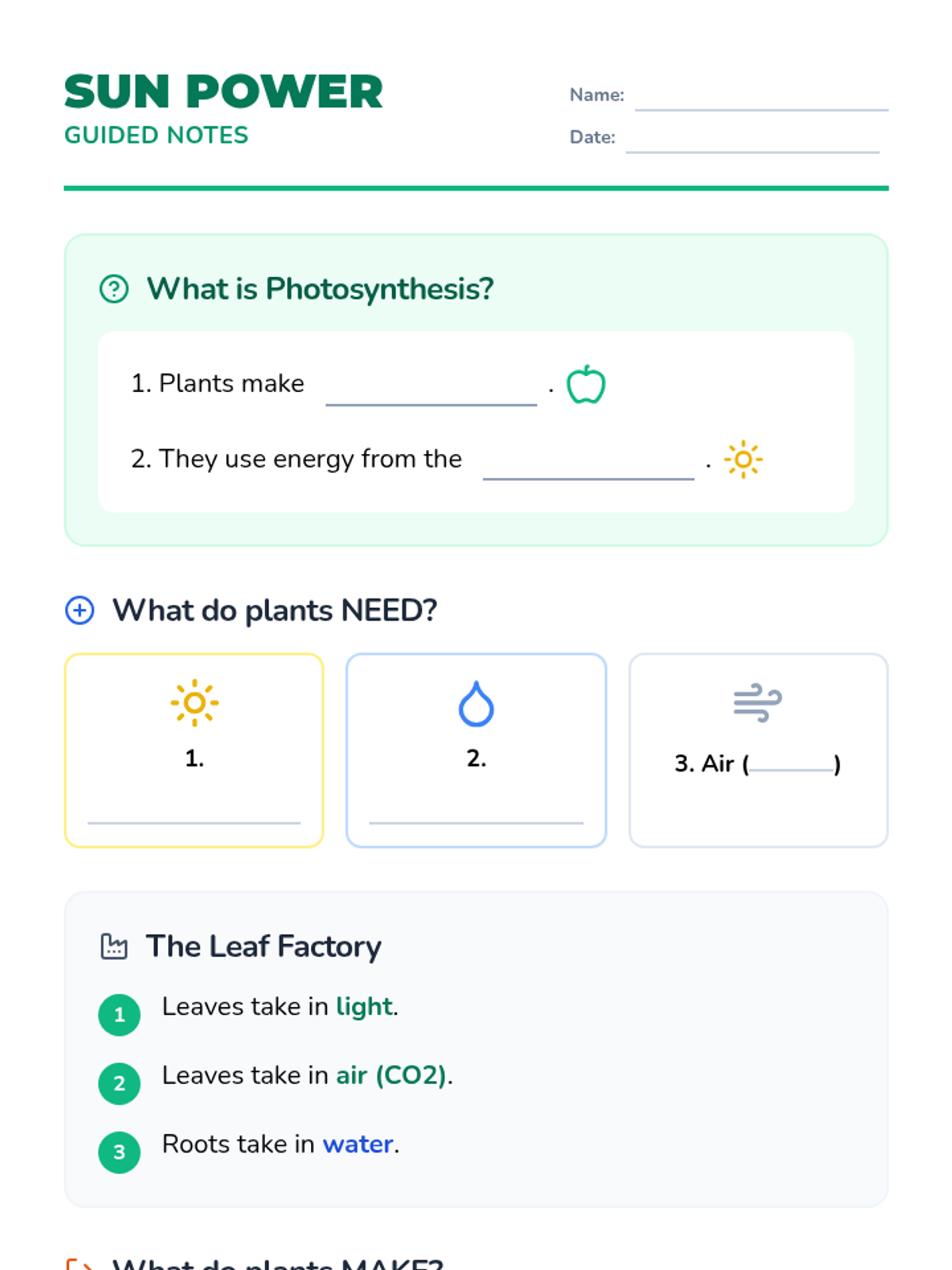
An extension lesson delving deeper into how plants grow, focusing on the specific functions of roots, stems, and leaves, as well as the essential nutrients found in soil.
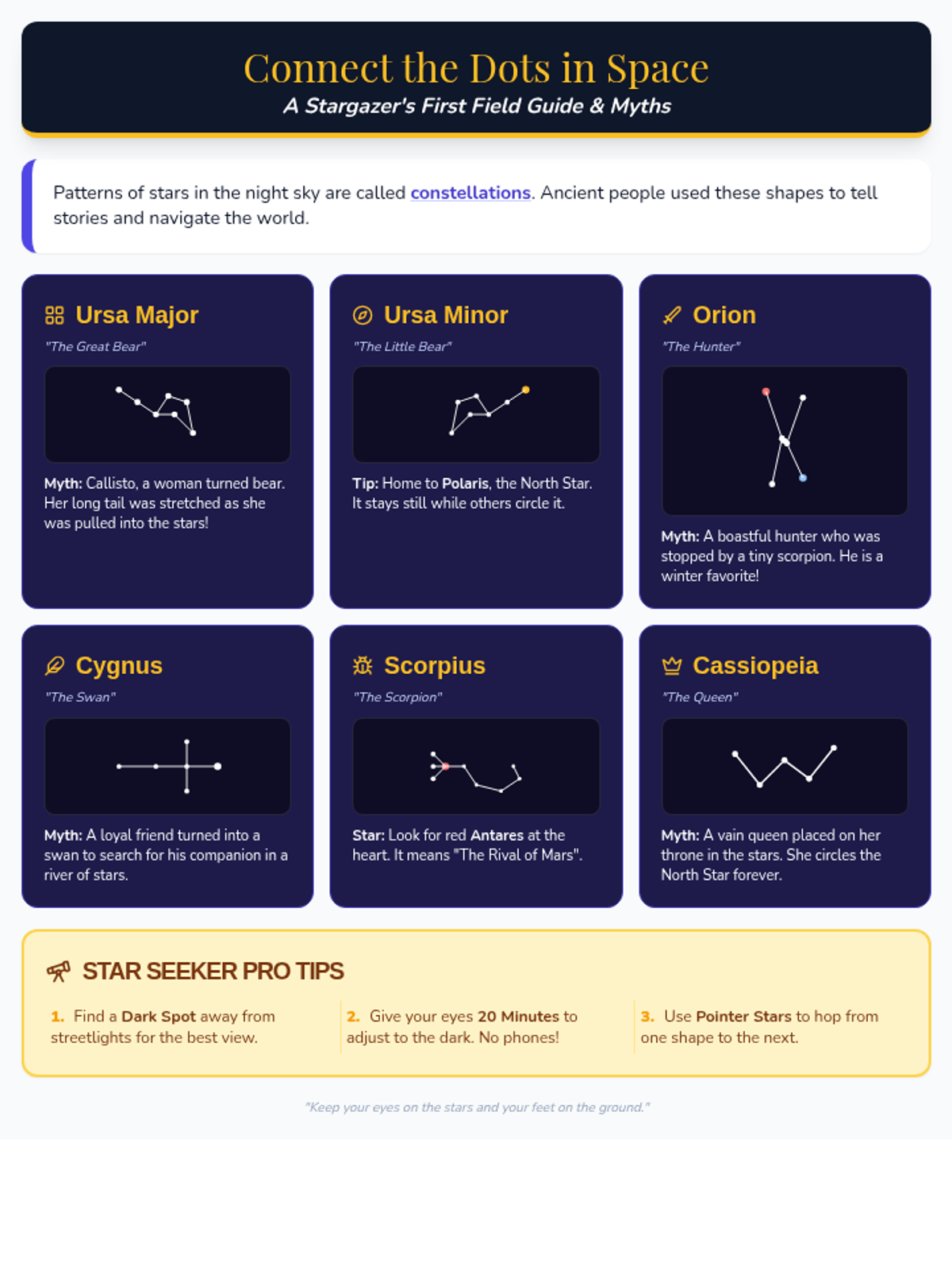
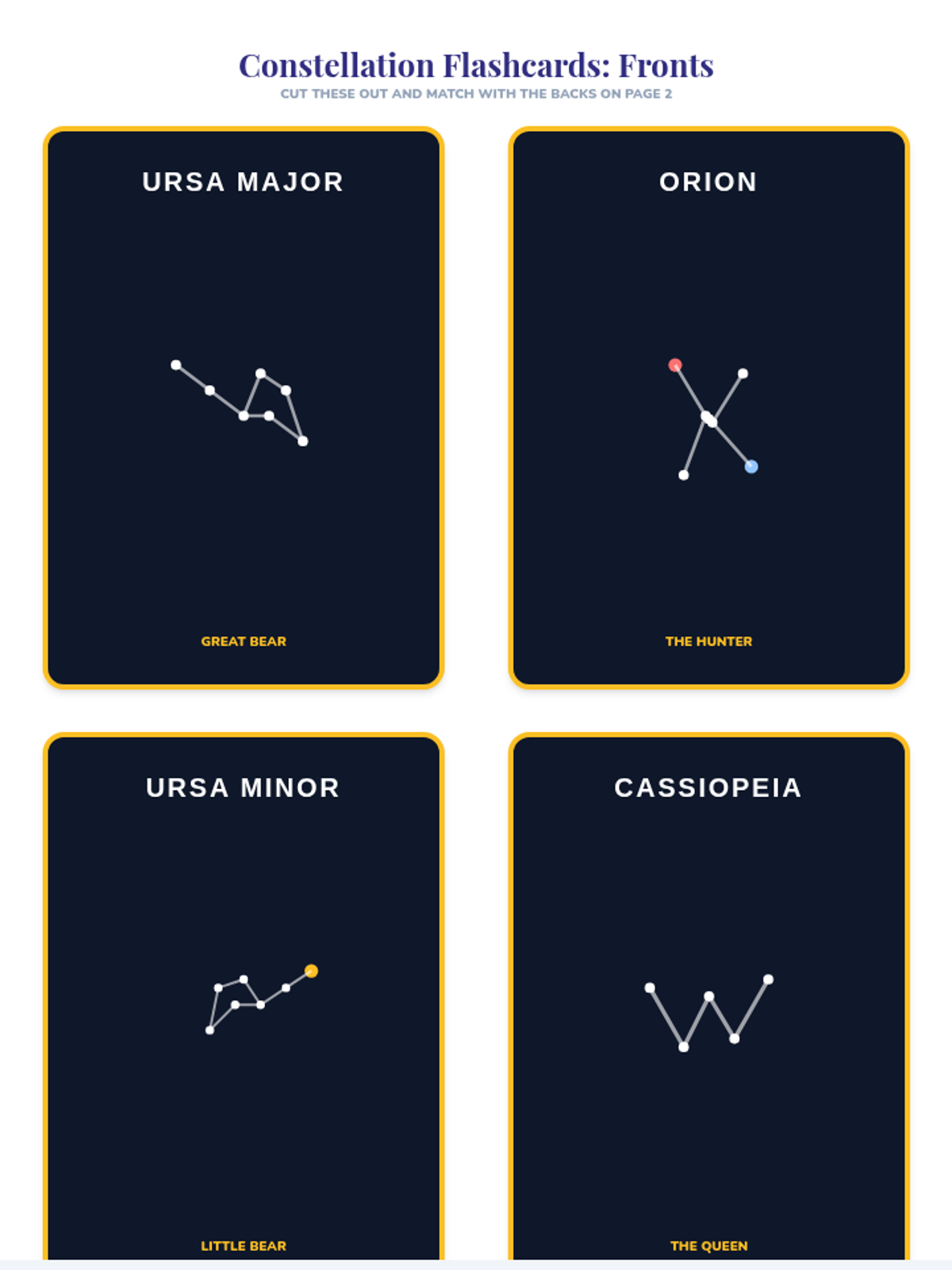
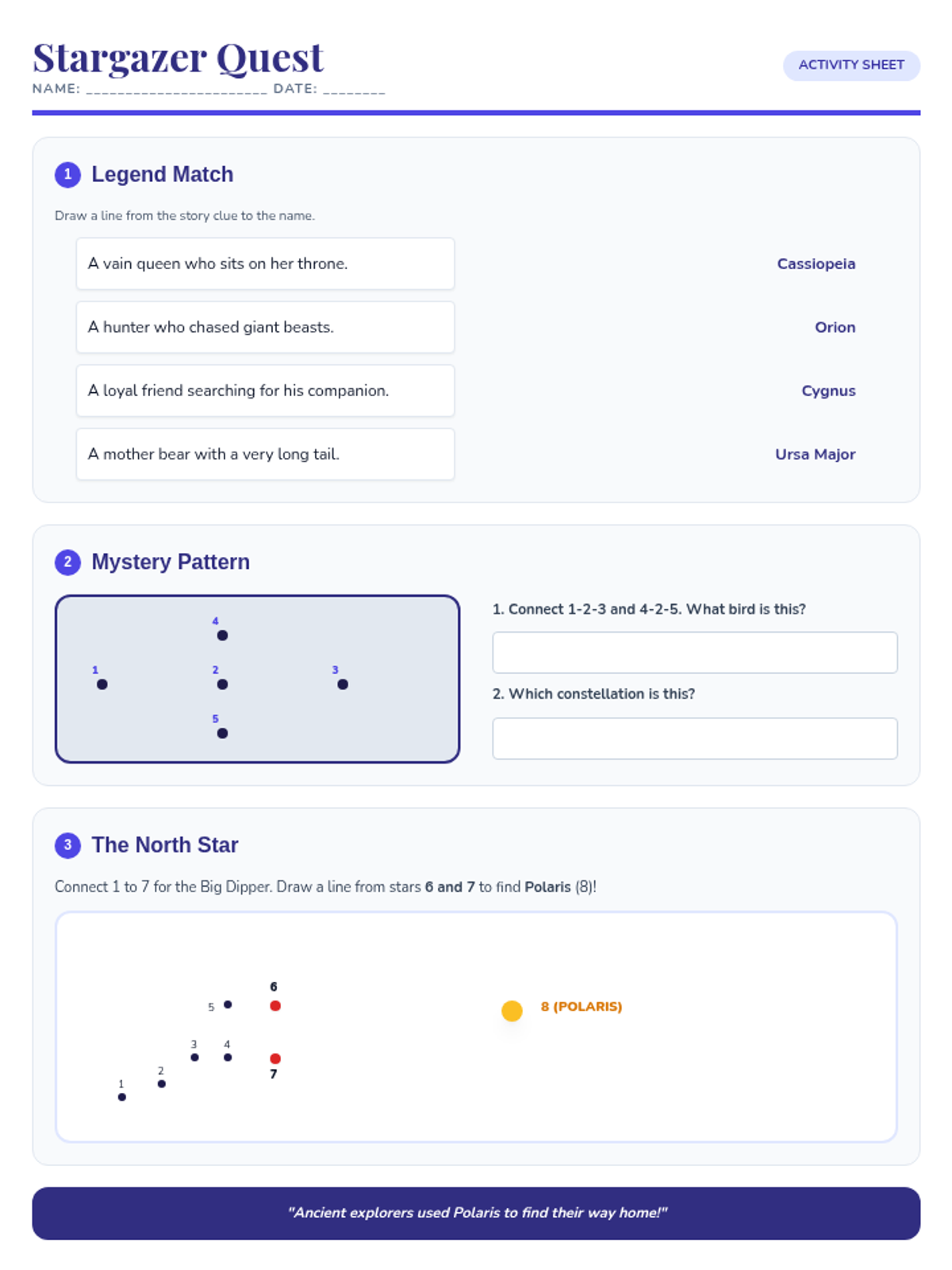
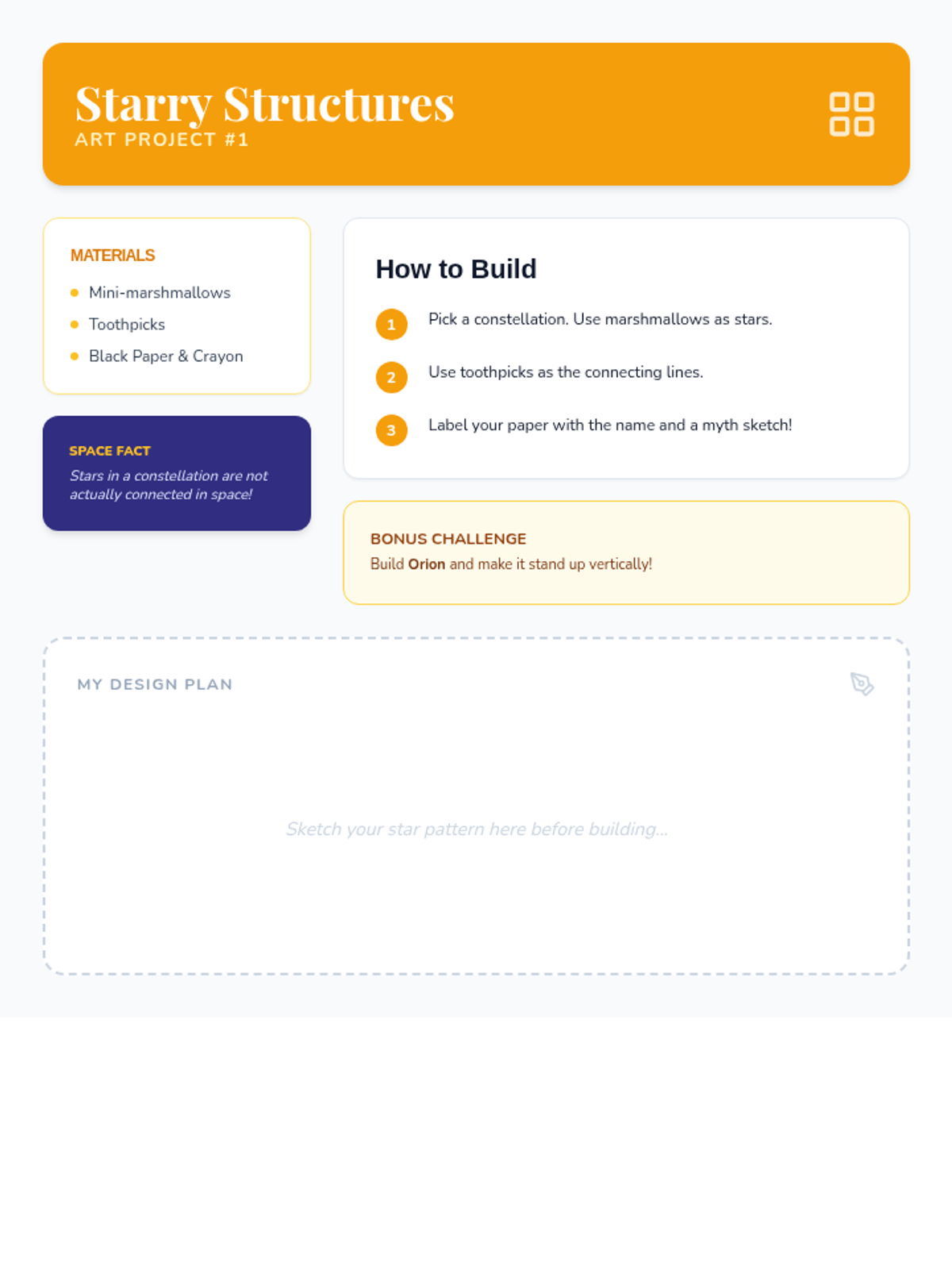
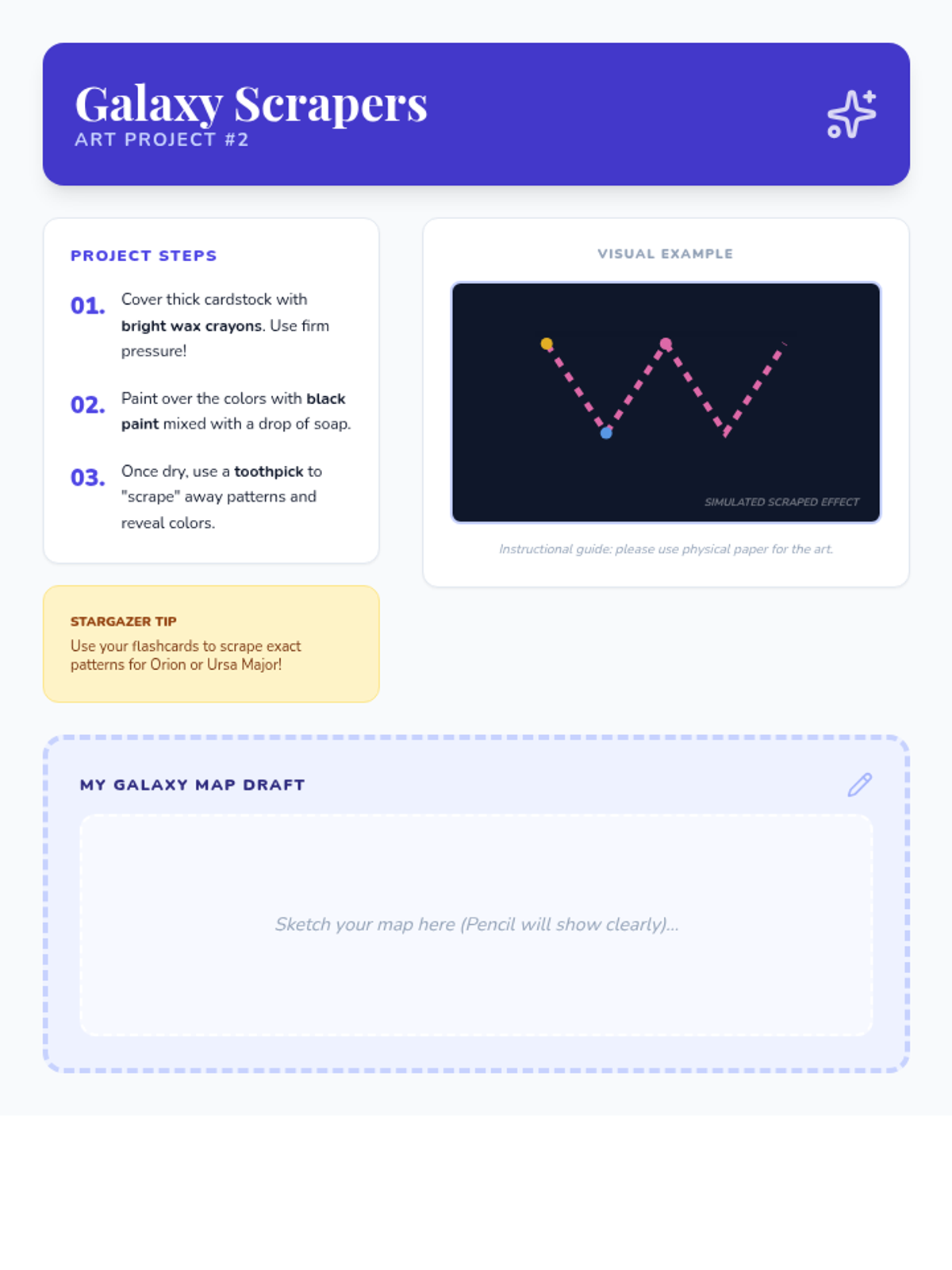
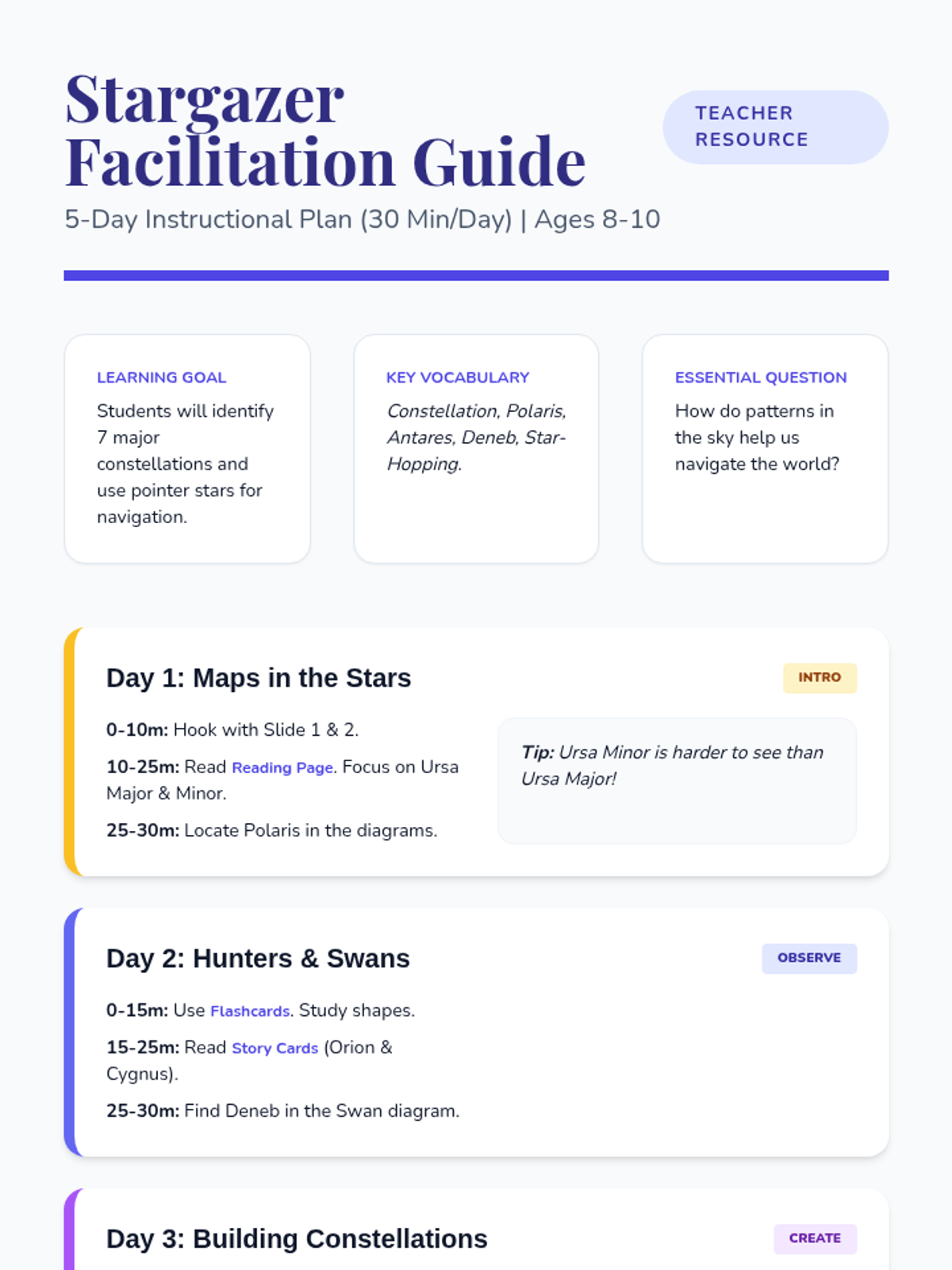
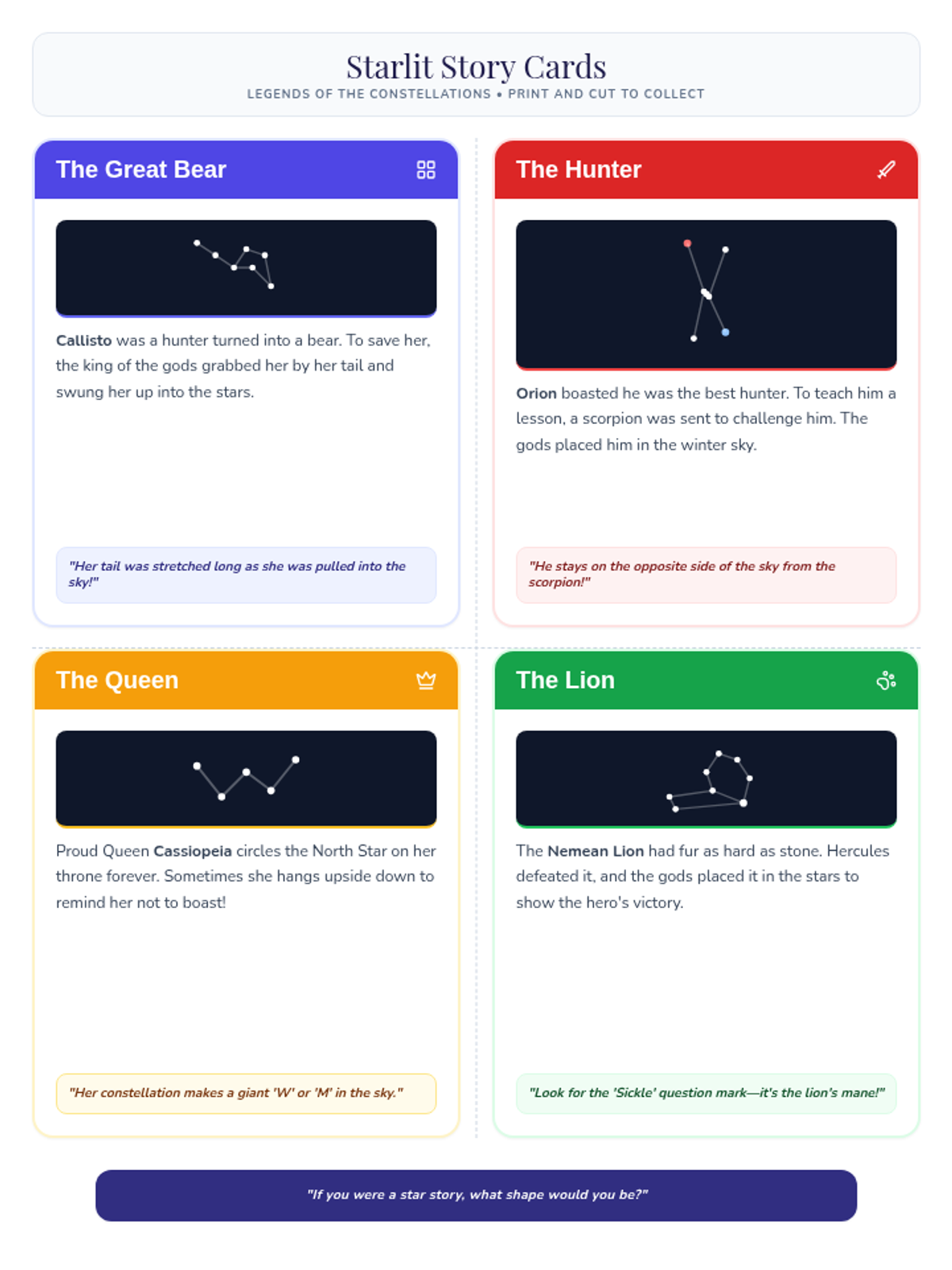
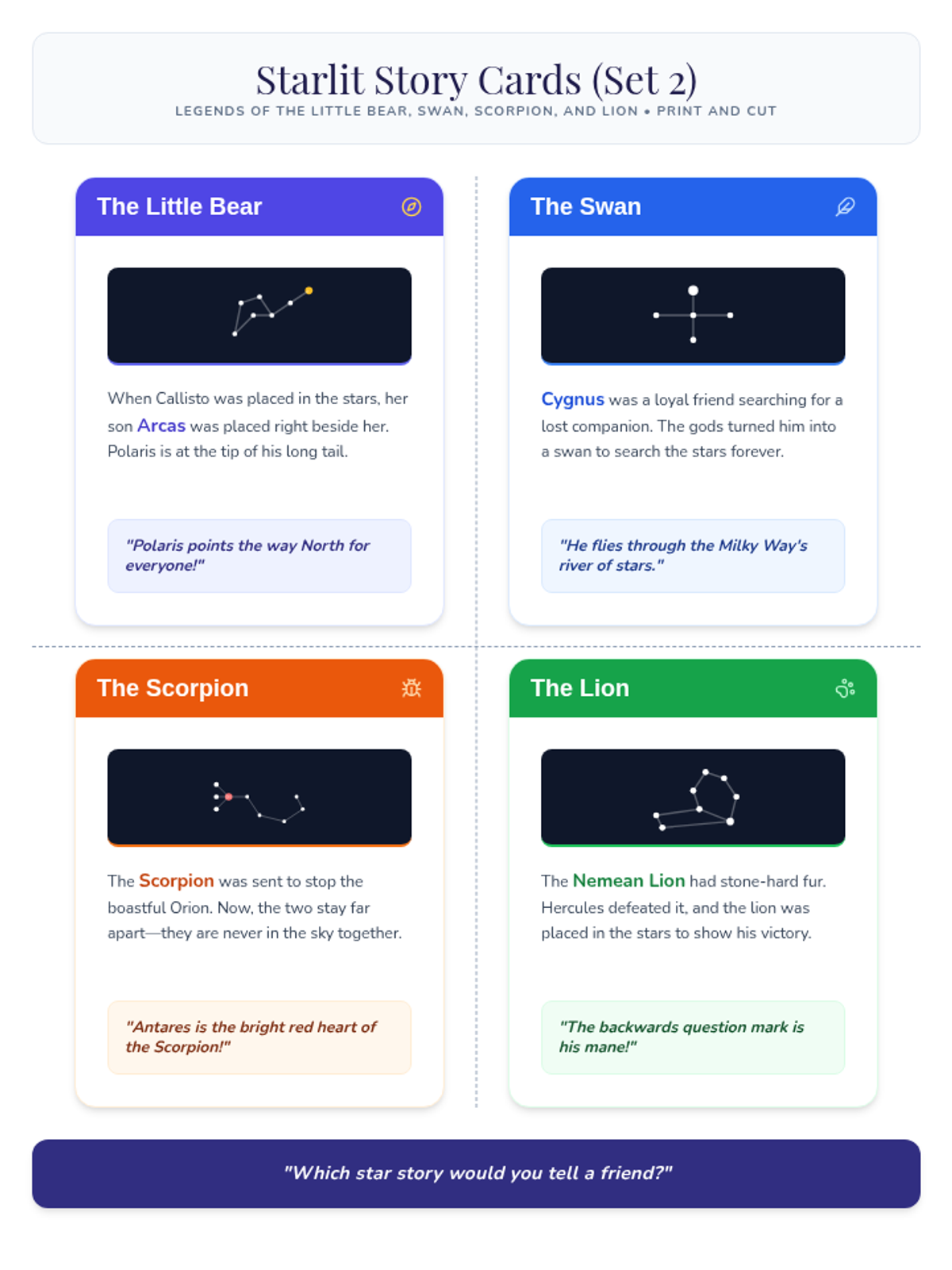
A week-long exploration of the night sky, teaching students how to identify major constellations using patterns and pointer stars. Students will combine scientific observation with creative art projects.
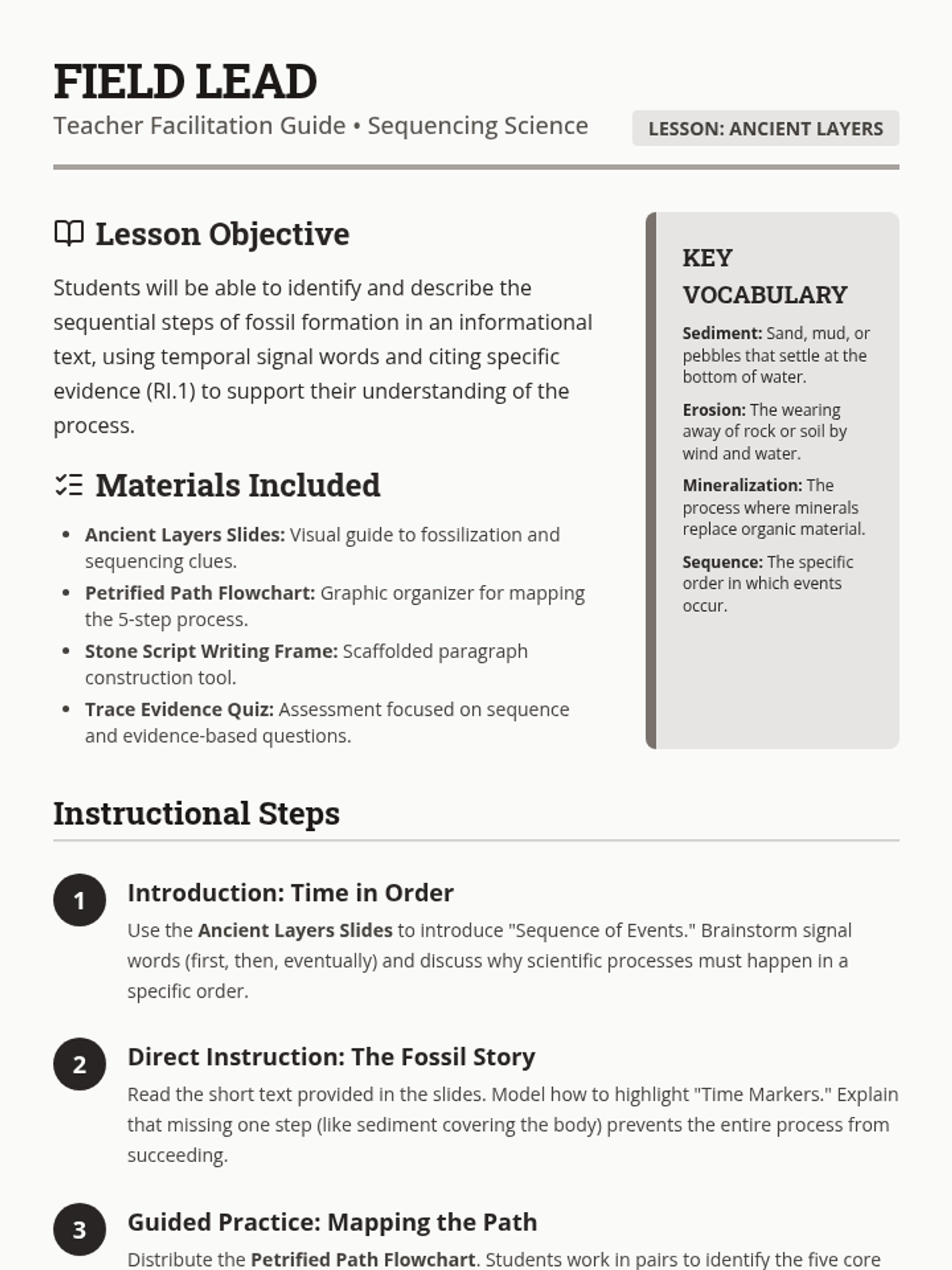
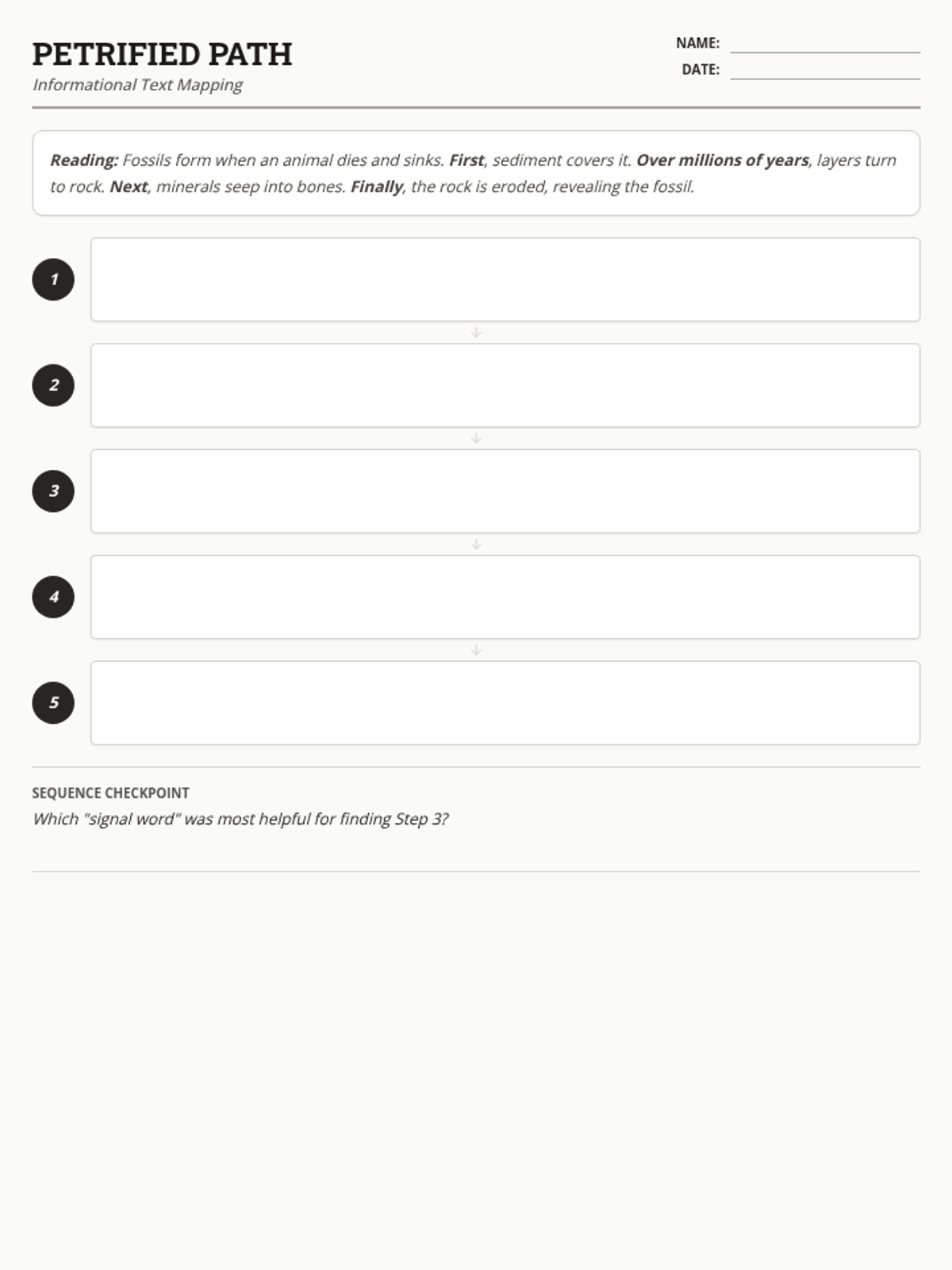
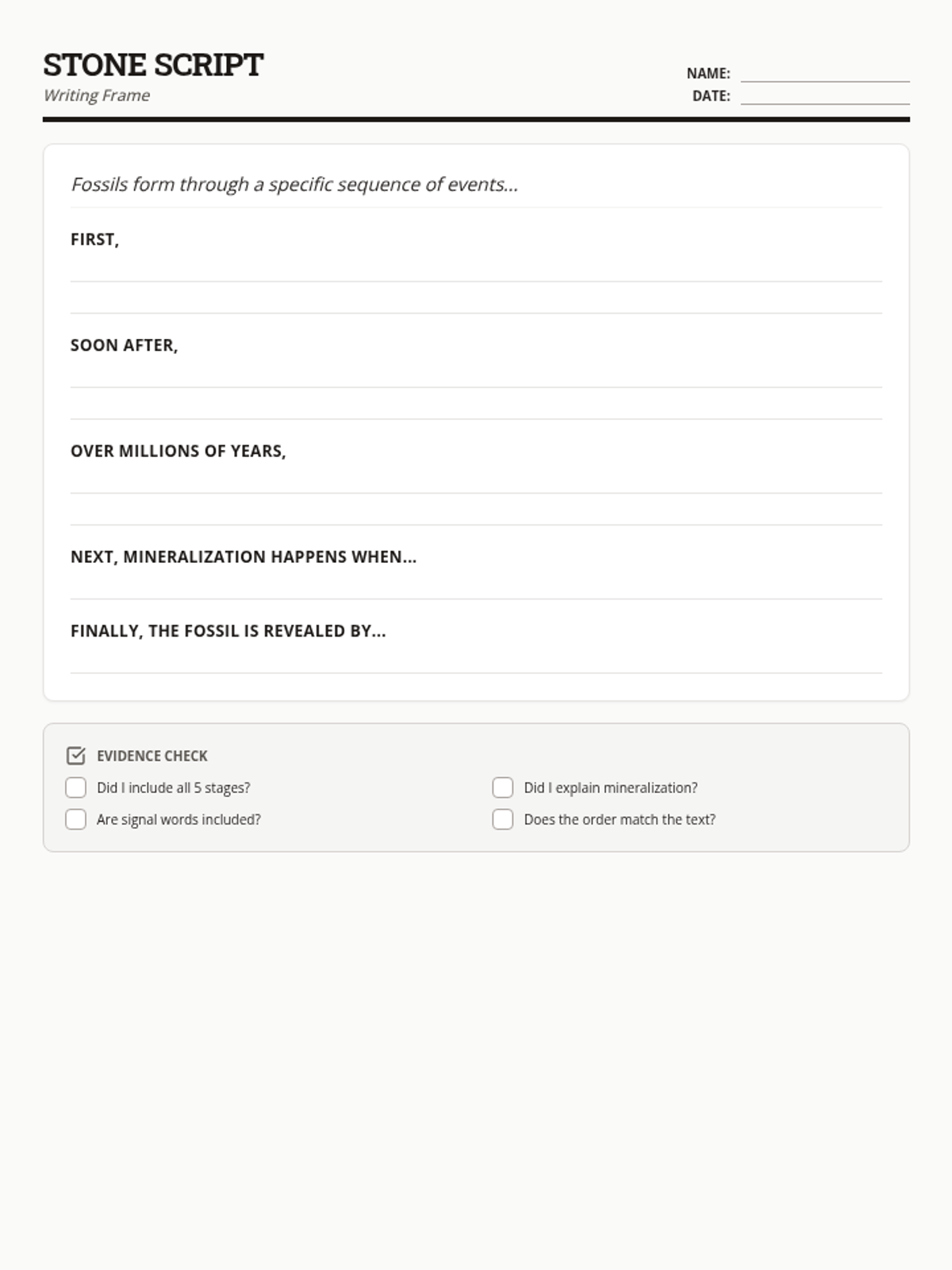
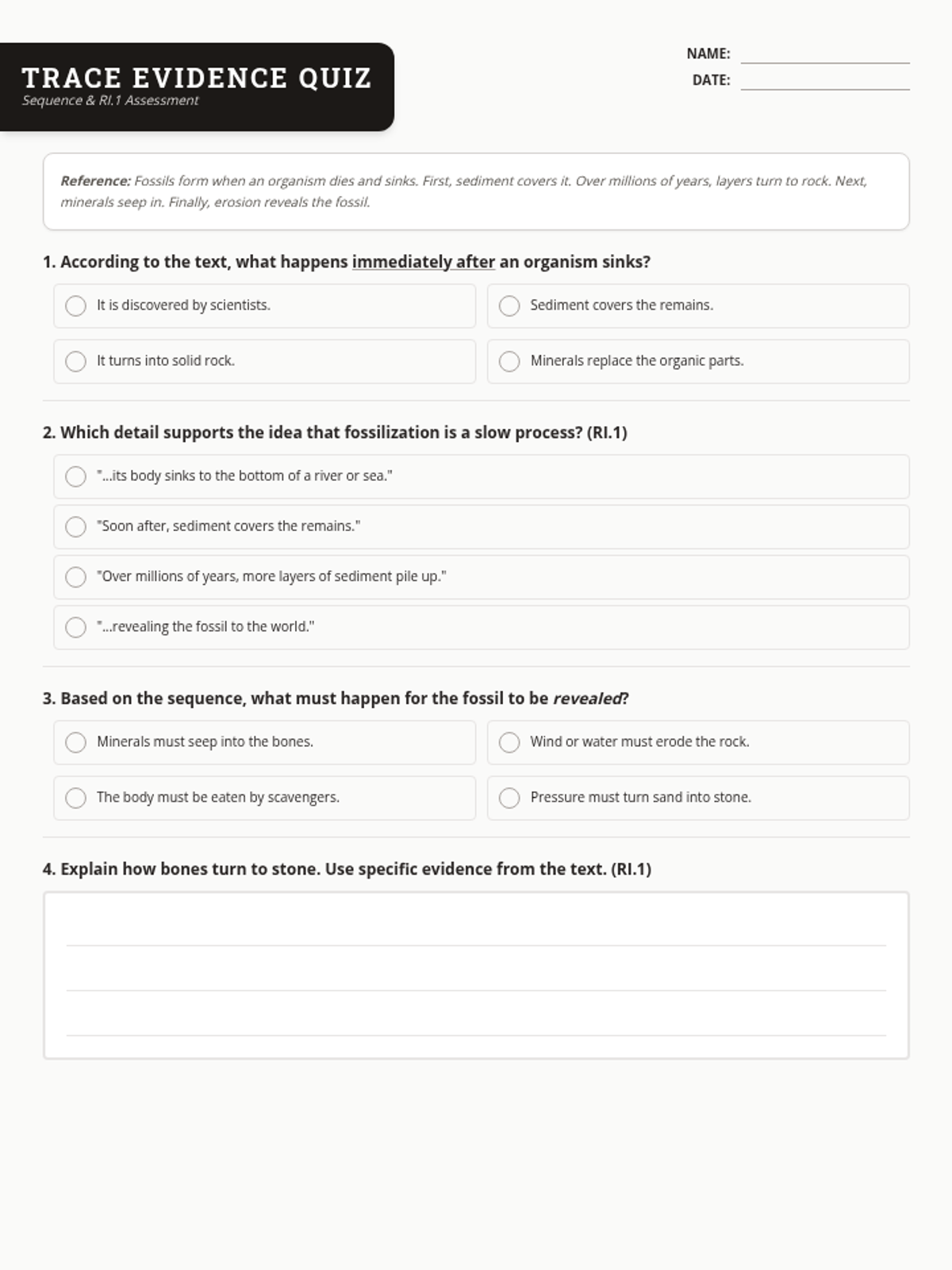
A science-focused lesson on sequencing informational text through the lens of fossil formation. Students will learn to identify temporal clues and map out complex natural processes.
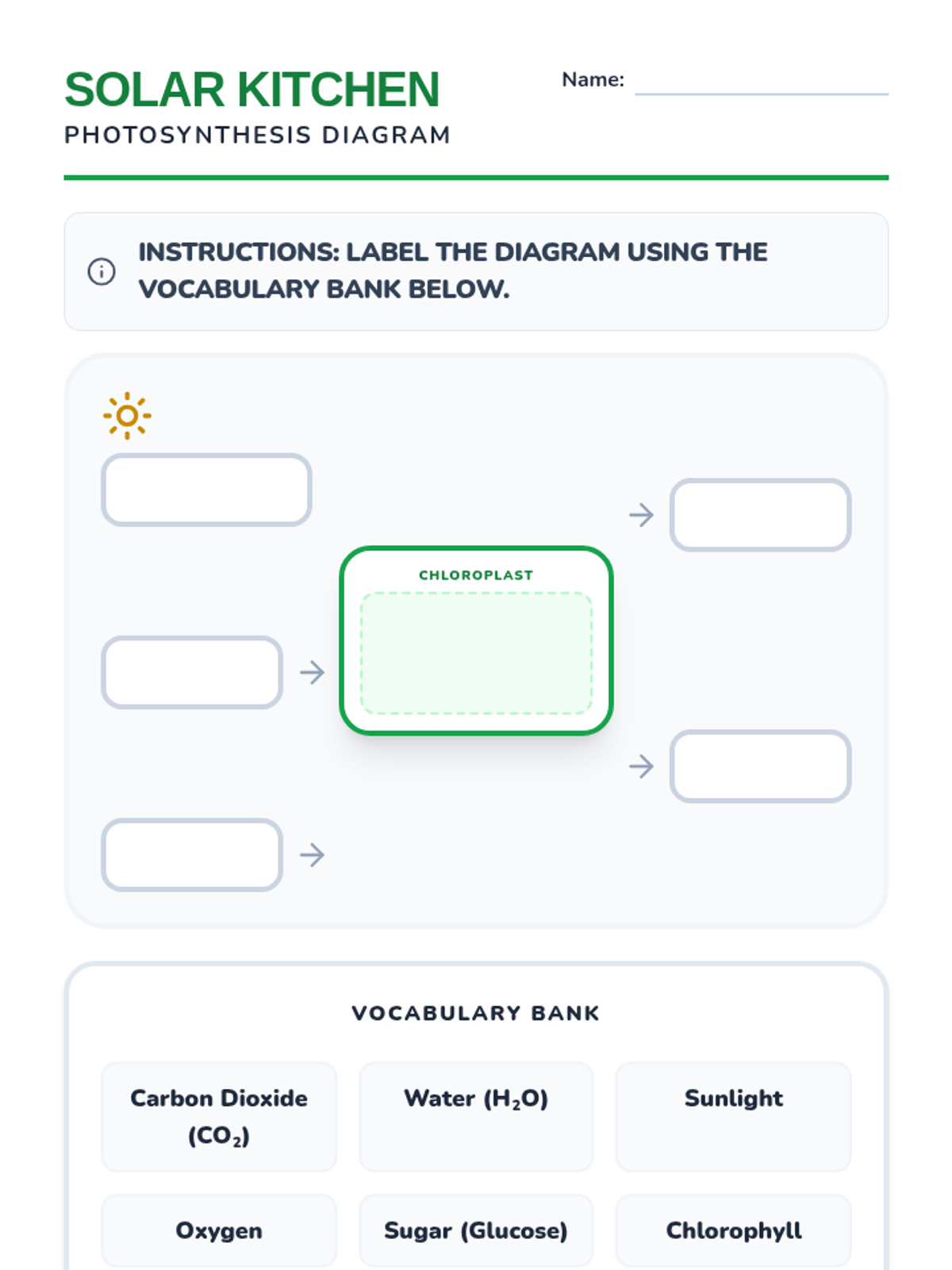
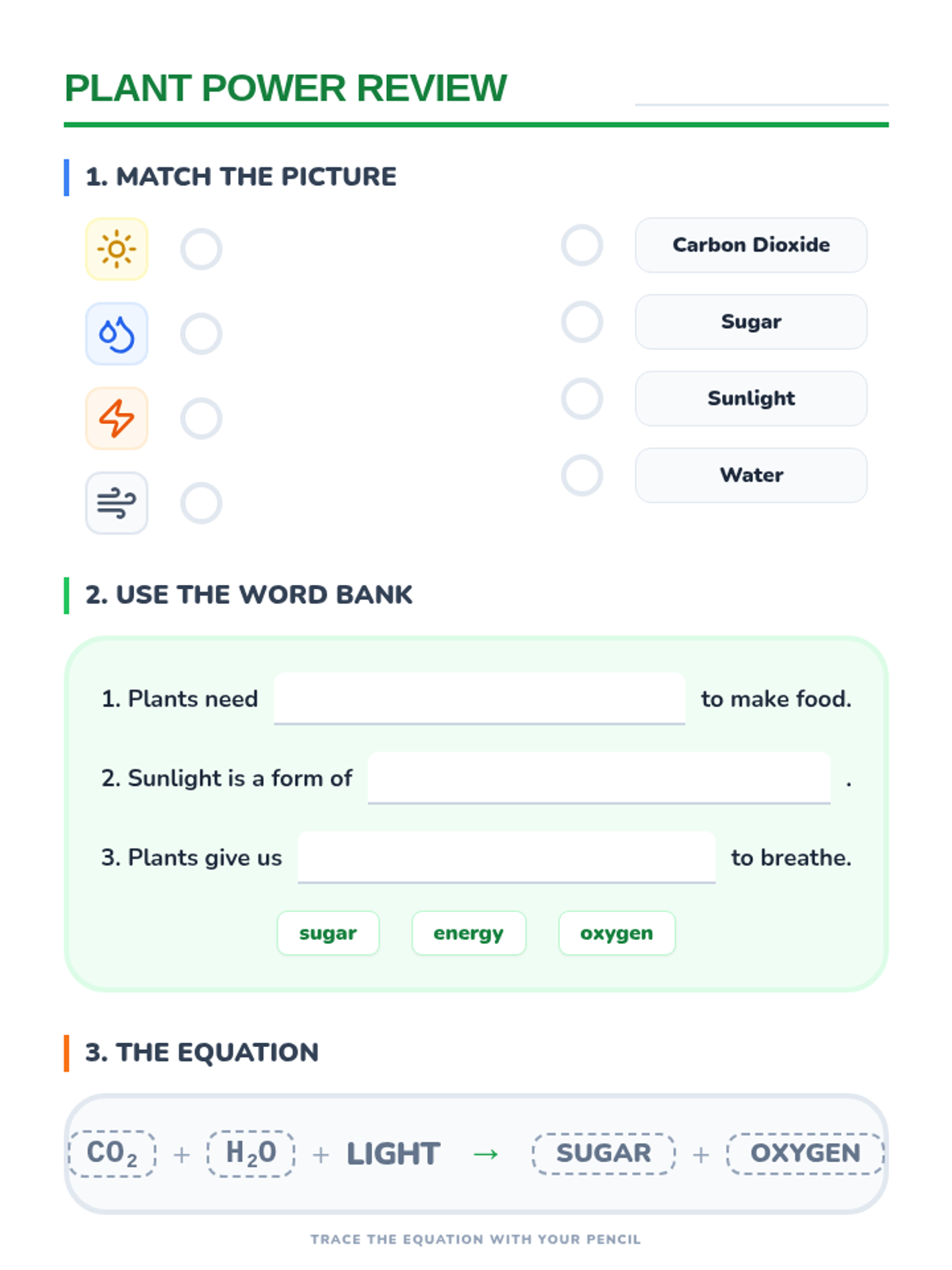
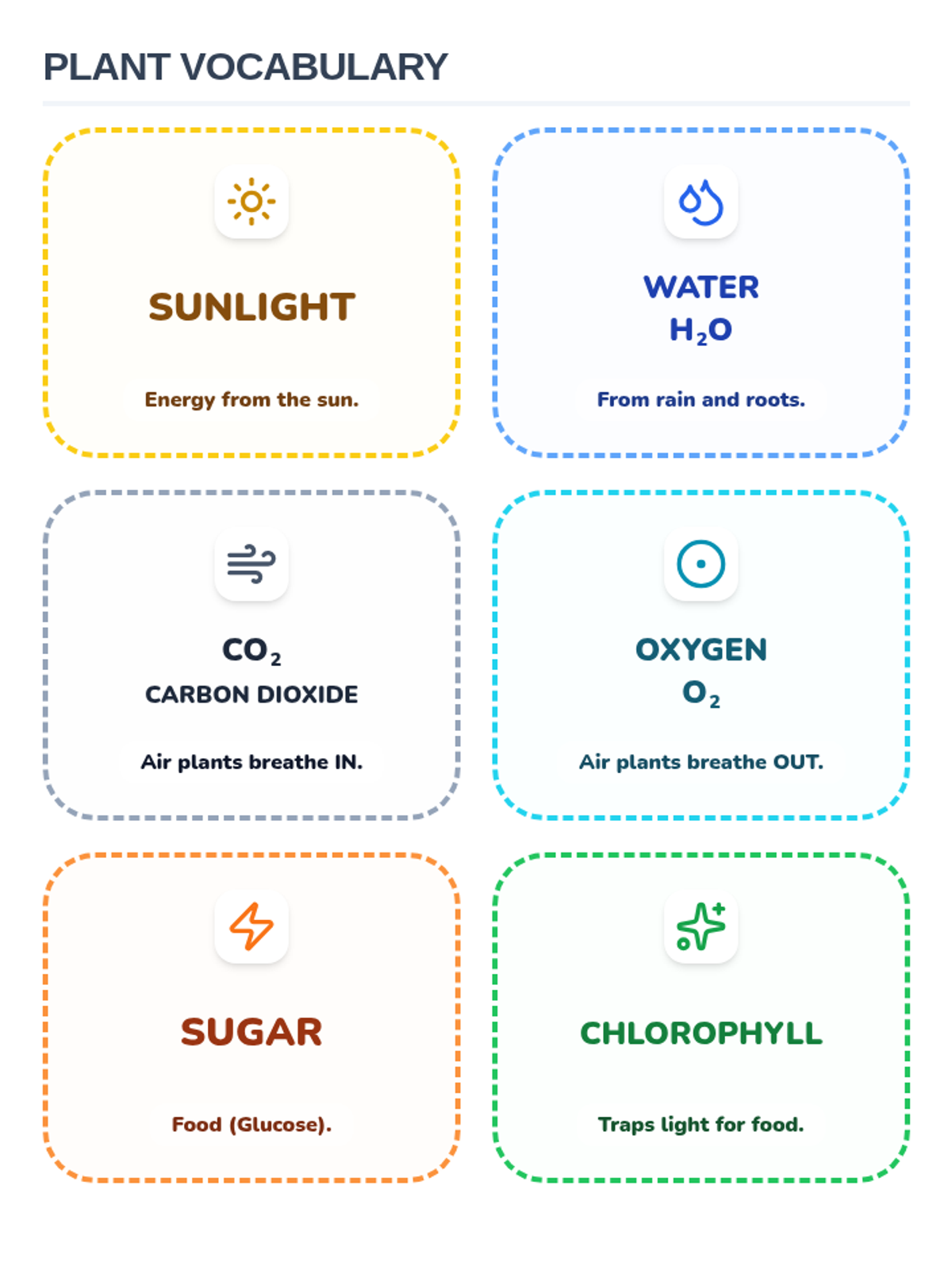
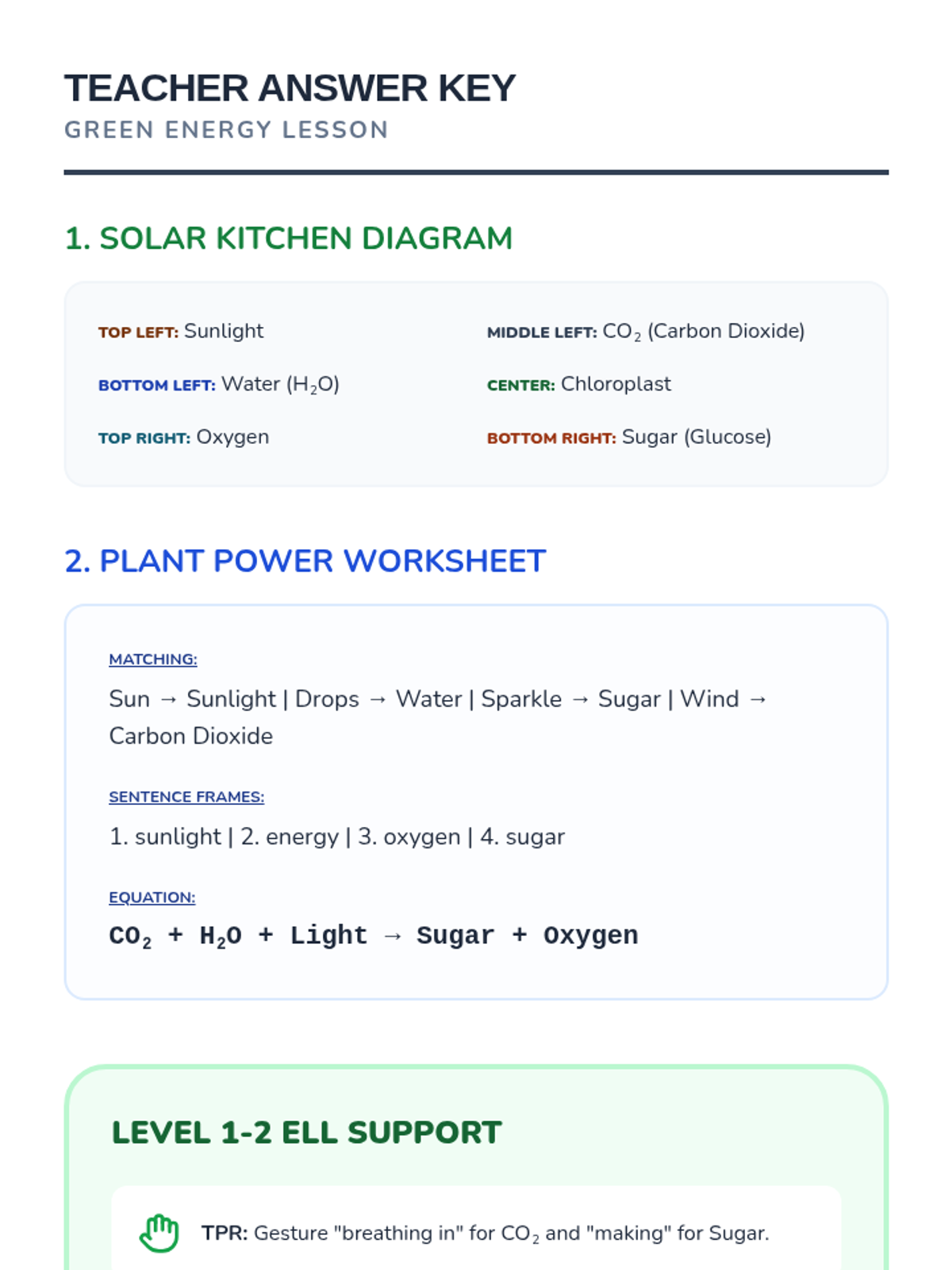
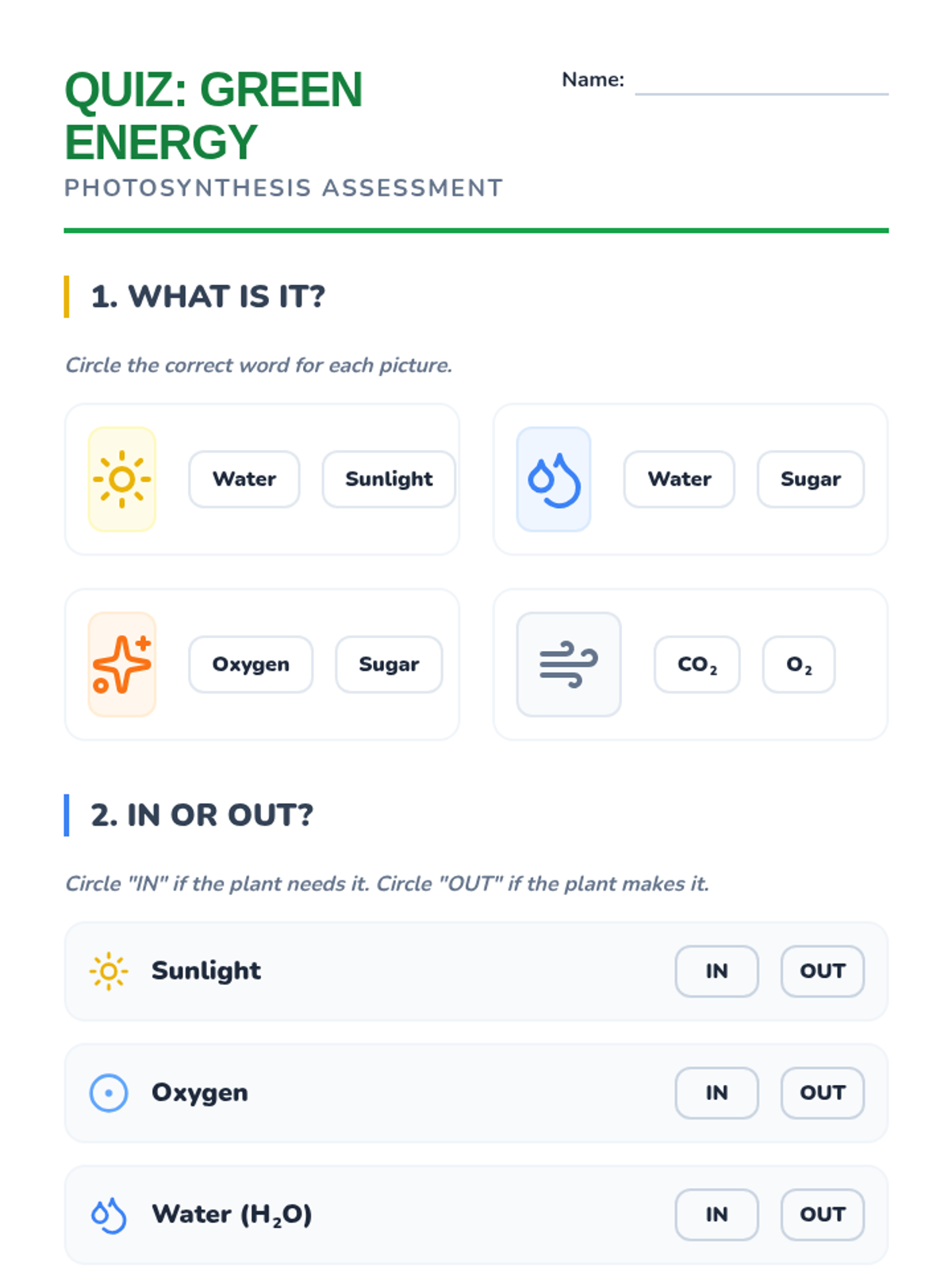
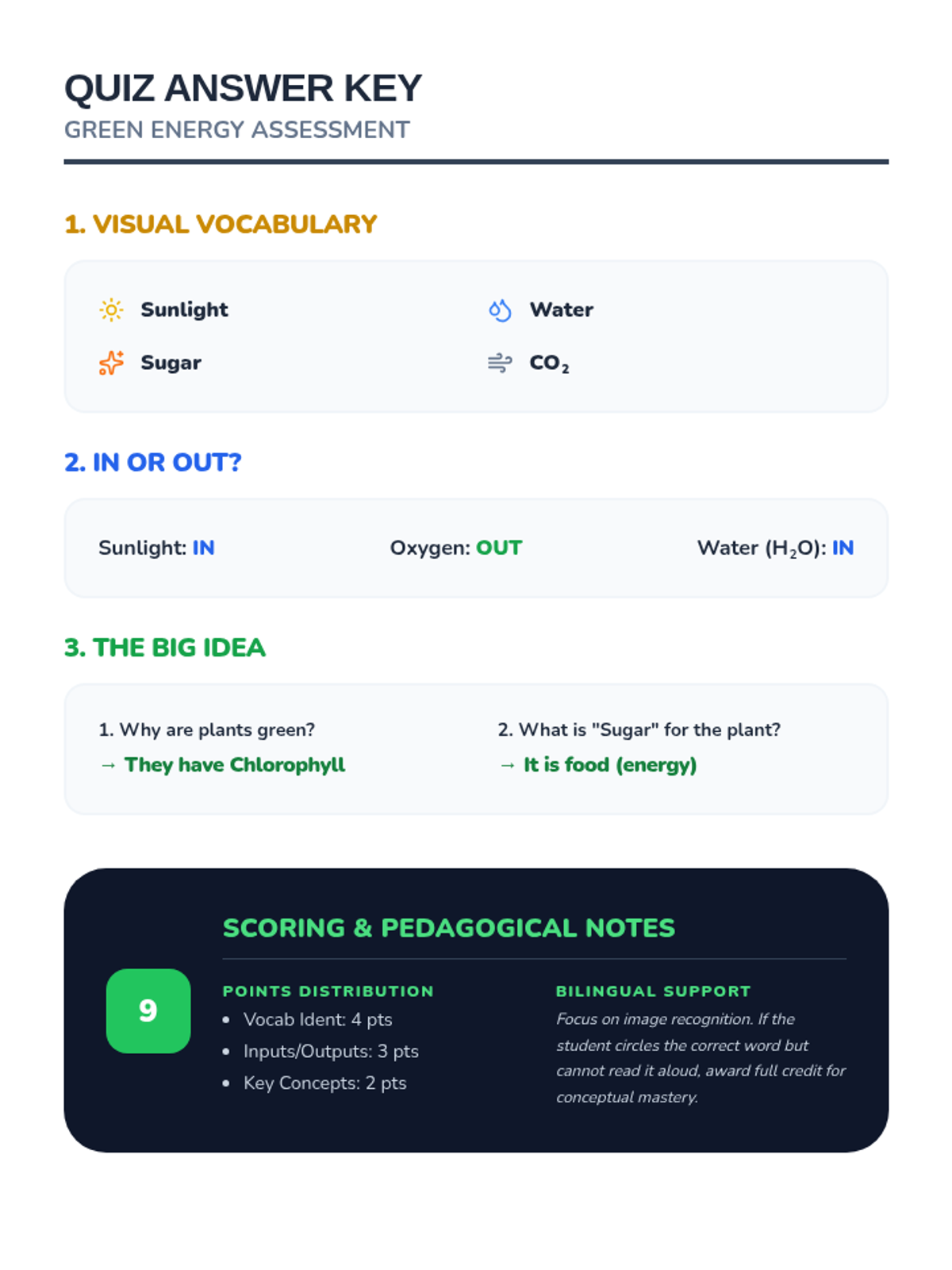
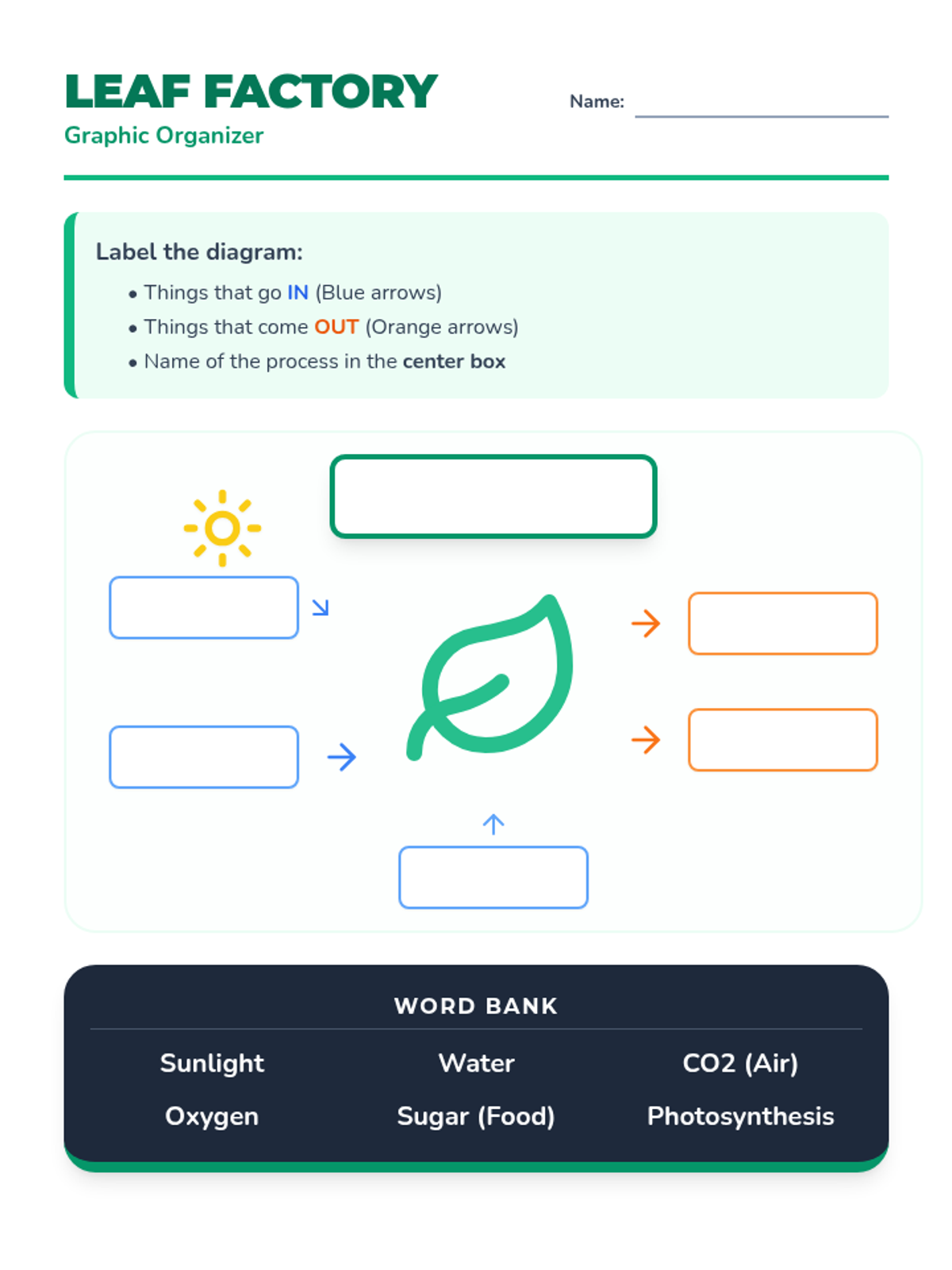
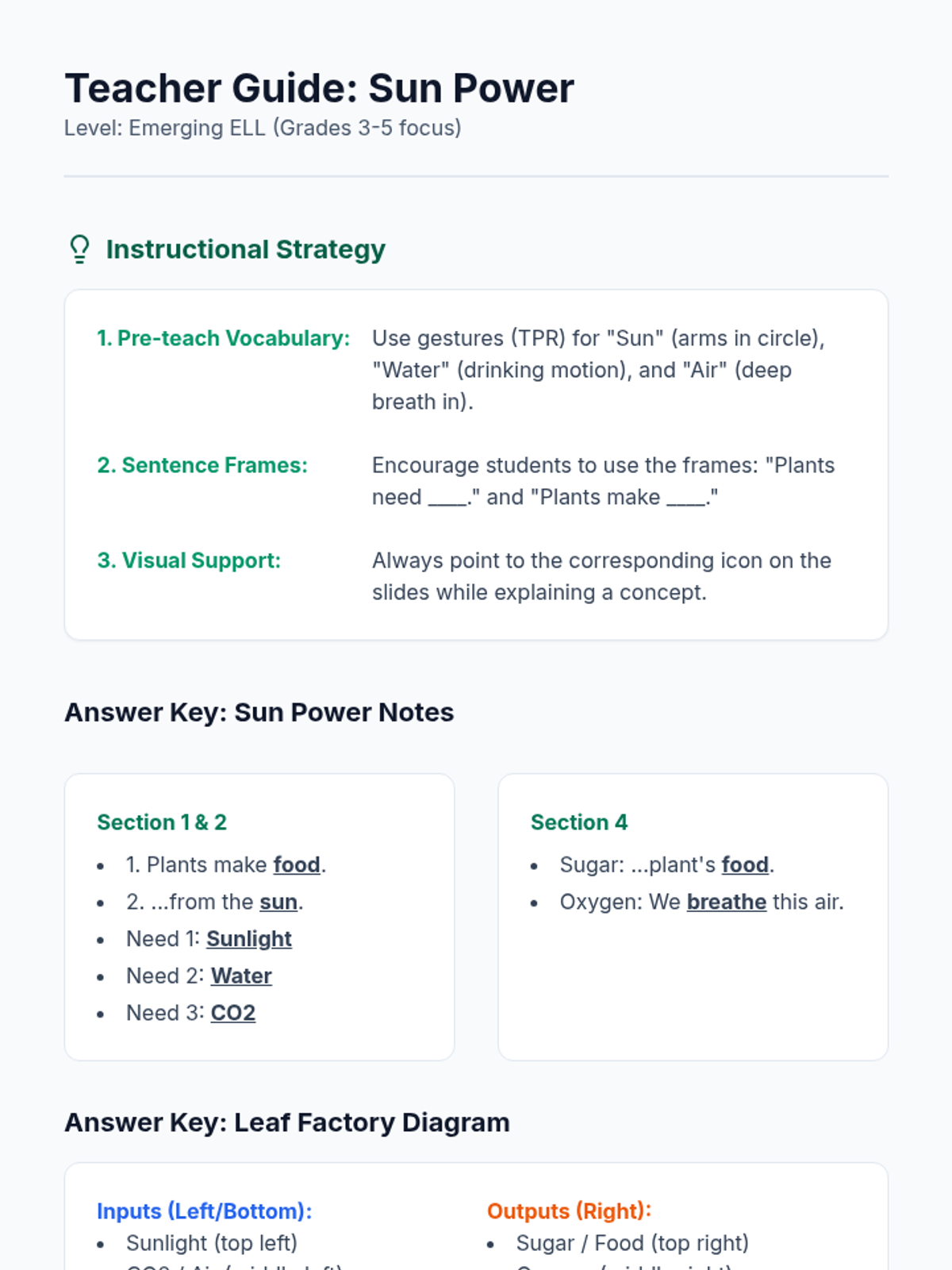
A visual-heavy lesson introducing the photosynthesis equation and basic inputs/outputs, specifically designed for emerging level bilingual students (ELLs). The lesson uses a 'Solar Kitchen' metaphor to simplify complex biological processes.
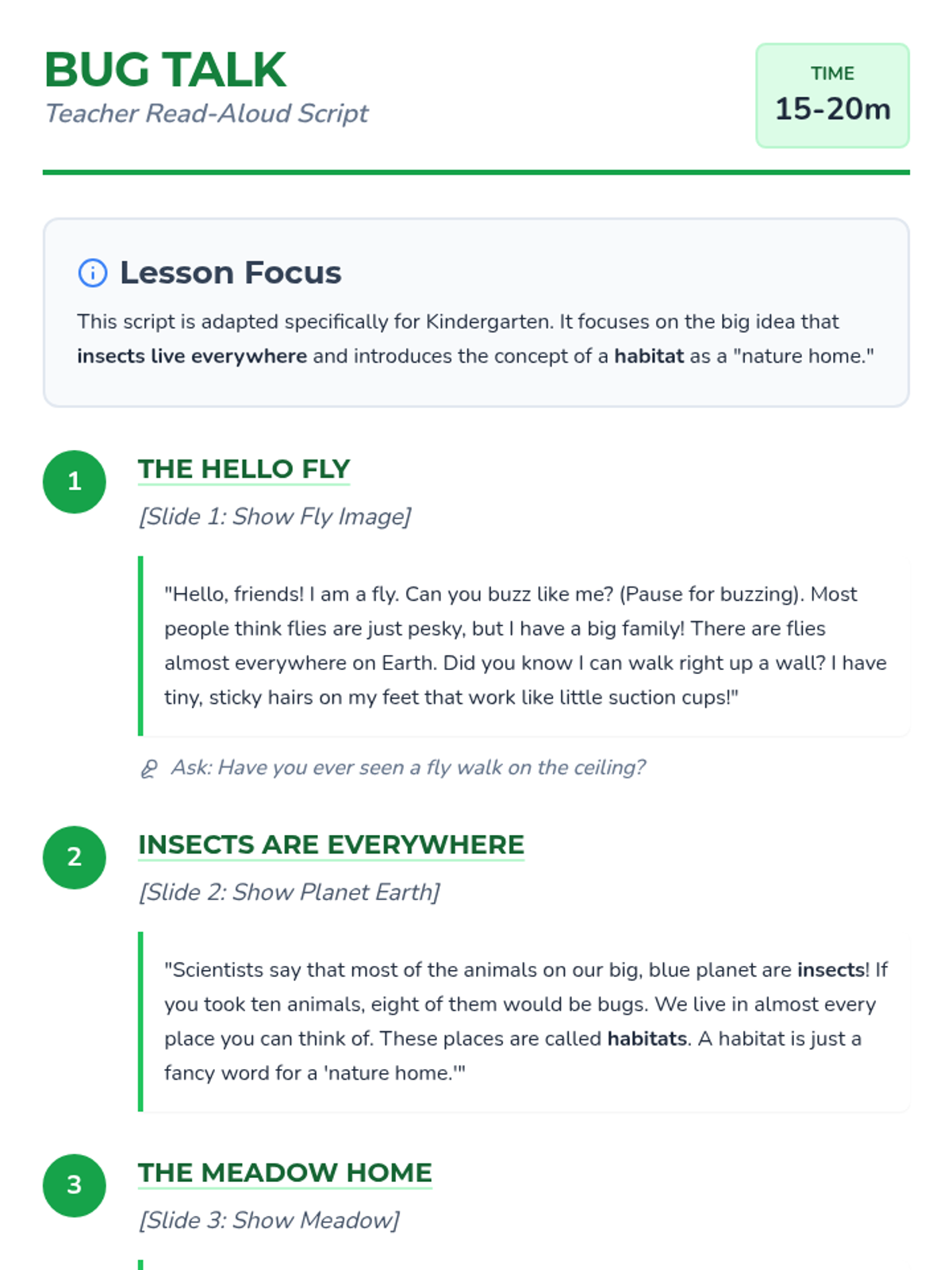
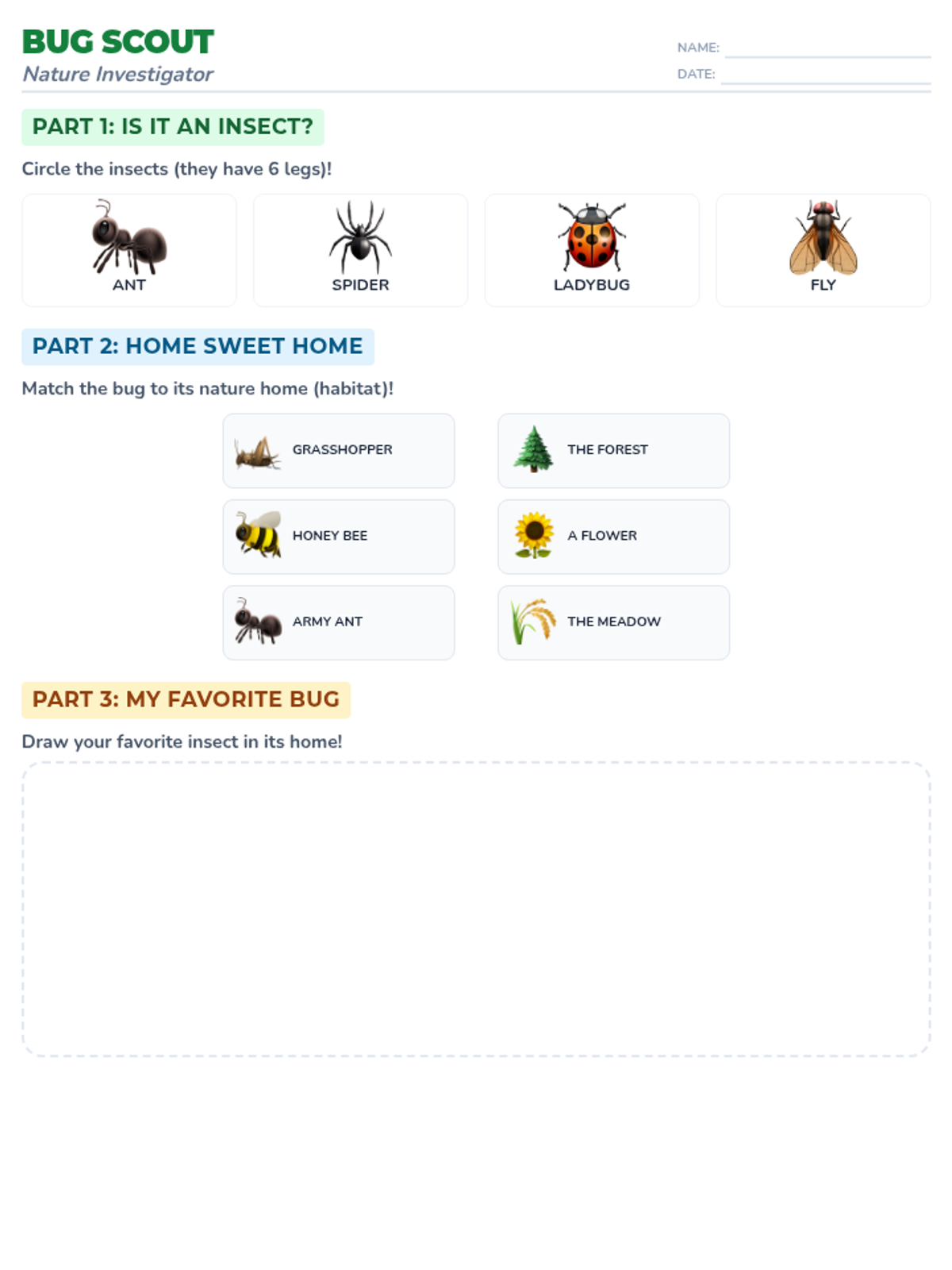
An introductory lesson where students meet different insects, learn what makes an insect an insect, and explore the various places they call home.
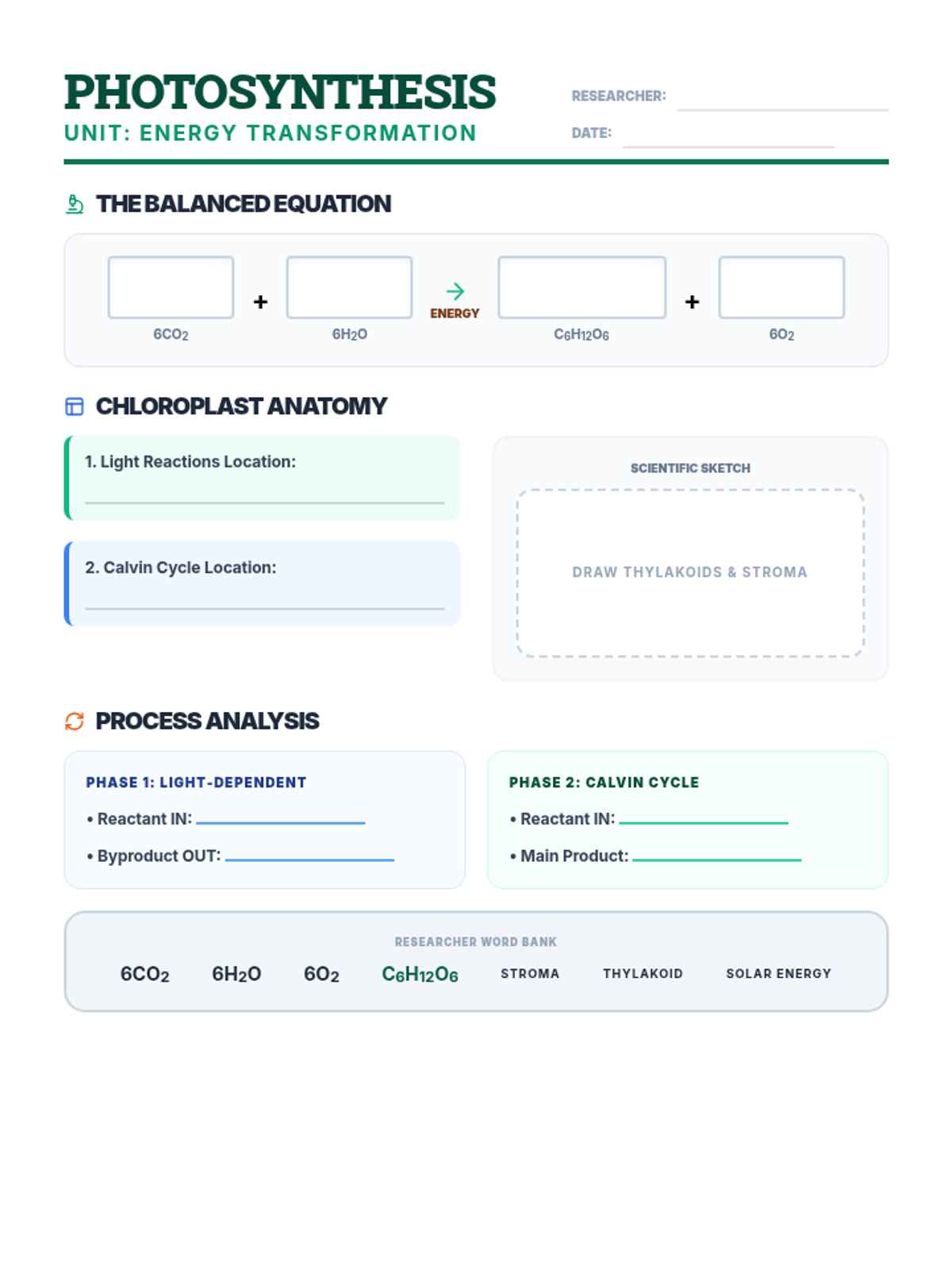
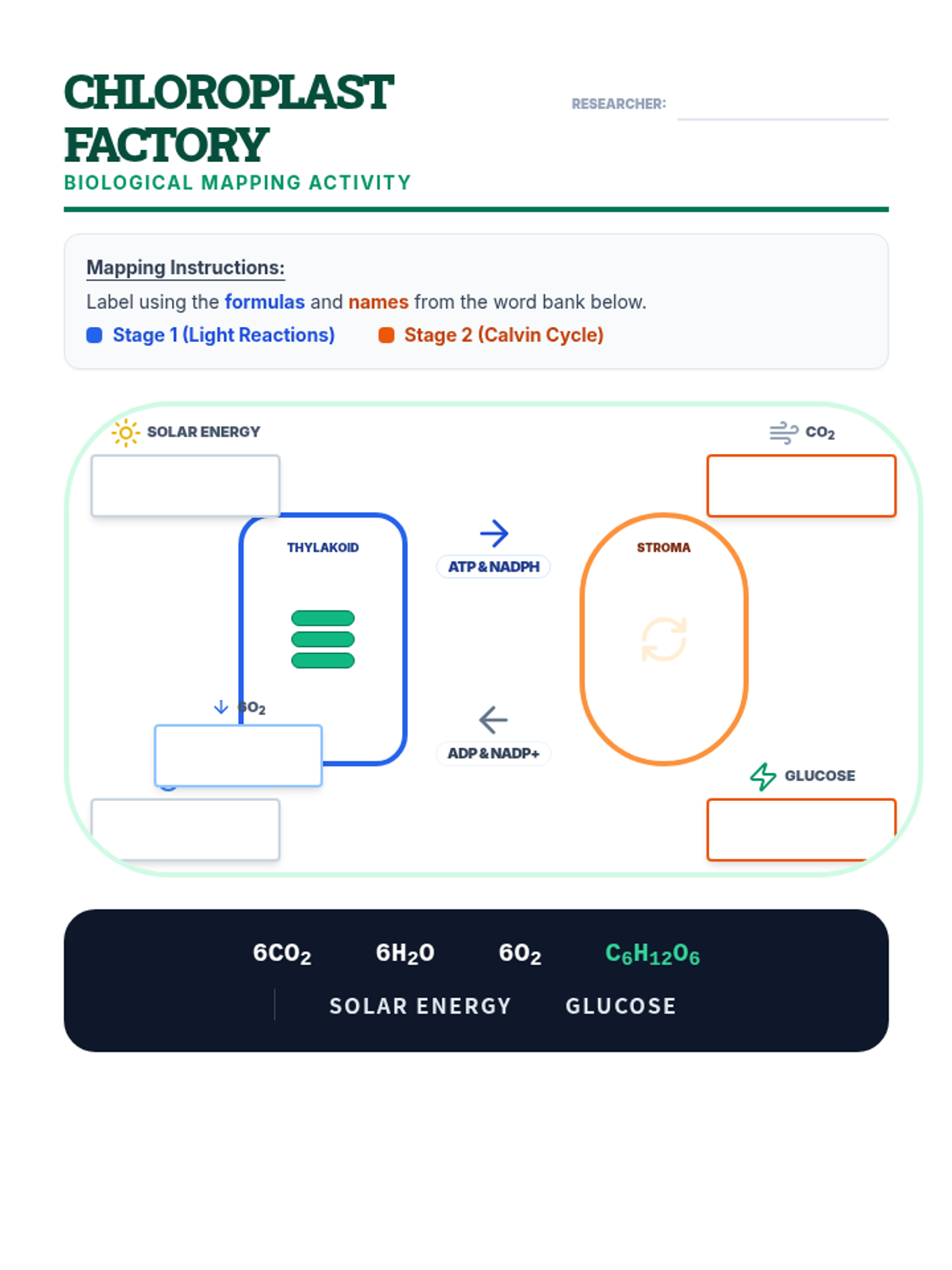
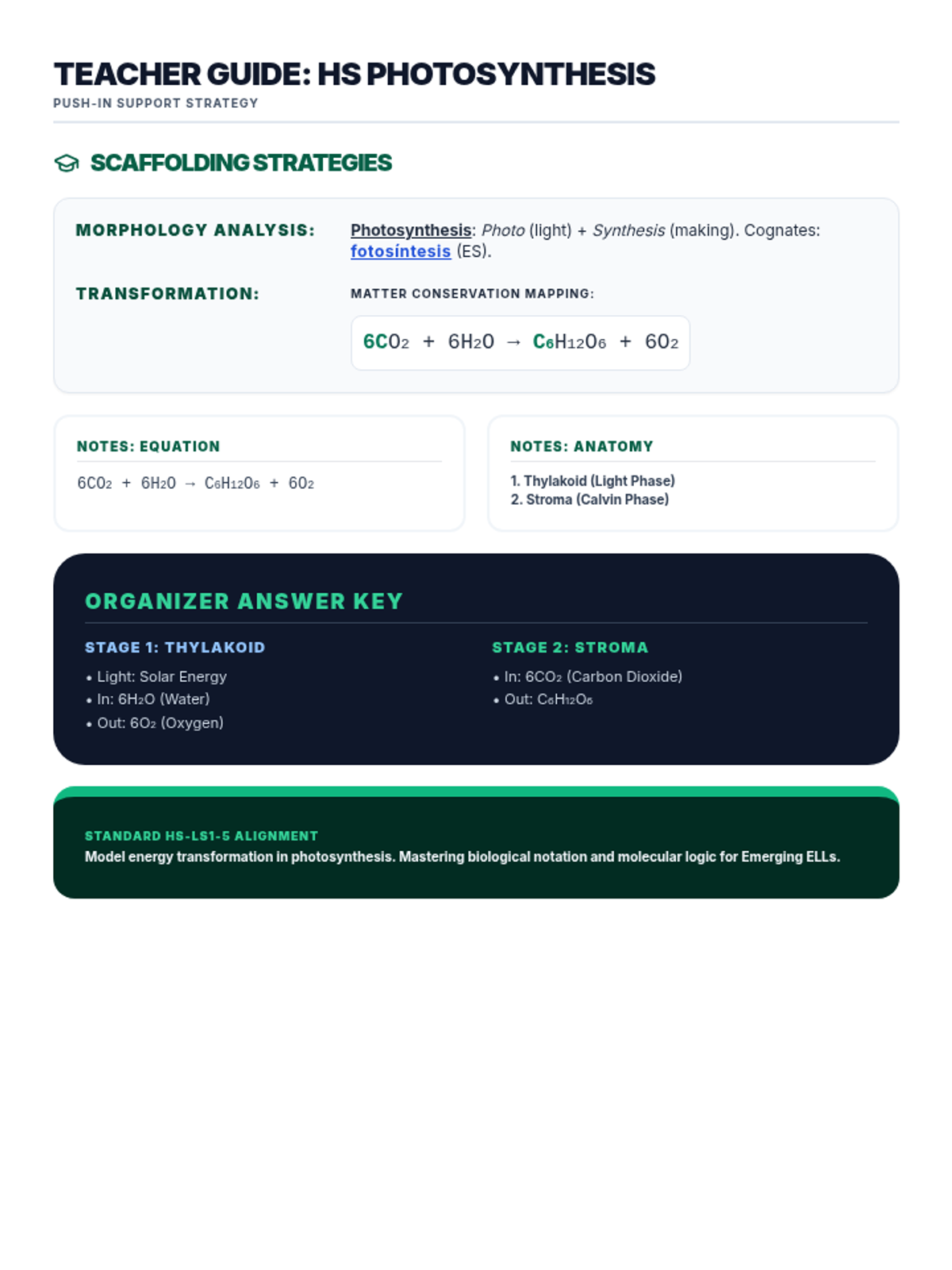
A high school-level introduction to photosynthesis for Emerging ELL students, focusing on chloroplast structure, the chemical equation, and the two stages of the process (Light-Dependent and Calvin Cycle) with linguistic scaffolding.
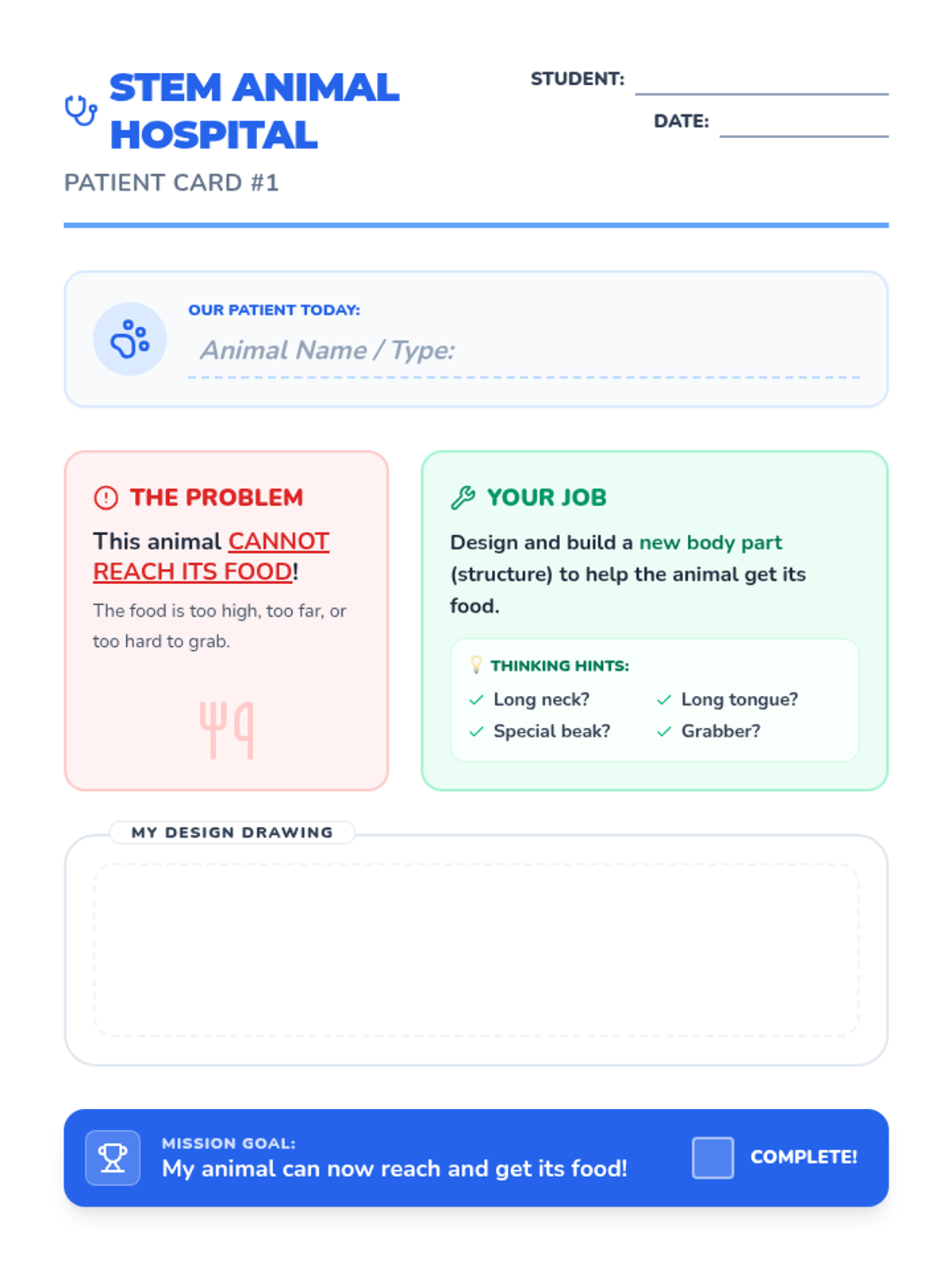
A hands-on STEM lesson where 1st graders design and build structural adaptations to help animals solve specific survival problems.
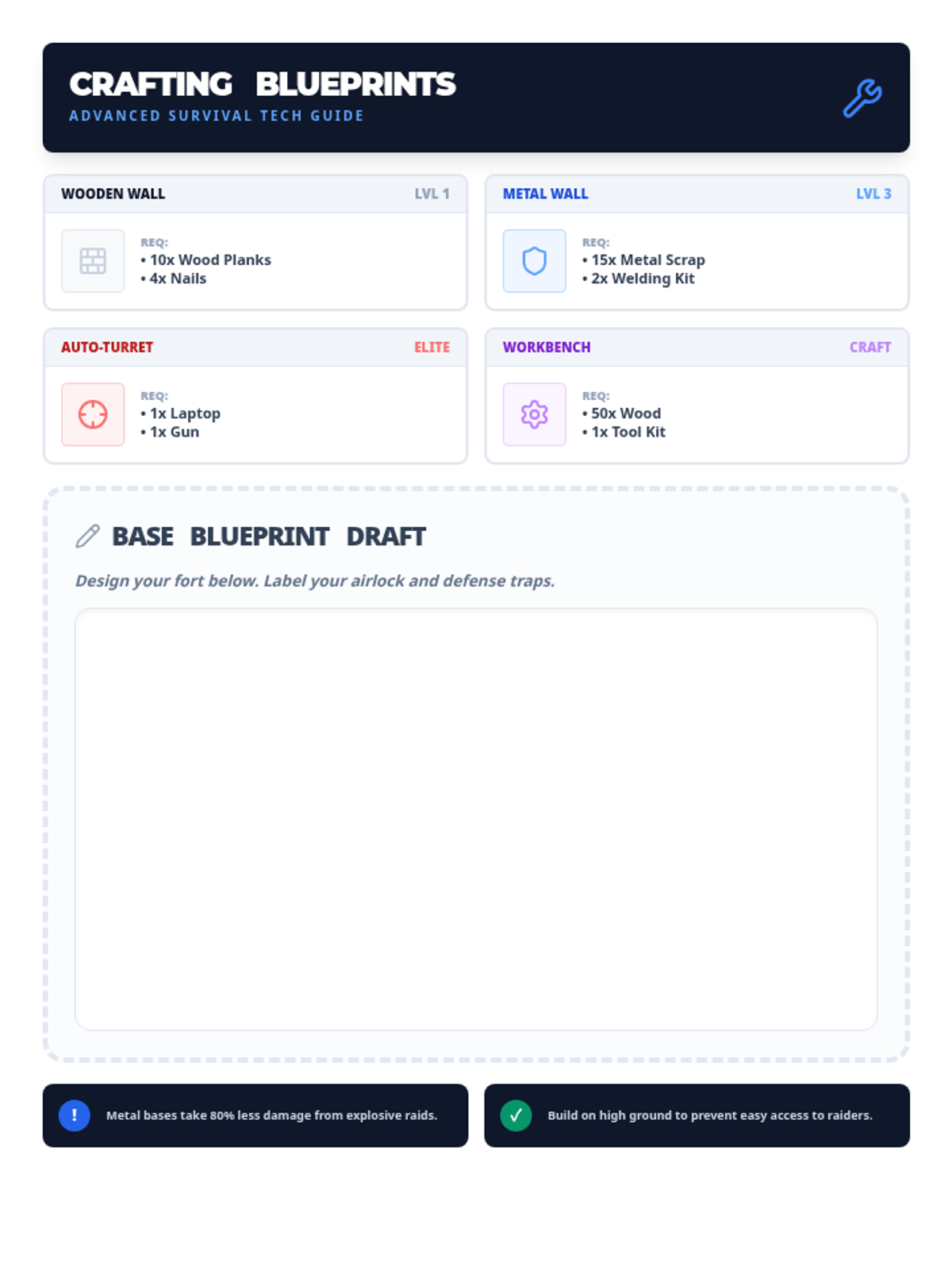
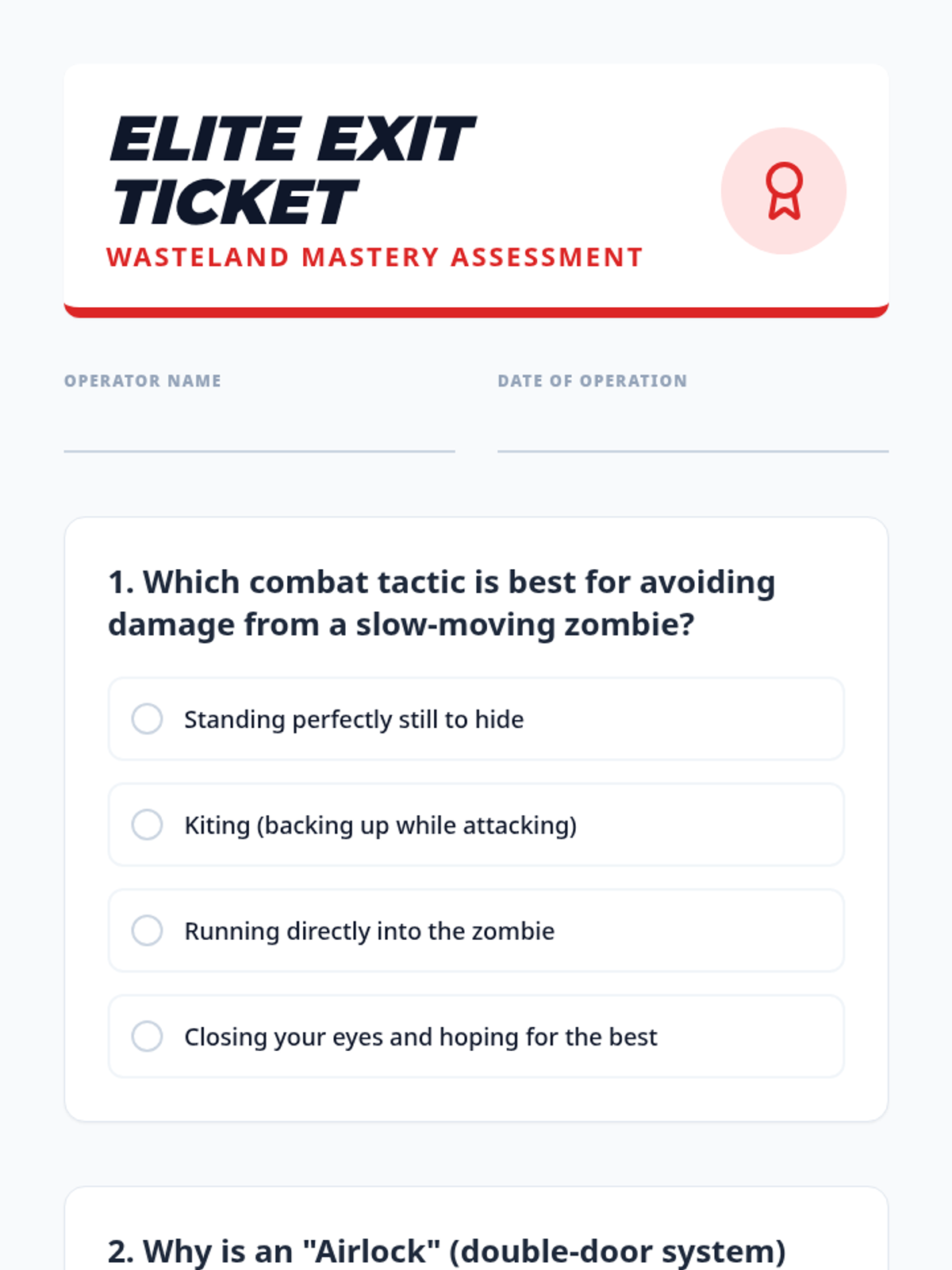
Moving beyond mere survival, this lesson covers weapons, combat strategies against various enemies, and the intricacies of building a secure base. Perfect for players ready to dominate the wasteland.
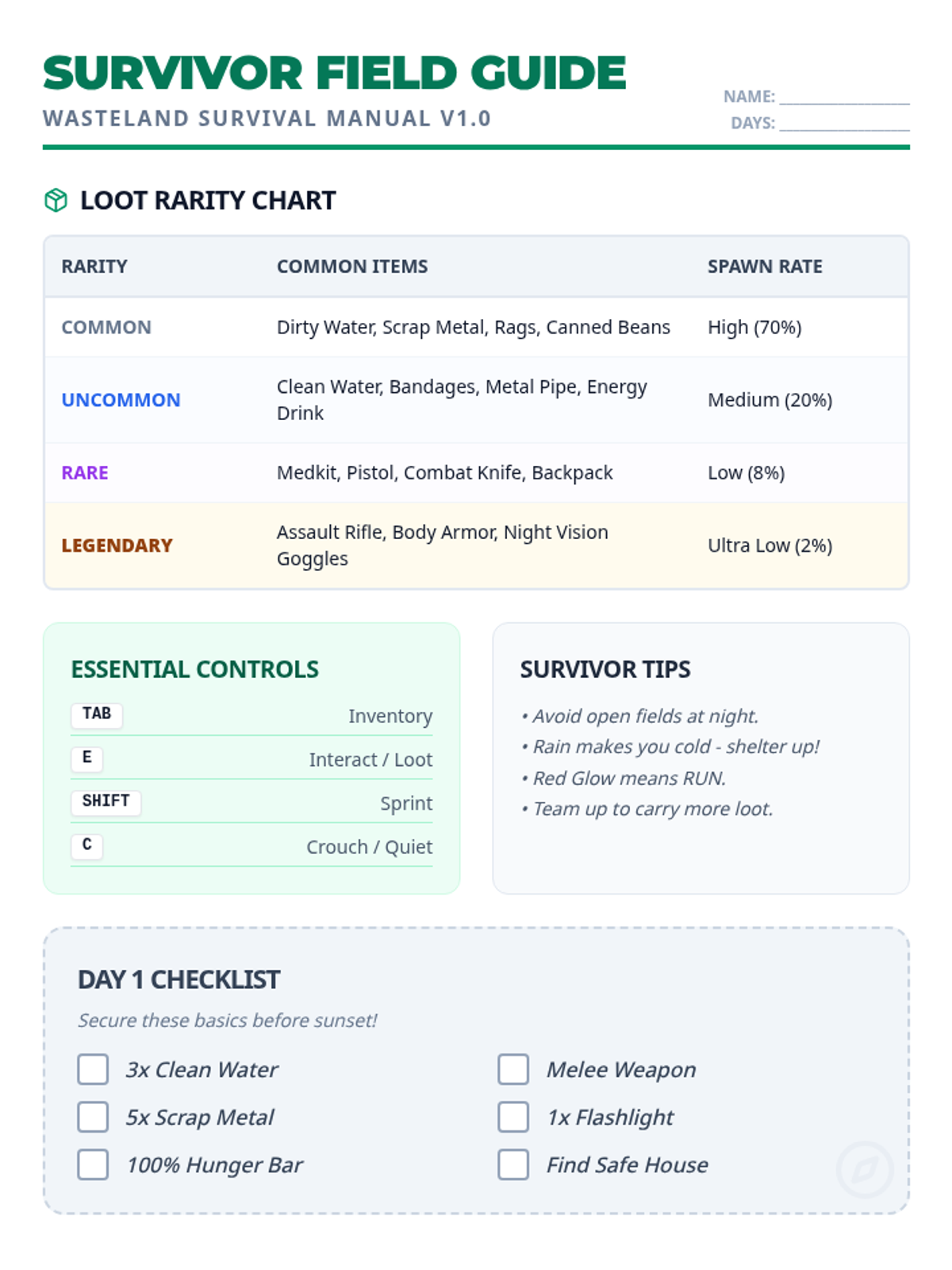
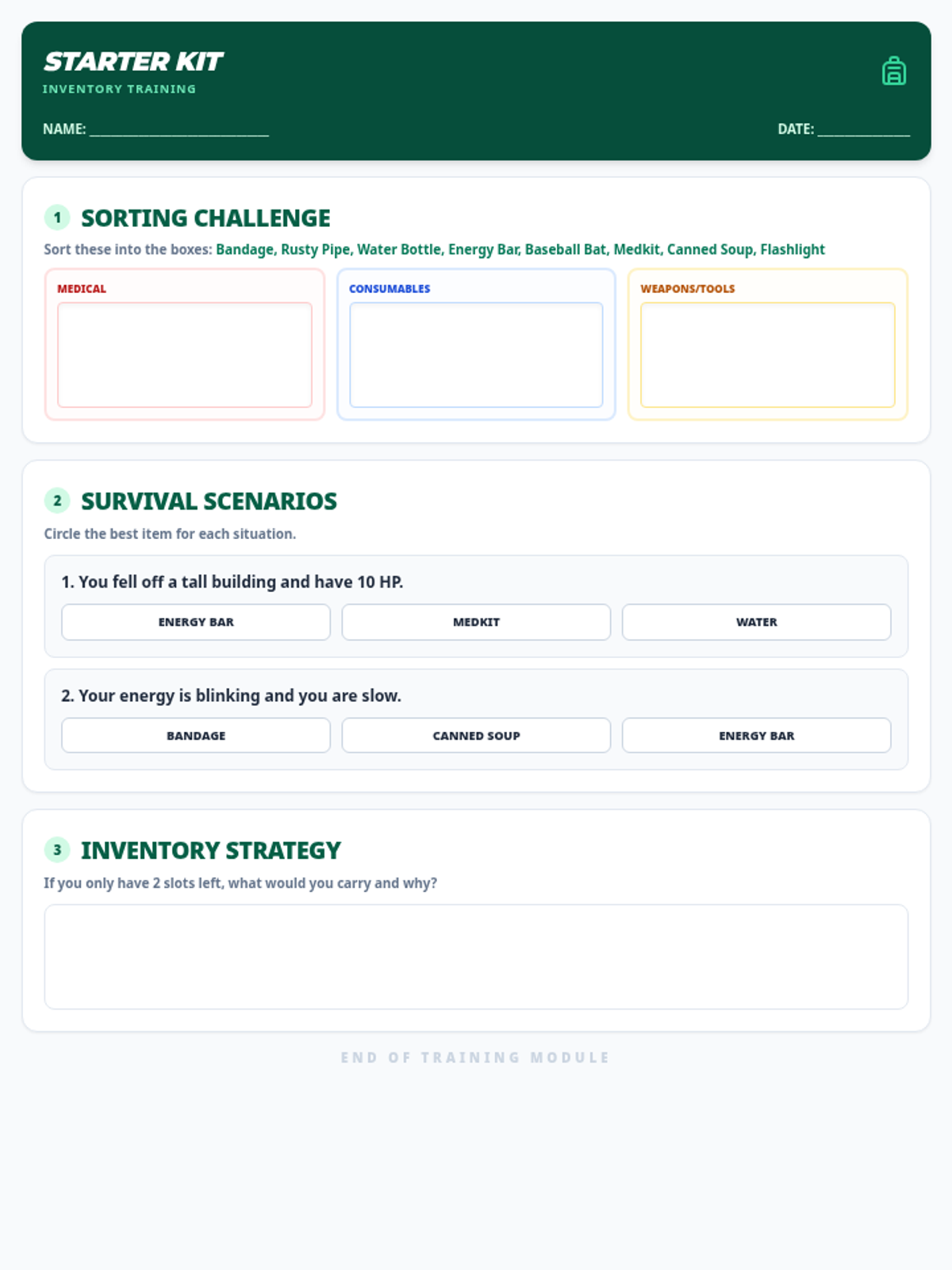
The foundation of any Forsaken player's journey, focusing on UI navigation, essential survival stats, and the first day of gameplay. Students will learn how to scavenge for resources and keep their character alive.