A foundational lesson for K-1 students distinguishing between survival essentials (needs) and items that are nice to have (wants) using a 'Grocery Store' theme.
A lesson for kindergarten students introducing the concept of voting, fairness, and the historical struggle for voting rights through the story of Rosa Parks.
Master the essential terminology of Ancient Rome through visual and descriptive flashcards.
Solve complex multiplication word problems using multiple strategies including arrays and area models.
Track and reflect on daily reading progress with differentiated logs for various ability levels.
Analyze the key figures, events, and documents of the American Civil Rights Movement.
Explore how plants transform sunlight into energy through the process of photosynthesis.
A 30-45 minute lesson exploring both the religious origins and secular traditions of Easter, including a social story for behavioral expectations and a symbol-matching activity.
Discover the shape of our nation through the US Map and review all symbols with a sorting challenge.
Explore the history and meaning of the Liberty Bell and the White House as symbols of independence and leadership.
Introduce the concept of national symbols and focus on the American Flag and the Bald Eagle as symbols of freedom and strength.
A lesson investigating the political instability that led to the Fall of Rome, featuring differentiated evidence files for diverse reading levels. Students work collaboratively to diagnose the empire's 'political sickness.'
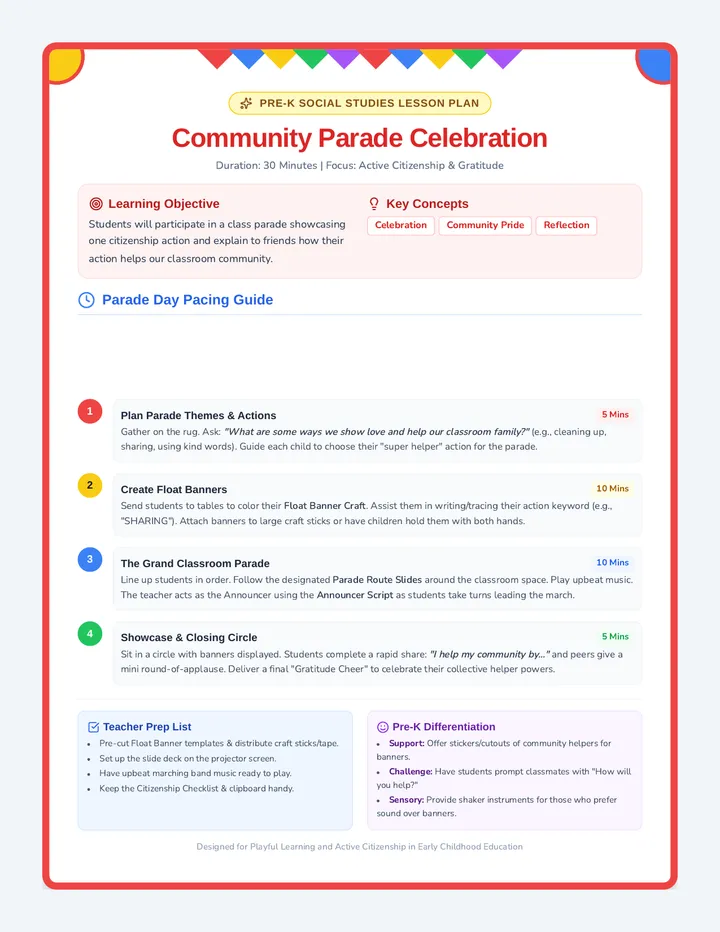
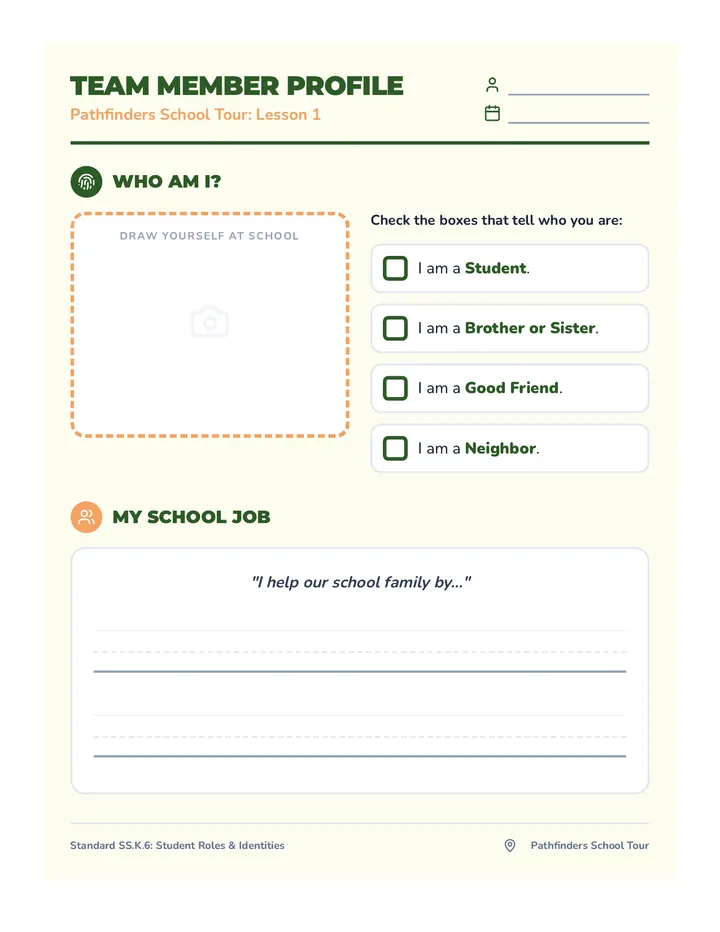
A lesson designed to help kindergarten students understand the concept of community by identifying and reflecting on the groups they belong to through drawing and early writing.
A comprehensive lesson on the colonial bread-making process, featuring the roles of millers and bakers, bartering practices, and sequencing the steps from grain to loaf.
A quick visual identification activity where students recognize the seven continents by their silhouettes alone.
Foundational literacy activities focusing on CVC word families through tactile sorting and visual identification.
An in-depth exploration of Ancient Egyptian civilization for sixth-grade students. This lesson covers geography, social structures, religious practices, and daily life, utilizing visual slides and interactive guided notes.
A collection of coloring pages featuring influential women from history and modern times, designed to inspire students through art and reflection.
An entirely unplugged introduction to logic and algorithms. Students explore step-by-step traditions and secret codes using physical patterns and movement games.
Celebrating cultural heritage through physical artifacts and oral histories. Students learn to analyze primary sources and explore informational text features like Table of Contents and Glossaries.
Reflecting on a year of learning, reviewing library organization (Dewey Decimal), and preparing for summer reading adventures.
Honoring Women's History Month by exploring female inventors and engineers, featuring hands-on 'She-gineering' challenges.
Celebrating Black History Month through the lens of Afrofuturism, blending history with visionary STEM challenges and science fiction.
Focusing on biographies and the legacy of Dr. Martin Luther King Jr., while practicing research and note-taking skills.
A focus on informational texts and non-fiction research skills, centered around Native American Heritage Month and the concept of 'Giving Thanks.'
Exploring the mystery and suspense genres through 'Spooky Stories' and engineering 'Maker Monsters' in the STEM lab.
Welcome back to the library! This unit focuses on library orientation, procedures, the 'Heart of the School' concept, and establishing a collaborative Maker Mindset.
A week-long exploration of poetry and nature, focusing on sensory language and observational skills in the library and media center. Includes differentiated worksheets and slides.
An intensive, highly scaffolded lesson on the Bill of Rights for students requiring Tier 3 support, featuring simplified language, heavy visual prompts, and step-by-step guidance.
A targeted lesson on the Bill of Rights for students requiring Tier 2 support, focusing on academic vocabulary and structured planning for a poster project.
A beginner-friendly introduction to Ancient Rome for early first graders, focusing on simple geography, clothing, and famous structures.
A festive collection of St. Patrick's Day activities focusing on vocabulary and Irish folklore.
A series of visual retelling supports and comprehension tools for Harriet Tubman's early life, covering her childhood responsibilities and her mother's story of their family's origins.
A series of visual retelling supports and comprehension tools focused on the story of young Minty (Harriet Tubman) watching over a baby. This lesson uses visual prompts to help students sequence events and understand character emotions and setting.
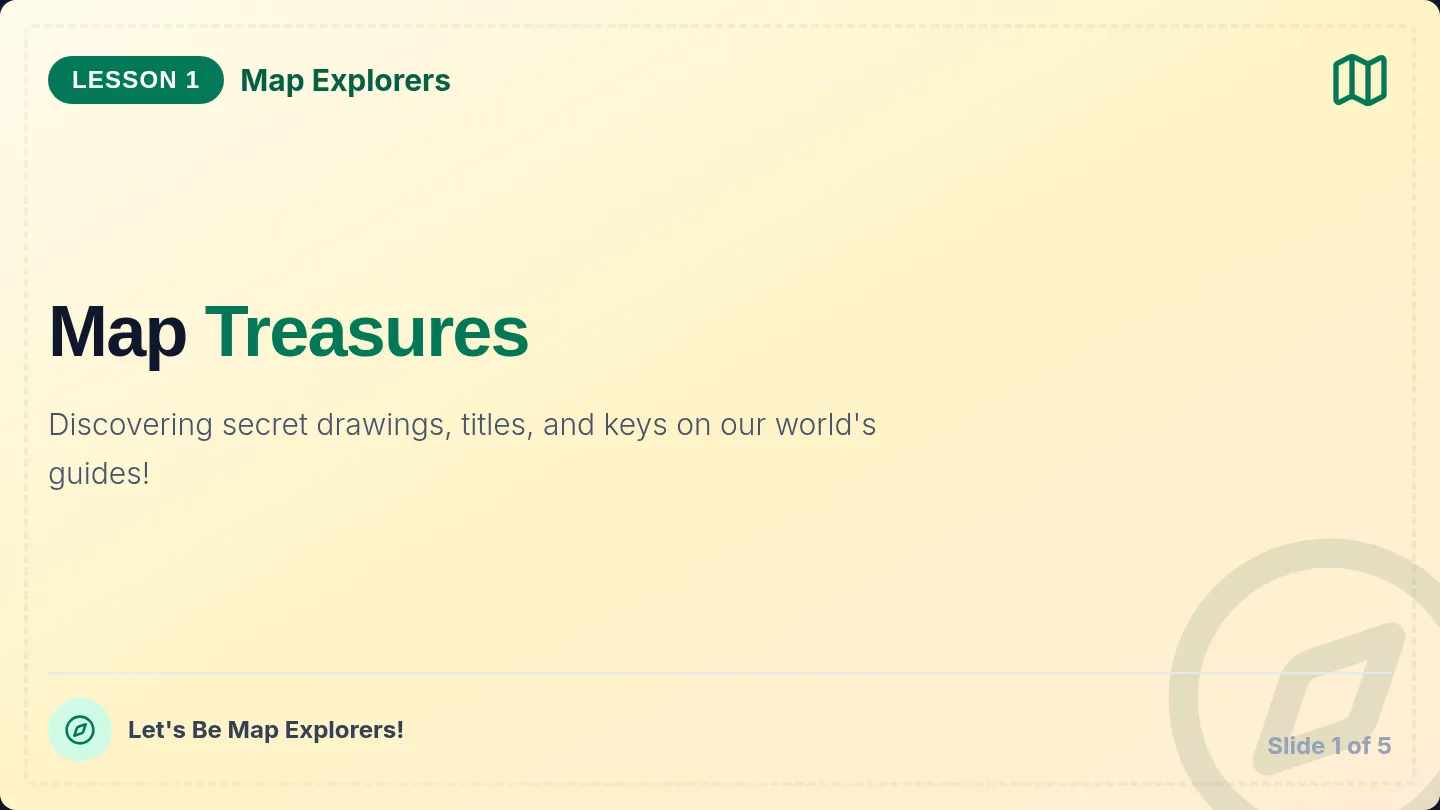
This introductory kindergarten lesson builds background knowledge about maps through photo exploration, a character-driven read-aloud, and the start of a close-reading session of a non-fiction text. Students practice observation, prediction, and collaborative discussion skills using the Tea Party protocol.
Cette formation pour les professeurs de TPS-PS vise à professionnaliser la conception des "traces" d'activités (cahiers de vie, affichages). En s'appuyant sur les photos de classe et les guides 2025, les enseignants apprennent à rendre les apprentissages explicites pour les élèves et les familles.
Cette formation vise à outiller les conseillers pédagogiques pour l'analyse et l'exploitation de ressources diverses (vidéos, manuels, guides) dans le cadre de la formation continue des professeurs des écoles en français, conformément aux orientations stratégiques nationales.
Cette leçon vise à introduire un projet d'écriture authentique en Grande Section : rédiger un message aux parents pour annoncer une sortie scolaire. Elle s'appuie sur l'observation de messages existants pour définir des critères de réussite et initier la planification selon les programmes 2025.
A foundational geography lesson designed to help students identify and name the seven continents through visual exploration, fact-finding, and hands-on matching activities. Students will explore unique characteristics of each landmass and practice spatial awareness by labeling a world map.
A foundational lesson exploring the concepts of past, present, and future through storytelling, identification exercises, and active task-based learning. Students will learn to distinguish between different time periods and the verb tenses associated with them.
This lesson introduces first-grade students to the four cardinal directions (north, south, east, and west) using a compass rose and fun mnemonics to aid navigation and map reading.
This lesson explores the Maya civilization, focusing on their farming techniques (maize), the geography of the rainforest, and the structure of their ancient cities. Students will learn about the importance of 'The Three Sisters' and the role of the Maya kings.
The final day reviews all learned traditions and concludes with a joyful pop-up card craft to share the celebration with family or friends.
Focusing on flowers and growth, students go outside to create a community chalk garden and search for the colors of spring.
Students learn why the bunny is associated with Easter and head outdoors for a 'Spring Detective' scavenger hunt to find signs of new life in nature.
Students explore the egg as a symbol of new life and create a vibrant stained-glass style egg craft to represent the brightness of spring.
A vibrant exploration of traditional clothing from the diverse home countries of our class, examining how climate, history, and identity shape garments from Latin America, Africa, Asia, and beyond.
A 1st-grade social studies lesson focused on identifying how rules and laws establish order, provide security, and manage conflict in our communities.