An 8th-grade STEAM lesson where students design and create holographic displays of museum artifacts, integrating science, technology, engineering, art, and math with global sustainability goals.
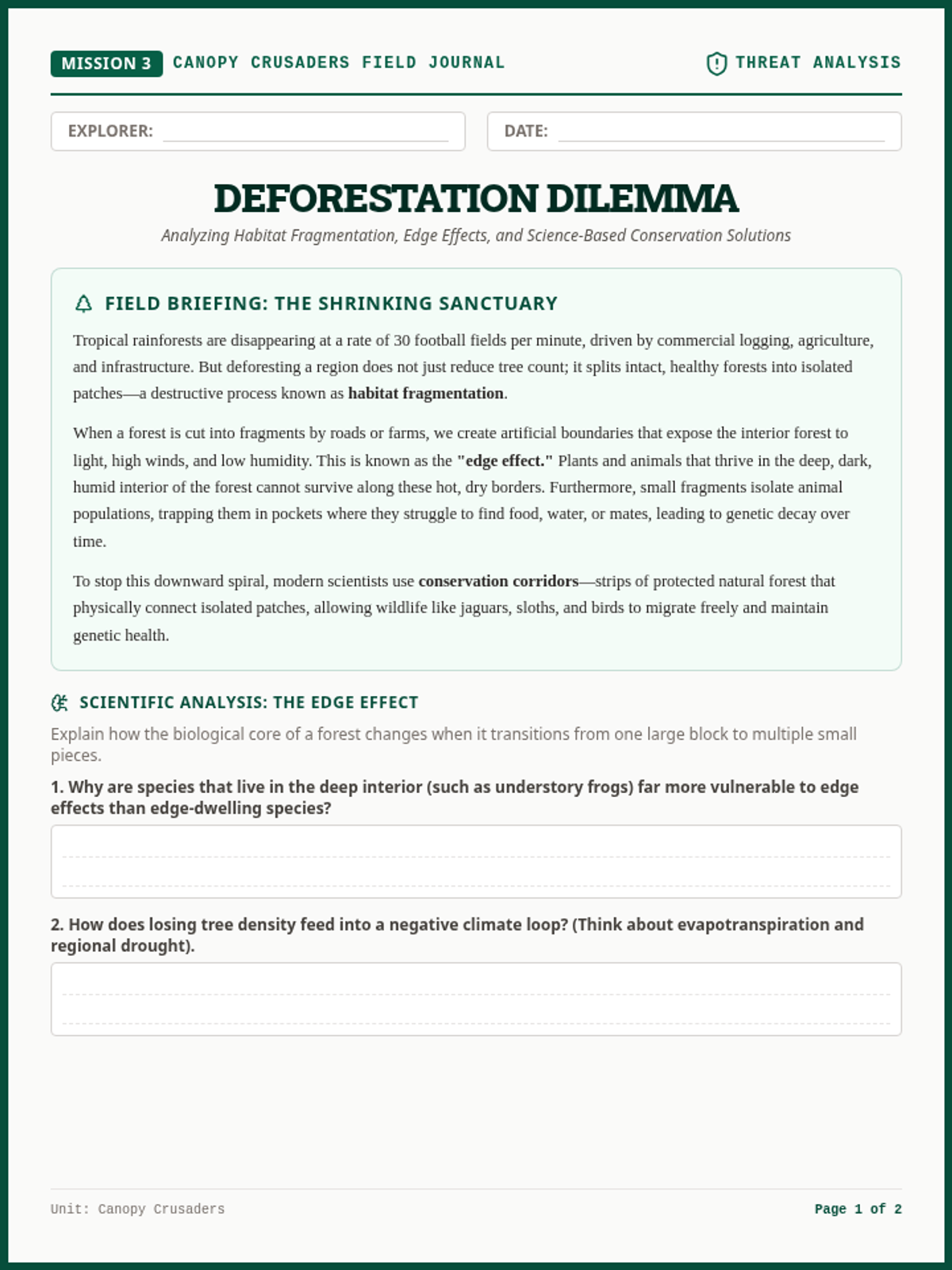
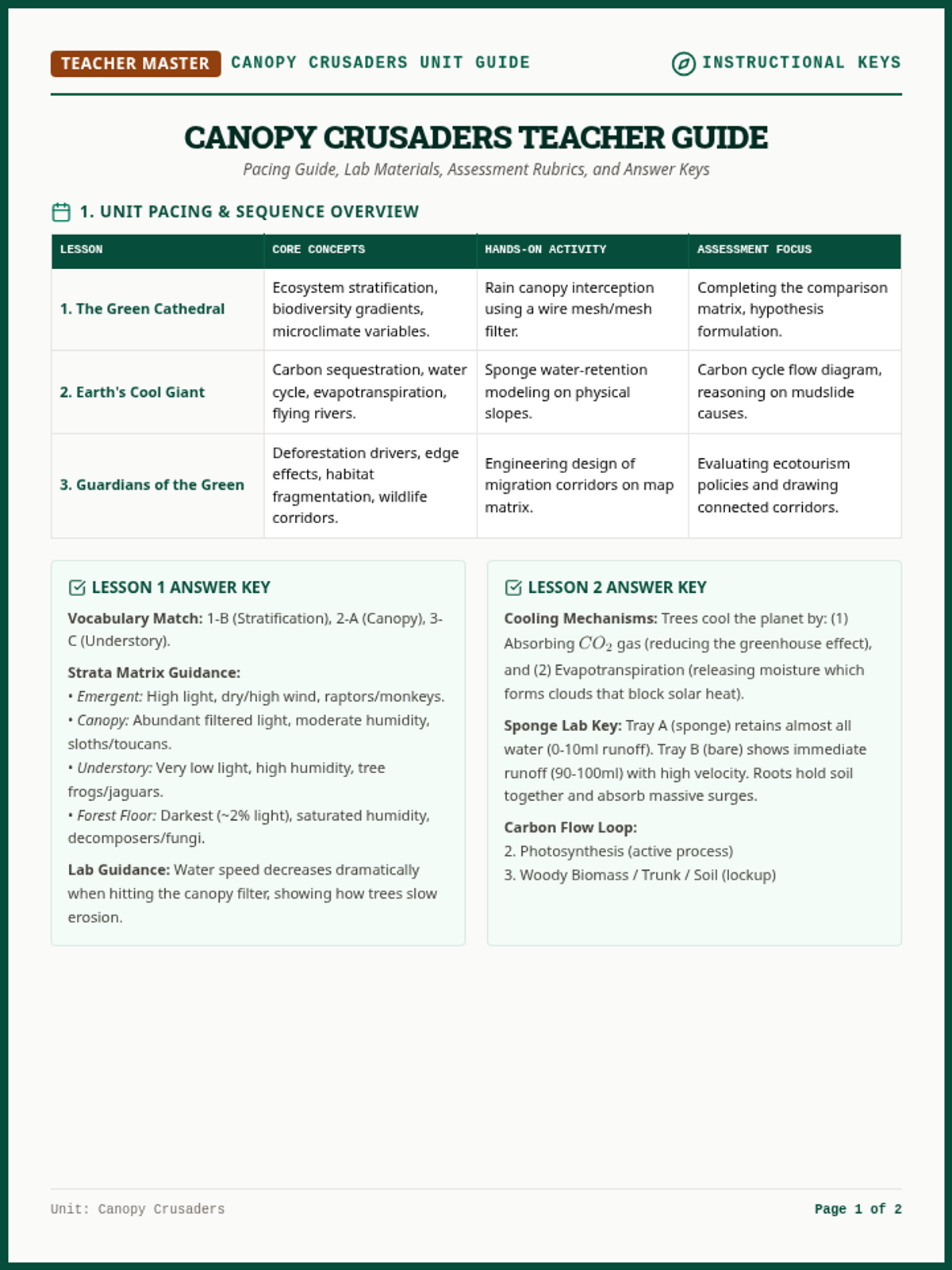
Students analyze the causes and consequences of deforestation, mapping habitat fragmentation and designing collaborative, science-based conservation solutions.
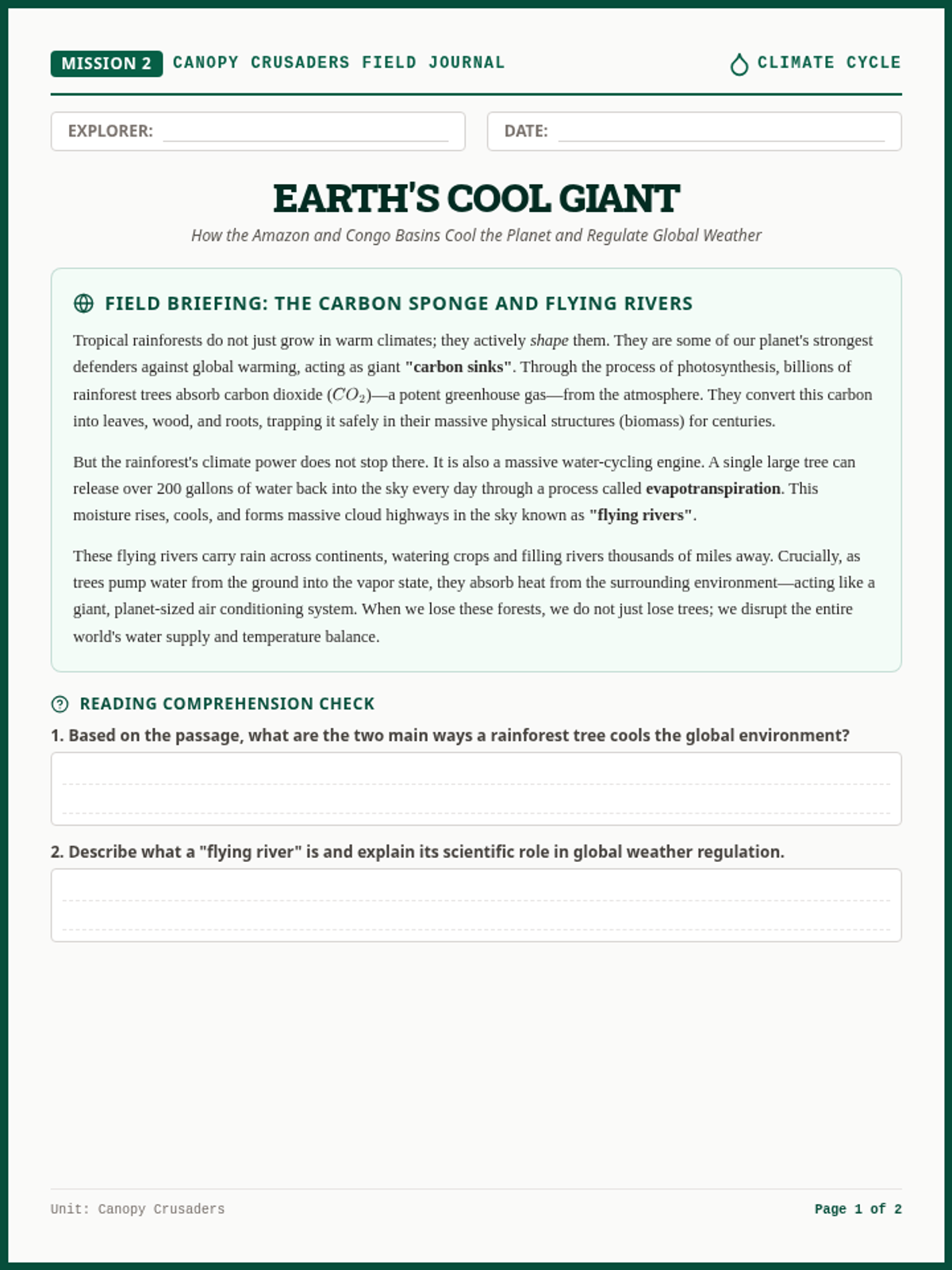
Students investigate the rainforest as a massive climate-control engine, analyzing how evapotranspiration regulates weather and how trees act as vital global carbon sinks.
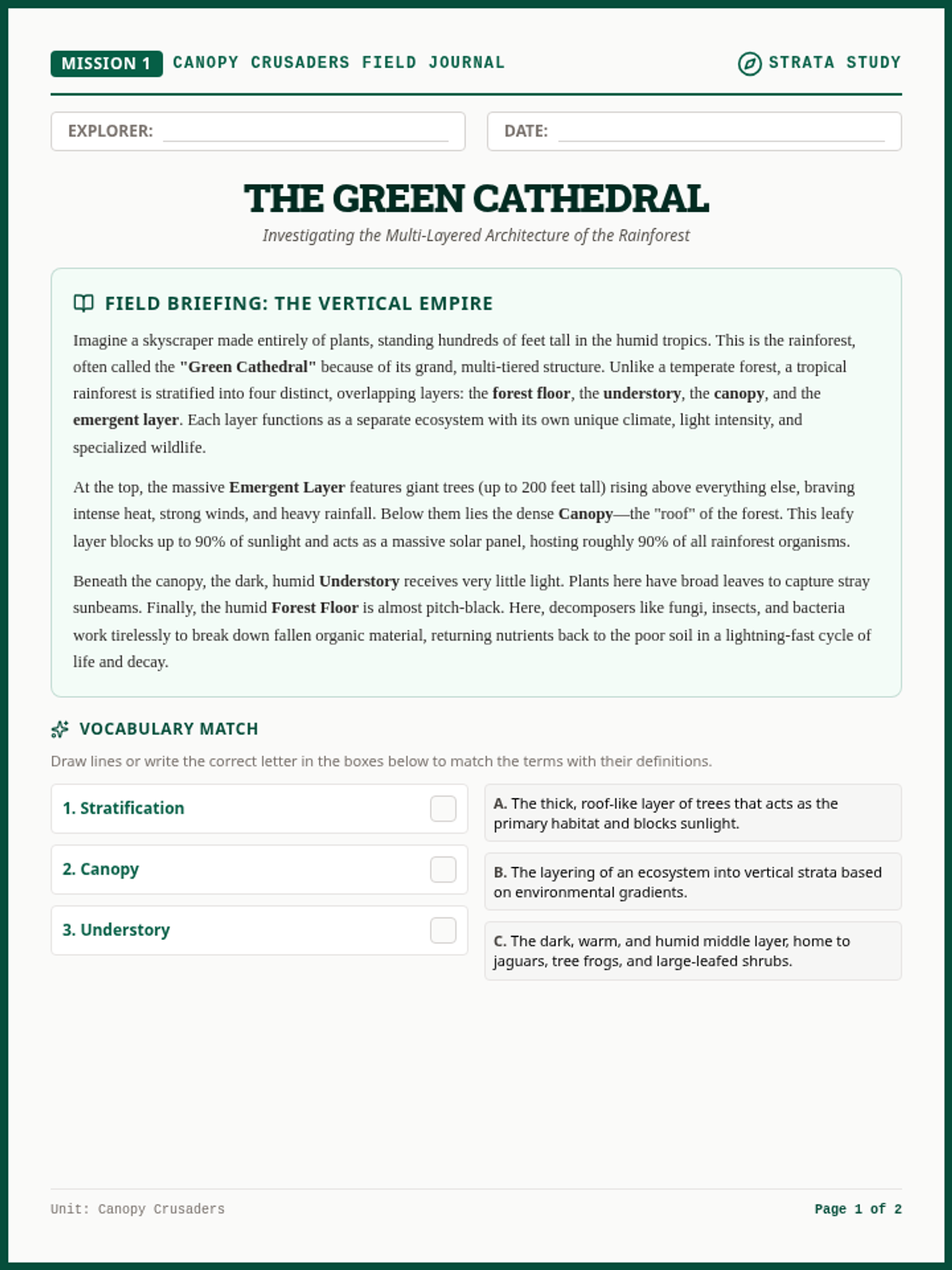
Students explore the structural layers of the rainforest (forest floor, understory, canopy, emergent layer) and model biodiversity and physical conditions across these strata.
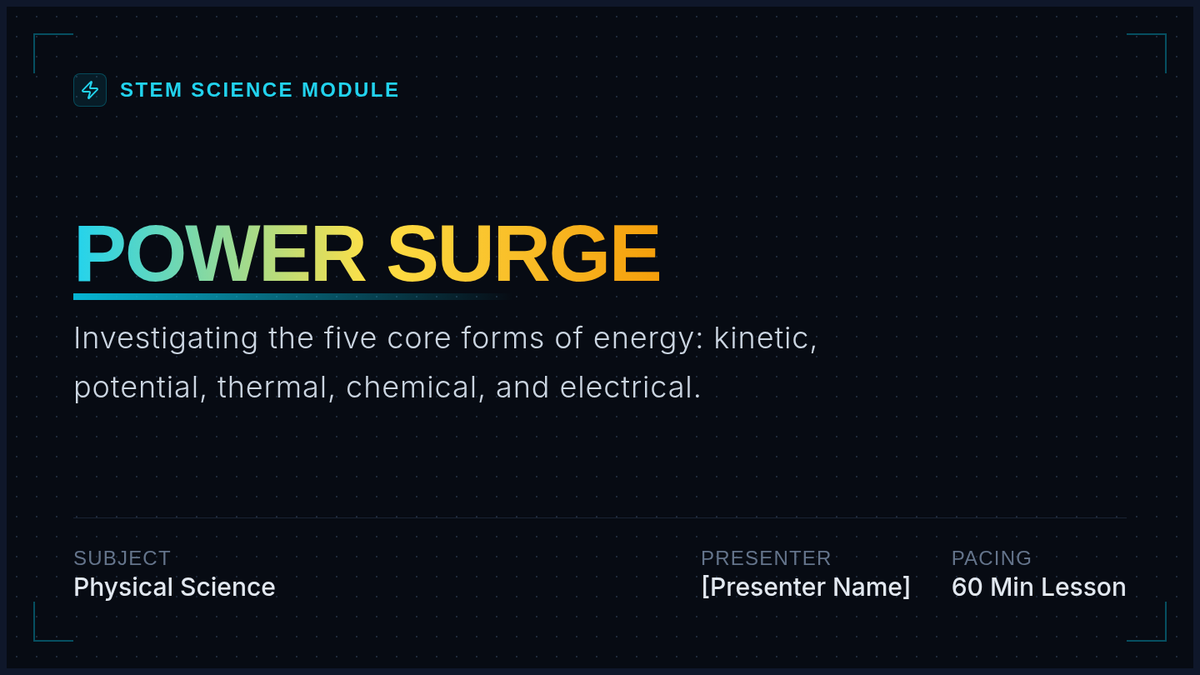
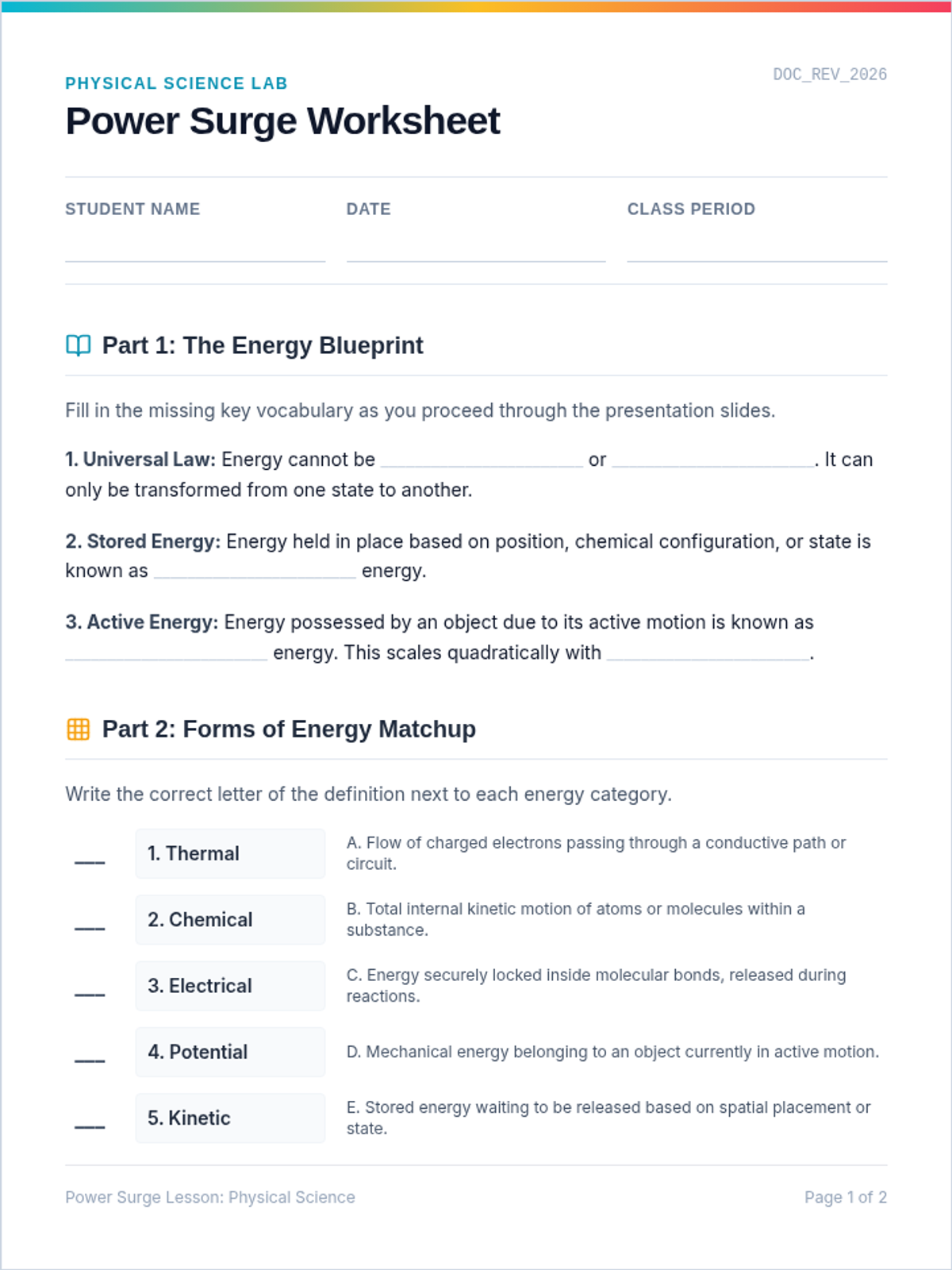
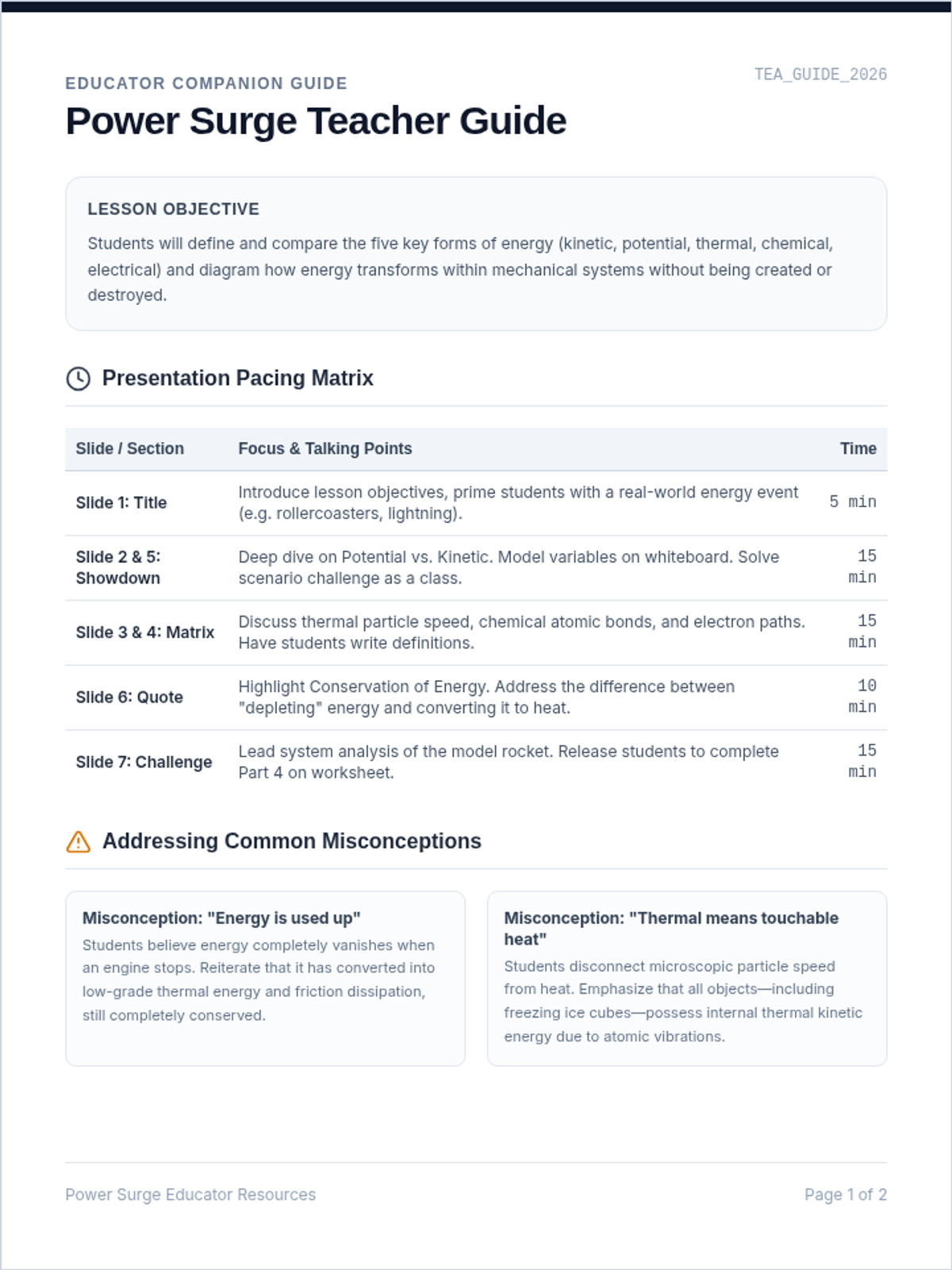
A dynamic lesson introducing the five core forms of energy: kinetic, potential, thermal, chemical, and electrical. This lesson utilizes highly engaging visual slides and structured templates to help students compare, contrast, and identify energy transformations.
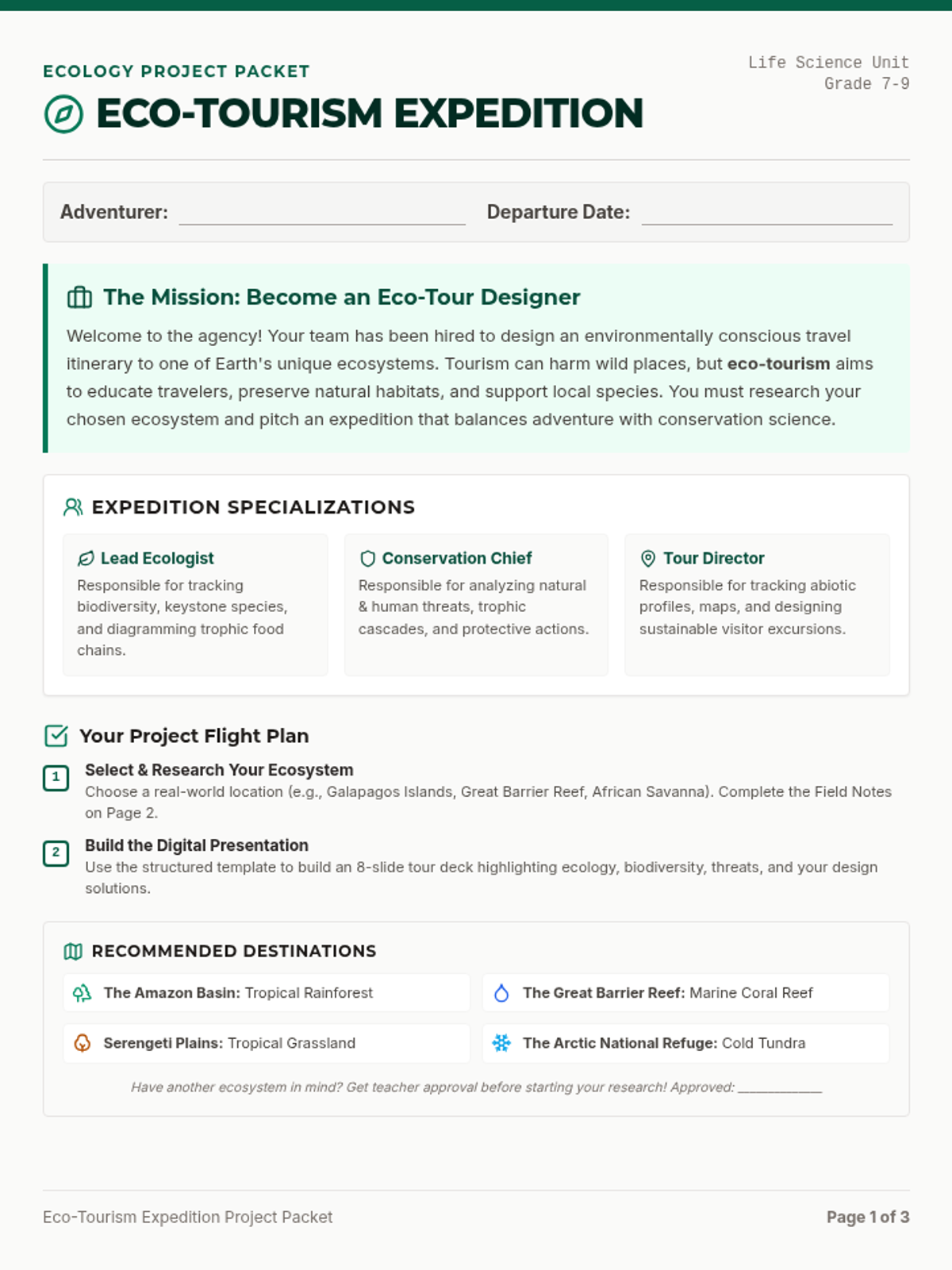
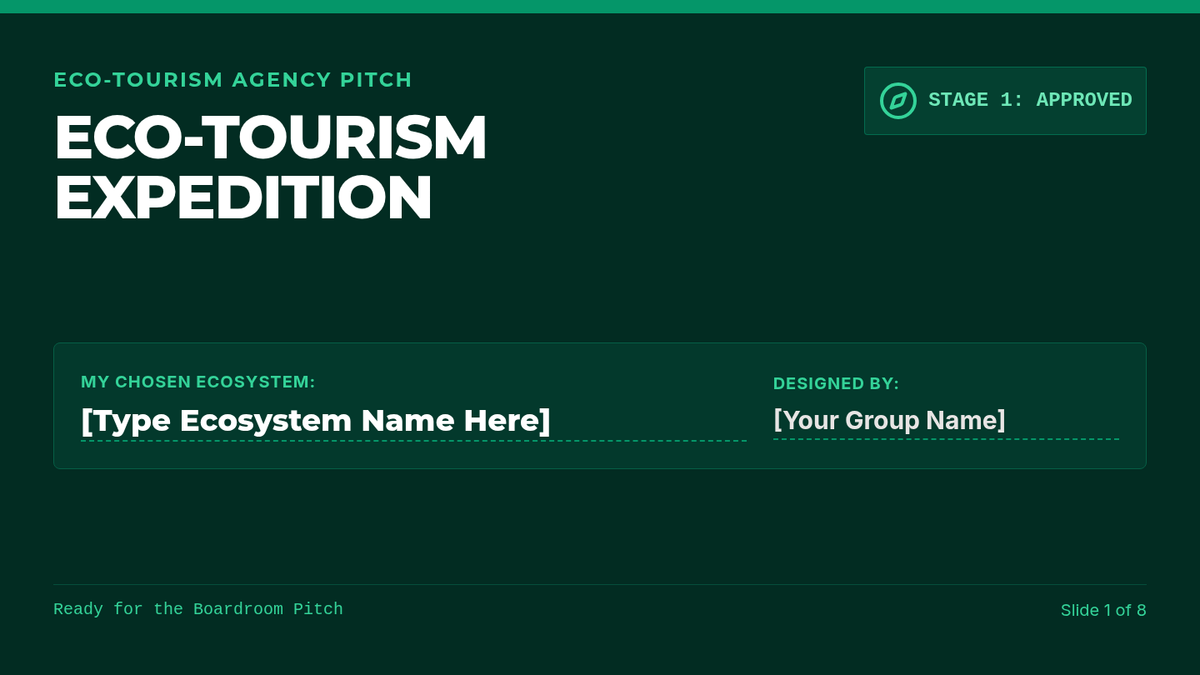
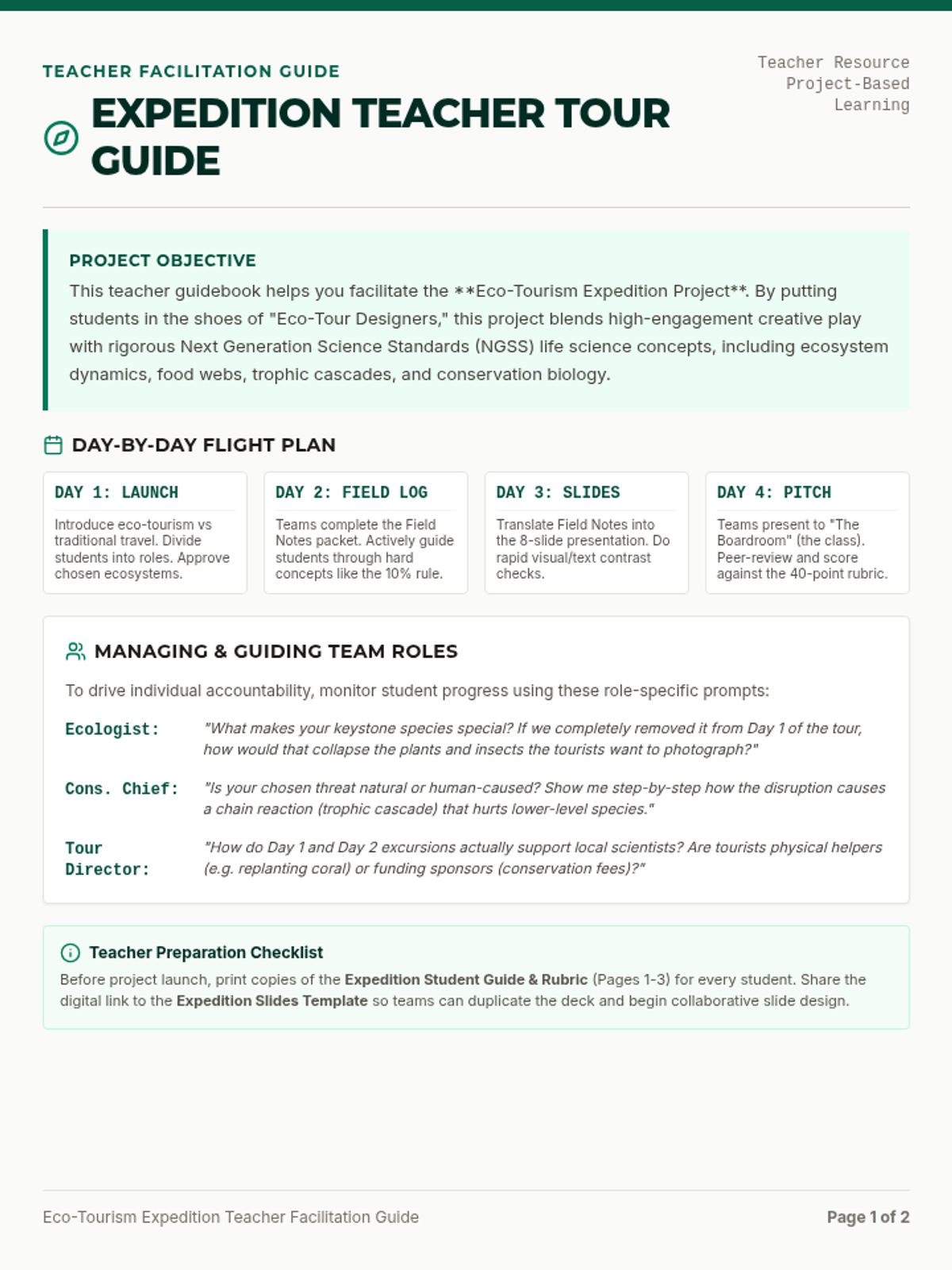
A creative science project lesson where students design a travel brochure or guided tour for a real-world ecosystem, integrating ecology concepts like biodiversity, disruptions, and conservation.
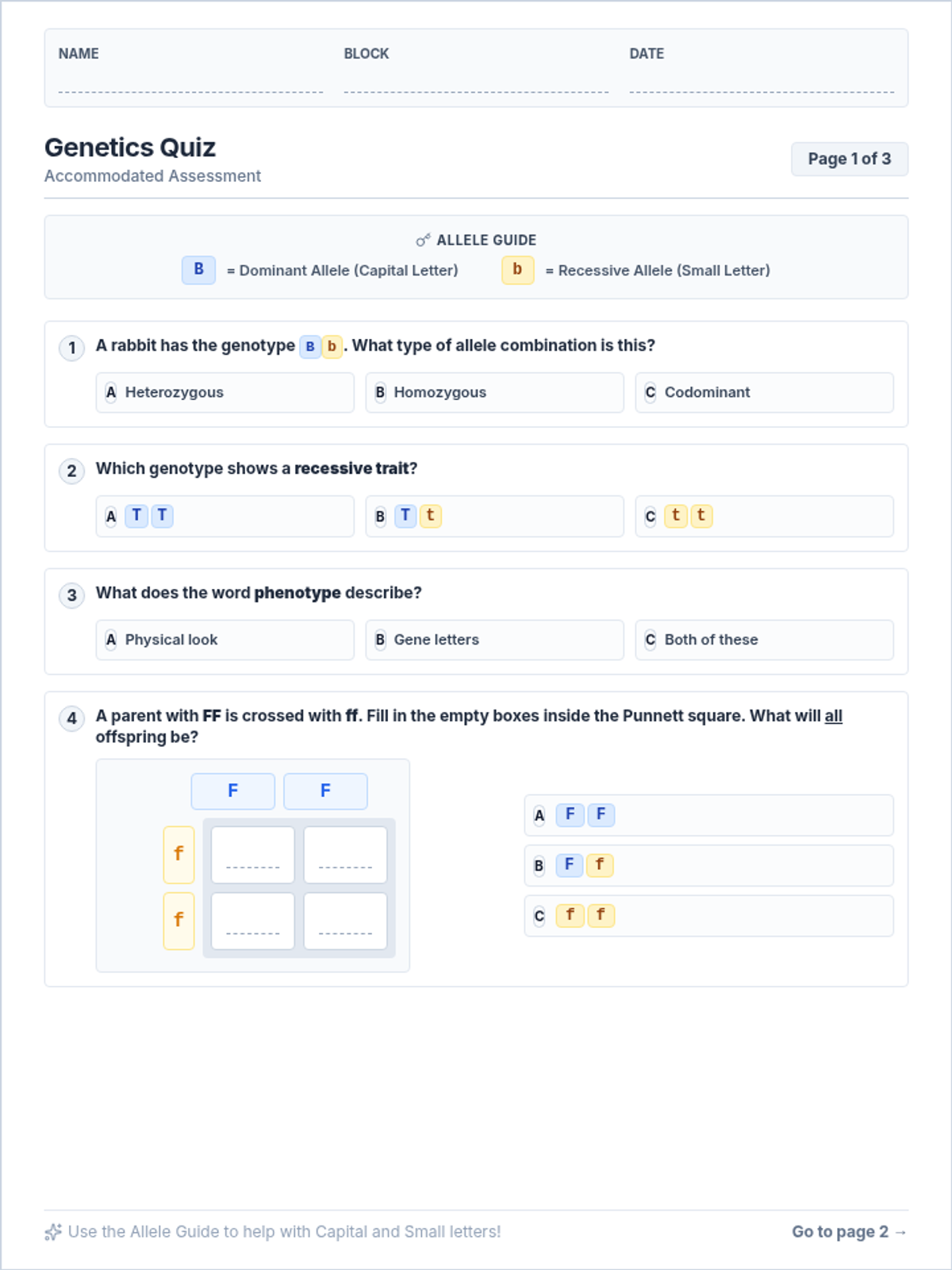
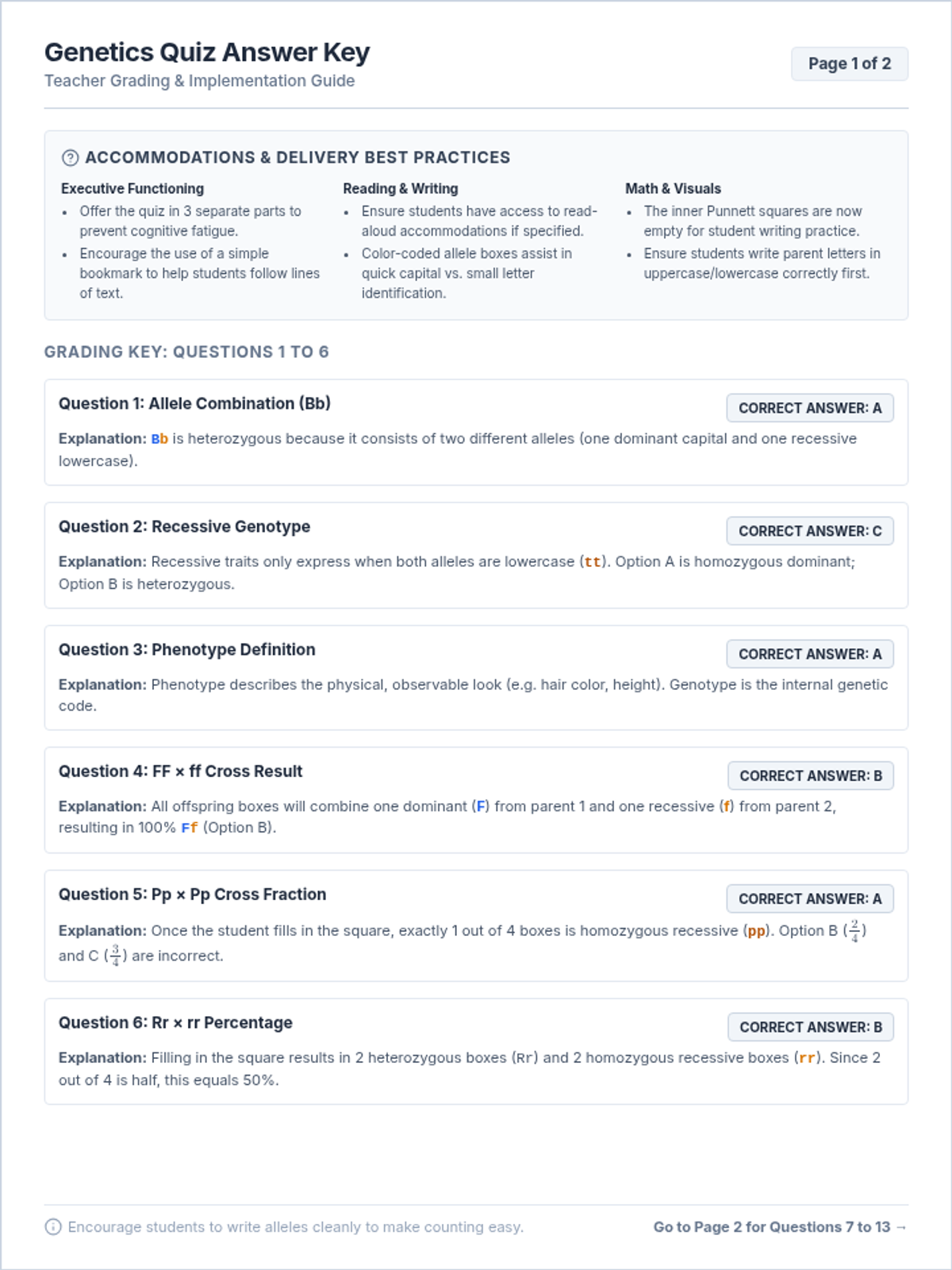
A custom accommodated quiz pack on genetics, designed specifically for students with reading, writing, math, and executive functioning challenges. Includes a highly scaffolded student quiz and a comprehensive teacher answer key with pedagogical guidance.
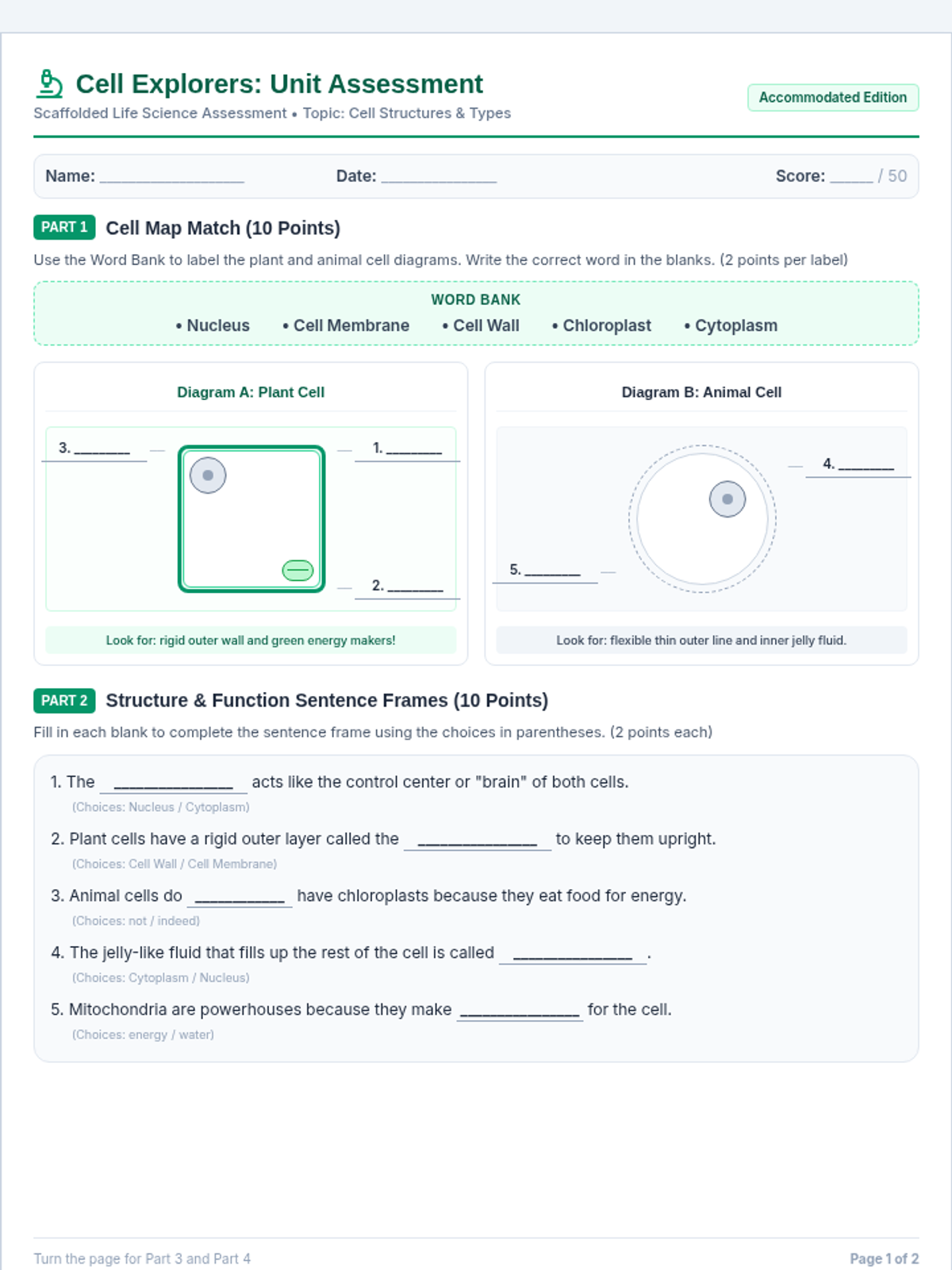
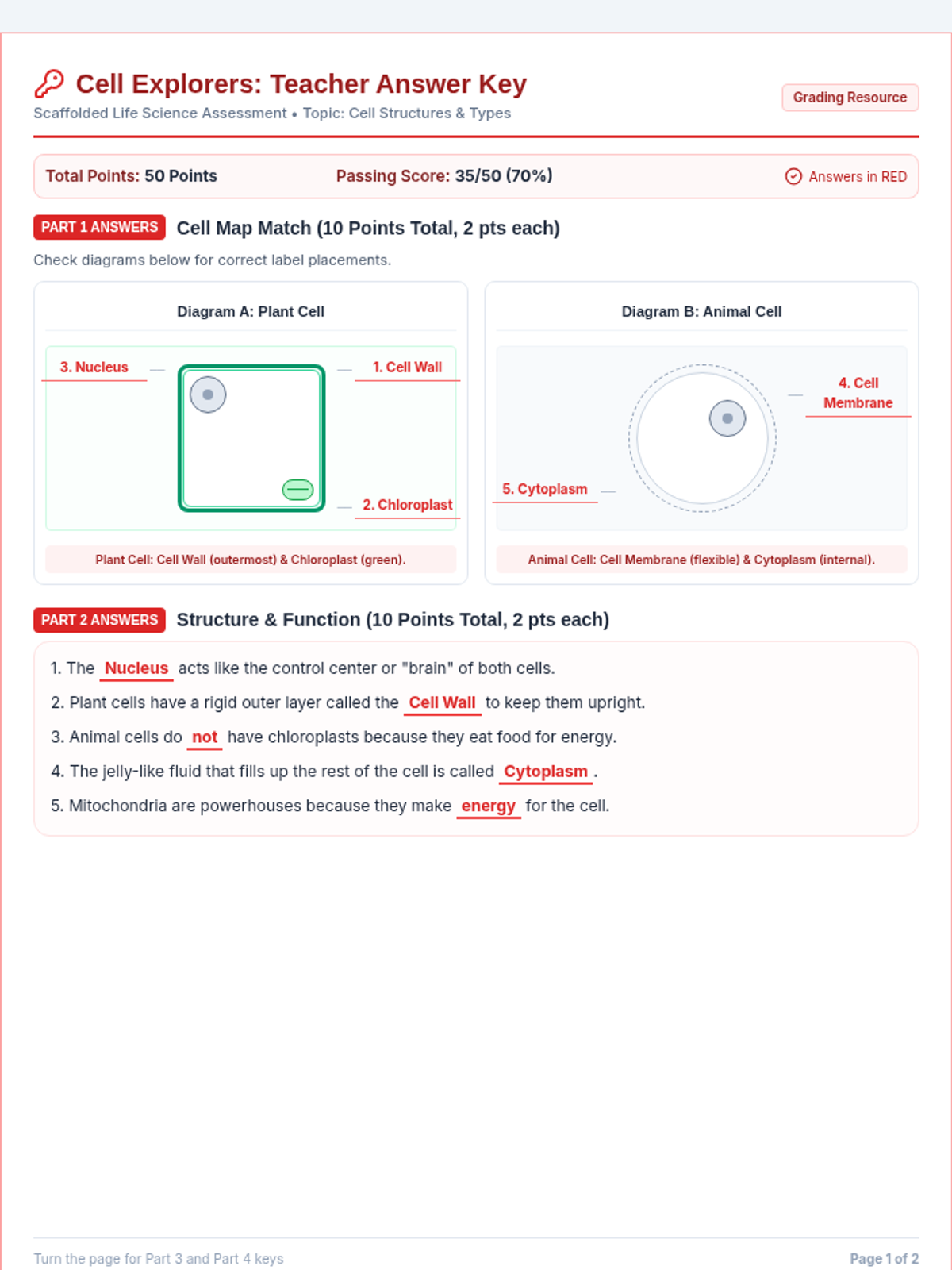
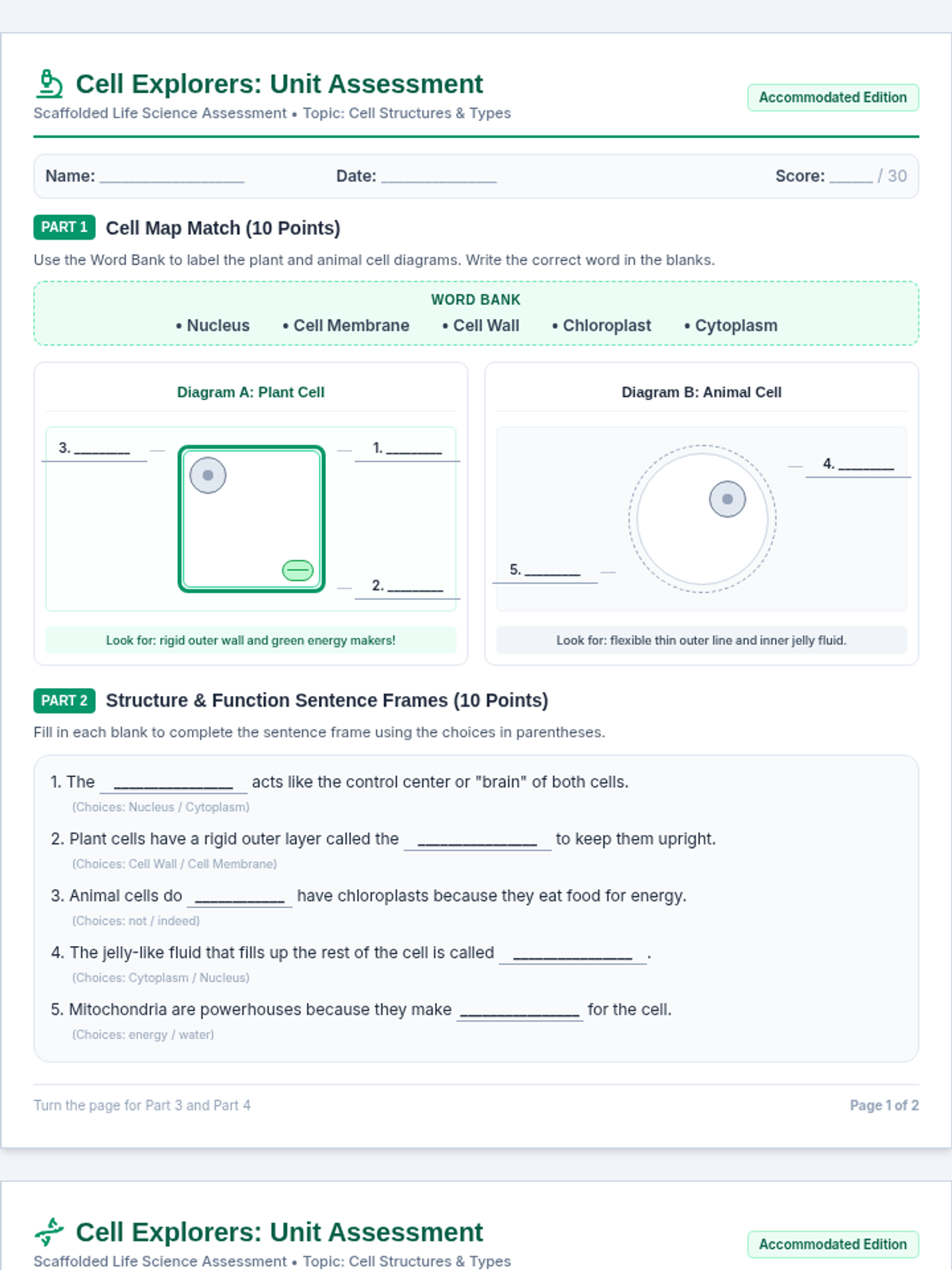
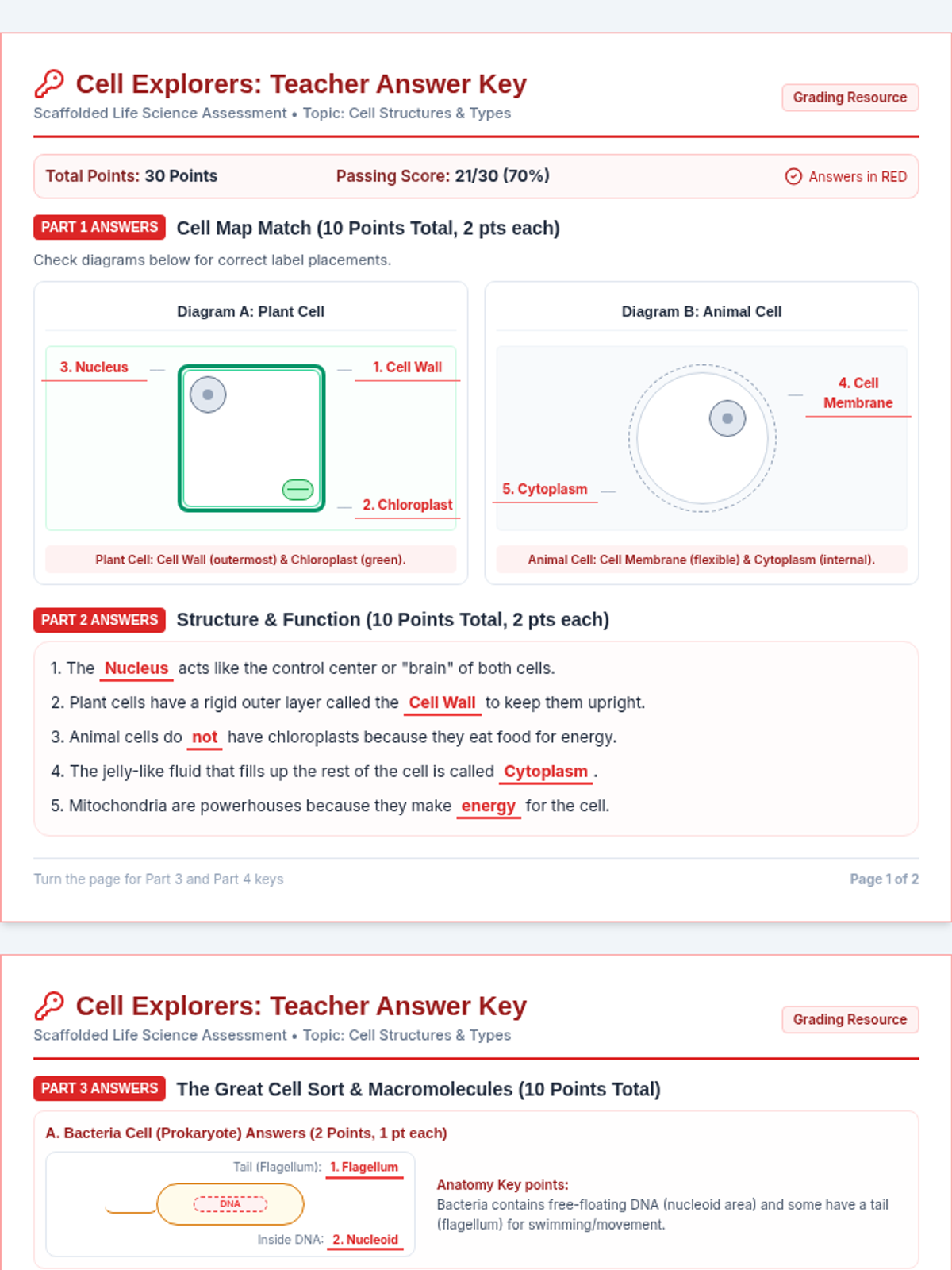
A scaffolded 2-page assessment and corresponding answer key covering prokaryotic and eukaryotic cells, including bacteria, plant, animal, and human cells. Features visual matching, labeling with word banks, sentence frames, and guided sentence starters, scaled to 50 points total.
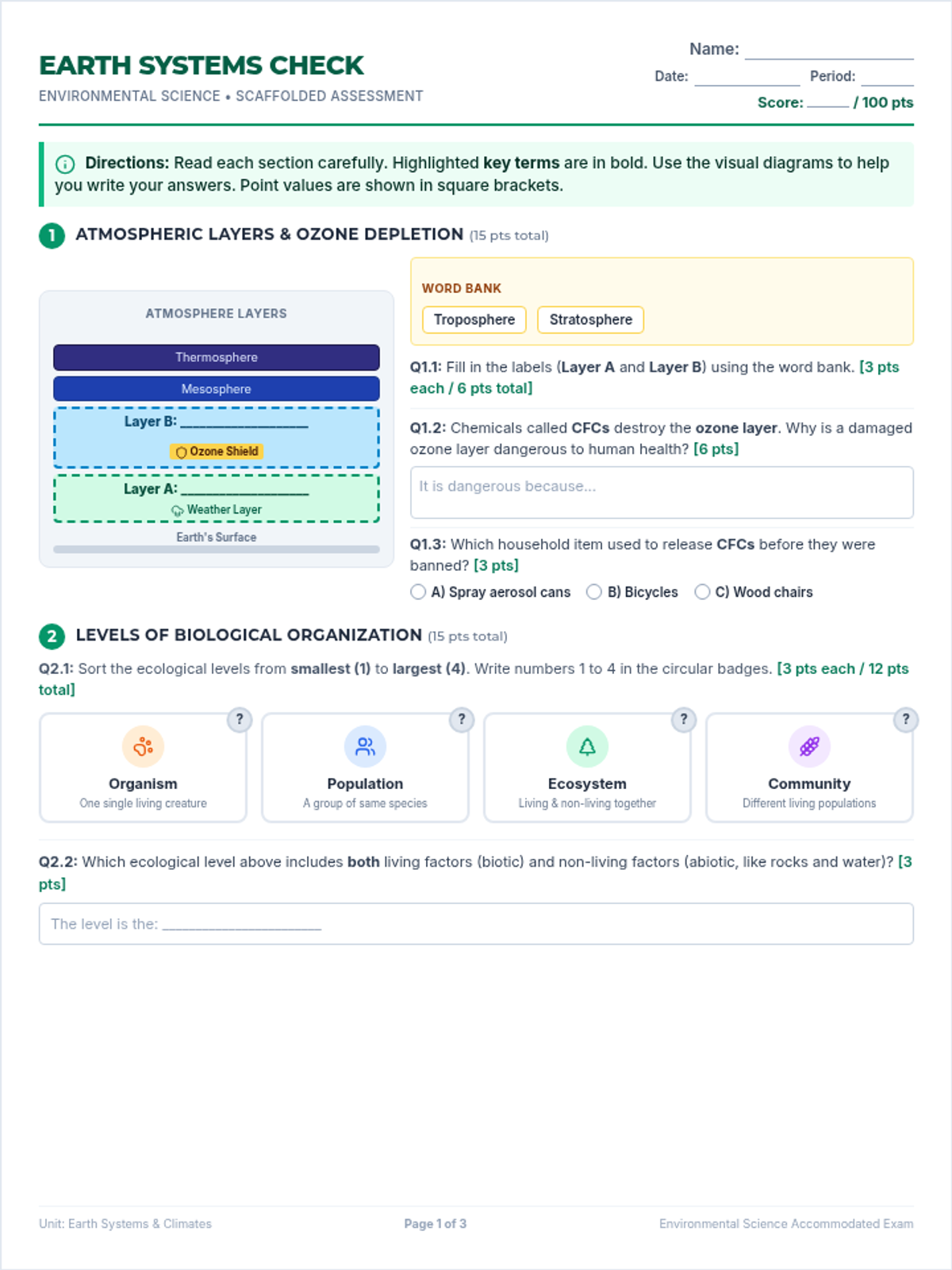
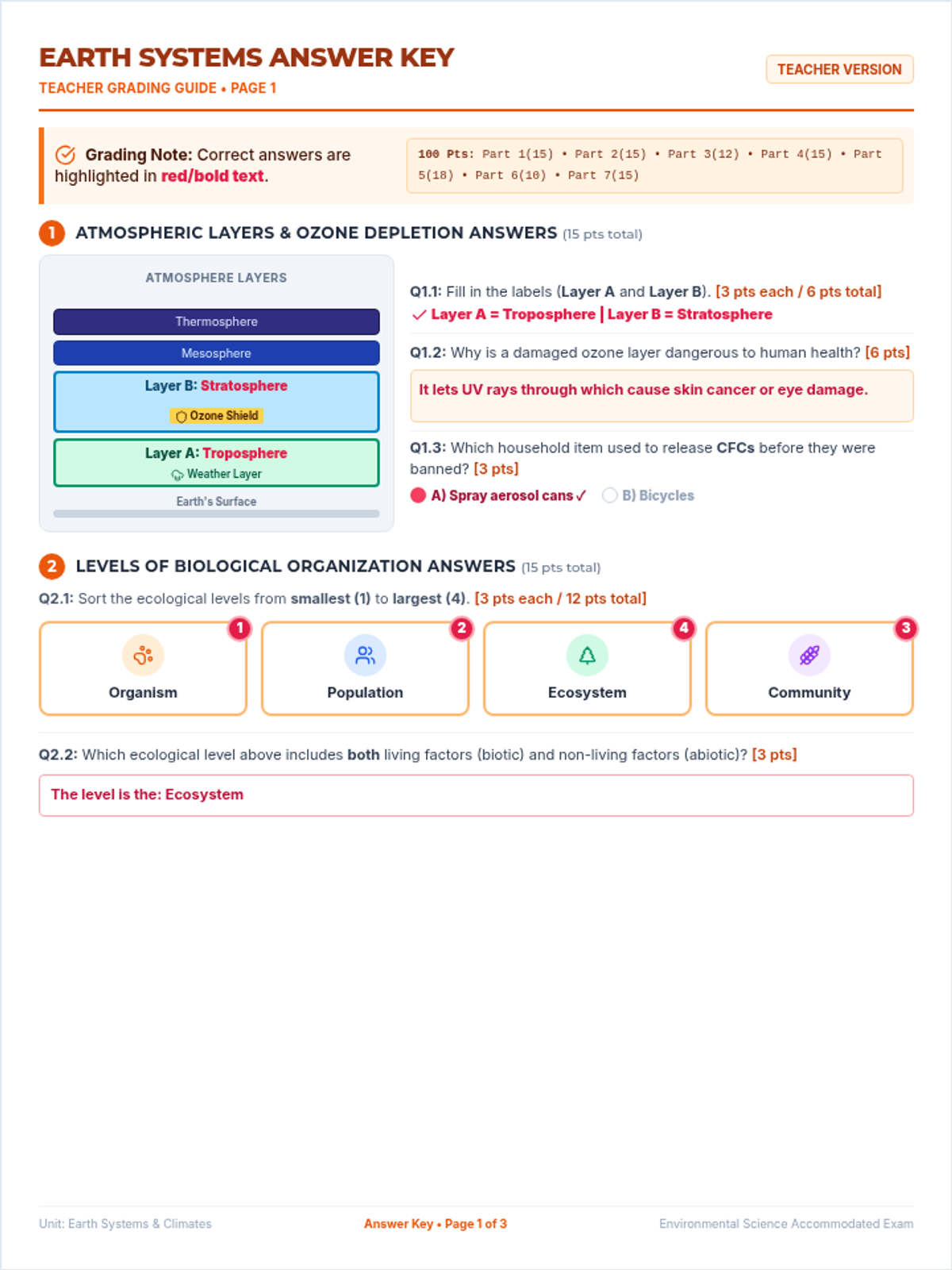
A highly visual, scaffolded assessment and corresponding answer key covering atmospheric layers, resource classification, carbon footprints, biological levels, trophic webs, ice proxies, and photosynthesis.
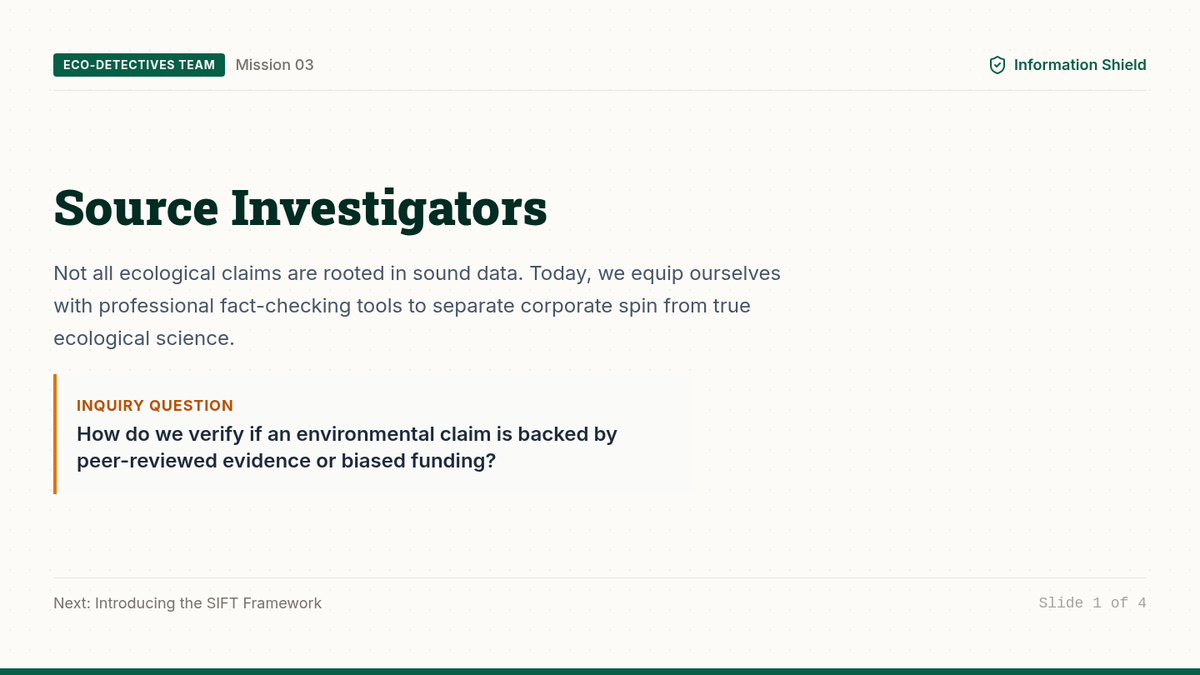
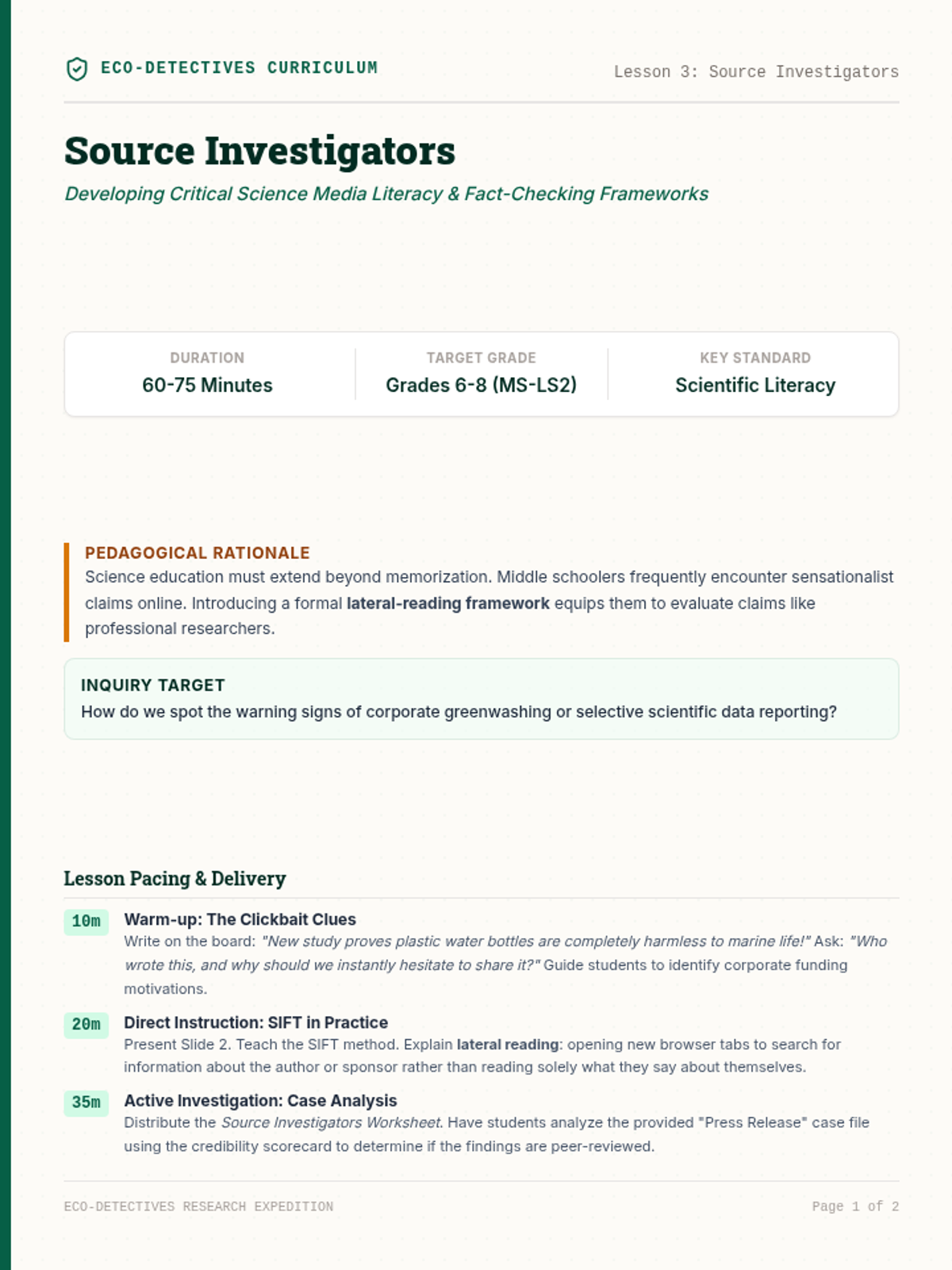
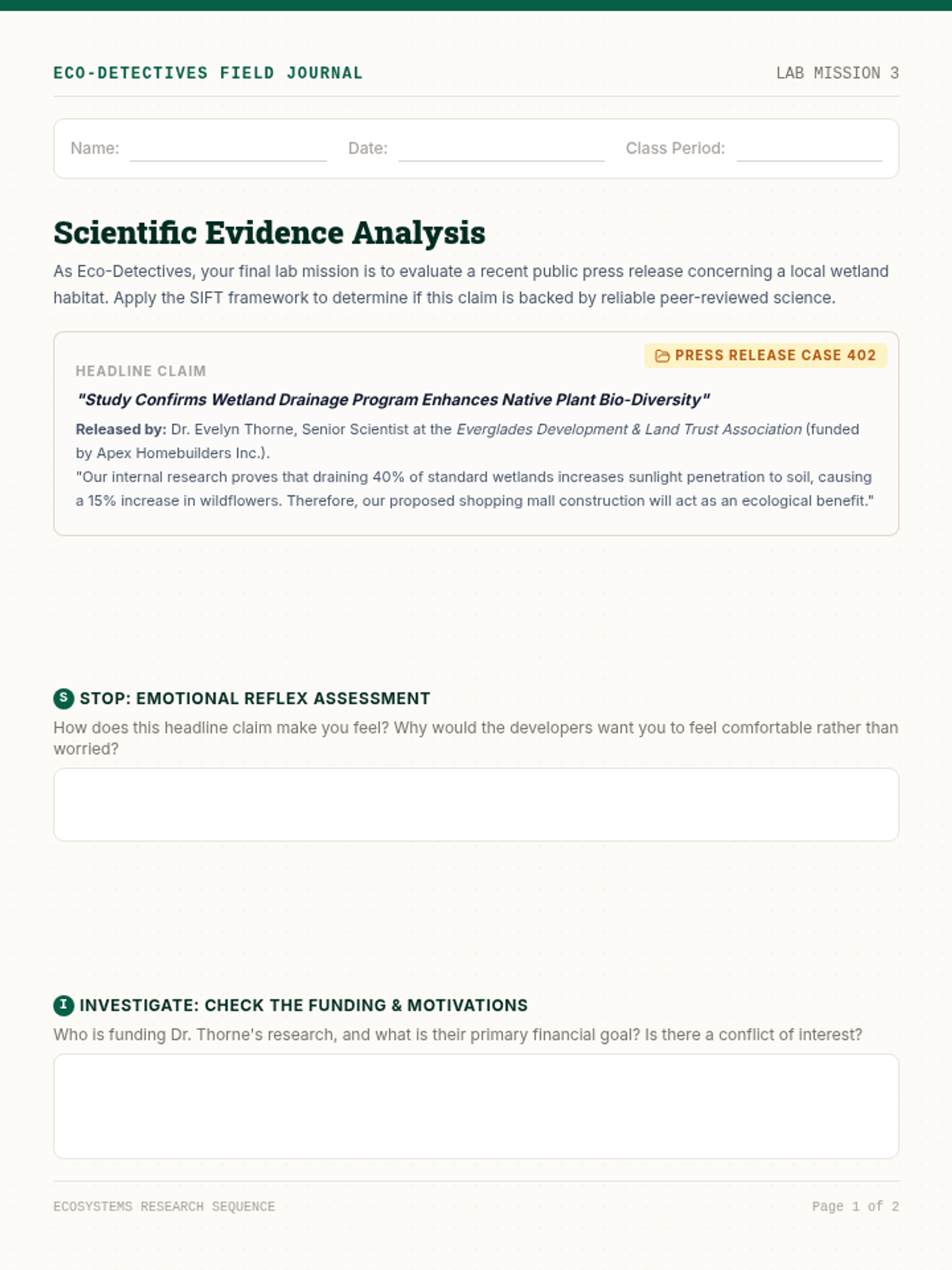
Students evaluate ecosystem research reports and online science media for credibility, bias, and scientific evidence using a scientific evaluation framework.
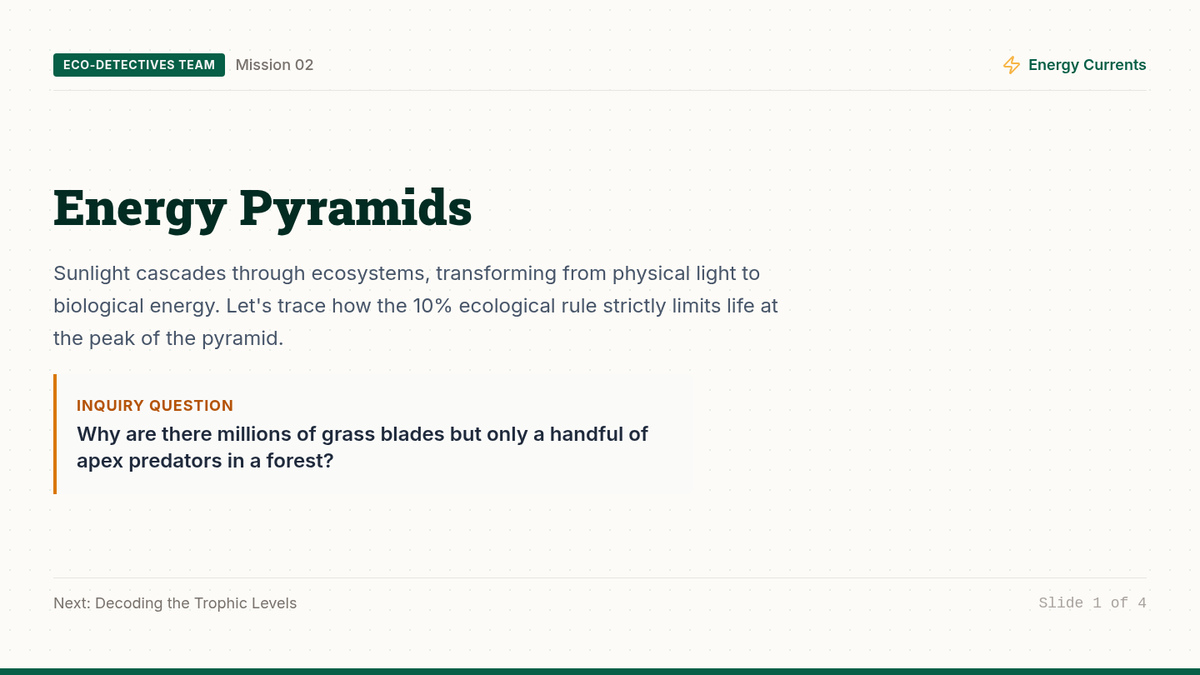
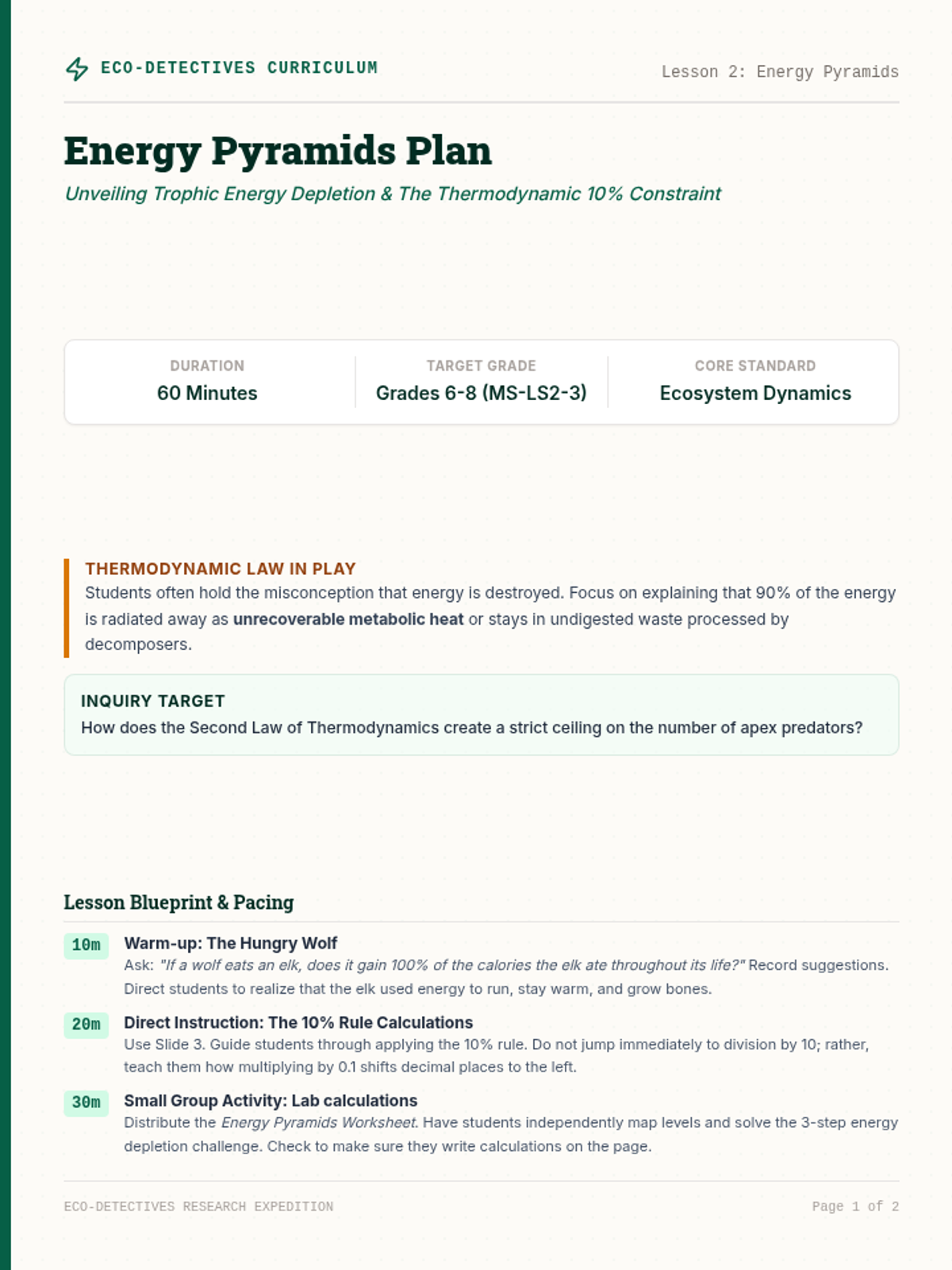
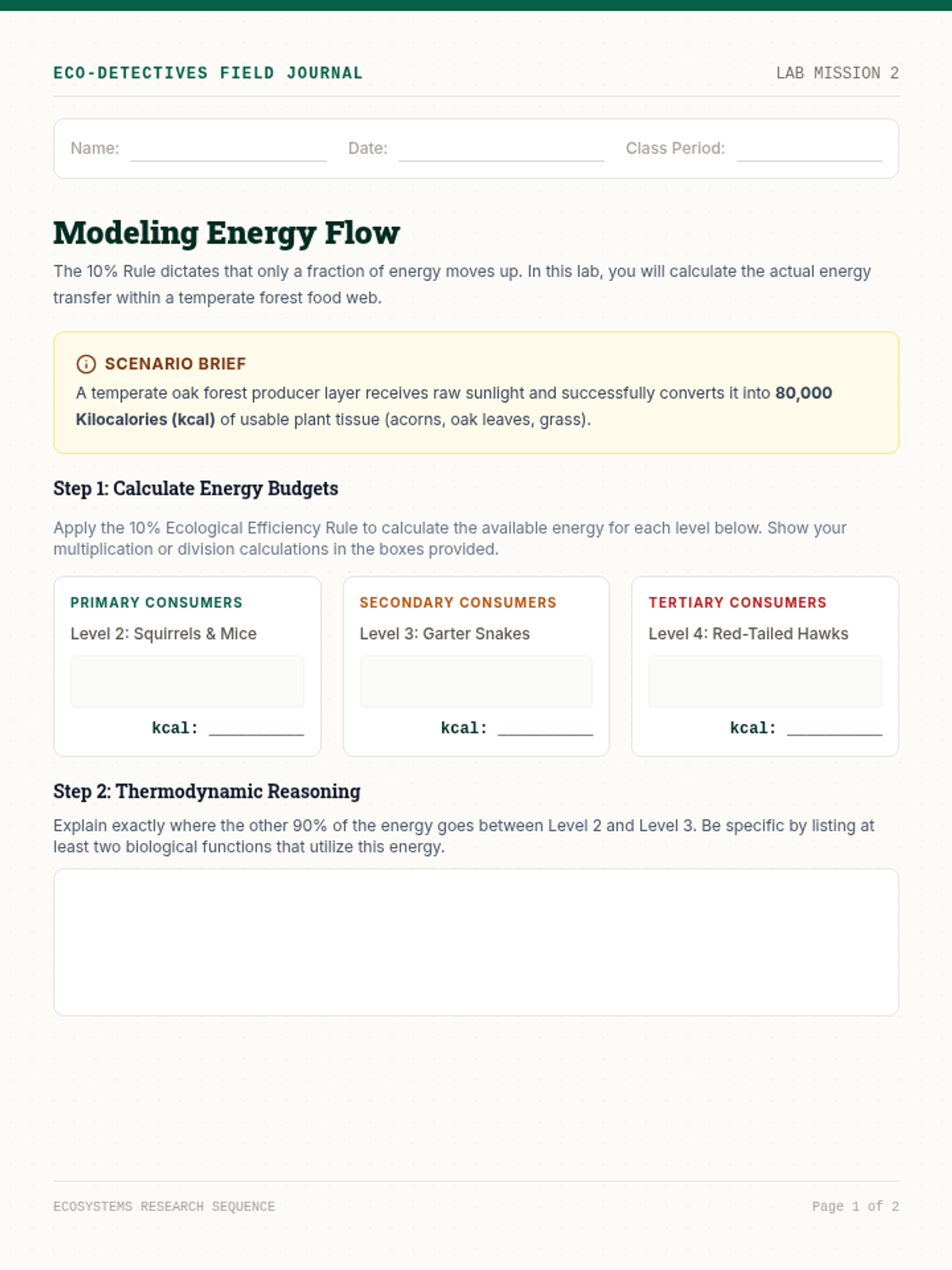
Students model trophic levels, analyze the 10% ecological efficiency rule, and solve ecological energy calculations.
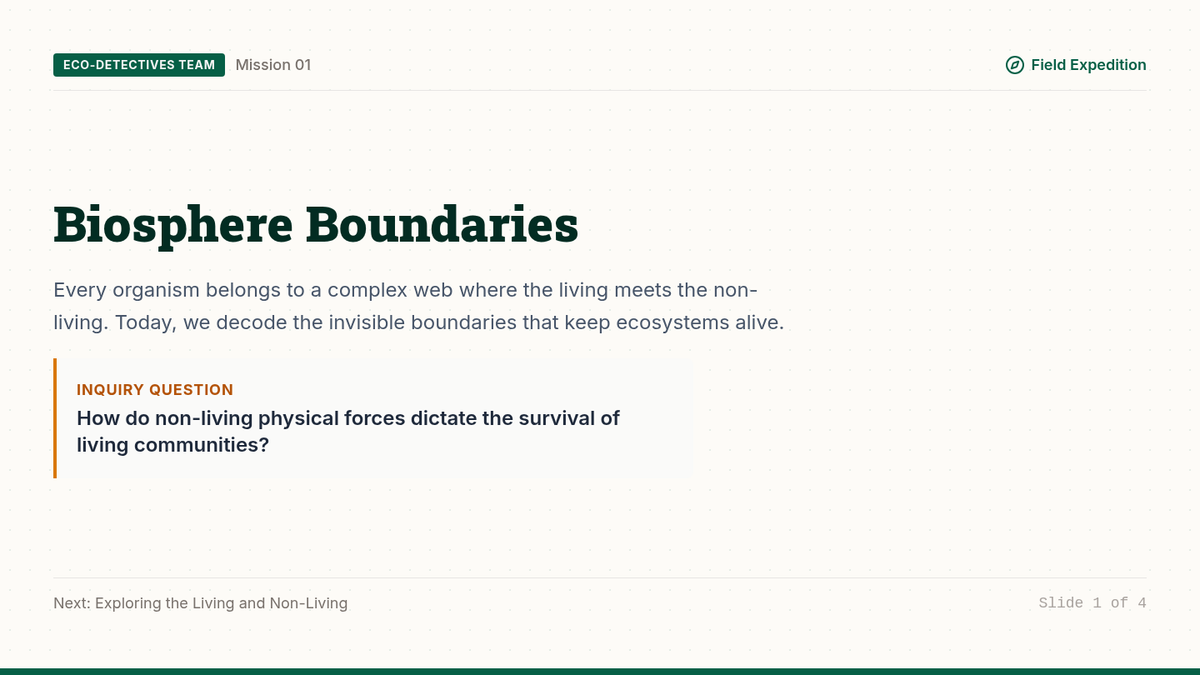
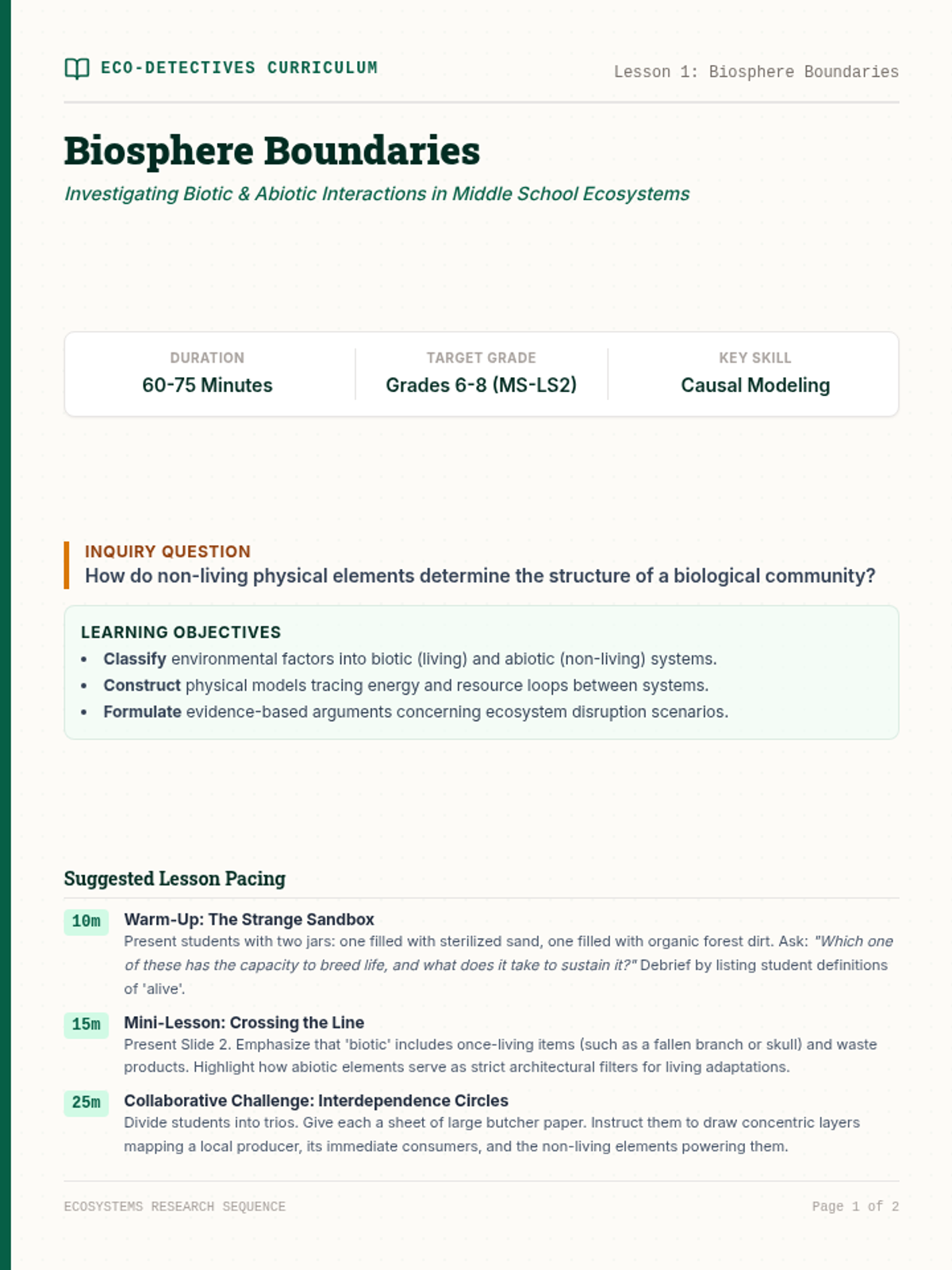
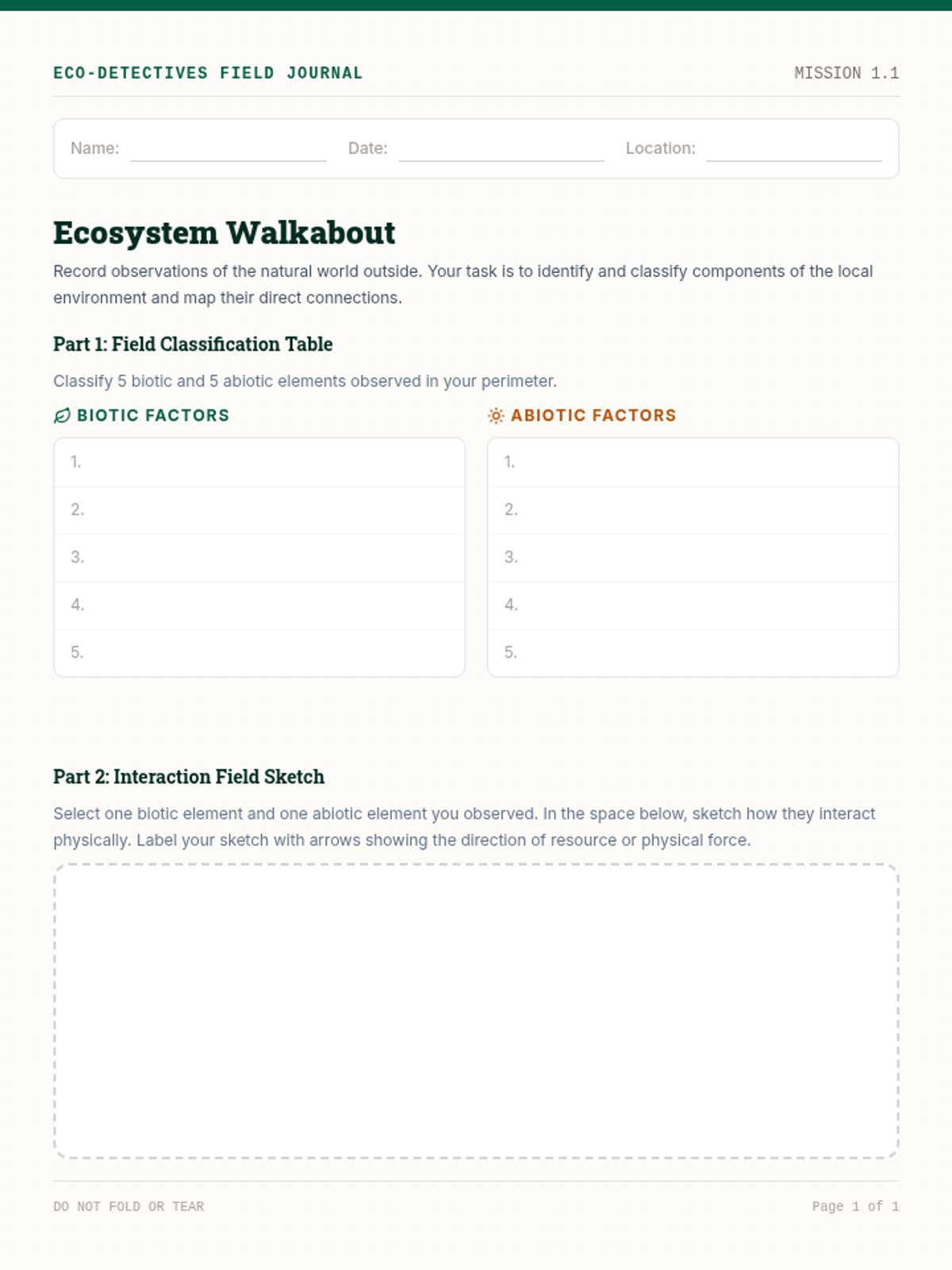
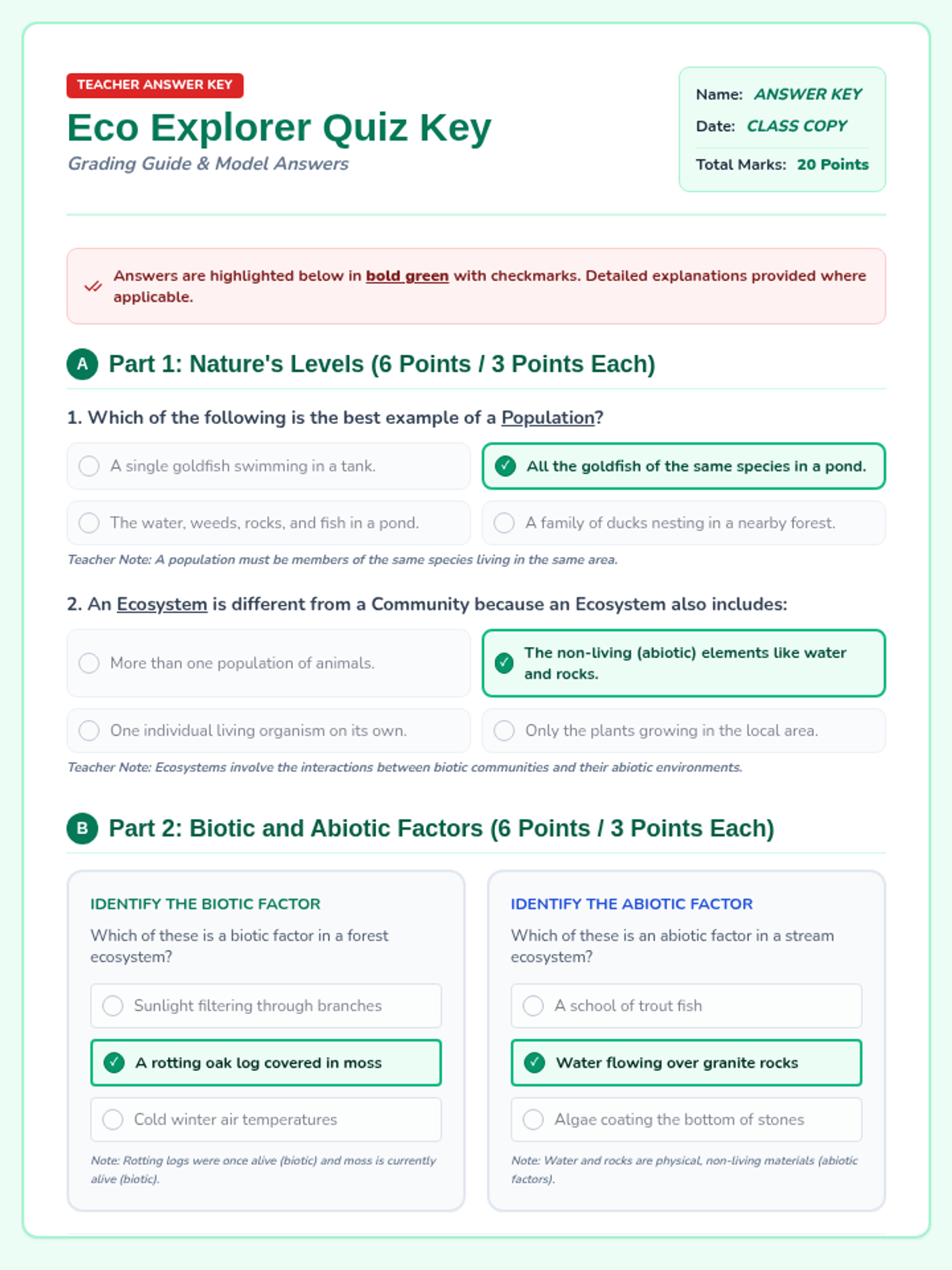
Students investigate the difference between biotic and abiotic factors, explore how they interact within local ecosystems, and design an anchor chart to map these connections.
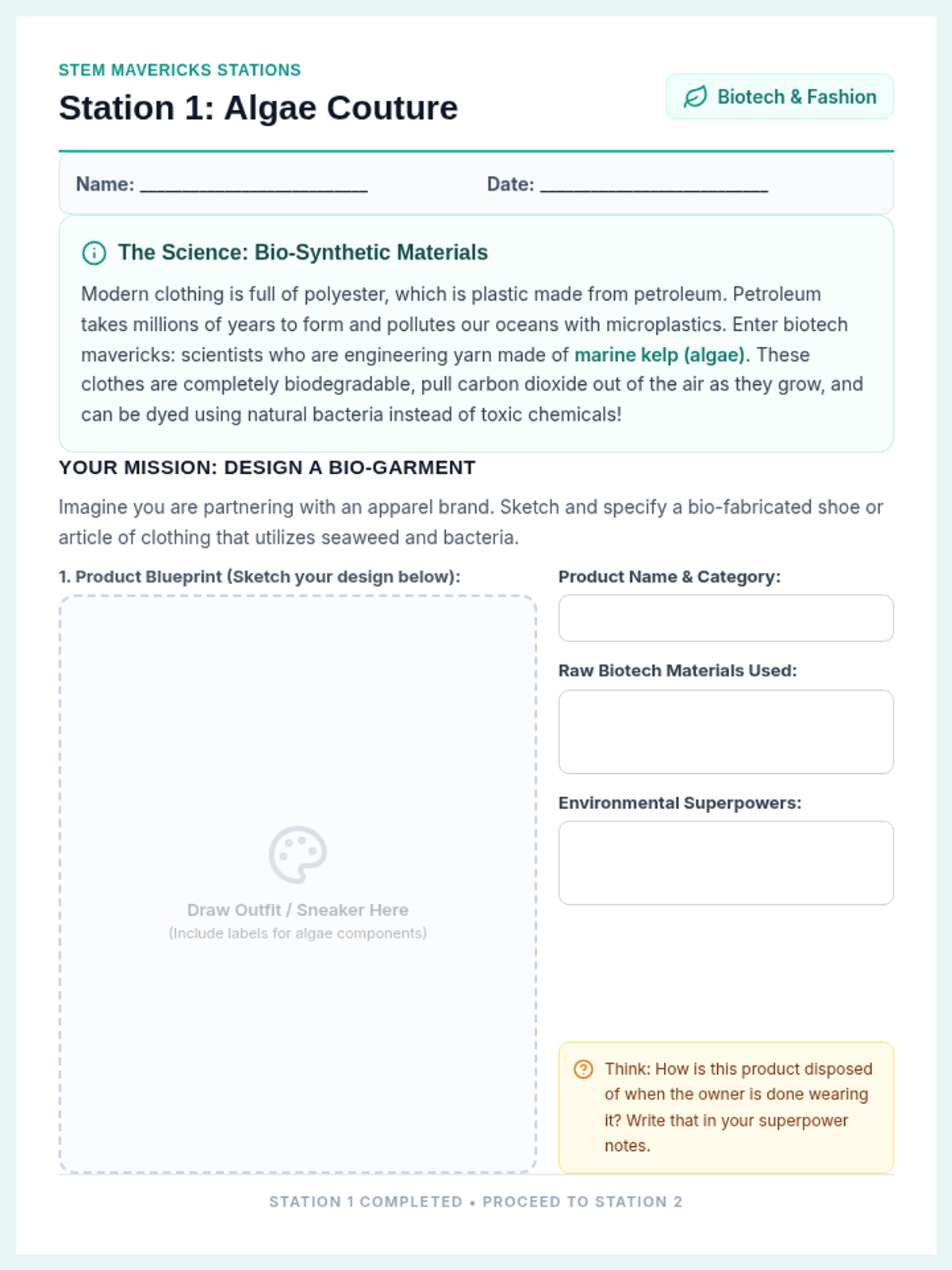
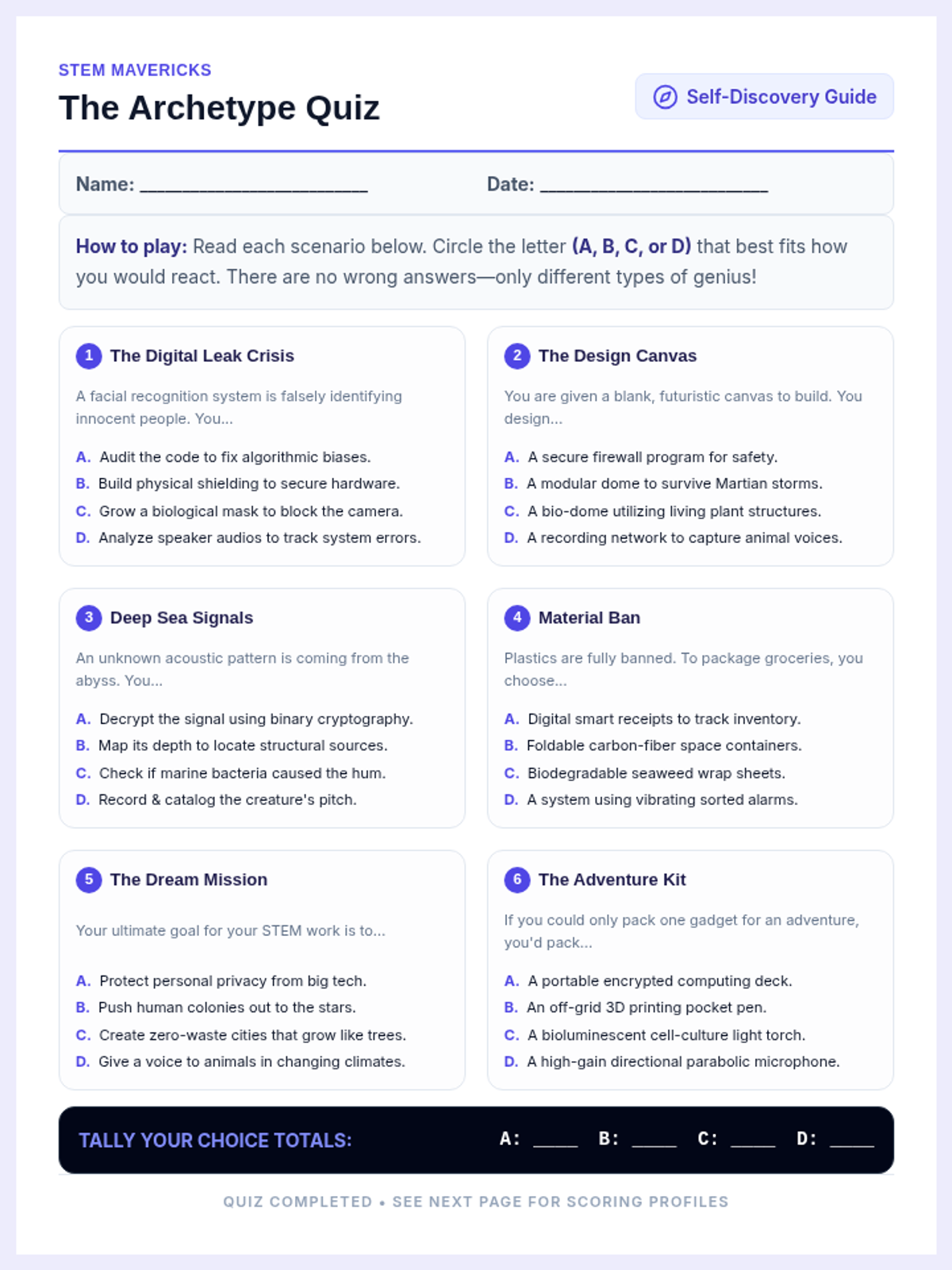
An 8th-grade exploratory lesson on diverse, non-traditional, and underrepresented careers in STEM. Students challenge stereotypes, analyze cutting-edge career profiles, complete a hands-on station rotation, and discover their own STEM archetypes.
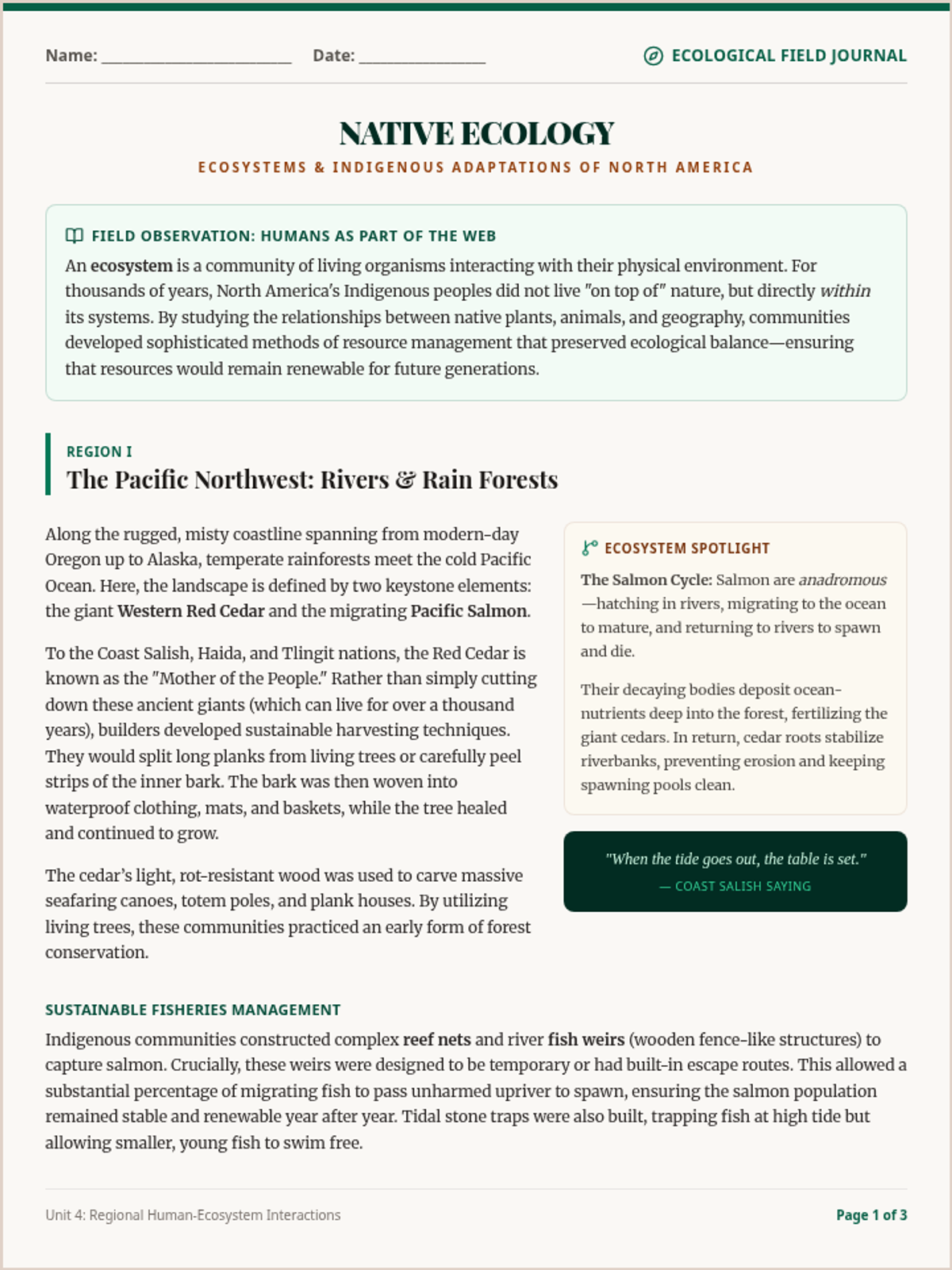
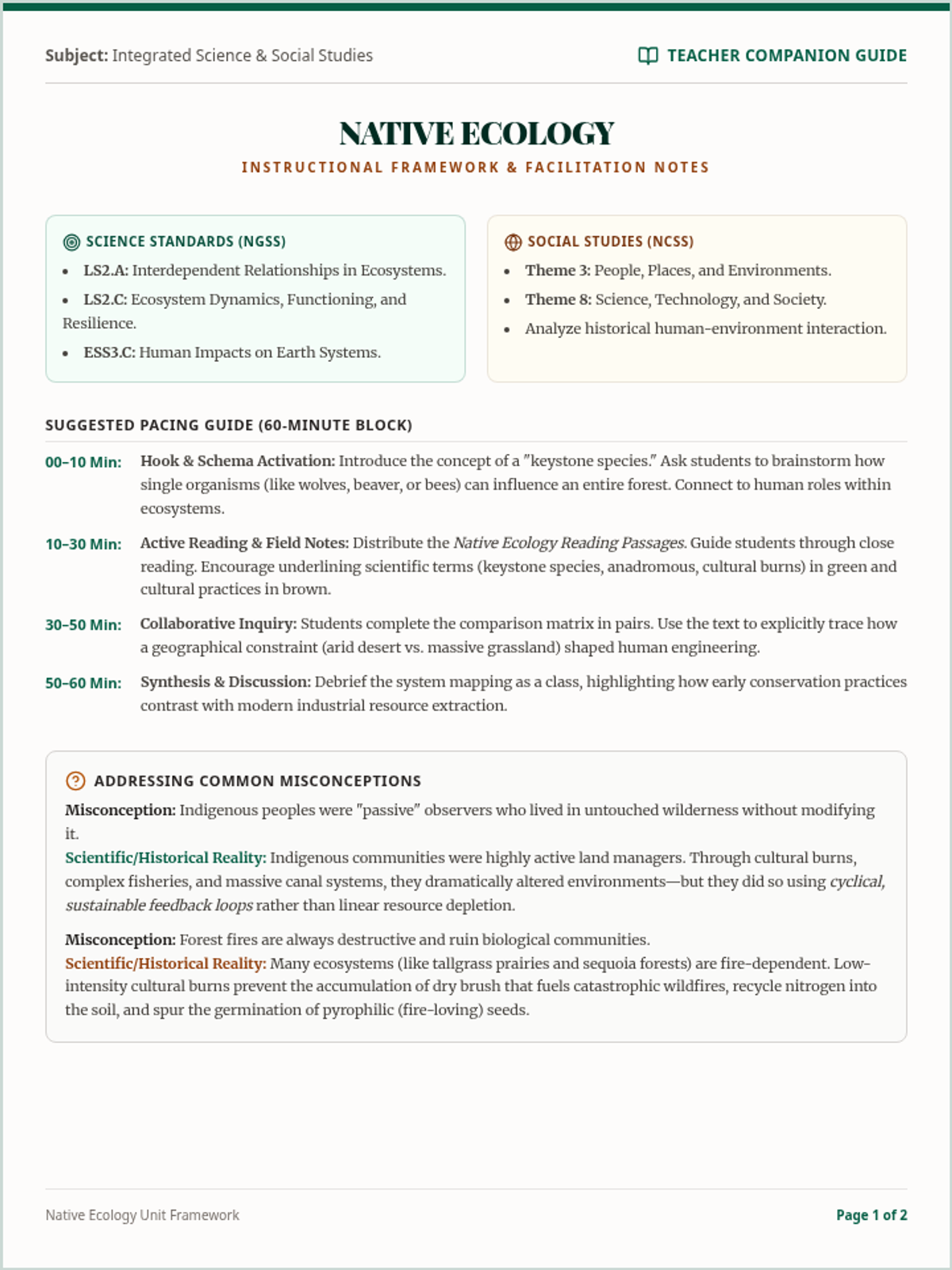
An integrated science and social studies lesson exploring how regional ecosystems and native species supported historical Indigenous communities across North America. Students analyze the ecological relationships and cultural adaptations of three distinct regions.
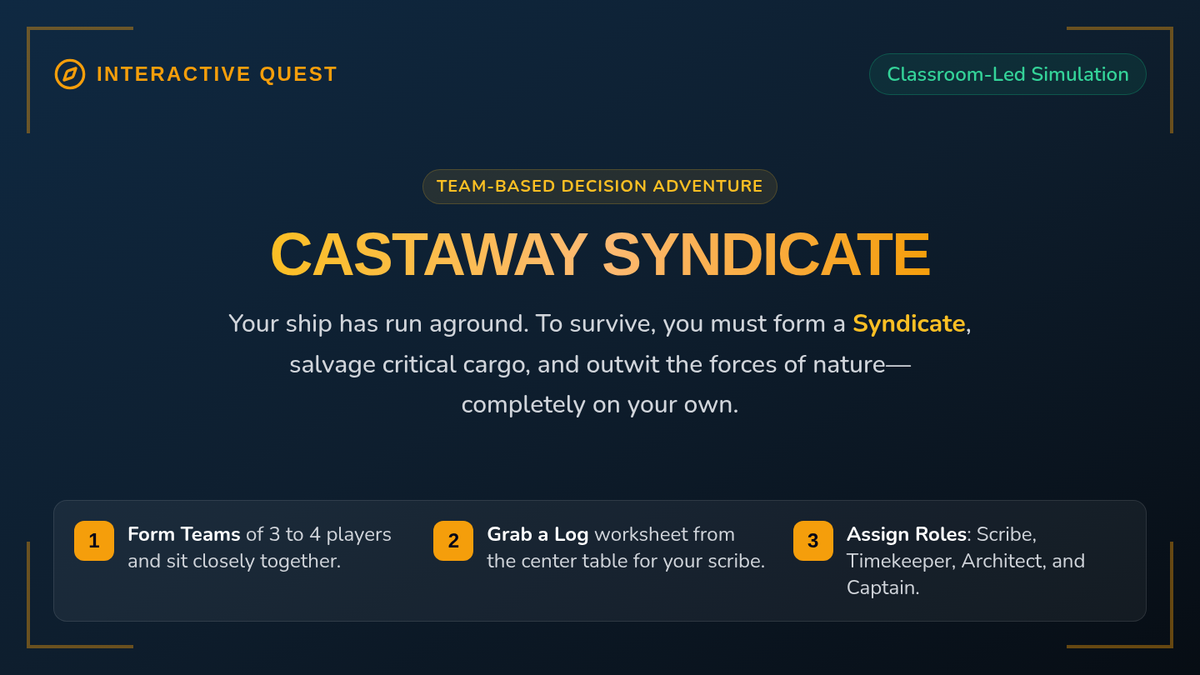
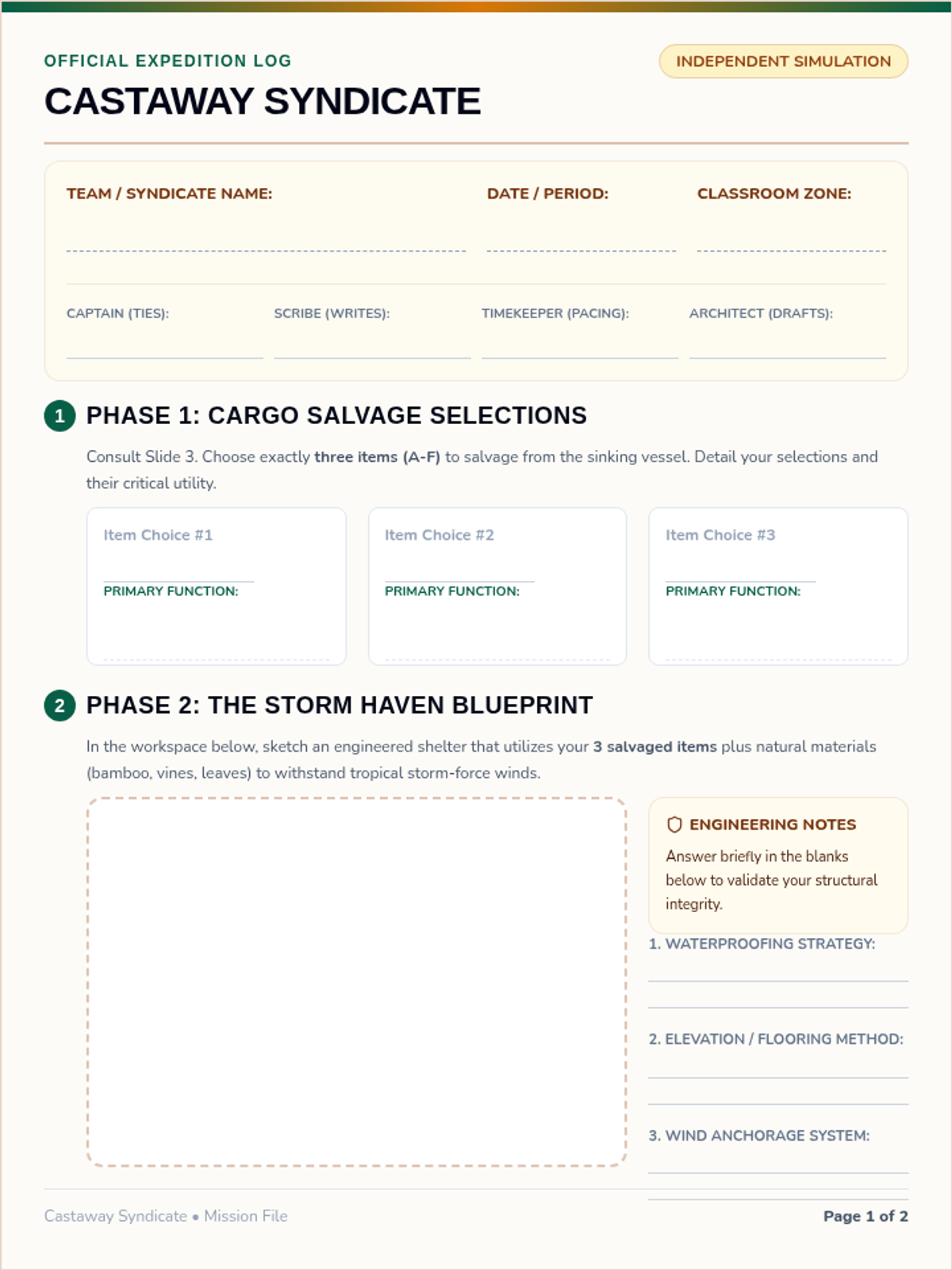
An immersive, self-directed survival simulation where students work in teams to solve creative engineering and resource-management challenges. Designed to keep the entire classroom deeply engaged and collaborative while the teacher conducts one-on-one sessions.
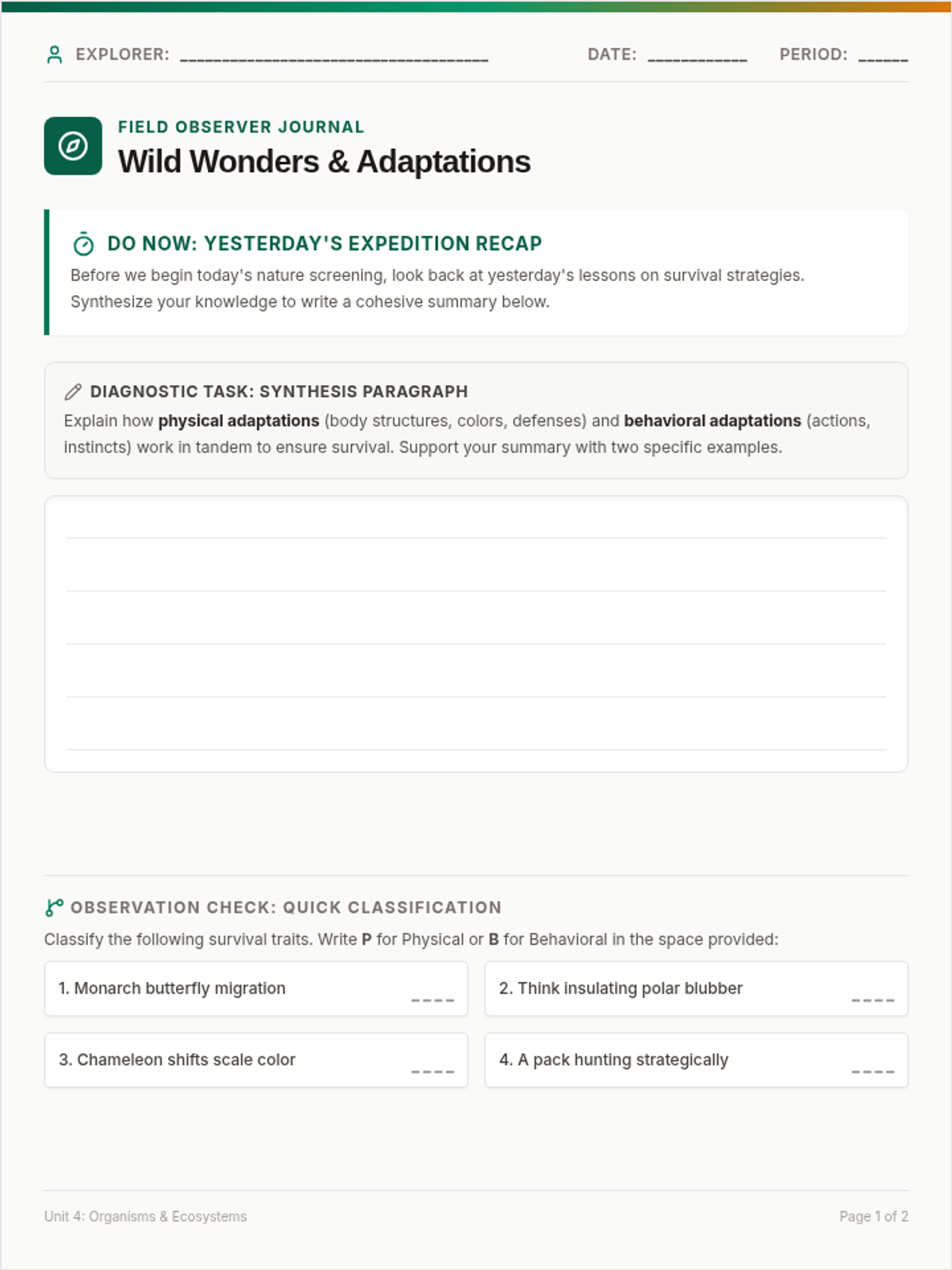
A lesson exploring how physical and behavioral traits help organisms survive in their environments, featuring a video documentary review and diagnostic summary.
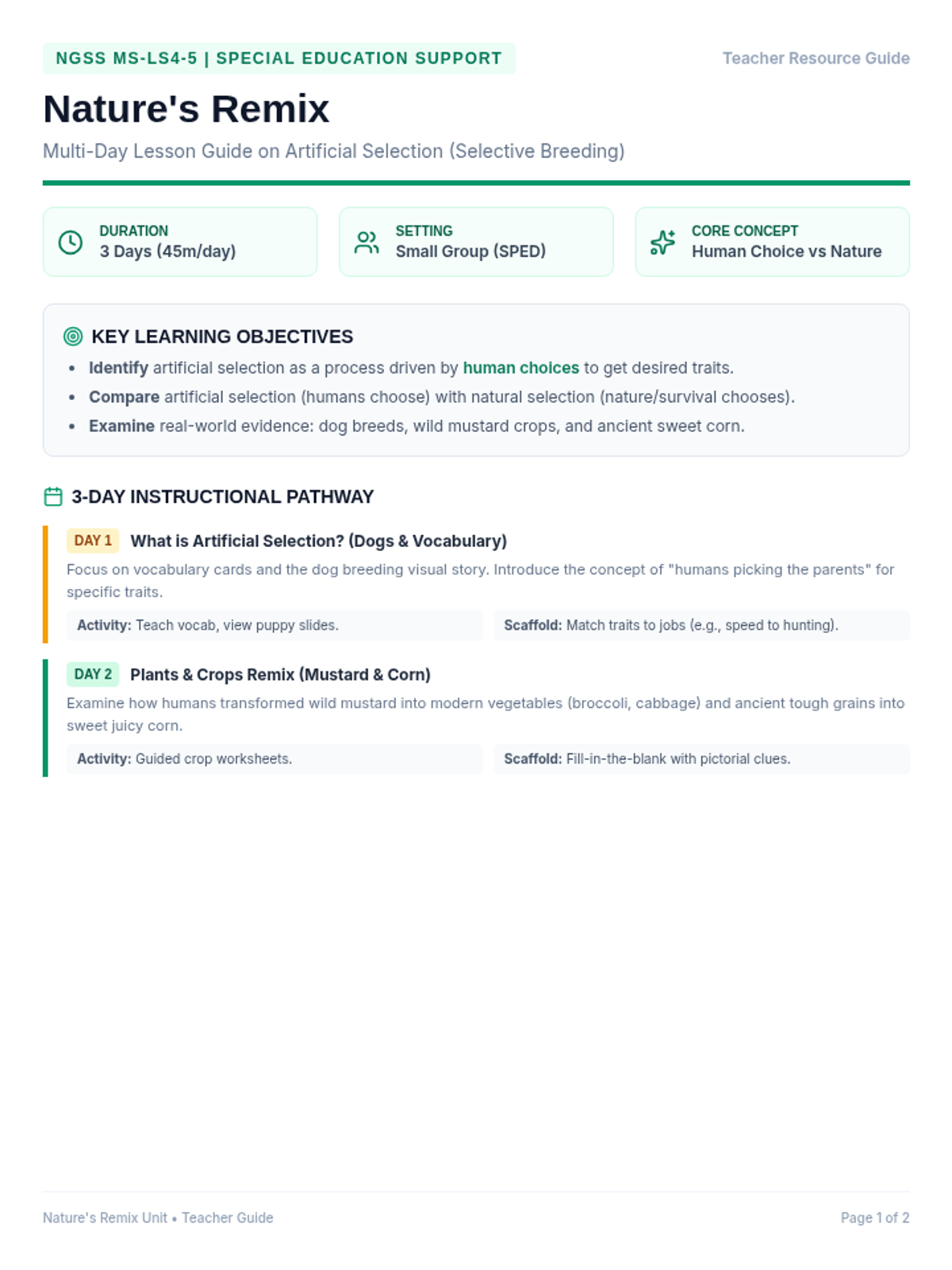
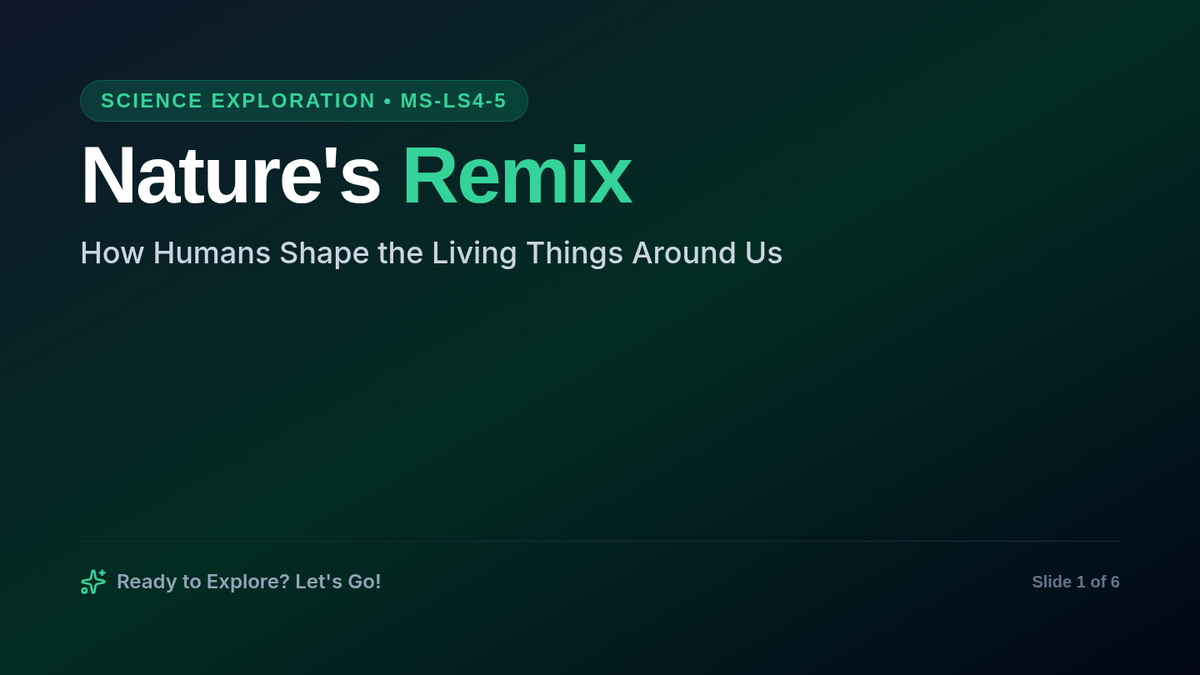
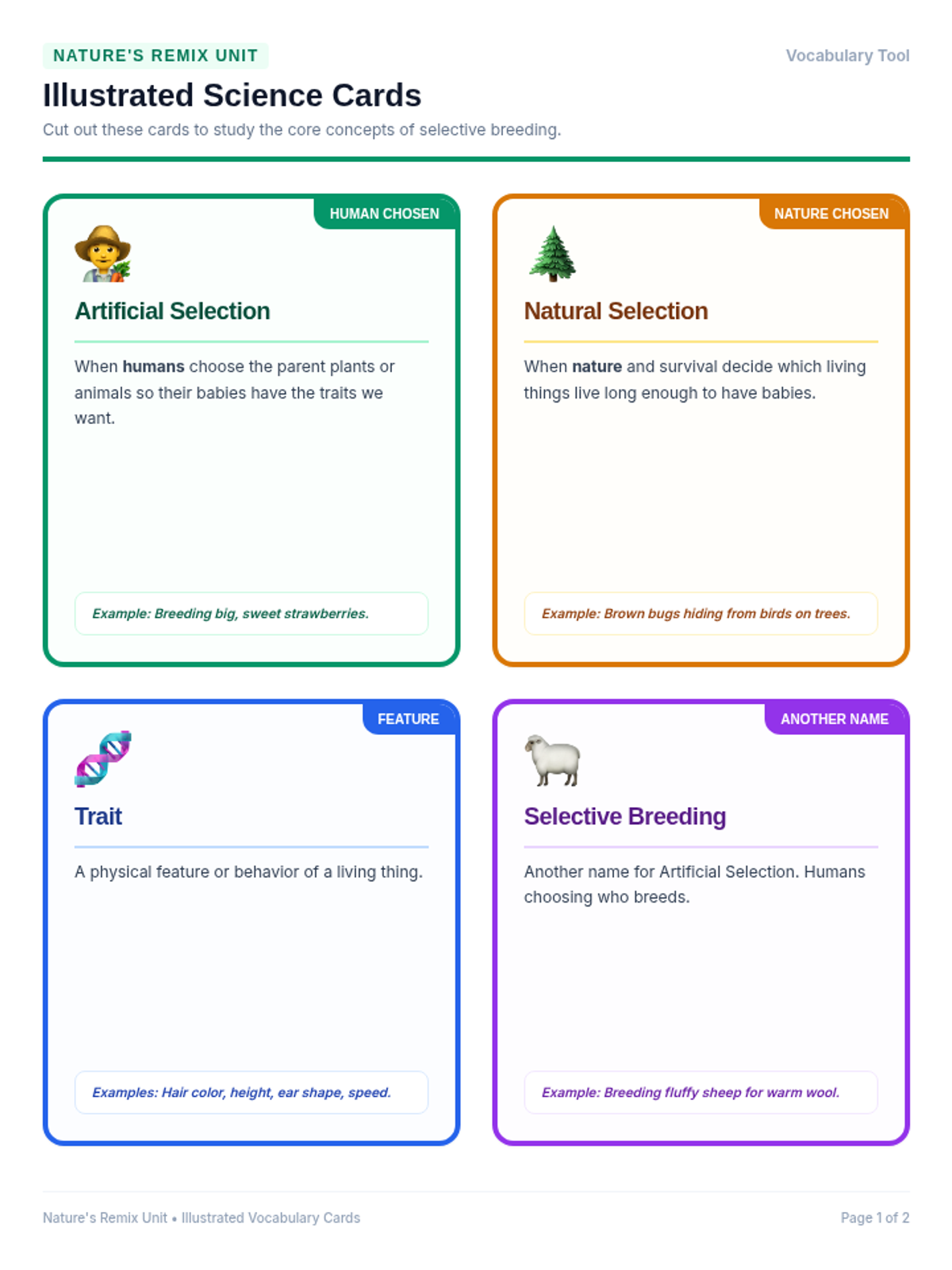
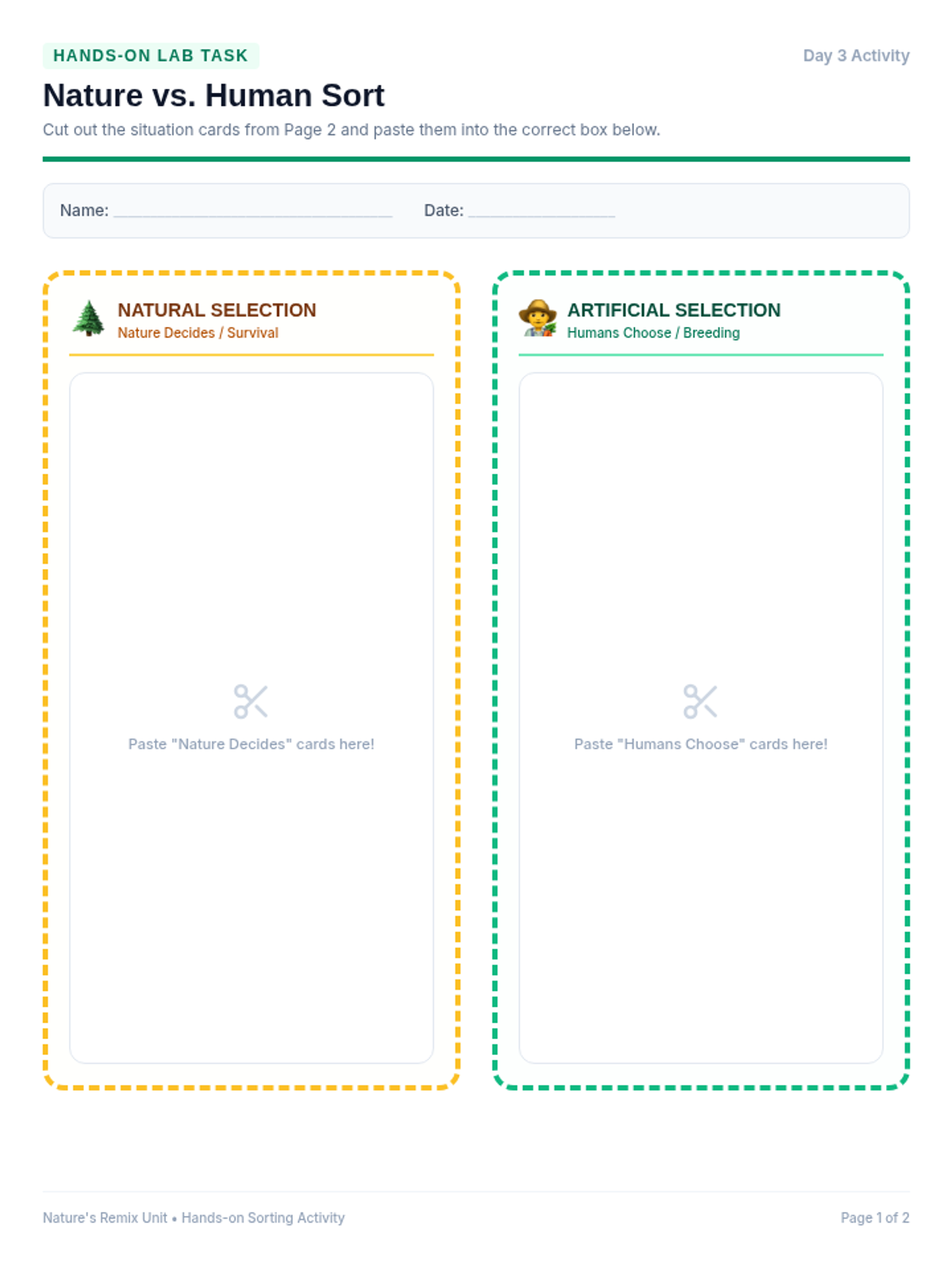
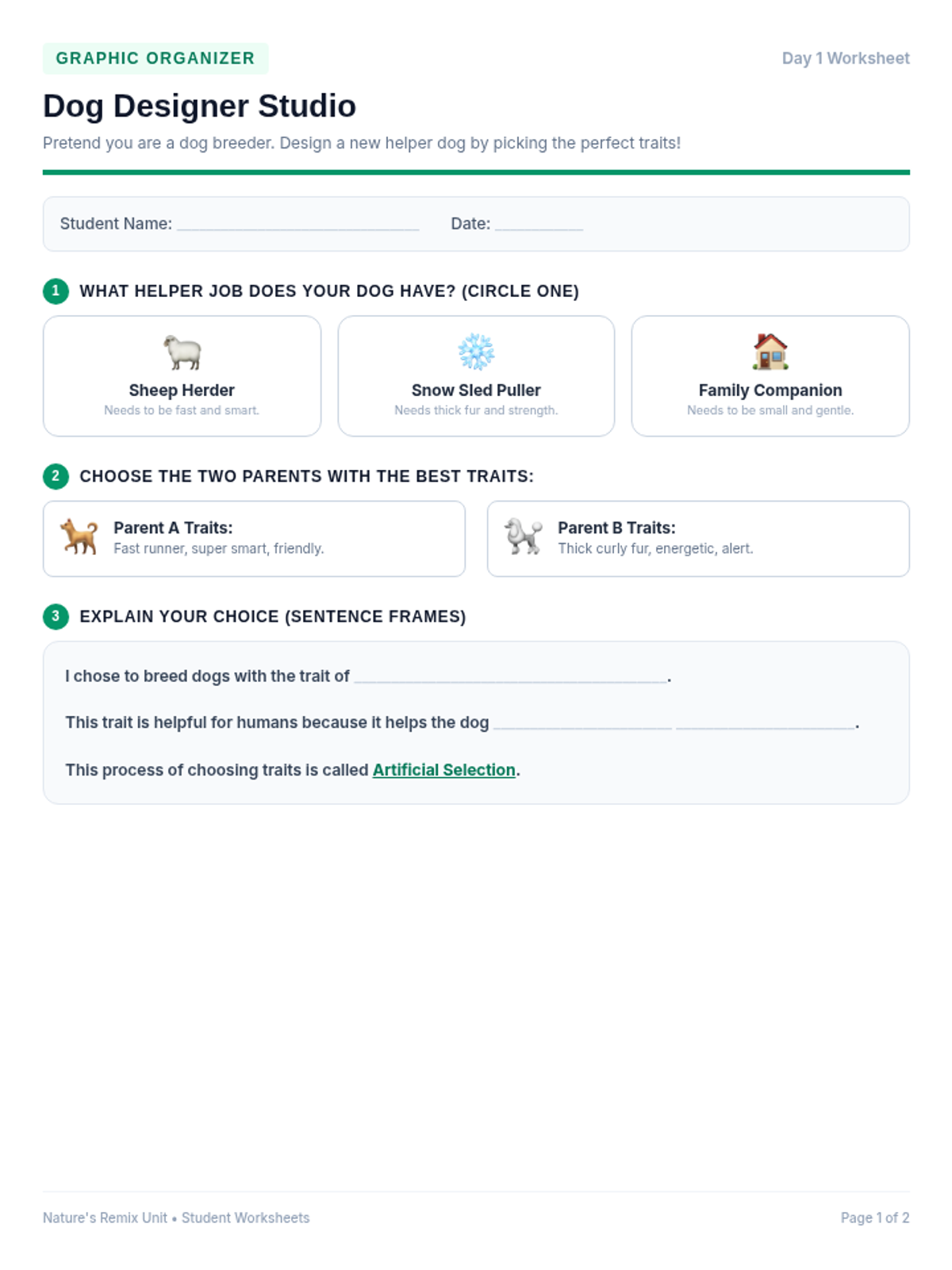
A multi-day, scaffolded special education lesson plan on artificial selection (MS-LS4-5). Includes a simplified visual presentation, graphic organizers with sentence frames, illustrated vocabulary cards, a hands-on sorting task, and a comprehensive teacher guide.
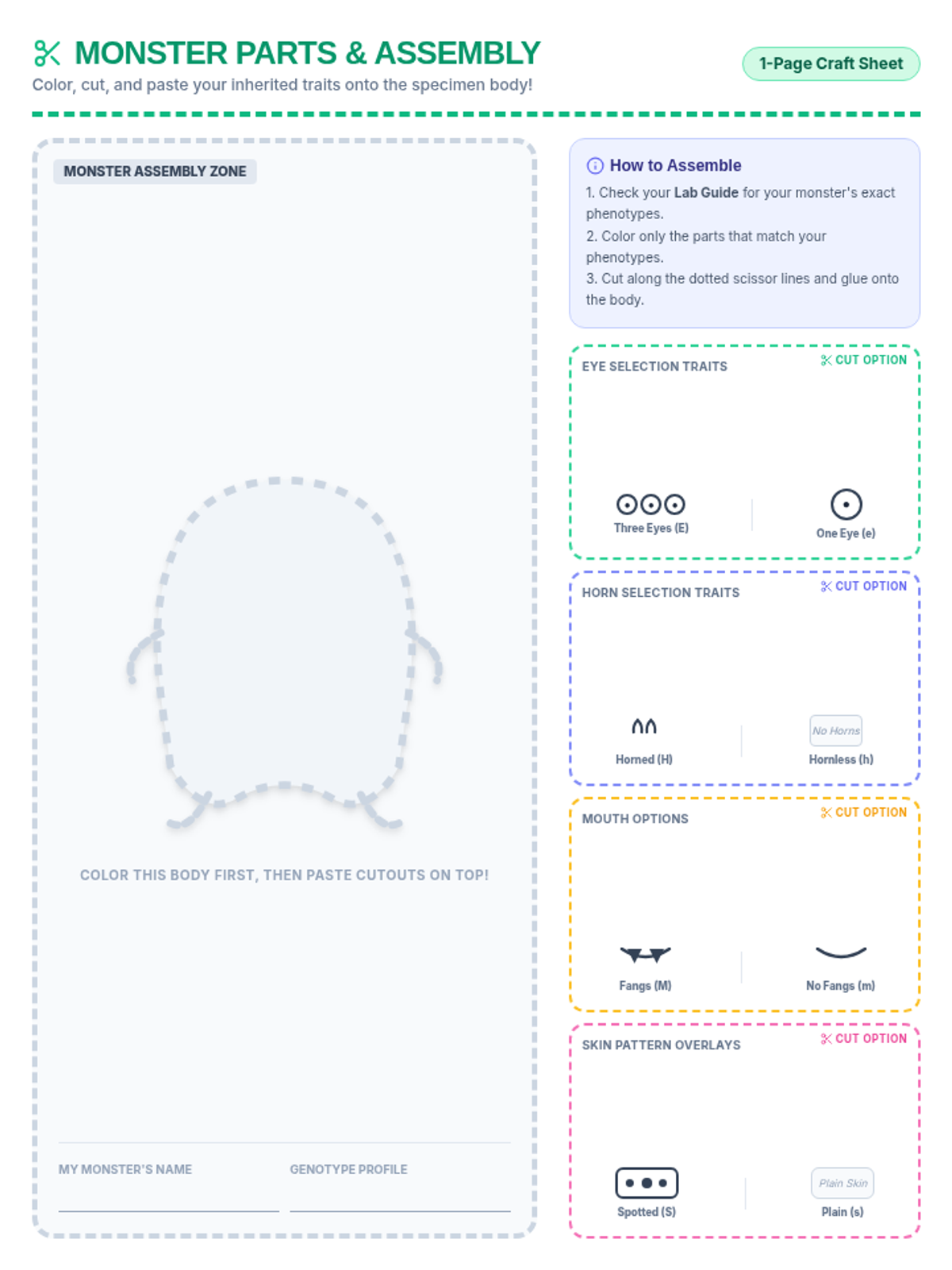
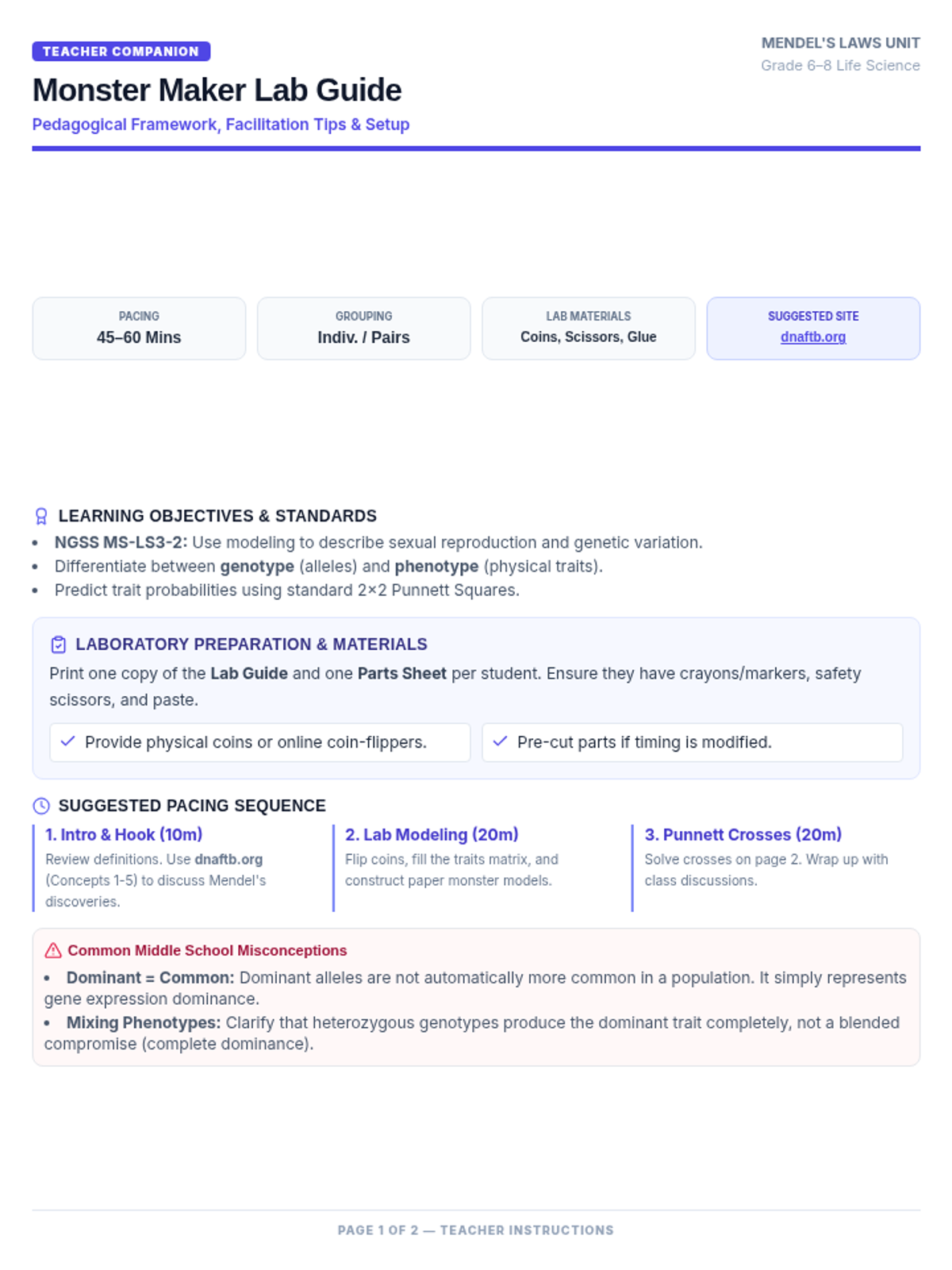
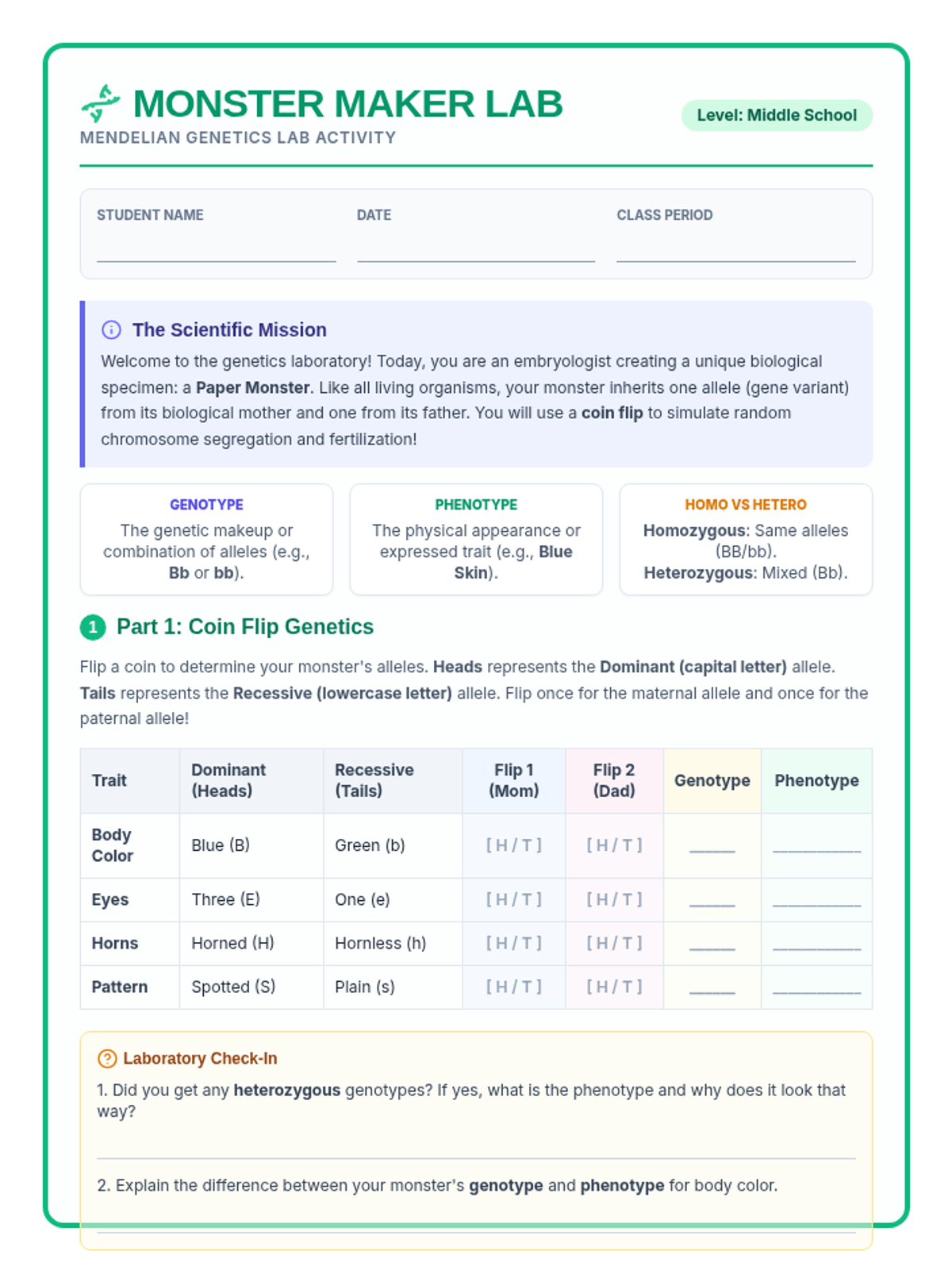
A hands-on paper modeling lab where middle school students explore Mendel's laws of inheritance. Students flip coins to determine alleles, build paper monsters based on genotypes and phenotypes, and complete Punnett squares to predict inheritance outcomes.
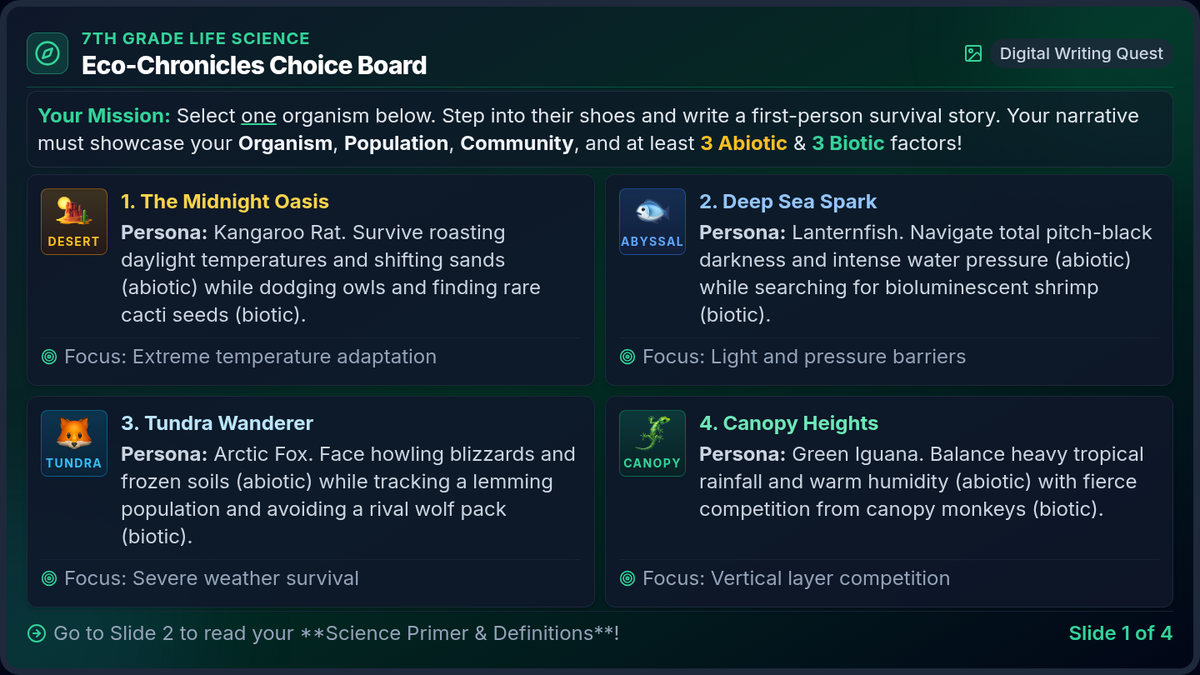
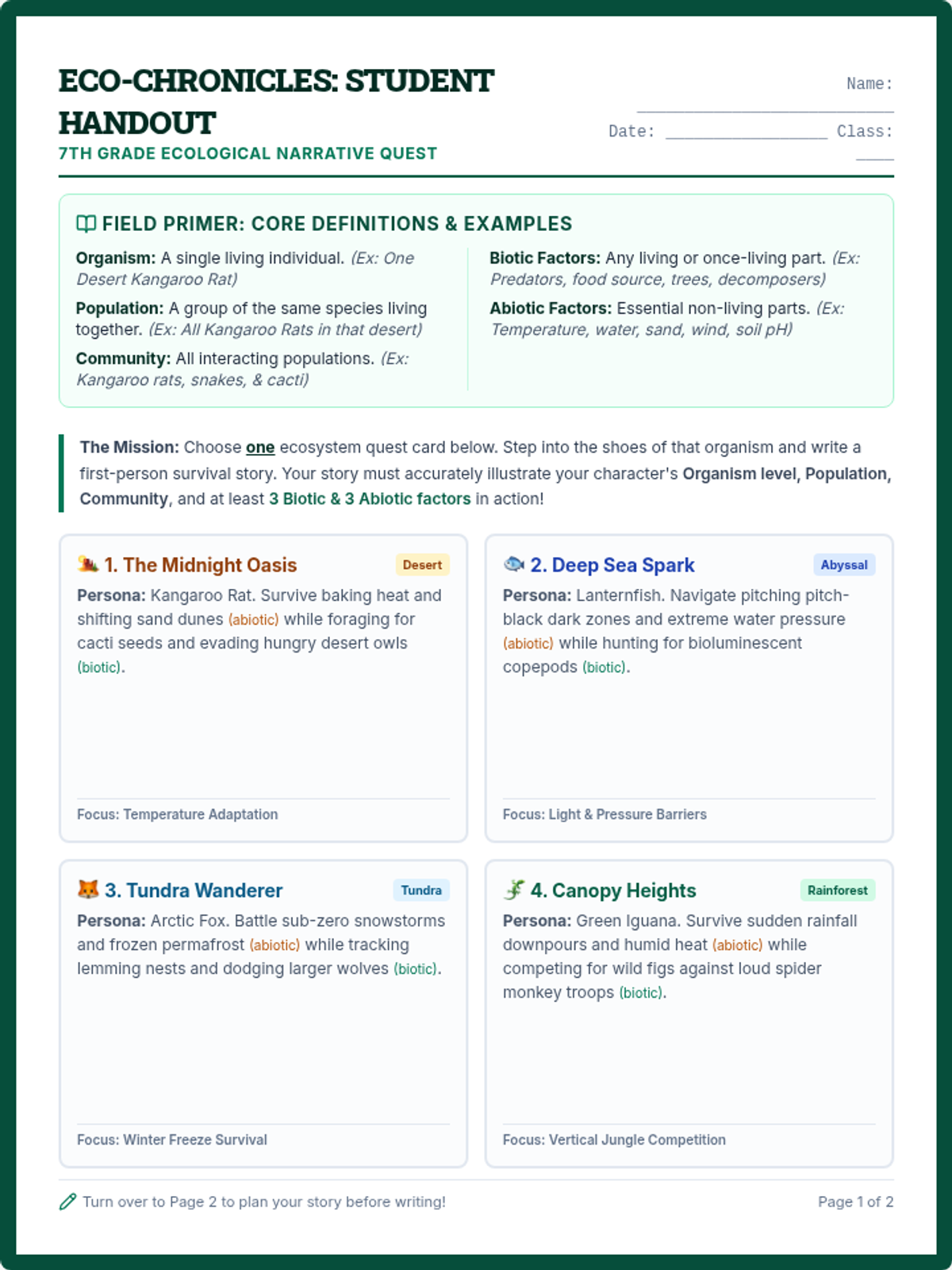
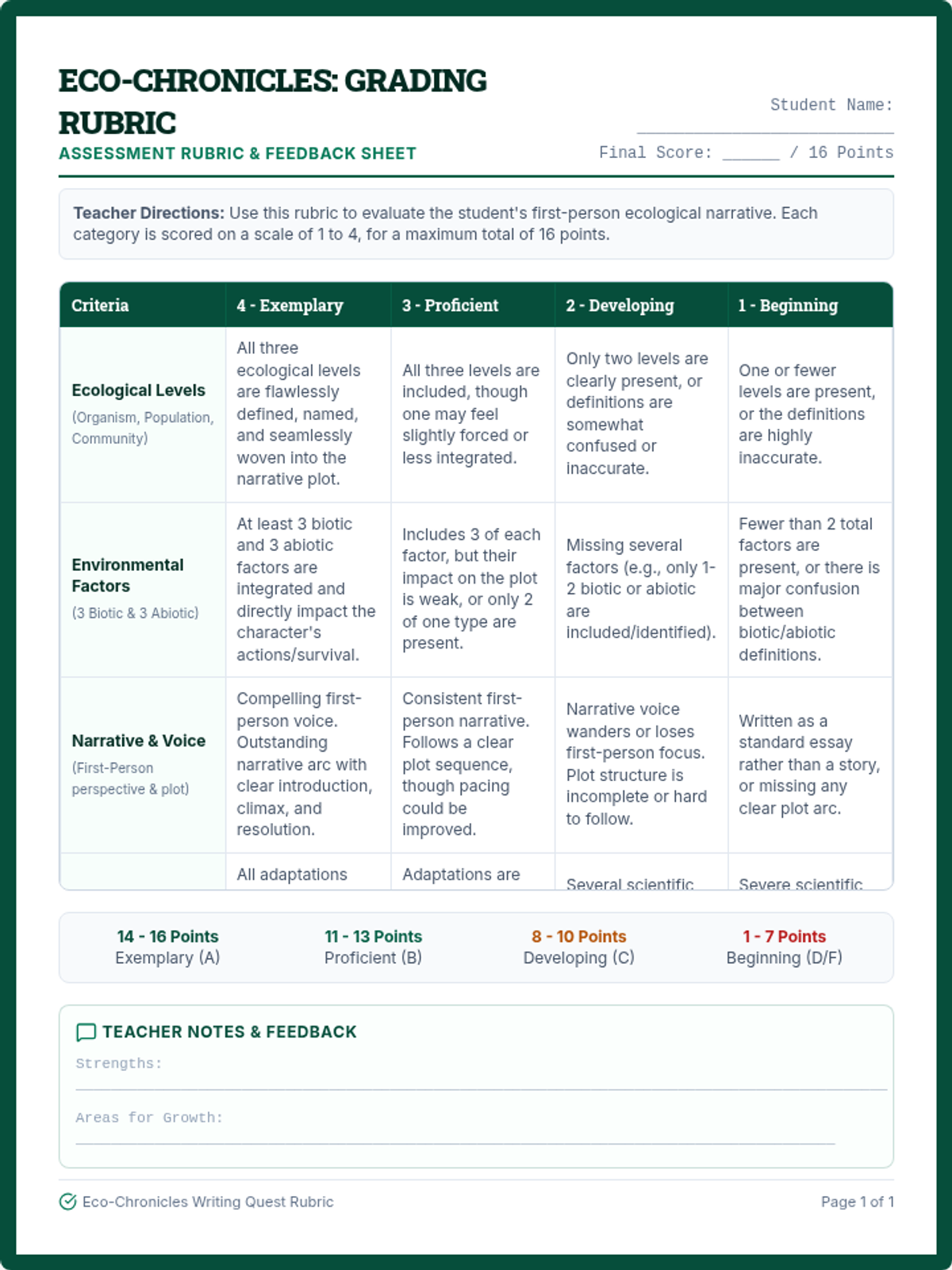
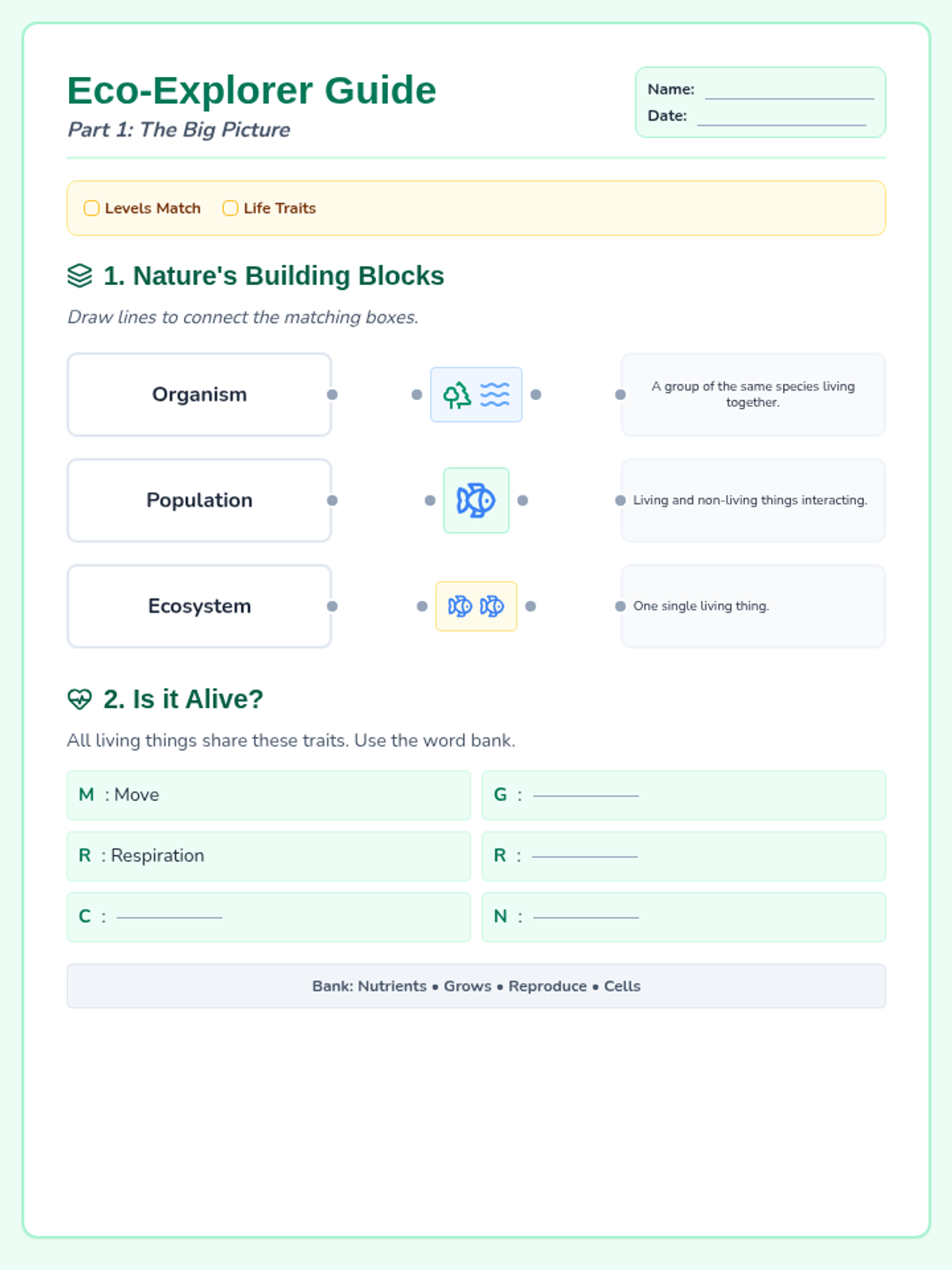
A highly engaging digital lesson where students step into the shoes of organisms, exploring ecological levels (organism, population, community) and biotic/abiotic factors through narrative writing choice boards and a structured brainstorming graphic organizer.
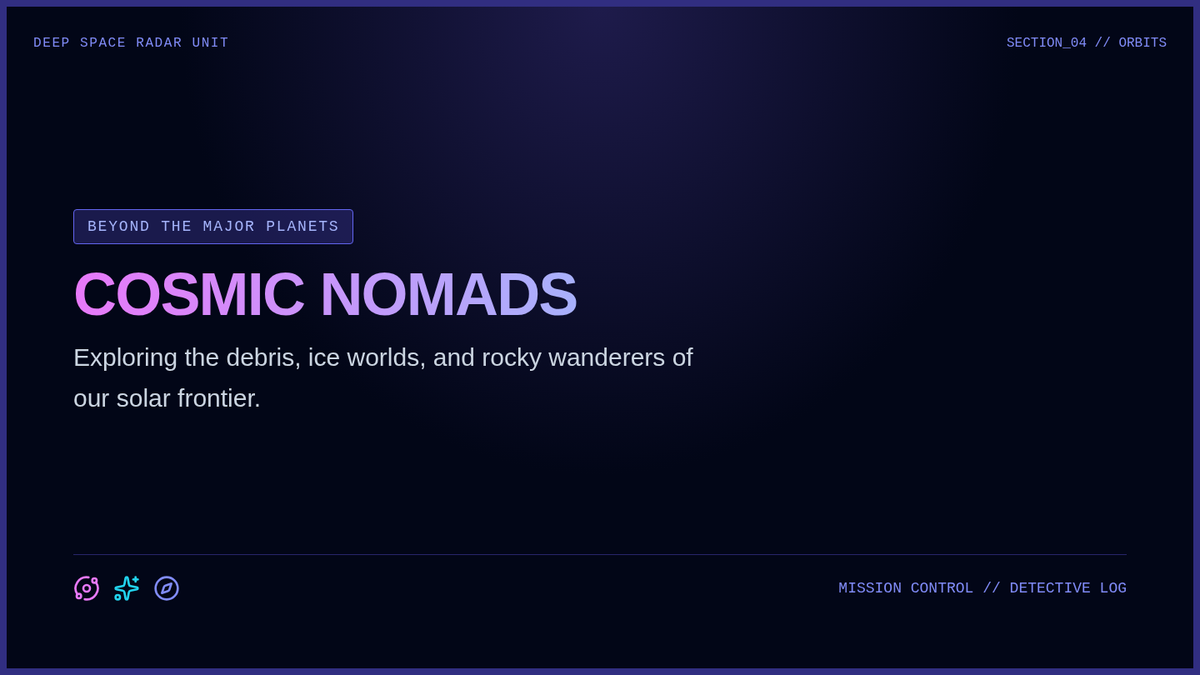
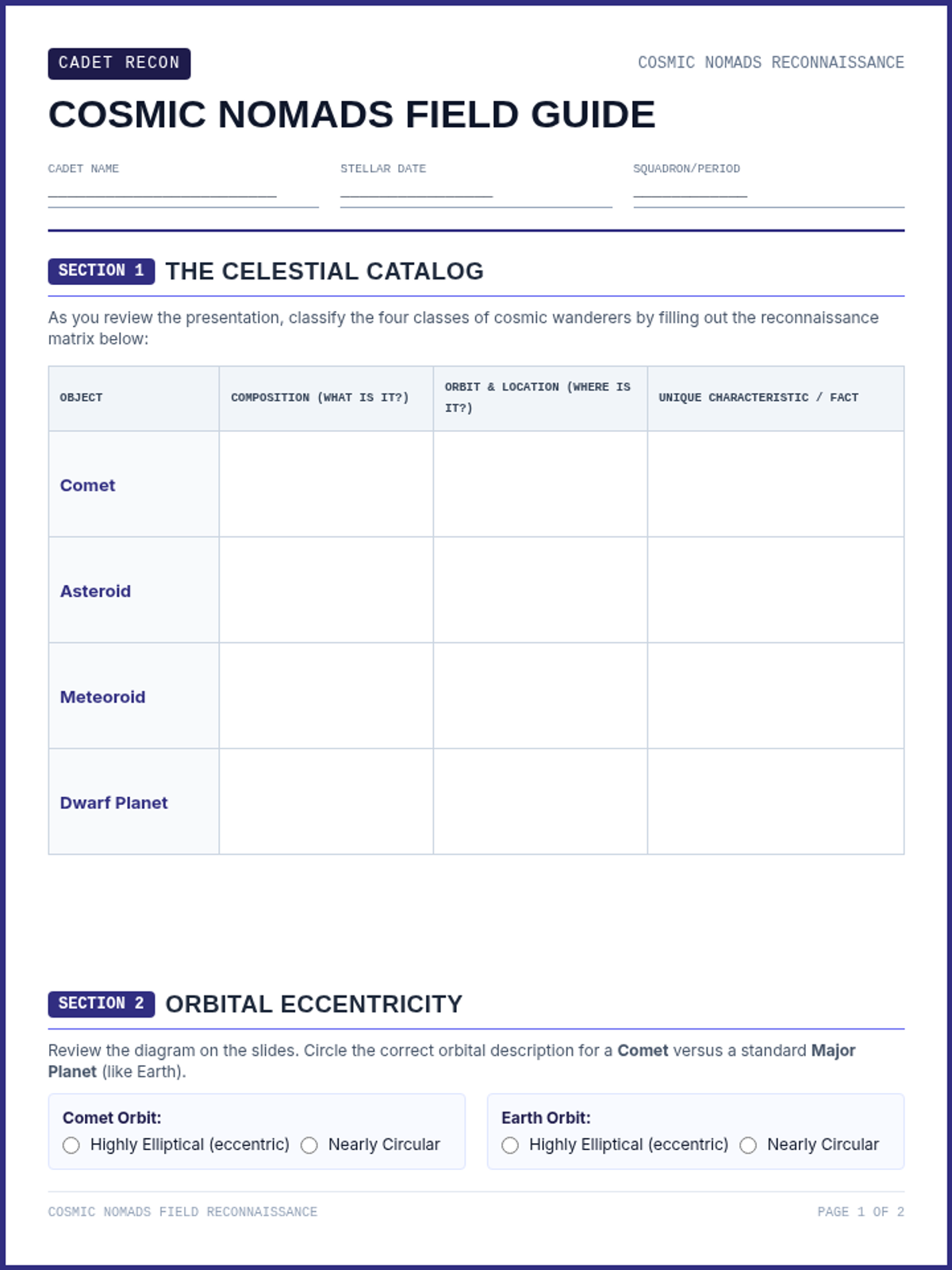
An interactive exploration of asteroids, comets, meteoroids, and dwarf planets, focusing on their physical compositions, eccentric orbital pathways, and origins in the Kuiper Belt and Oort Cloud.
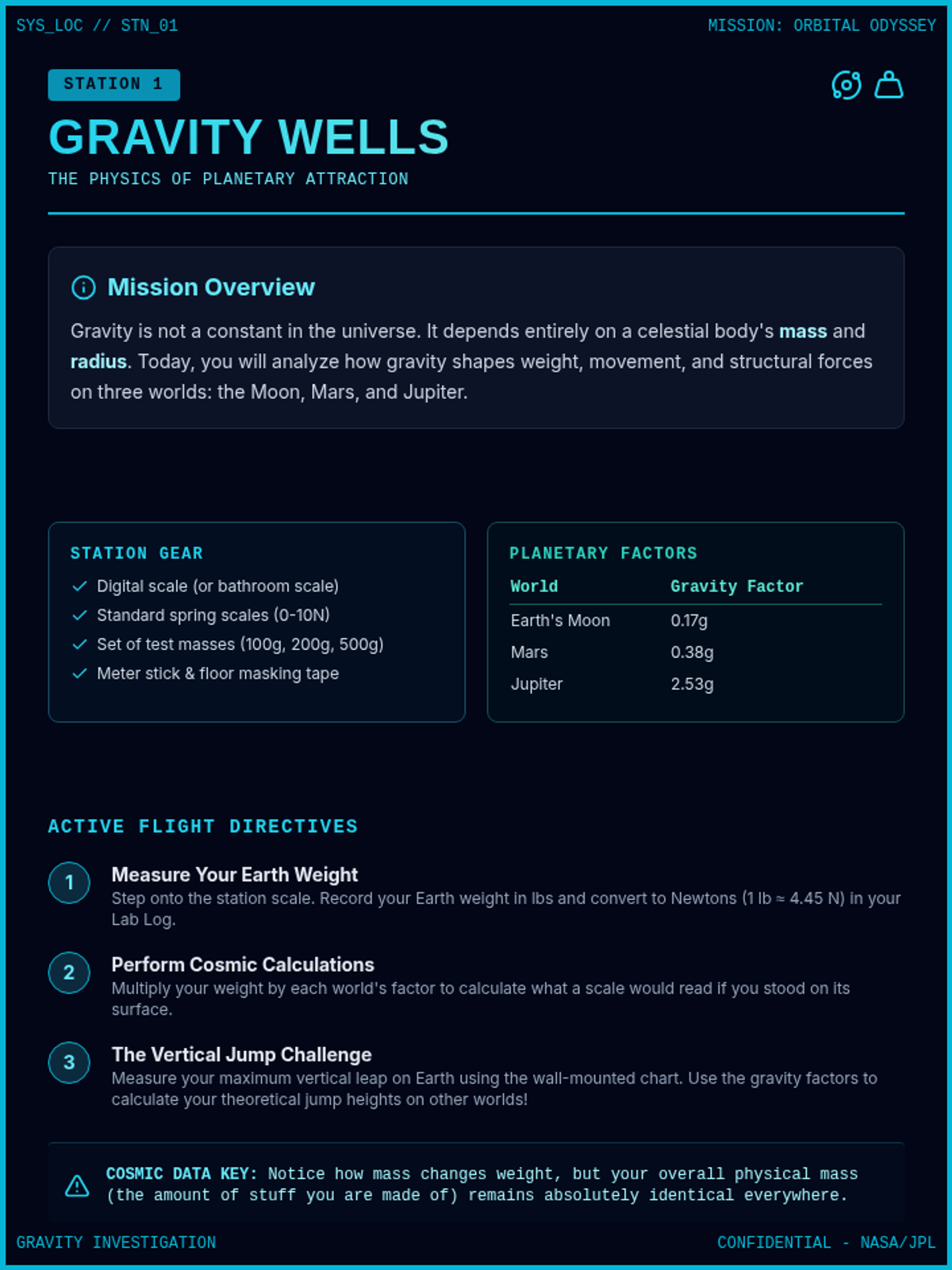
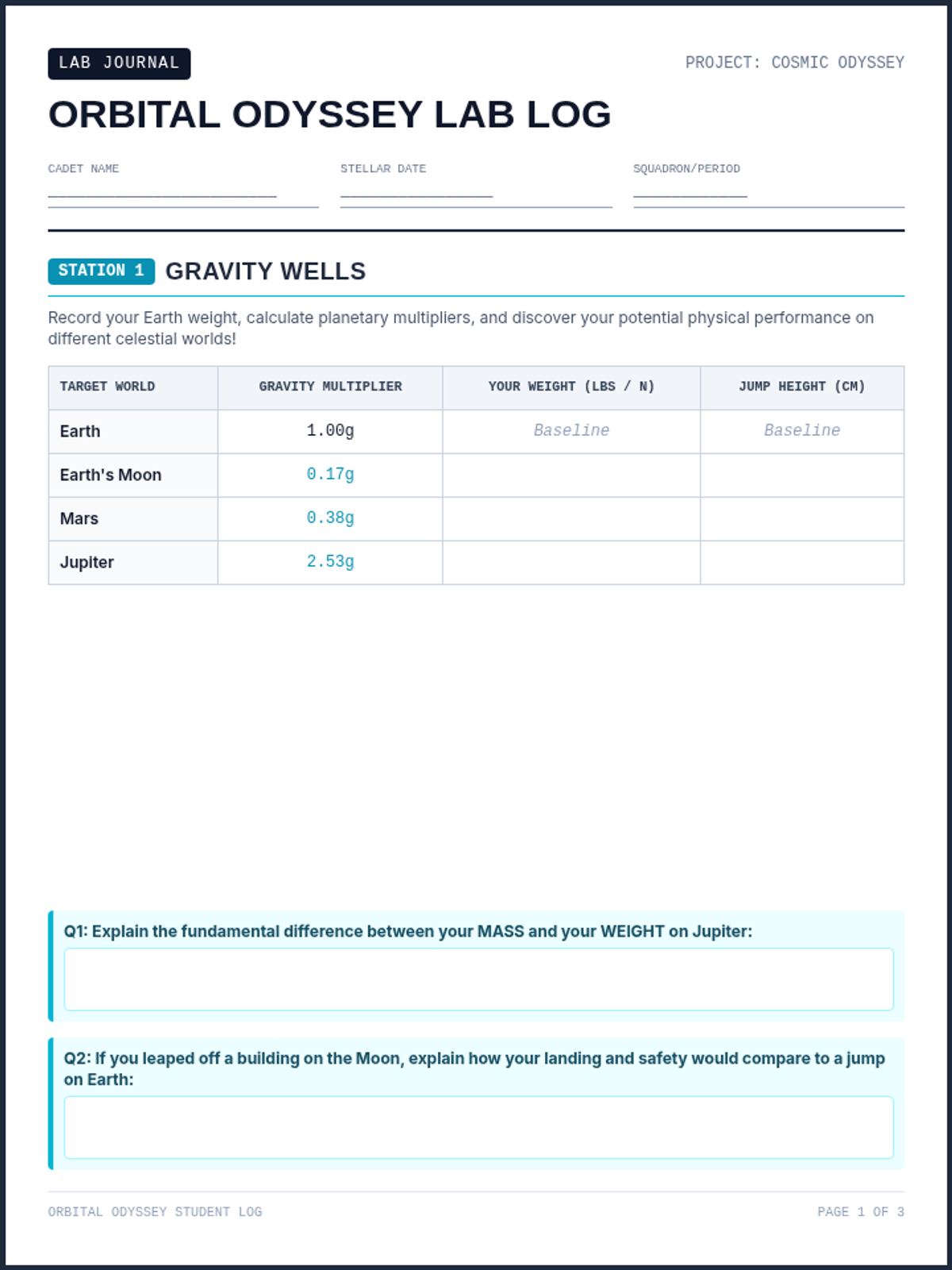
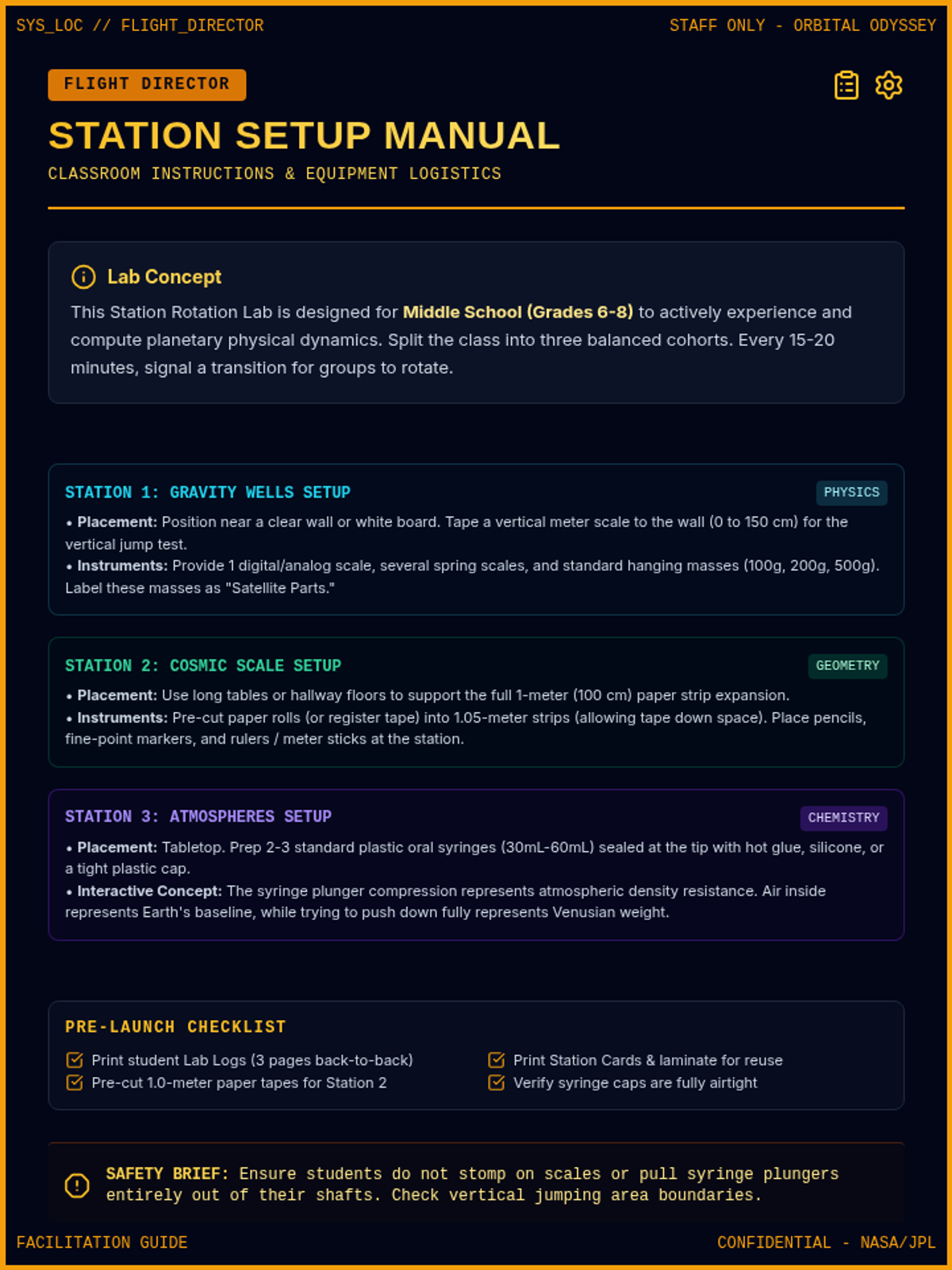
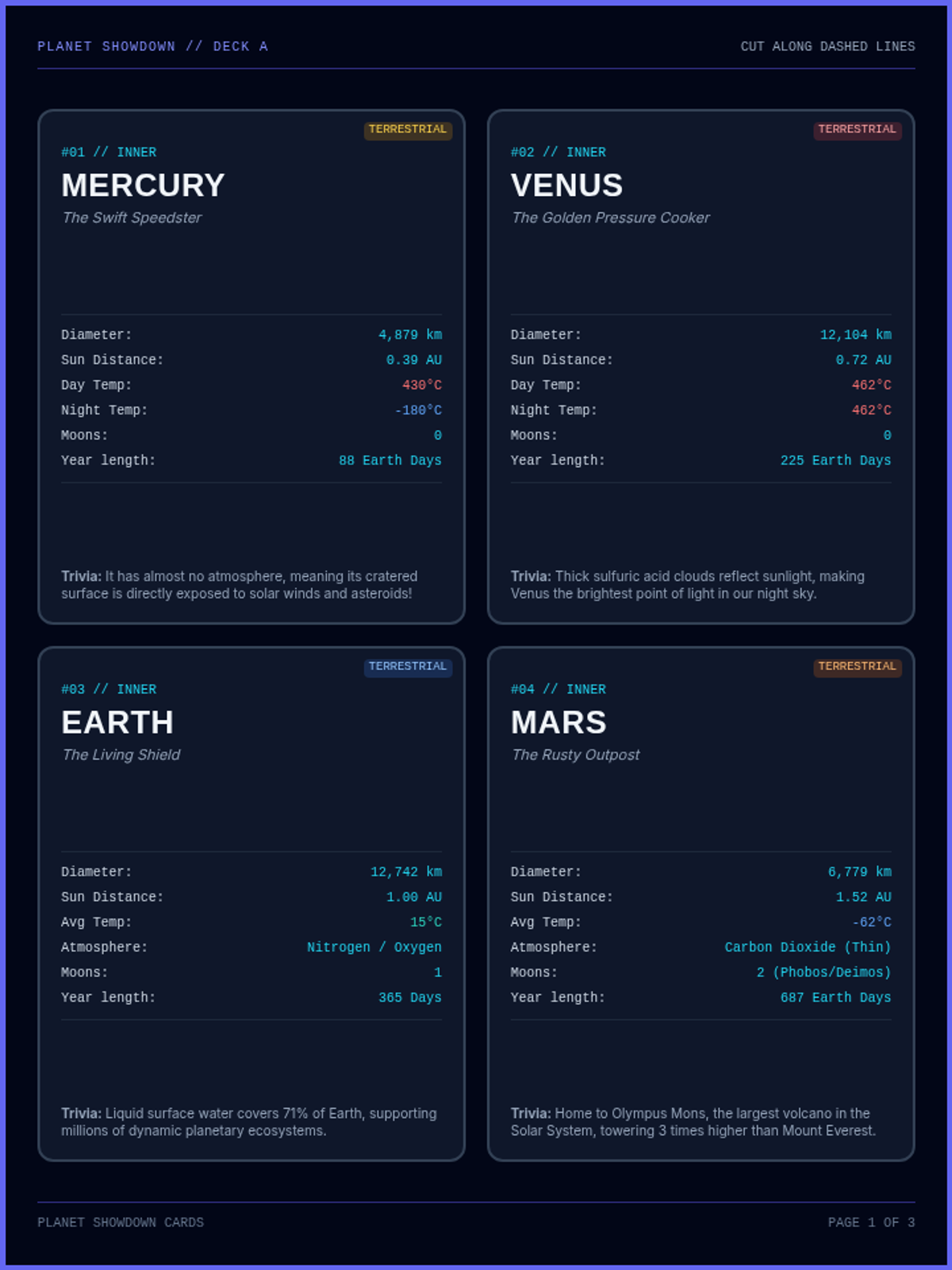
A hands-on station rotation lab where middle school students analyze planetary gravity, scale distances, and atmospheric conditions through inquiry-based activities.
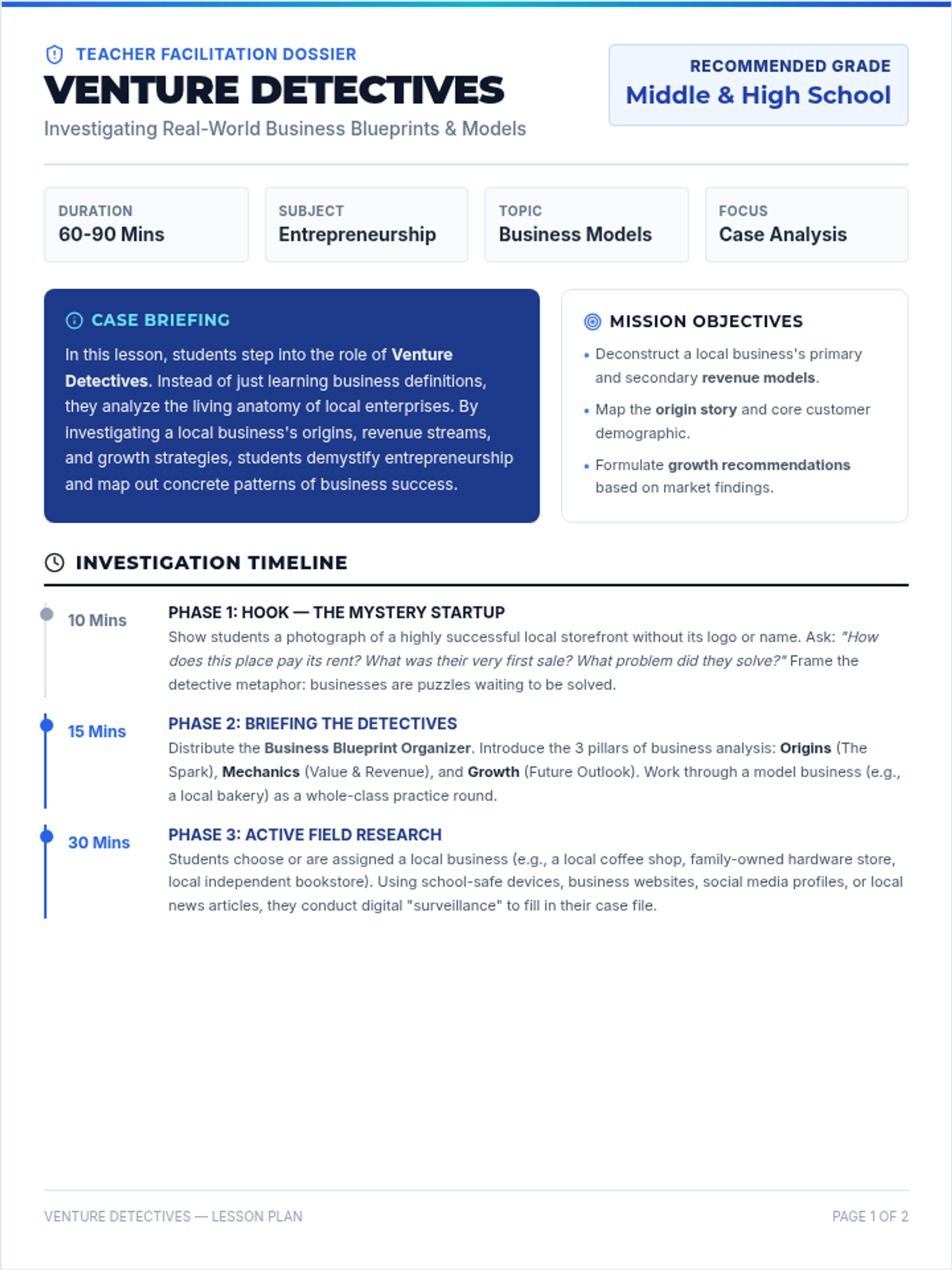
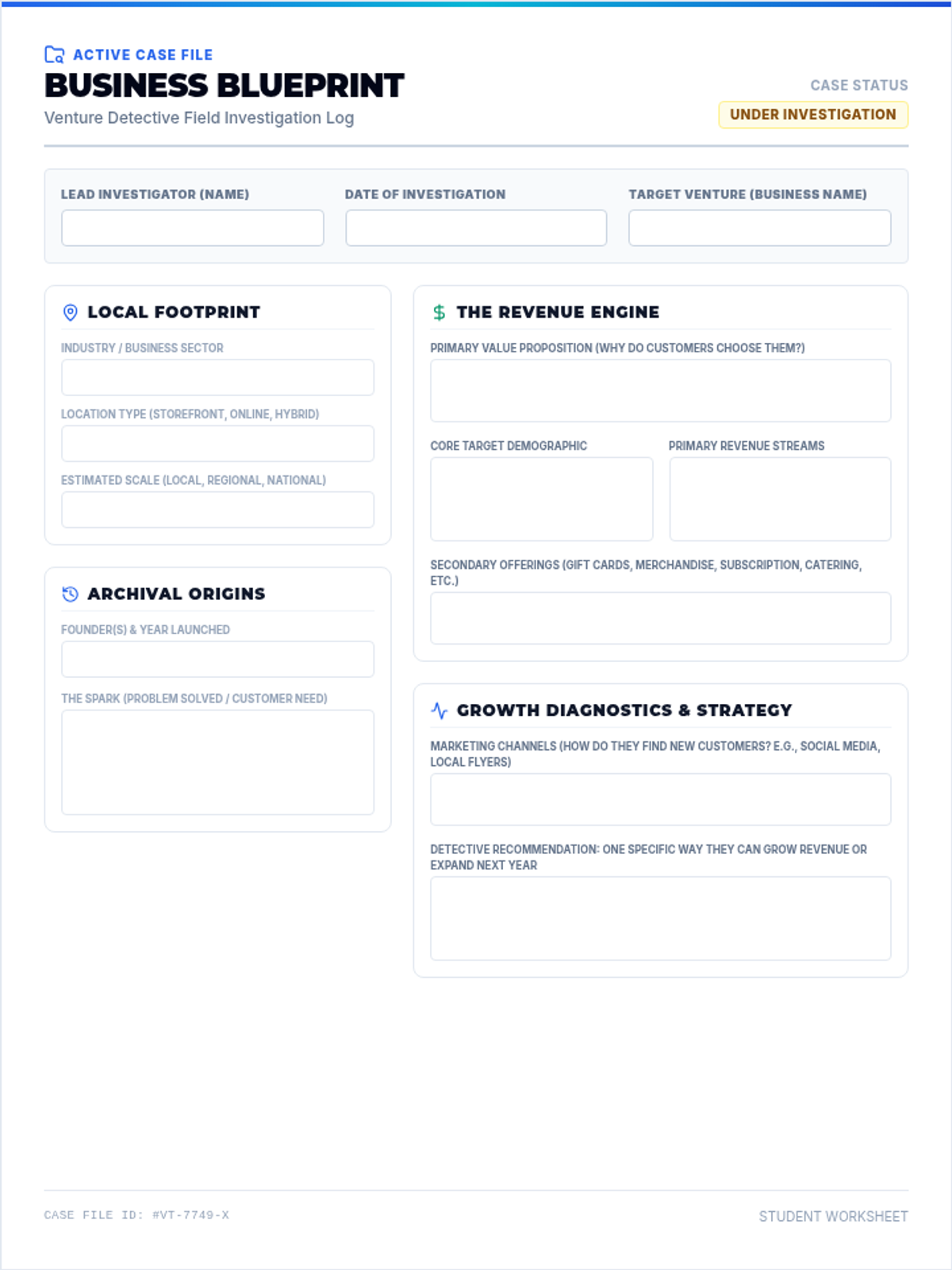
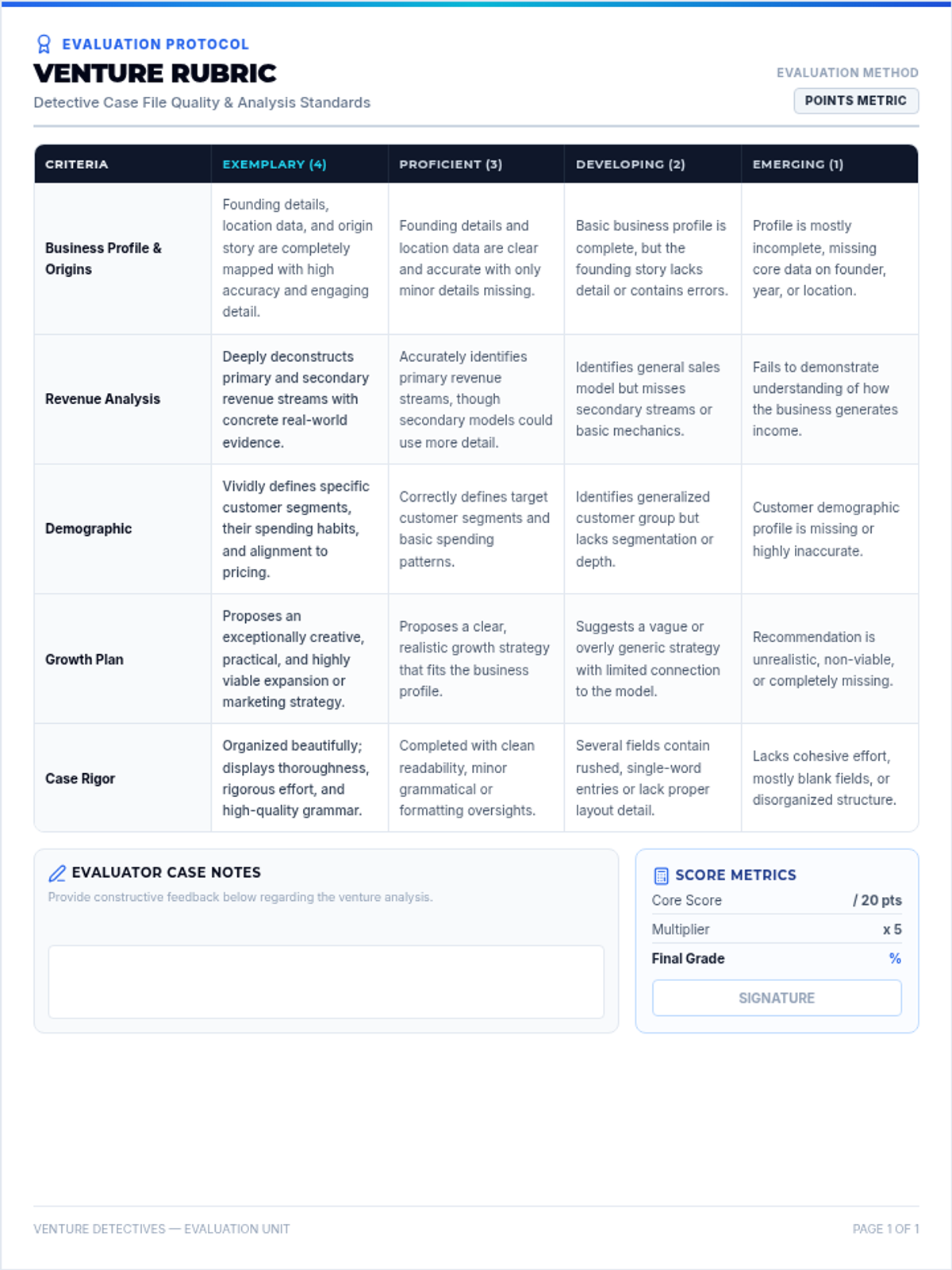
An immersive entrepreneurship lesson where students become 'venture detectives' to investigate local businesses, analyzing how they started, their revenue streams, and their growth strategies.
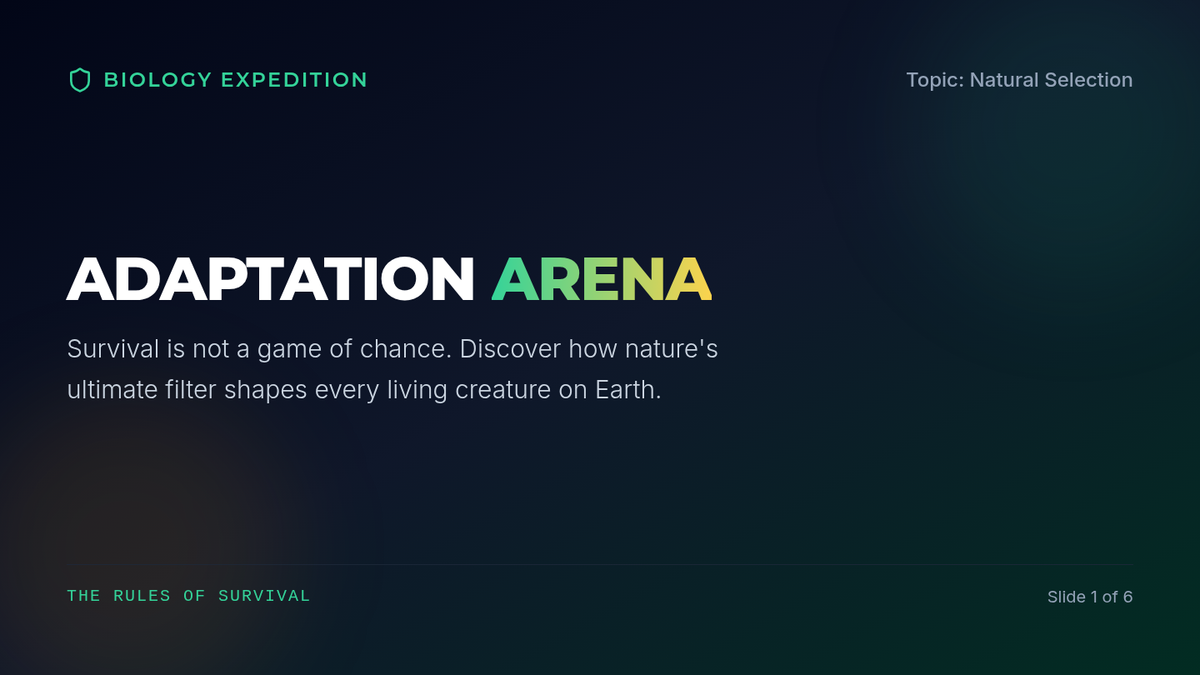
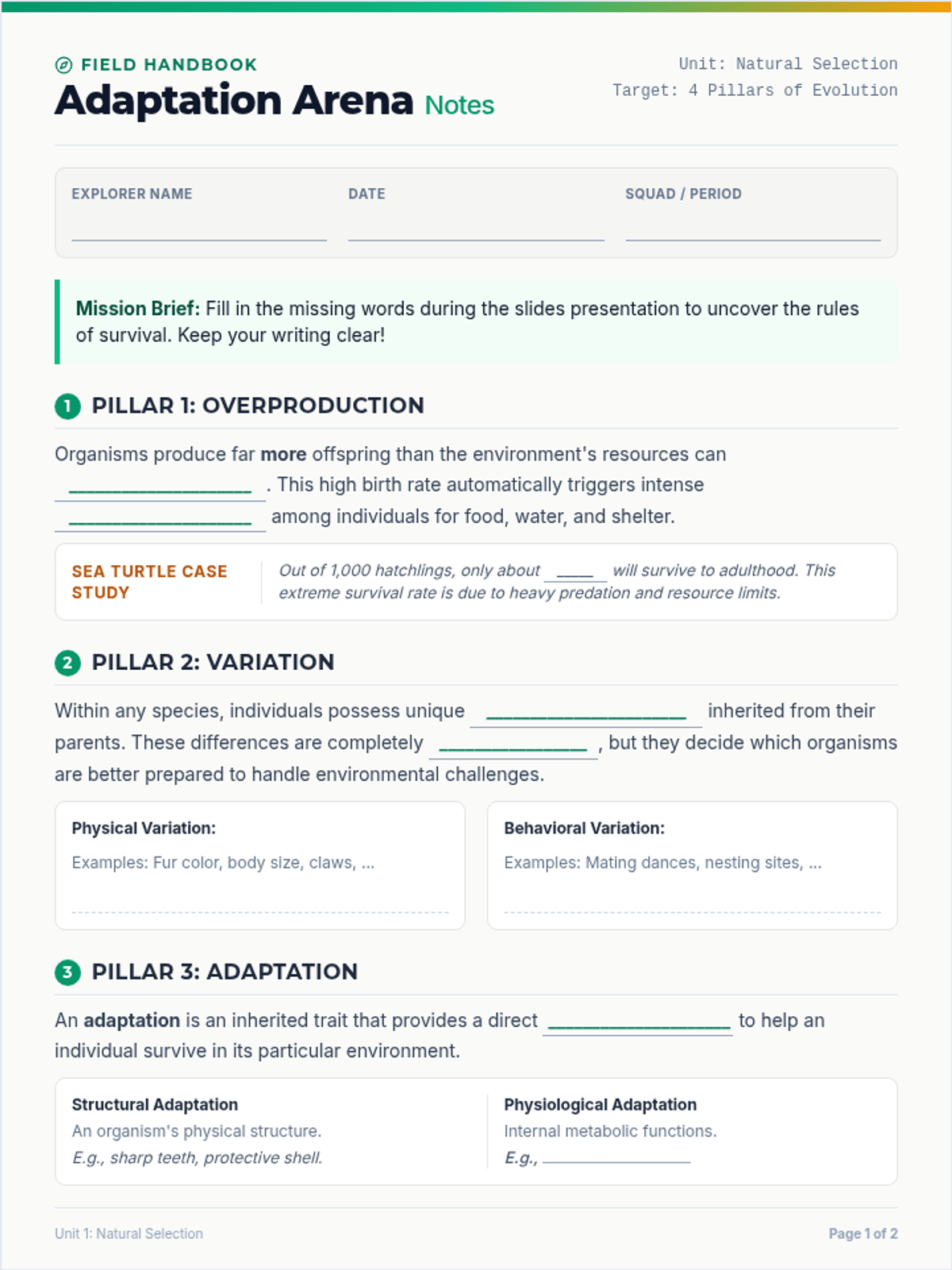
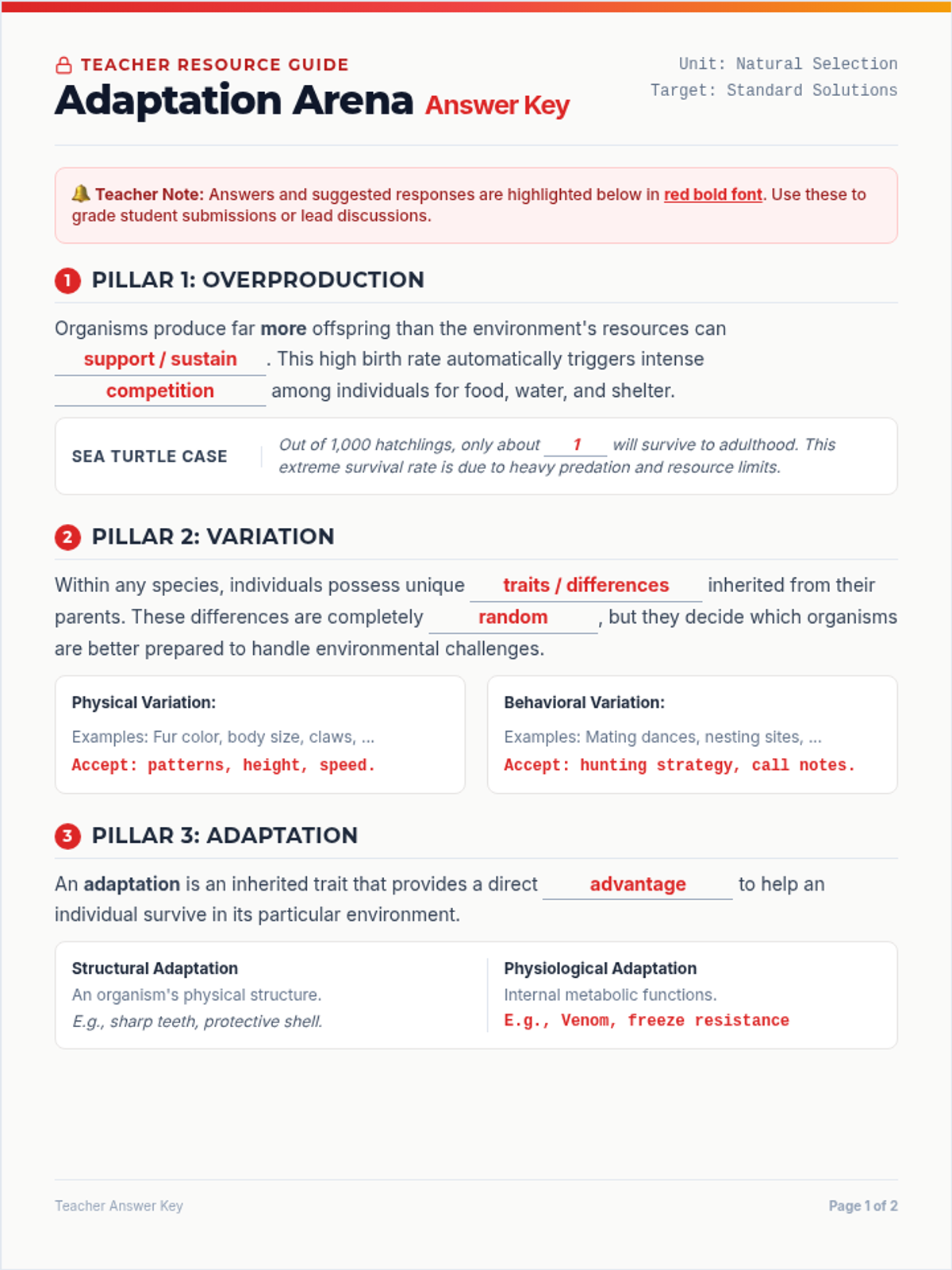
An immersive lesson exploring the core principles of natural selection: variation, overproduction, adaptation, and differential survival. Students engage with visual slides and companion guided notes to understand how populations change over time.
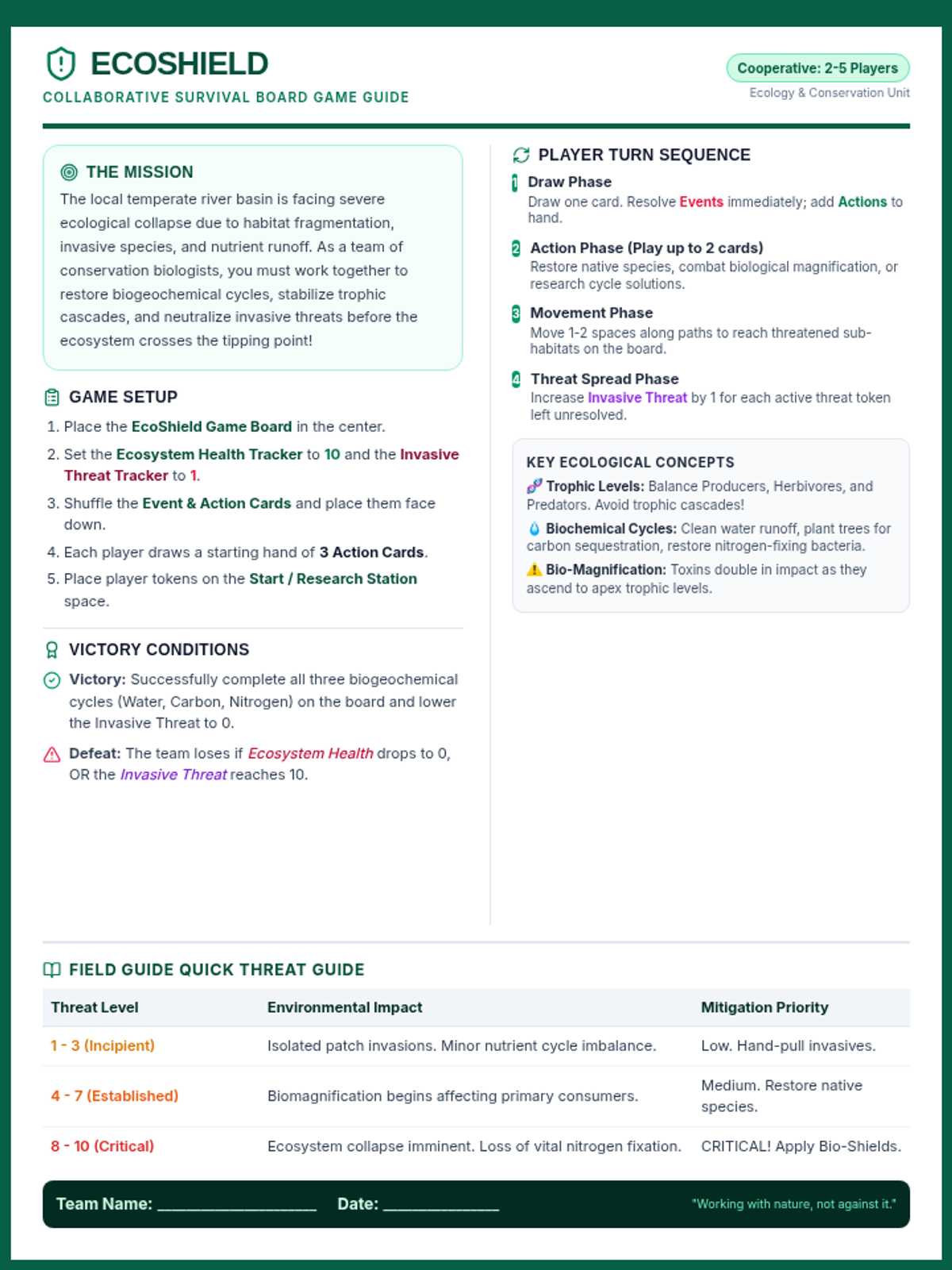
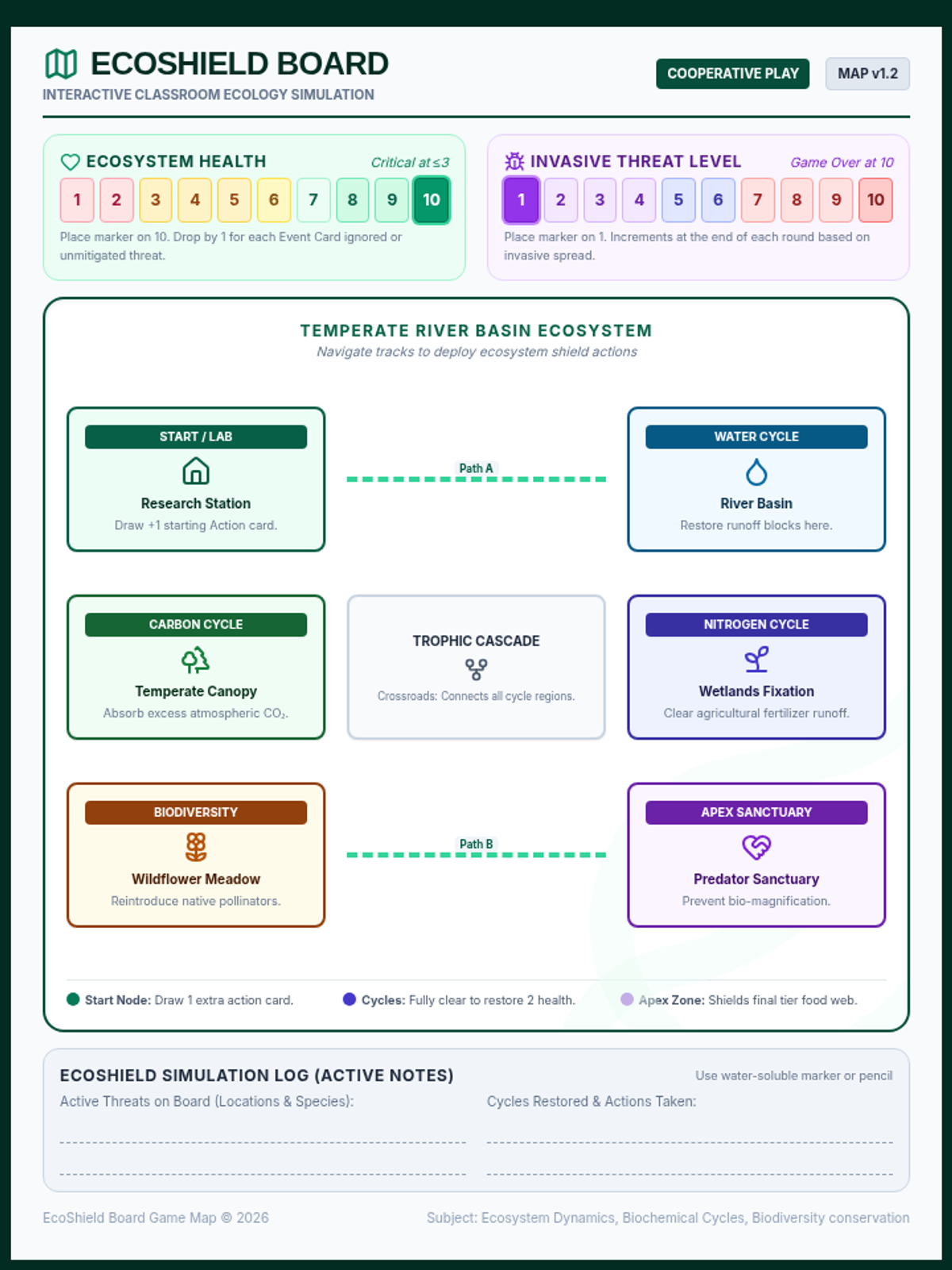
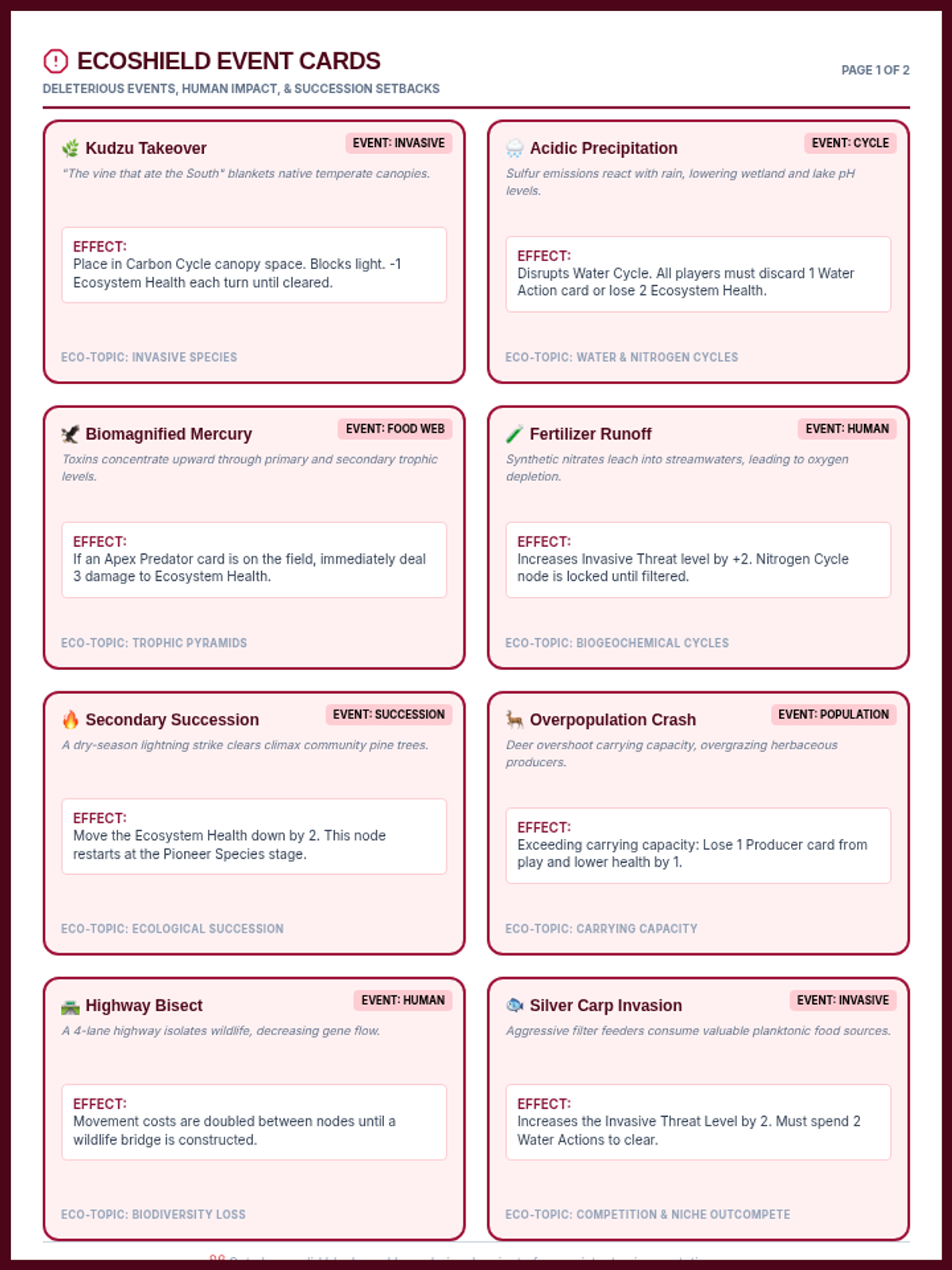
A collaborative board game lesson where students work together to save an ecosystem from ecological threats, human impact, and invasive species using food web dynamics and biochemical cycle actions.
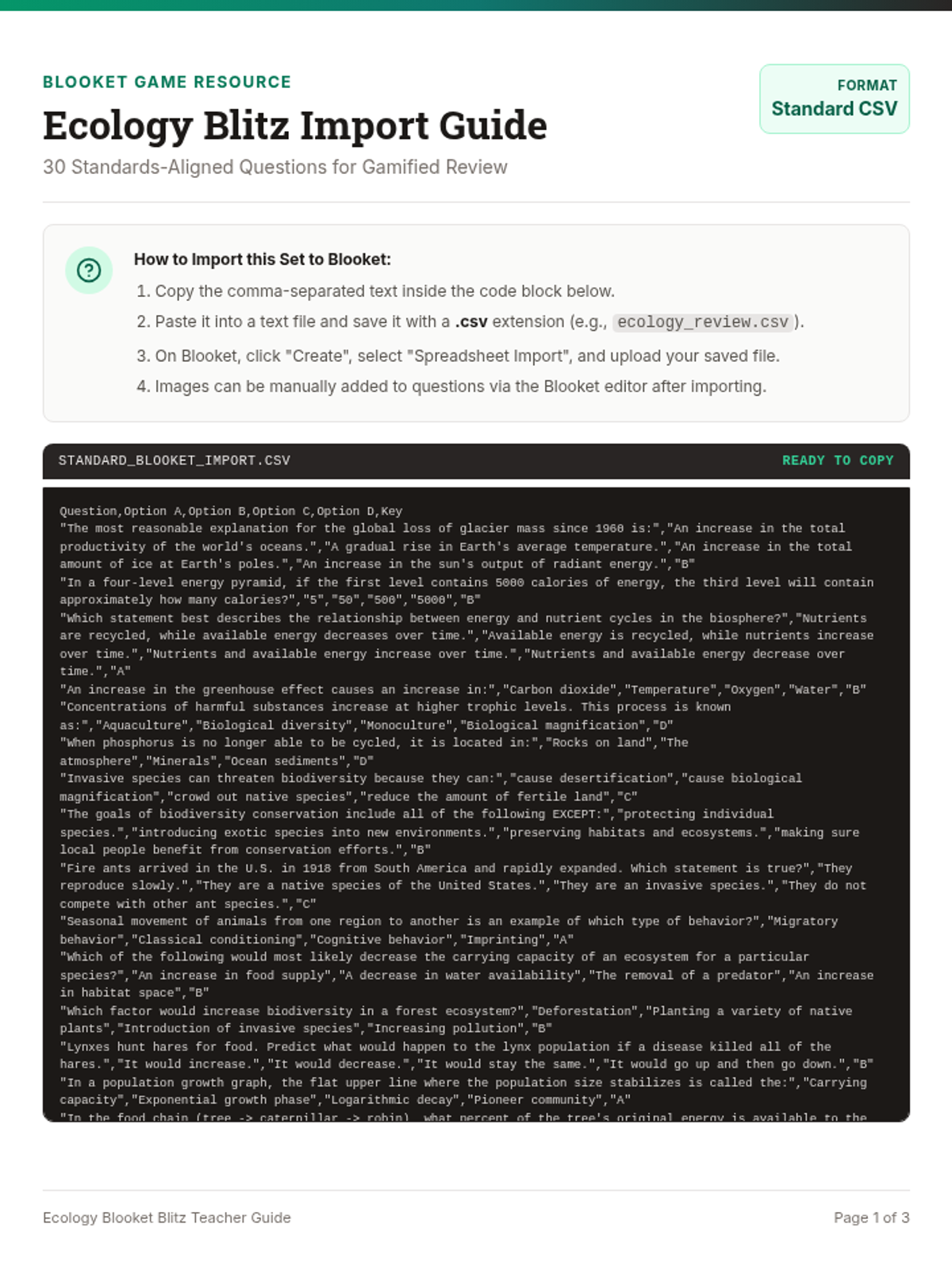
A high-energy ecology review lesson utilizing a gamified Blooket activity. It contains a complete Blooket-ready question bank and teacher guide featuring 30 standards-aligned ecology questions designed to evaluate understanding of ecosystems, energy pyramids, human impacts, and biochemical cycles.
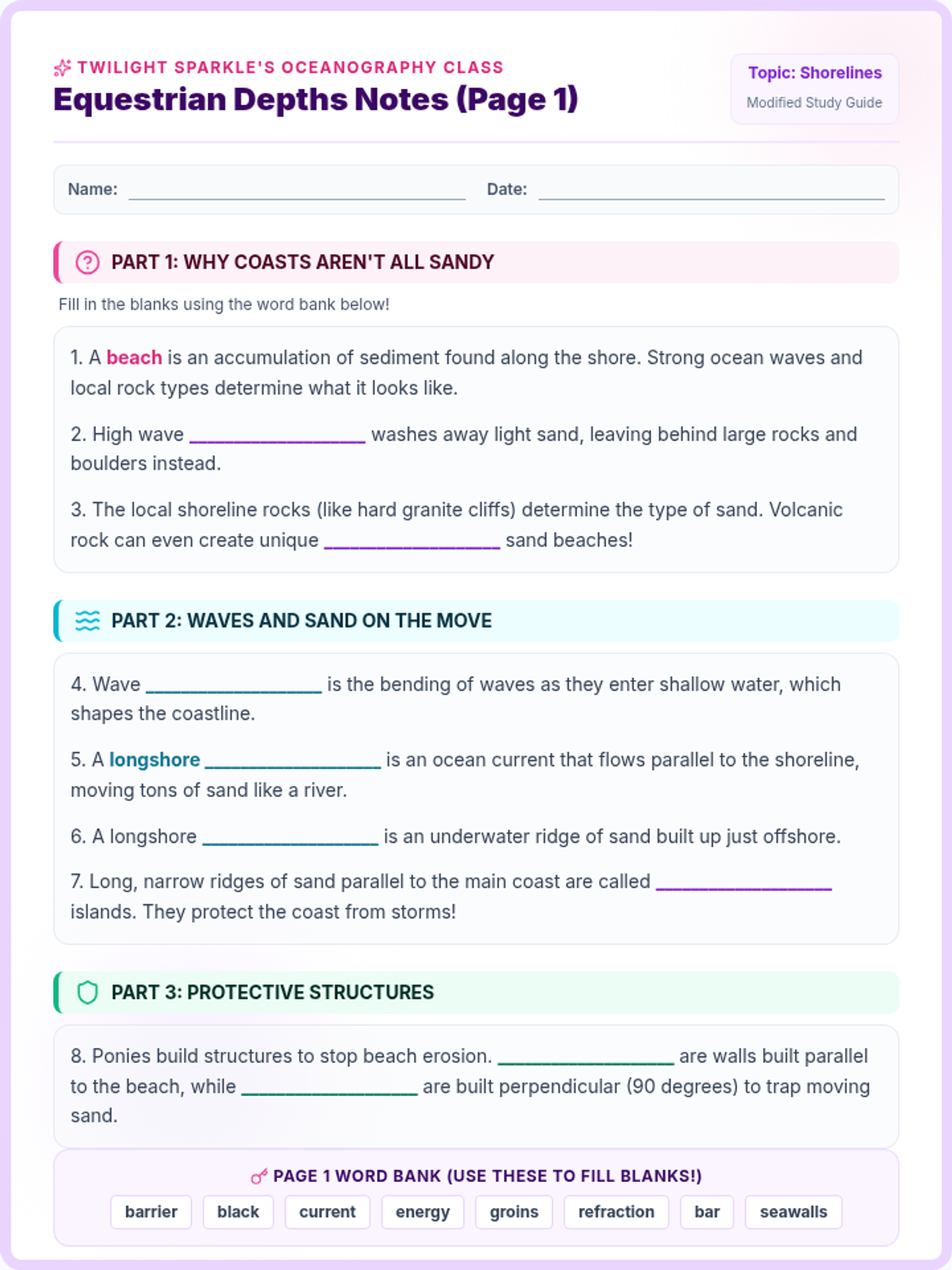
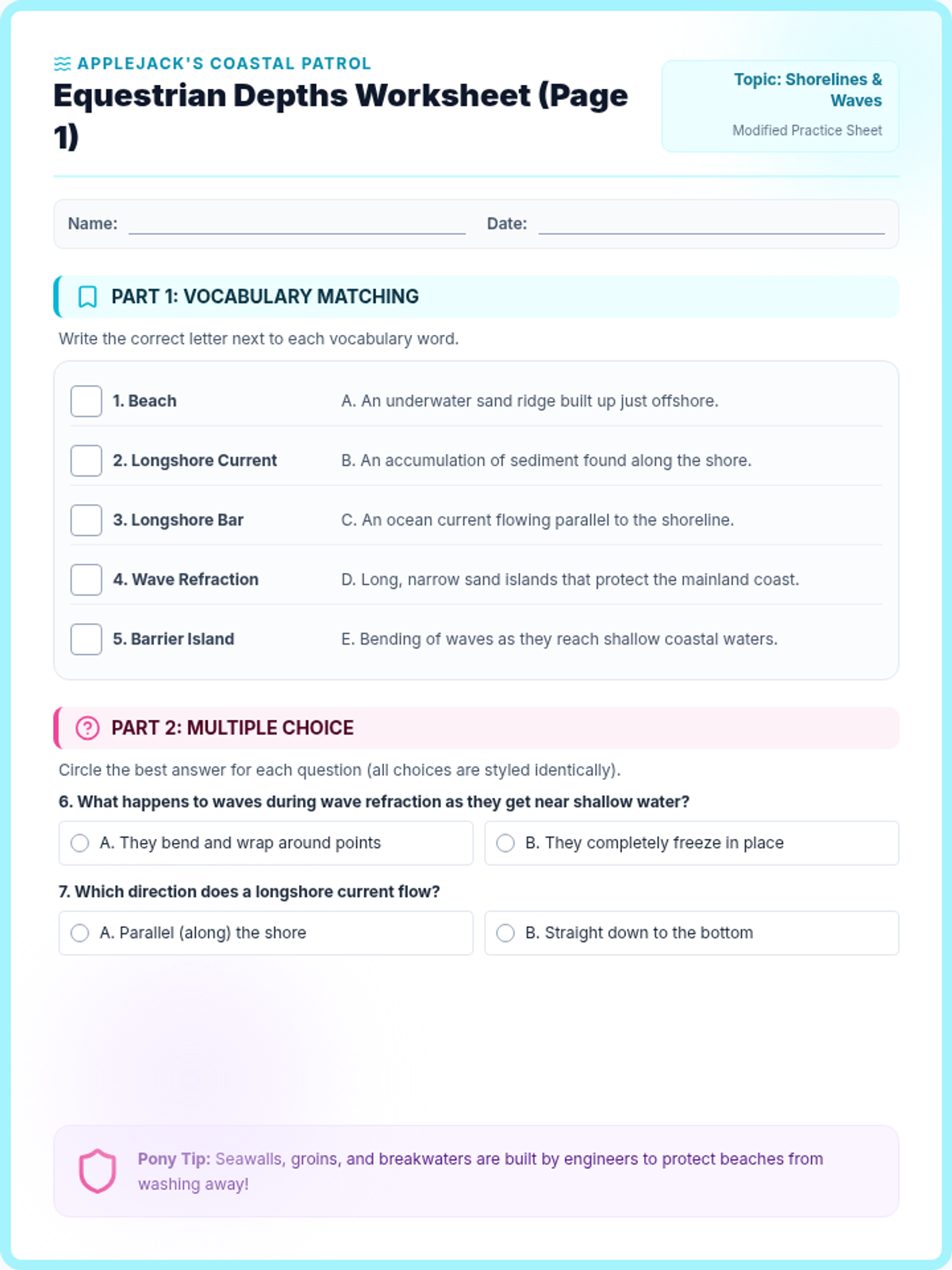
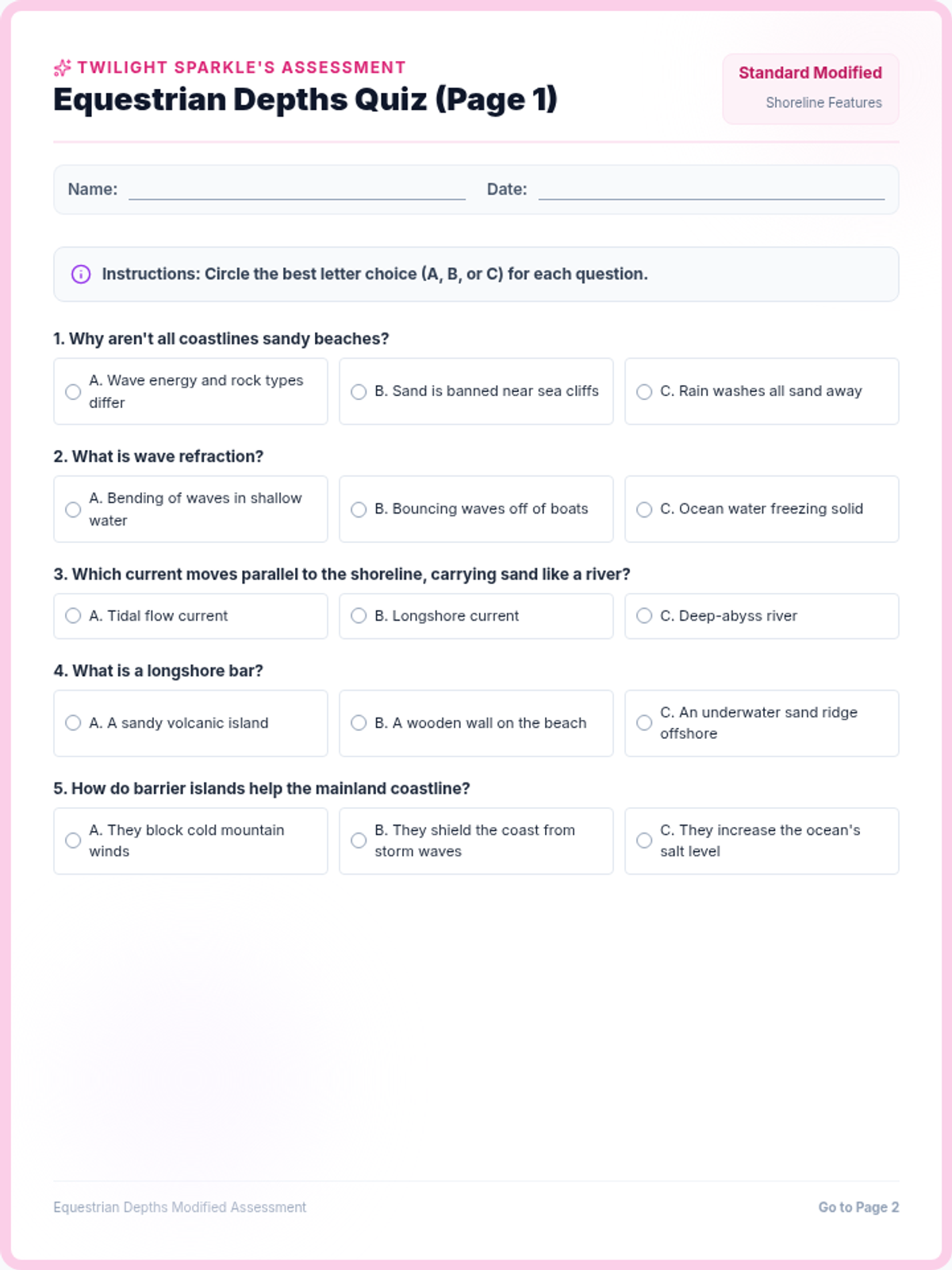
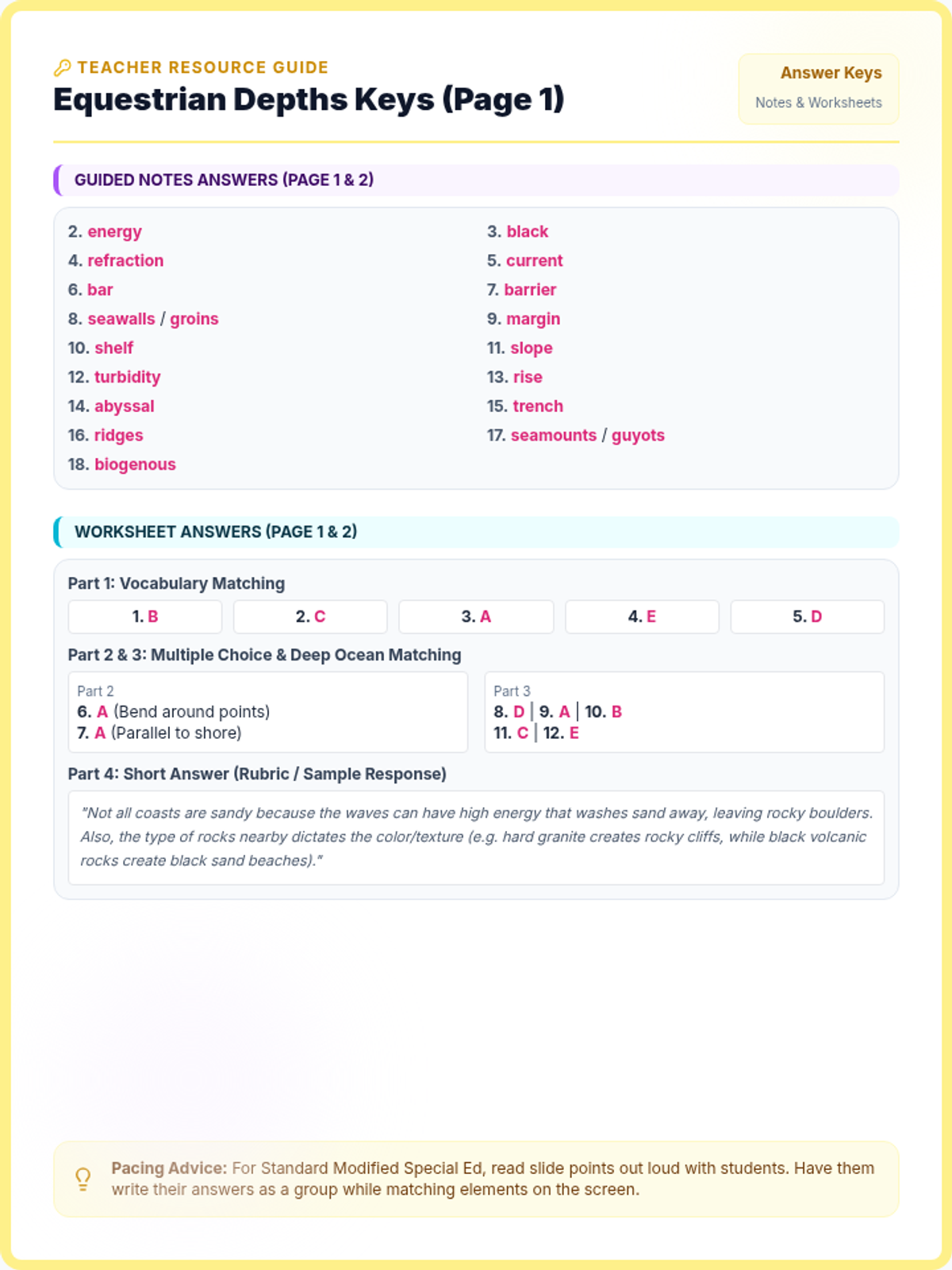
A lesson on oceanography covering shorelines, coastal features, and the deep seafloor, adapted with a friendly My Little Pony decorative theme and chunked, accessible text for Standard Modified Special Education students.
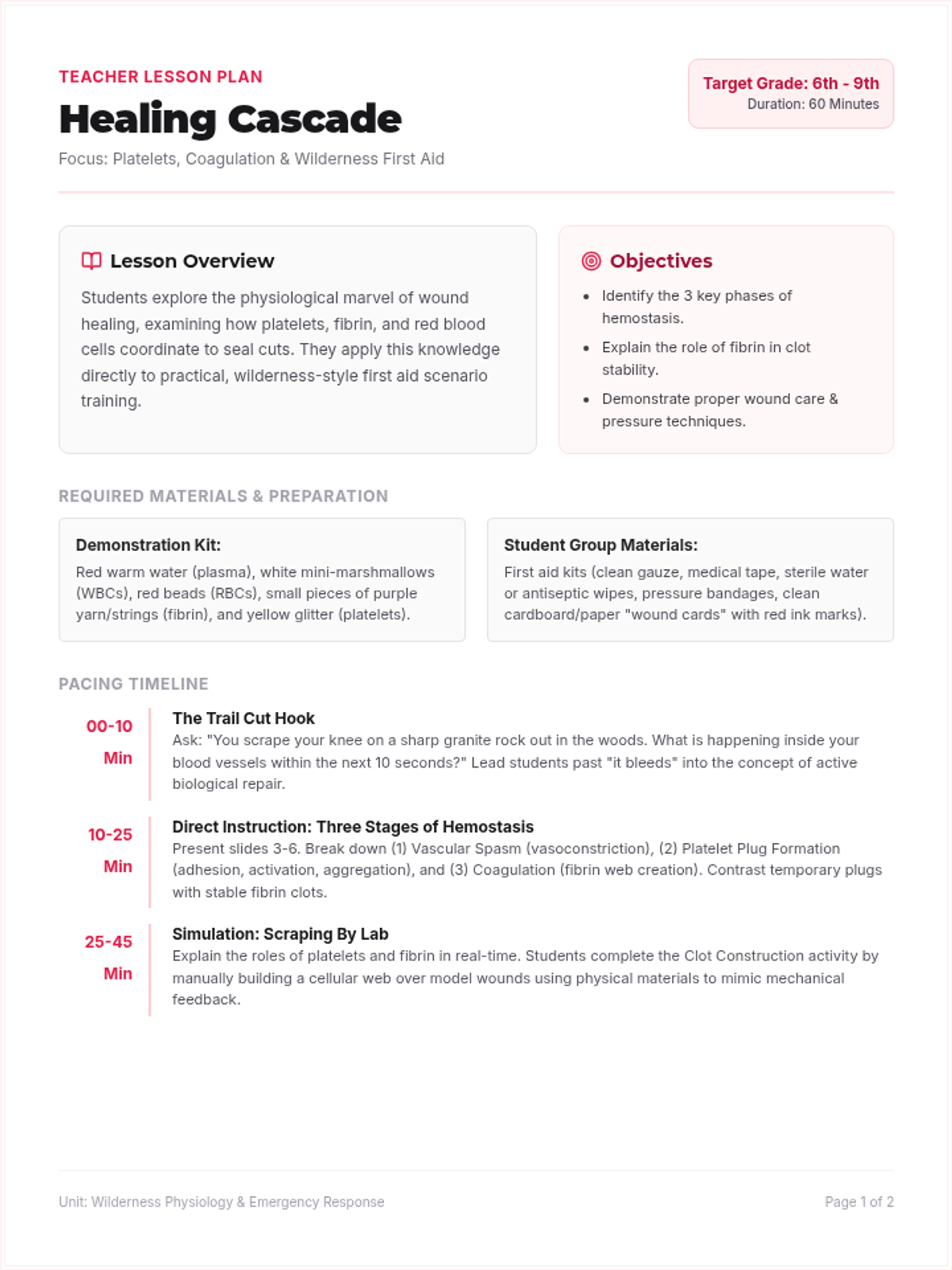
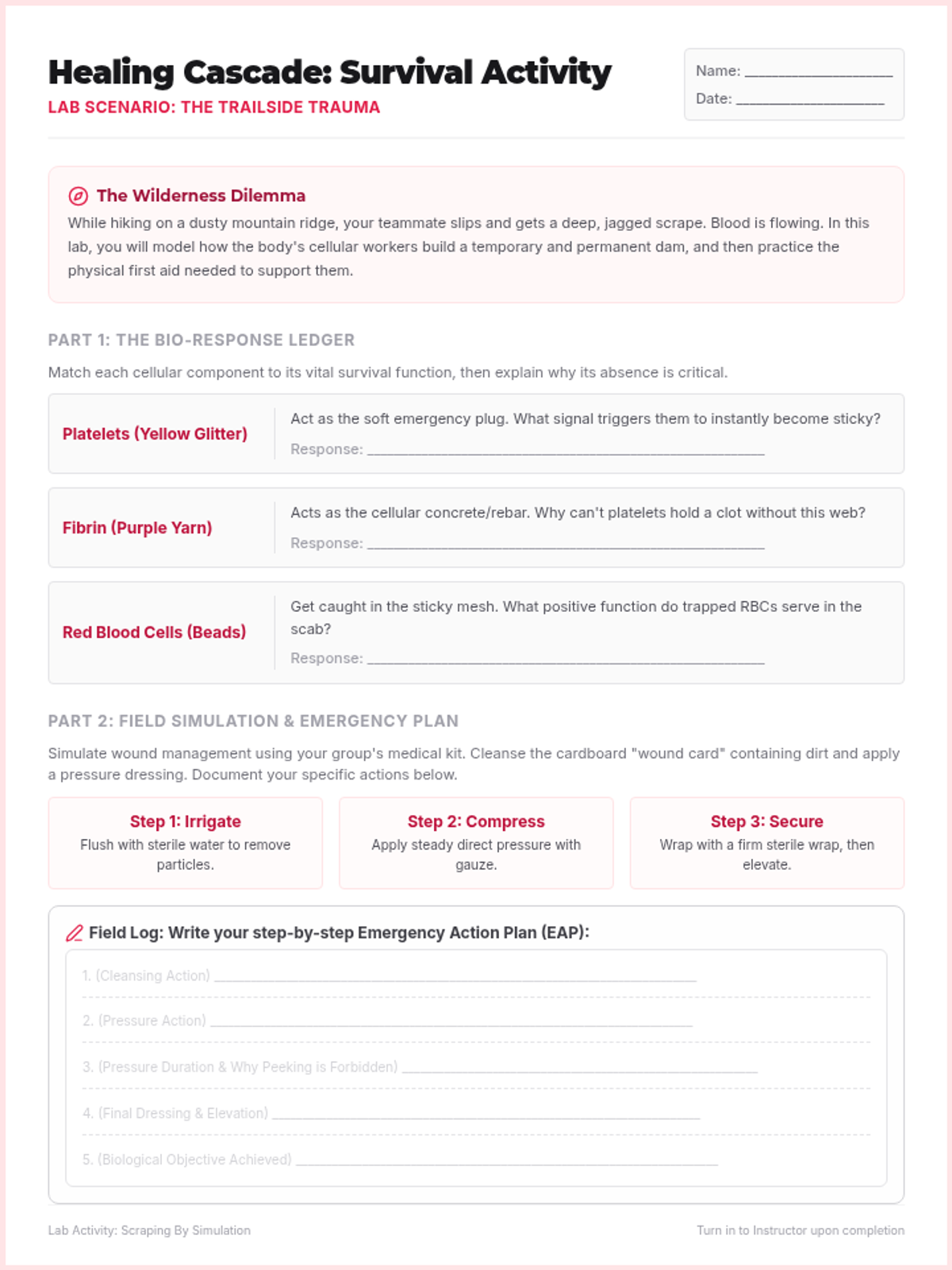
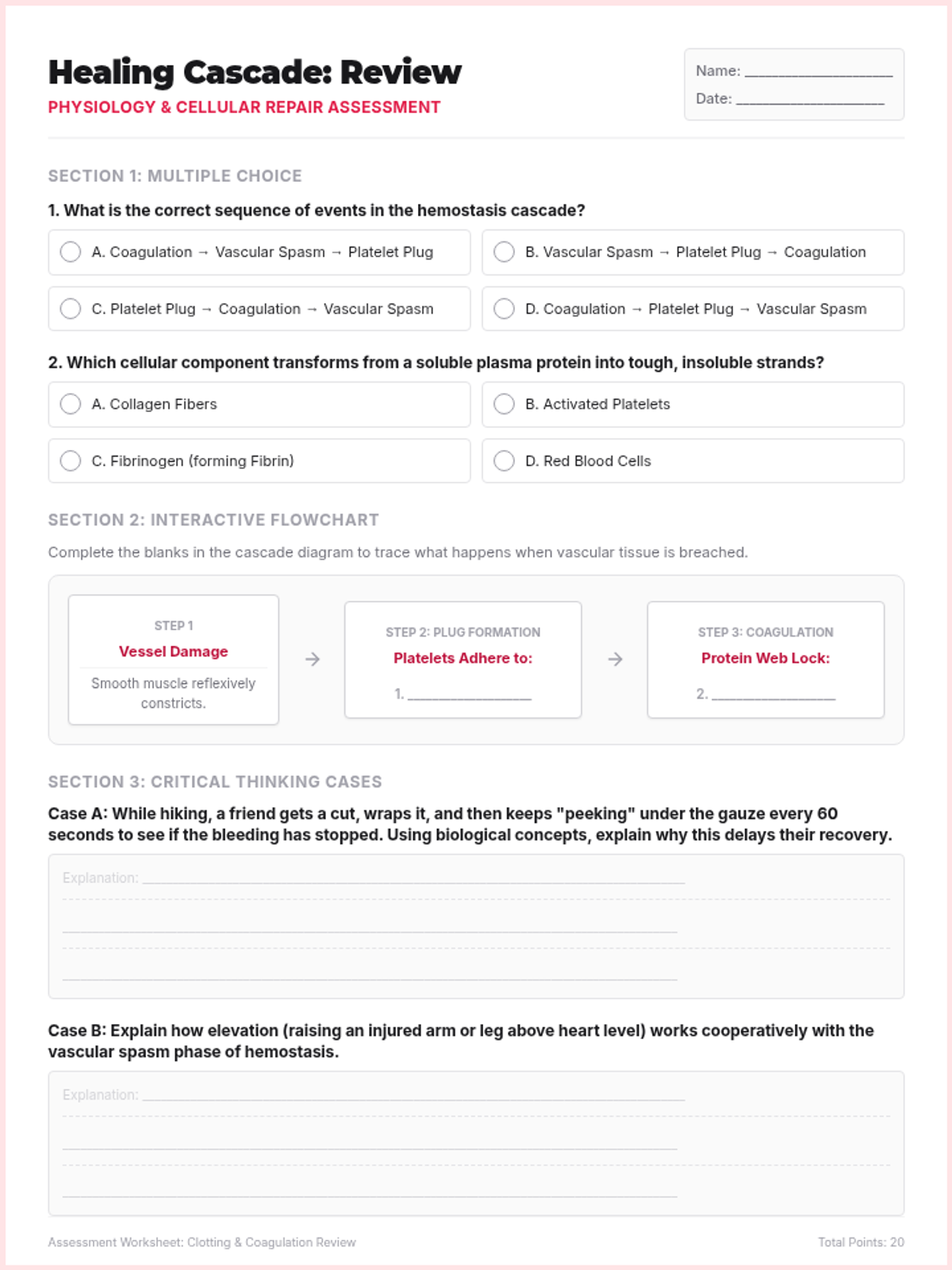
This lesson explores the physiological marvel of wound healing, focusing on platelets, coagulation, and cellular repair. Students learn how the body heals scrapes and cuts and apply this knowledge to practical, outdoors-focused first aid.
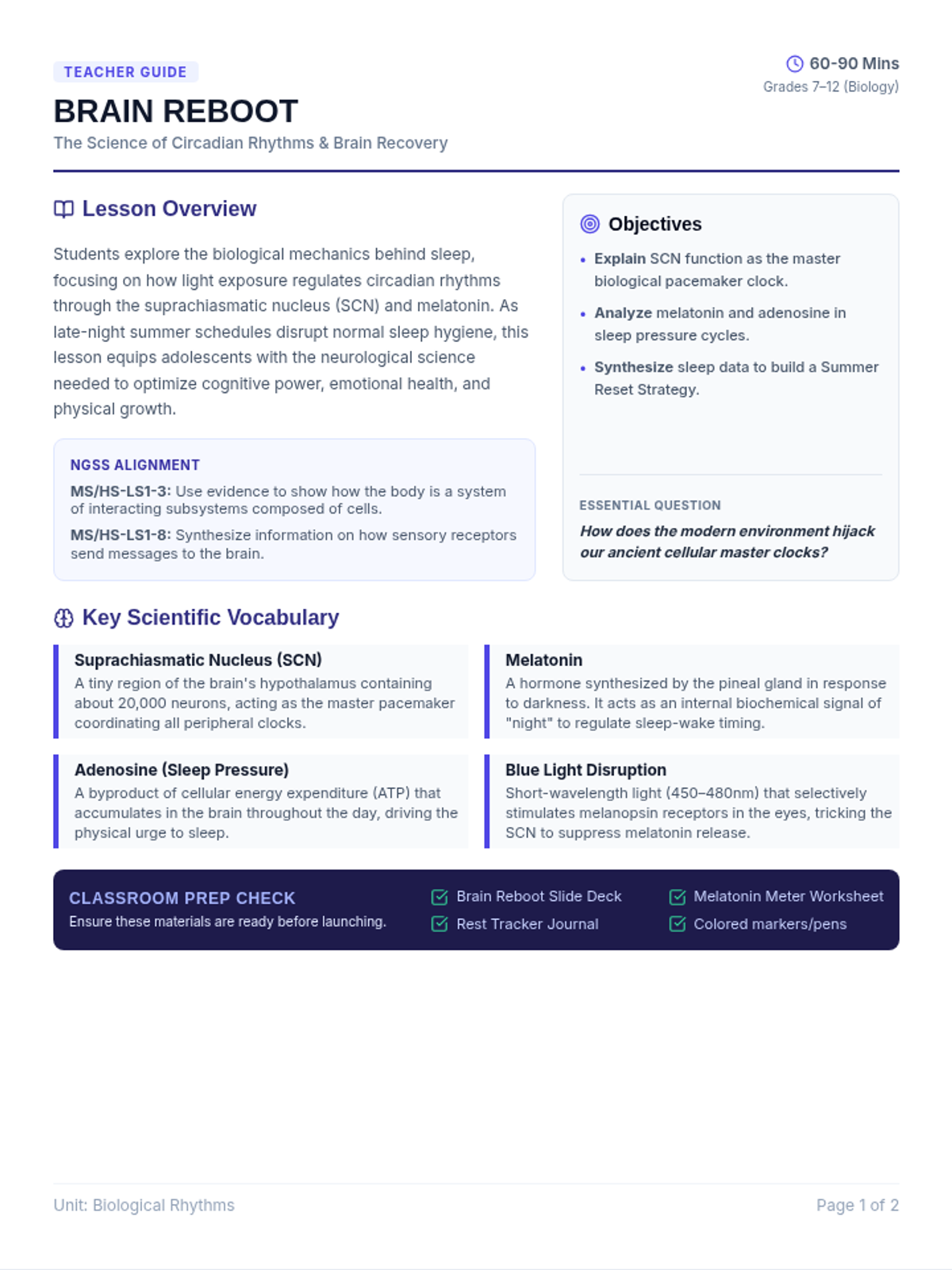
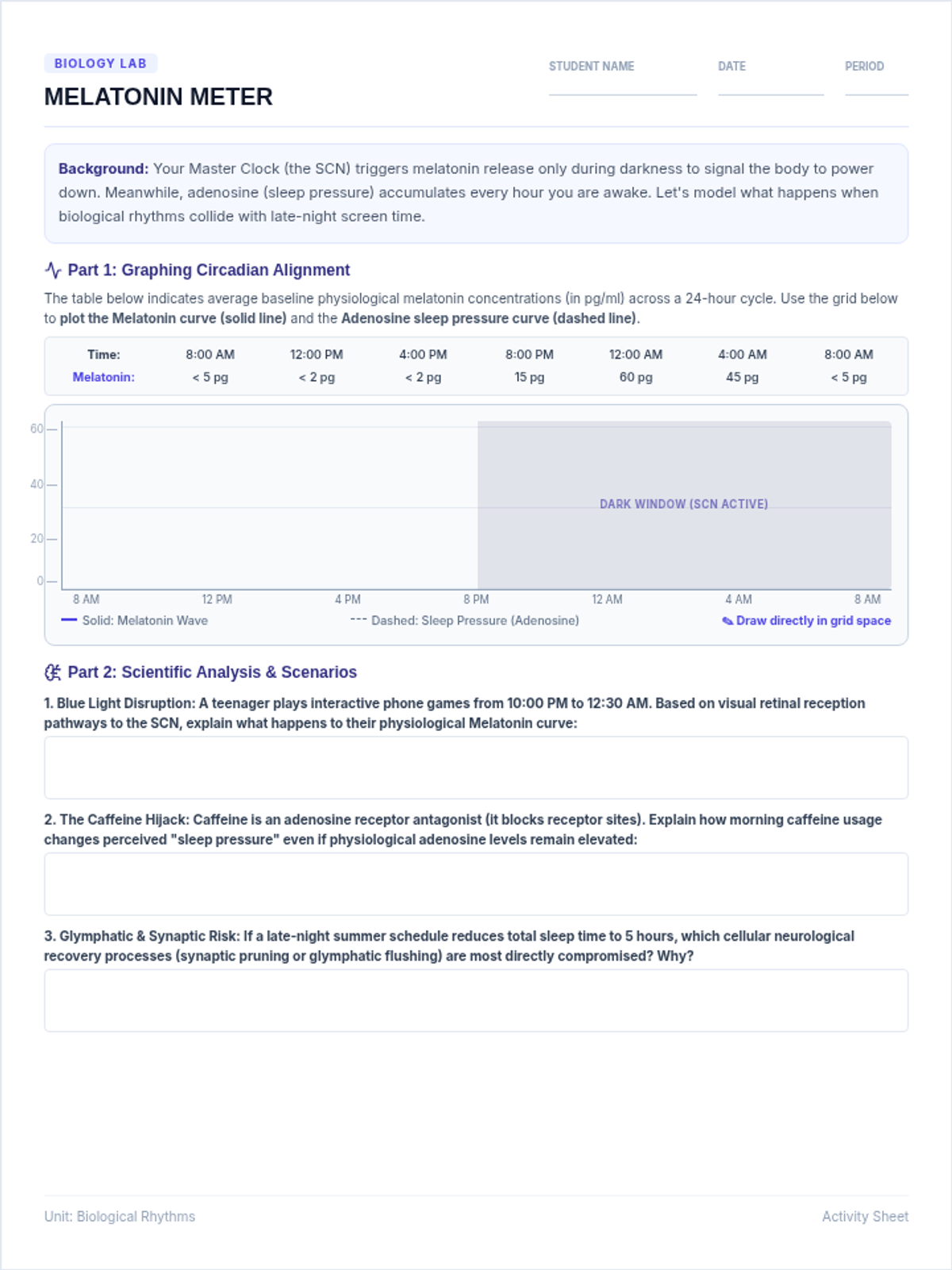
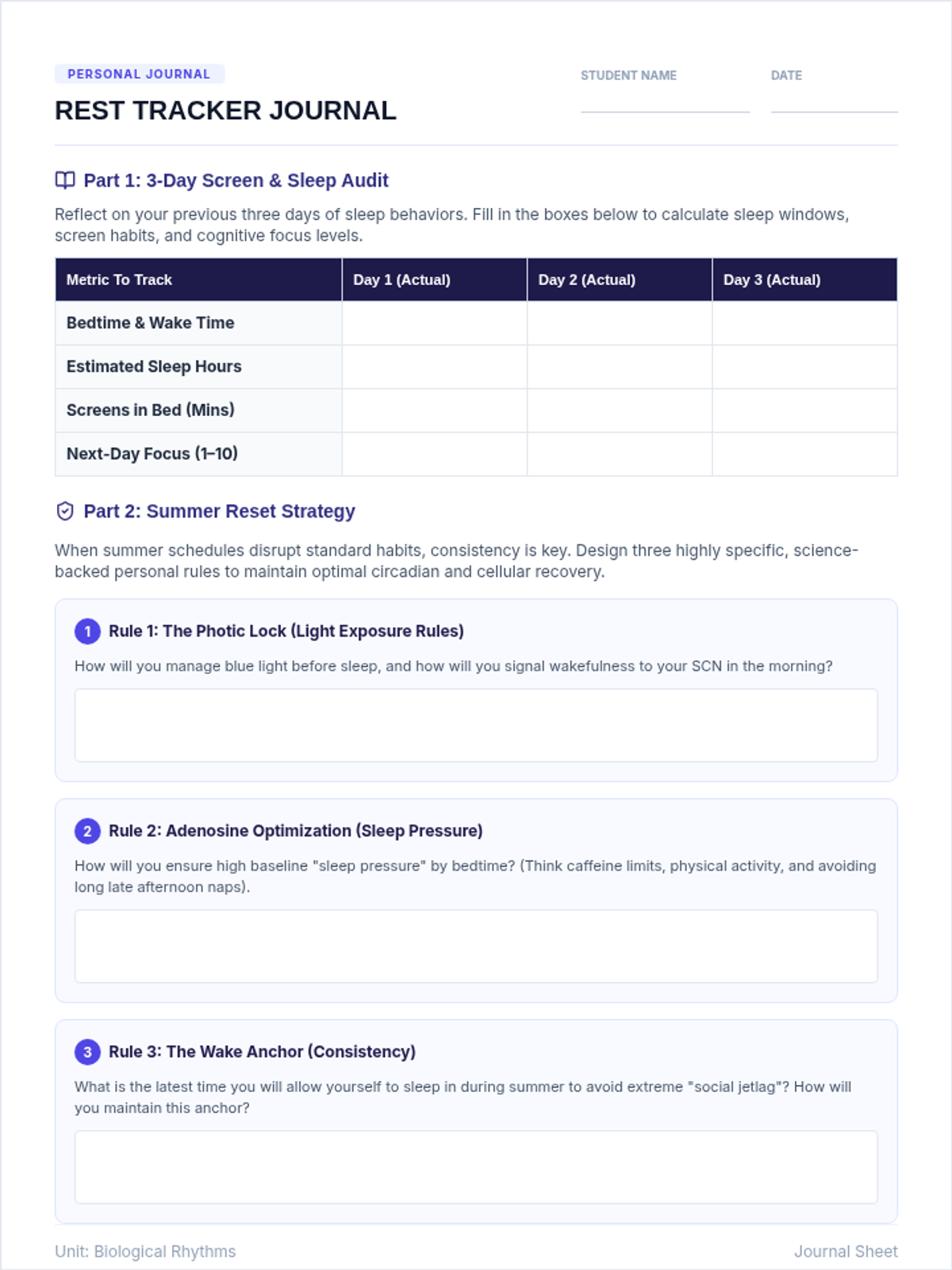
A high-interest biology and neuroscience lesson examining circadian rhythms, the biochemistry of melatonin, and the critical role of sleep in teen brain development, cognitive performance, and emotional health.
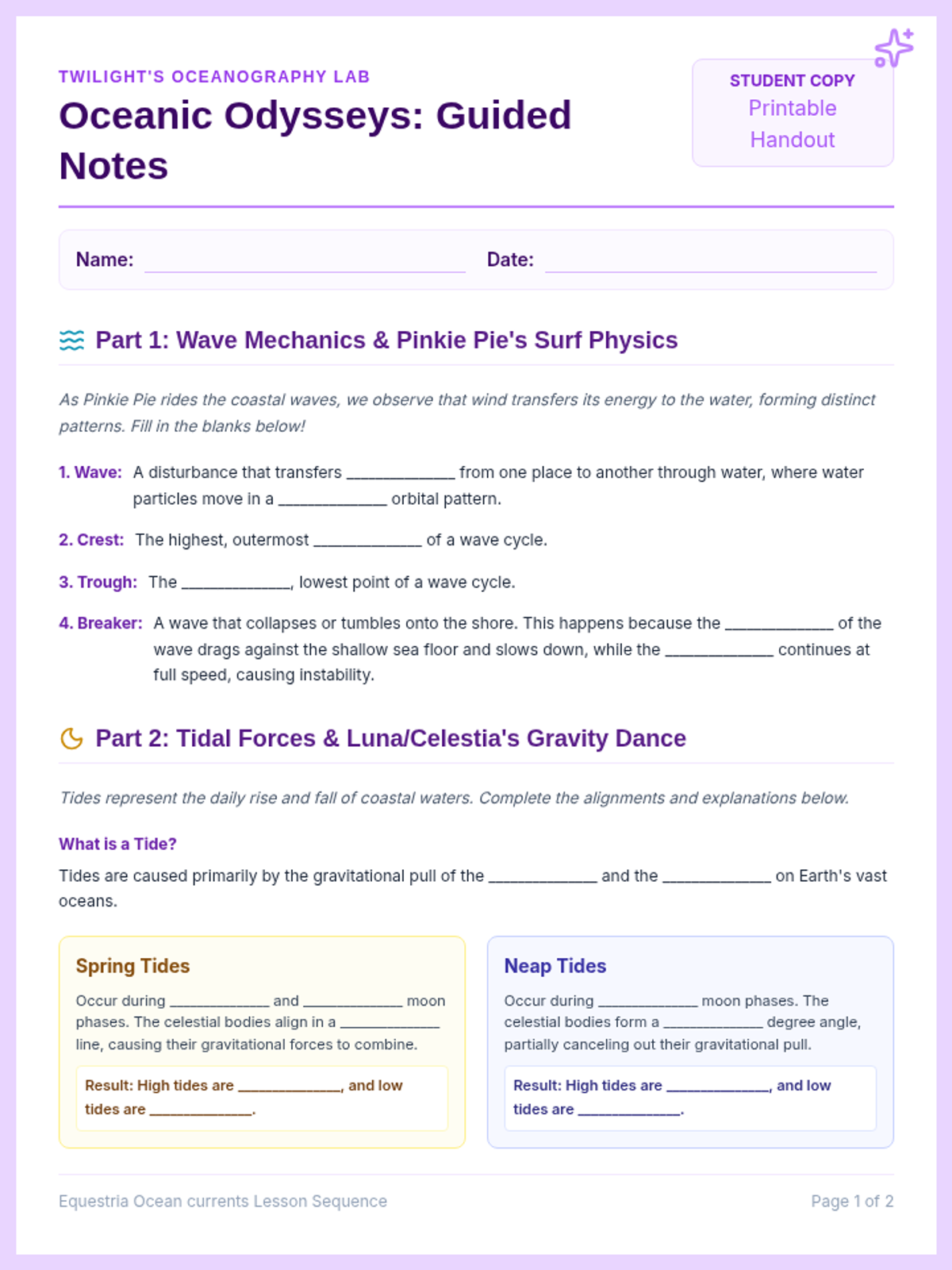
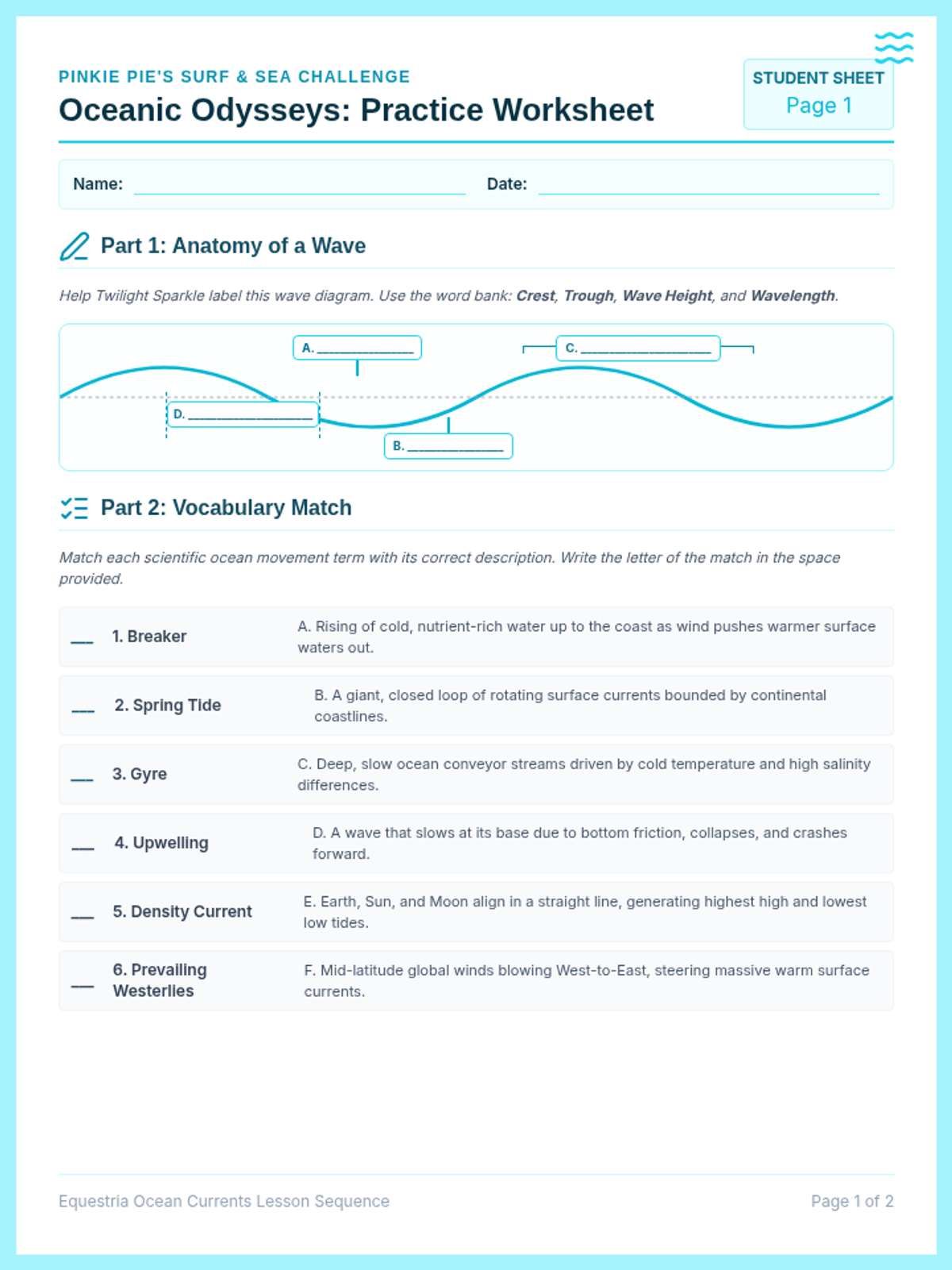
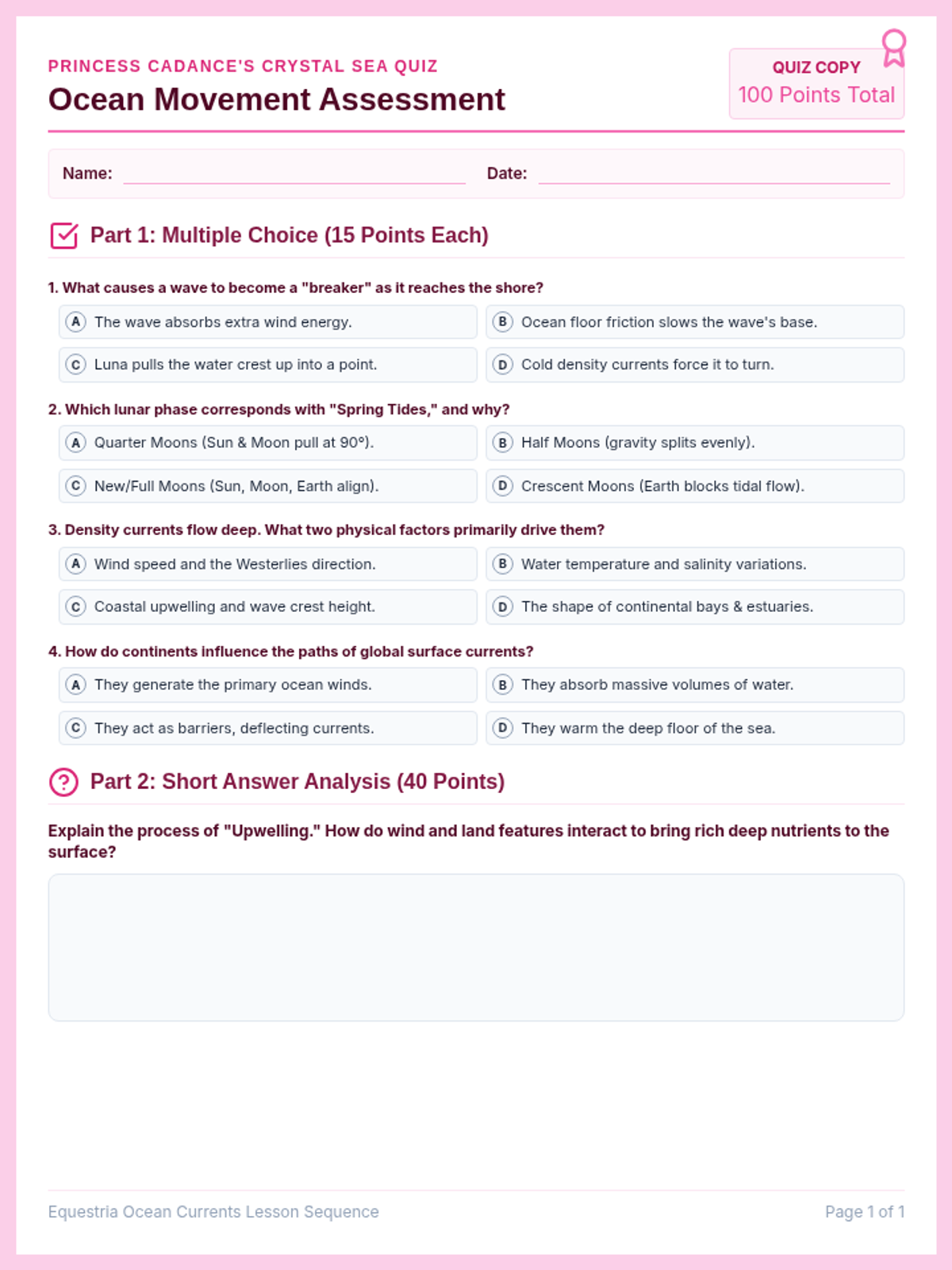
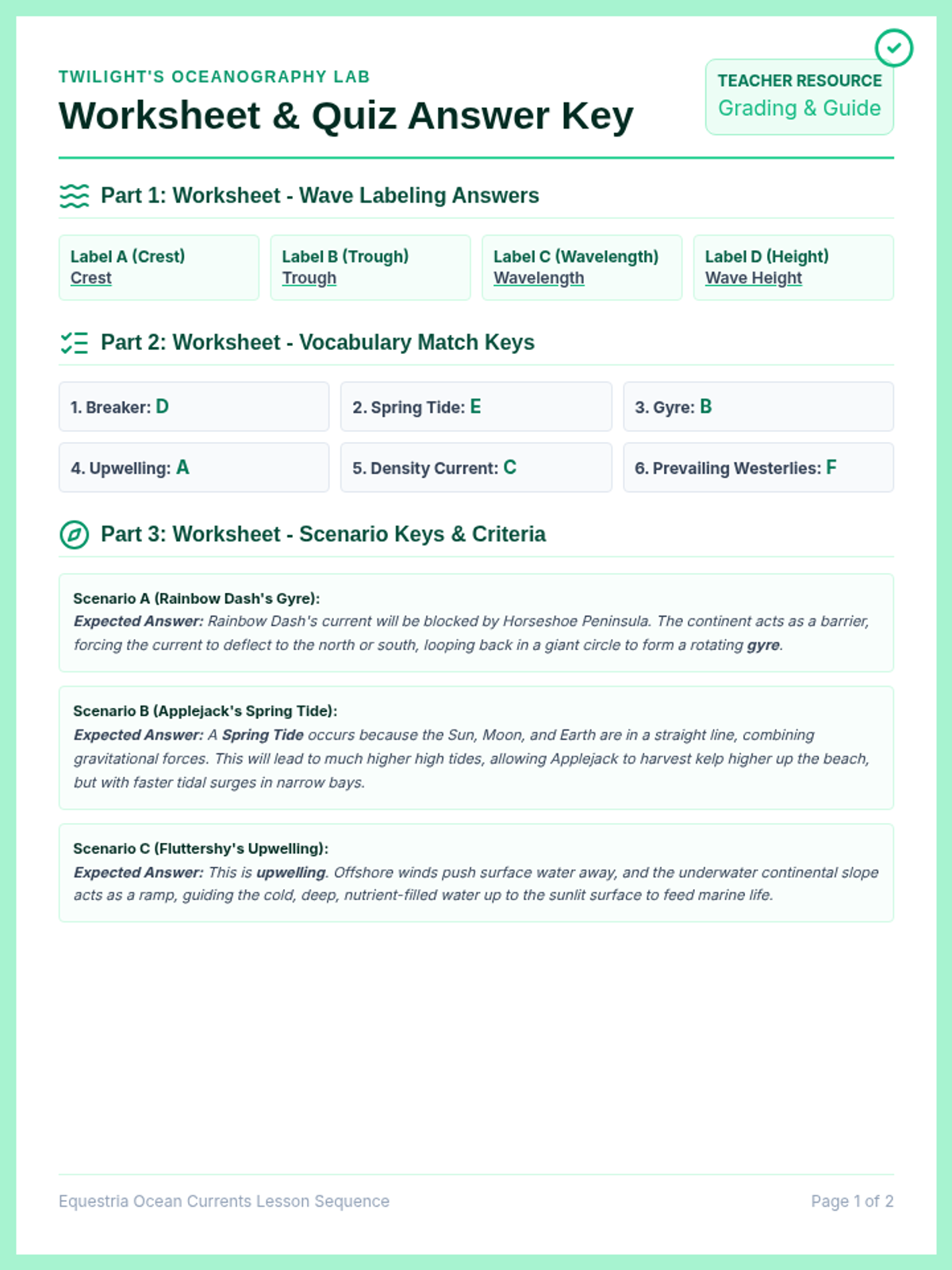
A comprehensive, MLP:FiM-themed lesson on ocean movement (waves, tides, currents, gyres, and land influences) featuring Twilight Sparkle and friends.
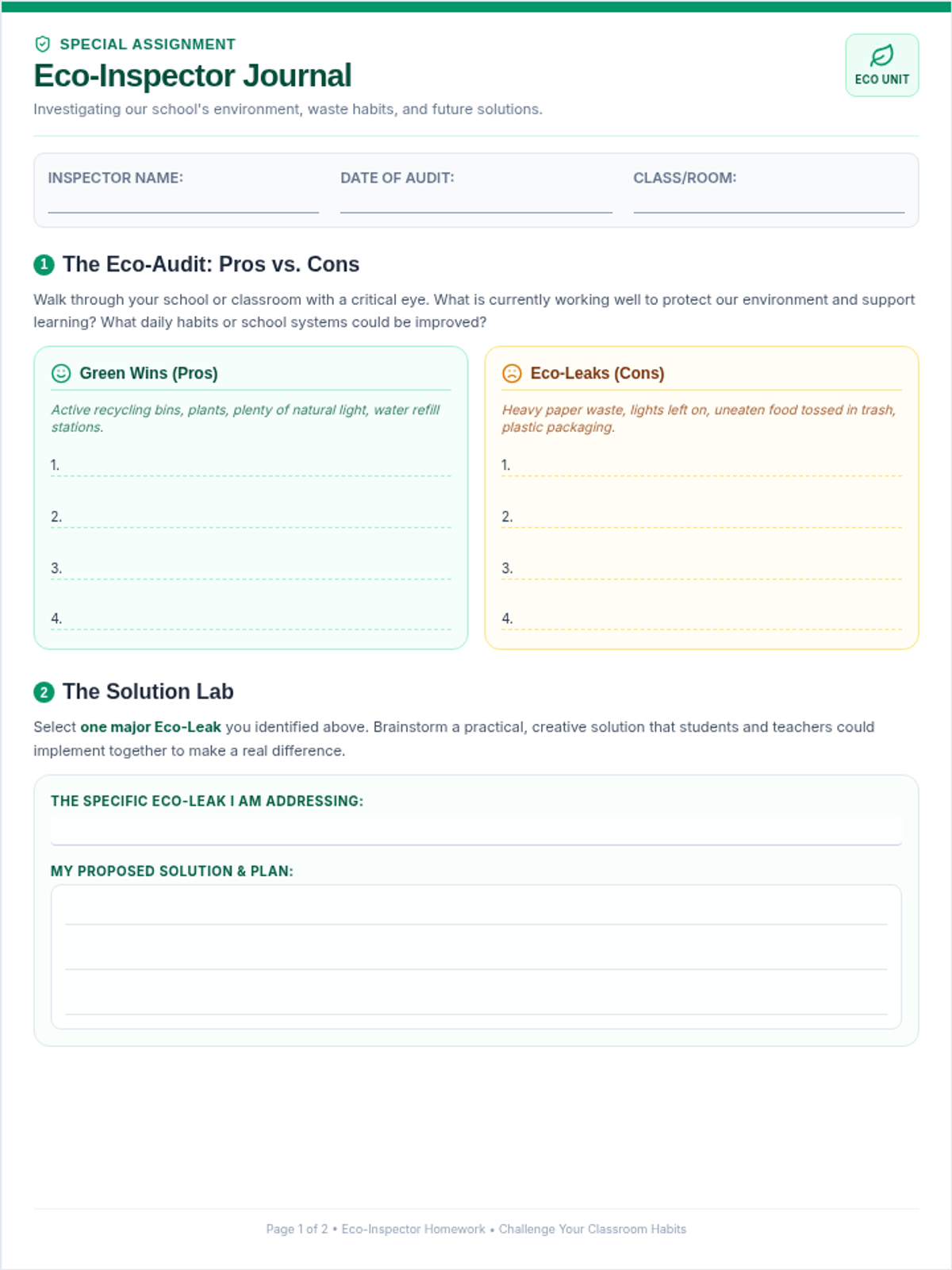
A homework-centered lesson where students investigate school environmental habits, conduct a mini-audit, and plan statistical data collection around waste and ecological impact.
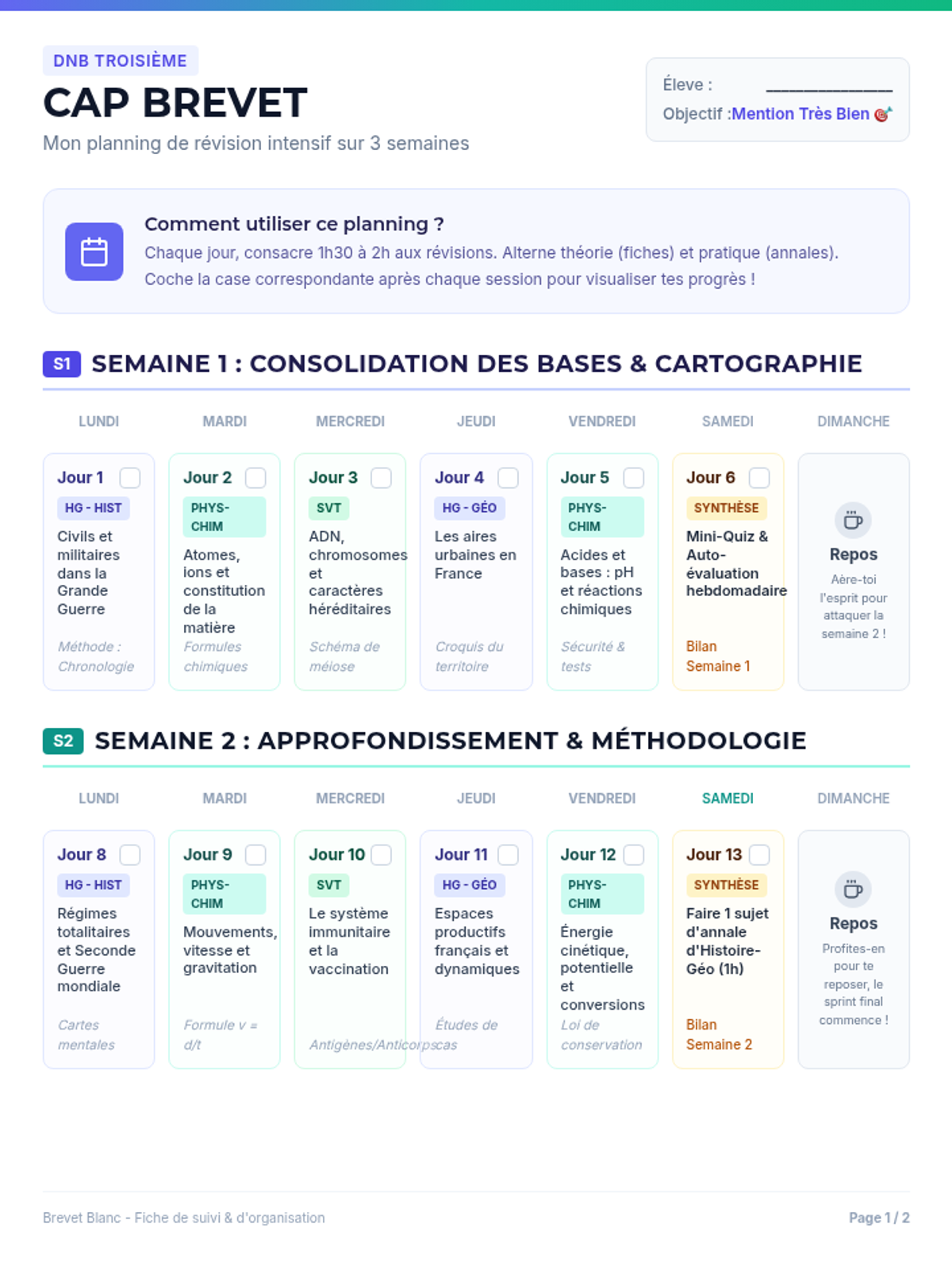
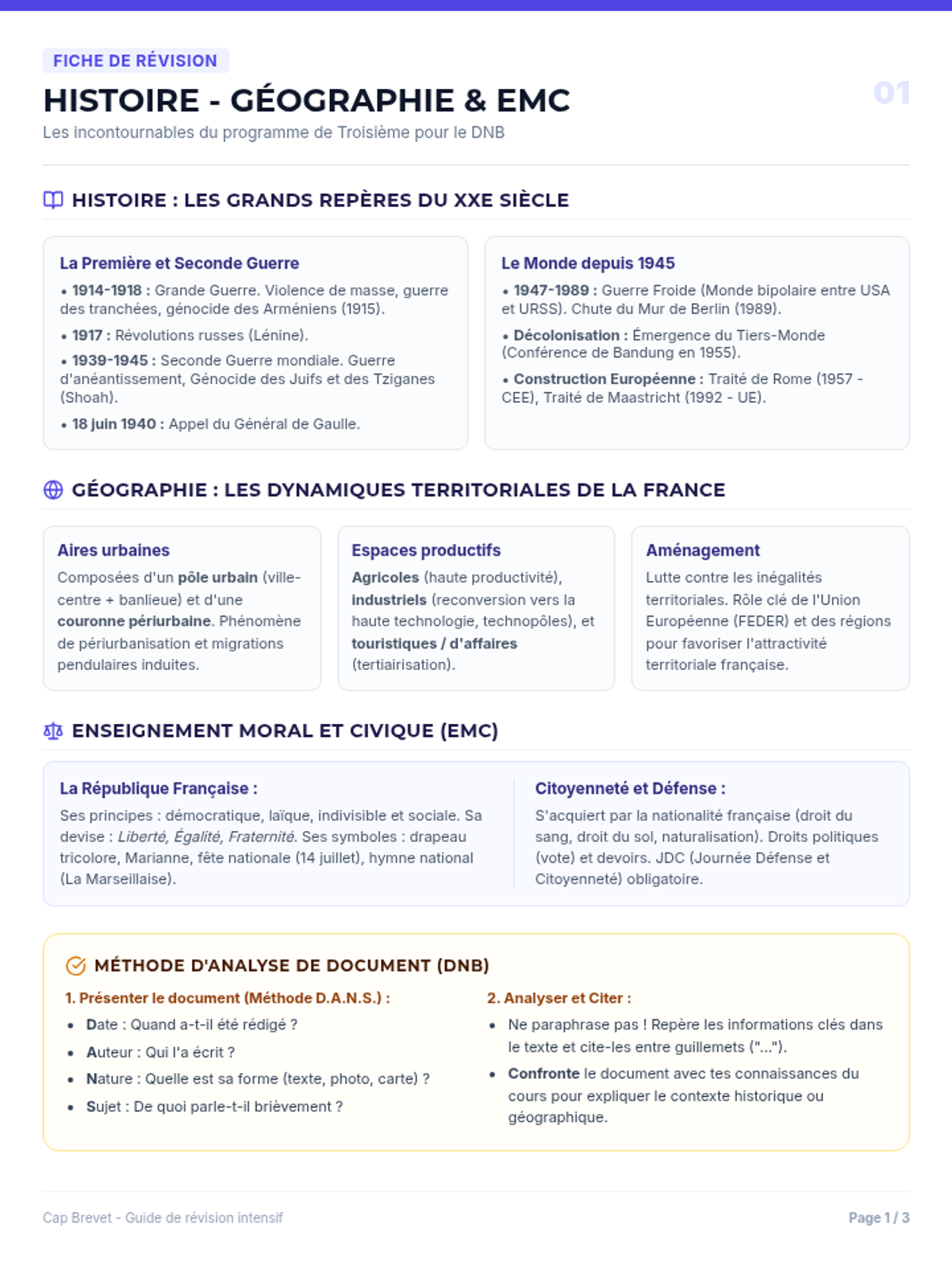
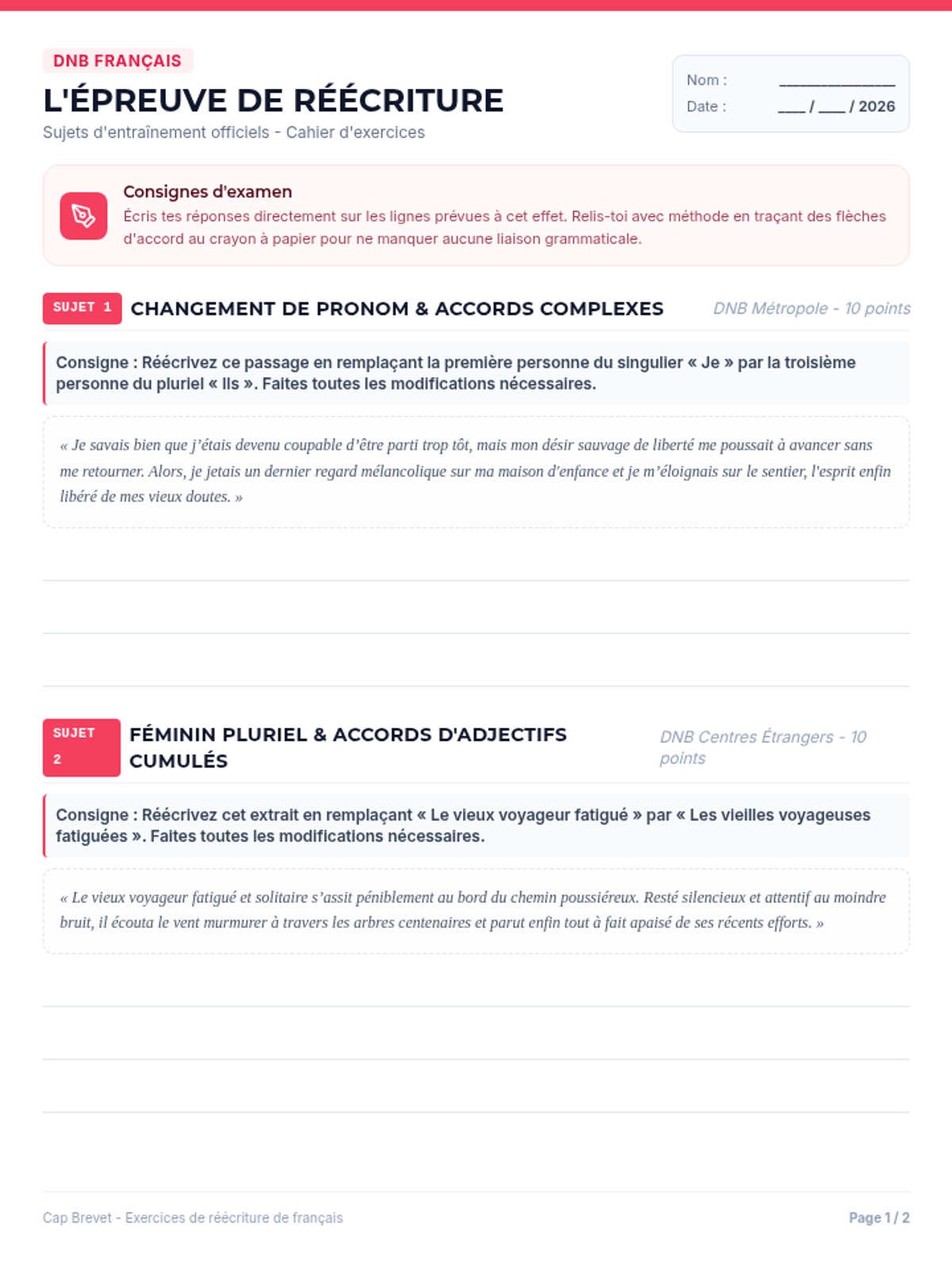
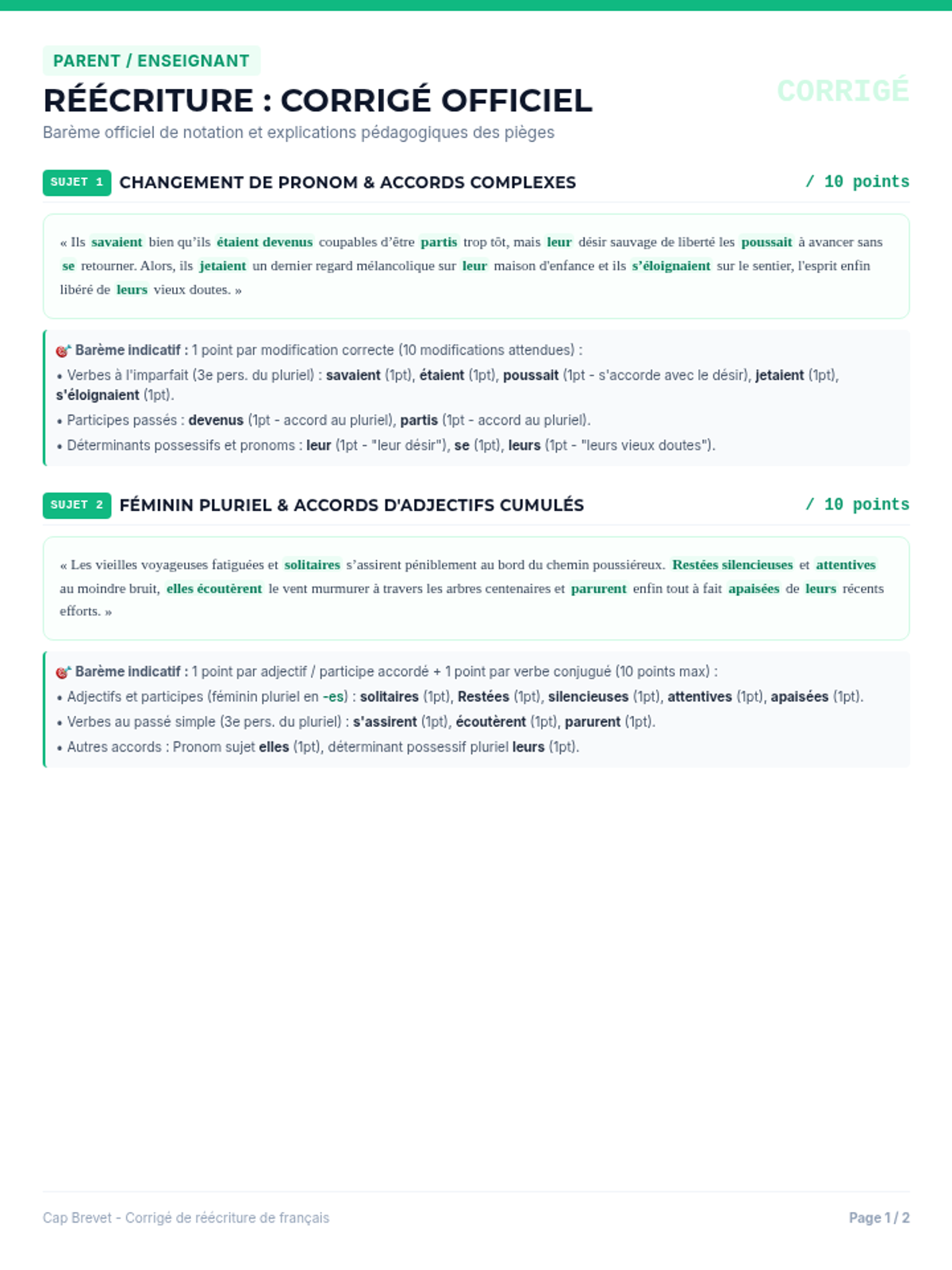
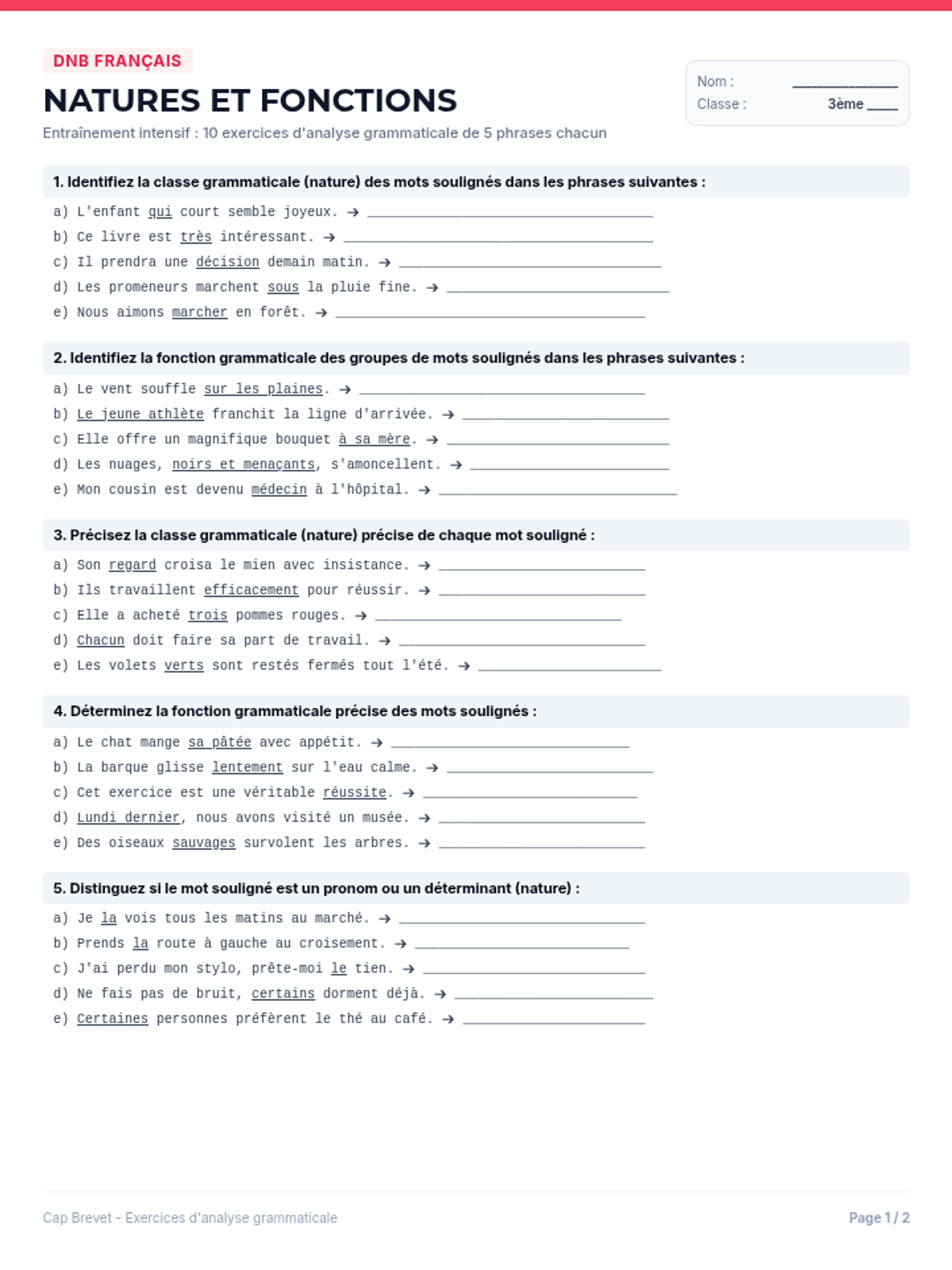
Un programme de révision intensif et structuré sur 3 semaines pour préparer sereinement les épreuves de SVT, Physique-Chimie et Histoire-Géographie du Diplôme National du Brevet.
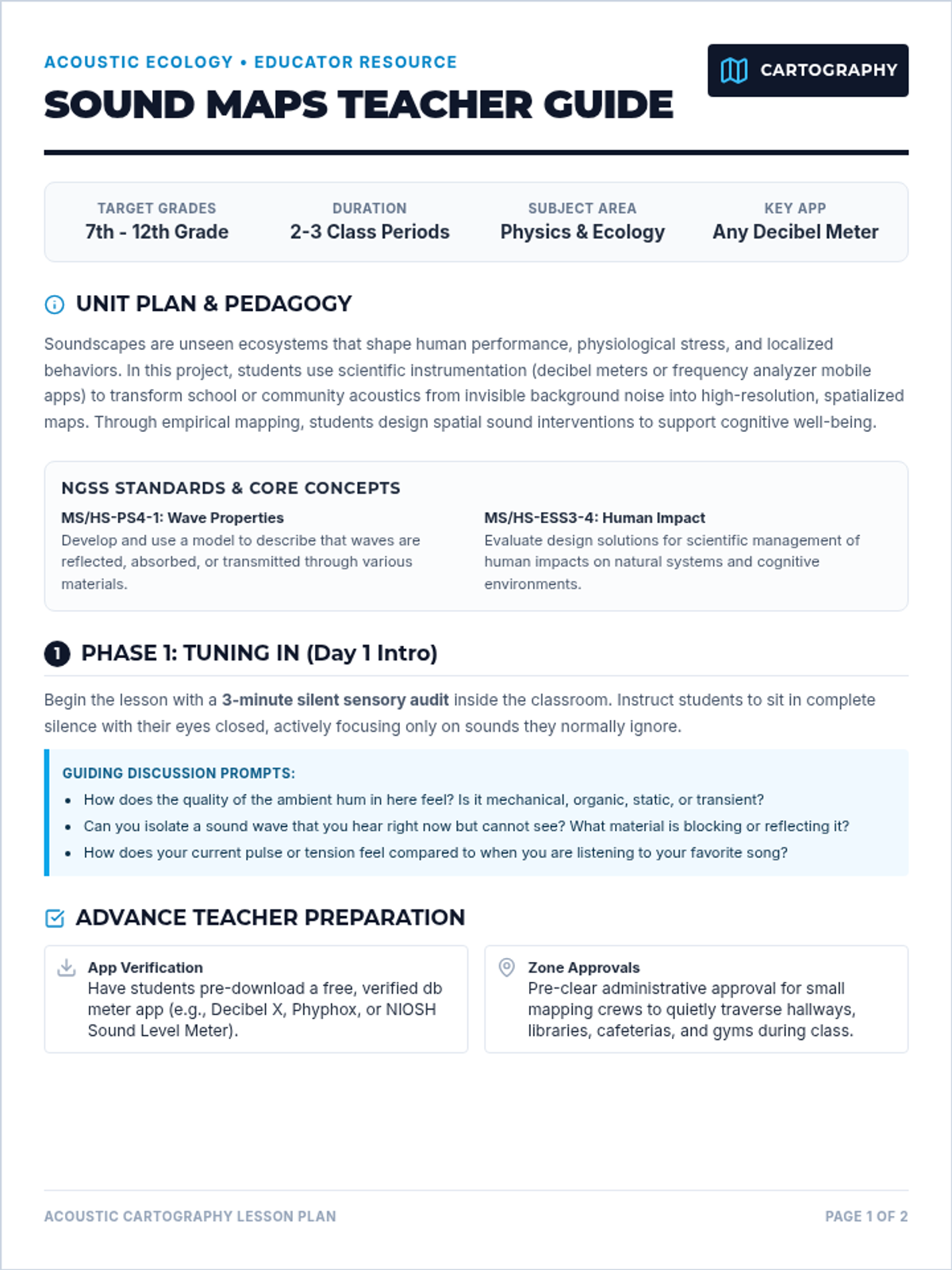
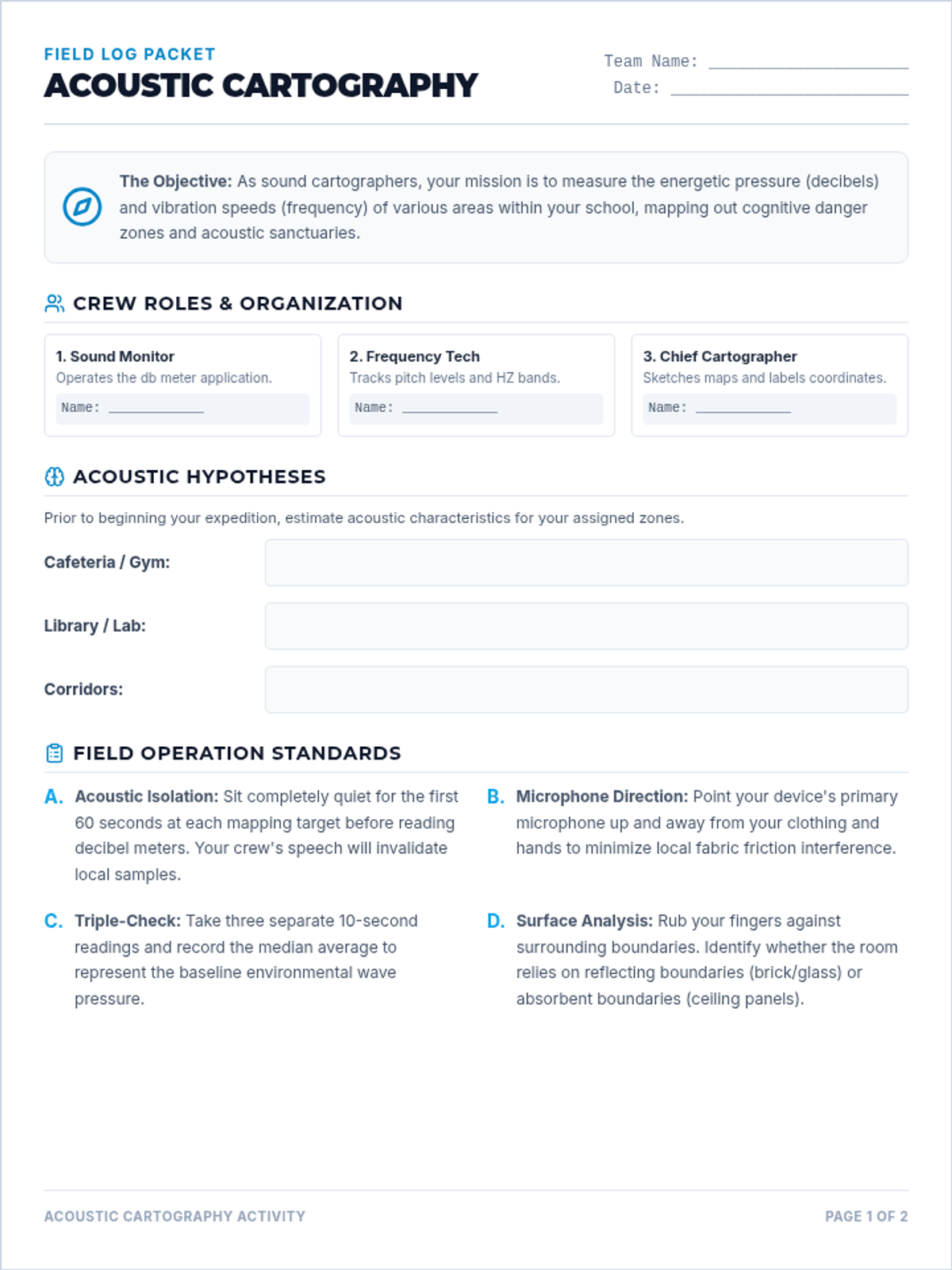
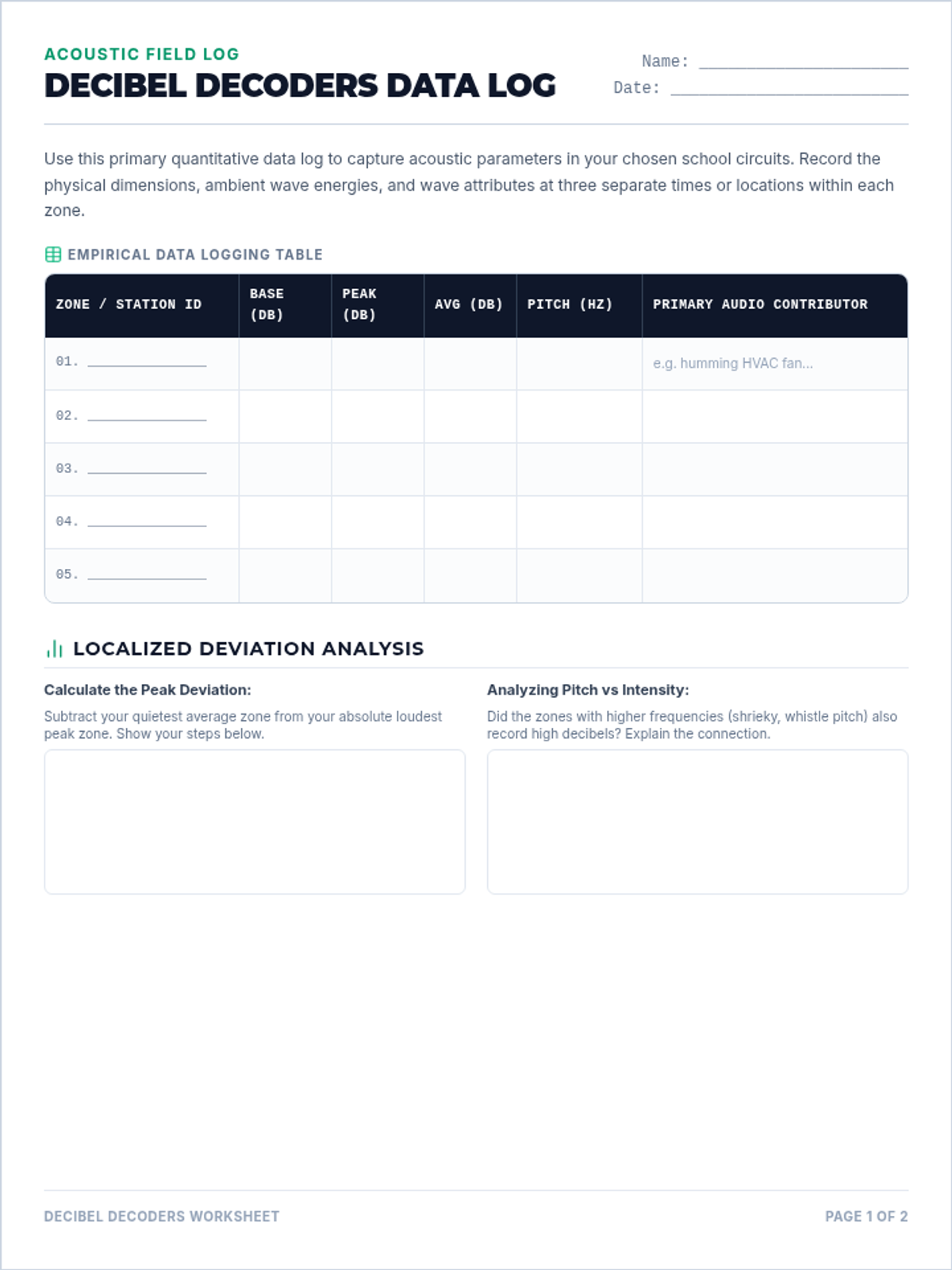
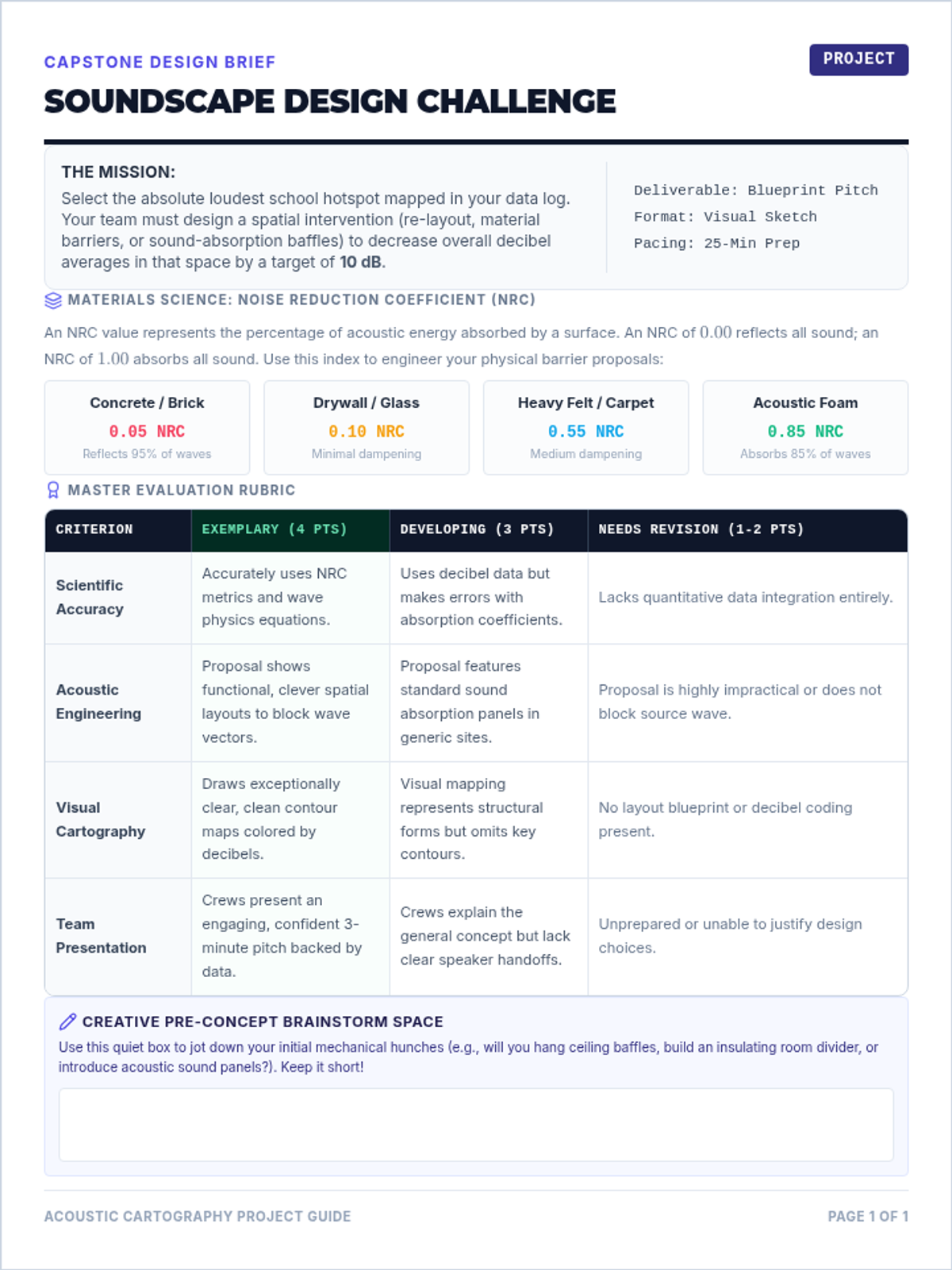
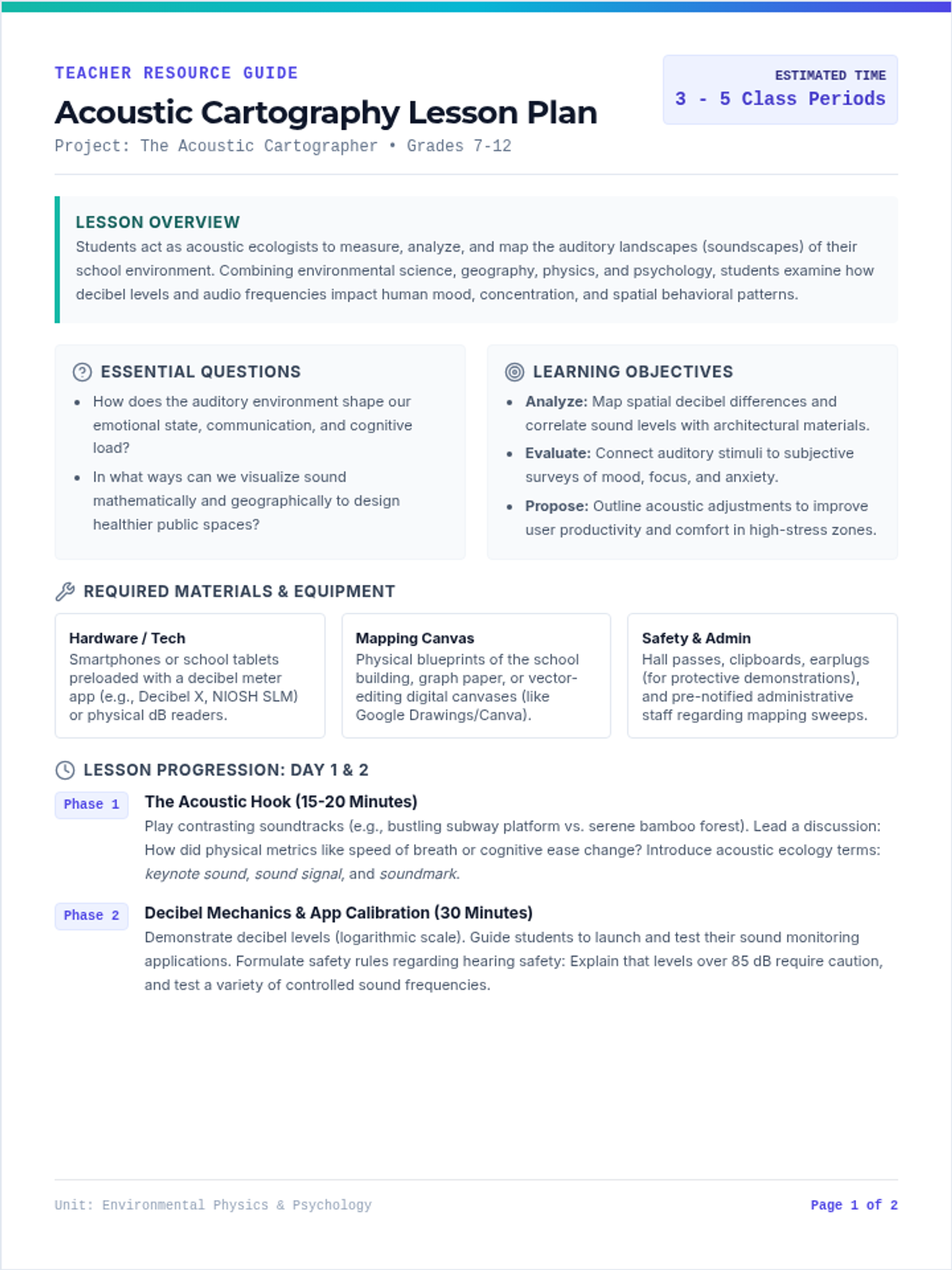
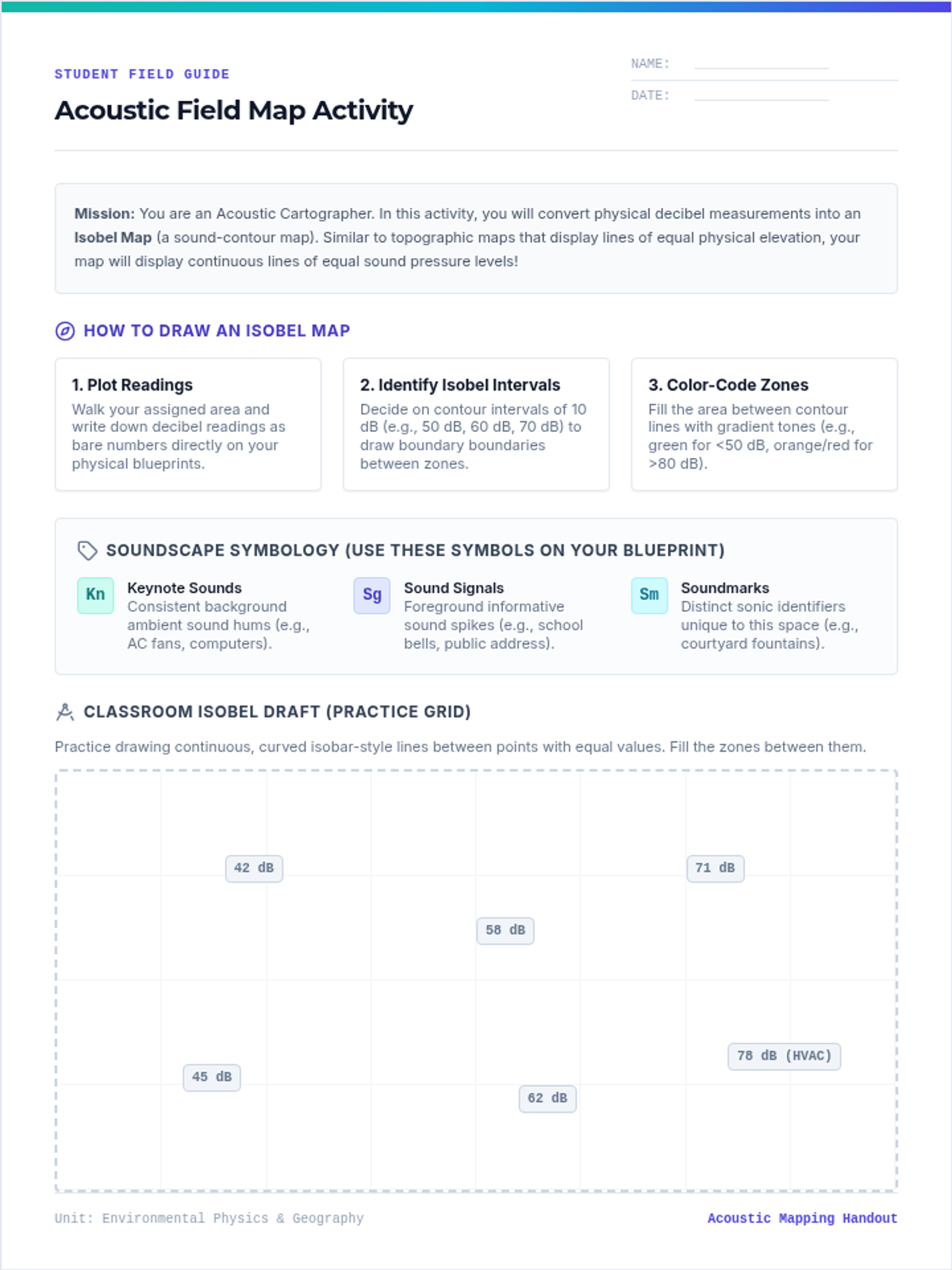
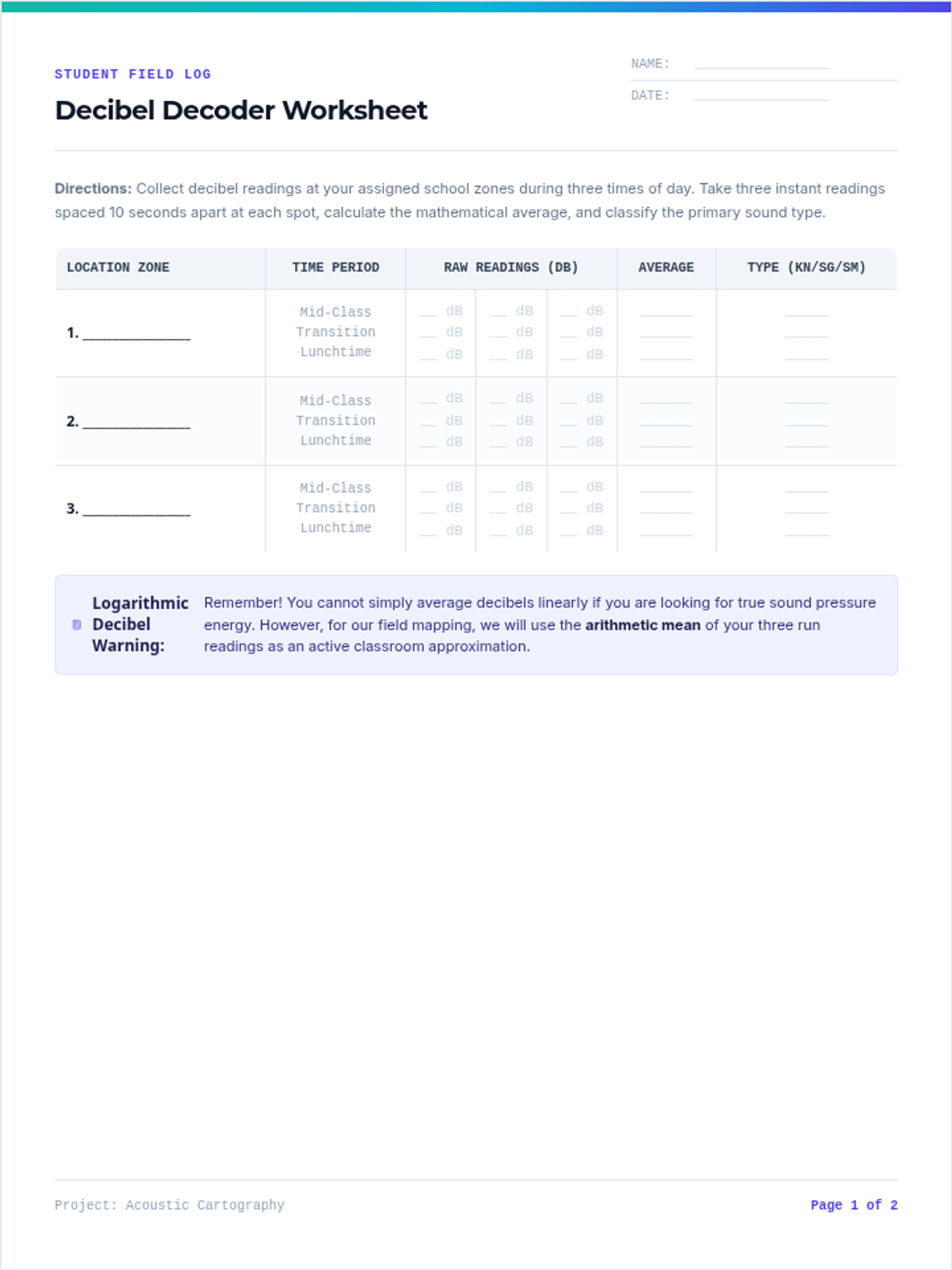
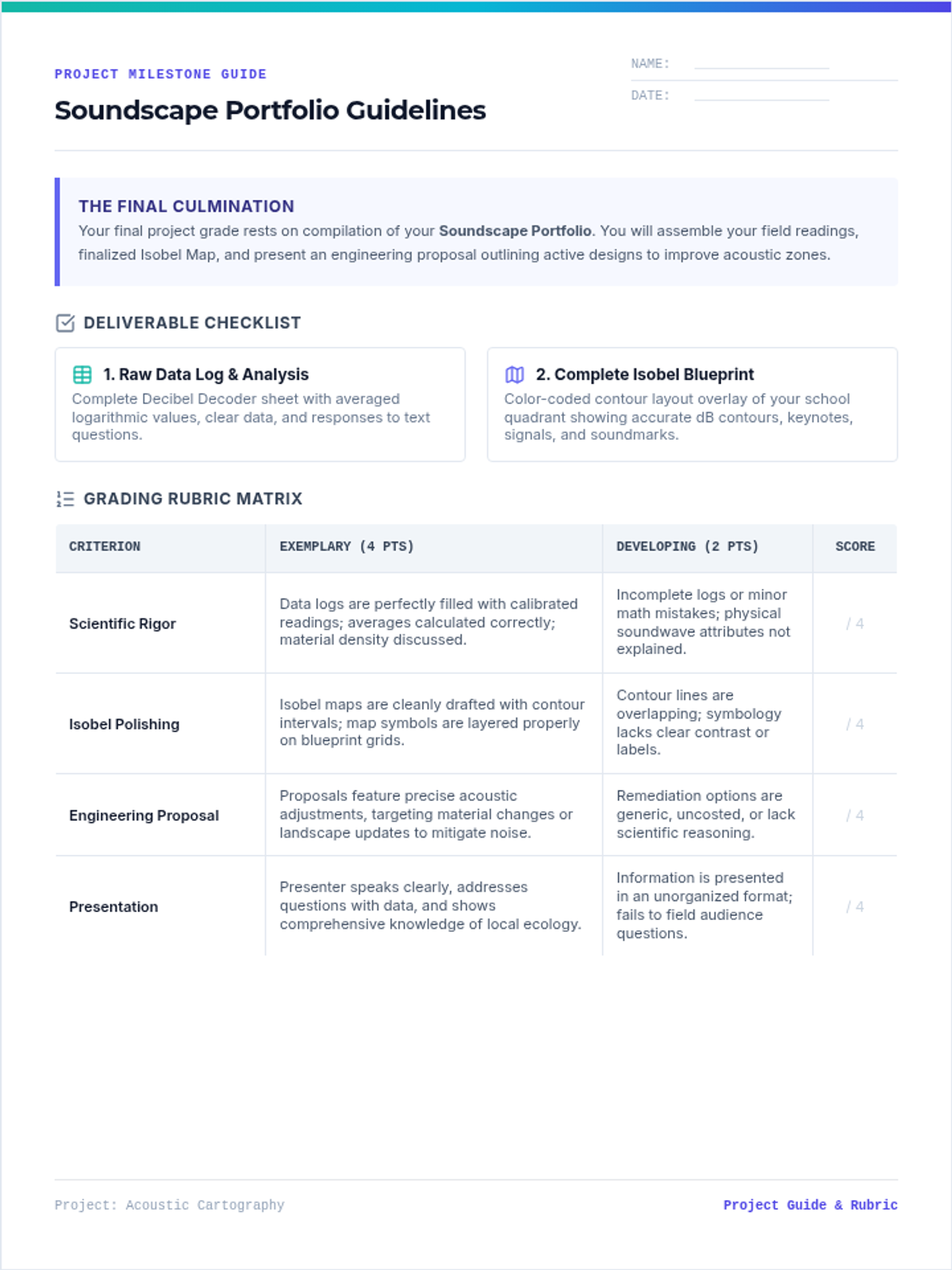
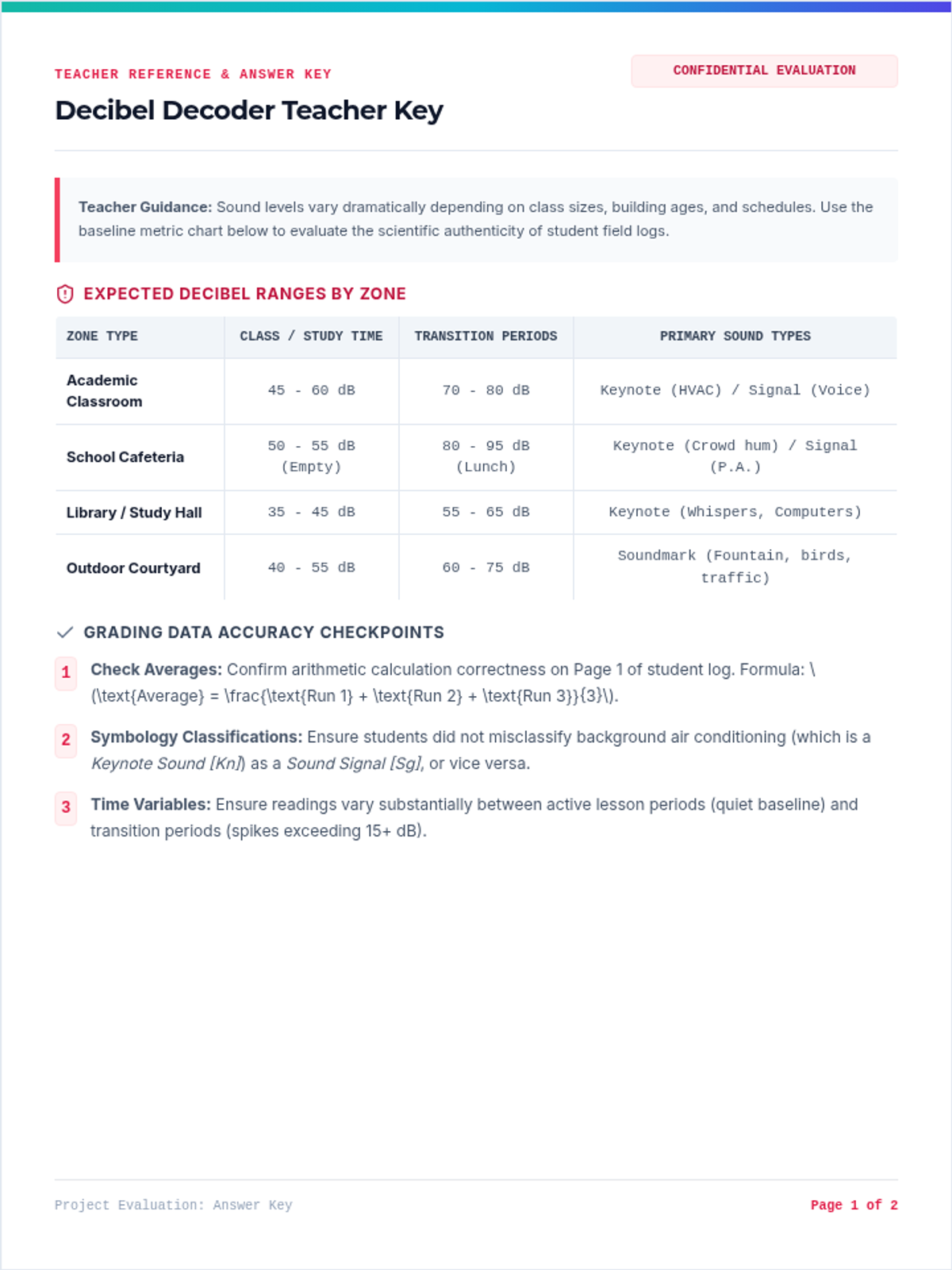
A project-based lesson where students explore acoustic ecology by recording, mapping, and analyzing ambient decibel and frequency levels to study their impact on cognitive load and emotional well-being.
A comprehensive middle and high school project-based lesson where students explore acoustic ecology by recording, charting, and analyzing the decibel levels and sound frequencies of various school zones to map their auditory environment and understand its impact on human behavior.
An engineering design challenge where students design, prototype, and test magnet mazes, exploring how different backing materials block or allow magnetic forces to pass through.
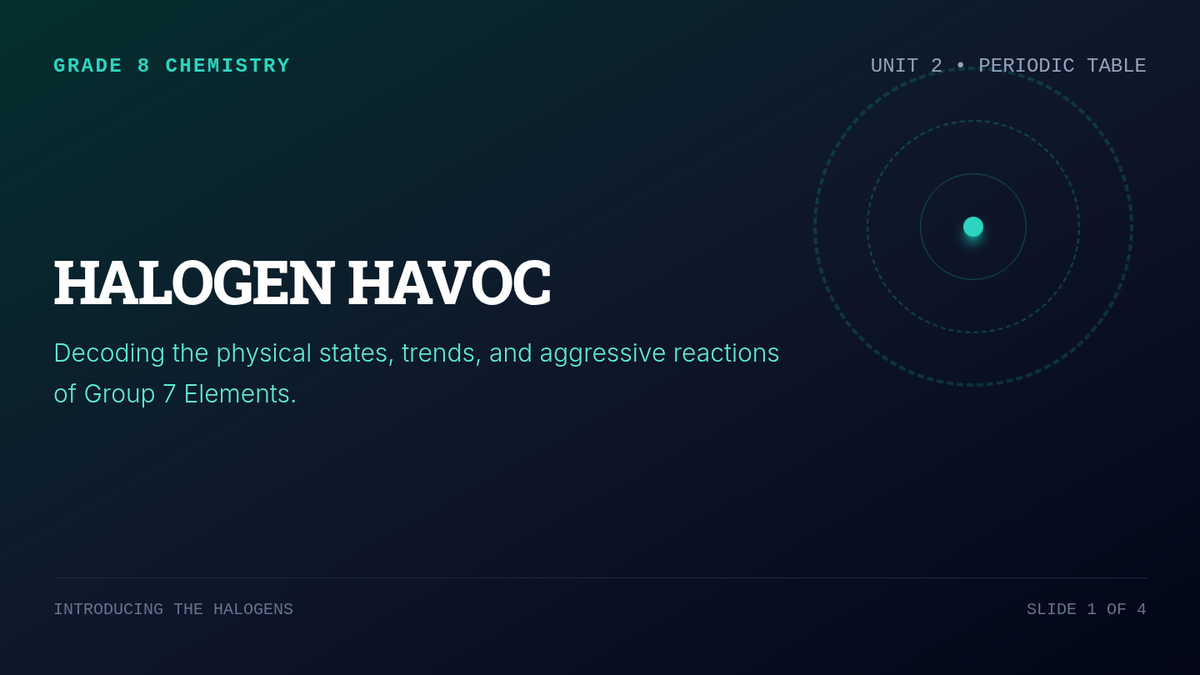
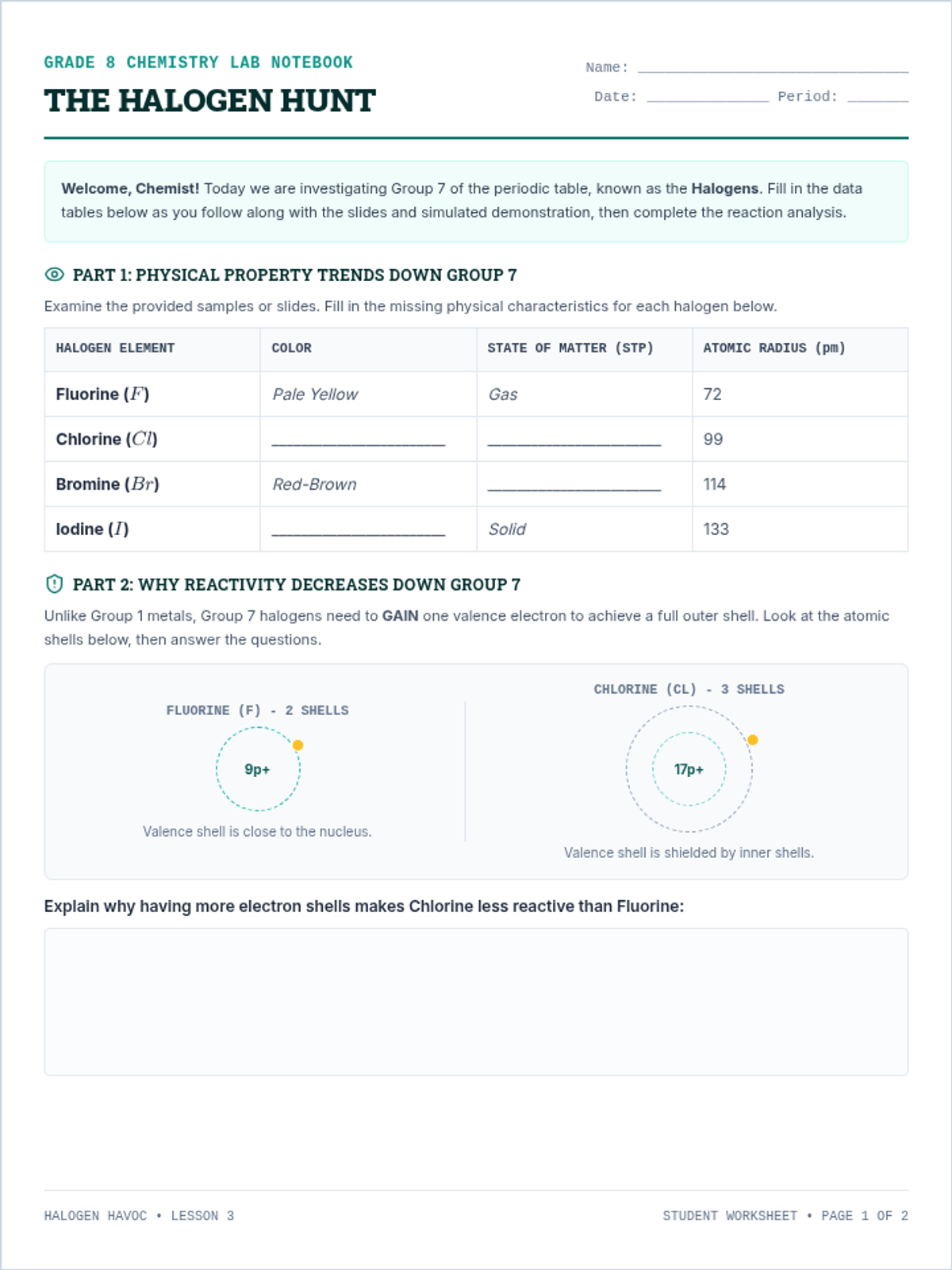
A comprehensive Grade 8 chemistry lesson exploring the Group 7 Halogens. This lesson covers their physical states, colors, atomic structures, decreasing reactivity trend down the group, displacement reactions, and real-world uses through slides, a teacher guide, a student worksheet, a simulated lab, task cards, and an exit ticket.
A highly engaging, hands-on lesson teaching the importance of precision, clarity, and chronological sequencing through the classic "Exact Instructions Challenge" using Marshmallow Fluff and Jelly. Students write step-by-step instructions, and the teacher follows them verbatim, humorously demonstrating how easily vague directions can go sticky.
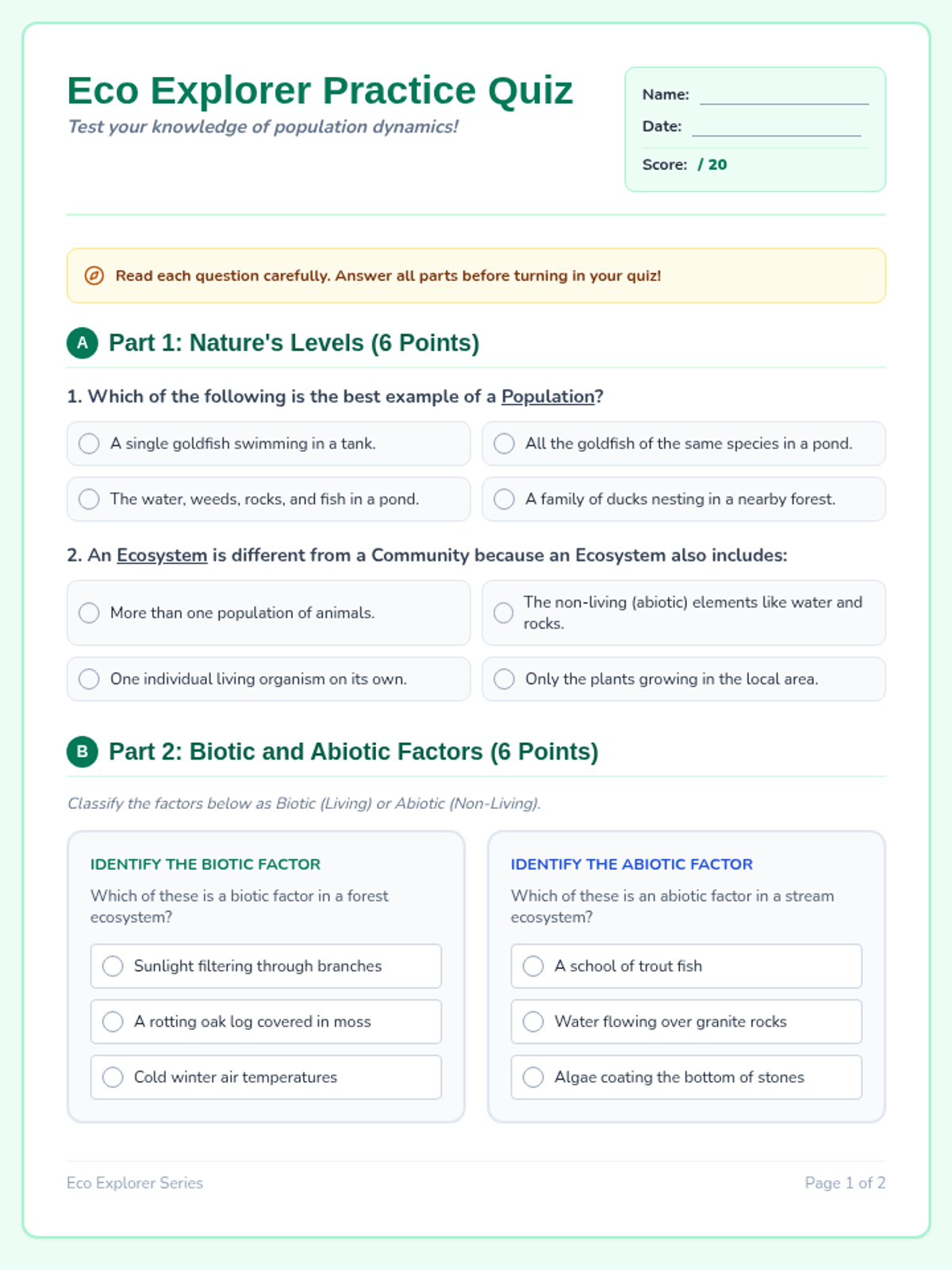
An introductory science lesson exploring ecological levels of organization, biotic versus abiotic factors, and population growth limits.
A scaffolded 2-page assessment and corresponding answer key covering prokaryotic and eukaryotic cells, including bacteria, plant, animal, and human cells. Features visual matching, labeling with word banks, sentence frames, and guided sentence starters.